window.__IS_SSR__=true
window.__INITIAL_STATE__={
"attachmentsReducer": {
"audio_0": {
"type": "attachments",
"id": "audio_0",
"imgSizes": {
"kqedFullSize": {
"file": "https://ww2.kqed.org/news/wp-content/themes/KQED-unified/img/audio_bgs/background0.jpg"
}
}
},
"audio_1": {
"type": "attachments",
"id": "audio_1",
"imgSizes": {
"kqedFullSize": {
"file": "https://ww2.kqed.org/news/wp-content/themes/KQED-unified/img/audio_bgs/background1.jpg"
}
}
},
"audio_2": {
"type": "attachments",
"id": "audio_2",
"imgSizes": {
"kqedFullSize": {
"file": "https://ww2.kqed.org/news/wp-content/themes/KQED-unified/img/audio_bgs/background2.jpg"
}
}
},
"audio_3": {
"type": "attachments",
"id": "audio_3",
"imgSizes": {
"kqedFullSize": {
"file": "https://ww2.kqed.org/news/wp-content/themes/KQED-unified/img/audio_bgs/background3.jpg"
}
}
},
"audio_4": {
"type": "attachments",
"id": "audio_4",
"imgSizes": {
"kqedFullSize": {
"file": "https://ww2.kqed.org/news/wp-content/themes/KQED-unified/img/audio_bgs/background4.jpg"
}
}
},
"placeholder": {
"type": "attachments",
"id": "placeholder",
"imgSizes": {
"thumbnail": {
"file": "https://cdn.kqed.org/wp-content/uploads/2024/12/KQED-Default-Image-816638274-2000x1333-1-160x107.jpg",
"width": 160,
"height": 107,
"mimeType": "image/jpeg"
},
"medium": {
"file": "https://cdn.kqed.org/wp-content/uploads/2024/12/KQED-Default-Image-816638274-2000x1333-1-800x533.jpg",
"width": 800,
"height": 533,
"mimeType": "image/jpeg"
},
"medium_large": {
"file": "https://cdn.kqed.org/wp-content/uploads/2024/12/KQED-Default-Image-816638274-2000x1333-1-768x512.jpg",
"width": 768,
"height": 512,
"mimeType": "image/jpeg"
},
"large": {
"file": "https://cdn.kqed.org/wp-content/uploads/2024/12/KQED-Default-Image-816638274-2000x1333-1-1020x680.jpg",
"width": 1020,
"height": 680,
"mimeType": "image/jpeg"
},
"1536x1536": {
"file": "https://cdn.kqed.org/wp-content/uploads/2024/12/KQED-Default-Image-816638274-2000x1333-1-1536x1024.jpg",
"width": 1536,
"height": 1024,
"mimeType": "image/jpeg"
},
"fd-lrg": {
"file": "https://cdn.kqed.org/wp-content/uploads/2024/12/KQED-Default-Image-816638274-2000x1333-1-1536x1024.jpg",
"width": 1536,
"height": 1024,
"mimeType": "image/jpeg"
},
"fd-med": {
"file": "https://cdn.kqed.org/wp-content/uploads/2024/12/KQED-Default-Image-816638274-2000x1333-1-1020x680.jpg",
"width": 1020,
"height": 680,
"mimeType": "image/jpeg"
},
"fd-sm": {
"file": "https://cdn.kqed.org/wp-content/uploads/2024/12/KQED-Default-Image-816638274-2000x1333-1-800x533.jpg",
"width": 800,
"height": 533,
"mimeType": "image/jpeg"
},
"post-thumbnail": {
"file": "https://cdn.kqed.org/wp-content/uploads/2024/12/KQED-Default-Image-816638274-2000x1333-1-672x372.jpg",
"width": 672,
"height": 372,
"mimeType": "image/jpeg"
},
"twentyfourteen-full-width": {
"file": "https://cdn.kqed.org/wp-content/uploads/2024/12/KQED-Default-Image-816638274-2000x1333-1-1038x576.jpg",
"width": 1038,
"height": 576,
"mimeType": "image/jpeg"
},
"xxsmall": {
"file": "https://cdn.kqed.org/wp-content/uploads/2024/12/KQED-Default-Image-816638274-2000x1333-1-160x107.jpg",
"width": 160,
"height": 107,
"mimeType": "image/jpeg"
},
"xsmall": {
"file": "https://cdn.kqed.org/wp-content/uploads/2024/12/KQED-Default-Image-816638274-2000x1333-1-672x372.jpg",
"width": 672,
"height": 372,
"mimeType": "image/jpeg"
},
"small": {
"file": "https://cdn.kqed.org/wp-content/uploads/2024/12/KQED-Default-Image-816638274-2000x1333-1-672x372.jpg",
"width": 672,
"height": 372,
"mimeType": "image/jpeg"
},
"xlarge": {
"file": "https://cdn.kqed.org/wp-content/uploads/2024/12/KQED-Default-Image-816638274-2000x1333-1-1020x680.jpg",
"width": 1020,
"height": 680,
"mimeType": "image/jpeg"
},
"full-width": {
"file": "https://cdn.kqed.org/wp-content/uploads/2024/12/KQED-Default-Image-816638274-2000x1333-1-1920x1280.jpg",
"width": 1920,
"height": 1280,
"mimeType": "image/jpeg"
},
"guest-author-32": {
"file": "https://cdn.kqed.org/wp-content/uploads/2025/01/KQED-Default-Image-816638274-1333x1333-1-160x160.jpg",
"width": 32,
"height": 32,
"mimeType": "image/jpeg"
},
"guest-author-50": {
"file": "https://cdn.kqed.org/wp-content/uploads/2025/01/KQED-Default-Image-816638274-1333x1333-1-160x160.jpg",
"width": 50,
"height": 50,
"mimeType": "image/jpeg"
},
"guest-author-64": {
"file": "https://cdn.kqed.org/wp-content/uploads/2025/01/KQED-Default-Image-816638274-1333x1333-1-160x160.jpg",
"width": 64,
"height": 64,
"mimeType": "image/jpeg"
},
"guest-author-96": {
"file": "https://cdn.kqed.org/wp-content/uploads/2025/01/KQED-Default-Image-816638274-1333x1333-1-160x160.jpg",
"width": 96,
"height": 96,
"mimeType": "image/jpeg"
},
"guest-author-128": {
"file": "https://cdn.kqed.org/wp-content/uploads/2025/01/KQED-Default-Image-816638274-1333x1333-1-160x160.jpg",
"width": 128,
"height": 128,
"mimeType": "image/jpeg"
},
"detail": {
"file": "https://cdn.kqed.org/wp-content/uploads/2025/01/KQED-Default-Image-816638274-1333x1333-1-160x160.jpg",
"width": 160,
"height": 160,
"mimeType": "image/jpeg"
},
"kqedFullSize": {
"file": "https://cdn.kqed.org/wp-content/uploads/2024/12/KQED-Default-Image-816638274-2000x1333-1.jpg",
"width": 2000,
"height": 1333
}
}
},
"news_11945869": {
"type": "attachments",
"id": "news_11945869",
"meta": {
"index": "attachments_1716263798",
"site": "news",
"id": "11945869",
"found": true
},
"parent": 11945690,
"imgSizes": {
"twentyfourteen-full-width": {
"file": "https://ww2.kqed.org/app/uploads/sites/10/2023/04/RS63311_003_KQED_CAReparationsTaskForceSac_03032023-qut-1038x576.jpg",
"width": 1038,
"mimeType": "image/jpeg",
"height": 576
},
"thumbnail": {
"file": "https://ww2.kqed.org/app/uploads/sites/10/2023/04/RS63311_003_KQED_CAReparationsTaskForceSac_03032023-qut-160x107.jpg",
"width": 160,
"mimeType": "image/jpeg",
"height": 107
},
"post-thumbnail": {
"file": "https://ww2.kqed.org/app/uploads/sites/10/2023/04/RS63311_003_KQED_CAReparationsTaskForceSac_03032023-qut-672x372.jpg",
"width": 672,
"mimeType": "image/jpeg",
"height": 372
},
"kqedFullSize": {
"file": "https://ww2.kqed.org/app/uploads/sites/10/2023/04/RS63311_003_KQED_CAReparationsTaskForceSac_03032023-qut.jpg",
"width": 1920,
"height": 1280
},
"large": {
"file": "https://ww2.kqed.org/app/uploads/sites/10/2023/04/RS63311_003_KQED_CAReparationsTaskForceSac_03032023-qut-1020x680.jpg",
"width": 1020,
"mimeType": "image/jpeg",
"height": 680
},
"1536x1536": {
"file": "https://ww2.kqed.org/app/uploads/sites/10/2023/04/RS63311_003_KQED_CAReparationsTaskForceSac_03032023-qut-1536x1024.jpg",
"width": 1536,
"mimeType": "image/jpeg",
"height": 1024
},
"medium": {
"file": "https://ww2.kqed.org/app/uploads/sites/10/2023/04/RS63311_003_KQED_CAReparationsTaskForceSac_03032023-qut-800x533.jpg",
"width": 800,
"mimeType": "image/jpeg",
"height": 533
}
},
"publishDate": 1680808342,
"modified": 1680809106,
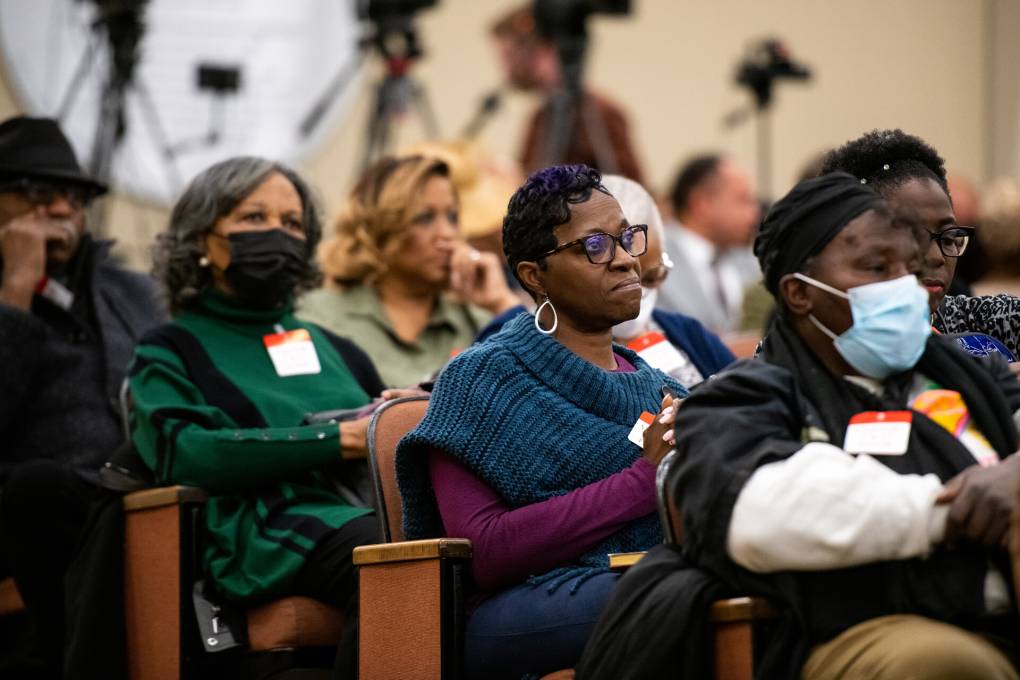
"caption": "A crowd listens during opening remarks at a California Reparations Task Force meeting in Sacramento on March 3, 2023.",
"description": null,
"title": "RS63311_003_KQED_CAReparationsTaskForceSac_03032023-qut",
"credit": "Beth LaBerge/KQED",
"status": "inherit",
"altTag": "Rows of men and women sit in attendance listening intently to speakers during a California Reparations Task Force meeting. Many video cameras on tripods can be seen in the background.",
"isLoading": false,
"fetchFailed": false
},
"news_11942528": {
"type": "attachments",
"id": "news_11942528",
"meta": {
"index": "attachments_1716263798",
"site": "news",
"id": "11942528",
"found": true
},
"parent": 11942493,
"imgSizes": {
"twentyfourteen-full-width": {
"file": "https://ww2.kqed.org/app/uploads/sites/10/2023/03/carolina_tapia-1-1038x576.jpg",
"width": 1038,
"mimeType": "image/jpeg",
"height": 576
},
"thumbnail": {
"file": "https://ww2.kqed.org/app/uploads/sites/10/2023/03/carolina_tapia-1-160x107.jpg",
"width": 160,
"mimeType": "image/jpeg",
"height": 107
},
"post-thumbnail": {
"file": "https://ww2.kqed.org/app/uploads/sites/10/2023/03/carolina_tapia-1-672x372.jpg",
"width": 672,
"mimeType": "image/jpeg",
"height": 372
},
"kqedFullSize": {
"file": "https://ww2.kqed.org/app/uploads/sites/10/2023/03/carolina_tapia-1-scaled.jpg",
"width": 2560,
"height": 1709
},
"2048x2048": {
"file": "https://ww2.kqed.org/app/uploads/sites/10/2023/03/carolina_tapia-1-2048x1367.jpg",
"width": 2048,
"mimeType": "image/jpeg",
"height": 1367
},
"large": {
"file": "https://ww2.kqed.org/app/uploads/sites/10/2023/03/carolina_tapia-1-1020x681.jpg",
"width": 1020,
"mimeType": "image/jpeg",
"height": 681
},
"1536x1536": {
"file": "https://ww2.kqed.org/app/uploads/sites/10/2023/03/carolina_tapia-1-1536x1025.jpg",
"width": 1536,
"mimeType": "image/jpeg",
"height": 1025
},
"full-width": {
"file": "https://ww2.kqed.org/app/uploads/sites/10/2023/03/carolina_tapia-1-1920x1282.jpg",
"width": 1920,
"mimeType": "image/jpeg",
"height": 1282
},
"medium": {
"file": "https://ww2.kqed.org/app/uploads/sites/10/2023/03/carolina_tapia-1-800x534.jpg",
"width": 800,
"mimeType": "image/jpeg",
"height": 534
}
},
"publishDate": 1677892882,
"modified": 1678133525,
"caption": "Carolina Morga Tapia with her five children (from left), Isela Nuñez, Emma Nuñez, Isabella Nuñez, Natalie Nuñez and Giovanni Nuñez. Morga Tapia says the family's Medi-Cal plan has been a godsend. 'It saves a lot of money, and it's a blessing to have that extra help,' she said.",
"description": null,
"title": "carolina_tapia-1",
"credit": "Heidi de Marco/KHN",
"status": "inherit",
"altTag": "A Latina family with mother and four daughters and one son of various ages, from toddler to teenager, standing in an almond orchard. The two youngest children are seated in a green-painted metal wagon.",
"isLoading": false,
"fetchFailed": false
},
"news_11942495": {
"type": "attachments",
"id": "news_11942495",
"meta": {
"index": "attachments_1716263798",
"site": "news",
"id": "11942495",
"found": true
},
"parent": 11942492,
"imgSizes": {
"thumbnail": {
"file": "https://ww2.kqed.org/app/uploads/sites/10/2023/03/knr-3.3-160x90.png",
"width": 160,
"mimeType": "image/png",
"height": 90
},
"kqedFullSize": {
"file": "https://ww2.kqed.org/app/uploads/sites/10/2023/03/knr-3.3.png",
"width": 512,
"height": 288
}
},
"publishDate": 1677885984,
"modified": 1677885984,
"caption": null,
"description": null,
"title": "knr 3.3",
"credit": null,
"status": "inherit",
"altTag": null,
"isLoading": false,
"fetchFailed": false
},
"news_11942345": {
"type": "attachments",
"id": "news_11942345",
"meta": {
"index": "attachments_1716263798",
"site": "news",
"id": "11942345",
"found": true
},
"parent": 11942302,
"imgSizes": {
"thumbnail": {
"file": "https://ww2.kqed.org/app/uploads/sites/10/2024/03/blackminer-160x99.jpg",
"width": 160,
"mimeType": "image/jpeg",
"height": 99
},
"post-thumbnail": {
"file": "https://ww2.kqed.org/app/uploads/sites/10/2024/03/blackminer-672x372.jpg",
"width": 672,
"mimeType": "image/jpeg",
"height": 372
},
"kqedFullSize": {
"file": "https://ww2.kqed.org/app/uploads/sites/10/2024/03/blackminer.jpg",
"width": 838,
"height": 520
},
"medium": {
"file": "https://ww2.kqed.org/app/uploads/sites/10/2024/03/blackminer-800x496.jpg",
"width": 800,
"mimeType": "image/jpeg",
"height": 496
}
},
"publishDate": 1677794989,
"modified": 1677802701,
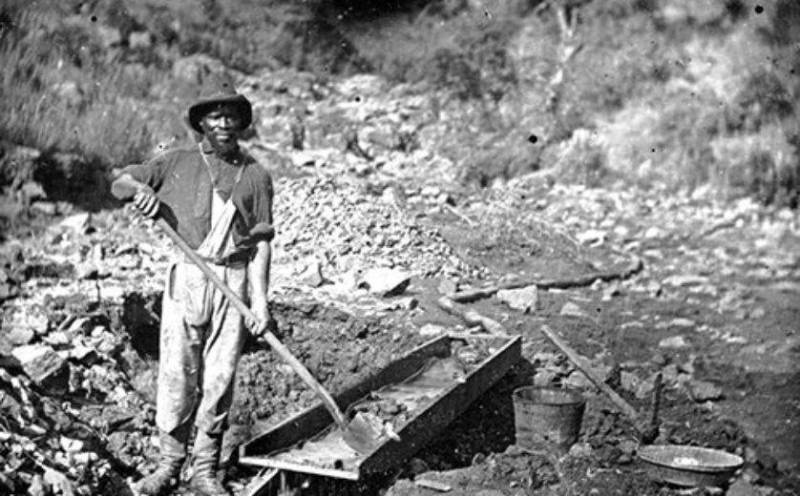
"caption": "A Black miner at the Auburn Ravine in the Sierra foothills, circa 1852.",
"description": null,
"title": "blackminer",
"credit": "Courtesy of the California History Room, California State Library",
"status": "inherit",
"altTag": "A black-and-white photo of a Black miner, holding a shovel, and standing next to a sluice.",
"isLoading": false,
"fetchFailed": false
},
"news_11941449": {
"type": "attachments",
"id": "news_11941449",
"meta": {
"index": "attachments_1716263798",
"site": "news",
"id": "11941449",
"found": true
},
"parent": 11941448,
"imgSizes": {
"twentyfourteen-full-width": {
"file": "https://ww2.kqed.org/app/uploads/sites/10/2023/02/FARMWORKETS-SHOVELING-DIRT-YELLOW-RAINGEAR-1020x576.jpg",
"width": 1020,
"mimeType": "image/jpeg",
"height": 576
},
"thumbnail": {
"file": "https://ww2.kqed.org/app/uploads/sites/10/2023/02/FARMWORKETS-SHOVELING-DIRT-YELLOW-RAINGEAR-160x103.jpg",
"width": 160,
"mimeType": "image/jpeg",
"height": 103
},
"post-thumbnail": {
"file": "https://ww2.kqed.org/app/uploads/sites/10/2023/02/FARMWORKETS-SHOVELING-DIRT-YELLOW-RAINGEAR-672x372.jpg",
"width": 672,
"mimeType": "image/jpeg",
"height": 372
},
"kqedFullSize": {
"file": "https://ww2.kqed.org/app/uploads/sites/10/2023/02/FARMWORKETS-SHOVELING-DIRT-YELLOW-RAINGEAR.jpg",
"width": 1020,
"height": 656
},
"medium": {
"file": "https://ww2.kqed.org/app/uploads/sites/10/2023/02/FARMWORKETS-SHOVELING-DIRT-YELLOW-RAINGEAR-800x515.jpg",
"width": 800,
"mimeType": "image/jpeg",
"height": 515
}
},
"publishDate": 1676951490,
"modified": 1676951523,
"caption": "Trabajadores agrícolas excavan un canal de riego alrededor de un campo de fresas mientras el río Salinas comienza a desbordarse el 13 de enero de 2023, en Salinas. ",
"description": null,
"title": "FARMWORKETS SHOVELING DIRT - YELLOW RAINGEAR",
"credit": "Justin Sullivan/Getty Images",
"status": "inherit",
"altTag": null,
"isLoading": false,
"fetchFailed": false
},
"news_11941845": {
"type": "attachments",
"id": "news_11941845",
"meta": {
"index": "attachments_1716263798",
"site": "news",
"id": "11941845",
"found": true
},
"parent": 11941842,
"imgSizes": {
"thumbnail": {
"file": "https://ww2.kqed.org/app/uploads/sites/10/2023/02/KNR-2.24-Cover-image-160x90.png",
"width": 160,
"mimeType": "image/png",
"height": 90
},
"kqedFullSize": {
"file": "https://ww2.kqed.org/app/uploads/sites/10/2023/02/KNR-2.24-Cover-image.png",
"width": 512,
"height": 288
}
},
"publishDate": 1677283556,
"modified": 1677283556,
"caption": null,
"description": null,
"title": "KNR 2.24 Cover image",
"credit": null,
"status": "inherit",
"altTag": null,
"isLoading": false,
"fetchFailed": false
},
"news_11941432": {
"type": "attachments",
"id": "news_11941432",
"meta": {
"index": "attachments_1716263798",
"site": "news",
"id": "11941432",
"found": true
},
"parent": 11941430,
"imgSizes": {
"twentyfourteen-full-width": {
"file": "https://ww2.kqed.org/app/uploads/sites/10/2023/02/RS49470_036_Oakland_NAACPGeorgeFloyd_05252021-qut-1038x576.jpg",
"width": 1038,
"mimeType": "image/jpeg",
"height": 576
},
"thumbnail": {
"file": "https://ww2.kqed.org/app/uploads/sites/10/2023/02/RS49470_036_Oakland_NAACPGeorgeFloyd_05252021-qut-160x107.jpg",
"width": 160,
"mimeType": "image/jpeg",
"height": 107
},
"post-thumbnail": {
"file": "https://ww2.kqed.org/app/uploads/sites/10/2023/02/RS49470_036_Oakland_NAACPGeorgeFloyd_05252021-qut-672x372.jpg",
"width": 672,
"mimeType": "image/jpeg",
"height": 372
},
"kqedFullSize": {
"file": "https://ww2.kqed.org/app/uploads/sites/10/2023/02/RS49470_036_Oakland_NAACPGeorgeFloyd_05252021-qut.jpg",
"width": 1920,
"height": 1278
},
"large": {
"file": "https://ww2.kqed.org/app/uploads/sites/10/2023/02/RS49470_036_Oakland_NAACPGeorgeFloyd_05252021-qut-1020x679.jpg",
"width": 1020,
"mimeType": "image/jpeg",
"height": 679
},
"1536x1536": {
"file": "https://ww2.kqed.org/app/uploads/sites/10/2023/02/RS49470_036_Oakland_NAACPGeorgeFloyd_05252021-qut-1536x1022.jpg",
"width": 1536,
"mimeType": "image/jpeg",
"height": 1022
},
"medium": {
"file": "https://ww2.kqed.org/app/uploads/sites/10/2023/02/RS49470_036_Oakland_NAACPGeorgeFloyd_05252021-qut-800x533.jpg",
"width": 800,
"mimeType": "image/jpeg",
"height": 533
}
},
"publishDate": 1676927320,
"modified": 1677034728,
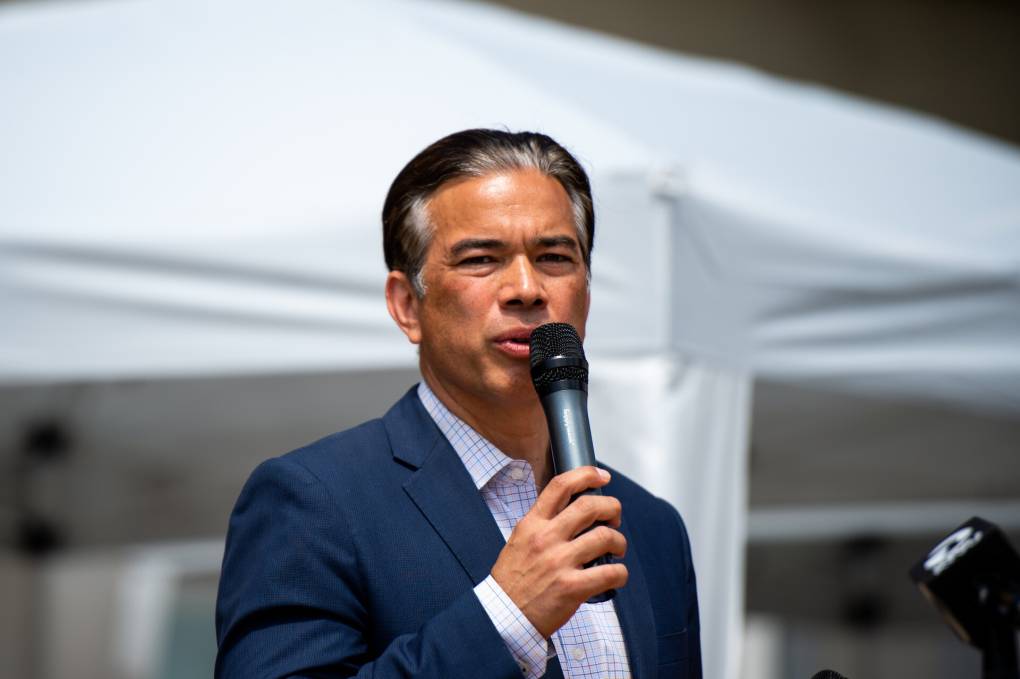
"caption": "Attorney General Rob Bonta speaks during a remembrance event to pay tribute to George Floyd held by the Oakland NAACP at Youth UpRising in Oakland on May 25, 2021.",
"description": null,
"title": "RS49470_036_Oakland_NAACPGeorgeFloyd_05252021-qut",
"credit": "Beth LaBerge/KQED",
"status": "inherit",
"altTag": "Rob Bonta stands center frame wearing a navy blue suit and white dress shirt while speaking into a microphone. Behind him is a large white canopy.",
"isLoading": false,
"fetchFailed": false
},
"news_11940474": {
"type": "attachments",
"id": "news_11940474",
"meta": {
"index": "attachments_1716263798",
"site": "news",
"id": "11940474",
"found": true
},
"parent": 11940471,
"imgSizes": {
"twentyfourteen-full-width": {
"file": "https://ww2.kqed.org/app/uploads/sites/10/2023/02/IMG_6023-scaled-e1676493974250-1038x576.jpeg",
"width": 1038,
"mimeType": "image/jpeg",
"height": 576
},
"thumbnail": {
"file": "https://ww2.kqed.org/app/uploads/sites/10/2023/02/IMG_6023-scaled-e1676493974250-160x98.jpeg",
"width": 160,
"mimeType": "image/jpeg",
"height": 98
},
"post-thumbnail": {
"file": "https://ww2.kqed.org/app/uploads/sites/10/2023/02/IMG_6023-scaled-e1676493974250-672x372.jpeg",
"width": 672,
"mimeType": "image/jpeg",
"height": 372
},
"kqedFullSize": {
"file": "https://ww2.kqed.org/app/uploads/sites/10/2023/02/IMG_6023-scaled-e1676493974250.jpeg",
"width": 2560,
"height": 1568
},
"2048x2048": {
"file": "https://ww2.kqed.org/app/uploads/sites/10/2023/02/IMG_6023-scaled-e1676493974250-2048x1254.jpeg",
"width": 2048,
"mimeType": "image/jpeg",
"height": 1254
},
"large": {
"file": "https://ww2.kqed.org/app/uploads/sites/10/2023/02/IMG_6023-scaled-e1676493974250-1020x625.jpeg",
"width": 1020,
"mimeType": "image/jpeg",
"height": 625
},
"1536x1536": {
"file": "https://ww2.kqed.org/app/uploads/sites/10/2023/02/IMG_6023-scaled-e1676493974250-1536x941.jpeg",
"width": 1536,
"mimeType": "image/jpeg",
"height": 941
},
"full-width": {
"file": "https://ww2.kqed.org/app/uploads/sites/10/2023/02/IMG_6023-scaled-e1676493974250-1920x1176.jpeg",
"width": 1920,
"mimeType": "image/jpeg",
"height": 1176
},
"medium": {
"file": "https://ww2.kqed.org/app/uploads/sites/10/2023/02/IMG_6023-scaled-e1676493974250-800x490.jpeg",
"width": 800,
"mimeType": "image/jpeg",
"height": 490
}
},
"publishDate": 1675889808,
"modified": 1677181485,
"caption": "What's now called the EcoCenter off the coast of Palo Alto, this building was originally constructed for the local chapter of the Sea Scouts. It's a textbook example of what's called nautical moderne, a sub-genre of art deco architecture.",
"description": "What's now called the EcoCenter off the coast of Palo Alto, this building was originally constructed for the local chapter of the Sea Scouts. It's a textbook example what's called nautical moderne, a sub-genre of Art Deco architecture.",
"title": "IMG_6023",
"credit": "Rachael Myrow/KQED",
"status": "inherit",
"altTag": "Against a beautiful blue sky, a building that looks like a boat appears to rise from shrubbery on the ground.",
"isLoading": false,
"fetchFailed": false
},
"news_11940737": {
"type": "attachments",
"id": "news_11940737",
"meta": {
"index": "attachments_1716263798",
"site": "news",
"id": "11940737",
"found": true
},
"parent": 11940731,
"imgSizes": {
"twentyfourteen-full-width": {
"file": "https://ww2.kqed.org/app/uploads/sites/10/2023/02/KNR-1016-Thumbnail-1038x576.jpg",
"width": 1038,
"mimeType": "image/jpeg",
"height": 576
},
"thumbnail": {
"file": "https://ww2.kqed.org/app/uploads/sites/10/2023/02/KNR-1016-Thumbnail-160x90.jpg",
"width": 160,
"mimeType": "image/jpeg",
"height": 90
},
"post-thumbnail": {
"file": "https://ww2.kqed.org/app/uploads/sites/10/2023/02/KNR-1016-Thumbnail-672x372.jpg",
"width": 672,
"mimeType": "image/jpeg",
"height": 372
},
"kqedFullSize": {
"file": "https://ww2.kqed.org/app/uploads/sites/10/2023/02/KNR-1016-Thumbnail.jpg",
"width": 1600,
"height": 900
},
"large": {
"file": "https://ww2.kqed.org/app/uploads/sites/10/2023/02/KNR-1016-Thumbnail-1020x574.jpg",
"width": 1020,
"mimeType": "image/jpeg",
"height": 574
},
"1536x1536": {
"file": "https://ww2.kqed.org/app/uploads/sites/10/2023/02/KNR-1016-Thumbnail-1536x864.jpg",
"width": 1536,
"mimeType": "image/jpeg",
"height": 864
},
"medium": {
"file": "https://ww2.kqed.org/app/uploads/sites/10/2023/02/KNR-1016-Thumbnail-800x450.jpg",
"width": 800,
"mimeType": "image/jpeg",
"height": 450
}
},
"publishDate": 1676072100,
"modified": 1676072100,
"caption": null,
"description": null,
"title": "KNR 1016 Thumbnail",
"credit": null,
"status": "inherit",
"altTag": null,
"isLoading": false,
"fetchFailed": false
},
"news_11940149": {
"type": "attachments",
"id": "news_11940149",
"meta": {
"index": "attachments_1716263798",
"site": "news",
"id": "11940149",
"found": true
},
"parent": 11940144,
"imgSizes": {
"twentyfourteen-full-width": {
"file": "https://ww2.kqed.org/app/uploads/sites/10/2023/02/002_KQED_OaklandTyreNicholsRally_01292023-1038x576.jpg",
"width": 1038,
"mimeType": "image/jpeg",
"height": 576
},
"thumbnail": {
"file": "https://ww2.kqed.org/app/uploads/sites/10/2023/02/002_KQED_OaklandTyreNicholsRally_01292023-160x107.jpg",
"width": 160,
"mimeType": "image/jpeg",
"height": 107
},
"post-thumbnail": {
"file": "https://ww2.kqed.org/app/uploads/sites/10/2023/02/002_KQED_OaklandTyreNicholsRally_01292023-672x372.jpg",
"width": 672,
"mimeType": "image/jpeg",
"height": 372
},
"kqedFullSize": {
"file": "https://ww2.kqed.org/app/uploads/sites/10/2023/02/002_KQED_OaklandTyreNicholsRally_01292023.jpg",
"width": 1920,
"height": 1280
},
"large": {
"file": "https://ww2.kqed.org/app/uploads/sites/10/2023/02/002_KQED_OaklandTyreNicholsRally_01292023-1020x680.jpg",
"width": 1020,
"mimeType": "image/jpeg",
"height": 680
},
"1536x1536": {
"file": "https://ww2.kqed.org/app/uploads/sites/10/2023/02/002_KQED_OaklandTyreNicholsRally_01292023-1536x1024.jpg",
"width": 1536,
"mimeType": "image/jpeg",
"height": 1024
},
"medium": {
"file": "https://ww2.kqed.org/app/uploads/sites/10/2023/02/002_KQED_OaklandTyreNicholsRally_01292023-800x533.jpg",
"width": 800,
"mimeType": "image/jpeg",
"height": 533
}
},
"publishDate": 1675469530,
"modified": 1675469530,
"caption": "A crowd gathers on 14th St and Broadway in Oakland on Jan. 29, 2023, for a rally to protest the Memphis police killing of Tyre Nichols.",
"description": null,
"title": "002_KQED_OaklandTyreNicholsRally_01292023",
"credit": null,
"status": "inherit",
"altTag": null,
"isLoading": false,
"fetchFailed": false
},
"news_11939831": {
"type": "attachments",
"id": "news_11939831",
"meta": {
"index": "attachments_1716263798",
"site": "news",
"id": "11939831",
"found": true
},
"parent": 11939819,
"imgSizes": {
"twentyfourteen-full-width": {
"file": "https://ww2.kqed.org/app/uploads/sites/10/2023/01/082422_MonkeyPoxClinicFresno_LV__012-CM-1-1038x576.jpg",
"width": 1038,
"mimeType": "image/jpeg",
"height": 576
},
"thumbnail": {
"file": "https://ww2.kqed.org/app/uploads/sites/10/2023/01/082422_MonkeyPoxClinicFresno_LV__012-CM-1-160x107.jpg",
"width": 160,
"mimeType": "image/jpeg",
"height": 107
},
"post-thumbnail": {
"file": "https://ww2.kqed.org/app/uploads/sites/10/2023/01/082422_MonkeyPoxClinicFresno_LV__012-CM-1-672x372.jpg",
"width": 672,
"mimeType": "image/jpeg",
"height": 372
},
"kqedFullSize": {
"file": "https://ww2.kqed.org/app/uploads/sites/10/2023/01/082422_MonkeyPoxClinicFresno_LV__012-CM-1.jpg",
"width": 2000,
"height": 1333
},
"large": {
"file": "https://ww2.kqed.org/app/uploads/sites/10/2023/01/082422_MonkeyPoxClinicFresno_LV__012-CM-1-1020x680.jpg",
"width": 1020,
"mimeType": "image/jpeg",
"height": 680
},
"1536x1536": {
"file": "https://ww2.kqed.org/app/uploads/sites/10/2023/01/082422_MonkeyPoxClinicFresno_LV__012-CM-1-1536x1024.jpg",
"width": 1536,
"mimeType": "image/jpeg",
"height": 1024
},
"full-width": {
"file": "https://ww2.kqed.org/app/uploads/sites/10/2023/01/082422_MonkeyPoxClinicFresno_LV__012-CM-1-1920x1280.jpg",
"width": 1920,
"mimeType": "image/jpeg",
"height": 1280
},
"medium": {
"file": "https://ww2.kqed.org/app/uploads/sites/10/2023/01/082422_MonkeyPoxClinicFresno_LV__012-CM-1-800x533.jpg",
"width": 800,
"mimeType": "image/jpeg",
"height": 533
}
},
"publishDate": 1675192657,
"modified": 1675198086,
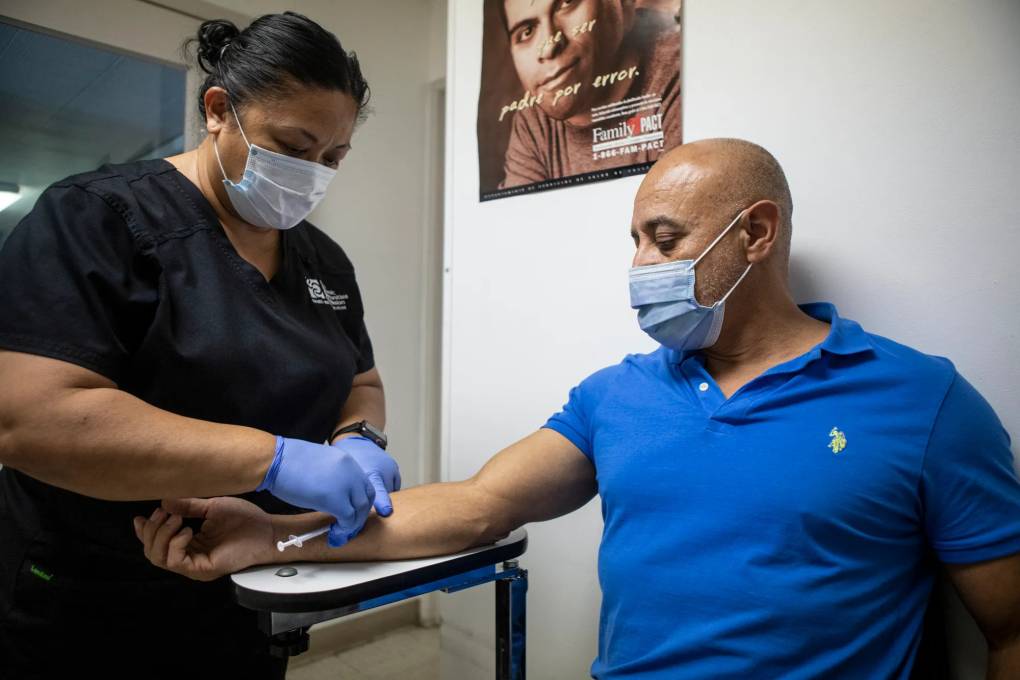
"caption": "Fresno resident Gonzalo Garcia receives the mpox vaccine on Aug. 24, 2022.",
"description": null,
"title": "082422_MonkeyPoxClinicFresno_LV__012-CM-1",
"credit": "Larry Valenzuela/CalMatters/CatchLight Local",
"status": "inherit",
"altTag": "a man in a blue shirt wearing a mask receives a vaccine shot from a nurse with black hair in a dark blue shirt",
"isLoading": false,
"fetchFailed": false
},
"news_11939762": {
"type": "attachments",
"id": "news_11939762",
"meta": {
"index": "attachments_1716263798",
"site": "news",
"id": "11939762",
"found": true
},
"parent": 11939759,
"imgSizes": {
"twentyfourteen-full-width": {
"file": "https://ww2.kqed.org/app/uploads/sites/10/2023/01/012623-EBT-Theft-CM-1038x576.jpg",
"width": 1038,
"mimeType": "image/jpeg",
"height": 576
},
"thumbnail": {
"file": "https://ww2.kqed.org/app/uploads/sites/10/2023/01/012623-EBT-Theft-CM-160x107.jpg",
"width": 160,
"mimeType": "image/jpeg",
"height": 107
},
"post-thumbnail": {
"file": "https://ww2.kqed.org/app/uploads/sites/10/2023/01/012623-EBT-Theft-CM-672x372.jpg",
"width": 672,
"mimeType": "image/jpeg",
"height": 372
},
"kqedFullSize": {
"file": "https://ww2.kqed.org/app/uploads/sites/10/2023/01/012623-EBT-Theft-CM.jpg",
"width": 2000,
"height": 1333
},
"large": {
"file": "https://ww2.kqed.org/app/uploads/sites/10/2023/01/012623-EBT-Theft-CM-1020x680.jpg",
"width": 1020,
"mimeType": "image/jpeg",
"height": 680
},
"1536x1536": {
"file": "https://ww2.kqed.org/app/uploads/sites/10/2023/01/012623-EBT-Theft-CM-1536x1024.jpg",
"width": 1536,
"mimeType": "image/jpeg",
"height": 1024
},
"full-width": {
"file": "https://ww2.kqed.org/app/uploads/sites/10/2023/01/012623-EBT-Theft-CM-1920x1280.jpg",
"width": 1920,
"mimeType": "image/jpeg",
"height": 1280
},
"medium": {
"file": "https://ww2.kqed.org/app/uploads/sites/10/2023/01/012623-EBT-Theft-CM-800x533.jpg",
"width": 800,
"mimeType": "image/jpeg",
"height": 533
}
},
"publishDate": 1675112418,
"modified": 1675121855,
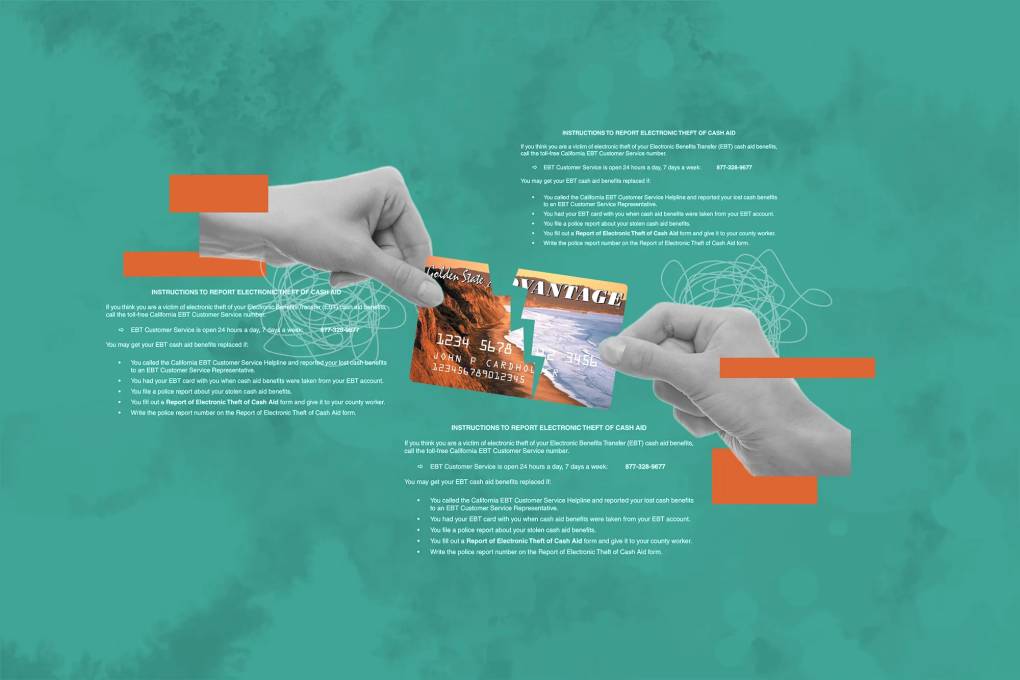
"caption": "Lower-income Californians reported $29.7 million in cash welfare and $4.7 million in food aid stolen in 14 months.",
"description": null,
"title": "012623-EBT-Theft-CM",
"credit": "Illustration by Miguel Gutierrez Jr./CalMatters, iStock",
"status": "inherit",
"altTag": "An illustration shows two hands tearing a debit card in half against a green background with instructions on how to prevent EBT theft",
"isLoading": false,
"fetchFailed": false
}
},
"audioPlayerReducer": {
"postId": "stream_live",
"isPaused": true,
"isPlaying": false,
"pfsActive": false,
"pledgeModalIsOpen": true,
"playerDrawerIsOpen": false,
"liveAudioPlayStartedAt": 0,
"liveAudioPlayContext": ""
},
"authorsReducer": {
"byline_news_11942493": {
"type": "authors",
"id": "byline_news_11942493",
"meta": {
"override": true
},
"slug": "byline_news_11942493",
"name": "\u003ca href=\"https://californiahealthline.org/news/author/angela-hart/\">Angela Hart\u003c/a> and \u003ca href=\"https://californiahealthline.org/news/author/bernard-j-wolfson/\">Bernard J. Wolfson\u003c/a>",
"isLoading": false
},
"byline_news_11941430": {
"type": "authors",
"id": "byline_news_11941430",
"meta": {
"override": true
},
"slug": "byline_news_11941430",
"name": "Adam Beam\u003cbr>Associated Press",
"isLoading": false
},
"byline_news_11939819": {
"type": "authors",
"id": "byline_news_11939819",
"meta": {
"override": true
},
"slug": "byline_news_11939819",
"name": "\u003ca href=\"https://calmatters.org/author/kristen-hwang/\">Kristen Hwang\u003c/a>",
"isLoading": false
},
"byline_news_11939759": {
"type": "authors",
"id": "byline_news_11939759",
"meta": {
"override": true
},
"slug": "byline_news_11939759",
"name": "\u003ca href=\"https://calmatters.org/author/jeanne-kuang/\">Jeanne Kuang\u003c/a> ",
"isLoading": false
},
"gmarzorati": {
"type": "authors",
"id": "227",
"meta": {
"index": "authors_1716337520",
"id": "227",
"found": true
},
"name": "Guy Marzorati",
"firstName": "Guy",
"lastName": "Marzorati",
"slug": "gmarzorati",
"email": "gmarzorati@KQED.org",
"display_author_email": true,
"staff_mastheads": [
"news"
],
"title": "Correspondent",
"bio": "Guy Marzorati is a correspondent on KQED's California Politics and Government Desk, based in San Jose. A graduate of Santa Clara University, Guy joined KQED in 2013. He reports on state and local politics and produces KQED's digital voter guide.",
"avatar": "https://secure.gravatar.com/avatar/e7038b8dbfd55b104369b76b1cd0b9de?s=600&d=blank&r=g",
"twitter": "guymarzorati",
"facebook": null,
"instagram": null,
"linkedin": null,
"sites": [
{
"site": "",
"roles": [
"editor"
]
},
{
"site": "news",
"roles": [
"editor"
]
},
{
"site": "science",
"roles": [
"editor"
]
},
{
"site": "forum",
"roles": [
"editor"
]
},
{
"site": "elections",
"roles": [
"editor"
]
},
{
"site": "liveblog",
"roles": [
"editor"
]
}
],
"headData": {
"title": "Guy Marzorati | KQED",
"description": "Correspondent",
"ogImgSrc": "https://secure.gravatar.com/avatar/e7038b8dbfd55b104369b76b1cd0b9de?s=600&d=blank&r=g",
"twImgSrc": "https://secure.gravatar.com/avatar/e7038b8dbfd55b104369b76b1cd0b9de?s=600&d=blank&r=g"
},
"isLoading": false,
"link": "/author/gmarzorati"
},
"kqed": {
"type": "authors",
"id": "236",
"meta": {
"index": "authors_1716337520",
"id": "236",
"found": true
},
"name": "KQED News Staff",
"firstName": "KQED News Staff",
"lastName": null,
"slug": "kqed",
"email": "faq@kqed.org",
"display_author_email": false,
"staff_mastheads": [],
"title": null,
"bio": null,
"avatar": "https://secure.gravatar.com/avatar/ef0e801a68c4c54afa9180db14084167?s=600&d=blank&r=g",
"twitter": null,
"facebook": null,
"instagram": null,
"linkedin": null,
"sites": [
{
"site": "arts",
"roles": [
"contributor"
]
},
{
"site": "news",
"roles": [
"editor"
]
},
{
"site": "futureofyou",
"roles": [
"author"
]
}
],
"headData": {
"title": "KQED News Staff | KQED",
"description": null,
"ogImgSrc": "https://secure.gravatar.com/avatar/ef0e801a68c4c54afa9180db14084167?s=600&d=blank&r=g",
"twImgSrc": "https://secure.gravatar.com/avatar/ef0e801a68c4c54afa9180db14084167?s=600&d=blank&r=g"
},
"isLoading": false,
"link": "/author/kqed"
},
"rachael-myrow": {
"type": "authors",
"id": "251",
"meta": {
"index": "authors_1716337520",
"id": "251",
"found": true
},
"name": "Rachael Myrow",
"firstName": "Rachael",
"lastName": "Myrow",
"slug": "rachael-myrow",
"email": "rmyrow@kqed.org",
"display_author_email": true,
"staff_mastheads": [
"news"
],
"title": "Senior Editor of KQED's Silicon Valley News Desk",
"bio": "• I write and edit stories about how Silicon Valley power and policies shape everyday life in California. I’m also passionate about making Bay Area history and culture more accessible to a broad public. • I’ve been a journalist for most of my life, starting in high school with The Franklin Press in Los Angeles, where I grew up. While earning my first degree in English at UC Berkeley, I got my start in public radio at KALX-FM. After completing a second degree in journalism at Cal, I landed my first professional job at Marketplace, then moved on to KPCC (now LAist), and then KQED, where I hosted The California Report for more than seven years. • My reporting has appeared on NPR, The World, WBUR’s \u003ci>Here & Now\u003c/i>, and the BBC. I also guest host for KQED’s \u003ci>Forum\u003c/i>, as well as the Commonwealth Club in San Francisco. • I speak periodically on media, democracy and technology issues, and do voiceover work for documentaries and educational video projects. • Outside of the studio, you'll find me hiking Bay Area trails and whipping up Insta-ready meals in my kitchen. • I do not accept gifts, money, or favors from anyone connected to my reporting, I don't pay people for information, and I do not support or donate to political causes. • I strive to treat the people I report on with fairness, honesty, and respect. I also recognize there are often multiple sides to a story and work to verify information through multiple sources and documentation. If I get something wrong, I correct it.",
"avatar": "https://secure.gravatar.com/avatar/3ed8a3c5f26025e4a805ba634cda8cd764906b97438a6d9ce216b044e340da4e?s=600&d=blank&r=g",
"twitter": "rachaelmyrow",
"bluesky": null,
"facebook": null,
"instagram": null,
"linkedin": "https://www.linkedin.com/in/rachaelmyrow/",
"sites": [
{
"site": "arts",
"roles": [
"administrator"
]
},
{
"site": "news",
"roles": [
"edit_others_posts",
"editor"
]
},
{
"site": "futureofyou",
"roles": [
"editor"
]
},
{
"site": "bayareabites",
"roles": [
"editor"
]
},
{
"site": "stateofhealth",
"roles": [
"editor"
]
},
{
"site": "science",
"roles": [
"editor"
]
},
{
"site": "food",
"roles": [
"editor"
]
},
{
"site": "forum",
"roles": [
"editor"
]
},
{
"site": "liveblog",
"roles": [
"author"
]
}
],
"headData": {
"title": "Rachael Myrow | KQED",
"description": "Senior Editor of KQED's Silicon Valley News Desk",
"ogImgSrc": "https://secure.gravatar.com/avatar/3ed8a3c5f26025e4a805ba634cda8cd764906b97438a6d9ce216b044e340da4e?s=600&d=blank&r=g",
"twImgSrc": "https://secure.gravatar.com/avatar/3ed8a3c5f26025e4a805ba634cda8cd764906b97438a6d9ce216b044e340da4e?s=600&d=blank&r=g"
},
"isLoading": false,
"link": "/author/rachael-myrow"
},
"tychehendricks": {
"type": "authors",
"id": "259",
"meta": {
"index": "authors_1716337520",
"id": "259",
"found": true
},
"name": "Tyche Hendricks",
"firstName": "Tyche",
"lastName": "Hendricks",
"slug": "tychehendricks",
"email": "thendricks@kqed.org",
"display_author_email": true,
"staff_mastheads": [
"news"
],
"title": "KQED Senior Editor, Immigration",
"bio": "\u003cspan style=\"font-weight: 400;\">Tyche Hendricks is KQED’s senior editor for immigration, leading coverage of the policy and politics that affect California’s immigrant communities. Her work for KQED’s radio and online audiences is also carried on NPR and other national outlets. She has been recognized with awards from the Radio and Television News Directors Association, the Society for Professional Journalists; the Education Writers Association; the Best of the West and the National Federation of Community Broadcasters. Before joining KQED in 2010, Tyche spent more than a dozen years as a newspaper reporter, notably at the \u003c/span>\u003ci>\u003cspan style=\"font-weight: 400;\">San Francisco Chronicle\u003c/span>\u003c/i>\u003cspan style=\"font-weight: 400;\">. At different times she has covered criminal justice, government and politics and urban planning. Tyche has taught in the MFA Creative Writing program at the University of San Francisco and at UC Berkeley’s Graduate School of Journalism, where she was co-director of a national immigration symposium for professional journalists. She is the author of \u003c/span>\u003ci>\u003cspan style=\"font-weight: 400;\">The Wind Doesn't Need a Passport: Stories from the U.S.-Mexico Borderlands\u003c/span>\u003c/i>\u003cspan style=\"font-weight: 400;\"> (University of California Press). \u003c/span>",
"avatar": "https://secure.gravatar.com/avatar/b8ee458e2731c2d43df86882ce17267e?s=600&d=blank&r=g",
"twitter": "tychehendricks",
"facebook": null,
"instagram": null,
"linkedin": null,
"sites": [
{
"site": "news",
"roles": [
"editor"
]
},
{
"site": "stateofhealth",
"roles": [
"editor"
]
}
],
"headData": {
"title": "Tyche Hendricks | KQED",
"description": "KQED Senior Editor, Immigration",
"ogImgSrc": "https://secure.gravatar.com/avatar/b8ee458e2731c2d43df86882ce17267e?s=600&d=blank&r=g",
"twImgSrc": "https://secure.gravatar.com/avatar/b8ee458e2731c2d43df86882ce17267e?s=600&d=blank&r=g"
},
"isLoading": false,
"link": "/author/tychehendricks"
},
"rtimmons": {
"type": "authors",
"id": "11817",
"meta": {
"index": "authors_1716337520",
"id": "11817",
"found": true
},
"name": "Raphael Timmons",
"firstName": "Raphael",
"lastName": "Timmons",
"slug": "rtimmons",
"email": "rtimmons@kqed.org",
"display_author_email": false,
"staff_mastheads": [],
"title": "KQED Contributor",
"bio": null,
"avatar": "https://secure.gravatar.com/avatar/0e66c73af8b623ecc62f631a35fd1272?s=600&d=mm&r=g",
"twitter": null,
"facebook": null,
"instagram": null,
"linkedin": null,
"sites": [
{
"site": "news",
"roles": [
"editor"
]
},
{
"site": "perspectives",
"roles": [
"editor"
]
}
],
"headData": {
"title": "Raphael Timmons | KQED",
"description": "KQED Contributor",
"ogImgSrc": "https://secure.gravatar.com/avatar/0e66c73af8b623ecc62f631a35fd1272?s=600&d=mm&r=g",
"twImgSrc": "https://secure.gravatar.com/avatar/0e66c73af8b623ecc62f631a35fd1272?s=600&d=mm&r=g"
},
"isLoading": false,
"link": "/author/rtimmons"
}
},
"pagesReducer": {
"news_category_california": {
"type": "terms",
"id": "news_31795",
"meta": {
"index": "terms_1716263798",
"site": "news",
"id": "31795",
"score": 10.849411
},
"featImg": null,
"name": "California",
"description": null,
"taxonomy": "category",
"headData": {
"twImgId": null,
"twTitle": null,
"ogTitle": null,
"ogImgId": null,
"twDescription": null,
"description": null,
"title": "California Archives | KQED News",
"ogDescription": null
},
"ttid": 31812,
"slug": "california",
"isLoading": false,
"title": "California",
"pageMeta": {
"site": "news",
"WpPageTemplate": "page-topic-editorial",
"currentPage": 223
},
"blocks": [
{
"blockName": "kqed/post-list",
"attrs": {
"layout": "cardArticle2",
"query": "posts/news?category=california",
"seeMore": false,
"paginated": true,
"page": 223
}
},
{
"blockName": "kqed/ad"
}
]
}
},
"pfsSessionReducer": {},
"postsReducer": {
"stream_live": {
"type": "live",
"id": "stream_live",
"audioUrl": "https://streams.kqed.org/kqedradio",
"title": "Live Stream",
"excerpt": "Live Stream information currently unavailable.",
"link": "/radio",
"featImg": "",
"label": {
"name": "KQED Live",
"link": "/"
}
},
"stream_kqedNewscast": {
"type": "posts",
"id": "stream_kqedNewscast",
"audioUrl": "https://www.kqed.org/.stream/anon/radio/RDnews/newscast.mp3?_=1",
"title": "KQED Newscast",
"featImg": "",
"label": {
"name": "88.5 FM",
"link": "/"
}
},
"news_11942533": {
"type": "posts",
"id": "news_11942533",
"meta": {
"index": "posts_1716263798",
"site": "news",
"id": "11942533",
"score": null,
"sort": [
1678024828000
]
},
"guestAuthors": [],
"slug": "californias-black-reparations-task-force-meets-in-sacramento-heres-what-you-need-to-know",
"title": "California's Reparations Task Force Met in Sacramento. Here's What You Need to Know",
"publishDate": 1678024828,
"format": "standard",
"headTitle": "California’s Reparations Task Force Met in Sacramento. Here’s What You Need to Know | KQED",
"labelTerm": {
"term": 34369,
"site": "news"
},
"content": "\u003cp>California’s \u003ca href=\"https://oag.ca.gov/ab3121\">Task Force to Study and Develop Reparation Proposals for African Americans\u003c/a> met in Sacramento for two days this weekend, bringing it one step closer to finalizing recommendations for the nation’s first-ever statewide plan for reparations for Black people.\u003c/p>\n\u003cp>KQED’s Annelise Finney, who was in Sacramento, shared what was talked about and what’s next for the task force in an interview with KQED’s Rachael Vasquez.[aside label=\"Reparations in California\" link1=\"https://www.kqed.org/reparations,Explore why California launched the first-in-the-nation task force to study reparations for Black people\" hero=\"https://ww2.kqed.org/app/uploads/2022/02/RiCLandingPageGraphic-1020x574.png\"]\u003c/p>\n\u003cp>\u003cem>This interview has been edited for brevity and clarity.\u003c/em>\u003c/p>\n\u003cp>\u003cstrong>Rachael Vasquez:\u003c/strong> \u003cstrong>Can you remind us what the task force has been up to in the last year and a half?\u003c/strong>\u003c/p>\n\u003cp>\u003cstrong>Annelise Finney:\u003c/strong> This task force is now about three quarters of the way through its work. During the first year, its big focus was on documenting the history and impact of anti-Black racist policies in California. They produced a 500-page report, and it’s one of the most comprehensive government documents studying the impact of anti-Black policies. It’s pretty amazing, and \u003ca href=\"https://oag.ca.gov/system/files/media/ab3121-reparations-interim-report-2022.pdf\">it’s available on the Department of Justice website (PDF)\u003c/a>.\u003c/p>\n\u003cp>Now, in the second year, they’ve been digging into what reparations for these harms should really look like. And they’re supposed to produce recommendations in four months, by July 1 — a quickly approaching deadline.[aside postID=news_11941469 hero='https://ww2.kqed.org/app/uploads/sites/10/2023/02/The-Road-to-Reparations_Thumbnail_1_v16-e1677009994307-1020x574.png']The first area of reparations that they’re looking at is compensation. That’s direct payments to people who are the descendants of people who were enslaved in the U.S. and who now live in California. They don’t have an exact number for how many people would be receiving this money or how much it would be, but they’re still working on it. One proposal they are considering is to create a new state agency that would be called the Freedmen Affairs Agency that would, among other things, handle doling out these payments.\u003c/p>\n\u003cp>The other form of reparations that they’re primarily looking at are ways to stop harm moving forward, and the way they’re hoping to do that is by changing state policy. They have dozens of policy recommendations on the table right now. One is to repeal or amend Proposition 209 — a California law that prohibits policies that benefit or discriminate against a specific racial group. It was originally passed in 1996 and was reaffirmed by voters in 2020. Task force member Donald Tamaki laid out the simple contradiction that Prop. 209 presents when it comes to addressing racial inequality at the meeting on Saturday, saying, “Obviously this thing was created by hate and racism, and now you can’t consider race to fix it.”\u003c/p>\n\u003cfigure id=\"attachment_11942552\" class=\"wp-caption alignnone\" style=\"max-width: 800px\">\u003cimg loading=\"lazy\" decoding=\"async\" class=\"size-medium wp-image-11942552\" src=\"https://ww2.kqed.org/app/uploads/sites/10/2023/03/019_KQED_CAReparationsTaskForceSac_03032023-800x533.jpg\" alt='A older African American man in a black suit with a top hat holds a sign in a conference hall surrounded by people. The sign reads \"CA Reparations Now 2023.\"' width=\"800\" height=\"533\" srcset=\"https://cdn.kqed.org/wp-content/uploads/sites/10/2023/03/019_KQED_CAReparationsTaskForceSac_03032023-800x533.jpg 800w, https://cdn.kqed.org/wp-content/uploads/sites/10/2023/03/019_KQED_CAReparationsTaskForceSac_03032023-1020x680.jpg 1020w, https://cdn.kqed.org/wp-content/uploads/sites/10/2023/03/019_KQED_CAReparationsTaskForceSac_03032023-160x107.jpg 160w, https://cdn.kqed.org/wp-content/uploads/sites/10/2023/03/019_KQED_CAReparationsTaskForceSac_03032023-1536x1024.jpg 1536w, https://cdn.kqed.org/wp-content/uploads/sites/10/2023/03/019_KQED_CAReparationsTaskForceSac_03032023.jpg 1920w\" sizes=\"(max-width: 800px) 100vw, 800px\">\u003cfigcaption class=\"wp-caption-text\">Morris Griffin, also known as Big Money Griff, a community activist, speaks during public comment at a California Reparations Task Force meeting in Sacramento on March 3, 2023. \u003ccite>(Beth LaBerge/KQED)\u003c/cite>\u003c/figcaption>\u003c/figure>\n\u003cp>\u003cstrong>This weekend the task force has been talking about how to get its recommendations turned into law. Tell us what that process would look like. \u003c/strong>\u003c/p>\n\u003cp>Each recommendation that the task force makes would have to be taken up by individual lawmakers. Some of the recommendations might be pretty broad, so lawmakers will have to refine down the proposals and work out details the task force wasn’t able to get to. Bills will then have to be written, lobbied for and passed through the [state] Legislature in order for the reparations proposals to become a reality for people.\u003c/p>\n\u003cp>Task force member Rev. Amos Brown emphasized during the meeting yesterday that these recommendations still have a long way to go. He said, “We still have miles to go and promises to keep before we fall asleep, if anything’s gonna become a reality, and for meaningful, significant change in the lives of Black folk in the state of California.”\u003c/p>\n\u003cfigure id=\"attachment_11942557\" class=\"wp-caption alignnone\" style=\"max-width: 800px\">\u003cimg loading=\"lazy\" decoding=\"async\" class=\"wp-image-11942557 size-medium\" src=\"https://ww2.kqed.org/app/uploads/sites/10/2023/03/RS63320_011_KQED_CAReparationsTaskForceSac_03032023-qut-800x533.jpg\" alt=\"A panel of people with screens behind them face a seated crowd of people in a conference hall. In the aisle, in the right of the frame, people line up to address the panel.\" width=\"800\" height=\"533\" srcset=\"https://cdn.kqed.org/wp-content/uploads/sites/10/2023/03/RS63320_011_KQED_CAReparationsTaskForceSac_03032023-qut-800x533.jpg 800w, https://cdn.kqed.org/wp-content/uploads/sites/10/2023/03/RS63320_011_KQED_CAReparationsTaskForceSac_03032023-qut-1020x680.jpg 1020w, https://cdn.kqed.org/wp-content/uploads/sites/10/2023/03/RS63320_011_KQED_CAReparationsTaskForceSac_03032023-qut-160x107.jpg 160w, https://cdn.kqed.org/wp-content/uploads/sites/10/2023/03/RS63320_011_KQED_CAReparationsTaskForceSac_03032023-qut-1536x1024.jpg 1536w, https://cdn.kqed.org/wp-content/uploads/sites/10/2023/03/RS63320_011_KQED_CAReparationsTaskForceSac_03032023-qut.jpg 1920w\" sizes=\"(max-width: 800px) 100vw, 800px\">\u003cfigcaption class=\"wp-caption-text\">California Reparations Task Force members listen to public comments during a meeting in Sacramento on March 3, 2023. \u003ccite>(Beth LaBerge/KQED)\u003c/cite>\u003c/figcaption>\u003c/figure>\n\u003cp>\u003cstrong>I’m guessing a fair amount of public support would be needed to pass these pieces of legislation. What is the task force doing to encourage public support for their recommendations?\u003c/strong>\u003c/p>\n\u003cp>One big thing they’re doing is working on public education programs. That means taking all of the information that was in that report and making sure people in California actually know the history. One way they’re doing that is by trying to develop a curriculum that would get this information into schools. They’ve also talked about creating a grant program that would support documentaries and public art projects. But all of that hasn’t happened yet.\u003c/p>\n\u003cfigure id=\"attachment_11942556\" class=\"wp-caption alignnone\" style=\"max-width: 800px\">\u003cimg loading=\"lazy\" decoding=\"async\" class=\"wp-image-11942556 size-medium\" src=\"https://ww2.kqed.org/app/uploads/sites/10/2023/03/027_KQED_CAReparationsTaskForceSac_03032023-800x533.jpg\" alt=\"A line of people, all African American, in a conference hall look toward the podium. The woman closest to the camera is older with long gray braids; the woman behind her is much younger, with long black braids, an orange beanie, and an orange sweatshirt. Three men stand behind her, from left to right: One man is middle-aged, wearing a black and red sweatshirt and dark sunglasses; the next is older and wearing a brown fedora with a black ribbon; and the third is tallest, with shoulder-length gray locs, dark sunglasses, and a bright red zip-up winter coat.\" width=\"800\" height=\"533\" srcset=\"https://cdn.kqed.org/wp-content/uploads/sites/10/2023/03/027_KQED_CAReparationsTaskForceSac_03032023-800x533.jpg 800w, https://cdn.kqed.org/wp-content/uploads/sites/10/2023/03/027_KQED_CAReparationsTaskForceSac_03032023-1020x680.jpg 1020w, https://cdn.kqed.org/wp-content/uploads/sites/10/2023/03/027_KQED_CAReparationsTaskForceSac_03032023-160x107.jpg 160w, https://cdn.kqed.org/wp-content/uploads/sites/10/2023/03/027_KQED_CAReparationsTaskForceSac_03032023-1536x1024.jpg 1536w, https://cdn.kqed.org/wp-content/uploads/sites/10/2023/03/027_KQED_CAReparationsTaskForceSac_03032023.jpg 1920w\" sizes=\"(max-width: 800px) 100vw, 800px\">\u003cfigcaption class=\"wp-caption-text\">People line up to speak during public comment at a California Reparations Task Force meeting in Sacramento on March 3, 2023. \u003ccite>(Beth LaBerge/KQED)\u003c/cite>\u003c/figcaption>\u003c/figure>\n\u003cp>One big thing that’s been coming up in public comments during the meeting yesterday and today is the lack of a real public awareness about what the task force is doing.\u003c/p>\n\u003cp>One public commenter this morning who identified himself as John Mud spoke to this feeling, saying, “I talk to people every day about reparations, and I bring up this task force, and no one knows about it.” Ultimately, whether these recommendations are passed will come down to whether Californians support them. A lot of people feel like there’s still a lot of work to be done to make sure people know that the task force exists, that they know about the work that it’s doing, and that they are also on board to support these proposals as they move through the Legislature.\u003c/p>\n\u003cfigure id=\"attachment_11942559\" class=\"wp-caption alignnone\" style=\"max-width: 800px\">\u003cimg loading=\"lazy\" decoding=\"async\" class=\"wp-image-11942559 size-medium\" src=\"https://ww2.kqed.org/app/uploads/sites/10/2023/03/RS63328_018_KQED_CAReparationsTaskForceSac_03032023-qut-800x533.jpg\" alt=\"A middle-aged African American woman, wearing black-framed glasses and a shoulder-length black bob, a white blouse under a beige cardigan, and a gold and beaded necklace, gestures with both hands as she speaks into a small microphone at a dais. People wait in line behind her, to speak next.\" width=\"800\" height=\"533\" srcset=\"https://cdn.kqed.org/wp-content/uploads/sites/10/2023/03/RS63328_018_KQED_CAReparationsTaskForceSac_03032023-qut-800x533.jpg 800w, https://cdn.kqed.org/wp-content/uploads/sites/10/2023/03/RS63328_018_KQED_CAReparationsTaskForceSac_03032023-qut-1020x680.jpg 1020w, https://cdn.kqed.org/wp-content/uploads/sites/10/2023/03/RS63328_018_KQED_CAReparationsTaskForceSac_03032023-qut-160x107.jpg 160w, https://cdn.kqed.org/wp-content/uploads/sites/10/2023/03/RS63328_018_KQED_CAReparationsTaskForceSac_03032023-qut-1536x1024.jpg 1536w, https://cdn.kqed.org/wp-content/uploads/sites/10/2023/03/RS63328_018_KQED_CAReparationsTaskForceSac_03032023-qut.jpg 1920w\" sizes=\"(max-width: 800px) 100vw, 800px\">\u003cfigcaption class=\"wp-caption-text\">Gloria Pierrot-Dyer speaks about her family from Allensworth during public comment at a California Reparations Task Force meeting in Sacramento on March 3, 2023. \u003ccite>(Beth LaBerge/KQED)\u003c/cite>\u003c/figcaption>\u003c/figure>\n\u003cp>\u003cstrong>What’s next for this task force?\u003c/strong>\u003c/p>\n\u003cp>They have a few more in-person meetings before the deadline in June. There’ll be one in March, another in May, and then a final meeting in June when the recommendations are finalized. There’s also \u003ca href=\"https://leginfo.legislature.ca.gov/faces/billNavClient.xhtml?bill_id=202320240SB490\">a bill\u003c/a> in the Legislature right now to extend the work of the task force for an additional year. That wouldn’t change any of the deadlines. The final recommendations would still be due in June, but it would give the task force members more time to work together in order to shepherd these proposals through the state Legislature, and potentially into law.\u003c/p>\n\u003cfigure id=\"attachment_11942566\" class=\"wp-caption alignnone\" style=\"max-width: 800px\">\u003cimg loading=\"lazy\" decoding=\"async\" class=\"wp-image-11942566 size-medium\" src=\"https://ww2.kqed.org/app/uploads/sites/10/2023/03/RS63355_048_KQED_CAReparationsTaskForceSac_03032023-qut-800x533.jpg\" alt='Three older African American men stand having a conversation. The man on the far left, with a neat gray beard, wears a black baseball cap with colorful splotches of pink, yellow and green, watching the other two men speak. The man in the middle, mostly bald, wears a gray suit of a very light plaid, an ochre pocket handkerchief, and an ochre-and-navy-striped tie. He faces the last man, on the far right, who is speaking and seems to be resting his right hand on the back of the man in the suit. He is the tallest, bald and with a white goatee and glasses, and a black hoodie with an outline of California in white that says \"CA Reparations Now 2023,\" and a sticker name tag on his chest.' width=\"800\" height=\"533\" srcset=\"https://cdn.kqed.org/wp-content/uploads/sites/10/2023/03/RS63355_048_KQED_CAReparationsTaskForceSac_03032023-qut-800x533.jpg 800w, https://cdn.kqed.org/wp-content/uploads/sites/10/2023/03/RS63355_048_KQED_CAReparationsTaskForceSac_03032023-qut-1020x680.jpg 1020w, https://cdn.kqed.org/wp-content/uploads/sites/10/2023/03/RS63355_048_KQED_CAReparationsTaskForceSac_03032023-qut-160x107.jpg 160w, https://cdn.kqed.org/wp-content/uploads/sites/10/2023/03/RS63355_048_KQED_CAReparationsTaskForceSac_03032023-qut-1536x1024.jpg 1536w, https://cdn.kqed.org/wp-content/uploads/sites/10/2023/03/RS63355_048_KQED_CAReparationsTaskForceSac_03032023-qut.jpg 1920w\" sizes=\"(max-width: 800px) 100vw, 800px\">\u003cfigcaption class=\"wp-caption-text\">State Sen. Steven Bradford (D-Gardena) speaks with attendees during a California Reparations Task Force meeting in Sacramento on March 3, 2023. \u003ccite>(Beth LaBerge/KQED)\u003c/cite>\u003c/figcaption>\u003c/figure>\n\u003cp>\u003cem>KQED’s Annelise Finney, Rachael Vasquez, Beth LaBerge and Attila Pelit contributed to this report.\u003c/em>\u003c/p>\n\u003cp>[ad fullwidth]\u003c/p>\n\u003cp>[ad floatright]\u003c/p>\n",
"blocks": [],
"excerpt": "The California Reparations Task Force dug into what reparations for descendants of people who were enslaved in California should look like. The group is aiming to finalize its recommendations within the next four months.",
"status": "publish",
"parent": 0,
"modified": 1725920328,
"stats": {
"hasAudio": false,
"hasVideo": false,
"hasChartOrMap": false,
"iframeSrcs": [],
"hasGoogleForm": false,
"hasGallery": false,
"hasHearkenModule": false,
"hasPolis": false,
"paragraphCount": 19,
"wordCount": 1194
},
"headData": {
"title": "California's Reparations Task Force Met in Sacramento. Here's What You Need to Know | KQED",
"description": "The California Reparations Task Force dug into what reparations for descendants of people who were enslaved in California should look like. The group is aiming to finalize its recommendations within the next four months.",
"ogTitle": "",
"ogDescription": "",
"ogImgId": "",
"twTitle": "",
"twDescription": "",
"twImgId": "",
"schema": {
"@context": "https://schema.org",
"@type": "NewsArticle",
"headline": "California's Reparations Task Force Met in Sacramento. Here's What You Need to Know",
"datePublished": "2023-03-05T06:00:28-08:00",
"dateModified": "2024-09-09T15:18:48-07:00",
"image": "https://cdn.kqed.org/wp-content/uploads/2020/02/KQED-OG-Image@1x.png",
"isAccessibleForFree": "True",
"publisher": {
"@type": "NewsMediaOrganization",
"@id": "https://www.kqed.org/#organization",
"name": "KQED",
"logo": "https://cdn.kqed.org/wp-content/uploads/2020/02/KQED-OG-Image@1x.png",
"url": "https://www.kqed.org",
"sameAs": [
"https://www.facebook.com/KQED",
"https://twitter.com/KQED",
"https://www.instagram.com/kqed/",
"https://www.tiktok.com/@kqedofficial",
"https://www.linkedin.com/company/kqed",
"https://www.youtube.com/channel/UCeC0IOo7i1P_61zVUWbJ4nw"
]
}
}
},
"audioUrl": "https://traffic.omny.fm/d/clips/0af137ef-751e-4b19-a055-aaef00d2d578/ffca7e9f-6831-4[…]f-aaef00f5a073/23317eeb-d2f3-414f-a4c2-afbd011715ff/audio.mp3",
"sticky": false,
"excludeFromSiteSearch": "Include",
"articleAge": "0",
"path": "/news/11942533/californias-black-reparations-task-force-meets-in-sacramento-heres-what-you-need-to-know",
"audioTrackLength": null,
"parsedContent": [
{
"type": "contentString",
"content": "\u003cdiv class=\"post-body\">\u003cp>\u003cp>California’s \u003ca href=\"https://oag.ca.gov/ab3121\">Task Force to Study and Develop Reparation Proposals for African Americans\u003c/a> met in Sacramento for two days this weekend, bringing it one step closer to finalizing recommendations for the nation’s first-ever statewide plan for reparations for Black people.\u003c/p>\n\u003cp>KQED’s Annelise Finney, who was in Sacramento, shared what was talked about and what’s next for the task force in an interview with KQED’s Rachael Vasquez.\u003c/p>\u003c/div>",
"attributes": {
"named": {},
"numeric": []
}
},
{
"type": "component",
"content": "",
"name": "aside",
"attributes": {
"named": {
"label": "Reparations in California ",
"link1": "https://www.kqed.org/reparations,Explore why California launched the first-in-the-nation task force to study reparations for Black people",
"hero": "https://ww2.kqed.org/app/uploads/2022/02/RiCLandingPageGraphic-1020x574.png"
},
"numeric": []
}
},
{
"type": "contentString",
"content": "\u003cdiv class=\"post-body\">\u003cp>\u003c/p>\n\u003cp>\u003cem>This interview has been edited for brevity and clarity.\u003c/em>\u003c/p>\n\u003cp>\u003cstrong>Rachael Vasquez:\u003c/strong> \u003cstrong>Can you remind us what the task force has been up to in the last year and a half?\u003c/strong>\u003c/p>\n\u003cp>\u003cstrong>Annelise Finney:\u003c/strong> This task force is now about three quarters of the way through its work. During the first year, its big focus was on documenting the history and impact of anti-Black racist policies in California. They produced a 500-page report, and it’s one of the most comprehensive government documents studying the impact of anti-Black policies. It’s pretty amazing, and \u003ca href=\"https://oag.ca.gov/system/files/media/ab3121-reparations-interim-report-2022.pdf\">it’s available on the Department of Justice website (PDF)\u003c/a>.\u003c/p>\n\u003cp>Now, in the second year, they’ve been digging into what reparations for these harms should really look like. And they’re supposed to produce recommendations in four months, by July 1 — a quickly approaching deadline.\u003c/p>\u003c/div>",
"attributes": {
"named": {},
"numeric": []
}
},
{
"type": "component",
"content": "",
"name": "aside",
"attributes": {
"named": {
"postid": "news_11941469",
"hero": "https://ww2.kqed.org/app/uploads/sites/10/2023/02/The-Road-to-Reparations_Thumbnail_1_v16-e1677009994307-1020x574.png",
"label": ""
},
"numeric": []
}
},
{
"type": "contentString",
"content": "\u003cdiv class=\"post-body\">\u003cp>The first area of reparations that they’re looking at is compensation. That’s direct payments to people who are the descendants of people who were enslaved in the U.S. and who now live in California. They don’t have an exact number for how many people would be receiving this money or how much it would be, but they’re still working on it. One proposal they are considering is to create a new state agency that would be called the Freedmen Affairs Agency that would, among other things, handle doling out these payments.\u003c/p>\n\u003cp>The other form of reparations that they’re primarily looking at are ways to stop harm moving forward, and the way they’re hoping to do that is by changing state policy. They have dozens of policy recommendations on the table right now. One is to repeal or amend Proposition 209 — a California law that prohibits policies that benefit or discriminate against a specific racial group. It was originally passed in 1996 and was reaffirmed by voters in 2020. Task force member Donald Tamaki laid out the simple contradiction that Prop. 209 presents when it comes to addressing racial inequality at the meeting on Saturday, saying, “Obviously this thing was created by hate and racism, and now you can’t consider race to fix it.”\u003c/p>\n\u003cfigure id=\"attachment_11942552\" class=\"wp-caption alignnone\" style=\"max-width: 800px\">\u003cimg loading=\"lazy\" decoding=\"async\" class=\"size-medium wp-image-11942552\" src=\"https://ww2.kqed.org/app/uploads/sites/10/2023/03/019_KQED_CAReparationsTaskForceSac_03032023-800x533.jpg\" alt='A older African American man in a black suit with a top hat holds a sign in a conference hall surrounded by people. The sign reads \"CA Reparations Now 2023.\"' width=\"800\" height=\"533\" srcset=\"https://cdn.kqed.org/wp-content/uploads/sites/10/2023/03/019_KQED_CAReparationsTaskForceSac_03032023-800x533.jpg 800w, https://cdn.kqed.org/wp-content/uploads/sites/10/2023/03/019_KQED_CAReparationsTaskForceSac_03032023-1020x680.jpg 1020w, https://cdn.kqed.org/wp-content/uploads/sites/10/2023/03/019_KQED_CAReparationsTaskForceSac_03032023-160x107.jpg 160w, https://cdn.kqed.org/wp-content/uploads/sites/10/2023/03/019_KQED_CAReparationsTaskForceSac_03032023-1536x1024.jpg 1536w, https://cdn.kqed.org/wp-content/uploads/sites/10/2023/03/019_KQED_CAReparationsTaskForceSac_03032023.jpg 1920w\" sizes=\"(max-width: 800px) 100vw, 800px\">\u003cfigcaption class=\"wp-caption-text\">Morris Griffin, also known as Big Money Griff, a community activist, speaks during public comment at a California Reparations Task Force meeting in Sacramento on March 3, 2023. \u003ccite>(Beth LaBerge/KQED)\u003c/cite>\u003c/figcaption>\u003c/figure>\n\u003cp>\u003cstrong>This weekend the task force has been talking about how to get its recommendations turned into law. Tell us what that process would look like. \u003c/strong>\u003c/p>\n\u003cp>Each recommendation that the task force makes would have to be taken up by individual lawmakers. Some of the recommendations might be pretty broad, so lawmakers will have to refine down the proposals and work out details the task force wasn’t able to get to. Bills will then have to be written, lobbied for and passed through the [state] Legislature in order for the reparations proposals to become a reality for people.\u003c/p>\n\u003cp>Task force member Rev. Amos Brown emphasized during the meeting yesterday that these recommendations still have a long way to go. He said, “We still have miles to go and promises to keep before we fall asleep, if anything’s gonna become a reality, and for meaningful, significant change in the lives of Black folk in the state of California.”\u003c/p>\n\u003cfigure id=\"attachment_11942557\" class=\"wp-caption alignnone\" style=\"max-width: 800px\">\u003cimg loading=\"lazy\" decoding=\"async\" class=\"wp-image-11942557 size-medium\" src=\"https://ww2.kqed.org/app/uploads/sites/10/2023/03/RS63320_011_KQED_CAReparationsTaskForceSac_03032023-qut-800x533.jpg\" alt=\"A panel of people with screens behind them face a seated crowd of people in a conference hall. In the aisle, in the right of the frame, people line up to address the panel.\" width=\"800\" height=\"533\" srcset=\"https://cdn.kqed.org/wp-content/uploads/sites/10/2023/03/RS63320_011_KQED_CAReparationsTaskForceSac_03032023-qut-800x533.jpg 800w, https://cdn.kqed.org/wp-content/uploads/sites/10/2023/03/RS63320_011_KQED_CAReparationsTaskForceSac_03032023-qut-1020x680.jpg 1020w, https://cdn.kqed.org/wp-content/uploads/sites/10/2023/03/RS63320_011_KQED_CAReparationsTaskForceSac_03032023-qut-160x107.jpg 160w, https://cdn.kqed.org/wp-content/uploads/sites/10/2023/03/RS63320_011_KQED_CAReparationsTaskForceSac_03032023-qut-1536x1024.jpg 1536w, https://cdn.kqed.org/wp-content/uploads/sites/10/2023/03/RS63320_011_KQED_CAReparationsTaskForceSac_03032023-qut.jpg 1920w\" sizes=\"(max-width: 800px) 100vw, 800px\">\u003cfigcaption class=\"wp-caption-text\">California Reparations Task Force members listen to public comments during a meeting in Sacramento on March 3, 2023. \u003ccite>(Beth LaBerge/KQED)\u003c/cite>\u003c/figcaption>\u003c/figure>\n\u003cp>\u003cstrong>I’m guessing a fair amount of public support would be needed to pass these pieces of legislation. What is the task force doing to encourage public support for their recommendations?\u003c/strong>\u003c/p>\n\u003cp>One big thing they’re doing is working on public education programs. That means taking all of the information that was in that report and making sure people in California actually know the history. One way they’re doing that is by trying to develop a curriculum that would get this information into schools. They’ve also talked about creating a grant program that would support documentaries and public art projects. But all of that hasn’t happened yet.\u003c/p>\n\u003cfigure id=\"attachment_11942556\" class=\"wp-caption alignnone\" style=\"max-width: 800px\">\u003cimg loading=\"lazy\" decoding=\"async\" class=\"wp-image-11942556 size-medium\" src=\"https://ww2.kqed.org/app/uploads/sites/10/2023/03/027_KQED_CAReparationsTaskForceSac_03032023-800x533.jpg\" alt=\"A line of people, all African American, in a conference hall look toward the podium. The woman closest to the camera is older with long gray braids; the woman behind her is much younger, with long black braids, an orange beanie, and an orange sweatshirt. Three men stand behind her, from left to right: One man is middle-aged, wearing a black and red sweatshirt and dark sunglasses; the next is older and wearing a brown fedora with a black ribbon; and the third is tallest, with shoulder-length gray locs, dark sunglasses, and a bright red zip-up winter coat.\" width=\"800\" height=\"533\" srcset=\"https://cdn.kqed.org/wp-content/uploads/sites/10/2023/03/027_KQED_CAReparationsTaskForceSac_03032023-800x533.jpg 800w, https://cdn.kqed.org/wp-content/uploads/sites/10/2023/03/027_KQED_CAReparationsTaskForceSac_03032023-1020x680.jpg 1020w, https://cdn.kqed.org/wp-content/uploads/sites/10/2023/03/027_KQED_CAReparationsTaskForceSac_03032023-160x107.jpg 160w, https://cdn.kqed.org/wp-content/uploads/sites/10/2023/03/027_KQED_CAReparationsTaskForceSac_03032023-1536x1024.jpg 1536w, https://cdn.kqed.org/wp-content/uploads/sites/10/2023/03/027_KQED_CAReparationsTaskForceSac_03032023.jpg 1920w\" sizes=\"(max-width: 800px) 100vw, 800px\">\u003cfigcaption class=\"wp-caption-text\">People line up to speak during public comment at a California Reparations Task Force meeting in Sacramento on March 3, 2023. \u003ccite>(Beth LaBerge/KQED)\u003c/cite>\u003c/figcaption>\u003c/figure>\n\u003cp>One big thing that’s been coming up in public comments during the meeting yesterday and today is the lack of a real public awareness about what the task force is doing.\u003c/p>\n\u003cp>One public commenter this morning who identified himself as John Mud spoke to this feeling, saying, “I talk to people every day about reparations, and I bring up this task force, and no one knows about it.” Ultimately, whether these recommendations are passed will come down to whether Californians support them. A lot of people feel like there’s still a lot of work to be done to make sure people know that the task force exists, that they know about the work that it’s doing, and that they are also on board to support these proposals as they move through the Legislature.\u003c/p>\n\u003cfigure id=\"attachment_11942559\" class=\"wp-caption alignnone\" style=\"max-width: 800px\">\u003cimg loading=\"lazy\" decoding=\"async\" class=\"wp-image-11942559 size-medium\" src=\"https://ww2.kqed.org/app/uploads/sites/10/2023/03/RS63328_018_KQED_CAReparationsTaskForceSac_03032023-qut-800x533.jpg\" alt=\"A middle-aged African American woman, wearing black-framed glasses and a shoulder-length black bob, a white blouse under a beige cardigan, and a gold and beaded necklace, gestures with both hands as she speaks into a small microphone at a dais. People wait in line behind her, to speak next.\" width=\"800\" height=\"533\" srcset=\"https://cdn.kqed.org/wp-content/uploads/sites/10/2023/03/RS63328_018_KQED_CAReparationsTaskForceSac_03032023-qut-800x533.jpg 800w, https://cdn.kqed.org/wp-content/uploads/sites/10/2023/03/RS63328_018_KQED_CAReparationsTaskForceSac_03032023-qut-1020x680.jpg 1020w, https://cdn.kqed.org/wp-content/uploads/sites/10/2023/03/RS63328_018_KQED_CAReparationsTaskForceSac_03032023-qut-160x107.jpg 160w, https://cdn.kqed.org/wp-content/uploads/sites/10/2023/03/RS63328_018_KQED_CAReparationsTaskForceSac_03032023-qut-1536x1024.jpg 1536w, https://cdn.kqed.org/wp-content/uploads/sites/10/2023/03/RS63328_018_KQED_CAReparationsTaskForceSac_03032023-qut.jpg 1920w\" sizes=\"(max-width: 800px) 100vw, 800px\">\u003cfigcaption class=\"wp-caption-text\">Gloria Pierrot-Dyer speaks about her family from Allensworth during public comment at a California Reparations Task Force meeting in Sacramento on March 3, 2023. \u003ccite>(Beth LaBerge/KQED)\u003c/cite>\u003c/figcaption>\u003c/figure>\n\u003cp>\u003cstrong>What’s next for this task force?\u003c/strong>\u003c/p>\n\u003cp>They have a few more in-person meetings before the deadline in June. There’ll be one in March, another in May, and then a final meeting in June when the recommendations are finalized. There’s also \u003ca href=\"https://leginfo.legislature.ca.gov/faces/billNavClient.xhtml?bill_id=202320240SB490\">a bill\u003c/a> in the Legislature right now to extend the work of the task force for an additional year. That wouldn’t change any of the deadlines. The final recommendations would still be due in June, but it would give the task force members more time to work together in order to shepherd these proposals through the state Legislature, and potentially into law.\u003c/p>\n\u003cfigure id=\"attachment_11942566\" class=\"wp-caption alignnone\" style=\"max-width: 800px\">\u003cimg loading=\"lazy\" decoding=\"async\" class=\"wp-image-11942566 size-medium\" src=\"https://ww2.kqed.org/app/uploads/sites/10/2023/03/RS63355_048_KQED_CAReparationsTaskForceSac_03032023-qut-800x533.jpg\" alt='Three older African American men stand having a conversation. The man on the far left, with a neat gray beard, wears a black baseball cap with colorful splotches of pink, yellow and green, watching the other two men speak. The man in the middle, mostly bald, wears a gray suit of a very light plaid, an ochre pocket handkerchief, and an ochre-and-navy-striped tie. He faces the last man, on the far right, who is speaking and seems to be resting his right hand on the back of the man in the suit. He is the tallest, bald and with a white goatee and glasses, and a black hoodie with an outline of California in white that says \"CA Reparations Now 2023,\" and a sticker name tag on his chest.' width=\"800\" height=\"533\" srcset=\"https://cdn.kqed.org/wp-content/uploads/sites/10/2023/03/RS63355_048_KQED_CAReparationsTaskForceSac_03032023-qut-800x533.jpg 800w, https://cdn.kqed.org/wp-content/uploads/sites/10/2023/03/RS63355_048_KQED_CAReparationsTaskForceSac_03032023-qut-1020x680.jpg 1020w, https://cdn.kqed.org/wp-content/uploads/sites/10/2023/03/RS63355_048_KQED_CAReparationsTaskForceSac_03032023-qut-160x107.jpg 160w, https://cdn.kqed.org/wp-content/uploads/sites/10/2023/03/RS63355_048_KQED_CAReparationsTaskForceSac_03032023-qut-1536x1024.jpg 1536w, https://cdn.kqed.org/wp-content/uploads/sites/10/2023/03/RS63355_048_KQED_CAReparationsTaskForceSac_03032023-qut.jpg 1920w\" sizes=\"(max-width: 800px) 100vw, 800px\">\u003cfigcaption class=\"wp-caption-text\">State Sen. Steven Bradford (D-Gardena) speaks with attendees during a California Reparations Task Force meeting in Sacramento on March 3, 2023. \u003ccite>(Beth LaBerge/KQED)\u003c/cite>\u003c/figcaption>\u003c/figure>\n\u003cp>\u003cem>KQED’s Annelise Finney, Rachael Vasquez, Beth LaBerge and Attila Pelit contributed to this report.\u003c/em>\u003c/p>\n\u003cp>\u003c/p>\u003c/div>",
"attributes": {
"named": {},
"numeric": []
}
},
{
"type": "component",
"content": "",
"name": "ad",
"attributes": {
"named": {
"label": "fullwidth"
},
"numeric": [
"fullwidth"
]
}
},
{
"type": "contentString",
"content": "\u003cdiv class=\"post-body\">\u003cp>\u003c/p>\n\u003cp>\u003c/p>\u003c/div>",
"attributes": {
"named": {},
"numeric": []
}
},
{
"type": "component",
"content": "",
"name": "ad",
"attributes": {
"named": {
"label": "floatright"
},
"numeric": [
"floatright"
]
}
},
{
"type": "contentString",
"content": "\u003cdiv class=\"post-body\">\u003cp>\u003c/p>\n\u003c/div>\u003c/p>",
"attributes": {
"named": {},
"numeric": []
}
}
],
"link": "/news/11942533/californias-black-reparations-task-force-meets-in-sacramento-heres-what-you-need-to-know",
"authors": [
"236"
],
"series": [
"news_34369"
],
"categories": [
"news_31795",
"news_6188",
"news_8"
],
"tags": [
"news_28272",
"news_30345",
"news_30652",
"news_27626",
"news_22493"
],
"featImg": "news_11945869",
"label": "news_34369"
},
"news_11942493": {
"type": "posts",
"id": "news_11942493",
"meta": {
"index": "posts_1716263798",
"site": "news",
"id": "11942493",
"score": null,
"sort": [
1677938438000
]
},
"parent": 0,
"labelTerm": {
"site": "news",
"term": 20286
},
"blocks": [],
"publishDate": 1677938438,
"format": "standard",
"title": "California's Massive Medicaid Program Works for Some, but Fails Many Others",
"headTitle": "California Healthline | KQED News",
"content": "\u003cp>Newborns. Formerly incarcerated people. College students. Pregnant people. People with disabilities. Foster kids. Unhoused people. Single dads.\u003c/p>\n\u003cp>Your neighbor. Your co-worker.\u003c/p>\n\u003cp>You.\u003c/p>\n\u003cp>California’s Medicaid program, called Medi-Cal, serves a whopping 15.4 million people, offering care from cradle to grave: \u003ca href=\"https://www.chcf.org/publication/2021-edition-medi-cal-facts-figures/\">Half of all births are covered by Medi-Cal\u003c/a>, as are more than half of all stays in nursing homes.\u003c/p>\n\u003cp>Everything about Medi-Cal is massive, from its \u003ca href=\"https://ebudget.ca.gov/2023-24/pdf/BudgetSummary/HealthandHumanServices.pdf\">upcoming fiscal year budget of $139 billion (PDF)\u003c/a> to the expansive list of benefits and services it offers. The way the program works — or doesn’t — could spell life or death for many enrollees.\u003c/p>\n\u003cp>“It’s critical, from the single pregnant mom, to the extremely frail elderly population that needs a nursing home,” said Jennifer Kent, former director of the state Department of Health Care Services, which administers Medi-Cal. “If it weren’t for Medi-Cal, so many people would either be dead or would be severely compromised.”\u003c/p>\n\u003cp>In a new series, California Healthline will shed light on Medi-Cal’s successes and failures through the experiences of its enrollees. They include Stephanie Lammers, who can’t get her troubling abdominal symptoms checked at a clinic 50 miles from her small Calaveras County town because the transportation Medi-Cal is supposed to provide isn’t trustworthy; Carolina Morga Tapia, a Fresno woman who credits Medi-Cal with helping her have five healthy children; and Lucas Moreno Ramirez, a Los Angeles County man with stage 4 lung cancer who had to fight to keep his treatment going.\u003c/p>\n\u003cp>Medi-Cal is at a critical juncture as it attempts to serve the needs of a diverse patient population with a dizzying array of medical needs — from childhood vaccinations and cancer screenings to state-of-the-art care for rare genetic disorders. \u003ca href=\"https://www.dhcs.ca.gov/dataandstats/statistics/Documents/FastFacts-March2022.pdf\">Roughly half of enrollees are Hispanic (PDF)\u003c/a>, and, next year, \u003ca href=\"https://californiahealthline.org/news/article/covered-california-bill-undocumented-immigrant-health-insurance/\">California will become the first state to expand eligibility to all immigrants who qualify, regardless of their legal status\u003c/a>.[aside postID=news_11926757 hero='https://ww2.kqed.org/app/uploads/sites/10/2022/09/GettyImages-1340030341.jpg']Medi-Cal is also undertaking several new initiatives that aim to save taxpayer money and improve quality. State \u003ca href=\"https://khn.org/news/article/californias-reboot-of-troubled-medi-cal-puts-pressure-on-health-plans/\">officials are demanding that the 23 health insurers that serve most Medi-Cal patients provide better care\u003c/a> — or face significant penalties, including potential expulsion from the program.\u003c/p>\n\u003cp>The state is also \u003ca href=\"https://khn.org/news/article/california-medicaid-makeover-newsom-california-medi-cal-homeless-public-funds/\">adding innovative social services\u003c/a> that fall outside the traditional realm of medicine, including helping some enrollees pay for rent and buy groceries.\u003c/p>\n\u003cp>“People are watching California,” said Cindy Mann, who served as federal Medicaid director under former President Barack Obama. “What the state is doing is ambitious and very aggressive. It makes a significant mark on health care and health policy, not just because of the size and breadth of its program, but by being very comprehensive.”\u003c/p>\n\u003cp>But only a sliver of enrollees will get the new social services, even as \u003ca href=\"https://khn.org/news/article/california-governor-newsom-pricey-medicaid-reforms-leave-most-patients-behind/\">many patients struggle to obtain basic care\u003c/a> or get in to see their doctors. In reality, the type of care you get in Medi-Cal depends on where you live and which insurer provides your benefits.\u003c/p>\n\u003cp>That means the program is working for some, but failing for many others.\u003c/p>\n\u003cp>If you are in Medi-Cal, \u003ca href=\"https://californiahealthline.org/faces-of-medi-cal-submissions/\">we would like to hear from you\u003c/a>, whether you live in a big city or a rural region, regardless of your age, race or ethnicity, and whatever your medical, dental or mental health condition. Have you had difficulty seeing the right doctor for what ails you, even to the point of putting your life at risk? Or did Medi-Cal provide good care, perhaps sparing you serious harm or disability? Either way, \u003ca href=\"https://californiahealthline.org/faces-of-medi-cal-submissions/\">please consider sharing your experience with us\u003c/a>.\u003c/p>\n\u003cp>Here are snapshots of patients who have used the program at a critical time in their lives.\u003c/p>\n\u003ch2>'I just don't go to the doctor anymore'\u003c/h2>\n\u003cp>When Stephanie Lammers leans over to put on her shoes, it feels as if she’s squishing something inside her abdomen, she said.\u003c/p>\n\u003cp>Lammers, 53, has been suffering from frequent bouts of nausea, pain and bloating for six months.\u003c/p>\n\u003cp>Her gastroenterologist wants to perform diagnostic procedures, including a colonoscopy and, if anything shows up, a biopsy. But Lammers, who lives in a motel with her boyfriend and teenage daughter in the Gold Rush town of San Andreas, doesn’t have a working car and can’t readily get to the clinic — which is 50 miles away.\u003c/p>\n\u003cfigure id=\"attachment_11942519\" class=\"wp-caption alignnone\" style=\"max-width: 800px\">\u003cimg decoding=\"async\" loading=\"lazy\" class=\"wp-image-11942519 size-medium\" src=\"https://ww2.kqed.org/app/uploads/sites/10/2023/03/Lammers_04-800x548.jpg\" alt=\"A middle-aged white woman with a long-sleeved shirt with horizontal blue-and-white stripes, with one shoulder pulled down to reveal a tattoo of an eye, looks at the camera as she leans against a door jamb. To her left, a white husky dog looks out from a window.\" width=\"800\" height=\"548\" srcset=\"https://ww2.kqed.org/app/uploads/sites/10/2023/03/Lammers_04-800x548.jpg 800w, https://ww2.kqed.org/app/uploads/sites/10/2023/03/Lammers_04-1020x699.jpg 1020w, https://ww2.kqed.org/app/uploads/sites/10/2023/03/Lammers_04-160x110.jpg 160w, https://ww2.kqed.org/app/uploads/sites/10/2023/03/Lammers_04-1536x1052.jpg 1536w, https://ww2.kqed.org/app/uploads/sites/10/2023/03/Lammers_04-2048x1402.jpg 2048w, https://ww2.kqed.org/app/uploads/sites/10/2023/03/Lammers_04-1920x1315.jpg 1920w\" sizes=\"(max-width: 800px) 100vw, 800px\">\u003cfigcaption class=\"wp-caption-text\">Stephanie Lammers says the ride service provided by her Medi-Cal health plan is so bad that she stopped trying to use it about a year ago, after it left her in the lurch multiple times. 'I just don't go to the doctor anymore,' she says. \u003ccite>(Rich Pedroncelli/KHN)\u003c/cite>\u003c/figcaption>\u003c/figure>\n\u003cp>For Lammers, like many Medi-Cal enrollees who live in rural areas, lack of transportation is a major impediment to obtaining care. The problem is particularly acute for patients who need to see specialists.\u003c/p>\n\u003cp>Lammers’ dermatologist and eye doctor are over an hour away from San Andreas, the county seat of Calaveras County, about 125 miles northeast of San Francisco. She isn’t seeing a neurologist, despite a series of mini-strokes and stress-related seizures. And she hasn’t been to a podiatrist in two years, even though her toes are twisted over one another and hang down, causing her to trip. She’s often in excruciating pain when she walks.\u003c/p>\n\u003cp>Medi-Cal is supposed to provide \u003ca href=\"https://www.dhcs.ca.gov/services/medi-cal/Pages/Transportation.aspx\">free transportation to enrollees\u003c/a> who can’t otherwise get to their appointments.\u003c/p>\n\u003cp>But Lammers — whose health plan is California Health and Wellness, owned by Centene, \u003ca href=\"https://khn.org/news/article/centene-political-donations-medicaid-contracts-overbilling-allegations/\">the nation’s largest commercial Medicaid insurer\u003c/a> — stopped using its ride service nearly a year ago, after she missed dozens of appointments because drivers just didn’t show up, she said. She was getting threatening letters from doctors’ offices over the no-shows.\u003c/p>\n\u003cp>Once, she had to hitchhike more than 30 miles home from a counseling appointment. On other occasions, Lammers said, she did not receive the reimbursement she was owed for arranging her own rides.\u003c/p>\n\u003cp>“I just don’t go to the doctor anymore,” Lammers said. “If I go to the doctor, my boyfriend has to take the day off work, and if he takes the day off work, we have no money.”\u003c/p>\n\u003cp>During the last three months of 2022, Lammers canceled five appointments she had scheduled for the diagnostic abdominal procedures because her boyfriend had to work each time and couldn’t take her. She finally stopped rescheduling.\u003c/p>\n\u003cp>California Health and Wellness contracts with ModivCare, a Denver-based medical transportation company that is no stranger to \u003ca href=\"https://khn.org/news/article/medicaid-transportation-nonemergency-benefit-patients-stranded/\">patient complaints and lawsuits\u003c/a>.\u003c/p>\n\u003cp>Before she gave up on the ride service, Lammers said, she would call California Health and Wellness to try to resolve the issue, only to be told that ModivCare was a separate company. “I’m like, ‘If you guys hired them and put them in charge of transportation, who oversees their screwups?,’” she said.\u003c/p>\n\u003cfigure id=\"attachment_11942520\" class=\"wp-caption alignright\" style=\"max-width: 800px\">\u003cimg decoding=\"async\" loading=\"lazy\" class=\"wp-image-11942520 size-medium\" src=\"https://ww2.kqed.org/app/uploads/sites/10/2023/03/Lammers_09-800x614.jpg\" alt=\"A white woman, standing in a crowded room of unmade beds, dishes potatoes onto a plate of biscuits and gravy from a hot plate on a cabinet next to a fridge. \" width=\"800\" height=\"614\" srcset=\"https://ww2.kqed.org/app/uploads/sites/10/2023/03/Lammers_09-800x614.jpg 800w, https://ww2.kqed.org/app/uploads/sites/10/2023/03/Lammers_09-1020x783.jpg 1020w, https://ww2.kqed.org/app/uploads/sites/10/2023/03/Lammers_09-160x123.jpg 160w, https://ww2.kqed.org/app/uploads/sites/10/2023/03/Lammers_09-1536x1180.jpg 1536w, https://ww2.kqed.org/app/uploads/sites/10/2023/03/Lammers_09-2048x1573.jpg 2048w, https://ww2.kqed.org/app/uploads/sites/10/2023/03/Lammers_09-1920x1475.jpg 1920w\" sizes=\"(max-width: 800px) 100vw, 800px\">\u003cfigcaption class=\"wp-caption-text\">Stephanie Lammers has serious abdominal symptoms, and her gastroenterologist wants to run diagnostic tests, but she had to cancel five appointments in the last three months of 2022 because she didn't have transportation. \u003ccite>(Rich Pedroncelli/KHN)\u003c/cite>\u003c/figcaption>\u003c/figure>\n\u003cp>Courtney Schwyzer, a member of a legal aid team representing Lammers on various Medi-Cal matters, said the failure of medical ride services is a systemic problem. In late February, Schwyzer and her fellow attorneys filed a petition in court that she hopes will force the state Department of Health Care Services to address the problem.\u003c/p>\n\u003cp>California Health and Wellness spokesperson Darrel Ng said the company monitors the quality of its contractors, but a shortage of transportation providers in rural areas “has created unique challenges.”\u003c/p>\n\u003cp>ModivCare provides more than 4 million rides for Medi-Cal recipients annually, and more than 99% are without complaint, said Melody Lai, a company spokesperson.\u003c/p>\n\u003cp>Lammers, who is unemployed and trying to start a custom craft business called Stuff by Steph, said doctors have warned her that if she doesn’t reduce her stress level, it could shorten her life. But arranging medical care is the most stressful thing in her life right now, so she doesn’t try anymore.\u003c/p>\n\u003cp>“In order to keep from dying, I have to not go to the doctor,” she said.\u003c/p>\n\u003ch2>'It's a blessing'\u003c/h2>\n\u003cp>Medi-Cal helped save the life of Carolina Morga Tapia, a 30-year-old full-time mother of five who lives with her family amid almond groves in an agricultural enclave of Fresno.\u003c/p>\n\u003cp>Nine years ago, a bacterial infection triggered premature labor during the 25th week of her second pregnancy, and Morga Tapia almost died. She spiked a fever, bled profusely and needed immediate transfusions and emergency surgery. After several days in critical care, she fully recovered.\u003c/p>\n\u003cfigure id=\"attachment_11942521\" class=\"wp-caption alignnone\" style=\"max-width: 800px\">\u003cimg decoding=\"async\" loading=\"lazy\" class=\"wp-image-11942521 size-medium\" src=\"https://ww2.kqed.org/app/uploads/sites/10/2023/03/carolina_tapia-2-800x534.jpg\" alt=\"A Latina woman with a blue cardigan and a black shirt looks at the camera, arms akimbo, standing in a leafless orchard.\" width=\"800\" height=\"534\" srcset=\"https://ww2.kqed.org/app/uploads/sites/10/2023/03/carolina_tapia-2-800x534.jpg 800w, https://ww2.kqed.org/app/uploads/sites/10/2023/03/carolina_tapia-2-1020x681.jpg 1020w, https://ww2.kqed.org/app/uploads/sites/10/2023/03/carolina_tapia-2-160x107.jpg 160w, https://ww2.kqed.org/app/uploads/sites/10/2023/03/carolina_tapia-2-1536x1025.jpg 1536w, https://ww2.kqed.org/app/uploads/sites/10/2023/03/carolina_tapia-2-2048x1367.jpg 2048w, https://ww2.kqed.org/app/uploads/sites/10/2023/03/carolina_tapia-2-1920x1281.jpg 1920w\" sizes=\"(max-width: 800px) 100vw, 800px\">\u003cfigcaption class=\"wp-caption-text\">Carolina Morga Tapia stands amid almond trees outside her home in Fresno. She, her husband and their five children are enrolled in Medi-Cal, and she says she is very happy with the care it has provided, including emergency surgery that saved her life after she fell gravely ill during her second pregnancy. \u003ccite>(Heidi de Marco/KHN)\u003c/cite>\u003c/figcaption>\u003c/figure>\n\u003cp>But the doctors could not stop the premature birth, and her baby came out weighing just 1 pound. She and her husband, David Nuñez, named her Milagros Guadalupe, and she died four days later, on Sept. 13, 2013.\u003c/p>\n\u003cp>In each of her subsequent pregnancies, Medi-Cal paid for Morga Tapia to get shots of synthetic progesterone, intended to prevent another preterm birth. Those shots — one a week for about 20 weeks — can cost an average of \u003ca href=\"https://www.npr.org/sections/health-shots/2020/01/24/798731110/drug-to-prevent-premature-birth-divides-doctors-insurers-and-fda-experts\">more than $10,000 per pregnancy\u003c/a>.\u003c/p>\n\u003cp>Morga Tapia and Nuñez, a construction worker, signed up for Medi-Cal when she was pregnant with her first child more than a decade ago. They’ve been on the same Anthem Blue Cross Medi-Cal plan ever since.\u003c/p>\n\u003cp>The plan paid for prenatal care through all six of Morga Tapia’s pregnancies, and it has provided all the medical and dental care the family needs, she said.\u003c/p>\n\u003cp>“Without Medi-Cal, we would have to be paying for all of our children,” said Morga Tapia. “It saves a lot of money, and it’s a blessing to have that extra help.”\u003c/p>\n\u003cp>Her children, four girls and a boy, range in age from 1 to 10. They all go to the same children’s clinic and see the same pediatrician.[pullquote align=\"right\" size=\"medium\" citation=\"Carolina Morga Tapia\"]'Without Medi-Cal, we would have to be paying for all of our children. It saves a lot of money, and it's a blessing to have that extra help.'[/pullquote]The kids, all in good health, get routine checkups, vaccinations and other preventive care, Morga Tapia said. She gets appointment reminders via text and cards in the mail notifying her when it’s time for the kids’ vaccinations and wellness checks, as well as her Pap smears, she said.\u003c/p>\n\u003cp>Her family’s experience contrasts sharply with the state’s assessment of their health plan, according to a \u003ca href=\"https://www.dhcs.ca.gov/dataandstats/reports/Documents/Enhancing-Quality-for-Medi-Cal-Members.pdf\">report on quality of care in Medi-Cal issued late last year (PDF)\u003c/a>. The report, which evaluated Medi-Cal health plans on pediatric care, women’s health and chronic disease management, put Anthem Blue Cross in the lowest tier, and below par on multiple measures in numerous counties, including Fresno.\u003c/p>\n\u003cp>Another state report, released in late January, detailed how quickly insurers provide appointments for their patients, and put \u003ca href=\"https://www.dmhc.ca.gov/Portals/0/Docs/OPM/MY2021TAR.pdf\">Anthem Blue Cross’ Medi-Cal plan near the bottom of the heap (PDF)\u003c/a>.\u003c/p>\n\u003cp>Anthem Blue Cross spokesperson Michael Bowman said in a statement that the period covered in the reports coincide with the COVID-19 pandemic, “when our safety net providers dealt with significant challenges with workforce and appointment availability.”\u003c/p>\n\u003cp>Morga Tapia doesn’t give the insurer low marks. “It’s different for everybody. I have a good, healthy family, and what Medi-Cal covers is really fortunate for us,” she said.\u003c/p>\n\u003ch2>'I don't want to die yet'\u003c/h2>\n\u003cp>In late 2021, doctors gave Lucas Moreno Ramirez a few months to live.\u003c/p>\n\u003cp>Struggling with diabetes and late-stage lung cancer, Moreno Ramirez suffered debilitating pain as he hacked and labored for breath. His doctors recommended that he stop treatment and start hospice care.\u003c/p>\n\u003cp>He felt as if they were giving up on him.\u003c/p>\n\u003cp>“They said they’re going to give me opioids for my pain and help me have a comfortable death,” said Moreno Ramirez, 68, who lives in Norwalk, in Los Angeles County. “I told them I don’t believe in that. I don’t want to die yet.”\u003c/p>\n\u003cfigure id=\"attachment_11942525\" class=\"wp-caption alignnone\" style=\"max-width: 800px\">\u003cimg decoding=\"async\" loading=\"lazy\" class=\"wp-image-11942525 size-medium\" src=\"https://ww2.kqed.org/app/uploads/sites/10/2023/03/lucas_ramirez-3-800x534.jpg\" alt=\"A middle-aged Latino man, with a bushy gray mustache and thick gray hair combed back from his forehead, sits at a long table along a wall, on the other side of which a gauzy white curtain blows inward. He rests his right arm on the table, holding a blue-and-white mug. He looks at the camera, and is surrounded by cabinets with CDs, a massive water bottle, salt-and-pepper shakers, a clock on the wall and a nearby wind chime, and other homey detritus.\" width=\"800\" height=\"534\" srcset=\"https://ww2.kqed.org/app/uploads/sites/10/2023/03/lucas_ramirez-3-800x534.jpg 800w, https://ww2.kqed.org/app/uploads/sites/10/2023/03/lucas_ramirez-3-1020x681.jpg 1020w, https://ww2.kqed.org/app/uploads/sites/10/2023/03/lucas_ramirez-3-160x107.jpg 160w, https://ww2.kqed.org/app/uploads/sites/10/2023/03/lucas_ramirez-3-1536x1025.jpg 1536w, https://ww2.kqed.org/app/uploads/sites/10/2023/03/lucas_ramirez-3-2048x1367.jpg 2048w, https://ww2.kqed.org/app/uploads/sites/10/2023/03/lucas_ramirez-3-1920x1281.jpg 1920w\" sizes=\"(max-width: 800px) 100vw, 800px\">\u003cfigcaption class=\"wp-caption-text\">Lucas Moreno Ramirez, a former landscaper and factory worker, has been diagnosed with both diabetes and lung cancer. Working alongside a care manager through his Medi-Cal managed-care plan, he has fought for better care and treatment for both conditions. \u003ccite>(Heidi de Marco/KHN)\u003c/cite>\u003c/figcaption>\u003c/figure>\n\u003cp>A former landscaper and factory worker, Moreno Ramirez learned he had to be his own advocate, fighting for the care he believed he deserved from Medi-Cal.\u003c/p>\n\u003cp>He said his Christian faith gave him strength, and over the next few months, he pushed the program and his doctors to keep battling his cancer, using a different treatment with fewer side effects than chemotherapy.\u003c/p>\n\u003cp>“I believe in prayer,” he said. “But I believe in science and medication, too.”\u003c/p>\n\u003cp>Moreno Ramirez is one of the \u003ca href=\"https://www.chcf.org/publication/in-alignment-calaims-plan-coordinate-care-dual-enrollees-medicare-medi-cal/\">roughly 1.6 million Californians enrolled in both Medicare, which covers people who are 65 and older or have disabilities, and Medi-Cal\u003c/a>, which \u003ca href=\"https://www.kff.org/medicare/issue-brief/a-profile-of-medicare-medicaid-enrollees-dual-eligibles/?utm_campaign=KFF-2023-Medicaid&utm_medium=email&_hsmi=243959452&_hsenc=p2ANqtz--_YdJIpoiPQ6BsTqKV7XWKRpOoR_sJTFFsZI7MrJWw-BvXTcEh0PRgAq42XpbIvOpISMXOG8GW_lDUH-w2IgL2Syf6YA&utm_content=243959452&utm_source=hs_email\">kicks in to cover the costs and benefits that Medicare doesn’t\u003c/a>.\u003c/p>\n\u003cp>He also relies on his Medi-Cal insurer to help him navigate the Byzantine system. L.A. Care, the largest Medi-Cal plan with nearly 2.6 million members, connected him with a care manager who worked with him to identify \u003ca href=\"https://www.cancer.gov/publications/dictionaries/cancer-terms/def/tagrisso\">a different treatment called Tagrisso\u003c/a> and advocated for him to get it.[aside label=\"Related Stories\" postID=\"news_11940023,news_11941075,news_1981588\"]Even with the new medication, Moreno Ramirez’s coughing fits returned last year, and his symptoms grew so painful he suspected the cancer was growing. He asked to see his pulmonologist but was told the first appointment would be in June 2023. So he switched doctors and scored an appointment nearly six months sooner.\u003c/p>\n\u003cp>“My old doctor didn’t help me. I didn’t trust him,” Moreno Ramirez said. “He was always too busy for me. I told my doctors, ‘Give me a chance.’”\u003c/p>\n\u003cp>Having taken his care into his own hands, he says he’s not in pain, his cough has subsided and he feels hopeful for the future. “Now I feel good,” he said.\u003c/p>\n\u003cp>He has also sought more attention for his diabetes and received a continuous glucose monitor to measure his blood sugar. It’s better controlled now than it has been in decades, he said.\u003c/p>\n\u003cp>“You have to stand up for yourself and advocate,” said Joann Pacelo, the care manager who helped Moreno Ramirez change doctors, get quicker referrals to specialists and get approved for in-home nursing visits.\u003c/p>\n\u003cp>“A lot of times, it’s difficult with Medi-Cal because the doctors are busy and the reimbursements are so low, but no one should be denied the care they deserve.”\u003c/p>\n\u003cp>\u003cem>California Healthline is a service of the California Health Care Foundation produced by Kaiser Health News.\u003c/em>\u003c/p>\n\u003cp>[ad fullwidth]\u003c/p>\n\u003cp>[ad floatright]\u003c/p>\n",
"stats": {
"hasVideo": false,
"hasChartOrMap": false,
"hasAudio": false,
"hasPolis": false,
"wordCount": 2687,
"hasGoogleForm": false,
"hasGallery": false,
"hasHearkenModule": false,
"iframeSrcs": [],
"paragraphCount": 60
},
"modified": 1678133816,
"excerpt": "Serving over 15 million people and with an annual budget of $139 billion, California's massive Medicaid program — Medi-Cal — is at a critical juncture as it attempts to serve the needs of a diverse patient population with a dizzying array of medical needs.",
"headData": {
"twImgId": "",
"twTitle": "",
"ogTitle": "",
"ogImgId": "",
"twDescription": "",
"description": "Serving over 15 million people and with an annual budget of $139 billion, California's massive Medicaid program — Medi-Cal — is at a critical juncture as it attempts to serve the needs of a diverse patient population with a dizzying array of medical needs.",
"title": "California's Massive Medicaid Program Works for Some, but Fails Many Others | KQED",
"ogDescription": "",
"schema": {
"@context": "https://schema.org",
"@type": "NewsArticle",
"headline": "California's Massive Medicaid Program Works for Some, but Fails Many Others",
"datePublished": "2023-03-04T06:00:38-08:00",
"dateModified": "2023-03-06T12:16:56-08:00",
"image": "https://cdn.kqed.org/wp-content/uploads/2020/02/KQED-OG-Image@1x.png",
"isAccessibleForFree": "True",
"publisher": {
"@type": "NewsMediaOrganization",
"@id": "https://www.kqed.org/#organization",
"name": "KQED",
"logo": "https://cdn.kqed.org/wp-content/uploads/2020/02/KQED-OG-Image@1x.png",
"url": "https://www.kqed.org",
"sameAs": [
"https://www.facebook.com/KQED",
"https://twitter.com/KQED",
"https://www.instagram.com/kqed/",
"https://www.tiktok.com/@kqedofficial",
"https://www.linkedin.com/company/kqed",
"https://www.youtube.com/channel/UCeC0IOo7i1P_61zVUWbJ4nw"
]
}
}
},
"guestAuthors": [],
"slug": "californias-massive-medicaid-program-works-for-some-but-fails-many-others",
"status": "publish",
"nprByline": "\u003ca href=\"https://californiahealthline.org/news/author/angela-hart/\">Angela Hart\u003c/a> and \u003ca href=\"https://californiahealthline.org/news/author/bernard-j-wolfson/\">Bernard J. Wolfson\u003c/a>",
"excludeFromSiteSearch": "Include",
"showOnAuthorArchivePages": "No",
"articleAge": "0",
"path": "/news/11942493/californias-massive-medicaid-program-works-for-some-but-fails-many-others",
"audioTrackLength": null,
"parsedContent": [
{
"type": "contentString",
"content": "\u003cdiv class=\"post-body\">\u003cp>\u003cp>Newborns. Formerly incarcerated people. College students. Pregnant people. People with disabilities. Foster kids. Unhoused people. Single dads.\u003c/p>\n\u003cp>Your neighbor. Your co-worker.\u003c/p>\n\u003cp>You.\u003c/p>\n\u003cp>California’s Medicaid program, called Medi-Cal, serves a whopping 15.4 million people, offering care from cradle to grave: \u003ca href=\"https://www.chcf.org/publication/2021-edition-medi-cal-facts-figures/\">Half of all births are covered by Medi-Cal\u003c/a>, as are more than half of all stays in nursing homes.\u003c/p>\n\u003cp>Everything about Medi-Cal is massive, from its \u003ca href=\"https://ebudget.ca.gov/2023-24/pdf/BudgetSummary/HealthandHumanServices.pdf\">upcoming fiscal year budget of $139 billion (PDF)\u003c/a> to the expansive list of benefits and services it offers. The way the program works — or doesn’t — could spell life or death for many enrollees.\u003c/p>\n\u003cp>“It’s critical, from the single pregnant mom, to the extremely frail elderly population that needs a nursing home,” said Jennifer Kent, former director of the state Department of Health Care Services, which administers Medi-Cal. “If it weren’t for Medi-Cal, so many people would either be dead or would be severely compromised.”\u003c/p>\n\u003cp>In a new series, California Healthline will shed light on Medi-Cal’s successes and failures through the experiences of its enrollees. They include Stephanie Lammers, who can’t get her troubling abdominal symptoms checked at a clinic 50 miles from her small Calaveras County town because the transportation Medi-Cal is supposed to provide isn’t trustworthy; Carolina Morga Tapia, a Fresno woman who credits Medi-Cal with helping her have five healthy children; and Lucas Moreno Ramirez, a Los Angeles County man with stage 4 lung cancer who had to fight to keep his treatment going.\u003c/p>\n\u003cp>Medi-Cal is at a critical juncture as it attempts to serve the needs of a diverse patient population with a dizzying array of medical needs — from childhood vaccinations and cancer screenings to state-of-the-art care for rare genetic disorders. \u003ca href=\"https://www.dhcs.ca.gov/dataandstats/statistics/Documents/FastFacts-March2022.pdf\">Roughly half of enrollees are Hispanic (PDF)\u003c/a>, and, next year, \u003ca href=\"https://californiahealthline.org/news/article/covered-california-bill-undocumented-immigrant-health-insurance/\">California will become the first state to expand eligibility to all immigrants who qualify, regardless of their legal status\u003c/a>.\u003c/p>\u003c/div>",
"attributes": {
"named": {},
"numeric": []
}
},
{
"type": "component",
"content": "",
"name": "aside",
"attributes": {
"named": {
"postid": "news_11926757",
"hero": "https://ww2.kqed.org/app/uploads/sites/10/2022/09/GettyImages-1340030341.jpg",
"label": ""
},
"numeric": []
}
},
{
"type": "contentString",
"content": "\u003cdiv class=\"post-body\">\u003cp>Medi-Cal is also undertaking several new initiatives that aim to save taxpayer money and improve quality. State \u003ca href=\"https://khn.org/news/article/californias-reboot-of-troubled-medi-cal-puts-pressure-on-health-plans/\">officials are demanding that the 23 health insurers that serve most Medi-Cal patients provide better care\u003c/a> — or face significant penalties, including potential expulsion from the program.\u003c/p>\n\u003cp>The state is also \u003ca href=\"https://khn.org/news/article/california-medicaid-makeover-newsom-california-medi-cal-homeless-public-funds/\">adding innovative social services\u003c/a> that fall outside the traditional realm of medicine, including helping some enrollees pay for rent and buy groceries.\u003c/p>\n\u003cp>“People are watching California,” said Cindy Mann, who served as federal Medicaid director under former President Barack Obama. “What the state is doing is ambitious and very aggressive. It makes a significant mark on health care and health policy, not just because of the size and breadth of its program, but by being very comprehensive.”\u003c/p>\n\u003cp>But only a sliver of enrollees will get the new social services, even as \u003ca href=\"https://khn.org/news/article/california-governor-newsom-pricey-medicaid-reforms-leave-most-patients-behind/\">many patients struggle to obtain basic care\u003c/a> or get in to see their doctors. In reality, the type of care you get in Medi-Cal depends on where you live and which insurer provides your benefits.\u003c/p>\n\u003cp>That means the program is working for some, but failing for many others.\u003c/p>\n\u003cp>If you are in Medi-Cal, \u003ca href=\"https://californiahealthline.org/faces-of-medi-cal-submissions/\">we would like to hear from you\u003c/a>, whether you live in a big city or a rural region, regardless of your age, race or ethnicity, and whatever your medical, dental or mental health condition. Have you had difficulty seeing the right doctor for what ails you, even to the point of putting your life at risk? Or did Medi-Cal provide good care, perhaps sparing you serious harm or disability? Either way, \u003ca href=\"https://californiahealthline.org/faces-of-medi-cal-submissions/\">please consider sharing your experience with us\u003c/a>.\u003c/p>\n\u003cp>Here are snapshots of patients who have used the program at a critical time in their lives.\u003c/p>\n\u003ch2>'I just don't go to the doctor anymore'\u003c/h2>\n\u003cp>When Stephanie Lammers leans over to put on her shoes, it feels as if she’s squishing something inside her abdomen, she said.\u003c/p>\n\u003cp>Lammers, 53, has been suffering from frequent bouts of nausea, pain and bloating for six months.\u003c/p>\n\u003cp>Her gastroenterologist wants to perform diagnostic procedures, including a colonoscopy and, if anything shows up, a biopsy. But Lammers, who lives in a motel with her boyfriend and teenage daughter in the Gold Rush town of San Andreas, doesn’t have a working car and can’t readily get to the clinic — which is 50 miles away.\u003c/p>\n\u003cfigure id=\"attachment_11942519\" class=\"wp-caption alignnone\" style=\"max-width: 800px\">\u003cimg decoding=\"async\" loading=\"lazy\" class=\"wp-image-11942519 size-medium\" src=\"https://ww2.kqed.org/app/uploads/sites/10/2023/03/Lammers_04-800x548.jpg\" alt=\"A middle-aged white woman with a long-sleeved shirt with horizontal blue-and-white stripes, with one shoulder pulled down to reveal a tattoo of an eye, looks at the camera as she leans against a door jamb. To her left, a white husky dog looks out from a window.\" width=\"800\" height=\"548\" srcset=\"https://ww2.kqed.org/app/uploads/sites/10/2023/03/Lammers_04-800x548.jpg 800w, https://ww2.kqed.org/app/uploads/sites/10/2023/03/Lammers_04-1020x699.jpg 1020w, https://ww2.kqed.org/app/uploads/sites/10/2023/03/Lammers_04-160x110.jpg 160w, https://ww2.kqed.org/app/uploads/sites/10/2023/03/Lammers_04-1536x1052.jpg 1536w, https://ww2.kqed.org/app/uploads/sites/10/2023/03/Lammers_04-2048x1402.jpg 2048w, https://ww2.kqed.org/app/uploads/sites/10/2023/03/Lammers_04-1920x1315.jpg 1920w\" sizes=\"(max-width: 800px) 100vw, 800px\">\u003cfigcaption class=\"wp-caption-text\">Stephanie Lammers says the ride service provided by her Medi-Cal health plan is so bad that she stopped trying to use it about a year ago, after it left her in the lurch multiple times. 'I just don't go to the doctor anymore,' she says. \u003ccite>(Rich Pedroncelli/KHN)\u003c/cite>\u003c/figcaption>\u003c/figure>\n\u003cp>For Lammers, like many Medi-Cal enrollees who live in rural areas, lack of transportation is a major impediment to obtaining care. The problem is particularly acute for patients who need to see specialists.\u003c/p>\n\u003cp>Lammers’ dermatologist and eye doctor are over an hour away from San Andreas, the county seat of Calaveras County, about 125 miles northeast of San Francisco. She isn’t seeing a neurologist, despite a series of mini-strokes and stress-related seizures. And she hasn’t been to a podiatrist in two years, even though her toes are twisted over one another and hang down, causing her to trip. She’s often in excruciating pain when she walks.\u003c/p>\n\u003cp>Medi-Cal is supposed to provide \u003ca href=\"https://www.dhcs.ca.gov/services/medi-cal/Pages/Transportation.aspx\">free transportation to enrollees\u003c/a> who can’t otherwise get to their appointments.\u003c/p>\n\u003cp>But Lammers — whose health plan is California Health and Wellness, owned by Centene, \u003ca href=\"https://khn.org/news/article/centene-political-donations-medicaid-contracts-overbilling-allegations/\">the nation’s largest commercial Medicaid insurer\u003c/a> — stopped using its ride service nearly a year ago, after she missed dozens of appointments because drivers just didn’t show up, she said. She was getting threatening letters from doctors’ offices over the no-shows.\u003c/p>\n\u003cp>Once, she had to hitchhike more than 30 miles home from a counseling appointment. On other occasions, Lammers said, she did not receive the reimbursement she was owed for arranging her own rides.\u003c/p>\n\u003cp>“I just don’t go to the doctor anymore,” Lammers said. “If I go to the doctor, my boyfriend has to take the day off work, and if he takes the day off work, we have no money.”\u003c/p>\n\u003cp>During the last three months of 2022, Lammers canceled five appointments she had scheduled for the diagnostic abdominal procedures because her boyfriend had to work each time and couldn’t take her. She finally stopped rescheduling.\u003c/p>\n\u003cp>California Health and Wellness contracts with ModivCare, a Denver-based medical transportation company that is no stranger to \u003ca href=\"https://khn.org/news/article/medicaid-transportation-nonemergency-benefit-patients-stranded/\">patient complaints and lawsuits\u003c/a>.\u003c/p>\n\u003cp>Before she gave up on the ride service, Lammers said, she would call California Health and Wellness to try to resolve the issue, only to be told that ModivCare was a separate company. “I’m like, ‘If you guys hired them and put them in charge of transportation, who oversees their screwups?,’” she said.\u003c/p>\n\u003cfigure id=\"attachment_11942520\" class=\"wp-caption alignright\" style=\"max-width: 800px\">\u003cimg decoding=\"async\" loading=\"lazy\" class=\"wp-image-11942520 size-medium\" src=\"https://ww2.kqed.org/app/uploads/sites/10/2023/03/Lammers_09-800x614.jpg\" alt=\"A white woman, standing in a crowded room of unmade beds, dishes potatoes onto a plate of biscuits and gravy from a hot plate on a cabinet next to a fridge. \" width=\"800\" height=\"614\" srcset=\"https://ww2.kqed.org/app/uploads/sites/10/2023/03/Lammers_09-800x614.jpg 800w, https://ww2.kqed.org/app/uploads/sites/10/2023/03/Lammers_09-1020x783.jpg 1020w, https://ww2.kqed.org/app/uploads/sites/10/2023/03/Lammers_09-160x123.jpg 160w, https://ww2.kqed.org/app/uploads/sites/10/2023/03/Lammers_09-1536x1180.jpg 1536w, https://ww2.kqed.org/app/uploads/sites/10/2023/03/Lammers_09-2048x1573.jpg 2048w, https://ww2.kqed.org/app/uploads/sites/10/2023/03/Lammers_09-1920x1475.jpg 1920w\" sizes=\"(max-width: 800px) 100vw, 800px\">\u003cfigcaption class=\"wp-caption-text\">Stephanie Lammers has serious abdominal symptoms, and her gastroenterologist wants to run diagnostic tests, but she had to cancel five appointments in the last three months of 2022 because she didn't have transportation. \u003ccite>(Rich Pedroncelli/KHN)\u003c/cite>\u003c/figcaption>\u003c/figure>\n\u003cp>Courtney Schwyzer, a member of a legal aid team representing Lammers on various Medi-Cal matters, said the failure of medical ride services is a systemic problem. In late February, Schwyzer and her fellow attorneys filed a petition in court that she hopes will force the state Department of Health Care Services to address the problem.\u003c/p>\n\u003cp>California Health and Wellness spokesperson Darrel Ng said the company monitors the quality of its contractors, but a shortage of transportation providers in rural areas “has created unique challenges.”\u003c/p>\n\u003cp>ModivCare provides more than 4 million rides for Medi-Cal recipients annually, and more than 99% are without complaint, said Melody Lai, a company spokesperson.\u003c/p>\n\u003cp>Lammers, who is unemployed and trying to start a custom craft business called Stuff by Steph, said doctors have warned her that if she doesn’t reduce her stress level, it could shorten her life. But arranging medical care is the most stressful thing in her life right now, so she doesn’t try anymore.\u003c/p>\n\u003cp>“In order to keep from dying, I have to not go to the doctor,” she said.\u003c/p>\n\u003ch2>'It's a blessing'\u003c/h2>\n\u003cp>Medi-Cal helped save the life of Carolina Morga Tapia, a 30-year-old full-time mother of five who lives with her family amid almond groves in an agricultural enclave of Fresno.\u003c/p>\n\u003cp>Nine years ago, a bacterial infection triggered premature labor during the 25th week of her second pregnancy, and Morga Tapia almost died. She spiked a fever, bled profusely and needed immediate transfusions and emergency surgery. After several days in critical care, she fully recovered.\u003c/p>\n\u003cfigure id=\"attachment_11942521\" class=\"wp-caption alignnone\" style=\"max-width: 800px\">\u003cimg decoding=\"async\" loading=\"lazy\" class=\"wp-image-11942521 size-medium\" src=\"https://ww2.kqed.org/app/uploads/sites/10/2023/03/carolina_tapia-2-800x534.jpg\" alt=\"A Latina woman with a blue cardigan and a black shirt looks at the camera, arms akimbo, standing in a leafless orchard.\" width=\"800\" height=\"534\" srcset=\"https://ww2.kqed.org/app/uploads/sites/10/2023/03/carolina_tapia-2-800x534.jpg 800w, https://ww2.kqed.org/app/uploads/sites/10/2023/03/carolina_tapia-2-1020x681.jpg 1020w, https://ww2.kqed.org/app/uploads/sites/10/2023/03/carolina_tapia-2-160x107.jpg 160w, https://ww2.kqed.org/app/uploads/sites/10/2023/03/carolina_tapia-2-1536x1025.jpg 1536w, https://ww2.kqed.org/app/uploads/sites/10/2023/03/carolina_tapia-2-2048x1367.jpg 2048w, https://ww2.kqed.org/app/uploads/sites/10/2023/03/carolina_tapia-2-1920x1281.jpg 1920w\" sizes=\"(max-width: 800px) 100vw, 800px\">\u003cfigcaption class=\"wp-caption-text\">Carolina Morga Tapia stands amid almond trees outside her home in Fresno. She, her husband and their five children are enrolled in Medi-Cal, and she says she is very happy with the care it has provided, including emergency surgery that saved her life after she fell gravely ill during her second pregnancy. \u003ccite>(Heidi de Marco/KHN)\u003c/cite>\u003c/figcaption>\u003c/figure>\n\u003cp>But the doctors could not stop the premature birth, and her baby came out weighing just 1 pound. She and her husband, David Nuñez, named her Milagros Guadalupe, and she died four days later, on Sept. 13, 2013.\u003c/p>\n\u003cp>In each of her subsequent pregnancies, Medi-Cal paid for Morga Tapia to get shots of synthetic progesterone, intended to prevent another preterm birth. Those shots — one a week for about 20 weeks — can cost an average of \u003ca href=\"https://www.npr.org/sections/health-shots/2020/01/24/798731110/drug-to-prevent-premature-birth-divides-doctors-insurers-and-fda-experts\">more than $10,000 per pregnancy\u003c/a>.\u003c/p>\n\u003cp>Morga Tapia and Nuñez, a construction worker, signed up for Medi-Cal when she was pregnant with her first child more than a decade ago. They’ve been on the same Anthem Blue Cross Medi-Cal plan ever since.\u003c/p>\n\u003cp>The plan paid for prenatal care through all six of Morga Tapia’s pregnancies, and it has provided all the medical and dental care the family needs, she said.\u003c/p>\n\u003cp>“Without Medi-Cal, we would have to be paying for all of our children,” said Morga Tapia. “It saves a lot of money, and it’s a blessing to have that extra help.”\u003c/p>\n\u003cp>Her children, four girls and a boy, range in age from 1 to 10. They all go to the same children’s clinic and see the same pediatrician.\u003c/p>\u003c/div>",
"attributes": {
"named": {},
"numeric": []
}
},
{
"type": "component",
"content": "'Without Medi-Cal, we would have to be paying for all of our children. It saves a lot of money, and it's a blessing to have that extra help.'",
"name": "pullquote",
"attributes": {
"named": {
"align": "right",
"size": "medium",
"citation": "Carolina Morga Tapia",
"label": ""
},
"numeric": []
}
},
{
"type": "contentString",
"content": "\u003cdiv class=\"post-body\">\u003cp>The kids, all in good health, get routine checkups, vaccinations and other preventive care, Morga Tapia said. She gets appointment reminders via text and cards in the mail notifying her when it’s time for the kids’ vaccinations and wellness checks, as well as her Pap smears, she said.\u003c/p>\n\u003cp>Her family’s experience contrasts sharply with the state’s assessment of their health plan, according to a \u003ca href=\"https://www.dhcs.ca.gov/dataandstats/reports/Documents/Enhancing-Quality-for-Medi-Cal-Members.pdf\">report on quality of care in Medi-Cal issued late last year (PDF)\u003c/a>. The report, which evaluated Medi-Cal health plans on pediatric care, women’s health and chronic disease management, put Anthem Blue Cross in the lowest tier, and below par on multiple measures in numerous counties, including Fresno.\u003c/p>\n\u003cp>Another state report, released in late January, detailed how quickly insurers provide appointments for their patients, and put \u003ca href=\"https://www.dmhc.ca.gov/Portals/0/Docs/OPM/MY2021TAR.pdf\">Anthem Blue Cross’ Medi-Cal plan near the bottom of the heap (PDF)\u003c/a>.\u003c/p>\n\u003cp>Anthem Blue Cross spokesperson Michael Bowman said in a statement that the period covered in the reports coincide with the COVID-19 pandemic, “when our safety net providers dealt with significant challenges with workforce and appointment availability.”\u003c/p>\n\u003cp>Morga Tapia doesn’t give the insurer low marks. “It’s different for everybody. I have a good, healthy family, and what Medi-Cal covers is really fortunate for us,” she said.\u003c/p>\n\u003ch2>'I don't want to die yet'\u003c/h2>\n\u003cp>In late 2021, doctors gave Lucas Moreno Ramirez a few months to live.\u003c/p>\n\u003cp>Struggling with diabetes and late-stage lung cancer, Moreno Ramirez suffered debilitating pain as he hacked and labored for breath. His doctors recommended that he stop treatment and start hospice care.\u003c/p>\n\u003cp>He felt as if they were giving up on him.\u003c/p>\n\u003cp>“They said they’re going to give me opioids for my pain and help me have a comfortable death,” said Moreno Ramirez, 68, who lives in Norwalk, in Los Angeles County. “I told them I don’t believe in that. I don’t want to die yet.”\u003c/p>\n\u003cfigure id=\"attachment_11942525\" class=\"wp-caption alignnone\" style=\"max-width: 800px\">\u003cimg decoding=\"async\" loading=\"lazy\" class=\"wp-image-11942525 size-medium\" src=\"https://ww2.kqed.org/app/uploads/sites/10/2023/03/lucas_ramirez-3-800x534.jpg\" alt=\"A middle-aged Latino man, with a bushy gray mustache and thick gray hair combed back from his forehead, sits at a long table along a wall, on the other side of which a gauzy white curtain blows inward. He rests his right arm on the table, holding a blue-and-white mug. He looks at the camera, and is surrounded by cabinets with CDs, a massive water bottle, salt-and-pepper shakers, a clock on the wall and a nearby wind chime, and other homey detritus.\" width=\"800\" height=\"534\" srcset=\"https://ww2.kqed.org/app/uploads/sites/10/2023/03/lucas_ramirez-3-800x534.jpg 800w, https://ww2.kqed.org/app/uploads/sites/10/2023/03/lucas_ramirez-3-1020x681.jpg 1020w, https://ww2.kqed.org/app/uploads/sites/10/2023/03/lucas_ramirez-3-160x107.jpg 160w, https://ww2.kqed.org/app/uploads/sites/10/2023/03/lucas_ramirez-3-1536x1025.jpg 1536w, https://ww2.kqed.org/app/uploads/sites/10/2023/03/lucas_ramirez-3-2048x1367.jpg 2048w, https://ww2.kqed.org/app/uploads/sites/10/2023/03/lucas_ramirez-3-1920x1281.jpg 1920w\" sizes=\"(max-width: 800px) 100vw, 800px\">\u003cfigcaption class=\"wp-caption-text\">Lucas Moreno Ramirez, a former landscaper and factory worker, has been diagnosed with both diabetes and lung cancer. Working alongside a care manager through his Medi-Cal managed-care plan, he has fought for better care and treatment for both conditions. \u003ccite>(Heidi de Marco/KHN)\u003c/cite>\u003c/figcaption>\u003c/figure>\n\u003cp>A former landscaper and factory worker, Moreno Ramirez learned he had to be his own advocate, fighting for the care he believed he deserved from Medi-Cal.\u003c/p>\n\u003cp>He said his Christian faith gave him strength, and over the next few months, he pushed the program and his doctors to keep battling his cancer, using a different treatment with fewer side effects than chemotherapy.\u003c/p>\n\u003cp>“I believe in prayer,” he said. “But I believe in science and medication, too.”\u003c/p>\n\u003cp>Moreno Ramirez is one of the \u003ca href=\"https://www.chcf.org/publication/in-alignment-calaims-plan-coordinate-care-dual-enrollees-medicare-medi-cal/\">roughly 1.6 million Californians enrolled in both Medicare, which covers people who are 65 and older or have disabilities, and Medi-Cal\u003c/a>, which \u003ca href=\"https://www.kff.org/medicare/issue-brief/a-profile-of-medicare-medicaid-enrollees-dual-eligibles/?utm_campaign=KFF-2023-Medicaid&utm_medium=email&_hsmi=243959452&_hsenc=p2ANqtz--_YdJIpoiPQ6BsTqKV7XWKRpOoR_sJTFFsZI7MrJWw-BvXTcEh0PRgAq42XpbIvOpISMXOG8GW_lDUH-w2IgL2Syf6YA&utm_content=243959452&utm_source=hs_email\">kicks in to cover the costs and benefits that Medicare doesn’t\u003c/a>.\u003c/p>\n\u003cp>He also relies on his Medi-Cal insurer to help him navigate the Byzantine system. L.A. Care, the largest Medi-Cal plan with nearly 2.6 million members, connected him with a care manager who worked with him to identify \u003ca href=\"https://www.cancer.gov/publications/dictionaries/cancer-terms/def/tagrisso\">a different treatment called Tagrisso\u003c/a> and advocated for him to get it.\u003c/p>\u003c/div>",
"attributes": {
"named": {},
"numeric": []
}
},
{
"type": "component",
"content": "",
"name": "aside",
"attributes": {
"named": {
"label": "Related Stories ",
"postid": "news_11940023,news_11941075,news_1981588"
},
"numeric": []
}
},
{
"type": "contentString",
"content": "\u003cdiv class=\"post-body\">\u003cp>Even with the new medication, Moreno Ramirez’s coughing fits returned last year, and his symptoms grew so painful he suspected the cancer was growing. He asked to see his pulmonologist but was told the first appointment would be in June 2023. So he switched doctors and scored an appointment nearly six months sooner.\u003c/p>\n\u003cp>“My old doctor didn’t help me. I didn’t trust him,” Moreno Ramirez said. “He was always too busy for me. I told my doctors, ‘Give me a chance.’”\u003c/p>\n\u003cp>Having taken his care into his own hands, he says he’s not in pain, his cough has subsided and he feels hopeful for the future. “Now I feel good,” he said.\u003c/p>\n\u003cp>He has also sought more attention for his diabetes and received a continuous glucose monitor to measure his blood sugar. It’s better controlled now than it has been in decades, he said.\u003c/p>\n\u003cp>“You have to stand up for yourself and advocate,” said Joann Pacelo, the care manager who helped Moreno Ramirez change doctors, get quicker referrals to specialists and get approved for in-home nursing visits.\u003c/p>\n\u003cp>“A lot of times, it’s difficult with Medi-Cal because the doctors are busy and the reimbursements are so low, but no one should be denied the care they deserve.”\u003c/p>\n\u003cp>\u003cem>California Healthline is a service of the California Health Care Foundation produced by Kaiser Health News.\u003c/em>\u003c/p>\n\u003cp>\u003c/p>\u003c/div>",
"attributes": {
"named": {},
"numeric": []
}
},
{
"type": "component",
"content": "",
"name": "ad",
"attributes": {
"named": {
"label": "fullwidth"
},
"numeric": [
"fullwidth"
]
}
},
{
"type": "contentString",
"content": "\u003cdiv class=\"post-body\">\u003cp>\u003c/p>\n\u003cp>\u003c/p>\u003c/div>",
"attributes": {
"named": {},
"numeric": []
}
},
{
"type": "component",
"content": "",
"name": "ad",
"attributes": {
"named": {
"label": "floatright"
},
"numeric": [
"floatright"
]
}
},
{
"type": "contentString",
"content": "\u003cdiv class=\"post-body\">\u003cp>\u003c/p>\n\u003c/div>\u003c/p>",
"attributes": {
"named": {},
"numeric": []
}
}
],
"link": "/news/11942493/californias-massive-medicaid-program-works-for-some-but-fails-many-others",
"authors": [
"byline_news_11942493"
],
"categories": [
"news_31795",
"news_457",
"news_8"
],
"tags": [
"news_18538",
"news_32481",
"news_32480",
"news_2605",
"news_20666",
"news_26763"
],
"affiliates": [
"news_20286"
],
"featImg": "news_11942528",
"label": "news_20286"
},
"news_11942492": {
"type": "posts",
"id": "news_11942492",
"meta": {
"index": "posts_1716263798",
"site": "news",
"id": "11942492",
"score": null,
"sort": [
1677886282000
]
},
"guestAuthors": [],
"slug": "u-s-rep-barbara-lee-lateefah-simon",
"title": "U.S. Rep. Barbara Lee | Lateefah Simon",
"publishDate": 1677886282,
"format": "video",
"headTitle": "U.S. Rep. Barbara Lee | Lateefah Simon | KQED",
"labelTerm": {
"term": 7052,
"site": "news"
},
"content": "\u003cp>\u003cb>U.S. Rep. Barbara Lee\u003c/b>\u003c/p>\n\u003cp>\u003cspan style=\"font-weight: 400\">Last month, Senator Dianne Feinstein announced she would step down. Even before she declared her intent to leave office, two California members of Congress announced they would run for her seat: Adam Schiff from Los Angeles and Katie Porter from Orange County. Recently, another contender announced she would vie for the position: Congressmember Barbara Lee joins us to discuss yet another threat to women’s health, her campaign and more.\u003c/span>\u003c/p>\n\u003cp> \u003c/p>\n\u003cp>\u003cb>Lateefah Simon\u003c/b>\u003c/p>\n\u003cp>\u003cspan style=\"font-weight: 400\">BART director Lateefah Simon announced her bid to fill U.S. Rep. Lee’s seat this week. Simon has been politically active in the Bay Area for two decades and is recognized nationally as a civil rights leader. She joins us in the studio to discuss the transit agency and her run for Congress.\u003c/span>\u003c/p>\n\u003cp>[ad fullwidth]\u003c/p>\n\u003cp> \u003c/p>\n\u003cp>\u003cb>Something Beautiful\u003c/b>\u003c/p>\n\u003cp>\u003cspan style=\"font-weight: 400\">A home for emerging women-led projects since 1979, the San Francisco Women’s Building is covered in a vibrant mural celebrating the accomplishments of female role models. Completed in 1994, the mural depicts the likes of Georgia O’Keefe and Rigoberta Mench\u003c/span>\u003cspan style=\"font-weight: 400\">ú\u003c/span>\u003cspan style=\"font-weight: 400\">a Tum alongside Aztec and Chinese goddesses. More than 170 organizations trace their roots to the building, one of the first women-owned-and-operated community centers in the country — and it’s this week’s Something Beautiful.\u003c/span>\u003c/p>\n\u003cp>\u003c/p>\n\u003cp> \u003c/p>\n\n",
"blocks": [],
"excerpt": null,
"status": "publish",
"parent": 0,
"modified": 1728425508,
"stats": {
"hasAudio": false,
"hasVideo": false,
"hasChartOrMap": false,
"iframeSrcs": [],
"hasGoogleForm": false,
"hasGallery": false,
"hasHearkenModule": false,
"hasPolis": false,
"paragraphCount": 8,
"wordCount": 227
},
"headData": {
"title": "U.S. Rep. Barbara Lee | Lateefah Simon | KQED",
"description": "U.S. Rep. Barbara Lee Last month, Senator Dianne Feinstein announced she would step down. Even before she declared her intent to leave office, two California members of Congress announced they would run for her seat: Adam Schiff from Los Angeles and Katie Porter from Orange County. Recently, another contender announced she would vie for the position: Congressmember Barbara Lee joins us to discuss yet another threat to women's health, her campaign and more. Lateefah Simon BART director Lateefah Simon announced her bid to fill U.S. Rep. Lee's seat this week. Simon has been politically active in the Bay Area",
"ogTitle": "",
"ogDescription": "",
"ogImgId": "",
"twTitle": "",
"twDescription": "",
"twImgId": "",
"schema": {
"@context": "https://schema.org",
"@type": "NewsArticle",
"headline": "U.S. Rep. Barbara Lee | Lateefah Simon",
"datePublished": "2023-03-03T15:31:22-08:00",
"dateModified": "2024-10-08T15:11:48-07:00",
"image": "https://cdn.kqed.org/wp-content/uploads/2020/02/KQED-OG-Image@1x.png",
"isAccessibleForFree": "True",
"publisher": {
"@type": "NewsMediaOrganization",
"@id": "https://www.kqed.org/#organization",
"name": "KQED",
"logo": "https://cdn.kqed.org/wp-content/uploads/2020/02/KQED-OG-Image@1x.png",
"url": "https://www.kqed.org",
"sameAs": [
"https://www.facebook.com/KQED",
"https://twitter.com/KQED",
"https://www.instagram.com/kqed/",
"https://www.tiktok.com/@kqedofficial",
"https://www.linkedin.com/company/kqed",
"https://www.youtube.com/channel/UCeC0IOo7i1P_61zVUWbJ4nw"
]
}
}
},
"videoEmbed": "https://youtu.be/nZujeG633z8",
"sticky": false,
"excludeFromSiteSearch": "Include",
"articleAge": "0",
"path": "/news/11942492/u-s-rep-barbara-lee-lateefah-simon",
"audioTrackLength": null,
"parsedContent": [
{
"type": "contentString",
"content": "\u003cdiv class=\"post-body\">\u003cp>\u003cp>\u003cb>U.S. Rep. Barbara Lee\u003c/b>\u003c/p>\n\u003cp>\u003cspan style=\"font-weight: 400\">Last month, Senator Dianne Feinstein announced she would step down. Even before she declared her intent to leave office, two California members of Congress announced they would run for her seat: Adam Schiff from Los Angeles and Katie Porter from Orange County. Recently, another contender announced she would vie for the position: Congressmember Barbara Lee joins us to discuss yet another threat to women’s health, her campaign and more.\u003c/span>\u003c/p>\n\u003cp> \u003c/p>\n\u003cp>\u003cb>Lateefah Simon\u003c/b>\u003c/p>\n\u003cp>\u003cspan style=\"font-weight: 400\">BART director Lateefah Simon announced her bid to fill U.S. Rep. Lee’s seat this week. Simon has been politically active in the Bay Area for two decades and is recognized nationally as a civil rights leader. She joins us in the studio to discuss the transit agency and her run for Congress.\u003c/span>\u003c/p>\n\u003cp>\u003c/p>\u003c/div>",
"attributes": {
"named": {},
"numeric": []
}
},
{
"type": "component",
"content": "",
"name": "ad",
"attributes": {
"named": {
"label": "fullwidth"
},
"numeric": [
"fullwidth"
]
}
},
{
"type": "contentString",
"content": "\u003cdiv class=\"post-body\">\u003cp>\u003c/p>\n\u003cp> \u003c/p>\n\u003cp>\u003cb>Something Beautiful\u003c/b>\u003c/p>\n\u003cp>\u003cspan style=\"font-weight: 400\">A home for emerging women-led projects since 1979, the San Francisco Women’s Building is covered in a vibrant mural celebrating the accomplishments of female role models. Completed in 1994, the mural depicts the likes of Georgia O’Keefe and Rigoberta Mench\u003c/span>\u003cspan style=\"font-weight: 400\">ú\u003c/span>\u003cspan style=\"font-weight: 400\">a Tum alongside Aztec and Chinese goddesses. More than 170 organizations trace their roots to the building, one of the first women-owned-and-operated community centers in the country — and it’s this week’s Something Beautiful.\u003c/span>\u003c/p>\n\u003cp>\u003c/p>\n\u003cp> \u003c/p>\n\n\u003c/div>\u003c/p>",
"attributes": {
"named": {},
"numeric": []
}
}
],
"link": "/news/11942492/u-s-rep-barbara-lee-lateefah-simon",
"authors": [
"236"
],
"programs": [
"news_7052"
],
"categories": [
"news_31795",
"news_8",
"news_13",
"news_1397"
],
"tags": [
"news_30678",
"news_20149",
"news_2582",
"news_17968",
"news_24023"
],
"featImg": "news_11942495",
"label": "news_7052"
},
"news_11942302": {
"type": "posts",
"id": "news_11942302",
"meta": {
"index": "posts_1716263798",
"site": "news",
"id": "11942302",
"score": null,
"sort": [
1677852033000
]
},
"guestAuthors": [],
"slug": "californias-legislature-has-roots-in-slavery-are-lawmakers-ready-to-confront-that",
"title": "California's Legislature Has Roots in Slavery. Are Lawmakers Ready to Confront That?",
"publishDate": 1677852033,
"format": "standard",
"headTitle": "California’s Legislature Has Roots in Slavery. Are Lawmakers Ready to Confront That? | KQED",
"labelTerm": {
"term": 34369,
"site": "news"
},
"content": "\u003cp>[dropcap]S[/dropcap]ean Ryan was unaware of the most brutal chapters of American history when he started high school.\u003c/p>\n\u003cp>He spent much of his adolescence in what he described as a religious cult that his mother joined, near Redding. While children his age constructed models of Spanish missions using sugar cubes and popsicle sticks, a \u003ca href=\"https://www.latimes.com/opinion/editorials/la-ed-california-mission-models-20170919-story.html\">longtime popular assignment in California’s fourth-grade classrooms\u003c/a>, Ryan was placed in a series of rotating apprenticeships. Starting when he was 8, Ryan chainsawed tree limbs with lumberjacks near Mount Shasta, paved roads in Arizona and went to Reno for a plumbing gig — work organized by his mother’s church.\u003c/p>\n\u003cp>Ryan moved in with his father in San José when he was 14. He enrolled in school in the adjacent suburb of Los Gatos, an upscale community tucked in the foothills of the Santa Cruz Mountains. His first class — U.S. history — required reading about the Trail of Tears, the forced displacement of 60,000 Indigenous people from their ancestral homes in the southeastern part of the United States. Thousands died as they were marched to reservations west of the Mississippi River.\u003cu> \u003c/u>\u003c/p>\n\u003cp>The brutality of American history, like the forced labor of Indigenous people in the 18th and 19th centuries to build the Spanish missions, startled Ryan.\u003c/p>\n\u003cp>“I just cried in front of the whole class,” Ryan, now 53, recalled. “They were like, ‘What is going on?’ And I was like, ‘I never knew any of this stuff. This is all completely new to me.’”\u003c/p>\n\u003cp>What followed was an insatiable desire to learn more about his family’s history. Did his ancestors have a role in the subjugation and forced removal of people? Ryan’s research revealed that he had a direct connection to California’s foundational years, when a veneer of frontier freedom and prosperity concealed an agenda anchored in racist hostility and terror.\u003c/p>\n\u003cfigure id=\"attachment_11942343\" class=\"wp-caption alignnone\" style=\"max-width: 1920px\">\u003ca href=\"https://ww2.kqed.org/app/uploads/sites/10/2024/03/Sean-Ryan-photo-3.jpg\">\u003cimg loading=\"lazy\" decoding=\"async\" class=\"wp-image-11942343 size-full\" src=\"https://ww2.kqed.org/app/uploads/sites/10/2024/03/Sean-Ryan-photo-3.jpg\" alt=\"A bearded white man with glasses holds an old photo of another white man, dressed formally in 19th century garb.\" width=\"1920\" height=\"1484\" srcset=\"https://cdn.kqed.org/wp-content/uploads/sites/10/2024/03/Sean-Ryan-photo-3.jpg 1920w, https://cdn.kqed.org/wp-content/uploads/sites/10/2024/03/Sean-Ryan-photo-3-800x618.jpg 800w, https://cdn.kqed.org/wp-content/uploads/sites/10/2024/03/Sean-Ryan-photo-3-1020x788.jpg 1020w, https://cdn.kqed.org/wp-content/uploads/sites/10/2024/03/Sean-Ryan-photo-3-160x124.jpg 160w, https://cdn.kqed.org/wp-content/uploads/sites/10/2024/03/Sean-Ryan-photo-3-1536x1187.jpg 1536w\" sizes=\"(max-width: 1920px) 100vw, 1920px\">\u003c/a>\u003cfigcaption class=\"wp-caption-text\">Sean Ryan holds a daguerreotype of his great-great-great grandfather, James Madison Estill, an early California legislator who enslaved more than a dozen people as he advanced a scheme to reinstate enslavement in the new state. \u003ccite>(Courtesy of Sean Ryan)\u003c/cite>\u003c/figcaption>\u003c/figure>\n\u003cp>It began with a photo. A great-aunt on Ryan’s mother’s side heard about his interest in genealogy, and asked whether a box of records she had would help his hunt. Among the documents included was a picture of his great-great-great grandfather: James Madison Estill, a founder of California’s system of mass incarceration, who was an early California legislator and who enslaved more than a dozen people as he advanced a scheme in the 1850s to reinstate enslavement in the newly formed state.\u003c/p>\n\u003cp>California is now going through a similar unearthing of its past. The state’s Reparations Task Force is \u003ca href=\"https://www.kqed.org/reparations\">examining the historic harms of slavery and anti-Black racism in California\u003c/a>.\u003c/p>\n\u003cp>Although California entered the nation as a free state, pro-slavery lawmakers, including enslavers like Estill, held outsize influence in its early Legislature. They enacted laws aiding enslavers, and supported the expansion of human bondage across the country.[aside label=\"Reparations in California\" link1=\"https://www.kqed.org/reparations,Explore why California launched the first-in-the-nation task force to study reparations for Black people\" hero=\"https://ww2.kqed.org/app/uploads/2022/02/RiCLandingPageGraphic-1020x574.png\"]\u003ca href=\"https://leginfo.legislature.ca.gov/faces/billTextClient.xhtml?bill_id=201920200AB3121\">The bill creating the Reparations Task Force\u003c/a> was passed with bipartisan support in 2020, in the wake of George Floyd’s murder. It was heralded as a transformative step for racial justice. When Gov. Gavin Newsom signed the bill that September, he vowed the state would not “turn away from this moment to make right the discrimination and disadvantages that Black Californians and people of color still face.”\u003c/p>\n\u003cp>On Friday and Saturday, that task force will meet in Sacramento, the state Capitol where Estill and his allies sought to create a western outpost for the ideals that would galvanize the Confederacy. On the task force agenda: how to potentially provide financial compensation for the descendants of enslaved people.\u003c/p>\n\u003cp>Slavery is an afterthought in the popular California origin story of rugged Gold Rush frontierism. But hundreds of enslaved Black people were involuntarily brought to the state to work in the gold mines by Southerners who hoped to replicate the system of chattel slavery and plantation agriculture on the Pacific Coast.\u003c/p>\n\u003cp>Last summer, the \u003ca href=\"https://oag.ca.gov/system/files/media/ab3121-reparations-interim-report-2022.pdf\">task force released a preliminary report (PDF)\u003c/a> detailing California’s history of enslavement and its many decades of discriminatory policies — in housing, education, health care, criminal justice and other areas — that established the systemic racism that persists. In July, the task force will present recommendations on how Black residents should be compensated for this enduring oppression.\u003c/p>\n\u003cfigure id=\"attachment_11942341\" class=\"wp-caption alignnone\" style=\"max-width: 1920px\">\u003ca href=\"https://ww2.kqed.org/app/uploads/sites/10/2024/03/IMG_4305.jpg\">\u003cimg loading=\"lazy\" decoding=\"async\" class=\"wp-image-11942341 size-full\" src=\"https://ww2.kqed.org/app/uploads/sites/10/2024/03/IMG_4305.jpg\" alt=\"An older bald, Black man wearing a jacket and tie, sitting at a desk, smiling pleasantly at the camera with his hands folded in front of him on a desk.\" width=\"1920\" height=\"1371\" srcset=\"https://cdn.kqed.org/wp-content/uploads/sites/10/2024/03/IMG_4305.jpg 1920w, https://cdn.kqed.org/wp-content/uploads/sites/10/2024/03/IMG_4305-800x571.jpg 800w, https://cdn.kqed.org/wp-content/uploads/sites/10/2024/03/IMG_4305-1020x728.jpg 1020w, https://cdn.kqed.org/wp-content/uploads/sites/10/2024/03/IMG_4305-160x114.jpg 160w, https://cdn.kqed.org/wp-content/uploads/sites/10/2024/03/IMG_4305-1536x1097.jpg 1536w\" sizes=\"(max-width: 1920px) 100vw, 1920px\">\u003c/a>\u003cfigcaption class=\"wp-caption-text\">California state Sen. Steven Bradford (D-Gardena), a member of California’s Reparations Task Force, in his office in Sacramento. \u003ccite>(Guy Marzorati/KQED)\u003c/cite>\u003c/figcaption>\u003c/figure>\n\u003cp>But at the state Capitol, the preliminary report has been largely ignored \u003ca href=\"https://www.kqed.org/news/11916026/no-the-reparations-task-force-report-isnt-a-watershed-moment-action-will-be\">in the months since its release\u003c/a>, according to state Sen. Steven Bradford (D-Gardena), a member of the task force.\u003c/p>\n\u003cp>“I’m sad to report not a single one of my colleagues have even mentioned this report, and I doubt very seriously if any of them have really taken time to read it,” he said.\u003c/p>\n\u003cp>“They need to read this report, they need to understand what’s there and understand the history instead of the whitewash that we’ve been allowed to perpetuate itself as American history for almost 400 years.”\u003c/p>\n\u003ch2>‘A bit hard to swallow’\u003c/h2>\n\u003cp>Estill, whose surname is also documented in some places as “Estell,” brought his family from Kentucky to Missouri in the 1840s. He sought fortune by starting a military prison, a grain mill and a postal route. When the ventures stalled, Estill journeyed on to California. He left his wife and young children behind, but took his most prized possessions: the people he owned.\u003c/p>\n\u003cp>In the census taken on Nov. 20, 1850, just 10 weeks into California’s statehood, Estill was recorded as a farmer in Solano County, with real estate valued at $15,000. Listed beneath his name are 14 men and one woman — with surnames of either Brown or Smith — who ranged in age from 18 to 40.\u003c/p>\n\u003cpre>June Brown\r\nJoe Brown\r\nIsaac Brown\r\nJohn Brown\r\nBill Brown\r\nPeter Brown\r\nThomas Brown\r\nMid Brown\r\nBolin Brown\r\nComins Brown\r\nJoe Smith\r\nHigins Smith\r\nWhitehead Smith\r\nGeneral Smith\r\nMinerva Smith\u003c/pre>\n\u003cfigure id=\"attachment_11942342\" class=\"wp-caption alignright\" style=\"max-width: 463px\">\u003ca href=\"https://ww2.kqed.org/app/uploads/sites/10/2024/03/James-Estill-1850-Solano-census-record-scaled.jpg\">\u003cimg loading=\"lazy\" decoding=\"async\" class=\"wp-image-11942342\" src=\"https://ww2.kqed.org/app/uploads/sites/10/2024/03/James-Estill-1850-Solano-census-record-scaled.jpg\" alt=\"A hand-written census ledger, with a list of names.\" width=\"463\" height=\"631\" srcset=\"https://cdn.kqed.org/wp-content/uploads/sites/10/2024/03/James-Estill-1850-Solano-census-record-scaled.jpg 1879w, https://cdn.kqed.org/wp-content/uploads/sites/10/2024/03/James-Estill-1850-Solano-census-record-800x1090.jpg 800w, https://cdn.kqed.org/wp-content/uploads/sites/10/2024/03/James-Estill-1850-Solano-census-record-1020x1390.jpg 1020w, https://cdn.kqed.org/wp-content/uploads/sites/10/2024/03/James-Estill-1850-Solano-census-record-160x218.jpg 160w, https://cdn.kqed.org/wp-content/uploads/sites/10/2024/03/James-Estill-1850-Solano-census-record-1127x1536.jpg 1127w, https://cdn.kqed.org/wp-content/uploads/sites/10/2024/03/James-Estill-1850-Solano-census-record-1503x2048.jpg 1503w, https://cdn.kqed.org/wp-content/uploads/sites/10/2024/03/James-Estill-1850-Solano-census-record-1920x2616.jpg 1920w\" sizes=\"(max-width: 463px) 100vw, 463px\">\u003c/a>\u003cfigcaption class=\"wp-caption-text\">On this copy of a page from the 1850 census, James Estill was recorded as a farmer in Solano County. His assets included 14 men and one woman. \u003ccite>(Courtesy of Ancestry.com)\u003c/cite>\u003c/figcaption>\u003c/figure>\n\u003cp>The following note is scribbled in the margin next to the list of names: “These men were slaves in Missouri and have contracted to work in this state and then be free after two years.”\u003c/p>\n\u003cp>As soon as Estill was elected to the state Senate in 1851, representing Napa and Solano counties, he began to pursue laws that would allow him to keep his human property in California, a “free state,” and advance the institution of chattel slavery. As some of his peers found fortunes mining for gold, Estill charted a path toward a more lucrative American hustle: the construction and management of state prisons.\u003c/p>\n\u003cp>Estill won a contract to run the prison system the year he was elected to the Legislature. He pocketed profits from the forced labor of incarcerated people, who, under his authority, built a monument to mass incarceration: San Quentin State Prison.\u003c/p>\n\u003cp>“No man has received one tenth the money from the State that General Estill did; and no man made greater profit on what he received,” read a scathing obituary in \u003cem>The Sacramento Bee\u003c/em>.\u003c/p>\n\u003cp>The deeper Ryan dug into his great-great-great grandfather’s past, the more he found the man “despicable.”\u003c/p>\n\u003cp>“It was a great research project, but at the end of the day, it was kind of a bit hard to swallow,” Ryan said. “It was obvious people hated him.”\u003c/p>\n\u003cp>Ryan’s research was guided by a trove of records, articles and photographs. The same documents don’t exist for the descendants of enslaved people, like the Browns and the Smiths listed on the 1850 census — a vexing issue for the task force currently grappling with who could become eligible for compensation from the state of California.\u003c/p>\n\u003cp>The pursuit of his family history took Ryan around the world. He learned that Estill’s granddaughter was married to an anatomist who moved his family to Bangkok for work. Inspired, Ryan moved with his family to Bangkok and stayed overseas for a decade. Now he lives with his wife and four kids in Oregon, where he works as an oceanographer on devices that collect energy from waves.\u003c/p>\n\u003cp>“I’ve definitely made life choices based on some of this stuff,” said Ryan. “To me, finding out about the history of my family was very cathartic, I guess. It filled a lot of holes. I really kind of dug into it and it became very important to me.”\u003c/p>\n\u003ch2>Fugitives in a ‘free state’\u003c/h2>\n\u003cp>Pro-slavery politicians like Estill were instrumental in California’s formation as a state. The issue of slavery was clearly on the minds of the delegates who gathered in Monterey to write California’s constitution in the fall of 1849. In fact, the slavery debate literally shaped the state.\u003c/p>\n\u003cp>Historians of early California history like Franklin Tuthill and Rockwell D. Hunt have detailed how the state’s current eastern boundary was forged through a debate with pro-slavery delegates who wanted to create a massive state that would stretch into present-day Utah. They believed that a state so large would inevitably be broken into two states: one where slavery would be allowed, the other free. Even though the delegates officially banned slavery in California, the meeting at Colton Hall in Monterey was “understood to be under the management, imaginary if not real, of southern men,” according to historian Hubert Howe Bancroft. And men like William Gwin, a Mississippi enslaver who moved to California and became one of its first U.S. senators, would dominate early state politics under the pro-slavery “Chivalry” wing of the Democratic Party.\u003c/p>\n\u003cp>“I would say in terms of the people who came to California thinking about elected office, rather than just the gold mining, that tended to be Southerners,” said Alex Vassar of the California State Library, who wrote a book on the history of state legislators. “And so they brought their values, they brought the customs of their place and their time to California with them.”\u003c/p>\n\u003cp>And some, Vassar said, “actually served in the state Legislature owning slaves.”[pullquote align=\"right\" size=\"medium\" citation=\"Stacey Smith, history professor, Oregon State University\"]‘Certainly there were specific members of the state Legislature and the congressional delegation who had a direct interest in enslaving people in California and keeping control over them.’[/pullquote]Vassar has documented members such as state Sen. William B. Norman, who brought an enslaved person from Mississippi to California, and Charles S. Fairfax, who traveled west from his family’s Virginia slave plantation and eventually became speaker of the state Assembly. The Marin County town where Fairfax built his manor now bears his name.\u003c/p>\n\u003cp>In the 1850s, enslavers and their allies were part of the legislative majority in California that took two dramatic actions in support of enslavement: passing the state’s fugitive slave law and backing the explosive Kansas-Nebraska Act of 1854, the federal law allowing the expansion of slavery into the territories.\u003c/p>\n\u003cp>“We know that it wasn’t just always a symbolic issue,” said Stacey Smith, associate professor of history at Oregon State University, who is advising California’s Reparations Task Force. “Certainly there were specific members of the state Legislature and the congressional delegation who had a direct interest in enslaving people in California and keeping control over them.”\u003c/p>\n\u003cp>The federal Fugitive Slave Act, which required residents and law enforcement in free states to assist with the capture and return of escaped enslaved people, was included in the agreement that ushered California into the union.\u003c/p>\n\u003cp>But the federal law only dealt with enslaved persons escaping across state lines, and California’s enslavers had no legal recourse if their captives escaped within the new, free state. To account for this, pro-slavery lawmakers drafted the state’s own fugitive slave bill, that would give enslavers a one-year window to recapture formerly enslaved people they had brought to California pre-statehood, and forcibly take them out of the state and back to slaveholding states in the South. The legislation, officially “an Act respecting Fugitives from labor, and Slaves brought into this State prior to her admission into the Union,” passed the Assembly in February of 1852.\u003c/p>\n\u003cfigure id=\"attachment_11942340\" class=\"wp-caption alignright\" style=\"max-width: 1920px\">\u003ca href=\"https://ww2.kqed.org/app/uploads/sites/10/2024/03/IMG_4303.jpg\">\u003cimg loading=\"lazy\" decoding=\"async\" class=\"wp-image-11942340 size-full\" src=\"https://ww2.kqed.org/app/uploads/sites/10/2024/03/IMG_4303.jpg\" alt=\"A white marble bust of a man, with hair that's a bit long on top and a slight beard, whose chest is draped in a toga.\" width=\"1920\" height=\"1371\" srcset=\"https://cdn.kqed.org/wp-content/uploads/sites/10/2024/03/IMG_4303.jpg 1920w, https://cdn.kqed.org/wp-content/uploads/sites/10/2024/03/IMG_4303-800x571.jpg 800w, https://cdn.kqed.org/wp-content/uploads/sites/10/2024/03/IMG_4303-1020x728.jpg 1020w, https://cdn.kqed.org/wp-content/uploads/sites/10/2024/03/IMG_4303-160x114.jpg 160w, https://cdn.kqed.org/wp-content/uploads/sites/10/2024/03/IMG_4303-1536x1097.jpg 1536w\" sizes=\"(max-width: 1920px) 100vw, 1920px\">\u003c/a>\u003cfigcaption class=\"wp-caption-text\">A bust of David Broderick, a California state senator in the 1850s known for his opposition to slavery, on display at the California State Library in Sacramento. Broderick was killed in a duel, purportedly over his anti-slavery stance. \u003ccite>(Guy Marzorati/KQED)\u003c/cite>\u003c/figcaption>\u003c/figure>\n\u003cp>In the Senate, where the proposal had been defeated the year before, the Chivalry had to overcome opposition from anti-slavery Democrats, most notably San Francisco Sen. David Broderick. The bill was carried in the state Senate by Estill. Lawmakers deliberated the bill for days before a final vote. Opponents hatched a series of roadblocks, desperately trying to weaken the proposal with amendments or at least find a majority willing to adjourn for the night. But Estill and his allies prevailed.\u003c/p>\n\u003cp>The Senate Journal for April 13, 1852, shows that after more than a dozen procedural votes, the bill passed 14–9, and was signed by Gov. John Bigler. One-year extensions of the law were subsequently passed in 1853 and 1854. Not included in the record is the fact that Estill was fighting to protect his ownership of the 15 people who toiled without compensation on his Solano County farm, less than 50 miles down the Sacramento River.\u003c/p>\n\u003cp>“He wasn’t just wanting to promote the ‘Southern values’ of protecting slavery and slave property in California,” said Smith, who \u003ca href=\"https://uncpress.org/book/9781469626536/freedoms-frontier/\">chronicled the history of unfree labor in California in her book \u003cem>Freedom’s Frontier\u003c/em>\u003c/a>. “He had a direct, personal economic interest in a fugitive slave law that would allow him to take enslaved people back to the Southern states when he decided that he no longer wanted to have them working in California.”\u003c/p>\n\u003cp>Smith found records of dozens of Black Californians arrested under the act, apprehended by law enforcement in a state that promised freedom. Black people, some of whom came to California to escape racial terror, lived with the fear that they could be seized in the middle of the night and extradited.\u003c/p>\n\u003cp>“If you had been brought at the height of the Gold Rush, let’s say in early 1849 up through mid-1850 … [then] until March of 1855, so five, six years later, you could be enslaved and returned back to the slave states under California law,” Smith said.\u003c/p>\n\u003ch2>Pushing to expand slavery\u003c/h2>\n\u003cp>The national uproar over the Kansas-Nebraska Act turned the political tide against California’s fugitive slave law and made the support of slavery a losing issue for the state’s Democrats.\u003c/p>\n\u003cp>The law allowed new territories to decide whether to permit slavery within their borders, replacing the generation-old Missouri Compromise, which had banned slavery in new territories north of latitude 36° 30’, spanning the northern borders of Tennessee, Arkansas and Texas. The Kansas-Nebraska Act was evidence that Southerners were not only intent on preserving slavery, they wanted to expand it. The law incensed opponents of slavery, scrambled national and state party alliances and, in the words of historian James McPherson, “may have been the most important single event pushing the nation toward war.”\u003c/p>\n\u003cp>Despite California’s official status as a free state, its representatives in Congress supported the law. And in the weeks leading up to the final vote, the state Legislature passed a resolution supporting “the Nebraska bill,” as it was known at the time.\u003c/p>\n\u003cp>California’s show of support for the Kansas-Nebraska Act was nonbinding, but it spoke volumes. The only other legislature in a free state to back the proposal, Smith said, was Illinois — home of the bill’s author, U.S. Sen. Stephen A. Douglas.\u003c/p>\n\u003cp>“It’s fairly unusual for a free state to pass an endorsement of the Kansas-Nebraska Act when a lot of other people in Northern states — free states, especially the Northeast — are just clamoring for the overturn of the [law],” Smith said.\u003c/p>\n\u003cp>Voter backlash in California to the Kansas-Nebraska Act \u003ca href=\"https://www.jstor.org/stable/41170744\">helped launch the California Republican Party\u003c/a>, slowing the momentum for further extensions of the state’s fugitive slave law. Pro-slavery lawmakers retained control in Sacramento until the Civil War, at times resorting to violence to achieve their goals.\u003c/p>\n\u003cp>A pro-slavery legislator assaulted an anti-slavery colleague with a cane on the floor of the Senate during debates to extend the fugitive slave law, according to Smith. And in 1859, Broderick, the prominent anti-slavery Democrat, was killed in a duel on the shores of Lake Merced in San Francisco by the Chivalry’s David Terry, a former state Supreme Court justice. As he lay dying, Broderick \u003ca href=\"https://www.nps.gov/goga/learn/historyculture/broderick-terry-duel.htm\">reportedly said his anti-slavery stances were what pushed his political opponents to violence\u003c/a>.\u003c/p>\n\u003cp>Broderick quickly became a martyr for opponents of slavery, and his bust is still on display in the chambers of the state Senate. As the Gold Rush waned, many of the Southerners in California’s government left the state. Some, like Gwin, backed the Confederacy in the Civil War. The decade-long reign of the Chivalry and their enslavers’ agenda became a historical footnote.\u003c/p>\n\u003ch2>Reparations and atonement\u003c/h2>\n\u003cp>“I think, for the most part, when I say something like ‘slavery in California,’ most people who’ve gone to school in California will say, ‘Oh, the mission system,’” said Smith. “It’s just these other stories, especially about enslaved African Americans, that are a lot less familiar to most Californians.”\u003c/p>\n\u003cp>Kamilah Moore, a reparatory justice scholar who chairs the state Reparations Task Force, said confronting the Legislature’s pro-slavery history should start in the state’s K–12 schools. She said the task force would like to see a curriculum that acknowledges and teaches California’s role in maintaining the institution of slavery.[pullquote align=\"right\" size=\"medium\" citation=\"Kamilah Moore, chair, California Reparations Task Force\"]‘I grew up in California, born and raised, and so were my parents. And none of us learned about this history in school.’[/pullquote]“I grew up in California, born and raised, and so were my parents. And none of us learned about this history in school,” she said.\u003c/p>\n\u003cp>When the task force presents its financial recommendations to the Legislature this summer, the possibility of monetary compensation for the descendants of 19th-century Black Americans will likely stir up the most interest and debate in Sacramento.\u003c/p>\n\u003cp>At KQED’s gubernatorial debate in October, when asked where he stood on the issue of potential payments, Newsom demurred, saying he would first “want to see the recommendations.”\u003c/p>\n\u003cp>“By definition, we created the work group to adjudicate the merits of different strategies,” Newsom said. “And so this task force is convening, we’ll see where their recommendations come out and we’ll make a determination after the fact.”\u003c/p>\n\u003cp>Moore is interested in atonement by the Legislature. Lawmakers today routinely celebrate its history at the vanguard of environmentalism and protections for labor, abortion and LGBTQ rights. But that history also includes support for the brutality of chattel slavery.\u003c/p>\n\u003cp>“Part of our work as the task force is thinking about how we can get the California state Legislature not only to adopt our final recommendations as proposed, but then also for the body itself to take some self-accountability,” she said.\u003c/p>\n\u003ch2>‘Wouldn’t want to live under a rock’\u003c/h2>\n\u003cp>Ryan’s pursuit of his family history introduced him to members of his extended family.\u003c/p>\n\u003cp>“Along the way, I’ve been finding a lot of new families that are like first cousins, second cousins, third cousins and then getting to share my information with them, and that’s been a lot of fun getting to meet people,” Ryan said.\u003c/p>\n\u003cp>Some of his relatives found Estill’s story too painful to confront — like the cousin in New York whose first name was Estill.\u003c/p>\n\u003cp>“She had seen those pictures of him and knew that he existed but had no idea what his history was or his dealings and stuff,” Ryan said. “And so she was very upset.”\u003c/p>\n\u003cp>Other relatives have told Ryan to stop doing his research.\u003c/p>\n\u003cp>“A lot of people are very sensitive to it,” he said. “I never would have thought that — although, by finding out all this stuff about Estill I can kind of understand it.”\u003c/p>\n\u003cp>He added, “But I also wouldn’t want to live under a rock. So you have to kind of learn from history, right? You don’t want to whitewash history.”\u003cbr>\n[ad fullwidth]\u003c/p>\n\u003cp>[ad floatright]\u003c/p>\n",
"blocks": [],
"excerpt": "Although California entered the nation as a free state, pro-slavery lawmakers held outsize influence in its early Legislature, enacting laws aiding enslavers, and supporting the expansion of human bondage across the country — a legacy now being reexamined as the state considers reparations.",
"status": "publish",
"parent": 0,
"modified": 1725920331,
"stats": {
"hasAudio": false,
"hasVideo": false,
"hasChartOrMap": false,
"iframeSrcs": [],
"hasGoogleForm": false,
"hasGallery": false,
"hasHearkenModule": false,
"hasPolis": false,
"paragraphCount": 62,
"wordCount": 3677
},
"headData": {
"title": "California's Legislature Has Roots in Slavery. Are Lawmakers Ready to Confront That? | KQED",
"description": "Although California entered the nation as a free state, pro-slavery lawmakers held outsize influence in its early Legislature, enacting laws aiding enslavers, and supporting the expansion of human bondage across the country — a legacy now being reexamined as the state considers reparations.",
"ogTitle": "",
"ogDescription": "",
"ogImgId": "",
"twTitle": "",
"twDescription": "",
"twImgId": "",
"schema": {
"@context": "https://schema.org",
"@type": "NewsArticle",
"headline": "California's Legislature Has Roots in Slavery. Are Lawmakers Ready to Confront That?",
"datePublished": "2023-03-03T06:00:33-08:00",
"dateModified": "2024-09-09T15:18:51-07:00",
"image": "https://cdn.kqed.org/wp-content/uploads/2020/02/KQED-OG-Image@1x.png",
"isAccessibleForFree": "True",
"publisher": {
"@type": "NewsMediaOrganization",
"@id": "https://www.kqed.org/#organization",
"name": "KQED",
"logo": "https://cdn.kqed.org/wp-content/uploads/2020/02/KQED-OG-Image@1x.png",
"url": "https://www.kqed.org",
"sameAs": [
"https://www.facebook.com/KQED",
"https://twitter.com/KQED",
"https://www.instagram.com/kqed/",
"https://www.tiktok.com/@kqedofficial",
"https://www.linkedin.com/company/kqed",
"https://www.youtube.com/channel/UCeC0IOo7i1P_61zVUWbJ4nw"
]
}
}
},
"sticky": false,
"excludeFromSiteSearch": "Include",
"articleAge": "0",
"path": "/news/11942302/californias-legislature-has-roots-in-slavery-are-lawmakers-ready-to-confront-that",
"audioTrackLength": null,
"parsedContent": [
{
"type": "contentString",
"content": "\u003cdiv class=\"post-body\">\u003cp>\u003cp>\u003c/p>\u003cp>\u003cspan class=\"utils-parseShortcode-shortcodes-__dropcapShortcode__dropcap\">S\u003c/span>\u003c/p>\u003cp>ean Ryan was unaware of the most brutal chapters of American history when he started high school.\u003c/p>\n\u003cp>He spent much of his adolescence in what he described as a religious cult that his mother joined, near Redding. While children his age constructed models of Spanish missions using sugar cubes and popsicle sticks, a \u003ca href=\"https://www.latimes.com/opinion/editorials/la-ed-california-mission-models-20170919-story.html\">longtime popular assignment in California’s fourth-grade classrooms\u003c/a>, Ryan was placed in a series of rotating apprenticeships. Starting when he was 8, Ryan chainsawed tree limbs with lumberjacks near Mount Shasta, paved roads in Arizona and went to Reno for a plumbing gig — work organized by his mother’s church.\u003c/p>\n\u003cp>Ryan moved in with his father in San José when he was 14. He enrolled in school in the adjacent suburb of Los Gatos, an upscale community tucked in the foothills of the Santa Cruz Mountains. His first class — U.S. history — required reading about the Trail of Tears, the forced displacement of 60,000 Indigenous people from their ancestral homes in the southeastern part of the United States. Thousands died as they were marched to reservations west of the Mississippi River.\u003cu> \u003c/u>\u003c/p>\n\u003cp>The brutality of American history, like the forced labor of Indigenous people in the 18th and 19th centuries to build the Spanish missions, startled Ryan.\u003c/p>\n\u003cp>“I just cried in front of the whole class,” Ryan, now 53, recalled. “They were like, ‘What is going on?’ And I was like, ‘I never knew any of this stuff. This is all completely new to me.’”\u003c/p>\n\u003cp>What followed was an insatiable desire to learn more about his family’s history. Did his ancestors have a role in the subjugation and forced removal of people? Ryan’s research revealed that he had a direct connection to California’s foundational years, when a veneer of frontier freedom and prosperity concealed an agenda anchored in racist hostility and terror.\u003c/p>\n\u003cfigure id=\"attachment_11942343\" class=\"wp-caption alignnone\" style=\"max-width: 1920px\">\u003ca href=\"https://ww2.kqed.org/app/uploads/sites/10/2024/03/Sean-Ryan-photo-3.jpg\">\u003cimg loading=\"lazy\" decoding=\"async\" class=\"wp-image-11942343 size-full\" src=\"https://ww2.kqed.org/app/uploads/sites/10/2024/03/Sean-Ryan-photo-3.jpg\" alt=\"A bearded white man with glasses holds an old photo of another white man, dressed formally in 19th century garb.\" width=\"1920\" height=\"1484\" srcset=\"https://cdn.kqed.org/wp-content/uploads/sites/10/2024/03/Sean-Ryan-photo-3.jpg 1920w, https://cdn.kqed.org/wp-content/uploads/sites/10/2024/03/Sean-Ryan-photo-3-800x618.jpg 800w, https://cdn.kqed.org/wp-content/uploads/sites/10/2024/03/Sean-Ryan-photo-3-1020x788.jpg 1020w, https://cdn.kqed.org/wp-content/uploads/sites/10/2024/03/Sean-Ryan-photo-3-160x124.jpg 160w, https://cdn.kqed.org/wp-content/uploads/sites/10/2024/03/Sean-Ryan-photo-3-1536x1187.jpg 1536w\" sizes=\"(max-width: 1920px) 100vw, 1920px\">\u003c/a>\u003cfigcaption class=\"wp-caption-text\">Sean Ryan holds a daguerreotype of his great-great-great grandfather, James Madison Estill, an early California legislator who enslaved more than a dozen people as he advanced a scheme to reinstate enslavement in the new state. \u003ccite>(Courtesy of Sean Ryan)\u003c/cite>\u003c/figcaption>\u003c/figure>\n\u003cp>It began with a photo. A great-aunt on Ryan’s mother’s side heard about his interest in genealogy, and asked whether a box of records she had would help his hunt. Among the documents included was a picture of his great-great-great grandfather: James Madison Estill, a founder of California’s system of mass incarceration, who was an early California legislator and who enslaved more than a dozen people as he advanced a scheme in the 1850s to reinstate enslavement in the newly formed state.\u003c/p>\n\u003cp>California is now going through a similar unearthing of its past. The state’s Reparations Task Force is \u003ca href=\"https://www.kqed.org/reparations\">examining the historic harms of slavery and anti-Black racism in California\u003c/a>.\u003c/p>\n\u003cp>Although California entered the nation as a free state, pro-slavery lawmakers, including enslavers like Estill, held outsize influence in its early Legislature. They enacted laws aiding enslavers, and supported the expansion of human bondage across the country.\u003c/p>\u003c/div>",
"attributes": {
"named": {},
"numeric": []
}
},
{
"type": "component",
"content": "",
"name": "aside",
"attributes": {
"named": {
"label": "Reparations in California ",
"link1": "https://www.kqed.org/reparations,Explore why California launched the first-in-the-nation task force to study reparations for Black people",
"hero": "https://ww2.kqed.org/app/uploads/2022/02/RiCLandingPageGraphic-1020x574.png"
},
"numeric": []
}
},
{
"type": "contentString",
"content": "\u003cdiv class=\"post-body\">\u003cp>\u003ca href=\"https://leginfo.legislature.ca.gov/faces/billTextClient.xhtml?bill_id=201920200AB3121\">The bill creating the Reparations Task Force\u003c/a> was passed with bipartisan support in 2020, in the wake of George Floyd’s murder. It was heralded as a transformative step for racial justice. When Gov. Gavin Newsom signed the bill that September, he vowed the state would not “turn away from this moment to make right the discrimination and disadvantages that Black Californians and people of color still face.”\u003c/p>\n\u003cp>On Friday and Saturday, that task force will meet in Sacramento, the state Capitol where Estill and his allies sought to create a western outpost for the ideals that would galvanize the Confederacy. On the task force agenda: how to potentially provide financial compensation for the descendants of enslaved people.\u003c/p>\n\u003cp>Slavery is an afterthought in the popular California origin story of rugged Gold Rush frontierism. But hundreds of enslaved Black people were involuntarily brought to the state to work in the gold mines by Southerners who hoped to replicate the system of chattel slavery and plantation agriculture on the Pacific Coast.\u003c/p>\n\u003cp>Last summer, the \u003ca href=\"https://oag.ca.gov/system/files/media/ab3121-reparations-interim-report-2022.pdf\">task force released a preliminary report (PDF)\u003c/a> detailing California’s history of enslavement and its many decades of discriminatory policies — in housing, education, health care, criminal justice and other areas — that established the systemic racism that persists. In July, the task force will present recommendations on how Black residents should be compensated for this enduring oppression.\u003c/p>\n\u003cfigure id=\"attachment_11942341\" class=\"wp-caption alignnone\" style=\"max-width: 1920px\">\u003ca href=\"https://ww2.kqed.org/app/uploads/sites/10/2024/03/IMG_4305.jpg\">\u003cimg loading=\"lazy\" decoding=\"async\" class=\"wp-image-11942341 size-full\" src=\"https://ww2.kqed.org/app/uploads/sites/10/2024/03/IMG_4305.jpg\" alt=\"An older bald, Black man wearing a jacket and tie, sitting at a desk, smiling pleasantly at the camera with his hands folded in front of him on a desk.\" width=\"1920\" height=\"1371\" srcset=\"https://cdn.kqed.org/wp-content/uploads/sites/10/2024/03/IMG_4305.jpg 1920w, https://cdn.kqed.org/wp-content/uploads/sites/10/2024/03/IMG_4305-800x571.jpg 800w, https://cdn.kqed.org/wp-content/uploads/sites/10/2024/03/IMG_4305-1020x728.jpg 1020w, https://cdn.kqed.org/wp-content/uploads/sites/10/2024/03/IMG_4305-160x114.jpg 160w, https://cdn.kqed.org/wp-content/uploads/sites/10/2024/03/IMG_4305-1536x1097.jpg 1536w\" sizes=\"(max-width: 1920px) 100vw, 1920px\">\u003c/a>\u003cfigcaption class=\"wp-caption-text\">California state Sen. Steven Bradford (D-Gardena), a member of California’s Reparations Task Force, in his office in Sacramento. \u003ccite>(Guy Marzorati/KQED)\u003c/cite>\u003c/figcaption>\u003c/figure>\n\u003cp>But at the state Capitol, the preliminary report has been largely ignored \u003ca href=\"https://www.kqed.org/news/11916026/no-the-reparations-task-force-report-isnt-a-watershed-moment-action-will-be\">in the months since its release\u003c/a>, according to state Sen. Steven Bradford (D-Gardena), a member of the task force.\u003c/p>\n\u003cp>“I’m sad to report not a single one of my colleagues have even mentioned this report, and I doubt very seriously if any of them have really taken time to read it,” he said.\u003c/p>\n\u003cp>“They need to read this report, they need to understand what’s there and understand the history instead of the whitewash that we’ve been allowed to perpetuate itself as American history for almost 400 years.”\u003c/p>\n\u003ch2>‘A bit hard to swallow’\u003c/h2>\n\u003cp>Estill, whose surname is also documented in some places as “Estell,” brought his family from Kentucky to Missouri in the 1840s. He sought fortune by starting a military prison, a grain mill and a postal route. When the ventures stalled, Estill journeyed on to California. He left his wife and young children behind, but took his most prized possessions: the people he owned.\u003c/p>\n\u003cp>In the census taken on Nov. 20, 1850, just 10 weeks into California’s statehood, Estill was recorded as a farmer in Solano County, with real estate valued at $15,000. Listed beneath his name are 14 men and one woman — with surnames of either Brown or Smith — who ranged in age from 18 to 40.\u003c/p>\n\u003cpre>June Brown\r\nJoe Brown\r\nIsaac Brown\r\nJohn Brown\r\nBill Brown\r\nPeter Brown\r\nThomas Brown\r\nMid Brown\r\nBolin Brown\r\nComins Brown\r\nJoe Smith\r\nHigins Smith\r\nWhitehead Smith\r\nGeneral Smith\r\nMinerva Smith\u003c/pre>\n\u003cfigure id=\"attachment_11942342\" class=\"wp-caption alignright\" style=\"max-width: 463px\">\u003ca href=\"https://ww2.kqed.org/app/uploads/sites/10/2024/03/James-Estill-1850-Solano-census-record-scaled.jpg\">\u003cimg loading=\"lazy\" decoding=\"async\" class=\"wp-image-11942342\" src=\"https://ww2.kqed.org/app/uploads/sites/10/2024/03/James-Estill-1850-Solano-census-record-scaled.jpg\" alt=\"A hand-written census ledger, with a list of names.\" width=\"463\" height=\"631\" srcset=\"https://cdn.kqed.org/wp-content/uploads/sites/10/2024/03/James-Estill-1850-Solano-census-record-scaled.jpg 1879w, https://cdn.kqed.org/wp-content/uploads/sites/10/2024/03/James-Estill-1850-Solano-census-record-800x1090.jpg 800w, https://cdn.kqed.org/wp-content/uploads/sites/10/2024/03/James-Estill-1850-Solano-census-record-1020x1390.jpg 1020w, https://cdn.kqed.org/wp-content/uploads/sites/10/2024/03/James-Estill-1850-Solano-census-record-160x218.jpg 160w, https://cdn.kqed.org/wp-content/uploads/sites/10/2024/03/James-Estill-1850-Solano-census-record-1127x1536.jpg 1127w, https://cdn.kqed.org/wp-content/uploads/sites/10/2024/03/James-Estill-1850-Solano-census-record-1503x2048.jpg 1503w, https://cdn.kqed.org/wp-content/uploads/sites/10/2024/03/James-Estill-1850-Solano-census-record-1920x2616.jpg 1920w\" sizes=\"(max-width: 463px) 100vw, 463px\">\u003c/a>\u003cfigcaption class=\"wp-caption-text\">On this copy of a page from the 1850 census, James Estill was recorded as a farmer in Solano County. His assets included 14 men and one woman. \u003ccite>(Courtesy of Ancestry.com)\u003c/cite>\u003c/figcaption>\u003c/figure>\n\u003cp>The following note is scribbled in the margin next to the list of names: “These men were slaves in Missouri and have contracted to work in this state and then be free after two years.”\u003c/p>\n\u003cp>As soon as Estill was elected to the state Senate in 1851, representing Napa and Solano counties, he began to pursue laws that would allow him to keep his human property in California, a “free state,” and advance the institution of chattel slavery. As some of his peers found fortunes mining for gold, Estill charted a path toward a more lucrative American hustle: the construction and management of state prisons.\u003c/p>\n\u003cp>Estill won a contract to run the prison system the year he was elected to the Legislature. He pocketed profits from the forced labor of incarcerated people, who, under his authority, built a monument to mass incarceration: San Quentin State Prison.\u003c/p>\n\u003cp>“No man has received one tenth the money from the State that General Estill did; and no man made greater profit on what he received,” read a scathing obituary in \u003cem>The Sacramento Bee\u003c/em>.\u003c/p>\n\u003cp>The deeper Ryan dug into his great-great-great grandfather’s past, the more he found the man “despicable.”\u003c/p>\n\u003cp>“It was a great research project, but at the end of the day, it was kind of a bit hard to swallow,” Ryan said. “It was obvious people hated him.”\u003c/p>\n\u003cp>Ryan’s research was guided by a trove of records, articles and photographs. The same documents don’t exist for the descendants of enslaved people, like the Browns and the Smiths listed on the 1850 census — a vexing issue for the task force currently grappling with who could become eligible for compensation from the state of California.\u003c/p>\n\u003cp>The pursuit of his family history took Ryan around the world. He learned that Estill’s granddaughter was married to an anatomist who moved his family to Bangkok for work. Inspired, Ryan moved with his family to Bangkok and stayed overseas for a decade. Now he lives with his wife and four kids in Oregon, where he works as an oceanographer on devices that collect energy from waves.\u003c/p>\n\u003cp>“I’ve definitely made life choices based on some of this stuff,” said Ryan. “To me, finding out about the history of my family was very cathartic, I guess. It filled a lot of holes. I really kind of dug into it and it became very important to me.”\u003c/p>\n\u003ch2>Fugitives in a ‘free state’\u003c/h2>\n\u003cp>Pro-slavery politicians like Estill were instrumental in California’s formation as a state. The issue of slavery was clearly on the minds of the delegates who gathered in Monterey to write California’s constitution in the fall of 1849. In fact, the slavery debate literally shaped the state.\u003c/p>\n\u003cp>Historians of early California history like Franklin Tuthill and Rockwell D. Hunt have detailed how the state’s current eastern boundary was forged through a debate with pro-slavery delegates who wanted to create a massive state that would stretch into present-day Utah. They believed that a state so large would inevitably be broken into two states: one where slavery would be allowed, the other free. Even though the delegates officially banned slavery in California, the meeting at Colton Hall in Monterey was “understood to be under the management, imaginary if not real, of southern men,” according to historian Hubert Howe Bancroft. And men like William Gwin, a Mississippi enslaver who moved to California and became one of its first U.S. senators, would dominate early state politics under the pro-slavery “Chivalry” wing of the Democratic Party.\u003c/p>\n\u003cp>“I would say in terms of the people who came to California thinking about elected office, rather than just the gold mining, that tended to be Southerners,” said Alex Vassar of the California State Library, who wrote a book on the history of state legislators. “And so they brought their values, they brought the customs of their place and their time to California with them.”\u003c/p>\n\u003cp>And some, Vassar said, “actually served in the state Legislature owning slaves.”\u003c/p>\u003c/div>",
"attributes": {
"named": {},
"numeric": []
}
},
{
"type": "component",
"content": "‘Certainly there were specific members of the state Legislature and the congressional delegation who had a direct interest in enslaving people in California and keeping control over them.’",
"name": "pullquote",
"attributes": {
"named": {
"align": "right",
"size": "medium",
"citation": "Stacey Smith, history professor, Oregon State University",
"label": ""
},
"numeric": []
}
},
{
"type": "contentString",
"content": "\u003cdiv class=\"post-body\">\u003cp>Vassar has documented members such as state Sen. William B. Norman, who brought an enslaved person from Mississippi to California, and Charles S. Fairfax, who traveled west from his family’s Virginia slave plantation and eventually became speaker of the state Assembly. The Marin County town where Fairfax built his manor now bears his name.\u003c/p>\n\u003cp>In the 1850s, enslavers and their allies were part of the legislative majority in California that took two dramatic actions in support of enslavement: passing the state’s fugitive slave law and backing the explosive Kansas-Nebraska Act of 1854, the federal law allowing the expansion of slavery into the territories.\u003c/p>\n\u003cp>“We know that it wasn’t just always a symbolic issue,” said Stacey Smith, associate professor of history at Oregon State University, who is advising California’s Reparations Task Force. “Certainly there were specific members of the state Legislature and the congressional delegation who had a direct interest in enslaving people in California and keeping control over them.”\u003c/p>\n\u003cp>The federal Fugitive Slave Act, which required residents and law enforcement in free states to assist with the capture and return of escaped enslaved people, was included in the agreement that ushered California into the union.\u003c/p>\n\u003cp>But the federal law only dealt with enslaved persons escaping across state lines, and California’s enslavers had no legal recourse if their captives escaped within the new, free state. To account for this, pro-slavery lawmakers drafted the state’s own fugitive slave bill, that would give enslavers a one-year window to recapture formerly enslaved people they had brought to California pre-statehood, and forcibly take them out of the state and back to slaveholding states in the South. The legislation, officially “an Act respecting Fugitives from labor, and Slaves brought into this State prior to her admission into the Union,” passed the Assembly in February of 1852.\u003c/p>\n\u003cfigure id=\"attachment_11942340\" class=\"wp-caption alignright\" style=\"max-width: 1920px\">\u003ca href=\"https://ww2.kqed.org/app/uploads/sites/10/2024/03/IMG_4303.jpg\">\u003cimg loading=\"lazy\" decoding=\"async\" class=\"wp-image-11942340 size-full\" src=\"https://ww2.kqed.org/app/uploads/sites/10/2024/03/IMG_4303.jpg\" alt=\"A white marble bust of a man, with hair that's a bit long on top and a slight beard, whose chest is draped in a toga.\" width=\"1920\" height=\"1371\" srcset=\"https://cdn.kqed.org/wp-content/uploads/sites/10/2024/03/IMG_4303.jpg 1920w, https://cdn.kqed.org/wp-content/uploads/sites/10/2024/03/IMG_4303-800x571.jpg 800w, https://cdn.kqed.org/wp-content/uploads/sites/10/2024/03/IMG_4303-1020x728.jpg 1020w, https://cdn.kqed.org/wp-content/uploads/sites/10/2024/03/IMG_4303-160x114.jpg 160w, https://cdn.kqed.org/wp-content/uploads/sites/10/2024/03/IMG_4303-1536x1097.jpg 1536w\" sizes=\"(max-width: 1920px) 100vw, 1920px\">\u003c/a>\u003cfigcaption class=\"wp-caption-text\">A bust of David Broderick, a California state senator in the 1850s known for his opposition to slavery, on display at the California State Library in Sacramento. Broderick was killed in a duel, purportedly over his anti-slavery stance. \u003ccite>(Guy Marzorati/KQED)\u003c/cite>\u003c/figcaption>\u003c/figure>\n\u003cp>In the Senate, where the proposal had been defeated the year before, the Chivalry had to overcome opposition from anti-slavery Democrats, most notably San Francisco Sen. David Broderick. The bill was carried in the state Senate by Estill. Lawmakers deliberated the bill for days before a final vote. Opponents hatched a series of roadblocks, desperately trying to weaken the proposal with amendments or at least find a majority willing to adjourn for the night. But Estill and his allies prevailed.\u003c/p>\n\u003cp>The Senate Journal for April 13, 1852, shows that after more than a dozen procedural votes, the bill passed 14–9, and was signed by Gov. John Bigler. One-year extensions of the law were subsequently passed in 1853 and 1854. Not included in the record is the fact that Estill was fighting to protect his ownership of the 15 people who toiled without compensation on his Solano County farm, less than 50 miles down the Sacramento River.\u003c/p>\n\u003cp>“He wasn’t just wanting to promote the ‘Southern values’ of protecting slavery and slave property in California,” said Smith, who \u003ca href=\"https://uncpress.org/book/9781469626536/freedoms-frontier/\">chronicled the history of unfree labor in California in her book \u003cem>Freedom’s Frontier\u003c/em>\u003c/a>. “He had a direct, personal economic interest in a fugitive slave law that would allow him to take enslaved people back to the Southern states when he decided that he no longer wanted to have them working in California.”\u003c/p>\n\u003cp>Smith found records of dozens of Black Californians arrested under the act, apprehended by law enforcement in a state that promised freedom. Black people, some of whom came to California to escape racial terror, lived with the fear that they could be seized in the middle of the night and extradited.\u003c/p>\n\u003cp>“If you had been brought at the height of the Gold Rush, let’s say in early 1849 up through mid-1850 … [then] until March of 1855, so five, six years later, you could be enslaved and returned back to the slave states under California law,” Smith said.\u003c/p>\n\u003ch2>Pushing to expand slavery\u003c/h2>\n\u003cp>The national uproar over the Kansas-Nebraska Act turned the political tide against California’s fugitive slave law and made the support of slavery a losing issue for the state’s Democrats.\u003c/p>\n\u003cp>The law allowed new territories to decide whether to permit slavery within their borders, replacing the generation-old Missouri Compromise, which had banned slavery in new territories north of latitude 36° 30’, spanning the northern borders of Tennessee, Arkansas and Texas. The Kansas-Nebraska Act was evidence that Southerners were not only intent on preserving slavery, they wanted to expand it. The law incensed opponents of slavery, scrambled national and state party alliances and, in the words of historian James McPherson, “may have been the most important single event pushing the nation toward war.”\u003c/p>\n\u003cp>Despite California’s official status as a free state, its representatives in Congress supported the law. And in the weeks leading up to the final vote, the state Legislature passed a resolution supporting “the Nebraska bill,” as it was known at the time.\u003c/p>\n\u003cp>California’s show of support for the Kansas-Nebraska Act was nonbinding, but it spoke volumes. The only other legislature in a free state to back the proposal, Smith said, was Illinois — home of the bill’s author, U.S. Sen. Stephen A. Douglas.\u003c/p>\n\u003cp>“It’s fairly unusual for a free state to pass an endorsement of the Kansas-Nebraska Act when a lot of other people in Northern states — free states, especially the Northeast — are just clamoring for the overturn of the [law],” Smith said.\u003c/p>\n\u003cp>Voter backlash in California to the Kansas-Nebraska Act \u003ca href=\"https://www.jstor.org/stable/41170744\">helped launch the California Republican Party\u003c/a>, slowing the momentum for further extensions of the state’s fugitive slave law. Pro-slavery lawmakers retained control in Sacramento until the Civil War, at times resorting to violence to achieve their goals.\u003c/p>\n\u003cp>A pro-slavery legislator assaulted an anti-slavery colleague with a cane on the floor of the Senate during debates to extend the fugitive slave law, according to Smith. And in 1859, Broderick, the prominent anti-slavery Democrat, was killed in a duel on the shores of Lake Merced in San Francisco by the Chivalry’s David Terry, a former state Supreme Court justice. As he lay dying, Broderick \u003ca href=\"https://www.nps.gov/goga/learn/historyculture/broderick-terry-duel.htm\">reportedly said his anti-slavery stances were what pushed his political opponents to violence\u003c/a>.\u003c/p>\n\u003cp>Broderick quickly became a martyr for opponents of slavery, and his bust is still on display in the chambers of the state Senate. As the Gold Rush waned, many of the Southerners in California’s government left the state. Some, like Gwin, backed the Confederacy in the Civil War. The decade-long reign of the Chivalry and their enslavers’ agenda became a historical footnote.\u003c/p>\n\u003ch2>Reparations and atonement\u003c/h2>\n\u003cp>“I think, for the most part, when I say something like ‘slavery in California,’ most people who’ve gone to school in California will say, ‘Oh, the mission system,’” said Smith. “It’s just these other stories, especially about enslaved African Americans, that are a lot less familiar to most Californians.”\u003c/p>\n\u003cp>Kamilah Moore, a reparatory justice scholar who chairs the state Reparations Task Force, said confronting the Legislature’s pro-slavery history should start in the state’s K–12 schools. She said the task force would like to see a curriculum that acknowledges and teaches California’s role in maintaining the institution of slavery.\u003c/p>\u003c/div>",
"attributes": {
"named": {},
"numeric": []
}
},
{
"type": "component",
"content": "‘I grew up in California, born and raised, and so were my parents. And none of us learned about this history in school.’",
"name": "pullquote",
"attributes": {
"named": {
"align": "right",
"size": "medium",
"citation": "Kamilah Moore, chair, California Reparations Task Force",
"label": ""
},
"numeric": []
}
},
{
"type": "contentString",
"content": "\u003cdiv class=\"post-body\">\u003cp>“I grew up in California, born and raised, and so were my parents. And none of us learned about this history in school,” she said.\u003c/p>\n\u003cp>When the task force presents its financial recommendations to the Legislature this summer, the possibility of monetary compensation for the descendants of 19th-century Black Americans will likely stir up the most interest and debate in Sacramento.\u003c/p>\n\u003cp>At KQED’s gubernatorial debate in October, when asked where he stood on the issue of potential payments, Newsom demurred, saying he would first “want to see the recommendations.”\u003c/p>\n\u003cp>“By definition, we created the work group to adjudicate the merits of different strategies,” Newsom said. “And so this task force is convening, we’ll see where their recommendations come out and we’ll make a determination after the fact.”\u003c/p>\n\u003cp>Moore is interested in atonement by the Legislature. Lawmakers today routinely celebrate its history at the vanguard of environmentalism and protections for labor, abortion and LGBTQ rights. But that history also includes support for the brutality of chattel slavery.\u003c/p>\n\u003cp>“Part of our work as the task force is thinking about how we can get the California state Legislature not only to adopt our final recommendations as proposed, but then also for the body itself to take some self-accountability,” she said.\u003c/p>\n\u003ch2>‘Wouldn’t want to live under a rock’\u003c/h2>\n\u003cp>Ryan’s pursuit of his family history introduced him to members of his extended family.\u003c/p>\n\u003cp>“Along the way, I’ve been finding a lot of new families that are like first cousins, second cousins, third cousins and then getting to share my information with them, and that’s been a lot of fun getting to meet people,” Ryan said.\u003c/p>\n\u003cp>Some of his relatives found Estill’s story too painful to confront — like the cousin in New York whose first name was Estill.\u003c/p>\n\u003cp>“She had seen those pictures of him and knew that he existed but had no idea what his history was or his dealings and stuff,” Ryan said. “And so she was very upset.”\u003c/p>\n\u003cp>Other relatives have told Ryan to stop doing his research.\u003c/p>\n\u003cp>“A lot of people are very sensitive to it,” he said. “I never would have thought that — although, by finding out all this stuff about Estill I can kind of understand it.”\u003c/p>\n\u003cp>He added, “But I also wouldn’t want to live under a rock. So you have to kind of learn from history, right? You don’t want to whitewash history.”\u003cbr>\n\u003c/p>\u003c/div>",
"attributes": {
"named": {},
"numeric": []
}
},
{
"type": "component",
"content": "",
"name": "ad",
"attributes": {
"named": {
"label": "fullwidth"
},
"numeric": [
"fullwidth"
]
}
},
{
"type": "contentString",
"content": "\u003cdiv class=\"post-body\">\u003cp>\u003c/p>\n\u003cp>\u003c/p>\u003c/div>",
"attributes": {
"named": {},
"numeric": []
}
},
{
"type": "component",
"content": "",
"name": "ad",
"attributes": {
"named": {
"label": "floatright"
},
"numeric": [
"floatright"
]
}
},
{
"type": "contentString",
"content": "\u003cdiv class=\"post-body\">\u003cp>\u003c/p>\n\u003c/div>\u003c/p>",
"attributes": {
"named": {},
"numeric": []
}
}
],
"link": "/news/11942302/californias-legislature-has-roots-in-slavery-are-lawmakers-ready-to-confront-that",
"authors": [
"227"
],
"series": [
"news_34369"
],
"categories": [
"news_31795",
"news_8"
],
"tags": [
"news_20397",
"news_2704",
"news_30345",
"news_30652",
"news_27626",
"news_2923",
"news_22493"
],
"featImg": "news_11942345",
"label": "news_34369"
},
"news_11941448": {
"type": "posts",
"id": "news_11941448",
"meta": {
"index": "posts_1716263798",
"site": "news",
"id": "11941448",
"score": null,
"sort": [
1677694503000
]
},
"parent": 0,
"labelTerm": {},
"blocks": [],
"publishDate": 1677694503,
"format": "standard",
"title": "¿Qué es el programa de acción diferida de la administración Biden para trabajadores indocumentados?",
"headTitle": "KQED News",
"content": "\u003cp>\u003cem>\u003ca href=\"https://www.kqed.org/news/11940316/fear-of-deportation-keeps-some-workers-from-reporting-labor-abuses-a-new-biden-program-aims-to-change-that\">Leer en inglés\u003c/a>\u003c/em>\u003c/p>\n\u003cul>\n\u003cli>\u003cstrong>Ir a:\u003c/strong> \u003ca href=\"#funciona\">\u003cstrong>Cómo funciona la solicitud de acción diferida\u003c/strong>\u003c/a>\u003c/li>\n\u003c/ul>\n\u003cp>A medida que progresan las investigaciones sobre posibles violaciones laborales en las dos granjas de hongos de Half Moon Bay donde se produjo un tiroteo masivo el mes pasado, los abogados laborales y de inmigración del Área de la Bahía dicen que están tratando de correr la voz sobre las nuevas protecciones federales anunciadas recientemente por la administración del presidente Biden que podrían proteger a los trabajadores indocumentados de la deportación si hablan sobre los abusos en su lugar de trabajo.\u003c/p>\n\u003cp>Cuando el gobernador Gavin Newsom visitó Half Moon Bay tras la matanza del 23 de enero, \u003ca href=\"https://www.kqed.org/news/11938972/7-killed-in-monday-shooting-massacre-in-half-moon-bay\">la cual cobró la vida de siete trabajadores agrícolas inmigrantes,\u003c/a> expresó su conmoción al enterarse que los empleados vivieran en contenedores de transporte y dijo que algunos le habían contado que ganaban sólo 9 dólares la hora.\u003c/p>\n\u003cp>[pullquote align=\"right\" size=\"medium\" citation=\"Patricia Ortiz, Directora jurídica del programa de inmigración, California Rural Legal Assistance\"]\"Los trabajadores agrícolas se encuentran en una situación muy vulnerable. Están en zonas rurales, donde tal vez están aislados de la información a la que tienen acceso las personas en otras partes del estado, en cuanto a sus derechos y qué recursos tienen para hacerlos valer\".[/pullquote]\u003c/p>\n\u003cp>\"¿Quieren saber el salario mínimo de California? No es de 9 dólares la hora\", dijo Newsom. \"Sin atención sanitaria, sin ayudas, sin servicios. Pero ellos cuidan de nuestra salud. Prestando un servicio a todos y cada uno de nosotros, todos los días\".\u003c/p>\n\u003cp>Las autoridades estatales comenzaron inmediatamente a recabar información sobre California Terra Garden y Concord Farms, las dos granjas atacadas, y consiguieron entrar dos horas después de que las fuerzas del orden abrieron de nuevo los sitios el 25 de enero, según Peter Melton, portavoz del Departamento de Relaciones Industriales del estado. Confirmó que su agencia está investigando a ambas empresas por posibles infracciones en el lugar de trabajo.\u003c/p>\n\u003cp>Melton subrayó que la agencia no solicita ni rastrea el estatus migratorio de los trabajadores, y añadió: \"En California, los trabajadores agrícolas y de la mayoría de las demás industrias están protegidos por las leyes laborales y las normas de seguridad y salud en el lugar de trabajo de California, independientemente de su estatus migratorio\".\u003c/p>\n\u003cp>Por una cuestión de política, el Departamento de Trabajo de EE.UU. no quiso confirmar si también está investigando las granjas. Pero el vicealcalde de Half Moon Bay, Joaquín Jiménez Ureña, dijo que la semana anterior investigadores federales estuvieron en la ciudad.\u003c/p>\n\u003cp>\"Tuve la oportunidad de reunirme con ellos\", dijo. \"Compartieron conmigo lo que están investigando. Quieren colaborar con nosotros para asegurarse de que los trabajadores agrícolas estén bien atendidos con salarios y vivienda, y que se les comunique cualquier incidente que ocurra en las granjas.\"\u003cbr>\n[ad fullwidth]\u003c/p>\n\u003ch2>Vulnerables a la explotación\u003c/h2>\n\u003cp>A pesar de las protecciones laborales de California, los trabajadores inmigrantes suelen tener miedo a denunciar por temor a las represalias de los empleadores y a la amenaza de la deportación, afirman los defensores.\u003c/p>\n\u003cp>Casi el 60% de los trabajadores agrícolas del estado \u003ca href=\"https://www.dol.gov/agencies/eta/national-agricultural-workers-survey/research/data-tables\">son inmigrantes indocumentados\u003c/a> (enlace sólo en inglés), según los últimos datos del Departamento de Trabajo de EE.UU.\u003c/p>\n\u003cp>Incluso los trabajadores agrícolas que trabajan legalmente, con \u003ca href=\"https://www.dol.gov/agencies/whd/espanol\">visados agrícolas temporales H-2A\u003c/a>, pueden ser reacios a quejarse \u003ca href=\"https://www.kqed.org/news/11919450/trabajar-con-una-visa-h-2a-en-estados-unidos-represalias-derechos\">porque dependen de sus empleadores para mantener sus visados de trabajo\u003c/a>. Y para los inmigrantes indocumentados, el temor es aún mayor, dice Patricia Ortiz, directora legal del programa de inmigración de la organización sin fines de lucro California Rural Legal Assistance (CRLA, por sus siglas en inglés).\u003c/p>\n\u003cp>[aside postID=\"news_11919450\" hero=\"https://ww2.kqed.org/app/uploads/sites/10/2022/07/FarmworkersIlloVignet-1020x659-1.jpg\"]\"Los trabajadores agrícolas se encuentran en una situación muy vulnerable\", dijo Ortiz. \"Están en zonas rurales, donde tal vez están aislados de la información a la que la gente en otras partes del estado tiene acceso, en cuanto a sus derechos y qué recursos tienen para hacerlos valer\".\u003c/p>\n\u003cp>Pero \u003ca href=\"https://www.dhs.gov/news/2023/01/13/dhs-anuncia-mejoras-en-los-procesos-para-apoyar-las-investigaciones-de-cumplimiento\">un nuevo programa simplificado y acelerado de solicitud de \"acción diferida\"\u003c/a>, destinado a ayudar al gobierno a acabar con los empleadores abusivos, podría animar a más trabajadores indocumentados a denunciar condiciones injustas o inseguras, dijo Ortiz.\u003c/p>\n\u003cp>Los trabajadores que demuestren que están cooperando con una investigación laboral pueden solicitar un permiso de trabajo y dos años de protección contra la deportación a través de un proceso acelerado anunciado en enero por el Secretario de Seguridad Nacional (DHS, por sus siglas en inglés), Alejandro Mayorkas. La protección, que se concederá caso por caso, se basa en \u003ca href=\"https://www.dhs.gov/sites/default/files/publications/memo_from_secretary_mayorkas_on_worksite_enforcement.pdf\">un memorando de octubre de 2021 en el que se describe la estrategia del DHS para hacer cumplir la ley en los lugares de trabajo (PDF)\u003c/a> (enlace sólo en inglés).\u003c/p>\n\u003cp>\"Los empresarios sin escrúpulos que se aprovechan de la vulnerabilidad de los trabajadores extranjeros perjudican a todos los trabajadores y ponen en desventaja a las empresas que respetan las normas\", declaró Mayorkas al anunciar el nuevo programa en enero. \"Responsabilizaremos a estos depredadores animando a todos los trabajadores a hacer valer sus derechos\".\u003c/p>\n\u003ch2>Difundir el mensaje\u003c/h2>\n\u003cp>Ortiz dice que grupos de defensa de los inmigrantes como el suyo han estado organizando apresuradamente cursos de formación y seminarios web para informar sobre el programa a otros proveedores de servicios jurídicos que trabajan con inmigrantes.\u003c/p>\n\u003cp>Pero Jiménez Ureña, vicealcalde de Half Moon Bay, que también ayuda dirigir la organización sin fines de lucro ALAS, o Ayudando Latinos a Soñar, que apoya a trabajadores agrícolas en el condado de San Mateo, dijo que desconocía la iniciativa federal.\u003c/p>\n\u003cp>Tras el tiroteo masivo y las posibles infracciones laborales en las granjas de hongos, la Agencia de Trabajo y Desarrollo Laboral de la administración del gobernador Newsom ha empezado a compartir información sobre el nuevo programa.\u003c/p>\n\u003cp>\"La administración ha estado en estrecho contacto con el condado de San Mateo y las organizaciones comunitarias en relación con asistencia migratoria y las nuevas orientaciones del DHS sobre posibles ayudas de inmigración para los trabajadores que hayan sufrido infracciones en el lugar de trabajo.\", dijo Erin Hickey, portavoz de la agencia, en un correo electrónico.\u003c/p>\n\u003cp>Los líderes sindicales de California llevaron a cabo un curso de formación sobre el nuevo programa en Los Ángeles. Y un grupo de abogados del Área de la Bahía programaron una videollamada para debatir cómo podrían beneficiar a sus clientes estas protecciones.\u003c/p>\n\u003ch2>Un giro de 180 grados\u003c/h2>\n\u003cp>Sergio Benavides, un abogado de inmigración de Hayward dijo que ya hace tiempo es que la administración Biden debería haberse enfocado en las protecciones laborales para los inmigrantes.\u003c/p>\n\u003cp>\"Para mí representa un giro completo de 180 grados con respecto a la era del expresidente Trump\", dijo. \"La administración Biden está diciendo, 'Oigan, trabajadores, queremos ayudarlos. Queremos protegerlos. Queremos investigar las violaciones de la ley. Por favor, salgan a la luz'\".\u003c/p>\n\u003cp>Pero Benavides advirtió que la acción diferida es sólo temporal, y dijo que los inmigrantes deberían consultar primero a un abogado para decidir si les beneficiaría solicitarla.\u003c/p>\n\u003cp>Hay otras formas de alivio de la inmigración que podrían ser más duraderas para los inmigrantes indocumentados, incluidos los de las granjas de setas de Half Moon Bay, dijo. Una de ellas, \u003ca href=\"https://www.uscis.gov/es/programas-humanitarios/victimas-de-la-trata-de-personas-y-de-otros-crimenes/victimas-de-actos-criminales-estatus-u-de-no-inmigrante\">el visado U\u003c/a>, puede conducir a una tarjeta verde y, en última instancia, a la ciudadanía para las víctimas de determinados delitos que cooperen con las fuerzas del orden o los investigadores gubernamentales.\u003c/p>\n\u003cp>Y la eficacia del nuevo programa federal dependerá de lo bien que se administre, dijo Benavides. Aunque el DHS dice que el proceso de solicitud será \"agilizado y acelerado\", otras solicitudes de inmigración suelen retrasarse, señaló.\u003c/p>\n\u003cp>\"La gente puede tener derecho a prestaciones y las solicita, pero tarda años y hay estos enormes retrasos\", dijo. \"Van a intentar acelerarlo. ¿Pero qué significa eso? No sé si el gobierno de Biden tiene el personal necesario para asegurarse de que estas solicitudes se tramitan más rápido.\"\u003c/p>\n\u003ch2>\u003ca id=\"funciona\">\u003c/a>Cómo funciona este programa\u003c/h2>\n\u003cp>Si está pensando en solicitar la acción diferida sobre la deportación, aquí tiene algunos detalles que debe conocer:\u003c/p>\n\u003cul>\n\u003cli>Un abogado de inmigración puede ayudarle a decidir si le conviene presentar la solicitud. También pueden decirle si hay otras formas de ayuda migratoria a las que pueda optar, incluidas protecciones más permanentes.\u003c/li>\n\u003cli>Para solicitarla, debe presentar, entre otros formularios:\n\u003cul>\n\u003cli>Una solicitud firmada en la que explique su reclamación y que está participando en una investigación de una agencia laboral.\u003c/li>\n\u003cli>Una carta de apoyo de la agencia laboral.\u003c/li>\n\u003cli>Documentos que prueben su empleo.\u003c/li>\n\u003cli>Prueba de su identidad y nacionalidad.\u003c/li>\n\u003cli>Información biográfica.\u003c/li>\n\u003cli>Una solicitud de permiso de trabajo.\u003c/li>\n\u003c/ul>\n\u003c/li>\n\u003c/ul>\n\u003cul>\n\u003cli>La protección contra la expulsión es temporal, hasta dos años. Puede renovarse si la investigación laboral está en curso. Tenga en cuenta que el DHS dice que puede poner fin a la acción diferida \"en cualquier momento, a su discreción\".\u003c/li>\n\u003cli>Si su solicitud es aprobada y puede demostrar \"necesidad económica\", también puede obtener un permiso de trabajo.\u003c/li>\n\u003cli>En algunos casos, el USCIS puede remitir las solicitudes al Servicio de Inmigración y Control de Aduanas de EE.UU. (ICE, por sus siglas en inglés), especialmente si está en proceso de deportación. Pueden pedir al ICE que les ayude a decidir si le conceden la acción diferida.\u003c/li>\n\u003cli>El Servicio de Ciudadanía e Información de EE.UU. ha creado una oficina para tramitar las solicitudes de forma acelerada.\u003c/li>\n\u003c/ul>\n\u003cp>\u003ca href=\"https://www.dhs.gov/apoyo-del-dhs-la-aplicacion-de-las-leyes-laborales-y-de-empleo\">La información completa sobre el proceso de solicitud está disponible aquí, en español e inglés.\u003c/a>\u003c/p>\n\u003chr>\n\u003cp>\u003cem>Este artículo fue traducido por la periodista \u003ca href=\"https://www.kqed.org/author/mpena/\">María Peña\u003c/a> y editado por el periodista \u003ca href=\"https://www.kqed.org/author/ccabreralomeli\">Carlos Cabrera-Lomelí\u003c/a>.\u003c/em>\u003c/p>\n\u003cp>[ad fullwidth]\u003c/p>\n\u003cp>[ad floatright]\u003c/p>\n",
"stats": {
"hasVideo": false,
"hasChartOrMap": false,
"hasAudio": false,
"hasPolis": false,
"wordCount": 1893,
"hasGoogleForm": false,
"hasGallery": false,
"hasHearkenModule": false,
"iframeSrcs": [],
"paragraphCount": 32
},
"modified": 1678222657,
"excerpt": "Bajo el nuevo programa de \"acción diferida\", los trabajadores que demuestren que están cooperando con una investigación laboral pueden solicitar un permiso de trabajo y dos años de protección contra la deportación.",
"headData": {
"twImgId": "",
"twTitle": "",
"ogTitle": "",
"ogImgId": "",
"twDescription": "",
"description": "Bajo el nuevo programa de "acción diferida", los trabajadores que demuestren que están cooperando con una investigación laboral pueden solicitar un permiso de trabajo y dos años de protección contra la deportación.",
"title": "¿Qué es el programa de acción diferida de la administración Biden para trabajadores indocumentados? | KQED",
"ogDescription": "",
"schema": {
"@context": "https://schema.org",
"@type": "NewsArticle",
"headline": "¿Qué es el programa de acción diferida de la administración Biden para trabajadores indocumentados?",
"datePublished": "2023-03-01T10:15:03-08:00",
"dateModified": "2023-03-07T12:57:37-08:00",
"image": "https://cdn.kqed.org/wp-content/uploads/2020/02/KQED-OG-Image@1x.png",
"isAccessibleForFree": "True",
"publisher": {
"@type": "NewsMediaOrganization",
"@id": "https://www.kqed.org/#organization",
"name": "KQED",
"logo": "https://cdn.kqed.org/wp-content/uploads/2020/02/KQED-OG-Image@1x.png",
"url": "https://www.kqed.org",
"sameAs": [
"https://www.facebook.com/KQED",
"https://twitter.com/KQED",
"https://www.instagram.com/kqed/",
"https://www.tiktok.com/@kqedofficial",
"https://www.linkedin.com/company/kqed",
"https://www.youtube.com/channel/UCeC0IOo7i1P_61zVUWbJ4nw"
]
}
}
},
"guestAuthors": [],
"slug": "que-es-el-programa-de-accion-diferida-de-la-administracion-biden-para-trabajadores-indocumentados",
"status": "publish",
"sourceUrl": "https://www.kqed.org/kqedenespanol",
"excludeFromSiteSearch": "Include",
"source": "KQED en Español",
"articleAge": "0",
"path": "/news/11941448/que-es-el-programa-de-accion-diferida-de-la-administracion-biden-para-trabajadores-indocumentados",
"audioTrackLength": null,
"parsedContent": [
{
"type": "contentString",
"content": "\u003cdiv class=\"post-body\">\u003cp>\u003cp>\u003cem>\u003ca href=\"https://www.kqed.org/news/11940316/fear-of-deportation-keeps-some-workers-from-reporting-labor-abuses-a-new-biden-program-aims-to-change-that\">Leer en inglés\u003c/a>\u003c/em>\u003c/p>\n\u003cul>\n\u003cli>\u003cstrong>Ir a:\u003c/strong> \u003ca href=\"#funciona\">\u003cstrong>Cómo funciona la solicitud de acción diferida\u003c/strong>\u003c/a>\u003c/li>\n\u003c/ul>\n\u003cp>A medida que progresan las investigaciones sobre posibles violaciones laborales en las dos granjas de hongos de Half Moon Bay donde se produjo un tiroteo masivo el mes pasado, los abogados laborales y de inmigración del Área de la Bahía dicen que están tratando de correr la voz sobre las nuevas protecciones federales anunciadas recientemente por la administración del presidente Biden que podrían proteger a los trabajadores indocumentados de la deportación si hablan sobre los abusos en su lugar de trabajo.\u003c/p>\n\u003cp>Cuando el gobernador Gavin Newsom visitó Half Moon Bay tras la matanza del 23 de enero, \u003ca href=\"https://www.kqed.org/news/11938972/7-killed-in-monday-shooting-massacre-in-half-moon-bay\">la cual cobró la vida de siete trabajadores agrícolas inmigrantes,\u003c/a> expresó su conmoción al enterarse que los empleados vivieran en contenedores de transporte y dijo que algunos le habían contado que ganaban sólo 9 dólares la hora.\u003c/p>\n\u003cp>\u003c/p>\u003c/div>",
"attributes": {
"named": {},
"numeric": []
}
},
{
"type": "component",
"content": "\"Los trabajadores agrícolas se encuentran en una situación muy vulnerable. Están en zonas rurales, donde tal vez están aislados de la información a la que tienen acceso las personas en otras partes del estado, en cuanto a sus derechos y qué recursos tienen para hacerlos valer\".",
"name": "pullquote",
"attributes": {
"named": {
"align": "right",
"size": "medium",
"citation": "Patricia Ortiz, Directora jurídica del programa de inmigración, California Rural Legal Assistance",
"label": ""
},
"numeric": []
}
},
{
"type": "contentString",
"content": "\u003cdiv class=\"post-body\">\u003cp>\u003c/p>\n\u003cp>\"¿Quieren saber el salario mínimo de California? No es de 9 dólares la hora\", dijo Newsom. \"Sin atención sanitaria, sin ayudas, sin servicios. Pero ellos cuidan de nuestra salud. Prestando un servicio a todos y cada uno de nosotros, todos los días\".\u003c/p>\n\u003cp>Las autoridades estatales comenzaron inmediatamente a recabar información sobre California Terra Garden y Concord Farms, las dos granjas atacadas, y consiguieron entrar dos horas después de que las fuerzas del orden abrieron de nuevo los sitios el 25 de enero, según Peter Melton, portavoz del Departamento de Relaciones Industriales del estado. Confirmó que su agencia está investigando a ambas empresas por posibles infracciones en el lugar de trabajo.\u003c/p>\n\u003cp>Melton subrayó que la agencia no solicita ni rastrea el estatus migratorio de los trabajadores, y añadió: \"En California, los trabajadores agrícolas y de la mayoría de las demás industrias están protegidos por las leyes laborales y las normas de seguridad y salud en el lugar de trabajo de California, independientemente de su estatus migratorio\".\u003c/p>\n\u003cp>Por una cuestión de política, el Departamento de Trabajo de EE.UU. no quiso confirmar si también está investigando las granjas. Pero el vicealcalde de Half Moon Bay, Joaquín Jiménez Ureña, dijo que la semana anterior investigadores federales estuvieron en la ciudad.\u003c/p>\n\u003cp>\"Tuve la oportunidad de reunirme con ellos\", dijo. \"Compartieron conmigo lo que están investigando. Quieren colaborar con nosotros para asegurarse de que los trabajadores agrícolas estén bien atendidos con salarios y vivienda, y que se les comunique cualquier incidente que ocurra en las granjas.\"\u003cbr>\n\u003c/p>\u003c/div>",
"attributes": {
"named": {},
"numeric": []
}
},
{
"type": "component",
"content": "",
"name": "ad",
"attributes": {
"named": {
"label": "fullwidth"
},
"numeric": [
"fullwidth"
]
}
},
{
"type": "contentString",
"content": "\u003cdiv class=\"post-body\">\u003cp>\u003c/p>\n\u003ch2>Vulnerables a la explotación\u003c/h2>\n\u003cp>A pesar de las protecciones laborales de California, los trabajadores inmigrantes suelen tener miedo a denunciar por temor a las represalias de los empleadores y a la amenaza de la deportación, afirman los defensores.\u003c/p>\n\u003cp>Casi el 60% de los trabajadores agrícolas del estado \u003ca href=\"https://www.dol.gov/agencies/eta/national-agricultural-workers-survey/research/data-tables\">son inmigrantes indocumentados\u003c/a> (enlace sólo en inglés), según los últimos datos del Departamento de Trabajo de EE.UU.\u003c/p>\n\u003cp>Incluso los trabajadores agrícolas que trabajan legalmente, con \u003ca href=\"https://www.dol.gov/agencies/whd/espanol\">visados agrícolas temporales H-2A\u003c/a>, pueden ser reacios a quejarse \u003ca href=\"https://www.kqed.org/news/11919450/trabajar-con-una-visa-h-2a-en-estados-unidos-represalias-derechos\">porque dependen de sus empleadores para mantener sus visados de trabajo\u003c/a>. Y para los inmigrantes indocumentados, el temor es aún mayor, dice Patricia Ortiz, directora legal del programa de inmigración de la organización sin fines de lucro California Rural Legal Assistance (CRLA, por sus siglas en inglés).\u003c/p>\n\u003cp>\u003c/p>\u003c/div>",
"attributes": {
"named": {},
"numeric": []
}
},
{
"type": "component",
"content": "",
"name": "aside",
"attributes": {
"named": {
"postid": "news_11919450",
"hero": "https://ww2.kqed.org/app/uploads/sites/10/2022/07/FarmworkersIlloVignet-1020x659-1.jpg",
"label": ""
},
"numeric": []
}
},
{
"type": "contentString",
"content": "\u003cdiv class=\"post-body\">\u003cp>\"Los trabajadores agrícolas se encuentran en una situación muy vulnerable\", dijo Ortiz. \"Están en zonas rurales, donde tal vez están aislados de la información a la que la gente en otras partes del estado tiene acceso, en cuanto a sus derechos y qué recursos tienen para hacerlos valer\".\u003c/p>\n\u003cp>Pero \u003ca href=\"https://www.dhs.gov/news/2023/01/13/dhs-anuncia-mejoras-en-los-procesos-para-apoyar-las-investigaciones-de-cumplimiento\">un nuevo programa simplificado y acelerado de solicitud de \"acción diferida\"\u003c/a>, destinado a ayudar al gobierno a acabar con los empleadores abusivos, podría animar a más trabajadores indocumentados a denunciar condiciones injustas o inseguras, dijo Ortiz.\u003c/p>\n\u003cp>Los trabajadores que demuestren que están cooperando con una investigación laboral pueden solicitar un permiso de trabajo y dos años de protección contra la deportación a través de un proceso acelerado anunciado en enero por el Secretario de Seguridad Nacional (DHS, por sus siglas en inglés), Alejandro Mayorkas. La protección, que se concederá caso por caso, se basa en \u003ca href=\"https://www.dhs.gov/sites/default/files/publications/memo_from_secretary_mayorkas_on_worksite_enforcement.pdf\">un memorando de octubre de 2021 en el que se describe la estrategia del DHS para hacer cumplir la ley en los lugares de trabajo (PDF)\u003c/a> (enlace sólo en inglés).\u003c/p>\n\u003cp>\"Los empresarios sin escrúpulos que se aprovechan de la vulnerabilidad de los trabajadores extranjeros perjudican a todos los trabajadores y ponen en desventaja a las empresas que respetan las normas\", declaró Mayorkas al anunciar el nuevo programa en enero. \"Responsabilizaremos a estos depredadores animando a todos los trabajadores a hacer valer sus derechos\".\u003c/p>\n\u003ch2>Difundir el mensaje\u003c/h2>\n\u003cp>Ortiz dice que grupos de defensa de los inmigrantes como el suyo han estado organizando apresuradamente cursos de formación y seminarios web para informar sobre el programa a otros proveedores de servicios jurídicos que trabajan con inmigrantes.\u003c/p>\n\u003cp>Pero Jiménez Ureña, vicealcalde de Half Moon Bay, que también ayuda dirigir la organización sin fines de lucro ALAS, o Ayudando Latinos a Soñar, que apoya a trabajadores agrícolas en el condado de San Mateo, dijo que desconocía la iniciativa federal.\u003c/p>\n\u003cp>Tras el tiroteo masivo y las posibles infracciones laborales en las granjas de hongos, la Agencia de Trabajo y Desarrollo Laboral de la administración del gobernador Newsom ha empezado a compartir información sobre el nuevo programa.\u003c/p>\n\u003cp>\"La administración ha estado en estrecho contacto con el condado de San Mateo y las organizaciones comunitarias en relación con asistencia migratoria y las nuevas orientaciones del DHS sobre posibles ayudas de inmigración para los trabajadores que hayan sufrido infracciones en el lugar de trabajo.\", dijo Erin Hickey, portavoz de la agencia, en un correo electrónico.\u003c/p>\n\u003cp>Los líderes sindicales de California llevaron a cabo un curso de formación sobre el nuevo programa en Los Ángeles. Y un grupo de abogados del Área de la Bahía programaron una videollamada para debatir cómo podrían beneficiar a sus clientes estas protecciones.\u003c/p>\n\u003ch2>Un giro de 180 grados\u003c/h2>\n\u003cp>Sergio Benavides, un abogado de inmigración de Hayward dijo que ya hace tiempo es que la administración Biden debería haberse enfocado en las protecciones laborales para los inmigrantes.\u003c/p>\n\u003cp>\"Para mí representa un giro completo de 180 grados con respecto a la era del expresidente Trump\", dijo. \"La administración Biden está diciendo, 'Oigan, trabajadores, queremos ayudarlos. Queremos protegerlos. Queremos investigar las violaciones de la ley. Por favor, salgan a la luz'\".\u003c/p>\n\u003cp>Pero Benavides advirtió que la acción diferida es sólo temporal, y dijo que los inmigrantes deberían consultar primero a un abogado para decidir si les beneficiaría solicitarla.\u003c/p>\n\u003cp>Hay otras formas de alivio de la inmigración que podrían ser más duraderas para los inmigrantes indocumentados, incluidos los de las granjas de setas de Half Moon Bay, dijo. Una de ellas, \u003ca href=\"https://www.uscis.gov/es/programas-humanitarios/victimas-de-la-trata-de-personas-y-de-otros-crimenes/victimas-de-actos-criminales-estatus-u-de-no-inmigrante\">el visado U\u003c/a>, puede conducir a una tarjeta verde y, en última instancia, a la ciudadanía para las víctimas de determinados delitos que cooperen con las fuerzas del orden o los investigadores gubernamentales.\u003c/p>\n\u003cp>Y la eficacia del nuevo programa federal dependerá de lo bien que se administre, dijo Benavides. Aunque el DHS dice que el proceso de solicitud será \"agilizado y acelerado\", otras solicitudes de inmigración suelen retrasarse, señaló.\u003c/p>\n\u003cp>\"La gente puede tener derecho a prestaciones y las solicita, pero tarda años y hay estos enormes retrasos\", dijo. \"Van a intentar acelerarlo. ¿Pero qué significa eso? No sé si el gobierno de Biden tiene el personal necesario para asegurarse de que estas solicitudes se tramitan más rápido.\"\u003c/p>\n\u003ch2>\u003ca id=\"funciona\">\u003c/a>Cómo funciona este programa\u003c/h2>\n\u003cp>Si está pensando en solicitar la acción diferida sobre la deportación, aquí tiene algunos detalles que debe conocer:\u003c/p>\n\u003cul>\n\u003cli>Un abogado de inmigración puede ayudarle a decidir si le conviene presentar la solicitud. También pueden decirle si hay otras formas de ayuda migratoria a las que pueda optar, incluidas protecciones más permanentes.\u003c/li>\n\u003cli>Para solicitarla, debe presentar, entre otros formularios:\n\u003cul>\n\u003cli>Una solicitud firmada en la que explique su reclamación y que está participando en una investigación de una agencia laboral.\u003c/li>\n\u003cli>Una carta de apoyo de la agencia laboral.\u003c/li>\n\u003cli>Documentos que prueben su empleo.\u003c/li>\n\u003cli>Prueba de su identidad y nacionalidad.\u003c/li>\n\u003cli>Información biográfica.\u003c/li>\n\u003cli>Una solicitud de permiso de trabajo.\u003c/li>\n\u003c/ul>\n\u003c/li>\n\u003c/ul>\n\u003cul>\n\u003cli>La protección contra la expulsión es temporal, hasta dos años. Puede renovarse si la investigación laboral está en curso. Tenga en cuenta que el DHS dice que puede poner fin a la acción diferida \"en cualquier momento, a su discreción\".\u003c/li>\n\u003cli>Si su solicitud es aprobada y puede demostrar \"necesidad económica\", también puede obtener un permiso de trabajo.\u003c/li>\n\u003cli>En algunos casos, el USCIS puede remitir las solicitudes al Servicio de Inmigración y Control de Aduanas de EE.UU. (ICE, por sus siglas en inglés), especialmente si está en proceso de deportación. Pueden pedir al ICE que les ayude a decidir si le conceden la acción diferida.\u003c/li>\n\u003cli>El Servicio de Ciudadanía e Información de EE.UU. ha creado una oficina para tramitar las solicitudes de forma acelerada.\u003c/li>\n\u003c/ul>\n\u003cp>\u003ca href=\"https://www.dhs.gov/apoyo-del-dhs-la-aplicacion-de-las-leyes-laborales-y-de-empleo\">La información completa sobre el proceso de solicitud está disponible aquí, en español e inglés.\u003c/a>\u003c/p>\n\u003chr>\n\u003cp>\u003cem>Este artículo fue traducido por la periodista \u003ca href=\"https://www.kqed.org/author/mpena/\">María Peña\u003c/a> y editado por el periodista \u003ca href=\"https://www.kqed.org/author/ccabreralomeli\">Carlos Cabrera-Lomelí\u003c/a>.\u003c/em>\u003c/p>\n\u003cp>\u003c/p>\u003c/div>",
"attributes": {
"named": {},
"numeric": []
}
},
{
"type": "component",
"content": "",
"name": "ad",
"attributes": {
"named": {
"label": "fullwidth"
},
"numeric": [
"fullwidth"
]
}
},
{
"type": "contentString",
"content": "\u003cdiv class=\"post-body\">\u003cp>\u003c/p>\n\u003cp>\u003c/p>\u003c/div>",
"attributes": {
"named": {},
"numeric": []
}
},
{
"type": "component",
"content": "",
"name": "ad",
"attributes": {
"named": {
"label": "floatright"
},
"numeric": [
"floatright"
]
}
},
{
"type": "contentString",
"content": "\u003cdiv class=\"post-body\">\u003cp>\u003c/p>\n\u003c/div>\u003c/p>",
"attributes": {
"named": {},
"numeric": []
}
}
],
"link": "/news/11941448/que-es-el-programa-de-accion-diferida-de-la-administracion-biden-para-trabajadores-indocumentados",
"authors": [
"259"
],
"categories": [
"news_31795",
"news_1169",
"news_28523",
"news_6188"
],
"tags": [
"news_32461",
"news_28586",
"news_1164",
"news_32332",
"news_21027",
"news_20202",
"news_28535",
"news_28790",
"news_28640",
"news_27775",
"news_28444",
"news_32460"
],
"featImg": "news_11941449",
"label": "source_news_11941448"
},
"news_11941842": {
"type": "posts",
"id": "news_11941842",
"meta": {
"index": "posts_1716263798",
"site": "news",
"id": "11941842",
"score": null,
"sort": [
1677284928000
]
},
"guestAuthors": [],
"slug": "ukraine-war-alonzo-king",
"title": "Ukraine War | Alonzo King",
"publishDate": 1677284928,
"format": "video",
"headTitle": "Ukraine War | Alonzo King | KQED",
"labelTerm": {
"term": 7052,
"site": "news"
},
"content": "\u003cp>\u003cb>Ukraine War One-Year Anniversary\u003c/b>\u003c/p>\n\u003cp>\u003cspan style=\"font-weight: 400\">On the one-year anniversary of the war in Ukraine, we speak with the Ukrainian Consul General Dmytro Kushneruk about how Californians have supported Ukrainians and what the war-torn country still needs.\u003c/span>\u003c/p>\n\u003cp> \u003c/p>\n\u003cp>\u003cb>Alonzo King\u003c/b>\u003c/p>\n\u003cp>\u003cspan style=\"font-weight: 400\">Alonzo King Lines Ballet company in San Francisco has a mission to nurture artistry and the development of creative expression in dance. AKLB’s founder, and a recent inductee into the California Hall of Fame, Alonzo King joins us in the studio to discuss exploration and expression through the soul language of movement.\u003c/span>\u003c/p>\n\u003cp>[ad fullwidth]\u003c/p>\n\u003cp> \u003c/p>\n\u003cp>\u003cb>Something Beautiful\u003c/b>\u003c/p>\n\u003cp>\u003c/p>\n\u003cp>\u003cspan style=\"font-weight: 400\">When war erupted in Eastern Europe one year ago, communities in the Bay Area rallied together for Ukraine and against Russian President Vladimir Putin. This week’s Something Beautiful looks back at shows of support from last year. \u003c/span>\u003c/p>\n\n",
"blocks": [],
"excerpt": null,
"status": "publish",
"parent": 0,
"modified": 1721109801,
"stats": {
"hasAudio": false,
"hasVideo": false,
"hasChartOrMap": false,
"iframeSrcs": [],
"hasGoogleForm": false,
"hasGallery": false,
"hasHearkenModule": false,
"hasPolis": false,
"paragraphCount": 8,
"wordCount": 140
},
"headData": {
"title": "Ukraine War | Alonzo King | KQED",
"description": "Ukraine War One-Year Anniversary On the one-year anniversary of the war in Ukraine, we speak with the Ukrainian Consul General Dmytro Kushneruk about how Californians have supported Ukrainians and what the war-torn country still needs. Alonzo King Alonzo King Lines Ballet company in San Francisco has a mission to nurture artistry and the development",
"ogTitle": "",
"ogDescription": "",
"ogImgId": "",
"twTitle": "",
"twDescription": "",
"twImgId": "",
"schema": {
"@context": "https://schema.org",
"@type": "NewsArticle",
"headline": "Ukraine War | Alonzo King",
"datePublished": "2023-02-24T16:28:48-08:00",
"dateModified": "2024-07-15T23:03:21-07:00",
"image": "https://cdn.kqed.org/wp-content/uploads/2020/02/KQED-OG-Image@1x.png",
"isAccessibleForFree": "True",
"publisher": {
"@type": "NewsMediaOrganization",
"@id": "https://www.kqed.org/#organization",
"name": "KQED",
"logo": "https://cdn.kqed.org/wp-content/uploads/2020/02/KQED-OG-Image@1x.png",
"url": "https://www.kqed.org",
"sameAs": [
"https://www.facebook.com/KQED",
"https://twitter.com/KQED",
"https://www.instagram.com/kqed/",
"https://www.tiktok.com/@kqedofficial",
"https://www.linkedin.com/company/kqed",
"https://www.youtube.com/channel/UCeC0IOo7i1P_61zVUWbJ4nw"
]
}
}
},
"videoEmbed": "https://youtu.be/dZkg9gINOxw",
"sticky": false,
"templateType": "standard",
"featuredImageType": "standard",
"excludeFromSiteSearch": "Include",
"articleAge": "0",
"path": "/news/11941842/ukraine-war-alonzo-king",
"audioTrackLength": null,
"parsedContent": [
{
"type": "contentString",
"content": "\u003cdiv class=\"post-body\">\u003cp>\u003cp>\u003cb>Ukraine War One-Year Anniversary\u003c/b>\u003c/p>\n\u003cp>\u003cspan style=\"font-weight: 400\">On the one-year anniversary of the war in Ukraine, we speak with the Ukrainian Consul General Dmytro Kushneruk about how Californians have supported Ukrainians and what the war-torn country still needs.\u003c/span>\u003c/p>\n\u003cp> \u003c/p>\n\u003cp>\u003cb>Alonzo King\u003c/b>\u003c/p>\n\u003cp>\u003cspan style=\"font-weight: 400\">Alonzo King Lines Ballet company in San Francisco has a mission to nurture artistry and the development of creative expression in dance. AKLB’s founder, and a recent inductee into the California Hall of Fame, Alonzo King joins us in the studio to discuss exploration and expression through the soul language of movement.\u003c/span>\u003c/p>\n\u003cp>\u003c/p>\u003c/div>",
"attributes": {
"named": {},
"numeric": []
}
},
{
"type": "component",
"content": "",
"name": "ad",
"attributes": {
"named": {
"label": "fullwidth"
},
"numeric": [
"fullwidth"
]
}
},
{
"type": "contentString",
"content": "\u003cdiv class=\"post-body\">\u003cp>\u003c/p>\n\u003cp> \u003c/p>\n\u003cp>\u003cb>Something Beautiful\u003c/b>\u003c/p>\n\u003cp>\u003c/p>\n\u003cp>\u003cspan style=\"font-weight: 400\">When war erupted in Eastern Europe one year ago, communities in the Bay Area rallied together for Ukraine and against Russian President Vladimir Putin. This week’s Something Beautiful looks back at shows of support from last year. \u003c/span>\u003c/p>\n\n\u003c/div>\u003c/p>",
"attributes": {
"named": {},
"numeric": []
}
}
],
"link": "/news/11941842/ukraine-war-alonzo-king",
"authors": [
"236"
],
"programs": [
"news_7052"
],
"categories": [
"news_223",
"news_31795",
"news_8",
"news_13"
],
"tags": [
"news_19133",
"news_22973",
"news_18192",
"news_26723",
"news_30818"
],
"featImg": "news_11941845",
"label": "news_7052"
},
"news_11941430": {
"type": "posts",
"id": "news_11941430",
"meta": {
"index": "posts_1716263798",
"site": "news",
"id": "11941430",
"score": null,
"sort": [
1676931560000
]
},
"guestAuthors": [],
"slug": "a-new-california-unit-will-review-old-cases-in-search-of-wrongful-convictions",
"title": "A New California Unit Will Review Old Cases in Search of Wrongful Convictions",
"publishDate": 1676931560,
"format": "standard",
"headTitle": "A New California Unit Will Review Old Cases in Search of Wrongful Convictions | KQED",
"labelTerm": {
"site": "news"
},
"content": "\u003cp>California Attorney General Rob Bonta announced on Friday a review of criminal cases statewide to search for possible wrongful convictions, pledging to look for new evidence and scrutinize prosecutors’ conduct that could prompt a new round of exonerations for people in prison.[aside label=\"Related Stories\" postID=\"news_11940089,forum_2010101859999,forum_201503161000\"]\u003c/p>\n\u003cp>Bonta said the Post-Conviction Justice Unit within the California Department of Justice will have “broad discretion” to investigate wrongful or improper convictions. He said the unit will partner with local district attorneys, many of whom already have their own teams that review wrongful convictions. He said the unit will pay particular attention to cases in counties where local prosecutors do not have what he called a “conviction integrity unit.”\u003c/p>\n\u003cp>“We can’t be knee-jerk every time at all times, blindly defending convictions when they’re indefensible because of innocence, or because of error, or because of an excessive sentence,” Bonta said.\u003c/p>\n\u003cp>Prosecutors have historically not gone out of their way to overturn convictions secured by their offices. But technological advances in DNA testing and other forensic evidence have brought forward lots of new evidence on old cases, raising questions about the convictions.\u003c/p>\n\u003cp>Nationally, exonerations have been increasing steadily since 1989, with a peak of 282 recorded in 2022, according to the National Registry of Exonerations, a project of the Newkirk Center for Science and Society at UC Irvine; the University of Michigan Law School; and Michigan State University College of Law. The project has recorded \u003ca href=\"https://www.law.umich.edu/special/exoneration/Pages/about.aspx\">3,381 exonerations since 1989\u003c/a>, according to its website.\u003c/p>\n\u003cp>State and local prosecutors across the country have established internal review units to evaluate this evidence, including in Minnesota and New York. In California, prosecutors in Contra Costa and Sacramento counties have similar units.\u003c/p>\n\u003cp>In San Francisco, the district attorney’s Innocence Commission spent 18 months investigating the conviction of Joaquin Ciria, who was sentenced in 1990 to life in prison for the shooting death of Felix Bastarrica. A judge \u003ca href=\"https://apnews.com/article/crime-shootings-california-san-francisco-7f8d56cfcabbd244048970b1808af187\">overturned Ciria’s conviction last year\u003c/a> after the district attorney’s office found new witnesses and evidence of “a cascade of errors” in how the case was handled.\u003c/p>\n\u003cp>Greg Totten, CEO of the California District Attorneys Association, said such cases are “truly rare, but they are very troubling.” The former district attorney in Ventura County started his own internal review unit, resulting in two high-profile exonerations during his time in office.\u003c/p>\n\u003cp>“When you see those things as a prosecutor and you recognize the grave, the solemn responsibility we have to individuals charged with crimes to ensure they are justly prosecuted and justly sentenced, it really compels a response,” he said.\u003c/p>\n\u003cp>Totten said the district attorneys association “wholeheartedly” supports Bonta’s review and said it “will largely be embraced” by local prosecutors. He said some jurisdictions in California have only one or two prosecutors, noting they don’t have the resources to conduct these types of reviews on their own.\u003c/p>\n\u003cp>[ad fullwidth]\u003c/p>\n\u003cp>\u003c/p>\n",
"blocks": [],
"excerpt": "California will soon begin reviewing criminal cases for possible wrongful convictions. Attorney General Rob Bonta announced Friday that he will create a Post-Conviction Justice Unit within the California Department of Justice.",
"status": "publish",
"parent": 0,
"modified": 1730494448,
"stats": {
"hasAudio": false,
"hasVideo": false,
"hasChartOrMap": false,
"iframeSrcs": [],
"hasGoogleForm": false,
"hasGallery": false,
"hasHearkenModule": false,
"hasPolis": false,
"paragraphCount": 12,
"wordCount": 514
},
"headData": {
"title": "A New California Unit Will Review Old Cases in Search of Wrongful Convictions | KQED",
"description": "California will soon begin reviewing criminal cases for possible wrongful convictions. Attorney General Rob Bonta announced Friday that he will create a Post-Conviction Justice Unit within the California Department of Justice.",
"ogTitle": "",
"ogDescription": "",
"ogImgId": "",
"twTitle": "",
"twDescription": "",
"twImgId": "",
"schema": {
"@context": "https://schema.org",
"@type": "NewsArticle",
"headline": "A New California Unit Will Review Old Cases in Search of Wrongful Convictions",
"datePublished": "2023-02-20T14:19:20-08:00",
"dateModified": "2024-11-01T13:54:08-07:00",
"image": "https://cdn.kqed.org/wp-content/uploads/2020/02/KQED-OG-Image@1x.png",
"isAccessibleForFree": "True",
"publisher": {
"@type": "NewsMediaOrganization",
"@id": "https://www.kqed.org/#organization",
"name": "KQED",
"logo": "https://cdn.kqed.org/wp-content/uploads/2020/02/KQED-OG-Image@1x.png",
"url": "https://www.kqed.org",
"sameAs": [
"https://www.facebook.com/KQED",
"https://twitter.com/KQED",
"https://www.instagram.com/kqed/",
"https://www.tiktok.com/@kqedofficial",
"https://www.linkedin.com/company/kqed",
"https://www.youtube.com/channel/UCeC0IOo7i1P_61zVUWbJ4nw"
]
}
}
},
"sticky": false,
"nprByline": "Adam Beam\u003cbr>Associated Press",
"excludeFromSiteSearch": "Include",
"showOnAuthorArchivePages": "No",
"articleAge": "0",
"path": "/news/11941430/a-new-california-unit-will-review-old-cases-in-search-of-wrongful-convictions",
"audioTrackLength": null,
"parsedContent": [
{
"type": "contentString",
"content": "\u003cdiv class=\"post-body\">\u003cp>\u003cp>California Attorney General Rob Bonta announced on Friday a review of criminal cases statewide to search for possible wrongful convictions, pledging to look for new evidence and scrutinize prosecutors’ conduct that could prompt a new round of exonerations for people in prison.\u003c/p>\u003c/div>",
"attributes": {
"named": {},
"numeric": []
}
},
{
"type": "component",
"content": "",
"name": "aside",
"attributes": {
"named": {
"label": "Related Stories ",
"postid": "news_11940089,forum_2010101859999,forum_201503161000"
},
"numeric": []
}
},
{
"type": "contentString",
"content": "\u003cdiv class=\"post-body\">\u003cp>\u003c/p>\n\u003cp>Bonta said the Post-Conviction Justice Unit within the California Department of Justice will have “broad discretion” to investigate wrongful or improper convictions. He said the unit will partner with local district attorneys, many of whom already have their own teams that review wrongful convictions. He said the unit will pay particular attention to cases in counties where local prosecutors do not have what he called a “conviction integrity unit.”\u003c/p>\n\u003cp>“We can’t be knee-jerk every time at all times, blindly defending convictions when they’re indefensible because of innocence, or because of error, or because of an excessive sentence,” Bonta said.\u003c/p>\n\u003cp>Prosecutors have historically not gone out of their way to overturn convictions secured by their offices. But technological advances in DNA testing and other forensic evidence have brought forward lots of new evidence on old cases, raising questions about the convictions.\u003c/p>\n\u003cp>Nationally, exonerations have been increasing steadily since 1989, with a peak of 282 recorded in 2022, according to the National Registry of Exonerations, a project of the Newkirk Center for Science and Society at UC Irvine; the University of Michigan Law School; and Michigan State University College of Law. The project has recorded \u003ca href=\"https://www.law.umich.edu/special/exoneration/Pages/about.aspx\">3,381 exonerations since 1989\u003c/a>, according to its website.\u003c/p>\n\u003cp>State and local prosecutors across the country have established internal review units to evaluate this evidence, including in Minnesota and New York. In California, prosecutors in Contra Costa and Sacramento counties have similar units.\u003c/p>\n\u003cp>In San Francisco, the district attorney’s Innocence Commission spent 18 months investigating the conviction of Joaquin Ciria, who was sentenced in 1990 to life in prison for the shooting death of Felix Bastarrica. A judge \u003ca href=\"https://apnews.com/article/crime-shootings-california-san-francisco-7f8d56cfcabbd244048970b1808af187\">overturned Ciria’s conviction last year\u003c/a> after the district attorney’s office found new witnesses and evidence of “a cascade of errors” in how the case was handled.\u003c/p>\n\u003cp>Greg Totten, CEO of the California District Attorneys Association, said such cases are “truly rare, but they are very troubling.” The former district attorney in Ventura County started his own internal review unit, resulting in two high-profile exonerations during his time in office.\u003c/p>\n\u003cp>“When you see those things as a prosecutor and you recognize the grave, the solemn responsibility we have to individuals charged with crimes to ensure they are justly prosecuted and justly sentenced, it really compels a response,” he said.\u003c/p>\n\u003cp>Totten said the district attorneys association “wholeheartedly” supports Bonta’s review and said it “will largely be embraced” by local prosecutors. He said some jurisdictions in California have only one or two prosecutors, noting they don’t have the resources to conduct these types of reviews on their own.\u003c/p>\n\u003cp>\u003c/p>\u003c/div>",
"attributes": {
"named": {},
"numeric": []
}
},
{
"type": "component",
"content": "",
"name": "ad",
"attributes": {
"named": {
"label": "fullwidth"
},
"numeric": [
"fullwidth"
]
}
},
{
"type": "contentString",
"content": "\u003cdiv class=\"post-body\">\u003cp>\u003c/p>\n\u003cp>\u003c/p>\n\u003c/div>\u003c/p>",
"attributes": {
"named": {},
"numeric": []
}
}
],
"link": "/news/11941430/a-new-california-unit-will-review-old-cases-in-search-of-wrongful-convictions",
"authors": [
"byline_news_11941430"
],
"categories": [
"news_31795",
"news_34167",
"news_8"
],
"tags": [
"news_17725",
"news_3674"
],
"featImg": "news_11941432",
"label": "news"
},
"news_11940471": {
"type": "posts",
"id": "news_11940471",
"meta": {
"index": "posts_1716263798",
"site": "news",
"id": "11940471",
"score": null,
"sort": [
1676545233000
]
},
"parent": 0,
"labelTerm": {},
"blocks": [],
"publishDate": 1676545233,
"format": "standard",
"title": "The Building That Looks Like a Boat Off the Coast of Palo Alto",
"headTitle": "The Building That Looks Like a Boat Off the Coast of Palo Alto | KQED",
"content": "\u003cp>\u003ca href=\"https://drive.google.com/file/d/1CkwPS-Dc8ftWLCpcjDjRoSIIBcv_Tzo3/view\">\u003cem>Read the transcript of this episode here.\u003c/em>\u003c/a>\u003c/p>\n\u003cp>“When I walk along the \u003ca href=\"https://www.cityofpaloalto.org/Departments/Community-Services/Open-Space-Parks/Neighborhood-Parks/Baylands-Nature-Preserve\">Palo Alto Baylands\u003c/a>, I see what looks like a paddle-driven riverboat that you would typically see on the Mississippi River. What is that boat and why is it there?” asked Agnes Veith of Sunnyvale. She’s a volunteer at \u003ca href=\"https://www.environmentalvolunteers.org/ecocenter/\">Environmental Volunteers\u003c/a>, a nonprofit housed in a building that really does look like a boat, and wanted to know more about its history.\u003c/p>\n\u003cp>If you’re a fan of art deco buildings in the Bay Area, you probably know of San Francisco’s \u003ca href=\"https://noehill.com/sf/landmarks/nat2007001468.asp\">Coit Tower\u003c/a>. Or Oakland’s beloved \u003ca href=\"https://www.paramountoakland.org/history_news\">Paramount Theatre\u003c/a>. Or the iconic \u003ca href=\"https://www.destinationhotels.com/hotel-de-anza/hotel-de-anza-blog/spend-the-night-at-legendary-hotel-de-anza\">Hotel de Anza\u003c/a> in downtown San José. There aren’t a lot of these nostalgic throwbacks to the 1930s still standing.\u003c/p>\n\u003cp>[baycuriouspodcastinfo]\u003c/p>\n\u003cp>But art deco doesn’t really describe the building Veith is thinking of. It’s in a subcategory of art deco called streamline moderne, or nautical moderne. Which is to say: horizontal orientation, rounded edges and porthole-shaped windows. There’s something that looks like a navigation bridge popping out onto a third story. A rainbow flag flies high and proud from a hoist at the top of the building. The paint job is a white that Benjamin Moore might describe as “sand dollar” or “dune,” with French blue accents.\u003c/p>\n\u003cp>[ad fullwidth]\u003c/p>\n\u003cp>Whimsy or cheese? I’m going with whimsy.\u003c/p>\n\u003cp>The building was designed for the \u003ca href=\"https://seascout.org\">Sea Scouts\u003c/a>, a maritime program of the Boy Scouts of America, by architect \u003ca href=\"https://www.paloaltohistory.org/birge-clark.php\">Birge Clark.\u003c/a> He’s the one behind the Palo Alto Post Office, the President Hotel and several Stanford buildings. Clark reportedly took his inspiration for the Sea Scout building from the pilot house of an old paddle wheel steamer.\u003c/p>\n\u003cp>So that’s the story of what hits your eyeballs as you’re walking in the Baylands. The history of the building is just as compelling.\u003c/p>\n\u003cfigure id=\"attachment_11940610\" class=\"wp-caption aligncenter\" style=\"max-width: 2139px\">\u003cimg decoding=\"async\" loading=\"lazy\" class=\"size-full wp-image-11940610\" src=\"https://ww2.kqed.org/app/uploads/sites/10/2023/02/disk-022-IMG0081-adj-sea-scouts.jpg\" alt=\"A sepia toned photograph shows rows of young men in maritime uniforms in front of an Art Deco building that looks like a boat. What looks like a military band plays in foreground.\" width=\"2139\" height=\"1714\" srcset=\"https://ww2.kqed.org/app/uploads/sites/10/2023/02/disk-022-IMG0081-adj-sea-scouts.jpg 2139w, https://ww2.kqed.org/app/uploads/sites/10/2023/02/disk-022-IMG0081-adj-sea-scouts-800x641.jpg 800w, https://ww2.kqed.org/app/uploads/sites/10/2023/02/disk-022-IMG0081-adj-sea-scouts-1020x817.jpg 1020w, https://ww2.kqed.org/app/uploads/sites/10/2023/02/disk-022-IMG0081-adj-sea-scouts-160x128.jpg 160w, https://ww2.kqed.org/app/uploads/sites/10/2023/02/disk-022-IMG0081-adj-sea-scouts-1536x1231.jpg 1536w, https://ww2.kqed.org/app/uploads/sites/10/2023/02/disk-022-IMG0081-adj-sea-scouts-2048x1641.jpg 2048w, https://ww2.kqed.org/app/uploads/sites/10/2023/02/disk-022-IMG0081-adj-sea-scouts-1920x1539.jpg 1920w\" sizes=\"(max-width: 2139px) 100vw, 2139px\">\u003cfigcaption class=\"wp-caption-text\">The Palo Alto Sea Scout Base was commissioned in May of 1941. That’s the Stanford Band in the foreground. \u003ccite>(Courtesy of Hyde Forbes)\u003c/cite>\u003c/figcaption>\u003c/figure>\n\u003cp>Palo Alto philanthropist Lucie Stern commissioned it as a home base for the \u003ca href=\"https://seascout.org\">Sea Scouts\u003c/a>. The building opened in 1941 to great fanfare, especially given the ongoing hostilities of World War II.\u003c/p>\n\u003cp>It was a pivotal moment for the local chapter, which taught teenagers from as far north as Redwood City and as far south as San José. Their counterparts in the Girl Scouts were called the Mariners.\u003c/p>\n\u003cp>Kevin Murray was a Sea Scout. He joined in 1974, at the age of 14, and rose up through the ranks from apprentice to vice commodore for the western region. Over the years, he also became an amateur historian of the Sea Scouts on the Peninsula. He’s talked to old-timers before they died about \u003ca href=\"https://www.paloaltohistory.org/the-palo-alto-yacht-harbor.php\">the start of the harbor in 1928\u003c/a>, and the decades of fun and education that followed.\u003c/p>\n\u003cp>“That harbor was alive and well. It was teeming with families, with teenagers, a bunch of sailboats. Aww, man, it was a whole other world,” Murray said. “Imagine right in front of that building, an 85-foot PT boat.”\u003c/p>\n\u003cp>A PT boat, by the way, was a motorized torpedo boat used by the Navy in World War II: small, fast and cheap to build. They were cheap to give away, too, to programs like the Sea Scouts.\u003c/p>\n\u003cfigure id=\"attachment_11940611\" class=\"wp-caption aligncenter\" style=\"max-width: 2048px\">\u003cimg decoding=\"async\" loading=\"lazy\" class=\"size-full wp-image-11940611\" src=\"https://ww2.kqed.org/app/uploads/sites/10/2023/02/6.jpg\" alt=\"A class photo taken outdoors of young, teenage boys looking jaunty in sailor outfits.\" width=\"2048\" height=\"1367\" srcset=\"https://ww2.kqed.org/app/uploads/sites/10/2023/02/6.jpg 2048w, https://ww2.kqed.org/app/uploads/sites/10/2023/02/6-800x534.jpg 800w, https://ww2.kqed.org/app/uploads/sites/10/2023/02/6-1020x681.jpg 1020w, https://ww2.kqed.org/app/uploads/sites/10/2023/02/6-160x107.jpg 160w, https://ww2.kqed.org/app/uploads/sites/10/2023/02/6-1536x1025.jpg 1536w, https://ww2.kqed.org/app/uploads/sites/10/2023/02/6-1920x1282.jpg 1920w\" sizes=\"(max-width: 2048px) 100vw, 2048px\">\u003cfigcaption class=\"wp-caption-text\">Palo Alto Sea Scouts after a coastal summer cruise from PA to San Diego and return, circa 1969. \u003ccite>(Courtesy Skipper George Moore)\u003c/cite>\u003c/figcaption>\u003c/figure>\n\u003cp>“Here I was, a 14-year-old kid, and they put me on a WWII, 64-foot tugboat. I started as a deckhand and then I graduated to become an engineer, working on an engine the size of a train. So the first thing I noticed was we were being treated as men, not little boys anymore,” Murray said.\u003c/p>\n\u003cp>There were adventurous trips to San Francisco and even Alaska. There were regattas and dances and lifelong friendships formed. Murray credits his time in the Sea Scouts for turning him into an educator. He was a political science professor for 30 years before he retired. Most of his brothers went into education, too.\u003c/p>\n\u003cp>But times change and so do social attitudes toward the environment. The dredging that made Palo Alto’s harbor operational stopped after a contentious citywide vote in 1986, to allow for the area to return to its original state as wetlands. Then in 1994, the Palo Alto and San Mateo County Sea Scout councils merged, and in 2002, they gave up the lease on the building.\u003c/p>\n\u003cp>Over the years, while sitting empty, the foundation sank three feet into the mud.\u003c/p>\n\u003cp>“If you come inside and you look at the floorboards, you can actually see the original floorboards and see some of the blackening as a result of some of that constant tide flow and flooding,” said Toby Goldberg, director of programs and partnerships at Environmental Volunteers. The local nonprofit where Goldberg works, and where Agnes Veith (our Bay Curious question-asker) volunteers, hosts field trips for some 50 schools in Silicon Valley.\u003c/p>\n\u003cfigure id=\"attachment_11940613\" class=\"wp-caption aligncenter\" style=\"max-width: 640px\">\u003cimg decoding=\"async\" loading=\"lazy\" class=\"wp-image-11940613 size-full\" src=\"https://ww2.kqed.org/app/uploads/sites/10/2023/02/AF5A903D-EFC1-4C58-9728-9352E8236814_1_201_a.jpeg\" alt=\"A gray goose, with a long black neck, white and black head, and wings outstretched, lifts off from a rippling, brown lake, three splashes from its feet behind it.\" width=\"640\" height=\"330\" srcset=\"https://ww2.kqed.org/app/uploads/sites/10/2023/02/AF5A903D-EFC1-4C58-9728-9352E8236814_1_201_a.jpeg 640w, https://ww2.kqed.org/app/uploads/sites/10/2023/02/AF5A903D-EFC1-4C58-9728-9352E8236814_1_201_a-160x83.jpeg 160w\" sizes=\"(max-width: 640px) 100vw, 640px\">\u003cfigcaption class=\"wp-caption-text\">A Canada goose takes flight in the Palo Alto Baylands. \u003ccite>(Courtesy of Agnes Veith)\u003c/cite>\u003c/figcaption>\u003c/figure>\n\u003cp>The organization got hold of the building in the 2000s and lined up grant money to renovate it.\u003c/p>\n\u003cp>The refurbished Sea Scout building sits 4 feet higher than its forebear, to prevent future flooding due to tidal influx as well as sea level rise. But 4 feet may not be enough. “During particular times of the year, especially king tides, if there’s a storm, the water actually does come up sometimes over the deck. So we have had instances where there was a question of, ‘Did we need our kayaks for getting into work today?'” Goldberg said.[emailsignup newslettername=\"baycurious\" align=\"right\"]You might think that a building that looks like a boat circa World War II would be an odd choice for an outfit that teaches about wetlands. But somehow, it just feels right when you’re out there. Especially standing on the deck in the back and looking out over a calm expanse of mud and pickleweed.\u003c/p>\n\u003cfigure id=\"attachment_11940614\" class=\"wp-caption alignnone\" style=\"max-width: 2560px\">\u003cimg decoding=\"async\" loading=\"lazy\" class=\"wp-image-11940614 size-full\" src=\"https://ww2.kqed.org/app/uploads/sites/10/2023/02/IMG_6014-scaled.jpeg\" alt='A big sign by a building that looks like a boat says \"Environmental Volunteers EcoCenter.\"' width=\"2560\" height=\"1920\" srcset=\"https://ww2.kqed.org/app/uploads/sites/10/2023/02/IMG_6014-scaled.jpeg 2560w, https://ww2.kqed.org/app/uploads/sites/10/2023/02/IMG_6014-800x600.jpeg 800w, https://ww2.kqed.org/app/uploads/sites/10/2023/02/IMG_6014-1020x765.jpeg 1020w, https://ww2.kqed.org/app/uploads/sites/10/2023/02/IMG_6014-160x120.jpeg 160w, https://ww2.kqed.org/app/uploads/sites/10/2023/02/IMG_6014-1536x1152.jpeg 1536w, https://ww2.kqed.org/app/uploads/sites/10/2023/02/IMG_6014-2048x1536.jpeg 2048w, https://ww2.kqed.org/app/uploads/sites/10/2023/02/IMG_6014-1920x1440.jpeg 1920w\" sizes=\"(max-width: 2560px) 100vw, 2560px\">\u003cfigcaption class=\"wp-caption-text\">The Environmental Volunteers EcoCenter in the Palo Alto Baylands. \u003ccite>(Rachael Myrow/KQED)\u003c/cite>\u003c/figcaption>\u003c/figure>\n\u003cp>Hazel Watson, a former science educator now with Environmental Volunteers, can wax more poetic: “A whole vista of cordgrasses and the pickleweeds, with the channels that still remain here. Today, we’ve got lots of Northern shoveler ducks and Ridgeway’s rails. Sunset is beautiful here. It’s certainly the best part of the day.”\u003c/p>\n\u003cp>Goldberg added that the wetlands act like a nursery for a lot of organisms. “So we see things like bat rays, and we’ll see harbor seals occasionally coming through. Birds galore, [depending on] the season. So every time you come out here, you’re going to be seeing different things, different birds, different insects. You can see that all from the deck of this building that looks like a boat,” he said.\u003c/p>\n\u003cp>Don’t wait for the Sea Scout building to sink into the mud again. Make tracks and come see it, across from the duck pond, and bring your camera and a pair of binoculars.\u003c/p>\n\u003cp>[ad floatright]\u003c/p>\n\u003cp>[baycuriousquestion]\u003c/p>\n\n",
"stats": {
"hasVideo": false,
"hasChartOrMap": false,
"hasAudio": false,
"hasPolis": false,
"wordCount": 1236,
"hasGoogleForm": false,
"hasGallery": false,
"hasHearkenModule": true,
"iframeSrcs": [],
"paragraphCount": 26
},
"modified": 1700531690,
"excerpt": "You may have noticed this unique building out at the Palo Alto Baylands. It's got an interesting history.",
"headData": {
"twImgId": "",
"twTitle": "",
"ogTitle": "",
"ogImgId": "",
"twDescription": "",
"description": "You may have noticed this unique building out at the Palo Alto Baylands. It's got an interesting history.",
"title": "The Building That Looks Like a Boat Off the Coast of Palo Alto | KQED",
"ogDescription": "",
"schema": {
"@context": "https://schema.org",
"@type": "NewsArticle",
"headline": "The Building That Looks Like a Boat Off the Coast of Palo Alto",
"datePublished": "2023-02-16T03:00:33-08:00",
"dateModified": "2023-11-20T17:54:50-08:00",
"image": "https://cdn.kqed.org/wp-content/uploads/2020/02/KQED-OG-Image@1x.png",
"isAccessibleForFree": "True",
"publisher": {
"@type": "NewsMediaOrganization",
"@id": "https://www.kqed.org/#organization",
"name": "KQED",
"logo": "https://cdn.kqed.org/wp-content/uploads/2020/02/KQED-OG-Image@1x.png",
"url": "https://www.kqed.org",
"sameAs": [
"https://www.facebook.com/KQED",
"https://twitter.com/KQED",
"https://www.instagram.com/kqed/",
"https://www.tiktok.com/@kqedofficial",
"https://www.linkedin.com/company/kqed",
"https://www.youtube.com/channel/UCeC0IOo7i1P_61zVUWbJ4nw"
]
}
}
},
"guestAuthors": [],
"slug": "the-building-that-looks-like-a-boat-off-the-coast-of-palo-alto",
"status": "publish",
"sourceUrl": "https://baycurious.org/",
"audioUrl": "https://www.podtrac.com/pts/redirect.mp3/chrt.fm/track/EBCBFA/traffic.megaphone.fm/KQINC7659068993.mp3?updated=1676493894",
"excludeFromSiteSearch": "Include",
"source": "Bay Curious",
"articleAge": "0",
"path": "/news/11940471/the-building-that-looks-like-a-boat-off-the-coast-of-palo-alto",
"audioTrackLength": null,
"parsedContent": [
{
"type": "contentString",
"content": "\u003cdiv class=\"post-body\">\u003cp>\u003cp>\u003ca href=\"https://drive.google.com/file/d/1CkwPS-Dc8ftWLCpcjDjRoSIIBcv_Tzo3/view\">\u003cem>Read the transcript of this episode here.\u003c/em>\u003c/a>\u003c/p>\n\u003cp>“When I walk along the \u003ca href=\"https://www.cityofpaloalto.org/Departments/Community-Services/Open-Space-Parks/Neighborhood-Parks/Baylands-Nature-Preserve\">Palo Alto Baylands\u003c/a>, I see what looks like a paddle-driven riverboat that you would typically see on the Mississippi River. What is that boat and why is it there?” asked Agnes Veith of Sunnyvale. She’s a volunteer at \u003ca href=\"https://www.environmentalvolunteers.org/ecocenter/\">Environmental Volunteers\u003c/a>, a nonprofit housed in a building that really does look like a boat, and wanted to know more about its history.\u003c/p>\n\u003cp>If you’re a fan of art deco buildings in the Bay Area, you probably know of San Francisco’s \u003ca href=\"https://noehill.com/sf/landmarks/nat2007001468.asp\">Coit Tower\u003c/a>. Or Oakland’s beloved \u003ca href=\"https://www.paramountoakland.org/history_news\">Paramount Theatre\u003c/a>. Or the iconic \u003ca href=\"https://www.destinationhotels.com/hotel-de-anza/hotel-de-anza-blog/spend-the-night-at-legendary-hotel-de-anza\">Hotel de Anza\u003c/a> in downtown San José. There aren’t a lot of these nostalgic throwbacks to the 1930s still standing.\u003c/p>\n\u003cp>\u003c/p>\u003cp>\u003caside class=\"alignleft utils-parseShortcode-shortcodes-__bayCuriousPodcastShortcode__bayCurious\">\u003cimg src=https://cdn.kqed.org/wp-content/uploads/2023/02/bayCuriousLogo.png alt=\"Bay Curious Podcast\" loading=\"lazy\" />\n \u003ca href=\"/news/series/baycurious\">Bay Curious\u003c/a> is a podcast that answers your questions about the Bay Area.\n Subscribe on \u003ca href=\"https://itunes.apple.com/us/podcast/bay-curious/id1172473406\" target=\"_blank\" rel=\"noopener noreferrer\">Apple Podcasts\u003c/a>,\n \u003ca href=\"http://www.npr.org/podcasts/500557090/bay-curious\" target=\"_blank\" rel=\"noopener noreferrer\">NPR One\u003c/a> or your favorite podcast platform.\u003c/aside>\u003c/p>\u003cp>\u003c/p>\n\u003cp>But art deco doesn’t really describe the building Veith is thinking of. It’s in a subcategory of art deco called streamline moderne, or nautical moderne. Which is to say: horizontal orientation, rounded edges and porthole-shaped windows. There’s something that looks like a navigation bridge popping out onto a third story. A rainbow flag flies high and proud from a hoist at the top of the building. The paint job is a white that Benjamin Moore might describe as “sand dollar” or “dune,” with French blue accents.\u003c/p>\n\u003cp>\u003c/p>\u003c/div>",
"attributes": {
"named": {},
"numeric": []
}
},
{
"type": "component",
"content": "",
"name": "ad",
"attributes": {
"named": {
"label": "fullwidth"
},
"numeric": [
"fullwidth"
]
}
},
{
"type": "contentString",
"content": "\u003cdiv class=\"post-body\">\u003cp>\u003c/p>\n\u003cp>Whimsy or cheese? I’m going with whimsy.\u003c/p>\n\u003cp>The building was designed for the \u003ca href=\"https://seascout.org\">Sea Scouts\u003c/a>, a maritime program of the Boy Scouts of America, by architect \u003ca href=\"https://www.paloaltohistory.org/birge-clark.php\">Birge Clark.\u003c/a> He’s the one behind the Palo Alto Post Office, the President Hotel and several Stanford buildings. Clark reportedly took his inspiration for the Sea Scout building from the pilot house of an old paddle wheel steamer.\u003c/p>\n\u003cp>So that’s the story of what hits your eyeballs as you’re walking in the Baylands. The history of the building is just as compelling.\u003c/p>\n\u003cfigure id=\"attachment_11940610\" class=\"wp-caption aligncenter\" style=\"max-width: 2139px\">\u003cimg decoding=\"async\" loading=\"lazy\" class=\"size-full wp-image-11940610\" src=\"https://ww2.kqed.org/app/uploads/sites/10/2023/02/disk-022-IMG0081-adj-sea-scouts.jpg\" alt=\"A sepia toned photograph shows rows of young men in maritime uniforms in front of an Art Deco building that looks like a boat. What looks like a military band plays in foreground.\" width=\"2139\" height=\"1714\" srcset=\"https://ww2.kqed.org/app/uploads/sites/10/2023/02/disk-022-IMG0081-adj-sea-scouts.jpg 2139w, https://ww2.kqed.org/app/uploads/sites/10/2023/02/disk-022-IMG0081-adj-sea-scouts-800x641.jpg 800w, https://ww2.kqed.org/app/uploads/sites/10/2023/02/disk-022-IMG0081-adj-sea-scouts-1020x817.jpg 1020w, https://ww2.kqed.org/app/uploads/sites/10/2023/02/disk-022-IMG0081-adj-sea-scouts-160x128.jpg 160w, https://ww2.kqed.org/app/uploads/sites/10/2023/02/disk-022-IMG0081-adj-sea-scouts-1536x1231.jpg 1536w, https://ww2.kqed.org/app/uploads/sites/10/2023/02/disk-022-IMG0081-adj-sea-scouts-2048x1641.jpg 2048w, https://ww2.kqed.org/app/uploads/sites/10/2023/02/disk-022-IMG0081-adj-sea-scouts-1920x1539.jpg 1920w\" sizes=\"(max-width: 2139px) 100vw, 2139px\">\u003cfigcaption class=\"wp-caption-text\">The Palo Alto Sea Scout Base was commissioned in May of 1941. That’s the Stanford Band in the foreground. \u003ccite>(Courtesy of Hyde Forbes)\u003c/cite>\u003c/figcaption>\u003c/figure>\n\u003cp>Palo Alto philanthropist Lucie Stern commissioned it as a home base for the \u003ca href=\"https://seascout.org\">Sea Scouts\u003c/a>. The building opened in 1941 to great fanfare, especially given the ongoing hostilities of World War II.\u003c/p>\n\u003cp>It was a pivotal moment for the local chapter, which taught teenagers from as far north as Redwood City and as far south as San José. Their counterparts in the Girl Scouts were called the Mariners.\u003c/p>\n\u003cp>Kevin Murray was a Sea Scout. He joined in 1974, at the age of 14, and rose up through the ranks from apprentice to vice commodore for the western region. Over the years, he also became an amateur historian of the Sea Scouts on the Peninsula. He’s talked to old-timers before they died about \u003ca href=\"https://www.paloaltohistory.org/the-palo-alto-yacht-harbor.php\">the start of the harbor in 1928\u003c/a>, and the decades of fun and education that followed.\u003c/p>\n\u003cp>“That harbor was alive and well. It was teeming with families, with teenagers, a bunch of sailboats. Aww, man, it was a whole other world,” Murray said. “Imagine right in front of that building, an 85-foot PT boat.”\u003c/p>\n\u003cp>A PT boat, by the way, was a motorized torpedo boat used by the Navy in World War II: small, fast and cheap to build. They were cheap to give away, too, to programs like the Sea Scouts.\u003c/p>\n\u003cfigure id=\"attachment_11940611\" class=\"wp-caption aligncenter\" style=\"max-width: 2048px\">\u003cimg decoding=\"async\" loading=\"lazy\" class=\"size-full wp-image-11940611\" src=\"https://ww2.kqed.org/app/uploads/sites/10/2023/02/6.jpg\" alt=\"A class photo taken outdoors of young, teenage boys looking jaunty in sailor outfits.\" width=\"2048\" height=\"1367\" srcset=\"https://ww2.kqed.org/app/uploads/sites/10/2023/02/6.jpg 2048w, https://ww2.kqed.org/app/uploads/sites/10/2023/02/6-800x534.jpg 800w, https://ww2.kqed.org/app/uploads/sites/10/2023/02/6-1020x681.jpg 1020w, https://ww2.kqed.org/app/uploads/sites/10/2023/02/6-160x107.jpg 160w, https://ww2.kqed.org/app/uploads/sites/10/2023/02/6-1536x1025.jpg 1536w, https://ww2.kqed.org/app/uploads/sites/10/2023/02/6-1920x1282.jpg 1920w\" sizes=\"(max-width: 2048px) 100vw, 2048px\">\u003cfigcaption class=\"wp-caption-text\">Palo Alto Sea Scouts after a coastal summer cruise from PA to San Diego and return, circa 1969. \u003ccite>(Courtesy Skipper George Moore)\u003c/cite>\u003c/figcaption>\u003c/figure>\n\u003cp>“Here I was, a 14-year-old kid, and they put me on a WWII, 64-foot tugboat. I started as a deckhand and then I graduated to become an engineer, working on an engine the size of a train. So the first thing I noticed was we were being treated as men, not little boys anymore,” Murray said.\u003c/p>\n\u003cp>There were adventurous trips to San Francisco and even Alaska. There were regattas and dances and lifelong friendships formed. Murray credits his time in the Sea Scouts for turning him into an educator. He was a political science professor for 30 years before he retired. Most of his brothers went into education, too.\u003c/p>\n\u003cp>But times change and so do social attitudes toward the environment. The dredging that made Palo Alto’s harbor operational stopped after a contentious citywide vote in 1986, to allow for the area to return to its original state as wetlands. Then in 1994, the Palo Alto and San Mateo County Sea Scout councils merged, and in 2002, they gave up the lease on the building.\u003c/p>\n\u003cp>Over the years, while sitting empty, the foundation sank three feet into the mud.\u003c/p>\n\u003cp>“If you come inside and you look at the floorboards, you can actually see the original floorboards and see some of the blackening as a result of some of that constant tide flow and flooding,” said Toby Goldberg, director of programs and partnerships at Environmental Volunteers. The local nonprofit where Goldberg works, and where Agnes Veith (our Bay Curious question-asker) volunteers, hosts field trips for some 50 schools in Silicon Valley.\u003c/p>\n\u003cfigure id=\"attachment_11940613\" class=\"wp-caption aligncenter\" style=\"max-width: 640px\">\u003cimg decoding=\"async\" loading=\"lazy\" class=\"wp-image-11940613 size-full\" src=\"https://ww2.kqed.org/app/uploads/sites/10/2023/02/AF5A903D-EFC1-4C58-9728-9352E8236814_1_201_a.jpeg\" alt=\"A gray goose, with a long black neck, white and black head, and wings outstretched, lifts off from a rippling, brown lake, three splashes from its feet behind it.\" width=\"640\" height=\"330\" srcset=\"https://ww2.kqed.org/app/uploads/sites/10/2023/02/AF5A903D-EFC1-4C58-9728-9352E8236814_1_201_a.jpeg 640w, https://ww2.kqed.org/app/uploads/sites/10/2023/02/AF5A903D-EFC1-4C58-9728-9352E8236814_1_201_a-160x83.jpeg 160w\" sizes=\"(max-width: 640px) 100vw, 640px\">\u003cfigcaption class=\"wp-caption-text\">A Canada goose takes flight in the Palo Alto Baylands. \u003ccite>(Courtesy of Agnes Veith)\u003c/cite>\u003c/figcaption>\u003c/figure>\n\u003cp>The organization got hold of the building in the 2000s and lined up grant money to renovate it.\u003c/p>\n\u003cp>The refurbished Sea Scout building sits 4 feet higher than its forebear, to prevent future flooding due to tidal influx as well as sea level rise. But 4 feet may not be enough. “During particular times of the year, especially king tides, if there’s a storm, the water actually does come up sometimes over the deck. So we have had instances where there was a question of, ‘Did we need our kayaks for getting into work today?'” Goldberg said.\u003c/p>\u003c/div>",
"attributes": {
"named": {},
"numeric": []
}
},
{
"type": "component",
"content": "",
"name": "emailsignup",
"attributes": {
"named": {
"newslettername": "baycurious",
"align": "right",
"label": ""
},
"numeric": []
}
},
{
"type": "contentString",
"content": "\u003cdiv class=\"post-body\">\u003cp>You might think that a building that looks like a boat circa World War II would be an odd choice for an outfit that teaches about wetlands. But somehow, it just feels right when you’re out there. Especially standing on the deck in the back and looking out over a calm expanse of mud and pickleweed.\u003c/p>\n\u003cfigure id=\"attachment_11940614\" class=\"wp-caption alignnone\" style=\"max-width: 2560px\">\u003cimg decoding=\"async\" loading=\"lazy\" class=\"wp-image-11940614 size-full\" src=\"https://ww2.kqed.org/app/uploads/sites/10/2023/02/IMG_6014-scaled.jpeg\" alt='A big sign by a building that looks like a boat says \"Environmental Volunteers EcoCenter.\"' width=\"2560\" height=\"1920\" srcset=\"https://ww2.kqed.org/app/uploads/sites/10/2023/02/IMG_6014-scaled.jpeg 2560w, https://ww2.kqed.org/app/uploads/sites/10/2023/02/IMG_6014-800x600.jpeg 800w, https://ww2.kqed.org/app/uploads/sites/10/2023/02/IMG_6014-1020x765.jpeg 1020w, https://ww2.kqed.org/app/uploads/sites/10/2023/02/IMG_6014-160x120.jpeg 160w, https://ww2.kqed.org/app/uploads/sites/10/2023/02/IMG_6014-1536x1152.jpeg 1536w, https://ww2.kqed.org/app/uploads/sites/10/2023/02/IMG_6014-2048x1536.jpeg 2048w, https://ww2.kqed.org/app/uploads/sites/10/2023/02/IMG_6014-1920x1440.jpeg 1920w\" sizes=\"(max-width: 2560px) 100vw, 2560px\">\u003cfigcaption class=\"wp-caption-text\">The Environmental Volunteers EcoCenter in the Palo Alto Baylands. \u003ccite>(Rachael Myrow/KQED)\u003c/cite>\u003c/figcaption>\u003c/figure>\n\u003cp>Hazel Watson, a former science educator now with Environmental Volunteers, can wax more poetic: “A whole vista of cordgrasses and the pickleweeds, with the channels that still remain here. Today, we’ve got lots of Northern shoveler ducks and Ridgeway’s rails. Sunset is beautiful here. It’s certainly the best part of the day.”\u003c/p>\n\u003cp>Goldberg added that the wetlands act like a nursery for a lot of organisms. “So we see things like bat rays, and we’ll see harbor seals occasionally coming through. Birds galore, [depending on] the season. So every time you come out here, you’re going to be seeing different things, different birds, different insects. You can see that all from the deck of this building that looks like a boat,” he said.\u003c/p>\n\u003cp>Don’t wait for the Sea Scout building to sink into the mud again. Make tracks and come see it, across from the duck pond, and bring your camera and a pair of binoculars.\u003c/p>\n\u003cp>\u003c/p>\u003c/div>",
"attributes": {
"named": {},
"numeric": []
}
},
{
"type": "component",
"content": "",
"name": "ad",
"attributes": {
"named": {
"label": "floatright"
},
"numeric": [
"floatright"
]
}
},
{
"type": "contentString",
"content": "\u003cdiv class=\"post-body\">\u003cp>\u003c/p>\n\u003cp>\u003c/p>\u003c/div>",
"attributes": {
"named": {},
"numeric": []
}
},
{
"type": "component",
"content": "",
"name": "baycuriousquestion",
"attributes": {
"named": {
"label": ""
},
"numeric": []
}
},
{
"type": "contentString",
"content": "\u003cdiv class=\"post-body\">\u003cp>\u003c/p>\n\n\u003c/div>\u003c/p>",
"attributes": {
"named": {},
"numeric": []
}
}
],
"link": "/news/11940471/the-building-that-looks-like-a-boat-off-the-coast-of-palo-alto",
"authors": [
"251"
],
"programs": [
"news_33523"
],
"series": [
"news_17986"
],
"categories": [
"news_31795",
"news_19906",
"news_8",
"news_33520"
],
"tags": [
"news_17657",
"news_3812",
"news_20013",
"news_803",
"news_3553",
"news_23120"
],
"featImg": "news_11940474",
"label": "source_news_11940471"
},
"news_11940731": {
"type": "posts",
"id": "news_11940731",
"meta": {
"index": "posts_1716263798",
"site": "news",
"id": "11940731",
"score": null,
"sort": [
1676073113000
]
},
"guestAuthors": [],
"slug": "this-week-in-ca-politics-eric-abrams-on-dei",
"title": "This Week in CA Politics | Eric Abrams on DEI",
"publishDate": 1676073113,
"format": "video",
"headTitle": "This Week in CA Politics | Eric Abrams on DEI | KQED",
"labelTerm": {
"term": 7052,
"site": "news"
},
"content": "\u003cp>\u003cb>This Week in CA Politics \u003c/b>\u003c/p>\n\u003cp>\u003cspan style=\"font-weight: 400\">Even though Dianne Feinstein hasn’t stepped down, the race is on to replace the U.S. senator. We get the latest from our politics team on what’s happening in the Golden State and follow up on how California’s leaders are responding to President Biden’s State of the Union address.\u003c/span>\u003c/p>\n\u003cp>\u003cspan style=\"font-weight: 400\">Guests:\u003c/span>\u003c/p>\n\u003cul>\n\u003cli style=\"font-weight: 400\">\u003cspan style=\"font-weight: 400\">Marisa Lagos, KQED politics and government correspondent \u003c/span>\u003c/li>\n\u003cli style=\"font-weight: 400\">\u003cspan style=\"font-weight: 400\">Scott Shafer, KQED politics and government senior editor\u003c/span>\u003c/li>\n\u003c/ul>\n\u003cp>\u003cb>DEI with Eric Abrams \u003c/b>\u003c/p>\n\u003cp>\u003cspan style=\"font-weight: 400\">What does DEI mean and why does it matter? We discuss the future of DEI with KQED’s new Chief Diversity, Equity and Inclusion Officer, Eric Abrams.\u003c/span>\u003c/p>\n\u003cp>[ad fullwidth]\u003c/p>\n\u003cp>\u003cb>Something Beautiful: Inner Richmond District\u003c/b>\u003c/p>\n\u003cp>\u003cspan style=\"font-weight: 400\">While walking down Clement Street in San Francisco’s Inner Richmond District, you’ll find mouth watering cuisines from around the world as well as local businesses like the original Green Apple Books. The Inner Richmond neighborhood in San Francisco is this week’s look at Something Beautiful. \u003c/span>\u003c/p>\n\u003cp>\u003c/p>\n\u003cp> \u003c/p>\n\n",
"blocks": [],
"excerpt": null,
"status": "publish",
"parent": 0,
"modified": 1728425521,
"stats": {
"hasAudio": false,
"hasVideo": false,
"hasChartOrMap": false,
"iframeSrcs": [],
"hasGoogleForm": false,
"hasGallery": false,
"hasHearkenModule": false,
"hasPolis": false,
"paragraphCount": 9,
"wordCount": 173
},
"headData": {
"title": "This Week in CA Politics | Eric Abrams on DEI | KQED",
"description": "This Week in CA Politics Even though Dianne Feinstein hasn't stepped down, the race is on to replace the U.S. senator. We get the latest from our politics team on what's happening in the Golden State and follow up on how California's leaders are responding to President Biden's State of the Union address. Guests: Marisa Lagos, KQED politics and government correspondent Scott Shafer, KQED politics and government senior editor DEI with Eric Abrams What does DEI mean and why does it matter? We discuss the future of DEI with KQED's new Chief Diversity, Equity and Inclusion Officer, Eric Abrams. Something",
"ogTitle": "",
"ogDescription": "",
"ogImgId": "",
"twTitle": "",
"twDescription": "",
"twImgId": "",
"schema": {
"@context": "https://schema.org",
"@type": "NewsArticle",
"headline": "This Week in CA Politics | Eric Abrams on DEI",
"datePublished": "2023-02-10T15:51:53-08:00",
"dateModified": "2024-10-08T15:12:01-07:00",
"image": "https://cdn.kqed.org/wp-content/uploads/2020/02/KQED-OG-Image@1x.png",
"isAccessibleForFree": "True",
"publisher": {
"@type": "NewsMediaOrganization",
"@id": "https://www.kqed.org/#organization",
"name": "KQED",
"logo": "https://cdn.kqed.org/wp-content/uploads/2020/02/KQED-OG-Image@1x.png",
"url": "https://www.kqed.org",
"sameAs": [
"https://www.facebook.com/KQED",
"https://twitter.com/KQED",
"https://www.instagram.com/kqed/",
"https://www.tiktok.com/@kqedofficial",
"https://www.linkedin.com/company/kqed",
"https://www.youtube.com/channel/UCeC0IOo7i1P_61zVUWbJ4nw"
]
}
}
},
"videoEmbed": "https://youtu.be/if6lHZYkT9A",
"sticky": false,
"excludeFromSiteSearch": "Include",
"articleAge": "0",
"path": "/news/11940731/this-week-in-ca-politics-eric-abrams-on-dei",
"audioTrackLength": null,
"parsedContent": [
{
"type": "contentString",
"content": "\u003cdiv class=\"post-body\">\u003cp>\u003cp>\u003cb>This Week in CA Politics \u003c/b>\u003c/p>\n\u003cp>\u003cspan style=\"font-weight: 400\">Even though Dianne Feinstein hasn’t stepped down, the race is on to replace the U.S. senator. We get the latest from our politics team on what’s happening in the Golden State and follow up on how California’s leaders are responding to President Biden’s State of the Union address.\u003c/span>\u003c/p>\n\u003cp>\u003cspan style=\"font-weight: 400\">Guests:\u003c/span>\u003c/p>\n\u003cul>\n\u003cli style=\"font-weight: 400\">\u003cspan style=\"font-weight: 400\">Marisa Lagos, KQED politics and government correspondent \u003c/span>\u003c/li>\n\u003cli style=\"font-weight: 400\">\u003cspan style=\"font-weight: 400\">Scott Shafer, KQED politics and government senior editor\u003c/span>\u003c/li>\n\u003c/ul>\n\u003cp>\u003cb>DEI with Eric Abrams \u003c/b>\u003c/p>\n\u003cp>\u003cspan style=\"font-weight: 400\">What does DEI mean and why does it matter? We discuss the future of DEI with KQED’s new Chief Diversity, Equity and Inclusion Officer, Eric Abrams.\u003c/span>\u003c/p>\n\u003cp>\u003c/p>\u003c/div>",
"attributes": {
"named": {},
"numeric": []
}
},
{
"type": "component",
"content": "",
"name": "ad",
"attributes": {
"named": {
"label": "fullwidth"
},
"numeric": [
"fullwidth"
]
}
},
{
"type": "contentString",
"content": "\u003cdiv class=\"post-body\">\u003cp>\u003c/p>\n\u003cp>\u003cb>Something Beautiful: Inner Richmond District\u003c/b>\u003c/p>\n\u003cp>\u003cspan style=\"font-weight: 400\">While walking down Clement Street in San Francisco’s Inner Richmond District, you’ll find mouth watering cuisines from around the world as well as local businesses like the original Green Apple Books. The Inner Richmond neighborhood in San Francisco is this week’s look at Something Beautiful. \u003c/span>\u003c/p>\n\u003cp>\u003c/p>\n\u003cp> \u003c/p>\n\n\u003c/div>\u003c/p>",
"attributes": {
"named": {},
"numeric": []
}
}
],
"link": "/news/11940731/this-week-in-ca-politics-eric-abrams-on-dei",
"authors": [
"11817"
],
"programs": [
"news_7052"
],
"categories": [
"news_31795",
"news_18540",
"news_13"
],
"tags": [
"news_32395",
"news_17968",
"news_716"
],
"featImg": "news_11940737",
"label": "news_7052"
},
"news_11940144": {
"type": "posts",
"id": "news_11940144",
"meta": {
"index": "posts_1716263798",
"site": "news",
"id": "11940144",
"score": null,
"sort": [
1675470747000
]
},
"guestAuthors": [],
"slug": "tales-of-the-town-ca-housing-deadline-castro-district",
"title": "\"Tales of the Town\" | CA Housing Deadline | Castro District",
"publishDate": 1675470747,
"format": "video",
"headTitle": "“Tales of the Town” | CA Housing Deadline | Castro District | KQED",
"labelTerm": {
"term": 7052,
"site": "news"
},
"content": "\u003cp>\u003cem>\u003cstrong>Tales of the Town\u003c/strong>\u003c/em>\u003cbr>\nA new film titled Tales of the Town travels 100 years in Oakland’s political and cultural history. The creators are the hosts of Hella Black Podcast, who have been engaged in social activism in Oakland for many years.\u003c/p>\n\u003cp>Guests:\u003c/p>\n\u003cul>\n\u003cli>Abbas Muntaqim, Hella Black Podcast co-host\u003c/li>\n\u003cli>Delency Parham, Hella Black Podcast co-host\u003c/li>\n\u003c/ul>\n\u003cp>\u003cstrong>CA Housing Deadline\u003c/strong>\u003cbr>\nCalifornia has a goal to build 440,000 new housing units by 2030. Cities and counties were supposed to submit their plans for how they’re going to build all those houses, apartments and condominiums this week, but most didn’t turn in their homework. In the Bay Area, 80% of agencies missed the deadline. We talk to KQED housing reporter Adhiti Bandlamudi about the consequences.\u003c/p>\n\u003cp>\u003cstrong>What Is Going on in SF’s Castro District?\u003c/strong>\u003cbr>\nIn recent years, the Castro neighborhood has seen changes: The population is aging, the neighborhood’s demographic is changing, and several landmark establishments have closed down. This week, the city’s Historic Preservation Commission decided that the Castro Theatre’s balcony seats should receive historic landmark designation but did not include the theater’s floor seats in its ruling. This comes after a longstanding debate over whether the theater’s seats should be preserved or changed once the venue is taken over by Another Planet Entertainment. We interview Bay Area Reporter assistant editor John Ferrannini.\u003c/p>\n\u003cp>\u003cstrong>Something Beautiful: The Book Club of California\u003c/strong>\u003cbr>\nFounded in San Francisco in 1912, the Book Club of California is a nonprofit organization that celebrates the history of the book and book arts. Today, its lectures and library showcase fine printing, book design, literature, California history and more.\u003c/p>\n\u003cp>[ad fullwidth]\u003c/p>\u003cp>\u003c/p>\n",
"blocks": [],
"excerpt": null,
"status": "publish",
"parent": 0,
"modified": 1721157386,
"stats": {
"hasAudio": false,
"hasVideo": false,
"hasChartOrMap": false,
"iframeSrcs": [],
"hasGoogleForm": false,
"hasGallery": false,
"hasHearkenModule": false,
"hasPolis": false,
"paragraphCount": 7,
"wordCount": 289
},
"headData": {
"title": "\"Tales of the Town\" | CA Housing Deadline | Castro District | KQED",
"description": "Tales of the Town A new film titled Tales of the Town travels 100 years in Oakland’s political and cultural history. The creators are the hosts of Hella Black Podcast, who have been engaged in social activism in Oakland for many years. Guests: Abbas Muntaqim, Hella Black Podcast co-host Delency Parham, Hella Black Podcast co-host",
"ogTitle": "",
"ogDescription": "",
"ogImgId": "",
"twTitle": "",
"twDescription": "",
"twImgId": "",
"schema": {
"@context": "https://schema.org",
"@type": "NewsArticle",
"headline": "\"Tales of the Town\" | CA Housing Deadline | Castro District",
"datePublished": "2023-02-03T16:32:27-08:00",
"dateModified": "2024-07-16T12:16:26-07:00",
"image": "https://cdn.kqed.org/wp-content/uploads/2020/02/KQED-OG-Image@1x.png",
"isAccessibleForFree": "True",
"publisher": {
"@type": "NewsMediaOrganization",
"@id": "https://www.kqed.org/#organization",
"name": "KQED",
"logo": "https://cdn.kqed.org/wp-content/uploads/2020/02/KQED-OG-Image@1x.png",
"url": "https://www.kqed.org",
"sameAs": [
"https://www.facebook.com/KQED",
"https://twitter.com/KQED",
"https://www.instagram.com/kqed/",
"https://www.tiktok.com/@kqedofficial",
"https://www.linkedin.com/company/kqed",
"https://www.youtube.com/channel/UCeC0IOo7i1P_61zVUWbJ4nw"
]
}
}
},
"videoEmbed": "https://youtu.be/CJqxGzakhbU",
"sticky": false,
"excludeFromSiteSearch": "Include",
"articleAge": "0",
"path": "/news/11940144/tales-of-the-town-ca-housing-deadline-castro-district",
"audioTrackLength": null,
"parsedContent": [
{
"type": "contentString",
"content": "\u003cdiv class=\"post-body\">\u003cp>\u003cp>\u003cem>\u003cstrong>Tales of the Town\u003c/strong>\u003c/em>\u003cbr>\nA new film titled Tales of the Town travels 100 years in Oakland’s political and cultural history. The creators are the hosts of Hella Black Podcast, who have been engaged in social activism in Oakland for many years.\u003c/p>\n\u003cp>Guests:\u003c/p>\n\u003cul>\n\u003cli>Abbas Muntaqim, Hella Black Podcast co-host\u003c/li>\n\u003cli>Delency Parham, Hella Black Podcast co-host\u003c/li>\n\u003c/ul>\n\u003cp>\u003cstrong>CA Housing Deadline\u003c/strong>\u003cbr>\nCalifornia has a goal to build 440,000 new housing units by 2030. Cities and counties were supposed to submit their plans for how they’re going to build all those houses, apartments and condominiums this week, but most didn’t turn in their homework. In the Bay Area, 80% of agencies missed the deadline. We talk to KQED housing reporter Adhiti Bandlamudi about the consequences.\u003c/p>\n\u003cp>\u003cstrong>What Is Going on in SF’s Castro District?\u003c/strong>\u003cbr>\nIn recent years, the Castro neighborhood has seen changes: The population is aging, the neighborhood’s demographic is changing, and several landmark establishments have closed down. This week, the city’s Historic Preservation Commission decided that the Castro Theatre’s balcony seats should receive historic landmark designation but did not include the theater’s floor seats in its ruling. This comes after a longstanding debate over whether the theater’s seats should be preserved or changed once the venue is taken over by Another Planet Entertainment. We interview Bay Area Reporter assistant editor John Ferrannini.\u003c/p>\n\u003cp>\u003cstrong>Something Beautiful: The Book Club of California\u003c/strong>\u003cbr>\nFounded in San Francisco in 1912, the Book Club of California is a nonprofit organization that celebrates the history of the book and book arts. Today, its lectures and library showcase fine printing, book design, literature, California history and more.\u003c/p>\n\u003cp>\u003c/p>\u003c/div>",
"attributes": {
"named": {},
"numeric": []
}
},
{
"type": "component",
"content": "",
"name": "ad",
"attributes": {
"named": {
"label": "fullwidth"
},
"numeric": [
"fullwidth"
]
}
},
{
"type": "contentString",
"content": "\u003cdiv class=\"post-body\">\u003cp>\u003c/p>\u003cp>\u003c/p>\n\u003c/div>\u003c/p>",
"attributes": {
"named": {},
"numeric": []
}
}
],
"link": "/news/11940144/tales-of-the-town-ca-housing-deadline-castro-district",
"authors": [
"236"
],
"programs": [
"news_7052"
],
"categories": [
"news_29992",
"news_223",
"news_31795",
"news_1758",
"news_18540",
"news_6266",
"news_28250",
"news_8",
"news_13"
],
"tags": [
"news_21077",
"news_3921",
"news_18880",
"news_20472",
"news_21534",
"news_31456",
"news_19374",
"news_20013"
],
"featImg": "news_11940149",
"label": "news_7052"
},
"news_11939819": {
"type": "posts",
"id": "news_11939819",
"meta": {
"index": "posts_1716263798",
"site": "news",
"id": "11939819",
"score": null,
"sort": [
1675200181000
]
},
"parent": 0,
"labelTerm": {
"site": "news",
"term": 18481
},
"blocks": [],
"publishDate": 1675200181,
"format": "standard",
"title": "When Mpox Hit, Community Clinics Stepped In. Why Hasn't the Government Paid Them Back Yet?",
"headTitle": "CALmatters | KQED News",
"content": "\u003cp>Seven months ago, California battled its second widespread infectious disease outbreak in as many years — \u003ca href=\"https://www.who.int/news/item/28-11-2022-who-recommends-new-name-for-monkeypox-disease#:~:text=Following%20a%20series%20of%20consultations,%E2%80%9Cmonkeypox%E2%80%9D%20is%20phased%20out.\">mpox, formerly referred to as monkeypox\u003c/a>. Cases spread exponentially, primarily among the state’s male LGBTQ population, and officials \u003ca href=\"https://calmatters.org/health/2022/08/california-monkeypox-2/\">struggled to roll out limited vaccine supplies\u003c/a> from the federal government.\u003c/p>\n\u003cp>Community clinics and LGBTQ health centers opened mass mpox vaccination sites as quickly as possible and clamored for assistance from local and legislative leaders, but oftentimes \u003ca href=\"https://calmatters.org/health/2022/08/california-monkeypox/\">red tape at both the federal and state levels\u003c/a> hampered a speedy response.\u003c/p>\n\u003cp>[aside label=\"Related Stories\" postID=\"news_11920455,news_11926465,news_11921709\"]Today, as the federal government ends its mpox state of emergency, those clinics say bureaucracy is once again standing in the way. State and federal reimbursement for services — potentially in the millions of dollars — has not been approved and likely won’t be for months.\u003c/p>\n\u003cp>“I’m not clear what the holdup is,” said Craig Pulsipher, former associate director of government affairs at APLA Health, a clinic in Los Angeles specializing in LGBTQ populations. APLA Health administered more than 4,000 vaccines and was one of the largest vaccinators in the city. It received an \u003ca href=\"https://www.cdph.ca.gov/Programs/CID/DOA/CDPH%20Document%20Library/MPX-CBO-Grant-RFA-Awardees_ADA.pdf\">$83,000 grant for mpox work (PDF)\u003c/a> from the state Office of AIDS, but dedicated “hundreds of thousands of dollars” to vaccination and shifted funding from other programs to the response effort.\u003c/p>\n\u003cp>The Legislature released \u003ca href=\"https://www.sfchronicle.com/politics/article/California-will-pour-money-into-fight-against-17405442.php\">$41 million in emergency funding\u003c/a> for mpox response efforts last year, half of which has stayed with the state Department of Public Health. Approximately $1.4 million went to community organizations helping directly with vaccine efforts, but organizations say it’s not nearly enough to cover their costs.\u003c/p>\n\u003cp>Although the vaccine itself was given to states free-of-charge from the federal stockpile, community organizations dispensing the shots still had to invest staff time, equipment and other resources to respond. Typically, shots and other minor procedures are billed as part of a “provider visit,” but that requires being seen by a doctor, which doesn’t happen during the kind of mass vaccine drives that became commonplace for COVID-19 and mpox.\u003c/p>\n\u003cp>Instead, the state must \u003ca href=\"https://www.dhcs.ca.gov/formsandpubs/laws/Documents/SPA-22-0062-Pending.pdf\">petition the federal government (PDF)\u003c/a> to use Medi-Cal dollars for standalone vaccine reimbursement to try to recoup some of the labor expenses. Medi-Cal is the state’s insurance program for patients with lower incomes, and it’s funded through state and federal dollars.[pullquote align=\"right\" size=\"medium\" citation=\"Dr. Ward Carpenter, chief health officer, Los Angeles LGBT Center\"]'The virus isn't gone. It's not surging right now, but it's not gone, so we're at risk of a resurgence.'[/pullquote]“This was everything we did for probably three months,” said Dr. Ward Carpenter, chief health officer with the Los Angeles LGBT Center. “We were barely able to keep our urgent care visits open for non-mpox related things. ... It was at least as busy as the early days of COVID if not more so.”\u003c/p>\n\u003cp>The LGBT Center doled out more than 6,500 vaccines, Carpenter said, and has more than $500,000 in outstanding expenses. It received an $116,000 mpox grant from the AIDS office in November.\u003c/p>\n\u003cp>In September, California’s Department of Health Care Services submitted a federal \u003ca href=\"https://www.dhcs.ca.gov/formsandpubs/laws/Documents/SPA-22-0062-Pending.pdf\">request for reimbursement (PDF)\u003c/a>. Shortly after, members of California’s Congressional delegation, led by Democratic Rep. Jimmy Gomez of Los Angeles, \u003ca href=\"https://gomez.house.gov/news/documentsingle.aspx?DocumentID=2698\">sent a letter\u003c/a> to the U.S. Health and Human Services branch urging timely approval of the request. Community clinics, which often serve as safety nets for underrepresented patients and those with lower incomes, have little financial wiggle room and already had to \u003ca href=\"https://calmatters.org/health/coronavirus/2022/03/california-covid-vaccines-community-clinics-payment/\">wait two years for COVID-19 payment\u003c/a>.\u003c/p>\n\u003cp>“Your rapid and urgent attention to these requests will help to ensure that critical providers and community clinics in our districts are able to continue their vital work,” the letter read.\u003c/p>\n\u003cp>Pulsipher said in November that Gomez’s office asked APLA Health if additional pressure on federal partners would be helpful, but the organization turned him down at the time because state officials were confident the approval was coming soon.\u003c/p>\n\u003cp>“What we heard from [the state Department of Health Care Services] was they were moving forward and that pressure wouldn’t be needed,” Pulsipher said. “It has yet to be approved.”\u003c/p>\n\u003cfigure id=\"attachment_11921529\" class=\"wp-caption aligncenter\" style=\"max-width: 800px\">\u003ca href=\"https://ww2.kqed.org/app/uploads/sites/10/2022/08/RS57502_007_KQED_MonkeypoxVaccineLineSFGen_08012022-qut.jpg\">\u003cimg decoding=\"async\" loading=\"lazy\" class=\"size-medium wp-image-11921529\" src=\"https://ww2.kqed.org/app/uploads/sites/10/2022/08/RS57502_007_KQED_MonkeypoxVaccineLineSFGen_08012022-qut-800x533.jpg\" alt=\"People lined up to get the monkeypox vaccine.\" width=\"800\" height=\"533\" srcset=\"https://ww2.kqed.org/app/uploads/sites/10/2022/08/RS57502_007_KQED_MonkeypoxVaccineLineSFGen_08012022-qut-800x533.jpg 800w, https://ww2.kqed.org/app/uploads/sites/10/2022/08/RS57502_007_KQED_MonkeypoxVaccineLineSFGen_08012022-qut-1020x680.jpg 1020w, https://ww2.kqed.org/app/uploads/sites/10/2022/08/RS57502_007_KQED_MonkeypoxVaccineLineSFGen_08012022-qut-160x107.jpg 160w, https://ww2.kqed.org/app/uploads/sites/10/2022/08/RS57502_007_KQED_MonkeypoxVaccineLineSFGen_08012022-qut-1536x1024.jpg 1536w, https://ww2.kqed.org/app/uploads/sites/10/2022/08/RS57502_007_KQED_MonkeypoxVaccineLineSFGen_08012022-qut.jpg 1920w\" sizes=\"(max-width: 800px) 100vw, 800px\">\u003c/a>\u003cfigcaption class=\"wp-caption-text\">Hundreds of people wait in a walk-in line for an mpox vaccine at Zuckerberg San Francisco General Hospital on Monday, Aug. 1, 2022. \u003ccite>(Beth LaBerge/KQED)\u003c/cite>\u003c/figcaption>\u003c/figure>\n\u003cp>The department told CalMatters in a statement that the federal government must approve California’s plan to use Medi-Cal dollars for mpox reimbursement. The federal government sent the state comments and revisions to the plan in December with a 90-day review window, which potentially pushes the timeline for clinics to receive checks past March. Although clinics will eventually be able to ask for payment for services they provided as far back as August, when mpox was at its height, the more time that goes by, the less likely overburdened staff will be able to bill retroactively, Pulsipher said.\u003c/p>\n\u003cp>“It is extremely time-intensive to go back and submit those claims,” he said. “Some clinics will do that and some probably won’t.”\u003c/p>\n\u003ch2>Mpox outbreak today\u003c/h2>\n\u003cp>California reported its \u003ca href=\"https://calmatters.org/health/2022/05/monkeypox-california/\">first mpox case in Sacramento last May\u003c/a>. What began as an isolated travel-related infection quickly ballooned into a statewide outbreak, which \u003ca href=\"https://www.cdph.ca.gov/Programs/CID/DCDC/Pages/Mpox-Data.aspx\">peaked in August at 145 cases in one day\u003c/a>, according to state data. More than 5,700 cases have been reported in California, the most of any state, including the \u003ca href=\"https://www.google.com/search?q=california+monkeypox+deaths&ei=SUTUY5rpG7OfkPIPnZuy4Ao&ved=0ahUKEwjasef32uj8AhWzD0QIHZ2NDKwQ4dUDCBA&uact=5&oq=california+monkeypox+deaths&gs_lcp=Cgxnd3Mtd2l6LXNlcnAQAzIGCAAQFhAeMgYIABAWEB4yBQgAEIYDMgUIABCGAzIFCAAQhgM6CggAEEcQ1gQQsAM6DQgAEEcQ1gQQyQMQsANKBAhBGABKBAhGGABQpAFYpAFg2ANoAXABeACAAWeIAWeSAQMwLjGYAQCgAQHIAQjAAQE&sclient=gws-wiz-serp\">country’s first death\u003c/a>.\u003c/p>\n\u003cp>“It would be hard to kind of overstate how frantic and frenetic and all-consuming it was at that point versus now,” Carpenter said.\u003c/p>\n\u003cp>In stark contrast, there were two cases reported on Jan. 10, the most recent date data was available.\u003c/p>\n\u003cp>Although state officials have not set an end date for California’s state of emergency, the Department of Public Health plans to roll routine surveillance and response duties into its Sexually Transmitted Disease Control Branch and Office of AIDS, according to an unsigned email from its media department.\u003c/p>\n\u003cp>“As cases decline, the outbreak comes under control, and the public health components for a robust response are fully operational, there should be no impact to providers, [local health jurisdictions], or patients of ending the state of emergency,” the email said.\u003c/p>\n\u003cp>[ad fullwidth]\u003c/p>\n\u003cp>But the end of the emergency does not mean “the end of disease,” Carpenter said. Plenty of LA's LGBT Center patients are vaccinated during routine doctor’s visits, often having been unaware of the outbreak and the need for protection.\u003c/p>\n\u003cp>“The virus isn’t gone. It’s not surging right now, but it’s not gone, so we’re at risk of a resurgence,” Carpenter said.\u003c/p>\n\u003cp>Pulsipher, with APLA Health, said his organization is still working hard to educate and vaccinate Black and Latino patients, who often face the greatest health care barriers — even though the expense for that work will likely never be reimbursed.\u003c/p>\n\u003cp>“It’s important to remain vigilant,” he said, “to continue outreach and education, continue to reach folks that aren’t vaccinated and to recognize the inequities around vaccine uptake.”\u003c/p>\n\u003cp>Black and Latino Californians account for \u003ca href=\"https://www.cdph.ca.gov/Programs/CID/DCDC/Pages/Mpox-Data.aspx\">58% of all mpox cases but only 33% of all vaccinations\u003c/a>, according to state data.\u003c/p>\n\u003cp>“What has become so clear between COVID and mpox is that one person’s poor access to health care affects all of us,” Carpenter said. “That’s, again, why we are not putting these vaccines down and going back to business as usual. Even within our own community we know that we still have a lot more work to do.”\u003c/p>\n\u003cp>[ad floatright]\u003c/p>\n",
"stats": {
"hasVideo": false,
"hasChartOrMap": false,
"hasAudio": false,
"hasPolis": false,
"wordCount": 1333,
"hasGoogleForm": false,
"hasGallery": false,
"hasHearkenModule": false,
"iframeSrcs": [],
"paragraphCount": 27
},
"modified": 1675200181,
"excerpt": "Cash-strapped LGBTQ health centers provided thousands of mpox vaccines under a state of emergency, but as cases wane, the promised reimbursements have been mired in red tape.",
"headData": {
"twImgId": "",
"twTitle": "",
"ogTitle": "",
"ogImgId": "",
"twDescription": "",
"description": "Cash-strapped LGBTQ health centers provided thousands of mpox vaccines under a state of emergency, but as cases wane, the promised reimbursements have been mired in red tape.",
"title": "When Mpox Hit, Community Clinics Stepped In. Why Hasn't the Government Paid Them Back Yet? | KQED",
"ogDescription": "",
"schema": {
"@context": "https://schema.org",
"@type": "NewsArticle",
"headline": "When Mpox Hit, Community Clinics Stepped In. Why Hasn't the Government Paid Them Back Yet?",
"datePublished": "2023-01-31T13:23:01-08:00",
"dateModified": "2023-01-31T13:23:01-08:00",
"image": "https://cdn.kqed.org/wp-content/uploads/2020/02/KQED-OG-Image@1x.png",
"isAccessibleForFree": "True",
"publisher": {
"@type": "NewsMediaOrganization",
"@id": "https://www.kqed.org/#organization",
"name": "KQED",
"logo": "https://cdn.kqed.org/wp-content/uploads/2020/02/KQED-OG-Image@1x.png",
"url": "https://www.kqed.org",
"sameAs": [
"https://www.facebook.com/KQED",
"https://twitter.com/KQED",
"https://www.instagram.com/kqed/",
"https://www.tiktok.com/@kqedofficial",
"https://www.linkedin.com/company/kqed",
"https://www.youtube.com/channel/UCeC0IOo7i1P_61zVUWbJ4nw"
]
}
}
},
"guestAuthors": [],
"slug": "when-mpox-hit-community-clinics-stepped-in-why-hasnt-the-government-paid-them-back-yet",
"status": "publish",
"nprByline": "\u003ca href=\"https://calmatters.org/author/kristen-hwang/\">Kristen Hwang\u003c/a>",
"excludeFromSiteSearch": "Include",
"showOnAuthorArchivePages": "No",
"articleAge": "0",
"path": "/news/11939819/when-mpox-hit-community-clinics-stepped-in-why-hasnt-the-government-paid-them-back-yet",
"audioTrackLength": null,
"parsedContent": [
{
"type": "contentString",
"content": "\u003cdiv class=\"post-body\">\u003cp>\u003cp>Seven months ago, California battled its second widespread infectious disease outbreak in as many years — \u003ca href=\"https://www.who.int/news/item/28-11-2022-who-recommends-new-name-for-monkeypox-disease#:~:text=Following%20a%20series%20of%20consultations,%E2%80%9Cmonkeypox%E2%80%9D%20is%20phased%20out.\">mpox, formerly referred to as monkeypox\u003c/a>. Cases spread exponentially, primarily among the state’s male LGBTQ population, and officials \u003ca href=\"https://calmatters.org/health/2022/08/california-monkeypox-2/\">struggled to roll out limited vaccine supplies\u003c/a> from the federal government.\u003c/p>\n\u003cp>Community clinics and LGBTQ health centers opened mass mpox vaccination sites as quickly as possible and clamored for assistance from local and legislative leaders, but oftentimes \u003ca href=\"https://calmatters.org/health/2022/08/california-monkeypox/\">red tape at both the federal and state levels\u003c/a> hampered a speedy response.\u003c/p>\n\u003cp>\u003c/p>\u003c/div>",
"attributes": {
"named": {},
"numeric": []
}
},
{
"type": "component",
"content": "",
"name": "aside",
"attributes": {
"named": {
"label": "Related Stories ",
"postid": "news_11920455,news_11926465,news_11921709"
},
"numeric": []
}
},
{
"type": "contentString",
"content": "\u003cdiv class=\"post-body\">\u003cp>Today, as the federal government ends its mpox state of emergency, those clinics say bureaucracy is once again standing in the way. State and federal reimbursement for services — potentially in the millions of dollars — has not been approved and likely won’t be for months.\u003c/p>\n\u003cp>“I’m not clear what the holdup is,” said Craig Pulsipher, former associate director of government affairs at APLA Health, a clinic in Los Angeles specializing in LGBTQ populations. APLA Health administered more than 4,000 vaccines and was one of the largest vaccinators in the city. It received an \u003ca href=\"https://www.cdph.ca.gov/Programs/CID/DOA/CDPH%20Document%20Library/MPX-CBO-Grant-RFA-Awardees_ADA.pdf\">$83,000 grant for mpox work (PDF)\u003c/a> from the state Office of AIDS, but dedicated “hundreds of thousands of dollars” to vaccination and shifted funding from other programs to the response effort.\u003c/p>\n\u003cp>The Legislature released \u003ca href=\"https://www.sfchronicle.com/politics/article/California-will-pour-money-into-fight-against-17405442.php\">$41 million in emergency funding\u003c/a> for mpox response efforts last year, half of which has stayed with the state Department of Public Health. Approximately $1.4 million went to community organizations helping directly with vaccine efforts, but organizations say it’s not nearly enough to cover their costs.\u003c/p>\n\u003cp>Although the vaccine itself was given to states free-of-charge from the federal stockpile, community organizations dispensing the shots still had to invest staff time, equipment and other resources to respond. Typically, shots and other minor procedures are billed as part of a “provider visit,” but that requires being seen by a doctor, which doesn’t happen during the kind of mass vaccine drives that became commonplace for COVID-19 and mpox.\u003c/p>\n\u003cp>Instead, the state must \u003ca href=\"https://www.dhcs.ca.gov/formsandpubs/laws/Documents/SPA-22-0062-Pending.pdf\">petition the federal government (PDF)\u003c/a> to use Medi-Cal dollars for standalone vaccine reimbursement to try to recoup some of the labor expenses. Medi-Cal is the state’s insurance program for patients with lower incomes, and it’s funded through state and federal dollars.\u003c/p>\u003c/div>",
"attributes": {
"named": {},
"numeric": []
}
},
{
"type": "component",
"content": "'The virus isn't gone. It's not surging right now, but it's not gone, so we're at risk of a resurgence.'",
"name": "pullquote",
"attributes": {
"named": {
"align": "right",
"size": "medium",
"citation": "Dr. Ward Carpenter, chief health officer, Los Angeles LGBT Center",
"label": ""
},
"numeric": []
}
},
{
"type": "contentString",
"content": "\u003cdiv class=\"post-body\">\u003cp>“This was everything we did for probably three months,” said Dr. Ward Carpenter, chief health officer with the Los Angeles LGBT Center. “We were barely able to keep our urgent care visits open for non-mpox related things. ... It was at least as busy as the early days of COVID if not more so.”\u003c/p>\n\u003cp>The LGBT Center doled out more than 6,500 vaccines, Carpenter said, and has more than $500,000 in outstanding expenses. It received an $116,000 mpox grant from the AIDS office in November.\u003c/p>\n\u003cp>In September, California’s Department of Health Care Services submitted a federal \u003ca href=\"https://www.dhcs.ca.gov/formsandpubs/laws/Documents/SPA-22-0062-Pending.pdf\">request for reimbursement (PDF)\u003c/a>. Shortly after, members of California’s Congressional delegation, led by Democratic Rep. Jimmy Gomez of Los Angeles, \u003ca href=\"https://gomez.house.gov/news/documentsingle.aspx?DocumentID=2698\">sent a letter\u003c/a> to the U.S. Health and Human Services branch urging timely approval of the request. Community clinics, which often serve as safety nets for underrepresented patients and those with lower incomes, have little financial wiggle room and already had to \u003ca href=\"https://calmatters.org/health/coronavirus/2022/03/california-covid-vaccines-community-clinics-payment/\">wait two years for COVID-19 payment\u003c/a>.\u003c/p>\n\u003cp>“Your rapid and urgent attention to these requests will help to ensure that critical providers and community clinics in our districts are able to continue their vital work,” the letter read.\u003c/p>\n\u003cp>Pulsipher said in November that Gomez’s office asked APLA Health if additional pressure on federal partners would be helpful, but the organization turned him down at the time because state officials were confident the approval was coming soon.\u003c/p>\n\u003cp>“What we heard from [the state Department of Health Care Services] was they were moving forward and that pressure wouldn’t be needed,” Pulsipher said. “It has yet to be approved.”\u003c/p>\n\u003cfigure id=\"attachment_11921529\" class=\"wp-caption aligncenter\" style=\"max-width: 800px\">\u003ca href=\"https://ww2.kqed.org/app/uploads/sites/10/2022/08/RS57502_007_KQED_MonkeypoxVaccineLineSFGen_08012022-qut.jpg\">\u003cimg decoding=\"async\" loading=\"lazy\" class=\"size-medium wp-image-11921529\" src=\"https://ww2.kqed.org/app/uploads/sites/10/2022/08/RS57502_007_KQED_MonkeypoxVaccineLineSFGen_08012022-qut-800x533.jpg\" alt=\"People lined up to get the monkeypox vaccine.\" width=\"800\" height=\"533\" srcset=\"https://ww2.kqed.org/app/uploads/sites/10/2022/08/RS57502_007_KQED_MonkeypoxVaccineLineSFGen_08012022-qut-800x533.jpg 800w, https://ww2.kqed.org/app/uploads/sites/10/2022/08/RS57502_007_KQED_MonkeypoxVaccineLineSFGen_08012022-qut-1020x680.jpg 1020w, https://ww2.kqed.org/app/uploads/sites/10/2022/08/RS57502_007_KQED_MonkeypoxVaccineLineSFGen_08012022-qut-160x107.jpg 160w, https://ww2.kqed.org/app/uploads/sites/10/2022/08/RS57502_007_KQED_MonkeypoxVaccineLineSFGen_08012022-qut-1536x1024.jpg 1536w, https://ww2.kqed.org/app/uploads/sites/10/2022/08/RS57502_007_KQED_MonkeypoxVaccineLineSFGen_08012022-qut.jpg 1920w\" sizes=\"(max-width: 800px) 100vw, 800px\">\u003c/a>\u003cfigcaption class=\"wp-caption-text\">Hundreds of people wait in a walk-in line for an mpox vaccine at Zuckerberg San Francisco General Hospital on Monday, Aug. 1, 2022. \u003ccite>(Beth LaBerge/KQED)\u003c/cite>\u003c/figcaption>\u003c/figure>\n\u003cp>The department told CalMatters in a statement that the federal government must approve California’s plan to use Medi-Cal dollars for mpox reimbursement. The federal government sent the state comments and revisions to the plan in December with a 90-day review window, which potentially pushes the timeline for clinics to receive checks past March. Although clinics will eventually be able to ask for payment for services they provided as far back as August, when mpox was at its height, the more time that goes by, the less likely overburdened staff will be able to bill retroactively, Pulsipher said.\u003c/p>\n\u003cp>“It is extremely time-intensive to go back and submit those claims,” he said. “Some clinics will do that and some probably won’t.”\u003c/p>\n\u003ch2>Mpox outbreak today\u003c/h2>\n\u003cp>California reported its \u003ca href=\"https://calmatters.org/health/2022/05/monkeypox-california/\">first mpox case in Sacramento last May\u003c/a>. What began as an isolated travel-related infection quickly ballooned into a statewide outbreak, which \u003ca href=\"https://www.cdph.ca.gov/Programs/CID/DCDC/Pages/Mpox-Data.aspx\">peaked in August at 145 cases in one day\u003c/a>, according to state data. More than 5,700 cases have been reported in California, the most of any state, including the \u003ca href=\"https://www.google.com/search?q=california+monkeypox+deaths&ei=SUTUY5rpG7OfkPIPnZuy4Ao&ved=0ahUKEwjasef32uj8AhWzD0QIHZ2NDKwQ4dUDCBA&uact=5&oq=california+monkeypox+deaths&gs_lcp=Cgxnd3Mtd2l6LXNlcnAQAzIGCAAQFhAeMgYIABAWEB4yBQgAEIYDMgUIABCGAzIFCAAQhgM6CggAEEcQ1gQQsAM6DQgAEEcQ1gQQyQMQsANKBAhBGABKBAhGGABQpAFYpAFg2ANoAXABeACAAWeIAWeSAQMwLjGYAQCgAQHIAQjAAQE&sclient=gws-wiz-serp\">country’s first death\u003c/a>.\u003c/p>\n\u003cp>“It would be hard to kind of overstate how frantic and frenetic and all-consuming it was at that point versus now,” Carpenter said.\u003c/p>\n\u003cp>In stark contrast, there were two cases reported on Jan. 10, the most recent date data was available.\u003c/p>\n\u003cp>Although state officials have not set an end date for California’s state of emergency, the Department of Public Health plans to roll routine surveillance and response duties into its Sexually Transmitted Disease Control Branch and Office of AIDS, according to an unsigned email from its media department.\u003c/p>\n\u003cp>“As cases decline, the outbreak comes under control, and the public health components for a robust response are fully operational, there should be no impact to providers, [local health jurisdictions], or patients of ending the state of emergency,” the email said.\u003c/p>\n\u003cp>\u003c/p>\u003c/div>",
"attributes": {
"named": {},
"numeric": []
}
},
{
"type": "component",
"content": "",
"name": "ad",
"attributes": {
"named": {
"label": "fullwidth"
},
"numeric": [
"fullwidth"
]
}
},
{
"type": "contentString",
"content": "\u003cdiv class=\"post-body\">\u003cp>\u003c/p>\n\u003cp>But the end of the emergency does not mean “the end of disease,” Carpenter said. Plenty of LA's LGBT Center patients are vaccinated during routine doctor’s visits, often having been unaware of the outbreak and the need for protection.\u003c/p>\n\u003cp>“The virus isn’t gone. It’s not surging right now, but it’s not gone, so we’re at risk of a resurgence,” Carpenter said.\u003c/p>\n\u003cp>Pulsipher, with APLA Health, said his organization is still working hard to educate and vaccinate Black and Latino patients, who often face the greatest health care barriers — even though the expense for that work will likely never be reimbursed.\u003c/p>\n\u003cp>“It’s important to remain vigilant,” he said, “to continue outreach and education, continue to reach folks that aren’t vaccinated and to recognize the inequities around vaccine uptake.”\u003c/p>\n\u003cp>Black and Latino Californians account for \u003ca href=\"https://www.cdph.ca.gov/Programs/CID/DCDC/Pages/Mpox-Data.aspx\">58% of all mpox cases but only 33% of all vaccinations\u003c/a>, according to state data.\u003c/p>\n\u003cp>“What has become so clear between COVID and mpox is that one person’s poor access to health care affects all of us,” Carpenter said. “That’s, again, why we are not putting these vaccines down and going back to business as usual. Even within our own community we know that we still have a lot more work to do.”\u003c/p>\n\u003cp>\u003c/p>\u003c/div>",
"attributes": {
"named": {},
"numeric": []
}
},
{
"type": "component",
"content": "",
"name": "ad",
"attributes": {
"named": {
"label": "floatright"
},
"numeric": [
"floatright"
]
}
},
{
"type": "contentString",
"content": "\u003cdiv class=\"post-body\">\u003cp>\u003c/p>\n\u003c/div>\u003c/p>",
"attributes": {
"named": {},
"numeric": []
}
}
],
"link": "/news/11939819/when-mpox-hit-community-clinics-stepped-in-why-hasnt-the-government-paid-them-back-yet",
"authors": [
"byline_news_11939819"
],
"categories": [
"news_31795",
"news_457",
"news_8"
],
"tags": [
"news_1153",
"news_20003",
"news_32353",
"news_981"
],
"affiliates": [
"news_18481"
],
"featImg": "news_11939831",
"label": "news_18481"
},
"news_11939759": {
"type": "posts",
"id": "news_11939759",
"meta": {
"index": "posts_1716263798",
"site": "news",
"id": "11939759",
"score": null,
"sort": [
1675122363000
]
},
"guestAuthors": [],
"slug": "thieves-target-ebt-cards-causing-families-stress-and-costing-taxpayers-millions",
"title": "Thieves Target EBT Cards, Causing Families Stress and Costing Taxpayers Millions",
"publishDate": 1675122363,
"format": "standard",
"headTitle": "Thieves Target EBT Cards, Causing Families Stress and Costing Taxpayers Millions | KQED",
"labelTerm": {
"term": 18481,
"site": "news"
},
"content": "\u003cp>The first time it happened to Courtney Abrams, hardly anyone believed her.\u003c/p>\n\u003cp>Someone had drained the more than $700 in cash aid and nearly $200 in food stamps from the electronic benefits transfer (EBT) card the 33-year-old single mother received from the state, just minutes after those monthly payments appeared in her account.\u003c/p>\n\u003cp>Abrams never got to spend a dime of it, though she hadn’t lost her card.\u003c/p>\n\u003cp>Abrams, a West Los Angeles College student, called the card company’s customer service line that day to dispute the mystery transactions. She got a replacement card from the county and filed a police report. It took a couple of weeks for money to be loaded onto her new card. She also changed the PIN.[aside label=\"Related Stories\" postID=\"news_11885417,news_11934613\"]\u003c/p>\n\u003cp>That was last March. In September it happened again. This time it took a month to get her money back, she said.\u003c/p>\n\u003cp>In November it happened again. Now she changes her PIN every month, the night before she gets her benefits, hoping to outsmart the thieves.\u003c/p>\n\u003cp>“I was, like, maxing out credit cards, doing promise-to-pay, talking to my landlord, letting him know my money got stolen,” she said. “It was a lot of exposure … having to plead your case with these people in a situation that sounds kind of far-fetched.”\u003c/p>\n\u003cp>It’s not so far-fetched now: State and county officials say that \u003ca href=\"https://www.fns.usda.gov/snap/scam-alerts\">a rash of thefts is wiping out the cash and food benefits from thousands of lower-income families’ electronic benefits cards\u003c/a> in California and nationwide.\u003c/p>\n\u003ch2>Millions gone\u003c/h2>\n\u003cp>The thefts, which cost the state tens of millions of dollars to replace each year, have sent recipients scrambling to pay bills and household expenses, and flooding social services departments with reimbursement requests. The state proposes to upgrade the cards’ security features at a cost of $50 million in next year’s budget.\u003c/p>\n\u003cp>California uses EBT cards to deliver financial assistance for several programs, including CalFresh, which gives food aid to 2.8 million families a year, and CalWORKs, which gives cash to more than 300,000 families a year. Smaller programs include assistance grants to refugees and immigrant crime victims.\u003c/p>\n\u003cp>Lower-income Californians reported $29.7 million in cash welfare stolen and $4.7 million in food aid stolen in the 14 months from July 2021 through last September, the latest month for which statewide data was available, according to the Department of Social Services.\u003c/p>\n\u003cp>For CalWORKs, the theft amounted to less than $100,000 a month in mid-2021 and then rose to more than $4 million a month by last fall. The department is estimating an average of $6 million a month will be stolen this fiscal year, rising to $8 million a month in the year that begins in July, according to the California Department of Social Services budget documents.\u003c/p>\n\u003cp>What has been stolen in California so far amounts to a sliver of the total benefits California issued to all recipients — less than 1% of the cash benefits and less than a tenth of 1% of food aid.\u003c/p>\n\u003cp>Still, the amount of EBT theft has nearly doubled since 2019, budget documents state.\u003c/p>\n\u003ch2>Minutes to lose\u003c/h2>\n\u003cp>It’s not clear what prompted a nationwide spike in benefits theft last year. The consequences are particularly acute in California, which provides more generous cash grants than many other states. Advocates say pandemic-era boosts in food aid also meant bigger losses than usual from recipients’ accounts.\u003c/p>\n\u003cp>Often the theft occurs minutes after the benefits are transferred to their cards.\u003c/p>\n\u003cfigure id=\"attachment_11939767\" class=\"wp-caption aligncenter\" style=\"max-width: 800px\">\u003ca href=\"https://ww2.kqed.org/app/uploads/sites/10/2023/01/GettyImages-1322106041-scaled.jpg\">\u003cimg loading=\"lazy\" decoding=\"async\" class=\"size-medium wp-image-11939767\" src=\"https://ww2.kqed.org/app/uploads/sites/10/2023/01/GettyImages-1322106041-800x533.jpg\" alt=\"two hands hold a plastic card that reads 'golden state advantage'\" width=\"800\" height=\"533\" srcset=\"https://cdn.kqed.org/wp-content/uploads/sites/10/2023/01/GettyImages-1322106041-800x533.jpg 800w, https://cdn.kqed.org/wp-content/uploads/sites/10/2023/01/GettyImages-1322106041-1020x680.jpg 1020w, https://cdn.kqed.org/wp-content/uploads/sites/10/2023/01/GettyImages-1322106041-160x107.jpg 160w, https://cdn.kqed.org/wp-content/uploads/sites/10/2023/01/GettyImages-1322106041-1536x1024.jpg 1536w, https://cdn.kqed.org/wp-content/uploads/sites/10/2023/01/GettyImages-1322106041-2048x1365.jpg 2048w, https://cdn.kqed.org/wp-content/uploads/sites/10/2023/01/GettyImages-1322106041-1920x1280.jpg 1920w\" sizes=\"(max-width: 800px) 100vw, 800px\">\u003c/a>\u003cfigcaption class=\"wp-caption-text\">Berkeley resident Esteban Vasquez holds his Golden State Advantage electronic benefits transfer (EBT) card. A lack of security features has made it easy for thieves to target EBT cards for theft. \u003ccite>(Lea Suzuki/The San Francisco Chronicle via Getty Images)\u003c/cite>\u003c/figcaption>\u003c/figure>\n\u003cp>It takes much longer to be made whole. Several recipients told CalMatters it took weeks, or even more than a month, to get benefits reimbursed amid the rising theft.\u003c/p>\n\u003cp>The state social services department in 2013 instructed counties to replenish money to victims within 10 days of a theft report, but exceptions meant to catch fraud can slow that process.\u003c/p>\n\u003cp>For example, if an aid recipient reports more than one theft within six months, social workers must flag their next claim for investigation.\u003c/p>\n\u003cp>Many recipients say they have been victims of theft more than once in recent months. Giovanna Roman, a Ventura County mother and community college student, said it happened to her three months in a row last year. She now receives her benefits through direct deposit, she said.\u003c/p>\n\u003ch2>A vulnerability\u003c/h2>\n\u003cp>One reason safety-net benefits are vulnerable to electronic theft, advocates say, is that the cards have long lacked a security feature banks began putting on their credit and debit cards in late 2015: security chips.\u003c/p>\n\u003cp>A chipped card doesn’t come in contact with hidden, illegal “skimming” devices, which are designed to copy information from the card’s strip.\u003c/p>\n\u003cp>To make purchases or withdraw money, EBT card users must swipe the cards’ magnetic strips.\u003c/p>\n\u003cp>\u003ca href=\"https://youtu.be/opg52FxKoSo\">A state public service video\u003c/a> demonstrates how thieves can install skimming devices onto card readers to steal card numbers from the cards’ magnetic strips, and the thieves use hidden cameras to capture the cardholders entering their PINs.\u003c/p>\n\u003cp>The thieves can then \u003ca href=\"https://www.youtube.com/watch?v=p8hk1VmYYuQ\">create counterfeit cards\u003c/a> to access the funds.\u003c/p>\n\u003cp>[pullquote align=\"right\" size=\"medium\" citation=\"Lena Silver, associate director, Neighborhood Legal Services of Los Angeles County\"]‘I feel that the EBT system was like the last place where things are so unsafe and so poor in terms of consumer protection.’[/pullquote]Until last June, the state’s EBT cards didn’t even include the three-digit “CVV” security codes typically on the back of credit and debit cards that banks use for an additional layer of fraud prevention.\u003c/p>\n\u003cp>The state added those codes, but the three months of data afterward show that benefits theft continued to rise, according to state figures.\u003c/p>\n\u003cp>The state social services department is proposing to spend $76.5 million over the next three years to upgrade EBT cards with “enhanced security features,” according to Gov. Gavin Newsom’s budget proposal. Department spokesperson Jason Montiel did not answer a question about whether that means chip cards specifically.\u003c/p>\n\u003cp>In a recent motion, the Los Angeles County Board of Supervisors are joining advocates in urging the state to go that route.\u003c/p>\n\u003ch2>Consumer standards\u003c/h2>\n\u003cp>“To improve the security of the EBT system itself, so that people who rely on this very minimal food and cash assistance to survive, to bring their EBT system up to the same consumer standards that everyone else enjoys [are] the ultimate goalposts that we all need to be reaching for,” said Lena Silver, associate director at Neighborhood Legal Services of Los Angeles County, which has been flooded with calls from clients whose benefits were stolen.\u003c/p>\n\u003cp>Silver pointed out that, in contrast to cards sent to lower-income Californians receiving assistance, the state intended to send chipped cards to the recipients of its tax refunds to relieve inflation and high gas prices last year.\u003c/p>\n\u003cp>“I feel that the EBT system was like the last place where things are so unsafe and so poor in terms of consumer protection,” Silver said.\u003c/p>\n\u003cp>The recently issued \u003ca href=\"https://www.ftb.ca.gov/about-ftb/newsroom/middle-class-tax-refund/index.html\">middle class tax refund\u003c/a> cards were issued by a different department, the Franchise Tax Board. Spokesperson Andrew LePage said the agency chose its debit card vendor, Money Network, partly because it could provide some chipped cards.\u003c/p>\n\u003cp>Since October the board has sent out 9.4 million debit cards, though many of those were issued without chips due to supply chain shortages. The agency has received reports of fraud and theft of those benefits, too, but it won’t say how much or how many cards lacked chips.\u003c/p>\n\u003cp>LePage said the vendor reports that the fraud rate is “well below” 1% of the money issued.\u003c/p>\n\u003ch2>Taxpayers pay\u003c/h2>\n\u003cp>While most of the benefits on EBT cards come from federal funds, California taxpayers foot the bill to reimburse victims of theft. California has reimbursed CalWORKs recipients for stolen funds for years, and in November 2021 the state became the first to do the same for CalFresh food aid recipients, after advocates sued the state.\u003c/p>\n\u003cp>In December, Congress approved a spending bill allowing states to use federal funds to reimburse victims of food stamp theft that happened after Oct. 1, 2022.\u003c/p>\n\u003cp>Meanwhile, California is blocking suspicious EBT transactions, including those made from out of state, state officials told advocates in December.\u003c/p>\n\u003cp>[ad fullwidth]\u003c/p>\n\u003cp>The social services department also is helping counties process reimbursement claims more quickly, and “multiple investigations are ongoing,” Montiel said.\u003c/p>\n\u003cp>In September, Los Angeles prosecutors announced they charged 16 people in an alleged EBT fraud ring after they were caught with 300 cloned EBT cards, amounting to $400,000 in stolen benefits.\u003c/p>\n\u003cp>Contra Costa County prosecutors in December charged two men with burglary and theft after they were arrested with 50 fraudulent cards and card-skimming equipment.\u003c/p>\n\u003ch2>Clearing hurdles\u003c/h2>\n\u003cp>The state also plans to reduce the number of hurdles theft victims must clear to make a claim and get their benefits replaced. Cash welfare recipients previously had to dispute transactions with the card company and file a police report before filling out a theft claim form with the county welfare department, which advocates said was burdensome for some clients.\u003c/p>\n\u003cp>The social services department in late January issued \u003ca href=\"https://cdss.ca.gov/Portals/9/Additional-Resources/Letters-and-Notices/ACLs/2023/23-13.pdf?ver=2023-01-27-165817-090\">a new policy removing requirements to call the card company and file a police report (PDF)\u003c/a>, adding that card theft victims are “strongly encouraged” to report the theft to police and prosecutors.\u003c/p>\n\u003cp>Abrams said she would feel more secure if the cards were chipped. Beyond all that, she wants to get her money back with less scrutiny. The numerous calls and rounds of paperwork she had to file made her feel like she was being accused of fraud, she said.\u003c/p>\n\u003cp>“If my bank card gets stolen and someone uses it, I don’t feel like a criminal, calling and saying, ‘Hey, my bank card was stolen, can you turn it off and reimburse me?’” she said. “They have protection against that thing specifically. It happens all the time.”\u003c/p>\n\u003cp>[ad floatright]\u003c/p>\n",
"blocks": [],
"excerpt": "The cards the state uses to deliver financial assistance to residents through programs like CalFresh and CalWORKs lack basic security features — and it costs millions to replace stolen money and food stamps.",
"status": "publish",
"parent": 0,
"modified": 1721157661,
"stats": {
"hasAudio": false,
"hasVideo": false,
"hasChartOrMap": false,
"iframeSrcs": [],
"hasGoogleForm": false,
"hasGallery": false,
"hasHearkenModule": false,
"hasPolis": false,
"paragraphCount": 47,
"wordCount": 1742
},
"headData": {
"title": "Thieves Target EBT Cards, Causing Families Stress and Costing Taxpayers Millions | KQED",
"description": "The cards the state uses to deliver financial assistance to residents through programs like CalFresh and CalWORKs lack basic security features — and it costs millions to replace stolen money and food stamps.",
"ogTitle": "",
"ogDescription": "",
"ogImgId": "",
"twTitle": "",
"twDescription": "",
"twImgId": "",
"schema": {
"@context": "https://schema.org",
"@type": "NewsArticle",
"headline": "Thieves Target EBT Cards, Causing Families Stress and Costing Taxpayers Millions",
"datePublished": "2023-01-30T15:46:03-08:00",
"dateModified": "2024-07-16T12:21:01-07:00",
"image": "https://cdn.kqed.org/wp-content/uploads/2020/02/KQED-OG-Image@1x.png",
"isAccessibleForFree": "True",
"publisher": {
"@type": "NewsMediaOrganization",
"@id": "https://www.kqed.org/#organization",
"name": "KQED",
"logo": "https://cdn.kqed.org/wp-content/uploads/2020/02/KQED-OG-Image@1x.png",
"url": "https://www.kqed.org",
"sameAs": [
"https://www.facebook.com/KQED",
"https://twitter.com/KQED",
"https://www.instagram.com/kqed/",
"https://www.tiktok.com/@kqedofficial",
"https://www.linkedin.com/company/kqed",
"https://www.youtube.com/channel/UCeC0IOo7i1P_61zVUWbJ4nw"
]
}
}
},
"sticky": false,
"nprByline": "\u003ca href=\"https://calmatters.org/author/jeanne-kuang/\">Jeanne Kuang\u003c/a> ",
"excludeFromSiteSearch": "Include",
"showOnAuthorArchivePages": "No",
"articleAge": "0",
"path": "/news/11939759/thieves-target-ebt-cards-causing-families-stress-and-costing-taxpayers-millions",
"audioTrackLength": null,
"parsedContent": [
{
"type": "contentString",
"content": "\u003cdiv class=\"post-body\">\u003cp>\u003cp>The first time it happened to Courtney Abrams, hardly anyone believed her.\u003c/p>\n\u003cp>Someone had drained the more than $700 in cash aid and nearly $200 in food stamps from the electronic benefits transfer (EBT) card the 33-year-old single mother received from the state, just minutes after those monthly payments appeared in her account.\u003c/p>\n\u003cp>Abrams never got to spend a dime of it, though she hadn’t lost her card.\u003c/p>\n\u003cp>Abrams, a West Los Angeles College student, called the card company’s customer service line that day to dispute the mystery transactions. She got a replacement card from the county and filed a police report. It took a couple of weeks for money to be loaded onto her new card. She also changed the PIN.\u003c/p>\u003c/div>",
"attributes": {
"named": {},
"numeric": []
}
},
{
"type": "component",
"content": "",
"name": "aside",
"attributes": {
"named": {
"label": "Related Stories ",
"postid": "news_11885417,news_11934613"
},
"numeric": []
}
},
{
"type": "contentString",
"content": "\u003cdiv class=\"post-body\">\u003cp>\u003c/p>\n\u003cp>That was last March. In September it happened again. This time it took a month to get her money back, she said.\u003c/p>\n\u003cp>In November it happened again. Now she changes her PIN every month, the night before she gets her benefits, hoping to outsmart the thieves.\u003c/p>\n\u003cp>“I was, like, maxing out credit cards, doing promise-to-pay, talking to my landlord, letting him know my money got stolen,” she said. “It was a lot of exposure … having to plead your case with these people in a situation that sounds kind of far-fetched.”\u003c/p>\n\u003cp>It’s not so far-fetched now: State and county officials say that \u003ca href=\"https://www.fns.usda.gov/snap/scam-alerts\">a rash of thefts is wiping out the cash and food benefits from thousands of lower-income families’ electronic benefits cards\u003c/a> in California and nationwide.\u003c/p>\n\u003ch2>Millions gone\u003c/h2>\n\u003cp>The thefts, which cost the state tens of millions of dollars to replace each year, have sent recipients scrambling to pay bills and household expenses, and flooding social services departments with reimbursement requests. The state proposes to upgrade the cards’ security features at a cost of $50 million in next year’s budget.\u003c/p>\n\u003cp>California uses EBT cards to deliver financial assistance for several programs, including CalFresh, which gives food aid to 2.8 million families a year, and CalWORKs, which gives cash to more than 300,000 families a year. Smaller programs include assistance grants to refugees and immigrant crime victims.\u003c/p>\n\u003cp>Lower-income Californians reported $29.7 million in cash welfare stolen and $4.7 million in food aid stolen in the 14 months from July 2021 through last September, the latest month for which statewide data was available, according to the Department of Social Services.\u003c/p>\n\u003cp>For CalWORKs, the theft amounted to less than $100,000 a month in mid-2021 and then rose to more than $4 million a month by last fall. The department is estimating an average of $6 million a month will be stolen this fiscal year, rising to $8 million a month in the year that begins in July, according to the California Department of Social Services budget documents.\u003c/p>\n\u003cp>What has been stolen in California so far amounts to a sliver of the total benefits California issued to all recipients — less than 1% of the cash benefits and less than a tenth of 1% of food aid.\u003c/p>\n\u003cp>Still, the amount of EBT theft has nearly doubled since 2019, budget documents state.\u003c/p>\n\u003ch2>Minutes to lose\u003c/h2>\n\u003cp>It’s not clear what prompted a nationwide spike in benefits theft last year. The consequences are particularly acute in California, which provides more generous cash grants than many other states. Advocates say pandemic-era boosts in food aid also meant bigger losses than usual from recipients’ accounts.\u003c/p>\n\u003cp>Often the theft occurs minutes after the benefits are transferred to their cards.\u003c/p>\n\u003cfigure id=\"attachment_11939767\" class=\"wp-caption aligncenter\" style=\"max-width: 800px\">\u003ca href=\"https://ww2.kqed.org/app/uploads/sites/10/2023/01/GettyImages-1322106041-scaled.jpg\">\u003cimg loading=\"lazy\" decoding=\"async\" class=\"size-medium wp-image-11939767\" src=\"https://ww2.kqed.org/app/uploads/sites/10/2023/01/GettyImages-1322106041-800x533.jpg\" alt=\"two hands hold a plastic card that reads 'golden state advantage'\" width=\"800\" height=\"533\" srcset=\"https://cdn.kqed.org/wp-content/uploads/sites/10/2023/01/GettyImages-1322106041-800x533.jpg 800w, https://cdn.kqed.org/wp-content/uploads/sites/10/2023/01/GettyImages-1322106041-1020x680.jpg 1020w, https://cdn.kqed.org/wp-content/uploads/sites/10/2023/01/GettyImages-1322106041-160x107.jpg 160w, https://cdn.kqed.org/wp-content/uploads/sites/10/2023/01/GettyImages-1322106041-1536x1024.jpg 1536w, https://cdn.kqed.org/wp-content/uploads/sites/10/2023/01/GettyImages-1322106041-2048x1365.jpg 2048w, https://cdn.kqed.org/wp-content/uploads/sites/10/2023/01/GettyImages-1322106041-1920x1280.jpg 1920w\" sizes=\"(max-width: 800px) 100vw, 800px\">\u003c/a>\u003cfigcaption class=\"wp-caption-text\">Berkeley resident Esteban Vasquez holds his Golden State Advantage electronic benefits transfer (EBT) card. A lack of security features has made it easy for thieves to target EBT cards for theft. \u003ccite>(Lea Suzuki/The San Francisco Chronicle via Getty Images)\u003c/cite>\u003c/figcaption>\u003c/figure>\n\u003cp>It takes much longer to be made whole. Several recipients told CalMatters it took weeks, or even more than a month, to get benefits reimbursed amid the rising theft.\u003c/p>\n\u003cp>The state social services department in 2013 instructed counties to replenish money to victims within 10 days of a theft report, but exceptions meant to catch fraud can slow that process.\u003c/p>\n\u003cp>For example, if an aid recipient reports more than one theft within six months, social workers must flag their next claim for investigation.\u003c/p>\n\u003cp>Many recipients say they have been victims of theft more than once in recent months. Giovanna Roman, a Ventura County mother and community college student, said it happened to her three months in a row last year. She now receives her benefits through direct deposit, she said.\u003c/p>\n\u003ch2>A vulnerability\u003c/h2>\n\u003cp>One reason safety-net benefits are vulnerable to electronic theft, advocates say, is that the cards have long lacked a security feature banks began putting on their credit and debit cards in late 2015: security chips.\u003c/p>\n\u003cp>A chipped card doesn’t come in contact with hidden, illegal “skimming” devices, which are designed to copy information from the card’s strip.\u003c/p>\n\u003cp>To make purchases or withdraw money, EBT card users must swipe the cards’ magnetic strips.\u003c/p>\n\u003cp>\u003ca href=\"https://youtu.be/opg52FxKoSo\">A state public service video\u003c/a> demonstrates how thieves can install skimming devices onto card readers to steal card numbers from the cards’ magnetic strips, and the thieves use hidden cameras to capture the cardholders entering their PINs.\u003c/p>\n\u003cp>The thieves can then \u003ca href=\"https://www.youtube.com/watch?v=p8hk1VmYYuQ\">create counterfeit cards\u003c/a> to access the funds.\u003c/p>\n\u003cp>\u003c/p>\u003c/div>",
"attributes": {
"named": {},
"numeric": []
}
},
{
"type": "component",
"content": "‘I feel that the EBT system was like the last place where things are so unsafe and so poor in terms of consumer protection.’",
"name": "pullquote",
"attributes": {
"named": {
"align": "right",
"size": "medium",
"citation": "Lena Silver, associate director, Neighborhood Legal Services of Los Angeles County",
"label": ""
},
"numeric": []
}
},
{
"type": "contentString",
"content": "\u003cdiv class=\"post-body\">\u003cp>Until last June, the state’s EBT cards didn’t even include the three-digit “CVV” security codes typically on the back of credit and debit cards that banks use for an additional layer of fraud prevention.\u003c/p>\n\u003cp>The state added those codes, but the three months of data afterward show that benefits theft continued to rise, according to state figures.\u003c/p>\n\u003cp>The state social services department is proposing to spend $76.5 million over the next three years to upgrade EBT cards with “enhanced security features,” according to Gov. Gavin Newsom’s budget proposal. Department spokesperson Jason Montiel did not answer a question about whether that means chip cards specifically.\u003c/p>\n\u003cp>In a recent motion, the Los Angeles County Board of Supervisors are joining advocates in urging the state to go that route.\u003c/p>\n\u003ch2>Consumer standards\u003c/h2>\n\u003cp>“To improve the security of the EBT system itself, so that people who rely on this very minimal food and cash assistance to survive, to bring their EBT system up to the same consumer standards that everyone else enjoys [are] the ultimate goalposts that we all need to be reaching for,” said Lena Silver, associate director at Neighborhood Legal Services of Los Angeles County, which has been flooded with calls from clients whose benefits were stolen.\u003c/p>\n\u003cp>Silver pointed out that, in contrast to cards sent to lower-income Californians receiving assistance, the state intended to send chipped cards to the recipients of its tax refunds to relieve inflation and high gas prices last year.\u003c/p>\n\u003cp>“I feel that the EBT system was like the last place where things are so unsafe and so poor in terms of consumer protection,” Silver said.\u003c/p>\n\u003cp>The recently issued \u003ca href=\"https://www.ftb.ca.gov/about-ftb/newsroom/middle-class-tax-refund/index.html\">middle class tax refund\u003c/a> cards were issued by a different department, the Franchise Tax Board. Spokesperson Andrew LePage said the agency chose its debit card vendor, Money Network, partly because it could provide some chipped cards.\u003c/p>\n\u003cp>Since October the board has sent out 9.4 million debit cards, though many of those were issued without chips due to supply chain shortages. The agency has received reports of fraud and theft of those benefits, too, but it won’t say how much or how many cards lacked chips.\u003c/p>\n\u003cp>LePage said the vendor reports that the fraud rate is “well below” 1% of the money issued.\u003c/p>\n\u003ch2>Taxpayers pay\u003c/h2>\n\u003cp>While most of the benefits on EBT cards come from federal funds, California taxpayers foot the bill to reimburse victims of theft. California has reimbursed CalWORKs recipients for stolen funds for years, and in November 2021 the state became the first to do the same for CalFresh food aid recipients, after advocates sued the state.\u003c/p>\n\u003cp>In December, Congress approved a spending bill allowing states to use federal funds to reimburse victims of food stamp theft that happened after Oct. 1, 2022.\u003c/p>\n\u003cp>Meanwhile, California is blocking suspicious EBT transactions, including those made from out of state, state officials told advocates in December.\u003c/p>\n\u003cp>\u003c/p>\u003c/div>",
"attributes": {
"named": {},
"numeric": []
}
},
{
"type": "component",
"content": "",
"name": "ad",
"attributes": {
"named": {
"label": "fullwidth"
},
"numeric": [
"fullwidth"
]
}
},
{
"type": "contentString",
"content": "\u003cdiv class=\"post-body\">\u003cp>\u003c/p>\n\u003cp>The social services department also is helping counties process reimbursement claims more quickly, and “multiple investigations are ongoing,” Montiel said.\u003c/p>\n\u003cp>In September, Los Angeles prosecutors announced they charged 16 people in an alleged EBT fraud ring after they were caught with 300 cloned EBT cards, amounting to $400,000 in stolen benefits.\u003c/p>\n\u003cp>Contra Costa County prosecutors in December charged two men with burglary and theft after they were arrested with 50 fraudulent cards and card-skimming equipment.\u003c/p>\n\u003ch2>Clearing hurdles\u003c/h2>\n\u003cp>The state also plans to reduce the number of hurdles theft victims must clear to make a claim and get their benefits replaced. Cash welfare recipients previously had to dispute transactions with the card company and file a police report before filling out a theft claim form with the county welfare department, which advocates said was burdensome for some clients.\u003c/p>\n\u003cp>The social services department in late January issued \u003ca href=\"https://cdss.ca.gov/Portals/9/Additional-Resources/Letters-and-Notices/ACLs/2023/23-13.pdf?ver=2023-01-27-165817-090\">a new policy removing requirements to call the card company and file a police report (PDF)\u003c/a>, adding that card theft victims are “strongly encouraged” to report the theft to police and prosecutors.\u003c/p>\n\u003cp>Abrams said she would feel more secure if the cards were chipped. Beyond all that, she wants to get her money back with less scrutiny. The numerous calls and rounds of paperwork she had to file made her feel like she was being accused of fraud, she said.\u003c/p>\n\u003cp>“If my bank card gets stolen and someone uses it, I don’t feel like a criminal, calling and saying, ‘Hey, my bank card was stolen, can you turn it off and reimburse me?’” she said. “They have protection against that thing specifically. It happens all the time.”\u003c/p>\n\u003cp>\u003c/p>\u003c/div>",
"attributes": {
"named": {},
"numeric": []
}
},
{
"type": "component",
"content": "",
"name": "ad",
"attributes": {
"named": {
"label": "floatright"
},
"numeric": [
"floatright"
]
}
},
{
"type": "contentString",
"content": "\u003cdiv class=\"post-body\">\u003cp>\u003c/p>\n\u003c/div>\u003c/p>",
"attributes": {
"named": {},
"numeric": []
}
}
],
"link": "/news/11939759/thieves-target-ebt-cards-causing-families-stress-and-costing-taxpayers-millions",
"authors": [
"byline_news_11939759"
],
"categories": [
"news_31795",
"news_6188",
"news_8"
],
"tags": [
"news_31080",
"news_4500"
],
"affiliates": [
"news_18481"
],
"featImg": "news_11939762",
"label": "news_18481"
}
},
"podcastsReducer": {
"isFetching": false,
"fetchFailed": false,
"hasFetched": false,
"podcasts": {}
},
"radioProgramsReducer": {
"isFetching": false,
"fetchFailed": false,
"hasFetched": false,
"radioPrograms": {}
},
"radioSearchSegmentsReducer": {},
"programsReducer": {
"all-things-considered": {
"id": "all-things-considered",
"title": "All Things Considered",
"info": "Every weekday, \u003cem>All Things Considered\u003c/em> hosts Robert Siegel, Audie Cornish, Ari Shapiro, and Kelly McEvers present the program's trademark mix of news, interviews, commentaries, reviews, and offbeat features. Michel Martin hosts on the weekends.",
"airtime": "MON-FRI 1pm-2pm, 4:30pm-6:30pm\u003cbr />SAT-SUN 5pm-6pm",
"imageSrc": "https://cdn.kqed.org/wp-content/uploads/2024/04/All-Things-Considered-Podcast-Tile-360x360-1.jpg",
"officialWebsiteLink": "https://www.npr.org/programs/all-things-considered/",
"meta": {
"site": "news",
"source": "npr"
},
"link": "/radio/program/all-things-considered"
},
"american-suburb-podcast": {
"id": "american-suburb-podcast",
"title": "American Suburb: The Podcast",
"tagline": "The flip side of gentrification, told through one town",
"info": "Gentrification is changing cities across America, forcing people from neighborhoods they have long called home. Call them the displaced. Now those priced out of the Bay Area are looking for a better life in an unlikely place. American Suburb follows this migration to one California town along the Delta, 45 miles from San Francisco. But is this once sleepy suburb ready for them?",
"imageSrc": "https://cdn.kqed.org/wp-content/uploads/2024/04/American-Suburb-Podcast-Tile-703x703-1.jpg",
"officialWebsiteLink": "/news/series/american-suburb-podcast",
"meta": {
"site": "news",
"source": "kqed",
"order": 19
},
"link": "/news/series/american-suburb-podcast/",
"subscribe": {
"npr": "https://rpb3r.app.goo.gl/RBrW",
"apple": "https://itunes.apple.com/WebObjects/MZStore.woa/wa/viewPodcast?mt=2&id=1287748328",
"tuneIn": "https://tunein.com/radio/American-Suburb-p1086805/",
"rss": "https://ww2.kqed.org/news/series/american-suburb-podcast/feed/podcast",
"google": "https://podcasts.google.com/feed/aHR0cHM6Ly9mZWVkcy5tZWdhcGhvbmUuZm0vS1FJTkMzMDExODgxNjA5"
}
},
"baycurious": {
"id": "baycurious",
"title": "Bay Curious",
"tagline": "Exploring the Bay Area, one question at a time",
"info": "KQED’s new podcast, Bay Curious, gets to the bottom of the mysteries — both profound and peculiar — that give the Bay Area its unique identity. And we’ll do it with your help! You ask the questions. You decide what Bay Curious investigates. And you join us on the journey to find the answers.",
"imageSrc": "https://cdn.kqed.org/wp-content/uploads/2024/04/Bay-Curious-Podcast-Tile-703x703-1.jpg",
"imageAlt": "KQED Bay Curious",
"officialWebsiteLink": "/news/series/baycurious",
"meta": {
"site": "news",
"source": "kqed",
"order": 3
},
"link": "/podcasts/baycurious",
"subscribe": {
"apple": "https://podcasts.apple.com/us/podcast/bay-curious/id1172473406",
"npr": "https://www.npr.org/podcasts/500557090/bay-curious",
"rss": "https://ww2.kqed.org/news/category/bay-curious-podcast/feed/podcast",
"amazon": "https://music.amazon.com/podcasts/9a90d476-aa04-455d-9a4c-0871ed6216d4/bay-curious",
"stitcher": "https://www.stitcher.com/podcast/kqed/bay-curious",
"spotify": "https://open.spotify.com/show/6O76IdmhixfijmhTZLIJ8k"
}
},
"bbc-world-service": {
"id": "bbc-world-service",
"title": "BBC World Service",
"info": "The day's top stories from BBC News compiled twice daily in the week, once at weekends.",
"airtime": "MON-FRI 9pm-10pm, TUE-FRI 1am-2am",
"imageSrc": "https://cdn.kqed.org/wp-content/uploads/2024/04/BBC-World-Service-Podcast-Tile-360x360-1.jpg",
"officialWebsiteLink": "https://www.bbc.co.uk/sounds/play/live:bbc_world_service",
"meta": {
"site": "news",
"source": "BBC World Service"
},
"link": "/radio/program/bbc-world-service",
"subscribe": {
"apple": "https://itunes.apple.com/us/podcast/global-news-podcast/id135067274?mt=2",
"tuneIn": "https://tunein.com/radio/BBC-World-Service-p455581/",
"rss": "https://podcasts.files.bbci.co.uk/p02nq0gn.rss"
}
},
"californiareport": {
"id": "californiareport",
"title": "The California Report",
"tagline": "California, day by day",
"info": "KQED’s statewide radio news program providing daily coverage of issues, trends and public policy decisions.",
"imageSrc": "https://cdn.kqed.org/wp-content/uploads/2024/04/The-California-Report-Podcast-Tile-703x703-1.jpg",
"imageAlt": "KQED The California Report",
"officialWebsiteLink": "/californiareport",
"meta": {
"site": "news",
"source": "kqed",
"order": 8
},
"link": "/californiareport",
"subscribe": {
"apple": "https://podcasts.apple.com/us/podcast/kqeds-the-california-report/id79681292",
"amazon": "https://music.amazon.com/podcasts/26099305-72af-4542-9dde-ac1807fe36d5/kqed-s-the-california-report",
"npr": "https://www.npr.org/podcasts/432285393/the-california-report",
"stitcher": "https://www.stitcher.com/podcast/kqedfm-kqeds-the-california-report-podcast-8838",
"rss": "https://ww2.kqed.org/news/tag/tcram/feed/podcast"
}
},
"californiareportmagazine": {
"id": "californiareportmagazine",
"title": "The California Report Magazine",
"tagline": "Your state, your stories",
"info": "Every week, The California Report Magazine takes you on a road trip for the ears: to visit the places and meet the people who make California unique. The in-depth storytelling podcast from the California Report.",
"airtime": "FRI 4:30pm-5pm, 6:30pm-7pm, 11pm-11:30pm",
"imageSrc": "https://cdn.kqed.org/wp-content/uploads/2024/04/The-California-Report-Magazine-Podcast-Tile-703x703-1.jpg",
"imageAlt": "KQED The California Report Magazine",
"officialWebsiteLink": "/californiareportmagazine",
"meta": {
"site": "news",
"source": "kqed",
"order": 10
},
"link": "/californiareportmagazine",
"subscribe": {
"apple": "https://podcasts.apple.com/us/podcast/the-california-report-magazine/id1314750545",
"google": "https://podcasts.google.com/feed/aHR0cHM6Ly9mZWVkcy5tZWdhcGhvbmUuZm0vS1FJTkM3NjkwNjk1OTAz",
"npr": "https://www.npr.org/podcasts/564733126/the-california-report-magazine",
"stitcher": "https://www.stitcher.com/podcast/kqed/the-california-report-magazine",
"rss": "https://ww2.kqed.org/news/tag/tcrmag/feed/podcast"
}
},
"city-arts": {
"id": "city-arts",
"title": "City Arts & Lectures",
"info": "A one-hour radio program to hear celebrated writers, artists and thinkers address contemporary ideas and values, often discussing the creative process. Please note: tapes or transcripts are not available",
"imageSrc": "https://ww2.kqed.org/radio/wp-content/uploads/sites/50/2018/05/cityartsandlecture-300x300.jpg",
"officialWebsiteLink": "https://www.cityarts.net/",
"airtime": "SUN 1pm-2pm, TUE 10pm, WED 1am",
"meta": {
"site": "news",
"source": "City Arts & Lectures"
},
"link": "https://www.cityarts.net",
"subscribe": {
"tuneIn": "https://tunein.com/radio/City-Arts-and-Lectures-p692/",
"rss": "https://www.cityarts.net/feed/"
}
},
"closealltabs": {
"id": "closealltabs",
"title": "Close All Tabs",
"tagline": "Your irreverent guide to the trends redefining our world",
"info": "Close All Tabs breaks down how digital culture shapes our world through thoughtful insights and irreverent humor.",
"imageSrc": "https://cdn.kqed.org/wp-content/uploads/2025/02/CAT_2_Tile-scaled.jpg",
"imageAlt": "KQED Close All Tabs",
"officialWebsiteLink": "/podcasts/closealltabs",
"meta": {
"site": "news",
"source": "kqed",
"order": 1
},
"link": "/podcasts/closealltabs",
"subscribe": {
"apple": "https://podcasts.apple.com/us/podcast/close-all-tabs/id214663465",
"rss": "https://feeds.megaphone.fm/KQINC6993880386",
"amazon": "https://music.amazon.com/podcasts/92d9d4ac-67a3-4eed-b10a-fb45d45b1ef2/close-all-tabs",
"spotify": "https://open.spotify.com/show/6LAJFHnGK1pYXYzv6SIol6?si=deb0cae19813417c"
}
},
"code-switch-life-kit": {
"id": "code-switch-life-kit",
"title": "Code Switch / Life Kit",
"info": "\u003cem>Code Switch\u003c/em>, which listeners will hear in the first part of the hour, has fearless and much-needed conversations about race. Hosted by journalists of color, the show tackles the subject of race head-on, exploring how it impacts every part of society — from politics and pop culture to history, sports and more.\u003cbr />\u003cbr />\u003cem>Life Kit\u003c/em>, which will be in the second part of the hour, guides you through spaces and feelings no one prepares you for — from finances to mental health, from workplace microaggressions to imposter syndrome, from relationships to parenting. The show features experts with real world experience and shares their knowledge. Because everyone needs a little help being human.\u003cbr />\u003cbr />\u003ca href=\"https://www.npr.org/podcasts/510312/codeswitch\">\u003cem>Code Switch\u003c/em> offical site and podcast\u003c/a>\u003cbr />\u003ca href=\"https://www.npr.org/lifekit\">\u003cem>Life Kit\u003c/em> offical site and podcast\u003c/a>\u003cbr />",
"airtime": "SUN 9pm-10pm",
"imageSrc": "https://cdn.kqed.org/wp-content/uploads/2024/04/Code-Switch-Life-Kit-Podcast-Tile-360x360-1.jpg",
"meta": {
"site": "radio",
"source": "npr"
},
"link": "/radio/program/code-switch-life-kit",
"subscribe": {
"apple": "https://podcasts.apple.com/podcast/1112190608?mt=2&at=11l79Y&ct=nprdirectory",
"google": "https://podcasts.google.com/feed/aHR0cHM6Ly93d3cubnByLm9yZy9yc3MvcG9kY2FzdC5waHA_aWQ9NTEwMzEy",
"spotify": "https://open.spotify.com/show/3bExJ9JQpkwNhoHvaIIuyV",
"rss": "https://feeds.npr.org/510312/podcast.xml"
}
},
"commonwealth-club": {
"id": "commonwealth-club",
"title": "Commonwealth Club of California Podcast",
"info": "The Commonwealth Club of California is the nation's oldest and largest public affairs forum. As a non-partisan forum, The Club brings to the public airwaves diverse viewpoints on important topics. The Club's weekly radio broadcast - the oldest in the U.S., dating back to 1924 - is carried across the nation on public radio stations and is now podcasting. Our website archive features audio of our recent programs, as well as selected speeches from our long and distinguished history. This podcast feed is usually updated twice a week and is always un-edited.",
"airtime": "THU 10pm, FRI 1am",
"imageSrc": "https://cdn.kqed.org/wp-content/uploads/2024/04/Commonwealth-Club-Podcast-Tile-360x360-1.jpg",
"officialWebsiteLink": "https://www.commonwealthclub.org/podcasts",
"meta": {
"site": "news",
"source": "Commonwealth Club of California"
},
"link": "/radio/program/commonwealth-club",
"subscribe": {
"apple": "https://itunes.apple.com/us/podcast/commonwealth-club-of-california-podcast/id976334034?mt=2",
"google": "https://podcasts.google.com/feed/aHR0cDovL3d3dy5jb21tb253ZWFsdGhjbHViLm9yZy9hdWRpby9wb2RjYXN0L3dlZWtseS54bWw",
"tuneIn": "https://tunein.com/radio/Commonwealth-Club-of-California-p1060/"
}
},
"forum": {
"id": "forum",
"title": "Forum",
"tagline": "The conversation starts here",
"info": "KQED’s live call-in program discussing local, state, national and international issues, as well as in-depth interviews.",
"airtime": "MON-FRI 9am-11am, 10pm-11pm",
"imageSrc": "https://cdn.kqed.org/wp-content/uploads/2024/04/Forum-Podcast-Tile-703x703-1.jpg",
"imageAlt": "KQED Forum with Mina Kim and Alexis Madrigal",
"officialWebsiteLink": "/forum",
"meta": {
"site": "news",
"source": "kqed",
"order": 9
},
"link": "/forum",
"subscribe": {
"apple": "https://podcasts.apple.com/us/podcast/kqeds-forum/id73329719",
"google": "https://podcasts.google.com/feed/aHR0cHM6Ly9mZWVkcy5tZWdhcGhvbmUuZm0vS1FJTkM5NTU3MzgxNjMz",
"npr": "https://www.npr.org/podcasts/432307980/forum",
"stitcher": "https://www.stitcher.com/podcast/kqedfm-kqeds-forum-podcast",
"rss": "https://feeds.megaphone.fm/KQINC9557381633"
}
},
"freakonomics-radio": {
"id": "freakonomics-radio",
"title": "Freakonomics Radio",
"info": "Freakonomics Radio is a one-hour award-winning podcast and public-radio project hosted by Stephen Dubner, with co-author Steve Levitt as a regular guest. It is produced in partnership with WNYC.",
"imageSrc": "https://ww2.kqed.org/news/wp-content/uploads/sites/10/2018/05/freakonomicsRadio.png",
"officialWebsiteLink": "http://freakonomics.com/",
"airtime": "SUN 1am-2am, SAT 3pm-4pm",
"meta": {
"site": "radio",
"source": "WNYC"
},
"link": "/radio/program/freakonomics-radio",
"subscribe": {
"npr": "https://rpb3r.app.goo.gl/4s8b",
"apple": "https://itunes.apple.com/us/podcast/freakonomics-radio/id354668519",
"tuneIn": "https://tunein.com/podcasts/WNYC-Podcasts/Freakonomics-Radio-p272293/",
"rss": "https://feeds.feedburner.com/freakonomicsradio"
}
},
"fresh-air": {
"id": "fresh-air",
"title": "Fresh Air",
"info": "Hosted by Terry Gross, \u003cem>Fresh Air from WHYY\u003c/em> is the Peabody Award-winning weekday magazine of contemporary arts and issues. One of public radio's most popular programs, Fresh Air features intimate conversations with today's biggest luminaries.",
"airtime": "MON-FRI 7pm-8pm",
"imageSrc": "https://cdn.kqed.org/wp-content/uploads/2024/04/Fresh-Air-Podcast-Tile-360x360-1.jpg",
"officialWebsiteLink": "https://www.npr.org/programs/fresh-air/",
"meta": {
"site": "radio",
"source": "npr"
},
"link": "/radio/program/fresh-air",
"subscribe": {
"npr": "https://rpb3r.app.goo.gl/4s8b",
"apple": "https://itunes.apple.com/WebObjects/MZStore.woa/wa/viewPodcast?s=143441&mt=2&id=214089682&at=11l79Y&ct=nprdirectory",
"tuneIn": "https://tunein.com/radio/Fresh-Air-p17/",
"rss": "https://feeds.npr.org/381444908/podcast.xml"
}
},
"here-and-now": {
"id": "here-and-now",
"title": "Here & Now",
"info": "A live production of NPR and WBUR Boston, in collaboration with stations across the country, Here & Now reflects the fluid world of news as it's happening in the middle of the day, with timely, in-depth news, interviews and conversation. Hosted by Robin Young, Jeremy Hobson and Tonya Mosley.",
"airtime": "MON-THU 11am-12pm",
"imageSrc": "https://cdn.kqed.org/wp-content/uploads/2024/04/Here-And-Now-Podcast-Tile-360x360-1.jpg",
"officialWebsiteLink": "http://www.wbur.org/hereandnow",
"meta": {
"site": "news",
"source": "npr"
},
"link": "/radio/program/here-and-now",
"subsdcribe": {
"apple": "https://itunes.apple.com/WebObjects/MZStore.woa/wa/viewPodcast?mt=2&id=426698661",
"tuneIn": "https://tunein.com/radio/Here--Now-p211/",
"rss": "https://feeds.npr.org/510051/podcast.xml"
}
},
"hidden-brain": {
"id": "hidden-brain",
"title": "Hidden Brain",
"info": "Shankar Vedantam uses science and storytelling to reveal the unconscious patterns that drive human behavior, shape our choices and direct our relationships.",
"imageSrc": "https://ww2.kqed.org/radio/wp-content/uploads/sites/50/2018/05/hiddenbrain.jpg",
"officialWebsiteLink": "https://www.npr.org/series/423302056/hidden-brain",
"airtime": "SUN 7pm-8pm",
"meta": {
"site": "news",
"source": "NPR"
},
"link": "/radio/program/hidden-brain",
"subscribe": {
"apple": "https://itunes.apple.com/us/podcast/hidden-brain/id1028908750?mt=2",
"tuneIn": "https://tunein.com/podcasts/Science-Podcasts/Hidden-Brain-p787503/",
"rss": "https://feeds.npr.org/510308/podcast.xml"
}
},
"how-i-built-this": {
"id": "how-i-built-this",
"title": "How I Built This with Guy Raz",
"info": "Guy Raz dives into the stories behind some of the world's best known companies. How I Built This weaves a narrative journey about innovators, entrepreneurs and idealists—and the movements they built.",
"imageSrc": "https://ww2.kqed.org/news/wp-content/uploads/sites/10/2018/05/howIBuiltThis.png",
"officialWebsiteLink": "https://www.npr.org/podcasts/510313/how-i-built-this",
"airtime": "SUN 7:30pm-8pm",
"meta": {
"site": "news",
"source": "npr"
},
"link": "/radio/program/how-i-built-this",
"subscribe": {
"npr": "https://rpb3r.app.goo.gl/3zxy",
"apple": "https://itunes.apple.com/us/podcast/how-i-built-this-with-guy-raz/id1150510297?mt=2",
"tuneIn": "https://tunein.com/podcasts/Arts--Culture-Podcasts/How-I-Built-This-p910896/",
"rss": "https://feeds.npr.org/510313/podcast.xml"
}
},
"hyphenacion": {
"id": "hyphenacion",
"title": "Hyphenación",
"tagline": "Where conversation and cultura meet",
"info": "What kind of no sabo word is Hyphenación? For us, it’s about living within a hyphenation. Like being a third-gen Mexican-American from the Texas border now living that Bay Area Chicano life. Like Xorje! Each week we bring together a couple of hyphenated Latinos to talk all about personal life choices: family, careers, relationships, belonging … everything is on the table. ",
"imageSrc": "https://cdn.kqed.org/wp-content/uploads/2025/03/Hyphenacion_FinalAssets_PodcastTile.png",
"imageAlt": "KQED Hyphenación",
"officialWebsiteLink": "/podcasts/hyphenacion",
"meta": {
"site": "news",
"source": "kqed",
"order": 15
},
"link": "/podcasts/hyphenacion",
"subscribe": {
"apple": "https://podcasts.apple.com/us/podcast/hyphenaci%C3%B3n/id1191591838",
"spotify": "https://open.spotify.com/show/2p3Fifq96nw9BPcmFdIq0o?si=39209f7b25774f38",
"youtube": "https://www.youtube.com/c/kqedarts",
"amazon": "https://music.amazon.com/podcasts/6c3dd23c-93fb-4aab-97ba-1725fa6315f1/hyphenaci%C3%B3n",
"rss": "https://feeds.megaphone.fm/KQINC2275451163"
}
},
"jerrybrown": {
"id": "jerrybrown",
"title": "The Political Mind of Jerry Brown",
"tagline": "Lessons from a lifetime in politics",
"info": "The Political Mind of Jerry Brown brings listeners the wisdom of the former Governor, Mayor, and presidential candidate. Scott Shafer interviewed Brown for more than 40 hours, covering the former governor's life and half-century in the political game – and Brown has some lessons he'd like to share. ",
"imageSrc": "https://cdn.kqed.org/wp-content/uploads/2024/04/The-Political-Mind-of-Jerry-Brown-Podcast-Tile-703x703-1.jpg",
"imageAlt": "KQED The Political Mind of Jerry Brown",
"officialWebsiteLink": "/podcasts/jerrybrown",
"meta": {
"site": "news",
"source": "kqed",
"order": 18
},
"link": "/podcasts/jerrybrown",
"subscribe": {
"npr": "https://www.npr.org/podcasts/790253322/the-political-mind-of-jerry-brown",
"apple": "https://itunes.apple.com/us/podcast/id1492194549",
"rss": "https://ww2.kqed.org/news/series/jerrybrown/feed/podcast/",
"tuneIn": "http://tun.in/pjGcK",
"stitcher": "https://www.stitcher.com/podcast/kqed/the-political-mind-of-jerry-brown",
"spotify": "https://open.spotify.com/show/54C1dmuyFyKMFttY6X2j6r?si=K8SgRCoISNK6ZbjpXrX5-w",
"amazon": "https://music.amazon.com/podcasts/44420f75-3b0e-4301-ab3b-16da6b09e543/the-political-mind-of-jerry-brown"
}
},
"latino-usa": {
"id": "latino-usa",
"title": "Latino USA",
"airtime": "MON 1am-2am, SUN 6pm-7pm",
"info": "Latino USA, the radio journal of news and culture, is the only national, English-language radio program produced from a Latino perspective.",
"imageSrc": "https://ww2.kqed.org/radio/wp-content/uploads/sites/50/2018/04/latinoUsa.jpg",
"officialWebsiteLink": "http://latinousa.org/",
"meta": {
"site": "news",
"source": "npr"
},
"link": "/radio/program/latino-usa",
"subscribe": {
"npr": "https://rpb3r.app.goo.gl/xtTd",
"apple": "https://itunes.apple.com/WebObjects/MZStore.woa/wa/viewPodcast?s=143441&mt=2&id=79681317&at=11l79Y&ct=nprdirectory",
"tuneIn": "https://tunein.com/radio/Latino-USA-p621/",
"rss": "https://feeds.npr.org/510016/podcast.xml"
}
},
"marketplace": {
"id": "marketplace",
"title": "Marketplace",
"info": "Our flagship program, helmed by Kai Ryssdal, examines what the day in money delivered, through stories, conversations, newsworthy numbers and more. Updated Monday through Friday at about 3:30 p.m. PT.",
"airtime": "MON-FRI 4pm-4:30pm, MON-WED 6:30pm-7pm",
"imageSrc": "https://cdn.kqed.org/wp-content/uploads/2024/04/Marketplace-Podcast-Tile-360x360-1.jpg",
"officialWebsiteLink": "https://www.marketplace.org/",
"meta": {
"site": "news",
"source": "American Public Media"
},
"link": "/radio/program/marketplace",
"subscribe": {
"apple": "https://itunes.apple.com/WebObjects/MZStore.woa/wa/viewPodcast?s=143441&mt=2&id=201853034&at=11l79Y&ct=nprdirectory",
"tuneIn": "https://tunein.com/radio/APM-Marketplace-p88/",
"rss": "https://feeds.publicradio.org/public_feeds/marketplace-pm/rss/rss"
}
},
"masters-of-scale": {
"id": "masters-of-scale",
"title": "Masters of Scale",
"info": "Masters of Scale is an original podcast in which LinkedIn co-founder and Greylock Partner Reid Hoffman sets out to describe and prove theories that explain how great entrepreneurs take their companies from zero to a gazillion in ingenious fashion.",
"airtime": "Every other Wednesday June 12 through October 16 at 8pm (repeats Thursdays at 2am)",
"imageSrc": "https://cdn.kqed.org/wp-content/uploads/2024/04/Masters-of-Scale-Podcast-Tile-360x360-1.jpg",
"officialWebsiteLink": "https://mastersofscale.com/",
"meta": {
"site": "radio",
"source": "WaitWhat"
},
"link": "/radio/program/masters-of-scale",
"subscribe": {
"apple": "http://mastersofscale.app.link/",
"rss": "https://rss.art19.com/masters-of-scale"
}
},
"mindshift": {
"id": "mindshift",
"title": "MindShift",
"tagline": "A podcast about the future of learning and how we raise our kids",
"info": "The MindShift podcast explores the innovations in education that are shaping how kids learn. Hosts Ki Sung and Katrina Schwartz introduce listeners to educators, researchers, parents and students who are developing effective ways to improve how kids learn. We cover topics like how fed-up administrators are developing surprising tactics to deal with classroom disruptions; how listening to podcasts are helping kids develop reading skills; the consequences of overparenting; and why interdisciplinary learning can engage students on all ends of the traditional achievement spectrum. This podcast is part of the MindShift education site, a division of KQED News. KQED is an NPR/PBS member station based in San Francisco. You can also visit the MindShift website for episodes and supplemental blog posts or tweet us \u003ca href=\"https://twitter.com/MindShiftKQED\">@MindShiftKQED\u003c/a> or visit us at \u003ca href=\"/mindshift\">MindShift.KQED.org\u003c/a>",
"imageSrc": "https://cdn.kqed.org/wp-content/uploads/2024/04/Mindshift-Podcast-Tile-703x703-1.jpg",
"imageAlt": "KQED MindShift: How We Will Learn",
"officialWebsiteLink": "/mindshift/",
"meta": {
"site": "news",
"source": "kqed",
"order": 12
},
"link": "/podcasts/mindshift",
"subscribe": {
"apple": "https://podcasts.apple.com/us/podcast/mindshift-podcast/id1078765985",
"google": "https://podcasts.google.com/feed/aHR0cHM6Ly9mZWVkcy5tZWdhcGhvbmUuZm0vS1FJTkM1NzY0NjAwNDI5",
"npr": "https://www.npr.org/podcasts/464615685/mind-shift-podcast",
"stitcher": "https://www.stitcher.com/podcast/kqed/stories-teachers-share",
"spotify": "https://open.spotify.com/show/0MxSpNYZKNprFLCl7eEtyx"
}
},
"morning-edition": {
"id": "morning-edition",
"title": "Morning Edition",
"info": "\u003cem>Morning Edition\u003c/em> takes listeners around the country and the world with multi-faceted stories and commentaries every weekday. Hosts Steve Inskeep, David Greene and Rachel Martin bring you the latest breaking news and features to prepare you for the day.",
"airtime": "MON-FRI 3am-9am",
"imageSrc": "https://cdn.kqed.org/wp-content/uploads/2024/04/Morning-Edition-Podcast-Tile-360x360-1.jpg",
"officialWebsiteLink": "https://www.npr.org/programs/morning-edition/",
"meta": {
"site": "news",
"source": "npr"
},
"link": "/radio/program/morning-edition"
},
"onourwatch": {
"id": "onourwatch",
"title": "On Our Watch",
"tagline": "Deeply-reported investigative journalism",
"info": "For decades, the process for how police police themselves has been inconsistent – if not opaque. In some states, like California, these proceedings were completely hidden. After a new police transparency law unsealed scores of internal affairs files, our reporters set out to examine these cases and the shadow world of police discipline. On Our Watch brings listeners into the rooms where officers are questioned and witnesses are interrogated to find out who this system is really protecting. Is it the officers, or the public they've sworn to serve?",
"imageSrc": "https://cdn.kqed.org/wp-content/uploads/2024/04/On-Our-Watch-Podcast-Tile-703x703-1.jpg",
"imageAlt": "On Our Watch from NPR and KQED",
"officialWebsiteLink": "/podcasts/onourwatch",
"meta": {
"site": "news",
"source": "kqed",
"order": 11
},
"link": "/podcasts/onourwatch",
"subscribe": {
"apple": "https://podcasts.apple.com/podcast/id1567098962",
"google": "https://podcasts.google.com/feed/aHR0cHM6Ly9mZWVkcy5ucHIub3JnLzUxMDM2MC9wb2RjYXN0LnhtbD9zYz1nb29nbGVwb2RjYXN0cw",
"npr": "https://rpb3r.app.goo.gl/onourwatch",
"spotify": "https://open.spotify.com/show/0OLWoyizopu6tY1XiuX70x",
"tuneIn": "https://tunein.com/radio/On-Our-Watch-p1436229/",
"stitcher": "https://www.stitcher.com/show/on-our-watch",
"rss": "https://feeds.npr.org/510360/podcast.xml"
}
},
"on-the-media": {
"id": "on-the-media",
"title": "On The Media",
"info": "Our weekly podcast explores how the media 'sausage' is made, casts an incisive eye on fluctuations in the marketplace of ideas, and examines threats to the freedom of information and expression in America and abroad. For one hour a week, the show tries to lift the veil from the process of \"making media,\" especially news media, because it's through that lens that we see the world and the world sees us",
"airtime": "SUN 2pm-3pm, MON 12am-1am",
"imageSrc": "https://ww2.kqed.org/radio/wp-content/uploads/sites/50/2018/04/onTheMedia.png",
"officialWebsiteLink": "https://www.wnycstudios.org/shows/otm",
"meta": {
"site": "news",
"source": "wnyc"
},
"link": "/radio/program/on-the-media",
"subscribe": {
"apple": "https://itunes.apple.com/us/podcast/on-the-media/id73330715?mt=2",
"tuneIn": "https://tunein.com/radio/On-the-Media-p69/",
"rss": "http://feeds.wnyc.org/onthemedia"
}
},
"pbs-newshour": {
"id": "pbs-newshour",
"title": "PBS NewsHour",
"info": "Analysis, background reports and updates from the PBS NewsHour putting today's news in context.",
"airtime": "MON-FRI 3pm-4pm",
"imageSrc": "https://cdn.kqed.org/wp-content/uploads/2024/04/PBS-News-Hour-Podcast-Tile-360x360-1.jpg",
"officialWebsiteLink": "https://www.pbs.org/newshour/",
"meta": {
"site": "news",
"source": "pbs"
},
"link": "/radio/program/pbs-newshour",
"subscribe": {
"apple": "https://itunes.apple.com/us/podcast/pbs-newshour-full-show/id394432287?mt=2",
"tuneIn": "https://tunein.com/radio/PBS-NewsHour---Full-Show-p425698/",
"rss": "https://www.pbs.org/newshour/feeds/rss/podcasts/show"
}
},
"perspectives": {
"id": "perspectives",
"title": "Perspectives",
"tagline": "KQED's series of daily listener commentaries since 1991",
"info": "KQED's series of daily listener commentaries since 1991.",
"imageSrc": "https://cdn.kqed.org/wp-content/uploads/2025/01/Perspectives_Tile_Final.jpg",
"imageAlt": "KQED Perspectives",
"officialWebsiteLink": "/perspectives/",
"meta": {
"site": "radio",
"source": "kqed",
"order": 14
},
"link": "/perspectives",
"subscribe": {
"apple": "https://podcasts.apple.com/us/podcast/id73801135",
"npr": "https://www.npr.org/podcasts/432309616/perspectives",
"rss": "https://ww2.kqed.org/perspectives/category/perspectives/feed/",
"google": "https://podcasts.google.com/feed/aHR0cHM6Ly93dzIua3FlZC5vcmcvcGVyc3BlY3RpdmVzL2NhdGVnb3J5L3BlcnNwZWN0aXZlcy9mZWVkLw"
}
},
"planet-money": {
"id": "planet-money",
"title": "Planet Money",
"info": "The economy explained. Imagine you could call up a friend and say, Meet me at the bar and tell me what's going on with the economy. Now imagine that's actually a fun evening.",
"airtime": "SUN 3pm-4pm",
"imageSrc": "https://ww2.kqed.org/radio/wp-content/uploads/sites/50/2018/04/planetmoney.jpg",
"officialWebsiteLink": "https://www.npr.org/sections/money/",
"meta": {
"site": "news",
"source": "npr"
},
"link": "/radio/program/planet-money",
"subscribe": {
"npr": "https://rpb3r.app.goo.gl/M4f5",
"apple": "https://itunes.apple.com/us/podcast/planet-money/id290783428?mt=2",
"tuneIn": "https://tunein.com/podcasts/Business--Economics-Podcasts/Planet-Money-p164680/",
"rss": "https://feeds.npr.org/510289/podcast.xml"
}
},
"politicalbreakdown": {
"id": "politicalbreakdown",
"title": "Political Breakdown",
"tagline": "Politics from a personal perspective",
"info": "Political Breakdown is a new series that explores the political intersection of California and the nation. Each week hosts Scott Shafer and Marisa Lagos are joined with a new special guest to unpack politics -- with personality — and offer an insider’s glimpse at how politics happens.",
"airtime": "THU 6:30pm-7pm",
"imageSrc": "https://cdn.kqed.org/wp-content/uploads/2024/04/Political-Breakdown-2024-Podcast-Tile-703x703-1.jpg",
"imageAlt": "KQED Political Breakdown",
"officialWebsiteLink": "/podcasts/politicalbreakdown",
"meta": {
"site": "radio",
"source": "kqed",
"order": 5
},
"link": "/podcasts/politicalbreakdown",
"subscribe": {
"apple": "https://podcasts.apple.com/us/podcast/political-breakdown/id1327641087",
"amazon": "https://music.amazon.com/podcasts/e0c2d153-ad36-4c8d-901d-f1da6a724824/political-breakdown",
"npr": "https://www.npr.org/podcasts/572155894/political-breakdown",
"stitcher": "https://www.stitcher.com/podcast/kqed/political-breakdown",
"spotify": "https://open.spotify.com/show/07RVyIjIdk2WDuVehvBMoN",
"rss": "https://ww2.kqed.org/news/tag/political-breakdown/feed/podcast"
}
},
"possible": {
"id": "possible",
"title": "Possible",
"info": "Possible is hosted by entrepreneur Reid Hoffman and writer Aria Finger. Together in Possible, Hoffman and Finger lead enlightening discussions about building a brighter collective future. The show features interviews with visionary guests like Trevor Noah, Sam Altman and Janette Sadik-Khan. Possible paints an optimistic portrait of the world we can create through science, policy, business, art and our shared humanity. It asks: What if everything goes right for once? How can we get there? Each episode also includes a short fiction story generated by advanced AI GPT-4, serving as a thought-provoking springboard to speculate how humanity could leverage technology for good.",
"airtime": "SUN 2pm",
"imageSrc": "https://cdn.kqed.org/wp-content/uploads/2024/04/Possible-Podcast-Tile-360x360-1.jpg",
"officialWebsiteLink": "https://www.possible.fm/",
"meta": {
"site": "news",
"source": "Possible"
},
"link": "/radio/program/possible",
"subscribe": {
"apple": "https://podcasts.apple.com/us/podcast/possible/id1677184070",
"spotify": "https://open.spotify.com/show/730YpdUSNlMyPQwNnyjp4k"
}
},
"pri-the-world": {
"id": "pri-the-world",
"title": "PRI's The World: Latest Edition",
"info": "Each weekday, host Marco Werman and his team of producers bring you the world's most interesting stories in an hour of radio that reminds us just how small our planet really is.",
"airtime": "MON-FRI 2pm-3pm",
"imageSrc": "https://cdn.kqed.org/wp-content/uploads/2024/04/The-World-Podcast-Tile-360x360-1.jpg",
"officialWebsiteLink": "https://www.pri.org/programs/the-world",
"meta": {
"site": "news",
"source": "PRI"
},
"link": "/radio/program/pri-the-world",
"subscribe": {
"apple": "https://itunes.apple.com/us/podcast/pris-the-world-latest-edition/id278196007?mt=2",
"tuneIn": "https://tunein.com/podcasts/News--Politics-Podcasts/PRIs-The-World-p24/",
"rss": "http://feeds.feedburner.com/pri/theworld"
}
},
"radiolab": {
"id": "radiolab",
"title": "Radiolab",
"info": "A two-time Peabody Award-winner, Radiolab is an investigation told through sounds and stories, and centered around one big idea. In the Radiolab world, information sounds like music and science and culture collide. Hosted by Jad Abumrad and Robert Krulwich, the show is designed for listeners who demand skepticism, but appreciate wonder. WNYC Studios is the producer of other leading podcasts including Freakonomics Radio, Death, Sex & Money, On the Media and many more.",
"airtime": "SUN 12am-1am, SAT 2pm-3pm",
"imageSrc": "https://ww2.kqed.org/radio/wp-content/uploads/sites/50/2018/04/radiolab1400.png",
"officialWebsiteLink": "https://www.wnycstudios.org/shows/radiolab/",
"meta": {
"site": "science",
"source": "WNYC"
},
"link": "/radio/program/radiolab",
"subscribe": {
"apple": "https://itunes.apple.com/us/podcast/radiolab/id152249110?mt=2",
"tuneIn": "https://tunein.com/radio/RadioLab-p68032/",
"rss": "https://feeds.wnyc.org/radiolab"
}
},
"reveal": {
"id": "reveal",
"title": "Reveal",
"info": "Created by The Center for Investigative Reporting and PRX, Reveal is public radios first one-hour weekly radio show and podcast dedicated to investigative reporting. Credible, fact based and without a partisan agenda, Reveal combines the power and artistry of driveway moment storytelling with data-rich reporting on critically important issues. The result is stories that inform and inspire, arming our listeners with information to right injustices, hold the powerful accountable and improve lives.Reveal is hosted by Al Letson and showcases the award-winning work of CIR and newsrooms large and small across the nation. In a radio and podcast market crowded with choices, Reveal focuses on important and often surprising stories that illuminate the world for our listeners.",
"airtime": "SAT 4pm-5pm",
"imageSrc": "https://ww2.kqed.org/radio/wp-content/uploads/sites/50/2018/04/reveal300px.png",
"officialWebsiteLink": "https://www.revealnews.org/episodes/",
"meta": {
"site": "news",
"source": "npr"
},
"link": "/radio/program/reveal",
"subscribe": {
"apple": "https://itunes.apple.com/us/podcast/reveal/id886009669",
"tuneIn": "https://tunein.com/radio/Reveal-p679597/",
"rss": "http://feeds.revealradio.org/revealpodcast"
}
},
"rightnowish": {
"id": "rightnowish",
"title": "Rightnowish",
"tagline": "Art is where you find it",
"info": "Rightnowish digs into life in the Bay Area right now… ish. Journalist Pendarvis Harshaw takes us to galleries painted on the sides of liquor stores in West Oakland. We'll dance in warehouses in the Bayview, make smoothies with kids in South Berkeley, and listen to classical music in a 1984 Cutlass Supreme in Richmond. Every week, Pen talks to movers and shakers about how the Bay Area shapes what they create, and how they shape the place we call home.",
"imageSrc": "https://cdn.kqed.org/wp-content/uploads/2024/04/Rightnowish-Podcast-Tile-500x500-1.jpg",
"imageAlt": "KQED Rightnowish with Pendarvis Harshaw",
"officialWebsiteLink": "/podcasts/rightnowish",
"meta": {
"site": "arts",
"source": "kqed",
"order": 16
},
"link": "/podcasts/rightnowish",
"subscribe": {
"npr": "https://www.npr.org/podcasts/721590300/rightnowish",
"rss": "https://ww2.kqed.org/arts/programs/rightnowish/feed/podcast",
"apple": "https://podcasts.apple.com/us/podcast/rightnowish/id1482187648",
"stitcher": "https://www.stitcher.com/podcast/kqed/rightnowish",
"google": "https://podcasts.google.com/feed/aHR0cHM6Ly9mZWVkcy5tZWdhcGhvbmUuZm0vS1FJTkMxMjU5MTY3NDc4",
"spotify": "https://open.spotify.com/show/7kEJuafTzTVan7B78ttz1I"
}
},
"science-friday": {
"id": "science-friday",
"title": "Science Friday",
"info": "Science Friday is a weekly science talk show, broadcast live over public radio stations nationwide. Each week, the show focuses on science topics that are in the news and tries to bring an educated, balanced discussion to bear on the scientific issues at hand. Panels of expert guests join host Ira Flatow, a veteran science journalist, to discuss science and to take questions from listeners during the call-in portion of the program.",
"airtime": "FRI 11am-1pm",
"imageSrc": "https://cdn.kqed.org/wp-content/uploads/2024/04/Science-Friday-Podcast-Tile-360x360-1.jpg",
"officialWebsiteLink": "https://www.wnycstudios.org/shows/science-friday",
"meta": {
"site": "news",
"source": "npr"
},
"link": "/radio/program/science-friday",
"subscribe": {
"apple": "https://itunes.apple.com/WebObjects/MZStore.woa/wa/viewPodcast?s=143441&mt=2&id=73329284&at=11l79Y&ct=nprdirectory",
"tuneIn": "https://tunein.com/radio/Science-Friday-p394/",
"rss": "http://feeds.wnyc.org/science-friday"
}
},
"snap-judgment": {
"id": "snap-judgment",
"title": "Snap Judgment",
"tagline": "Real stories with killer beats",
"info": "The Snap Judgment radio show and podcast mixes real stories with killer beats to produce cinematic, dramatic radio. Snap's musical brand of storytelling dares listeners to see the world through the eyes of another. This is storytelling... with a BEAT!! Snap first aired on public radio stations nationwide in July 2010. Today, Snap Judgment airs on over 450 public radio stations and is brought to the airwaves by KQED & PRX.",
"airtime": "SAT 1pm-2pm, 9pm-10pm",
"imageSrc": "https://cdn.kqed.org/wp-content/uploads/2024/05/Snap-Judgment-Podcast-Tile-703x703-1.jpg",
"imageAlt": "KQED Snap Judgment",
"officialWebsiteLink": "https://snapjudgment.org",
"meta": {
"site": "arts",
"source": "kqed",
"order": 4
},
"link": "https://snapjudgment.org",
"subscribe": {
"apple": "https://podcasts.apple.com/us/podcast/snap-judgment/id283657561",
"npr": "https://www.npr.org/podcasts/449018144/snap-judgment",
"stitcher": "https://www.pandora.com/podcast/snap-judgment/PC:241?source=stitcher-sunset",
"spotify": "https://open.spotify.com/show/3Cct7ZWmxHNAtLgBTqjC5v",
"rss": "https://snap.feed.snapjudgment.org/"
}
},
"soldout": {
"id": "soldout",
"title": "SOLD OUT: Rethinking Housing in America",
"tagline": "A new future for housing",
"info": "Sold Out: Rethinking Housing in America",
"imageSrc": "https://cdn.kqed.org/wp-content/uploads/2024/04/Sold-Out-Podcast-Tile-703x703-1.jpg",
"imageAlt": "KQED Sold Out: Rethinking Housing in America",
"officialWebsiteLink": "/podcasts/soldout",
"meta": {
"site": "news",
"source": "kqed",
"order": 13
},
"link": "/podcasts/soldout",
"subscribe": {
"npr": "https://www.npr.org/podcasts/911586047/s-o-l-d-o-u-t-a-new-future-for-housing",
"apple": "https://podcasts.apple.com/us/podcast/introducing-sold-out-rethinking-housing-in-america/id1531354937",
"rss": "https://feeds.megaphone.fm/soldout",
"spotify": "https://open.spotify.com/show/38dTBSk2ISFoPiyYNoKn1X",
"stitcher": "https://www.stitcher.com/podcast/kqed/sold-out-rethinking-housing-in-america",
"tunein": "https://tunein.com/radio/SOLD-OUT-Rethinking-Housing-in-America-p1365871/"
}
},
"spooked": {
"id": "spooked",
"title": "Spooked",
"tagline": "True-life supernatural stories",
"info": "",
"imageSrc": "https://cdn.kqed.org/wp-content/uploads/2024/10/Spooked-Podcast-Tile-703x703-1.jpg",
"imageAlt": "KQED Spooked",
"officialWebsiteLink": "https://spookedpodcast.org/",
"meta": {
"site": "news",
"source": "kqed",
"order": 7
},
"link": "https://spookedpodcast.org/",
"subscribe": {
"apple": "https://podcasts.apple.com/us/podcast/spooked/id1279361017",
"npr": "https://www.npr.org/podcasts/549547848/snap-judgment-presents-spooked",
"spotify": "https://open.spotify.com/show/76571Rfl3m7PLJQZKQIGCT",
"rss": "https://feeds.simplecast.com/TBotaapn"
}
},
"tech-nation": {
"id": "tech-nation",
"title": "Tech Nation Radio Podcast",
"info": "Tech Nation is a weekly public radio program, hosted by Dr. Moira Gunn. Founded in 1993, it has grown from a simple interview show to a multi-faceted production, featuring conversations with noted technology and science leaders, and a weekly science and technology-related commentary.",
"airtime": "FRI 10pm",
"imageSrc": "https://cdn.kqed.org/wp-content/uploads/2024/04/Tech-Nation-Radio-Podcast-Tile-360x360-1.jpg",
"officialWebsiteLink": "http://technation.podomatic.com/",
"meta": {
"site": "science",
"source": "Tech Nation Media"
},
"link": "/radio/program/tech-nation",
"subscribe": {
"rss": "https://technation.podomatic.com/rss2.xml"
}
},
"ted-radio-hour": {
"id": "ted-radio-hour",
"title": "TED Radio Hour",
"info": "The TED Radio Hour is a journey through fascinating ideas, astonishing inventions, fresh approaches to old problems, and new ways to think and create.",
"airtime": "SUN 3pm-4pm, SAT 10pm-11pm",
"imageSrc": "https://ww2.kqed.org/radio/wp-content/uploads/sites/50/2018/04/tedRadioHour.jpg",
"officialWebsiteLink": "https://www.npr.org/programs/ted-radio-hour/?showDate=2018-06-22",
"meta": {
"site": "news",
"source": "npr"
},
"link": "/radio/program/ted-radio-hour",
"subscribe": {
"npr": "https://rpb3r.app.goo.gl/8vsS",
"apple": "https://itunes.apple.com/WebObjects/MZStore.woa/wa/viewPodcast?s=143441&mt=2&id=523121474&at=11l79Y&ct=nprdirectory",
"tuneIn": "https://tunein.com/radio/TED-Radio-Hour-p418021/",
"rss": "https://feeds.npr.org/510298/podcast.xml"
}
},
"thebay": {
"id": "thebay",
"title": "The Bay",
"tagline": "Local news to keep you rooted",
"info": "Host Devin Katayama walks you through the biggest story of the day with reporters and newsmakers.",
"imageSrc": "https://cdn.kqed.org/wp-content/uploads/2024/04/The-Bay-Podcast-Tile-703x703-1.jpg",
"imageAlt": "KQED The Bay",
"officialWebsiteLink": "/podcasts/thebay",
"meta": {
"site": "radio",
"source": "kqed",
"order": 2
},
"link": "/podcasts/thebay",
"subscribe": {
"apple": "https://podcasts.apple.com/us/podcast/the-bay/id1350043452",
"amazon": "https://music.amazon.com/podcasts/d800ea4c-7a2c-42f2-b861-edaf78a5db0b/the-bay",
"npr": "https://www.npr.org/podcasts/586725995/the-bay",
"stitcher": "https://www.stitcher.com/podcast/kqed/the-bay",
"spotify": "https://open.spotify.com/show/4BIKBKIujizLHlIlBNaAqQ",
"rss": "https://feeds.megaphone.fm/KQINC8259786327"
}
},
"thelatest": {
"id": "thelatest",
"title": "The Latest",
"tagline": "Trusted local news in real time",
"info": "",
"imageSrc": "https://cdn.kqed.org/wp-content/uploads/2025/05/The-Latest-2025-Podcast-Tile-703x703-1.jpg",
"imageAlt": "KQED The Latest",
"officialWebsiteLink": "/thelatest",
"meta": {
"site": "news",
"source": "kqed",
"order": 6
},
"link": "/thelatest",
"subscribe": {
"apple": "https://podcasts.apple.com/us/podcast/the-latest-from-kqed/id1197721799",
"npr": "https://www.npr.org/podcasts/1257949365/the-latest-from-k-q-e-d",
"spotify": "https://open.spotify.com/show/5KIIXMgM9GTi5AepwOYvIZ?si=bd3053fec7244dba",
"rss": "https://feeds.megaphone.fm/KQINC9137121918"
}
},
"theleap": {
"id": "theleap",
"title": "The Leap",
"tagline": "What if you closed your eyes, and jumped?",
"info": "Stories about people making dramatic, risky changes, told by award-winning public radio reporter Judy Campbell.",
"imageSrc": "https://cdn.kqed.org/wp-content/uploads/2024/04/The-Leap-Podcast-Tile-703x703-1.jpg",
"imageAlt": "KQED The Leap",
"officialWebsiteLink": "/podcasts/theleap",
"meta": {
"site": "news",
"source": "kqed",
"order": 17
},
"link": "/podcasts/theleap",
"subscribe": {
"apple": "https://podcasts.apple.com/us/podcast/the-leap/id1046668171",
"npr": "https://www.npr.org/podcasts/447248267/the-leap",
"stitcher": "https://www.stitcher.com/podcast/kqed/the-leap",
"spotify": "https://open.spotify.com/show/3sSlVHHzU0ytLwuGs1SD1U",
"rss": "https://ww2.kqed.org/news/programs/the-leap/feed/podcast"
}
},
"the-moth-radio-hour": {
"id": "the-moth-radio-hour",
"title": "The Moth Radio Hour",
"info": "Since its launch in 1997, The Moth has presented thousands of true stories, told live and without notes, to standing-room-only crowds worldwide. Moth storytellers stand alone, under a spotlight, with only a microphone and a roomful of strangers. The storyteller and the audience embark on a high-wire act of shared experience which is both terrifying and exhilarating. Since 2008, The Moth podcast has featured many of our favorite stories told live on Moth stages around the country. For information on all of our programs and live events, visit themoth.org.",
"airtime": "SAT 8pm-9pm and SUN 11am-12pm",
"imageSrc": "https://ww2.kqed.org/radio/wp-content/uploads/sites/50/2018/04/theMoth.jpg",
"officialWebsiteLink": "https://themoth.org/",
"meta": {
"site": "arts",
"source": "prx"
},
"link": "/radio/program/the-moth-radio-hour",
"subscribe": {
"apple": "https://itunes.apple.com/us/podcast/the-moth-podcast/id275699983?mt=2",
"tuneIn": "https://tunein.com/radio/The-Moth-p273888/",
"rss": "http://feeds.themoth.org/themothpodcast"
}
},
"the-new-yorker-radio-hour": {
"id": "the-new-yorker-radio-hour",
"title": "The New Yorker Radio Hour",
"info": "The New Yorker Radio Hour is a weekly program presented by the magazine's editor, David Remnick, and produced by WNYC Studios and The New Yorker. Each episode features a diverse mix of interviews, profiles, storytelling, and an occasional burst of humor inspired by the magazine, and shaped by its writers, artists, and editors. This isn't a radio version of a magazine, but something all its own, reflecting the rich possibilities of audio storytelling and conversation. Theme music for the show was composed and performed by Merrill Garbus of tUnE-YArDs.",
"airtime": "SAT 10am-11am",
"imageSrc": "https://cdn.kqed.org/wp-content/uploads/2024/04/The-New-Yorker-Podcast-Tile-360x360-1.jpg",
"officialWebsiteLink": "https://www.wnycstudios.org/shows/tnyradiohour",
"meta": {
"site": "arts",
"source": "WNYC"
},
"link": "/radio/program/the-new-yorker-radio-hour",
"subscribe": {
"apple": "https://itunes.apple.com/us/podcast/id1050430296",
"tuneIn": "https://tunein.com/podcasts/WNYC-Podcasts/New-Yorker-Radio-Hour-p803804/",
"rss": "https://feeds.feedburner.com/newyorkerradiohour"
}
},
"the-sam-sanders-show": {
"id": "the-sam-sanders-show",
"title": "The Sam Sanders Show",
"info": "One of public radio's most dynamic voices, Sam Sanders helped launch The NPR Politics Podcast and hosted NPR's hit show It's Been A Minute. Now, the award-winning host returns with something brand new, The Sam Sanders Show. Every week, Sam Sanders and friends dig into the culture that shapes our lives: what's driving the biggest trends, how artists really think, and even the memes you can't stop scrolling past. Sam is beloved for his way of unpacking the world and bringing you up close to fresh currents and engaging conversations. The Sam Sanders Show is smart, funny and always a good time.",
"airtime": "FRI 12-1pm AND SAT 11am-12pm",
"imageSrc": "https://cdn.kqed.org/wp-content/uploads/2025/11/The-Sam-Sanders-Show-Podcast-Tile-400x400-1.jpg",
"officialWebsiteLink": "https://www.kcrw.com/shows/the-sam-sanders-show/latest",
"meta": {
"site": "arts",
"source": "KCRW"
},
"link": "https://www.kcrw.com/shows/the-sam-sanders-show/latest",
"subscribe": {
"rss": "https://feed.cdnstream1.com/zjb/feed/download/ac/28/59/ac28594c-e1d0-4231-8728-61865cdc80e8.xml"
}
},
"the-splendid-table": {
"id": "the-splendid-table",
"title": "The Splendid Table",
"info": "\u003cem>The Splendid Table\u003c/em> hosts our nation's conversations about cooking, sustainability and food culture.",
"imageSrc": "https://cdn.kqed.org/wp-content/uploads/2024/04/The-Splendid-Table-Podcast-Tile-360x360-1.jpg",
"officialWebsiteLink": "https://www.splendidtable.org/",
"airtime": "SUN 10-11 pm",
"meta": {
"site": "radio",
"source": "npr"
},
"link": "/radio/program/the-splendid-table"
},
"this-american-life": {
"id": "this-american-life",
"title": "This American Life",
"info": "This American Life is a weekly public radio show, heard by 2.2 million people on more than 500 stations. Another 2.5 million people download the weekly podcast. It is hosted by Ira Glass, produced in collaboration with Chicago Public Media, delivered to stations by PRX The Public Radio Exchange, and has won all of the major broadcasting awards.",
"airtime": "SAT 12pm-1pm, 7pm-8pm",
"imageSrc": "https://ww2.kqed.org/radio/wp-content/uploads/sites/50/2018/04/thisAmericanLife.png",
"officialWebsiteLink": "https://www.thisamericanlife.org/",
"meta": {
"site": "news",
"source": "wbez"
},
"link": "/radio/program/this-american-life",
"subscribe": {
"apple": "https://itunes.apple.com/WebObjects/MZStore.woa/wa/viewPodcast?s=143441&mt=2&id=201671138&at=11l79Y&ct=nprdirectory",
"rss": "https://www.thisamericanlife.org/podcast/rss.xml"
}
},
"tinydeskradio": {
"id": "tinydeskradio",
"title": "Tiny Desk Radio",
"info": "We're bringing the best of Tiny Desk to the airwaves, only on public radio.",
"airtime": "SUN 8pm and SAT 9pm",
"imageSrc": "https://cdn.kqed.org/wp-content/uploads/2025/04/300x300-For-Member-Station-Logo-Tiny-Desk-Radio-@2x.png",
"officialWebsiteLink": "https://www.npr.org/series/g-s1-52030/tiny-desk-radio",
"meta": {
"site": "news",
"source": "npr"
},
"link": "/radio/program/tinydeskradio",
"subscribe": {
"rss": "https://feeds.npr.org/g-s1-52030/rss.xml"
}
},
"wait-wait-dont-tell-me": {
"id": "wait-wait-dont-tell-me",
"title": "Wait Wait... Don't Tell Me!",
"info": "Peter Sagal and Bill Kurtis host the weekly NPR News quiz show alongside some of the best and brightest news and entertainment personalities.",
"airtime": "SUN 10am-11am, SAT 11am-12pm, SAT 6pm-7pm",
"imageSrc": "https://cdn.kqed.org/wp-content/uploads/2024/04/Wait-Wait-Podcast-Tile-300x300-1.jpg",
"officialWebsiteLink": "https://www.npr.org/programs/wait-wait-dont-tell-me/",
"meta": {
"site": "news",
"source": "npr"
},
"link": "/radio/program/wait-wait-dont-tell-me",
"subscribe": {
"npr": "https://rpb3r.app.goo.gl/Xogv",
"apple": "https://itunes.apple.com/WebObjects/MZStore.woa/wa/viewPodcast?s=143441&mt=2&id=121493804&at=11l79Y&ct=nprdirectory",
"tuneIn": "https://tunein.com/radio/Wait-Wait-Dont-Tell-Me-p46/",
"rss": "https://feeds.npr.org/344098539/podcast.xml"
}
},
"weekend-edition-saturday": {
"id": "weekend-edition-saturday",
"title": "Weekend Edition Saturday",
"info": "Weekend Edition Saturday wraps up the week's news and offers a mix of analysis and features on a wide range of topics, including arts, sports, entertainment, and human interest stories. The two-hour program is hosted by NPR's Peabody Award-winning Scott Simon.",
"airtime": "SAT 5am-10am",
"imageSrc": "https://cdn.kqed.org/wp-content/uploads/2024/04/Weekend-Edition-Podcast-Tile-360x360-1.jpg",
"officialWebsiteLink": "https://www.npr.org/programs/weekend-edition-saturday/",
"meta": {
"site": "news",
"source": "npr"
},
"link": "/radio/program/weekend-edition-saturday"
},
"weekend-edition-sunday": {
"id": "weekend-edition-sunday",
"title": "Weekend Edition Sunday",
"info": "Weekend Edition Sunday features interviews with newsmakers, artists, scientists, politicians, musicians, writers, theologians and historians. The program has covered news events from Nelson Mandela's 1990 release from a South African prison to the capture of Saddam Hussein.",
"airtime": "SUN 5am-10am",
"imageSrc": "https://cdn.kqed.org/wp-content/uploads/2024/04/Weekend-Edition-Podcast-Tile-360x360-1.jpg",
"officialWebsiteLink": "https://www.npr.org/programs/weekend-edition-sunday/",
"meta": {
"site": "news",
"source": "npr"
},
"link": "/radio/program/weekend-edition-sunday"
}
},
"racesReducer": {},
"racesGenElectionReducer": {},
"racesGenElection2026Reducer": {},
"radioSchedulesReducer": {},
"listsReducer": {
"posts/news?category=california": {
"isFetching": false,
"latestQuery": {
"from": 2664,
"size": 12
},
"vitalsOnly": false,
"totalRequested": 12,
"isLoading": false,
"isLoadingMore": true,
"total": {
"value": 2706,
"relation": "eq"
},
"items": [
"news_11942533",
"news_11942493",
"news_11942492",
"news_11942302",
"news_11941448",
"news_11941842",
"news_11941430",
"news_11940471",
"news_11940731",
"news_11940144",
"news_11939819",
"news_11939759"
],
"complete": true
}
},
"recallGuideReducer": {
"intros": {},
"policy": {},
"candidates": {}
},
"savedArticleReducer": {
"articles": [],
"status": {}
},
"newslettersReducer": {
"isFetching": false,
"fetchFailed": false,
"hasFetched": false,
"newsletters": {},
"isSubscribing": false,
"isUnsubscribing": false,
"subscribedNewsletters": {}
},
"termsReducer": {
"about": {
"name": "About",
"type": "terms",
"id": "about",
"slug": "about",
"link": "/about",
"taxonomy": "site"
},
"arts": {
"name": "Arts & Culture",
"grouping": [
"arts",
"pop",
"trulyca"
],
"description": "KQED Arts provides daily in-depth coverage of the Bay Area's music, art, film, performing arts, literature and arts news, as well as cultural commentary and criticism.",
"type": "terms",
"id": "arts",
"slug": "arts",
"link": "/arts",
"taxonomy": "site"
},
"artschool": {
"name": "Art School",
"parent": "arts",
"type": "terms",
"id": "artschool",
"slug": "artschool",
"link": "/artschool",
"taxonomy": "site"
},
"bayareabites": {
"name": "KQED food",
"grouping": [
"food",
"bayareabites",
"checkplease"
],
"parent": "food",
"type": "terms",
"id": "bayareabites",
"slug": "bayareabites",
"link": "/food",
"taxonomy": "site"
},
"bayareahiphop": {
"name": "Bay Area Hiphop",
"type": "terms",
"id": "bayareahiphop",
"slug": "bayareahiphop",
"link": "/bayareahiphop",
"taxonomy": "site"
},
"campaign21": {
"name": "Campaign 21",
"type": "terms",
"id": "campaign21",
"slug": "campaign21",
"link": "/campaign21",
"taxonomy": "site"
},
"careers": {
"name": "Careers",
"type": "terms",
"id": "careers",
"slug": "careers",
"link": "/careers",
"taxonomy": "site"
},
"checkplease": {
"name": "KQED food",
"grouping": [
"food",
"bayareabites",
"checkplease"
],
"parent": "food",
"type": "terms",
"id": "checkplease",
"slug": "checkplease",
"link": "/food",
"taxonomy": "site"
},
"education": {
"name": "Education",
"grouping": [
"education"
],
"type": "terms",
"id": "education",
"slug": "education",
"link": "/education",
"taxonomy": "site"
},
"elections": {
"name": "Elections",
"type": "terms",
"id": "elections",
"slug": "elections",
"link": "/elections",
"taxonomy": "site"
},
"events": {
"name": "Events",
"type": "terms",
"id": "events",
"slug": "events",
"link": "/events",
"taxonomy": "site"
},
"event": {
"name": "Event",
"alias": "events",
"type": "terms",
"id": "event",
"slug": "event",
"link": "/event",
"taxonomy": "site"
},
"filmschoolshorts": {
"name": "Film School Shorts",
"type": "terms",
"id": "filmschoolshorts",
"slug": "filmschoolshorts",
"link": "/filmschoolshorts",
"taxonomy": "site"
},
"food": {
"name": "KQED food",
"grouping": [
"food",
"bayareabites",
"checkplease"
],
"type": "terms",
"id": "food",
"slug": "food",
"link": "/food",
"taxonomy": "site"
},
"forum": {
"name": "Forum",
"relatedContentQuery": "posts/forum?",
"parent": "news",
"type": "terms",
"id": "forum",
"slug": "forum",
"link": "/forum",
"taxonomy": "site"
},
"futureofyou": {
"name": "Future of You",
"grouping": [
"science",
"futureofyou"
],
"parent": "science",
"type": "terms",
"id": "futureofyou",
"slug": "futureofyou",
"link": "/futureofyou",
"taxonomy": "site"
},
"jpepinheart": {
"name": "KQED food",
"relatedContentQuery": "posts/food,bayareabites,checkplease",
"parent": "food",
"type": "terms",
"id": "jpepinheart",
"slug": "jpepinheart",
"link": "/food",
"taxonomy": "site"
},
"liveblog": {
"name": "Live Blog",
"type": "terms",
"id": "liveblog",
"slug": "liveblog",
"link": "/liveblog",
"taxonomy": "site"
},
"livetv": {
"name": "Live TV",
"parent": "tv",
"type": "terms",
"id": "livetv",
"slug": "livetv",
"link": "/livetv",
"taxonomy": "site"
},
"lowdown": {
"name": "The Lowdown",
"relatedContentQuery": "posts/lowdown?",
"parent": "news",
"type": "terms",
"id": "lowdown",
"slug": "lowdown",
"link": "/lowdown",
"taxonomy": "site"
},
"mindshift": {
"name": "Mindshift",
"parent": "news",
"description": "MindShift explores the future of education by highlighting the innovative – and sometimes counterintuitive – ways educators and parents are helping all children succeed.",
"type": "terms",
"id": "mindshift",
"slug": "mindshift",
"link": "/mindshift",
"taxonomy": "site"
},
"news": {
"name": "News",
"grouping": [
"news",
"forum"
],
"type": "terms",
"id": "news",
"slug": "news",
"link": "/news",
"taxonomy": "site"
},
"newsletters": {
"name": "newsletters",
"type": "terms",
"id": "newsletters",
"slug": "newsletters",
"link": "/newsletters",
"taxonomy": "site"
},
"perspectives": {
"name": "Perspectives",
"parent": "radio",
"type": "terms",
"id": "perspectives",
"slug": "perspectives",
"link": "/perspectives",
"taxonomy": "site"
},
"podcasts": {
"name": "Podcasts",
"type": "terms",
"id": "podcasts",
"slug": "podcasts",
"link": "/podcasts",
"taxonomy": "site"
},
"pop": {
"name": "Pop",
"parent": "arts",
"type": "terms",
"id": "pop",
"slug": "pop",
"link": "/pop",
"taxonomy": "site"
},
"pressroom": {
"name": "Pressroom",
"type": "terms",
"id": "pressroom",
"slug": "pressroom",
"link": "/pressroom",
"taxonomy": "site"
},
"quest": {
"name": "Quest",
"parent": "science",
"type": "terms",
"id": "quest",
"slug": "quest",
"link": "/quest",
"taxonomy": "site"
},
"radio": {
"name": "Radio",
"grouping": [
"forum",
"perspectives"
],
"description": "Listen to KQED Public Radio – home of Forum and The California Report – on 88.5 FM in San Francisco, 89.3 FM in Sacramento, 88.3 FM in Santa Rosa and 88.1 FM in Martinez.",
"type": "terms",
"id": "radio",
"slug": "radio",
"link": "/radio",
"taxonomy": "site"
},
"root": {
"name": "KQED",
"image": "https://ww2.kqed.org/app/uploads/2020/02/KQED-OG-Image@1x.png",
"imageWidth": 1200,
"imageHeight": 630,
"headData": {
"title": "KQED | News, Radio, Podcasts, TV | Public Media for Northern California",
"description": "KQED provides public radio, television, and independent reporting on issues that matter to the Bay Area. We’re the NPR and PBS member station for Northern California."
},
"type": "terms",
"id": "root",
"slug": "root",
"link": "/root",
"taxonomy": "site"
},
"science": {
"name": "Science",
"grouping": [
"science",
"futureofyou"
],
"description": "KQED Science brings you award-winning science and environment coverage from the Bay Area and beyond.",
"type": "terms",
"id": "science",
"slug": "science",
"link": "/science",
"taxonomy": "site"
},
"stateofhealth": {
"name": "State of Health",
"parent": "science",
"type": "terms",
"id": "stateofhealth",
"slug": "stateofhealth",
"link": "/stateofhealth",
"taxonomy": "site"
},
"support": {
"name": "Support",
"type": "terms",
"id": "support",
"slug": "support",
"link": "/support",
"taxonomy": "site"
},
"thedolist": {
"name": "The Do List",
"parent": "arts",
"type": "terms",
"id": "thedolist",
"slug": "thedolist",
"link": "/thedolist",
"taxonomy": "site"
},
"trulyca": {
"name": "Truly CA",
"grouping": [
"arts",
"pop",
"trulyca"
],
"parent": "arts",
"type": "terms",
"id": "trulyca",
"slug": "trulyca",
"link": "/trulyca",
"taxonomy": "site"
},
"tv": {
"name": "TV",
"type": "terms",
"id": "tv",
"slug": "tv",
"link": "/tv",
"taxonomy": "site"
},
"voterguide": {
"name": "Voter Guide",
"parent": "elections",
"alias": "elections",
"type": "terms",
"id": "voterguide",
"slug": "voterguide",
"link": "/voterguide",
"taxonomy": "site"
},
"guiaelectoral": {
"name": "Guia Electoral",
"parent": "elections",
"alias": "elections",
"type": "terms",
"id": "guiaelectoral",
"slug": "guiaelectoral",
"link": "/guiaelectoral",
"taxonomy": "site"
},
"news_category_california": {
"isLoading": true
},
"news_31795": {
"type": "terms",
"id": "news_31795",
"meta": {
"index": "terms_1716263798",
"site": "news",
"id": "31795",
"found": true
},
"relationships": {},
"featImg": null,
"name": "California",
"description": null,
"taxonomy": "category",
"headData": {
"twImgId": null,
"twTitle": null,
"ogTitle": null,
"ogImgId": null,
"twDescription": null,
"description": null,
"title": "California Archives | KQED News",
"ogDescription": null
},
"ttid": 31812,
"slug": "california",
"isLoading": false,
"link": "/news/category/california"
},
"source_news_11941448": {
"type": "terms",
"id": "source_news_11941448",
"meta": {
"override": true
},
"name": "KQED en Español",
"link": "https://www.kqed.org/kqedenespanol",
"isLoading": false
},
"source_news_11940471": {
"type": "terms",
"id": "source_news_11940471",
"meta": {
"override": true
},
"name": "Bay Curious",
"link": "https://baycurious.org/",
"isLoading": false
},
"news_34369": {
"type": "terms",
"id": "news_34369",
"meta": {
"index": "terms_1716263798",
"site": "news",
"id": "34369",
"found": true
},
"relationships": {},
"name": "Reparations",
"slug": "reparations",
"taxonomy": "series",
"description": null,
"featImg": null,
"headData": {
"title": "Reparations Archives | KQED News",
"description": null,
"ogTitle": null,
"ogDescription": null,
"ogImgId": null,
"twTitle": null,
"twDescription": null,
"twImgId": null
},
"ttid": 34386,
"isLoading": false,
"link": "/news/series/reparations"
},
"news_6188": {
"type": "terms",
"id": "news_6188",
"meta": {
"index": "terms_1716263798",
"site": "news",
"id": "6188",
"found": true
},
"relationships": {},
"featImg": null,
"name": "Law and Justice",
"description": null,
"taxonomy": "category",
"headData": {
"twImgId": null,
"twTitle": null,
"ogTitle": null,
"ogImgId": null,
"twDescription": null,
"description": null,
"title": "Law and Justice Archives | KQED News",
"ogDescription": null
},
"ttid": 6212,
"slug": "law-and-justice",
"isLoading": false,
"link": "/news/category/law-and-justice"
},
"news_8": {
"type": "terms",
"id": "news_8",
"meta": {
"index": "terms_1716263798",
"site": "news",
"id": "8",
"found": true
},
"relationships": {},
"featImg": null,
"name": "News",
"description": null,
"taxonomy": "category",
"headData": {
"twImgId": null,
"twTitle": null,
"ogTitle": null,
"ogImgId": null,
"twDescription": null,
"description": null,
"title": "News Archives | KQED News",
"ogDescription": null
},
"ttid": 8,
"slug": "news",
"isLoading": false,
"link": "/news/category/news"
},
"news_28272": {
"type": "terms",
"id": "news_28272",
"meta": {
"index": "terms_1716263798",
"site": "news",
"id": "28272",
"found": true
},
"relationships": {},
"featImg": null,
"name": "black californians",
"description": null,
"taxonomy": "tag",
"headData": {
"twImgId": null,
"twTitle": null,
"ogTitle": null,
"ogImgId": null,
"twDescription": null,
"description": null,
"title": "black californians Archives | KQED News",
"ogDescription": null
},
"ttid": 28289,
"slug": "black-californians",
"isLoading": false,
"link": "/news/tag/black-californians"
},
"news_30345": {
"type": "terms",
"id": "news_30345",
"meta": {
"index": "terms_1716263798",
"site": "news",
"id": "30345",
"found": true
},
"relationships": {},
"featImg": null,
"name": "California reparations task force",
"description": null,
"taxonomy": "tag",
"headData": {
"twImgId": null,
"twTitle": null,
"ogTitle": null,
"ogImgId": null,
"twDescription": null,
"description": null,
"title": "California reparations task force Archives | KQED News",
"ogDescription": null
},
"ttid": 30362,
"slug": "california-reparations-task-force",
"isLoading": false,
"link": "/news/tag/california-reparations-task-force"
},
"news_30652": {
"type": "terms",
"id": "news_30652",
"meta": {
"index": "terms_1716263798",
"site": "news",
"id": "30652",
"found": true
},
"relationships": {},
"featImg": null,
"name": "california-reparations",
"description": null,
"taxonomy": "tag",
"headData": {
"twImgId": null,
"twTitle": null,
"ogTitle": null,
"ogImgId": null,
"twDescription": null,
"description": null,
"title": "california-reparations Archives | KQED News",
"ogDescription": null
},
"ttid": 30669,
"slug": "california-reparations",
"isLoading": false,
"link": "/news/tag/california-reparations"
},
"news_27626": {
"type": "terms",
"id": "news_27626",
"meta": {
"index": "terms_1716263798",
"site": "news",
"id": "27626",
"found": true
},
"relationships": {},
"featImg": null,
"name": "featured-news",
"description": null,
"taxonomy": "tag",
"headData": {
"twImgId": null,
"twTitle": null,
"ogTitle": null,
"ogImgId": null,
"twDescription": null,
"description": null,
"title": "featured-news Archives | KQED News",
"ogDescription": null
},
"ttid": 27643,
"slug": "featured-news",
"isLoading": false,
"link": "/news/tag/featured-news"
},
"news_22493": {
"type": "terms",
"id": "news_22493",
"meta": {
"index": "terms_1716263798",
"site": "news",
"id": "22493",
"found": true
},
"relationships": {},
"featImg": null,
"name": "Slavery",
"description": null,
"taxonomy": "tag",
"headData": {
"twImgId": null,
"twTitle": null,
"ogTitle": null,
"ogImgId": null,
"twDescription": null,
"description": null,
"title": "Slavery Archives | KQED News",
"ogDescription": null
},
"ttid": 22510,
"slug": "slavery",
"isLoading": false,
"link": "/news/tag/slavery"
},
"news_457": {
"type": "terms",
"id": "news_457",
"meta": {
"index": "terms_1716263798",
"site": "news",
"id": "457",
"found": true
},
"relationships": {},
"featImg": null,
"name": "Health",
"description": null,
"taxonomy": "category",
"headData": {
"twImgId": null,
"twTitle": null,
"ogTitle": null,
"ogImgId": null,
"twDescription": null,
"description": null,
"title": "Health Archives | KQED News",
"ogDescription": null
},
"ttid": 16998,
"slug": "health",
"isLoading": false,
"link": "/news/category/health"
},
"news_18538": {
"type": "terms",
"id": "news_18538",
"meta": {
"index": "terms_1716263798",
"site": "news",
"id": "18538",
"found": true
},
"relationships": {},
"featImg": null,
"name": "California",
"description": null,
"taxonomy": "tag",
"headData": {
"twImgId": null,
"twTitle": null,
"ogTitle": null,
"ogImgId": null,
"twDescription": null,
"description": null,
"title": "California Archives | KQED News",
"ogDescription": null
},
"ttid": 31,
"slug": "california",
"isLoading": false,
"link": "/news/tag/california"
},
"news_2605": {
"type": "terms",
"id": "news_2605",
"meta": {
"index": "terms_1716263798",
"site": "news",
"id": "2605",
"found": true
},
"relationships": {},
"featImg": null,
"name": "Medi-Cal",
"description": null,
"taxonomy": "tag",
"headData": {
"twImgId": null,
"twTitle": null,
"ogTitle": null,
"ogImgId": null,
"twDescription": null,
"description": null,
"title": "Medi-Cal Archives | KQED News",
"ogDescription": null
},
"ttid": 2621,
"slug": "medi-cal",
"isLoading": false,
"link": "/news/tag/medi-cal"
},
"news_20666": {
"type": "terms",
"id": "news_20666",
"meta": {
"index": "terms_1716263798",
"site": "news",
"id": "20666",
"found": true
},
"relationships": {},
"featImg": null,
"name": "Medicaid",
"description": null,
"taxonomy": "tag",
"headData": {
"twImgId": null,
"twTitle": null,
"ogTitle": null,
"ogImgId": null,
"twDescription": null,
"description": null,
"title": "Medicaid Archives | KQED News",
"ogDescription": null
},
"ttid": 20683,
"slug": "medicaid",
"isLoading": false,
"link": "/news/tag/medicaid"
},
"news_26763": {
"type": "terms",
"id": "news_26763",
"meta": {
"index": "terms_1716263798",
"site": "news",
"id": "26763",
"found": true
},
"relationships": {},
"featImg": null,
"name": "Medicare",
"description": null,
"taxonomy": "tag",
"headData": {
"twImgId": null,
"twTitle": null,
"ogTitle": null,
"ogImgId": null,
"twDescription": null,
"description": null,
"title": "Medicare Archives | KQED News",
"ogDescription": null
},
"ttid": 26780,
"slug": "medicare",
"isLoading": false,
"link": "/news/tag/medicare"
},
"news_20286": {
"type": "terms",
"id": "news_20286",
"meta": {
"index": "terms_1716263798",
"site": "news",
"id": "20286",
"found": true
},
"relationships": {},
"featImg": null,
"name": "California Healthline",
"description": null,
"taxonomy": "affiliate",
"headData": {
"twImgId": null,
"twTitle": null,
"ogTitle": null,
"ogImgId": null,
"twDescription": null,
"description": null,
"title": "California Healthline Archives | KQED Arts",
"ogDescription": null
},
"ttid": 20303,
"slug": "california-healthline",
"isLoading": false,
"link": "/news/affiliate/california-healthline"
},
"news_7052": {
"type": "terms",
"id": "news_7052",
"meta": {
"index": "terms_1716263798",
"site": "news",
"id": "7052",
"found": true
},
"relationships": {
"ogImgId": {
"data": {
"type": "attachments",
"id": "news_117396"
}
}
},
"featImg": "https://ww2.kqed.org/app/uploads/sites/10/2014/10/KQED-Newsroom-Logo-Web-Banners-051.png",
"name": "KQED Newsroom",
"description": null,
"taxonomy": "program",
"headData": {
"twImgId": null,
"twTitle": null,
"ogTitle": "KQED Newsroom",
"ogImgId": "news_117396",
"twDescription": null,
"description": "KQED Newsroom airs every Friday on KQED-9",
"title": "KQED Newsroom | KQED Arts",
"ogDescription": "KQED Newsroom is our weekly show highlighting the issues that matter most to the people of Northern California."
},
"ttid": 7078,
"slug": "kqed-newsroom",
"isLoading": false,
"link": "/news/program/kqed-newsroom"
},
"news_13": {
"type": "terms",
"id": "news_13",
"meta": {
"index": "terms_1716263798",
"site": "news",
"id": "13",
"found": true
},
"relationships": {},
"name": "Politics",
"slug": "politics",
"taxonomy": "category",
"description": null,
"featImg": null,
"headData": {
"title": "Politics | KQED News",
"description": null,
"ogTitle": null,
"ogDescription": null,
"ogImgId": null,
"twTitle": null,
"twDescription": null,
"twImgId": null
},
"ttid": 13,
"isLoading": false,
"link": "/news/category/politics"
},
"news_1397": {
"type": "terms",
"id": "news_1397",
"meta": {
"index": "terms_1716263798",
"site": "news",
"id": "1397",
"found": true
},
"relationships": {},
"featImg": null,
"name": "Transportation",
"description": null,
"taxonomy": "category",
"headData": {
"twImgId": null,
"twTitle": null,
"ogTitle": null,
"ogImgId": null,
"twDescription": null,
"description": null,
"title": "Transportation Archives | KQED News",
"ogDescription": null
},
"ttid": 1409,
"slug": "transportation",
"isLoading": false,
"link": "/news/category/transportation"
},
"news_30678": {
"type": "terms",
"id": "news_30678",
"meta": {
"index": "terms_1716263798",
"site": "news",
"id": "30678",
"found": true
},
"relationships": {},
"featImg": null,
"name": "Black women",
"description": null,
"taxonomy": "tag",
"headData": {
"twImgId": null,
"twTitle": null,
"ogTitle": null,
"ogImgId": null,
"twDescription": null,
"description": null,
"title": "Black women Archives | KQED News",
"ogDescription": null
},
"ttid": 30695,
"slug": "black-women",
"isLoading": false,
"link": "/news/tag/black-women"
},
"news_20149": {
"type": "terms",
"id": "news_20149",
"meta": {
"index": "terms_1716263798",
"site": "news",
"id": "20149",
"found": true
},
"relationships": {},
"featImg": null,
"name": "Congress",
"description": null,
"taxonomy": "tag",
"headData": {
"twImgId": null,
"twTitle": null,
"ogTitle": null,
"ogImgId": null,
"twDescription": null,
"description": null,
"title": "Congress Archives | KQED News",
"ogDescription": null
},
"ttid": 20166,
"slug": "congress",
"isLoading": false,
"link": "/news/tag/congress"
},
"news_2582": {
"type": "terms",
"id": "news_2582",
"meta": {
"index": "terms_1716263798",
"site": "news",
"id": "2582",
"found": true
},
"relationships": {},
"featImg": null,
"name": "government",
"description": null,
"taxonomy": "tag",
"headData": {
"twImgId": null,
"twTitle": null,
"ogTitle": null,
"ogImgId": null,
"twDescription": null,
"description": null,
"title": "government Archives | KQED News",
"ogDescription": null
},
"ttid": 2598,
"slug": "government-2",
"isLoading": false,
"link": "/news/tag/government-2"
},
"news_17968": {
"type": "terms",
"id": "news_17968",
"meta": {
"index": "terms_1716263798",
"site": "news",
"id": "17968",
"found": true
},
"relationships": {},
"name": "Politics",
"slug": "politics",
"taxonomy": "tag",
"description": null,
"featImg": null,
"headData": {
"title": "Politics | KQED News",
"description": null,
"ogTitle": null,
"ogDescription": null,
"ogImgId": null,
"twTitle": null,
"twDescription": null,
"twImgId": null
},
"ttid": 18002,
"isLoading": false,
"link": "/news/tag/politics"
},
"news_24023": {
"type": "terms",
"id": "news_24023",
"meta": {
"index": "terms_1716263798",
"site": "news",
"id": "24023",
"found": true
},
"relationships": {},
"featImg": null,
"name": "Senate",
"description": null,
"taxonomy": "tag",
"headData": {
"twImgId": null,
"twTitle": null,
"ogTitle": null,
"ogImgId": null,
"twDescription": null,
"description": null,
"title": "Senate Archives | KQED News",
"ogDescription": null
},
"ttid": 24040,
"slug": "senate",
"isLoading": false,
"link": "/news/tag/senate"
},
"news_20397": {
"type": "terms",
"id": "news_20397",
"meta": {
"index": "terms_1716263798",
"site": "news",
"id": "20397",
"found": true
},
"relationships": {},
"featImg": null,
"name": "California history",
"description": null,
"taxonomy": "tag",
"headData": {
"twImgId": null,
"twTitle": null,
"ogTitle": null,
"ogImgId": null,
"twDescription": null,
"description": null,
"title": "California history Archives | KQED News",
"ogDescription": null
},
"ttid": 20414,
"slug": "california-history",
"isLoading": false,
"link": "/news/tag/california-history"
},
"news_2704": {
"type": "terms",
"id": "news_2704",
"meta": {
"index": "terms_1716263798",
"site": "news",
"id": "2704",
"found": true
},
"relationships": {},
"featImg": null,
"name": "California Legislature",
"description": null,
"taxonomy": "tag",
"headData": {
"twImgId": null,
"twTitle": null,
"ogTitle": null,
"ogImgId": null,
"twDescription": null,
"description": null,
"title": "California Legislature Archives | KQED News",
"ogDescription": null
},
"ttid": 2722,
"slug": "california-legislature",
"isLoading": false,
"link": "/news/tag/california-legislature"
},
"news_2923": {
"type": "terms",
"id": "news_2923",
"meta": {
"index": "terms_1716263798",
"site": "news",
"id": "2923",
"found": true
},
"relationships": {},
"featImg": null,
"name": "reparations",
"description": null,
"taxonomy": "tag",
"headData": {
"twImgId": null,
"twTitle": null,
"ogTitle": null,
"ogImgId": null,
"twDescription": null,
"description": null,
"title": "reparations Archives | KQED News",
"ogDescription": null
},
"ttid": 2941,
"slug": "reparations",
"isLoading": false,
"link": "/news/tag/reparations"
},
"news_1169": {
"type": "terms",
"id": "news_1169",
"meta": {
"index": "terms_1716263798",
"site": "news",
"id": "1169",
"found": true
},
"relationships": {},
"featImg": null,
"name": "Immigration",
"description": null,
"taxonomy": "category",
"headData": {
"twImgId": null,
"twTitle": null,
"ogTitle": null,
"ogImgId": null,
"twDescription": null,
"description": null,
"title": "Immigration Archives | KQED News",
"ogDescription": null
},
"ttid": 1180,
"slug": "immigration",
"isLoading": false,
"link": "/news/category/immigration"
},
"news_28523": {
"type": "terms",
"id": "news_28523",
"meta": {
"index": "terms_1716263798",
"site": "news",
"id": "28523",
"found": true
},
"relationships": {},
"featImg": null,
"name": "KQED en Español",
"description": null,
"taxonomy": "category",
"headData": {
"twImgId": null,
"twTitle": null,
"ogTitle": null,
"ogImgId": null,
"twDescription": null,
"description": null,
"title": "KQED en Español Archives | KQED News",
"ogDescription": null
},
"ttid": 28540,
"slug": "kqed-en-espanol",
"isLoading": false,
"link": "/news/category/kqed-en-espanol"
},
"news_28586": {
"type": "terms",
"id": "news_28586",
"meta": {
"index": "terms_1716263798",
"site": "news",
"id": "28586",
"found": true
},
"relationships": {},
"featImg": null,
"name": "en español",
"description": null,
"taxonomy": "tag",
"headData": {
"twImgId": null,
"twTitle": null,
"ogTitle": null,
"ogImgId": null,
"twDescription": null,
"description": null,
"title": "en español Archives | KQED News",
"ogDescription": null
},
"ttid": 28603,
"slug": "en-espanol",
"isLoading": false,
"link": "/news/tag/en-espanol"
},
"news_1164": {
"type": "terms",
"id": "news_1164",
"meta": {
"index": "terms_1716263798",
"site": "news",
"id": "1164",
"found": true
},
"relationships": {},
"featImg": null,
"name": "Half Moon Bay",
"description": null,
"taxonomy": "tag",
"headData": {
"twImgId": null,
"twTitle": null,
"ogTitle": null,
"ogImgId": null,
"twDescription": null,
"description": null,
"title": "Half Moon Bay Archives | KQED News",
"ogDescription": null
},
"ttid": 1175,
"slug": "half-moon-bay",
"isLoading": false,
"link": "/news/tag/half-moon-bay"
},
"news_32332": {
"type": "terms",
"id": "news_32332",
"meta": {
"index": "terms_1716263798",
"site": "news",
"id": "32332",
"found": true
},
"relationships": {},
"featImg": null,
"name": "half moon bay shooting",
"description": null,
"taxonomy": "tag",
"headData": {
"twImgId": null,
"twTitle": null,
"ogTitle": null,
"ogImgId": null,
"twDescription": null,
"description": null,
"title": "half moon bay shooting Archives | KQED News",
"ogDescription": null
},
"ttid": 32349,
"slug": "half-moon-bay-shooting",
"isLoading": false,
"link": "/news/tag/half-moon-bay-shooting"
},
"news_21027": {
"type": "terms",
"id": "news_21027",
"meta": {
"index": "terms_1716263798",
"site": "news",
"id": "21027",
"found": true
},
"relationships": {},
"featImg": null,
"name": "ICE",
"description": null,
"taxonomy": "tag",
"headData": {
"twImgId": null,
"twTitle": null,
"ogTitle": null,
"ogImgId": null,
"twDescription": null,
"description": null,
"title": "ICE Archives | KQED News",
"ogDescription": null
},
"ttid": 21044,
"slug": "ice",
"isLoading": false,
"link": "/news/tag/ice"
},
"news_20202": {
"type": "terms",
"id": "news_20202",
"meta": {
"index": "terms_1716263798",
"site": "news",
"id": "20202",
"found": true
},
"relationships": {},
"featImg": null,
"name": "immigration",
"description": null,
"taxonomy": "tag",
"headData": {
"twImgId": null,
"twTitle": null,
"ogTitle": null,
"ogImgId": null,
"twDescription": null,
"description": null,
"title": "immigration Archives | KQED News",
"ogDescription": null
},
"ttid": 20219,
"slug": "immigration",
"isLoading": false,
"link": "/news/tag/immigration"
},
"news_28535": {
"type": "terms",
"id": "news_28535",
"meta": {
"index": "terms_1716263798",
"site": "news",
"id": "28535",
"found": true
},
"relationships": {},
"featImg": null,
"name": "inmigración",
"description": null,
"taxonomy": "tag",
"headData": {
"twImgId": null,
"twTitle": null,
"ogTitle": null,
"ogImgId": null,
"twDescription": null,
"description": null,
"title": "inmigración Archives | KQED News",
"ogDescription": null
},
"ttid": 28552,
"slug": "inmigracion",
"isLoading": false,
"link": "/news/tag/inmigracion"
},
"news_28790": {
"type": "terms",
"id": "news_28790",
"meta": {
"index": "terms_1716263798",
"site": "news",
"id": "28790",
"found": true
},
"relationships": {},
"featImg": null,
"name": "inmigrantes",
"description": null,
"taxonomy": "tag",
"headData": {
"twImgId": null,
"twTitle": null,
"ogTitle": null,
"ogImgId": null,
"twDescription": null,
"description": null,
"title": "inmigrantes Archives | KQED News",
"ogDescription": null
},
"ttid": 28807,
"slug": "inmigrantes",
"isLoading": false,
"link": "/news/tag/inmigrantes"
},
"news_28640": {
"type": "terms",
"id": "news_28640",
"meta": {
"index": "terms_1716263798",
"site": "news",
"id": "28640",
"found": true
},
"relationships": {},
"featImg": null,
"name": "inmigrantes indocumentados",
"description": null,
"taxonomy": "tag",
"headData": {
"twImgId": null,
"twTitle": null,
"ogTitle": null,
"ogImgId": null,
"twDescription": null,
"description": null,
"title": "inmigrantes indocumentados Archives | KQED News",
"ogDescription": null
},
"ttid": 28657,
"slug": "inmigrantes-indocumentados",
"isLoading": false,
"link": "/news/tag/inmigrantes-indocumentados"
},
"news_27775": {
"type": "terms",
"id": "news_27775",
"meta": {
"index": "terms_1716263798",
"site": "news",
"id": "27775",
"found": true
},
"relationships": {},
"featImg": null,
"name": "kqed en español",
"description": null,
"taxonomy": "tag",
"headData": {
"twImgId": null,
"twTitle": null,
"ogTitle": null,
"ogImgId": null,
"twDescription": null,
"description": null,
"title": "kqed en español Archives | KQED News",
"ogDescription": null
},
"ttid": 27792,
"slug": "kqed-en-espanol",
"isLoading": false,
"link": "/news/tag/kqed-en-espanol"
},
"news_28444": {
"type": "terms",
"id": "news_28444",
"meta": {
"index": "terms_1716263798",
"site": "news",
"id": "28444",
"found": true
},
"relationships": {},
"featImg": null,
"name": "kqedenespanol",
"description": null,
"taxonomy": "tag",
"headData": {
"twImgId": null,
"twTitle": null,
"ogTitle": null,
"ogImgId": null,
"twDescription": null,
"description": null,
"title": "kqedenespanol Archives | KQED News",
"ogDescription": null
},
"ttid": 28461,
"slug": "kqedenespanol",
"isLoading": false,
"link": "/news/tag/kqedenespanol"
},
"news_223": {
"type": "terms",
"id": "news_223",
"meta": {
"index": "terms_1716263798",
"site": "news",
"id": "223",
"found": true
},
"relationships": {},
"featImg": null,
"name": "Arts and Culture",
"description": null,
"taxonomy": "category",
"headData": {
"twImgId": null,
"twTitle": null,
"ogTitle": null,
"ogImgId": null,
"twDescription": null,
"description": null,
"title": "Arts and Culture Archives | KQED News",
"ogDescription": null
},
"ttid": 231,
"slug": "arts-and-culture",
"isLoading": false,
"link": "/news/category/arts-and-culture"
},
"news_19133": {
"type": "terms",
"id": "news_19133",
"meta": {
"index": "terms_1716263798",
"site": "news",
"id": "19133",
"found": true
},
"relationships": {},
"featImg": null,
"name": "Arts",
"description": null,
"taxonomy": "tag",
"headData": {
"twImgId": null,
"twTitle": null,
"ogTitle": null,
"ogImgId": null,
"twDescription": null,
"description": null,
"title": "Arts Archives | KQED News",
"ogDescription": null
},
"ttid": 19150,
"slug": "arts",
"isLoading": false,
"link": "/news/tag/arts"
},
"news_22973": {
"type": "terms",
"id": "news_22973",
"meta": {
"index": "terms_1716263798",
"site": "news",
"id": "22973",
"found": true
},
"relationships": {},
"featImg": null,
"name": "culture",
"description": null,
"taxonomy": "tag",
"headData": {
"twImgId": null,
"twTitle": null,
"ogTitle": null,
"ogImgId": null,
"twDescription": null,
"description": null,
"title": "culture Archives | KQED News",
"ogDescription": null
},
"ttid": 22990,
"slug": "culture",
"isLoading": false,
"link": "/news/tag/culture"
},
"news_18192": {
"type": "terms",
"id": "news_18192",
"meta": {
"index": "terms_1716263798",
"site": "news",
"id": "18192",
"found": true
},
"relationships": {},
"featImg": null,
"name": "dance",
"description": null,
"taxonomy": "tag",
"headData": {
"twImgId": null,
"twTitle": null,
"ogTitle": null,
"ogImgId": null,
"twDescription": null,
"description": null,
"title": "dance Archives | KQED News",
"ogDescription": null
},
"ttid": 18226,
"slug": "dance",
"isLoading": false,
"link": "/news/tag/dance"
},
"news_26723": {
"type": "terms",
"id": "news_26723",
"meta": {
"index": "terms_1716263798",
"site": "news",
"id": "26723",
"found": true
},
"relationships": {},
"featImg": null,
"name": "ukraine",
"description": null,
"taxonomy": "tag",
"headData": {
"twImgId": null,
"twTitle": null,
"ogTitle": null,
"ogImgId": null,
"twDescription": null,
"description": null,
"title": "ukraine Archives | KQED News",
"ogDescription": null
},
"ttid": 26740,
"slug": "ukraine",
"isLoading": false,
"link": "/news/tag/ukraine"
},
"news_30818": {
"type": "terms",
"id": "news_30818",
"meta": {
"index": "terms_1716263798",
"site": "news",
"id": "30818",
"found": true
},
"relationships": {},
"featImg": null,
"name": "war in ukraine",
"description": null,
"taxonomy": "tag",
"headData": {
"twImgId": null,
"twTitle": null,
"ogTitle": null,
"ogImgId": null,
"twDescription": null,
"description": null,
"title": "war in ukraine Archives | KQED News",
"ogDescription": null
},
"ttid": 30835,
"slug": "war-in-ukraine",
"isLoading": false,
"link": "/news/tag/war-in-ukraine"
},
"news_34167": {
"type": "terms",
"id": "news_34167",
"meta": {
"index": "terms_1716263798",
"site": "news",
"id": "34167",
"found": true
},
"relationships": {},
"name": "Criminal Justice",
"slug": "criminal-justice",
"taxonomy": "category",
"description": null,
"featImg": null,
"headData": {
"title": "Criminal Justice Archives | KQED News",
"description": null,
"ogTitle": null,
"ogDescription": null,
"ogImgId": null,
"twTitle": null,
"twDescription": null,
"twImgId": null
},
"ttid": 34184,
"isLoading": false,
"link": "/news/category/criminal-justice"
},
"news_17725": {
"type": "terms",
"id": "news_17725",
"meta": {
"index": "terms_1716263798",
"site": "news",
"id": "17725",
"found": true
},
"relationships": {},
"featImg": null,
"name": "criminal justice",
"description": null,
"taxonomy": "tag",
"headData": {
"twImgId": null,
"twTitle": null,
"ogTitle": null,
"ogImgId": null,
"twDescription": null,
"description": null,
"title": "criminal justice Archives | KQED News",
"ogDescription": null
},
"ttid": 17759,
"slug": "criminal-justice",
"isLoading": false,
"link": "/news/tag/criminal-justice"
},
"news_3674": {
"type": "terms",
"id": "news_3674",
"meta": {
"index": "terms_1716263798",
"site": "news",
"id": "3674",
"found": true
},
"relationships": {},
"featImg": null,
"name": "Rob Bonta",
"description": null,
"taxonomy": "tag",
"headData": {
"twImgId": null,
"twTitle": null,
"ogTitle": null,
"ogImgId": null,
"twDescription": null,
"description": null,
"title": "Rob Bonta Archives | KQED News",
"ogDescription": null
},
"ttid": 3692,
"slug": "rob-bonta",
"isLoading": false,
"link": "/news/tag/rob-bonta"
},
"news_33523": {
"type": "terms",
"id": "news_33523",
"meta": {
"index": "terms_1716263798",
"site": "news",
"id": "33523",
"found": true
},
"relationships": {},
"featImg": null,
"name": "Bay Curious",
"description": null,
"taxonomy": "program",
"headData": {
"twImgId": null,
"twTitle": null,
"ogTitle": null,
"ogImgId": null,
"twDescription": null,
"description": null,
"title": "Bay Curious Archives | KQED News",
"ogDescription": null
},
"ttid": 33540,
"slug": "bay-curious",
"isLoading": false,
"link": "/news/program/bay-curious"
},
"news_17986": {
"type": "terms",
"id": "news_17986",
"meta": {
"index": "terms_1716263798",
"site": "news",
"id": "17986",
"found": true
},
"relationships": {},
"featImg": "https://ww2.kqed.org/app/uploads/sites/10/2016/11/BayCuriousLogoFinal01-e1493662037229.png",
"name": "Bay Curious",
"description": "\u003ch2>A podcast exploring the Bay Area one question at a time\u003c/h2>\r\n\r\n\u003caside>\r\n\u003cdiv style=\"width: 100%; padding-right: 20px;\">\r\n\r\nKQED’s \u003cstrong>Bay Curious\u003c/strong> gets to the bottom of the mysteries — both profound and peculiar — that give the Bay Area its unique identity. And we’ll do it with your help! You ask the questions. You decide what Bay Curious investigates. And you join us on the journey to find the answers.\r\n\u003cbr />\r\n\u003cspan class=\"alignleft\">\u003ca href=\"https://itunes.apple.com/us/podcast/id1172473406\">\u003cimg width=\"75px\" src=\"https://ww2.kqed.org/news/wp-content/uploads/sites/10/2016/11/DownloadOniTunes_100x100.png\">\u003c/a> \u003ca href=\"https://goo.gl/app/playmusic?ibi=com.google.PlayMusic&isi=691797987&ius=googleplaymusic&link=https://play.google.com/music/m/Ipi2mc5aqfen4nr2daayiziiyuy?t%3DBay_Curious\">\u003cimg width=\"75px\" src=\"https://ww2.kqed.org/news/wp-content/uploads/sites/10/2016/11/Google_Play_100x100.png\">\u003c/a>\u003c/span>\u003c/div>\r\n\u003c/aside> \r\n\u003ch2>What's your question?\u003c/h2>\r\n\u003cdiv id=\"huxq6\" class=\"curiosity-module\" data-pym-src=\"//modules.wearehearken.com/kqed/curiosity_modules/133\">\u003c/div>\r\n\u003cscript src=\"//assets.wearehearken.com/production/thirdparty/p.m.js\">\u003c/script>\r\n\u003ch2>Bay Curious monthly newsletter\u003c/h2>\r\nWe're launching it soon! \u003ca href=\"https://docs.google.com/forms/d/e/1FAIpQLSdEtzbyNbSQkRHCCAkKhoGiAl3Bd0zWxhk0ZseJ1KH_o_ZDjQ/viewform\" target=\"_blank\">Sign up\u003c/a> so you don't miss it when it drops.\r\n",
"taxonomy": "series",
"headData": {
"twImgId": null,
"twTitle": null,
"ogTitle": null,
"ogImgId": null,
"twDescription": null,
"description": "A podcast exploring the Bay Area one question at a time KQED’s Bay Curious gets to the bottom of the mysteries — both profound and peculiar — that give the Bay Area its unique identity. And we’ll do it with your help! You ask the questions. You decide what Bay Curious investigates. And you join us on the journey to find the answers. What's your question? Bay Curious monthly newsletter We're launching it soon! Sign up so you don't miss it when it drops.",
"title": "Bay Curious Archives | KQED News",
"ogDescription": null
},
"ttid": 18020,
"slug": "baycurious",
"isLoading": false,
"link": "/news/series/baycurious"
},
"news_19906": {
"type": "terms",
"id": "news_19906",
"meta": {
"index": "terms_1716263798",
"site": "news",
"id": "19906",
"found": true
},
"relationships": {},
"featImg": null,
"name": "Environment",
"description": null,
"taxonomy": "category",
"headData": {
"twImgId": null,
"twTitle": null,
"ogTitle": null,
"ogImgId": null,
"twDescription": null,
"description": null,
"title": "Environment Archives | KQED News",
"ogDescription": null
},
"ttid": 19923,
"slug": "environment",
"isLoading": false,
"link": "/news/category/environment"
},
"news_33520": {
"type": "terms",
"id": "news_33520",
"meta": {
"index": "terms_1716263798",
"site": "news",
"id": "33520",
"found": true
},
"relationships": {},
"featImg": null,
"name": "Podcast",
"description": null,
"taxonomy": "category",
"headData": {
"twImgId": null,
"twTitle": null,
"ogTitle": null,
"ogImgId": null,
"twDescription": null,
"description": null,
"title": "Podcast Archives | KQED News",
"ogDescription": null
},
"ttid": 33537,
"slug": "podcast",
"isLoading": false,
"link": "/news/category/podcast"
},
"news_17657": {
"type": "terms",
"id": "news_17657",
"meta": {
"index": "terms_1716263798",
"site": "news",
"id": "17657",
"found": true
},
"relationships": {},
"featImg": null,
"name": "architecture",
"description": null,
"taxonomy": "tag",
"headData": {
"twImgId": null,
"twTitle": null,
"ogTitle": null,
"ogImgId": null,
"twDescription": null,
"description": null,
"title": "architecture Archives | KQED News",
"ogDescription": null
},
"ttid": 17691,
"slug": "architecture",
"isLoading": false,
"link": "/news/tag/architecture"
},
"news_3812": {
"type": "terms",
"id": "news_3812",
"meta": {
"index": "terms_1716263798",
"site": "news",
"id": "3812",
"found": true
},
"relationships": {},
"featImg": null,
"name": "Boy Scouts of America",
"description": null,
"taxonomy": "tag",
"headData": {
"twImgId": null,
"twTitle": null,
"ogTitle": null,
"ogImgId": null,
"twDescription": null,
"description": null,
"title": "Boy Scouts of America Archives | KQED News",
"ogDescription": null
},
"ttid": 3831,
"slug": "boy-scouts-of-america",
"isLoading": false,
"link": "/news/tag/boy-scouts-of-america"
},
"news_20013": {
"type": "terms",
"id": "news_20013",
"meta": {
"index": "terms_1716263798",
"site": "news",
"id": "20013",
"found": true
},
"relationships": {},
"featImg": null,
"name": "education",
"description": null,
"taxonomy": "tag",
"headData": {
"twImgId": null,
"twTitle": null,
"ogTitle": null,
"ogImgId": null,
"twDescription": null,
"description": null,
"title": "education Archives | KQED News",
"ogDescription": null
},
"ttid": 20030,
"slug": "education",
"isLoading": false,
"link": "/news/tag/education"
},
"news_803": {
"type": "terms",
"id": "news_803",
"meta": {
"index": "terms_1716263798",
"site": "news",
"id": "803",
"found": true
},
"relationships": {},
"featImg": null,
"name": "Palo Alto",
"description": null,
"taxonomy": "tag",
"headData": {
"twImgId": null,
"twTitle": null,
"ogTitle": null,
"ogImgId": null,
"twDescription": null,
"description": null,
"title": "Palo Alto Archives | KQED News",
"ogDescription": null
},
"ttid": 813,
"slug": "palo-alto",
"isLoading": false,
"link": "/news/tag/palo-alto"
},
"news_3553": {
"type": "terms",
"id": "news_3553",
"meta": {
"index": "terms_1716263798",
"site": "news",
"id": "3553",
"found": true
},
"relationships": {},
"featImg": null,
"name": "wetlands",
"description": null,
"taxonomy": "tag",
"headData": {
"twImgId": null,
"twTitle": null,
"ogTitle": null,
"ogImgId": null,
"twDescription": null,
"description": null,
"title": "wetlands Archives | KQED News",
"ogDescription": null
},
"ttid": 3571,
"slug": "wetlands",
"isLoading": false,
"link": "/news/tag/wetlands"
},
"news_23120": {
"type": "terms",
"id": "news_23120",
"meta": {
"index": "terms_1716263798",
"site": "news",
"id": "23120",
"found": true
},
"relationships": {},
"featImg": null,
"name": "WWII",
"description": null,
"taxonomy": "tag",
"headData": {
"twImgId": null,
"twTitle": null,
"ogTitle": null,
"ogImgId": null,
"twDescription": null,
"description": null,
"title": "WWII Archives | KQED News",
"ogDescription": null
},
"ttid": 23137,
"slug": "wwii",
"isLoading": false,
"link": "/news/tag/wwii"
},
"news_18540": {
"type": "terms",
"id": "news_18540",
"meta": {
"index": "terms_1716263798",
"site": "news",
"id": "18540",
"found": true
},
"relationships": {},
"featImg": null,
"name": "Education",
"description": null,
"taxonomy": "category",
"headData": {
"twImgId": null,
"twTitle": null,
"ogTitle": null,
"ogImgId": null,
"twDescription": null,
"description": null,
"title": "Education Archives | KQED News",
"ogDescription": null
},
"ttid": 2595,
"slug": "education",
"isLoading": false,
"link": "/news/category/education"
},
"news_32395": {
"type": "terms",
"id": "news_32395",
"meta": {
"index": "terms_1716263798",
"site": "news",
"id": "32395",
"found": true
},
"relationships": {},
"featImg": null,
"name": "DEI",
"description": null,
"taxonomy": "tag",
"headData": {
"twImgId": null,
"twTitle": null,
"ogTitle": null,
"ogImgId": null,
"twDescription": null,
"description": null,
"title": "DEI Archives | KQED News",
"ogDescription": null
},
"ttid": 32412,
"slug": "dei",
"isLoading": false,
"link": "/news/tag/dei"
},
"news_716": {
"type": "terms",
"id": "news_716",
"meta": {
"index": "terms_1716263798",
"site": "news",
"id": "716",
"found": true
},
"relationships": {},
"featImg": null,
"name": "State of the Union",
"description": null,
"taxonomy": "tag",
"headData": {
"twImgId": null,
"twTitle": null,
"ogTitle": null,
"ogImgId": null,
"twDescription": null,
"description": null,
"title": "State of the Union Archives | KQED News",
"ogDescription": null
},
"ttid": 725,
"slug": "state-of-the-union",
"isLoading": false,
"link": "/news/tag/state-of-the-union"
},
"news_29992": {
"type": "terms",
"id": "news_29992",
"meta": {
"index": "terms_1716263798",
"site": "news",
"id": "29992",
"found": true
},
"relationships": {},
"featImg": null,
"name": "Arts",
"description": null,
"taxonomy": "category",
"headData": {
"twImgId": null,
"twTitle": null,
"ogTitle": null,
"ogImgId": null,
"twDescription": null,
"description": null,
"title": "Arts Archives | KQED News",
"ogDescription": null
},
"ttid": 30009,
"slug": "arts",
"isLoading": false,
"link": "/news/category/arts"
},
"news_1758": {
"type": "terms",
"id": "news_1758",
"meta": {
"index": "terms_1716263798",
"site": "news",
"id": "1758",
"found": true
},
"relationships": {},
"featImg": null,
"name": "Economy",
"description": null,
"taxonomy": "category",
"headData": {
"twImgId": null,
"twTitle": null,
"ogTitle": null,
"ogImgId": null,
"twDescription": null,
"description": "Full coverage of the economy",
"title": "Economy Archives | KQED News",
"ogDescription": null
},
"ttid": 2648,
"slug": "economy",
"isLoading": false,
"link": "/news/category/economy"
},
"news_6266": {
"type": "terms",
"id": "news_6266",
"meta": {
"index": "terms_1716263798",
"site": "news",
"id": "6266",
"found": true
},
"relationships": {},
"featImg": null,
"name": "Housing",
"description": null,
"taxonomy": "category",
"headData": {
"twImgId": null,
"twTitle": null,
"ogTitle": null,
"ogImgId": null,
"twDescription": null,
"description": null,
"title": "Housing Archives | KQED News",
"ogDescription": null
},
"ttid": 6290,
"slug": "housing",
"isLoading": false,
"link": "/news/category/housing"
},
"news_28250": {
"type": "terms",
"id": "news_28250",
"meta": {
"index": "terms_1716263798",
"site": "news",
"id": "28250",
"found": true
},
"relationships": {},
"featImg": null,
"name": "Local",
"description": null,
"taxonomy": "category",
"headData": {
"twImgId": null,
"twTitle": null,
"ogTitle": null,
"ogImgId": null,
"twDescription": null,
"description": null,
"title": "Local Archives | KQED News",
"ogDescription": null
},
"ttid": 28267,
"slug": "local",
"isLoading": false,
"link": "/news/category/local"
},
"news_21077": {
"type": "terms",
"id": "news_21077",
"meta": {
"index": "terms_1716263798",
"site": "news",
"id": "21077",
"found": true
},
"relationships": {},
"featImg": null,
"name": "activism",
"description": null,
"taxonomy": "tag",
"headData": {
"twImgId": null,
"twTitle": null,
"ogTitle": null,
"ogImgId": null,
"twDescription": null,
"description": null,
"title": "activism Archives | KQED News",
"ogDescription": null
},
"ttid": 21094,
"slug": "activism",
"isLoading": false,
"link": "/news/tag/activism"
},
"news_3921": {
"type": "terms",
"id": "news_3921",
"meta": {
"index": "terms_1716263798",
"site": "news",
"id": "3921",
"found": true
},
"relationships": {},
"featImg": null,
"name": "affordable housing",
"description": null,
"taxonomy": "tag",
"headData": {
"twImgId": null,
"twTitle": null,
"ogTitle": null,
"ogImgId": null,
"twDescription": null,
"description": null,
"title": "affordable housing Archives | KQED News",
"ogDescription": null
},
"ttid": 3940,
"slug": "affordable-housing",
"isLoading": false,
"link": "/news/tag/affordable-housing"
},
"news_18880": {
"type": "terms",
"id": "news_18880",
"meta": {
"index": "terms_1716263798",
"site": "news",
"id": "18880",
"found": true
},
"relationships": {},
"featImg": null,
"name": "books",
"description": null,
"taxonomy": "tag",
"headData": {
"twImgId": null,
"twTitle": null,
"ogTitle": null,
"ogImgId": null,
"twDescription": null,
"description": null,
"title": "books Archives | KQED News",
"ogDescription": null
},
"ttid": 18897,
"slug": "books",
"isLoading": false,
"link": "/news/tag/books"
},
"news_20472": {
"type": "terms",
"id": "news_20472",
"meta": {
"index": "terms_1716263798",
"site": "news",
"id": "20472",
"found": true
},
"relationships": {},
"featImg": null,
"name": "california housing",
"description": null,
"taxonomy": "tag",
"headData": {
"twImgId": null,
"twTitle": null,
"ogTitle": null,
"ogImgId": null,
"twDescription": null,
"description": null,
"title": "california housing Archives | KQED News",
"ogDescription": null
},
"ttid": 20489,
"slug": "california-housing",
"isLoading": false,
"link": "/news/tag/california-housing"
},
"news_21534": {
"type": "terms",
"id": "news_21534",
"meta": {
"index": "terms_1716263798",
"site": "news",
"id": "21534",
"found": true
},
"relationships": {},
"featImg": null,
"name": "Castro",
"description": null,
"taxonomy": "tag",
"headData": {
"twImgId": null,
"twTitle": null,
"ogTitle": null,
"ogImgId": null,
"twDescription": null,
"description": null,
"title": "Castro Archives | KQED News",
"ogDescription": null
},
"ttid": 21551,
"slug": "castro",
"isLoading": false,
"link": "/news/tag/castro"
},
"news_31456": {
"type": "terms",
"id": "news_31456",
"meta": {
"index": "terms_1716263798",
"site": "news",
"id": "31456",
"found": true
},
"relationships": {},
"name": "castro theatre",
"slug": "castro-theatre",
"taxonomy": "tag",
"description": null,
"featImg": null,
"headData": {
"title": "castro theatre | KQED News",
"description": null,
"ogTitle": null,
"ogDescription": null,
"ogImgId": null,
"twTitle": null,
"twDescription": null,
"twImgId": null,
"metaRobotsNoIndex": "noindex"
},
"ttid": 31473,
"isLoading": false,
"link": "/news/tag/castro-theatre"
},
"news_19374": {
"type": "terms",
"id": "news_19374",
"meta": {
"index": "terms_1716263798",
"site": "news",
"id": "19374",
"found": true
},
"relationships": {},
"featImg": null,
"name": "documentary film",
"description": null,
"taxonomy": "tag",
"headData": {
"twImgId": null,
"twTitle": null,
"ogTitle": null,
"ogImgId": null,
"twDescription": null,
"description": null,
"title": "documentary film Archives | KQED News",
"ogDescription": null
},
"ttid": 19391,
"slug": "documentary-film",
"isLoading": false,
"link": "/news/tag/documentary-film"
},
"news_1153": {
"type": "terms",
"id": "news_1153",
"meta": {
"index": "terms_1716263798",
"site": "news",
"id": "1153",
"found": true
},
"relationships": {},
"featImg": null,
"name": "California Department of Public Health",
"description": null,
"taxonomy": "tag",
"headData": {
"twImgId": null,
"twTitle": null,
"ogTitle": null,
"ogImgId": null,
"twDescription": null,
"description": null,
"title": "California Department of Public Health Archives | KQED News",
"ogDescription": null
},
"ttid": 1164,
"slug": "california-department-of-public-health",
"isLoading": false,
"link": "/news/tag/california-department-of-public-health"
},
"news_20003": {
"type": "terms",
"id": "news_20003",
"meta": {
"index": "terms_1716263798",
"site": "news",
"id": "20003",
"found": true
},
"relationships": {},
"featImg": null,
"name": "LGBTQ community",
"description": null,
"taxonomy": "tag",
"headData": {
"twImgId": null,
"twTitle": null,
"ogTitle": null,
"ogImgId": null,
"twDescription": null,
"description": null,
"title": "LGBTQ community Archives | KQED News",
"ogDescription": null
},
"ttid": 20020,
"slug": "lgbtq-community",
"isLoading": false,
"link": "/news/tag/lgbtq-community"
},
"news_32353": {
"type": "terms",
"id": "news_32353",
"meta": {
"index": "terms_1716263798",
"site": "news",
"id": "32353",
"found": true
},
"relationships": {},
"featImg": null,
"name": "mpox",
"description": null,
"taxonomy": "tag",
"headData": {
"twImgId": null,
"twTitle": null,
"ogTitle": null,
"ogImgId": null,
"twDescription": null,
"description": null,
"title": "mpox Archives | KQED News",
"ogDescription": null
},
"ttid": 32370,
"slug": "mpox",
"isLoading": false,
"link": "/news/tag/mpox"
},
"news_981": {
"type": "terms",
"id": "news_981",
"meta": {
"index": "terms_1716263798",
"site": "news",
"id": "981",
"found": true
},
"relationships": {},
"name": "Vaccines",
"slug": "vaccines",
"taxonomy": "tag",
"description": null,
"featImg": null,
"headData": {
"title": "Vaccines | KQED News",
"description": null,
"ogTitle": null,
"ogDescription": null,
"ogImgId": null,
"twTitle": null,
"twDescription": null,
"twImgId": null
},
"ttid": 991,
"isLoading": false,
"link": "/news/tag/vaccines"
},
"news_18481": {
"type": "terms",
"id": "news_18481",
"meta": {
"index": "terms_1716263798",
"site": "news",
"id": "18481",
"found": true
},
"relationships": {},
"featImg": null,
"name": "CALmatters",
"description": null,
"taxonomy": "affiliate",
"headData": {
"twImgId": null,
"twTitle": null,
"ogTitle": null,
"ogImgId": null,
"twDescription": null,
"description": null,
"title": "CALmatters Archives | KQED Arts",
"ogDescription": null
},
"ttid": 18515,
"slug": "calmatters",
"isLoading": false,
"link": "/news/affiliate/calmatters"
},
"news_31080": {
"type": "terms",
"id": "news_31080",
"meta": {
"index": "terms_1716263798",
"site": "news",
"id": "31080",
"found": true
},
"relationships": {},
"featImg": null,
"name": "benefits",
"description": null,
"taxonomy": "tag",
"headData": {
"twImgId": null,
"twTitle": null,
"ogTitle": null,
"ogImgId": null,
"twDescription": null,
"description": null,
"title": "benefits Archives | KQED News",
"ogDescription": null
},
"ttid": 31097,
"slug": "benefits",
"isLoading": false,
"link": "/news/tag/benefits"
},
"news_4500": {
"type": "terms",
"id": "news_4500",
"meta": {
"index": "terms_1716263798",
"site": "news",
"id": "4500",
"found": true
},
"relationships": {},
"featImg": null,
"name": "theft",
"description": null,
"taxonomy": "tag",
"headData": {
"twImgId": null,
"twTitle": null,
"ogTitle": null,
"ogImgId": null,
"twDescription": null,
"description": null,
"title": "theft Archives | KQED News",
"ogDescription": null
},
"ttid": 4519,
"slug": "theft",
"isLoading": false,
"link": "/news/tag/theft"
}
},
"userPermissionsReducer": {
"wpLoggedIn": false
},
"eventsReducer": {},
"fssReducer": {},
"tvDailyScheduleReducer": {},
"tvWeeklyScheduleReducer": {},
"tvPrimetimeScheduleReducer": {},
"tvMonthlyScheduleReducer": {},
"userAccountReducer": {
"user": {
"email": null,
"emailStatus": "EMAIL_UNVALIDATED",
"loggedStatus": "LOGGED_OUT",
"loggingChecked": false,
"articles": [],
"firstName": null,
"lastName": null,
"phoneNumber": null,
"fetchingMembership": false,
"membershipError": false,
"memberships": [
{
"id": null,
"startDate": null,
"firstName": null,
"lastName": null,
"familyNumber": null,
"memberNumber": null,
"memberSince": null,
"expirationDate": null,
"pfsEligible": false,
"isSustaining": false,
"membershipLevel": "Prospect",
"membershipStatus": "Non Member",
"lastGiftDate": null,
"renewalDate": null,
"lastDonationAmount": null
}
]
},
"authModal": {
"isOpen": false,
"view": "LANDING_VIEW"
},
"error": null
},
"youthMediaReducer": {},
"checkPleaseReducer": {
"filterData": {
"region": {
"key": "Restaurant Region",
"filters": [
"Any Region"
]
},
"cuisine": {
"key": "Restaurant Cuisine",
"filters": [
"Any Cuisine"
]
}
},
"restaurantDataById": {},
"restaurantIdsSorted": [],
"error": null
},
"userAgentReducer": {
"userAgent": "Mozilla/5.0 AppleWebKit/537.36 (KHTML, like Gecko; compatible; ClaudeBot/1.0; +claudebot@anthropic.com)",
"isBot": true
},
"requestOutcomesReducer": {
"notFound": []
}
}