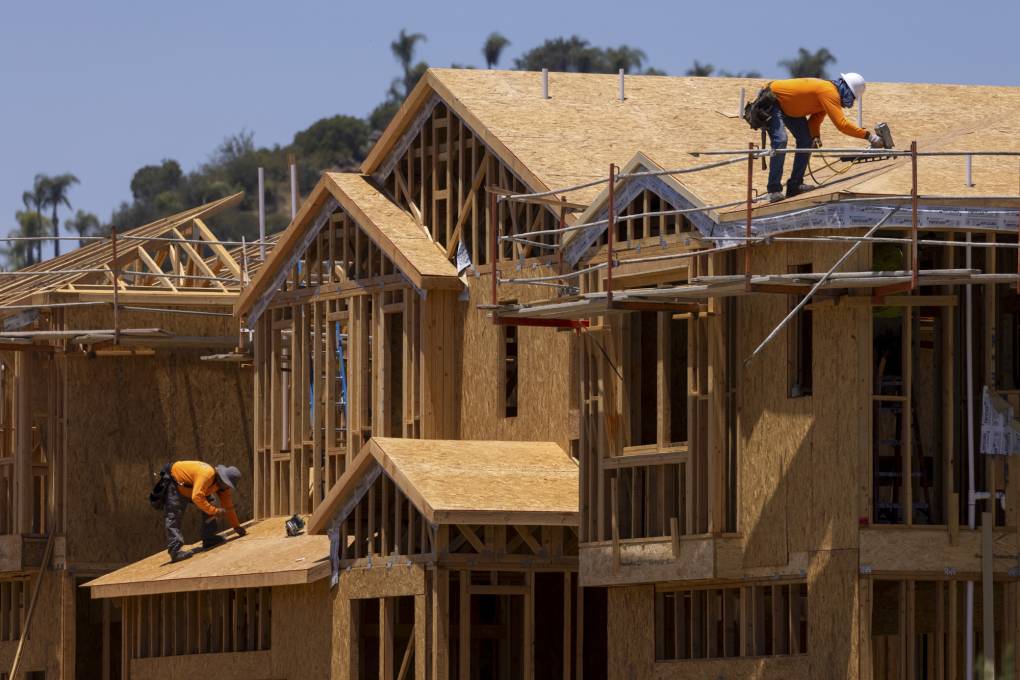
Newsom Campaigned on Building 3.5 Million Homes. He Hasn't Gotten Even Close
California Tech and Politics | Earthquake Alerts
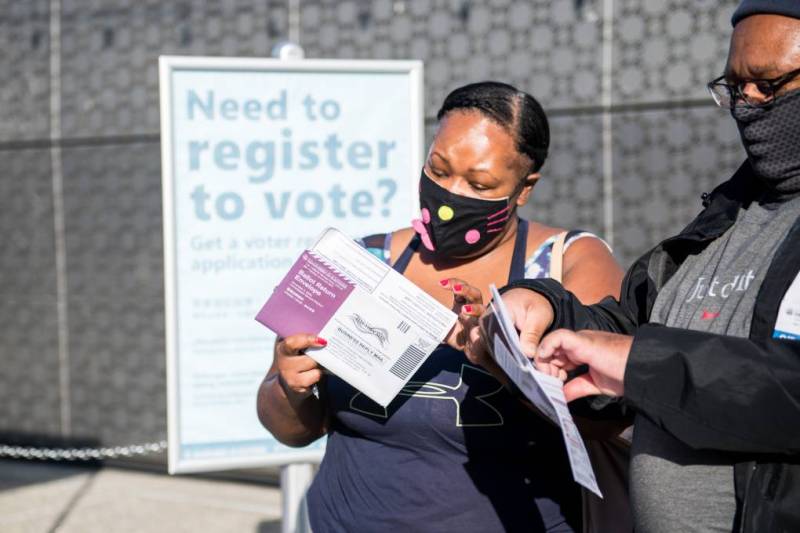
Elecciones 2022: Cómo llenar su boleta electoral y cómo corregir un error
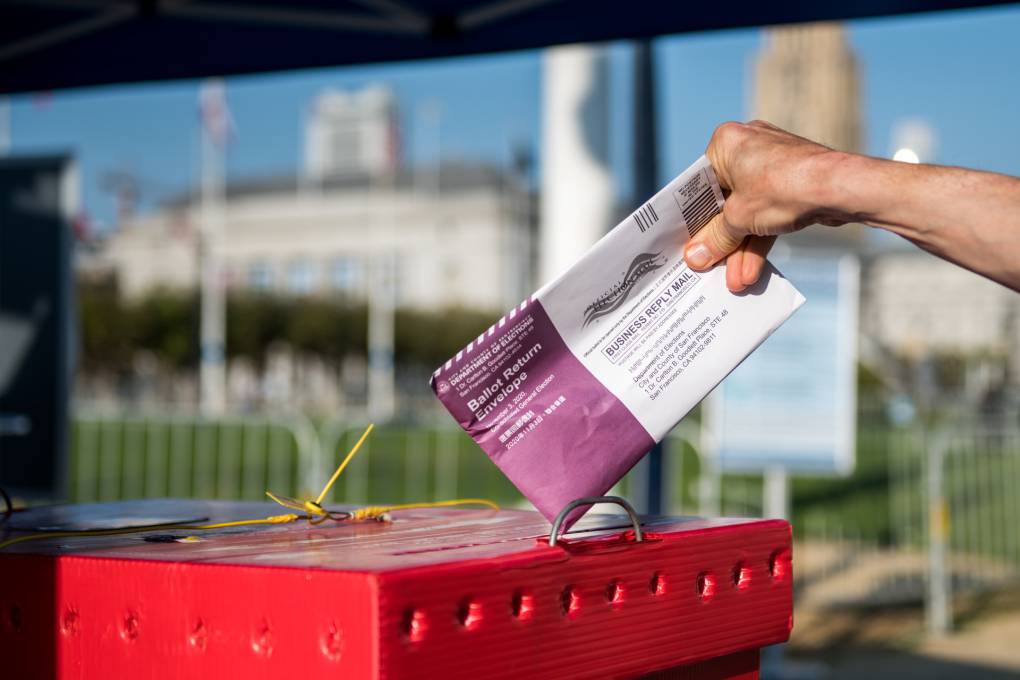
Elecciones 2022: Encuentre su sitio de votación anticipada o lugar de entrega de papeletas
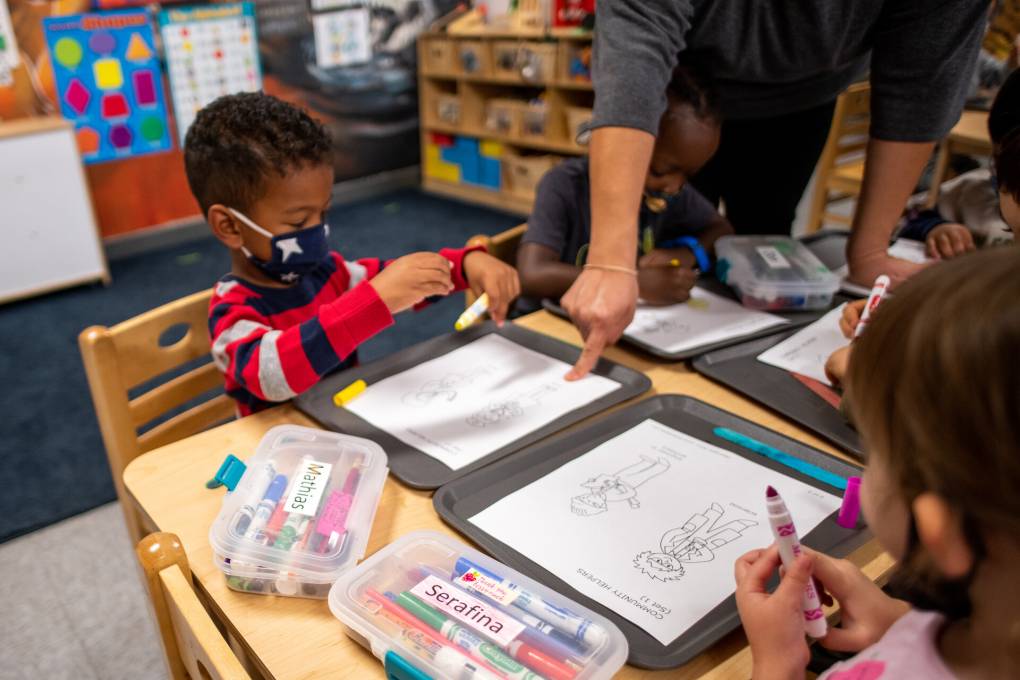
San Francisco's New Department of Early Childhood Wants to Make It Easier for Families to Get Subsidized Child Care
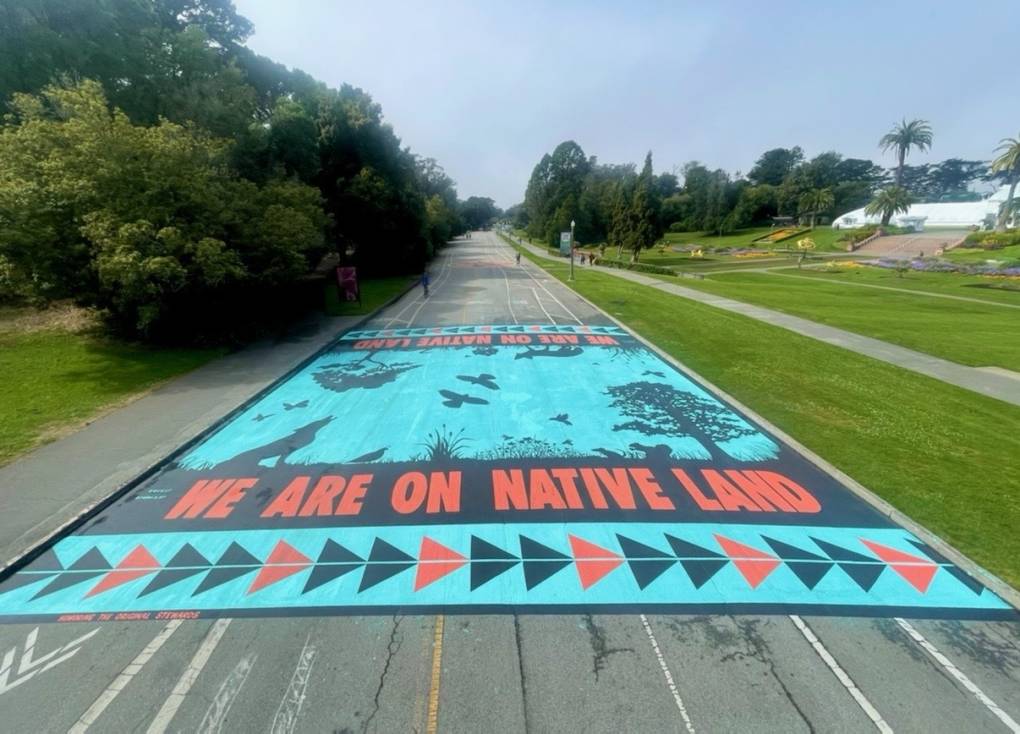
'We Are Here and Present': New Native American Mural in Golden Gate Park, Despite Recent Vandalism, Continues Efforts to Uplift Bay Area Native History
window.__IS_SSR__=true
window.__INITIAL_STATE__={
"attachmentsReducer": {
"audio_0": {
"type": "attachments",
"id": "audio_0",
"imgSizes": {
"kqedFullSize": {
"file": "https://ww2.kqed.org/news/wp-content/themes/KQED-unified/img/audio_bgs/background0.jpg"
}
}
},
"audio_1": {
"type": "attachments",
"id": "audio_1",
"imgSizes": {
"kqedFullSize": {
"file": "https://ww2.kqed.org/news/wp-content/themes/KQED-unified/img/audio_bgs/background1.jpg"
}
}
},
"audio_2": {
"type": "attachments",
"id": "audio_2",
"imgSizes": {
"kqedFullSize": {
"file": "https://ww2.kqed.org/news/wp-content/themes/KQED-unified/img/audio_bgs/background2.jpg"
}
}
},
"audio_3": {
"type": "attachments",
"id": "audio_3",
"imgSizes": {
"kqedFullSize": {
"file": "https://ww2.kqed.org/news/wp-content/themes/KQED-unified/img/audio_bgs/background3.jpg"
}
}
},
"audio_4": {
"type": "attachments",
"id": "audio_4",
"imgSizes": {
"kqedFullSize": {
"file": "https://ww2.kqed.org/news/wp-content/themes/KQED-unified/img/audio_bgs/background4.jpg"
}
}
},
"placeholder": {
"type": "attachments",
"id": "placeholder",
"imgSizes": {
"thumbnail": {
"file": "https://cdn.kqed.org/wp-content/uploads/2024/12/KQED-Default-Image-816638274-2000x1333-1-160x107.jpg",
"width": 160,
"height": 107,
"mimeType": "image/jpeg"
},
"medium": {
"file": "https://cdn.kqed.org/wp-content/uploads/2024/12/KQED-Default-Image-816638274-2000x1333-1-800x533.jpg",
"width": 800,
"height": 533,
"mimeType": "image/jpeg"
},
"medium_large": {
"file": "https://cdn.kqed.org/wp-content/uploads/2024/12/KQED-Default-Image-816638274-2000x1333-1-768x512.jpg",
"width": 768,
"height": 512,
"mimeType": "image/jpeg"
},
"large": {
"file": "https://cdn.kqed.org/wp-content/uploads/2024/12/KQED-Default-Image-816638274-2000x1333-1-1020x680.jpg",
"width": 1020,
"height": 680,
"mimeType": "image/jpeg"
},
"1536x1536": {
"file": "https://cdn.kqed.org/wp-content/uploads/2024/12/KQED-Default-Image-816638274-2000x1333-1-1536x1024.jpg",
"width": 1536,
"height": 1024,
"mimeType": "image/jpeg"
},
"fd-lrg": {
"file": "https://cdn.kqed.org/wp-content/uploads/2024/12/KQED-Default-Image-816638274-2000x1333-1-1536x1024.jpg",
"width": 1536,
"height": 1024,
"mimeType": "image/jpeg"
},
"fd-med": {
"file": "https://cdn.kqed.org/wp-content/uploads/2024/12/KQED-Default-Image-816638274-2000x1333-1-1020x680.jpg",
"width": 1020,
"height": 680,
"mimeType": "image/jpeg"
},
"fd-sm": {
"file": "https://cdn.kqed.org/wp-content/uploads/2024/12/KQED-Default-Image-816638274-2000x1333-1-800x533.jpg",
"width": 800,
"height": 533,
"mimeType": "image/jpeg"
},
"post-thumbnail": {
"file": "https://cdn.kqed.org/wp-content/uploads/2024/12/KQED-Default-Image-816638274-2000x1333-1-672x372.jpg",
"width": 672,
"height": 372,
"mimeType": "image/jpeg"
},
"twentyfourteen-full-width": {
"file": "https://cdn.kqed.org/wp-content/uploads/2024/12/KQED-Default-Image-816638274-2000x1333-1-1038x576.jpg",
"width": 1038,
"height": 576,
"mimeType": "image/jpeg"
},
"xxsmall": {
"file": "https://cdn.kqed.org/wp-content/uploads/2024/12/KQED-Default-Image-816638274-2000x1333-1-160x107.jpg",
"width": 160,
"height": 107,
"mimeType": "image/jpeg"
},
"xsmall": {
"file": "https://cdn.kqed.org/wp-content/uploads/2024/12/KQED-Default-Image-816638274-2000x1333-1-672x372.jpg",
"width": 672,
"height": 372,
"mimeType": "image/jpeg"
},
"small": {
"file": "https://cdn.kqed.org/wp-content/uploads/2024/12/KQED-Default-Image-816638274-2000x1333-1-672x372.jpg",
"width": 672,
"height": 372,
"mimeType": "image/jpeg"
},
"xlarge": {
"file": "https://cdn.kqed.org/wp-content/uploads/2024/12/KQED-Default-Image-816638274-2000x1333-1-1020x680.jpg",
"width": 1020,
"height": 680,
"mimeType": "image/jpeg"
},
"full-width": {
"file": "https://cdn.kqed.org/wp-content/uploads/2024/12/KQED-Default-Image-816638274-2000x1333-1-1920x1280.jpg",
"width": 1920,
"height": 1280,
"mimeType": "image/jpeg"
},
"guest-author-32": {
"file": "https://cdn.kqed.org/wp-content/uploads/2025/01/KQED-Default-Image-816638274-1333x1333-1-160x160.jpg",
"width": 32,
"height": 32,
"mimeType": "image/jpeg"
},
"guest-author-50": {
"file": "https://cdn.kqed.org/wp-content/uploads/2025/01/KQED-Default-Image-816638274-1333x1333-1-160x160.jpg",
"width": 50,
"height": 50,
"mimeType": "image/jpeg"
},
"guest-author-64": {
"file": "https://cdn.kqed.org/wp-content/uploads/2025/01/KQED-Default-Image-816638274-1333x1333-1-160x160.jpg",
"width": 64,
"height": 64,
"mimeType": "image/jpeg"
},
"guest-author-96": {
"file": "https://cdn.kqed.org/wp-content/uploads/2025/01/KQED-Default-Image-816638274-1333x1333-1-160x160.jpg",
"width": 96,
"height": 96,
"mimeType": "image/jpeg"
},
"guest-author-128": {
"file": "https://cdn.kqed.org/wp-content/uploads/2025/01/KQED-Default-Image-816638274-1333x1333-1-160x160.jpg",
"width": 128,
"height": 128,
"mimeType": "image/jpeg"
},
"detail": {
"file": "https://cdn.kqed.org/wp-content/uploads/2025/01/KQED-Default-Image-816638274-1333x1333-1-160x160.jpg",
"width": 160,
"height": 160,
"mimeType": "image/jpeg"
},
"kqedFullSize": {
"file": "https://cdn.kqed.org/wp-content/uploads/2024/12/KQED-Default-Image-816638274-2000x1333-1.jpg",
"width": 2000,
"height": 1333
}
}
},
"news_11930680": {
"type": "attachments",
"id": "news_11930680",
"meta": {
"index": "attachments_1716263798",
"site": "news",
"id": "11930680",
"found": true
},
"parent": 11930679,
"imgSizes": {
"twentyfourteen-full-width": {
"file": "https://ww2.kqed.org/app/uploads/sites/10/2022/10/102722-HOUSING-CONSTRUCTION-SAN-DIEGO-REUTERS-MB-CM_1-2-1038x576.jpg",
"width": 1038,
"mimeType": "image/jpeg",
"height": 576
},
"thumbnail": {
"file": "https://ww2.kqed.org/app/uploads/sites/10/2022/10/102722-HOUSING-CONSTRUCTION-SAN-DIEGO-REUTERS-MB-CM_1-2-160x107.jpg",
"width": 160,
"mimeType": "image/jpeg",
"height": 107
},
"post-thumbnail": {
"file": "https://ww2.kqed.org/app/uploads/sites/10/2022/10/102722-HOUSING-CONSTRUCTION-SAN-DIEGO-REUTERS-MB-CM_1-2-672x372.jpg",
"width": 672,
"mimeType": "image/jpeg",
"height": 372
},
"kqedFullSize": {
"file": "https://ww2.kqed.org/app/uploads/sites/10/2022/10/102722-HOUSING-CONSTRUCTION-SAN-DIEGO-REUTERS-MB-CM_1-2-e1667250015809.jpg",
"width": 1920,
"height": 1281
},
"large": {
"file": "https://ww2.kqed.org/app/uploads/sites/10/2022/10/102722-HOUSING-CONSTRUCTION-SAN-DIEGO-REUTERS-MB-CM_1-2-1020x680.jpg",
"width": 1020,
"mimeType": "image/jpeg",
"height": 680
},
"1536x1536": {
"file": "https://ww2.kqed.org/app/uploads/sites/10/2022/10/102722-HOUSING-CONSTRUCTION-SAN-DIEGO-REUTERS-MB-CM_1-2-1536x1025.jpg",
"width": 1536,
"mimeType": "image/jpeg",
"height": 1025
},
"full-width": {
"file": "https://ww2.kqed.org/app/uploads/sites/10/2022/10/102722-HOUSING-CONSTRUCTION-SAN-DIEGO-REUTERS-MB-CM_1-2-1920x1281.jpg",
"width": 1920,
"mimeType": "image/jpeg",
"height": 1281
},
"medium": {
"file": "https://ww2.kqed.org/app/uploads/sites/10/2022/10/102722-HOUSING-CONSTRUCTION-SAN-DIEGO-REUTERS-MB-CM_1-2-800x534.jpg",
"width": 800,
"mimeType": "image/jpeg",
"height": 534
}
},
"publishDate": 1667246073,
"modified": 1667259404,
"caption": "Residential single-family homes under construction in the community of Valley Center on June 3, 2021.",
"description": "Residential single family homes under construction in the community of Valley Center on June 3, 2021",
"title": "Residential home construction continues as California faces a housing shortage",
"credit": "Mike Blake/Reuters",
"status": "inherit",
"altTag": "newly framed homes without any siding yet on them are shown with two construction workers climbing on them",
"isLoading": false,
"fetchFailed": false
},
"news_11930484": {
"type": "attachments",
"id": "news_11930484",
"meta": {
"index": "attachments_1716263798",
"site": "news",
"id": "11930484",
"found": true
},
"parent": 11930480,
"imgSizes": {
"thumbnail": {
"file": "https://ww2.kqed.org/app/uploads/sites/10/2022/10/Pelosis-160x89.png",
"width": 160,
"mimeType": "image/png",
"height": 89
},
"kqedFullSize": {
"file": "https://ww2.kqed.org/app/uploads/sites/10/2022/10/Pelosis.png",
"width": 467,
"height": 260
}
},
"publishDate": 1666988972,
"modified": 1666989159,
"caption": "Nancy and Paul Pelosi",
"description": null,
"title": "Pelosis",
"credit": "GETTY",
"status": "inherit",
"altTag": null,
"isLoading": false,
"fetchFailed": false
},
"news_11927933": {
"type": "attachments",
"id": "news_11927933",
"meta": {
"index": "attachments_1716263798",
"site": "news",
"id": "11927933",
"found": true
},
"parent": 11927744,
"imgSizes": {
"twentyfourteen-full-width": {
"file": "https://ww2.kqed.org/app/uploads/sites/10/2022/10/RS45235_027_KQED_SanFrancisco_VotingCenter_10052020-qut-1038x576.jpg",
"width": 1038,
"mimeType": "image/jpeg",
"height": 576
},
"thumbnail": {
"file": "https://ww2.kqed.org/app/uploads/sites/10/2022/10/RS45235_027_KQED_SanFrancisco_VotingCenter_10052020-qut-160x107.jpg",
"width": 160,
"mimeType": "image/jpeg",
"height": 107
},
"post-thumbnail": {
"file": "https://ww2.kqed.org/app/uploads/sites/10/2022/10/RS45235_027_KQED_SanFrancisco_VotingCenter_10052020-qut-672x372.jpg",
"width": 672,
"mimeType": "image/jpeg",
"height": 372
},
"kqedFullSize": {
"file": "https://ww2.kqed.org/app/uploads/sites/10/2022/10/RS45235_027_KQED_SanFrancisco_VotingCenter_10052020-qut.jpg",
"width": 1920,
"height": 1280
},
"large": {
"file": "https://ww2.kqed.org/app/uploads/sites/10/2022/10/RS45235_027_KQED_SanFrancisco_VotingCenter_10052020-qut-1020x680.jpg",
"width": 1020,
"mimeType": "image/jpeg",
"height": 680
},
"1536x1536": {
"file": "https://ww2.kqed.org/app/uploads/sites/10/2022/10/RS45235_027_KQED_SanFrancisco_VotingCenter_10052020-qut-1536x1024.jpg",
"width": 1536,
"mimeType": "image/jpeg",
"height": 1024
},
"medium": {
"file": "https://ww2.kqed.org/app/uploads/sites/10/2022/10/RS45235_027_KQED_SanFrancisco_VotingCenter_10052020-qut-800x533.jpg",
"width": 800,
"mimeType": "image/jpeg",
"height": 533
}
},
"publishDate": 1665087663,
"modified": 1666600425,
"caption": "Un votante deja una papeleta en un nuevo centro de votación al aire libre cerca de Civic Center Plaza en San Francisco el 5 de octubre de 2020, el primer día de votación anticipada.",
"description": null,
"title": null,
"credit": "Beth LaBerge/KQED",
"status": "inherit",
"altTag": null,
"isLoading": false,
"fetchFailed": false
},
"news_11929932": {
"type": "attachments",
"id": "news_11929932",
"meta": {
"index": "attachments_1716263798",
"site": "news",
"id": "11929932",
"found": true
},
"parent": 11929931,
"imgSizes": {
"twentyfourteen-full-width": {
"file": "https://ww2.kqed.org/app/uploads/sites/10/2022/10/couple-with-mail-in-ballots-1020x576.jpg",
"width": 1020,
"mimeType": "image/jpeg",
"height": 576
},
"thumbnail": {
"file": "https://ww2.kqed.org/app/uploads/sites/10/2022/10/couple-with-mail-in-ballots-160x107.jpg",
"width": 160,
"mimeType": "image/jpeg",
"height": 107
},
"post-thumbnail": {
"file": "https://ww2.kqed.org/app/uploads/sites/10/2022/10/couple-with-mail-in-ballots-672x372.jpg",
"width": 672,
"mimeType": "image/jpeg",
"height": 372
},
"kqedFullSize": {
"file": "https://ww2.kqed.org/app/uploads/sites/10/2022/10/couple-with-mail-in-ballots.jpg",
"width": 1020,
"height": 680
},
"medium": {
"file": "https://ww2.kqed.org/app/uploads/sites/10/2022/10/couple-with-mail-in-ballots-800x533.jpg",
"width": 800,
"mimeType": "image/jpeg",
"height": 533
}
},
"publishDate": 1666591688,
"modified": 1666591780,
"caption": "Ophelia Williams y su hermano Leopold Parker revisan por última vez sus papeletas por correo antes de entregarlas en el centro de votación cerca del Ayuntamiento de San Francisco el 30 de octubre de 2020.",
"description": null,
"title": "couple with mail in ballots",
"credit": "Beth LaBerge/KQED",
"status": "inherit",
"altTag": null,
"isLoading": false,
"fetchFailed": false
},
"news_11929192": {
"type": "attachments",
"id": "news_11929192",
"meta": {
"index": "attachments_1716263798",
"site": "news",
"id": "11929192",
"found": true
},
"parent": 11929082,
"imgSizes": {
"twentyfourteen-full-width": {
"file": "https://ww2.kqed.org/app/uploads/sites/10/2022/10/RS52303_021_SanLeandro_KidConnectPreschool_10222021-qut-1038x576.jpg",
"width": 1038,
"mimeType": "image/jpeg",
"height": 576
},
"thumbnail": {
"file": "https://ww2.kqed.org/app/uploads/sites/10/2022/10/RS52303_021_SanLeandro_KidConnectPreschool_10222021-qut-160x107.jpg",
"width": 160,
"mimeType": "image/jpeg",
"height": 107
},
"post-thumbnail": {
"file": "https://ww2.kqed.org/app/uploads/sites/10/2022/10/RS52303_021_SanLeandro_KidConnectPreschool_10222021-qut-672x372.jpg",
"width": 672,
"mimeType": "image/jpeg",
"height": 372
},
"kqedFullSize": {
"file": "https://ww2.kqed.org/app/uploads/sites/10/2022/10/RS52303_021_SanLeandro_KidConnectPreschool_10222021-qut.jpg",
"width": 1920,
"height": 1280
},
"large": {
"file": "https://ww2.kqed.org/app/uploads/sites/10/2022/10/RS52303_021_SanLeandro_KidConnectPreschool_10222021-qut-1020x680.jpg",
"width": 1020,
"mimeType": "image/jpeg",
"height": 680
},
"1536x1536": {
"file": "https://ww2.kqed.org/app/uploads/sites/10/2022/10/RS52303_021_SanLeandro_KidConnectPreschool_10222021-qut-1536x1024.jpg",
"width": 1536,
"mimeType": "image/jpeg",
"height": 1024
},
"medium": {
"file": "https://ww2.kqed.org/app/uploads/sites/10/2022/10/RS52303_021_SanLeandro_KidConnectPreschool_10222021-qut-800x533.jpg",
"width": 800,
"mimeType": "image/jpeg",
"height": 533
}
},
"publishDate": 1666026410,
"modified": 1666027546,
"caption": "A teacher works with students on an art project at Kids Connect Infant Care and Preschool in San Leandro. Changes at the state level as well as in San Francisco mean it could soon be easier for parents to access and navigate the early childhood education system.",
"description": null,
"title": "RS52303_021_SanLeandro_KidConnectPreschool_10222021-qut",
"credit": "Beth LaBerge/KQED",
"status": "inherit",
"altTag": "a young child in a colorful sweater works on an art project at preschool while a teacher helps",
"isLoading": false,
"fetchFailed": false
},
"news_11929111": {
"type": "attachments",
"id": "news_11929111",
"meta": {
"index": "attachments_1716263798",
"site": "news",
"id": "11929111",
"found": true
},
"parent": 11929099,
"imgSizes": {
"twentyfourteen-full-width": {
"file": "https://ww2.kqed.org/app/uploads/sites/10/2022/10/Finished_Mural-1038x576.jpg",
"width": 1038,
"mimeType": "image/jpeg",
"height": 576
},
"thumbnail": {
"file": "https://ww2.kqed.org/app/uploads/sites/10/2022/10/Finished_Mural-160x115.jpg",
"width": 160,
"mimeType": "image/jpeg",
"height": 115
},
"post-thumbnail": {
"file": "https://ww2.kqed.org/app/uploads/sites/10/2022/10/Finished_Mural-672x372.jpg",
"width": 672,
"mimeType": "image/jpeg",
"height": 372
},
"kqedFullSize": {
"file": "https://ww2.kqed.org/app/uploads/sites/10/2022/10/Finished_Mural.jpg",
"width": 1206,
"height": 868
},
"large": {
"file": "https://ww2.kqed.org/app/uploads/sites/10/2022/10/Finished_Mural-1020x734.jpg",
"width": 1020,
"mimeType": "image/jpeg",
"height": 734
},
"medium": {
"file": "https://ww2.kqed.org/app/uploads/sites/10/2022/10/Finished_Mural-800x576.jpg",
"width": 800,
"mimeType": "image/jpeg",
"height": 576
}
},
"publishDate": 1665864115,
"modified": 1666035940,
"caption": "The 'We Are on Native Land' mural before it was vandalized.",
"description": null,
"title": "Finished_Mural",
"credit": "Courtesy of American Indian Cultural District",
"status": "inherit",
"altTag": "A massive turquoise, black and red street mural covering a section of the JFK Promenade stating 'We are on Native land'",
"isLoading": false,
"fetchFailed": false
}
},
"audioPlayerReducer": {
"postId": "stream_live",
"isPaused": true,
"isPlaying": false,
"pfsActive": false,
"pledgeModalIsOpen": true,
"playerDrawerIsOpen": false,
"liveAudioPlayStartedAt": 0,
"liveAudioPlayContext": ""
},
"authorsReducer": {
"byline_news_11930679": {
"type": "authors",
"id": "byline_news_11930679",
"meta": {
"override": true
},
"slug": "byline_news_11930679",
"name": "\u003ca href=\"https://calmatters.org/author/manuela-tobias/\">Manuela Tobias\u003c/a>",
"isLoading": false
},
"astupi": {
"type": "authors",
"id": "70",
"meta": {
"index": "authors_1716337520",
"id": "70",
"found": true
},
"name": "Amanda Stupi",
"firstName": "Amanda",
"lastName": "Stupi",
"slug": "astupi",
"email": "astupi@kqed.org",
"display_author_email": false,
"staff_mastheads": [],
"title": "Senior Engagement Producer",
"bio": "Amanda joined KQED Science’s engagement team as a Senior Audience Engagement Strategist in the spring of 2019. She has helped craft messaging around wildfires, the coronavirus pandemic, climate change and many other stories. She has also brought KQED Science to new platforms such as Reddit’s Ask Me Anything series. Prior to joining KQED Science, Amanda spent seven years as an engagement producer with Forum, KQED’s daily live call-in show. She got her start in radio at KALW's weekly call in show, City Visions, before going on to an internship and stint at NPR's Talk of the Nation.\r\n\r\nPrior to journalism, Amanda taught English at Lowell High School. She's a native of Petaluma and currently lives under the \"South San Francisco the Industrial City\" sign in South City. She believes that engagement is vital to news’s future and that good journalism listens as much as it asks questions.",
"avatar": "https://secure.gravatar.com/avatar/e981c503e5c162da701dcaccfbf87e35?s=600&d=blank&r=g",
"twitter": null,
"facebook": null,
"instagram": null,
"linkedin": null,
"sites": [
{
"site": "arts",
"roles": [
"Contributor"
]
},
{
"site": "news",
"roles": [
"editor"
]
},
{
"site": "pop",
"roles": [
"contributor"
]
},
{
"site": "stateofhealth",
"roles": [
"editor"
]
},
{
"site": "science",
"roles": []
},
{
"site": "perspectives",
"roles": [
"editor"
]
}
],
"headData": {
"title": "Amanda Stupi | KQED",
"description": "Senior Engagement Producer",
"ogImgSrc": "https://secure.gravatar.com/avatar/e981c503e5c162da701dcaccfbf87e35?s=600&d=blank&r=g",
"twImgSrc": "https://secure.gravatar.com/avatar/e981c503e5c162da701dcaccfbf87e35?s=600&d=blank&r=g"
},
"isLoading": false,
"link": "/author/astupi"
},
"gmarzorati": {
"type": "authors",
"id": "227",
"meta": {
"index": "authors_1716337520",
"id": "227",
"found": true
},
"name": "Guy Marzorati",
"firstName": "Guy",
"lastName": "Marzorati",
"slug": "gmarzorati",
"email": "gmarzorati@KQED.org",
"display_author_email": true,
"staff_mastheads": [
"news"
],
"title": "Correspondent",
"bio": "Guy Marzorati is a correspondent on KQED's California Politics and Government Desk, based in San Jose. A graduate of Santa Clara University, Guy joined KQED in 2013. He reports on state and local politics and produces KQED's digital voter guide.",
"avatar": "https://secure.gravatar.com/avatar/e7038b8dbfd55b104369b76b1cd0b9de?s=600&d=blank&r=g",
"twitter": "guymarzorati",
"facebook": null,
"instagram": null,
"linkedin": null,
"sites": [
{
"site": "",
"roles": [
"editor"
]
},
{
"site": "news",
"roles": [
"editor"
]
},
{
"site": "science",
"roles": [
"editor"
]
},
{
"site": "forum",
"roles": [
"editor"
]
},
{
"site": "elections",
"roles": [
"editor"
]
},
{
"site": "liveblog",
"roles": [
"editor"
]
}
],
"headData": {
"title": "Guy Marzorati | KQED",
"description": "Correspondent",
"ogImgSrc": "https://secure.gravatar.com/avatar/e7038b8dbfd55b104369b76b1cd0b9de?s=600&d=blank&r=g",
"twImgSrc": "https://secure.gravatar.com/avatar/e7038b8dbfd55b104369b76b1cd0b9de?s=600&d=blank&r=g"
},
"isLoading": false,
"link": "/author/gmarzorati"
},
"kqed": {
"type": "authors",
"id": "236",
"meta": {
"index": "authors_1716337520",
"id": "236",
"found": true
},
"name": "KQED News Staff",
"firstName": "KQED News Staff",
"lastName": null,
"slug": "kqed",
"email": "faq@kqed.org",
"display_author_email": false,
"staff_mastheads": [],
"title": null,
"bio": null,
"avatar": "https://secure.gravatar.com/avatar/ef0e801a68c4c54afa9180db14084167?s=600&d=blank&r=g",
"twitter": null,
"facebook": null,
"instagram": null,
"linkedin": null,
"sites": [
{
"site": "arts",
"roles": [
"contributor"
]
},
{
"site": "news",
"roles": [
"editor"
]
},
{
"site": "futureofyou",
"roles": [
"author"
]
}
],
"headData": {
"title": "KQED News Staff | KQED",
"description": null,
"ogImgSrc": "https://secure.gravatar.com/avatar/ef0e801a68c4c54afa9180db14084167?s=600&d=blank&r=g",
"twImgSrc": "https://secure.gravatar.com/avatar/ef0e801a68c4c54afa9180db14084167?s=600&d=blank&r=g"
},
"isLoading": false,
"link": "/author/kqed"
},
"carlysevern": {
"type": "authors",
"id": "3243",
"meta": {
"index": "authors_1716337520",
"id": "3243",
"found": true
},
"name": "Carly Severn",
"firstName": "Carly",
"lastName": "Severn",
"slug": "carlysevern",
"email": "csevern@kqed.org",
"display_author_email": false,
"staff_mastheads": [
"news"
],
"title": "Senior Editor, Audience News ",
"bio": "Carly is KQED's Senior Editor of Audience News on the Digital News team, and has reported for the California Report Magazine, Bay Curious and KQED Arts. She's formerly the host of \u003ca href=\"http://ww2.kqed.org/pop/category/the-cooler/\" rel=\"noopener noreferrer\">The Cooler\u003c/a> podcast.",
"avatar": "https://secure.gravatar.com/avatar/54037bf5c128fe678f0ef26cec97a93f2e7f220a22d7285703328f12c42c1b1d?s=600&d=blank&r=g",
"twitter": "teacupinthebay",
"bluesky": null,
"facebook": null,
"instagram": null,
"linkedin": null,
"sites": [
{
"site": "",
"roles": [
"editor"
]
},
{
"site": "arts",
"roles": [
"editor"
]
},
{
"site": "news",
"roles": [
"administrator"
]
},
{
"site": "pop",
"roles": [
"editor"
]
},
{
"site": "futureofyou",
"roles": [
"editor"
]
},
{
"site": "about",
"roles": [
"administrator"
]
},
{
"site": "mindshift",
"roles": [
"editor"
]
},
{
"site": "bayareabites",
"roles": [
"editor"
]
},
{
"site": "stateofhealth",
"roles": [
"editor"
]
},
{
"site": "science",
"roles": [
"editor"
]
},
{
"site": "food",
"roles": [
"contributor"
]
},
{
"site": "forum",
"roles": [
"editor"
]
},
{
"site": "perspectives",
"roles": [
"administrator"
]
},
{
"site": "liveblog",
"roles": [
"editor"
]
}
],
"headData": {
"title": "Carly Severn | KQED",
"description": "Senior Editor, Audience News ",
"ogImgSrc": "https://secure.gravatar.com/avatar/54037bf5c128fe678f0ef26cec97a93f2e7f220a22d7285703328f12c42c1b1d?s=600&d=blank&r=g",
"twImgSrc": "https://secure.gravatar.com/avatar/54037bf5c128fe678f0ef26cec97a93f2e7f220a22d7285703328f12c42c1b1d?s=600&d=blank&r=g"
},
"isLoading": false,
"link": "/author/carlysevern"
},
"lsarah": {
"type": "authors",
"id": "11626",
"meta": {
"index": "authors_1716337520",
"id": "11626",
"found": true
},
"name": "Lakshmi Sarah",
"firstName": "Lakshmi",
"lastName": "Sarah",
"slug": "lsarah",
"email": "lsarah@kqed.org",
"display_author_email": false,
"staff_mastheads": [],
"title": "Digital Producer",
"bio": "Lakshmi Sarah is an educator, author and journalist with a focus on innovative storytelling. She has worked with newspapers, radio and magazines from Ahmedabad, India to Los Angeles, California. She has written and produced for Die Zeit, Global Voices, AJ+, KQED, Fusion Media Group and the New York Times.",
"avatar": "https://secure.gravatar.com/avatar/652dcaecd8b28826fc17a8b2d6bb4e93?s=600&d=blank&r=g",
"twitter": "lakitalki",
"facebook": null,
"instagram": "https://www.instagram.com/laki.talki/",
"linkedin": "https://www.linkedin.com/in/lakisarah/",
"sites": [
{
"site": "arts",
"roles": []
},
{
"site": "news",
"roles": []
},
{
"site": "bayareabites",
"roles": []
},
{
"site": "science",
"roles": []
}
],
"headData": {
"title": "Lakshmi Sarah | KQED",
"description": "Digital Producer",
"ogImgSrc": "https://secure.gravatar.com/avatar/652dcaecd8b28826fc17a8b2d6bb4e93?s=600&d=blank&r=g",
"twImgSrc": "https://secure.gravatar.com/avatar/652dcaecd8b28826fc17a8b2d6bb4e93?s=600&d=blank&r=g"
},
"isLoading": false,
"link": "/author/lsarah"
},
"nnavarro": {
"type": "authors",
"id": "11756",
"meta": {
"index": "authors_1716337520",
"id": "11756",
"found": true
},
"name": "Natalia Navarro",
"firstName": "Natalia",
"lastName": "Navarro",
"slug": "nnavarro",
"email": "nnavarro@kqed.org",
"display_author_email": true,
"staff_mastheads": [
"news"
],
"title": "Afternoon News Anchor",
"bio": "Natalia Navarro is KQED's afternoon radio news anchor. She came to KQED in 2021 from Colorado Public Radio, where she was a reporter and host. She has received several awards for her work covering daily and breaking news from professional organizations such as the San Francisco Press Club, Society of Professional Journalists and the Colorado Broadcasters Association. Natalia is originally from Tucson, Arizona, where she got her start in journalism writing for the Arizona Daily Star, Arizona Public Media and the Tucson Weekly. Natalia earned her bachelor's degree in journalism and economics, and her master's degree in journalism from the University of Arizona.",
"avatar": "https://secure.gravatar.com/avatar/a2bdb19fd9520bdea295a2d5f9b2ad65ec51cf0bf559fb1cc041d3a0a04d62ad?s=600&d=blank&r=g",
"twitter": "@NataliaVNavarro",
"bluesky": null,
"facebook": null,
"instagram": null,
"linkedin": null,
"sites": [
{
"site": "news",
"roles": [
"editor"
]
}
],
"headData": {
"title": "Natalia Navarro | KQED",
"description": "Afternoon News Anchor",
"ogImgSrc": "https://secure.gravatar.com/avatar/a2bdb19fd9520bdea295a2d5f9b2ad65ec51cf0bf559fb1cc041d3a0a04d62ad?s=600&d=blank&r=g",
"twImgSrc": "https://secure.gravatar.com/avatar/a2bdb19fd9520bdea295a2d5f9b2ad65ec51cf0bf559fb1cc041d3a0a04d62ad?s=600&d=blank&r=g"
},
"isLoading": false,
"link": "/author/nnavarro"
},
"afinney": {
"type": "authors",
"id": "11772",
"meta": {
"index": "authors_1716337520",
"id": "11772",
"found": true
},
"name": "Annelise Finney",
"firstName": "Annelise",
"lastName": "Finney",
"slug": "afinney",
"email": "afinney@kqed.org",
"display_author_email": true,
"staff_mastheads": [
"news"
],
"title": "Reporter",
"bio": "Annelise reports on reparations in California and East Bay politics. She co-produced the Sunday Music Drop, a limited-term radio series featuring Bay Area musicians that aired between Sept 2022 and Oct 2024. She joined KQED in 2021 as a general assignment reporter and is an alumna of KALW's Audio Academy. She was born and raised in the East Bay. She is currently away from KQED completing a year-long reporting project in Berlin, Germany as a Alexander Von Humboldt German Chancellor Fellow.",
"avatar": "https://secure.gravatar.com/avatar/5fded66cae47704cdfc5021cde0f3aa4?s=600&d=blank&r=g",
"twitter": null,
"facebook": null,
"instagram": null,
"linkedin": null,
"sites": [
{
"site": "news",
"roles": [
"editor"
]
},
{
"site": "liveblog",
"roles": [
"author"
]
}
],
"headData": {
"title": "Annelise Finney | KQED",
"description": "Reporter",
"ogImgSrc": "https://secure.gravatar.com/avatar/5fded66cae47704cdfc5021cde0f3aa4?s=600&d=blank&r=g",
"twImgSrc": "https://secure.gravatar.com/avatar/5fded66cae47704cdfc5021cde0f3aa4?s=600&d=blank&r=g"
},
"isLoading": false,
"link": "/author/afinney"
},
"daisynguyen": {
"type": "authors",
"id": "11829",
"meta": {
"index": "authors_1716337520",
"id": "11829",
"found": true
},
"name": "Daisy Nguyen",
"firstName": "Daisy",
"lastName": "Nguyen",
"slug": "daisynguyen",
"email": "daisynguyen@kqed.org",
"display_author_email": true,
"staff_mastheads": [
"news"
],
"title": "KQED Contributor",
"bio": "I have covered early childhood education and child care for KQED since 2022. I focus on policies aimed at increasing access to early care and education and how they shape individual lives. I've been a journalist for more than two decades, with most of that time devoted to covering breaking news throughout California for The Associated Press. I grew up in San Francisco and studied at UC Davis and Columbia University's Graduate School of Journalism. I live in Oakland with my husband and two kids.",
"avatar": "https://secure.gravatar.com/avatar/2da2127c27f7143b53ebd419800fd55f?s=600&d=blank&r=g",
"twitter": null,
"facebook": null,
"instagram": null,
"linkedin": "https://www.linkedin.com/in/daisynguyen/",
"sites": [
{
"site": "news",
"roles": [
"author"
]
},
{
"site": "liveblog",
"roles": [
"author"
]
}
],
"headData": {
"title": "Daisy Nguyen | KQED",
"description": "KQED Contributor",
"ogImgSrc": "https://secure.gravatar.com/avatar/2da2127c27f7143b53ebd419800fd55f?s=600&d=blank&r=g",
"twImgSrc": "https://secure.gravatar.com/avatar/2da2127c27f7143b53ebd419800fd55f?s=600&d=blank&r=g"
},
"isLoading": false,
"link": "/author/daisynguyen"
}
},
"pagesReducer": {
"news_category_california": {
"type": "terms",
"id": "news_31795",
"meta": {
"index": "terms_1716263798",
"site": "news",
"id": "31795",
"score": 10.849411
},
"featImg": null,
"name": "California",
"description": null,
"taxonomy": "category",
"headData": {
"twImgId": null,
"twTitle": null,
"ogTitle": null,
"ogImgId": null,
"twDescription": null,
"description": null,
"title": "California Archives | KQED News",
"ogDescription": null
},
"ttid": 31812,
"slug": "california",
"isLoading": false,
"title": "California",
"pageMeta": {
"site": "news",
"WpPageTemplate": "page-topic-editorial",
"currentPage": 226
},
"blocks": [
{
"blockName": "kqed/post-list",
"attrs": {
"layout": "cardArticle2",
"query": "posts/news?category=california",
"seeMore": false,
"paginated": true,
"page": 226
}
},
{
"blockName": "kqed/ad"
}
]
}
},
"pfsSessionReducer": {},
"postsReducer": {
"stream_live": {
"type": "live",
"id": "stream_live",
"audioUrl": "https://streams.kqed.org/kqedradio",
"title": "Live Stream",
"excerpt": "Live Stream information currently unavailable.",
"link": "/radio",
"featImg": "",
"label": {
"name": "KQED Live",
"link": "/"
}
},
"stream_kqedNewscast": {
"type": "posts",
"id": "stream_kqedNewscast",
"audioUrl": "https://www.kqed.org/.stream/anon/radio/RDnews/newscast.mp3?_=1",
"title": "KQED Newscast",
"featImg": "",
"label": {
"name": "88.5 FM",
"link": "/"
}
},
"news_11930679": {
"type": "posts",
"id": "news_11930679",
"meta": {
"index": "posts_1716263798",
"site": "news",
"id": "11930679",
"score": null,
"sort": [
1667307671000
]
},
"parent": 0,
"labelTerm": {},
"blocks": [],
"publishDate": 1667307671,
"format": "standard",
"disqusTitle": "Newsom Campaigned on Building 3.5 Million Homes. He Hasn't Gotten Even Close",
"title": "Newsom Campaigned on Building 3.5 Million Homes. He Hasn't Gotten Even Close",
"headTitle": "CALmatters | KQED News",
"content": "\u003cp>It’s difficult for housing advocates to criticize Gov. Gavin Newsom because he’s done more to boost production than any other governor in recent memory — but that’s mostly because the bar is so low.\u003c/p>\n\u003cp>Measured against the goal he set for himself, Newsom’s record is less impressive. Just 13% of the 3.5 million homes he campaigned on building have been permitted, let alone built. He’s walked back the goal many times, settling on a new target earlier this year: Cities need to have planned a combined 2.5 million homes by 2030. So, a million fewer homes planned for, not built, and over a longer time frame.\u003c/p>\n\u003cp>Newsom can point to some accomplishments: He signed bills that \u003ca href=\"https://calmatters.org/housing/2019/09/big-rent-hikes-illegal-in-california-heres-what-to-know/\">capped big rent hikes statewide\u003c/a>, \u003ca href=\"https://calmatters.org/housing/2021/09/california-housing-crisis-newsom-signs-bills/\">legalized duplexes and fourplexes\u003c/a> on most developable land and unlocked millions of potential \u003ca href=\"https://calmatters.org/housing/2022/09/california-housing-podcast-ab-2011/\">apartments on empty strip malls\u003c/a>. He \u003ca href=\"https://calmatters.org/housing/2022/10/california-homeless-crisis-latinos/\">sheltered tens of thousands of people experiencing homelessness\u003c/a> amid a pandemic and dedicated more dollars to housing and homelessness than ever before.\u003c/p>\n\u003cp>But as he finalizes his first term and \u003ca href=\"https://calmatters.org/politics/election-2022/2022/10/gavin-newsom-campaign-president/\">coasts into the second\u003c/a>, Newsom finds himself mired in an even deeper housing and \u003ca href=\"https://calmatters.org/housing/2022/10/california-homeless-crisis-latinos/\">homelessness crisis\u003c/a> than the one he inherited.\u003c/p>\n\u003cp>[ad fullwidth]\u003c/p>\n\u003cp>Running for governor in 2017, then-Lt. Gov. Newsom pledged to spur a never-before-seen tsunami of homebuilding in California to bridge the gap between the growing population and shrinking stock of housing driving the affordability crisis.\u003c/p>\n\u003cp>“As Governor, I will lead the effort to develop the 3.5 million new housing units we need by 2025 because our solutions must be as bold as the problem is big,” Newsom \u003ca href=\"https://medium.com/@GavinNewsom/the-california-dream-starts-at-home-9dbb38c51cae\">wrote on Medium\u003c/a>.\u003c/p>\n\u003cp>The goal was true to character: \u003ca href=\"https://calmatters.org/politics/2018/10/gavin-newsom-profile-california-governor-election/\">big, hairy and audacious\u003c/a>. It would have required building an average of 500,000 homes a year in a state that has only surpassed the 300,000 mark \u003ca href=\"https://la.curbed.com/2018/11/8/18073066/california-governor-election-gavin-newsom-housing-plan\">twice in more than 50 years\u003c/a>.\u003c/p>\n\u003cp>Newsom didn’t get even close.\u003c/p>\n\u003cp>In the nearly four years since he took office, California cities are projected to have permitted a total of about 452,000 homes — fewer than Newsom pledged he’d build in one year alone, according to local data collected by the Construction Industry Research Board.\u003c/p>\n\u003cp>\u003c!-- iframe plugin v.4.3 wordpress.org/plugins/iframe/ -->\u003cbr>\n\u003ciframe src=\"https://e.infogram.com/_/Re1mI4JBl1bUtlSDHcnI?src=embed\" title=\"2022 Housing production in California\" width=\"800\" height=\"700\" scrolling=\"no\" frameborder=\"0\" style=\"border:none;\" allowfullscreen=\"allowfullscreen\" class=\"iframe-class\">\u003c/iframe>\u003c/p>\n\u003cp>When asked about his shortcomings at a \u003ca href=\"https://www.youtube.com/watch?v=JSy2VOGkBF8&t=1s\">recent press conference\u003c/a>, Newsom \u003ca href=\"https://www.latimes.com/california/story/2019-10-21/newsom-gavin-affordable-housing-homeless-q-a\">wrote off his original goal\u003c/a> as he has many times before, by paraphrasing Michelangelo.\u003c/p>\n\u003cp>“The biggest risk in life, however one defines risk, is not that we aim too high and miss it. It’s that we aim too low and reach it,” Newsom said. “It was always a stretch goal.”\u003c/p>\n\u003cp>Housing advocates acknowledge that policy change is by nature slow and incremental, and like many other proposals, long-term housing goals took a back seat to the COVID-19 pandemic.\u003c/p>\n\u003cp>But the reality on the ground — that there aren’t enough houses for everyone and the ones that exist are hideously expensive — continues to exasperate \u003ca href=\"https://www.ppic.org/publication/ppic-statewide-survey-californians-and-their-government-may-2022/\">Californians who repeatedly rank housing and homelessness among their top concerns\u003c/a>.\u003c/p>\n\u003cp>State Sen. Brian Dahle, the \u003ca href=\"https://briandahle.com/homelessness/\">Republican candidate for governor\u003c/a>, and other state Republicans have routinely attacked Newsom’s record on housing, including \u003ca href=\"https://republicans.senate.ca.gov/content/legislative-republicans-call-special-session-combat-homeless-crisis-immediately\">calling for a special session\u003c/a> on homelessness.\u003c/p>\n\u003cp>“We need government to treat this the way we treat a natural disaster, because that’s how it’s impacting people’s lives,” said Chione Lucina Muñoz Flegal, executive director of \u003ca href=\"https://www.housingca.org/\">Housing California\u003c/a>, a housing advocacy organization. “And that’s not what we see happening.”\u003c/p>\n\u003ch2 id=\"h-a-marshall-plan-for-housing\">A Marshall Plan for housing?\u003c/h2>\n\u003cp>Housing policy advocates described Newsom’s stated goal of 3.5 million new homes in four years the same way he has: aspirational. They say that’s because the state doesn’t build housing in California — private developers do, with the approval of local governments. So what really grabbed advocates’ attention was the “Marshall Plan for affordable housing” Newsom pledged to launch during his \u003ca href=\"https://calmatters.org/politics/2019/01/gavin-newsom-california-inauguration-speech-policy-highlights/\">inaugural speech\u003c/a>, recalling the multibillion-dollar program to rebuild Western Europe following World War II.\u003c/p>\n\u003cp>“As much as the number was important, the idea of building a streamlined process of building, that was amazing, because that’s really the challenge of California,” said Dan Dunmoyer, president of the California Building Industry Association. He said that dream remains elusive.\u003c/p>\n\u003cp>California has some of the \u003ca href=\"https://calmatters.org/explainers/housing-costs-high-california/\">highest housing costs\u003c/a> in the nation because of how little “marshaling” there is, Dunmoyer said. Land costs are prohibitive, and zoning rules limit much of what can be built. Housing must get approved at the local level, which has ample opportunity for community input. Those communities can then block unpopular projects, such as multifamily or affordable housing. Another culprit: impact fees cities charge to fund infrastructure that can \u003ca href=\"https://ternercenter.berkeley.edu/blog/residential-impact-fees/\">exceed $150,000 a home\u003c/a>, some of the highest in the nation.\u003c/p>\n\u003cp>[pullquote size=\"medium\" align=\"right\" citation=\"Louis Mirante, vice president of public policy, Bay Area Council\"]'To stop a project, you only need one red light. But to make a project go, you need at least 100 green lights. A lot of the legislation the governor has been signing has been those green lights.'[/pullquote]The closest Newsom may have gotten to bulldozing those barriers is \u003ca href=\"https://calmatters.org/housing/2020/11/newsom-pandemic-beat-homelessness/\">Project Homekey\u003c/a>. After COVID-19 hit, the administration scrambled to turn 94 hotels and motels into more than 6,000 shelter units for people experiencing homelessness, which would later become permanent homes, within record-setting months. The projects \u003ca href=\"https://www.politico.com/news/2021/11/04/main-recoverylab-cities-la-sros-518602\">bypassed local land use rules and a marquee environmental law\u003c/a> often blamed for slowing or killing controversial projects. The state has since expanded the $800 million project with more than $2.75 billion in new funding.\u003c/p>\n\u003cp>Newsom signed more than a dozen bills allowing housing types that met certain conditions to skip lengthy approval processes at the local level. Two are expected to have the biggest impact: one that \u003ca href=\"https://calmatters.org/housing/2021/08/california-housing-crisis-zoning-bill/\">legalized duplexes and fourplexes\u003c/a> on the two-thirds of developable land in California \u003ca href=\"https://ternercenter.berkeley.edu/wp-content/uploads/2021/07/SB-9-Brief-July-2021-Final.pdf\">previously zoned for single-family homes\u003c/a>, and another that \u003ca href=\"https://urbanfootprint.com/ab2011-analysis/\">allows apartments\u003c/a> on land previously allotted for \u003ca href=\"https://calmatters.org/housing/2022/05/california-housing-crisis-unions/\">retail centers, parking lots and offices along arterial roads\u003c/a>.\u003c/p>\n\u003cp>While a zoning change doesn’t build housing, it’s a first step to making it legal. Combined, the two laws could open up previously blocked space for more than 2 million housing units.\u003c/p>\n\u003cp>“The effect of legislation is often hard to prove, because it’s only one factor of many in the development process,” said Louis Mirante, vice president of public policy at the \u003ca href=\"https://www.bayareacouncil.org/\">Bay Area Council\u003c/a>. “To stop a project, you only need one red light. But to make a project go, you need at least 100 green lights. A lot of the legislation the governor has been signing has been those green lights.”\u003c/p>\n\u003cp>But yellow and red lights abound, including rising interest rates and prohibitive material costs. While it took political courage to sign a controversial measure like the one streamlining duplex and fourplex construction, Newsom remained largely quiet on those bills until they reached the finish line, and hasn’t championed a more sweeping production policy proposal on his own.\u003c/p>\n\u003cp>“He can step in and resolve the problems if he really wanted to prioritize the issue,” said Chris Martin, policy director at Housing California. “He has the power to do it, but politically, it’s challenging. He’s going to have to make some uncomfortable decisions.”\u003c/p>\n\u003ch2 id=\"h-moving-the-goalposts\">Moving the goalposts\u003c/h2>\n\u003cp>While Newsom has repeatedly called the 3.5 million goal taken from a \u003ca href=\"https://www.mckinsey.com/~/media/mckinsey/industries/public%20and%20social%20sector/our%20insights/closing%20californias%20housing%20gap/closing-californias-housing-gap-full-report.pdf\">2016 McKinsey study\u003c/a> a moon shot, he has put his weight behind another number: 2.5 million. That’s how many homes the Legislature has mandated California cities to plan for by 2030, and Newsom’s team is making sure they do.\u003c/p>\n\u003cp>“Before we can reach our stretch goals, before you can reach the moon, you’ve got to get off the launch pad,” said Jason Elliott, Newsom’s senior counselor on housing and homelessness.\u003c/p>\n\u003cp>[aside label='More Housing Coverage' tag='housing']The planning law has been on the books for decades, but it wasn’t until 2017 that the state Legislature gave the process teeth by creating standards and penalties cities must abide by. The \u003cem>plans\u003c/em> for the housing that those standards and penalties apply to weren’t even due for most cities until this year. And the deadlines are different for different regions. It’s a slow process.\u003c/p>\n\u003cp>Cities now have to zone for more than double the housing they did in previous years, and it has to be on sites where housing could actually be built. And if they don’t do it, they risk \u003ca href=\"https://calmatters.org/housing/2022/03/california-housing-goals/\">losing affordable housing dollars\u003c/a> or even \u003ca href=\"https://calmatters.org/newsletters/whatmatters/2022/10/california-housing-crisis-nimby/\">forgoing housing approval decisions\u003c/a>.\u003c/p>\n\u003cp>But having laws on the books — even if they feature new penalties — doesn’t mean anything unless someone is there to enforce them.\u003c/p>\n\u003cp>To that end, Newsom staffed up a $4.65 million \u003ca href=\"https://calmatters.org/housing/2022/04/california-duplex-housing/\">accountability and enforcement unit\u003c/a> within the housing department, with \u003ca href=\"https://calmatters.org/housing/2022/05/california-housing-podcast-rob-bonta-housing-enforcement/\">reinforcements at the state’s Justice Department\u003c/a>. Cities seem to be paying heed, but it’s all fun and games until actual homes get built.\u003c/p>\n\u003cp>“For many years in California, the Regional Housing Needs [Allocation] process was an afterthought at best,” Elliott said. “It was not taken seriously because there were largely no consequences for local governments failing to meet their responsibilities. And that’s not ancient history, but through a very concerted effort by this governor and the administration in partnership with the Legislature, RHNA is now very serious. And I think communities are taking it seriously.”\u003c/p>\n\u003cp>Still, planning isn’t building, and a recurring complaint about the process from cities is that while it requires a lot of affordable housing to be planned for — 1 million of the 2.5 million units must be affordable to the lowest earners — the state doesn’t provide nearly enough tax credits and other subsidies to build it.\u003c/p>\n\u003cp>“We’re funding a quarter of that, at best,” said Paavo Monkkonen, associate professor of urban planning at UCLA’s Luskin School of Public Affairs. “So that’s an interesting conundrum, where their own goal is unattainable. And there’s not really a Manhattan Project to make that happen.”\u003c/p>\n\u003cp>\u003c!-- iframe plugin v.4.3 wordpress.org/plugins/iframe/ -->\u003cbr>\n\u003ciframe src=\"https://e.infogram.com/9c485c33-4c31-4f78-ae36-07dc50a75dc3?src=embed\" title=\"Affordable housing production\" width=\"800\" height=\"850\" scrolling=\"no\" frameborder=\"0\" style=\"border:none;\" allowfullscreen=\"allowfullscreen\" class=\"iframe-class\">\u003c/iframe>\u003c/p>\n\u003cp>With the Legislature, Newsom has dedicated unprecedented dollars to affordable housing, including \u003ca href=\"https://www.gov.ca.gov/2021/07/19/governor-newsom-signs-historic-housing-and-homelessness-funding-package-as-part-of-100-billion-california-comeback-plan/\">$10.3 billion in 2021\u003c/a>. Funding the current affordable housing need alone, however, would require \u003ca href=\"https://chpc.net/roadmaphome2030/\">nearly $18 billion a year over a decade\u003c/a>, according to a recent estimate from Housing California and California Housing Partnership. And there is no long-term source of funding for housing in California. As budget projections for next year sour, affordable housing advocates worry those funds might dry up.\u003c/p>\n\u003cp>“In these years of good budget outlook, the administration has done a really good job,” said Marina Wiant, vice president of government affairs at the \u003ca href=\"https://calhsng.org/\">California Housing Consortium\u003c/a>, a nonpartisan housing advocacy organization. “It’s going to be interesting to see what they do when they have to make tough budget choices.”\u003c/p>\n\u003cp>[ad floatright]\u003c/p>\n",
"disqusIdentifier": "11930679 https://calmatters.network/?p=294244",
"disqusUrl": "https://ww2.kqed.org/news/2022/11/01/newsom-campaigned-on-building-3-5-million-homes-he-hasnt-gotten-even-close/",
"stats": {
"hasVideo": false,
"hasChartOrMap": true,
"hasAudio": false,
"hasPolis": false,
"wordCount": 1884,
"hasGoogleForm": false,
"hasGallery": false,
"hasHearkenModule": false,
"iframeSrcs": [
"https://e.infogram.com/_/Re1mI4JBl1bUtlSDHcnI",
"https://e.infogram.com/9c485c33-4c31-4f78-ae36-07dc50a75dc3"
],
"paragraphCount": 39
},
"modified": 1667326439,
"excerpt": "Gov. Gavin Newsom campaigned on housing production, an issue important to many Californians. But despite some accomplishments, the housing crisis is worse now than when he took office.",
"headData": {
"twImgId": "",
"twTitle": "",
"ogTitle": "",
"ogImgId": "",
"twDescription": "",
"description": "Gov. Gavin Newsom campaigned on housing production, an issue important to many Californians. But despite some accomplishments, the housing crisis is worse now than when he took office.",
"title": "Newsom Campaigned on Building 3.5 Million Homes. He Hasn't Gotten Even Close | KQED",
"ogDescription": "",
"schema": {
"@context": "https://schema.org",
"@type": "NewsArticle",
"headline": "Newsom Campaigned on Building 3.5 Million Homes. He Hasn't Gotten Even Close",
"datePublished": "2022-11-01T06:01:11-07:00",
"dateModified": "2022-11-01T11:13:59-07:00",
"image": "https://cdn.kqed.org/wp-content/uploads/2020/02/KQED-OG-Image@1x.png",
"isAccessibleForFree": "True",
"publisher": {
"@type": "NewsMediaOrganization",
"@id": "https://www.kqed.org/#organization",
"name": "KQED",
"logo": "https://cdn.kqed.org/wp-content/uploads/2020/02/KQED-OG-Image@1x.png",
"url": "https://www.kqed.org",
"sameAs": [
"https://www.facebook.com/KQED",
"https://twitter.com/KQED",
"https://www.instagram.com/kqed/",
"https://www.tiktok.com/@kqedofficial",
"https://www.linkedin.com/company/kqed",
"https://www.youtube.com/channel/UCeC0IOo7i1P_61zVUWbJ4nw"
]
}
}
},
"guestAuthors": [],
"slug": "newsom-campaigned-on-building-3-5-million-homes-he-hasnt-gotten-even-close",
"status": "publish",
"sourceUrl": "https://calmatters.org/",
"templateType": "standard",
"nprByline": "\u003ca href=\"https://calmatters.org/author/manuela-tobias/\">Manuela Tobias\u003c/a>",
"excludeFromSiteSearch": "Include",
"featuredImageType": "standard",
"source": "CalMatters",
"showOnAuthorArchivePages": "No",
"WpPageTemplate": "default",
"path": "/news/11930679/newsom-campaigned-on-building-3-5-million-homes-he-hasnt-gotten-even-close",
"audioTrackLength": null,
"parsedContent": [
{
"type": "contentString",
"content": "\u003cdiv class=\"post-body\">\u003cp>\u003cp>It’s difficult for housing advocates to criticize Gov. Gavin Newsom because he’s done more to boost production than any other governor in recent memory — but that’s mostly because the bar is so low.\u003c/p>\n\u003cp>Measured against the goal he set for himself, Newsom’s record is less impressive. Just 13% of the 3.5 million homes he campaigned on building have been permitted, let alone built. He’s walked back the goal many times, settling on a new target earlier this year: Cities need to have planned a combined 2.5 million homes by 2030. So, a million fewer homes planned for, not built, and over a longer time frame.\u003c/p>\n\u003cp>Newsom can point to some accomplishments: He signed bills that \u003ca href=\"https://calmatters.org/housing/2019/09/big-rent-hikes-illegal-in-california-heres-what-to-know/\">capped big rent hikes statewide\u003c/a>, \u003ca href=\"https://calmatters.org/housing/2021/09/california-housing-crisis-newsom-signs-bills/\">legalized duplexes and fourplexes\u003c/a> on most developable land and unlocked millions of potential \u003ca href=\"https://calmatters.org/housing/2022/09/california-housing-podcast-ab-2011/\">apartments on empty strip malls\u003c/a>. He \u003ca href=\"https://calmatters.org/housing/2022/10/california-homeless-crisis-latinos/\">sheltered tens of thousands of people experiencing homelessness\u003c/a> amid a pandemic and dedicated more dollars to housing and homelessness than ever before.\u003c/p>\n\u003cp>But as he finalizes his first term and \u003ca href=\"https://calmatters.org/politics/election-2022/2022/10/gavin-newsom-campaign-president/\">coasts into the second\u003c/a>, Newsom finds himself mired in an even deeper housing and \u003ca href=\"https://calmatters.org/housing/2022/10/california-homeless-crisis-latinos/\">homelessness crisis\u003c/a> than the one he inherited.\u003c/p>\n\u003cp>\u003c/p>\u003c/div>",
"attributes": {
"named": {},
"numeric": []
}
},
{
"type": "component",
"content": "",
"name": "ad",
"attributes": {
"named": {
"label": "fullwidth"
},
"numeric": [
"fullwidth"
]
}
},
{
"type": "contentString",
"content": "\u003cdiv class=\"post-body\">\u003cp>\u003c/p>\n\u003cp>Running for governor in 2017, then-Lt. Gov. Newsom pledged to spur a never-before-seen tsunami of homebuilding in California to bridge the gap between the growing population and shrinking stock of housing driving the affordability crisis.\u003c/p>\n\u003cp>“As Governor, I will lead the effort to develop the 3.5 million new housing units we need by 2025 because our solutions must be as bold as the problem is big,” Newsom \u003ca href=\"https://medium.com/@GavinNewsom/the-california-dream-starts-at-home-9dbb38c51cae\">wrote on Medium\u003c/a>.\u003c/p>\n\u003cp>The goal was true to character: \u003ca href=\"https://calmatters.org/politics/2018/10/gavin-newsom-profile-california-governor-election/\">big, hairy and audacious\u003c/a>. It would have required building an average of 500,000 homes a year in a state that has only surpassed the 300,000 mark \u003ca href=\"https://la.curbed.com/2018/11/8/18073066/california-governor-election-gavin-newsom-housing-plan\">twice in more than 50 years\u003c/a>.\u003c/p>\n\u003cp>Newsom didn’t get even close.\u003c/p>\n\u003cp>In the nearly four years since he took office, California cities are projected to have permitted a total of about 452,000 homes — fewer than Newsom pledged he’d build in one year alone, according to local data collected by the Construction Industry Research Board.\u003c/p>\n\u003cp>\u003c!-- iframe plugin v.4.3 wordpress.org/plugins/iframe/ -->\u003cbr>\n\u003ciframe src=\"https://e.infogram.com/_/Re1mI4JBl1bUtlSDHcnI?src=embed\" title=\"2022 Housing production in California\" width=\"800\" height=\"700\" scrolling=\"no\" frameborder=\"0\" style=\"border:none;\" allowfullscreen=\"allowfullscreen\" class=\"iframe-class\">\u003c/iframe>\u003c/p>\n\u003cp>When asked about his shortcomings at a \u003ca href=\"https://www.youtube.com/watch?v=JSy2VOGkBF8&t=1s\">recent press conference\u003c/a>, Newsom \u003ca href=\"https://www.latimes.com/california/story/2019-10-21/newsom-gavin-affordable-housing-homeless-q-a\">wrote off his original goal\u003c/a> as he has many times before, by paraphrasing Michelangelo.\u003c/p>\n\u003cp>“The biggest risk in life, however one defines risk, is not that we aim too high and miss it. It’s that we aim too low and reach it,” Newsom said. “It was always a stretch goal.”\u003c/p>\n\u003cp>Housing advocates acknowledge that policy change is by nature slow and incremental, and like many other proposals, long-term housing goals took a back seat to the COVID-19 pandemic.\u003c/p>\n\u003cp>But the reality on the ground — that there aren’t enough houses for everyone and the ones that exist are hideously expensive — continues to exasperate \u003ca href=\"https://www.ppic.org/publication/ppic-statewide-survey-californians-and-their-government-may-2022/\">Californians who repeatedly rank housing and homelessness among their top concerns\u003c/a>.\u003c/p>\n\u003cp>State Sen. Brian Dahle, the \u003ca href=\"https://briandahle.com/homelessness/\">Republican candidate for governor\u003c/a>, and other state Republicans have routinely attacked Newsom’s record on housing, including \u003ca href=\"https://republicans.senate.ca.gov/content/legislative-republicans-call-special-session-combat-homeless-crisis-immediately\">calling for a special session\u003c/a> on homelessness.\u003c/p>\n\u003cp>“We need government to treat this the way we treat a natural disaster, because that’s how it’s impacting people’s lives,” said Chione Lucina Muñoz Flegal, executive director of \u003ca href=\"https://www.housingca.org/\">Housing California\u003c/a>, a housing advocacy organization. “And that’s not what we see happening.”\u003c/p>\n\u003ch2 id=\"h-a-marshall-plan-for-housing\">A Marshall Plan for housing?\u003c/h2>\n\u003cp>Housing policy advocates described Newsom’s stated goal of 3.5 million new homes in four years the same way he has: aspirational. They say that’s because the state doesn’t build housing in California — private developers do, with the approval of local governments. So what really grabbed advocates’ attention was the “Marshall Plan for affordable housing” Newsom pledged to launch during his \u003ca href=\"https://calmatters.org/politics/2019/01/gavin-newsom-california-inauguration-speech-policy-highlights/\">inaugural speech\u003c/a>, recalling the multibillion-dollar program to rebuild Western Europe following World War II.\u003c/p>\n\u003cp>“As much as the number was important, the idea of building a streamlined process of building, that was amazing, because that’s really the challenge of California,” said Dan Dunmoyer, president of the California Building Industry Association. He said that dream remains elusive.\u003c/p>\n\u003cp>California has some of the \u003ca href=\"https://calmatters.org/explainers/housing-costs-high-california/\">highest housing costs\u003c/a> in the nation because of how little “marshaling” there is, Dunmoyer said. Land costs are prohibitive, and zoning rules limit much of what can be built. Housing must get approved at the local level, which has ample opportunity for community input. Those communities can then block unpopular projects, such as multifamily or affordable housing. Another culprit: impact fees cities charge to fund infrastructure that can \u003ca href=\"https://ternercenter.berkeley.edu/blog/residential-impact-fees/\">exceed $150,000 a home\u003c/a>, some of the highest in the nation.\u003c/p>\n\u003cp>\u003c/p>\u003c/div>",
"attributes": {
"named": {},
"numeric": []
}
},
{
"type": "component",
"content": "'To stop a project, you only need one red light. But to make a project go, you need at least 100 green lights. A lot of the legislation the governor has been signing has been those green lights.'",
"name": "pullquote",
"attributes": {
"named": {
"size": "medium",
"align": "right",
"citation": "Louis Mirante, vice president of public policy, Bay Area Council",
"label": ""
},
"numeric": []
}
},
{
"type": "contentString",
"content": "\u003cdiv class=\"post-body\">\u003cp>The closest Newsom may have gotten to bulldozing those barriers is \u003ca href=\"https://calmatters.org/housing/2020/11/newsom-pandemic-beat-homelessness/\">Project Homekey\u003c/a>. After COVID-19 hit, the administration scrambled to turn 94 hotels and motels into more than 6,000 shelter units for people experiencing homelessness, which would later become permanent homes, within record-setting months. The projects \u003ca href=\"https://www.politico.com/news/2021/11/04/main-recoverylab-cities-la-sros-518602\">bypassed local land use rules and a marquee environmental law\u003c/a> often blamed for slowing or killing controversial projects. The state has since expanded the $800 million project with more than $2.75 billion in new funding.\u003c/p>\n\u003cp>Newsom signed more than a dozen bills allowing housing types that met certain conditions to skip lengthy approval processes at the local level. Two are expected to have the biggest impact: one that \u003ca href=\"https://calmatters.org/housing/2021/08/california-housing-crisis-zoning-bill/\">legalized duplexes and fourplexes\u003c/a> on the two-thirds of developable land in California \u003ca href=\"https://ternercenter.berkeley.edu/wp-content/uploads/2021/07/SB-9-Brief-July-2021-Final.pdf\">previously zoned for single-family homes\u003c/a>, and another that \u003ca href=\"https://urbanfootprint.com/ab2011-analysis/\">allows apartments\u003c/a> on land previously allotted for \u003ca href=\"https://calmatters.org/housing/2022/05/california-housing-crisis-unions/\">retail centers, parking lots and offices along arterial roads\u003c/a>.\u003c/p>\n\u003cp>While a zoning change doesn’t build housing, it’s a first step to making it legal. Combined, the two laws could open up previously blocked space for more than 2 million housing units.\u003c/p>\n\u003cp>“The effect of legislation is often hard to prove, because it’s only one factor of many in the development process,” said Louis Mirante, vice president of public policy at the \u003ca href=\"https://www.bayareacouncil.org/\">Bay Area Council\u003c/a>. “To stop a project, you only need one red light. But to make a project go, you need at least 100 green lights. A lot of the legislation the governor has been signing has been those green lights.”\u003c/p>\n\u003cp>But yellow and red lights abound, including rising interest rates and prohibitive material costs. While it took political courage to sign a controversial measure like the one streamlining duplex and fourplex construction, Newsom remained largely quiet on those bills until they reached the finish line, and hasn’t championed a more sweeping production policy proposal on his own.\u003c/p>\n\u003cp>“He can step in and resolve the problems if he really wanted to prioritize the issue,” said Chris Martin, policy director at Housing California. “He has the power to do it, but politically, it’s challenging. He’s going to have to make some uncomfortable decisions.”\u003c/p>\n\u003ch2 id=\"h-moving-the-goalposts\">Moving the goalposts\u003c/h2>\n\u003cp>While Newsom has repeatedly called the 3.5 million goal taken from a \u003ca href=\"https://www.mckinsey.com/~/media/mckinsey/industries/public%20and%20social%20sector/our%20insights/closing%20californias%20housing%20gap/closing-californias-housing-gap-full-report.pdf\">2016 McKinsey study\u003c/a> a moon shot, he has put his weight behind another number: 2.5 million. That’s how many homes the Legislature has mandated California cities to plan for by 2030, and Newsom’s team is making sure they do.\u003c/p>\n\u003cp>“Before we can reach our stretch goals, before you can reach the moon, you’ve got to get off the launch pad,” said Jason Elliott, Newsom’s senior counselor on housing and homelessness.\u003c/p>\n\u003cp>\u003c/p>\u003c/div>",
"attributes": {
"named": {},
"numeric": []
}
},
{
"type": "component",
"content": "",
"name": "aside",
"attributes": {
"named": {
"label": "More Housing Coverage ",
"tag": "housing"
},
"numeric": []
}
},
{
"type": "contentString",
"content": "\u003cdiv class=\"post-body\">\u003cp>The planning law has been on the books for decades, but it wasn’t until 2017 that the state Legislature gave the process teeth by creating standards and penalties cities must abide by. The \u003cem>plans\u003c/em> for the housing that those standards and penalties apply to weren’t even due for most cities until this year. And the deadlines are different for different regions. It’s a slow process.\u003c/p>\n\u003cp>Cities now have to zone for more than double the housing they did in previous years, and it has to be on sites where housing could actually be built. And if they don’t do it, they risk \u003ca href=\"https://calmatters.org/housing/2022/03/california-housing-goals/\">losing affordable housing dollars\u003c/a> or even \u003ca href=\"https://calmatters.org/newsletters/whatmatters/2022/10/california-housing-crisis-nimby/\">forgoing housing approval decisions\u003c/a>.\u003c/p>\n\u003cp>But having laws on the books — even if they feature new penalties — doesn’t mean anything unless someone is there to enforce them.\u003c/p>\n\u003cp>To that end, Newsom staffed up a $4.65 million \u003ca href=\"https://calmatters.org/housing/2022/04/california-duplex-housing/\">accountability and enforcement unit\u003c/a> within the housing department, with \u003ca href=\"https://calmatters.org/housing/2022/05/california-housing-podcast-rob-bonta-housing-enforcement/\">reinforcements at the state’s Justice Department\u003c/a>. Cities seem to be paying heed, but it’s all fun and games until actual homes get built.\u003c/p>\n\u003cp>“For many years in California, the Regional Housing Needs [Allocation] process was an afterthought at best,” Elliott said. “It was not taken seriously because there were largely no consequences for local governments failing to meet their responsibilities. And that’s not ancient history, but through a very concerted effort by this governor and the administration in partnership with the Legislature, RHNA is now very serious. And I think communities are taking it seriously.”\u003c/p>\n\u003cp>Still, planning isn’t building, and a recurring complaint about the process from cities is that while it requires a lot of affordable housing to be planned for — 1 million of the 2.5 million units must be affordable to the lowest earners — the state doesn’t provide nearly enough tax credits and other subsidies to build it.\u003c/p>\n\u003cp>“We’re funding a quarter of that, at best,” said Paavo Monkkonen, associate professor of urban planning at UCLA’s Luskin School of Public Affairs. “So that’s an interesting conundrum, where their own goal is unattainable. And there’s not really a Manhattan Project to make that happen.”\u003c/p>\n\u003cp>\u003c!-- iframe plugin v.4.3 wordpress.org/plugins/iframe/ -->\u003cbr>\n\u003ciframe src=\"https://e.infogram.com/9c485c33-4c31-4f78-ae36-07dc50a75dc3?src=embed\" title=\"Affordable housing production\" width=\"800\" height=\"850\" scrolling=\"no\" frameborder=\"0\" style=\"border:none;\" allowfullscreen=\"allowfullscreen\" class=\"iframe-class\">\u003c/iframe>\u003c/p>\n\u003cp>With the Legislature, Newsom has dedicated unprecedented dollars to affordable housing, including \u003ca href=\"https://www.gov.ca.gov/2021/07/19/governor-newsom-signs-historic-housing-and-homelessness-funding-package-as-part-of-100-billion-california-comeback-plan/\">$10.3 billion in 2021\u003c/a>. Funding the current affordable housing need alone, however, would require \u003ca href=\"https://chpc.net/roadmaphome2030/\">nearly $18 billion a year over a decade\u003c/a>, according to a recent estimate from Housing California and California Housing Partnership. And there is no long-term source of funding for housing in California. As budget projections for next year sour, affordable housing advocates worry those funds might dry up.\u003c/p>\n\u003cp>“In these years of good budget outlook, the administration has done a really good job,” said Marina Wiant, vice president of government affairs at the \u003ca href=\"https://calhsng.org/\">California Housing Consortium\u003c/a>, a nonpartisan housing advocacy organization. “It’s going to be interesting to see what they do when they have to make tough budget choices.”\u003c/p>\n\u003cp>\u003c/p>\u003c/div>",
"attributes": {
"named": {},
"numeric": []
}
},
{
"type": "component",
"content": "",
"name": "ad",
"attributes": {
"named": {
"label": "floatright"
},
"numeric": [
"floatright"
]
}
},
{
"type": "contentString",
"content": "\u003cdiv class=\"post-body\">\u003cp>\u003c/p>\n\u003c/div>\u003c/p>",
"attributes": {
"named": {},
"numeric": []
}
}
],
"link": "/news/11930679/newsom-campaigned-on-building-3-5-million-homes-he-hasnt-gotten-even-close",
"authors": [
"byline_news_11930679"
],
"categories": [
"news_31795",
"news_1758",
"news_6266",
"news_8"
],
"tags": [
"news_3921",
"news_18538",
"news_16",
"news_1775",
"news_21358",
"news_17968"
],
"affiliates": [
"news_18481"
],
"featImg": "news_11930680",
"label": "source_news_11930679"
},
"news_11930480": {
"type": "posts",
"id": "news_11930480",
"meta": {
"index": "posts_1716263798",
"site": "news",
"id": "11930480",
"score": null,
"sort": [
1666994851000
]
},
"guestAuthors": [],
"slug": "california-tech-and-politics-earthquake-alerts",
"title": "California Tech and Politics | Earthquake Alerts",
"publishDate": 1666994851,
"format": "video",
"headTitle": "California Tech and Politics | Earthquake Alerts | KQED",
"labelTerm": {
"term": 7052,
"site": "news"
},
"content": "\u003cp>\u003cb>California Tech and Politics News\u003cbr>\n\u003c/b>\u003cspan style=\"font-weight: 400\">House Speaker Nancy Pelosi’s husband, Paul Pelosi, is in the hospital tonight following a shocking attack this morning at their San Francisco home. With the suspect in custody, we examine whether it’s indicative of an increasingly violent political climate. Also, with Election Day less than two weeks away, Republicans are gaining momentum in congressional elections across the state. Inflation and the economy are top concerns for many voters. Will economic concerns tip the scales in California’s congressional races? Plus, Elon Musk completes his highly publicized takeover of Twitter. What does this mean for the future of the platform? We consider all this and more with our panel of reporters.\u003c/span>\u003c/p>\n\u003cp>\u003cspan style=\"font-weight: 400\">Guests:\u003c/span>\u003c/p>\n\u003cul>\n\u003cli style=\"font-weight: 400\">\u003cspan style=\"font-weight: 400\">Carla Marinucci, former Politico senior political writer\u003c/span>\u003c/li>\n\u003cli style=\"font-weight: 400\">\u003cspan style=\"font-weight: 400\">Jeremy C. Owens, MarketWatch San Francisco bureau chief\u003c/span>\u003c/li>\n\u003c/ul>\n\u003cp>\u003cb>Earthquake Early Warning System\u003cbr>\n\u003c/b>\u003cspan style=\"font-weight: 400\">On Tuesday, the Bay Area was shaken by a 5.1 magnitude earthquake just outside of San Jos\u003c/span>\u003cspan style=\"font-weight: 400\">é\u003c/span>\u003cspan style=\"font-weight: 400\">. The quake came just a few days after the anniversary of the 1989 Loma Prieta earthquake.\u003c/span>\u003c/p>\n\u003cp>\u003cspan style=\"font-weight: 400\">Many Bay Area residents received advanced warning right on their smartphones through the MyShake app. The app was created by the Berkeley Seismology Lab and is designed to alert users of an earthquake before they feel it. We’ll talk to its creator, Professor Richard Allen, director of the Seismology Lab, about how it works.\u003c/span>\u003c/p>\n\u003cp>\u003cb>Something Beautiful: Oakland Aviation Museum\u003cbr>\n\u003c/b>\u003cspan style=\"font-weight: 400\">One hundred years ago, air travel was just taking off. The Boeing School of Aeronautics opened in 1929, at the Oakland Airport, to compete with flight schools in Southern California. The school has since been transformed into the Oakland Aviation Museum to preserve the East Bay’s history of flight, and it’s tonight’s look at Something Beautiful. \u003c/span>\u003c/p>\n\u003cp>[ad fullwidth]\u003c/p>\u003cp>\u003c/p>\n",
"blocks": [],
"excerpt": null,
"status": "publish",
"parent": 0,
"modified": 1727130443,
"stats": {
"hasAudio": false,
"hasVideo": false,
"hasChartOrMap": false,
"iframeSrcs": [],
"hasGoogleForm": false,
"hasGallery": false,
"hasHearkenModule": false,
"hasPolis": false,
"paragraphCount": 7,
"wordCount": 301
},
"headData": {
"title": "California Tech and Politics | Earthquake Alerts | KQED",
"description": "California Tech and Politics News House Speaker Nancy Pelosi's husband, Paul Pelosi, is in the hospital tonight following a shocking attack this morning at their San Francisco home. With the suspect in custody, we examine whether it's indicative of an increasingly violent political climate. Also, with Election Day less than two weeks away, Republicans are gaining momentum in congressional elections across the state. Inflation and the economy are top concerns for many voters. Will economic concerns tip the scales in California's congressional races? Plus, Elon Musk completes his highly publicized takeover of Twitter. What does this mean for the future",
"ogTitle": "",
"ogDescription": "",
"ogImgId": "",
"twTitle": "",
"twDescription": "",
"twImgId": "",
"schema": {
"@context": "https://schema.org",
"@type": "NewsArticle",
"headline": "California Tech and Politics | Earthquake Alerts",
"datePublished": "2022-10-28T15:07:31-07:00",
"dateModified": "2024-09-23T15:27:23-07:00",
"image": "https://cdn.kqed.org/wp-content/uploads/2020/02/KQED-OG-Image@1x.png",
"isAccessibleForFree": "True",
"publisher": {
"@type": "NewsMediaOrganization",
"@id": "https://www.kqed.org/#organization",
"name": "KQED",
"logo": "https://cdn.kqed.org/wp-content/uploads/2020/02/KQED-OG-Image@1x.png",
"url": "https://www.kqed.org",
"sameAs": [
"https://www.facebook.com/KQED",
"https://twitter.com/KQED",
"https://www.instagram.com/kqed/",
"https://www.tiktok.com/@kqedofficial",
"https://www.linkedin.com/company/kqed",
"https://www.youtube.com/channel/UCeC0IOo7i1P_61zVUWbJ4nw"
]
}
}
},
"videoEmbed": "https://youtu.be/7NZCOxV36Z8",
"sticky": false,
"excludeFromSiteSearch": "Include",
"path": "/news/11930480/california-tech-and-politics-earthquake-alerts",
"audioTrackLength": null,
"parsedContent": [
{
"type": "contentString",
"content": "\u003cdiv class=\"post-body\">\u003cp>\u003cp>\u003cb>California Tech and Politics News\u003cbr>\n\u003c/b>\u003cspan style=\"font-weight: 400\">House Speaker Nancy Pelosi’s husband, Paul Pelosi, is in the hospital tonight following a shocking attack this morning at their San Francisco home. With the suspect in custody, we examine whether it’s indicative of an increasingly violent political climate. Also, with Election Day less than two weeks away, Republicans are gaining momentum in congressional elections across the state. Inflation and the economy are top concerns for many voters. Will economic concerns tip the scales in California’s congressional races? Plus, Elon Musk completes his highly publicized takeover of Twitter. What does this mean for the future of the platform? We consider all this and more with our panel of reporters.\u003c/span>\u003c/p>\n\u003cp>\u003cspan style=\"font-weight: 400\">Guests:\u003c/span>\u003c/p>\n\u003cul>\n\u003cli style=\"font-weight: 400\">\u003cspan style=\"font-weight: 400\">Carla Marinucci, former Politico senior political writer\u003c/span>\u003c/li>\n\u003cli style=\"font-weight: 400\">\u003cspan style=\"font-weight: 400\">Jeremy C. Owens, MarketWatch San Francisco bureau chief\u003c/span>\u003c/li>\n\u003c/ul>\n\u003cp>\u003cb>Earthquake Early Warning System\u003cbr>\n\u003c/b>\u003cspan style=\"font-weight: 400\">On Tuesday, the Bay Area was shaken by a 5.1 magnitude earthquake just outside of San Jos\u003c/span>\u003cspan style=\"font-weight: 400\">é\u003c/span>\u003cspan style=\"font-weight: 400\">. The quake came just a few days after the anniversary of the 1989 Loma Prieta earthquake.\u003c/span>\u003c/p>\n\u003cp>\u003cspan style=\"font-weight: 400\">Many Bay Area residents received advanced warning right on their smartphones through the MyShake app. The app was created by the Berkeley Seismology Lab and is designed to alert users of an earthquake before they feel it. We’ll talk to its creator, Professor Richard Allen, director of the Seismology Lab, about how it works.\u003c/span>\u003c/p>\n\u003cp>\u003cb>Something Beautiful: Oakland Aviation Museum\u003cbr>\n\u003c/b>\u003cspan style=\"font-weight: 400\">One hundred years ago, air travel was just taking off. The Boeing School of Aeronautics opened in 1929, at the Oakland Airport, to compete with flight schools in Southern California. The school has since been transformed into the Oakland Aviation Museum to preserve the East Bay’s history of flight, and it’s tonight’s look at Something Beautiful. \u003c/span>\u003c/p>\n\u003cp>\u003c/p>\u003c/div>",
"attributes": {
"named": {},
"numeric": []
}
},
{
"type": "component",
"content": "",
"name": "ad",
"attributes": {
"named": {
"label": "fullwidth"
},
"numeric": [
"fullwidth"
]
}
},
{
"type": "contentString",
"content": "\u003cdiv class=\"post-body\">\u003cp>\u003c/p>\u003cp>\u003c/p>\n\u003c/div>\u003c/p>",
"attributes": {
"named": {},
"numeric": []
}
}
],
"link": "/news/11930480/california-tech-and-politics-earthquake-alerts",
"authors": [
"236"
],
"programs": [
"news_7052"
],
"categories": [
"news_31795",
"news_28250",
"news_13",
"news_248"
],
"tags": [
"news_262",
"news_1012",
"news_3897",
"news_31214",
"news_177",
"news_31916",
"news_17968",
"news_30740",
"news_346",
"news_17597"
],
"featImg": "news_11930484",
"label": "news_7052"
},
"news_11929944": {
"type": "posts",
"id": "news_11929944",
"meta": {
"index": "posts_1716263798",
"site": "news",
"id": "11929944",
"score": null,
"sort": [
1666910341000
]
},
"guestAuthors": [],
"slug": "elecciones-2022-como-llenar-su-boleta-electoral-y-como-corregir-un-error",
"title": "Elecciones 2022: Cómo llenar su boleta electoral y cómo corregir un error",
"publishDate": 1666910341,
"format": "standard",
"headTitle": "Elecciones 2022: Cómo llenar su boleta electoral y cómo corregir un error | KQED",
"labelTerm": {},
"content": "\u003cp>\u003cem>\u003ca href=\"https://www.kqed.org/news/11927744/election-2022-fill-out-your-ballot-correct-a-mistake\">Read in English\u003c/a>\u003c/em>\u003c/p>\n\u003cul>\n\u003cli style=\"list-style-type: none\">\n\u003cul>\n\u003cli>\u003ca href=\"#saber\">\u003cstrong>Díganos: ¿Qué quiere saber sobre el voto en las elecciones intermedias de 2022?\u003c/strong>\u003c/a>\u003c/li>\n\u003cli>\u003ca href=\"#corregir\">\u003cstrong>Saltar a: Cómo corregir un error en su boleta electoral\u003c/strong>\u003c/a>\u003c/li>\n\u003c/ul>\n\u003c/li>\n\u003c/ul>\n\u003cp>Sí, sabemos que, para muchos de ustedes, parece que han votado mucho en el último año.\u003c/p>\n\u003cp>Y ahora, otra temporada electoral está de nuevo con nosotros: las elecciones intermedias de 2022.\u003c/p>\n\u003cp>Si usted es un votante registrado en California, su papeleta está en camino, si es que aún no le ha llegado. ¿Pero qué pasa si no está seguro de cómo rellenarla según su forma de votar? ¿O si cometio un error?\u003c/p>\n\u003cp>Siga leyendo para saber cómo llenar su papeleta, lo importante que es su firma y las opciones que tiene si tiene que empezar de nuevo con una papeleta nueva.\u003c/p>\n\u003cul>\n\u003cli>\u003cstrong>Saltar a:\u003c/strong> \u003ca href=\"#papeleta\">\u003cstrong>Mi papeleta está perdida o no ha llegado. ¿Qué debo hacer?\u003c/strong>\u003c/a>\u003c/li>\n\u003c/ul>\n\u003ch3>En primer lugar: ¿Estoy registrado para votar?\u003c/h3>\n\u003cp>El plazo oficial para \u003ca href=\"https://registertovote.ca.gov/es-mx/es-mx\">registrarse en línea para votar\u003c/a> es el lunes 24 de octubre.\u003c/p>\n\u003cp>[ad fullwidth]\u003c/p>\n\u003cp>Así que si no está seguro de estar registrado para votar, o no recuerda con qué partido político se registró previamente para votar, \u003ca href=\"https://voterstatus.sos.ca.gov/ES\">compruebe sus datos de registro de votante\u003c/a> lo antes posible.\u003c/p>\n\u003cp>Recuerde que si ha cambiado su nombre o la opción de partido político con la que se inscribió anteriormente para votar, tendrá que \u003ca href=\"https://registertovote.ca.gov/es-mx/es-mx\">volver a inscribirse\u003c/a>.\u003c/p>\n\u003cp>Asegurarse de que está registrado en la dirección correcta, es crucial para recibir su papeleta a tiempo. Lea más sobre cómo \u003ca href=\"#papeleta\">\u003cstrong>asegurarse de recibir su papeleta de voto y qué hacer si su papeleta no ha llegado\u003c/strong>\u003c/a>.\u003c/p>\n\u003cp>Y si se le pasa el plazo para registrarse, no se preocupe: Después del 24 de octubre, todavía puede completar el proceso de \u003ca href=\"https://www.sos.ca.gov/elections/voter-registration/same-day-reg\">registro de votantes en el mismo día\u003c/a> (enlace sólo en inglés) (también conocido como “voto condicional”) y solicitar su papeleta en persona en la oficina electoral de su condado o en el centro de votación.\u003c/p>\n\u003ch3>¿Qué hay en mi papeleta de las elecciones intermedias de 2022?\u003c/h3>\n\u003cp>Dependiendo del condado en el que viva, su boleta electoral de California le presentará una mezcla de carreras para votar.\u003c/p>\n\u003cp>Utilice los enlaces de abajo para ir directamente a nuestra información sobre esa carrera o condado en particular, o navegue por la \u003ca href=\"https://www.kqed.org/guiaelectoral\">Guía Electoral de KQED\u003c/a>.\u003c/p>\n\u003cp>Su papeleta le pedirá que emita su voto en:\u003c/p>\n\u003ch5>\u003ca href=\"https://www.kqed.org/guiaelectoral#contiendas-estatales\">Contiendas Estatales\u003c/a>\u003c/h5>\n\u003cul>\n\u003cli>\u003ca href=\"https://www.kqed.org/guiaelectoral/gobernador\">Gobernador\u003c/a>\u003c/li>\n\u003cli>\u003ca href=\"https://www.kqed.org/guiaelectoral/senador\">Senador de los Estados Unidos\u003c/a>\u003c/li>\n\u003cli>\u003ca href=\"https://www.kqed.org/guiaelectoral/fiscalgeneral\">Fiscal general\u003c/a>\u003c/li>\n\u003cli>\u003ca href=\"https://www.kqed.org/guiaelectoral/contralor\">Contralor\u003c/a>\u003c/li>\n\u003cli>Vicegobernador\u003c/li>\n\u003cli>Secretario de Estado\u003c/li>\n\u003cli>Tesorero\u003c/li>\n\u003cli>Comisario de Seguros\u003c/li>\n\u003cli>Miembro de la Junta Estatal de Ecualización\u003c/li>\n\u003cli>Superintendente estatal de instrucción pública\u003c/li>\n\u003c/ul>\n\u003ch5>\u003ca href=\"https://www.kqed.org/guiaelectoral#propuestas-estatales\">Propuestas Estatales\u003c/a>\u003c/h5>\n\u003cul>\n\u003cli>\u003ca href=\"https://www.kqed.org/guiaelectoral/propuesta-1-aborto-enmienda\">Propuesta 1 (el aborto y la constitución de California)\u003c/a>\u003c/li>\n\u003cli>\u003ca href=\"https://www.kqed.org/guiaelectoral/propuesta-26-apuestas-deportivas-casinos\">Propuesta 26 (apuestas deportivas en casinos tribales e hipódromos)\u003c/a>\u003c/li>\n\u003cli>\u003ca href=\"https://www.kqed.org/guiaelectoral/propuesta-27-apuestas-deportivas-electronicas\">Propuesta 27 (apuestas deportivas en línea)\u003c/a>\u003c/li>\n\u003cli>\u003ca href=\"https://www.kqed.org/guiaelectoral/propuesta-28-educacion-arte\">Propuesta 28 (educación de música y arte)\u003c/a>\u003c/li>\n\u003cli>\u003ca href=\"https://www.kqed.org/guiaelectoral/propuesta-29-clinicas-dialisis\">Propuesta 29 (regulación de las clínicas de diálisis)\u003c/a>\u003c/li>\n\u003cli>\u003ca href=\"https://www.kqed.org/guiaelectoral/propuesta-30-impuesto-carros-electricos\">Propuesta 30 (medio ambiente y vehículos eléctricos)\u003c/a>\u003c/li>\n\u003cli>\u003ca href=\"https://www.kqed.org/guiaelectoral/propuesta-31-productos-tabaco-sabor\">Propuesta 31 (productos de tabaco con sabor)\u003c/a>\u003c/li>\n\u003c/ul>\n\u003cp>También puede \u003ca href=\"https://www.kqed.org/propfest\">escuchar cada propuesta desglosada en los episodios del podcast Prop. Fest de KQED\u003c/a> (enlace sólo en inglés), o leer las transcripciones de los episodios.\u003c/p>\n\u003ch5>\u003ca href=\"https://www.kqed.org/guiaelectoral#contiendas-locales-importantes\">Contiendas Locales Importantes del Área de la Bahía\u003c/a>\u003c/h5>\n\u003cul>\n\u003cli>\u003ca href=\"https://www.kqed.org/guiaelectoral/alameda\">Todas las contiendas del condado de Alameda\u003c/a>\u003c/li>\n\u003cli>\u003ca href=\"https://www.kqed.org/guiaelectoral/contracosta\">Todas las contiendas del condado de Contra Costa\u003c/a>\u003c/li>\n\u003cli>\u003ca href=\"https://www.kqed.org/guiaelectoral/marin\">Todas las contiendas del condado de Marín\u003c/a>\u003c/li>\n\u003cli>\u003ca href=\"https://www.kqed.org/guiaelectoral/napa\">Todas las contiendas del condado de Napa\u003c/a>\u003c/li>\n\u003cli>\u003ca href=\"https://www.kqed.org/guiaelectoral/sanfrancisco\">Todas las contiendas de la ciudad y el condado de San Francisco\u003c/a>\u003c/li>\n\u003cli>\u003ca href=\"https://www.kqed.org/guiaelectoral/sanmateo\">Todas las contiendas del condado de San Mateo\u003c/a>\u003c/li>\n\u003cli>\u003ca href=\"https://www.kqed.org/guiaelectoral/santaclara\">Todas las contiendas del condado de Santa Clara\u003c/a>\u003c/li>\n\u003cli>\u003ca href=\"https://www.kqed.org/guiaelectoral/solano\">Todas las contiendas del condado de Solano\u003c/a>\u003c/li>\n\u003cli>\u003ca href=\"https://www.kqed.org/guiaelectoral/sonoma\">Todas las contiendas del condado de Sonoma\u003c/a>\u003c/li>\n\u003c/ul>\n\u003cp>Para obtener una lista completa de todo lo que estará en su boleta electoral este año, \u003ca href=\"https://kqed.votersedge.org/ca/es\">introduzca su dirección en el sitio KQED/Voter’s Edge\u003c/a>y obtenga un resumen completo de todas las carreras en las que votará.\u003c/p>\n\u003cfigure id=\"attachment_11929945\" class=\"wp-caption aligncenter\" style=\"max-width: 800px\">\u003cimg loading=\"lazy\" decoding=\"async\" class=\"size-medium wp-image-11929945\" src=\"https://ww2.kqed.org/app/uploads/sites/10/2022/10/lady-inserting-ballot-in-mailbox-800x533.jpg\" alt=\"\" width=\"800\" height=\"533\" srcset=\"https://cdn.kqed.org/wp-content/uploads/sites/10/2022/10/lady-inserting-ballot-in-mailbox-800x533.jpg 800w, https://cdn.kqed.org/wp-content/uploads/sites/10/2022/10/lady-inserting-ballot-in-mailbox-1020x680.jpg 1020w, https://cdn.kqed.org/wp-content/uploads/sites/10/2022/10/lady-inserting-ballot-in-mailbox-160x107.jpg 160w, https://cdn.kqed.org/wp-content/uploads/sites/10/2022/10/lady-inserting-ballot-in-mailbox-1536x1024.jpg 1536w, https://cdn.kqed.org/wp-content/uploads/sites/10/2022/10/lady-inserting-ballot-in-mailbox.jpg 1920w\" sizes=\"(max-width: 800px) 100vw, 800px\">\u003cfigcaption class=\"wp-caption-text\">A San Francisco resident drops their mail-in ballot into a mailbox on Oct. 6, 2020. \u003ccite>(Beth LaBerge/KQED)\u003c/cite>\u003c/figcaption>\u003c/figure>\n\u003ch3>¿Cómo devuelvo mi papeleta?\u003c/h3>\n\u003cp>Las boletas se pueden devolver a través del Servicio Postal (el servicio de devolución ya está pagado) o\u003ca href=\"https://vig.cdn.sos.ca.gov/2022/general/es/pdf/complete-vig.pdf\"> se pueden dejar en un lugar de votación o en un buzón de boletas\u003c/a>.\u003c/p>\n\u003cp>Tenga en cuenta que el Servicio Postal debe sellar el sobre de su boleta antes del final del día de las elecciones para que su voto cuente. Recuerde que la última recolección en muchos buzones es a las 5 p.m. Si se hace tarde el día 8 de noviembre, podría considerar un buzón oficial del condado en vez de un buzón del Servicio Postal.\u003c/p>\n\u003ch3>¿Tengo que votar por correo?\u003c/h3>\n\u003cp>No. Al igual que en las elecciones generales de 2020, \u003ca href=\"https://www.sos.ca.gov/elections/voter-registration/vote-mail\">si está registrado para votar, recibirá por defecto una papeleta de voto por correo\u003c/a> para las elecciones intermedias de 2022, sin necesidad de solicitarla (como tenía que hacer en años anteriores). Pero el voto por correo sigue siendo sólo una de las opciones que tiene.\u003c/p>\n\u003cp>Todavía puede votar en persona, ya sea en un lugar de votación anticipada antes del día de las elecciones o el mismo día de las elecciones (8 de noviembre). \u003ca href=\"https://caearlyvoting.sos.ca.gov/\">Los centros de votación anticipada abrirán a partir del 10 de octubre\u003c/a>.\u003c/p>\n\u003ch3>\u003ca id=\"corregir\">\u003c/a>¿Cómo puedo corregir un error en mi papeleta?\u003c/h3>\n\u003cp>Es importante tener en cuenta que cada condado es ligeramente diferente en cuanto a la forma en que prefieren que usted solucione un error en su papeleta, y a menudo proporcionarán detalles específicos sobre las correcciones en la propia papeleta. Si tiene una pregunta específica sobre su papeleta que no se responde aquí, siempre puede ponerse en contacto con su registro local de votantes para obtener asesoramiento e instrucciones.\u003c/p>\n\u003ch3>¿Qué sucede si cometí un error con la firma de mi papeleta?\u003c/h3>\n\u003cp>Cuando termine de llenar su papeleta, debe firmar el sobre, pero su boleta no será procesada si el sobre no está firmado o si la firma no coincide con la firma en su archivo de votante.\u003c/p>\n\u003cp>¿Por qué no podría coincidir su firma con la que está archivada? Si se registró para votar a una edad temprana, tal vez su firma haya cambiado con el tiempo. O tal vez se registró para votar en el Departamento de Vehículos Motorizados (DMV, por sus siglas en inglés), y proporcionó su firma en una pantalla con un lápiz óptico, lo que no replica del todo cómo haría su firma con un bolígrafo en papel.\u003c/p>\n\u003cp>Si se registró de esta manera, vea la firma que aparece en su licencia de conducir, o en su documento de identidad estatal, porque esa es la que quiere que coincida con la firma de su papeleta.\u003cbr>\nIncluso si no se ha registrado en el DMV, es muy probable que la firma que aparece en su licencia o identificación estatal más reciente sea la que debe emular. Esto se debe a que cuando se registre para votar en línea, la oficina electoral de su condado solicitará electrónicamente una copia de la firma que el DMV tiene actualmente de usted, y esta información se actualiza regularmente.\u003c/p>\n\u003cp>Para tranquilizarse aún más, debe saber que California no es un estado de “coincidencia exacta” y no exige que las firmas de los votantes repliquen al 100% la firma que está archivada.\u003c/p>\n\u003ch3>¿Y si no sé cuál es la firma “correcta” con la que estoy registrado para votar?\u003c/h3>\n\u003cp>Si realmente le preocupa que la firma de su sobre no coincida con la firma con la que está registrado para votar, existen dos soluciones.\u003c/p>\n\u003cp>Primero, si es el 24 de octubre o antes, \u003ca href=\"https://registertovote.ca.gov/es-mx\">puede volver a registrarse para votar con su firma actual\u003c/a>, para asegurarse de que el estado tiene la firma más reciente en sus archivos. Si se vuelve a registrar después del 24 de octubre, tendrá que completar el proceso de \u003ca href=\"https://www.sos.ca.gov/elections/voter-registration/same-day-reg\">registro de votantes en el mismo día\u003c/a> (enlace sólo en inglés) (también conocido como “voto condicional”) y solicitar su papeleta en persona en la oficina electoral de su condado o en el centro de votación.\u003c/p>\n\u003cp>En 2021, Kim Alexander, presidenta de la fundación no partidista \u003ca href=\"https://www.calvoter.org/\">California Voter Foundation\u003c/a> (enlace sólo en inglés), nos dijo que hay otra solución si le preocupa su firma: Si puede, vaya a votar en persona.\u003c/p>\n\u003cp>Eso es porque la firma va sólo en el sobre de su boleta, y si usted está votando en persona, no hay sobre, porque esa boleta luego va directamente a la urna sin necesidad de ese sobre en absoluto.\u003c/p>\n\u003ch3>Ya he enviado mi papeleta, pero ahora estoy desconfiando de mi firma. ¿Qué pasa si la echo a perder?\u003c/h3>\n\u003cp>No se preocupe: Existe todo un sistema para ayudarle a corregir su error.\u003c/p>\n\u003cp>Si la oficina electoral de su condado detecta un error de firma en su papeleta, se pondrán en contacto con usted por correo para verificarlo y trabajar con usted para corregirlo, de modo que su papeleta pueda ser contada después de todo. Es lo que se llama “curar” una papeleta.\u003c/p>\n\u003cp>Este sistema también se aplica cuando parece que un miembro de la familia de un votante puede haber firmado su papeleta, en lugar del votante. Esto ocurre con frecuencia, cuando en un hogar hay varios votantes que reciben todos una papeleta por correo.\u003c/p>\n\u003cp>Una manera de estar tranquilo es \u003ca href=\"https://california.ballottrax.net/voter/\">registrarse para hacer un seguimiento de su papeleta\u003c/a>, así se enterará rápidamente de cualquier problema con su papeleta o su firma.\u003c/p>\n\u003cfigure id=\"attachment_11930158\" class=\"wp-caption aligncenter\" style=\"max-width: 800px\">\u003cimg loading=\"lazy\" decoding=\"async\" class=\"size-medium wp-image-11930158\" src=\"https://ww2.kqed.org/app/uploads/sites/10/2022/10/ballot-given-to-postal-worker-800x533.jpg\" alt=\"\" width=\"800\" height=\"533\" srcset=\"https://cdn.kqed.org/wp-content/uploads/sites/10/2022/10/ballot-given-to-postal-worker-800x533.jpg 800w, https://cdn.kqed.org/wp-content/uploads/sites/10/2022/10/ballot-given-to-postal-worker-1020x680.jpg 1020w, https://cdn.kqed.org/wp-content/uploads/sites/10/2022/10/ballot-given-to-postal-worker-160x107.jpg 160w, https://cdn.kqed.org/wp-content/uploads/sites/10/2022/10/ballot-given-to-postal-worker-1536x1024.jpg 1536w, https://cdn.kqed.org/wp-content/uploads/sites/10/2022/10/ballot-given-to-postal-worker.jpg 1920w\" sizes=\"(max-width: 800px) 100vw, 800px\">\u003cfigcaption class=\"wp-caption-text\">Un residente de San Francisco entrega su papeleta de voto por correo a Elmer Padilla, empleado del Servicio Postal de Estados Unidos, el 9 de octubre de 2020. \u003ccite>(Beth LaBerge/KQED)\u003c/cite>\u003c/figcaption>\u003c/figure>\n\u003ch3>He cometido un error en mi papeleta. ¿Cómo puedo corregirlo?\u003c/h3>\n\u003cp>En primer lugar, no se preocupe. Las personas cometen errores en las papeletas y encuentran maneras de corregirlos.\u003c/p>\n\u003cp>Los condados dan diferentes instrucciones a los votantes sobre lo que deben hacer si se equivocan (recuerde leer las instrucciones), pero por lo general puede simplemente marcar con una “X” la opción que no pretendía.\u003c/p>\n\u003cp>El trabajo de los funcionarios electorales del condado, una vez que han verificado su firma, es asegurarse de que su papeleta pueda ser leída correctamente. Si eso significa que sus correcciones en la papeleta han dado lugar a problemas de legibilidad, los funcionarios, trabajando en equipos de dos, la volverán hacer para usted de acuerdo con la intención que ha señalado con sus correcciones.\u003c/p>\n\u003cp>Algunos condados, como el de Alameda, piden que se ponga en contacto con ellos primero si comete un error grave, incluido el de votar por el candidato equivocado, para que puedan enviarle una papeleta de sustitución. Así que, viva donde viva, es una buena idea consultar primero con su oficina electoral local para ver qué recomiendan si ha cometido un error.\u003c/p>\n\u003cp>Y recuerde que siempre existe esta otra opción…\u003c/p>\n\u003ch3>¿Qué tal si sólo quiero una nueva papeleta?\u003c/h3>\n\u003cp>Si ha cometido un error demasiado grande en su papeleta para arreglarlo, su mejor plan de acción puede ser enfocarse en conseguir una nueva, y eso está muy bien. Lo puede hacer así:\u003c/p>\n\u003cul>\n\u003cli>Llamar a la oficina electoral de su condado para pedir que cancelen esa papeleta y le emitan una nueva.\u003c/li>\n\u003cli>Ir a la oficina electoral de su condado con su papeleta estropeada en horario de oficina y votar allí mismo en el mostrador.\u003c/li>\n\u003cli>Aproveche las opciones de votación anticipada disponibles en muchos condados.\u003c/li>\n\u003cli>Acuda a un centro de votación el día de las elecciones, el 8 de noviembre, entregue allí su papeleta estropeada y obtenga una nueva papeleta.\u003c/li>\n\u003c/ul>\n\u003cp>También puede hacer esto si ha dañado accidentalmente su papeleta de alguna manera (los derrames de café también suceden).\u003c/p>\n\u003cfigure id=\"attachment_11930159\" class=\"wp-caption aligncenter\" style=\"max-width: 800px\">\u003cimg loading=\"lazy\" decoding=\"async\" class=\"size-medium wp-image-11930159\" src=\"https://ww2.kqed.org/app/uploads/sites/10/2022/10/female-in-yellow-top-with-I-Voted-sticker-800x533.jpg\" alt=\"\" width=\"800\" height=\"533\" srcset=\"https://cdn.kqed.org/wp-content/uploads/sites/10/2022/10/female-in-yellow-top-with-I-Voted-sticker-800x533.jpg 800w, https://cdn.kqed.org/wp-content/uploads/sites/10/2022/10/female-in-yellow-top-with-I-Voted-sticker-1020x680.jpg 1020w, https://cdn.kqed.org/wp-content/uploads/sites/10/2022/10/female-in-yellow-top-with-I-Voted-sticker-160x107.jpg 160w, https://cdn.kqed.org/wp-content/uploads/sites/10/2022/10/female-in-yellow-top-with-I-Voted-sticker-1536x1024.jpg 1536w, https://cdn.kqed.org/wp-content/uploads/sites/10/2022/10/female-in-yellow-top-with-I-Voted-sticker.jpg 1920w\" sizes=\"(max-width: 800px) 100vw, 800px\">\u003cfigcaption class=\"wp-caption-text\">Un residente de San Francisco se pone una pegatina de “¡He votado!” después de completar su voto por correo el 9 de octubre de 2020. \u003ccite>(Beth LaBerge/KQED)\u003c/cite>\u003c/figcaption>\u003c/figure>\n\u003ch3>Creo que me equivoqué de fecha en el sobre.\u003c/h3>\n\u003cp>En primer lugar, esa fecha debe ser la fecha en la que firmó su sobre, no su fecha de nacimiento. (Tuvimos muchas preguntas durante las elecciones de 2020 sobre esto).\u003c/p>\n\u003cp>Pero si le preocupa haber confundido la fecha, no se preocupe. Los funcionarios electorales dicen que la fecha que realmente están buscando es la fecha del matasellos de la boleta, para asegurarse de que se presentó a tiempo.\u003c/p>\n\u003cp>Los funcionarios electorales sólo examinarán realmente la fecha que ha escrito si reciben tu papeleta después del día de las elecciones.\u003c/p>\n\u003cp>“Como por ejemplo, si la envió por correo el lunes antes del día de las elecciones”, nos dijo John Gardner, registrador asistente de votantes del condado de Solano en 2020. “Es entonces cuando tenemos que empezar a revisar los matasellos de la papeleta, o la fecha en que el votante firmó el sobre, para determinar si podemos contar la papeleta o no”.\u003c/p>\n\u003cp>Y si aún no ha enviado su sobre por correo, se puede corregir, sólo basta con tachar claramente la fecha incorrecta en el sobre y escribir encima la correcta.\u003c/p>\n\u003ch3>¿Qué pasa si utilizo tecnología de asistencia para llenar los formularios?\u003c/h3>\n\u003cp>Recibir ayuda física para llenar su papeleta de alguien de confianza siempre está bien, tanto si vota en casa, como en un centro de votación. Sólo tiene que asegurarse de que su firma sea la suya y coincida con la que está registrado para votar.\u003c/p>\n\u003cp>Los votantes discapacitados también pueden optar por utilizar el sistema de \u003ca href=\"https://www.sos.ca.gov/elections/voting-resources/remote-accessible-vote-mail\">Voto por Correo Accesible a Distancia\u003c/a> (enlace sólo en inglès) para votar de forma privada e independiente en casa, utilizando su dispositivo de asistencia habitual en su computadora para llenar la papeleta en su pantalla y luego imprimirla y enviarla por correo.\u003c/p>\n\u003cp>Todos los centros de votación de California también están equipados con una unidad de votación accesible. Ahí, los votantes invidentes o visión reducida, o que tengan una discapacidad que limite su destreza, podrán utilizar el dispositivo de ayuda de su preferencia que les permita votar de forma privada e independiente.\u003c/p>\n\u003ch3>¿Cómo puedo asegurarme de que mi voto por correo llegue a tiempo?\u003c/h3>\n\u003cp>Recuerde que una de las principales razones por las que se descalifican las papeletas en las elecciones es porque los votantes las envían por correo demasiado tarde, demasiado tarde el mismo día de las elecciones (después de que los buzones del Servicio Postal de EE.UU ya hayan sido recogidos), o después del día de las elecciones.\u003c/p>\n\u003cp>Para que su papeleta sea contabilizada en estas elecciones, debe llevar el sello postal del día de las elecciones, el 8 de noviembre. Su papeleta tiene siete días para llegar a la oficina electoral de su condado.\u003c/p>\n\u003cp>Por lo tanto, es tan importante como siempre asegurarse de tener un plan para emitir su voto a tiempo, y si no va a votar en persona, eso significa asegurarse de llevar su papeleta a un buzón del Servicio Postal, a un buzón de votación seguro, en un centro de votación, o en la oficina electoral de su condado antes de que cierren las urnas el 8 de noviembre.\u003c/p>\n\u003ch3>Otros errores comunes que debe tener en cuenta sobre la papeleta…\u003c/h3>\n\u003cp>\u003cstrong>Asegúrese de llenar y firmar la papeleta y el sobre con su nombre.\u003c/strong> Es común ver a parejas o compañeros de piso confundir accidentalmente sus papeletas.\u003c/p>\n\u003cp>\u003cstrong>Asegúrese de utilizar un bolígrafo negro o azul.\u003c/strong> Se lee mejor y no retrasa a los trabajadores cuando tienen que comprobar la intención del votante. (No utilices un rotulador o un Sharpie que traspasa el papel y marca otras páginas de su papeleta).\u003c/p>\n\u003cp>\u003cstrong>No envíe un sobre vacío.\u003c/strong> Esto ocurre. Mantener el sobre y la papeleta juntos en su casa puede ser una forma de evitar este problema. Y, por supuesto, cuando esté listo para enviar su papeleta, asegúrese de que está realmente dentro del sobre antes de sellarlo.\u003c/p>\n\u003cp>\u003cstrong>No ponga un sello postal.\u003c/strong> El sobre de la papeleta está franqueado, no lo necesita.\u003c/p>\n\u003cfigure id=\"attachment_11930160\" class=\"wp-caption aligncenter\" style=\"max-width: 800px\">\u003cimg loading=\"lazy\" decoding=\"async\" class=\"size-medium wp-image-11930160\" src=\"https://ww2.kqed.org/app/uploads/sites/10/2022/10/asian-female-holding-I-Voted-sticker-in-hand-800x533.jpg\" alt=\"\" width=\"800\" height=\"533\" srcset=\"https://cdn.kqed.org/wp-content/uploads/sites/10/2022/10/asian-female-holding-I-Voted-sticker-in-hand-800x533.jpg 800w, https://cdn.kqed.org/wp-content/uploads/sites/10/2022/10/asian-female-holding-I-Voted-sticker-in-hand-1020x680.jpg 1020w, https://cdn.kqed.org/wp-content/uploads/sites/10/2022/10/asian-female-holding-I-Voted-sticker-in-hand-160x107.jpg 160w, https://cdn.kqed.org/wp-content/uploads/sites/10/2022/10/asian-female-holding-I-Voted-sticker-in-hand-1536x1024.jpg 1536w, https://cdn.kqed.org/wp-content/uploads/sites/10/2022/10/asian-female-holding-I-Voted-sticker-in-hand.jpg 1920w\" sizes=\"(max-width: 800px) 100vw, 800px\">\u003cfigcaption class=\"wp-caption-text\">Bei Kao sostiene su calcomonía ‘I Voted’ después de votar en Oakland el 27 de octubre de 2020. \u003ccite>(Beth LaBerge/KQED)\u003c/cite>\u003c/figcaption>\u003c/figure>\n\u003ch3>\u003ca id=\"papeleta\">\u003c/a>Mi papeleta no está o no ha llegado. ¿Qué debo hacer?\u003c/h3>\n\u003cp>Si le preocupa que su papeleta no haya llegado todavía, asegúrese de no preocuparse demasiado pronto, ya que la fecha límite para que los condados envíen las papeletas es el 10 de octubre.\u003c/p>\n\u003cp>Pero si llega a finales de octubre y su papeleta aún no se ha materializado, no se asuste, tiene opciones. Esto es lo que hay que hacer:\u003c/p>\n\u003ch4>Compruebe que está realmente registrado para votar, y en el domicilio correcto.\u003c/h4>\n\u003cp>\u003ca href=\"https://voterstatus.sos.ca.gov/ES\">Introduzca sus datos en la página de la Secretaría de Estado sobre el estado de los votantes\u003c/a> para comprobar el estatus de su inscripción. Esto mostrará si está realmente registrado para votar, y en qué domicilio. Debería también mostrar si su papeleta fue enviada por correo.\u003c/p>\n\u003cp>También puede utilizar \u003ca href=\"https://california.ballottrax.net/voter/\">la herramienta ¿Where’s My Ballot?\u003c/a> para comprobar si su papeleta ha sido enviada\u003c/p>\n\u003ch4>Si está registrado con una dirección incorrecta, puede actualizarla antes del 24 de octubre.\u003c/h4>\n\u003cp>Si actualiza su registro de votante y su dirección utilizando la página de estado del votante de la secretaría de estado antes de la fecha límite del 24 de octubre para registrarse en línea, el condado cancelará la papeleta que fue enviada a la antigua dirección y se le enviará una nueva.\u003c/p>\n\u003cp>Y si resulta que su papeleta se perdió porque su registro de votante no fue actualizado, no te sientas mal, la gente se muda a menudo y se olvida de actualizar sus registros.\u003c/p>\n\u003cp>Kim Alexander, de la California Voter Foundation, confirma que la actualización del domicilio en la oficina de correos no actualiza el registro de votantes. Pero por otro lado, el DMV actualizará los detalles de su registro de votante si actualiza su domicilio con ellos.\u003c/p>\n\u003ch4>Si su domicilio de registro de votantes está correcto, pero su papeleta no le llegó, aún tiene opciones.\u003c/h4>\n\u003cp>Si faltan más de seis días para el día de las elecciones, \u003ca href=\"#condado\">\u003cstrong>puede llamar a la oficina electoral de su condado \u003c/strong>\u003c/a>y pedir que le envíen una nueva papeleta.\u003c/p>\n\u003cp>La oficina electoral de su condado no le enviará una papeleta seis días o menos antes del día de las elecciones porque no puede asegurar de que llegue a tiempo. Por lo tanto, si quiere obtener una papeleta el día antes de las elecciones, vaya a la oficina electoral de su condado en persona y solicite una en el mostrador.\u003c/p>\n\u003cp>A partir del 10 de octubre, la oficina electoral de su condado estará abierta para el voto anticipado hasta el 8 de noviembre, por lo que también puede ir allí en persona en horario de oficina y votar allí mismo en el mostrador. A lo largo del mes de octubre se abrirán más centros de votación anticipada.\u003c/p>\n\u003cp>Y recuerde que si no está registrado para votar, siempre tiene la opción de registrarse el mismo día, también conocida como registro condicional de votantes, en un lugar de votación, donde también puede rellenar y entregar su papeleta.\u003c/p>\n\u003ch3>\u003ca id=\"condado\">\u003c/a>Póngase directamente en contacto con su condado\u003c/h3>\n\u003cp>En toda el Área de la Bahía, los funcionarios electorales están animando a los votantes a que se pongan en contacto, temprano, con cualquier pregunta o preocupación. Aquí está la información de contacto de su condado:\u003c/p>\n\u003cul>\n\u003cli>\u003ca href=\"https://www.acvote.org/index\">Alameda:\u003c/a> Para información sobre el voto por correo, registro y centros de votación, llame al (510) 267-8683.\u003c/li>\n\u003cli>\u003ca href=\"https://www.contracostavote.gov/\">Contra Costa:\u003c/a> Llame al (925) 335-7800 o envíe un correo electrónico a voter.services@vote.cccounty.us.\u003c/li>\n\u003cli>\u003ca href=\"https://www.marincounty.org/depts/rv\">Marin:\u003c/a> Llame al (415) 473-6456 o vaya a la página electoral del condado de Marín en línea para \u003ca href=\"https://www.marincounty.org/depts/rv/contact-us\">enviar un formulario por correo electrónico\u003c/a>.\u003c/li>\n\u003cli>\u003ca href=\"https://www.countyofnapa.org/396/Elections\">Napa:\u003c/a> Llame al (707) 253-4321 o envíe un correo electrónico a la oficina de elecciones en elections@countyofnapa.org.\u003c/li>\n\u003cli>\u003ca href=\"https://sfelections.sfgov.org/home-sp\">San Francisco:\u003c/a> Llame al (415) 554-4375 o envíe un correo electrónico a sfvote@sfgov.org.\u003c/li>\n\u003cli>\u003ca href=\"https://www.smcacre.org/elections#\">San Mateo:\u003c/a> Llame al (888) 762-8683 o envíe un correo electrónico a registrar@smcacre.org.\u003c/li>\n\u003cli>\u003ca href=\"https://sccvote.sccgov.org/espanol\">Santa Clara:\u003c/a> Llame gratis al (866) 430-VOTE (8683) o envíe un correo electrónico a registrar@rov.sccgov.org.\u003c/li>\n\u003cli>\u003ca href=\"https://www.solanocounty.com/depts/rov/default.asp\">Solano:\u003c/a> Llame al (707) 784-6675 o al (888) 933-VOTE (8683). También puede enviar un correo electrónico a elections@solanocounty.com.\u003c/li>\n\u003cli>\u003ca href=\"https://sonomacounty.ca.gov/administrative-support-and-fiscal-services/clerk-recorder-assessor-registrar-of-voters/registrar-of-voters\">Sonoma:\u003c/a> Llame al (707) 565-6800 o al número gratuito (800) 750-8683.\u003c/li>\n\u003c/ul>\n\u003ch3>\u003ca id=\"saber\">\u003c/a>Díganos: ¿Qué más quiere saber?\u003c/h3>\n\u003cp>[hearken id=\"10035\" src=\"https://modules.wearehearken.com/kqed/embed/10035.js\"]\u003c/p>\n\u003chr>\n\u003cp>[ad floatright]\u003c/p>\n\u003cp>\u003cem>Este artículo fue traducido y editado por la periodista, \u003ca href=\"https://twitter.com/soytapatia\">María Peña\u003c/a> \u003c/em>\u003c/p>\n\n",
"blocks": [],
"excerpt": "Si usted es un votante registrado en California, su papeleta está en camino, si es que aún no le ha llegado. ¿Pero qué pasa si no está seguro de cómo rellenarla según su forma de votar? ¿O si cometio un error?\r\n",
"status": "publish",
"parent": 0,
"modified": 1727130451,
"stats": {
"hasAudio": false,
"hasVideo": false,
"hasChartOrMap": false,
"iframeSrcs": [],
"hasGoogleForm": false,
"hasGallery": false,
"hasHearkenModule": true,
"hasPolis": false,
"paragraphCount": 70,
"wordCount": 3917
},
"headData": {
"title": "Elecciones 2022: Cómo llenar su boleta electoral y cómo corregir un error | KQED",
"description": "Si usted es un votante registrado en California, su papeleta está en camino, si es que aún no le ha llegado. ¿Pero qué pasa si no está seguro de cómo rellenarla según su forma de votar? ¿O si cometio un error?\r\n",
"ogTitle": "",
"ogDescription": "",
"ogImgId": "",
"twTitle": "",
"twDescription": "",
"twImgId": "",
"schema": {
"@context": "https://schema.org",
"@type": "NewsArticle",
"headline": "Elecciones 2022: Cómo llenar su boleta electoral y cómo corregir un error",
"datePublished": "2022-10-27T15:39:01-07:00",
"dateModified": "2024-09-23T15:27:31-07:00",
"image": "https://cdn.kqed.org/wp-content/uploads/2020/02/KQED-OG-Image@1x.png",
"isAccessibleForFree": "True",
"publisher": {
"@type": "NewsMediaOrganization",
"@id": "https://www.kqed.org/#organization",
"name": "KQED",
"logo": "https://cdn.kqed.org/wp-content/uploads/2020/02/KQED-OG-Image@1x.png",
"url": "https://www.kqed.org",
"sameAs": [
"https://www.facebook.com/KQED",
"https://twitter.com/KQED",
"https://www.instagram.com/kqed/",
"https://www.tiktok.com/@kqedofficial",
"https://www.linkedin.com/company/kqed",
"https://www.youtube.com/channel/UCeC0IOo7i1P_61zVUWbJ4nw"
]
}
}
},
"source": "KQED En Español",
"sourceUrl": "https://www.kqed.org/kqedenespanol/",
"sticky": false,
"excludeFromSiteSearch": "Include",
"path": "/news/11929944/elecciones-2022-como-llenar-su-boleta-electoral-y-como-corregir-un-error",
"audioTrackLength": null,
"parsedContent": [
{
"type": "contentString",
"content": "\u003cdiv class=\"post-body\">\u003cp>\u003cp>\u003cem>\u003ca href=\"https://www.kqed.org/news/11927744/election-2022-fill-out-your-ballot-correct-a-mistake\">Read in English\u003c/a>\u003c/em>\u003c/p>\n\u003cul>\n\u003cli style=\"list-style-type: none\">\n\u003cul>\n\u003cli>\u003ca href=\"#saber\">\u003cstrong>Díganos: ¿Qué quiere saber sobre el voto en las elecciones intermedias de 2022?\u003c/strong>\u003c/a>\u003c/li>\n\u003cli>\u003ca href=\"#corregir\">\u003cstrong>Saltar a: Cómo corregir un error en su boleta electoral\u003c/strong>\u003c/a>\u003c/li>\n\u003c/ul>\n\u003c/li>\n\u003c/ul>\n\u003cp>Sí, sabemos que, para muchos de ustedes, parece que han votado mucho en el último año.\u003c/p>\n\u003cp>Y ahora, otra temporada electoral está de nuevo con nosotros: las elecciones intermedias de 2022.\u003c/p>\n\u003cp>Si usted es un votante registrado en California, su papeleta está en camino, si es que aún no le ha llegado. ¿Pero qué pasa si no está seguro de cómo rellenarla según su forma de votar? ¿O si cometio un error?\u003c/p>\n\u003cp>Siga leyendo para saber cómo llenar su papeleta, lo importante que es su firma y las opciones que tiene si tiene que empezar de nuevo con una papeleta nueva.\u003c/p>\n\u003cul>\n\u003cli>\u003cstrong>Saltar a:\u003c/strong> \u003ca href=\"#papeleta\">\u003cstrong>Mi papeleta está perdida o no ha llegado. ¿Qué debo hacer?\u003c/strong>\u003c/a>\u003c/li>\n\u003c/ul>\n\u003ch3>En primer lugar: ¿Estoy registrado para votar?\u003c/h3>\n\u003cp>El plazo oficial para \u003ca href=\"https://registertovote.ca.gov/es-mx/es-mx\">registrarse en línea para votar\u003c/a> es el lunes 24 de octubre.\u003c/p>\n\u003cp>\u003c/p>\u003c/div>",
"attributes": {
"named": {},
"numeric": []
}
},
{
"type": "component",
"content": "",
"name": "ad",
"attributes": {
"named": {
"label": "fullwidth"
},
"numeric": [
"fullwidth"
]
}
},
{
"type": "contentString",
"content": "\u003cdiv class=\"post-body\">\u003cp>\u003c/p>\n\u003cp>Así que si no está seguro de estar registrado para votar, o no recuerda con qué partido político se registró previamente para votar, \u003ca href=\"https://voterstatus.sos.ca.gov/ES\">compruebe sus datos de registro de votante\u003c/a> lo antes posible.\u003c/p>\n\u003cp>Recuerde que si ha cambiado su nombre o la opción de partido político con la que se inscribió anteriormente para votar, tendrá que \u003ca href=\"https://registertovote.ca.gov/es-mx/es-mx\">volver a inscribirse\u003c/a>.\u003c/p>\n\u003cp>Asegurarse de que está registrado en la dirección correcta, es crucial para recibir su papeleta a tiempo. Lea más sobre cómo \u003ca href=\"#papeleta\">\u003cstrong>asegurarse de recibir su papeleta de voto y qué hacer si su papeleta no ha llegado\u003c/strong>\u003c/a>.\u003c/p>\n\u003cp>Y si se le pasa el plazo para registrarse, no se preocupe: Después del 24 de octubre, todavía puede completar el proceso de \u003ca href=\"https://www.sos.ca.gov/elections/voter-registration/same-day-reg\">registro de votantes en el mismo día\u003c/a> (enlace sólo en inglés) (también conocido como “voto condicional”) y solicitar su papeleta en persona en la oficina electoral de su condado o en el centro de votación.\u003c/p>\n\u003ch3>¿Qué hay en mi papeleta de las elecciones intermedias de 2022?\u003c/h3>\n\u003cp>Dependiendo del condado en el que viva, su boleta electoral de California le presentará una mezcla de carreras para votar.\u003c/p>\n\u003cp>Utilice los enlaces de abajo para ir directamente a nuestra información sobre esa carrera o condado en particular, o navegue por la \u003ca href=\"https://www.kqed.org/guiaelectoral\">Guía Electoral de KQED\u003c/a>.\u003c/p>\n\u003cp>Su papeleta le pedirá que emita su voto en:\u003c/p>\n\u003ch5>\u003ca href=\"https://www.kqed.org/guiaelectoral#contiendas-estatales\">Contiendas Estatales\u003c/a>\u003c/h5>\n\u003cul>\n\u003cli>\u003ca href=\"https://www.kqed.org/guiaelectoral/gobernador\">Gobernador\u003c/a>\u003c/li>\n\u003cli>\u003ca href=\"https://www.kqed.org/guiaelectoral/senador\">Senador de los Estados Unidos\u003c/a>\u003c/li>\n\u003cli>\u003ca href=\"https://www.kqed.org/guiaelectoral/fiscalgeneral\">Fiscal general\u003c/a>\u003c/li>\n\u003cli>\u003ca href=\"https://www.kqed.org/guiaelectoral/contralor\">Contralor\u003c/a>\u003c/li>\n\u003cli>Vicegobernador\u003c/li>\n\u003cli>Secretario de Estado\u003c/li>\n\u003cli>Tesorero\u003c/li>\n\u003cli>Comisario de Seguros\u003c/li>\n\u003cli>Miembro de la Junta Estatal de Ecualización\u003c/li>\n\u003cli>Superintendente estatal de instrucción pública\u003c/li>\n\u003c/ul>\n\u003ch5>\u003ca href=\"https://www.kqed.org/guiaelectoral#propuestas-estatales\">Propuestas Estatales\u003c/a>\u003c/h5>\n\u003cul>\n\u003cli>\u003ca href=\"https://www.kqed.org/guiaelectoral/propuesta-1-aborto-enmienda\">Propuesta 1 (el aborto y la constitución de California)\u003c/a>\u003c/li>\n\u003cli>\u003ca href=\"https://www.kqed.org/guiaelectoral/propuesta-26-apuestas-deportivas-casinos\">Propuesta 26 (apuestas deportivas en casinos tribales e hipódromos)\u003c/a>\u003c/li>\n\u003cli>\u003ca href=\"https://www.kqed.org/guiaelectoral/propuesta-27-apuestas-deportivas-electronicas\">Propuesta 27 (apuestas deportivas en línea)\u003c/a>\u003c/li>\n\u003cli>\u003ca href=\"https://www.kqed.org/guiaelectoral/propuesta-28-educacion-arte\">Propuesta 28 (educación de música y arte)\u003c/a>\u003c/li>\n\u003cli>\u003ca href=\"https://www.kqed.org/guiaelectoral/propuesta-29-clinicas-dialisis\">Propuesta 29 (regulación de las clínicas de diálisis)\u003c/a>\u003c/li>\n\u003cli>\u003ca href=\"https://www.kqed.org/guiaelectoral/propuesta-30-impuesto-carros-electricos\">Propuesta 30 (medio ambiente y vehículos eléctricos)\u003c/a>\u003c/li>\n\u003cli>\u003ca href=\"https://www.kqed.org/guiaelectoral/propuesta-31-productos-tabaco-sabor\">Propuesta 31 (productos de tabaco con sabor)\u003c/a>\u003c/li>\n\u003c/ul>\n\u003cp>También puede \u003ca href=\"https://www.kqed.org/propfest\">escuchar cada propuesta desglosada en los episodios del podcast Prop. Fest de KQED\u003c/a> (enlace sólo en inglés), o leer las transcripciones de los episodios.\u003c/p>\n\u003ch5>\u003ca href=\"https://www.kqed.org/guiaelectoral#contiendas-locales-importantes\">Contiendas Locales Importantes del Área de la Bahía\u003c/a>\u003c/h5>\n\u003cul>\n\u003cli>\u003ca href=\"https://www.kqed.org/guiaelectoral/alameda\">Todas las contiendas del condado de Alameda\u003c/a>\u003c/li>\n\u003cli>\u003ca href=\"https://www.kqed.org/guiaelectoral/contracosta\">Todas las contiendas del condado de Contra Costa\u003c/a>\u003c/li>\n\u003cli>\u003ca href=\"https://www.kqed.org/guiaelectoral/marin\">Todas las contiendas del condado de Marín\u003c/a>\u003c/li>\n\u003cli>\u003ca href=\"https://www.kqed.org/guiaelectoral/napa\">Todas las contiendas del condado de Napa\u003c/a>\u003c/li>\n\u003cli>\u003ca href=\"https://www.kqed.org/guiaelectoral/sanfrancisco\">Todas las contiendas de la ciudad y el condado de San Francisco\u003c/a>\u003c/li>\n\u003cli>\u003ca href=\"https://www.kqed.org/guiaelectoral/sanmateo\">Todas las contiendas del condado de San Mateo\u003c/a>\u003c/li>\n\u003cli>\u003ca href=\"https://www.kqed.org/guiaelectoral/santaclara\">Todas las contiendas del condado de Santa Clara\u003c/a>\u003c/li>\n\u003cli>\u003ca href=\"https://www.kqed.org/guiaelectoral/solano\">Todas las contiendas del condado de Solano\u003c/a>\u003c/li>\n\u003cli>\u003ca href=\"https://www.kqed.org/guiaelectoral/sonoma\">Todas las contiendas del condado de Sonoma\u003c/a>\u003c/li>\n\u003c/ul>\n\u003cp>Para obtener una lista completa de todo lo que estará en su boleta electoral este año, \u003ca href=\"https://kqed.votersedge.org/ca/es\">introduzca su dirección en el sitio KQED/Voter’s Edge\u003c/a>y obtenga un resumen completo de todas las carreras en las que votará.\u003c/p>\n\u003cfigure id=\"attachment_11929945\" class=\"wp-caption aligncenter\" style=\"max-width: 800px\">\u003cimg loading=\"lazy\" decoding=\"async\" class=\"size-medium wp-image-11929945\" src=\"https://ww2.kqed.org/app/uploads/sites/10/2022/10/lady-inserting-ballot-in-mailbox-800x533.jpg\" alt=\"\" width=\"800\" height=\"533\" srcset=\"https://cdn.kqed.org/wp-content/uploads/sites/10/2022/10/lady-inserting-ballot-in-mailbox-800x533.jpg 800w, https://cdn.kqed.org/wp-content/uploads/sites/10/2022/10/lady-inserting-ballot-in-mailbox-1020x680.jpg 1020w, https://cdn.kqed.org/wp-content/uploads/sites/10/2022/10/lady-inserting-ballot-in-mailbox-160x107.jpg 160w, https://cdn.kqed.org/wp-content/uploads/sites/10/2022/10/lady-inserting-ballot-in-mailbox-1536x1024.jpg 1536w, https://cdn.kqed.org/wp-content/uploads/sites/10/2022/10/lady-inserting-ballot-in-mailbox.jpg 1920w\" sizes=\"(max-width: 800px) 100vw, 800px\">\u003cfigcaption class=\"wp-caption-text\">A San Francisco resident drops their mail-in ballot into a mailbox on Oct. 6, 2020. \u003ccite>(Beth LaBerge/KQED)\u003c/cite>\u003c/figcaption>\u003c/figure>\n\u003ch3>¿Cómo devuelvo mi papeleta?\u003c/h3>\n\u003cp>Las boletas se pueden devolver a través del Servicio Postal (el servicio de devolución ya está pagado) o\u003ca href=\"https://vig.cdn.sos.ca.gov/2022/general/es/pdf/complete-vig.pdf\"> se pueden dejar en un lugar de votación o en un buzón de boletas\u003c/a>.\u003c/p>\n\u003cp>Tenga en cuenta que el Servicio Postal debe sellar el sobre de su boleta antes del final del día de las elecciones para que su voto cuente. Recuerde que la última recolección en muchos buzones es a las 5 p.m. Si se hace tarde el día 8 de noviembre, podría considerar un buzón oficial del condado en vez de un buzón del Servicio Postal.\u003c/p>\n\u003ch3>¿Tengo que votar por correo?\u003c/h3>\n\u003cp>No. Al igual que en las elecciones generales de 2020, \u003ca href=\"https://www.sos.ca.gov/elections/voter-registration/vote-mail\">si está registrado para votar, recibirá por defecto una papeleta de voto por correo\u003c/a> para las elecciones intermedias de 2022, sin necesidad de solicitarla (como tenía que hacer en años anteriores). Pero el voto por correo sigue siendo sólo una de las opciones que tiene.\u003c/p>\n\u003cp>Todavía puede votar en persona, ya sea en un lugar de votación anticipada antes del día de las elecciones o el mismo día de las elecciones (8 de noviembre). \u003ca href=\"https://caearlyvoting.sos.ca.gov/\">Los centros de votación anticipada abrirán a partir del 10 de octubre\u003c/a>.\u003c/p>\n\u003ch3>\u003ca id=\"corregir\">\u003c/a>¿Cómo puedo corregir un error en mi papeleta?\u003c/h3>\n\u003cp>Es importante tener en cuenta que cada condado es ligeramente diferente en cuanto a la forma en que prefieren que usted solucione un error en su papeleta, y a menudo proporcionarán detalles específicos sobre las correcciones en la propia papeleta. Si tiene una pregunta específica sobre su papeleta que no se responde aquí, siempre puede ponerse en contacto con su registro local de votantes para obtener asesoramiento e instrucciones.\u003c/p>\n\u003ch3>¿Qué sucede si cometí un error con la firma de mi papeleta?\u003c/h3>\n\u003cp>Cuando termine de llenar su papeleta, debe firmar el sobre, pero su boleta no será procesada si el sobre no está firmado o si la firma no coincide con la firma en su archivo de votante.\u003c/p>\n\u003cp>¿Por qué no podría coincidir su firma con la que está archivada? Si se registró para votar a una edad temprana, tal vez su firma haya cambiado con el tiempo. O tal vez se registró para votar en el Departamento de Vehículos Motorizados (DMV, por sus siglas en inglés), y proporcionó su firma en una pantalla con un lápiz óptico, lo que no replica del todo cómo haría su firma con un bolígrafo en papel.\u003c/p>\n\u003cp>Si se registró de esta manera, vea la firma que aparece en su licencia de conducir, o en su documento de identidad estatal, porque esa es la que quiere que coincida con la firma de su papeleta.\u003cbr>\nIncluso si no se ha registrado en el DMV, es muy probable que la firma que aparece en su licencia o identificación estatal más reciente sea la que debe emular. Esto se debe a que cuando se registre para votar en línea, la oficina electoral de su condado solicitará electrónicamente una copia de la firma que el DMV tiene actualmente de usted, y esta información se actualiza regularmente.\u003c/p>\n\u003cp>Para tranquilizarse aún más, debe saber que California no es un estado de “coincidencia exacta” y no exige que las firmas de los votantes repliquen al 100% la firma que está archivada.\u003c/p>\n\u003ch3>¿Y si no sé cuál es la firma “correcta” con la que estoy registrado para votar?\u003c/h3>\n\u003cp>Si realmente le preocupa que la firma de su sobre no coincida con la firma con la que está registrado para votar, existen dos soluciones.\u003c/p>\n\u003cp>Primero, si es el 24 de octubre o antes, \u003ca href=\"https://registertovote.ca.gov/es-mx\">puede volver a registrarse para votar con su firma actual\u003c/a>, para asegurarse de que el estado tiene la firma más reciente en sus archivos. Si se vuelve a registrar después del 24 de octubre, tendrá que completar el proceso de \u003ca href=\"https://www.sos.ca.gov/elections/voter-registration/same-day-reg\">registro de votantes en el mismo día\u003c/a> (enlace sólo en inglés) (también conocido como “voto condicional”) y solicitar su papeleta en persona en la oficina electoral de su condado o en el centro de votación.\u003c/p>\n\u003cp>En 2021, Kim Alexander, presidenta de la fundación no partidista \u003ca href=\"https://www.calvoter.org/\">California Voter Foundation\u003c/a> (enlace sólo en inglés), nos dijo que hay otra solución si le preocupa su firma: Si puede, vaya a votar en persona.\u003c/p>\n\u003cp>Eso es porque la firma va sólo en el sobre de su boleta, y si usted está votando en persona, no hay sobre, porque esa boleta luego va directamente a la urna sin necesidad de ese sobre en absoluto.\u003c/p>\n\u003ch3>Ya he enviado mi papeleta, pero ahora estoy desconfiando de mi firma. ¿Qué pasa si la echo a perder?\u003c/h3>\n\u003cp>No se preocupe: Existe todo un sistema para ayudarle a corregir su error.\u003c/p>\n\u003cp>Si la oficina electoral de su condado detecta un error de firma en su papeleta, se pondrán en contacto con usted por correo para verificarlo y trabajar con usted para corregirlo, de modo que su papeleta pueda ser contada después de todo. Es lo que se llama “curar” una papeleta.\u003c/p>\n\u003cp>Este sistema también se aplica cuando parece que un miembro de la familia de un votante puede haber firmado su papeleta, en lugar del votante. Esto ocurre con frecuencia, cuando en un hogar hay varios votantes que reciben todos una papeleta por correo.\u003c/p>\n\u003cp>Una manera de estar tranquilo es \u003ca href=\"https://california.ballottrax.net/voter/\">registrarse para hacer un seguimiento de su papeleta\u003c/a>, así se enterará rápidamente de cualquier problema con su papeleta o su firma.\u003c/p>\n\u003cfigure id=\"attachment_11930158\" class=\"wp-caption aligncenter\" style=\"max-width: 800px\">\u003cimg loading=\"lazy\" decoding=\"async\" class=\"size-medium wp-image-11930158\" src=\"https://ww2.kqed.org/app/uploads/sites/10/2022/10/ballot-given-to-postal-worker-800x533.jpg\" alt=\"\" width=\"800\" height=\"533\" srcset=\"https://cdn.kqed.org/wp-content/uploads/sites/10/2022/10/ballot-given-to-postal-worker-800x533.jpg 800w, https://cdn.kqed.org/wp-content/uploads/sites/10/2022/10/ballot-given-to-postal-worker-1020x680.jpg 1020w, https://cdn.kqed.org/wp-content/uploads/sites/10/2022/10/ballot-given-to-postal-worker-160x107.jpg 160w, https://cdn.kqed.org/wp-content/uploads/sites/10/2022/10/ballot-given-to-postal-worker-1536x1024.jpg 1536w, https://cdn.kqed.org/wp-content/uploads/sites/10/2022/10/ballot-given-to-postal-worker.jpg 1920w\" sizes=\"(max-width: 800px) 100vw, 800px\">\u003cfigcaption class=\"wp-caption-text\">Un residente de San Francisco entrega su papeleta de voto por correo a Elmer Padilla, empleado del Servicio Postal de Estados Unidos, el 9 de octubre de 2020. \u003ccite>(Beth LaBerge/KQED)\u003c/cite>\u003c/figcaption>\u003c/figure>\n\u003ch3>He cometido un error en mi papeleta. ¿Cómo puedo corregirlo?\u003c/h3>\n\u003cp>En primer lugar, no se preocupe. Las personas cometen errores en las papeletas y encuentran maneras de corregirlos.\u003c/p>\n\u003cp>Los condados dan diferentes instrucciones a los votantes sobre lo que deben hacer si se equivocan (recuerde leer las instrucciones), pero por lo general puede simplemente marcar con una “X” la opción que no pretendía.\u003c/p>\n\u003cp>El trabajo de los funcionarios electorales del condado, una vez que han verificado su firma, es asegurarse de que su papeleta pueda ser leída correctamente. Si eso significa que sus correcciones en la papeleta han dado lugar a problemas de legibilidad, los funcionarios, trabajando en equipos de dos, la volverán hacer para usted de acuerdo con la intención que ha señalado con sus correcciones.\u003c/p>\n\u003cp>Algunos condados, como el de Alameda, piden que se ponga en contacto con ellos primero si comete un error grave, incluido el de votar por el candidato equivocado, para que puedan enviarle una papeleta de sustitución. Así que, viva donde viva, es una buena idea consultar primero con su oficina electoral local para ver qué recomiendan si ha cometido un error.\u003c/p>\n\u003cp>Y recuerde que siempre existe esta otra opción…\u003c/p>\n\u003ch3>¿Qué tal si sólo quiero una nueva papeleta?\u003c/h3>\n\u003cp>Si ha cometido un error demasiado grande en su papeleta para arreglarlo, su mejor plan de acción puede ser enfocarse en conseguir una nueva, y eso está muy bien. Lo puede hacer así:\u003c/p>\n\u003cul>\n\u003cli>Llamar a la oficina electoral de su condado para pedir que cancelen esa papeleta y le emitan una nueva.\u003c/li>\n\u003cli>Ir a la oficina electoral de su condado con su papeleta estropeada en horario de oficina y votar allí mismo en el mostrador.\u003c/li>\n\u003cli>Aproveche las opciones de votación anticipada disponibles en muchos condados.\u003c/li>\n\u003cli>Acuda a un centro de votación el día de las elecciones, el 8 de noviembre, entregue allí su papeleta estropeada y obtenga una nueva papeleta.\u003c/li>\n\u003c/ul>\n\u003cp>También puede hacer esto si ha dañado accidentalmente su papeleta de alguna manera (los derrames de café también suceden).\u003c/p>\n\u003cfigure id=\"attachment_11930159\" class=\"wp-caption aligncenter\" style=\"max-width: 800px\">\u003cimg loading=\"lazy\" decoding=\"async\" class=\"size-medium wp-image-11930159\" src=\"https://ww2.kqed.org/app/uploads/sites/10/2022/10/female-in-yellow-top-with-I-Voted-sticker-800x533.jpg\" alt=\"\" width=\"800\" height=\"533\" srcset=\"https://cdn.kqed.org/wp-content/uploads/sites/10/2022/10/female-in-yellow-top-with-I-Voted-sticker-800x533.jpg 800w, https://cdn.kqed.org/wp-content/uploads/sites/10/2022/10/female-in-yellow-top-with-I-Voted-sticker-1020x680.jpg 1020w, https://cdn.kqed.org/wp-content/uploads/sites/10/2022/10/female-in-yellow-top-with-I-Voted-sticker-160x107.jpg 160w, https://cdn.kqed.org/wp-content/uploads/sites/10/2022/10/female-in-yellow-top-with-I-Voted-sticker-1536x1024.jpg 1536w, https://cdn.kqed.org/wp-content/uploads/sites/10/2022/10/female-in-yellow-top-with-I-Voted-sticker.jpg 1920w\" sizes=\"(max-width: 800px) 100vw, 800px\">\u003cfigcaption class=\"wp-caption-text\">Un residente de San Francisco se pone una pegatina de “¡He votado!” después de completar su voto por correo el 9 de octubre de 2020. \u003ccite>(Beth LaBerge/KQED)\u003c/cite>\u003c/figcaption>\u003c/figure>\n\u003ch3>Creo que me equivoqué de fecha en el sobre.\u003c/h3>\n\u003cp>En primer lugar, esa fecha debe ser la fecha en la que firmó su sobre, no su fecha de nacimiento. (Tuvimos muchas preguntas durante las elecciones de 2020 sobre esto).\u003c/p>\n\u003cp>Pero si le preocupa haber confundido la fecha, no se preocupe. Los funcionarios electorales dicen que la fecha que realmente están buscando es la fecha del matasellos de la boleta, para asegurarse de que se presentó a tiempo.\u003c/p>\n\u003cp>Los funcionarios electorales sólo examinarán realmente la fecha que ha escrito si reciben tu papeleta después del día de las elecciones.\u003c/p>\n\u003cp>“Como por ejemplo, si la envió por correo el lunes antes del día de las elecciones”, nos dijo John Gardner, registrador asistente de votantes del condado de Solano en 2020. “Es entonces cuando tenemos que empezar a revisar los matasellos de la papeleta, o la fecha en que el votante firmó el sobre, para determinar si podemos contar la papeleta o no”.\u003c/p>\n\u003cp>Y si aún no ha enviado su sobre por correo, se puede corregir, sólo basta con tachar claramente la fecha incorrecta en el sobre y escribir encima la correcta.\u003c/p>\n\u003ch3>¿Qué pasa si utilizo tecnología de asistencia para llenar los formularios?\u003c/h3>\n\u003cp>Recibir ayuda física para llenar su papeleta de alguien de confianza siempre está bien, tanto si vota en casa, como en un centro de votación. Sólo tiene que asegurarse de que su firma sea la suya y coincida con la que está registrado para votar.\u003c/p>\n\u003cp>Los votantes discapacitados también pueden optar por utilizar el sistema de \u003ca href=\"https://www.sos.ca.gov/elections/voting-resources/remote-accessible-vote-mail\">Voto por Correo Accesible a Distancia\u003c/a> (enlace sólo en inglès) para votar de forma privada e independiente en casa, utilizando su dispositivo de asistencia habitual en su computadora para llenar la papeleta en su pantalla y luego imprimirla y enviarla por correo.\u003c/p>\n\u003cp>Todos los centros de votación de California también están equipados con una unidad de votación accesible. Ahí, los votantes invidentes o visión reducida, o que tengan una discapacidad que limite su destreza, podrán utilizar el dispositivo de ayuda de su preferencia que les permita votar de forma privada e independiente.\u003c/p>\n\u003ch3>¿Cómo puedo asegurarme de que mi voto por correo llegue a tiempo?\u003c/h3>\n\u003cp>Recuerde que una de las principales razones por las que se descalifican las papeletas en las elecciones es porque los votantes las envían por correo demasiado tarde, demasiado tarde el mismo día de las elecciones (después de que los buzones del Servicio Postal de EE.UU ya hayan sido recogidos), o después del día de las elecciones.\u003c/p>\n\u003cp>Para que su papeleta sea contabilizada en estas elecciones, debe llevar el sello postal del día de las elecciones, el 8 de noviembre. Su papeleta tiene siete días para llegar a la oficina electoral de su condado.\u003c/p>\n\u003cp>Por lo tanto, es tan importante como siempre asegurarse de tener un plan para emitir su voto a tiempo, y si no va a votar en persona, eso significa asegurarse de llevar su papeleta a un buzón del Servicio Postal, a un buzón de votación seguro, en un centro de votación, o en la oficina electoral de su condado antes de que cierren las urnas el 8 de noviembre.\u003c/p>\n\u003ch3>Otros errores comunes que debe tener en cuenta sobre la papeleta…\u003c/h3>\n\u003cp>\u003cstrong>Asegúrese de llenar y firmar la papeleta y el sobre con su nombre.\u003c/strong> Es común ver a parejas o compañeros de piso confundir accidentalmente sus papeletas.\u003c/p>\n\u003cp>\u003cstrong>Asegúrese de utilizar un bolígrafo negro o azul.\u003c/strong> Se lee mejor y no retrasa a los trabajadores cuando tienen que comprobar la intención del votante. (No utilices un rotulador o un Sharpie que traspasa el papel y marca otras páginas de su papeleta).\u003c/p>\n\u003cp>\u003cstrong>No envíe un sobre vacío.\u003c/strong> Esto ocurre. Mantener el sobre y la papeleta juntos en su casa puede ser una forma de evitar este problema. Y, por supuesto, cuando esté listo para enviar su papeleta, asegúrese de que está realmente dentro del sobre antes de sellarlo.\u003c/p>\n\u003cp>\u003cstrong>No ponga un sello postal.\u003c/strong> El sobre de la papeleta está franqueado, no lo necesita.\u003c/p>\n\u003cfigure id=\"attachment_11930160\" class=\"wp-caption aligncenter\" style=\"max-width: 800px\">\u003cimg loading=\"lazy\" decoding=\"async\" class=\"size-medium wp-image-11930160\" src=\"https://ww2.kqed.org/app/uploads/sites/10/2022/10/asian-female-holding-I-Voted-sticker-in-hand-800x533.jpg\" alt=\"\" width=\"800\" height=\"533\" srcset=\"https://cdn.kqed.org/wp-content/uploads/sites/10/2022/10/asian-female-holding-I-Voted-sticker-in-hand-800x533.jpg 800w, https://cdn.kqed.org/wp-content/uploads/sites/10/2022/10/asian-female-holding-I-Voted-sticker-in-hand-1020x680.jpg 1020w, https://cdn.kqed.org/wp-content/uploads/sites/10/2022/10/asian-female-holding-I-Voted-sticker-in-hand-160x107.jpg 160w, https://cdn.kqed.org/wp-content/uploads/sites/10/2022/10/asian-female-holding-I-Voted-sticker-in-hand-1536x1024.jpg 1536w, https://cdn.kqed.org/wp-content/uploads/sites/10/2022/10/asian-female-holding-I-Voted-sticker-in-hand.jpg 1920w\" sizes=\"(max-width: 800px) 100vw, 800px\">\u003cfigcaption class=\"wp-caption-text\">Bei Kao sostiene su calcomonía ‘I Voted’ después de votar en Oakland el 27 de octubre de 2020. \u003ccite>(Beth LaBerge/KQED)\u003c/cite>\u003c/figcaption>\u003c/figure>\n\u003ch3>\u003ca id=\"papeleta\">\u003c/a>Mi papeleta no está o no ha llegado. ¿Qué debo hacer?\u003c/h3>\n\u003cp>Si le preocupa que su papeleta no haya llegado todavía, asegúrese de no preocuparse demasiado pronto, ya que la fecha límite para que los condados envíen las papeletas es el 10 de octubre.\u003c/p>\n\u003cp>Pero si llega a finales de octubre y su papeleta aún no se ha materializado, no se asuste, tiene opciones. Esto es lo que hay que hacer:\u003c/p>\n\u003ch4>Compruebe que está realmente registrado para votar, y en el domicilio correcto.\u003c/h4>\n\u003cp>\u003ca href=\"https://voterstatus.sos.ca.gov/ES\">Introduzca sus datos en la página de la Secretaría de Estado sobre el estado de los votantes\u003c/a> para comprobar el estatus de su inscripción. Esto mostrará si está realmente registrado para votar, y en qué domicilio. Debería también mostrar si su papeleta fue enviada por correo.\u003c/p>\n\u003cp>También puede utilizar \u003ca href=\"https://california.ballottrax.net/voter/\">la herramienta ¿Where’s My Ballot?\u003c/a> para comprobar si su papeleta ha sido enviada\u003c/p>\n\u003ch4>Si está registrado con una dirección incorrecta, puede actualizarla antes del 24 de octubre.\u003c/h4>\n\u003cp>Si actualiza su registro de votante y su dirección utilizando la página de estado del votante de la secretaría de estado antes de la fecha límite del 24 de octubre para registrarse en línea, el condado cancelará la papeleta que fue enviada a la antigua dirección y se le enviará una nueva.\u003c/p>\n\u003cp>Y si resulta que su papeleta se perdió porque su registro de votante no fue actualizado, no te sientas mal, la gente se muda a menudo y se olvida de actualizar sus registros.\u003c/p>\n\u003cp>Kim Alexander, de la California Voter Foundation, confirma que la actualización del domicilio en la oficina de correos no actualiza el registro de votantes. Pero por otro lado, el DMV actualizará los detalles de su registro de votante si actualiza su domicilio con ellos.\u003c/p>\n\u003ch4>Si su domicilio de registro de votantes está correcto, pero su papeleta no le llegó, aún tiene opciones.\u003c/h4>\n\u003cp>Si faltan más de seis días para el día de las elecciones, \u003ca href=\"#condado\">\u003cstrong>puede llamar a la oficina electoral de su condado \u003c/strong>\u003c/a>y pedir que le envíen una nueva papeleta.\u003c/p>\n\u003cp>La oficina electoral de su condado no le enviará una papeleta seis días o menos antes del día de las elecciones porque no puede asegurar de que llegue a tiempo. Por lo tanto, si quiere obtener una papeleta el día antes de las elecciones, vaya a la oficina electoral de su condado en persona y solicite una en el mostrador.\u003c/p>\n\u003cp>A partir del 10 de octubre, la oficina electoral de su condado estará abierta para el voto anticipado hasta el 8 de noviembre, por lo que también puede ir allí en persona en horario de oficina y votar allí mismo en el mostrador. A lo largo del mes de octubre se abrirán más centros de votación anticipada.\u003c/p>\n\u003cp>Y recuerde que si no está registrado para votar, siempre tiene la opción de registrarse el mismo día, también conocida como registro condicional de votantes, en un lugar de votación, donde también puede rellenar y entregar su papeleta.\u003c/p>\n\u003ch3>\u003ca id=\"condado\">\u003c/a>Póngase directamente en contacto con su condado\u003c/h3>\n\u003cp>En toda el Área de la Bahía, los funcionarios electorales están animando a los votantes a que se pongan en contacto, temprano, con cualquier pregunta o preocupación. Aquí está la información de contacto de su condado:\u003c/p>\n\u003cul>\n\u003cli>\u003ca href=\"https://www.acvote.org/index\">Alameda:\u003c/a> Para información sobre el voto por correo, registro y centros de votación, llame al (510) 267-8683.\u003c/li>\n\u003cli>\u003ca href=\"https://www.contracostavote.gov/\">Contra Costa:\u003c/a> Llame al (925) 335-7800 o envíe un correo electrónico a voter.services@vote.cccounty.us.\u003c/li>\n\u003cli>\u003ca href=\"https://www.marincounty.org/depts/rv\">Marin:\u003c/a> Llame al (415) 473-6456 o vaya a la página electoral del condado de Marín en línea para \u003ca href=\"https://www.marincounty.org/depts/rv/contact-us\">enviar un formulario por correo electrónico\u003c/a>.\u003c/li>\n\u003cli>\u003ca href=\"https://www.countyofnapa.org/396/Elections\">Napa:\u003c/a> Llame al (707) 253-4321 o envíe un correo electrónico a la oficina de elecciones en elections@countyofnapa.org.\u003c/li>\n\u003cli>\u003ca href=\"https://sfelections.sfgov.org/home-sp\">San Francisco:\u003c/a> Llame al (415) 554-4375 o envíe un correo electrónico a sfvote@sfgov.org.\u003c/li>\n\u003cli>\u003ca href=\"https://www.smcacre.org/elections#\">San Mateo:\u003c/a> Llame al (888) 762-8683 o envíe un correo electrónico a registrar@smcacre.org.\u003c/li>\n\u003cli>\u003ca href=\"https://sccvote.sccgov.org/espanol\">Santa Clara:\u003c/a> Llame gratis al (866) 430-VOTE (8683) o envíe un correo electrónico a registrar@rov.sccgov.org.\u003c/li>\n\u003cli>\u003ca href=\"https://www.solanocounty.com/depts/rov/default.asp\">Solano:\u003c/a> Llame al (707) 784-6675 o al (888) 933-VOTE (8683). También puede enviar un correo electrónico a elections@solanocounty.com.\u003c/li>\n\u003cli>\u003ca href=\"https://sonomacounty.ca.gov/administrative-support-and-fiscal-services/clerk-recorder-assessor-registrar-of-voters/registrar-of-voters\">Sonoma:\u003c/a> Llame al (707) 565-6800 o al número gratuito (800) 750-8683.\u003c/li>\n\u003c/ul>\n\u003ch3>\u003ca id=\"saber\">\u003c/a>Díganos: ¿Qué más quiere saber?\u003c/h3>\n\u003cp>\u003c/p>\u003c/div>",
"attributes": {
"named": {},
"numeric": []
}
},
{
"type": "component",
"content": "",
"name": "hearken",
"attributes": {
"named": {
"id": "10035",
"src": "https://modules.wearehearken.com/kqed/embed/10035.js",
"label": ""
},
"numeric": []
}
},
{
"type": "contentString",
"content": "\u003cdiv class=\"post-body\">\u003cp>\u003c/p>\n\u003chr>\n\u003cp>\u003c/p>\u003c/div>",
"attributes": {
"named": {},
"numeric": []
}
},
{
"type": "component",
"content": "",
"name": "ad",
"attributes": {
"named": {
"label": "floatright"
},
"numeric": [
"floatright"
]
}
},
{
"type": "contentString",
"content": "\u003cdiv class=\"post-body\">\u003cp>\u003c/p>\n\u003cp>\u003cem>Este artículo fue traducido y editado por la periodista, \u003ca href=\"https://twitter.com/soytapatia\">María Peña\u003c/a> \u003c/em>\u003c/p>\n\n\u003c/div>\u003c/p>",
"attributes": {
"named": {},
"numeric": []
}
}
],
"link": "/news/11929944/elecciones-2022-como-llenar-su-boleta-electoral-y-como-corregir-un-error",
"authors": [
"3243",
"227"
],
"categories": [
"news_31795",
"news_28523",
"news_28250",
"news_13"
],
"tags": [
"news_28586",
"news_27775",
"news_28444"
],
"featImg": "news_11927933",
"label": "source_news_11929944"
},
"news_11929931": {
"type": "posts",
"id": "news_11929931",
"meta": {
"index": "posts_1716263798",
"site": "news",
"id": "11929931",
"score": null,
"sort": [
1666909411000
]
},
"guestAuthors": [],
"slug": "elecciones-2022-encuentre-su-sitio-de-votacion-anticipada-o-lugar-de-entrega-de-papeletas",
"title": "Elecciones 2022: Encuentre su sitio de votación anticipada o lugar de entrega de papeletas",
"publishDate": 1666909411,
"format": "standard",
"headTitle": "Elecciones 2022: Encuentre su sitio de votación anticipada o lugar de entrega de papeletas | KQED",
"labelTerm": {},
"content": "\u003cp>\u003cem>\u003ca href=\"https://www.kqed.org/news/11927742/election-2022-find-your-early-voting-site-or-ballot-drop-off-location\">Read in English\u003c/a>\u003c/em>\u003c/p>\n\u003cul>\n\u003cli>\u003ca href=\"#saber\">\u003cstrong>Díganos: ¿Qué quiere saber sobre el voto en las elecciones de 2022?\u003c/strong>\u003c/a>\u003c/li>\n\u003c/ul>\n\u003cp>Las elecciones intermedias se aproximan. Y si usted está registrado para votar y aún no ha recibido su papeleta electoral por correo, ya debería estar en camino.\u003c/p>\n\u003cp>Aunque el día de las elecciones es el 8 de noviembre, existen varias opciones para emitir su voto antes de esa fecha. Así que siga leyendo si es residente del Área de la Bahía y todavía se pregunta dónde puede dejar su papeleta de voto por correo, dónde puede emitir su voto temprano en persona o cómo puede encontrar su sitio de votación el día de las elecciones.\u003c/p>\n\u003cul>\n\u003cli>\u003ca href=\"https://www.kqed.org/news/11885679/how-to-fill-out-your-recall-ballot-and-how-to-correct-a-mistake#missingballot\">¿Aún no ha recibido su papeleta? Lo que puede hacer\u003c/a>\u003c/li>\n\u003c/ul>\n\u003cp>Y si le preocupa haber cometido un error al llenar su papeleta, lea nuestra \u003ca href=\"https://www.kqed.org/news/11927744/election-2022-fill-out-your-ballot-correct-a-mistake\">guía para corregir los errores más comunes (antes de enviarla por correo)\u003c/a> (enlace sólo en inglés), y sepa cómo obtener una nueva papeleta o como votar en persona si realmente la echó a perder.\u003c/p>\n\u003ch5>Salte directamente a:\u003c/h5>\n\u003cul>\n\u003cli>\u003ca href=\"#sitio\">\u003cstrong>Cómo encontrar mi sitio de entrega de papeletas y de votación anticipada\u003c/strong>\u003c/a>\u003c/li>\n\u003cli>\u003ca href=\"#elecciones\">\u003cstrong>Cómo encontrar mi centro de votación para el día de las elecciones\u003c/strong>\u003c/a>\u003c/li>\n\u003c/ul>\n\u003ch3>¿Puedo enviar mi papeleta a través del Servicio Postal?\u003c/h3>\n\u003cp>Sí, puede enviar su papeleta completada a través del Servicio Postal de EE.UU. en cualquier buzón de correo. El sobre incluye franqueo pagado, por lo que no requiere sello, y se contará siempre que esté matasellado antes del día de las elecciones (8 de noviembre) y llegue a la oficina de registro antes del 15 de noviembre.\u003c/p>\n\u003cp>[ad fullwidth]\u003c/p>\n\u003cp>Si tiene previsto enviar su papeleta por correo el día de las elecciones, asegúrese de no pasar por alto la última hora de colección de ese buzón específico (que en muchos lugares es a las 5 p.m. o antes). Tampoco deje su papeleta el día de las elecciones en una oficina de correos que ya se encuentre cerrada. Si lo hace, su papeleta no tendrá matasellos el día de las elecciones y no se contará cuando llegue a la oficina electoral de su condado.\u003c/p>\n\u003ch3>¿Puedo depositar mi papeleta en un buzón o en un lugar de votación?\u003c/h3>\n\u003cp>Una vez que haya completado su papeleta de voto por correo, puede depositarla en un buzón o lugar de votación oficial en lugar de enviarla por correo a través de un buzón del Servicio Postal de EE.UU. \u003ca href=\"#sitio\">\u003cstrong>Encuentre su buzón o sitio de votación más cercano.\u003c/strong>\u003c/a>\u003c/p>\n\u003cp>Algunas razones por las que puede preferir entregar en persona su papeleta completada:\u003c/p>\n\u003cul>\n\u003cli>\u003cstrong>Tranquilidad:\u003c/strong> La satisfacción de saber que su papeleta llegará directamente a la oficina electoral de su condado, en lugar de enviarla por medio del servicio postal y todos los pasos que se requieren para que llegue a su destino.\u003c/li>\n\u003cli>\u003cstrong>Plazo:\u003c/strong> Si se acerca el día de las elecciones, utilizar un buzón o un lugar de votación para dejar su papeleta directamente es la mejor manera de estar seguro de que llegará a la oficina electoral de su condado a tiempo para ser contada.\u003c/li>\n\u003cli>\u003cstrong>Asistencia:\u003c/strong> Si deposita su papeleta en un lugar de votación durante horas de servicio, y tiene preguntas sobre su papeleta o el proceso, es muy probable que encuentre a alguien que le ayude a responderlas.\u003c/li>\n\u003c/ul>\n\u003cp>Independientemente de cómo la entregue, puede \u003ca href=\"https://california.ballottrax.net/voter/\">inscribirse para seguir el progreso de su papeleta con la herramienta en línea “¿Dónde está mi papeleta?”\u003c/a>, para asegurarse de que está en camino de ser contada. Y si todavía está esperando recibir su papeleta, usted puede utilizar esa misma herramienta para verificar que ha sido enviado. \u003ca href=\"https://www.kqed.org/news/11927744/election-2022-fill-out-your-ballot-correct-a-mistake#missingballot\">Obtenga más consejos sobre qué hacer si no ha recibido su papeleta\u003c/a> (enlace sólo en inglés).\u003c/p>\n\u003cfigure id=\"attachment_11929933\" class=\"wp-caption aligncenter\" style=\"max-width: 800px\">\u003cimg loading=\"lazy\" decoding=\"async\" class=\"size-medium wp-image-11929933\" src=\"https://ww2.kqed.org/app/uploads/sites/10/2022/10/male-hand-in-green-sweater-interesting-ballot-in-ballot-box-800x533.jpg\" alt=\"\" width=\"800\" height=\"533\" srcset=\"https://cdn.kqed.org/wp-content/uploads/sites/10/2022/10/male-hand-in-green-sweater-interesting-ballot-in-ballot-box-800x533.jpg 800w, https://cdn.kqed.org/wp-content/uploads/sites/10/2022/10/male-hand-in-green-sweater-interesting-ballot-in-ballot-box-160x107.jpg 160w, https://cdn.kqed.org/wp-content/uploads/sites/10/2022/10/male-hand-in-green-sweater-interesting-ballot-in-ballot-box.jpg 1020w\" sizes=\"(max-width: 800px) 100vw, 800px\">\u003cfigcaption class=\"wp-caption-text\">Un residente de San Francisco emite su voto por correo en un centro de votación cerca del Ayuntamiento el 6 de octubre de 2020. \u003ccite>(Beth LaBerge/KQED)\u003c/cite>\u003c/figcaption>\u003c/figure>\n\u003ch3>Quiero votar en persona. ¿Cuándo estará disponible la votación anticipada en el Área de la Bahía?\u003c/h3>\n\u003cp>A partir del 10 de octubre la votación en persona está disponible en todas las oficinas electorales de los condados del Área de la Bahía, excepto en los condados de San Francisco, San Mateo y Solano, estos abren a partir del martes 11 de octubre. \u003ca href=\"https://www.sos.ca.gov/elections/voting-resources/county-elections-offices\">Encuentre la oficina electoral de su condado y los horarios de apertura\u003c/a> (enlace sólo en inglés).\u003c/p>\n\u003cp>En las próximas semanas se abrirán más lugares de votación anticipada en el Área de la Bahía. Encuentre dónde votar temprano en su condado y cuándo abren esos lugares.\u003c/p>\n\u003cp>Recuerde: Si quiere votar en persona, lleve la papeleta en blanco que le enviaron por correo, ya que algunos condados pueden requerir que vote provisionalmente si no la lleva.\u003c/p>\n\u003cp>Los votos provisionales están sujetos a comprobaciones adicionales, confirmar que está realmente registrado para votar en California, o que no ha completado y enviado ya su papeleta, y esta capa adicional de confirmación lleva tiempo. Esto significa que, aunque su voto se contará finalmente, podría no ser contado el mismo día de las elecciones.\u003c/p>\n\u003cp>La fecha límite para \u003ca href=\"https://registertovote.ca.gov/RegisterToVote/es-mx\">registrarse en línea para votar en las elecciones intermedias\u003c/a> es el 24 de octubre. Pero si se le pasa ese plazo, no se preocupe, todavía puede registrarse después en uno de estos lugares de votación anticipada mediante lo que se llama \u003ca href=\"https://www.sos.ca.gov/elections/voter-registration/same-day-reg\">registro de votantes en el mismo día\u003c/a> (enlace sólo en inglés) (también conocido como registro de votantes condicional), que le permite rellenar y presentar su papeleta en ese momento.\u003c/p>\n\u003cp>Además del registro de votantes, muchos centros de votación también ofrecen papeletas de repuesto, máquinas de votación accesibles y asistencia lingüística.\u003c/p>\n\u003ch3>\u003ca id=\"sitio\">\u003c/a>¿Cómo puedo encontrar mi sitio de votación anticipada o de entrega de papeletas?\u003c/h3>\n\u003cp>Visite la \u003ca href=\"https://caearlyvoting.sos.ca.gov/\">herramienta de búsqueda del estado de California\u003c/a> (enlace sólo en inglés), en el que:\u003c/p>\n\u003cul>\n\u003cli style=\"list-style-type: none\">\n\u003cul>\n\u003cli>Introduzca su condado (si añade su ciudad o código postal obtendrá resultados más localizados, pero es opcional)\u003c/li>\n\u003cli>Marque las casillas “Voto anticipado” y/o “Lugar de entrega” y\u003c/li>\n\u003cli>Oprima “Buscar” para ver todos los lugares de votación anticipada y de depósito en esa zona.\u003c/li>\n\u003c/ul>\n\u003c/li>\n\u003c/ul>\n\u003cp>Si decide votar anticipadamente en su condado, recuerde que los horarios de votación pueden variar según el lugar, y que algunos lugares pueden no estar abiertos todos los días.\u003c/p>\n\u003ch3>\u003ca id=\"elecciones\">\u003c/a>¿Dónde puedo votar en persona el día de las elecciones\u003c/h3>\n\u003cp>Si vive en los condados de San Francisco, Contra Costa o Solano, a usted se le asignará un lugar de votación específico, mientras que en el condado de Contra Costa los funcionarios electorales dicen que pueden procesar su papeleta sin importar dónde se presente a votar.\u003c/p>\n\u003cp>Si vive en los condados de Alameda, Marín, Napa, San Mateo, Santa Clara o Sonoma, usted puede votar en cualquier lugar de votación, incluida la oficina de registro de su condado.\u003c/p>\n\u003cp>Usted puede \u003ca href=\"https://www.sos.ca.gov/elections/polling-place\">encontrar su lugar de votación a través de la herramienta de búsqueda del estado\u003c/a> (enlace sólo en inglés), aunque tenga en cuenta que esta información sólo estará disponible cuando se acerque el día de las elecciones.\u003c/p>\n\u003cp>Si espera votar en persona, asegúrese de comprobar su papeleta de voto por correo mucho antes del día de las elecciones para ver dónde puede votar y si se le ha asignado un lugar de votación específico. Y de nuevo, recuerde, si vive en un condado que le asigna un lugar de votación particular, todavía puede votar en la \u003ca href=\"https://www.sos.ca.gov/elections/voting-resources/county-elections-offices\">oficina de registro de su condado\u003c/a> (enlace sólo en inglés).\u003c/p>\n\u003ch3>¿Cómo puedo ponerme en contacto directamente con mi condado sobre la votación?\u003c/h3>\n\u003cp>En toda el Área de la Bahía, los funcionarios electorales están animando a los votantes a que se pongan en contacto, temprano, con cualquier pregunta o preocupación. Aquí está la información de contacto de su condado:\u003c/p>\n\u003cul>\n\u003cli>\u003ca href=\"https://www.acvote.org/index\">Alameda\u003c/a>: Para información sobre el voto por correo, registro y centros de votación, llame al (510) 267-8683.\u003c/li>\n\u003cli>\u003ca href=\"https://www.contracostavote.gov/\">Contra Costa\u003c/a>: Llame al (925) 335-7800 o envíe un correo electrónico a voter.services@vote.cccounty.us.\u003c/li>\n\u003cli>\u003ca href=\"https://www.marincounty.org/depts/rv\">Marin\u003c/a>: Llame al (415) 473-6456 o vaya a la página electoral del condado de Marín en línea para \u003ca href=\"https://www.marincounty.org/depts/rv/contact-us\">enviar un formulario por correo electrónico\u003c/a>.\u003c/li>\n\u003cli>\u003ca href=\"https://www.countyofnapa.org/396/Elections\">Napa\u003c/a>: Llame al (707) 253-4321 o envíe un correo electrónico a la oficina de elecciones en elections@countyofnapa.org.\u003c/li>\n\u003cli>\u003ca href=\"https://sfelections.sfgov.org/home-sp\">San Francisco\u003c/a>: Llame al (415) 554-4375 o envíe un correo electrónico a sfvote@sfgov.org.\u003c/li>\n\u003cli>\u003ca href=\"https://www.smcacre.org/elections#\">San Mateo\u003c/a>: Llame al (888) 762-8683 o envíe un correo electrónico a registrar@smcacre.org.\u003c/li>\n\u003cli>\u003ca href=\"https://sccvote.sccgov.org/espanol\">Santa Clara\u003c/a>: Llame gratis al (866) 430-VOTE (8683) o envíe un correo electrónico a registrar@rov.sccgov.org.\u003c/li>\n\u003cli>\u003ca href=\"https://www.solanocounty.com/depts/rov/default.asp\">Solano\u003c/a>: Llame al (707) 784-6675 o al (888) 933-VOTE (8683). También puede enviar un correo electrónico a elections@solanocounty.com.\u003c/li>\n\u003cli>\u003ca href=\"https://sonomacounty.ca.gov/administrative-support-and-fiscal-services/clerk-recorder-assessor-registrar-of-voters/registrar-of-voters\">Sonoma\u003c/a>: Llame al (707) 565-6800 o al número gratuito (800) 750-8683.\u003c/li>\n\u003c/ul>\n\u003ch3>\u003ca id=\"saber\">\u003c/a>Díganos: ¿Qué más quiere saber?\u003c/h3>\n\u003cp>[hearken id=\"10035\" src=\"https://modules.wearehearken.com/kqed/embed/10035.js\"]\u003c/p>\n\u003chr>\n\u003cp>[ad floatright]\u003c/p>\n\u003cp>\u003cem>Este artículo fue traducido y editado por la periodista, \u003ca href=\"https://twitter.com/soytapatia\">María Peña.\u003c/a>\u003c/em>\u003c/p>\n\n",
"blocks": [],
"excerpt": "Aunque el día de las elecciones es el 8 de noviembre, existen varias opciones para emitir su voto antes de esa fecha.",
"status": "publish",
"parent": 0,
"modified": 1727130460,
"stats": {
"hasAudio": false,
"hasVideo": false,
"hasChartOrMap": false,
"iframeSrcs": [],
"hasGoogleForm": false,
"hasGallery": false,
"hasHearkenModule": true,
"hasPolis": false,
"paragraphCount": 26,
"wordCount": 1821
},
"headData": {
"title": "Elecciones 2022: Encuentre su sitio de votación anticipada o lugar de entrega de papeletas | KQED",
"description": "Aunque el día de las elecciones es el 8 de noviembre, existen varias opciones para emitir su voto antes de esa fecha.",
"ogTitle": "",
"ogDescription": "",
"ogImgId": "",
"twTitle": "",
"twDescription": "",
"twImgId": "",
"schema": {
"@context": "https://schema.org",
"@type": "NewsArticle",
"headline": "Elecciones 2022: Encuentre su sitio de votación anticipada o lugar de entrega de papeletas",
"datePublished": "2022-10-27T15:23:31-07:00",
"dateModified": "2024-09-23T15:27:40-07:00",
"image": "https://cdn.kqed.org/wp-content/uploads/2020/02/KQED-OG-Image@1x.png",
"isAccessibleForFree": "True",
"publisher": {
"@type": "NewsMediaOrganization",
"@id": "https://www.kqed.org/#organization",
"name": "KQED",
"logo": "https://cdn.kqed.org/wp-content/uploads/2020/02/KQED-OG-Image@1x.png",
"url": "https://www.kqed.org",
"sameAs": [
"https://www.facebook.com/KQED",
"https://twitter.com/KQED",
"https://www.instagram.com/kqed/",
"https://www.tiktok.com/@kqedofficial",
"https://www.linkedin.com/company/kqed",
"https://www.youtube.com/channel/UCeC0IOo7i1P_61zVUWbJ4nw"
]
}
}
},
"source": "KQED En Español",
"sourceUrl": "https://www.kqed.org/kqedenespanol/",
"sticky": false,
"excludeFromSiteSearch": "Include",
"path": "/news/11929931/elecciones-2022-encuentre-su-sitio-de-votacion-anticipada-o-lugar-de-entrega-de-papeletas",
"audioTrackLength": null,
"parsedContent": [
{
"type": "contentString",
"content": "\u003cdiv class=\"post-body\">\u003cp>\u003cp>\u003cem>\u003ca href=\"https://www.kqed.org/news/11927742/election-2022-find-your-early-voting-site-or-ballot-drop-off-location\">Read in English\u003c/a>\u003c/em>\u003c/p>\n\u003cul>\n\u003cli>\u003ca href=\"#saber\">\u003cstrong>Díganos: ¿Qué quiere saber sobre el voto en las elecciones de 2022?\u003c/strong>\u003c/a>\u003c/li>\n\u003c/ul>\n\u003cp>Las elecciones intermedias se aproximan. Y si usted está registrado para votar y aún no ha recibido su papeleta electoral por correo, ya debería estar en camino.\u003c/p>\n\u003cp>Aunque el día de las elecciones es el 8 de noviembre, existen varias opciones para emitir su voto antes de esa fecha. Así que siga leyendo si es residente del Área de la Bahía y todavía se pregunta dónde puede dejar su papeleta de voto por correo, dónde puede emitir su voto temprano en persona o cómo puede encontrar su sitio de votación el día de las elecciones.\u003c/p>\n\u003cul>\n\u003cli>\u003ca href=\"https://www.kqed.org/news/11885679/how-to-fill-out-your-recall-ballot-and-how-to-correct-a-mistake#missingballot\">¿Aún no ha recibido su papeleta? Lo que puede hacer\u003c/a>\u003c/li>\n\u003c/ul>\n\u003cp>Y si le preocupa haber cometido un error al llenar su papeleta, lea nuestra \u003ca href=\"https://www.kqed.org/news/11927744/election-2022-fill-out-your-ballot-correct-a-mistake\">guía para corregir los errores más comunes (antes de enviarla por correo)\u003c/a> (enlace sólo en inglés), y sepa cómo obtener una nueva papeleta o como votar en persona si realmente la echó a perder.\u003c/p>\n\u003ch5>Salte directamente a:\u003c/h5>\n\u003cul>\n\u003cli>\u003ca href=\"#sitio\">\u003cstrong>Cómo encontrar mi sitio de entrega de papeletas y de votación anticipada\u003c/strong>\u003c/a>\u003c/li>\n\u003cli>\u003ca href=\"#elecciones\">\u003cstrong>Cómo encontrar mi centro de votación para el día de las elecciones\u003c/strong>\u003c/a>\u003c/li>\n\u003c/ul>\n\u003ch3>¿Puedo enviar mi papeleta a través del Servicio Postal?\u003c/h3>\n\u003cp>Sí, puede enviar su papeleta completada a través del Servicio Postal de EE.UU. en cualquier buzón de correo. El sobre incluye franqueo pagado, por lo que no requiere sello, y se contará siempre que esté matasellado antes del día de las elecciones (8 de noviembre) y llegue a la oficina de registro antes del 15 de noviembre.\u003c/p>\n\u003cp>\u003c/p>\u003c/div>",
"attributes": {
"named": {},
"numeric": []
}
},
{
"type": "component",
"content": "",
"name": "ad",
"attributes": {
"named": {
"label": "fullwidth"
},
"numeric": [
"fullwidth"
]
}
},
{
"type": "contentString",
"content": "\u003cdiv class=\"post-body\">\u003cp>\u003c/p>\n\u003cp>Si tiene previsto enviar su papeleta por correo el día de las elecciones, asegúrese de no pasar por alto la última hora de colección de ese buzón específico (que en muchos lugares es a las 5 p.m. o antes). Tampoco deje su papeleta el día de las elecciones en una oficina de correos que ya se encuentre cerrada. Si lo hace, su papeleta no tendrá matasellos el día de las elecciones y no se contará cuando llegue a la oficina electoral de su condado.\u003c/p>\n\u003ch3>¿Puedo depositar mi papeleta en un buzón o en un lugar de votación?\u003c/h3>\n\u003cp>Una vez que haya completado su papeleta de voto por correo, puede depositarla en un buzón o lugar de votación oficial en lugar de enviarla por correo a través de un buzón del Servicio Postal de EE.UU. \u003ca href=\"#sitio\">\u003cstrong>Encuentre su buzón o sitio de votación más cercano.\u003c/strong>\u003c/a>\u003c/p>\n\u003cp>Algunas razones por las que puede preferir entregar en persona su papeleta completada:\u003c/p>\n\u003cul>\n\u003cli>\u003cstrong>Tranquilidad:\u003c/strong> La satisfacción de saber que su papeleta llegará directamente a la oficina electoral de su condado, en lugar de enviarla por medio del servicio postal y todos los pasos que se requieren para que llegue a su destino.\u003c/li>\n\u003cli>\u003cstrong>Plazo:\u003c/strong> Si se acerca el día de las elecciones, utilizar un buzón o un lugar de votación para dejar su papeleta directamente es la mejor manera de estar seguro de que llegará a la oficina electoral de su condado a tiempo para ser contada.\u003c/li>\n\u003cli>\u003cstrong>Asistencia:\u003c/strong> Si deposita su papeleta en un lugar de votación durante horas de servicio, y tiene preguntas sobre su papeleta o el proceso, es muy probable que encuentre a alguien que le ayude a responderlas.\u003c/li>\n\u003c/ul>\n\u003cp>Independientemente de cómo la entregue, puede \u003ca href=\"https://california.ballottrax.net/voter/\">inscribirse para seguir el progreso de su papeleta con la herramienta en línea “¿Dónde está mi papeleta?”\u003c/a>, para asegurarse de que está en camino de ser contada. Y si todavía está esperando recibir su papeleta, usted puede utilizar esa misma herramienta para verificar que ha sido enviado. \u003ca href=\"https://www.kqed.org/news/11927744/election-2022-fill-out-your-ballot-correct-a-mistake#missingballot\">Obtenga más consejos sobre qué hacer si no ha recibido su papeleta\u003c/a> (enlace sólo en inglés).\u003c/p>\n\u003cfigure id=\"attachment_11929933\" class=\"wp-caption aligncenter\" style=\"max-width: 800px\">\u003cimg loading=\"lazy\" decoding=\"async\" class=\"size-medium wp-image-11929933\" src=\"https://ww2.kqed.org/app/uploads/sites/10/2022/10/male-hand-in-green-sweater-interesting-ballot-in-ballot-box-800x533.jpg\" alt=\"\" width=\"800\" height=\"533\" srcset=\"https://cdn.kqed.org/wp-content/uploads/sites/10/2022/10/male-hand-in-green-sweater-interesting-ballot-in-ballot-box-800x533.jpg 800w, https://cdn.kqed.org/wp-content/uploads/sites/10/2022/10/male-hand-in-green-sweater-interesting-ballot-in-ballot-box-160x107.jpg 160w, https://cdn.kqed.org/wp-content/uploads/sites/10/2022/10/male-hand-in-green-sweater-interesting-ballot-in-ballot-box.jpg 1020w\" sizes=\"(max-width: 800px) 100vw, 800px\">\u003cfigcaption class=\"wp-caption-text\">Un residente de San Francisco emite su voto por correo en un centro de votación cerca del Ayuntamiento el 6 de octubre de 2020. \u003ccite>(Beth LaBerge/KQED)\u003c/cite>\u003c/figcaption>\u003c/figure>\n\u003ch3>Quiero votar en persona. ¿Cuándo estará disponible la votación anticipada en el Área de la Bahía?\u003c/h3>\n\u003cp>A partir del 10 de octubre la votación en persona está disponible en todas las oficinas electorales de los condados del Área de la Bahía, excepto en los condados de San Francisco, San Mateo y Solano, estos abren a partir del martes 11 de octubre. \u003ca href=\"https://www.sos.ca.gov/elections/voting-resources/county-elections-offices\">Encuentre la oficina electoral de su condado y los horarios de apertura\u003c/a> (enlace sólo en inglés).\u003c/p>\n\u003cp>En las próximas semanas se abrirán más lugares de votación anticipada en el Área de la Bahía. Encuentre dónde votar temprano en su condado y cuándo abren esos lugares.\u003c/p>\n\u003cp>Recuerde: Si quiere votar en persona, lleve la papeleta en blanco que le enviaron por correo, ya que algunos condados pueden requerir que vote provisionalmente si no la lleva.\u003c/p>\n\u003cp>Los votos provisionales están sujetos a comprobaciones adicionales, confirmar que está realmente registrado para votar en California, o que no ha completado y enviado ya su papeleta, y esta capa adicional de confirmación lleva tiempo. Esto significa que, aunque su voto se contará finalmente, podría no ser contado el mismo día de las elecciones.\u003c/p>\n\u003cp>La fecha límite para \u003ca href=\"https://registertovote.ca.gov/RegisterToVote/es-mx\">registrarse en línea para votar en las elecciones intermedias\u003c/a> es el 24 de octubre. Pero si se le pasa ese plazo, no se preocupe, todavía puede registrarse después en uno de estos lugares de votación anticipada mediante lo que se llama \u003ca href=\"https://www.sos.ca.gov/elections/voter-registration/same-day-reg\">registro de votantes en el mismo día\u003c/a> (enlace sólo en inglés) (también conocido como registro de votantes condicional), que le permite rellenar y presentar su papeleta en ese momento.\u003c/p>\n\u003cp>Además del registro de votantes, muchos centros de votación también ofrecen papeletas de repuesto, máquinas de votación accesibles y asistencia lingüística.\u003c/p>\n\u003ch3>\u003ca id=\"sitio\">\u003c/a>¿Cómo puedo encontrar mi sitio de votación anticipada o de entrega de papeletas?\u003c/h3>\n\u003cp>Visite la \u003ca href=\"https://caearlyvoting.sos.ca.gov/\">herramienta de búsqueda del estado de California\u003c/a> (enlace sólo en inglés), en el que:\u003c/p>\n\u003cul>\n\u003cli style=\"list-style-type: none\">\n\u003cul>\n\u003cli>Introduzca su condado (si añade su ciudad o código postal obtendrá resultados más localizados, pero es opcional)\u003c/li>\n\u003cli>Marque las casillas “Voto anticipado” y/o “Lugar de entrega” y\u003c/li>\n\u003cli>Oprima “Buscar” para ver todos los lugares de votación anticipada y de depósito en esa zona.\u003c/li>\n\u003c/ul>\n\u003c/li>\n\u003c/ul>\n\u003cp>Si decide votar anticipadamente en su condado, recuerde que los horarios de votación pueden variar según el lugar, y que algunos lugares pueden no estar abiertos todos los días.\u003c/p>\n\u003ch3>\u003ca id=\"elecciones\">\u003c/a>¿Dónde puedo votar en persona el día de las elecciones\u003c/h3>\n\u003cp>Si vive en los condados de San Francisco, Contra Costa o Solano, a usted se le asignará un lugar de votación específico, mientras que en el condado de Contra Costa los funcionarios electorales dicen que pueden procesar su papeleta sin importar dónde se presente a votar.\u003c/p>\n\u003cp>Si vive en los condados de Alameda, Marín, Napa, San Mateo, Santa Clara o Sonoma, usted puede votar en cualquier lugar de votación, incluida la oficina de registro de su condado.\u003c/p>\n\u003cp>Usted puede \u003ca href=\"https://www.sos.ca.gov/elections/polling-place\">encontrar su lugar de votación a través de la herramienta de búsqueda del estado\u003c/a> (enlace sólo en inglés), aunque tenga en cuenta que esta información sólo estará disponible cuando se acerque el día de las elecciones.\u003c/p>\n\u003cp>Si espera votar en persona, asegúrese de comprobar su papeleta de voto por correo mucho antes del día de las elecciones para ver dónde puede votar y si se le ha asignado un lugar de votación específico. Y de nuevo, recuerde, si vive en un condado que le asigna un lugar de votación particular, todavía puede votar en la \u003ca href=\"https://www.sos.ca.gov/elections/voting-resources/county-elections-offices\">oficina de registro de su condado\u003c/a> (enlace sólo en inglés).\u003c/p>\n\u003ch3>¿Cómo puedo ponerme en contacto directamente con mi condado sobre la votación?\u003c/h3>\n\u003cp>En toda el Área de la Bahía, los funcionarios electorales están animando a los votantes a que se pongan en contacto, temprano, con cualquier pregunta o preocupación. Aquí está la información de contacto de su condado:\u003c/p>\n\u003cul>\n\u003cli>\u003ca href=\"https://www.acvote.org/index\">Alameda\u003c/a>: Para información sobre el voto por correo, registro y centros de votación, llame al (510) 267-8683.\u003c/li>\n\u003cli>\u003ca href=\"https://www.contracostavote.gov/\">Contra Costa\u003c/a>: Llame al (925) 335-7800 o envíe un correo electrónico a voter.services@vote.cccounty.us.\u003c/li>\n\u003cli>\u003ca href=\"https://www.marincounty.org/depts/rv\">Marin\u003c/a>: Llame al (415) 473-6456 o vaya a la página electoral del condado de Marín en línea para \u003ca href=\"https://www.marincounty.org/depts/rv/contact-us\">enviar un formulario por correo electrónico\u003c/a>.\u003c/li>\n\u003cli>\u003ca href=\"https://www.countyofnapa.org/396/Elections\">Napa\u003c/a>: Llame al (707) 253-4321 o envíe un correo electrónico a la oficina de elecciones en elections@countyofnapa.org.\u003c/li>\n\u003cli>\u003ca href=\"https://sfelections.sfgov.org/home-sp\">San Francisco\u003c/a>: Llame al (415) 554-4375 o envíe un correo electrónico a sfvote@sfgov.org.\u003c/li>\n\u003cli>\u003ca href=\"https://www.smcacre.org/elections#\">San Mateo\u003c/a>: Llame al (888) 762-8683 o envíe un correo electrónico a registrar@smcacre.org.\u003c/li>\n\u003cli>\u003ca href=\"https://sccvote.sccgov.org/espanol\">Santa Clara\u003c/a>: Llame gratis al (866) 430-VOTE (8683) o envíe un correo electrónico a registrar@rov.sccgov.org.\u003c/li>\n\u003cli>\u003ca href=\"https://www.solanocounty.com/depts/rov/default.asp\">Solano\u003c/a>: Llame al (707) 784-6675 o al (888) 933-VOTE (8683). También puede enviar un correo electrónico a elections@solanocounty.com.\u003c/li>\n\u003cli>\u003ca href=\"https://sonomacounty.ca.gov/administrative-support-and-fiscal-services/clerk-recorder-assessor-registrar-of-voters/registrar-of-voters\">Sonoma\u003c/a>: Llame al (707) 565-6800 o al número gratuito (800) 750-8683.\u003c/li>\n\u003c/ul>\n\u003ch3>\u003ca id=\"saber\">\u003c/a>Díganos: ¿Qué más quiere saber?\u003c/h3>\n\u003cp>\u003c/p>\u003c/div>",
"attributes": {
"named": {},
"numeric": []
}
},
{
"type": "component",
"content": "",
"name": "hearken",
"attributes": {
"named": {
"id": "10035",
"src": "https://modules.wearehearken.com/kqed/embed/10035.js",
"label": ""
},
"numeric": []
}
},
{
"type": "contentString",
"content": "\u003cdiv class=\"post-body\">\u003cp>\u003c/p>\n\u003chr>\n\u003cp>\u003c/p>\u003c/div>",
"attributes": {
"named": {},
"numeric": []
}
},
{
"type": "component",
"content": "",
"name": "ad",
"attributes": {
"named": {
"label": "floatright"
},
"numeric": [
"floatright"
]
}
},
{
"type": "contentString",
"content": "\u003cdiv class=\"post-body\">\u003cp>\u003c/p>\n\u003cp>\u003cem>Este artículo fue traducido y editado por la periodista, \u003ca href=\"https://twitter.com/soytapatia\">María Peña.\u003c/a>\u003c/em>\u003c/p>\n\n\u003c/div>\u003c/p>",
"attributes": {
"named": {},
"numeric": []
}
}
],
"link": "/news/11929931/elecciones-2022-encuentre-su-sitio-de-votacion-anticipada-o-lugar-de-entrega-de-papeletas",
"authors": [
"3243",
"227"
],
"categories": [
"news_31795",
"news_28523",
"news_28250",
"news_13"
],
"tags": [
"news_28586",
"news_27775",
"news_28444"
],
"featImg": "news_11929932",
"label": "source_news_11929931"
},
"news_11929082": {
"type": "posts",
"id": "news_11929082",
"meta": {
"index": "posts_1716263798",
"site": "news",
"id": "11929082",
"score": null,
"sort": [
1666028766000
]
},
"guestAuthors": [],
"slug": "wondering-how-to-find-affordable-child-care-or-preschool-in-san-francisco-here-are-some-resources",
"title": "San Francisco's New Department of Early Childhood Wants to Make It Easier for Families to Get Subsidized Child Care",
"publishDate": 1666028766,
"format": "standard",
"headTitle": "San Francisco’s New Department of Early Childhood Wants to Make It Easier for Families to Get Subsidized Child Care | KQED",
"labelTerm": {},
"content": "\u003cp>Recent changes in San Francisco and on the statewide level mean it could soon be easier to navigate the process of finding publicly funded care and education for children.\u003c/p>\n\u003cp>This week, San Francisco launched the city’s new \u003ca href=\"https://sfdec.org/\" target=\"_blank\" rel=\"noopener noreferrer\">Department of Early Childhood\u003c/a>. The department promises to provide children under 6 with expanded access to child care and education with the backing of nearly $300 million in funding.\u003c/p>\n\u003cp>[aside label='Early Childhood Education and Care' tag='early-childhood-education-and-care']And at the state level, two recent developments aim to streamline the search and enrollment process: A few weeks ago, Gov. Gavin Newsom signed a bill that will cut layers of red tape for families applying for subsidized child care and preschool. Services for children and families are typically spread across multiple state agencies, forcing parents to go from one office to another to apply for services, frequently redocumenting the same income and other eligibility information. The new law (\u003ca href=\"https://earlyedgecalifornia.org/wp-content/uploads/2022/03/SB-1047-Factsheet_Childcare-for-Infants-and-Toddlers.pdf\" target=\"_blank\" rel=\"noopener noreferrer\">SB 1047, by state Senator Monique Limón, D-Santa Barbara\u003c/a>) cuts the paperwork and eases the enrollment process.\u003c/p>\n\u003cp>On October 11, the state also launched a new search website at \u003ca href=\"http://Mychildcareplan.org\">Mychildcareplan.org\u003c/a>.\u003c/p>\n\u003ch2>What’s the current early childhood education landscape in San Francisco, and how is it changing?\u003c/h2>\n\u003cp>In an interview with KQED’s Natalia Navarro, Ingrid Mezquita, executive director of the new Department of Early Childhood in San Francisco, described the current early care and education system in San Francisco as very decentralized, mirroring most other state and national systems. “They have different tuition rates. They have different funding availability, whether it’s from the state or the feds,” she said.\u003c/p>\n\u003cp>[ad fullwidth]\u003c/p>\n\u003cp>The new department is aiming to unify these resources and services. “Families [will] have access to the information that they need, not only around what’s available in their neighborhood or in the area that they’re looking for, but also what financing is available for their child care,” she said. This will allow families to see whether they are eligible for federal, state or local funding.\u003c/p>\n\u003ch2>How will this new department work to ensure equity in the kinds of families that it serves?\u003c/h2>\n\u003cp>“Our focus is always going to be families who are in greatest need,” Mezquita said. “We want to make sure that the services and supports are meaningful.”\u003c/p>\n\u003cp>Mezquita said their goal is to reduce or eliminate racial disparities. “We’re in this unique position where not only are we going to be funding child care, but we’re also looking at children in a holistic way,” she said. She said this will include looking at comprehensive services and ensuring there are no gaps or missing links to support children and their families.\u003c/p>\n\u003ch2>\u003cstrong>When are you expecting expanded services to be available to families?\u003c/strong>\u003c/h2>\n\u003cp>“We were just approved as a new department, so we’re building that infrastructure,” said Mezquita. “We’ve already expanded eligibility for families who are making up to 110% of area median income, meaning that if you’re making roughly around $120,000 or below, you may be eligible for child care financing through our department.”\u003c/p>\n\u003ch2>How will families benefit from the merging of two separate departments?\u003c/h2>\n\u003cp>Mezquita said the information will soon be in a centralized place, and the department will be able to provide families information in multiple languages, “not only for their child care, but also for their child’s well-being,” she added. “San Francisco has an array of services and supports for families. And one of the most difficult thing has been being able to find them.”\u003c/p>\n\u003ch2>When can San Francisco families access the information?\u003c/h2>\n\u003cp>Mezquita said she’s hoping it will be accessible in the next few months. “We already have a portal, which is where families can find child care: \u003ca href=\"https://www.earlylearningsf.org/#/Dashboard\">Early Learning San Francisco\u003c/a>. You can easily find child care in your area. You can see what you’re eligible for in case you’re eligible for any financial assistance.”\u003c/p>\n\u003ch2>How do I access the California State Preschool Program?\u003c/h2>\n\u003cp>If your family is seeking access to the California State Preschool Program, you’re automatically eligible for the early education program if you’re already enrolled in Medi-Cal, CalFresh, WIC or Head Start.\u003c/p>\n\u003cp>Once your child is enrolled, the new law guarantees two years of care and education. Previously, families were granted only 12 months of service and had to reapply for an extension.\u003c/p>\n\u003ch2>Where can I find affordable, quality child care elsewhere in California?\u003c/h2>\n\u003cp>A new state-funded website helps match families struggling to find affordable, quality care with providers. \u003ca href=\"https://mychildcareplan.org/\" target=\"_blank\" rel=\"noopener noreferrer\">Mychildcareplan.org \u003c/a>launched on October 11, and lists every licensed provider in California and their safety record, including their history of inspections and any citations they may have received; their vacancies; the type of care they provide; and the language(s) spoken at their center.\u003c/p>\n\u003cp>The new website consolidates information from each of the state’s 58 local child care resource and referral agencies, connecting families to child care, financial aid and other services. It also aims to better serve parents and caregivers who may work in one county but live in another.\u003c/p>\n\u003cp>“You can enter your ZIP code, you could enter the city, and then it does radial search depending on … your filters,” said Linda Asato of the California Child Care Resource and Referral Network. “You’re no longer just bound by the information at that one agency.”\u003c/p>\n\u003cp>\u003c/p>\n\u003cp>The website is free and does not charge a subscription fee for parents or providers. It can be used in English, Spanish, traditional Chinese and Vietnamese.\u003c/p>\n\n",
"blocks": [],
"excerpt": "New changes at both the city and state levels aim to streamline the notoriously complex early childhood education system for parents and caregivers, and expand eligibility for financial aid.",
"status": "publish",
"parent": 0,
"modified": 1726598230,
"stats": {
"hasAudio": false,
"hasVideo": false,
"hasChartOrMap": false,
"iframeSrcs": [],
"hasGoogleForm": false,
"hasGallery": false,
"hasHearkenModule": false,
"hasPolis": false,
"paragraphCount": 19,
"wordCount": 973
},
"headData": {
"title": "San Francisco's New Department of Early Childhood Wants to Make It Easier for Families to Get Subsidized Child Care | KQED",
"description": "New changes at both the city and state levels aim to streamline the notoriously complex early childhood education system for parents and caregivers, and expand eligibility for financial aid.",
"ogTitle": "",
"ogDescription": "",
"ogImgId": "",
"twTitle": "",
"twDescription": "",
"twImgId": "",
"schema": {
"@context": "https://schema.org",
"@type": "NewsArticle",
"headline": "San Francisco's New Department of Early Childhood Wants to Make It Easier for Families to Get Subsidized Child Care",
"datePublished": "2022-10-17T10:46:06-07:00",
"dateModified": "2024-09-17T11:37:10-07:00",
"image": "https://cdn.kqed.org/wp-content/uploads/2020/02/KQED-OG-Image@1x.png",
"isAccessibleForFree": "True",
"publisher": {
"@type": "NewsMediaOrganization",
"@id": "https://www.kqed.org/#organization",
"name": "KQED",
"logo": "https://cdn.kqed.org/wp-content/uploads/2020/02/KQED-OG-Image@1x.png",
"url": "https://www.kqed.org",
"sameAs": [
"https://www.facebook.com/KQED",
"https://twitter.com/KQED",
"https://www.instagram.com/kqed/",
"https://www.tiktok.com/@kqedofficial",
"https://www.linkedin.com/company/kqed",
"https://www.youtube.com/channel/UCeC0IOo7i1P_61zVUWbJ4nw"
]
}
}
},
"source": "Early Childhood Education and Care",
"sourceUrl": "https://www.kqed.org/early-childhood-education-and-care",
"audioUrl": "https://traffic.omny.fm/d/clips/0af137ef-751e-4b19-a055-aaef00d2d578/ffca7e9f-6831-4[…]f-aaef00f5a073/4c5a04ae-e4eb-4943-a922-af2f012b3fca/audio.mp3",
"sticky": false,
"excludeFromSiteSearch": "Include",
"path": "/news/11929082/wondering-how-to-find-affordable-child-care-or-preschool-in-san-francisco-here-are-some-resources",
"audioTrackLength": null,
"parsedContent": [
{
"type": "contentString",
"content": "\u003cdiv class=\"post-body\">\u003cp>\u003cp>Recent changes in San Francisco and on the statewide level mean it could soon be easier to navigate the process of finding publicly funded care and education for children.\u003c/p>\n\u003cp>This week, San Francisco launched the city’s new \u003ca href=\"https://sfdec.org/\" target=\"_blank\" rel=\"noopener noreferrer\">Department of Early Childhood\u003c/a>. The department promises to provide children under 6 with expanded access to child care and education with the backing of nearly $300 million in funding.\u003c/p>\n\u003cp>\u003c/p>\u003c/div>",
"attributes": {
"named": {},
"numeric": []
}
},
{
"type": "component",
"content": "",
"name": "aside",
"attributes": {
"named": {
"label": "Early Childhood Education and Care ",
"tag": "early-childhood-education-and-care"
},
"numeric": []
}
},
{
"type": "contentString",
"content": "\u003cdiv class=\"post-body\">\u003cp>And at the state level, two recent developments aim to streamline the search and enrollment process: A few weeks ago, Gov. Gavin Newsom signed a bill that will cut layers of red tape for families applying for subsidized child care and preschool. Services for children and families are typically spread across multiple state agencies, forcing parents to go from one office to another to apply for services, frequently redocumenting the same income and other eligibility information. The new law (\u003ca href=\"https://earlyedgecalifornia.org/wp-content/uploads/2022/03/SB-1047-Factsheet_Childcare-for-Infants-and-Toddlers.pdf\" target=\"_blank\" rel=\"noopener noreferrer\">SB 1047, by state Senator Monique Limón, D-Santa Barbara\u003c/a>) cuts the paperwork and eases the enrollment process.\u003c/p>\n\u003cp>On October 11, the state also launched a new search website at \u003ca href=\"http://Mychildcareplan.org\">Mychildcareplan.org\u003c/a>.\u003c/p>\n\u003ch2>What’s the current early childhood education landscape in San Francisco, and how is it changing?\u003c/h2>\n\u003cp>In an interview with KQED’s Natalia Navarro, Ingrid Mezquita, executive director of the new Department of Early Childhood in San Francisco, described the current early care and education system in San Francisco as very decentralized, mirroring most other state and national systems. “They have different tuition rates. They have different funding availability, whether it’s from the state or the feds,” she said.\u003c/p>\n\u003cp>\u003c/p>\u003c/div>",
"attributes": {
"named": {},
"numeric": []
}
},
{
"type": "component",
"content": "",
"name": "ad",
"attributes": {
"named": {
"label": "fullwidth"
},
"numeric": [
"fullwidth"
]
}
},
{
"type": "contentString",
"content": "\u003cdiv class=\"post-body\">\u003cp>\u003c/p>\n\u003cp>The new department is aiming to unify these resources and services. “Families [will] have access to the information that they need, not only around what’s available in their neighborhood or in the area that they’re looking for, but also what financing is available for their child care,” she said. This will allow families to see whether they are eligible for federal, state or local funding.\u003c/p>\n\u003ch2>How will this new department work to ensure equity in the kinds of families that it serves?\u003c/h2>\n\u003cp>“Our focus is always going to be families who are in greatest need,” Mezquita said. “We want to make sure that the services and supports are meaningful.”\u003c/p>\n\u003cp>Mezquita said their goal is to reduce or eliminate racial disparities. “We’re in this unique position where not only are we going to be funding child care, but we’re also looking at children in a holistic way,” she said. She said this will include looking at comprehensive services and ensuring there are no gaps or missing links to support children and their families.\u003c/p>\n\u003ch2>\u003cstrong>When are you expecting expanded services to be available to families?\u003c/strong>\u003c/h2>\n\u003cp>“We were just approved as a new department, so we’re building that infrastructure,” said Mezquita. “We’ve already expanded eligibility for families who are making up to 110% of area median income, meaning that if you’re making roughly around $120,000 or below, you may be eligible for child care financing through our department.”\u003c/p>\n\u003ch2>How will families benefit from the merging of two separate departments?\u003c/h2>\n\u003cp>Mezquita said the information will soon be in a centralized place, and the department will be able to provide families information in multiple languages, “not only for their child care, but also for their child’s well-being,” she added. “San Francisco has an array of services and supports for families. And one of the most difficult thing has been being able to find them.”\u003c/p>\n\u003ch2>When can San Francisco families access the information?\u003c/h2>\n\u003cp>Mezquita said she’s hoping it will be accessible in the next few months. “We already have a portal, which is where families can find child care: \u003ca href=\"https://www.earlylearningsf.org/#/Dashboard\">Early Learning San Francisco\u003c/a>. You can easily find child care in your area. You can see what you’re eligible for in case you’re eligible for any financial assistance.”\u003c/p>\n\u003ch2>How do I access the California State Preschool Program?\u003c/h2>\n\u003cp>If your family is seeking access to the California State Preschool Program, you’re automatically eligible for the early education program if you’re already enrolled in Medi-Cal, CalFresh, WIC or Head Start.\u003c/p>\n\u003cp>Once your child is enrolled, the new law guarantees two years of care and education. Previously, families were granted only 12 months of service and had to reapply for an extension.\u003c/p>\n\u003ch2>Where can I find affordable, quality child care elsewhere in California?\u003c/h2>\n\u003cp>A new state-funded website helps match families struggling to find affordable, quality care with providers. \u003ca href=\"https://mychildcareplan.org/\" target=\"_blank\" rel=\"noopener noreferrer\">Mychildcareplan.org \u003c/a>launched on October 11, and lists every licensed provider in California and their safety record, including their history of inspections and any citations they may have received; their vacancies; the type of care they provide; and the language(s) spoken at their center.\u003c/p>\n\u003cp>The new website consolidates information from each of the state’s 58 local child care resource and referral agencies, connecting families to child care, financial aid and other services. It also aims to better serve parents and caregivers who may work in one county but live in another.\u003c/p>\n\u003cp>“You can enter your ZIP code, you could enter the city, and then it does radial search depending on … your filters,” said Linda Asato of the California Child Care Resource and Referral Network. “You’re no longer just bound by the information at that one agency.”\u003c/p>\n\u003cp>\u003c/p>\n\u003cp>The website is free and does not charge a subscription fee for parents or providers. It can be used in English, Spanish, traditional Chinese and Vietnamese.\u003c/p>\n\n\u003c/div>\u003c/p>",
"attributes": {
"named": {},
"numeric": []
}
}
],
"link": "/news/11929082/wondering-how-to-find-affordable-child-care-or-preschool-in-san-francisco-here-are-some-resources",
"authors": [
"11626",
"11756",
"11829",
"70"
],
"categories": [
"news_31795",
"news_1758",
"news_18540",
"news_28250",
"news_8"
],
"tags": [
"news_20754",
"news_32102",
"news_17763"
],
"featImg": "news_11929192",
"label": "source_news_11929082"
},
"news_11929099": {
"type": "posts",
"id": "news_11929099",
"meta": {
"index": "posts_1716263798",
"site": "news",
"id": "11929099",
"score": null,
"sort": [
1665881316000
]
},
"guestAuthors": [],
"slug": "we-are-here-and-present-vandalized-mural-sparks-renewed-efforts-to-recognize-native-american-history",
"title": "'We Are Here and Present': New Native American Mural in Golden Gate Park, Despite Recent Vandalism, Continues Efforts to Uplift Bay Area Native History",
"publishDate": 1665881316,
"format": "standard",
"headTitle": "‘We Are Here and Present’: New Native American Mural in Golden Gate Park, Despite Recent Vandalism, Continues Efforts to Uplift Bay Area Native History | KQED",
"labelTerm": {
"site": "news"
},
"content": "\u003cp>A turquoise, black and red street mural covering a section of the JFK Promenade with the words “We Are on Native Land” was vandalized on Thursday night.\u003c/p>\n\u003cp>Passersby and employees of the San Francisco Recreation and Parks Department first noticed the changes early Friday morning. The lead muralist on the project, Rachel Znerold, found out via text message. The mural had been finished just a few days before, in time for Indigenous Peoples Day. Now, she learned, someone had poured black paint over the word “Native” and written “no such thing” in yellow spray paint above the blacked-out word. [pullquote size=\"medium\" align=\"right\" citation=\"Aiko Little, vice chair, WGAW's Native American and Indigenous Writers Committee\"]‘We are not an imaginary people or people of the past. This is Native land.’[/pullquote]In response, members of Bay Area Native American communities called the vandalism an attempt at cultural erasure.\u003c/p>\n\u003cp>“The recognition of our community has been met repeatedly with resistance and violent behavior,” said Mary Travis-Allen, advisory board president of San Francisco’s \u003ca href=\"https://americanindianculturaldistrict.org/\">American Indian Cultural District\u003c/a>. “Scraping paint off the ground does not erase us. We are here and present.”\u003c/p>\n\u003cp>Janine Laiwa — member of the Pomo Nation, mural painter, volunteer and community ambassador for AICD — said the mural was done in good faith and with time, love and thought.\u003c/p>\n\u003cp>“For someone to paint over the word ‘Native’ shows that racism against Native Americans is still a big issue in San Francisco,” she said.[aside tag=\"indigenous, native\" label=\"More Related Stories\"]This sentiment was echoed by Aiko Little, vice chair of the Native American and Indigenous Writers Committee of the Writers Guild of America West, or WGAW, and member of the Oglala subtribe of the Lakota people.\u003c/p>\n\u003cp>“This is not simply an act of vandalism, but an act of erasure that continues to linger behind the Native/Indigenous peoples since 1492. We are not an imaginary people or people of the past. This is Native land,” Little said. “I can only hope that the people who did this one day unlearn all the ignorance and prejudice instilled in their current actions.”\u003c/p>\n\u003cp>San Francisco Recreation and Parks Department General Manager Phil Ginsburg said he was sickened by the hateful vandalism of the mural.\u003c/p>\n\u003cp>“This ugly act cannot erase the beautiful message behind this installation,” he said. “It was specifically placed at the entrance of JFK Promenade to welcome people from around the world and (to) honor our shared connection to the land.”\u003c/p>\n\u003cp>Jonathan Cordero, chair of the Ramaytush Ohlone peoples, the original inhabitants of the San Francisco peninsula, said he thought the act was more of an anomaly.\u003c/p>\n\u003cp>“The San Francisco Bay Area is actually one of the areas in the United States where Native peoples have higher visibility than they do in other places, especially in major cities,” said Cordero. “I really see this (vandalism) as an aberration.”\u003c/p>\n\u003cp>But, he added, “when things like this happen, it becomes an opportunity for us to talk about who we are and, unfortunately, continue to have to say that we’re still here … still living in our land, still trying to make our way in the world, despite the adverse consequences of colonization, which are still ongoing.”\u003c/p>\n\u003cp>Sharaya Souza (Taos Pueblo, Ute, Kiowa), co-founder and executive director of the American Indian Cultural District, organized the mural after being asked by the SFRPD, the arts organization \u003ca href=\"https://illuminate.org/\">Illuminate\u003c/a>, and nonprofit \u003ca href=\"https://www.paintthevoid.org/\">Paint the Void\u003c/a> to participate in their Golden Mile Project along the JFK Promenade. The mural is also part of the AICD’s \u003ca href=\"https://americanindianculturaldistrict.org/indigenizesf\">Indigenize Project\u003c/a>, celebrating the long history of Native American life in San Francisco through public art.\u003c/p>\n\u003cp>“We still need to have conversations about being on Native land in San Francisco and how that makes some people feel uncomfortable,” Souza said, adding that she would like to see the mural become a talking point and a permanent installation within Golden Gate Park.\u003c/p>\n\u003cp>Znerold, the muralist, spent Friday repairing the mural alongside other muralists and around a dozen volunteers. She said she plans to continue making murals honoring Native life in San Francisco.\u003c/p>\n\u003cp>“We stand strong with our Native communities, and this has been a project that so many have poured their hearts into,” she said, describing families and passersby who stopped to help with the painting while the mural was in progress. “We’re gonna fix it up and we’re gonna keep coming back and fixing it up.”\u003c/p>\n\u003cp>She added that, as a white woman working in collaboration with Native people, she can go home and choose to not engage with racists, but for people of color and Native people, “this is what they’re facing every day.”\u003c/p>\n\u003cp>The work is part of ongoing efforts to fight racism.\u003c/p>\n\u003cp>“If anti-racist work was done, then we wouldn’t need to be out here. But it is the kind of work you have to keep showing up for every single day. So it’s a reminder, a humbling reminder, that our work is continuous,” said Znerold.\u003c/p>\n\u003cp>“It’s not actually taking anything away from you by just acknowledging the history and acknowledging the contributions and the gifts of the first people of this land.”\u003c/p>\n\u003cp>By Friday evening, the mural had been fully restored.\u003c/p>\n\u003cp>[ad fullwidth]\u003c/p>\n\u003cp>\u003c/p>\n",
"blocks": [],
"excerpt": "San Francisco's American Indian Cultural District commissioned the mural as part of their Indigenize project, celebrating the long history of Native American life in San Francisco through public art. ",
"status": "publish",
"parent": 0,
"modified": 1721158124,
"stats": {
"hasAudio": false,
"hasVideo": false,
"hasChartOrMap": false,
"iframeSrcs": [],
"hasGoogleForm": false,
"hasGallery": false,
"hasHearkenModule": false,
"hasPolis": false,
"paragraphCount": 22,
"wordCount": 932
},
"headData": {
"title": "'We Are Here and Present': New Native American Mural in Golden Gate Park, Despite Recent Vandalism, Continues Efforts to Uplift Bay Area Native History | KQED",
"description": "San Francisco's American Indian Cultural District commissioned the mural as part of their Indigenize project, celebrating the long history of Native American life in San Francisco through public art. ",
"ogTitle": "",
"ogDescription": "",
"ogImgId": "",
"twTitle": "",
"twDescription": "",
"twImgId": "",
"schema": {
"@context": "https://schema.org",
"@type": "NewsArticle",
"headline": "'We Are Here and Present': New Native American Mural in Golden Gate Park, Despite Recent Vandalism, Continues Efforts to Uplift Bay Area Native History",
"datePublished": "2022-10-15T17:48:36-07:00",
"dateModified": "2024-07-16T12:28:44-07:00",
"image": "https://cdn.kqed.org/wp-content/uploads/2020/02/KQED-OG-Image@1x.png",
"isAccessibleForFree": "True",
"publisher": {
"@type": "NewsMediaOrganization",
"@id": "https://www.kqed.org/#organization",
"name": "KQED",
"logo": "https://cdn.kqed.org/wp-content/uploads/2020/02/KQED-OG-Image@1x.png",
"url": "https://www.kqed.org",
"sameAs": [
"https://www.facebook.com/KQED",
"https://twitter.com/KQED",
"https://www.instagram.com/kqed/",
"https://www.tiktok.com/@kqedofficial",
"https://www.linkedin.com/company/kqed",
"https://www.youtube.com/channel/UCeC0IOo7i1P_61zVUWbJ4nw"
]
}
}
},
"sticky": false,
"excludeFromSiteSearch": "Include",
"path": "/news/11929099/we-are-here-and-present-vandalized-mural-sparks-renewed-efforts-to-recognize-native-american-history",
"audioTrackLength": null,
"parsedContent": [
{
"type": "contentString",
"content": "\u003cdiv class=\"post-body\">\u003cp>\u003cp>A turquoise, black and red street mural covering a section of the JFK Promenade with the words “We Are on Native Land” was vandalized on Thursday night.\u003c/p>\n\u003cp>Passersby and employees of the San Francisco Recreation and Parks Department first noticed the changes early Friday morning. The lead muralist on the project, Rachel Znerold, found out via text message. The mural had been finished just a few days before, in time for Indigenous Peoples Day. Now, she learned, someone had poured black paint over the word “Native” and written “no such thing” in yellow spray paint above the blacked-out word. \u003c/p>\u003c/div>",
"attributes": {
"named": {},
"numeric": []
}
},
{
"type": "component",
"content": "‘We are not an imaginary people or people of the past. This is Native land.’",
"name": "pullquote",
"attributes": {
"named": {
"size": "medium",
"align": "right",
"citation": "Aiko Little, vice chair, WGAW's Native American and Indigenous Writers Committee",
"label": ""
},
"numeric": []
}
},
{
"type": "contentString",
"content": "\u003cdiv class=\"post-body\">\u003cp>In response, members of Bay Area Native American communities called the vandalism an attempt at cultural erasure.\u003c/p>\n\u003cp>“The recognition of our community has been met repeatedly with resistance and violent behavior,” said Mary Travis-Allen, advisory board president of San Francisco’s \u003ca href=\"https://americanindianculturaldistrict.org/\">American Indian Cultural District\u003c/a>. “Scraping paint off the ground does not erase us. We are here and present.”\u003c/p>\n\u003cp>Janine Laiwa — member of the Pomo Nation, mural painter, volunteer and community ambassador for AICD — said the mural was done in good faith and with time, love and thought.\u003c/p>\n\u003cp>“For someone to paint over the word ‘Native’ shows that racism against Native Americans is still a big issue in San Francisco,” she said.\u003c/p>\u003c/div>",
"attributes": {
"named": {},
"numeric": []
}
},
{
"type": "component",
"content": "",
"name": "aside",
"attributes": {
"named": {
"tag": "indigenous, native",
"label": "More Related Stories "
},
"numeric": []
}
},
{
"type": "contentString",
"content": "\u003cdiv class=\"post-body\">\u003cp>This sentiment was echoed by Aiko Little, vice chair of the Native American and Indigenous Writers Committee of the Writers Guild of America West, or WGAW, and member of the Oglala subtribe of the Lakota people.\u003c/p>\n\u003cp>“This is not simply an act of vandalism, but an act of erasure that continues to linger behind the Native/Indigenous peoples since 1492. We are not an imaginary people or people of the past. This is Native land,” Little said. “I can only hope that the people who did this one day unlearn all the ignorance and prejudice instilled in their current actions.”\u003c/p>\n\u003cp>San Francisco Recreation and Parks Department General Manager Phil Ginsburg said he was sickened by the hateful vandalism of the mural.\u003c/p>\n\u003cp>“This ugly act cannot erase the beautiful message behind this installation,” he said. “It was specifically placed at the entrance of JFK Promenade to welcome people from around the world and (to) honor our shared connection to the land.”\u003c/p>\n\u003cp>Jonathan Cordero, chair of the Ramaytush Ohlone peoples, the original inhabitants of the San Francisco peninsula, said he thought the act was more of an anomaly.\u003c/p>\n\u003cp>“The San Francisco Bay Area is actually one of the areas in the United States where Native peoples have higher visibility than they do in other places, especially in major cities,” said Cordero. “I really see this (vandalism) as an aberration.”\u003c/p>\n\u003cp>But, he added, “when things like this happen, it becomes an opportunity for us to talk about who we are and, unfortunately, continue to have to say that we’re still here … still living in our land, still trying to make our way in the world, despite the adverse consequences of colonization, which are still ongoing.”\u003c/p>\n\u003cp>Sharaya Souza (Taos Pueblo, Ute, Kiowa), co-founder and executive director of the American Indian Cultural District, organized the mural after being asked by the SFRPD, the arts organization \u003ca href=\"https://illuminate.org/\">Illuminate\u003c/a>, and nonprofit \u003ca href=\"https://www.paintthevoid.org/\">Paint the Void\u003c/a> to participate in their Golden Mile Project along the JFK Promenade. The mural is also part of the AICD’s \u003ca href=\"https://americanindianculturaldistrict.org/indigenizesf\">Indigenize Project\u003c/a>, celebrating the long history of Native American life in San Francisco through public art.\u003c/p>\n\u003cp>“We still need to have conversations about being on Native land in San Francisco and how that makes some people feel uncomfortable,” Souza said, adding that she would like to see the mural become a talking point and a permanent installation within Golden Gate Park.\u003c/p>\n\u003cp>Znerold, the muralist, spent Friday repairing the mural alongside other muralists and around a dozen volunteers. She said she plans to continue making murals honoring Native life in San Francisco.\u003c/p>\n\u003cp>“We stand strong with our Native communities, and this has been a project that so many have poured their hearts into,” she said, describing families and passersby who stopped to help with the painting while the mural was in progress. “We’re gonna fix it up and we’re gonna keep coming back and fixing it up.”\u003c/p>\n\u003cp>She added that, as a white woman working in collaboration with Native people, she can go home and choose to not engage with racists, but for people of color and Native people, “this is what they’re facing every day.”\u003c/p>\n\u003cp>The work is part of ongoing efforts to fight racism.\u003c/p>\n\u003cp>“If anti-racist work was done, then we wouldn’t need to be out here. But it is the kind of work you have to keep showing up for every single day. So it’s a reminder, a humbling reminder, that our work is continuous,” said Znerold.\u003c/p>\n\u003cp>“It’s not actually taking anything away from you by just acknowledging the history and acknowledging the contributions and the gifts of the first people of this land.”\u003c/p>\n\u003cp>By Friday evening, the mural had been fully restored.\u003c/p>\n\u003cp>\u003c/p>\u003c/div>",
"attributes": {
"named": {},
"numeric": []
}
},
{
"type": "component",
"content": "",
"name": "ad",
"attributes": {
"named": {
"label": "fullwidth"
},
"numeric": [
"fullwidth"
]
}
},
{
"type": "contentString",
"content": "\u003cdiv class=\"post-body\">\u003cp>\u003c/p>\n\u003cp>\u003c/p>\n\u003c/div>\u003c/p>",
"attributes": {
"named": {},
"numeric": []
}
}
],
"link": "/news/11929099/we-are-here-and-present-vandalized-mural-sparks-renewed-efforts-to-recognize-native-american-history",
"authors": [
"11626",
"11772"
],
"categories": [
"news_29992",
"news_223",
"news_31795",
"news_28250",
"news_8"
],
"tags": [
"news_20257",
"news_20023",
"news_823",
"news_27966",
"news_1247",
"news_21512"
],
"featImg": "news_11929111",
"label": "news"
}
},
"podcastsReducer": {
"isFetching": false,
"fetchFailed": false,
"hasFetched": false,
"podcasts": {}
},
"radioProgramsReducer": {
"isFetching": false,
"fetchFailed": false,
"hasFetched": false,
"radioPrograms": {}
},
"radioSearchSegmentsReducer": {},
"programsReducer": {
"all-things-considered": {
"id": "all-things-considered",
"title": "All Things Considered",
"info": "Every weekday, \u003cem>All Things Considered\u003c/em> hosts Robert Siegel, Audie Cornish, Ari Shapiro, and Kelly McEvers present the program's trademark mix of news, interviews, commentaries, reviews, and offbeat features. Michel Martin hosts on the weekends.",
"airtime": "MON-FRI 1pm-2pm, 4:30pm-6:30pm\u003cbr />SAT-SUN 5pm-6pm",
"imageSrc": "https://cdn.kqed.org/wp-content/uploads/2024/04/All-Things-Considered-Podcast-Tile-360x360-1.jpg",
"officialWebsiteLink": "https://www.npr.org/programs/all-things-considered/",
"meta": {
"site": "news",
"source": "npr"
},
"link": "/radio/program/all-things-considered"
},
"american-suburb-podcast": {
"id": "american-suburb-podcast",
"title": "American Suburb: The Podcast",
"tagline": "The flip side of gentrification, told through one town",
"info": "Gentrification is changing cities across America, forcing people from neighborhoods they have long called home. Call them the displaced. Now those priced out of the Bay Area are looking for a better life in an unlikely place. American Suburb follows this migration to one California town along the Delta, 45 miles from San Francisco. But is this once sleepy suburb ready for them?",
"imageSrc": "https://cdn.kqed.org/wp-content/uploads/2024/04/American-Suburb-Podcast-Tile-703x703-1.jpg",
"officialWebsiteLink": "/news/series/american-suburb-podcast",
"meta": {
"site": "news",
"source": "kqed",
"order": 19
},
"link": "/news/series/american-suburb-podcast/",
"subscribe": {
"npr": "https://rpb3r.app.goo.gl/RBrW",
"apple": "https://itunes.apple.com/WebObjects/MZStore.woa/wa/viewPodcast?mt=2&id=1287748328",
"tuneIn": "https://tunein.com/radio/American-Suburb-p1086805/",
"rss": "https://ww2.kqed.org/news/series/american-suburb-podcast/feed/podcast",
"google": "https://podcasts.google.com/feed/aHR0cHM6Ly9mZWVkcy5tZWdhcGhvbmUuZm0vS1FJTkMzMDExODgxNjA5"
}
},
"baycurious": {
"id": "baycurious",
"title": "Bay Curious",
"tagline": "Exploring the Bay Area, one question at a time",
"info": "KQED’s new podcast, Bay Curious, gets to the bottom of the mysteries — both profound and peculiar — that give the Bay Area its unique identity. And we’ll do it with your help! You ask the questions. You decide what Bay Curious investigates. And you join us on the journey to find the answers.",
"imageSrc": "https://cdn.kqed.org/wp-content/uploads/2024/04/Bay-Curious-Podcast-Tile-703x703-1.jpg",
"imageAlt": "KQED Bay Curious",
"officialWebsiteLink": "/news/series/baycurious",
"meta": {
"site": "news",
"source": "kqed",
"order": 3
},
"link": "/podcasts/baycurious",
"subscribe": {
"apple": "https://podcasts.apple.com/us/podcast/bay-curious/id1172473406",
"npr": "https://www.npr.org/podcasts/500557090/bay-curious",
"rss": "https://ww2.kqed.org/news/category/bay-curious-podcast/feed/podcast",
"amazon": "https://music.amazon.com/podcasts/9a90d476-aa04-455d-9a4c-0871ed6216d4/bay-curious",
"stitcher": "https://www.stitcher.com/podcast/kqed/bay-curious",
"spotify": "https://open.spotify.com/show/6O76IdmhixfijmhTZLIJ8k"
}
},
"bbc-world-service": {
"id": "bbc-world-service",
"title": "BBC World Service",
"info": "The day's top stories from BBC News compiled twice daily in the week, once at weekends.",
"airtime": "MON-FRI 9pm-10pm, TUE-FRI 1am-2am",
"imageSrc": "https://cdn.kqed.org/wp-content/uploads/2024/04/BBC-World-Service-Podcast-Tile-360x360-1.jpg",
"officialWebsiteLink": "https://www.bbc.co.uk/sounds/play/live:bbc_world_service",
"meta": {
"site": "news",
"source": "BBC World Service"
},
"link": "/radio/program/bbc-world-service",
"subscribe": {
"apple": "https://itunes.apple.com/us/podcast/global-news-podcast/id135067274?mt=2",
"tuneIn": "https://tunein.com/radio/BBC-World-Service-p455581/",
"rss": "https://podcasts.files.bbci.co.uk/p02nq0gn.rss"
}
},
"californiareport": {
"id": "californiareport",
"title": "The California Report",
"tagline": "California, day by day",
"info": "KQED’s statewide radio news program providing daily coverage of issues, trends and public policy decisions.",
"imageSrc": "https://cdn.kqed.org/wp-content/uploads/2024/04/The-California-Report-Podcast-Tile-703x703-1.jpg",
"imageAlt": "KQED The California Report",
"officialWebsiteLink": "/californiareport",
"meta": {
"site": "news",
"source": "kqed",
"order": 8
},
"link": "/californiareport",
"subscribe": {
"apple": "https://podcasts.apple.com/us/podcast/kqeds-the-california-report/id79681292",
"amazon": "https://music.amazon.com/podcasts/26099305-72af-4542-9dde-ac1807fe36d5/kqed-s-the-california-report",
"npr": "https://www.npr.org/podcasts/432285393/the-california-report",
"stitcher": "https://www.stitcher.com/podcast/kqedfm-kqeds-the-california-report-podcast-8838",
"rss": "https://ww2.kqed.org/news/tag/tcram/feed/podcast"
}
},
"californiareportmagazine": {
"id": "californiareportmagazine",
"title": "The California Report Magazine",
"tagline": "Your state, your stories",
"info": "Every week, The California Report Magazine takes you on a road trip for the ears: to visit the places and meet the people who make California unique. The in-depth storytelling podcast from the California Report.",
"airtime": "FRI 4:30pm-5pm, 6:30pm-7pm, 11pm-11:30pm",
"imageSrc": "https://cdn.kqed.org/wp-content/uploads/2024/04/The-California-Report-Magazine-Podcast-Tile-703x703-1.jpg",
"imageAlt": "KQED The California Report Magazine",
"officialWebsiteLink": "/californiareportmagazine",
"meta": {
"site": "news",
"source": "kqed",
"order": 10
},
"link": "/californiareportmagazine",
"subscribe": {
"apple": "https://podcasts.apple.com/us/podcast/the-california-report-magazine/id1314750545",
"google": "https://podcasts.google.com/feed/aHR0cHM6Ly9mZWVkcy5tZWdhcGhvbmUuZm0vS1FJTkM3NjkwNjk1OTAz",
"npr": "https://www.npr.org/podcasts/564733126/the-california-report-magazine",
"stitcher": "https://www.stitcher.com/podcast/kqed/the-california-report-magazine",
"rss": "https://ww2.kqed.org/news/tag/tcrmag/feed/podcast"
}
},
"city-arts": {
"id": "city-arts",
"title": "City Arts & Lectures",
"info": "A one-hour radio program to hear celebrated writers, artists and thinkers address contemporary ideas and values, often discussing the creative process. Please note: tapes or transcripts are not available",
"imageSrc": "https://ww2.kqed.org/radio/wp-content/uploads/sites/50/2018/05/cityartsandlecture-300x300.jpg",
"officialWebsiteLink": "https://www.cityarts.net/",
"airtime": "SUN 1pm-2pm, TUE 10pm, WED 1am",
"meta": {
"site": "news",
"source": "City Arts & Lectures"
},
"link": "https://www.cityarts.net",
"subscribe": {
"tuneIn": "https://tunein.com/radio/City-Arts-and-Lectures-p692/",
"rss": "https://www.cityarts.net/feed/"
}
},
"closealltabs": {
"id": "closealltabs",
"title": "Close All Tabs",
"tagline": "Your irreverent guide to the trends redefining our world",
"info": "Close All Tabs breaks down how digital culture shapes our world through thoughtful insights and irreverent humor.",
"imageSrc": "https://cdn.kqed.org/wp-content/uploads/2025/02/CAT_2_Tile-scaled.jpg",
"imageAlt": "KQED Close All Tabs",
"officialWebsiteLink": "/podcasts/closealltabs",
"meta": {
"site": "news",
"source": "kqed",
"order": 1
},
"link": "/podcasts/closealltabs",
"subscribe": {
"apple": "https://podcasts.apple.com/us/podcast/close-all-tabs/id214663465",
"rss": "https://feeds.megaphone.fm/KQINC6993880386",
"amazon": "https://music.amazon.com/podcasts/92d9d4ac-67a3-4eed-b10a-fb45d45b1ef2/close-all-tabs",
"spotify": "https://open.spotify.com/show/6LAJFHnGK1pYXYzv6SIol6?si=deb0cae19813417c"
}
},
"code-switch-life-kit": {
"id": "code-switch-life-kit",
"title": "Code Switch / Life Kit",
"info": "\u003cem>Code Switch\u003c/em>, which listeners will hear in the first part of the hour, has fearless and much-needed conversations about race. Hosted by journalists of color, the show tackles the subject of race head-on, exploring how it impacts every part of society — from politics and pop culture to history, sports and more.\u003cbr />\u003cbr />\u003cem>Life Kit\u003c/em>, which will be in the second part of the hour, guides you through spaces and feelings no one prepares you for — from finances to mental health, from workplace microaggressions to imposter syndrome, from relationships to parenting. The show features experts with real world experience and shares their knowledge. Because everyone needs a little help being human.\u003cbr />\u003cbr />\u003ca href=\"https://www.npr.org/podcasts/510312/codeswitch\">\u003cem>Code Switch\u003c/em> offical site and podcast\u003c/a>\u003cbr />\u003ca href=\"https://www.npr.org/lifekit\">\u003cem>Life Kit\u003c/em> offical site and podcast\u003c/a>\u003cbr />",
"airtime": "SUN 9pm-10pm",
"imageSrc": "https://cdn.kqed.org/wp-content/uploads/2024/04/Code-Switch-Life-Kit-Podcast-Tile-360x360-1.jpg",
"meta": {
"site": "radio",
"source": "npr"
},
"link": "/radio/program/code-switch-life-kit",
"subscribe": {
"apple": "https://podcasts.apple.com/podcast/1112190608?mt=2&at=11l79Y&ct=nprdirectory",
"google": "https://podcasts.google.com/feed/aHR0cHM6Ly93d3cubnByLm9yZy9yc3MvcG9kY2FzdC5waHA_aWQ9NTEwMzEy",
"spotify": "https://open.spotify.com/show/3bExJ9JQpkwNhoHvaIIuyV",
"rss": "https://feeds.npr.org/510312/podcast.xml"
}
},
"commonwealth-club": {
"id": "commonwealth-club",
"title": "Commonwealth Club of California Podcast",
"info": "The Commonwealth Club of California is the nation's oldest and largest public affairs forum. As a non-partisan forum, The Club brings to the public airwaves diverse viewpoints on important topics. The Club's weekly radio broadcast - the oldest in the U.S., dating back to 1924 - is carried across the nation on public radio stations and is now podcasting. Our website archive features audio of our recent programs, as well as selected speeches from our long and distinguished history. This podcast feed is usually updated twice a week and is always un-edited.",
"airtime": "THU 10pm, FRI 1am",
"imageSrc": "https://cdn.kqed.org/wp-content/uploads/2024/04/Commonwealth-Club-Podcast-Tile-360x360-1.jpg",
"officialWebsiteLink": "https://www.commonwealthclub.org/podcasts",
"meta": {
"site": "news",
"source": "Commonwealth Club of California"
},
"link": "/radio/program/commonwealth-club",
"subscribe": {
"apple": "https://itunes.apple.com/us/podcast/commonwealth-club-of-california-podcast/id976334034?mt=2",
"google": "https://podcasts.google.com/feed/aHR0cDovL3d3dy5jb21tb253ZWFsdGhjbHViLm9yZy9hdWRpby9wb2RjYXN0L3dlZWtseS54bWw",
"tuneIn": "https://tunein.com/radio/Commonwealth-Club-of-California-p1060/"
}
},
"forum": {
"id": "forum",
"title": "Forum",
"tagline": "The conversation starts here",
"info": "KQED’s live call-in program discussing local, state, national and international issues, as well as in-depth interviews.",
"airtime": "MON-FRI 9am-11am, 10pm-11pm",
"imageSrc": "https://cdn.kqed.org/wp-content/uploads/2024/04/Forum-Podcast-Tile-703x703-1.jpg",
"imageAlt": "KQED Forum with Mina Kim and Alexis Madrigal",
"officialWebsiteLink": "/forum",
"meta": {
"site": "news",
"source": "kqed",
"order": 9
},
"link": "/forum",
"subscribe": {
"apple": "https://podcasts.apple.com/us/podcast/kqeds-forum/id73329719",
"google": "https://podcasts.google.com/feed/aHR0cHM6Ly9mZWVkcy5tZWdhcGhvbmUuZm0vS1FJTkM5NTU3MzgxNjMz",
"npr": "https://www.npr.org/podcasts/432307980/forum",
"stitcher": "https://www.stitcher.com/podcast/kqedfm-kqeds-forum-podcast",
"rss": "https://feeds.megaphone.fm/KQINC9557381633"
}
},
"freakonomics-radio": {
"id": "freakonomics-radio",
"title": "Freakonomics Radio",
"info": "Freakonomics Radio is a one-hour award-winning podcast and public-radio project hosted by Stephen Dubner, with co-author Steve Levitt as a regular guest. It is produced in partnership with WNYC.",
"imageSrc": "https://ww2.kqed.org/news/wp-content/uploads/sites/10/2018/05/freakonomicsRadio.png",
"officialWebsiteLink": "http://freakonomics.com/",
"airtime": "SUN 1am-2am, SAT 3pm-4pm",
"meta": {
"site": "radio",
"source": "WNYC"
},
"link": "/radio/program/freakonomics-radio",
"subscribe": {
"npr": "https://rpb3r.app.goo.gl/4s8b",
"apple": "https://itunes.apple.com/us/podcast/freakonomics-radio/id354668519",
"tuneIn": "https://tunein.com/podcasts/WNYC-Podcasts/Freakonomics-Radio-p272293/",
"rss": "https://feeds.feedburner.com/freakonomicsradio"
}
},
"fresh-air": {
"id": "fresh-air",
"title": "Fresh Air",
"info": "Hosted by Terry Gross, \u003cem>Fresh Air from WHYY\u003c/em> is the Peabody Award-winning weekday magazine of contemporary arts and issues. One of public radio's most popular programs, Fresh Air features intimate conversations with today's biggest luminaries.",
"airtime": "MON-FRI 7pm-8pm",
"imageSrc": "https://cdn.kqed.org/wp-content/uploads/2024/04/Fresh-Air-Podcast-Tile-360x360-1.jpg",
"officialWebsiteLink": "https://www.npr.org/programs/fresh-air/",
"meta": {
"site": "radio",
"source": "npr"
},
"link": "/radio/program/fresh-air",
"subscribe": {
"npr": "https://rpb3r.app.goo.gl/4s8b",
"apple": "https://itunes.apple.com/WebObjects/MZStore.woa/wa/viewPodcast?s=143441&mt=2&id=214089682&at=11l79Y&ct=nprdirectory",
"tuneIn": "https://tunein.com/radio/Fresh-Air-p17/",
"rss": "https://feeds.npr.org/381444908/podcast.xml"
}
},
"here-and-now": {
"id": "here-and-now",
"title": "Here & Now",
"info": "A live production of NPR and WBUR Boston, in collaboration with stations across the country, Here & Now reflects the fluid world of news as it's happening in the middle of the day, with timely, in-depth news, interviews and conversation. Hosted by Robin Young, Jeremy Hobson and Tonya Mosley.",
"airtime": "MON-THU 11am-12pm",
"imageSrc": "https://cdn.kqed.org/wp-content/uploads/2024/04/Here-And-Now-Podcast-Tile-360x360-1.jpg",
"officialWebsiteLink": "http://www.wbur.org/hereandnow",
"meta": {
"site": "news",
"source": "npr"
},
"link": "/radio/program/here-and-now",
"subsdcribe": {
"apple": "https://itunes.apple.com/WebObjects/MZStore.woa/wa/viewPodcast?mt=2&id=426698661",
"tuneIn": "https://tunein.com/radio/Here--Now-p211/",
"rss": "https://feeds.npr.org/510051/podcast.xml"
}
},
"hidden-brain": {
"id": "hidden-brain",
"title": "Hidden Brain",
"info": "Shankar Vedantam uses science and storytelling to reveal the unconscious patterns that drive human behavior, shape our choices and direct our relationships.",
"imageSrc": "https://ww2.kqed.org/radio/wp-content/uploads/sites/50/2018/05/hiddenbrain.jpg",
"officialWebsiteLink": "https://www.npr.org/series/423302056/hidden-brain",
"airtime": "SUN 7pm-8pm",
"meta": {
"site": "news",
"source": "NPR"
},
"link": "/radio/program/hidden-brain",
"subscribe": {
"apple": "https://itunes.apple.com/us/podcast/hidden-brain/id1028908750?mt=2",
"tuneIn": "https://tunein.com/podcasts/Science-Podcasts/Hidden-Brain-p787503/",
"rss": "https://feeds.npr.org/510308/podcast.xml"
}
},
"how-i-built-this": {
"id": "how-i-built-this",
"title": "How I Built This with Guy Raz",
"info": "Guy Raz dives into the stories behind some of the world's best known companies. How I Built This weaves a narrative journey about innovators, entrepreneurs and idealists—and the movements they built.",
"imageSrc": "https://ww2.kqed.org/news/wp-content/uploads/sites/10/2018/05/howIBuiltThis.png",
"officialWebsiteLink": "https://www.npr.org/podcasts/510313/how-i-built-this",
"airtime": "SUN 7:30pm-8pm",
"meta": {
"site": "news",
"source": "npr"
},
"link": "/radio/program/how-i-built-this",
"subscribe": {
"npr": "https://rpb3r.app.goo.gl/3zxy",
"apple": "https://itunes.apple.com/us/podcast/how-i-built-this-with-guy-raz/id1150510297?mt=2",
"tuneIn": "https://tunein.com/podcasts/Arts--Culture-Podcasts/How-I-Built-This-p910896/",
"rss": "https://feeds.npr.org/510313/podcast.xml"
}
},
"hyphenacion": {
"id": "hyphenacion",
"title": "Hyphenación",
"tagline": "Where conversation and cultura meet",
"info": "What kind of no sabo word is Hyphenación? For us, it’s about living within a hyphenation. Like being a third-gen Mexican-American from the Texas border now living that Bay Area Chicano life. Like Xorje! Each week we bring together a couple of hyphenated Latinos to talk all about personal life choices: family, careers, relationships, belonging … everything is on the table. ",
"imageSrc": "https://cdn.kqed.org/wp-content/uploads/2025/03/Hyphenacion_FinalAssets_PodcastTile.png",
"imageAlt": "KQED Hyphenación",
"officialWebsiteLink": "/podcasts/hyphenacion",
"meta": {
"site": "news",
"source": "kqed",
"order": 15
},
"link": "/podcasts/hyphenacion",
"subscribe": {
"apple": "https://podcasts.apple.com/us/podcast/hyphenaci%C3%B3n/id1191591838",
"spotify": "https://open.spotify.com/show/2p3Fifq96nw9BPcmFdIq0o?si=39209f7b25774f38",
"youtube": "https://www.youtube.com/c/kqedarts",
"amazon": "https://music.amazon.com/podcasts/6c3dd23c-93fb-4aab-97ba-1725fa6315f1/hyphenaci%C3%B3n",
"rss": "https://feeds.megaphone.fm/KQINC2275451163"
}
},
"jerrybrown": {
"id": "jerrybrown",
"title": "The Political Mind of Jerry Brown",
"tagline": "Lessons from a lifetime in politics",
"info": "The Political Mind of Jerry Brown brings listeners the wisdom of the former Governor, Mayor, and presidential candidate. Scott Shafer interviewed Brown for more than 40 hours, covering the former governor's life and half-century in the political game – and Brown has some lessons he'd like to share. ",
"imageSrc": "https://cdn.kqed.org/wp-content/uploads/2024/04/The-Political-Mind-of-Jerry-Brown-Podcast-Tile-703x703-1.jpg",
"imageAlt": "KQED The Political Mind of Jerry Brown",
"officialWebsiteLink": "/podcasts/jerrybrown",
"meta": {
"site": "news",
"source": "kqed",
"order": 18
},
"link": "/podcasts/jerrybrown",
"subscribe": {
"npr": "https://www.npr.org/podcasts/790253322/the-political-mind-of-jerry-brown",
"apple": "https://itunes.apple.com/us/podcast/id1492194549",
"rss": "https://ww2.kqed.org/news/series/jerrybrown/feed/podcast/",
"tuneIn": "http://tun.in/pjGcK",
"stitcher": "https://www.stitcher.com/podcast/kqed/the-political-mind-of-jerry-brown",
"spotify": "https://open.spotify.com/show/54C1dmuyFyKMFttY6X2j6r?si=K8SgRCoISNK6ZbjpXrX5-w",
"amazon": "https://music.amazon.com/podcasts/44420f75-3b0e-4301-ab3b-16da6b09e543/the-political-mind-of-jerry-brown"
}
},
"latino-usa": {
"id": "latino-usa",
"title": "Latino USA",
"airtime": "MON 1am-2am, SUN 6pm-7pm",
"info": "Latino USA, the radio journal of news and culture, is the only national, English-language radio program produced from a Latino perspective.",
"imageSrc": "https://ww2.kqed.org/radio/wp-content/uploads/sites/50/2018/04/latinoUsa.jpg",
"officialWebsiteLink": "http://latinousa.org/",
"meta": {
"site": "news",
"source": "npr"
},
"link": "/radio/program/latino-usa",
"subscribe": {
"npr": "https://rpb3r.app.goo.gl/xtTd",
"apple": "https://itunes.apple.com/WebObjects/MZStore.woa/wa/viewPodcast?s=143441&mt=2&id=79681317&at=11l79Y&ct=nprdirectory",
"tuneIn": "https://tunein.com/radio/Latino-USA-p621/",
"rss": "https://feeds.npr.org/510016/podcast.xml"
}
},
"marketplace": {
"id": "marketplace",
"title": "Marketplace",
"info": "Our flagship program, helmed by Kai Ryssdal, examines what the day in money delivered, through stories, conversations, newsworthy numbers and more. Updated Monday through Friday at about 3:30 p.m. PT.",
"airtime": "MON-FRI 4pm-4:30pm, MON-WED 6:30pm-7pm",
"imageSrc": "https://cdn.kqed.org/wp-content/uploads/2024/04/Marketplace-Podcast-Tile-360x360-1.jpg",
"officialWebsiteLink": "https://www.marketplace.org/",
"meta": {
"site": "news",
"source": "American Public Media"
},
"link": "/radio/program/marketplace",
"subscribe": {
"apple": "https://itunes.apple.com/WebObjects/MZStore.woa/wa/viewPodcast?s=143441&mt=2&id=201853034&at=11l79Y&ct=nprdirectory",
"tuneIn": "https://tunein.com/radio/APM-Marketplace-p88/",
"rss": "https://feeds.publicradio.org/public_feeds/marketplace-pm/rss/rss"
}
},
"masters-of-scale": {
"id": "masters-of-scale",
"title": "Masters of Scale",
"info": "Masters of Scale is an original podcast in which LinkedIn co-founder and Greylock Partner Reid Hoffman sets out to describe and prove theories that explain how great entrepreneurs take their companies from zero to a gazillion in ingenious fashion.",
"airtime": "Every other Wednesday June 12 through October 16 at 8pm (repeats Thursdays at 2am)",
"imageSrc": "https://cdn.kqed.org/wp-content/uploads/2024/04/Masters-of-Scale-Podcast-Tile-360x360-1.jpg",
"officialWebsiteLink": "https://mastersofscale.com/",
"meta": {
"site": "radio",
"source": "WaitWhat"
},
"link": "/radio/program/masters-of-scale",
"subscribe": {
"apple": "http://mastersofscale.app.link/",
"rss": "https://rss.art19.com/masters-of-scale"
}
},
"mindshift": {
"id": "mindshift",
"title": "MindShift",
"tagline": "A podcast about the future of learning and how we raise our kids",
"info": "The MindShift podcast explores the innovations in education that are shaping how kids learn. Hosts Ki Sung and Katrina Schwartz introduce listeners to educators, researchers, parents and students who are developing effective ways to improve how kids learn. We cover topics like how fed-up administrators are developing surprising tactics to deal with classroom disruptions; how listening to podcasts are helping kids develop reading skills; the consequences of overparenting; and why interdisciplinary learning can engage students on all ends of the traditional achievement spectrum. This podcast is part of the MindShift education site, a division of KQED News. KQED is an NPR/PBS member station based in San Francisco. You can also visit the MindShift website for episodes and supplemental blog posts or tweet us \u003ca href=\"https://twitter.com/MindShiftKQED\">@MindShiftKQED\u003c/a> or visit us at \u003ca href=\"/mindshift\">MindShift.KQED.org\u003c/a>",
"imageSrc": "https://cdn.kqed.org/wp-content/uploads/2024/04/Mindshift-Podcast-Tile-703x703-1.jpg",
"imageAlt": "KQED MindShift: How We Will Learn",
"officialWebsiteLink": "/mindshift/",
"meta": {
"site": "news",
"source": "kqed",
"order": 12
},
"link": "/podcasts/mindshift",
"subscribe": {
"apple": "https://podcasts.apple.com/us/podcast/mindshift-podcast/id1078765985",
"google": "https://podcasts.google.com/feed/aHR0cHM6Ly9mZWVkcy5tZWdhcGhvbmUuZm0vS1FJTkM1NzY0NjAwNDI5",
"npr": "https://www.npr.org/podcasts/464615685/mind-shift-podcast",
"stitcher": "https://www.stitcher.com/podcast/kqed/stories-teachers-share",
"spotify": "https://open.spotify.com/show/0MxSpNYZKNprFLCl7eEtyx"
}
},
"morning-edition": {
"id": "morning-edition",
"title": "Morning Edition",
"info": "\u003cem>Morning Edition\u003c/em> takes listeners around the country and the world with multi-faceted stories and commentaries every weekday. Hosts Steve Inskeep, David Greene and Rachel Martin bring you the latest breaking news and features to prepare you for the day.",
"airtime": "MON-FRI 3am-9am",
"imageSrc": "https://cdn.kqed.org/wp-content/uploads/2024/04/Morning-Edition-Podcast-Tile-360x360-1.jpg",
"officialWebsiteLink": "https://www.npr.org/programs/morning-edition/",
"meta": {
"site": "news",
"source": "npr"
},
"link": "/radio/program/morning-edition"
},
"onourwatch": {
"id": "onourwatch",
"title": "On Our Watch",
"tagline": "Deeply-reported investigative journalism",
"info": "For decades, the process for how police police themselves has been inconsistent – if not opaque. In some states, like California, these proceedings were completely hidden. After a new police transparency law unsealed scores of internal affairs files, our reporters set out to examine these cases and the shadow world of police discipline. On Our Watch brings listeners into the rooms where officers are questioned and witnesses are interrogated to find out who this system is really protecting. Is it the officers, or the public they've sworn to serve?",
"imageSrc": "https://cdn.kqed.org/wp-content/uploads/2024/04/On-Our-Watch-Podcast-Tile-703x703-1.jpg",
"imageAlt": "On Our Watch from NPR and KQED",
"officialWebsiteLink": "/podcasts/onourwatch",
"meta": {
"site": "news",
"source": "kqed",
"order": 11
},
"link": "/podcasts/onourwatch",
"subscribe": {
"apple": "https://podcasts.apple.com/podcast/id1567098962",
"google": "https://podcasts.google.com/feed/aHR0cHM6Ly9mZWVkcy5ucHIub3JnLzUxMDM2MC9wb2RjYXN0LnhtbD9zYz1nb29nbGVwb2RjYXN0cw",
"npr": "https://rpb3r.app.goo.gl/onourwatch",
"spotify": "https://open.spotify.com/show/0OLWoyizopu6tY1XiuX70x",
"tuneIn": "https://tunein.com/radio/On-Our-Watch-p1436229/",
"stitcher": "https://www.stitcher.com/show/on-our-watch",
"rss": "https://feeds.npr.org/510360/podcast.xml"
}
},
"on-the-media": {
"id": "on-the-media",
"title": "On The Media",
"info": "Our weekly podcast explores how the media 'sausage' is made, casts an incisive eye on fluctuations in the marketplace of ideas, and examines threats to the freedom of information and expression in America and abroad. For one hour a week, the show tries to lift the veil from the process of \"making media,\" especially news media, because it's through that lens that we see the world and the world sees us",
"airtime": "SUN 2pm-3pm, MON 12am-1am",
"imageSrc": "https://ww2.kqed.org/radio/wp-content/uploads/sites/50/2018/04/onTheMedia.png",
"officialWebsiteLink": "https://www.wnycstudios.org/shows/otm",
"meta": {
"site": "news",
"source": "wnyc"
},
"link": "/radio/program/on-the-media",
"subscribe": {
"apple": "https://itunes.apple.com/us/podcast/on-the-media/id73330715?mt=2",
"tuneIn": "https://tunein.com/radio/On-the-Media-p69/",
"rss": "http://feeds.wnyc.org/onthemedia"
}
},
"pbs-newshour": {
"id": "pbs-newshour",
"title": "PBS NewsHour",
"info": "Analysis, background reports and updates from the PBS NewsHour putting today's news in context.",
"airtime": "MON-FRI 3pm-4pm",
"imageSrc": "https://cdn.kqed.org/wp-content/uploads/2024/04/PBS-News-Hour-Podcast-Tile-360x360-1.jpg",
"officialWebsiteLink": "https://www.pbs.org/newshour/",
"meta": {
"site": "news",
"source": "pbs"
},
"link": "/radio/program/pbs-newshour",
"subscribe": {
"apple": "https://itunes.apple.com/us/podcast/pbs-newshour-full-show/id394432287?mt=2",
"tuneIn": "https://tunein.com/radio/PBS-NewsHour---Full-Show-p425698/",
"rss": "https://www.pbs.org/newshour/feeds/rss/podcasts/show"
}
},
"perspectives": {
"id": "perspectives",
"title": "Perspectives",
"tagline": "KQED's series of daily listener commentaries since 1991",
"info": "KQED's series of daily listener commentaries since 1991.",
"imageSrc": "https://cdn.kqed.org/wp-content/uploads/2025/01/Perspectives_Tile_Final.jpg",
"imageAlt": "KQED Perspectives",
"officialWebsiteLink": "/perspectives/",
"meta": {
"site": "radio",
"source": "kqed",
"order": 14
},
"link": "/perspectives",
"subscribe": {
"apple": "https://podcasts.apple.com/us/podcast/id73801135",
"npr": "https://www.npr.org/podcasts/432309616/perspectives",
"rss": "https://ww2.kqed.org/perspectives/category/perspectives/feed/",
"google": "https://podcasts.google.com/feed/aHR0cHM6Ly93dzIua3FlZC5vcmcvcGVyc3BlY3RpdmVzL2NhdGVnb3J5L3BlcnNwZWN0aXZlcy9mZWVkLw"
}
},
"planet-money": {
"id": "planet-money",
"title": "Planet Money",
"info": "The economy explained. Imagine you could call up a friend and say, Meet me at the bar and tell me what's going on with the economy. Now imagine that's actually a fun evening.",
"airtime": "SUN 3pm-4pm",
"imageSrc": "https://ww2.kqed.org/radio/wp-content/uploads/sites/50/2018/04/planetmoney.jpg",
"officialWebsiteLink": "https://www.npr.org/sections/money/",
"meta": {
"site": "news",
"source": "npr"
},
"link": "/radio/program/planet-money",
"subscribe": {
"npr": "https://rpb3r.app.goo.gl/M4f5",
"apple": "https://itunes.apple.com/us/podcast/planet-money/id290783428?mt=2",
"tuneIn": "https://tunein.com/podcasts/Business--Economics-Podcasts/Planet-Money-p164680/",
"rss": "https://feeds.npr.org/510289/podcast.xml"
}
},
"politicalbreakdown": {
"id": "politicalbreakdown",
"title": "Political Breakdown",
"tagline": "Politics from a personal perspective",
"info": "Political Breakdown is a new series that explores the political intersection of California and the nation. Each week hosts Scott Shafer and Marisa Lagos are joined with a new special guest to unpack politics -- with personality — and offer an insider’s glimpse at how politics happens.",
"airtime": "THU 6:30pm-7pm",
"imageSrc": "https://cdn.kqed.org/wp-content/uploads/2024/04/Political-Breakdown-2024-Podcast-Tile-703x703-1.jpg",
"imageAlt": "KQED Political Breakdown",
"officialWebsiteLink": "/podcasts/politicalbreakdown",
"meta": {
"site": "radio",
"source": "kqed",
"order": 5
},
"link": "/podcasts/politicalbreakdown",
"subscribe": {
"apple": "https://podcasts.apple.com/us/podcast/political-breakdown/id1327641087",
"amazon": "https://music.amazon.com/podcasts/e0c2d153-ad36-4c8d-901d-f1da6a724824/political-breakdown",
"npr": "https://www.npr.org/podcasts/572155894/political-breakdown",
"stitcher": "https://www.stitcher.com/podcast/kqed/political-breakdown",
"spotify": "https://open.spotify.com/show/07RVyIjIdk2WDuVehvBMoN",
"rss": "https://ww2.kqed.org/news/tag/political-breakdown/feed/podcast"
}
},
"possible": {
"id": "possible",
"title": "Possible",
"info": "Possible is hosted by entrepreneur Reid Hoffman and writer Aria Finger. Together in Possible, Hoffman and Finger lead enlightening discussions about building a brighter collective future. The show features interviews with visionary guests like Trevor Noah, Sam Altman and Janette Sadik-Khan. Possible paints an optimistic portrait of the world we can create through science, policy, business, art and our shared humanity. It asks: What if everything goes right for once? How can we get there? Each episode also includes a short fiction story generated by advanced AI GPT-4, serving as a thought-provoking springboard to speculate how humanity could leverage technology for good.",
"airtime": "SUN 2pm",
"imageSrc": "https://cdn.kqed.org/wp-content/uploads/2024/04/Possible-Podcast-Tile-360x360-1.jpg",
"officialWebsiteLink": "https://www.possible.fm/",
"meta": {
"site": "news",
"source": "Possible"
},
"link": "/radio/program/possible",
"subscribe": {
"apple": "https://podcasts.apple.com/us/podcast/possible/id1677184070",
"spotify": "https://open.spotify.com/show/730YpdUSNlMyPQwNnyjp4k"
}
},
"pri-the-world": {
"id": "pri-the-world",
"title": "PRI's The World: Latest Edition",
"info": "Each weekday, host Marco Werman and his team of producers bring you the world's most interesting stories in an hour of radio that reminds us just how small our planet really is.",
"airtime": "MON-FRI 2pm-3pm",
"imageSrc": "https://cdn.kqed.org/wp-content/uploads/2024/04/The-World-Podcast-Tile-360x360-1.jpg",
"officialWebsiteLink": "https://www.pri.org/programs/the-world",
"meta": {
"site": "news",
"source": "PRI"
},
"link": "/radio/program/pri-the-world",
"subscribe": {
"apple": "https://itunes.apple.com/us/podcast/pris-the-world-latest-edition/id278196007?mt=2",
"tuneIn": "https://tunein.com/podcasts/News--Politics-Podcasts/PRIs-The-World-p24/",
"rss": "http://feeds.feedburner.com/pri/theworld"
}
},
"radiolab": {
"id": "radiolab",
"title": "Radiolab",
"info": "A two-time Peabody Award-winner, Radiolab is an investigation told through sounds and stories, and centered around one big idea. In the Radiolab world, information sounds like music and science and culture collide. Hosted by Jad Abumrad and Robert Krulwich, the show is designed for listeners who demand skepticism, but appreciate wonder. WNYC Studios is the producer of other leading podcasts including Freakonomics Radio, Death, Sex & Money, On the Media and many more.",
"airtime": "SUN 12am-1am, SAT 2pm-3pm",
"imageSrc": "https://ww2.kqed.org/radio/wp-content/uploads/sites/50/2018/04/radiolab1400.png",
"officialWebsiteLink": "https://www.wnycstudios.org/shows/radiolab/",
"meta": {
"site": "science",
"source": "WNYC"
},
"link": "/radio/program/radiolab",
"subscribe": {
"apple": "https://itunes.apple.com/us/podcast/radiolab/id152249110?mt=2",
"tuneIn": "https://tunein.com/radio/RadioLab-p68032/",
"rss": "https://feeds.wnyc.org/radiolab"
}
},
"reveal": {
"id": "reveal",
"title": "Reveal",
"info": "Created by The Center for Investigative Reporting and PRX, Reveal is public radios first one-hour weekly radio show and podcast dedicated to investigative reporting. Credible, fact based and without a partisan agenda, Reveal combines the power and artistry of driveway moment storytelling with data-rich reporting on critically important issues. The result is stories that inform and inspire, arming our listeners with information to right injustices, hold the powerful accountable and improve lives.Reveal is hosted by Al Letson and showcases the award-winning work of CIR and newsrooms large and small across the nation. In a radio and podcast market crowded with choices, Reveal focuses on important and often surprising stories that illuminate the world for our listeners.",
"airtime": "SAT 4pm-5pm",
"imageSrc": "https://ww2.kqed.org/radio/wp-content/uploads/sites/50/2018/04/reveal300px.png",
"officialWebsiteLink": "https://www.revealnews.org/episodes/",
"meta": {
"site": "news",
"source": "npr"
},
"link": "/radio/program/reveal",
"subscribe": {
"apple": "https://itunes.apple.com/us/podcast/reveal/id886009669",
"tuneIn": "https://tunein.com/radio/Reveal-p679597/",
"rss": "http://feeds.revealradio.org/revealpodcast"
}
},
"rightnowish": {
"id": "rightnowish",
"title": "Rightnowish",
"tagline": "Art is where you find it",
"info": "Rightnowish digs into life in the Bay Area right now… ish. Journalist Pendarvis Harshaw takes us to galleries painted on the sides of liquor stores in West Oakland. We'll dance in warehouses in the Bayview, make smoothies with kids in South Berkeley, and listen to classical music in a 1984 Cutlass Supreme in Richmond. Every week, Pen talks to movers and shakers about how the Bay Area shapes what they create, and how they shape the place we call home.",
"imageSrc": "https://cdn.kqed.org/wp-content/uploads/2024/04/Rightnowish-Podcast-Tile-500x500-1.jpg",
"imageAlt": "KQED Rightnowish with Pendarvis Harshaw",
"officialWebsiteLink": "/podcasts/rightnowish",
"meta": {
"site": "arts",
"source": "kqed",
"order": 16
},
"link": "/podcasts/rightnowish",
"subscribe": {
"npr": "https://www.npr.org/podcasts/721590300/rightnowish",
"rss": "https://ww2.kqed.org/arts/programs/rightnowish/feed/podcast",
"apple": "https://podcasts.apple.com/us/podcast/rightnowish/id1482187648",
"stitcher": "https://www.stitcher.com/podcast/kqed/rightnowish",
"google": "https://podcasts.google.com/feed/aHR0cHM6Ly9mZWVkcy5tZWdhcGhvbmUuZm0vS1FJTkMxMjU5MTY3NDc4",
"spotify": "https://open.spotify.com/show/7kEJuafTzTVan7B78ttz1I"
}
},
"science-friday": {
"id": "science-friday",
"title": "Science Friday",
"info": "Science Friday is a weekly science talk show, broadcast live over public radio stations nationwide. Each week, the show focuses on science topics that are in the news and tries to bring an educated, balanced discussion to bear on the scientific issues at hand. Panels of expert guests join host Ira Flatow, a veteran science journalist, to discuss science and to take questions from listeners during the call-in portion of the program.",
"airtime": "FRI 11am-1pm",
"imageSrc": "https://cdn.kqed.org/wp-content/uploads/2024/04/Science-Friday-Podcast-Tile-360x360-1.jpg",
"officialWebsiteLink": "https://www.wnycstudios.org/shows/science-friday",
"meta": {
"site": "news",
"source": "npr"
},
"link": "/radio/program/science-friday",
"subscribe": {
"apple": "https://itunes.apple.com/WebObjects/MZStore.woa/wa/viewPodcast?s=143441&mt=2&id=73329284&at=11l79Y&ct=nprdirectory",
"tuneIn": "https://tunein.com/radio/Science-Friday-p394/",
"rss": "http://feeds.wnyc.org/science-friday"
}
},
"snap-judgment": {
"id": "snap-judgment",
"title": "Snap Judgment",
"tagline": "Real stories with killer beats",
"info": "The Snap Judgment radio show and podcast mixes real stories with killer beats to produce cinematic, dramatic radio. Snap's musical brand of storytelling dares listeners to see the world through the eyes of another. This is storytelling... with a BEAT!! Snap first aired on public radio stations nationwide in July 2010. Today, Snap Judgment airs on over 450 public radio stations and is brought to the airwaves by KQED & PRX.",
"airtime": "SAT 1pm-2pm, 9pm-10pm",
"imageSrc": "https://cdn.kqed.org/wp-content/uploads/2024/05/Snap-Judgment-Podcast-Tile-703x703-1.jpg",
"imageAlt": "KQED Snap Judgment",
"officialWebsiteLink": "https://snapjudgment.org",
"meta": {
"site": "arts",
"source": "kqed",
"order": 4
},
"link": "https://snapjudgment.org",
"subscribe": {
"apple": "https://podcasts.apple.com/us/podcast/snap-judgment/id283657561",
"npr": "https://www.npr.org/podcasts/449018144/snap-judgment",
"stitcher": "https://www.pandora.com/podcast/snap-judgment/PC:241?source=stitcher-sunset",
"spotify": "https://open.spotify.com/show/3Cct7ZWmxHNAtLgBTqjC5v",
"rss": "https://snap.feed.snapjudgment.org/"
}
},
"soldout": {
"id": "soldout",
"title": "SOLD OUT: Rethinking Housing in America",
"tagline": "A new future for housing",
"info": "Sold Out: Rethinking Housing in America",
"imageSrc": "https://cdn.kqed.org/wp-content/uploads/2024/04/Sold-Out-Podcast-Tile-703x703-1.jpg",
"imageAlt": "KQED Sold Out: Rethinking Housing in America",
"officialWebsiteLink": "/podcasts/soldout",
"meta": {
"site": "news",
"source": "kqed",
"order": 13
},
"link": "/podcasts/soldout",
"subscribe": {
"npr": "https://www.npr.org/podcasts/911586047/s-o-l-d-o-u-t-a-new-future-for-housing",
"apple": "https://podcasts.apple.com/us/podcast/introducing-sold-out-rethinking-housing-in-america/id1531354937",
"rss": "https://feeds.megaphone.fm/soldout",
"spotify": "https://open.spotify.com/show/38dTBSk2ISFoPiyYNoKn1X",
"stitcher": "https://www.stitcher.com/podcast/kqed/sold-out-rethinking-housing-in-america",
"tunein": "https://tunein.com/radio/SOLD-OUT-Rethinking-Housing-in-America-p1365871/"
}
},
"spooked": {
"id": "spooked",
"title": "Spooked",
"tagline": "True-life supernatural stories",
"info": "",
"imageSrc": "https://cdn.kqed.org/wp-content/uploads/2024/10/Spooked-Podcast-Tile-703x703-1.jpg",
"imageAlt": "KQED Spooked",
"officialWebsiteLink": "https://spookedpodcast.org/",
"meta": {
"site": "news",
"source": "kqed",
"order": 7
},
"link": "https://spookedpodcast.org/",
"subscribe": {
"apple": "https://podcasts.apple.com/us/podcast/spooked/id1279361017",
"npr": "https://www.npr.org/podcasts/549547848/snap-judgment-presents-spooked",
"spotify": "https://open.spotify.com/show/76571Rfl3m7PLJQZKQIGCT",
"rss": "https://feeds.simplecast.com/TBotaapn"
}
},
"tech-nation": {
"id": "tech-nation",
"title": "Tech Nation Radio Podcast",
"info": "Tech Nation is a weekly public radio program, hosted by Dr. Moira Gunn. Founded in 1993, it has grown from a simple interview show to a multi-faceted production, featuring conversations with noted technology and science leaders, and a weekly science and technology-related commentary.",
"airtime": "FRI 10pm",
"imageSrc": "https://cdn.kqed.org/wp-content/uploads/2024/04/Tech-Nation-Radio-Podcast-Tile-360x360-1.jpg",
"officialWebsiteLink": "http://technation.podomatic.com/",
"meta": {
"site": "science",
"source": "Tech Nation Media"
},
"link": "/radio/program/tech-nation",
"subscribe": {
"rss": "https://technation.podomatic.com/rss2.xml"
}
},
"ted-radio-hour": {
"id": "ted-radio-hour",
"title": "TED Radio Hour",
"info": "The TED Radio Hour is a journey through fascinating ideas, astonishing inventions, fresh approaches to old problems, and new ways to think and create.",
"airtime": "SUN 3pm-4pm, SAT 10pm-11pm",
"imageSrc": "https://ww2.kqed.org/radio/wp-content/uploads/sites/50/2018/04/tedRadioHour.jpg",
"officialWebsiteLink": "https://www.npr.org/programs/ted-radio-hour/?showDate=2018-06-22",
"meta": {
"site": "news",
"source": "npr"
},
"link": "/radio/program/ted-radio-hour",
"subscribe": {
"npr": "https://rpb3r.app.goo.gl/8vsS",
"apple": "https://itunes.apple.com/WebObjects/MZStore.woa/wa/viewPodcast?s=143441&mt=2&id=523121474&at=11l79Y&ct=nprdirectory",
"tuneIn": "https://tunein.com/radio/TED-Radio-Hour-p418021/",
"rss": "https://feeds.npr.org/510298/podcast.xml"
}
},
"thebay": {
"id": "thebay",
"title": "The Bay",
"tagline": "Local news to keep you rooted",
"info": "Host Devin Katayama walks you through the biggest story of the day with reporters and newsmakers.",
"imageSrc": "https://cdn.kqed.org/wp-content/uploads/2024/04/The-Bay-Podcast-Tile-703x703-1.jpg",
"imageAlt": "KQED The Bay",
"officialWebsiteLink": "/podcasts/thebay",
"meta": {
"site": "radio",
"source": "kqed",
"order": 2
},
"link": "/podcasts/thebay",
"subscribe": {
"apple": "https://podcasts.apple.com/us/podcast/the-bay/id1350043452",
"amazon": "https://music.amazon.com/podcasts/d800ea4c-7a2c-42f2-b861-edaf78a5db0b/the-bay",
"npr": "https://www.npr.org/podcasts/586725995/the-bay",
"stitcher": "https://www.stitcher.com/podcast/kqed/the-bay",
"spotify": "https://open.spotify.com/show/4BIKBKIujizLHlIlBNaAqQ",
"rss": "https://feeds.megaphone.fm/KQINC8259786327"
}
},
"thelatest": {
"id": "thelatest",
"title": "The Latest",
"tagline": "Trusted local news in real time",
"info": "",
"imageSrc": "https://cdn.kqed.org/wp-content/uploads/2025/05/The-Latest-2025-Podcast-Tile-703x703-1.jpg",
"imageAlt": "KQED The Latest",
"officialWebsiteLink": "/thelatest",
"meta": {
"site": "news",
"source": "kqed",
"order": 6
},
"link": "/thelatest",
"subscribe": {
"apple": "https://podcasts.apple.com/us/podcast/the-latest-from-kqed/id1197721799",
"npr": "https://www.npr.org/podcasts/1257949365/the-latest-from-k-q-e-d",
"spotify": "https://open.spotify.com/show/5KIIXMgM9GTi5AepwOYvIZ?si=bd3053fec7244dba",
"rss": "https://feeds.megaphone.fm/KQINC9137121918"
}
},
"theleap": {
"id": "theleap",
"title": "The Leap",
"tagline": "What if you closed your eyes, and jumped?",
"info": "Stories about people making dramatic, risky changes, told by award-winning public radio reporter Judy Campbell.",
"imageSrc": "https://cdn.kqed.org/wp-content/uploads/2024/04/The-Leap-Podcast-Tile-703x703-1.jpg",
"imageAlt": "KQED The Leap",
"officialWebsiteLink": "/podcasts/theleap",
"meta": {
"site": "news",
"source": "kqed",
"order": 17
},
"link": "/podcasts/theleap",
"subscribe": {
"apple": "https://podcasts.apple.com/us/podcast/the-leap/id1046668171",
"npr": "https://www.npr.org/podcasts/447248267/the-leap",
"stitcher": "https://www.stitcher.com/podcast/kqed/the-leap",
"spotify": "https://open.spotify.com/show/3sSlVHHzU0ytLwuGs1SD1U",
"rss": "https://ww2.kqed.org/news/programs/the-leap/feed/podcast"
}
},
"the-moth-radio-hour": {
"id": "the-moth-radio-hour",
"title": "The Moth Radio Hour",
"info": "Since its launch in 1997, The Moth has presented thousands of true stories, told live and without notes, to standing-room-only crowds worldwide. Moth storytellers stand alone, under a spotlight, with only a microphone and a roomful of strangers. The storyteller and the audience embark on a high-wire act of shared experience which is both terrifying and exhilarating. Since 2008, The Moth podcast has featured many of our favorite stories told live on Moth stages around the country. For information on all of our programs and live events, visit themoth.org.",
"airtime": "SAT 8pm-9pm and SUN 11am-12pm",
"imageSrc": "https://ww2.kqed.org/radio/wp-content/uploads/sites/50/2018/04/theMoth.jpg",
"officialWebsiteLink": "https://themoth.org/",
"meta": {
"site": "arts",
"source": "prx"
},
"link": "/radio/program/the-moth-radio-hour",
"subscribe": {
"apple": "https://itunes.apple.com/us/podcast/the-moth-podcast/id275699983?mt=2",
"tuneIn": "https://tunein.com/radio/The-Moth-p273888/",
"rss": "http://feeds.themoth.org/themothpodcast"
}
},
"the-new-yorker-radio-hour": {
"id": "the-new-yorker-radio-hour",
"title": "The New Yorker Radio Hour",
"info": "The New Yorker Radio Hour is a weekly program presented by the magazine's editor, David Remnick, and produced by WNYC Studios and The New Yorker. Each episode features a diverse mix of interviews, profiles, storytelling, and an occasional burst of humor inspired by the magazine, and shaped by its writers, artists, and editors. This isn't a radio version of a magazine, but something all its own, reflecting the rich possibilities of audio storytelling and conversation. Theme music for the show was composed and performed by Merrill Garbus of tUnE-YArDs.",
"airtime": "SAT 10am-11am",
"imageSrc": "https://cdn.kqed.org/wp-content/uploads/2024/04/The-New-Yorker-Podcast-Tile-360x360-1.jpg",
"officialWebsiteLink": "https://www.wnycstudios.org/shows/tnyradiohour",
"meta": {
"site": "arts",
"source": "WNYC"
},
"link": "/radio/program/the-new-yorker-radio-hour",
"subscribe": {
"apple": "https://itunes.apple.com/us/podcast/id1050430296",
"tuneIn": "https://tunein.com/podcasts/WNYC-Podcasts/New-Yorker-Radio-Hour-p803804/",
"rss": "https://feeds.feedburner.com/newyorkerradiohour"
}
},
"the-sam-sanders-show": {
"id": "the-sam-sanders-show",
"title": "The Sam Sanders Show",
"info": "One of public radio's most dynamic voices, Sam Sanders helped launch The NPR Politics Podcast and hosted NPR's hit show It's Been A Minute. Now, the award-winning host returns with something brand new, The Sam Sanders Show. Every week, Sam Sanders and friends dig into the culture that shapes our lives: what's driving the biggest trends, how artists really think, and even the memes you can't stop scrolling past. Sam is beloved for his way of unpacking the world and bringing you up close to fresh currents and engaging conversations. The Sam Sanders Show is smart, funny and always a good time.",
"airtime": "FRI 12-1pm AND SAT 11am-12pm",
"imageSrc": "https://cdn.kqed.org/wp-content/uploads/2025/11/The-Sam-Sanders-Show-Podcast-Tile-400x400-1.jpg",
"officialWebsiteLink": "https://www.kcrw.com/shows/the-sam-sanders-show/latest",
"meta": {
"site": "arts",
"source": "KCRW"
},
"link": "https://www.kcrw.com/shows/the-sam-sanders-show/latest",
"subscribe": {
"rss": "https://feed.cdnstream1.com/zjb/feed/download/ac/28/59/ac28594c-e1d0-4231-8728-61865cdc80e8.xml"
}
},
"the-splendid-table": {
"id": "the-splendid-table",
"title": "The Splendid Table",
"info": "\u003cem>The Splendid Table\u003c/em> hosts our nation's conversations about cooking, sustainability and food culture.",
"imageSrc": "https://cdn.kqed.org/wp-content/uploads/2024/04/The-Splendid-Table-Podcast-Tile-360x360-1.jpg",
"officialWebsiteLink": "https://www.splendidtable.org/",
"airtime": "SUN 10-11 pm",
"meta": {
"site": "radio",
"source": "npr"
},
"link": "/radio/program/the-splendid-table"
},
"this-american-life": {
"id": "this-american-life",
"title": "This American Life",
"info": "This American Life is a weekly public radio show, heard by 2.2 million people on more than 500 stations. Another 2.5 million people download the weekly podcast. It is hosted by Ira Glass, produced in collaboration with Chicago Public Media, delivered to stations by PRX The Public Radio Exchange, and has won all of the major broadcasting awards.",
"airtime": "SAT 12pm-1pm, 7pm-8pm",
"imageSrc": "https://ww2.kqed.org/radio/wp-content/uploads/sites/50/2018/04/thisAmericanLife.png",
"officialWebsiteLink": "https://www.thisamericanlife.org/",
"meta": {
"site": "news",
"source": "wbez"
},
"link": "/radio/program/this-american-life",
"subscribe": {
"apple": "https://itunes.apple.com/WebObjects/MZStore.woa/wa/viewPodcast?s=143441&mt=2&id=201671138&at=11l79Y&ct=nprdirectory",
"rss": "https://www.thisamericanlife.org/podcast/rss.xml"
}
},
"tinydeskradio": {
"id": "tinydeskradio",
"title": "Tiny Desk Radio",
"info": "We're bringing the best of Tiny Desk to the airwaves, only on public radio.",
"airtime": "SUN 8pm and SAT 9pm",
"imageSrc": "https://cdn.kqed.org/wp-content/uploads/2025/04/300x300-For-Member-Station-Logo-Tiny-Desk-Radio-@2x.png",
"officialWebsiteLink": "https://www.npr.org/series/g-s1-52030/tiny-desk-radio",
"meta": {
"site": "news",
"source": "npr"
},
"link": "/radio/program/tinydeskradio",
"subscribe": {
"rss": "https://feeds.npr.org/g-s1-52030/rss.xml"
}
},
"wait-wait-dont-tell-me": {
"id": "wait-wait-dont-tell-me",
"title": "Wait Wait... Don't Tell Me!",
"info": "Peter Sagal and Bill Kurtis host the weekly NPR News quiz show alongside some of the best and brightest news and entertainment personalities.",
"airtime": "SUN 10am-11am, SAT 11am-12pm, SAT 6pm-7pm",
"imageSrc": "https://cdn.kqed.org/wp-content/uploads/2024/04/Wait-Wait-Podcast-Tile-300x300-1.jpg",
"officialWebsiteLink": "https://www.npr.org/programs/wait-wait-dont-tell-me/",
"meta": {
"site": "news",
"source": "npr"
},
"link": "/radio/program/wait-wait-dont-tell-me",
"subscribe": {
"npr": "https://rpb3r.app.goo.gl/Xogv",
"apple": "https://itunes.apple.com/WebObjects/MZStore.woa/wa/viewPodcast?s=143441&mt=2&id=121493804&at=11l79Y&ct=nprdirectory",
"tuneIn": "https://tunein.com/radio/Wait-Wait-Dont-Tell-Me-p46/",
"rss": "https://feeds.npr.org/344098539/podcast.xml"
}
},
"weekend-edition-saturday": {
"id": "weekend-edition-saturday",
"title": "Weekend Edition Saturday",
"info": "Weekend Edition Saturday wraps up the week's news and offers a mix of analysis and features on a wide range of topics, including arts, sports, entertainment, and human interest stories. The two-hour program is hosted by NPR's Peabody Award-winning Scott Simon.",
"airtime": "SAT 5am-10am",
"imageSrc": "https://cdn.kqed.org/wp-content/uploads/2024/04/Weekend-Edition-Podcast-Tile-360x360-1.jpg",
"officialWebsiteLink": "https://www.npr.org/programs/weekend-edition-saturday/",
"meta": {
"site": "news",
"source": "npr"
},
"link": "/radio/program/weekend-edition-saturday"
},
"weekend-edition-sunday": {
"id": "weekend-edition-sunday",
"title": "Weekend Edition Sunday",
"info": "Weekend Edition Sunday features interviews with newsmakers, artists, scientists, politicians, musicians, writers, theologians and historians. The program has covered news events from Nelson Mandela's 1990 release from a South African prison to the capture of Saddam Hussein.",
"airtime": "SUN 5am-10am",
"imageSrc": "https://cdn.kqed.org/wp-content/uploads/2024/04/Weekend-Edition-Podcast-Tile-360x360-1.jpg",
"officialWebsiteLink": "https://www.npr.org/programs/weekend-edition-sunday/",
"meta": {
"site": "news",
"source": "npr"
},
"link": "/radio/program/weekend-edition-sunday"
}
},
"racesReducer": {},
"racesGenElectionReducer": {},
"racesGenElection2026Reducer": {},
"radioSchedulesReducer": {},
"listsReducer": {
"posts/news?category=california": {
"isFetching": false,
"latestQuery": {
"from": 2700,
"size": 12
},
"vitalsOnly": false,
"totalRequested": 6,
"isLoading": false,
"isLoadingMore": true,
"total": {
"value": 2706,
"relation": "eq"
},
"items": [
"news_11930679",
"news_11930480",
"news_11929944",
"news_11929931",
"news_11929082",
"news_11929099"
],
"complete": true
}
},
"recallGuideReducer": {
"intros": {},
"policy": {},
"candidates": {}
},
"savedArticleReducer": {
"articles": [],
"status": {}
},
"newslettersReducer": {
"isFetching": false,
"fetchFailed": false,
"hasFetched": false,
"newsletters": {},
"isSubscribing": false,
"isUnsubscribing": false,
"subscribedNewsletters": {}
},
"termsReducer": {
"about": {
"name": "About",
"type": "terms",
"id": "about",
"slug": "about",
"link": "/about",
"taxonomy": "site"
},
"arts": {
"name": "Arts & Culture",
"grouping": [
"arts",
"pop",
"trulyca"
],
"description": "KQED Arts provides daily in-depth coverage of the Bay Area's music, art, film, performing arts, literature and arts news, as well as cultural commentary and criticism.",
"type": "terms",
"id": "arts",
"slug": "arts",
"link": "/arts",
"taxonomy": "site"
},
"artschool": {
"name": "Art School",
"parent": "arts",
"type": "terms",
"id": "artschool",
"slug": "artschool",
"link": "/artschool",
"taxonomy": "site"
},
"bayareabites": {
"name": "KQED food",
"grouping": [
"food",
"bayareabites",
"checkplease"
],
"parent": "food",
"type": "terms",
"id": "bayareabites",
"slug": "bayareabites",
"link": "/food",
"taxonomy": "site"
},
"bayareahiphop": {
"name": "Bay Area Hiphop",
"type": "terms",
"id": "bayareahiphop",
"slug": "bayareahiphop",
"link": "/bayareahiphop",
"taxonomy": "site"
},
"campaign21": {
"name": "Campaign 21",
"type": "terms",
"id": "campaign21",
"slug": "campaign21",
"link": "/campaign21",
"taxonomy": "site"
},
"careers": {
"name": "Careers",
"type": "terms",
"id": "careers",
"slug": "careers",
"link": "/careers",
"taxonomy": "site"
},
"checkplease": {
"name": "KQED food",
"grouping": [
"food",
"bayareabites",
"checkplease"
],
"parent": "food",
"type": "terms",
"id": "checkplease",
"slug": "checkplease",
"link": "/food",
"taxonomy": "site"
},
"education": {
"name": "Education",
"grouping": [
"education"
],
"type": "terms",
"id": "education",
"slug": "education",
"link": "/education",
"taxonomy": "site"
},
"elections": {
"name": "Elections",
"type": "terms",
"id": "elections",
"slug": "elections",
"link": "/elections",
"taxonomy": "site"
},
"events": {
"name": "Events",
"type": "terms",
"id": "events",
"slug": "events",
"link": "/events",
"taxonomy": "site"
},
"event": {
"name": "Event",
"alias": "events",
"type": "terms",
"id": "event",
"slug": "event",
"link": "/event",
"taxonomy": "site"
},
"filmschoolshorts": {
"name": "Film School Shorts",
"type": "terms",
"id": "filmschoolshorts",
"slug": "filmschoolshorts",
"link": "/filmschoolshorts",
"taxonomy": "site"
},
"food": {
"name": "KQED food",
"grouping": [
"food",
"bayareabites",
"checkplease"
],
"type": "terms",
"id": "food",
"slug": "food",
"link": "/food",
"taxonomy": "site"
},
"forum": {
"name": "Forum",
"relatedContentQuery": "posts/forum?",
"parent": "news",
"type": "terms",
"id": "forum",
"slug": "forum",
"link": "/forum",
"taxonomy": "site"
},
"futureofyou": {
"name": "Future of You",
"grouping": [
"science",
"futureofyou"
],
"parent": "science",
"type": "terms",
"id": "futureofyou",
"slug": "futureofyou",
"link": "/futureofyou",
"taxonomy": "site"
},
"jpepinheart": {
"name": "KQED food",
"relatedContentQuery": "posts/food,bayareabites,checkplease",
"parent": "food",
"type": "terms",
"id": "jpepinheart",
"slug": "jpepinheart",
"link": "/food",
"taxonomy": "site"
},
"liveblog": {
"name": "Live Blog",
"type": "terms",
"id": "liveblog",
"slug": "liveblog",
"link": "/liveblog",
"taxonomy": "site"
},
"livetv": {
"name": "Live TV",
"parent": "tv",
"type": "terms",
"id": "livetv",
"slug": "livetv",
"link": "/livetv",
"taxonomy": "site"
},
"lowdown": {
"name": "The Lowdown",
"relatedContentQuery": "posts/lowdown?",
"parent": "news",
"type": "terms",
"id": "lowdown",
"slug": "lowdown",
"link": "/lowdown",
"taxonomy": "site"
},
"mindshift": {
"name": "Mindshift",
"parent": "news",
"description": "MindShift explores the future of education by highlighting the innovative – and sometimes counterintuitive – ways educators and parents are helping all children succeed.",
"type": "terms",
"id": "mindshift",
"slug": "mindshift",
"link": "/mindshift",
"taxonomy": "site"
},
"news": {
"name": "News",
"grouping": [
"news",
"forum"
],
"type": "terms",
"id": "news",
"slug": "news",
"link": "/news",
"taxonomy": "site"
},
"newsletters": {
"name": "newsletters",
"type": "terms",
"id": "newsletters",
"slug": "newsletters",
"link": "/newsletters",
"taxonomy": "site"
},
"perspectives": {
"name": "Perspectives",
"parent": "radio",
"type": "terms",
"id": "perspectives",
"slug": "perspectives",
"link": "/perspectives",
"taxonomy": "site"
},
"podcasts": {
"name": "Podcasts",
"type": "terms",
"id": "podcasts",
"slug": "podcasts",
"link": "/podcasts",
"taxonomy": "site"
},
"pop": {
"name": "Pop",
"parent": "arts",
"type": "terms",
"id": "pop",
"slug": "pop",
"link": "/pop",
"taxonomy": "site"
},
"pressroom": {
"name": "Pressroom",
"type": "terms",
"id": "pressroom",
"slug": "pressroom",
"link": "/pressroom",
"taxonomy": "site"
},
"quest": {
"name": "Quest",
"parent": "science",
"type": "terms",
"id": "quest",
"slug": "quest",
"link": "/quest",
"taxonomy": "site"
},
"radio": {
"name": "Radio",
"grouping": [
"forum",
"perspectives"
],
"description": "Listen to KQED Public Radio – home of Forum and The California Report – on 88.5 FM in San Francisco, 89.3 FM in Sacramento, 88.3 FM in Santa Rosa and 88.1 FM in Martinez.",
"type": "terms",
"id": "radio",
"slug": "radio",
"link": "/radio",
"taxonomy": "site"
},
"root": {
"name": "KQED",
"image": "https://ww2.kqed.org/app/uploads/2020/02/KQED-OG-Image@1x.png",
"imageWidth": 1200,
"imageHeight": 630,
"headData": {
"title": "KQED | News, Radio, Podcasts, TV | Public Media for Northern California",
"description": "KQED provides public radio, television, and independent reporting on issues that matter to the Bay Area. We’re the NPR and PBS member station for Northern California."
},
"type": "terms",
"id": "root",
"slug": "root",
"link": "/root",
"taxonomy": "site"
},
"science": {
"name": "Science",
"grouping": [
"science",
"futureofyou"
],
"description": "KQED Science brings you award-winning science and environment coverage from the Bay Area and beyond.",
"type": "terms",
"id": "science",
"slug": "science",
"link": "/science",
"taxonomy": "site"
},
"stateofhealth": {
"name": "State of Health",
"parent": "science",
"type": "terms",
"id": "stateofhealth",
"slug": "stateofhealth",
"link": "/stateofhealth",
"taxonomy": "site"
},
"support": {
"name": "Support",
"type": "terms",
"id": "support",
"slug": "support",
"link": "/support",
"taxonomy": "site"
},
"thedolist": {
"name": "The Do List",
"parent": "arts",
"type": "terms",
"id": "thedolist",
"slug": "thedolist",
"link": "/thedolist",
"taxonomy": "site"
},
"trulyca": {
"name": "Truly CA",
"grouping": [
"arts",
"pop",
"trulyca"
],
"parent": "arts",
"type": "terms",
"id": "trulyca",
"slug": "trulyca",
"link": "/trulyca",
"taxonomy": "site"
},
"tv": {
"name": "TV",
"type": "terms",
"id": "tv",
"slug": "tv",
"link": "/tv",
"taxonomy": "site"
},
"voterguide": {
"name": "Voter Guide",
"parent": "elections",
"alias": "elections",
"type": "terms",
"id": "voterguide",
"slug": "voterguide",
"link": "/voterguide",
"taxonomy": "site"
},
"guiaelectoral": {
"name": "Guia Electoral",
"parent": "elections",
"alias": "elections",
"type": "terms",
"id": "guiaelectoral",
"slug": "guiaelectoral",
"link": "/guiaelectoral",
"taxonomy": "site"
},
"news_category_california": {
"isLoading": true
},
"news_31795": {
"type": "terms",
"id": "news_31795",
"meta": {
"index": "terms_1716263798",
"site": "news",
"id": "31795",
"found": true
},
"relationships": {},
"featImg": null,
"name": "California",
"description": null,
"taxonomy": "category",
"headData": {
"twImgId": null,
"twTitle": null,
"ogTitle": null,
"ogImgId": null,
"twDescription": null,
"description": null,
"title": "California Archives | KQED News",
"ogDescription": null
},
"ttid": 31812,
"slug": "california",
"isLoading": false,
"link": "/news/category/california"
},
"source_news_11930679": {
"type": "terms",
"id": "source_news_11930679",
"meta": {
"override": true
},
"name": "CalMatters",
"link": "https://calmatters.org/",
"isLoading": false
},
"source_news_11929944": {
"type": "terms",
"id": "source_news_11929944",
"meta": {
"override": true
},
"name": "KQED En Español",
"link": "https://www.kqed.org/kqedenespanol/",
"isLoading": false
},
"source_news_11929931": {
"type": "terms",
"id": "source_news_11929931",
"meta": {
"override": true
},
"name": "KQED En Español",
"link": "https://www.kqed.org/kqedenespanol/",
"isLoading": false
},
"source_news_11929082": {
"type": "terms",
"id": "source_news_11929082",
"meta": {
"override": true
},
"name": "Early Childhood Education and Care",
"link": "https://www.kqed.org/early-childhood-education-and-care",
"isLoading": false
},
"news_1758": {
"type": "terms",
"id": "news_1758",
"meta": {
"index": "terms_1716263798",
"site": "news",
"id": "1758",
"found": true
},
"relationships": {},
"featImg": null,
"name": "Economy",
"description": null,
"taxonomy": "category",
"headData": {
"twImgId": null,
"twTitle": null,
"ogTitle": null,
"ogImgId": null,
"twDescription": null,
"description": "Full coverage of the economy",
"title": "Economy Archives | KQED News",
"ogDescription": null
},
"ttid": 2648,
"slug": "economy",
"isLoading": false,
"link": "/news/category/economy"
},
"news_6266": {
"type": "terms",
"id": "news_6266",
"meta": {
"index": "terms_1716263798",
"site": "news",
"id": "6266",
"found": true
},
"relationships": {},
"featImg": null,
"name": "Housing",
"description": null,
"taxonomy": "category",
"headData": {
"twImgId": null,
"twTitle": null,
"ogTitle": null,
"ogImgId": null,
"twDescription": null,
"description": null,
"title": "Housing Archives | KQED News",
"ogDescription": null
},
"ttid": 6290,
"slug": "housing",
"isLoading": false,
"link": "/news/category/housing"
},
"news_8": {
"type": "terms",
"id": "news_8",
"meta": {
"index": "terms_1716263798",
"site": "news",
"id": "8",
"found": true
},
"relationships": {},
"featImg": null,
"name": "News",
"description": null,
"taxonomy": "category",
"headData": {
"twImgId": null,
"twTitle": null,
"ogTitle": null,
"ogImgId": null,
"twDescription": null,
"description": null,
"title": "News Archives | KQED News",
"ogDescription": null
},
"ttid": 8,
"slug": "news",
"isLoading": false,
"link": "/news/category/news"
},
"news_3921": {
"type": "terms",
"id": "news_3921",
"meta": {
"index": "terms_1716263798",
"site": "news",
"id": "3921",
"found": true
},
"relationships": {},
"featImg": null,
"name": "affordable housing",
"description": null,
"taxonomy": "tag",
"headData": {
"twImgId": null,
"twTitle": null,
"ogTitle": null,
"ogImgId": null,
"twDescription": null,
"description": null,
"title": "affordable housing Archives | KQED News",
"ogDescription": null
},
"ttid": 3940,
"slug": "affordable-housing",
"isLoading": false,
"link": "/news/tag/affordable-housing"
},
"news_18538": {
"type": "terms",
"id": "news_18538",
"meta": {
"index": "terms_1716263798",
"site": "news",
"id": "18538",
"found": true
},
"relationships": {},
"featImg": null,
"name": "California",
"description": null,
"taxonomy": "tag",
"headData": {
"twImgId": null,
"twTitle": null,
"ogTitle": null,
"ogImgId": null,
"twDescription": null,
"description": null,
"title": "California Archives | KQED News",
"ogDescription": null
},
"ttid": 31,
"slug": "california",
"isLoading": false,
"link": "/news/tag/california"
},
"news_16": {
"type": "terms",
"id": "news_16",
"meta": {
"index": "terms_1716263798",
"site": "news",
"id": "16",
"found": true
},
"relationships": {},
"featImg": null,
"name": "Gavin Newsom",
"description": null,
"taxonomy": "tag",
"headData": {
"twImgId": null,
"twTitle": null,
"ogTitle": null,
"ogImgId": null,
"twDescription": null,
"description": null,
"title": "Gavin Newsom Archives | KQED News",
"ogDescription": null
},
"ttid": 16,
"slug": "gavin-newsom",
"isLoading": false,
"link": "/news/tag/gavin-newsom"
},
"news_1775": {
"type": "terms",
"id": "news_1775",
"meta": {
"index": "terms_1716263798",
"site": "news",
"id": "1775",
"found": true
},
"relationships": {},
"featImg": null,
"name": "housing",
"description": null,
"taxonomy": "tag",
"headData": {
"twImgId": null,
"twTitle": null,
"ogTitle": null,
"ogImgId": null,
"twDescription": null,
"description": null,
"title": "housing Archives | KQED News",
"ogDescription": null
},
"ttid": 1790,
"slug": "housing",
"isLoading": false,
"link": "/news/tag/housing"
},
"news_21358": {
"type": "terms",
"id": "news_21358",
"meta": {
"index": "terms_1716263798",
"site": "news",
"id": "21358",
"found": true
},
"relationships": {},
"featImg": null,
"name": "housing crisis",
"description": null,
"taxonomy": "tag",
"headData": {
"twImgId": null,
"twTitle": null,
"ogTitle": null,
"ogImgId": null,
"twDescription": null,
"description": null,
"title": "housing crisis Archives | KQED News",
"ogDescription": null
},
"ttid": 21375,
"slug": "housing-crisis",
"isLoading": false,
"link": "/news/tag/housing-crisis"
},
"news_17968": {
"type": "terms",
"id": "news_17968",
"meta": {
"index": "terms_1716263798",
"site": "news",
"id": "17968",
"found": true
},
"relationships": {},
"name": "Politics",
"slug": "politics",
"taxonomy": "tag",
"description": null,
"featImg": null,
"headData": {
"title": "Politics | KQED News",
"description": null,
"ogTitle": null,
"ogDescription": null,
"ogImgId": null,
"twTitle": null,
"twDescription": null,
"twImgId": null
},
"ttid": 18002,
"isLoading": false,
"link": "/news/tag/politics"
},
"news_18481": {
"type": "terms",
"id": "news_18481",
"meta": {
"index": "terms_1716263798",
"site": "news",
"id": "18481",
"found": true
},
"relationships": {},
"featImg": null,
"name": "CALmatters",
"description": null,
"taxonomy": "affiliate",
"headData": {
"twImgId": null,
"twTitle": null,
"ogTitle": null,
"ogImgId": null,
"twDescription": null,
"description": null,
"title": "CALmatters Archives | KQED Arts",
"ogDescription": null
},
"ttid": 18515,
"slug": "calmatters",
"isLoading": false,
"link": "/news/affiliate/calmatters"
},
"news_7052": {
"type": "terms",
"id": "news_7052",
"meta": {
"index": "terms_1716263798",
"site": "news",
"id": "7052",
"found": true
},
"relationships": {
"ogImgId": {
"data": {
"type": "attachments",
"id": "news_117396"
}
}
},
"featImg": "https://ww2.kqed.org/app/uploads/sites/10/2014/10/KQED-Newsroom-Logo-Web-Banners-051.png",
"name": "KQED Newsroom",
"description": null,
"taxonomy": "program",
"headData": {
"twImgId": null,
"twTitle": null,
"ogTitle": "KQED Newsroom",
"ogImgId": "news_117396",
"twDescription": null,
"description": "KQED Newsroom airs every Friday on KQED-9",
"title": "KQED Newsroom | KQED Arts",
"ogDescription": "KQED Newsroom is our weekly show highlighting the issues that matter most to the people of Northern California."
},
"ttid": 7078,
"slug": "kqed-newsroom",
"isLoading": false,
"link": "/news/program/kqed-newsroom"
},
"news_28250": {
"type": "terms",
"id": "news_28250",
"meta": {
"index": "terms_1716263798",
"site": "news",
"id": "28250",
"found": true
},
"relationships": {},
"featImg": null,
"name": "Local",
"description": null,
"taxonomy": "category",
"headData": {
"twImgId": null,
"twTitle": null,
"ogTitle": null,
"ogImgId": null,
"twDescription": null,
"description": null,
"title": "Local Archives | KQED News",
"ogDescription": null
},
"ttid": 28267,
"slug": "local",
"isLoading": false,
"link": "/news/category/local"
},
"news_13": {
"type": "terms",
"id": "news_13",
"meta": {
"index": "terms_1716263798",
"site": "news",
"id": "13",
"found": true
},
"relationships": {},
"name": "Politics",
"slug": "politics",
"taxonomy": "category",
"description": null,
"featImg": null,
"headData": {
"title": "Politics | KQED News",
"description": null,
"ogTitle": null,
"ogDescription": null,
"ogImgId": null,
"twTitle": null,
"twDescription": null,
"twImgId": null
},
"ttid": 13,
"isLoading": false,
"link": "/news/category/politics"
},
"news_248": {
"type": "terms",
"id": "news_248",
"meta": {
"index": "terms_1716263798",
"site": "news",
"id": "248",
"found": true
},
"relationships": {},
"featImg": null,
"name": "Technology",
"description": null,
"taxonomy": "category",
"headData": {
"twImgId": null,
"twTitle": null,
"ogTitle": null,
"ogImgId": null,
"twDescription": null,
"description": null,
"title": "Technology Archives | KQED News",
"ogDescription": null
},
"ttid": 256,
"slug": "technology",
"isLoading": false,
"link": "/news/category/technology"
},
"news_262": {
"type": "terms",
"id": "news_262",
"meta": {
"index": "terms_1716263798",
"site": "news",
"id": "262",
"found": true
},
"relationships": {},
"featImg": null,
"name": "Carla Marinucci",
"description": null,
"taxonomy": "tag",
"headData": {
"twImgId": null,
"twTitle": null,
"ogTitle": null,
"ogImgId": null,
"twDescription": null,
"description": null,
"title": "Carla Marinucci Archives | KQED News",
"ogDescription": null
},
"ttid": 270,
"slug": "carla-marinucci",
"isLoading": false,
"link": "/news/tag/carla-marinucci"
},
"news_1012": {
"type": "terms",
"id": "news_1012",
"meta": {
"index": "terms_1716263798",
"site": "news",
"id": "1012",
"found": true
},
"relationships": {},
"featImg": null,
"name": "earthquake",
"description": null,
"taxonomy": "tag",
"headData": {
"twImgId": null,
"twTitle": null,
"ogTitle": null,
"ogImgId": null,
"twDescription": null,
"description": null,
"title": "earthquake Archives | KQED News",
"ogDescription": null
},
"ttid": 1022,
"slug": "earthquake",
"isLoading": false,
"link": "/news/tag/earthquake"
},
"news_3897": {
"type": "terms",
"id": "news_3897",
"meta": {
"index": "terms_1716263798",
"site": "news",
"id": "3897",
"found": true
},
"relationships": {},
"featImg": null,
"name": "Elon Musk",
"description": null,
"taxonomy": "tag",
"headData": {
"twImgId": null,
"twTitle": null,
"ogTitle": null,
"ogImgId": null,
"twDescription": null,
"description": null,
"title": "Elon Musk Archives | KQED News",
"ogDescription": null
},
"ttid": 3916,
"slug": "elon-musk",
"isLoading": false,
"link": "/news/tag/elon-musk"
},
"news_31214": {
"type": "terms",
"id": "news_31214",
"meta": {
"index": "terms_1716263798",
"site": "news",
"id": "31214",
"found": true
},
"relationships": {},
"featImg": null,
"name": "MarketWatch",
"description": null,
"taxonomy": "tag",
"headData": {
"twImgId": null,
"twTitle": null,
"ogTitle": null,
"ogImgId": null,
"twDescription": null,
"description": null,
"title": "MarketWatch Archives | KQED News",
"ogDescription": null
},
"ttid": 31231,
"slug": "marketwatch",
"isLoading": false,
"link": "/news/tag/marketwatch"
},
"news_177": {
"type": "terms",
"id": "news_177",
"meta": {
"index": "terms_1716263798",
"site": "news",
"id": "177",
"found": true
},
"relationships": {},
"featImg": null,
"name": "Nancy Pelosi",
"description": null,
"taxonomy": "tag",
"headData": {
"twImgId": null,
"twTitle": null,
"ogTitle": null,
"ogImgId": null,
"twDescription": null,
"description": null,
"title": "Nancy Pelosi Archives | KQED News",
"ogDescription": null
},
"ttid": 184,
"slug": "nancy-pelosi",
"isLoading": false,
"link": "/news/tag/nancy-pelosi"
},
"news_31916": {
"type": "terms",
"id": "news_31916",
"meta": {
"index": "terms_1716263798",
"site": "news",
"id": "31916",
"found": true
},
"relationships": {},
"featImg": null,
"name": "paul pelosi",
"description": null,
"taxonomy": "tag",
"headData": {
"twImgId": null,
"twTitle": null,
"ogTitle": null,
"ogImgId": null,
"twDescription": null,
"description": null,
"title": "paul pelosi Archives | KQED News",
"ogDescription": null
},
"ttid": 31933,
"slug": "paul-pelosi",
"isLoading": false,
"link": "/news/tag/paul-pelosi"
},
"news_30740": {
"type": "terms",
"id": "news_30740",
"meta": {
"index": "terms_1716263798",
"site": "news",
"id": "30740",
"found": true
},
"relationships": {},
"featImg": null,
"name": "Priya David Clemens",
"description": null,
"taxonomy": "tag",
"headData": {
"twImgId": null,
"twTitle": null,
"ogTitle": null,
"ogImgId": null,
"twDescription": null,
"description": null,
"title": "Priya David Clemens Archives | KQED News",
"ogDescription": null
},
"ttid": 30757,
"slug": "priya-david-clemens",
"isLoading": false,
"link": "/news/tag/priya-david-clemens"
},
"news_346": {
"type": "terms",
"id": "news_346",
"meta": {
"index": "terms_1716263798",
"site": "news",
"id": "346",
"found": true
},
"relationships": {},
"featImg": null,
"name": "Twitter",
"description": null,
"taxonomy": "tag",
"headData": {
"twImgId": null,
"twTitle": null,
"ogTitle": null,
"ogImgId": null,
"twDescription": null,
"description": null,
"title": "Twitter Archives | KQED News",
"ogDescription": null
},
"ttid": 354,
"slug": "twitter",
"isLoading": false,
"link": "/news/tag/twitter"
},
"news_17597": {
"type": "terms",
"id": "news_17597",
"meta": {
"index": "terms_1716263798",
"site": "news",
"id": "17597",
"found": true
},
"relationships": {},
"featImg": null,
"name": "UC Berkeley",
"description": null,
"taxonomy": "tag",
"headData": {
"twImgId": null,
"twTitle": null,
"ogTitle": null,
"ogImgId": null,
"twDescription": null,
"description": null,
"title": "UC Berkeley Archives | KQED News",
"ogDescription": null
},
"ttid": 17631,
"slug": "uc-berkeley",
"isLoading": false,
"link": "/news/tag/uc-berkeley"
},
"news_28523": {
"type": "terms",
"id": "news_28523",
"meta": {
"index": "terms_1716263798",
"site": "news",
"id": "28523",
"found": true
},
"relationships": {},
"featImg": null,
"name": "KQED en Español",
"description": null,
"taxonomy": "category",
"headData": {
"twImgId": null,
"twTitle": null,
"ogTitle": null,
"ogImgId": null,
"twDescription": null,
"description": null,
"title": "KQED en Español Archives | KQED News",
"ogDescription": null
},
"ttid": 28540,
"slug": "kqed-en-espanol",
"isLoading": false,
"link": "/news/category/kqed-en-espanol"
},
"news_28586": {
"type": "terms",
"id": "news_28586",
"meta": {
"index": "terms_1716263798",
"site": "news",
"id": "28586",
"found": true
},
"relationships": {},
"featImg": null,
"name": "en español",
"description": null,
"taxonomy": "tag",
"headData": {
"twImgId": null,
"twTitle": null,
"ogTitle": null,
"ogImgId": null,
"twDescription": null,
"description": null,
"title": "en español Archives | KQED News",
"ogDescription": null
},
"ttid": 28603,
"slug": "en-espanol",
"isLoading": false,
"link": "/news/tag/en-espanol"
},
"news_27775": {
"type": "terms",
"id": "news_27775",
"meta": {
"index": "terms_1716263798",
"site": "news",
"id": "27775",
"found": true
},
"relationships": {},
"featImg": null,
"name": "kqed en español",
"description": null,
"taxonomy": "tag",
"headData": {
"twImgId": null,
"twTitle": null,
"ogTitle": null,
"ogImgId": null,
"twDescription": null,
"description": null,
"title": "kqed en español Archives | KQED News",
"ogDescription": null
},
"ttid": 27792,
"slug": "kqed-en-espanol",
"isLoading": false,
"link": "/news/tag/kqed-en-espanol"
},
"news_28444": {
"type": "terms",
"id": "news_28444",
"meta": {
"index": "terms_1716263798",
"site": "news",
"id": "28444",
"found": true
},
"relationships": {},
"featImg": null,
"name": "kqedenespanol",
"description": null,
"taxonomy": "tag",
"headData": {
"twImgId": null,
"twTitle": null,
"ogTitle": null,
"ogImgId": null,
"twDescription": null,
"description": null,
"title": "kqedenespanol Archives | KQED News",
"ogDescription": null
},
"ttid": 28461,
"slug": "kqedenespanol",
"isLoading": false,
"link": "/news/tag/kqedenespanol"
},
"news_18540": {
"type": "terms",
"id": "news_18540",
"meta": {
"index": "terms_1716263798",
"site": "news",
"id": "18540",
"found": true
},
"relationships": {},
"featImg": null,
"name": "Education",
"description": null,
"taxonomy": "category",
"headData": {
"twImgId": null,
"twTitle": null,
"ogTitle": null,
"ogImgId": null,
"twDescription": null,
"description": null,
"title": "Education Archives | KQED News",
"ogDescription": null
},
"ttid": 2595,
"slug": "education",
"isLoading": false,
"link": "/news/category/education"
},
"news_20754": {
"type": "terms",
"id": "news_20754",
"meta": {
"index": "terms_1716263798",
"site": "news",
"id": "20754",
"found": true
},
"relationships": {},
"featImg": null,
"name": "child care",
"description": null,
"taxonomy": "tag",
"headData": {
"twImgId": null,
"twTitle": null,
"ogTitle": null,
"ogImgId": null,
"twDescription": null,
"description": null,
"title": "child care Archives | KQED News",
"ogDescription": null
},
"ttid": 20771,
"slug": "child-care",
"isLoading": false,
"link": "/news/tag/child-care"
},
"news_32102": {
"type": "terms",
"id": "news_32102",
"meta": {
"index": "terms_1716263798",
"site": "news",
"id": "32102",
"found": true
},
"relationships": {},
"featImg": null,
"name": "early childhood education and care",
"description": null,
"taxonomy": "tag",
"headData": {
"twImgId": null,
"twTitle": null,
"ogTitle": null,
"ogImgId": null,
"twDescription": null,
"description": null,
"title": "early childhood education and care Archives | KQED News",
"ogDescription": null
},
"ttid": 32119,
"slug": "early-childhood-education-and-care",
"isLoading": false,
"link": "/news/tag/early-childhood-education-and-care"
},
"news_17763": {
"type": "terms",
"id": "news_17763",
"meta": {
"index": "terms_1716263798",
"site": "news",
"id": "17763",
"found": true
},
"relationships": {},
"featImg": null,
"name": "preschool",
"description": null,
"taxonomy": "tag",
"headData": {
"twImgId": null,
"twTitle": null,
"ogTitle": null,
"ogImgId": null,
"twDescription": null,
"description": null,
"title": "preschool Archives | KQED News",
"ogDescription": null
},
"ttid": 17797,
"slug": "preschool",
"isLoading": false,
"link": "/news/tag/preschool"
},
"news_29992": {
"type": "terms",
"id": "news_29992",
"meta": {
"index": "terms_1716263798",
"site": "news",
"id": "29992",
"found": true
},
"relationships": {},
"featImg": null,
"name": "Arts",
"description": null,
"taxonomy": "category",
"headData": {
"twImgId": null,
"twTitle": null,
"ogTitle": null,
"ogImgId": null,
"twDescription": null,
"description": null,
"title": "Arts Archives | KQED News",
"ogDescription": null
},
"ttid": 30009,
"slug": "arts",
"isLoading": false,
"link": "/news/category/arts"
},
"news_223": {
"type": "terms",
"id": "news_223",
"meta": {
"index": "terms_1716263798",
"site": "news",
"id": "223",
"found": true
},
"relationships": {},
"featImg": null,
"name": "Arts and Culture",
"description": null,
"taxonomy": "category",
"headData": {
"twImgId": null,
"twTitle": null,
"ogTitle": null,
"ogImgId": null,
"twDescription": null,
"description": null,
"title": "Arts and Culture Archives | KQED News",
"ogDescription": null
},
"ttid": 231,
"slug": "arts-and-culture",
"isLoading": false,
"link": "/news/category/arts-and-culture"
},
"news_20257": {
"type": "terms",
"id": "news_20257",
"meta": {
"index": "terms_1716263798",
"site": "news",
"id": "20257",
"found": true
},
"relationships": {},
"featImg": null,
"name": "art",
"description": null,
"taxonomy": "tag",
"headData": {
"twImgId": null,
"twTitle": null,
"ogTitle": null,
"ogImgId": null,
"twDescription": null,
"description": null,
"title": "art Archives | KQED News",
"ogDescription": null
},
"ttid": 20274,
"slug": "art",
"isLoading": false,
"link": "/news/tag/art"
},
"news_20023": {
"type": "terms",
"id": "news_20023",
"meta": {
"index": "terms_1716263798",
"site": "news",
"id": "20023",
"found": true
},
"relationships": {},
"featImg": null,
"name": "environment",
"description": null,
"taxonomy": "tag",
"headData": {
"twImgId": null,
"twTitle": null,
"ogTitle": null,
"ogImgId": null,
"twDescription": null,
"description": null,
"title": "environment Archives | KQED News",
"ogDescription": null
},
"ttid": 20040,
"slug": "environment",
"isLoading": false,
"link": "/news/tag/environment"
},
"news_823": {
"type": "terms",
"id": "news_823",
"meta": {
"index": "terms_1716263798",
"site": "news",
"id": "823",
"found": true
},
"relationships": {},
"featImg": null,
"name": "Golden Gate Park",
"description": null,
"taxonomy": "tag",
"headData": {
"twImgId": null,
"twTitle": null,
"ogTitle": null,
"ogImgId": null,
"twDescription": null,
"description": null,
"title": "Golden Gate Park Archives | KQED News",
"ogDescription": null
},
"ttid": 833,
"slug": "golden-gate-park",
"isLoading": false,
"link": "/news/tag/golden-gate-park"
},
"news_27966": {
"type": "terms",
"id": "news_27966",
"meta": {
"index": "terms_1716263798",
"site": "news",
"id": "27966",
"found": true
},
"relationships": {},
"featImg": null,
"name": "indigenous",
"description": null,
"taxonomy": "tag",
"headData": {
"twImgId": null,
"twTitle": null,
"ogTitle": null,
"ogImgId": null,
"twDescription": null,
"description": null,
"title": "indigenous Archives | KQED News",
"ogDescription": null
},
"ttid": 27983,
"slug": "indigenous",
"isLoading": false,
"link": "/news/tag/indigenous"
},
"news_1247": {
"type": "terms",
"id": "news_1247",
"meta": {
"index": "terms_1716263798",
"site": "news",
"id": "1247",
"found": true
},
"relationships": {},
"featImg": null,
"name": "mural",
"description": null,
"taxonomy": "tag",
"headData": {
"twImgId": null,
"twTitle": null,
"ogTitle": null,
"ogImgId": null,
"twDescription": null,
"description": null,
"title": "mural Archives | KQED News",
"ogDescription": null
},
"ttid": 1259,
"slug": "mural",
"isLoading": false,
"link": "/news/tag/mural"
},
"news_21512": {
"type": "terms",
"id": "news_21512",
"meta": {
"index": "terms_1716263798",
"site": "news",
"id": "21512",
"found": true
},
"relationships": {},
"featImg": null,
"name": "Native American",
"description": null,
"taxonomy": "tag",
"headData": {
"twImgId": null,
"twTitle": null,
"ogTitle": null,
"ogImgId": null,
"twDescription": null,
"description": null,
"title": "Native American Archives | KQED News",
"ogDescription": null
},
"ttid": 21529,
"slug": "native-american",
"isLoading": false,
"link": "/news/tag/native-american"
}
},
"userPermissionsReducer": {
"wpLoggedIn": false
},
"eventsReducer": {},
"fssReducer": {},
"tvDailyScheduleReducer": {},
"tvWeeklyScheduleReducer": {},
"tvPrimetimeScheduleReducer": {},
"tvMonthlyScheduleReducer": {},
"userAccountReducer": {
"user": {
"email": null,
"emailStatus": "EMAIL_UNVALIDATED",
"loggedStatus": "LOGGED_OUT",
"loggingChecked": false,
"articles": [],
"firstName": null,
"lastName": null,
"phoneNumber": null,
"fetchingMembership": false,
"membershipError": false,
"memberships": [
{
"id": null,
"startDate": null,
"firstName": null,
"lastName": null,
"familyNumber": null,
"memberNumber": null,
"memberSince": null,
"expirationDate": null,
"pfsEligible": false,
"isSustaining": false,
"membershipLevel": "Prospect",
"membershipStatus": "Non Member",
"lastGiftDate": null,
"renewalDate": null,
"lastDonationAmount": null
}
]
},
"authModal": {
"isOpen": false,
"view": "LANDING_VIEW"
},
"error": null
},
"youthMediaReducer": {},
"checkPleaseReducer": {
"filterData": {
"region": {
"key": "Restaurant Region",
"filters": [
"Any Region"
]
},
"cuisine": {
"key": "Restaurant Cuisine",
"filters": [
"Any Cuisine"
]
}
},
"restaurantDataById": {},
"restaurantIdsSorted": [],
"error": null
},
"userAgentReducer": {
"userAgent": "Mozilla/5.0 AppleWebKit/537.36 (KHTML, like Gecko; compatible; ClaudeBot/1.0; +claudebot@anthropic.com)",
"isBot": true
},
"requestOutcomesReducer": {
"notFound": []
}
}