window.__IS_SSR__=true
window.__INITIAL_STATE__={
"attachmentsReducer": {
"audio_0": {
"type": "attachments",
"id": "audio_0",
"imgSizes": {
"kqedFullSize": {
"file": "https://ww2.kqed.org/news/wp-content/themes/KQED-unified/img/audio_bgs/background0.jpg"
}
}
},
"audio_1": {
"type": "attachments",
"id": "audio_1",
"imgSizes": {
"kqedFullSize": {
"file": "https://ww2.kqed.org/news/wp-content/themes/KQED-unified/img/audio_bgs/background1.jpg"
}
}
},
"audio_2": {
"type": "attachments",
"id": "audio_2",
"imgSizes": {
"kqedFullSize": {
"file": "https://ww2.kqed.org/news/wp-content/themes/KQED-unified/img/audio_bgs/background2.jpg"
}
}
},
"audio_3": {
"type": "attachments",
"id": "audio_3",
"imgSizes": {
"kqedFullSize": {
"file": "https://ww2.kqed.org/news/wp-content/themes/KQED-unified/img/audio_bgs/background3.jpg"
}
}
},
"audio_4": {
"type": "attachments",
"id": "audio_4",
"imgSizes": {
"kqedFullSize": {
"file": "https://ww2.kqed.org/news/wp-content/themes/KQED-unified/img/audio_bgs/background4.jpg"
}
}
},
"placeholder": {
"type": "attachments",
"id": "placeholder",
"imgSizes": {
"thumbnail": {
"file": "https://cdn.kqed.org/wp-content/uploads/2024/12/KQED-Default-Image-816638274-2000x1333-1-160x107.jpg",
"width": 160,
"height": 107,
"mimeType": "image/jpeg"
},
"medium": {
"file": "https://cdn.kqed.org/wp-content/uploads/2024/12/KQED-Default-Image-816638274-2000x1333-1-800x533.jpg",
"width": 800,
"height": 533,
"mimeType": "image/jpeg"
},
"medium_large": {
"file": "https://cdn.kqed.org/wp-content/uploads/2024/12/KQED-Default-Image-816638274-2000x1333-1-768x512.jpg",
"width": 768,
"height": 512,
"mimeType": "image/jpeg"
},
"large": {
"file": "https://cdn.kqed.org/wp-content/uploads/2024/12/KQED-Default-Image-816638274-2000x1333-1-1020x680.jpg",
"width": 1020,
"height": 680,
"mimeType": "image/jpeg"
},
"1536x1536": {
"file": "https://cdn.kqed.org/wp-content/uploads/2024/12/KQED-Default-Image-816638274-2000x1333-1-1536x1024.jpg",
"width": 1536,
"height": 1024,
"mimeType": "image/jpeg"
},
"fd-lrg": {
"file": "https://cdn.kqed.org/wp-content/uploads/2024/12/KQED-Default-Image-816638274-2000x1333-1-1536x1024.jpg",
"width": 1536,
"height": 1024,
"mimeType": "image/jpeg"
},
"fd-med": {
"file": "https://cdn.kqed.org/wp-content/uploads/2024/12/KQED-Default-Image-816638274-2000x1333-1-1020x680.jpg",
"width": 1020,
"height": 680,
"mimeType": "image/jpeg"
},
"fd-sm": {
"file": "https://cdn.kqed.org/wp-content/uploads/2024/12/KQED-Default-Image-816638274-2000x1333-1-800x533.jpg",
"width": 800,
"height": 533,
"mimeType": "image/jpeg"
},
"post-thumbnail": {
"file": "https://cdn.kqed.org/wp-content/uploads/2024/12/KQED-Default-Image-816638274-2000x1333-1-672x372.jpg",
"width": 672,
"height": 372,
"mimeType": "image/jpeg"
},
"twentyfourteen-full-width": {
"file": "https://cdn.kqed.org/wp-content/uploads/2024/12/KQED-Default-Image-816638274-2000x1333-1-1038x576.jpg",
"width": 1038,
"height": 576,
"mimeType": "image/jpeg"
},
"xxsmall": {
"file": "https://cdn.kqed.org/wp-content/uploads/2024/12/KQED-Default-Image-816638274-2000x1333-1-160x107.jpg",
"width": 160,
"height": 107,
"mimeType": "image/jpeg"
},
"xsmall": {
"file": "https://cdn.kqed.org/wp-content/uploads/2024/12/KQED-Default-Image-816638274-2000x1333-1-672x372.jpg",
"width": 672,
"height": 372,
"mimeType": "image/jpeg"
},
"small": {
"file": "https://cdn.kqed.org/wp-content/uploads/2024/12/KQED-Default-Image-816638274-2000x1333-1-672x372.jpg",
"width": 672,
"height": 372,
"mimeType": "image/jpeg"
},
"xlarge": {
"file": "https://cdn.kqed.org/wp-content/uploads/2024/12/KQED-Default-Image-816638274-2000x1333-1-1020x680.jpg",
"width": 1020,
"height": 680,
"mimeType": "image/jpeg"
},
"full-width": {
"file": "https://cdn.kqed.org/wp-content/uploads/2024/12/KQED-Default-Image-816638274-2000x1333-1-1920x1280.jpg",
"width": 1920,
"height": 1280,
"mimeType": "image/jpeg"
},
"guest-author-32": {
"file": "https://cdn.kqed.org/wp-content/uploads/2025/01/KQED-Default-Image-816638274-1333x1333-1-160x160.jpg",
"width": 32,
"height": 32,
"mimeType": "image/jpeg"
},
"guest-author-50": {
"file": "https://cdn.kqed.org/wp-content/uploads/2025/01/KQED-Default-Image-816638274-1333x1333-1-160x160.jpg",
"width": 50,
"height": 50,
"mimeType": "image/jpeg"
},
"guest-author-64": {
"file": "https://cdn.kqed.org/wp-content/uploads/2025/01/KQED-Default-Image-816638274-1333x1333-1-160x160.jpg",
"width": 64,
"height": 64,
"mimeType": "image/jpeg"
},
"guest-author-96": {
"file": "https://cdn.kqed.org/wp-content/uploads/2025/01/KQED-Default-Image-816638274-1333x1333-1-160x160.jpg",
"width": 96,
"height": 96,
"mimeType": "image/jpeg"
},
"guest-author-128": {
"file": "https://cdn.kqed.org/wp-content/uploads/2025/01/KQED-Default-Image-816638274-1333x1333-1-160x160.jpg",
"width": 128,
"height": 128,
"mimeType": "image/jpeg"
},
"detail": {
"file": "https://cdn.kqed.org/wp-content/uploads/2025/01/KQED-Default-Image-816638274-1333x1333-1-160x160.jpg",
"width": 160,
"height": 160,
"mimeType": "image/jpeg"
},
"kqedFullSize": {
"file": "https://cdn.kqed.org/wp-content/uploads/2024/12/KQED-Default-Image-816638274-2000x1333-1.jpg",
"width": 2000,
"height": 1333
}
}
},
"news_11936362": {
"type": "attachments",
"id": "news_11936362",
"meta": {
"index": "attachments_1716263798",
"site": "news",
"id": "11936362",
"found": true
},
"parent": 11936335,
"imgSizes": {
"twentyfourteen-full-width": {
"file": "https://ww2.kqed.org/app/uploads/sites/10/2022/12/GettyImages-498668895-1038x576.jpg",
"width": 1038,
"mimeType": "image/jpeg",
"height": 576
},
"thumbnail": {
"file": "https://ww2.kqed.org/app/uploads/sites/10/2022/12/GettyImages-498668895-160x107.jpg",
"width": 160,
"mimeType": "image/jpeg",
"height": 107
},
"post-thumbnail": {
"file": "https://ww2.kqed.org/app/uploads/sites/10/2022/12/GettyImages-498668895-672x372.jpg",
"width": 672,
"mimeType": "image/jpeg",
"height": 372
},
"kqedFullSize": {
"file": "https://ww2.kqed.org/app/uploads/sites/10/2022/12/GettyImages-498668895.jpg",
"width": 2119,
"height": 1414
},
"2048x2048": {
"file": "https://ww2.kqed.org/app/uploads/sites/10/2022/12/GettyImages-498668895-2048x1367.jpg",
"width": 2048,
"mimeType": "image/jpeg",
"height": 1367
},
"large": {
"file": "https://ww2.kqed.org/app/uploads/sites/10/2022/12/GettyImages-498668895-1020x681.jpg",
"width": 1020,
"mimeType": "image/jpeg",
"height": 681
},
"1536x1536": {
"file": "https://ww2.kqed.org/app/uploads/sites/10/2022/12/GettyImages-498668895-1536x1025.jpg",
"width": 1536,
"mimeType": "image/jpeg",
"height": 1025
},
"full-width": {
"file": "https://ww2.kqed.org/app/uploads/sites/10/2022/12/GettyImages-498668895-1920x1281.jpg",
"width": 1920,
"mimeType": "image/jpeg",
"height": 1281
},
"medium": {
"file": "https://ww2.kqed.org/app/uploads/sites/10/2022/12/GettyImages-498668895-800x534.jpg",
"width": 800,
"mimeType": "image/jpeg",
"height": 534
}
},
"publishDate": 1672177218,
"modified": 1672177314,
"caption": null,
"description": null,
"title": "Political Fund raising",
"credit": "cmannphoto/iStock via Getty Images Plus",
"status": "inherit",
"altTag": "A hat with \"Vote\" written on it in red white and blue sits on top of a pile of bank notes.",
"isLoading": false,
"fetchFailed": false
},
"news_11936197": {
"type": "attachments",
"id": "news_11936197",
"meta": {
"index": "attachments_1716263798",
"site": "news",
"id": "11936197",
"found": true
},
"parent": 11936184,
"imgSizes": {
"twentyfourteen-full-width": {
"file": "https://ww2.kqed.org/app/uploads/sites/10/2022/12/GettyImages-1431097320-1024x576.jpg",
"width": 1024,
"mimeType": "image/jpeg",
"height": 576
},
"thumbnail": {
"file": "https://ww2.kqed.org/app/uploads/sites/10/2022/12/GettyImages-1431097320-160x107.jpg",
"width": 160,
"mimeType": "image/jpeg",
"height": 107
},
"post-thumbnail": {
"file": "https://ww2.kqed.org/app/uploads/sites/10/2022/12/GettyImages-1431097320-672x372.jpg",
"width": 672,
"mimeType": "image/jpeg",
"height": 372
},
"kqedFullSize": {
"file": "https://ww2.kqed.org/app/uploads/sites/10/2022/12/GettyImages-1431097320.jpg",
"width": 1024,
"height": 683
},
"large": {
"file": "https://ww2.kqed.org/app/uploads/sites/10/2022/12/GettyImages-1431097320-1020x680.jpg",
"width": 1020,
"mimeType": "image/jpeg",
"height": 680
},
"medium": {
"file": "https://ww2.kqed.org/app/uploads/sites/10/2022/12/GettyImages-1431097320-800x534.jpg",
"width": 800,
"mimeType": "image/jpeg",
"height": 534
}
},
"publishDate": 1671735941,
"modified": 1671738852,
"caption": "Gov. Gavin Newsom speaks during a press conference on Oct. 6, 2022, in San Francisco. Newsom and the Democratic Party-controlled Legislature are facing a $24 billion projected budget deficit for the next fiscal year.",
"description": null,
"title": "California Gov. Newsom And West Coast Leaders Sign Climate Agreement",
"credit": "Justin Sullivan/Getty Images",
"status": "inherit",
"altTag": "A white man in a blue suit and tie looks on pensively.",
"isLoading": false,
"fetchFailed": false
},
"news_11936128": {
"type": "attachments",
"id": "news_11936128",
"meta": {
"index": "attachments_1716263798",
"site": "news",
"id": "11936128",
"found": true
},
"parent": 11936120,
"imgSizes": {
"twentyfourteen-full-width": {
"file": "https://ww2.kqed.org/app/uploads/sites/10/2022/12/111722-Students-Whittier-LJ-CM-36-1-copy-1038x576.jpg",
"width": 1038,
"mimeType": "image/jpeg",
"height": 576
},
"thumbnail": {
"file": "https://ww2.kqed.org/app/uploads/sites/10/2022/12/111722-Students-Whittier-LJ-CM-36-1-copy-160x107.jpg",
"width": 160,
"mimeType": "image/jpeg",
"height": 107
},
"post-thumbnail": {
"file": "https://ww2.kqed.org/app/uploads/sites/10/2022/12/111722-Students-Whittier-LJ-CM-36-1-copy-672x372.jpg",
"width": 672,
"mimeType": "image/jpeg",
"height": 372
},
"kqedFullSize": {
"file": "https://ww2.kqed.org/app/uploads/sites/10/2022/12/111722-Students-Whittier-LJ-CM-36-1-copy.jpg",
"width": 2000,
"height": 1333
},
"large": {
"file": "https://ww2.kqed.org/app/uploads/sites/10/2022/12/111722-Students-Whittier-LJ-CM-36-1-copy-1020x680.jpg",
"width": 1020,
"mimeType": "image/jpeg",
"height": 680
},
"1536x1536": {
"file": "https://ww2.kqed.org/app/uploads/sites/10/2022/12/111722-Students-Whittier-LJ-CM-36-1-copy-1536x1024.jpg",
"width": 1536,
"mimeType": "image/jpeg",
"height": 1024
},
"full-width": {
"file": "https://ww2.kqed.org/app/uploads/sites/10/2022/12/111722-Students-Whittier-LJ-CM-36-1-copy-1920x1280.jpg",
"width": 1920,
"mimeType": "image/jpeg",
"height": 1280
},
"medium": {
"file": "https://ww2.kqed.org/app/uploads/sites/10/2022/12/111722-Students-Whittier-LJ-CM-36-1-copy-800x533.jpg",
"width": 800,
"mimeType": "image/jpeg",
"height": 533
}
},
"publishDate": 1671666400,
"modified": 1671671720,
"caption": "An elementary school student at Lake Marie Elementary School in South Whittier on Nov. 17, 2022. To help students recover reading skills, the district has redeployed reading specialists, who work with students in small groups.",
"description": null,
"title": "111722-Students-Whittier-LJ-CM-36-1 copy",
"credit": "Lauren Justice/CalMatters",
"status": "inherit",
"altTag": "A boy writes on a whiteboard in class.",
"isLoading": false,
"fetchFailed": false
},
"news_11935625": {
"type": "attachments",
"id": "news_11935625",
"meta": {
"index": "attachments_1716263798",
"site": "news",
"id": "11935625",
"found": true
},
"parent": 11935585,
"imgSizes": {
"twentyfourteen-full-width": {
"file": "https://ww2.kqed.org/app/uploads/sites/10/2022/12/GettyImages-812546100-1038x576.jpg",
"width": 1038,
"mimeType": "image/jpeg",
"height": 576
},
"thumbnail": {
"file": "https://ww2.kqed.org/app/uploads/sites/10/2022/12/GettyImages-812546100-160x121.jpg",
"width": 160,
"mimeType": "image/jpeg",
"height": 121
},
"post-thumbnail": {
"file": "https://ww2.kqed.org/app/uploads/sites/10/2022/12/GettyImages-812546100-672x372.jpg",
"width": 672,
"mimeType": "image/jpeg",
"height": 372
},
"kqedFullSize": {
"file": "https://ww2.kqed.org/app/uploads/sites/10/2022/12/GettyImages-812546100.jpg",
"width": 1992,
"height": 1504
},
"large": {
"file": "https://ww2.kqed.org/app/uploads/sites/10/2022/12/GettyImages-812546100-1020x770.jpg",
"width": 1020,
"mimeType": "image/jpeg",
"height": 770
},
"1536x1536": {
"file": "https://ww2.kqed.org/app/uploads/sites/10/2022/12/GettyImages-812546100-1536x1160.jpg",
"width": 1536,
"mimeType": "image/jpeg",
"height": 1160
},
"full-width": {
"file": "https://ww2.kqed.org/app/uploads/sites/10/2022/12/GettyImages-812546100-1920x1450.jpg",
"width": 1920,
"mimeType": "image/jpeg",
"height": 1450
},
"medium": {
"file": "https://ww2.kqed.org/app/uploads/sites/10/2022/12/GettyImages-812546100-800x604.jpg",
"width": 800,
"mimeType": "image/jpeg",
"height": 604
}
},
"publishDate": 1671234452,
"modified": 1671242450,
"caption": "Solar panels and wind turbines in Palm Springs. State officials project that, over the next 20 years, California will need about 30 times more electric vehicles, six times more household electric appliances to replace gas appliances and four times more wind and solar generation capacity.",
"description": null,
"title": "Wind turbines and solar panels",
"credit": "Murat Taner/Getty Images",
"status": "inherit",
"altTag": "Solar panels and wind turbines in desert with mountains in the distance.",
"isLoading": false,
"fetchFailed": false
},
"news_11934996": {
"type": "attachments",
"id": "news_11934996",
"meta": {
"index": "attachments_1716263798",
"site": "news",
"id": "11934996",
"found": true
},
"parent": 11934993,
"imgSizes": {
"twentyfourteen-full-width": {
"file": "https://ww2.kqed.org/app/uploads/sites/10/2022/12/120922-Paid-Leave-Partner-CM-01-1038x576.jpg",
"width": 1038,
"mimeType": "image/jpeg",
"height": 576
},
"thumbnail": {
"file": "https://ww2.kqed.org/app/uploads/sites/10/2022/12/120922-Paid-Leave-Partner-CM-01-160x107.jpg",
"width": 160,
"mimeType": "image/jpeg",
"height": 107
},
"post-thumbnail": {
"file": "https://ww2.kqed.org/app/uploads/sites/10/2022/12/120922-Paid-Leave-Partner-CM-01-672x372.jpg",
"width": 672,
"mimeType": "image/jpeg",
"height": 372
},
"kqedFullSize": {
"file": "https://ww2.kqed.org/app/uploads/sites/10/2022/12/120922-Paid-Leave-Partner-CM-01.jpg",
"width": 2000,
"height": 1333
},
"large": {
"file": "https://ww2.kqed.org/app/uploads/sites/10/2022/12/120922-Paid-Leave-Partner-CM-01-1020x680.jpg",
"width": 1020,
"mimeType": "image/jpeg",
"height": 680
},
"1536x1536": {
"file": "https://ww2.kqed.org/app/uploads/sites/10/2022/12/120922-Paid-Leave-Partner-CM-01-1536x1024.jpg",
"width": 1536,
"mimeType": "image/jpeg",
"height": 1024
},
"full-width": {
"file": "https://ww2.kqed.org/app/uploads/sites/10/2022/12/120922-Paid-Leave-Partner-CM-01-1920x1280.jpg",
"width": 1920,
"mimeType": "image/jpeg",
"height": 1280
},
"medium": {
"file": "https://ww2.kqed.org/app/uploads/sites/10/2022/12/120922-Paid-Leave-Partner-CM-01-800x533.jpg",
"width": 800,
"mimeType": "image/jpeg",
"height": 533
}
},
"publishDate": 1670874616,
"modified": 1670881117,
"caption": "Access to paid family leave decreases the likelihood that women will leave a job if their spouse has serious health issues, according to a new study.",
"description": null,
"title": "120922-Paid-Leave-Partner-CM-01",
"credit": "Illustration by Miguel Gutierrez Jr./CalMatters/iStock",
"status": "inherit",
"altTag": "a photo illustration shows an older woman helping an older man put a blood pressure cuff on, and a younger woman hugging what appears to be an older woman family member",
"isLoading": false,
"fetchFailed": false
},
"news_11934101": {
"type": "attachments",
"id": "news_11934101",
"meta": {
"index": "attachments_1716263798",
"site": "news",
"id": "11934101",
"found": true
},
"parent": 11934096,
"imgSizes": {
"twentyfourteen-full-width": {
"file": "https://ww2.kqed.org/app/uploads/sites/10/2022/12/Screen-Shot-2022-12-05-at-10.05.31-AM-1038x576.png",
"width": 1038,
"mimeType": "image/png",
"height": 576
},
"thumbnail": {
"file": "https://ww2.kqed.org/app/uploads/sites/10/2022/12/Screen-Shot-2022-12-05-at-10.05.31-AM-160x104.png",
"width": 160,
"mimeType": "image/png",
"height": 104
},
"post-thumbnail": {
"file": "https://ww2.kqed.org/app/uploads/sites/10/2022/12/Screen-Shot-2022-12-05-at-10.05.31-AM-672x372.png",
"width": 672,
"mimeType": "image/png",
"height": 372
},
"kqedFullSize": {
"file": "https://ww2.kqed.org/app/uploads/sites/10/2022/12/Screen-Shot-2022-12-05-at-10.05.31-AM.png",
"width": 2386,
"height": 1552
},
"2048x2048": {
"file": "https://ww2.kqed.org/app/uploads/sites/10/2022/12/Screen-Shot-2022-12-05-at-10.05.31-AM-2048x1332.png",
"width": 2048,
"mimeType": "image/png",
"height": 1332
},
"large": {
"file": "https://ww2.kqed.org/app/uploads/sites/10/2022/12/Screen-Shot-2022-12-05-at-10.05.31-AM-1020x663.png",
"width": 1020,
"mimeType": "image/png",
"height": 663
},
"1536x1536": {
"file": "https://ww2.kqed.org/app/uploads/sites/10/2022/12/Screen-Shot-2022-12-05-at-10.05.31-AM-1536x999.png",
"width": 1536,
"mimeType": "image/png",
"height": 999
},
"full-width": {
"file": "https://ww2.kqed.org/app/uploads/sites/10/2022/12/Screen-Shot-2022-12-05-at-10.05.31-AM-1920x1249.png",
"width": 1920,
"mimeType": "image/png",
"height": 1249
},
"medium": {
"file": "https://ww2.kqed.org/app/uploads/sites/10/2022/12/Screen-Shot-2022-12-05-at-10.05.31-AM-800x520.png",
"width": 800,
"mimeType": "image/png",
"height": 520
}
},
"publishDate": 1670263553,
"modified": 1670263631,
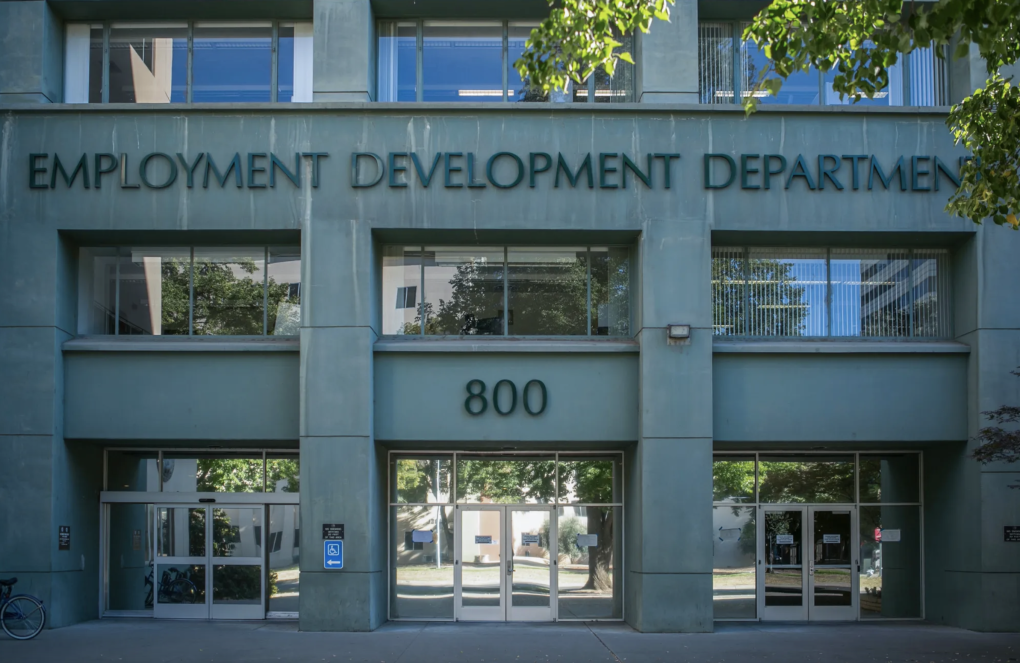
"caption": "The headquarters of California's Employment Development Department in Sacramento. The agency says it's made improvements that have made it better equipped to issue employment benefits if the economy goes south. ",
"description": null,
"title": "Screen Shot 2022-12-05 at 10.05.31 AM",
"credit": "Rahul Lal/CalMatters",
"status": "inherit",
"altTag": "A building sign that reads \"Employment Development Department.\"",
"isLoading": false,
"fetchFailed": false
},
"news_11934074": {
"type": "attachments",
"id": "news_11934074",
"meta": {
"index": "attachments_1716263798",
"site": "news",
"id": "11934074",
"found": true
},
"parent": 11934072,
"imgSizes": {
"twentyfourteen-full-width": {
"file": "https://ww2.kqed.org/app/uploads/sites/10/2022/12/Screen-Shot-2022-12-04-at-1.39.43-PM-1038x576.png",
"width": 1038,
"mimeType": "image/png",
"height": 576
},
"thumbnail": {
"file": "https://ww2.kqed.org/app/uploads/sites/10/2022/12/Screen-Shot-2022-12-04-at-1.39.43-PM-160x106.png",
"width": 160,
"mimeType": "image/png",
"height": 106
},
"post-thumbnail": {
"file": "https://ww2.kqed.org/app/uploads/sites/10/2022/12/Screen-Shot-2022-12-04-at-1.39.43-PM-672x372.png",
"width": 672,
"mimeType": "image/png",
"height": 372
},
"kqedFullSize": {
"file": "https://ww2.kqed.org/app/uploads/sites/10/2022/12/Screen-Shot-2022-12-04-at-1.39.43-PM.png",
"width": 1566,
"height": 1036
},
"large": {
"file": "https://ww2.kqed.org/app/uploads/sites/10/2022/12/Screen-Shot-2022-12-04-at-1.39.43-PM-1020x675.png",
"width": 1020,
"mimeType": "image/png",
"height": 675
},
"1536x1536": {
"file": "https://ww2.kqed.org/app/uploads/sites/10/2022/12/Screen-Shot-2022-12-04-at-1.39.43-PM-1536x1016.png",
"width": 1536,
"mimeType": "image/png",
"height": 1016
},
"medium": {
"file": "https://ww2.kqed.org/app/uploads/sites/10/2022/12/Screen-Shot-2022-12-04-at-1.39.43-PM-800x529.png",
"width": 800,
"mimeType": "image/png",
"height": 529
}
},
"publishDate": 1670191003,
"modified": 1670277559,
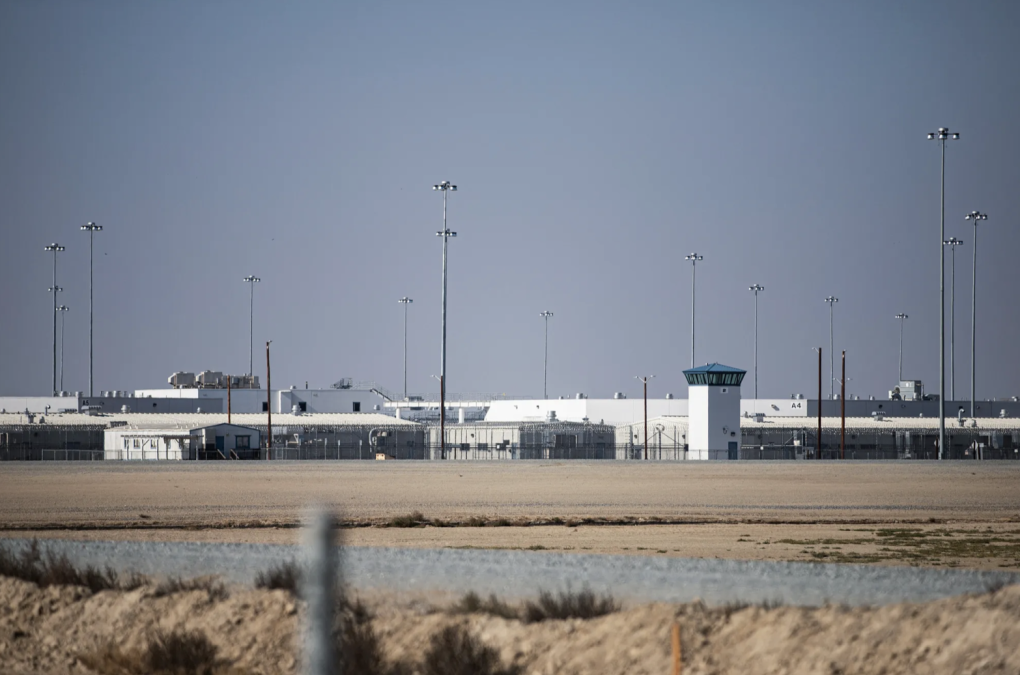
"caption": "Kern Valley State Prison in Delano on Nov. 15, 2022.",
"description": null,
"title": "Screen Shot 2022-12-04 at 1.39.43 PM",
"credit": "Larry Valenzuela/CalMatters/CatchLight Local",
"status": "inherit",
"altTag": "A wide angle shot of a prison.",
"isLoading": false,
"fetchFailed": false
},
"news_11933754": {
"type": "attachments",
"id": "news_11933754",
"meta": {
"index": "attachments_1716263798",
"site": "news",
"id": "11933754",
"found": true
},
"parent": 11933739,
"imgSizes": {
"twentyfourteen-full-width": {
"file": "https://ww2.kqed.org/app/uploads/sites/10/2022/12/GettyImages-1240623275-1024x576.jpg",
"width": 1024,
"mimeType": "image/jpeg",
"height": 576
},
"thumbnail": {
"file": "https://ww2.kqed.org/app/uploads/sites/10/2022/12/GettyImages-1240623275-160x107.jpg",
"width": 160,
"mimeType": "image/jpeg",
"height": 107
},
"post-thumbnail": {
"file": "https://ww2.kqed.org/app/uploads/sites/10/2022/12/GettyImages-1240623275-672x372.jpg",
"width": 672,
"mimeType": "image/jpeg",
"height": 372
},
"kqedFullSize": {
"file": "https://ww2.kqed.org/app/uploads/sites/10/2022/12/GettyImages-1240623275.jpg",
"width": 1024,
"height": 683
},
"large": {
"file": "https://ww2.kqed.org/app/uploads/sites/10/2022/12/GettyImages-1240623275-1020x680.jpg",
"width": 1020,
"mimeType": "image/jpeg",
"height": 680
},
"medium": {
"file": "https://ww2.kqed.org/app/uploads/sites/10/2022/12/GettyImages-1240623275-800x534.jpg",
"width": 800,
"mimeType": "image/jpeg",
"height": 534
}
},
"publishDate": 1669925704,
"modified": 1669929902,
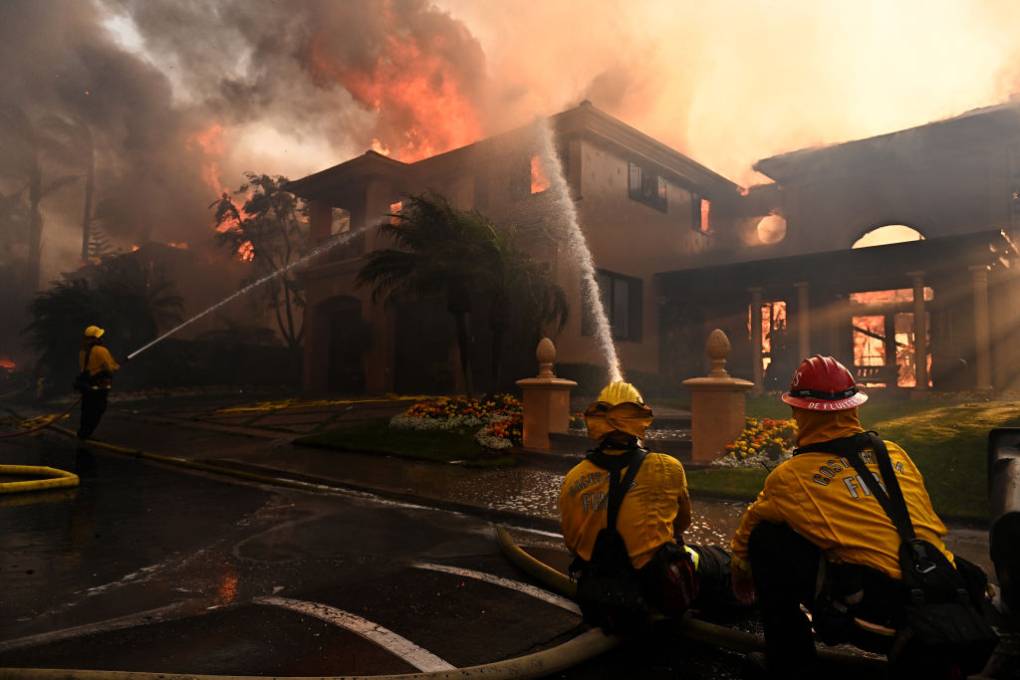
"caption": "Firefighters battle the Coastal Fire at Coronado Pointe in Laguna Niguel on May 11, 2022.",
"description": null,
"title": "Brush Fire, Coastal Fire",
"credit": "Wally Skalij/Los Angeles Times via Getty Images",
"status": "inherit",
"altTag": "Three people wearing firefighter uniforms and equipment hold a hose that is projecting water onto a burning building.",
"isLoading": false,
"fetchFailed": false
},
"news_11932651": {
"type": "attachments",
"id": "news_11932651",
"meta": {
"index": "attachments_1716263798",
"site": "news",
"id": "11932651",
"found": true
},
"parent": 11932634,
"imgSizes": {
"twentyfourteen-full-width": {
"file": "https://ww2.kqed.org/app/uploads/sites/10/2022/11/Screen-Shot-2022-11-17-at-3.53.48-PM-1038x576.png",
"width": 1038,
"mimeType": "image/png",
"height": 576
},
"thumbnail": {
"file": "https://ww2.kqed.org/app/uploads/sites/10/2022/11/Screen-Shot-2022-11-17-at-3.53.48-PM-160x94.png",
"width": 160,
"mimeType": "image/png",
"height": 94
},
"post-thumbnail": {
"file": "https://ww2.kqed.org/app/uploads/sites/10/2022/11/Screen-Shot-2022-11-17-at-3.53.48-PM-672x372.png",
"width": 672,
"mimeType": "image/png",
"height": 372
},
"kqedFullSize": {
"file": "https://ww2.kqed.org/app/uploads/sites/10/2022/11/Screen-Shot-2022-11-17-at-3.53.48-PM.png",
"width": 2384,
"height": 1406
},
"2048x2048": {
"file": "https://ww2.kqed.org/app/uploads/sites/10/2022/11/Screen-Shot-2022-11-17-at-3.53.48-PM-2048x1208.png",
"width": 2048,
"mimeType": "image/png",
"height": 1208
},
"large": {
"file": "https://ww2.kqed.org/app/uploads/sites/10/2022/11/Screen-Shot-2022-11-17-at-3.53.48-PM-1020x602.png",
"width": 1020,
"mimeType": "image/png",
"height": 602
},
"1536x1536": {
"file": "https://ww2.kqed.org/app/uploads/sites/10/2022/11/Screen-Shot-2022-11-17-at-3.53.48-PM-1536x906.png",
"width": 1536,
"mimeType": "image/png",
"height": 906
},
"full-width": {
"file": "https://ww2.kqed.org/app/uploads/sites/10/2022/11/Screen-Shot-2022-11-17-at-3.53.48-PM-1920x1132.png",
"width": 1920,
"mimeType": "image/png",
"height": 1132
},
"medium": {
"file": "https://ww2.kqed.org/app/uploads/sites/10/2022/11/Screen-Shot-2022-11-17-at-3.53.48-PM-800x472.png",
"width": 800,
"mimeType": "image/png",
"height": 472
}
},
"publishDate": 1668732045,
"modified": 1668733384,
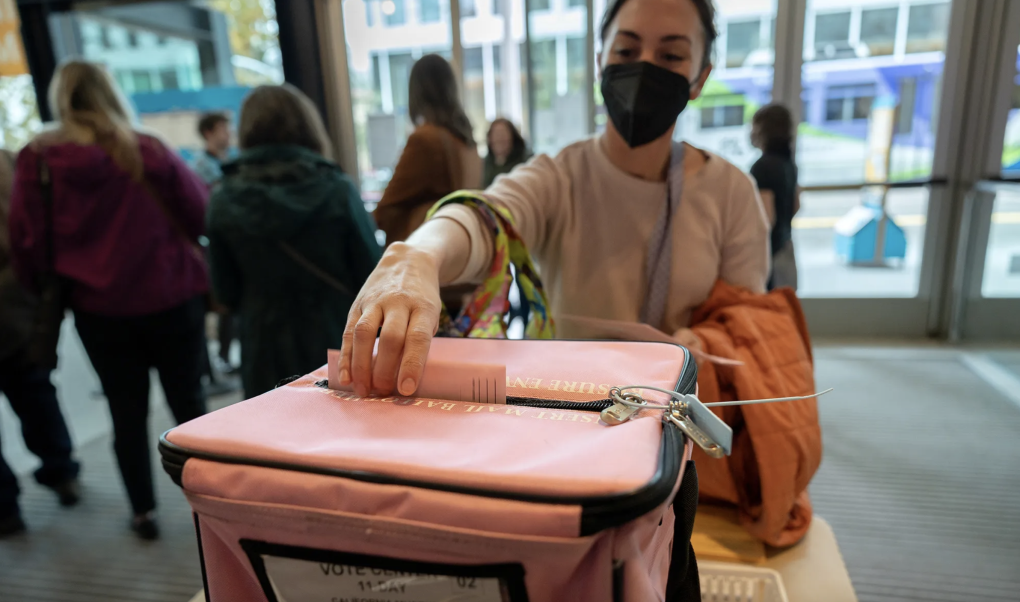
"caption": "Felicia Gold casts her ballot at the California Museum on Nov. 8, 2022.",
"description": null,
"title": "Screen Shot 2022-11-17 at 3.53.48 PM",
"credit": "Miguel Gutierrez Jr./CalMatters",
"status": "inherit",
"altTag": "A woman wearing a black face mask places a piece of paper into a ballot box.",
"isLoading": false,
"fetchFailed": false
},
"news_11932080": {
"type": "attachments",
"id": "news_11932080",
"meta": {
"index": "attachments_1716263798",
"site": "news",
"id": "11932080",
"found": true
},
"parent": 11932078,
"imgSizes": {
"twentyfourteen-full-width": {
"file": "https://ww2.kqed.org/app/uploads/sites/10/2022/11/GettyImages-555000497-1038x576.jpg",
"width": 1038,
"mimeType": "image/jpeg",
"height": 576
},
"thumbnail": {
"file": "https://ww2.kqed.org/app/uploads/sites/10/2022/11/GettyImages-555000497-160x107.jpg",
"width": 160,
"mimeType": "image/jpeg",
"height": 107
},
"post-thumbnail": {
"file": "https://ww2.kqed.org/app/uploads/sites/10/2022/11/GettyImages-555000497-672x372.jpg",
"width": 672,
"mimeType": "image/jpeg",
"height": 372
},
"kqedFullSize": {
"file": "https://ww2.kqed.org/app/uploads/sites/10/2022/11/GettyImages-555000497.jpg",
"width": 2120,
"height": 1414
},
"2048x2048": {
"file": "https://ww2.kqed.org/app/uploads/sites/10/2022/11/GettyImages-555000497-2048x1366.jpg",
"width": 2048,
"mimeType": "image/jpeg",
"height": 1366
},
"large": {
"file": "https://ww2.kqed.org/app/uploads/sites/10/2022/11/GettyImages-555000497-1020x680.jpg",
"width": 1020,
"mimeType": "image/jpeg",
"height": 680
},
"1536x1536": {
"file": "https://ww2.kqed.org/app/uploads/sites/10/2022/11/GettyImages-555000497-1536x1024.jpg",
"width": 1536,
"mimeType": "image/jpeg",
"height": 1024
},
"full-width": {
"file": "https://ww2.kqed.org/app/uploads/sites/10/2022/11/GettyImages-555000497-1920x1281.jpg",
"width": 1920,
"mimeType": "image/jpeg",
"height": 1281
},
"medium": {
"file": "https://ww2.kqed.org/app/uploads/sites/10/2022/11/GettyImages-555000497-800x534.jpg",
"width": 800,
"mimeType": "image/jpeg",
"height": 534
}
},
"publishDate": 1668282977,
"modified": 1668284166,
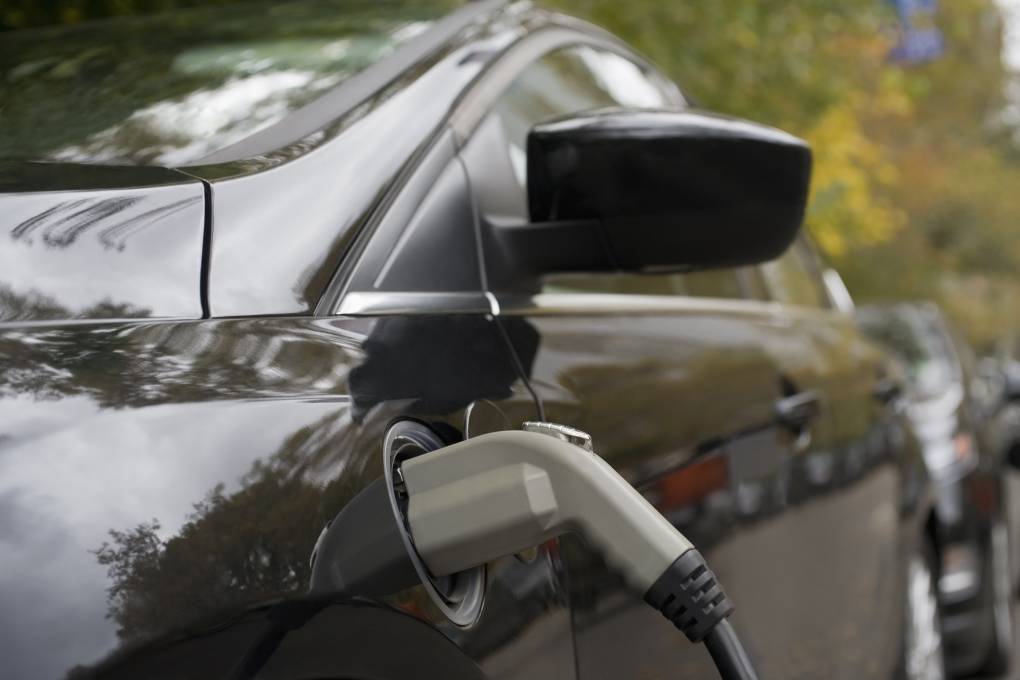
"caption": "The Prop. 30 ballot measure that would have increased taxes on about 43,000 multimillionaires to fund electric-car rebates and combat wildfires suffered an unambiguous defeat on Election Day.",
"description": null,
"title": "Charging an electric car, close-up",
"credit": "REB Images/Getty Images",
"status": "inherit",
"altTag": "Charging an electric car, close-up",
"isLoading": false,
"fetchFailed": false
},
"news_11931917": {
"type": "attachments",
"id": "news_11931917",
"meta": {
"index": "attachments_1716263798",
"site": "news",
"id": "11931917",
"found": true
},
"parent": 11931901,
"imgSizes": {
"twentyfourteen-full-width": {
"file": "https://ww2.kqed.org/app/uploads/sites/10/2022/11/GettyImages-1370341717-1038x576.jpg",
"width": 1038,
"mimeType": "image/jpeg",
"height": 576
},
"thumbnail": {
"file": "https://ww2.kqed.org/app/uploads/sites/10/2022/11/GettyImages-1370341717-160x107.jpg",
"width": 160,
"mimeType": "image/jpeg",
"height": 107
},
"post-thumbnail": {
"file": "https://ww2.kqed.org/app/uploads/sites/10/2022/11/GettyImages-1370341717-672x372.jpg",
"width": 672,
"mimeType": "image/jpeg",
"height": 372
},
"kqedFullSize": {
"file": "https://ww2.kqed.org/app/uploads/sites/10/2022/11/GettyImages-1370341717.jpg",
"width": 2121,
"height": 1414
},
"2048x2048": {
"file": "https://ww2.kqed.org/app/uploads/sites/10/2022/11/GettyImages-1370341717-2048x1365.jpg",
"width": 2048,
"mimeType": "image/jpeg",
"height": 1365
},
"large": {
"file": "https://ww2.kqed.org/app/uploads/sites/10/2022/11/GettyImages-1370341717-1020x680.jpg",
"width": 1020,
"mimeType": "image/jpeg",
"height": 680
},
"1536x1536": {
"file": "https://ww2.kqed.org/app/uploads/sites/10/2022/11/GettyImages-1370341717-1536x1024.jpg",
"width": 1536,
"mimeType": "image/jpeg",
"height": 1024
},
"full-width": {
"file": "https://ww2.kqed.org/app/uploads/sites/10/2022/11/GettyImages-1370341717-1920x1280.jpg",
"width": 1920,
"mimeType": "image/jpeg",
"height": 1280
},
"medium": {
"file": "https://ww2.kqed.org/app/uploads/sites/10/2022/11/GettyImages-1370341717-800x533.jpg",
"width": 800,
"mimeType": "image/jpeg",
"height": 533
}
},
"publishDate": 1668113331,
"modified": 1668120093,
"caption": "Of 25 investigations into fatal police shootings that the California Justice Department opened in the last 16 months, only one has been resolved as of November 10.",
"description": null,
"title": "GettyImages-1370341717",
"credit": "Ajax9/Getty Images",
"status": "inherit",
"altTag": "Blue police light flashes on a generic crime scene at night in an urban area.",
"isLoading": false,
"fetchFailed": false
},
"news_11931475": {
"type": "attachments",
"id": "news_11931475",
"meta": {
"index": "attachments_1716263798",
"site": "news",
"id": "11931475",
"found": true
},
"parent": 11931467,
"imgSizes": {
"twentyfourteen-full-width": {
"file": "https://ww2.kqed.org/app/uploads/sites/10/2022/11/GettyImages-155372894-1038x576.jpg",
"width": 1038,
"mimeType": "image/jpeg",
"height": 576
},
"thumbnail": {
"file": "https://ww2.kqed.org/app/uploads/sites/10/2022/11/GettyImages-155372894-160x107.jpg",
"width": 160,
"mimeType": "image/jpeg",
"height": 107
},
"post-thumbnail": {
"file": "https://ww2.kqed.org/app/uploads/sites/10/2022/11/GettyImages-155372894-672x372.jpg",
"width": 672,
"mimeType": "image/jpeg",
"height": 372
},
"kqedFullSize": {
"file": "https://ww2.kqed.org/app/uploads/sites/10/2022/11/GettyImages-155372894.jpg",
"width": 2121,
"height": 1414
},
"2048x2048": {
"file": "https://ww2.kqed.org/app/uploads/sites/10/2022/11/GettyImages-155372894-2048x1365.jpg",
"width": 2048,
"mimeType": "image/jpeg",
"height": 1365
},
"large": {
"file": "https://ww2.kqed.org/app/uploads/sites/10/2022/11/GettyImages-155372894-1020x680.jpg",
"width": 1020,
"mimeType": "image/jpeg",
"height": 680
},
"1536x1536": {
"file": "https://ww2.kqed.org/app/uploads/sites/10/2022/11/GettyImages-155372894-1536x1024.jpg",
"width": 1536,
"mimeType": "image/jpeg",
"height": 1024
},
"full-width": {
"file": "https://ww2.kqed.org/app/uploads/sites/10/2022/11/GettyImages-155372894-1920x1280.jpg",
"width": 1920,
"mimeType": "image/jpeg",
"height": 1280
},
"medium": {
"file": "https://ww2.kqed.org/app/uploads/sites/10/2022/11/GettyImages-155372894-800x533.jpg",
"width": 800,
"mimeType": "image/jpeg",
"height": 533
}
},
"publishDate": 1667940809,
"modified": 1667963274,
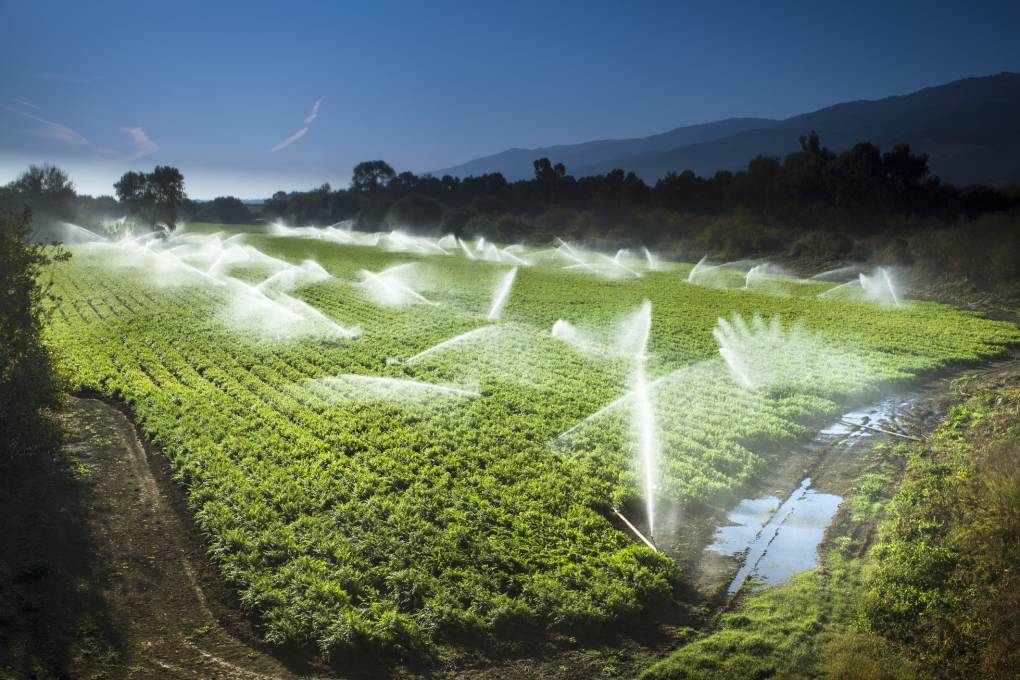
"caption": "A celery field is sprayed by irrigation equipment in the Salinas Valley. California's agriculture is the most productive in the country, but it also drinks up about 80% of the developed water used in the state.",
"description": null,
"title": "Irrigation sprinkler watering crops on fertile farm land",
"credit": "Pgiam/Getty Images",
"status": "inherit",
"altTag": "Irrigation sprinkler watering crops on fertile farm land",
"isLoading": false,
"fetchFailed": false
}
},
"audioPlayerReducer": {
"postId": "stream_live",
"isPaused": true,
"isPlaying": false,
"pfsActive": false,
"pledgeModalIsOpen": true,
"playerDrawerIsOpen": false,
"liveAudioPlayStartedAt": 0,
"liveAudioPlayContext": ""
},
"authorsReducer": {
"byline_news_11936335": {
"type": "authors",
"id": "byline_news_11936335",
"meta": {
"override": true
},
"slug": "byline_news_11936335",
"name": "\u003ca href=\"https://calmatters.org/author/alexei-koseff/\">Alexei Koseff\u003c/a> and \u003ca href=\"https://calmatters.org/author/ben-christopher/\">Ben Christopher\u003c/a>",
"isLoading": false
},
"byline_news_11936184": {
"type": "authors",
"id": "byline_news_11936184",
"meta": {
"override": true
},
"slug": "byline_news_11936184",
"name": "\u003ca href=\"https://calmatters.org/author/alejandro-lazo/\">Alejandro Lazo\u003c/a> and \u003ca href=\"https://calmatters.org/author/jeanne-kuang/\">Jeanne Kuang\u003c/a>",
"isLoading": false
},
"byline_news_11936120": {
"type": "authors",
"id": "byline_news_11936120",
"meta": {
"override": true
},
"slug": "byline_news_11936120",
"name": "\u003ca href=\"https://calmatters.org/author/joe-hong/\">Joe Hong\u003c/a>",
"isLoading": false
},
"byline_news_11935585": {
"type": "authors",
"id": "byline_news_11935585",
"meta": {
"override": true
},
"slug": "byline_news_11935585",
"name": "\u003ca href=\"https://calmatters.org/author/nadia-lopez/\">Nadia Lopez\u003c/a>",
"isLoading": false
},
"byline_news_11934993": {
"type": "authors",
"id": "byline_news_11934993",
"meta": {
"override": true
},
"slug": "byline_news_11934993",
"name": "\u003ca href=\"https://calmatters.org/author/grace-gedye/\">Grace Gedye\u003c/a>",
"isLoading": false
},
"byline_news_11934096": {
"type": "authors",
"id": "byline_news_11934096",
"meta": {
"override": true
},
"slug": "byline_news_11934096",
"name": "Grace Gedye",
"isLoading": false
},
"byline_news_11934072": {
"type": "authors",
"id": "byline_news_11934072",
"meta": {
"override": true
},
"slug": "byline_news_11934072",
"name": "Nigel Duara\u003cbr>CalMatters",
"isLoading": false
},
"byline_news_11933739": {
"type": "authors",
"id": "byline_news_11933739",
"meta": {
"override": true
},
"slug": "byline_news_11933739",
"name": "Julie Cart",
"isLoading": false
},
"byline_news_11932634": {
"type": "authors",
"id": "byline_news_11932634",
"meta": {
"override": true
},
"slug": "byline_news_11932634",
"name": "\u003ca href=\"https://calmatters.org/author/alexei-koseff/\">Alexei Koseff\u003c/a> and \u003ca href=\"https://calmatters.org/author/sameea-kamal/\">Sameea Kamal\u003c/a>",
"isLoading": false
},
"byline_news_11932078": {
"type": "authors",
"id": "byline_news_11932078",
"meta": {
"override": true
},
"slug": "byline_news_11932078",
"name": "\u003ca href=\"https://calmatters.org/author/ben-christopher/\">Ben Christopher\u003c/a>",
"isLoading": false
},
"byline_news_11931901": {
"type": "authors",
"id": "byline_news_11931901",
"meta": {
"override": true
},
"slug": "byline_news_11931901",
"name": "\u003ca href=\"https://calmatters.org/author/nigelduara/\">Nigel Duara\u003c/a>",
"isLoading": false
},
"byline_news_11931467": {
"type": "authors",
"id": "byline_news_11931467",
"meta": {
"override": true
},
"slug": "byline_news_11931467",
"name": "\u003ca href=\"https://calmatters.org/author/rachel-becker/\">Rachel Becker\u003c/a>",
"isLoading": false
}
},
"pagesReducer": {
"news_affiliate_calmatters": {
"type": "terms",
"id": "news_18481",
"meta": {
"index": "terms_1716263798",
"site": "news",
"id": "18481",
"score": 15.355904
},
"featImg": null,
"name": "CALmatters",
"description": null,
"taxonomy": "affiliate",
"headData": {
"twImgId": null,
"twTitle": null,
"ogTitle": null,
"ogImgId": null,
"twDescription": null,
"description": null,
"title": "CALmatters Archives | KQED Arts",
"ogDescription": null
},
"ttid": 18515,
"slug": "calmatters",
"isLoading": false,
"title": "CALmatters",
"pageMeta": {
"site": "news",
"WpPageTemplate": "page-topic-editorial",
"currentPage": 52
},
"blocks": [
{
"blockName": "kqed/post-list",
"attrs": {
"layout": "cardArticle2",
"query": "posts/news?affiliate=calmatters",
"seeMore": false,
"paginated": true,
"page": 52
}
},
{
"blockName": "kqed/ad"
}
]
}
},
"pfsSessionReducer": {},
"postsReducer": {
"stream_live": {
"type": "live",
"id": "stream_live",
"audioUrl": "https://streams.kqed.org/kqedradio",
"title": "Live Stream",
"excerpt": "Live Stream information currently unavailable.",
"link": "/radio",
"featImg": "",
"label": {
"name": "KQED Live",
"link": "/"
}
},
"stream_kqedNewscast": {
"type": "posts",
"id": "stream_kqedNewscast",
"audioUrl": "https://www.kqed.org/.stream/anon/radio/RDnews/newscast.mp3?_=1",
"title": "KQED Newscast",
"featImg": "",
"label": {
"name": "88.5 FM",
"link": "/"
}
},
"news_11936335": {
"type": "posts",
"id": "news_11936335",
"meta": {
"index": "posts_1716263798",
"site": "news",
"id": "11936335",
"score": null,
"sort": [
1672182259000
]
},
"guestAuthors": [],
"slug": "california-politicians-stash-35-million-in-unused-campaign-funds-some-of-them-years-after-leaving-office",
"title": "California Politicians Stash $35 Million in Unused Campaign Funds, Some of Them Years After Leaving Office",
"publishDate": 1672182259,
"format": "standard",
"headTitle": "California Politicians Stash $35 Million in Unused Campaign Funds, Some of Them Years After Leaving Office | KQED",
"labelTerm": {},
"content": "\u003cp>It has been nearly eight years since Bill Lockyer held elected office in California.\u003c/p>\n\u003cp>For more than four decades, he climbed the ranks of state politics — Assembly member, Senate leader, attorney general, treasurer — before ending a campaign for controller amid turmoil in his marriage and \u003ca href=\"https://www.kqed.org/news/98491/california-treasurer-bill-lockyer-retiring-from-politics\">retiring at the start of 2015\u003c/a>.\u003c/p>\n\u003cp>Nevertheless, \u003ca href=\"https://billlockyer.org/\">Lockyer\u003c/a> still has more than $1 million in a \u003ca href=\"https://cal-access.sos.ca.gov/Campaign/Committees/Detail.aspx?id=1445566\">campaign account\u003c/a> for the 2026 lieutenant governor race. Every month, he pays $2,500 to consultant Michelle Maravich, who said she helps maintain his donor list, manage meetings and appearances, and provide advice on occasional contributions to other candidates as the 81-year-old Democrat contemplates a comeback.\u003c/p>\n\u003cp>“He misses the public arena and obviously still wants to be of service,” Maravich said. “I haven’t seen him lose a step.”\u003c/p>\n\u003cp>Lockyer’s seven-figure war chest is among the largest of nearly 100 accounts belonging to state political candidates with leftover campaign cash, according to a \u003ca href=\"https://public.flourish.studio/visualisation/12221572/?utm_source=showcase&utm_campaign=visualisation/12221572\">CalMatters analysis of California campaign finance records\u003c/a>. Collectively, they hold about $35 million — funds that never got spent on the campaigns for which they were raised — ranging from \u003ca href=\"https://cal-access.sos.ca.gov/Campaign/Committees/Detail.aspx?id=1417455\">$13.1 million that former Gov. Jerry Brown didn’t need\u003c/a> to win reelection in 2014, to $9.62 in the \u003ca href=\"https://cal-access.sos.ca.gov/Campaign/Committees/Detail.aspx?id=1367107\">account for a failed Assembly run\u003c/a> that same year run by investment manager Thomas Krouse.\u003c/p>\n\u003cp>CalMatters counted campaign funds for the Legislature and state constitutional offices that politicians are sitting on years after leaving their positions; that are in committees for past races; or for which the candidate did not end up running. These 96 accounts rarely raise new money, and in some cases, politicians have carried the same leftover contributions through election cycle after election cycle, transferring the money to new committees for positions they never actually sought.\u003c/p>\n\u003cp>The total does not include committees for candidates who ran in 2022. Those who lost in the June 7 primary have not yet had to file paperwork declaring what they did with any leftover campaign cash, while the deadline is still three months away for candidates who made it to the Nov. 8 general election to decide their next move.\u003c/p>\n\u003cp>Some of the politicians holding onto past campaign contributions are simply waiting to figure out their next race, at which point they may tap into those eligible funds. Others are using the money to keep a foothold in the public arena, slowly spending down what’s left on political donations, charitable contributions and administrative expenses. Many of the accounts hold massive debts and must remain open if the candidates ever plan to raise cash to pay off outstanding loans and bills. And some of the money is merely sitting idle, in accounts where nothing much goes in or out, save interest and annual state filing fees.\u003c/p>\n\u003cfigure id=\"attachment_97358\" class=\"wp-caption alignright\" style=\"max-width: 328px\">\u003cimg loading=\"lazy\" decoding=\"async\" class=\"size-full wp-image-97358\" src=\"https://ww2.kqed.org/app/uploads/sites/10/2013/05/Assemblyman-Henry-Perea-and-Assemblyman-Mike-Gatto.jpg\" alt=\"Two men in dark suits with ties shake hands in the California Assembly.\" width=\"328\" height=\"213\">\u003cfigcaption class=\"wp-caption-text\">Former state Assemblymember Mike Gatto, May 16, 2013. \u003ccite>(Max Whittaker/Prime)\u003c/cite>\u003c/figcaption>\u003c/figure>\n\u003cp>“Perhaps the lack of activity reflects my innate frugality,” said \u003ca href=\"https://mikegatto.com/\">Mike Gatto\u003c/a>, a Democrat who served in the Assembly from 2010 through 2016 and has almost $2.1 million in a \u003ca href=\"https://cal-access.sos.ca.gov/Campaign/Committees/Detail.aspx?id=1445004\">lieutenant governor 2026 account\u003c/a>, some of it from an abandoned campaign for state treasurer in 2018.\u003c/p>\n\u003cp>In the first half of 2022, the most recent period for which Gatto has filed a \u003ca href=\"https://cal-access.sos.ca.gov/PDFGen/pdfgen.prg?filingid=2702092&amendid=0\">campaign finance report (PDF)\u003c/a>, he contributed about $2,500 to other candidates and earned nearly the same amount in interest.\u003c/p>\n\u003cp>Gatto said he typically raises money for candidates by turning to his donor list, rather than giving away his own leftover campaign cash, and \u003ca href=\"https://www.prweb.com/releases/former_california_assembly_member_mike_gatto_joins_the_a_mark_foundation_board_of_directors/prweb18458682.htm\">he sits on the board of a family foundation that provides funding to charitable organizations\u003c/a>. He is keeping his residual campaign funds for what he anticipates will be a return to politics in his retirement, after he finishes raising his three children.\u003c/p>\n\u003cp>“I hope there’s more in my future. I believe I can contribute to this beautiful state that we all call home,” said Gatto, who founded a \u003ca href=\"http://www.actiumllp.com/mike-gatto/\">law firm\u003c/a> after leaving the Assembly. “I believe there’s a lot more freedom for people to run for office in their golden years.”\u003c/p>\n\u003ch2>Avoiding surplus funds\u003c/h2>\n\u003cp>Once a politician leaves office or loses an election, a regulatory countdown begins.\u003c/p>\n\u003cp>If a candidate wants to use any of the spare cash from a prior campaign to fund a future political venture, state law allows 90 days to set up a new account and transfer the money. Miss that window and the funds are designated “\u003ca href=\"https://www.fppc.ca.gov/content/dam/fppc/NS-Documents/LegalDiv/Regulations/Index/Chapter9-5/18951.Surplus-Funds%2CDefined.pdf\">surplus (PDF)\u003c/a>.”\u003c/p>\n\u003cp>Surplus cash can be used to pay down debts, refund donors, expense administrative costs, support political parties or contribute to a “bona fide” charity. But it cannot fund a campaign for state office in California, whether the candidate’s own or someone else’s.\u003c/p>\n\u003cp>Avoiding that dreaded surplus designation is why so many former politicians always seem to be running for something — at least on paper.\u003c/p>\n\u003cp>The \u003ca href=\"https://www.sfgate.com/politics/article/Gavin-Newsom-called-job-dull-but-lieutenant-13272318.php\">“dull” job of lieutenant governor\u003c/a>, as Gov. Gavin Newsom once put it, is an especially popular choice. There are currently \u003ca href=\"https://cal-access.sos.ca.gov/Campaign/Candidates/list.aspx?view=intention&electNav=120\">21 open lieutenant governor committees for the 2026 primary\u003c/a>, including for both Senate President Pro Tem Toni Atkins and Assembly Speaker Anthony Rendon. Fewer than half are actively fundraising.\u003cstrong> \u003c/strong>\u003c/p>\n\u003cp>By passing cash from one account to another each election cycle, some former politicians can hang onto campaign contributions for years — even decades — after they hold state office.\u003c/p>\n\u003cp>The \u003ca href=\"https://cal-access.sos.ca.gov/Campaign/Committees/Detail.aspx?id=1452790\">2026 treasurer campaign\u003c/a> controlled by former Assembly Speaker \u003ca href=\"https://twitter.com/FbianNunez\">Fabian Núñez\u003c/a>, for example, is sitting on nearly $2 million. That’s what remains of the $2.1 million the account received from Núñez’s \u003ca href=\"https://cal-access.sos.ca.gov/Campaign/Committees/Detail.aspx?id=1408606\">treasurer 2022 committee\u003c/a> in late August. That account, in turn, got its cash from a \u003ca href=\"https://cal-access.sos.ca.gov/Campaign/Committees/Detail.aspx?id=1366750\">Fabian Núñez for Treasurer 2018\u003c/a> committee, which was funded by a \u003ca href=\"https://cal-access.sos.ca.gov/Campaign/Committees/Detail.aspx?id=1324832\">treasurer 2014 account\u003c/a>, which was funded by a committee for a \u003ca href=\"https://cal-access.sos.ca.gov/Campaign/Committees/Detail.aspx?id=1313595&session=2021\">2010 state Senate campaign\u003c/a>.\u003c/p>\n\u003cp>This daisy chain of electoral accounts, connected by transfers made within those crucial 90 days after the end of each election cycle, reaches back to its ultimate source: the former speaker’s \u003ca href=\"https://cal-access.sos.ca.gov/Campaign/Committees/Detail.aspx?id=1271581&session=2021\">2006 Assembly committee\u003c/a>, which was shored up with a \u003ca href=\"https://www.latimes.com/archives/la-xpm-2008-apr-09-me-nunez9-story.html\">then-controversial influx of cash\u003c/a> from the state Democratic Party.\u003c/p>\n\u003cp>Núñez has not campaigned for office since he was termed out of the Assembly in 2008. Through a colleague at the \u003ca href=\"https://actumllc.com/people/fabian-nunez/\">consulting and lobbying firm Actum\u003c/a>, where he is a managing partner, Núñez agreed to an interview for this story, but never followed up.\u003c/p>\n\u003cp>He isn’t the only former elected official to play this game of financial hot potato. Besides Lockyer and Gatto, \u003ca href=\"https://cal-access.sos.ca.gov/Campaign/Committees/Detail.aspx?id=1448870&session=2021\">Jerome Horton\u003c/a>, who served in the Assembly and on the Board of Equalization; former state Sen. \u003ca href=\"https://cal-access.sos.ca.gov/Campaign/Committees/Detail.aspx?id=1447836\">Jean Fuller\u003c/a>; \u003ca href=\"https://cal-access.sos.ca.gov/Campaign/Committees/Detail.aspx?id=1407076&session=2021\">Jeff Denham\u003c/a>, who spent two terms in the Senate before he was elected to Congress; and others all have kept their electoral funds active by transferring the money from one account to the next.\u003c/p>\n\u003cp>Former Assemblymember Dario Frommer, who did not respond to multiple interview requests, still has $593,000 sitting in a committee for a \u003ca href=\"https://cal-access.sos.ca.gov/Campaign/Committees/Detail.aspx?id=1455363\">2026 controller campaign\u003c/a>, all of it raised before he termed out of the Assembly in 2006.\u003c/p>\n\u003ch2>Maintaining political influence\u003c/h2>\n\u003cp>Former legislators hoarding leftover political funds may be an odd artifact of California law, but the rules are a significant improvement over the old days when politicians “were buying cars with the money, they were taking the money with them” upon retirement and they were using the money to expense “vacations that had nothing to do with legislation,” said Bob Stern, who served as the first general counsel to the California Fair Political Practices Commission, the state campaign finance regulator.\u003c/p>\n\u003cp>Throughout the 1980s, \u003ca href=\"https://scholarlycommons.pacific.edu/cgi/viewcontent.cgi?article=3100&context=mlr\">state lawmakers passed\u003c/a> a series of\u003ca href=\"https://www.latimes.com/archives/la-xpm-1989-08-25-mn-1045-story.html\"> gradual restrictions\u003c/a> on what candidates could do with spare campaign cash. For the last two decades, spending has had to be plausibly tied to a “political or governmental purpose.”\u003c/p>\n\u003cfigure id=\"attachment_11936350\" class=\"wp-caption alignright\" style=\"max-width: 1024px\">\u003cimg loading=\"lazy\" decoding=\"async\" class=\"size-full wp-image-11936350\" src=\"https://ww2.kqed.org/app/uploads/sites/10/2022/12/GettyImages-1409532843.jpg\" alt=\"A Latino man with dark hair looks past the camera with a concerned facial expression..\" width=\"1024\" height=\"683\" srcset=\"https://cdn.kqed.org/wp-content/uploads/sites/10/2022/12/GettyImages-1409532843.jpg 1024w, https://cdn.kqed.org/wp-content/uploads/sites/10/2022/12/GettyImages-1409532843-800x534.jpg 800w, https://cdn.kqed.org/wp-content/uploads/sites/10/2022/12/GettyImages-1409532843-1020x680.jpg 1020w, https://cdn.kqed.org/wp-content/uploads/sites/10/2022/12/GettyImages-1409532843-160x107.jpg 160w\" sizes=\"(max-width: 1024px) 100vw, 1024px\">\u003cfigcaption class=\"wp-caption-text\">Former Assembly Speaker Fabian Núñez, Dec. 3, 2007. \u003ccite>(Carlos Avila Gonzalez/The San Francisco Chronicle via Getty Images)\u003c/cite>\u003c/figcaption>\u003c/figure>\n\u003cp>So what counts as a legitimate purpose? Charities and political allies, for example.\u003c/p>\n\u003cp>In recent years, Núñez has used campaign funds to support the Anti-Recidivism Coalition, \u003ca href=\"https://calmatters.org/projects/california-parolees-voting-rights-nunez-aca6/\">a nonprofit for which his son, Esteban, is a lobbyist\u003c/a>, and After-School All-Stars, a charity founded by former Gov. Arnold Schwarzenegger, a personal friend who before leaving office \u003ca href=\"https://www.latimes.com/archives/la-xpm-2011-jan-03-la-me-arnold-pardons-20110103-story.html\">commuted Esteban Núñez’s prison sentence\u003c/a> for his role in a stabbing death.\u003c/p>\n\u003cp>Núñez campaign accounts also have poured six-figure sums into \u003ca href=\"https://calmatters.org/california-voter-guide-2022/propositions/prop-1-abortion-rights/\">Proposition 1\u003c/a>, the successful \u003ca href=\"https://calmatters.org/politics/election-2022/2022/10/california-ballot-measure-abortion-churches/\">measure to add abortion rights\u003c/a> to the California constitution, and a committee backing the unsuccessful mayoral campaign of Kevin de León, the former state senator and now \u003ca href=\"https://www.politico.com/news/2022/12/13/los-angeles-city-council-kevin-de-leon-00073544\">scandal-laden Los Angeles City Council member\u003c/a>.\u003c/p>\n\u003cp>With $3.1 million in a \u003ca href=\"https://cal-access.sos.ca.gov/Campaign/Committees/Detail.aspx?id=1412227\">lieutenant governor 2026 account\u003c/a>, De León sits on the largest post-incumbency nest egg of any former state legislator.\u003c/p>\n\u003cp>He has doled out nearly $100,000 of that money over the last two years, mostly supporting political allies and causes. Top beneficiaries include an unsuccessful 2020 ballot measure to \u003ca href=\"https://calmatters.org/election-2020-guide/proposition-16-affirmative-action/\">restore affirmative action in California\u003c/a>, this year’s successful reelection campaign of Insurance Commissioner \u003ca href=\"https://calmatters.org/california-voter-guide-2022/insurance-commissioner/ricardo-lara/\">Ricardo Lara\u003c/a> and the Los Angeles County Democratic Party.\u003c/p>\n\u003cp>De León’s most recent publicly reported contribution was a $25,000 payment filed on Election Day to the Santa Clara County Board of Education campaign of Magdalena Carrasco, his former romantic partner and the mother of his daughter. Carrasco lost her race.\u003c/p>\n\u003cp>De León initially responded to an interview request by text message, expressing incredulity about the amount of money reported in his account: “That’s all I have?” he said. “I must have some money missing.” He later said he was being facetious, though neither he nor his spokesperson replied to follow-up requests for an interview.\u003c/p>\n\u003cp>Electoral expenses are another legal way to distribute old campaign dollars.\u003c/p>\n\u003cp>Former Assemblymember Ian Calderon, who \u003ca href=\"https://www.whittierdailynews.com/2019/11/27/ian-calderon-wont-run-again-for-state-assembly/\">stepped down in 2020\u003c/a> to focus on his family, maintains a \u003ca href=\"https://cal-access.sos.ca.gov/Campaign/Committees/Detail.aspx?id=1424007\">lieutenant governor 2026 committee\u003c/a> from which he makes monthly $1,500 payments to a campaign consultant: his former chief of staff.\u003c/p>\n\u003cp>But the line that separates legitimate political purpose and personal expenditure can be blurry, especially for former politicians who have yet to show that they are actually running for the office listed on their campaign account.\u003c/p>\n\u003cp>“The harder part is when they go on a trip to Hawaii and attend an event,” Stern said. “If they’re not in office anymore, it’s kind of hard to justify.”\u003c/p>\n\u003cp>Not that some former lawmakers haven’t tried.\u003c/p>\n\u003cp>Shortly after Election Day this year, an account set up to fund a \u003ca href=\"https://cal-access.sos.ca.gov/Campaign/Committees/Detail.aspx?id=1436709\">2026 lieutenant governor campaign\u003c/a> for former Assemblymember \u003ca href=\"https://calmatters.org/legislator-tracker/autumn-burke-1973/\">Autumn Burke\u003c/a> reported spending $10,000 on a five-day trip to attend the \u003ca href=\"https://www.sacbee.com/news/politics-government/capitol-alert/article45406533.html\">Independent Voter Project conference in Maui\u003c/a> with a guest. Burke \u003ca href=\"https://twitter.com/AsmAutumnBurke/status/1488319173495177219?s=20&t=7YNl1fsGuxjiQ3xxhL4KDQ\">left office last February\u003c/a> to join a lobbying firm.\u003c/p>\n\u003cp>Neither Calderon nor Burke replied to emails and calls requesting comment.\u003c/p>\n\u003ch2>Giving up on future campaigns\u003c/h2>\n\u003cp>Politicians with no further plans to run for office — at least, not anytime soon — can still avoid the surplus designation and retain more control over their leftover campaign funds by transferring them to a general purpose committee. Direct contributions to candidates are permitted from these accounts.\u003c/p>\n\u003cp>After \u003ca href=\"https://calmatters.org/politics/2018/12/colusa-county-welcomes-jerry-brown/\">finishing his second eight-year stint as governor in early 2019\u003c/a>, Brown moved more than $14.7 million from his 2014 reelection campaign to the newly formed \u003ca href=\"https://cal-access.sos.ca.gov/Campaign/Committees/Detail.aspx?id=1417455\">Committee for California\u003c/a>. It has since spent $855,000 to defeat \u003ca href=\"https://www.latimes.com/politics/la-pol-ca-prop-57-jerry-brown-prison-parole-20161027-story.html\">a 2020 initiative that would have rolled back a parole expansion\u003c/a> pushed by the governor; donated $250,000 to the Oakland Military Institute, a charter school founded by Brown when he was the city’s mayor; and directed $141,000 into the most recent Oakland school board election.\u003c/p>\n\u003cfigure id=\"attachment_11936352\" class=\"wp-caption alignright\" style=\"max-width: 1024px\">\u003cimg loading=\"lazy\" decoding=\"async\" class=\"size-full wp-image-11936352\" src=\"https://ww2.kqed.org/app/uploads/sites/10/2022/12/GettyImages-1193389282.jpg\" alt=\"An elderly white man with balding hair speaks into a microphone with a blue background.\" width=\"1024\" height=\"703\" srcset=\"https://cdn.kqed.org/wp-content/uploads/sites/10/2022/12/GettyImages-1193389282.jpg 1024w, https://cdn.kqed.org/wp-content/uploads/sites/10/2022/12/GettyImages-1193389282-800x549.jpg 800w, https://cdn.kqed.org/wp-content/uploads/sites/10/2022/12/GettyImages-1193389282-1020x700.jpg 1020w, https://cdn.kqed.org/wp-content/uploads/sites/10/2022/12/GettyImages-1193389282-160x110.jpg 160w\" sizes=\"(max-width: 1024px) 100vw, 1024px\">\u003cfigcaption class=\"wp-caption-text\">Former California Gov. Jerry Brown, Dec. 11, 2019. \u003ccite>(Justin Sullivan/Getty Images)\u003c/cite>\u003c/figcaption>\u003c/figure>\n\u003cp>“The primary focus is advancing the issues central to Gov. Brown’s gubernatorial terms, including but not limited to climate action, criminal justice reform and public safety, and education,” spokesperson Evan Westrup said in an email.\u003c/p>\n\u003cp>Westrup’s consulting firm, Sempervirent Strategies, is paid $10,000 per month by the Committee for California, its largest expenditure during the most recent two-year election cycle.\u003c/p>\n\u003cp>Lorena Gonzalez, who \u003ca href=\"https://calmatters.org/newsletters/whatmatters/2022/01/california-legislature-labor-gonzalez/\">resigned from the Assembly\u003c/a> in January to become the head of the California Labor Federation, used $1.1 million remaining in accounts for Assembly and secretary of state campaigns to form a new committee in May: \u003ca href=\"https://cal-access.sos.ca.gov/Campaign/Committees/Detail.aspx?id=1448227\">The Future of Workers Action Fund\u003c/a>.\u003c/p>\n\u003cp>Spokesperson Evan McLaughlin, in a text message, declined to provide further information on the goal of the account “beyond the obvious motivation reflected in the committee’s name and the reputation of its sponsor.”\u003c/p>\n\u003cp>A final, if rarely used, option for campaigns: Give back the unused cash to donors.\u003c/p>\n\u003cp>Across the accounts scrutinized by CalMatters, only a few reported significant refunds to contributors once a race was over, including that of former treasurer John Chiang, who returned more than $100,000 to supporters of his failed \u003ca href=\"https://cal-access.sos.ca.gov/Campaign/Committees/Detail.aspx?id=1385799\">2018 bid for governor\u003c/a> — in December 2021, three-and-a-half years after he lost. A representative for Chiang did not respond to emailed questions.\u003c/p>\n\u003cp>Former Long Beach Mayor \u003ca href=\"https://twitter.com/robertgarcia\">Robert Garcia\u003c/a>, with his eye on higher office, had amassed hundreds of thousands of dollars in a \u003ca href=\"https://cal-access.sos.ca.gov/Campaign/Committees/Detail.aspx?id=1420194&session=2021\">lieutenant governor 2026 account\u003c/a> by December 2021, when he launched a campaign for Congress. Over the next four months, he returned more than $170,000 in contributions to his supporters, alongside payments to his political consultants and donations to other candidates.\u003c/p>\n\u003cp>A spokesperson for Garcia, who will be \u003ca href=\"https://www.latimes.com/california/story/2022-11-10/long-beach-sending-first-openly-gay-immigrant-to-congress\">sworn into Congress\u003c/a> next month, did not respond to multiple interview requests. By November, after another $350 payment to the committee treasurer, his lieutenant governor account had just $73.76 left.\u003c/p>\n\u003cp>\u003cem>CalMatters data reporter Jeremia Kimelman contributed to this story.\u003c/em>\u003c/p>\n\u003cp>[ad fullwidth]\u003c/p>\n\u003cp>[ad floatright]\u003c/p>\n",
"blocks": [],
"excerpt": "Nearly 100 committees are sitting on $35 million in leftover campaign funds, which could go to charity or be returned to donors, but many hold on to the money to retain political influence or to possibly run again.",
"status": "publish",
"parent": 0,
"modified": 1728425526,
"stats": {
"hasAudio": false,
"hasVideo": false,
"hasChartOrMap": false,
"iframeSrcs": [],
"hasGoogleForm": false,
"hasGallery": false,
"hasHearkenModule": false,
"hasPolis": false,
"paragraphCount": 52,
"wordCount": 2436
},
"headData": {
"title": "California Politicians Stash $35 Million in Unused Campaign Funds, Some of Them Years After Leaving Office | KQED",
"description": "Nearly 100 committees are sitting on $35 million in leftover campaign funds, which could go to charity or be returned to donors, but many hold on to the money to retain political influence or to possibly run again.",
"ogTitle": "",
"ogDescription": "",
"ogImgId": "",
"twTitle": "",
"twDescription": "",
"twImgId": "",
"schema": {
"@context": "https://schema.org",
"@type": "NewsArticle",
"headline": "California Politicians Stash $35 Million in Unused Campaign Funds, Some of Them Years After Leaving Office",
"datePublished": "2022-12-27T15:04:19-08:00",
"dateModified": "2024-10-08T15:12:06-07:00",
"image": "https://cdn.kqed.org/wp-content/uploads/2020/02/KQED-OG-Image@1x.png",
"isAccessibleForFree": "True",
"publisher": {
"@type": "NewsMediaOrganization",
"@id": "https://www.kqed.org/#organization",
"name": "KQED",
"logo": "https://cdn.kqed.org/wp-content/uploads/2020/02/KQED-OG-Image@1x.png",
"url": "https://www.kqed.org",
"sameAs": [
"https://www.facebook.com/KQED",
"https://twitter.com/KQED",
"https://www.instagram.com/kqed/",
"https://www.tiktok.com/@kqedofficial",
"https://www.linkedin.com/company/kqed",
"https://www.youtube.com/channel/UCeC0IOo7i1P_61zVUWbJ4nw"
]
}
}
},
"source": "CalMatters",
"sticky": false,
"nprByline": "\u003ca href=\"https://calmatters.org/author/alexei-koseff/\">Alexei Koseff\u003c/a> and \u003ca href=\"https://calmatters.org/author/ben-christopher/\">Ben Christopher\u003c/a>",
"excludeFromSiteSearch": "Include",
"showOnAuthorArchivePages": "No",
"articleAge": "0",
"path": "/news/11936335/california-politicians-stash-35-million-in-unused-campaign-funds-some-of-them-years-after-leaving-office",
"audioTrackLength": null,
"parsedContent": [
{
"type": "contentString",
"content": "\u003cdiv class=\"post-body\">\u003cp>\u003cp>It has been nearly eight years since Bill Lockyer held elected office in California.\u003c/p>\n\u003cp>For more than four decades, he climbed the ranks of state politics — Assembly member, Senate leader, attorney general, treasurer — before ending a campaign for controller amid turmoil in his marriage and \u003ca href=\"https://www.kqed.org/news/98491/california-treasurer-bill-lockyer-retiring-from-politics\">retiring at the start of 2015\u003c/a>.\u003c/p>\n\u003cp>Nevertheless, \u003ca href=\"https://billlockyer.org/\">Lockyer\u003c/a> still has more than $1 million in a \u003ca href=\"https://cal-access.sos.ca.gov/Campaign/Committees/Detail.aspx?id=1445566\">campaign account\u003c/a> for the 2026 lieutenant governor race. Every month, he pays $2,500 to consultant Michelle Maravich, who said she helps maintain his donor list, manage meetings and appearances, and provide advice on occasional contributions to other candidates as the 81-year-old Democrat contemplates a comeback.\u003c/p>\n\u003cp>“He misses the public arena and obviously still wants to be of service,” Maravich said. “I haven’t seen him lose a step.”\u003c/p>\n\u003cp>Lockyer’s seven-figure war chest is among the largest of nearly 100 accounts belonging to state political candidates with leftover campaign cash, according to a \u003ca href=\"https://public.flourish.studio/visualisation/12221572/?utm_source=showcase&utm_campaign=visualisation/12221572\">CalMatters analysis of California campaign finance records\u003c/a>. Collectively, they hold about $35 million — funds that never got spent on the campaigns for which they were raised — ranging from \u003ca href=\"https://cal-access.sos.ca.gov/Campaign/Committees/Detail.aspx?id=1417455\">$13.1 million that former Gov. Jerry Brown didn’t need\u003c/a> to win reelection in 2014, to $9.62 in the \u003ca href=\"https://cal-access.sos.ca.gov/Campaign/Committees/Detail.aspx?id=1367107\">account for a failed Assembly run\u003c/a> that same year run by investment manager Thomas Krouse.\u003c/p>\n\u003cp>CalMatters counted campaign funds for the Legislature and state constitutional offices that politicians are sitting on years after leaving their positions; that are in committees for past races; or for which the candidate did not end up running. These 96 accounts rarely raise new money, and in some cases, politicians have carried the same leftover contributions through election cycle after election cycle, transferring the money to new committees for positions they never actually sought.\u003c/p>\n\u003cp>The total does not include committees for candidates who ran in 2022. Those who lost in the June 7 primary have not yet had to file paperwork declaring what they did with any leftover campaign cash, while the deadline is still three months away for candidates who made it to the Nov. 8 general election to decide their next move.\u003c/p>\n\u003cp>Some of the politicians holding onto past campaign contributions are simply waiting to figure out their next race, at which point they may tap into those eligible funds. Others are using the money to keep a foothold in the public arena, slowly spending down what’s left on political donations, charitable contributions and administrative expenses. Many of the accounts hold massive debts and must remain open if the candidates ever plan to raise cash to pay off outstanding loans and bills. And some of the money is merely sitting idle, in accounts where nothing much goes in or out, save interest and annual state filing fees.\u003c/p>\n\u003cfigure id=\"attachment_97358\" class=\"wp-caption alignright\" style=\"max-width: 328px\">\u003cimg loading=\"lazy\" decoding=\"async\" class=\"size-full wp-image-97358\" src=\"https://ww2.kqed.org/app/uploads/sites/10/2013/05/Assemblyman-Henry-Perea-and-Assemblyman-Mike-Gatto.jpg\" alt=\"Two men in dark suits with ties shake hands in the California Assembly.\" width=\"328\" height=\"213\">\u003cfigcaption class=\"wp-caption-text\">Former state Assemblymember Mike Gatto, May 16, 2013. \u003ccite>(Max Whittaker/Prime)\u003c/cite>\u003c/figcaption>\u003c/figure>\n\u003cp>“Perhaps the lack of activity reflects my innate frugality,” said \u003ca href=\"https://mikegatto.com/\">Mike Gatto\u003c/a>, a Democrat who served in the Assembly from 2010 through 2016 and has almost $2.1 million in a \u003ca href=\"https://cal-access.sos.ca.gov/Campaign/Committees/Detail.aspx?id=1445004\">lieutenant governor 2026 account\u003c/a>, some of it from an abandoned campaign for state treasurer in 2018.\u003c/p>\n\u003cp>In the first half of 2022, the most recent period for which Gatto has filed a \u003ca href=\"https://cal-access.sos.ca.gov/PDFGen/pdfgen.prg?filingid=2702092&amendid=0\">campaign finance report (PDF)\u003c/a>, he contributed about $2,500 to other candidates and earned nearly the same amount in interest.\u003c/p>\n\u003cp>Gatto said he typically raises money for candidates by turning to his donor list, rather than giving away his own leftover campaign cash, and \u003ca href=\"https://www.prweb.com/releases/former_california_assembly_member_mike_gatto_joins_the_a_mark_foundation_board_of_directors/prweb18458682.htm\">he sits on the board of a family foundation that provides funding to charitable organizations\u003c/a>. He is keeping his residual campaign funds for what he anticipates will be a return to politics in his retirement, after he finishes raising his three children.\u003c/p>\n\u003cp>“I hope there’s more in my future. I believe I can contribute to this beautiful state that we all call home,” said Gatto, who founded a \u003ca href=\"http://www.actiumllp.com/mike-gatto/\">law firm\u003c/a> after leaving the Assembly. “I believe there’s a lot more freedom for people to run for office in their golden years.”\u003c/p>\n\u003ch2>Avoiding surplus funds\u003c/h2>\n\u003cp>Once a politician leaves office or loses an election, a regulatory countdown begins.\u003c/p>\n\u003cp>If a candidate wants to use any of the spare cash from a prior campaign to fund a future political venture, state law allows 90 days to set up a new account and transfer the money. Miss that window and the funds are designated “\u003ca href=\"https://www.fppc.ca.gov/content/dam/fppc/NS-Documents/LegalDiv/Regulations/Index/Chapter9-5/18951.Surplus-Funds%2CDefined.pdf\">surplus (PDF)\u003c/a>.”\u003c/p>\n\u003cp>Surplus cash can be used to pay down debts, refund donors, expense administrative costs, support political parties or contribute to a “bona fide” charity. But it cannot fund a campaign for state office in California, whether the candidate’s own or someone else’s.\u003c/p>\n\u003cp>Avoiding that dreaded surplus designation is why so many former politicians always seem to be running for something — at least on paper.\u003c/p>\n\u003cp>The \u003ca href=\"https://www.sfgate.com/politics/article/Gavin-Newsom-called-job-dull-but-lieutenant-13272318.php\">“dull” job of lieutenant governor\u003c/a>, as Gov. Gavin Newsom once put it, is an especially popular choice. There are currently \u003ca href=\"https://cal-access.sos.ca.gov/Campaign/Candidates/list.aspx?view=intention&electNav=120\">21 open lieutenant governor committees for the 2026 primary\u003c/a>, including for both Senate President Pro Tem Toni Atkins and Assembly Speaker Anthony Rendon. Fewer than half are actively fundraising.\u003cstrong> \u003c/strong>\u003c/p>\n\u003cp>By passing cash from one account to another each election cycle, some former politicians can hang onto campaign contributions for years — even decades — after they hold state office.\u003c/p>\n\u003cp>The \u003ca href=\"https://cal-access.sos.ca.gov/Campaign/Committees/Detail.aspx?id=1452790\">2026 treasurer campaign\u003c/a> controlled by former Assembly Speaker \u003ca href=\"https://twitter.com/FbianNunez\">Fabian Núñez\u003c/a>, for example, is sitting on nearly $2 million. That’s what remains of the $2.1 million the account received from Núñez’s \u003ca href=\"https://cal-access.sos.ca.gov/Campaign/Committees/Detail.aspx?id=1408606\">treasurer 2022 committee\u003c/a> in late August. That account, in turn, got its cash from a \u003ca href=\"https://cal-access.sos.ca.gov/Campaign/Committees/Detail.aspx?id=1366750\">Fabian Núñez for Treasurer 2018\u003c/a> committee, which was funded by a \u003ca href=\"https://cal-access.sos.ca.gov/Campaign/Committees/Detail.aspx?id=1324832\">treasurer 2014 account\u003c/a>, which was funded by a committee for a \u003ca href=\"https://cal-access.sos.ca.gov/Campaign/Committees/Detail.aspx?id=1313595&session=2021\">2010 state Senate campaign\u003c/a>.\u003c/p>\n\u003cp>This daisy chain of electoral accounts, connected by transfers made within those crucial 90 days after the end of each election cycle, reaches back to its ultimate source: the former speaker’s \u003ca href=\"https://cal-access.sos.ca.gov/Campaign/Committees/Detail.aspx?id=1271581&session=2021\">2006 Assembly committee\u003c/a>, which was shored up with a \u003ca href=\"https://www.latimes.com/archives/la-xpm-2008-apr-09-me-nunez9-story.html\">then-controversial influx of cash\u003c/a> from the state Democratic Party.\u003c/p>\n\u003cp>Núñez has not campaigned for office since he was termed out of the Assembly in 2008. Through a colleague at the \u003ca href=\"https://actumllc.com/people/fabian-nunez/\">consulting and lobbying firm Actum\u003c/a>, where he is a managing partner, Núñez agreed to an interview for this story, but never followed up.\u003c/p>\n\u003cp>He isn’t the only former elected official to play this game of financial hot potato. Besides Lockyer and Gatto, \u003ca href=\"https://cal-access.sos.ca.gov/Campaign/Committees/Detail.aspx?id=1448870&session=2021\">Jerome Horton\u003c/a>, who served in the Assembly and on the Board of Equalization; former state Sen. \u003ca href=\"https://cal-access.sos.ca.gov/Campaign/Committees/Detail.aspx?id=1447836\">Jean Fuller\u003c/a>; \u003ca href=\"https://cal-access.sos.ca.gov/Campaign/Committees/Detail.aspx?id=1407076&session=2021\">Jeff Denham\u003c/a>, who spent two terms in the Senate before he was elected to Congress; and others all have kept their electoral funds active by transferring the money from one account to the next.\u003c/p>\n\u003cp>Former Assemblymember Dario Frommer, who did not respond to multiple interview requests, still has $593,000 sitting in a committee for a \u003ca href=\"https://cal-access.sos.ca.gov/Campaign/Committees/Detail.aspx?id=1455363\">2026 controller campaign\u003c/a>, all of it raised before he termed out of the Assembly in 2006.\u003c/p>\n\u003ch2>Maintaining political influence\u003c/h2>\n\u003cp>Former legislators hoarding leftover political funds may be an odd artifact of California law, but the rules are a significant improvement over the old days when politicians “were buying cars with the money, they were taking the money with them” upon retirement and they were using the money to expense “vacations that had nothing to do with legislation,” said Bob Stern, who served as the first general counsel to the California Fair Political Practices Commission, the state campaign finance regulator.\u003c/p>\n\u003cp>Throughout the 1980s, \u003ca href=\"https://scholarlycommons.pacific.edu/cgi/viewcontent.cgi?article=3100&context=mlr\">state lawmakers passed\u003c/a> a series of\u003ca href=\"https://www.latimes.com/archives/la-xpm-1989-08-25-mn-1045-story.html\"> gradual restrictions\u003c/a> on what candidates could do with spare campaign cash. For the last two decades, spending has had to be plausibly tied to a “political or governmental purpose.”\u003c/p>\n\u003cfigure id=\"attachment_11936350\" class=\"wp-caption alignright\" style=\"max-width: 1024px\">\u003cimg loading=\"lazy\" decoding=\"async\" class=\"size-full wp-image-11936350\" src=\"https://ww2.kqed.org/app/uploads/sites/10/2022/12/GettyImages-1409532843.jpg\" alt=\"A Latino man with dark hair looks past the camera with a concerned facial expression..\" width=\"1024\" height=\"683\" srcset=\"https://cdn.kqed.org/wp-content/uploads/sites/10/2022/12/GettyImages-1409532843.jpg 1024w, https://cdn.kqed.org/wp-content/uploads/sites/10/2022/12/GettyImages-1409532843-800x534.jpg 800w, https://cdn.kqed.org/wp-content/uploads/sites/10/2022/12/GettyImages-1409532843-1020x680.jpg 1020w, https://cdn.kqed.org/wp-content/uploads/sites/10/2022/12/GettyImages-1409532843-160x107.jpg 160w\" sizes=\"(max-width: 1024px) 100vw, 1024px\">\u003cfigcaption class=\"wp-caption-text\">Former Assembly Speaker Fabian Núñez, Dec. 3, 2007. \u003ccite>(Carlos Avila Gonzalez/The San Francisco Chronicle via Getty Images)\u003c/cite>\u003c/figcaption>\u003c/figure>\n\u003cp>So what counts as a legitimate purpose? Charities and political allies, for example.\u003c/p>\n\u003cp>In recent years, Núñez has used campaign funds to support the Anti-Recidivism Coalition, \u003ca href=\"https://calmatters.org/projects/california-parolees-voting-rights-nunez-aca6/\">a nonprofit for which his son, Esteban, is a lobbyist\u003c/a>, and After-School All-Stars, a charity founded by former Gov. Arnold Schwarzenegger, a personal friend who before leaving office \u003ca href=\"https://www.latimes.com/archives/la-xpm-2011-jan-03-la-me-arnold-pardons-20110103-story.html\">commuted Esteban Núñez’s prison sentence\u003c/a> for his role in a stabbing death.\u003c/p>\n\u003cp>Núñez campaign accounts also have poured six-figure sums into \u003ca href=\"https://calmatters.org/california-voter-guide-2022/propositions/prop-1-abortion-rights/\">Proposition 1\u003c/a>, the successful \u003ca href=\"https://calmatters.org/politics/election-2022/2022/10/california-ballot-measure-abortion-churches/\">measure to add abortion rights\u003c/a> to the California constitution, and a committee backing the unsuccessful mayoral campaign of Kevin de León, the former state senator and now \u003ca href=\"https://www.politico.com/news/2022/12/13/los-angeles-city-council-kevin-de-leon-00073544\">scandal-laden Los Angeles City Council member\u003c/a>.\u003c/p>\n\u003cp>With $3.1 million in a \u003ca href=\"https://cal-access.sos.ca.gov/Campaign/Committees/Detail.aspx?id=1412227\">lieutenant governor 2026 account\u003c/a>, De León sits on the largest post-incumbency nest egg of any former state legislator.\u003c/p>\n\u003cp>He has doled out nearly $100,000 of that money over the last two years, mostly supporting political allies and causes. Top beneficiaries include an unsuccessful 2020 ballot measure to \u003ca href=\"https://calmatters.org/election-2020-guide/proposition-16-affirmative-action/\">restore affirmative action in California\u003c/a>, this year’s successful reelection campaign of Insurance Commissioner \u003ca href=\"https://calmatters.org/california-voter-guide-2022/insurance-commissioner/ricardo-lara/\">Ricardo Lara\u003c/a> and the Los Angeles County Democratic Party.\u003c/p>\n\u003cp>De León’s most recent publicly reported contribution was a $25,000 payment filed on Election Day to the Santa Clara County Board of Education campaign of Magdalena Carrasco, his former romantic partner and the mother of his daughter. Carrasco lost her race.\u003c/p>\n\u003cp>De León initially responded to an interview request by text message, expressing incredulity about the amount of money reported in his account: “That’s all I have?” he said. “I must have some money missing.” He later said he was being facetious, though neither he nor his spokesperson replied to follow-up requests for an interview.\u003c/p>\n\u003cp>Electoral expenses are another legal way to distribute old campaign dollars.\u003c/p>\n\u003cp>Former Assemblymember Ian Calderon, who \u003ca href=\"https://www.whittierdailynews.com/2019/11/27/ian-calderon-wont-run-again-for-state-assembly/\">stepped down in 2020\u003c/a> to focus on his family, maintains a \u003ca href=\"https://cal-access.sos.ca.gov/Campaign/Committees/Detail.aspx?id=1424007\">lieutenant governor 2026 committee\u003c/a> from which he makes monthly $1,500 payments to a campaign consultant: his former chief of staff.\u003c/p>\n\u003cp>But the line that separates legitimate political purpose and personal expenditure can be blurry, especially for former politicians who have yet to show that they are actually running for the office listed on their campaign account.\u003c/p>\n\u003cp>“The harder part is when they go on a trip to Hawaii and attend an event,” Stern said. “If they’re not in office anymore, it’s kind of hard to justify.”\u003c/p>\n\u003cp>Not that some former lawmakers haven’t tried.\u003c/p>\n\u003cp>Shortly after Election Day this year, an account set up to fund a \u003ca href=\"https://cal-access.sos.ca.gov/Campaign/Committees/Detail.aspx?id=1436709\">2026 lieutenant governor campaign\u003c/a> for former Assemblymember \u003ca href=\"https://calmatters.org/legislator-tracker/autumn-burke-1973/\">Autumn Burke\u003c/a> reported spending $10,000 on a five-day trip to attend the \u003ca href=\"https://www.sacbee.com/news/politics-government/capitol-alert/article45406533.html\">Independent Voter Project conference in Maui\u003c/a> with a guest. Burke \u003ca href=\"https://twitter.com/AsmAutumnBurke/status/1488319173495177219?s=20&t=7YNl1fsGuxjiQ3xxhL4KDQ\">left office last February\u003c/a> to join a lobbying firm.\u003c/p>\n\u003cp>Neither Calderon nor Burke replied to emails and calls requesting comment.\u003c/p>\n\u003ch2>Giving up on future campaigns\u003c/h2>\n\u003cp>Politicians with no further plans to run for office — at least, not anytime soon — can still avoid the surplus designation and retain more control over their leftover campaign funds by transferring them to a general purpose committee. Direct contributions to candidates are permitted from these accounts.\u003c/p>\n\u003cp>After \u003ca href=\"https://calmatters.org/politics/2018/12/colusa-county-welcomes-jerry-brown/\">finishing his second eight-year stint as governor in early 2019\u003c/a>, Brown moved more than $14.7 million from his 2014 reelection campaign to the newly formed \u003ca href=\"https://cal-access.sos.ca.gov/Campaign/Committees/Detail.aspx?id=1417455\">Committee for California\u003c/a>. It has since spent $855,000 to defeat \u003ca href=\"https://www.latimes.com/politics/la-pol-ca-prop-57-jerry-brown-prison-parole-20161027-story.html\">a 2020 initiative that would have rolled back a parole expansion\u003c/a> pushed by the governor; donated $250,000 to the Oakland Military Institute, a charter school founded by Brown when he was the city’s mayor; and directed $141,000 into the most recent Oakland school board election.\u003c/p>\n\u003cfigure id=\"attachment_11936352\" class=\"wp-caption alignright\" style=\"max-width: 1024px\">\u003cimg loading=\"lazy\" decoding=\"async\" class=\"size-full wp-image-11936352\" src=\"https://ww2.kqed.org/app/uploads/sites/10/2022/12/GettyImages-1193389282.jpg\" alt=\"An elderly white man with balding hair speaks into a microphone with a blue background.\" width=\"1024\" height=\"703\" srcset=\"https://cdn.kqed.org/wp-content/uploads/sites/10/2022/12/GettyImages-1193389282.jpg 1024w, https://cdn.kqed.org/wp-content/uploads/sites/10/2022/12/GettyImages-1193389282-800x549.jpg 800w, https://cdn.kqed.org/wp-content/uploads/sites/10/2022/12/GettyImages-1193389282-1020x700.jpg 1020w, https://cdn.kqed.org/wp-content/uploads/sites/10/2022/12/GettyImages-1193389282-160x110.jpg 160w\" sizes=\"(max-width: 1024px) 100vw, 1024px\">\u003cfigcaption class=\"wp-caption-text\">Former California Gov. Jerry Brown, Dec. 11, 2019. \u003ccite>(Justin Sullivan/Getty Images)\u003c/cite>\u003c/figcaption>\u003c/figure>\n\u003cp>“The primary focus is advancing the issues central to Gov. Brown’s gubernatorial terms, including but not limited to climate action, criminal justice reform and public safety, and education,” spokesperson Evan Westrup said in an email.\u003c/p>\n\u003cp>Westrup’s consulting firm, Sempervirent Strategies, is paid $10,000 per month by the Committee for California, its largest expenditure during the most recent two-year election cycle.\u003c/p>\n\u003cp>Lorena Gonzalez, who \u003ca href=\"https://calmatters.org/newsletters/whatmatters/2022/01/california-legislature-labor-gonzalez/\">resigned from the Assembly\u003c/a> in January to become the head of the California Labor Federation, used $1.1 million remaining in accounts for Assembly and secretary of state campaigns to form a new committee in May: \u003ca href=\"https://cal-access.sos.ca.gov/Campaign/Committees/Detail.aspx?id=1448227\">The Future of Workers Action Fund\u003c/a>.\u003c/p>\n\u003cp>Spokesperson Evan McLaughlin, in a text message, declined to provide further information on the goal of the account “beyond the obvious motivation reflected in the committee’s name and the reputation of its sponsor.”\u003c/p>\n\u003cp>A final, if rarely used, option for campaigns: Give back the unused cash to donors.\u003c/p>\n\u003cp>Across the accounts scrutinized by CalMatters, only a few reported significant refunds to contributors once a race was over, including that of former treasurer John Chiang, who returned more than $100,000 to supporters of his failed \u003ca href=\"https://cal-access.sos.ca.gov/Campaign/Committees/Detail.aspx?id=1385799\">2018 bid for governor\u003c/a> — in December 2021, three-and-a-half years after he lost. A representative for Chiang did not respond to emailed questions.\u003c/p>\n\u003cp>Former Long Beach Mayor \u003ca href=\"https://twitter.com/robertgarcia\">Robert Garcia\u003c/a>, with his eye on higher office, had amassed hundreds of thousands of dollars in a \u003ca href=\"https://cal-access.sos.ca.gov/Campaign/Committees/Detail.aspx?id=1420194&session=2021\">lieutenant governor 2026 account\u003c/a> by December 2021, when he launched a campaign for Congress. Over the next four months, he returned more than $170,000 in contributions to his supporters, alongside payments to his political consultants and donations to other candidates.\u003c/p>\n\u003cp>A spokesperson for Garcia, who will be \u003ca href=\"https://www.latimes.com/california/story/2022-11-10/long-beach-sending-first-openly-gay-immigrant-to-congress\">sworn into Congress\u003c/a> next month, did not respond to multiple interview requests. By November, after another $350 payment to the committee treasurer, his lieutenant governor account had just $73.76 left.\u003c/p>\n\u003cp>\u003cem>CalMatters data reporter Jeremia Kimelman contributed to this story.\u003c/em>\u003c/p>\n\u003cp>\u003c/p>\u003c/div>",
"attributes": {
"named": {},
"numeric": []
}
},
{
"type": "component",
"content": "",
"name": "ad",
"attributes": {
"named": {
"label": "fullwidth"
},
"numeric": [
"fullwidth"
]
}
},
{
"type": "contentString",
"content": "\u003cdiv class=\"post-body\">\u003cp>\u003c/p>\n\u003cp>\u003c/p>\u003c/div>",
"attributes": {
"named": {},
"numeric": []
}
},
{
"type": "component",
"content": "",
"name": "ad",
"attributes": {
"named": {
"label": "floatright"
},
"numeric": [
"floatright"
]
}
},
{
"type": "contentString",
"content": "\u003cdiv class=\"post-body\">\u003cp>\u003c/p>\n\u003c/div>\u003c/p>",
"attributes": {
"named": {},
"numeric": []
}
}
],
"link": "/news/11936335/california-politicians-stash-35-million-in-unused-campaign-funds-some-of-them-years-after-leaving-office",
"authors": [
"byline_news_11936335"
],
"categories": [
"news_8",
"news_13"
],
"tags": [
"news_20118",
"news_19905",
"news_26256",
"news_17968"
],
"affiliates": [
"news_18481"
],
"featImg": "news_11936362",
"label": "source_news_11936335"
},
"news_11936184": {
"type": "posts",
"id": "news_11936184",
"meta": {
"index": "posts_1716263798",
"site": "news",
"id": "11936184",
"score": null,
"sort": [
1671739154000
]
},
"guestAuthors": [],
"slug": "californias-safety-net-may-feel-the-strain-amid-recession-and-24-billion-budget-deficit",
"title": "California's Safety Net May Feel the Strain Amid Potential Recession and $24 Billion Budget Deficit",
"publishDate": 1671739154,
"format": "standard",
"headTitle": "California’s Safety Net May Feel the Strain Amid Potential Recession and $24 Billion Budget Deficit | KQED",
"labelTerm": {
"term": 18481,
"site": "news"
},
"content": "\u003cp>California faces a projected deficit next year even if the U.S. avoids a recession. Despite the expected shortfall, policymakers say they’ll maintain spending on social programs, though advocates are calling for more.\u003c/p>\n\u003cp>The Legislative Analyst’s Office recently said in its annual forecast that Gov. Gavin Newsom and the Democratic Party-controlled Legislature are facing a \u003ca href=\"https://lao.ca.gov/Publications/Report/4646\">$24 billion projected budget deficit\u003c/a> for the next fiscal year.\u003c/p>\n\u003cp>If the state enters a recession, the outlook is even worse, with revenues predicted to fall short by $30 billion to $50 billion. The governor signed a record-breaking $308 billion budget in June.\u003c/p>\n\u003cp>The legislative analyst attributes the projected shortfall to California’s reliance on those whose incomes often ebb and flow with the price of stocks, real estate and other investments.[pullquote align=\"right\" size=\"medium\" citation=\"Phil Ting (D-San Francisco), chair, Assembly budget committee\"]‘We have a significant amount of cash available, both in terms of reserves, but also in terms of liquidity. So this is a very different situation than the state faced in 2008–2009, where they were running out of cash.’[/pullquote]“Those are the same people who get a lot of their income from financial investments,” said Legislative Analyst Gabriel Petek. “That volatility then gets transmitted directly to the state budget.”\u003c/p>\n\u003cp>The governor will present a proposed budget in January and then a revision in May. The budget, which the Legislature must approve, will fund state government for the fiscal year beginning July 1.\u003c/p>\n\u003cp>H.D. Palmer, spokesperson for the state Department of Finance, declined to comment on whether social spending cuts might be proposed.\u003c/p>\n\u003cp>He did say, however, that the governor’s priority was to not scale back programs that people have come to depend on, or to begin new ones. Some program expansions in later fiscal years could be delayed if there isn’t enough revenue to support them, he said. The goal is to avoid the kind of drastic program reductions enacted during the Great Recession that took years for the state to restore.\u003c/p>\n\u003ch2>Building reserves\u003c/h2>\n\u003cp>The state’s Democratic legislative leaders have said they are not inclined to cut recently expanded programs, such as the \u003ca href=\"https://calmatters.org/health/2022/02/medi-cal-expansion-immigrants/\">extension of free health care\u003c/a> to lower-income undocumented immigrants, which began with older adults this year and is slated to open up to all ages in January 2024. The expansion is expected to cost more than $2 billion annually.\u003c/p>\n\u003cp>The budget is in a much stronger position than it was during the state’s last fiscal crisis, said Phil Ting, the Assembly budget committee chair from San Francisco.\u003c/p>\n\u003cdiv>\n\u003cp>“We have a significant amount of cash available, both in terms of reserves, but also in terms of liquidity,” Ting said. “So this is a very different situation than the state faced in 2008–2009, where they were running out of cash.”\u003c/p>\n\u003cp>The governor, nevertheless, has signaled he is being cautious. Newsom in October said he had vetoed 169 bills and saved taxpayers billions. Seventy-five of those vetoes were directly budget related, with many including boilerplate language that the state was facing “lower-than-expected revenues” and that it was “important to remain disciplined when it comes to spending, particularly spending that is ongoing.”\u003c/p>\n\u003cp>Among the bills vetoed by the governor earlier this year were proposals to \u003ca href=\"https://leginfo.legislature.ca.gov/faces/billStatusClient.xhtml?bill_id=202120220AB1930\">expand government-funded care for new mothers\u003c/a>, \u003ca href=\"https://leginfo.legislature.ca.gov/faces/billStatusClient.xhtml?bill_id=202120220AB1919\">expand free transit programs for California students\u003c/a> and create \u003ca href=\"https://leginfo.legislature.ca.gov/faces/billStatusClient.xhtml?bill_id=202120220AB2222\">grants for graduate students in mental health\u003c/a> who commit to working at certain California-based nonprofits.\u003c/p>\n\u003cp>Newsom, whom voters elected to another four-year term, has used surpluses to pay down debts, build reserves and provide direct payments to millions of Californians.\u003c/p>\n\u003cp>Recently Moody’s Analytics \u003ca href=\"https://www.economy.com/getlocal?q=a7a91c91-cad1-447d-a03f-cd48c8cdaa21&app=eccafile\">rated California one of the states most prepared for a recession (PDF)\u003c/a>, citing its reserves.\u003c/p>\n\u003cp>Nevertheless, California’s budget enacted in June 2021 committed to $3.4 billion in new ongoing spending and is \u003ca href=\"https://lao.ca.gov/Publications/Report/4646\">expected to grow to $12 billion in the 2025 budget year\u003c/a>. The \u003ca href=\"https://calmatters.org/politics/2022/06/california-budget-deal-2/\">budget enacted in June\u003c/a>\u003cstrong> \u003c/strong>of this year committed an additional $2.3 billion, expected to grow to nearly $5 billion by the 2026 budget year, the Legislative Analyst’s Office said.\u003c/p>\n\u003cp>The state has $37 billion in specific reserve funds. That includes about $23 billion in a rainy day fund voters agreed to strengthen in 2014 at the urging of then-Gov. Jerry Brown. The state also has $900 million in a reserve account for safety net programs. The rest of those reserve funds are in school-specific and general operating reserves.\u003c/p>\n\u003cp>But, Palmer noted, the state can only draw down the rainy day fund by half in any year. The Legislative Analyst’s Office has advised the Legislature to slow down or pause program expansions before dipping into reserves.\u003c/p>\n\u003cp>Ting’s office contends the state has billions in unspent federal and state dollars in its coffers that could address a potential deficit. Using that money would avoid cuts to programs but delay other projects.\u003c/p>\n\u003ch2>Is it time to spend?\u003c/h2>\n\u003cp>Anti-poverty advocates said in interviews they plan to continue pushing for program expansions, arguing the precipice of a downturn is the time to bolster social spending, not cut it.\u003c/p>\n\u003cp>Nearly 30% of California residents live in or near poverty, according to the Public Policy Institute of California. \u003ca href=\"https://calmatters.org/california-divide/2022/11/child-tax-credit/\">Experts expect poverty rates to increase\u003c/a> after the end of a boost in federal cash aid, which came in 2021 in the form of an expanded child tax credit included in the American Rescue Plan Act.\u003c/p>\n\u003cp>Advocates are proposing that California mimic that federal expansion by opening up the state’s young child tax credit, currently a $1,000-a-year credit for lower-income families with children under age 6, to include all children in lower-income households.\u003c/p>\n\u003cp>They estimate 1 million children live in families that would qualify, at an additional cost of $700 million a year.\u003c/p>\n\u003cp>Additional tax credits could make a difference to people like Ivonne Sonato-Vega, a medical assistant in Santa Rosa.\u003c/p>\n\u003cp>Last year she used some of the $4,000 in federal child tax credits on school supplies and clothes for the four children she and her boyfriend are raising, she said. With prices rising this year, she was unable to save any of that subsidy.\u003c/p>\n\u003cfigure id=\"attachment_11936193\" class=\"wp-caption alignright\" style=\"max-width: 1568px\">\u003cimg loading=\"lazy\" decoding=\"async\" class=\"size-full wp-image-11936193\" src=\"https://ww2.kqed.org/app/uploads/sites/10/2022/12/121922-IVONNE-CALDEFICIT-BF-73-CM-copy.jpg\" alt=\"A Latina woman in her late-30s with long black hair smiles toward the camera in a house.\" width=\"1568\" height=\"1044\" srcset=\"https://cdn.kqed.org/wp-content/uploads/sites/10/2022/12/121922-IVONNE-CALDEFICIT-BF-73-CM-copy.jpg 1568w, https://cdn.kqed.org/wp-content/uploads/sites/10/2022/12/121922-IVONNE-CALDEFICIT-BF-73-CM-copy-800x533.jpg 800w, https://cdn.kqed.org/wp-content/uploads/sites/10/2022/12/121922-IVONNE-CALDEFICIT-BF-73-CM-copy-1020x679.jpg 1020w, https://cdn.kqed.org/wp-content/uploads/sites/10/2022/12/121922-IVONNE-CALDEFICIT-BF-73-CM-copy-160x107.jpg 160w, https://cdn.kqed.org/wp-content/uploads/sites/10/2022/12/121922-IVONNE-CALDEFICIT-BF-73-CM-copy-1536x1023.jpg 1536w\" sizes=\"(max-width: 1568px) 100vw, 1568px\">\u003cfigcaption class=\"wp-caption-text\">Ivonne Sonato-Vega at her home in Santa Rosa. \u003ccite>(Brian Frank for CalMatters)\u003c/cite>\u003c/figcaption>\u003c/figure>\n\u003cp>If the credits were an annual payment, she said, it would allow her to plan for expenses, maybe use it as “a little savings account” to draw on when the children grow out of their clothes or save it for a security deposit if the family needs to move.\u003c/p>\n\u003cp>“It was kind of like a tease,” she said of the credit. “It was here and then not.”\u003c/p>\n\u003cp>Advocates said they also want the state to create an \u003ca href=\"https://calmatters.org/california-divide/2022/04/california-undocumented-immigrants/\">unemployment benefits program for undocumented immigrants\u003c/a> and to include all lower-income immigrants, regardless of immigration status, in its food assistance program.\u003c/p>\n\u003cp>“We know the projected budget shortfalls make it more challenging, but the past few years highlighted why something like this is so important,” said Sasha Feldstein, economic justice policy manager at the California Immigrant Policy Center. “People who are excluded from our safety net have been the most adversely impacted from the COVID-19 pandemic and are the most harmed during times of economic downturn.”\u003c/p>\n\u003cp>Lawmakers and Newsom this year allocated money to expand the California Food Assistance Program, \u003ca href=\"https://calmatters.org/california-divide/2022/06/california-food-assistance/\">a state version of food stamps, to include undocumented immigrants age 55 and older\u003c/a>; the benefits are expected to become available late next year. Newsom vetoed a bill that would have tested an unemployment benefits program for undocumented immigrants, citing costs.\u003c/p>\n\u003ch2>The makings of a budget problem\u003c/h2>\n\u003cp>The projected shortfall is the state’s first major fiscal challenge since Newsom’s office predicted a $54 billion shortfall in May 2020, when the country was in the grips of the COVID-19 pandemic. After financial markets rebounded and the federal government provided unprecedented stimulus, the anticipated shortfall resulted in surpluses.\u003c/p>\n\u003cp>The Federal Reserve began hiking interest rates in March 2022 to cool inflation. Then housing sales, initial public stock offerings and \u003ca href=\"https://www.bloomberg.com/news/articles/2022-10-18/california-faces-loss-of-ipo-crown-as-tech-startup-plans-stymied\">stock markets fell\u003c/a>. All are important sources of personal income tax revenue.\u003c/p>\n\u003cp>In California, \u003ca href=\"https://lao.ca.gov/LAOEconTax/Article/Detail/759\">personal income withholding fell\u003c/a> even as the job market recovered.\u003c/p>\n\u003cp>Over the last decade, California has increasingly relied on some of the state’s highest earners to fund its budget which, among other things, takes aim at poverty and some of the nation’s starkest income inequality.\u003c/p>\n\u003cp>Much of the state’s general fund is paid for by its progressive personal income tax, which voters in 2012 raised on the state’s highest earners after Brown warned of cuts to health and education. In 2016 voters extended those higher income tax rates through 2030 while also allowing a temporary sales tax to expire. The increases, meant for education and health care spending, have also paid for increased social safety net spending.\u003c/p>\n\u003cp>About 49% of the personal income tax paid in California in 2020 came from just 1% of tax filers, according to the state’s finance department. And in the past decade, taxes collected from the most volatile form of income — capital gains — have doubled, making up a larger share of the state’s revenue and tying the state’s budget to particularly unstable economic cycles.\u003c/p>\n\u003cp>To address that, voters approved changes to the state’s rainy day fund in 2014. The changes serve as a check on spending, directing California to capture additional dollars in reserve when capital gains tax receipts are high.\u003c/p>\n\u003cp>Building reserves large enough for a state to ride through a recession is difficult, said Donald Boyd, a state finance expert at the University of Albany in New York.\u003c/p>\n\u003cp>“As a practical matter, it is very hard to build a rainy day fund that’s big enough to get you through a rainy season,” Boyd said. “You need huge amounts of money to offset the effects of even a modest recession.”\u003c/p>\n\u003cp>[ad fullwidth]\u003c/p>\n\u003c/div>\n\u003cp>[ad floatright]\u003c/p>\n",
"blocks": [],
"excerpt": "Advocates warn that now is not the time to cut programs that help people with the lowest incomes. The state has reserves to weather a tough year, but a recession could deepen the deficit.",
"status": "publish",
"parent": 0,
"modified": 1722644276,
"stats": {
"hasAudio": false,
"hasVideo": false,
"hasChartOrMap": false,
"iframeSrcs": [],
"hasGoogleForm": false,
"hasGallery": false,
"hasHearkenModule": false,
"hasPolis": false,
"paragraphCount": 40,
"wordCount": 1741
},
"headData": {
"title": "California's Safety Net May Feel the Strain Amid Potential Recession and $24 Billion Budget Deficit | KQED",
"description": "Advocates warn that now is not the time to cut programs that help people with the lowest incomes. The state has reserves to weather a tough year, but a recession could deepen the deficit.",
"ogTitle": "",
"ogDescription": "",
"ogImgId": "",
"twTitle": "",
"twDescription": "",
"twImgId": "",
"schema": {
"@context": "https://schema.org",
"@type": "NewsArticle",
"headline": "California's Safety Net May Feel the Strain Amid Potential Recession and $24 Billion Budget Deficit",
"datePublished": "2022-12-22T11:59:14-08:00",
"dateModified": "2024-08-02T17:17:56-07:00",
"image": "https://cdn.kqed.org/wp-content/uploads/2020/02/KQED-OG-Image@1x.png",
"isAccessibleForFree": "True",
"publisher": {
"@type": "NewsMediaOrganization",
"@id": "https://www.kqed.org/#organization",
"name": "KQED",
"logo": "https://cdn.kqed.org/wp-content/uploads/2020/02/KQED-OG-Image@1x.png",
"url": "https://www.kqed.org",
"sameAs": [
"https://www.facebook.com/KQED",
"https://twitter.com/KQED",
"https://www.instagram.com/kqed/",
"https://www.tiktok.com/@kqedofficial",
"https://www.linkedin.com/company/kqed",
"https://www.youtube.com/channel/UCeC0IOo7i1P_61zVUWbJ4nw"
]
}
}
},
"sticky": false,
"nprByline": "\u003ca href=\"https://calmatters.org/author/alejandro-lazo/\">Alejandro Lazo\u003c/a> and \u003ca href=\"https://calmatters.org/author/jeanne-kuang/\">Jeanne Kuang\u003c/a>",
"excludeFromSiteSearch": "Include",
"showOnAuthorArchivePages": "No",
"articleAge": "0",
"path": "/news/11936184/californias-safety-net-may-feel-the-strain-amid-recession-and-24-billion-budget-deficit",
"audioTrackLength": null,
"parsedContent": [
{
"type": "contentString",
"content": "\u003cdiv class=\"post-body\">\u003cp>\u003cp>California faces a projected deficit next year even if the U.S. avoids a recession. Despite the expected shortfall, policymakers say they’ll maintain spending on social programs, though advocates are calling for more.\u003c/p>\n\u003cp>The Legislative Analyst’s Office recently said in its annual forecast that Gov. Gavin Newsom and the Democratic Party-controlled Legislature are facing a \u003ca href=\"https://lao.ca.gov/Publications/Report/4646\">$24 billion projected budget deficit\u003c/a> for the next fiscal year.\u003c/p>\n\u003cp>If the state enters a recession, the outlook is even worse, with revenues predicted to fall short by $30 billion to $50 billion. The governor signed a record-breaking $308 billion budget in June.\u003c/p>\n\u003cp>The legislative analyst attributes the projected shortfall to California’s reliance on those whose incomes often ebb and flow with the price of stocks, real estate and other investments.\u003c/p>\u003c/div>",
"attributes": {
"named": {},
"numeric": []
}
},
{
"type": "component",
"content": "‘We have a significant amount of cash available, both in terms of reserves, but also in terms of liquidity. So this is a very different situation than the state faced in 2008–2009, where they were running out of cash.’",
"name": "pullquote",
"attributes": {
"named": {
"align": "right",
"size": "medium",
"citation": "Phil Ting (D-San Francisco), chair, Assembly budget committee",
"label": ""
},
"numeric": []
}
},
{
"type": "contentString",
"content": "\u003cdiv class=\"post-body\">\u003cp>“Those are the same people who get a lot of their income from financial investments,” said Legislative Analyst Gabriel Petek. “That volatility then gets transmitted directly to the state budget.”\u003c/p>\n\u003cp>The governor will present a proposed budget in January and then a revision in May. The budget, which the Legislature must approve, will fund state government for the fiscal year beginning July 1.\u003c/p>\n\u003cp>H.D. Palmer, spokesperson for the state Department of Finance, declined to comment on whether social spending cuts might be proposed.\u003c/p>\n\u003cp>He did say, however, that the governor’s priority was to not scale back programs that people have come to depend on, or to begin new ones. Some program expansions in later fiscal years could be delayed if there isn’t enough revenue to support them, he said. The goal is to avoid the kind of drastic program reductions enacted during the Great Recession that took years for the state to restore.\u003c/p>\n\u003ch2>Building reserves\u003c/h2>\n\u003cp>The state’s Democratic legislative leaders have said they are not inclined to cut recently expanded programs, such as the \u003ca href=\"https://calmatters.org/health/2022/02/medi-cal-expansion-immigrants/\">extension of free health care\u003c/a> to lower-income undocumented immigrants, which began with older adults this year and is slated to open up to all ages in January 2024. The expansion is expected to cost more than $2 billion annually.\u003c/p>\n\u003cp>The budget is in a much stronger position than it was during the state’s last fiscal crisis, said Phil Ting, the Assembly budget committee chair from San Francisco.\u003c/p>\n\u003cdiv>\n\u003cp>“We have a significant amount of cash available, both in terms of reserves, but also in terms of liquidity,” Ting said. “So this is a very different situation than the state faced in 2008–2009, where they were running out of cash.”\u003c/p>\n\u003cp>The governor, nevertheless, has signaled he is being cautious. Newsom in October said he had vetoed 169 bills and saved taxpayers billions. Seventy-five of those vetoes were directly budget related, with many including boilerplate language that the state was facing “lower-than-expected revenues” and that it was “important to remain disciplined when it comes to spending, particularly spending that is ongoing.”\u003c/p>\n\u003cp>Among the bills vetoed by the governor earlier this year were proposals to \u003ca href=\"https://leginfo.legislature.ca.gov/faces/billStatusClient.xhtml?bill_id=202120220AB1930\">expand government-funded care for new mothers\u003c/a>, \u003ca href=\"https://leginfo.legislature.ca.gov/faces/billStatusClient.xhtml?bill_id=202120220AB1919\">expand free transit programs for California students\u003c/a> and create \u003ca href=\"https://leginfo.legislature.ca.gov/faces/billStatusClient.xhtml?bill_id=202120220AB2222\">grants for graduate students in mental health\u003c/a> who commit to working at certain California-based nonprofits.\u003c/p>\n\u003cp>Newsom, whom voters elected to another four-year term, has used surpluses to pay down debts, build reserves and provide direct payments to millions of Californians.\u003c/p>\n\u003cp>Recently Moody’s Analytics \u003ca href=\"https://www.economy.com/getlocal?q=a7a91c91-cad1-447d-a03f-cd48c8cdaa21&app=eccafile\">rated California one of the states most prepared for a recession (PDF)\u003c/a>, citing its reserves.\u003c/p>\n\u003cp>Nevertheless, California’s budget enacted in June 2021 committed to $3.4 billion in new ongoing spending and is \u003ca href=\"https://lao.ca.gov/Publications/Report/4646\">expected to grow to $12 billion in the 2025 budget year\u003c/a>. The \u003ca href=\"https://calmatters.org/politics/2022/06/california-budget-deal-2/\">budget enacted in June\u003c/a>\u003cstrong> \u003c/strong>of this year committed an additional $2.3 billion, expected to grow to nearly $5 billion by the 2026 budget year, the Legislative Analyst’s Office said.\u003c/p>\n\u003cp>The state has $37 billion in specific reserve funds. That includes about $23 billion in a rainy day fund voters agreed to strengthen in 2014 at the urging of then-Gov. Jerry Brown. The state also has $900 million in a reserve account for safety net programs. The rest of those reserve funds are in school-specific and general operating reserves.\u003c/p>\n\u003cp>But, Palmer noted, the state can only draw down the rainy day fund by half in any year. The Legislative Analyst’s Office has advised the Legislature to slow down or pause program expansions before dipping into reserves.\u003c/p>\n\u003cp>Ting’s office contends the state has billions in unspent federal and state dollars in its coffers that could address a potential deficit. Using that money would avoid cuts to programs but delay other projects.\u003c/p>\n\u003ch2>Is it time to spend?\u003c/h2>\n\u003cp>Anti-poverty advocates said in interviews they plan to continue pushing for program expansions, arguing the precipice of a downturn is the time to bolster social spending, not cut it.\u003c/p>\n\u003cp>Nearly 30% of California residents live in or near poverty, according to the Public Policy Institute of California. \u003ca href=\"https://calmatters.org/california-divide/2022/11/child-tax-credit/\">Experts expect poverty rates to increase\u003c/a> after the end of a boost in federal cash aid, which came in 2021 in the form of an expanded child tax credit included in the American Rescue Plan Act.\u003c/p>\n\u003cp>Advocates are proposing that California mimic that federal expansion by opening up the state’s young child tax credit, currently a $1,000-a-year credit for lower-income families with children under age 6, to include all children in lower-income households.\u003c/p>\n\u003cp>They estimate 1 million children live in families that would qualify, at an additional cost of $700 million a year.\u003c/p>\n\u003cp>Additional tax credits could make a difference to people like Ivonne Sonato-Vega, a medical assistant in Santa Rosa.\u003c/p>\n\u003cp>Last year she used some of the $4,000 in federal child tax credits on school supplies and clothes for the four children she and her boyfriend are raising, she said. With prices rising this year, she was unable to save any of that subsidy.\u003c/p>\n\u003cfigure id=\"attachment_11936193\" class=\"wp-caption alignright\" style=\"max-width: 1568px\">\u003cimg loading=\"lazy\" decoding=\"async\" class=\"size-full wp-image-11936193\" src=\"https://ww2.kqed.org/app/uploads/sites/10/2022/12/121922-IVONNE-CALDEFICIT-BF-73-CM-copy.jpg\" alt=\"A Latina woman in her late-30s with long black hair smiles toward the camera in a house.\" width=\"1568\" height=\"1044\" srcset=\"https://cdn.kqed.org/wp-content/uploads/sites/10/2022/12/121922-IVONNE-CALDEFICIT-BF-73-CM-copy.jpg 1568w, https://cdn.kqed.org/wp-content/uploads/sites/10/2022/12/121922-IVONNE-CALDEFICIT-BF-73-CM-copy-800x533.jpg 800w, https://cdn.kqed.org/wp-content/uploads/sites/10/2022/12/121922-IVONNE-CALDEFICIT-BF-73-CM-copy-1020x679.jpg 1020w, https://cdn.kqed.org/wp-content/uploads/sites/10/2022/12/121922-IVONNE-CALDEFICIT-BF-73-CM-copy-160x107.jpg 160w, https://cdn.kqed.org/wp-content/uploads/sites/10/2022/12/121922-IVONNE-CALDEFICIT-BF-73-CM-copy-1536x1023.jpg 1536w\" sizes=\"(max-width: 1568px) 100vw, 1568px\">\u003cfigcaption class=\"wp-caption-text\">Ivonne Sonato-Vega at her home in Santa Rosa. \u003ccite>(Brian Frank for CalMatters)\u003c/cite>\u003c/figcaption>\u003c/figure>\n\u003cp>If the credits were an annual payment, she said, it would allow her to plan for expenses, maybe use it as “a little savings account” to draw on when the children grow out of their clothes or save it for a security deposit if the family needs to move.\u003c/p>\n\u003cp>“It was kind of like a tease,” she said of the credit. “It was here and then not.”\u003c/p>\n\u003cp>Advocates said they also want the state to create an \u003ca href=\"https://calmatters.org/california-divide/2022/04/california-undocumented-immigrants/\">unemployment benefits program for undocumented immigrants\u003c/a> and to include all lower-income immigrants, regardless of immigration status, in its food assistance program.\u003c/p>\n\u003cp>“We know the projected budget shortfalls make it more challenging, but the past few years highlighted why something like this is so important,” said Sasha Feldstein, economic justice policy manager at the California Immigrant Policy Center. “People who are excluded from our safety net have been the most adversely impacted from the COVID-19 pandemic and are the most harmed during times of economic downturn.”\u003c/p>\n\u003cp>Lawmakers and Newsom this year allocated money to expand the California Food Assistance Program, \u003ca href=\"https://calmatters.org/california-divide/2022/06/california-food-assistance/\">a state version of food stamps, to include undocumented immigrants age 55 and older\u003c/a>; the benefits are expected to become available late next year. Newsom vetoed a bill that would have tested an unemployment benefits program for undocumented immigrants, citing costs.\u003c/p>\n\u003ch2>The makings of a budget problem\u003c/h2>\n\u003cp>The projected shortfall is the state’s first major fiscal challenge since Newsom’s office predicted a $54 billion shortfall in May 2020, when the country was in the grips of the COVID-19 pandemic. After financial markets rebounded and the federal government provided unprecedented stimulus, the anticipated shortfall resulted in surpluses.\u003c/p>\n\u003cp>The Federal Reserve began hiking interest rates in March 2022 to cool inflation. Then housing sales, initial public stock offerings and \u003ca href=\"https://www.bloomberg.com/news/articles/2022-10-18/california-faces-loss-of-ipo-crown-as-tech-startup-plans-stymied\">stock markets fell\u003c/a>. All are important sources of personal income tax revenue.\u003c/p>\n\u003cp>In California, \u003ca href=\"https://lao.ca.gov/LAOEconTax/Article/Detail/759\">personal income withholding fell\u003c/a> even as the job market recovered.\u003c/p>\n\u003cp>Over the last decade, California has increasingly relied on some of the state’s highest earners to fund its budget which, among other things, takes aim at poverty and some of the nation’s starkest income inequality.\u003c/p>\n\u003cp>Much of the state’s general fund is paid for by its progressive personal income tax, which voters in 2012 raised on the state’s highest earners after Brown warned of cuts to health and education. In 2016 voters extended those higher income tax rates through 2030 while also allowing a temporary sales tax to expire. The increases, meant for education and health care spending, have also paid for increased social safety net spending.\u003c/p>\n\u003cp>About 49% of the personal income tax paid in California in 2020 came from just 1% of tax filers, according to the state’s finance department. And in the past decade, taxes collected from the most volatile form of income — capital gains — have doubled, making up a larger share of the state’s revenue and tying the state’s budget to particularly unstable economic cycles.\u003c/p>\n\u003cp>To address that, voters approved changes to the state’s rainy day fund in 2014. The changes serve as a check on spending, directing California to capture additional dollars in reserve when capital gains tax receipts are high.\u003c/p>\n\u003cp>Building reserves large enough for a state to ride through a recession is difficult, said Donald Boyd, a state finance expert at the University of Albany in New York.\u003c/p>\n\u003cp>“As a practical matter, it is very hard to build a rainy day fund that’s big enough to get you through a rainy season,” Boyd said. “You need huge amounts of money to offset the effects of even a modest recession.”\u003c/p>\n\u003cp>\u003c/p>\u003c/div>",
"attributes": {
"named": {},
"numeric": []
}
},
{
"type": "component",
"content": "",
"name": "ad",
"attributes": {
"named": {
"label": "fullwidth"
},
"numeric": [
"fullwidth"
]
}
},
{
"type": "contentString",
"content": "\u003cdiv class=\"post-body\">\u003cp>\u003c/p>\n\u003c/div>\n\u003cp>\u003c/p>\u003c/div>",
"attributes": {
"named": {},
"numeric": []
}
},
{
"type": "component",
"content": "",
"name": "ad",
"attributes": {
"named": {
"label": "floatright"
},
"numeric": [
"floatright"
]
}
},
{
"type": "contentString",
"content": "\u003cdiv class=\"post-body\">\u003cp>\u003c/p>\n\u003c/div>\u003c/p>",
"attributes": {
"named": {},
"numeric": []
}
}
],
"link": "/news/11936184/californias-safety-net-may-feel-the-strain-amid-recession-and-24-billion-budget-deficit",
"authors": [
"byline_news_11936184"
],
"categories": [
"news_1758",
"news_8",
"news_13"
],
"tags": [
"news_402",
"news_16",
"news_28844"
],
"affiliates": [
"news_18481"
],
"featImg": "news_11936197",
"label": "news_18481"
},
"news_11936120": {
"type": "posts",
"id": "news_11936120",
"meta": {
"index": "posts_1716263798",
"site": "news",
"id": "11936120",
"score": null,
"sort": [
1671672332000
]
},
"parent": 0,
"labelTerm": {
"site": "news",
"term": 18481
},
"blocks": [],
"publishDate": 1671672332,
"format": "standard",
"title": "'It Just Keeps Snowballing': California Teachers Struggle to Help Students Recover From Pandemic Learning Loss",
"headTitle": "CALmatters | KQED News",
"content": "\u003cp>Roxanne Grago’s fifth grade students at Lake Marie Elementary, in South Whittier near Los Angeles, should be able to read a short story, analyze it, and support their analyses with examples from the text.\u003c/p>\n\u003cp>But Grago said that during school closures and other pandemic-era disruptions, students fell behind academically. Today, they struggle to interpret the meaning of a story because they didn’t master the basics of reading. Many didn’t receive adequate instruction in phonics, the practice of sounding out words, when they were in full-time remote learning in third grade.\u003c/p>\n\u003cp>“That’s another reason why my students aren’t progressing,” Grago said. “You don’t teach phonics in fourth and fifth grade.”[pullquote align=\"right\" size=\"medium\" citation=\"Shervaughnna Anderson-Byrd, California Reading and Literature Project director, UCLA\"]'When students missed the most crucial year for learning to read, the system was never set up to help support them. They came back to a system that assumed they had received instruction.'[/pullquote]Across California, teachers like Grago are struggling to get their students back on track after they missed large chunks of reading instruction in third grade — a pivotal year for literacy, when students transition from “learning to read” to “reading to learn.” Reading at grade level by third grade ensures they can understand their science and history textbooks in later grades.\u003c/p>\n\u003cp>The stakes are high for getting students caught up. Studies show that students who can’t read at grade level by third grade are \u003ca href=\"https://assets.aecf.org/m/resourcedoc/AECF-DoubleJeopardy-2012-Full.pdf\">four times more likely to drop out of high school (PDF)\u003c/a> as well as earn smaller salaries and have \u003ca href=\"https://www.ccf.ny.gov/files/9013/8262/2751/AECFReporReadingGrade3.pdf\">lower standards of living as adults (PDF)\u003c/a>.\u003c/p>\n\u003cp>“When students missed the most crucial year for learning to read, the system was never set up to help support them,” said Shervaughnna Anderson-Byrd, director of \u003ca href=\"https://centerx.gseis.ucla.edu/reading-literature/our-team/\">UCLA’s California Reading and Literature Project\u003c/a>. “They came back to a system that assumed they had received instruction.”\u003c/p>\n\u003cp>State \u003ca href=\"https://calmatters.org/education/k-12-education/2022/10/california-student-test-scores-dive-district-lookup/\">standardized test data\u003c/a> released in recent months show Grago isn’t the only teacher trying to help students recover fundamental reading skills. California’s Smarter Balanced tests are given to almost all students in grades three through eight and grade 11 every year. They measure whether students have mastered state standards for math and English language arts. Students take the assessments every spring, with scores released the following school year, usually in the fall.\u003c/p>\n\u003cp>The test was canceled in spring 2020 and optional in 2021. The spring 2022 test results provided the first comprehensive look at how much students fell behind since the start of the pandemic.\u003c/p>\n\u003cp>Both math and English language arts scores dropped, but no other subject controls how well students learn other subjects than foundational reading. Among all grade levels, state data show that third graders saw the steepest declines in English language arts: Comparing 2019 to 2022, the share of third graders meeting or exceeding standards dropped from 49% to 42%.\u003c/p>\n\u003cp>Among California school districts that tested more than 100 third graders, the students in South Whittier — which includes Lake Marie Elementary — saw the biggest drop. In 2019, 36% of third graders in the district met or exceeded English language arts standards. In 2022, that number plummeted by more than half, to under 18%.\u003c/p>\n\u003cp>Remote learning and pandemic disruptions had disparate impacts for English learners and students from lower-income families, who are more likely to be Black and Latino. At South Whittier, about a third of students are English learners and nearly 90% qualify for free or reduced-price meals.\u003c/p>\n\u003cp>Closing the \u003ca href=\"https://calmatters.org/author/joe-hong/page/7/#:~:text=Mind%20the%20achievement%20gap%3A%20California%E2%80%99s%20disparities%20in%20education%2C%20explained\">achievement gap\u003c/a> for Black and Latino students and students from lower-income families has long been the goal of policymakers in California. Under the state’s education funding formula, public schools serving more lower-income families, English learners and foster children get more money from the state. But \u003ca href=\"https://www.nber.org/papers/w30010\">students in those groups\u003c/a> were \u003ca href=\"https://www2.ed.gov/about/offices/list/ocr/docs/20210608-impacts-of-covid19.pdf\">more likely to fall behind (PDF)\u003c/a> during remote learning due to a lack of internet access, language barriers and mental health challenges.\u003c/p>\n\u003cp>In the early months of the pandemic, teachers taught lessons to faces on computer screens, but some students turned their cameras off. While some students managed to keep up, some had to work out of cars in \u003ca href=\"https://www.washingtonpost.com/local/when-back-to-school-means-a-parking-lot-and-the-hunt-for-a-wifi-signal/2020/08/27/0f785d5a-e873-11ea-970a-64c73a1c2392_story.html\">Starbucks parking lots\u003c/a> for a reliable Wi-Fi signal. And \u003ca href=\"https://www.nea.org/advocating-for-change/new-from-nea/finding-lost-students-pandemic\">others just disappeared from this virtual version of school\u003c/a>, forced to take care of siblings or work to help pay rent.\u003c/p>\n\u003cp>Statewide, the achievement gap between Latino students and white students on the Smarter Balanced tests \u003ca href=\"https://calmatters.org/education/k-12-education/2022/10/california-student-test-scores-dive-district-lookup/\">grew slightly\u003c/a>. Latino students in third grade saw a slightly steeper drop in test scores than third graders overall: They went from 38% in 2019 to 31% of students meeting or exceeding standards in spring 2022. Black third graders saw less of a decline, but they have the smallest percentage of students who met or exceeded English language arts standards, at 27% in spring 2022.\u003c/p>\n\u003cp>“This becomes about social justice and race,” Anderson-Byrd said. “Our Black and brown children are suffering the most with low reading scores. Especially our Black children.”\u003c/p>\n\u003cp>Two years ago, Grago’s students were in third grade and should have mastered phonics and started reading for comprehension. But that school year, Lake Marie Elementary School had moved to full-time remote learning, a period of tumultuous and disrupted instruction for students statewide.\u003c/p>\n\u003cp>Grago had the same students last year when they were in fourth grade. She said her students have gotten closer to reading at grade level since last year, but about a quarter of them still struggle with phonics.\u003c/p>\n\u003cp>“We did very little phonics instruction last year, but I should’ve done more,” Grago said. “Now they definitely need it.”\u003c/p>\n\u003ch2>Snowballing learning loss\u003c/h2>\n\u003cp>Even though many students are far below grade level in reading ability, California’s education system requires teachers to meet specific instruction standards for each grade. Because the state assesses districts on these standards through the Smarter Balanced tests, teachers feel unable to spend more time teaching students the material they may have missed in past years.\u003c/p>\n\u003cp>“Our system is not designed for the individual child,” Anderson-Byrd said. “Our system is designed for the system.”\u003c/p>\n\u003cp>The South Whittier School District requires fifth grade teachers to grade students on 54 standards across all subjects. In English language arts, students should be able to compare two characters from a story, synthesize information from multiple sources and identify the main ideas of a written work. Grago said these requirements leave little time for catch-up.[aside postID=mindshift_60585 hero='https://ww2.kqed.org/app/uploads/sites/23/2022/12/tatyana_tomsickova-iStock-1020x680.jpg']“I’ve been looking at what they have to learn in fifth grade, and it’s harder to fit in phonics,” Grago said. “It just keeps snowballing.”\u003c/p>\n\u003cp>Educators and experts have widely referred to this missed instruction as “learning loss.” Teachers tasked with helping students catch up while meeting mandated standards feel students will never recover what they lost, especially in literacy.\u003c/p>\n\u003cp>Emily Thompson, who teaches sixth grade at Lake Marie, said the typical student in her class reads at a fourth grade level. Up until last month, the average reading level for her class was third grade. She said she’s “genuinely afraid” about her students’ inability to read at grade level before they move onto middle school.\u003c/p>\n\u003cp>“I feel bad handing the middle school teachers these students,” she said. “Because I don’t know how they’re going to make up the losses that I couldn’t make up.”\u003c/p>\n\u003cp>Thus far, teachers say absences and positive COVID cases are down this school year compared to January’s \u003ca href=\"https://calmatters.org/education/2022/01/covid-school-closings/\">omicron surge\u003c/a>, but students still have a hard time focusing in class after a year of learning from home.\u003c/p>\n\u003cp>Thompson’s students sit on the ground in front of her facing the whiteboard. They’re reading a novel together called \u003cem>Esperanza Rising\u003c/em>, about a Mexican family that immigrates to California during the Great Depression. One of her students is learning English and follows along with a Spanish version of the book. There are several students talking to each other instead of paying attention as Thompson tries to start a discussion about the novel’s characters.\u003c/p>\n\u003cp>“In terms of COVID-related disruptions, this year has been much more stable,” she said. “But I would say student behaviors have been worse. It makes it more difficult to teach.”\u003c/p>\n\u003ch2>Getting extra help\u003c/h2>\n\u003cp>Carmen Gonzalez is the reading interventionist at Lake Marie. She sits at the head of a semicircular table with half a dozen students around her. She sounds out words on a card while her students repeat after her. Students at Lake Marie who are furthest behind get pulled out of their classrooms and work with Gonzalez for half an hour a day.\u003c/p>\n\u003cp>“When you enter a first grade classroom today, it feels like you’re entering a kindergarten classroom,” she said, describing the literacy levels of current students.\u003c/p>\n\u003cp>It might take a couple more years to undo the academic fallout of the past three years and get students reading at grade level, Gonzalez said, but she’s encouraged by the progress her students have made this year.\u003c/p>\n\u003cp>“Children are like sponges,” she said. Before the pandemic, they used to be more embarrassed about having to meet with her, but now getting extra help has become more normalized.\u003c/p>\n\u003cp>“They may feel that, ‘Oh, I’m going there because I didn’t do well on a test,’” she said. Eventually, Gonzalez said, students adapt to and start to enjoy the ritual of working with her.\u003c/p>\n\u003cfigure id=\"attachment_11936129\" class=\"wp-caption alignright\" style=\"max-width: 1568px\">\u003cimg class=\"size-full wp-image-11936129\" src=\"https://ww2.kqed.org/app/uploads/sites/10/2022/12/111722-Students-Whittier-LJ-CM-26-copy.jpg\" alt='A view of the main entrance of school, with \"Lake Marie School\" written over the entrance.' width=\"1568\" height=\"1045\" srcset=\"https://ww2.kqed.org/app/uploads/sites/10/2022/12/111722-Students-Whittier-LJ-CM-26-copy.jpg 1568w, https://ww2.kqed.org/app/uploads/sites/10/2022/12/111722-Students-Whittier-LJ-CM-26-copy-800x533.jpg 800w, https://ww2.kqed.org/app/uploads/sites/10/2022/12/111722-Students-Whittier-LJ-CM-26-copy-1020x680.jpg 1020w, https://ww2.kqed.org/app/uploads/sites/10/2022/12/111722-Students-Whittier-LJ-CM-26-copy-160x107.jpg 160w, https://ww2.kqed.org/app/uploads/sites/10/2022/12/111722-Students-Whittier-LJ-CM-26-copy-1536x1024.jpg 1536w\" sizes=\"(max-width: 1568px) 100vw, 1568px\">\u003cfigcaption class=\"wp-caption-text\">Lake Marie Elementary School in South Whittier on Nov. 17, 2022. South Whittier School District had one of the steepest drops in English language arts test scores since the start of the pandemic. \u003ccite>(Lauren Justice/CalMatters)\u003c/cite>\u003c/figcaption>\u003c/figure>\n\u003cp>But Grago said students need much more than half an hour a day.\u003c/p>\n\u003cp>“I don’t think it’s a significant amount of time,” she said. “I don’t know if it’s really making a difference.”\u003c/p>\n\u003cp>Students can also stay after school for extra help, but Grago said only about half the students who really need it will stay. In general, making extra help optional outside of the school day creates inequities. For example, students whose parents have flexible schedules will be more likely to get rides home if they stay after school than those who don’t.\u003c/p>\n\u003cp>Intervention should not be optional, Anderson-Byrd said: “It means that you’re already selecting some students to fall behind.”\u003c/p>\n\u003cp>Thompson said that last year, the school had three reading specialists, but two moved to teaching classes. The school hasn’t been able to fill those positions, leaving Gonzalez as the sole specialist.\u003c/p>\n\u003cp>“We’re kinda stuck. We do the best we can,” Thompson said. “But truly we aren’t doing enough because there aren’t enough resources.”\u003c/p>\n\u003cp>Anderson-Byrd said it’s possible to recover learning loss while teaching students new material. She’s seen some principals use COVID relief funding from the federal government to hire several reading specialists and conduct frequent assessments of all students.\u003c/p>\n\u003cp>Some schools focus on literacy across all subjects: Science, math and social studies instruction all can be opportunities to focus on reading, Anderson-Byrd said.\u003c/p>\n\u003cp>South Whittier School District administrators are confident that test scores will bounce back closer to pre-pandemic levels by the spring. Rebecca Rodriguez, associate superintendent of educational services at South Whittier School District, said the 2021–22 school year was far from normal and not a good baseline.\u003c/p>\n\u003cp>“You can’t have a knee-jerk reaction to last year’s scores,” Rodriguez said. “The scores are going to be different this year.”\u003c/p>\n\u003cp>Experts agree that last year’s test scores don’t determine the fate of students who endured the pandemic.\u003c/p>\n\u003cp>“We need to look at the data four years out since the start of the pandemic to see how persistent this drop-off is,” said P. David Pearson, education professor at UC Berkeley. “We need to look at the current fourth graders two years from now.”\u003c/p>\n\u003cp>In the meantime, the current crisis in literacy presents an opportunity to rethink reading instruction, Anderson-Byrd said. Most aspiring elementary school teachers receive about 10 weeks or one semester of training in English language arts, which includes reading and writing, during their one-year credentialing programs. She said reading instruction deserves a year-long course with more emphasis on developmental psychology, which focuses on how young brains work.\u003c/p>\n\u003cp>Additionally, because California serves so many English learners, Anderson-Byrd said, reading instruction courses should also focus on language acquisition. That means first training teachers on better assessing their students’ language abilities and identifying students who need extra help from language specialists.\u003c/p>\n\u003cp>“I hear a lot of teachers saying they just want to get back to normal, but for some kids that’s two years of instruction they missed,” Anderson-Byrd said. “There is no normal. It’s almost criminal to throw them back into the system and expect things to be normal.”\u003c/p>\n\u003cp>[ad fullwidth]\u003c/p>\n\u003cp>[ad floatright]\u003c/p>\n",
"stats": {
"hasVideo": false,
"hasChartOrMap": false,
"hasAudio": false,
"hasPolis": false,
"wordCount": 2305,
"hasGoogleForm": false,
"hasGallery": false,
"hasHearkenModule": false,
"iframeSrcs": [],
"paragraphCount": 48
},
"modified": 1671673383,
"excerpt": "While helping students who fell behind in their reading skills during remote learning, teachers must also meet state grade-level standards, leaving many wondering if some students will ever recover from learning loss.",
"headData": {
"twImgId": "",
"twTitle": "",
"ogTitle": "",
"ogImgId": "",
"twDescription": "",
"description": "While helping students who fell behind in their reading skills during remote learning, teachers must also meet state grade-level standards, leaving many wondering if some students will ever recover from learning loss.",
"title": "'It Just Keeps Snowballing': California Teachers Struggle to Help Students Recover From Pandemic Learning Loss | KQED",
"ogDescription": "",
"schema": {
"@context": "https://schema.org",
"@type": "NewsArticle",
"headline": "'It Just Keeps Snowballing': California Teachers Struggle to Help Students Recover From Pandemic Learning Loss",
"datePublished": "2022-12-21T17:25:32-08:00",
"dateModified": "2022-12-21T17:43:03-08:00",
"image": "https://cdn.kqed.org/wp-content/uploads/2020/02/KQED-OG-Image@1x.png",
"isAccessibleForFree": "True",
"publisher": {
"@type": "NewsMediaOrganization",
"@id": "https://www.kqed.org/#organization",
"name": "KQED",
"logo": "https://cdn.kqed.org/wp-content/uploads/2020/02/KQED-OG-Image@1x.png",
"url": "https://www.kqed.org",
"sameAs": [
"https://www.facebook.com/KQED",
"https://twitter.com/KQED",
"https://www.instagram.com/kqed/",
"https://www.tiktok.com/@kqedofficial",
"https://www.linkedin.com/company/kqed",
"https://www.youtube.com/channel/UCeC0IOo7i1P_61zVUWbJ4nw"
]
}
}
},
"guestAuthors": [],
"slug": "it-just-keeps-snowballing-california-teachers-struggle-to-help-students-recover-from-pandemic-learning-loss",
"status": "publish",
"nprByline": "\u003ca href=\"https://calmatters.org/author/joe-hong/\">Joe Hong\u003c/a>",
"excludeFromSiteSearch": "Include",
"showOnAuthorArchivePages": "No",
"articleAge": "0",
"path": "/news/11936120/it-just-keeps-snowballing-california-teachers-struggle-to-help-students-recover-from-pandemic-learning-loss",
"audioTrackLength": null,
"parsedContent": [
{
"type": "contentString",
"content": "\u003cdiv class=\"post-body\">\u003cp>\u003cp>Roxanne Grago’s fifth grade students at Lake Marie Elementary, in South Whittier near Los Angeles, should be able to read a short story, analyze it, and support their analyses with examples from the text.\u003c/p>\n\u003cp>But Grago said that during school closures and other pandemic-era disruptions, students fell behind academically. Today, they struggle to interpret the meaning of a story because they didn’t master the basics of reading. Many didn’t receive adequate instruction in phonics, the practice of sounding out words, when they were in full-time remote learning in third grade.\u003c/p>\n\u003cp>“That’s another reason why my students aren’t progressing,” Grago said. “You don’t teach phonics in fourth and fifth grade.”\u003c/p>\u003c/div>",
"attributes": {
"named": {},
"numeric": []
}
},
{
"type": "component",
"content": "'When students missed the most crucial year for learning to read, the system was never set up to help support them. They came back to a system that assumed they had received instruction.'",
"name": "pullquote",
"attributes": {
"named": {
"align": "right",
"size": "medium",
"citation": "Shervaughnna Anderson-Byrd, California Reading and Literature Project director, UCLA",
"label": ""
},
"numeric": []
}
},
{
"type": "contentString",
"content": "\u003cdiv class=\"post-body\">\u003cp>Across California, teachers like Grago are struggling to get their students back on track after they missed large chunks of reading instruction in third grade — a pivotal year for literacy, when students transition from “learning to read” to “reading to learn.” Reading at grade level by third grade ensures they can understand their science and history textbooks in later grades.\u003c/p>\n\u003cp>The stakes are high for getting students caught up. Studies show that students who can’t read at grade level by third grade are \u003ca href=\"https://assets.aecf.org/m/resourcedoc/AECF-DoubleJeopardy-2012-Full.pdf\">four times more likely to drop out of high school (PDF)\u003c/a> as well as earn smaller salaries and have \u003ca href=\"https://www.ccf.ny.gov/files/9013/8262/2751/AECFReporReadingGrade3.pdf\">lower standards of living as adults (PDF)\u003c/a>.\u003c/p>\n\u003cp>“When students missed the most crucial year for learning to read, the system was never set up to help support them,” said Shervaughnna Anderson-Byrd, director of \u003ca href=\"https://centerx.gseis.ucla.edu/reading-literature/our-team/\">UCLA’s California Reading and Literature Project\u003c/a>. “They came back to a system that assumed they had received instruction.”\u003c/p>\n\u003cp>State \u003ca href=\"https://calmatters.org/education/k-12-education/2022/10/california-student-test-scores-dive-district-lookup/\">standardized test data\u003c/a> released in recent months show Grago isn’t the only teacher trying to help students recover fundamental reading skills. California’s Smarter Balanced tests are given to almost all students in grades three through eight and grade 11 every year. They measure whether students have mastered state standards for math and English language arts. Students take the assessments every spring, with scores released the following school year, usually in the fall.\u003c/p>\n\u003cp>The test was canceled in spring 2020 and optional in 2021. The spring 2022 test results provided the first comprehensive look at how much students fell behind since the start of the pandemic.\u003c/p>\n\u003cp>Both math and English language arts scores dropped, but no other subject controls how well students learn other subjects than foundational reading. Among all grade levels, state data show that third graders saw the steepest declines in English language arts: Comparing 2019 to 2022, the share of third graders meeting or exceeding standards dropped from 49% to 42%.\u003c/p>\n\u003cp>Among California school districts that tested more than 100 third graders, the students in South Whittier — which includes Lake Marie Elementary — saw the biggest drop. In 2019, 36% of third graders in the district met or exceeded English language arts standards. In 2022, that number plummeted by more than half, to under 18%.\u003c/p>\n\u003cp>Remote learning and pandemic disruptions had disparate impacts for English learners and students from lower-income families, who are more likely to be Black and Latino. At South Whittier, about a third of students are English learners and nearly 90% qualify for free or reduced-price meals.\u003c/p>\n\u003cp>Closing the \u003ca href=\"https://calmatters.org/author/joe-hong/page/7/#:~:text=Mind%20the%20achievement%20gap%3A%20California%E2%80%99s%20disparities%20in%20education%2C%20explained\">achievement gap\u003c/a> for Black and Latino students and students from lower-income families has long been the goal of policymakers in California. Under the state’s education funding formula, public schools serving more lower-income families, English learners and foster children get more money from the state. But \u003ca href=\"https://www.nber.org/papers/w30010\">students in those groups\u003c/a> were \u003ca href=\"https://www2.ed.gov/about/offices/list/ocr/docs/20210608-impacts-of-covid19.pdf\">more likely to fall behind (PDF)\u003c/a> during remote learning due to a lack of internet access, language barriers and mental health challenges.\u003c/p>\n\u003cp>In the early months of the pandemic, teachers taught lessons to faces on computer screens, but some students turned their cameras off. While some students managed to keep up, some had to work out of cars in \u003ca href=\"https://www.washingtonpost.com/local/when-back-to-school-means-a-parking-lot-and-the-hunt-for-a-wifi-signal/2020/08/27/0f785d5a-e873-11ea-970a-64c73a1c2392_story.html\">Starbucks parking lots\u003c/a> for a reliable Wi-Fi signal. And \u003ca href=\"https://www.nea.org/advocating-for-change/new-from-nea/finding-lost-students-pandemic\">others just disappeared from this virtual version of school\u003c/a>, forced to take care of siblings or work to help pay rent.\u003c/p>\n\u003cp>Statewide, the achievement gap between Latino students and white students on the Smarter Balanced tests \u003ca href=\"https://calmatters.org/education/k-12-education/2022/10/california-student-test-scores-dive-district-lookup/\">grew slightly\u003c/a>. Latino students in third grade saw a slightly steeper drop in test scores than third graders overall: They went from 38% in 2019 to 31% of students meeting or exceeding standards in spring 2022. Black third graders saw less of a decline, but they have the smallest percentage of students who met or exceeded English language arts standards, at 27% in spring 2022.\u003c/p>\n\u003cp>“This becomes about social justice and race,” Anderson-Byrd said. “Our Black and brown children are suffering the most with low reading scores. Especially our Black children.”\u003c/p>\n\u003cp>Two years ago, Grago’s students were in third grade and should have mastered phonics and started reading for comprehension. But that school year, Lake Marie Elementary School had moved to full-time remote learning, a period of tumultuous and disrupted instruction for students statewide.\u003c/p>\n\u003cp>Grago had the same students last year when they were in fourth grade. She said her students have gotten closer to reading at grade level since last year, but about a quarter of them still struggle with phonics.\u003c/p>\n\u003cp>“We did very little phonics instruction last year, but I should’ve done more,” Grago said. “Now they definitely need it.”\u003c/p>\n\u003ch2>Snowballing learning loss\u003c/h2>\n\u003cp>Even though many students are far below grade level in reading ability, California’s education system requires teachers to meet specific instruction standards for each grade. Because the state assesses districts on these standards through the Smarter Balanced tests, teachers feel unable to spend more time teaching students the material they may have missed in past years.\u003c/p>\n\u003cp>“Our system is not designed for the individual child,” Anderson-Byrd said. “Our system is designed for the system.”\u003c/p>\n\u003cp>The South Whittier School District requires fifth grade teachers to grade students on 54 standards across all subjects. In English language arts, students should be able to compare two characters from a story, synthesize information from multiple sources and identify the main ideas of a written work. Grago said these requirements leave little time for catch-up.\u003c/p>\u003c/div>",
"attributes": {
"named": {},
"numeric": []
}
},
{
"type": "component",
"content": "",
"name": "aside",
"attributes": {
"named": {
"postid": "mindshift_60585",
"hero": "https://ww2.kqed.org/app/uploads/sites/23/2022/12/tatyana_tomsickova-iStock-1020x680.jpg",
"label": ""
},
"numeric": []
}
},
{
"type": "contentString",
"content": "\u003cdiv class=\"post-body\">\u003cp>“I’ve been looking at what they have to learn in fifth grade, and it’s harder to fit in phonics,” Grago said. “It just keeps snowballing.”\u003c/p>\n\u003cp>Educators and experts have widely referred to this missed instruction as “learning loss.” Teachers tasked with helping students catch up while meeting mandated standards feel students will never recover what they lost, especially in literacy.\u003c/p>\n\u003cp>Emily Thompson, who teaches sixth grade at Lake Marie, said the typical student in her class reads at a fourth grade level. Up until last month, the average reading level for her class was third grade. She said she’s “genuinely afraid” about her students’ inability to read at grade level before they move onto middle school.\u003c/p>\n\u003cp>“I feel bad handing the middle school teachers these students,” she said. “Because I don’t know how they’re going to make up the losses that I couldn’t make up.”\u003c/p>\n\u003cp>Thus far, teachers say absences and positive COVID cases are down this school year compared to January’s \u003ca href=\"https://calmatters.org/education/2022/01/covid-school-closings/\">omicron surge\u003c/a>, but students still have a hard time focusing in class after a year of learning from home.\u003c/p>\n\u003cp>Thompson’s students sit on the ground in front of her facing the whiteboard. They’re reading a novel together called \u003cem>Esperanza Rising\u003c/em>, about a Mexican family that immigrates to California during the Great Depression. One of her students is learning English and follows along with a Spanish version of the book. There are several students talking to each other instead of paying attention as Thompson tries to start a discussion about the novel’s characters.\u003c/p>\n\u003cp>“In terms of COVID-related disruptions, this year has been much more stable,” she said. “But I would say student behaviors have been worse. It makes it more difficult to teach.”\u003c/p>\n\u003ch2>Getting extra help\u003c/h2>\n\u003cp>Carmen Gonzalez is the reading interventionist at Lake Marie. She sits at the head of a semicircular table with half a dozen students around her. She sounds out words on a card while her students repeat after her. Students at Lake Marie who are furthest behind get pulled out of their classrooms and work with Gonzalez for half an hour a day.\u003c/p>\n\u003cp>“When you enter a first grade classroom today, it feels like you’re entering a kindergarten classroom,” she said, describing the literacy levels of current students.\u003c/p>\n\u003cp>It might take a couple more years to undo the academic fallout of the past three years and get students reading at grade level, Gonzalez said, but she’s encouraged by the progress her students have made this year.\u003c/p>\n\u003cp>“Children are like sponges,” she said. Before the pandemic, they used to be more embarrassed about having to meet with her, but now getting extra help has become more normalized.\u003c/p>\n\u003cp>“They may feel that, ‘Oh, I’m going there because I didn’t do well on a test,’” she said. Eventually, Gonzalez said, students adapt to and start to enjoy the ritual of working with her.\u003c/p>\n\u003cfigure id=\"attachment_11936129\" class=\"wp-caption alignright\" style=\"max-width: 1568px\">\u003cimg class=\"size-full wp-image-11936129\" src=\"https://ww2.kqed.org/app/uploads/sites/10/2022/12/111722-Students-Whittier-LJ-CM-26-copy.jpg\" alt='A view of the main entrance of school, with \"Lake Marie School\" written over the entrance.' width=\"1568\" height=\"1045\" srcset=\"https://ww2.kqed.org/app/uploads/sites/10/2022/12/111722-Students-Whittier-LJ-CM-26-copy.jpg 1568w, https://ww2.kqed.org/app/uploads/sites/10/2022/12/111722-Students-Whittier-LJ-CM-26-copy-800x533.jpg 800w, https://ww2.kqed.org/app/uploads/sites/10/2022/12/111722-Students-Whittier-LJ-CM-26-copy-1020x680.jpg 1020w, https://ww2.kqed.org/app/uploads/sites/10/2022/12/111722-Students-Whittier-LJ-CM-26-copy-160x107.jpg 160w, https://ww2.kqed.org/app/uploads/sites/10/2022/12/111722-Students-Whittier-LJ-CM-26-copy-1536x1024.jpg 1536w\" sizes=\"(max-width: 1568px) 100vw, 1568px\">\u003cfigcaption class=\"wp-caption-text\">Lake Marie Elementary School in South Whittier on Nov. 17, 2022. South Whittier School District had one of the steepest drops in English language arts test scores since the start of the pandemic. \u003ccite>(Lauren Justice/CalMatters)\u003c/cite>\u003c/figcaption>\u003c/figure>\n\u003cp>But Grago said students need much more than half an hour a day.\u003c/p>\n\u003cp>“I don’t think it’s a significant amount of time,” she said. “I don’t know if it’s really making a difference.”\u003c/p>\n\u003cp>Students can also stay after school for extra help, but Grago said only about half the students who really need it will stay. In general, making extra help optional outside of the school day creates inequities. For example, students whose parents have flexible schedules will be more likely to get rides home if they stay after school than those who don’t.\u003c/p>\n\u003cp>Intervention should not be optional, Anderson-Byrd said: “It means that you’re already selecting some students to fall behind.”\u003c/p>\n\u003cp>Thompson said that last year, the school had three reading specialists, but two moved to teaching classes. The school hasn’t been able to fill those positions, leaving Gonzalez as the sole specialist.\u003c/p>\n\u003cp>“We’re kinda stuck. We do the best we can,” Thompson said. “But truly we aren’t doing enough because there aren’t enough resources.”\u003c/p>\n\u003cp>Anderson-Byrd said it’s possible to recover learning loss while teaching students new material. She’s seen some principals use COVID relief funding from the federal government to hire several reading specialists and conduct frequent assessments of all students.\u003c/p>\n\u003cp>Some schools focus on literacy across all subjects: Science, math and social studies instruction all can be opportunities to focus on reading, Anderson-Byrd said.\u003c/p>\n\u003cp>South Whittier School District administrators are confident that test scores will bounce back closer to pre-pandemic levels by the spring. Rebecca Rodriguez, associate superintendent of educational services at South Whittier School District, said the 2021–22 school year was far from normal and not a good baseline.\u003c/p>\n\u003cp>“You can’t have a knee-jerk reaction to last year’s scores,” Rodriguez said. “The scores are going to be different this year.”\u003c/p>\n\u003cp>Experts agree that last year’s test scores don’t determine the fate of students who endured the pandemic.\u003c/p>\n\u003cp>“We need to look at the data four years out since the start of the pandemic to see how persistent this drop-off is,” said P. David Pearson, education professor at UC Berkeley. “We need to look at the current fourth graders two years from now.”\u003c/p>\n\u003cp>In the meantime, the current crisis in literacy presents an opportunity to rethink reading instruction, Anderson-Byrd said. Most aspiring elementary school teachers receive about 10 weeks or one semester of training in English language arts, which includes reading and writing, during their one-year credentialing programs. She said reading instruction deserves a year-long course with more emphasis on developmental psychology, which focuses on how young brains work.\u003c/p>\n\u003cp>Additionally, because California serves so many English learners, Anderson-Byrd said, reading instruction courses should also focus on language acquisition. That means first training teachers on better assessing their students’ language abilities and identifying students who need extra help from language specialists.\u003c/p>\n\u003cp>“I hear a lot of teachers saying they just want to get back to normal, but for some kids that’s two years of instruction they missed,” Anderson-Byrd said. “There is no normal. It’s almost criminal to throw them back into the system and expect things to be normal.”\u003c/p>\n\u003cp>\u003c/p>\u003c/div>",
"attributes": {
"named": {},
"numeric": []
}
},
{
"type": "component",
"content": "",
"name": "ad",
"attributes": {
"named": {
"label": "fullwidth"
},
"numeric": [
"fullwidth"
]
}
},
{
"type": "contentString",
"content": "\u003cdiv class=\"post-body\">\u003cp>\u003c/p>\n\u003cp>\u003c/p>\u003c/div>",
"attributes": {
"named": {},
"numeric": []
}
},
{
"type": "component",
"content": "",
"name": "ad",
"attributes": {
"named": {
"label": "floatright"
},
"numeric": [
"floatright"
]
}
},
{
"type": "contentString",
"content": "\u003cdiv class=\"post-body\">\u003cp>\u003c/p>\n\u003c/div>\u003c/p>",
"attributes": {
"named": {},
"numeric": []
}
}
],
"link": "/news/11936120/it-just-keeps-snowballing-california-teachers-struggle-to-help-students-recover-from-pandemic-learning-loss",
"authors": [
"byline_news_11936120"
],
"categories": [
"news_8"
],
"tags": [
"news_32200",
"news_27660",
"news_18500",
"news_28515"
],
"affiliates": [
"news_18481"
],
"featImg": "news_11936128",
"label": "news_18481"
},
"news_11935585": {
"type": "posts",
"id": "news_11935585",
"meta": {
"index": "posts_1716263798",
"site": "news",
"id": "11935585",
"score": null,
"sort": [
1671242549000
]
},
"parent": 0,
"labelTerm": {
"site": "news",
"term": 18481
},
"blocks": [],
"publishDate": 1671242549,
"format": "standard",
"title": "California Just Approved a Sweeping Climate Change Plan. Here Are 6 Ways That Could Affect You",
"headTitle": "CALmatters | KQED News",
"content": "\u003cp>California’s air board today unanimously approved a sweeping state plan to battle climate change, creating a new blueprint for the next five years to cut carbon emissions, reduce reliance on fossil fuels and speed up the transition to renewable energy.\u003c/p>\n\u003cp>Called a \u003ca href=\"https://ww2.arb.ca.gov/sites/default/files/2022-12/2022-sp.pdf\">scoping plan (PDF)\u003c/a>, the 297-page strategy could serve as a road map for other states and countries to follow, including a long list of proposed measures that, once adopted, would slash California’s greenhouse gases and clean up air pollution in the smoggiest state in the nation.\u003c/p>\n\u003cp>The California Air Resources Board’s plan sets an aggressive target of cutting greenhouse gases by 48% below 1990 levels by 2030, up from the 40% by 2030 required by state law. The ultimate goal is to cut use of oil 94% and become carbon neutral — which means the amount of carbon removed is greater than the carbon generated — by 2045.[pullquote align=\"right\" size=\"medium\" citation=\"Dave Weiskopf, senior policy adviser, NextGen Policy\"]'If we do it right, we will save thousands of lives, reduce economic inequality, and begin to repair the harm that low-income communities and Californians of color disproportionately suffer for the sake of oil companies' profits. If we do it wrong, we risk perpetuating those injustices for generations to come.'[/pullquote]“This is an extraordinary exercise and document, and it’s the most comprehensive, detailed plan for getting to net zero anywhere in the world,” said Air Resources Board Member Daniel Sperling, who also is director of the Institute of Transportation Studies at UC Davis.\u003c/p>\n\u003cp>To meet the plan’s targets, state officials project that California over the next 20 years will need about 30 times more electric vehicles, six times more household electric appliances to replace gas appliances and four times more wind and solar generation capacity.\u003c/p>\n\u003cp>Achieving the targets would cost $18 billion in 2035 and $27 billion in 2045, the air board estimates.\u003c/p>\n\u003cp>“If we do it right, we will save thousands of lives, reduce economic inequality, and begin to repair the harm that low-income communities and Californians of color disproportionately suffer for the sake of oil companies’ profits,” said Dave Weiskopf, senior policy advisor with NextGen Policy, a progressive advocacy group. “If we do it wrong, we risk perpetuating those injustices for generations to come.”\u003c/p>\n\u003cp>The oil industry, however, says the plan is too ambitious in eliminating fossil fuels from California. “Under [Gov. Gavin] Newsom’s plan, California would become solely dependent on foreign oil,” said Rock Zierman, CEO of the California Independent Petroleum Association, an industry trade group.\u003c/p>\n\u003cp>Before the vote, 99 members of the public spoke at today’s eight-hour meeting. Most opposed the plan’s reliance on technologies to capture carbon emissions from oil refineries and other fossil fuel plants, which allows them to keep polluting lower-income communities rather than shutting them down more quickly.\u003c/p>\n\u003cp>The air board held three hearings and multiple workshops over the past six months to obtain public comments before voting today. \u003ca href=\"https://calmatters.org/environment/2022/05/climate-change-strategy-california/\">The plan, which is updated every five years\u003c/a>, was first unveiled in May and has gone through \u003ca href=\"https://calmatters.org/environment/2022/11/california-revises-climate-change-plan/\">one major revision that strengthened several strategies\u003c/a>, including offshore wind development, climate-friendly housing construction, cleaner aviation fuels, reducing miles traveled and fast-tracking carbon-removal projects.\u003c/p>\n\u003cp>Some board members today expressed lingering concerns over carbon capture, but said the emphasis should now be placed on how to deploy those projects so they do the least harm to lower-income communities near the industries.\u003c/p>\n\u003cp>“The true test is really going to be in the rulemaking … and the devil is really going to be in the details,” said \u003ca href=\"https://ww2.arb.ca.gov/about/leadership/davina-hurt\">air board member Davina Hurt\u003c/a>, who represents San Mateo County cities on the Bay Area’s air district board.\u003c/p>\n\u003cp>The measures outlined in the plan could transform Californians’ everyday lives. Here are six key ways that people could be affected in the years ahead — if the plan’s rules and other measures are enacted:\u003c/p>\n\u003ch2>1. Californians will be driving electric cars\u003c/h2>\n\u003cp>About 7.5 million electric cars are expected on the state roads by 2030. Currently, \u003ca href=\"https://tableau.cnra.ca.gov/t/CNRA_CEC_PUBLIC/views/DMVDataPortal/STOCK_Dashboard?%3Adisplay_count=n&%3Aembed=y&%3AisGuestRedirectFromVizportal=y&%3Aorigin=viz_share_link&%3AshowAppBanner=false&%3AshowVizHome=n\">only 2.3% of the state’s 29 million cars are zero emission\u003c/a>, or about 837,000, though \u003ca href=\"https://www.gov.ca.gov/2022/10/19/california-zev-sales-near-18-of-all-new-car-sales-in-2022/\">electric car sales this year have grown\u003c/a>, increasing to 17% of all new cars sold in the state.\u003c/p>\n\u003cp>California’s plan places a heavy emphasis on replacing gasoline and diesel vehicles — the \u003ca href=\"https://ww2.arb.ca.gov/resources/documents/2020-mobile-source-strategy\">state’s biggest sources of planet-warming greenhouse gases, smog and fine particles\u003c/a>. The transportation sector accounts for about 40% of California’s greenhouse gas emissions.\u003c/p>\n\u003cp>In August, the Newsom administration’s air board already set a \u003ca href=\"https://ww2.arb.ca.gov/rulemaking/2022/advanced-clean-cars-ii?utm_medium=email&utm_source=govdelivery\">groundbreaking regulation\u003c/a> that will \u003ca href=\"https://calmatters.org/environment/2022/08/electric-cars-california-to-phase-out-gas-cars/\">ban sales of all new gas-powered cars by 2035\u003c/a>. Car manufacturers will have to gradually electrify their fleets of new vehicles, beginning with 35% of 2026 models, then increasing to 68% in 2030 and 100% for 2035 models.[aside label=\"Related Stories\" postID=\"news_11935502,news_11930288,science_1980933\"]Owners who have gasoline-powered cars will be allowed to keep driving them. But the goal of the new rule is to drive the market and force automakers to produce electric vehicles at a faster pace. The new standards are among the most aggressive actions that state regulators have ever taken to clean up vehicle exhaust and improve poor air quality.\u003c/p>\n\u003cp>Air board officials expect that an abundance of electric vehicles will make them more affordable over time. More will enter the used car market, where most Californians buy their cars.\u003c/p>\n\u003cp>Still, questions linger about the costs of the cars and the need for more charging capacity.\u003c/p>\n\u003cp>Electric cars currently are more expensive than their fossil-fueled counterparts. But the air board says price drops plus savings on gas and maintenance could end up saving drivers about $3,200 over 10 years for a 2026 car and $7,500 for a 2035 car.\u003c/p>\n\u003cp>Many Californians qualify for incentive programs that provide grants and rebates worth between $7,000 and $9,500 to help them with the purchases. But the \u003ca href=\"https://calmatters.org/environment/2022/08/california-electric-cars-rebates/\">programs often have long waiting lists\u003c/a> and often run out of funding.\u003c/p>\n\u003cp>Since 2010, California has allocated more than $1.84 billion for three programs: the \u003ca href=\"https://ww3.arb.ca.gov/msprog/lct/vehiclescrap.htm\">Clean Cars 4 All\u003c/a> program, the \u003ca href=\"https://cleanvehiclerebate.org/eng\">Clean Vehicle Rebate Project\u003c/a> and the\u003ca href=\"https://cleanvehiclegrants.org/\"> Clean Vehicle Assistance Program\u003c/a>.\u003c/p>\n\u003cp>California will need about 1.2 million charging stations by 2030. That’s a 15-fold increase in just seven years. Currently, about \u003ca href=\"https://www.energy.ca.gov/data-reports/energy-almanac/zero-emission-vehicle-and-infrastructure-statistics/electric-vehicle\">80,000 public chargers are operating statewide\u003c/a>, with another about 17,000 on the way, according to state data.\u003c/p>\n\u003ch2 id=\"h-californians-will-be-sharing-the-road-with-cleaner-trucks\">\u003cstrong>2. Californians will be sharing the road with cleaner trucks\u003c/strong>\u003c/h2>\n\u003cp>Trucks in California also will gradually be powered by electricity.\u003c/p>\n\u003cp>About \u003ca href=\"https://ww2.arb.ca.gov/resources/fact-sheets/advanced-clean-fleets-regulation-summary\">1.8 million trucks, delivery vans and other medium and heavy-duty trucks are driving state roads and highways\u003c/a>. Their diesel exhaust has been linked to many health problems, including asthma and lung cancer.[aside postID=news_11926059 hero='https://ww2.kqed.org/app/uploads/sites/10/2022/09/072522-AB5-TRUCKER-PROTEST-OAKLAND-MHN-01-CM-1020x638.jpg']The air board in September unveiled \u003ca href=\"https://calmatters.org/environment/2022/09/california-phase-out-diesel-trucks-zero-emission/\">a proposal that would require new big rigs and other trucks to be zero emissions within the next 18 years\u003c/a>. Under the \u003ca href=\"https://ww2.arb.ca.gov/sites/default/files/barcu/regact/2022/acf22/isor2.pdf\">proposed rule (PDF)\u003c/a>, manufacturers wouldn’t be able to sell new gas- and diesel-powered trucks that operate in California by 2040, instead relying on electric models. Large trucking companies would also need to gradually convert their existing fleets to zero-emission vehicles, buying more over time until all are zero emissions by 2042.\u003c/p>\n\u003cp>The proposal is \u003ca href=\"https://calmatters.org/environment/2022/10/electric-trucks-california-rules/\">vehemently opposed by the trucking industry\u003c/a>, which says the technology is not yet ready for widespread use. The air board is expected to vote next spring.\u003c/p>\n\u003cp>The proposed rule could put about 510,000 carbon-free medium- and heavy-duty vehicles on California’s roads in 2035, increasing to 1.2 million in 2045 and nearly 1.6 million in 2050, according to the air board.\u003c/p>\n\u003cp>For communities near ports with lots of diesel vehicles, such as the Los Angeles-Long Beach complex, air quality would improve. Air board officials say the proposal could save more than 5,000 California lives between 2024 and 2050.\u003c/p>\n\u003ch2>3. More Californians will live in climate-friendly homes\u003c/h2>\n\u003cp>Households will have more heat pumps and electric stoves, washing machines and water heaters.\u003c/p>\n\u003cp>The plan sets a goal for developers, businesses and local governments to construct at least 3 million climate-friendly homes by 2030 and 7 million by 2035, and install 6 million heat pumps by 2030.\u003c/p>\n\u003cp>Climate-friendly homes use more energy-efficient systems, such as replacing gas appliances with electric ones and adding solar rooftop panels. They also have better ventilation and battery storage systems, as well as updated electric circuits to support electric cars and appliances. Updating older buildings is considered critical to accomplishing the state’s clean energy goals. State officials say half of those investments need to go to lower-income, marginalized communities.\u003c/p>\n\u003cp>The plan designates heat pumps as the go-to device for developers constructing homes to comply with the state’s \u003ca href=\"https://www.energy.ca.gov/programs-and-topics/programs/building-energy-efficiency-standards\">building efficiency standards\u003c/a>. A heat pump converts thermal energy from outside, “\u003ca href=\"https://www.energy.gov/energysaver/heat-pump-systems\">making the cool space cooler and the warm space warmer\u003c/a>,” according to the U.S. Department of Energy. It is a more efficient alternative to furnaces and air conditioners.\u003c/p>\n\u003cp>The goals are not mandatory, but the state will play an important role in providing financial incentives for homeowners and businesses.\u003c/p>\n\u003cp>The California Energy Commission offers \u003ca href=\"https://www.energy.ca.gov/programs-and-topics/topics/energy-efficiency/energy-efficiency-financing-opportunities\">zero- and no-interest loans and grants\u003c/a>. Cities, counties, public schools, colleges, universities, hospitals and other facilities also qualify and can apply. The federal government offers \u003ca href=\"https://programs.dsireusa.org/system/program/ca\">loan programs, tax credits, grants and rebates\u003c/a> to California residents. Commercial and residential buildings in California use 70% of the state’s electricity and account for \u003ca href=\"https://www.energy.ca.gov/sites/default/files/2021-08/CEC_2022_EnergyCodeUpdateSummary_ADA.pdf\">25% of the state’s greenhouse gas emissions (PDF)\u003c/a>, the second largest behind the transportation sector, according to state data.\u003c/p>\n\u003ch2>4. California's economy will change, with more green jobs\u003c/h2>\n\u003cp>The economy will grow, but jobs will change.\u003c/p>\n\u003cp>California’s economy is projected to rapidly grow under the plan at a rate of about 2% each year, from $3.2 trillion in 2021 to $5.1 trillion in 2045. Employment also is expected to grow by about 4 million new jobs, increasing from 23.5 million in 2021 to 27.7 million in 2045.\u003c/p>\n\u003cp>Some sectors will hold fewer jobs, such as gas station workers, automobile parts dealers, \u003ca href=\"https://calmatters.org/environment/2022/05/california-electric-cars-mechanics-jobs/\">mechanics\u003c/a> and those in fossil fuel industries. On the other hand, the power industry and renewable energy sectors will grow.\u003c/p>\n\u003cp>California’s industrial sector, which includes cement plants, oil and gas producers and other manufacturers, is expected to shrink in the next two decades as the state electrifies. The sector\u003cem> \u003c/em>employs about 1.2 million people and produced $324 billion in 2019, representing about 10% of the state’s economic output.\u003c/p>\n\u003cp>That’s why state leaders are prioritizing the need for a “just transition,” where the livelihoods of oil company employees and others are protected as the economy shifts. Creating new jobs for employees whose jobs are at risk is crucial. The transition to clean energy will result in employment opportunities in the renewable energy industry and power sectors. But many of these workers will need to be retrained.\u003c/p>\n\u003ch2>5. Californians will get more power from solar, wind\u003c/h2>\n\u003cp>\u003ca href=\"https://calmatters.org/environment/2022/06/california-climate-plan-electricity/\">Electricity use is expected to soar\u003c/a> as much as 68% by 2045. That means the state needs to make major investments in clean energy to ensure the power grid can handle the uptick in demand.\u003c/p>\n\u003cp>One source the state is counting on is \u003ca href=\"https://calmatters.org/environment/2022/12/california-offshore-wind/\">offshore wind development\u003c/a> off the coasts of Humboldt County and Morro Bay. The scoping plan calls for at least 20 gigawatts of offshore wind by 2045, making it a critical clean-energy source. In addition, Newsom hopes to add between 2 and 5 gigawatts of offshore wind by 2030.[aside postID=science_1980900 hero='https://ww2.kqed.org/app/uploads/sites/35/2022/12/GettyImages-1407548832-1020x733.jpg']California’s offshore wind farms would be the first in the country constructed with floating platforms at a large scale — the turbines are hundreds of feet tall with blades that are bigger than a football field.\u003c/p>\n\u003cp>Five companies recently leased tracts in federal waters off California to build wind farms. They are at least six to seven years from operation, since the companies need many federal and state permits.\u003c/p>\n\u003cp>California also will need to rapidly build special port facilities and vessels to construct and transport the gigantic turbines.\u003c/p>\n\u003cp>The plan also requires a big push for solar. California currently has 39,458 gigawatts of solar, 14.2% of California’s total power mix. The plan’s goal is to increase solar power capacity fourfold.\u003c/p>\n\u003cp>Today, the California Public Utilities Commission \u003ca href=\"https://calmatters.org/environment/2022/12/california-solar-rules-overhauled/\">overhauled old rules governing residential solar\u003c/a>, in a highly contested move that the solar industry says will slow construction of new rooftop solar panels.\u003c/p>\n\u003ch2>6. Carbon will be captured and stored\u003c/h2>\n\u003cp>The plan calls for capturing and storing carbon dioxide. Carbon capture and storage involves using technology to directly capture carbon dioxide emitted by a source, often a smokestack. Another technique, called carbon removal, uses technology to eliminate carbon dioxide that is already in the atmosphere.\u003c/p>\n\u003cp>Combined, 15% of all the state’s targeted greenhouse gas cuts will come from carbon removal and capture processes.\u003c/p>\n\u003cp>Under \u003ca href=\"https://calmatters.org/wp-admin/post.php?post=279592&action=edit\">a new law that Newsom prioritized in his climate package\u003c/a>, the air board must create a new program that puts guardrails on carbon capture and storage projects while streamlining the permitting process. Newsom set an ambitious target for these technologies: capturing and storing at least 20 million metric tons of carbon by 2030 and 100 million metric tons by 2045.[pullquote align=\"right\" size=\"medium\" citation=\"Olivia Seideman, climate policy advocate, Leadership Counsel for Justice and Accountability.\"]'California's shiny new climate strategies still sacrifice low-income and communities of color with increased pollution across the state.'[/pullquote]Once captured from smokestacks, the carbon could be transported to sites in the Central Valley. Air board staff say the valley is an ideal location for injecting carbon dioxide deep into rock formations because it has the capacity to store at least 17 billion tons.\u003c/p>\n\u003cp>Though controversial, air board staff say the technologies are a “necessary tool” to reduce emissions from industrial sectors, such as the cement industry, where no other alternatives may exist.\u003c/p>\n\u003cp>But environmental advocates say the plan relies too heavily on these projects, particularly those involving technologies that remove carbon dioxide from smokestacks of oil refineries and other polluting industries. It means operations at these facilities could continue past 2045, prolonging the use of fossil fuels.\u003c/p>\n\u003cp>Environmentalists say it wouldn’t protect communities such as Richmond, and Wilmington in Los Angeles, situated near industrial plants, where some of the state’s lowest-income residents and people of color live.\u003c/p>\n\u003cp>“California’s shiny new climate strategies still sacrifice low-income and communities of color with increased pollution across the state,” said Olivia Seideman, climate policy advocate at Leadership Counsel for Justice and Accountability.\u003c/p>\n\u003cp>[ad fullwidth]\u003c/p>\n\u003cp>[ad floatright]\u003c/p>\n",
"stats": {
"hasVideo": false,
"hasChartOrMap": false,
"hasAudio": false,
"hasPolis": false,
"wordCount": 2595,
"hasGoogleForm": false,
"hasGallery": false,
"hasHearkenModule": false,
"iframeSrcs": [],
"paragraphCount": 52
},
"modified": 1671242549,
"excerpt": "Here are six ways Californians will be affected by the state's new climate change blueprint.",
"headData": {
"twImgId": "",
"twTitle": "",
"ogTitle": "",
"ogImgId": "",
"twDescription": "",
"description": "Here are six ways Californians will be affected by the state's new climate change blueprint.",
"title": "California Just Approved a Sweeping Climate Change Plan. Here Are 6 Ways That Could Affect You | KQED",
"ogDescription": "",
"schema": {
"@context": "https://schema.org",
"@type": "NewsArticle",
"headline": "California Just Approved a Sweeping Climate Change Plan. Here Are 6 Ways That Could Affect You",
"datePublished": "2022-12-16T18:02:29-08:00",
"dateModified": "2022-12-16T18:02:29-08:00",
"image": "https://cdn.kqed.org/wp-content/uploads/2020/02/KQED-OG-Image@1x.png",
"isAccessibleForFree": "True",
"publisher": {
"@type": "NewsMediaOrganization",
"@id": "https://www.kqed.org/#organization",
"name": "KQED",
"logo": "https://cdn.kqed.org/wp-content/uploads/2020/02/KQED-OG-Image@1x.png",
"url": "https://www.kqed.org",
"sameAs": [
"https://www.facebook.com/KQED",
"https://twitter.com/KQED",
"https://www.instagram.com/kqed/",
"https://www.tiktok.com/@kqedofficial",
"https://www.linkedin.com/company/kqed",
"https://www.youtube.com/channel/UCeC0IOo7i1P_61zVUWbJ4nw"
]
}
}
},
"guestAuthors": [],
"slug": "california-just-approved-a-sweeping-climate-change-plan-here-are-6-ways-that-could-affect-you",
"status": "publish",
"nprByline": "\u003ca href=\"https://calmatters.org/author/nadia-lopez/\">Nadia Lopez\u003c/a>",
"excludeFromSiteSearch": "Include",
"showOnAuthorArchivePages": "No",
"articleAge": "0",
"path": "/news/11935585/california-just-approved-a-sweeping-climate-change-plan-here-are-6-ways-that-could-affect-you",
"audioTrackLength": null,
"parsedContent": [
{
"type": "contentString",
"content": "\u003cdiv class=\"post-body\">\u003cp>\u003cp>California’s air board today unanimously approved a sweeping state plan to battle climate change, creating a new blueprint for the next five years to cut carbon emissions, reduce reliance on fossil fuels and speed up the transition to renewable energy.\u003c/p>\n\u003cp>Called a \u003ca href=\"https://ww2.arb.ca.gov/sites/default/files/2022-12/2022-sp.pdf\">scoping plan (PDF)\u003c/a>, the 297-page strategy could serve as a road map for other states and countries to follow, including a long list of proposed measures that, once adopted, would slash California’s greenhouse gases and clean up air pollution in the smoggiest state in the nation.\u003c/p>\n\u003cp>The California Air Resources Board’s plan sets an aggressive target of cutting greenhouse gases by 48% below 1990 levels by 2030, up from the 40% by 2030 required by state law. The ultimate goal is to cut use of oil 94% and become carbon neutral — which means the amount of carbon removed is greater than the carbon generated — by 2045.\u003c/p>\u003c/div>",
"attributes": {
"named": {},
"numeric": []
}
},
{
"type": "component",
"content": "'If we do it right, we will save thousands of lives, reduce economic inequality, and begin to repair the harm that low-income communities and Californians of color disproportionately suffer for the sake of oil companies' profits. If we do it wrong, we risk perpetuating those injustices for generations to come.'",
"name": "pullquote",
"attributes": {
"named": {
"align": "right",
"size": "medium",
"citation": "Dave Weiskopf, senior policy adviser, NextGen Policy",
"label": ""
},
"numeric": []
}
},
{
"type": "contentString",
"content": "\u003cdiv class=\"post-body\">\u003cp>“This is an extraordinary exercise and document, and it’s the most comprehensive, detailed plan for getting to net zero anywhere in the world,” said Air Resources Board Member Daniel Sperling, who also is director of the Institute of Transportation Studies at UC Davis.\u003c/p>\n\u003cp>To meet the plan’s targets, state officials project that California over the next 20 years will need about 30 times more electric vehicles, six times more household electric appliances to replace gas appliances and four times more wind and solar generation capacity.\u003c/p>\n\u003cp>Achieving the targets would cost $18 billion in 2035 and $27 billion in 2045, the air board estimates.\u003c/p>\n\u003cp>“If we do it right, we will save thousands of lives, reduce economic inequality, and begin to repair the harm that low-income communities and Californians of color disproportionately suffer for the sake of oil companies’ profits,” said Dave Weiskopf, senior policy advisor with NextGen Policy, a progressive advocacy group. “If we do it wrong, we risk perpetuating those injustices for generations to come.”\u003c/p>\n\u003cp>The oil industry, however, says the plan is too ambitious in eliminating fossil fuels from California. “Under [Gov. Gavin] Newsom’s plan, California would become solely dependent on foreign oil,” said Rock Zierman, CEO of the California Independent Petroleum Association, an industry trade group.\u003c/p>\n\u003cp>Before the vote, 99 members of the public spoke at today’s eight-hour meeting. Most opposed the plan’s reliance on technologies to capture carbon emissions from oil refineries and other fossil fuel plants, which allows them to keep polluting lower-income communities rather than shutting them down more quickly.\u003c/p>\n\u003cp>The air board held three hearings and multiple workshops over the past six months to obtain public comments before voting today. \u003ca href=\"https://calmatters.org/environment/2022/05/climate-change-strategy-california/\">The plan, which is updated every five years\u003c/a>, was first unveiled in May and has gone through \u003ca href=\"https://calmatters.org/environment/2022/11/california-revises-climate-change-plan/\">one major revision that strengthened several strategies\u003c/a>, including offshore wind development, climate-friendly housing construction, cleaner aviation fuels, reducing miles traveled and fast-tracking carbon-removal projects.\u003c/p>\n\u003cp>Some board members today expressed lingering concerns over carbon capture, but said the emphasis should now be placed on how to deploy those projects so they do the least harm to lower-income communities near the industries.\u003c/p>\n\u003cp>“The true test is really going to be in the rulemaking … and the devil is really going to be in the details,” said \u003ca href=\"https://ww2.arb.ca.gov/about/leadership/davina-hurt\">air board member Davina Hurt\u003c/a>, who represents San Mateo County cities on the Bay Area’s air district board.\u003c/p>\n\u003cp>The measures outlined in the plan could transform Californians’ everyday lives. Here are six key ways that people could be affected in the years ahead — if the plan’s rules and other measures are enacted:\u003c/p>\n\u003ch2>1. Californians will be driving electric cars\u003c/h2>\n\u003cp>About 7.5 million electric cars are expected on the state roads by 2030. Currently, \u003ca href=\"https://tableau.cnra.ca.gov/t/CNRA_CEC_PUBLIC/views/DMVDataPortal/STOCK_Dashboard?%3Adisplay_count=n&%3Aembed=y&%3AisGuestRedirectFromVizportal=y&%3Aorigin=viz_share_link&%3AshowAppBanner=false&%3AshowVizHome=n\">only 2.3% of the state’s 29 million cars are zero emission\u003c/a>, or about 837,000, though \u003ca href=\"https://www.gov.ca.gov/2022/10/19/california-zev-sales-near-18-of-all-new-car-sales-in-2022/\">electric car sales this year have grown\u003c/a>, increasing to 17% of all new cars sold in the state.\u003c/p>\n\u003cp>California’s plan places a heavy emphasis on replacing gasoline and diesel vehicles — the \u003ca href=\"https://ww2.arb.ca.gov/resources/documents/2020-mobile-source-strategy\">state’s biggest sources of planet-warming greenhouse gases, smog and fine particles\u003c/a>. The transportation sector accounts for about 40% of California’s greenhouse gas emissions.\u003c/p>\n\u003cp>In August, the Newsom administration’s air board already set a \u003ca href=\"https://ww2.arb.ca.gov/rulemaking/2022/advanced-clean-cars-ii?utm_medium=email&utm_source=govdelivery\">groundbreaking regulation\u003c/a> that will \u003ca href=\"https://calmatters.org/environment/2022/08/electric-cars-california-to-phase-out-gas-cars/\">ban sales of all new gas-powered cars by 2035\u003c/a>. Car manufacturers will have to gradually electrify their fleets of new vehicles, beginning with 35% of 2026 models, then increasing to 68% in 2030 and 100% for 2035 models.\u003c/p>\u003c/div>",
"attributes": {
"named": {},
"numeric": []
}
},
{
"type": "component",
"content": "",
"name": "aside",
"attributes": {
"named": {
"label": "Related Stories ",
"postid": "news_11935502,news_11930288,science_1980933"
},
"numeric": []
}
},
{
"type": "contentString",
"content": "\u003cdiv class=\"post-body\">\u003cp>Owners who have gasoline-powered cars will be allowed to keep driving them. But the goal of the new rule is to drive the market and force automakers to produce electric vehicles at a faster pace. The new standards are among the most aggressive actions that state regulators have ever taken to clean up vehicle exhaust and improve poor air quality.\u003c/p>\n\u003cp>Air board officials expect that an abundance of electric vehicles will make them more affordable over time. More will enter the used car market, where most Californians buy their cars.\u003c/p>\n\u003cp>Still, questions linger about the costs of the cars and the need for more charging capacity.\u003c/p>\n\u003cp>Electric cars currently are more expensive than their fossil-fueled counterparts. But the air board says price drops plus savings on gas and maintenance could end up saving drivers about $3,200 over 10 years for a 2026 car and $7,500 for a 2035 car.\u003c/p>\n\u003cp>Many Californians qualify for incentive programs that provide grants and rebates worth between $7,000 and $9,500 to help them with the purchases. But the \u003ca href=\"https://calmatters.org/environment/2022/08/california-electric-cars-rebates/\">programs often have long waiting lists\u003c/a> and often run out of funding.\u003c/p>\n\u003cp>Since 2010, California has allocated more than $1.84 billion for three programs: the \u003ca href=\"https://ww3.arb.ca.gov/msprog/lct/vehiclescrap.htm\">Clean Cars 4 All\u003c/a> program, the \u003ca href=\"https://cleanvehiclerebate.org/eng\">Clean Vehicle Rebate Project\u003c/a> and the\u003ca href=\"https://cleanvehiclegrants.org/\"> Clean Vehicle Assistance Program\u003c/a>.\u003c/p>\n\u003cp>California will need about 1.2 million charging stations by 2030. That’s a 15-fold increase in just seven years. Currently, about \u003ca href=\"https://www.energy.ca.gov/data-reports/energy-almanac/zero-emission-vehicle-and-infrastructure-statistics/electric-vehicle\">80,000 public chargers are operating statewide\u003c/a>, with another about 17,000 on the way, according to state data.\u003c/p>\n\u003ch2 id=\"h-californians-will-be-sharing-the-road-with-cleaner-trucks\">\u003cstrong>2. Californians will be sharing the road with cleaner trucks\u003c/strong>\u003c/h2>\n\u003cp>Trucks in California also will gradually be powered by electricity.\u003c/p>\n\u003cp>About \u003ca href=\"https://ww2.arb.ca.gov/resources/fact-sheets/advanced-clean-fleets-regulation-summary\">1.8 million trucks, delivery vans and other medium and heavy-duty trucks are driving state roads and highways\u003c/a>. Their diesel exhaust has been linked to many health problems, including asthma and lung cancer.\u003c/p>\u003c/div>",
"attributes": {
"named": {},
"numeric": []
}
},
{
"type": "component",
"content": "",
"name": "aside",
"attributes": {
"named": {
"postid": "news_11926059",
"hero": "https://ww2.kqed.org/app/uploads/sites/10/2022/09/072522-AB5-TRUCKER-PROTEST-OAKLAND-MHN-01-CM-1020x638.jpg",
"label": ""
},
"numeric": []
}
},
{
"type": "contentString",
"content": "\u003cdiv class=\"post-body\">\u003cp>The air board in September unveiled \u003ca href=\"https://calmatters.org/environment/2022/09/california-phase-out-diesel-trucks-zero-emission/\">a proposal that would require new big rigs and other trucks to be zero emissions within the next 18 years\u003c/a>. Under the \u003ca href=\"https://ww2.arb.ca.gov/sites/default/files/barcu/regact/2022/acf22/isor2.pdf\">proposed rule (PDF)\u003c/a>, manufacturers wouldn’t be able to sell new gas- and diesel-powered trucks that operate in California by 2040, instead relying on electric models. Large trucking companies would also need to gradually convert their existing fleets to zero-emission vehicles, buying more over time until all are zero emissions by 2042.\u003c/p>\n\u003cp>The proposal is \u003ca href=\"https://calmatters.org/environment/2022/10/electric-trucks-california-rules/\">vehemently opposed by the trucking industry\u003c/a>, which says the technology is not yet ready for widespread use. The air board is expected to vote next spring.\u003c/p>\n\u003cp>The proposed rule could put about 510,000 carbon-free medium- and heavy-duty vehicles on California’s roads in 2035, increasing to 1.2 million in 2045 and nearly 1.6 million in 2050, according to the air board.\u003c/p>\n\u003cp>For communities near ports with lots of diesel vehicles, such as the Los Angeles-Long Beach complex, air quality would improve. Air board officials say the proposal could save more than 5,000 California lives between 2024 and 2050.\u003c/p>\n\u003ch2>3. More Californians will live in climate-friendly homes\u003c/h2>\n\u003cp>Households will have more heat pumps and electric stoves, washing machines and water heaters.\u003c/p>\n\u003cp>The plan sets a goal for developers, businesses and local governments to construct at least 3 million climate-friendly homes by 2030 and 7 million by 2035, and install 6 million heat pumps by 2030.\u003c/p>\n\u003cp>Climate-friendly homes use more energy-efficient systems, such as replacing gas appliances with electric ones and adding solar rooftop panels. They also have better ventilation and battery storage systems, as well as updated electric circuits to support electric cars and appliances. Updating older buildings is considered critical to accomplishing the state’s clean energy goals. State officials say half of those investments need to go to lower-income, marginalized communities.\u003c/p>\n\u003cp>The plan designates heat pumps as the go-to device for developers constructing homes to comply with the state’s \u003ca href=\"https://www.energy.ca.gov/programs-and-topics/programs/building-energy-efficiency-standards\">building efficiency standards\u003c/a>. A heat pump converts thermal energy from outside, “\u003ca href=\"https://www.energy.gov/energysaver/heat-pump-systems\">making the cool space cooler and the warm space warmer\u003c/a>,” according to the U.S. Department of Energy. It is a more efficient alternative to furnaces and air conditioners.\u003c/p>\n\u003cp>The goals are not mandatory, but the state will play an important role in providing financial incentives for homeowners and businesses.\u003c/p>\n\u003cp>The California Energy Commission offers \u003ca href=\"https://www.energy.ca.gov/programs-and-topics/topics/energy-efficiency/energy-efficiency-financing-opportunities\">zero- and no-interest loans and grants\u003c/a>. Cities, counties, public schools, colleges, universities, hospitals and other facilities also qualify and can apply. The federal government offers \u003ca href=\"https://programs.dsireusa.org/system/program/ca\">loan programs, tax credits, grants and rebates\u003c/a> to California residents. Commercial and residential buildings in California use 70% of the state’s electricity and account for \u003ca href=\"https://www.energy.ca.gov/sites/default/files/2021-08/CEC_2022_EnergyCodeUpdateSummary_ADA.pdf\">25% of the state’s greenhouse gas emissions (PDF)\u003c/a>, the second largest behind the transportation sector, according to state data.\u003c/p>\n\u003ch2>4. California's economy will change, with more green jobs\u003c/h2>\n\u003cp>The economy will grow, but jobs will change.\u003c/p>\n\u003cp>California’s economy is projected to rapidly grow under the plan at a rate of about 2% each year, from $3.2 trillion in 2021 to $5.1 trillion in 2045. Employment also is expected to grow by about 4 million new jobs, increasing from 23.5 million in 2021 to 27.7 million in 2045.\u003c/p>\n\u003cp>Some sectors will hold fewer jobs, such as gas station workers, automobile parts dealers, \u003ca href=\"https://calmatters.org/environment/2022/05/california-electric-cars-mechanics-jobs/\">mechanics\u003c/a> and those in fossil fuel industries. On the other hand, the power industry and renewable energy sectors will grow.\u003c/p>\n\u003cp>California’s industrial sector, which includes cement plants, oil and gas producers and other manufacturers, is expected to shrink in the next two decades as the state electrifies. The sector\u003cem> \u003c/em>employs about 1.2 million people and produced $324 billion in 2019, representing about 10% of the state’s economic output.\u003c/p>\n\u003cp>That’s why state leaders are prioritizing the need for a “just transition,” where the livelihoods of oil company employees and others are protected as the economy shifts. Creating new jobs for employees whose jobs are at risk is crucial. The transition to clean energy will result in employment opportunities in the renewable energy industry and power sectors. But many of these workers will need to be retrained.\u003c/p>\n\u003ch2>5. Californians will get more power from solar, wind\u003c/h2>\n\u003cp>\u003ca href=\"https://calmatters.org/environment/2022/06/california-climate-plan-electricity/\">Electricity use is expected to soar\u003c/a> as much as 68% by 2045. That means the state needs to make major investments in clean energy to ensure the power grid can handle the uptick in demand.\u003c/p>\n\u003cp>One source the state is counting on is \u003ca href=\"https://calmatters.org/environment/2022/12/california-offshore-wind/\">offshore wind development\u003c/a> off the coasts of Humboldt County and Morro Bay. The scoping plan calls for at least 20 gigawatts of offshore wind by 2045, making it a critical clean-energy source. In addition, Newsom hopes to add between 2 and 5 gigawatts of offshore wind by 2030.\u003c/p>\u003c/div>",
"attributes": {
"named": {},
"numeric": []
}
},
{
"type": "component",
"content": "",
"name": "aside",
"attributes": {
"named": {
"postid": "science_1980900",
"hero": "https://ww2.kqed.org/app/uploads/sites/35/2022/12/GettyImages-1407548832-1020x733.jpg",
"label": ""
},
"numeric": []
}
},
{
"type": "contentString",
"content": "\u003cdiv class=\"post-body\">\u003cp>California’s offshore wind farms would be the first in the country constructed with floating platforms at a large scale — the turbines are hundreds of feet tall with blades that are bigger than a football field.\u003c/p>\n\u003cp>Five companies recently leased tracts in federal waters off California to build wind farms. They are at least six to seven years from operation, since the companies need many federal and state permits.\u003c/p>\n\u003cp>California also will need to rapidly build special port facilities and vessels to construct and transport the gigantic turbines.\u003c/p>\n\u003cp>The plan also requires a big push for solar. California currently has 39,458 gigawatts of solar, 14.2% of California’s total power mix. The plan’s goal is to increase solar power capacity fourfold.\u003c/p>\n\u003cp>Today, the California Public Utilities Commission \u003ca href=\"https://calmatters.org/environment/2022/12/california-solar-rules-overhauled/\">overhauled old rules governing residential solar\u003c/a>, in a highly contested move that the solar industry says will slow construction of new rooftop solar panels.\u003c/p>\n\u003ch2>6. Carbon will be captured and stored\u003c/h2>\n\u003cp>The plan calls for capturing and storing carbon dioxide. Carbon capture and storage involves using technology to directly capture carbon dioxide emitted by a source, often a smokestack. Another technique, called carbon removal, uses technology to eliminate carbon dioxide that is already in the atmosphere.\u003c/p>\n\u003cp>Combined, 15% of all the state’s targeted greenhouse gas cuts will come from carbon removal and capture processes.\u003c/p>\n\u003cp>Under \u003ca href=\"https://calmatters.org/wp-admin/post.php?post=279592&action=edit\">a new law that Newsom prioritized in his climate package\u003c/a>, the air board must create a new program that puts guardrails on carbon capture and storage projects while streamlining the permitting process. Newsom set an ambitious target for these technologies: capturing and storing at least 20 million metric tons of carbon by 2030 and 100 million metric tons by 2045.\u003c/p>\u003c/div>",
"attributes": {
"named": {},
"numeric": []
}
},
{
"type": "component",
"content": "'California's shiny new climate strategies still sacrifice low-income and communities of color with increased pollution across the state.'",
"name": "pullquote",
"attributes": {
"named": {
"align": "right",
"size": "medium",
"citation": "Olivia Seideman, climate policy advocate, Leadership Counsel for Justice and Accountability.",
"label": ""
},
"numeric": []
}
},
{
"type": "contentString",
"content": "\u003cdiv class=\"post-body\">\u003cp>Once captured from smokestacks, the carbon could be transported to sites in the Central Valley. Air board staff say the valley is an ideal location for injecting carbon dioxide deep into rock formations because it has the capacity to store at least 17 billion tons.\u003c/p>\n\u003cp>Though controversial, air board staff say the technologies are a “necessary tool” to reduce emissions from industrial sectors, such as the cement industry, where no other alternatives may exist.\u003c/p>\n\u003cp>But environmental advocates say the plan relies too heavily on these projects, particularly those involving technologies that remove carbon dioxide from smokestacks of oil refineries and other polluting industries. It means operations at these facilities could continue past 2045, prolonging the use of fossil fuels.\u003c/p>\n\u003cp>Environmentalists say it wouldn’t protect communities such as Richmond, and Wilmington in Los Angeles, situated near industrial plants, where some of the state’s lowest-income residents and people of color live.\u003c/p>\n\u003cp>“California’s shiny new climate strategies still sacrifice low-income and communities of color with increased pollution across the state,” said Olivia Seideman, climate policy advocate at Leadership Counsel for Justice and Accountability.\u003c/p>\n\u003cp>\u003c/p>\u003c/div>",
"attributes": {
"named": {},
"numeric": []
}
},
{
"type": "component",
"content": "",
"name": "ad",
"attributes": {
"named": {
"label": "fullwidth"
},
"numeric": [
"fullwidth"
]
}
},
{
"type": "contentString",
"content": "\u003cdiv class=\"post-body\">\u003cp>\u003c/p>\n\u003cp>\u003c/p>\u003c/div>",
"attributes": {
"named": {},
"numeric": []
}
},
{
"type": "component",
"content": "",
"name": "ad",
"attributes": {
"named": {
"label": "floatright"
},
"numeric": [
"floatright"
]
}
},
{
"type": "contentString",
"content": "\u003cdiv class=\"post-body\">\u003cp>\u003c/p>\n\u003c/div>\u003c/p>",
"attributes": {
"named": {},
"numeric": []
}
}
],
"link": "/news/11935585/california-just-approved-a-sweeping-climate-change-plan-here-are-6-ways-that-could-affect-you",
"authors": [
"byline_news_11935585"
],
"categories": [
"news_1758",
"news_19906",
"news_8"
],
"affiliates": [
"news_18481"
],
"featImg": "news_11935625",
"label": "news_18481"
},
"news_11934993": {
"type": "posts",
"id": "news_11934993",
"meta": {
"index": "posts_1716263798",
"site": "news",
"id": "11934993",
"score": null,
"sort": [
1670881423000
]
},
"guestAuthors": [],
"slug": "paid-family-leave-in-california-keeps-women-employed-says-new-study",
"title": "Paid Family Leave in California Keeps Women Employed, Says New Study",
"publishDate": 1670881423,
"format": "standard",
"headTitle": "Paid Family Leave in California Keeps Women Employed, Says New Study | KQED",
"labelTerm": {
"term": 18481,
"site": "news"
},
"content": "\u003cp>If you work in California and your sister is undergoing cancer treatments, or your spouse gets knee surgery, you might be able to get paid while you take time off work to care for them.\u003c/p>\n\u003cp>It’s a less well-known part of California’s paid family leave benefit, which also covers new parents who leave work to care for and bond with their babies. Although the number of Californians, especially women, using paid leave for reasons beyond new babies has soared in the past two decades, still roughly \u003ca href=\"https://edd.ca.gov/siteassets/files/pdf_pub_ctr/de2530.pdf\">six times more use paid family leave to care for new children (PDF)\u003c/a> than use it to care for seriously ill family members.\u003c/p>\n\u003cp>While there’s \u003ca href=\"https://www.pewresearch.org/social-trends/2017/03/23/americans-widely-support-paid-family-and-medical-leave-but-differ-over-specific-policies/\">broad support for giving new parents paid time off\u003c/a> — a benefit that doesn’t exist across the U.S. — there’s less consensus around paid leave to care for ill family members. At the same time, research on the effects of paid family leave for anyone besides new parents has been limited.\u003c/p>\n\u003cp>A new study published today, though, finds that \u003ca href=\"https://www.nber.org/papers/w30739\">access to paid family leave decreases the likelihood that women leave a job if their spouse has serious health issues\u003c/a>.\u003c/p>\n\u003cp>\u003c!-- iframe plugin v.4.3 wordpress.org/plugins/iframe/ -->\u003cbr>\n\u003ciframe loading=\"lazy\" src=\"https://datawrapper.dwcdn.net/sBXr8/1/\" width=\"800\" height=\"600\" scrolling=\"yes\" class=\"iframe-class\" frameborder=\"0\">\u003c/iframe>\u003c/p>\n\u003cp>Researchers at Wellesley College and Stanford University looked at data for thousands of healthy, employed adults who had either a child undergoing surgery or hospitalization, or a spouse who had a health condition or a cognitive limitation and also had a major health event. They compared outcomes for people in California, New York and New Jersey before and after those states passed paid family leave, and also compared them to people in other states that lack family leave.\u003c/p>\n\u003cp>Women with spouses who had health issues saw the largest benefit. While all women were working at the outset, after their spouses had surgery or were hospitalized, roughly 10% of women left their jobs.\u003c/p>\n\u003cp>But, the study found, access to paid family leave more than halved the rate at which they left work. “We were surprised at how big this effect was,” said Maya Rossin-Slater, a health economist at Stanford and one of the paper’s authors.\u003c/p>\n\u003cp>[aside label=\"Related Stories\" postID=\"news_11926528,news_11881047,news_11904834\"]Rossin-Slater has seen the benefit play out in her own life: Her mother has taken paid leave twice for family caregiving purposes. Once was about 10 years ago, when Rossin-Slater herself had surgery, and the second time was more recently to care for Rossin-Slater’s uncle, who had cancer. “In fact, she was going to retire, but then she decided to not retire and instead use paid family leave,” Rossin-Slater said of her mom.\u003c/p>\n\u003cp>The study’s finding was concentrated among women with 12 or fewer years of education. Many women without college education work in low-paying jobs that don’t offer paid family leave benefits, Rossin-Slater said, so “in the absence of having a state-level program, these women by and large are left to kind of fend for themselves.”\u003c/p>\n\u003cp>Paid family leave didn’t have a meaningful impact on whether men stayed in their jobs if their spouses with a health condition had a major health event. Regardless of whether they had access to paid family leave, less than half of 1% of men in the study reported leaving their job to care for a family member or their home, Rossin-Slater said. “Just very few men do that, and so perhaps then it’s not surprising that [paid family leave] doesn’t really affect them,” she said.\u003c/p>\n\u003cp>Priyanka Anand, a health economist at George Mason University who has also studied the impacts of paid family leave, said she liked the research, particularly because it focuses on non-parental uses of paid leave, which has gotten little attention from researchers. There are strengths to the data the researchers used, she said, but one drawback is that a relatively small number of people actually had access to paid family leave: While more than 2,700 healthy spouses were in the sample, only 237 of them had access to paid family leave.\u003c/p>\n\u003cp>Some people are hesitant to take leave because they’re worried they might lose their job, or that they’ll be the first to go in future layoffs, or they’ll get passed over for raises or promotions, said Christina Irving, director of client services at San Francisco-based Family Caregiver Alliance.\u003c/p>\n\u003cp>[pullquote align=\"right\" size=\"medium\" citation=\"Maya Rossin-Slater, health economist, Stanford University\"]‘In the absence of having a state-level program, these women [in jobs without paid family leave] by and large are left to kind of fend for themselves.’[/pullquote]In 2020, state \u003ca href=\"https://leginfo.legislature.ca.gov/faces/billTextClient.xhtml?bill_id=201920200SB1383\">lawmakers expanded job protections for people who take leave\u003c/a>. Now, if you work at a company with five or more employees and meet work hour requirements, you can take unpaid leave to take care of a family member and be legally protected from losing your job. Previously, job protections generally covered people working at companies with at least 50 people at or near the worksite. Many people get both job protection and some pay during their leave, but the laws providing those two benefits are separate.\u003c/p>\n\u003cp>“Generally, folks are very concerned about how they can make sure that they keep their jobs,” said Katherine Wutchiett, senior staff attorney at Legal Aid at Work, a San Francisco nonprofit that provides legal services to lower-income workers. “If they have a spouse who’s facing a long-term disability and will be out of work, they might be the sole source of income for their family for the first time, making it all that more important that they’re able to keep their job.”\u003c/p>\n\u003cp>More change is coming in 2025, when \u003ca href=\"https://calmatters.org/california-divide/2022/09/paid-family-leave/\">lower-income workers will get to keep 90% of their paychecks\u003c/a> when they take paid family leave. Currently, workers get 60% to 70% of their wages when they take leave. Advocates pushed for the increase, saying that many lower-income workers couldn’t afford to take leave when it came with a large pay cut.\u003c/p>\n\u003cp>Another barrier to getting paid family leave is understanding what you’re eligible for and how, exactly, to get the benefits. Legal Aid at Work runs a hotline for people who have questions about paid leave and other workplace accommodations, or who need help with the process. It gets over 1,000 calls per year, according to Wutchiett.\u003c/p>\n\u003cp>Some version of paid family leave has been in place for nearly two decades. Yet, there’s still a need for lawyers who can help people through the process, said Rossin-Slater. That reflects negatively on how the program is being run, she said. “Ideally, people shouldn’t have to turn to a lawyer in order to be able to just access this benefit.”\u003c/p>\n\u003cp>[ad fullwidth]\u003c/p>\n\u003cp>[ad floatright]\u003c/p>\n",
"blocks": [],
"excerpt": "For women with spouses who have serious medical issues, access to paid family leave reduces the likelihood that they leave work, according to new research. ",
"status": "publish",
"parent": 0,
"modified": 1721136000,
"stats": {
"hasAudio": false,
"hasVideo": false,
"hasChartOrMap": true,
"iframeSrcs": [
"https://datawrapper.dwcdn.net/sBXr8/1/"
],
"hasGoogleForm": false,
"hasGallery": false,
"hasHearkenModule": false,
"hasPolis": false,
"paragraphCount": 20,
"wordCount": 1173
},
"headData": {
"title": "Paid Family Leave in California Keeps Women Employed, Says New Study | KQED",
"description": "For women with spouses who have serious medical issues, access to paid family leave reduces the likelihood that they leave work, according to new research. ",
"ogTitle": "",
"ogDescription": "",
"ogImgId": "",
"twTitle": "",
"twDescription": "",
"twImgId": "",
"schema": {
"@context": "https://schema.org",
"@type": "NewsArticle",
"headline": "Paid Family Leave in California Keeps Women Employed, Says New Study",
"datePublished": "2022-12-12T13:43:43-08:00",
"dateModified": "2024-07-16T06:20:00-07:00",
"image": "https://cdn.kqed.org/wp-content/uploads/2020/02/KQED-OG-Image@1x.png",
"isAccessibleForFree": "True",
"publisher": {
"@type": "NewsMediaOrganization",
"@id": "https://www.kqed.org/#organization",
"name": "KQED",
"logo": "https://cdn.kqed.org/wp-content/uploads/2020/02/KQED-OG-Image@1x.png",
"url": "https://www.kqed.org",
"sameAs": [
"https://www.facebook.com/KQED",
"https://twitter.com/KQED",
"https://www.instagram.com/kqed/",
"https://www.tiktok.com/@kqedofficial",
"https://www.linkedin.com/company/kqed",
"https://www.youtube.com/channel/UCeC0IOo7i1P_61zVUWbJ4nw"
]
}
}
},
"sticky": false,
"nprByline": "\u003ca href=\"https://calmatters.org/author/grace-gedye/\">Grace Gedye\u003c/a>",
"excludeFromSiteSearch": "Include",
"showOnAuthorArchivePages": "No",
"path": "/news/11934993/paid-family-leave-in-california-keeps-women-employed-says-new-study",
"audioTrackLength": null,
"parsedContent": [
{
"type": "contentString",
"content": "\u003cdiv class=\"post-body\">\u003cp>\u003cp>If you work in California and your sister is undergoing cancer treatments, or your spouse gets knee surgery, you might be able to get paid while you take time off work to care for them.\u003c/p>\n\u003cp>It’s a less well-known part of California’s paid family leave benefit, which also covers new parents who leave work to care for and bond with their babies. Although the number of Californians, especially women, using paid leave for reasons beyond new babies has soared in the past two decades, still roughly \u003ca href=\"https://edd.ca.gov/siteassets/files/pdf_pub_ctr/de2530.pdf\">six times more use paid family leave to care for new children (PDF)\u003c/a> than use it to care for seriously ill family members.\u003c/p>\n\u003cp>While there’s \u003ca href=\"https://www.pewresearch.org/social-trends/2017/03/23/americans-widely-support-paid-family-and-medical-leave-but-differ-over-specific-policies/\">broad support for giving new parents paid time off\u003c/a> — a benefit that doesn’t exist across the U.S. — there’s less consensus around paid leave to care for ill family members. At the same time, research on the effects of paid family leave for anyone besides new parents has been limited.\u003c/p>\n\u003cp>A new study published today, though, finds that \u003ca href=\"https://www.nber.org/papers/w30739\">access to paid family leave decreases the likelihood that women leave a job if their spouse has serious health issues\u003c/a>.\u003c/p>\n\u003cp>\u003c!-- iframe plugin v.4.3 wordpress.org/plugins/iframe/ -->\u003cbr>\n\u003ciframe loading=\"lazy\" src=\"https://datawrapper.dwcdn.net/sBXr8/1/\" width=\"800\" height=\"600\" scrolling=\"yes\" class=\"iframe-class\" frameborder=\"0\">\u003c/iframe>\u003c/p>\n\u003cp>Researchers at Wellesley College and Stanford University looked at data for thousands of healthy, employed adults who had either a child undergoing surgery or hospitalization, or a spouse who had a health condition or a cognitive limitation and also had a major health event. They compared outcomes for people in California, New York and New Jersey before and after those states passed paid family leave, and also compared them to people in other states that lack family leave.\u003c/p>\n\u003cp>Women with spouses who had health issues saw the largest benefit. While all women were working at the outset, after their spouses had surgery or were hospitalized, roughly 10% of women left their jobs.\u003c/p>\n\u003cp>But, the study found, access to paid family leave more than halved the rate at which they left work. “We were surprised at how big this effect was,” said Maya Rossin-Slater, a health economist at Stanford and one of the paper’s authors.\u003c/p>\n\u003cp>\u003c/p>\u003c/div>",
"attributes": {
"named": {},
"numeric": []
}
},
{
"type": "component",
"content": "",
"name": "aside",
"attributes": {
"named": {
"label": "Related Stories ",
"postid": "news_11926528,news_11881047,news_11904834"
},
"numeric": []
}
},
{
"type": "contentString",
"content": "\u003cdiv class=\"post-body\">\u003cp>Rossin-Slater has seen the benefit play out in her own life: Her mother has taken paid leave twice for family caregiving purposes. Once was about 10 years ago, when Rossin-Slater herself had surgery, and the second time was more recently to care for Rossin-Slater’s uncle, who had cancer. “In fact, she was going to retire, but then she decided to not retire and instead use paid family leave,” Rossin-Slater said of her mom.\u003c/p>\n\u003cp>The study’s finding was concentrated among women with 12 or fewer years of education. Many women without college education work in low-paying jobs that don’t offer paid family leave benefits, Rossin-Slater said, so “in the absence of having a state-level program, these women by and large are left to kind of fend for themselves.”\u003c/p>\n\u003cp>Paid family leave didn’t have a meaningful impact on whether men stayed in their jobs if their spouses with a health condition had a major health event. Regardless of whether they had access to paid family leave, less than half of 1% of men in the study reported leaving their job to care for a family member or their home, Rossin-Slater said. “Just very few men do that, and so perhaps then it’s not surprising that [paid family leave] doesn’t really affect them,” she said.\u003c/p>\n\u003cp>Priyanka Anand, a health economist at George Mason University who has also studied the impacts of paid family leave, said she liked the research, particularly because it focuses on non-parental uses of paid leave, which has gotten little attention from researchers. There are strengths to the data the researchers used, she said, but one drawback is that a relatively small number of people actually had access to paid family leave: While more than 2,700 healthy spouses were in the sample, only 237 of them had access to paid family leave.\u003c/p>\n\u003cp>Some people are hesitant to take leave because they’re worried they might lose their job, or that they’ll be the first to go in future layoffs, or they’ll get passed over for raises or promotions, said Christina Irving, director of client services at San Francisco-based Family Caregiver Alliance.\u003c/p>\n\u003cp>\u003c/p>\u003c/div>",
"attributes": {
"named": {},
"numeric": []
}
},
{
"type": "component",
"content": "‘In the absence of having a state-level program, these women [in jobs without paid family leave] by and large are left to kind of fend for themselves.’",
"name": "pullquote",
"attributes": {
"named": {
"align": "right",
"size": "medium",
"citation": "Maya Rossin-Slater, health economist, Stanford University",
"label": ""
},
"numeric": []
}
},
{
"type": "contentString",
"content": "\u003cdiv class=\"post-body\">\u003cp>In 2020, state \u003ca href=\"https://leginfo.legislature.ca.gov/faces/billTextClient.xhtml?bill_id=201920200SB1383\">lawmakers expanded job protections for people who take leave\u003c/a>. Now, if you work at a company with five or more employees and meet work hour requirements, you can take unpaid leave to take care of a family member and be legally protected from losing your job. Previously, job protections generally covered people working at companies with at least 50 people at or near the worksite. Many people get both job protection and some pay during their leave, but the laws providing those two benefits are separate.\u003c/p>\n\u003cp>“Generally, folks are very concerned about how they can make sure that they keep their jobs,” said Katherine Wutchiett, senior staff attorney at Legal Aid at Work, a San Francisco nonprofit that provides legal services to lower-income workers. “If they have a spouse who’s facing a long-term disability and will be out of work, they might be the sole source of income for their family for the first time, making it all that more important that they’re able to keep their job.”\u003c/p>\n\u003cp>More change is coming in 2025, when \u003ca href=\"https://calmatters.org/california-divide/2022/09/paid-family-leave/\">lower-income workers will get to keep 90% of their paychecks\u003c/a> when they take paid family leave. Currently, workers get 60% to 70% of their wages when they take leave. Advocates pushed for the increase, saying that many lower-income workers couldn’t afford to take leave when it came with a large pay cut.\u003c/p>\n\u003cp>Another barrier to getting paid family leave is understanding what you’re eligible for and how, exactly, to get the benefits. Legal Aid at Work runs a hotline for people who have questions about paid leave and other workplace accommodations, or who need help with the process. It gets over 1,000 calls per year, according to Wutchiett.\u003c/p>\n\u003cp>Some version of paid family leave has been in place for nearly two decades. Yet, there’s still a need for lawyers who can help people through the process, said Rossin-Slater. That reflects negatively on how the program is being run, she said. “Ideally, people shouldn’t have to turn to a lawyer in order to be able to just access this benefit.”\u003c/p>\n\u003cp>\u003c/p>\u003c/div>",
"attributes": {
"named": {},
"numeric": []
}
},
{
"type": "component",
"content": "",
"name": "ad",
"attributes": {
"named": {
"label": "fullwidth"
},
"numeric": [
"fullwidth"
]
}
},
{
"type": "contentString",
"content": "\u003cdiv class=\"post-body\">\u003cp>\u003c/p>\n\u003cp>\u003c/p>\u003c/div>",
"attributes": {
"named": {},
"numeric": []
}
},
{
"type": "component",
"content": "",
"name": "ad",
"attributes": {
"named": {
"label": "floatright"
},
"numeric": [
"floatright"
]
}
},
{
"type": "contentString",
"content": "\u003cdiv class=\"post-body\">\u003cp>\u003c/p>\n\u003c/div>\u003c/p>",
"attributes": {
"named": {},
"numeric": []
}
}
],
"link": "/news/11934993/paid-family-leave-in-california-keeps-women-employed-says-new-study",
"authors": [
"byline_news_11934993"
],
"categories": [
"news_1758",
"news_457",
"news_8"
],
"tags": [
"news_31080",
"news_19904",
"news_25405",
"news_2833"
],
"affiliates": [
"news_18481"
],
"featImg": "news_11934996",
"label": "news_18481"
},
"news_11934096": {
"type": "posts",
"id": "news_11934096",
"meta": {
"index": "posts_1716263798",
"site": "news",
"id": "11934096",
"score": null,
"sort": [
1670273586000
]
},
"parent": 0,
"labelTerm": {},
"blocks": [],
"publishDate": 1670273586,
"format": "standard",
"title": "Is California's Beleaguered Jobless Benefits Agency Ready for a Recession?",
"headTitle": "CALmatters | KQED News",
"content": "\u003cp>A cascade of tech layoffs, the strain of inflation and news of potentially recession-inducing decisions from federal bankers could spell tough economic times ahead.\u003c/p>\n\u003cp>If more people are laid off, more Californians will turn to unemployment benefits to help them afford the basics while they look for a new job.\u003c/p>\n\u003cp>It’s a process that buckled under the pressures of the pandemic. Residents sometimes \u003ca href=\"https://www.sfweekly.com/news/a-bureaucratic-nightmare-on-hold-with-the-edd/\">waited months for benefits \u003c/a>from the state’s Employment Development Department, \u003ca href=\"https://www.latimes.com/california/story/2020-07-11/california-covid-19-coronavirus-unemployment-calls-issues\">dialing the department hundreds of times\u003c/a>. On top of that was a string of fraud scandals: Claims came from \u003ca href=\"https://www.cbsnews.com/losangeles/news/david-goldstein-possible-edd-fraud-claims-for-minors/\">\"unemployed\" infants and children\u003c/a> and, according to prosecutors, benefits were paid to \u003ca href=\"https://calmatters.org/newsletters/whatmatters/2020/11/california-edd-fraud-claims-inmates/\">tens of thousands of incarcerated people\u003c/a> in jail and prison, who are ineligible. The \u003ca href=\"https://lao.ca.gov/handouts/state_admin/2022/UI-Report-Overview-092822.pdf#page=4\">vast majority of the fraud (PDF)\u003c/a> was in temporary, federally funded pandemic aid programs.[pullquote size=\"medium\" align=\"right\" citation=\"Gareth Lacy, communications advisor, California Employment Development Department\"]'[Thanks to] the level of testing that the pandemic put us through, we are in such a strong position to weather a typical economic contraction.'[/pullquote]\u003c/p>\n\u003cp>The situation has since improved. But how will the system hold up if there’s a recession?\u003c/p>\n\u003cp>Thanks to “the level of testing that the pandemic put us through, we are in such a strong position to weather a typical economic contraction,” said Gareth Lacy, communications advisor at the department.\u003c/p>\n\u003cp>But not everyone is convinced. “There have been some major improvements,” said Daniela Urban, executive director of the Center for Workers’ Rights. “But I think we’re not at the point where if a major crisis hit the unemployment system again, the system would be able to function as it should.”\u003c/p>\n\u003cp>A recession would probably look different from the shocking early months of the pandemic, when claims for new benefits jumped tenfold from February to March of 2020, according to department data. One point of comparison: There were 20 million claims for unemployment benefits during the pandemic and just 3.8 million during the Great Recession, according to Lacy. And during the pandemic, the challenge for the department wasn’t just dealing with the surge of claims; it also had to implement new federal aid programs.[aside postID=\"news_11922036,news_11922059,news_11929471\" label=\"Related Posts\"]The incredible wave of people applying in a matter of weeks was “extreme,” said Till von Wachter, economics professor at UCLA. Normal recessions are more gradual, he said, so the number of claims the department has to process per week would likely be lower. “They just went through trial by fire,” von Wachter said. He’s optimistic that the department would be able to better deal with a recession.\u003c/p>\n\u003cp>But, if the agency struggles to keep up with the demands of a recession, it wouldn’t be the first time. In the wake of the recession that began in 2008, reports emerged that checks were delayed due to outdated computers, and exasperated workers were met with busy phone lines.\u003c/p>\n\u003ch2>Inside the department's recession plan\u003c/h2>\n\u003cp>In 2021, state lawmakers \u003ca href=\"https://leginfo.legislature.ca.gov/faces/billTextClient.xhtml?bill_id=202120220SB390\">required the department to come up with a recession plan\u003c/a>; the result is a nearly \u003ca href=\"https://edd.ca.gov/siteassets/files/about_edd/pdf/sb-390-recession-plan---edd-report.pdf\">90-page report (PDF)\u003c/a>.\u003c/p>\n\u003cp>One change, the report explains, is that the department created a new team tasked with forecasting unemployment benefit-related workloads and figuring how many staff would be needed. The report also details how the department would adapt if the unemployment rate reached specific levels. California’s unemployment rate is currently around 4%, but if, for example, it ticked up to 6%, the plan includes authorizing overtime, reducing vacation slots during peak periods, and limiting the approval of part-time requests. If it reached 8%, the department would hire additional staff and “deploy retired annuitants.” If it reached 12%, it would be time to call in the contractors.\u003c/p>\n\u003cp>The report says pulling all this off is challenging because federal funding for unemployment benefit administration is tied to an actual — not anticipated — workload.\u003c/p>\n\u003cp>The agency has made some other changes that could smooth the process of getting benefits.\u003c/p>\n\u003cp>For Californians whose primary language is not English, expanded multilingual services should make it easier to navigate the system. “Individuals who are not fluent in English face insurmountable barriers to receiving assistance,” found a \u003ca href=\"https://www.govops.ca.gov/wp-content/uploads/sites/11/2020/09/Assessment.pdf\">September 2020 \"strike team\" report (PDF)\u003c/a>. In a February \u003ca href=\"https://lafla.org/wp-content/uploads/2022/02/LAFLA-et-al.-v.-EDD-Stipulated-Settlement-Agreement.pdf\">settlement with several advocacy groups (PDF)\u003c/a>, the department agreed to:\u003c/p>\n\u003cul>\n\u003cli>Provide real-time spoken and signed language services for workers in any language they need.\u003c/li>\n\u003cli>Add dedicated phone lines for Korean, Tagalog and Armenian speakers in addition to existing lines serving Spanish, Mandarin, Cantonese and Vietnamese speakers.\u003c/li>\n\u003cli>Translate all important unemployment benefits documents in the top 15 non-English languages used in the state by the end of 2022.\u003c/li>\n\u003c/ul>\n\u003cp>A new section of the unemployment benefits website now provides forms and other information translated into eight languages, plus \u003ca href=\"https://www.newworldencyclopedia.org/entry/Simplified_Chinese_character\">simplified Chinese\u003c/a>. The expansion came after a \u003ca href=\"https://leginfo.legislature.ca.gov/faces/billTextClient.xhtml?bill_id=202120220AB138\">legislative push to add multilingual services for unemployment benefits\u003c/a>.\u003c/p>\n\u003cp>Another recent change addresses what happens if you start getting benefits, and then your eligibility is called into question. In the past if, in the course of filling out forms to prove your ongoing eligibility, you indicate that you worked one day, or were sick one day — two things that could disqualify you from receiving benefits — the department would stop sending payments until it determined whether you were still eligible, which could require an interview, said Urban.\u003c/p>\n\u003cp>“At the height of the pandemic, [the department] was so behind the determinations [that] people were waiting 15, 16 or more weeks for these determinations,” and in the meantime, they weren’t receiving any benefits, Urban said. Now, if the agency can’t determine whether you’re eligible within 14 days, it will keep paying benefits while they sort out the issue, Urban said.\u003c/p>\n\u003cp>There have been other \u003ca href=\"https://edd.ca.gov/siteassets/files/pdf/edd-2021-year-in-review_v06.pdf\">customer service tweaks over the past couple of years (PDF)\u003c/a>, including adding a callback feature on call center phone lines so that people don’t have to wait on hold, improving the mobile phone version of the website, and enabling claimants to upload documents, rather than requiring them to physically mail them in, according to the department.\u003c/p>\n\u003cp>The department has also begun a multiyear modernization effort, dubbed EDDNext, aimed at improving customer service for unemployment benefits, paid family leave, and disability insurance, for which the department received $136 million this year. So far, the department has begun designing a new online login that will work for unemployment benefits as well as paid family leave and disability insurance, and designing forms that are easier to read and understand.\u003c/p>\n\u003cp>If there’s a recession, some workers can’t turn to unemployment benefits. That includes the self-employed, who generally aren’t covered by unemployment benefits, said Jenna Gerry, senior staff attorney at the National Employment Law Project. The federal government created temporary benefits for self-employed workers and contractors during the pandemic, but that ended in 2021.\u003c/p>\n\u003cp>Another large group that will find itself without unemployment benefits if a recession hits is undocumented workers — despite a major push from advocates and a bill passed by the Legislature. Under federal law, undocumented workers can’t get traditional unemployment benefits, said Gerry.\u003c/p>\n\u003cp>This year, worker and immigrant advocates pushed for a \u003ca href=\"https://calmatters.org/california-divide/2022/04/california-undocumented-immigrants/\">new pilot program\u003c/a> that would have provided unemployment-like benefits to noncitizen workers — an \u003ca href=\"https://leg.colorado.gov/bills/sb22-234\">idea Colorado lawmakers embraced this year\u003c/a>. But California legislators didn’t provide funding for the program in the state budget, said Sasha Feldstein, economic justice policy director for the California Immigrant Policy Center. Curiously, they then passed \u003ca href=\"https://leginfo.legislature.ca.gov/faces/billTextClient.xhtml?bill_id=202120220AB2847\">a bill\u003c/a> that laid out how the program would work, but which didn’t include funding, and Gov. Gavin Newsom \u003ca href=\"https://www.gov.ca.gov/wp-content/uploads/2022/09/AB-2847-VETO.pdf?emrc=87cd0d\">vetoed the bill (PDF)\u003c/a>, citing, in part, the absence of “a dedicated funding source.”\u003c/p>\n\u003ch2>An $18 billion-dollar problem\u003c/h2>\n\u003cp>Another consequence of a recession could be the growth of \u003ca href=\"https://calmatters.org/economy/2022/03/california-unemployment-debt/\">California’s already massive unemployment debt\u003c/a>.\u003c/p>\n\u003cp>The state’s unemployment insurance trust fund ran out of money during the pandemic, after so many laid-off Californians relied on the benefits. The federal government loaned California billions to keep benefits flowing, and the state still is on the hook to pay back about $18 billion.\u003c/p>\n\u003cp>California’s debt is uniquely large. While many states had to turn to the feds to pay out benefits during the pandemic, at this point just California, New York, Connecticut, Illinois and the Virgin Islands still have debt. California’s debt is roughly double the size of the other four combined.\u003c/p>\n\u003cp>This isn’t the first time the system has gone into debt. In the wake of the Great Recession, the \u003ca href=\"https://lao.ca.gov/Publications/Report/4442\">debt grew to about $10 billion\u003c/a>. California didn’t finish paying it off until the spring of 2018, according to H.D. Palmer, spokesperson for the Finance Department, and the state spent about $1.4 billion on interest on the Great Recession era unemployment debt, according to Palmer.\u003c/p>\n\u003cp>Unemployment benefits are funded by employers, and to pay off the current debt, a federal tax on employers will automatically increase by $21 per employee in 2023, and ratchet up by an additional $21 per employee per year until the loan is repaid. This year state lawmakers also decided to kick in $250 million in state funds toward the loan principal and $342.4 million to cover the interest accrued so far.\u003c/p>\n\u003cp>But if the state goes into a recession, that debt could grow even larger.\u003c/p>\n\u003cp>“If there is a slowdown in the economy, we are totally and completely unprepared to be able to provide for California workers because of the deficit,” said Rob Lapsley, president of the California Business Roundtable, which represents major employers and has advocated for the state to contribute $10 billion to pay down the loan principal. “There may not be an interest in Congress to bail out California and New York,” Lapsley said.\u003c/p>\n\u003cp>But it would be unprecedented for the federal government to let a state’s unemployment system run out of money and stop providing benefits, said Gerry, with the National Employment Law Project. “That has never happened in the history of the unemployment insurance program since it was enacted in 1935.”\u003c/p>\n\u003cp>“I don’t think that there’s a real threat that no benefits will be available,” Gerry said. But having a system that repeatedly goes into debt means that taxpayers get stuck with an avoidable bill. And, Gerry said, “if we had more money in our trust fund, it would be easier to make the case that we could enhance benefits.”\u003c/p>\n\u003cp>[ad fullwidth]\u003c/p>\n\u003cp>[ad floatright]\u003c/p>\n",
"stats": {
"hasVideo": false,
"hasChartOrMap": false,
"hasAudio": false,
"hasPolis": false,
"wordCount": 1812,
"hasGoogleForm": false,
"hasGallery": false,
"hasHearkenModule": false,
"iframeSrcs": [],
"paragraphCount": 32
},
"modified": 1670302426,
"excerpt": "California's Employment Development Department struggled to keep up with the demands of the pandemic. But the department has made several changes that could smooth the process of getting benefits.",
"headData": {
"twImgId": "",
"twTitle": "",
"ogTitle": "",
"ogImgId": "",
"twDescription": "",
"description": "California's Employment Development Department struggled to keep up with the demands of the pandemic. But the department has made several changes that could smooth the process of getting benefits.",
"title": "Is California's Beleaguered Jobless Benefits Agency Ready for a Recession? | KQED",
"ogDescription": "",
"schema": {
"@context": "https://schema.org",
"@type": "NewsArticle",
"headline": "Is California's Beleaguered Jobless Benefits Agency Ready for a Recession?",
"datePublished": "2022-12-05T12:53:06-08:00",
"dateModified": "2022-12-05T20:53:46-08:00",
"image": "https://cdn.kqed.org/wp-content/uploads/2020/02/KQED-OG-Image@1x.png",
"isAccessibleForFree": "True",
"publisher": {
"@type": "NewsMediaOrganization",
"@id": "https://www.kqed.org/#organization",
"name": "KQED",
"logo": "https://cdn.kqed.org/wp-content/uploads/2020/02/KQED-OG-Image@1x.png",
"url": "https://www.kqed.org",
"sameAs": [
"https://www.facebook.com/KQED",
"https://twitter.com/KQED",
"https://www.instagram.com/kqed/",
"https://www.tiktok.com/@kqedofficial",
"https://www.linkedin.com/company/kqed",
"https://www.youtube.com/channel/UCeC0IOo7i1P_61zVUWbJ4nw"
]
}
}
},
"guestAuthors": [],
"slug": "is-californias-beleaguered-jobless-benefits-agency-ready-for-a-recession",
"status": "publish",
"sourceUrl": "https://calmatters.org/",
"nprByline": "Grace Gedye",
"excludeFromSiteSearch": "Include",
"source": "CalMatters",
"showOnAuthorArchivePages": "No",
"path": "/news/11934096/is-californias-beleaguered-jobless-benefits-agency-ready-for-a-recession",
"audioTrackLength": null,
"parsedContent": [
{
"type": "contentString",
"content": "\u003cdiv class=\"post-body\">\u003cp>\u003cp>A cascade of tech layoffs, the strain of inflation and news of potentially recession-inducing decisions from federal bankers could spell tough economic times ahead.\u003c/p>\n\u003cp>If more people are laid off, more Californians will turn to unemployment benefits to help them afford the basics while they look for a new job.\u003c/p>\n\u003cp>It’s a process that buckled under the pressures of the pandemic. Residents sometimes \u003ca href=\"https://www.sfweekly.com/news/a-bureaucratic-nightmare-on-hold-with-the-edd/\">waited months for benefits \u003c/a>from the state’s Employment Development Department, \u003ca href=\"https://www.latimes.com/california/story/2020-07-11/california-covid-19-coronavirus-unemployment-calls-issues\">dialing the department hundreds of times\u003c/a>. On top of that was a string of fraud scandals: Claims came from \u003ca href=\"https://www.cbsnews.com/losangeles/news/david-goldstein-possible-edd-fraud-claims-for-minors/\">\"unemployed\" infants and children\u003c/a> and, according to prosecutors, benefits were paid to \u003ca href=\"https://calmatters.org/newsletters/whatmatters/2020/11/california-edd-fraud-claims-inmates/\">tens of thousands of incarcerated people\u003c/a> in jail and prison, who are ineligible. The \u003ca href=\"https://lao.ca.gov/handouts/state_admin/2022/UI-Report-Overview-092822.pdf#page=4\">vast majority of the fraud (PDF)\u003c/a> was in temporary, federally funded pandemic aid programs.\u003c/p>\u003c/div>",
"attributes": {
"named": {},
"numeric": []
}
},
{
"type": "component",
"content": "'[Thanks to] the level of testing that the pandemic put us through, we are in such a strong position to weather a typical economic contraction.'",
"name": "pullquote",
"attributes": {
"named": {
"size": "medium",
"align": "right",
"citation": "Gareth Lacy, communications advisor, California Employment Development Department",
"label": ""
},
"numeric": []
}
},
{
"type": "contentString",
"content": "\u003cdiv class=\"post-body\">\u003cp>\u003c/p>\n\u003cp>The situation has since improved. But how will the system hold up if there’s a recession?\u003c/p>\n\u003cp>Thanks to “the level of testing that the pandemic put us through, we are in such a strong position to weather a typical economic contraction,” said Gareth Lacy, communications advisor at the department.\u003c/p>\n\u003cp>But not everyone is convinced. “There have been some major improvements,” said Daniela Urban, executive director of the Center for Workers’ Rights. “But I think we’re not at the point where if a major crisis hit the unemployment system again, the system would be able to function as it should.”\u003c/p>\n\u003cp>A recession would probably look different from the shocking early months of the pandemic, when claims for new benefits jumped tenfold from February to March of 2020, according to department data. One point of comparison: There were 20 million claims for unemployment benefits during the pandemic and just 3.8 million during the Great Recession, according to Lacy. And during the pandemic, the challenge for the department wasn’t just dealing with the surge of claims; it also had to implement new federal aid programs.\u003c/p>\u003c/div>",
"attributes": {
"named": {},
"numeric": []
}
},
{
"type": "component",
"content": "",
"name": "aside",
"attributes": {
"named": {
"postid": "news_11922036,news_11922059,news_11929471",
"label": "Related Posts "
},
"numeric": []
}
},
{
"type": "contentString",
"content": "\u003cdiv class=\"post-body\">\u003cp>The incredible wave of people applying in a matter of weeks was “extreme,” said Till von Wachter, economics professor at UCLA. Normal recessions are more gradual, he said, so the number of claims the department has to process per week would likely be lower. “They just went through trial by fire,” von Wachter said. He’s optimistic that the department would be able to better deal with a recession.\u003c/p>\n\u003cp>But, if the agency struggles to keep up with the demands of a recession, it wouldn’t be the first time. In the wake of the recession that began in 2008, reports emerged that checks were delayed due to outdated computers, and exasperated workers were met with busy phone lines.\u003c/p>\n\u003ch2>Inside the department's recession plan\u003c/h2>\n\u003cp>In 2021, state lawmakers \u003ca href=\"https://leginfo.legislature.ca.gov/faces/billTextClient.xhtml?bill_id=202120220SB390\">required the department to come up with a recession plan\u003c/a>; the result is a nearly \u003ca href=\"https://edd.ca.gov/siteassets/files/about_edd/pdf/sb-390-recession-plan---edd-report.pdf\">90-page report (PDF)\u003c/a>.\u003c/p>\n\u003cp>One change, the report explains, is that the department created a new team tasked with forecasting unemployment benefit-related workloads and figuring how many staff would be needed. The report also details how the department would adapt if the unemployment rate reached specific levels. California’s unemployment rate is currently around 4%, but if, for example, it ticked up to 6%, the plan includes authorizing overtime, reducing vacation slots during peak periods, and limiting the approval of part-time requests. If it reached 8%, the department would hire additional staff and “deploy retired annuitants.” If it reached 12%, it would be time to call in the contractors.\u003c/p>\n\u003cp>The report says pulling all this off is challenging because federal funding for unemployment benefit administration is tied to an actual — not anticipated — workload.\u003c/p>\n\u003cp>The agency has made some other changes that could smooth the process of getting benefits.\u003c/p>\n\u003cp>For Californians whose primary language is not English, expanded multilingual services should make it easier to navigate the system. “Individuals who are not fluent in English face insurmountable barriers to receiving assistance,” found a \u003ca href=\"https://www.govops.ca.gov/wp-content/uploads/sites/11/2020/09/Assessment.pdf\">September 2020 \"strike team\" report (PDF)\u003c/a>. In a February \u003ca href=\"https://lafla.org/wp-content/uploads/2022/02/LAFLA-et-al.-v.-EDD-Stipulated-Settlement-Agreement.pdf\">settlement with several advocacy groups (PDF)\u003c/a>, the department agreed to:\u003c/p>\n\u003cul>\n\u003cli>Provide real-time spoken and signed language services for workers in any language they need.\u003c/li>\n\u003cli>Add dedicated phone lines for Korean, Tagalog and Armenian speakers in addition to existing lines serving Spanish, Mandarin, Cantonese and Vietnamese speakers.\u003c/li>\n\u003cli>Translate all important unemployment benefits documents in the top 15 non-English languages used in the state by the end of 2022.\u003c/li>\n\u003c/ul>\n\u003cp>A new section of the unemployment benefits website now provides forms and other information translated into eight languages, plus \u003ca href=\"https://www.newworldencyclopedia.org/entry/Simplified_Chinese_character\">simplified Chinese\u003c/a>. The expansion came after a \u003ca href=\"https://leginfo.legislature.ca.gov/faces/billTextClient.xhtml?bill_id=202120220AB138\">legislative push to add multilingual services for unemployment benefits\u003c/a>.\u003c/p>\n\u003cp>Another recent change addresses what happens if you start getting benefits, and then your eligibility is called into question. In the past if, in the course of filling out forms to prove your ongoing eligibility, you indicate that you worked one day, or were sick one day — two things that could disqualify you from receiving benefits — the department would stop sending payments until it determined whether you were still eligible, which could require an interview, said Urban.\u003c/p>\n\u003cp>“At the height of the pandemic, [the department] was so behind the determinations [that] people were waiting 15, 16 or more weeks for these determinations,” and in the meantime, they weren’t receiving any benefits, Urban said. Now, if the agency can’t determine whether you’re eligible within 14 days, it will keep paying benefits while they sort out the issue, Urban said.\u003c/p>\n\u003cp>There have been other \u003ca href=\"https://edd.ca.gov/siteassets/files/pdf/edd-2021-year-in-review_v06.pdf\">customer service tweaks over the past couple of years (PDF)\u003c/a>, including adding a callback feature on call center phone lines so that people don’t have to wait on hold, improving the mobile phone version of the website, and enabling claimants to upload documents, rather than requiring them to physically mail them in, according to the department.\u003c/p>\n\u003cp>The department has also begun a multiyear modernization effort, dubbed EDDNext, aimed at improving customer service for unemployment benefits, paid family leave, and disability insurance, for which the department received $136 million this year. So far, the department has begun designing a new online login that will work for unemployment benefits as well as paid family leave and disability insurance, and designing forms that are easier to read and understand.\u003c/p>\n\u003cp>If there’s a recession, some workers can’t turn to unemployment benefits. That includes the self-employed, who generally aren’t covered by unemployment benefits, said Jenna Gerry, senior staff attorney at the National Employment Law Project. The federal government created temporary benefits for self-employed workers and contractors during the pandemic, but that ended in 2021.\u003c/p>\n\u003cp>Another large group that will find itself without unemployment benefits if a recession hits is undocumented workers — despite a major push from advocates and a bill passed by the Legislature. Under federal law, undocumented workers can’t get traditional unemployment benefits, said Gerry.\u003c/p>\n\u003cp>This year, worker and immigrant advocates pushed for a \u003ca href=\"https://calmatters.org/california-divide/2022/04/california-undocumented-immigrants/\">new pilot program\u003c/a> that would have provided unemployment-like benefits to noncitizen workers — an \u003ca href=\"https://leg.colorado.gov/bills/sb22-234\">idea Colorado lawmakers embraced this year\u003c/a>. But California legislators didn’t provide funding for the program in the state budget, said Sasha Feldstein, economic justice policy director for the California Immigrant Policy Center. Curiously, they then passed \u003ca href=\"https://leginfo.legislature.ca.gov/faces/billTextClient.xhtml?bill_id=202120220AB2847\">a bill\u003c/a> that laid out how the program would work, but which didn’t include funding, and Gov. Gavin Newsom \u003ca href=\"https://www.gov.ca.gov/wp-content/uploads/2022/09/AB-2847-VETO.pdf?emrc=87cd0d\">vetoed the bill (PDF)\u003c/a>, citing, in part, the absence of “a dedicated funding source.”\u003c/p>\n\u003ch2>An $18 billion-dollar problem\u003c/h2>\n\u003cp>Another consequence of a recession could be the growth of \u003ca href=\"https://calmatters.org/economy/2022/03/california-unemployment-debt/\">California’s already massive unemployment debt\u003c/a>.\u003c/p>\n\u003cp>The state’s unemployment insurance trust fund ran out of money during the pandemic, after so many laid-off Californians relied on the benefits. The federal government loaned California billions to keep benefits flowing, and the state still is on the hook to pay back about $18 billion.\u003c/p>\n\u003cp>California’s debt is uniquely large. While many states had to turn to the feds to pay out benefits during the pandemic, at this point just California, New York, Connecticut, Illinois and the Virgin Islands still have debt. California’s debt is roughly double the size of the other four combined.\u003c/p>\n\u003cp>This isn’t the first time the system has gone into debt. In the wake of the Great Recession, the \u003ca href=\"https://lao.ca.gov/Publications/Report/4442\">debt grew to about $10 billion\u003c/a>. California didn’t finish paying it off until the spring of 2018, according to H.D. Palmer, spokesperson for the Finance Department, and the state spent about $1.4 billion on interest on the Great Recession era unemployment debt, according to Palmer.\u003c/p>\n\u003cp>Unemployment benefits are funded by employers, and to pay off the current debt, a federal tax on employers will automatically increase by $21 per employee in 2023, and ratchet up by an additional $21 per employee per year until the loan is repaid. This year state lawmakers also decided to kick in $250 million in state funds toward the loan principal and $342.4 million to cover the interest accrued so far.\u003c/p>\n\u003cp>But if the state goes into a recession, that debt could grow even larger.\u003c/p>\n\u003cp>“If there is a slowdown in the economy, we are totally and completely unprepared to be able to provide for California workers because of the deficit,” said Rob Lapsley, president of the California Business Roundtable, which represents major employers and has advocated for the state to contribute $10 billion to pay down the loan principal. “There may not be an interest in Congress to bail out California and New York,” Lapsley said.\u003c/p>\n\u003cp>But it would be unprecedented for the federal government to let a state’s unemployment system run out of money and stop providing benefits, said Gerry, with the National Employment Law Project. “That has never happened in the history of the unemployment insurance program since it was enacted in 1935.”\u003c/p>\n\u003cp>“I don’t think that there’s a real threat that no benefits will be available,” Gerry said. But having a system that repeatedly goes into debt means that taxpayers get stuck with an avoidable bill. And, Gerry said, “if we had more money in our trust fund, it would be easier to make the case that we could enhance benefits.”\u003c/p>\n\u003cp>\u003c/p>\u003c/div>",
"attributes": {
"named": {},
"numeric": []
}
},
{
"type": "component",
"content": "",
"name": "ad",
"attributes": {
"named": {
"label": "fullwidth"
},
"numeric": [
"fullwidth"
]
}
},
{
"type": "contentString",
"content": "\u003cdiv class=\"post-body\">\u003cp>\u003c/p>\n\u003cp>\u003c/p>\u003c/div>",
"attributes": {
"named": {},
"numeric": []
}
},
{
"type": "component",
"content": "",
"name": "ad",
"attributes": {
"named": {
"label": "floatright"
},
"numeric": [
"floatright"
]
}
},
{
"type": "contentString",
"content": "\u003cdiv class=\"post-body\">\u003cp>\u003c/p>\n\u003c/div>\u003c/p>",
"attributes": {
"named": {},
"numeric": []
}
}
],
"link": "/news/11934096/is-californias-beleaguered-jobless-benefits-agency-ready-for-a-recession",
"authors": [
"byline_news_11934096"
],
"categories": [
"news_8"
],
"tags": [
"news_32094",
"news_32095",
"news_28844",
"news_30130"
],
"affiliates": [
"news_18481"
],
"featImg": "news_11934101",
"label": "source_news_11934096"
},
"news_11934072": {
"type": "posts",
"id": "news_11934072",
"meta": {
"index": "posts_1716263798",
"site": "news",
"id": "11934072",
"score": null,
"sort": [
1670198702000
]
},
"guestAuthors": [],
"slug": "a-top-prison-expert-on-the-california-disaster-and-how-to-salvage-it",
"title": "A Top Prison Expert on the California 'Disaster' and How to Salvage It",
"publishDate": 1670198702,
"format": "standard",
"headTitle": "A Top Prison Expert on the California ‘Disaster’ and How to Salvage It | KQED",
"labelTerm": {},
"content": "\u003cp>\u003cem>At the end of a year in which Gov. Gavin Newsom vetoed several bills that would have fundamentally changed how California prisons operate, CalMatters conducted a Q&A with the 2022 recipient of the \u003ca href=\"https://www.su.se/english/about-the-university/prizes-and-academic-ceremonies/the-stockholm-prize-in-criminology/2021-and-2022-winners-of-the-stockholm-prize-in-criminology-1.599679\">Stockholm Prize in Criminology\u003c/a>, which Stanford University’s Institute of International Studies calls “\u003ca href=\"https://fsi.stanford.edu/news/beatriz-magaloni-awarded-stockholm-prize-criminology\">equivalent to the Nobel in criminology\u003c/a>.”\u003c/em>\u003c/p>\n\u003cp>\u003cem>That recipient, Francis Cullen, is a former president of the Academy of Criminal Justice Sciences, and his research has been cited \u003ca href=\"https://scholar.google.com/citations?user=zpxZFNUAAAAJ&hl=en\">tens of thousands of times\u003c/a>. The California Department of Corrections and Rehabilitation has brought him in to address its administrators, particularly concerning community corrections programs.\u003c/em>\u003c/p>\n\u003cp>\u003cem>Cullen discussed how California went from being an international model for rehabilitation to being a cautionary tale. Among his thoughts: This state needs to learn the difference between liberal and stupid.\u003c/em>\u003c/p>\n\u003cp>\u003cem>This interview has been condensed for clarity and length.\u003c/em>\u003c/p>\n\u003cp>\u003cstrong>CALMATTERS: The California Department of Corrections and Rehabilitation, in its most recent update to a federal court mandate that it reduce its prison population, reported that its facilities were filled to 112% of their capacity. Even that is a big improvement over the drastic overcrowding that prompted the order. Can you help put in context how California got into this situation?\u003c/strong>[pullquote size=\"medium\" align=\"right\" citation=\"Francis Cullen, former president, Academy of Criminal Justice Sciences\"]‘We spend money on punishment, building prisons and locking people away for a long time. So why can’t we spend money on things that are humane and effective?’[/pullquote]\u003c/p>\n\u003cp>\u003cstrong>FRANCIS CULLEN:\u003c/strong> It used to be the model of prisons in the country. Even when Ronald Reagan was the governor of California, he \u003ca href=\"https://www.prisonpolicy.org/blog/2020/04/09/large-scale-releases/\">cut the prison population\u003c/a> from about 26,000 to 18,000. They used to have a big treatment orientation, they hired social workers, and basically it was at the forefront of a rehabilitative model of incarceration.\u003c/p>\n\u003cp>And then in the ‘60s and into the ‘70s, there was an attack on rehabilitation, for a whole bunch of reasons. But the biggest reason is, if you have a rehabilitation model, then you give a lot of discretion to judges and parole boards. In 1976, California … went to determinate sentencing, and basically gave up rehabilitation as a part of their mission. And you gotta understand, liberals went along with that, because they didn’t like parole. They felt the parole boards were keeping in people that were politically active and weren’t letting them out.\u003c/p>\n\u003cp>(\u003ca href=\"https://www.prisonlegalnews.org/news/2006/jun/15/california-legislature-reorganizes-doc-to-add-rehabilitation/\">“Rehabilitation” would be added to the prison system’s name in 2006.\u003c/a>)\u003c/p>\n\u003cp>California became punitive with its politics. The things that were done, not just in California, but generally, were all justified on the notion that we want inmates to suffer. The more they suffer, the less likely they will be to reoffend, which actually isn’t true. But that was the logic. And the result, I think, was a disaster. When you get rid of rehabilitation, you take the conscience out of the system.[aside postID=\"news_11926841,news_11924214,news_11918025\" label=\"Related Posts\"]\u003cstrong>In California this year, we had what has been called \u003ca href=\"https://calmatters.org/justice/criminal-justice/2022/06/prison-rehabilitation-norway-model/\">the “Norway Prison Bill,”\u003c/a> which would have created a pilot program in prisons, with campuses that resemble the prisons in Norway — prisoners who were chosen could cook their own meals and live in communal spaces while getting job training. Newsom vetoed it along with two other measures related to prisons. His veto message wasn’t that these won’t work — it was that we cannot afford to spend the money right now. How do you respond to that assertion?\u003c/strong>\u003c/p>\n\u003cp>It was stupid to veto that legislation for this reason: The Norway model works. Now, would it work here in the United States, where you have issues of race and other conflict in prison? We have a different population here, we have racial conflict, we have other issues. But having said that, why not do an experiment?\u003c/p>\n\u003cp>That is, if you did a Norway unit in our prison, you could have studied it for its effectiveness. Can I say definitively that it would have worked here? No. Do I think it would have? Yes, because the principles make sense.\u003c/p>\n\u003cp>We have had court cases showing that the medical treatment of inmates is insufficient and the conditions in prison are bad. The recidivism rate is high, and there’s a lot of [probation] revocations. It seems to me that arguing that we shouldn’t spend money is a pretty weak rationale. We spend money on punishment, building prisons and locking people away for a long time. So why can’t we spend money on things that are humane and effective?\u003c/p>\n\u003cp>The other problem with this is, if you don’t invest in people and they come out and they commit crimes, do people understand the cost of that? There was one study that looked at the cost of, if somebody is a juvenile and becomes a serious offender for a number of years, it’s like $1.3 million dollars.\u003c/p>\n\u003cp>Not wanting to spend money, when spending money is the only way you invest in people and make them less criminal — it saves money later on. How much is that worth to you?\u003c/p>\n\u003cp>\u003cstrong>California had a major prison realignment in 2011. Now, \u003ca href=\"https://calmatters.org/justice/2022/09/california-solitary-confinement-bill/\">the sheriffs who run county jails\u003c/a> say that realignment simply shifted prison populations — and prison politics and prison gangs — into jails. You’ve written, specific to realignment, that “\u003ca href=\"https://law.stanford.edu/publications/liberal-but-not-stupid-meeting-the-promise-of-downsizing-prisons/\">successful downsizing must be liberal but not stupid\u003c/a>.” What’s a liberal idea here, and what in your view is a stupid one?\u003c/strong>\u003c/p>\n\u003cp>What we’re basically saying by “liberal” is concern for social justice, not focusing on punishment — an attempt to see that crime is rooted in diverse factors, whether it’s poverty or mental health concerns, rather than saying that crime is just simply a choice, that we need to get tough.\u003c/p>\n\u003cp>“Not stupid” meant that whatever we do in the system should be evidence-based, based on the best science, so the interventions we use should be based on what criminology has shown works to change people’s behavior.\u003c/p>\n\u003cp>The question is, when liberals make suggestions about what to do, are they making it based on ideology? Are they making it based on science? Are they looking at the research? Recommending programs that are not rooted in solid science can end up being stupid.\u003c/p>\n\u003cp>Let’s take bail reform. Now, I’m not against bail reform. There’s some evidence that it works, right? But some bail laws don’t pay enough attention to the risk that people pose. You’ve had problems in San Francisco, where they recalled the prosecutor (\u003ca href=\"https://calmatters.org/politics/2022/06/chesa-boudin-criminal-justice-reform/\">former San Francisco District Attorney Chesa Boudin\u003c/a>, who had \u003ca href=\"https://www.sfdistrictattorney.org/policy/no-cash-bail/\">ended his office’s practice of asking for money bail\u003c/a>).\u003c/p>\n\u003cp>And maybe that was a bad thing to do. But if you implement bail reform that doesn’t have the support of the staff, that is going to end up letting people out who inevitably are going to commit serious crimes. That’s the kind of thing that can delegitimize liberal approaches. Now bail reform is being attacked all over the country.\u003c/p>\n\u003cp>So that would be an example of, did they do an empirical investigation of what the effect of bail would be? In other words, you can do bill reform scientifically, or you can do it politically.\u003c/p>\n\u003cp>\u003cstrong>Is that what you meant when you wrote, “The failure of past reforms aimed at decarceration stand as a sobering reminder that good intentions do not easily translate into good results”?\u003c/strong>\u003c/p>\n\u003cp>Yeah, one would probably be when we decided to pretty much empty and close down most mental institutions, the hospitals for the mentally ill.\u003c/p>\n\u003cp>We dumped a lot of people onto the street, and didn’t have services for them. And so it was a good thing that people weren’t in mental hospitals, right? But we didn’t create a system to care for those people in the community, so a lot of those people ended up on the street, homeless, in the jail system, in the criminal justice system. And we still haven’t completely dealt with that.\u003c/p>\n\u003cp>It’s one of the sources of homelessness. It’s not the only one, but that would be the biggest example of when we essentially deinstitutionalized a whole bunch of people and then didn’t have any programs to deal with that.\u003c/p>\n\u003cp>The point is, even today, I mean we do have more [post-prison] reentry programs, but a lot of people we let out of prison, they have mental problems, they don’t have medicine, they don’t have a place to live, they don’t have a job. And it makes no sense to do that.\u003c/p>\n\u003cp>\u003cstrong>It seems, in California, that there’s an attitude that nothing works, and nothing will work, to reduce the prison population and improve rehabilitative outcomes. You’ve written about that sentiment in corrections, which you describe as \u003ca href=\"https://www.journals.uchicago.edu/doi/abs/10.1086/670395?mobileUi=0\">a period of pessimism\u003c/a>. Is there a feeling of helplessness when you study this issue?\u003c/strong>\u003c/p>\n\u003cp>(Cullen sighs.)\u003c/p>\n\u003cp>Corrections is sort of like trying to fight cancer. You gotta chip away at it, look for the small benefits. But over 20 years, it can make a difference.\u003c/p>\n\u003cp>It’s almost like no one whose responsibility it is to change what’s happening is doing anything about it. If no one takes responsibility, then it won’t change. There needs to be almost a social movement, a demand that we do prisons better. Any other business that was run like the prisons would be out of business. They’d be bankrupt.\u003c/p>\n\u003cp>We do not hold the wardens responsible for the recidivism rates of the people in their prisons. Think about this, OK: If you look at people who are released from prison, which would include both the people who are in for the first time and people in for the second, third, fourth time, you get 50% to 60% recidivism rates.\u003c/p>\n\u003cp>If you’re spending that much money and you’re having a failure rate of 60%, what does that cost us? Not just the money, but people injured and dying or property damaged? I mean, that degree of failure shouldn’t be acceptable. Think about a hospital where 60% of the people die or get worse.\u003c/p>\n\u003cp>What’s disappointing is that something as small as a Norway experiment can’t even be funded. It’s just gonna lead to a lot of misery inside institutions and a lot of high recidivism rates.\u003c/p>\n\u003cp>It’s like, you’re California! You should want a return to greatness. You should be the best in the world.\u003c/p>\n\u003cp>[ad fullwidth]\u003c/p>\n\u003cp>[ad floatright]\u003c/p>\n",
"blocks": [],
"excerpt": "The state's prisons are no longer a world rehabilitation model, but Stockholm Prize winner Francis Cullen says the system could return to greatness.",
"status": "publish",
"parent": 0,
"modified": 1738778178,
"stats": {
"hasAudio": false,
"hasVideo": false,
"hasChartOrMap": false,
"iframeSrcs": [],
"hasGoogleForm": false,
"hasGallery": false,
"hasHearkenModule": false,
"hasPolis": false,
"paragraphCount": 36,
"wordCount": 1840
},
"headData": {
"title": "A Top Prison Expert on the California 'Disaster' and How to Salvage It | KQED",
"description": "The state's prisons are no longer a world rehabilitation model, but Stockholm Prize winner Francis Cullen says the system could return to greatness.",
"ogTitle": "",
"ogDescription": "",
"ogImgId": "",
"twTitle": "",
"twDescription": "",
"twImgId": "",
"schema": {
"@context": "https://schema.org",
"@type": "NewsArticle",
"headline": "A Top Prison Expert on the California 'Disaster' and How to Salvage It",
"datePublished": "2022-12-04T16:05:02-08:00",
"dateModified": "2025-02-05T09:56:18-08:00",
"image": "https://cdn.kqed.org/wp-content/uploads/2020/02/KQED-OG-Image@1x.png",
"isAccessibleForFree": "True",
"publisher": {
"@type": "NewsMediaOrganization",
"@id": "https://www.kqed.org/#organization",
"name": "KQED",
"logo": "https://cdn.kqed.org/wp-content/uploads/2020/02/KQED-OG-Image@1x.png",
"url": "https://www.kqed.org",
"sameAs": [
"https://www.facebook.com/KQED",
"https://twitter.com/KQED",
"https://www.instagram.com/kqed/",
"https://www.tiktok.com/@kqedofficial",
"https://www.linkedin.com/company/kqed",
"https://www.youtube.com/channel/UCeC0IOo7i1P_61zVUWbJ4nw"
]
}
}
},
"source": "CalMatters",
"sourceUrl": "https://calmatters.org/",
"sticky": false,
"nprByline": "Nigel Duara\u003cbr>CalMatters",
"excludeFromSiteSearch": "Include",
"showOnAuthorArchivePages": "No",
"path": "/news/11934072/a-top-prison-expert-on-the-california-disaster-and-how-to-salvage-it",
"audioTrackLength": null,
"parsedContent": [
{
"type": "contentString",
"content": "\u003cdiv class=\"post-body\">\u003cp>\u003cp>\u003cem>At the end of a year in which Gov. Gavin Newsom vetoed several bills that would have fundamentally changed how California prisons operate, CalMatters conducted a Q&A with the 2022 recipient of the \u003ca href=\"https://www.su.se/english/about-the-university/prizes-and-academic-ceremonies/the-stockholm-prize-in-criminology/2021-and-2022-winners-of-the-stockholm-prize-in-criminology-1.599679\">Stockholm Prize in Criminology\u003c/a>, which Stanford University’s Institute of International Studies calls “\u003ca href=\"https://fsi.stanford.edu/news/beatriz-magaloni-awarded-stockholm-prize-criminology\">equivalent to the Nobel in criminology\u003c/a>.”\u003c/em>\u003c/p>\n\u003cp>\u003cem>That recipient, Francis Cullen, is a former president of the Academy of Criminal Justice Sciences, and his research has been cited \u003ca href=\"https://scholar.google.com/citations?user=zpxZFNUAAAAJ&hl=en\">tens of thousands of times\u003c/a>. The California Department of Corrections and Rehabilitation has brought him in to address its administrators, particularly concerning community corrections programs.\u003c/em>\u003c/p>\n\u003cp>\u003cem>Cullen discussed how California went from being an international model for rehabilitation to being a cautionary tale. Among his thoughts: This state needs to learn the difference between liberal and stupid.\u003c/em>\u003c/p>\n\u003cp>\u003cem>This interview has been condensed for clarity and length.\u003c/em>\u003c/p>\n\u003cp>\u003cstrong>CALMATTERS: The California Department of Corrections and Rehabilitation, in its most recent update to a federal court mandate that it reduce its prison population, reported that its facilities were filled to 112% of their capacity. Even that is a big improvement over the drastic overcrowding that prompted the order. Can you help put in context how California got into this situation?\u003c/strong>\u003c/p>\u003c/div>",
"attributes": {
"named": {},
"numeric": []
}
},
{
"type": "component",
"content": "‘We spend money on punishment, building prisons and locking people away for a long time. So why can’t we spend money on things that are humane and effective?’",
"name": "pullquote",
"attributes": {
"named": {
"size": "medium",
"align": "right",
"citation": "Francis Cullen, former president, Academy of Criminal Justice Sciences",
"label": ""
},
"numeric": []
}
},
{
"type": "contentString",
"content": "\u003cdiv class=\"post-body\">\u003cp>\u003c/p>\n\u003cp>\u003cstrong>FRANCIS CULLEN:\u003c/strong> It used to be the model of prisons in the country. Even when Ronald Reagan was the governor of California, he \u003ca href=\"https://www.prisonpolicy.org/blog/2020/04/09/large-scale-releases/\">cut the prison population\u003c/a> from about 26,000 to 18,000. They used to have a big treatment orientation, they hired social workers, and basically it was at the forefront of a rehabilitative model of incarceration.\u003c/p>\n\u003cp>And then in the ‘60s and into the ‘70s, there was an attack on rehabilitation, for a whole bunch of reasons. But the biggest reason is, if you have a rehabilitation model, then you give a lot of discretion to judges and parole boards. In 1976, California … went to determinate sentencing, and basically gave up rehabilitation as a part of their mission. And you gotta understand, liberals went along with that, because they didn’t like parole. They felt the parole boards were keeping in people that were politically active and weren’t letting them out.\u003c/p>\n\u003cp>(\u003ca href=\"https://www.prisonlegalnews.org/news/2006/jun/15/california-legislature-reorganizes-doc-to-add-rehabilitation/\">“Rehabilitation” would be added to the prison system’s name in 2006.\u003c/a>)\u003c/p>\n\u003cp>California became punitive with its politics. The things that were done, not just in California, but generally, were all justified on the notion that we want inmates to suffer. The more they suffer, the less likely they will be to reoffend, which actually isn’t true. But that was the logic. And the result, I think, was a disaster. When you get rid of rehabilitation, you take the conscience out of the system.\u003c/p>\u003c/div>",
"attributes": {
"named": {},
"numeric": []
}
},
{
"type": "component",
"content": "",
"name": "aside",
"attributes": {
"named": {
"postid": "news_11926841,news_11924214,news_11918025",
"label": "Related Posts "
},
"numeric": []
}
},
{
"type": "contentString",
"content": "\u003cdiv class=\"post-body\">\u003cp>\u003cstrong>In California this year, we had what has been called \u003ca href=\"https://calmatters.org/justice/criminal-justice/2022/06/prison-rehabilitation-norway-model/\">the “Norway Prison Bill,”\u003c/a> which would have created a pilot program in prisons, with campuses that resemble the prisons in Norway — prisoners who were chosen could cook their own meals and live in communal spaces while getting job training. Newsom vetoed it along with two other measures related to prisons. His veto message wasn’t that these won’t work — it was that we cannot afford to spend the money right now. How do you respond to that assertion?\u003c/strong>\u003c/p>\n\u003cp>It was stupid to veto that legislation for this reason: The Norway model works. Now, would it work here in the United States, where you have issues of race and other conflict in prison? We have a different population here, we have racial conflict, we have other issues. But having said that, why not do an experiment?\u003c/p>\n\u003cp>That is, if you did a Norway unit in our prison, you could have studied it for its effectiveness. Can I say definitively that it would have worked here? No. Do I think it would have? Yes, because the principles make sense.\u003c/p>\n\u003cp>We have had court cases showing that the medical treatment of inmates is insufficient and the conditions in prison are bad. The recidivism rate is high, and there’s a lot of [probation] revocations. It seems to me that arguing that we shouldn’t spend money is a pretty weak rationale. We spend money on punishment, building prisons and locking people away for a long time. So why can’t we spend money on things that are humane and effective?\u003c/p>\n\u003cp>The other problem with this is, if you don’t invest in people and they come out and they commit crimes, do people understand the cost of that? There was one study that looked at the cost of, if somebody is a juvenile and becomes a serious offender for a number of years, it’s like $1.3 million dollars.\u003c/p>\n\u003cp>Not wanting to spend money, when spending money is the only way you invest in people and make them less criminal — it saves money later on. How much is that worth to you?\u003c/p>\n\u003cp>\u003cstrong>California had a major prison realignment in 2011. Now, \u003ca href=\"https://calmatters.org/justice/2022/09/california-solitary-confinement-bill/\">the sheriffs who run county jails\u003c/a> say that realignment simply shifted prison populations — and prison politics and prison gangs — into jails. You’ve written, specific to realignment, that “\u003ca href=\"https://law.stanford.edu/publications/liberal-but-not-stupid-meeting-the-promise-of-downsizing-prisons/\">successful downsizing must be liberal but not stupid\u003c/a>.” What’s a liberal idea here, and what in your view is a stupid one?\u003c/strong>\u003c/p>\n\u003cp>What we’re basically saying by “liberal” is concern for social justice, not focusing on punishment — an attempt to see that crime is rooted in diverse factors, whether it’s poverty or mental health concerns, rather than saying that crime is just simply a choice, that we need to get tough.\u003c/p>\n\u003cp>“Not stupid” meant that whatever we do in the system should be evidence-based, based on the best science, so the interventions we use should be based on what criminology has shown works to change people’s behavior.\u003c/p>\n\u003cp>The question is, when liberals make suggestions about what to do, are they making it based on ideology? Are they making it based on science? Are they looking at the research? Recommending programs that are not rooted in solid science can end up being stupid.\u003c/p>\n\u003cp>Let’s take bail reform. Now, I’m not against bail reform. There’s some evidence that it works, right? But some bail laws don’t pay enough attention to the risk that people pose. You’ve had problems in San Francisco, where they recalled the prosecutor (\u003ca href=\"https://calmatters.org/politics/2022/06/chesa-boudin-criminal-justice-reform/\">former San Francisco District Attorney Chesa Boudin\u003c/a>, who had \u003ca href=\"https://www.sfdistrictattorney.org/policy/no-cash-bail/\">ended his office’s practice of asking for money bail\u003c/a>).\u003c/p>\n\u003cp>And maybe that was a bad thing to do. But if you implement bail reform that doesn’t have the support of the staff, that is going to end up letting people out who inevitably are going to commit serious crimes. That’s the kind of thing that can delegitimize liberal approaches. Now bail reform is being attacked all over the country.\u003c/p>\n\u003cp>So that would be an example of, did they do an empirical investigation of what the effect of bail would be? In other words, you can do bill reform scientifically, or you can do it politically.\u003c/p>\n\u003cp>\u003cstrong>Is that what you meant when you wrote, “The failure of past reforms aimed at decarceration stand as a sobering reminder that good intentions do not easily translate into good results”?\u003c/strong>\u003c/p>\n\u003cp>Yeah, one would probably be when we decided to pretty much empty and close down most mental institutions, the hospitals for the mentally ill.\u003c/p>\n\u003cp>We dumped a lot of people onto the street, and didn’t have services for them. And so it was a good thing that people weren’t in mental hospitals, right? But we didn’t create a system to care for those people in the community, so a lot of those people ended up on the street, homeless, in the jail system, in the criminal justice system. And we still haven’t completely dealt with that.\u003c/p>\n\u003cp>It’s one of the sources of homelessness. It’s not the only one, but that would be the biggest example of when we essentially deinstitutionalized a whole bunch of people and then didn’t have any programs to deal with that.\u003c/p>\n\u003cp>The point is, even today, I mean we do have more [post-prison] reentry programs, but a lot of people we let out of prison, they have mental problems, they don’t have medicine, they don’t have a place to live, they don’t have a job. And it makes no sense to do that.\u003c/p>\n\u003cp>\u003cstrong>It seems, in California, that there’s an attitude that nothing works, and nothing will work, to reduce the prison population and improve rehabilitative outcomes. You’ve written about that sentiment in corrections, which you describe as \u003ca href=\"https://www.journals.uchicago.edu/doi/abs/10.1086/670395?mobileUi=0\">a period of pessimism\u003c/a>. Is there a feeling of helplessness when you study this issue?\u003c/strong>\u003c/p>\n\u003cp>(Cullen sighs.)\u003c/p>\n\u003cp>Corrections is sort of like trying to fight cancer. You gotta chip away at it, look for the small benefits. But over 20 years, it can make a difference.\u003c/p>\n\u003cp>It’s almost like no one whose responsibility it is to change what’s happening is doing anything about it. If no one takes responsibility, then it won’t change. There needs to be almost a social movement, a demand that we do prisons better. Any other business that was run like the prisons would be out of business. They’d be bankrupt.\u003c/p>\n\u003cp>We do not hold the wardens responsible for the recidivism rates of the people in their prisons. Think about this, OK: If you look at people who are released from prison, which would include both the people who are in for the first time and people in for the second, third, fourth time, you get 50% to 60% recidivism rates.\u003c/p>\n\u003cp>If you’re spending that much money and you’re having a failure rate of 60%, what does that cost us? Not just the money, but people injured and dying or property damaged? I mean, that degree of failure shouldn’t be acceptable. Think about a hospital where 60% of the people die or get worse.\u003c/p>\n\u003cp>What’s disappointing is that something as small as a Norway experiment can’t even be funded. It’s just gonna lead to a lot of misery inside institutions and a lot of high recidivism rates.\u003c/p>\n\u003cp>It’s like, you’re California! You should want a return to greatness. You should be the best in the world.\u003c/p>\n\u003cp>\u003c/p>\u003c/div>",
"attributes": {
"named": {},
"numeric": []
}
},
{
"type": "component",
"content": "",
"name": "ad",
"attributes": {
"named": {
"label": "fullwidth"
},
"numeric": [
"fullwidth"
]
}
},
{
"type": "contentString",
"content": "\u003cdiv class=\"post-body\">\u003cp>\u003c/p>\n\u003cp>\u003c/p>\u003c/div>",
"attributes": {
"named": {},
"numeric": []
}
},
{
"type": "component",
"content": "",
"name": "ad",
"attributes": {
"named": {
"label": "floatright"
},
"numeric": [
"floatright"
]
}
},
{
"type": "contentString",
"content": "\u003cdiv class=\"post-body\">\u003cp>\u003c/p>\n\u003c/div>\u003c/p>",
"attributes": {
"named": {},
"numeric": []
}
}
],
"link": "/news/11934072/a-top-prison-expert-on-the-california-disaster-and-how-to-salvage-it",
"authors": [
"byline_news_11934072"
],
"categories": [
"news_34167",
"news_8"
],
"tags": [
"news_17725",
"news_1471",
"news_765"
],
"affiliates": [
"news_18481"
],
"featImg": "news_11934074",
"label": "source_news_11934072"
},
"news_11933739": {
"type": "posts",
"id": "news_11933739",
"meta": {
"index": "posts_1716263798",
"site": "news",
"id": "11933739",
"score": null,
"sort": [
1669933734000
]
},
"guestAuthors": [],
"slug": "by-the-numbers-californias-mild-2022-wildfire-season",
"title": "It's Officially 'the End of Peak Fire Season.' So Why Did California Evade Huge Wildfires in 2022?",
"publishDate": 1669933734,
"format": "standard",
"headTitle": "It’s Officially ‘the End of Peak Fire Season.’ So Why Did California Evade Huge Wildfires in 2022? | KQED",
"labelTerm": {
"term": 18481,
"site": "news"
},
"content": "\u003cp>As California emerges from its “peak” wildfire season, the state has managed to avoid its recent \u003ca href=\"https://calmatters.org/explainers/california-wildfires-explained/\">plague of catastrophic wildfires\u003c/a>. So far in 2022, the fewest acres have burned since 2019.\u003c/p>\n\u003cp>State Emergency Services Director Mark Ghilarducci said California had “a bit of luck” with weather this summer. Although enduring yet another drought year, much of the state was spared the worst of the heat and dryness that can spark fires. And in some instances, well-timed rain came to the rescue.\u003c/p>\n\u003cp>Cal Fire officials also attribute some of the mild wildfire season to their emphasis on clearing away vegetation that fuels fires. Cal Fire Chief Joe Tyler said the $2.8 billion spent in the last two years on forest management made a difference, with the work “moderat(ing) fires approaching communities.”[pullquote size=\"medium\" align=\"right\" citation=\"Gov. Gavin Newsom\"]‘We are not out of the woods yet.’[/pullquote]Mindful that wildfires can spark at any time in an environment driven by climate change, California officials have their fingers crossed after Gov. Gavin Newsom pronounced “the end of peak fire season” in mid-November. While California has entered an age of year-round fire seasons, the bulk of its fires occur from April through October.\u003c/p>\n\u003cp>Still, Newsom knows better than to tempt fate. So while reporting that the state had a relatively moderate fire season and praising fire managers and crews, he quickly added that anything can still happen.\u003c/p>\n\u003cp>“We are not here with a sign, ‘Mission Accomplished,’ in any way, shape or form,” Newsom said. “We will continue to maintain our vigilance.”\u003c/p>\n\u003cp>[ad fullwidth]\u003c/p>\n\u003cp>Here’s a look at some of the stories behind the numbers.\u003c/p>\n\u003ch1 style=\"text-align: center;\">362,455\u003c/h1>\n\u003cp> \u003cbr>\nThat’s how many \u003ca href=\"https://www.fire.ca.gov/incidents/2022/\">acres burned across the state\u003c/a> so far this year. Almost a quarter of those tore through remote El Dorado and Placer counties during the \u003ca href=\"https://www.fire.ca.gov/incidents/2022/9/6/mosquito-fire/\">Mosquito Fire\u003c/a> in September and October.\u003c/p>\n\u003cp>For perspective, last year’s acreage was about seven times larger — 2.5 million. And those years paled in comparison to record-breaking 2020, when more than 4.3 million acres were ablaze in California.\u003c/p>\n\u003cp>The state still threw everything at the wildfires it faced this year, hiring 1,350 additional personnel, deploying a new fleet of bespoke firefighting helicopters, and putting satellites, drones and artificial intelligence to work to attack each blaze.\u003cbr>\n\u003c/p>\n\u003ch1 style=\"text-align: center;\">772\u003c/h1>\n\u003cp> \u003c/p>\n\u003cp>Statistics about dramatically fewer structures destroyed by wildfires offer cold comfort when it’s your home that burned down. Still, there was much less damage done compared to recent years: Seven hundred seventy-two California structures were destroyed by fire this year, while 104 were damaged.\u003c/p>\n\u003cp>The McKinney Fire in July leveled 185 structures, and the Oak Fire in Mariposa County destroyed 182, also in July.\u003c/p>\n\u003cp>Last year, \u003ca href=\"https://www.fire.ca.gov/incidents/2021/\">a challenging fire season\u003c/a>, was much worse, with 3,560 buildings destroyed — almost five times more than this year — and 286 damaged. And during the 2020 season, the benchmark for worst in nearly every statistical category, 11,116 buildings were lost.\u003c/p>\n\u003cp>The 2018 Camp Fire in the Butte County town of Paradise remains the most destructive fire in California history, wiping out nearly 19,000 structures — an entire community.\u003c/p>\n\u003ch1 style=\"text-align: center;\">9\u003c/h1>\n\u003cp> \u003c/p>\n\u003cp>The ultimate cost was great, even in a quiet fire year: In 2022, fires claimed the lives of nine Californians.\u003c/p>\n\u003cp>Four people died in August in the McKinney Fire in rural Siskiyou County, a sprawling blaze that also injured 12 firefighters. Two people were found dead in a car in their driveway. Another victim was a woman in her 70s who worked as a fire lookout for nearly five decades; she was killed in her home.\u003c/p>\n\u003cp>For comparison, three people died during the 2021 fire season, 33 in 2020 and three in 2019. The Camp Fire of 2018, which killed 85 people, retains the awful distinction as the state’s deadliest fire.\u003cbr>\n\u003c/p>\n\u003ch1 style=\"text-align: center;\">256\u003c/h1>\n\u003cp> \u003c/p>\n\u003cp>It’s a small victory, but fire officials will take it: Some \u003ca href=\"https://www.fire.ca.gov/stats-events/\">7,490 fires were sparked in California in 2022\u003c/a>, which is 256 fewer than the five-year average of 7,746. In the fire world, even modest gains (about 3% below average) are welcome.[aside postID=\"news_11925321,news_11925086,news_11924234\" label=\"Related Posts\"]Tree removal projects — and burn scars from previous wildfires — can often slow or stop the spread of new fires. That simple calculus of creating a less-combustible landscape should equate to fewer and smaller fires, even with the dozens of variables that go into sparking wildfires.\u003c/p>\n\u003cp>California has a goal, in conjunction with the federal government — which owns the majority of the state’s forested land — to \u003ca href=\"https://www.fire.ca.gov/media/smmeey5c/prescribed-fire-final08022022.pdf\">“treat” a million acres annually by 2025 (PDF)\u003c/a>. That entails setting and monitoring low-intensity small fires, building and extending fuel breaks and clearing rights-of-way.\u003c/p>\n\u003cp>But it’s painstaking and slow: In the 2021–22 fiscal year, the state conducted nearly 600 \u003ca href=\"https://www.fire.ca.gov/fuels-reduction/\">fuels-reduction projects\u003c/a> across 101,000 acres. An additional 21,000 acres have been cleared since July.\u003cbr>\n\u003c/p>\n\u003ch1 style=\"text-align: center;\">76,788\u003c/h1>\n\u003cp> \u003c/p>\n\u003cp>The state’s largest wildfire of the year, the Mosquito Fire, which burned 76,788 acres in national forests, turned out to be puny by recent standards, especially when compared to 2020’s million-acre fires and last year’s \u003ca href=\"https://www.fire.ca.gov/incidents/2021/7/13/dixie-fire/\">963,000-acre Dixie Fire\u003c/a>.\u003c/p>\n\u003cp>Size isn’t everything. Although not huge, the Mosquito Fire, which ignited in early September, was stubborn in the extreme, abetted by its location in steep canyons where fighting the flames was difficult. The fire quadrupled in size in one day, and it took almost three months for firefighters to control it.\u003c/p>\n\u003cp>The scenario of that fire burning in a dense and dry landscape was sobering enough to prompt evacuations and weeks of defensive actions including closing parts of Tahoe and El Dorado national forests at peak camping season.\u003c/p>\n\u003cp>A sustained deluge of rain in October was credited with finally helping to suppress the blaze.\u003cbr>\n\u003c/p>\n\u003ch1 style=\"text-align: center;\">3\u003c/h1>\n\u003cp> \u003c/p>\n\u003cp>Along with the Mosquito Fire, two other wildfires were also, in part, extinguished by an increasing rarity in California: rain.\u003c/p>\n\u003cp>Firefighters in the Rockies have an axiom: Snow puts out fires. California’s analogue occurred this summer when unexpected rainstorms doused two particularly nasty fires: the \u003ca href=\"https://www.fire.ca.gov/incidents/2022/9/5/fairview-fire/\">Fairview Fire\u003c/a> in Riverside County and the deadly \u003ca href=\"https://www.fire.ca.gov/incidents/2022/7/29/mckinney-fire/\">McKinney Fire\u003c/a> in Siskiyou County.\u003c/p>\n\u003cp>Moisture from Tropical Storm Kay bailed out the Fairview Fire in September, and thunderstorms doused some flames with three inches of rain on the McKinney Fire in August. But the storm also sparked lightning, which set off mud and debris flows.\u003c/p>\n\u003cp>It’s not just precipitation that influences the severity of the fire season. It’s also wind.\u003c/p>\n\u003cp>As wildfires in the northern part of the state were tamped down at the end of summer, attention turned to the south, where fires often are triggered by dry Santa Ana winds. Perhaps to remind everyone who’s in charge, winds gusted through Southern California over the Thanksgiving weekend, setting off red flag alerts for brush fires. But no large fires erupted.\u003cbr>\n\u003c/p>\n\u003ch1 style=\"text-align: center;\">12th\u003c/h1>\n\u003cp> \u003c/p>\n\u003cp>If history is any guide, the 12th month of the year can’t be counted on to be quiet.\u003c/p>\n\u003cp>In 2017 Southern California exploded under strong Santa Ana conditions, sparking 29 wildfires, including the \u003ca href=\"https://www.fire.ca.gov/incidents/2017/12/4/thomas-fire/\">Thomas Fire\u003c/a>, which burned 281,893 acres in Santa Barbara and Ventura counties, making it at the time the largest fire in California history.\u003c/p>\n\u003cp>The month-long barrage started in December, ran across 440 square miles and destroyed more than 1,000 structures. It burned into January.\u003c/p>\n\u003cp>In 2020 more than a half-dozen wildfires started in December, a month that is reliably cool and moist — or sometimes hot and dry.\u003c/p>\n\u003cp>[ad floatright]\u003c/p>\n\u003cp>In other words, to quote the governor, “We are not out of the woods yet.”\u003c/p>\n\n",
"blocks": [],
"excerpt": "Moderate weather and well-timed rainstorms in much of California combined to curb the acreage and structures burned.",
"status": "publish",
"parent": 0,
"modified": 1722631994,
"stats": {
"hasAudio": false,
"hasVideo": false,
"hasChartOrMap": false,
"iframeSrcs": [],
"hasGoogleForm": false,
"hasGallery": false,
"hasHearkenModule": false,
"hasPolis": false,
"paragraphCount": 34,
"wordCount": 1331
},
"headData": {
"title": "It's Officially 'the End of Peak Fire Season.' So Why Did California Evade Huge Wildfires in 2022? | KQED",
"description": "Moderate weather and well-timed rainstorms in much of California combined to curb the acreage and structures burned.",
"ogTitle": "",
"ogDescription": "",
"ogImgId": "",
"twTitle": "",
"twDescription": "",
"twImgId": "",
"schema": {
"@context": "https://schema.org",
"@type": "NewsArticle",
"headline": "It's Officially 'the End of Peak Fire Season.' So Why Did California Evade Huge Wildfires in 2022?",
"datePublished": "2022-12-01T14:28:54-08:00",
"dateModified": "2024-08-02T13:53:14-07:00",
"image": "https://cdn.kqed.org/wp-content/uploads/2020/02/KQED-OG-Image@1x.png",
"isAccessibleForFree": "True",
"publisher": {
"@type": "NewsMediaOrganization",
"@id": "https://www.kqed.org/#organization",
"name": "KQED",
"logo": "https://cdn.kqed.org/wp-content/uploads/2020/02/KQED-OG-Image@1x.png",
"url": "https://www.kqed.org",
"sameAs": [
"https://www.facebook.com/KQED",
"https://twitter.com/KQED",
"https://www.instagram.com/kqed/",
"https://www.tiktok.com/@kqedofficial",
"https://www.linkedin.com/company/kqed",
"https://www.youtube.com/channel/UCeC0IOo7i1P_61zVUWbJ4nw"
]
}
}
},
"sticky": false,
"nprByline": "Julie Cart",
"excludeFromSiteSearch": "Include",
"showOnAuthorArchivePages": "No",
"path": "/news/11933739/by-the-numbers-californias-mild-2022-wildfire-season",
"audioTrackLength": null,
"parsedContent": [
{
"type": "contentString",
"content": "\u003cdiv class=\"post-body\">\u003cp>\u003cp>As California emerges from its “peak” wildfire season, the state has managed to avoid its recent \u003ca href=\"https://calmatters.org/explainers/california-wildfires-explained/\">plague of catastrophic wildfires\u003c/a>. So far in 2022, the fewest acres have burned since 2019.\u003c/p>\n\u003cp>State Emergency Services Director Mark Ghilarducci said California had “a bit of luck” with weather this summer. Although enduring yet another drought year, much of the state was spared the worst of the heat and dryness that can spark fires. And in some instances, well-timed rain came to the rescue.\u003c/p>\n\u003cp>Cal Fire officials also attribute some of the mild wildfire season to their emphasis on clearing away vegetation that fuels fires. Cal Fire Chief Joe Tyler said the $2.8 billion spent in the last two years on forest management made a difference, with the work “moderat(ing) fires approaching communities.”\u003c/p>\u003c/div>",
"attributes": {
"named": {},
"numeric": []
}
},
{
"type": "component",
"content": "‘We are not out of the woods yet.’",
"name": "pullquote",
"attributes": {
"named": {
"size": "medium",
"align": "right",
"citation": "Gov. Gavin Newsom",
"label": ""
},
"numeric": []
}
},
{
"type": "contentString",
"content": "\u003cdiv class=\"post-body\">\u003cp>Mindful that wildfires can spark at any time in an environment driven by climate change, California officials have their fingers crossed after Gov. Gavin Newsom pronounced “the end of peak fire season” in mid-November. While California has entered an age of year-round fire seasons, the bulk of its fires occur from April through October.\u003c/p>\n\u003cp>Still, Newsom knows better than to tempt fate. So while reporting that the state had a relatively moderate fire season and praising fire managers and crews, he quickly added that anything can still happen.\u003c/p>\n\u003cp>“We are not here with a sign, ‘Mission Accomplished,’ in any way, shape or form,” Newsom said. “We will continue to maintain our vigilance.”\u003c/p>\n\u003cp>\u003c/p>\u003c/div>",
"attributes": {
"named": {},
"numeric": []
}
},
{
"type": "component",
"content": "",
"name": "ad",
"attributes": {
"named": {
"label": "fullwidth"
},
"numeric": [
"fullwidth"
]
}
},
{
"type": "contentString",
"content": "\u003cdiv class=\"post-body\">\u003cp>\u003c/p>\n\u003cp>Here’s a look at some of the stories behind the numbers.\u003c/p>\n\u003ch1 style=\"text-align: center;\">362,455\u003c/h1>\n\u003cp> \u003cbr>\nThat’s how many \u003ca href=\"https://www.fire.ca.gov/incidents/2022/\">acres burned across the state\u003c/a> so far this year. Almost a quarter of those tore through remote El Dorado and Placer counties during the \u003ca href=\"https://www.fire.ca.gov/incidents/2022/9/6/mosquito-fire/\">Mosquito Fire\u003c/a> in September and October.\u003c/p>\n\u003cp>For perspective, last year’s acreage was about seven times larger — 2.5 million. And those years paled in comparison to record-breaking 2020, when more than 4.3 million acres were ablaze in California.\u003c/p>\n\u003cp>The state still threw everything at the wildfires it faced this year, hiring 1,350 additional personnel, deploying a new fleet of bespoke firefighting helicopters, and putting satellites, drones and artificial intelligence to work to attack each blaze.\u003cbr>\n\u003c/p>\n\u003ch1 style=\"text-align: center;\">772\u003c/h1>\n\u003cp> \u003c/p>\n\u003cp>Statistics about dramatically fewer structures destroyed by wildfires offer cold comfort when it’s your home that burned down. Still, there was much less damage done compared to recent years: Seven hundred seventy-two California structures were destroyed by fire this year, while 104 were damaged.\u003c/p>\n\u003cp>The McKinney Fire in July leveled 185 structures, and the Oak Fire in Mariposa County destroyed 182, also in July.\u003c/p>\n\u003cp>Last year, \u003ca href=\"https://www.fire.ca.gov/incidents/2021/\">a challenging fire season\u003c/a>, was much worse, with 3,560 buildings destroyed — almost five times more than this year — and 286 damaged. And during the 2020 season, the benchmark for worst in nearly every statistical category, 11,116 buildings were lost.\u003c/p>\n\u003cp>The 2018 Camp Fire in the Butte County town of Paradise remains the most destructive fire in California history, wiping out nearly 19,000 structures — an entire community.\u003c/p>\n\u003ch1 style=\"text-align: center;\">9\u003c/h1>\n\u003cp> \u003c/p>\n\u003cp>The ultimate cost was great, even in a quiet fire year: In 2022, fires claimed the lives of nine Californians.\u003c/p>\n\u003cp>Four people died in August in the McKinney Fire in rural Siskiyou County, a sprawling blaze that also injured 12 firefighters. Two people were found dead in a car in their driveway. Another victim was a woman in her 70s who worked as a fire lookout for nearly five decades; she was killed in her home.\u003c/p>\n\u003cp>For comparison, three people died during the 2021 fire season, 33 in 2020 and three in 2019. The Camp Fire of 2018, which killed 85 people, retains the awful distinction as the state’s deadliest fire.\u003cbr>\n\u003c/p>\n\u003ch1 style=\"text-align: center;\">256\u003c/h1>\n\u003cp> \u003c/p>\n\u003cp>It’s a small victory, but fire officials will take it: Some \u003ca href=\"https://www.fire.ca.gov/stats-events/\">7,490 fires were sparked in California in 2022\u003c/a>, which is 256 fewer than the five-year average of 7,746. In the fire world, even modest gains (about 3% below average) are welcome.\u003c/p>\u003c/div>",
"attributes": {
"named": {},
"numeric": []
}
},
{
"type": "component",
"content": "",
"name": "aside",
"attributes": {
"named": {
"postid": "news_11925321,news_11925086,news_11924234",
"label": "Related Posts "
},
"numeric": []
}
},
{
"type": "contentString",
"content": "\u003cdiv class=\"post-body\">\u003cp>Tree removal projects — and burn scars from previous wildfires — can often slow or stop the spread of new fires. That simple calculus of creating a less-combustible landscape should equate to fewer and smaller fires, even with the dozens of variables that go into sparking wildfires.\u003c/p>\n\u003cp>California has a goal, in conjunction with the federal government — which owns the majority of the state’s forested land — to \u003ca href=\"https://www.fire.ca.gov/media/smmeey5c/prescribed-fire-final08022022.pdf\">“treat” a million acres annually by 2025 (PDF)\u003c/a>. That entails setting and monitoring low-intensity small fires, building and extending fuel breaks and clearing rights-of-way.\u003c/p>\n\u003cp>But it’s painstaking and slow: In the 2021–22 fiscal year, the state conducted nearly 600 \u003ca href=\"https://www.fire.ca.gov/fuels-reduction/\">fuels-reduction projects\u003c/a> across 101,000 acres. An additional 21,000 acres have been cleared since July.\u003cbr>\n\u003c/p>\n\u003ch1 style=\"text-align: center;\">76,788\u003c/h1>\n\u003cp> \u003c/p>\n\u003cp>The state’s largest wildfire of the year, the Mosquito Fire, which burned 76,788 acres in national forests, turned out to be puny by recent standards, especially when compared to 2020’s million-acre fires and last year’s \u003ca href=\"https://www.fire.ca.gov/incidents/2021/7/13/dixie-fire/\">963,000-acre Dixie Fire\u003c/a>.\u003c/p>\n\u003cp>Size isn’t everything. Although not huge, the Mosquito Fire, which ignited in early September, was stubborn in the extreme, abetted by its location in steep canyons where fighting the flames was difficult. The fire quadrupled in size in one day, and it took almost three months for firefighters to control it.\u003c/p>\n\u003cp>The scenario of that fire burning in a dense and dry landscape was sobering enough to prompt evacuations and weeks of defensive actions including closing parts of Tahoe and El Dorado national forests at peak camping season.\u003c/p>\n\u003cp>A sustained deluge of rain in October was credited with finally helping to suppress the blaze.\u003cbr>\n\u003c/p>\n\u003ch1 style=\"text-align: center;\">3\u003c/h1>\n\u003cp> \u003c/p>\n\u003cp>Along with the Mosquito Fire, two other wildfires were also, in part, extinguished by an increasing rarity in California: rain.\u003c/p>\n\u003cp>Firefighters in the Rockies have an axiom: Snow puts out fires. California’s analogue occurred this summer when unexpected rainstorms doused two particularly nasty fires: the \u003ca href=\"https://www.fire.ca.gov/incidents/2022/9/5/fairview-fire/\">Fairview Fire\u003c/a> in Riverside County and the deadly \u003ca href=\"https://www.fire.ca.gov/incidents/2022/7/29/mckinney-fire/\">McKinney Fire\u003c/a> in Siskiyou County.\u003c/p>\n\u003cp>Moisture from Tropical Storm Kay bailed out the Fairview Fire in September, and thunderstorms doused some flames with three inches of rain on the McKinney Fire in August. But the storm also sparked lightning, which set off mud and debris flows.\u003c/p>\n\u003cp>It’s not just precipitation that influences the severity of the fire season. It’s also wind.\u003c/p>\n\u003cp>As wildfires in the northern part of the state were tamped down at the end of summer, attention turned to the south, where fires often are triggered by dry Santa Ana winds. Perhaps to remind everyone who’s in charge, winds gusted through Southern California over the Thanksgiving weekend, setting off red flag alerts for brush fires. But no large fires erupted.\u003cbr>\n\u003c/p>\n\u003ch1 style=\"text-align: center;\">12th\u003c/h1>\n\u003cp> \u003c/p>\n\u003cp>If history is any guide, the 12th month of the year can’t be counted on to be quiet.\u003c/p>\n\u003cp>In 2017 Southern California exploded under strong Santa Ana conditions, sparking 29 wildfires, including the \u003ca href=\"https://www.fire.ca.gov/incidents/2017/12/4/thomas-fire/\">Thomas Fire\u003c/a>, which burned 281,893 acres in Santa Barbara and Ventura counties, making it at the time the largest fire in California history.\u003c/p>\n\u003cp>The month-long barrage started in December, ran across 440 square miles and destroyed more than 1,000 structures. It burned into January.\u003c/p>\n\u003cp>In 2020 more than a half-dozen wildfires started in December, a month that is reliably cool and moist — or sometimes hot and dry.\u003c/p>\n\u003cp>\u003c/p>\u003c/div>",
"attributes": {
"named": {},
"numeric": []
}
},
{
"type": "component",
"content": "",
"name": "ad",
"attributes": {
"named": {
"label": "floatright"
},
"numeric": [
"floatright"
]
}
},
{
"type": "contentString",
"content": "\u003cdiv class=\"post-body\">\u003cp>\u003c/p>\n\u003cp>In other words, to quote the governor, “We are not out of the woods yet.”\u003c/p>\n\n\u003c/div>\u003c/p>",
"attributes": {
"named": {},
"numeric": []
}
}
],
"link": "/news/11933739/by-the-numbers-californias-mild-2022-wildfire-season",
"authors": [
"byline_news_11933739"
],
"categories": [
"news_8"
],
"tags": [
"news_6383",
"news_27626",
"news_212",
"news_4463"
],
"affiliates": [
"news_18481"
],
"featImg": "news_11933754",
"label": "news_18481"
},
"news_11932634": {
"type": "posts",
"id": "news_11932634",
"meta": {
"index": "posts_1716263798",
"site": "news",
"id": "11932634",
"score": null,
"sort": [
1668735273000
]
},
"guestAuthors": [],
"slug": "how-california-could-count-every-vote-faster",
"title": "How California Could Count Every Vote Faster",
"publishDate": 1668735273,
"format": "standard",
"headTitle": "How California Could Count Every Vote Faster | KQED",
"labelTerm": {},
"content": "\u003cp>For more than a week after the November 8 election, control of the U.S. House of Representatives remained undetermined. All eyes had turned to more than half a dozen uncalled races in California when, on Wednesday, The Associated Press projected victory for Rep. Mike Garcia in his Los Angeles-area district, finally handing Republicans a \u003ca href=\"https://calmatters.org/explainers/california-election-results/#bb309280-b755-4f9a-8e25-836216d3ce2b\">slim majority in the new Congress\u003c/a>.\u003c/p>\n\u003cp>As tense days ticked by without resolution, political pundits across the country once again lamented why the vote count takes so long in California, while conservatives resurfaced unsubstantiated claims that late-arriving ballots and slow results exposed Democratic efforts to steal close races.[pullquote size=\"medium\" align=\"right\" citation=\"State Sen. Steve Glazer\"]‘Democracies are not meant to be efficient. They’re built on a foundation that every person’s vote matters.’[/pullquote]In reality, the extended count, which will \u003ca href=\"https://www.sos.ca.gov/elections/upcoming-elections/general-election-nov-8-2022/key-dates-deadlines\">take a month to finish\u003c/a>, is a consequence of California’s shift to overwhelmingly voting by mail, a convenience that requires several additional steps of verification by local officials once ballots arrive.\u003c/p>\n\u003cp>Though election experts in California say there are several ways the state could potentially speed up the tally, there is little urgency to prioritize them. With policymakers focused instead on improving accessibility, participation and security, the waiting game seems here to stay.\u003c/p>\n\u003cp>“Democracies are not meant to be efficient. They’re built on a foundation that every person’s vote matters,” said \u003ca href=\"https://calmatters.org/legislator-tracker/steven-glazer-1957/\">state Sen. Steve Glazer\u003c/a>, an Orinda Democrat who leads the Senate committee on elections. Instant answers, he said, are not more important than ensuring the accuracy and integrity of the results.\u003c/p>\n\u003cp>Glazer added that no one has ever raised serious concerns with him about the speed of vote counting.\u003c/p>\n\u003cp>“The current hysteria generated by some is a lot of bunk that feeds their ideological agenda to the detriment of trust in our democracy,” Glazer said. “Is there a way to make it faster? Yes, there is. It is worth the price, the cost?”\u003c/p>\n\u003ch2>Mail ballots slow the tally\u003c/h2>\n\u003cp>The crawling pace of election results in California — with updates dribbling out day by day — stems from changes in how people vote over the past two decades. The state implemented no-excuse absentee voting in 2002, which during the coronavirus pandemic became a system where every active registered voter is mailed a ballot. Gov. Gavin Newsom signed a law last year making that permanent.\u003c/p>\n\u003cp>Some experts point to additional factors, including the sheer size of California and its independent redistricting process, which creates more competitive races where the outcome cannot be determined as quickly.\u003c/p>\n\u003cp>But the timeline is fundamentally driven by mail ballots, which simply take longer to count than those cast at a polling place on election day.\u003c/p>\n\u003cfigure id=\"attachment_11932652\" class=\"wp-caption aligncenter\" style=\"max-width: 800px\">\u003ca href=\"https://ww2.kqed.org/app/uploads/sites/10/2022/11/Screen-Shot-2022-11-17-at-4.23.14-PM.png\">\u003cimg loading=\"lazy\" decoding=\"async\" class=\"size-medium wp-image-11932652\" src=\"https://ww2.kqed.org/app/uploads/sites/10/2022/11/Screen-Shot-2022-11-17-at-4.23.14-PM-800x530.png\" alt=\"Two women sitting across from each other at tables wearing blue gloves holding pieces of paper with other paper stacked next to them.\" width=\"800\" height=\"530\" srcset=\"https://cdn.kqed.org/wp-content/uploads/sites/10/2022/11/Screen-Shot-2022-11-17-at-4.23.14-PM-800x530.png 800w, https://cdn.kqed.org/wp-content/uploads/sites/10/2022/11/Screen-Shot-2022-11-17-at-4.23.14-PM-1020x676.png 1020w, https://cdn.kqed.org/wp-content/uploads/sites/10/2022/11/Screen-Shot-2022-11-17-at-4.23.14-PM-160x106.png 160w, https://cdn.kqed.org/wp-content/uploads/sites/10/2022/11/Screen-Shot-2022-11-17-at-4.23.14-PM-1536x1018.png 1536w, https://cdn.kqed.org/wp-content/uploads/sites/10/2022/11/Screen-Shot-2022-11-17-at-4.23.14-PM.png 1542w\" sizes=\"(max-width: 800px) 100vw, 800px\">\u003c/a>\u003cfigcaption class=\"wp-caption-text\">Election workers sort ballots at the Sacramento County Voter Registration and Elections office in Sacramento on Nov. 8, 2022. \u003ccite>(Rahul Lal/CalMatters)\u003c/cite>\u003c/figcaption>\u003c/figure>\n\u003cp>A recent analysis by the nonprofit \u003ca href=\"https://www.calvoter.org/content/news-roundup-long-vote-counts-drop-box-access-117-election-hero-day\">California Voter Foundation\u003c/a> found that, in November 2004, when fewer than a third of voters cast mail ballots, nearly 81% of voters were counted within two days of election day. By comparison, in the June primary this year, more than 91% of voters cast mail ballots and slightly less than half were counted within two days of election day.\u003c/p>\n\u003cp>As of 10 a.m. today, county election offices had counted about 9.2 million votes, but still had nearly 1.7 million \u003ca href=\"https://elections.cdn.sos.ca.gov/statewide-elections/2022-general/unprocessed-ballots-report.pdf?_ga=2.173632931.1645641427.1667518793-363741129.1614728895\">ballots left to process (PDF)\u003c/a>.\u003c/p>\n\u003cp>The reasons are not nefarious. Local election officials verify the signature on every mail ballot and check that the voter has not already cast a ballot in another jurisdiction before counting it. To minimize the number of legitimate votes that are disqualified for procedural reasons, California accepts ballots postmarked by election day that arrive as much as a week later and gives voters an opportunity to fix missing or mismatched signatures on their ballots. Before certification, election offices also recount 1% of ballots by hand as an internal audit.\u003c/p>\n\u003cp>“We have a huge population of registered voters and California stresses enfranchisement, so we have a process that by law ensures both voting rights and the integrity of elections,” Secretary of State Shirley Weber, the state’s chief elections officer, said in a statement Tuesday. “I would call on everyone to be patient.”\u003c/p>\n\u003cp>Her office did not make Weber available for an interview, but spokesperson Joe Kocurek said that, with the count still ongoing, “It’s a little early for us to assess whether any changes are needed.”[aside postID=\"news_11932517,news_11931421\" label=\"Related Posts\"]But the lengthy timeline has contributed to a growing partisan split in trust in elections, fueled by conspiracy theories spread by former President Donald Trump that the 2020 presidential election was stolen from him.\u003c/p>\n\u003cp>An \u003ca href=\"https://escholarship.org/uc/item/2t69t02q?\">October survey\u003c/a> by the UC Berkeley Institute of Governmental Studies found that 74% of Republicans in California believe election security in the United States is under threat, while Democrats were evenly divided. Large numbers of Republican respondents considered people voting illegally or trying to change results to be major threats, with more than half expressing no confidence in machine counting of ballots.\u003c/p>\n\u003cp>“The ironic thing is that the people who are making claims questioning the veracity of our election results because of the long vote counts are overlooking that the reason it takes a long time to count mail ballots is because we are ensuring the security of the vote,” said Kim Alexander, president of the California Voter Foundation, which advocates to improve election administration and access to voting.\u003c/p>\n\u003cp>Nevertheless, she said, California should work to speed up the process to deal with the perception of malfeasance — and the torrent of abuse that it has unleashed on election officials, who are \u003ca href=\"https://www.npr.org/2022/03/10/1085425464/1-in-5-local-election-officials-say-theyre-likely-to-quit-before-2024\">burning out of the job\u003c/a> at extraordinary rates.\u003c/p>\n\u003cp>“With elections, confidence is about people having confidence based on what’s actually happening and also confidence based on what they perceive is happening,” Alexander said. “Perception matters a lot.”\u003c/p>\n\u003ch2>Changing voter habits\u003c/h2>\n\u003cp>Some solutions could be as simple as messaging.\u003c/p>\n\u003cp>Several county election officials said that people turned their ballots in earlier during the 2020 presidential election, allowing their offices to process a greater share of votes in the weeks leading up to election day and announce those results as soon as the polls closed. This year, more were dropped off at polling places on election day, or were still arriving this week because they were mailed later.\u003c/p>\n\u003cp>Olivia Hale, registrar of voters for San Joaquin County, said she wants to run an educational campaign before the next election encouraging people to return their ballots earlier.\u003c/p>\n\u003cp>That could also be accomplished by creating more opportunities for early, in-person voting, such as the weekend before the election.\u003c/p>\n\u003cp>Only 27 of 58 counties in California use the new Voter’s Choice Act model, which replaces neighborhood polling places with regional vote centers that open 10 days before Election Day and offer registration, voting and other services. Counties are responsible for the cost and administration of the vote centers, including finding locations and election workers to staff them.\u003c/p>\n\u003cp>Hale said she still plans to advocate for San Joaquin County to adopt the system, because “our current model fits a model of election that was in the past.” But she would also like to see the state offer grants to help counties upgrade their equipment and hire more staff.\u003c/p>\n\u003cp>“I just want to do what gives the voters what they want,” Hale said.\u003c/p>\n\u003cp>Shasta County does not use the Voter’s Choice Act model either, but many residents have taken advantage of the option to come to the elections office in person to have their mail ballot processed immediately, said Cathy Darling Allen, the county registrar of voters.\u003c/p>\n\u003cp>About 2,000 people voted this way in the primary and that increased to more than 3,000 in the November election, which Allen attributed to skepticism around mail-in voting. She said the timeline for counting ballots is “a push and pull,” not just with voters but also with candidates and the media.\u003c/p>\n\u003cp>“We have tens of thousands of ballots. Of course that’s going to take us time,” she said. “Someone I worked with once told me, ‘Elections can be cheap and fast, and they can be accurate — but you have to pick two.’”\u003c/p>\n\u003ch2>‘You just have to grind it out’\u003c/h2>\n\u003cp>When election offices are dealing with mail ballots, however, there’s not much they can do to go faster. Processing each one takes significantly more manual labor, including verifying the signature, opening the envelope and extracting the ballot, and aligning stacks of ballots for the counting machines. Damaged ballots that cannot be read by the machines are duplicated by workers and run through again.\u003c/p>\n\u003cp>“Once you receive 100,000, 200,000 ballots like that, it’s just a chore. You just have to grind it out,” said Tommy Gong, deputy county clerk-recorder for Contra Costa County. “I don’t think there’s anything that could speed it up, other than maybe more equipment.”\u003c/p>\n\u003cp>Because each mail ballot envelope is scanned twice after it arrives — once to check the signatures and again to remove the challenged ballots for further verification or fixing — Gong said having a second sorting machine could speed up their tally by allowing them to undertake both steps simultaneously.\u003c/p>\n\u003cp>But that might also require more vote counters (Contra Costa County has six) and more employees (the county has 32 permanent and 65 temporary workers for the election) to maintain the pace, plus a larger space to house the massive machines.\u003c/p>\n\u003cp>“If that was a desire to be able to certify quicker, it would need to really be looked at holistically,” Gong said. “By doing things quicker, you certainly could be looking for ways to cut corners that could start chipping away at the integrity of the elections.”\u003c/p>\n\u003cfigure id=\"attachment_11932653\" class=\"wp-caption aligncenter\" style=\"max-width: 800px\">\u003ca href=\"https://ww2.kqed.org/app/uploads/sites/10/2022/11/Screen-Shot-2022-11-17-at-4.25.47-PM.png\">\u003cimg loading=\"lazy\" decoding=\"async\" class=\"size-medium wp-image-11932653\" src=\"https://ww2.kqed.org/app/uploads/sites/10/2022/11/Screen-Shot-2022-11-17-at-4.25.47-PM-800x526.png\" alt=\"A woman wearing a mask and black shirt touches a monitor screen on a table while holding one headphone to her ear.\" width=\"800\" height=\"526\" srcset=\"https://cdn.kqed.org/wp-content/uploads/sites/10/2022/11/Screen-Shot-2022-11-17-at-4.25.47-PM-800x526.png 800w, https://cdn.kqed.org/wp-content/uploads/sites/10/2022/11/Screen-Shot-2022-11-17-at-4.25.47-PM-1020x671.png 1020w, https://cdn.kqed.org/wp-content/uploads/sites/10/2022/11/Screen-Shot-2022-11-17-at-4.25.47-PM-160x105.png 160w, https://cdn.kqed.org/wp-content/uploads/sites/10/2022/11/Screen-Shot-2022-11-17-at-4.25.47-PM-1536x1011.png 1536w, https://cdn.kqed.org/wp-content/uploads/sites/10/2022/11/Screen-Shot-2022-11-17-at-4.25.47-PM.png 1544w\" sizes=\"(max-width: 800px) 100vw, 800px\">\u003c/a>\u003cfigcaption class=\"wp-caption-text\">Alicia Little, an election services specialist, tests the logic and accuracy of an accessible voting machine called ICX at the Contra Costa County Elections Department on Sept. 30, 2022. \u003ccite>(Michaela Vatcheva/CalMatters)\u003c/cite>\u003c/figcaption>\u003c/figure>\n\u003cp>Technological developments may ultimately help speed the vote count for mail ballots, though that is further down the line.\u003c/p>\n\u003cp>Gong said his office installed a new component on its scanner this year that opens the envelopes, so workers no longer have to put them through a separate machine. He’s less certain about automated signature verification, technology the bank industry is already using, because he believes that both workers and voters are more confident in human review.\u003c/p>\n\u003ch2>Not a priority for policymakers\u003c/h2>\n\u003cp>While California has radically overhauled its voting system over the past decade, adding automatic registration, universal mail ballots and free postage to expand access and participation, the speed of the count has not received much attention at the state Capitol.\u003c/p>\n\u003cp>A \u003ca href=\"https://lao.ca.gov/reports/2017/3634/state-role-elections-033017.pdf\">2017 report (PDF)\u003c/a> by the nonpartisan Legislative Analyst’s Office suggested that, to improve confidence in the election process, “the Legislature could make receipt of funding conditional on counties demonstrating efforts to improve the swiftness of their tallies.” That’s as far as the idea went.\u003c/p>\n\u003cp>Other programs have taken precedence in the budget. A \u003ca href=\"https://my.lwv.org/sites/default/files/legislative_budget_request_for_2022-2023_-_funding_for_voter_education_and_outreach.pdf\">request this year\u003c/a> by 17 legislators and several voting rights advocates for $85 million to conduct voter education and outreach did not even get a committee hearing.\u003c/p>\n\u003cp>Legislators who focus on voting rights and election policy said they were open to ideas from local officials and other states that could speed up ballot processing, but they expressed doubts that there would be easy solutions that could work across the entire state. Policies such as simplifying candidate filing requirements and updating recall rules seemed to be a higher priority.\u003c/p>\n\u003cp>“It’s the kind of thing we get very focused on and passionate about now, as the count is going slowly,” said \u003ca href=\"https://calmatters.org/legislator-tracker/marc-berman-1980/\">Assemblymember Marc Berman\u003c/a>, a Palo Alto Democrat.\u003c/p>\n\u003cp>Berman, who carried the legislation to mail a ballot to every active registered voter in California, said creating new standards for how counties publicly report results and what information they share could be a simple, inexpensive fix.\u003c/p>\n\u003cp>“At a time when a lot of people are lying to the public to try to sow doubt in our democracy, that makes it that much more important for us to be as transparent as possible,” Berman said. “That transparency creates trust.”\u003c/p>\n\u003cp>Gail Pellerin, the former chief elections official for Santa Cruz County, was just elected to the Assembly. The Democrat said she hates the question of why counting votes takes so long, comparing the tally to wine-making — processes that can’t be rushed.\u003c/p>\n\u003cp>“I certainly would not want to compromise the intensive audits and verification and participation and security just to get it faster,” Pellerin said. “I think it takes the right amount of time to deliver democracy that is accurate and fair and transparent and accessible.”\u003c/p>\n\u003cp>[ad fullwidth]\u003c/p>\n\u003cp>[ad floatright]\u003c/p>\n",
"blocks": [],
"excerpt": "California has expanded voting access and participation, but that can delay election results. Are there ways to count votes faster without undermining election security?",
"status": "publish",
"parent": 0,
"modified": 1721135647,
"stats": {
"hasAudio": false,
"hasVideo": false,
"hasChartOrMap": false,
"iframeSrcs": [],
"hasGoogleForm": false,
"hasGallery": false,
"hasHearkenModule": false,
"hasPolis": false,
"paragraphCount": 46,
"wordCount": 2213
},
"headData": {
"title": "How California Could Count Every Vote Faster | KQED",
"description": "California has expanded voting access and participation, but that can delay election results. Are there ways to count votes faster without undermining election security?",
"ogTitle": "",
"ogDescription": "",
"ogImgId": "",
"twTitle": "",
"twDescription": "",
"twImgId": "",
"schema": {
"@context": "https://schema.org",
"@type": "NewsArticle",
"headline": "How California Could Count Every Vote Faster",
"datePublished": "2022-11-17T17:34:33-08:00",
"dateModified": "2024-07-16T06:14:07-07:00",
"image": "https://cdn.kqed.org/wp-content/uploads/2020/02/KQED-OG-Image@1x.png",
"isAccessibleForFree": "True",
"publisher": {
"@type": "NewsMediaOrganization",
"@id": "https://www.kqed.org/#organization",
"name": "KQED",
"logo": "https://cdn.kqed.org/wp-content/uploads/2020/02/KQED-OG-Image@1x.png",
"url": "https://www.kqed.org",
"sameAs": [
"https://www.facebook.com/KQED",
"https://twitter.com/KQED",
"https://www.instagram.com/kqed/",
"https://www.tiktok.com/@kqedofficial",
"https://www.linkedin.com/company/kqed",
"https://www.youtube.com/channel/UCeC0IOo7i1P_61zVUWbJ4nw"
]
}
}
},
"source": "CalMatters",
"sourceUrl": "https://calmatters.org/",
"sticky": false,
"nprByline": "\u003ca href=\"https://calmatters.org/author/alexei-koseff/\">Alexei Koseff\u003c/a> and \u003ca href=\"https://calmatters.org/author/sameea-kamal/\">Sameea Kamal\u003c/a>",
"excludeFromSiteSearch": "Include",
"showOnAuthorArchivePages": "No",
"path": "/news/11932634/how-california-could-count-every-vote-faster",
"audioTrackLength": null,
"parsedContent": [
{
"type": "contentString",
"content": "\u003cdiv class=\"post-body\">\u003cp>\u003cp>For more than a week after the November 8 election, control of the U.S. House of Representatives remained undetermined. All eyes had turned to more than half a dozen uncalled races in California when, on Wednesday, The Associated Press projected victory for Rep. Mike Garcia in his Los Angeles-area district, finally handing Republicans a \u003ca href=\"https://calmatters.org/explainers/california-election-results/#bb309280-b755-4f9a-8e25-836216d3ce2b\">slim majority in the new Congress\u003c/a>.\u003c/p>\n\u003cp>As tense days ticked by without resolution, political pundits across the country once again lamented why the vote count takes so long in California, while conservatives resurfaced unsubstantiated claims that late-arriving ballots and slow results exposed Democratic efforts to steal close races.\u003c/p>\u003c/div>",
"attributes": {
"named": {},
"numeric": []
}
},
{
"type": "component",
"content": "‘Democracies are not meant to be efficient. They’re built on a foundation that every person’s vote matters.’",
"name": "pullquote",
"attributes": {
"named": {
"size": "medium",
"align": "right",
"citation": "State Sen. Steve Glazer",
"label": ""
},
"numeric": []
}
},
{
"type": "contentString",
"content": "\u003cdiv class=\"post-body\">\u003cp>In reality, the extended count, which will \u003ca href=\"https://www.sos.ca.gov/elections/upcoming-elections/general-election-nov-8-2022/key-dates-deadlines\">take a month to finish\u003c/a>, is a consequence of California’s shift to overwhelmingly voting by mail, a convenience that requires several additional steps of verification by local officials once ballots arrive.\u003c/p>\n\u003cp>Though election experts in California say there are several ways the state could potentially speed up the tally, there is little urgency to prioritize them. With policymakers focused instead on improving accessibility, participation and security, the waiting game seems here to stay.\u003c/p>\n\u003cp>“Democracies are not meant to be efficient. They’re built on a foundation that every person’s vote matters,” said \u003ca href=\"https://calmatters.org/legislator-tracker/steven-glazer-1957/\">state Sen. Steve Glazer\u003c/a>, an Orinda Democrat who leads the Senate committee on elections. Instant answers, he said, are not more important than ensuring the accuracy and integrity of the results.\u003c/p>\n\u003cp>Glazer added that no one has ever raised serious concerns with him about the speed of vote counting.\u003c/p>\n\u003cp>“The current hysteria generated by some is a lot of bunk that feeds their ideological agenda to the detriment of trust in our democracy,” Glazer said. “Is there a way to make it faster? Yes, there is. It is worth the price, the cost?”\u003c/p>\n\u003ch2>Mail ballots slow the tally\u003c/h2>\n\u003cp>The crawling pace of election results in California — with updates dribbling out day by day — stems from changes in how people vote over the past two decades. The state implemented no-excuse absentee voting in 2002, which during the coronavirus pandemic became a system where every active registered voter is mailed a ballot. Gov. Gavin Newsom signed a law last year making that permanent.\u003c/p>\n\u003cp>Some experts point to additional factors, including the sheer size of California and its independent redistricting process, which creates more competitive races where the outcome cannot be determined as quickly.\u003c/p>\n\u003cp>But the timeline is fundamentally driven by mail ballots, which simply take longer to count than those cast at a polling place on election day.\u003c/p>\n\u003cfigure id=\"attachment_11932652\" class=\"wp-caption aligncenter\" style=\"max-width: 800px\">\u003ca href=\"https://ww2.kqed.org/app/uploads/sites/10/2022/11/Screen-Shot-2022-11-17-at-4.23.14-PM.png\">\u003cimg loading=\"lazy\" decoding=\"async\" class=\"size-medium wp-image-11932652\" src=\"https://ww2.kqed.org/app/uploads/sites/10/2022/11/Screen-Shot-2022-11-17-at-4.23.14-PM-800x530.png\" alt=\"Two women sitting across from each other at tables wearing blue gloves holding pieces of paper with other paper stacked next to them.\" width=\"800\" height=\"530\" srcset=\"https://cdn.kqed.org/wp-content/uploads/sites/10/2022/11/Screen-Shot-2022-11-17-at-4.23.14-PM-800x530.png 800w, https://cdn.kqed.org/wp-content/uploads/sites/10/2022/11/Screen-Shot-2022-11-17-at-4.23.14-PM-1020x676.png 1020w, https://cdn.kqed.org/wp-content/uploads/sites/10/2022/11/Screen-Shot-2022-11-17-at-4.23.14-PM-160x106.png 160w, https://cdn.kqed.org/wp-content/uploads/sites/10/2022/11/Screen-Shot-2022-11-17-at-4.23.14-PM-1536x1018.png 1536w, https://cdn.kqed.org/wp-content/uploads/sites/10/2022/11/Screen-Shot-2022-11-17-at-4.23.14-PM.png 1542w\" sizes=\"(max-width: 800px) 100vw, 800px\">\u003c/a>\u003cfigcaption class=\"wp-caption-text\">Election workers sort ballots at the Sacramento County Voter Registration and Elections office in Sacramento on Nov. 8, 2022. \u003ccite>(Rahul Lal/CalMatters)\u003c/cite>\u003c/figcaption>\u003c/figure>\n\u003cp>A recent analysis by the nonprofit \u003ca href=\"https://www.calvoter.org/content/news-roundup-long-vote-counts-drop-box-access-117-election-hero-day\">California Voter Foundation\u003c/a> found that, in November 2004, when fewer than a third of voters cast mail ballots, nearly 81% of voters were counted within two days of election day. By comparison, in the June primary this year, more than 91% of voters cast mail ballots and slightly less than half were counted within two days of election day.\u003c/p>\n\u003cp>As of 10 a.m. today, county election offices had counted about 9.2 million votes, but still had nearly 1.7 million \u003ca href=\"https://elections.cdn.sos.ca.gov/statewide-elections/2022-general/unprocessed-ballots-report.pdf?_ga=2.173632931.1645641427.1667518793-363741129.1614728895\">ballots left to process (PDF)\u003c/a>.\u003c/p>\n\u003cp>The reasons are not nefarious. Local election officials verify the signature on every mail ballot and check that the voter has not already cast a ballot in another jurisdiction before counting it. To minimize the number of legitimate votes that are disqualified for procedural reasons, California accepts ballots postmarked by election day that arrive as much as a week later and gives voters an opportunity to fix missing or mismatched signatures on their ballots. Before certification, election offices also recount 1% of ballots by hand as an internal audit.\u003c/p>\n\u003cp>“We have a huge population of registered voters and California stresses enfranchisement, so we have a process that by law ensures both voting rights and the integrity of elections,” Secretary of State Shirley Weber, the state’s chief elections officer, said in a statement Tuesday. “I would call on everyone to be patient.”\u003c/p>\n\u003cp>Her office did not make Weber available for an interview, but spokesperson Joe Kocurek said that, with the count still ongoing, “It’s a little early for us to assess whether any changes are needed.”\u003c/p>\u003c/div>",
"attributes": {
"named": {},
"numeric": []
}
},
{
"type": "component",
"content": "",
"name": "aside",
"attributes": {
"named": {
"postid": "news_11932517,news_11931421",
"label": "Related Posts "
},
"numeric": []
}
},
{
"type": "contentString",
"content": "\u003cdiv class=\"post-body\">\u003cp>But the lengthy timeline has contributed to a growing partisan split in trust in elections, fueled by conspiracy theories spread by former President Donald Trump that the 2020 presidential election was stolen from him.\u003c/p>\n\u003cp>An \u003ca href=\"https://escholarship.org/uc/item/2t69t02q?\">October survey\u003c/a> by the UC Berkeley Institute of Governmental Studies found that 74% of Republicans in California believe election security in the United States is under threat, while Democrats were evenly divided. Large numbers of Republican respondents considered people voting illegally or trying to change results to be major threats, with more than half expressing no confidence in machine counting of ballots.\u003c/p>\n\u003cp>“The ironic thing is that the people who are making claims questioning the veracity of our election results because of the long vote counts are overlooking that the reason it takes a long time to count mail ballots is because we are ensuring the security of the vote,” said Kim Alexander, president of the California Voter Foundation, which advocates to improve election administration and access to voting.\u003c/p>\n\u003cp>Nevertheless, she said, California should work to speed up the process to deal with the perception of malfeasance — and the torrent of abuse that it has unleashed on election officials, who are \u003ca href=\"https://www.npr.org/2022/03/10/1085425464/1-in-5-local-election-officials-say-theyre-likely-to-quit-before-2024\">burning out of the job\u003c/a> at extraordinary rates.\u003c/p>\n\u003cp>“With elections, confidence is about people having confidence based on what’s actually happening and also confidence based on what they perceive is happening,” Alexander said. “Perception matters a lot.”\u003c/p>\n\u003ch2>Changing voter habits\u003c/h2>\n\u003cp>Some solutions could be as simple as messaging.\u003c/p>\n\u003cp>Several county election officials said that people turned their ballots in earlier during the 2020 presidential election, allowing their offices to process a greater share of votes in the weeks leading up to election day and announce those results as soon as the polls closed. This year, more were dropped off at polling places on election day, or were still arriving this week because they were mailed later.\u003c/p>\n\u003cp>Olivia Hale, registrar of voters for San Joaquin County, said she wants to run an educational campaign before the next election encouraging people to return their ballots earlier.\u003c/p>\n\u003cp>That could also be accomplished by creating more opportunities for early, in-person voting, such as the weekend before the election.\u003c/p>\n\u003cp>Only 27 of 58 counties in California use the new Voter’s Choice Act model, which replaces neighborhood polling places with regional vote centers that open 10 days before Election Day and offer registration, voting and other services. Counties are responsible for the cost and administration of the vote centers, including finding locations and election workers to staff them.\u003c/p>\n\u003cp>Hale said she still plans to advocate for San Joaquin County to adopt the system, because “our current model fits a model of election that was in the past.” But she would also like to see the state offer grants to help counties upgrade their equipment and hire more staff.\u003c/p>\n\u003cp>“I just want to do what gives the voters what they want,” Hale said.\u003c/p>\n\u003cp>Shasta County does not use the Voter’s Choice Act model either, but many residents have taken advantage of the option to come to the elections office in person to have their mail ballot processed immediately, said Cathy Darling Allen, the county registrar of voters.\u003c/p>\n\u003cp>About 2,000 people voted this way in the primary and that increased to more than 3,000 in the November election, which Allen attributed to skepticism around mail-in voting. She said the timeline for counting ballots is “a push and pull,” not just with voters but also with candidates and the media.\u003c/p>\n\u003cp>“We have tens of thousands of ballots. Of course that’s going to take us time,” she said. “Someone I worked with once told me, ‘Elections can be cheap and fast, and they can be accurate — but you have to pick two.’”\u003c/p>\n\u003ch2>‘You just have to grind it out’\u003c/h2>\n\u003cp>When election offices are dealing with mail ballots, however, there’s not much they can do to go faster. Processing each one takes significantly more manual labor, including verifying the signature, opening the envelope and extracting the ballot, and aligning stacks of ballots for the counting machines. Damaged ballots that cannot be read by the machines are duplicated by workers and run through again.\u003c/p>\n\u003cp>“Once you receive 100,000, 200,000 ballots like that, it’s just a chore. You just have to grind it out,” said Tommy Gong, deputy county clerk-recorder for Contra Costa County. “I don’t think there’s anything that could speed it up, other than maybe more equipment.”\u003c/p>\n\u003cp>Because each mail ballot envelope is scanned twice after it arrives — once to check the signatures and again to remove the challenged ballots for further verification or fixing — Gong said having a second sorting machine could speed up their tally by allowing them to undertake both steps simultaneously.\u003c/p>\n\u003cp>But that might also require more vote counters (Contra Costa County has six) and more employees (the county has 32 permanent and 65 temporary workers for the election) to maintain the pace, plus a larger space to house the massive machines.\u003c/p>\n\u003cp>“If that was a desire to be able to certify quicker, it would need to really be looked at holistically,” Gong said. “By doing things quicker, you certainly could be looking for ways to cut corners that could start chipping away at the integrity of the elections.”\u003c/p>\n\u003cfigure id=\"attachment_11932653\" class=\"wp-caption aligncenter\" style=\"max-width: 800px\">\u003ca href=\"https://ww2.kqed.org/app/uploads/sites/10/2022/11/Screen-Shot-2022-11-17-at-4.25.47-PM.png\">\u003cimg loading=\"lazy\" decoding=\"async\" class=\"size-medium wp-image-11932653\" src=\"https://ww2.kqed.org/app/uploads/sites/10/2022/11/Screen-Shot-2022-11-17-at-4.25.47-PM-800x526.png\" alt=\"A woman wearing a mask and black shirt touches a monitor screen on a table while holding one headphone to her ear.\" width=\"800\" height=\"526\" srcset=\"https://cdn.kqed.org/wp-content/uploads/sites/10/2022/11/Screen-Shot-2022-11-17-at-4.25.47-PM-800x526.png 800w, https://cdn.kqed.org/wp-content/uploads/sites/10/2022/11/Screen-Shot-2022-11-17-at-4.25.47-PM-1020x671.png 1020w, https://cdn.kqed.org/wp-content/uploads/sites/10/2022/11/Screen-Shot-2022-11-17-at-4.25.47-PM-160x105.png 160w, https://cdn.kqed.org/wp-content/uploads/sites/10/2022/11/Screen-Shot-2022-11-17-at-4.25.47-PM-1536x1011.png 1536w, https://cdn.kqed.org/wp-content/uploads/sites/10/2022/11/Screen-Shot-2022-11-17-at-4.25.47-PM.png 1544w\" sizes=\"(max-width: 800px) 100vw, 800px\">\u003c/a>\u003cfigcaption class=\"wp-caption-text\">Alicia Little, an election services specialist, tests the logic and accuracy of an accessible voting machine called ICX at the Contra Costa County Elections Department on Sept. 30, 2022. \u003ccite>(Michaela Vatcheva/CalMatters)\u003c/cite>\u003c/figcaption>\u003c/figure>\n\u003cp>Technological developments may ultimately help speed the vote count for mail ballots, though that is further down the line.\u003c/p>\n\u003cp>Gong said his office installed a new component on its scanner this year that opens the envelopes, so workers no longer have to put them through a separate machine. He’s less certain about automated signature verification, technology the bank industry is already using, because he believes that both workers and voters are more confident in human review.\u003c/p>\n\u003ch2>Not a priority for policymakers\u003c/h2>\n\u003cp>While California has radically overhauled its voting system over the past decade, adding automatic registration, universal mail ballots and free postage to expand access and participation, the speed of the count has not received much attention at the state Capitol.\u003c/p>\n\u003cp>A \u003ca href=\"https://lao.ca.gov/reports/2017/3634/state-role-elections-033017.pdf\">2017 report (PDF)\u003c/a> by the nonpartisan Legislative Analyst’s Office suggested that, to improve confidence in the election process, “the Legislature could make receipt of funding conditional on counties demonstrating efforts to improve the swiftness of their tallies.” That’s as far as the idea went.\u003c/p>\n\u003cp>Other programs have taken precedence in the budget. A \u003ca href=\"https://my.lwv.org/sites/default/files/legislative_budget_request_for_2022-2023_-_funding_for_voter_education_and_outreach.pdf\">request this year\u003c/a> by 17 legislators and several voting rights advocates for $85 million to conduct voter education and outreach did not even get a committee hearing.\u003c/p>\n\u003cp>Legislators who focus on voting rights and election policy said they were open to ideas from local officials and other states that could speed up ballot processing, but they expressed doubts that there would be easy solutions that could work across the entire state. Policies such as simplifying candidate filing requirements and updating recall rules seemed to be a higher priority.\u003c/p>\n\u003cp>“It’s the kind of thing we get very focused on and passionate about now, as the count is going slowly,” said \u003ca href=\"https://calmatters.org/legislator-tracker/marc-berman-1980/\">Assemblymember Marc Berman\u003c/a>, a Palo Alto Democrat.\u003c/p>\n\u003cp>Berman, who carried the legislation to mail a ballot to every active registered voter in California, said creating new standards for how counties publicly report results and what information they share could be a simple, inexpensive fix.\u003c/p>\n\u003cp>“At a time when a lot of people are lying to the public to try to sow doubt in our democracy, that makes it that much more important for us to be as transparent as possible,” Berman said. “That transparency creates trust.”\u003c/p>\n\u003cp>Gail Pellerin, the former chief elections official for Santa Cruz County, was just elected to the Assembly. The Democrat said she hates the question of why counting votes takes so long, comparing the tally to wine-making — processes that can’t be rushed.\u003c/p>\n\u003cp>“I certainly would not want to compromise the intensive audits and verification and participation and security just to get it faster,” Pellerin said. “I think it takes the right amount of time to deliver democracy that is accurate and fair and transparent and accessible.”\u003c/p>\n\u003cp>\u003c/p>\u003c/div>",
"attributes": {
"named": {},
"numeric": []
}
},
{
"type": "component",
"content": "",
"name": "ad",
"attributes": {
"named": {
"label": "fullwidth"
},
"numeric": [
"fullwidth"
]
}
},
{
"type": "contentString",
"content": "\u003cdiv class=\"post-body\">\u003cp>\u003c/p>\n\u003cp>\u003c/p>\u003c/div>",
"attributes": {
"named": {},
"numeric": []
}
},
{
"type": "component",
"content": "",
"name": "ad",
"attributes": {
"named": {
"label": "floatright"
},
"numeric": [
"floatright"
]
}
},
{
"type": "contentString",
"content": "\u003cdiv class=\"post-body\">\u003cp>\u003c/p>\n\u003c/div>\u003c/p>",
"attributes": {
"named": {},
"numeric": []
}
}
],
"link": "/news/11932634/how-california-could-count-every-vote-faster",
"authors": [
"byline_news_11932634"
],
"categories": [
"news_8",
"news_13"
],
"tags": [
"news_17968",
"news_282",
"news_2027"
],
"affiliates": [
"news_18481"
],
"featImg": "news_11932651",
"label": "source_news_11932634"
},
"news_11932078": {
"type": "posts",
"id": "news_11932078",
"meta": {
"index": "posts_1716263798",
"site": "news",
"id": "11932078",
"score": null,
"sort": [
1668284419000
]
},
"guestAuthors": [],
"slug": "why-californias-eco-friendly-tax-the-rich-electorate-killed-prop-30",
"title": "Why California's Eco-Friendly, Tax-the-Rich Electorate Killed Prop. 30",
"publishDate": 1668284419,
"format": "standard",
"headTitle": "Why California’s Eco-Friendly, Tax-the-Rich Electorate Killed Prop. 30 | KQED",
"labelTerm": {
"term": 18481,
"site": "news"
},
"content": "\u003cp>Voting down Proposition 30 might seem a little off-brand for the California electorate.\u003c/p>\n\u003cp>These are the voters, after all, who showed no qualms just a decade ago about \u003ca href=\"https://www.latimes.com/local/la-xpm-2012-nov-08-la-me-jerry-brown-20121109-story.html\">hiking income taxes on top earners\u003c/a> and who also \u003ca href=\"https://ballotpedia.org/California_Proposition_63,_Tax_Increase_on_Income_Above_%241_Million_for_Mental_Health_Services_Initiative_(2004)\">hit up millionaires in 2004\u003c/a> to pay for mental health services. These are the California majorities who, as recently as June (PDF), told pollsters that \u003ca href=\"https://www.ppic.org/wp-content/uploads/crosstabs-likely-voters-0722.pdf\">they were either considering purchasing or had already purchased an electric car\u003c/a>. Most named air pollution, wildfires and climate change as areas of major personal concern.\u003c/p>\n\u003cp>And yet the \u003ca href=\"https://calmatters.org/california-voter-guide-2022/propositions/prop-30-income-tax-electric-cars/\">ballot measure\u003c/a> that would have increased taxes on about 43,000 multimillionaires (on income above $2 million a year) to fund electric-car rebates and to combat wildfires has suffered an unambiguous defeat. In the statewide vote count as of late Wednesday, \u003ca href=\"https://calmatters.org/explainers/california-election-results/#5f96571e-ac80-453f-be3a-1b2c8f977df5\">59% rejected the proposal\u003c/a>.\u003c/p>\n\u003cp>At first glance, the fate of Proposition 30 may be the most compelling head-scratcher of the 2022 California election. But for the campaigns on both sides of the highly contested measure, and for many independent political observers to boot, there’s an obvious answer to this electoral mystery — and its name is Gov. Gavin Newsom.[pullquote align=\"right\" size=\"medium\" citation=\"Mary Creasman, CEO, California Environmental Voters\"]‘Where’s the money going to come from? If the governor has some exciting, innovative new stuff that he can pull out of his pocket and say, ‘Here’s how we’re gonna pay for it,’ we are all in.’[/pullquote]“You can’t remove the governor from it,” said Matt Rodriguez, campaign manager for No on 30. “He’s a credible messenger on the opposition side, simply because I think a lot of people and a lot of Democrats take their cues from him.”\u003c/p>\n\u003cp>Newsom’s decision to \u003ca href=\"https://calmatters.org/newsletters/whatmatters/2022/09/california-propositions-newsom/\">come out swinging against Proposition 30\u003c/a> in mid-September caught many political observers by surprise. That’s both because his position seemed at odds with his reputation as a climate advocate in general and as a booster of electric cars specifically, and because his opposition was so fervent. Of the seven measures on the state ballot this year, the governor only lent his likeness and directed his own campaign resources to two — the overwhelmingly successful Proposition 1 to codify abortion rights in the California Constitution, and Proposition 30, a riskier political gambit.\u003c/p>\n\u003cp>That was a coup for the anti-Proposition 30 forces. Comparing polls taken before and after the governor cut his first No on 30 ad, public support wilted — especially among his supporters.\u003c/p>\n\u003cp>“The drop among those who approve of Newsom was three times greater than those who were disapproving,” said Dean Bonner, associate survey director at the Public Policy Institute of California. The No campaign found a similar shift in its \u003ca href=\"https://calmatters.org/wp-content/uploads/2022/06/M-14394-No-on-Prop-30-09-12-22.jpg\">private polling\u003c/a>.\u003c/p>\n\u003cp>Mary Creasman, CEO of California Environmental Voters and a member of the campaign supporting Proposition 30, also said Newsom’s role “100%” contributed to the measure’s demise, though she also blamed the No campaign for what she said were “lies” about what the ballot measure would actually do.\u003c/p>\n\u003cp>Proposition 30 “had a record number of billionaires against it, it had complete falsehoods thrown at it, and it had the most popular Democratic leader in the state against it,” she said. “And we still got 40% of the vote.”\u003c/p>\n\u003cfigure id=\"attachment_11932083\" class=\"wp-caption alignnone\" style=\"max-width: 1024px\">\u003cimg loading=\"lazy\" decoding=\"async\" class=\"size-full wp-image-11932083\" src=\"https://ww2.kqed.org/app/uploads/sites/10/2022/11/GettyImages-1244567253.jpg\" alt=\"Governor Gavin Newsom greets voters at a Prop 1 rally\" width=\"1024\" height=\"683\" srcset=\"https://cdn.kqed.org/wp-content/uploads/sites/10/2022/11/GettyImages-1244567253.jpg 1024w, https://cdn.kqed.org/wp-content/uploads/sites/10/2022/11/GettyImages-1244567253-800x534.jpg 800w, https://cdn.kqed.org/wp-content/uploads/sites/10/2022/11/GettyImages-1244567253-1020x680.jpg 1020w, https://cdn.kqed.org/wp-content/uploads/sites/10/2022/11/GettyImages-1244567253-160x107.jpg 160w\" sizes=\"(max-width: 1024px) 100vw, 1024px\">\u003cfigcaption class=\"wp-caption-text\">Gov. Newsom at a rally endorsing ballot Prop. 1 at Long Beach City College on Nov. 6, 2022. Newsom’s opposition was a key factor in voters’ rejection of Prop. 30. \u003ccite>(Robert Gauthier/Los Angeles Times via Getty Images)\u003c/cite>\u003c/figcaption>\u003c/figure>\n\u003cp>Specifically, Creasman said the suggestion, made by Newsom and in many No on 30 ads, that Proposition 30 would have specifically benefited Lyft was false. In fact, though the measure could have helped the rideshare company meet some of the state’s vehicle electrification mandates, it would have done so by subsidizing zero-emission vehicles and expanding charging infrastructure in general, \u003ca href=\"https://calmatters.org/explainers/california-ballot-measures-prop-30-key-numbers/#8f9fce7f-c7fd-4f1c-b2ce-aff54c57df33\">not by providing money to Lyft directly\u003c/a>.\u003c/p>\n\u003cp>Lyft, however, provided roughly 94% of the funding, nearly $48 million, for the Yes on Proposition 30 campaign.\u003c/p>\n\u003cp>Creasman said she was especially puzzled by the governor’s position, given his support for a state policy to \u003ca href=\"https://calmatters.org/environment/2022/08/electric-cars-california-to-phase-out-gas-cars/\">phase out the sale of new gas-powered cars by 2035\u003c/a>. The governor and Legislature have committed $10 billion to zero-emission programs and subsidies over the next five years. But Creasman argued that making the mandated transition will require more, and more reliable, public funding.\u003c/p>\n\u003cp>The failure of Proposition 30 puts the ball in the governor’s court, she added.\u003c/p>\n\u003cp>“Where’s the money going to come from?” said Creasman. “If the governor has some exciting, innovative new stuff that he can pull out of his pocket and say, ‘Here’s how we’re gonna pay for it,’ we are all in.”\u003c/p>\n\u003ch2>Not a referendum on climate\u003c/h2>\n\u003cp>Both Creasman and Rodriguez cautioned against drawing any sweeping conclusions about California voters’ policy preferences from the outcome of this single contentious proposition.\u003c/p>\n\u003cp>Will voters “still be progressive on tax policy? I think possibly,” said Rodriguez. “Will they still be very progressive on climate? I think absolutely. I don’t think any of that is gone. I just think that voters weren’t fooled.”\u003c/p>\n\u003cp>David Vogel, author of “California Greenin’: How the Golden State Became an Environmental Leader” and a UC Berkeley professor emeritus, agreed.\u003c/p>\n\u003cp>“I don’t see it as a referendum at all on climate change or the environment,” he said of Proposition 30. He pointed to the governor’s opposition, the neutrality of some high-profile environmental organizations including the Sierra Club and the allegations of self-dealing by Lyft as top reasons for voter skepticism.\u003c/p>\n\u003cp>\u003ca href=\"https://www.sierraclub.org/california/2022-endorsements\">The Sierra Club’s decision not to endorse\u003c/a> was motivated by concerns that some of the money that the measure would have directed toward wildfire mitigation could have funded clear-cutting forests.\u003c/p>\n\u003cp>But that was only one of many dueling endorsements and non-endorsements in the Proposition 30 campaign that may have confused voters.\u003c/p>\n\u003cp>In opposing the measure, Newsom joined traditional allies in the state’s two largest teachers’ unions, which \u003ca href=\"https://www.cta.org/our-advocacy/election-2022/no-on-proposition-30\">warned that Proposition 30 could reduce state funding\u003c/a> to public schools. But he broke with many\u003cstrong> \u003c/strong>Democrats and was on the same side\u003cstrong> \u003c/strong>as stranger political bedfellows, including the California Republican Party, the state Chamber of Commerce and the Howard Jarvis Taxpayers Association.[pullquote align=\"right\" size=\"medium\" citation=\"Paul Mitchell, analyst, Political Data\"]‘Confusion is the best friend of the No side. You don’t have to even win the argument, you just have to muddy the waters.’[/pullquote]On the Yes side, the Democratic Party, many environmentalists and trade unions joined Lyft, even though they battled the corporate giant just two years ago over its successful referendum to \u003ca href=\"https://calmatters.org/economy/2020/11/after-gig-companies-prop-22-win-labor-groups-vow-challenges/\">exempt the company’s drivers from a state labor law\u003c/a>.\u003c/p>\n\u003cp>The utter strangeness of those coalitions likely contributed to the defeat of Proposition 30, too, said Paul Mitchell, with Political Data, an election-analysis firm that works with Democrats.\u003c/p>\n\u003cp>“I don’t think it was so much the governor’s messaging, but it was confusing to voters. It was like, ‘Wait, this is an environmental thing? It’s a Lyft thing? The governor isn’t for it?’” he said.\u003c/p>\n\u003cp>Mitchell pointed to the trend in California politics that \u003ca href=\"https://calmatters.org/politics/california-election-2020/2019/10/ballot-california-polling-trend-slump-fact-check-myth-data/\">ballot measures frequently lose support as Election Day nears\u003c/a>. That’s often because undecided and puzzled voters are driven by a “first, do no harm” principle and, erring on the side of the status quo, vote no.\u003c/p>\n\u003cp>“Confusion is the best friend of the No side,” said Mitchell. “You don’t have to even win the argument, you just have to muddy the waters.”\u003c/p>\n\u003cp>[ad fullwidth]\u003c/p>\n\u003cp>[ad floatright]\u003c/p>\n",
"blocks": [],
"excerpt": "In one of the highest-profile California election results, Prop. 30 failed despite the state's commitment to climate action and its history of taxing the wealthy. But the ballot measure also was complicated and divided Democrats, a recipe for failure.",
"status": "publish",
"parent": 0,
"modified": 1721135486,
"stats": {
"hasAudio": false,
"hasVideo": false,
"hasChartOrMap": false,
"iframeSrcs": [],
"hasGoogleForm": false,
"hasGallery": false,
"hasHearkenModule": false,
"hasPolis": false,
"paragraphCount": 27,
"wordCount": 1374
},
"headData": {
"title": "Why California's Eco-Friendly, Tax-the-Rich Electorate Killed Prop. 30 | KQED",
"description": "In one of the highest-profile California election results, Prop. 30 failed despite the state's commitment to climate action and its history of taxing the wealthy. But the ballot measure also was complicated and divided Democrats, a recipe for failure.",
"ogTitle": "",
"ogDescription": "",
"ogImgId": "",
"twTitle": "",
"twDescription": "",
"twImgId": "",
"schema": {
"@context": "https://schema.org",
"@type": "NewsArticle",
"headline": "Why California's Eco-Friendly, Tax-the-Rich Electorate Killed Prop. 30",
"datePublished": "2022-11-12T12:20:19-08:00",
"dateModified": "2024-07-16T06:11:26-07:00",
"image": "https://cdn.kqed.org/wp-content/uploads/2020/02/KQED-OG-Image@1x.png",
"isAccessibleForFree": "True",
"publisher": {
"@type": "NewsMediaOrganization",
"@id": "https://www.kqed.org/#organization",
"name": "KQED",
"logo": "https://cdn.kqed.org/wp-content/uploads/2020/02/KQED-OG-Image@1x.png",
"url": "https://www.kqed.org",
"sameAs": [
"https://www.facebook.com/KQED",
"https://twitter.com/KQED",
"https://www.instagram.com/kqed/",
"https://www.tiktok.com/@kqedofficial",
"https://www.linkedin.com/company/kqed",
"https://www.youtube.com/channel/UCeC0IOo7i1P_61zVUWbJ4nw"
]
}
}
},
"sticky": false,
"nprByline": "\u003ca href=\"https://calmatters.org/author/ben-christopher/\">Ben Christopher\u003c/a>",
"excludeFromSiteSearch": "Include",
"showOnAuthorArchivePages": "No",
"path": "/news/11932078/why-californias-eco-friendly-tax-the-rich-electorate-killed-prop-30",
"audioTrackLength": null,
"parsedContent": [
{
"type": "contentString",
"content": "\u003cdiv class=\"post-body\">\u003cp>\u003cp>Voting down Proposition 30 might seem a little off-brand for the California electorate.\u003c/p>\n\u003cp>These are the voters, after all, who showed no qualms just a decade ago about \u003ca href=\"https://www.latimes.com/local/la-xpm-2012-nov-08-la-me-jerry-brown-20121109-story.html\">hiking income taxes on top earners\u003c/a> and who also \u003ca href=\"https://ballotpedia.org/California_Proposition_63,_Tax_Increase_on_Income_Above_%241_Million_for_Mental_Health_Services_Initiative_(2004)\">hit up millionaires in 2004\u003c/a> to pay for mental health services. These are the California majorities who, as recently as June (PDF), told pollsters that \u003ca href=\"https://www.ppic.org/wp-content/uploads/crosstabs-likely-voters-0722.pdf\">they were either considering purchasing or had already purchased an electric car\u003c/a>. Most named air pollution, wildfires and climate change as areas of major personal concern.\u003c/p>\n\u003cp>And yet the \u003ca href=\"https://calmatters.org/california-voter-guide-2022/propositions/prop-30-income-tax-electric-cars/\">ballot measure\u003c/a> that would have increased taxes on about 43,000 multimillionaires (on income above $2 million a year) to fund electric-car rebates and to combat wildfires has suffered an unambiguous defeat. In the statewide vote count as of late Wednesday, \u003ca href=\"https://calmatters.org/explainers/california-election-results/#5f96571e-ac80-453f-be3a-1b2c8f977df5\">59% rejected the proposal\u003c/a>.\u003c/p>\n\u003cp>At first glance, the fate of Proposition 30 may be the most compelling head-scratcher of the 2022 California election. But for the campaigns on both sides of the highly contested measure, and for many independent political observers to boot, there’s an obvious answer to this electoral mystery — and its name is Gov. Gavin Newsom.\u003c/p>\u003c/div>",
"attributes": {
"named": {},
"numeric": []
}
},
{
"type": "component",
"content": "‘Where’s the money going to come from? If the governor has some exciting, innovative new stuff that he can pull out of his pocket and say, ‘Here’s how we’re gonna pay for it,’ we are all in.’",
"name": "pullquote",
"attributes": {
"named": {
"align": "right",
"size": "medium",
"citation": "Mary Creasman, CEO, California Environmental Voters",
"label": ""
},
"numeric": []
}
},
{
"type": "contentString",
"content": "\u003cdiv class=\"post-body\">\u003cp>“You can’t remove the governor from it,” said Matt Rodriguez, campaign manager for No on 30. “He’s a credible messenger on the opposition side, simply because I think a lot of people and a lot of Democrats take their cues from him.”\u003c/p>\n\u003cp>Newsom’s decision to \u003ca href=\"https://calmatters.org/newsletters/whatmatters/2022/09/california-propositions-newsom/\">come out swinging against Proposition 30\u003c/a> in mid-September caught many political observers by surprise. That’s both because his position seemed at odds with his reputation as a climate advocate in general and as a booster of electric cars specifically, and because his opposition was so fervent. Of the seven measures on the state ballot this year, the governor only lent his likeness and directed his own campaign resources to two — the overwhelmingly successful Proposition 1 to codify abortion rights in the California Constitution, and Proposition 30, a riskier political gambit.\u003c/p>\n\u003cp>That was a coup for the anti-Proposition 30 forces. Comparing polls taken before and after the governor cut his first No on 30 ad, public support wilted — especially among his supporters.\u003c/p>\n\u003cp>“The drop among those who approve of Newsom was three times greater than those who were disapproving,” said Dean Bonner, associate survey director at the Public Policy Institute of California. The No campaign found a similar shift in its \u003ca href=\"https://calmatters.org/wp-content/uploads/2022/06/M-14394-No-on-Prop-30-09-12-22.jpg\">private polling\u003c/a>.\u003c/p>\n\u003cp>Mary Creasman, CEO of California Environmental Voters and a member of the campaign supporting Proposition 30, also said Newsom’s role “100%” contributed to the measure’s demise, though she also blamed the No campaign for what she said were “lies” about what the ballot measure would actually do.\u003c/p>\n\u003cp>Proposition 30 “had a record number of billionaires against it, it had complete falsehoods thrown at it, and it had the most popular Democratic leader in the state against it,” she said. “And we still got 40% of the vote.”\u003c/p>\n\u003cfigure id=\"attachment_11932083\" class=\"wp-caption alignnone\" style=\"max-width: 1024px\">\u003cimg loading=\"lazy\" decoding=\"async\" class=\"size-full wp-image-11932083\" src=\"https://ww2.kqed.org/app/uploads/sites/10/2022/11/GettyImages-1244567253.jpg\" alt=\"Governor Gavin Newsom greets voters at a Prop 1 rally\" width=\"1024\" height=\"683\" srcset=\"https://cdn.kqed.org/wp-content/uploads/sites/10/2022/11/GettyImages-1244567253.jpg 1024w, https://cdn.kqed.org/wp-content/uploads/sites/10/2022/11/GettyImages-1244567253-800x534.jpg 800w, https://cdn.kqed.org/wp-content/uploads/sites/10/2022/11/GettyImages-1244567253-1020x680.jpg 1020w, https://cdn.kqed.org/wp-content/uploads/sites/10/2022/11/GettyImages-1244567253-160x107.jpg 160w\" sizes=\"(max-width: 1024px) 100vw, 1024px\">\u003cfigcaption class=\"wp-caption-text\">Gov. Newsom at a rally endorsing ballot Prop. 1 at Long Beach City College on Nov. 6, 2022. Newsom’s opposition was a key factor in voters’ rejection of Prop. 30. \u003ccite>(Robert Gauthier/Los Angeles Times via Getty Images)\u003c/cite>\u003c/figcaption>\u003c/figure>\n\u003cp>Specifically, Creasman said the suggestion, made by Newsom and in many No on 30 ads, that Proposition 30 would have specifically benefited Lyft was false. In fact, though the measure could have helped the rideshare company meet some of the state’s vehicle electrification mandates, it would have done so by subsidizing zero-emission vehicles and expanding charging infrastructure in general, \u003ca href=\"https://calmatters.org/explainers/california-ballot-measures-prop-30-key-numbers/#8f9fce7f-c7fd-4f1c-b2ce-aff54c57df33\">not by providing money to Lyft directly\u003c/a>.\u003c/p>\n\u003cp>Lyft, however, provided roughly 94% of the funding, nearly $48 million, for the Yes on Proposition 30 campaign.\u003c/p>\n\u003cp>Creasman said she was especially puzzled by the governor’s position, given his support for a state policy to \u003ca href=\"https://calmatters.org/environment/2022/08/electric-cars-california-to-phase-out-gas-cars/\">phase out the sale of new gas-powered cars by 2035\u003c/a>. The governor and Legislature have committed $10 billion to zero-emission programs and subsidies over the next five years. But Creasman argued that making the mandated transition will require more, and more reliable, public funding.\u003c/p>\n\u003cp>The failure of Proposition 30 puts the ball in the governor’s court, she added.\u003c/p>\n\u003cp>“Where’s the money going to come from?” said Creasman. “If the governor has some exciting, innovative new stuff that he can pull out of his pocket and say, ‘Here’s how we’re gonna pay for it,’ we are all in.”\u003c/p>\n\u003ch2>Not a referendum on climate\u003c/h2>\n\u003cp>Both Creasman and Rodriguez cautioned against drawing any sweeping conclusions about California voters’ policy preferences from the outcome of this single contentious proposition.\u003c/p>\n\u003cp>Will voters “still be progressive on tax policy? I think possibly,” said Rodriguez. “Will they still be very progressive on climate? I think absolutely. I don’t think any of that is gone. I just think that voters weren’t fooled.”\u003c/p>\n\u003cp>David Vogel, author of “California Greenin’: How the Golden State Became an Environmental Leader” and a UC Berkeley professor emeritus, agreed.\u003c/p>\n\u003cp>“I don’t see it as a referendum at all on climate change or the environment,” he said of Proposition 30. He pointed to the governor’s opposition, the neutrality of some high-profile environmental organizations including the Sierra Club and the allegations of self-dealing by Lyft as top reasons for voter skepticism.\u003c/p>\n\u003cp>\u003ca href=\"https://www.sierraclub.org/california/2022-endorsements\">The Sierra Club’s decision not to endorse\u003c/a> was motivated by concerns that some of the money that the measure would have directed toward wildfire mitigation could have funded clear-cutting forests.\u003c/p>\n\u003cp>But that was only one of many dueling endorsements and non-endorsements in the Proposition 30 campaign that may have confused voters.\u003c/p>\n\u003cp>In opposing the measure, Newsom joined traditional allies in the state’s two largest teachers’ unions, which \u003ca href=\"https://www.cta.org/our-advocacy/election-2022/no-on-proposition-30\">warned that Proposition 30 could reduce state funding\u003c/a> to public schools. But he broke with many\u003cstrong> \u003c/strong>Democrats and was on the same side\u003cstrong> \u003c/strong>as stranger political bedfellows, including the California Republican Party, the state Chamber of Commerce and the Howard Jarvis Taxpayers Association.\u003c/p>\u003c/div>",
"attributes": {
"named": {},
"numeric": []
}
},
{
"type": "component",
"content": "‘Confusion is the best friend of the No side. You don’t have to even win the argument, you just have to muddy the waters.’",
"name": "pullquote",
"attributes": {
"named": {
"align": "right",
"size": "medium",
"citation": "Paul Mitchell, analyst, Political Data",
"label": ""
},
"numeric": []
}
},
{
"type": "contentString",
"content": "\u003cdiv class=\"post-body\">\u003cp>On the Yes side, the Democratic Party, many environmentalists and trade unions joined Lyft, even though they battled the corporate giant just two years ago over its successful referendum to \u003ca href=\"https://calmatters.org/economy/2020/11/after-gig-companies-prop-22-win-labor-groups-vow-challenges/\">exempt the company’s drivers from a state labor law\u003c/a>.\u003c/p>\n\u003cp>The utter strangeness of those coalitions likely contributed to the defeat of Proposition 30, too, said Paul Mitchell, with Political Data, an election-analysis firm that works with Democrats.\u003c/p>\n\u003cp>“I don’t think it was so much the governor’s messaging, but it was confusing to voters. It was like, ‘Wait, this is an environmental thing? It’s a Lyft thing? The governor isn’t for it?’” he said.\u003c/p>\n\u003cp>Mitchell pointed to the trend in California politics that \u003ca href=\"https://calmatters.org/politics/california-election-2020/2019/10/ballot-california-polling-trend-slump-fact-check-myth-data/\">ballot measures frequently lose support as Election Day nears\u003c/a>. That’s often because undecided and puzzled voters are driven by a “first, do no harm” principle and, erring on the side of the status quo, vote no.\u003c/p>\n\u003cp>“Confusion is the best friend of the No side,” said Mitchell. “You don’t have to even win the argument, you just have to muddy the waters.”\u003c/p>\n\u003cp>\u003c/p>\u003c/div>",
"attributes": {
"named": {},
"numeric": []
}
},
{
"type": "component",
"content": "",
"name": "ad",
"attributes": {
"named": {
"label": "fullwidth"
},
"numeric": [
"fullwidth"
]
}
},
{
"type": "contentString",
"content": "\u003cdiv class=\"post-body\">\u003cp>\u003c/p>\n\u003cp>\u003c/p>\u003c/div>",
"attributes": {
"named": {},
"numeric": []
}
},
{
"type": "component",
"content": "",
"name": "ad",
"attributes": {
"named": {
"label": "floatright"
},
"numeric": [
"floatright"
]
}
},
{
"type": "contentString",
"content": "\u003cdiv class=\"post-body\">\u003cp>\u003c/p>\n\u003c/div>\u003c/p>",
"attributes": {
"named": {},
"numeric": []
}
}
],
"link": "/news/11932078/why-californias-eco-friendly-tax-the-rich-electorate-killed-prop-30",
"authors": [
"byline_news_11932078"
],
"categories": [
"news_19906",
"news_8",
"news_13"
],
"tags": [
"news_18538",
"news_30879",
"news_22457",
"news_17602",
"news_423"
],
"affiliates": [
"news_18481"
],
"featImg": "news_11932080",
"label": "news_18481"
},
"news_11931901": {
"type": "posts",
"id": "news_11931901",
"meta": {
"index": "posts_1716263798",
"site": "news",
"id": "11931901",
"score": null,
"sort": [
1668120887000
]
},
"guestAuthors": [],
"slug": "californias-bid-to-police-its-police-over-fatal-shootings-is-lagging",
"title": "California's Bid to Police Its Police Over Fatal Shootings Is Lagging",
"publishDate": 1668120887,
"format": "standard",
"headTitle": "California’s Bid to Police Its Police Over Fatal Shootings Is Lagging | KQED",
"labelTerm": {
"term": 18481,
"site": "news"
},
"content": "\u003cp>They were shot in lengthy standoffs or in seconds. They were shot when they stumbled toward an officer, hid behind a wall or drew a fake gun. They were shot during wellness checks, homicide investigations and traffic stops.\u003c/p>\n\u003cp>In the last 16 months, the California Justice Department \u003ca href=\"https://oag.ca.gov/ois-incidents/current-cases\">opened 25 investigations\u003c/a> of law enforcement officers who shot and killed an unarmed person. This scrutiny was part of a new law that took effect July 1, 2021 — one of California’s answers to the emotional and political upheaval of the 2020 police killing of George Floyd in Minneapolis. Before, investigations of fatal police shootings in California were conducted at the local level; officers were \u003ca href=\"https://calmatters.org/justice/2021/05/police-deadly-force-law/\">rarely charged\u003c/a>.\u003c/p>\n\u003cp>As of November 10, the Justice Department has resolved only one of the state’s 25 opened cases.\u003c/p>\n\u003cp>CalMatters found that the department has struggled to meet the goals set by the new law — including the attorney general’s own pledge to complete investigations in one year. Internal emails indicate that Justice Department employees were worried that the new workload would overwhelm them. Department officials also have complained that the Legislature slashed in half their \u003ca href=\"https://esd.dof.ca.gov/Documents/bcp/2223/FY2223_ORG0820_BCP4943.pdf\">original $26 million budget request (PDF)\u003c/a> to cover these investigations.\u003c/p>\n\u003cp>In the meantime, some of the officers in at least two shootings have been cleared by their local police review commissions.\u003c/p>\n\u003cp>The cases taken up by the Justice Department range from a man shot while fleeing a traffic stop, to a teenage girl killed in a department store dressing room when a bullet missed its target. Some were killed after they repeatedly charged officers, or menaced them with replica firearms. One man was holding a broom handle; another had his hands in his pockets. Several held nothing at all.[pullquote align=\"right\" size=\"medium\" citation=\"Rob Bonta, attorney general\"]‘We got the funding that we got, and we’re going to make it work. We have no choice. We have to find a way.’[/pullquote]CalMatters is launching a review of those fatal encounters, with descriptions of the shootings and the case status. Where available, the project will post relevant records and coroner reports, follow lawsuits involving the shootings and update with the Justice Department’s decisions.\u003c/p>\n\u003cp>Attorney General Rob Bonta has \u003ca href=\"https://oag.ca.gov/news/press-releases/attorney-general-bonta-releases-full-guidance-package-ab-1506-implementation\">vowed the new law will provide “impartial, fair investigations”\u003c/a> and independent reviews of officer-involved shootings. The department will be deciding, among other elements, whether to charge the officers criminally.\u003c/p>\n\u003cp>On November 3, the Justice Department announced the resolution of its first case. That investigation was launched on July 15, 2021, when a 48-year-old man was shot in Hollywood waving a lighter fashioned with a pistol grip. The department found it had \u003ca href=\"https://oag.ca.gov/system/files/attachments/press-docs/2022.11_SovaMatthew_AB1506_Report.pdf\">insufficient evidence to file criminal charges (PDF)\u003c/a> against the two Los Angeles Police officers involved in the shooting. Neither officer agreed to be interviewed by the Justice Department, the state’s report showed.\u003c/p>\n\u003cp>“Man, why?” asked one of the officers, heard on body camera audio moments after he shot the man.[aside label='Related Articles' tag='police-records']Bonta acknowledged that the investigations have taken longer than expected, and that the goal “has always been [to] get it done within a year, year or less.”\u003c/p>\n\u003cp>The first investigation — which lasted more than 15 months — will likely be the department’s longest, he said, adding that future cases should be resolved more quickly.\u003c/p>\n\u003cp>Since the Legislature halved its funding request, Bonta said, the state has to wait for local agencies to report their own fatal encounters — possibly sacrificing some of the department’s perceived independence in the eyes of the public.\u003c/p>\n\u003cp>Bonta said the budget reduction also prevented the purchase of a mobile forensic lab; reduced the department’s statewide shooting investigation teams from three to two; and, in at least once instance, resulted in a \u003ca href=\"https://calmatters.org/justice/2022/07/california-police-accountability-laws/\">shortage of state agents\u003c/a> to collect evidence and canvass a busy scene on Hollywood Boulevard.\u003c/p>\n\u003cp>“We got the funding that we got, and we’re going to make it work,” the attorney general said. “We have no choice. We have to find a way.\u003c/p>\n\u003cp>“Will we do it as fast as we want? No. Will we do it as well as we could if we had the full funding? We’ll always find a way.”\u003c/p>\n\u003cp>Democratic Assemblymember Kevin McCarty of Sacramento, who sponsored the bill that became law, has argued that the department has ample funding to get the job done.\u003c/p>\n\u003cp>“The idea was, they’ll get through the first year and then we’ll have a discussion this year as far as what adequate staffing looks like,” McCarty said. “It’ll certainly be a conversation in this upcoming budget year.”\u003c/p>\n\u003cp>The rules around a police officer’s right to use deadly force changed in 2019. Previously, an officer could be justified in shooting someone if doing so was deemed “reasonable.” The law \u003ca href=\"https://calmatters.org/explainers/california-police-shootings-deadly-force-new-law-explained/\">changed that standard\u003c/a> to say shootings are allowed “only when necessary in defense of human life.”\u003c/p>\n\u003cp>Since 2016, state law enforcement officers shot and killed an average of 140 people annually. Of those shootings, about 40 were not armed with guns at the time of their deaths.\u003c/p>\n\u003cp>Protests in the summer of 2020 focused on district attorneys in Los Angeles and Alameda counties who had never prosecuted police officers who had killed unarmed people. That tension helped spawn the new law, which added a layer of accountability at the state level. But the attorney general’s selection of cases has not been without controversy.[pullquote align=\"right\" size=\"medium\" citation=\"Kevin McCarty, Assembly member\"]‘The idea was, they’ll get through the first year and then we’ll have a discussion this year as far as what adequate staffing looks like … It’ll certainly be a conversation in this upcoming budget year.’[/pullquote]As of November 1, the department has had 56 cases referred by local law enforcement and conducted 40 on-scene investigations. In a September 7 letter to Bonta, Sonoma County District Attorney Jill Ravitch criticized the state for \u003ca href=\"https://calmatters.org/wp-content/uploads/2022/06/09-07-2022-Letter-to-Attorney-General-re-OIS-.pdf\">turning down a potential investigation (PDF)\u003c/a> — the sheriff’s office found that a deputy had shot a man holding gardening tools.\u003c/p>\n\u003cp>McCarty said he wants to remove the Justice Department’s discretion by bringing new legislation in January that would compel the state to review all civilian deaths caused by police officers, not just the shooting deaths. The state’s caseload also would be expanded to include people who were armed when they were killed by police, McCarty said.\u003c/p>\n\u003cp>“Any death at the hands of law enforcement would have a thorough, independent, transparent investigation,” he said.\u003c/p>\n\u003cp>Among the 25 cases accepted for state review, similarities emerge, CalMatters found. In at least four instances, the people shot were carrying Airsoft pistols or rifles. These realistic-looking replica guns, used in a sport also called Airsoft, fire low-speed plastic projectiles and are not considered deadly weapons by the Justice Department. By contrast, BB guns and other forms of pellet guns are on \u003ca href=\"https://www.oag.ca.gov/system/files/media/2022-dle-01.pdf\">the deadly weapons list (PDF)\u003c/a>.\u003c/p>\n\u003cp>Documents and body cam footage show that officers sometimes warned the people they were about to shoot, or offered them mental health assistance.\u003c/p>\n\u003cp>“Don’t do this,” one Riverside County Sheriff’s deputy repeatedly told a suspect.\u003c/p>\n\u003cp>“We don’t want to hurt you,” said a San Francisco police officer to a man holding a knife under a bridge, alongside an unarmed man. Both were killed by police.\u003c/p>\n\u003cp>In some cases, officers fired within seconds of arriving on the scene. Sometimes, their colleagues can be heard on body camera footage telling them to slow down, “hold up,” or “wait.”\u003c/p>\n\u003cp>Some families are not waiting for the Justice Department to issue its findings. They have filed lawsuits.\u003c/p>\n\u003cp>[ad fullwidth]\u003c/p>\n\u003cp>[ad floatright]\u003c/p>\n",
"blocks": [],
"excerpt": "In the aftermath of George Floyd's death in Minnesota at police hands, California stepped up with a plan to put the state in charge of investigating police shootings of unarmed people. But so far, the Justice Department is struggling to keep up.",
"status": "publish",
"parent": 0,
"modified": 1721159034,
"stats": {
"hasAudio": false,
"hasVideo": false,
"hasChartOrMap": false,
"iframeSrcs": [],
"hasGoogleForm": false,
"hasGallery": false,
"hasHearkenModule": false,
"hasPolis": false,
"paragraphCount": 29,
"wordCount": 1358
},
"headData": {
"title": "California's Bid to Police Its Police Over Fatal Shootings Is Lagging | KQED",
"description": "In the aftermath of George Floyd's death in Minnesota at police hands, California stepped up with a plan to put the state in charge of investigating police shootings of unarmed people. But so far, the Justice Department is struggling to keep up.",
"ogTitle": "",
"ogDescription": "",
"ogImgId": "",
"twTitle": "",
"twDescription": "",
"twImgId": "",
"schema": {
"@context": "https://schema.org",
"@type": "NewsArticle",
"headline": "California's Bid to Police Its Police Over Fatal Shootings Is Lagging",
"datePublished": "2022-11-10T14:54:47-08:00",
"dateModified": "2024-07-16T12:43:54-07:00",
"image": "https://cdn.kqed.org/wp-content/uploads/2020/02/KQED-OG-Image@1x.png",
"isAccessibleForFree": "True",
"publisher": {
"@type": "NewsMediaOrganization",
"@id": "https://www.kqed.org/#organization",
"name": "KQED",
"logo": "https://cdn.kqed.org/wp-content/uploads/2020/02/KQED-OG-Image@1x.png",
"url": "https://www.kqed.org",
"sameAs": [
"https://www.facebook.com/KQED",
"https://twitter.com/KQED",
"https://www.instagram.com/kqed/",
"https://www.tiktok.com/@kqedofficial",
"https://www.linkedin.com/company/kqed",
"https://www.youtube.com/channel/UCeC0IOo7i1P_61zVUWbJ4nw"
]
}
}
},
"sticky": false,
"nprByline": "\u003ca href=\"https://calmatters.org/author/nigelduara/\">Nigel Duara\u003c/a>",
"excludeFromSiteSearch": "Include",
"showOnAuthorArchivePages": "No",
"path": "/news/11931901/californias-bid-to-police-its-police-over-fatal-shootings-is-lagging",
"audioTrackLength": null,
"parsedContent": [
{
"type": "contentString",
"content": "\u003cdiv class=\"post-body\">\u003cp>\u003cp>They were shot in lengthy standoffs or in seconds. They were shot when they stumbled toward an officer, hid behind a wall or drew a fake gun. They were shot during wellness checks, homicide investigations and traffic stops.\u003c/p>\n\u003cp>In the last 16 months, the California Justice Department \u003ca href=\"https://oag.ca.gov/ois-incidents/current-cases\">opened 25 investigations\u003c/a> of law enforcement officers who shot and killed an unarmed person. This scrutiny was part of a new law that took effect July 1, 2021 — one of California’s answers to the emotional and political upheaval of the 2020 police killing of George Floyd in Minneapolis. Before, investigations of fatal police shootings in California were conducted at the local level; officers were \u003ca href=\"https://calmatters.org/justice/2021/05/police-deadly-force-law/\">rarely charged\u003c/a>.\u003c/p>\n\u003cp>As of November 10, the Justice Department has resolved only one of the state’s 25 opened cases.\u003c/p>\n\u003cp>CalMatters found that the department has struggled to meet the goals set by the new law — including the attorney general’s own pledge to complete investigations in one year. Internal emails indicate that Justice Department employees were worried that the new workload would overwhelm them. Department officials also have complained that the Legislature slashed in half their \u003ca href=\"https://esd.dof.ca.gov/Documents/bcp/2223/FY2223_ORG0820_BCP4943.pdf\">original $26 million budget request (PDF)\u003c/a> to cover these investigations.\u003c/p>\n\u003cp>In the meantime, some of the officers in at least two shootings have been cleared by their local police review commissions.\u003c/p>\n\u003cp>The cases taken up by the Justice Department range from a man shot while fleeing a traffic stop, to a teenage girl killed in a department store dressing room when a bullet missed its target. Some were killed after they repeatedly charged officers, or menaced them with replica firearms. One man was holding a broom handle; another had his hands in his pockets. Several held nothing at all.\u003c/p>\u003c/div>",
"attributes": {
"named": {},
"numeric": []
}
},
{
"type": "component",
"content": "‘We got the funding that we got, and we’re going to make it work. We have no choice. We have to find a way.’",
"name": "pullquote",
"attributes": {
"named": {
"align": "right",
"size": "medium",
"citation": "Rob Bonta, attorney general",
"label": ""
},
"numeric": []
}
},
{
"type": "contentString",
"content": "\u003cdiv class=\"post-body\">\u003cp>CalMatters is launching a review of those fatal encounters, with descriptions of the shootings and the case status. Where available, the project will post relevant records and coroner reports, follow lawsuits involving the shootings and update with the Justice Department’s decisions.\u003c/p>\n\u003cp>Attorney General Rob Bonta has \u003ca href=\"https://oag.ca.gov/news/press-releases/attorney-general-bonta-releases-full-guidance-package-ab-1506-implementation\">vowed the new law will provide “impartial, fair investigations”\u003c/a> and independent reviews of officer-involved shootings. The department will be deciding, among other elements, whether to charge the officers criminally.\u003c/p>\n\u003cp>On November 3, the Justice Department announced the resolution of its first case. That investigation was launched on July 15, 2021, when a 48-year-old man was shot in Hollywood waving a lighter fashioned with a pistol grip. The department found it had \u003ca href=\"https://oag.ca.gov/system/files/attachments/press-docs/2022.11_SovaMatthew_AB1506_Report.pdf\">insufficient evidence to file criminal charges (PDF)\u003c/a> against the two Los Angeles Police officers involved in the shooting. Neither officer agreed to be interviewed by the Justice Department, the state’s report showed.\u003c/p>\n\u003cp>“Man, why?” asked one of the officers, heard on body camera audio moments after he shot the man.\u003c/p>\u003c/div>",
"attributes": {
"named": {},
"numeric": []
}
},
{
"type": "component",
"content": "",
"name": "aside",
"attributes": {
"named": {
"label": "Related Articles ",
"tag": "police-records"
},
"numeric": []
}
},
{
"type": "contentString",
"content": "\u003cdiv class=\"post-body\">\u003cp>Bonta acknowledged that the investigations have taken longer than expected, and that the goal “has always been [to] get it done within a year, year or less.”\u003c/p>\n\u003cp>The first investigation — which lasted more than 15 months — will likely be the department’s longest, he said, adding that future cases should be resolved more quickly.\u003c/p>\n\u003cp>Since the Legislature halved its funding request, Bonta said, the state has to wait for local agencies to report their own fatal encounters — possibly sacrificing some of the department’s perceived independence in the eyes of the public.\u003c/p>\n\u003cp>Bonta said the budget reduction also prevented the purchase of a mobile forensic lab; reduced the department’s statewide shooting investigation teams from three to two; and, in at least once instance, resulted in a \u003ca href=\"https://calmatters.org/justice/2022/07/california-police-accountability-laws/\">shortage of state agents\u003c/a> to collect evidence and canvass a busy scene on Hollywood Boulevard.\u003c/p>\n\u003cp>“We got the funding that we got, and we’re going to make it work,” the attorney general said. “We have no choice. We have to find a way.\u003c/p>\n\u003cp>“Will we do it as fast as we want? No. Will we do it as well as we could if we had the full funding? We’ll always find a way.”\u003c/p>\n\u003cp>Democratic Assemblymember Kevin McCarty of Sacramento, who sponsored the bill that became law, has argued that the department has ample funding to get the job done.\u003c/p>\n\u003cp>“The idea was, they’ll get through the first year and then we’ll have a discussion this year as far as what adequate staffing looks like,” McCarty said. “It’ll certainly be a conversation in this upcoming budget year.”\u003c/p>\n\u003cp>The rules around a police officer’s right to use deadly force changed in 2019. Previously, an officer could be justified in shooting someone if doing so was deemed “reasonable.” The law \u003ca href=\"https://calmatters.org/explainers/california-police-shootings-deadly-force-new-law-explained/\">changed that standard\u003c/a> to say shootings are allowed “only when necessary in defense of human life.”\u003c/p>\n\u003cp>Since 2016, state law enforcement officers shot and killed an average of 140 people annually. Of those shootings, about 40 were not armed with guns at the time of their deaths.\u003c/p>\n\u003cp>Protests in the summer of 2020 focused on district attorneys in Los Angeles and Alameda counties who had never prosecuted police officers who had killed unarmed people. That tension helped spawn the new law, which added a layer of accountability at the state level. But the attorney general’s selection of cases has not been without controversy.\u003c/p>\u003c/div>",
"attributes": {
"named": {},
"numeric": []
}
},
{
"type": "component",
"content": "‘The idea was, they’ll get through the first year and then we’ll have a discussion this year as far as what adequate staffing looks like … It’ll certainly be a conversation in this upcoming budget year.’",
"name": "pullquote",
"attributes": {
"named": {
"align": "right",
"size": "medium",
"citation": "Kevin McCarty, Assembly member",
"label": ""
},
"numeric": []
}
},
{
"type": "contentString",
"content": "\u003cdiv class=\"post-body\">\u003cp>As of November 1, the department has had 56 cases referred by local law enforcement and conducted 40 on-scene investigations. In a September 7 letter to Bonta, Sonoma County District Attorney Jill Ravitch criticized the state for \u003ca href=\"https://calmatters.org/wp-content/uploads/2022/06/09-07-2022-Letter-to-Attorney-General-re-OIS-.pdf\">turning down a potential investigation (PDF)\u003c/a> — the sheriff’s office found that a deputy had shot a man holding gardening tools.\u003c/p>\n\u003cp>McCarty said he wants to remove the Justice Department’s discretion by bringing new legislation in January that would compel the state to review all civilian deaths caused by police officers, not just the shooting deaths. The state’s caseload also would be expanded to include people who were armed when they were killed by police, McCarty said.\u003c/p>\n\u003cp>“Any death at the hands of law enforcement would have a thorough, independent, transparent investigation,” he said.\u003c/p>\n\u003cp>Among the 25 cases accepted for state review, similarities emerge, CalMatters found. In at least four instances, the people shot were carrying Airsoft pistols or rifles. These realistic-looking replica guns, used in a sport also called Airsoft, fire low-speed plastic projectiles and are not considered deadly weapons by the Justice Department. By contrast, BB guns and other forms of pellet guns are on \u003ca href=\"https://www.oag.ca.gov/system/files/media/2022-dle-01.pdf\">the deadly weapons list (PDF)\u003c/a>.\u003c/p>\n\u003cp>Documents and body cam footage show that officers sometimes warned the people they were about to shoot, or offered them mental health assistance.\u003c/p>\n\u003cp>“Don’t do this,” one Riverside County Sheriff’s deputy repeatedly told a suspect.\u003c/p>\n\u003cp>“We don’t want to hurt you,” said a San Francisco police officer to a man holding a knife under a bridge, alongside an unarmed man. Both were killed by police.\u003c/p>\n\u003cp>In some cases, officers fired within seconds of arriving on the scene. Sometimes, their colleagues can be heard on body camera footage telling them to slow down, “hold up,” or “wait.”\u003c/p>\n\u003cp>Some families are not waiting for the Justice Department to issue its findings. They have filed lawsuits.\u003c/p>\n\u003cp>\u003c/p>\u003c/div>",
"attributes": {
"named": {},
"numeric": []
}
},
{
"type": "component",
"content": "",
"name": "ad",
"attributes": {
"named": {
"label": "fullwidth"
},
"numeric": [
"fullwidth"
]
}
},
{
"type": "contentString",
"content": "\u003cdiv class=\"post-body\">\u003cp>\u003c/p>\n\u003cp>\u003c/p>\u003c/div>",
"attributes": {
"named": {},
"numeric": []
}
},
{
"type": "component",
"content": "",
"name": "ad",
"attributes": {
"named": {
"label": "floatright"
},
"numeric": [
"floatright"
]
}
},
{
"type": "contentString",
"content": "\u003cdiv class=\"post-body\">\u003cp>\u003c/p>\n\u003c/div>\u003c/p>",
"attributes": {
"named": {},
"numeric": []
}
}
],
"link": "/news/11931901/californias-bid-to-police-its-police-over-fatal-shootings-is-lagging",
"authors": [
"byline_news_11931901"
],
"categories": [
"news_6188",
"news_8"
],
"tags": [
"news_21891",
"news_116",
"news_3674"
],
"affiliates": [
"news_18481"
],
"featImg": "news_11931917",
"label": "news_18481"
},
"news_11931467": {
"type": "posts",
"id": "news_11931467",
"meta": {
"index": "posts_1716263798",
"site": "news",
"id": "11931467",
"score": null,
"sort": [
1667944759000
]
},
"guestAuthors": [],
"slug": "california-has-bold-plans-to-address-water-security-and-boost-supply-but-will-they-succeed",
"title": "California Has Bold Plans to Address Water Security and Boost Supply — but Will They Succeed?",
"publishDate": 1667944759,
"format": "standard",
"headTitle": "California Has Bold Plans to Address Water Security and Boost Supply — but Will They Succeed? | KQED",
"labelTerm": {
"term": 18481,
"site": "news"
},
"content": "\u003cp>Over and over again, drought launches California into a familiar scramble to provide enough water.\u003c/p>\n\u003cp>Cities and towns \u003ca href=\"https://calmatters.org/environment/2021/06/california-water-shortage/\">call for conservation and brace for shortages\u003c/a>. Growers \u003ca href=\"https://calmatters.org/environment/2022/05/sacramento-valley-water-drought/\">fallow fields\u003c/a> and \u003ca href=\"https://calmatters.org/environment/2022/08/shasta-river-water-standoff/\">ranchers sell cows\u003c/a>. And \u003ca href=\"https://mydrywell.water.ca.gov/report/\">thousands of people\u003c/a> discover that they \u003ca href=\"https://calmatters.org/environment/2021/08/california-groundwater-dry/\">can’t squeeze another drop from their wells\u003c/a>.\u003c/p>\n\u003cp>So where can California get enough water to survive the latest dry stretch — and the next one, and the next?\u003c/p>\n\u003cp>Can it pump more water from the salty Pacific Ocean? Treat waste flushed down toilets and washed down drains? Capture runoff that flows off streets into storm drains? Tow Antarctic icebergs to Los Angeles?\u003c/p>\n\u003cp>The Newsom administration \u003ca href=\"https://calmatters.org/environment/2022/08/newsom-strategy-california-water-supply/\">unveiled a road map for bolstering the state water supply\u003c/a>. But the plan — which has few details, distant deadlines and scant plans for agriculture — \u003ca href=\"https://www.latimes.com/opinion/story/2022-09-04/newsom-water-supply-strategy-falls-short\">has been met with criticism\u003c/a>.\u003c/p>\n\u003cp>Every time another drought rolls around, an array of suggestions rise to the surface. We take a look at the strategies that could work — along with the more outlandish ones — and the obstacles they face.\u003c/p>\n\u003ch2 class=\"explainer-card-title\">\u003ca href=\"https://calmatters.org/explainers/california-water-solutions/#75652c02-4d28-4b1a-85fc-4d4883f3d991\">Recycle more water\u003c/a>\u003c/h2>\n\u003cp>Turning sewage into water is the Golden State equivalent of turning water into wine, and \u003ca href=\"https://www.waterboards.ca.gov/drinking_water/certlic/drinkingwater/documents/direct_potable_reuse/dprframewkseced.pdf\">California has been doing it for decades (PDF)\u003c/a>.\u003c/p>\n\u003cp>Californians used about \u003ca href=\"https://www.waterboards.ca.gov/water_issues/programs/recycled_water/docs/2022/volumetric-infographic-2021.pdf\">732,000 acre-feet of recycled water (PDF)\u003c/a> in 2021. That’s almost two-thirds of the water that the state’s major aqueduct funneled south in dry 2021 — equivalent to the amount used by roughly 2.6 million households.\u003c/p>\n\u003cp>\u003ca href=\"https://www.waterboards.ca.gov/drinking_water/certlic/drinkingwater/documents/direct_potable_reuse/dprframewkseced.pdf\">None of it flows directly from “toilet to tap” (PDF).\u003c/a> But the State Water Resources Control Board is \u003ca href=\"https://www.waterboards.ca.gov/drinking_water/certlic/drinkingwater/docs/2022/nwri-ep-finalmemoprelimfind.pdf\">developing regulations for direct potable reuse (PDF)\u003c/a> of highly treated wastewater.\u003c/p>\n\u003cp>For now, much of California’s recycled water is used for non-drinking purposes, like irrigating landscapes, golf courses and crops. It also refills underground stores that provide drinking water. Southern California has been \u003ca href=\"https://www.waterboards.ca.gov/drinking_water/certlic/drinkingwater/documents/direct_potable_reuse/dprframewkseced.pdf\">replenishing local groundwater supplies (PDF)\u003c/a> with recycled wastewater since the 1960s.\u003c/p>\n\u003cp>[aside postID=news_11929864 hero='https://ww2.kqed.org/app/uploads/sites/10/2022/10/RS51691_043_SanJose_WaterPurificationCenter_09232021-qut.jpg']\u003c/p>\n\u003cp>Gov. Gavin Newsom called for \u003ca href=\"https://resources.ca.gov/-/media/CNRA-Website/Files/Initiatives/Water-Resilience/CA-Water-Supply-Strategy.pdf\">ramping up recycled water use (PDF)\u003c/a> by 2030 by \u003ca href=\"https://www.waterboards.ca.gov/drinking_water/certlic/drinkingwater/docs/2022/nwri-ep-finalmemoprelimfind.pdf\">roughly 9% (PDF)\u003c/a> from the \u003ca href=\"https://www.waterboards.ca.gov/water_issues/programs/recycled_water/docs/2022/volumetric-infographic-2021.pdf\">amount (PDF)\u003c/a> \u003ca href=\"https://www.waterboards.ca.gov/drinking_water/certlic/drinkingwater/docs/2022/nwri-ep-finalmemoprelimfind.pdf\">used in 2021 (PDF)\u003c/a>, rising to 1.8 million acre-feet by 2040. Critics, however, \u003ca href=\"https://www.latimes.com/opinion/story/2022-09-04/newsom-water-supply-strategy-falls-short\">voiced disappointment with the target’s lack of ambition\u003c/a>, which \u003ca href=\"https://www.waterboards.ca.gov/board_decisions/adopted_orders/resolutions/2009/rs2009_0011_recyclewater.pdf\">falls short (PDF)\u003c/a> of previous \u003ca href=\"https://www.waterboards.ca.gov/drinking_water/certlic/drinkingwater/docs/2022/nwri-ep-finalmemoprelimfind.pdf\">state goals (PDF)\u003c/a>.\u003c/p>\n\u003cp>In the meantime, water suppliers are spending big to \u003ca href=\"https://www.waterboards.ca.gov/drinking_water/certlic/drinkingwater/docs/2022/nwri-ep-finalmemoprelimfind.pdf\">build out water recycling facilities (PDF)\u003c/a> in \u003ca href=\"https://www.valleywater.org/project-updates/purified-water-project-ensuring-reliable-groundwater-supply\">Northern\u003c/a> and \u003ca href=\"https://www.sandiego.gov/sites/default/files/legacy/water/pdf/purewater/2014/fs_purewater.pdf\">Southern (PDF)\u003c/a> \u003ca href=\"https://www.mwdh2o.com/building-local-supplies/pure-water-southern-california/\">California (PDF)\u003c/a>.\u003c/p>\n\u003cp>But there’s a catch: As Californians replace their water-guzzling household appliances with more thrifty devices and let the yellow mellow before flushing, the waste stream becomes more concentrated — which could lead \u003ca href=\"https://www.nature.com/articles/s41893-020-0529-2\">to higher treatment costs\u003c/a>, more contaminants and less recycled water overall.\u003c/p>\n\u003ch2>\u003ca href=\"https://calmatters.org/explainers/california-water-solutions/#488fc469-bd9f-4571-8b55-456998d64136\">More desalination\u003c/a>\u003c/h2>\n\u003cp>Desalination is an oft-touted fix for water woes in California, with its ample shoreline. But in practice, \u003ca href=\"https://theconversation.com/desalinating-seawater-sounds-easy-but-there-are-cheaper-and-more-sustainable-ways-to-meet-peoples-water-needs-184919\">environmental concerns and costs\u003c/a> have limited \u003ca href=\"https://www.energy.gov/sites/default/files/2019/09/f66/73355-7.pdf\">the energy-intensive practice \u003c/a>\u003ca href=\"https://www.waterboards.ca.gov/drinking_water/certlic/drinkingwater/docs/2022/nwri-ep-finalmemoprelimfind.pdf\">(PDF)\u003c/a>.\u003c/p>\n\u003cp>Four ocean water desalination facilities in California produce nearly \u003ca href=\"https://www.waterboards.ca.gov/drinking_water/safedrinkingwaterplan/docs/ExecSumPlan_Report.pdf#page=66\">60,000 acre-feet of drinking water \u003c/a>\u003ca href=\"https://www.waterboards.ca.gov/drinking_water/certlic/drinkingwater/docs/2022/nwri-ep-finalmemoprelimfind.pdf\">(PDF)\u003c/a>. More\u003ca href=\"https://www.waterboards.ca.gov/water_issues/programs/ocean/desalination/#existing-facilities\"> provide water for industries or other facilities\u003c/a>.\u003c/p>\n\u003cp>New desalination proposals have been rife with controversy. The California Coastal Commission in 2022\u003ca href=\"https://calmatters.org/environment/2022/05/california-desalination-plant-coastal-commission/\"> rejected a seawater desalination\u003c/a> plant in Huntington Beach, with state analysts warning of high costs, a lack of local demand and risks to marine life. But just months later, the commission pivoted, \u003ca href=\"https://calmatters.org/environment/2022/10/desalination-plants-california/\">greenlighting a plant in Orange County’s Dana Point\u003c/a>.\u003c/p>\n\u003cfigure id=\"attachment_11931480\" class=\"wp-caption alignnone\" style=\"max-width: 2121px\">\u003cimg loading=\"lazy\" decoding=\"async\" class=\"size-full wp-image-11931480\" src=\"https://ww2.kqed.org/app/uploads/sites/10/2022/11/GettyImages-610327538.jpg\" alt=\"A tangle of pipes at a desalination plant.\" width=\"2121\" height=\"1414\" srcset=\"https://cdn.kqed.org/wp-content/uploads/sites/10/2022/11/GettyImages-610327538.jpg 2121w, https://cdn.kqed.org/wp-content/uploads/sites/10/2022/11/GettyImages-610327538-800x533.jpg 800w, https://cdn.kqed.org/wp-content/uploads/sites/10/2022/11/GettyImages-610327538-1020x680.jpg 1020w, https://cdn.kqed.org/wp-content/uploads/sites/10/2022/11/GettyImages-610327538-160x107.jpg 160w, https://cdn.kqed.org/wp-content/uploads/sites/10/2022/11/GettyImages-610327538-1536x1024.jpg 1536w, https://cdn.kqed.org/wp-content/uploads/sites/10/2022/11/GettyImages-610327538-2048x1365.jpg 2048w, https://cdn.kqed.org/wp-content/uploads/sites/10/2022/11/GettyImages-610327538-1920x1280.jpg 1920w\" sizes=\"(max-width: 2121px) 100vw, 2121px\">\u003cfigcaption class=\"wp-caption-text\">Located in San Diego County, at the Encina Power Station, the Claude “Bud” Lewis Carlsbad Desalination Plant is the largest salt water desalination plant in the Western Hemisphere and provides 50 million gallons of desalinated seawater per day. \u003ccite>(Reed Kaestner/Getty Images)\u003c/cite>\u003c/figcaption>\u003c/figure>\n\u003cp>A lesser-known but rapidly growing strategy is brackish water desalination, which cleans up salty supplies, such as from groundwater, that can then be used for \u003ca href=\"https://www.chinodesalter.org/97/Facilities\">drinking water. \u003c/a>\u003c/p>\n\u003cp>About 23 of these plants have the capacity to produce nearly 140,000 acre-feet of water in a year, \u003ca href=\"https://www.waterboards.ca.gov/drinking_water/safedrinkingwaterplan/docs/ExecSumPlan_Report.pdf#page=66\">based on a 2013 analysis (PDF). \u003c/a>They use \u003ca href=\"https://water.ca.gov/-/media/DWR-Website/Web-Pages/Programs/California-Water-Plan/Docs/RMS/2016/09_Desalination_July2016.pdf\">less energy \u003c/a>\u003ca href=\"https://www.waterboards.ca.gov/drinking_water/safedrinkingwaterplan/docs/ExecSumPlan_Report.pdf#page=66\">(PDF)\u003c/a> than their seawater counterparts.\u003c/p>\n\u003ch2 class=\"explainer-card-title\">\u003ca href=\"https://calmatters.org/explainers/california-water-solutions/#cf07019c-d4ca-4f14-bd54-6235cabc9680\">Capture stormwater runoff\u003c/a>\u003c/h2>\n\u003cp>The rainwater and spillover from sprinklers that flows off roads, yards and rooftops — much of it eventually emptying into waterways or the ocean — could help boost California’s water supply.\u003c/p>\n\u003cp>The state’s urban areas shed 770,000 to 3.9 million acre-feet of runoff a year that could be captured, according to the Pacific Institute. That’s enough to supply between 2.7 million and 13.7 million households for a year.\u003c/p>\n\u003cp>The potential is highest in Southern California, which has lots of pavement that sends rainwater and irrigation runoff into storm drains. Collecting this runoff and feeding it into aquifers — or eventually treating it and sending it to taps — would avoid wasting it.\u003c/p>\n\u003cp>Some local agencies have been corralling stormwater to replenish aquifers for years, \u003ca href=\"https://data.ca.gov/dataset/stormwater-projects\">with dozens more projects in the works\u003c/a>.\u003c/p>\n\u003cp>The \u003ca href=\"https://www.fresnofloodcontrol.org/\">Fresno Metropolitan Flood Control District\u003c/a>, for instance, captures runoff across 400 square miles in Fresno County. The water is used to \u003ca href=\"https://www.fresnofloodcontrol.org/water-resources/groundwater-recharge/\">fill more than 150 ponds\u003c/a>, where it trickles through the soil to refill groundwater stores. In bone-dry 2021, storm flows \u003ca href=\"https://www.fresnofloodcontrol.org/water-resources/groundwater-recharge/\">accounted for almost all of the district’s groundwater recharge\u003c/a>.\u003c/p>\n\u003cp>Santa Monica has been a leader in treating urban runoff, and plans to upgrade a \u003ca href=\"https://www.smgov.net/Departments/PublicWorks/ContentCivEng.aspx?id=54194\">recycling facility\u003c/a> built near its famous pier more than 20 years ago. The plan is \u003ca href=\"https://www.santamonica.gov/sustainable-water-infrastructure-project-swip\">to treat the collected runoff and stormwater\u003c/a> so it’s clean enough to be injected directly into Santa Monica’s groundwater basin.\u003c/p>\n\u003cp>\u003ca href=\"https://web.archive.org/web/20220220181049/https://www.waterboards.ca.gov/water_issues/programs/stormwater/storms/docs/storms_capture_use.pdf\">Strategies for using stormwater (PDF)\u003c/a> also include installing permeable pavement in yards and communities and building basins that let it drain into the soil instead of flowing into storm drains or streets.\u003c/p>\n\u003cp>But barriers remain to capturing more of the flows. These \u003ca href=\"https://web.archive.org/web/20220220181049/https://www.waterboards.ca.gov/water_issues/programs/stormwater/storms/docs/storms_capture_use.pdf\">include high costs and a lack of funding \u003c/a>\u003ca href=\"https://web.archive.org/web/20220220181049/https://www.waterboards.ca.gov/water_issues/programs/stormwater/storms/docs/storms_capture_use.pdf\">(PDF)\u003c/a>, concerns about impacts to water quality and \u003ca href=\"https://www.latimes.com/california/story/2022-03-04/red-tape-ensnares-los-angeles-storm-water-capture-plan\">lengthy planning and approval processes\u003c/a>.\u003c/p>\n\u003ch2 class=\"explainer-card-title\">\u003ca href=\"https://calmatters.org/explainers/california-water-solutions/#f3d82891-5107-4592-965a-88d126a4dd67\">Transform California agriculture\u003c/a>\u003c/h2>\n\u003cp>California’s \u003ca href=\"https://www.ers.usda.gov/faqs/#Q1\">agriculture is the most productive\u003c/a> in the country. But it also drinks up about \u003ca href=\"https://water.ca.gov/Programs/Water-Use-And-Efficiency/Agricultural-Water-Use-Efficiency\">80% of the developed water used in the state\u003c/a>.\u003c/p>\n\u003cp>How much water is used by farms changes with the weather from year to year. But \u003ca href=\"https://pacinst.org/wp-content/uploads/2020/06/PI_Water_Use_Trends.pdf\">it remained generally flat \u003c/a>\u003ca href=\"https://web.archive.org/web/20220220181049/https://www.waterboards.ca.gov/water_issues/programs/stormwater/storms/docs/storms_capture_use.pdf\">(PDF)\u003c/a> between the 1980s and 2015.\u003c/p>\n\u003cp>“The only real way to reduce water use further in agriculture is to grow less food and farm products, or take more agricultural land out of production,” said Danny Merkley, water resources director with the California Farm Bureau Federation.\u003c/p>\n\u003cp>Almonds and pistachios are the \u003ca href=\"https://pacinst.org/wp-content/uploads/2015/04/CA-Ag-Water-Use-1.pdf\">fourth most water-intensive crops in California \u003c/a>\u003ca href=\"https://web.archive.org/web/20220220181049/https://www.waterboards.ca.gov/water_issues/programs/stormwater/storms/docs/storms_capture_use.pdf\">(PDF)\u003c/a>, after rice, alfalfa and irrigated pasture, according to the Pacific Institute. \u003ca href=\"https://www.nass.usda.gov/Statistics_by_State/California/Publications/Specialty_and_Other_Releases/Almond/Forecast/202205almpd.pdf\">Nut acreage \u003c/a>\u003ca href=\"https://web.archive.org/web/20220220181049/https://www.waterboards.ca.gov/water_issues/programs/stormwater/storms/docs/storms_capture_use.pdf\">(PDF)\u003c/a> has \u003ca href=\"https://wsm.ucmerced.edu/wp-content/uploads/2022/02/2021-Drought-Impact-Assessment_20210224.pdf\">soared in the past 10 years \u003c/a>\u003ca href=\"https://web.archive.org/web/20220220181049/https://www.waterboards.ca.gov/water_issues/programs/stormwater/storms/docs/storms_capture_use.pdf\">(PDF)\u003c/a>, but what that means for water is less clear: State data lags and there’s no real-time monitoring of agricultural water use.\u003c/p>\n\u003cfigure id=\"attachment_11931482\" class=\"wp-caption alignnone\" style=\"max-width: 2560px\">\u003cimg loading=\"lazy\" decoding=\"async\" class=\"size-full wp-image-11931482\" src=\"https://ww2.kqed.org/app/uploads/sites/10/2022/11/RS10081_80999037-scaled.jpg\" alt=\"Two cyclists ride by an irrigation canal.\" width=\"2560\" height=\"1707\" srcset=\"https://cdn.kqed.org/wp-content/uploads/sites/10/2022/11/RS10081_80999037-scaled.jpg 2560w, https://cdn.kqed.org/wp-content/uploads/sites/10/2022/11/RS10081_80999037-800x533.jpg 800w, https://cdn.kqed.org/wp-content/uploads/sites/10/2022/11/RS10081_80999037-1020x680.jpg 1020w, https://cdn.kqed.org/wp-content/uploads/sites/10/2022/11/RS10081_80999037-160x107.jpg 160w, https://cdn.kqed.org/wp-content/uploads/sites/10/2022/11/RS10081_80999037-1536x1024.jpg 1536w, https://cdn.kqed.org/wp-content/uploads/sites/10/2022/11/RS10081_80999037-2048x1365.jpg 2048w, https://cdn.kqed.org/wp-content/uploads/sites/10/2022/11/RS10081_80999037-1920x1280.jpg 1920w\" sizes=\"(max-width: 2560px) 100vw, 2560px\">\u003cfigcaption class=\"wp-caption-text\">The California Aqueduct carries water from the Sierra Nevada Mountains to southern California. \u003ccite>(David McNew/ Getty Images)\u003c/cite>\u003c/figcaption>\u003c/figure>\n\u003cp>More changes are coming, with \u003ca href=\"https://www.climate.gov/news-features/feed/evaporative-demand-increase-across-lower-48-means-less-water-supplies-drier\">climate change parching crops\u003c/a> and state law calling for \u003ca href=\"https://calmatters.org/environment/2021/08/california-groundwater-dry/\">sustainable groundwater management.\u003c/a> Complying with California’s Sustainable Groundwater Management Act could require 500,000 to 1 million acres of prime agricultural land to come out of production in the San Joaquin Valley, \u003ca href=\"https://www.ppic.org/publication/exploring-the-potential-for-water-limited-agriculture-in-the-san-joaquin-valley/\">according to the Public Policy Institute of California\u003c/a>.\u003c/p>\n\u003cp>The state has \u003ca href=\"https://www.conservation.ca.gov/dlrp/grant-programs/Pages/Multibenefit-Land-Repurposing-Program.aspx\">earmarked $110 million over three years\u003c/a> to repurpose agricultural land and put it toward other uses, such as groundwater recharge and habitat restoration. \u003ca href=\"https://water.ca.gov/News/News-Releases/2022/Oct-22/State-Collaborates-with-Farmers-to-Conserve-Water-Provide-Habitat-for-Migratory-Birds\">Other funding is provided to growers who fallow their fields\u003c/a>.\u003c/p>\n\u003cp>Growers also could opt for \u003ca href=\"https://www.ppic.org/publication/exploring-the-potential-for-water-limited-agriculture-in-the-san-joaquin-valley/\">crops grown during the rainy season\u003c/a> and \u003ca href=\"https://calmatters.org/environment/2021/09/california-drought-farmers/\">breed more drought-tolerant varieties\u003c/a>. And \u003ca href=\"https://calag.ucanr.edu/Archive/?article=ca.v066n02p55\">leaving crop residues in fields\u003c/a> and reducing tillage can allow soil to retain more water.\u003c/p>\n\u003cp>More efficient irrigation systems help, too. But the Farm Bureau’s Merkley said making water go further is growing more difficult and smaller growers can struggle to pay for it. Also, an international team of researchers warned that increased efficiency \u003ca href=\"https://www.science.org/doi/10.1126/science.aat9314\">must be accompanied by robust monitoring and caps on water extractions\u003c/a>. Otherwise, they wrote, it can backfire by prompting planting of more acreage with more water-intensive crops.\u003c/p>\n\u003ch2 class=\"explainer-card-title\">\u003ca href=\"https://calmatters.org/explainers/california-water-solutions/#83001060-ef40-47ba-aa25-0f0dc9762049\">Tear out lawns\u003c/a>\u003c/h2>\n\u003cp>\u003ca href=\"https://water.ca.gov/News/News-Releases/2022/Sep-22/DWR-Takes-Actions-to-Support-Future-Water-Supply-Strategy#:~:text=California%20also%20recently%20took%20additional,and%2042%20gallons%20by%202030.\">About half of water used in cities and towns\u003c/a> is used outdoors for washing cars, hosing down sidewalks and irrigating \u003ca href=\"https://ucanr.edu/sites/UrbanHort/Turfgrass_Management\">roughly 4 million acres of turf\u003c/a>. Turf drinks up the most water in any month, in any part of California, of any plant analyzed in \u003ca href=\"https://www.waterboards.ca.gov/water_issues/programs/conservation_portal/regs/docs/2022/trees-and-parklands-preface.pdf\">a state report \u003c/a>\u003ca href=\"https://web.archive.org/web/20220220181049/https://www.waterboards.ca.gov/water_issues/programs/stormwater/storms/docs/storms_capture_use.pdf\">(PDF)\u003c/a>.\u003c/p>\n\u003cp>Tearing out turf and replacing it with more drought-tolerant plants could save between 1 million and 1.5 million acre-feet per year, with \u003ca href=\"https://pacinst.org/wp-content/uploads/2022/04/PI_California_Untapped_Urban_Water_Potential_2022-1.pdf\">the largest savings coming from residences \u003c/a>\u003ca href=\"https://web.archive.org/web/20220220181049/https://www.waterboards.ca.gov/water_issues/programs/stormwater/storms/docs/storms_capture_use.pdf\">(PDF)\u003c/a>, the Pacific Institute estimates.\u003c/p>\n\u003cp>California temporarily banned watering decorative, non-functional turf at businesses and institutions under emergency \u003ca href=\"https://www.waterboards.ca.gov/press_room/press_releases/2022/pr06142022-new-statewide-emergency-conservation-regulation-in-effect.pdf\">regulations adopted in May 2022 \u003c/a>\u003ca href=\"https://web.archive.org/web/20220220181049/https://www.waterboards.ca.gov/water_issues/programs/stormwater/storms/docs/storms_capture_use.pdf\">(PDF)\u003c/a>, and is reviving rebates for tearing out turf.\u003c/p>\n\u003cfigure id=\"attachment_11931484\" class=\"wp-caption alignnone\" style=\"max-width: 2127px\">\u003cimg loading=\"lazy\" decoding=\"async\" class=\"size-full wp-image-11931484\" src=\"https://ww2.kqed.org/app/uploads/sites/10/2022/11/GettyImages-1335769913.jpg\" alt=\"A sprinkler with multiple streams watering green grass.\" width=\"2127\" height=\"1409\" srcset=\"https://cdn.kqed.org/wp-content/uploads/sites/10/2022/11/GettyImages-1335769913.jpg 2127w, https://cdn.kqed.org/wp-content/uploads/sites/10/2022/11/GettyImages-1335769913-800x530.jpg 800w, https://cdn.kqed.org/wp-content/uploads/sites/10/2022/11/GettyImages-1335769913-1020x676.jpg 1020w, https://cdn.kqed.org/wp-content/uploads/sites/10/2022/11/GettyImages-1335769913-160x106.jpg 160w, https://cdn.kqed.org/wp-content/uploads/sites/10/2022/11/GettyImages-1335769913-1536x1018.jpg 1536w, https://cdn.kqed.org/wp-content/uploads/sites/10/2022/11/GettyImages-1335769913-2048x1357.jpg 2048w, https://cdn.kqed.org/wp-content/uploads/sites/10/2022/11/GettyImages-1335769913-1920x1272.jpg 1920w\" sizes=\"(max-width: 2127px) 100vw, 2127px\">\u003cfigcaption class=\"wp-caption-text\">The Pacific Institute estimates that tearing out turf and replacing it with more drought-tolerant plants could save between 1 million and 1.5 million acre-feet per year. \u003ccite>(Shawn Waldron/Getty Images)\u003c/cite>\u003c/figcaption>\u003c/figure>\n\u003cp>A statewide turf replacement program that began during the last drought tapped out in June 2020 after putting more than $20.5 million toward helping people replace their lawns. Local water providers \u003ca href=\"https://socalwatersmart.com/en/residential/rebates/available-rebates/turf-replacement-program/\">continued their own multi-million dollar efforts\u003c/a>, however, and the state put \u003ca href=\"https://www.ebudget.ca.gov/2022-23/pdf/Enacted/GovernorsBudget/3000/3860.pdf\">$75 million in funding toward rebates in the state’s 2022-2023 \u003c/a>\u003ca href=\"https://web.archive.org/web/20220220181049/https://www.waterboards.ca.gov/water_issues/programs/stormwater/storms/docs/storms_capture_use.pdf\">(PDF)\u003c/a> budget.\u003c/p>\n\u003cp>\u003ca href=\"https://onlinelibrary.wiley.com/doi/abs/10.1111/1752-1688.12901\">The Metropolitan Water District\u003c/a> has spent more than $350 million coaxing Southern Californians to convert more than 200 million square feet of turf. And there is a ripple effect, with \u003ca href=\"https://onlinelibrary.wiley.com/doi/abs/10.1111/1752-1688.12901\">some of their neighbors tearing out their lawns\u003c/a>, too.\u003c/p>\n\u003cp>But there are limits to peer pressure. \u003ca href=\"https://www.latimes.com/california/story/2022-08-22/kim-kardashian-kevin-hart-california-drought-water-waste\">Celebrities\u003c/a> and \u003ca href=\"https://www.sfchronicle.com/bayarea/article/Repeat-offenders-among-hundreds-of-East-Bay-17534485.php\">others\u003c/a> continue to be called out for over-watering their yards, and urban water use remains high, with cities and towns, particularly in Southern California, failing to meet Newsom’s goal to cut their water use by 15%.\u003c/p>\n\u003ch2 class=\"explainer-card-title\">\u003ca href=\"https://calmatters.org/explainers/california-water-solutions/#6a1996dc-c975-4a14-90b2-d5390efce09f\">Replumb California\u003c/a>\u003c/h2>\n\u003cp>A controversial \u003ca href=\"https://calmatters.org/environment/2022/06/california-water-delta-tunnel/\">plan to replumb the California Delta\u003c/a> — decades in the making — would funnel water from new intakes north of the delta as well as existing south Delta pumps, sending hundreds of thousands more acre-feet of water south instead of allowing it to flow out to the ocean.\u003c/p>\n\u003cp>But the state’s environmental review \u003ca href=\"https://www.deltaconveyanceproject.com/read-the-document\">has raised serious concerns\u003c/a> that the tunnel project could harm \u003ca href=\"https://calmatters.org/environment/2022/07/delta-tunnel-water-report/\">endangered salmon and other species\u003c/a>. And, if eventually approved, it would take decades to complete and cost billions of dollars.\u003c/p>\n\u003cp>In the meantime, California’s existing networks of pipes, aqueducts and canals lose precious supplies to leaks and evaporation. Some strategies have emerged to reduce these losses, including \u003ca href=\"https://www.iid.com/water/library/all-american-canal-lining-project\">lining canals\u003c/a> — \u003ca href=\"https://link.springer.com/article/10.1007/s12665-019-8487-6\">which can also impede groundwater recharge\u003c/a> — or \u003ca href=\"https://theconversation.com/first-solar-canal-project-is-a-win-for-water-energy-air-and-climate-in-california-177433\">covering them with solar panels\u003c/a>.\u003c/p>\n\u003cp>In cities and towns, water suppliers \u003ca href=\"https://www.waterboards.ca.gov/drinking_water/certlic/drinkingwater/docs/rulemaking/isor.pdf\">lose roughly 316,000 acre-feet of water \u003c/a>\u003ca href=\"https://web.archive.org/web/20220220181049/https://www.waterboards.ca.gov/water_issues/programs/stormwater/storms/docs/storms_capture_use.pdf\">(PDF)\u003c/a> every year through leaks in their vast mazes of pipes. The state set new standards requiring water providers to meet loss targets starting in 2028, which could save about 88,000 acre-feet a year.\u003c/p>\n\u003ch2 class=\"explainer-card-title\">\u003ca href=\"https://calmatters.org/explainers/california-water-solutions/#4fb7112e-4f1c-4711-a854-ef5d9b0583c6\">Store more water in reservoirs\u003c/a>\u003c/h2>\n\u003cdiv class=\"explainer-card__content\">\n\u003cdiv class=\"wp-block-cal-explainers-card\">\n\u003cp>Reservoirs aren’t the field of dreams: Even when we build them, the water doesn’t necessarily come. Statewide reservoir \u003ca href=\"https://cww.water.ca.gov/service/document/hydroreport?_=1664980284640\">storage plunged to 69% below average\u003c/a> by the end of September 2022, on the heels of the state’s driest \u003ca href=\"https://calmatters.org/environment/2022/09/california-drought-likely-to-continue/\">three-year stretch on record\u003c/a>.\u003c/p>\n\u003cp>\u003ca href=\"https://cwc.ca.gov/Water-Storage/WSIP-Project-Review-Portal\">Proposition 1\u003c/a>, approved in 2014, set aside $2.7 billion to fund water storage projects. The three projects eligible to receive funding, \u003ca href=\"https://www.latimes.com/environment/story/2022-05-31/drought-resurrects-plan-for-controversial-reservoir\">which include the controversial Sites reservoir,\u003c/a> would increase storage capacity by more than 1.75 million acre-feet, enough to supply more than 6 million households.\u003c/p>\n\u003cp>How much they would increase the water supply available each year, however, is unclear. Lengthy droughts deplete reservoir storage, and “the average volume of new water from these facilities is small, and costs are high,” \u003ca href=\"https://www.ppic.org/wp-content/uploads/californias-water-storing-water-november-2018.pdf\">the Public Policy Institute of California \u003c/a>\u003ca href=\"https://web.archive.org/web/20220220181049/https://www.waterboards.ca.gov/water_issues/programs/stormwater/storms/docs/storms_capture_use.pdf\">(PDF)\u003c/a> warned in 2018.\u003c/p>\n\u003cfigure id=\"attachment_11931486\" class=\"wp-caption alignnone\" style=\"max-width: 2190px\">\u003cimg loading=\"lazy\" decoding=\"async\" class=\"size-full wp-image-11931486\" src=\"https://ww2.kqed.org/app/uploads/sites/10/2022/11/GettyImages-1182796092.jpg\" alt=\"A view of Shasta Dam, a dam wall with big blue reservoir of Shasta lake behind it and treelined hills in the background.\" width=\"2190\" height=\"1369\" srcset=\"https://cdn.kqed.org/wp-content/uploads/sites/10/2022/11/GettyImages-1182796092.jpg 2190w, https://cdn.kqed.org/wp-content/uploads/sites/10/2022/11/GettyImages-1182796092-800x500.jpg 800w, https://cdn.kqed.org/wp-content/uploads/sites/10/2022/11/GettyImages-1182796092-1020x638.jpg 1020w, https://cdn.kqed.org/wp-content/uploads/sites/10/2022/11/GettyImages-1182796092-160x100.jpg 160w, https://cdn.kqed.org/wp-content/uploads/sites/10/2022/11/GettyImages-1182796092-1536x960.jpg 1536w, https://cdn.kqed.org/wp-content/uploads/sites/10/2022/11/GettyImages-1182796092-2048x1280.jpg 2048w, https://cdn.kqed.org/wp-content/uploads/sites/10/2022/11/GettyImages-1182796092-1920x1200.jpg 1920w\" sizes=\"(max-width: 2190px) 100vw, 2190px\">\u003cfigcaption class=\"wp-caption-text\">Statewide reservoir storage plunged to 69% below average by the end of Sept. 2022, on the heels of the state’s driest 3-year stretch on record. \u003ccite>(Wenli Li/Getty Images)\u003c/cite>\u003c/figcaption>\u003c/figure>\n\u003cp>Many reservoirs in California do double duty as flood control which means that space for potential floods \u003ca href=\"https://cw3e.ucsd.edu/firo/\">must be maintained even in dry years\u003c/a>.\u003c/p>\n\u003cp>But state, federal and local water managers are working with \u003ca href=\"https://cw3e.ucsd.edu/firo/\">scientists\u003c/a> on strategies to reduce flood risk while reserving more water in California’s reservoirs. Water managers at Lake Mendocino, for instance, are incorporating \u003ca href=\"https://www.drought.gov/regional-activities/forecast-informed-reservoir-operations-firo\">new weather forecasting\u003c/a> tools to \u003ca href=\"https://www.sonomawater.org/firo\">update decades-old guidelines\u003c/a> governing when to hold onto water and when to release it. The strategy increased the lake’s storage by \u003ca href=\"https://resources.ca.gov/-/media/CNRA-Website/Files/Initiatives/Water-Resilience/CA-WRP-Progress-Report.pdf\">nearly 20% in 2020, with most of the water going to agriculture \u003c/a>\u003ca href=\"https://web.archive.org/web/20220220181049/https://www.waterboards.ca.gov/water_issues/programs/stormwater/storms/docs/storms_capture_use.pdf\">(PDF)\u003c/a>.\u003c/p>\n\u003ch2 class=\"explainer-card-title\">\u003ca href=\"https://calmatters.org/explainers/california-water-solutions/#0469ec6c-04dc-4175-8b42-09fb00a29cb2\">Recharge groundwater basins\u003c/a>\u003c/h2>\n\u003cp>California’s underground aquifers can hold vastly more water than its reservoirs — \u003ca href=\"https://storymaps.arcgis.com/stories/ff075c25b77e4b1d95ce86a82bf0fe96\">between 850 million and 1.3 billion acre-feet\u003c/a> of capacity below ground, compared to \u003ca href=\"https://cdec.water.ca.gov/reportapp/javareports?name=STORSUM\">about 38.1 million acre-feet above\u003c/a> ground, according to the Department of Water Resources.\u003c/p>\n\u003cp>Local districts have been carefully tending groundwater for decades. The \u003ca href=\"https://www.ocwd.com/gwrs/the-process/process-steps/water-delivery/\">Orange County Water District\u003c/a>, for instance, pumps highly treated water underground to keep seawater at bay and to replenish local drinking-water stores. In the Southern San Joaquin Valley, \u003ca href=\"https://www.law.berkeley.edu/wp-content/uploads/2021/06/Groundwater-Recharge-for-a-Regional-Water-Bank-Kern-Water-Bank-Kern-County-California.pdf\">water suppliers\u003c/a> funnel \u003ca href=\"https://www.kwb.org/groundwater-sustainability/recharge-recovery/\">surface water into underground storage\u003c/a> at the controversial Kern Water Bank, largely for agricultural irrigation.\u003c/p>\n\u003cp>The Newsom administration has called for increasing groundwater recharge yearly by at least 500,000 acre-feet. But ongoing challenges remain to widespread groundwater recharge.\u003c/p>\n\u003cp>“There’s a lot more empty aquifers than there are unclaimed sources of water in California,” said \u003ca href=\"https://www.law.berkeley.edu/research/clee/about/people/michael-kiparsky/\">Michael Kiparsky\u003c/a>, Water Program Director at the Center for Law, Energy & the Environment at UC Berkeley School of Law.\u003c/p>\n\u003cp>It’s not just about the amount of water, Kiparsky said, it’s also about the logistics. California will need to ensure there’s enough capacity \u003ca href=\"https://www.ppic.org/blog/how-much-water-is-available-for-groundwater-recharge/\">to quickly move flood flows to the right basins\u003c/a> for recharge during California’s brief rainy season.\u003c/p>\n\u003cp>Unless that bottleneck is widened, plans to end the overdraft of depleted aquifers in the San Joaquin Valley are calling for more groundwater recharge than is likely realistic, \u003ca href=\"https://www.ppic.org/wp-content/uploads/ppic-review-of-groundwater-sustainability-plans-in-the-san-joaquin-valley.pdf\">according to the Public Policy Institute of California (PDF)\u003c/a>.\u003c/p>\n\u003ch2 class=\"explainer-card-title\">\u003ca href=\"https://calmatters.org/explainers/california-water-solutions/#b41cece5-574f-4534-a444-19e07691d13f\">Control greenhouse gases\u003c/a>\u003c/h2>\n\u003cp>Climate change is \u003ca href=\"https://www.ncbi.nlm.nih.gov/pmc/articles/PMC4386383/\">worsening droughts\u003c/a> and is expected to fuel even \u003ca href=\"https://www.nature.com/articles/s41558-018-0140-y\">more extreme swings from dry to deluge\u003c/a>. The Newsom administration warns that climate change could deplete state water supplies \u003ca href=\"https://resources.ca.gov/-/media/CNRA-Website/Files/Initiatives/Water-Resilience/CA-Water-Supply-Strategy.pdf\">by up to 10% by 2040 \u003c/a>\u003ca href=\"https://www.ppic.org/wp-content/uploads/ppic-review-of-groundwater-sustainability-plans-in-the-san-joaquin-valley.pdf\">(PDF)\u003c/a>.\u003c/p>\n\u003cp>Curbing use of fossil fuels globally can blunt some of the severity of future droughts, researchers \u003ca href=\"https://climate.nasa.gov/news/3115/nasa-drought-research-shows-value-of-both-climate-mitigation-and-adaptation/\">reported\u003c/a>. But even California, which prides itself on its green image, will need to pick up the pace to meet state goals for cutting greenhouse gases.\u003c/p>\n\u003cfigure id=\"attachment_11931488\" class=\"wp-caption alignnone\" style=\"max-width: 1920px\">\u003cimg loading=\"lazy\" decoding=\"async\" class=\"size-full wp-image-11931488\" src=\"https://ww2.kqed.org/app/uploads/sites/10/2022/11/RS15682_DSC_0403-qut.jpg\" alt=\"Kids splashing around in an outdoor splash pad.\" width=\"1920\" height=\"1152\" srcset=\"https://cdn.kqed.org/wp-content/uploads/sites/10/2022/11/RS15682_DSC_0403-qut.jpg 1920w, https://cdn.kqed.org/wp-content/uploads/sites/10/2022/11/RS15682_DSC_0403-qut-800x480.jpg 800w, https://cdn.kqed.org/wp-content/uploads/sites/10/2022/11/RS15682_DSC_0403-qut-1020x612.jpg 1020w, https://cdn.kqed.org/wp-content/uploads/sites/10/2022/11/RS15682_DSC_0403-qut-160x96.jpg 160w, https://cdn.kqed.org/wp-content/uploads/sites/10/2022/11/RS15682_DSC_0403-qut-1536x922.jpg 1536w\" sizes=\"(max-width: 1920px) 100vw, 1920px\">\u003cfigcaption class=\"wp-caption-text\">Climate change is worsening droughts and is expected to fuel even more extreme swings from dry to deluge. The Newsom administration warns that climate change could deplete state water supplies by up to 10% by 2040. \u003ccite>(Ericka Cruz Guevarra/KQED)\u003c/cite>\u003c/figcaption>\u003c/figure>\n\u003cp>“Much larger reductions are needed to reach the ambitious 2030 target — an additional 40% reduction below the original 2020 limit,” \u003ca href=\"https://ww2.arb.ca.gov/news/latest-state-greenhouse-gas-inventory-shows-emissions-continue-drop-below-2020-target\">Air Resources Board Chair Liane Randolph said in July, 2021. \u003c/a>\u003c/p>\n\u003cp>California’s clean air regulators are ramping up their efforts \u003ca href=\"https://calmatters.org/environment/2022/09/california-climate-change-plan/\">in the state’s updated climate roadmap\u003c/a>. But parts of the plan, including its reliance on technologies to remove carbon dioxide from the atmosphere or capture it from smokestacks, remain contentious.\u003c/p>\n\u003ch2 class=\"explainer-card-title\">\u003ca href=\"https://calmatters.org/explainers/california-water-solutions/#2104d2c3-4a7a-4116-b1c9-3eedc45d49c7\">Reform water rights\u003c/a>\u003c/h2>\n\u003cp>California’s water supplies are governed by an arcane and complex rights system based on the \u003ca href=\"https://www.waterboards.ca.gov/about_us/water_boards_structure/history_water_rights.html\">Gold Rush-era philosophy of “first in time, first in right.”\u003c/a> Generally, those with the oldest claims are the last to be cut back during shortages.\u003c/p>\n\u003cp>Environmental justice advocates and legal experts point out that this system of seniority is plagued with inequalities and based on a history of violence and \u003ca href=\"https://law.stanford.edu/2022/03/16/elc-supports-efforts-by-tribes-and-environmental-justice-advocates-to-reframe-california-water-rights/\">systematic exclusion of Native peoples and people of color\u003c/a>. Legislative analysts also \u003ca href=\"https://lao.ca.gov/handouts/resources/2009/water_rights_issues_perspectives_031009.pdf\">warned more than a decade ago \u003c/a>\u003ca href=\"https://www.ppic.org/wp-content/uploads/ppic-review-of-groundwater-sustainability-plans-in-the-san-joaquin-valley.pdf\">(PDF)\u003c/a> that, in some cases, water rights are “oversubscribed,” meaning they allocate more water than is available.\u003c/p>\n\u003cp>The latest drought prompted California officials to periodically \u003ca href=\"https://calmatters.org/environment/2022/06/california-delta-water-cutbacks/\">curtail water rights across the state\u003c/a> as supplies dwindled. But \u003ca href=\"https://calmatters.org/environment/2022/08/shasta-river-water-standoff/\">a scuffle in the Shasta Valley\u003c/a>, when some ranchers temporarily refused to comply, revealed that the state’s enforcement muscle is slow to flex and hamstrung by restrictions on penalties.\u003c/p>\n\u003cp>Water law experts have \u003ca href=\"https://www.pcl.org/media/2022/02/Updating-California-Water-Laws-to-Address-with-Drought-and-Climate-Change.pdf\">been pushing for changes \u003c/a>\u003ca href=\"https://www.ppic.org/wp-content/uploads/ppic-review-of-groundwater-sustainability-plans-in-the-san-joaquin-valley.pdf\">(PDF)\u003c/a>. Recommendations include increasing funding to help Native tribes and other underrepresented groups participate in state water proceedings, and \u003ca href=\"https://www.pcl.org/media/2022/02/Updating-California-Water-Laws-to-Address-with-Drought-and-Climate-Change.pdf\">granting state water regulators more authority \u003c/a>\u003ca href=\"https://www.ppic.org/wp-content/uploads/ppic-review-of-groundwater-sustainability-plans-in-the-san-joaquin-valley.pdf\">(PDF)\u003c/a> to act swiftly when people violate curtailment orders.\u003c/p>\n\u003cp>A water board spokesperson said that they are developing pilot projects to collect real-time data about water diversions, and are considering “adopting regulations that would allow for curtailments of water rights in years when there is not a declared drought emergency.”\u003c/p>\n\u003ch2 class=\"explainer-card-title\">\u003ca href=\"https://calmatters.org/explainers/california-water-solutions/#9801f1c7-3945-4b12-b3b6-cd4302481093\">More cloud seeding and solar panels\u003c/a>\u003c/h2>\n\u003cp>A couple strategies sound like science fiction, but they are already being used and hold some promise.\u003c/p>\n\u003cp>\u003ca href=\"https://www.countyofsb.org/2548/Cloud-Seeding-Precipitation-Enhancement\">Santa Barbara County\u003c/a> has been practicing cloud seeding for decades — releasing \u003ca href=\"https://content.civicplus.com/api/assets/be2de2b5-10fe-433d-9369-eb68ba70b267?scope=all\">tiny particles of silver iodide\u003c/a> into the atmosphere during certain storms to coax water vapor into forming ice crystals and falling to earth. Researchers say it’s difficult \u003ca href=\"https://ams.confex.com/ams/Annual2005/techprogram/paper_83339.htm\">to evaluate how well it works\u003c/a>, partly because precipitation is so variable, \u003ca href=\"https://www.researchgate.net/publication/283492150_TARGETCONTROL_ANALYSES_FOR_SANTA_BARBARA_COUNTY%27S_OPERATIONAL_WINTER_CLOUD_SEEDING_PROGRAM\">but one analysis\u003c/a> pointed to increased precipitation of 9% to 21% in two target areas.\u003c/p>\n\u003cp>The Desert Research Institute has led this effort, \u003ca href=\"https://www.dri.edu/cloud-seeding-program/current-cloud-seeding-operations/\">seeding clouds\u003c/a> in California’s San Joaquin Valley, Nevada, Wyoming, Montana, Colorado and Australia. In Wyoming, its 10-year experiment in mountain regions increased snowpack from winter storms by 5% to 15%.\u003c/p>\n\u003cfigure id=\"attachment_11931493\" class=\"wp-caption alignnone\" style=\"max-width: 2121px\">\u003cimg loading=\"lazy\" decoding=\"async\" class=\"size-full wp-image-11931493\" src=\"https://ww2.kqed.org/app/uploads/sites/10/2022/11/GettyImages-1286644133.jpg\" alt=\"Clouds with a small plane flying through.\" width=\"2121\" height=\"1414\" srcset=\"https://cdn.kqed.org/wp-content/uploads/sites/10/2022/11/GettyImages-1286644133.jpg 2121w, https://cdn.kqed.org/wp-content/uploads/sites/10/2022/11/GettyImages-1286644133-800x533.jpg 800w, https://cdn.kqed.org/wp-content/uploads/sites/10/2022/11/GettyImages-1286644133-1020x680.jpg 1020w, https://cdn.kqed.org/wp-content/uploads/sites/10/2022/11/GettyImages-1286644133-160x107.jpg 160w, https://cdn.kqed.org/wp-content/uploads/sites/10/2022/11/GettyImages-1286644133-1536x1024.jpg 1536w, https://cdn.kqed.org/wp-content/uploads/sites/10/2022/11/GettyImages-1286644133-2048x1365.jpg 2048w, https://cdn.kqed.org/wp-content/uploads/sites/10/2022/11/GettyImages-1286644133-1920x1280.jpg 1920w\" sizes=\"(max-width: 2121px) 100vw, 2121px\">\u003cfigcaption class=\"wp-caption-text\">Cloud seeding involves releasing tiny particles of silver iodide into the atmosphere during certain storms to coax water vapor into forming ice crystals and falling to earth. \u003ccite>(Artinun Prekmoung/EyeEm via Getty Images)\u003c/cite>\u003c/figcaption>\u003c/figure>\n\u003cp>One Central Valley town has turned \u003ca href=\"https://www.source.co/resources/case-studies/solving-a-century-old-water-quality-issue-by-tapping-the-sky/\">to another unusual strategy\u003c/a>: solar-powered “hydropanels” that \u003ca href=\"https://www.source.co/how-hydropanels-work/\">draw water vapor from the air\u003c/a>. In \u003ca href=\"https://calmatters.org/california-divide/2021/09/historic-black-town-california/\">Allensworth, a historic Black town\u003c/a>, hydropanels are expected to produce enough water to fill nearly 44,000 bottles over their lifetime — although not enough to replace the town’s contaminated groundwater.\u003c/p>\n\u003cp>These panels have been used \u003ca href=\"https://www.theguardian.com/environment/2021/oct/05/hydropanels-water-from-air\">around the world in places that lack clean water,\u003c/a> including a Navajo reservation in Arizona, and in Australia, India and Kenya. Actor Robert Downey Jr. even included them when he built his \u003ca href=\"https://thepuristonline.com/2021/04/back-to-the-future-susan-robert-downey-jr-s-sustainable-sanctuary/\">eco-friendly house in Malibu\u003c/a>.\u003c/p>\n\u003ch2 class=\"explainer-card-title\">\u003ca href=\"https://calmatters.org/explainers/california-water-solutions/#226555b6-6f17-4e6e-90be-2981a0e70002\">Pipe dreams: pipelines to the Midwest and towing icebergs\u003c/a>\u003c/h2>\n\u003cp>Some strategies are as outlandish as they sound. \u003ca href=\"https://www.usatoday.com/story/news/2015/04/21/william-shatner-california-drought-seattle-pipe/26111213/\">Actors\u003c/a> and \u003ca href=\"https://www.sfchronicle.com/politics/article/A-water-pipeline-to-the-Mississippi-River-16412788.php\">political candidates alike (PDF)\u003c/a> have proposed piping water from wetter places, like the Mississippi River. Some have talked for decades about tapping into the Great Lakes.\u003c/p>\n\u003cp>California has a long, storied history of moving water — some say stealing — from one place to another within the state. It’s even inspired at least one \u003ca href=\"https://www.imdb.com/title/tt0071315/\">movie\u003c/a>.\u003c/p>\n\u003cp>“If history has taught us anything,” Idaho state Sen. Brian Donesley, a former Angeleno,\u003ca href=\"https://www.latimes.com/archives/la-xpm-1990-06-21-mn-122-story.html\"> told the Los Angeles Times\u003c/a>, “it is that when Californians get thirsty, they will use cash, the law, raw political power and, if necessary, the point of a gun barrel to satisfy their thirst.”\u003c/p>\n\u003cp>But nowadays there are many legal and logistical roadblocks that would stop California from taking water from Alaska, the Midwest or Canada. For one, other regions would be unlikely to allow it. Diverting large volumes of water from the Great Lakes, for instance, is prohibited without the approval of all eight states in the U.S. and two provinces in Canada under \u003ca href=\"https://www.greatlakesnow.org/2021/05/great-lakes-water-diversions-future-possibilities/\">a compact\u003c/a> signed into law by President George W. Bush.\u003c/p>\n\u003cp>Pipe dreams of pipelines have been floated often enough that the U.S. Bureau of Reclamation \u003ca href=\"https://www.usbr.gov/lc/region/programs/crbstudy/finalreport/Technical%20Report%20F%20-%20Development%20of%20Options%20and%20Stategies/TR-F_Appendix4_FINAL.pdf\">evaluated them \u003c/a>\u003ca href=\"https://www.sfchronicle.com/politics/article/A-water-pipeline-to-the-Mississippi-River-16412788.php\">(PDF)\u003c/a>\u003ca href=\"https://www.usbr.gov/lc/region/programs/crbstudy/finalreport/Technical%20Report%20F%20-%20Development%20of%20Options%20and%20Stategies/TR-F_Appendix4_FINAL.pdf\">,\u003c/a> reporting that a pipeline to the Mississippi River, for instance, would cost billions, use up a lot of energy to pump the water, require decades of construction and face a quagmire of legal and policy issues.\u003c/p>\n\u003cp>Even California lawmakers have eyed icier reaches of the world for new water supplies: In 1978, the Legislature passed a resolution \u003ca href=\"https://clerk.assembly.ca.gov/sites/clerk.assembly.ca.gov/files/archive/Statutes/1978/78Vol3.PDF#page=1300\">calling for federal support of a pilot program \u003c/a>\u003ca href=\"https://www.sfchronicle.com/politics/article/A-water-pipeline-to-the-Mississippi-River-16412788.php\">(PDF)\u003c/a> to tow icebergs from Antarctica.\u003c/p>\n\u003cp>Towing icebergs and filling up tankers with freshwater from Alaska drew mentions from the U.S. Bureau of Reclamation, \u003ca href=\"https://www.usbr.gov/lc/region/programs/crbstudy/finalreport/Executive%20Summary/CRBS_Executive_Summary_FINAL.pdf\">as well as this diplomatic verdict \u003c/a>\u003ca href=\"https://www.sfchronicle.com/politics/article/A-water-pipeline-to-the-Mississippi-River-16412788.php\">(PDF)\u003c/a>: These ideas “have either significant technical feasibility challenges or significant questions regarding their reliability.”\u003c/p>\n\u003cp>A small iceberg, for instance, would contain only 250 to 850 acre-feet of water and would require new port terminals, pipelines and pumps to transport the melted ice to a reservoir. The process would take “at least 20 years.”\u003c/p>\n\u003cp>As for tankers, even the \u003ca href=\"https://www.eia.gov/todayinenergy/detail.php?id=17991\">largest\u003c/a> would hold only about 80 million gallons — barely a drop in the bucket for California.\u003c/p>\n\u003cp>Still, the ideas endure. At a \u003ca href=\"https://calmatters.org/environment/2022/08/newsom-strategy-california-water-supply/\">press conference in summer 2022,\u003c/a> Newsom fielded a question about whether pipelines and tankers taking water from faraway places might be the quickest ways to get more water to California.\u003c/p>\n\u003cp>“What you’re talking about are break-the-glass scenarios,” Newsom answered. ”And I assure you, we have some more novel ones than the one you even approached and that are more interesting. But that’s for later.”\u003c/p>\n\u003cp>We’re still waiting.\u003c/p>\n\u003cp>[ad fullwidth]\u003c/p>\n\u003c/div>\n\u003c/div>\n\u003cp>[ad floatright]\u003c/p>\n",
"blocks": [],
"excerpt": "Amid climate change and demographic pressures, California feels a sense of urgency to create and implement plans to increase water supply in the coming decades.",
"status": "publish",
"parent": 0,
"modified": 1721135505,
"stats": {
"hasAudio": false,
"hasVideo": false,
"hasChartOrMap": false,
"iframeSrcs": [],
"hasGoogleForm": false,
"hasGallery": false,
"hasHearkenModule": false,
"hasPolis": false,
"paragraphCount": 84,
"wordCount": 3727
},
"headData": {
"title": "California Has Bold Plans to Address Water Security and Boost Supply — but Will They Succeed? | KQED",
"description": "Amid climate change and demographic pressures, California feels a sense of urgency to create and implement plans to increase water supply in the coming decades.",
"ogTitle": "",
"ogDescription": "",
"ogImgId": "",
"twTitle": "",
"twDescription": "",
"twImgId": "",
"schema": {
"@context": "https://schema.org",
"@type": "NewsArticle",
"headline": "California Has Bold Plans to Address Water Security and Boost Supply — but Will They Succeed?",
"datePublished": "2022-11-08T13:59:19-08:00",
"dateModified": "2024-07-16T06:11:45-07:00",
"image": "https://cdn.kqed.org/wp-content/uploads/2020/02/KQED-OG-Image@1x.png",
"isAccessibleForFree": "True",
"publisher": {
"@type": "NewsMediaOrganization",
"@id": "https://www.kqed.org/#organization",
"name": "KQED",
"logo": "https://cdn.kqed.org/wp-content/uploads/2020/02/KQED-OG-Image@1x.png",
"url": "https://www.kqed.org",
"sameAs": [
"https://www.facebook.com/KQED",
"https://twitter.com/KQED",
"https://www.instagram.com/kqed/",
"https://www.tiktok.com/@kqedofficial",
"https://www.linkedin.com/company/kqed",
"https://www.youtube.com/channel/UCeC0IOo7i1P_61zVUWbJ4nw"
]
}
}
},
"sticky": false,
"nprByline": "\u003ca href=\"https://calmatters.org/author/rachel-becker/\">Rachel Becker\u003c/a>",
"excludeFromSiteSearch": "Include",
"showOnAuthorArchivePages": "No",
"path": "/news/11931467/california-has-bold-plans-to-address-water-security-and-boost-supply-but-will-they-succeed",
"audioTrackLength": null,
"parsedContent": [
{
"type": "contentString",
"content": "\u003cdiv class=\"post-body\">\u003cp>\u003cp>Over and over again, drought launches California into a familiar scramble to provide enough water.\u003c/p>\n\u003cp>Cities and towns \u003ca href=\"https://calmatters.org/environment/2021/06/california-water-shortage/\">call for conservation and brace for shortages\u003c/a>. Growers \u003ca href=\"https://calmatters.org/environment/2022/05/sacramento-valley-water-drought/\">fallow fields\u003c/a> and \u003ca href=\"https://calmatters.org/environment/2022/08/shasta-river-water-standoff/\">ranchers sell cows\u003c/a>. And \u003ca href=\"https://mydrywell.water.ca.gov/report/\">thousands of people\u003c/a> discover that they \u003ca href=\"https://calmatters.org/environment/2021/08/california-groundwater-dry/\">can’t squeeze another drop from their wells\u003c/a>.\u003c/p>\n\u003cp>So where can California get enough water to survive the latest dry stretch — and the next one, and the next?\u003c/p>\n\u003cp>Can it pump more water from the salty Pacific Ocean? Treat waste flushed down toilets and washed down drains? Capture runoff that flows off streets into storm drains? Tow Antarctic icebergs to Los Angeles?\u003c/p>\n\u003cp>The Newsom administration \u003ca href=\"https://calmatters.org/environment/2022/08/newsom-strategy-california-water-supply/\">unveiled a road map for bolstering the state water supply\u003c/a>. But the plan — which has few details, distant deadlines and scant plans for agriculture — \u003ca href=\"https://www.latimes.com/opinion/story/2022-09-04/newsom-water-supply-strategy-falls-short\">has been met with criticism\u003c/a>.\u003c/p>\n\u003cp>Every time another drought rolls around, an array of suggestions rise to the surface. We take a look at the strategies that could work — along with the more outlandish ones — and the obstacles they face.\u003c/p>\n\u003ch2 class=\"explainer-card-title\">\u003ca href=\"https://calmatters.org/explainers/california-water-solutions/#75652c02-4d28-4b1a-85fc-4d4883f3d991\">Recycle more water\u003c/a>\u003c/h2>\n\u003cp>Turning sewage into water is the Golden State equivalent of turning water into wine, and \u003ca href=\"https://www.waterboards.ca.gov/drinking_water/certlic/drinkingwater/documents/direct_potable_reuse/dprframewkseced.pdf\">California has been doing it for decades (PDF)\u003c/a>.\u003c/p>\n\u003cp>Californians used about \u003ca href=\"https://www.waterboards.ca.gov/water_issues/programs/recycled_water/docs/2022/volumetric-infographic-2021.pdf\">732,000 acre-feet of recycled water (PDF)\u003c/a> in 2021. That’s almost two-thirds of the water that the state’s major aqueduct funneled south in dry 2021 — equivalent to the amount used by roughly 2.6 million households.\u003c/p>\n\u003cp>\u003ca href=\"https://www.waterboards.ca.gov/drinking_water/certlic/drinkingwater/documents/direct_potable_reuse/dprframewkseced.pdf\">None of it flows directly from “toilet to tap” (PDF).\u003c/a> But the State Water Resources Control Board is \u003ca href=\"https://www.waterboards.ca.gov/drinking_water/certlic/drinkingwater/docs/2022/nwri-ep-finalmemoprelimfind.pdf\">developing regulations for direct potable reuse (PDF)\u003c/a> of highly treated wastewater.\u003c/p>\n\u003cp>For now, much of California’s recycled water is used for non-drinking purposes, like irrigating landscapes, golf courses and crops. It also refills underground stores that provide drinking water. Southern California has been \u003ca href=\"https://www.waterboards.ca.gov/drinking_water/certlic/drinkingwater/documents/direct_potable_reuse/dprframewkseced.pdf\">replenishing local groundwater supplies (PDF)\u003c/a> with recycled wastewater since the 1960s.\u003c/p>\n\u003cp>\u003c/p>\u003c/div>",
"attributes": {
"named": {},
"numeric": []
}
},
{
"type": "component",
"content": "",
"name": "aside",
"attributes": {
"named": {
"postid": "news_11929864",
"hero": "https://ww2.kqed.org/app/uploads/sites/10/2022/10/RS51691_043_SanJose_WaterPurificationCenter_09232021-qut.jpg",
"label": ""
},
"numeric": []
}
},
{
"type": "contentString",
"content": "\u003cdiv class=\"post-body\">\u003cp>\u003c/p>\n\u003cp>Gov. Gavin Newsom called for \u003ca href=\"https://resources.ca.gov/-/media/CNRA-Website/Files/Initiatives/Water-Resilience/CA-Water-Supply-Strategy.pdf\">ramping up recycled water use (PDF)\u003c/a> by 2030 by \u003ca href=\"https://www.waterboards.ca.gov/drinking_water/certlic/drinkingwater/docs/2022/nwri-ep-finalmemoprelimfind.pdf\">roughly 9% (PDF)\u003c/a> from the \u003ca href=\"https://www.waterboards.ca.gov/water_issues/programs/recycled_water/docs/2022/volumetric-infographic-2021.pdf\">amount (PDF)\u003c/a> \u003ca href=\"https://www.waterboards.ca.gov/drinking_water/certlic/drinkingwater/docs/2022/nwri-ep-finalmemoprelimfind.pdf\">used in 2021 (PDF)\u003c/a>, rising to 1.8 million acre-feet by 2040. Critics, however, \u003ca href=\"https://www.latimes.com/opinion/story/2022-09-04/newsom-water-supply-strategy-falls-short\">voiced disappointment with the target’s lack of ambition\u003c/a>, which \u003ca href=\"https://www.waterboards.ca.gov/board_decisions/adopted_orders/resolutions/2009/rs2009_0011_recyclewater.pdf\">falls short (PDF)\u003c/a> of previous \u003ca href=\"https://www.waterboards.ca.gov/drinking_water/certlic/drinkingwater/docs/2022/nwri-ep-finalmemoprelimfind.pdf\">state goals (PDF)\u003c/a>.\u003c/p>\n\u003cp>In the meantime, water suppliers are spending big to \u003ca href=\"https://www.waterboards.ca.gov/drinking_water/certlic/drinkingwater/docs/2022/nwri-ep-finalmemoprelimfind.pdf\">build out water recycling facilities (PDF)\u003c/a> in \u003ca href=\"https://www.valleywater.org/project-updates/purified-water-project-ensuring-reliable-groundwater-supply\">Northern\u003c/a> and \u003ca href=\"https://www.sandiego.gov/sites/default/files/legacy/water/pdf/purewater/2014/fs_purewater.pdf\">Southern (PDF)\u003c/a> \u003ca href=\"https://www.mwdh2o.com/building-local-supplies/pure-water-southern-california/\">California (PDF)\u003c/a>.\u003c/p>\n\u003cp>But there’s a catch: As Californians replace their water-guzzling household appliances with more thrifty devices and let the yellow mellow before flushing, the waste stream becomes more concentrated — which could lead \u003ca href=\"https://www.nature.com/articles/s41893-020-0529-2\">to higher treatment costs\u003c/a>, more contaminants and less recycled water overall.\u003c/p>\n\u003ch2>\u003ca href=\"https://calmatters.org/explainers/california-water-solutions/#488fc469-bd9f-4571-8b55-456998d64136\">More desalination\u003c/a>\u003c/h2>\n\u003cp>Desalination is an oft-touted fix for water woes in California, with its ample shoreline. But in practice, \u003ca href=\"https://theconversation.com/desalinating-seawater-sounds-easy-but-there-are-cheaper-and-more-sustainable-ways-to-meet-peoples-water-needs-184919\">environmental concerns and costs\u003c/a> have limited \u003ca href=\"https://www.energy.gov/sites/default/files/2019/09/f66/73355-7.pdf\">the energy-intensive practice \u003c/a>\u003ca href=\"https://www.waterboards.ca.gov/drinking_water/certlic/drinkingwater/docs/2022/nwri-ep-finalmemoprelimfind.pdf\">(PDF)\u003c/a>.\u003c/p>\n\u003cp>Four ocean water desalination facilities in California produce nearly \u003ca href=\"https://www.waterboards.ca.gov/drinking_water/safedrinkingwaterplan/docs/ExecSumPlan_Report.pdf#page=66\">60,000 acre-feet of drinking water \u003c/a>\u003ca href=\"https://www.waterboards.ca.gov/drinking_water/certlic/drinkingwater/docs/2022/nwri-ep-finalmemoprelimfind.pdf\">(PDF)\u003c/a>. More\u003ca href=\"https://www.waterboards.ca.gov/water_issues/programs/ocean/desalination/#existing-facilities\"> provide water for industries or other facilities\u003c/a>.\u003c/p>\n\u003cp>New desalination proposals have been rife with controversy. The California Coastal Commission in 2022\u003ca href=\"https://calmatters.org/environment/2022/05/california-desalination-plant-coastal-commission/\"> rejected a seawater desalination\u003c/a> plant in Huntington Beach, with state analysts warning of high costs, a lack of local demand and risks to marine life. But just months later, the commission pivoted, \u003ca href=\"https://calmatters.org/environment/2022/10/desalination-plants-california/\">greenlighting a plant in Orange County’s Dana Point\u003c/a>.\u003c/p>\n\u003cfigure id=\"attachment_11931480\" class=\"wp-caption alignnone\" style=\"max-width: 2121px\">\u003cimg loading=\"lazy\" decoding=\"async\" class=\"size-full wp-image-11931480\" src=\"https://ww2.kqed.org/app/uploads/sites/10/2022/11/GettyImages-610327538.jpg\" alt=\"A tangle of pipes at a desalination plant.\" width=\"2121\" height=\"1414\" srcset=\"https://cdn.kqed.org/wp-content/uploads/sites/10/2022/11/GettyImages-610327538.jpg 2121w, https://cdn.kqed.org/wp-content/uploads/sites/10/2022/11/GettyImages-610327538-800x533.jpg 800w, https://cdn.kqed.org/wp-content/uploads/sites/10/2022/11/GettyImages-610327538-1020x680.jpg 1020w, https://cdn.kqed.org/wp-content/uploads/sites/10/2022/11/GettyImages-610327538-160x107.jpg 160w, https://cdn.kqed.org/wp-content/uploads/sites/10/2022/11/GettyImages-610327538-1536x1024.jpg 1536w, https://cdn.kqed.org/wp-content/uploads/sites/10/2022/11/GettyImages-610327538-2048x1365.jpg 2048w, https://cdn.kqed.org/wp-content/uploads/sites/10/2022/11/GettyImages-610327538-1920x1280.jpg 1920w\" sizes=\"(max-width: 2121px) 100vw, 2121px\">\u003cfigcaption class=\"wp-caption-text\">Located in San Diego County, at the Encina Power Station, the Claude “Bud” Lewis Carlsbad Desalination Plant is the largest salt water desalination plant in the Western Hemisphere and provides 50 million gallons of desalinated seawater per day. \u003ccite>(Reed Kaestner/Getty Images)\u003c/cite>\u003c/figcaption>\u003c/figure>\n\u003cp>A lesser-known but rapidly growing strategy is brackish water desalination, which cleans up salty supplies, such as from groundwater, that can then be used for \u003ca href=\"https://www.chinodesalter.org/97/Facilities\">drinking water. \u003c/a>\u003c/p>\n\u003cp>About 23 of these plants have the capacity to produce nearly 140,000 acre-feet of water in a year, \u003ca href=\"https://www.waterboards.ca.gov/drinking_water/safedrinkingwaterplan/docs/ExecSumPlan_Report.pdf#page=66\">based on a 2013 analysis (PDF). \u003c/a>They use \u003ca href=\"https://water.ca.gov/-/media/DWR-Website/Web-Pages/Programs/California-Water-Plan/Docs/RMS/2016/09_Desalination_July2016.pdf\">less energy \u003c/a>\u003ca href=\"https://www.waterboards.ca.gov/drinking_water/safedrinkingwaterplan/docs/ExecSumPlan_Report.pdf#page=66\">(PDF)\u003c/a> than their seawater counterparts.\u003c/p>\n\u003ch2 class=\"explainer-card-title\">\u003ca href=\"https://calmatters.org/explainers/california-water-solutions/#cf07019c-d4ca-4f14-bd54-6235cabc9680\">Capture stormwater runoff\u003c/a>\u003c/h2>\n\u003cp>The rainwater and spillover from sprinklers that flows off roads, yards and rooftops — much of it eventually emptying into waterways or the ocean — could help boost California’s water supply.\u003c/p>\n\u003cp>The state’s urban areas shed 770,000 to 3.9 million acre-feet of runoff a year that could be captured, according to the Pacific Institute. That’s enough to supply between 2.7 million and 13.7 million households for a year.\u003c/p>\n\u003cp>The potential is highest in Southern California, which has lots of pavement that sends rainwater and irrigation runoff into storm drains. Collecting this runoff and feeding it into aquifers — or eventually treating it and sending it to taps — would avoid wasting it.\u003c/p>\n\u003cp>Some local agencies have been corralling stormwater to replenish aquifers for years, \u003ca href=\"https://data.ca.gov/dataset/stormwater-projects\">with dozens more projects in the works\u003c/a>.\u003c/p>\n\u003cp>The \u003ca href=\"https://www.fresnofloodcontrol.org/\">Fresno Metropolitan Flood Control District\u003c/a>, for instance, captures runoff across 400 square miles in Fresno County. The water is used to \u003ca href=\"https://www.fresnofloodcontrol.org/water-resources/groundwater-recharge/\">fill more than 150 ponds\u003c/a>, where it trickles through the soil to refill groundwater stores. In bone-dry 2021, storm flows \u003ca href=\"https://www.fresnofloodcontrol.org/water-resources/groundwater-recharge/\">accounted for almost all of the district’s groundwater recharge\u003c/a>.\u003c/p>\n\u003cp>Santa Monica has been a leader in treating urban runoff, and plans to upgrade a \u003ca href=\"https://www.smgov.net/Departments/PublicWorks/ContentCivEng.aspx?id=54194\">recycling facility\u003c/a> built near its famous pier more than 20 years ago. The plan is \u003ca href=\"https://www.santamonica.gov/sustainable-water-infrastructure-project-swip\">to treat the collected runoff and stormwater\u003c/a> so it’s clean enough to be injected directly into Santa Monica’s groundwater basin.\u003c/p>\n\u003cp>\u003ca href=\"https://web.archive.org/web/20220220181049/https://www.waterboards.ca.gov/water_issues/programs/stormwater/storms/docs/storms_capture_use.pdf\">Strategies for using stormwater (PDF)\u003c/a> also include installing permeable pavement in yards and communities and building basins that let it drain into the soil instead of flowing into storm drains or streets.\u003c/p>\n\u003cp>But barriers remain to capturing more of the flows. These \u003ca href=\"https://web.archive.org/web/20220220181049/https://www.waterboards.ca.gov/water_issues/programs/stormwater/storms/docs/storms_capture_use.pdf\">include high costs and a lack of funding \u003c/a>\u003ca href=\"https://web.archive.org/web/20220220181049/https://www.waterboards.ca.gov/water_issues/programs/stormwater/storms/docs/storms_capture_use.pdf\">(PDF)\u003c/a>, concerns about impacts to water quality and \u003ca href=\"https://www.latimes.com/california/story/2022-03-04/red-tape-ensnares-los-angeles-storm-water-capture-plan\">lengthy planning and approval processes\u003c/a>.\u003c/p>\n\u003ch2 class=\"explainer-card-title\">\u003ca href=\"https://calmatters.org/explainers/california-water-solutions/#f3d82891-5107-4592-965a-88d126a4dd67\">Transform California agriculture\u003c/a>\u003c/h2>\n\u003cp>California’s \u003ca href=\"https://www.ers.usda.gov/faqs/#Q1\">agriculture is the most productive\u003c/a> in the country. But it also drinks up about \u003ca href=\"https://water.ca.gov/Programs/Water-Use-And-Efficiency/Agricultural-Water-Use-Efficiency\">80% of the developed water used in the state\u003c/a>.\u003c/p>\n\u003cp>How much water is used by farms changes with the weather from year to year. But \u003ca href=\"https://pacinst.org/wp-content/uploads/2020/06/PI_Water_Use_Trends.pdf\">it remained generally flat \u003c/a>\u003ca href=\"https://web.archive.org/web/20220220181049/https://www.waterboards.ca.gov/water_issues/programs/stormwater/storms/docs/storms_capture_use.pdf\">(PDF)\u003c/a> between the 1980s and 2015.\u003c/p>\n\u003cp>“The only real way to reduce water use further in agriculture is to grow less food and farm products, or take more agricultural land out of production,” said Danny Merkley, water resources director with the California Farm Bureau Federation.\u003c/p>\n\u003cp>Almonds and pistachios are the \u003ca href=\"https://pacinst.org/wp-content/uploads/2015/04/CA-Ag-Water-Use-1.pdf\">fourth most water-intensive crops in California \u003c/a>\u003ca href=\"https://web.archive.org/web/20220220181049/https://www.waterboards.ca.gov/water_issues/programs/stormwater/storms/docs/storms_capture_use.pdf\">(PDF)\u003c/a>, after rice, alfalfa and irrigated pasture, according to the Pacific Institute. \u003ca href=\"https://www.nass.usda.gov/Statistics_by_State/California/Publications/Specialty_and_Other_Releases/Almond/Forecast/202205almpd.pdf\">Nut acreage \u003c/a>\u003ca href=\"https://web.archive.org/web/20220220181049/https://www.waterboards.ca.gov/water_issues/programs/stormwater/storms/docs/storms_capture_use.pdf\">(PDF)\u003c/a> has \u003ca href=\"https://wsm.ucmerced.edu/wp-content/uploads/2022/02/2021-Drought-Impact-Assessment_20210224.pdf\">soared in the past 10 years \u003c/a>\u003ca href=\"https://web.archive.org/web/20220220181049/https://www.waterboards.ca.gov/water_issues/programs/stormwater/storms/docs/storms_capture_use.pdf\">(PDF)\u003c/a>, but what that means for water is less clear: State data lags and there’s no real-time monitoring of agricultural water use.\u003c/p>\n\u003cfigure id=\"attachment_11931482\" class=\"wp-caption alignnone\" style=\"max-width: 2560px\">\u003cimg loading=\"lazy\" decoding=\"async\" class=\"size-full wp-image-11931482\" src=\"https://ww2.kqed.org/app/uploads/sites/10/2022/11/RS10081_80999037-scaled.jpg\" alt=\"Two cyclists ride by an irrigation canal.\" width=\"2560\" height=\"1707\" srcset=\"https://cdn.kqed.org/wp-content/uploads/sites/10/2022/11/RS10081_80999037-scaled.jpg 2560w, https://cdn.kqed.org/wp-content/uploads/sites/10/2022/11/RS10081_80999037-800x533.jpg 800w, https://cdn.kqed.org/wp-content/uploads/sites/10/2022/11/RS10081_80999037-1020x680.jpg 1020w, https://cdn.kqed.org/wp-content/uploads/sites/10/2022/11/RS10081_80999037-160x107.jpg 160w, https://cdn.kqed.org/wp-content/uploads/sites/10/2022/11/RS10081_80999037-1536x1024.jpg 1536w, https://cdn.kqed.org/wp-content/uploads/sites/10/2022/11/RS10081_80999037-2048x1365.jpg 2048w, https://cdn.kqed.org/wp-content/uploads/sites/10/2022/11/RS10081_80999037-1920x1280.jpg 1920w\" sizes=\"(max-width: 2560px) 100vw, 2560px\">\u003cfigcaption class=\"wp-caption-text\">The California Aqueduct carries water from the Sierra Nevada Mountains to southern California. \u003ccite>(David McNew/ Getty Images)\u003c/cite>\u003c/figcaption>\u003c/figure>\n\u003cp>More changes are coming, with \u003ca href=\"https://www.climate.gov/news-features/feed/evaporative-demand-increase-across-lower-48-means-less-water-supplies-drier\">climate change parching crops\u003c/a> and state law calling for \u003ca href=\"https://calmatters.org/environment/2021/08/california-groundwater-dry/\">sustainable groundwater management.\u003c/a> Complying with California’s Sustainable Groundwater Management Act could require 500,000 to 1 million acres of prime agricultural land to come out of production in the San Joaquin Valley, \u003ca href=\"https://www.ppic.org/publication/exploring-the-potential-for-water-limited-agriculture-in-the-san-joaquin-valley/\">according to the Public Policy Institute of California\u003c/a>.\u003c/p>\n\u003cp>The state has \u003ca href=\"https://www.conservation.ca.gov/dlrp/grant-programs/Pages/Multibenefit-Land-Repurposing-Program.aspx\">earmarked $110 million over three years\u003c/a> to repurpose agricultural land and put it toward other uses, such as groundwater recharge and habitat restoration. \u003ca href=\"https://water.ca.gov/News/News-Releases/2022/Oct-22/State-Collaborates-with-Farmers-to-Conserve-Water-Provide-Habitat-for-Migratory-Birds\">Other funding is provided to growers who fallow their fields\u003c/a>.\u003c/p>\n\u003cp>Growers also could opt for \u003ca href=\"https://www.ppic.org/publication/exploring-the-potential-for-water-limited-agriculture-in-the-san-joaquin-valley/\">crops grown during the rainy season\u003c/a> and \u003ca href=\"https://calmatters.org/environment/2021/09/california-drought-farmers/\">breed more drought-tolerant varieties\u003c/a>. And \u003ca href=\"https://calag.ucanr.edu/Archive/?article=ca.v066n02p55\">leaving crop residues in fields\u003c/a> and reducing tillage can allow soil to retain more water.\u003c/p>\n\u003cp>More efficient irrigation systems help, too. But the Farm Bureau’s Merkley said making water go further is growing more difficult and smaller growers can struggle to pay for it. Also, an international team of researchers warned that increased efficiency \u003ca href=\"https://www.science.org/doi/10.1126/science.aat9314\">must be accompanied by robust monitoring and caps on water extractions\u003c/a>. Otherwise, they wrote, it can backfire by prompting planting of more acreage with more water-intensive crops.\u003c/p>\n\u003ch2 class=\"explainer-card-title\">\u003ca href=\"https://calmatters.org/explainers/california-water-solutions/#83001060-ef40-47ba-aa25-0f0dc9762049\">Tear out lawns\u003c/a>\u003c/h2>\n\u003cp>\u003ca href=\"https://water.ca.gov/News/News-Releases/2022/Sep-22/DWR-Takes-Actions-to-Support-Future-Water-Supply-Strategy#:~:text=California%20also%20recently%20took%20additional,and%2042%20gallons%20by%202030.\">About half of water used in cities and towns\u003c/a> is used outdoors for washing cars, hosing down sidewalks and irrigating \u003ca href=\"https://ucanr.edu/sites/UrbanHort/Turfgrass_Management\">roughly 4 million acres of turf\u003c/a>. Turf drinks up the most water in any month, in any part of California, of any plant analyzed in \u003ca href=\"https://www.waterboards.ca.gov/water_issues/programs/conservation_portal/regs/docs/2022/trees-and-parklands-preface.pdf\">a state report \u003c/a>\u003ca href=\"https://web.archive.org/web/20220220181049/https://www.waterboards.ca.gov/water_issues/programs/stormwater/storms/docs/storms_capture_use.pdf\">(PDF)\u003c/a>.\u003c/p>\n\u003cp>Tearing out turf and replacing it with more drought-tolerant plants could save between 1 million and 1.5 million acre-feet per year, with \u003ca href=\"https://pacinst.org/wp-content/uploads/2022/04/PI_California_Untapped_Urban_Water_Potential_2022-1.pdf\">the largest savings coming from residences \u003c/a>\u003ca href=\"https://web.archive.org/web/20220220181049/https://www.waterboards.ca.gov/water_issues/programs/stormwater/storms/docs/storms_capture_use.pdf\">(PDF)\u003c/a>, the Pacific Institute estimates.\u003c/p>\n\u003cp>California temporarily banned watering decorative, non-functional turf at businesses and institutions under emergency \u003ca href=\"https://www.waterboards.ca.gov/press_room/press_releases/2022/pr06142022-new-statewide-emergency-conservation-regulation-in-effect.pdf\">regulations adopted in May 2022 \u003c/a>\u003ca href=\"https://web.archive.org/web/20220220181049/https://www.waterboards.ca.gov/water_issues/programs/stormwater/storms/docs/storms_capture_use.pdf\">(PDF)\u003c/a>, and is reviving rebates for tearing out turf.\u003c/p>\n\u003cfigure id=\"attachment_11931484\" class=\"wp-caption alignnone\" style=\"max-width: 2127px\">\u003cimg loading=\"lazy\" decoding=\"async\" class=\"size-full wp-image-11931484\" src=\"https://ww2.kqed.org/app/uploads/sites/10/2022/11/GettyImages-1335769913.jpg\" alt=\"A sprinkler with multiple streams watering green grass.\" width=\"2127\" height=\"1409\" srcset=\"https://cdn.kqed.org/wp-content/uploads/sites/10/2022/11/GettyImages-1335769913.jpg 2127w, https://cdn.kqed.org/wp-content/uploads/sites/10/2022/11/GettyImages-1335769913-800x530.jpg 800w, https://cdn.kqed.org/wp-content/uploads/sites/10/2022/11/GettyImages-1335769913-1020x676.jpg 1020w, https://cdn.kqed.org/wp-content/uploads/sites/10/2022/11/GettyImages-1335769913-160x106.jpg 160w, https://cdn.kqed.org/wp-content/uploads/sites/10/2022/11/GettyImages-1335769913-1536x1018.jpg 1536w, https://cdn.kqed.org/wp-content/uploads/sites/10/2022/11/GettyImages-1335769913-2048x1357.jpg 2048w, https://cdn.kqed.org/wp-content/uploads/sites/10/2022/11/GettyImages-1335769913-1920x1272.jpg 1920w\" sizes=\"(max-width: 2127px) 100vw, 2127px\">\u003cfigcaption class=\"wp-caption-text\">The Pacific Institute estimates that tearing out turf and replacing it with more drought-tolerant plants could save between 1 million and 1.5 million acre-feet per year. \u003ccite>(Shawn Waldron/Getty Images)\u003c/cite>\u003c/figcaption>\u003c/figure>\n\u003cp>A statewide turf replacement program that began during the last drought tapped out in June 2020 after putting more than $20.5 million toward helping people replace their lawns. Local water providers \u003ca href=\"https://socalwatersmart.com/en/residential/rebates/available-rebates/turf-replacement-program/\">continued their own multi-million dollar efforts\u003c/a>, however, and the state put \u003ca href=\"https://www.ebudget.ca.gov/2022-23/pdf/Enacted/GovernorsBudget/3000/3860.pdf\">$75 million in funding toward rebates in the state’s 2022-2023 \u003c/a>\u003ca href=\"https://web.archive.org/web/20220220181049/https://www.waterboards.ca.gov/water_issues/programs/stormwater/storms/docs/storms_capture_use.pdf\">(PDF)\u003c/a> budget.\u003c/p>\n\u003cp>\u003ca href=\"https://onlinelibrary.wiley.com/doi/abs/10.1111/1752-1688.12901\">The Metropolitan Water District\u003c/a> has spent more than $350 million coaxing Southern Californians to convert more than 200 million square feet of turf. And there is a ripple effect, with \u003ca href=\"https://onlinelibrary.wiley.com/doi/abs/10.1111/1752-1688.12901\">some of their neighbors tearing out their lawns\u003c/a>, too.\u003c/p>\n\u003cp>But there are limits to peer pressure. \u003ca href=\"https://www.latimes.com/california/story/2022-08-22/kim-kardashian-kevin-hart-california-drought-water-waste\">Celebrities\u003c/a> and \u003ca href=\"https://www.sfchronicle.com/bayarea/article/Repeat-offenders-among-hundreds-of-East-Bay-17534485.php\">others\u003c/a> continue to be called out for over-watering their yards, and urban water use remains high, with cities and towns, particularly in Southern California, failing to meet Newsom’s goal to cut their water use by 15%.\u003c/p>\n\u003ch2 class=\"explainer-card-title\">\u003ca href=\"https://calmatters.org/explainers/california-water-solutions/#6a1996dc-c975-4a14-90b2-d5390efce09f\">Replumb California\u003c/a>\u003c/h2>\n\u003cp>A controversial \u003ca href=\"https://calmatters.org/environment/2022/06/california-water-delta-tunnel/\">plan to replumb the California Delta\u003c/a> — decades in the making — would funnel water from new intakes north of the delta as well as existing south Delta pumps, sending hundreds of thousands more acre-feet of water south instead of allowing it to flow out to the ocean.\u003c/p>\n\u003cp>But the state’s environmental review \u003ca href=\"https://www.deltaconveyanceproject.com/read-the-document\">has raised serious concerns\u003c/a> that the tunnel project could harm \u003ca href=\"https://calmatters.org/environment/2022/07/delta-tunnel-water-report/\">endangered salmon and other species\u003c/a>. And, if eventually approved, it would take decades to complete and cost billions of dollars.\u003c/p>\n\u003cp>In the meantime, California’s existing networks of pipes, aqueducts and canals lose precious supplies to leaks and evaporation. Some strategies have emerged to reduce these losses, including \u003ca href=\"https://www.iid.com/water/library/all-american-canal-lining-project\">lining canals\u003c/a> — \u003ca href=\"https://link.springer.com/article/10.1007/s12665-019-8487-6\">which can also impede groundwater recharge\u003c/a> — or \u003ca href=\"https://theconversation.com/first-solar-canal-project-is-a-win-for-water-energy-air-and-climate-in-california-177433\">covering them with solar panels\u003c/a>.\u003c/p>\n\u003cp>In cities and towns, water suppliers \u003ca href=\"https://www.waterboards.ca.gov/drinking_water/certlic/drinkingwater/docs/rulemaking/isor.pdf\">lose roughly 316,000 acre-feet of water \u003c/a>\u003ca href=\"https://web.archive.org/web/20220220181049/https://www.waterboards.ca.gov/water_issues/programs/stormwater/storms/docs/storms_capture_use.pdf\">(PDF)\u003c/a> every year through leaks in their vast mazes of pipes. The state set new standards requiring water providers to meet loss targets starting in 2028, which could save about 88,000 acre-feet a year.\u003c/p>\n\u003ch2 class=\"explainer-card-title\">\u003ca href=\"https://calmatters.org/explainers/california-water-solutions/#4fb7112e-4f1c-4711-a854-ef5d9b0583c6\">Store more water in reservoirs\u003c/a>\u003c/h2>\n\u003cdiv class=\"explainer-card__content\">\n\u003cdiv class=\"wp-block-cal-explainers-card\">\n\u003cp>Reservoirs aren’t the field of dreams: Even when we build them, the water doesn’t necessarily come. Statewide reservoir \u003ca href=\"https://cww.water.ca.gov/service/document/hydroreport?_=1664980284640\">storage plunged to 69% below average\u003c/a> by the end of September 2022, on the heels of the state’s driest \u003ca href=\"https://calmatters.org/environment/2022/09/california-drought-likely-to-continue/\">three-year stretch on record\u003c/a>.\u003c/p>\n\u003cp>\u003ca href=\"https://cwc.ca.gov/Water-Storage/WSIP-Project-Review-Portal\">Proposition 1\u003c/a>, approved in 2014, set aside $2.7 billion to fund water storage projects. The three projects eligible to receive funding, \u003ca href=\"https://www.latimes.com/environment/story/2022-05-31/drought-resurrects-plan-for-controversial-reservoir\">which include the controversial Sites reservoir,\u003c/a> would increase storage capacity by more than 1.75 million acre-feet, enough to supply more than 6 million households.\u003c/p>\n\u003cp>How much they would increase the water supply available each year, however, is unclear. Lengthy droughts deplete reservoir storage, and “the average volume of new water from these facilities is small, and costs are high,” \u003ca href=\"https://www.ppic.org/wp-content/uploads/californias-water-storing-water-november-2018.pdf\">the Public Policy Institute of California \u003c/a>\u003ca href=\"https://web.archive.org/web/20220220181049/https://www.waterboards.ca.gov/water_issues/programs/stormwater/storms/docs/storms_capture_use.pdf\">(PDF)\u003c/a> warned in 2018.\u003c/p>\n\u003cfigure id=\"attachment_11931486\" class=\"wp-caption alignnone\" style=\"max-width: 2190px\">\u003cimg loading=\"lazy\" decoding=\"async\" class=\"size-full wp-image-11931486\" src=\"https://ww2.kqed.org/app/uploads/sites/10/2022/11/GettyImages-1182796092.jpg\" alt=\"A view of Shasta Dam, a dam wall with big blue reservoir of Shasta lake behind it and treelined hills in the background.\" width=\"2190\" height=\"1369\" srcset=\"https://cdn.kqed.org/wp-content/uploads/sites/10/2022/11/GettyImages-1182796092.jpg 2190w, https://cdn.kqed.org/wp-content/uploads/sites/10/2022/11/GettyImages-1182796092-800x500.jpg 800w, https://cdn.kqed.org/wp-content/uploads/sites/10/2022/11/GettyImages-1182796092-1020x638.jpg 1020w, https://cdn.kqed.org/wp-content/uploads/sites/10/2022/11/GettyImages-1182796092-160x100.jpg 160w, https://cdn.kqed.org/wp-content/uploads/sites/10/2022/11/GettyImages-1182796092-1536x960.jpg 1536w, https://cdn.kqed.org/wp-content/uploads/sites/10/2022/11/GettyImages-1182796092-2048x1280.jpg 2048w, https://cdn.kqed.org/wp-content/uploads/sites/10/2022/11/GettyImages-1182796092-1920x1200.jpg 1920w\" sizes=\"(max-width: 2190px) 100vw, 2190px\">\u003cfigcaption class=\"wp-caption-text\">Statewide reservoir storage plunged to 69% below average by the end of Sept. 2022, on the heels of the state’s driest 3-year stretch on record. \u003ccite>(Wenli Li/Getty Images)\u003c/cite>\u003c/figcaption>\u003c/figure>\n\u003cp>Many reservoirs in California do double duty as flood control which means that space for potential floods \u003ca href=\"https://cw3e.ucsd.edu/firo/\">must be maintained even in dry years\u003c/a>.\u003c/p>\n\u003cp>But state, federal and local water managers are working with \u003ca href=\"https://cw3e.ucsd.edu/firo/\">scientists\u003c/a> on strategies to reduce flood risk while reserving more water in California’s reservoirs. Water managers at Lake Mendocino, for instance, are incorporating \u003ca href=\"https://www.drought.gov/regional-activities/forecast-informed-reservoir-operations-firo\">new weather forecasting\u003c/a> tools to \u003ca href=\"https://www.sonomawater.org/firo\">update decades-old guidelines\u003c/a> governing when to hold onto water and when to release it. The strategy increased the lake’s storage by \u003ca href=\"https://resources.ca.gov/-/media/CNRA-Website/Files/Initiatives/Water-Resilience/CA-WRP-Progress-Report.pdf\">nearly 20% in 2020, with most of the water going to agriculture \u003c/a>\u003ca href=\"https://web.archive.org/web/20220220181049/https://www.waterboards.ca.gov/water_issues/programs/stormwater/storms/docs/storms_capture_use.pdf\">(PDF)\u003c/a>.\u003c/p>\n\u003ch2 class=\"explainer-card-title\">\u003ca href=\"https://calmatters.org/explainers/california-water-solutions/#0469ec6c-04dc-4175-8b42-09fb00a29cb2\">Recharge groundwater basins\u003c/a>\u003c/h2>\n\u003cp>California’s underground aquifers can hold vastly more water than its reservoirs — \u003ca href=\"https://storymaps.arcgis.com/stories/ff075c25b77e4b1d95ce86a82bf0fe96\">between 850 million and 1.3 billion acre-feet\u003c/a> of capacity below ground, compared to \u003ca href=\"https://cdec.water.ca.gov/reportapp/javareports?name=STORSUM\">about 38.1 million acre-feet above\u003c/a> ground, according to the Department of Water Resources.\u003c/p>\n\u003cp>Local districts have been carefully tending groundwater for decades. The \u003ca href=\"https://www.ocwd.com/gwrs/the-process/process-steps/water-delivery/\">Orange County Water District\u003c/a>, for instance, pumps highly treated water underground to keep seawater at bay and to replenish local drinking-water stores. In the Southern San Joaquin Valley, \u003ca href=\"https://www.law.berkeley.edu/wp-content/uploads/2021/06/Groundwater-Recharge-for-a-Regional-Water-Bank-Kern-Water-Bank-Kern-County-California.pdf\">water suppliers\u003c/a> funnel \u003ca href=\"https://www.kwb.org/groundwater-sustainability/recharge-recovery/\">surface water into underground storage\u003c/a> at the controversial Kern Water Bank, largely for agricultural irrigation.\u003c/p>\n\u003cp>The Newsom administration has called for increasing groundwater recharge yearly by at least 500,000 acre-feet. But ongoing challenges remain to widespread groundwater recharge.\u003c/p>\n\u003cp>“There’s a lot more empty aquifers than there are unclaimed sources of water in California,” said \u003ca href=\"https://www.law.berkeley.edu/research/clee/about/people/michael-kiparsky/\">Michael Kiparsky\u003c/a>, Water Program Director at the Center for Law, Energy & the Environment at UC Berkeley School of Law.\u003c/p>\n\u003cp>It’s not just about the amount of water, Kiparsky said, it’s also about the logistics. California will need to ensure there’s enough capacity \u003ca href=\"https://www.ppic.org/blog/how-much-water-is-available-for-groundwater-recharge/\">to quickly move flood flows to the right basins\u003c/a> for recharge during California’s brief rainy season.\u003c/p>\n\u003cp>Unless that bottleneck is widened, plans to end the overdraft of depleted aquifers in the San Joaquin Valley are calling for more groundwater recharge than is likely realistic, \u003ca href=\"https://www.ppic.org/wp-content/uploads/ppic-review-of-groundwater-sustainability-plans-in-the-san-joaquin-valley.pdf\">according to the Public Policy Institute of California (PDF)\u003c/a>.\u003c/p>\n\u003ch2 class=\"explainer-card-title\">\u003ca href=\"https://calmatters.org/explainers/california-water-solutions/#b41cece5-574f-4534-a444-19e07691d13f\">Control greenhouse gases\u003c/a>\u003c/h2>\n\u003cp>Climate change is \u003ca href=\"https://www.ncbi.nlm.nih.gov/pmc/articles/PMC4386383/\">worsening droughts\u003c/a> and is expected to fuel even \u003ca href=\"https://www.nature.com/articles/s41558-018-0140-y\">more extreme swings from dry to deluge\u003c/a>. The Newsom administration warns that climate change could deplete state water supplies \u003ca href=\"https://resources.ca.gov/-/media/CNRA-Website/Files/Initiatives/Water-Resilience/CA-Water-Supply-Strategy.pdf\">by up to 10% by 2040 \u003c/a>\u003ca href=\"https://www.ppic.org/wp-content/uploads/ppic-review-of-groundwater-sustainability-plans-in-the-san-joaquin-valley.pdf\">(PDF)\u003c/a>.\u003c/p>\n\u003cp>Curbing use of fossil fuels globally can blunt some of the severity of future droughts, researchers \u003ca href=\"https://climate.nasa.gov/news/3115/nasa-drought-research-shows-value-of-both-climate-mitigation-and-adaptation/\">reported\u003c/a>. But even California, which prides itself on its green image, will need to pick up the pace to meet state goals for cutting greenhouse gases.\u003c/p>\n\u003cfigure id=\"attachment_11931488\" class=\"wp-caption alignnone\" style=\"max-width: 1920px\">\u003cimg loading=\"lazy\" decoding=\"async\" class=\"size-full wp-image-11931488\" src=\"https://ww2.kqed.org/app/uploads/sites/10/2022/11/RS15682_DSC_0403-qut.jpg\" alt=\"Kids splashing around in an outdoor splash pad.\" width=\"1920\" height=\"1152\" srcset=\"https://cdn.kqed.org/wp-content/uploads/sites/10/2022/11/RS15682_DSC_0403-qut.jpg 1920w, https://cdn.kqed.org/wp-content/uploads/sites/10/2022/11/RS15682_DSC_0403-qut-800x480.jpg 800w, https://cdn.kqed.org/wp-content/uploads/sites/10/2022/11/RS15682_DSC_0403-qut-1020x612.jpg 1020w, https://cdn.kqed.org/wp-content/uploads/sites/10/2022/11/RS15682_DSC_0403-qut-160x96.jpg 160w, https://cdn.kqed.org/wp-content/uploads/sites/10/2022/11/RS15682_DSC_0403-qut-1536x922.jpg 1536w\" sizes=\"(max-width: 1920px) 100vw, 1920px\">\u003cfigcaption class=\"wp-caption-text\">Climate change is worsening droughts and is expected to fuel even more extreme swings from dry to deluge. The Newsom administration warns that climate change could deplete state water supplies by up to 10% by 2040. \u003ccite>(Ericka Cruz Guevarra/KQED)\u003c/cite>\u003c/figcaption>\u003c/figure>\n\u003cp>“Much larger reductions are needed to reach the ambitious 2030 target — an additional 40% reduction below the original 2020 limit,” \u003ca href=\"https://ww2.arb.ca.gov/news/latest-state-greenhouse-gas-inventory-shows-emissions-continue-drop-below-2020-target\">Air Resources Board Chair Liane Randolph said in July, 2021. \u003c/a>\u003c/p>\n\u003cp>California’s clean air regulators are ramping up their efforts \u003ca href=\"https://calmatters.org/environment/2022/09/california-climate-change-plan/\">in the state’s updated climate roadmap\u003c/a>. But parts of the plan, including its reliance on technologies to remove carbon dioxide from the atmosphere or capture it from smokestacks, remain contentious.\u003c/p>\n\u003ch2 class=\"explainer-card-title\">\u003ca href=\"https://calmatters.org/explainers/california-water-solutions/#2104d2c3-4a7a-4116-b1c9-3eedc45d49c7\">Reform water rights\u003c/a>\u003c/h2>\n\u003cp>California’s water supplies are governed by an arcane and complex rights system based on the \u003ca href=\"https://www.waterboards.ca.gov/about_us/water_boards_structure/history_water_rights.html\">Gold Rush-era philosophy of “first in time, first in right.”\u003c/a> Generally, those with the oldest claims are the last to be cut back during shortages.\u003c/p>\n\u003cp>Environmental justice advocates and legal experts point out that this system of seniority is plagued with inequalities and based on a history of violence and \u003ca href=\"https://law.stanford.edu/2022/03/16/elc-supports-efforts-by-tribes-and-environmental-justice-advocates-to-reframe-california-water-rights/\">systematic exclusion of Native peoples and people of color\u003c/a>. Legislative analysts also \u003ca href=\"https://lao.ca.gov/handouts/resources/2009/water_rights_issues_perspectives_031009.pdf\">warned more than a decade ago \u003c/a>\u003ca href=\"https://www.ppic.org/wp-content/uploads/ppic-review-of-groundwater-sustainability-plans-in-the-san-joaquin-valley.pdf\">(PDF)\u003c/a> that, in some cases, water rights are “oversubscribed,” meaning they allocate more water than is available.\u003c/p>\n\u003cp>The latest drought prompted California officials to periodically \u003ca href=\"https://calmatters.org/environment/2022/06/california-delta-water-cutbacks/\">curtail water rights across the state\u003c/a> as supplies dwindled. But \u003ca href=\"https://calmatters.org/environment/2022/08/shasta-river-water-standoff/\">a scuffle in the Shasta Valley\u003c/a>, when some ranchers temporarily refused to comply, revealed that the state’s enforcement muscle is slow to flex and hamstrung by restrictions on penalties.\u003c/p>\n\u003cp>Water law experts have \u003ca href=\"https://www.pcl.org/media/2022/02/Updating-California-Water-Laws-to-Address-with-Drought-and-Climate-Change.pdf\">been pushing for changes \u003c/a>\u003ca href=\"https://www.ppic.org/wp-content/uploads/ppic-review-of-groundwater-sustainability-plans-in-the-san-joaquin-valley.pdf\">(PDF)\u003c/a>. Recommendations include increasing funding to help Native tribes and other underrepresented groups participate in state water proceedings, and \u003ca href=\"https://www.pcl.org/media/2022/02/Updating-California-Water-Laws-to-Address-with-Drought-and-Climate-Change.pdf\">granting state water regulators more authority \u003c/a>\u003ca href=\"https://www.ppic.org/wp-content/uploads/ppic-review-of-groundwater-sustainability-plans-in-the-san-joaquin-valley.pdf\">(PDF)\u003c/a> to act swiftly when people violate curtailment orders.\u003c/p>\n\u003cp>A water board spokesperson said that they are developing pilot projects to collect real-time data about water diversions, and are considering “adopting regulations that would allow for curtailments of water rights in years when there is not a declared drought emergency.”\u003c/p>\n\u003ch2 class=\"explainer-card-title\">\u003ca href=\"https://calmatters.org/explainers/california-water-solutions/#9801f1c7-3945-4b12-b3b6-cd4302481093\">More cloud seeding and solar panels\u003c/a>\u003c/h2>\n\u003cp>A couple strategies sound like science fiction, but they are already being used and hold some promise.\u003c/p>\n\u003cp>\u003ca href=\"https://www.countyofsb.org/2548/Cloud-Seeding-Precipitation-Enhancement\">Santa Barbara County\u003c/a> has been practicing cloud seeding for decades — releasing \u003ca href=\"https://content.civicplus.com/api/assets/be2de2b5-10fe-433d-9369-eb68ba70b267?scope=all\">tiny particles of silver iodide\u003c/a> into the atmosphere during certain storms to coax water vapor into forming ice crystals and falling to earth. Researchers say it’s difficult \u003ca href=\"https://ams.confex.com/ams/Annual2005/techprogram/paper_83339.htm\">to evaluate how well it works\u003c/a>, partly because precipitation is so variable, \u003ca href=\"https://www.researchgate.net/publication/283492150_TARGETCONTROL_ANALYSES_FOR_SANTA_BARBARA_COUNTY%27S_OPERATIONAL_WINTER_CLOUD_SEEDING_PROGRAM\">but one analysis\u003c/a> pointed to increased precipitation of 9% to 21% in two target areas.\u003c/p>\n\u003cp>The Desert Research Institute has led this effort, \u003ca href=\"https://www.dri.edu/cloud-seeding-program/current-cloud-seeding-operations/\">seeding clouds\u003c/a> in California’s San Joaquin Valley, Nevada, Wyoming, Montana, Colorado and Australia. In Wyoming, its 10-year experiment in mountain regions increased snowpack from winter storms by 5% to 15%.\u003c/p>\n\u003cfigure id=\"attachment_11931493\" class=\"wp-caption alignnone\" style=\"max-width: 2121px\">\u003cimg loading=\"lazy\" decoding=\"async\" class=\"size-full wp-image-11931493\" src=\"https://ww2.kqed.org/app/uploads/sites/10/2022/11/GettyImages-1286644133.jpg\" alt=\"Clouds with a small plane flying through.\" width=\"2121\" height=\"1414\" srcset=\"https://cdn.kqed.org/wp-content/uploads/sites/10/2022/11/GettyImages-1286644133.jpg 2121w, https://cdn.kqed.org/wp-content/uploads/sites/10/2022/11/GettyImages-1286644133-800x533.jpg 800w, https://cdn.kqed.org/wp-content/uploads/sites/10/2022/11/GettyImages-1286644133-1020x680.jpg 1020w, https://cdn.kqed.org/wp-content/uploads/sites/10/2022/11/GettyImages-1286644133-160x107.jpg 160w, https://cdn.kqed.org/wp-content/uploads/sites/10/2022/11/GettyImages-1286644133-1536x1024.jpg 1536w, https://cdn.kqed.org/wp-content/uploads/sites/10/2022/11/GettyImages-1286644133-2048x1365.jpg 2048w, https://cdn.kqed.org/wp-content/uploads/sites/10/2022/11/GettyImages-1286644133-1920x1280.jpg 1920w\" sizes=\"(max-width: 2121px) 100vw, 2121px\">\u003cfigcaption class=\"wp-caption-text\">Cloud seeding involves releasing tiny particles of silver iodide into the atmosphere during certain storms to coax water vapor into forming ice crystals and falling to earth. \u003ccite>(Artinun Prekmoung/EyeEm via Getty Images)\u003c/cite>\u003c/figcaption>\u003c/figure>\n\u003cp>One Central Valley town has turned \u003ca href=\"https://www.source.co/resources/case-studies/solving-a-century-old-water-quality-issue-by-tapping-the-sky/\">to another unusual strategy\u003c/a>: solar-powered “hydropanels” that \u003ca href=\"https://www.source.co/how-hydropanels-work/\">draw water vapor from the air\u003c/a>. In \u003ca href=\"https://calmatters.org/california-divide/2021/09/historic-black-town-california/\">Allensworth, a historic Black town\u003c/a>, hydropanels are expected to produce enough water to fill nearly 44,000 bottles over their lifetime — although not enough to replace the town’s contaminated groundwater.\u003c/p>\n\u003cp>These panels have been used \u003ca href=\"https://www.theguardian.com/environment/2021/oct/05/hydropanels-water-from-air\">around the world in places that lack clean water,\u003c/a> including a Navajo reservation in Arizona, and in Australia, India and Kenya. Actor Robert Downey Jr. even included them when he built his \u003ca href=\"https://thepuristonline.com/2021/04/back-to-the-future-susan-robert-downey-jr-s-sustainable-sanctuary/\">eco-friendly house in Malibu\u003c/a>.\u003c/p>\n\u003ch2 class=\"explainer-card-title\">\u003ca href=\"https://calmatters.org/explainers/california-water-solutions/#226555b6-6f17-4e6e-90be-2981a0e70002\">Pipe dreams: pipelines to the Midwest and towing icebergs\u003c/a>\u003c/h2>\n\u003cp>Some strategies are as outlandish as they sound. \u003ca href=\"https://www.usatoday.com/story/news/2015/04/21/william-shatner-california-drought-seattle-pipe/26111213/\">Actors\u003c/a> and \u003ca href=\"https://www.sfchronicle.com/politics/article/A-water-pipeline-to-the-Mississippi-River-16412788.php\">political candidates alike (PDF)\u003c/a> have proposed piping water from wetter places, like the Mississippi River. Some have talked for decades about tapping into the Great Lakes.\u003c/p>\n\u003cp>California has a long, storied history of moving water — some say stealing — from one place to another within the state. It’s even inspired at least one \u003ca href=\"https://www.imdb.com/title/tt0071315/\">movie\u003c/a>.\u003c/p>\n\u003cp>“If history has taught us anything,” Idaho state Sen. Brian Donesley, a former Angeleno,\u003ca href=\"https://www.latimes.com/archives/la-xpm-1990-06-21-mn-122-story.html\"> told the Los Angeles Times\u003c/a>, “it is that when Californians get thirsty, they will use cash, the law, raw political power and, if necessary, the point of a gun barrel to satisfy their thirst.”\u003c/p>\n\u003cp>But nowadays there are many legal and logistical roadblocks that would stop California from taking water from Alaska, the Midwest or Canada. For one, other regions would be unlikely to allow it. Diverting large volumes of water from the Great Lakes, for instance, is prohibited without the approval of all eight states in the U.S. and two provinces in Canada under \u003ca href=\"https://www.greatlakesnow.org/2021/05/great-lakes-water-diversions-future-possibilities/\">a compact\u003c/a> signed into law by President George W. Bush.\u003c/p>\n\u003cp>Pipe dreams of pipelines have been floated often enough that the U.S. Bureau of Reclamation \u003ca href=\"https://www.usbr.gov/lc/region/programs/crbstudy/finalreport/Technical%20Report%20F%20-%20Development%20of%20Options%20and%20Stategies/TR-F_Appendix4_FINAL.pdf\">evaluated them \u003c/a>\u003ca href=\"https://www.sfchronicle.com/politics/article/A-water-pipeline-to-the-Mississippi-River-16412788.php\">(PDF)\u003c/a>\u003ca href=\"https://www.usbr.gov/lc/region/programs/crbstudy/finalreport/Technical%20Report%20F%20-%20Development%20of%20Options%20and%20Stategies/TR-F_Appendix4_FINAL.pdf\">,\u003c/a> reporting that a pipeline to the Mississippi River, for instance, would cost billions, use up a lot of energy to pump the water, require decades of construction and face a quagmire of legal and policy issues.\u003c/p>\n\u003cp>Even California lawmakers have eyed icier reaches of the world for new water supplies: In 1978, the Legislature passed a resolution \u003ca href=\"https://clerk.assembly.ca.gov/sites/clerk.assembly.ca.gov/files/archive/Statutes/1978/78Vol3.PDF#page=1300\">calling for federal support of a pilot program \u003c/a>\u003ca href=\"https://www.sfchronicle.com/politics/article/A-water-pipeline-to-the-Mississippi-River-16412788.php\">(PDF)\u003c/a> to tow icebergs from Antarctica.\u003c/p>\n\u003cp>Towing icebergs and filling up tankers with freshwater from Alaska drew mentions from the U.S. Bureau of Reclamation, \u003ca href=\"https://www.usbr.gov/lc/region/programs/crbstudy/finalreport/Executive%20Summary/CRBS_Executive_Summary_FINAL.pdf\">as well as this diplomatic verdict \u003c/a>\u003ca href=\"https://www.sfchronicle.com/politics/article/A-water-pipeline-to-the-Mississippi-River-16412788.php\">(PDF)\u003c/a>: These ideas “have either significant technical feasibility challenges or significant questions regarding their reliability.”\u003c/p>\n\u003cp>A small iceberg, for instance, would contain only 250 to 850 acre-feet of water and would require new port terminals, pipelines and pumps to transport the melted ice to a reservoir. The process would take “at least 20 years.”\u003c/p>\n\u003cp>As for tankers, even the \u003ca href=\"https://www.eia.gov/todayinenergy/detail.php?id=17991\">largest\u003c/a> would hold only about 80 million gallons — barely a drop in the bucket for California.\u003c/p>\n\u003cp>Still, the ideas endure. At a \u003ca href=\"https://calmatters.org/environment/2022/08/newsom-strategy-california-water-supply/\">press conference in summer 2022,\u003c/a> Newsom fielded a question about whether pipelines and tankers taking water from faraway places might be the quickest ways to get more water to California.\u003c/p>\n\u003cp>“What you’re talking about are break-the-glass scenarios,” Newsom answered. ”And I assure you, we have some more novel ones than the one you even approached and that are more interesting. But that’s for later.”\u003c/p>\n\u003cp>We’re still waiting.\u003c/p>\n\u003cp>\u003c/p>\u003c/div>",
"attributes": {
"named": {},
"numeric": []
}
},
{
"type": "component",
"content": "",
"name": "ad",
"attributes": {
"named": {
"label": "fullwidth"
},
"numeric": [
"fullwidth"
]
}
},
{
"type": "contentString",
"content": "\u003cdiv class=\"post-body\">\u003cp>\u003c/p>\n\u003c/div>\n\u003c/div>\n\u003cp>\u003c/p>\u003c/div>",
"attributes": {
"named": {},
"numeric": []
}
},
{
"type": "component",
"content": "",
"name": "ad",
"attributes": {
"named": {
"label": "floatright"
},
"numeric": [
"floatright"
]
}
},
{
"type": "contentString",
"content": "\u003cdiv class=\"post-body\">\u003cp>\u003c/p>\n\u003c/div>\u003c/p>",
"attributes": {
"named": {},
"numeric": []
}
}
],
"link": "/news/11931467/california-has-bold-plans-to-address-water-security-and-boost-supply-but-will-they-succeed",
"authors": [
"byline_news_11931467"
],
"categories": [
"news_19906",
"news_8"
],
"tags": [
"news_17601",
"news_20023",
"news_6442"
],
"affiliates": [
"news_18481"
],
"featImg": "news_11931475",
"label": "news_18481"
}
},
"podcastsReducer": {
"isFetching": false,
"fetchFailed": false,
"hasFetched": false,
"podcasts": {}
},
"radioProgramsReducer": {
"isFetching": false,
"fetchFailed": false,
"hasFetched": false,
"radioPrograms": {}
},
"radioSearchSegmentsReducer": {},
"programsReducer": {
"all-things-considered": {
"id": "all-things-considered",
"title": "All Things Considered",
"info": "Every weekday, \u003cem>All Things Considered\u003c/em> hosts Robert Siegel, Audie Cornish, Ari Shapiro, and Kelly McEvers present the program's trademark mix of news, interviews, commentaries, reviews, and offbeat features. Michel Martin hosts on the weekends.",
"airtime": "MON-FRI 1pm-2pm, 4:30pm-6:30pm\u003cbr />SAT-SUN 5pm-6pm",
"imageSrc": "https://cdn.kqed.org/wp-content/uploads/2024/04/All-Things-Considered-Podcast-Tile-360x360-1.jpg",
"officialWebsiteLink": "https://www.npr.org/programs/all-things-considered/",
"meta": {
"site": "news",
"source": "npr"
},
"link": "/radio/program/all-things-considered"
},
"american-suburb-podcast": {
"id": "american-suburb-podcast",
"title": "American Suburb: The Podcast",
"tagline": "The flip side of gentrification, told through one town",
"info": "Gentrification is changing cities across America, forcing people from neighborhoods they have long called home. Call them the displaced. Now those priced out of the Bay Area are looking for a better life in an unlikely place. American Suburb follows this migration to one California town along the Delta, 45 miles from San Francisco. But is this once sleepy suburb ready for them?",
"imageSrc": "https://cdn.kqed.org/wp-content/uploads/2024/04/American-Suburb-Podcast-Tile-703x703-1.jpg",
"officialWebsiteLink": "/news/series/american-suburb-podcast",
"meta": {
"site": "news",
"source": "kqed",
"order": 19
},
"link": "/news/series/american-suburb-podcast/",
"subscribe": {
"npr": "https://rpb3r.app.goo.gl/RBrW",
"apple": "https://itunes.apple.com/WebObjects/MZStore.woa/wa/viewPodcast?mt=2&id=1287748328",
"tuneIn": "https://tunein.com/radio/American-Suburb-p1086805/",
"rss": "https://ww2.kqed.org/news/series/american-suburb-podcast/feed/podcast",
"google": "https://podcasts.google.com/feed/aHR0cHM6Ly9mZWVkcy5tZWdhcGhvbmUuZm0vS1FJTkMzMDExODgxNjA5"
}
},
"baycurious": {
"id": "baycurious",
"title": "Bay Curious",
"tagline": "Exploring the Bay Area, one question at a time",
"info": "KQED’s new podcast, Bay Curious, gets to the bottom of the mysteries — both profound and peculiar — that give the Bay Area its unique identity. And we’ll do it with your help! You ask the questions. You decide what Bay Curious investigates. And you join us on the journey to find the answers.",
"imageSrc": "https://cdn.kqed.org/wp-content/uploads/2024/04/Bay-Curious-Podcast-Tile-703x703-1.jpg",
"imageAlt": "KQED Bay Curious",
"officialWebsiteLink": "/news/series/baycurious",
"meta": {
"site": "news",
"source": "kqed",
"order": 3
},
"link": "/podcasts/baycurious",
"subscribe": {
"apple": "https://podcasts.apple.com/us/podcast/bay-curious/id1172473406",
"npr": "https://www.npr.org/podcasts/500557090/bay-curious",
"rss": "https://ww2.kqed.org/news/category/bay-curious-podcast/feed/podcast",
"amazon": "https://music.amazon.com/podcasts/9a90d476-aa04-455d-9a4c-0871ed6216d4/bay-curious",
"stitcher": "https://www.stitcher.com/podcast/kqed/bay-curious",
"spotify": "https://open.spotify.com/show/6O76IdmhixfijmhTZLIJ8k"
}
},
"bbc-world-service": {
"id": "bbc-world-service",
"title": "BBC World Service",
"info": "The day's top stories from BBC News compiled twice daily in the week, once at weekends.",
"airtime": "MON-FRI 9pm-10pm, TUE-FRI 1am-2am",
"imageSrc": "https://cdn.kqed.org/wp-content/uploads/2024/04/BBC-World-Service-Podcast-Tile-360x360-1.jpg",
"officialWebsiteLink": "https://www.bbc.co.uk/sounds/play/live:bbc_world_service",
"meta": {
"site": "news",
"source": "BBC World Service"
},
"link": "/radio/program/bbc-world-service",
"subscribe": {
"apple": "https://itunes.apple.com/us/podcast/global-news-podcast/id135067274?mt=2",
"tuneIn": "https://tunein.com/radio/BBC-World-Service-p455581/",
"rss": "https://podcasts.files.bbci.co.uk/p02nq0gn.rss"
}
},
"californiareport": {
"id": "californiareport",
"title": "The California Report",
"tagline": "California, day by day",
"info": "KQED’s statewide radio news program providing daily coverage of issues, trends and public policy decisions.",
"imageSrc": "https://cdn.kqed.org/wp-content/uploads/2024/04/The-California-Report-Podcast-Tile-703x703-1.jpg",
"imageAlt": "KQED The California Report",
"officialWebsiteLink": "/californiareport",
"meta": {
"site": "news",
"source": "kqed",
"order": 8
},
"link": "/californiareport",
"subscribe": {
"apple": "https://podcasts.apple.com/us/podcast/kqeds-the-california-report/id79681292",
"amazon": "https://music.amazon.com/podcasts/26099305-72af-4542-9dde-ac1807fe36d5/kqed-s-the-california-report",
"npr": "https://www.npr.org/podcasts/432285393/the-california-report",
"stitcher": "https://www.stitcher.com/podcast/kqedfm-kqeds-the-california-report-podcast-8838",
"rss": "https://ww2.kqed.org/news/tag/tcram/feed/podcast"
}
},
"californiareportmagazine": {
"id": "californiareportmagazine",
"title": "The California Report Magazine",
"tagline": "Your state, your stories",
"info": "Every week, The California Report Magazine takes you on a road trip for the ears: to visit the places and meet the people who make California unique. The in-depth storytelling podcast from the California Report.",
"airtime": "FRI 4:30pm-5pm, 6:30pm-7pm, 11pm-11:30pm",
"imageSrc": "https://cdn.kqed.org/wp-content/uploads/2024/04/The-California-Report-Magazine-Podcast-Tile-703x703-1.jpg",
"imageAlt": "KQED The California Report Magazine",
"officialWebsiteLink": "/californiareportmagazine",
"meta": {
"site": "news",
"source": "kqed",
"order": 10
},
"link": "/californiareportmagazine",
"subscribe": {
"apple": "https://podcasts.apple.com/us/podcast/the-california-report-magazine/id1314750545",
"google": "https://podcasts.google.com/feed/aHR0cHM6Ly9mZWVkcy5tZWdhcGhvbmUuZm0vS1FJTkM3NjkwNjk1OTAz",
"npr": "https://www.npr.org/podcasts/564733126/the-california-report-magazine",
"stitcher": "https://www.stitcher.com/podcast/kqed/the-california-report-magazine",
"rss": "https://ww2.kqed.org/news/tag/tcrmag/feed/podcast"
}
},
"city-arts": {
"id": "city-arts",
"title": "City Arts & Lectures",
"info": "A one-hour radio program to hear celebrated writers, artists and thinkers address contemporary ideas and values, often discussing the creative process. Please note: tapes or transcripts are not available",
"imageSrc": "https://ww2.kqed.org/radio/wp-content/uploads/sites/50/2018/05/cityartsandlecture-300x300.jpg",
"officialWebsiteLink": "https://www.cityarts.net/",
"airtime": "SUN 1pm-2pm, TUE 10pm, WED 1am",
"meta": {
"site": "news",
"source": "City Arts & Lectures"
},
"link": "https://www.cityarts.net",
"subscribe": {
"tuneIn": "https://tunein.com/radio/City-Arts-and-Lectures-p692/",
"rss": "https://www.cityarts.net/feed/"
}
},
"closealltabs": {
"id": "closealltabs",
"title": "Close All Tabs",
"tagline": "Your irreverent guide to the trends redefining our world",
"info": "Close All Tabs breaks down how digital culture shapes our world through thoughtful insights and irreverent humor.",
"imageSrc": "https://cdn.kqed.org/wp-content/uploads/2025/02/CAT_2_Tile-scaled.jpg",
"imageAlt": "KQED Close All Tabs",
"officialWebsiteLink": "/podcasts/closealltabs",
"meta": {
"site": "news",
"source": "kqed",
"order": 1
},
"link": "/podcasts/closealltabs",
"subscribe": {
"apple": "https://podcasts.apple.com/us/podcast/close-all-tabs/id214663465",
"rss": "https://feeds.megaphone.fm/KQINC6993880386",
"amazon": "https://music.amazon.com/podcasts/92d9d4ac-67a3-4eed-b10a-fb45d45b1ef2/close-all-tabs",
"spotify": "https://open.spotify.com/show/6LAJFHnGK1pYXYzv6SIol6?si=deb0cae19813417c"
}
},
"code-switch-life-kit": {
"id": "code-switch-life-kit",
"title": "Code Switch / Life Kit",
"info": "\u003cem>Code Switch\u003c/em>, which listeners will hear in the first part of the hour, has fearless and much-needed conversations about race. Hosted by journalists of color, the show tackles the subject of race head-on, exploring how it impacts every part of society — from politics and pop culture to history, sports and more.\u003cbr />\u003cbr />\u003cem>Life Kit\u003c/em>, which will be in the second part of the hour, guides you through spaces and feelings no one prepares you for — from finances to mental health, from workplace microaggressions to imposter syndrome, from relationships to parenting. The show features experts with real world experience and shares their knowledge. Because everyone needs a little help being human.\u003cbr />\u003cbr />\u003ca href=\"https://www.npr.org/podcasts/510312/codeswitch\">\u003cem>Code Switch\u003c/em> offical site and podcast\u003c/a>\u003cbr />\u003ca href=\"https://www.npr.org/lifekit\">\u003cem>Life Kit\u003c/em> offical site and podcast\u003c/a>\u003cbr />",
"airtime": "SUN 9pm-10pm",
"imageSrc": "https://cdn.kqed.org/wp-content/uploads/2024/04/Code-Switch-Life-Kit-Podcast-Tile-360x360-1.jpg",
"meta": {
"site": "radio",
"source": "npr"
},
"link": "/radio/program/code-switch-life-kit",
"subscribe": {
"apple": "https://podcasts.apple.com/podcast/1112190608?mt=2&at=11l79Y&ct=nprdirectory",
"google": "https://podcasts.google.com/feed/aHR0cHM6Ly93d3cubnByLm9yZy9yc3MvcG9kY2FzdC5waHA_aWQ9NTEwMzEy",
"spotify": "https://open.spotify.com/show/3bExJ9JQpkwNhoHvaIIuyV",
"rss": "https://feeds.npr.org/510312/podcast.xml"
}
},
"commonwealth-club": {
"id": "commonwealth-club",
"title": "Commonwealth Club of California Podcast",
"info": "The Commonwealth Club of California is the nation's oldest and largest public affairs forum. As a non-partisan forum, The Club brings to the public airwaves diverse viewpoints on important topics. The Club's weekly radio broadcast - the oldest in the U.S., dating back to 1924 - is carried across the nation on public radio stations and is now podcasting. Our website archive features audio of our recent programs, as well as selected speeches from our long and distinguished history. This podcast feed is usually updated twice a week and is always un-edited.",
"airtime": "THU 10pm, FRI 1am",
"imageSrc": "https://cdn.kqed.org/wp-content/uploads/2024/04/Commonwealth-Club-Podcast-Tile-360x360-1.jpg",
"officialWebsiteLink": "https://www.commonwealthclub.org/podcasts",
"meta": {
"site": "news",
"source": "Commonwealth Club of California"
},
"link": "/radio/program/commonwealth-club",
"subscribe": {
"apple": "https://itunes.apple.com/us/podcast/commonwealth-club-of-california-podcast/id976334034?mt=2",
"google": "https://podcasts.google.com/feed/aHR0cDovL3d3dy5jb21tb253ZWFsdGhjbHViLm9yZy9hdWRpby9wb2RjYXN0L3dlZWtseS54bWw",
"tuneIn": "https://tunein.com/radio/Commonwealth-Club-of-California-p1060/"
}
},
"forum": {
"id": "forum",
"title": "Forum",
"tagline": "The conversation starts here",
"info": "KQED’s live call-in program discussing local, state, national and international issues, as well as in-depth interviews.",
"airtime": "MON-FRI 9am-11am, 10pm-11pm",
"imageSrc": "https://cdn.kqed.org/wp-content/uploads/2024/04/Forum-Podcast-Tile-703x703-1.jpg",
"imageAlt": "KQED Forum with Mina Kim and Alexis Madrigal",
"officialWebsiteLink": "/forum",
"meta": {
"site": "news",
"source": "kqed",
"order": 9
},
"link": "/forum",
"subscribe": {
"apple": "https://podcasts.apple.com/us/podcast/kqeds-forum/id73329719",
"google": "https://podcasts.google.com/feed/aHR0cHM6Ly9mZWVkcy5tZWdhcGhvbmUuZm0vS1FJTkM5NTU3MzgxNjMz",
"npr": "https://www.npr.org/podcasts/432307980/forum",
"stitcher": "https://www.stitcher.com/podcast/kqedfm-kqeds-forum-podcast",
"rss": "https://feeds.megaphone.fm/KQINC9557381633"
}
},
"freakonomics-radio": {
"id": "freakonomics-radio",
"title": "Freakonomics Radio",
"info": "Freakonomics Radio is a one-hour award-winning podcast and public-radio project hosted by Stephen Dubner, with co-author Steve Levitt as a regular guest. It is produced in partnership with WNYC.",
"imageSrc": "https://ww2.kqed.org/news/wp-content/uploads/sites/10/2018/05/freakonomicsRadio.png",
"officialWebsiteLink": "http://freakonomics.com/",
"airtime": "SUN 1am-2am, SAT 3pm-4pm",
"meta": {
"site": "radio",
"source": "WNYC"
},
"link": "/radio/program/freakonomics-radio",
"subscribe": {
"npr": "https://rpb3r.app.goo.gl/4s8b",
"apple": "https://itunes.apple.com/us/podcast/freakonomics-radio/id354668519",
"tuneIn": "https://tunein.com/podcasts/WNYC-Podcasts/Freakonomics-Radio-p272293/",
"rss": "https://feeds.feedburner.com/freakonomicsradio"
}
},
"fresh-air": {
"id": "fresh-air",
"title": "Fresh Air",
"info": "Hosted by Terry Gross, \u003cem>Fresh Air from WHYY\u003c/em> is the Peabody Award-winning weekday magazine of contemporary arts and issues. One of public radio's most popular programs, Fresh Air features intimate conversations with today's biggest luminaries.",
"airtime": "MON-FRI 7pm-8pm",
"imageSrc": "https://cdn.kqed.org/wp-content/uploads/2024/04/Fresh-Air-Podcast-Tile-360x360-1.jpg",
"officialWebsiteLink": "https://www.npr.org/programs/fresh-air/",
"meta": {
"site": "radio",
"source": "npr"
},
"link": "/radio/program/fresh-air",
"subscribe": {
"npr": "https://rpb3r.app.goo.gl/4s8b",
"apple": "https://itunes.apple.com/WebObjects/MZStore.woa/wa/viewPodcast?s=143441&mt=2&id=214089682&at=11l79Y&ct=nprdirectory",
"tuneIn": "https://tunein.com/radio/Fresh-Air-p17/",
"rss": "https://feeds.npr.org/381444908/podcast.xml"
}
},
"here-and-now": {
"id": "here-and-now",
"title": "Here & Now",
"info": "A live production of NPR and WBUR Boston, in collaboration with stations across the country, Here & Now reflects the fluid world of news as it's happening in the middle of the day, with timely, in-depth news, interviews and conversation. Hosted by Robin Young, Jeremy Hobson and Tonya Mosley.",
"airtime": "MON-THU 11am-12pm",
"imageSrc": "https://cdn.kqed.org/wp-content/uploads/2024/04/Here-And-Now-Podcast-Tile-360x360-1.jpg",
"officialWebsiteLink": "http://www.wbur.org/hereandnow",
"meta": {
"site": "news",
"source": "npr"
},
"link": "/radio/program/here-and-now",
"subsdcribe": {
"apple": "https://itunes.apple.com/WebObjects/MZStore.woa/wa/viewPodcast?mt=2&id=426698661",
"tuneIn": "https://tunein.com/radio/Here--Now-p211/",
"rss": "https://feeds.npr.org/510051/podcast.xml"
}
},
"hidden-brain": {
"id": "hidden-brain",
"title": "Hidden Brain",
"info": "Shankar Vedantam uses science and storytelling to reveal the unconscious patterns that drive human behavior, shape our choices and direct our relationships.",
"imageSrc": "https://ww2.kqed.org/radio/wp-content/uploads/sites/50/2018/05/hiddenbrain.jpg",
"officialWebsiteLink": "https://www.npr.org/series/423302056/hidden-brain",
"airtime": "SUN 7pm-8pm",
"meta": {
"site": "news",
"source": "NPR"
},
"link": "/radio/program/hidden-brain",
"subscribe": {
"apple": "https://itunes.apple.com/us/podcast/hidden-brain/id1028908750?mt=2",
"tuneIn": "https://tunein.com/podcasts/Science-Podcasts/Hidden-Brain-p787503/",
"rss": "https://feeds.npr.org/510308/podcast.xml"
}
},
"how-i-built-this": {
"id": "how-i-built-this",
"title": "How I Built This with Guy Raz",
"info": "Guy Raz dives into the stories behind some of the world's best known companies. How I Built This weaves a narrative journey about innovators, entrepreneurs and idealists—and the movements they built.",
"imageSrc": "https://ww2.kqed.org/news/wp-content/uploads/sites/10/2018/05/howIBuiltThis.png",
"officialWebsiteLink": "https://www.npr.org/podcasts/510313/how-i-built-this",
"airtime": "SUN 7:30pm-8pm",
"meta": {
"site": "news",
"source": "npr"
},
"link": "/radio/program/how-i-built-this",
"subscribe": {
"npr": "https://rpb3r.app.goo.gl/3zxy",
"apple": "https://itunes.apple.com/us/podcast/how-i-built-this-with-guy-raz/id1150510297?mt=2",
"tuneIn": "https://tunein.com/podcasts/Arts--Culture-Podcasts/How-I-Built-This-p910896/",
"rss": "https://feeds.npr.org/510313/podcast.xml"
}
},
"hyphenacion": {
"id": "hyphenacion",
"title": "Hyphenación",
"tagline": "Where conversation and cultura meet",
"info": "What kind of no sabo word is Hyphenación? For us, it’s about living within a hyphenation. Like being a third-gen Mexican-American from the Texas border now living that Bay Area Chicano life. Like Xorje! Each week we bring together a couple of hyphenated Latinos to talk all about personal life choices: family, careers, relationships, belonging … everything is on the table. ",
"imageSrc": "https://cdn.kqed.org/wp-content/uploads/2025/03/Hyphenacion_FinalAssets_PodcastTile.png",
"imageAlt": "KQED Hyphenación",
"officialWebsiteLink": "/podcasts/hyphenacion",
"meta": {
"site": "news",
"source": "kqed",
"order": 15
},
"link": "/podcasts/hyphenacion",
"subscribe": {
"apple": "https://podcasts.apple.com/us/podcast/hyphenaci%C3%B3n/id1191591838",
"spotify": "https://open.spotify.com/show/2p3Fifq96nw9BPcmFdIq0o?si=39209f7b25774f38",
"youtube": "https://www.youtube.com/c/kqedarts",
"amazon": "https://music.amazon.com/podcasts/6c3dd23c-93fb-4aab-97ba-1725fa6315f1/hyphenaci%C3%B3n",
"rss": "https://feeds.megaphone.fm/KQINC2275451163"
}
},
"jerrybrown": {
"id": "jerrybrown",
"title": "The Political Mind of Jerry Brown",
"tagline": "Lessons from a lifetime in politics",
"info": "The Political Mind of Jerry Brown brings listeners the wisdom of the former Governor, Mayor, and presidential candidate. Scott Shafer interviewed Brown for more than 40 hours, covering the former governor's life and half-century in the political game – and Brown has some lessons he'd like to share. ",
"imageSrc": "https://cdn.kqed.org/wp-content/uploads/2024/04/The-Political-Mind-of-Jerry-Brown-Podcast-Tile-703x703-1.jpg",
"imageAlt": "KQED The Political Mind of Jerry Brown",
"officialWebsiteLink": "/podcasts/jerrybrown",
"meta": {
"site": "news",
"source": "kqed",
"order": 18
},
"link": "/podcasts/jerrybrown",
"subscribe": {
"npr": "https://www.npr.org/podcasts/790253322/the-political-mind-of-jerry-brown",
"apple": "https://itunes.apple.com/us/podcast/id1492194549",
"rss": "https://ww2.kqed.org/news/series/jerrybrown/feed/podcast/",
"tuneIn": "http://tun.in/pjGcK",
"stitcher": "https://www.stitcher.com/podcast/kqed/the-political-mind-of-jerry-brown",
"spotify": "https://open.spotify.com/show/54C1dmuyFyKMFttY6X2j6r?si=K8SgRCoISNK6ZbjpXrX5-w",
"amazon": "https://music.amazon.com/podcasts/44420f75-3b0e-4301-ab3b-16da6b09e543/the-political-mind-of-jerry-brown"
}
},
"latino-usa": {
"id": "latino-usa",
"title": "Latino USA",
"airtime": "MON 1am-2am, SUN 6pm-7pm",
"info": "Latino USA, the radio journal of news and culture, is the only national, English-language radio program produced from a Latino perspective.",
"imageSrc": "https://ww2.kqed.org/radio/wp-content/uploads/sites/50/2018/04/latinoUsa.jpg",
"officialWebsiteLink": "http://latinousa.org/",
"meta": {
"site": "news",
"source": "npr"
},
"link": "/radio/program/latino-usa",
"subscribe": {
"npr": "https://rpb3r.app.goo.gl/xtTd",
"apple": "https://itunes.apple.com/WebObjects/MZStore.woa/wa/viewPodcast?s=143441&mt=2&id=79681317&at=11l79Y&ct=nprdirectory",
"tuneIn": "https://tunein.com/radio/Latino-USA-p621/",
"rss": "https://feeds.npr.org/510016/podcast.xml"
}
},
"marketplace": {
"id": "marketplace",
"title": "Marketplace",
"info": "Our flagship program, helmed by Kai Ryssdal, examines what the day in money delivered, through stories, conversations, newsworthy numbers and more. Updated Monday through Friday at about 3:30 p.m. PT.",
"airtime": "MON-FRI 4pm-4:30pm, MON-WED 6:30pm-7pm",
"imageSrc": "https://cdn.kqed.org/wp-content/uploads/2024/04/Marketplace-Podcast-Tile-360x360-1.jpg",
"officialWebsiteLink": "https://www.marketplace.org/",
"meta": {
"site": "news",
"source": "American Public Media"
},
"link": "/radio/program/marketplace",
"subscribe": {
"apple": "https://itunes.apple.com/WebObjects/MZStore.woa/wa/viewPodcast?s=143441&mt=2&id=201853034&at=11l79Y&ct=nprdirectory",
"tuneIn": "https://tunein.com/radio/APM-Marketplace-p88/",
"rss": "https://feeds.publicradio.org/public_feeds/marketplace-pm/rss/rss"
}
},
"masters-of-scale": {
"id": "masters-of-scale",
"title": "Masters of Scale",
"info": "Masters of Scale is an original podcast in which LinkedIn co-founder and Greylock Partner Reid Hoffman sets out to describe and prove theories that explain how great entrepreneurs take their companies from zero to a gazillion in ingenious fashion.",
"airtime": "Every other Wednesday June 12 through October 16 at 8pm (repeats Thursdays at 2am)",
"imageSrc": "https://cdn.kqed.org/wp-content/uploads/2024/04/Masters-of-Scale-Podcast-Tile-360x360-1.jpg",
"officialWebsiteLink": "https://mastersofscale.com/",
"meta": {
"site": "radio",
"source": "WaitWhat"
},
"link": "/radio/program/masters-of-scale",
"subscribe": {
"apple": "http://mastersofscale.app.link/",
"rss": "https://rss.art19.com/masters-of-scale"
}
},
"mindshift": {
"id": "mindshift",
"title": "MindShift",
"tagline": "A podcast about the future of learning and how we raise our kids",
"info": "The MindShift podcast explores the innovations in education that are shaping how kids learn. Hosts Ki Sung and Katrina Schwartz introduce listeners to educators, researchers, parents and students who are developing effective ways to improve how kids learn. We cover topics like how fed-up administrators are developing surprising tactics to deal with classroom disruptions; how listening to podcasts are helping kids develop reading skills; the consequences of overparenting; and why interdisciplinary learning can engage students on all ends of the traditional achievement spectrum. This podcast is part of the MindShift education site, a division of KQED News. KQED is an NPR/PBS member station based in San Francisco. You can also visit the MindShift website for episodes and supplemental blog posts or tweet us \u003ca href=\"https://twitter.com/MindShiftKQED\">@MindShiftKQED\u003c/a> or visit us at \u003ca href=\"/mindshift\">MindShift.KQED.org\u003c/a>",
"imageSrc": "https://cdn.kqed.org/wp-content/uploads/2024/04/Mindshift-Podcast-Tile-703x703-1.jpg",
"imageAlt": "KQED MindShift: How We Will Learn",
"officialWebsiteLink": "/mindshift/",
"meta": {
"site": "news",
"source": "kqed",
"order": 12
},
"link": "/podcasts/mindshift",
"subscribe": {
"apple": "https://podcasts.apple.com/us/podcast/mindshift-podcast/id1078765985",
"google": "https://podcasts.google.com/feed/aHR0cHM6Ly9mZWVkcy5tZWdhcGhvbmUuZm0vS1FJTkM1NzY0NjAwNDI5",
"npr": "https://www.npr.org/podcasts/464615685/mind-shift-podcast",
"stitcher": "https://www.stitcher.com/podcast/kqed/stories-teachers-share",
"spotify": "https://open.spotify.com/show/0MxSpNYZKNprFLCl7eEtyx"
}
},
"morning-edition": {
"id": "morning-edition",
"title": "Morning Edition",
"info": "\u003cem>Morning Edition\u003c/em> takes listeners around the country and the world with multi-faceted stories and commentaries every weekday. Hosts Steve Inskeep, David Greene and Rachel Martin bring you the latest breaking news and features to prepare you for the day.",
"airtime": "MON-FRI 3am-9am",
"imageSrc": "https://cdn.kqed.org/wp-content/uploads/2024/04/Morning-Edition-Podcast-Tile-360x360-1.jpg",
"officialWebsiteLink": "https://www.npr.org/programs/morning-edition/",
"meta": {
"site": "news",
"source": "npr"
},
"link": "/radio/program/morning-edition"
},
"onourwatch": {
"id": "onourwatch",
"title": "On Our Watch",
"tagline": "Deeply-reported investigative journalism",
"info": "For decades, the process for how police police themselves has been inconsistent – if not opaque. In some states, like California, these proceedings were completely hidden. After a new police transparency law unsealed scores of internal affairs files, our reporters set out to examine these cases and the shadow world of police discipline. On Our Watch brings listeners into the rooms where officers are questioned and witnesses are interrogated to find out who this system is really protecting. Is it the officers, or the public they've sworn to serve?",
"imageSrc": "https://cdn.kqed.org/wp-content/uploads/2024/04/On-Our-Watch-Podcast-Tile-703x703-1.jpg",
"imageAlt": "On Our Watch from NPR and KQED",
"officialWebsiteLink": "/podcasts/onourwatch",
"meta": {
"site": "news",
"source": "kqed",
"order": 11
},
"link": "/podcasts/onourwatch",
"subscribe": {
"apple": "https://podcasts.apple.com/podcast/id1567098962",
"google": "https://podcasts.google.com/feed/aHR0cHM6Ly9mZWVkcy5ucHIub3JnLzUxMDM2MC9wb2RjYXN0LnhtbD9zYz1nb29nbGVwb2RjYXN0cw",
"npr": "https://rpb3r.app.goo.gl/onourwatch",
"spotify": "https://open.spotify.com/show/0OLWoyizopu6tY1XiuX70x",
"tuneIn": "https://tunein.com/radio/On-Our-Watch-p1436229/",
"stitcher": "https://www.stitcher.com/show/on-our-watch",
"rss": "https://feeds.npr.org/510360/podcast.xml"
}
},
"on-the-media": {
"id": "on-the-media",
"title": "On The Media",
"info": "Our weekly podcast explores how the media 'sausage' is made, casts an incisive eye on fluctuations in the marketplace of ideas, and examines threats to the freedom of information and expression in America and abroad. For one hour a week, the show tries to lift the veil from the process of \"making media,\" especially news media, because it's through that lens that we see the world and the world sees us",
"airtime": "SUN 2pm-3pm, MON 12am-1am",
"imageSrc": "https://ww2.kqed.org/radio/wp-content/uploads/sites/50/2018/04/onTheMedia.png",
"officialWebsiteLink": "https://www.wnycstudios.org/shows/otm",
"meta": {
"site": "news",
"source": "wnyc"
},
"link": "/radio/program/on-the-media",
"subscribe": {
"apple": "https://itunes.apple.com/us/podcast/on-the-media/id73330715?mt=2",
"tuneIn": "https://tunein.com/radio/On-the-Media-p69/",
"rss": "http://feeds.wnyc.org/onthemedia"
}
},
"pbs-newshour": {
"id": "pbs-newshour",
"title": "PBS NewsHour",
"info": "Analysis, background reports and updates from the PBS NewsHour putting today's news in context.",
"airtime": "MON-FRI 3pm-4pm",
"imageSrc": "https://cdn.kqed.org/wp-content/uploads/2024/04/PBS-News-Hour-Podcast-Tile-360x360-1.jpg",
"officialWebsiteLink": "https://www.pbs.org/newshour/",
"meta": {
"site": "news",
"source": "pbs"
},
"link": "/radio/program/pbs-newshour",
"subscribe": {
"apple": "https://itunes.apple.com/us/podcast/pbs-newshour-full-show/id394432287?mt=2",
"tuneIn": "https://tunein.com/radio/PBS-NewsHour---Full-Show-p425698/",
"rss": "https://www.pbs.org/newshour/feeds/rss/podcasts/show"
}
},
"perspectives": {
"id": "perspectives",
"title": "Perspectives",
"tagline": "KQED's series of daily listener commentaries since 1991",
"info": "KQED's series of daily listener commentaries since 1991.",
"imageSrc": "https://cdn.kqed.org/wp-content/uploads/2025/01/Perspectives_Tile_Final.jpg",
"imageAlt": "KQED Perspectives",
"officialWebsiteLink": "/perspectives/",
"meta": {
"site": "radio",
"source": "kqed",
"order": 14
},
"link": "/perspectives",
"subscribe": {
"apple": "https://podcasts.apple.com/us/podcast/id73801135",
"npr": "https://www.npr.org/podcasts/432309616/perspectives",
"rss": "https://ww2.kqed.org/perspectives/category/perspectives/feed/",
"google": "https://podcasts.google.com/feed/aHR0cHM6Ly93dzIua3FlZC5vcmcvcGVyc3BlY3RpdmVzL2NhdGVnb3J5L3BlcnNwZWN0aXZlcy9mZWVkLw"
}
},
"planet-money": {
"id": "planet-money",
"title": "Planet Money",
"info": "The economy explained. Imagine you could call up a friend and say, Meet me at the bar and tell me what's going on with the economy. Now imagine that's actually a fun evening.",
"airtime": "SUN 3pm-4pm",
"imageSrc": "https://ww2.kqed.org/radio/wp-content/uploads/sites/50/2018/04/planetmoney.jpg",
"officialWebsiteLink": "https://www.npr.org/sections/money/",
"meta": {
"site": "news",
"source": "npr"
},
"link": "/radio/program/planet-money",
"subscribe": {
"npr": "https://rpb3r.app.goo.gl/M4f5",
"apple": "https://itunes.apple.com/us/podcast/planet-money/id290783428?mt=2",
"tuneIn": "https://tunein.com/podcasts/Business--Economics-Podcasts/Planet-Money-p164680/",
"rss": "https://feeds.npr.org/510289/podcast.xml"
}
},
"politicalbreakdown": {
"id": "politicalbreakdown",
"title": "Political Breakdown",
"tagline": "Politics from a personal perspective",
"info": "Political Breakdown is a new series that explores the political intersection of California and the nation. Each week hosts Scott Shafer and Marisa Lagos are joined with a new special guest to unpack politics -- with personality — and offer an insider’s glimpse at how politics happens.",
"airtime": "THU 6:30pm-7pm",
"imageSrc": "https://cdn.kqed.org/wp-content/uploads/2024/04/Political-Breakdown-2024-Podcast-Tile-703x703-1.jpg",
"imageAlt": "KQED Political Breakdown",
"officialWebsiteLink": "/podcasts/politicalbreakdown",
"meta": {
"site": "radio",
"source": "kqed",
"order": 5
},
"link": "/podcasts/politicalbreakdown",
"subscribe": {
"apple": "https://podcasts.apple.com/us/podcast/political-breakdown/id1327641087",
"amazon": "https://music.amazon.com/podcasts/e0c2d153-ad36-4c8d-901d-f1da6a724824/political-breakdown",
"npr": "https://www.npr.org/podcasts/572155894/political-breakdown",
"stitcher": "https://www.stitcher.com/podcast/kqed/political-breakdown",
"spotify": "https://open.spotify.com/show/07RVyIjIdk2WDuVehvBMoN",
"rss": "https://ww2.kqed.org/news/tag/political-breakdown/feed/podcast"
}
},
"possible": {
"id": "possible",
"title": "Possible",
"info": "Possible is hosted by entrepreneur Reid Hoffman and writer Aria Finger. Together in Possible, Hoffman and Finger lead enlightening discussions about building a brighter collective future. The show features interviews with visionary guests like Trevor Noah, Sam Altman and Janette Sadik-Khan. Possible paints an optimistic portrait of the world we can create through science, policy, business, art and our shared humanity. It asks: What if everything goes right for once? How can we get there? Each episode also includes a short fiction story generated by advanced AI GPT-4, serving as a thought-provoking springboard to speculate how humanity could leverage technology for good.",
"airtime": "SUN 2pm",
"imageSrc": "https://cdn.kqed.org/wp-content/uploads/2024/04/Possible-Podcast-Tile-360x360-1.jpg",
"officialWebsiteLink": "https://www.possible.fm/",
"meta": {
"site": "news",
"source": "Possible"
},
"link": "/radio/program/possible",
"subscribe": {
"apple": "https://podcasts.apple.com/us/podcast/possible/id1677184070",
"spotify": "https://open.spotify.com/show/730YpdUSNlMyPQwNnyjp4k"
}
},
"pri-the-world": {
"id": "pri-the-world",
"title": "PRI's The World: Latest Edition",
"info": "Each weekday, host Marco Werman and his team of producers bring you the world's most interesting stories in an hour of radio that reminds us just how small our planet really is.",
"airtime": "MON-FRI 2pm-3pm",
"imageSrc": "https://cdn.kqed.org/wp-content/uploads/2024/04/The-World-Podcast-Tile-360x360-1.jpg",
"officialWebsiteLink": "https://www.pri.org/programs/the-world",
"meta": {
"site": "news",
"source": "PRI"
},
"link": "/radio/program/pri-the-world",
"subscribe": {
"apple": "https://itunes.apple.com/us/podcast/pris-the-world-latest-edition/id278196007?mt=2",
"tuneIn": "https://tunein.com/podcasts/News--Politics-Podcasts/PRIs-The-World-p24/",
"rss": "http://feeds.feedburner.com/pri/theworld"
}
},
"radiolab": {
"id": "radiolab",
"title": "Radiolab",
"info": "A two-time Peabody Award-winner, Radiolab is an investigation told through sounds and stories, and centered around one big idea. In the Radiolab world, information sounds like music and science and culture collide. Hosted by Jad Abumrad and Robert Krulwich, the show is designed for listeners who demand skepticism, but appreciate wonder. WNYC Studios is the producer of other leading podcasts including Freakonomics Radio, Death, Sex & Money, On the Media and many more.",
"airtime": "SUN 12am-1am, SAT 2pm-3pm",
"imageSrc": "https://ww2.kqed.org/radio/wp-content/uploads/sites/50/2018/04/radiolab1400.png",
"officialWebsiteLink": "https://www.wnycstudios.org/shows/radiolab/",
"meta": {
"site": "science",
"source": "WNYC"
},
"link": "/radio/program/radiolab",
"subscribe": {
"apple": "https://itunes.apple.com/us/podcast/radiolab/id152249110?mt=2",
"tuneIn": "https://tunein.com/radio/RadioLab-p68032/",
"rss": "https://feeds.wnyc.org/radiolab"
}
},
"reveal": {
"id": "reveal",
"title": "Reveal",
"info": "Created by The Center for Investigative Reporting and PRX, Reveal is public radios first one-hour weekly radio show and podcast dedicated to investigative reporting. Credible, fact based and without a partisan agenda, Reveal combines the power and artistry of driveway moment storytelling with data-rich reporting on critically important issues. The result is stories that inform and inspire, arming our listeners with information to right injustices, hold the powerful accountable and improve lives.Reveal is hosted by Al Letson and showcases the award-winning work of CIR and newsrooms large and small across the nation. In a radio and podcast market crowded with choices, Reveal focuses on important and often surprising stories that illuminate the world for our listeners.",
"airtime": "SAT 4pm-5pm",
"imageSrc": "https://ww2.kqed.org/radio/wp-content/uploads/sites/50/2018/04/reveal300px.png",
"officialWebsiteLink": "https://www.revealnews.org/episodes/",
"meta": {
"site": "news",
"source": "npr"
},
"link": "/radio/program/reveal",
"subscribe": {
"apple": "https://itunes.apple.com/us/podcast/reveal/id886009669",
"tuneIn": "https://tunein.com/radio/Reveal-p679597/",
"rss": "http://feeds.revealradio.org/revealpodcast"
}
},
"rightnowish": {
"id": "rightnowish",
"title": "Rightnowish",
"tagline": "Art is where you find it",
"info": "Rightnowish digs into life in the Bay Area right now… ish. Journalist Pendarvis Harshaw takes us to galleries painted on the sides of liquor stores in West Oakland. We'll dance in warehouses in the Bayview, make smoothies with kids in South Berkeley, and listen to classical music in a 1984 Cutlass Supreme in Richmond. Every week, Pen talks to movers and shakers about how the Bay Area shapes what they create, and how they shape the place we call home.",
"imageSrc": "https://cdn.kqed.org/wp-content/uploads/2024/04/Rightnowish-Podcast-Tile-500x500-1.jpg",
"imageAlt": "KQED Rightnowish with Pendarvis Harshaw",
"officialWebsiteLink": "/podcasts/rightnowish",
"meta": {
"site": "arts",
"source": "kqed",
"order": 16
},
"link": "/podcasts/rightnowish",
"subscribe": {
"npr": "https://www.npr.org/podcasts/721590300/rightnowish",
"rss": "https://ww2.kqed.org/arts/programs/rightnowish/feed/podcast",
"apple": "https://podcasts.apple.com/us/podcast/rightnowish/id1482187648",
"stitcher": "https://www.stitcher.com/podcast/kqed/rightnowish",
"google": "https://podcasts.google.com/feed/aHR0cHM6Ly9mZWVkcy5tZWdhcGhvbmUuZm0vS1FJTkMxMjU5MTY3NDc4",
"spotify": "https://open.spotify.com/show/7kEJuafTzTVan7B78ttz1I"
}
},
"science-friday": {
"id": "science-friday",
"title": "Science Friday",
"info": "Science Friday is a weekly science talk show, broadcast live over public radio stations nationwide. Each week, the show focuses on science topics that are in the news and tries to bring an educated, balanced discussion to bear on the scientific issues at hand. Panels of expert guests join host Ira Flatow, a veteran science journalist, to discuss science and to take questions from listeners during the call-in portion of the program.",
"airtime": "FRI 11am-1pm",
"imageSrc": "https://cdn.kqed.org/wp-content/uploads/2024/04/Science-Friday-Podcast-Tile-360x360-1.jpg",
"officialWebsiteLink": "https://www.wnycstudios.org/shows/science-friday",
"meta": {
"site": "news",
"source": "npr"
},
"link": "/radio/program/science-friday",
"subscribe": {
"apple": "https://itunes.apple.com/WebObjects/MZStore.woa/wa/viewPodcast?s=143441&mt=2&id=73329284&at=11l79Y&ct=nprdirectory",
"tuneIn": "https://tunein.com/radio/Science-Friday-p394/",
"rss": "http://feeds.wnyc.org/science-friday"
}
},
"snap-judgment": {
"id": "snap-judgment",
"title": "Snap Judgment",
"tagline": "Real stories with killer beats",
"info": "The Snap Judgment radio show and podcast mixes real stories with killer beats to produce cinematic, dramatic radio. Snap's musical brand of storytelling dares listeners to see the world through the eyes of another. This is storytelling... with a BEAT!! Snap first aired on public radio stations nationwide in July 2010. Today, Snap Judgment airs on over 450 public radio stations and is brought to the airwaves by KQED & PRX.",
"airtime": "SAT 1pm-2pm, 9pm-10pm",
"imageSrc": "https://cdn.kqed.org/wp-content/uploads/2024/05/Snap-Judgment-Podcast-Tile-703x703-1.jpg",
"imageAlt": "KQED Snap Judgment",
"officialWebsiteLink": "https://snapjudgment.org",
"meta": {
"site": "arts",
"source": "kqed",
"order": 4
},
"link": "https://snapjudgment.org",
"subscribe": {
"apple": "https://podcasts.apple.com/us/podcast/snap-judgment/id283657561",
"npr": "https://www.npr.org/podcasts/449018144/snap-judgment",
"stitcher": "https://www.pandora.com/podcast/snap-judgment/PC:241?source=stitcher-sunset",
"spotify": "https://open.spotify.com/show/3Cct7ZWmxHNAtLgBTqjC5v",
"rss": "https://snap.feed.snapjudgment.org/"
}
},
"soldout": {
"id": "soldout",
"title": "SOLD OUT: Rethinking Housing in America",
"tagline": "A new future for housing",
"info": "Sold Out: Rethinking Housing in America",
"imageSrc": "https://cdn.kqed.org/wp-content/uploads/2024/04/Sold-Out-Podcast-Tile-703x703-1.jpg",
"imageAlt": "KQED Sold Out: Rethinking Housing in America",
"officialWebsiteLink": "/podcasts/soldout",
"meta": {
"site": "news",
"source": "kqed",
"order": 13
},
"link": "/podcasts/soldout",
"subscribe": {
"npr": "https://www.npr.org/podcasts/911586047/s-o-l-d-o-u-t-a-new-future-for-housing",
"apple": "https://podcasts.apple.com/us/podcast/introducing-sold-out-rethinking-housing-in-america/id1531354937",
"rss": "https://feeds.megaphone.fm/soldout",
"spotify": "https://open.spotify.com/show/38dTBSk2ISFoPiyYNoKn1X",
"stitcher": "https://www.stitcher.com/podcast/kqed/sold-out-rethinking-housing-in-america",
"tunein": "https://tunein.com/radio/SOLD-OUT-Rethinking-Housing-in-America-p1365871/"
}
},
"spooked": {
"id": "spooked",
"title": "Spooked",
"tagline": "True-life supernatural stories",
"info": "",
"imageSrc": "https://cdn.kqed.org/wp-content/uploads/2024/10/Spooked-Podcast-Tile-703x703-1.jpg",
"imageAlt": "KQED Spooked",
"officialWebsiteLink": "https://spookedpodcast.org/",
"meta": {
"site": "news",
"source": "kqed",
"order": 7
},
"link": "https://spookedpodcast.org/",
"subscribe": {
"apple": "https://podcasts.apple.com/us/podcast/spooked/id1279361017",
"npr": "https://www.npr.org/podcasts/549547848/snap-judgment-presents-spooked",
"spotify": "https://open.spotify.com/show/76571Rfl3m7PLJQZKQIGCT",
"rss": "https://feeds.simplecast.com/TBotaapn"
}
},
"tech-nation": {
"id": "tech-nation",
"title": "Tech Nation Radio Podcast",
"info": "Tech Nation is a weekly public radio program, hosted by Dr. Moira Gunn. Founded in 1993, it has grown from a simple interview show to a multi-faceted production, featuring conversations with noted technology and science leaders, and a weekly science and technology-related commentary.",
"airtime": "FRI 10pm",
"imageSrc": "https://cdn.kqed.org/wp-content/uploads/2024/04/Tech-Nation-Radio-Podcast-Tile-360x360-1.jpg",
"officialWebsiteLink": "http://technation.podomatic.com/",
"meta": {
"site": "science",
"source": "Tech Nation Media"
},
"link": "/radio/program/tech-nation",
"subscribe": {
"rss": "https://technation.podomatic.com/rss2.xml"
}
},
"ted-radio-hour": {
"id": "ted-radio-hour",
"title": "TED Radio Hour",
"info": "The TED Radio Hour is a journey through fascinating ideas, astonishing inventions, fresh approaches to old problems, and new ways to think and create.",
"airtime": "SUN 3pm-4pm, SAT 10pm-11pm",
"imageSrc": "https://ww2.kqed.org/radio/wp-content/uploads/sites/50/2018/04/tedRadioHour.jpg",
"officialWebsiteLink": "https://www.npr.org/programs/ted-radio-hour/?showDate=2018-06-22",
"meta": {
"site": "news",
"source": "npr"
},
"link": "/radio/program/ted-radio-hour",
"subscribe": {
"npr": "https://rpb3r.app.goo.gl/8vsS",
"apple": "https://itunes.apple.com/WebObjects/MZStore.woa/wa/viewPodcast?s=143441&mt=2&id=523121474&at=11l79Y&ct=nprdirectory",
"tuneIn": "https://tunein.com/radio/TED-Radio-Hour-p418021/",
"rss": "https://feeds.npr.org/510298/podcast.xml"
}
},
"thebay": {
"id": "thebay",
"title": "The Bay",
"tagline": "Local news to keep you rooted",
"info": "Host Devin Katayama walks you through the biggest story of the day with reporters and newsmakers.",
"imageSrc": "https://cdn.kqed.org/wp-content/uploads/2024/04/The-Bay-Podcast-Tile-703x703-1.jpg",
"imageAlt": "KQED The Bay",
"officialWebsiteLink": "/podcasts/thebay",
"meta": {
"site": "radio",
"source": "kqed",
"order": 2
},
"link": "/podcasts/thebay",
"subscribe": {
"apple": "https://podcasts.apple.com/us/podcast/the-bay/id1350043452",
"amazon": "https://music.amazon.com/podcasts/d800ea4c-7a2c-42f2-b861-edaf78a5db0b/the-bay",
"npr": "https://www.npr.org/podcasts/586725995/the-bay",
"stitcher": "https://www.stitcher.com/podcast/kqed/the-bay",
"spotify": "https://open.spotify.com/show/4BIKBKIujizLHlIlBNaAqQ",
"rss": "https://feeds.megaphone.fm/KQINC8259786327"
}
},
"thelatest": {
"id": "thelatest",
"title": "The Latest",
"tagline": "Trusted local news in real time",
"info": "",
"imageSrc": "https://cdn.kqed.org/wp-content/uploads/2025/05/The-Latest-2025-Podcast-Tile-703x703-1.jpg",
"imageAlt": "KQED The Latest",
"officialWebsiteLink": "/thelatest",
"meta": {
"site": "news",
"source": "kqed",
"order": 6
},
"link": "/thelatest",
"subscribe": {
"apple": "https://podcasts.apple.com/us/podcast/the-latest-from-kqed/id1197721799",
"npr": "https://www.npr.org/podcasts/1257949365/the-latest-from-k-q-e-d",
"spotify": "https://open.spotify.com/show/5KIIXMgM9GTi5AepwOYvIZ?si=bd3053fec7244dba",
"rss": "https://feeds.megaphone.fm/KQINC9137121918"
}
},
"theleap": {
"id": "theleap",
"title": "The Leap",
"tagline": "What if you closed your eyes, and jumped?",
"info": "Stories about people making dramatic, risky changes, told by award-winning public radio reporter Judy Campbell.",
"imageSrc": "https://cdn.kqed.org/wp-content/uploads/2024/04/The-Leap-Podcast-Tile-703x703-1.jpg",
"imageAlt": "KQED The Leap",
"officialWebsiteLink": "/podcasts/theleap",
"meta": {
"site": "news",
"source": "kqed",
"order": 17
},
"link": "/podcasts/theleap",
"subscribe": {
"apple": "https://podcasts.apple.com/us/podcast/the-leap/id1046668171",
"npr": "https://www.npr.org/podcasts/447248267/the-leap",
"stitcher": "https://www.stitcher.com/podcast/kqed/the-leap",
"spotify": "https://open.spotify.com/show/3sSlVHHzU0ytLwuGs1SD1U",
"rss": "https://ww2.kqed.org/news/programs/the-leap/feed/podcast"
}
},
"the-moth-radio-hour": {
"id": "the-moth-radio-hour",
"title": "The Moth Radio Hour",
"info": "Since its launch in 1997, The Moth has presented thousands of true stories, told live and without notes, to standing-room-only crowds worldwide. Moth storytellers stand alone, under a spotlight, with only a microphone and a roomful of strangers. The storyteller and the audience embark on a high-wire act of shared experience which is both terrifying and exhilarating. Since 2008, The Moth podcast has featured many of our favorite stories told live on Moth stages around the country. For information on all of our programs and live events, visit themoth.org.",
"airtime": "SAT 8pm-9pm and SUN 11am-12pm",
"imageSrc": "https://ww2.kqed.org/radio/wp-content/uploads/sites/50/2018/04/theMoth.jpg",
"officialWebsiteLink": "https://themoth.org/",
"meta": {
"site": "arts",
"source": "prx"
},
"link": "/radio/program/the-moth-radio-hour",
"subscribe": {
"apple": "https://itunes.apple.com/us/podcast/the-moth-podcast/id275699983?mt=2",
"tuneIn": "https://tunein.com/radio/The-Moth-p273888/",
"rss": "http://feeds.themoth.org/themothpodcast"
}
},
"the-new-yorker-radio-hour": {
"id": "the-new-yorker-radio-hour",
"title": "The New Yorker Radio Hour",
"info": "The New Yorker Radio Hour is a weekly program presented by the magazine's editor, David Remnick, and produced by WNYC Studios and The New Yorker. Each episode features a diverse mix of interviews, profiles, storytelling, and an occasional burst of humor inspired by the magazine, and shaped by its writers, artists, and editors. This isn't a radio version of a magazine, but something all its own, reflecting the rich possibilities of audio storytelling and conversation. Theme music for the show was composed and performed by Merrill Garbus of tUnE-YArDs.",
"airtime": "SAT 10am-11am",
"imageSrc": "https://cdn.kqed.org/wp-content/uploads/2024/04/The-New-Yorker-Podcast-Tile-360x360-1.jpg",
"officialWebsiteLink": "https://www.wnycstudios.org/shows/tnyradiohour",
"meta": {
"site": "arts",
"source": "WNYC"
},
"link": "/radio/program/the-new-yorker-radio-hour",
"subscribe": {
"apple": "https://itunes.apple.com/us/podcast/id1050430296",
"tuneIn": "https://tunein.com/podcasts/WNYC-Podcasts/New-Yorker-Radio-Hour-p803804/",
"rss": "https://feeds.feedburner.com/newyorkerradiohour"
}
},
"the-sam-sanders-show": {
"id": "the-sam-sanders-show",
"title": "The Sam Sanders Show",
"info": "One of public radio's most dynamic voices, Sam Sanders helped launch The NPR Politics Podcast and hosted NPR's hit show It's Been A Minute. Now, the award-winning host returns with something brand new, The Sam Sanders Show. Every week, Sam Sanders and friends dig into the culture that shapes our lives: what's driving the biggest trends, how artists really think, and even the memes you can't stop scrolling past. Sam is beloved for his way of unpacking the world and bringing you up close to fresh currents and engaging conversations. The Sam Sanders Show is smart, funny and always a good time.",
"airtime": "FRI 12-1pm AND SAT 11am-12pm",
"imageSrc": "https://cdn.kqed.org/wp-content/uploads/2025/11/The-Sam-Sanders-Show-Podcast-Tile-400x400-1.jpg",
"officialWebsiteLink": "https://www.kcrw.com/shows/the-sam-sanders-show/latest",
"meta": {
"site": "arts",
"source": "KCRW"
},
"link": "https://www.kcrw.com/shows/the-sam-sanders-show/latest",
"subscribe": {
"rss": "https://feed.cdnstream1.com/zjb/feed/download/ac/28/59/ac28594c-e1d0-4231-8728-61865cdc80e8.xml"
}
},
"the-splendid-table": {
"id": "the-splendid-table",
"title": "The Splendid Table",
"info": "\u003cem>The Splendid Table\u003c/em> hosts our nation's conversations about cooking, sustainability and food culture.",
"imageSrc": "https://cdn.kqed.org/wp-content/uploads/2024/04/The-Splendid-Table-Podcast-Tile-360x360-1.jpg",
"officialWebsiteLink": "https://www.splendidtable.org/",
"airtime": "SUN 10-11 pm",
"meta": {
"site": "radio",
"source": "npr"
},
"link": "/radio/program/the-splendid-table"
},
"this-american-life": {
"id": "this-american-life",
"title": "This American Life",
"info": "This American Life is a weekly public radio show, heard by 2.2 million people on more than 500 stations. Another 2.5 million people download the weekly podcast. It is hosted by Ira Glass, produced in collaboration with Chicago Public Media, delivered to stations by PRX The Public Radio Exchange, and has won all of the major broadcasting awards.",
"airtime": "SAT 12pm-1pm, 7pm-8pm",
"imageSrc": "https://ww2.kqed.org/radio/wp-content/uploads/sites/50/2018/04/thisAmericanLife.png",
"officialWebsiteLink": "https://www.thisamericanlife.org/",
"meta": {
"site": "news",
"source": "wbez"
},
"link": "/radio/program/this-american-life",
"subscribe": {
"apple": "https://itunes.apple.com/WebObjects/MZStore.woa/wa/viewPodcast?s=143441&mt=2&id=201671138&at=11l79Y&ct=nprdirectory",
"rss": "https://www.thisamericanlife.org/podcast/rss.xml"
}
},
"tinydeskradio": {
"id": "tinydeskradio",
"title": "Tiny Desk Radio",
"info": "We're bringing the best of Tiny Desk to the airwaves, only on public radio.",
"airtime": "SUN 8pm and SAT 9pm",
"imageSrc": "https://cdn.kqed.org/wp-content/uploads/2025/04/300x300-For-Member-Station-Logo-Tiny-Desk-Radio-@2x.png",
"officialWebsiteLink": "https://www.npr.org/series/g-s1-52030/tiny-desk-radio",
"meta": {
"site": "news",
"source": "npr"
},
"link": "/radio/program/tinydeskradio",
"subscribe": {
"rss": "https://feeds.npr.org/g-s1-52030/rss.xml"
}
},
"wait-wait-dont-tell-me": {
"id": "wait-wait-dont-tell-me",
"title": "Wait Wait... Don't Tell Me!",
"info": "Peter Sagal and Bill Kurtis host the weekly NPR News quiz show alongside some of the best and brightest news and entertainment personalities.",
"airtime": "SUN 10am-11am, SAT 11am-12pm, SAT 6pm-7pm",
"imageSrc": "https://cdn.kqed.org/wp-content/uploads/2024/04/Wait-Wait-Podcast-Tile-300x300-1.jpg",
"officialWebsiteLink": "https://www.npr.org/programs/wait-wait-dont-tell-me/",
"meta": {
"site": "news",
"source": "npr"
},
"link": "/radio/program/wait-wait-dont-tell-me",
"subscribe": {
"npr": "https://rpb3r.app.goo.gl/Xogv",
"apple": "https://itunes.apple.com/WebObjects/MZStore.woa/wa/viewPodcast?s=143441&mt=2&id=121493804&at=11l79Y&ct=nprdirectory",
"tuneIn": "https://tunein.com/radio/Wait-Wait-Dont-Tell-Me-p46/",
"rss": "https://feeds.npr.org/344098539/podcast.xml"
}
},
"weekend-edition-saturday": {
"id": "weekend-edition-saturday",
"title": "Weekend Edition Saturday",
"info": "Weekend Edition Saturday wraps up the week's news and offers a mix of analysis and features on a wide range of topics, including arts, sports, entertainment, and human interest stories. The two-hour program is hosted by NPR's Peabody Award-winning Scott Simon.",
"airtime": "SAT 5am-10am",
"imageSrc": "https://cdn.kqed.org/wp-content/uploads/2024/04/Weekend-Edition-Podcast-Tile-360x360-1.jpg",
"officialWebsiteLink": "https://www.npr.org/programs/weekend-edition-saturday/",
"meta": {
"site": "news",
"source": "npr"
},
"link": "/radio/program/weekend-edition-saturday"
},
"weekend-edition-sunday": {
"id": "weekend-edition-sunday",
"title": "Weekend Edition Sunday",
"info": "Weekend Edition Sunday features interviews with newsmakers, artists, scientists, politicians, musicians, writers, theologians and historians. The program has covered news events from Nelson Mandela's 1990 release from a South African prison to the capture of Saddam Hussein.",
"airtime": "SUN 5am-10am",
"imageSrc": "https://cdn.kqed.org/wp-content/uploads/2024/04/Weekend-Edition-Podcast-Tile-360x360-1.jpg",
"officialWebsiteLink": "https://www.npr.org/programs/weekend-edition-sunday/",
"meta": {
"site": "news",
"source": "npr"
},
"link": "/radio/program/weekend-edition-sunday"
}
},
"racesReducer": {},
"racesGenElectionReducer": {},
"racesGenElection2026Reducer": {},
"racesGenElection2026PresidentialReducer": {},
"radioSchedulesReducer": {},
"listsReducer": {
"posts/news?affiliate=calmatters": {
"isFetching": false,
"latestQuery": {
"from": 612,
"size": 12
},
"vitalsOnly": false,
"totalRequested": 12,
"isLoading": false,
"isLoadingMore": true,
"total": {
"value": 1005,
"relation": "eq"
},
"items": [
"news_11936335",
"news_11936184",
"news_11936120",
"news_11935585",
"news_11934993",
"news_11934096",
"news_11934072",
"news_11933739",
"news_11932634",
"news_11932078",
"news_11931901",
"news_11931467"
],
"complete": true
}
},
"recallGuideReducer": {
"intros": {},
"policy": {},
"candidates": {}
},
"savedArticleReducer": {
"articles": [],
"status": {}
},
"newslettersReducer": {
"isFetching": false,
"fetchFailed": false,
"hasFetched": false,
"newsletters": {},
"isSubscribing": false,
"isUnsubscribing": false,
"subscribedNewsletters": {}
},
"termsReducer": {
"about": {
"name": "About",
"type": "terms",
"id": "about",
"slug": "about",
"link": "/about",
"taxonomy": "site"
},
"arts": {
"name": "Arts & Culture",
"grouping": [
"arts",
"pop",
"trulyca"
],
"description": "KQED Arts provides daily in-depth coverage of the Bay Area's music, art, film, performing arts, literature and arts news, as well as cultural commentary and criticism.",
"type": "terms",
"id": "arts",
"slug": "arts",
"link": "/arts",
"taxonomy": "site"
},
"artschool": {
"name": "Art School",
"parent": "arts",
"type": "terms",
"id": "artschool",
"slug": "artschool",
"link": "/artschool",
"taxonomy": "site"
},
"bayareabites": {
"name": "KQED food",
"grouping": [
"food",
"bayareabites",
"checkplease"
],
"parent": "food",
"type": "terms",
"id": "bayareabites",
"slug": "bayareabites",
"link": "/food",
"taxonomy": "site"
},
"bayareahiphop": {
"name": "Bay Area Hiphop",
"type": "terms",
"id": "bayareahiphop",
"slug": "bayareahiphop",
"link": "/bayareahiphop",
"taxonomy": "site"
},
"campaign21": {
"name": "Campaign 21",
"type": "terms",
"id": "campaign21",
"slug": "campaign21",
"link": "/campaign21",
"taxonomy": "site"
},
"careers": {
"name": "Careers",
"type": "terms",
"id": "careers",
"slug": "careers",
"link": "/careers",
"taxonomy": "site"
},
"checkplease": {
"name": "KQED food",
"grouping": [
"food",
"bayareabites",
"checkplease"
],
"parent": "food",
"type": "terms",
"id": "checkplease",
"slug": "checkplease",
"link": "/food",
"taxonomy": "site"
},
"education": {
"name": "Education",
"grouping": [
"education"
],
"type": "terms",
"id": "education",
"slug": "education",
"link": "/education",
"taxonomy": "site"
},
"elections": {
"name": "Elections",
"type": "terms",
"id": "elections",
"slug": "elections",
"link": "/elections",
"taxonomy": "site"
},
"events": {
"name": "Events",
"type": "terms",
"id": "events",
"slug": "events",
"link": "/events",
"taxonomy": "site"
},
"event": {
"name": "Event",
"alias": "events",
"type": "terms",
"id": "event",
"slug": "event",
"link": "/event",
"taxonomy": "site"
},
"filmschoolshorts": {
"name": "Film School Shorts",
"type": "terms",
"id": "filmschoolshorts",
"slug": "filmschoolshorts",
"link": "/filmschoolshorts",
"taxonomy": "site"
},
"food": {
"name": "KQED food",
"grouping": [
"food",
"bayareabites",
"checkplease"
],
"type": "terms",
"id": "food",
"slug": "food",
"link": "/food",
"taxonomy": "site"
},
"forum": {
"name": "Forum",
"relatedContentQuery": "posts/forum?",
"parent": "news",
"type": "terms",
"id": "forum",
"slug": "forum",
"link": "/forum",
"taxonomy": "site"
},
"futureofyou": {
"name": "Future of You",
"grouping": [
"science",
"futureofyou"
],
"parent": "science",
"type": "terms",
"id": "futureofyou",
"slug": "futureofyou",
"link": "/futureofyou",
"taxonomy": "site"
},
"jpepinheart": {
"name": "KQED food",
"relatedContentQuery": "posts/food,bayareabites,checkplease",
"parent": "food",
"type": "terms",
"id": "jpepinheart",
"slug": "jpepinheart",
"link": "/food",
"taxonomy": "site"
},
"liveblog": {
"name": "Live Blog",
"type": "terms",
"id": "liveblog",
"slug": "liveblog",
"link": "/liveblog",
"taxonomy": "site"
},
"livetv": {
"name": "Live TV",
"parent": "tv",
"type": "terms",
"id": "livetv",
"slug": "livetv",
"link": "/livetv",
"taxonomy": "site"
},
"lowdown": {
"name": "The Lowdown",
"relatedContentQuery": "posts/lowdown?",
"parent": "news",
"type": "terms",
"id": "lowdown",
"slug": "lowdown",
"link": "/lowdown",
"taxonomy": "site"
},
"mindshift": {
"name": "Mindshift",
"parent": "news",
"description": "MindShift explores the future of education by highlighting the innovative – and sometimes counterintuitive – ways educators and parents are helping all children succeed.",
"type": "terms",
"id": "mindshift",
"slug": "mindshift",
"link": "/mindshift",
"taxonomy": "site"
},
"news": {
"name": "News",
"grouping": [
"news",
"forum"
],
"type": "terms",
"id": "news",
"slug": "news",
"link": "/news",
"taxonomy": "site"
},
"newsletters": {
"name": "newsletters",
"type": "terms",
"id": "newsletters",
"slug": "newsletters",
"link": "/newsletters",
"taxonomy": "site"
},
"perspectives": {
"name": "Perspectives",
"parent": "radio",
"type": "terms",
"id": "perspectives",
"slug": "perspectives",
"link": "/perspectives",
"taxonomy": "site"
},
"podcasts": {
"name": "Podcasts",
"type": "terms",
"id": "podcasts",
"slug": "podcasts",
"link": "/podcasts",
"taxonomy": "site"
},
"pop": {
"name": "Pop",
"parent": "arts",
"type": "terms",
"id": "pop",
"slug": "pop",
"link": "/pop",
"taxonomy": "site"
},
"pressroom": {
"name": "Pressroom",
"type": "terms",
"id": "pressroom",
"slug": "pressroom",
"link": "/pressroom",
"taxonomy": "site"
},
"quest": {
"name": "Quest",
"parent": "science",
"type": "terms",
"id": "quest",
"slug": "quest",
"link": "/quest",
"taxonomy": "site"
},
"radio": {
"name": "Radio",
"grouping": [
"forum",
"perspectives"
],
"description": "Listen to KQED Public Radio – home of Forum and The California Report – on 88.5 FM in San Francisco, 89.3 FM in Sacramento, 88.3 FM in Santa Rosa and 88.1 FM in Martinez.",
"type": "terms",
"id": "radio",
"slug": "radio",
"link": "/radio",
"taxonomy": "site"
},
"root": {
"name": "KQED",
"image": "https://ww2.kqed.org/app/uploads/2020/02/KQED-OG-Image@1x.png",
"imageWidth": 1200,
"imageHeight": 630,
"headData": {
"title": "KQED | News, Radio, Podcasts, TV | Public Media for Northern California",
"description": "KQED provides public radio, television, and independent reporting on issues that matter to the Bay Area. We’re the NPR and PBS member station for Northern California."
},
"type": "terms",
"id": "root",
"slug": "root",
"link": "/root",
"taxonomy": "site"
},
"science": {
"name": "Science",
"grouping": [
"science",
"futureofyou"
],
"description": "KQED Science brings you award-winning science and environment coverage from the Bay Area and beyond.",
"type": "terms",
"id": "science",
"slug": "science",
"link": "/science",
"taxonomy": "site"
},
"stateofhealth": {
"name": "State of Health",
"parent": "science",
"type": "terms",
"id": "stateofhealth",
"slug": "stateofhealth",
"link": "/stateofhealth",
"taxonomy": "site"
},
"support": {
"name": "Support",
"type": "terms",
"id": "support",
"slug": "support",
"link": "/support",
"taxonomy": "site"
},
"thedolist": {
"name": "The Do List",
"parent": "arts",
"type": "terms",
"id": "thedolist",
"slug": "thedolist",
"link": "/thedolist",
"taxonomy": "site"
},
"trulyca": {
"name": "Truly CA",
"grouping": [
"arts",
"pop",
"trulyca"
],
"parent": "arts",
"type": "terms",
"id": "trulyca",
"slug": "trulyca",
"link": "/trulyca",
"taxonomy": "site"
},
"tv": {
"name": "TV",
"type": "terms",
"id": "tv",
"slug": "tv",
"link": "/tv",
"taxonomy": "site"
},
"voterguide": {
"name": "Voter Guide",
"parent": "elections",
"alias": "elections",
"type": "terms",
"id": "voterguide",
"slug": "voterguide",
"link": "/voterguide",
"taxonomy": "site"
},
"guiaelectoral": {
"name": "Guia Electoral",
"parent": "elections",
"alias": "elections",
"type": "terms",
"id": "guiaelectoral",
"slug": "guiaelectoral",
"link": "/guiaelectoral",
"taxonomy": "site"
},
"news_affiliate_calmatters": {
"isLoading": true
},
"news_18481": {
"type": "terms",
"id": "news_18481",
"meta": {
"index": "terms_1716263798",
"site": "news",
"id": "18481",
"found": true
},
"relationships": {},
"featImg": null,
"name": "CALmatters",
"description": null,
"taxonomy": "affiliate",
"headData": {
"twImgId": null,
"twTitle": null,
"ogTitle": null,
"ogImgId": null,
"twDescription": null,
"description": null,
"title": "CALmatters Archives | KQED Arts",
"ogDescription": null
},
"ttid": 18515,
"slug": "calmatters",
"isLoading": false,
"link": "/news/affiliate/calmatters"
},
"source_news_11936335": {
"type": "terms",
"id": "source_news_11936335",
"meta": {
"override": true
},
"name": "CalMatters",
"isLoading": false
},
"source_news_11934096": {
"type": "terms",
"id": "source_news_11934096",
"meta": {
"override": true
},
"name": "CalMatters",
"link": "https://calmatters.org/",
"isLoading": false
},
"source_news_11934072": {
"type": "terms",
"id": "source_news_11934072",
"meta": {
"override": true
},
"name": "CalMatters",
"link": "https://calmatters.org/",
"isLoading": false
},
"source_news_11932634": {
"type": "terms",
"id": "source_news_11932634",
"meta": {
"override": true
},
"name": "CalMatters",
"link": "https://calmatters.org/",
"isLoading": false
},
"news_8": {
"type": "terms",
"id": "news_8",
"meta": {
"index": "terms_1716263798",
"site": "news",
"id": "8",
"found": true
},
"relationships": {},
"featImg": null,
"name": "News",
"description": null,
"taxonomy": "category",
"headData": {
"twImgId": null,
"twTitle": null,
"ogTitle": null,
"ogImgId": null,
"twDescription": null,
"description": null,
"title": "News Archives | KQED News",
"ogDescription": null
},
"ttid": 8,
"slug": "news",
"isLoading": false,
"link": "/news/category/news"
},
"news_13": {
"type": "terms",
"id": "news_13",
"meta": {
"index": "terms_1716263798",
"site": "news",
"id": "13",
"found": true
},
"relationships": {},
"name": "Politics",
"slug": "politics",
"taxonomy": "category",
"description": null,
"featImg": null,
"headData": {
"title": "Politics | KQED News",
"description": null,
"ogTitle": null,
"ogDescription": null,
"ogImgId": null,
"twTitle": null,
"twDescription": null,
"twImgId": null
},
"ttid": 13,
"isLoading": false,
"link": "/news/category/politics"
},
"news_20118": {
"type": "terms",
"id": "news_20118",
"meta": {
"index": "terms_1716263798",
"site": "news",
"id": "20118",
"found": true
},
"relationships": {},
"featImg": null,
"name": "campaign contributions",
"description": null,
"taxonomy": "tag",
"headData": {
"twImgId": null,
"twTitle": null,
"ogTitle": null,
"ogImgId": null,
"twDescription": null,
"description": null,
"title": "campaign contributions Archives | KQED News",
"ogDescription": null
},
"ttid": 20135,
"slug": "campaign-contributions",
"isLoading": false,
"link": "/news/tag/campaign-contributions"
},
"news_19905": {
"type": "terms",
"id": "news_19905",
"meta": {
"index": "terms_1716263798",
"site": "news",
"id": "19905",
"found": true
},
"relationships": {},
"featImg": null,
"name": "campaign finance",
"description": null,
"taxonomy": "tag",
"headData": {
"twImgId": null,
"twTitle": null,
"ogTitle": null,
"ogImgId": null,
"twDescription": null,
"description": null,
"title": "campaign finance Archives | KQED News",
"ogDescription": null
},
"ttid": 19922,
"slug": "campaign-finance",
"isLoading": false,
"link": "/news/tag/campaign-finance"
},
"news_26256": {
"type": "terms",
"id": "news_26256",
"meta": {
"index": "terms_1716263798",
"site": "news",
"id": "26256",
"found": true
},
"relationships": {},
"featImg": null,
"name": "campaign fundraising",
"description": null,
"taxonomy": "tag",
"headData": {
"twImgId": null,
"twTitle": null,
"ogTitle": null,
"ogImgId": null,
"twDescription": null,
"description": null,
"title": "campaign fundraising Archives | KQED News",
"ogDescription": null
},
"ttid": 26273,
"slug": "campaign-fundraising",
"isLoading": false,
"link": "/news/tag/campaign-fundraising"
},
"news_17968": {
"type": "terms",
"id": "news_17968",
"meta": {
"index": "terms_1716263798",
"site": "news",
"id": "17968",
"found": true
},
"relationships": {},
"name": "Politics",
"slug": "politics",
"taxonomy": "tag",
"description": null,
"featImg": null,
"headData": {
"title": "Politics | KQED News",
"description": null,
"ogTitle": null,
"ogDescription": null,
"ogImgId": null,
"twTitle": null,
"twDescription": null,
"twImgId": null
},
"ttid": 18002,
"isLoading": false,
"link": "/news/tag/politics"
},
"news_1758": {
"type": "terms",
"id": "news_1758",
"meta": {
"index": "terms_1716263798",
"site": "news",
"id": "1758",
"found": true
},
"relationships": {},
"featImg": null,
"name": "Economy",
"description": null,
"taxonomy": "category",
"headData": {
"twImgId": null,
"twTitle": null,
"ogTitle": null,
"ogImgId": null,
"twDescription": null,
"description": "Full coverage of the economy",
"title": "Economy Archives | KQED News",
"ogDescription": null
},
"ttid": 2648,
"slug": "economy",
"isLoading": false,
"link": "/news/category/economy"
},
"news_402": {
"type": "terms",
"id": "news_402",
"meta": {
"index": "terms_1716263798",
"site": "news",
"id": "402",
"found": true
},
"relationships": {},
"featImg": null,
"name": "California budget",
"description": null,
"taxonomy": "tag",
"headData": {
"twImgId": null,
"twTitle": null,
"ogTitle": null,
"ogImgId": null,
"twDescription": null,
"description": null,
"title": "California budget Archives | KQED News",
"ogDescription": null
},
"ttid": 410,
"slug": "california-budget",
"isLoading": false,
"link": "/news/tag/california-budget"
},
"news_16": {
"type": "terms",
"id": "news_16",
"meta": {
"index": "terms_1716263798",
"site": "news",
"id": "16",
"found": true
},
"relationships": {},
"featImg": null,
"name": "Gavin Newsom",
"description": null,
"taxonomy": "tag",
"headData": {
"twImgId": null,
"twTitle": null,
"ogTitle": null,
"ogImgId": null,
"twDescription": null,
"description": null,
"title": "Gavin Newsom Archives | KQED News",
"ogDescription": null
},
"ttid": 16,
"slug": "gavin-newsom",
"isLoading": false,
"link": "/news/tag/gavin-newsom"
},
"news_28844": {
"type": "terms",
"id": "news_28844",
"meta": {
"index": "terms_1716263798",
"site": "news",
"id": "28844",
"found": true
},
"relationships": {},
"featImg": null,
"name": "recession",
"description": null,
"taxonomy": "tag",
"headData": {
"twImgId": null,
"twTitle": null,
"ogTitle": null,
"ogImgId": null,
"twDescription": null,
"description": null,
"title": "recession Archives | KQED News",
"ogDescription": null
},
"ttid": 28861,
"slug": "recession",
"isLoading": false,
"link": "/news/tag/recession"
},
"news_27660": {
"type": "terms",
"id": "news_27660",
"meta": {
"index": "terms_1716263798",
"site": "news",
"id": "27660",
"found": true
},
"relationships": {},
"featImg": null,
"name": "pandemic",
"description": null,
"taxonomy": "tag",
"headData": {
"twImgId": null,
"twTitle": null,
"ogTitle": null,
"ogImgId": null,
"twDescription": null,
"description": null,
"title": "pandemic Archives | KQED News",
"ogDescription": null
},
"ttid": 27677,
"slug": "pandemic",
"isLoading": false,
"link": "/news/tag/pandemic"
},
"news_18500": {
"type": "terms",
"id": "news_18500",
"meta": {
"index": "terms_1716263798",
"site": "news",
"id": "18500",
"found": true
},
"relationships": {},
"featImg": null,
"name": "reading",
"description": null,
"taxonomy": "tag",
"headData": {
"twImgId": null,
"twTitle": null,
"ogTitle": null,
"ogImgId": null,
"twDescription": null,
"description": null,
"title": "reading Archives | KQED News",
"ogDescription": null
},
"ttid": 18534,
"slug": "reading",
"isLoading": false,
"link": "/news/tag/reading"
},
"news_28515": {
"type": "terms",
"id": "news_28515",
"meta": {
"index": "terms_1716263798",
"site": "news",
"id": "28515",
"found": true
},
"relationships": {},
"featImg": null,
"name": "remote learning",
"description": null,
"taxonomy": "tag",
"headData": {
"twImgId": null,
"twTitle": null,
"ogTitle": null,
"ogImgId": null,
"twDescription": null,
"description": null,
"title": "remote learning Archives | KQED News",
"ogDescription": null
},
"ttid": 28532,
"slug": "remote-learning",
"isLoading": false,
"link": "/news/tag/remote-learning"
},
"news_19906": {
"type": "terms",
"id": "news_19906",
"meta": {
"index": "terms_1716263798",
"site": "news",
"id": "19906",
"found": true
},
"relationships": {},
"featImg": null,
"name": "Environment",
"description": null,
"taxonomy": "category",
"headData": {
"twImgId": null,
"twTitle": null,
"ogTitle": null,
"ogImgId": null,
"twDescription": null,
"description": null,
"title": "Environment Archives | KQED News",
"ogDescription": null
},
"ttid": 19923,
"slug": "environment",
"isLoading": false,
"link": "/news/category/environment"
},
"news_457": {
"type": "terms",
"id": "news_457",
"meta": {
"index": "terms_1716263798",
"site": "news",
"id": "457",
"found": true
},
"relationships": {},
"featImg": null,
"name": "Health",
"description": null,
"taxonomy": "category",
"headData": {
"twImgId": null,
"twTitle": null,
"ogTitle": null,
"ogImgId": null,
"twDescription": null,
"description": null,
"title": "Health Archives | KQED News",
"ogDescription": null
},
"ttid": 16998,
"slug": "health",
"isLoading": false,
"link": "/news/category/health"
},
"news_31080": {
"type": "terms",
"id": "news_31080",
"meta": {
"index": "terms_1716263798",
"site": "news",
"id": "31080",
"found": true
},
"relationships": {},
"featImg": null,
"name": "benefits",
"description": null,
"taxonomy": "tag",
"headData": {
"twImgId": null,
"twTitle": null,
"ogTitle": null,
"ogImgId": null,
"twDescription": null,
"description": null,
"title": "benefits Archives | KQED News",
"ogDescription": null
},
"ttid": 31097,
"slug": "benefits",
"isLoading": false,
"link": "/news/tag/benefits"
},
"news_19904": {
"type": "terms",
"id": "news_19904",
"meta": {
"index": "terms_1716263798",
"site": "news",
"id": "19904",
"found": true
},
"relationships": {},
"name": "Labor",
"slug": "labor",
"taxonomy": "tag",
"description": null,
"featImg": null,
"headData": {
"title": "Labor | KQED News",
"description": null,
"ogTitle": null,
"ogDescription": null,
"ogImgId": null,
"twTitle": null,
"twDescription": null,
"twImgId": null
},
"ttid": 19921,
"isLoading": false,
"link": "/news/tag/labor"
},
"news_25405": {
"type": "terms",
"id": "news_25405",
"meta": {
"index": "terms_1716263798",
"site": "news",
"id": "25405",
"found": true
},
"relationships": {},
"featImg": null,
"name": "Paid Family Leave",
"description": null,
"taxonomy": "tag",
"headData": {
"twImgId": null,
"twTitle": null,
"ogTitle": null,
"ogImgId": null,
"twDescription": null,
"description": null,
"title": "Paid Family Leave Archives | KQED News",
"ogDescription": null
},
"ttid": 25422,
"slug": "paid-family-leave",
"isLoading": false,
"link": "/news/tag/paid-family-leave"
},
"news_2833": {
"type": "terms",
"id": "news_2833",
"meta": {
"index": "terms_1716263798",
"site": "news",
"id": "2833",
"found": true
},
"relationships": {},
"featImg": null,
"name": "women",
"description": null,
"taxonomy": "tag",
"headData": {
"twImgId": null,
"twTitle": null,
"ogTitle": null,
"ogImgId": null,
"twDescription": null,
"description": null,
"title": "women Archives | KQED News",
"ogDescription": null
},
"ttid": 2851,
"slug": "women",
"isLoading": false,
"link": "/news/tag/women"
},
"news_30130": {
"type": "terms",
"id": "news_30130",
"meta": {
"index": "terms_1716263798",
"site": "news",
"id": "30130",
"found": true
},
"relationships": {},
"featImg": null,
"name": "unemployment benefits",
"description": null,
"taxonomy": "tag",
"headData": {
"twImgId": null,
"twTitle": null,
"ogTitle": null,
"ogImgId": null,
"twDescription": null,
"description": null,
"title": "unemployment benefits Archives | KQED News",
"ogDescription": null
},
"ttid": 30147,
"slug": "unemployment-benefits",
"isLoading": false,
"link": "/news/tag/unemployment-benefits"
},
"news_34167": {
"type": "terms",
"id": "news_34167",
"meta": {
"index": "terms_1716263798",
"site": "news",
"id": "34167",
"found": true
},
"relationships": {},
"name": "Criminal Justice",
"slug": "criminal-justice",
"taxonomy": "category",
"description": null,
"featImg": null,
"headData": {
"title": "Criminal Justice Archives | KQED News",
"description": null,
"ogTitle": null,
"ogDescription": null,
"ogImgId": null,
"twTitle": null,
"twDescription": null,
"twImgId": null
},
"ttid": 34184,
"isLoading": false,
"link": "/news/category/criminal-justice"
},
"news_17725": {
"type": "terms",
"id": "news_17725",
"meta": {
"index": "terms_1716263798",
"site": "news",
"id": "17725",
"found": true
},
"relationships": {},
"featImg": null,
"name": "criminal justice",
"description": null,
"taxonomy": "tag",
"headData": {
"twImgId": null,
"twTitle": null,
"ogTitle": null,
"ogImgId": null,
"twDescription": null,
"description": null,
"title": "criminal justice Archives | KQED News",
"ogDescription": null
},
"ttid": 17759,
"slug": "criminal-justice",
"isLoading": false,
"link": "/news/tag/criminal-justice"
},
"news_1471": {
"type": "terms",
"id": "news_1471",
"meta": {
"index": "terms_1716263798",
"site": "news",
"id": "1471",
"found": true
},
"relationships": {},
"featImg": null,
"name": "prisons",
"description": null,
"taxonomy": "tag",
"headData": {
"twImgId": null,
"twTitle": null,
"ogTitle": null,
"ogImgId": null,
"twDescription": null,
"description": null,
"title": "prisons Archives | KQED News",
"ogDescription": null
},
"ttid": 1483,
"slug": "prisons",
"isLoading": false,
"link": "/news/tag/prisons"
},
"news_765": {
"type": "terms",
"id": "news_765",
"meta": {
"index": "terms_1716263798",
"site": "news",
"id": "765",
"found": true
},
"relationships": {},
"featImg": null,
"name": "realignment",
"description": null,
"taxonomy": "tag",
"headData": {
"twImgId": null,
"twTitle": null,
"ogTitle": null,
"ogImgId": null,
"twDescription": null,
"description": null,
"title": "realignment Archives | KQED News",
"ogDescription": null
},
"ttid": 774,
"slug": "realignment",
"isLoading": false,
"link": "/news/tag/realignment"
},
"news_6383": {
"type": "terms",
"id": "news_6383",
"meta": {
"index": "terms_1716263798",
"site": "news",
"id": "6383",
"found": true
},
"relationships": {},
"featImg": null,
"name": "Cal Fire",
"description": null,
"taxonomy": "tag",
"headData": {
"twImgId": null,
"twTitle": null,
"ogTitle": null,
"ogImgId": null,
"twDescription": null,
"description": null,
"title": "Cal Fire Archives | KQED News",
"ogDescription": null
},
"ttid": 6407,
"slug": "cal-fire",
"isLoading": false,
"link": "/news/tag/cal-fire"
},
"news_27626": {
"type": "terms",
"id": "news_27626",
"meta": {
"index": "terms_1716263798",
"site": "news",
"id": "27626",
"found": true
},
"relationships": {},
"featImg": null,
"name": "featured-news",
"description": null,
"taxonomy": "tag",
"headData": {
"twImgId": null,
"twTitle": null,
"ogTitle": null,
"ogImgId": null,
"twDescription": null,
"description": null,
"title": "featured-news Archives | KQED News",
"ogDescription": null
},
"ttid": 27643,
"slug": "featured-news",
"isLoading": false,
"link": "/news/tag/featured-news"
},
"news_212": {
"type": "terms",
"id": "news_212",
"meta": {
"index": "terms_1716263798",
"site": "news",
"id": "212",
"found": true
},
"relationships": {},
"featImg": null,
"name": "Fire",
"description": null,
"taxonomy": "tag",
"headData": {
"twImgId": null,
"twTitle": null,
"ogTitle": null,
"ogImgId": null,
"twDescription": null,
"description": null,
"title": "Fire Archives | KQED News",
"ogDescription": null
},
"ttid": 220,
"slug": "fire",
"isLoading": false,
"link": "/news/tag/fire"
},
"news_4463": {
"type": "terms",
"id": "news_4463",
"meta": {
"index": "terms_1716263798",
"site": "news",
"id": "4463",
"found": true
},
"relationships": {},
"featImg": null,
"name": "wildfires",
"description": null,
"taxonomy": "tag",
"headData": {
"twImgId": null,
"twTitle": null,
"ogTitle": null,
"ogImgId": null,
"twDescription": null,
"description": null,
"title": "wildfires Archives | KQED News",
"ogDescription": null
},
"ttid": 4482,
"slug": "wildfires",
"isLoading": false,
"link": "/news/tag/wildfires"
},
"news_282": {
"type": "terms",
"id": "news_282",
"meta": {
"index": "terms_1716263798",
"site": "news",
"id": "282",
"found": true
},
"relationships": {},
"featImg": null,
"name": "redistricting",
"description": null,
"taxonomy": "tag",
"headData": {
"twImgId": null,
"twTitle": null,
"ogTitle": null,
"ogImgId": null,
"twDescription": null,
"description": null,
"title": "redistricting Archives | KQED News",
"ogDescription": null
},
"ttid": 290,
"slug": "redistricting",
"isLoading": false,
"link": "/news/tag/redistricting"
},
"news_2027": {
"type": "terms",
"id": "news_2027",
"meta": {
"index": "terms_1716263798",
"site": "news",
"id": "2027",
"found": true
},
"relationships": {},
"featImg": null,
"name": "voting",
"description": null,
"taxonomy": "tag",
"headData": {
"twImgId": null,
"twTitle": null,
"ogTitle": null,
"ogImgId": null,
"twDescription": null,
"description": null,
"title": "voting Archives | KQED News",
"ogDescription": null
},
"ttid": 2042,
"slug": "voting",
"isLoading": false,
"link": "/news/tag/voting"
},
"news_18538": {
"type": "terms",
"id": "news_18538",
"meta": {
"index": "terms_1716263798",
"site": "news",
"id": "18538",
"found": true
},
"relationships": {},
"featImg": null,
"name": "California",
"description": null,
"taxonomy": "tag",
"headData": {
"twImgId": null,
"twTitle": null,
"ogTitle": null,
"ogImgId": null,
"twDescription": null,
"description": null,
"title": "California Archives | KQED News",
"ogDescription": null
},
"ttid": 31,
"slug": "california",
"isLoading": false,
"link": "/news/tag/california"
},
"news_30879": {
"type": "terms",
"id": "news_30879",
"meta": {
"index": "terms_1716263798",
"site": "news",
"id": "30879",
"found": true
},
"relationships": {},
"name": "Election 2022",
"slug": "election-2022",
"taxonomy": "tag",
"description": null,
"featImg": null,
"headData": {
"title": "Election 2022 | KQED News",
"description": null,
"ogTitle": null,
"ogDescription": null,
"ogImgId": null,
"twTitle": null,
"twDescription": null,
"twImgId": null
},
"ttid": 30896,
"isLoading": false,
"link": "/news/tag/election-2022"
},
"news_22457": {
"type": "terms",
"id": "news_22457",
"meta": {
"index": "terms_1716263798",
"site": "news",
"id": "22457",
"found": true
},
"relationships": {},
"featImg": null,
"name": "electric cars",
"description": null,
"taxonomy": "tag",
"headData": {
"twImgId": null,
"twTitle": null,
"ogTitle": null,
"ogImgId": null,
"twDescription": null,
"description": null,
"title": "electric cars Archives | KQED News",
"ogDescription": null
},
"ttid": 22474,
"slug": "electric-cars",
"isLoading": false,
"link": "/news/tag/electric-cars"
},
"news_17602": {
"type": "terms",
"id": "news_17602",
"meta": {
"index": "terms_1716263798",
"site": "news",
"id": "17602",
"found": true
},
"relationships": {},
"featImg": null,
"name": "Proposition 30",
"description": null,
"taxonomy": "tag",
"headData": {
"twImgId": null,
"twTitle": null,
"ogTitle": null,
"ogImgId": null,
"twDescription": null,
"description": null,
"title": "Proposition 30 Archives | KQED News",
"ogDescription": null
},
"ttid": 17636,
"slug": "proposition-30",
"isLoading": false,
"link": "/news/tag/proposition-30"
},
"news_423": {
"type": "terms",
"id": "news_423",
"meta": {
"index": "terms_1716263798",
"site": "news",
"id": "423",
"found": true
},
"relationships": {},
"featImg": null,
"name": "taxes",
"description": null,
"taxonomy": "tag",
"headData": {
"twImgId": null,
"twTitle": null,
"ogTitle": null,
"ogImgId": null,
"twDescription": null,
"description": null,
"title": "taxes Archives | KQED News",
"ogDescription": null
},
"ttid": 432,
"slug": "taxes",
"isLoading": false,
"link": "/news/tag/taxes"
},
"news_6188": {
"type": "terms",
"id": "news_6188",
"meta": {
"index": "terms_1716263798",
"site": "news",
"id": "6188",
"found": true
},
"relationships": {},
"featImg": null,
"name": "Law and Justice",
"description": null,
"taxonomy": "category",
"headData": {
"twImgId": null,
"twTitle": null,
"ogTitle": null,
"ogImgId": null,
"twDescription": null,
"description": null,
"title": "Law and Justice Archives | KQED News",
"ogDescription": null
},
"ttid": 6212,
"slug": "law-and-justice",
"isLoading": false,
"link": "/news/category/law-and-justice"
},
"news_21891": {
"type": "terms",
"id": "news_21891",
"meta": {
"index": "terms_1716263798",
"site": "news",
"id": "21891",
"found": true
},
"relationships": {},
"featImg": null,
"name": "lawsuits",
"description": null,
"taxonomy": "tag",
"headData": {
"twImgId": null,
"twTitle": null,
"ogTitle": null,
"ogImgId": null,
"twDescription": null,
"description": null,
"title": "lawsuits Archives | KQED News",
"ogDescription": null
},
"ttid": 21908,
"slug": "lawsuits",
"isLoading": false,
"link": "/news/tag/lawsuits"
},
"news_116": {
"type": "terms",
"id": "news_116",
"meta": {
"index": "terms_1716263798",
"site": "news",
"id": "116",
"found": true
},
"relationships": {},
"featImg": null,
"name": "police",
"description": null,
"taxonomy": "tag",
"headData": {
"twImgId": null,
"twTitle": null,
"ogTitle": null,
"ogImgId": null,
"twDescription": null,
"description": null,
"title": "police Archives | KQED News",
"ogDescription": null
},
"ttid": 120,
"slug": "police",
"isLoading": false,
"link": "/news/tag/police"
},
"news_3674": {
"type": "terms",
"id": "news_3674",
"meta": {
"index": "terms_1716263798",
"site": "news",
"id": "3674",
"found": true
},
"relationships": {},
"featImg": null,
"name": "Rob Bonta",
"description": null,
"taxonomy": "tag",
"headData": {
"twImgId": null,
"twTitle": null,
"ogTitle": null,
"ogImgId": null,
"twDescription": null,
"description": null,
"title": "Rob Bonta Archives | KQED News",
"ogDescription": null
},
"ttid": 3692,
"slug": "rob-bonta",
"isLoading": false,
"link": "/news/tag/rob-bonta"
},
"news_17601": {
"type": "terms",
"id": "news_17601",
"meta": {
"index": "terms_1716263798",
"site": "news",
"id": "17601",
"found": true
},
"relationships": {},
"featImg": null,
"name": "Drought",
"description": null,
"taxonomy": "tag",
"headData": {
"twImgId": null,
"twTitle": null,
"ogTitle": null,
"ogImgId": null,
"twDescription": null,
"description": null,
"title": "Drought Archives | KQED News",
"ogDescription": null
},
"ttid": 17635,
"slug": "drought",
"isLoading": false,
"link": "/news/tag/drought"
},
"news_20023": {
"type": "terms",
"id": "news_20023",
"meta": {
"index": "terms_1716263798",
"site": "news",
"id": "20023",
"found": true
},
"relationships": {},
"featImg": null,
"name": "environment",
"description": null,
"taxonomy": "tag",
"headData": {
"twImgId": null,
"twTitle": null,
"ogTitle": null,
"ogImgId": null,
"twDescription": null,
"description": null,
"title": "environment Archives | KQED News",
"ogDescription": null
},
"ttid": 20040,
"slug": "environment",
"isLoading": false,
"link": "/news/tag/environment"
},
"news_6442": {
"type": "terms",
"id": "news_6442",
"meta": {
"index": "terms_1716263798",
"site": "news",
"id": "6442",
"found": true
},
"relationships": {},
"featImg": null,
"name": "water conservation",
"description": null,
"taxonomy": "tag",
"headData": {
"twImgId": null,
"twTitle": null,
"ogTitle": null,
"ogImgId": null,
"twDescription": null,
"description": null,
"title": "water conservation Archives | KQED News",
"ogDescription": null
},
"ttid": 6466,
"slug": "water-conservation",
"isLoading": false,
"link": "/news/tag/water-conservation"
}
},
"userPermissionsReducer": {
"wpLoggedIn": false
},
"eventsReducer": {},
"fssReducer": {},
"tvDailyScheduleReducer": {},
"tvWeeklyScheduleReducer": {},
"tvPrimetimeScheduleReducer": {},
"tvMonthlyScheduleReducer": {},
"userAccountReducer": {
"user": {
"email": null,
"emailStatus": "EMAIL_UNVALIDATED",
"loggedStatus": "LOGGED_OUT",
"loggingChecked": false,
"articles": [],
"firstName": null,
"lastName": null,
"phoneNumber": null,
"fetchingMembership": false,
"membershipError": false,
"memberships": [
{
"id": null,
"startDate": null,
"firstName": null,
"lastName": null,
"familyNumber": null,
"memberNumber": null,
"memberSince": null,
"expirationDate": null,
"pfsEligible": false,
"isSustaining": false,
"membershipLevel": "Prospect",
"membershipStatus": "Non Member",
"lastGiftDate": null,
"renewalDate": null,
"lastDonationAmount": null
}
]
},
"authModal": {
"isOpen": false,
"view": "LANDING_VIEW"
},
"error": null
},
"youthMediaReducer": {},
"checkPleaseReducer": {
"filterData": {
"region": {
"key": "Restaurant Region",
"filters": [
"Any Region"
]
},
"cuisine": {
"key": "Restaurant Cuisine",
"filters": [
"Any Cuisine"
]
}
},
"restaurantDataById": {},
"restaurantIdsSorted": [],
"error": null
},
"userAgentReducer": {
"userAgent": "Mozilla/5.0 AppleWebKit/537.36 (KHTML, like Gecko; compatible; ClaudeBot/1.0; +claudebot@anthropic.com)",
"isBot": true
},
"requestOutcomesReducer": {
"notFound": []
}
}