window.__IS_SSR__=true
window.__INITIAL_STATE__={
"attachmentsReducer": {
"audio_0": {
"type": "attachments",
"id": "audio_0",
"imgSizes": {
"kqedFullSize": {
"file": "https://ww2.kqed.org/news/wp-content/themes/KQED-unified/img/audio_bgs/background0.jpg"
}
}
},
"audio_1": {
"type": "attachments",
"id": "audio_1",
"imgSizes": {
"kqedFullSize": {
"file": "https://ww2.kqed.org/news/wp-content/themes/KQED-unified/img/audio_bgs/background1.jpg"
}
}
},
"audio_2": {
"type": "attachments",
"id": "audio_2",
"imgSizes": {
"kqedFullSize": {
"file": "https://ww2.kqed.org/news/wp-content/themes/KQED-unified/img/audio_bgs/background2.jpg"
}
}
},
"audio_3": {
"type": "attachments",
"id": "audio_3",
"imgSizes": {
"kqedFullSize": {
"file": "https://ww2.kqed.org/news/wp-content/themes/KQED-unified/img/audio_bgs/background3.jpg"
}
}
},
"audio_4": {
"type": "attachments",
"id": "audio_4",
"imgSizes": {
"kqedFullSize": {
"file": "https://ww2.kqed.org/news/wp-content/themes/KQED-unified/img/audio_bgs/background4.jpg"
}
}
},
"placeholder": {
"type": "attachments",
"id": "placeholder",
"imgSizes": {
"thumbnail": {
"file": "https://cdn.kqed.org/wp-content/uploads/2024/12/KQED-Default-Image-816638274-2000x1333-1-160x107.jpg",
"width": 160,
"height": 107,
"mimeType": "image/jpeg"
},
"medium": {
"file": "https://cdn.kqed.org/wp-content/uploads/2024/12/KQED-Default-Image-816638274-2000x1333-1-800x533.jpg",
"width": 800,
"height": 533,
"mimeType": "image/jpeg"
},
"medium_large": {
"file": "https://cdn.kqed.org/wp-content/uploads/2024/12/KQED-Default-Image-816638274-2000x1333-1-768x512.jpg",
"width": 768,
"height": 512,
"mimeType": "image/jpeg"
},
"large": {
"file": "https://cdn.kqed.org/wp-content/uploads/2024/12/KQED-Default-Image-816638274-2000x1333-1-1020x680.jpg",
"width": 1020,
"height": 680,
"mimeType": "image/jpeg"
},
"1536x1536": {
"file": "https://cdn.kqed.org/wp-content/uploads/2024/12/KQED-Default-Image-816638274-2000x1333-1-1536x1024.jpg",
"width": 1536,
"height": 1024,
"mimeType": "image/jpeg"
},
"fd-lrg": {
"file": "https://cdn.kqed.org/wp-content/uploads/2024/12/KQED-Default-Image-816638274-2000x1333-1-1536x1024.jpg",
"width": 1536,
"height": 1024,
"mimeType": "image/jpeg"
},
"fd-med": {
"file": "https://cdn.kqed.org/wp-content/uploads/2024/12/KQED-Default-Image-816638274-2000x1333-1-1020x680.jpg",
"width": 1020,
"height": 680,
"mimeType": "image/jpeg"
},
"fd-sm": {
"file": "https://cdn.kqed.org/wp-content/uploads/2024/12/KQED-Default-Image-816638274-2000x1333-1-800x533.jpg",
"width": 800,
"height": 533,
"mimeType": "image/jpeg"
},
"post-thumbnail": {
"file": "https://cdn.kqed.org/wp-content/uploads/2024/12/KQED-Default-Image-816638274-2000x1333-1-672x372.jpg",
"width": 672,
"height": 372,
"mimeType": "image/jpeg"
},
"twentyfourteen-full-width": {
"file": "https://cdn.kqed.org/wp-content/uploads/2024/12/KQED-Default-Image-816638274-2000x1333-1-1038x576.jpg",
"width": 1038,
"height": 576,
"mimeType": "image/jpeg"
},
"xxsmall": {
"file": "https://cdn.kqed.org/wp-content/uploads/2024/12/KQED-Default-Image-816638274-2000x1333-1-160x107.jpg",
"width": 160,
"height": 107,
"mimeType": "image/jpeg"
},
"xsmall": {
"file": "https://cdn.kqed.org/wp-content/uploads/2024/12/KQED-Default-Image-816638274-2000x1333-1-672x372.jpg",
"width": 672,
"height": 372,
"mimeType": "image/jpeg"
},
"small": {
"file": "https://cdn.kqed.org/wp-content/uploads/2024/12/KQED-Default-Image-816638274-2000x1333-1-672x372.jpg",
"width": 672,
"height": 372,
"mimeType": "image/jpeg"
},
"xlarge": {
"file": "https://cdn.kqed.org/wp-content/uploads/2024/12/KQED-Default-Image-816638274-2000x1333-1-1020x680.jpg",
"width": 1020,
"height": 680,
"mimeType": "image/jpeg"
},
"full-width": {
"file": "https://cdn.kqed.org/wp-content/uploads/2024/12/KQED-Default-Image-816638274-2000x1333-1-1920x1280.jpg",
"width": 1920,
"height": 1280,
"mimeType": "image/jpeg"
},
"guest-author-32": {
"file": "https://cdn.kqed.org/wp-content/uploads/2025/01/KQED-Default-Image-816638274-1333x1333-1-160x160.jpg",
"width": 32,
"height": 32,
"mimeType": "image/jpeg"
},
"guest-author-50": {
"file": "https://cdn.kqed.org/wp-content/uploads/2025/01/KQED-Default-Image-816638274-1333x1333-1-160x160.jpg",
"width": 50,
"height": 50,
"mimeType": "image/jpeg"
},
"guest-author-64": {
"file": "https://cdn.kqed.org/wp-content/uploads/2025/01/KQED-Default-Image-816638274-1333x1333-1-160x160.jpg",
"width": 64,
"height": 64,
"mimeType": "image/jpeg"
},
"guest-author-96": {
"file": "https://cdn.kqed.org/wp-content/uploads/2025/01/KQED-Default-Image-816638274-1333x1333-1-160x160.jpg",
"width": 96,
"height": 96,
"mimeType": "image/jpeg"
},
"guest-author-128": {
"file": "https://cdn.kqed.org/wp-content/uploads/2025/01/KQED-Default-Image-816638274-1333x1333-1-160x160.jpg",
"width": 128,
"height": 128,
"mimeType": "image/jpeg"
},
"detail": {
"file": "https://cdn.kqed.org/wp-content/uploads/2025/01/KQED-Default-Image-816638274-1333x1333-1-160x160.jpg",
"width": 160,
"height": 160,
"mimeType": "image/jpeg"
},
"kqedFullSize": {
"file": "https://cdn.kqed.org/wp-content/uploads/2024/12/KQED-Default-Image-816638274-2000x1333-1.jpg",
"width": 2000,
"height": 1333
}
}
},
"news_11930680": {
"type": "attachments",
"id": "news_11930680",
"meta": {
"index": "attachments_1716263798",
"site": "news",
"id": "11930680",
"found": true
},
"parent": 11930679,
"imgSizes": {
"twentyfourteen-full-width": {
"file": "https://ww2.kqed.org/app/uploads/sites/10/2022/10/102722-HOUSING-CONSTRUCTION-SAN-DIEGO-REUTERS-MB-CM_1-2-1038x576.jpg",
"width": 1038,
"mimeType": "image/jpeg",
"height": 576
},
"thumbnail": {
"file": "https://ww2.kqed.org/app/uploads/sites/10/2022/10/102722-HOUSING-CONSTRUCTION-SAN-DIEGO-REUTERS-MB-CM_1-2-160x107.jpg",
"width": 160,
"mimeType": "image/jpeg",
"height": 107
},
"post-thumbnail": {
"file": "https://ww2.kqed.org/app/uploads/sites/10/2022/10/102722-HOUSING-CONSTRUCTION-SAN-DIEGO-REUTERS-MB-CM_1-2-672x372.jpg",
"width": 672,
"mimeType": "image/jpeg",
"height": 372
},
"kqedFullSize": {
"file": "https://ww2.kqed.org/app/uploads/sites/10/2022/10/102722-HOUSING-CONSTRUCTION-SAN-DIEGO-REUTERS-MB-CM_1-2-e1667250015809.jpg",
"width": 1920,
"height": 1281
},
"large": {
"file": "https://ww2.kqed.org/app/uploads/sites/10/2022/10/102722-HOUSING-CONSTRUCTION-SAN-DIEGO-REUTERS-MB-CM_1-2-1020x680.jpg",
"width": 1020,
"mimeType": "image/jpeg",
"height": 680
},
"1536x1536": {
"file": "https://ww2.kqed.org/app/uploads/sites/10/2022/10/102722-HOUSING-CONSTRUCTION-SAN-DIEGO-REUTERS-MB-CM_1-2-1536x1025.jpg",
"width": 1536,
"mimeType": "image/jpeg",
"height": 1025
},
"full-width": {
"file": "https://ww2.kqed.org/app/uploads/sites/10/2022/10/102722-HOUSING-CONSTRUCTION-SAN-DIEGO-REUTERS-MB-CM_1-2-1920x1281.jpg",
"width": 1920,
"mimeType": "image/jpeg",
"height": 1281
},
"medium": {
"file": "https://ww2.kqed.org/app/uploads/sites/10/2022/10/102722-HOUSING-CONSTRUCTION-SAN-DIEGO-REUTERS-MB-CM_1-2-800x534.jpg",
"width": 800,
"mimeType": "image/jpeg",
"height": 534
}
},
"publishDate": 1667246073,
"modified": 1667259404,
"caption": "Residential single-family homes under construction in the community of Valley Center on June 3, 2021.",
"description": "Residential single family homes under construction in the community of Valley Center on June 3, 2021",
"title": "Residential home construction continues as California faces a housing shortage",
"credit": "Mike Blake/Reuters",
"status": "inherit",
"altTag": "newly framed homes without any siding yet on them are shown with two construction workers climbing on them",
"isLoading": false,
"fetchFailed": false
},
"news_11930566": {
"type": "attachments",
"id": "news_11930566",
"meta": {
"index": "attachments_1716263798",
"site": "news",
"id": "11930566",
"found": true
},
"parent": 11930562,
"imgSizes": {
"twentyfourteen-full-width": {
"file": "https://ww2.kqed.org/app/uploads/sites/10/2022/10/GettyImages-1424142784-1038x576.jpg",
"width": 1038,
"mimeType": "image/jpeg",
"height": 576
},
"thumbnail": {
"file": "https://ww2.kqed.org/app/uploads/sites/10/2022/10/GettyImages-1424142784-160x92.jpg",
"width": 160,
"mimeType": "image/jpeg",
"height": 92
},
"post-thumbnail": {
"file": "https://ww2.kqed.org/app/uploads/sites/10/2022/10/GettyImages-1424142784-672x372.jpg",
"width": 672,
"mimeType": "image/jpeg",
"height": 372
},
"kqedFullSize": {
"file": "https://ww2.kqed.org/app/uploads/sites/10/2022/10/GettyImages-1424142784.jpg",
"width": 2287,
"height": 1311
},
"2048x2048": {
"file": "https://ww2.kqed.org/app/uploads/sites/10/2022/10/GettyImages-1424142784-2048x1174.jpg",
"width": 2048,
"mimeType": "image/jpeg",
"height": 1174
},
"large": {
"file": "https://ww2.kqed.org/app/uploads/sites/10/2022/10/GettyImages-1424142784-1020x585.jpg",
"width": 1020,
"mimeType": "image/jpeg",
"height": 585
},
"1536x1536": {
"file": "https://ww2.kqed.org/app/uploads/sites/10/2022/10/GettyImages-1424142784-1536x880.jpg",
"width": 1536,
"mimeType": "image/jpeg",
"height": 880
},
"full-width": {
"file": "https://ww2.kqed.org/app/uploads/sites/10/2022/10/GettyImages-1424142784-1920x1101.jpg",
"width": 1920,
"mimeType": "image/jpeg",
"height": 1101
},
"medium": {
"file": "https://ww2.kqed.org/app/uploads/sites/10/2022/10/GettyImages-1424142784-800x459.jpg",
"width": 800,
"mimeType": "image/jpeg",
"height": 459
}
},
"publishDate": 1667072677,
"modified": 1667325022,
"caption": "The California Trucking Association estimates the state would need to install as many as 800 chargers per week to power truck fleets, representing anywhere from 64 to 158 megawatts of new charging capacity, or enough to power 118,000 households.",
"description": null,
"title": "Semi truck speeding in front of Wind turbines in Utah",
"credit": "THEPALMER/Getty Images",
"status": "inherit",
"altTag": "Semi truck speeding in front of wind turbines.",
"isLoading": false,
"fetchFailed": false
},
"news_11930455": {
"type": "attachments",
"id": "news_11930455",
"meta": {
"index": "attachments_1716263798",
"site": "news",
"id": "11930455",
"found": true
},
"parent": 11930432,
"imgSizes": {
"thumbnail": {
"file": "https://ww2.kqed.org/app/uploads/sites/10/2022/10/GettyImages-1314187183-160x107.jpg",
"width": 160,
"mimeType": "image/jpeg",
"height": 107
},
"post-thumbnail": {
"file": "https://ww2.kqed.org/app/uploads/sites/10/2022/10/GettyImages-1314187183-672x372.jpg",
"width": 672,
"mimeType": "image/jpeg",
"height": 372
},
"kqedFullSize": {
"file": "https://ww2.kqed.org/app/uploads/sites/10/2022/10/GettyImages-1314187183.jpg",
"width": 724,
"height": 483
}
},
"publishDate": 1666982640,
"modified": 1666992366,
"caption": "While supporters of the new law say it will make it at least a little easier for Medi-Cal patients to access specialized cancer centers, whether a patient can be treated at one of these centers depends on whether the plan and the out-of-network provider can hash out a payment deal.",
"description": null,
"title": "Shot of daughter encourage her mother and holding the mother's hand to sleep on the bed in hospital.",
"credit": "Sukanya Sitthikongsak/Getty Images",
"status": "inherit",
"altTag": "A woman lying in a hospital bed holds hands with a loved one.",
"isLoading": false,
"fetchFailed": false
},
"news_11930324": {
"type": "attachments",
"id": "news_11930324",
"meta": {
"index": "attachments_1716263798",
"site": "news",
"id": "11930324",
"found": true
},
"parent": 11930321,
"imgSizes": {
"twentyfourteen-full-width": {
"file": "https://ww2.kqed.org/app/uploads/sites/10/2022/10/Chevron-Refinery-Richmond-03-AW-CM-1038x576.jpg",
"width": 1038,
"mimeType": "image/jpeg",
"height": 576
},
"thumbnail": {
"file": "https://ww2.kqed.org/app/uploads/sites/10/2022/10/Chevron-Refinery-Richmond-03-AW-CM-160x107.jpg",
"width": 160,
"mimeType": "image/jpeg",
"height": 107
},
"post-thumbnail": {
"file": "https://ww2.kqed.org/app/uploads/sites/10/2022/10/Chevron-Refinery-Richmond-03-AW-CM-672x372.jpg",
"width": 672,
"mimeType": "image/jpeg",
"height": 372
},
"kqedFullSize": {
"file": "https://ww2.kqed.org/app/uploads/sites/10/2022/10/Chevron-Refinery-Richmond-03-AW-CM.jpg",
"width": 2000,
"height": 1333
},
"large": {
"file": "https://ww2.kqed.org/app/uploads/sites/10/2022/10/Chevron-Refinery-Richmond-03-AW-CM-1020x680.jpg",
"width": 1020,
"mimeType": "image/jpeg",
"height": 680
},
"1536x1536": {
"file": "https://ww2.kqed.org/app/uploads/sites/10/2022/10/Chevron-Refinery-Richmond-03-AW-CM-1536x1024.jpg",
"width": 1536,
"mimeType": "image/jpeg",
"height": 1024
},
"full-width": {
"file": "https://ww2.kqed.org/app/uploads/sites/10/2022/10/Chevron-Refinery-Richmond-03-AW-CM-1920x1280.jpg",
"width": 1920,
"mimeType": "image/jpeg",
"height": 1280
},
"medium": {
"file": "https://ww2.kqed.org/app/uploads/sites/10/2022/10/Chevron-Refinery-Richmond-03-AW-CM-800x533.jpg",
"width": 800,
"mimeType": "image/jpeg",
"height": 533
}
},
"publishDate": 1666908142,
"modified": 1666921005,
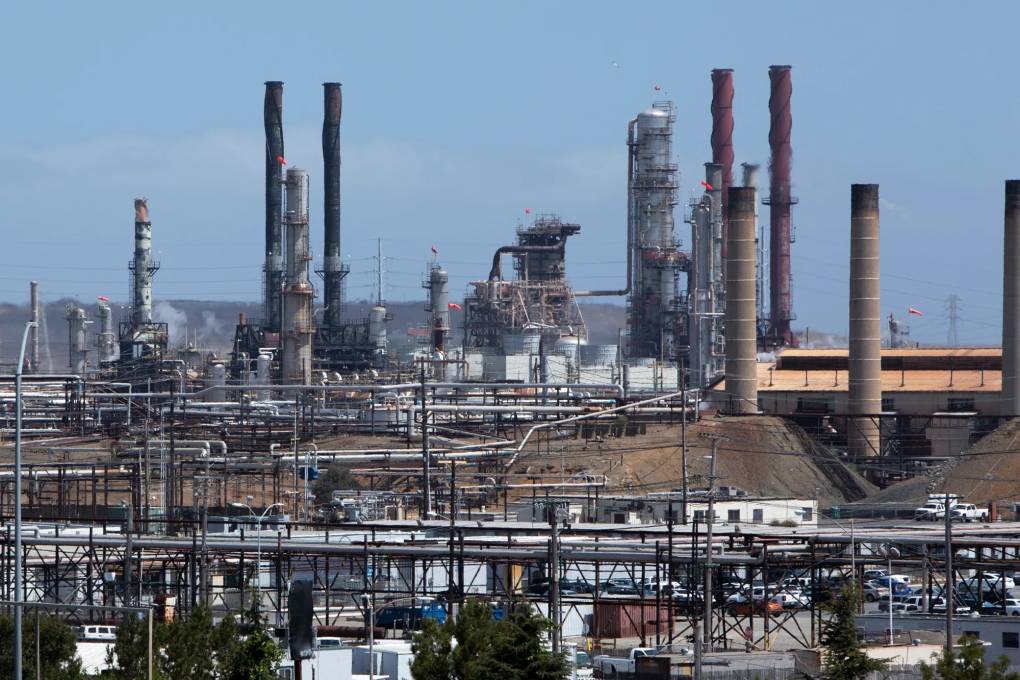
"caption": "The Chevron oil refinery in Richmond on July 19, 2019.",
"description": null,
"title": "Chevron-Refinery-Richmond-03-AW-CM",
"credit": "Anne Wernikoff/CalMatters",
"status": "inherit",
"altTag": "A large oil refinery.",
"isLoading": false,
"fetchFailed": false
},
"news_11930086": {
"type": "attachments",
"id": "news_11930086",
"meta": {
"index": "attachments_1716263798",
"site": "news",
"id": "11930086",
"found": true
},
"parent": 11930085,
"imgSizes": {
"twentyfourteen-full-width": {
"file": "https://ww2.kqed.org/app/uploads/sites/10/2022/10/102122-Wage-Theft-Prosecutions-CM-1038x576.jpg",
"width": 1038,
"mimeType": "image/jpeg",
"height": 576
},
"thumbnail": {
"file": "https://ww2.kqed.org/app/uploads/sites/10/2022/10/102122-Wage-Theft-Prosecutions-CM-160x107.jpg",
"width": 160,
"mimeType": "image/jpeg",
"height": 107
},
"post-thumbnail": {
"file": "https://ww2.kqed.org/app/uploads/sites/10/2022/10/102122-Wage-Theft-Prosecutions-CM-672x372.jpg",
"width": 672,
"mimeType": "image/jpeg",
"height": 372
},
"kqedFullSize": {
"file": "https://ww2.kqed.org/app/uploads/sites/10/2022/10/102122-Wage-Theft-Prosecutions-CM.jpg",
"width": 2000,
"height": 1333
},
"large": {
"file": "https://ww2.kqed.org/app/uploads/sites/10/2022/10/102122-Wage-Theft-Prosecutions-CM-1020x680.jpg",
"width": 1020,
"mimeType": "image/jpeg",
"height": 680
},
"1536x1536": {
"file": "https://ww2.kqed.org/app/uploads/sites/10/2022/10/102122-Wage-Theft-Prosecutions-CM-1536x1024.jpg",
"width": 1536,
"mimeType": "image/jpeg",
"height": 1024
},
"full-width": {
"file": "https://ww2.kqed.org/app/uploads/sites/10/2022/10/102122-Wage-Theft-Prosecutions-CM-1920x1280.jpg",
"width": 1920,
"mimeType": "image/jpeg",
"height": 1280
},
"medium": {
"file": "https://ww2.kqed.org/app/uploads/sites/10/2022/10/102122-Wage-Theft-Prosecutions-CM-800x533.jpg",
"width": 800,
"mimeType": "image/jpeg",
"height": 533
}
},
"publishDate": 1666716516,
"modified": 1666728475,
"caption": "A new felony law could help prosecutors in California pursue legal action against employers committing wage theft.",
"description": null,
"title": "102122-Wage-Theft-Prosecutions-CM",
"credit": "Illustration by Miguel Gutierrez Jr./CalMatters/iStock",
"status": "inherit",
"altTag": "an illustration of a statue and wage workers",
"isLoading": false,
"fetchFailed": false
},
"news_11930009": {
"type": "attachments",
"id": "news_11930009",
"meta": {
"index": "attachments_1716263798",
"site": "news",
"id": "11930009",
"found": true
},
"parent": 11929990,
"imgSizes": {
"twentyfourteen-full-width": {
"file": "https://ww2.kqed.org/app/uploads/sites/10/2022/10/051122-St-Hope-Charter-School-MG-CM-22-1038x576.jpg",
"width": 1038,
"mimeType": "image/jpeg",
"height": 576
},
"thumbnail": {
"file": "https://ww2.kqed.org/app/uploads/sites/10/2022/10/051122-St-Hope-Charter-School-MG-CM-22-160x107.jpg",
"width": 160,
"mimeType": "image/jpeg",
"height": 107
},
"post-thumbnail": {
"file": "https://ww2.kqed.org/app/uploads/sites/10/2022/10/051122-St-Hope-Charter-School-MG-CM-22-672x372.jpg",
"width": 672,
"mimeType": "image/jpeg",
"height": 372
},
"kqedFullSize": {
"file": "https://ww2.kqed.org/app/uploads/sites/10/2022/10/051122-St-Hope-Charter-School-MG-CM-22.jpg",
"width": 2000,
"height": 1333
},
"large": {
"file": "https://ww2.kqed.org/app/uploads/sites/10/2022/10/051122-St-Hope-Charter-School-MG-CM-22-1020x680.jpg",
"width": 1020,
"mimeType": "image/jpeg",
"height": 680
},
"1536x1536": {
"file": "https://ww2.kqed.org/app/uploads/sites/10/2022/10/051122-St-Hope-Charter-School-MG-CM-22-1536x1024.jpg",
"width": 1536,
"mimeType": "image/jpeg",
"height": 1024
},
"full-width": {
"file": "https://ww2.kqed.org/app/uploads/sites/10/2022/10/051122-St-Hope-Charter-School-MG-CM-22-1920x1280.jpg",
"width": 1920,
"mimeType": "image/jpeg",
"height": 1280
},
"medium": {
"file": "https://ww2.kqed.org/app/uploads/sites/10/2022/10/051122-St-Hope-Charter-School-MG-CM-22-800x533.jpg",
"width": 800,
"mimeType": "image/jpeg",
"height": 533
}
},
"publishDate": 1666649541,
"modified": 1686957160,
"caption": "California's reparations task force is proposing the state increase its investment in underperforming schools as a key way to narrow the achievement gap between Black students and many of their peers.",
"description": null,
"title": "051122-St-Hope-Charter-School-MG-CM-22",
"credit": "Miguel Gutierrez Jr./CalMatters",
"status": "inherit",
"altTag": "A young Black child wearing a red shirt, sitting at a green desk taking a test with a pencil in hand",
"isLoading": false,
"fetchFailed": false
},
"news_11929769": {
"type": "attachments",
"id": "news_11929769",
"meta": {
"index": "attachments_1716263798",
"site": "news",
"id": "11929769",
"found": true
},
"parent": 11929729,
"imgSizes": {
"twentyfourteen-full-width": {
"file": "https://ww2.kqed.org/app/uploads/sites/10/2022/10/101922_Bakersfield_Election_LV_CM_31-copy-1038x576.jpg",
"width": 1038,
"mimeType": "image/jpeg",
"height": 576
},
"thumbnail": {
"file": "https://ww2.kqed.org/app/uploads/sites/10/2022/10/101922_Bakersfield_Election_LV_CM_31-copy-160x107.jpg",
"width": 160,
"mimeType": "image/jpeg",
"height": 107
},
"post-thumbnail": {
"file": "https://ww2.kqed.org/app/uploads/sites/10/2022/10/101922_Bakersfield_Election_LV_CM_31-copy-672x372.jpg",
"width": 672,
"mimeType": "image/jpeg",
"height": 372
},
"kqedFullSize": {
"file": "https://ww2.kqed.org/app/uploads/sites/10/2022/10/101922_Bakersfield_Election_LV_CM_31-copy.jpg",
"width": 2000,
"height": 1333
},
"large": {
"file": "https://ww2.kqed.org/app/uploads/sites/10/2022/10/101922_Bakersfield_Election_LV_CM_31-copy-1020x680.jpg",
"width": 1020,
"mimeType": "image/jpeg",
"height": 680
},
"1536x1536": {
"file": "https://ww2.kqed.org/app/uploads/sites/10/2022/10/101922_Bakersfield_Election_LV_CM_31-copy-1536x1024.jpg",
"width": 1536,
"mimeType": "image/jpeg",
"height": 1024
},
"full-width": {
"file": "https://ww2.kqed.org/app/uploads/sites/10/2022/10/101922_Bakersfield_Election_LV_CM_31-copy-1920x1280.jpg",
"width": 1920,
"mimeType": "image/jpeg",
"height": 1280
},
"medium": {
"file": "https://ww2.kqed.org/app/uploads/sites/10/2022/10/101922_Bakersfield_Election_LV_CM_31-copy-800x533.jpg",
"width": 800,
"mimeType": "image/jpeg",
"height": 533
}
},
"publishDate": 1666375929,
"modified": 1667478994,
"caption": null,
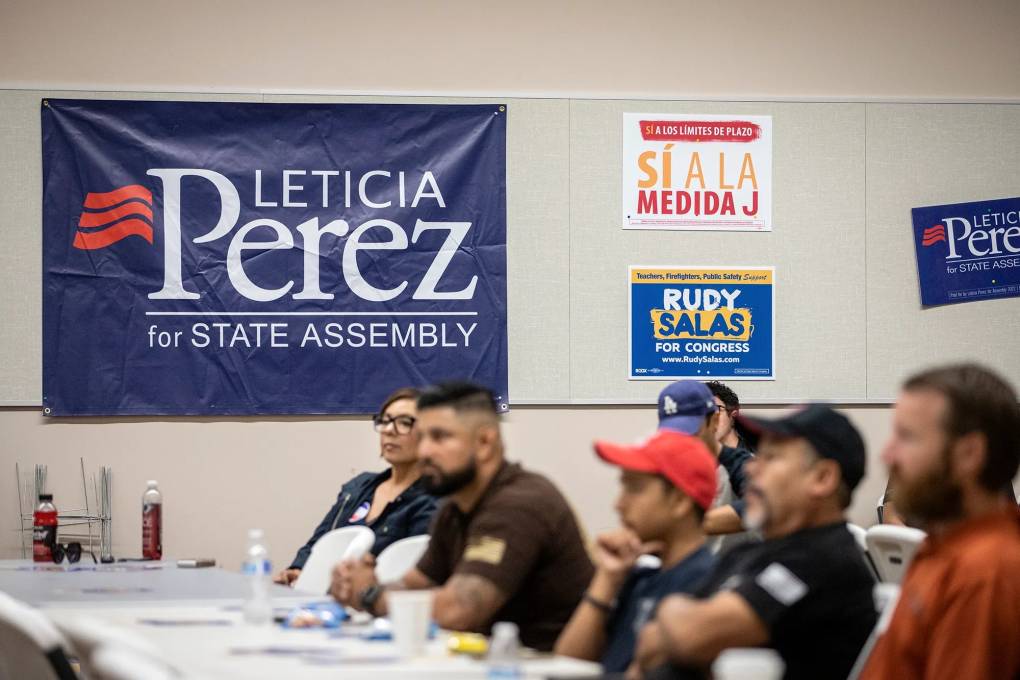
"description": "Kern County Democrats get ready to canvass voters in Bakersfield at a kickoff event at the union hall of the International Brotherhood of Electrical Workers on Oct. 15, 2022.\nLarry Valenzuela/CalMatters-CatchLight Local",
"title": "101922_Bakersfield_Election_LV_CM_31 copy",
"credit": "Larry Valenzuela/CalMatters-CatchLight Local",
"status": "inherit",
"altTag": "Four people sit behind a table with a poster on the wall behind that reads \"Leticia Perez - State Assembly\"",
"isLoading": false,
"fetchFailed": false
},
"news_11929140": {
"type": "attachments",
"id": "news_11929140",
"meta": {
"index": "attachments_1716263798",
"site": "news",
"id": "11929140",
"found": true
},
"parent": 11929137,
"imgSizes": {
"thumbnail": {
"file": "https://ww2.kqed.org/app/uploads/sites/10/2022/10/GettyImages-825104070-160x106.jpg",
"width": 160,
"mimeType": "image/jpeg",
"height": 106
},
"post-thumbnail": {
"file": "https://ww2.kqed.org/app/uploads/sites/10/2022/10/GettyImages-825104070-672x372.jpg",
"width": 672,
"mimeType": "image/jpeg",
"height": 372
},
"kqedFullSize": {
"file": "https://ww2.kqed.org/app/uploads/sites/10/2022/10/GettyImages-825104070.jpg",
"width": 727,
"height": 481
}
},
"publishDate": 1665873516,
"modified": 1665873557,
"caption": null,
"description": null,
"title": "Close-up of a hand pouring fuel into a car",
"credit": "Sol de Zuasnabar Brebbia/Getty Images",
"status": "inherit",
"altTag": "A woman operates a gasoline pump as she fills her tank with gas.",
"isLoading": false,
"fetchFailed": false
},
"news_11929406": {
"type": "attachments",
"id": "news_11929406",
"meta": {
"index": "attachments_1716263798",
"site": "news",
"id": "11929406",
"found": true
},
"parent": 11929398,
"imgSizes": {
"twentyfourteen-full-width": {
"file": "https://ww2.kqed.org/app/uploads/sites/10/2022/10/101322-Lege-and-Wage-Theft-CM-1-1038x576.jpg",
"width": 1038,
"mimeType": "image/jpeg",
"height": 576
},
"thumbnail": {
"file": "https://ww2.kqed.org/app/uploads/sites/10/2022/10/101322-Lege-and-Wage-Theft-CM-1-160x107.jpg",
"width": 160,
"mimeType": "image/jpeg",
"height": 107
},
"post-thumbnail": {
"file": "https://ww2.kqed.org/app/uploads/sites/10/2022/10/101322-Lege-and-Wage-Theft-CM-1-672x372.jpg",
"width": 672,
"mimeType": "image/jpeg",
"height": 372
},
"kqedFullSize": {
"file": "https://ww2.kqed.org/app/uploads/sites/10/2022/10/101322-Lege-and-Wage-Theft-CM-1.jpg",
"width": 2000,
"height": 1333
},
"large": {
"file": "https://ww2.kqed.org/app/uploads/sites/10/2022/10/101322-Lege-and-Wage-Theft-CM-1-1020x680.jpg",
"width": 1020,
"mimeType": "image/jpeg",
"height": 680
},
"1536x1536": {
"file": "https://ww2.kqed.org/app/uploads/sites/10/2022/10/101322-Lege-and-Wage-Theft-CM-1-1536x1024.jpg",
"width": 1536,
"mimeType": "image/jpeg",
"height": 1024
},
"full-width": {
"file": "https://ww2.kqed.org/app/uploads/sites/10/2022/10/101322-Lege-and-Wage-Theft-CM-1-1920x1280.jpg",
"width": 1920,
"mimeType": "image/jpeg",
"height": 1280
},
"medium": {
"file": "https://ww2.kqed.org/app/uploads/sites/10/2022/10/101322-Lege-and-Wage-Theft-CM-1-800x533.jpg",
"width": 800,
"mimeType": "image/jpeg",
"height": 533
}
},
"publishDate": 1666129113,
"modified": 1666212365,
"caption": "The state is a national leader in labor law, experts say, but its agency enforcing wage theft rules in California still struggles to staff up.",
"description": null,
"title": "101322-Lege-and-Wage-Theft-CM-1",
"credit": "Illustration by Miguel Gutierrez Jr., CalMatters/iStock",
"status": "inherit",
"altTag": "a collage with the capitol building, a dollar bill torn in pieces and people protesting wage theft",
"isLoading": false,
"fetchFailed": false
},
"news_11928763": {
"type": "attachments",
"id": "news_11928763",
"meta": {
"index": "attachments_1716263798",
"site": "news",
"id": "11928763",
"found": true
},
"parent": 11928761,
"imgSizes": {
"twentyfourteen-full-width": {
"file": "https://ww2.kqed.org/app/uploads/sites/10/2022/10/RS48086_030_SanFrancisco_NewsomBontaPressConference_03242021-qut-1038x576.jpg",
"width": 1038,
"mimeType": "image/jpeg",
"height": 576
},
"thumbnail": {
"file": "https://ww2.kqed.org/app/uploads/sites/10/2022/10/RS48086_030_SanFrancisco_NewsomBontaPressConference_03242021-qut-160x107.jpg",
"width": 160,
"mimeType": "image/jpeg",
"height": 107
},
"post-thumbnail": {
"file": "https://ww2.kqed.org/app/uploads/sites/10/2022/10/RS48086_030_SanFrancisco_NewsomBontaPressConference_03242021-qut-672x372.jpg",
"width": 672,
"mimeType": "image/jpeg",
"height": 372
},
"kqedFullSize": {
"file": "https://ww2.kqed.org/app/uploads/sites/10/2022/10/RS48086_030_SanFrancisco_NewsomBontaPressConference_03242021-qut.jpg",
"width": 1920,
"height": 1278
},
"large": {
"file": "https://ww2.kqed.org/app/uploads/sites/10/2022/10/RS48086_030_SanFrancisco_NewsomBontaPressConference_03242021-qut-1020x679.jpg",
"width": 1020,
"mimeType": "image/jpeg",
"height": 679
},
"1536x1536": {
"file": "https://ww2.kqed.org/app/uploads/sites/10/2022/10/RS48086_030_SanFrancisco_NewsomBontaPressConference_03242021-qut-1536x1022.jpg",
"width": 1536,
"mimeType": "image/jpeg",
"height": 1022
},
"medium": {
"file": "https://ww2.kqed.org/app/uploads/sites/10/2022/10/RS48086_030_SanFrancisco_NewsomBontaPressConference_03242021-qut-800x533.jpg",
"width": 800,
"mimeType": "image/jpeg",
"height": 533
}
},
"publishDate": 1665695273,
"modified": 1665695413,
"caption": null,
"description": null,
"title": "RS48086_030_SanFrancisco_NewsomBontaPressConference_03242021-qut",
"credit": "Beth LaBerge/KQED",
"status": "inherit",
"altTag": "A middle-aged man in a blue suit with a light blue tie speaks into a microphone behind a dais.",
"isLoading": false,
"fetchFailed": false
},
"news_11928603": {
"type": "attachments",
"id": "news_11928603",
"meta": {
"index": "attachments_1716263798",
"site": "news",
"id": "11928603",
"found": true
},
"parent": 11928582,
"imgSizes": {
"twentyfourteen-full-width": {
"file": "https://ww2.kqed.org/app/uploads/sites/10/2022/10/Screen-Shot-2022-10-12-at-12.47.33-PM-1038x576.png",
"width": 1038,
"mimeType": "image/png",
"height": 576
},
"thumbnail": {
"file": "https://ww2.kqed.org/app/uploads/sites/10/2022/10/Screen-Shot-2022-10-12-at-12.47.33-PM-160x104.png",
"width": 160,
"mimeType": "image/png",
"height": 104
},
"post-thumbnail": {
"file": "https://ww2.kqed.org/app/uploads/sites/10/2022/10/Screen-Shot-2022-10-12-at-12.47.33-PM-672x372.png",
"width": 672,
"mimeType": "image/png",
"height": 372
},
"kqedFullSize": {
"file": "https://ww2.kqed.org/app/uploads/sites/10/2022/10/Screen-Shot-2022-10-12-at-12.47.33-PM.png",
"width": 2370,
"height": 1540
},
"2048x2048": {
"file": "https://ww2.kqed.org/app/uploads/sites/10/2022/10/Screen-Shot-2022-10-12-at-12.47.33-PM-2048x1331.png",
"width": 2048,
"mimeType": "image/png",
"height": 1331
},
"large": {
"file": "https://ww2.kqed.org/app/uploads/sites/10/2022/10/Screen-Shot-2022-10-12-at-12.47.33-PM-1020x663.png",
"width": 1020,
"mimeType": "image/png",
"height": 663
},
"1536x1536": {
"file": "https://ww2.kqed.org/app/uploads/sites/10/2022/10/Screen-Shot-2022-10-12-at-12.47.33-PM-1536x998.png",
"width": 1536,
"mimeType": "image/png",
"height": 998
},
"full-width": {
"file": "https://ww2.kqed.org/app/uploads/sites/10/2022/10/Screen-Shot-2022-10-12-at-12.47.33-PM-1920x1248.png",
"width": 1920,
"mimeType": "image/png",
"height": 1248
},
"medium": {
"file": "https://ww2.kqed.org/app/uploads/sites/10/2022/10/Screen-Shot-2022-10-12-at-12.47.33-PM-800x520.png",
"width": 800,
"mimeType": "image/png",
"height": 520
}
},
"publishDate": 1665604266,
"modified": 1665608090,
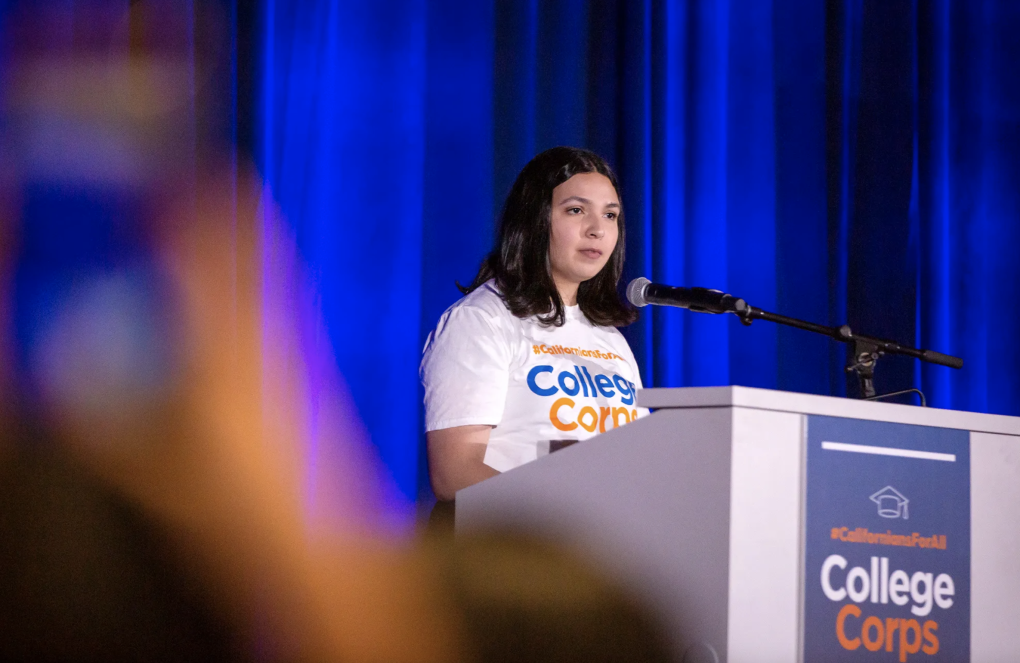
"caption": "Yusbely Delgado Medrano, a UC Davis College Corps fellow, speaks during a swearing-in ceremony for the fellows in Sacramento on Oct. 7, 2022.",
"description": null,
"title": "Screen Shot 2022-10-12 at 12.47.33 PM",
"credit": "Rahul Lal/CalMatters",
"status": "inherit",
"altTag": "A woman stands at a podium wearing a white t-shirt that says \"College Corps.\"",
"isLoading": false,
"fetchFailed": false
},
"news_11928088": {
"type": "attachments",
"id": "news_11928088",
"meta": {
"index": "attachments_1716263798",
"site": "news",
"id": "11928088",
"found": true
},
"parent": 11928042,
"imgSizes": {
"twentyfourteen-full-width": {
"file": "https://ww2.kqed.org/app/uploads/sites/10/2022/10/09222022_MarisolRosales_CM_PU_1-CM-copy-1038x576.jpg",
"width": 1038,
"mimeType": "image/jpeg",
"height": 576
},
"thumbnail": {
"file": "https://ww2.kqed.org/app/uploads/sites/10/2022/10/09222022_MarisolRosales_CM_PU_1-CM-copy-160x107.jpg",
"width": 160,
"mimeType": "image/jpeg",
"height": 107
},
"post-thumbnail": {
"file": "https://ww2.kqed.org/app/uploads/sites/10/2022/10/09222022_MarisolRosales_CM_PU_1-CM-copy-672x372.jpg",
"width": 672,
"mimeType": "image/jpeg",
"height": 372
},
"kqedFullSize": {
"file": "https://ww2.kqed.org/app/uploads/sites/10/2022/10/09222022_MarisolRosales_CM_PU_1-CM-copy.jpg",
"width": 1568,
"height": 1045
},
"large": {
"file": "https://ww2.kqed.org/app/uploads/sites/10/2022/10/09222022_MarisolRosales_CM_PU_1-CM-copy-1020x680.jpg",
"width": 1020,
"mimeType": "image/jpeg",
"height": 680
},
"1536x1536": {
"file": "https://ww2.kqed.org/app/uploads/sites/10/2022/10/09222022_MarisolRosales_CM_PU_1-CM-copy-1536x1024.jpg",
"width": 1536,
"mimeType": "image/jpeg",
"height": 1024
},
"medium": {
"file": "https://ww2.kqed.org/app/uploads/sites/10/2022/10/09222022_MarisolRosales_CM_PU_1-CM-copy-800x533.jpg",
"width": 800,
"mimeType": "image/jpeg",
"height": 533
}
},
"publishDate": 1665174892,
"modified": 1665175864,
"caption": "Marisol Rosales, a mother of four, stands for a portrait with her three children in Los Angeles on Sept. 22, 2022. With the help of AB 92, Rosales was able to receive a waiver of family fees, and has since enrolled her children in extracurricular activities.",
"description": null,
"title": "09222022_MarisolRosales_CM_PU_1-CM copy",
"credit": "Pablo Unzueta/CalMatters",
"status": "inherit",
"altTag": "A Latina woman stands with three children of varying ages as they all smile for the camera.",
"isLoading": false,
"fetchFailed": false
}
},
"audioPlayerReducer": {
"postId": "stream_live",
"isPaused": true,
"isPlaying": false,
"pfsActive": false,
"pledgeModalIsOpen": true,
"playerDrawerIsOpen": false,
"liveAudioPlayStartedAt": 0,
"liveAudioPlayContext": ""
},
"authorsReducer": {
"byline_news_11930679": {
"type": "authors",
"id": "byline_news_11930679",
"meta": {
"override": true
},
"slug": "byline_news_11930679",
"name": "\u003ca href=\"https://calmatters.org/author/manuela-tobias/\">Manuela Tobias\u003c/a>",
"isLoading": false
},
"byline_news_11930562": {
"type": "authors",
"id": "byline_news_11930562",
"meta": {
"override": true
},
"slug": "byline_news_11930562",
"name": "\u003ca href=\"https://calmatters.org/author/nadia-lopez/\">Nadia Lopez\u003c/a>",
"isLoading": false
},
"byline_news_11930432": {
"type": "authors",
"id": "byline_news_11930432",
"meta": {
"override": true
},
"slug": "byline_news_11930432",
"name": "\u003ca href=\"https://calmatters.org/author/anaibarra/\">Ana B. Ibarra\u003c/a>",
"isLoading": false
},
"byline_news_11930321": {
"type": "authors",
"id": "byline_news_11930321",
"meta": {
"override": true
},
"slug": "byline_news_11930321",
"name": "\u003ca href=\"https://calmatters.org/author/grace-gedye/\">Grace Gedye\u003c/a>",
"isLoading": false
},
"byline_news_11930085": {
"type": "authors",
"id": "byline_news_11930085",
"meta": {
"override": true
},
"slug": "byline_news_11930085",
"name": "\u003ca href=\"https://calmatters.org/author/jeanne-kuang/\">Jeanne Kuang\u003c/a> and \u003ca href=\"https://calmatters.org/author/lil-kalish/\">Lil Kalish\u003c/a>",
"isLoading": false
},
"byline_news_11929990": {
"type": "authors",
"id": "byline_news_11929990",
"meta": {
"override": true
},
"slug": "byline_news_11929990",
"name": "\u003ca href=\"https://calmatters.org/author/joe-hong/\">Joe Hong\u003c/a> and \u003ca href=\"https://calmatters.org/author/ericayee/\">Erica Yee\u003c/a>",
"isLoading": false
},
"byline_news_11929729": {
"type": "authors",
"id": "byline_news_11929729",
"meta": {
"override": true
},
"slug": "byline_news_11929729",
"name": "\u003ca href=\"https://calmatters.org/author/ben-christopher/\">Ben Christopher\u003c/a>, \u003ca href=\"https://calmatters.org/author/ariel-gans/\">Ariel Gans\u003c/a>",
"isLoading": false
},
"byline_news_11929137": {
"type": "authors",
"id": "byline_news_11929137",
"meta": {
"override": true
},
"slug": "byline_news_11929137",
"name": "\u003ca href=\"https://calmatters.org/author/grace-gedye/\">Grace Gedye\u003c/a>",
"isLoading": false
},
"byline_news_11929398": {
"type": "authors",
"id": "byline_news_11929398",
"meta": {
"override": true
},
"slug": "byline_news_11929398",
"name": "Alejandro Lazo, Jeanne Kuang and Julie Watts",
"isLoading": false
},
"byline_news_11928761": {
"type": "authors",
"id": "byline_news_11928761",
"meta": {
"override": true
},
"slug": "byline_news_11928761",
"name": "\u003ca href=\"https://calmatters.org/author/ben-christopher/\">Ben Christopher\u003c/a>",
"isLoading": false
},
"byline_news_11928582": {
"type": "authors",
"id": "byline_news_11928582",
"meta": {
"override": true
},
"slug": "byline_news_11928582",
"name": "Carmen González",
"isLoading": false
},
"byline_news_11928042": {
"type": "authors",
"id": "byline_news_11928042",
"meta": {
"override": true
},
"slug": "byline_news_11928042",
"name": "\u003ca href=\"https://calmatters.org/author/elizabeth-aguilera/\">Elizabeth Aguilera\u003c/a>",
"isLoading": false
}
},
"pagesReducer": {
"news_affiliate_calmatters": {
"type": "terms",
"id": "news_18481",
"meta": {
"index": "terms_1716263798",
"site": "news",
"id": "18481",
"score": 15.355904
},
"featImg": null,
"name": "CALmatters",
"description": null,
"taxonomy": "affiliate",
"headData": {
"twImgId": null,
"twTitle": null,
"ogTitle": null,
"ogImgId": null,
"twDescription": null,
"description": null,
"title": "CALmatters Archives | KQED Arts",
"ogDescription": null
},
"ttid": 18515,
"slug": "calmatters",
"isLoading": false,
"title": "CALmatters",
"pageMeta": {
"site": "news",
"WpPageTemplate": "page-topic-editorial",
"currentPage": 53
},
"blocks": [
{
"blockName": "kqed/post-list",
"attrs": {
"layout": "cardArticle2",
"query": "posts/news?affiliate=calmatters",
"seeMore": false,
"paginated": true,
"page": 53
}
},
{
"blockName": "kqed/ad"
}
]
}
},
"pfsSessionReducer": {},
"postsReducer": {
"stream_live": {
"type": "live",
"id": "stream_live",
"audioUrl": "https://streams.kqed.org/kqedradio",
"title": "Live Stream",
"excerpt": "Live Stream information currently unavailable.",
"link": "/radio",
"featImg": "",
"label": {
"name": "KQED Live",
"link": "/"
}
},
"stream_kqedNewscast": {
"type": "posts",
"id": "stream_kqedNewscast",
"audioUrl": "https://www.kqed.org/.stream/anon/radio/RDnews/newscast.mp3?_=1",
"title": "KQED Newscast",
"featImg": "",
"label": {
"name": "88.5 FM",
"link": "/"
}
},
"news_11930679": {
"type": "posts",
"id": "news_11930679",
"meta": {
"index": "posts_1716263798",
"site": "news",
"id": "11930679",
"score": null,
"sort": [
1667307671000
]
},
"parent": 0,
"labelTerm": {},
"blocks": [],
"publishDate": 1667307671,
"format": "standard",
"disqusTitle": "Newsom Campaigned on Building 3.5 Million Homes. He Hasn't Gotten Even Close",
"title": "Newsom Campaigned on Building 3.5 Million Homes. He Hasn't Gotten Even Close",
"headTitle": "CALmatters | KQED News",
"content": "\u003cp>It’s difficult for housing advocates to criticize Gov. Gavin Newsom because he’s done more to boost production than any other governor in recent memory — but that’s mostly because the bar is so low.\u003c/p>\n\u003cp>Measured against the goal he set for himself, Newsom’s record is less impressive. Just 13% of the 3.5 million homes he campaigned on building have been permitted, let alone built. He’s walked back the goal many times, settling on a new target earlier this year: Cities need to have planned a combined 2.5 million homes by 2030. So, a million fewer homes planned for, not built, and over a longer time frame.\u003c/p>\n\u003cp>Newsom can point to some accomplishments: He signed bills that \u003ca href=\"https://calmatters.org/housing/2019/09/big-rent-hikes-illegal-in-california-heres-what-to-know/\">capped big rent hikes statewide\u003c/a>, \u003ca href=\"https://calmatters.org/housing/2021/09/california-housing-crisis-newsom-signs-bills/\">legalized duplexes and fourplexes\u003c/a> on most developable land and unlocked millions of potential \u003ca href=\"https://calmatters.org/housing/2022/09/california-housing-podcast-ab-2011/\">apartments on empty strip malls\u003c/a>. He \u003ca href=\"https://calmatters.org/housing/2022/10/california-homeless-crisis-latinos/\">sheltered tens of thousands of people experiencing homelessness\u003c/a> amid a pandemic and dedicated more dollars to housing and homelessness than ever before.\u003c/p>\n\u003cp>But as he finalizes his first term and \u003ca href=\"https://calmatters.org/politics/election-2022/2022/10/gavin-newsom-campaign-president/\">coasts into the second\u003c/a>, Newsom finds himself mired in an even deeper housing and \u003ca href=\"https://calmatters.org/housing/2022/10/california-homeless-crisis-latinos/\">homelessness crisis\u003c/a> than the one he inherited.\u003c/p>\n\u003cp>[ad fullwidth]\u003c/p>\n\u003cp>Running for governor in 2017, then-Lt. Gov. Newsom pledged to spur a never-before-seen tsunami of homebuilding in California to bridge the gap between the growing population and shrinking stock of housing driving the affordability crisis.\u003c/p>\n\u003cp>“As Governor, I will lead the effort to develop the 3.5 million new housing units we need by 2025 because our solutions must be as bold as the problem is big,” Newsom \u003ca href=\"https://medium.com/@GavinNewsom/the-california-dream-starts-at-home-9dbb38c51cae\">wrote on Medium\u003c/a>.\u003c/p>\n\u003cp>The goal was true to character: \u003ca href=\"https://calmatters.org/politics/2018/10/gavin-newsom-profile-california-governor-election/\">big, hairy and audacious\u003c/a>. It would have required building an average of 500,000 homes a year in a state that has only surpassed the 300,000 mark \u003ca href=\"https://la.curbed.com/2018/11/8/18073066/california-governor-election-gavin-newsom-housing-plan\">twice in more than 50 years\u003c/a>.\u003c/p>\n\u003cp>Newsom didn’t get even close.\u003c/p>\n\u003cp>In the nearly four years since he took office, California cities are projected to have permitted a total of about 452,000 homes — fewer than Newsom pledged he’d build in one year alone, according to local data collected by the Construction Industry Research Board.\u003c/p>\n\u003cp>\u003c!-- iframe plugin v.4.3 wordpress.org/plugins/iframe/ -->\u003cbr>\n\u003ciframe src=\"https://e.infogram.com/_/Re1mI4JBl1bUtlSDHcnI?src=embed\" title=\"2022 Housing production in California\" width=\"800\" height=\"700\" scrolling=\"no\" frameborder=\"0\" style=\"border:none;\" allowfullscreen=\"allowfullscreen\" class=\"iframe-class\">\u003c/iframe>\u003c/p>\n\u003cp>When asked about his shortcomings at a \u003ca href=\"https://www.youtube.com/watch?v=JSy2VOGkBF8&t=1s\">recent press conference\u003c/a>, Newsom \u003ca href=\"https://www.latimes.com/california/story/2019-10-21/newsom-gavin-affordable-housing-homeless-q-a\">wrote off his original goal\u003c/a> as he has many times before, by paraphrasing Michelangelo.\u003c/p>\n\u003cp>“The biggest risk in life, however one defines risk, is not that we aim too high and miss it. It’s that we aim too low and reach it,” Newsom said. “It was always a stretch goal.”\u003c/p>\n\u003cp>Housing advocates acknowledge that policy change is by nature slow and incremental, and like many other proposals, long-term housing goals took a back seat to the COVID-19 pandemic.\u003c/p>\n\u003cp>But the reality on the ground — that there aren’t enough houses for everyone and the ones that exist are hideously expensive — continues to exasperate \u003ca href=\"https://www.ppic.org/publication/ppic-statewide-survey-californians-and-their-government-may-2022/\">Californians who repeatedly rank housing and homelessness among their top concerns\u003c/a>.\u003c/p>\n\u003cp>State Sen. Brian Dahle, the \u003ca href=\"https://briandahle.com/homelessness/\">Republican candidate for governor\u003c/a>, and other state Republicans have routinely attacked Newsom’s record on housing, including \u003ca href=\"https://republicans.senate.ca.gov/content/legislative-republicans-call-special-session-combat-homeless-crisis-immediately\">calling for a special session\u003c/a> on homelessness.\u003c/p>\n\u003cp>“We need government to treat this the way we treat a natural disaster, because that’s how it’s impacting people’s lives,” said Chione Lucina Muñoz Flegal, executive director of \u003ca href=\"https://www.housingca.org/\">Housing California\u003c/a>, a housing advocacy organization. “And that’s not what we see happening.”\u003c/p>\n\u003ch2 id=\"h-a-marshall-plan-for-housing\">A Marshall Plan for housing?\u003c/h2>\n\u003cp>Housing policy advocates described Newsom’s stated goal of 3.5 million new homes in four years the same way he has: aspirational. They say that’s because the state doesn’t build housing in California — private developers do, with the approval of local governments. So what really grabbed advocates’ attention was the “Marshall Plan for affordable housing” Newsom pledged to launch during his \u003ca href=\"https://calmatters.org/politics/2019/01/gavin-newsom-california-inauguration-speech-policy-highlights/\">inaugural speech\u003c/a>, recalling the multibillion-dollar program to rebuild Western Europe following World War II.\u003c/p>\n\u003cp>“As much as the number was important, the idea of building a streamlined process of building, that was amazing, because that’s really the challenge of California,” said Dan Dunmoyer, president of the California Building Industry Association. He said that dream remains elusive.\u003c/p>\n\u003cp>California has some of the \u003ca href=\"https://calmatters.org/explainers/housing-costs-high-california/\">highest housing costs\u003c/a> in the nation because of how little “marshaling” there is, Dunmoyer said. Land costs are prohibitive, and zoning rules limit much of what can be built. Housing must get approved at the local level, which has ample opportunity for community input. Those communities can then block unpopular projects, such as multifamily or affordable housing. Another culprit: impact fees cities charge to fund infrastructure that can \u003ca href=\"https://ternercenter.berkeley.edu/blog/residential-impact-fees/\">exceed $150,000 a home\u003c/a>, some of the highest in the nation.\u003c/p>\n\u003cp>[pullquote size=\"medium\" align=\"right\" citation=\"Louis Mirante, vice president of public policy, Bay Area Council\"]'To stop a project, you only need one red light. But to make a project go, you need at least 100 green lights. A lot of the legislation the governor has been signing has been those green lights.'[/pullquote]The closest Newsom may have gotten to bulldozing those barriers is \u003ca href=\"https://calmatters.org/housing/2020/11/newsom-pandemic-beat-homelessness/\">Project Homekey\u003c/a>. After COVID-19 hit, the administration scrambled to turn 94 hotels and motels into more than 6,000 shelter units for people experiencing homelessness, which would later become permanent homes, within record-setting months. The projects \u003ca href=\"https://www.politico.com/news/2021/11/04/main-recoverylab-cities-la-sros-518602\">bypassed local land use rules and a marquee environmental law\u003c/a> often blamed for slowing or killing controversial projects. The state has since expanded the $800 million project with more than $2.75 billion in new funding.\u003c/p>\n\u003cp>Newsom signed more than a dozen bills allowing housing types that met certain conditions to skip lengthy approval processes at the local level. Two are expected to have the biggest impact: one that \u003ca href=\"https://calmatters.org/housing/2021/08/california-housing-crisis-zoning-bill/\">legalized duplexes and fourplexes\u003c/a> on the two-thirds of developable land in California \u003ca href=\"https://ternercenter.berkeley.edu/wp-content/uploads/2021/07/SB-9-Brief-July-2021-Final.pdf\">previously zoned for single-family homes\u003c/a>, and another that \u003ca href=\"https://urbanfootprint.com/ab2011-analysis/\">allows apartments\u003c/a> on land previously allotted for \u003ca href=\"https://calmatters.org/housing/2022/05/california-housing-crisis-unions/\">retail centers, parking lots and offices along arterial roads\u003c/a>.\u003c/p>\n\u003cp>While a zoning change doesn’t build housing, it’s a first step to making it legal. Combined, the two laws could open up previously blocked space for more than 2 million housing units.\u003c/p>\n\u003cp>“The effect of legislation is often hard to prove, because it’s only one factor of many in the development process,” said Louis Mirante, vice president of public policy at the \u003ca href=\"https://www.bayareacouncil.org/\">Bay Area Council\u003c/a>. “To stop a project, you only need one red light. But to make a project go, you need at least 100 green lights. A lot of the legislation the governor has been signing has been those green lights.”\u003c/p>\n\u003cp>But yellow and red lights abound, including rising interest rates and prohibitive material costs. While it took political courage to sign a controversial measure like the one streamlining duplex and fourplex construction, Newsom remained largely quiet on those bills until they reached the finish line, and hasn’t championed a more sweeping production policy proposal on his own.\u003c/p>\n\u003cp>“He can step in and resolve the problems if he really wanted to prioritize the issue,” said Chris Martin, policy director at Housing California. “He has the power to do it, but politically, it’s challenging. He’s going to have to make some uncomfortable decisions.”\u003c/p>\n\u003ch2 id=\"h-moving-the-goalposts\">Moving the goalposts\u003c/h2>\n\u003cp>While Newsom has repeatedly called the 3.5 million goal taken from a \u003ca href=\"https://www.mckinsey.com/~/media/mckinsey/industries/public%20and%20social%20sector/our%20insights/closing%20californias%20housing%20gap/closing-californias-housing-gap-full-report.pdf\">2016 McKinsey study\u003c/a> a moon shot, he has put his weight behind another number: 2.5 million. That’s how many homes the Legislature has mandated California cities to plan for by 2030, and Newsom’s team is making sure they do.\u003c/p>\n\u003cp>“Before we can reach our stretch goals, before you can reach the moon, you’ve got to get off the launch pad,” said Jason Elliott, Newsom’s senior counselor on housing and homelessness.\u003c/p>\n\u003cp>[aside label='More Housing Coverage' tag='housing']The planning law has been on the books for decades, but it wasn’t until 2017 that the state Legislature gave the process teeth by creating standards and penalties cities must abide by. The \u003cem>plans\u003c/em> for the housing that those standards and penalties apply to weren’t even due for most cities until this year. And the deadlines are different for different regions. It’s a slow process.\u003c/p>\n\u003cp>Cities now have to zone for more than double the housing they did in previous years, and it has to be on sites where housing could actually be built. And if they don’t do it, they risk \u003ca href=\"https://calmatters.org/housing/2022/03/california-housing-goals/\">losing affordable housing dollars\u003c/a> or even \u003ca href=\"https://calmatters.org/newsletters/whatmatters/2022/10/california-housing-crisis-nimby/\">forgoing housing approval decisions\u003c/a>.\u003c/p>\n\u003cp>But having laws on the books — even if they feature new penalties — doesn’t mean anything unless someone is there to enforce them.\u003c/p>\n\u003cp>To that end, Newsom staffed up a $4.65 million \u003ca href=\"https://calmatters.org/housing/2022/04/california-duplex-housing/\">accountability and enforcement unit\u003c/a> within the housing department, with \u003ca href=\"https://calmatters.org/housing/2022/05/california-housing-podcast-rob-bonta-housing-enforcement/\">reinforcements at the state’s Justice Department\u003c/a>. Cities seem to be paying heed, but it’s all fun and games until actual homes get built.\u003c/p>\n\u003cp>“For many years in California, the Regional Housing Needs [Allocation] process was an afterthought at best,” Elliott said. “It was not taken seriously because there were largely no consequences for local governments failing to meet their responsibilities. And that’s not ancient history, but through a very concerted effort by this governor and the administration in partnership with the Legislature, RHNA is now very serious. And I think communities are taking it seriously.”\u003c/p>\n\u003cp>Still, planning isn’t building, and a recurring complaint about the process from cities is that while it requires a lot of affordable housing to be planned for — 1 million of the 2.5 million units must be affordable to the lowest earners — the state doesn’t provide nearly enough tax credits and other subsidies to build it.\u003c/p>\n\u003cp>“We’re funding a quarter of that, at best,” said Paavo Monkkonen, associate professor of urban planning at UCLA’s Luskin School of Public Affairs. “So that’s an interesting conundrum, where their own goal is unattainable. And there’s not really a Manhattan Project to make that happen.”\u003c/p>\n\u003cp>\u003c!-- iframe plugin v.4.3 wordpress.org/plugins/iframe/ -->\u003cbr>\n\u003ciframe src=\"https://e.infogram.com/9c485c33-4c31-4f78-ae36-07dc50a75dc3?src=embed\" title=\"Affordable housing production\" width=\"800\" height=\"850\" scrolling=\"no\" frameborder=\"0\" style=\"border:none;\" allowfullscreen=\"allowfullscreen\" class=\"iframe-class\">\u003c/iframe>\u003c/p>\n\u003cp>With the Legislature, Newsom has dedicated unprecedented dollars to affordable housing, including \u003ca href=\"https://www.gov.ca.gov/2021/07/19/governor-newsom-signs-historic-housing-and-homelessness-funding-package-as-part-of-100-billion-california-comeback-plan/\">$10.3 billion in 2021\u003c/a>. Funding the current affordable housing need alone, however, would require \u003ca href=\"https://chpc.net/roadmaphome2030/\">nearly $18 billion a year over a decade\u003c/a>, according to a recent estimate from Housing California and California Housing Partnership. And there is no long-term source of funding for housing in California. As budget projections for next year sour, affordable housing advocates worry those funds might dry up.\u003c/p>\n\u003cp>“In these years of good budget outlook, the administration has done a really good job,” said Marina Wiant, vice president of government affairs at the \u003ca href=\"https://calhsng.org/\">California Housing Consortium\u003c/a>, a nonpartisan housing advocacy organization. “It’s going to be interesting to see what they do when they have to make tough budget choices.”\u003c/p>\n\u003cp>[ad floatright]\u003c/p>\n",
"disqusIdentifier": "11930679 https://calmatters.network/?p=294244",
"disqusUrl": "https://ww2.kqed.org/news/2022/11/01/newsom-campaigned-on-building-3-5-million-homes-he-hasnt-gotten-even-close/",
"stats": {
"hasVideo": false,
"hasChartOrMap": true,
"hasAudio": false,
"hasPolis": false,
"wordCount": 1884,
"hasGoogleForm": false,
"hasGallery": false,
"hasHearkenModule": false,
"iframeSrcs": [
"https://e.infogram.com/_/Re1mI4JBl1bUtlSDHcnI",
"https://e.infogram.com/9c485c33-4c31-4f78-ae36-07dc50a75dc3"
],
"paragraphCount": 39
},
"modified": 1667326439,
"excerpt": "Gov. Gavin Newsom campaigned on housing production, an issue important to many Californians. But despite some accomplishments, the housing crisis is worse now than when he took office.",
"headData": {
"twImgId": "",
"twTitle": "",
"ogTitle": "",
"ogImgId": "",
"twDescription": "",
"description": "Gov. Gavin Newsom campaigned on housing production, an issue important to many Californians. But despite some accomplishments, the housing crisis is worse now than when he took office.",
"title": "Newsom Campaigned on Building 3.5 Million Homes. He Hasn't Gotten Even Close | KQED",
"ogDescription": "",
"schema": {
"@context": "https://schema.org",
"@type": "NewsArticle",
"headline": "Newsom Campaigned on Building 3.5 Million Homes. He Hasn't Gotten Even Close",
"datePublished": "2022-11-01T06:01:11-07:00",
"dateModified": "2022-11-01T11:13:59-07:00",
"image": "https://cdn.kqed.org/wp-content/uploads/2020/02/KQED-OG-Image@1x.png",
"isAccessibleForFree": "True",
"publisher": {
"@type": "NewsMediaOrganization",
"@id": "https://www.kqed.org/#organization",
"name": "KQED",
"logo": "https://cdn.kqed.org/wp-content/uploads/2020/02/KQED-OG-Image@1x.png",
"url": "https://www.kqed.org",
"sameAs": [
"https://www.facebook.com/KQED",
"https://twitter.com/KQED",
"https://www.instagram.com/kqed/",
"https://www.tiktok.com/@kqedofficial",
"https://www.linkedin.com/company/kqed",
"https://www.youtube.com/channel/UCeC0IOo7i1P_61zVUWbJ4nw"
]
}
}
},
"guestAuthors": [],
"slug": "newsom-campaigned-on-building-3-5-million-homes-he-hasnt-gotten-even-close",
"status": "publish",
"sourceUrl": "https://calmatters.org/",
"templateType": "standard",
"nprByline": "\u003ca href=\"https://calmatters.org/author/manuela-tobias/\">Manuela Tobias\u003c/a>",
"excludeFromSiteSearch": "Include",
"featuredImageType": "standard",
"source": "CalMatters",
"showOnAuthorArchivePages": "No",
"WpPageTemplate": "default",
"path": "/news/11930679/newsom-campaigned-on-building-3-5-million-homes-he-hasnt-gotten-even-close",
"audioTrackLength": null,
"parsedContent": [
{
"type": "contentString",
"content": "\u003cdiv class=\"post-body\">\u003cp>\u003cp>It’s difficult for housing advocates to criticize Gov. Gavin Newsom because he’s done more to boost production than any other governor in recent memory — but that’s mostly because the bar is so low.\u003c/p>\n\u003cp>Measured against the goal he set for himself, Newsom’s record is less impressive. Just 13% of the 3.5 million homes he campaigned on building have been permitted, let alone built. He’s walked back the goal many times, settling on a new target earlier this year: Cities need to have planned a combined 2.5 million homes by 2030. So, a million fewer homes planned for, not built, and over a longer time frame.\u003c/p>\n\u003cp>Newsom can point to some accomplishments: He signed bills that \u003ca href=\"https://calmatters.org/housing/2019/09/big-rent-hikes-illegal-in-california-heres-what-to-know/\">capped big rent hikes statewide\u003c/a>, \u003ca href=\"https://calmatters.org/housing/2021/09/california-housing-crisis-newsom-signs-bills/\">legalized duplexes and fourplexes\u003c/a> on most developable land and unlocked millions of potential \u003ca href=\"https://calmatters.org/housing/2022/09/california-housing-podcast-ab-2011/\">apartments on empty strip malls\u003c/a>. He \u003ca href=\"https://calmatters.org/housing/2022/10/california-homeless-crisis-latinos/\">sheltered tens of thousands of people experiencing homelessness\u003c/a> amid a pandemic and dedicated more dollars to housing and homelessness than ever before.\u003c/p>\n\u003cp>But as he finalizes his first term and \u003ca href=\"https://calmatters.org/politics/election-2022/2022/10/gavin-newsom-campaign-president/\">coasts into the second\u003c/a>, Newsom finds himself mired in an even deeper housing and \u003ca href=\"https://calmatters.org/housing/2022/10/california-homeless-crisis-latinos/\">homelessness crisis\u003c/a> than the one he inherited.\u003c/p>\n\u003cp>\u003c/p>\u003c/div>",
"attributes": {
"named": {},
"numeric": []
}
},
{
"type": "component",
"content": "",
"name": "ad",
"attributes": {
"named": {
"label": "fullwidth"
},
"numeric": [
"fullwidth"
]
}
},
{
"type": "contentString",
"content": "\u003cdiv class=\"post-body\">\u003cp>\u003c/p>\n\u003cp>Running for governor in 2017, then-Lt. Gov. Newsom pledged to spur a never-before-seen tsunami of homebuilding in California to bridge the gap between the growing population and shrinking stock of housing driving the affordability crisis.\u003c/p>\n\u003cp>“As Governor, I will lead the effort to develop the 3.5 million new housing units we need by 2025 because our solutions must be as bold as the problem is big,” Newsom \u003ca href=\"https://medium.com/@GavinNewsom/the-california-dream-starts-at-home-9dbb38c51cae\">wrote on Medium\u003c/a>.\u003c/p>\n\u003cp>The goal was true to character: \u003ca href=\"https://calmatters.org/politics/2018/10/gavin-newsom-profile-california-governor-election/\">big, hairy and audacious\u003c/a>. It would have required building an average of 500,000 homes a year in a state that has only surpassed the 300,000 mark \u003ca href=\"https://la.curbed.com/2018/11/8/18073066/california-governor-election-gavin-newsom-housing-plan\">twice in more than 50 years\u003c/a>.\u003c/p>\n\u003cp>Newsom didn’t get even close.\u003c/p>\n\u003cp>In the nearly four years since he took office, California cities are projected to have permitted a total of about 452,000 homes — fewer than Newsom pledged he’d build in one year alone, according to local data collected by the Construction Industry Research Board.\u003c/p>\n\u003cp>\u003c!-- iframe plugin v.4.3 wordpress.org/plugins/iframe/ -->\u003cbr>\n\u003ciframe src=\"https://e.infogram.com/_/Re1mI4JBl1bUtlSDHcnI?src=embed\" title=\"2022 Housing production in California\" width=\"800\" height=\"700\" scrolling=\"no\" frameborder=\"0\" style=\"border:none;\" allowfullscreen=\"allowfullscreen\" class=\"iframe-class\">\u003c/iframe>\u003c/p>\n\u003cp>When asked about his shortcomings at a \u003ca href=\"https://www.youtube.com/watch?v=JSy2VOGkBF8&t=1s\">recent press conference\u003c/a>, Newsom \u003ca href=\"https://www.latimes.com/california/story/2019-10-21/newsom-gavin-affordable-housing-homeless-q-a\">wrote off his original goal\u003c/a> as he has many times before, by paraphrasing Michelangelo.\u003c/p>\n\u003cp>“The biggest risk in life, however one defines risk, is not that we aim too high and miss it. It’s that we aim too low and reach it,” Newsom said. “It was always a stretch goal.”\u003c/p>\n\u003cp>Housing advocates acknowledge that policy change is by nature slow and incremental, and like many other proposals, long-term housing goals took a back seat to the COVID-19 pandemic.\u003c/p>\n\u003cp>But the reality on the ground — that there aren’t enough houses for everyone and the ones that exist are hideously expensive — continues to exasperate \u003ca href=\"https://www.ppic.org/publication/ppic-statewide-survey-californians-and-their-government-may-2022/\">Californians who repeatedly rank housing and homelessness among their top concerns\u003c/a>.\u003c/p>\n\u003cp>State Sen. Brian Dahle, the \u003ca href=\"https://briandahle.com/homelessness/\">Republican candidate for governor\u003c/a>, and other state Republicans have routinely attacked Newsom’s record on housing, including \u003ca href=\"https://republicans.senate.ca.gov/content/legislative-republicans-call-special-session-combat-homeless-crisis-immediately\">calling for a special session\u003c/a> on homelessness.\u003c/p>\n\u003cp>“We need government to treat this the way we treat a natural disaster, because that’s how it’s impacting people’s lives,” said Chione Lucina Muñoz Flegal, executive director of \u003ca href=\"https://www.housingca.org/\">Housing California\u003c/a>, a housing advocacy organization. “And that’s not what we see happening.”\u003c/p>\n\u003ch2 id=\"h-a-marshall-plan-for-housing\">A Marshall Plan for housing?\u003c/h2>\n\u003cp>Housing policy advocates described Newsom’s stated goal of 3.5 million new homes in four years the same way he has: aspirational. They say that’s because the state doesn’t build housing in California — private developers do, with the approval of local governments. So what really grabbed advocates’ attention was the “Marshall Plan for affordable housing” Newsom pledged to launch during his \u003ca href=\"https://calmatters.org/politics/2019/01/gavin-newsom-california-inauguration-speech-policy-highlights/\">inaugural speech\u003c/a>, recalling the multibillion-dollar program to rebuild Western Europe following World War II.\u003c/p>\n\u003cp>“As much as the number was important, the idea of building a streamlined process of building, that was amazing, because that’s really the challenge of California,” said Dan Dunmoyer, president of the California Building Industry Association. He said that dream remains elusive.\u003c/p>\n\u003cp>California has some of the \u003ca href=\"https://calmatters.org/explainers/housing-costs-high-california/\">highest housing costs\u003c/a> in the nation because of how little “marshaling” there is, Dunmoyer said. Land costs are prohibitive, and zoning rules limit much of what can be built. Housing must get approved at the local level, which has ample opportunity for community input. Those communities can then block unpopular projects, such as multifamily or affordable housing. Another culprit: impact fees cities charge to fund infrastructure that can \u003ca href=\"https://ternercenter.berkeley.edu/blog/residential-impact-fees/\">exceed $150,000 a home\u003c/a>, some of the highest in the nation.\u003c/p>\n\u003cp>\u003c/p>\u003c/div>",
"attributes": {
"named": {},
"numeric": []
}
},
{
"type": "component",
"content": "'To stop a project, you only need one red light. But to make a project go, you need at least 100 green lights. A lot of the legislation the governor has been signing has been those green lights.'",
"name": "pullquote",
"attributes": {
"named": {
"size": "medium",
"align": "right",
"citation": "Louis Mirante, vice president of public policy, Bay Area Council",
"label": ""
},
"numeric": []
}
},
{
"type": "contentString",
"content": "\u003cdiv class=\"post-body\">\u003cp>The closest Newsom may have gotten to bulldozing those barriers is \u003ca href=\"https://calmatters.org/housing/2020/11/newsom-pandemic-beat-homelessness/\">Project Homekey\u003c/a>. After COVID-19 hit, the administration scrambled to turn 94 hotels and motels into more than 6,000 shelter units for people experiencing homelessness, which would later become permanent homes, within record-setting months. The projects \u003ca href=\"https://www.politico.com/news/2021/11/04/main-recoverylab-cities-la-sros-518602\">bypassed local land use rules and a marquee environmental law\u003c/a> often blamed for slowing or killing controversial projects. The state has since expanded the $800 million project with more than $2.75 billion in new funding.\u003c/p>\n\u003cp>Newsom signed more than a dozen bills allowing housing types that met certain conditions to skip lengthy approval processes at the local level. Two are expected to have the biggest impact: one that \u003ca href=\"https://calmatters.org/housing/2021/08/california-housing-crisis-zoning-bill/\">legalized duplexes and fourplexes\u003c/a> on the two-thirds of developable land in California \u003ca href=\"https://ternercenter.berkeley.edu/wp-content/uploads/2021/07/SB-9-Brief-July-2021-Final.pdf\">previously zoned for single-family homes\u003c/a>, and another that \u003ca href=\"https://urbanfootprint.com/ab2011-analysis/\">allows apartments\u003c/a> on land previously allotted for \u003ca href=\"https://calmatters.org/housing/2022/05/california-housing-crisis-unions/\">retail centers, parking lots and offices along arterial roads\u003c/a>.\u003c/p>\n\u003cp>While a zoning change doesn’t build housing, it’s a first step to making it legal. Combined, the two laws could open up previously blocked space for more than 2 million housing units.\u003c/p>\n\u003cp>“The effect of legislation is often hard to prove, because it’s only one factor of many in the development process,” said Louis Mirante, vice president of public policy at the \u003ca href=\"https://www.bayareacouncil.org/\">Bay Area Council\u003c/a>. “To stop a project, you only need one red light. But to make a project go, you need at least 100 green lights. A lot of the legislation the governor has been signing has been those green lights.”\u003c/p>\n\u003cp>But yellow and red lights abound, including rising interest rates and prohibitive material costs. While it took political courage to sign a controversial measure like the one streamlining duplex and fourplex construction, Newsom remained largely quiet on those bills until they reached the finish line, and hasn’t championed a more sweeping production policy proposal on his own.\u003c/p>\n\u003cp>“He can step in and resolve the problems if he really wanted to prioritize the issue,” said Chris Martin, policy director at Housing California. “He has the power to do it, but politically, it’s challenging. He’s going to have to make some uncomfortable decisions.”\u003c/p>\n\u003ch2 id=\"h-moving-the-goalposts\">Moving the goalposts\u003c/h2>\n\u003cp>While Newsom has repeatedly called the 3.5 million goal taken from a \u003ca href=\"https://www.mckinsey.com/~/media/mckinsey/industries/public%20and%20social%20sector/our%20insights/closing%20californias%20housing%20gap/closing-californias-housing-gap-full-report.pdf\">2016 McKinsey study\u003c/a> a moon shot, he has put his weight behind another number: 2.5 million. That’s how many homes the Legislature has mandated California cities to plan for by 2030, and Newsom’s team is making sure they do.\u003c/p>\n\u003cp>“Before we can reach our stretch goals, before you can reach the moon, you’ve got to get off the launch pad,” said Jason Elliott, Newsom’s senior counselor on housing and homelessness.\u003c/p>\n\u003cp>\u003c/p>\u003c/div>",
"attributes": {
"named": {},
"numeric": []
}
},
{
"type": "component",
"content": "",
"name": "aside",
"attributes": {
"named": {
"label": "More Housing Coverage ",
"tag": "housing"
},
"numeric": []
}
},
{
"type": "contentString",
"content": "\u003cdiv class=\"post-body\">\u003cp>The planning law has been on the books for decades, but it wasn’t until 2017 that the state Legislature gave the process teeth by creating standards and penalties cities must abide by. The \u003cem>plans\u003c/em> for the housing that those standards and penalties apply to weren’t even due for most cities until this year. And the deadlines are different for different regions. It’s a slow process.\u003c/p>\n\u003cp>Cities now have to zone for more than double the housing they did in previous years, and it has to be on sites where housing could actually be built. And if they don’t do it, they risk \u003ca href=\"https://calmatters.org/housing/2022/03/california-housing-goals/\">losing affordable housing dollars\u003c/a> or even \u003ca href=\"https://calmatters.org/newsletters/whatmatters/2022/10/california-housing-crisis-nimby/\">forgoing housing approval decisions\u003c/a>.\u003c/p>\n\u003cp>But having laws on the books — even if they feature new penalties — doesn’t mean anything unless someone is there to enforce them.\u003c/p>\n\u003cp>To that end, Newsom staffed up a $4.65 million \u003ca href=\"https://calmatters.org/housing/2022/04/california-duplex-housing/\">accountability and enforcement unit\u003c/a> within the housing department, with \u003ca href=\"https://calmatters.org/housing/2022/05/california-housing-podcast-rob-bonta-housing-enforcement/\">reinforcements at the state’s Justice Department\u003c/a>. Cities seem to be paying heed, but it’s all fun and games until actual homes get built.\u003c/p>\n\u003cp>“For many years in California, the Regional Housing Needs [Allocation] process was an afterthought at best,” Elliott said. “It was not taken seriously because there were largely no consequences for local governments failing to meet their responsibilities. And that’s not ancient history, but through a very concerted effort by this governor and the administration in partnership with the Legislature, RHNA is now very serious. And I think communities are taking it seriously.”\u003c/p>\n\u003cp>Still, planning isn’t building, and a recurring complaint about the process from cities is that while it requires a lot of affordable housing to be planned for — 1 million of the 2.5 million units must be affordable to the lowest earners — the state doesn’t provide nearly enough tax credits and other subsidies to build it.\u003c/p>\n\u003cp>“We’re funding a quarter of that, at best,” said Paavo Monkkonen, associate professor of urban planning at UCLA’s Luskin School of Public Affairs. “So that’s an interesting conundrum, where their own goal is unattainable. And there’s not really a Manhattan Project to make that happen.”\u003c/p>\n\u003cp>\u003c!-- iframe plugin v.4.3 wordpress.org/plugins/iframe/ -->\u003cbr>\n\u003ciframe src=\"https://e.infogram.com/9c485c33-4c31-4f78-ae36-07dc50a75dc3?src=embed\" title=\"Affordable housing production\" width=\"800\" height=\"850\" scrolling=\"no\" frameborder=\"0\" style=\"border:none;\" allowfullscreen=\"allowfullscreen\" class=\"iframe-class\">\u003c/iframe>\u003c/p>\n\u003cp>With the Legislature, Newsom has dedicated unprecedented dollars to affordable housing, including \u003ca href=\"https://www.gov.ca.gov/2021/07/19/governor-newsom-signs-historic-housing-and-homelessness-funding-package-as-part-of-100-billion-california-comeback-plan/\">$10.3 billion in 2021\u003c/a>. Funding the current affordable housing need alone, however, would require \u003ca href=\"https://chpc.net/roadmaphome2030/\">nearly $18 billion a year over a decade\u003c/a>, according to a recent estimate from Housing California and California Housing Partnership. And there is no long-term source of funding for housing in California. As budget projections for next year sour, affordable housing advocates worry those funds might dry up.\u003c/p>\n\u003cp>“In these years of good budget outlook, the administration has done a really good job,” said Marina Wiant, vice president of government affairs at the \u003ca href=\"https://calhsng.org/\">California Housing Consortium\u003c/a>, a nonpartisan housing advocacy organization. “It’s going to be interesting to see what they do when they have to make tough budget choices.”\u003c/p>\n\u003cp>\u003c/p>\u003c/div>",
"attributes": {
"named": {},
"numeric": []
}
},
{
"type": "component",
"content": "",
"name": "ad",
"attributes": {
"named": {
"label": "floatright"
},
"numeric": [
"floatright"
]
}
},
{
"type": "contentString",
"content": "\u003cdiv class=\"post-body\">\u003cp>\u003c/p>\n\u003c/div>\u003c/p>",
"attributes": {
"named": {},
"numeric": []
}
}
],
"link": "/news/11930679/newsom-campaigned-on-building-3-5-million-homes-he-hasnt-gotten-even-close",
"authors": [
"byline_news_11930679"
],
"categories": [
"news_31795",
"news_1758",
"news_6266",
"news_8"
],
"tags": [
"news_3921",
"news_18538",
"news_16",
"news_1775",
"news_21358",
"news_17968"
],
"affiliates": [
"news_18481"
],
"featImg": "news_11930680",
"label": "source_news_11930679"
},
"news_11930562": {
"type": "posts",
"id": "news_11930562",
"meta": {
"index": "posts_1716263798",
"site": "news",
"id": "11930562",
"score": null,
"sort": [
1667142000000
]
},
"guestAuthors": [],
"slug": "trucking-industry-and-environmentalists-spar-with-regulators-as-california-prepares-to-phase-out-fossil-fuel-trucks",
"title": "Trucking Industry and Environmentalists Spar With Regulators as California Prepares to Phase Out Fossil-Fuel Trucks",
"publishDate": 1667142000,
"format": "standard",
"headTitle": "Trucking Industry and Environmentalists Spar With Regulators as California Prepares to Phase Out Fossil-Fuel Trucks | KQED",
"labelTerm": {
"term": 18481,
"site": "news"
},
"content": "\u003cp>Environmentalists and trucking industry groups sparred\u003cstrong> \u003c/strong>with clean air regulators today over a \u003ca href=\"https://ww2.arb.ca.gov/sites/default/files/barcu/regact/2022/acf22/isor2.pdf\">contentious proposal (PDF)\u003c/a> to phase out California’s big rigs and other trucks with internal combustion engines, and force manufacturers to speed mass-production of electric trucks.\u003c/p>\n\u003cp>The California Air Resources Board held its first public hearing on rules that would ban manufacturers from selling any new fossil-fueled medium-duty and heavy-duty trucks by 2040. The new rules would also require large trucking companies to convert their fleets to electric models, buying more over time until all are zero-emission by 2042. The move is part of the state’s wider strategy to end its reliance on fossil fuels and cut planet-warming emissions.\u003c/p>\n\u003cp>“California is leading the transition to wide-scale electrification of trucks and buses,” said board chair Liane Randolph. “These actions can show the world how to simultaneously address the climate crisis, improve air quality and alleviate key concerns identified by communities.”\u003c/p>\n\u003cp>The proposed regulation received fiery criticism from both sides, as 167 members of the public lined up to speak at today’s hearing — which started at 9 a.m. and lasted well into the night.[aside label='Related Articles' tag='zero-emission']Environmentalists and public health groups called for a tougher rule that would speed up the 100% electric truck sales requirement to 2036 instead of 2040, while trucking companies said the proposal ignores concerns about electric vehicle costs and technology, lack of infrastructure and the loss of good-paying jobs.\u003c/p>\n\u003cp>The Air Resources Board is expected to hold a second hearing on the proposal and vote in the spring.\u003c/p>\n\u003cp>Jeff Cox, a truck driver of 24 years and owner of the Madera-based trucking company Best Drayage, worries the rule could drive many family-owned fleet operators out of business — especially those with certain types of trucks that the regulation would affect first.\u003c/p>\n\u003cp>“Obviously we all want cleaner air, but this would be catastrophic to the industry,” he said. “We’re operating in an already challenging environment. To add something else that is this drastic would be very harmful.”\u003c/p>\n\u003cp>California often leads the country in passing stringent emission-reduction standards. The new rule would lead to a transformation of the trucking industry, affecting about 1.8 million trucks on state roads. It builds on other mandates to reduce emissions in the transportation sector, including the \u003ca href=\"https://calmatters.org/environment/2022/08/electric-cars-california-to-phase-out-gas-cars/\">gas-powered car ban\u003c/a> adopted earlier this year and the \u003ca href=\"https://ww2.arb.ca.gov/our-work/programs/advanced-clean-trucks\">clean trucks regulation\u003c/a> passed in 2020.\u003c/p>\n\u003cp>But environmental groups often say that while the air board’s regulations on the transportation industry are well-intentioned, they don’t go far enough to reduce the production or use of fossil fuels.\u003c/p>\n\u003cp>Andrea Vidaurre, policy analyst at The People’s Collective for Environmental Justice, said the effects of toxic diesel emissions from big rigs and other heavy-duty trucks in heavily polluted communities underscores the need for California to accelerate the transition. Diesel exhaust can \u003ca href=\"https://ww2.arb.ca.gov/resources/overview-diesel-exhaust-and-health\">lead to several health problems\u003c/a>, including asthma and other respiratory illnesses, and increase the risk of hospitalization and premature death, according to air board staff.\u003c/p>\n\u003cp>“Our communities who are majority immigrant and Black have to deal with higher levels of asthma, respiratory issues, cancers and literally shortened life because of the pollution caused by diesel trucks,” she told the board. “Please use this opportunity to transform this logistics system that historically has done so much harm. Its future doesn’t have to.\u003c/p>\n\u003cp>“Please strengthen the rule.”\u003c/p>\n\u003cp>The \u003ca href=\"https://calmatters.org/environment/2022/09/california-phase-out-diesel-trucks-zero-emission/\">gradual conversion of existing fleets\u003c/a> would apply only to federal agencies and “high-priority fleets,” which are owned or operated by companies with 50 or more trucks or $50 million or more in annual revenue. Also affected: trucks weighing 10,001 pounds or more and package delivery vehicles of 8,500 pounds or more, including U.S. Postal Service, FedEx, UPS and Amazon fleets.\u003c/p>\n\u003cp>These companies and federal agencies could comply in one of two ways. They could choose to purchase only zero-emission trucks beginning in 2024 while retiring diesel trucks at the end of their useful life, or decide to phase in zero-emission trucks as an increasing percentage of their total fleet. The second option would require starting with 10% of delivery trucks and other types that are the easiest to electrify in 2025, then ramping up to 100% between 2035 and 2042.[pullquote align=\"right\" size=\"medium\" citation=\"Liane Randolph, chair, California Air Resources Board\"]‘California is leading the transition to wide-scale electrification of trucks and buses. These actions can show the world how to simultaneously address the climate crisis, improve air quality and alleviate key concerns identified by communities.’[/pullquote]The transition to electric trucks for many fleet operators would begin as early as 2024. These trucks have the strictest timeline since they are among the easiest to electrify, including delivery and drayage trucks, which transport cargo at railways and ports in Los Angeles and Long Beach. New models would need to be zero-emission in 2024, while diesel and gas drayage trucks must retire after 18 years.\u003c/p>\n\u003cp>Drayage trucks are among the most suitable for electrification because they may not need a long range to transport cargo to and from their destinations, and may have more downtime for fueling, according to air board staff’s analysis.\u003c/p>\n\u003cp>But Cox, of Best Dayage, said the rule fails to consider drayage companies with daily haul ranges of 200 to 400 miles that don’t just operate at ports or rail yards, such as those that transport goods within the Central Valley. Cox said the high upfront cost of electric trucks and lack of available models also worry drivers, who may not feel confident that the technology can improve before the mandate goes into effect.\u003c/p>\n\u003cp>“Getting the cart before the horse isn’t going to help matters by forcing the purchase of a vehicle that doesn’t exist today,” he said. “This is both impractical and impossible to comply with.”\u003c/p>\n\u003cp>Chris Shimoda, senior vice president at the California Trucking Association, which represents truck drivers, said the heavy weight of electric truck batteries could force trucks to forgo around 8,000 pounds of their load capacity, increasing the need for more trucks and drivers to transport cargo at a time when the industry is already facing a worker shortage.\u003c/p>\n\u003ch2>Enough chargers and grid capacity?\u003c/h2>\n\u003cp>Just 1,943 zero-emission medium- and heavy-duty vehicles are on the state’s roads, and nearly all of them are buses. About 300 are zero-emission commercial trucks, and less than 90 are electric semi-trucks. The rule would add about 510,000 carbon-free medium- and heavy-duty vehicles to roads and highways in 2035, increasing to 1.2 million in 2045 and nearly 1.6 million in 2050.\u003c/p>\n\u003cp>To meet that demand, Shimoda said the state would need to install as many as 800 chargers per week to power truck fleets, representing anywhere from 64 to 158 megawatts of new charging capacity, or enough to power 118,000 households.\u003c/p>\n\u003cp>“We don’t even know that chargers are going to be in place in the next two years to have somewhere to plug in the trucks,” he added. “We can’t even lose time to charging if there’s nowhere to charge.”\u003c/p>\n\u003cp>Some board members questioned whether the California Public Utilities Commission was prepared to build out the necessary infrastructure and power grid improvements under the proposed timeline.\u003c/p>\n\u003cp>“This is really a very large undertaking,” said board vice chair Sandra Berg. “I’m trying to understand where the grid problems are going to be and how they can be resolved. How much time do we really need here?”\u003c/p>\n\u003cp>Air board member Daniel Sperling, who is also director of the Institute of Transportation Studies at UC Davis, echoed many of the concerns raised by the trucking industry about installing charging stations and making rapid grid improvements.\u003c/p>\n\u003cp>“I’m having the same whiplash experience that so many fleets have been talking about — the challenges they’re having and getting hooked up to the infrastructure,” he said. “Why are we hearing from these fleets — some of them are saying that they’re not even being given a timeline for when the infrastructure will be in place.”\u003c/p>\n\u003cp>Yulia Shmidt, an analyst for the Public Advocates Office at the California Public Utilities Commission, assured the board that the agency was making significant investments in grid upgrades.\u003c/p>\n\u003cp>“That is certainly a concern that we are deeply thinking about and that is why we’re looking at the forecast to see where the new load may come from so that we can trigger upgrades in those areas if they’re needed,” she said.\u003c/p>\n\u003cp>Many truck drivers at the hearing called the proposal unfair due to the high costs of purchasing an electric truck compared to that of a traditional diesel truck.[pullquote align=\"right\" size=\"medium\" citation=\"Jeff Cox, truck driver, Best Drayage\"]‘Obviously we all want cleaner air, but this would be catastrophic to the industry. We’re operating in an already challenging environment. To add something else that is this drastic would be very harmful.’[/pullquote]Air board staff estimate that truck drivers and companies would pay higher upfront vehicle prices now but expect those costs to go down as more models enter the market, eventually bringing the cost down to that of a conventional truck.\u003c/p>\n\u003cp>When comparing diesel and electric trucks in 2035, staff project that buying and operating an electric semi-truck over its life span, for example, could range between $765,000 and $1.1 million compared to a gas or diesel truck, which could cost between $919,000 and $1.2 million. These totals exclude state and federal subsidies that some companies could receive to help them pay for a truck.\u003c/p>\n\u003cp>Staff also said lower maintenance and operational costs would save fleet operators money over time.\u003c/p>\n\u003cp>Though trucks represent just 2 million of the 30 million registered vehicles in the state, they are the largest single source of air pollution from vehicles. \u003ca href=\"https://ww2.arb.ca.gov/news/california-takes-bold-step-reduce-truck-pollution\">Heavy-duty trucks spew 70% of the state’s smog-forming gases and 80% of carcinogenic diesel pollutants\u003c/a>, according to the air board.\u003c/p>\n\u003cp>Air board member and Democratic state Sen. Connie Leyva of Chino acknowledged the disproportionate air pollution toll many communities have faced and the state’s role in that inequity.\u003c/p>\n\u003cp>“This is probably a little inappropriate, but my takeaway was that we do bad s— to poor people,” she said. “Most of what’s happening is happening in poor areas of the state.”\u003c/p>\n\u003cp>Sam Wilson, senior vehicles analyst with the Union of Concerned Scientists, a science advocacy organization, said the air board needs to tighten the rule to get more emission reductions from the most polluting trucks to avoid the damaging effects of diesel exhaust.\u003c/p>\n\u003ch2>Speeding up rules for big trucks?\u003c/h2>\n\u003cp>The proposal has different deadlines for phasing in new sales of electric models, varying based on the size and type of truck, until all are electric by 2042. In addition, the requirements for converting fleets would not apply to smaller companies that operate fewer than 50 trucks, unless they were using a larger company’s trucks. They could keep their trucks as long as they want under the proposal, although their new purchases would have to be zero-emission by 2040.\u003c/p>\n\u003cp>Wilson said the requirement for fleet operators who manage some of the largest and most polluting trucks — such as long-haulers, big rigs and semis — should be put on a faster electrification timeline, with a phase-in starting date in 2027 rather than 2030.\u003c/p>\n\u003cfigure id=\"attachment_11930567\" class=\"wp-caption alignnone\" style=\"max-width: 2560px\">\u003cimg loading=\"lazy\" decoding=\"async\" class=\"size-full wp-image-11930567\" src=\"https://ww2.kqed.org/app/uploads/sites/10/2022/10/GettyImages-1396887368-scaled.jpg\" alt=\"\" width=\"2560\" height=\"1440\" srcset=\"https://cdn.kqed.org/wp-content/uploads/sites/10/2022/10/GettyImages-1396887368-scaled.jpg 2560w, https://cdn.kqed.org/wp-content/uploads/sites/10/2022/10/GettyImages-1396887368-800x450.jpg 800w, https://cdn.kqed.org/wp-content/uploads/sites/10/2022/10/GettyImages-1396887368-1020x574.jpg 1020w, https://cdn.kqed.org/wp-content/uploads/sites/10/2022/10/GettyImages-1396887368-160x90.jpg 160w, https://cdn.kqed.org/wp-content/uploads/sites/10/2022/10/GettyImages-1396887368-1536x864.jpg 1536w, https://cdn.kqed.org/wp-content/uploads/sites/10/2022/10/GettyImages-1396887368-2048x1152.jpg 2048w, https://cdn.kqed.org/wp-content/uploads/sites/10/2022/10/GettyImages-1396887368-1920x1080.jpg 1920w\" sizes=\"(max-width: 2560px) 100vw, 2560px\">\u003cfigcaption class=\"wp-caption-text\">Close-up of a hydrogen fuel cell truck driving on a road. According to the California Air Resources Board, heavy-duty fossil-fuel trucks spew 70% of the state’s smog-forming gases and 80% of carcinogenic diesel pollutants. \u003ccite>(Aranga87/Getty Images)\u003c/cite>\u003c/figcaption>\u003c/figure>\n\u003cp>He also said the proposal threshold of 50 trucks should be lowered to 10 trucks for these fleet operators, given the outsized role large trucks have in emitting deadly soot pollution. A fleet of 10 tractor trucks emits about three times as much nitrogen oxide — a smog-forming pollutant — and about the same amount of fine particulate pollution as a fleet of 50 delivery vans, according to air board staff’s estimates.\u003c/p>\n\u003cp>“There’s a difference in the amount of pollution that is emitted between a plumbing company that has 50 vans, for example, and a hauling company that has 50 tractor trucks,” he said. “In order to account for this, a fleet of tractor trucks should have a compliance threshold of 10 rather than 50 just to account for the extremely disproportionate impact that they have.”\u003c/p>\n\u003cp>Randolph, the board chair, said it would be “counterproductive” to pursue some actions that environmentalists were calling for, including reducing the fleet size or moving up timelines for some truck classifications, suggesting that it “might create more burden than is necessary” for the trucking industry. She did, however, support the idea of moving up the manufacturer production timeline, which many board members also agreed with. The board directed staff to assess that possibility and other changes to the rule to address charging, grid and vehicle availability challenges.\u003c/p>\n\u003cp>“We as a board should discuss the possibility of an earlier 100% sales to 2036 and really push manufacturers to step up and make these vehicles available,” she added.\u003c/p>\n\u003ch2 id=\"h-other-states-set-to-follow\">Other states set to follow?\u003c/h2>\n\u003cp>A coalition of representatives from several states, including New York, Washington, Wisconsin and Connecticut, urged the board to adopt the rule and said they would move to implement it in their states, too.\u003c/p>\n\u003cp>“The board’s approval of the advanced clean-fleet regulations will enable New York and other states to adopt those regulations to support the needed transition to zero-emission transportation and cleaner, healthier communities,” said Jared Snyder, deputy commissioner for air resources, climate change and energy at the New York State Department of Environmental Conservation.\u003c/p>\n\u003cp>Although California legislators have no direct say over whether the board adopts the rule, dozens of lawmakers weighed in on the proposal — and vastly disagreed about it.\u003c/p>\n\u003cp>In a \u003ca href=\"https://static1.squarespace.com/static/60e541a40b8cea368db30028/t/634f1ddfaa801124f1e2f949/1666129376617/FINAL+Advance+Clean+Fleet+Rule+Leg+Letter+Signed+-+10.17.22+Final.pdf\">letter to the air board (PDF)\u003c/a>, a group of state legislators, including Democratic Sens. Nancy Skinner of Berkeley and Josh Becker of Menlo Park, and Assemblymember Cristina Garcia of Bell Gardens, agreed with environmentalists. They note that these changes are achievable due to this year’s massive $54 billion climate investment, which includes \u003ca href=\"https://www.gov.ca.gov/2022/01/26/governor-newsom-outlines-historic-10-billion-zero-emission-vehicle-package-to-lead-the-worlds-transition-to-clean-energy-combat-climate-change/\">$10 billion in state funding to rapidly deploy electric vehicles and charging stations\u003c/a>.\u003c/p>\n\u003cp>The climate package allocates billions for electrifying medium- and heavy-duty trucks, including $1.1 billion for zero-emission trucks, buses, off-road equipment and fueling infrastructure and $400 million for charging stations at ports. Truck drivers and companies could receive additional benefits through the federal Inflation Reduction Act, which includes a 30% tax credit for zero-emission commercial vehicles and charging stations.\u003c/p>\n\u003cp>But in \u003ca href=\"https://www.arb.ca.gov/lispub/comm/iframe_bccomdisp.php?listname=acf2022&comment_num=96&virt_num=85\">a separate statement\u003c/a>, some legislators including Democratic Assemblymembers Blanca Rubio of Baldwin Park, Carlos Villapudua of Stockton and Rudy Salas of Bakersfield — especially those from rural areas or with high concentrations of fleet operators in their districts — sided with the trucking industry, saying the proposal is too “aggressive” and places many financial burdens on fleet operators. They also said the plan fails to address many technical challenges, such as the toll electric trucks will have on the grid as power demand grows, and the fast-charging needs of heavy-duty rental vehicles like water and dump trucks that operate in remote locations.\u003c/p>\n\u003cp>[ad fullwidth]\u003c/p>\n\u003cp>[aside postID=news_11735237 hero='https://ww2.kqed.org/app/uploads/sites/10/2022/02/RS53159_013_Richmond_ChevronRefinery_01132022-qut-1020x680.jpg']\u003c/p>\n\u003cp> \u003c/p>\n\u003cp>[aside label='Related Articles' tag='Main Topic']\u003c/p>\n\u003cp>[ad floatright]\u003c/p>\n",
"blocks": [],
"excerpt": "There's fiery opposition from environmentalists and truckers as state regulators consider a proposal to ban gas-fueled truck sales and make large trucking firms convert to electric within two decades.",
"status": "publish",
"parent": 0,
"modified": 1721135454,
"stats": {
"hasAudio": false,
"hasVideo": false,
"hasChartOrMap": false,
"iframeSrcs": [],
"hasGoogleForm": false,
"hasGallery": false,
"hasHearkenModule": false,
"hasPolis": false,
"paragraphCount": 50,
"wordCount": 2713
},
"headData": {
"title": "Trucking Industry and Environmentalists Spar With Regulators as California Prepares to Phase Out Fossil-Fuel Trucks | KQED",
"description": "There's fiery opposition from environmentalists and truckers as state regulators consider a proposal to ban gas-fueled truck sales and make large trucking firms convert to electric within two decades.",
"ogTitle": "",
"ogDescription": "",
"ogImgId": "",
"twTitle": "",
"twDescription": "",
"twImgId": "",
"schema": {
"@context": "https://schema.org",
"@type": "NewsArticle",
"headline": "Trucking Industry and Environmentalists Spar With Regulators as California Prepares to Phase Out Fossil-Fuel Trucks",
"datePublished": "2022-10-30T08:00:00-07:00",
"dateModified": "2024-07-16T06:10:54-07:00",
"image": "https://cdn.kqed.org/wp-content/uploads/2020/02/KQED-OG-Image@1x.png",
"isAccessibleForFree": "True",
"publisher": {
"@type": "NewsMediaOrganization",
"@id": "https://www.kqed.org/#organization",
"name": "KQED",
"logo": "https://cdn.kqed.org/wp-content/uploads/2020/02/KQED-OG-Image@1x.png",
"url": "https://www.kqed.org",
"sameAs": [
"https://www.facebook.com/KQED",
"https://twitter.com/KQED",
"https://www.instagram.com/kqed/",
"https://www.tiktok.com/@kqedofficial",
"https://www.linkedin.com/company/kqed",
"https://www.youtube.com/channel/UCeC0IOo7i1P_61zVUWbJ4nw"
]
}
}
},
"sticky": false,
"nprByline": "\u003ca href=\"https://calmatters.org/author/nadia-lopez/\">Nadia Lopez\u003c/a>",
"excludeFromSiteSearch": "Include",
"showOnAuthorArchivePages": "No",
"path": "/news/11930562/trucking-industry-and-environmentalists-spar-with-regulators-as-california-prepares-to-phase-out-fossil-fuel-trucks",
"audioTrackLength": null,
"parsedContent": [
{
"type": "contentString",
"content": "\u003cdiv class=\"post-body\">\u003cp>\u003cp>Environmentalists and trucking industry groups sparred\u003cstrong> \u003c/strong>with clean air regulators today over a \u003ca href=\"https://ww2.arb.ca.gov/sites/default/files/barcu/regact/2022/acf22/isor2.pdf\">contentious proposal (PDF)\u003c/a> to phase out California’s big rigs and other trucks with internal combustion engines, and force manufacturers to speed mass-production of electric trucks.\u003c/p>\n\u003cp>The California Air Resources Board held its first public hearing on rules that would ban manufacturers from selling any new fossil-fueled medium-duty and heavy-duty trucks by 2040. The new rules would also require large trucking companies to convert their fleets to electric models, buying more over time until all are zero-emission by 2042. The move is part of the state’s wider strategy to end its reliance on fossil fuels and cut planet-warming emissions.\u003c/p>\n\u003cp>“California is leading the transition to wide-scale electrification of trucks and buses,” said board chair Liane Randolph. “These actions can show the world how to simultaneously address the climate crisis, improve air quality and alleviate key concerns identified by communities.”\u003c/p>\n\u003cp>The proposed regulation received fiery criticism from both sides, as 167 members of the public lined up to speak at today’s hearing — which started at 9 a.m. and lasted well into the night.\u003c/p>\u003c/div>",
"attributes": {
"named": {},
"numeric": []
}
},
{
"type": "component",
"content": "",
"name": "aside",
"attributes": {
"named": {
"label": "Related Articles ",
"tag": "zero-emission"
},
"numeric": []
}
},
{
"type": "contentString",
"content": "\u003cdiv class=\"post-body\">\u003cp>Environmentalists and public health groups called for a tougher rule that would speed up the 100% electric truck sales requirement to 2036 instead of 2040, while trucking companies said the proposal ignores concerns about electric vehicle costs and technology, lack of infrastructure and the loss of good-paying jobs.\u003c/p>\n\u003cp>The Air Resources Board is expected to hold a second hearing on the proposal and vote in the spring.\u003c/p>\n\u003cp>Jeff Cox, a truck driver of 24 years and owner of the Madera-based trucking company Best Drayage, worries the rule could drive many family-owned fleet operators out of business — especially those with certain types of trucks that the regulation would affect first.\u003c/p>\n\u003cp>“Obviously we all want cleaner air, but this would be catastrophic to the industry,” he said. “We’re operating in an already challenging environment. To add something else that is this drastic would be very harmful.”\u003c/p>\n\u003cp>California often leads the country in passing stringent emission-reduction standards. The new rule would lead to a transformation of the trucking industry, affecting about 1.8 million trucks on state roads. It builds on other mandates to reduce emissions in the transportation sector, including the \u003ca href=\"https://calmatters.org/environment/2022/08/electric-cars-california-to-phase-out-gas-cars/\">gas-powered car ban\u003c/a> adopted earlier this year and the \u003ca href=\"https://ww2.arb.ca.gov/our-work/programs/advanced-clean-trucks\">clean trucks regulation\u003c/a> passed in 2020.\u003c/p>\n\u003cp>But environmental groups often say that while the air board’s regulations on the transportation industry are well-intentioned, they don’t go far enough to reduce the production or use of fossil fuels.\u003c/p>\n\u003cp>Andrea Vidaurre, policy analyst at The People’s Collective for Environmental Justice, said the effects of toxic diesel emissions from big rigs and other heavy-duty trucks in heavily polluted communities underscores the need for California to accelerate the transition. Diesel exhaust can \u003ca href=\"https://ww2.arb.ca.gov/resources/overview-diesel-exhaust-and-health\">lead to several health problems\u003c/a>, including asthma and other respiratory illnesses, and increase the risk of hospitalization and premature death, according to air board staff.\u003c/p>\n\u003cp>“Our communities who are majority immigrant and Black have to deal with higher levels of asthma, respiratory issues, cancers and literally shortened life because of the pollution caused by diesel trucks,” she told the board. “Please use this opportunity to transform this logistics system that historically has done so much harm. Its future doesn’t have to.\u003c/p>\n\u003cp>“Please strengthen the rule.”\u003c/p>\n\u003cp>The \u003ca href=\"https://calmatters.org/environment/2022/09/california-phase-out-diesel-trucks-zero-emission/\">gradual conversion of existing fleets\u003c/a> would apply only to federal agencies and “high-priority fleets,” which are owned or operated by companies with 50 or more trucks or $50 million or more in annual revenue. Also affected: trucks weighing 10,001 pounds or more and package delivery vehicles of 8,500 pounds or more, including U.S. Postal Service, FedEx, UPS and Amazon fleets.\u003c/p>\n\u003cp>These companies and federal agencies could comply in one of two ways. They could choose to purchase only zero-emission trucks beginning in 2024 while retiring diesel trucks at the end of their useful life, or decide to phase in zero-emission trucks as an increasing percentage of their total fleet. The second option would require starting with 10% of delivery trucks and other types that are the easiest to electrify in 2025, then ramping up to 100% between 2035 and 2042.\u003c/p>\u003c/div>",
"attributes": {
"named": {},
"numeric": []
}
},
{
"type": "component",
"content": "‘California is leading the transition to wide-scale electrification of trucks and buses. These actions can show the world how to simultaneously address the climate crisis, improve air quality and alleviate key concerns identified by communities.’",
"name": "pullquote",
"attributes": {
"named": {
"align": "right",
"size": "medium",
"citation": "Liane Randolph, chair, California Air Resources Board",
"label": ""
},
"numeric": []
}
},
{
"type": "contentString",
"content": "\u003cdiv class=\"post-body\">\u003cp>The transition to electric trucks for many fleet operators would begin as early as 2024. These trucks have the strictest timeline since they are among the easiest to electrify, including delivery and drayage trucks, which transport cargo at railways and ports in Los Angeles and Long Beach. New models would need to be zero-emission in 2024, while diesel and gas drayage trucks must retire after 18 years.\u003c/p>\n\u003cp>Drayage trucks are among the most suitable for electrification because they may not need a long range to transport cargo to and from their destinations, and may have more downtime for fueling, according to air board staff’s analysis.\u003c/p>\n\u003cp>But Cox, of Best Dayage, said the rule fails to consider drayage companies with daily haul ranges of 200 to 400 miles that don’t just operate at ports or rail yards, such as those that transport goods within the Central Valley. Cox said the high upfront cost of electric trucks and lack of available models also worry drivers, who may not feel confident that the technology can improve before the mandate goes into effect.\u003c/p>\n\u003cp>“Getting the cart before the horse isn’t going to help matters by forcing the purchase of a vehicle that doesn’t exist today,” he said. “This is both impractical and impossible to comply with.”\u003c/p>\n\u003cp>Chris Shimoda, senior vice president at the California Trucking Association, which represents truck drivers, said the heavy weight of electric truck batteries could force trucks to forgo around 8,000 pounds of their load capacity, increasing the need for more trucks and drivers to transport cargo at a time when the industry is already facing a worker shortage.\u003c/p>\n\u003ch2>Enough chargers and grid capacity?\u003c/h2>\n\u003cp>Just 1,943 zero-emission medium- and heavy-duty vehicles are on the state’s roads, and nearly all of them are buses. About 300 are zero-emission commercial trucks, and less than 90 are electric semi-trucks. The rule would add about 510,000 carbon-free medium- and heavy-duty vehicles to roads and highways in 2035, increasing to 1.2 million in 2045 and nearly 1.6 million in 2050.\u003c/p>\n\u003cp>To meet that demand, Shimoda said the state would need to install as many as 800 chargers per week to power truck fleets, representing anywhere from 64 to 158 megawatts of new charging capacity, or enough to power 118,000 households.\u003c/p>\n\u003cp>“We don’t even know that chargers are going to be in place in the next two years to have somewhere to plug in the trucks,” he added. “We can’t even lose time to charging if there’s nowhere to charge.”\u003c/p>\n\u003cp>Some board members questioned whether the California Public Utilities Commission was prepared to build out the necessary infrastructure and power grid improvements under the proposed timeline.\u003c/p>\n\u003cp>“This is really a very large undertaking,” said board vice chair Sandra Berg. “I’m trying to understand where the grid problems are going to be and how they can be resolved. How much time do we really need here?”\u003c/p>\n\u003cp>Air board member Daniel Sperling, who is also director of the Institute of Transportation Studies at UC Davis, echoed many of the concerns raised by the trucking industry about installing charging stations and making rapid grid improvements.\u003c/p>\n\u003cp>“I’m having the same whiplash experience that so many fleets have been talking about — the challenges they’re having and getting hooked up to the infrastructure,” he said. “Why are we hearing from these fleets — some of them are saying that they’re not even being given a timeline for when the infrastructure will be in place.”\u003c/p>\n\u003cp>Yulia Shmidt, an analyst for the Public Advocates Office at the California Public Utilities Commission, assured the board that the agency was making significant investments in grid upgrades.\u003c/p>\n\u003cp>“That is certainly a concern that we are deeply thinking about and that is why we’re looking at the forecast to see where the new load may come from so that we can trigger upgrades in those areas if they’re needed,” she said.\u003c/p>\n\u003cp>Many truck drivers at the hearing called the proposal unfair due to the high costs of purchasing an electric truck compared to that of a traditional diesel truck.\u003c/p>\u003c/div>",
"attributes": {
"named": {},
"numeric": []
}
},
{
"type": "component",
"content": "‘Obviously we all want cleaner air, but this would be catastrophic to the industry. We’re operating in an already challenging environment. To add something else that is this drastic would be very harmful.’",
"name": "pullquote",
"attributes": {
"named": {
"align": "right",
"size": "medium",
"citation": "Jeff Cox, truck driver, Best Drayage",
"label": ""
},
"numeric": []
}
},
{
"type": "contentString",
"content": "\u003cdiv class=\"post-body\">\u003cp>Air board staff estimate that truck drivers and companies would pay higher upfront vehicle prices now but expect those costs to go down as more models enter the market, eventually bringing the cost down to that of a conventional truck.\u003c/p>\n\u003cp>When comparing diesel and electric trucks in 2035, staff project that buying and operating an electric semi-truck over its life span, for example, could range between $765,000 and $1.1 million compared to a gas or diesel truck, which could cost between $919,000 and $1.2 million. These totals exclude state and federal subsidies that some companies could receive to help them pay for a truck.\u003c/p>\n\u003cp>Staff also said lower maintenance and operational costs would save fleet operators money over time.\u003c/p>\n\u003cp>Though trucks represent just 2 million of the 30 million registered vehicles in the state, they are the largest single source of air pollution from vehicles. \u003ca href=\"https://ww2.arb.ca.gov/news/california-takes-bold-step-reduce-truck-pollution\">Heavy-duty trucks spew 70% of the state’s smog-forming gases and 80% of carcinogenic diesel pollutants\u003c/a>, according to the air board.\u003c/p>\n\u003cp>Air board member and Democratic state Sen. Connie Leyva of Chino acknowledged the disproportionate air pollution toll many communities have faced and the state’s role in that inequity.\u003c/p>\n\u003cp>“This is probably a little inappropriate, but my takeaway was that we do bad s— to poor people,” she said. “Most of what’s happening is happening in poor areas of the state.”\u003c/p>\n\u003cp>Sam Wilson, senior vehicles analyst with the Union of Concerned Scientists, a science advocacy organization, said the air board needs to tighten the rule to get more emission reductions from the most polluting trucks to avoid the damaging effects of diesel exhaust.\u003c/p>\n\u003ch2>Speeding up rules for big trucks?\u003c/h2>\n\u003cp>The proposal has different deadlines for phasing in new sales of electric models, varying based on the size and type of truck, until all are electric by 2042. In addition, the requirements for converting fleets would not apply to smaller companies that operate fewer than 50 trucks, unless they were using a larger company’s trucks. They could keep their trucks as long as they want under the proposal, although their new purchases would have to be zero-emission by 2040.\u003c/p>\n\u003cp>Wilson said the requirement for fleet operators who manage some of the largest and most polluting trucks — such as long-haulers, big rigs and semis — should be put on a faster electrification timeline, with a phase-in starting date in 2027 rather than 2030.\u003c/p>\n\u003cfigure id=\"attachment_11930567\" class=\"wp-caption alignnone\" style=\"max-width: 2560px\">\u003cimg loading=\"lazy\" decoding=\"async\" class=\"size-full wp-image-11930567\" src=\"https://ww2.kqed.org/app/uploads/sites/10/2022/10/GettyImages-1396887368-scaled.jpg\" alt=\"\" width=\"2560\" height=\"1440\" srcset=\"https://cdn.kqed.org/wp-content/uploads/sites/10/2022/10/GettyImages-1396887368-scaled.jpg 2560w, https://cdn.kqed.org/wp-content/uploads/sites/10/2022/10/GettyImages-1396887368-800x450.jpg 800w, https://cdn.kqed.org/wp-content/uploads/sites/10/2022/10/GettyImages-1396887368-1020x574.jpg 1020w, https://cdn.kqed.org/wp-content/uploads/sites/10/2022/10/GettyImages-1396887368-160x90.jpg 160w, https://cdn.kqed.org/wp-content/uploads/sites/10/2022/10/GettyImages-1396887368-1536x864.jpg 1536w, https://cdn.kqed.org/wp-content/uploads/sites/10/2022/10/GettyImages-1396887368-2048x1152.jpg 2048w, https://cdn.kqed.org/wp-content/uploads/sites/10/2022/10/GettyImages-1396887368-1920x1080.jpg 1920w\" sizes=\"(max-width: 2560px) 100vw, 2560px\">\u003cfigcaption class=\"wp-caption-text\">Close-up of a hydrogen fuel cell truck driving on a road. According to the California Air Resources Board, heavy-duty fossil-fuel trucks spew 70% of the state’s smog-forming gases and 80% of carcinogenic diesel pollutants. \u003ccite>(Aranga87/Getty Images)\u003c/cite>\u003c/figcaption>\u003c/figure>\n\u003cp>He also said the proposal threshold of 50 trucks should be lowered to 10 trucks for these fleet operators, given the outsized role large trucks have in emitting deadly soot pollution. A fleet of 10 tractor trucks emits about three times as much nitrogen oxide — a smog-forming pollutant — and about the same amount of fine particulate pollution as a fleet of 50 delivery vans, according to air board staff’s estimates.\u003c/p>\n\u003cp>“There’s a difference in the amount of pollution that is emitted between a plumbing company that has 50 vans, for example, and a hauling company that has 50 tractor trucks,” he said. “In order to account for this, a fleet of tractor trucks should have a compliance threshold of 10 rather than 50 just to account for the extremely disproportionate impact that they have.”\u003c/p>\n\u003cp>Randolph, the board chair, said it would be “counterproductive” to pursue some actions that environmentalists were calling for, including reducing the fleet size or moving up timelines for some truck classifications, suggesting that it “might create more burden than is necessary” for the trucking industry. She did, however, support the idea of moving up the manufacturer production timeline, which many board members also agreed with. The board directed staff to assess that possibility and other changes to the rule to address charging, grid and vehicle availability challenges.\u003c/p>\n\u003cp>“We as a board should discuss the possibility of an earlier 100% sales to 2036 and really push manufacturers to step up and make these vehicles available,” she added.\u003c/p>\n\u003ch2 id=\"h-other-states-set-to-follow\">Other states set to follow?\u003c/h2>\n\u003cp>A coalition of representatives from several states, including New York, Washington, Wisconsin and Connecticut, urged the board to adopt the rule and said they would move to implement it in their states, too.\u003c/p>\n\u003cp>“The board’s approval of the advanced clean-fleet regulations will enable New York and other states to adopt those regulations to support the needed transition to zero-emission transportation and cleaner, healthier communities,” said Jared Snyder, deputy commissioner for air resources, climate change and energy at the New York State Department of Environmental Conservation.\u003c/p>\n\u003cp>Although California legislators have no direct say over whether the board adopts the rule, dozens of lawmakers weighed in on the proposal — and vastly disagreed about it.\u003c/p>\n\u003cp>In a \u003ca href=\"https://static1.squarespace.com/static/60e541a40b8cea368db30028/t/634f1ddfaa801124f1e2f949/1666129376617/FINAL+Advance+Clean+Fleet+Rule+Leg+Letter+Signed+-+10.17.22+Final.pdf\">letter to the air board (PDF)\u003c/a>, a group of state legislators, including Democratic Sens. Nancy Skinner of Berkeley and Josh Becker of Menlo Park, and Assemblymember Cristina Garcia of Bell Gardens, agreed with environmentalists. They note that these changes are achievable due to this year’s massive $54 billion climate investment, which includes \u003ca href=\"https://www.gov.ca.gov/2022/01/26/governor-newsom-outlines-historic-10-billion-zero-emission-vehicle-package-to-lead-the-worlds-transition-to-clean-energy-combat-climate-change/\">$10 billion in state funding to rapidly deploy electric vehicles and charging stations\u003c/a>.\u003c/p>\n\u003cp>The climate package allocates billions for electrifying medium- and heavy-duty trucks, including $1.1 billion for zero-emission trucks, buses, off-road equipment and fueling infrastructure and $400 million for charging stations at ports. Truck drivers and companies could receive additional benefits through the federal Inflation Reduction Act, which includes a 30% tax credit for zero-emission commercial vehicles and charging stations.\u003c/p>\n\u003cp>But in \u003ca href=\"https://www.arb.ca.gov/lispub/comm/iframe_bccomdisp.php?listname=acf2022&comment_num=96&virt_num=85\">a separate statement\u003c/a>, some legislators including Democratic Assemblymembers Blanca Rubio of Baldwin Park, Carlos Villapudua of Stockton and Rudy Salas of Bakersfield — especially those from rural areas or with high concentrations of fleet operators in their districts — sided with the trucking industry, saying the proposal is too “aggressive” and places many financial burdens on fleet operators. They also said the plan fails to address many technical challenges, such as the toll electric trucks will have on the grid as power demand grows, and the fast-charging needs of heavy-duty rental vehicles like water and dump trucks that operate in remote locations.\u003c/p>\n\u003cp>\u003c/p>\u003c/div>",
"attributes": {
"named": {},
"numeric": []
}
},
{
"type": "component",
"content": "",
"name": "ad",
"attributes": {
"named": {
"label": "fullwidth"
},
"numeric": [
"fullwidth"
]
}
},
{
"type": "contentString",
"content": "\u003cdiv class=\"post-body\">\u003cp>\u003c/p>\n\u003cp>\u003c/p>\u003c/div>",
"attributes": {
"named": {},
"numeric": []
}
},
{
"type": "component",
"content": "",
"name": "aside",
"attributes": {
"named": {
"postid": "news_11735237",
"hero": "https://ww2.kqed.org/app/uploads/sites/10/2022/02/RS53159_013_Richmond_ChevronRefinery_01132022-qut-1020x680.jpg",
"label": ""
},
"numeric": []
}
},
{
"type": "contentString",
"content": "\u003cdiv class=\"post-body\">\u003cp>\u003c/p>\n\u003cp> \u003c/p>\n\u003cp>\u003c/p>\u003c/div>",
"attributes": {
"named": {},
"numeric": []
}
},
{
"type": "component",
"content": "",
"name": "aside",
"attributes": {
"named": {
"label": "Related Articles ",
"tag": "Main Topic"
},
"numeric": []
}
},
{
"type": "contentString",
"content": "\u003cdiv class=\"post-body\">\u003cp>\u003c/p>\n\u003cp>\u003c/p>\u003c/div>",
"attributes": {
"named": {},
"numeric": []
}
},
{
"type": "component",
"content": "",
"name": "ad",
"attributes": {
"named": {
"label": "floatright"
},
"numeric": [
"floatright"
]
}
},
{
"type": "contentString",
"content": "\u003cdiv class=\"post-body\">\u003cp>\u003c/p>\n\u003c/div>\u003c/p>",
"attributes": {
"named": {},
"numeric": []
}
}
],
"link": "/news/11930562/trucking-industry-and-environmentalists-spar-with-regulators-as-california-prepares-to-phase-out-fossil-fuel-trucks",
"authors": [
"byline_news_11930562"
],
"categories": [
"news_1758",
"news_19906",
"news_8",
"news_13",
"news_248"
],
"tags": [
"news_246",
"news_31926",
"news_20517"
],
"affiliates": [
"news_18481"
],
"featImg": "news_11930566",
"label": "news_18481"
},
"news_11930432": {
"type": "posts",
"id": "news_11930432",
"meta": {
"index": "posts_1716263798",
"site": "news",
"id": "11930432",
"score": null,
"sort": [
1666992371000
]
},
"parent": 0,
"labelTerm": {
"site": "news",
"term": 18481
},
"blocks": [],
"publishDate": 1666992371,
"format": "standard",
"disqusTitle": "New California Law Targets Inequity in Cancer Care. Some Say It Doesn't Go Far Enough",
"title": "New California Law Targets Inequity in Cancer Care. Some Say It Doesn't Go Far Enough",
"headTitle": "CALmatters | KQED News",
"content": "\u003cp>Cancer is the second-leading cause of death in California, behind only heart disease. This year alone, the state will tally an estimated \u003ca href=\"https://cancerstatisticscenter.cancer.org/#!/state/California\">189,000 new cancer cases\u003c/a> and close to 61,000 deaths.\u003c/p>\n\u003cp>Yet while patients often need specialists, treatments and the chance to participate in clinical trials, that access is not equitable throughout the state. It typically depends on where patients live, and sometimes on their health insurance.\u003c/p>\n\u003cp>Cancer patients with lower incomes — and especially those in rural places — \u003ca href=\"https://www.cancer.gov/news-events/cancer-currents-blog/2020/persistent-poverty-increased-cancer-death-risk#:~:text=A%20new%20study%20by%20NCI,than%20people%20in%20other%20counties.\">tend to fare worse\u003c/a>. \u003ca href=\"https://escholarship.org/content/qt8xc078vj/qt8xc078vj_noSplash_451b26b4f066a1cfb27ba71f52096a73.pdf?t=nxk0lm\">Studies have shown (PDF)\u003c/a> that patients with Medi-Cal, the health insurance program for residents with lower incomes, are less likely to get the recommended treatment and have lower cancer survival rates compared to people with private insurance.\u003c/p>\n\u003cp>This disparity is at the crux of a California bill recently signed into law by Gov. Gavin Newsom that supporters say will make it at least a little easier for Medi-Cal patients to access cancer subspecialists, treatments and clinical trials.[pullquote size=\"medium\" align=\"right\" citation=\"Linda Nguy, policy advocate, Western Center on Law and Poverty\"]'Actually requiring plans [to contract with cancer centers] — that would have brought some meat to the table. From our understanding, plans already make efforts to contract with as many providers as possible, but it comes down to a reimbursement issue.'[/pullquote]\u003ca href=\"https://leginfo.legislature.ca.gov/faces/billNavClient.xhtml?bill_id=202120220SB987\">The new law\u003c/a>, which goes into effect in January, requires Medi-Cal insurance plans to “make a good faith effort” to contract with \u003ca href=\"https://www.cancer.gov/research/infrastructure/cancer-centers\">cancer centers recognized by the National Cancer Institute\u003c/a> — which often have access to the latest treatments — or other qualifying cancer centers.\u003c/p>\n\u003cp>Authored by Democratic \u003ca href=\"https://calmatters.org/legislator-tracker/anthony-portantino-1961/\">Sen. Anthony Portantino\u003c/a> of Glendale, it was originally drafted to mandate that Medi-Cal plans add at least one of these cancer centers to their provider networks, but negotiations resulted in a scaled-back version, only requiring health plans to \u003cem>try\u003c/em> to add a cancer center.\u003c/p>\n\u003cp>The law also requires Medi-Cal plans to notify enrollees with complex cancers about their right to request a referral to any of these centers, even if it’s out of their plan’s network. Whether a patient can be treated at one of these centers, however, depends on whether the plan and the out-of-network provider can hash out a payment deal. This referral notification, supporters say, is critical: Patients can’t ask for something they don’t know is an option.\u003c/p>\n\u003cp>Supporters say that even if limited, this law will be an important step toward helping cancer patients with lower incomes get specialized care.\u003c/p>\n\u003cp>“I think making incremental change has the ability to save lives and that’s what we’re trying to do here,” Portantino said.\u003c/p>\n\u003cp>Too often patients from underserved communities arrive at these specialized cancer centers very late after their diagnoses, said Dr. Joseph Alvarnas, hematologist-oncologist and vice president of government affairs at \u003ca href=\"https://www.cityofhope.org/\">City of Hope\u003c/a>, one of eight California cancer centers with a National Cancer Institute designation, and a sponsor of the law.\u003c/p>\n\u003cp>“The conversation begins with, ‘If I could only have gotten here sooner,’ or ‘My family and I fought tooth-and-nail to get here,’” he said.\u003c/p>\n\u003cp>Alvarnas said that, historically, City of Hope used to see more Medi-Cal patients, but that changed as the state has largely moved its Medi-Cal program from a fee-for-service model (in which patients could see any provider who accepted Medi-Cal and the state paid providers for each service rendered) to managed care (considered a more cost-effective model, in which the state pays health insurance companies a fixed amount per enrollee).\u003c/p>\n\u003cp>“In managed care, part of the way that model works is it includes narrower clinician networks and more limited hospital choices,” Alvarnas said. “If you have high blood pressure or you’ve got a condition that can be cared for by many types of doctors, that’s an OK model.\u003c/p>\n\u003cp>“But when it comes to cancer care, your network of clinicians may not have an expert in leukemia or relapsed myeloma.”\u003c/p>\n\u003cp>Hospitals sometimes must send some of their sickest patients to cancer centers like City of Hope — as was the case for Patrick Nandy of Whittier. In 2008, during his senior year of college, he was diagnosed with acute lymphoblastic leukemia, a cancer of the blood and bone marrow that can progress very quickly. Nandy said that when oncologists at St. Jude Medical Center could no longer treat him, he was transferred to City of Hope, where he participated in a chemotherapy clinical trial and a cord blood stem cell transplant.\u003c/p>\n\u003cp>“I think about how lucky I am,” Nandy said. “Doctors said two more weeks and I probably would have been gone.”\u003c/p>\n\u003cp>These are the types of therapies that should be available to all patients with complex or aggressive cancers, but that’s not always the case, Alvarnas said.\u003c/p>\n\u003cp>A \u003ca href=\"https://escholarship.org/content/qt8xc078vj/qt8xc078vj_noSplash_451b26b4f066a1cfb27ba71f52096a73.pdf?t=nxk0lm\">2015 analysis by the University of California, Davis (PDF)\u003c/a> found worse outcomes for cancer patients with Medi-Cal compared to people with other types of insurance. Among some of the findings: Thirty-nine percent of breast cancer patients on Medi-Cal were diagnosed at an early stage compared to 61% of those who were privately insured.\u003c/p>\n\u003cp>The study also found Medi-Cal patients diagnosed with early stage lung cancer had a 48% five-year survival rate, lower than the 65% five-year survival rate for those with private insurance. Medi-Cal patients also were less likely to receive the necessary therapies or treatments for several cancer types.\u003c/p>\n\u003cp>The law will apply to people with rare or complex cancers, including advanced stage brain cancer, lung cancer, colorectal cancer, leukemia and lymphoma, among others, Alvarnas said. The sought- after treatment and research centers include City of Hope, University of California comprehensive cancer centers, the Stanford Cancer Institute, as well as a number of Kaiser Permanente sites and the Cedars-Sinai Cancer Institute.\u003c/p>\n\u003cp>While the law as passed had no registered opposition, it was watered down during negotiations involving providers, health plans and the California Department of Health Care Services, which oversees the Medi-Cal program.\u003c/p>\n\u003cp>\u003ca href=\"https://calmatters.org/wp-content/uploads/2022/06/SB-987-Portantino-Author-OPPOSE-4.12.22.pdf\">Health insurance plans initially opposed Portantino’s bill (PDF)\u003c/a> because requiring plans to contract with centers, they warned, comes with new administrative hurdles that could disrupt or delay patient care.[pullquote size=\"medium\" align=\"right\" citation=\"Dr. Joseph Alvarnas, vice president of government affairs, City of Hope\"]'The state has worked very hard over the last decade to improve health care coverage. The issue, though, is there's a gulf between coverage and real access, because there is also a focus by the state to make sure that health care costs are somewhat controlled.'[/pullquote]\u003c/p>\n\u003cp>Linda Nguy, an advocate with the Western Center on Law and Poverty, said her organization withdrew its support after the bill was narrowed. “Actually requiring plans [to contract with cancer centers] — that would have brought some meat to the table,” Nguy said. “From our understanding, plans already make efforts to contract with as many providers as possible, but it comes down to a reimbursement issue.”\u003c/p>\n\u003cp>Medi-Cal, which covers about a third of Californians, pays providers \u003ca href=\"https://www.urban.org/sites/default/files/publication/88836/2001180-medicaid-physician-fees-after-the-aca-primary-care-fee-bump_0.pdf\">a lower rate than other insurance types (PDF)\u003c/a>. While lower reimbursement rates make the program \u003ca href=\"https://www.cbpp.org/research/health/frequently-asked-questions-about-medicaid\">more cost-efficient\u003c/a>, \u003ca href=\"https://www.healthaffairs.org/do/10.1377/forefront.20190401.678690/full/\">low payments can deter providers\u003c/a> from participating in Medi-Cal.\u003c/p>\n\u003cp>The debate over cancer care equity shows the complexities of achieving true access even in a state that has expanded insurance coverage to more people. California is scheduled to become the first state in the country to offer Medi-Cal coverage to all income-eligible people regardless of immigration status. Last week, Gov. Gavin Newsom’s office announced that \u003ca href=\"https://www.gov.ca.gov/2022/10/19/medi-cal-expansion-provided-286000-undocumented-californians-with-comprehensive-health-care/#:~:text=SACRAMENTO%20%E2%80%93%20Today%2C%20Governor%20Gavin%20Newsom,years%20of%20age%20and%20older%2C\">286,000 undocumented people age 50 and older started to receive comprehensive coverage in May\u003c/a>. In 2024, California will open the Medi-Cal program to approximately 700,000 more people ages 26 to 49.\u003c/p>\n\u003cp>“The state has worked very hard over the last decade to improve health care coverage,” Alvarnas said. “The issue, though, is there’s a gulf between coverage and real access, because there is also a focus by the state to make sure that health care costs are somewhat controlled.”\u003c/p>\n\u003cp>While the bill fell short of what supporters initially aimed for, the work to make cancer care more easily accessible will continue, said Autumn Ogden-Smith, director of state legislation for the American Cancer Society Cancer Action Network, another sponsor of the bill. For instance, how to more easily get a patient into one of these cancer centers if they don’t live nearby is a priority, she said.\u003c/p>\n\u003cp>“If you pull up a map, you’ll see these centers tend to cover certain areas — San Diego, Los Angeles, San Francisco, Davis-Sacramento,” Ogden-Smith said. “We’re going to have to focus on how we get the people in Northern California and in the middle of the state” to cancer centers, she said.\u003c/p>\n\u003cp>[ad fullwidth]\u003c/p>\n\u003cp>[ad floatright]\u003c/p>\n",
"disqusIdentifier": "11930432 https://ww2.kqed.org/news/?p=11930432",
"disqusUrl": "https://ww2.kqed.org/news/2022/10/28/new-california-law-targets-inequity-in-cancer-care-some-say-it-doesnt-go-far-enough/",
"stats": {
"hasVideo": false,
"hasChartOrMap": false,
"hasAudio": false,
"hasPolis": false,
"wordCount": 1545,
"hasGoogleForm": false,
"hasGallery": false,
"hasHearkenModule": false,
"iframeSrcs": [],
"paragraphCount": 29
},
"modified": 1666992371,
"excerpt": "Patients with lower incomes who need specialized cancer treatment often struggle to get it. Advocates say a new law is a small step toward improving services for them.",
"headData": {
"twImgId": "",
"twTitle": "",
"ogTitle": "",
"ogImgId": "",
"twDescription": "",
"description": "Patients with lower incomes who need specialized cancer treatment often struggle to get it. Advocates say a new law is a small step toward improving services for them.",
"title": "New California Law Targets Inequity in Cancer Care. Some Say It Doesn't Go Far Enough | KQED",
"ogDescription": "",
"schema": {
"@context": "https://schema.org",
"@type": "NewsArticle",
"headline": "New California Law Targets Inequity in Cancer Care. Some Say It Doesn't Go Far Enough",
"datePublished": "2022-10-28T14:26:11-07:00",
"dateModified": "2022-10-28T14:26:11-07:00",
"image": "https://cdn.kqed.org/wp-content/uploads/2020/02/KQED-OG-Image@1x.png",
"isAccessibleForFree": "True",
"publisher": {
"@type": "NewsMediaOrganization",
"@id": "https://www.kqed.org/#organization",
"name": "KQED",
"logo": "https://cdn.kqed.org/wp-content/uploads/2020/02/KQED-OG-Image@1x.png",
"url": "https://www.kqed.org",
"sameAs": [
"https://www.facebook.com/KQED",
"https://twitter.com/KQED",
"https://www.instagram.com/kqed/",
"https://www.tiktok.com/@kqedofficial",
"https://www.linkedin.com/company/kqed",
"https://www.youtube.com/channel/UCeC0IOo7i1P_61zVUWbJ4nw"
]
}
}
},
"guestAuthors": [],
"slug": "new-california-law-targets-inequity-in-cancer-care-some-say-it-doesnt-go-far-enough",
"status": "publish",
"nprByline": "\u003ca href=\"https://calmatters.org/author/anaibarra/\">Ana B. Ibarra\u003c/a>",
"excludeFromSiteSearch": "Include",
"showOnAuthorArchivePages": "No",
"path": "/news/11930432/new-california-law-targets-inequity-in-cancer-care-some-say-it-doesnt-go-far-enough",
"audioTrackLength": null,
"parsedContent": [
{
"type": "contentString",
"content": "\u003cdiv class=\"post-body\">\u003cp>\u003cp>Cancer is the second-leading cause of death in California, behind only heart disease. This year alone, the state will tally an estimated \u003ca href=\"https://cancerstatisticscenter.cancer.org/#!/state/California\">189,000 new cancer cases\u003c/a> and close to 61,000 deaths.\u003c/p>\n\u003cp>Yet while patients often need specialists, treatments and the chance to participate in clinical trials, that access is not equitable throughout the state. It typically depends on where patients live, and sometimes on their health insurance.\u003c/p>\n\u003cp>Cancer patients with lower incomes — and especially those in rural places — \u003ca href=\"https://www.cancer.gov/news-events/cancer-currents-blog/2020/persistent-poverty-increased-cancer-death-risk#:~:text=A%20new%20study%20by%20NCI,than%20people%20in%20other%20counties.\">tend to fare worse\u003c/a>. \u003ca href=\"https://escholarship.org/content/qt8xc078vj/qt8xc078vj_noSplash_451b26b4f066a1cfb27ba71f52096a73.pdf?t=nxk0lm\">Studies have shown (PDF)\u003c/a> that patients with Medi-Cal, the health insurance program for residents with lower incomes, are less likely to get the recommended treatment and have lower cancer survival rates compared to people with private insurance.\u003c/p>\n\u003cp>This disparity is at the crux of a California bill recently signed into law by Gov. Gavin Newsom that supporters say will make it at least a little easier for Medi-Cal patients to access cancer subspecialists, treatments and clinical trials.\u003c/p>\u003c/div>",
"attributes": {
"named": {},
"numeric": []
}
},
{
"type": "component",
"content": "'Actually requiring plans [to contract with cancer centers] — that would have brought some meat to the table. From our understanding, plans already make efforts to contract with as many providers as possible, but it comes down to a reimbursement issue.'",
"name": "pullquote",
"attributes": {
"named": {
"size": "medium",
"align": "right",
"citation": "Linda Nguy, policy advocate, Western Center on Law and Poverty",
"label": ""
},
"numeric": []
}
},
{
"type": "contentString",
"content": "\u003cdiv class=\"post-body\">\u003cp>\u003ca href=\"https://leginfo.legislature.ca.gov/faces/billNavClient.xhtml?bill_id=202120220SB987\">The new law\u003c/a>, which goes into effect in January, requires Medi-Cal insurance plans to “make a good faith effort” to contract with \u003ca href=\"https://www.cancer.gov/research/infrastructure/cancer-centers\">cancer centers recognized by the National Cancer Institute\u003c/a> — which often have access to the latest treatments — or other qualifying cancer centers.\u003c/p>\n\u003cp>Authored by Democratic \u003ca href=\"https://calmatters.org/legislator-tracker/anthony-portantino-1961/\">Sen. Anthony Portantino\u003c/a> of Glendale, it was originally drafted to mandate that Medi-Cal plans add at least one of these cancer centers to their provider networks, but negotiations resulted in a scaled-back version, only requiring health plans to \u003cem>try\u003c/em> to add a cancer center.\u003c/p>\n\u003cp>The law also requires Medi-Cal plans to notify enrollees with complex cancers about their right to request a referral to any of these centers, even if it’s out of their plan’s network. Whether a patient can be treated at one of these centers, however, depends on whether the plan and the out-of-network provider can hash out a payment deal. This referral notification, supporters say, is critical: Patients can’t ask for something they don’t know is an option.\u003c/p>\n\u003cp>Supporters say that even if limited, this law will be an important step toward helping cancer patients with lower incomes get specialized care.\u003c/p>\n\u003cp>“I think making incremental change has the ability to save lives and that’s what we’re trying to do here,” Portantino said.\u003c/p>\n\u003cp>Too often patients from underserved communities arrive at these specialized cancer centers very late after their diagnoses, said Dr. Joseph Alvarnas, hematologist-oncologist and vice president of government affairs at \u003ca href=\"https://www.cityofhope.org/\">City of Hope\u003c/a>, one of eight California cancer centers with a National Cancer Institute designation, and a sponsor of the law.\u003c/p>\n\u003cp>“The conversation begins with, ‘If I could only have gotten here sooner,’ or ‘My family and I fought tooth-and-nail to get here,’” he said.\u003c/p>\n\u003cp>Alvarnas said that, historically, City of Hope used to see more Medi-Cal patients, but that changed as the state has largely moved its Medi-Cal program from a fee-for-service model (in which patients could see any provider who accepted Medi-Cal and the state paid providers for each service rendered) to managed care (considered a more cost-effective model, in which the state pays health insurance companies a fixed amount per enrollee).\u003c/p>\n\u003cp>“In managed care, part of the way that model works is it includes narrower clinician networks and more limited hospital choices,” Alvarnas said. “If you have high blood pressure or you’ve got a condition that can be cared for by many types of doctors, that’s an OK model.\u003c/p>\n\u003cp>“But when it comes to cancer care, your network of clinicians may not have an expert in leukemia or relapsed myeloma.”\u003c/p>\n\u003cp>Hospitals sometimes must send some of their sickest patients to cancer centers like City of Hope — as was the case for Patrick Nandy of Whittier. In 2008, during his senior year of college, he was diagnosed with acute lymphoblastic leukemia, a cancer of the blood and bone marrow that can progress very quickly. Nandy said that when oncologists at St. Jude Medical Center could no longer treat him, he was transferred to City of Hope, where he participated in a chemotherapy clinical trial and a cord blood stem cell transplant.\u003c/p>\n\u003cp>“I think about how lucky I am,” Nandy said. “Doctors said two more weeks and I probably would have been gone.”\u003c/p>\n\u003cp>These are the types of therapies that should be available to all patients with complex or aggressive cancers, but that’s not always the case, Alvarnas said.\u003c/p>\n\u003cp>A \u003ca href=\"https://escholarship.org/content/qt8xc078vj/qt8xc078vj_noSplash_451b26b4f066a1cfb27ba71f52096a73.pdf?t=nxk0lm\">2015 analysis by the University of California, Davis (PDF)\u003c/a> found worse outcomes for cancer patients with Medi-Cal compared to people with other types of insurance. Among some of the findings: Thirty-nine percent of breast cancer patients on Medi-Cal were diagnosed at an early stage compared to 61% of those who were privately insured.\u003c/p>\n\u003cp>The study also found Medi-Cal patients diagnosed with early stage lung cancer had a 48% five-year survival rate, lower than the 65% five-year survival rate for those with private insurance. Medi-Cal patients also were less likely to receive the necessary therapies or treatments for several cancer types.\u003c/p>\n\u003cp>The law will apply to people with rare or complex cancers, including advanced stage brain cancer, lung cancer, colorectal cancer, leukemia and lymphoma, among others, Alvarnas said. The sought- after treatment and research centers include City of Hope, University of California comprehensive cancer centers, the Stanford Cancer Institute, as well as a number of Kaiser Permanente sites and the Cedars-Sinai Cancer Institute.\u003c/p>\n\u003cp>While the law as passed had no registered opposition, it was watered down during negotiations involving providers, health plans and the California Department of Health Care Services, which oversees the Medi-Cal program.\u003c/p>\n\u003cp>\u003ca href=\"https://calmatters.org/wp-content/uploads/2022/06/SB-987-Portantino-Author-OPPOSE-4.12.22.pdf\">Health insurance plans initially opposed Portantino’s bill (PDF)\u003c/a> because requiring plans to contract with centers, they warned, comes with new administrative hurdles that could disrupt or delay patient care.\u003c/p>\u003c/div>",
"attributes": {
"named": {},
"numeric": []
}
},
{
"type": "component",
"content": "'The state has worked very hard over the last decade to improve health care coverage. The issue, though, is there's a gulf between coverage and real access, because there is also a focus by the state to make sure that health care costs are somewhat controlled.'",
"name": "pullquote",
"attributes": {
"named": {
"size": "medium",
"align": "right",
"citation": "Dr. Joseph Alvarnas, vice president of government affairs, City of Hope",
"label": ""
},
"numeric": []
}
},
{
"type": "contentString",
"content": "\u003cdiv class=\"post-body\">\u003cp>\u003c/p>\n\u003cp>Linda Nguy, an advocate with the Western Center on Law and Poverty, said her organization withdrew its support after the bill was narrowed. “Actually requiring plans [to contract with cancer centers] — that would have brought some meat to the table,” Nguy said. “From our understanding, plans already make efforts to contract with as many providers as possible, but it comes down to a reimbursement issue.”\u003c/p>\n\u003cp>Medi-Cal, which covers about a third of Californians, pays providers \u003ca href=\"https://www.urban.org/sites/default/files/publication/88836/2001180-medicaid-physician-fees-after-the-aca-primary-care-fee-bump_0.pdf\">a lower rate than other insurance types (PDF)\u003c/a>. While lower reimbursement rates make the program \u003ca href=\"https://www.cbpp.org/research/health/frequently-asked-questions-about-medicaid\">more cost-efficient\u003c/a>, \u003ca href=\"https://www.healthaffairs.org/do/10.1377/forefront.20190401.678690/full/\">low payments can deter providers\u003c/a> from participating in Medi-Cal.\u003c/p>\n\u003cp>The debate over cancer care equity shows the complexities of achieving true access even in a state that has expanded insurance coverage to more people. California is scheduled to become the first state in the country to offer Medi-Cal coverage to all income-eligible people regardless of immigration status. Last week, Gov. Gavin Newsom’s office announced that \u003ca href=\"https://www.gov.ca.gov/2022/10/19/medi-cal-expansion-provided-286000-undocumented-californians-with-comprehensive-health-care/#:~:text=SACRAMENTO%20%E2%80%93%20Today%2C%20Governor%20Gavin%20Newsom,years%20of%20age%20and%20older%2C\">286,000 undocumented people age 50 and older started to receive comprehensive coverage in May\u003c/a>. In 2024, California will open the Medi-Cal program to approximately 700,000 more people ages 26 to 49.\u003c/p>\n\u003cp>“The state has worked very hard over the last decade to improve health care coverage,” Alvarnas said. “The issue, though, is there’s a gulf between coverage and real access, because there is also a focus by the state to make sure that health care costs are somewhat controlled.”\u003c/p>\n\u003cp>While the bill fell short of what supporters initially aimed for, the work to make cancer care more easily accessible will continue, said Autumn Ogden-Smith, director of state legislation for the American Cancer Society Cancer Action Network, another sponsor of the bill. For instance, how to more easily get a patient into one of these cancer centers if they don’t live nearby is a priority, she said.\u003c/p>\n\u003cp>“If you pull up a map, you’ll see these centers tend to cover certain areas — San Diego, Los Angeles, San Francisco, Davis-Sacramento,” Ogden-Smith said. “We’re going to have to focus on how we get the people in Northern California and in the middle of the state” to cancer centers, she said.\u003c/p>\n\u003cp>\u003c/p>\u003c/div>",
"attributes": {
"named": {},
"numeric": []
}
},
{
"type": "component",
"content": "",
"name": "ad",
"attributes": {
"named": {
"label": "fullwidth"
},
"numeric": [
"fullwidth"
]
}
},
{
"type": "contentString",
"content": "\u003cdiv class=\"post-body\">\u003cp>\u003c/p>\n\u003cp>\u003c/p>\u003c/div>",
"attributes": {
"named": {},
"numeric": []
}
},
{
"type": "component",
"content": "",
"name": "ad",
"attributes": {
"named": {
"label": "floatright"
},
"numeric": [
"floatright"
]
}
},
{
"type": "contentString",
"content": "\u003cdiv class=\"post-body\">\u003cp>\u003c/p>\n\u003c/div>\u003c/p>",
"attributes": {
"named": {},
"numeric": []
}
}
],
"link": "/news/11930432/new-california-law-targets-inequity-in-cancer-care-some-say-it-doesnt-go-far-enough",
"authors": [
"byline_news_11930432"
],
"categories": [
"news_457",
"news_6188",
"news_8",
"news_248"
],
"tags": [
"news_17617",
"news_31917",
"news_21405",
"news_1054",
"news_2605"
],
"affiliates": [
"news_18481"
],
"featImg": "news_11930455",
"label": "news_18481"
},
"news_11930321": {
"type": "posts",
"id": "news_11930321",
"meta": {
"index": "posts_1716263798",
"site": "news",
"id": "11930321",
"score": null,
"sort": [
1666921011000
]
},
"guestAuthors": [],
"slug": "california-could-levy-a-new-windfall-tax-on-oil-companies-heres-what-that-might-look-like",
"title": "California Could Levy a New 'Windfall' Tax on Oil Companies. Here's What That Might Look Like",
"publishDate": 1666921011,
"format": "standard",
"headTitle": "California Could Levy a New ‘Windfall’ Tax on Oil Companies. Here’s What That Might Look Like | KQED",
"labelTerm": {
"term": 18481,
"site": "news"
},
"content": "\u003cp>Few things agitate drivers — and make politicians sweat — like rising prices at the pump.[pullquote size=\"medium\" align=\"right\" citation=\"Gov. Gavin Newsom\"]‘Big oil is ripping people off at the pump, and they’re making more in profits off of Californians than in any other state – that’s why we need a price gouging penalty to hold them accountable and get these profits into your pockets.’[/pullquote]\u003c/p>\n\u003cp>\u003ca href=\"https://www.energy.ca.gov/data-reports/energy-insights/what-drives-californias-gasoline-prices\">Gas prices in California are consistently higher than in the rest of the country\u003c/a>, thanks to state taxes, a cleaner fuel blend, an isolated gas-refining market and more. But in September, California prices jumped even higher and that gap grew wider.\u003c/p>\n\u003cp>Gov. Gavin Newsom pointed the finger at the gas industry when he talked to reporters in early October, saying companies were “fleecing” drivers and \u003ca href=\"https://calmatters.org/politics/2022/10/newsom-gas-rebate-special-session/\">called for a new “windfall profit” tax\u003c/a> on oil companies.\u003c/p>\n\u003cp>“Big oil is ripping people off at the pump, and they’re making more in profits off of Californians than in any other state – that’s why we need a price gouging penalty to hold them accountable and get these profits into your pockets,” said Newsom in a press release on Thursday after a third quarter earnings report showed \u003ca href=\"https://protect-us.mimecast.com/s/3S27Cn5zDjC67680s9pEqp?domain=mclist.us7.list-manage.com\">a dramatic profit increase for PBF Energy and Shell\u003c/a>. PBF Energy’s profit jumped from $59.1 million at this time last year to $1.06 billion — an increase of nearly 1,700%. Shell also increased profits from $4.1 billion last year to $9.45 billion.\u003c/p>\n\u003cp>Valero, an international oil company that owns refineries in California, saw its \u003ca href=\"https://www.gov.ca.gov/2022/10/25/valero-profits-more-than-500-higher-than-a-year-ago-amid-gas-price-hikes/\">profits from July to September increase 500%\u003c/a> over the same period last year. And \u003ca href=\"https://www.consumerwatchdog.org/energy/cas-big-5-oil-refiner-profits-top-26-billion-1-gallon-watchdog-make-case-profits-disclosure\">profits on West Coast gas operations increased dramatically\u003c/a> in April through June, compared to the same time last year, at companies that own some of the state’s largest refineries, an analysis by Consumer Watchdog found.\u003c/p>\n\u003cp>With Newsom planning to convene a special legislative session in early December to focus on the new tax, CalMatters spoke to experts about how the idea has worked in the U.S. and abroad.\u003c/p>\n\u003ch2 id=\"h-windfall-profit-tax-s-checkered-past\">Windfall profit tax’s checkered past\u003c/h2>\n\u003cp>This isn’t something states have done often.\u003c/p>\n\u003cp>No state has done a windfall profit tax before, said David Brunori, visiting professor of public policy at George Mason University and an expert on state-level tax policy. The one debatable exception: In 2006, \u003ca href=\"https://www.alaskajournal.com/business-and-finance/2014-07-10/evolution-alaskas-oil-taxes\">Alaska began taxing net revenues on oil production\u003c/a>, with a tax rate that increased as the price of a barrel of oil increased. After some tweaks in 2007, the tax \u003ca href=\"https://www.seattletimes.com/seattle-news/windfall-tax-lets-alaska-rake-in-billions-from-big-oil/\">brought in billions of dollars for the state\u003c/a>, some of which was used to issue $1,200 payments to residents to help with high gas prices, according to The Seattle Times.\u003c/p>\n\u003cp>After the tax was imposed, however, \u003ca href=\"https://www.alaskajournal.com/business-and-finance/2014-07-10/evolution-alaskas-oil-taxes\">drilling decreased\u003c/a> and the amount oil companies invested in developing new oil dropped, according to the Alaska Journal of Commerce. But, Brunori said, it wasn’t really a windfall profit tax because it wasn’t a direct tax on profits. It’s also not clear whether Newsom’s proposal will look anything like Alaska’s tax.[aside postID=\"news_11929137,news_11929646,news_11928011\" label=\"Related Posts\"]A windfall tax isn’t likely to raise or lower gas prices, says Severin Borenstein, energy economist at UC Berkeley, but it would be “very difficult to actually implement.”\u003c/p>\n\u003cp>Policymakers have to decide exactly how much profit constitutes a windfall. “Above what level do we say, ‘That’s too much profit and we’re going to tax it away?’” he said. The United States temporarily embraced excess profit taxes during World War I, World War II and the Korean War, with \u003ca href=\"https://www.washingtonpost.com/made-by-history/2022/10/24/windfall-profit-taxes/\">mixed results\u003c/a>. When the U.S. government massively ramped up spending during WWI, some companies saw their profit margins balloon. So, the government began taxing all industries’ profits above a certain return on investment, which wound up bringing in about \u003ca href=\"https://www.washingtonpost.com/made-by-history/2022/10/24/windfall-profit-taxes/\">40% of the tax revenue raised for the war\u003c/a>.\u003c/p>\n\u003cp>But, because the taxes were complicated, well-paid attorneys at large companies could use “creative gamesmanship” to reduce their employers’ tax bill, while small companies without a phalanx of lawyers shouldered more of the burden, said Joe Thorndike, director of the Tax History Project at Tax Analysts.\u003c/p>\n\u003cp>“These taxes, more than most, really are dependent on a moral argument, a moral justification, to exist, and when that starts to get picked apart by these fairness failures, it really makes it a problem,” said Thorndike.\u003c/p>\n\u003cp>\u003c!-- iframe plugin v.4.3 wordpress.org/plugins/iframe/ -->\u003cbr>\n\u003ciframe loading=\"lazy\" src=\"https://datawrapper.dwcdn.net/Lrr5u/2/\" width=\"800\" height=\"500\" scrolling=\"yes\" class=\"iframe-class\" frameborder=\"0\">\u003c/iframe>\u003c/p>\n\u003cp>The idea was revived in 1980, as the federal government prepared to relax price controls on oil produced in the U.S. That year, Congress passed what it dubbed a windfall profit tax, aimed at oil industry profits. The thinking, said Thorndike, was that companies would profit massively as crude oil rose to the market price, and the process would be expensive and painful for consumers. The tax, however, was not a tax on profits, but rather a system of excise taxes on oil, according to \u003ca href=\"https://liheapch.acf.hhs.gov/pubs/oilwindfall.pdf\">a Congressional Research Service report (PDF)\u003c/a>.\u003c/p>\n\u003cp>It wasn’t a resounding success. During the eight years it was in effect, it brought in $80 billion — far lower than the $393 billion it was projected to generate, according to congressional researchers. Because the tax only applied to oil produced in the U.S., it likely decreased domestic production while increasing the country’s reliance on foreign oil, congressional researchers found. It was also difficult for the Internal Revenue Service to administer, and difficult for the oil industry to comply with. So, in 1988 it was repealed.\u003c/p>\n\u003ch2 id=\"h-europe-embraces-the-windfall-tax\">Europe embraces the windfall tax\u003c/h2>\n\u003cp>As energy prices have spiked in Europe and the United Kingdom, leaders there have also turned to windfall taxes.\u003ca href=\"https://taxfoundation.org/windfall-tax-europe/\"> Greece, Hungary, Italy, Romania, Spain and the U.K. all have implemented their own\u003c/a>, and six other countries have shown intentions to impose similar taxes, according to a September analysis by The Tax Foundation. In late September, the \u003ca href=\"https://www.cnn.com/2022/09/30/economy/europe-energy-crisis-windfall-tax\">European Union agreed to a windfall tax\u003c/a> on oil and gas profits.\u003c/p>\n\u003cp>Different countries have taken different approaches. Hungary, for example, is taxing a wide range of sectors, from petroleum producers to renewable energy companies to pharmaceutical companies, while the U.K. is taxing oil and gas companies within the country. \u003ca href=\"https://www.reuters.com/business/energy/italy-faces-shortfall-over-9-bln-energy-windfall-tax-document-2022-08-02/\">Italy has seen much less revenue than expected\u003c/a>, seemingly caused by Italian energy companies not complying with the tax.\u003c/p>\n\u003cp>Because these taxes in Europe are so recent — and because they are temporary — it’s hard to tell what impact they will have, said Sean Bray, EU tax policy analyst at The Tax Foundation.\u003c/p>\n\u003cp>Here in California, Borenstein, the energy economist at Berkeley, hopes the Legislature will use the special session to discuss what he sees as the Golden State’s “fundamental problem” when it comes to gas: figuring out how to maintain adequate supplies while the state is using its cleaner blend and trying to phase out fossil fuel usage.\u003c/p>\n\u003cp>“We ignore this issue entirely, until there’s a big price spike,” said Borenstein. “And then everybody runs around yelling about how outrageous this is, instead of actually having a serious policy discussion of what’s the right way to deal with this.”\u003c/p>\n\u003ch2 id=\"h-so-how-would-this-work\">So how would this work?\u003c/h2>\n\u003cp>Details are spare at this point. But the basic idea is that companies that extract, produce and refine oil would pay a higher tax rate on their earnings above a set amount each year, a spokesperson for the governor said. The money raised by the tax would be sent via refunds to “California taxpayers impacted by high gas prices,” said a spokesperson for the governor in an email.\u003c/p>\n\u003cp>The logic behind windfall profit taxes is to tax a company at a higher rate when they’re making giant profits — a “windfall” — for some reason not of their own making.\u003c/p>\n\u003cp>Often there’s a moral dimension to the thinking as well, said Kirk Stark, tax law professor at UCLA. Theoretically, taxing extra-high profits at an extra-high rate should make companies less likely to capitalize on circumstances like war and natural disasters and jack up prices — like a shopkeeper who raises the price of bottled water from $2 to $40 following a hurricane. “There’s almost a kind of moral judgment that, in some situations, market prices can be immoral,” said Stark.\u003c/p>\n\u003cp>Getting the incentives right is tricky, said Borenstein, as is preventing companies from evading the tax. If, for example, the state taxes profits at California refineries, those refineries — owned by companies including Chevron and Valero — could start buying oil from another division of their parent companies at \u003cem>higher\u003c/em> prices.\u003c/p>\n\u003cp>By doing that, they could reduce their profit. And if they’re no longer making large profits, their tax bill would go down.\u003c/p>\n\u003cp>“The devil is in the details,” said Borenstein.\u003c/p>\n\u003cp>[ad fullwidth]\u003c/p>\n\u003cp>[ad floatright]\u003c/p>\n",
"blocks": [],
"excerpt": "Gov. Gavin Newsom proposed the tax in response to price spikes at the pump amid soaring oil company profits.",
"status": "publish",
"parent": 0,
"modified": 1721135444,
"stats": {
"hasAudio": false,
"hasVideo": false,
"hasChartOrMap": true,
"iframeSrcs": [
"https://datawrapper.dwcdn.net/Lrr5u/2/"
],
"hasGoogleForm": false,
"hasGallery": false,
"hasHearkenModule": false,
"hasPolis": false,
"paragraphCount": 28,
"wordCount": 1549
},
"headData": {
"title": "California Could Levy a New 'Windfall' Tax on Oil Companies. Here's What That Might Look Like | KQED",
"description": "Gov. Gavin Newsom proposed the tax in response to price spikes at the pump amid soaring oil company profits.",
"ogTitle": "",
"ogDescription": "",
"ogImgId": "",
"twTitle": "",
"twDescription": "",
"twImgId": "",
"schema": {
"@context": "https://schema.org",
"@type": "NewsArticle",
"headline": "California Could Levy a New 'Windfall' Tax on Oil Companies. Here's What That Might Look Like",
"datePublished": "2022-10-27T18:36:51-07:00",
"dateModified": "2024-07-16T06:10:44-07:00",
"image": "https://cdn.kqed.org/wp-content/uploads/2020/02/KQED-OG-Image@1x.png",
"isAccessibleForFree": "True",
"publisher": {
"@type": "NewsMediaOrganization",
"@id": "https://www.kqed.org/#organization",
"name": "KQED",
"logo": "https://cdn.kqed.org/wp-content/uploads/2020/02/KQED-OG-Image@1x.png",
"url": "https://www.kqed.org",
"sameAs": [
"https://www.facebook.com/KQED",
"https://twitter.com/KQED",
"https://www.instagram.com/kqed/",
"https://www.tiktok.com/@kqedofficial",
"https://www.linkedin.com/company/kqed",
"https://www.youtube.com/channel/UCeC0IOo7i1P_61zVUWbJ4nw"
]
}
}
},
"sticky": false,
"nprByline": "\u003ca href=\"https://calmatters.org/author/grace-gedye/\">Grace Gedye\u003c/a>",
"excludeFromSiteSearch": "Include",
"showOnAuthorArchivePages": "No",
"path": "/news/11930321/california-could-levy-a-new-windfall-tax-on-oil-companies-heres-what-that-might-look-like",
"audioTrackLength": null,
"parsedContent": [
{
"type": "contentString",
"content": "\u003cdiv class=\"post-body\">\u003cp>\u003cp>Few things agitate drivers — and make politicians sweat — like rising prices at the pump.\u003c/p>\u003c/div>",
"attributes": {
"named": {},
"numeric": []
}
},
{
"type": "component",
"content": "‘Big oil is ripping people off at the pump, and they’re making more in profits off of Californians than in any other state – that’s why we need a price gouging penalty to hold them accountable and get these profits into your pockets.’",
"name": "pullquote",
"attributes": {
"named": {
"size": "medium",
"align": "right",
"citation": "Gov. Gavin Newsom",
"label": ""
},
"numeric": []
}
},
{
"type": "contentString",
"content": "\u003cdiv class=\"post-body\">\u003cp>\u003c/p>\n\u003cp>\u003ca href=\"https://www.energy.ca.gov/data-reports/energy-insights/what-drives-californias-gasoline-prices\">Gas prices in California are consistently higher than in the rest of the country\u003c/a>, thanks to state taxes, a cleaner fuel blend, an isolated gas-refining market and more. But in September, California prices jumped even higher and that gap grew wider.\u003c/p>\n\u003cp>Gov. Gavin Newsom pointed the finger at the gas industry when he talked to reporters in early October, saying companies were “fleecing” drivers and \u003ca href=\"https://calmatters.org/politics/2022/10/newsom-gas-rebate-special-session/\">called for a new “windfall profit” tax\u003c/a> on oil companies.\u003c/p>\n\u003cp>“Big oil is ripping people off at the pump, and they’re making more in profits off of Californians than in any other state – that’s why we need a price gouging penalty to hold them accountable and get these profits into your pockets,” said Newsom in a press release on Thursday after a third quarter earnings report showed \u003ca href=\"https://protect-us.mimecast.com/s/3S27Cn5zDjC67680s9pEqp?domain=mclist.us7.list-manage.com\">a dramatic profit increase for PBF Energy and Shell\u003c/a>. PBF Energy’s profit jumped from $59.1 million at this time last year to $1.06 billion — an increase of nearly 1,700%. Shell also increased profits from $4.1 billion last year to $9.45 billion.\u003c/p>\n\u003cp>Valero, an international oil company that owns refineries in California, saw its \u003ca href=\"https://www.gov.ca.gov/2022/10/25/valero-profits-more-than-500-higher-than-a-year-ago-amid-gas-price-hikes/\">profits from July to September increase 500%\u003c/a> over the same period last year. And \u003ca href=\"https://www.consumerwatchdog.org/energy/cas-big-5-oil-refiner-profits-top-26-billion-1-gallon-watchdog-make-case-profits-disclosure\">profits on West Coast gas operations increased dramatically\u003c/a> in April through June, compared to the same time last year, at companies that own some of the state’s largest refineries, an analysis by Consumer Watchdog found.\u003c/p>\n\u003cp>With Newsom planning to convene a special legislative session in early December to focus on the new tax, CalMatters spoke to experts about how the idea has worked in the U.S. and abroad.\u003c/p>\n\u003ch2 id=\"h-windfall-profit-tax-s-checkered-past\">Windfall profit tax’s checkered past\u003c/h2>\n\u003cp>This isn’t something states have done often.\u003c/p>\n\u003cp>No state has done a windfall profit tax before, said David Brunori, visiting professor of public policy at George Mason University and an expert on state-level tax policy. The one debatable exception: In 2006, \u003ca href=\"https://www.alaskajournal.com/business-and-finance/2014-07-10/evolution-alaskas-oil-taxes\">Alaska began taxing net revenues on oil production\u003c/a>, with a tax rate that increased as the price of a barrel of oil increased. After some tweaks in 2007, the tax \u003ca href=\"https://www.seattletimes.com/seattle-news/windfall-tax-lets-alaska-rake-in-billions-from-big-oil/\">brought in billions of dollars for the state\u003c/a>, some of which was used to issue $1,200 payments to residents to help with high gas prices, according to The Seattle Times.\u003c/p>\n\u003cp>After the tax was imposed, however, \u003ca href=\"https://www.alaskajournal.com/business-and-finance/2014-07-10/evolution-alaskas-oil-taxes\">drilling decreased\u003c/a> and the amount oil companies invested in developing new oil dropped, according to the Alaska Journal of Commerce. But, Brunori said, it wasn’t really a windfall profit tax because it wasn’t a direct tax on profits. It’s also not clear whether Newsom’s proposal will look anything like Alaska’s tax.\u003c/p>\u003c/div>",
"attributes": {
"named": {},
"numeric": []
}
},
{
"type": "component",
"content": "",
"name": "aside",
"attributes": {
"named": {
"postid": "news_11929137,news_11929646,news_11928011",
"label": "Related Posts "
},
"numeric": []
}
},
{
"type": "contentString",
"content": "\u003cdiv class=\"post-body\">\u003cp>A windfall tax isn’t likely to raise or lower gas prices, says Severin Borenstein, energy economist at UC Berkeley, but it would be “very difficult to actually implement.”\u003c/p>\n\u003cp>Policymakers have to decide exactly how much profit constitutes a windfall. “Above what level do we say, ‘That’s too much profit and we’re going to tax it away?’” he said. The United States temporarily embraced excess profit taxes during World War I, World War II and the Korean War, with \u003ca href=\"https://www.washingtonpost.com/made-by-history/2022/10/24/windfall-profit-taxes/\">mixed results\u003c/a>. When the U.S. government massively ramped up spending during WWI, some companies saw their profit margins balloon. So, the government began taxing all industries’ profits above a certain return on investment, which wound up bringing in about \u003ca href=\"https://www.washingtonpost.com/made-by-history/2022/10/24/windfall-profit-taxes/\">40% of the tax revenue raised for the war\u003c/a>.\u003c/p>\n\u003cp>But, because the taxes were complicated, well-paid attorneys at large companies could use “creative gamesmanship” to reduce their employers’ tax bill, while small companies without a phalanx of lawyers shouldered more of the burden, said Joe Thorndike, director of the Tax History Project at Tax Analysts.\u003c/p>\n\u003cp>“These taxes, more than most, really are dependent on a moral argument, a moral justification, to exist, and when that starts to get picked apart by these fairness failures, it really makes it a problem,” said Thorndike.\u003c/p>\n\u003cp>\u003c!-- iframe plugin v.4.3 wordpress.org/plugins/iframe/ -->\u003cbr>\n\u003ciframe loading=\"lazy\" src=\"https://datawrapper.dwcdn.net/Lrr5u/2/\" width=\"800\" height=\"500\" scrolling=\"yes\" class=\"iframe-class\" frameborder=\"0\">\u003c/iframe>\u003c/p>\n\u003cp>The idea was revived in 1980, as the federal government prepared to relax price controls on oil produced in the U.S. That year, Congress passed what it dubbed a windfall profit tax, aimed at oil industry profits. The thinking, said Thorndike, was that companies would profit massively as crude oil rose to the market price, and the process would be expensive and painful for consumers. The tax, however, was not a tax on profits, but rather a system of excise taxes on oil, according to \u003ca href=\"https://liheapch.acf.hhs.gov/pubs/oilwindfall.pdf\">a Congressional Research Service report (PDF)\u003c/a>.\u003c/p>\n\u003cp>It wasn’t a resounding success. During the eight years it was in effect, it brought in $80 billion — far lower than the $393 billion it was projected to generate, according to congressional researchers. Because the tax only applied to oil produced in the U.S., it likely decreased domestic production while increasing the country’s reliance on foreign oil, congressional researchers found. It was also difficult for the Internal Revenue Service to administer, and difficult for the oil industry to comply with. So, in 1988 it was repealed.\u003c/p>\n\u003ch2 id=\"h-europe-embraces-the-windfall-tax\">Europe embraces the windfall tax\u003c/h2>\n\u003cp>As energy prices have spiked in Europe and the United Kingdom, leaders there have also turned to windfall taxes.\u003ca href=\"https://taxfoundation.org/windfall-tax-europe/\"> Greece, Hungary, Italy, Romania, Spain and the U.K. all have implemented their own\u003c/a>, and six other countries have shown intentions to impose similar taxes, according to a September analysis by The Tax Foundation. In late September, the \u003ca href=\"https://www.cnn.com/2022/09/30/economy/europe-energy-crisis-windfall-tax\">European Union agreed to a windfall tax\u003c/a> on oil and gas profits.\u003c/p>\n\u003cp>Different countries have taken different approaches. Hungary, for example, is taxing a wide range of sectors, from petroleum producers to renewable energy companies to pharmaceutical companies, while the U.K. is taxing oil and gas companies within the country. \u003ca href=\"https://www.reuters.com/business/energy/italy-faces-shortfall-over-9-bln-energy-windfall-tax-document-2022-08-02/\">Italy has seen much less revenue than expected\u003c/a>, seemingly caused by Italian energy companies not complying with the tax.\u003c/p>\n\u003cp>Because these taxes in Europe are so recent — and because they are temporary — it’s hard to tell what impact they will have, said Sean Bray, EU tax policy analyst at The Tax Foundation.\u003c/p>\n\u003cp>Here in California, Borenstein, the energy economist at Berkeley, hopes the Legislature will use the special session to discuss what he sees as the Golden State’s “fundamental problem” when it comes to gas: figuring out how to maintain adequate supplies while the state is using its cleaner blend and trying to phase out fossil fuel usage.\u003c/p>\n\u003cp>“We ignore this issue entirely, until there’s a big price spike,” said Borenstein. “And then everybody runs around yelling about how outrageous this is, instead of actually having a serious policy discussion of what’s the right way to deal with this.”\u003c/p>\n\u003ch2 id=\"h-so-how-would-this-work\">So how would this work?\u003c/h2>\n\u003cp>Details are spare at this point. But the basic idea is that companies that extract, produce and refine oil would pay a higher tax rate on their earnings above a set amount each year, a spokesperson for the governor said. The money raised by the tax would be sent via refunds to “California taxpayers impacted by high gas prices,” said a spokesperson for the governor in an email.\u003c/p>\n\u003cp>The logic behind windfall profit taxes is to tax a company at a higher rate when they’re making giant profits — a “windfall” — for some reason not of their own making.\u003c/p>\n\u003cp>Often there’s a moral dimension to the thinking as well, said Kirk Stark, tax law professor at UCLA. Theoretically, taxing extra-high profits at an extra-high rate should make companies less likely to capitalize on circumstances like war and natural disasters and jack up prices — like a shopkeeper who raises the price of bottled water from $2 to $40 following a hurricane. “There’s almost a kind of moral judgment that, in some situations, market prices can be immoral,” said Stark.\u003c/p>\n\u003cp>Getting the incentives right is tricky, said Borenstein, as is preventing companies from evading the tax. If, for example, the state taxes profits at California refineries, those refineries — owned by companies including Chevron and Valero — could start buying oil from another division of their parent companies at \u003cem>higher\u003c/em> prices.\u003c/p>\n\u003cp>By doing that, they could reduce their profit. And if they’re no longer making large profits, their tax bill would go down.\u003c/p>\n\u003cp>“The devil is in the details,” said Borenstein.\u003c/p>\n\u003cp>\u003c/p>\u003c/div>",
"attributes": {
"named": {},
"numeric": []
}
},
{
"type": "component",
"content": "",
"name": "ad",
"attributes": {
"named": {
"label": "fullwidth"
},
"numeric": [
"fullwidth"
]
}
},
{
"type": "contentString",
"content": "\u003cdiv class=\"post-body\">\u003cp>\u003c/p>\n\u003cp>\u003c/p>\u003c/div>",
"attributes": {
"named": {},
"numeric": []
}
},
{
"type": "component",
"content": "",
"name": "ad",
"attributes": {
"named": {
"label": "floatright"
},
"numeric": [
"floatright"
]
}
},
{
"type": "contentString",
"content": "\u003cdiv class=\"post-body\">\u003cp>\u003c/p>\n\u003c/div>\u003c/p>",
"attributes": {
"named": {},
"numeric": []
}
}
],
"link": "/news/11930321/california-could-levy-a-new-windfall-tax-on-oil-companies-heres-what-that-might-look-like",
"authors": [
"byline_news_11930321"
],
"categories": [
"news_8",
"news_13"
],
"tags": [
"news_20023",
"news_641",
"news_3273",
"news_16",
"news_3111",
"news_20022"
],
"affiliates": [
"news_18481"
],
"featImg": "news_11930324",
"label": "news_18481"
},
"news_11930085": {
"type": "posts",
"id": "news_11930085",
"meta": {
"index": "posts_1716263798",
"site": "news",
"id": "11930085",
"score": null,
"sort": [
1666735232000
]
},
"guestAuthors": [],
"slug": "though-wage-theft-is-a-crime-few-california-das-file-charges-for-it",
"title": "Though Wage Theft Is a Crime, Few California DAs File Charges for It",
"publishDate": 1666735232,
"format": "standard",
"headTitle": "Though Wage Theft Is a Crime, Few California DAs File Charges for It | KQED",
"labelTerm": {
"term": 18481,
"site": "news"
},
"content": "\u003cp>It took two shifts to clean the five-story central Los Angeles office building where Edith Lopez worked as a janitor.\u003c/p>\n\u003cp>From morning to dusk she vacuumed, wiped down kitchens and took out trash, and her employer, Pacific Commercial Co., paid her like a regular employee. Then from 5 p.m. to 10 p.m. she did the same but Pacific classified her as an independent contractor and paid for those hours with personal checks that left out typical payroll deductions such as income tax or Social Security withholding, she said.\u003c/p>\n\u003cp>[aside label=\"Related Stories\" postID=\"news_11916303,news_11924013,news_11929398\"]Over her eight years working for Pacific Commercial, the company sometimes paid her late and cut her hours, she said, and she didn’t receive any time-and-a-half overtime premiums. Lopez, a single mother who emigrated from Durango, Mexico, fell behind on rent and worried about supporting her three daughters. A doctor warned the 52-year-old that stress was causing her blood pressure to spike.\u003c/p>\n\u003cp>In September, she got a break. She received $30,000 in restitution, the result of the successful criminal prosecution of her former boss, Moon Hyuk Hahn, by the Los Angeles District Attorney’s Office in partnership with the state’s Labor Commissioner, the California Department of Insurance and a janitorial industry watchdog group called the Maintenance Cooperation Trust Fund.\u003c/p>\n\u003cp>“It feels like retribution for the suffering that this company has put me through,” Lopez said. “This company has caused me to lose out on time with my family and made my family suffer.”\u003c/p>\n\u003ch2>Rare criminal charges\u003c/h2>\n\u003cp>Hahn, who owns Pacific Commercial, faced\u003ca href=\"http://www.janitorialwatch.org/2020/10/23/principal-of-mid-wilshire-area-janitorial-contractor-pacific-commercial-faces-26-felony-counts-at-upcoming-criminal-trial/\"> more than a dozen counts of grand theft of wages\u003c/a> and other allegations. He pleaded guilty to a count of insurance fraud and wage theft and has agreed to pay \u003ca href=\"https://calmatters.org/wp-content/uploads/2022/06/Restitution-Order-Moon-Hyuk-Hahn-Case-No.-BA488745_Redacted-1.pdf\">$1.6 million in restitution (PDF)\u003c/a>.\u003c/p>\n\u003cp>[ad fullwidth]\u003c/p>\n\u003cp>He declined to comment to CalMatters, but his attorney, Keith Kim, said the plea was a “safer route” than going to trial.\u003c/p>\n\u003cp>Most of California’s \u003ca href=\"https://calmatters.org/series/unpaid-wages-california-workers/\">wage theft cases\u003c/a> aren’t handled this way.\u003c/p>\n\u003cp>\u003ca href=\"https://www.cbsnews.com/sacramento/news/are-you-a-wage-theft-victim/\">Wage theft\u003c/a> has been a federal crime for decades, but in California, \u003ca href=\"https://calmatters.org/california-divide/2022/10/agency-battling-wage-theft/?series=unpaid-wages-california-workers\">where felony cases are punishable by up to three years in jail\u003c/a>, prosecutors across the state rarely file criminal charges based solely on wage theft.\u003c/p>\n\u003cfigure id=\"attachment_11930103\" class=\"wp-caption aligncenter\" style=\"max-width: 800px\">\u003ca href=\"https://ww2.kqed.org/app/uploads/sites/10/2022/10/102022_Edith_Lopez_PU_CM_7.jpg\">\u003cimg loading=\"lazy\" decoding=\"async\" class=\"size-medium wp-image-11930103\" src=\"https://ww2.kqed.org/app/uploads/sites/10/2022/10/102022_Edith_Lopez_PU_CM_7-800x534.jpg\" alt=\"an older Latina woman in a red shirt stands in front of a mural\" width=\"800\" height=\"534\" srcset=\"https://cdn.kqed.org/wp-content/uploads/sites/10/2022/10/102022_Edith_Lopez_PU_CM_7-800x534.jpg 800w, https://cdn.kqed.org/wp-content/uploads/sites/10/2022/10/102022_Edith_Lopez_PU_CM_7-1020x680.jpg 1020w, https://cdn.kqed.org/wp-content/uploads/sites/10/2022/10/102022_Edith_Lopez_PU_CM_7-160x107.jpg 160w, https://cdn.kqed.org/wp-content/uploads/sites/10/2022/10/102022_Edith_Lopez_PU_CM_7-1536x1025.jpg 1536w, https://cdn.kqed.org/wp-content/uploads/sites/10/2022/10/102022_Edith_Lopez_PU_CM_7.jpg 1568w\" sizes=\"(max-width: 800px) 100vw, 800px\">\u003c/a>\u003cfigcaption class=\"wp-caption-text\">Edith Lopez, 57, stands for a portrait at Eugene A. Obregon Park in East Los Angeles on Oct. 20, 2022. \u003ccite>(Pablo Unzueta/CalMatters)\u003c/cite>\u003c/figcaption>\u003c/figure>\n\u003cp>Some prosecutors say that is beginning to change.\u003c/p>\n\u003cp>Since 2015, the state’s Labor Commissioner’s Office has investigated 16 labor violation cases that resulted in criminal charges, spokesperson Paola Laverde said in an email. Eleven of those cases involved wage theft.\u003c/p>\n\u003cp>Few local prosecutors contacted across the state could tell CalMatters how many wage theft cases they’ve brought charges for since 2015.\u003c/p>\n\u003cp>By contrast, the Labor Commissioner’s Office conducted investigations of worksites and issued 141 minimum wage violation citations and 102 overtime violation citations in the 2019-2020 fiscal year. Those wage theft citations were handled administratively or in civil court.\u003c/p>\n\u003cp>Also workers who think their wages were stolen usually file claims with the Labor Commissioner’s Office, rather than reporting it to law enforcement. Last year California employees \u003ca href=\"https://calmatters.org/california-divide/2022/08/wage-theft-california-car-wash/?series=unpaid-wages-california-workers\">filed 19,000 unpaid wage claims\u003c/a> for a total of $320 million, which also are usually handled administratively.\u003c/p>\n\u003ch2>Prosecutors’ attention\u003c/h2>\n\u003cp>As California continues to grapple with the scope of wage theft, prosecutors say criminal charges could become more common. Several prosecutors offices in recent years have announced units that will focus on labor violations such as wage theft.\u003c/p>\n\u003cp>“The goal here is to increase our prosecutorial attention to wage theft,” said George Gascón, LA’s district attorney, who last year agreed to take referrals and investigate wage theft alongside the Labor Commissioner’s Office. “This (wage theft) is bad for the entire community.”\u003c/p>\n\u003cp>The initiatives coincide with an increase in what some call “\u003ca href=\"https://calmatters.org/politics/2022/06/chesa-boudin-criminal-justice-reform/\">progressive prosecutors\u003c/a>,” who seek to refocus their offices’ attention on issues that disproportionately affect lower-income residents and residents of color, such as labor violations and human trafficking. Studies show that wage theft primarily affects the most vulnerable workers: those who make low wages, who are often people of color or immigrants.\u003c/p>\n\u003cp>These efforts often draw on law enforcement that already is targeting related forms of white-collar crime, such as workers’ compensation fraud or tax evasion — where victims are other businesses or the government, rather than workers.\u003c/p>\n\u003cp>“Wage theft affects far more individual people who are living on the margins and therefore is a greater impact on public safety than many of the categories of crime that DAs traditionally focus their resources on,” said Chesa Boudin, a former San Francisco district attorney who created a unit investigating workplace crimes in 2020.\u003c/p>\n\u003cp>Five years ago, the criminal investigation unit in the Labor Commissioner’s Office forwarded three cases to prosecutors. So far this year, it has referred more than a dozen, Laverde said.\u003c/p>\n\u003ch2>‘More scary’\u003c/h2>\n\u003cp>Nationally there is \u003ca href=\"https://www.epi.org/publication/fighting-workplace-abuses-criminal-prosecutions-of-wage-theft-and-other-employer-crimes-against-workers/\">a rise in criminal prosecutions of labor abuses\u003c/a>, according to a report released last year by the left-leaning Economic Policy Institute. The study noted that since 2017, prosecutors in 15 states have brought new criminal cases against employers.\u003c/p>\n\u003cp>“My strong sense was that the employer community really responded differently to criminal versus civil cases,” said Terri Gerstein, the report’s author and a former labor bureau chief in New York’s Attorney General’s office. “It felt different when there was a criminal case. It was much more scary.”\u003c/p>\n\u003cfigure id=\"attachment_11930102\" class=\"wp-caption aligncenter\" style=\"max-width: 800px\">\u003ca href=\"https://ww2.kqed.org/app/uploads/sites/10/2022/10/GettyImages-1408774696.jpg\">\u003cimg loading=\"lazy\" decoding=\"async\" class=\"size-medium wp-image-11930102\" src=\"https://ww2.kqed.org/app/uploads/sites/10/2022/10/GettyImages-1408774696-800x551.jpg\" alt=\"a young white man with a beard stands in a blue suit outside a gray building\" width=\"800\" height=\"551\" srcset=\"https://cdn.kqed.org/wp-content/uploads/sites/10/2022/10/GettyImages-1408774696-800x551.jpg 800w, https://cdn.kqed.org/wp-content/uploads/sites/10/2022/10/GettyImages-1408774696-1020x702.jpg 1020w, https://cdn.kqed.org/wp-content/uploads/sites/10/2022/10/GettyImages-1408774696-160x110.jpg 160w, https://cdn.kqed.org/wp-content/uploads/sites/10/2022/10/GettyImages-1408774696.jpg 1024w\" sizes=\"(max-width: 800px) 100vw, 800px\">\u003c/a>\u003cfigcaption class=\"wp-caption-text\">Former District Attorney Chesa Boudin is seen outside the Hall of Justice in San Francisco on Dec. 30, 2020. As DA, he created a unit investigating workplace crimes. \u003ccite>(Paul Chinn/The San Francisco Chronicle via Getty Images)\u003c/cite>\u003c/figcaption>\u003c/figure>\n\u003cp>Some labor experts question whether criminal prosecution is an effective tool for recovering money. After all, many workers who win civil wage judgments against their bosses still end up collecting nothing, and some businesses operating in the so-called underground economy don’t even have liquid assets, workers’ attorneys say.\u003c/p>\n\u003cp>When a business owner gets convicted, “if they’re behind bars, they’re definitely not paying their workers,” said Tia Koonse, legal and policy research manager at the UCLA Labor Center.\u003c/p>\n\u003cp>Others say the threat of jail time and the negative press associated with criminal charges are stronger deterrents than other labor enforcement methods.\u003c/p>\n\u003cp>The prospect of jail also can force a business owner to pay restitution, said Joel McComb, deputy district attorney in San Mateo County.\u003c/p>\n\u003cp>Recently a Half Moon Bay hemp farmer paid $128,000 in restitution to 31 former employees whom, authorities say, he had stopped paying in December 2020 and January 2021. Initially the farmer faced 33 felony counts of theft of labor, but he pleaded no contest to two counts and was \u003ca href=\"https://www.smcgov.org/da/news/hemp-farm-owner-sentenced-theft-labor-tax-evasion-and-failure-maintain-workers-0\">sentenced to a year in jail\u003c/a>, to serve concurrently with a two-year sentence in an unrelated case, McComb said.\u003c/p>\n\u003ch2>Risks and benefits\u003c/h2>\n\u003cp>In the Pacific Commercial case in Los Angeles, Lopez and 16 other workers received a total of $240,000 in restitution. The money came from $522,000 the California Department of Insurance seized from the company during the investigation. The state kept the rest for back taxes.\u003c/p>\n\u003cp>Hahn still owes about $1 million, to be split among the state and two insurance companies authorities say he defrauded, a spokesperson for Gascón’s office said.\u003c/p>\n\u003cp>In that investigation, Gascón said, his office focused on returning money to victims, and the cash seizure created a “clear path” for repayment.\u003c/p>\n\u003cp>[pullquote align=\"right\" size=\"medium\" citation=\"George Gascón, Los Angeles district attorney\"]‘We want to make sure that we are not creating a situation where … you’re gonna have a whole bunch of unemployed people as well.’[/pullquote]But a cash payout isn’t always possible in wage theft cases, he said, and prosecutors have to weigh the risks and benefits of criminal charges.\u003c/p>\n\u003cp>The threat of losing a business is a “substantial deterrent” to wage theft, he said.\u003c/p>\n\u003cp>“But we’re also cognizant of the fact that there are many people working in this company that depend on this work for their livelihood,” he said. “And then the evaluation is, we want to make sure that we are not creating a situation where … you’re gonna have a whole bunch of unemployed people as well. So it’s really striking a balance.”\u003c/p>\n\u003ch2>The human toll\u003c/h2>\n\u003cp>As a Santa Clara County district attorney’s investigator focused on insurance fraud, Michael Whittington said he often saw employers paying employees off the books or shorting their wages.\u003c/p>\n\u003cp>But few workers were willing to come forward to testify as victims, he said, so his office was charging wage theft “intermittently, when we could identify it.”\u003c/p>\n\u003cp>In the wake of nationwide protests for racial equity in the criminal legal system, the Santa Clara County District Attorney’s Office announced in 2020 it was forming a Worker Exploitation Task Force, bringing together state and federal labor agencies to refer wage theft cases to the prosecutor’s office.\u003c/p>\n\u003cp>“We truly turned our focus to finding what we called the human toll of fraud investigations, and focusing on wage theft first,” said Whittington, captain of the office’s Bureau of Investigation. He said the partnership has helped encourage workers to come forward and cooperate with law enforcement; now he hears from workers who want to report cases directly to him.\u003c/p>\n\u003ch2>The right thing\u003c/h2>\n\u003cp>Alongside the task force launch, the DA’s office announced charges against Robert Foster, then a San José police officer, and his wife, whom they accused of running an off-the-books private security business. Prosecutors said the business engaged in insurance fraud, tax evasion and money laundering and that Foster failed to pay workers overtime, underreported worker injuries, and \u003ca href=\"https://countyda.sccgov.org/news/news-release/san-jose-police-officer-charged-worker-exploitation-multi-million-dollar-fraud\">threatened employees\u003c/a>.\u003c/p>\n\u003cp>He pleaded no contest in January and this March was \u003ca href=\"https://countyda.sccgov.org/news/news-release/former-san-jose-police-officer-sentenced-jail-multi-million-dollar-fraud-scheme\">sentenced to three years in jail\u003c/a>.\u003c/p>\n\u003cp>His attorney, Ronald Richards, said Foster has paid full restitution, including money owed to workers and $1.13 million to the state and to insurance companies.\u003c/p>\n\u003cp>Richards said his client got caught up in his bookkeeper’s business decisions and “wanted to rectify the situation and do the right thing.” The case hinged on whether the workers could be classified as contractors rather than employees, he said.\u003c/p>\n\u003ch2>When to charge the crime\u003c/h2>\n\u003cp>Richards opined that Foster should have had a chance to pay a penalty and settle the matter outside of criminal court.\u003c/p>\n\u003cp>“He wasn’t stealing any wages,” Richards said. “A lot of times people pay after an audit. Why are you going to discourage people from paying? If you charge them criminally, they’re just going to pay the criminal lawyer.”[pullquote align=\"right\" size=\"medium\" citation=\"Chesa Boudin, former San Francisco district attorney\"]‘Wage theft affects more people who are living on the margins and therefore is a greater impact on public safety than many of the categories of crime that DAs traditionally focus their resources on.’[/pullquote]Similarly, in San Diego County, District Attorney Summer Stephan last year \u003ca href=\"https://www.sdcda.org/content/office/newsroom/tempDownloads/33d8e703-5a68-4ef5-8c54-3d19888df233_Workplace%20Justice%20News%20Release%202-22-2021.pdf\">launched a Workplace Justice Unit (PDF)\u003c/a> dedicated to investigating wage and hour violations and labor trafficking.\u003c/p>\n\u003cp>Before, the office had charged wage theft when it was secondary to insurance fraud or tax evasion cases.\u003c/p>\n\u003cp>So far, the unit has secured a guilty plea in one wage theft case, a spokesperson said.\u003c/p>\n\u003cp>Several prosecutors said there aren’t general rules about when to file criminal charges in wage theft cases; they decide on a case-by-case basis.\u003c/p>\n\u003cp>Criminal cases come with a higher burden of proof than civil ones; prosecutors must prove an employer is guilty beyond a “reasonable doubt.” And to convict an employer of wage theft under California law, a prosecutor also must prove that nonpayment was intentional, not merely an oversight.\u003c/p>\n\u003ch2>More victims\u003c/h2>\n\u003cp>Last year California lawmakers gave law enforcement additional flexibility when charging wage theft as a felony.\u003c/p>\n\u003cp>While the state’s felony grand theft statute already includes stolen wages of at least $950 from a single worker in a one-year period, the new statute allows charges if multiple workers lose at least $2,350 in unpaid wages combined.\u003c/p>\n\u003cp>The new law “allows us to aggregate the losses of multiple employees of the same company,” said Tanya Sierra, spokesperson for the San Diego County district attorney. “This would allow us to prosecute cases where an employer steals a little bit from many employees rather than a large sum from just one employee.”\u003c/p>\n\u003cp>Several DA offices and the California District Attorneys Association said they know of no cases filed under the new law, which went into effect in January.\u003c/p>\n\u003cp>Boudin said his office in San Francisco was conducting multiple investigations under the new statute prior to his recall by voters last spring.\u003c/p>\n\u003cp>[ad floatright]\u003c/p>\n\u003cp>A spokesperson for Gascón’s office in Los Angeles said officials expect to file at least one case under the new statute by the end of the year.\u003c/p>\n\n",
"blocks": [],
"excerpt": "To help fight wage theft, some prosecutors are partnering with the state on more cases, or forming special units to pursue labor abuses as crimes. A new felony law could also help, they say.",
"status": "publish",
"parent": 0,
"modified": 1721134003,
"stats": {
"hasAudio": false,
"hasVideo": false,
"hasChartOrMap": false,
"iframeSrcs": [],
"hasGoogleForm": false,
"hasGallery": false,
"hasHearkenModule": false,
"hasPolis": false,
"paragraphCount": 55,
"wordCount": 2254
},
"headData": {
"title": "Though Wage Theft Is a Crime, Few California DAs File Charges for It | KQED",
"description": "To help fight wage theft, some prosecutors are partnering with the state on more cases, or forming special units to pursue labor abuses as crimes. A new felony law could also help, they say.",
"ogTitle": "",
"ogDescription": "",
"ogImgId": "",
"twTitle": "",
"twDescription": "",
"twImgId": "",
"schema": {
"@context": "https://schema.org",
"@type": "NewsArticle",
"headline": "Though Wage Theft Is a Crime, Few California DAs File Charges for It",
"datePublished": "2022-10-25T15:00:32-07:00",
"dateModified": "2024-07-16T05:46:43-07:00",
"image": "https://cdn.kqed.org/wp-content/uploads/2020/02/KQED-OG-Image@1x.png",
"isAccessibleForFree": "True",
"publisher": {
"@type": "NewsMediaOrganization",
"@id": "https://www.kqed.org/#organization",
"name": "KQED",
"logo": "https://cdn.kqed.org/wp-content/uploads/2020/02/KQED-OG-Image@1x.png",
"url": "https://www.kqed.org",
"sameAs": [
"https://www.facebook.com/KQED",
"https://twitter.com/KQED",
"https://www.instagram.com/kqed/",
"https://www.tiktok.com/@kqedofficial",
"https://www.linkedin.com/company/kqed",
"https://www.youtube.com/channel/UCeC0IOo7i1P_61zVUWbJ4nw"
]
}
}
},
"sticky": false,
"nprByline": "\u003ca href=\"https://calmatters.org/author/jeanne-kuang/\">Jeanne Kuang\u003c/a> and \u003ca href=\"https://calmatters.org/author/lil-kalish/\">Lil Kalish\u003c/a>",
"excludeFromSiteSearch": "Include",
"showOnAuthorArchivePages": "No",
"path": "/news/11930085/though-wage-theft-is-a-crime-few-california-das-file-charges-for-it",
"audioTrackLength": null,
"parsedContent": [
{
"type": "contentString",
"content": "\u003cdiv class=\"post-body\">\u003cp>\u003cp>It took two shifts to clean the five-story central Los Angeles office building where Edith Lopez worked as a janitor.\u003c/p>\n\u003cp>From morning to dusk she vacuumed, wiped down kitchens and took out trash, and her employer, Pacific Commercial Co., paid her like a regular employee. Then from 5 p.m. to 10 p.m. she did the same but Pacific classified her as an independent contractor and paid for those hours with personal checks that left out typical payroll deductions such as income tax or Social Security withholding, she said.\u003c/p>\n\u003cp>\u003c/p>\u003c/div>",
"attributes": {
"named": {},
"numeric": []
}
},
{
"type": "component",
"content": "",
"name": "aside",
"attributes": {
"named": {
"label": "Related Stories ",
"postid": "news_11916303,news_11924013,news_11929398"
},
"numeric": []
}
},
{
"type": "contentString",
"content": "\u003cdiv class=\"post-body\">\u003cp>Over her eight years working for Pacific Commercial, the company sometimes paid her late and cut her hours, she said, and she didn’t receive any time-and-a-half overtime premiums. Lopez, a single mother who emigrated from Durango, Mexico, fell behind on rent and worried about supporting her three daughters. A doctor warned the 52-year-old that stress was causing her blood pressure to spike.\u003c/p>\n\u003cp>In September, she got a break. She received $30,000 in restitution, the result of the successful criminal prosecution of her former boss, Moon Hyuk Hahn, by the Los Angeles District Attorney’s Office in partnership with the state’s Labor Commissioner, the California Department of Insurance and a janitorial industry watchdog group called the Maintenance Cooperation Trust Fund.\u003c/p>\n\u003cp>“It feels like retribution for the suffering that this company has put me through,” Lopez said. “This company has caused me to lose out on time with my family and made my family suffer.”\u003c/p>\n\u003ch2>Rare criminal charges\u003c/h2>\n\u003cp>Hahn, who owns Pacific Commercial, faced\u003ca href=\"http://www.janitorialwatch.org/2020/10/23/principal-of-mid-wilshire-area-janitorial-contractor-pacific-commercial-faces-26-felony-counts-at-upcoming-criminal-trial/\"> more than a dozen counts of grand theft of wages\u003c/a> and other allegations. He pleaded guilty to a count of insurance fraud and wage theft and has agreed to pay \u003ca href=\"https://calmatters.org/wp-content/uploads/2022/06/Restitution-Order-Moon-Hyuk-Hahn-Case-No.-BA488745_Redacted-1.pdf\">$1.6 million in restitution (PDF)\u003c/a>.\u003c/p>\n\u003cp>\u003c/p>\u003c/div>",
"attributes": {
"named": {},
"numeric": []
}
},
{
"type": "component",
"content": "",
"name": "ad",
"attributes": {
"named": {
"label": "fullwidth"
},
"numeric": [
"fullwidth"
]
}
},
{
"type": "contentString",
"content": "\u003cdiv class=\"post-body\">\u003cp>\u003c/p>\n\u003cp>He declined to comment to CalMatters, but his attorney, Keith Kim, said the plea was a “safer route” than going to trial.\u003c/p>\n\u003cp>Most of California’s \u003ca href=\"https://calmatters.org/series/unpaid-wages-california-workers/\">wage theft cases\u003c/a> aren’t handled this way.\u003c/p>\n\u003cp>\u003ca href=\"https://www.cbsnews.com/sacramento/news/are-you-a-wage-theft-victim/\">Wage theft\u003c/a> has been a federal crime for decades, but in California, \u003ca href=\"https://calmatters.org/california-divide/2022/10/agency-battling-wage-theft/?series=unpaid-wages-california-workers\">where felony cases are punishable by up to three years in jail\u003c/a>, prosecutors across the state rarely file criminal charges based solely on wage theft.\u003c/p>\n\u003cfigure id=\"attachment_11930103\" class=\"wp-caption aligncenter\" style=\"max-width: 800px\">\u003ca href=\"https://ww2.kqed.org/app/uploads/sites/10/2022/10/102022_Edith_Lopez_PU_CM_7.jpg\">\u003cimg loading=\"lazy\" decoding=\"async\" class=\"size-medium wp-image-11930103\" src=\"https://ww2.kqed.org/app/uploads/sites/10/2022/10/102022_Edith_Lopez_PU_CM_7-800x534.jpg\" alt=\"an older Latina woman in a red shirt stands in front of a mural\" width=\"800\" height=\"534\" srcset=\"https://cdn.kqed.org/wp-content/uploads/sites/10/2022/10/102022_Edith_Lopez_PU_CM_7-800x534.jpg 800w, https://cdn.kqed.org/wp-content/uploads/sites/10/2022/10/102022_Edith_Lopez_PU_CM_7-1020x680.jpg 1020w, https://cdn.kqed.org/wp-content/uploads/sites/10/2022/10/102022_Edith_Lopez_PU_CM_7-160x107.jpg 160w, https://cdn.kqed.org/wp-content/uploads/sites/10/2022/10/102022_Edith_Lopez_PU_CM_7-1536x1025.jpg 1536w, https://cdn.kqed.org/wp-content/uploads/sites/10/2022/10/102022_Edith_Lopez_PU_CM_7.jpg 1568w\" sizes=\"(max-width: 800px) 100vw, 800px\">\u003c/a>\u003cfigcaption class=\"wp-caption-text\">Edith Lopez, 57, stands for a portrait at Eugene A. Obregon Park in East Los Angeles on Oct. 20, 2022. \u003ccite>(Pablo Unzueta/CalMatters)\u003c/cite>\u003c/figcaption>\u003c/figure>\n\u003cp>Some prosecutors say that is beginning to change.\u003c/p>\n\u003cp>Since 2015, the state’s Labor Commissioner’s Office has investigated 16 labor violation cases that resulted in criminal charges, spokesperson Paola Laverde said in an email. Eleven of those cases involved wage theft.\u003c/p>\n\u003cp>Few local prosecutors contacted across the state could tell CalMatters how many wage theft cases they’ve brought charges for since 2015.\u003c/p>\n\u003cp>By contrast, the Labor Commissioner’s Office conducted investigations of worksites and issued 141 minimum wage violation citations and 102 overtime violation citations in the 2019-2020 fiscal year. Those wage theft citations were handled administratively or in civil court.\u003c/p>\n\u003cp>Also workers who think their wages were stolen usually file claims with the Labor Commissioner’s Office, rather than reporting it to law enforcement. Last year California employees \u003ca href=\"https://calmatters.org/california-divide/2022/08/wage-theft-california-car-wash/?series=unpaid-wages-california-workers\">filed 19,000 unpaid wage claims\u003c/a> for a total of $320 million, which also are usually handled administratively.\u003c/p>\n\u003ch2>Prosecutors’ attention\u003c/h2>\n\u003cp>As California continues to grapple with the scope of wage theft, prosecutors say criminal charges could become more common. Several prosecutors offices in recent years have announced units that will focus on labor violations such as wage theft.\u003c/p>\n\u003cp>“The goal here is to increase our prosecutorial attention to wage theft,” said George Gascón, LA’s district attorney, who last year agreed to take referrals and investigate wage theft alongside the Labor Commissioner’s Office. “This (wage theft) is bad for the entire community.”\u003c/p>\n\u003cp>The initiatives coincide with an increase in what some call “\u003ca href=\"https://calmatters.org/politics/2022/06/chesa-boudin-criminal-justice-reform/\">progressive prosecutors\u003c/a>,” who seek to refocus their offices’ attention on issues that disproportionately affect lower-income residents and residents of color, such as labor violations and human trafficking. Studies show that wage theft primarily affects the most vulnerable workers: those who make low wages, who are often people of color or immigrants.\u003c/p>\n\u003cp>These efforts often draw on law enforcement that already is targeting related forms of white-collar crime, such as workers’ compensation fraud or tax evasion — where victims are other businesses or the government, rather than workers.\u003c/p>\n\u003cp>“Wage theft affects far more individual people who are living on the margins and therefore is a greater impact on public safety than many of the categories of crime that DAs traditionally focus their resources on,” said Chesa Boudin, a former San Francisco district attorney who created a unit investigating workplace crimes in 2020.\u003c/p>\n\u003cp>Five years ago, the criminal investigation unit in the Labor Commissioner’s Office forwarded three cases to prosecutors. So far this year, it has referred more than a dozen, Laverde said.\u003c/p>\n\u003ch2>‘More scary’\u003c/h2>\n\u003cp>Nationally there is \u003ca href=\"https://www.epi.org/publication/fighting-workplace-abuses-criminal-prosecutions-of-wage-theft-and-other-employer-crimes-against-workers/\">a rise in criminal prosecutions of labor abuses\u003c/a>, according to a report released last year by the left-leaning Economic Policy Institute. The study noted that since 2017, prosecutors in 15 states have brought new criminal cases against employers.\u003c/p>\n\u003cp>“My strong sense was that the employer community really responded differently to criminal versus civil cases,” said Terri Gerstein, the report’s author and a former labor bureau chief in New York’s Attorney General’s office. “It felt different when there was a criminal case. It was much more scary.”\u003c/p>\n\u003cfigure id=\"attachment_11930102\" class=\"wp-caption aligncenter\" style=\"max-width: 800px\">\u003ca href=\"https://ww2.kqed.org/app/uploads/sites/10/2022/10/GettyImages-1408774696.jpg\">\u003cimg loading=\"lazy\" decoding=\"async\" class=\"size-medium wp-image-11930102\" src=\"https://ww2.kqed.org/app/uploads/sites/10/2022/10/GettyImages-1408774696-800x551.jpg\" alt=\"a young white man with a beard stands in a blue suit outside a gray building\" width=\"800\" height=\"551\" srcset=\"https://cdn.kqed.org/wp-content/uploads/sites/10/2022/10/GettyImages-1408774696-800x551.jpg 800w, https://cdn.kqed.org/wp-content/uploads/sites/10/2022/10/GettyImages-1408774696-1020x702.jpg 1020w, https://cdn.kqed.org/wp-content/uploads/sites/10/2022/10/GettyImages-1408774696-160x110.jpg 160w, https://cdn.kqed.org/wp-content/uploads/sites/10/2022/10/GettyImages-1408774696.jpg 1024w\" sizes=\"(max-width: 800px) 100vw, 800px\">\u003c/a>\u003cfigcaption class=\"wp-caption-text\">Former District Attorney Chesa Boudin is seen outside the Hall of Justice in San Francisco on Dec. 30, 2020. As DA, he created a unit investigating workplace crimes. \u003ccite>(Paul Chinn/The San Francisco Chronicle via Getty Images)\u003c/cite>\u003c/figcaption>\u003c/figure>\n\u003cp>Some labor experts question whether criminal prosecution is an effective tool for recovering money. After all, many workers who win civil wage judgments against their bosses still end up collecting nothing, and some businesses operating in the so-called underground economy don’t even have liquid assets, workers’ attorneys say.\u003c/p>\n\u003cp>When a business owner gets convicted, “if they’re behind bars, they’re definitely not paying their workers,” said Tia Koonse, legal and policy research manager at the UCLA Labor Center.\u003c/p>\n\u003cp>Others say the threat of jail time and the negative press associated with criminal charges are stronger deterrents than other labor enforcement methods.\u003c/p>\n\u003cp>The prospect of jail also can force a business owner to pay restitution, said Joel McComb, deputy district attorney in San Mateo County.\u003c/p>\n\u003cp>Recently a Half Moon Bay hemp farmer paid $128,000 in restitution to 31 former employees whom, authorities say, he had stopped paying in December 2020 and January 2021. Initially the farmer faced 33 felony counts of theft of labor, but he pleaded no contest to two counts and was \u003ca href=\"https://www.smcgov.org/da/news/hemp-farm-owner-sentenced-theft-labor-tax-evasion-and-failure-maintain-workers-0\">sentenced to a year in jail\u003c/a>, to serve concurrently with a two-year sentence in an unrelated case, McComb said.\u003c/p>\n\u003ch2>Risks and benefits\u003c/h2>\n\u003cp>In the Pacific Commercial case in Los Angeles, Lopez and 16 other workers received a total of $240,000 in restitution. The money came from $522,000 the California Department of Insurance seized from the company during the investigation. The state kept the rest for back taxes.\u003c/p>\n\u003cp>Hahn still owes about $1 million, to be split among the state and two insurance companies authorities say he defrauded, a spokesperson for Gascón’s office said.\u003c/p>\n\u003cp>In that investigation, Gascón said, his office focused on returning money to victims, and the cash seizure created a “clear path” for repayment.\u003c/p>\n\u003cp>\u003c/p>\u003c/div>",
"attributes": {
"named": {},
"numeric": []
}
},
{
"type": "component",
"content": "‘We want to make sure that we are not creating a situation where … you’re gonna have a whole bunch of unemployed people as well.’",
"name": "pullquote",
"attributes": {
"named": {
"align": "right",
"size": "medium",
"citation": "George Gascón, Los Angeles district attorney",
"label": ""
},
"numeric": []
}
},
{
"type": "contentString",
"content": "\u003cdiv class=\"post-body\">\u003cp>But a cash payout isn’t always possible in wage theft cases, he said, and prosecutors have to weigh the risks and benefits of criminal charges.\u003c/p>\n\u003cp>The threat of losing a business is a “substantial deterrent” to wage theft, he said.\u003c/p>\n\u003cp>“But we’re also cognizant of the fact that there are many people working in this company that depend on this work for their livelihood,” he said. “And then the evaluation is, we want to make sure that we are not creating a situation where … you’re gonna have a whole bunch of unemployed people as well. So it’s really striking a balance.”\u003c/p>\n\u003ch2>The human toll\u003c/h2>\n\u003cp>As a Santa Clara County district attorney’s investigator focused on insurance fraud, Michael Whittington said he often saw employers paying employees off the books or shorting their wages.\u003c/p>\n\u003cp>But few workers were willing to come forward to testify as victims, he said, so his office was charging wage theft “intermittently, when we could identify it.”\u003c/p>\n\u003cp>In the wake of nationwide protests for racial equity in the criminal legal system, the Santa Clara County District Attorney’s Office announced in 2020 it was forming a Worker Exploitation Task Force, bringing together state and federal labor agencies to refer wage theft cases to the prosecutor’s office.\u003c/p>\n\u003cp>“We truly turned our focus to finding what we called the human toll of fraud investigations, and focusing on wage theft first,” said Whittington, captain of the office’s Bureau of Investigation. He said the partnership has helped encourage workers to come forward and cooperate with law enforcement; now he hears from workers who want to report cases directly to him.\u003c/p>\n\u003ch2>The right thing\u003c/h2>\n\u003cp>Alongside the task force launch, the DA’s office announced charges against Robert Foster, then a San José police officer, and his wife, whom they accused of running an off-the-books private security business. Prosecutors said the business engaged in insurance fraud, tax evasion and money laundering and that Foster failed to pay workers overtime, underreported worker injuries, and \u003ca href=\"https://countyda.sccgov.org/news/news-release/san-jose-police-officer-charged-worker-exploitation-multi-million-dollar-fraud\">threatened employees\u003c/a>.\u003c/p>\n\u003cp>He pleaded no contest in January and this March was \u003ca href=\"https://countyda.sccgov.org/news/news-release/former-san-jose-police-officer-sentenced-jail-multi-million-dollar-fraud-scheme\">sentenced to three years in jail\u003c/a>.\u003c/p>\n\u003cp>His attorney, Ronald Richards, said Foster has paid full restitution, including money owed to workers and $1.13 million to the state and to insurance companies.\u003c/p>\n\u003cp>Richards said his client got caught up in his bookkeeper’s business decisions and “wanted to rectify the situation and do the right thing.” The case hinged on whether the workers could be classified as contractors rather than employees, he said.\u003c/p>\n\u003ch2>When to charge the crime\u003c/h2>\n\u003cp>Richards opined that Foster should have had a chance to pay a penalty and settle the matter outside of criminal court.\u003c/p>\n\u003cp>“He wasn’t stealing any wages,” Richards said. “A lot of times people pay after an audit. Why are you going to discourage people from paying? If you charge them criminally, they’re just going to pay the criminal lawyer.”\u003c/p>\u003c/div>",
"attributes": {
"named": {},
"numeric": []
}
},
{
"type": "component",
"content": "‘Wage theft affects more people who are living on the margins and therefore is a greater impact on public safety than many of the categories of crime that DAs traditionally focus their resources on.’",
"name": "pullquote",
"attributes": {
"named": {
"align": "right",
"size": "medium",
"citation": "Chesa Boudin, former San Francisco district attorney",
"label": ""
},
"numeric": []
}
},
{
"type": "contentString",
"content": "\u003cdiv class=\"post-body\">\u003cp>Similarly, in San Diego County, District Attorney Summer Stephan last year \u003ca href=\"https://www.sdcda.org/content/office/newsroom/tempDownloads/33d8e703-5a68-4ef5-8c54-3d19888df233_Workplace%20Justice%20News%20Release%202-22-2021.pdf\">launched a Workplace Justice Unit (PDF)\u003c/a> dedicated to investigating wage and hour violations and labor trafficking.\u003c/p>\n\u003cp>Before, the office had charged wage theft when it was secondary to insurance fraud or tax evasion cases.\u003c/p>\n\u003cp>So far, the unit has secured a guilty plea in one wage theft case, a spokesperson said.\u003c/p>\n\u003cp>Several prosecutors said there aren’t general rules about when to file criminal charges in wage theft cases; they decide on a case-by-case basis.\u003c/p>\n\u003cp>Criminal cases come with a higher burden of proof than civil ones; prosecutors must prove an employer is guilty beyond a “reasonable doubt.” And to convict an employer of wage theft under California law, a prosecutor also must prove that nonpayment was intentional, not merely an oversight.\u003c/p>\n\u003ch2>More victims\u003c/h2>\n\u003cp>Last year California lawmakers gave law enforcement additional flexibility when charging wage theft as a felony.\u003c/p>\n\u003cp>While the state’s felony grand theft statute already includes stolen wages of at least $950 from a single worker in a one-year period, the new statute allows charges if multiple workers lose at least $2,350 in unpaid wages combined.\u003c/p>\n\u003cp>The new law “allows us to aggregate the losses of multiple employees of the same company,” said Tanya Sierra, spokesperson for the San Diego County district attorney. “This would allow us to prosecute cases where an employer steals a little bit from many employees rather than a large sum from just one employee.”\u003c/p>\n\u003cp>Several DA offices and the California District Attorneys Association said they know of no cases filed under the new law, which went into effect in January.\u003c/p>\n\u003cp>Boudin said his office in San Francisco was conducting multiple investigations under the new statute prior to his recall by voters last spring.\u003c/p>\n\u003cp>\u003c/p>\u003c/div>",
"attributes": {
"named": {},
"numeric": []
}
},
{
"type": "component",
"content": "",
"name": "ad",
"attributes": {
"named": {
"label": "floatright"
},
"numeric": [
"floatright"
]
}
},
{
"type": "contentString",
"content": "\u003cdiv class=\"post-body\">\u003cp>\u003c/p>\n\u003cp>A spokesperson for Gascón’s office in Los Angeles said officials expect to file at least one case under the new statute by the end of the year.\u003c/p>\n\n\u003c/div>\u003c/p>",
"attributes": {
"named": {},
"numeric": []
}
}
],
"link": "/news/11930085/though-wage-theft-is-a-crime-few-california-das-file-charges-for-it",
"authors": [
"byline_news_11930085"
],
"categories": [
"news_8"
],
"tags": [
"news_27626",
"news_19904",
"news_559",
"news_18208"
],
"affiliates": [
"news_18481"
],
"featImg": "news_11930086",
"label": "news_18481"
},
"news_11929990": {
"type": "posts",
"id": "news_11929990",
"meta": {
"index": "posts_1716263798",
"site": "news",
"id": "11929990",
"score": null,
"sort": [
1666659386000
]
},
"guestAuthors": [],
"slug": "california-student-test-scores-plunge-but-some-achievement-gaps-narrow-how-does-your-school-compare",
"title": "California Student Test Scores Plunge — but Some Achievement Gaps Narrow. How Does Your School Compare?",
"publishDate": 1666659386,
"format": "standard",
"headTitle": "California Student Test Scores Plunge — but Some Achievement Gaps Narrow. How Does Your School Compare? | KQED",
"labelTerm": {
"term": 18481,
"site": "news"
},
"content": "\u003cp>California’s Education Department today released student test scores showing a statewide decline that nearly wiped out the academic progress made since the state overhauled how it funds education in 2014.\u003c/p>\n\u003cp>The gist of the scores, the most extensive measure so far of the COVID-19 pandemic’s impact on student achievement: The percentage of California students meeting state math standards plummeted 7 percentage points to 33%, and the percentage meeting English language standards dropped 4 percentage points, to 47%.[aside label=\"Related Stories\" postID=\"news_11929574,mindshift_59856,news_11897034\"]\u003c/p>\n\u003cp>Some scores for students of color and those from lower-income households dropped less dramatically than their counterparts, an indication that the state’s funding formula, which sends more money to high-needs districts, worked to soften the blow of two years of disrupted learning.\u003c/p>\n\u003cp>The results of the state’s Smarter Balanced test left education officials and experts neither surprised nor hopeless.\u003c/p>\n\u003cp>“It’s useful data, and it gets everybody talking,” said Li Cai, education professor at UCLA. “Everybody comes up with creative ideas, and they say let’s do it. That’s pretty fundamentally an American ideal.”\u003c/p>\n\u003cp>\u003c!-- iframe plugin v.4.3 wordpress.org/plugins/iframe/ -->\u003cbr>\n\u003ciframe loading=\"lazy\" src=\"https://flo.uri.sh/visualisation/11564390/embed?auto=1#amp=1\" width=\"800\" height=\"600\" scrolling=\"yes\" class=\"iframe-class\" frameborder=\"0\">\u003c/iframe>\u003c/p>\n\u003cp>As if to prove that pandemic learning loss is not just a California problem, officials released the state data to the public on the same day that results of a different test, nicknamed the Nation’s Report Card, revealed an \u003ca href=\"https://www.nationsreportcard.gov/highlights/mathematics/2022/\">unprecedented score dive\u003c/a> among a sampling of students nationwide.\u003c/p>\n\u003cp>Gov. Gavin Newsom \u003ca href=\"https://www.gov.ca.gov/2022/10/23/california-outperforms-most-states-in-minimizing-learning-loss-in-national-student-assessment-with-record-investments-to-improve-education/?utm_source=CalMatters+Newsletters&utm_campaign=d2f03a16d6-WHATMATTERS&utm_medium=email&utm_term=0_faa7be558d-d2f03a16d6-150179953&mc_cid=d2f03a16d6&mc_eid=aa09c6a201\">swiftly issued a press release\u003c/a> headlined “California outperforms most states in minimizing learning loss … .” Various state officials credited the state’s investments in summer school and other recovery efforts for minimizing the blow to pupils. Yet the national test, in contradiction to the state test, indicated that the achievement gap among students of color widened in California.\u003c/p>\n\u003cp>Nor will the national comparison data settle a fiery political debate about which school pandemic strategy worked best: Students in California, almost the last to return to in-person learning as the state strove to safeguard public health, fared about as well as students in states such as Florida and Texas, who returned to their classrooms much sooner.\u003c/p>\n\u003cp>“California focused on keeping kids safe during the pandemic,” Newsom said in a statement, “while making record investments to mitigate learning loss and transforming our education system.”\u003c/p>\n\u003cp>The test upon which the Nation’s Report Card is based is older and was given to only about 4,000 California students, while the state’s Smarter Balanced tests are administered every spring to virtually all Californians in grades three through eight and grade 11. The states set those tests, prompting some criticism that they encourage “teaching to the test.” The goal of those Smarter Balanced tests: to measure how well students have mastered the state’s Common Core standards.\u003c/p>\n\u003cp>The initial reluctance of state officials to promptly share the Smarter Balanced test data — and the way they timed and managed today’s release — raised questions about whether elected state schools Superintendent Tony Thurmond and others were trying to \u003ca href=\"https://calmatters.org/education/2022/10/student-test-scores-california-pandemic/\">minimize the impact of bad news\u003c/a> landing before voters cast November ballots.\u003c/p>\n\u003cp>No sooner were the state results made public than Republicans pounced.\u003c/p>\n\u003cp>“Democrat policies get an F,” Senate GOP leader Scott Wilk of Lancaster declared in a statement. “It is no wonder these scores were kept under lock and key. They are a clear referendum on the failed policies advocated by the governor, legislative leaders, and the state superintendent of public instruction for years — not just during the pandemic. After shuttering schools for the better part of two years, student failure is on steroids.”\u003c/p>\n\u003cfigure id=\"attachment_11930022\" class=\"wp-caption aligncenter\" style=\"max-width: 800px\">\u003ca href=\"https://ww2.kqed.org/app/uploads/sites/10/2022/10/RS14608_iStock_000037513244_Large-qut.jpg\">\u003cimg loading=\"lazy\" decoding=\"async\" class=\"size-medium wp-image-11930022\" src=\"https://ww2.kqed.org/app/uploads/sites/10/2022/10/RS14608_iStock_000037513244_Large-qut-800x532.jpg\" alt=\"a broken pencil on a scantron\" width=\"800\" height=\"532\" srcset=\"https://cdn.kqed.org/wp-content/uploads/sites/10/2022/10/RS14608_iStock_000037513244_Large-qut-800x532.jpg 800w, https://cdn.kqed.org/wp-content/uploads/sites/10/2022/10/RS14608_iStock_000037513244_Large-qut-1020x678.jpg 1020w, https://cdn.kqed.org/wp-content/uploads/sites/10/2022/10/RS14608_iStock_000037513244_Large-qut-160x106.jpg 160w, https://cdn.kqed.org/wp-content/uploads/sites/10/2022/10/RS14608_iStock_000037513244_Large-qut-1536x1021.jpg 1536w, https://cdn.kqed.org/wp-content/uploads/sites/10/2022/10/RS14608_iStock_000037513244_Large-qut.jpg 1920w\" sizes=\"(max-width: 800px) 100vw, 800px\">\u003c/a>\u003cfigcaption class=\"wp-caption-text\">According to recent test scores, the percentage of California students meeting state math standards plummeted 7 percentage points to 33%, and the percentage meeting English language standards dropped 4 percentage points, to 47%. \u003ccite>(Michael Quirk/Getty Images)\u003c/cite>\u003c/figcaption>\u003c/figure>\n\u003cp>In spring of 2020, the first year of the pandemic, the state canceled its testing. In 2021, only 1 in 4 eligible students took the tests because not all students were back on campuses. In 2022, nearly all eligible students participated, making these results a key data point for understanding widespread pandemic-triggered learning loss in California.\u003c/p>\n\u003cp>Education experts say they are optimistic because school funding is at an all-time high, giving educators unprecedented resources to address learning loss. But some are calling for school officials to produce a clearer road map to recovery.\u003c/p>\n\u003cp>“I do think civic leaders owe it to the voters to explain how we’re going to get out of this hole,” said Bruce Fuller, an education professor at UC Berkeley. “Politicians kept schools closed beyond what occurred in other states.”\u003c/p>\n\u003cp>There had been concern that the pandemic would completely undercut California’s efforts to close a persistent achievement gap among certain groups of students. The results show that all students and economically disadvantaged students dropped the same 4 percentage points in English language arts, although that leaves economically disadvantaged students lagging their peers, with just 35% meeting standards. The rates for English learners and students with disabilities both dropped less than a single percentage point, from 12.8% to 12.5% and 16% to 15% respectively.\u003c/p>\n\u003cp>[pullquote align=\"right\" size=\"medium\" citation=\"Bruce Fuller, education professor, UC Berkeley\"]‘Civic leaders owe it to the voters to explain how we’re going to get out of this hole.’[/pullquote]For math, rates for economically disadvantaged students actually dropped slightly less than the average drop for all students, falling 6 percentage points but still resulting in an abysmal 21% meeting standards. English learners went from 13% to 10%. Students with disabilities went from 13% to 11%.\u003c/p>\n\u003cp>The achievement gap for Black students closed slightly, from a 33 percentage-point difference from their white peers in 2019 to 31 percentage points in 2022. Native American, Asian and Latino students also saw drops that were largely proportional to that of their white peers. Latino students saw their achievement gap grow in math scores by one percentage point.\u003c/p>\n\u003cp>When separated by grade level, third-grade students saw the largest drops in both subjects. In 2019, 48.5% of third graders met English language arts standards. Compare that to 42.2% in 2022, a 6.4 percentage-point decline. For math, the rate for third graders meeting standards dropped by 6.7 percentage points.\u003c/p>\n\u003cp>Megan Bacigalupi is the executive director of CA Parent Power, a parent advocacy group that rallied parents to fight for school reopenings earlier in the pandemic. She said these scores aren’t just the reckoning for prolonged school closures but a wake-up call for parents. California’s test scores were always abysmal, and they couldn’t afford to sink any lower, she said.\u003c/p>\n\u003cp>“We’re not a state that’s performing well, so for kids to backslide … We were never in a good place,” Bacigalupi said. “What I hope is eye-opening to parents is that, guess what, prior to all this, our kids weren’t doing that well.”\u003c/p>\n\u003cp>Check out how your school compares:\u003c/p>\n\u003cp>\u003c!-- iframe plugin v.4.3 wordpress.org/plugins/iframe/ -->\u003cbr>\n\u003ciframe loading=\"lazy\" src=\"https://calmatters-2022-test-results.netlify.app/\" width=\"800\" height=\"950\" scrolling=\"yes\" class=\"iframe-class\" frameborder=\"0\">\u003c/iframe>\u003c/p>\n\u003cp>Despite the alarm caused by these signs of pandemic-era learning loss, experts in California want the state to remain on the path it was on before the public health crisis.\u003c/p>\n\u003cp>Julien Lafortune is a research fellow at the Public Policy Institute of California who specializes in K-12 education finance. He said there was some evidence that the state’s formula for funding public schools was working to close achievement gaps before the pandemic.\u003c/p>\n\u003cp>The Local Control Funding Formula gives additional money to school districts and charter schools for their English learners, foster children and students from lower-income households. Districts with high percentages of students who fall into at least one of these student groups get an additional pot of money called a “concentration grant.”\u003c/p>\n\u003cp>Lafortune said there was some “strong evidence” showing districts receiving concentration grants were performing better on standardized tests prior to the pandemic. That said, helping those same districts with additional funding might be a faster route to recovery for those districts.\u003c/p>\n\u003cp>“Maybe that’s how we want to do it, by targeting the concentration grants,” he said.\u003c/p>\n\u003cp>[pullquote align=\"right\" size=\"medium\" citation=\"Richard Barrera, school board member, San Diego Unified School District\"]‘Our students and educators have just gone through the two most difficult years of their entire experience. What was supposed to be the return-to-normal year in ’21-’22 was anything but a normal year.’[/pullquote]But Lafortune said there’s no evidence that the state needs to overhaul its formula. It might just take time to get student test scores back to where they were before the pandemic.\u003c/p>\n\u003cp>“I don’t know if there’s something that needs to be changed imminently,” he said. “The formula does a good job of allocating more funding for high-needs students.”\u003c/p>\n\u003cp>The state’s funding model also gives districts more control over how they spend their money. Lance Christensen, who’s running against incumbent State Superintendent Tony Thurmond, said the state needs to play an even smaller role.\u003c/p>\n\u003cp>“The state has done enough to destroy our kids’ education,” he said. “I think the state needs fewer education programs and more getting out of the way.”\u003c/p>\n\u003cp>Richard Barrera, a school board member at San Diego Unified, said the Smarter Balanced results were “really not surprising.” But on top of that, the data isn’t very useful for educators, he said.\u003c/p>\n\u003cp>While many experts might jump to compare data from 2019 and 2022, Barrera said 2022 doesn’t provide the best baseline because school was still being shaped by the spread of COVID-19. Student and employee absences soared due to high case numbers. He said teachers struggled with disruptive behavior from students readjusting to in-person learning.\u003c/p>\n\u003cp>Barrera said the current school year will be a more useful point of comparison to pre-pandemic student achievement.\u003c/p>\n\u003cp>“Our students and educators have just gone through the two most difficult years of their entire experience,” Barrera said. “What was supposed to be the return-to-normal year in ’21-’22 was anything but a normal year.”\u003c/p>\n\u003cp>Barrera added that Smarter Balanced scores are just one data point that arrives too late to be useful for classroom teachers. He said mid-year assessments are better at helping teachers keep track of their students’ progress.\u003c/p>\n\u003cp>Barrera also said educators and education officials have always known what resources are needed to best support students. With the \u003ca href=\"https://calmatters.org/education/2022/06/covid-relief-spending-california-schools/\">billions of dollars in federal grants\u003c/a> going to districts to help them recover from the pandemic, he said educators can finally fund the programs they’ve always needed.\u003c/p>\n\u003cp>“Pre-pandemic, the money wasn’t there to support those state strategies,” he said. “If we know what the best practices are, we’ve got to make sure we’re providing the resources.”\u003c/p>\n\u003cp>But this surge of funding won’t last forever. And the recent increases to state education funding might not be enough to make up for the disappearance of the federal money.\u003c/p>\n\u003cp>Bacigalupi, the parent advocate, said there’s been little explanation to parents when it comes to how districts are spending this money. She said the lack of transparency has been an alarming trend throughout the pandemic, from the rationale behind prolonged school closures, to even the release of these test scores.\u003c/p>\n\u003cp>“It’s a pattern that parents are very aware of when it comes to public education,” Bacigalupi said.\u003c/p>\n\u003cp>[ad fullwidth]\u003c/p>\n\u003cp>[ad floatright]\u003c/p>\n",
"blocks": [],
"excerpt": "The results — the most thorough look yet at the pandemic's toll on learning — left state education officials and experts neither surprised nor hopeless.",
"status": "publish",
"parent": 0,
"modified": 1721135319,
"stats": {
"hasAudio": false,
"hasVideo": false,
"hasChartOrMap": true,
"iframeSrcs": [
"https://flo.uri.sh/visualisation/11564390/embed",
"https://calmatters-2022-test-results.netlify.app/"
],
"hasGoogleForm": false,
"hasGallery": false,
"hasHearkenModule": false,
"hasPolis": false,
"paragraphCount": 46,
"wordCount": 2000
},
"headData": {
"title": "California Student Test Scores Plunge — but Some Achievement Gaps Narrow. How Does Your School Compare? | KQED",
"description": "The results — the most thorough look yet at the pandemic's toll on learning — left state education officials and experts neither surprised nor hopeless.",
"ogTitle": "",
"ogDescription": "",
"ogImgId": "",
"twTitle": "",
"twDescription": "",
"twImgId": "",
"schema": {
"@context": "https://schema.org",
"@type": "NewsArticle",
"headline": "California Student Test Scores Plunge — but Some Achievement Gaps Narrow. How Does Your School Compare?",
"datePublished": "2022-10-24T17:56:26-07:00",
"dateModified": "2024-07-16T06:08:39-07:00",
"image": "https://cdn.kqed.org/wp-content/uploads/2020/02/KQED-OG-Image@1x.png",
"isAccessibleForFree": "True",
"publisher": {
"@type": "NewsMediaOrganization",
"@id": "https://www.kqed.org/#organization",
"name": "KQED",
"logo": "https://cdn.kqed.org/wp-content/uploads/2020/02/KQED-OG-Image@1x.png",
"url": "https://www.kqed.org",
"sameAs": [
"https://www.facebook.com/KQED",
"https://twitter.com/KQED",
"https://www.instagram.com/kqed/",
"https://www.tiktok.com/@kqedofficial",
"https://www.linkedin.com/company/kqed",
"https://www.youtube.com/channel/UCeC0IOo7i1P_61zVUWbJ4nw"
]
}
}
},
"sticky": false,
"nprByline": "\u003ca href=\"https://calmatters.org/author/joe-hong/\">Joe Hong\u003c/a> and \u003ca href=\"https://calmatters.org/author/ericayee/\">Erica Yee\u003c/a>",
"excludeFromSiteSearch": "Include",
"showOnAuthorArchivePages": "No",
"path": "/news/11929990/california-student-test-scores-plunge-but-some-achievement-gaps-narrow-how-does-your-school-compare",
"audioTrackLength": null,
"parsedContent": [
{
"type": "contentString",
"content": "\u003cdiv class=\"post-body\">\u003cp>\u003cp>California’s Education Department today released student test scores showing a statewide decline that nearly wiped out the academic progress made since the state overhauled how it funds education in 2014.\u003c/p>\n\u003cp>The gist of the scores, the most extensive measure so far of the COVID-19 pandemic’s impact on student achievement: The percentage of California students meeting state math standards plummeted 7 percentage points to 33%, and the percentage meeting English language standards dropped 4 percentage points, to 47%.\u003c/p>\u003c/div>",
"attributes": {
"named": {},
"numeric": []
}
},
{
"type": "component",
"content": "",
"name": "aside",
"attributes": {
"named": {
"label": "Related Stories ",
"postid": "news_11929574,mindshift_59856,news_11897034"
},
"numeric": []
}
},
{
"type": "contentString",
"content": "\u003cdiv class=\"post-body\">\u003cp>\u003c/p>\n\u003cp>Some scores for students of color and those from lower-income households dropped less dramatically than their counterparts, an indication that the state’s funding formula, which sends more money to high-needs districts, worked to soften the blow of two years of disrupted learning.\u003c/p>\n\u003cp>The results of the state’s Smarter Balanced test left education officials and experts neither surprised nor hopeless.\u003c/p>\n\u003cp>“It’s useful data, and it gets everybody talking,” said Li Cai, education professor at UCLA. “Everybody comes up with creative ideas, and they say let’s do it. That’s pretty fundamentally an American ideal.”\u003c/p>\n\u003cp>\u003c!-- iframe plugin v.4.3 wordpress.org/plugins/iframe/ -->\u003cbr>\n\u003ciframe loading=\"lazy\" src=\"https://flo.uri.sh/visualisation/11564390/embed?auto=1#amp=1\" width=\"800\" height=\"600\" scrolling=\"yes\" class=\"iframe-class\" frameborder=\"0\">\u003c/iframe>\u003c/p>\n\u003cp>As if to prove that pandemic learning loss is not just a California problem, officials released the state data to the public on the same day that results of a different test, nicknamed the Nation’s Report Card, revealed an \u003ca href=\"https://www.nationsreportcard.gov/highlights/mathematics/2022/\">unprecedented score dive\u003c/a> among a sampling of students nationwide.\u003c/p>\n\u003cp>Gov. Gavin Newsom \u003ca href=\"https://www.gov.ca.gov/2022/10/23/california-outperforms-most-states-in-minimizing-learning-loss-in-national-student-assessment-with-record-investments-to-improve-education/?utm_source=CalMatters+Newsletters&utm_campaign=d2f03a16d6-WHATMATTERS&utm_medium=email&utm_term=0_faa7be558d-d2f03a16d6-150179953&mc_cid=d2f03a16d6&mc_eid=aa09c6a201\">swiftly issued a press release\u003c/a> headlined “California outperforms most states in minimizing learning loss … .” Various state officials credited the state’s investments in summer school and other recovery efforts for minimizing the blow to pupils. Yet the national test, in contradiction to the state test, indicated that the achievement gap among students of color widened in California.\u003c/p>\n\u003cp>Nor will the national comparison data settle a fiery political debate about which school pandemic strategy worked best: Students in California, almost the last to return to in-person learning as the state strove to safeguard public health, fared about as well as students in states such as Florida and Texas, who returned to their classrooms much sooner.\u003c/p>\n\u003cp>“California focused on keeping kids safe during the pandemic,” Newsom said in a statement, “while making record investments to mitigate learning loss and transforming our education system.”\u003c/p>\n\u003cp>The test upon which the Nation’s Report Card is based is older and was given to only about 4,000 California students, while the state’s Smarter Balanced tests are administered every spring to virtually all Californians in grades three through eight and grade 11. The states set those tests, prompting some criticism that they encourage “teaching to the test.” The goal of those Smarter Balanced tests: to measure how well students have mastered the state’s Common Core standards.\u003c/p>\n\u003cp>The initial reluctance of state officials to promptly share the Smarter Balanced test data — and the way they timed and managed today’s release — raised questions about whether elected state schools Superintendent Tony Thurmond and others were trying to \u003ca href=\"https://calmatters.org/education/2022/10/student-test-scores-california-pandemic/\">minimize the impact of bad news\u003c/a> landing before voters cast November ballots.\u003c/p>\n\u003cp>No sooner were the state results made public than Republicans pounced.\u003c/p>\n\u003cp>“Democrat policies get an F,” Senate GOP leader Scott Wilk of Lancaster declared in a statement. “It is no wonder these scores were kept under lock and key. They are a clear referendum on the failed policies advocated by the governor, legislative leaders, and the state superintendent of public instruction for years — not just during the pandemic. After shuttering schools for the better part of two years, student failure is on steroids.”\u003c/p>\n\u003cfigure id=\"attachment_11930022\" class=\"wp-caption aligncenter\" style=\"max-width: 800px\">\u003ca href=\"https://ww2.kqed.org/app/uploads/sites/10/2022/10/RS14608_iStock_000037513244_Large-qut.jpg\">\u003cimg loading=\"lazy\" decoding=\"async\" class=\"size-medium wp-image-11930022\" src=\"https://ww2.kqed.org/app/uploads/sites/10/2022/10/RS14608_iStock_000037513244_Large-qut-800x532.jpg\" alt=\"a broken pencil on a scantron\" width=\"800\" height=\"532\" srcset=\"https://cdn.kqed.org/wp-content/uploads/sites/10/2022/10/RS14608_iStock_000037513244_Large-qut-800x532.jpg 800w, https://cdn.kqed.org/wp-content/uploads/sites/10/2022/10/RS14608_iStock_000037513244_Large-qut-1020x678.jpg 1020w, https://cdn.kqed.org/wp-content/uploads/sites/10/2022/10/RS14608_iStock_000037513244_Large-qut-160x106.jpg 160w, https://cdn.kqed.org/wp-content/uploads/sites/10/2022/10/RS14608_iStock_000037513244_Large-qut-1536x1021.jpg 1536w, https://cdn.kqed.org/wp-content/uploads/sites/10/2022/10/RS14608_iStock_000037513244_Large-qut.jpg 1920w\" sizes=\"(max-width: 800px) 100vw, 800px\">\u003c/a>\u003cfigcaption class=\"wp-caption-text\">According to recent test scores, the percentage of California students meeting state math standards plummeted 7 percentage points to 33%, and the percentage meeting English language standards dropped 4 percentage points, to 47%. \u003ccite>(Michael Quirk/Getty Images)\u003c/cite>\u003c/figcaption>\u003c/figure>\n\u003cp>In spring of 2020, the first year of the pandemic, the state canceled its testing. In 2021, only 1 in 4 eligible students took the tests because not all students were back on campuses. In 2022, nearly all eligible students participated, making these results a key data point for understanding widespread pandemic-triggered learning loss in California.\u003c/p>\n\u003cp>Education experts say they are optimistic because school funding is at an all-time high, giving educators unprecedented resources to address learning loss. But some are calling for school officials to produce a clearer road map to recovery.\u003c/p>\n\u003cp>“I do think civic leaders owe it to the voters to explain how we’re going to get out of this hole,” said Bruce Fuller, an education professor at UC Berkeley. “Politicians kept schools closed beyond what occurred in other states.”\u003c/p>\n\u003cp>There had been concern that the pandemic would completely undercut California’s efforts to close a persistent achievement gap among certain groups of students. The results show that all students and economically disadvantaged students dropped the same 4 percentage points in English language arts, although that leaves economically disadvantaged students lagging their peers, with just 35% meeting standards. The rates for English learners and students with disabilities both dropped less than a single percentage point, from 12.8% to 12.5% and 16% to 15% respectively.\u003c/p>\n\u003cp>\u003c/p>\u003c/div>",
"attributes": {
"named": {},
"numeric": []
}
},
{
"type": "component",
"content": "‘Civic leaders owe it to the voters to explain how we’re going to get out of this hole.’",
"name": "pullquote",
"attributes": {
"named": {
"align": "right",
"size": "medium",
"citation": "Bruce Fuller, education professor, UC Berkeley",
"label": ""
},
"numeric": []
}
},
{
"type": "contentString",
"content": "\u003cdiv class=\"post-body\">\u003cp>For math, rates for economically disadvantaged students actually dropped slightly less than the average drop for all students, falling 6 percentage points but still resulting in an abysmal 21% meeting standards. English learners went from 13% to 10%. Students with disabilities went from 13% to 11%.\u003c/p>\n\u003cp>The achievement gap for Black students closed slightly, from a 33 percentage-point difference from their white peers in 2019 to 31 percentage points in 2022. Native American, Asian and Latino students also saw drops that were largely proportional to that of their white peers. Latino students saw their achievement gap grow in math scores by one percentage point.\u003c/p>\n\u003cp>When separated by grade level, third-grade students saw the largest drops in both subjects. In 2019, 48.5% of third graders met English language arts standards. Compare that to 42.2% in 2022, a 6.4 percentage-point decline. For math, the rate for third graders meeting standards dropped by 6.7 percentage points.\u003c/p>\n\u003cp>Megan Bacigalupi is the executive director of CA Parent Power, a parent advocacy group that rallied parents to fight for school reopenings earlier in the pandemic. She said these scores aren’t just the reckoning for prolonged school closures but a wake-up call for parents. California’s test scores were always abysmal, and they couldn’t afford to sink any lower, she said.\u003c/p>\n\u003cp>“We’re not a state that’s performing well, so for kids to backslide … We were never in a good place,” Bacigalupi said. “What I hope is eye-opening to parents is that, guess what, prior to all this, our kids weren’t doing that well.”\u003c/p>\n\u003cp>Check out how your school compares:\u003c/p>\n\u003cp>\u003c!-- iframe plugin v.4.3 wordpress.org/plugins/iframe/ -->\u003cbr>\n\u003ciframe loading=\"lazy\" src=\"https://calmatters-2022-test-results.netlify.app/\" width=\"800\" height=\"950\" scrolling=\"yes\" class=\"iframe-class\" frameborder=\"0\">\u003c/iframe>\u003c/p>\n\u003cp>Despite the alarm caused by these signs of pandemic-era learning loss, experts in California want the state to remain on the path it was on before the public health crisis.\u003c/p>\n\u003cp>Julien Lafortune is a research fellow at the Public Policy Institute of California who specializes in K-12 education finance. He said there was some evidence that the state’s formula for funding public schools was working to close achievement gaps before the pandemic.\u003c/p>\n\u003cp>The Local Control Funding Formula gives additional money to school districts and charter schools for their English learners, foster children and students from lower-income households. Districts with high percentages of students who fall into at least one of these student groups get an additional pot of money called a “concentration grant.”\u003c/p>\n\u003cp>Lafortune said there was some “strong evidence” showing districts receiving concentration grants were performing better on standardized tests prior to the pandemic. That said, helping those same districts with additional funding might be a faster route to recovery for those districts.\u003c/p>\n\u003cp>“Maybe that’s how we want to do it, by targeting the concentration grants,” he said.\u003c/p>\n\u003cp>\u003c/p>\u003c/div>",
"attributes": {
"named": {},
"numeric": []
}
},
{
"type": "component",
"content": "‘Our students and educators have just gone through the two most difficult years of their entire experience. What was supposed to be the return-to-normal year in ’21-’22 was anything but a normal year.’",
"name": "pullquote",
"attributes": {
"named": {
"align": "right",
"size": "medium",
"citation": "Richard Barrera, school board member, San Diego Unified School District",
"label": ""
},
"numeric": []
}
},
{
"type": "contentString",
"content": "\u003cdiv class=\"post-body\">\u003cp>But Lafortune said there’s no evidence that the state needs to overhaul its formula. It might just take time to get student test scores back to where they were before the pandemic.\u003c/p>\n\u003cp>“I don’t know if there’s something that needs to be changed imminently,” he said. “The formula does a good job of allocating more funding for high-needs students.”\u003c/p>\n\u003cp>The state’s funding model also gives districts more control over how they spend their money. Lance Christensen, who’s running against incumbent State Superintendent Tony Thurmond, said the state needs to play an even smaller role.\u003c/p>\n\u003cp>“The state has done enough to destroy our kids’ education,” he said. “I think the state needs fewer education programs and more getting out of the way.”\u003c/p>\n\u003cp>Richard Barrera, a school board member at San Diego Unified, said the Smarter Balanced results were “really not surprising.” But on top of that, the data isn’t very useful for educators, he said.\u003c/p>\n\u003cp>While many experts might jump to compare data from 2019 and 2022, Barrera said 2022 doesn’t provide the best baseline because school was still being shaped by the spread of COVID-19. Student and employee absences soared due to high case numbers. He said teachers struggled with disruptive behavior from students readjusting to in-person learning.\u003c/p>\n\u003cp>Barrera said the current school year will be a more useful point of comparison to pre-pandemic student achievement.\u003c/p>\n\u003cp>“Our students and educators have just gone through the two most difficult years of their entire experience,” Barrera said. “What was supposed to be the return-to-normal year in ’21-’22 was anything but a normal year.”\u003c/p>\n\u003cp>Barrera added that Smarter Balanced scores are just one data point that arrives too late to be useful for classroom teachers. He said mid-year assessments are better at helping teachers keep track of their students’ progress.\u003c/p>\n\u003cp>Barrera also said educators and education officials have always known what resources are needed to best support students. With the \u003ca href=\"https://calmatters.org/education/2022/06/covid-relief-spending-california-schools/\">billions of dollars in federal grants\u003c/a> going to districts to help them recover from the pandemic, he said educators can finally fund the programs they’ve always needed.\u003c/p>\n\u003cp>“Pre-pandemic, the money wasn’t there to support those state strategies,” he said. “If we know what the best practices are, we’ve got to make sure we’re providing the resources.”\u003c/p>\n\u003cp>But this surge of funding won’t last forever. And the recent increases to state education funding might not be enough to make up for the disappearance of the federal money.\u003c/p>\n\u003cp>Bacigalupi, the parent advocate, said there’s been little explanation to parents when it comes to how districts are spending this money. She said the lack of transparency has been an alarming trend throughout the pandemic, from the rationale behind prolonged school closures, to even the release of these test scores.\u003c/p>\n\u003cp>“It’s a pattern that parents are very aware of when it comes to public education,” Bacigalupi said.\u003c/p>\n\u003cp>\u003c/p>\u003c/div>",
"attributes": {
"named": {},
"numeric": []
}
},
{
"type": "component",
"content": "",
"name": "ad",
"attributes": {
"named": {
"label": "fullwidth"
},
"numeric": [
"fullwidth"
]
}
},
{
"type": "contentString",
"content": "\u003cdiv class=\"post-body\">\u003cp>\u003c/p>\n\u003cp>\u003c/p>\u003c/div>",
"attributes": {
"named": {},
"numeric": []
}
},
{
"type": "component",
"content": "",
"name": "ad",
"attributes": {
"named": {
"label": "floatright"
},
"numeric": [
"floatright"
]
}
},
{
"type": "contentString",
"content": "\u003cdiv class=\"post-body\">\u003cp>\u003c/p>\n\u003c/div>\u003c/p>",
"attributes": {
"named": {},
"numeric": []
}
}
],
"link": "/news/11929990/california-student-test-scores-plunge-but-some-achievement-gaps-narrow-how-does-your-school-compare",
"authors": [
"byline_news_11929990"
],
"categories": [
"news_8"
],
"tags": [
"news_25612",
"news_29546",
"news_20013",
"news_16",
"news_25717",
"news_20516",
"news_24524"
],
"affiliates": [
"news_18481"
],
"featImg": "news_11930009",
"label": "news_18481"
},
"news_11929729": {
"type": "posts",
"id": "news_11929729",
"meta": {
"index": "posts_1716263798",
"site": "news",
"id": "11929729",
"score": null,
"sort": [
1666400439000
]
},
"parent": 0,
"labelTerm": {
"site": "news",
"term": 18481
},
"blocks": [],
"publishDate": 1666400439,
"format": "standard",
"disqusTitle": "'Overlooked': How the Central Valley Became California's Most Fiercely Contested Political Turf",
"title": "'Overlooked': How the Central Valley Became California's Most Fiercely Contested Political Turf",
"headTitle": "CALmatters | KQED News",
"content": "\u003cp>On an already hot Saturday morning in east Bakersfield, state Assembly candidate Leticia Perez stands at the front of the electrical workers’ local union hall, working a crowd of fellow Democrats ready to knock on doors and talk to voters.\u003c/p>\n\u003cp>But the thrust of Perez’s message has bipartisan appeal. Bakersfield is not like the rest of California\u003c/p>\n\u003cp>“Many people outside this community think they know us. They don’t,” said Perez.\u003c/p>\n\u003cp>Indeed, voters are being told what to do in millions of dollars in TV ads produced by high-powered consultants from Sacramento and Washington, D.C. They’re being interviewed by national reporters parachuting in to take the pulse of a pivotal area.\u003c/p>\n\u003cp>The union hall is less than a mile from Buck Owens’ Crystal Palace, the iconic country and western bar that for many symbolizes the Dust Bowl origins of Bakersfield. But looking at the assembled volunteers, Perez describes a region and political moment that seem far removed.\u003c/p>\n\u003cp>“I see my Indian brothers and sisters in the back, and I see my Black familia here today. I see a few Latinos … I got a lot of my \u003ca href=\"https://www.abc10.com/article/entertainment/television/programs/backroads/home-of-the-okies-and-merle-haggard/103-0f251d5f-698a-4ea1-8022-a83eca03a476\">Okie\u003c/a> brothers and sisters here, too, in the house!” she said, as the applause grew. “That’s right! Kern County is what we say it is.”\u003c/p>\n\u003cp>Whether that’s true is a question at the heart of three overlapping toss-up elections on November 8 that make this stretch of the southern Central Valley — nearly the size of Connecticut — among the most competitive pieces of political turf in America.\u003c/p>\n\u003cp>There’s the \u003ca href=\"https://calmatters.org/california-voter-guide-2022/us-house/house-races/#hot-district-22\">congressional race\u003c/a> between Republican U.S. Rep. David Valadao and Democratic \u003ca href=\"https://calmatters.org/legislator-tracker/rudy-salas-1977/\">Assemblymember Rudy Salas\u003c/a>, now the second-most expensive House contest in the country and one that \u003ca href=\"https://www.pbs.org/newshour/show/analyzing-key-midterm-races-that-could-decide-control-of-the-house\">could help determine which party controls the next Congress\u003c/a>.\u003c/p>\n\u003cp>There’s the contest between \u003ca href=\"https://calmatters.org/legislator-tracker/melissa-hurtado-1988/\">state Sen. Melissa Hurtado\u003c/a>, \u003ca href=\"https://calmatters.org/california-voter-guide-2022/state-senate/senate-races/#hot-district-16\">widely considered to be the most endangered Democratic incumbent\u003c/a> in the Legislature, and political\u003cstrong> \u003c/strong>newcomer David Shepard, the Republican scion of a Tulare County farming family.\u003c/p>\n\u003cfigure id=\"attachment_11929774\" class=\"wp-caption alignnone\" style=\"max-width: 1568px\">\u003cimg class=\"size-full wp-image-11929774\" src=\"https://ww2.kqed.org/app/uploads/sites/10/2022/10/101922_Bakersfield_Election_LV_CM_09-copy.jpg\" alt='A young Latina woman looks on with a poster behind her that says \"David Valadao for Congress\"' width=\"1568\" height=\"1045\" srcset=\"https://ww2.kqed.org/app/uploads/sites/10/2022/10/101922_Bakersfield_Election_LV_CM_09-copy.jpg 1568w, https://ww2.kqed.org/app/uploads/sites/10/2022/10/101922_Bakersfield_Election_LV_CM_09-copy-800x533.jpg 800w, https://ww2.kqed.org/app/uploads/sites/10/2022/10/101922_Bakersfield_Election_LV_CM_09-copy-1020x680.jpg 1020w, https://ww2.kqed.org/app/uploads/sites/10/2022/10/101922_Bakersfield_Election_LV_CM_09-copy-160x107.jpg 160w, https://ww2.kqed.org/app/uploads/sites/10/2022/10/101922_Bakersfield_Election_LV_CM_09-copy-1536x1024.jpg 1536w\" sizes=\"(max-width: 1568px) 100vw, 1568px\">\u003cfigcaption class=\"wp-caption-text\">A volunteer sits at the Republican National Committee office in Bakersfield during a training for door-to-door canvassing on Oct. 14, 2022. \u003ccite>(Larry Valenzuela/CalMatters-CatchLight Local)\u003c/cite>\u003c/figcaption>\u003c/figure>\n\u003cp>And there’s the \u003ca href=\"https://calmatters.org/california-voter-guide-2022/state-assembly/assembly-races/#hot-district-35\">face-off for the local Assembly seat\u003c/a> between \u003ca href=\"https://www.leticiaperez.org/\">Perez\u003c/a> and fellow Democrat \u003ca href=\"https://www.drjasmeetbains.com/\">Jasmeet Bains\u003c/a>, who have attracted the financial backing of the \u003ca href=\"https://cal-access.sos.ca.gov/Campaign/Committees/Detail.aspx?id=1454778\">oil industry\u003c/a> and the \u003ca href=\"https://cal-access.sos.ca.gov/Campaign/Committees/Detail.aspx?id=1447991&view=received\">state doctors lobby\u003c/a>, respectively.\u003c/p>\n\u003cp>The outcome of all three races will be determined by voters in east Bakersfield, historically the city’s poorer, Latino, less politically powerful side, as well as voters in the agricultural towns that dot the road north to Fresno: Shafter, Delano, McFarland.\u003c/p>\n\u003cp>The stakes are high. Kern County has California’s \u003ca href=\"https://calmatters.org/justice/2021/12/kern-county-homicide-rate-gangs/\">highest homicide rate\u003c/a>. It is often blanketed with \u003ca href=\"https://www.lung.org/research/sota/city-rankings/states/california/kern\">noxious air\u003c/a>. The share of the \u003ca href=\"https://calmatters.org/justice/2022/08/california-incarceration-rates-rural/\">population behind bars\u003c/a> is among the highest in the state and its \u003ca href=\"https://www.countyhealthrankings.org/app/california/2022/rankings/kern/county/outcomes/overall/snapshot\">public health numbers\u003c/a> are among the lowest. Choosing effective representatives in Sacramento and Washington, D.C., is essential.\u003c/p>\n\u003cp>The irony of this sudden surge of outside attention on an area so often overshadowed and beset by so many problems is not lost on some residents.\u003c/p>\n\u003cp>“I feel as if there are two perceptions of California: It’s either Northern California or Southern California,” said Manpreet Kaur, a 29-year-old Democrat running for Bakersfield City Council. “This entire Central Valley region tends to be overlooked. But this is where I think you find the hardest-working people with grit.”\u003c/p>\n\u003cp>Republicans and Democrats alike repeat the line that Kern County — the center of the state’s agricultural and oil industries — feeds and fuels California.\u003c/p>\n\u003cp>“And yet we’re treated like a stepchild,” said Republican consultant Cathy Abernathy.\u003c/p>\n\u003cp>It’s also a place that defies the expectations and political rules of thumb that govern elections across the state.\u003c/p>\n\u003cp>This area has sent Valadao to Congress six times despite \u003ca href=\"https://calmatters.org/california-voter-guide-2022/us-house/house-races/#hot-district-22\">Democrats outnumbering Republicans by double digits\u003c/a>. While\u003cstrong> \u003c/strong>the electorate is overwhelmingly Latino, they’re not \u003ca href=\"https://www.ppic.org/publication/californias-political-geography/\">necessarily like the liberal-leaning Latino voters\u003c/a> on the coast.[pullquote size=\"medium\" align=\"right\" citation=\"Manpreet Kaur, Democratic candidate for Bakersfield City Council\"]'I feel as if there are two perceptions of California: It's either Northern California or Southern California. This entire Central Valley region tends to be overlooked. But this is where I think you find the hardest-working people with grit.'[/pullquote]There’s “the myth that there is going to be change because of the demographic numbers — that demographics is destiny. That’s not necessarily the case,” said Ivy Cargile, political science professor at California State University, Bakersfield.\u003c/p>\n\u003cp>And partisan labels don’t determine where a candidate stands on issues as much as they do elsewhere in the state. Valadao was one of just 10 Republicans to vote to impeach former President Donald Trump. Salas and Hurtado regularly irk the Democratic Party’s liberal base. The Central Valley is home to the \u003ca href=\"https://www.ppic.org/publication/californias-political-geography/\">highest number of conservative Democrats in the state\u003c/a>.\u003c/p>\n\u003cp>That may be an oxymoron in much of California, but at the union hall, Perez embraces the description. “We like to say we have a purple center. We’re merging and changing and evolving,” she said. “We’re a melting pot.”\u003c/p>\n\u003ch2>The 'Publishers Clearing House guy'\u003c/h2>\n\u003cp>Knocking on doors in a subdivision on the southern outskirts of Bakersfield last Saturday, Salas seems to enjoy the personal touch of campaigning — even if the going is a little slower than the average volunteer.\u003c/p>\n\u003cp>That’s because voters who recognize him will invite him in for a beer, some barbeque or pan dulce, and he always accepts, he said. Earlier this month, however, he \u003ca href=\"https://gvwire.com/2022/10/12/with-eyes-of-nation-watching-salas-ducks-out-of-tv-debate-vs-valadao/\">reneged on an invitation to a televised debate\u003c/a>.\u003c/p>\n\u003cp>Nationally, election messaging has taken on a rote consistency: Democrats accuse Republicans of wanting to end the right to an abortion. Republicans blame Democrats for persistent inflation.\u003c/p>\n\u003cp>While those arguments are familiar to Bakersfield voters, Salas says his congressional race is going to be won or lost on personal connections in this close-knit community — that, and who has delivered the most to the district while in office.\u003c/p>\n\u003cp>“It’s about putting food on the table. It’s about providing opportunities for their kids and for themselves,” he said. “I’m kind of like that Publishers Clearing House guy. I keep bringing taxpayers' money back into the district.”\u003c/p>\n\u003cp>Salas is exaggerating, but only a little. This month, he has delivered oversized checks to a \u003ca href=\"https://www.youtube.com/watch?v=jq99NrR9Bu8\">hospital\u003c/a>, a \u003ca href=\"https://www.youtube.com/watch?v=Biy6m1pKrGQ\">community college\u003c/a> and a \u003ca href=\"https://www.bakersfield.com/news/salas-announces-500k-for-shepower-leadership-academy/article_cadc502e-44f6-11ed-96d7-d70379bbe2a0.html\">local nonprofit\u003c/a>.\u003c/p>\n\u003cp>Apparently that’s a tried-and-true political tactic. The day before Salas went canvassing, Hurtado celebrated new funding she helped secure to repair the Friant-Kern Canal. On prominent display: a supersized check for $100 million with Hurtado’s signature.\u003c/p>\n\u003cp>But Salas and Hurtado aren’t the only ones showering the area in cash this election.\u003c/p>\n\u003cfigure id=\"attachment_11929776\" class=\"wp-caption alignnone\" style=\"max-width: 1568px\">\u003cimg class=\"size-full wp-image-11929776\" src=\"https://ww2.kqed.org/app/uploads/sites/10/2022/10/101922_Bakersfield_Election_LV_CM_03-copy.jpg\" alt='A Latina woman speaks under a fold-up tent that has \"Melissa Hurtado, Senator, 14th District\" written on it.' width=\"1568\" height=\"1045\" srcset=\"https://ww2.kqed.org/app/uploads/sites/10/2022/10/101922_Bakersfield_Election_LV_CM_03-copy.jpg 1568w, https://ww2.kqed.org/app/uploads/sites/10/2022/10/101922_Bakersfield_Election_LV_CM_03-copy-800x533.jpg 800w, https://ww2.kqed.org/app/uploads/sites/10/2022/10/101922_Bakersfield_Election_LV_CM_03-copy-1020x680.jpg 1020w, https://ww2.kqed.org/app/uploads/sites/10/2022/10/101922_Bakersfield_Election_LV_CM_03-copy-160x107.jpg 160w, https://ww2.kqed.org/app/uploads/sites/10/2022/10/101922_Bakersfield_Election_LV_CM_03-copy-1536x1024.jpg 1536w\" sizes=\"(max-width: 1568px) 100vw, 1568px\">\u003cfigcaption class=\"wp-caption-text\">State Sen. Melissa Hurtado speaks at a press conference where she presented a $100 million check to repair the Friant-Kern Canal near Terra Bella on Oct. 14, 2022. \u003ccite>(Larry Valenzuela/CalMatters-CatchLight Local)\u003c/cite>\u003c/figcaption>\u003c/figure>\n\u003cp>At $14.5 million and counting, the 22nd District is the second largest money magnet for outside political spending of any House race in the country. Salas has raised $2.2 million, while Valadao has brought in $3.2 million.\u003c/p>\n\u003cp>Valadao has survived most prior Democratic challenges (he lost the seat in 2018, but returned two years later) by relying on white conservatives turning out in higher numbers than \u003ca href=\"https://www.ppic.org/publication/race-and-voting-in-california/\">Democratic-leaning Latinos\u003c/a> and by carving out a moderate reputation.\u003c/p>\n\u003cp>But the state’s redistricting shaved off the conservative north end of the district, Valadao’s home turf, and added more of Kern County, which is more Latino and Democratic — and less familiar with him.\u003c/p>\n\u003cp>If Salas wins, he would be the first Latino member of Congress in the Central Valley, despite \u003ca href=\"https://www.fresnobee.com/vida-en-el-valle/opinion-es/article253547814.html\">six Valley counties\u003c/a> having a Latino majority. Nearly 60% of the congressional district’s voters are Latino.\u003c/p>\n\u003cp>Valadao, through his spokesperson, declined to be interviewed for this story. But the national GOP establishment — at least those portions at peace with his impeachment vote — are riding to his rescue.\u003c/p>\n\u003cp>Earlier this week, former Vice President \u003ca href=\"https://www.yourcentralvalley.com/news/local-news/former-vp-mike-pence-in-fresno-for-valadao-campaign/\">Mike Pence showed up in Fresno\u003c/a> to make a pitch for Valadao.\u003c/p>\n\u003cp>In July, the Republican National Committee opened a Hispanic Community Center in a south Bakersfield strip mall as part of a nationwide effort to capitalize on \u003ca href=\"https://www.cnn.com/2022/10/14/politics/latino-voters-texas-15th/index.html\">Democratic weakness in Latino-majority districts in Texas and Florida\u003c/a> in the 2020 election. But it’s also an acknowledgement that Valadao won’t win unless he can appeal directly to the district’s majority.\u003c/p>\n\u003ch2>A demographic and political shift\u003c/h2>\n\u003cp>On a Friday evening, roughly two dozen elected officials and other community leaders gathered in McFarland, a town 25 miles north of Bakersfield, to talk about crime.\u003c/p>\n\u003cp>Four days earlier, \u003ca href=\"https://abc30.com/delano-drive-by-shooting-one-man-killed-two-victims-airlifted/12312949/\">two people were killed\u003c/a> in a drive-by shooting in nearby Delano. Rumors about an impending gang war rippled through the community. Parents kept their kids out of school, and the school district canceled a much-anticipated high school homecoming football game.\u003c/p>\n\u003cp>The meeting was organized by Assembly candidate Bains, a family doctor backed by the California Medical Association. She says she opted to run against a well-established politician, even as she continues to see patients, to try to address crime and other issues.\u003c/p>\n\u003cp>“What prescription can I write that’s going to clear the bad air quality that my community sees? What prescription can I write that’s going to increase access to quality water? What prescription can I write to address domestic abuse?” she said. “I can treat the patient in my clinic, but what can I do once they leave my clinic?”\u003c/p>\n\u003cp>While not a campaign event, the meeting did highlight a few of Bains’ selling points. One is her appeal to bipartisanship. Perez has the support of the Kern County Democratic Party, whose chairperson is Perez’s campaign manager. Bains, independent of the party establishment, may be the more likely option for GOP-leaning voters.\u003c/p>\n\u003cp>David Couch, a Kern County supervisor and registered Republican, is among them. “Hey, Jasmeet, have I formally endorsed you?” he asked Bains after the meeting. “I can be for or against you, whatever helps you the most.”\u003c/p>\n\u003cp>The contest between Bains and Perez, however, is about more than competing Democratic factions. It also reflects an inflection point as the region’s political representation begins to catch up with the growing ethnic diversity of its population.\u003c/p>\n\u003cp>In 2013, Perez became the first Latina ever elected to the Board of Supervisors in Kern County, which is 56% Latino. And if Bains is elected, she would be the first Sikh and the first South Asian woman to serve in the Legislature.\u003c/p>\n\u003cfigure id=\"attachment_11929778\" class=\"wp-caption alignnone\" style=\"max-width: 1568px\">\u003cimg class=\"size-full wp-image-11929778\" src=\"https://ww2.kqed.org/app/uploads/sites/10/2022/10/101922_Bakersfield_Election_LV_CM_21-copy.jpg\" alt=\"a white man sites to the right of an Indian woman with another woman sitting to the left as they sit behind a table and listen to a man speak.\" width=\"1568\" height=\"1045\" srcset=\"https://ww2.kqed.org/app/uploads/sites/10/2022/10/101922_Bakersfield_Election_LV_CM_21-copy.jpg 1568w, https://ww2.kqed.org/app/uploads/sites/10/2022/10/101922_Bakersfield_Election_LV_CM_21-copy-800x533.jpg 800w, https://ww2.kqed.org/app/uploads/sites/10/2022/10/101922_Bakersfield_Election_LV_CM_21-copy-1020x680.jpg 1020w, https://ww2.kqed.org/app/uploads/sites/10/2022/10/101922_Bakersfield_Election_LV_CM_21-copy-160x107.jpg 160w, https://ww2.kqed.org/app/uploads/sites/10/2022/10/101922_Bakersfield_Election_LV_CM_21-copy-1536x1024.jpg 1536w\" sizes=\"(max-width: 1568px) 100vw, 1568px\">\u003cfigcaption class=\"wp-caption-text\">State Assembly candidate Jasmeet Bains hosts a roundtable with local leaders in the town of McFarland after an uptick in gang-related violence in the community on Oct. 14, 2022. \u003ccite>(Larry Valenzuela/CalMatters-CatchLight Local)\u003c/cite>\u003c/figcaption>\u003c/figure>\n\u003cp>The changing leadership is also one of politics. Bakersfield, where the \u003ca href=\"https://www.nytimes.com/2021/12/11/us/california-housing-bakersfield.html\">population grew faster than that of any of the state’s most populous cities in 2020\u003c/a>, underwent a historic redistricting this year — one that \u003ca href=\"https://www.kget.com/news/local-news/final-public-hearing-regarding-ward-redistricting/\">created three new Latino-majority city council districts and united the city’s Sikh and Punjabi\u003c/a> populations in one of them.\u003c/p>\n\u003cp>Kaur, the city council candidate, was part of the \u003ca href=\"https://www.turnto23.com/news/local-news/punjabi-community-and-other-community-members-celebrate-new-approved-redistricting-map\">local redistricting effort\u003c/a> that she hopes will bolster her community’s electoral voice: “It’s so important to keep our community together, because we’ve literally been divided.”\u003c/p>\n\u003cp>If she wins, she would be the first member of the city’s sizable Punjabi population to serve on the council, and she would give Democrats a majority on the body for the first time in recent memory.\u003c/p>\n\u003cp>But Bakersfield’s Punjabi population is not the only one on the political ascent.\u003c/p>\n\u003cp>The city’s Latino population has been growing since the early 1980s, when efforts to recruit low-wage labor launched an ongoing wave of immigration. In 2020, Latinos surpassed 50% of residents, making Bakersfield the fifth-largest \u003ca href=\"https://www.bakersfield.com/news/people-of-hispanic-origin-become-majority-in-kern-county-in-2020-census/article_d37012d2-fbb6-11eb-b08c-830148e50386.html\">majority-Latino city\u003c/a> in the country.\u003c/p>\n\u003cp>Pablo Rodriguez, founder and executive director of Communities for a New California Education Fund, said he saw this shift firsthand coming of age in Bakersfield. “When I was growing up, there was never a Latino-majority anything … It changes the basic math. Now we finally have to be taken into account,” he said.\u003c/p>\n\u003cp>That isn’t an automatic boon for Democrats.\u003c/p>\n\u003cp>Ignasio Castillo, a life-long southeast Bakersfield resident and student-body vice president at California State University, Bakersfield, says he sees a political tension in the city’s Latino community.\u003c/p>\n\u003cp>“A lot of Latinos do have a conservative mindset a lot of the time,” he said, particularly on issues like abortion and LGBTQ+ rights. But as part of a disproportionately lower-income community, many voters are also inclined to support “change for your communities — and a lot of that is progressive values.”\u003c/p>\n\u003cp>Bonifacio Gurrola, a 44-year-old Navy veteran and fuel-truck driver who lives on the far south end of the city, said he wants to see change, but not the progressive kind. He vowed to vote “anything Republican to get California back to normal. If not, we’ll probably be, like some people, moving out of state.”\u003c/p>\n\u003cp>Gurrola said his parents brought him to the country as a child illegally. But border security, along with inflation and crime, remain his top concerns.\u003c/p>\n\u003cp>Perez says there’s “contention” between Kern’s growing nonwhite populations and those who have historically controlled local politics, mostly Republicans.\u003c/p>\n\u003cp>“What you have is a small group of people who do not want to let go of power, and they do not represent the whole of Kern County,” Perez said, referring to longtime Republican leaders including House GOP leader Kevin McCarthy and state Sen. Shannon Grove.\u003c/p>\n\u003cp>But the redistricting could turn the tide for the county’s Latino and Sikh communities seeking representation.\u003c/p>\n\u003cp>“There’s a broader sense that things are more fair now, that we have a fair shot and it just comes down to electing people,” said Bob Alvarez, former chief of staff to Dean Florez,\u003cstrong> \u003c/strong>the first Latino to represent the Central Valley in the state Senate.\u003c/p>\n\u003ch2>A blurring of red and blue\u003c/h2>\n\u003cp>Some Republicans also acknowledge the changing face of the region. And they see it as an opportunity.\u003c/p>\n\u003cp>“I don’t think that Republicans in general have done a good job reaching those voters,” said Shepard, the state Senate candidate, whose great-grandfather immigrated from Mexico. “That is going to change with me.”\u003c/p>\n\u003cp>“I look at Latinos as being taken advantage of by the Democratic Party,” he said at a fundraiser last week for Republican candidates. “(Democrats) pretend like they’re going to be there for you, but then they’re going to turn around and stab you in the back, and your kids are going to suffer.”\u003c/p>\n\u003cp>His opponent is Hurtado, a Fresno native and \u003ca href=\"https://calmatters.org/legislator-tracker/home/#cm-ld-landing__ideology\">the Senate’s most moderate Democrat\u003c/a> who earlier this week \u003ca href=\"https://www.kget.com/news/politics/your-local-elections/melissa-hurtado-pulls-out-of-17-news-debate-with-david-shepard\">backed out at the last minute from a scheduled debate\u003c/a> on KGET, the local NBC affiliate.\u003c/p>\n\u003cp>She has occasionally irked her more liberal fellow party members for her votes on \u003ca href=\"https://calmatters.org/politics/inside-california-capitol/2019/09/last-minute-switch-serves-california-oil-company-environmentalists-cry-foul/\">oil industry regulations\u003c/a>, \u003ca href=\"https://www.fresnobee.com/news/politics-government/article251039264.html\">public health\u003c/a> and \u003ca href=\"https://www.turnto23.com/news/local-news/california-farm-bureau-rally-against-ab-616\">agricultural\u003c/a> and \u003ca href=\"https://www.agri-pulse.com/articles/17239-california-would-dissolve-state-water-board-under-new-bill\">water\u003c/a> policy. But there’s a sensible political logic behind Hurtado’s voting record. The oil industry alone \u003ca href=\"https://www.forbes.com/sites/michaelbernick/2021/03/23/kern-county-oil-and-the-fight-to-keep-a-blue-collar-california/?sh=57a1acc6a3a8\">employs 1 in 7 jobs in Kern County\u003c/a>, and agriculture employs even more.\u003c/p>\n\u003cp>In an interview at the Padre Hotel, an eight-story landmark in downtown Bakersfield, she told CalMatters that though she wants to learn more about Gov. Gavin Newsom’s \u003ca href=\"https://calmatters.org/politics/2022/10/newsom-gas-rebate-special-session/\">proposal to tax the “windfall profits” of California oil companies\u003c/a>, she isn’t enthusiastic about the idea.\u003c/p>\n\u003cp>“A tax is never good — not good — for Valley families,” she said.\u003c/p>\n\u003cp>If that position puts her out of step with most Democrats, so be it, she said. “Your party doesn’t really make a difference here,” she said. “You have Democrats that vote for Republicans if they believe in them, and you have Republicans who vote for Democrats if they believe in them.”\u003c/p>\n\u003cp>But Hurtado’s stance has cost her some traditional Democratic allies. She was not invited to the county party’s\u003cstrong> \u003c/strong>Saturday canvassing event, a snub she attributed in part to her endorsement of Bains over the party-backed Perez.\u003c/p>\n\u003cp>Some advocates for safe drinking water have turned against the incumbent for her call to dissolve the state’s Water Resources Control Board\u003cstrong> \u003c/strong>and replace it with a commission of experts.\u003c/p>\n\u003cp>“It may seem a little extreme, but it’s best to start somewhere and call it out then to have status quo, because status quo is not working for folks,” Hurtado said.\u003c/p>\n\u003cp>Janaki Anagha at the Community Water Center, a statewide advocacy group, called the proposal “bananas,” and said her organization “vehemently” opposes it.\u003c/p>\n\u003cp>“That is one of our only ways to really ensure that there’s a future in any way for some of these communities that deal with water quality and quantity issues,” Anagha said.\u003c/p>\n\u003cp>Hurtado has also alienated many of the local unions that would otherwise be the natural allies of a Democrat. In September, the Building Trades Council of Kern, Inyo and Mono counties endorsed Shepard.\u003c/p>\n\u003cp>Dillon Savory, executive director of the Fresno-Madera-Tulare-Kings Central Labor Council, said he wasn’t surprised. Organized labor was instrumental in helping Hurtado beat an incumbent Republican in 2018, but he said Hurtado has not repaid the favor and “just became a symbol of how to walk away from your allies and not have labor’s back.”\u003c/p>\n\u003cp>While Savory’s group has not taken an official position in this year’s race, he said: “I hope she loses.”\u003c/p>\n\u003cp>Hurtado shrugged off the disapproval; she has backing from some unions. She also has the support of fellow Senate Democrats, who \u003ca href=\"https://www.instagram.com/p/CjyN8nev7l3/\">were in town\u003c/a> the same day as the local party canvass to help her. They and party groups have \u003ca href=\"https://cal-access.sos.ca.gov/Campaign/Committees/Detail.aspx?id=1414453&view=general\">contributed $1.9 million\u003c/a>. Independent political groups have spent another $1.4 million on her campaign, while Shepard has raised only roughly $900,000.\u003c/p>\n\u003cp>Shepard said he welcomes the fight. “It’s an honor to challenge them,” he said. “I’m from the Central Valley, so I mean, we’ve got enough cowboy in us to where we don’t care who it is.”\u003c/p>\n\u003cp>[ad fullwidth]\u003c/p>\n\u003cp>[ad floatright]\u003c/p>\n",
"disqusIdentifier": "11929729 https://ww2.kqed.org/news/?p=11929729",
"disqusUrl": "https://ww2.kqed.org/news/2022/10/21/overlooked-how-the-central-valley-became-californias-most-fiercely-contested-political-turf/",
"stats": {
"hasVideo": false,
"hasChartOrMap": false,
"hasAudio": false,
"hasPolis": false,
"wordCount": 3271,
"hasGoogleForm": false,
"hasGallery": false,
"hasHearkenModule": false,
"iframeSrcs": [],
"paragraphCount": 78
},
"modified": 1666400439,
"excerpt": "East Bakersfield may be the most fiercely fought-over part of the state for the November 8 election, with key races for the US House and the state Legislature intersecting in the changing, mostly Latino area.",
"headData": {
"twImgId": "",
"twTitle": "",
"ogTitle": "",
"ogImgId": "",
"twDescription": "",
"description": "East Bakersfield may be the most fiercely fought-over part of the state for the November 8 election, with key races for the US House and the state Legislature intersecting in the changing, mostly Latino area.",
"title": "'Overlooked': How the Central Valley Became California's Most Fiercely Contested Political Turf | KQED",
"ogDescription": "",
"schema": {
"@context": "https://schema.org",
"@type": "NewsArticle",
"headline": "'Overlooked': How the Central Valley Became California's Most Fiercely Contested Political Turf",
"datePublished": "2022-10-21T18:00:39-07:00",
"dateModified": "2022-10-21T18:00:39-07:00",
"image": "https://cdn.kqed.org/wp-content/uploads/2020/02/KQED-OG-Image@1x.png",
"isAccessibleForFree": "True",
"publisher": {
"@type": "NewsMediaOrganization",
"@id": "https://www.kqed.org/#organization",
"name": "KQED",
"logo": "https://cdn.kqed.org/wp-content/uploads/2020/02/KQED-OG-Image@1x.png",
"url": "https://www.kqed.org",
"sameAs": [
"https://www.facebook.com/KQED",
"https://twitter.com/KQED",
"https://www.instagram.com/kqed/",
"https://www.tiktok.com/@kqedofficial",
"https://www.linkedin.com/company/kqed",
"https://www.youtube.com/channel/UCeC0IOo7i1P_61zVUWbJ4nw"
]
}
}
},
"guestAuthors": [],
"slug": "overlooked-how-the-central-valley-became-californias-most-fiercely-contested-political-turf",
"status": "publish",
"nprByline": "\u003ca href=\"https://calmatters.org/author/ben-christopher/\">Ben Christopher\u003c/a>, \u003ca href=\"https://calmatters.org/author/ariel-gans/\">Ariel Gans\u003c/a>",
"excludeFromSiteSearch": "Include",
"showOnAuthorArchivePages": "No",
"path": "/news/11929729/overlooked-how-the-central-valley-became-californias-most-fiercely-contested-political-turf",
"audioTrackLength": null,
"parsedContent": [
{
"type": "contentString",
"content": "\u003cdiv class=\"post-body\">\u003cp>\u003cp>On an already hot Saturday morning in east Bakersfield, state Assembly candidate Leticia Perez stands at the front of the electrical workers’ local union hall, working a crowd of fellow Democrats ready to knock on doors and talk to voters.\u003c/p>\n\u003cp>But the thrust of Perez’s message has bipartisan appeal. Bakersfield is not like the rest of California\u003c/p>\n\u003cp>“Many people outside this community think they know us. They don’t,” said Perez.\u003c/p>\n\u003cp>Indeed, voters are being told what to do in millions of dollars in TV ads produced by high-powered consultants from Sacramento and Washington, D.C. They’re being interviewed by national reporters parachuting in to take the pulse of a pivotal area.\u003c/p>\n\u003cp>The union hall is less than a mile from Buck Owens’ Crystal Palace, the iconic country and western bar that for many symbolizes the Dust Bowl origins of Bakersfield. But looking at the assembled volunteers, Perez describes a region and political moment that seem far removed.\u003c/p>\n\u003cp>“I see my Indian brothers and sisters in the back, and I see my Black familia here today. I see a few Latinos … I got a lot of my \u003ca href=\"https://www.abc10.com/article/entertainment/television/programs/backroads/home-of-the-okies-and-merle-haggard/103-0f251d5f-698a-4ea1-8022-a83eca03a476\">Okie\u003c/a> brothers and sisters here, too, in the house!” she said, as the applause grew. “That’s right! Kern County is what we say it is.”\u003c/p>\n\u003cp>Whether that’s true is a question at the heart of three overlapping toss-up elections on November 8 that make this stretch of the southern Central Valley — nearly the size of Connecticut — among the most competitive pieces of political turf in America.\u003c/p>\n\u003cp>There’s the \u003ca href=\"https://calmatters.org/california-voter-guide-2022/us-house/house-races/#hot-district-22\">congressional race\u003c/a> between Republican U.S. Rep. David Valadao and Democratic \u003ca href=\"https://calmatters.org/legislator-tracker/rudy-salas-1977/\">Assemblymember Rudy Salas\u003c/a>, now the second-most expensive House contest in the country and one that \u003ca href=\"https://www.pbs.org/newshour/show/analyzing-key-midterm-races-that-could-decide-control-of-the-house\">could help determine which party controls the next Congress\u003c/a>.\u003c/p>\n\u003cp>There’s the contest between \u003ca href=\"https://calmatters.org/legislator-tracker/melissa-hurtado-1988/\">state Sen. Melissa Hurtado\u003c/a>, \u003ca href=\"https://calmatters.org/california-voter-guide-2022/state-senate/senate-races/#hot-district-16\">widely considered to be the most endangered Democratic incumbent\u003c/a> in the Legislature, and political\u003cstrong> \u003c/strong>newcomer David Shepard, the Republican scion of a Tulare County farming family.\u003c/p>\n\u003cfigure id=\"attachment_11929774\" class=\"wp-caption alignnone\" style=\"max-width: 1568px\">\u003cimg class=\"size-full wp-image-11929774\" src=\"https://ww2.kqed.org/app/uploads/sites/10/2022/10/101922_Bakersfield_Election_LV_CM_09-copy.jpg\" alt='A young Latina woman looks on with a poster behind her that says \"David Valadao for Congress\"' width=\"1568\" height=\"1045\" srcset=\"https://ww2.kqed.org/app/uploads/sites/10/2022/10/101922_Bakersfield_Election_LV_CM_09-copy.jpg 1568w, https://ww2.kqed.org/app/uploads/sites/10/2022/10/101922_Bakersfield_Election_LV_CM_09-copy-800x533.jpg 800w, https://ww2.kqed.org/app/uploads/sites/10/2022/10/101922_Bakersfield_Election_LV_CM_09-copy-1020x680.jpg 1020w, https://ww2.kqed.org/app/uploads/sites/10/2022/10/101922_Bakersfield_Election_LV_CM_09-copy-160x107.jpg 160w, https://ww2.kqed.org/app/uploads/sites/10/2022/10/101922_Bakersfield_Election_LV_CM_09-copy-1536x1024.jpg 1536w\" sizes=\"(max-width: 1568px) 100vw, 1568px\">\u003cfigcaption class=\"wp-caption-text\">A volunteer sits at the Republican National Committee office in Bakersfield during a training for door-to-door canvassing on Oct. 14, 2022. \u003ccite>(Larry Valenzuela/CalMatters-CatchLight Local)\u003c/cite>\u003c/figcaption>\u003c/figure>\n\u003cp>And there’s the \u003ca href=\"https://calmatters.org/california-voter-guide-2022/state-assembly/assembly-races/#hot-district-35\">face-off for the local Assembly seat\u003c/a> between \u003ca href=\"https://www.leticiaperez.org/\">Perez\u003c/a> and fellow Democrat \u003ca href=\"https://www.drjasmeetbains.com/\">Jasmeet Bains\u003c/a>, who have attracted the financial backing of the \u003ca href=\"https://cal-access.sos.ca.gov/Campaign/Committees/Detail.aspx?id=1454778\">oil industry\u003c/a> and the \u003ca href=\"https://cal-access.sos.ca.gov/Campaign/Committees/Detail.aspx?id=1447991&view=received\">state doctors lobby\u003c/a>, respectively.\u003c/p>\n\u003cp>The outcome of all three races will be determined by voters in east Bakersfield, historically the city’s poorer, Latino, less politically powerful side, as well as voters in the agricultural towns that dot the road north to Fresno: Shafter, Delano, McFarland.\u003c/p>\n\u003cp>The stakes are high. Kern County has California’s \u003ca href=\"https://calmatters.org/justice/2021/12/kern-county-homicide-rate-gangs/\">highest homicide rate\u003c/a>. It is often blanketed with \u003ca href=\"https://www.lung.org/research/sota/city-rankings/states/california/kern\">noxious air\u003c/a>. The share of the \u003ca href=\"https://calmatters.org/justice/2022/08/california-incarceration-rates-rural/\">population behind bars\u003c/a> is among the highest in the state and its \u003ca href=\"https://www.countyhealthrankings.org/app/california/2022/rankings/kern/county/outcomes/overall/snapshot\">public health numbers\u003c/a> are among the lowest. Choosing effective representatives in Sacramento and Washington, D.C., is essential.\u003c/p>\n\u003cp>The irony of this sudden surge of outside attention on an area so often overshadowed and beset by so many problems is not lost on some residents.\u003c/p>\n\u003cp>“I feel as if there are two perceptions of California: It’s either Northern California or Southern California,” said Manpreet Kaur, a 29-year-old Democrat running for Bakersfield City Council. “This entire Central Valley region tends to be overlooked. But this is where I think you find the hardest-working people with grit.”\u003c/p>\n\u003cp>Republicans and Democrats alike repeat the line that Kern County — the center of the state’s agricultural and oil industries — feeds and fuels California.\u003c/p>\n\u003cp>“And yet we’re treated like a stepchild,” said Republican consultant Cathy Abernathy.\u003c/p>\n\u003cp>It’s also a place that defies the expectations and political rules of thumb that govern elections across the state.\u003c/p>\n\u003cp>This area has sent Valadao to Congress six times despite \u003ca href=\"https://calmatters.org/california-voter-guide-2022/us-house/house-races/#hot-district-22\">Democrats outnumbering Republicans by double digits\u003c/a>. While\u003cstrong> \u003c/strong>the electorate is overwhelmingly Latino, they’re not \u003ca href=\"https://www.ppic.org/publication/californias-political-geography/\">necessarily like the liberal-leaning Latino voters\u003c/a> on the coast.\u003c/p>\u003c/div>",
"attributes": {
"named": {},
"numeric": []
}
},
{
"type": "component",
"content": "'I feel as if there are two perceptions of California: It's either Northern California or Southern California. This entire Central Valley region tends to be overlooked. But this is where I think you find the hardest-working people with grit.'",
"name": "pullquote",
"attributes": {
"named": {
"size": "medium",
"align": "right",
"citation": "Manpreet Kaur, Democratic candidate for Bakersfield City Council",
"label": ""
},
"numeric": []
}
},
{
"type": "contentString",
"content": "\u003cdiv class=\"post-body\">\u003cp>There’s “the myth that there is going to be change because of the demographic numbers — that demographics is destiny. That’s not necessarily the case,” said Ivy Cargile, political science professor at California State University, Bakersfield.\u003c/p>\n\u003cp>And partisan labels don’t determine where a candidate stands on issues as much as they do elsewhere in the state. Valadao was one of just 10 Republicans to vote to impeach former President Donald Trump. Salas and Hurtado regularly irk the Democratic Party’s liberal base. The Central Valley is home to the \u003ca href=\"https://www.ppic.org/publication/californias-political-geography/\">highest number of conservative Democrats in the state\u003c/a>.\u003c/p>\n\u003cp>That may be an oxymoron in much of California, but at the union hall, Perez embraces the description. “We like to say we have a purple center. We’re merging and changing and evolving,” she said. “We’re a melting pot.”\u003c/p>\n\u003ch2>The 'Publishers Clearing House guy'\u003c/h2>\n\u003cp>Knocking on doors in a subdivision on the southern outskirts of Bakersfield last Saturday, Salas seems to enjoy the personal touch of campaigning — even if the going is a little slower than the average volunteer.\u003c/p>\n\u003cp>That’s because voters who recognize him will invite him in for a beer, some barbeque or pan dulce, and he always accepts, he said. Earlier this month, however, he \u003ca href=\"https://gvwire.com/2022/10/12/with-eyes-of-nation-watching-salas-ducks-out-of-tv-debate-vs-valadao/\">reneged on an invitation to a televised debate\u003c/a>.\u003c/p>\n\u003cp>Nationally, election messaging has taken on a rote consistency: Democrats accuse Republicans of wanting to end the right to an abortion. Republicans blame Democrats for persistent inflation.\u003c/p>\n\u003cp>While those arguments are familiar to Bakersfield voters, Salas says his congressional race is going to be won or lost on personal connections in this close-knit community — that, and who has delivered the most to the district while in office.\u003c/p>\n\u003cp>“It’s about putting food on the table. It’s about providing opportunities for their kids and for themselves,” he said. “I’m kind of like that Publishers Clearing House guy. I keep bringing taxpayers' money back into the district.”\u003c/p>\n\u003cp>Salas is exaggerating, but only a little. This month, he has delivered oversized checks to a \u003ca href=\"https://www.youtube.com/watch?v=jq99NrR9Bu8\">hospital\u003c/a>, a \u003ca href=\"https://www.youtube.com/watch?v=Biy6m1pKrGQ\">community college\u003c/a> and a \u003ca href=\"https://www.bakersfield.com/news/salas-announces-500k-for-shepower-leadership-academy/article_cadc502e-44f6-11ed-96d7-d70379bbe2a0.html\">local nonprofit\u003c/a>.\u003c/p>\n\u003cp>Apparently that’s a tried-and-true political tactic. The day before Salas went canvassing, Hurtado celebrated new funding she helped secure to repair the Friant-Kern Canal. On prominent display: a supersized check for $100 million with Hurtado’s signature.\u003c/p>\n\u003cp>But Salas and Hurtado aren’t the only ones showering the area in cash this election.\u003c/p>\n\u003cfigure id=\"attachment_11929776\" class=\"wp-caption alignnone\" style=\"max-width: 1568px\">\u003cimg class=\"size-full wp-image-11929776\" src=\"https://ww2.kqed.org/app/uploads/sites/10/2022/10/101922_Bakersfield_Election_LV_CM_03-copy.jpg\" alt='A Latina woman speaks under a fold-up tent that has \"Melissa Hurtado, Senator, 14th District\" written on it.' width=\"1568\" height=\"1045\" srcset=\"https://ww2.kqed.org/app/uploads/sites/10/2022/10/101922_Bakersfield_Election_LV_CM_03-copy.jpg 1568w, https://ww2.kqed.org/app/uploads/sites/10/2022/10/101922_Bakersfield_Election_LV_CM_03-copy-800x533.jpg 800w, https://ww2.kqed.org/app/uploads/sites/10/2022/10/101922_Bakersfield_Election_LV_CM_03-copy-1020x680.jpg 1020w, https://ww2.kqed.org/app/uploads/sites/10/2022/10/101922_Bakersfield_Election_LV_CM_03-copy-160x107.jpg 160w, https://ww2.kqed.org/app/uploads/sites/10/2022/10/101922_Bakersfield_Election_LV_CM_03-copy-1536x1024.jpg 1536w\" sizes=\"(max-width: 1568px) 100vw, 1568px\">\u003cfigcaption class=\"wp-caption-text\">State Sen. Melissa Hurtado speaks at a press conference where she presented a $100 million check to repair the Friant-Kern Canal near Terra Bella on Oct. 14, 2022. \u003ccite>(Larry Valenzuela/CalMatters-CatchLight Local)\u003c/cite>\u003c/figcaption>\u003c/figure>\n\u003cp>At $14.5 million and counting, the 22nd District is the second largest money magnet for outside political spending of any House race in the country. Salas has raised $2.2 million, while Valadao has brought in $3.2 million.\u003c/p>\n\u003cp>Valadao has survived most prior Democratic challenges (he lost the seat in 2018, but returned two years later) by relying on white conservatives turning out in higher numbers than \u003ca href=\"https://www.ppic.org/publication/race-and-voting-in-california/\">Democratic-leaning Latinos\u003c/a> and by carving out a moderate reputation.\u003c/p>\n\u003cp>But the state’s redistricting shaved off the conservative north end of the district, Valadao’s home turf, and added more of Kern County, which is more Latino and Democratic — and less familiar with him.\u003c/p>\n\u003cp>If Salas wins, he would be the first Latino member of Congress in the Central Valley, despite \u003ca href=\"https://www.fresnobee.com/vida-en-el-valle/opinion-es/article253547814.html\">six Valley counties\u003c/a> having a Latino majority. Nearly 60% of the congressional district’s voters are Latino.\u003c/p>\n\u003cp>Valadao, through his spokesperson, declined to be interviewed for this story. But the national GOP establishment — at least those portions at peace with his impeachment vote — are riding to his rescue.\u003c/p>\n\u003cp>Earlier this week, former Vice President \u003ca href=\"https://www.yourcentralvalley.com/news/local-news/former-vp-mike-pence-in-fresno-for-valadao-campaign/\">Mike Pence showed up in Fresno\u003c/a> to make a pitch for Valadao.\u003c/p>\n\u003cp>In July, the Republican National Committee opened a Hispanic Community Center in a south Bakersfield strip mall as part of a nationwide effort to capitalize on \u003ca href=\"https://www.cnn.com/2022/10/14/politics/latino-voters-texas-15th/index.html\">Democratic weakness in Latino-majority districts in Texas and Florida\u003c/a> in the 2020 election. But it’s also an acknowledgement that Valadao won’t win unless he can appeal directly to the district’s majority.\u003c/p>\n\u003ch2>A demographic and political shift\u003c/h2>\n\u003cp>On a Friday evening, roughly two dozen elected officials and other community leaders gathered in McFarland, a town 25 miles north of Bakersfield, to talk about crime.\u003c/p>\n\u003cp>Four days earlier, \u003ca href=\"https://abc30.com/delano-drive-by-shooting-one-man-killed-two-victims-airlifted/12312949/\">two people were killed\u003c/a> in a drive-by shooting in nearby Delano. Rumors about an impending gang war rippled through the community. Parents kept their kids out of school, and the school district canceled a much-anticipated high school homecoming football game.\u003c/p>\n\u003cp>The meeting was organized by Assembly candidate Bains, a family doctor backed by the California Medical Association. She says she opted to run against a well-established politician, even as she continues to see patients, to try to address crime and other issues.\u003c/p>\n\u003cp>“What prescription can I write that’s going to clear the bad air quality that my community sees? What prescription can I write that’s going to increase access to quality water? What prescription can I write to address domestic abuse?” she said. “I can treat the patient in my clinic, but what can I do once they leave my clinic?”\u003c/p>\n\u003cp>While not a campaign event, the meeting did highlight a few of Bains’ selling points. One is her appeal to bipartisanship. Perez has the support of the Kern County Democratic Party, whose chairperson is Perez’s campaign manager. Bains, independent of the party establishment, may be the more likely option for GOP-leaning voters.\u003c/p>\n\u003cp>David Couch, a Kern County supervisor and registered Republican, is among them. “Hey, Jasmeet, have I formally endorsed you?” he asked Bains after the meeting. “I can be for or against you, whatever helps you the most.”\u003c/p>\n\u003cp>The contest between Bains and Perez, however, is about more than competing Democratic factions. It also reflects an inflection point as the region’s political representation begins to catch up with the growing ethnic diversity of its population.\u003c/p>\n\u003cp>In 2013, Perez became the first Latina ever elected to the Board of Supervisors in Kern County, which is 56% Latino. And if Bains is elected, she would be the first Sikh and the first South Asian woman to serve in the Legislature.\u003c/p>\n\u003cfigure id=\"attachment_11929778\" class=\"wp-caption alignnone\" style=\"max-width: 1568px\">\u003cimg class=\"size-full wp-image-11929778\" src=\"https://ww2.kqed.org/app/uploads/sites/10/2022/10/101922_Bakersfield_Election_LV_CM_21-copy.jpg\" alt=\"a white man sites to the right of an Indian woman with another woman sitting to the left as they sit behind a table and listen to a man speak.\" width=\"1568\" height=\"1045\" srcset=\"https://ww2.kqed.org/app/uploads/sites/10/2022/10/101922_Bakersfield_Election_LV_CM_21-copy.jpg 1568w, https://ww2.kqed.org/app/uploads/sites/10/2022/10/101922_Bakersfield_Election_LV_CM_21-copy-800x533.jpg 800w, https://ww2.kqed.org/app/uploads/sites/10/2022/10/101922_Bakersfield_Election_LV_CM_21-copy-1020x680.jpg 1020w, https://ww2.kqed.org/app/uploads/sites/10/2022/10/101922_Bakersfield_Election_LV_CM_21-copy-160x107.jpg 160w, https://ww2.kqed.org/app/uploads/sites/10/2022/10/101922_Bakersfield_Election_LV_CM_21-copy-1536x1024.jpg 1536w\" sizes=\"(max-width: 1568px) 100vw, 1568px\">\u003cfigcaption class=\"wp-caption-text\">State Assembly candidate Jasmeet Bains hosts a roundtable with local leaders in the town of McFarland after an uptick in gang-related violence in the community on Oct. 14, 2022. \u003ccite>(Larry Valenzuela/CalMatters-CatchLight Local)\u003c/cite>\u003c/figcaption>\u003c/figure>\n\u003cp>The changing leadership is also one of politics. Bakersfield, where the \u003ca href=\"https://www.nytimes.com/2021/12/11/us/california-housing-bakersfield.html\">population grew faster than that of any of the state’s most populous cities in 2020\u003c/a>, underwent a historic redistricting this year — one that \u003ca href=\"https://www.kget.com/news/local-news/final-public-hearing-regarding-ward-redistricting/\">created three new Latino-majority city council districts and united the city’s Sikh and Punjabi\u003c/a> populations in one of them.\u003c/p>\n\u003cp>Kaur, the city council candidate, was part of the \u003ca href=\"https://www.turnto23.com/news/local-news/punjabi-community-and-other-community-members-celebrate-new-approved-redistricting-map\">local redistricting effort\u003c/a> that she hopes will bolster her community’s electoral voice: “It’s so important to keep our community together, because we’ve literally been divided.”\u003c/p>\n\u003cp>If she wins, she would be the first member of the city’s sizable Punjabi population to serve on the council, and she would give Democrats a majority on the body for the first time in recent memory.\u003c/p>\n\u003cp>But Bakersfield’s Punjabi population is not the only one on the political ascent.\u003c/p>\n\u003cp>The city’s Latino population has been growing since the early 1980s, when efforts to recruit low-wage labor launched an ongoing wave of immigration. In 2020, Latinos surpassed 50% of residents, making Bakersfield the fifth-largest \u003ca href=\"https://www.bakersfield.com/news/people-of-hispanic-origin-become-majority-in-kern-county-in-2020-census/article_d37012d2-fbb6-11eb-b08c-830148e50386.html\">majority-Latino city\u003c/a> in the country.\u003c/p>\n\u003cp>Pablo Rodriguez, founder and executive director of Communities for a New California Education Fund, said he saw this shift firsthand coming of age in Bakersfield. “When I was growing up, there was never a Latino-majority anything … It changes the basic math. Now we finally have to be taken into account,” he said.\u003c/p>\n\u003cp>That isn’t an automatic boon for Democrats.\u003c/p>\n\u003cp>Ignasio Castillo, a life-long southeast Bakersfield resident and student-body vice president at California State University, Bakersfield, says he sees a political tension in the city’s Latino community.\u003c/p>\n\u003cp>“A lot of Latinos do have a conservative mindset a lot of the time,” he said, particularly on issues like abortion and LGBTQ+ rights. But as part of a disproportionately lower-income community, many voters are also inclined to support “change for your communities — and a lot of that is progressive values.”\u003c/p>\n\u003cp>Bonifacio Gurrola, a 44-year-old Navy veteran and fuel-truck driver who lives on the far south end of the city, said he wants to see change, but not the progressive kind. He vowed to vote “anything Republican to get California back to normal. If not, we’ll probably be, like some people, moving out of state.”\u003c/p>\n\u003cp>Gurrola said his parents brought him to the country as a child illegally. But border security, along with inflation and crime, remain his top concerns.\u003c/p>\n\u003cp>Perez says there’s “contention” between Kern’s growing nonwhite populations and those who have historically controlled local politics, mostly Republicans.\u003c/p>\n\u003cp>“What you have is a small group of people who do not want to let go of power, and they do not represent the whole of Kern County,” Perez said, referring to longtime Republican leaders including House GOP leader Kevin McCarthy and state Sen. Shannon Grove.\u003c/p>\n\u003cp>But the redistricting could turn the tide for the county’s Latino and Sikh communities seeking representation.\u003c/p>\n\u003cp>“There’s a broader sense that things are more fair now, that we have a fair shot and it just comes down to electing people,” said Bob Alvarez, former chief of staff to Dean Florez,\u003cstrong> \u003c/strong>the first Latino to represent the Central Valley in the state Senate.\u003c/p>\n\u003ch2>A blurring of red and blue\u003c/h2>\n\u003cp>Some Republicans also acknowledge the changing face of the region. And they see it as an opportunity.\u003c/p>\n\u003cp>“I don’t think that Republicans in general have done a good job reaching those voters,” said Shepard, the state Senate candidate, whose great-grandfather immigrated from Mexico. “That is going to change with me.”\u003c/p>\n\u003cp>“I look at Latinos as being taken advantage of by the Democratic Party,” he said at a fundraiser last week for Republican candidates. “(Democrats) pretend like they’re going to be there for you, but then they’re going to turn around and stab you in the back, and your kids are going to suffer.”\u003c/p>\n\u003cp>His opponent is Hurtado, a Fresno native and \u003ca href=\"https://calmatters.org/legislator-tracker/home/#cm-ld-landing__ideology\">the Senate’s most moderate Democrat\u003c/a> who earlier this week \u003ca href=\"https://www.kget.com/news/politics/your-local-elections/melissa-hurtado-pulls-out-of-17-news-debate-with-david-shepard\">backed out at the last minute from a scheduled debate\u003c/a> on KGET, the local NBC affiliate.\u003c/p>\n\u003cp>She has occasionally irked her more liberal fellow party members for her votes on \u003ca href=\"https://calmatters.org/politics/inside-california-capitol/2019/09/last-minute-switch-serves-california-oil-company-environmentalists-cry-foul/\">oil industry regulations\u003c/a>, \u003ca href=\"https://www.fresnobee.com/news/politics-government/article251039264.html\">public health\u003c/a> and \u003ca href=\"https://www.turnto23.com/news/local-news/california-farm-bureau-rally-against-ab-616\">agricultural\u003c/a> and \u003ca href=\"https://www.agri-pulse.com/articles/17239-california-would-dissolve-state-water-board-under-new-bill\">water\u003c/a> policy. But there’s a sensible political logic behind Hurtado’s voting record. The oil industry alone \u003ca href=\"https://www.forbes.com/sites/michaelbernick/2021/03/23/kern-county-oil-and-the-fight-to-keep-a-blue-collar-california/?sh=57a1acc6a3a8\">employs 1 in 7 jobs in Kern County\u003c/a>, and agriculture employs even more.\u003c/p>\n\u003cp>In an interview at the Padre Hotel, an eight-story landmark in downtown Bakersfield, she told CalMatters that though she wants to learn more about Gov. Gavin Newsom’s \u003ca href=\"https://calmatters.org/politics/2022/10/newsom-gas-rebate-special-session/\">proposal to tax the “windfall profits” of California oil companies\u003c/a>, she isn’t enthusiastic about the idea.\u003c/p>\n\u003cp>“A tax is never good — not good — for Valley families,” she said.\u003c/p>\n\u003cp>If that position puts her out of step with most Democrats, so be it, she said. “Your party doesn’t really make a difference here,” she said. “You have Democrats that vote for Republicans if they believe in them, and you have Republicans who vote for Democrats if they believe in them.”\u003c/p>\n\u003cp>But Hurtado’s stance has cost her some traditional Democratic allies. She was not invited to the county party’s\u003cstrong> \u003c/strong>Saturday canvassing event, a snub she attributed in part to her endorsement of Bains over the party-backed Perez.\u003c/p>\n\u003cp>Some advocates for safe drinking water have turned against the incumbent for her call to dissolve the state’s Water Resources Control Board\u003cstrong> \u003c/strong>and replace it with a commission of experts.\u003c/p>\n\u003cp>“It may seem a little extreme, but it’s best to start somewhere and call it out then to have status quo, because status quo is not working for folks,” Hurtado said.\u003c/p>\n\u003cp>Janaki Anagha at the Community Water Center, a statewide advocacy group, called the proposal “bananas,” and said her organization “vehemently” opposes it.\u003c/p>\n\u003cp>“That is one of our only ways to really ensure that there’s a future in any way for some of these communities that deal with water quality and quantity issues,” Anagha said.\u003c/p>\n\u003cp>Hurtado has also alienated many of the local unions that would otherwise be the natural allies of a Democrat. In September, the Building Trades Council of Kern, Inyo and Mono counties endorsed Shepard.\u003c/p>\n\u003cp>Dillon Savory, executive director of the Fresno-Madera-Tulare-Kings Central Labor Council, said he wasn’t surprised. Organized labor was instrumental in helping Hurtado beat an incumbent Republican in 2018, but he said Hurtado has not repaid the favor and “just became a symbol of how to walk away from your allies and not have labor’s back.”\u003c/p>\n\u003cp>While Savory’s group has not taken an official position in this year’s race, he said: “I hope she loses.”\u003c/p>\n\u003cp>Hurtado shrugged off the disapproval; she has backing from some unions. She also has the support of fellow Senate Democrats, who \u003ca href=\"https://www.instagram.com/p/CjyN8nev7l3/\">were in town\u003c/a> the same day as the local party canvass to help her. They and party groups have \u003ca href=\"https://cal-access.sos.ca.gov/Campaign/Committees/Detail.aspx?id=1414453&view=general\">contributed $1.9 million\u003c/a>. Independent political groups have spent another $1.4 million on her campaign, while Shepard has raised only roughly $900,000.\u003c/p>\n\u003cp>Shepard said he welcomes the fight. “It’s an honor to challenge them,” he said. “I’m from the Central Valley, so I mean, we’ve got enough cowboy in us to where we don’t care who it is.”\u003c/p>\n\u003cp>\u003c/p>\u003c/div>",
"attributes": {
"named": {},
"numeric": []
}
},
{
"type": "component",
"content": "",
"name": "ad",
"attributes": {
"named": {
"label": "fullwidth"
},
"numeric": [
"fullwidth"
]
}
},
{
"type": "contentString",
"content": "\u003cdiv class=\"post-body\">\u003cp>\u003c/p>\n\u003cp>\u003c/p>\u003c/div>",
"attributes": {
"named": {},
"numeric": []
}
},
{
"type": "component",
"content": "",
"name": "ad",
"attributes": {
"named": {
"label": "floatright"
},
"numeric": [
"floatright"
]
}
},
{
"type": "contentString",
"content": "\u003cdiv class=\"post-body\">\u003cp>\u003c/p>\n\u003c/div>\u003c/p>",
"attributes": {
"named": {},
"numeric": []
}
}
],
"link": "/news/11929729/overlooked-how-the-central-valley-became-californias-most-fiercely-contested-political-turf",
"authors": [
"byline_news_11929729"
],
"categories": [
"news_8",
"news_13"
],
"tags": [
"news_19113",
"news_5563",
"news_20251",
"news_6406",
"news_31876",
"news_1852"
],
"affiliates": [
"news_18481"
],
"featImg": "news_11929769",
"label": "news_18481"
},
"news_11929137": {
"type": "posts",
"id": "news_11929137",
"meta": {
"index": "posts_1716263798",
"site": "news",
"id": "11929137",
"score": null,
"sort": [
1666294720000
]
},
"guestAuthors": [],
"slug": "california-gas-rebate-heres-what-you-need-to-know",
"title": "California Gas Rebate — Here's What You Need to Know",
"publishDate": 1666294720,
"format": "standard",
"headTitle": "California Gas Rebate — Here’s What You Need to Know | KQED",
"labelTerm": {
"term": 18481,
"site": "news"
},
"content": "\u003cp>California is sending money directly to millions of residents to help with rising costs and high gas prices.\u003c/p>\n\u003cp>The payments, which started \u003ca href=\"https://www.gov.ca.gov/2022/10/06/tomorrow-middle-class-tax-refunds-start-hitting-bank-accounts/\">going out October 7\u003c/a>, range from $200 to $1,050, depending on income and other factors. About 18 million payments will be distributed over the next few months, benefiting up to \u003ca href=\"https://www.gov.ca.gov/2022/10/06/tomorrow-middle-class-tax-refunds-start-hitting-bank-accounts/\">23 million Californians\u003c/a>. The cash payouts are part of a \u003ca href=\"https://calmatters.org/politics/2022/06/california-tax-relief-deal/\">June budget deal\u003c/a>.\u003c/p>\n\u003cp>We’ve already \u003ca href=\"https://www.kqed.org/news/11929137/california-gas-rebate-heres-what-you-need-to-know\">answered the basics\u003c/a>, including who is eligible for the payments, when they are getting sent out, how people will receive them, and how much you can expect to receive.\u003c/p>\n\u003cp>But readers responded with more questions via email and social media. We also took cues from questions people searched for a lot online. We’ve answered some of those questions here, and will be adding more questions and answers to this page over the coming days.\u003c/p>\n\u003ch2>Does it matter how many cars I have, or whether I have an electric vehicle?\u003c/h2>\n\u003cp>No. Whether or not you’re\u003cspan class=\"apple-converted-space\"> \u003c/span>\u003ca href=\"https://calmatters.org/economy/2022/10/california-gas-rebate-4/\">eligible for this payment\u003c/a>\u003cspan class=\"apple-converted-space\"> \u003c/span>— or how much you will get — has nothing to do with whether you own a car, how many cars you own, or what kind of car you own.\u003c/p>\n\u003cp>The reason people might be confused is that back in March, Gov. Gavin Newsom proposed sending payments to Californians\u003cspan class=\"apple-converted-space\"> \u003c/span>\u003ca href=\"https://calmatters.org/politics/2022/03/california-gas-tax-newsom-rebate/\">based on how many cars they own\u003c/a>. But that wasn’t part of the final deal.\u003c/p>\n\u003cp>Eligibility is based on having submitted a complete 2020 tax return by Oct. 15, 2021, as well as\u003cspan class=\"apple-converted-space\"> \u003c/span>\u003ca href=\"https://calmatters.org/economy/2022/10/california-gas-rebate-4/\">other factors including income and residency\u003c/a>.\u003c/p>\n\u003ch2 id=\"h-are-the-gas-rebates-the-same-as-the-inflation-relief-payments\">Are the ‘gas rebates’ the same as the ‘inflation relief’ payments?\u003c/h2>\n\u003cp>Basically, yes.\u003c/p>\n\u003cp>The idea of financial relief for high gas prices was\u003ca href=\"https://calmatters.org/politics/2022/03/gov-newsom-speech/\">\u003cspan class=\"apple-converted-space\"> \u003c/span>floated by Newsom\u003c/a>\u003cspan class=\"apple-converted-space\"> \u003c/span>in March. As the proposal developed, it was sometimes referred to as a gas rebate or refund, and sometimes referred to as an inflation relief payment. The official name it ultimately got was the Middle Class Tax Refund. In most cases, those terms are all referring to payments that started going out in October to offset the high price of gas and other goods.\u003c/p>\n\u003cp>One wrinkle: In the wake of a recent uptick in the price of California gas, Newsom proposed a\u003cspan class=\"apple-converted-space\"> \u003c/span>\u003ca href=\"https://www.gov.ca.gov/2022/09/30/governor-newsom-calls-for-a-windfall-tax-to-put-record-oil-profits-back-in-californians-pockets/\">new tax on oil companies\u003c/a>\u003cspan class=\"apple-converted-space\"> \u003c/span>in late September and called for a special legislative session in December to discuss the idea. His proposal is to turn the funds generated from that tax into\u003cspan class=\"apple-converted-space\"> \u003c/span>\u003ca href=\"https://calmatters.org/politics/2022/10/newsom-gas-rebate-special-session/\">a refund or rebate for people affected by high gas prices\u003c/a>, so that’s another gas rebate you might hear about, but it hasn’t happened yet.\u003c/p>\n\u003caside>\u003c/aside>\n\u003ch2 id=\"h-are-these-payments-taxable\">Are these payments taxable?\u003c/h2>\n\u003cp>The payments won’t be taxable for California state income tax purposes, says Franchise Tax Board spokesperson Catalina Martinez. Martinez said the board would be issuing 1099-MISC forms to people receiving payments of more than $600.\u003c/p>\n\u003cp>Whether the federal government will tax these payments is less clear. “That’s an issue where individuals should check with your local tax preparer,” said H.D. Palmer, spokesperson for California’s Department of Finance.\u003c/p>\n\u003ch2 id=\"h-why-can-t-you-file-something-now-to-get-the-payment-if-you-didn-t-file-a-2020-tax-return\">Why can’t you file something now to get the payment if you didn’t file a 2020 tax return?\u003c/h2>\n\u003cp>Some people earn little enough income that they aren’t required to file taxes. That includes some\u003cspan class=\"apple-converted-space\"> \u003c/span>\u003ca href=\"https://calmatters.org/economy/2022/07/california-gas-rebate-2/\">seniors and disabled people\u003c/a>, as well as some people with very low incomes. Unfortunately, if you didn’t file a 2020 tax return by the deadline, you aren’t eligible for this payment.\u003c/p>\n\u003cp>You can’t file anything retroactively to receive the payment.\u003c/p>\n\u003cp>[ad fullwidth]\u003c/p>\n\u003cp>If the state allowed people to file amended tax returns, for example, that would have taken more time — both for people to file, and for the state to process — and would have opened up “concerns regarding potential fraud,” said Palmer of the Department of Finance.\u003c/p>\n\u003cp>Basing the payments on previously submitted returns, and documentation that has “already been processed and validated by the [Franchise Tax Board] significantly eliminates the possibility of fraud,” Palmer said.\u003c/p>\n\u003ch2 id=\"h-why-is-your-2020-tax-return-important-why-not-2021\">Why is your 2020 tax return important? Why not 2021?\u003c/h2>\n\u003cp>There are two main reasons why the 2020 tax return was chosen, Palmer said. One is that the 2020 tax filing is completely done, whereas tax filing and processing for 2021 is ongoing. (The extension deadline for 2021 tax returns was October 17).\u003c/p>\n\u003cp>The other reason, Palmer said, is that the tax board “received roughly half a million more low-income tax returns than usual in 2020, since more households filed tax returns to take advantage of pandemic-related assistance.” So, by using the 2020 return, California will be able to reach several hundred thousand more people with these payments, according to Palmer.\u003c/p>\n\u003ch2 id=\"h-what-happens-if-you-were-married-when-you-filed-your-2020-tax-return-and-filed-it-jointly-but-have-since-gotten-divorced\">What happens if you were married when you filed your 2020 tax return and filed it jointly, but have since gotten divorced?\u003c/h2>\n\u003cp>Your tax return for 2020 is important for these payments —\u003cspan class=\"apple-converted-space\"> \u003c/span>\u003ca href=\"https://calmatters.org/economy/2022/10/california-gas-rebate-4/\">without one, you aren’t eligible\u003c/a>. Plus, the adjusted gross income reported on your 2020 return will factor into how much money you get. The payments are being sent out either as direct deposits or debit cards.\u003c/p>\n\u003cp>If you were part of a couple that filed a 2020 tax return jointly, but have since separated or gotten divorced, you will still be issued one debit card jointly with your former spouse or partner, with both names on it, said Martinez. That card would be sent to the most recent address the tax board has on file for the first person named on the 2020 return.\u003c/p>\n\u003cp>If your address has changed since you last filed California taxes, you can update your address through\u003cspan class=\"apple-converted-space\"> \u003c/span>\u003ca href=\"https://www.ftb.ca.gov/myftb/\">MyFTB\u003c/a>\u003cspan class=\"apple-converted-space\"> \u003c/span>or by dialing (800) 542-9332, according to Martinez.\u003c/p>\n\u003cp>[ad fullwidth]\u003c/p>\n\u003cp>Same goes for direct deposit: If you filed a 2020 tax return with a partner or spouse you’ve since separated from, the deposit will go to the bank account of the first person named on the 2020 tax return, Martinez said.\u003c/p>\n\u003cp>In this situation the formerly coupled taxpayers “should work together to ensure proper handling of the (Middle Class Tax Refund) payment,” said Martinez in a statement.\u003c/p>\n\u003ch2>Are you eligible?\u003c/h2>\n\u003cp>To be eligible, you need to have filed a 2020 California tax return by Oct. 15, 2021. There’s \u003ca href=\"https://www.ftb.ca.gov/about-ftb/newsroom/middle-class-tax-refund/index.html#Note\">an exception\u003c/a> for people who did not file by the October deadline because they were waiting on an \u003ca href=\"https://www.irs.gov/individuals/individual-taxpayer-identification-number\">individual taxpayer identification number\u003c/a> (so long as they filed by Feb. 15, 2022).\u003c/p>\n\u003cp>People who didn’t file taxes for 2020, including some seniors and disabled people, will be left out.\u003c/p>\n\u003cp>People who can be claimed as dependents for tax purposes won’t get their own payments.\u003c/p>\n\u003cp>The payments also won’t go to people who are married or in domestic partnerships who have an adjusted gross income over $500,000. Same goes for many individuals who have adjusted gross incomes over $250,000.\u003c/p>\n\u003cp>You also had to be a California resident for at least six months of 2020, and be a resident when your payment is issued.\u003c/p>\n\u003cp>Undocumented Californians with a valid taxpayer number or Social Security number, who filed complete 2020 tax returns and meet all the eligibility requirements, can receive the payments.\u003c/p>\n\u003cp>You don’t need to send any additional forms or fill out any application to get the payment.\u003c/p>\n\u003ch2>How will you get the payment?\u003c/h2>\n\u003cp>People who are eligible for the payment will get it either via a direct deposit to their bank account or by mailed debit card, according to the tax board. Generally, people who filed their 2020 tax return online and received their state tax refund via direct deposit will get a direct deposit. Most other people who are eligible will get debit cards in the mail. The envelope will be clearly marked with the phrase “Middle Class Tax Refund.”\u003c/p>\n\u003ch2>When will you get the payment?\u003c/h2>\n\u003cp>The first round of payments will go to people who received one of the two Golden State stimulus payments from 2021 and are eligible for a direct deposit. The first round of payments are expected to go out between October 7 and October 25.\u003c/p>\n\u003cp>The rest of the direct deposits are expected to go out between October 28 and November 14. The tax board expects 90% of direct deposits to be sent out in October, according to its website.\u003c/p>\n\u003cp>Debit cards for people who got one of the Golden State stimulus payments are expected to be mailed out between October 25 and December 10. All of the remaining debit cards are expected to be mailed by January 15.\u003c/p>\n\u003ch2>Why can’t they all be sent out at once?\u003c/h2>\n\u003cp>“There are constraints on the number of direct deposits and mailed debit cards that can be issued weekly,” Franchise Tax Board spokesperson Andrew LePage told CalMatters. “Logistically it takes time to deliver approximately 18 million payments to Californians effectively and accurately, protecting both taxpayers and California.”\u003c/p>\n\u003ch2>How much will you get?\u003c/h2>\n\u003cp>The Franchise Tax Board has information, as well as a customer help line, which can be reached by dialing (800) 542-9332. The help line has assistance in English, Spanish, Mandarin, Hindi, Vietnamese, Korean and Punjabi. The board says other languages may be supported by request. You can also access the FTB’s \u003ca href=\"https://www.ftb.ca.gov/about-ftb/newsroom/middle-class-tax-refund/middle-class-tax-refund-estimator.html\">Middle Class Tax Refund Estimator\u003c/a>.\u003c/p>\n\u003cp>[ad floatright]\u003c/p>\n",
"blocks": [],
"excerpt": "Readers had questions about California's gas rebate payments, including whether it matters how many cars you have, and why the payments are based on 2020 tax returns. We've answered some questions here.",
"status": "publish",
"parent": 0,
"modified": 1776730872,
"stats": {
"hasAudio": false,
"hasVideo": false,
"hasChartOrMap": false,
"iframeSrcs": [],
"hasGoogleForm": false,
"hasGallery": false,
"hasHearkenModule": false,
"hasPolis": false,
"paragraphCount": 39,
"wordCount": 1592
},
"headData": {
"title": "California Gas Rebate — Here's What You Need to Know | KQED",
"description": "Readers had questions about California's gas rebate payments, including whether it matters how many cars you have, and why the payments are based on 2020 tax returns. We've answered some questions here.",
"ogTitle": "",
"ogDescription": "",
"ogImgId": "",
"twTitle": "",
"twDescription": "",
"twImgId": "",
"schema": {
"@context": "https://schema.org",
"@type": "NewsArticle",
"headline": "California Gas Rebate — Here's What You Need to Know",
"datePublished": "2022-10-20T12:38:40-07:00",
"dateModified": "2026-04-20T17:21:12-07:00",
"image": "https://cdn.kqed.org/wp-content/uploads/2020/02/KQED-OG-Image@1x.png",
"isAccessibleForFree": "True",
"publisher": {
"@type": "NewsMediaOrganization",
"@id": "https://www.kqed.org/#organization",
"name": "KQED",
"logo": "https://cdn.kqed.org/wp-content/uploads/2020/02/KQED-OG-Image@1x.png",
"url": "https://www.kqed.org",
"sameAs": [
"https://www.facebook.com/KQED",
"https://twitter.com/KQED",
"https://www.instagram.com/kqed/",
"https://www.tiktok.com/@kqedofficial",
"https://www.linkedin.com/company/kqed",
"https://www.youtube.com/channel/UCeC0IOo7i1P_61zVUWbJ4nw"
]
}
}
},
"primaryCategory": {
"termId": 8,
"slug": "news",
"name": "News"
},
"sticky": false,
"nprByline": "\u003ca href=\"https://calmatters.org/author/grace-gedye/\">Grace Gedye\u003c/a>",
"templateType": "standard",
"featuredImageType": "standard",
"excludeFromSiteSearch": "Include",
"showOnAuthorArchivePages": "No",
"articleAge": "0",
"path": "/news/11929137/california-gas-rebate-heres-what-you-need-to-know",
"audioTrackLength": null,
"parsedContent": [
{
"type": "contentString",
"content": "\u003cdiv class=\"post-body\">\u003cp>\u003cp>California is sending money directly to millions of residents to help with rising costs and high gas prices.\u003c/p>\n\u003cp>The payments, which started \u003ca href=\"https://www.gov.ca.gov/2022/10/06/tomorrow-middle-class-tax-refunds-start-hitting-bank-accounts/\">going out October 7\u003c/a>, range from $200 to $1,050, depending on income and other factors. About 18 million payments will be distributed over the next few months, benefiting up to \u003ca href=\"https://www.gov.ca.gov/2022/10/06/tomorrow-middle-class-tax-refunds-start-hitting-bank-accounts/\">23 million Californians\u003c/a>. The cash payouts are part of a \u003ca href=\"https://calmatters.org/politics/2022/06/california-tax-relief-deal/\">June budget deal\u003c/a>.\u003c/p>\n\u003cp>We’ve already \u003ca href=\"https://www.kqed.org/news/11929137/california-gas-rebate-heres-what-you-need-to-know\">answered the basics\u003c/a>, including who is eligible for the payments, when they are getting sent out, how people will receive them, and how much you can expect to receive.\u003c/p>\n\u003cp>But readers responded with more questions via email and social media. We also took cues from questions people searched for a lot online. We’ve answered some of those questions here, and will be adding more questions and answers to this page over the coming days.\u003c/p>\n\u003ch2>Does it matter how many cars I have, or whether I have an electric vehicle?\u003c/h2>\n\u003cp>No. Whether or not you’re\u003cspan class=\"apple-converted-space\"> \u003c/span>\u003ca href=\"https://calmatters.org/economy/2022/10/california-gas-rebate-4/\">eligible for this payment\u003c/a>\u003cspan class=\"apple-converted-space\"> \u003c/span>— or how much you will get — has nothing to do with whether you own a car, how many cars you own, or what kind of car you own.\u003c/p>\n\u003cp>The reason people might be confused is that back in March, Gov. Gavin Newsom proposed sending payments to Californians\u003cspan class=\"apple-converted-space\"> \u003c/span>\u003ca href=\"https://calmatters.org/politics/2022/03/california-gas-tax-newsom-rebate/\">based on how many cars they own\u003c/a>. But that wasn’t part of the final deal.\u003c/p>\n\u003cp>Eligibility is based on having submitted a complete 2020 tax return by Oct. 15, 2021, as well as\u003cspan class=\"apple-converted-space\"> \u003c/span>\u003ca href=\"https://calmatters.org/economy/2022/10/california-gas-rebate-4/\">other factors including income and residency\u003c/a>.\u003c/p>\n\u003ch2 id=\"h-are-the-gas-rebates-the-same-as-the-inflation-relief-payments\">Are the ‘gas rebates’ the same as the ‘inflation relief’ payments?\u003c/h2>\n\u003cp>Basically, yes.\u003c/p>\n\u003cp>The idea of financial relief for high gas prices was\u003ca href=\"https://calmatters.org/politics/2022/03/gov-newsom-speech/\">\u003cspan class=\"apple-converted-space\"> \u003c/span>floated by Newsom\u003c/a>\u003cspan class=\"apple-converted-space\"> \u003c/span>in March. As the proposal developed, it was sometimes referred to as a gas rebate or refund, and sometimes referred to as an inflation relief payment. The official name it ultimately got was the Middle Class Tax Refund. In most cases, those terms are all referring to payments that started going out in October to offset the high price of gas and other goods.\u003c/p>\n\u003cp>One wrinkle: In the wake of a recent uptick in the price of California gas, Newsom proposed a\u003cspan class=\"apple-converted-space\"> \u003c/span>\u003ca href=\"https://www.gov.ca.gov/2022/09/30/governor-newsom-calls-for-a-windfall-tax-to-put-record-oil-profits-back-in-californians-pockets/\">new tax on oil companies\u003c/a>\u003cspan class=\"apple-converted-space\"> \u003c/span>in late September and called for a special legislative session in December to discuss the idea. His proposal is to turn the funds generated from that tax into\u003cspan class=\"apple-converted-space\"> \u003c/span>\u003ca href=\"https://calmatters.org/politics/2022/10/newsom-gas-rebate-special-session/\">a refund or rebate for people affected by high gas prices\u003c/a>, so that’s another gas rebate you might hear about, but it hasn’t happened yet.\u003c/p>\n\u003caside>\u003c/aside>\n\u003ch2 id=\"h-are-these-payments-taxable\">Are these payments taxable?\u003c/h2>\n\u003cp>The payments won’t be taxable for California state income tax purposes, says Franchise Tax Board spokesperson Catalina Martinez. Martinez said the board would be issuing 1099-MISC forms to people receiving payments of more than $600.\u003c/p>\n\u003cp>Whether the federal government will tax these payments is less clear. “That’s an issue where individuals should check with your local tax preparer,” said H.D. Palmer, spokesperson for California’s Department of Finance.\u003c/p>\n\u003ch2 id=\"h-why-can-t-you-file-something-now-to-get-the-payment-if-you-didn-t-file-a-2020-tax-return\">Why can’t you file something now to get the payment if you didn’t file a 2020 tax return?\u003c/h2>\n\u003cp>Some people earn little enough income that they aren’t required to file taxes. That includes some\u003cspan class=\"apple-converted-space\"> \u003c/span>\u003ca href=\"https://calmatters.org/economy/2022/07/california-gas-rebate-2/\">seniors and disabled people\u003c/a>, as well as some people with very low incomes. Unfortunately, if you didn’t file a 2020 tax return by the deadline, you aren’t eligible for this payment.\u003c/p>\n\u003cp>You can’t file anything retroactively to receive the payment.\u003c/p>\n\u003cp>\u003c/p>\u003c/div>",
"attributes": {
"named": {},
"numeric": []
}
},
{
"type": "component",
"content": "",
"name": "ad",
"attributes": {
"named": {
"label": "fullwidth"
},
"numeric": [
"fullwidth"
]
}
},
{
"type": "contentString",
"content": "\u003cdiv class=\"post-body\">\u003cp>\u003c/p>\n\u003cp>If the state allowed people to file amended tax returns, for example, that would have taken more time — both for people to file, and for the state to process — and would have opened up “concerns regarding potential fraud,” said Palmer of the Department of Finance.\u003c/p>\n\u003cp>Basing the payments on previously submitted returns, and documentation that has “already been processed and validated by the [Franchise Tax Board] significantly eliminates the possibility of fraud,” Palmer said.\u003c/p>\n\u003ch2 id=\"h-why-is-your-2020-tax-return-important-why-not-2021\">Why is your 2020 tax return important? Why not 2021?\u003c/h2>\n\u003cp>There are two main reasons why the 2020 tax return was chosen, Palmer said. One is that the 2020 tax filing is completely done, whereas tax filing and processing for 2021 is ongoing. (The extension deadline for 2021 tax returns was October 17).\u003c/p>\n\u003cp>The other reason, Palmer said, is that the tax board “received roughly half a million more low-income tax returns than usual in 2020, since more households filed tax returns to take advantage of pandemic-related assistance.” So, by using the 2020 return, California will be able to reach several hundred thousand more people with these payments, according to Palmer.\u003c/p>\n\u003ch2 id=\"h-what-happens-if-you-were-married-when-you-filed-your-2020-tax-return-and-filed-it-jointly-but-have-since-gotten-divorced\">What happens if you were married when you filed your 2020 tax return and filed it jointly, but have since gotten divorced?\u003c/h2>\n\u003cp>Your tax return for 2020 is important for these payments —\u003cspan class=\"apple-converted-space\"> \u003c/span>\u003ca href=\"https://calmatters.org/economy/2022/10/california-gas-rebate-4/\">without one, you aren’t eligible\u003c/a>. Plus, the adjusted gross income reported on your 2020 return will factor into how much money you get. The payments are being sent out either as direct deposits or debit cards.\u003c/p>\n\u003cp>If you were part of a couple that filed a 2020 tax return jointly, but have since separated or gotten divorced, you will still be issued one debit card jointly with your former spouse or partner, with both names on it, said Martinez. That card would be sent to the most recent address the tax board has on file for the first person named on the 2020 return.\u003c/p>\n\u003cp>If your address has changed since you last filed California taxes, you can update your address through\u003cspan class=\"apple-converted-space\"> \u003c/span>\u003ca href=\"https://www.ftb.ca.gov/myftb/\">MyFTB\u003c/a>\u003cspan class=\"apple-converted-space\"> \u003c/span>or by dialing (800) 542-9332, according to Martinez.\u003c/p>\n\u003cp>\u003c/p>\u003c/div>",
"attributes": {
"named": {},
"numeric": []
}
},
{
"type": "component",
"content": "",
"name": "ad",
"attributes": {
"named": {
"label": "fullwidth"
},
"numeric": [
"fullwidth"
]
}
},
{
"type": "contentString",
"content": "\u003cdiv class=\"post-body\">\u003cp>\u003c/p>\n\u003cp>Same goes for direct deposit: If you filed a 2020 tax return with a partner or spouse you’ve since separated from, the deposit will go to the bank account of the first person named on the 2020 tax return, Martinez said.\u003c/p>\n\u003cp>In this situation the formerly coupled taxpayers “should work together to ensure proper handling of the (Middle Class Tax Refund) payment,” said Martinez in a statement.\u003c/p>\n\u003ch2>Are you eligible?\u003c/h2>\n\u003cp>To be eligible, you need to have filed a 2020 California tax return by Oct. 15, 2021. There’s \u003ca href=\"https://www.ftb.ca.gov/about-ftb/newsroom/middle-class-tax-refund/index.html#Note\">an exception\u003c/a> for people who did not file by the October deadline because they were waiting on an \u003ca href=\"https://www.irs.gov/individuals/individual-taxpayer-identification-number\">individual taxpayer identification number\u003c/a> (so long as they filed by Feb. 15, 2022).\u003c/p>\n\u003cp>People who didn’t file taxes for 2020, including some seniors and disabled people, will be left out.\u003c/p>\n\u003cp>People who can be claimed as dependents for tax purposes won’t get their own payments.\u003c/p>\n\u003cp>The payments also won’t go to people who are married or in domestic partnerships who have an adjusted gross income over $500,000. Same goes for many individuals who have adjusted gross incomes over $250,000.\u003c/p>\n\u003cp>You also had to be a California resident for at least six months of 2020, and be a resident when your payment is issued.\u003c/p>\n\u003cp>Undocumented Californians with a valid taxpayer number or Social Security number, who filed complete 2020 tax returns and meet all the eligibility requirements, can receive the payments.\u003c/p>\n\u003cp>You don’t need to send any additional forms or fill out any application to get the payment.\u003c/p>\n\u003ch2>How will you get the payment?\u003c/h2>\n\u003cp>People who are eligible for the payment will get it either via a direct deposit to their bank account or by mailed debit card, according to the tax board. Generally, people who filed their 2020 tax return online and received their state tax refund via direct deposit will get a direct deposit. Most other people who are eligible will get debit cards in the mail. The envelope will be clearly marked with the phrase “Middle Class Tax Refund.”\u003c/p>\n\u003ch2>When will you get the payment?\u003c/h2>\n\u003cp>The first round of payments will go to people who received one of the two Golden State stimulus payments from 2021 and are eligible for a direct deposit. The first round of payments are expected to go out between October 7 and October 25.\u003c/p>\n\u003cp>The rest of the direct deposits are expected to go out between October 28 and November 14. The tax board expects 90% of direct deposits to be sent out in October, according to its website.\u003c/p>\n\u003cp>Debit cards for people who got one of the Golden State stimulus payments are expected to be mailed out between October 25 and December 10. All of the remaining debit cards are expected to be mailed by January 15.\u003c/p>\n\u003ch2>Why can’t they all be sent out at once?\u003c/h2>\n\u003cp>“There are constraints on the number of direct deposits and mailed debit cards that can be issued weekly,” Franchise Tax Board spokesperson Andrew LePage told CalMatters. “Logistically it takes time to deliver approximately 18 million payments to Californians effectively and accurately, protecting both taxpayers and California.”\u003c/p>\n\u003ch2>How much will you get?\u003c/h2>\n\u003cp>The Franchise Tax Board has information, as well as a customer help line, which can be reached by dialing (800) 542-9332. The help line has assistance in English, Spanish, Mandarin, Hindi, Vietnamese, Korean and Punjabi. The board says other languages may be supported by request. You can also access the FTB’s \u003ca href=\"https://www.ftb.ca.gov/about-ftb/newsroom/middle-class-tax-refund/middle-class-tax-refund-estimator.html\">Middle Class Tax Refund Estimator\u003c/a>.\u003c/p>\n\u003cp>\u003c/p>\u003c/div>",
"attributes": {
"named": {},
"numeric": []
}
},
{
"type": "component",
"content": "",
"name": "ad",
"attributes": {
"named": {
"label": "floatright"
},
"numeric": [
"floatright"
]
}
},
{
"type": "contentString",
"content": "\u003cdiv class=\"post-body\">\u003cp>\u003c/p>\n\u003c/div>\u003c/p>",
"attributes": {
"named": {},
"numeric": []
}
}
],
"link": "/news/11929137/california-gas-rebate-heres-what-you-need-to-know",
"authors": [
"byline_news_11929137"
],
"categories": [
"news_1758",
"news_19906",
"news_8"
],
"tags": [
"news_18538",
"news_20023",
"news_3273"
],
"affiliates": [
"news_18481"
],
"featImg": "news_11929140",
"label": "news_18481"
},
"news_11929398": {
"type": "posts",
"id": "news_11929398",
"meta": {
"index": "posts_1716263798",
"site": "news",
"id": "11929398",
"score": null,
"sort": [
1666214398000
]
},
"guestAuthors": [],
"slug": "agency-tasked-with-battling-wage-theft-in-california-is-too-short-staffed-to-do-its-job",
"title": "Agency Tasked With Battling Wage Theft in California Is Too Short-Staffed to Do Its Job",
"publishDate": 1666214398,
"format": "standard",
"headTitle": "Agency Tasked With Battling Wage Theft in California Is Too Short-Staffed to Do Its Job | KQED",
"labelTerm": {},
"content": "\u003cp>For decades, California’s lawmakers and regulators have taken aim at \u003ca href=\"https://calmatters.org/explainers/when-employers-steal-wages-from-workers/?series=unpaid-wages-california-workers\">employers who rob their workers\u003c/a> of pay, overtime premiums, tips and other forms of compensation.\u003c/p>\n\u003cp>Just last year, legislators made \u003ca href=\"https://leginfo.legislature.ca.gov/faces/billNavClient.xhtml?bill_id=202120220AB1003\">certain instances of wage theft a felony\u003c/a>. They also fixed their sights on \u003ca href=\"https://leginfo.legislature.ca.gov/faces/billNavClient.xhtml?bill_id=202120220SB62\">wage theft in the garment industry\u003c/a>, eliminating some long-standing pay practices that often resulted in workers being paid below the minimum wage.\u003c/p>\n\u003cp>[aside label=\"Related Stories\" postID=\"news_11916303,news_11913910,news_11925744\"]Earlier this month, California Labor Commissioner Lilia García-Brower \u003ca href=\"https://www.dir.ca.gov/DIRNews/2022/2022-81.html\">recovered $282,000 in stolen wages\u003c/a> and penalties for 22 workers of a Long Beach car wash using a law enacted in January that empowers her office to \u003ca href=\"https://leginfo.legislature.ca.gov/faces/billNavClient.xhtml?bill_id=202120220SB572\">place liens on the property of problematic worksites\u003c/a>.\u003c/p>\n\u003cp>California’s laws targeting wage theft — which is the failure by bosses to pay workers what they are owed — make it a leader among states, national labor experts say. But enforcing those laws has not been easy.\u003c/p>\n\u003cp>State officials and lawmakers say the Labor Commissioner’s office, the California agency overseeing wage and hour violations, has been too short-staffed to do its job, a problem that worsened during the pandemic and subsequent labor shortage.\u003c/p>\n\u003cp>Last year alone, California workers filed nearly 19,000 individual claims totaling more than $338 million in stolen wages. Many claims take three times longer than the legal minimum of 135 days to resolve, data provided by the Labor Commissioner’s office shows.\u003c/p>\n\u003ch2>‘Three strikes’\u003c/h2>\n\u003cp>Assemblymember Ash Kalra, a San José Democrat who chairs the Assembly’s labor committee, said the Labor Commissioner does not have enough agents or other workers to process all the wage claims made by California workers effectively.\u003c/p>\n\u003cp>Nearly a third of the Labor Commissioner’s positions were vacant in May, officials told a state Senate budget committee. In August, a spokesperson for the Labor Commissioner’s office told CalMatters \u003ca href=\"https://calmatters.org/california-divide/2022/08/wage-theft-california-car-wash/\">the office had hired 288 people since January 2021\u003c/a>, but not how many people had left the office during that period.\u003c/p>\n\u003cp>The Labor Commissioner’s budget this year is $166 million, enough funding for nearly 840 positions.\u003c/p>\n\u003cp>“We need to put more urgency into it,” Kalra said, ”and that could include having hiring bonuses, whatever it takes to increase the staffing, because it’s unacceptable — the current state of affairs. If we really care about these workers, we need to show it.”\u003c/p>\n\u003cfigure id=\"attachment_11929428\" class=\"wp-caption alignnone\" style=\"max-width: 1024px\">\u003ca href=\"https://ww2.kqed.org/app/uploads/sites/10/2022/10/GettyImages-1430447016.jpg\">\u003cimg loading=\"lazy\" decoding=\"async\" class=\"wp-image-11929428 size-full\" src=\"https://ww2.kqed.org/app/uploads/sites/10/2022/10/GettyImages-1430447016.jpg\" alt=\"a woman in a blue blazer speaks behind a podium at a press conference\" width=\"1024\" height=\"683\" srcset=\"https://cdn.kqed.org/wp-content/uploads/sites/10/2022/10/GettyImages-1430447016.jpg 1024w, https://cdn.kqed.org/wp-content/uploads/sites/10/2022/10/GettyImages-1430447016-800x534.jpg 800w, https://cdn.kqed.org/wp-content/uploads/sites/10/2022/10/GettyImages-1430447016-1020x680.jpg 1020w, https://cdn.kqed.org/wp-content/uploads/sites/10/2022/10/GettyImages-1430447016-160x107.jpg 160w\" sizes=\"(max-width: 1024px) 100vw, 1024px\">\u003c/a>\u003cfigcaption class=\"wp-caption-text\">California Labor Commissioner Lilia García-Brower speaks during a press conference in Long Beach on Tuesday, Oct. 4, 2022. The state Labor Commissioner’s Office returned more than $200,000 in stolen wages to 22 Long Beach car wash workers. The wages were recovered through a new law, SB 572. But insiders say issues with staffing and retention at the Commissioner’s office have made the law hard to enforce. \u003ccite>(Brittany Murray/MediaNews Group/Long Beach Press-Telegram via Getty Images)\u003c/cite>\u003c/figcaption>\u003c/figure>\n\u003cp>Experts and legislators say California’s bureaucratic hiring processes and below-market salaries are complicating its hiring efforts.\u003c/p>\n\u003cp>When it comes to recruiting workers, “it’s three strikes against them right now, just the government in general,” said Patrick Murphy, director of resource equity and public finance at The Opportunity Institute, a nonprofit that studies poverty and racial inequality in California. “It’s the nature of government, the tight labor market, and then the specialization that goes with these jobs.”\u003c/p>\n\u003cp>The state’s hiring and retention issues at agencies enforcing labor laws have existed for years. The Little Hoover Commission, California’s bipartisan oversight agency, studied wage theft in 2015 as part of \u003ca href=\"https://lhc.ca.gov/sites/lhc.ca.gov/files/Reports/226/Report226.pdf\">an investigation of California’s underground economy\u003c/a>.\u003c/p>\n\u003ch2>Hiring frustrations\u003c/h2>\n\u003cp>The study found that state investigators across agencies are paid less than those in police forces and often required to have more training and education. The state’s hiring process for such jobs can take up to a year, the report found, making hiring frustrating for all parties.\u003c/p>\n\u003cp>“We’re just not a competitive employer,” said Krystal Beckham, project manager with the commission, who led the study. “You can see that when it comes to enforcement in the underground economy.”\u003c/p>\n\u003cp>California stands out among states for \u003ca href=\"https://calmatters.org/explainers/when-employers-steal-wages-from-workers/#89a79d79-151c-4aa7-856c-919c81bdb37f\">its efforts and policies to tackle wage theft given its union density\u003c/a>, number of worker centers and public dollars committed to combating the problem, said David Cooper, a researcher who has studied wage theft at the left-leaning Economic Policy Institute, which is based in Washington, D.C.\u003c/p>\n\u003cp>\u003ca href=\"https://www.bls.gov/regions/west/news-release/unionmembership_california.htm\">Union members accounted for 15.9% of wage and salary workers in California\u003c/a>, compared to 10.3% nationally. That higher-than-average membership helps workers identify wage theft, Cooper said.\u003c/p>\n\u003cp>[pullquote align=\"right\" size=\"medium\" citation=\"Assemblymember Ash Kalra, D-San José\"]‘We need to put more urgency into it, and that could include having hiring bonuses, whatever it takes to increase the staffing, because it’s unacceptable.’[/pullquote]\u003ca href=\"https://mitsloan.mit.edu/sites/default/files/2022-06/Report%20on%20Worker%20Organizing%20Landscape%20in%20US%20by%20Kochan%20Fine%20Bronfenbrenner%20Naidu%20et%20al%20June%202022.pdf\">The state also has 47 worker centers\u003c/a>, more than any other, according to a recent report by the Worker Empowerment Research Network, a national collection of labor experts. Worker centers are community-based organizations providing training and support for lower-income workers. California’s labor offices have partnered with a coalition of 17 centers to bring wage theft investigations in certain industries.\u003c/p>\n\u003cp>Also, workers can file lawsuits against employers through California’s Private Attorneys General Act (PAGA), which gives workers the same powers as the state to sue employers and recover penalties on behalf of co-workers. Last year the Department of Industrial Relations received 6,501 notices of new PAGA suits, according to data provided to CalMatters in response to a records request.\u003c/p>\n\u003ch2>Abusive practices\u003c/h2>\n\u003cp>The size of California’s economy, its diversity and its demographics also give cover to abusive practices by employers, experts said. The state has a vast service economy, a robust agricultural sector and one of the nation’s largest immigrant populations, including about \u003ca href=\"https://www.migrationpolicy.org/data/unauthorized-immigrant-population/state/CA\">1.7 million undocumented workers\u003c/a>, according to the Migration Policy Institute.\u003c/p>\n\u003cp>Wage theft typically affects society’s most vulnerable workers: those with the least education and financial means and the fewest legal protections. Often those workers are immigrants.\u003c/p>\n\u003cp>“California has far more immigrants than a lot of other places, and we know that immigrants, and people of color generally, tend to more likely be victims of wage theft,” said Cooper, director of the institute’s Economic Analysis and Research Network, which coordinates nearly 60 state and local research and advocacy efforts nationally.\u003c/p>\n\u003cp>“Immigrants who are either undocumented, or may have family who are undocumented, are not going to speak up as vocally if their rights are being violated,” he said.\u003c/p>\n\u003cp>Cooper said the thousands of wage theft claims filed in California each year are likely an undercount of stolen-pay cases.\u003c/p>\n\u003ch2>‘Good faith dispute’\u003c/h2>\n\u003cp>On the other hand, the California Chamber of Commerce said those claims represent only a fragment of a percent of California’s $1 trillion-a-year payroll, and the vast majority of claims are misunderstandings of California law.\u003c/p>\n\u003cp>CalChamber CEO Jennifer Barrera, who represented employers as an attorney before joining the business group, said wage theft claims at large employers often come down to a “good faith dispute” about whether a worker was properly classified. With small employers, there often was a lack of education about labor laws, she said.\u003c/p>\n\u003cp>“When you got into the smaller employers, it was just a lack of understanding of what actually the law required but thinking that they were doing things right,” she said.\u003c/p>\n\u003cp>California’s policymakers over the years have focused on accountability in cases of wage theft. The state, for instance, requires businesses in certain industries, such as car washes and garment manufacturers, to register with the state and post bonds with the state, so there are funds available to recoup stolen wages for workers.\u003c/p>\n\u003cp>The Legislature also has taken on the growing prevalence of contracting and subcontracting in various industries by passing laws that make the “parent” employer or company responsible for a contractor’s labor violations.\u003c/p>\n\u003cp>California’s former Labor Commissioner, Julie Su, instituted a statewide, multilingual “Wage Theft Is A Crime” public awareness campaign in 2014. Two years later she launched a strategy of partnering with various workers’ rights organizations throughout the state to bring targeted, high-profile enforcement actions against some large employers.\u003c/p>\n\u003ch2>Advocates, not umpires\u003c/h2>\n\u003cp>Experts credit much of California’s wage theft enforcement philosophy to Su’s advocacy.\u003c/p>\n\u003cp>“Su lifted up an entirely different way of thinking about the role of government and was not afraid to say, ‘We are not neutral. That is not our role. We are not umpires,’” said Janice Fine, professor of labor studies and employment relations at Rutgers University. “‘We are advocates for worker rights.’”\u003c/p>\n\u003cp>Su, now deputy secretary of labor in President Biden’s administration, through a spokesperson declined to comment.\u003c/p>\n\u003cp>Some experts have argued that gig economy companies such as Uber and Lyft have committed wholesale wage theft by classifying their workers as contractors rather than employees.\u003c/p>\n\u003cp>California, the birthplace of the gig economy, has been at the forefront of those battles.\u003c/p>\n\u003cp>[pullquote align=\"right\" size=\"medium\" citation=\"Janice Fine, professor of labor studies and employment relations, Rutgers University\"]‘Su lifted up a different way of thinking about the role of government and was not afraid to say, ‘We are not neutral. That is not our role. We are not umpires.”[/pullquote]In 2019, Gov. Gavin Newsom signed \u003ca href=\"https://www.wsj.com/articles/california-enacts-law-to-classify-some-gig-workers-as-employees-11568831719\">legislation intended to classify some independent contractors as employees\u003c/a>. In response, Uber, Lyft and other gig giants spent more than $200 million on a successful ballot measure, Proposition 22, that exempted them from that law. The ballot measure was \u003ca href=\"https://www.sfchronicle.com/tech/article/Prop-22-the-gig-worker-exemption-for-Uber-and-16401915.php\">ruled unconstitutional last year\u003c/a> but remains in place while the case is being appealed.\u003c/p>\n\u003cp>In 2020, García-Brower’s office sued the ride-sharing companies, accusing them of “systemic wage theft” for misclassifying workers and failing to meet their obligations under California law, including paying minimum wage and overtime, providing rest breaks and other requirements. That suit also remains outstanding, but the debate over worker classification is now a national one: On October 11, the Biden administration released a proposal that would make it easier for contract workers to be classified as employees, giving them federal labor protections.\u003c/p>\n\u003ch2>505 days\u003c/h2>\n\u003cp>In California, García-Brower, who was appointed by Newsom, has continued the pro-worker philosophy of her agency. She was a former executive director of the Maintenance Cooperation Trust Fund, a Los Angeles-based organization that investigates wage theft and other abuses in the janitorial industry.\u003c/p>\n\u003cp>“My No. 1 goal is to improve our ability to enforce the law, to make workers’ protections real in a very practical way for the poorest workers, for those vulnerable communities,” García-Brower said in an interview with CalMatters last month.\u003c/p>\n\u003cp>Most pressing for García-Brower is addressing backlogs for those workers waiting to have their wage claims heard. For workers who don’t drop or settle their cases, \u003ca href=\"https://calmatters.org/california-divide/2022/08/wage-theft-california-car-wash/\">the state averages 505 days to decide an individual worker’s wage claim\u003c/a>, data from 2017 to 2021 shows. That is much longer than the 135-day maximum set by state law.\u003c/p>\n\u003cp>Kalra, the Assembly member, said California needs to quickly address those wait times by staffing the commissioner’s office.\u003c/p>\n\u003cp>“We’re having these massive budget surpluses. If we can’t give them the resources now, then it may just show that it’s not a priority,” he said. “I really hope that’s not the case.”\u003c/p>\n\u003cp>\u003cem>CalMatters staff reporters Lil Kalish and Grace Gedye contributed to this report. Julie Watts is an investigative journalist at CBS13 in Sacramento. \u003c/em>\u003c/p>\n\u003cp>\u003cem>This article is part of the \u003ca href=\"https://calmatters.org/projects/california-divide/\">California Divide\u003c/a> project examining income inequality and economic survival in California.\u003c/em>\u003c/p>\n\u003cp>[ad fullwidth]\u003c/p>\n\u003cp>[ad floatright]\u003c/p>\n",
"blocks": [],
"excerpt": "California is a national leader in labor law, experts say, but the state agency enforcing wage theft rules is struggling to staff up.\r\n",
"status": "publish",
"parent": 0,
"modified": 1721132497,
"stats": {
"hasAudio": false,
"hasVideo": false,
"hasChartOrMap": false,
"iframeSrcs": [],
"hasGoogleForm": false,
"hasGallery": false,
"hasHearkenModule": false,
"hasPolis": false,
"paragraphCount": 46,
"wordCount": 2043
},
"headData": {
"title": "Agency Tasked With Battling Wage Theft in California Is Too Short-Staffed to Do Its Job | KQED",
"description": "California is a national leader in labor law, experts say, but the state agency enforcing wage theft rules is struggling to staff up.\r\n",
"ogTitle": "",
"ogDescription": "",
"ogImgId": "",
"twTitle": "",
"twDescription": "",
"twImgId": "",
"schema": {
"@context": "https://schema.org",
"@type": "NewsArticle",
"headline": "Agency Tasked With Battling Wage Theft in California Is Too Short-Staffed to Do Its Job",
"datePublished": "2022-10-19T14:19:58-07:00",
"dateModified": "2024-07-16T05:21:37-07:00",
"image": "https://cdn.kqed.org/wp-content/uploads/2020/02/KQED-OG-Image@1x.png",
"isAccessibleForFree": "True",
"publisher": {
"@type": "NewsMediaOrganization",
"@id": "https://www.kqed.org/#organization",
"name": "KQED",
"logo": "https://cdn.kqed.org/wp-content/uploads/2020/02/KQED-OG-Image@1x.png",
"url": "https://www.kqed.org",
"sameAs": [
"https://www.facebook.com/KQED",
"https://twitter.com/KQED",
"https://www.instagram.com/kqed/",
"https://www.tiktok.com/@kqedofficial",
"https://www.linkedin.com/company/kqed",
"https://www.youtube.com/channel/UCeC0IOo7i1P_61zVUWbJ4nw"
]
}
}
},
"source": "CalMatters",
"sticky": false,
"nprByline": "Alejandro Lazo, Jeanne Kuang and Julie Watts",
"excludeFromSiteSearch": "Include",
"showOnAuthorArchivePages": "No",
"path": "/news/11929398/agency-tasked-with-battling-wage-theft-in-california-is-too-short-staffed-to-do-its-job",
"audioTrackLength": null,
"parsedContent": [
{
"type": "contentString",
"content": "\u003cdiv class=\"post-body\">\u003cp>\u003cp>For decades, California’s lawmakers and regulators have taken aim at \u003ca href=\"https://calmatters.org/explainers/when-employers-steal-wages-from-workers/?series=unpaid-wages-california-workers\">employers who rob their workers\u003c/a> of pay, overtime premiums, tips and other forms of compensation.\u003c/p>\n\u003cp>Just last year, legislators made \u003ca href=\"https://leginfo.legislature.ca.gov/faces/billNavClient.xhtml?bill_id=202120220AB1003\">certain instances of wage theft a felony\u003c/a>. They also fixed their sights on \u003ca href=\"https://leginfo.legislature.ca.gov/faces/billNavClient.xhtml?bill_id=202120220SB62\">wage theft in the garment industry\u003c/a>, eliminating some long-standing pay practices that often resulted in workers being paid below the minimum wage.\u003c/p>\n\u003cp>\u003c/p>\u003c/div>",
"attributes": {
"named": {},
"numeric": []
}
},
{
"type": "component",
"content": "",
"name": "aside",
"attributes": {
"named": {
"label": "Related Stories ",
"postid": "news_11916303,news_11913910,news_11925744"
},
"numeric": []
}
},
{
"type": "contentString",
"content": "\u003cdiv class=\"post-body\">\u003cp>Earlier this month, California Labor Commissioner Lilia García-Brower \u003ca href=\"https://www.dir.ca.gov/DIRNews/2022/2022-81.html\">recovered $282,000 in stolen wages\u003c/a> and penalties for 22 workers of a Long Beach car wash using a law enacted in January that empowers her office to \u003ca href=\"https://leginfo.legislature.ca.gov/faces/billNavClient.xhtml?bill_id=202120220SB572\">place liens on the property of problematic worksites\u003c/a>.\u003c/p>\n\u003cp>California’s laws targeting wage theft — which is the failure by bosses to pay workers what they are owed — make it a leader among states, national labor experts say. But enforcing those laws has not been easy.\u003c/p>\n\u003cp>State officials and lawmakers say the Labor Commissioner’s office, the California agency overseeing wage and hour violations, has been too short-staffed to do its job, a problem that worsened during the pandemic and subsequent labor shortage.\u003c/p>\n\u003cp>Last year alone, California workers filed nearly 19,000 individual claims totaling more than $338 million in stolen wages. Many claims take three times longer than the legal minimum of 135 days to resolve, data provided by the Labor Commissioner’s office shows.\u003c/p>\n\u003ch2>‘Three strikes’\u003c/h2>\n\u003cp>Assemblymember Ash Kalra, a San José Democrat who chairs the Assembly’s labor committee, said the Labor Commissioner does not have enough agents or other workers to process all the wage claims made by California workers effectively.\u003c/p>\n\u003cp>Nearly a third of the Labor Commissioner’s positions were vacant in May, officials told a state Senate budget committee. In August, a spokesperson for the Labor Commissioner’s office told CalMatters \u003ca href=\"https://calmatters.org/california-divide/2022/08/wage-theft-california-car-wash/\">the office had hired 288 people since January 2021\u003c/a>, but not how many people had left the office during that period.\u003c/p>\n\u003cp>The Labor Commissioner’s budget this year is $166 million, enough funding for nearly 840 positions.\u003c/p>\n\u003cp>“We need to put more urgency into it,” Kalra said, ”and that could include having hiring bonuses, whatever it takes to increase the staffing, because it’s unacceptable — the current state of affairs. If we really care about these workers, we need to show it.”\u003c/p>\n\u003cfigure id=\"attachment_11929428\" class=\"wp-caption alignnone\" style=\"max-width: 1024px\">\u003ca href=\"https://ww2.kqed.org/app/uploads/sites/10/2022/10/GettyImages-1430447016.jpg\">\u003cimg loading=\"lazy\" decoding=\"async\" class=\"wp-image-11929428 size-full\" src=\"https://ww2.kqed.org/app/uploads/sites/10/2022/10/GettyImages-1430447016.jpg\" alt=\"a woman in a blue blazer speaks behind a podium at a press conference\" width=\"1024\" height=\"683\" srcset=\"https://cdn.kqed.org/wp-content/uploads/sites/10/2022/10/GettyImages-1430447016.jpg 1024w, https://cdn.kqed.org/wp-content/uploads/sites/10/2022/10/GettyImages-1430447016-800x534.jpg 800w, https://cdn.kqed.org/wp-content/uploads/sites/10/2022/10/GettyImages-1430447016-1020x680.jpg 1020w, https://cdn.kqed.org/wp-content/uploads/sites/10/2022/10/GettyImages-1430447016-160x107.jpg 160w\" sizes=\"(max-width: 1024px) 100vw, 1024px\">\u003c/a>\u003cfigcaption class=\"wp-caption-text\">California Labor Commissioner Lilia García-Brower speaks during a press conference in Long Beach on Tuesday, Oct. 4, 2022. The state Labor Commissioner’s Office returned more than $200,000 in stolen wages to 22 Long Beach car wash workers. The wages were recovered through a new law, SB 572. But insiders say issues with staffing and retention at the Commissioner’s office have made the law hard to enforce. \u003ccite>(Brittany Murray/MediaNews Group/Long Beach Press-Telegram via Getty Images)\u003c/cite>\u003c/figcaption>\u003c/figure>\n\u003cp>Experts and legislators say California’s bureaucratic hiring processes and below-market salaries are complicating its hiring efforts.\u003c/p>\n\u003cp>When it comes to recruiting workers, “it’s three strikes against them right now, just the government in general,” said Patrick Murphy, director of resource equity and public finance at The Opportunity Institute, a nonprofit that studies poverty and racial inequality in California. “It’s the nature of government, the tight labor market, and then the specialization that goes with these jobs.”\u003c/p>\n\u003cp>The state’s hiring and retention issues at agencies enforcing labor laws have existed for years. The Little Hoover Commission, California’s bipartisan oversight agency, studied wage theft in 2015 as part of \u003ca href=\"https://lhc.ca.gov/sites/lhc.ca.gov/files/Reports/226/Report226.pdf\">an investigation of California’s underground economy\u003c/a>.\u003c/p>\n\u003ch2>Hiring frustrations\u003c/h2>\n\u003cp>The study found that state investigators across agencies are paid less than those in police forces and often required to have more training and education. The state’s hiring process for such jobs can take up to a year, the report found, making hiring frustrating for all parties.\u003c/p>\n\u003cp>“We’re just not a competitive employer,” said Krystal Beckham, project manager with the commission, who led the study. “You can see that when it comes to enforcement in the underground economy.”\u003c/p>\n\u003cp>California stands out among states for \u003ca href=\"https://calmatters.org/explainers/when-employers-steal-wages-from-workers/#89a79d79-151c-4aa7-856c-919c81bdb37f\">its efforts and policies to tackle wage theft given its union density\u003c/a>, number of worker centers and public dollars committed to combating the problem, said David Cooper, a researcher who has studied wage theft at the left-leaning Economic Policy Institute, which is based in Washington, D.C.\u003c/p>\n\u003cp>\u003ca href=\"https://www.bls.gov/regions/west/news-release/unionmembership_california.htm\">Union members accounted for 15.9% of wage and salary workers in California\u003c/a>, compared to 10.3% nationally. That higher-than-average membership helps workers identify wage theft, Cooper said.\u003c/p>\n\u003cp>\u003c/p>\u003c/div>",
"attributes": {
"named": {},
"numeric": []
}
},
{
"type": "component",
"content": "‘We need to put more urgency into it, and that could include having hiring bonuses, whatever it takes to increase the staffing, because it’s unacceptable.’",
"name": "pullquote",
"attributes": {
"named": {
"align": "right",
"size": "medium",
"citation": "Assemblymember Ash Kalra, D-San José",
"label": ""
},
"numeric": []
}
},
{
"type": "contentString",
"content": "\u003cdiv class=\"post-body\">\u003cp>\u003ca href=\"https://mitsloan.mit.edu/sites/default/files/2022-06/Report%20on%20Worker%20Organizing%20Landscape%20in%20US%20by%20Kochan%20Fine%20Bronfenbrenner%20Naidu%20et%20al%20June%202022.pdf\">The state also has 47 worker centers\u003c/a>, more than any other, according to a recent report by the Worker Empowerment Research Network, a national collection of labor experts. Worker centers are community-based organizations providing training and support for lower-income workers. California’s labor offices have partnered with a coalition of 17 centers to bring wage theft investigations in certain industries.\u003c/p>\n\u003cp>Also, workers can file lawsuits against employers through California’s Private Attorneys General Act (PAGA), which gives workers the same powers as the state to sue employers and recover penalties on behalf of co-workers. Last year the Department of Industrial Relations received 6,501 notices of new PAGA suits, according to data provided to CalMatters in response to a records request.\u003c/p>\n\u003ch2>Abusive practices\u003c/h2>\n\u003cp>The size of California’s economy, its diversity and its demographics also give cover to abusive practices by employers, experts said. The state has a vast service economy, a robust agricultural sector and one of the nation’s largest immigrant populations, including about \u003ca href=\"https://www.migrationpolicy.org/data/unauthorized-immigrant-population/state/CA\">1.7 million undocumented workers\u003c/a>, according to the Migration Policy Institute.\u003c/p>\n\u003cp>Wage theft typically affects society’s most vulnerable workers: those with the least education and financial means and the fewest legal protections. Often those workers are immigrants.\u003c/p>\n\u003cp>“California has far more immigrants than a lot of other places, and we know that immigrants, and people of color generally, tend to more likely be victims of wage theft,” said Cooper, director of the institute’s Economic Analysis and Research Network, which coordinates nearly 60 state and local research and advocacy efforts nationally.\u003c/p>\n\u003cp>“Immigrants who are either undocumented, or may have family who are undocumented, are not going to speak up as vocally if their rights are being violated,” he said.\u003c/p>\n\u003cp>Cooper said the thousands of wage theft claims filed in California each year are likely an undercount of stolen-pay cases.\u003c/p>\n\u003ch2>‘Good faith dispute’\u003c/h2>\n\u003cp>On the other hand, the California Chamber of Commerce said those claims represent only a fragment of a percent of California’s $1 trillion-a-year payroll, and the vast majority of claims are misunderstandings of California law.\u003c/p>\n\u003cp>CalChamber CEO Jennifer Barrera, who represented employers as an attorney before joining the business group, said wage theft claims at large employers often come down to a “good faith dispute” about whether a worker was properly classified. With small employers, there often was a lack of education about labor laws, she said.\u003c/p>\n\u003cp>“When you got into the smaller employers, it was just a lack of understanding of what actually the law required but thinking that they were doing things right,” she said.\u003c/p>\n\u003cp>California’s policymakers over the years have focused on accountability in cases of wage theft. The state, for instance, requires businesses in certain industries, such as car washes and garment manufacturers, to register with the state and post bonds with the state, so there are funds available to recoup stolen wages for workers.\u003c/p>\n\u003cp>The Legislature also has taken on the growing prevalence of contracting and subcontracting in various industries by passing laws that make the “parent” employer or company responsible for a contractor’s labor violations.\u003c/p>\n\u003cp>California’s former Labor Commissioner, Julie Su, instituted a statewide, multilingual “Wage Theft Is A Crime” public awareness campaign in 2014. Two years later she launched a strategy of partnering with various workers’ rights organizations throughout the state to bring targeted, high-profile enforcement actions against some large employers.\u003c/p>\n\u003ch2>Advocates, not umpires\u003c/h2>\n\u003cp>Experts credit much of California’s wage theft enforcement philosophy to Su’s advocacy.\u003c/p>\n\u003cp>“Su lifted up an entirely different way of thinking about the role of government and was not afraid to say, ‘We are not neutral. That is not our role. We are not umpires,’” said Janice Fine, professor of labor studies and employment relations at Rutgers University. “‘We are advocates for worker rights.’”\u003c/p>\n\u003cp>Su, now deputy secretary of labor in President Biden’s administration, through a spokesperson declined to comment.\u003c/p>\n\u003cp>Some experts have argued that gig economy companies such as Uber and Lyft have committed wholesale wage theft by classifying their workers as contractors rather than employees.\u003c/p>\n\u003cp>California, the birthplace of the gig economy, has been at the forefront of those battles.\u003c/p>\n\u003cp>\u003c/p>\u003c/div>",
"attributes": {
"named": {},
"numeric": []
}
},
{
"type": "component",
"content": "‘Su lifted up a different way of thinking about the role of government and was not afraid to say, ‘We are not neutral. That is not our role. We are not umpires.”",
"name": "pullquote",
"attributes": {
"named": {
"align": "right",
"size": "medium",
"citation": "Janice Fine, professor of labor studies and employment relations, Rutgers University",
"label": ""
},
"numeric": []
}
},
{
"type": "contentString",
"content": "\u003cdiv class=\"post-body\">\u003cp>In 2019, Gov. Gavin Newsom signed \u003ca href=\"https://www.wsj.com/articles/california-enacts-law-to-classify-some-gig-workers-as-employees-11568831719\">legislation intended to classify some independent contractors as employees\u003c/a>. In response, Uber, Lyft and other gig giants spent more than $200 million on a successful ballot measure, Proposition 22, that exempted them from that law. The ballot measure was \u003ca href=\"https://www.sfchronicle.com/tech/article/Prop-22-the-gig-worker-exemption-for-Uber-and-16401915.php\">ruled unconstitutional last year\u003c/a> but remains in place while the case is being appealed.\u003c/p>\n\u003cp>In 2020, García-Brower’s office sued the ride-sharing companies, accusing them of “systemic wage theft” for misclassifying workers and failing to meet their obligations under California law, including paying minimum wage and overtime, providing rest breaks and other requirements. That suit also remains outstanding, but the debate over worker classification is now a national one: On October 11, the Biden administration released a proposal that would make it easier for contract workers to be classified as employees, giving them federal labor protections.\u003c/p>\n\u003ch2>505 days\u003c/h2>\n\u003cp>In California, García-Brower, who was appointed by Newsom, has continued the pro-worker philosophy of her agency. She was a former executive director of the Maintenance Cooperation Trust Fund, a Los Angeles-based organization that investigates wage theft and other abuses in the janitorial industry.\u003c/p>\n\u003cp>“My No. 1 goal is to improve our ability to enforce the law, to make workers’ protections real in a very practical way for the poorest workers, for those vulnerable communities,” García-Brower said in an interview with CalMatters last month.\u003c/p>\n\u003cp>Most pressing for García-Brower is addressing backlogs for those workers waiting to have their wage claims heard. For workers who don’t drop or settle their cases, \u003ca href=\"https://calmatters.org/california-divide/2022/08/wage-theft-california-car-wash/\">the state averages 505 days to decide an individual worker’s wage claim\u003c/a>, data from 2017 to 2021 shows. That is much longer than the 135-day maximum set by state law.\u003c/p>\n\u003cp>Kalra, the Assembly member, said California needs to quickly address those wait times by staffing the commissioner’s office.\u003c/p>\n\u003cp>“We’re having these massive budget surpluses. If we can’t give them the resources now, then it may just show that it’s not a priority,” he said. “I really hope that’s not the case.”\u003c/p>\n\u003cp>\u003cem>CalMatters staff reporters Lil Kalish and Grace Gedye contributed to this report. Julie Watts is an investigative journalist at CBS13 in Sacramento. \u003c/em>\u003c/p>\n\u003cp>\u003cem>This article is part of the \u003ca href=\"https://calmatters.org/projects/california-divide/\">California Divide\u003c/a> project examining income inequality and economic survival in California.\u003c/em>\u003c/p>\n\u003cp>\u003c/p>\u003c/div>",
"attributes": {
"named": {},
"numeric": []
}
},
{
"type": "component",
"content": "",
"name": "ad",
"attributes": {
"named": {
"label": "fullwidth"
},
"numeric": [
"fullwidth"
]
}
},
{
"type": "contentString",
"content": "\u003cdiv class=\"post-body\">\u003cp>\u003c/p>\n\u003cp>\u003c/p>\u003c/div>",
"attributes": {
"named": {},
"numeric": []
}
},
{
"type": "component",
"content": "",
"name": "ad",
"attributes": {
"named": {
"label": "floatright"
},
"numeric": [
"floatright"
]
}
},
{
"type": "contentString",
"content": "\u003cdiv class=\"post-body\">\u003cp>\u003c/p>\n\u003c/div>\u003c/p>",
"attributes": {
"named": {},
"numeric": []
}
}
],
"link": "/news/11929398/agency-tasked-with-battling-wage-theft-in-california-is-too-short-staffed-to-do-its-job",
"authors": [
"byline_news_11929398"
],
"categories": [
"news_8"
],
"tags": [
"news_30731",
"news_19904",
"news_18208"
],
"affiliates": [
"news_18481"
],
"featImg": "news_11929406",
"label": "source_news_11929398"
},
"news_11928761": {
"type": "posts",
"id": "news_11928761",
"meta": {
"index": "posts_1716263798",
"site": "news",
"id": "11928761",
"score": null,
"sort": [
1665704326000
]
},
"guestAuthors": [],
"slug": "what-would-rob-bonta-do-next-as-california-attorney-general",
"title": "What Would Rob Bonta Do Next As California Attorney General?",
"publishDate": 1665704326,
"format": "standard",
"headTitle": "What Would Rob Bonta Do Next As California Attorney General? | KQED",
"labelTerm": {
"term": 18481,
"site": "news"
},
"content": "\u003cp>California’s attorney general is often described as the state’s top prosecutor, but that shorthand doesn’t do the position justice. At least not according to Rob Bonta, the current holder of that office.\u003c/p>\n\u003cp>Since Gov. Gavin Newsom appointed him to the role in March 2021, \u003ca href=\"https://calmatters.org/california-voter-guide-2022/attorney-general/rob-bonta/\">Bonta has broadened the scope and emphasis of the Department of Justice\u003c/a> into areas of the law once considered the principal domain of local prosecutors, elected officials and private litigants.\u003c/p>\n\u003cp>Taking on the role of\u003ca href=\"https://www.sfchronicle.com/politics/joegarofoli/article/california-housing-rules-17188267.php\"> housing enforcer\u003c/a>, Bonta has threatened lawsuits against apartment-averse cities, while issuing guidance to locals on where they can permit new construction.\u003c/p>\n\u003cp>With new bureaus and empowered by new laws, his office now serves as an investigative unit for\u003ca href=\"https://www.latimes.com/california/story/2021-05-12/racial-justice-bureau-to-fight-asian-racism-extremism\"> discriminatory law enforcement\u003c/a> and \u003ca href=\"https://calmatters.org/justice/2022/06/police-shootings-unarmed-civilians/\">police shootings of unarmed civilians\u003c/a>.\u003c/p>\n\u003cp>Just last month, Bonta announced the \u003ca href=\"https://calmatters.org/newsletters/2022/09/california-attorney-general-gun-violence/\">creation of a new office\u003c/a> tasked with researching and disseminating gun violence prevention tactics. The office still only exists on paper, but the proposal itself says a lot about Bonta’s view of his office’s expansive domain. For a department known for its prosecutors and its gun-toting officers, academic research is an unusual pivot.[aside postID=news_11926496 hero='https://ww2.kqed.org/app/uploads/sites/10/2022/09/RS58812_IMG_4401-qut.jpg']And as Los Angeles weathers \u003ca href=\"https://calmatters.org/newsletters/whatmatters/2022/10/california-pig-law-supreme-court/\">scandal\u003c/a> after \u003ca href=\"https://www.latimes.com/california/story/2022-09-20/kuehl-warrant-order\">scandal\u003c/a>, Bonta has now stepped in in lieu of local prosecutors, announcing that his office will investigate potential voting rights violations during \u003ca href=\"https://calmatters.org/newsletters/whatmatters/2022/10/la-city-council-racism-redistricting/\">the local redistricting process\u003c/a>, a subject at the center of racist conversations that forced the \u003ca href=\"https://www.latimes.com/california/story/2022-10-12/la-me-nury-martinez-resigns\">City Council president to resign Wednesday\u003c/a>.\u003c/p>\n\u003cp>Bonta, who visited CalMatters’ office for an hour-long interview this week, said he’s never been one to limit himself to just a handful of issues.\u003c/p>\n\u003cp>Early in his political career, he said he was told to “focus on a handful of things — maybe one, two or three — make those your signature issues, get known for those and make a difference there,” he said. “I’ve never, ever followed that advice.”\u003c/p>\n\u003cp>It’s a contrast with Bonta’s opponent in the November 8 \u003ca href=\"https://calmatters.org/california-voter-guide-2022/attorney-general/\">race for attorney general\u003c/a>, former federal prosecutor and longtime defense attorney \u003ca href=\"https://calmatters.org/california-voter-guide-2022/attorney-general/nathan-hochman/\">Nathan Hochman\u003c/a>. A Republican from Los Angeles, Hochman has spent the campaign\u003ca href=\"https://calmatters.org/politics/2022/04/nathan-hochman-california-attorney-general/\"> stressing his apolitical instincts\u003c/a> and his emphasis on criminal enforcement.\u003c/p>\n\u003cp>Bonta, a former state Assemblymember who is now asking voters to elect him to his current position for the first time, embraces the notion that the attorney general’s work isn’t just done in the courtroom, but in the Legislature and the political arena, too.\u003c/p>\n\u003cp>Here are five other highlights from our conversation with Bonta.\u003c/p>\n\u003ch2>1. Housing: ‘Not optional’\u003c/h2>\n\u003cp>Few areas of the law bear Bonta’s mark as indelibly as housing.\u003c/p>\n\u003cp>One of his first acts as top prosecutor was to create a “housing strike force.” That was over the \u003ca href=\"https://www.calcities.org/news/post/2021/11/04/joining-forces-not-strike-forces-needed-to-house-californians\">strenuous opposition of the League of California Cities\u003c/a>, the municipal government lobby, but something that Bonta calls one of his most significant accomplishments.\u003c/p>\n\u003cp>That strike force has already struck a handful of times. Earlier this year, Bonta threatened the cities of \u003ca href=\"https://oag.ca.gov/system/files/attachments/press-docs/AG%20Letter%20to%20Pasadena%20re%20SB%209%20Urgency%20Ordinance.pdf\">Pasadena\u003c/a> and \u003ca href=\"https://calmatters.org/housing/2022/02/california-zoning-housing-podcast/\">Woodside\u003c/a> with legal action for trying to avoid \u003ca href=\"https://calmatters.org/housing/2022/04/duplex-housing-resistance/\">denser development requirements\u003c/a>. His office has thrown its legal weight behind apartment projects facing local opposition in \u003ca href=\"https://www.sfchronicle.com/eastbay/article/Why-California-s-attorney-general-weighed-into-17364584.php\">Livermore\u003c/a> and \u003ca href=\"https://voiceofsandiego.org/2022/03/30/encinitas-in-hot-water-again/\">Encinitas\u003c/a>. Just this week he rushed to the defense of a \u003ca href=\"https://oag.ca.gov/news/press-releases/attorney-general-bonta-files-brief-defense-homekey-program-funded-project\">supportive housing project\u003c/a> in Marin and \u003ca href=\"https://www.mercurynews.com/2022/10/10/new-limits-recommended-for-building-homes-in-high-risk-wildfire-areas-in-california/\">rolled out new guidelines\u003c/a> for development in the wildfire-prone areas. Those development recommendations lack legal force, but they reinforce his office’s unprecedented emphasis on housing policy.[pullquote size=\"medium\" align=\"right\" citation=\"Rob Bonta, attorney general, California\"]‘(They said) focus on a handful of things — maybe one, two or three — make those your signature issues, get known for those and make a difference there … I’ve never, ever followed that advice.’[/pullquote]Though prior attorneys general in California have enforced housing laws, none has done so quite so deliberately or aggressively as Bonta. He credited his experience as a legislator in the housing-constrained Bay Area and said that his office is simply responding to the escalating severity of the affordable-housing crisis.\u003c/p>\n\u003cp>“We wanted to put a stake in the ground, to send a message to the state that there are laws in the state of California that are not optional. They must be followed, including by other governments, including cities and counties, who shouldn’t be calling themselves, wrongfully, mountain lion sanctuaries to escape the law,” said Bonta, in \u003ca href=\"https://www.almanacnews.com/news/2022/02/07/woodside-reverses-course-on-controversial-mountain-lion-moratorium-on-housing-projects\">reference to the city of Woodside\u003c/a>.\u003c/p>\n\u003cp>“People say, ‘I never thought of the AG as someone who could be involved in housing,’” he said. “We enforce all laws, not just criminal laws, but also civil laws, including housing laws.”\u003c/p>\n\u003ch2>2. Redefining ‘violent crime’\u003c/h2>\n\u003cp>In 2016, California voters passed Proposition 57 to make it easier for incarcerated people who committed nonviolent crimes to apply for early release.\u003c/p>\n\u003cp>But the law defined “violent” felonies with just \u003ca href=\"https://leginfo.legislature.ca.gov/faces/codes_displaySection.xhtml?sectionNum=667.5.&lawCode=PEN\">23 offenses\u003c/a>. Missing from that list are domestic violence, human trafficking and certain types of assault and rape.\u003c/p>\n\u003cp>Conservatives have been using those omissions as a \u003ca href=\"https://kmph.com/news/local/why-opposition-voted-down-sen-groves-human-trafficking-bill-and-local-reaction-about-it\">cudgel\u003c/a> \u003ca href=\"https://calmatters.org/election-2020-guide/proposition-20-crime/\">to\u003c/a> \u003ca href=\"https://calmatters.org/politics/2022/05/anne-marie-schubert-attorney-general/\">beat\u003c/a> “criminal justice reform”-aligned Democrats ever since. In the past, Bonta has hinted at \u003ca href=\"https://twitter.com/JeremyBWhite/status/1499552457969389570?s=20&t=Uv-MYDlUPGRjjYr8jNUM6A\">possible tweaks\u003c/a> to the law that he would support.\u003c/p>\n\u003cp>In the CalMatters interview, he was more explicit: “Domestic violence, human trafficking, rape of an unconscious person, all of those should be discussed, and potentially changed.”\u003c/p>\n\u003ch2>3. Death penalty and cash bail, reconsidered\u003c/h2>\n\u003cp>Unlike Hochman, Bonta has a lengthy political record as a legislator. And it’s a telling one.\u003c/p>\n\u003cp>In 2018, he co-authored a bill to \u003ca href=\"https://calmatters.org/politics/2018/08/california-bail-reform-splinters-left/\">ban county courts from setting cash bail\u003c/a> for people awaiting trial, instead leaving the decision about whether a person should go free or not to a judge using “risk-assessment tools.” That bill was signed into law. But \u003ca href=\"https://calmatters.org/politics/california-election-2020/2020/11/what-the-failure-of-prop-25-means-for-racial-justice-in-california/\">voters nixed that idea in a 2020 referendum\u003c/a> funded by the bail bond industry.\u003c/p>\n\u003cp>That public rebuke hasn’t changed Bonta’s mind. He argued that voters may have been wary of the risk-assessment system that would have replaced the current system, which he acknowledged was “not perfect.”\u003c/p>\n\u003cp>But cash bail, he insisted, remains unpopular — and manifestly unfair.\u003c/p>\n\u003cp>“I believe that the current bail system punishes poor people for being poor, makes the jailhouse door swing open and closed based on how much money you have in your pocket, and judges you based on the size of your wallet, instead of the size of your risk,” he said.\u003c/p>\n\u003cp>While in the Assembly, Bonta also supported a \u003ca href=\"https://leginfo.legislature.ca.gov/faces/billNavClient.xhtml?bill_id=201920200ACA12\">proposed constitutional amendment\u003c/a> to officially end the death penalty in California. That’s despite the fact that California voters have \u003ca href=\"https://calmatters.org/politics/2022/02/california-death-penalty-end/\">repeatedly turned down that opportunity\u003c/a>, including as recently as 2016. California hasn’t executed a prisoner since 2006, and in 2019 Newsom declared a \u003ca href=\"https://calmatters.org/justice/2019/03/gavin-newsom-halts-executions-california/\">moratorium\u003c/a> on the practice.\u003c/p>\n\u003cp>Bonta said that if a capital punishment ban were to return to the ballot, he would support it. But he also stressed that, for now, his personal views do not trump current law.\u003c/p>\n\u003ch2>4. Playing a ‘dangerous game,’ but ‘responsibly’\u003c/h2>\n\u003cp>Last year, before the U.S. Supreme Court \u003ca href=\"https://calmatters.org/abortion-rights/2022/06/california-abortion-roe-ruling/\">ended the federal constitutional right to an abortion entirely\u003c/a> in June, Texas lawmakers came up with a clever way to effectively ban most abortions in the state.\u003c/p>\n\u003cp>Rather than have law enforcement enforce the restriction on ending a pregnancy after six weeks, a \u003ca href=\"https://capitol.texas.gov/tlodocs/87R/billtext/pdf/SB00008F.pdf\">state law gave individual Texans the right to sue health care providers\u003c/a>, patients or anyone who “aided and abetted” an abortion, with the potential promise of a \u003ca href=\"https://calmatters.org/justice/2022/08/bounty-hunting-abortion-guns/\">$10,000 bounty\u003c/a> per violation. Because the state wasn’t enforcing the policy, the law was \u003ca href=\"https://www.scotusblog.com/2021/11/court-seems-inclined-to-let-abortion-providers-pursue-their-challenge-to-texas-law/\">harder to challenge in court\u003c/a>.\u003c/p>\n\u003cp>After the Supreme Court let the Texas law stand, Newsom clapped back, proposing a similarly structured bounty bill aimed at those who \u003ca href=\"https://calmatters.org/newsletters/whatmatters/2021/12/texas-abortion-ban-newsom-assault-weapons/\">violate certain California gun laws\u003c/a>. Bonta, whose office \u003ca href=\"https://oag.ca.gov/system/files/attachments/press-docs/Brief%20of%20Mass.%20et%20al.%20in%2021-463%20and%2021-588.pdfA_.pdf\">vociferously opposed\u003c/a> the Texas law, helped craft the California version and was one of its most vocal public champions.\u003c/p>\n\u003cp>Reporters and commentators have described the California rejoinder as “\u003ca href=\"https://www.vox.com/2022/7/25/23277211/supreme-court-gavin-newsom-sb-8-abortion-guns-california-assault-rifle-law\">trolling\u003c/a>,” a “\u003ca href=\"https://www.thedailybeast.com/californias-new-gun-bill-is-bad-law-and-dumb-politics\">legislative stunt\u003c/a>” and a blue state’s “\u003ca href=\"https://www.wsj.com/articles/gavin-newsom-taunts-texas-on-guns-abortion-sb8-11660154256\">taunt\u003c/a>” of a conservative Supreme Court.\u003c/p>\n\u003cp>Bonta insisted that the law is an earnest effort to “save lives,” but also acknowledged that it was meant to call the high court’s bluff.\u003c/p>\n\u003cp>“We’re using it in the best way that it can be used, in a way that advances California values,” he said. “But it’s dangerous. It’s a dangerous game. We’re using it responsibly. Now others can use it like Texas, and maybe the Supreme Court will look at the landscape of how this approach is being used and try to correct it. If that happens, that’s fine, too.”\u003c/p>\n\u003ch2>5. Ready to try again on concealed carry\u003c/h2>\n\u003cp>The most high-profile setback of Bonta’s tenure to date was the failure of a bill his office wrote that would have made it more difficult for Californians to apply for the right to carry concealed firearms and that would have placed new restrictions on where they can take those guns.\u003c/p>\n\u003cp>The failed proposal was a response to another \u003ca href=\"https://calmatters.org/justice/criminal-justice/2022/06/california-gun-laws-supreme-court/\">controversial decision by the U.S. Supreme Court\u003c/a> in June. This one barred states from requiring concealed carry applicants to prove that they have a compelling need. Bonta’s proposed legislative workaround would have instead introduced “objective” restrictions, such as a prolonged training course requirement and a psychological assessment. It also designated arenas and other public gathering places and most private businesses as gun-free “sensitive” places.\u003c/p>\n\u003cp>Despite arm-twisting by Bonta himself, the \u003ca href=\"https://calmatters.org/politics/california-legislature/2022/09/california-concealed-carry-bill/\">bill died in the final hours of the legislative session\u003c/a>, the victim of law enforcement opposition, an overly confident legislative strategy and rifts within the Assembly’s Democratic ranks.\u003c/p>\n\u003cp>Bonta said his sense of urgency remains as acute as ever.\u003c/p>\n\u003cp>“There will be, and there have been, huge spikes in the number of applicants,” he said. “We believe that it’s important to have a constitutional regime that allows for those who should constitutionally have a concealed carry weapon to have (one), but to take the steps to make sure that we are doing everything constitutionally permissible to keep people safe.”\u003c/p>\n\u003cp>Bonta echoed comments made by the bill’s author, state Sen. Anthony Portantino, a Glendale Democrat, who said that he would like to see the bill, or some version of it, introduced as soon as the next session begins in December.\u003c/p>\n\u003cp>That plan hit a possible speed bump late last month. Where California’s bill failed, a similar proposal in New York was signed into law, only for a \u003ca href=\"https://www.nytimes.com/2022/10/06/nyregion/judge-blocks-ny-gun-law.html\">federal judge to rule this month\u003c/a> that its long list of “sensitive places” is unconstitutional.\u003c/p>\n\u003cp>“So we need to look at that, and maybe it is over-broad,” Bonta said, “and we should take that to heart … and respond appropriately with any new (similar) bill.”\u003c/p>\n\u003cp>[ad fullwidth]\u003c/p>\n\u003cp>[ad floatright]\u003c/p>\n",
"blocks": [],
"excerpt": "Attorney General Rob Bonta talks about rising crime, affordable housing, concealed guns and other priorities if he wins a full term.",
"status": "publish",
"parent": 0,
"modified": 1727136979,
"stats": {
"hasAudio": false,
"hasVideo": false,
"hasChartOrMap": false,
"iframeSrcs": [],
"hasGoogleForm": false,
"hasGallery": false,
"hasHearkenModule": false,
"hasPolis": false,
"paragraphCount": 42,
"wordCount": 1953
},
"headData": {
"title": "What Would Rob Bonta Do Next As California Attorney General? | KQED",
"description": "Attorney General Rob Bonta talks about rising crime, affordable housing, concealed guns and other priorities if he wins a full term.",
"ogTitle": "",
"ogDescription": "",
"ogImgId": "",
"twTitle": "",
"twDescription": "",
"twImgId": "",
"schema": {
"@context": "https://schema.org",
"@type": "NewsArticle",
"headline": "What Would Rob Bonta Do Next As California Attorney General?",
"datePublished": "2022-10-13T16:38:46-07:00",
"dateModified": "2024-09-23T17:16:19-07:00",
"image": "https://cdn.kqed.org/wp-content/uploads/2020/02/KQED-OG-Image@1x.png",
"isAccessibleForFree": "True",
"publisher": {
"@type": "NewsMediaOrganization",
"@id": "https://www.kqed.org/#organization",
"name": "KQED",
"logo": "https://cdn.kqed.org/wp-content/uploads/2020/02/KQED-OG-Image@1x.png",
"url": "https://www.kqed.org",
"sameAs": [
"https://www.facebook.com/KQED",
"https://twitter.com/KQED",
"https://www.instagram.com/kqed/",
"https://www.tiktok.com/@kqedofficial",
"https://www.linkedin.com/company/kqed",
"https://www.youtube.com/channel/UCeC0IOo7i1P_61zVUWbJ4nw"
]
}
}
},
"sticky": false,
"nprByline": "\u003ca href=\"https://calmatters.org/author/ben-christopher/\">Ben Christopher\u003c/a>",
"excludeFromSiteSearch": "Include",
"showOnAuthorArchivePages": "No",
"path": "/news/11928761/what-would-rob-bonta-do-next-as-california-attorney-general",
"audioTrackLength": null,
"parsedContent": [
{
"type": "contentString",
"content": "\u003cdiv class=\"post-body\">\u003cp>\u003cp>California’s attorney general is often described as the state’s top prosecutor, but that shorthand doesn’t do the position justice. At least not according to Rob Bonta, the current holder of that office.\u003c/p>\n\u003cp>Since Gov. Gavin Newsom appointed him to the role in March 2021, \u003ca href=\"https://calmatters.org/california-voter-guide-2022/attorney-general/rob-bonta/\">Bonta has broadened the scope and emphasis of the Department of Justice\u003c/a> into areas of the law once considered the principal domain of local prosecutors, elected officials and private litigants.\u003c/p>\n\u003cp>Taking on the role of\u003ca href=\"https://www.sfchronicle.com/politics/joegarofoli/article/california-housing-rules-17188267.php\"> housing enforcer\u003c/a>, Bonta has threatened lawsuits against apartment-averse cities, while issuing guidance to locals on where they can permit new construction.\u003c/p>\n\u003cp>With new bureaus and empowered by new laws, his office now serves as an investigative unit for\u003ca href=\"https://www.latimes.com/california/story/2021-05-12/racial-justice-bureau-to-fight-asian-racism-extremism\"> discriminatory law enforcement\u003c/a> and \u003ca href=\"https://calmatters.org/justice/2022/06/police-shootings-unarmed-civilians/\">police shootings of unarmed civilians\u003c/a>.\u003c/p>\n\u003cp>Just last month, Bonta announced the \u003ca href=\"https://calmatters.org/newsletters/2022/09/california-attorney-general-gun-violence/\">creation of a new office\u003c/a> tasked with researching and disseminating gun violence prevention tactics. The office still only exists on paper, but the proposal itself says a lot about Bonta’s view of his office’s expansive domain. For a department known for its prosecutors and its gun-toting officers, academic research is an unusual pivot.\u003c/p>\u003c/div>",
"attributes": {
"named": {},
"numeric": []
}
},
{
"type": "component",
"content": "",
"name": "aside",
"attributes": {
"named": {
"postid": "news_11926496",
"hero": "https://ww2.kqed.org/app/uploads/sites/10/2022/09/RS58812_IMG_4401-qut.jpg",
"label": ""
},
"numeric": []
}
},
{
"type": "contentString",
"content": "\u003cdiv class=\"post-body\">\u003cp>And as Los Angeles weathers \u003ca href=\"https://calmatters.org/newsletters/whatmatters/2022/10/california-pig-law-supreme-court/\">scandal\u003c/a> after \u003ca href=\"https://www.latimes.com/california/story/2022-09-20/kuehl-warrant-order\">scandal\u003c/a>, Bonta has now stepped in in lieu of local prosecutors, announcing that his office will investigate potential voting rights violations during \u003ca href=\"https://calmatters.org/newsletters/whatmatters/2022/10/la-city-council-racism-redistricting/\">the local redistricting process\u003c/a>, a subject at the center of racist conversations that forced the \u003ca href=\"https://www.latimes.com/california/story/2022-10-12/la-me-nury-martinez-resigns\">City Council president to resign Wednesday\u003c/a>.\u003c/p>\n\u003cp>Bonta, who visited CalMatters’ office for an hour-long interview this week, said he’s never been one to limit himself to just a handful of issues.\u003c/p>\n\u003cp>Early in his political career, he said he was told to “focus on a handful of things — maybe one, two or three — make those your signature issues, get known for those and make a difference there,” he said. “I’ve never, ever followed that advice.”\u003c/p>\n\u003cp>It’s a contrast with Bonta’s opponent in the November 8 \u003ca href=\"https://calmatters.org/california-voter-guide-2022/attorney-general/\">race for attorney general\u003c/a>, former federal prosecutor and longtime defense attorney \u003ca href=\"https://calmatters.org/california-voter-guide-2022/attorney-general/nathan-hochman/\">Nathan Hochman\u003c/a>. A Republican from Los Angeles, Hochman has spent the campaign\u003ca href=\"https://calmatters.org/politics/2022/04/nathan-hochman-california-attorney-general/\"> stressing his apolitical instincts\u003c/a> and his emphasis on criminal enforcement.\u003c/p>\n\u003cp>Bonta, a former state Assemblymember who is now asking voters to elect him to his current position for the first time, embraces the notion that the attorney general’s work isn’t just done in the courtroom, but in the Legislature and the political arena, too.\u003c/p>\n\u003cp>Here are five other highlights from our conversation with Bonta.\u003c/p>\n\u003ch2>1. Housing: ‘Not optional’\u003c/h2>\n\u003cp>Few areas of the law bear Bonta’s mark as indelibly as housing.\u003c/p>\n\u003cp>One of his first acts as top prosecutor was to create a “housing strike force.” That was over the \u003ca href=\"https://www.calcities.org/news/post/2021/11/04/joining-forces-not-strike-forces-needed-to-house-californians\">strenuous opposition of the League of California Cities\u003c/a>, the municipal government lobby, but something that Bonta calls one of his most significant accomplishments.\u003c/p>\n\u003cp>That strike force has already struck a handful of times. Earlier this year, Bonta threatened the cities of \u003ca href=\"https://oag.ca.gov/system/files/attachments/press-docs/AG%20Letter%20to%20Pasadena%20re%20SB%209%20Urgency%20Ordinance.pdf\">Pasadena\u003c/a> and \u003ca href=\"https://calmatters.org/housing/2022/02/california-zoning-housing-podcast/\">Woodside\u003c/a> with legal action for trying to avoid \u003ca href=\"https://calmatters.org/housing/2022/04/duplex-housing-resistance/\">denser development requirements\u003c/a>. His office has thrown its legal weight behind apartment projects facing local opposition in \u003ca href=\"https://www.sfchronicle.com/eastbay/article/Why-California-s-attorney-general-weighed-into-17364584.php\">Livermore\u003c/a> and \u003ca href=\"https://voiceofsandiego.org/2022/03/30/encinitas-in-hot-water-again/\">Encinitas\u003c/a>. Just this week he rushed to the defense of a \u003ca href=\"https://oag.ca.gov/news/press-releases/attorney-general-bonta-files-brief-defense-homekey-program-funded-project\">supportive housing project\u003c/a> in Marin and \u003ca href=\"https://www.mercurynews.com/2022/10/10/new-limits-recommended-for-building-homes-in-high-risk-wildfire-areas-in-california/\">rolled out new guidelines\u003c/a> for development in the wildfire-prone areas. Those development recommendations lack legal force, but they reinforce his office’s unprecedented emphasis on housing policy.\u003c/p>\u003c/div>",
"attributes": {
"named": {},
"numeric": []
}
},
{
"type": "component",
"content": "‘(They said) focus on a handful of things — maybe one, two or three — make those your signature issues, get known for those and make a difference there … I’ve never, ever followed that advice.’",
"name": "pullquote",
"attributes": {
"named": {
"size": "medium",
"align": "right",
"citation": "Rob Bonta, attorney general, California",
"label": ""
},
"numeric": []
}
},
{
"type": "contentString",
"content": "\u003cdiv class=\"post-body\">\u003cp>Though prior attorneys general in California have enforced housing laws, none has done so quite so deliberately or aggressively as Bonta. He credited his experience as a legislator in the housing-constrained Bay Area and said that his office is simply responding to the escalating severity of the affordable-housing crisis.\u003c/p>\n\u003cp>“We wanted to put a stake in the ground, to send a message to the state that there are laws in the state of California that are not optional. They must be followed, including by other governments, including cities and counties, who shouldn’t be calling themselves, wrongfully, mountain lion sanctuaries to escape the law,” said Bonta, in \u003ca href=\"https://www.almanacnews.com/news/2022/02/07/woodside-reverses-course-on-controversial-mountain-lion-moratorium-on-housing-projects\">reference to the city of Woodside\u003c/a>.\u003c/p>\n\u003cp>“People say, ‘I never thought of the AG as someone who could be involved in housing,’” he said. “We enforce all laws, not just criminal laws, but also civil laws, including housing laws.”\u003c/p>\n\u003ch2>2. Redefining ‘violent crime’\u003c/h2>\n\u003cp>In 2016, California voters passed Proposition 57 to make it easier for incarcerated people who committed nonviolent crimes to apply for early release.\u003c/p>\n\u003cp>But the law defined “violent” felonies with just \u003ca href=\"https://leginfo.legislature.ca.gov/faces/codes_displaySection.xhtml?sectionNum=667.5.&lawCode=PEN\">23 offenses\u003c/a>. Missing from that list are domestic violence, human trafficking and certain types of assault and rape.\u003c/p>\n\u003cp>Conservatives have been using those omissions as a \u003ca href=\"https://kmph.com/news/local/why-opposition-voted-down-sen-groves-human-trafficking-bill-and-local-reaction-about-it\">cudgel\u003c/a> \u003ca href=\"https://calmatters.org/election-2020-guide/proposition-20-crime/\">to\u003c/a> \u003ca href=\"https://calmatters.org/politics/2022/05/anne-marie-schubert-attorney-general/\">beat\u003c/a> “criminal justice reform”-aligned Democrats ever since. In the past, Bonta has hinted at \u003ca href=\"https://twitter.com/JeremyBWhite/status/1499552457969389570?s=20&t=Uv-MYDlUPGRjjYr8jNUM6A\">possible tweaks\u003c/a> to the law that he would support.\u003c/p>\n\u003cp>In the CalMatters interview, he was more explicit: “Domestic violence, human trafficking, rape of an unconscious person, all of those should be discussed, and potentially changed.”\u003c/p>\n\u003ch2>3. Death penalty and cash bail, reconsidered\u003c/h2>\n\u003cp>Unlike Hochman, Bonta has a lengthy political record as a legislator. And it’s a telling one.\u003c/p>\n\u003cp>In 2018, he co-authored a bill to \u003ca href=\"https://calmatters.org/politics/2018/08/california-bail-reform-splinters-left/\">ban county courts from setting cash bail\u003c/a> for people awaiting trial, instead leaving the decision about whether a person should go free or not to a judge using “risk-assessment tools.” That bill was signed into law. But \u003ca href=\"https://calmatters.org/politics/california-election-2020/2020/11/what-the-failure-of-prop-25-means-for-racial-justice-in-california/\">voters nixed that idea in a 2020 referendum\u003c/a> funded by the bail bond industry.\u003c/p>\n\u003cp>That public rebuke hasn’t changed Bonta’s mind. He argued that voters may have been wary of the risk-assessment system that would have replaced the current system, which he acknowledged was “not perfect.”\u003c/p>\n\u003cp>But cash bail, he insisted, remains unpopular — and manifestly unfair.\u003c/p>\n\u003cp>“I believe that the current bail system punishes poor people for being poor, makes the jailhouse door swing open and closed based on how much money you have in your pocket, and judges you based on the size of your wallet, instead of the size of your risk,” he said.\u003c/p>\n\u003cp>While in the Assembly, Bonta also supported a \u003ca href=\"https://leginfo.legislature.ca.gov/faces/billNavClient.xhtml?bill_id=201920200ACA12\">proposed constitutional amendment\u003c/a> to officially end the death penalty in California. That’s despite the fact that California voters have \u003ca href=\"https://calmatters.org/politics/2022/02/california-death-penalty-end/\">repeatedly turned down that opportunity\u003c/a>, including as recently as 2016. California hasn’t executed a prisoner since 2006, and in 2019 Newsom declared a \u003ca href=\"https://calmatters.org/justice/2019/03/gavin-newsom-halts-executions-california/\">moratorium\u003c/a> on the practice.\u003c/p>\n\u003cp>Bonta said that if a capital punishment ban were to return to the ballot, he would support it. But he also stressed that, for now, his personal views do not trump current law.\u003c/p>\n\u003ch2>4. Playing a ‘dangerous game,’ but ‘responsibly’\u003c/h2>\n\u003cp>Last year, before the U.S. Supreme Court \u003ca href=\"https://calmatters.org/abortion-rights/2022/06/california-abortion-roe-ruling/\">ended the federal constitutional right to an abortion entirely\u003c/a> in June, Texas lawmakers came up with a clever way to effectively ban most abortions in the state.\u003c/p>\n\u003cp>Rather than have law enforcement enforce the restriction on ending a pregnancy after six weeks, a \u003ca href=\"https://capitol.texas.gov/tlodocs/87R/billtext/pdf/SB00008F.pdf\">state law gave individual Texans the right to sue health care providers\u003c/a>, patients or anyone who “aided and abetted” an abortion, with the potential promise of a \u003ca href=\"https://calmatters.org/justice/2022/08/bounty-hunting-abortion-guns/\">$10,000 bounty\u003c/a> per violation. Because the state wasn’t enforcing the policy, the law was \u003ca href=\"https://www.scotusblog.com/2021/11/court-seems-inclined-to-let-abortion-providers-pursue-their-challenge-to-texas-law/\">harder to challenge in court\u003c/a>.\u003c/p>\n\u003cp>After the Supreme Court let the Texas law stand, Newsom clapped back, proposing a similarly structured bounty bill aimed at those who \u003ca href=\"https://calmatters.org/newsletters/whatmatters/2021/12/texas-abortion-ban-newsom-assault-weapons/\">violate certain California gun laws\u003c/a>. Bonta, whose office \u003ca href=\"https://oag.ca.gov/system/files/attachments/press-docs/Brief%20of%20Mass.%20et%20al.%20in%2021-463%20and%2021-588.pdfA_.pdf\">vociferously opposed\u003c/a> the Texas law, helped craft the California version and was one of its most vocal public champions.\u003c/p>\n\u003cp>Reporters and commentators have described the California rejoinder as “\u003ca href=\"https://www.vox.com/2022/7/25/23277211/supreme-court-gavin-newsom-sb-8-abortion-guns-california-assault-rifle-law\">trolling\u003c/a>,” a “\u003ca href=\"https://www.thedailybeast.com/californias-new-gun-bill-is-bad-law-and-dumb-politics\">legislative stunt\u003c/a>” and a blue state’s “\u003ca href=\"https://www.wsj.com/articles/gavin-newsom-taunts-texas-on-guns-abortion-sb8-11660154256\">taunt\u003c/a>” of a conservative Supreme Court.\u003c/p>\n\u003cp>Bonta insisted that the law is an earnest effort to “save lives,” but also acknowledged that it was meant to call the high court’s bluff.\u003c/p>\n\u003cp>“We’re using it in the best way that it can be used, in a way that advances California values,” he said. “But it’s dangerous. It’s a dangerous game. We’re using it responsibly. Now others can use it like Texas, and maybe the Supreme Court will look at the landscape of how this approach is being used and try to correct it. If that happens, that’s fine, too.”\u003c/p>\n\u003ch2>5. Ready to try again on concealed carry\u003c/h2>\n\u003cp>The most high-profile setback of Bonta’s tenure to date was the failure of a bill his office wrote that would have made it more difficult for Californians to apply for the right to carry concealed firearms and that would have placed new restrictions on where they can take those guns.\u003c/p>\n\u003cp>The failed proposal was a response to another \u003ca href=\"https://calmatters.org/justice/criminal-justice/2022/06/california-gun-laws-supreme-court/\">controversial decision by the U.S. Supreme Court\u003c/a> in June. This one barred states from requiring concealed carry applicants to prove that they have a compelling need. Bonta’s proposed legislative workaround would have instead introduced “objective” restrictions, such as a prolonged training course requirement and a psychological assessment. It also designated arenas and other public gathering places and most private businesses as gun-free “sensitive” places.\u003c/p>\n\u003cp>Despite arm-twisting by Bonta himself, the \u003ca href=\"https://calmatters.org/politics/california-legislature/2022/09/california-concealed-carry-bill/\">bill died in the final hours of the legislative session\u003c/a>, the victim of law enforcement opposition, an overly confident legislative strategy and rifts within the Assembly’s Democratic ranks.\u003c/p>\n\u003cp>Bonta said his sense of urgency remains as acute as ever.\u003c/p>\n\u003cp>“There will be, and there have been, huge spikes in the number of applicants,” he said. “We believe that it’s important to have a constitutional regime that allows for those who should constitutionally have a concealed carry weapon to have (one), but to take the steps to make sure that we are doing everything constitutionally permissible to keep people safe.”\u003c/p>\n\u003cp>Bonta echoed comments made by the bill’s author, state Sen. Anthony Portantino, a Glendale Democrat, who said that he would like to see the bill, or some version of it, introduced as soon as the next session begins in December.\u003c/p>\n\u003cp>That plan hit a possible speed bump late last month. Where California’s bill failed, a similar proposal in New York was signed into law, only for a \u003ca href=\"https://www.nytimes.com/2022/10/06/nyregion/judge-blocks-ny-gun-law.html\">federal judge to rule this month\u003c/a> that its long list of “sensitive places” is unconstitutional.\u003c/p>\n\u003cp>“So we need to look at that, and maybe it is over-broad,” Bonta said, “and we should take that to heart … and respond appropriately with any new (similar) bill.”\u003c/p>\n\u003cp>\u003c/p>\u003c/div>",
"attributes": {
"named": {},
"numeric": []
}
},
{
"type": "component",
"content": "",
"name": "ad",
"attributes": {
"named": {
"label": "fullwidth"
},
"numeric": [
"fullwidth"
]
}
},
{
"type": "contentString",
"content": "\u003cdiv class=\"post-body\">\u003cp>\u003c/p>\n\u003cp>\u003c/p>\u003c/div>",
"attributes": {
"named": {},
"numeric": []
}
},
{
"type": "component",
"content": "",
"name": "ad",
"attributes": {
"named": {
"label": "floatright"
},
"numeric": [
"floatright"
]
}
},
{
"type": "contentString",
"content": "\u003cdiv class=\"post-body\">\u003cp>\u003c/p>\n\u003c/div>\u003c/p>",
"attributes": {
"named": {},
"numeric": []
}
}
],
"link": "/news/11928761/what-would-rob-bonta-do-next-as-california-attorney-general",
"authors": [
"byline_news_11928761"
],
"categories": [
"news_6188",
"news_8",
"news_13"
],
"tags": [
"news_4016",
"news_17968",
"news_3674"
],
"affiliates": [
"news_18481"
],
"featImg": "news_11928763",
"label": "news_18481"
},
"news_11928582": {
"type": "posts",
"id": "news_11928582",
"meta": {
"index": "posts_1716263798",
"site": "news",
"id": "11928582",
"score": null,
"sort": [
1665609796000
]
},
"guestAuthors": [],
"slug": "for-many-undocumented-students-jobs-can-be-hard-to-find-this-state-program-could-help",
"title": "For Many Undocumented Students, Jobs Can Be Hard to Find. This State Program Could Help",
"publishDate": 1665609796,
"format": "standard",
"headTitle": "For Many Undocumented Students, Jobs Can Be Hard to Find. This State Program Could Help | KQED",
"labelTerm": {},
"content": "\u003cp>Natalia Angeles always knew she was going to college despite being undocumented, so giving up the chance to attend a four-year university straight out of high school was not easy. But when the acceptance came from the University of California, Riverside, she quickly realized that without being able to work legally, she couldn’t afford to attend.\u003c/p>\n\u003cp>“I didn’t know what resources to look for when it came to helping me with school and stuff,” said Angeles. “And then when I noticed that UC Riverside was not the perfect fit for me financially, I decided to just do community college.”\u003c/p>\n\u003cp>Angeles attended East Los Angeles College, then eventually transferred to Long Beach State. A local nonprofit helped Angeles, a skilled photographer, find work taking portraits for $45 each. She uses the money to cover her out-of-pocket costs, but is unsure of how she will earn money to pay for school in the future.[pullquote size=\"medium\" align=\"right\" citation=\"Josh Fryday, chief service officer, state of California\"]‘Historically, unfortunately, service has excluded people. We hope, with this program, that the message that we’re sending from California is clear, which is that we really value our Dreamers.’[/pullquote]\u003c/p>\n\u003cp>Working part time — or even full time — is an important part of many students’ college plans, especially as living costs in California continue to rise. But California’s estimated 75,000 undocumented students don’t qualify for federal work-study programs or most job opportunities, and many struggle to make ends meet.\u003c/p>\n\u003cp>A new state service program launched last week, \u003ca href=\"https://www.californiavolunteers.ca.gov/californiansforall-college-corps/\">#CaliforniansForAll College Corps\u003c/a>, will give hundreds of them an opportunity to earn money for college while doing community service. It’s the latest of a number of efforts California has made to help undocumented students pay for college.\u003c/p>\n\u003cp>\u003ca href=\"https://calmatters.org/education/2022/02/california-volunteer-college/\">College Corps fellows\u003c/a> will learn from community-based organizations, taking on projects in the public schools, tackling food insecurity and combating climate change. Fellows receive as much as $10,000 for completing a year of service, which includes a living allowance and an education award.[aside postID=\"news_11925358,news_11923249,news_11914800\" label=\"Related Posts\"]“Our global goal is to engage more people in service and have more people work in the community to solve big problems,” said Josh Fryday, California’s chief service officer, whose office runs College Corps.\u003c/p>\n\u003cp>With 3,200 spots to fill, College Corps has welcomed about 570 fellows who are AB 540 California Dream Act students, meaning they lack legal residency in California but attended high school here and qualify for resident tuition. It launched the same week that a federal appeals court ruled that Deferred Action for Childhood Arrivals, a program that gives work permits and protection from deportation to some undocumented students who arrived in the country as children, violates immigration law.\u003c/p>\n\u003cp>The \u003ca href=\"https://calmatters.org/immigration/2020/06/supreme-court-daca-decision-trump-dreamers/\">ongoing legal battles over DACA\u003c/a> have ratcheted up stress for undocumented students. In a 2020 survey of about 1,300 undocumented college students in California, \u003ca href=\"https://cpb-us-e2.wpmucdn.com/sites.uci.edu/dist/4/3807/files/2020/12/State_Of_Undocumented_Students_2020report.pdf\">96% reported worrying about not having enough money to pay for things\u003c/a>, with 60% worrying a lot of the time, almost always or always.\u003c/p>\n\u003cp>“Historically, unfortunately, service has excluded people. We hope, with this program, that the message that we’re sending from California is clear, which is that we really value our Dreamers,” said Fryday. “We know how much they can contribute to making this world a better place for us all.”\u003c/p>\n\u003cp>Yusbely Delgado Medrano, a student at the University of California, Davis, told CalMatters how thankful she was for opportunities like College Corps. Delgado Medrano has wanted to be a pediatrician since high school, but during her sophomore year, she said, her father told her she might not be able to because of her immigration status. Delgado Medrano persisted, taking advanced placement classes and applying for DACA.\u003c/p>\n\u003cp>“I had my whole life planned,” she said.\u003c/p>\n\u003cp>Then, just before she started at UC Davis, a federal judge blocked new applicants to the DACA program. Delgado Medrano applied for a campus job after being told they accepted AB 540 students like her. But after going through training, she said, she learned she wasn’t eligible.\u003c/p>\n\u003cp>“It was a very upsetting time,” she said.\u003c/p>\n\u003cp>As one of the 2022-2023 College Corps fellows, Delgado Medrano is now creating a program for sixth grade students in local schools. “Our mission is to encourage low-income students to go into college,” she said.\u003c/p>\n\u003cfigure id=\"attachment_11928604\" class=\"wp-caption aligncenter\" style=\"max-width: 800px\">\u003ca href=\"https://ww2.kqed.org/app/uploads/sites/10/2022/10/Screen-Shot-2022-10-12-at-12.47.46-PM.png\">\u003cimg loading=\"lazy\" decoding=\"async\" class=\"size-medium wp-image-11928604\" src=\"https://ww2.kqed.org/app/uploads/sites/10/2022/10/Screen-Shot-2022-10-12-at-12.47.46-PM-800x534.png\" alt=\"Several people wearing white t-shirts in an auditorium applaud.\" width=\"800\" height=\"534\" srcset=\"https://cdn.kqed.org/wp-content/uploads/sites/10/2022/10/Screen-Shot-2022-10-12-at-12.47.46-PM-800x534.png 800w, https://cdn.kqed.org/wp-content/uploads/sites/10/2022/10/Screen-Shot-2022-10-12-at-12.47.46-PM-1020x680.png 1020w, https://cdn.kqed.org/wp-content/uploads/sites/10/2022/10/Screen-Shot-2022-10-12-at-12.47.46-PM-160x107.png 160w, https://cdn.kqed.org/wp-content/uploads/sites/10/2022/10/Screen-Shot-2022-10-12-at-12.47.46-PM-1536x1025.png 1536w, https://cdn.kqed.org/wp-content/uploads/sites/10/2022/10/Screen-Shot-2022-10-12-at-12.47.46-PM.png 1544w\" sizes=\"(max-width: 800px) 100vw, 800px\">\u003c/a>\u003cfigcaption class=\"wp-caption-text\">College Corps fellows applaud speakers during their swearing-in ceremony in Sacramento on Oct. 7, 2022. \u003ccite>(Rahul Lal/CalMatters)\u003c/cite>\u003c/figcaption>\u003c/figure>\n\u003cp>Before California put in place policies to support undocumented students who wanted to attend college, students had to come up with creative ways to pay for their education, said Eric Yang, coordinator of UC Riverside’s Undocumented Student Programs. Those included crowdfunding and seeking out private scholarships that did not require citizenship.\u003c/p>\n\u003cp>“It was basically the Wild, Wild West, where everybody was sort of on their own,” Yang said. “Even though many people were going through the same thing, there just wasn’t enough unification across the institutions and in the state.”\u003c/p>\n\u003cp>That drastically changed with the passing of Assembly Bill 540 in 2001, exempting some students who attended California high schools but were not legal California residents from paying nonresident tuition at public universities. The 2011 California Dream Act made those same students eligible for state financial aid.\u003c/p>\n\u003cp>Yet undocumented students still struggle financially. Student centers for undocumented students across universities work with local nonprofits and their own institutions to disseminate information about professional opportunities through flyers, social media or just word of mouth.\u003c/p>\n\u003cp>“Some (undocumented students) will pay out of pocket, with potential work under the table,” said Yang.\u003c/p>\n\u003cp>In 2019, the California Student Aid Commission launched the California Dream Act Service Incentive Grant Program, allowing lower-income California Dream Act students with a minimum high school GPA of 2.00 to perform community service and receive as much as $2,250 per semester.\u003c/p>\n\u003cp>The program had space for 2,500 students, but \u003ca href=\"https://lao.ca.gov/Publications/Report/4548\">only 100 had signed up by fall of 2021\u003c/a>, according to a report from the California Legislative Analyst’s Office. The pandemic had disrupted service opportunities, and students might have been looking for higher-paying gigs, the report found. This program is now merging with College Corps.\u003c/p>\n\u003cp>College Corps was intentional about working with trusted messengers to reach the undocumented community, said Fryday.\u003c/p>\n\u003cp>“We did a lot of outreach in multiple languages,” he said. “We did a lot of specific Spanish earned media and interviews to make sure that we’re reaching parents of these students, which we found to be a very effective way to motivate students.”\u003c/p>\n\u003cp>College Corps hopes to use its success as leverage to get the state Legislature to expand the program to more college campuses, Fryday said.\u003c/p>\n\u003cp>Delgado Medrano said it’s sometimes hard navigating the maze of career preparation and figuring out which opportunities are open to AB 540 students. “I wish I could live my life without these small things. I wish I could enjoy my time at Davis. But I can’t because I have to read the fine print,” she said.\u003c/p>\n\u003cp>Still, she hasn’t given up on her goal of becoming a pediatrician. Because she wouldn’t qualify for a medical license now, she said, she plans to start by getting her master’s degree in counseling or psychology and gaining more experience working with children.\u003c/p>\n\u003cp>“I know as long as I follow the track, it will eventually pay off in the end,” she said.\u003c/p>\n\u003cp>\u003cem>Carmen González is a fellow with the \u003ca href=\"http://www.calmatters.org/projects/college-journalism-network\">CalMatters College Journalism Network\u003c/a>, a collaboration between CalMatters and student journalists from across California. This story and other higher education coverage are supported by the College Futures Foundation.\u003c/em>\u003c/p>\n\u003cp>[ad fullwidth]\u003c/p>\n\u003cp>[ad floatright]\u003c/p>\n",
"blocks": [],
"excerpt": "A new state service program called College Corps will give hundreds of undocumented students as much as $10,000 per year to perform community service in areas including K-12 education, food insecurity and climate action.",
"status": "publish",
"parent": 0,
"modified": 1721135257,
"stats": {
"hasAudio": false,
"hasVideo": false,
"hasChartOrMap": false,
"iframeSrcs": [],
"hasGoogleForm": false,
"hasGallery": false,
"hasHearkenModule": false,
"hasPolis": false,
"paragraphCount": 30,
"wordCount": 1352
},
"headData": {
"title": "For Many Undocumented Students, Jobs Can Be Hard to Find. This State Program Could Help | KQED",
"description": "A new state service program called College Corps will give hundreds of undocumented students as much as $10,000 per year to perform community service in areas including K-12 education, food insecurity and climate action.",
"ogTitle": "",
"ogDescription": "",
"ogImgId": "",
"twTitle": "",
"twDescription": "",
"twImgId": "",
"schema": {
"@context": "https://schema.org",
"@type": "NewsArticle",
"headline": "For Many Undocumented Students, Jobs Can Be Hard to Find. This State Program Could Help",
"datePublished": "2022-10-12T14:23:16-07:00",
"dateModified": "2024-07-16T06:07:37-07:00",
"image": "https://cdn.kqed.org/wp-content/uploads/2020/02/KQED-OG-Image@1x.png",
"isAccessibleForFree": "True",
"publisher": {
"@type": "NewsMediaOrganization",
"@id": "https://www.kqed.org/#organization",
"name": "KQED",
"logo": "https://cdn.kqed.org/wp-content/uploads/2020/02/KQED-OG-Image@1x.png",
"url": "https://www.kqed.org",
"sameAs": [
"https://www.facebook.com/KQED",
"https://twitter.com/KQED",
"https://www.instagram.com/kqed/",
"https://www.tiktok.com/@kqedofficial",
"https://www.linkedin.com/company/kqed",
"https://www.youtube.com/channel/UCeC0IOo7i1P_61zVUWbJ4nw"
]
}
}
},
"source": "CalMatters",
"sourceUrl": "https://calmatters.org/",
"sticky": false,
"nprByline": "Carmen González",
"excludeFromSiteSearch": "Include",
"showOnAuthorArchivePages": "No",
"path": "/news/11928582/for-many-undocumented-students-jobs-can-be-hard-to-find-this-state-program-could-help",
"audioTrackLength": null,
"parsedContent": [
{
"type": "contentString",
"content": "\u003cdiv class=\"post-body\">\u003cp>\u003cp>Natalia Angeles always knew she was going to college despite being undocumented, so giving up the chance to attend a four-year university straight out of high school was not easy. But when the acceptance came from the University of California, Riverside, she quickly realized that without being able to work legally, she couldn’t afford to attend.\u003c/p>\n\u003cp>“I didn’t know what resources to look for when it came to helping me with school and stuff,” said Angeles. “And then when I noticed that UC Riverside was not the perfect fit for me financially, I decided to just do community college.”\u003c/p>\n\u003cp>Angeles attended East Los Angeles College, then eventually transferred to Long Beach State. A local nonprofit helped Angeles, a skilled photographer, find work taking portraits for $45 each. She uses the money to cover her out-of-pocket costs, but is unsure of how she will earn money to pay for school in the future.\u003c/p>\u003c/div>",
"attributes": {
"named": {},
"numeric": []
}
},
{
"type": "component",
"content": "‘Historically, unfortunately, service has excluded people. We hope, with this program, that the message that we’re sending from California is clear, which is that we really value our Dreamers.’",
"name": "pullquote",
"attributes": {
"named": {
"size": "medium",
"align": "right",
"citation": "Josh Fryday, chief service officer, state of California",
"label": ""
},
"numeric": []
}
},
{
"type": "contentString",
"content": "\u003cdiv class=\"post-body\">\u003cp>\u003c/p>\n\u003cp>Working part time — or even full time — is an important part of many students’ college plans, especially as living costs in California continue to rise. But California’s estimated 75,000 undocumented students don’t qualify for federal work-study programs or most job opportunities, and many struggle to make ends meet.\u003c/p>\n\u003cp>A new state service program launched last week, \u003ca href=\"https://www.californiavolunteers.ca.gov/californiansforall-college-corps/\">#CaliforniansForAll College Corps\u003c/a>, will give hundreds of them an opportunity to earn money for college while doing community service. It’s the latest of a number of efforts California has made to help undocumented students pay for college.\u003c/p>\n\u003cp>\u003ca href=\"https://calmatters.org/education/2022/02/california-volunteer-college/\">College Corps fellows\u003c/a> will learn from community-based organizations, taking on projects in the public schools, tackling food insecurity and combating climate change. Fellows receive as much as $10,000 for completing a year of service, which includes a living allowance and an education award.\u003c/p>\u003c/div>",
"attributes": {
"named": {},
"numeric": []
}
},
{
"type": "component",
"content": "",
"name": "aside",
"attributes": {
"named": {
"postid": "news_11925358,news_11923249,news_11914800",
"label": "Related Posts "
},
"numeric": []
}
},
{
"type": "contentString",
"content": "\u003cdiv class=\"post-body\">\u003cp>“Our global goal is to engage more people in service and have more people work in the community to solve big problems,” said Josh Fryday, California’s chief service officer, whose office runs College Corps.\u003c/p>\n\u003cp>With 3,200 spots to fill, College Corps has welcomed about 570 fellows who are AB 540 California Dream Act students, meaning they lack legal residency in California but attended high school here and qualify for resident tuition. It launched the same week that a federal appeals court ruled that Deferred Action for Childhood Arrivals, a program that gives work permits and protection from deportation to some undocumented students who arrived in the country as children, violates immigration law.\u003c/p>\n\u003cp>The \u003ca href=\"https://calmatters.org/immigration/2020/06/supreme-court-daca-decision-trump-dreamers/\">ongoing legal battles over DACA\u003c/a> have ratcheted up stress for undocumented students. In a 2020 survey of about 1,300 undocumented college students in California, \u003ca href=\"https://cpb-us-e2.wpmucdn.com/sites.uci.edu/dist/4/3807/files/2020/12/State_Of_Undocumented_Students_2020report.pdf\">96% reported worrying about not having enough money to pay for things\u003c/a>, with 60% worrying a lot of the time, almost always or always.\u003c/p>\n\u003cp>“Historically, unfortunately, service has excluded people. We hope, with this program, that the message that we’re sending from California is clear, which is that we really value our Dreamers,” said Fryday. “We know how much they can contribute to making this world a better place for us all.”\u003c/p>\n\u003cp>Yusbely Delgado Medrano, a student at the University of California, Davis, told CalMatters how thankful she was for opportunities like College Corps. Delgado Medrano has wanted to be a pediatrician since high school, but during her sophomore year, she said, her father told her she might not be able to because of her immigration status. Delgado Medrano persisted, taking advanced placement classes and applying for DACA.\u003c/p>\n\u003cp>“I had my whole life planned,” she said.\u003c/p>\n\u003cp>Then, just before she started at UC Davis, a federal judge blocked new applicants to the DACA program. Delgado Medrano applied for a campus job after being told they accepted AB 540 students like her. But after going through training, she said, she learned she wasn’t eligible.\u003c/p>\n\u003cp>“It was a very upsetting time,” she said.\u003c/p>\n\u003cp>As one of the 2022-2023 College Corps fellows, Delgado Medrano is now creating a program for sixth grade students in local schools. “Our mission is to encourage low-income students to go into college,” she said.\u003c/p>\n\u003cfigure id=\"attachment_11928604\" class=\"wp-caption aligncenter\" style=\"max-width: 800px\">\u003ca href=\"https://ww2.kqed.org/app/uploads/sites/10/2022/10/Screen-Shot-2022-10-12-at-12.47.46-PM.png\">\u003cimg loading=\"lazy\" decoding=\"async\" class=\"size-medium wp-image-11928604\" src=\"https://ww2.kqed.org/app/uploads/sites/10/2022/10/Screen-Shot-2022-10-12-at-12.47.46-PM-800x534.png\" alt=\"Several people wearing white t-shirts in an auditorium applaud.\" width=\"800\" height=\"534\" srcset=\"https://cdn.kqed.org/wp-content/uploads/sites/10/2022/10/Screen-Shot-2022-10-12-at-12.47.46-PM-800x534.png 800w, https://cdn.kqed.org/wp-content/uploads/sites/10/2022/10/Screen-Shot-2022-10-12-at-12.47.46-PM-1020x680.png 1020w, https://cdn.kqed.org/wp-content/uploads/sites/10/2022/10/Screen-Shot-2022-10-12-at-12.47.46-PM-160x107.png 160w, https://cdn.kqed.org/wp-content/uploads/sites/10/2022/10/Screen-Shot-2022-10-12-at-12.47.46-PM-1536x1025.png 1536w, https://cdn.kqed.org/wp-content/uploads/sites/10/2022/10/Screen-Shot-2022-10-12-at-12.47.46-PM.png 1544w\" sizes=\"(max-width: 800px) 100vw, 800px\">\u003c/a>\u003cfigcaption class=\"wp-caption-text\">College Corps fellows applaud speakers during their swearing-in ceremony in Sacramento on Oct. 7, 2022. \u003ccite>(Rahul Lal/CalMatters)\u003c/cite>\u003c/figcaption>\u003c/figure>\n\u003cp>Before California put in place policies to support undocumented students who wanted to attend college, students had to come up with creative ways to pay for their education, said Eric Yang, coordinator of UC Riverside’s Undocumented Student Programs. Those included crowdfunding and seeking out private scholarships that did not require citizenship.\u003c/p>\n\u003cp>“It was basically the Wild, Wild West, where everybody was sort of on their own,” Yang said. “Even though many people were going through the same thing, there just wasn’t enough unification across the institutions and in the state.”\u003c/p>\n\u003cp>That drastically changed with the passing of Assembly Bill 540 in 2001, exempting some students who attended California high schools but were not legal California residents from paying nonresident tuition at public universities. The 2011 California Dream Act made those same students eligible for state financial aid.\u003c/p>\n\u003cp>Yet undocumented students still struggle financially. Student centers for undocumented students across universities work with local nonprofits and their own institutions to disseminate information about professional opportunities through flyers, social media or just word of mouth.\u003c/p>\n\u003cp>“Some (undocumented students) will pay out of pocket, with potential work under the table,” said Yang.\u003c/p>\n\u003cp>In 2019, the California Student Aid Commission launched the California Dream Act Service Incentive Grant Program, allowing lower-income California Dream Act students with a minimum high school GPA of 2.00 to perform community service and receive as much as $2,250 per semester.\u003c/p>\n\u003cp>The program had space for 2,500 students, but \u003ca href=\"https://lao.ca.gov/Publications/Report/4548\">only 100 had signed up by fall of 2021\u003c/a>, according to a report from the California Legislative Analyst’s Office. The pandemic had disrupted service opportunities, and students might have been looking for higher-paying gigs, the report found. This program is now merging with College Corps.\u003c/p>\n\u003cp>College Corps was intentional about working with trusted messengers to reach the undocumented community, said Fryday.\u003c/p>\n\u003cp>“We did a lot of outreach in multiple languages,” he said. “We did a lot of specific Spanish earned media and interviews to make sure that we’re reaching parents of these students, which we found to be a very effective way to motivate students.”\u003c/p>\n\u003cp>College Corps hopes to use its success as leverage to get the state Legislature to expand the program to more college campuses, Fryday said.\u003c/p>\n\u003cp>Delgado Medrano said it’s sometimes hard navigating the maze of career preparation and figuring out which opportunities are open to AB 540 students. “I wish I could live my life without these small things. I wish I could enjoy my time at Davis. But I can’t because I have to read the fine print,” she said.\u003c/p>\n\u003cp>Still, she hasn’t given up on her goal of becoming a pediatrician. Because she wouldn’t qualify for a medical license now, she said, she plans to start by getting her master’s degree in counseling or psychology and gaining more experience working with children.\u003c/p>\n\u003cp>“I know as long as I follow the track, it will eventually pay off in the end,” she said.\u003c/p>\n\u003cp>\u003cem>Carmen González is a fellow with the \u003ca href=\"http://www.calmatters.org/projects/college-journalism-network\">CalMatters College Journalism Network\u003c/a>, a collaboration between CalMatters and student journalists from across California. This story and other higher education coverage are supported by the College Futures Foundation.\u003c/em>\u003c/p>\n\u003cp>\u003c/p>\u003c/div>",
"attributes": {
"named": {},
"numeric": []
}
},
{
"type": "component",
"content": "",
"name": "ad",
"attributes": {
"named": {
"label": "fullwidth"
},
"numeric": [
"fullwidth"
]
}
},
{
"type": "contentString",
"content": "\u003cdiv class=\"post-body\">\u003cp>\u003c/p>\n\u003cp>\u003c/p>\u003c/div>",
"attributes": {
"named": {},
"numeric": []
}
},
{
"type": "component",
"content": "",
"name": "ad",
"attributes": {
"named": {
"label": "floatright"
},
"numeric": [
"floatright"
]
}
},
{
"type": "contentString",
"content": "\u003cdiv class=\"post-body\">\u003cp>\u003c/p>\n\u003c/div>\u003c/p>",
"attributes": {
"named": {},
"numeric": []
}
}
],
"link": "/news/11928582/for-many-undocumented-students-jobs-can-be-hard-to-find-this-state-program-could-help",
"authors": [
"byline_news_11928582"
],
"categories": [
"news_8"
],
"tags": [
"news_1350",
"news_20226",
"news_20202"
],
"affiliates": [
"news_18481"
],
"featImg": "news_11928603",
"label": "source_news_11928582"
},
"news_11928042": {
"type": "posts",
"id": "news_11928042",
"meta": {
"index": "posts_1716263798",
"site": "news",
"id": "11928042",
"score": null,
"sort": [
1665177267000
]
},
"guestAuthors": [],
"slug": "california-families-brace-for-higher-child-care-fees-amid-looming-cut-in-subsidies",
"title": "California Families Brace for Higher Child Care Fees Amid Looming Cut in Subsidies",
"publishDate": 1665177267,
"format": "standard",
"headTitle": "California Families Brace for Higher Child Care Fees Amid Looming Cut in Subsidies | KQED",
"labelTerm": {
"term": 18481,
"site": "news"
},
"content": "\u003cp>During the pandemic, California’s lower-income families that are required to pay a fee to receive subsidized child care got a waiver from paying. That waiver is set to expire next year, worrying parents who have struggled to afford it in the past.\u003c/p>\n\u003cp>Gov. Gavin Newsom \u003ca href=\"https://leginfo.legislature.ca.gov/faces/billTextClient.xhtml?bill_id=202120220AB92\">vetoed a bill\u003c/a> last month that would have made the waiver permanent. Parents say the waiver, which will end in June 2023, allowed them to pay other expenses or get caught up on delinquent bills. Now they will have to stop paying down debt, saving for emergencies and enrolling their children in extra activities like dance lessons to pay the fees instead.\u003c/p>\n\u003cp>In South Los Angeles, Marisol Rosales has already started to save money for the coming bill. Before their fees were waived last year, the family paid $400 a month for child care for their four children. After paying for rent, necessities and child care there was no money left, she said.\u003c/p>\n\u003cp>“They are expecting people that make a little bit of money to pay more money on top of expenses and cost of living and everything else,” Rosales said. “The whole point of why we have the subsidy is because our income is within the limits. So it doesn’t make sense to ask someone to pay another bill that could go toward something else.”[pullquote align=\"right\" size=\"medium\" citation=\"Chris Hoene, executive director, California Budget and Policy Center\"]‘If you are an individual with lower income and you are trying to access subsidized child care, the fees are a barrier. And if you can afford the fees, then the next barrier is finding a provider.’[/pullquote]California helps lower-income families afford child care through several programs. For most families, the programs are free, but \u003ca href=\"https://www.cdss.ca.gov/inforesources/calworks-child-care/program-eligibility\">others must pay a share of their subsidized child care costs\u003c/a> — what the state refers to as a “family fee.” Families pay the fee directly to their child care provider or to the contractor who manages their subsidized child care.\u003c/p>\n\u003cp>Currently, to qualify for state-subsidized child care, a family must earn 85% or less of the state median household income. Those who earn less than 40% of that amount pay nothing for child care. Families earning between 40% and 85% of the state median income pay \u003ca href=\"https://calmatters.org/wp-content/uploads/2022/06/CDSS_Famfeeschedule_SubChildCare_FY2022-23.pdf\">child care fees on a sliding scale\u003c/a> that could be as much as 10% of their household income.\u003c/p>\n\u003cp>For example, a family earning $50,000 a year would pay $175 a month in family fees.\u003c/p>\n\u003cp>The pandemic put a spotlight on the child care challenges facing families with the lowest incomes, who got hit hardest by COVID-19. Many worked service jobs that were frozen or eliminated, or worked essential jobs they were required to do in person. Their circumstances drove state officials to waive the fees.\u003c/p>\n\u003cp>The Department of Social Services, which oversees the state’s subsidized child care program, declined a request for an interview and only responded to questions via email. Spokesperson Scott Murray wrote that more than 26,000 families in various child care assistance programs “may have benefited from family fee waivers in the 2021-22 fiscal year.” He said the agency estimates about $88 million in fees will be waived in this fiscal year, which runs through June 2023.\u003c/p>\n\u003cfigure id=\"attachment_11928091\" class=\"wp-caption alignnone\" style=\"max-width: 1568px\">\u003cimg loading=\"lazy\" decoding=\"async\" class=\"size-full wp-image-11928091\" src=\"https://ww2.kqed.org/app/uploads/sites/10/2022/10/09222022_MarisolRosales_CM_PU_15-CM-copy.jpg\" alt=\"A Latina woman helps her two small kids out of the car, one of the kids is kissing her on the cheek as the other gets out.\" width=\"1568\" height=\"1045\" srcset=\"https://cdn.kqed.org/wp-content/uploads/sites/10/2022/10/09222022_MarisolRosales_CM_PU_15-CM-copy.jpg 1568w, https://cdn.kqed.org/wp-content/uploads/sites/10/2022/10/09222022_MarisolRosales_CM_PU_15-CM-copy-800x533.jpg 800w, https://cdn.kqed.org/wp-content/uploads/sites/10/2022/10/09222022_MarisolRosales_CM_PU_15-CM-copy-1020x680.jpg 1020w, https://cdn.kqed.org/wp-content/uploads/sites/10/2022/10/09222022_MarisolRosales_CM_PU_15-CM-copy-160x107.jpg 160w, https://cdn.kqed.org/wp-content/uploads/sites/10/2022/10/09222022_MarisolRosales_CM_PU_15-CM-copy-1536x1024.jpg 1536w\" sizes=\"(max-width: 1568px) 100vw, 1568px\">\u003cfigcaption class=\"wp-caption-text\">Marisol Rosales and her children go out for dinner in Los Angeles on Sept. 22, 2022. \u003ccite>(Pablo Unzueta/CalMatters)\u003c/cite>\u003c/figcaption>\u003c/figure>\n\u003cp>The family fees were first established in 1998, Murray wrote, and are based on a federal requirement for programs funded by the Child Care and Development Fund, a federal grant program that funds child care nationwide. The \u003ca href=\"https://childcareta.acf.hhs.gov/sites/default/files/public/family_co-payment_brief_0.pdf#:~:text=While%20the%20definition%20did%20not%20change%2C%20the%20Administration,access%20section%20of%20the%20CCDF%20Final%203%20Rule.\">law allows states to set their own fees\u003c/a> and determine the sliding scale for families, but it also outlines how fees “must be affordable and not be a barrier to families receiving assistance.”\u003c/p>\n\u003cp>A legislative analysis of \u003ca href=\"https://leginfo.legislature.ca.gov/faces/billAnalysisClient.xhtml?bill_id=202120220AB92\">the bill that would have permanently waived the fees\u003c/a> found that eliminating the fees for some families and decreasing the fees for others would cost $136 million a year. A 2021 study by the \u003ca href=\"https://calbudgetcenter.org/resources/california-families-pay-high-price-for-subsidized-child-care/\">California Budget and Policy Center\u003c/a> found that the state collects about $68 million annually in child care fees from families with low and moderate incomes.\u003c/p>\n\u003cp>In July of 2020 the state started \u003ca href=\"https://www.cde.ca.gov/sp/cd/ci/mb2019a.asp\">waiving the fees\u003c/a> for some families and eventually agreed to offer waivers to all families for the rest of that fiscal year as part of \u003ca href=\"https://www.calhr.ca.gov/Documents/2021.04.20%20COVID%20Relief%20Agreement.pdf\">its agreement with the Child Care Providers United union\u003c/a>. In 2021, the state and the union again agreed that waivers would continue through June of 2022. This summer the state budgeted $136 million to \u003ca href=\"https://cdss.ca.gov/Portals/9/Additional-Resources/Fiscal-and-Financial-Information/Local-Assistance-Estimates/2022/2022-May-Revision-CCD-Tab.pdf\">extend the waivers\u003c/a> for all families one more year, through June 2023.\u003c/p>\n\u003cp>The benefits of the waiver have been felt by families across the state, said Mary Ignatius, a statewide organizer at Parent Voices, a grassroots organization focused on child care accessibility and affordability.\u003c/p>\n\u003cp>“With the rising costs of just about everything and inflation, and the fact that the child tax credit expired at the federal level, these dollars came at a time of critical importance,” Ignatius said. “Families have been reducing debt, eliminating predatory credit cards, raising credit scores, going back to school full-time … paying down utility bills that were in delinquency, just paying rent and putting their kids in extracurricular activities.”\u003c/p>\n\u003cp>The bill, by San Bernardino Assemblymember Eloise Gómez Reyes, would have \u003ca href=\"https://leginfo.legislature.ca.gov/faces/billTextClient.xhtml?bill_id=202120220AB92\">ended fees\u003c/a> for all families that earn below 75% of the state median income and created a sliding scale for those who earn between 75% and 85%. The fees would amount to no more than 1% of a family’s income.[pullquote align=\"right\" size=\"medium\" citation=\"Mary Ignatius, statewide organizer, Parent Voices\"]‘Scraping together money for these fees instead of spending it on food, on housing, on activities for their children, for bills, for paying down debt — that’s financial pressure. What the state is experiencing pales in comparison.’[/pullquote]Newsom said the bill’s cost was prohibitive, writing in \u003ca href=\"https://www.gov.ca.gov/wp-content/uploads/2022/09/AB-92-VETO-message.pdf?emrc=fee16d\">his veto message for this bill\u003c/a> and several others that state revenue is expected to decrease.\u003c/p>\n\u003cp>Advocates were critical, saying Newsom does not understand the struggle of families that need child care to work.\u003c/p>\n\u003cp>Newsom started his tenure as governor with promises to help families with child care costs and access. Since then, his administration has budgeted for more subsidized child care slots and has led an expansion of transitional kindergarten. Despite this, advocates say the state is still not doing enough for child care providers and struggling families with young children.\u003c/p>\n\u003cp>“There has been some progress made on child care, but the significant reform and expansion that the governor actually promised and signaled in his first budget address hasn’t been there,” said Chris Hoene, executive director of the California Budget and Policy Center.\u003c/p>\n\u003cp>He said the biggest issues that have gone unattended are the lack of child care workers and the low pay rate for those workers. Without these workers, parents struggle to find care, even if they are approved for a subsidy.\u003c/p>\n\u003cp>“If you are an individual with lower income and you are trying to access subsidized child care, the fees are a barrier,” Hoene said. “And if you can afford the fees, then the next barrier is finding a provider.”\u003c/p>\n\u003cp>The bill Newsom vetoed was popular in the Legislature, where it passed with no dissenting votes, and had strong support from parent and child care advocates. \u003ca href=\"https://leginfo.legislature.ca.gov/faces/billAnalysisClient.xhtml?bill_id=202120220AB92\">No opposition was filed against the bill\u003c/a>, according to the Assembly analysis. That’s why Reyes and advocates plan to use the next eight months to try again through the budget process or another bill.\u003c/p>\n\u003cp>For Rosales, the child care fee waiver has given her and her husband a chance to catch up financially. With that $400 a month savings, she got caught up on utility bills and paid off a student loan. Most exciting for her: paying for football for her sons and folklorico dance lessons for her daughters and herself.\u003c/p>\n\u003cp>Learning the traditional Mexican dance was a childhood dream her family could never afford. But this month Rosales dropped the class for herself to start saving money for child care.\u003c/p>\n\u003cp>“I’m already stressing out about the $400 payment that is coming back next year and already trying to cut back on expenses,” she said. “It’s very upsetting. After football season I’m not going to enroll my boys in anything else.”\u003c/p>\n\u003cp>Ignatius, of Parent Voices, said eliminating the fees is critical for the survival of families already living paycheck to paycheck.\u003c/p>\n\u003cp>“Real cost pressures are what families are facing every single day,” she said. “Scraping together money for these fees instead of spending it on food, on housing, on activities for their children, for bills, for paying down debt — that’s financial pressure. What the state is experiencing pales in comparison.”\u003c/p>\n\u003cfigure id=\"attachment_11928090\" class=\"wp-caption alignnone\" style=\"max-width: 2000px\">\u003cimg loading=\"lazy\" decoding=\"async\" class=\"size-full wp-image-11928090\" src=\"https://ww2.kqed.org/app/uploads/sites/10/2022/10/20220926_CalMatters_Micaela_Mota_ML_0119-CM-copy.jpg\" alt=\"A Latina woman in her 30s looks at the camera while standing in front of a white house.\" width=\"2000\" height=\"1333\" srcset=\"https://cdn.kqed.org/wp-content/uploads/sites/10/2022/10/20220926_CalMatters_Micaela_Mota_ML_0119-CM-copy.jpg 2000w, https://cdn.kqed.org/wp-content/uploads/sites/10/2022/10/20220926_CalMatters_Micaela_Mota_ML_0119-CM-copy-800x533.jpg 800w, https://cdn.kqed.org/wp-content/uploads/sites/10/2022/10/20220926_CalMatters_Micaela_Mota_ML_0119-CM-copy-1020x680.jpg 1020w, https://cdn.kqed.org/wp-content/uploads/sites/10/2022/10/20220926_CalMatters_Micaela_Mota_ML_0119-CM-copy-160x107.jpg 160w, https://cdn.kqed.org/wp-content/uploads/sites/10/2022/10/20220926_CalMatters_Micaela_Mota_ML_0119-CM-copy-1536x1024.jpg 1536w, https://cdn.kqed.org/wp-content/uploads/sites/10/2022/10/20220926_CalMatters_Micaela_Mota_ML_0119-CM-copy-1920x1280.jpg 1920w\" sizes=\"(max-width: 2000px) 100vw, 2000px\">\u003cfigcaption class=\"wp-caption-text\">Micaela Mota received a $277 subsidized child care fee waiver from the state. With the waiver set to expire next year, she doesn’t know how she’ll make ends meet. \u003ccite>(Marissa Leshnov/CalMatters)\u003c/cite>\u003c/figcaption>\u003c/figure>\n\u003cp>Richmond mom Micaela Mota has used her $277 in monthly fee savings to pay student loans and PG&E bills and to enroll her son in baseball and swim lessons.\u003c/p>\n\u003cp>“Before that it was, ‘Do I pay PG&E or do I pay for child care?’ and if I don’t pay for child care, how am I able to work?” she said. “It’s this or that in order to move forward to succeed in life.”\u003c/p>\n\u003cp>A school psychologist, she said the fee waiver helped her finish her intern year and her graduate degree. She was also able to stop driving for Uber on Friday and Saturday nights and spent that time with her son instead.\u003c/p>\n\u003cp>“The governor could have been more graceful in what he could provide for us,” Mota said.\u003c/p>\n\u003cp>[ad fullwidth]\u003c/p>\n\u003cp>[ad floatright]\u003c/p>\n",
"blocks": [],
"excerpt": "Families who received a waiver of fees for subsidized child care are feeling anxious after Gov. Newsom vetoed a bill last month that would have permanently extended the waiver beyond June 2023.",
"status": "publish",
"parent": 0,
"modified": 1723498349,
"stats": {
"hasAudio": false,
"hasVideo": false,
"hasChartOrMap": false,
"iframeSrcs": [],
"hasGoogleForm": false,
"hasGallery": false,
"hasHearkenModule": false,
"hasPolis": false,
"paragraphCount": 31,
"wordCount": 1720
},
"headData": {
"title": "California Families Brace for Higher Child Care Fees Amid Looming Cut in Subsidies | KQED",
"description": "Families who received a waiver of fees for subsidized child care are feeling anxious after Gov. Newsom vetoed a bill last month that would have permanently extended the waiver beyond June 2023.",
"ogTitle": "",
"ogDescription": "",
"ogImgId": "",
"twTitle": "",
"twDescription": "",
"twImgId": "",
"schema": {
"@context": "https://schema.org",
"@type": "NewsArticle",
"headline": "California Families Brace for Higher Child Care Fees Amid Looming Cut in Subsidies",
"datePublished": "2022-10-07T14:14:27-07:00",
"dateModified": "2024-08-12T14:32:29-07:00",
"image": "https://cdn.kqed.org/wp-content/uploads/2020/02/KQED-OG-Image@1x.png",
"isAccessibleForFree": "True",
"publisher": {
"@type": "NewsMediaOrganization",
"@id": "https://www.kqed.org/#organization",
"name": "KQED",
"logo": "https://cdn.kqed.org/wp-content/uploads/2020/02/KQED-OG-Image@1x.png",
"url": "https://www.kqed.org",
"sameAs": [
"https://www.facebook.com/KQED",
"https://twitter.com/KQED",
"https://www.instagram.com/kqed/",
"https://www.tiktok.com/@kqedofficial",
"https://www.linkedin.com/company/kqed",
"https://www.youtube.com/channel/UCeC0IOo7i1P_61zVUWbJ4nw"
]
}
}
},
"sticky": false,
"nprByline": "\u003ca href=\"https://calmatters.org/author/elizabeth-aguilera/\">Elizabeth Aguilera\u003c/a>",
"excludeFromSiteSearch": "Include",
"showOnAuthorArchivePages": "No",
"path": "/news/11928042/california-families-brace-for-higher-child-care-fees-amid-looming-cut-in-subsidies",
"audioTrackLength": null,
"parsedContent": [
{
"type": "contentString",
"content": "\u003cdiv class=\"post-body\">\u003cp>\u003cp>During the pandemic, California’s lower-income families that are required to pay a fee to receive subsidized child care got a waiver from paying. That waiver is set to expire next year, worrying parents who have struggled to afford it in the past.\u003c/p>\n\u003cp>Gov. Gavin Newsom \u003ca href=\"https://leginfo.legislature.ca.gov/faces/billTextClient.xhtml?bill_id=202120220AB92\">vetoed a bill\u003c/a> last month that would have made the waiver permanent. Parents say the waiver, which will end in June 2023, allowed them to pay other expenses or get caught up on delinquent bills. Now they will have to stop paying down debt, saving for emergencies and enrolling their children in extra activities like dance lessons to pay the fees instead.\u003c/p>\n\u003cp>In South Los Angeles, Marisol Rosales has already started to save money for the coming bill. Before their fees were waived last year, the family paid $400 a month for child care for their four children. After paying for rent, necessities and child care there was no money left, she said.\u003c/p>\n\u003cp>“They are expecting people that make a little bit of money to pay more money on top of expenses and cost of living and everything else,” Rosales said. “The whole point of why we have the subsidy is because our income is within the limits. So it doesn’t make sense to ask someone to pay another bill that could go toward something else.”\u003c/p>\u003c/div>",
"attributes": {
"named": {},
"numeric": []
}
},
{
"type": "component",
"content": "‘If you are an individual with lower income and you are trying to access subsidized child care, the fees are a barrier. And if you can afford the fees, then the next barrier is finding a provider.’",
"name": "pullquote",
"attributes": {
"named": {
"align": "right",
"size": "medium",
"citation": "Chris Hoene, executive director, California Budget and Policy Center",
"label": ""
},
"numeric": []
}
},
{
"type": "contentString",
"content": "\u003cdiv class=\"post-body\">\u003cp>California helps lower-income families afford child care through several programs. For most families, the programs are free, but \u003ca href=\"https://www.cdss.ca.gov/inforesources/calworks-child-care/program-eligibility\">others must pay a share of their subsidized child care costs\u003c/a> — what the state refers to as a “family fee.” Families pay the fee directly to their child care provider or to the contractor who manages their subsidized child care.\u003c/p>\n\u003cp>Currently, to qualify for state-subsidized child care, a family must earn 85% or less of the state median household income. Those who earn less than 40% of that amount pay nothing for child care. Families earning between 40% and 85% of the state median income pay \u003ca href=\"https://calmatters.org/wp-content/uploads/2022/06/CDSS_Famfeeschedule_SubChildCare_FY2022-23.pdf\">child care fees on a sliding scale\u003c/a> that could be as much as 10% of their household income.\u003c/p>\n\u003cp>For example, a family earning $50,000 a year would pay $175 a month in family fees.\u003c/p>\n\u003cp>The pandemic put a spotlight on the child care challenges facing families with the lowest incomes, who got hit hardest by COVID-19. Many worked service jobs that were frozen or eliminated, or worked essential jobs they were required to do in person. Their circumstances drove state officials to waive the fees.\u003c/p>\n\u003cp>The Department of Social Services, which oversees the state’s subsidized child care program, declined a request for an interview and only responded to questions via email. Spokesperson Scott Murray wrote that more than 26,000 families in various child care assistance programs “may have benefited from family fee waivers in the 2021-22 fiscal year.” He said the agency estimates about $88 million in fees will be waived in this fiscal year, which runs through June 2023.\u003c/p>\n\u003cfigure id=\"attachment_11928091\" class=\"wp-caption alignnone\" style=\"max-width: 1568px\">\u003cimg loading=\"lazy\" decoding=\"async\" class=\"size-full wp-image-11928091\" src=\"https://ww2.kqed.org/app/uploads/sites/10/2022/10/09222022_MarisolRosales_CM_PU_15-CM-copy.jpg\" alt=\"A Latina woman helps her two small kids out of the car, one of the kids is kissing her on the cheek as the other gets out.\" width=\"1568\" height=\"1045\" srcset=\"https://cdn.kqed.org/wp-content/uploads/sites/10/2022/10/09222022_MarisolRosales_CM_PU_15-CM-copy.jpg 1568w, https://cdn.kqed.org/wp-content/uploads/sites/10/2022/10/09222022_MarisolRosales_CM_PU_15-CM-copy-800x533.jpg 800w, https://cdn.kqed.org/wp-content/uploads/sites/10/2022/10/09222022_MarisolRosales_CM_PU_15-CM-copy-1020x680.jpg 1020w, https://cdn.kqed.org/wp-content/uploads/sites/10/2022/10/09222022_MarisolRosales_CM_PU_15-CM-copy-160x107.jpg 160w, https://cdn.kqed.org/wp-content/uploads/sites/10/2022/10/09222022_MarisolRosales_CM_PU_15-CM-copy-1536x1024.jpg 1536w\" sizes=\"(max-width: 1568px) 100vw, 1568px\">\u003cfigcaption class=\"wp-caption-text\">Marisol Rosales and her children go out for dinner in Los Angeles on Sept. 22, 2022. \u003ccite>(Pablo Unzueta/CalMatters)\u003c/cite>\u003c/figcaption>\u003c/figure>\n\u003cp>The family fees were first established in 1998, Murray wrote, and are based on a federal requirement for programs funded by the Child Care and Development Fund, a federal grant program that funds child care nationwide. The \u003ca href=\"https://childcareta.acf.hhs.gov/sites/default/files/public/family_co-payment_brief_0.pdf#:~:text=While%20the%20definition%20did%20not%20change%2C%20the%20Administration,access%20section%20of%20the%20CCDF%20Final%203%20Rule.\">law allows states to set their own fees\u003c/a> and determine the sliding scale for families, but it also outlines how fees “must be affordable and not be a barrier to families receiving assistance.”\u003c/p>\n\u003cp>A legislative analysis of \u003ca href=\"https://leginfo.legislature.ca.gov/faces/billAnalysisClient.xhtml?bill_id=202120220AB92\">the bill that would have permanently waived the fees\u003c/a> found that eliminating the fees for some families and decreasing the fees for others would cost $136 million a year. A 2021 study by the \u003ca href=\"https://calbudgetcenter.org/resources/california-families-pay-high-price-for-subsidized-child-care/\">California Budget and Policy Center\u003c/a> found that the state collects about $68 million annually in child care fees from families with low and moderate incomes.\u003c/p>\n\u003cp>In July of 2020 the state started \u003ca href=\"https://www.cde.ca.gov/sp/cd/ci/mb2019a.asp\">waiving the fees\u003c/a> for some families and eventually agreed to offer waivers to all families for the rest of that fiscal year as part of \u003ca href=\"https://www.calhr.ca.gov/Documents/2021.04.20%20COVID%20Relief%20Agreement.pdf\">its agreement with the Child Care Providers United union\u003c/a>. In 2021, the state and the union again agreed that waivers would continue through June of 2022. This summer the state budgeted $136 million to \u003ca href=\"https://cdss.ca.gov/Portals/9/Additional-Resources/Fiscal-and-Financial-Information/Local-Assistance-Estimates/2022/2022-May-Revision-CCD-Tab.pdf\">extend the waivers\u003c/a> for all families one more year, through June 2023.\u003c/p>\n\u003cp>The benefits of the waiver have been felt by families across the state, said Mary Ignatius, a statewide organizer at Parent Voices, a grassroots organization focused on child care accessibility and affordability.\u003c/p>\n\u003cp>“With the rising costs of just about everything and inflation, and the fact that the child tax credit expired at the federal level, these dollars came at a time of critical importance,” Ignatius said. “Families have been reducing debt, eliminating predatory credit cards, raising credit scores, going back to school full-time … paying down utility bills that were in delinquency, just paying rent and putting their kids in extracurricular activities.”\u003c/p>\n\u003cp>The bill, by San Bernardino Assemblymember Eloise Gómez Reyes, would have \u003ca href=\"https://leginfo.legislature.ca.gov/faces/billTextClient.xhtml?bill_id=202120220AB92\">ended fees\u003c/a> for all families that earn below 75% of the state median income and created a sliding scale for those who earn between 75% and 85%. The fees would amount to no more than 1% of a family’s income.\u003c/p>\u003c/div>",
"attributes": {
"named": {},
"numeric": []
}
},
{
"type": "component",
"content": "‘Scraping together money for these fees instead of spending it on food, on housing, on activities for their children, for bills, for paying down debt — that’s financial pressure. What the state is experiencing pales in comparison.’",
"name": "pullquote",
"attributes": {
"named": {
"align": "right",
"size": "medium",
"citation": "Mary Ignatius, statewide organizer, Parent Voices",
"label": ""
},
"numeric": []
}
},
{
"type": "contentString",
"content": "\u003cdiv class=\"post-body\">\u003cp>Newsom said the bill’s cost was prohibitive, writing in \u003ca href=\"https://www.gov.ca.gov/wp-content/uploads/2022/09/AB-92-VETO-message.pdf?emrc=fee16d\">his veto message for this bill\u003c/a> and several others that state revenue is expected to decrease.\u003c/p>\n\u003cp>Advocates were critical, saying Newsom does not understand the struggle of families that need child care to work.\u003c/p>\n\u003cp>Newsom started his tenure as governor with promises to help families with child care costs and access. Since then, his administration has budgeted for more subsidized child care slots and has led an expansion of transitional kindergarten. Despite this, advocates say the state is still not doing enough for child care providers and struggling families with young children.\u003c/p>\n\u003cp>“There has been some progress made on child care, but the significant reform and expansion that the governor actually promised and signaled in his first budget address hasn’t been there,” said Chris Hoene, executive director of the California Budget and Policy Center.\u003c/p>\n\u003cp>He said the biggest issues that have gone unattended are the lack of child care workers and the low pay rate for those workers. Without these workers, parents struggle to find care, even if they are approved for a subsidy.\u003c/p>\n\u003cp>“If you are an individual with lower income and you are trying to access subsidized child care, the fees are a barrier,” Hoene said. “And if you can afford the fees, then the next barrier is finding a provider.”\u003c/p>\n\u003cp>The bill Newsom vetoed was popular in the Legislature, where it passed with no dissenting votes, and had strong support from parent and child care advocates. \u003ca href=\"https://leginfo.legislature.ca.gov/faces/billAnalysisClient.xhtml?bill_id=202120220AB92\">No opposition was filed against the bill\u003c/a>, according to the Assembly analysis. That’s why Reyes and advocates plan to use the next eight months to try again through the budget process or another bill.\u003c/p>\n\u003cp>For Rosales, the child care fee waiver has given her and her husband a chance to catch up financially. With that $400 a month savings, she got caught up on utility bills and paid off a student loan. Most exciting for her: paying for football for her sons and folklorico dance lessons for her daughters and herself.\u003c/p>\n\u003cp>Learning the traditional Mexican dance was a childhood dream her family could never afford. But this month Rosales dropped the class for herself to start saving money for child care.\u003c/p>\n\u003cp>“I’m already stressing out about the $400 payment that is coming back next year and already trying to cut back on expenses,” she said. “It’s very upsetting. After football season I’m not going to enroll my boys in anything else.”\u003c/p>\n\u003cp>Ignatius, of Parent Voices, said eliminating the fees is critical for the survival of families already living paycheck to paycheck.\u003c/p>\n\u003cp>“Real cost pressures are what families are facing every single day,” she said. “Scraping together money for these fees instead of spending it on food, on housing, on activities for their children, for bills, for paying down debt — that’s financial pressure. What the state is experiencing pales in comparison.”\u003c/p>\n\u003cfigure id=\"attachment_11928090\" class=\"wp-caption alignnone\" style=\"max-width: 2000px\">\u003cimg loading=\"lazy\" decoding=\"async\" class=\"size-full wp-image-11928090\" src=\"https://ww2.kqed.org/app/uploads/sites/10/2022/10/20220926_CalMatters_Micaela_Mota_ML_0119-CM-copy.jpg\" alt=\"A Latina woman in her 30s looks at the camera while standing in front of a white house.\" width=\"2000\" height=\"1333\" srcset=\"https://cdn.kqed.org/wp-content/uploads/sites/10/2022/10/20220926_CalMatters_Micaela_Mota_ML_0119-CM-copy.jpg 2000w, https://cdn.kqed.org/wp-content/uploads/sites/10/2022/10/20220926_CalMatters_Micaela_Mota_ML_0119-CM-copy-800x533.jpg 800w, https://cdn.kqed.org/wp-content/uploads/sites/10/2022/10/20220926_CalMatters_Micaela_Mota_ML_0119-CM-copy-1020x680.jpg 1020w, https://cdn.kqed.org/wp-content/uploads/sites/10/2022/10/20220926_CalMatters_Micaela_Mota_ML_0119-CM-copy-160x107.jpg 160w, https://cdn.kqed.org/wp-content/uploads/sites/10/2022/10/20220926_CalMatters_Micaela_Mota_ML_0119-CM-copy-1536x1024.jpg 1536w, https://cdn.kqed.org/wp-content/uploads/sites/10/2022/10/20220926_CalMatters_Micaela_Mota_ML_0119-CM-copy-1920x1280.jpg 1920w\" sizes=\"(max-width: 2000px) 100vw, 2000px\">\u003cfigcaption class=\"wp-caption-text\">Micaela Mota received a $277 subsidized child care fee waiver from the state. With the waiver set to expire next year, she doesn’t know how she’ll make ends meet. \u003ccite>(Marissa Leshnov/CalMatters)\u003c/cite>\u003c/figcaption>\u003c/figure>\n\u003cp>Richmond mom Micaela Mota has used her $277 in monthly fee savings to pay student loans and PG&E bills and to enroll her son in baseball and swim lessons.\u003c/p>\n\u003cp>“Before that it was, ‘Do I pay PG&E or do I pay for child care?’ and if I don’t pay for child care, how am I able to work?” she said. “It’s this or that in order to move forward to succeed in life.”\u003c/p>\n\u003cp>A school psychologist, she said the fee waiver helped her finish her intern year and her graduate degree. She was also able to stop driving for Uber on Friday and Saturday nights and spent that time with her son instead.\u003c/p>\n\u003cp>“The governor could have been more graceful in what he could provide for us,” Mota said.\u003c/p>\n\u003cp>\u003c/p>\u003c/div>",
"attributes": {
"named": {},
"numeric": []
}
},
{
"type": "component",
"content": "",
"name": "ad",
"attributes": {
"named": {
"label": "fullwidth"
},
"numeric": [
"fullwidth"
]
}
},
{
"type": "contentString",
"content": "\u003cdiv class=\"post-body\">\u003cp>\u003c/p>\n\u003cp>\u003c/p>\u003c/div>",
"attributes": {
"named": {},
"numeric": []
}
},
{
"type": "component",
"content": "",
"name": "ad",
"attributes": {
"named": {
"label": "floatright"
},
"numeric": [
"floatright"
]
}
},
{
"type": "contentString",
"content": "\u003cdiv class=\"post-body\">\u003cp>\u003c/p>\n\u003c/div>\u003c/p>",
"attributes": {
"named": {},
"numeric": []
}
}
],
"link": "/news/11928042/california-families-brace-for-higher-child-care-fees-amid-looming-cut-in-subsidies",
"authors": [
"byline_news_11928042"
],
"categories": [
"news_457",
"news_8"
],
"tags": [
"news_20754",
"news_16",
"news_17968"
],
"affiliates": [
"news_18481"
],
"featImg": "news_11928088",
"label": "news_18481"
}
},
"podcastsReducer": {
"isFetching": false,
"fetchFailed": false,
"hasFetched": false,
"podcasts": {}
},
"radioProgramsReducer": {
"isFetching": false,
"fetchFailed": false,
"hasFetched": false,
"radioPrograms": {}
},
"radioSearchSegmentsReducer": {},
"programsReducer": {
"all-things-considered": {
"id": "all-things-considered",
"title": "All Things Considered",
"info": "Every weekday, \u003cem>All Things Considered\u003c/em> hosts Robert Siegel, Audie Cornish, Ari Shapiro, and Kelly McEvers present the program's trademark mix of news, interviews, commentaries, reviews, and offbeat features. Michel Martin hosts on the weekends.",
"airtime": "MON-FRI 1pm-2pm, 4:30pm-6:30pm\u003cbr />SAT-SUN 5pm-6pm",
"imageSrc": "https://cdn.kqed.org/wp-content/uploads/2024/04/All-Things-Considered-Podcast-Tile-360x360-1.jpg",
"officialWebsiteLink": "https://www.npr.org/programs/all-things-considered/",
"meta": {
"site": "news",
"source": "npr"
},
"link": "/radio/program/all-things-considered"
},
"american-suburb-podcast": {
"id": "american-suburb-podcast",
"title": "American Suburb: The Podcast",
"tagline": "The flip side of gentrification, told through one town",
"info": "Gentrification is changing cities across America, forcing people from neighborhoods they have long called home. Call them the displaced. Now those priced out of the Bay Area are looking for a better life in an unlikely place. American Suburb follows this migration to one California town along the Delta, 45 miles from San Francisco. But is this once sleepy suburb ready for them?",
"imageSrc": "https://cdn.kqed.org/wp-content/uploads/2024/04/American-Suburb-Podcast-Tile-703x703-1.jpg",
"officialWebsiteLink": "/news/series/american-suburb-podcast",
"meta": {
"site": "news",
"source": "kqed",
"order": 19
},
"link": "/news/series/american-suburb-podcast/",
"subscribe": {
"npr": "https://rpb3r.app.goo.gl/RBrW",
"apple": "https://itunes.apple.com/WebObjects/MZStore.woa/wa/viewPodcast?mt=2&id=1287748328",
"tuneIn": "https://tunein.com/radio/American-Suburb-p1086805/",
"rss": "https://ww2.kqed.org/news/series/american-suburb-podcast/feed/podcast",
"google": "https://podcasts.google.com/feed/aHR0cHM6Ly9mZWVkcy5tZWdhcGhvbmUuZm0vS1FJTkMzMDExODgxNjA5"
}
},
"baycurious": {
"id": "baycurious",
"title": "Bay Curious",
"tagline": "Exploring the Bay Area, one question at a time",
"info": "KQED’s new podcast, Bay Curious, gets to the bottom of the mysteries — both profound and peculiar — that give the Bay Area its unique identity. And we’ll do it with your help! You ask the questions. You decide what Bay Curious investigates. And you join us on the journey to find the answers.",
"imageSrc": "https://cdn.kqed.org/wp-content/uploads/2024/04/Bay-Curious-Podcast-Tile-703x703-1.jpg",
"imageAlt": "KQED Bay Curious",
"officialWebsiteLink": "/news/series/baycurious",
"meta": {
"site": "news",
"source": "kqed",
"order": 3
},
"link": "/podcasts/baycurious",
"subscribe": {
"apple": "https://podcasts.apple.com/us/podcast/bay-curious/id1172473406",
"npr": "https://www.npr.org/podcasts/500557090/bay-curious",
"rss": "https://ww2.kqed.org/news/category/bay-curious-podcast/feed/podcast",
"amazon": "https://music.amazon.com/podcasts/9a90d476-aa04-455d-9a4c-0871ed6216d4/bay-curious",
"stitcher": "https://www.stitcher.com/podcast/kqed/bay-curious",
"spotify": "https://open.spotify.com/show/6O76IdmhixfijmhTZLIJ8k"
}
},
"bbc-world-service": {
"id": "bbc-world-service",
"title": "BBC World Service",
"info": "The day's top stories from BBC News compiled twice daily in the week, once at weekends.",
"airtime": "MON-FRI 9pm-10pm, TUE-FRI 1am-2am",
"imageSrc": "https://cdn.kqed.org/wp-content/uploads/2024/04/BBC-World-Service-Podcast-Tile-360x360-1.jpg",
"officialWebsiteLink": "https://www.bbc.co.uk/sounds/play/live:bbc_world_service",
"meta": {
"site": "news",
"source": "BBC World Service"
},
"link": "/radio/program/bbc-world-service",
"subscribe": {
"apple": "https://itunes.apple.com/us/podcast/global-news-podcast/id135067274?mt=2",
"tuneIn": "https://tunein.com/radio/BBC-World-Service-p455581/",
"rss": "https://podcasts.files.bbci.co.uk/p02nq0gn.rss"
}
},
"californiareport": {
"id": "californiareport",
"title": "The California Report",
"tagline": "California, day by day",
"info": "KQED’s statewide radio news program providing daily coverage of issues, trends and public policy decisions.",
"imageSrc": "https://cdn.kqed.org/wp-content/uploads/2024/04/The-California-Report-Podcast-Tile-703x703-1.jpg",
"imageAlt": "KQED The California Report",
"officialWebsiteLink": "/californiareport",
"meta": {
"site": "news",
"source": "kqed",
"order": 8
},
"link": "/californiareport",
"subscribe": {
"apple": "https://podcasts.apple.com/us/podcast/kqeds-the-california-report/id79681292",
"amazon": "https://music.amazon.com/podcasts/26099305-72af-4542-9dde-ac1807fe36d5/kqed-s-the-california-report",
"npr": "https://www.npr.org/podcasts/432285393/the-california-report",
"stitcher": "https://www.stitcher.com/podcast/kqedfm-kqeds-the-california-report-podcast-8838",
"rss": "https://ww2.kqed.org/news/tag/tcram/feed/podcast"
}
},
"californiareportmagazine": {
"id": "californiareportmagazine",
"title": "The California Report Magazine",
"tagline": "Your state, your stories",
"info": "Every week, The California Report Magazine takes you on a road trip for the ears: to visit the places and meet the people who make California unique. The in-depth storytelling podcast from the California Report.",
"airtime": "FRI 4:30pm-5pm, 6:30pm-7pm, 11pm-11:30pm",
"imageSrc": "https://cdn.kqed.org/wp-content/uploads/2024/04/The-California-Report-Magazine-Podcast-Tile-703x703-1.jpg",
"imageAlt": "KQED The California Report Magazine",
"officialWebsiteLink": "/californiareportmagazine",
"meta": {
"site": "news",
"source": "kqed",
"order": 10
},
"link": "/californiareportmagazine",
"subscribe": {
"apple": "https://podcasts.apple.com/us/podcast/the-california-report-magazine/id1314750545",
"google": "https://podcasts.google.com/feed/aHR0cHM6Ly9mZWVkcy5tZWdhcGhvbmUuZm0vS1FJTkM3NjkwNjk1OTAz",
"npr": "https://www.npr.org/podcasts/564733126/the-california-report-magazine",
"stitcher": "https://www.stitcher.com/podcast/kqed/the-california-report-magazine",
"rss": "https://ww2.kqed.org/news/tag/tcrmag/feed/podcast"
}
},
"city-arts": {
"id": "city-arts",
"title": "City Arts & Lectures",
"info": "A one-hour radio program to hear celebrated writers, artists and thinkers address contemporary ideas and values, often discussing the creative process. Please note: tapes or transcripts are not available",
"imageSrc": "https://ww2.kqed.org/radio/wp-content/uploads/sites/50/2018/05/cityartsandlecture-300x300.jpg",
"officialWebsiteLink": "https://www.cityarts.net/",
"airtime": "SUN 1pm-2pm, TUE 10pm, WED 1am",
"meta": {
"site": "news",
"source": "City Arts & Lectures"
},
"link": "https://www.cityarts.net",
"subscribe": {
"tuneIn": "https://tunein.com/radio/City-Arts-and-Lectures-p692/",
"rss": "https://www.cityarts.net/feed/"
}
},
"closealltabs": {
"id": "closealltabs",
"title": "Close All Tabs",
"tagline": "Your irreverent guide to the trends redefining our world",
"info": "Close All Tabs breaks down how digital culture shapes our world through thoughtful insights and irreverent humor.",
"imageSrc": "https://cdn.kqed.org/wp-content/uploads/2025/02/CAT_2_Tile-scaled.jpg",
"imageAlt": "KQED Close All Tabs",
"officialWebsiteLink": "/podcasts/closealltabs",
"meta": {
"site": "news",
"source": "kqed",
"order": 1
},
"link": "/podcasts/closealltabs",
"subscribe": {
"apple": "https://podcasts.apple.com/us/podcast/close-all-tabs/id214663465",
"rss": "https://feeds.megaphone.fm/KQINC6993880386",
"amazon": "https://music.amazon.com/podcasts/92d9d4ac-67a3-4eed-b10a-fb45d45b1ef2/close-all-tabs",
"spotify": "https://open.spotify.com/show/6LAJFHnGK1pYXYzv6SIol6?si=deb0cae19813417c"
}
},
"code-switch-life-kit": {
"id": "code-switch-life-kit",
"title": "Code Switch / Life Kit",
"info": "\u003cem>Code Switch\u003c/em>, which listeners will hear in the first part of the hour, has fearless and much-needed conversations about race. Hosted by journalists of color, the show tackles the subject of race head-on, exploring how it impacts every part of society — from politics and pop culture to history, sports and more.\u003cbr />\u003cbr />\u003cem>Life Kit\u003c/em>, which will be in the second part of the hour, guides you through spaces and feelings no one prepares you for — from finances to mental health, from workplace microaggressions to imposter syndrome, from relationships to parenting. The show features experts with real world experience and shares their knowledge. Because everyone needs a little help being human.\u003cbr />\u003cbr />\u003ca href=\"https://www.npr.org/podcasts/510312/codeswitch\">\u003cem>Code Switch\u003c/em> offical site and podcast\u003c/a>\u003cbr />\u003ca href=\"https://www.npr.org/lifekit\">\u003cem>Life Kit\u003c/em> offical site and podcast\u003c/a>\u003cbr />",
"airtime": "SUN 9pm-10pm",
"imageSrc": "https://cdn.kqed.org/wp-content/uploads/2024/04/Code-Switch-Life-Kit-Podcast-Tile-360x360-1.jpg",
"meta": {
"site": "radio",
"source": "npr"
},
"link": "/radio/program/code-switch-life-kit",
"subscribe": {
"apple": "https://podcasts.apple.com/podcast/1112190608?mt=2&at=11l79Y&ct=nprdirectory",
"google": "https://podcasts.google.com/feed/aHR0cHM6Ly93d3cubnByLm9yZy9yc3MvcG9kY2FzdC5waHA_aWQ9NTEwMzEy",
"spotify": "https://open.spotify.com/show/3bExJ9JQpkwNhoHvaIIuyV",
"rss": "https://feeds.npr.org/510312/podcast.xml"
}
},
"commonwealth-club": {
"id": "commonwealth-club",
"title": "Commonwealth Club of California Podcast",
"info": "The Commonwealth Club of California is the nation's oldest and largest public affairs forum. As a non-partisan forum, The Club brings to the public airwaves diverse viewpoints on important topics. The Club's weekly radio broadcast - the oldest in the U.S., dating back to 1924 - is carried across the nation on public radio stations and is now podcasting. Our website archive features audio of our recent programs, as well as selected speeches from our long and distinguished history. This podcast feed is usually updated twice a week and is always un-edited.",
"airtime": "THU 10pm, FRI 1am",
"imageSrc": "https://cdn.kqed.org/wp-content/uploads/2024/04/Commonwealth-Club-Podcast-Tile-360x360-1.jpg",
"officialWebsiteLink": "https://www.commonwealthclub.org/podcasts",
"meta": {
"site": "news",
"source": "Commonwealth Club of California"
},
"link": "/radio/program/commonwealth-club",
"subscribe": {
"apple": "https://itunes.apple.com/us/podcast/commonwealth-club-of-california-podcast/id976334034?mt=2",
"google": "https://podcasts.google.com/feed/aHR0cDovL3d3dy5jb21tb253ZWFsdGhjbHViLm9yZy9hdWRpby9wb2RjYXN0L3dlZWtseS54bWw",
"tuneIn": "https://tunein.com/radio/Commonwealth-Club-of-California-p1060/"
}
},
"forum": {
"id": "forum",
"title": "Forum",
"tagline": "The conversation starts here",
"info": "KQED’s live call-in program discussing local, state, national and international issues, as well as in-depth interviews.",
"airtime": "MON-FRI 9am-11am, 10pm-11pm",
"imageSrc": "https://cdn.kqed.org/wp-content/uploads/2024/04/Forum-Podcast-Tile-703x703-1.jpg",
"imageAlt": "KQED Forum with Mina Kim and Alexis Madrigal",
"officialWebsiteLink": "/forum",
"meta": {
"site": "news",
"source": "kqed",
"order": 9
},
"link": "/forum",
"subscribe": {
"apple": "https://podcasts.apple.com/us/podcast/kqeds-forum/id73329719",
"google": "https://podcasts.google.com/feed/aHR0cHM6Ly9mZWVkcy5tZWdhcGhvbmUuZm0vS1FJTkM5NTU3MzgxNjMz",
"npr": "https://www.npr.org/podcasts/432307980/forum",
"stitcher": "https://www.stitcher.com/podcast/kqedfm-kqeds-forum-podcast",
"rss": "https://feeds.megaphone.fm/KQINC9557381633"
}
},
"freakonomics-radio": {
"id": "freakonomics-radio",
"title": "Freakonomics Radio",
"info": "Freakonomics Radio is a one-hour award-winning podcast and public-radio project hosted by Stephen Dubner, with co-author Steve Levitt as a regular guest. It is produced in partnership with WNYC.",
"imageSrc": "https://ww2.kqed.org/news/wp-content/uploads/sites/10/2018/05/freakonomicsRadio.png",
"officialWebsiteLink": "http://freakonomics.com/",
"airtime": "SUN 1am-2am, SAT 3pm-4pm",
"meta": {
"site": "radio",
"source": "WNYC"
},
"link": "/radio/program/freakonomics-radio",
"subscribe": {
"npr": "https://rpb3r.app.goo.gl/4s8b",
"apple": "https://itunes.apple.com/us/podcast/freakonomics-radio/id354668519",
"tuneIn": "https://tunein.com/podcasts/WNYC-Podcasts/Freakonomics-Radio-p272293/",
"rss": "https://feeds.feedburner.com/freakonomicsradio"
}
},
"fresh-air": {
"id": "fresh-air",
"title": "Fresh Air",
"info": "Hosted by Terry Gross, \u003cem>Fresh Air from WHYY\u003c/em> is the Peabody Award-winning weekday magazine of contemporary arts and issues. One of public radio's most popular programs, Fresh Air features intimate conversations with today's biggest luminaries.",
"airtime": "MON-FRI 7pm-8pm",
"imageSrc": "https://cdn.kqed.org/wp-content/uploads/2024/04/Fresh-Air-Podcast-Tile-360x360-1.jpg",
"officialWebsiteLink": "https://www.npr.org/programs/fresh-air/",
"meta": {
"site": "radio",
"source": "npr"
},
"link": "/radio/program/fresh-air",
"subscribe": {
"npr": "https://rpb3r.app.goo.gl/4s8b",
"apple": "https://itunes.apple.com/WebObjects/MZStore.woa/wa/viewPodcast?s=143441&mt=2&id=214089682&at=11l79Y&ct=nprdirectory",
"tuneIn": "https://tunein.com/radio/Fresh-Air-p17/",
"rss": "https://feeds.npr.org/381444908/podcast.xml"
}
},
"here-and-now": {
"id": "here-and-now",
"title": "Here & Now",
"info": "A live production of NPR and WBUR Boston, in collaboration with stations across the country, Here & Now reflects the fluid world of news as it's happening in the middle of the day, with timely, in-depth news, interviews and conversation. Hosted by Robin Young, Jeremy Hobson and Tonya Mosley.",
"airtime": "MON-THU 11am-12pm",
"imageSrc": "https://cdn.kqed.org/wp-content/uploads/2024/04/Here-And-Now-Podcast-Tile-360x360-1.jpg",
"officialWebsiteLink": "http://www.wbur.org/hereandnow",
"meta": {
"site": "news",
"source": "npr"
},
"link": "/radio/program/here-and-now",
"subsdcribe": {
"apple": "https://itunes.apple.com/WebObjects/MZStore.woa/wa/viewPodcast?mt=2&id=426698661",
"tuneIn": "https://tunein.com/radio/Here--Now-p211/",
"rss": "https://feeds.npr.org/510051/podcast.xml"
}
},
"hidden-brain": {
"id": "hidden-brain",
"title": "Hidden Brain",
"info": "Shankar Vedantam uses science and storytelling to reveal the unconscious patterns that drive human behavior, shape our choices and direct our relationships.",
"imageSrc": "https://ww2.kqed.org/radio/wp-content/uploads/sites/50/2018/05/hiddenbrain.jpg",
"officialWebsiteLink": "https://www.npr.org/series/423302056/hidden-brain",
"airtime": "SUN 7pm-8pm",
"meta": {
"site": "news",
"source": "NPR"
},
"link": "/radio/program/hidden-brain",
"subscribe": {
"apple": "https://itunes.apple.com/us/podcast/hidden-brain/id1028908750?mt=2",
"tuneIn": "https://tunein.com/podcasts/Science-Podcasts/Hidden-Brain-p787503/",
"rss": "https://feeds.npr.org/510308/podcast.xml"
}
},
"how-i-built-this": {
"id": "how-i-built-this",
"title": "How I Built This with Guy Raz",
"info": "Guy Raz dives into the stories behind some of the world's best known companies. How I Built This weaves a narrative journey about innovators, entrepreneurs and idealists—and the movements they built.",
"imageSrc": "https://ww2.kqed.org/news/wp-content/uploads/sites/10/2018/05/howIBuiltThis.png",
"officialWebsiteLink": "https://www.npr.org/podcasts/510313/how-i-built-this",
"airtime": "SUN 7:30pm-8pm",
"meta": {
"site": "news",
"source": "npr"
},
"link": "/radio/program/how-i-built-this",
"subscribe": {
"npr": "https://rpb3r.app.goo.gl/3zxy",
"apple": "https://itunes.apple.com/us/podcast/how-i-built-this-with-guy-raz/id1150510297?mt=2",
"tuneIn": "https://tunein.com/podcasts/Arts--Culture-Podcasts/How-I-Built-This-p910896/",
"rss": "https://feeds.npr.org/510313/podcast.xml"
}
},
"hyphenacion": {
"id": "hyphenacion",
"title": "Hyphenación",
"tagline": "Where conversation and cultura meet",
"info": "What kind of no sabo word is Hyphenación? For us, it’s about living within a hyphenation. Like being a third-gen Mexican-American from the Texas border now living that Bay Area Chicano life. Like Xorje! Each week we bring together a couple of hyphenated Latinos to talk all about personal life choices: family, careers, relationships, belonging … everything is on the table. ",
"imageSrc": "https://cdn.kqed.org/wp-content/uploads/2025/03/Hyphenacion_FinalAssets_PodcastTile.png",
"imageAlt": "KQED Hyphenación",
"officialWebsiteLink": "/podcasts/hyphenacion",
"meta": {
"site": "news",
"source": "kqed",
"order": 15
},
"link": "/podcasts/hyphenacion",
"subscribe": {
"apple": "https://podcasts.apple.com/us/podcast/hyphenaci%C3%B3n/id1191591838",
"spotify": "https://open.spotify.com/show/2p3Fifq96nw9BPcmFdIq0o?si=39209f7b25774f38",
"youtube": "https://www.youtube.com/c/kqedarts",
"amazon": "https://music.amazon.com/podcasts/6c3dd23c-93fb-4aab-97ba-1725fa6315f1/hyphenaci%C3%B3n",
"rss": "https://feeds.megaphone.fm/KQINC2275451163"
}
},
"jerrybrown": {
"id": "jerrybrown",
"title": "The Political Mind of Jerry Brown",
"tagline": "Lessons from a lifetime in politics",
"info": "The Political Mind of Jerry Brown brings listeners the wisdom of the former Governor, Mayor, and presidential candidate. Scott Shafer interviewed Brown for more than 40 hours, covering the former governor's life and half-century in the political game – and Brown has some lessons he'd like to share. ",
"imageSrc": "https://cdn.kqed.org/wp-content/uploads/2024/04/The-Political-Mind-of-Jerry-Brown-Podcast-Tile-703x703-1.jpg",
"imageAlt": "KQED The Political Mind of Jerry Brown",
"officialWebsiteLink": "/podcasts/jerrybrown",
"meta": {
"site": "news",
"source": "kqed",
"order": 18
},
"link": "/podcasts/jerrybrown",
"subscribe": {
"npr": "https://www.npr.org/podcasts/790253322/the-political-mind-of-jerry-brown",
"apple": "https://itunes.apple.com/us/podcast/id1492194549",
"rss": "https://ww2.kqed.org/news/series/jerrybrown/feed/podcast/",
"tuneIn": "http://tun.in/pjGcK",
"stitcher": "https://www.stitcher.com/podcast/kqed/the-political-mind-of-jerry-brown",
"spotify": "https://open.spotify.com/show/54C1dmuyFyKMFttY6X2j6r?si=K8SgRCoISNK6ZbjpXrX5-w",
"amazon": "https://music.amazon.com/podcasts/44420f75-3b0e-4301-ab3b-16da6b09e543/the-political-mind-of-jerry-brown"
}
},
"latino-usa": {
"id": "latino-usa",
"title": "Latino USA",
"airtime": "MON 1am-2am, SUN 6pm-7pm",
"info": "Latino USA, the radio journal of news and culture, is the only national, English-language radio program produced from a Latino perspective.",
"imageSrc": "https://ww2.kqed.org/radio/wp-content/uploads/sites/50/2018/04/latinoUsa.jpg",
"officialWebsiteLink": "http://latinousa.org/",
"meta": {
"site": "news",
"source": "npr"
},
"link": "/radio/program/latino-usa",
"subscribe": {
"npr": "https://rpb3r.app.goo.gl/xtTd",
"apple": "https://itunes.apple.com/WebObjects/MZStore.woa/wa/viewPodcast?s=143441&mt=2&id=79681317&at=11l79Y&ct=nprdirectory",
"tuneIn": "https://tunein.com/radio/Latino-USA-p621/",
"rss": "https://feeds.npr.org/510016/podcast.xml"
}
},
"marketplace": {
"id": "marketplace",
"title": "Marketplace",
"info": "Our flagship program, helmed by Kai Ryssdal, examines what the day in money delivered, through stories, conversations, newsworthy numbers and more. Updated Monday through Friday at about 3:30 p.m. PT.",
"airtime": "MON-FRI 4pm-4:30pm, MON-WED 6:30pm-7pm",
"imageSrc": "https://cdn.kqed.org/wp-content/uploads/2024/04/Marketplace-Podcast-Tile-360x360-1.jpg",
"officialWebsiteLink": "https://www.marketplace.org/",
"meta": {
"site": "news",
"source": "American Public Media"
},
"link": "/radio/program/marketplace",
"subscribe": {
"apple": "https://itunes.apple.com/WebObjects/MZStore.woa/wa/viewPodcast?s=143441&mt=2&id=201853034&at=11l79Y&ct=nprdirectory",
"tuneIn": "https://tunein.com/radio/APM-Marketplace-p88/",
"rss": "https://feeds.publicradio.org/public_feeds/marketplace-pm/rss/rss"
}
},
"masters-of-scale": {
"id": "masters-of-scale",
"title": "Masters of Scale",
"info": "Masters of Scale is an original podcast in which LinkedIn co-founder and Greylock Partner Reid Hoffman sets out to describe and prove theories that explain how great entrepreneurs take their companies from zero to a gazillion in ingenious fashion.",
"airtime": "Every other Wednesday June 12 through October 16 at 8pm (repeats Thursdays at 2am)",
"imageSrc": "https://cdn.kqed.org/wp-content/uploads/2024/04/Masters-of-Scale-Podcast-Tile-360x360-1.jpg",
"officialWebsiteLink": "https://mastersofscale.com/",
"meta": {
"site": "radio",
"source": "WaitWhat"
},
"link": "/radio/program/masters-of-scale",
"subscribe": {
"apple": "http://mastersofscale.app.link/",
"rss": "https://rss.art19.com/masters-of-scale"
}
},
"mindshift": {
"id": "mindshift",
"title": "MindShift",
"tagline": "A podcast about the future of learning and how we raise our kids",
"info": "The MindShift podcast explores the innovations in education that are shaping how kids learn. Hosts Ki Sung and Katrina Schwartz introduce listeners to educators, researchers, parents and students who are developing effective ways to improve how kids learn. We cover topics like how fed-up administrators are developing surprising tactics to deal with classroom disruptions; how listening to podcasts are helping kids develop reading skills; the consequences of overparenting; and why interdisciplinary learning can engage students on all ends of the traditional achievement spectrum. This podcast is part of the MindShift education site, a division of KQED News. KQED is an NPR/PBS member station based in San Francisco. You can also visit the MindShift website for episodes and supplemental blog posts or tweet us \u003ca href=\"https://twitter.com/MindShiftKQED\">@MindShiftKQED\u003c/a> or visit us at \u003ca href=\"/mindshift\">MindShift.KQED.org\u003c/a>",
"imageSrc": "https://cdn.kqed.org/wp-content/uploads/2024/04/Mindshift-Podcast-Tile-703x703-1.jpg",
"imageAlt": "KQED MindShift: How We Will Learn",
"officialWebsiteLink": "/mindshift/",
"meta": {
"site": "news",
"source": "kqed",
"order": 12
},
"link": "/podcasts/mindshift",
"subscribe": {
"apple": "https://podcasts.apple.com/us/podcast/mindshift-podcast/id1078765985",
"google": "https://podcasts.google.com/feed/aHR0cHM6Ly9mZWVkcy5tZWdhcGhvbmUuZm0vS1FJTkM1NzY0NjAwNDI5",
"npr": "https://www.npr.org/podcasts/464615685/mind-shift-podcast",
"stitcher": "https://www.stitcher.com/podcast/kqed/stories-teachers-share",
"spotify": "https://open.spotify.com/show/0MxSpNYZKNprFLCl7eEtyx"
}
},
"morning-edition": {
"id": "morning-edition",
"title": "Morning Edition",
"info": "\u003cem>Morning Edition\u003c/em> takes listeners around the country and the world with multi-faceted stories and commentaries every weekday. Hosts Steve Inskeep, David Greene and Rachel Martin bring you the latest breaking news and features to prepare you for the day.",
"airtime": "MON-FRI 3am-9am",
"imageSrc": "https://cdn.kqed.org/wp-content/uploads/2024/04/Morning-Edition-Podcast-Tile-360x360-1.jpg",
"officialWebsiteLink": "https://www.npr.org/programs/morning-edition/",
"meta": {
"site": "news",
"source": "npr"
},
"link": "/radio/program/morning-edition"
},
"onourwatch": {
"id": "onourwatch",
"title": "On Our Watch",
"tagline": "Deeply-reported investigative journalism",
"info": "For decades, the process for how police police themselves has been inconsistent – if not opaque. In some states, like California, these proceedings were completely hidden. After a new police transparency law unsealed scores of internal affairs files, our reporters set out to examine these cases and the shadow world of police discipline. On Our Watch brings listeners into the rooms where officers are questioned and witnesses are interrogated to find out who this system is really protecting. Is it the officers, or the public they've sworn to serve?",
"imageSrc": "https://cdn.kqed.org/wp-content/uploads/2024/04/On-Our-Watch-Podcast-Tile-703x703-1.jpg",
"imageAlt": "On Our Watch from NPR and KQED",
"officialWebsiteLink": "/podcasts/onourwatch",
"meta": {
"site": "news",
"source": "kqed",
"order": 11
},
"link": "/podcasts/onourwatch",
"subscribe": {
"apple": "https://podcasts.apple.com/podcast/id1567098962",
"google": "https://podcasts.google.com/feed/aHR0cHM6Ly9mZWVkcy5ucHIub3JnLzUxMDM2MC9wb2RjYXN0LnhtbD9zYz1nb29nbGVwb2RjYXN0cw",
"npr": "https://rpb3r.app.goo.gl/onourwatch",
"spotify": "https://open.spotify.com/show/0OLWoyizopu6tY1XiuX70x",
"tuneIn": "https://tunein.com/radio/On-Our-Watch-p1436229/",
"stitcher": "https://www.stitcher.com/show/on-our-watch",
"rss": "https://feeds.npr.org/510360/podcast.xml"
}
},
"on-the-media": {
"id": "on-the-media",
"title": "On The Media",
"info": "Our weekly podcast explores how the media 'sausage' is made, casts an incisive eye on fluctuations in the marketplace of ideas, and examines threats to the freedom of information and expression in America and abroad. For one hour a week, the show tries to lift the veil from the process of \"making media,\" especially news media, because it's through that lens that we see the world and the world sees us",
"airtime": "SUN 2pm-3pm, MON 12am-1am",
"imageSrc": "https://ww2.kqed.org/radio/wp-content/uploads/sites/50/2018/04/onTheMedia.png",
"officialWebsiteLink": "https://www.wnycstudios.org/shows/otm",
"meta": {
"site": "news",
"source": "wnyc"
},
"link": "/radio/program/on-the-media",
"subscribe": {
"apple": "https://itunes.apple.com/us/podcast/on-the-media/id73330715?mt=2",
"tuneIn": "https://tunein.com/radio/On-the-Media-p69/",
"rss": "http://feeds.wnyc.org/onthemedia"
}
},
"pbs-newshour": {
"id": "pbs-newshour",
"title": "PBS NewsHour",
"info": "Analysis, background reports and updates from the PBS NewsHour putting today's news in context.",
"airtime": "MON-FRI 3pm-4pm",
"imageSrc": "https://cdn.kqed.org/wp-content/uploads/2024/04/PBS-News-Hour-Podcast-Tile-360x360-1.jpg",
"officialWebsiteLink": "https://www.pbs.org/newshour/",
"meta": {
"site": "news",
"source": "pbs"
},
"link": "/radio/program/pbs-newshour",
"subscribe": {
"apple": "https://itunes.apple.com/us/podcast/pbs-newshour-full-show/id394432287?mt=2",
"tuneIn": "https://tunein.com/radio/PBS-NewsHour---Full-Show-p425698/",
"rss": "https://www.pbs.org/newshour/feeds/rss/podcasts/show"
}
},
"perspectives": {
"id": "perspectives",
"title": "Perspectives",
"tagline": "KQED's series of daily listener commentaries since 1991",
"info": "KQED's series of daily listener commentaries since 1991.",
"imageSrc": "https://cdn.kqed.org/wp-content/uploads/2025/01/Perspectives_Tile_Final.jpg",
"imageAlt": "KQED Perspectives",
"officialWebsiteLink": "/perspectives/",
"meta": {
"site": "radio",
"source": "kqed",
"order": 14
},
"link": "/perspectives",
"subscribe": {
"apple": "https://podcasts.apple.com/us/podcast/id73801135",
"npr": "https://www.npr.org/podcasts/432309616/perspectives",
"rss": "https://ww2.kqed.org/perspectives/category/perspectives/feed/",
"google": "https://podcasts.google.com/feed/aHR0cHM6Ly93dzIua3FlZC5vcmcvcGVyc3BlY3RpdmVzL2NhdGVnb3J5L3BlcnNwZWN0aXZlcy9mZWVkLw"
}
},
"planet-money": {
"id": "planet-money",
"title": "Planet Money",
"info": "The economy explained. Imagine you could call up a friend and say, Meet me at the bar and tell me what's going on with the economy. Now imagine that's actually a fun evening.",
"airtime": "SUN 3pm-4pm",
"imageSrc": "https://ww2.kqed.org/radio/wp-content/uploads/sites/50/2018/04/planetmoney.jpg",
"officialWebsiteLink": "https://www.npr.org/sections/money/",
"meta": {
"site": "news",
"source": "npr"
},
"link": "/radio/program/planet-money",
"subscribe": {
"npr": "https://rpb3r.app.goo.gl/M4f5",
"apple": "https://itunes.apple.com/us/podcast/planet-money/id290783428?mt=2",
"tuneIn": "https://tunein.com/podcasts/Business--Economics-Podcasts/Planet-Money-p164680/",
"rss": "https://feeds.npr.org/510289/podcast.xml"
}
},
"politicalbreakdown": {
"id": "politicalbreakdown",
"title": "Political Breakdown",
"tagline": "Politics from a personal perspective",
"info": "Political Breakdown is a new series that explores the political intersection of California and the nation. Each week hosts Scott Shafer and Marisa Lagos are joined with a new special guest to unpack politics -- with personality — and offer an insider’s glimpse at how politics happens.",
"airtime": "THU 6:30pm-7pm",
"imageSrc": "https://cdn.kqed.org/wp-content/uploads/2024/04/Political-Breakdown-2024-Podcast-Tile-703x703-1.jpg",
"imageAlt": "KQED Political Breakdown",
"officialWebsiteLink": "/podcasts/politicalbreakdown",
"meta": {
"site": "radio",
"source": "kqed",
"order": 5
},
"link": "/podcasts/politicalbreakdown",
"subscribe": {
"apple": "https://podcasts.apple.com/us/podcast/political-breakdown/id1327641087",
"amazon": "https://music.amazon.com/podcasts/e0c2d153-ad36-4c8d-901d-f1da6a724824/political-breakdown",
"npr": "https://www.npr.org/podcasts/572155894/political-breakdown",
"stitcher": "https://www.stitcher.com/podcast/kqed/political-breakdown",
"spotify": "https://open.spotify.com/show/07RVyIjIdk2WDuVehvBMoN",
"rss": "https://ww2.kqed.org/news/tag/political-breakdown/feed/podcast"
}
},
"possible": {
"id": "possible",
"title": "Possible",
"info": "Possible is hosted by entrepreneur Reid Hoffman and writer Aria Finger. Together in Possible, Hoffman and Finger lead enlightening discussions about building a brighter collective future. The show features interviews with visionary guests like Trevor Noah, Sam Altman and Janette Sadik-Khan. Possible paints an optimistic portrait of the world we can create through science, policy, business, art and our shared humanity. It asks: What if everything goes right for once? How can we get there? Each episode also includes a short fiction story generated by advanced AI GPT-4, serving as a thought-provoking springboard to speculate how humanity could leverage technology for good.",
"airtime": "SUN 2pm",
"imageSrc": "https://cdn.kqed.org/wp-content/uploads/2024/04/Possible-Podcast-Tile-360x360-1.jpg",
"officialWebsiteLink": "https://www.possible.fm/",
"meta": {
"site": "news",
"source": "Possible"
},
"link": "/radio/program/possible",
"subscribe": {
"apple": "https://podcasts.apple.com/us/podcast/possible/id1677184070",
"spotify": "https://open.spotify.com/show/730YpdUSNlMyPQwNnyjp4k"
}
},
"pri-the-world": {
"id": "pri-the-world",
"title": "PRI's The World: Latest Edition",
"info": "Each weekday, host Marco Werman and his team of producers bring you the world's most interesting stories in an hour of radio that reminds us just how small our planet really is.",
"airtime": "MON-FRI 2pm-3pm",
"imageSrc": "https://cdn.kqed.org/wp-content/uploads/2024/04/The-World-Podcast-Tile-360x360-1.jpg",
"officialWebsiteLink": "https://www.pri.org/programs/the-world",
"meta": {
"site": "news",
"source": "PRI"
},
"link": "/radio/program/pri-the-world",
"subscribe": {
"apple": "https://itunes.apple.com/us/podcast/pris-the-world-latest-edition/id278196007?mt=2",
"tuneIn": "https://tunein.com/podcasts/News--Politics-Podcasts/PRIs-The-World-p24/",
"rss": "http://feeds.feedburner.com/pri/theworld"
}
},
"radiolab": {
"id": "radiolab",
"title": "Radiolab",
"info": "A two-time Peabody Award-winner, Radiolab is an investigation told through sounds and stories, and centered around one big idea. In the Radiolab world, information sounds like music and science and culture collide. Hosted by Jad Abumrad and Robert Krulwich, the show is designed for listeners who demand skepticism, but appreciate wonder. WNYC Studios is the producer of other leading podcasts including Freakonomics Radio, Death, Sex & Money, On the Media and many more.",
"airtime": "SUN 12am-1am, SAT 2pm-3pm",
"imageSrc": "https://ww2.kqed.org/radio/wp-content/uploads/sites/50/2018/04/radiolab1400.png",
"officialWebsiteLink": "https://www.wnycstudios.org/shows/radiolab/",
"meta": {
"site": "science",
"source": "WNYC"
},
"link": "/radio/program/radiolab",
"subscribe": {
"apple": "https://itunes.apple.com/us/podcast/radiolab/id152249110?mt=2",
"tuneIn": "https://tunein.com/radio/RadioLab-p68032/",
"rss": "https://feeds.wnyc.org/radiolab"
}
},
"reveal": {
"id": "reveal",
"title": "Reveal",
"info": "Created by The Center for Investigative Reporting and PRX, Reveal is public radios first one-hour weekly radio show and podcast dedicated to investigative reporting. Credible, fact based and without a partisan agenda, Reveal combines the power and artistry of driveway moment storytelling with data-rich reporting on critically important issues. The result is stories that inform and inspire, arming our listeners with information to right injustices, hold the powerful accountable and improve lives.Reveal is hosted by Al Letson and showcases the award-winning work of CIR and newsrooms large and small across the nation. In a radio and podcast market crowded with choices, Reveal focuses on important and often surprising stories that illuminate the world for our listeners.",
"airtime": "SAT 4pm-5pm",
"imageSrc": "https://ww2.kqed.org/radio/wp-content/uploads/sites/50/2018/04/reveal300px.png",
"officialWebsiteLink": "https://www.revealnews.org/episodes/",
"meta": {
"site": "news",
"source": "npr"
},
"link": "/radio/program/reveal",
"subscribe": {
"apple": "https://itunes.apple.com/us/podcast/reveal/id886009669",
"tuneIn": "https://tunein.com/radio/Reveal-p679597/",
"rss": "http://feeds.revealradio.org/revealpodcast"
}
},
"rightnowish": {
"id": "rightnowish",
"title": "Rightnowish",
"tagline": "Art is where you find it",
"info": "Rightnowish digs into life in the Bay Area right now… ish. Journalist Pendarvis Harshaw takes us to galleries painted on the sides of liquor stores in West Oakland. We'll dance in warehouses in the Bayview, make smoothies with kids in South Berkeley, and listen to classical music in a 1984 Cutlass Supreme in Richmond. Every week, Pen talks to movers and shakers about how the Bay Area shapes what they create, and how they shape the place we call home.",
"imageSrc": "https://cdn.kqed.org/wp-content/uploads/2024/04/Rightnowish-Podcast-Tile-500x500-1.jpg",
"imageAlt": "KQED Rightnowish with Pendarvis Harshaw",
"officialWebsiteLink": "/podcasts/rightnowish",
"meta": {
"site": "arts",
"source": "kqed",
"order": 16
},
"link": "/podcasts/rightnowish",
"subscribe": {
"npr": "https://www.npr.org/podcasts/721590300/rightnowish",
"rss": "https://ww2.kqed.org/arts/programs/rightnowish/feed/podcast",
"apple": "https://podcasts.apple.com/us/podcast/rightnowish/id1482187648",
"stitcher": "https://www.stitcher.com/podcast/kqed/rightnowish",
"google": "https://podcasts.google.com/feed/aHR0cHM6Ly9mZWVkcy5tZWdhcGhvbmUuZm0vS1FJTkMxMjU5MTY3NDc4",
"spotify": "https://open.spotify.com/show/7kEJuafTzTVan7B78ttz1I"
}
},
"science-friday": {
"id": "science-friday",
"title": "Science Friday",
"info": "Science Friday is a weekly science talk show, broadcast live over public radio stations nationwide. Each week, the show focuses on science topics that are in the news and tries to bring an educated, balanced discussion to bear on the scientific issues at hand. Panels of expert guests join host Ira Flatow, a veteran science journalist, to discuss science and to take questions from listeners during the call-in portion of the program.",
"airtime": "FRI 11am-1pm",
"imageSrc": "https://cdn.kqed.org/wp-content/uploads/2024/04/Science-Friday-Podcast-Tile-360x360-1.jpg",
"officialWebsiteLink": "https://www.wnycstudios.org/shows/science-friday",
"meta": {
"site": "news",
"source": "npr"
},
"link": "/radio/program/science-friday",
"subscribe": {
"apple": "https://itunes.apple.com/WebObjects/MZStore.woa/wa/viewPodcast?s=143441&mt=2&id=73329284&at=11l79Y&ct=nprdirectory",
"tuneIn": "https://tunein.com/radio/Science-Friday-p394/",
"rss": "http://feeds.wnyc.org/science-friday"
}
},
"snap-judgment": {
"id": "snap-judgment",
"title": "Snap Judgment",
"tagline": "Real stories with killer beats",
"info": "The Snap Judgment radio show and podcast mixes real stories with killer beats to produce cinematic, dramatic radio. Snap's musical brand of storytelling dares listeners to see the world through the eyes of another. This is storytelling... with a BEAT!! Snap first aired on public radio stations nationwide in July 2010. Today, Snap Judgment airs on over 450 public radio stations and is brought to the airwaves by KQED & PRX.",
"airtime": "SAT 1pm-2pm, 9pm-10pm",
"imageSrc": "https://cdn.kqed.org/wp-content/uploads/2024/05/Snap-Judgment-Podcast-Tile-703x703-1.jpg",
"imageAlt": "KQED Snap Judgment",
"officialWebsiteLink": "https://snapjudgment.org",
"meta": {
"site": "arts",
"source": "kqed",
"order": 4
},
"link": "https://snapjudgment.org",
"subscribe": {
"apple": "https://podcasts.apple.com/us/podcast/snap-judgment/id283657561",
"npr": "https://www.npr.org/podcasts/449018144/snap-judgment",
"stitcher": "https://www.pandora.com/podcast/snap-judgment/PC:241?source=stitcher-sunset",
"spotify": "https://open.spotify.com/show/3Cct7ZWmxHNAtLgBTqjC5v",
"rss": "https://snap.feed.snapjudgment.org/"
}
},
"soldout": {
"id": "soldout",
"title": "SOLD OUT: Rethinking Housing in America",
"tagline": "A new future for housing",
"info": "Sold Out: Rethinking Housing in America",
"imageSrc": "https://cdn.kqed.org/wp-content/uploads/2024/04/Sold-Out-Podcast-Tile-703x703-1.jpg",
"imageAlt": "KQED Sold Out: Rethinking Housing in America",
"officialWebsiteLink": "/podcasts/soldout",
"meta": {
"site": "news",
"source": "kqed",
"order": 13
},
"link": "/podcasts/soldout",
"subscribe": {
"npr": "https://www.npr.org/podcasts/911586047/s-o-l-d-o-u-t-a-new-future-for-housing",
"apple": "https://podcasts.apple.com/us/podcast/introducing-sold-out-rethinking-housing-in-america/id1531354937",
"rss": "https://feeds.megaphone.fm/soldout",
"spotify": "https://open.spotify.com/show/38dTBSk2ISFoPiyYNoKn1X",
"stitcher": "https://www.stitcher.com/podcast/kqed/sold-out-rethinking-housing-in-america",
"tunein": "https://tunein.com/radio/SOLD-OUT-Rethinking-Housing-in-America-p1365871/"
}
},
"spooked": {
"id": "spooked",
"title": "Spooked",
"tagline": "True-life supernatural stories",
"info": "",
"imageSrc": "https://cdn.kqed.org/wp-content/uploads/2024/10/Spooked-Podcast-Tile-703x703-1.jpg",
"imageAlt": "KQED Spooked",
"officialWebsiteLink": "https://spookedpodcast.org/",
"meta": {
"site": "news",
"source": "kqed",
"order": 7
},
"link": "https://spookedpodcast.org/",
"subscribe": {
"apple": "https://podcasts.apple.com/us/podcast/spooked/id1279361017",
"npr": "https://www.npr.org/podcasts/549547848/snap-judgment-presents-spooked",
"spotify": "https://open.spotify.com/show/76571Rfl3m7PLJQZKQIGCT",
"rss": "https://feeds.simplecast.com/TBotaapn"
}
},
"tech-nation": {
"id": "tech-nation",
"title": "Tech Nation Radio Podcast",
"info": "Tech Nation is a weekly public radio program, hosted by Dr. Moira Gunn. Founded in 1993, it has grown from a simple interview show to a multi-faceted production, featuring conversations with noted technology and science leaders, and a weekly science and technology-related commentary.",
"airtime": "FRI 10pm",
"imageSrc": "https://cdn.kqed.org/wp-content/uploads/2024/04/Tech-Nation-Radio-Podcast-Tile-360x360-1.jpg",
"officialWebsiteLink": "http://technation.podomatic.com/",
"meta": {
"site": "science",
"source": "Tech Nation Media"
},
"link": "/radio/program/tech-nation",
"subscribe": {
"rss": "https://technation.podomatic.com/rss2.xml"
}
},
"ted-radio-hour": {
"id": "ted-radio-hour",
"title": "TED Radio Hour",
"info": "The TED Radio Hour is a journey through fascinating ideas, astonishing inventions, fresh approaches to old problems, and new ways to think and create.",
"airtime": "SUN 3pm-4pm, SAT 10pm-11pm",
"imageSrc": "https://ww2.kqed.org/radio/wp-content/uploads/sites/50/2018/04/tedRadioHour.jpg",
"officialWebsiteLink": "https://www.npr.org/programs/ted-radio-hour/?showDate=2018-06-22",
"meta": {
"site": "news",
"source": "npr"
},
"link": "/radio/program/ted-radio-hour",
"subscribe": {
"npr": "https://rpb3r.app.goo.gl/8vsS",
"apple": "https://itunes.apple.com/WebObjects/MZStore.woa/wa/viewPodcast?s=143441&mt=2&id=523121474&at=11l79Y&ct=nprdirectory",
"tuneIn": "https://tunein.com/radio/TED-Radio-Hour-p418021/",
"rss": "https://feeds.npr.org/510298/podcast.xml"
}
},
"thebay": {
"id": "thebay",
"title": "The Bay",
"tagline": "Local news to keep you rooted",
"info": "Host Devin Katayama walks you through the biggest story of the day with reporters and newsmakers.",
"imageSrc": "https://cdn.kqed.org/wp-content/uploads/2024/04/The-Bay-Podcast-Tile-703x703-1.jpg",
"imageAlt": "KQED The Bay",
"officialWebsiteLink": "/podcasts/thebay",
"meta": {
"site": "radio",
"source": "kqed",
"order": 2
},
"link": "/podcasts/thebay",
"subscribe": {
"apple": "https://podcasts.apple.com/us/podcast/the-bay/id1350043452",
"amazon": "https://music.amazon.com/podcasts/d800ea4c-7a2c-42f2-b861-edaf78a5db0b/the-bay",
"npr": "https://www.npr.org/podcasts/586725995/the-bay",
"stitcher": "https://www.stitcher.com/podcast/kqed/the-bay",
"spotify": "https://open.spotify.com/show/4BIKBKIujizLHlIlBNaAqQ",
"rss": "https://feeds.megaphone.fm/KQINC8259786327"
}
},
"thelatest": {
"id": "thelatest",
"title": "The Latest",
"tagline": "Trusted local news in real time",
"info": "",
"imageSrc": "https://cdn.kqed.org/wp-content/uploads/2025/05/The-Latest-2025-Podcast-Tile-703x703-1.jpg",
"imageAlt": "KQED The Latest",
"officialWebsiteLink": "/thelatest",
"meta": {
"site": "news",
"source": "kqed",
"order": 6
},
"link": "/thelatest",
"subscribe": {
"apple": "https://podcasts.apple.com/us/podcast/the-latest-from-kqed/id1197721799",
"npr": "https://www.npr.org/podcasts/1257949365/the-latest-from-k-q-e-d",
"spotify": "https://open.spotify.com/show/5KIIXMgM9GTi5AepwOYvIZ?si=bd3053fec7244dba",
"rss": "https://feeds.megaphone.fm/KQINC9137121918"
}
},
"theleap": {
"id": "theleap",
"title": "The Leap",
"tagline": "What if you closed your eyes, and jumped?",
"info": "Stories about people making dramatic, risky changes, told by award-winning public radio reporter Judy Campbell.",
"imageSrc": "https://cdn.kqed.org/wp-content/uploads/2024/04/The-Leap-Podcast-Tile-703x703-1.jpg",
"imageAlt": "KQED The Leap",
"officialWebsiteLink": "/podcasts/theleap",
"meta": {
"site": "news",
"source": "kqed",
"order": 17
},
"link": "/podcasts/theleap",
"subscribe": {
"apple": "https://podcasts.apple.com/us/podcast/the-leap/id1046668171",
"npr": "https://www.npr.org/podcasts/447248267/the-leap",
"stitcher": "https://www.stitcher.com/podcast/kqed/the-leap",
"spotify": "https://open.spotify.com/show/3sSlVHHzU0ytLwuGs1SD1U",
"rss": "https://ww2.kqed.org/news/programs/the-leap/feed/podcast"
}
},
"the-moth-radio-hour": {
"id": "the-moth-radio-hour",
"title": "The Moth Radio Hour",
"info": "Since its launch in 1997, The Moth has presented thousands of true stories, told live and without notes, to standing-room-only crowds worldwide. Moth storytellers stand alone, under a spotlight, with only a microphone and a roomful of strangers. The storyteller and the audience embark on a high-wire act of shared experience which is both terrifying and exhilarating. Since 2008, The Moth podcast has featured many of our favorite stories told live on Moth stages around the country. For information on all of our programs and live events, visit themoth.org.",
"airtime": "SAT 8pm-9pm and SUN 11am-12pm",
"imageSrc": "https://ww2.kqed.org/radio/wp-content/uploads/sites/50/2018/04/theMoth.jpg",
"officialWebsiteLink": "https://themoth.org/",
"meta": {
"site": "arts",
"source": "prx"
},
"link": "/radio/program/the-moth-radio-hour",
"subscribe": {
"apple": "https://itunes.apple.com/us/podcast/the-moth-podcast/id275699983?mt=2",
"tuneIn": "https://tunein.com/radio/The-Moth-p273888/",
"rss": "http://feeds.themoth.org/themothpodcast"
}
},
"the-new-yorker-radio-hour": {
"id": "the-new-yorker-radio-hour",
"title": "The New Yorker Radio Hour",
"info": "The New Yorker Radio Hour is a weekly program presented by the magazine's editor, David Remnick, and produced by WNYC Studios and The New Yorker. Each episode features a diverse mix of interviews, profiles, storytelling, and an occasional burst of humor inspired by the magazine, and shaped by its writers, artists, and editors. This isn't a radio version of a magazine, but something all its own, reflecting the rich possibilities of audio storytelling and conversation. Theme music for the show was composed and performed by Merrill Garbus of tUnE-YArDs.",
"airtime": "SAT 10am-11am",
"imageSrc": "https://cdn.kqed.org/wp-content/uploads/2024/04/The-New-Yorker-Podcast-Tile-360x360-1.jpg",
"officialWebsiteLink": "https://www.wnycstudios.org/shows/tnyradiohour",
"meta": {
"site": "arts",
"source": "WNYC"
},
"link": "/radio/program/the-new-yorker-radio-hour",
"subscribe": {
"apple": "https://itunes.apple.com/us/podcast/id1050430296",
"tuneIn": "https://tunein.com/podcasts/WNYC-Podcasts/New-Yorker-Radio-Hour-p803804/",
"rss": "https://feeds.feedburner.com/newyorkerradiohour"
}
},
"the-sam-sanders-show": {
"id": "the-sam-sanders-show",
"title": "The Sam Sanders Show",
"info": "One of public radio's most dynamic voices, Sam Sanders helped launch The NPR Politics Podcast and hosted NPR's hit show It's Been A Minute. Now, the award-winning host returns with something brand new, The Sam Sanders Show. Every week, Sam Sanders and friends dig into the culture that shapes our lives: what's driving the biggest trends, how artists really think, and even the memes you can't stop scrolling past. Sam is beloved for his way of unpacking the world and bringing you up close to fresh currents and engaging conversations. The Sam Sanders Show is smart, funny and always a good time.",
"airtime": "FRI 12-1pm AND SAT 11am-12pm",
"imageSrc": "https://cdn.kqed.org/wp-content/uploads/2025/11/The-Sam-Sanders-Show-Podcast-Tile-400x400-1.jpg",
"officialWebsiteLink": "https://www.kcrw.com/shows/the-sam-sanders-show/latest",
"meta": {
"site": "arts",
"source": "KCRW"
},
"link": "https://www.kcrw.com/shows/the-sam-sanders-show/latest",
"subscribe": {
"rss": "https://feed.cdnstream1.com/zjb/feed/download/ac/28/59/ac28594c-e1d0-4231-8728-61865cdc80e8.xml"
}
},
"the-splendid-table": {
"id": "the-splendid-table",
"title": "The Splendid Table",
"info": "\u003cem>The Splendid Table\u003c/em> hosts our nation's conversations about cooking, sustainability and food culture.",
"imageSrc": "https://cdn.kqed.org/wp-content/uploads/2024/04/The-Splendid-Table-Podcast-Tile-360x360-1.jpg",
"officialWebsiteLink": "https://www.splendidtable.org/",
"airtime": "SUN 10-11 pm",
"meta": {
"site": "radio",
"source": "npr"
},
"link": "/radio/program/the-splendid-table"
},
"this-american-life": {
"id": "this-american-life",
"title": "This American Life",
"info": "This American Life is a weekly public radio show, heard by 2.2 million people on more than 500 stations. Another 2.5 million people download the weekly podcast. It is hosted by Ira Glass, produced in collaboration with Chicago Public Media, delivered to stations by PRX The Public Radio Exchange, and has won all of the major broadcasting awards.",
"airtime": "SAT 12pm-1pm, 7pm-8pm",
"imageSrc": "https://ww2.kqed.org/radio/wp-content/uploads/sites/50/2018/04/thisAmericanLife.png",
"officialWebsiteLink": "https://www.thisamericanlife.org/",
"meta": {
"site": "news",
"source": "wbez"
},
"link": "/radio/program/this-american-life",
"subscribe": {
"apple": "https://itunes.apple.com/WebObjects/MZStore.woa/wa/viewPodcast?s=143441&mt=2&id=201671138&at=11l79Y&ct=nprdirectory",
"rss": "https://www.thisamericanlife.org/podcast/rss.xml"
}
},
"tinydeskradio": {
"id": "tinydeskradio",
"title": "Tiny Desk Radio",
"info": "We're bringing the best of Tiny Desk to the airwaves, only on public radio.",
"airtime": "SUN 8pm and SAT 9pm",
"imageSrc": "https://cdn.kqed.org/wp-content/uploads/2025/04/300x300-For-Member-Station-Logo-Tiny-Desk-Radio-@2x.png",
"officialWebsiteLink": "https://www.npr.org/series/g-s1-52030/tiny-desk-radio",
"meta": {
"site": "news",
"source": "npr"
},
"link": "/radio/program/tinydeskradio",
"subscribe": {
"rss": "https://feeds.npr.org/g-s1-52030/rss.xml"
}
},
"wait-wait-dont-tell-me": {
"id": "wait-wait-dont-tell-me",
"title": "Wait Wait... Don't Tell Me!",
"info": "Peter Sagal and Bill Kurtis host the weekly NPR News quiz show alongside some of the best and brightest news and entertainment personalities.",
"airtime": "SUN 10am-11am, SAT 11am-12pm, SAT 6pm-7pm",
"imageSrc": "https://cdn.kqed.org/wp-content/uploads/2024/04/Wait-Wait-Podcast-Tile-300x300-1.jpg",
"officialWebsiteLink": "https://www.npr.org/programs/wait-wait-dont-tell-me/",
"meta": {
"site": "news",
"source": "npr"
},
"link": "/radio/program/wait-wait-dont-tell-me",
"subscribe": {
"npr": "https://rpb3r.app.goo.gl/Xogv",
"apple": "https://itunes.apple.com/WebObjects/MZStore.woa/wa/viewPodcast?s=143441&mt=2&id=121493804&at=11l79Y&ct=nprdirectory",
"tuneIn": "https://tunein.com/radio/Wait-Wait-Dont-Tell-Me-p46/",
"rss": "https://feeds.npr.org/344098539/podcast.xml"
}
},
"weekend-edition-saturday": {
"id": "weekend-edition-saturday",
"title": "Weekend Edition Saturday",
"info": "Weekend Edition Saturday wraps up the week's news and offers a mix of analysis and features on a wide range of topics, including arts, sports, entertainment, and human interest stories. The two-hour program is hosted by NPR's Peabody Award-winning Scott Simon.",
"airtime": "SAT 5am-10am",
"imageSrc": "https://cdn.kqed.org/wp-content/uploads/2024/04/Weekend-Edition-Podcast-Tile-360x360-1.jpg",
"officialWebsiteLink": "https://www.npr.org/programs/weekend-edition-saturday/",
"meta": {
"site": "news",
"source": "npr"
},
"link": "/radio/program/weekend-edition-saturday"
},
"weekend-edition-sunday": {
"id": "weekend-edition-sunday",
"title": "Weekend Edition Sunday",
"info": "Weekend Edition Sunday features interviews with newsmakers, artists, scientists, politicians, musicians, writers, theologians and historians. The program has covered news events from Nelson Mandela's 1990 release from a South African prison to the capture of Saddam Hussein.",
"airtime": "SUN 5am-10am",
"imageSrc": "https://cdn.kqed.org/wp-content/uploads/2024/04/Weekend-Edition-Podcast-Tile-360x360-1.jpg",
"officialWebsiteLink": "https://www.npr.org/programs/weekend-edition-sunday/",
"meta": {
"site": "news",
"source": "npr"
},
"link": "/radio/program/weekend-edition-sunday"
}
},
"racesReducer": {},
"racesGenElectionReducer": {},
"racesGenElection2026Reducer": {},
"racesGenElection2026PresidentialReducer": {},
"radioSchedulesReducer": {},
"listsReducer": {
"posts/news?affiliate=calmatters": {
"isFetching": false,
"latestQuery": {
"from": 624,
"size": 12
},
"vitalsOnly": false,
"totalRequested": 12,
"isLoading": false,
"isLoadingMore": true,
"total": {
"value": 1005,
"relation": "eq"
},
"items": [
"news_11930679",
"news_11930562",
"news_11930432",
"news_11930321",
"news_11930085",
"news_11929990",
"news_11929729",
"news_11929137",
"news_11929398",
"news_11928761",
"news_11928582",
"news_11928042"
],
"complete": true
}
},
"recallGuideReducer": {
"intros": {},
"policy": {},
"candidates": {}
},
"savedArticleReducer": {
"articles": [],
"status": {}
},
"newslettersReducer": {
"isFetching": false,
"fetchFailed": false,
"hasFetched": false,
"newsletters": {},
"isSubscribing": false,
"isUnsubscribing": false,
"subscribedNewsletters": {}
},
"termsReducer": {
"about": {
"name": "About",
"type": "terms",
"id": "about",
"slug": "about",
"link": "/about",
"taxonomy": "site"
},
"arts": {
"name": "Arts & Culture",
"grouping": [
"arts",
"pop",
"trulyca"
],
"description": "KQED Arts provides daily in-depth coverage of the Bay Area's music, art, film, performing arts, literature and arts news, as well as cultural commentary and criticism.",
"type": "terms",
"id": "arts",
"slug": "arts",
"link": "/arts",
"taxonomy": "site"
},
"artschool": {
"name": "Art School",
"parent": "arts",
"type": "terms",
"id": "artschool",
"slug": "artschool",
"link": "/artschool",
"taxonomy": "site"
},
"bayareabites": {
"name": "KQED food",
"grouping": [
"food",
"bayareabites",
"checkplease"
],
"parent": "food",
"type": "terms",
"id": "bayareabites",
"slug": "bayareabites",
"link": "/food",
"taxonomy": "site"
},
"bayareahiphop": {
"name": "Bay Area Hiphop",
"type": "terms",
"id": "bayareahiphop",
"slug": "bayareahiphop",
"link": "/bayareahiphop",
"taxonomy": "site"
},
"campaign21": {
"name": "Campaign 21",
"type": "terms",
"id": "campaign21",
"slug": "campaign21",
"link": "/campaign21",
"taxonomy": "site"
},
"careers": {
"name": "Careers",
"type": "terms",
"id": "careers",
"slug": "careers",
"link": "/careers",
"taxonomy": "site"
},
"checkplease": {
"name": "KQED food",
"grouping": [
"food",
"bayareabites",
"checkplease"
],
"parent": "food",
"type": "terms",
"id": "checkplease",
"slug": "checkplease",
"link": "/food",
"taxonomy": "site"
},
"education": {
"name": "Education",
"grouping": [
"education"
],
"type": "terms",
"id": "education",
"slug": "education",
"link": "/education",
"taxonomy": "site"
},
"elections": {
"name": "Elections",
"type": "terms",
"id": "elections",
"slug": "elections",
"link": "/elections",
"taxonomy": "site"
},
"events": {
"name": "Events",
"type": "terms",
"id": "events",
"slug": "events",
"link": "/events",
"taxonomy": "site"
},
"event": {
"name": "Event",
"alias": "events",
"type": "terms",
"id": "event",
"slug": "event",
"link": "/event",
"taxonomy": "site"
},
"filmschoolshorts": {
"name": "Film School Shorts",
"type": "terms",
"id": "filmschoolshorts",
"slug": "filmschoolshorts",
"link": "/filmschoolshorts",
"taxonomy": "site"
},
"food": {
"name": "KQED food",
"grouping": [
"food",
"bayareabites",
"checkplease"
],
"type": "terms",
"id": "food",
"slug": "food",
"link": "/food",
"taxonomy": "site"
},
"forum": {
"name": "Forum",
"relatedContentQuery": "posts/forum?",
"parent": "news",
"type": "terms",
"id": "forum",
"slug": "forum",
"link": "/forum",
"taxonomy": "site"
},
"futureofyou": {
"name": "Future of You",
"grouping": [
"science",
"futureofyou"
],
"parent": "science",
"type": "terms",
"id": "futureofyou",
"slug": "futureofyou",
"link": "/futureofyou",
"taxonomy": "site"
},
"jpepinheart": {
"name": "KQED food",
"relatedContentQuery": "posts/food,bayareabites,checkplease",
"parent": "food",
"type": "terms",
"id": "jpepinheart",
"slug": "jpepinheart",
"link": "/food",
"taxonomy": "site"
},
"liveblog": {
"name": "Live Blog",
"type": "terms",
"id": "liveblog",
"slug": "liveblog",
"link": "/liveblog",
"taxonomy": "site"
},
"livetv": {
"name": "Live TV",
"parent": "tv",
"type": "terms",
"id": "livetv",
"slug": "livetv",
"link": "/livetv",
"taxonomy": "site"
},
"lowdown": {
"name": "The Lowdown",
"relatedContentQuery": "posts/lowdown?",
"parent": "news",
"type": "terms",
"id": "lowdown",
"slug": "lowdown",
"link": "/lowdown",
"taxonomy": "site"
},
"mindshift": {
"name": "Mindshift",
"parent": "news",
"description": "MindShift explores the future of education by highlighting the innovative – and sometimes counterintuitive – ways educators and parents are helping all children succeed.",
"type": "terms",
"id": "mindshift",
"slug": "mindshift",
"link": "/mindshift",
"taxonomy": "site"
},
"news": {
"name": "News",
"grouping": [
"news",
"forum"
],
"type": "terms",
"id": "news",
"slug": "news",
"link": "/news",
"taxonomy": "site"
},
"newsletters": {
"name": "newsletters",
"type": "terms",
"id": "newsletters",
"slug": "newsletters",
"link": "/newsletters",
"taxonomy": "site"
},
"perspectives": {
"name": "Perspectives",
"parent": "radio",
"type": "terms",
"id": "perspectives",
"slug": "perspectives",
"link": "/perspectives",
"taxonomy": "site"
},
"podcasts": {
"name": "Podcasts",
"type": "terms",
"id": "podcasts",
"slug": "podcasts",
"link": "/podcasts",
"taxonomy": "site"
},
"pop": {
"name": "Pop",
"parent": "arts",
"type": "terms",
"id": "pop",
"slug": "pop",
"link": "/pop",
"taxonomy": "site"
},
"pressroom": {
"name": "Pressroom",
"type": "terms",
"id": "pressroom",
"slug": "pressroom",
"link": "/pressroom",
"taxonomy": "site"
},
"quest": {
"name": "Quest",
"parent": "science",
"type": "terms",
"id": "quest",
"slug": "quest",
"link": "/quest",
"taxonomy": "site"
},
"radio": {
"name": "Radio",
"grouping": [
"forum",
"perspectives"
],
"description": "Listen to KQED Public Radio – home of Forum and The California Report – on 88.5 FM in San Francisco, 89.3 FM in Sacramento, 88.3 FM in Santa Rosa and 88.1 FM in Martinez.",
"type": "terms",
"id": "radio",
"slug": "radio",
"link": "/radio",
"taxonomy": "site"
},
"root": {
"name": "KQED",
"image": "https://ww2.kqed.org/app/uploads/2020/02/KQED-OG-Image@1x.png",
"imageWidth": 1200,
"imageHeight": 630,
"headData": {
"title": "KQED | News, Radio, Podcasts, TV | Public Media for Northern California",
"description": "KQED provides public radio, television, and independent reporting on issues that matter to the Bay Area. We’re the NPR and PBS member station for Northern California."
},
"type": "terms",
"id": "root",
"slug": "root",
"link": "/root",
"taxonomy": "site"
},
"science": {
"name": "Science",
"grouping": [
"science",
"futureofyou"
],
"description": "KQED Science brings you award-winning science and environment coverage from the Bay Area and beyond.",
"type": "terms",
"id": "science",
"slug": "science",
"link": "/science",
"taxonomy": "site"
},
"stateofhealth": {
"name": "State of Health",
"parent": "science",
"type": "terms",
"id": "stateofhealth",
"slug": "stateofhealth",
"link": "/stateofhealth",
"taxonomy": "site"
},
"support": {
"name": "Support",
"type": "terms",
"id": "support",
"slug": "support",
"link": "/support",
"taxonomy": "site"
},
"thedolist": {
"name": "The Do List",
"parent": "arts",
"type": "terms",
"id": "thedolist",
"slug": "thedolist",
"link": "/thedolist",
"taxonomy": "site"
},
"trulyca": {
"name": "Truly CA",
"grouping": [
"arts",
"pop",
"trulyca"
],
"parent": "arts",
"type": "terms",
"id": "trulyca",
"slug": "trulyca",
"link": "/trulyca",
"taxonomy": "site"
},
"tv": {
"name": "TV",
"type": "terms",
"id": "tv",
"slug": "tv",
"link": "/tv",
"taxonomy": "site"
},
"voterguide": {
"name": "Voter Guide",
"parent": "elections",
"alias": "elections",
"type": "terms",
"id": "voterguide",
"slug": "voterguide",
"link": "/voterguide",
"taxonomy": "site"
},
"guiaelectoral": {
"name": "Guia Electoral",
"parent": "elections",
"alias": "elections",
"type": "terms",
"id": "guiaelectoral",
"slug": "guiaelectoral",
"link": "/guiaelectoral",
"taxonomy": "site"
},
"news_affiliate_calmatters": {
"isLoading": true
},
"news_18481": {
"type": "terms",
"id": "news_18481",
"meta": {
"index": "terms_1716263798",
"site": "news",
"id": "18481",
"found": true
},
"relationships": {},
"featImg": null,
"name": "CALmatters",
"description": null,
"taxonomy": "affiliate",
"headData": {
"twImgId": null,
"twTitle": null,
"ogTitle": null,
"ogImgId": null,
"twDescription": null,
"description": null,
"title": "CALmatters Archives | KQED Arts",
"ogDescription": null
},
"ttid": 18515,
"slug": "calmatters",
"isLoading": false,
"link": "/news/affiliate/calmatters"
},
"source_news_11930679": {
"type": "terms",
"id": "source_news_11930679",
"meta": {
"override": true
},
"name": "CalMatters",
"link": "https://calmatters.org/",
"isLoading": false
},
"source_news_11929398": {
"type": "terms",
"id": "source_news_11929398",
"meta": {
"override": true
},
"name": "CalMatters",
"isLoading": false
},
"source_news_11928582": {
"type": "terms",
"id": "source_news_11928582",
"meta": {
"override": true
},
"name": "CalMatters",
"link": "https://calmatters.org/",
"isLoading": false
},
"news_31795": {
"type": "terms",
"id": "news_31795",
"meta": {
"index": "terms_1716263798",
"site": "news",
"id": "31795",
"found": true
},
"relationships": {},
"featImg": null,
"name": "California",
"description": null,
"taxonomy": "category",
"headData": {
"twImgId": null,
"twTitle": null,
"ogTitle": null,
"ogImgId": null,
"twDescription": null,
"description": null,
"title": "California Archives | KQED News",
"ogDescription": null
},
"ttid": 31812,
"slug": "california",
"isLoading": false,
"link": "/news/category/california"
},
"news_1758": {
"type": "terms",
"id": "news_1758",
"meta": {
"index": "terms_1716263798",
"site": "news",
"id": "1758",
"found": true
},
"relationships": {},
"featImg": null,
"name": "Economy",
"description": null,
"taxonomy": "category",
"headData": {
"twImgId": null,
"twTitle": null,
"ogTitle": null,
"ogImgId": null,
"twDescription": null,
"description": "Full coverage of the economy",
"title": "Economy Archives | KQED News",
"ogDescription": null
},
"ttid": 2648,
"slug": "economy",
"isLoading": false,
"link": "/news/category/economy"
},
"news_6266": {
"type": "terms",
"id": "news_6266",
"meta": {
"index": "terms_1716263798",
"site": "news",
"id": "6266",
"found": true
},
"relationships": {},
"featImg": null,
"name": "Housing",
"description": null,
"taxonomy": "category",
"headData": {
"twImgId": null,
"twTitle": null,
"ogTitle": null,
"ogImgId": null,
"twDescription": null,
"description": null,
"title": "Housing Archives | KQED News",
"ogDescription": null
},
"ttid": 6290,
"slug": "housing",
"isLoading": false,
"link": "/news/category/housing"
},
"news_8": {
"type": "terms",
"id": "news_8",
"meta": {
"index": "terms_1716263798",
"site": "news",
"id": "8",
"found": true
},
"relationships": {},
"featImg": null,
"name": "News",
"description": null,
"taxonomy": "category",
"headData": {
"twImgId": null,
"twTitle": null,
"ogTitle": null,
"ogImgId": null,
"twDescription": null,
"description": null,
"title": "News Archives | KQED News",
"ogDescription": null
},
"ttid": 8,
"slug": "news",
"isLoading": false,
"link": "/news/category/news"
},
"news_3921": {
"type": "terms",
"id": "news_3921",
"meta": {
"index": "terms_1716263798",
"site": "news",
"id": "3921",
"found": true
},
"relationships": {},
"featImg": null,
"name": "affordable housing",
"description": null,
"taxonomy": "tag",
"headData": {
"twImgId": null,
"twTitle": null,
"ogTitle": null,
"ogImgId": null,
"twDescription": null,
"description": null,
"title": "affordable housing Archives | KQED News",
"ogDescription": null
},
"ttid": 3940,
"slug": "affordable-housing",
"isLoading": false,
"link": "/news/tag/affordable-housing"
},
"news_18538": {
"type": "terms",
"id": "news_18538",
"meta": {
"index": "terms_1716263798",
"site": "news",
"id": "18538",
"found": true
},
"relationships": {},
"featImg": null,
"name": "California",
"description": null,
"taxonomy": "tag",
"headData": {
"twImgId": null,
"twTitle": null,
"ogTitle": null,
"ogImgId": null,
"twDescription": null,
"description": null,
"title": "California Archives | KQED News",
"ogDescription": null
},
"ttid": 31,
"slug": "california",
"isLoading": false,
"link": "/news/tag/california"
},
"news_16": {
"type": "terms",
"id": "news_16",
"meta": {
"index": "terms_1716263798",
"site": "news",
"id": "16",
"found": true
},
"relationships": {},
"featImg": null,
"name": "Gavin Newsom",
"description": null,
"taxonomy": "tag",
"headData": {
"twImgId": null,
"twTitle": null,
"ogTitle": null,
"ogImgId": null,
"twDescription": null,
"description": null,
"title": "Gavin Newsom Archives | KQED News",
"ogDescription": null
},
"ttid": 16,
"slug": "gavin-newsom",
"isLoading": false,
"link": "/news/tag/gavin-newsom"
},
"news_1775": {
"type": "terms",
"id": "news_1775",
"meta": {
"index": "terms_1716263798",
"site": "news",
"id": "1775",
"found": true
},
"relationships": {},
"featImg": null,
"name": "housing",
"description": null,
"taxonomy": "tag",
"headData": {
"twImgId": null,
"twTitle": null,
"ogTitle": null,
"ogImgId": null,
"twDescription": null,
"description": null,
"title": "housing Archives | KQED News",
"ogDescription": null
},
"ttid": 1790,
"slug": "housing",
"isLoading": false,
"link": "/news/tag/housing"
},
"news_21358": {
"type": "terms",
"id": "news_21358",
"meta": {
"index": "terms_1716263798",
"site": "news",
"id": "21358",
"found": true
},
"relationships": {},
"featImg": null,
"name": "housing crisis",
"description": null,
"taxonomy": "tag",
"headData": {
"twImgId": null,
"twTitle": null,
"ogTitle": null,
"ogImgId": null,
"twDescription": null,
"description": null,
"title": "housing crisis Archives | KQED News",
"ogDescription": null
},
"ttid": 21375,
"slug": "housing-crisis",
"isLoading": false,
"link": "/news/tag/housing-crisis"
},
"news_17968": {
"type": "terms",
"id": "news_17968",
"meta": {
"index": "terms_1716263798",
"site": "news",
"id": "17968",
"found": true
},
"relationships": {},
"name": "Politics",
"slug": "politics",
"taxonomy": "tag",
"description": null,
"featImg": null,
"headData": {
"title": "Politics | KQED News",
"description": null,
"ogTitle": null,
"ogDescription": null,
"ogImgId": null,
"twTitle": null,
"twDescription": null,
"twImgId": null
},
"ttid": 18002,
"isLoading": false,
"link": "/news/tag/politics"
},
"news_19906": {
"type": "terms",
"id": "news_19906",
"meta": {
"index": "terms_1716263798",
"site": "news",
"id": "19906",
"found": true
},
"relationships": {},
"featImg": null,
"name": "Environment",
"description": null,
"taxonomy": "category",
"headData": {
"twImgId": null,
"twTitle": null,
"ogTitle": null,
"ogImgId": null,
"twDescription": null,
"description": null,
"title": "Environment Archives | KQED News",
"ogDescription": null
},
"ttid": 19923,
"slug": "environment",
"isLoading": false,
"link": "/news/category/environment"
},
"news_13": {
"type": "terms",
"id": "news_13",
"meta": {
"index": "terms_1716263798",
"site": "news",
"id": "13",
"found": true
},
"relationships": {},
"name": "Politics",
"slug": "politics",
"taxonomy": "category",
"description": null,
"featImg": null,
"headData": {
"title": "Politics | KQED News",
"description": null,
"ogTitle": null,
"ogDescription": null,
"ogImgId": null,
"twTitle": null,
"twDescription": null,
"twImgId": null
},
"ttid": 13,
"isLoading": false,
"link": "/news/category/politics"
},
"news_248": {
"type": "terms",
"id": "news_248",
"meta": {
"index": "terms_1716263798",
"site": "news",
"id": "248",
"found": true
},
"relationships": {},
"featImg": null,
"name": "Technology",
"description": null,
"taxonomy": "category",
"headData": {
"twImgId": null,
"twTitle": null,
"ogTitle": null,
"ogImgId": null,
"twDescription": null,
"description": null,
"title": "Technology Archives | KQED News",
"ogDescription": null
},
"ttid": 256,
"slug": "technology",
"isLoading": false,
"link": "/news/category/technology"
},
"news_246": {
"type": "terms",
"id": "news_246",
"meta": {
"index": "terms_1716263798",
"site": "news",
"id": "246",
"found": true
},
"relationships": {},
"featImg": null,
"name": "California Air Resources Board",
"description": null,
"taxonomy": "tag",
"headData": {
"twImgId": null,
"twTitle": null,
"ogTitle": null,
"ogImgId": null,
"twDescription": null,
"description": null,
"title": "California Air Resources Board Archives | KQED News",
"ogDescription": null
},
"ttid": 254,
"slug": "california-air-resources-board",
"isLoading": false,
"link": "/news/tag/california-air-resources-board"
},
"news_31926": {
"type": "terms",
"id": "news_31926",
"meta": {
"index": "terms_1716263798",
"site": "news",
"id": "31926",
"found": true
},
"relationships": {},
"featImg": null,
"name": "electric trucks",
"description": null,
"taxonomy": "tag",
"headData": {
"twImgId": null,
"twTitle": null,
"ogTitle": null,
"ogImgId": null,
"twDescription": null,
"description": null,
"title": "electric trucks Archives | KQED News",
"ogDescription": null
},
"ttid": 31943,
"slug": "electric-trucks",
"isLoading": false,
"link": "/news/tag/electric-trucks"
},
"news_20517": {
"type": "terms",
"id": "news_20517",
"meta": {
"index": "terms_1716263798",
"site": "news",
"id": "20517",
"found": true
},
"relationships": {},
"featImg": null,
"name": "transportation",
"description": null,
"taxonomy": "tag",
"headData": {
"twImgId": null,
"twTitle": null,
"ogTitle": null,
"ogImgId": null,
"twDescription": null,
"description": null,
"title": "transportation Archives | KQED News",
"ogDescription": null
},
"ttid": 20534,
"slug": "transportation",
"isLoading": false,
"link": "/news/tag/transportation"
},
"news_457": {
"type": "terms",
"id": "news_457",
"meta": {
"index": "terms_1716263798",
"site": "news",
"id": "457",
"found": true
},
"relationships": {},
"featImg": null,
"name": "Health",
"description": null,
"taxonomy": "category",
"headData": {
"twImgId": null,
"twTitle": null,
"ogTitle": null,
"ogImgId": null,
"twDescription": null,
"description": null,
"title": "Health Archives | KQED News",
"ogDescription": null
},
"ttid": 16998,
"slug": "health",
"isLoading": false,
"link": "/news/category/health"
},
"news_6188": {
"type": "terms",
"id": "news_6188",
"meta": {
"index": "terms_1716263798",
"site": "news",
"id": "6188",
"found": true
},
"relationships": {},
"featImg": null,
"name": "Law and Justice",
"description": null,
"taxonomy": "category",
"headData": {
"twImgId": null,
"twTitle": null,
"ogTitle": null,
"ogImgId": null,
"twDescription": null,
"description": null,
"title": "Law and Justice Archives | KQED News",
"ogDescription": null
},
"ttid": 6212,
"slug": "law-and-justice",
"isLoading": false,
"link": "/news/category/law-and-justice"
},
"news_17617": {
"type": "terms",
"id": "news_17617",
"meta": {
"index": "terms_1716263798",
"site": "news",
"id": "17617",
"found": true
},
"relationships": {},
"featImg": null,
"name": "cancer",
"description": null,
"taxonomy": "tag",
"headData": {
"twImgId": null,
"twTitle": null,
"ogTitle": null,
"ogImgId": null,
"twDescription": null,
"description": null,
"title": "cancer Archives | KQED News",
"ogDescription": null
},
"ttid": 17651,
"slug": "cancer",
"isLoading": false,
"link": "/news/tag/cancer"
},
"news_21405": {
"type": "terms",
"id": "news_21405",
"meta": {
"index": "terms_1716263798",
"site": "news",
"id": "21405",
"found": true
},
"relationships": {},
"featImg": null,
"name": "equity",
"description": null,
"taxonomy": "tag",
"headData": {
"twImgId": null,
"twTitle": null,
"ogTitle": null,
"ogImgId": null,
"twDescription": null,
"description": null,
"title": "equity Archives | KQED News",
"ogDescription": null
},
"ttid": 21422,
"slug": "equity",
"isLoading": false,
"link": "/news/tag/equity"
},
"news_1054": {
"type": "terms",
"id": "news_1054",
"meta": {
"index": "terms_1716263798",
"site": "news",
"id": "1054",
"found": true
},
"relationships": {},
"featImg": null,
"name": "health insurance",
"description": null,
"taxonomy": "tag",
"headData": {
"twImgId": null,
"twTitle": null,
"ogTitle": null,
"ogImgId": null,
"twDescription": null,
"description": null,
"title": "health insurance Archives | KQED News",
"ogDescription": null
},
"ttid": 1065,
"slug": "health-insurance",
"isLoading": false,
"link": "/news/tag/health-insurance"
},
"news_2605": {
"type": "terms",
"id": "news_2605",
"meta": {
"index": "terms_1716263798",
"site": "news",
"id": "2605",
"found": true
},
"relationships": {},
"featImg": null,
"name": "Medi-Cal",
"description": null,
"taxonomy": "tag",
"headData": {
"twImgId": null,
"twTitle": null,
"ogTitle": null,
"ogImgId": null,
"twDescription": null,
"description": null,
"title": "Medi-Cal Archives | KQED News",
"ogDescription": null
},
"ttid": 2621,
"slug": "medi-cal",
"isLoading": false,
"link": "/news/tag/medi-cal"
},
"news_20023": {
"type": "terms",
"id": "news_20023",
"meta": {
"index": "terms_1716263798",
"site": "news",
"id": "20023",
"found": true
},
"relationships": {},
"featImg": null,
"name": "environment",
"description": null,
"taxonomy": "tag",
"headData": {
"twImgId": null,
"twTitle": null,
"ogTitle": null,
"ogImgId": null,
"twDescription": null,
"description": null,
"title": "environment Archives | KQED News",
"ogDescription": null
},
"ttid": 20040,
"slug": "environment",
"isLoading": false,
"link": "/news/tag/environment"
},
"news_641": {
"type": "terms",
"id": "news_641",
"meta": {
"index": "terms_1716263798",
"site": "news",
"id": "641",
"found": true
},
"relationships": {},
"featImg": null,
"name": "gas prices",
"description": null,
"taxonomy": "tag",
"headData": {
"twImgId": null,
"twTitle": null,
"ogTitle": null,
"ogImgId": null,
"twDescription": null,
"description": null,
"title": "gas prices Archives | KQED News",
"ogDescription": null
},
"ttid": 650,
"slug": "gas-prices",
"isLoading": false,
"link": "/news/tag/gas-prices"
},
"news_3273": {
"type": "terms",
"id": "news_3273",
"meta": {
"index": "terms_1716263798",
"site": "news",
"id": "3273",
"found": true
},
"relationships": {},
"featImg": null,
"name": "gasoline",
"description": null,
"taxonomy": "tag",
"headData": {
"twImgId": null,
"twTitle": null,
"ogTitle": null,
"ogImgId": null,
"twDescription": null,
"description": null,
"title": "gasoline Archives | KQED News",
"ogDescription": null
},
"ttid": 3291,
"slug": "gasoline",
"isLoading": false,
"link": "/news/tag/gasoline"
},
"news_3111": {
"type": "terms",
"id": "news_3111",
"meta": {
"index": "terms_1716263798",
"site": "news",
"id": "3111",
"found": true
},
"relationships": {},
"featImg": null,
"name": "oil",
"description": null,
"taxonomy": "tag",
"headData": {
"twImgId": null,
"twTitle": null,
"ogTitle": null,
"ogImgId": null,
"twDescription": null,
"description": null,
"title": "oil Archives | KQED News",
"ogDescription": null
},
"ttid": 3129,
"slug": "oil",
"isLoading": false,
"link": "/news/tag/oil"
},
"news_20022": {
"type": "terms",
"id": "news_20022",
"meta": {
"index": "terms_1716263798",
"site": "news",
"id": "20022",
"found": true
},
"relationships": {},
"featImg": null,
"name": "Valero",
"description": null,
"taxonomy": "tag",
"headData": {
"twImgId": null,
"twTitle": null,
"ogTitle": null,
"ogImgId": null,
"twDescription": null,
"description": null,
"title": "Valero Archives | KQED News",
"ogDescription": null
},
"ttid": 20039,
"slug": "valero",
"isLoading": false,
"link": "/news/tag/valero"
},
"news_27626": {
"type": "terms",
"id": "news_27626",
"meta": {
"index": "terms_1716263798",
"site": "news",
"id": "27626",
"found": true
},
"relationships": {},
"featImg": null,
"name": "featured-news",
"description": null,
"taxonomy": "tag",
"headData": {
"twImgId": null,
"twTitle": null,
"ogTitle": null,
"ogImgId": null,
"twDescription": null,
"description": null,
"title": "featured-news Archives | KQED News",
"ogDescription": null
},
"ttid": 27643,
"slug": "featured-news",
"isLoading": false,
"link": "/news/tag/featured-news"
},
"news_19904": {
"type": "terms",
"id": "news_19904",
"meta": {
"index": "terms_1716263798",
"site": "news",
"id": "19904",
"found": true
},
"relationships": {},
"name": "Labor",
"slug": "labor",
"taxonomy": "tag",
"description": null,
"featImg": null,
"headData": {
"title": "Labor | KQED News",
"description": null,
"ogTitle": null,
"ogDescription": null,
"ogImgId": null,
"twTitle": null,
"twDescription": null,
"twImgId": null
},
"ttid": 19921,
"isLoading": false,
"link": "/news/tag/labor"
},
"news_559": {
"type": "terms",
"id": "news_559",
"meta": {
"index": "terms_1716263798",
"site": "news",
"id": "559",
"found": true
},
"relationships": {},
"featImg": null,
"name": "San Francisco District Attorney",
"description": null,
"taxonomy": "tag",
"headData": {
"twImgId": null,
"twTitle": null,
"ogTitle": null,
"ogImgId": null,
"twDescription": null,
"description": null,
"title": "San Francisco District Attorney Archives | KQED News",
"ogDescription": null
},
"ttid": 568,
"slug": "san-francisco-district-attorney",
"isLoading": false,
"link": "/news/tag/san-francisco-district-attorney"
},
"news_18208": {
"type": "terms",
"id": "news_18208",
"meta": {
"index": "terms_1716263798",
"site": "news",
"id": "18208",
"found": true
},
"relationships": {},
"featImg": null,
"name": "wage theft",
"description": null,
"taxonomy": "tag",
"headData": {
"twImgId": null,
"twTitle": null,
"ogTitle": null,
"ogImgId": null,
"twDescription": null,
"description": null,
"title": "wage theft Archives | KQED News",
"ogDescription": null
},
"ttid": 18242,
"slug": "wage-theft",
"isLoading": false,
"link": "/news/tag/wage-theft"
},
"news_25612": {
"type": "terms",
"id": "news_25612",
"meta": {
"index": "terms_1716263798",
"site": "news",
"id": "25612",
"found": true
},
"relationships": {},
"featImg": null,
"name": "California Department of Education",
"description": null,
"taxonomy": "tag",
"headData": {
"twImgId": null,
"twTitle": null,
"ogTitle": null,
"ogImgId": null,
"twDescription": null,
"description": null,
"title": "California Department of Education Archives | KQED News",
"ogDescription": null
},
"ttid": 25629,
"slug": "california-department-of-education",
"isLoading": false,
"link": "/news/tag/california-department-of-education"
},
"news_29546": {
"type": "terms",
"id": "news_29546",
"meta": {
"index": "terms_1716263798",
"site": "news",
"id": "29546",
"found": true
},
"relationships": {},
"featImg": null,
"name": "Covid 19 Pandemic",
"description": null,
"taxonomy": "tag",
"headData": {
"twImgId": null,
"twTitle": null,
"ogTitle": null,
"ogImgId": null,
"twDescription": null,
"description": null,
"title": "Covid 19 Pandemic Archives | KQED News",
"ogDescription": null
},
"ttid": 29563,
"slug": "covid-19-pandemic",
"isLoading": false,
"link": "/news/tag/covid-19-pandemic"
},
"news_20013": {
"type": "terms",
"id": "news_20013",
"meta": {
"index": "terms_1716263798",
"site": "news",
"id": "20013",
"found": true
},
"relationships": {},
"featImg": null,
"name": "education",
"description": null,
"taxonomy": "tag",
"headData": {
"twImgId": null,
"twTitle": null,
"ogTitle": null,
"ogImgId": null,
"twDescription": null,
"description": null,
"title": "education Archives | KQED News",
"ogDescription": null
},
"ttid": 20030,
"slug": "education",
"isLoading": false,
"link": "/news/tag/education"
},
"news_25717": {
"type": "terms",
"id": "news_25717",
"meta": {
"index": "terms_1716263798",
"site": "news",
"id": "25717",
"found": true
},
"relationships": {},
"featImg": null,
"name": "public education",
"description": null,
"taxonomy": "tag",
"headData": {
"twImgId": null,
"twTitle": null,
"ogTitle": null,
"ogImgId": null,
"twDescription": null,
"description": null,
"title": "public education Archives | KQED News",
"ogDescription": null
},
"ttid": 25734,
"slug": "public-education",
"isLoading": false,
"link": "/news/tag/public-education"
},
"news_20516": {
"type": "terms",
"id": "news_20516",
"meta": {
"index": "terms_1716263798",
"site": "news",
"id": "20516",
"found": true
},
"relationships": {},
"featImg": null,
"name": "public schools",
"description": null,
"taxonomy": "tag",
"headData": {
"twImgId": null,
"twTitle": null,
"ogTitle": null,
"ogImgId": null,
"twDescription": null,
"description": null,
"title": "public schools Archives | KQED News",
"ogDescription": null
},
"ttid": 20533,
"slug": "public-schools",
"isLoading": false,
"link": "/news/tag/public-schools"
},
"news_24524": {
"type": "terms",
"id": "news_24524",
"meta": {
"index": "terms_1716263798",
"site": "news",
"id": "24524",
"found": true
},
"relationships": {},
"featImg": null,
"name": "school closures",
"description": null,
"taxonomy": "tag",
"headData": {
"twImgId": null,
"twTitle": null,
"ogTitle": null,
"ogImgId": null,
"twDescription": null,
"description": null,
"title": "school closures Archives | KQED News",
"ogDescription": null
},
"ttid": 24541,
"slug": "school-closures",
"isLoading": false,
"link": "/news/tag/school-closures"
},
"news_19113": {
"type": "terms",
"id": "news_19113",
"meta": {
"index": "terms_1716263798",
"site": "news",
"id": "19113",
"found": true
},
"relationships": {},
"featImg": null,
"name": "assembly",
"description": null,
"taxonomy": "tag",
"headData": {
"twImgId": null,
"twTitle": null,
"ogTitle": null,
"ogImgId": null,
"twDescription": null,
"description": null,
"title": "assembly Archives | KQED News",
"ogDescription": null
},
"ttid": 19130,
"slug": "assembly",
"isLoading": false,
"link": "/news/tag/assembly"
},
"news_5563": {
"type": "terms",
"id": "news_5563",
"meta": {
"index": "terms_1716263798",
"site": "news",
"id": "5563",
"found": true
},
"relationships": {},
"featImg": null,
"name": "Bakersfield",
"description": null,
"taxonomy": "tag",
"headData": {
"twImgId": null,
"twTitle": null,
"ogTitle": null,
"ogImgId": null,
"twDescription": null,
"description": null,
"title": "Bakersfield Archives | KQED News",
"ogDescription": null
},
"ttid": 5587,
"slug": "bakersfield",
"isLoading": false,
"link": "/news/tag/bakersfield"
},
"news_20251": {
"type": "terms",
"id": "news_20251",
"meta": {
"index": "terms_1716263798",
"site": "news",
"id": "20251",
"found": true
},
"relationships": {},
"featImg": null,
"name": "California Democrats",
"description": null,
"taxonomy": "tag",
"headData": {
"twImgId": null,
"twTitle": null,
"ogTitle": null,
"ogImgId": null,
"twDescription": null,
"description": null,
"title": "California Democrats Archives | KQED News",
"ogDescription": null
},
"ttid": 20268,
"slug": "california-democrats",
"isLoading": false,
"link": "/news/tag/california-democrats"
},
"news_1852": {
"type": "terms",
"id": "news_1852",
"meta": {
"index": "terms_1716263798",
"site": "news",
"id": "1852",
"found": true
},
"relationships": {},
"featImg": null,
"name": "legislature",
"description": null,
"taxonomy": "tag",
"headData": {
"twImgId": null,
"twTitle": null,
"ogTitle": null,
"ogImgId": null,
"twDescription": null,
"description": null,
"title": "legislature Archives | KQED News",
"ogDescription": null
},
"ttid": 1867,
"slug": "legislature",
"isLoading": false,
"link": "/news/tag/legislature"
},
"news_30731": {
"type": "terms",
"id": "news_30731",
"meta": {
"index": "terms_1716263798",
"site": "news",
"id": "30731",
"found": true
},
"relationships": {},
"featImg": null,
"name": "California Labor Commissioner’s Office",
"description": null,
"taxonomy": "tag",
"headData": {
"twImgId": null,
"twTitle": null,
"ogTitle": null,
"ogImgId": null,
"twDescription": null,
"description": null,
"title": "California Labor Commissioner’s Office Archives | KQED News",
"ogDescription": null
},
"ttid": 30748,
"slug": "california-labor-commissioners-office",
"isLoading": false,
"link": "/news/tag/california-labor-commissioners-office"
},
"news_4016": {
"type": "terms",
"id": "news_4016",
"meta": {
"index": "terms_1716263798",
"site": "news",
"id": "4016",
"found": true
},
"relationships": {},
"featImg": null,
"name": "Department of Justice",
"description": null,
"taxonomy": "tag",
"headData": {
"twImgId": null,
"twTitle": null,
"ogTitle": null,
"ogImgId": null,
"twDescription": null,
"description": null,
"title": "Department of Justice Archives | KQED News",
"ogDescription": null
},
"ttid": 4035,
"slug": "department-of-justice",
"isLoading": false,
"link": "/news/tag/department-of-justice"
},
"news_3674": {
"type": "terms",
"id": "news_3674",
"meta": {
"index": "terms_1716263798",
"site": "news",
"id": "3674",
"found": true
},
"relationships": {},
"featImg": null,
"name": "Rob Bonta",
"description": null,
"taxonomy": "tag",
"headData": {
"twImgId": null,
"twTitle": null,
"ogTitle": null,
"ogImgId": null,
"twDescription": null,
"description": null,
"title": "Rob Bonta Archives | KQED News",
"ogDescription": null
},
"ttid": 3692,
"slug": "rob-bonta",
"isLoading": false,
"link": "/news/tag/rob-bonta"
},
"news_1350": {
"type": "terms",
"id": "news_1350",
"meta": {
"index": "terms_1716263798",
"site": "news",
"id": "1350",
"found": true
},
"relationships": {},
"featImg": null,
"name": "California Dream Act",
"description": null,
"taxonomy": "tag",
"headData": {
"twImgId": null,
"twTitle": null,
"ogTitle": null,
"ogImgId": null,
"twDescription": null,
"description": null,
"title": "California Dream Act Archives | KQED News",
"ogDescription": null
},
"ttid": 1362,
"slug": "california-dream-act",
"isLoading": false,
"link": "/news/tag/california-dream-act"
},
"news_20226": {
"type": "terms",
"id": "news_20226",
"meta": {
"index": "terms_1716263798",
"site": "news",
"id": "20226",
"found": true
},
"relationships": {},
"featImg": null,
"name": "DACA",
"description": null,
"taxonomy": "tag",
"headData": {
"twImgId": null,
"twTitle": null,
"ogTitle": null,
"ogImgId": null,
"twDescription": null,
"description": null,
"title": "DACA Archives | KQED News",
"ogDescription": null
},
"ttid": 20243,
"slug": "daca",
"isLoading": false,
"link": "/news/tag/daca"
},
"news_20202": {
"type": "terms",
"id": "news_20202",
"meta": {
"index": "terms_1716263798",
"site": "news",
"id": "20202",
"found": true
},
"relationships": {},
"featImg": null,
"name": "immigration",
"description": null,
"taxonomy": "tag",
"headData": {
"twImgId": null,
"twTitle": null,
"ogTitle": null,
"ogImgId": null,
"twDescription": null,
"description": null,
"title": "immigration Archives | KQED News",
"ogDescription": null
},
"ttid": 20219,
"slug": "immigration",
"isLoading": false,
"link": "/news/tag/immigration"
},
"news_20754": {
"type": "terms",
"id": "news_20754",
"meta": {
"index": "terms_1716263798",
"site": "news",
"id": "20754",
"found": true
},
"relationships": {},
"featImg": null,
"name": "child care",
"description": null,
"taxonomy": "tag",
"headData": {
"twImgId": null,
"twTitle": null,
"ogTitle": null,
"ogImgId": null,
"twDescription": null,
"description": null,
"title": "child care Archives | KQED News",
"ogDescription": null
},
"ttid": 20771,
"slug": "child-care",
"isLoading": false,
"link": "/news/tag/child-care"
}
},
"userPermissionsReducer": {
"wpLoggedIn": false
},
"eventsReducer": {},
"fssReducer": {},
"tvDailyScheduleReducer": {},
"tvWeeklyScheduleReducer": {},
"tvPrimetimeScheduleReducer": {},
"tvMonthlyScheduleReducer": {},
"userAccountReducer": {
"user": {
"email": null,
"emailStatus": "EMAIL_UNVALIDATED",
"loggedStatus": "LOGGED_OUT",
"loggingChecked": false,
"articles": [],
"firstName": null,
"lastName": null,
"phoneNumber": null,
"fetchingMembership": false,
"membershipError": false,
"memberships": [
{
"id": null,
"startDate": null,
"firstName": null,
"lastName": null,
"familyNumber": null,
"memberNumber": null,
"memberSince": null,
"expirationDate": null,
"pfsEligible": false,
"isSustaining": false,
"membershipLevel": "Prospect",
"membershipStatus": "Non Member",
"lastGiftDate": null,
"renewalDate": null,
"lastDonationAmount": null
}
]
},
"authModal": {
"isOpen": false,
"view": "LANDING_VIEW"
},
"error": null
},
"youthMediaReducer": {},
"checkPleaseReducer": {
"filterData": {
"region": {
"key": "Restaurant Region",
"filters": [
"Any Region"
]
},
"cuisine": {
"key": "Restaurant Cuisine",
"filters": [
"Any Cuisine"
]
}
},
"restaurantDataById": {},
"restaurantIdsSorted": [],
"error": null
},
"userAgentReducer": {
"userAgent": "Mozilla/5.0 AppleWebKit/537.36 (KHTML, like Gecko; compatible; ClaudeBot/1.0; +claudebot@anthropic.com)",
"isBot": true
},
"requestOutcomesReducer": {
"notFound": []
}
}