window.__IS_SSR__=true
window.__INITIAL_STATE__={
"attachmentsReducer": {
"audio_0": {
"type": "attachments",
"id": "audio_0",
"imgSizes": {
"kqedFullSize": {
"file": "https://ww2.kqed.org/news/wp-content/themes/KQED-unified/img/audio_bgs/background0.jpg"
}
}
},
"audio_1": {
"type": "attachments",
"id": "audio_1",
"imgSizes": {
"kqedFullSize": {
"file": "https://ww2.kqed.org/news/wp-content/themes/KQED-unified/img/audio_bgs/background1.jpg"
}
}
},
"audio_2": {
"type": "attachments",
"id": "audio_2",
"imgSizes": {
"kqedFullSize": {
"file": "https://ww2.kqed.org/news/wp-content/themes/KQED-unified/img/audio_bgs/background2.jpg"
}
}
},
"audio_3": {
"type": "attachments",
"id": "audio_3",
"imgSizes": {
"kqedFullSize": {
"file": "https://ww2.kqed.org/news/wp-content/themes/KQED-unified/img/audio_bgs/background3.jpg"
}
}
},
"audio_4": {
"type": "attachments",
"id": "audio_4",
"imgSizes": {
"kqedFullSize": {
"file": "https://ww2.kqed.org/news/wp-content/themes/KQED-unified/img/audio_bgs/background4.jpg"
}
}
},
"placeholder": {
"type": "attachments",
"id": "placeholder",
"imgSizes": {
"thumbnail": {
"file": "https://cdn.kqed.org/wp-content/uploads/2024/12/KQED-Default-Image-816638274-2000x1333-1-160x107.jpg",
"width": 160,
"height": 107,
"mimeType": "image/jpeg"
},
"medium": {
"file": "https://cdn.kqed.org/wp-content/uploads/2024/12/KQED-Default-Image-816638274-2000x1333-1-800x533.jpg",
"width": 800,
"height": 533,
"mimeType": "image/jpeg"
},
"medium_large": {
"file": "https://cdn.kqed.org/wp-content/uploads/2024/12/KQED-Default-Image-816638274-2000x1333-1-768x512.jpg",
"width": 768,
"height": 512,
"mimeType": "image/jpeg"
},
"large": {
"file": "https://cdn.kqed.org/wp-content/uploads/2024/12/KQED-Default-Image-816638274-2000x1333-1-1020x680.jpg",
"width": 1020,
"height": 680,
"mimeType": "image/jpeg"
},
"1536x1536": {
"file": "https://cdn.kqed.org/wp-content/uploads/2024/12/KQED-Default-Image-816638274-2000x1333-1-1536x1024.jpg",
"width": 1536,
"height": 1024,
"mimeType": "image/jpeg"
},
"fd-lrg": {
"file": "https://cdn.kqed.org/wp-content/uploads/2024/12/KQED-Default-Image-816638274-2000x1333-1-1536x1024.jpg",
"width": 1536,
"height": 1024,
"mimeType": "image/jpeg"
},
"fd-med": {
"file": "https://cdn.kqed.org/wp-content/uploads/2024/12/KQED-Default-Image-816638274-2000x1333-1-1020x680.jpg",
"width": 1020,
"height": 680,
"mimeType": "image/jpeg"
},
"fd-sm": {
"file": "https://cdn.kqed.org/wp-content/uploads/2024/12/KQED-Default-Image-816638274-2000x1333-1-800x533.jpg",
"width": 800,
"height": 533,
"mimeType": "image/jpeg"
},
"post-thumbnail": {
"file": "https://cdn.kqed.org/wp-content/uploads/2024/12/KQED-Default-Image-816638274-2000x1333-1-672x372.jpg",
"width": 672,
"height": 372,
"mimeType": "image/jpeg"
},
"twentyfourteen-full-width": {
"file": "https://cdn.kqed.org/wp-content/uploads/2024/12/KQED-Default-Image-816638274-2000x1333-1-1038x576.jpg",
"width": 1038,
"height": 576,
"mimeType": "image/jpeg"
},
"xxsmall": {
"file": "https://cdn.kqed.org/wp-content/uploads/2024/12/KQED-Default-Image-816638274-2000x1333-1-160x107.jpg",
"width": 160,
"height": 107,
"mimeType": "image/jpeg"
},
"xsmall": {
"file": "https://cdn.kqed.org/wp-content/uploads/2024/12/KQED-Default-Image-816638274-2000x1333-1-672x372.jpg",
"width": 672,
"height": 372,
"mimeType": "image/jpeg"
},
"small": {
"file": "https://cdn.kqed.org/wp-content/uploads/2024/12/KQED-Default-Image-816638274-2000x1333-1-672x372.jpg",
"width": 672,
"height": 372,
"mimeType": "image/jpeg"
},
"xlarge": {
"file": "https://cdn.kqed.org/wp-content/uploads/2024/12/KQED-Default-Image-816638274-2000x1333-1-1020x680.jpg",
"width": 1020,
"height": 680,
"mimeType": "image/jpeg"
},
"full-width": {
"file": "https://cdn.kqed.org/wp-content/uploads/2024/12/KQED-Default-Image-816638274-2000x1333-1-1920x1280.jpg",
"width": 1920,
"height": 1280,
"mimeType": "image/jpeg"
},
"guest-author-32": {
"file": "https://cdn.kqed.org/wp-content/uploads/2025/01/KQED-Default-Image-816638274-1333x1333-1-160x160.jpg",
"width": 32,
"height": 32,
"mimeType": "image/jpeg"
},
"guest-author-50": {
"file": "https://cdn.kqed.org/wp-content/uploads/2025/01/KQED-Default-Image-816638274-1333x1333-1-160x160.jpg",
"width": 50,
"height": 50,
"mimeType": "image/jpeg"
},
"guest-author-64": {
"file": "https://cdn.kqed.org/wp-content/uploads/2025/01/KQED-Default-Image-816638274-1333x1333-1-160x160.jpg",
"width": 64,
"height": 64,
"mimeType": "image/jpeg"
},
"guest-author-96": {
"file": "https://cdn.kqed.org/wp-content/uploads/2025/01/KQED-Default-Image-816638274-1333x1333-1-160x160.jpg",
"width": 96,
"height": 96,
"mimeType": "image/jpeg"
},
"guest-author-128": {
"file": "https://cdn.kqed.org/wp-content/uploads/2025/01/KQED-Default-Image-816638274-1333x1333-1-160x160.jpg",
"width": 128,
"height": 128,
"mimeType": "image/jpeg"
},
"detail": {
"file": "https://cdn.kqed.org/wp-content/uploads/2025/01/KQED-Default-Image-816638274-1333x1333-1-160x160.jpg",
"width": 160,
"height": 160,
"mimeType": "image/jpeg"
},
"kqedFullSize": {
"file": "https://cdn.kqed.org/wp-content/uploads/2024/12/KQED-Default-Image-816638274-2000x1333-1.jpg",
"width": 2000,
"height": 1333
}
}
},
"news_11939831": {
"type": "attachments",
"id": "news_11939831",
"meta": {
"index": "attachments_1716263798",
"site": "news",
"id": "11939831",
"found": true
},
"parent": 11939819,
"imgSizes": {
"twentyfourteen-full-width": {
"file": "https://ww2.kqed.org/app/uploads/sites/10/2023/01/082422_MonkeyPoxClinicFresno_LV__012-CM-1-1038x576.jpg",
"width": 1038,
"mimeType": "image/jpeg",
"height": 576
},
"thumbnail": {
"file": "https://ww2.kqed.org/app/uploads/sites/10/2023/01/082422_MonkeyPoxClinicFresno_LV__012-CM-1-160x107.jpg",
"width": 160,
"mimeType": "image/jpeg",
"height": 107
},
"post-thumbnail": {
"file": "https://ww2.kqed.org/app/uploads/sites/10/2023/01/082422_MonkeyPoxClinicFresno_LV__012-CM-1-672x372.jpg",
"width": 672,
"mimeType": "image/jpeg",
"height": 372
},
"kqedFullSize": {
"file": "https://ww2.kqed.org/app/uploads/sites/10/2023/01/082422_MonkeyPoxClinicFresno_LV__012-CM-1.jpg",
"width": 2000,
"height": 1333
},
"large": {
"file": "https://ww2.kqed.org/app/uploads/sites/10/2023/01/082422_MonkeyPoxClinicFresno_LV__012-CM-1-1020x680.jpg",
"width": 1020,
"mimeType": "image/jpeg",
"height": 680
},
"1536x1536": {
"file": "https://ww2.kqed.org/app/uploads/sites/10/2023/01/082422_MonkeyPoxClinicFresno_LV__012-CM-1-1536x1024.jpg",
"width": 1536,
"mimeType": "image/jpeg",
"height": 1024
},
"full-width": {
"file": "https://ww2.kqed.org/app/uploads/sites/10/2023/01/082422_MonkeyPoxClinicFresno_LV__012-CM-1-1920x1280.jpg",
"width": 1920,
"mimeType": "image/jpeg",
"height": 1280
},
"medium": {
"file": "https://ww2.kqed.org/app/uploads/sites/10/2023/01/082422_MonkeyPoxClinicFresno_LV__012-CM-1-800x533.jpg",
"width": 800,
"mimeType": "image/jpeg",
"height": 533
}
},
"publishDate": 1675192657,
"modified": 1675198086,
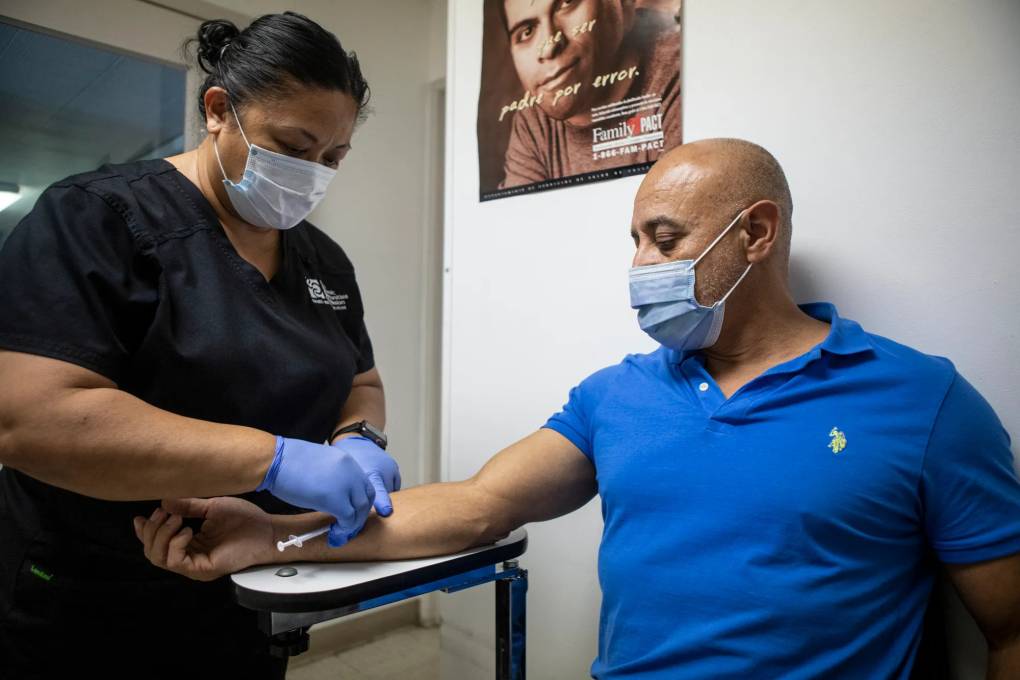
"caption": "Fresno resident Gonzalo Garcia receives the mpox vaccine on Aug. 24, 2022.",
"description": null,
"title": "082422_MonkeyPoxClinicFresno_LV__012-CM-1",
"credit": "Larry Valenzuela/CalMatters/CatchLight Local",
"status": "inherit",
"altTag": "a man in a blue shirt wearing a mask receives a vaccine shot from a nurse with black hair in a dark blue shirt",
"isLoading": false,
"fetchFailed": false
},
"news_11939762": {
"type": "attachments",
"id": "news_11939762",
"meta": {
"index": "attachments_1716263798",
"site": "news",
"id": "11939762",
"found": true
},
"parent": 11939759,
"imgSizes": {
"twentyfourteen-full-width": {
"file": "https://ww2.kqed.org/app/uploads/sites/10/2023/01/012623-EBT-Theft-CM-1038x576.jpg",
"width": 1038,
"mimeType": "image/jpeg",
"height": 576
},
"thumbnail": {
"file": "https://ww2.kqed.org/app/uploads/sites/10/2023/01/012623-EBT-Theft-CM-160x107.jpg",
"width": 160,
"mimeType": "image/jpeg",
"height": 107
},
"post-thumbnail": {
"file": "https://ww2.kqed.org/app/uploads/sites/10/2023/01/012623-EBT-Theft-CM-672x372.jpg",
"width": 672,
"mimeType": "image/jpeg",
"height": 372
},
"kqedFullSize": {
"file": "https://ww2.kqed.org/app/uploads/sites/10/2023/01/012623-EBT-Theft-CM.jpg",
"width": 2000,
"height": 1333
},
"large": {
"file": "https://ww2.kqed.org/app/uploads/sites/10/2023/01/012623-EBT-Theft-CM-1020x680.jpg",
"width": 1020,
"mimeType": "image/jpeg",
"height": 680
},
"1536x1536": {
"file": "https://ww2.kqed.org/app/uploads/sites/10/2023/01/012623-EBT-Theft-CM-1536x1024.jpg",
"width": 1536,
"mimeType": "image/jpeg",
"height": 1024
},
"full-width": {
"file": "https://ww2.kqed.org/app/uploads/sites/10/2023/01/012623-EBT-Theft-CM-1920x1280.jpg",
"width": 1920,
"mimeType": "image/jpeg",
"height": 1280
},
"medium": {
"file": "https://ww2.kqed.org/app/uploads/sites/10/2023/01/012623-EBT-Theft-CM-800x533.jpg",
"width": 800,
"mimeType": "image/jpeg",
"height": 533
}
},
"publishDate": 1675112418,
"modified": 1675121855,
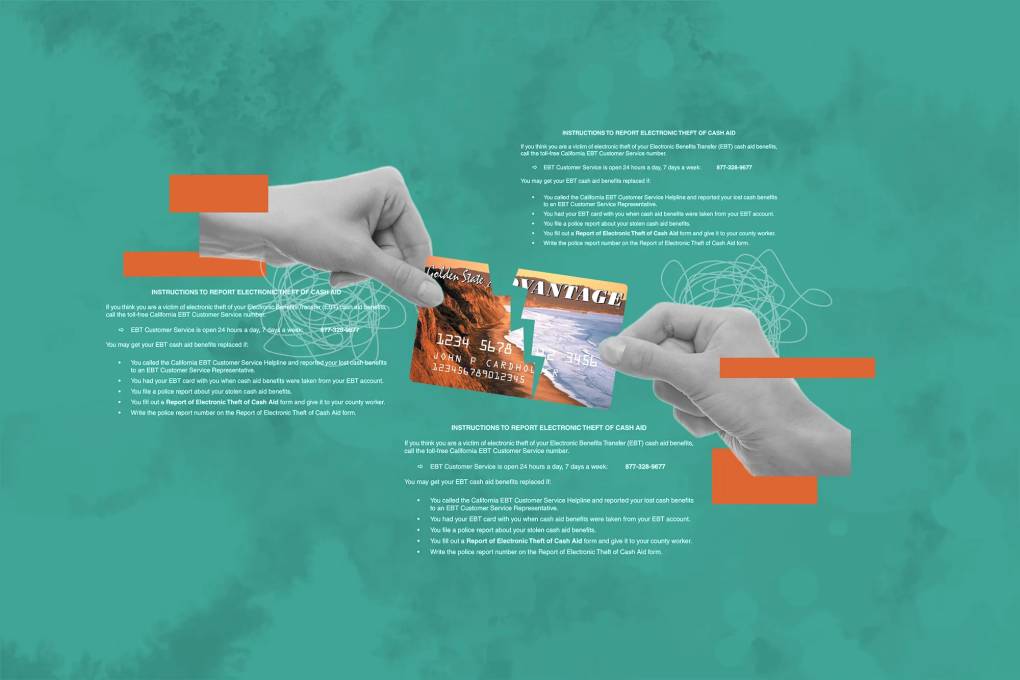
"caption": "Lower-income Californians reported $29.7 million in cash welfare and $4.7 million in food aid stolen in 14 months.",
"description": null,
"title": "012623-EBT-Theft-CM",
"credit": "Illustration by Miguel Gutierrez Jr./CalMatters, iStock",
"status": "inherit",
"altTag": "An illustration shows two hands tearing a debit card in half against a green background with instructions on how to prevent EBT theft",
"isLoading": false,
"fetchFailed": false
},
"news_11939403": {
"type": "attachments",
"id": "news_11939403",
"meta": {
"index": "attachments_1716263798",
"site": "news",
"id": "11939403",
"found": true
},
"parent": 11939340,
"imgSizes": {
"twentyfourteen-full-width": {
"file": "https://ww2.kqed.org/app/uploads/sites/10/2023/01/GettyImages-125328990-1038x576.jpg",
"width": 1038,
"mimeType": "image/jpeg",
"height": 576
},
"thumbnail": {
"file": "https://ww2.kqed.org/app/uploads/sites/10/2023/01/GettyImages-125328990-160x107.jpg",
"width": 160,
"mimeType": "image/jpeg",
"height": 107
},
"post-thumbnail": {
"file": "https://ww2.kqed.org/app/uploads/sites/10/2023/01/GettyImages-125328990-672x372.jpg",
"width": 672,
"mimeType": "image/jpeg",
"height": 372
},
"kqedFullSize": {
"file": "https://ww2.kqed.org/app/uploads/sites/10/2023/01/GettyImages-125328990.jpg",
"width": 2121,
"height": 1414
},
"2048x2048": {
"file": "https://ww2.kqed.org/app/uploads/sites/10/2023/01/GettyImages-125328990-2048x1365.jpg",
"width": 2048,
"mimeType": "image/jpeg",
"height": 1365
},
"large": {
"file": "https://ww2.kqed.org/app/uploads/sites/10/2023/01/GettyImages-125328990-1020x680.jpg",
"width": 1020,
"mimeType": "image/jpeg",
"height": 680
},
"1536x1536": {
"file": "https://ww2.kqed.org/app/uploads/sites/10/2023/01/GettyImages-125328990-1536x1024.jpg",
"width": 1536,
"mimeType": "image/jpeg",
"height": 1024
},
"full-width": {
"file": "https://ww2.kqed.org/app/uploads/sites/10/2023/01/GettyImages-125328990-1920x1280.jpg",
"width": 1920,
"mimeType": "image/jpeg",
"height": 1280
},
"medium": {
"file": "https://ww2.kqed.org/app/uploads/sites/10/2023/01/GettyImages-125328990-800x533.jpg",
"width": 800,
"mimeType": "image/jpeg",
"height": 533
}
},
"publishDate": 1674783361,
"modified": 1674783475,
"caption": null,
"description": null,
"title": "Officers standing with hands behind",
"credit": "Steve Skinner Photography/Getty Images",
"status": "inherit",
"altTag": "Two police officers with hands clasped behind back and guns in their holsters at their hips.",
"isLoading": false,
"fetchFailed": false
},
"news_11938907": {
"type": "attachments",
"id": "news_11938907",
"meta": {
"index": "attachments_1716263798",
"site": "news",
"id": "11938907",
"found": true
},
"parent": 11938865,
"imgSizes": {
"twentyfourteen-full-width": {
"file": "https://ww2.kqed.org/app/uploads/sites/10/2023/01/051122-St-Hope-Charter-School-MG-CM-19-1038x576.jpg",
"width": 1038,
"mimeType": "image/jpeg",
"height": 576
},
"thumbnail": {
"file": "https://ww2.kqed.org/app/uploads/sites/10/2023/01/051122-St-Hope-Charter-School-MG-CM-19-160x107.jpg",
"width": 160,
"mimeType": "image/jpeg",
"height": 107
},
"post-thumbnail": {
"file": "https://ww2.kqed.org/app/uploads/sites/10/2023/01/051122-St-Hope-Charter-School-MG-CM-19-672x372.jpg",
"width": 672,
"mimeType": "image/jpeg",
"height": 372
},
"kqedFullSize": {
"file": "https://ww2.kqed.org/app/uploads/sites/10/2023/01/051122-St-Hope-Charter-School-MG-CM-19.jpg",
"width": 2000,
"height": 1333
},
"large": {
"file": "https://ww2.kqed.org/app/uploads/sites/10/2023/01/051122-St-Hope-Charter-School-MG-CM-19-1020x680.jpg",
"width": 1020,
"mimeType": "image/jpeg",
"height": 680
},
"1536x1536": {
"file": "https://ww2.kqed.org/app/uploads/sites/10/2023/01/051122-St-Hope-Charter-School-MG-CM-19-1536x1024.jpg",
"width": 1536,
"mimeType": "image/jpeg",
"height": 1024
},
"full-width": {
"file": "https://ww2.kqed.org/app/uploads/sites/10/2023/01/051122-St-Hope-Charter-School-MG-CM-19-1920x1280.jpg",
"width": 1920,
"mimeType": "image/jpeg",
"height": 1280
},
"medium": {
"file": "https://ww2.kqed.org/app/uploads/sites/10/2023/01/051122-St-Hope-Charter-School-MG-CM-19-800x533.jpg",
"width": 800,
"mimeType": "image/jpeg",
"height": 533
}
},
"publishDate": 1674507467,
"modified": 1674518686,
"caption": "Students at a classroom at St. Hope's Public School 7 Elementary in Sacramento on May 11, 2022.",
"description": null,
"title": "051122-St-Hope-Charter-School-MG-CM-19",
"credit": "Miguel Gutierrez Jr./CalMatters",
"status": "inherit",
"altTag": "A downward-angled photo shows a school table with several students sitting around it, pencils in hand. The students are working on a worksheet about telling time.",
"isLoading": false,
"fetchFailed": false
},
"news_11938686": {
"type": "attachments",
"id": "news_11938686",
"meta": {
"index": "attachments_1716263798",
"site": "news",
"id": "11938686",
"found": true
},
"parent": 11938681,
"imgSizes": {
"twentyfourteen-full-width": {
"file": "https://ww2.kqed.org/app/uploads/sites/10/2023/01/010423-MaderCommnityHospital-LV_08-CM-copy-1038x576.jpg",
"width": 1038,
"mimeType": "image/jpeg",
"height": 576
},
"thumbnail": {
"file": "https://ww2.kqed.org/app/uploads/sites/10/2023/01/010423-MaderCommnityHospital-LV_08-CM-copy-160x107.jpg",
"width": 160,
"mimeType": "image/jpeg",
"height": 107
},
"post-thumbnail": {
"file": "https://ww2.kqed.org/app/uploads/sites/10/2023/01/010423-MaderCommnityHospital-LV_08-CM-copy-672x372.jpg",
"width": 672,
"mimeType": "image/jpeg",
"height": 372
},
"kqedFullSize": {
"file": "https://ww2.kqed.org/app/uploads/sites/10/2023/01/010423-MaderCommnityHospital-LV_08-CM-copy.jpg",
"width": 2000,
"height": 1333
},
"large": {
"file": "https://ww2.kqed.org/app/uploads/sites/10/2023/01/010423-MaderCommnityHospital-LV_08-CM-copy-1020x680.jpg",
"width": 1020,
"mimeType": "image/jpeg",
"height": 680
},
"1536x1536": {
"file": "https://ww2.kqed.org/app/uploads/sites/10/2023/01/010423-MaderCommnityHospital-LV_08-CM-copy-1536x1024.jpg",
"width": 1536,
"mimeType": "image/jpeg",
"height": 1024
},
"full-width": {
"file": "https://ww2.kqed.org/app/uploads/sites/10/2023/01/010423-MaderCommnityHospital-LV_08-CM-copy-1920x1280.jpg",
"width": 1920,
"mimeType": "image/jpeg",
"height": 1280
},
"medium": {
"file": "https://ww2.kqed.org/app/uploads/sites/10/2023/01/010423-MaderCommnityHospital-LV_08-CM-copy-800x533.jpg",
"width": 800,
"mimeType": "image/jpeg",
"height": 533
}
},
"publishDate": 1674242202,
"modified": 1674250948,
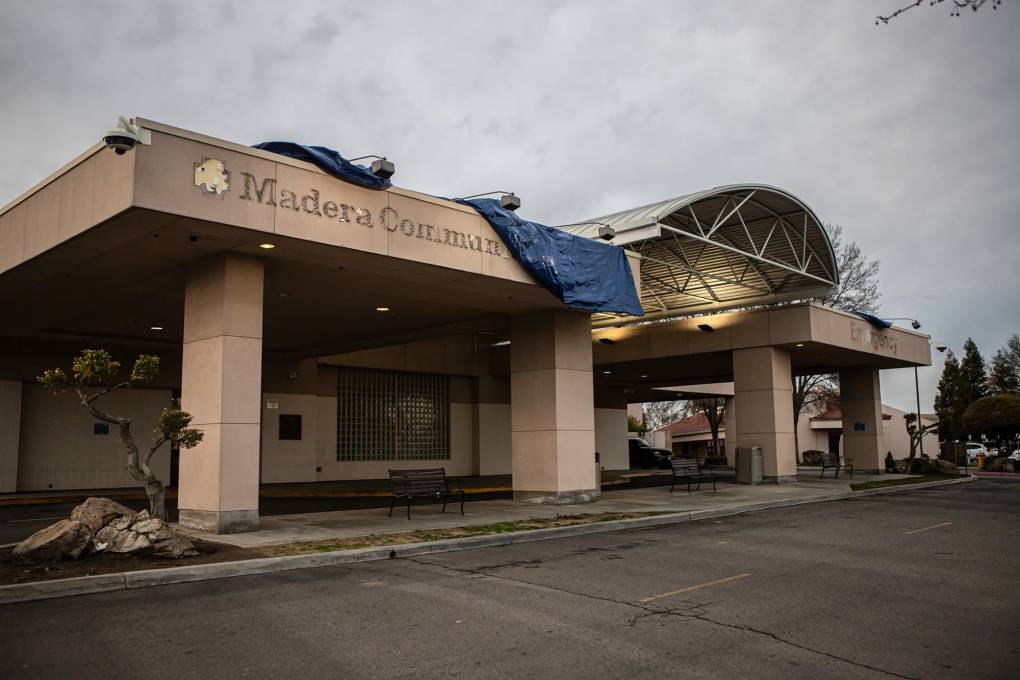
"caption": "Outlines of the Madera Community Hospital sign partially covered by a tarp at the emergency room entrance on Jan. 2, 2023. Madera County Sheriff Tyson Pogue announced a state of emergency for the county when the hospital shut its doors due to bankruptcy.",
"description": null,
"title": "010423-MaderCommnityHospital-LV_08-CM copy",
"credit": "Larry Valenzuela/CalMatters-CatchLight Local",
"status": "inherit",
"altTag": null,
"isLoading": false,
"fetchFailed": false
},
"news_11938183": {
"type": "attachments",
"id": "news_11938183",
"meta": {
"index": "attachments_1716263798",
"site": "news",
"id": "11938183",
"found": true
},
"parent": 11938180,
"imgSizes": {
"twentyfourteen-full-width": {
"file": "https://ww2.kqed.org/app/uploads/sites/10/2023/01/Screen-Shot-2023-01-15-at-2.06.52-PM-1038x576.png",
"width": 1038,
"mimeType": "image/png",
"height": 576
},
"thumbnail": {
"file": "https://ww2.kqed.org/app/uploads/sites/10/2023/01/Screen-Shot-2023-01-15-at-2.06.52-PM-160x105.png",
"width": 160,
"mimeType": "image/png",
"height": 105
},
"post-thumbnail": {
"file": "https://ww2.kqed.org/app/uploads/sites/10/2023/01/Screen-Shot-2023-01-15-at-2.06.52-PM-672x372.png",
"width": 672,
"mimeType": "image/png",
"height": 372
},
"kqedFullSize": {
"file": "https://ww2.kqed.org/app/uploads/sites/10/2023/01/Screen-Shot-2023-01-15-at-2.06.52-PM.png",
"width": 1546,
"height": 1010
},
"large": {
"file": "https://ww2.kqed.org/app/uploads/sites/10/2023/01/Screen-Shot-2023-01-15-at-2.06.52-PM-1020x666.png",
"width": 1020,
"mimeType": "image/png",
"height": 666
},
"1536x1536": {
"file": "https://ww2.kqed.org/app/uploads/sites/10/2023/01/Screen-Shot-2023-01-15-at-2.06.52-PM-1536x1003.png",
"width": 1536,
"mimeType": "image/png",
"height": 1003
},
"medium": {
"file": "https://ww2.kqed.org/app/uploads/sites/10/2023/01/Screen-Shot-2023-01-15-at-2.06.52-PM-800x523.png",
"width": 800,
"mimeType": "image/png",
"height": 523
}
},
"publishDate": 1673821292,
"modified": 1674067464,
"caption": null,
"description": null,
"title": "Screen Shot 2023-01-15 at 2.06.52 PM",
"credit": "Illustration by Miguel Gutierrez Jr./CalMatters/iStock",
"status": "inherit",
"altTag": "A collage image of two hands holding a credit card, gas pumps and part of a 1040 tax form.",
"isLoading": false,
"fetchFailed": false
},
"news_11937951": {
"type": "attachments",
"id": "news_11937951",
"meta": {
"index": "attachments_1716263798",
"site": "news",
"id": "11937951",
"found": true
},
"parent": 11937928,
"imgSizes": {
"twentyfourteen-full-width": {
"file": "https://ww2.kqed.org/app/uploads/sites/10/2023/01/121722-Jerold-Phelps-Community-Hospital-PC-CM-10-copy-1038x576.jpg",
"width": 1038,
"mimeType": "image/jpeg",
"height": 576
},
"thumbnail": {
"file": "https://ww2.kqed.org/app/uploads/sites/10/2023/01/121722-Jerold-Phelps-Community-Hospital-PC-CM-10-copy-160x107.jpg",
"width": 160,
"mimeType": "image/jpeg",
"height": 107
},
"post-thumbnail": {
"file": "https://ww2.kqed.org/app/uploads/sites/10/2023/01/121722-Jerold-Phelps-Community-Hospital-PC-CM-10-copy-672x372.jpg",
"width": 672,
"mimeType": "image/jpeg",
"height": 372
},
"kqedFullSize": {
"file": "https://ww2.kqed.org/app/uploads/sites/10/2023/01/121722-Jerold-Phelps-Community-Hospital-PC-CM-10-copy.jpg",
"width": 2000,
"height": 1333
},
"large": {
"file": "https://ww2.kqed.org/app/uploads/sites/10/2023/01/121722-Jerold-Phelps-Community-Hospital-PC-CM-10-copy-1020x680.jpg",
"width": 1020,
"mimeType": "image/jpeg",
"height": 680
},
"1536x1536": {
"file": "https://ww2.kqed.org/app/uploads/sites/10/2023/01/121722-Jerold-Phelps-Community-Hospital-PC-CM-10-copy-1536x1024.jpg",
"width": 1536,
"mimeType": "image/jpeg",
"height": 1024
},
"full-width": {
"file": "https://ww2.kqed.org/app/uploads/sites/10/2023/01/121722-Jerold-Phelps-Community-Hospital-PC-CM-10-copy-1920x1280.jpg",
"width": 1920,
"mimeType": "image/jpeg",
"height": 1280
},
"medium": {
"file": "https://ww2.kqed.org/app/uploads/sites/10/2023/01/121722-Jerold-Phelps-Community-Hospital-PC-CM-10-copy-800x533.jpg",
"width": 800,
"mimeType": "image/jpeg",
"height": 533
}
},
"publishDate": 1673567648,
"modified": 1674241512,
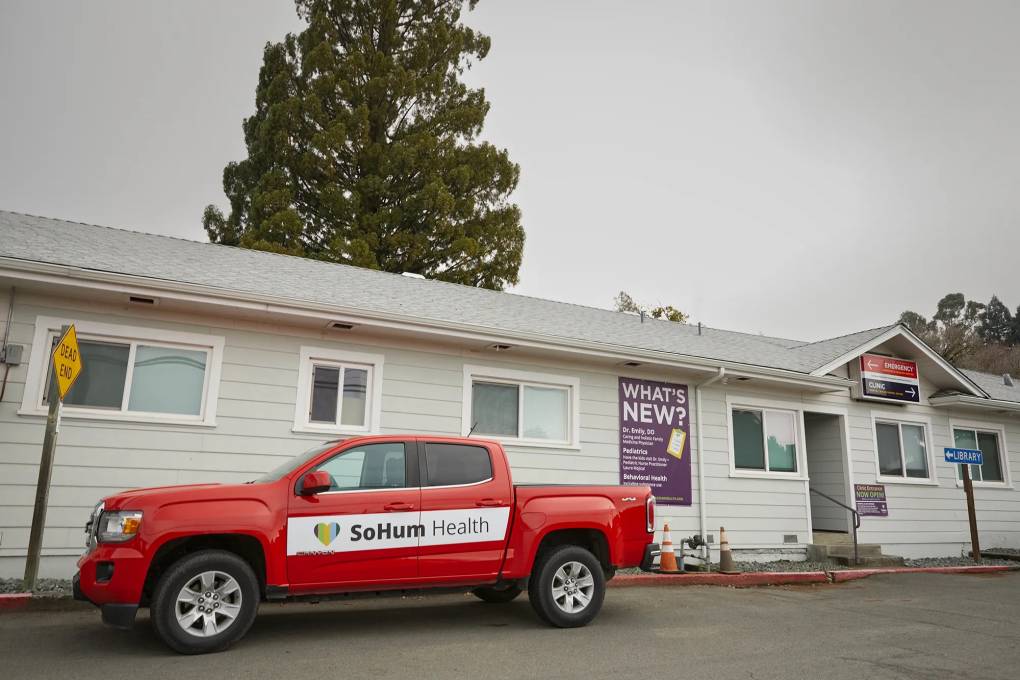
"caption": "The Jerold Phelps Community Hospital operated by Southern Humboldt Community Healthcare District, or SoHum, in Garberville on Dec. 17, 2022.",
"description": null,
"title": "121722-Jerold-Phelps-Community-Hospital-PC-CM-10 copy",
"credit": "Paul Collins/CalMatters",
"status": "inherit",
"altTag": "A red truck with \"SoHum Health\" written on the side is parked outside a one-story white hospital building.",
"isLoading": false,
"fetchFailed": false
},
"news_11937189": {
"type": "attachments",
"id": "news_11937189",
"meta": {
"index": "attachments_1716263798",
"site": "news",
"id": "11937189",
"found": true
},
"parent": 11937139,
"imgSizes": {
"twentyfourteen-full-width": {
"file": "https://ww2.kqed.org/app/uploads/sites/10/2023/01/RS39032_State-Assembly-qut-1038x576.jpg",
"width": 1038,
"mimeType": "image/jpeg",
"height": 576
},
"thumbnail": {
"file": "https://ww2.kqed.org/app/uploads/sites/10/2023/01/RS39032_State-Assembly-qut-160x107.jpg",
"width": 160,
"mimeType": "image/jpeg",
"height": 107
},
"post-thumbnail": {
"file": "https://ww2.kqed.org/app/uploads/sites/10/2023/01/RS39032_State-Assembly-qut-672x372.jpg",
"width": 672,
"mimeType": "image/jpeg",
"height": 372
},
"kqedFullSize": {
"file": "https://ww2.kqed.org/app/uploads/sites/10/2023/01/RS39032_State-Assembly-qut.jpg",
"width": 1920,
"height": 1280
},
"large": {
"file": "https://ww2.kqed.org/app/uploads/sites/10/2023/01/RS39032_State-Assembly-qut-1020x680.jpg",
"width": 1020,
"mimeType": "image/jpeg",
"height": 680
},
"1536x1536": {
"file": "https://ww2.kqed.org/app/uploads/sites/10/2023/01/RS39032_State-Assembly-qut-1536x1024.jpg",
"width": 1536,
"mimeType": "image/jpeg",
"height": 1024
},
"medium": {
"file": "https://ww2.kqed.org/app/uploads/sites/10/2023/01/RS39032_State-Assembly-qut-800x533.jpg",
"width": 800,
"mimeType": "image/jpeg",
"height": 533
}
},
"publishDate": 1673042279,
"modified": 1673042381,
"caption": "The California State Assembly on Aug. 15, 2019.",
"description": null,
"title": "RS39032_State Assembly-qut",
"credit": "Stephanie Lister/KQED",
"status": "inherit",
"altTag": "Empty Assembly desks with a small LGBTQ flag on one of the desks.",
"isLoading": false,
"fetchFailed": false
},
"news_11936632": {
"type": "attachments",
"id": "news_11936632",
"meta": {
"index": "attachments_1716263798",
"site": "news",
"id": "11936632",
"found": true
},
"parent": 11936552,
"imgSizes": {
"twentyfourteen-full-width": {
"file": "https://ww2.kqed.org/app/uploads/sites/10/2023/01/122622-Eli-Erlick-TH-01-CM-1038x576.jpg",
"width": 1038,
"mimeType": "image/jpeg",
"height": 576
},
"thumbnail": {
"file": "https://ww2.kqed.org/app/uploads/sites/10/2023/01/122622-Eli-Erlick-TH-01-CM-160x107.jpg",
"width": 160,
"mimeType": "image/jpeg",
"height": 107
},
"post-thumbnail": {
"file": "https://ww2.kqed.org/app/uploads/sites/10/2023/01/122622-Eli-Erlick-TH-01-CM-672x372.jpg",
"width": 672,
"mimeType": "image/jpeg",
"height": 372
},
"kqedFullSize": {
"file": "https://ww2.kqed.org/app/uploads/sites/10/2023/01/122622-Eli-Erlick-TH-01-CM.jpg",
"width": 2000,
"height": 1333
},
"large": {
"file": "https://ww2.kqed.org/app/uploads/sites/10/2023/01/122622-Eli-Erlick-TH-01-CM-1020x680.jpg",
"width": 1020,
"mimeType": "image/jpeg",
"height": 680
},
"1536x1536": {
"file": "https://ww2.kqed.org/app/uploads/sites/10/2023/01/122622-Eli-Erlick-TH-01-CM-1536x1024.jpg",
"width": 1536,
"mimeType": "image/jpeg",
"height": 1024
},
"full-width": {
"file": "https://ww2.kqed.org/app/uploads/sites/10/2023/01/122622-Eli-Erlick-TH-01-CM-1920x1280.jpg",
"width": 1920,
"mimeType": "image/jpeg",
"height": 1280
},
"medium": {
"file": "https://ww2.kqed.org/app/uploads/sites/10/2023/01/122622-Eli-Erlick-TH-01-CM-800x533.jpg",
"width": 800,
"mimeType": "image/jpeg",
"height": 533
}
},
"publishDate": 1672689988,
"modified": 1672770855,
"caption": "Eli Erlick, co-founder of Trans Student Educational Resources, in her parents' backyard in Sebastopol on Dec. 26, 2022.",
"description": null,
"title": "122622-Eli-Erlick-TH-01-CM",
"credit": "Talia Herman/CalMatters",
"status": "inherit",
"altTag": null,
"isLoading": false,
"fetchFailed": false
},
"news_11936492": {
"type": "attachments",
"id": "news_11936492",
"meta": {
"index": "attachments_1716263798",
"site": "news",
"id": "11936492",
"found": true
},
"parent": 11936486,
"imgSizes": {
"twentyfourteen-full-width": {
"file": "https://ww2.kqed.org/app/uploads/sites/10/2022/12/GettyImages-661611196-1024x576.jpg",
"width": 1024,
"mimeType": "image/jpeg",
"height": 576
},
"thumbnail": {
"file": "https://ww2.kqed.org/app/uploads/sites/10/2022/12/GettyImages-661611196-160x107.jpg",
"width": 160,
"mimeType": "image/jpeg",
"height": 107
},
"post-thumbnail": {
"file": "https://ww2.kqed.org/app/uploads/sites/10/2022/12/GettyImages-661611196-672x372.jpg",
"width": 672,
"mimeType": "image/jpeg",
"height": 372
},
"kqedFullSize": {
"file": "https://ww2.kqed.org/app/uploads/sites/10/2022/12/GettyImages-661611196.jpg",
"width": 1024,
"height": 683
},
"large": {
"file": "https://ww2.kqed.org/app/uploads/sites/10/2022/12/GettyImages-661611196-1020x680.jpg",
"width": 1020,
"mimeType": "image/jpeg",
"height": 680
},
"medium": {
"file": "https://ww2.kqed.org/app/uploads/sites/10/2022/12/GettyImages-661611196-800x534.jpg",
"width": 800,
"mimeType": "image/jpeg",
"height": 534
}
},
"publishDate": 1672421364,
"modified": 1672423650,
"caption": "A view of the Occidental College campus in Los Angeles from June 18, 2009. Some California colleges like Occidental are offering victims of sexual assault on campus the option of restorative rather than punitive justice.",
"description": null,
"title": "Occidental College is where Barack Obama attended from fall 1979 through spring 1981 before transferring to Columbia University.",
"credit": "Education Images/Citizens of the Planet/Universal Images Group via Getty Images",
"status": "inherit",
"altTag": "A white hacienda style building surrounded by prisine green lawns and paths on a college campus.",
"isLoading": false,
"fetchFailed": false
},
"news_11936471": {
"type": "attachments",
"id": "news_11936471",
"meta": {
"index": "attachments_1716263798",
"site": "news",
"id": "11936471",
"found": true
},
"parent": 11936453,
"imgSizes": {
"twentyfourteen-full-width": {
"file": "https://ww2.kqed.org/app/uploads/sites/10/2022/12/GettyImages-1245732182-1024x576.jpg",
"width": 1024,
"mimeType": "image/jpeg",
"height": 576
},
"thumbnail": {
"file": "https://ww2.kqed.org/app/uploads/sites/10/2022/12/GettyImages-1245732182-160x107.jpg",
"width": 160,
"mimeType": "image/jpeg",
"height": 107
},
"post-thumbnail": {
"file": "https://ww2.kqed.org/app/uploads/sites/10/2022/12/GettyImages-1245732182-672x372.jpg",
"width": 672,
"mimeType": "image/jpeg",
"height": 372
},
"kqedFullSize": {
"file": "https://ww2.kqed.org/app/uploads/sites/10/2022/12/GettyImages-1245732182.jpg",
"width": 1024,
"height": 683
},
"large": {
"file": "https://ww2.kqed.org/app/uploads/sites/10/2022/12/GettyImages-1245732182-1020x680.jpg",
"width": 1020,
"mimeType": "image/jpeg",
"height": 680
},
"medium": {
"file": "https://ww2.kqed.org/app/uploads/sites/10/2022/12/GettyImages-1245732182-800x534.jpg",
"width": 800,
"mimeType": "image/jpeg",
"height": 534
}
},
"publishDate": 1672344122,
"modified": 1672344273,
"caption": "View of a fence on the US-Mexico border at the San Ysidro crossing port seen from Tijuana, Baja California state, Mexico, on Dec. 19, 2022.",
"description": null,
"title": "MEXICO-US-MIGRATION-BORDER-TITLE 42",
"credit": "Guillermo Arias/AFP via Getty Images",
"status": "inherit",
"altTag": "A view of a border with a Mexican and US flag and high steel barriers.",
"isLoading": false,
"fetchFailed": false
},
"news_11936412": {
"type": "attachments",
"id": "news_11936412",
"meta": {
"index": "attachments_1716263798",
"site": "news",
"id": "11936412",
"found": true
},
"parent": 11936397,
"imgSizes": {
"twentyfourteen-full-width": {
"file": "https://ww2.kqed.org/app/uploads/sites/10/2022/12/GettyImages-1393065826-1038x576.jpg",
"width": 1038,
"mimeType": "image/jpeg",
"height": 576
},
"thumbnail": {
"file": "https://ww2.kqed.org/app/uploads/sites/10/2022/12/GettyImages-1393065826-160x107.jpg",
"width": 160,
"mimeType": "image/jpeg",
"height": 107
},
"post-thumbnail": {
"file": "https://ww2.kqed.org/app/uploads/sites/10/2022/12/GettyImages-1393065826-672x372.jpg",
"width": 672,
"mimeType": "image/jpeg",
"height": 372
},
"kqedFullSize": {
"file": "https://ww2.kqed.org/app/uploads/sites/10/2022/12/GettyImages-1393065826.jpg",
"width": 2121,
"height": 1414
},
"2048x2048": {
"file": "https://ww2.kqed.org/app/uploads/sites/10/2022/12/GettyImages-1393065826-2048x1365.jpg",
"width": 2048,
"mimeType": "image/jpeg",
"height": 1365
},
"large": {
"file": "https://ww2.kqed.org/app/uploads/sites/10/2022/12/GettyImages-1393065826-1020x680.jpg",
"width": 1020,
"mimeType": "image/jpeg",
"height": 680
},
"1536x1536": {
"file": "https://ww2.kqed.org/app/uploads/sites/10/2022/12/GettyImages-1393065826-1536x1024.jpg",
"width": 1536,
"mimeType": "image/jpeg",
"height": 1024
},
"full-width": {
"file": "https://ww2.kqed.org/app/uploads/sites/10/2022/12/GettyImages-1393065826-1920x1280.jpg",
"width": 1920,
"mimeType": "image/jpeg",
"height": 1280
},
"medium": {
"file": "https://ww2.kqed.org/app/uploads/sites/10/2022/12/GettyImages-1393065826-800x533.jpg",
"width": 800,
"mimeType": "image/jpeg",
"height": 533
}
},
"publishDate": 1672256119,
"modified": 1672256206,
"caption": null,
"description": null,
"title": "Equal Gender Salary. No Wage Gap",
"credit": "Andrey Popov/Getty Images",
"status": "inherit",
"altTag": "A woman's hands cup around two equal stacks of coins with a male figure on one stack and a female figure on the other.",
"isLoading": false,
"fetchFailed": false
}
},
"audioPlayerReducer": {
"postId": "stream_live",
"isPaused": true,
"isPlaying": false,
"pfsActive": false,
"pledgeModalIsOpen": true,
"playerDrawerIsOpen": false,
"liveAudioPlayStartedAt": 0,
"liveAudioPlayContext": ""
},
"authorsReducer": {
"byline_news_11939819": {
"type": "authors",
"id": "byline_news_11939819",
"meta": {
"override": true
},
"slug": "byline_news_11939819",
"name": "\u003ca href=\"https://calmatters.org/author/kristen-hwang/\">Kristen Hwang\u003c/a>",
"isLoading": false
},
"byline_news_11939759": {
"type": "authors",
"id": "byline_news_11939759",
"meta": {
"override": true
},
"slug": "byline_news_11939759",
"name": "\u003ca href=\"https://calmatters.org/author/jeanne-kuang/\">Jeanne Kuang\u003c/a> ",
"isLoading": false
},
"byline_news_11939340": {
"type": "authors",
"id": "byline_news_11939340",
"meta": {
"override": true
},
"slug": "byline_news_11939340",
"name": "\u003ca href=\"https://calmatters.org/author/nigelduara/\">Nigel Duara\u003c/a>",
"isLoading": false
},
"byline_news_11938865": {
"type": "authors",
"id": "byline_news_11938865",
"meta": {
"override": true
},
"slug": "byline_news_11938865",
"name": "\u003ca href=\"https://calmatters.org/author/joe-hong/\">Joe Hong\u003c/a>",
"isLoading": false
},
"byline_news_11938681": {
"type": "authors",
"id": "byline_news_11938681",
"meta": {
"override": true
},
"slug": "byline_news_11938681",
"name": "\u003ca href=\"https://calmatters.org/author/anaibarra/\">Ana B. Ibarra\u003c/a> and \u003ca href=\"https://calmatters.org/author/nicole-foy/\">Nicole Foy\u003c/a>",
"isLoading": false
},
"byline_news_11938180": {
"type": "authors",
"id": "byline_news_11938180",
"meta": {
"override": true
},
"slug": "byline_news_11938180",
"name": "Grace Gedye",
"isLoading": false
},
"byline_news_11937928": {
"type": "authors",
"id": "byline_news_11937928",
"meta": {
"override": true
},
"slug": "byline_news_11937928",
"name": "\u003ca href=\"https://calmatters.org/author/anaibarra/\">Ana B. Ibarra\u003c/a>",
"isLoading": false
},
"byline_news_11937139": {
"type": "authors",
"id": "byline_news_11937139",
"meta": {
"override": true
},
"slug": "byline_news_11937139",
"name": "\u003ca href=\"https://calmatters.org/author/johnod1cm/\">John Osborne D'Agostino\u003c/a>, \u003ca href=\"https://calmatters.org/author/sameea-kamal/\">Sameea Kamal\u003c/a>, \u003ca href=\"https://calmatters.org/author/ariel-gans/\">Ariel Gans\u003c/a>",
"isLoading": false
},
"byline_news_11936552": {
"type": "authors",
"id": "byline_news_11936552",
"meta": {
"override": true
},
"slug": "byline_news_11936552",
"name": "\u003ca href=\"https://calmatters.org/author/zaeem-shaikh/\">Zaeem Shaikh\u003c/a>",
"isLoading": false
},
"byline_news_11936486": {
"type": "authors",
"id": "byline_news_11936486",
"meta": {
"override": true
},
"slug": "byline_news_11936486",
"name": "\u003ca href=\"https://calmatters.org/author/oden-taylor/\">Oden Taylor\u003c/a> and \u003ca href=\"https://calmatters.org/author/feliciacalmatters-org/\">Felicia Mello\u003c/a>",
"isLoading": false
},
"byline_news_11936453": {
"type": "authors",
"id": "byline_news_11936453",
"meta": {
"override": true
},
"slug": "byline_news_11936453",
"name": "\u003ca href=\"https://calmatters.org/author/wendy-fry/\">Wendy Fry\u003c/a>",
"isLoading": false
},
"byline_news_11936397": {
"type": "authors",
"id": "byline_news_11936397",
"meta": {
"override": true
},
"slug": "byline_news_11936397",
"name": "\u003ca href=\"https://calmatters.org/author/grace-gedye/\">Grace Gedye\u003c/a>",
"isLoading": false
}
},
"pagesReducer": {
"news_affiliate_calmatters": {
"type": "terms",
"id": "news_18481",
"meta": {
"index": "terms_1716263798",
"site": "news",
"id": "18481",
"score": 15.355904
},
"featImg": null,
"name": "CALmatters",
"description": null,
"taxonomy": "affiliate",
"headData": {
"twImgId": null,
"twTitle": null,
"ogTitle": null,
"ogImgId": null,
"twDescription": null,
"description": null,
"title": "CALmatters Archives | KQED Arts",
"ogDescription": null
},
"ttid": 18515,
"slug": "calmatters",
"isLoading": false,
"title": "CALmatters",
"pageMeta": {
"site": "news",
"WpPageTemplate": "page-topic-editorial",
"currentPage": 51
},
"blocks": [
{
"blockName": "kqed/post-list",
"attrs": {
"layout": "cardArticle2",
"query": "posts/news?affiliate=calmatters",
"seeMore": false,
"paginated": true,
"page": 51
}
},
{
"blockName": "kqed/ad"
}
]
}
},
"pfsSessionReducer": {},
"postsReducer": {
"stream_live": {
"type": "live",
"id": "stream_live",
"audioUrl": "https://streams.kqed.org/kqedradio",
"title": "Live Stream",
"excerpt": "Live Stream information currently unavailable.",
"link": "/radio",
"featImg": "",
"label": {
"name": "KQED Live",
"link": "/"
}
},
"stream_kqedNewscast": {
"type": "posts",
"id": "stream_kqedNewscast",
"audioUrl": "https://www.kqed.org/.stream/anon/radio/RDnews/newscast.mp3?_=1",
"title": "KQED Newscast",
"featImg": "",
"label": {
"name": "88.5 FM",
"link": "/"
}
},
"news_11939819": {
"type": "posts",
"id": "news_11939819",
"meta": {
"index": "posts_1716263798",
"site": "news",
"id": "11939819",
"score": null,
"sort": [
1675200181000
]
},
"parent": 0,
"labelTerm": {
"site": "news",
"term": 18481
},
"blocks": [],
"publishDate": 1675200181,
"format": "standard",
"title": "When Mpox Hit, Community Clinics Stepped In. Why Hasn't the Government Paid Them Back Yet?",
"headTitle": "CALmatters | KQED News",
"content": "\u003cp>Seven months ago, California battled its second widespread infectious disease outbreak in as many years — \u003ca href=\"https://www.who.int/news/item/28-11-2022-who-recommends-new-name-for-monkeypox-disease#:~:text=Following%20a%20series%20of%20consultations,%E2%80%9Cmonkeypox%E2%80%9D%20is%20phased%20out.\">mpox, formerly referred to as monkeypox\u003c/a>. Cases spread exponentially, primarily among the state’s male LGBTQ population, and officials \u003ca href=\"https://calmatters.org/health/2022/08/california-monkeypox-2/\">struggled to roll out limited vaccine supplies\u003c/a> from the federal government.\u003c/p>\n\u003cp>Community clinics and LGBTQ health centers opened mass mpox vaccination sites as quickly as possible and clamored for assistance from local and legislative leaders, but oftentimes \u003ca href=\"https://calmatters.org/health/2022/08/california-monkeypox/\">red tape at both the federal and state levels\u003c/a> hampered a speedy response.\u003c/p>\n\u003cp>[aside label=\"Related Stories\" postID=\"news_11920455,news_11926465,news_11921709\"]Today, as the federal government ends its mpox state of emergency, those clinics say bureaucracy is once again standing in the way. State and federal reimbursement for services — potentially in the millions of dollars — has not been approved and likely won’t be for months.\u003c/p>\n\u003cp>“I’m not clear what the holdup is,” said Craig Pulsipher, former associate director of government affairs at APLA Health, a clinic in Los Angeles specializing in LGBTQ populations. APLA Health administered more than 4,000 vaccines and was one of the largest vaccinators in the city. It received an \u003ca href=\"https://www.cdph.ca.gov/Programs/CID/DOA/CDPH%20Document%20Library/MPX-CBO-Grant-RFA-Awardees_ADA.pdf\">$83,000 grant for mpox work (PDF)\u003c/a> from the state Office of AIDS, but dedicated “hundreds of thousands of dollars” to vaccination and shifted funding from other programs to the response effort.\u003c/p>\n\u003cp>The Legislature released \u003ca href=\"https://www.sfchronicle.com/politics/article/California-will-pour-money-into-fight-against-17405442.php\">$41 million in emergency funding\u003c/a> for mpox response efforts last year, half of which has stayed with the state Department of Public Health. Approximately $1.4 million went to community organizations helping directly with vaccine efforts, but organizations say it’s not nearly enough to cover their costs.\u003c/p>\n\u003cp>Although the vaccine itself was given to states free-of-charge from the federal stockpile, community organizations dispensing the shots still had to invest staff time, equipment and other resources to respond. Typically, shots and other minor procedures are billed as part of a “provider visit,” but that requires being seen by a doctor, which doesn’t happen during the kind of mass vaccine drives that became commonplace for COVID-19 and mpox.\u003c/p>\n\u003cp>Instead, the state must \u003ca href=\"https://www.dhcs.ca.gov/formsandpubs/laws/Documents/SPA-22-0062-Pending.pdf\">petition the federal government (PDF)\u003c/a> to use Medi-Cal dollars for standalone vaccine reimbursement to try to recoup some of the labor expenses. Medi-Cal is the state’s insurance program for patients with lower incomes, and it’s funded through state and federal dollars.[pullquote align=\"right\" size=\"medium\" citation=\"Dr. Ward Carpenter, chief health officer, Los Angeles LGBT Center\"]'The virus isn't gone. It's not surging right now, but it's not gone, so we're at risk of a resurgence.'[/pullquote]“This was everything we did for probably three months,” said Dr. Ward Carpenter, chief health officer with the Los Angeles LGBT Center. “We were barely able to keep our urgent care visits open for non-mpox related things. ... It was at least as busy as the early days of COVID if not more so.”\u003c/p>\n\u003cp>The LGBT Center doled out more than 6,500 vaccines, Carpenter said, and has more than $500,000 in outstanding expenses. It received an $116,000 mpox grant from the AIDS office in November.\u003c/p>\n\u003cp>In September, California’s Department of Health Care Services submitted a federal \u003ca href=\"https://www.dhcs.ca.gov/formsandpubs/laws/Documents/SPA-22-0062-Pending.pdf\">request for reimbursement (PDF)\u003c/a>. Shortly after, members of California’s Congressional delegation, led by Democratic Rep. Jimmy Gomez of Los Angeles, \u003ca href=\"https://gomez.house.gov/news/documentsingle.aspx?DocumentID=2698\">sent a letter\u003c/a> to the U.S. Health and Human Services branch urging timely approval of the request. Community clinics, which often serve as safety nets for underrepresented patients and those with lower incomes, have little financial wiggle room and already had to \u003ca href=\"https://calmatters.org/health/coronavirus/2022/03/california-covid-vaccines-community-clinics-payment/\">wait two years for COVID-19 payment\u003c/a>.\u003c/p>\n\u003cp>“Your rapid and urgent attention to these requests will help to ensure that critical providers and community clinics in our districts are able to continue their vital work,” the letter read.\u003c/p>\n\u003cp>Pulsipher said in November that Gomez’s office asked APLA Health if additional pressure on federal partners would be helpful, but the organization turned him down at the time because state officials were confident the approval was coming soon.\u003c/p>\n\u003cp>“What we heard from [the state Department of Health Care Services] was they were moving forward and that pressure wouldn’t be needed,” Pulsipher said. “It has yet to be approved.”\u003c/p>\n\u003cfigure id=\"attachment_11921529\" class=\"wp-caption aligncenter\" style=\"max-width: 800px\">\u003ca href=\"https://ww2.kqed.org/app/uploads/sites/10/2022/08/RS57502_007_KQED_MonkeypoxVaccineLineSFGen_08012022-qut.jpg\">\u003cimg decoding=\"async\" loading=\"lazy\" class=\"size-medium wp-image-11921529\" src=\"https://ww2.kqed.org/app/uploads/sites/10/2022/08/RS57502_007_KQED_MonkeypoxVaccineLineSFGen_08012022-qut-800x533.jpg\" alt=\"People lined up to get the monkeypox vaccine.\" width=\"800\" height=\"533\" srcset=\"https://ww2.kqed.org/app/uploads/sites/10/2022/08/RS57502_007_KQED_MonkeypoxVaccineLineSFGen_08012022-qut-800x533.jpg 800w, https://ww2.kqed.org/app/uploads/sites/10/2022/08/RS57502_007_KQED_MonkeypoxVaccineLineSFGen_08012022-qut-1020x680.jpg 1020w, https://ww2.kqed.org/app/uploads/sites/10/2022/08/RS57502_007_KQED_MonkeypoxVaccineLineSFGen_08012022-qut-160x107.jpg 160w, https://ww2.kqed.org/app/uploads/sites/10/2022/08/RS57502_007_KQED_MonkeypoxVaccineLineSFGen_08012022-qut-1536x1024.jpg 1536w, https://ww2.kqed.org/app/uploads/sites/10/2022/08/RS57502_007_KQED_MonkeypoxVaccineLineSFGen_08012022-qut.jpg 1920w\" sizes=\"(max-width: 800px) 100vw, 800px\">\u003c/a>\u003cfigcaption class=\"wp-caption-text\">Hundreds of people wait in a walk-in line for an mpox vaccine at Zuckerberg San Francisco General Hospital on Monday, Aug. 1, 2022. \u003ccite>(Beth LaBerge/KQED)\u003c/cite>\u003c/figcaption>\u003c/figure>\n\u003cp>The department told CalMatters in a statement that the federal government must approve California’s plan to use Medi-Cal dollars for mpox reimbursement. The federal government sent the state comments and revisions to the plan in December with a 90-day review window, which potentially pushes the timeline for clinics to receive checks past March. Although clinics will eventually be able to ask for payment for services they provided as far back as August, when mpox was at its height, the more time that goes by, the less likely overburdened staff will be able to bill retroactively, Pulsipher said.\u003c/p>\n\u003cp>“It is extremely time-intensive to go back and submit those claims,” he said. “Some clinics will do that and some probably won’t.”\u003c/p>\n\u003ch2>Mpox outbreak today\u003c/h2>\n\u003cp>California reported its \u003ca href=\"https://calmatters.org/health/2022/05/monkeypox-california/\">first mpox case in Sacramento last May\u003c/a>. What began as an isolated travel-related infection quickly ballooned into a statewide outbreak, which \u003ca href=\"https://www.cdph.ca.gov/Programs/CID/DCDC/Pages/Mpox-Data.aspx\">peaked in August at 145 cases in one day\u003c/a>, according to state data. More than 5,700 cases have been reported in California, the most of any state, including the \u003ca href=\"https://www.google.com/search?q=california+monkeypox+deaths&ei=SUTUY5rpG7OfkPIPnZuy4Ao&ved=0ahUKEwjasef32uj8AhWzD0QIHZ2NDKwQ4dUDCBA&uact=5&oq=california+monkeypox+deaths&gs_lcp=Cgxnd3Mtd2l6LXNlcnAQAzIGCAAQFhAeMgYIABAWEB4yBQgAEIYDMgUIABCGAzIFCAAQhgM6CggAEEcQ1gQQsAM6DQgAEEcQ1gQQyQMQsANKBAhBGABKBAhGGABQpAFYpAFg2ANoAXABeACAAWeIAWeSAQMwLjGYAQCgAQHIAQjAAQE&sclient=gws-wiz-serp\">country’s first death\u003c/a>.\u003c/p>\n\u003cp>“It would be hard to kind of overstate how frantic and frenetic and all-consuming it was at that point versus now,” Carpenter said.\u003c/p>\n\u003cp>In stark contrast, there were two cases reported on Jan. 10, the most recent date data was available.\u003c/p>\n\u003cp>Although state officials have not set an end date for California’s state of emergency, the Department of Public Health plans to roll routine surveillance and response duties into its Sexually Transmitted Disease Control Branch and Office of AIDS, according to an unsigned email from its media department.\u003c/p>\n\u003cp>“As cases decline, the outbreak comes under control, and the public health components for a robust response are fully operational, there should be no impact to providers, [local health jurisdictions], or patients of ending the state of emergency,” the email said.\u003c/p>\n\u003cp>[ad fullwidth]\u003c/p>\n\u003cp>But the end of the emergency does not mean “the end of disease,” Carpenter said. Plenty of LA's LGBT Center patients are vaccinated during routine doctor’s visits, often having been unaware of the outbreak and the need for protection.\u003c/p>\n\u003cp>“The virus isn’t gone. It’s not surging right now, but it’s not gone, so we’re at risk of a resurgence,” Carpenter said.\u003c/p>\n\u003cp>Pulsipher, with APLA Health, said his organization is still working hard to educate and vaccinate Black and Latino patients, who often face the greatest health care barriers — even though the expense for that work will likely never be reimbursed.\u003c/p>\n\u003cp>“It’s important to remain vigilant,” he said, “to continue outreach and education, continue to reach folks that aren’t vaccinated and to recognize the inequities around vaccine uptake.”\u003c/p>\n\u003cp>Black and Latino Californians account for \u003ca href=\"https://www.cdph.ca.gov/Programs/CID/DCDC/Pages/Mpox-Data.aspx\">58% of all mpox cases but only 33% of all vaccinations\u003c/a>, according to state data.\u003c/p>\n\u003cp>“What has become so clear between COVID and mpox is that one person’s poor access to health care affects all of us,” Carpenter said. “That’s, again, why we are not putting these vaccines down and going back to business as usual. Even within our own community we know that we still have a lot more work to do.”\u003c/p>\n\u003cp>[ad floatright]\u003c/p>\n",
"stats": {
"hasVideo": false,
"hasChartOrMap": false,
"hasAudio": false,
"hasPolis": false,
"wordCount": 1333,
"hasGoogleForm": false,
"hasGallery": false,
"hasHearkenModule": false,
"iframeSrcs": [],
"paragraphCount": 27
},
"modified": 1675200181,
"excerpt": "Cash-strapped LGBTQ health centers provided thousands of mpox vaccines under a state of emergency, but as cases wane, the promised reimbursements have been mired in red tape.",
"headData": {
"twImgId": "",
"twTitle": "",
"ogTitle": "",
"ogImgId": "",
"twDescription": "",
"description": "Cash-strapped LGBTQ health centers provided thousands of mpox vaccines under a state of emergency, but as cases wane, the promised reimbursements have been mired in red tape.",
"title": "When Mpox Hit, Community Clinics Stepped In. Why Hasn't the Government Paid Them Back Yet? | KQED",
"ogDescription": "",
"schema": {
"@context": "https://schema.org",
"@type": "NewsArticle",
"headline": "When Mpox Hit, Community Clinics Stepped In. Why Hasn't the Government Paid Them Back Yet?",
"datePublished": "2023-01-31T13:23:01-08:00",
"dateModified": "2023-01-31T13:23:01-08:00",
"image": "https://cdn.kqed.org/wp-content/uploads/2020/02/KQED-OG-Image@1x.png",
"isAccessibleForFree": "True",
"publisher": {
"@type": "NewsMediaOrganization",
"@id": "https://www.kqed.org/#organization",
"name": "KQED",
"logo": "https://cdn.kqed.org/wp-content/uploads/2020/02/KQED-OG-Image@1x.png",
"url": "https://www.kqed.org",
"sameAs": [
"https://www.facebook.com/KQED",
"https://twitter.com/KQED",
"https://www.instagram.com/kqed/",
"https://www.tiktok.com/@kqedofficial",
"https://www.linkedin.com/company/kqed",
"https://www.youtube.com/channel/UCeC0IOo7i1P_61zVUWbJ4nw"
]
}
}
},
"guestAuthors": [],
"slug": "when-mpox-hit-community-clinics-stepped-in-why-hasnt-the-government-paid-them-back-yet",
"status": "publish",
"nprByline": "\u003ca href=\"https://calmatters.org/author/kristen-hwang/\">Kristen Hwang\u003c/a>",
"excludeFromSiteSearch": "Include",
"showOnAuthorArchivePages": "No",
"articleAge": "0",
"path": "/news/11939819/when-mpox-hit-community-clinics-stepped-in-why-hasnt-the-government-paid-them-back-yet",
"audioTrackLength": null,
"parsedContent": [
{
"type": "contentString",
"content": "\u003cdiv class=\"post-body\">\u003cp>\u003cp>Seven months ago, California battled its second widespread infectious disease outbreak in as many years — \u003ca href=\"https://www.who.int/news/item/28-11-2022-who-recommends-new-name-for-monkeypox-disease#:~:text=Following%20a%20series%20of%20consultations,%E2%80%9Cmonkeypox%E2%80%9D%20is%20phased%20out.\">mpox, formerly referred to as monkeypox\u003c/a>. Cases spread exponentially, primarily among the state’s male LGBTQ population, and officials \u003ca href=\"https://calmatters.org/health/2022/08/california-monkeypox-2/\">struggled to roll out limited vaccine supplies\u003c/a> from the federal government.\u003c/p>\n\u003cp>Community clinics and LGBTQ health centers opened mass mpox vaccination sites as quickly as possible and clamored for assistance from local and legislative leaders, but oftentimes \u003ca href=\"https://calmatters.org/health/2022/08/california-monkeypox/\">red tape at both the federal and state levels\u003c/a> hampered a speedy response.\u003c/p>\n\u003cp>\u003c/p>\u003c/div>",
"attributes": {
"named": {},
"numeric": []
}
},
{
"type": "component",
"content": "",
"name": "aside",
"attributes": {
"named": {
"label": "Related Stories ",
"postid": "news_11920455,news_11926465,news_11921709"
},
"numeric": []
}
},
{
"type": "contentString",
"content": "\u003cdiv class=\"post-body\">\u003cp>Today, as the federal government ends its mpox state of emergency, those clinics say bureaucracy is once again standing in the way. State and federal reimbursement for services — potentially in the millions of dollars — has not been approved and likely won’t be for months.\u003c/p>\n\u003cp>“I’m not clear what the holdup is,” said Craig Pulsipher, former associate director of government affairs at APLA Health, a clinic in Los Angeles specializing in LGBTQ populations. APLA Health administered more than 4,000 vaccines and was one of the largest vaccinators in the city. It received an \u003ca href=\"https://www.cdph.ca.gov/Programs/CID/DOA/CDPH%20Document%20Library/MPX-CBO-Grant-RFA-Awardees_ADA.pdf\">$83,000 grant for mpox work (PDF)\u003c/a> from the state Office of AIDS, but dedicated “hundreds of thousands of dollars” to vaccination and shifted funding from other programs to the response effort.\u003c/p>\n\u003cp>The Legislature released \u003ca href=\"https://www.sfchronicle.com/politics/article/California-will-pour-money-into-fight-against-17405442.php\">$41 million in emergency funding\u003c/a> for mpox response efforts last year, half of which has stayed with the state Department of Public Health. Approximately $1.4 million went to community organizations helping directly with vaccine efforts, but organizations say it’s not nearly enough to cover their costs.\u003c/p>\n\u003cp>Although the vaccine itself was given to states free-of-charge from the federal stockpile, community organizations dispensing the shots still had to invest staff time, equipment and other resources to respond. Typically, shots and other minor procedures are billed as part of a “provider visit,” but that requires being seen by a doctor, which doesn’t happen during the kind of mass vaccine drives that became commonplace for COVID-19 and mpox.\u003c/p>\n\u003cp>Instead, the state must \u003ca href=\"https://www.dhcs.ca.gov/formsandpubs/laws/Documents/SPA-22-0062-Pending.pdf\">petition the federal government (PDF)\u003c/a> to use Medi-Cal dollars for standalone vaccine reimbursement to try to recoup some of the labor expenses. Medi-Cal is the state’s insurance program for patients with lower incomes, and it’s funded through state and federal dollars.\u003c/p>\u003c/div>",
"attributes": {
"named": {},
"numeric": []
}
},
{
"type": "component",
"content": "'The virus isn't gone. It's not surging right now, but it's not gone, so we're at risk of a resurgence.'",
"name": "pullquote",
"attributes": {
"named": {
"align": "right",
"size": "medium",
"citation": "Dr. Ward Carpenter, chief health officer, Los Angeles LGBT Center",
"label": ""
},
"numeric": []
}
},
{
"type": "contentString",
"content": "\u003cdiv class=\"post-body\">\u003cp>“This was everything we did for probably three months,” said Dr. Ward Carpenter, chief health officer with the Los Angeles LGBT Center. “We were barely able to keep our urgent care visits open for non-mpox related things. ... It was at least as busy as the early days of COVID if not more so.”\u003c/p>\n\u003cp>The LGBT Center doled out more than 6,500 vaccines, Carpenter said, and has more than $500,000 in outstanding expenses. It received an $116,000 mpox grant from the AIDS office in November.\u003c/p>\n\u003cp>In September, California’s Department of Health Care Services submitted a federal \u003ca href=\"https://www.dhcs.ca.gov/formsandpubs/laws/Documents/SPA-22-0062-Pending.pdf\">request for reimbursement (PDF)\u003c/a>. Shortly after, members of California’s Congressional delegation, led by Democratic Rep. Jimmy Gomez of Los Angeles, \u003ca href=\"https://gomez.house.gov/news/documentsingle.aspx?DocumentID=2698\">sent a letter\u003c/a> to the U.S. Health and Human Services branch urging timely approval of the request. Community clinics, which often serve as safety nets for underrepresented patients and those with lower incomes, have little financial wiggle room and already had to \u003ca href=\"https://calmatters.org/health/coronavirus/2022/03/california-covid-vaccines-community-clinics-payment/\">wait two years for COVID-19 payment\u003c/a>.\u003c/p>\n\u003cp>“Your rapid and urgent attention to these requests will help to ensure that critical providers and community clinics in our districts are able to continue their vital work,” the letter read.\u003c/p>\n\u003cp>Pulsipher said in November that Gomez’s office asked APLA Health if additional pressure on federal partners would be helpful, but the organization turned him down at the time because state officials were confident the approval was coming soon.\u003c/p>\n\u003cp>“What we heard from [the state Department of Health Care Services] was they were moving forward and that pressure wouldn’t be needed,” Pulsipher said. “It has yet to be approved.”\u003c/p>\n\u003cfigure id=\"attachment_11921529\" class=\"wp-caption aligncenter\" style=\"max-width: 800px\">\u003ca href=\"https://ww2.kqed.org/app/uploads/sites/10/2022/08/RS57502_007_KQED_MonkeypoxVaccineLineSFGen_08012022-qut.jpg\">\u003cimg decoding=\"async\" loading=\"lazy\" class=\"size-medium wp-image-11921529\" src=\"https://ww2.kqed.org/app/uploads/sites/10/2022/08/RS57502_007_KQED_MonkeypoxVaccineLineSFGen_08012022-qut-800x533.jpg\" alt=\"People lined up to get the monkeypox vaccine.\" width=\"800\" height=\"533\" srcset=\"https://ww2.kqed.org/app/uploads/sites/10/2022/08/RS57502_007_KQED_MonkeypoxVaccineLineSFGen_08012022-qut-800x533.jpg 800w, https://ww2.kqed.org/app/uploads/sites/10/2022/08/RS57502_007_KQED_MonkeypoxVaccineLineSFGen_08012022-qut-1020x680.jpg 1020w, https://ww2.kqed.org/app/uploads/sites/10/2022/08/RS57502_007_KQED_MonkeypoxVaccineLineSFGen_08012022-qut-160x107.jpg 160w, https://ww2.kqed.org/app/uploads/sites/10/2022/08/RS57502_007_KQED_MonkeypoxVaccineLineSFGen_08012022-qut-1536x1024.jpg 1536w, https://ww2.kqed.org/app/uploads/sites/10/2022/08/RS57502_007_KQED_MonkeypoxVaccineLineSFGen_08012022-qut.jpg 1920w\" sizes=\"(max-width: 800px) 100vw, 800px\">\u003c/a>\u003cfigcaption class=\"wp-caption-text\">Hundreds of people wait in a walk-in line for an mpox vaccine at Zuckerberg San Francisco General Hospital on Monday, Aug. 1, 2022. \u003ccite>(Beth LaBerge/KQED)\u003c/cite>\u003c/figcaption>\u003c/figure>\n\u003cp>The department told CalMatters in a statement that the federal government must approve California’s plan to use Medi-Cal dollars for mpox reimbursement. The federal government sent the state comments and revisions to the plan in December with a 90-day review window, which potentially pushes the timeline for clinics to receive checks past March. Although clinics will eventually be able to ask for payment for services they provided as far back as August, when mpox was at its height, the more time that goes by, the less likely overburdened staff will be able to bill retroactively, Pulsipher said.\u003c/p>\n\u003cp>“It is extremely time-intensive to go back and submit those claims,” he said. “Some clinics will do that and some probably won’t.”\u003c/p>\n\u003ch2>Mpox outbreak today\u003c/h2>\n\u003cp>California reported its \u003ca href=\"https://calmatters.org/health/2022/05/monkeypox-california/\">first mpox case in Sacramento last May\u003c/a>. What began as an isolated travel-related infection quickly ballooned into a statewide outbreak, which \u003ca href=\"https://www.cdph.ca.gov/Programs/CID/DCDC/Pages/Mpox-Data.aspx\">peaked in August at 145 cases in one day\u003c/a>, according to state data. More than 5,700 cases have been reported in California, the most of any state, including the \u003ca href=\"https://www.google.com/search?q=california+monkeypox+deaths&ei=SUTUY5rpG7OfkPIPnZuy4Ao&ved=0ahUKEwjasef32uj8AhWzD0QIHZ2NDKwQ4dUDCBA&uact=5&oq=california+monkeypox+deaths&gs_lcp=Cgxnd3Mtd2l6LXNlcnAQAzIGCAAQFhAeMgYIABAWEB4yBQgAEIYDMgUIABCGAzIFCAAQhgM6CggAEEcQ1gQQsAM6DQgAEEcQ1gQQyQMQsANKBAhBGABKBAhGGABQpAFYpAFg2ANoAXABeACAAWeIAWeSAQMwLjGYAQCgAQHIAQjAAQE&sclient=gws-wiz-serp\">country’s first death\u003c/a>.\u003c/p>\n\u003cp>“It would be hard to kind of overstate how frantic and frenetic and all-consuming it was at that point versus now,” Carpenter said.\u003c/p>\n\u003cp>In stark contrast, there were two cases reported on Jan. 10, the most recent date data was available.\u003c/p>\n\u003cp>Although state officials have not set an end date for California’s state of emergency, the Department of Public Health plans to roll routine surveillance and response duties into its Sexually Transmitted Disease Control Branch and Office of AIDS, according to an unsigned email from its media department.\u003c/p>\n\u003cp>“As cases decline, the outbreak comes under control, and the public health components for a robust response are fully operational, there should be no impact to providers, [local health jurisdictions], or patients of ending the state of emergency,” the email said.\u003c/p>\n\u003cp>\u003c/p>\u003c/div>",
"attributes": {
"named": {},
"numeric": []
}
},
{
"type": "component",
"content": "",
"name": "ad",
"attributes": {
"named": {
"label": "fullwidth"
},
"numeric": [
"fullwidth"
]
}
},
{
"type": "contentString",
"content": "\u003cdiv class=\"post-body\">\u003cp>\u003c/p>\n\u003cp>But the end of the emergency does not mean “the end of disease,” Carpenter said. Plenty of LA's LGBT Center patients are vaccinated during routine doctor’s visits, often having been unaware of the outbreak and the need for protection.\u003c/p>\n\u003cp>“The virus isn’t gone. It’s not surging right now, but it’s not gone, so we’re at risk of a resurgence,” Carpenter said.\u003c/p>\n\u003cp>Pulsipher, with APLA Health, said his organization is still working hard to educate and vaccinate Black and Latino patients, who often face the greatest health care barriers — even though the expense for that work will likely never be reimbursed.\u003c/p>\n\u003cp>“It’s important to remain vigilant,” he said, “to continue outreach and education, continue to reach folks that aren’t vaccinated and to recognize the inequities around vaccine uptake.”\u003c/p>\n\u003cp>Black and Latino Californians account for \u003ca href=\"https://www.cdph.ca.gov/Programs/CID/DCDC/Pages/Mpox-Data.aspx\">58% of all mpox cases but only 33% of all vaccinations\u003c/a>, according to state data.\u003c/p>\n\u003cp>“What has become so clear between COVID and mpox is that one person’s poor access to health care affects all of us,” Carpenter said. “That’s, again, why we are not putting these vaccines down and going back to business as usual. Even within our own community we know that we still have a lot more work to do.”\u003c/p>\n\u003cp>\u003c/p>\u003c/div>",
"attributes": {
"named": {},
"numeric": []
}
},
{
"type": "component",
"content": "",
"name": "ad",
"attributes": {
"named": {
"label": "floatright"
},
"numeric": [
"floatright"
]
}
},
{
"type": "contentString",
"content": "\u003cdiv class=\"post-body\">\u003cp>\u003c/p>\n\u003c/div>\u003c/p>",
"attributes": {
"named": {},
"numeric": []
}
}
],
"link": "/news/11939819/when-mpox-hit-community-clinics-stepped-in-why-hasnt-the-government-paid-them-back-yet",
"authors": [
"byline_news_11939819"
],
"categories": [
"news_31795",
"news_457",
"news_8"
],
"tags": [
"news_1153",
"news_20003",
"news_32353",
"news_981"
],
"affiliates": [
"news_18481"
],
"featImg": "news_11939831",
"label": "news_18481"
},
"news_11939759": {
"type": "posts",
"id": "news_11939759",
"meta": {
"index": "posts_1716263798",
"site": "news",
"id": "11939759",
"score": null,
"sort": [
1675122363000
]
},
"guestAuthors": [],
"slug": "thieves-target-ebt-cards-causing-families-stress-and-costing-taxpayers-millions",
"title": "Thieves Target EBT Cards, Causing Families Stress and Costing Taxpayers Millions",
"publishDate": 1675122363,
"format": "standard",
"headTitle": "Thieves Target EBT Cards, Causing Families Stress and Costing Taxpayers Millions | KQED",
"labelTerm": {
"term": 18481,
"site": "news"
},
"content": "\u003cp>The first time it happened to Courtney Abrams, hardly anyone believed her.\u003c/p>\n\u003cp>Someone had drained the more than $700 in cash aid and nearly $200 in food stamps from the electronic benefits transfer (EBT) card the 33-year-old single mother received from the state, just minutes after those monthly payments appeared in her account.\u003c/p>\n\u003cp>Abrams never got to spend a dime of it, though she hadn’t lost her card.\u003c/p>\n\u003cp>Abrams, a West Los Angeles College student, called the card company’s customer service line that day to dispute the mystery transactions. She got a replacement card from the county and filed a police report. It took a couple of weeks for money to be loaded onto her new card. She also changed the PIN.[aside label=\"Related Stories\" postID=\"news_11885417,news_11934613\"]\u003c/p>\n\u003cp>That was last March. In September it happened again. This time it took a month to get her money back, she said.\u003c/p>\n\u003cp>In November it happened again. Now she changes her PIN every month, the night before she gets her benefits, hoping to outsmart the thieves.\u003c/p>\n\u003cp>“I was, like, maxing out credit cards, doing promise-to-pay, talking to my landlord, letting him know my money got stolen,” she said. “It was a lot of exposure … having to plead your case with these people in a situation that sounds kind of far-fetched.”\u003c/p>\n\u003cp>It’s not so far-fetched now: State and county officials say that \u003ca href=\"https://www.fns.usda.gov/snap/scam-alerts\">a rash of thefts is wiping out the cash and food benefits from thousands of lower-income families’ electronic benefits cards\u003c/a> in California and nationwide.\u003c/p>\n\u003ch2>Millions gone\u003c/h2>\n\u003cp>The thefts, which cost the state tens of millions of dollars to replace each year, have sent recipients scrambling to pay bills and household expenses, and flooding social services departments with reimbursement requests. The state proposes to upgrade the cards’ security features at a cost of $50 million in next year’s budget.\u003c/p>\n\u003cp>California uses EBT cards to deliver financial assistance for several programs, including CalFresh, which gives food aid to 2.8 million families a year, and CalWORKs, which gives cash to more than 300,000 families a year. Smaller programs include assistance grants to refugees and immigrant crime victims.\u003c/p>\n\u003cp>Lower-income Californians reported $29.7 million in cash welfare stolen and $4.7 million in food aid stolen in the 14 months from July 2021 through last September, the latest month for which statewide data was available, according to the Department of Social Services.\u003c/p>\n\u003cp>For CalWORKs, the theft amounted to less than $100,000 a month in mid-2021 and then rose to more than $4 million a month by last fall. The department is estimating an average of $6 million a month will be stolen this fiscal year, rising to $8 million a month in the year that begins in July, according to the California Department of Social Services budget documents.\u003c/p>\n\u003cp>What has been stolen in California so far amounts to a sliver of the total benefits California issued to all recipients — less than 1% of the cash benefits and less than a tenth of 1% of food aid.\u003c/p>\n\u003cp>Still, the amount of EBT theft has nearly doubled since 2019, budget documents state.\u003c/p>\n\u003ch2>Minutes to lose\u003c/h2>\n\u003cp>It’s not clear what prompted a nationwide spike in benefits theft last year. The consequences are particularly acute in California, which provides more generous cash grants than many other states. Advocates say pandemic-era boosts in food aid also meant bigger losses than usual from recipients’ accounts.\u003c/p>\n\u003cp>Often the theft occurs minutes after the benefits are transferred to their cards.\u003c/p>\n\u003cfigure id=\"attachment_11939767\" class=\"wp-caption aligncenter\" style=\"max-width: 800px\">\u003ca href=\"https://ww2.kqed.org/app/uploads/sites/10/2023/01/GettyImages-1322106041-scaled.jpg\">\u003cimg loading=\"lazy\" decoding=\"async\" class=\"size-medium wp-image-11939767\" src=\"https://ww2.kqed.org/app/uploads/sites/10/2023/01/GettyImages-1322106041-800x533.jpg\" alt=\"two hands hold a plastic card that reads 'golden state advantage'\" width=\"800\" height=\"533\" srcset=\"https://cdn.kqed.org/wp-content/uploads/sites/10/2023/01/GettyImages-1322106041-800x533.jpg 800w, https://cdn.kqed.org/wp-content/uploads/sites/10/2023/01/GettyImages-1322106041-1020x680.jpg 1020w, https://cdn.kqed.org/wp-content/uploads/sites/10/2023/01/GettyImages-1322106041-160x107.jpg 160w, https://cdn.kqed.org/wp-content/uploads/sites/10/2023/01/GettyImages-1322106041-1536x1024.jpg 1536w, https://cdn.kqed.org/wp-content/uploads/sites/10/2023/01/GettyImages-1322106041-2048x1365.jpg 2048w, https://cdn.kqed.org/wp-content/uploads/sites/10/2023/01/GettyImages-1322106041-1920x1280.jpg 1920w\" sizes=\"(max-width: 800px) 100vw, 800px\">\u003c/a>\u003cfigcaption class=\"wp-caption-text\">Berkeley resident Esteban Vasquez holds his Golden State Advantage electronic benefits transfer (EBT) card. A lack of security features has made it easy for thieves to target EBT cards for theft. \u003ccite>(Lea Suzuki/The San Francisco Chronicle via Getty Images)\u003c/cite>\u003c/figcaption>\u003c/figure>\n\u003cp>It takes much longer to be made whole. Several recipients told CalMatters it took weeks, or even more than a month, to get benefits reimbursed amid the rising theft.\u003c/p>\n\u003cp>The state social services department in 2013 instructed counties to replenish money to victims within 10 days of a theft report, but exceptions meant to catch fraud can slow that process.\u003c/p>\n\u003cp>For example, if an aid recipient reports more than one theft within six months, social workers must flag their next claim for investigation.\u003c/p>\n\u003cp>Many recipients say they have been victims of theft more than once in recent months. Giovanna Roman, a Ventura County mother and community college student, said it happened to her three months in a row last year. She now receives her benefits through direct deposit, she said.\u003c/p>\n\u003ch2>A vulnerability\u003c/h2>\n\u003cp>One reason safety-net benefits are vulnerable to electronic theft, advocates say, is that the cards have long lacked a security feature banks began putting on their credit and debit cards in late 2015: security chips.\u003c/p>\n\u003cp>A chipped card doesn’t come in contact with hidden, illegal “skimming” devices, which are designed to copy information from the card’s strip.\u003c/p>\n\u003cp>To make purchases or withdraw money, EBT card users must swipe the cards’ magnetic strips.\u003c/p>\n\u003cp>\u003ca href=\"https://youtu.be/opg52FxKoSo\">A state public service video\u003c/a> demonstrates how thieves can install skimming devices onto card readers to steal card numbers from the cards’ magnetic strips, and the thieves use hidden cameras to capture the cardholders entering their PINs.\u003c/p>\n\u003cp>The thieves can then \u003ca href=\"https://www.youtube.com/watch?v=p8hk1VmYYuQ\">create counterfeit cards\u003c/a> to access the funds.\u003c/p>\n\u003cp>[pullquote align=\"right\" size=\"medium\" citation=\"Lena Silver, associate director, Neighborhood Legal Services of Los Angeles County\"]‘I feel that the EBT system was like the last place where things are so unsafe and so poor in terms of consumer protection.’[/pullquote]Until last June, the state’s EBT cards didn’t even include the three-digit “CVV” security codes typically on the back of credit and debit cards that banks use for an additional layer of fraud prevention.\u003c/p>\n\u003cp>The state added those codes, but the three months of data afterward show that benefits theft continued to rise, according to state figures.\u003c/p>\n\u003cp>The state social services department is proposing to spend $76.5 million over the next three years to upgrade EBT cards with “enhanced security features,” according to Gov. Gavin Newsom’s budget proposal. Department spokesperson Jason Montiel did not answer a question about whether that means chip cards specifically.\u003c/p>\n\u003cp>In a recent motion, the Los Angeles County Board of Supervisors are joining advocates in urging the state to go that route.\u003c/p>\n\u003ch2>Consumer standards\u003c/h2>\n\u003cp>“To improve the security of the EBT system itself, so that people who rely on this very minimal food and cash assistance to survive, to bring their EBT system up to the same consumer standards that everyone else enjoys [are] the ultimate goalposts that we all need to be reaching for,” said Lena Silver, associate director at Neighborhood Legal Services of Los Angeles County, which has been flooded with calls from clients whose benefits were stolen.\u003c/p>\n\u003cp>Silver pointed out that, in contrast to cards sent to lower-income Californians receiving assistance, the state intended to send chipped cards to the recipients of its tax refunds to relieve inflation and high gas prices last year.\u003c/p>\n\u003cp>“I feel that the EBT system was like the last place where things are so unsafe and so poor in terms of consumer protection,” Silver said.\u003c/p>\n\u003cp>The recently issued \u003ca href=\"https://www.ftb.ca.gov/about-ftb/newsroom/middle-class-tax-refund/index.html\">middle class tax refund\u003c/a> cards were issued by a different department, the Franchise Tax Board. Spokesperson Andrew LePage said the agency chose its debit card vendor, Money Network, partly because it could provide some chipped cards.\u003c/p>\n\u003cp>Since October the board has sent out 9.4 million debit cards, though many of those were issued without chips due to supply chain shortages. The agency has received reports of fraud and theft of those benefits, too, but it won’t say how much or how many cards lacked chips.\u003c/p>\n\u003cp>LePage said the vendor reports that the fraud rate is “well below” 1% of the money issued.\u003c/p>\n\u003ch2>Taxpayers pay\u003c/h2>\n\u003cp>While most of the benefits on EBT cards come from federal funds, California taxpayers foot the bill to reimburse victims of theft. California has reimbursed CalWORKs recipients for stolen funds for years, and in November 2021 the state became the first to do the same for CalFresh food aid recipients, after advocates sued the state.\u003c/p>\n\u003cp>In December, Congress approved a spending bill allowing states to use federal funds to reimburse victims of food stamp theft that happened after Oct. 1, 2022.\u003c/p>\n\u003cp>Meanwhile, California is blocking suspicious EBT transactions, including those made from out of state, state officials told advocates in December.\u003c/p>\n\u003cp>[ad fullwidth]\u003c/p>\n\u003cp>The social services department also is helping counties process reimbursement claims more quickly, and “multiple investigations are ongoing,” Montiel said.\u003c/p>\n\u003cp>In September, Los Angeles prosecutors announced they charged 16 people in an alleged EBT fraud ring after they were caught with 300 cloned EBT cards, amounting to $400,000 in stolen benefits.\u003c/p>\n\u003cp>Contra Costa County prosecutors in December charged two men with burglary and theft after they were arrested with 50 fraudulent cards and card-skimming equipment.\u003c/p>\n\u003ch2>Clearing hurdles\u003c/h2>\n\u003cp>The state also plans to reduce the number of hurdles theft victims must clear to make a claim and get their benefits replaced. Cash welfare recipients previously had to dispute transactions with the card company and file a police report before filling out a theft claim form with the county welfare department, which advocates said was burdensome for some clients.\u003c/p>\n\u003cp>The social services department in late January issued \u003ca href=\"https://cdss.ca.gov/Portals/9/Additional-Resources/Letters-and-Notices/ACLs/2023/23-13.pdf?ver=2023-01-27-165817-090\">a new policy removing requirements to call the card company and file a police report (PDF)\u003c/a>, adding that card theft victims are “strongly encouraged” to report the theft to police and prosecutors.\u003c/p>\n\u003cp>Abrams said she would feel more secure if the cards were chipped. Beyond all that, she wants to get her money back with less scrutiny. The numerous calls and rounds of paperwork she had to file made her feel like she was being accused of fraud, she said.\u003c/p>\n\u003cp>“If my bank card gets stolen and someone uses it, I don’t feel like a criminal, calling and saying, ‘Hey, my bank card was stolen, can you turn it off and reimburse me?’” she said. “They have protection against that thing specifically. It happens all the time.”\u003c/p>\n\u003cp>[ad floatright]\u003c/p>\n",
"blocks": [],
"excerpt": "The cards the state uses to deliver financial assistance to residents through programs like CalFresh and CalWORKs lack basic security features — and it costs millions to replace stolen money and food stamps.",
"status": "publish",
"parent": 0,
"modified": 1721157661,
"stats": {
"hasAudio": false,
"hasVideo": false,
"hasChartOrMap": false,
"iframeSrcs": [],
"hasGoogleForm": false,
"hasGallery": false,
"hasHearkenModule": false,
"hasPolis": false,
"paragraphCount": 47,
"wordCount": 1742
},
"headData": {
"title": "Thieves Target EBT Cards, Causing Families Stress and Costing Taxpayers Millions | KQED",
"description": "The cards the state uses to deliver financial assistance to residents through programs like CalFresh and CalWORKs lack basic security features — and it costs millions to replace stolen money and food stamps.",
"ogTitle": "",
"ogDescription": "",
"ogImgId": "",
"twTitle": "",
"twDescription": "",
"twImgId": "",
"schema": {
"@context": "https://schema.org",
"@type": "NewsArticle",
"headline": "Thieves Target EBT Cards, Causing Families Stress and Costing Taxpayers Millions",
"datePublished": "2023-01-30T15:46:03-08:00",
"dateModified": "2024-07-16T12:21:01-07:00",
"image": "https://cdn.kqed.org/wp-content/uploads/2020/02/KQED-OG-Image@1x.png",
"isAccessibleForFree": "True",
"publisher": {
"@type": "NewsMediaOrganization",
"@id": "https://www.kqed.org/#organization",
"name": "KQED",
"logo": "https://cdn.kqed.org/wp-content/uploads/2020/02/KQED-OG-Image@1x.png",
"url": "https://www.kqed.org",
"sameAs": [
"https://www.facebook.com/KQED",
"https://twitter.com/KQED",
"https://www.instagram.com/kqed/",
"https://www.tiktok.com/@kqedofficial",
"https://www.linkedin.com/company/kqed",
"https://www.youtube.com/channel/UCeC0IOo7i1P_61zVUWbJ4nw"
]
}
}
},
"sticky": false,
"nprByline": "\u003ca href=\"https://calmatters.org/author/jeanne-kuang/\">Jeanne Kuang\u003c/a> ",
"excludeFromSiteSearch": "Include",
"showOnAuthorArchivePages": "No",
"articleAge": "0",
"path": "/news/11939759/thieves-target-ebt-cards-causing-families-stress-and-costing-taxpayers-millions",
"audioTrackLength": null,
"parsedContent": [
{
"type": "contentString",
"content": "\u003cdiv class=\"post-body\">\u003cp>\u003cp>The first time it happened to Courtney Abrams, hardly anyone believed her.\u003c/p>\n\u003cp>Someone had drained the more than $700 in cash aid and nearly $200 in food stamps from the electronic benefits transfer (EBT) card the 33-year-old single mother received from the state, just minutes after those monthly payments appeared in her account.\u003c/p>\n\u003cp>Abrams never got to spend a dime of it, though she hadn’t lost her card.\u003c/p>\n\u003cp>Abrams, a West Los Angeles College student, called the card company’s customer service line that day to dispute the mystery transactions. She got a replacement card from the county and filed a police report. It took a couple of weeks for money to be loaded onto her new card. She also changed the PIN.\u003c/p>\u003c/div>",
"attributes": {
"named": {},
"numeric": []
}
},
{
"type": "component",
"content": "",
"name": "aside",
"attributes": {
"named": {
"label": "Related Stories ",
"postid": "news_11885417,news_11934613"
},
"numeric": []
}
},
{
"type": "contentString",
"content": "\u003cdiv class=\"post-body\">\u003cp>\u003c/p>\n\u003cp>That was last March. In September it happened again. This time it took a month to get her money back, she said.\u003c/p>\n\u003cp>In November it happened again. Now she changes her PIN every month, the night before she gets her benefits, hoping to outsmart the thieves.\u003c/p>\n\u003cp>“I was, like, maxing out credit cards, doing promise-to-pay, talking to my landlord, letting him know my money got stolen,” she said. “It was a lot of exposure … having to plead your case with these people in a situation that sounds kind of far-fetched.”\u003c/p>\n\u003cp>It’s not so far-fetched now: State and county officials say that \u003ca href=\"https://www.fns.usda.gov/snap/scam-alerts\">a rash of thefts is wiping out the cash and food benefits from thousands of lower-income families’ electronic benefits cards\u003c/a> in California and nationwide.\u003c/p>\n\u003ch2>Millions gone\u003c/h2>\n\u003cp>The thefts, which cost the state tens of millions of dollars to replace each year, have sent recipients scrambling to pay bills and household expenses, and flooding social services departments with reimbursement requests. The state proposes to upgrade the cards’ security features at a cost of $50 million in next year’s budget.\u003c/p>\n\u003cp>California uses EBT cards to deliver financial assistance for several programs, including CalFresh, which gives food aid to 2.8 million families a year, and CalWORKs, which gives cash to more than 300,000 families a year. Smaller programs include assistance grants to refugees and immigrant crime victims.\u003c/p>\n\u003cp>Lower-income Californians reported $29.7 million in cash welfare stolen and $4.7 million in food aid stolen in the 14 months from July 2021 through last September, the latest month for which statewide data was available, according to the Department of Social Services.\u003c/p>\n\u003cp>For CalWORKs, the theft amounted to less than $100,000 a month in mid-2021 and then rose to more than $4 million a month by last fall. The department is estimating an average of $6 million a month will be stolen this fiscal year, rising to $8 million a month in the year that begins in July, according to the California Department of Social Services budget documents.\u003c/p>\n\u003cp>What has been stolen in California so far amounts to a sliver of the total benefits California issued to all recipients — less than 1% of the cash benefits and less than a tenth of 1% of food aid.\u003c/p>\n\u003cp>Still, the amount of EBT theft has nearly doubled since 2019, budget documents state.\u003c/p>\n\u003ch2>Minutes to lose\u003c/h2>\n\u003cp>It’s not clear what prompted a nationwide spike in benefits theft last year. The consequences are particularly acute in California, which provides more generous cash grants than many other states. Advocates say pandemic-era boosts in food aid also meant bigger losses than usual from recipients’ accounts.\u003c/p>\n\u003cp>Often the theft occurs minutes after the benefits are transferred to their cards.\u003c/p>\n\u003cfigure id=\"attachment_11939767\" class=\"wp-caption aligncenter\" style=\"max-width: 800px\">\u003ca href=\"https://ww2.kqed.org/app/uploads/sites/10/2023/01/GettyImages-1322106041-scaled.jpg\">\u003cimg loading=\"lazy\" decoding=\"async\" class=\"size-medium wp-image-11939767\" src=\"https://ww2.kqed.org/app/uploads/sites/10/2023/01/GettyImages-1322106041-800x533.jpg\" alt=\"two hands hold a plastic card that reads 'golden state advantage'\" width=\"800\" height=\"533\" srcset=\"https://cdn.kqed.org/wp-content/uploads/sites/10/2023/01/GettyImages-1322106041-800x533.jpg 800w, https://cdn.kqed.org/wp-content/uploads/sites/10/2023/01/GettyImages-1322106041-1020x680.jpg 1020w, https://cdn.kqed.org/wp-content/uploads/sites/10/2023/01/GettyImages-1322106041-160x107.jpg 160w, https://cdn.kqed.org/wp-content/uploads/sites/10/2023/01/GettyImages-1322106041-1536x1024.jpg 1536w, https://cdn.kqed.org/wp-content/uploads/sites/10/2023/01/GettyImages-1322106041-2048x1365.jpg 2048w, https://cdn.kqed.org/wp-content/uploads/sites/10/2023/01/GettyImages-1322106041-1920x1280.jpg 1920w\" sizes=\"(max-width: 800px) 100vw, 800px\">\u003c/a>\u003cfigcaption class=\"wp-caption-text\">Berkeley resident Esteban Vasquez holds his Golden State Advantage electronic benefits transfer (EBT) card. A lack of security features has made it easy for thieves to target EBT cards for theft. \u003ccite>(Lea Suzuki/The San Francisco Chronicle via Getty Images)\u003c/cite>\u003c/figcaption>\u003c/figure>\n\u003cp>It takes much longer to be made whole. Several recipients told CalMatters it took weeks, or even more than a month, to get benefits reimbursed amid the rising theft.\u003c/p>\n\u003cp>The state social services department in 2013 instructed counties to replenish money to victims within 10 days of a theft report, but exceptions meant to catch fraud can slow that process.\u003c/p>\n\u003cp>For example, if an aid recipient reports more than one theft within six months, social workers must flag their next claim for investigation.\u003c/p>\n\u003cp>Many recipients say they have been victims of theft more than once in recent months. Giovanna Roman, a Ventura County mother and community college student, said it happened to her three months in a row last year. She now receives her benefits through direct deposit, she said.\u003c/p>\n\u003ch2>A vulnerability\u003c/h2>\n\u003cp>One reason safety-net benefits are vulnerable to electronic theft, advocates say, is that the cards have long lacked a security feature banks began putting on their credit and debit cards in late 2015: security chips.\u003c/p>\n\u003cp>A chipped card doesn’t come in contact with hidden, illegal “skimming” devices, which are designed to copy information from the card’s strip.\u003c/p>\n\u003cp>To make purchases or withdraw money, EBT card users must swipe the cards’ magnetic strips.\u003c/p>\n\u003cp>\u003ca href=\"https://youtu.be/opg52FxKoSo\">A state public service video\u003c/a> demonstrates how thieves can install skimming devices onto card readers to steal card numbers from the cards’ magnetic strips, and the thieves use hidden cameras to capture the cardholders entering their PINs.\u003c/p>\n\u003cp>The thieves can then \u003ca href=\"https://www.youtube.com/watch?v=p8hk1VmYYuQ\">create counterfeit cards\u003c/a> to access the funds.\u003c/p>\n\u003cp>\u003c/p>\u003c/div>",
"attributes": {
"named": {},
"numeric": []
}
},
{
"type": "component",
"content": "‘I feel that the EBT system was like the last place where things are so unsafe and so poor in terms of consumer protection.’",
"name": "pullquote",
"attributes": {
"named": {
"align": "right",
"size": "medium",
"citation": "Lena Silver, associate director, Neighborhood Legal Services of Los Angeles County",
"label": ""
},
"numeric": []
}
},
{
"type": "contentString",
"content": "\u003cdiv class=\"post-body\">\u003cp>Until last June, the state’s EBT cards didn’t even include the three-digit “CVV” security codes typically on the back of credit and debit cards that banks use for an additional layer of fraud prevention.\u003c/p>\n\u003cp>The state added those codes, but the three months of data afterward show that benefits theft continued to rise, according to state figures.\u003c/p>\n\u003cp>The state social services department is proposing to spend $76.5 million over the next three years to upgrade EBT cards with “enhanced security features,” according to Gov. Gavin Newsom’s budget proposal. Department spokesperson Jason Montiel did not answer a question about whether that means chip cards specifically.\u003c/p>\n\u003cp>In a recent motion, the Los Angeles County Board of Supervisors are joining advocates in urging the state to go that route.\u003c/p>\n\u003ch2>Consumer standards\u003c/h2>\n\u003cp>“To improve the security of the EBT system itself, so that people who rely on this very minimal food and cash assistance to survive, to bring their EBT system up to the same consumer standards that everyone else enjoys [are] the ultimate goalposts that we all need to be reaching for,” said Lena Silver, associate director at Neighborhood Legal Services of Los Angeles County, which has been flooded with calls from clients whose benefits were stolen.\u003c/p>\n\u003cp>Silver pointed out that, in contrast to cards sent to lower-income Californians receiving assistance, the state intended to send chipped cards to the recipients of its tax refunds to relieve inflation and high gas prices last year.\u003c/p>\n\u003cp>“I feel that the EBT system was like the last place where things are so unsafe and so poor in terms of consumer protection,” Silver said.\u003c/p>\n\u003cp>The recently issued \u003ca href=\"https://www.ftb.ca.gov/about-ftb/newsroom/middle-class-tax-refund/index.html\">middle class tax refund\u003c/a> cards were issued by a different department, the Franchise Tax Board. Spokesperson Andrew LePage said the agency chose its debit card vendor, Money Network, partly because it could provide some chipped cards.\u003c/p>\n\u003cp>Since October the board has sent out 9.4 million debit cards, though many of those were issued without chips due to supply chain shortages. The agency has received reports of fraud and theft of those benefits, too, but it won’t say how much or how many cards lacked chips.\u003c/p>\n\u003cp>LePage said the vendor reports that the fraud rate is “well below” 1% of the money issued.\u003c/p>\n\u003ch2>Taxpayers pay\u003c/h2>\n\u003cp>While most of the benefits on EBT cards come from federal funds, California taxpayers foot the bill to reimburse victims of theft. California has reimbursed CalWORKs recipients for stolen funds for years, and in November 2021 the state became the first to do the same for CalFresh food aid recipients, after advocates sued the state.\u003c/p>\n\u003cp>In December, Congress approved a spending bill allowing states to use federal funds to reimburse victims of food stamp theft that happened after Oct. 1, 2022.\u003c/p>\n\u003cp>Meanwhile, California is blocking suspicious EBT transactions, including those made from out of state, state officials told advocates in December.\u003c/p>\n\u003cp>\u003c/p>\u003c/div>",
"attributes": {
"named": {},
"numeric": []
}
},
{
"type": "component",
"content": "",
"name": "ad",
"attributes": {
"named": {
"label": "fullwidth"
},
"numeric": [
"fullwidth"
]
}
},
{
"type": "contentString",
"content": "\u003cdiv class=\"post-body\">\u003cp>\u003c/p>\n\u003cp>The social services department also is helping counties process reimbursement claims more quickly, and “multiple investigations are ongoing,” Montiel said.\u003c/p>\n\u003cp>In September, Los Angeles prosecutors announced they charged 16 people in an alleged EBT fraud ring after they were caught with 300 cloned EBT cards, amounting to $400,000 in stolen benefits.\u003c/p>\n\u003cp>Contra Costa County prosecutors in December charged two men with burglary and theft after they were arrested with 50 fraudulent cards and card-skimming equipment.\u003c/p>\n\u003ch2>Clearing hurdles\u003c/h2>\n\u003cp>The state also plans to reduce the number of hurdles theft victims must clear to make a claim and get their benefits replaced. Cash welfare recipients previously had to dispute transactions with the card company and file a police report before filling out a theft claim form with the county welfare department, which advocates said was burdensome for some clients.\u003c/p>\n\u003cp>The social services department in late January issued \u003ca href=\"https://cdss.ca.gov/Portals/9/Additional-Resources/Letters-and-Notices/ACLs/2023/23-13.pdf?ver=2023-01-27-165817-090\">a new policy removing requirements to call the card company and file a police report (PDF)\u003c/a>, adding that card theft victims are “strongly encouraged” to report the theft to police and prosecutors.\u003c/p>\n\u003cp>Abrams said she would feel more secure if the cards were chipped. Beyond all that, she wants to get her money back with less scrutiny. The numerous calls and rounds of paperwork she had to file made her feel like she was being accused of fraud, she said.\u003c/p>\n\u003cp>“If my bank card gets stolen and someone uses it, I don’t feel like a criminal, calling and saying, ‘Hey, my bank card was stolen, can you turn it off and reimburse me?’” she said. “They have protection against that thing specifically. It happens all the time.”\u003c/p>\n\u003cp>\u003c/p>\u003c/div>",
"attributes": {
"named": {},
"numeric": []
}
},
{
"type": "component",
"content": "",
"name": "ad",
"attributes": {
"named": {
"label": "floatright"
},
"numeric": [
"floatright"
]
}
},
{
"type": "contentString",
"content": "\u003cdiv class=\"post-body\">\u003cp>\u003c/p>\n\u003c/div>\u003c/p>",
"attributes": {
"named": {},
"numeric": []
}
}
],
"link": "/news/11939759/thieves-target-ebt-cards-causing-families-stress-and-costing-taxpayers-millions",
"authors": [
"byline_news_11939759"
],
"categories": [
"news_31795",
"news_6188",
"news_8"
],
"tags": [
"news_31080",
"news_4500"
],
"affiliates": [
"news_18481"
],
"featImg": "news_11939762",
"label": "news_18481"
},
"news_11939340": {
"type": "posts",
"id": "news_11939340",
"meta": {
"index": "posts_1716263798",
"site": "news",
"id": "11939340",
"score": null,
"sort": [
1674867853000
]
},
"guestAuthors": [],
"slug": "state-justice-department-fails-to-probe-or-even-log-multiple-police-shootings-of-possibly-unarmed-people",
"title": "State Justice Department Fails to Probe — or Even Log — Multiple Police Shootings of Possibly Unarmed People",
"publishDate": 1674867853,
"format": "standard",
"headTitle": "State Justice Department Fails to Probe — or Even Log — Multiple Police Shootings of Possibly Unarmed People | KQED",
"labelTerm": {
"term": 18481,
"site": "news"
},
"content": "\u003cp>A \u003ca href=\"https://leginfo.legislature.ca.gov/faces/billNavClient.xhtml?bill_id=201920200AB1506\">law passed in 2020\u003c/a> compels the state Justice Department to investigate all \u003ca href=\"https://calmatters.org/justice/2021/05/police-deadly-force-law/\">incidents in which a police officer shoots and kills someone who is unarmed\u003c/a>.\u003c/p>\n\u003cp>But the department isn’t investigating all the incidents law enforcement agencies are referring to it: In at least 17 cases to date, the state has opted not to investigate.\u003c/p>\n\u003cp>The exact number and details about those cases are a bit of a mystery, CalMatters has learned. The Justice Department said it had not been tracking each report it received and could readily provide details only for cases in which its agents visited the scene or opened an investigation or reports. After CalMatters began raising questions in November, the department managed to track down some information on the 17 rejected cases, and acknowledged there were more.[pullquote align=\"right\" size=\"medium\" citation=\"Izaak Schwaiger, attorney\"]‘[F]or those folks out there who are relying on some oversight … to just get turned a cold shoulder like this is indefensible, and it’s a misapplication of the attorney general’s duty under the law.’[/pullquote]CalMatters launched its own \u003ca href=\"https://calmatters.org/justice/2022/11/california-police-shootings-unarmed-civilians/\">tracker to follow the police shooting cases the Justice Department is investigating\u003c/a>, which number 31 and counting.\u003c/p>\n\u003cp>The department now says it has reversed course and begun tracking every report that comes in.\u003c/p>\n\u003cp>“Given the mandate and the need to rapidly implement a major new statewide initiative, our office focused on … qualifying events,” a Justice Department spokesperson wrote in an email to CalMatters on Jan. 20. “We did not previously consider tracking calls for non-qualifying events. However, we are now tracking the information on our end and we’re more than happy to provide updates on those figures as needed … .”\u003c/p>\n\u003cp>Under the new law, whenever a police department or sheriff’s office thinks one of their officers has shot someone who could be considered unarmed — including those carrying Airsoft rifles or other weapons not considered deadly — they’re compelled by law to report it for review.\u003c/p>\n\u003cp>The law says: “A state prosecutor shall investigate incidents of an officer-involved shooting resulting in the death of an unarmed civilian. The Attorney General is the state prosecutor unless otherwise specified or named.”\u003c/p>\n\u003cp>But sometimes a lot hinges on the definition of “unarmed.” The Justice Department may opt not to investigate a case if it determines the person killed was, in fact, armed in some way. For example, if the slain person was in a car, the deputy attorney general making the call might determine that the person was using the car in a manner that constituted potential deadly force.\u003c/p>\n\u003cp>In any event, when the Justice Department doesn’t take a case, it also hasn’t been publishing an explanation as to why.\u003c/p>\n\u003cp>The review process for the shooting of unarmed people is public record, and the Justice Department has maintained \u003ca href=\"https://oag.ca.gov/ois-incidents/current-cases\">a page recording the names and locations of the people shot and the officers suspected of shooting them\u003c/a>.\u003c/p>\n\u003cp>Failing to report the original calls from law enforcement agencies — whether the person they shot was unarmed or not — makes analyzing the decision-making by the Justice Department more difficult. This was, after all, a law enacted in the wake of the George Floyd shooting to create a layer of state oversight.\u003c/p>\n\u003cp>For instance, there were 31 open investigations into the shootings of unarmed people as of Wednesday, but it’s impossible to know what percentage that represents of the total number of calls the department has received. They have logged at least 66 total calls since July 1, 2021.\u003c/p>\n\u003cp>The legislation creating the program to investigate deadly police shootings does not explicitly mandate how the Justice Department will maintain records. The Justice Department told CalMatters that the program’s operations are up to them.[aside postID=news_11931901 hero='https://ww2.kqed.org/app/uploads/sites/10/2022/11/GettyImages-1370341717-1020x680.jpg']“Oh, it’s absolutely troubling, but I’m just a lawyer, I’m not the family who lost a loved one,” said Izaak Schwaiger, an attorney representing the family of David Pelaez Chavez in \u003ca href=\"https://dockets.justia.com/docket/california/candce/4:2022cv06715/403001\">a federal lawsuit against the Sonoma County Sheriff’s Office\u003c/a> and the deputy who shot him. “And for those folks out there who are relying on some oversight … to just get turned a cold shoulder like this is indefensible, and it’s a misapplication of the attorney general’s duty under the law.”\u003c/p>\n\u003cp>In that case, even the Sonoma County district attorney has complained that the state Justice Department needed to be more transparent about its decision to not investigate.\u003c/p>\n\u003cp>The two authors of the original bill creating the program refused to comment on the way the Justice Department has been handling cases. One is Assemblymember Kevin McCarty, the Sacramento Democrat whose spokesperson said he would soon introduce legislation expanding the Justice Department’s mandate to investigate all deaths at the hands of law enforcement. The other is Attorney General Rob Bonta, a former legislator who now heads the Justice Department.\u003c/p>\n\u003cp>Other legislators heavily involved with policing also refused to comment. A spokesperson for Assemblymember Reggie Jones-Sawyer, a Los Angeles Democrat and chair of the Assembly Public Safety Committee, said he would issue a statement, then stopped returning calls and text messages.\u003c/p>\n\u003cp>No one, it seemed, wanted to talk. A number of the groups who were registered supporters of the original legislation creating the Justice Department program didn’t return calls or emails from CalMatters, or declined to comment. One person who wouldn’t be quoted by name said that the groups worried that publicizing each call from a law enforcement agency would make the agencies less likely to report their shootings in the future.\u003c/p>\n\u003cp>“There should be some record, a digital record, that a telephone call was made,” said David Loy, legal director of the First Amendment Coalition. “Incoming and outgoing calls, even if it’s only to record … the fact that a call was made should be [available]. I mean, my cellphone bill has a record. Every call that came in and out of my cellphone, that’s a record that exists. I can’t believe that the state doesn’t have a similar record.”\u003c/p>\n\u003ch2>Shot shoeless in a creek\u003c/h2>\n\u003cp>One of the calls the Justice Department chose not to investigate came from the Sonoma County Sheriff’s Office.\u003c/p>\n\u003cp>At about 7:30 a.m. on July 29, 2022, Sonoma County dispatchers took a call about a man breaking a house’s window with a rock. Deputies found 36-year-old David Pelaez Chavez in a hilly area and tried to communicate with him in Spanish, according to \u003ca href=\"https://norcalpublicmedia.org/2022081580725/news-feed/sheriff-s-office-releases-body-cam-footage-audio-in-chavez-killing\">body camera footage\u003c/a> released by the Sonoma County Sheriff’s Office.\u003c/p>\n\u003cp>The deputies did not tell Pelaez Chavez in Spanish to drop the hammer and tiller he was holding in one hand, and the rock he held in the other. As he bent over, standing shoeless in a creek, a deputy shot and killed him.[pullquote align=\"right\" size=\"medium\" citation=\"Izaak Schwaiger, attorney\"]‘I think their earlier position upon the adoption of this law was that they’ll make it work, no matter what. The truth is, they haven’t.’[/pullquote]In a September 7 letter to Bonta, Sonoma County District Attorney Jill Ravitch \u003ca href=\"https://calmatters.org/wp-content/uploads/2022/06/09-07-2022-Letter-to-Attorney-General-re-OIS-.pdf\">questioned the lack of transparency (PDF)\u003c/a> after the state turned down a potential investigation, noting: “It would be helpful to have a written explanation of how the determination was made to decline participation in the investigation … .”\u003c/p>\n\u003cp>“I was concerned that the decision had been made without enough evidence and it was a little preliminary given the situation,” \u003ca href=\"https://www.pressdemocrat.com/article/news/district-attorney-ravitch-questions-attorney-generals-decision-not-to-inve/\">Ravitch told \u003cem>The Press Democrat\u003c/em> in Santa Rosa\u003c/a>.\u003c/p>\n\u003cp>CalMatters has found that the Justice Department has struggled to meet the goals set by the police shooting law — including the attorney general’s own pledge to complete investigations in one year. Internal emails indicate that \u003ca href=\"https://calmatters.org/justice/2022/07/california-police-accountability-laws/\">Justice Department employees were worried that the new workload would overwhelm them\u003c/a>. Department officials also have complained that \u003ca href=\"https://esd.dof.ca.gov/Documents/bcp/2223/FY2223_ORG0820_BCP4943.pdf\">the Legislature slashed in half their original $26 million budget request (PDF)\u003c/a> to cover these investigations.\u003c/p>\n\u003cp>Police shootings are politically charged, and Schwaiger, the plaintiff’s attorney in the Sonoma County case, said the lack of funding means Bonta’s office has less time and fewer resources to investigate cases with little upside to the department: If you push for charges against police officers, you’ll enrage one set of constituents; if you fail to bring charges, you’ll upset a different set of voters.\u003c/p>\n\u003cp>“There’s no more labor-intensive investigation that can be done than the investigation of a police officer involved in some kind of a killing,” Schwaiger said. “And there might be something to the fact that they don’t have the manpower or the money to do it.\u003c/p>\n\u003cp>“I think their earlier position upon the adoption of this law was that they’ll make it work, no matter what. The truth is, they haven’t.”\u003c/p>\n\u003cp>Investigations into police shootings of unarmed people throughout California begin when the law enforcement agency itself calls in the shooting to a Los Angeles-based 24-hour call center — these are the calls that the Justice Department has just started tracking.\u003c/p>\n\u003cp>The call center contacts an agent at the Department of Justice, who then confers with department attorneys on whether the incident could qualify as a fatal shooting of an unarmed person.\u003c/p>\n\u003cp>If the Justice Department agent finds there is enough cause, the department will send a deputy attorney general to the scene of the shooting. This had happened 49 times as of Jan. 16. After processing the scene, Justice Department attorneys then decide whether to take up the case.\u003c/p>\n\u003cp>[ad fullwidth]\u003c/p>\n\u003cp>[ad floatright]\u003c/p>\n",
"blocks": [],
"excerpt": "The Justice Department told CalMatters that it can't say how many cases it chose not to investigate during the past 18 months under a new state law, which aimed to ensure state oversight of police shootings. In at least 17 cases to date, the state has opted not to investigate.",
"status": "publish",
"parent": 0,
"modified": 1721135573,
"stats": {
"hasAudio": false,
"hasVideo": false,
"hasChartOrMap": false,
"iframeSrcs": [],
"hasGoogleForm": false,
"hasGallery": false,
"hasHearkenModule": false,
"hasPolis": false,
"paragraphCount": 31,
"wordCount": 1698
},
"headData": {
"title": "State Justice Department Fails to Probe — or Even Log — Multiple Police Shootings of Possibly Unarmed People | KQED",
"description": "The Justice Department told CalMatters that it can't say how many cases it chose not to investigate during the past 18 months under a new state law, which aimed to ensure state oversight of police shootings. In at least 17 cases to date, the state has opted not to investigate.",
"ogTitle": "",
"ogDescription": "",
"ogImgId": "",
"twTitle": "",
"twDescription": "",
"twImgId": "",
"schema": {
"@context": "https://schema.org",
"@type": "NewsArticle",
"headline": "State Justice Department Fails to Probe — or Even Log — Multiple Police Shootings of Possibly Unarmed People",
"datePublished": "2023-01-27T17:04:13-08:00",
"dateModified": "2024-07-16T06:12:53-07:00",
"image": "https://cdn.kqed.org/wp-content/uploads/2020/02/KQED-OG-Image@1x.png",
"isAccessibleForFree": "True",
"publisher": {
"@type": "NewsMediaOrganization",
"@id": "https://www.kqed.org/#organization",
"name": "KQED",
"logo": "https://cdn.kqed.org/wp-content/uploads/2020/02/KQED-OG-Image@1x.png",
"url": "https://www.kqed.org",
"sameAs": [
"https://www.facebook.com/KQED",
"https://twitter.com/KQED",
"https://www.instagram.com/kqed/",
"https://www.tiktok.com/@kqedofficial",
"https://www.linkedin.com/company/kqed",
"https://www.youtube.com/channel/UCeC0IOo7i1P_61zVUWbJ4nw"
]
}
}
},
"sticky": false,
"nprByline": "\u003ca href=\"https://calmatters.org/author/nigelduara/\">Nigel Duara\u003c/a>",
"excludeFromSiteSearch": "Include",
"showOnAuthorArchivePages": "No",
"articleAge": "0",
"path": "/news/11939340/state-justice-department-fails-to-probe-or-even-log-multiple-police-shootings-of-possibly-unarmed-people",
"audioTrackLength": null,
"parsedContent": [
{
"type": "contentString",
"content": "\u003cdiv class=\"post-body\">\u003cp>\u003cp>A \u003ca href=\"https://leginfo.legislature.ca.gov/faces/billNavClient.xhtml?bill_id=201920200AB1506\">law passed in 2020\u003c/a> compels the state Justice Department to investigate all \u003ca href=\"https://calmatters.org/justice/2021/05/police-deadly-force-law/\">incidents in which a police officer shoots and kills someone who is unarmed\u003c/a>.\u003c/p>\n\u003cp>But the department isn’t investigating all the incidents law enforcement agencies are referring to it: In at least 17 cases to date, the state has opted not to investigate.\u003c/p>\n\u003cp>The exact number and details about those cases are a bit of a mystery, CalMatters has learned. The Justice Department said it had not been tracking each report it received and could readily provide details only for cases in which its agents visited the scene or opened an investigation or reports. After CalMatters began raising questions in November, the department managed to track down some information on the 17 rejected cases, and acknowledged there were more.\u003c/p>\u003c/div>",
"attributes": {
"named": {},
"numeric": []
}
},
{
"type": "component",
"content": "‘[F]or those folks out there who are relying on some oversight … to just get turned a cold shoulder like this is indefensible, and it’s a misapplication of the attorney general’s duty under the law.’",
"name": "pullquote",
"attributes": {
"named": {
"align": "right",
"size": "medium",
"citation": "Izaak Schwaiger, attorney",
"label": ""
},
"numeric": []
}
},
{
"type": "contentString",
"content": "\u003cdiv class=\"post-body\">\u003cp>CalMatters launched its own \u003ca href=\"https://calmatters.org/justice/2022/11/california-police-shootings-unarmed-civilians/\">tracker to follow the police shooting cases the Justice Department is investigating\u003c/a>, which number 31 and counting.\u003c/p>\n\u003cp>The department now says it has reversed course and begun tracking every report that comes in.\u003c/p>\n\u003cp>“Given the mandate and the need to rapidly implement a major new statewide initiative, our office focused on … qualifying events,” a Justice Department spokesperson wrote in an email to CalMatters on Jan. 20. “We did not previously consider tracking calls for non-qualifying events. However, we are now tracking the information on our end and we’re more than happy to provide updates on those figures as needed … .”\u003c/p>\n\u003cp>Under the new law, whenever a police department or sheriff’s office thinks one of their officers has shot someone who could be considered unarmed — including those carrying Airsoft rifles or other weapons not considered deadly — they’re compelled by law to report it for review.\u003c/p>\n\u003cp>The law says: “A state prosecutor shall investigate incidents of an officer-involved shooting resulting in the death of an unarmed civilian. The Attorney General is the state prosecutor unless otherwise specified or named.”\u003c/p>\n\u003cp>But sometimes a lot hinges on the definition of “unarmed.” The Justice Department may opt not to investigate a case if it determines the person killed was, in fact, armed in some way. For example, if the slain person was in a car, the deputy attorney general making the call might determine that the person was using the car in a manner that constituted potential deadly force.\u003c/p>\n\u003cp>In any event, when the Justice Department doesn’t take a case, it also hasn’t been publishing an explanation as to why.\u003c/p>\n\u003cp>The review process for the shooting of unarmed people is public record, and the Justice Department has maintained \u003ca href=\"https://oag.ca.gov/ois-incidents/current-cases\">a page recording the names and locations of the people shot and the officers suspected of shooting them\u003c/a>.\u003c/p>\n\u003cp>Failing to report the original calls from law enforcement agencies — whether the person they shot was unarmed or not — makes analyzing the decision-making by the Justice Department more difficult. This was, after all, a law enacted in the wake of the George Floyd shooting to create a layer of state oversight.\u003c/p>\n\u003cp>For instance, there were 31 open investigations into the shootings of unarmed people as of Wednesday, but it’s impossible to know what percentage that represents of the total number of calls the department has received. They have logged at least 66 total calls since July 1, 2021.\u003c/p>\n\u003cp>The legislation creating the program to investigate deadly police shootings does not explicitly mandate how the Justice Department will maintain records. The Justice Department told CalMatters that the program’s operations are up to them.\u003c/p>\u003c/div>",
"attributes": {
"named": {},
"numeric": []
}
},
{
"type": "component",
"content": "",
"name": "aside",
"attributes": {
"named": {
"postid": "news_11931901",
"hero": "https://ww2.kqed.org/app/uploads/sites/10/2022/11/GettyImages-1370341717-1020x680.jpg",
"label": ""
},
"numeric": []
}
},
{
"type": "contentString",
"content": "\u003cdiv class=\"post-body\">\u003cp>“Oh, it’s absolutely troubling, but I’m just a lawyer, I’m not the family who lost a loved one,” said Izaak Schwaiger, an attorney representing the family of David Pelaez Chavez in \u003ca href=\"https://dockets.justia.com/docket/california/candce/4:2022cv06715/403001\">a federal lawsuit against the Sonoma County Sheriff’s Office\u003c/a> and the deputy who shot him. “And for those folks out there who are relying on some oversight … to just get turned a cold shoulder like this is indefensible, and it’s a misapplication of the attorney general’s duty under the law.”\u003c/p>\n\u003cp>In that case, even the Sonoma County district attorney has complained that the state Justice Department needed to be more transparent about its decision to not investigate.\u003c/p>\n\u003cp>The two authors of the original bill creating the program refused to comment on the way the Justice Department has been handling cases. One is Assemblymember Kevin McCarty, the Sacramento Democrat whose spokesperson said he would soon introduce legislation expanding the Justice Department’s mandate to investigate all deaths at the hands of law enforcement. The other is Attorney General Rob Bonta, a former legislator who now heads the Justice Department.\u003c/p>\n\u003cp>Other legislators heavily involved with policing also refused to comment. A spokesperson for Assemblymember Reggie Jones-Sawyer, a Los Angeles Democrat and chair of the Assembly Public Safety Committee, said he would issue a statement, then stopped returning calls and text messages.\u003c/p>\n\u003cp>No one, it seemed, wanted to talk. A number of the groups who were registered supporters of the original legislation creating the Justice Department program didn’t return calls or emails from CalMatters, or declined to comment. One person who wouldn’t be quoted by name said that the groups worried that publicizing each call from a law enforcement agency would make the agencies less likely to report their shootings in the future.\u003c/p>\n\u003cp>“There should be some record, a digital record, that a telephone call was made,” said David Loy, legal director of the First Amendment Coalition. “Incoming and outgoing calls, even if it’s only to record … the fact that a call was made should be [available]. I mean, my cellphone bill has a record. Every call that came in and out of my cellphone, that’s a record that exists. I can’t believe that the state doesn’t have a similar record.”\u003c/p>\n\u003ch2>Shot shoeless in a creek\u003c/h2>\n\u003cp>One of the calls the Justice Department chose not to investigate came from the Sonoma County Sheriff’s Office.\u003c/p>\n\u003cp>At about 7:30 a.m. on July 29, 2022, Sonoma County dispatchers took a call about a man breaking a house’s window with a rock. Deputies found 36-year-old David Pelaez Chavez in a hilly area and tried to communicate with him in Spanish, according to \u003ca href=\"https://norcalpublicmedia.org/2022081580725/news-feed/sheriff-s-office-releases-body-cam-footage-audio-in-chavez-killing\">body camera footage\u003c/a> released by the Sonoma County Sheriff’s Office.\u003c/p>\n\u003cp>The deputies did not tell Pelaez Chavez in Spanish to drop the hammer and tiller he was holding in one hand, and the rock he held in the other. As he bent over, standing shoeless in a creek, a deputy shot and killed him.\u003c/p>\u003c/div>",
"attributes": {
"named": {},
"numeric": []
}
},
{
"type": "component",
"content": "‘I think their earlier position upon the adoption of this law was that they’ll make it work, no matter what. The truth is, they haven’t.’",
"name": "pullquote",
"attributes": {
"named": {
"align": "right",
"size": "medium",
"citation": "Izaak Schwaiger, attorney",
"label": ""
},
"numeric": []
}
},
{
"type": "contentString",
"content": "\u003cdiv class=\"post-body\">\u003cp>In a September 7 letter to Bonta, Sonoma County District Attorney Jill Ravitch \u003ca href=\"https://calmatters.org/wp-content/uploads/2022/06/09-07-2022-Letter-to-Attorney-General-re-OIS-.pdf\">questioned the lack of transparency (PDF)\u003c/a> after the state turned down a potential investigation, noting: “It would be helpful to have a written explanation of how the determination was made to decline participation in the investigation … .”\u003c/p>\n\u003cp>“I was concerned that the decision had been made without enough evidence and it was a little preliminary given the situation,” \u003ca href=\"https://www.pressdemocrat.com/article/news/district-attorney-ravitch-questions-attorney-generals-decision-not-to-inve/\">Ravitch told \u003cem>The Press Democrat\u003c/em> in Santa Rosa\u003c/a>.\u003c/p>\n\u003cp>CalMatters has found that the Justice Department has struggled to meet the goals set by the police shooting law — including the attorney general’s own pledge to complete investigations in one year. Internal emails indicate that \u003ca href=\"https://calmatters.org/justice/2022/07/california-police-accountability-laws/\">Justice Department employees were worried that the new workload would overwhelm them\u003c/a>. Department officials also have complained that \u003ca href=\"https://esd.dof.ca.gov/Documents/bcp/2223/FY2223_ORG0820_BCP4943.pdf\">the Legislature slashed in half their original $26 million budget request (PDF)\u003c/a> to cover these investigations.\u003c/p>\n\u003cp>Police shootings are politically charged, and Schwaiger, the plaintiff’s attorney in the Sonoma County case, said the lack of funding means Bonta’s office has less time and fewer resources to investigate cases with little upside to the department: If you push for charges against police officers, you’ll enrage one set of constituents; if you fail to bring charges, you’ll upset a different set of voters.\u003c/p>\n\u003cp>“There’s no more labor-intensive investigation that can be done than the investigation of a police officer involved in some kind of a killing,” Schwaiger said. “And there might be something to the fact that they don’t have the manpower or the money to do it.\u003c/p>\n\u003cp>“I think their earlier position upon the adoption of this law was that they’ll make it work, no matter what. The truth is, they haven’t.”\u003c/p>\n\u003cp>Investigations into police shootings of unarmed people throughout California begin when the law enforcement agency itself calls in the shooting to a Los Angeles-based 24-hour call center — these are the calls that the Justice Department has just started tracking.\u003c/p>\n\u003cp>The call center contacts an agent at the Department of Justice, who then confers with department attorneys on whether the incident could qualify as a fatal shooting of an unarmed person.\u003c/p>\n\u003cp>If the Justice Department agent finds there is enough cause, the department will send a deputy attorney general to the scene of the shooting. This had happened 49 times as of Jan. 16. After processing the scene, Justice Department attorneys then decide whether to take up the case.\u003c/p>\n\u003cp>\u003c/p>\u003c/div>",
"attributes": {
"named": {},
"numeric": []
}
},
{
"type": "component",
"content": "",
"name": "ad",
"attributes": {
"named": {
"label": "fullwidth"
},
"numeric": [
"fullwidth"
]
}
},
{
"type": "contentString",
"content": "\u003cdiv class=\"post-body\">\u003cp>\u003c/p>\n\u003cp>\u003c/p>\u003c/div>",
"attributes": {
"named": {},
"numeric": []
}
},
{
"type": "component",
"content": "",
"name": "ad",
"attributes": {
"named": {
"label": "floatright"
},
"numeric": [
"floatright"
]
}
},
{
"type": "contentString",
"content": "\u003cdiv class=\"post-body\">\u003cp>\u003c/p>\n\u003c/div>\u003c/p>",
"attributes": {
"named": {},
"numeric": []
}
}
],
"link": "/news/11939340/state-justice-department-fails-to-probe-or-even-log-multiple-police-shootings-of-possibly-unarmed-people",
"authors": [
"byline_news_11939340"
],
"categories": [
"news_6188",
"news_8"
],
"tags": [
"news_3014",
"news_2240",
"news_116",
"news_4379"
],
"affiliates": [
"news_18481"
],
"featImg": "news_11939403",
"label": "news_18481"
},
"news_11938865": {
"type": "posts",
"id": "news_11938865",
"meta": {
"index": "posts_1716263798",
"site": "news",
"id": "11938865",
"score": null,
"sort": [
1674521465000
]
},
"guestAuthors": [],
"slug": "education-advocates-say-newsoms-school-funding-plan-will-not-close-achievement-gaps",
"title": "Education Advocates Say Newsom's School Funding Plan Will Not Close Achievement Gaps",
"publishDate": 1674521465,
"format": "standard",
"headTitle": "Education Advocates Say Newsom’s School Funding Plan Will Not Close Achievement Gaps | KQED",
"labelTerm": {
"term": 18481,
"site": "news"
},
"content": "\u003cp>Black students’ standardized test scores and graduation rates have long trailed those of their white and Asian peers. For decades, educators and legislators have tried to close that achievement gap, and a school funding proposal in Gov. Gavin Newsom’s new budget illustrates just how difficult it is to do.\u003c/p>\n\u003cp>The idea for the proposed funding began as a bill that would have provided more money for Black K–12 students. The bill, authored last year by Assemblymember \u003ca href=\"https://calmatters.org/legislator-tracker/akilah-weber-1978/\">Akilah Weber\u003c/a>, a Democrat from La Mesa, made it through both the Assembly and Senate with unanimous support. While Newsom never vetoed the bill, he ultimately refused to sign it. Weber agreed to drop the bill when the governor promised to include the funding in his proposed budget for the next fiscal year.\u003c/p>\n\u003cp>But after Newsom released his budget earlier this month, some advocates who supported Weber’s bill say the governor’s proposal falls short. Driven by concerns the bill would violate state and federal laws banning preferential treatment of specific racial or ethnic groups, the governor’s office directed the funding to high-poverty schools rather than Black students specifically.\u003c/p>\n\u003cp>Some advocates say the proposed school funding in the budget waters down the intent of the bill and will perpetuate the achievement gap for Black students.\u003c/p>\n\u003cp>According to a CalMatters analysis, less than 26% of Black students in California attend a school that would qualify for the $300 million proposed in Newsom’s budget.\u003c/p>\n\u003cp>[ad fullwidth]\u003c/p>\n\u003cp>Margaret Fortune is president and CEO of the charter school organization Fortune School of Education and was one of the lead sponsors of the bill. She said the proposal does not reflect the intentions of Weber’s bill.\u003c/p>\n\u003cp>“It sounds good, but it doesn’t actually get to the students who need the help,” she said. “This is an apple, and what we wanted was an orange.”\u003c/p>\n\u003cp>But the bill wasn’t just about race. Weber’s \u003ca href=\"https://leginfo.legislature.ca.gov/faces/billTextClient.xhtml?bill_id=202120220AB2774\">AB 2774\u003c/a> would have given additional funding to school districts and charter schools for the student group with the lowest standardized test scores statewide. In 2022, that group was Black students: Statewide, 30% of Black students met or exceeded standards in English language arts, and 16% met or exceeded standards in math in the 2021–22 school year. For white students, those percentages were 61% for English language arts and 48% for math.\u003c/p>\n\u003cp>Test scores dropped slightly for all students during the pandemic, and the achievement gap persisted. In the spring of 2019, the last year of standardized testing before the pandemic shutdown, 33% of Black students met or exceeded English language arts standards, and 21% met or exceeded math standards. Among white students, 66% and 54%, respectively, met or exceeded standards.[pullquote align=\"right\" size=\"medium\" citation=\"Tyrone Howard, UCLA education professor\"]‘I don’t think you can take 245 years of slavery and Jim Crow and a legacy of separate and unequal education and expect this gap to not exist.’[/pullquote]Supporters of Weber’s bill said it would have helped Black students — as the lowest-performing group on state standardized test scores — improve academically. At the same time, the legislation would have used test scores to ensure the funding was producing results: Once Black students’ scores were no longer the lowest, the next group with the lowest test scores would qualify for the additional funding.\u003c/p>\n\u003cp>“If after one or two years those students were progressing, it could be any other student group that could be considered,” said Christina Laster, an educational adviser for Al Sharpton’s National Action Network and a co-sponsor of the bill.\u003c/p>\n\u003cp>Some experts say that while elected officials and policymakers are quick to identify the racial achievement gaps, they lack the political will to target Black students with extra resources.\u003c/p>\n\u003cp>“I think we’re really afraid to have hard conversations and subsequent legislation around race and how we achieve racial justice in education,” said Tyrone Howard, education professor at UCLA. “I don’t think you can take 245 years of slavery and Jim Crow and a legacy of separate and unequal education and expect this gap to not exist.”\u003c/p>\n\u003cp>Weber’s bill isn’t a new idea. Her mother, former Assemblymember and current Secretary of State Shirley Weber, authored nearly identical bills in \u003ca href=\"https://leginfo.legislature.ca.gov/faces/billNavClient.xhtml?bill_id=201720180AB2635\">2018\u003c/a>, \u003ca href=\"https://leginfo.legislature.ca.gov/faces/billNavClient.xhtml?bill_id=201920200AB575\">2019\u003c/a> and \u003ca href=\"https://leginfo.legislature.ca.gov/faces/billTextClient.xhtml?bill_id=201920200AB2685\">2020\u003c/a>. None of them made it out of the state Assembly. In 2018, Newsom made a similar deal with Shirley Weber by including \u003ca href=\"https://edsource.org/2018/state-budget-deal-includes-extra-funding-for-students-with-lowest-test-scores/599405\">$300 million in one-time funding\u003c/a> for the state’s lowest-performing students. That funding applied to all students regardless of race to avoid a potential legal conflict.\u003c/p>\n\u003cp>But some experts and advocates say race-blind solutions won’t close the achievement gap for Black students.\u003c/p>\n\u003cp>“When the lowest-performing groups do better, that benefits students across the state,” Howard said. “I think the governor got it wrong here.”\u003c/p>\n\u003ch2>Tweaking the Local Control Funding Formula\u003c/h2>\n\u003cp>California funds its K–12 public schools through the Local Control Funding Formula, a system enacted in 2013. The formula gives more money to districts serving higher percentages of high-needs students — English learners, foster children and students qualifying for free or reduced-price meals.[aside label=\"Related Stories\" tag=\"school-funding\"]The intent is equity over equality: more resources for students who need them most. And while research shows that \u003ca href=\"https://www.ppic.org/publication/targeted-k-12-funding-and-student-outcomes/\">the Local Control Funding Formula has helped close gaps\u003c/a> in graduation rates, college readiness and test scores, some advocates and legislators have said the state needs to increase accountability over how districts spend the money.\u003c/p>\n\u003cp>In 2015, the \u003ca href=\"https://www.aclusocal.org/en/press-releases/lawsuit-claims-la-unified-plans-illegally-divert-2-billion-intended-serve-high-need\">ACLU sued the Los Angeles Unified School District\u003c/a> for failing to spend the money generated by English learners, foster children and students from lower-income families on services for those groups. In 2021, the California Department of Education found that \u003ca href=\"https://edsource.org/2021/state-orders-stricter-county-oversight-of-districts-spending-for-low-income-kids-english-learners/656621\">three school districts in San Bernardino County\u003c/a> misused funds for high-needs students.\u003c/p>\n\u003cp>Weber’s bill would have added the subgroup with the lowest standardized test scores to the three student groups specified in the funding formula. Subgroups of students, like students with disabilities, that already qualify districts for additional state and federal funding would not qualify. That left racial and ethnic groups as the remaining categories.\u003c/p>\n\u003cp>This year, the bill would have allocated $400 million to districts and charter schools for their Black students.\u003c/p>\n\u003ch2>The ‘equity multiplier’\u003c/h2>\n\u003cp>In Newsom’s proposed budget, Weber’s bill became the “equity multiplier.” The proposal allocates $300 million for elementary and middle schools where at least 90% of students qualify for free or reduced-price meals. For high schools, that percentage is 85%.\u003c/p>\n\u003cp>Unlike funding formula money that goes to districts, the dollars from the equity multiplier will go directly to schools and the rules will be stricter about where the money can be spent.\u003c/p>\n\u003cp>Brooks Allen, an education policy adviser for Newsom and the executive director of the State Board of Education, said Weber’s bill was a “launching pad.” He pointed out that Weber’s bill didn’t include any requirements for districts on spending the money. He said Newsom’s proposal will have more accountability measures to make sure schools spend the money on the students with the highest needs. Newsom and his advisers are still working on those details.\u003c/p>\n\u003cp>Weber’s offices provided little comment about Newsom’s proposal. When asked whether Weber was disappointed by it, her chief-of-staff, Tiffany Ryan, wrote in an email only that the “equity multiplier” is a “step in the right direction.”\u003c/p>\n\u003cp>It’s unclear how the state will allocate the $300 million to the qualifying schools. Those details will be released in the education trailer bill that comes out later this year, state officials said. The trailer bill will describe the specific education programs that will receive money through the state budget.\u003c/p>\n\u003ch2>Potential legal problems\u003c/h2>\n\u003cp>Weber’s office and the bill’s sponsors said Newsom raised concerns about violating the state’s Proposition 209 and the 14th Amendment of the U.S. Constitution. The former prohibits preferential treatment of a racial or ethnic group, and the latter guarantees equal protection for all citizens.\u003c/p>\n\u003cp>There’s no mention of these potential conflicts in any of the analyses of the bill. However, \u003ca href=\"https://leginfo.legislature.ca.gov/faces/billAnalysisClient.xhtml?bill_id=201720180AB2635#\">one analysis\u003c/a> for Shirley Weber’s 2018 bill identifies a potential conflict with Prop. 209, stating the bill would “ultimately target an ethnic group for supplemental funding.”\u003c/p>\n\u003cp>Supporters of Akilah Weber’s bill say it doesn’t mention race but rather the group of students with the lowest test scores.\u003c/p>\n\u003cp>“It was never once a racial thing,” Laster said. “It’s about the category rather than who’s in the category.”\u003c/p>\n\u003cp>Thomas A. Saenz, president and general counsel for the Mexican American Legal Defense and Educational Fund, said the issue remains unclear because no law has been adjudicated.\u003c/p>\n\u003cp>“The potential problem here is that among the available subgroups for test scores, many of them are race-defined,” he said.\u003c/p>\n\u003cp>State officials declined to comment on the potential legal conflicts. Weber’s and Newsom’s offices didn’t provide full details about the backroom deal that led to the race-neutral budget proposal.\u003c/p>\n\u003cp>Assemblymember Lori Wilson, a Fairfield Democrat and chair of the California Legislative Black Caucus, said Weber’s bill was a top priority for the caucus last year, and she’s pleased with the outcome.\u003c/p>\n\u003cp>“To get to where you want to be, it has to be an incremental approach,” Wilson said. “We do not look at it as a loss in any way, shape or form.”\u003c/p>\n\u003ch2>A loss for some\u003c/h2>\n\u003cp>Some California districts have seen success with programs that target Black students. At Fresno Unified, Lisa Mitchell oversees the \u003ca href=\"https://a4.fresnounified.org/\">African-American Academic Acceleration program\u003c/a>. In 2017, the local school board started allocating $4 million to the program each year. This year, the program has an additional $2 million thanks to emergency COVID funds from the federal government.[pullquote align=\"right\" size=\"medium\" citation=\"Lisa Mitchell, executive director, Fresno Unified's African-American Acceleration program\"]‘Why do we give to Black students? Because Black students need the most help.’[/pullquote]The district used the money to hire teachers, tutors and counselors dedicated to increasing test scores and grades and decreasing suspension and expulsion rates for the district’s Black students. Between 2017 and 2019, the district’s Black students saw slight improvements in test scores, but those gains were wiped out during the pandemic. In 2022, less than 1 in 5 Black students met or exceeded English language arts standards and 1 in 10 met or exceeded math standards. Mitchell said the program could be doing more to train teachers as well as more to train parents to teach reading at home.\u003c/p>\n\u003cp>“We have a lot of great programs, but they’re not adequately staffed,” Mitchell said. It’s unclear exactly how much money the bill would have directed to the district, but she said it would have helped.\u003c/p>\n\u003cp>The acceleration program offers a 10-week after-school literacy program in the spring and a four-week program in the summer. The curriculum is based on African American authors. The district also offers a three-week coding boot camp for fifth and sixth graders that also teaches students about the contributions of African American scientists. While most of the students in these programs are Black, Mitchell said the district doesn’t turn anyone away. The program also provides on-campus supervision and instruction for suspended students as well as coaching sessions for parents who want to teach reading at home.\u003c/p>\n\u003cp>Mitchell said the district hasn’t encountered threats of lawsuits or criticism based on Prop. 209 or the 14th Amendment. She said district administrators and community members generally support her work.\u003c/p>\n\u003cp>“I try to explain to people that equity and equality don’t mean the same thing,” Mitchell said. “Why do we give to Black students? Because Black students need the most help.”\u003c/p>\n\u003cp>Representatives from the governor’s office and the State Board of Education, however, said the $300 million for high-poverty schools will ultimately lead to greater equity.\u003c/p>\n\u003cp>“I understand sometimes folks are wed to their initial idea,” Allen said. “When folks have a chance to sit with this and study it, our hope is that they’ll see there’s a lot to like here.”\u003c/p>\n\u003cp>\u003cem>CalMatters reporter Erica Yee contributed to this story.\u003c/em>\u003c/p>\n\u003cp>[ad floatright]\u003c/p>\n\u003cp> \u003c/p>\n\n",
"blocks": [],
"excerpt": "Last year, a bill would have directed more funding to the student group with the lowest standardized test scores, which would have been Black students. Instead, the governor is proposing extra money for high-poverty schools, not Black students specifically.",
"status": "publish",
"parent": 0,
"modified": 1740613002,
"stats": {
"hasAudio": false,
"hasVideo": false,
"hasChartOrMap": false,
"iframeSrcs": [],
"hasGoogleForm": false,
"hasGallery": false,
"hasHearkenModule": false,
"hasPolis": false,
"paragraphCount": 43,
"wordCount": 2163
},
"headData": {
"title": "Education Advocates Say Newsom's School Funding Plan Will Not Close Achievement Gaps | KQED",
"description": "Last year, a bill would have directed more funding to the student group with the lowest standardized test scores, which would have been Black students. Instead, the governor is proposing extra money for high-poverty schools, not Black students specifically.",
"ogTitle": "",
"ogDescription": "",
"ogImgId": "",
"twTitle": "",
"twDescription": "",
"twImgId": "",
"schema": {
"@context": "https://schema.org",
"@type": "NewsArticle",
"headline": "Education Advocates Say Newsom's School Funding Plan Will Not Close Achievement Gaps",
"datePublished": "2023-01-23T16:51:05-08:00",
"dateModified": "2025-02-26T15:36:42-08:00",
"image": "https://cdn.kqed.org/wp-content/uploads/2020/02/KQED-OG-Image@1x.png",
"isAccessibleForFree": "True",
"publisher": {
"@type": "NewsMediaOrganization",
"@id": "https://www.kqed.org/#organization",
"name": "KQED",
"logo": "https://cdn.kqed.org/wp-content/uploads/2020/02/KQED-OG-Image@1x.png",
"url": "https://www.kqed.org",
"sameAs": [
"https://www.facebook.com/KQED",
"https://twitter.com/KQED",
"https://www.instagram.com/kqed/",
"https://www.tiktok.com/@kqedofficial",
"https://www.linkedin.com/company/kqed",
"https://www.youtube.com/channel/UCeC0IOo7i1P_61zVUWbJ4nw"
]
}
}
},
"sticky": false,
"nprByline": "\u003ca href=\"https://calmatters.org/author/joe-hong/\">Joe Hong\u003c/a>",
"templateType": "standard",
"featuredImageType": "standard",
"excludeFromSiteSearch": "Include",
"showOnAuthorArchivePages": "No",
"articleAge": "0",
"path": "/news/11938865/education-advocates-say-newsoms-school-funding-plan-will-not-close-achievement-gaps",
"audioTrackLength": null,
"parsedContent": [
{
"type": "contentString",
"content": "\u003cdiv class=\"post-body\">\u003cp>\u003cp>Black students’ standardized test scores and graduation rates have long trailed those of their white and Asian peers. For decades, educators and legislators have tried to close that achievement gap, and a school funding proposal in Gov. Gavin Newsom’s new budget illustrates just how difficult it is to do.\u003c/p>\n\u003cp>The idea for the proposed funding began as a bill that would have provided more money for Black K–12 students. The bill, authored last year by Assemblymember \u003ca href=\"https://calmatters.org/legislator-tracker/akilah-weber-1978/\">Akilah Weber\u003c/a>, a Democrat from La Mesa, made it through both the Assembly and Senate with unanimous support. While Newsom never vetoed the bill, he ultimately refused to sign it. Weber agreed to drop the bill when the governor promised to include the funding in his proposed budget for the next fiscal year.\u003c/p>\n\u003cp>But after Newsom released his budget earlier this month, some advocates who supported Weber’s bill say the governor’s proposal falls short. Driven by concerns the bill would violate state and federal laws banning preferential treatment of specific racial or ethnic groups, the governor’s office directed the funding to high-poverty schools rather than Black students specifically.\u003c/p>\n\u003cp>Some advocates say the proposed school funding in the budget waters down the intent of the bill and will perpetuate the achievement gap for Black students.\u003c/p>\n\u003cp>According to a CalMatters analysis, less than 26% of Black students in California attend a school that would qualify for the $300 million proposed in Newsom’s budget.\u003c/p>\n\u003cp>\u003c/p>\u003c/div>",
"attributes": {
"named": {},
"numeric": []
}
},
{
"type": "component",
"content": "",
"name": "ad",
"attributes": {
"named": {
"label": "fullwidth"
},
"numeric": [
"fullwidth"
]
}
},
{
"type": "contentString",
"content": "\u003cdiv class=\"post-body\">\u003cp>\u003c/p>\n\u003cp>Margaret Fortune is president and CEO of the charter school organization Fortune School of Education and was one of the lead sponsors of the bill. She said the proposal does not reflect the intentions of Weber’s bill.\u003c/p>\n\u003cp>“It sounds good, but it doesn’t actually get to the students who need the help,” she said. “This is an apple, and what we wanted was an orange.”\u003c/p>\n\u003cp>But the bill wasn’t just about race. Weber’s \u003ca href=\"https://leginfo.legislature.ca.gov/faces/billTextClient.xhtml?bill_id=202120220AB2774\">AB 2774\u003c/a> would have given additional funding to school districts and charter schools for the student group with the lowest standardized test scores statewide. In 2022, that group was Black students: Statewide, 30% of Black students met or exceeded standards in English language arts, and 16% met or exceeded standards in math in the 2021–22 school year. For white students, those percentages were 61% for English language arts and 48% for math.\u003c/p>\n\u003cp>Test scores dropped slightly for all students during the pandemic, and the achievement gap persisted. In the spring of 2019, the last year of standardized testing before the pandemic shutdown, 33% of Black students met or exceeded English language arts standards, and 21% met or exceeded math standards. Among white students, 66% and 54%, respectively, met or exceeded standards.\u003c/p>\u003c/div>",
"attributes": {
"named": {},
"numeric": []
}
},
{
"type": "component",
"content": "‘I don’t think you can take 245 years of slavery and Jim Crow and a legacy of separate and unequal education and expect this gap to not exist.’",
"name": "pullquote",
"attributes": {
"named": {
"align": "right",
"size": "medium",
"citation": "Tyrone Howard, UCLA education professor",
"label": ""
},
"numeric": []
}
},
{
"type": "contentString",
"content": "\u003cdiv class=\"post-body\">\u003cp>Supporters of Weber’s bill said it would have helped Black students — as the lowest-performing group on state standardized test scores — improve academically. At the same time, the legislation would have used test scores to ensure the funding was producing results: Once Black students’ scores were no longer the lowest, the next group with the lowest test scores would qualify for the additional funding.\u003c/p>\n\u003cp>“If after one or two years those students were progressing, it could be any other student group that could be considered,” said Christina Laster, an educational adviser for Al Sharpton’s National Action Network and a co-sponsor of the bill.\u003c/p>\n\u003cp>Some experts say that while elected officials and policymakers are quick to identify the racial achievement gaps, they lack the political will to target Black students with extra resources.\u003c/p>\n\u003cp>“I think we’re really afraid to have hard conversations and subsequent legislation around race and how we achieve racial justice in education,” said Tyrone Howard, education professor at UCLA. “I don’t think you can take 245 years of slavery and Jim Crow and a legacy of separate and unequal education and expect this gap to not exist.”\u003c/p>\n\u003cp>Weber’s bill isn’t a new idea. Her mother, former Assemblymember and current Secretary of State Shirley Weber, authored nearly identical bills in \u003ca href=\"https://leginfo.legislature.ca.gov/faces/billNavClient.xhtml?bill_id=201720180AB2635\">2018\u003c/a>, \u003ca href=\"https://leginfo.legislature.ca.gov/faces/billNavClient.xhtml?bill_id=201920200AB575\">2019\u003c/a> and \u003ca href=\"https://leginfo.legislature.ca.gov/faces/billTextClient.xhtml?bill_id=201920200AB2685\">2020\u003c/a>. None of them made it out of the state Assembly. In 2018, Newsom made a similar deal with Shirley Weber by including \u003ca href=\"https://edsource.org/2018/state-budget-deal-includes-extra-funding-for-students-with-lowest-test-scores/599405\">$300 million in one-time funding\u003c/a> for the state’s lowest-performing students. That funding applied to all students regardless of race to avoid a potential legal conflict.\u003c/p>\n\u003cp>But some experts and advocates say race-blind solutions won’t close the achievement gap for Black students.\u003c/p>\n\u003cp>“When the lowest-performing groups do better, that benefits students across the state,” Howard said. “I think the governor got it wrong here.”\u003c/p>\n\u003ch2>Tweaking the Local Control Funding Formula\u003c/h2>\n\u003cp>California funds its K–12 public schools through the Local Control Funding Formula, a system enacted in 2013. The formula gives more money to districts serving higher percentages of high-needs students — English learners, foster children and students qualifying for free or reduced-price meals.\u003c/p>\u003c/div>",
"attributes": {
"named": {},
"numeric": []
}
},
{
"type": "component",
"content": "",
"name": "aside",
"attributes": {
"named": {
"label": "Related Stories ",
"tag": "school-funding"
},
"numeric": []
}
},
{
"type": "contentString",
"content": "\u003cdiv class=\"post-body\">\u003cp>The intent is equity over equality: more resources for students who need them most. And while research shows that \u003ca href=\"https://www.ppic.org/publication/targeted-k-12-funding-and-student-outcomes/\">the Local Control Funding Formula has helped close gaps\u003c/a> in graduation rates, college readiness and test scores, some advocates and legislators have said the state needs to increase accountability over how districts spend the money.\u003c/p>\n\u003cp>In 2015, the \u003ca href=\"https://www.aclusocal.org/en/press-releases/lawsuit-claims-la-unified-plans-illegally-divert-2-billion-intended-serve-high-need\">ACLU sued the Los Angeles Unified School District\u003c/a> for failing to spend the money generated by English learners, foster children and students from lower-income families on services for those groups. In 2021, the California Department of Education found that \u003ca href=\"https://edsource.org/2021/state-orders-stricter-county-oversight-of-districts-spending-for-low-income-kids-english-learners/656621\">three school districts in San Bernardino County\u003c/a> misused funds for high-needs students.\u003c/p>\n\u003cp>Weber’s bill would have added the subgroup with the lowest standardized test scores to the three student groups specified in the funding formula. Subgroups of students, like students with disabilities, that already qualify districts for additional state and federal funding would not qualify. That left racial and ethnic groups as the remaining categories.\u003c/p>\n\u003cp>This year, the bill would have allocated $400 million to districts and charter schools for their Black students.\u003c/p>\n\u003ch2>The ‘equity multiplier’\u003c/h2>\n\u003cp>In Newsom’s proposed budget, Weber’s bill became the “equity multiplier.” The proposal allocates $300 million for elementary and middle schools where at least 90% of students qualify for free or reduced-price meals. For high schools, that percentage is 85%.\u003c/p>\n\u003cp>Unlike funding formula money that goes to districts, the dollars from the equity multiplier will go directly to schools and the rules will be stricter about where the money can be spent.\u003c/p>\n\u003cp>Brooks Allen, an education policy adviser for Newsom and the executive director of the State Board of Education, said Weber’s bill was a “launching pad.” He pointed out that Weber’s bill didn’t include any requirements for districts on spending the money. He said Newsom’s proposal will have more accountability measures to make sure schools spend the money on the students with the highest needs. Newsom and his advisers are still working on those details.\u003c/p>\n\u003cp>Weber’s offices provided little comment about Newsom’s proposal. When asked whether Weber was disappointed by it, her chief-of-staff, Tiffany Ryan, wrote in an email only that the “equity multiplier” is a “step in the right direction.”\u003c/p>\n\u003cp>It’s unclear how the state will allocate the $300 million to the qualifying schools. Those details will be released in the education trailer bill that comes out later this year, state officials said. The trailer bill will describe the specific education programs that will receive money through the state budget.\u003c/p>\n\u003ch2>Potential legal problems\u003c/h2>\n\u003cp>Weber’s office and the bill’s sponsors said Newsom raised concerns about violating the state’s Proposition 209 and the 14th Amendment of the U.S. Constitution. The former prohibits preferential treatment of a racial or ethnic group, and the latter guarantees equal protection for all citizens.\u003c/p>\n\u003cp>There’s no mention of these potential conflicts in any of the analyses of the bill. However, \u003ca href=\"https://leginfo.legislature.ca.gov/faces/billAnalysisClient.xhtml?bill_id=201720180AB2635#\">one analysis\u003c/a> for Shirley Weber’s 2018 bill identifies a potential conflict with Prop. 209, stating the bill would “ultimately target an ethnic group for supplemental funding.”\u003c/p>\n\u003cp>Supporters of Akilah Weber’s bill say it doesn’t mention race but rather the group of students with the lowest test scores.\u003c/p>\n\u003cp>“It was never once a racial thing,” Laster said. “It’s about the category rather than who’s in the category.”\u003c/p>\n\u003cp>Thomas A. Saenz, president and general counsel for the Mexican American Legal Defense and Educational Fund, said the issue remains unclear because no law has been adjudicated.\u003c/p>\n\u003cp>“The potential problem here is that among the available subgroups for test scores, many of them are race-defined,” he said.\u003c/p>\n\u003cp>State officials declined to comment on the potential legal conflicts. Weber’s and Newsom’s offices didn’t provide full details about the backroom deal that led to the race-neutral budget proposal.\u003c/p>\n\u003cp>Assemblymember Lori Wilson, a Fairfield Democrat and chair of the California Legislative Black Caucus, said Weber’s bill was a top priority for the caucus last year, and she’s pleased with the outcome.\u003c/p>\n\u003cp>“To get to where you want to be, it has to be an incremental approach,” Wilson said. “We do not look at it as a loss in any way, shape or form.”\u003c/p>\n\u003ch2>A loss for some\u003c/h2>\n\u003cp>Some California districts have seen success with programs that target Black students. At Fresno Unified, Lisa Mitchell oversees the \u003ca href=\"https://a4.fresnounified.org/\">African-American Academic Acceleration program\u003c/a>. In 2017, the local school board started allocating $4 million to the program each year. This year, the program has an additional $2 million thanks to emergency COVID funds from the federal government.\u003c/p>\u003c/div>",
"attributes": {
"named": {},
"numeric": []
}
},
{
"type": "component",
"content": "‘Why do we give to Black students? Because Black students need the most help.’",
"name": "pullquote",
"attributes": {
"named": {
"align": "right",
"size": "medium",
"citation": "Lisa Mitchell, executive director, Fresno Unified's African-American Acceleration program",
"label": ""
},
"numeric": []
}
},
{
"type": "contentString",
"content": "\u003cdiv class=\"post-body\">\u003cp>The district used the money to hire teachers, tutors and counselors dedicated to increasing test scores and grades and decreasing suspension and expulsion rates for the district’s Black students. Between 2017 and 2019, the district’s Black students saw slight improvements in test scores, but those gains were wiped out during the pandemic. In 2022, less than 1 in 5 Black students met or exceeded English language arts standards and 1 in 10 met or exceeded math standards. Mitchell said the program could be doing more to train teachers as well as more to train parents to teach reading at home.\u003c/p>\n\u003cp>“We have a lot of great programs, but they’re not adequately staffed,” Mitchell said. It’s unclear exactly how much money the bill would have directed to the district, but she said it would have helped.\u003c/p>\n\u003cp>The acceleration program offers a 10-week after-school literacy program in the spring and a four-week program in the summer. The curriculum is based on African American authors. The district also offers a three-week coding boot camp for fifth and sixth graders that also teaches students about the contributions of African American scientists. While most of the students in these programs are Black, Mitchell said the district doesn’t turn anyone away. The program also provides on-campus supervision and instruction for suspended students as well as coaching sessions for parents who want to teach reading at home.\u003c/p>\n\u003cp>Mitchell said the district hasn’t encountered threats of lawsuits or criticism based on Prop. 209 or the 14th Amendment. She said district administrators and community members generally support her work.\u003c/p>\n\u003cp>“I try to explain to people that equity and equality don’t mean the same thing,” Mitchell said. “Why do we give to Black students? Because Black students need the most help.”\u003c/p>\n\u003cp>Representatives from the governor’s office and the State Board of Education, however, said the $300 million for high-poverty schools will ultimately lead to greater equity.\u003c/p>\n\u003cp>“I understand sometimes folks are wed to their initial idea,” Allen said. “When folks have a chance to sit with this and study it, our hope is that they’ll see there’s a lot to like here.”\u003c/p>\n\u003cp>\u003cem>CalMatters reporter Erica Yee contributed to this story.\u003c/em>\u003c/p>\n\u003cp>\u003c/p>\u003c/div>",
"attributes": {
"named": {},
"numeric": []
}
},
{
"type": "component",
"content": "",
"name": "ad",
"attributes": {
"named": {
"label": "floatright"
},
"numeric": [
"floatright"
]
}
},
{
"type": "contentString",
"content": "\u003cdiv class=\"post-body\">\u003cp>\u003c/p>\n\u003cp> \u003c/p>\n\n\u003c/div>\u003c/p>",
"attributes": {
"named": {},
"numeric": []
}
}
],
"link": "/news/11938865/education-advocates-say-newsoms-school-funding-plan-will-not-close-achievement-gaps",
"authors": [
"byline_news_11938865"
],
"categories": [
"news_31795",
"news_18540",
"news_8"
],
"tags": [
"news_31933",
"news_16",
"news_4961",
"news_25419",
"news_3457"
],
"affiliates": [
"news_18481"
],
"featImg": "news_11938907",
"label": "news_18481"
},
"news_11938681": {
"type": "posts",
"id": "news_11938681",
"meta": {
"index": "posts_1716263798",
"site": "news",
"id": "11938681",
"score": null,
"sort": [
1674250776000
]
},
"guestAuthors": [],
"slug": "a-central-valley-community-lost-its-only-hospital-more-statewide-closures-may-follow",
"title": "A Central Valley Community Lost Its Only Hospital. More Statewide Closures May Follow",
"publishDate": 1674250776,
"format": "standard",
"headTitle": "A Central Valley Community Lost Its Only Hospital. More Statewide Closures May Follow | KQED",
"labelTerm": {
"term": 18481,
"site": "news"
},
"content": "\u003cp>In Madera County, one-fifth of residents live in poverty and many don’t have health insurance.\u003c/p>\n\u003cp>The last thing this largely rural, Latino-majority part of the San Joaquin Valley needed was for its only general hospital to close its doors.\u003c/p>\n\u003cp>But years of financial struggles forced the 106-bed Madera Community Hospital and its three clinics to shut down completely in early January. The \u003ca href=\"https://www.maderahospital.org/documents/Press-Release.jpg\">COVID-19 pandemic pushed the 51-year-old hospital over the brink\u003c/a>, hospital leaders said.[pullquote align=\"right\" size=\"medium\" citation=\"State Sen. Anna Caballero (D-Merced)\"]‘It’s a disaster. This is a facility that people depend on. This is a loss of services that is going to be really felt in many of our small communities.’[/pullquote]\u003c/p>\n\u003cp>Now the hospital’s board and local officials are scrambling for solutions, including searching for a new potential buyer. And Madera Community is just one example of California hospitals in financial distress. State lawmakers and industry leaders caution that other nonprofit hospitals are in a dire fiscal situation and, without assistance, could potentially close.\u003c/p>\n\u003cp>“It’s a disaster. This is a facility that people depend on,” said Democratic \u003ca href=\"https://calmatters.org/legislator-tracker/anna-caballero-1955/\">state Sen. Anna Caballero\u003c/a>, who represents the Madera area. “This is a loss of services that is going to be really felt in many of our small communities.”\u003c/p>\n\u003cp>Esther Vargas, 73, knows it. She said it was common for residents in her small community of La Vina to rely on physicians associated with Madera Community Hospital for a variety of health issues that many believe are linked to their area’s exposure to frequent fumigation and crop burning.\u003c/p>\n\u003cp>On particularly bad air days, she said, she can barely go outside without her throat closing up. Now, if she has an asthma attack, she’ll likely have to travel 20 miles farther to an emergency room in Fresno. “I’m going to miss having the hospital,” Vargas said in Spanish.\u003c/p>\n\u003cp>Madera Community, an independent nonprofit private hospital, was the only place adults could go for emergency services within the county. (Madera is also home to Valley Children’s, a pediatric hospital.) And until late December, the hospital was scheduled to be sold to Trinity Health, a nonprofit Catholic health care system that owns Saint Agnes Medical Center in Fresno. The state attorney general’s office, which regulates health care mergers that involve a nonprofit, said Trinity Health pulled out of negotiations after refusing to meet important conditions, which included price caps, as well as maintaining language services, charity programs and privileges for existing staff.\u003c/p>\n\u003cp>“These minimal conditions were necessary because without them, the communities could not be assured of even basic essential services,” the attorney general’s office said in a statement.\u003c/p>\n\u003cp>The California Hospital Association has pushed back on \u003ca href=\"https://oag.ca.gov/system/files/media/madera-community-hospital-decision-12152022.pdf\">the attorney general’s conditions (PDF)\u003c/a>, arguing that some of the requirements were too strict in a situation where the goal was to save a hospital from financial collapse. These conditions are supposed to protect consumers, but in this case, the industry association argues, they did the opposite, forcing the hospital to close and leaving Madera patients with less access to care.\u003c/p>\n\u003cfigure id=\"attachment_11938687\" class=\"wp-caption alignnone\" style=\"max-width: 800px\">\u003cimg loading=\"lazy\" decoding=\"async\" class=\"size-medium wp-image-11938687\" src=\"https://ww2.kqed.org/app/uploads/sites/10/2023/01/010423-MaderCommnityHospital-LV_12-CM-copy-800x533.jpg\" alt='An electronic road sign that reads \"ER and Hospital Closed\" with trees and a big puddle in the backrgound' width=\"800\" height=\"533\" srcset=\"https://cdn.kqed.org/wp-content/uploads/sites/10/2023/01/010423-MaderCommnityHospital-LV_12-CM-copy-800x533.jpg 800w, https://cdn.kqed.org/wp-content/uploads/sites/10/2023/01/010423-MaderCommnityHospital-LV_12-CM-copy-1020x680.jpg 1020w, https://cdn.kqed.org/wp-content/uploads/sites/10/2023/01/010423-MaderCommnityHospital-LV_12-CM-copy-160x107.jpg 160w, https://cdn.kqed.org/wp-content/uploads/sites/10/2023/01/010423-MaderCommnityHospital-LV_12-CM-copy-1536x1024.jpg 1536w, https://cdn.kqed.org/wp-content/uploads/sites/10/2023/01/010423-MaderCommnityHospital-LV_12-CM-copy.jpg 1568w\" sizes=\"(max-width: 800px) 100vw, 800px\">\u003cfigcaption class=\"wp-caption-text\">A road sign announcing the closure of the emergency room and all of Madera Community Hospital outside the main entrance on Jan. 2, 2023. \u003ccite>(Larry Valenzuela/CalMatters-CatchLight Local)\u003c/cite>\u003c/figcaption>\u003c/figure>\n\u003ch2>‘At a tipping point’\u003c/h2>\n\u003cp>Madera Community Hospital’s \u003ca href=\"https://sieraarchiveexternal-oshpd-web-prd.azurewebsites.net/\">financial records\u003c/a>, as kept by the state, show the hospital had been unstable even years prior to the pandemic. The \u003ca href=\"https://www.maderahospital.org/documents/madera-initial-rpt-11032022-redacted.pdf\">hospital’s recent losses were tied to increases in day-to-day costs\u003c/a>, which are difficult to cover for long periods, especially for hospitals with limited reserves, according to one analysis prepared by health economists for the attorney general.\u003c/p>\n\u003cp>Caballero said Madera’s hospital officials first approached her last July in search of help. The state promised the hospital $5 million to keep services running while it finalized its negotiations with Trinity Health. That money was supposed to go to Madera Community Hospital early this year, but that aid is no longer available now that the hospital is closed, Caballero said.\u003c/p>\n\u003cp>The hospital now would likely need a lot more than $5 million to reopen its doors.\u003c/p>\n\u003cp>“They’re not the only hospital. There are other hospitals in very similar situations,” Caballero said. “So my guess is that whatever solution we come up with for Madera has to be able to work for other hospitals as well.”\u003c/p>\n\u003cp>Madera Community, like other hospitals that serve largely lower-income patients, for years had been underfunded, said Carmela Coyle, president of the California Hospital Association.\u003c/p>\n\u003cp>Those hospitals depend largely on government-funded programs, such as Medi-Cal, the state’s health insurance program for lower-income residents, and Medicare, the insurance program for those 65 and older and those with disabilities. Those programs tend to pay providers \u003ca href=\"https://www.aha.org/fact-sheets/2020-01-07-fact-sheet-underpayment-medicare-and-medicaid\">below the cost of care\u003c/a> and \u003ca href=\"https://www.kff.org/medicare/issue-brief/how-much-more-than-medicare-do-private-insurers-pay-a-review-of-the-literature/\">less than what private insurance pays\u003c/a>. In addition, the significant expenses of responding to the COVID-19 pandemic, including paying for expensive travel nurses who came from out of state or other parts of California, overwhelmed the hospital, Coyle said.[pullquote align=\"right\" size=\"medium\" citation=\"Gary Herbst, CEO, Kaweah Health Medical Center\"]‘I’m very frustrated with our state. The governor and the Legislature were celebrating their record $100 billion budget surplus last fiscal year, while hospitals have been pleading with the state for help.’[/pullquote]Trinity Health officials did not answer questions about what specifically in the attorney general’s conditions prompted it to pull out of the deal with Madera Community Hospital, but in a statement from Saint Agnes Medical Center, officials simply said they could not move forward given the “complex circumstances and the additional conditions imposed by the AG.”\u003c/p>\n\u003cp>Coyle said the conditions that set price caps on contract rates and services for a period of five years were likely a major concern. If a buyer is limited in how it can renegotiate contracts with insurance companies because of price caps, then it would be difficult for Trinity Health to pull Madera Community Hospital out of financial trouble, she said.\u003c/p>\n\u003cp>Mirroring a national trend, half of California’s \u003ca href=\"https://www.chcf.org/publication/2022-edition-california-hospitals/\">337 hospitals\u003c/a> are \u003ca href=\"https://www.kaufmanhall.com/sites/default/files/2022-11/KH-NHFR_2022-11.pdf\">operating in the red (PDF)\u003c/a>, Coyle said. And at least a handful of them could soon be in a situation like Madera’s or, at the least, be forced to make significant cuts, she said.\u003c/p>\n\u003cp>“We are at a tipping point. Madera is just the first one,” she said.\u003c/p>\n\u003cp>Late last year, 25-bed Hazel Hawkins Memorial Hospital in Hollister declared a financial emergency and announced it was running out of money. It implemented hiring freezes and wage reductions. The hospital recently received a $3 million loan from the \u003ca href=\"https://www.treasurer.ca.gov/chffa/\">California Health Facilities Financing Authority\u003c/a>, allowing it to keep operating for at least a couple of months.\u003c/p>\n\u003cp>“With this loan and other operational savings endeavors, we have extended the date the District will run out of cash to mid-March,” Mary Casillas, interim CEO of Hazel Hawkins, said in a statement. Casillas said the hospital’s plan is to search for other funding opportunities and partnerships that could help it extend this date.\u003c/p>\n\u003cp>Gary Herbst, CEO of Kaweah Health Medical Center in Visalia — \u003ca href=\"https://www.kaweahhealth.org/about-us/\">a 613-bed hospital\u003c/a> that is Tulare County’s largest — is another hospital official \u003ca href=\"https://www.visaliatimesdelta.com/story/opinion/2022/11/10/kaweah-health-ceo-gary-k-herbst-california-governor-gavin-newsom/10662524002/\">sounding the alarm\u003c/a>.\u003c/p>\n\u003cp>In just the first half of the fiscal year that ends in June, Kaweah has lost about $37 million. If that trend continues, Herbst said, he expects his hospital will see a record loss of about $75 million for fiscal year 2023. For comparison, in fiscal year 2019, prior to the pandemic, the hospital reported a net income of about $28 million, according to internal financial summaries shared with CalMatters.[aside label=\"Related Stories\" postID=\"news_11938546,news_11937928,news_11921717\"]Herbst noted that in the first years of the pandemic, some of the hospital’s losses were offset by federal COVID relief dollars, but that aid is now largely gone. Yet some of his largest expenses, including contracted labor, are ongoing. “Two months ago I had 240 bedside [registered nurses] that were traveling, and I’m paying $200 or more an hour for them,” Herbst said. “We’ve never been that high in contract labor.”\u003c/p>\n\u003cp>Looking to save money, his hospital laid off 130 employees last year, largely administrative staff, Herbst said. Also, top officials have taken pay cuts, the hospital has frozen 401(k) contributions, and now it’s looking to limit the number of elective surgeries it performs on Medi-Cal patients, Herbst said.\u003c/p>\n\u003cp>“I’m very frustrated with our state,” Herbst said. “The governor and the Legislature were celebrating their record $100 billion budget surplus last fiscal year, while hospitals have been pleading with the state for help.”\u003c/p>\n\u003cp>But the \u003ca href=\"https://calmatters.org/california-budget/2023/01/california-budget-newsom-deficit/\">state’s financial outlook\u003c/a> has changed dramatically, with the state now facing a deficit estimated at $22.5 billion. Still, the need is so great, Coyle said, that the hospital association is asking the state for $1.5 billion in one-time immediate financial relief.\u003c/p>\n\u003cp>While that money was not included in Gov. Gavin Newsom’s recent budget proposal, hospitals will lobby so that it is prioritized in the May budget revision, Coyle said. For a longer-term solution, hospital officials want the Legislature to improve Medi-Cal reimbursement rates.\u003c/p>\n\u003ch2>A community in need\u003c/h2>\n\u003cp>Madera County is largely rural, stretching from thousands of acres of almond orchards on the San Joaquin Valley floor to the Sierra Nevada and Yosemite National Park in the east. Many residents in the majority-Latino county work in agriculture, and the presence of thousands of Indigenous Oaxacans helped elect the \u003ca href=\"https://www.fresnobee.com/vida-en-el-valle/noticias/california-es/fresno/article256301187.html\">first person of Mixteca descent\u003c/a> to the Madera City Council in 2021. Census data shows that about 22% of county residents live in poverty and 60% of the 23,783 emergency room visits that Madera Community Hospital recorded from January to September last year involved Medi-Cal patients.\u003c/p>\n\u003cp>Research has shown the negative effects of hospital closures in rural communities, both on residents’ health and the local economy, as hospitals also tend to be large employers. One 2019 study showed that hospital closures in rural areas \u003ca href=\"https://www.nber.org/system/files/working_papers/w26182/w26182.pdf\">increased mortality rates (PDF)\u003c/a> for medical emergencies, such as strokes and sepsis, by nearly 9%.\u003c/p>\n\u003cp>“I think it’s going to lead to more death and more advanced disease that we will see in both the short term and the long term,” said Susana Ramirez, public health communication professor at UC Merced.\u003c/p>\n\u003cp>“We have all of these social, structural and environmental factors that contribute to bad health in this community and we have less infrastructure to help us get healthy,” Ramirez said.\u003c/p>\n\u003cp>Pedro Dominguez, 80, struggled to hold back tears during a recent interview with CalMatters in the Madera offices of the \u003ca href=\"https://www.centrobinacional.org/\">Binational Center for the Development of Oaxacan Indigenous Communities\u003c/a> as he described the situation facing the community. He wasn’t worried for himself, he said, but for his wife, who has severe asthma and other health issues. While they could find new doctors or drive to emergency care in Fresno or Clovis, he also worries about people who don’t have transportation or the money to do the same.\u003c/p>\n\u003cp>“Many people don’t know who to turn to,” Dominguez said in Spanish.\u003c/p>\n\u003cfigure id=\"attachment_11938685\" class=\"wp-caption alignnone\" style=\"max-width: 800px\">\u003cimg loading=\"lazy\" decoding=\"async\" class=\"size-medium wp-image-11938685\" src=\"https://ww2.kqed.org/app/uploads/sites/10/2023/01/011223-Madera-Hospital-portrait-LV_04-CM-copy-800x533.jpg\" alt=\"An older Latino man with a blue shirt and a blue cap looks at the camera with arms crossed, looking worried, houses blurred out in the background.\" width=\"800\" height=\"533\" srcset=\"https://cdn.kqed.org/wp-content/uploads/sites/10/2023/01/011223-Madera-Hospital-portrait-LV_04-CM-copy-800x533.jpg 800w, https://cdn.kqed.org/wp-content/uploads/sites/10/2023/01/011223-Madera-Hospital-portrait-LV_04-CM-copy-1020x680.jpg 1020w, https://cdn.kqed.org/wp-content/uploads/sites/10/2023/01/011223-Madera-Hospital-portrait-LV_04-CM-copy-160x107.jpg 160w, https://cdn.kqed.org/wp-content/uploads/sites/10/2023/01/011223-Madera-Hospital-portrait-LV_04-CM-copy-1536x1024.jpg 1536w, https://cdn.kqed.org/wp-content/uploads/sites/10/2023/01/011223-Madera-Hospital-portrait-LV_04-CM-copy.jpg 1568w\" sizes=\"(max-width: 800px) 100vw, 800px\">\u003cfigcaption class=\"wp-caption-text\">Madera resident 80-year-old Pedro Dominguez standing near a busy street in town on Jan. 12, 2023. Dominguez said the recent closure of the hospital has him concerned for his wife, Elpidia Sanchez de Jesús, who suffers from asthma. \u003ccite>(Larry Valenzuela/CalMatters-CatchLight Local)\u003c/cite>\u003c/figcaption>\u003c/figure>\n\u003cp>For primary care, some are turning to \u003ca href=\"https://www.kvpr.org/local-news/2023-01-13/questions-still-left-as-madera-county-loses-hospital-three-clinics-in-one-month\">other local clinic systems\u003c/a> like Camarena Health, another nonprofit that operates 18 health centers in the county. But those clinics can only absorb so many new patients.\u003c/p>\n\u003cp>Both Madera and Fresno counties have declared emergencies due to the strain on local hospitals and emergency services. Robert Poythress, a Madera County supervisor and secretary of the hospital’s board of trustees, said the “domino effect” ranges from law enforcement increasingly leaving the county to take incarcerated people to Fresno hospitals, to Madera residents no longer being able to walk to the hospital for familiar medical assistance.\u003c/p>\n\u003cp>“There’s certain people that, other than the ER, aren’t going to miss Madera Community because they never used Madera Community,” Poythress said, explaining that some residents who can afford private insurance already prefer to see doctors in Fresno. “It’s the people who are the most disadvantaged, those are the people who are getting hurt the most.”\u003c/p>\n\u003cp>The closure of Madera’s only general hospital leaves the county’s public health department without a primary tool. Most of the county’s public health programs were in some way linked to the hospital, said Sara Bosse, public health director for Madera County.\u003c/p>\n\u003cp>“It impacts how referrals come to our programs,” Bosse said. “Many families were identified through labor and delivery, for example, as needing WIC (Women, Infants and Children) services or home visitation services. We were able to connect with people who were in critical moments of life and health.”\u003c/p>\n\u003cp>The department is now having to make those connections with hospitals outside its county, primarily in Fresno and Merced.\u003c/p>\n\u003cp>There is also the issue of transportation, which was already a chief concern. Now it’s going to be exacerbated as people will have to travel at least 30 minutes to the next closest hospital. People who relied on the hospital’s clinics will also need to find other primary care providers, which could delay care.\u003c/p>\n\u003cp>Elsa Mejia, the Madera mayor pro tem, said she’s been fielding questions from constituents, including many who are Indigenous Oaxacans like herself and her family, who are shocked by the closure and looking for assistance. She said officials working to reopen the hospital need to remember how urgently an “already disadvantaged community” like Madera needs a hospital.\u003c/p>\n\u003cp>“We already have issues here like poverty, access and language barriers,” Mejia said. “It was already very difficult for us and now it’s just gone, we’re stripped of it. It just makes everything a lot worse.”\u003c/p>\n\u003cp>[ad fullwidth]\u003c/p>\n\u003cp>[ad floatright]\u003c/p>\n",
"blocks": [],
"excerpt": "Under post-pandemic financial strain, the lone community hospital in the Central Valley county of Madera closed its doors this month. Legislators and industry officials say other hospitals across the state may suffer the same fate, with half of California's 337 hospitals estimated to be in the red.",
"status": "publish",
"parent": 0,
"modified": 1726005065,
"stats": {
"hasAudio": false,
"hasVideo": false,
"hasChartOrMap": false,
"iframeSrcs": [],
"hasGoogleForm": false,
"hasGallery": false,
"hasHearkenModule": false,
"hasPolis": false,
"paragraphCount": 44,
"wordCount": 2470
},
"headData": {
"title": "A Central Valley Community Lost Its Only Hospital. More Statewide Closures May Follow | KQED",
"description": "Under post-pandemic financial strain, the lone community hospital in the Central Valley county of Madera closed its doors this month. Legislators and industry officials say other hospitals across the state may suffer the same fate, with half of California's 337 hospitals estimated to be in the red.",
"ogTitle": "",
"ogDescription": "",
"ogImgId": "",
"twTitle": "",
"twDescription": "",
"twImgId": "",
"schema": {
"@context": "https://schema.org",
"@type": "NewsArticle",
"headline": "A Central Valley Community Lost Its Only Hospital. More Statewide Closures May Follow",
"datePublished": "2023-01-20T13:39:36-08:00",
"dateModified": "2024-09-10T14:51:05-07:00",
"image": "https://cdn.kqed.org/wp-content/uploads/2020/02/KQED-OG-Image@1x.png",
"isAccessibleForFree": "True",
"publisher": {
"@type": "NewsMediaOrganization",
"@id": "https://www.kqed.org/#organization",
"name": "KQED",
"logo": "https://cdn.kqed.org/wp-content/uploads/2020/02/KQED-OG-Image@1x.png",
"url": "https://www.kqed.org",
"sameAs": [
"https://www.facebook.com/KQED",
"https://twitter.com/KQED",
"https://www.instagram.com/kqed/",
"https://www.tiktok.com/@kqedofficial",
"https://www.linkedin.com/company/kqed",
"https://www.youtube.com/channel/UCeC0IOo7i1P_61zVUWbJ4nw"
]
}
}
},
"sticky": false,
"nprByline": "\u003ca href=\"https://calmatters.org/author/anaibarra/\">Ana B. Ibarra\u003c/a> and \u003ca href=\"https://calmatters.org/author/nicole-foy/\">Nicole Foy\u003c/a>",
"excludeFromSiteSearch": "Include",
"showOnAuthorArchivePages": "No",
"articleAge": "0",
"path": "/news/11938681/a-central-valley-community-lost-its-only-hospital-more-statewide-closures-may-follow",
"audioTrackLength": null,
"parsedContent": [
{
"type": "contentString",
"content": "\u003cdiv class=\"post-body\">\u003cp>\u003cp>In Madera County, one-fifth of residents live in poverty and many don’t have health insurance.\u003c/p>\n\u003cp>The last thing this largely rural, Latino-majority part of the San Joaquin Valley needed was for its only general hospital to close its doors.\u003c/p>\n\u003cp>But years of financial struggles forced the 106-bed Madera Community Hospital and its three clinics to shut down completely in early January. The \u003ca href=\"https://www.maderahospital.org/documents/Press-Release.jpg\">COVID-19 pandemic pushed the 51-year-old hospital over the brink\u003c/a>, hospital leaders said.\u003c/p>\u003c/div>",
"attributes": {
"named": {},
"numeric": []
}
},
{
"type": "component",
"content": "‘It’s a disaster. This is a facility that people depend on. This is a loss of services that is going to be really felt in many of our small communities.’",
"name": "pullquote",
"attributes": {
"named": {
"align": "right",
"size": "medium",
"citation": "State Sen. Anna Caballero (D-Merced)",
"label": ""
},
"numeric": []
}
},
{
"type": "contentString",
"content": "\u003cdiv class=\"post-body\">\u003cp>\u003c/p>\n\u003cp>Now the hospital’s board and local officials are scrambling for solutions, including searching for a new potential buyer. And Madera Community is just one example of California hospitals in financial distress. State lawmakers and industry leaders caution that other nonprofit hospitals are in a dire fiscal situation and, without assistance, could potentially close.\u003c/p>\n\u003cp>“It’s a disaster. This is a facility that people depend on,” said Democratic \u003ca href=\"https://calmatters.org/legislator-tracker/anna-caballero-1955/\">state Sen. Anna Caballero\u003c/a>, who represents the Madera area. “This is a loss of services that is going to be really felt in many of our small communities.”\u003c/p>\n\u003cp>Esther Vargas, 73, knows it. She said it was common for residents in her small community of La Vina to rely on physicians associated with Madera Community Hospital for a variety of health issues that many believe are linked to their area’s exposure to frequent fumigation and crop burning.\u003c/p>\n\u003cp>On particularly bad air days, she said, she can barely go outside without her throat closing up. Now, if she has an asthma attack, she’ll likely have to travel 20 miles farther to an emergency room in Fresno. “I’m going to miss having the hospital,” Vargas said in Spanish.\u003c/p>\n\u003cp>Madera Community, an independent nonprofit private hospital, was the only place adults could go for emergency services within the county. (Madera is also home to Valley Children’s, a pediatric hospital.) And until late December, the hospital was scheduled to be sold to Trinity Health, a nonprofit Catholic health care system that owns Saint Agnes Medical Center in Fresno. The state attorney general’s office, which regulates health care mergers that involve a nonprofit, said Trinity Health pulled out of negotiations after refusing to meet important conditions, which included price caps, as well as maintaining language services, charity programs and privileges for existing staff.\u003c/p>\n\u003cp>“These minimal conditions were necessary because without them, the communities could not be assured of even basic essential services,” the attorney general’s office said in a statement.\u003c/p>\n\u003cp>The California Hospital Association has pushed back on \u003ca href=\"https://oag.ca.gov/system/files/media/madera-community-hospital-decision-12152022.pdf\">the attorney general’s conditions (PDF)\u003c/a>, arguing that some of the requirements were too strict in a situation where the goal was to save a hospital from financial collapse. These conditions are supposed to protect consumers, but in this case, the industry association argues, they did the opposite, forcing the hospital to close and leaving Madera patients with less access to care.\u003c/p>\n\u003cfigure id=\"attachment_11938687\" class=\"wp-caption alignnone\" style=\"max-width: 800px\">\u003cimg loading=\"lazy\" decoding=\"async\" class=\"size-medium wp-image-11938687\" src=\"https://ww2.kqed.org/app/uploads/sites/10/2023/01/010423-MaderCommnityHospital-LV_12-CM-copy-800x533.jpg\" alt='An electronic road sign that reads \"ER and Hospital Closed\" with trees and a big puddle in the backrgound' width=\"800\" height=\"533\" srcset=\"https://cdn.kqed.org/wp-content/uploads/sites/10/2023/01/010423-MaderCommnityHospital-LV_12-CM-copy-800x533.jpg 800w, https://cdn.kqed.org/wp-content/uploads/sites/10/2023/01/010423-MaderCommnityHospital-LV_12-CM-copy-1020x680.jpg 1020w, https://cdn.kqed.org/wp-content/uploads/sites/10/2023/01/010423-MaderCommnityHospital-LV_12-CM-copy-160x107.jpg 160w, https://cdn.kqed.org/wp-content/uploads/sites/10/2023/01/010423-MaderCommnityHospital-LV_12-CM-copy-1536x1024.jpg 1536w, https://cdn.kqed.org/wp-content/uploads/sites/10/2023/01/010423-MaderCommnityHospital-LV_12-CM-copy.jpg 1568w\" sizes=\"(max-width: 800px) 100vw, 800px\">\u003cfigcaption class=\"wp-caption-text\">A road sign announcing the closure of the emergency room and all of Madera Community Hospital outside the main entrance on Jan. 2, 2023. \u003ccite>(Larry Valenzuela/CalMatters-CatchLight Local)\u003c/cite>\u003c/figcaption>\u003c/figure>\n\u003ch2>‘At a tipping point’\u003c/h2>\n\u003cp>Madera Community Hospital’s \u003ca href=\"https://sieraarchiveexternal-oshpd-web-prd.azurewebsites.net/\">financial records\u003c/a>, as kept by the state, show the hospital had been unstable even years prior to the pandemic. The \u003ca href=\"https://www.maderahospital.org/documents/madera-initial-rpt-11032022-redacted.pdf\">hospital’s recent losses were tied to increases in day-to-day costs\u003c/a>, which are difficult to cover for long periods, especially for hospitals with limited reserves, according to one analysis prepared by health economists for the attorney general.\u003c/p>\n\u003cp>Caballero said Madera’s hospital officials first approached her last July in search of help. The state promised the hospital $5 million to keep services running while it finalized its negotiations with Trinity Health. That money was supposed to go to Madera Community Hospital early this year, but that aid is no longer available now that the hospital is closed, Caballero said.\u003c/p>\n\u003cp>The hospital now would likely need a lot more than $5 million to reopen its doors.\u003c/p>\n\u003cp>“They’re not the only hospital. There are other hospitals in very similar situations,” Caballero said. “So my guess is that whatever solution we come up with for Madera has to be able to work for other hospitals as well.”\u003c/p>\n\u003cp>Madera Community, like other hospitals that serve largely lower-income patients, for years had been underfunded, said Carmela Coyle, president of the California Hospital Association.\u003c/p>\n\u003cp>Those hospitals depend largely on government-funded programs, such as Medi-Cal, the state’s health insurance program for lower-income residents, and Medicare, the insurance program for those 65 and older and those with disabilities. Those programs tend to pay providers \u003ca href=\"https://www.aha.org/fact-sheets/2020-01-07-fact-sheet-underpayment-medicare-and-medicaid\">below the cost of care\u003c/a> and \u003ca href=\"https://www.kff.org/medicare/issue-brief/how-much-more-than-medicare-do-private-insurers-pay-a-review-of-the-literature/\">less than what private insurance pays\u003c/a>. In addition, the significant expenses of responding to the COVID-19 pandemic, including paying for expensive travel nurses who came from out of state or other parts of California, overwhelmed the hospital, Coyle said.\u003c/p>\u003c/div>",
"attributes": {
"named": {},
"numeric": []
}
},
{
"type": "component",
"content": "‘I’m very frustrated with our state. The governor and the Legislature were celebrating their record $100 billion budget surplus last fiscal year, while hospitals have been pleading with the state for help.’",
"name": "pullquote",
"attributes": {
"named": {
"align": "right",
"size": "medium",
"citation": "Gary Herbst, CEO, Kaweah Health Medical Center",
"label": ""
},
"numeric": []
}
},
{
"type": "contentString",
"content": "\u003cdiv class=\"post-body\">\u003cp>Trinity Health officials did not answer questions about what specifically in the attorney general’s conditions prompted it to pull out of the deal with Madera Community Hospital, but in a statement from Saint Agnes Medical Center, officials simply said they could not move forward given the “complex circumstances and the additional conditions imposed by the AG.”\u003c/p>\n\u003cp>Coyle said the conditions that set price caps on contract rates and services for a period of five years were likely a major concern. If a buyer is limited in how it can renegotiate contracts with insurance companies because of price caps, then it would be difficult for Trinity Health to pull Madera Community Hospital out of financial trouble, she said.\u003c/p>\n\u003cp>Mirroring a national trend, half of California’s \u003ca href=\"https://www.chcf.org/publication/2022-edition-california-hospitals/\">337 hospitals\u003c/a> are \u003ca href=\"https://www.kaufmanhall.com/sites/default/files/2022-11/KH-NHFR_2022-11.pdf\">operating in the red (PDF)\u003c/a>, Coyle said. And at least a handful of them could soon be in a situation like Madera’s or, at the least, be forced to make significant cuts, she said.\u003c/p>\n\u003cp>“We are at a tipping point. Madera is just the first one,” she said.\u003c/p>\n\u003cp>Late last year, 25-bed Hazel Hawkins Memorial Hospital in Hollister declared a financial emergency and announced it was running out of money. It implemented hiring freezes and wage reductions. The hospital recently received a $3 million loan from the \u003ca href=\"https://www.treasurer.ca.gov/chffa/\">California Health Facilities Financing Authority\u003c/a>, allowing it to keep operating for at least a couple of months.\u003c/p>\n\u003cp>“With this loan and other operational savings endeavors, we have extended the date the District will run out of cash to mid-March,” Mary Casillas, interim CEO of Hazel Hawkins, said in a statement. Casillas said the hospital’s plan is to search for other funding opportunities and partnerships that could help it extend this date.\u003c/p>\n\u003cp>Gary Herbst, CEO of Kaweah Health Medical Center in Visalia — \u003ca href=\"https://www.kaweahhealth.org/about-us/\">a 613-bed hospital\u003c/a> that is Tulare County’s largest — is another hospital official \u003ca href=\"https://www.visaliatimesdelta.com/story/opinion/2022/11/10/kaweah-health-ceo-gary-k-herbst-california-governor-gavin-newsom/10662524002/\">sounding the alarm\u003c/a>.\u003c/p>\n\u003cp>In just the first half of the fiscal year that ends in June, Kaweah has lost about $37 million. If that trend continues, Herbst said, he expects his hospital will see a record loss of about $75 million for fiscal year 2023. For comparison, in fiscal year 2019, prior to the pandemic, the hospital reported a net income of about $28 million, according to internal financial summaries shared with CalMatters.\u003c/p>\u003c/div>",
"attributes": {
"named": {},
"numeric": []
}
},
{
"type": "component",
"content": "",
"name": "aside",
"attributes": {
"named": {
"label": "Related Stories ",
"postid": "news_11938546,news_11937928,news_11921717"
},
"numeric": []
}
},
{
"type": "contentString",
"content": "\u003cdiv class=\"post-body\">\u003cp>Herbst noted that in the first years of the pandemic, some of the hospital’s losses were offset by federal COVID relief dollars, but that aid is now largely gone. Yet some of his largest expenses, including contracted labor, are ongoing. “Two months ago I had 240 bedside [registered nurses] that were traveling, and I’m paying $200 or more an hour for them,” Herbst said. “We’ve never been that high in contract labor.”\u003c/p>\n\u003cp>Looking to save money, his hospital laid off 130 employees last year, largely administrative staff, Herbst said. Also, top officials have taken pay cuts, the hospital has frozen 401(k) contributions, and now it’s looking to limit the number of elective surgeries it performs on Medi-Cal patients, Herbst said.\u003c/p>\n\u003cp>“I’m very frustrated with our state,” Herbst said. “The governor and the Legislature were celebrating their record $100 billion budget surplus last fiscal year, while hospitals have been pleading with the state for help.”\u003c/p>\n\u003cp>But the \u003ca href=\"https://calmatters.org/california-budget/2023/01/california-budget-newsom-deficit/\">state’s financial outlook\u003c/a> has changed dramatically, with the state now facing a deficit estimated at $22.5 billion. Still, the need is so great, Coyle said, that the hospital association is asking the state for $1.5 billion in one-time immediate financial relief.\u003c/p>\n\u003cp>While that money was not included in Gov. Gavin Newsom’s recent budget proposal, hospitals will lobby so that it is prioritized in the May budget revision, Coyle said. For a longer-term solution, hospital officials want the Legislature to improve Medi-Cal reimbursement rates.\u003c/p>\n\u003ch2>A community in need\u003c/h2>\n\u003cp>Madera County is largely rural, stretching from thousands of acres of almond orchards on the San Joaquin Valley floor to the Sierra Nevada and Yosemite National Park in the east. Many residents in the majority-Latino county work in agriculture, and the presence of thousands of Indigenous Oaxacans helped elect the \u003ca href=\"https://www.fresnobee.com/vida-en-el-valle/noticias/california-es/fresno/article256301187.html\">first person of Mixteca descent\u003c/a> to the Madera City Council in 2021. Census data shows that about 22% of county residents live in poverty and 60% of the 23,783 emergency room visits that Madera Community Hospital recorded from January to September last year involved Medi-Cal patients.\u003c/p>\n\u003cp>Research has shown the negative effects of hospital closures in rural communities, both on residents’ health and the local economy, as hospitals also tend to be large employers. One 2019 study showed that hospital closures in rural areas \u003ca href=\"https://www.nber.org/system/files/working_papers/w26182/w26182.pdf\">increased mortality rates (PDF)\u003c/a> for medical emergencies, such as strokes and sepsis, by nearly 9%.\u003c/p>\n\u003cp>“I think it’s going to lead to more death and more advanced disease that we will see in both the short term and the long term,” said Susana Ramirez, public health communication professor at UC Merced.\u003c/p>\n\u003cp>“We have all of these social, structural and environmental factors that contribute to bad health in this community and we have less infrastructure to help us get healthy,” Ramirez said.\u003c/p>\n\u003cp>Pedro Dominguez, 80, struggled to hold back tears during a recent interview with CalMatters in the Madera offices of the \u003ca href=\"https://www.centrobinacional.org/\">Binational Center for the Development of Oaxacan Indigenous Communities\u003c/a> as he described the situation facing the community. He wasn’t worried for himself, he said, but for his wife, who has severe asthma and other health issues. While they could find new doctors or drive to emergency care in Fresno or Clovis, he also worries about people who don’t have transportation or the money to do the same.\u003c/p>\n\u003cp>“Many people don’t know who to turn to,” Dominguez said in Spanish.\u003c/p>\n\u003cfigure id=\"attachment_11938685\" class=\"wp-caption alignnone\" style=\"max-width: 800px\">\u003cimg loading=\"lazy\" decoding=\"async\" class=\"size-medium wp-image-11938685\" src=\"https://ww2.kqed.org/app/uploads/sites/10/2023/01/011223-Madera-Hospital-portrait-LV_04-CM-copy-800x533.jpg\" alt=\"An older Latino man with a blue shirt and a blue cap looks at the camera with arms crossed, looking worried, houses blurred out in the background.\" width=\"800\" height=\"533\" srcset=\"https://cdn.kqed.org/wp-content/uploads/sites/10/2023/01/011223-Madera-Hospital-portrait-LV_04-CM-copy-800x533.jpg 800w, https://cdn.kqed.org/wp-content/uploads/sites/10/2023/01/011223-Madera-Hospital-portrait-LV_04-CM-copy-1020x680.jpg 1020w, https://cdn.kqed.org/wp-content/uploads/sites/10/2023/01/011223-Madera-Hospital-portrait-LV_04-CM-copy-160x107.jpg 160w, https://cdn.kqed.org/wp-content/uploads/sites/10/2023/01/011223-Madera-Hospital-portrait-LV_04-CM-copy-1536x1024.jpg 1536w, https://cdn.kqed.org/wp-content/uploads/sites/10/2023/01/011223-Madera-Hospital-portrait-LV_04-CM-copy.jpg 1568w\" sizes=\"(max-width: 800px) 100vw, 800px\">\u003cfigcaption class=\"wp-caption-text\">Madera resident 80-year-old Pedro Dominguez standing near a busy street in town on Jan. 12, 2023. Dominguez said the recent closure of the hospital has him concerned for his wife, Elpidia Sanchez de Jesús, who suffers from asthma. \u003ccite>(Larry Valenzuela/CalMatters-CatchLight Local)\u003c/cite>\u003c/figcaption>\u003c/figure>\n\u003cp>For primary care, some are turning to \u003ca href=\"https://www.kvpr.org/local-news/2023-01-13/questions-still-left-as-madera-county-loses-hospital-three-clinics-in-one-month\">other local clinic systems\u003c/a> like Camarena Health, another nonprofit that operates 18 health centers in the county. But those clinics can only absorb so many new patients.\u003c/p>\n\u003cp>Both Madera and Fresno counties have declared emergencies due to the strain on local hospitals and emergency services. Robert Poythress, a Madera County supervisor and secretary of the hospital’s board of trustees, said the “domino effect” ranges from law enforcement increasingly leaving the county to take incarcerated people to Fresno hospitals, to Madera residents no longer being able to walk to the hospital for familiar medical assistance.\u003c/p>\n\u003cp>“There’s certain people that, other than the ER, aren’t going to miss Madera Community because they never used Madera Community,” Poythress said, explaining that some residents who can afford private insurance already prefer to see doctors in Fresno. “It’s the people who are the most disadvantaged, those are the people who are getting hurt the most.”\u003c/p>\n\u003cp>The closure of Madera’s only general hospital leaves the county’s public health department without a primary tool. Most of the county’s public health programs were in some way linked to the hospital, said Sara Bosse, public health director for Madera County.\u003c/p>\n\u003cp>“It impacts how referrals come to our programs,” Bosse said. “Many families were identified through labor and delivery, for example, as needing WIC (Women, Infants and Children) services or home visitation services. We were able to connect with people who were in critical moments of life and health.”\u003c/p>\n\u003cp>The department is now having to make those connections with hospitals outside its county, primarily in Fresno and Merced.\u003c/p>\n\u003cp>There is also the issue of transportation, which was already a chief concern. Now it’s going to be exacerbated as people will have to travel at least 30 minutes to the next closest hospital. People who relied on the hospital’s clinics will also need to find other primary care providers, which could delay care.\u003c/p>\n\u003cp>Elsa Mejia, the Madera mayor pro tem, said she’s been fielding questions from constituents, including many who are Indigenous Oaxacans like herself and her family, who are shocked by the closure and looking for assistance. She said officials working to reopen the hospital need to remember how urgently an “already disadvantaged community” like Madera needs a hospital.\u003c/p>\n\u003cp>“We already have issues here like poverty, access and language barriers,” Mejia said. “It was already very difficult for us and now it’s just gone, we’re stripped of it. It just makes everything a lot worse.”\u003c/p>\n\u003cp>\u003c/p>\u003c/div>",
"attributes": {
"named": {},
"numeric": []
}
},
{
"type": "component",
"content": "",
"name": "ad",
"attributes": {
"named": {
"label": "fullwidth"
},
"numeric": [
"fullwidth"
]
}
},
{
"type": "contentString",
"content": "\u003cdiv class=\"post-body\">\u003cp>\u003c/p>\n\u003cp>\u003c/p>\u003c/div>",
"attributes": {
"named": {},
"numeric": []
}
},
{
"type": "component",
"content": "",
"name": "ad",
"attributes": {
"named": {
"label": "floatright"
},
"numeric": [
"floatright"
]
}
},
{
"type": "contentString",
"content": "\u003cdiv class=\"post-body\">\u003cp>\u003c/p>\n\u003c/div>\u003c/p>",
"attributes": {
"named": {},
"numeric": []
}
}
],
"link": "/news/11938681/a-central-valley-community-lost-its-only-hospital-more-statewide-closures-may-follow",
"authors": [
"byline_news_11938681"
],
"categories": [
"news_457",
"news_8"
],
"tags": [
"news_311",
"news_18543"
],
"affiliates": [
"news_18481"
],
"featImg": "news_11938686",
"label": "news_18481"
},
"news_11938180": {
"type": "posts",
"id": "news_11938180",
"meta": {
"index": "posts_1716263798",
"site": "news",
"id": "11938180",
"score": null,
"sort": [
1673823644000
]
},
"guestAuthors": [],
"slug": "why-you-should-file-taxes-even-if-you-dont-owe-any",
"title": "Why You Should File Taxes Even if You Don't Owe Any",
"publishDate": 1673823644,
"format": "standard",
"headTitle": "Why You Should File Taxes Even if You Don’t Owe Any | KQED",
"labelTerm": {},
"content": "\u003cp>Tax season approaches: Cue dread, confusion and mentally preparing to part with a chunk of your money.\u003c/p>\n\u003cp>At least, that’s how many people think of taxes.\u003c/p>\n\u003cp>But in recent years, especially after payments related to the pandemic and rising gas prices in California, submitting a tax return has also become key to receiving money.\u003c/p>\n\u003cp>Adam Kuhn learned this the hard way. His wife, who is a contractor, lost all of her work early in the pandemic. She received some unemployment benefits, but even with Adam’s work as a software trainer, the couple’s earnings in 2020 were low enough that they didn’t owe taxes. “So why would we bother?” Kuhn, a Sacramento resident, said. They didn’t bother.[pullquote size=\"medium\" align=\"right\" citation=\"Elizabeth Linos, public policy professor, Harvard University\"]‘What we’re seeing is that people will be missing out on benefits if they’re not filing their taxes.’[/pullquote]\u003c/p>\n\u003cp>Then, in 2021, California started sending out its own pandemic stimulus payments, which reached up to $1,200. To get the payments, you had to have filed a 2020 tax return. The state did a second round of payments in late 2021, also predicated on having filed a 2020 return.\u003c/p>\n\u003cp>In 2022, with gas prices soaring and a massive budget surplus on their hands, state lawmakers decided to send out \u003ca href=\"https://calmatters.org/politics/2022/06/california-tax-relief-deal/\">another round of payments to help with the rising cost of living\u003c/a> — again tied to 2020 tax returns.\u003c/p>\n\u003cp>“I wish I had filed taxes especially because, you know, it’s not that much trouble to file taxes, and especially when you don’t owe anything,” said Kuhn. “We do OK for two people with no kids, but we certainly don’t make a ton of money.” They were late on their rent several times in 2020, but luckily their landlord was “gracious” about it, Kuhn said. If they had received some of those payments, they said, the couple probably would have spent the money on food.\u003c/p>\n\u003cp>It’s a recurring problem. One of the main ways California helps people financially — and redistributes wealth — is by passing money through the tax system. It’s not just one-time pandemic payments; there are also yearly payments, called refundable tax credits, that provide thousands of dollars to lower-income people through the tax system.\u003c/p>\n\u003cp>But some of the people eligible for those programs earn little enough that they don’t owe any taxes. So, many don’t file a tax return. And if they don’t file, they can’t collect what is essentially free money on the table.\u003c/p>\n\u003cp>“Your best bet is to file your taxes, because there may be things like stimulus payments or the [gas payments] that we can’t anticipate,” said Anna Hasselblad, director of public policy at United Ways of California, a network for dozens of organizations across the state which, among other things, provide free tax prep.\u003c/p>\n\u003cp>That’s especially true for any Californian earning less than $30,000, Hasselblad said, because they are likely eligible for cash back, in the form of a tax credit.\u003c/p>\n\u003cp>The official line, from the state’s Franchise Tax Board, is essentially the same: Filing your taxes, even if you don’t owe any, can be beneficial, because it allows you to potentially get tax refunds, payments via \u003ca href=\"https://calmatters.org/economy/2023/01/california-tax-return-low-income/\">tax\u003c/a> \u003ca href=\"https://www.ftb.ca.gov/file/personal/credits/index.html\">credits\u003c/a> if you qualify, and potential future one-time payments like the pandemic stimulus packages. You can file a state tax return even if you have no income from work — this includes seniors living off of Social Security — wrote tax board spokesperson Andrew LePage in an email.\u003c/p>\n\u003cp>One caveat: High fees charged by paid tax preparers might make the trade-off of filing taxes if you don’t owe any not worth it. But many people qualify for free, individualized tax prep through an IRS program — more on that later.\u003c/p>\n\u003cp>Kim Kaufman, a retiree in Los Angeles, hasn’t paid California taxes for several years; she paid off her house a handful of years ago, she said, and the state doesn’t tax the Social Security checks she receives.\u003c/p>\n\u003cp>When she heard about the gas payments and learned they were based on 2020 tax returns, “I thought ‘Well, s—. I could’ve used that money,’” Kaufman said. It would have chipped away at her property tax and home insurance bills.\u003c/p>\n\u003cp>She plans to file a return this year, “in case something like this comes up again,” she said.\u003c/p>\n\u003cp>“I’ll do it early. I’m not gonna wait until, you know, April.”\u003c/p>\n\u003cp>More and more aid programs are being delivered as tax-based benefits, said Elizabeth Linos, public policy professor at Harvard who has studied how people interact with the tax system. “What we’re seeing is that people will be missing out on benefits if they’re not filing their taxes.”\u003c/p>\n\u003ch2>‘It’s your money, go get it’\u003c/h2>\n\u003cp>California’s biggest cash back credit for lower-wage people is CalEITC, or the state’s earned income tax credit. That credit alone can give tax filers as much as $3,417 cash back, and combined with the federal credit, the sum can grow larger. There’s also federal cash-back credit for people with kids under 17, and another California credit for families with kids under 6.\u003c/p>\n\u003cp>So, for example, if you’re a single parent in California making $25,000 with two kids under 6, you could receive $9,990 when you file your taxes in 2023, according to figures provided by the California Budget and Policy Center.\u003c/p>\n\u003cp>“We like to say, ‘It’s your money, go get it,’” said Hasselblad, with United Ways of California. “And going and getting it means also: Ask for help if you need it.”\u003c/p>\n\u003cp>Despite all the money on the table, lots of people don’t file their taxes and miss out. It’s difficult to know exactly how many people are in this group. Nationally, about \u003ca href=\"https://aspe.hhs.gov/sites/default/files/documents/9e9000cb7b1e4e30c2e616e547ed9bd9/program-eligibility-participation-brief-december-2021.pdf\">one-fifth of the people who are eligible for the federal earned income tax credit don’t receive it (PDF)\u003c/a>, according to the U.S. Department of Health and Human Services. When researchers looked at California households who receive food assistance and are eligible for CalEITC, they found that \u003ca href=\"https://mattunrath.github.io/files/research/Iselin_etal_CalEITC.pdf\">about 400,000 households that qualified for credit didn’t receive it (PDF)\u003c/a>, largely due to lower-income families not filing taxes.\u003c/p>\n\u003cp>It’s hard to convince people they should file a tax return even if they know they could get cash back. In 2020, Berkeley researchers partnered with California state agencies to research whether small “nudges” — including sending text messages and letters with information about the tax credits to 1 million people — aimed at people who were probably eligible, but who might not claim the benefit, would increase filing. \u003ca href=\"https://www.capolicylab.org/news/report-raising-awareness-of-tax-credits-isnt-enough-to-increase-the-number-of-low-income-californians-who-claim-them/\">The nudges had no effect.\u003c/a>\u003c/p>\n\u003cp>Another approach was slightly more successful. Researchers reached out to households with emails and voice messages explaining they could receive stimulus payments and directing them to a \u003ca href=\"https://www.getctc.org/en\">simplified filing tool\u003c/a> designed by Code for America, but \u003ca href=\"https://www.capolicylab.org/increasing-stimulus-payment-take-up-in-california-results-from-a-phone-and-email-campaign/\">the largest boost was only from 0.43% to 2.4%\u003c/a>.\u003c/p>\n\u003cp>California saw an uptick in lower-income tax returns in 2020, which the state’s Franchise Tax Board attributed to pandemic-related factors. In 2021 the number of tax returns from people or households making less than $30,000 went down again.\u003c/p>\n\u003ch2>Trying to make it easy to file\u003c/h2>\n\u003cp>This summer the state Franchise Tax Board plans to send letters to two groups of Californians.\u003c/p>\n\u003cp>For people who filed a timely 2022 return and appear to qualify for CalEITC but didn’t claim the credit, the tax board will make them aware of the credit and allow them to fill out just one form to receive it. For people who worked and have filed taxes recently but missed 2021, they will potentially receive a letter explaining how much money they might qualify for, as well as how to receive free help filing a return.\u003c/p>\n\u003cp>Illinois has run a promising pilot with another approach: \u003ca href=\"https://www.newamerica.org/chicago/briefs/tax-filing-without-the-headaches/\">sending people forms that are already filled out\u003c/a>. The state sent tens of thousands of letters to people who had filed a federal tax return and claimed the federal earned income tax credit, but who hadn’t filed an Illinois state tax return. Those people received letters explaining that they might be eligible for an Illinois tax credit, as well as a form with their tax information already filled out, which they could review for accuracy. Recipients could simply sign the letter and mail it back, or take a photo of their signed letter and email it to the Illinois Department of Revenue. Almost half responded and got refunds in the first year of the pilot.\u003c/p>\n\u003cp>“I don’t understand why — if the IRS and the California tax board, kind of broadly knows how much I owe in the first place, or if I owe anything at all — why they don’t just send me a letter?” Kuhn, the Sacramento resident, said. “Why have to go through Intuit, or, you know, Turbo Tax or whatever?”\u003c/p>\n\u003ch2>Getting free tax help\u003c/h2>\n\u003cp>One big reason people don’t file tax returns is that taxes are hard.\u003c/p>\n\u003cp>“It’s entirely too complicated, it’s entirely too difficult, and there’s a lot of fear around, you know, getting it wrong,” said Teri Olle, California campaign director for Economic Security Project Action, an advocacy organization. “We, as a country and as a state, do not make it automatic in the way that a lot of other countries do,” she said.\u003c/p>\n\u003cp>But there is a network of over 100 sites across California that offer \u003ca href=\"https://www.irs.gov/individuals/free-tax-return-preparation-for-qualifying-taxpayers\">free tax prep\u003c/a>. The help is provided by trained volunteers and the program is funded in part by the IRS. It’s generally for people making $60,000 or less, people with limited English, and folks with disabilities; California has a \u003ca href=\"https://www.ftb.ca.gov/help/free-tax-help/VITA_Locator/\">lookup tool for finding a site near you\u003c/a>, and many sites offer multiple languages.\u003c/p>\n\u003cp>Anna Perez manages United Way of Kern County’s free tax prep program, which typically operates at 10 sites across the county during tax season. People who visit a site, Perez says, will generally get checked in, chat with a volunteer who will ask them questions about their situation and collect their paperwork, and then that information will get passed on to another volunteer who is certified to prepare their tax return. Then the return will get double-checked by yet another volunteer, reviewed by the client who came in, and then a return will get filed — all for free. The whole process typically takes 45 minutes to an hour, Perez says.\u003c/p>\n\u003cp>There are also locations that provide \u003ca href=\"https://www.ftb.ca.gov/help/free-tax-help/\">free tax help\u003c/a> specifically for people over 60. And if you want to file yourself, the Franchise Tax Board recommends some \u003ca href=\"https://www.ftb.ca.gov/file/ways-to-file/online/index.html\">free online tools\u003c/a>.\u003c/p>\n\u003cp>“The bottom line is, a lot of Californians qualify for tax credits,” said Hasselblad, “and none of them should have to pay a tax preparer to get those credits.”\u003c/p>\n\u003cp>[ad fullwidth]\u003c/p>\n\u003cp>[ad floatright]\u003c/p>\n",
"blocks": [],
"excerpt": "Tax returns are used by the state government to send Californians money. But some of the people who could most use the money don't get it — if their incomes are low, they may not be required to file taxes, and if they choose not to, they might miss out.",
"status": "publish",
"parent": 0,
"modified": 1721130070,
"stats": {
"hasAudio": false,
"hasVideo": false,
"hasChartOrMap": false,
"iframeSrcs": [],
"hasGoogleForm": false,
"hasGallery": false,
"hasHearkenModule": false,
"hasPolis": false,
"paragraphCount": 37,
"wordCount": 1934
},
"headData": {
"title": "Why You Should File Taxes Even if You Don't Owe Any | KQED",
"description": "Tax returns are used by the state government to send Californians money. But some of the people who could most use the money don't get it — if their incomes are low, they may not be required to file taxes, and if they choose not to, they might miss out.",
"ogTitle": "",
"ogDescription": "",
"ogImgId": "",
"twTitle": "",
"twDescription": "",
"twImgId": "",
"schema": {
"@context": "https://schema.org",
"@type": "NewsArticle",
"headline": "Why You Should File Taxes Even if You Don't Owe Any",
"datePublished": "2023-01-15T15:00:44-08:00",
"dateModified": "2024-07-16T04:41:10-07:00",
"image": "https://cdn.kqed.org/wp-content/uploads/2020/02/KQED-OG-Image@1x.png",
"isAccessibleForFree": "True",
"publisher": {
"@type": "NewsMediaOrganization",
"@id": "https://www.kqed.org/#organization",
"name": "KQED",
"logo": "https://cdn.kqed.org/wp-content/uploads/2020/02/KQED-OG-Image@1x.png",
"url": "https://www.kqed.org",
"sameAs": [
"https://www.facebook.com/KQED",
"https://twitter.com/KQED",
"https://www.instagram.com/kqed/",
"https://www.tiktok.com/@kqedofficial",
"https://www.linkedin.com/company/kqed",
"https://www.youtube.com/channel/UCeC0IOo7i1P_61zVUWbJ4nw"
]
}
}
},
"source": "CalMatters",
"sourceUrl": "https://calmatters.org/",
"sticky": false,
"nprByline": "Grace Gedye",
"excludeFromSiteSearch": "Include",
"showOnAuthorArchivePages": "No",
"articleAge": "0",
"path": "/news/11938180/why-you-should-file-taxes-even-if-you-dont-owe-any",
"audioTrackLength": null,
"parsedContent": [
{
"type": "contentString",
"content": "\u003cdiv class=\"post-body\">\u003cp>\u003cp>Tax season approaches: Cue dread, confusion and mentally preparing to part with a chunk of your money.\u003c/p>\n\u003cp>At least, that’s how many people think of taxes.\u003c/p>\n\u003cp>But in recent years, especially after payments related to the pandemic and rising gas prices in California, submitting a tax return has also become key to receiving money.\u003c/p>\n\u003cp>Adam Kuhn learned this the hard way. His wife, who is a contractor, lost all of her work early in the pandemic. She received some unemployment benefits, but even with Adam’s work as a software trainer, the couple’s earnings in 2020 were low enough that they didn’t owe taxes. “So why would we bother?” Kuhn, a Sacramento resident, said. They didn’t bother.\u003c/p>\u003c/div>",
"attributes": {
"named": {},
"numeric": []
}
},
{
"type": "component",
"content": "‘What we’re seeing is that people will be missing out on benefits if they’re not filing their taxes.’",
"name": "pullquote",
"attributes": {
"named": {
"size": "medium",
"align": "right",
"citation": "Elizabeth Linos, public policy professor, Harvard University",
"label": ""
},
"numeric": []
}
},
{
"type": "contentString",
"content": "\u003cdiv class=\"post-body\">\u003cp>\u003c/p>\n\u003cp>Then, in 2021, California started sending out its own pandemic stimulus payments, which reached up to $1,200. To get the payments, you had to have filed a 2020 tax return. The state did a second round of payments in late 2021, also predicated on having filed a 2020 return.\u003c/p>\n\u003cp>In 2022, with gas prices soaring and a massive budget surplus on their hands, state lawmakers decided to send out \u003ca href=\"https://calmatters.org/politics/2022/06/california-tax-relief-deal/\">another round of payments to help with the rising cost of living\u003c/a> — again tied to 2020 tax returns.\u003c/p>\n\u003cp>“I wish I had filed taxes especially because, you know, it’s not that much trouble to file taxes, and especially when you don’t owe anything,” said Kuhn. “We do OK for two people with no kids, but we certainly don’t make a ton of money.” They were late on their rent several times in 2020, but luckily their landlord was “gracious” about it, Kuhn said. If they had received some of those payments, they said, the couple probably would have spent the money on food.\u003c/p>\n\u003cp>It’s a recurring problem. One of the main ways California helps people financially — and redistributes wealth — is by passing money through the tax system. It’s not just one-time pandemic payments; there are also yearly payments, called refundable tax credits, that provide thousands of dollars to lower-income people through the tax system.\u003c/p>\n\u003cp>But some of the people eligible for those programs earn little enough that they don’t owe any taxes. So, many don’t file a tax return. And if they don’t file, they can’t collect what is essentially free money on the table.\u003c/p>\n\u003cp>“Your best bet is to file your taxes, because there may be things like stimulus payments or the [gas payments] that we can’t anticipate,” said Anna Hasselblad, director of public policy at United Ways of California, a network for dozens of organizations across the state which, among other things, provide free tax prep.\u003c/p>\n\u003cp>That’s especially true for any Californian earning less than $30,000, Hasselblad said, because they are likely eligible for cash back, in the form of a tax credit.\u003c/p>\n\u003cp>The official line, from the state’s Franchise Tax Board, is essentially the same: Filing your taxes, even if you don’t owe any, can be beneficial, because it allows you to potentially get tax refunds, payments via \u003ca href=\"https://calmatters.org/economy/2023/01/california-tax-return-low-income/\">tax\u003c/a> \u003ca href=\"https://www.ftb.ca.gov/file/personal/credits/index.html\">credits\u003c/a> if you qualify, and potential future one-time payments like the pandemic stimulus packages. You can file a state tax return even if you have no income from work — this includes seniors living off of Social Security — wrote tax board spokesperson Andrew LePage in an email.\u003c/p>\n\u003cp>One caveat: High fees charged by paid tax preparers might make the trade-off of filing taxes if you don’t owe any not worth it. But many people qualify for free, individualized tax prep through an IRS program — more on that later.\u003c/p>\n\u003cp>Kim Kaufman, a retiree in Los Angeles, hasn’t paid California taxes for several years; she paid off her house a handful of years ago, she said, and the state doesn’t tax the Social Security checks she receives.\u003c/p>\n\u003cp>When she heard about the gas payments and learned they were based on 2020 tax returns, “I thought ‘Well, s—. I could’ve used that money,’” Kaufman said. It would have chipped away at her property tax and home insurance bills.\u003c/p>\n\u003cp>She plans to file a return this year, “in case something like this comes up again,” she said.\u003c/p>\n\u003cp>“I’ll do it early. I’m not gonna wait until, you know, April.”\u003c/p>\n\u003cp>More and more aid programs are being delivered as tax-based benefits, said Elizabeth Linos, public policy professor at Harvard who has studied how people interact with the tax system. “What we’re seeing is that people will be missing out on benefits if they’re not filing their taxes.”\u003c/p>\n\u003ch2>‘It’s your money, go get it’\u003c/h2>\n\u003cp>California’s biggest cash back credit for lower-wage people is CalEITC, or the state’s earned income tax credit. That credit alone can give tax filers as much as $3,417 cash back, and combined with the federal credit, the sum can grow larger. There’s also federal cash-back credit for people with kids under 17, and another California credit for families with kids under 6.\u003c/p>\n\u003cp>So, for example, if you’re a single parent in California making $25,000 with two kids under 6, you could receive $9,990 when you file your taxes in 2023, according to figures provided by the California Budget and Policy Center.\u003c/p>\n\u003cp>“We like to say, ‘It’s your money, go get it,’” said Hasselblad, with United Ways of California. “And going and getting it means also: Ask for help if you need it.”\u003c/p>\n\u003cp>Despite all the money on the table, lots of people don’t file their taxes and miss out. It’s difficult to know exactly how many people are in this group. Nationally, about \u003ca href=\"https://aspe.hhs.gov/sites/default/files/documents/9e9000cb7b1e4e30c2e616e547ed9bd9/program-eligibility-participation-brief-december-2021.pdf\">one-fifth of the people who are eligible for the federal earned income tax credit don’t receive it (PDF)\u003c/a>, according to the U.S. Department of Health and Human Services. When researchers looked at California households who receive food assistance and are eligible for CalEITC, they found that \u003ca href=\"https://mattunrath.github.io/files/research/Iselin_etal_CalEITC.pdf\">about 400,000 households that qualified for credit didn’t receive it (PDF)\u003c/a>, largely due to lower-income families not filing taxes.\u003c/p>\n\u003cp>It’s hard to convince people they should file a tax return even if they know they could get cash back. In 2020, Berkeley researchers partnered with California state agencies to research whether small “nudges” — including sending text messages and letters with information about the tax credits to 1 million people — aimed at people who were probably eligible, but who might not claim the benefit, would increase filing. \u003ca href=\"https://www.capolicylab.org/news/report-raising-awareness-of-tax-credits-isnt-enough-to-increase-the-number-of-low-income-californians-who-claim-them/\">The nudges had no effect.\u003c/a>\u003c/p>\n\u003cp>Another approach was slightly more successful. Researchers reached out to households with emails and voice messages explaining they could receive stimulus payments and directing them to a \u003ca href=\"https://www.getctc.org/en\">simplified filing tool\u003c/a> designed by Code for America, but \u003ca href=\"https://www.capolicylab.org/increasing-stimulus-payment-take-up-in-california-results-from-a-phone-and-email-campaign/\">the largest boost was only from 0.43% to 2.4%\u003c/a>.\u003c/p>\n\u003cp>California saw an uptick in lower-income tax returns in 2020, which the state’s Franchise Tax Board attributed to pandemic-related factors. In 2021 the number of tax returns from people or households making less than $30,000 went down again.\u003c/p>\n\u003ch2>Trying to make it easy to file\u003c/h2>\n\u003cp>This summer the state Franchise Tax Board plans to send letters to two groups of Californians.\u003c/p>\n\u003cp>For people who filed a timely 2022 return and appear to qualify for CalEITC but didn’t claim the credit, the tax board will make them aware of the credit and allow them to fill out just one form to receive it. For people who worked and have filed taxes recently but missed 2021, they will potentially receive a letter explaining how much money they might qualify for, as well as how to receive free help filing a return.\u003c/p>\n\u003cp>Illinois has run a promising pilot with another approach: \u003ca href=\"https://www.newamerica.org/chicago/briefs/tax-filing-without-the-headaches/\">sending people forms that are already filled out\u003c/a>. The state sent tens of thousands of letters to people who had filed a federal tax return and claimed the federal earned income tax credit, but who hadn’t filed an Illinois state tax return. Those people received letters explaining that they might be eligible for an Illinois tax credit, as well as a form with their tax information already filled out, which they could review for accuracy. Recipients could simply sign the letter and mail it back, or take a photo of their signed letter and email it to the Illinois Department of Revenue. Almost half responded and got refunds in the first year of the pilot.\u003c/p>\n\u003cp>“I don’t understand why — if the IRS and the California tax board, kind of broadly knows how much I owe in the first place, or if I owe anything at all — why they don’t just send me a letter?” Kuhn, the Sacramento resident, said. “Why have to go through Intuit, or, you know, Turbo Tax or whatever?”\u003c/p>\n\u003ch2>Getting free tax help\u003c/h2>\n\u003cp>One big reason people don’t file tax returns is that taxes are hard.\u003c/p>\n\u003cp>“It’s entirely too complicated, it’s entirely too difficult, and there’s a lot of fear around, you know, getting it wrong,” said Teri Olle, California campaign director for Economic Security Project Action, an advocacy organization. “We, as a country and as a state, do not make it automatic in the way that a lot of other countries do,” she said.\u003c/p>\n\u003cp>But there is a network of over 100 sites across California that offer \u003ca href=\"https://www.irs.gov/individuals/free-tax-return-preparation-for-qualifying-taxpayers\">free tax prep\u003c/a>. The help is provided by trained volunteers and the program is funded in part by the IRS. It’s generally for people making $60,000 or less, people with limited English, and folks with disabilities; California has a \u003ca href=\"https://www.ftb.ca.gov/help/free-tax-help/VITA_Locator/\">lookup tool for finding a site near you\u003c/a>, and many sites offer multiple languages.\u003c/p>\n\u003cp>Anna Perez manages United Way of Kern County’s free tax prep program, which typically operates at 10 sites across the county during tax season. People who visit a site, Perez says, will generally get checked in, chat with a volunteer who will ask them questions about their situation and collect their paperwork, and then that information will get passed on to another volunteer who is certified to prepare their tax return. Then the return will get double-checked by yet another volunteer, reviewed by the client who came in, and then a return will get filed — all for free. The whole process typically takes 45 minutes to an hour, Perez says.\u003c/p>\n\u003cp>There are also locations that provide \u003ca href=\"https://www.ftb.ca.gov/help/free-tax-help/\">free tax help\u003c/a> specifically for people over 60. And if you want to file yourself, the Franchise Tax Board recommends some \u003ca href=\"https://www.ftb.ca.gov/file/ways-to-file/online/index.html\">free online tools\u003c/a>.\u003c/p>\n\u003cp>“The bottom line is, a lot of Californians qualify for tax credits,” said Hasselblad, “and none of them should have to pay a tax preparer to get those credits.”\u003c/p>\n\u003cp>\u003c/p>\u003c/div>",
"attributes": {
"named": {},
"numeric": []
}
},
{
"type": "component",
"content": "",
"name": "ad",
"attributes": {
"named": {
"label": "fullwidth"
},
"numeric": [
"fullwidth"
]
}
},
{
"type": "contentString",
"content": "\u003cdiv class=\"post-body\">\u003cp>\u003c/p>\n\u003cp>\u003c/p>\u003c/div>",
"attributes": {
"named": {},
"numeric": []
}
},
{
"type": "component",
"content": "",
"name": "ad",
"attributes": {
"named": {
"label": "floatright"
},
"numeric": [
"floatright"
]
}
},
{
"type": "contentString",
"content": "\u003cdiv class=\"post-body\">\u003cp>\u003c/p>\n\u003c/div>\u003c/p>",
"attributes": {
"named": {},
"numeric": []
}
}
],
"link": "/news/11938180/why-you-should-file-taxes-even-if-you-dont-owe-any",
"authors": [
"byline_news_11938180"
],
"categories": [
"news_8"
],
"tags": [
"news_423"
],
"affiliates": [
"news_18481"
],
"featImg": "news_11938183",
"label": "source_news_11938180"
},
"news_11937928": {
"type": "posts",
"id": "news_11937928",
"meta": {
"index": "posts_1716263798",
"site": "news",
"id": "11937928",
"score": null,
"sort": [
1673572092000
]
},
"parent": 0,
"labelTerm": {
"site": "news",
"term": 18481
},
"blocks": [],
"publishDate": 1673572092,
"format": "standard",
"title": "'Dire Consequences': As Seismic Safety Deadlines Near, Hospitals Struggle to Fund and Complete Upgrades",
"headTitle": "CALmatters | KQED News",
"content": "\u003cp>Jerold Phelps Community Hospital in Garberville is one of the smallest in the country. Its mere nine acute-care beds serve a community of about 10,000 people in southern Humboldt County. The next closest emergency room is about an hour’s drive north.\u003c/p>\n\u003cp>Despite its small size, the hospital is facing a hefty price tag to meet the 2030 retrofit deadline required under the state’s seismic safety standards — about $50 million for a new single story hospital that would replace its 1960s building.\u003c/p>\n\u003cp>Although it’s been decades since California implemented its strict seismic safety requirements, paying for those upgrades continues to be a tough task, especially for smaller facilities with limited resources and funding, according to hospital officials across the state. Like Jerold Phelps Community Hospital, two-thirds of California hospitals have yet to meet the looming state seismic deadline that requires hospital buildings to be updated to ensure they can keep operating after an earthquake.\u003c/p>\n\u003cp>The 6.4 magnitude quake that \u003ca href=\"https://apnews.com/article/san-francisco-earthquakes-5bc5bbaa7dbb19ce8ea33c76ba5957c6?utm_source=CalMatters+Newsletters&utm_campaign=579a3c32ae-WHATMATTERS&utm_medium=email&utm_term=0_faa7be558d-579a3c32ae-150460103&mc_cid=579a3c32ae&mc_eid=099a508f5c\">struck the Humboldt area on Dec. 20\u003c/a> was a stark reminder of California’s vulnerability to seismic activity. Hospitals in the county reported minimal damage and no threat to patients. Two hospitals, in Eureka and Fortuna, lost power and needed generators, according to the California Office of Emergency Services.[pullquote align=\"right\" size=\"medium\" citation=\"Cathy Kennedy, president, California Nurses Association\"]'They have had many, many, many years to do this, and to now say they need an extension is just not appropriate. I think they can do it.'[/pullquote]Hospital administrators acknowledge their buildings need to remain safe and available for emergency services following a quake, but they say they need more time to complete their upgrades and construction projects, especially as many are still reeling from the financial strains of responding to the COVID-19 pandemic. Officials at smaller hospitals say that in addition to time, they need funding. They also want more flexibility. The Legislature, they say, should revisit the rules and grant them more leeway for buildings that provide non-emergency services.\u003c/p>\n\u003cp>“Everyone wants to make our hospitals safe — that’s not the issue. It’s just a tremendous amount of capital that is being poured into this,” said Debi Stebbins, executive director at the City of Alameda Health Care District, which oversees Alameda Hospital.\u003c/p>\n\u003cp>The seismic safety standards debate is a familiar one in Sacramento, and one that hospital administrators expect will come up again during this new legislative term. Officials at the California Hospital Association said their immediate goal is to educate the large new class of lawmakers about the state’s seismic safety laws and the challenges hospitals face.\u003c/p>\n\u003cp>Labor groups, however, have strongly opposed hospitals’ ongoing requests for deadline extensions and amendments. They argue that hospitals have had plenty of time — about 30 years — to bring their buildings up to the required standards.\u003c/p>\n\u003cp>“They have had many, many, many years to do this, and to now say they need an extension is just not appropriate,” said Cathy Kennedy, president of the California Nurses Association. “I think they can do it.”\u003c/p>\n\u003ch2>A brief history\u003c/h2>\n\u003cp>In the early hours of Jan. 17, 1994, a 6.7 magnitude earthquake centered in Northridge shook Southern California. The earthquake killed at least 57 people and injured thousands. It resulted in about $20 billion in damages and about $40 billion in economic loss, making it \u003ca href=\"https://www.conservation.ca.gov/cgs/earthquakes/northridge\">the most costly earthquake\u003c/a> in U.S. history, according to the California Department of Conservation.\u003c/p>\n\u003cp>Twelve hospital buildings \u003ca href=\"https://www.structuremag.org/?p=15478\">sustained severe structural damage\u003c/a> and had to be evacuated. In response to the Northridge earthquake, California lawmakers passed a law that fortified the state’s existing seismic safety standards for hospitals.\u003c/p>\n\u003cp>The law requires hospitals to either upgrade their existing buildings or replace them to ensure safety. Buildings that don’t meet \u003ca href=\"https://hcai.ca.gov/construction-finance/seismic-compliance-and-safety/seismic-performance-ratings/\">the earthquake standards\u003c/a> have to cease operating.\u003c/p>\n\u003cfigure id=\"attachment_11937933\" class=\"wp-caption alignnone\" style=\"max-width: 800px\">\u003cimg class=\"size-medium wp-image-11937933\" src=\"https://ww2.kqed.org/app/uploads/sites/10/2023/01/GettyImages-1312369036-800x528.jpg\" alt='A destroyed wall with \"Kaiser Permanente\" written on the wall on a street corner.' width=\"800\" height=\"528\" srcset=\"https://ww2.kqed.org/app/uploads/sites/10/2023/01/GettyImages-1312369036-800x528.jpg 800w, https://ww2.kqed.org/app/uploads/sites/10/2023/01/GettyImages-1312369036-1020x673.jpg 1020w, https://ww2.kqed.org/app/uploads/sites/10/2023/01/GettyImages-1312369036-160x106.jpg 160w, https://ww2.kqed.org/app/uploads/sites/10/2023/01/GettyImages-1312369036.jpg 1024w\" sizes=\"(max-width: 800px) 100vw, 800px\">\u003cfigcaption class=\"wp-caption-text\">The Kaiser Permanente Clinic at Granada Hills on Balboa Boulevard with the end walls collapsed after the 1994 Northridge earthquake on Jan. 17, 1994, Los Angeles. \u003ccite>(Bill Nation/Sygma via Getty Images)\u003c/cite>\u003c/figcaption>\u003c/figure>\n\u003cp>The first set of requirements (with an original deadline of 2008 but eventually pushed back 12 years, to 2020) mandated that hospital buildings be structurally fit enough to remain standing after an earthquake. Most hospitals have met this deadline, but 23 facilities out of 414 have at least one building that has yet to comply, according to data tracked by the California Department of Health Care Access and Information. The state gave those hospitals a couple of more years, until 2025 in some cases, to come into compliance.\u003c/p>\n\u003cp>The second deadline, set for 2030 and the one being debated, requires hospital buildings to also remain fully functional and be able to provide services following a quake. Currently, about 62% of hospitals have at least one building that has yet to meet the 2030 structural standards.\u003c/p>\n\u003cp>Hospitals are also required to make “non-structural” improvements by 2030 so that their systems, \u003ca href=\"https://hcai.ca.gov/wp-content/uploads/2022/08/A5_NPC-5_Water_Rationing_Plan_for_Hospital_Facilities_081722-A.pdf\">including water supply (PDF)\u003c/a> and equipment, can support at least 72 hours of operation after an earthquake. And while 2030 may seem a long way out, several hospital executives said that if hospitals have not yet started their upgrade plans, they may struggle to meet that deadline.\u003c/p>\n\u003cp>“We want to make sure they (lawmakers) understand that hospitals’ buildings are safe given the first seismic deadline, but that this next deadline could have very dire consequences for their communities,” like the closure of hospitals, said Kiyomi Burchill, group vice president of policy at the California Hospital Association.\u003c/p>\n\u003cp>Engineers say that meeting the 2020 safety requirement so that hospitals won’t collapse was a big achievement, but not sufficient. Buildings also need to function.\u003c/p>\n\u003cp>“If you have a hospital that serves a population that may not have a lot of mobility, say a disadvantaged population, and that hospital can’t work after an earthquake when you might have a lot of injuries, that is a big problem,” said Jonathan Stewart, professor of civil and environmental engineering at UCLA.\u003c/p>\n\u003cp>Because needs and resources can differ by hospital, Stewart said it makes sense to review extension requests on a case-by-case basis. “I think we have to respect the appeal made by [hospital] administrators and where reasonable grant an extension, but maybe not in all cases because there could be cases where hospitals reasonably could do it and they’re just not prioritizing it.”\u003c/p>\n\u003cp>Devon Lumbard, an engineer with the Structural Engineers Association of California, said that any potential extensions for hospitals should come with a clear way to measure incremental progress.\u003c/p>\n\u003cp>“The key issue is if it’s an ask that doesn’t have a clear process for how it will demonstrate continued compliance and ultimately achieve the goal, that’s concerning,” he said. “If we just move the goal post, that’s not good, or take the goal post away and reduce requirements, that’s a concern.”\u003c/p>\n\u003ch2>Price tag: billions\u003c/h2>\n\u003cp>Seismic upgrades and construction are estimated to cost hospitals across the state from \u003ca href=\"https://www.rand.org/news/press/2019/03/28.html\">$34 billion to $143 billion\u003c/a>, according to a 2019 study the think tank RAND Corporation did for the California Hospital Association. The lower price is the cost to retrofit buildings, the high one is for building new. Although some experts say the state is due for a more updated cost assessment.\u003c/p>\n\u003cp>The RAND study found that the cost of upgrades would put 40% of California’s hospitals in “severe financial distress,” with community and public hospitals taking the biggest hit.\u003c/p>\n\u003cp>“And so that’s why it hasn’t been done. That’s why everybody’s asking for extensions, because it’s just an insurmountable amount of money,” said Matt Rees, CEO of Southern Humboldt Health, which oversees Jerold Phelps Community Hospital.[pullquote align=\"right\" size=\"medium\" citation=\"Debi Stebbins, executive director, City of Alameda Health Care District\"]'Everyone wants to make our hospitals safe — that's not the issue. It's just a tremendous amount of capital that is being poured into this.'[/pullquote]Labor unions and others opposing extensions will often point to systems like Kaiser Permanente, which \u003ca href=\"https://www.healthcaredive.com/news/kaiser-record-net-income-covid-nonprofit/618783/\">raked in $8.1 billion in profits\u003c/a> in 2021, a record for the health care giant. But not all hospitals have that kind of money, Stebbins said.\u003c/p>\n\u003cp>For example, public hospitals typically rely on bonds or loans to fund construction projects. Campaigning for a bond measure is expensive and a tough sell to voters. “In this economic time I would hate to be floating a bond measure to the electorate,” Stebbins said.\u003c/p>\n\u003cp>California soon will provide at least some aid to small and rural hospitals for these projects through grants funded by the state’s e-cigarette tax. The \u003ca href=\"https://www.grants.ca.gov/grants/small-and-rural-hospital-relief-program/\">first round of funding\u003c/a> is expected to be made available by April of this year. Although it is unclear how much each hospital would get.\u003c/p>\n\u003cp>Hospital executives also say there is irony in having to spend billions on these projects while at the same time being asked by the state to control costs.\u003c/p>\n\u003cp>“Our focus should be on improving health outcomes, keeping health services affordable, and investing in developing the delivery system of the future, not on expensive operational mandates that will further drive up the cost of care for patients,” Shelly Schlenker, executive vice president for Dignity Health, said in an email statement.\u003c/p>\n\u003cp>Dignity Health, which operates 31 hospitals in the state, so far has spent about $2 billion in upgrades, Schlenker said. As of now, Dignity Health expects its hospitals will be compliant with the state requirements by 2030, she said.\u003c/p>\n\u003cp>In the past, hospital groups have in large part been successful in securing extensions. But hospital lobbyists say time alone doesn’t solve the problem. Ideally, an extension would come with some creative financing solutions, said Sarah Bridge, a lobbyist for the Association of California Healthcare Districts.\u003c/p>\n\u003cp>In the midst of last year’s budget surplus projections, Assemblymember Eduardo Garcia, a Coachella Democrat, \u003ca href=\"https://www.desertsun.com/story/news/health/2022/06/01/assemblymember-eduardo-garcia-seeks-1-b-help-public-district-hospitals-seismic-retrofits/9927031002/\">sought to secure $1 billion\u003c/a> in the state budget to help California’s 32 district hospitals with their seismic projects, but those efforts ultimately went nowhere. District hospitals are public hospitals governed by an elected board and largely located in underserved areas.\u003c/p>\n\u003cp>“I think the problem with just giving an extension, which would be welcomed, is we run up against the same problem at the end of it. We still can’t fund the project,” Bridge said. Still, “at the very least an extension would buy us more time, and allow us to get contractors to our areas to build these projects.” Hospitals in the state all have the same deadline and are all vying for the same contractor workforce, she said.\u003c/p>\n\u003cp>In search of its own solution, Alameda Hospital, which serves the city of Alameda, a Bay Area island community of about 80,000 people, sought its own two-year extension during the last legislative session. The bill made it out of the Legislature but was vetoed by Gov. Gavin Newsom.\u003c/p>\n\u003cfigure id=\"attachment_11937937\" class=\"wp-caption alignnone\" style=\"max-width: 800px\">\u003cimg class=\"size-medium wp-image-11937937\" src=\"https://ww2.kqed.org/app/uploads/sites/10/2023/01/010323-ALAMEDA-HOSPITAL-MHN-05-CM-2-copy-800x533.jpg\" alt='A beige building with \"Alameda Hospital\" written on it in blue lettering and a carpark in the foreground.' width=\"800\" height=\"533\" srcset=\"https://ww2.kqed.org/app/uploads/sites/10/2023/01/010323-ALAMEDA-HOSPITAL-MHN-05-CM-2-copy-800x533.jpg 800w, https://ww2.kqed.org/app/uploads/sites/10/2023/01/010323-ALAMEDA-HOSPITAL-MHN-05-CM-2-copy-1020x680.jpg 1020w, https://ww2.kqed.org/app/uploads/sites/10/2023/01/010323-ALAMEDA-HOSPITAL-MHN-05-CM-2-copy-160x107.jpg 160w, https://ww2.kqed.org/app/uploads/sites/10/2023/01/010323-ALAMEDA-HOSPITAL-MHN-05-CM-2-copy-1536x1024.jpg 1536w, https://ww2.kqed.org/app/uploads/sites/10/2023/01/010323-ALAMEDA-HOSPITAL-MHN-05-CM-2-copy.jpg 1568w\" sizes=\"(max-width: 800px) 100vw, 800px\">\u003cfigcaption class=\"wp-caption-text\">A view of Alameda Hospital, which serves the city of Alameda, on Jan. 3, 2023. Alameda Hospital sought its own two-year extension during the last legislative session, which made it out of the Legislature but was vetoed by Gov. Gavin Newsom. \u003ccite>(Martin do Nascimento for CalMatters)\u003c/cite>\u003c/figcaption>\u003c/figure>\n\u003cp>In his \u003ca href=\"https://www.gov.ca.gov/wp-content/uploads/2022/09/AB-2904-VETO.pdf?emrc=6cb68e\">veto message (PDF)\u003c/a>, Newsom said any consideration of a deadline extension must occur in a comprehensive manner and include all types of facilities — which some hospital officials took as an indicator that his administration is open to a statewide extension.\u003c/p>\n\u003cp>When asked if the governor was open to pushing back the 2030 deadline, his office only said that it would carefully review any new legislation.\u003c/p>\n\u003cp>Last summer, the California Hospital Association also sought the support of a powerful health worker labor group, SEIU-UHW, \u003ca href=\"https://calmatters.org/newsletters/whatmatters/2022/08/california-safe-injection-sites/#h-other-stories-you-should-know\">in a last-minute deal\u003c/a> that would have delayed the seismic deadline seven years in exchange for boosting the minimum wage for hospital workers. But those negotiations quickly fizzled.\u003c/p>\n\u003ch2>What's taken so long?\u003c/h2>\n\u003cp>One reason Jerold Phelps Community Hospital in Humboldt County couldn’t start planning its seismic safety projects sooner is because it has spent the last couple of decades working its way out of a financial crisis, Rees said.\u003c/p>\n\u003cp>In 2000, \u003ca href=\"https://www.ccahn.org/sites/main/files/file-attachments/garbervilleca_final_case_study.pdf\">the hospital filed for bankruptcy (PDF)\u003c/a>. And in order to qualify for a loan to fund its construction project, the hospital first needed to be in good financial standing. For the past three years, the hospital has been \u003ca href=\"https://krcrtv.com/north-coast-news/eureka-local-news/sohum-celebrates-raising-4-million-for-new-hospital\">busy raising $4 million\u003c/a> for the downpayment for a federal loan.\u003c/p>\n\u003cp>The financial plight of small hospitals is well documented. Just last week Madera Community Hospital closed its doors due to financial constraints.\u003c/p>\n\u003cp>The hospital, in the Central Valley city of Madera, was set to be sold to Trinity Health Corporation, but that deal fell through. That means residents of that community will have to travel about 40 minutes to the next closest emergency room. Trinity Health did not respond to requests for comment on why it backed out of the purchase.\u003c/p>\n\u003cp>The Office of the Attorney General, which has to approve certain healthcare acquisitions, said in a written statement that Trinity Health refused to meet basic conditions, such as agreeing to keep services affordable. Among the requirements set by the Attorney General: that the corporation \u003ca href=\"https://oag.ca.gov/news/press-releases/attorney-general-bonta-conditionally-approves-sale-madera-community-hospital\">invest $45 million\u003c/a> in medical records upgrades and seismic retrofitting.\u003c/p>\n\u003cp>Kennedy, with the nurses union, said she agrees that smaller and rural hospitals absolutely need assistance, but that the solution is not to continue delaying deadlines.\u003c/p>\n\u003cp>“As a nurse I know that it’s those small rural hospitals that need to stay up and running more than ever (after an earthquake),” she said. “That’s what the Legislature and Gov. Newsom need to look at. Not just kick the can down the road, but do something about it, and they’ve had a lot of time to really think about this.”\u003c/p>\n\u003cp>How soon hospitals get to these projects is also about right timing, said Julia Drefke, government relations director with Adventist Health, which operates 20 hospitals in California, about 80% of them in rural parts of the state. It is typical for Adventist hospitals to plan projects seven to 10 years out, she said.\u003c/p>\n\u003cp>“You want to plan in advance for your building, but can’t plan too far in advance,” because healthcare trends and needs of communities can change over time as they saw with COVID-19, she explained.\u003c/p>\n\u003cp>“Now we’re seven years out (from the deadline) so now we can ask ‘What does that look like?’” she said.\u003c/p>\n\u003cp>Glenn Melnick, a health economist at the University of Southern California, said progress could be slow because there isn’t much financial incentive for them to move quickly on these projects. And “If nobody is moving quickly, it kind of builds the case for another extension,” he said.\u003c/p>\n\u003cp>Add to that the current high interest rates on loans and the financial shock of COVID, he said. “The stars are aligning in a negative way for hospitals that haven’t already done this.”\u003c/p>\n\u003cp>[ad fullwidth]\u003c/p>\n\u003cp>[ad floatright]\u003c/p>\n",
"stats": {
"hasVideo": false,
"hasChartOrMap": false,
"hasAudio": false,
"hasPolis": false,
"wordCount": 2608,
"hasGoogleForm": false,
"hasGallery": false,
"hasHearkenModule": false,
"iframeSrcs": [],
"paragraphCount": 49
},
"modified": 1674241514,
"excerpt": "It's been close to 30 years since California enacted the bulk of its seismic safety standards, but hospitals continue to ask for more time and flexibility. They argue that many facilities, especially smaller ones, can't afford the retrofitting or replacement costs.",
"headData": {
"twImgId": "",
"twTitle": "",
"ogTitle": "",
"ogImgId": "",
"twDescription": "",
"description": "It's been close to 30 years since California enacted the bulk of its seismic safety standards, but hospitals continue to ask for more time and flexibility. They argue that many facilities, especially smaller ones, can't afford the retrofitting or replacement costs.",
"title": "'Dire Consequences': As Seismic Safety Deadlines Near, Hospitals Struggle to Fund and Complete Upgrades | KQED",
"ogDescription": "",
"schema": {
"@context": "https://schema.org",
"@type": "NewsArticle",
"headline": "'Dire Consequences': As Seismic Safety Deadlines Near, Hospitals Struggle to Fund and Complete Upgrades",
"datePublished": "2023-01-12T17:08:12-08:00",
"dateModified": "2023-01-20T11:05:14-08:00",
"image": "https://cdn.kqed.org/wp-content/uploads/2020/02/KQED-OG-Image@1x.png",
"isAccessibleForFree": "True",
"publisher": {
"@type": "NewsMediaOrganization",
"@id": "https://www.kqed.org/#organization",
"name": "KQED",
"logo": "https://cdn.kqed.org/wp-content/uploads/2020/02/KQED-OG-Image@1x.png",
"url": "https://www.kqed.org",
"sameAs": [
"https://www.facebook.com/KQED",
"https://twitter.com/KQED",
"https://www.instagram.com/kqed/",
"https://www.tiktok.com/@kqedofficial",
"https://www.linkedin.com/company/kqed",
"https://www.youtube.com/channel/UCeC0IOo7i1P_61zVUWbJ4nw"
]
}
}
},
"guestAuthors": [],
"slug": "dire-consequences-as-seismic-safety-deadlines-near-hospitals-struggle-to-fund-and-complete-upgrades",
"status": "publish",
"nprByline": "\u003ca href=\"https://calmatters.org/author/anaibarra/\">Ana B. Ibarra\u003c/a>",
"excludeFromSiteSearch": "Include",
"showOnAuthorArchivePages": "No",
"articleAge": "0",
"path": "/news/11937928/dire-consequences-as-seismic-safety-deadlines-near-hospitals-struggle-to-fund-and-complete-upgrades",
"audioTrackLength": null,
"parsedContent": [
{
"type": "contentString",
"content": "\u003cdiv class=\"post-body\">\u003cp>\u003cp>Jerold Phelps Community Hospital in Garberville is one of the smallest in the country. Its mere nine acute-care beds serve a community of about 10,000 people in southern Humboldt County. The next closest emergency room is about an hour’s drive north.\u003c/p>\n\u003cp>Despite its small size, the hospital is facing a hefty price tag to meet the 2030 retrofit deadline required under the state’s seismic safety standards — about $50 million for a new single story hospital that would replace its 1960s building.\u003c/p>\n\u003cp>Although it’s been decades since California implemented its strict seismic safety requirements, paying for those upgrades continues to be a tough task, especially for smaller facilities with limited resources and funding, according to hospital officials across the state. Like Jerold Phelps Community Hospital, two-thirds of California hospitals have yet to meet the looming state seismic deadline that requires hospital buildings to be updated to ensure they can keep operating after an earthquake.\u003c/p>\n\u003cp>The 6.4 magnitude quake that \u003ca href=\"https://apnews.com/article/san-francisco-earthquakes-5bc5bbaa7dbb19ce8ea33c76ba5957c6?utm_source=CalMatters+Newsletters&utm_campaign=579a3c32ae-WHATMATTERS&utm_medium=email&utm_term=0_faa7be558d-579a3c32ae-150460103&mc_cid=579a3c32ae&mc_eid=099a508f5c\">struck the Humboldt area on Dec. 20\u003c/a> was a stark reminder of California’s vulnerability to seismic activity. Hospitals in the county reported minimal damage and no threat to patients. Two hospitals, in Eureka and Fortuna, lost power and needed generators, according to the California Office of Emergency Services.\u003c/p>\u003c/div>",
"attributes": {
"named": {},
"numeric": []
}
},
{
"type": "component",
"content": "'They have had many, many, many years to do this, and to now say they need an extension is just not appropriate. I think they can do it.'",
"name": "pullquote",
"attributes": {
"named": {
"align": "right",
"size": "medium",
"citation": "Cathy Kennedy, president, California Nurses Association",
"label": ""
},
"numeric": []
}
},
{
"type": "contentString",
"content": "\u003cdiv class=\"post-body\">\u003cp>Hospital administrators acknowledge their buildings need to remain safe and available for emergency services following a quake, but they say they need more time to complete their upgrades and construction projects, especially as many are still reeling from the financial strains of responding to the COVID-19 pandemic. Officials at smaller hospitals say that in addition to time, they need funding. They also want more flexibility. The Legislature, they say, should revisit the rules and grant them more leeway for buildings that provide non-emergency services.\u003c/p>\n\u003cp>“Everyone wants to make our hospitals safe — that’s not the issue. It’s just a tremendous amount of capital that is being poured into this,” said Debi Stebbins, executive director at the City of Alameda Health Care District, which oversees Alameda Hospital.\u003c/p>\n\u003cp>The seismic safety standards debate is a familiar one in Sacramento, and one that hospital administrators expect will come up again during this new legislative term. Officials at the California Hospital Association said their immediate goal is to educate the large new class of lawmakers about the state’s seismic safety laws and the challenges hospitals face.\u003c/p>\n\u003cp>Labor groups, however, have strongly opposed hospitals’ ongoing requests for deadline extensions and amendments. They argue that hospitals have had plenty of time — about 30 years — to bring their buildings up to the required standards.\u003c/p>\n\u003cp>“They have had many, many, many years to do this, and to now say they need an extension is just not appropriate,” said Cathy Kennedy, president of the California Nurses Association. “I think they can do it.”\u003c/p>\n\u003ch2>A brief history\u003c/h2>\n\u003cp>In the early hours of Jan. 17, 1994, a 6.7 magnitude earthquake centered in Northridge shook Southern California. The earthquake killed at least 57 people and injured thousands. It resulted in about $20 billion in damages and about $40 billion in economic loss, making it \u003ca href=\"https://www.conservation.ca.gov/cgs/earthquakes/northridge\">the most costly earthquake\u003c/a> in U.S. history, according to the California Department of Conservation.\u003c/p>\n\u003cp>Twelve hospital buildings \u003ca href=\"https://www.structuremag.org/?p=15478\">sustained severe structural damage\u003c/a> and had to be evacuated. In response to the Northridge earthquake, California lawmakers passed a law that fortified the state’s existing seismic safety standards for hospitals.\u003c/p>\n\u003cp>The law requires hospitals to either upgrade their existing buildings or replace them to ensure safety. Buildings that don’t meet \u003ca href=\"https://hcai.ca.gov/construction-finance/seismic-compliance-and-safety/seismic-performance-ratings/\">the earthquake standards\u003c/a> have to cease operating.\u003c/p>\n\u003cfigure id=\"attachment_11937933\" class=\"wp-caption alignnone\" style=\"max-width: 800px\">\u003cimg class=\"size-medium wp-image-11937933\" src=\"https://ww2.kqed.org/app/uploads/sites/10/2023/01/GettyImages-1312369036-800x528.jpg\" alt='A destroyed wall with \"Kaiser Permanente\" written on the wall on a street corner.' width=\"800\" height=\"528\" srcset=\"https://ww2.kqed.org/app/uploads/sites/10/2023/01/GettyImages-1312369036-800x528.jpg 800w, https://ww2.kqed.org/app/uploads/sites/10/2023/01/GettyImages-1312369036-1020x673.jpg 1020w, https://ww2.kqed.org/app/uploads/sites/10/2023/01/GettyImages-1312369036-160x106.jpg 160w, https://ww2.kqed.org/app/uploads/sites/10/2023/01/GettyImages-1312369036.jpg 1024w\" sizes=\"(max-width: 800px) 100vw, 800px\">\u003cfigcaption class=\"wp-caption-text\">The Kaiser Permanente Clinic at Granada Hills on Balboa Boulevard with the end walls collapsed after the 1994 Northridge earthquake on Jan. 17, 1994, Los Angeles. \u003ccite>(Bill Nation/Sygma via Getty Images)\u003c/cite>\u003c/figcaption>\u003c/figure>\n\u003cp>The first set of requirements (with an original deadline of 2008 but eventually pushed back 12 years, to 2020) mandated that hospital buildings be structurally fit enough to remain standing after an earthquake. Most hospitals have met this deadline, but 23 facilities out of 414 have at least one building that has yet to comply, according to data tracked by the California Department of Health Care Access and Information. The state gave those hospitals a couple of more years, until 2025 in some cases, to come into compliance.\u003c/p>\n\u003cp>The second deadline, set for 2030 and the one being debated, requires hospital buildings to also remain fully functional and be able to provide services following a quake. Currently, about 62% of hospitals have at least one building that has yet to meet the 2030 structural standards.\u003c/p>\n\u003cp>Hospitals are also required to make “non-structural” improvements by 2030 so that their systems, \u003ca href=\"https://hcai.ca.gov/wp-content/uploads/2022/08/A5_NPC-5_Water_Rationing_Plan_for_Hospital_Facilities_081722-A.pdf\">including water supply (PDF)\u003c/a> and equipment, can support at least 72 hours of operation after an earthquake. And while 2030 may seem a long way out, several hospital executives said that if hospitals have not yet started their upgrade plans, they may struggle to meet that deadline.\u003c/p>\n\u003cp>“We want to make sure they (lawmakers) understand that hospitals’ buildings are safe given the first seismic deadline, but that this next deadline could have very dire consequences for their communities,” like the closure of hospitals, said Kiyomi Burchill, group vice president of policy at the California Hospital Association.\u003c/p>\n\u003cp>Engineers say that meeting the 2020 safety requirement so that hospitals won’t collapse was a big achievement, but not sufficient. Buildings also need to function.\u003c/p>\n\u003cp>“If you have a hospital that serves a population that may not have a lot of mobility, say a disadvantaged population, and that hospital can’t work after an earthquake when you might have a lot of injuries, that is a big problem,” said Jonathan Stewart, professor of civil and environmental engineering at UCLA.\u003c/p>\n\u003cp>Because needs and resources can differ by hospital, Stewart said it makes sense to review extension requests on a case-by-case basis. “I think we have to respect the appeal made by [hospital] administrators and where reasonable grant an extension, but maybe not in all cases because there could be cases where hospitals reasonably could do it and they’re just not prioritizing it.”\u003c/p>\n\u003cp>Devon Lumbard, an engineer with the Structural Engineers Association of California, said that any potential extensions for hospitals should come with a clear way to measure incremental progress.\u003c/p>\n\u003cp>“The key issue is if it’s an ask that doesn’t have a clear process for how it will demonstrate continued compliance and ultimately achieve the goal, that’s concerning,” he said. “If we just move the goal post, that’s not good, or take the goal post away and reduce requirements, that’s a concern.”\u003c/p>\n\u003ch2>Price tag: billions\u003c/h2>\n\u003cp>Seismic upgrades and construction are estimated to cost hospitals across the state from \u003ca href=\"https://www.rand.org/news/press/2019/03/28.html\">$34 billion to $143 billion\u003c/a>, according to a 2019 study the think tank RAND Corporation did for the California Hospital Association. The lower price is the cost to retrofit buildings, the high one is for building new. Although some experts say the state is due for a more updated cost assessment.\u003c/p>\n\u003cp>The RAND study found that the cost of upgrades would put 40% of California’s hospitals in “severe financial distress,” with community and public hospitals taking the biggest hit.\u003c/p>\n\u003cp>“And so that’s why it hasn’t been done. That’s why everybody’s asking for extensions, because it’s just an insurmountable amount of money,” said Matt Rees, CEO of Southern Humboldt Health, which oversees Jerold Phelps Community Hospital.\u003c/p>\u003c/div>",
"attributes": {
"named": {},
"numeric": []
}
},
{
"type": "component",
"content": "'Everyone wants to make our hospitals safe — that's not the issue. It's just a tremendous amount of capital that is being poured into this.'",
"name": "pullquote",
"attributes": {
"named": {
"align": "right",
"size": "medium",
"citation": "Debi Stebbins, executive director, City of Alameda Health Care District",
"label": ""
},
"numeric": []
}
},
{
"type": "contentString",
"content": "\u003cdiv class=\"post-body\">\u003cp>Labor unions and others opposing extensions will often point to systems like Kaiser Permanente, which \u003ca href=\"https://www.healthcaredive.com/news/kaiser-record-net-income-covid-nonprofit/618783/\">raked in $8.1 billion in profits\u003c/a> in 2021, a record for the health care giant. But not all hospitals have that kind of money, Stebbins said.\u003c/p>\n\u003cp>For example, public hospitals typically rely on bonds or loans to fund construction projects. Campaigning for a bond measure is expensive and a tough sell to voters. “In this economic time I would hate to be floating a bond measure to the electorate,” Stebbins said.\u003c/p>\n\u003cp>California soon will provide at least some aid to small and rural hospitals for these projects through grants funded by the state’s e-cigarette tax. The \u003ca href=\"https://www.grants.ca.gov/grants/small-and-rural-hospital-relief-program/\">first round of funding\u003c/a> is expected to be made available by April of this year. Although it is unclear how much each hospital would get.\u003c/p>\n\u003cp>Hospital executives also say there is irony in having to spend billions on these projects while at the same time being asked by the state to control costs.\u003c/p>\n\u003cp>“Our focus should be on improving health outcomes, keeping health services affordable, and investing in developing the delivery system of the future, not on expensive operational mandates that will further drive up the cost of care for patients,” Shelly Schlenker, executive vice president for Dignity Health, said in an email statement.\u003c/p>\n\u003cp>Dignity Health, which operates 31 hospitals in the state, so far has spent about $2 billion in upgrades, Schlenker said. As of now, Dignity Health expects its hospitals will be compliant with the state requirements by 2030, she said.\u003c/p>\n\u003cp>In the past, hospital groups have in large part been successful in securing extensions. But hospital lobbyists say time alone doesn’t solve the problem. Ideally, an extension would come with some creative financing solutions, said Sarah Bridge, a lobbyist for the Association of California Healthcare Districts.\u003c/p>\n\u003cp>In the midst of last year’s budget surplus projections, Assemblymember Eduardo Garcia, a Coachella Democrat, \u003ca href=\"https://www.desertsun.com/story/news/health/2022/06/01/assemblymember-eduardo-garcia-seeks-1-b-help-public-district-hospitals-seismic-retrofits/9927031002/\">sought to secure $1 billion\u003c/a> in the state budget to help California’s 32 district hospitals with their seismic projects, but those efforts ultimately went nowhere. District hospitals are public hospitals governed by an elected board and largely located in underserved areas.\u003c/p>\n\u003cp>“I think the problem with just giving an extension, which would be welcomed, is we run up against the same problem at the end of it. We still can’t fund the project,” Bridge said. Still, “at the very least an extension would buy us more time, and allow us to get contractors to our areas to build these projects.” Hospitals in the state all have the same deadline and are all vying for the same contractor workforce, she said.\u003c/p>\n\u003cp>In search of its own solution, Alameda Hospital, which serves the city of Alameda, a Bay Area island community of about 80,000 people, sought its own two-year extension during the last legislative session. The bill made it out of the Legislature but was vetoed by Gov. Gavin Newsom.\u003c/p>\n\u003cfigure id=\"attachment_11937937\" class=\"wp-caption alignnone\" style=\"max-width: 800px\">\u003cimg class=\"size-medium wp-image-11937937\" src=\"https://ww2.kqed.org/app/uploads/sites/10/2023/01/010323-ALAMEDA-HOSPITAL-MHN-05-CM-2-copy-800x533.jpg\" alt='A beige building with \"Alameda Hospital\" written on it in blue lettering and a carpark in the foreground.' width=\"800\" height=\"533\" srcset=\"https://ww2.kqed.org/app/uploads/sites/10/2023/01/010323-ALAMEDA-HOSPITAL-MHN-05-CM-2-copy-800x533.jpg 800w, https://ww2.kqed.org/app/uploads/sites/10/2023/01/010323-ALAMEDA-HOSPITAL-MHN-05-CM-2-copy-1020x680.jpg 1020w, https://ww2.kqed.org/app/uploads/sites/10/2023/01/010323-ALAMEDA-HOSPITAL-MHN-05-CM-2-copy-160x107.jpg 160w, https://ww2.kqed.org/app/uploads/sites/10/2023/01/010323-ALAMEDA-HOSPITAL-MHN-05-CM-2-copy-1536x1024.jpg 1536w, https://ww2.kqed.org/app/uploads/sites/10/2023/01/010323-ALAMEDA-HOSPITAL-MHN-05-CM-2-copy.jpg 1568w\" sizes=\"(max-width: 800px) 100vw, 800px\">\u003cfigcaption class=\"wp-caption-text\">A view of Alameda Hospital, which serves the city of Alameda, on Jan. 3, 2023. Alameda Hospital sought its own two-year extension during the last legislative session, which made it out of the Legislature but was vetoed by Gov. Gavin Newsom. \u003ccite>(Martin do Nascimento for CalMatters)\u003c/cite>\u003c/figcaption>\u003c/figure>\n\u003cp>In his \u003ca href=\"https://www.gov.ca.gov/wp-content/uploads/2022/09/AB-2904-VETO.pdf?emrc=6cb68e\">veto message (PDF)\u003c/a>, Newsom said any consideration of a deadline extension must occur in a comprehensive manner and include all types of facilities — which some hospital officials took as an indicator that his administration is open to a statewide extension.\u003c/p>\n\u003cp>When asked if the governor was open to pushing back the 2030 deadline, his office only said that it would carefully review any new legislation.\u003c/p>\n\u003cp>Last summer, the California Hospital Association also sought the support of a powerful health worker labor group, SEIU-UHW, \u003ca href=\"https://calmatters.org/newsletters/whatmatters/2022/08/california-safe-injection-sites/#h-other-stories-you-should-know\">in a last-minute deal\u003c/a> that would have delayed the seismic deadline seven years in exchange for boosting the minimum wage for hospital workers. But those negotiations quickly fizzled.\u003c/p>\n\u003ch2>What's taken so long?\u003c/h2>\n\u003cp>One reason Jerold Phelps Community Hospital in Humboldt County couldn’t start planning its seismic safety projects sooner is because it has spent the last couple of decades working its way out of a financial crisis, Rees said.\u003c/p>\n\u003cp>In 2000, \u003ca href=\"https://www.ccahn.org/sites/main/files/file-attachments/garbervilleca_final_case_study.pdf\">the hospital filed for bankruptcy (PDF)\u003c/a>. And in order to qualify for a loan to fund its construction project, the hospital first needed to be in good financial standing. For the past three years, the hospital has been \u003ca href=\"https://krcrtv.com/north-coast-news/eureka-local-news/sohum-celebrates-raising-4-million-for-new-hospital\">busy raising $4 million\u003c/a> for the downpayment for a federal loan.\u003c/p>\n\u003cp>The financial plight of small hospitals is well documented. Just last week Madera Community Hospital closed its doors due to financial constraints.\u003c/p>\n\u003cp>The hospital, in the Central Valley city of Madera, was set to be sold to Trinity Health Corporation, but that deal fell through. That means residents of that community will have to travel about 40 minutes to the next closest emergency room. Trinity Health did not respond to requests for comment on why it backed out of the purchase.\u003c/p>\n\u003cp>The Office of the Attorney General, which has to approve certain healthcare acquisitions, said in a written statement that Trinity Health refused to meet basic conditions, such as agreeing to keep services affordable. Among the requirements set by the Attorney General: that the corporation \u003ca href=\"https://oag.ca.gov/news/press-releases/attorney-general-bonta-conditionally-approves-sale-madera-community-hospital\">invest $45 million\u003c/a> in medical records upgrades and seismic retrofitting.\u003c/p>\n\u003cp>Kennedy, with the nurses union, said she agrees that smaller and rural hospitals absolutely need assistance, but that the solution is not to continue delaying deadlines.\u003c/p>\n\u003cp>“As a nurse I know that it’s those small rural hospitals that need to stay up and running more than ever (after an earthquake),” she said. “That’s what the Legislature and Gov. Newsom need to look at. Not just kick the can down the road, but do something about it, and they’ve had a lot of time to really think about this.”\u003c/p>\n\u003cp>How soon hospitals get to these projects is also about right timing, said Julia Drefke, government relations director with Adventist Health, which operates 20 hospitals in California, about 80% of them in rural parts of the state. It is typical for Adventist hospitals to plan projects seven to 10 years out, she said.\u003c/p>\n\u003cp>“You want to plan in advance for your building, but can’t plan too far in advance,” because healthcare trends and needs of communities can change over time as they saw with COVID-19, she explained.\u003c/p>\n\u003cp>“Now we’re seven years out (from the deadline) so now we can ask ‘What does that look like?’” she said.\u003c/p>\n\u003cp>Glenn Melnick, a health economist at the University of Southern California, said progress could be slow because there isn’t much financial incentive for them to move quickly on these projects. And “If nobody is moving quickly, it kind of builds the case for another extension,” he said.\u003c/p>\n\u003cp>Add to that the current high interest rates on loans and the financial shock of COVID, he said. “The stars are aligning in a negative way for hospitals that haven’t already done this.”\u003c/p>\n\u003cp>\u003c/p>\u003c/div>",
"attributes": {
"named": {},
"numeric": []
}
},
{
"type": "component",
"content": "",
"name": "ad",
"attributes": {
"named": {
"label": "fullwidth"
},
"numeric": [
"fullwidth"
]
}
},
{
"type": "contentString",
"content": "\u003cdiv class=\"post-body\">\u003cp>\u003c/p>\n\u003cp>\u003c/p>\u003c/div>",
"attributes": {
"named": {},
"numeric": []
}
},
{
"type": "component",
"content": "",
"name": "ad",
"attributes": {
"named": {
"label": "floatright"
},
"numeric": [
"floatright"
]
}
},
{
"type": "contentString",
"content": "\u003cdiv class=\"post-body\">\u003cp>\u003c/p>\n\u003c/div>\u003c/p>",
"attributes": {
"named": {},
"numeric": []
}
}
],
"link": "/news/11937928/dire-consequences-as-seismic-safety-deadlines-near-hospitals-struggle-to-fund-and-complete-upgrades",
"authors": [
"byline_news_11937928"
],
"categories": [
"news_8"
],
"tags": [
"news_32290",
"news_18659",
"news_32289",
"news_3091"
],
"affiliates": [
"news_18481"
],
"featImg": "news_11937951",
"label": "news_18481"
},
"news_11937139": {
"type": "posts",
"id": "news_11937139",
"meta": {
"index": "posts_1716263798",
"site": "news",
"id": "11937139",
"score": null,
"sort": [
1673051590000
]
},
"guestAuthors": [],
"slug": "its-the-most-diverse-legislature-ever-but-how-closely-does-it-represent-california",
"title": "It's the Most Diverse Legislature Ever — but How Closely Does It Represent California?",
"publishDate": 1673051590,
"format": "standard",
"headTitle": "It’s the Most Diverse Legislature Ever — but How Closely Does It Represent California? | KQED",
"labelTerm": {
"term": 18481,
"site": "news"
},
"content": "\u003cp>The California Legislature that reconvenes today is the \u003ca href=\"https://calmatters.org/politics/election-2022/2022/11/california-legislature-diversity/\">most diverse ever\u003c/a>: It includes a \u003ca href=\"https://calmatters.org/politics/2022/09/california-2022-election-women-legislature/\">record number of women\u003c/a>, occupying 50 of 120 seats, with one still being contested. It also includes an all-time high of Latino legislators, as well as lawmakers who openly identify as LGBTQ. And it now includes its \u003ca href=\"https://twitter.com/Ash_Kalra/status/1601037333222297600?s=20&t=DwvS66-58pY6JArc0xn4yQ\">first Muslim and Sikh members\u003c/a>.\u003c/p>\n\u003cp>But how representative are legislators of California as a whole?\u003c/p>\n\u003cp>The proportion of women, Latinos and Asian Americans still isn’t at parity with their share of the state’s population. Take a deeper look with the CalMatters interactive below.\u003c/p>\n\u003cp>\u003c!-- iframe plugin v.4.3 wordpress.org/plugins/iframe/ -->\u003cbr>\n\u003ciframe loading=\"lazy\" src=\"https://calmatters-legislators-like-you-2023.netlify.app/?initialWidth=1300&childId=pym&parentTitle=California%20Legislature%3A%20Explore%20its%20diversity-%20CalMatters&parentUrl=https%3A%2F%2Fcalmatters.org%2Fmultimedia%2Finteractives%2F2023%2F01%2Fcalifornia-legislature-legislators-like-you%2F\" width=\"800\" height=\"1000\" scrolling=\"yes\" class=\"iframe-class\" frameborder=\"0\">\u003c/iframe>\u003c/p>\n\u003ch2>How much does representation matter, anyway?\u003c/h2>\n\u003cp>Advocacy groups and legislators themselves point to issues that have received and will receive more attention at the state Capitol, including reproductive health and pay equity, and bills that became law. Last session, for instance, the LGBTQ caucus successfully pushed landmark legislation to \u003ca href=\"https://calmatters.org/politics/california-legislature/2022/08/california-transgender-health-care-refuge/\">make California a refuge for transgender health care\u003c/a>.\u003c/p>\n\u003cp>Lawmakers also often vote on \u003ca href=\"https://calmatters.org/california-divide/2022/09/paid-family-leave/\">issues affecting families\u003c/a>. Of the 98 legislators who answered the question in a CalMatters survey, 44 said they had children under 18 years old. \u003ca href=\"https://calmatters.org/politics/2022/09/california-2022-election-women-legislature/\">Some female legislators with young children have said\u003c/a> there needs to be more flexibility in hours and an increase in salary to make it easier to serve.\u003c/p>\n\u003cp>And lawmakers will again try to tackle California’s \u003ca href=\"https://calmatters.org/explainers/housing-costs-high-california/\">affordable housing\u003c/a> and \u003ca href=\"https://calmatters.org/housing/2022/10/california-homeless-crisis-latinos/\">homelessness\u003c/a> crises — intertwined challenges that have a big impact on cost of living and quality of life. So a few Assembly Democrats have \u003ca href=\"https://twitter.com/ib2_real/status/1583066881853775873?s=20&t=Kb9agaqrxzPWrhb-i0G4Cg\">created a new renters’ caucus\u003c/a>. Of the 93 legislators who replied in the survey, only 8 said they are tenants, while all the others said they are homeowners and a few said they are also landlords.\u003c/p>\n\u003ch2>How did the historic levels of diversity happen?\u003c/h2>\n\u003cp>There was \u003ca href=\"https://calmatters.org/politics/2022/01/california-legislature-great-resignation/\">a lot of turnover\u003c/a>, including legislators resigning or seeking higher office, which created open seats without incumbents and more opportunity for political newcomers. One in four members is entirely new to the Legislature.\u003c/p>\n\u003cp>And there was also once-a-decade \u003ca href=\"https://calmatters.org/politics/2021/12/california-redistricting-final-maps/\">redrawing of electoral maps\u003c/a> that carved out some more competitive districts. For the second time in California’s history, redistricting was done by an independent commission. In addition to not protecting incumbents, as was historically done by the California Legislature, the commission prioritized “communities of interest,” including ethnic minorities.\u003c/p>\n\u003cp>In the Central Valley, for example, the Jakara Movement — a community organization advocating for Punjabi Sikhs — actively gave input during the months-long mapping process. Its efforts were apparently a success: \u003ca href=\"https://calmatters.org/politics/election-2022/2022/10/california-election-political-turf-bakersfield/\">Jasmeet Bains\u003c/a>, California’s first Sikh lawmaker, was elected to the Assembly.\u003c/p>\n\u003cp>Statewide, the number of majority-Latino districts increased significantly, according to the \u003ca href=\"https://www.ppic.org/blog/racial-representation-and-partisan-leanings-in-californias-final-redistricting-maps/\">Public Policy Institute of California\u003c/a> — nearly matching the share of the Latino voting-eligible population in the state.\u003c/p>\n\u003cp>“A redistricting process that involves public inputs is likely to lead to increased representation of more racially and ethnically diverse candidates,” said Christian Grose, professor of political science and public policy at the University of Southern California.\u003c/p>\n\u003cp>[ad fullwidth]\u003c/p>\n\u003cp>\u003c/p>\n",
"blocks": [],
"excerpt": "The new state Legislature is the most diverse ever, but by some measures it still isn't fully representative of California.",
"status": "publish",
"parent": 0,
"modified": 1721153909,
"stats": {
"hasAudio": false,
"hasVideo": false,
"hasChartOrMap": true,
"iframeSrcs": [
"https://calmatters-legislators-like-you-2023.netlify.app/"
],
"hasGoogleForm": false,
"hasGallery": false,
"hasHearkenModule": false,
"hasPolis": false,
"paragraphCount": 14,
"wordCount": 519
},
"headData": {
"title": "It's the Most Diverse Legislature Ever — but How Closely Does It Represent California? | KQED",
"description": "The new state Legislature is the most diverse ever, but by some measures it still isn't fully representative of California.",
"ogTitle": "",
"ogDescription": "",
"ogImgId": "",
"twTitle": "",
"twDescription": "",
"twImgId": "",
"schema": {
"@context": "https://schema.org",
"@type": "NewsArticle",
"headline": "It's the Most Diverse Legislature Ever — but How Closely Does It Represent California?",
"datePublished": "2023-01-06T16:33:10-08:00",
"dateModified": "2024-07-16T11:18:29-07:00",
"image": "https://cdn.kqed.org/wp-content/uploads/2020/02/KQED-OG-Image@1x.png",
"isAccessibleForFree": "True",
"publisher": {
"@type": "NewsMediaOrganization",
"@id": "https://www.kqed.org/#organization",
"name": "KQED",
"logo": "https://cdn.kqed.org/wp-content/uploads/2020/02/KQED-OG-Image@1x.png",
"url": "https://www.kqed.org",
"sameAs": [
"https://www.facebook.com/KQED",
"https://twitter.com/KQED",
"https://www.instagram.com/kqed/",
"https://www.tiktok.com/@kqedofficial",
"https://www.linkedin.com/company/kqed",
"https://www.youtube.com/channel/UCeC0IOo7i1P_61zVUWbJ4nw"
]
}
}
},
"sticky": false,
"nprByline": "\u003ca href=\"https://calmatters.org/author/johnod1cm/\">John Osborne D'Agostino\u003c/a>, \u003ca href=\"https://calmatters.org/author/sameea-kamal/\">Sameea Kamal\u003c/a>, \u003ca href=\"https://calmatters.org/author/ariel-gans/\">Ariel Gans\u003c/a>",
"excludeFromSiteSearch": "Include",
"showOnAuthorArchivePages": "No",
"articleAge": "0",
"path": "/news/11937139/its-the-most-diverse-legislature-ever-but-how-closely-does-it-represent-california",
"audioTrackLength": null,
"parsedContent": [
{
"type": "contentString",
"content": "\u003cdiv class=\"post-body\">\u003cp>\u003cp>The California Legislature that reconvenes today is the \u003ca href=\"https://calmatters.org/politics/election-2022/2022/11/california-legislature-diversity/\">most diverse ever\u003c/a>: It includes a \u003ca href=\"https://calmatters.org/politics/2022/09/california-2022-election-women-legislature/\">record number of women\u003c/a>, occupying 50 of 120 seats, with one still being contested. It also includes an all-time high of Latino legislators, as well as lawmakers who openly identify as LGBTQ. And it now includes its \u003ca href=\"https://twitter.com/Ash_Kalra/status/1601037333222297600?s=20&t=DwvS66-58pY6JArc0xn4yQ\">first Muslim and Sikh members\u003c/a>.\u003c/p>\n\u003cp>But how representative are legislators of California as a whole?\u003c/p>\n\u003cp>The proportion of women, Latinos and Asian Americans still isn’t at parity with their share of the state’s population. Take a deeper look with the CalMatters interactive below.\u003c/p>\n\u003cp>\u003c!-- iframe plugin v.4.3 wordpress.org/plugins/iframe/ -->\u003cbr>\n\u003ciframe loading=\"lazy\" src=\"https://calmatters-legislators-like-you-2023.netlify.app/?initialWidth=1300&childId=pym&parentTitle=California%20Legislature%3A%20Explore%20its%20diversity-%20CalMatters&parentUrl=https%3A%2F%2Fcalmatters.org%2Fmultimedia%2Finteractives%2F2023%2F01%2Fcalifornia-legislature-legislators-like-you%2F\" width=\"800\" height=\"1000\" scrolling=\"yes\" class=\"iframe-class\" frameborder=\"0\">\u003c/iframe>\u003c/p>\n\u003ch2>How much does representation matter, anyway?\u003c/h2>\n\u003cp>Advocacy groups and legislators themselves point to issues that have received and will receive more attention at the state Capitol, including reproductive health and pay equity, and bills that became law. Last session, for instance, the LGBTQ caucus successfully pushed landmark legislation to \u003ca href=\"https://calmatters.org/politics/california-legislature/2022/08/california-transgender-health-care-refuge/\">make California a refuge for transgender health care\u003c/a>.\u003c/p>\n\u003cp>Lawmakers also often vote on \u003ca href=\"https://calmatters.org/california-divide/2022/09/paid-family-leave/\">issues affecting families\u003c/a>. Of the 98 legislators who answered the question in a CalMatters survey, 44 said they had children under 18 years old. \u003ca href=\"https://calmatters.org/politics/2022/09/california-2022-election-women-legislature/\">Some female legislators with young children have said\u003c/a> there needs to be more flexibility in hours and an increase in salary to make it easier to serve.\u003c/p>\n\u003cp>And lawmakers will again try to tackle California’s \u003ca href=\"https://calmatters.org/explainers/housing-costs-high-california/\">affordable housing\u003c/a> and \u003ca href=\"https://calmatters.org/housing/2022/10/california-homeless-crisis-latinos/\">homelessness\u003c/a> crises — intertwined challenges that have a big impact on cost of living and quality of life. So a few Assembly Democrats have \u003ca href=\"https://twitter.com/ib2_real/status/1583066881853775873?s=20&t=Kb9agaqrxzPWrhb-i0G4Cg\">created a new renters’ caucus\u003c/a>. Of the 93 legislators who replied in the survey, only 8 said they are tenants, while all the others said they are homeowners and a few said they are also landlords.\u003c/p>\n\u003ch2>How did the historic levels of diversity happen?\u003c/h2>\n\u003cp>There was \u003ca href=\"https://calmatters.org/politics/2022/01/california-legislature-great-resignation/\">a lot of turnover\u003c/a>, including legislators resigning or seeking higher office, which created open seats without incumbents and more opportunity for political newcomers. One in four members is entirely new to the Legislature.\u003c/p>\n\u003cp>And there was also once-a-decade \u003ca href=\"https://calmatters.org/politics/2021/12/california-redistricting-final-maps/\">redrawing of electoral maps\u003c/a> that carved out some more competitive districts. For the second time in California’s history, redistricting was done by an independent commission. In addition to not protecting incumbents, as was historically done by the California Legislature, the commission prioritized “communities of interest,” including ethnic minorities.\u003c/p>\n\u003cp>In the Central Valley, for example, the Jakara Movement — a community organization advocating for Punjabi Sikhs — actively gave input during the months-long mapping process. Its efforts were apparently a success: \u003ca href=\"https://calmatters.org/politics/election-2022/2022/10/california-election-political-turf-bakersfield/\">Jasmeet Bains\u003c/a>, California’s first Sikh lawmaker, was elected to the Assembly.\u003c/p>\n\u003cp>Statewide, the number of majority-Latino districts increased significantly, according to the \u003ca href=\"https://www.ppic.org/blog/racial-representation-and-partisan-leanings-in-californias-final-redistricting-maps/\">Public Policy Institute of California\u003c/a> — nearly matching the share of the Latino voting-eligible population in the state.\u003c/p>\n\u003cp>“A redistricting process that involves public inputs is likely to lead to increased representation of more racially and ethnically diverse candidates,” said Christian Grose, professor of political science and public policy at the University of Southern California.\u003c/p>\n\u003cp>\u003c/p>\u003c/div>",
"attributes": {
"named": {},
"numeric": []
}
},
{
"type": "component",
"content": "",
"name": "ad",
"attributes": {
"named": {
"label": "fullwidth"
},
"numeric": [
"fullwidth"
]
}
},
{
"type": "contentString",
"content": "\u003cdiv class=\"post-body\">\u003cp>\u003c/p>\n\u003cp>\u003c/p>\n\u003c/div>\u003c/p>",
"attributes": {
"named": {},
"numeric": []
}
}
],
"link": "/news/11937139/its-the-most-diverse-legislature-ever-but-how-closely-does-it-represent-california",
"authors": [
"byline_news_11937139"
],
"categories": [
"news_8",
"news_13"
],
"tags": [
"news_2704",
"news_17687",
"news_21405"
],
"affiliates": [
"news_18481"
],
"featImg": "news_11937189",
"label": "news_18481"
},
"news_11936552": {
"type": "posts",
"id": "news_11936552",
"meta": {
"index": "posts_1716263798",
"site": "news",
"id": "11936552",
"score": null,
"sort": [
1672691107000
]
},
"parent": 0,
"labelTerm": {
"site": "news",
"term": 18481
},
"blocks": [],
"publishDate": 1672691107,
"format": "standard",
"title": "How New Title IX Rules Could Affect California's Transgender and Nonbinary Students",
"headTitle": "CALmatters | KQED News",
"content": "\u003cp>It took Xander nearly a decade to try community college again.\u003c/p>\n\u003cp>The incoming American River College student first attempted higher education in North Carolina in 2013. But navigating campus as a man who is transgender was a nightmare, said Xander, who’s now 30 and asked to use his first name only because he did not want to publicly reveal that he is trans.\u003c/p>\n\u003cp>In the classroom, he said, people refused to call him Xander. Classmates misgendered him, deadnamed him — using his former name from before he transitioned — and told him he was in the wrong bathroom. He never knew when a confrontation might escalate to violence. Eventually, he said, he began living a double life, taking on different personas inside and outside the school walls.\u003c/p>\n\u003cp>“I was out to my friends, but at school I gave up with letting people deadname me and misgender me, like it wasn’t worth the fight anymore,” Xander said. “And it wasn’t worth the risk.”\u003c/p>\n\u003cp>Xander’s experiences mirror those of other transgender students in the U.S.; according to an April survey by The Williams Institute, a think tank at the UCLA School of Law, \u003ca href=\"https://williamsinstitute.law.ucla.edu/publications/transgender-higher-ed/\">more than a third of transgender people report experiencing bullying or harassment in college\u003c/a>.\u003c/p>\n\u003cp>President Joe Biden’s administration aims to protect students who identify as transgender and nonbinary from discrimination under new rules proposed in June and now making their way through the Education Department’s lengthy rulemaking process. If finalized, the changes to Title IX, the 50-year-old civil rights law, would clarify that its ban on discrimination on the basis of sex extends to sexual orientation and gender identity.\u003c/p>\n\u003cp>So what impact will the expanded protections have on college campuses in California, a state that has already passed laws barring discrimination based on gender identity and gender expression?\u003c/p>\n\u003cp>Legally, not so much, say civil rights lawyers. But the proposed guidelines will remove ambiguity about what Title IX covers and put more responsibility on schools to address discrimination, they say. Students and college employees who advocate for LGBTQ rights told the CalMatters College Journalism Network that while they applaud the change in federal policy, campuses must go beyond the letter of the law to ensure that they are safe and welcoming places for transgender and nonbinary people to learn.\u003c/p>\n\u003cp>“What we see is that queer and trans students generally feel less welcome on their college campuses and more concerned about their physical safety, but also their emotional safety,” said Emilie Mitchell, dean of social and behavioral sciences at Cosumnes River College and co-organizer of an annual LGBTQ+ summit for the state’s community colleges. “Are they going to be mistreated in a classroom? Is their identity going to be a class topic for debate?” The new rules are reassuring, she said, because they give “a lot less wiggle room to people who might want to behave in really destructive ways towards the queer and trans community.”\u003c/p>\n\u003cp>Among other changes, the guidelines require colleges to monitor their campuses for gender discrimination and “take prompt and effective action” to fix it — stronger language than the previous requirement to be “not deliberately indifferent.” And by explicitly writing in protections, they ensure that anti-LGBTQ discrimination can be handled under Title IX instead of being rerouted to other disciplinary processes, said Kel O’Hara, a staff attorney at Equal Rights Advocates, a legal and advocacy organization specializing in gender issues.\u003c/p>\n\u003cp>The new rules also could lead the federal Department of Education’s Office of Civil Rights to investigate more gender discrimination complaints against schools, said Carly Mee, a civil rights attorney at Trister, Ross, Schadler & Gold, PLLC.\u003c/p>\n\u003cp>“It’s important to have an external mechanism where you can go and file that complaint and say, ‘My school is not protecting my rights,’” she added. “That will be a big deal for trans and nonbinary students.”\u003c/p>\n\u003cp>The Education Department has already issued informal guidance saying that Title IX protections apply to gender and sexual orientation, but \u003ca href=\"https://19thnews.org/2022/07/title-ix-lgbtq-trans-sports-biden/\">a federal judge in July temporarily blocked the department from enforcing that interpretation in 20 states that sued\u003c/a>, saying the advice conflicted with anti-trans laws they’d already passed. Controversy has erupted in a number of states over whether transgender students should be allowed to participate on sports teams that correspond with their gender identity; the Biden administration has said it will issue a separate Title IX rule specifically addressing athletics.\u003c/p>\n\u003cp>Attorneys with the conservative Pacific Legal Foundation argued in a \u003ca href=\"https://pacificlegal.org/the-hill-biden-administration-threatens-free-speech-with-title-ix-gender-identity-rule/\">September op-ed in The Hill\u003c/a> that the new rules would “pose a severe threat to free speech” by censoring viewpoints such as that of a professor who “declines to use a student’s preferred pronoun because of her religious beliefs.”[pullquote align=\"right\" size=\"medium\" citation=\"Eli Erlick, co-founder of Trans Student Educational Resources\"]'While on paper, trans students are certainly protected in our schools, we don't always experience that.'[/pullquote]\u003c/p>\n\u003cp>In California, a \u003ca href=\"https://calmatters.org/education/higher-education/2021/12/transgender-students-california-deadnaming/\">new law took effect\u003c/a> this year requiring public colleges to update records for students who have legally changed their names, including as a result of a gender transition, and allowing graduates to request an updated copy of their diploma for free. Starting with the next academic year, colleges must allow students to self-identify their names on diplomas even without documentation of a legal name change.\u003c/p>\n\u003cp>The state’s public university systems say they are reviewing the impact the Title IX changes could have for their respective campuses, with University of California spokesperson Stett Holbrook saying they “represent a great improvement over the regulations issued by the previous administration in 2020, many of which UC opposed.”\u003c/p>\n\u003cp>UC campuses are also \u003ca href=\"https://ucnet.universityofcalifornia.edu/news/2020/11/president-drake-announces-new-presidential-policy-on-gender-recognition-and-lived-name.html\">rolling out a gender recognition policy\u003c/a> that goes beyond the state law to ensure people are identified by their accurate gender identity and name in all their interactions with the university. Another state law will require the community colleges to do the same, starting next fall.\u003c/p>\n\u003cp>Transgender and nonbinary students say policies alone aren’t enough.\u003c/p>\n\u003cp>“While on paper, trans students are certainly protected in our schools, we don’t always experience that,” said Eli Erlick, a doctoral student at UC Santa Cruz who co-founded Trans Student Educational Resources, a national organization led by trans youth.\u003c/p>\n\u003cp>Erlick said it’s crucial to have campus support networks built by and for trans people.\u003c/p>\n\u003cp>When she co-founded the organization, she said, “this was the idea: to help people understand their rights, know their choices and opportunities and know what they can do to protect themselves.”\u003c/p>\n\u003cp>At UC Santa Cruz, Fénix López, a fourth-year undergraduate, has built their own community on campus. Lopez, who identifies as queer and nonbinary, helps run the Lavender Club, a queer undergraduate group, and is a resident assistant for the LGBTQ-themed floor in their college residence hall.\u003c/p>\n\u003cp>“As a queer person, I feel like I have to make my own spaces,” they said. This year, those spaces include a “Queersgiving” event that the club hosted.\u003c/p>\n\u003cp>“The point was to kind of celebrate not Thanksgiving but gathering with your friends, having a meal with your found family, because I know that the holidays can be rough for a lot of queer individuals,” López said.\u003c/p>\n\u003cp>Universities need to pay more attention to meeting transgender and nonbinary students’ basic needs, López said, which include not just housing and food but “making sure you have a community, that you feel that you have that sense of belonging.”\u003c/p>\n\u003cp>Despite the protections California transgender and nonbinary students have, campus staff who work with those students say they still regularly hear reports of misgendering and other negative experiences on campus.\u003c/p>\n\u003cp>delfín bautista, director of the Lionel Cantú Queer Resource Center at UC Santa Cruz, said that while California was more welcoming to transgender and nonbinary students than Florida and Ohio, where they previously lived, “students do feel invisible, and they don’t feel necessarily embraced and affirmed.”[pullquote align=\"right\" size=\"medium\" citation=\"Emilie Mitchell, dean of social and behavioral sciences at Cosumnes River College\"]'What we see is that queer and trans students generally feel less welcome on their college campuses and more concerned about their physical safety, but also their emotional safety.'[/pullquote]Per California law, all single-stall restrooms on the UC Santa Cruz campus are gender neutral – but they are in short supply, said bautista, who lower-cases their first and last name. And while UC Santa Cruz policy says that athletes can use whatever locker room they identify with, that doesn’t mean they always feel safe doing so, bautista said.\u003c/p>\n\u003cp>At UC Berkeley, graduate students often tell Em Huang, the campus’s director of LGBTQ+ Advancement and Equity, that the professors they work with misgender them or call them by an incorrect name. It can be easier for that to happen in small labs, Huang said, where there are fewer people around to speak up and the student feels isolated.\u003c/p>\n\u003cp>O’Hara, the Equal Rights Advocates attorney, said that when representing students in Title IX proceedings, they have been misgendered by Title IX coordinators and so have their clients.\u003c/p>\n\u003cp>“If you’re trying to seek safety and protection and resolution on campus, but the people you’re interacting with barely understand you, that doesn’t feel safe, that doesn’t feel OK,” O’Hara said.\u003c/p>\n\u003cp>At American River College, where Mitchell used to work, a 2019 survey found that nearly one-third of about 1200 students felt it was necessary to hide their gender identity from fellow students, with an equal number saying they hid it from their professors.\u003c/p>\n\u003cp>While the college has a Pride Center, Mitchell estimated that fewer than a dozen of the state’s 115 community college campuses have such a center with at least one paid staff person.\u003c/p>\n\u003cp>“There are a lot of campuses that rely on unpaid volunteer staff or advocates,” Mitchell said. “When you’re talking about institutional support, right, an institution saying, ‘We’re really interested in providing high-level services to our queer and trans students,’ I don’t know how you do that when you rest all those efforts on the shoulders of the committed but unpaid.”\u003c/p>\n\u003cp>The state Legislature allocated $10 million last year to California community colleges to support LGBTQ students; Melissa Villarin, a spokesperson for the Chancellor’s Office, said colleges are using the funds for LGBTQ-focused centers and curriculum, professional development and mental health care, among other services.\u003c/p>\n\u003cp>Campus advocates say students often are confused about Title IX and what their rights are under the law. Some said universities should create and publicly post an LGBTQ bill of rights, and that the Department of Education should give schools specific examples of prohibited types of conduct unique to transgender and nonbinary students.\u003c/p>\n\u003cp>The new Title IX rules, said O’Hara, could also make a difference in cases like California State University’s Maritime Academy, where the \u003cem>\u003ca href=\"https://www.latimes.com/california/story/2022-12-13/csu-maritime-academy-women-trans-nonbinary-harassment\">Los Angeles Times\u003c/a>\u003c/em> reported that “claims of widespread sexual misconduct, homophobia, transphobia and racism” have roiled the campus. One cadet filed a Title IX report over messages in a group text chat where cadet leaders mocked LGBTQ classmates, according to the Times, but both the campus and the Cal State chancellor’s office found that the chat, which did not name any person, was protected speech under the First Amendment.\u003c/p>\n\u003cp>O’Hara, who is not involved in the case, said that their first question as a Title IX attorney would be, “OK, what else is going on?”\u003c/p>\n\u003cp>“Because if that’s how your classmates are talking about you in their private messages, chances are they’re doing other things to make you feel uncomfortable in your identity,” O’Hara said. The new rules’ affirmative monitoring requirement would put the responsibility on the school to gather that evidence, O’Hara said.\u003c/p>\n\u003cp>In addition to the challenges, transgender students also told the CalMatters College Journalism Network about times they felt supported on campus.\u003c/p>\n\u003cp>Erlick, who received her bachelor’s degree from Pitzer College, said there were a lot more resources there, and later at UC Santa Cruz, than in her hometown of Mendocino County. She found student groups that helped her thrive and learn in an academic environment that also incorporated queer and trans people, she said.\u003c/p>\n\u003cp>As Xander navigates the enrollment process at American River College, he said staff never mention his former name out loud if it appears in legal documents. Instead, to avoid outing him, they’ll show him the name on a computer screen or say the first initial, he said.\u003c/p>\n\u003cp>While working to have his name changed in the college’s system, he connected with a staff member who told him, “Oh, I understand. I’m nonbinary. I went through a name change.”\u003c/p>\n\u003cp>“I was like, wow, that’s super cool. Like knowing that there’s a trans person on staff,” Xander said. “And so that made me feel safer. It made me feel a lot better actually.”\u003c/p>\n\u003cp>\u003cem>Shaikh is a former fellow with the \u003c/em>\u003ca href=\"http://www.calmatters.org/projects/college-journalism-network\">\u003cem>CalMatters College Journalism Network\u003c/em>\u003c/a>\u003cem>, a collaboration between CalMatters and student journalists from across California. Network fellow Oden Taylor contributed reporting. This story and other higher education coverage are supported by the College Futures Foundation.\u003c/em>\u003c/p>\n\u003cp>[ad fullwidth]\u003c/p>\n\u003cp>[ad floatright]\u003c/p>\n",
"stats": {
"hasVideo": false,
"hasChartOrMap": false,
"hasAudio": false,
"hasPolis": false,
"wordCount": 2344,
"hasGoogleForm": false,
"hasGallery": false,
"hasHearkenModule": false,
"iframeSrcs": [],
"paragraphCount": 46
},
"modified": 1672791930,
"excerpt": "New Title IX rules barring gender discrimination could put more responsibility on colleges to protect transgender and nonbinary students. But those students say creating welcoming campuses will require more than just policy.",
"headData": {
"twImgId": "",
"twTitle": "",
"ogTitle": "",
"ogImgId": "",
"twDescription": "",
"description": "New Title IX rules barring gender discrimination could put more responsibility on colleges to protect transgender and nonbinary students. But those students say creating welcoming campuses will require more than just policy.",
"title": "How New Title IX Rules Could Affect California's Transgender and Nonbinary Students | KQED",
"ogDescription": "",
"schema": {
"@context": "https://schema.org",
"@type": "NewsArticle",
"headline": "How New Title IX Rules Could Affect California's Transgender and Nonbinary Students",
"datePublished": "2023-01-02T12:25:07-08:00",
"dateModified": "2023-01-03T16:25:30-08:00",
"image": "https://cdn.kqed.org/wp-content/uploads/2020/02/KQED-OG-Image@1x.png",
"isAccessibleForFree": "True",
"publisher": {
"@type": "NewsMediaOrganization",
"@id": "https://www.kqed.org/#organization",
"name": "KQED",
"logo": "https://cdn.kqed.org/wp-content/uploads/2020/02/KQED-OG-Image@1x.png",
"url": "https://www.kqed.org",
"sameAs": [
"https://www.facebook.com/KQED",
"https://twitter.com/KQED",
"https://www.instagram.com/kqed/",
"https://www.tiktok.com/@kqedofficial",
"https://www.linkedin.com/company/kqed",
"https://www.youtube.com/channel/UCeC0IOo7i1P_61zVUWbJ4nw"
]
}
}
},
"guestAuthors": [],
"slug": "how-new-title-ix-rules-could-affect-californias-transgender-and-nonbinary-students",
"status": "publish",
"nprByline": "\u003ca href=\"https://calmatters.org/author/zaeem-shaikh/\">Zaeem Shaikh\u003c/a>",
"excludeFromSiteSearch": "Include",
"showOnAuthorArchivePages": "No",
"articleAge": "0",
"path": "/news/11936552/how-new-title-ix-rules-could-affect-californias-transgender-and-nonbinary-students",
"audioTrackLength": null,
"parsedContent": [
{
"type": "contentString",
"content": "\u003cdiv class=\"post-body\">\u003cp>\u003cp>It took Xander nearly a decade to try community college again.\u003c/p>\n\u003cp>The incoming American River College student first attempted higher education in North Carolina in 2013. But navigating campus as a man who is transgender was a nightmare, said Xander, who’s now 30 and asked to use his first name only because he did not want to publicly reveal that he is trans.\u003c/p>\n\u003cp>In the classroom, he said, people refused to call him Xander. Classmates misgendered him, deadnamed him — using his former name from before he transitioned — and told him he was in the wrong bathroom. He never knew when a confrontation might escalate to violence. Eventually, he said, he began living a double life, taking on different personas inside and outside the school walls.\u003c/p>\n\u003cp>“I was out to my friends, but at school I gave up with letting people deadname me and misgender me, like it wasn’t worth the fight anymore,” Xander said. “And it wasn’t worth the risk.”\u003c/p>\n\u003cp>Xander’s experiences mirror those of other transgender students in the U.S.; according to an April survey by The Williams Institute, a think tank at the UCLA School of Law, \u003ca href=\"https://williamsinstitute.law.ucla.edu/publications/transgender-higher-ed/\">more than a third of transgender people report experiencing bullying or harassment in college\u003c/a>.\u003c/p>\n\u003cp>President Joe Biden’s administration aims to protect students who identify as transgender and nonbinary from discrimination under new rules proposed in June and now making their way through the Education Department’s lengthy rulemaking process. If finalized, the changes to Title IX, the 50-year-old civil rights law, would clarify that its ban on discrimination on the basis of sex extends to sexual orientation and gender identity.\u003c/p>\n\u003cp>So what impact will the expanded protections have on college campuses in California, a state that has already passed laws barring discrimination based on gender identity and gender expression?\u003c/p>\n\u003cp>Legally, not so much, say civil rights lawyers. But the proposed guidelines will remove ambiguity about what Title IX covers and put more responsibility on schools to address discrimination, they say. Students and college employees who advocate for LGBTQ rights told the CalMatters College Journalism Network that while they applaud the change in federal policy, campuses must go beyond the letter of the law to ensure that they are safe and welcoming places for transgender and nonbinary people to learn.\u003c/p>\n\u003cp>“What we see is that queer and trans students generally feel less welcome on their college campuses and more concerned about their physical safety, but also their emotional safety,” said Emilie Mitchell, dean of social and behavioral sciences at Cosumnes River College and co-organizer of an annual LGBTQ+ summit for the state’s community colleges. “Are they going to be mistreated in a classroom? Is their identity going to be a class topic for debate?” The new rules are reassuring, she said, because they give “a lot less wiggle room to people who might want to behave in really destructive ways towards the queer and trans community.”\u003c/p>\n\u003cp>Among other changes, the guidelines require colleges to monitor their campuses for gender discrimination and “take prompt and effective action” to fix it — stronger language than the previous requirement to be “not deliberately indifferent.” And by explicitly writing in protections, they ensure that anti-LGBTQ discrimination can be handled under Title IX instead of being rerouted to other disciplinary processes, said Kel O’Hara, a staff attorney at Equal Rights Advocates, a legal and advocacy organization specializing in gender issues.\u003c/p>\n\u003cp>The new rules also could lead the federal Department of Education’s Office of Civil Rights to investigate more gender discrimination complaints against schools, said Carly Mee, a civil rights attorney at Trister, Ross, Schadler & Gold, PLLC.\u003c/p>\n\u003cp>“It’s important to have an external mechanism where you can go and file that complaint and say, ‘My school is not protecting my rights,’” she added. “That will be a big deal for trans and nonbinary students.”\u003c/p>\n\u003cp>The Education Department has already issued informal guidance saying that Title IX protections apply to gender and sexual orientation, but \u003ca href=\"https://19thnews.org/2022/07/title-ix-lgbtq-trans-sports-biden/\">a federal judge in July temporarily blocked the department from enforcing that interpretation in 20 states that sued\u003c/a>, saying the advice conflicted with anti-trans laws they’d already passed. Controversy has erupted in a number of states over whether transgender students should be allowed to participate on sports teams that correspond with their gender identity; the Biden administration has said it will issue a separate Title IX rule specifically addressing athletics.\u003c/p>\n\u003cp>Attorneys with the conservative Pacific Legal Foundation argued in a \u003ca href=\"https://pacificlegal.org/the-hill-biden-administration-threatens-free-speech-with-title-ix-gender-identity-rule/\">September op-ed in The Hill\u003c/a> that the new rules would “pose a severe threat to free speech” by censoring viewpoints such as that of a professor who “declines to use a student’s preferred pronoun because of her religious beliefs.”\u003c/p>\u003c/div>",
"attributes": {
"named": {},
"numeric": []
}
},
{
"type": "component",
"content": "'While on paper, trans students are certainly protected in our schools, we don't always experience that.'",
"name": "pullquote",
"attributes": {
"named": {
"align": "right",
"size": "medium",
"citation": "Eli Erlick, co-founder of Trans Student Educational Resources",
"label": ""
},
"numeric": []
}
},
{
"type": "contentString",
"content": "\u003cdiv class=\"post-body\">\u003cp>\u003c/p>\n\u003cp>In California, a \u003ca href=\"https://calmatters.org/education/higher-education/2021/12/transgender-students-california-deadnaming/\">new law took effect\u003c/a> this year requiring public colleges to update records for students who have legally changed their names, including as a result of a gender transition, and allowing graduates to request an updated copy of their diploma for free. Starting with the next academic year, colleges must allow students to self-identify their names on diplomas even without documentation of a legal name change.\u003c/p>\n\u003cp>The state’s public university systems say they are reviewing the impact the Title IX changes could have for their respective campuses, with University of California spokesperson Stett Holbrook saying they “represent a great improvement over the regulations issued by the previous administration in 2020, many of which UC opposed.”\u003c/p>\n\u003cp>UC campuses are also \u003ca href=\"https://ucnet.universityofcalifornia.edu/news/2020/11/president-drake-announces-new-presidential-policy-on-gender-recognition-and-lived-name.html\">rolling out a gender recognition policy\u003c/a> that goes beyond the state law to ensure people are identified by their accurate gender identity and name in all their interactions with the university. Another state law will require the community colleges to do the same, starting next fall.\u003c/p>\n\u003cp>Transgender and nonbinary students say policies alone aren’t enough.\u003c/p>\n\u003cp>“While on paper, trans students are certainly protected in our schools, we don’t always experience that,” said Eli Erlick, a doctoral student at UC Santa Cruz who co-founded Trans Student Educational Resources, a national organization led by trans youth.\u003c/p>\n\u003cp>Erlick said it’s crucial to have campus support networks built by and for trans people.\u003c/p>\n\u003cp>When she co-founded the organization, she said, “this was the idea: to help people understand their rights, know their choices and opportunities and know what they can do to protect themselves.”\u003c/p>\n\u003cp>At UC Santa Cruz, Fénix López, a fourth-year undergraduate, has built their own community on campus. Lopez, who identifies as queer and nonbinary, helps run the Lavender Club, a queer undergraduate group, and is a resident assistant for the LGBTQ-themed floor in their college residence hall.\u003c/p>\n\u003cp>“As a queer person, I feel like I have to make my own spaces,” they said. This year, those spaces include a “Queersgiving” event that the club hosted.\u003c/p>\n\u003cp>“The point was to kind of celebrate not Thanksgiving but gathering with your friends, having a meal with your found family, because I know that the holidays can be rough for a lot of queer individuals,” López said.\u003c/p>\n\u003cp>Universities need to pay more attention to meeting transgender and nonbinary students’ basic needs, López said, which include not just housing and food but “making sure you have a community, that you feel that you have that sense of belonging.”\u003c/p>\n\u003cp>Despite the protections California transgender and nonbinary students have, campus staff who work with those students say they still regularly hear reports of misgendering and other negative experiences on campus.\u003c/p>\n\u003cp>delfín bautista, director of the Lionel Cantú Queer Resource Center at UC Santa Cruz, said that while California was more welcoming to transgender and nonbinary students than Florida and Ohio, where they previously lived, “students do feel invisible, and they don’t feel necessarily embraced and affirmed.”\u003c/p>\u003c/div>",
"attributes": {
"named": {},
"numeric": []
}
},
{
"type": "component",
"content": "'What we see is that queer and trans students generally feel less welcome on their college campuses and more concerned about their physical safety, but also their emotional safety.'",
"name": "pullquote",
"attributes": {
"named": {
"align": "right",
"size": "medium",
"citation": "Emilie Mitchell, dean of social and behavioral sciences at Cosumnes River College",
"label": ""
},
"numeric": []
}
},
{
"type": "contentString",
"content": "\u003cdiv class=\"post-body\">\u003cp>Per California law, all single-stall restrooms on the UC Santa Cruz campus are gender neutral – but they are in short supply, said bautista, who lower-cases their first and last name. And while UC Santa Cruz policy says that athletes can use whatever locker room they identify with, that doesn’t mean they always feel safe doing so, bautista said.\u003c/p>\n\u003cp>At UC Berkeley, graduate students often tell Em Huang, the campus’s director of LGBTQ+ Advancement and Equity, that the professors they work with misgender them or call them by an incorrect name. It can be easier for that to happen in small labs, Huang said, where there are fewer people around to speak up and the student feels isolated.\u003c/p>\n\u003cp>O’Hara, the Equal Rights Advocates attorney, said that when representing students in Title IX proceedings, they have been misgendered by Title IX coordinators and so have their clients.\u003c/p>\n\u003cp>“If you’re trying to seek safety and protection and resolution on campus, but the people you’re interacting with barely understand you, that doesn’t feel safe, that doesn’t feel OK,” O’Hara said.\u003c/p>\n\u003cp>At American River College, where Mitchell used to work, a 2019 survey found that nearly one-third of about 1200 students felt it was necessary to hide their gender identity from fellow students, with an equal number saying they hid it from their professors.\u003c/p>\n\u003cp>While the college has a Pride Center, Mitchell estimated that fewer than a dozen of the state’s 115 community college campuses have such a center with at least one paid staff person.\u003c/p>\n\u003cp>“There are a lot of campuses that rely on unpaid volunteer staff or advocates,” Mitchell said. “When you’re talking about institutional support, right, an institution saying, ‘We’re really interested in providing high-level services to our queer and trans students,’ I don’t know how you do that when you rest all those efforts on the shoulders of the committed but unpaid.”\u003c/p>\n\u003cp>The state Legislature allocated $10 million last year to California community colleges to support LGBTQ students; Melissa Villarin, a spokesperson for the Chancellor’s Office, said colleges are using the funds for LGBTQ-focused centers and curriculum, professional development and mental health care, among other services.\u003c/p>\n\u003cp>Campus advocates say students often are confused about Title IX and what their rights are under the law. Some said universities should create and publicly post an LGBTQ bill of rights, and that the Department of Education should give schools specific examples of prohibited types of conduct unique to transgender and nonbinary students.\u003c/p>\n\u003cp>The new Title IX rules, said O’Hara, could also make a difference in cases like California State University’s Maritime Academy, where the \u003cem>\u003ca href=\"https://www.latimes.com/california/story/2022-12-13/csu-maritime-academy-women-trans-nonbinary-harassment\">Los Angeles Times\u003c/a>\u003c/em> reported that “claims of widespread sexual misconduct, homophobia, transphobia and racism” have roiled the campus. One cadet filed a Title IX report over messages in a group text chat where cadet leaders mocked LGBTQ classmates, according to the Times, but both the campus and the Cal State chancellor’s office found that the chat, which did not name any person, was protected speech under the First Amendment.\u003c/p>\n\u003cp>O’Hara, who is not involved in the case, said that their first question as a Title IX attorney would be, “OK, what else is going on?”\u003c/p>\n\u003cp>“Because if that’s how your classmates are talking about you in their private messages, chances are they’re doing other things to make you feel uncomfortable in your identity,” O’Hara said. The new rules’ affirmative monitoring requirement would put the responsibility on the school to gather that evidence, O’Hara said.\u003c/p>\n\u003cp>In addition to the challenges, transgender students also told the CalMatters College Journalism Network about times they felt supported on campus.\u003c/p>\n\u003cp>Erlick, who received her bachelor’s degree from Pitzer College, said there were a lot more resources there, and later at UC Santa Cruz, than in her hometown of Mendocino County. She found student groups that helped her thrive and learn in an academic environment that also incorporated queer and trans people, she said.\u003c/p>\n\u003cp>As Xander navigates the enrollment process at American River College, he said staff never mention his former name out loud if it appears in legal documents. Instead, to avoid outing him, they’ll show him the name on a computer screen or say the first initial, he said.\u003c/p>\n\u003cp>While working to have his name changed in the college’s system, he connected with a staff member who told him, “Oh, I understand. I’m nonbinary. I went through a name change.”\u003c/p>\n\u003cp>“I was like, wow, that’s super cool. Like knowing that there’s a trans person on staff,” Xander said. “And so that made me feel safer. It made me feel a lot better actually.”\u003c/p>\n\u003cp>\u003cem>Shaikh is a former fellow with the \u003c/em>\u003ca href=\"http://www.calmatters.org/projects/college-journalism-network\">\u003cem>CalMatters College Journalism Network\u003c/em>\u003c/a>\u003cem>, a collaboration between CalMatters and student journalists from across California. Network fellow Oden Taylor contributed reporting. This story and other higher education coverage are supported by the College Futures Foundation.\u003c/em>\u003c/p>\n\u003cp>\u003c/p>\u003c/div>",
"attributes": {
"named": {},
"numeric": []
}
},
{
"type": "component",
"content": "",
"name": "ad",
"attributes": {
"named": {
"label": "fullwidth"
},
"numeric": [
"fullwidth"
]
}
},
{
"type": "contentString",
"content": "\u003cdiv class=\"post-body\">\u003cp>\u003c/p>\n\u003cp>\u003c/p>\u003c/div>",
"attributes": {
"named": {},
"numeric": []
}
},
{
"type": "component",
"content": "",
"name": "ad",
"attributes": {
"named": {
"label": "floatright"
},
"numeric": [
"floatright"
]
}
},
{
"type": "contentString",
"content": "\u003cdiv class=\"post-body\">\u003cp>\u003c/p>\n\u003c/div>\u003c/p>",
"attributes": {
"named": {},
"numeric": []
}
}
],
"link": "/news/11936552/how-new-title-ix-rules-could-affect-californias-transgender-and-nonbinary-students",
"authors": [
"byline_news_11936552"
],
"categories": [
"news_6188",
"news_8"
],
"tags": [
"news_32239",
"news_24732",
"news_6215",
"news_2486"
],
"affiliates": [
"news_18481"
],
"featImg": "news_11936632",
"label": "news_18481"
},
"news_11936486": {
"type": "posts",
"id": "news_11936486",
"meta": {
"index": "posts_1716263798",
"site": "news",
"id": "11936486",
"score": null,
"sort": [
1672425611000
]
},
"parent": 0,
"labelTerm": {
"site": "news",
"term": 18481
},
"blocks": [],
"publishDate": 1672425611,
"format": "standard",
"title": "California Colleges Experiment With Restorative Justice in Sexual Assault Cases",
"headTitle": "California Colleges Experiment With Restorative Justice in Sexual Assault Cases | KQED",
"content": "\u003cp>When a sexual assault survivor walks into Alexandra Fulcher’s office at Occidental College, it’s the first step in a process fraught with consequences for both the survivor and the accused.\u003c/p>\n\u003cp>If Fulcher, the school’s Title IX director, launches an official investigation, the survivor could be asked to recount their trauma and cross-examined about it in a live hearing. Their alleged assaulter could be expelled.\u003c/p>\n\u003cp>But for the past year, survivors at Occidental have had another option. They can participate in a restorative justice conference with the person who harmed them, in which that person hears about the impact of their actions, takes responsibility and commits to a plan to help repair the harm — and prevent it from happening again.[pullquote align=\"right\" size=\"medium\" citation=\"Alexandra Fulcher, Title IX director, Occidental College\"]‘This age group, at least at Oxy, is less interested in punitive options.’[/pullquote]The conferences draw on a long tradition of restorative justice, a philosophy that eschews punishment in favor of coming up with collective solutions to address violence and harm within a community.\u003c/p>\n\u003cp>A handful of California colleges have recently begun using restorative justice in cases of sexual assault and harassment, or are seriously considering it. And Fulcher said it’s a path that an increasing number of survivors at Occidental are choosing.\u003c/p>\n\u003cp>“This age group, at least at Oxy, is less interested in punitive options,” she said.\u003c/p>\n\u003cp>One argument for making restorative justice available is that it may encourage more survivors to come forward. An overwhelming majority of survivors of campus sexual violence never file a report, and of those that do, few choose to pursue disciplinary action, said David Karp, director of the Center for Restorative Justice at the University of San Diego.\u003c/p>\n\u003cp>Title IX rules passed under the Trump administration made the formal complaint process less attractive for sexual assault survivors by requiring that they be cross-examined in live hearings, while at the same time giving schools more flexibility to pursue informal resolutions, Karp said. (The Biden administration has proposed new rules that would give colleges flexibility in whether to require cross-examination.)[aside label=\"Related Stories\" postID=\"news_11935859,news_11921799,news_11911375\"]Both of those changes helped spur interest in restorative justice, he said — including at his own campus, which is currently in its first year of offering restorative justice for Title IX cases.\u003c/p>\n\u003cp>“It seems pretty clear that there’s student demand and that Title IX administrators are really dissatisfied with the current options and would like to see the options expand,” he said. “There’s some legitimate worry about bad implementation or retraumatization and reasons why we should be careful.”\u003c/p>\n\u003cp>A \u003ca href=\"https://calmatters.org/education/higher-education/college-beat-higher-education/2022/04/california-state-university-sexual-harassment/\">sexual harassment scandal\u003c/a> at California State University this year that led to the \u003ca href=\"https://calmatters.org/education/higher-education/2022/02/cal-state-chancellor-resigns/\">resignation of the university’s chancellor\u003c/a> and numerous reports of campus administrators \u003ca href=\"https://www.latimes.com/california/newsletter/2022-12-15/sexual-violence-harassment-racism-and-transphobia-csus-maritime-academy-essential-california\">mishandling Title IX cases\u003c/a> has focused attention on \u003ca href=\"https://calmatters.org/education/higher-education/college-beat-higher-education/2022/09/sexual-assault-support-advocates/\">how California colleges resolve such cases\u003c/a>. The federal civil rights law, which turned 50 this year, protects students from sex-based discrimination in schools, including sexual violence. Meanwhile, an influential committee of lawmakers and judges earlier this month recommended that the state give all \u003ca href=\"https://calmatters.org/newsletters/whatmatters/2022/12/northern-california-earthquake-safety-debate/\">crime victims the right to participate in restorative justice programs\u003c/a>.\u003c/p>\n\u003cp>Preparing a successful restorative justice conference — also known as a restorative justice circle — can take months, said René Rivera, a facilitator for the Ahimsa Collective, a nonprofit that conducts them for Occidental students.\u003c/p>\n\u003cp>First, both parties must agree to participate. The facilitators meet separately with both parties, making sure they have support systems in place — therapists, friends, family. The survivor decides what they want the outcome of the circle to be, and the person who acknowledges causing harm starts to face up to what they’ve done. The accused is often asked to write a letter to the survivor, which may never be read to them, but can help the accused sort out their own feelings and take accountability before addressing the survivor face-to-face.\u003c/p>\n\u003cp>“It can take a long time to get to a place where everyone feels ready to meet each other and listen to each other,” said Rivera. “We as facilitators need to feel confident that there will not be more harm in bringing these two people together.”\u003c/p>\n\u003cp>The circle, which usually lasts several hours, is not over until the accused has made an apology and the survivor is able to ask any questions of the accused. The person who’s caused the harm then takes the steps the survivor has requested, which could include things like getting therapy, or quitting an extracurricular activity so the survivor doesn’t have to run into them on campus.[pullquote align=\"right\" size=\"medium\" citation=\"Gabi Jeakle, student, Loyola Marymount University\"]‘What makes restorative justice work is that it’s addressing a deep systemic and historical prejudice that a lot of wrongdoings happen because of systemic oppression.’[/pullquote]Nationally, Rutgers University in New Jersey has been using restorative justice since 2016 — first to treat less-serious incidents such as alcohol violations and later in Title IX cases. Amy Miele, the university’s associate director of student affairs, compliance and Title IX, vividly remembers the first restorative justice conference she organized in a sexual assault case.\u003c/p>\n\u003cp>The student who had been assaulted chose restorative justice because “she did not want another man of color with a disciplinary record,” Miele said. “She said, ‘I want healing and justice and to be able to move on from this, I have a lot of questions I want answered, and I don’t feel comfortable going up to him on my own.’”\u003c/p>\n\u003cp>The parties met in a conference room, Miele said, sitting around a table stocked with water bottles, tissues, drawing paper, pens and snacks. But within a couple minutes, both students erupted with rage as the accused person grappled with the reality of what he had done, and the harmed person confronted her assaulter for the first time.\u003c/p>\n\u003cp>Miele and her team took a pause, allowing both students to calm down and giving them stress balls and water bottles to hold for the rest of the conference. Returning to the circle relaxed and prepared, the accused did something no one was expecting — he said, “I’m signing,” apologized and accepted full responsibility for his actions.\u003c/p>\n\u003cp>“In that moment when he looked them in the eyes and said, ‘I’m sorry,’ it was as if we could all breathe again, like the fog lifted,” Miele said. The survivor told Miele the process had restored her faith in humanity, Miele said.\u003c/p>\n\u003ch2>Evidence of success\u003c/h2>\n\u003cp>While there’s little data available about the effectiveness of restorative justice in preventing future sexual assaults, some studies of youth convicted of other crimes have shown that \u003ca href=\"https://www.capolicylab.org/impacts-of-make-it-right-program-on-recidivism/\">those who participate in restorative justice conferences are less likely to be rearrested\u003c/a>.\u003c/p>\n\u003cp>In a survey gauging Rutgers’ students’ satisfaction with the restorative justice process, one student accused of assault said, “The explorations of mine and (survivor’s) perspectives was done very well. I was shocked at times to hear things I had never even thought of.”\u003c/p>\n\u003cp>The conference “showed me a game plan that I could follow to alleviate the harm done to (Complainant) and to better myself,” another wrote.\u003c/p>\n\u003cp>Besides having the potential to increase reporting of sexual assaults, restorative justice is also a rejection of a racist criminal justice system in favor of something more equitable, said Domale Dube Keys, a former lecturer at the University of California Los Angeles who wrote a paper recommending that colleges offer restorative justice in Title IX cases.[pullquote align=\"right\" size=\"medium\" citation=\"Alexandra Fulcher, Title IX director, Occidental College\"]‘In terms of the parties’ satisfaction with the (restorative justice) process, it is leaps and bounds more than our typical investigation and hearing process.’[/pullquote]“A restorative justice approach really is a way of recognizing that if we keep on this track of, ‘We need to police, we need to do this law-and-order approach to sexual violence,’ it’s people of color and gender non-conforming people that are going to suffer,” said Keys. “They are going to have less resources to go the legal route, less public support when it comes to believing their stories. It’s a way of recognizing that our system is flawed.”\u003c/p>\n\u003cp>Some Indigenous tribes have been practicing forms of restorative justice for generations. So when professors on Cal Poly Humboldt’s sexual assault prevention committee were considering using restorative justice for sexual misconduct, they took inspiration from the local Yurok tribe, whose members had experience using the practice to heal after domestic violence.\u003c/p>\n\u003cp>“In our community, the connections between us are so thick, when something bad happens to one of us, we all experience it in some way,” Blythe George, a Yurok tribal member and sociology professor at UC Merced, said in a presentation at Cal Poly Humboldt in April.\u003c/p>\n\u003cp>When a tribal member is banished, she said, “their songs go with them, the teachings that their parents and grandparents took the time to teach them … and that’s why it’s so important for us to have this restorative justice component, because we are actively reclaiming our people from a system that has done nothing but try to take us or kill us for the better part of centuries now.”\u003c/p>\n\u003ch2>Fair to survivors?\u003c/h2>\n\u003cp>But critics of using restorative justice for campus sexual assault cases say that the power dynamics are different.\u003c/p>\n\u003cp>“What makes restorative justice work is that it’s addressing a deep systemic and historical prejudice that a lot of wrongdoings happen because of systemic oppression,” said Gabi Jeakle, a student at Loyola Marymount University who has worked to improve the university’s Title IX resources and is herself a survivor. But statistically speaking, she said, much sexual assault happens at the hands of historically privileged people. “It’s oftentimes white men in fraternities harming women. It’s important to look at that context and say that’s not the same argument as someone who has been a victim of the school-to-prison pipeline.”\u003c/p>\n\u003cp>Jeakle acknowledged that for the colleges that are trying this, survivors get to choose whether to pursue restorative justice or a traditional investigation. But when you’ve recently undergone trauma, she said, “it can be difficult to know what you need.”\u003c/p>\n\u003cfigure id=\"attachment_11936490\" class=\"wp-caption alignright\" style=\"max-width: 800px\">\u003cimg decoding=\"async\" loading=\"lazy\" class=\"size-medium wp-image-11936490\" src=\"https://ww2.kqed.org/app/uploads/sites/10/2022/12/122322-gina-jeakle-2-DR-CM-copy-800x533.jpg\" alt=\"A young white woman with brown braided hair wearing a sweater looks at the camera.\" width=\"800\" height=\"533\" srcset=\"https://ww2.kqed.org/app/uploads/sites/10/2022/12/122322-gina-jeakle-2-DR-CM-copy-800x533.jpg 800w, https://ww2.kqed.org/app/uploads/sites/10/2022/12/122322-gina-jeakle-2-DR-CM-copy-1020x680.jpg 1020w, https://ww2.kqed.org/app/uploads/sites/10/2022/12/122322-gina-jeakle-2-DR-CM-copy-160x107.jpg 160w, https://ww2.kqed.org/app/uploads/sites/10/2022/12/122322-gina-jeakle-2-DR-CM-copy-1536x1024.jpg 1536w, https://ww2.kqed.org/app/uploads/sites/10/2022/12/122322-gina-jeakle-2-DR-CM-copy.jpg 1568w\" sizes=\"(max-width: 800px) 100vw, 800px\">\u003cfigcaption class=\"wp-caption-text\">Loyola Marymount University student Gabi Jeakle poses for a portrait at her home in Seattle, Washington on Dec. 23, 2022. \u003ccite>(David Ryder/CalMatters)\u003c/cite>\u003c/figcaption>\u003c/figure>\n\u003cp>Federal law bars restorative justice in cases where a professor has assaulted or harassed a student. And potential power differentials between survivor and accused have also surfaced as an issue at Cal Poly Humboldt, where Maxwell Schnurer, a communications professor who chairs the university’s sexual assault prevention committee, said he’s concerned that restorative justice could lead to a “survivor being asked to take care of someone who had harmed them.”\u003c/p>\n\u003cp>Committee members have received training in restorative justice but said they haven’t yet decided whether it could work on their campus.\u003c/p>\n\u003cp>At UC Berkeley, restorative justice advocates were developing a separate pathway for handling cases outside the university’s Title IX office, said Julie Shackford-Bradley, director of the university’s Restorative Justice Center.\u003c/p>\n\u003cp>But they soon ran into a pitfall: A key tenet of restorative justice conferences is confidentiality. But most university employees — including those who would be running the conferences — are mandatory reporters, meaning that by law, they must tell the Title IX coordinator if they hear of any sexual harassment or assault happening on campus.\u003c/p>\n\u003cp>The center ended up scrapping the plan, Shackford-Bradley said, at least until the legal issues can be resolved.\u003c/p>\n\u003cp>Mandatory reporting has not been an issue at Occidental, said Fulcher, since any cases that are referred to the Ahimsa Collective have already been reported to the university’s Title IX office.\u003c/p>\n\u003cp>“In terms of the parties’ satisfaction with the (restorative justice) process, it is leaps and bounds more than our typical investigation and hearing process,” Fulcher said — in part because restorative justice gives both survivor and respondent more control over the outcome.[pullquote align=\"right\" size=\"medium\" citation=\"Amy Miele, associate director of student affairs, Occidental College\"]‘In that moment when he looked them in the eyes and said, ‘I’m sorry,’ it was as if we could all breathe again, like the fog lifted.’[/pullquote]Rivera, the facilitator, said that Occidental’s experiment with restorative justice shows that “there’s an alternative (to punishment) and the alternative is to have a conversation that is actually as healing [as] possible for both parties, and where the person who has caused the harm is gonna be treated as a full human being in that process.”\u003c/p>\n\u003cp>“That’s something that personally gives me a lot of hope. If we can do that on college campuses, it feels so much more possible to start to have those kinds of alternatives in other areas.”\u003c/p>\n\u003cp>Even at California campuses where restorative justice conferences aren’t taking place, advocates for survivors are going beyond traditional Title IX investigations, finding ways to redress harm, involve the community and prevent future assaults.\u003c/p>\n\u003cp>UC Berkeley offers survivor circles, in which students can share their stories and build community with other sexual assault survivors.\u003c/p>\n\u003cp>And at Loyola Marymount, Jeakle is getting fraternities to contribute to a fund that supports survivors of sexual assault who need help with travel and medical expenses.\u003c/p>\n\u003cp>“You don’t want to forgive the entire institution because one individual apologizes,” she said. “Asking people to be part of a cultural shift is more important.”\u003c/p>\n\u003cp>[ad fullwidth]\u003c/p>\n\u003cp>[ad floatright]\u003c/p>\n",
"stats": {
"hasVideo": false,
"hasChartOrMap": false,
"hasAudio": false,
"hasPolis": false,
"wordCount": 2389,
"hasGoogleForm": false,
"hasGallery": false,
"hasHearkenModule": false,
"iframeSrcs": [],
"paragraphCount": 41
},
"modified": 1690402824,
"excerpt": "Some California colleges are responding to campus sexual assault and harassment with restorative justice: a process that brings together the student who was harmed, the person who harmed them and the community to seek solutions.",
"headData": {
"twImgId": "",
"twTitle": "",
"ogTitle": "",
"ogImgId": "",
"twDescription": "",
"description": "Some California colleges are responding to campus sexual assault and harassment with restorative justice: a process that brings together the student who was harmed, the person who harmed them and the community to seek solutions.",
"title": "California Colleges Experiment With Restorative Justice in Sexual Assault Cases | KQED",
"ogDescription": "",
"schema": {
"@context": "https://schema.org",
"@type": "NewsArticle",
"headline": "California Colleges Experiment With Restorative Justice in Sexual Assault Cases",
"datePublished": "2022-12-30T10:40:11-08:00",
"dateModified": "2023-07-26T13:20:24-07:00",
"image": "https://cdn.kqed.org/wp-content/uploads/2020/02/KQED-OG-Image@1x.png",
"isAccessibleForFree": "True",
"publisher": {
"@type": "NewsMediaOrganization",
"@id": "https://www.kqed.org/#organization",
"name": "KQED",
"logo": "https://cdn.kqed.org/wp-content/uploads/2020/02/KQED-OG-Image@1x.png",
"url": "https://www.kqed.org",
"sameAs": [
"https://www.facebook.com/KQED",
"https://twitter.com/KQED",
"https://www.instagram.com/kqed/",
"https://www.tiktok.com/@kqedofficial",
"https://www.linkedin.com/company/kqed",
"https://www.youtube.com/channel/UCeC0IOo7i1P_61zVUWbJ4nw"
]
}
}
},
"guestAuthors": [],
"slug": "california-colleges-experiment-with-restorative-justice-in-sexual-assault-cases",
"status": "publish",
"nprByline": "\u003ca href=\"https://calmatters.org/author/oden-taylor/\">Oden Taylor\u003c/a> and \u003ca href=\"https://calmatters.org/author/feliciacalmatters-org/\">Felicia Mello\u003c/a>",
"excludeFromSiteSearch": "Include",
"showOnAuthorArchivePages": "No",
"articleAge": "0",
"path": "/news/11936486/california-colleges-experiment-with-restorative-justice-in-sexual-assault-cases",
"audioTrackLength": null,
"parsedContent": [
{
"type": "contentString",
"content": "\u003cdiv class=\"post-body\">\u003cp>\u003cp>When a sexual assault survivor walks into Alexandra Fulcher’s office at Occidental College, it’s the first step in a process fraught with consequences for both the survivor and the accused.\u003c/p>\n\u003cp>If Fulcher, the school’s Title IX director, launches an official investigation, the survivor could be asked to recount their trauma and cross-examined about it in a live hearing. Their alleged assaulter could be expelled.\u003c/p>\n\u003cp>But for the past year, survivors at Occidental have had another option. They can participate in a restorative justice conference with the person who harmed them, in which that person hears about the impact of their actions, takes responsibility and commits to a plan to help repair the harm — and prevent it from happening again.\u003c/p>\u003c/div>",
"attributes": {
"named": {},
"numeric": []
}
},
{
"type": "component",
"content": "‘This age group, at least at Oxy, is less interested in punitive options.’",
"name": "pullquote",
"attributes": {
"named": {
"align": "right",
"size": "medium",
"citation": "Alexandra Fulcher, Title IX director, Occidental College",
"label": ""
},
"numeric": []
}
},
{
"type": "contentString",
"content": "\u003cdiv class=\"post-body\">\u003cp>The conferences draw on a long tradition of restorative justice, a philosophy that eschews punishment in favor of coming up with collective solutions to address violence and harm within a community.\u003c/p>\n\u003cp>A handful of California colleges have recently begun using restorative justice in cases of sexual assault and harassment, or are seriously considering it. And Fulcher said it’s a path that an increasing number of survivors at Occidental are choosing.\u003c/p>\n\u003cp>“This age group, at least at Oxy, is less interested in punitive options,” she said.\u003c/p>\n\u003cp>One argument for making restorative justice available is that it may encourage more survivors to come forward. An overwhelming majority of survivors of campus sexual violence never file a report, and of those that do, few choose to pursue disciplinary action, said David Karp, director of the Center for Restorative Justice at the University of San Diego.\u003c/p>\n\u003cp>Title IX rules passed under the Trump administration made the formal complaint process less attractive for sexual assault survivors by requiring that they be cross-examined in live hearings, while at the same time giving schools more flexibility to pursue informal resolutions, Karp said. (The Biden administration has proposed new rules that would give colleges flexibility in whether to require cross-examination.)\u003c/p>\u003c/div>",
"attributes": {
"named": {},
"numeric": []
}
},
{
"type": "component",
"content": "",
"name": "aside",
"attributes": {
"named": {
"label": "Related Stories ",
"postid": "news_11935859,news_11921799,news_11911375"
},
"numeric": []
}
},
{
"type": "contentString",
"content": "\u003cdiv class=\"post-body\">\u003cp>Both of those changes helped spur interest in restorative justice, he said — including at his own campus, which is currently in its first year of offering restorative justice for Title IX cases.\u003c/p>\n\u003cp>“It seems pretty clear that there’s student demand and that Title IX administrators are really dissatisfied with the current options and would like to see the options expand,” he said. “There’s some legitimate worry about bad implementation or retraumatization and reasons why we should be careful.”\u003c/p>\n\u003cp>A \u003ca href=\"https://calmatters.org/education/higher-education/college-beat-higher-education/2022/04/california-state-university-sexual-harassment/\">sexual harassment scandal\u003c/a> at California State University this year that led to the \u003ca href=\"https://calmatters.org/education/higher-education/2022/02/cal-state-chancellor-resigns/\">resignation of the university’s chancellor\u003c/a> and numerous reports of campus administrators \u003ca href=\"https://www.latimes.com/california/newsletter/2022-12-15/sexual-violence-harassment-racism-and-transphobia-csus-maritime-academy-essential-california\">mishandling Title IX cases\u003c/a> has focused attention on \u003ca href=\"https://calmatters.org/education/higher-education/college-beat-higher-education/2022/09/sexual-assault-support-advocates/\">how California colleges resolve such cases\u003c/a>. The federal civil rights law, which turned 50 this year, protects students from sex-based discrimination in schools, including sexual violence. Meanwhile, an influential committee of lawmakers and judges earlier this month recommended that the state give all \u003ca href=\"https://calmatters.org/newsletters/whatmatters/2022/12/northern-california-earthquake-safety-debate/\">crime victims the right to participate in restorative justice programs\u003c/a>.\u003c/p>\n\u003cp>Preparing a successful restorative justice conference — also known as a restorative justice circle — can take months, said René Rivera, a facilitator for the Ahimsa Collective, a nonprofit that conducts them for Occidental students.\u003c/p>\n\u003cp>First, both parties must agree to participate. The facilitators meet separately with both parties, making sure they have support systems in place — therapists, friends, family. The survivor decides what they want the outcome of the circle to be, and the person who acknowledges causing harm starts to face up to what they’ve done. The accused is often asked to write a letter to the survivor, which may never be read to them, but can help the accused sort out their own feelings and take accountability before addressing the survivor face-to-face.\u003c/p>\n\u003cp>“It can take a long time to get to a place where everyone feels ready to meet each other and listen to each other,” said Rivera. “We as facilitators need to feel confident that there will not be more harm in bringing these two people together.”\u003c/p>\n\u003cp>The circle, which usually lasts several hours, is not over until the accused has made an apology and the survivor is able to ask any questions of the accused. The person who’s caused the harm then takes the steps the survivor has requested, which could include things like getting therapy, or quitting an extracurricular activity so the survivor doesn’t have to run into them on campus.\u003c/p>\u003c/div>",
"attributes": {
"named": {},
"numeric": []
}
},
{
"type": "component",
"content": "‘What makes restorative justice work is that it’s addressing a deep systemic and historical prejudice that a lot of wrongdoings happen because of systemic oppression.’",
"name": "pullquote",
"attributes": {
"named": {
"align": "right",
"size": "medium",
"citation": "Gabi Jeakle, student, Loyola Marymount University",
"label": ""
},
"numeric": []
}
},
{
"type": "contentString",
"content": "\u003cdiv class=\"post-body\">\u003cp>Nationally, Rutgers University in New Jersey has been using restorative justice since 2016 — first to treat less-serious incidents such as alcohol violations and later in Title IX cases. Amy Miele, the university’s associate director of student affairs, compliance and Title IX, vividly remembers the first restorative justice conference she organized in a sexual assault case.\u003c/p>\n\u003cp>The student who had been assaulted chose restorative justice because “she did not want another man of color with a disciplinary record,” Miele said. “She said, ‘I want healing and justice and to be able to move on from this, I have a lot of questions I want answered, and I don’t feel comfortable going up to him on my own.’”\u003c/p>\n\u003cp>The parties met in a conference room, Miele said, sitting around a table stocked with water bottles, tissues, drawing paper, pens and snacks. But within a couple minutes, both students erupted with rage as the accused person grappled with the reality of what he had done, and the harmed person confronted her assaulter for the first time.\u003c/p>\n\u003cp>Miele and her team took a pause, allowing both students to calm down and giving them stress balls and water bottles to hold for the rest of the conference. Returning to the circle relaxed and prepared, the accused did something no one was expecting — he said, “I’m signing,” apologized and accepted full responsibility for his actions.\u003c/p>\n\u003cp>“In that moment when he looked them in the eyes and said, ‘I’m sorry,’ it was as if we could all breathe again, like the fog lifted,” Miele said. The survivor told Miele the process had restored her faith in humanity, Miele said.\u003c/p>\n\u003ch2>Evidence of success\u003c/h2>\n\u003cp>While there’s little data available about the effectiveness of restorative justice in preventing future sexual assaults, some studies of youth convicted of other crimes have shown that \u003ca href=\"https://www.capolicylab.org/impacts-of-make-it-right-program-on-recidivism/\">those who participate in restorative justice conferences are less likely to be rearrested\u003c/a>.\u003c/p>\n\u003cp>In a survey gauging Rutgers’ students’ satisfaction with the restorative justice process, one student accused of assault said, “The explorations of mine and (survivor’s) perspectives was done very well. I was shocked at times to hear things I had never even thought of.”\u003c/p>\n\u003cp>The conference “showed me a game plan that I could follow to alleviate the harm done to (Complainant) and to better myself,” another wrote.\u003c/p>\n\u003cp>Besides having the potential to increase reporting of sexual assaults, restorative justice is also a rejection of a racist criminal justice system in favor of something more equitable, said Domale Dube Keys, a former lecturer at the University of California Los Angeles who wrote a paper recommending that colleges offer restorative justice in Title IX cases.\u003c/p>\u003c/div>",
"attributes": {
"named": {},
"numeric": []
}
},
{
"type": "component",
"content": "‘In terms of the parties’ satisfaction with the (restorative justice) process, it is leaps and bounds more than our typical investigation and hearing process.’",
"name": "pullquote",
"attributes": {
"named": {
"align": "right",
"size": "medium",
"citation": "Alexandra Fulcher, Title IX director, Occidental College",
"label": ""
},
"numeric": []
}
},
{
"type": "contentString",
"content": "\u003cdiv class=\"post-body\">\u003cp>“A restorative justice approach really is a way of recognizing that if we keep on this track of, ‘We need to police, we need to do this law-and-order approach to sexual violence,’ it’s people of color and gender non-conforming people that are going to suffer,” said Keys. “They are going to have less resources to go the legal route, less public support when it comes to believing their stories. It’s a way of recognizing that our system is flawed.”\u003c/p>\n\u003cp>Some Indigenous tribes have been practicing forms of restorative justice for generations. So when professors on Cal Poly Humboldt’s sexual assault prevention committee were considering using restorative justice for sexual misconduct, they took inspiration from the local Yurok tribe, whose members had experience using the practice to heal after domestic violence.\u003c/p>\n\u003cp>“In our community, the connections between us are so thick, when something bad happens to one of us, we all experience it in some way,” Blythe George, a Yurok tribal member and sociology professor at UC Merced, said in a presentation at Cal Poly Humboldt in April.\u003c/p>\n\u003cp>When a tribal member is banished, she said, “their songs go with them, the teachings that their parents and grandparents took the time to teach them … and that’s why it’s so important for us to have this restorative justice component, because we are actively reclaiming our people from a system that has done nothing but try to take us or kill us for the better part of centuries now.”\u003c/p>\n\u003ch2>Fair to survivors?\u003c/h2>\n\u003cp>But critics of using restorative justice for campus sexual assault cases say that the power dynamics are different.\u003c/p>\n\u003cp>“What makes restorative justice work is that it’s addressing a deep systemic and historical prejudice that a lot of wrongdoings happen because of systemic oppression,” said Gabi Jeakle, a student at Loyola Marymount University who has worked to improve the university’s Title IX resources and is herself a survivor. But statistically speaking, she said, much sexual assault happens at the hands of historically privileged people. “It’s oftentimes white men in fraternities harming women. It’s important to look at that context and say that’s not the same argument as someone who has been a victim of the school-to-prison pipeline.”\u003c/p>\n\u003cp>Jeakle acknowledged that for the colleges that are trying this, survivors get to choose whether to pursue restorative justice or a traditional investigation. But when you’ve recently undergone trauma, she said, “it can be difficult to know what you need.”\u003c/p>\n\u003cfigure id=\"attachment_11936490\" class=\"wp-caption alignright\" style=\"max-width: 800px\">\u003cimg decoding=\"async\" loading=\"lazy\" class=\"size-medium wp-image-11936490\" src=\"https://ww2.kqed.org/app/uploads/sites/10/2022/12/122322-gina-jeakle-2-DR-CM-copy-800x533.jpg\" alt=\"A young white woman with brown braided hair wearing a sweater looks at the camera.\" width=\"800\" height=\"533\" srcset=\"https://ww2.kqed.org/app/uploads/sites/10/2022/12/122322-gina-jeakle-2-DR-CM-copy-800x533.jpg 800w, https://ww2.kqed.org/app/uploads/sites/10/2022/12/122322-gina-jeakle-2-DR-CM-copy-1020x680.jpg 1020w, https://ww2.kqed.org/app/uploads/sites/10/2022/12/122322-gina-jeakle-2-DR-CM-copy-160x107.jpg 160w, https://ww2.kqed.org/app/uploads/sites/10/2022/12/122322-gina-jeakle-2-DR-CM-copy-1536x1024.jpg 1536w, https://ww2.kqed.org/app/uploads/sites/10/2022/12/122322-gina-jeakle-2-DR-CM-copy.jpg 1568w\" sizes=\"(max-width: 800px) 100vw, 800px\">\u003cfigcaption class=\"wp-caption-text\">Loyola Marymount University student Gabi Jeakle poses for a portrait at her home in Seattle, Washington on Dec. 23, 2022. \u003ccite>(David Ryder/CalMatters)\u003c/cite>\u003c/figcaption>\u003c/figure>\n\u003cp>Federal law bars restorative justice in cases where a professor has assaulted or harassed a student. And potential power differentials between survivor and accused have also surfaced as an issue at Cal Poly Humboldt, where Maxwell Schnurer, a communications professor who chairs the university’s sexual assault prevention committee, said he’s concerned that restorative justice could lead to a “survivor being asked to take care of someone who had harmed them.”\u003c/p>\n\u003cp>Committee members have received training in restorative justice but said they haven’t yet decided whether it could work on their campus.\u003c/p>\n\u003cp>At UC Berkeley, restorative justice advocates were developing a separate pathway for handling cases outside the university’s Title IX office, said Julie Shackford-Bradley, director of the university’s Restorative Justice Center.\u003c/p>\n\u003cp>But they soon ran into a pitfall: A key tenet of restorative justice conferences is confidentiality. But most university employees — including those who would be running the conferences — are mandatory reporters, meaning that by law, they must tell the Title IX coordinator if they hear of any sexual harassment or assault happening on campus.\u003c/p>\n\u003cp>The center ended up scrapping the plan, Shackford-Bradley said, at least until the legal issues can be resolved.\u003c/p>\n\u003cp>Mandatory reporting has not been an issue at Occidental, said Fulcher, since any cases that are referred to the Ahimsa Collective have already been reported to the university’s Title IX office.\u003c/p>\n\u003cp>“In terms of the parties’ satisfaction with the (restorative justice) process, it is leaps and bounds more than our typical investigation and hearing process,” Fulcher said — in part because restorative justice gives both survivor and respondent more control over the outcome.\u003c/p>\u003c/div>",
"attributes": {
"named": {},
"numeric": []
}
},
{
"type": "component",
"content": "‘In that moment when he looked them in the eyes and said, ‘I’m sorry,’ it was as if we could all breathe again, like the fog lifted.’",
"name": "pullquote",
"attributes": {
"named": {
"align": "right",
"size": "medium",
"citation": "Amy Miele, associate director of student affairs, Occidental College",
"label": ""
},
"numeric": []
}
},
{
"type": "contentString",
"content": "\u003cdiv class=\"post-body\">\u003cp>Rivera, the facilitator, said that Occidental’s experiment with restorative justice shows that “there’s an alternative (to punishment) and the alternative is to have a conversation that is actually as healing [as] possible for both parties, and where the person who has caused the harm is gonna be treated as a full human being in that process.”\u003c/p>\n\u003cp>“That’s something that personally gives me a lot of hope. If we can do that on college campuses, it feels so much more possible to start to have those kinds of alternatives in other areas.”\u003c/p>\n\u003cp>Even at California campuses where restorative justice conferences aren’t taking place, advocates for survivors are going beyond traditional Title IX investigations, finding ways to redress harm, involve the community and prevent future assaults.\u003c/p>\n\u003cp>UC Berkeley offers survivor circles, in which students can share their stories and build community with other sexual assault survivors.\u003c/p>\n\u003cp>And at Loyola Marymount, Jeakle is getting fraternities to contribute to a fund that supports survivors of sexual assault who need help with travel and medical expenses.\u003c/p>\n\u003cp>“You don’t want to forgive the entire institution because one individual apologizes,” she said. “Asking people to be part of a cultural shift is more important.”\u003c/p>\n\u003cp>\u003c/p>\u003c/div>",
"attributes": {
"named": {},
"numeric": []
}
},
{
"type": "component",
"content": "",
"name": "ad",
"attributes": {
"named": {
"label": "fullwidth"
},
"numeric": [
"fullwidth"
]
}
},
{
"type": "contentString",
"content": "\u003cdiv class=\"post-body\">\u003cp>\u003c/p>\n\u003cp>\u003c/p>\u003c/div>",
"attributes": {
"named": {},
"numeric": []
}
},
{
"type": "component",
"content": "",
"name": "ad",
"attributes": {
"named": {
"label": "floatright"
},
"numeric": [
"floatright"
]
}
},
{
"type": "contentString",
"content": "\u003cdiv class=\"post-body\">\u003cp>\u003c/p>\n\u003c/div>\u003c/p>",
"attributes": {
"named": {},
"numeric": []
}
}
],
"link": "/news/11936486/california-colleges-experiment-with-restorative-justice-in-sexual-assault-cases",
"authors": [
"byline_news_11936486"
],
"categories": [
"news_6188",
"news_8"
],
"tags": [
"news_32227",
"news_5568",
"news_18365",
"news_2700",
"news_1527",
"news_20618"
],
"affiliates": [
"news_18481"
],
"featImg": "news_11936492",
"label": "news_18481"
},
"news_11936453": {
"type": "posts",
"id": "news_11936453",
"meta": {
"index": "posts_1716263798",
"site": "news",
"id": "11936453",
"score": null,
"sort": [
1672344375000
]
},
"guestAuthors": [],
"slug": "border-confusion-and-financial-woes-loom-as-california-braces-for-lifting-of-title-42-in-new-year",
"title": "Border Confusion and Financial Woes Loom as California Braces for Lifting of Title 42 in New Year",
"publishDate": 1672344375,
"format": "standard",
"headTitle": "Border Confusion and Financial Woes Loom as California Braces for Lifting of Title 42 in New Year | KQED",
"labelTerm": {
"term": 18481,
"site": "news"
},
"content": "\u003cp>The Supreme Court’s latest move allows \u003ca href=\"https://www.nytimes.com/2022/12/27/us/politics/title-42-border-supreme-court.html\">a short-term reprieve to an anticipated increase in asylum seekers trying to cross from Mexico\u003c/a> into California and other states, but recent confusion at the border is a preview of what may soon come should a pandemic-era measure known as Title 42 be lifted in 2023.\u003c/p>\n\u003cp>The situation, and its use as a political backdrop, has prompted local officials to ask what state resources will be available next year with California facing a potential budget shortfall and the possibility that Title 42 will end.\u003c/p>\n\u003cp>Title 42 is a Trump-era immigration policy that has continued under President Joe Biden. It allows border agents to rapidly expel migrants at official ports of entry during public health emergencies. The policy has resulted in the expulsion of tens of thousands of people seeking asylum and has discouraged many others from crossing the border.[aside label=\"Related Stories\" postID=\"news_11936012,news_11910789,news_11936184\"]The policy states that if the U.S. surgeon general determines there is a communicable disease in another country, \u003ca href=\"https://www.law.cornell.edu/uscode/text/42/265\">health officials have the authority, with the approval of the president, to prohibit\u003c/a> “the introduction of persons and property from such countries or places” for as long as health officials determine that action is necessary.\u003c/p>\n\u003cp>The measure had been set to lift last week by order of a federal court, which would have allowed many asylum-seekers waiting in limbo at the border to go ahead and cross into the United States. Some experts say that because smugglers in Mexico use any shift in U.S. immigration policy to exploit migrants, mere conversation about the possibility of lifting Title 42 triggered even more people to try to cross into the U.S. in recent weeks.\u003c/p>\n\u003cp>The \u003ca href=\"https://www.supremecourt.gov/opinions/22pdf/22a544_n758.pdf\">Supreme Court’s brief order (PDF)\u003c/a> Tuesday stayed — meaning delayed — the trial judge’s ruling that would have lifted Title 42 until the high court hears arguments in the case in February. The political and legal ping-pong in the case is hard enough for U.S. audiences to follow, making it nearly impossible to explain south of the border.\u003c/p>\n\u003cp>The Supreme Court’s order is a response to a request filed by 19 Republican-led states that they be heard in the case. It does not overrule the lower court’s decision that Title 42 is illegal; it merely leaves the measure in place while the legal challenges play out in court.\u003c/p>\n\u003cp>The federal court order that was supposed to lift Title 42 came as a result of a lawsuit brought by the American Civil Liberties Union on behalf of asylum-seeking families. Asylum is a protection codified in international law for foreign nationals who meet the legal definition of “refugee.” The United Nations 1951 Convention and 1967 Protocol define refugees as people unable or unwilling to return to their home country, and who cannot obtain protection in that country, due to past persecution or a well-founded fear of being persecuted in the future “on account of race, religion, nationality, membership in a particular social group, or political opinion.” Congress incorporated this definition into U.S. immigration law in the Refugee Act of 1980.\u003c/p>\n\u003cp>For those stuck in Mexico because of Title 42, waiting can be perilous. Human Rights First has documented more than 13,000 attacks on asylum seekers waiting in Mexico during the Biden administration.\u003c/p>\n\u003cfigure id=\"attachment_11936462\" class=\"wp-caption alignnone\" style=\"max-width: 800px\">\u003cimg loading=\"lazy\" decoding=\"async\" class=\"size-medium wp-image-11936462\" src=\"https://ww2.kqed.org/app/uploads/sites/10/2022/12/122222-Title-42-Migrants-MC-CM-08-copy-800x533.jpg\" alt=\"Latinx migrants of various ages from adults to children look on with concerned expressions as they stand next to white steel barriers.\" width=\"800\" height=\"533\" srcset=\"https://cdn.kqed.org/wp-content/uploads/sites/10/2022/12/122222-Title-42-Migrants-MC-CM-08-copy-800x533.jpg 800w, https://cdn.kqed.org/wp-content/uploads/sites/10/2022/12/122222-Title-42-Migrants-MC-CM-08-copy-1020x680.jpg 1020w, https://cdn.kqed.org/wp-content/uploads/sites/10/2022/12/122222-Title-42-Migrants-MC-CM-08-copy-160x107.jpg 160w, https://cdn.kqed.org/wp-content/uploads/sites/10/2022/12/122222-Title-42-Migrants-MC-CM-08-copy-1536x1024.jpg 1536w, https://cdn.kqed.org/wp-content/uploads/sites/10/2022/12/122222-Title-42-Migrants-MC-CM-08-copy-1920x1280.jpg 1920w, https://cdn.kqed.org/wp-content/uploads/sites/10/2022/12/122222-Title-42-Migrants-MC-CM-08-copy.jpg 2000w\" sizes=\"(max-width: 800px) 100vw, 800px\">\u003cfigcaption class=\"wp-caption-text\">Migrants wait in line while California border activists organize the group to enter the U.S. and seek asylum through the Chaparral entryway in Tijuana, Mexico on Dec. 22, 2022. \u003ccite>(Carlos A. Moreno for CalMatters)\u003c/cite>\u003c/figcaption>\u003c/figure>\n\u003cp>Because it takes time for news of shifts in U.S. immigration policy to reach areas in rural Mexico and Central America, the numbers of migrants arriving in Tijuana and San Diego this week in anticipation of the end of Title 42 could be elevated right now — and it may take some time before those numbers drop-off as news travels, experts said. Migration numbers typically increase through the first half of the year before dropping off in the summer.\u003c/p>\n\u003cp>San Diego County Supervisor Joel Anderson, a former Republican state senator, was among a group of political leaders who recently complained that the state and federal governments have not provided the funds local leaders have requested to handle the expected influx of asylum seekers and other migrants.\u003c/p>\n\u003cp>“We’re not even talking about whether these are good policies or not,” he said. “But whatever the policy is, we become the targets of it. We’re willing to step up, but they have to step up, too, by giving us the resources we need to deal with it.”\u003c/p>\n\u003cp>He joined several local Republican and Democratic leaders in San Diego in urging in letters and news conferences that the state and the feds should provide more support ahead of the expected end of Title 42.\u003c/p>\n\u003cp>Local officials pointed to needing more funding for schools, hospitals, and police services, among other resources, if Title 42 eventually lifts. The near constant legal back-and-forth has also provided a convenient conversation starter for politicians wanting to debate larger immigration policy issues.\u003c/p>\n\u003cp>“With the state budget projecting a $25 billion deficit, I’d like to know what the plan is for our schools and to help lift all of our students,” said Andrew Hayes, board president of the Lakeside school district in rural eastern San Diego. Hayes said increases in immigration causes strains to the local educational systems because students fleeing persecution in other countries often have increased mental health needs and sometimes require special instruction.\u003c/p>\n\u003cp>San Diego County Supervisors Nathan Fletcher and Nora Vargas, both Democrats, wrote to Alejandro Mayorkas, the U.S. homeland security secretary, on December 19, also requesting federal resources and “a comprehensive plan to ensure humane entry into the United States for those seeking asylum into our country.”\u003c/p>\n\u003cp>“When Title 42 is lifted, we will need additional resources and personnel on the ground to process and arrange for the onward travel of asylum seekers to their final destination,” they wrote. ”We will also need the federal government to set up temporary shelters on federal property to ensure access to needed social and health services. Our hospitals, our public health department, our social services, and our homeless service providers are already at maximum capacity serving vulnerable residents in San Diego.”\u003c/p>\n\u003ch2>El Cajon not ‘the governor’s neighborhood’\u003c/h2>\n\u003cp>Title 42 policy’s end “will likely increase” migration flows, the Department of Homeland Security officially said last week.\u003c/p>\n\u003cp>The burden will unfairly fall on a few border cities, Anderson said.\u003c/p>\n\u003cp>“They’re not talking about releasing people into Sacramento or putting people in the governor’s neighborhood,” said Anderson. “No, they’re talking about releasing people right here in El Cajon, where the median household income is just over $58,000 per year.”\u003c/p>\n\u003cp>Gov. Gavin Newsom’s office responded that the state has done what it can to support local jurisdictions.[pullquote align=\"right\" size=\"medium\" citation=\"Joel Anderson, supervisor, San Diego County\"]‘It is irresponsible to ask the City of El Cajon to shoulder the burden and costs necessary to address the needs of these individuals without assistance from the [state] and federal government.’[/pullquote]“While the federal government is responsible for immigration, California has invested more than any other state to ensure the safety and dignity of asylum seekers. Roughly $1 billion has been invested to provide critical services to migrants, including medical screenings, vaccinations, temporary shelter, food, clothes, and other aid. However, with looming budget deficits, the state cannot continue to fund these efforts at scale without significant support from Congress,” said Daniel Lopez, the deputy communications director for Newsom.\u003c/p>\n\u003cp>“The state has advocated for additional resources to help communities like San Diego provide services to recently arrived migrants,” Lopez added.\u003c/p>\n\u003cp>Anderson wrote to Gov. Gavin Newsom on December 14 complaining that a plan that San Diego County officials proposed to the state was rejected. Though he declined to discuss the plan’s specifics, he said it included opening a temporary emergency shelter, providing food, clothing, healthcare and wrap-around services.\u003c/p>\n\u003cp>“It is irresponsible to ask the City of El Cajon to shoulder the burden and costs necessary to address the needs of these individuals without assistance from the State and federal government,” wrote Anderson in the letter.\u003c/p>\n\u003cp>For his part, Newsom has been complaining of a lack of federal support for asylum seekers and immigrants.\u003c/p>\n\u003cp>Newsom said earlier this month that, because of the federal government’s lackluster support, the state has had to spend nearly $1 billion in the last three years, working with nonprofits to provide immigrants released from federal detention with health screenings, temporary shelter and help connecting with sponsors. The immigrants had been held at nine facilities in Imperial, San Diego and Riverside counties.\u003c/p>\n\u003cp>“With the respect to the federal government, we’ve been doing their job for the last few years at scale,” Newsom said. “But we cannot continue to absorb that responsibility.”\u003c/p>\n\u003cp>The state Legislative Analyst’s Office recently said in its annual forecast that Newsom and the Democratic Party-controlled Legislature are facing a \u003ca href=\"https://calmatters.org/california-divide/2022/12/california-budget-deficit-safety-net/\">$24 billion projected budget deficit\u003c/a> for the next fiscal year.\u003c/p>\n\u003cp>If the state enters a recession the outlook is even worse, with revenues predicted to fall short by $30 billion to $50 billion. The governor signed a record-breaking \u003ca href=\"https://calmatters.org/politics/2022/06/california-budget-deal-2/\">$308 billion budget\u003c/a> in June.[pullquote align=\"right\" size=\"medium\" citation=\"Gov. Gavin Newsom\"]‘With the respect to the federal government, we’ve been doing their job for the last few years at scale. But we cannot continue to absorb that responsibility.’[/pullquote]Advocates say that while migrants sometimes require services when they first enter the country, research shows they ultimately contribute to the larger economy. In California undocumented immigrants collectively pay $3.1 billion a year in state and local taxes, according to the \u003ca href=\"https://itep.sfo2.digitaloceanspaces.com/ITEP-2017-Undocumented-Immigrants-State-and-Local-Contributions.pdf\">Institute on Taxation and Economic Policy (PDF)\u003c/a>.\u003c/p>\n\u003cp>Meanwhile, some migrants in Mexico last week expressed disappointment, concern and confusion about the delay in lifting Title 42.\u003c/p>\n\u003cp>Several people said they had left shelters with the expectation that the order would be released last week and now they had no place to go.\u003c/p>\n\u003cp>However, the scene outside El Chaparral, a pedestrian border crossing between San Ysidro and Tijuana that has been closed since the pandemic began, looked far different than images coming out of Texas. There, members of the National Guard, armed with rifles, have put up razor wire and are blocking migrants from entering the United States.\u003c/p>\n\u003ch2>Waiting patiently, but getting desperate\u003c/h2>\n\u003cp>Here in Baja California, just south of San Diego, migrants wearing masks stood patiently in lines last week waiting for services or to receive news about any policy changes that may impact their ability to cross the border. The flow of people in the area was orderly, mirroring any other normal mid-week day during the lunch hour.\u003c/p>\n\u003cp>A migrant from Michoacán said being out on the streets in Tijuana was extremely uncomfortable for his wife, who has been diagnosed with a brain tumor. He asked not to be named because people in Tijuana were looking for him, putting him in danger.\u003c/p>\n\u003cp>“We haven’t been able to receive any help from anywhere,” he said. “We’re getting desperate.”\u003c/p>\n\u003cp>Anderson said that the county was willing to welcome asylum seekers “with open arms,” but it needs more funds to do it.\u003c/p>\n\u003cp>“Even if it’s only 10 more people coming in, that’s 10 people too many without additional funding because we already have so many people living on our streets needing services,” he said.\u003c/p>\n\u003cfigure id=\"attachment_11936463\" class=\"wp-caption alignnone\" style=\"max-width: 800px\">\u003cimg loading=\"lazy\" decoding=\"async\" class=\"size-medium wp-image-11936463\" src=\"https://ww2.kqed.org/app/uploads/sites/10/2022/12/122222-Title-42-Migrants-MC-CM-05-copy-800x533.jpg\" alt=\"A migrant mother with her baby in her arms and her daughter by her side sit among other asylum seekers in a crowded room with iron bars on windows.\" width=\"800\" height=\"533\" srcset=\"https://cdn.kqed.org/wp-content/uploads/sites/10/2022/12/122222-Title-42-Migrants-MC-CM-05-copy-800x533.jpg 800w, https://cdn.kqed.org/wp-content/uploads/sites/10/2022/12/122222-Title-42-Migrants-MC-CM-05-copy-1020x680.jpg 1020w, https://cdn.kqed.org/wp-content/uploads/sites/10/2022/12/122222-Title-42-Migrants-MC-CM-05-copy-160x107.jpg 160w, https://cdn.kqed.org/wp-content/uploads/sites/10/2022/12/122222-Title-42-Migrants-MC-CM-05-copy-1536x1024.jpg 1536w, https://cdn.kqed.org/wp-content/uploads/sites/10/2022/12/122222-Title-42-Migrants-MC-CM-05-copy.jpg 1568w\" sizes=\"(max-width: 800px) 100vw, 800px\">\u003cfigcaption class=\"wp-caption-text\">Migrants line up to get health services near the free non-profit clinic in Tijuana, Mexico on Dec. 22, 2022. \u003ccite>(Carlos A. Moreno/CalMatters)\u003c/cite>\u003c/figcaption>\u003c/figure>\n\u003cp>Newsom toured a state-funded migrant center that provides services to asylum seekers near the Imperial County border with Mexico on December 12. There the governor criticized Republicans in Congress for politicizing immigration while failing to support comprehensive reforms.\u003c/p>\n\u003cp>The Department of Homeland Security said it plans to boost resources at the border, “increasing processing efficiency, imposing consequences for unlawful entry, bolstering nonprofit capacity, targeting smugglers and working with international partners,” a DHS spokesperson said Thursday.\u003c/p>\n\u003cp>If Title 42 is ultimately lifted, the process for processing migrants at the border would return to the way it was before the start of the pandemic.\u003c/p>\n\u003cp>Asylum seekers who don’t have prior permission to be in the country would have to pass what’s called a “credible fear” test. They would have to prove to a processing agent or asylum officer that they have a well-founded fear that if they are deported home, they would face persecution.\u003c/p>\n\u003cp>After that test, migrants would either be removed from the country, detained in immigration custody or released into the U.S. to wait while their asylum cases make their way through immigration court — a \u003ca href=\"https://trac.syr.edu/immigration/reports/672/\">process that can take years\u003c/a>.\u003c/p>\n\u003cp>[ad fullwidth]\u003c/p>\n\u003cp>[ad floatright]\u003c/p>\n",
"blocks": [],
"excerpt": "With a projected budget deficit of $24 billion for the next fiscal year and a possible recession, California has yet to figure out how to meet the needs of an influx of migrants when Title 42 ends.",
"status": "publish",
"parent": 0,
"modified": 1721136169,
"stats": {
"hasAudio": false,
"hasVideo": false,
"hasChartOrMap": false,
"iframeSrcs": [],
"hasGoogleForm": false,
"hasGallery": false,
"hasHearkenModule": false,
"hasPolis": false,
"paragraphCount": 43,
"wordCount": 2244
},
"headData": {
"title": "Border Confusion and Financial Woes Loom as California Braces for Lifting of Title 42 in New Year | KQED",
"description": "With a projected budget deficit of $24 billion for the next fiscal year and a possible recession, California has yet to figure out how to meet the needs of an influx of migrants when Title 42 ends.",
"ogTitle": "",
"ogDescription": "",
"ogImgId": "",
"twTitle": "",
"twDescription": "",
"twImgId": "",
"schema": {
"@context": "https://schema.org",
"@type": "NewsArticle",
"headline": "Border Confusion and Financial Woes Loom as California Braces for Lifting of Title 42 in New Year",
"datePublished": "2022-12-29T12:06:15-08:00",
"dateModified": "2024-07-16T06:22:49-07:00",
"image": "https://cdn.kqed.org/wp-content/uploads/2020/02/KQED-OG-Image@1x.png",
"isAccessibleForFree": "True",
"publisher": {
"@type": "NewsMediaOrganization",
"@id": "https://www.kqed.org/#organization",
"name": "KQED",
"logo": "https://cdn.kqed.org/wp-content/uploads/2020/02/KQED-OG-Image@1x.png",
"url": "https://www.kqed.org",
"sameAs": [
"https://www.facebook.com/KQED",
"https://twitter.com/KQED",
"https://www.instagram.com/kqed/",
"https://www.tiktok.com/@kqedofficial",
"https://www.linkedin.com/company/kqed",
"https://www.youtube.com/channel/UCeC0IOo7i1P_61zVUWbJ4nw"
]
}
}
},
"sticky": false,
"nprByline": "\u003ca href=\"https://calmatters.org/author/wendy-fry/\">Wendy Fry\u003c/a>",
"excludeFromSiteSearch": "Include",
"showOnAuthorArchivePages": "No",
"articleAge": "0",
"path": "/news/11936453/border-confusion-and-financial-woes-loom-as-california-braces-for-lifting-of-title-42-in-new-year",
"audioTrackLength": null,
"parsedContent": [
{
"type": "contentString",
"content": "\u003cdiv class=\"post-body\">\u003cp>\u003cp>The Supreme Court’s latest move allows \u003ca href=\"https://www.nytimes.com/2022/12/27/us/politics/title-42-border-supreme-court.html\">a short-term reprieve to an anticipated increase in asylum seekers trying to cross from Mexico\u003c/a> into California and other states, but recent confusion at the border is a preview of what may soon come should a pandemic-era measure known as Title 42 be lifted in 2023.\u003c/p>\n\u003cp>The situation, and its use as a political backdrop, has prompted local officials to ask what state resources will be available next year with California facing a potential budget shortfall and the possibility that Title 42 will end.\u003c/p>\n\u003cp>Title 42 is a Trump-era immigration policy that has continued under President Joe Biden. It allows border agents to rapidly expel migrants at official ports of entry during public health emergencies. The policy has resulted in the expulsion of tens of thousands of people seeking asylum and has discouraged many others from crossing the border.\u003c/p>\u003c/div>",
"attributes": {
"named": {},
"numeric": []
}
},
{
"type": "component",
"content": "",
"name": "aside",
"attributes": {
"named": {
"label": "Related Stories ",
"postid": "news_11936012,news_11910789,news_11936184"
},
"numeric": []
}
},
{
"type": "contentString",
"content": "\u003cdiv class=\"post-body\">\u003cp>The policy states that if the U.S. surgeon general determines there is a communicable disease in another country, \u003ca href=\"https://www.law.cornell.edu/uscode/text/42/265\">health officials have the authority, with the approval of the president, to prohibit\u003c/a> “the introduction of persons and property from such countries or places” for as long as health officials determine that action is necessary.\u003c/p>\n\u003cp>The measure had been set to lift last week by order of a federal court, which would have allowed many asylum-seekers waiting in limbo at the border to go ahead and cross into the United States. Some experts say that because smugglers in Mexico use any shift in U.S. immigration policy to exploit migrants, mere conversation about the possibility of lifting Title 42 triggered even more people to try to cross into the U.S. in recent weeks.\u003c/p>\n\u003cp>The \u003ca href=\"https://www.supremecourt.gov/opinions/22pdf/22a544_n758.pdf\">Supreme Court’s brief order (PDF)\u003c/a> Tuesday stayed — meaning delayed — the trial judge’s ruling that would have lifted Title 42 until the high court hears arguments in the case in February. The political and legal ping-pong in the case is hard enough for U.S. audiences to follow, making it nearly impossible to explain south of the border.\u003c/p>\n\u003cp>The Supreme Court’s order is a response to a request filed by 19 Republican-led states that they be heard in the case. It does not overrule the lower court’s decision that Title 42 is illegal; it merely leaves the measure in place while the legal challenges play out in court.\u003c/p>\n\u003cp>The federal court order that was supposed to lift Title 42 came as a result of a lawsuit brought by the American Civil Liberties Union on behalf of asylum-seeking families. Asylum is a protection codified in international law for foreign nationals who meet the legal definition of “refugee.” The United Nations 1951 Convention and 1967 Protocol define refugees as people unable or unwilling to return to their home country, and who cannot obtain protection in that country, due to past persecution or a well-founded fear of being persecuted in the future “on account of race, religion, nationality, membership in a particular social group, or political opinion.” Congress incorporated this definition into U.S. immigration law in the Refugee Act of 1980.\u003c/p>\n\u003cp>For those stuck in Mexico because of Title 42, waiting can be perilous. Human Rights First has documented more than 13,000 attacks on asylum seekers waiting in Mexico during the Biden administration.\u003c/p>\n\u003cfigure id=\"attachment_11936462\" class=\"wp-caption alignnone\" style=\"max-width: 800px\">\u003cimg loading=\"lazy\" decoding=\"async\" class=\"size-medium wp-image-11936462\" src=\"https://ww2.kqed.org/app/uploads/sites/10/2022/12/122222-Title-42-Migrants-MC-CM-08-copy-800x533.jpg\" alt=\"Latinx migrants of various ages from adults to children look on with concerned expressions as they stand next to white steel barriers.\" width=\"800\" height=\"533\" srcset=\"https://cdn.kqed.org/wp-content/uploads/sites/10/2022/12/122222-Title-42-Migrants-MC-CM-08-copy-800x533.jpg 800w, https://cdn.kqed.org/wp-content/uploads/sites/10/2022/12/122222-Title-42-Migrants-MC-CM-08-copy-1020x680.jpg 1020w, https://cdn.kqed.org/wp-content/uploads/sites/10/2022/12/122222-Title-42-Migrants-MC-CM-08-copy-160x107.jpg 160w, https://cdn.kqed.org/wp-content/uploads/sites/10/2022/12/122222-Title-42-Migrants-MC-CM-08-copy-1536x1024.jpg 1536w, https://cdn.kqed.org/wp-content/uploads/sites/10/2022/12/122222-Title-42-Migrants-MC-CM-08-copy-1920x1280.jpg 1920w, https://cdn.kqed.org/wp-content/uploads/sites/10/2022/12/122222-Title-42-Migrants-MC-CM-08-copy.jpg 2000w\" sizes=\"(max-width: 800px) 100vw, 800px\">\u003cfigcaption class=\"wp-caption-text\">Migrants wait in line while California border activists organize the group to enter the U.S. and seek asylum through the Chaparral entryway in Tijuana, Mexico on Dec. 22, 2022. \u003ccite>(Carlos A. Moreno for CalMatters)\u003c/cite>\u003c/figcaption>\u003c/figure>\n\u003cp>Because it takes time for news of shifts in U.S. immigration policy to reach areas in rural Mexico and Central America, the numbers of migrants arriving in Tijuana and San Diego this week in anticipation of the end of Title 42 could be elevated right now — and it may take some time before those numbers drop-off as news travels, experts said. Migration numbers typically increase through the first half of the year before dropping off in the summer.\u003c/p>\n\u003cp>San Diego County Supervisor Joel Anderson, a former Republican state senator, was among a group of political leaders who recently complained that the state and federal governments have not provided the funds local leaders have requested to handle the expected influx of asylum seekers and other migrants.\u003c/p>\n\u003cp>“We’re not even talking about whether these are good policies or not,” he said. “But whatever the policy is, we become the targets of it. We’re willing to step up, but they have to step up, too, by giving us the resources we need to deal with it.”\u003c/p>\n\u003cp>He joined several local Republican and Democratic leaders in San Diego in urging in letters and news conferences that the state and the feds should provide more support ahead of the expected end of Title 42.\u003c/p>\n\u003cp>Local officials pointed to needing more funding for schools, hospitals, and police services, among other resources, if Title 42 eventually lifts. The near constant legal back-and-forth has also provided a convenient conversation starter for politicians wanting to debate larger immigration policy issues.\u003c/p>\n\u003cp>“With the state budget projecting a $25 billion deficit, I’d like to know what the plan is for our schools and to help lift all of our students,” said Andrew Hayes, board president of the Lakeside school district in rural eastern San Diego. Hayes said increases in immigration causes strains to the local educational systems because students fleeing persecution in other countries often have increased mental health needs and sometimes require special instruction.\u003c/p>\n\u003cp>San Diego County Supervisors Nathan Fletcher and Nora Vargas, both Democrats, wrote to Alejandro Mayorkas, the U.S. homeland security secretary, on December 19, also requesting federal resources and “a comprehensive plan to ensure humane entry into the United States for those seeking asylum into our country.”\u003c/p>\n\u003cp>“When Title 42 is lifted, we will need additional resources and personnel on the ground to process and arrange for the onward travel of asylum seekers to their final destination,” they wrote. ”We will also need the federal government to set up temporary shelters on federal property to ensure access to needed social and health services. Our hospitals, our public health department, our social services, and our homeless service providers are already at maximum capacity serving vulnerable residents in San Diego.”\u003c/p>\n\u003ch2>El Cajon not ‘the governor’s neighborhood’\u003c/h2>\n\u003cp>Title 42 policy’s end “will likely increase” migration flows, the Department of Homeland Security officially said last week.\u003c/p>\n\u003cp>The burden will unfairly fall on a few border cities, Anderson said.\u003c/p>\n\u003cp>“They’re not talking about releasing people into Sacramento or putting people in the governor’s neighborhood,” said Anderson. “No, they’re talking about releasing people right here in El Cajon, where the median household income is just over $58,000 per year.”\u003c/p>\n\u003cp>Gov. Gavin Newsom’s office responded that the state has done what it can to support local jurisdictions.\u003c/p>\u003c/div>",
"attributes": {
"named": {},
"numeric": []
}
},
{
"type": "component",
"content": "‘It is irresponsible to ask the City of El Cajon to shoulder the burden and costs necessary to address the needs of these individuals without assistance from the [state] and federal government.’",
"name": "pullquote",
"attributes": {
"named": {
"align": "right",
"size": "medium",
"citation": "Joel Anderson, supervisor, San Diego County",
"label": ""
},
"numeric": []
}
},
{
"type": "contentString",
"content": "\u003cdiv class=\"post-body\">\u003cp>“While the federal government is responsible for immigration, California has invested more than any other state to ensure the safety and dignity of asylum seekers. Roughly $1 billion has been invested to provide critical services to migrants, including medical screenings, vaccinations, temporary shelter, food, clothes, and other aid. However, with looming budget deficits, the state cannot continue to fund these efforts at scale without significant support from Congress,” said Daniel Lopez, the deputy communications director for Newsom.\u003c/p>\n\u003cp>“The state has advocated for additional resources to help communities like San Diego provide services to recently arrived migrants,” Lopez added.\u003c/p>\n\u003cp>Anderson wrote to Gov. Gavin Newsom on December 14 complaining that a plan that San Diego County officials proposed to the state was rejected. Though he declined to discuss the plan’s specifics, he said it included opening a temporary emergency shelter, providing food, clothing, healthcare and wrap-around services.\u003c/p>\n\u003cp>“It is irresponsible to ask the City of El Cajon to shoulder the burden and costs necessary to address the needs of these individuals without assistance from the State and federal government,” wrote Anderson in the letter.\u003c/p>\n\u003cp>For his part, Newsom has been complaining of a lack of federal support for asylum seekers and immigrants.\u003c/p>\n\u003cp>Newsom said earlier this month that, because of the federal government’s lackluster support, the state has had to spend nearly $1 billion in the last three years, working with nonprofits to provide immigrants released from federal detention with health screenings, temporary shelter and help connecting with sponsors. The immigrants had been held at nine facilities in Imperial, San Diego and Riverside counties.\u003c/p>\n\u003cp>“With the respect to the federal government, we’ve been doing their job for the last few years at scale,” Newsom said. “But we cannot continue to absorb that responsibility.”\u003c/p>\n\u003cp>The state Legislative Analyst’s Office recently said in its annual forecast that Newsom and the Democratic Party-controlled Legislature are facing a \u003ca href=\"https://calmatters.org/california-divide/2022/12/california-budget-deficit-safety-net/\">$24 billion projected budget deficit\u003c/a> for the next fiscal year.\u003c/p>\n\u003cp>If the state enters a recession the outlook is even worse, with revenues predicted to fall short by $30 billion to $50 billion. The governor signed a record-breaking \u003ca href=\"https://calmatters.org/politics/2022/06/california-budget-deal-2/\">$308 billion budget\u003c/a> in June.\u003c/p>\u003c/div>",
"attributes": {
"named": {},
"numeric": []
}
},
{
"type": "component",
"content": "‘With the respect to the federal government, we’ve been doing their job for the last few years at scale. But we cannot continue to absorb that responsibility.’",
"name": "pullquote",
"attributes": {
"named": {
"align": "right",
"size": "medium",
"citation": "Gov. Gavin Newsom",
"label": ""
},
"numeric": []
}
},
{
"type": "contentString",
"content": "\u003cdiv class=\"post-body\">\u003cp>Advocates say that while migrants sometimes require services when they first enter the country, research shows they ultimately contribute to the larger economy. In California undocumented immigrants collectively pay $3.1 billion a year in state and local taxes, according to the \u003ca href=\"https://itep.sfo2.digitaloceanspaces.com/ITEP-2017-Undocumented-Immigrants-State-and-Local-Contributions.pdf\">Institute on Taxation and Economic Policy (PDF)\u003c/a>.\u003c/p>\n\u003cp>Meanwhile, some migrants in Mexico last week expressed disappointment, concern and confusion about the delay in lifting Title 42.\u003c/p>\n\u003cp>Several people said they had left shelters with the expectation that the order would be released last week and now they had no place to go.\u003c/p>\n\u003cp>However, the scene outside El Chaparral, a pedestrian border crossing between San Ysidro and Tijuana that has been closed since the pandemic began, looked far different than images coming out of Texas. There, members of the National Guard, armed with rifles, have put up razor wire and are blocking migrants from entering the United States.\u003c/p>\n\u003ch2>Waiting patiently, but getting desperate\u003c/h2>\n\u003cp>Here in Baja California, just south of San Diego, migrants wearing masks stood patiently in lines last week waiting for services or to receive news about any policy changes that may impact their ability to cross the border. The flow of people in the area was orderly, mirroring any other normal mid-week day during the lunch hour.\u003c/p>\n\u003cp>A migrant from Michoacán said being out on the streets in Tijuana was extremely uncomfortable for his wife, who has been diagnosed with a brain tumor. He asked not to be named because people in Tijuana were looking for him, putting him in danger.\u003c/p>\n\u003cp>“We haven’t been able to receive any help from anywhere,” he said. “We’re getting desperate.”\u003c/p>\n\u003cp>Anderson said that the county was willing to welcome asylum seekers “with open arms,” but it needs more funds to do it.\u003c/p>\n\u003cp>“Even if it’s only 10 more people coming in, that’s 10 people too many without additional funding because we already have so many people living on our streets needing services,” he said.\u003c/p>\n\u003cfigure id=\"attachment_11936463\" class=\"wp-caption alignnone\" style=\"max-width: 800px\">\u003cimg loading=\"lazy\" decoding=\"async\" class=\"size-medium wp-image-11936463\" src=\"https://ww2.kqed.org/app/uploads/sites/10/2022/12/122222-Title-42-Migrants-MC-CM-05-copy-800x533.jpg\" alt=\"A migrant mother with her baby in her arms and her daughter by her side sit among other asylum seekers in a crowded room with iron bars on windows.\" width=\"800\" height=\"533\" srcset=\"https://cdn.kqed.org/wp-content/uploads/sites/10/2022/12/122222-Title-42-Migrants-MC-CM-05-copy-800x533.jpg 800w, https://cdn.kqed.org/wp-content/uploads/sites/10/2022/12/122222-Title-42-Migrants-MC-CM-05-copy-1020x680.jpg 1020w, https://cdn.kqed.org/wp-content/uploads/sites/10/2022/12/122222-Title-42-Migrants-MC-CM-05-copy-160x107.jpg 160w, https://cdn.kqed.org/wp-content/uploads/sites/10/2022/12/122222-Title-42-Migrants-MC-CM-05-copy-1536x1024.jpg 1536w, https://cdn.kqed.org/wp-content/uploads/sites/10/2022/12/122222-Title-42-Migrants-MC-CM-05-copy.jpg 1568w\" sizes=\"(max-width: 800px) 100vw, 800px\">\u003cfigcaption class=\"wp-caption-text\">Migrants line up to get health services near the free non-profit clinic in Tijuana, Mexico on Dec. 22, 2022. \u003ccite>(Carlos A. Moreno/CalMatters)\u003c/cite>\u003c/figcaption>\u003c/figure>\n\u003cp>Newsom toured a state-funded migrant center that provides services to asylum seekers near the Imperial County border with Mexico on December 12. There the governor criticized Republicans in Congress for politicizing immigration while failing to support comprehensive reforms.\u003c/p>\n\u003cp>The Department of Homeland Security said it plans to boost resources at the border, “increasing processing efficiency, imposing consequences for unlawful entry, bolstering nonprofit capacity, targeting smugglers and working with international partners,” a DHS spokesperson said Thursday.\u003c/p>\n\u003cp>If Title 42 is ultimately lifted, the process for processing migrants at the border would return to the way it was before the start of the pandemic.\u003c/p>\n\u003cp>Asylum seekers who don’t have prior permission to be in the country would have to pass what’s called a “credible fear” test. They would have to prove to a processing agent or asylum officer that they have a well-founded fear that if they are deported home, they would face persecution.\u003c/p>\n\u003cp>After that test, migrants would either be removed from the country, detained in immigration custody or released into the U.S. to wait while their asylum cases make their way through immigration court — a \u003ca href=\"https://trac.syr.edu/immigration/reports/672/\">process that can take years\u003c/a>.\u003c/p>\n\u003cp>\u003c/p>\u003c/div>",
"attributes": {
"named": {},
"numeric": []
}
},
{
"type": "component",
"content": "",
"name": "ad",
"attributes": {
"named": {
"label": "fullwidth"
},
"numeric": [
"fullwidth"
]
}
},
{
"type": "contentString",
"content": "\u003cdiv class=\"post-body\">\u003cp>\u003c/p>\n\u003cp>\u003c/p>\u003c/div>",
"attributes": {
"named": {},
"numeric": []
}
},
{
"type": "component",
"content": "",
"name": "ad",
"attributes": {
"named": {
"label": "floatright"
},
"numeric": [
"floatright"
]
}
},
{
"type": "contentString",
"content": "\u003cdiv class=\"post-body\">\u003cp>\u003c/p>\n\u003c/div>\u003c/p>",
"attributes": {
"named": {},
"numeric": []
}
}
],
"link": "/news/11936453/border-confusion-and-financial-woes-loom-as-california-braces-for-lifting-of-title-42-in-new-year",
"authors": [
"byline_news_11936453"
],
"categories": [
"news_1758",
"news_1169",
"news_6188",
"news_8",
"news_13"
],
"tags": [
"news_26233",
"news_20202",
"news_17968",
"news_28844",
"news_19006",
"news_30868"
],
"affiliates": [
"news_18481"
],
"featImg": "news_11936471",
"label": "news_18481"
},
"news_11936397": {
"type": "posts",
"id": "news_11936397",
"meta": {
"index": "posts_1716263798",
"site": "news",
"id": "11936397",
"score": null,
"sort": [
1672257058000
]
},
"guestAuthors": [],
"slug": "californias-new-pay-transparency-law-to-reduce-gender-and-racial-pay-gaps-begins-jan-1",
"title": "California's New Pay Transparency Law to Reduce Gender and Racial Pay Gaps Takes Effect Jan. 1",
"publishDate": 1672257058,
"format": "standard",
"headTitle": "California’s New Pay Transparency Law to Reduce Gender and Racial Pay Gaps Takes Effect Jan. 1 | KQED",
"labelTerm": {
"term": 18481,
"site": "news"
},
"content": "\u003cp>In less than two weeks, job seekers in California will finally know how much a job pays when they apply for it — if companies don’t figure out a way around a \u003ca href=\"https://leginfo.legislature.ca.gov/faces/billNavClient.xhtml?bill_id=202120220SB1162\">new law\u003c/a>.\u003c/p>\n\u003cp>Starting on Jan. 1, employers with at least 15 workers will have to include pay ranges in job postings. Employees will also be able to ask for the pay range for their own position, and larger companies will have to provide more detailed pay data to California’s Civil Rights Department than was previously required.\u003c/p>\n\u003cp>California isn’t the first state to force businesses to put their cards on the table. \u003ca href=\"https://leg.colorado.gov/bills/sb19-085\">Colorado\u003c/a> took that step in 2019, and a similar requirement went into effect in \u003ca href=\"https://aboutblaw.com/5x5\">New York City\u003c/a> in November. \u003ca href=\"https://www.seattletimes.com/business/next-year-wa-employers-will-have-to-be-upfront-about-salaries/\">Washington state\u003c/a> has its own version that will also kick in on Jan. 1, and a similar statewide \u003ca href=\"https://www.nysenate.gov/legislation/bills/2021/S9427\">bill in New York\u003c/a> was just \u003ca href=\"https://gothamist.com/news/nycs-pay-transparency-law-is-about-to-go-statewide\">signed by the governor\u003c/a>.[pullquote align=\"right\" size=\"medium\" citation=\"Lisa Wallace, co-founder, Assemble\"]‘You better make sure that you have a really strong answer for why an employee is paid less.’[/pullquote]The \u003ca href=\"https://calmatters.org/economy/2022/05/pay-transparency/\">goal of the California law\u003c/a> is to reduce \u003ca href=\"https://public.flourish.studio/visualisation/9770273/?utm_source=embed&utm_campaign=visualisation/9770273\">gender and racial pay gaps\u003c/a>. But New York City’s measure had a bumpy start, with some employers posting \u003ca href=\"https://gothamist.com/news/nyc-companies-quickly-find-ways-around-new-pay-transparency-legislation\">unhelpfully wide ranges\u003c/a> the first day the law was in place. When Colorado rolled out its law at the beginning of 2021, some companies posted remote jobs that they said could be done from anywhere in the U.S. — except Colorado — dodging the requirement. That wasn’t widespread; about \u003ca href=\"https://www.theatlantic.com/politics/archive/2021/07/remote-jobs-colorado-equal-pay/619581/\">1% of remote job listings included a Colorado caveat\u003c/a>, according to reporting in \u003cem>The Atlantic\u003c/em>.\u003c/p>\n\u003cp>But since California has nearly seven times as many people as Colorado, according to U.S. Census data, excluding Californians in a remote job listing would come at a higher cost.\u003c/p>\n\u003cp>“California’s just such a huge economic center,” said Lisa Wallace, co-founder of Assemble, a compensation management platform. “There just aren’t that many industries that are not going to be touched by this.”\u003c/p>\n\u003ch2>What’s the pay range?\u003c/h2>\n\u003cp>Here’s what California job seekers can expect to see more frequently come January: \u003ca href=\"https://www.google.com/search?q=irrigation+plumber+job+UC+berkeley&sxsrf=ALiCzsZqeBBWQWMVoSMwIQh5ydtPamNQQw:1671545695816&ei=X8OhY8XCMdHJ9AOErqPwBw&uact=5&oq=irrigation+plumber+job+UC+berkeley&gs_lcp=Cgxnd3Mtd2l6LXNlcnAQAzIFCCEQqwI6CggAEEcQ1gQQsAM6BwgjELACECc6CAghEMMEEKABOgoIIRDDBBAKEKABSgQIQRgASgQIRhgAUOQDWKMOYIURaAFwAXgAgAFViAGZBJIBATeYAQCgAQHIAQjAAQE&sclient=gws-wiz-serp&ibp=htl;jobs&sa=X&ved=2ahUKEwijoKb_sIj8AhVoMDQIHQvQB4YQkd0GegQIHBAB#fpstate=tldetail&htivrt=jobs&htiq=irrigation+plumber+job+UC+berkeley&htidocid=o5HSq0kwI28AAAAAAAAAAA%3D%3D\">$44 an hour\u003c/a> to be a plumber in Berkeley; \u003ca href=\"https://www.uclahealthcareers.org/job/16390118/assistant-teacher-los-angeles-ca/?utm_campaign=google_jobs_apply&utm_source=google_jobs_apply&utm_medium=organic\">$18.38\u003c/a>–\u003ca href=\"https://www.uclahealthcareers.org/job/16390118/assistant-teacher-los-angeles-ca/?utm_campaign=google_jobs_apply&utm_source=google_jobs_apply&utm_medium=organic\">$28.51\u003c/a> an hour for an assistant teacher job in Los Angeles; \u003ca href=\"https://careerspub.universityofcalifornia.edu/psp/ucdavis/EMPLOYEE/HRMS/c/HRS_HRAM.HRS_APP_SCHJOB.GBL?Page=HRS_APP_JBPST&JobOpeningId=43733&PostingSeq=1&SiteId=7&languageCd=ENG&FOCUS=Applicant\">$74,600–$141,000\u003c/a> per year for a future compensation analyst in Davis. If companies aren’t adding ranges, people can sue or file a complaint with the Labor Commissioner’s Office, which can issue a penalty of $100 to $10,000 per violation. Companies that don’t have pay ranges in job postings won’t get penalized for their first violation, so long as they add the information.\u003c/p>\n\u003cp>In addition to preparing to post pay ranges in job listings, companies that don’t already have pay bands for current employees should put them in place, and they should make sure that there aren’t pay disparities based on race, sex, or other protected classes between employees doing substantially similar work, said Jacklin Rad, a lawyer who advises employers on California workplace laws at Jackson Lewis, a law firm.\u003c/p>\n\u003cp>Businesses are about to have their pay scrutinized by job candidates and employees, said Wallace, the compensation platform company co-founder. “You better make sure that you have a really strong answer for why an employee is paid less,” than the posted range for a similar-looking job, she said. The new California law is uncovering that a lot of organizations have been operating without pay bands, Wallace said, adding that many of the company’s earliest customers were tech and biotech businesses, but that since the bill was signed into law she’s seen increased interest from other sectors, including manufacturing and utilities.\u003c/p>\n\u003cp>One question that arose immediately when New York City’s law went into effect was about how wide the pay range can be without violating the law. Some \u003ca href=\"https://gothamist.com/news/nyc-companies-quickly-find-ways-around-new-pay-transparency-legislation\">postings included ranges\u003c/a> where the high end was about $100,000 more than the low end.\u003c/p>\n\u003cp>\u003cimg loading=\"lazy\" decoding=\"async\" class=\"alignnone size-full wp-image-11936409\" src=\"https://ww2.kqed.org/app/uploads/sites/10/2022/12/2020-Sex-Race-Ethnicty-by-Pay-band-copy.jpg\" alt=\"Graphs showing sex, race and ethnicity of workforce in California.\" width=\"2200\" height=\"1182\" srcset=\"https://cdn.kqed.org/wp-content/uploads/sites/10/2022/12/2020-Sex-Race-Ethnicty-by-Pay-band-copy.jpg 2200w, https://cdn.kqed.org/wp-content/uploads/sites/10/2022/12/2020-Sex-Race-Ethnicty-by-Pay-band-copy-800x430.jpg 800w, https://cdn.kqed.org/wp-content/uploads/sites/10/2022/12/2020-Sex-Race-Ethnicty-by-Pay-band-copy-1020x548.jpg 1020w, https://cdn.kqed.org/wp-content/uploads/sites/10/2022/12/2020-Sex-Race-Ethnicty-by-Pay-band-copy-160x86.jpg 160w, https://cdn.kqed.org/wp-content/uploads/sites/10/2022/12/2020-Sex-Race-Ethnicty-by-Pay-band-copy-1536x825.jpg 1536w, https://cdn.kqed.org/wp-content/uploads/sites/10/2022/12/2020-Sex-Race-Ethnicty-by-Pay-band-copy-2048x1100.jpg 2048w, https://cdn.kqed.org/wp-content/uploads/sites/10/2022/12/2020-Sex-Race-Ethnicty-by-Pay-band-copy-1920x1032.jpg 1920w\" sizes=\"(max-width: 2200px) 100vw, 2200px\">\u003c/p>\n\u003cp>California’s law explains the required pay-scale as “the salary or hourly wage range that the employer reasonably expects to pay for the position.”\u003c/p>\n\u003cp>“It’s really ambiguous,” said Rad, the lawyer. “A lot of attorneys that work in this sphere ask themselves: ‘You know, if the range is too wide, then does that defeat the purpose of pay transparency?’”\u003c/p>\n\u003cp>CalMatters reached out to the Labor Commissioner’s office, which is charged with enforcing the pay-scale component of the law. The office didn’t make anyone available to be interviewed, and did not respond to a detailed list of questions about how the law will be interpreted.\u003c/p>\n\u003cp>California government agencies include pay scales in job postings, and some of the ranges are large. The Civil Rights Department, for example, recently had a posting for an “Assistant Deputy Director, Workforce Data Officer” with a listed pay range of $7,976–$19,321 per month, which translates to about $96,000–$232,000 per year. Another posting, for a deputy chief counsel at the Civil Rights Department had a similar range.\u003c/p>\n\u003cp>Pay ranges are set by the state’s human resources agency, CalHR, and are influenced by bargaining with unions, said Adam Romero, deputy director of executive programs at California’s Civil Rights Department. Those two positions are “very senior,” and most roles don’t have pay ranges that wide, Romero said.\u003c/p>\n\u003ch2>Reporting pay data\u003c/h2>\n\u003cp>The second major component of the new law is that businesses with 100 or more employees will have to start reporting more detailed data on what they pay workers to the state.\u003c/p>\n\u003cp>It builds on a \u003ca href=\"https://leginfo.legislature.ca.gov/faces/billTextClient.xhtml?bill_id=201920200SB973\">2020 law that required companies to submit reports to the state’s Civil Rights Department\u003c/a> breaking down how many employees they have in each job category and pay band by sex, race, and ethnicity. The goal was to enable state agencies to more identify wage disparities more efficiently, and to prompt companies to assess their own pay.[pullquote align=\"right\" size=\"medium\" citation=\"Jacklin Rad, attorney, Jackson Lewis PC\"]‘A lot of attorneys that work in this sphere ask themselves: ‘You know, if the range is too wide, then does that defeat the purpose of pay transparency?’ ‘[/pullquote]The reports are used “in individual investigations of complaints of pay discrimination or other types of complaints of civil rights violations against employers,” said Romero at the Civil Rights Department. The data on its own doesn’t prove there’s been a violation of the law, but it provides context, said Romero. The Civil Rights Department cited the pay data, for example, when it \u003ca href=\"https://calcivilrights.ca.gov/wp-content/uploads/sites/32/2022/02/TeslaPR2.10.22.pdf\">sued Tesla (PDF)\u003c/a> for race discrimination and harassment in February.\u003c/p>\n\u003cp>The law taking effect Jan. 1 requires employers to add median and mean hourly rates for each demographic group within each job category and to include pay data for contractors.\u003c/p>\n\u003cp>“We are really trying to shine more light on this growing shadow workforce of contract workers,” said Mariko Yoshihara, policy director for the California Employment Lawyers Association, which supported the new law. \u003ca href=\"https://www.nytimes.com/2019/05/28/technology/google-temp-workers.html\">Google, for example, has more temps and contractors than full-time employees\u003c/a>, according to \u003cem>The New York Times\u003c/em>’ reporting. The new law will reveal how contractors’ pay compares to that of full-time employees, Yoshihara said.\u003c/p>\n\u003cp>An early version of the new law would have made each company’s pay data public. But after \u003ca href=\"https://ct3.blob.core.windows.net/21blobs/ded61d57-965c-4dd1-820f-3068a556743d\">intense pushback from business groups\u003c/a> — who said the data is not a reliable measure of pay disparities and that it would “set up employers for public criticism with incomplete, uncontextualized reports and create a false impression of wage discrimination where none may exist” — the \u003ca href=\"https://calmatters.org/politics/california-legislature/2022/08/california-bills-lawmakers/\">bill was amended\u003c/a> to keep the reports private.\u003c/p>\n\u003cp>If companies don’t submit their pay data, the Civil Rights department can take action. It \u003ca href=\"https://s3.documentcloud.org/documents/22064079/dfeh-v-michaels.pdf\">sued Michaels (PDF)\u003c/a>, the craft store chain, and \u003ca href=\"https://calcivilrights.ca.gov/wp-content/uploads/sites/32/2022/06/Chase-Pay-Data-PR20220613.pdf\">JP Morgan Chase Bank (PDF)\u003c/a> for not submitting the data; both companies settled, paying a combined total of about $23,500 to cover the department’s fees and costs.\u003c/p>\n\u003cp>[ad fullwidth]\u003c/p>\n\u003cp>[ad floatright]\u003c/p>\n",
"blocks": [],
"excerpt": "In 2023, companies with at least 15 workers will need to add pay ranges to job postings, and larger companies will also have to report more data to the state. But there's concern that some may try to find a way around the new law.",
"status": "publish",
"parent": 0,
"modified": 1721120365,
"stats": {
"hasAudio": false,
"hasVideo": false,
"hasChartOrMap": false,
"iframeSrcs": [],
"hasGoogleForm": false,
"hasGallery": false,
"hasHearkenModule": false,
"hasPolis": false,
"paragraphCount": 23,
"wordCount": 1437
},
"headData": {
"title": "California's New Pay Transparency Law to Reduce Gender and Racial Pay Gaps Takes Effect Jan. 1 | KQED",
"description": "In 2023, companies with at least 15 workers will need to add pay ranges to job postings, and larger companies will also have to report more data to the state. But there's concern that some may try to find a way around the new law.",
"ogTitle": "",
"ogDescription": "",
"ogImgId": "",
"twTitle": "",
"twDescription": "",
"twImgId": "",
"schema": {
"@context": "https://schema.org",
"@type": "NewsArticle",
"headline": "California's New Pay Transparency Law to Reduce Gender and Racial Pay Gaps Takes Effect Jan. 1",
"datePublished": "2022-12-28T11:50:58-08:00",
"dateModified": "2024-07-16T01:59:25-07:00",
"image": "https://cdn.kqed.org/wp-content/uploads/2020/02/KQED-OG-Image@1x.png",
"isAccessibleForFree": "True",
"publisher": {
"@type": "NewsMediaOrganization",
"@id": "https://www.kqed.org/#organization",
"name": "KQED",
"logo": "https://cdn.kqed.org/wp-content/uploads/2020/02/KQED-OG-Image@1x.png",
"url": "https://www.kqed.org",
"sameAs": [
"https://www.facebook.com/KQED",
"https://twitter.com/KQED",
"https://www.instagram.com/kqed/",
"https://www.tiktok.com/@kqedofficial",
"https://www.linkedin.com/company/kqed",
"https://www.youtube.com/channel/UCeC0IOo7i1P_61zVUWbJ4nw"
]
}
}
},
"sticky": false,
"nprByline": "\u003ca href=\"https://calmatters.org/author/grace-gedye/\">Grace Gedye\u003c/a>",
"excludeFromSiteSearch": "Include",
"showOnAuthorArchivePages": "No",
"articleAge": "0",
"path": "/news/11936397/californias-new-pay-transparency-law-to-reduce-gender-and-racial-pay-gaps-begins-jan-1",
"audioTrackLength": null,
"parsedContent": [
{
"type": "contentString",
"content": "\u003cdiv class=\"post-body\">\u003cp>\u003cp>In less than two weeks, job seekers in California will finally know how much a job pays when they apply for it — if companies don’t figure out a way around a \u003ca href=\"https://leginfo.legislature.ca.gov/faces/billNavClient.xhtml?bill_id=202120220SB1162\">new law\u003c/a>.\u003c/p>\n\u003cp>Starting on Jan. 1, employers with at least 15 workers will have to include pay ranges in job postings. Employees will also be able to ask for the pay range for their own position, and larger companies will have to provide more detailed pay data to California’s Civil Rights Department than was previously required.\u003c/p>\n\u003cp>California isn’t the first state to force businesses to put their cards on the table. \u003ca href=\"https://leg.colorado.gov/bills/sb19-085\">Colorado\u003c/a> took that step in 2019, and a similar requirement went into effect in \u003ca href=\"https://aboutblaw.com/5x5\">New York City\u003c/a> in November. \u003ca href=\"https://www.seattletimes.com/business/next-year-wa-employers-will-have-to-be-upfront-about-salaries/\">Washington state\u003c/a> has its own version that will also kick in on Jan. 1, and a similar statewide \u003ca href=\"https://www.nysenate.gov/legislation/bills/2021/S9427\">bill in New York\u003c/a> was just \u003ca href=\"https://gothamist.com/news/nycs-pay-transparency-law-is-about-to-go-statewide\">signed by the governor\u003c/a>.\u003c/p>\u003c/div>",
"attributes": {
"named": {},
"numeric": []
}
},
{
"type": "component",
"content": "‘You better make sure that you have a really strong answer for why an employee is paid less.’",
"name": "pullquote",
"attributes": {
"named": {
"align": "right",
"size": "medium",
"citation": "Lisa Wallace, co-founder, Assemble",
"label": ""
},
"numeric": []
}
},
{
"type": "contentString",
"content": "\u003cdiv class=\"post-body\">\u003cp>The \u003ca href=\"https://calmatters.org/economy/2022/05/pay-transparency/\">goal of the California law\u003c/a> is to reduce \u003ca href=\"https://public.flourish.studio/visualisation/9770273/?utm_source=embed&utm_campaign=visualisation/9770273\">gender and racial pay gaps\u003c/a>. But New York City’s measure had a bumpy start, with some employers posting \u003ca href=\"https://gothamist.com/news/nyc-companies-quickly-find-ways-around-new-pay-transparency-legislation\">unhelpfully wide ranges\u003c/a> the first day the law was in place. When Colorado rolled out its law at the beginning of 2021, some companies posted remote jobs that they said could be done from anywhere in the U.S. — except Colorado — dodging the requirement. That wasn’t widespread; about \u003ca href=\"https://www.theatlantic.com/politics/archive/2021/07/remote-jobs-colorado-equal-pay/619581/\">1% of remote job listings included a Colorado caveat\u003c/a>, according to reporting in \u003cem>The Atlantic\u003c/em>.\u003c/p>\n\u003cp>But since California has nearly seven times as many people as Colorado, according to U.S. Census data, excluding Californians in a remote job listing would come at a higher cost.\u003c/p>\n\u003cp>“California’s just such a huge economic center,” said Lisa Wallace, co-founder of Assemble, a compensation management platform. “There just aren’t that many industries that are not going to be touched by this.”\u003c/p>\n\u003ch2>What’s the pay range?\u003c/h2>\n\u003cp>Here’s what California job seekers can expect to see more frequently come January: \u003ca href=\"https://www.google.com/search?q=irrigation+plumber+job+UC+berkeley&sxsrf=ALiCzsZqeBBWQWMVoSMwIQh5ydtPamNQQw:1671545695816&ei=X8OhY8XCMdHJ9AOErqPwBw&uact=5&oq=irrigation+plumber+job+UC+berkeley&gs_lcp=Cgxnd3Mtd2l6LXNlcnAQAzIFCCEQqwI6CggAEEcQ1gQQsAM6BwgjELACECc6CAghEMMEEKABOgoIIRDDBBAKEKABSgQIQRgASgQIRhgAUOQDWKMOYIURaAFwAXgAgAFViAGZBJIBATeYAQCgAQHIAQjAAQE&sclient=gws-wiz-serp&ibp=htl;jobs&sa=X&ved=2ahUKEwijoKb_sIj8AhVoMDQIHQvQB4YQkd0GegQIHBAB#fpstate=tldetail&htivrt=jobs&htiq=irrigation+plumber+job+UC+berkeley&htidocid=o5HSq0kwI28AAAAAAAAAAA%3D%3D\">$44 an hour\u003c/a> to be a plumber in Berkeley; \u003ca href=\"https://www.uclahealthcareers.org/job/16390118/assistant-teacher-los-angeles-ca/?utm_campaign=google_jobs_apply&utm_source=google_jobs_apply&utm_medium=organic\">$18.38\u003c/a>–\u003ca href=\"https://www.uclahealthcareers.org/job/16390118/assistant-teacher-los-angeles-ca/?utm_campaign=google_jobs_apply&utm_source=google_jobs_apply&utm_medium=organic\">$28.51\u003c/a> an hour for an assistant teacher job in Los Angeles; \u003ca href=\"https://careerspub.universityofcalifornia.edu/psp/ucdavis/EMPLOYEE/HRMS/c/HRS_HRAM.HRS_APP_SCHJOB.GBL?Page=HRS_APP_JBPST&JobOpeningId=43733&PostingSeq=1&SiteId=7&languageCd=ENG&FOCUS=Applicant\">$74,600–$141,000\u003c/a> per year for a future compensation analyst in Davis. If companies aren’t adding ranges, people can sue or file a complaint with the Labor Commissioner’s Office, which can issue a penalty of $100 to $10,000 per violation. Companies that don’t have pay ranges in job postings won’t get penalized for their first violation, so long as they add the information.\u003c/p>\n\u003cp>In addition to preparing to post pay ranges in job listings, companies that don’t already have pay bands for current employees should put them in place, and they should make sure that there aren’t pay disparities based on race, sex, or other protected classes between employees doing substantially similar work, said Jacklin Rad, a lawyer who advises employers on California workplace laws at Jackson Lewis, a law firm.\u003c/p>\n\u003cp>Businesses are about to have their pay scrutinized by job candidates and employees, said Wallace, the compensation platform company co-founder. “You better make sure that you have a really strong answer for why an employee is paid less,” than the posted range for a similar-looking job, she said. The new California law is uncovering that a lot of organizations have been operating without pay bands, Wallace said, adding that many of the company’s earliest customers were tech and biotech businesses, but that since the bill was signed into law she’s seen increased interest from other sectors, including manufacturing and utilities.\u003c/p>\n\u003cp>One question that arose immediately when New York City’s law went into effect was about how wide the pay range can be without violating the law. Some \u003ca href=\"https://gothamist.com/news/nyc-companies-quickly-find-ways-around-new-pay-transparency-legislation\">postings included ranges\u003c/a> where the high end was about $100,000 more than the low end.\u003c/p>\n\u003cp>\u003cimg loading=\"lazy\" decoding=\"async\" class=\"alignnone size-full wp-image-11936409\" src=\"https://ww2.kqed.org/app/uploads/sites/10/2022/12/2020-Sex-Race-Ethnicty-by-Pay-band-copy.jpg\" alt=\"Graphs showing sex, race and ethnicity of workforce in California.\" width=\"2200\" height=\"1182\" srcset=\"https://cdn.kqed.org/wp-content/uploads/sites/10/2022/12/2020-Sex-Race-Ethnicty-by-Pay-band-copy.jpg 2200w, https://cdn.kqed.org/wp-content/uploads/sites/10/2022/12/2020-Sex-Race-Ethnicty-by-Pay-band-copy-800x430.jpg 800w, https://cdn.kqed.org/wp-content/uploads/sites/10/2022/12/2020-Sex-Race-Ethnicty-by-Pay-band-copy-1020x548.jpg 1020w, https://cdn.kqed.org/wp-content/uploads/sites/10/2022/12/2020-Sex-Race-Ethnicty-by-Pay-band-copy-160x86.jpg 160w, https://cdn.kqed.org/wp-content/uploads/sites/10/2022/12/2020-Sex-Race-Ethnicty-by-Pay-band-copy-1536x825.jpg 1536w, https://cdn.kqed.org/wp-content/uploads/sites/10/2022/12/2020-Sex-Race-Ethnicty-by-Pay-band-copy-2048x1100.jpg 2048w, https://cdn.kqed.org/wp-content/uploads/sites/10/2022/12/2020-Sex-Race-Ethnicty-by-Pay-band-copy-1920x1032.jpg 1920w\" sizes=\"(max-width: 2200px) 100vw, 2200px\">\u003c/p>\n\u003cp>California’s law explains the required pay-scale as “the salary or hourly wage range that the employer reasonably expects to pay for the position.”\u003c/p>\n\u003cp>“It’s really ambiguous,” said Rad, the lawyer. “A lot of attorneys that work in this sphere ask themselves: ‘You know, if the range is too wide, then does that defeat the purpose of pay transparency?’”\u003c/p>\n\u003cp>CalMatters reached out to the Labor Commissioner’s office, which is charged with enforcing the pay-scale component of the law. The office didn’t make anyone available to be interviewed, and did not respond to a detailed list of questions about how the law will be interpreted.\u003c/p>\n\u003cp>California government agencies include pay scales in job postings, and some of the ranges are large. The Civil Rights Department, for example, recently had a posting for an “Assistant Deputy Director, Workforce Data Officer” with a listed pay range of $7,976–$19,321 per month, which translates to about $96,000–$232,000 per year. Another posting, for a deputy chief counsel at the Civil Rights Department had a similar range.\u003c/p>\n\u003cp>Pay ranges are set by the state’s human resources agency, CalHR, and are influenced by bargaining with unions, said Adam Romero, deputy director of executive programs at California’s Civil Rights Department. Those two positions are “very senior,” and most roles don’t have pay ranges that wide, Romero said.\u003c/p>\n\u003ch2>Reporting pay data\u003c/h2>\n\u003cp>The second major component of the new law is that businesses with 100 or more employees will have to start reporting more detailed data on what they pay workers to the state.\u003c/p>\n\u003cp>It builds on a \u003ca href=\"https://leginfo.legislature.ca.gov/faces/billTextClient.xhtml?bill_id=201920200SB973\">2020 law that required companies to submit reports to the state’s Civil Rights Department\u003c/a> breaking down how many employees they have in each job category and pay band by sex, race, and ethnicity. The goal was to enable state agencies to more identify wage disparities more efficiently, and to prompt companies to assess their own pay.\u003c/p>\u003c/div>",
"attributes": {
"named": {},
"numeric": []
}
},
{
"type": "component",
"content": "‘A lot of attorneys that work in this sphere ask themselves: ‘You know, if the range is too wide, then does that defeat the purpose of pay transparency?’ ‘",
"name": "pullquote",
"attributes": {
"named": {
"align": "right",
"size": "medium",
"citation": "Jacklin Rad, attorney, Jackson Lewis PC",
"label": ""
},
"numeric": []
}
},
{
"type": "contentString",
"content": "\u003cdiv class=\"post-body\">\u003cp>The reports are used “in individual investigations of complaints of pay discrimination or other types of complaints of civil rights violations against employers,” said Romero at the Civil Rights Department. The data on its own doesn’t prove there’s been a violation of the law, but it provides context, said Romero. The Civil Rights Department cited the pay data, for example, when it \u003ca href=\"https://calcivilrights.ca.gov/wp-content/uploads/sites/32/2022/02/TeslaPR2.10.22.pdf\">sued Tesla (PDF)\u003c/a> for race discrimination and harassment in February.\u003c/p>\n\u003cp>The law taking effect Jan. 1 requires employers to add median and mean hourly rates for each demographic group within each job category and to include pay data for contractors.\u003c/p>\n\u003cp>“We are really trying to shine more light on this growing shadow workforce of contract workers,” said Mariko Yoshihara, policy director for the California Employment Lawyers Association, which supported the new law. \u003ca href=\"https://www.nytimes.com/2019/05/28/technology/google-temp-workers.html\">Google, for example, has more temps and contractors than full-time employees\u003c/a>, according to \u003cem>The New York Times\u003c/em>’ reporting. The new law will reveal how contractors’ pay compares to that of full-time employees, Yoshihara said.\u003c/p>\n\u003cp>An early version of the new law would have made each company’s pay data public. But after \u003ca href=\"https://ct3.blob.core.windows.net/21blobs/ded61d57-965c-4dd1-820f-3068a556743d\">intense pushback from business groups\u003c/a> — who said the data is not a reliable measure of pay disparities and that it would “set up employers for public criticism with incomplete, uncontextualized reports and create a false impression of wage discrimination where none may exist” — the \u003ca href=\"https://calmatters.org/politics/california-legislature/2022/08/california-bills-lawmakers/\">bill was amended\u003c/a> to keep the reports private.\u003c/p>\n\u003cp>If companies don’t submit their pay data, the Civil Rights department can take action. It \u003ca href=\"https://s3.documentcloud.org/documents/22064079/dfeh-v-michaels.pdf\">sued Michaels (PDF)\u003c/a>, the craft store chain, and \u003ca href=\"https://calcivilrights.ca.gov/wp-content/uploads/sites/32/2022/06/Chase-Pay-Data-PR20220613.pdf\">JP Morgan Chase Bank (PDF)\u003c/a> for not submitting the data; both companies settled, paying a combined total of about $23,500 to cover the department’s fees and costs.\u003c/p>\n\u003cp>\u003c/p>\u003c/div>",
"attributes": {
"named": {},
"numeric": []
}
},
{
"type": "component",
"content": "",
"name": "ad",
"attributes": {
"named": {
"label": "fullwidth"
},
"numeric": [
"fullwidth"
]
}
},
{
"type": "contentString",
"content": "\u003cdiv class=\"post-body\">\u003cp>\u003c/p>\n\u003cp>\u003c/p>\u003c/div>",
"attributes": {
"named": {},
"numeric": []
}
},
{
"type": "component",
"content": "",
"name": "ad",
"attributes": {
"named": {
"label": "floatright"
},
"numeric": [
"floatright"
]
}
},
{
"type": "contentString",
"content": "\u003cdiv class=\"post-body\">\u003cp>\u003c/p>\n\u003c/div>\u003c/p>",
"attributes": {
"named": {},
"numeric": []
}
}
],
"link": "/news/11936397/californias-new-pay-transparency-law-to-reduce-gender-and-racial-pay-gaps-begins-jan-1",
"authors": [
"byline_news_11936397"
],
"categories": [
"news_1758",
"news_8"
],
"tags": [
"news_4750",
"news_21405",
"news_25292"
],
"affiliates": [
"news_18481"
],
"featImg": "news_11936412",
"label": "news_18481"
}
},
"podcastsReducer": {
"isFetching": false,
"fetchFailed": false,
"hasFetched": false,
"podcasts": {}
},
"radioProgramsReducer": {
"isFetching": false,
"fetchFailed": false,
"hasFetched": false,
"radioPrograms": {}
},
"radioSearchSegmentsReducer": {},
"programsReducer": {
"all-things-considered": {
"id": "all-things-considered",
"title": "All Things Considered",
"info": "Every weekday, \u003cem>All Things Considered\u003c/em> hosts Robert Siegel, Audie Cornish, Ari Shapiro, and Kelly McEvers present the program's trademark mix of news, interviews, commentaries, reviews, and offbeat features. Michel Martin hosts on the weekends.",
"airtime": "MON-FRI 1pm-2pm, 4:30pm-6:30pm\u003cbr />SAT-SUN 5pm-6pm",
"imageSrc": "https://cdn.kqed.org/wp-content/uploads/2024/04/All-Things-Considered-Podcast-Tile-360x360-1.jpg",
"officialWebsiteLink": "https://www.npr.org/programs/all-things-considered/",
"meta": {
"site": "news",
"source": "npr"
},
"link": "/radio/program/all-things-considered"
},
"american-suburb-podcast": {
"id": "american-suburb-podcast",
"title": "American Suburb: The Podcast",
"tagline": "The flip side of gentrification, told through one town",
"info": "Gentrification is changing cities across America, forcing people from neighborhoods they have long called home. Call them the displaced. Now those priced out of the Bay Area are looking for a better life in an unlikely place. American Suburb follows this migration to one California town along the Delta, 45 miles from San Francisco. But is this once sleepy suburb ready for them?",
"imageSrc": "https://cdn.kqed.org/wp-content/uploads/2024/04/American-Suburb-Podcast-Tile-703x703-1.jpg",
"officialWebsiteLink": "/news/series/american-suburb-podcast",
"meta": {
"site": "news",
"source": "kqed",
"order": 19
},
"link": "/news/series/american-suburb-podcast/",
"subscribe": {
"npr": "https://rpb3r.app.goo.gl/RBrW",
"apple": "https://itunes.apple.com/WebObjects/MZStore.woa/wa/viewPodcast?mt=2&id=1287748328",
"tuneIn": "https://tunein.com/radio/American-Suburb-p1086805/",
"rss": "https://ww2.kqed.org/news/series/american-suburb-podcast/feed/podcast",
"google": "https://podcasts.google.com/feed/aHR0cHM6Ly9mZWVkcy5tZWdhcGhvbmUuZm0vS1FJTkMzMDExODgxNjA5"
}
},
"baycurious": {
"id": "baycurious",
"title": "Bay Curious",
"tagline": "Exploring the Bay Area, one question at a time",
"info": "KQED’s new podcast, Bay Curious, gets to the bottom of the mysteries — both profound and peculiar — that give the Bay Area its unique identity. And we’ll do it with your help! You ask the questions. You decide what Bay Curious investigates. And you join us on the journey to find the answers.",
"imageSrc": "https://cdn.kqed.org/wp-content/uploads/2024/04/Bay-Curious-Podcast-Tile-703x703-1.jpg",
"imageAlt": "KQED Bay Curious",
"officialWebsiteLink": "/news/series/baycurious",
"meta": {
"site": "news",
"source": "kqed",
"order": 3
},
"link": "/podcasts/baycurious",
"subscribe": {
"apple": "https://podcasts.apple.com/us/podcast/bay-curious/id1172473406",
"npr": "https://www.npr.org/podcasts/500557090/bay-curious",
"rss": "https://ww2.kqed.org/news/category/bay-curious-podcast/feed/podcast",
"amazon": "https://music.amazon.com/podcasts/9a90d476-aa04-455d-9a4c-0871ed6216d4/bay-curious",
"stitcher": "https://www.stitcher.com/podcast/kqed/bay-curious",
"spotify": "https://open.spotify.com/show/6O76IdmhixfijmhTZLIJ8k"
}
},
"bbc-world-service": {
"id": "bbc-world-service",
"title": "BBC World Service",
"info": "The day's top stories from BBC News compiled twice daily in the week, once at weekends.",
"airtime": "MON-FRI 9pm-10pm, TUE-FRI 1am-2am",
"imageSrc": "https://cdn.kqed.org/wp-content/uploads/2024/04/BBC-World-Service-Podcast-Tile-360x360-1.jpg",
"officialWebsiteLink": "https://www.bbc.co.uk/sounds/play/live:bbc_world_service",
"meta": {
"site": "news",
"source": "BBC World Service"
},
"link": "/radio/program/bbc-world-service",
"subscribe": {
"apple": "https://itunes.apple.com/us/podcast/global-news-podcast/id135067274?mt=2",
"tuneIn": "https://tunein.com/radio/BBC-World-Service-p455581/",
"rss": "https://podcasts.files.bbci.co.uk/p02nq0gn.rss"
}
},
"californiareport": {
"id": "californiareport",
"title": "The California Report",
"tagline": "California, day by day",
"info": "KQED’s statewide radio news program providing daily coverage of issues, trends and public policy decisions.",
"imageSrc": "https://cdn.kqed.org/wp-content/uploads/2024/04/The-California-Report-Podcast-Tile-703x703-1.jpg",
"imageAlt": "KQED The California Report",
"officialWebsiteLink": "/californiareport",
"meta": {
"site": "news",
"source": "kqed",
"order": 8
},
"link": "/californiareport",
"subscribe": {
"apple": "https://podcasts.apple.com/us/podcast/kqeds-the-california-report/id79681292",
"amazon": "https://music.amazon.com/podcasts/26099305-72af-4542-9dde-ac1807fe36d5/kqed-s-the-california-report",
"npr": "https://www.npr.org/podcasts/432285393/the-california-report",
"stitcher": "https://www.stitcher.com/podcast/kqedfm-kqeds-the-california-report-podcast-8838",
"rss": "https://ww2.kqed.org/news/tag/tcram/feed/podcast"
}
},
"californiareportmagazine": {
"id": "californiareportmagazine",
"title": "The California Report Magazine",
"tagline": "Your state, your stories",
"info": "Every week, The California Report Magazine takes you on a road trip for the ears: to visit the places and meet the people who make California unique. The in-depth storytelling podcast from the California Report.",
"airtime": "FRI 4:30pm-5pm, 6:30pm-7pm, 11pm-11:30pm",
"imageSrc": "https://cdn.kqed.org/wp-content/uploads/2024/04/The-California-Report-Magazine-Podcast-Tile-703x703-1.jpg",
"imageAlt": "KQED The California Report Magazine",
"officialWebsiteLink": "/californiareportmagazine",
"meta": {
"site": "news",
"source": "kqed",
"order": 10
},
"link": "/californiareportmagazine",
"subscribe": {
"apple": "https://podcasts.apple.com/us/podcast/the-california-report-magazine/id1314750545",
"google": "https://podcasts.google.com/feed/aHR0cHM6Ly9mZWVkcy5tZWdhcGhvbmUuZm0vS1FJTkM3NjkwNjk1OTAz",
"npr": "https://www.npr.org/podcasts/564733126/the-california-report-magazine",
"stitcher": "https://www.stitcher.com/podcast/kqed/the-california-report-magazine",
"rss": "https://ww2.kqed.org/news/tag/tcrmag/feed/podcast"
}
},
"city-arts": {
"id": "city-arts",
"title": "City Arts & Lectures",
"info": "A one-hour radio program to hear celebrated writers, artists and thinkers address contemporary ideas and values, often discussing the creative process. Please note: tapes or transcripts are not available",
"imageSrc": "https://ww2.kqed.org/radio/wp-content/uploads/sites/50/2018/05/cityartsandlecture-300x300.jpg",
"officialWebsiteLink": "https://www.cityarts.net/",
"airtime": "SUN 1pm-2pm, TUE 10pm, WED 1am",
"meta": {
"site": "news",
"source": "City Arts & Lectures"
},
"link": "https://www.cityarts.net",
"subscribe": {
"tuneIn": "https://tunein.com/radio/City-Arts-and-Lectures-p692/",
"rss": "https://www.cityarts.net/feed/"
}
},
"closealltabs": {
"id": "closealltabs",
"title": "Close All Tabs",
"tagline": "Your irreverent guide to the trends redefining our world",
"info": "Close All Tabs breaks down how digital culture shapes our world through thoughtful insights and irreverent humor.",
"imageSrc": "https://cdn.kqed.org/wp-content/uploads/2025/02/CAT_2_Tile-scaled.jpg",
"imageAlt": "KQED Close All Tabs",
"officialWebsiteLink": "/podcasts/closealltabs",
"meta": {
"site": "news",
"source": "kqed",
"order": 1
},
"link": "/podcasts/closealltabs",
"subscribe": {
"apple": "https://podcasts.apple.com/us/podcast/close-all-tabs/id214663465",
"rss": "https://feeds.megaphone.fm/KQINC6993880386",
"amazon": "https://music.amazon.com/podcasts/92d9d4ac-67a3-4eed-b10a-fb45d45b1ef2/close-all-tabs",
"spotify": "https://open.spotify.com/show/6LAJFHnGK1pYXYzv6SIol6?si=deb0cae19813417c"
}
},
"code-switch-life-kit": {
"id": "code-switch-life-kit",
"title": "Code Switch / Life Kit",
"info": "\u003cem>Code Switch\u003c/em>, which listeners will hear in the first part of the hour, has fearless and much-needed conversations about race. Hosted by journalists of color, the show tackles the subject of race head-on, exploring how it impacts every part of society — from politics and pop culture to history, sports and more.\u003cbr />\u003cbr />\u003cem>Life Kit\u003c/em>, which will be in the second part of the hour, guides you through spaces and feelings no one prepares you for — from finances to mental health, from workplace microaggressions to imposter syndrome, from relationships to parenting. The show features experts with real world experience and shares their knowledge. Because everyone needs a little help being human.\u003cbr />\u003cbr />\u003ca href=\"https://www.npr.org/podcasts/510312/codeswitch\">\u003cem>Code Switch\u003c/em> offical site and podcast\u003c/a>\u003cbr />\u003ca href=\"https://www.npr.org/lifekit\">\u003cem>Life Kit\u003c/em> offical site and podcast\u003c/a>\u003cbr />",
"airtime": "SUN 9pm-10pm",
"imageSrc": "https://cdn.kqed.org/wp-content/uploads/2024/04/Code-Switch-Life-Kit-Podcast-Tile-360x360-1.jpg",
"meta": {
"site": "radio",
"source": "npr"
},
"link": "/radio/program/code-switch-life-kit",
"subscribe": {
"apple": "https://podcasts.apple.com/podcast/1112190608?mt=2&at=11l79Y&ct=nprdirectory",
"google": "https://podcasts.google.com/feed/aHR0cHM6Ly93d3cubnByLm9yZy9yc3MvcG9kY2FzdC5waHA_aWQ9NTEwMzEy",
"spotify": "https://open.spotify.com/show/3bExJ9JQpkwNhoHvaIIuyV",
"rss": "https://feeds.npr.org/510312/podcast.xml"
}
},
"commonwealth-club": {
"id": "commonwealth-club",
"title": "Commonwealth Club of California Podcast",
"info": "The Commonwealth Club of California is the nation's oldest and largest public affairs forum. As a non-partisan forum, The Club brings to the public airwaves diverse viewpoints on important topics. The Club's weekly radio broadcast - the oldest in the U.S., dating back to 1924 - is carried across the nation on public radio stations and is now podcasting. Our website archive features audio of our recent programs, as well as selected speeches from our long and distinguished history. This podcast feed is usually updated twice a week and is always un-edited.",
"airtime": "THU 10pm, FRI 1am",
"imageSrc": "https://cdn.kqed.org/wp-content/uploads/2024/04/Commonwealth-Club-Podcast-Tile-360x360-1.jpg",
"officialWebsiteLink": "https://www.commonwealthclub.org/podcasts",
"meta": {
"site": "news",
"source": "Commonwealth Club of California"
},
"link": "/radio/program/commonwealth-club",
"subscribe": {
"apple": "https://itunes.apple.com/us/podcast/commonwealth-club-of-california-podcast/id976334034?mt=2",
"google": "https://podcasts.google.com/feed/aHR0cDovL3d3dy5jb21tb253ZWFsdGhjbHViLm9yZy9hdWRpby9wb2RjYXN0L3dlZWtseS54bWw",
"tuneIn": "https://tunein.com/radio/Commonwealth-Club-of-California-p1060/"
}
},
"forum": {
"id": "forum",
"title": "Forum",
"tagline": "The conversation starts here",
"info": "KQED’s live call-in program discussing local, state, national and international issues, as well as in-depth interviews.",
"airtime": "MON-FRI 9am-11am, 10pm-11pm",
"imageSrc": "https://cdn.kqed.org/wp-content/uploads/2024/04/Forum-Podcast-Tile-703x703-1.jpg",
"imageAlt": "KQED Forum with Mina Kim and Alexis Madrigal",
"officialWebsiteLink": "/forum",
"meta": {
"site": "news",
"source": "kqed",
"order": 9
},
"link": "/forum",
"subscribe": {
"apple": "https://podcasts.apple.com/us/podcast/kqeds-forum/id73329719",
"google": "https://podcasts.google.com/feed/aHR0cHM6Ly9mZWVkcy5tZWdhcGhvbmUuZm0vS1FJTkM5NTU3MzgxNjMz",
"npr": "https://www.npr.org/podcasts/432307980/forum",
"stitcher": "https://www.stitcher.com/podcast/kqedfm-kqeds-forum-podcast",
"rss": "https://feeds.megaphone.fm/KQINC9557381633"
}
},
"freakonomics-radio": {
"id": "freakonomics-radio",
"title": "Freakonomics Radio",
"info": "Freakonomics Radio is a one-hour award-winning podcast and public-radio project hosted by Stephen Dubner, with co-author Steve Levitt as a regular guest. It is produced in partnership with WNYC.",
"imageSrc": "https://ww2.kqed.org/news/wp-content/uploads/sites/10/2018/05/freakonomicsRadio.png",
"officialWebsiteLink": "http://freakonomics.com/",
"airtime": "SUN 1am-2am, SAT 3pm-4pm",
"meta": {
"site": "radio",
"source": "WNYC"
},
"link": "/radio/program/freakonomics-radio",
"subscribe": {
"npr": "https://rpb3r.app.goo.gl/4s8b",
"apple": "https://itunes.apple.com/us/podcast/freakonomics-radio/id354668519",
"tuneIn": "https://tunein.com/podcasts/WNYC-Podcasts/Freakonomics-Radio-p272293/",
"rss": "https://feeds.feedburner.com/freakonomicsradio"
}
},
"fresh-air": {
"id": "fresh-air",
"title": "Fresh Air",
"info": "Hosted by Terry Gross, \u003cem>Fresh Air from WHYY\u003c/em> is the Peabody Award-winning weekday magazine of contemporary arts and issues. One of public radio's most popular programs, Fresh Air features intimate conversations with today's biggest luminaries.",
"airtime": "MON-FRI 7pm-8pm",
"imageSrc": "https://cdn.kqed.org/wp-content/uploads/2024/04/Fresh-Air-Podcast-Tile-360x360-1.jpg",
"officialWebsiteLink": "https://www.npr.org/programs/fresh-air/",
"meta": {
"site": "radio",
"source": "npr"
},
"link": "/radio/program/fresh-air",
"subscribe": {
"npr": "https://rpb3r.app.goo.gl/4s8b",
"apple": "https://itunes.apple.com/WebObjects/MZStore.woa/wa/viewPodcast?s=143441&mt=2&id=214089682&at=11l79Y&ct=nprdirectory",
"tuneIn": "https://tunein.com/radio/Fresh-Air-p17/",
"rss": "https://feeds.npr.org/381444908/podcast.xml"
}
},
"here-and-now": {
"id": "here-and-now",
"title": "Here & Now",
"info": "A live production of NPR and WBUR Boston, in collaboration with stations across the country, Here & Now reflects the fluid world of news as it's happening in the middle of the day, with timely, in-depth news, interviews and conversation. Hosted by Robin Young, Jeremy Hobson and Tonya Mosley.",
"airtime": "MON-THU 11am-12pm",
"imageSrc": "https://cdn.kqed.org/wp-content/uploads/2024/04/Here-And-Now-Podcast-Tile-360x360-1.jpg",
"officialWebsiteLink": "http://www.wbur.org/hereandnow",
"meta": {
"site": "news",
"source": "npr"
},
"link": "/radio/program/here-and-now",
"subsdcribe": {
"apple": "https://itunes.apple.com/WebObjects/MZStore.woa/wa/viewPodcast?mt=2&id=426698661",
"tuneIn": "https://tunein.com/radio/Here--Now-p211/",
"rss": "https://feeds.npr.org/510051/podcast.xml"
}
},
"hidden-brain": {
"id": "hidden-brain",
"title": "Hidden Brain",
"info": "Shankar Vedantam uses science and storytelling to reveal the unconscious patterns that drive human behavior, shape our choices and direct our relationships.",
"imageSrc": "https://ww2.kqed.org/radio/wp-content/uploads/sites/50/2018/05/hiddenbrain.jpg",
"officialWebsiteLink": "https://www.npr.org/series/423302056/hidden-brain",
"airtime": "SUN 7pm-8pm",
"meta": {
"site": "news",
"source": "NPR"
},
"link": "/radio/program/hidden-brain",
"subscribe": {
"apple": "https://itunes.apple.com/us/podcast/hidden-brain/id1028908750?mt=2",
"tuneIn": "https://tunein.com/podcasts/Science-Podcasts/Hidden-Brain-p787503/",
"rss": "https://feeds.npr.org/510308/podcast.xml"
}
},
"how-i-built-this": {
"id": "how-i-built-this",
"title": "How I Built This with Guy Raz",
"info": "Guy Raz dives into the stories behind some of the world's best known companies. How I Built This weaves a narrative journey about innovators, entrepreneurs and idealists—and the movements they built.",
"imageSrc": "https://ww2.kqed.org/news/wp-content/uploads/sites/10/2018/05/howIBuiltThis.png",
"officialWebsiteLink": "https://www.npr.org/podcasts/510313/how-i-built-this",
"airtime": "SUN 7:30pm-8pm",
"meta": {
"site": "news",
"source": "npr"
},
"link": "/radio/program/how-i-built-this",
"subscribe": {
"npr": "https://rpb3r.app.goo.gl/3zxy",
"apple": "https://itunes.apple.com/us/podcast/how-i-built-this-with-guy-raz/id1150510297?mt=2",
"tuneIn": "https://tunein.com/podcasts/Arts--Culture-Podcasts/How-I-Built-This-p910896/",
"rss": "https://feeds.npr.org/510313/podcast.xml"
}
},
"hyphenacion": {
"id": "hyphenacion",
"title": "Hyphenación",
"tagline": "Where conversation and cultura meet",
"info": "What kind of no sabo word is Hyphenación? For us, it’s about living within a hyphenation. Like being a third-gen Mexican-American from the Texas border now living that Bay Area Chicano life. Like Xorje! Each week we bring together a couple of hyphenated Latinos to talk all about personal life choices: family, careers, relationships, belonging … everything is on the table. ",
"imageSrc": "https://cdn.kqed.org/wp-content/uploads/2025/03/Hyphenacion_FinalAssets_PodcastTile.png",
"imageAlt": "KQED Hyphenación",
"officialWebsiteLink": "/podcasts/hyphenacion",
"meta": {
"site": "news",
"source": "kqed",
"order": 15
},
"link": "/podcasts/hyphenacion",
"subscribe": {
"apple": "https://podcasts.apple.com/us/podcast/hyphenaci%C3%B3n/id1191591838",
"spotify": "https://open.spotify.com/show/2p3Fifq96nw9BPcmFdIq0o?si=39209f7b25774f38",
"youtube": "https://www.youtube.com/c/kqedarts",
"amazon": "https://music.amazon.com/podcasts/6c3dd23c-93fb-4aab-97ba-1725fa6315f1/hyphenaci%C3%B3n",
"rss": "https://feeds.megaphone.fm/KQINC2275451163"
}
},
"jerrybrown": {
"id": "jerrybrown",
"title": "The Political Mind of Jerry Brown",
"tagline": "Lessons from a lifetime in politics",
"info": "The Political Mind of Jerry Brown brings listeners the wisdom of the former Governor, Mayor, and presidential candidate. Scott Shafer interviewed Brown for more than 40 hours, covering the former governor's life and half-century in the political game – and Brown has some lessons he'd like to share. ",
"imageSrc": "https://cdn.kqed.org/wp-content/uploads/2024/04/The-Political-Mind-of-Jerry-Brown-Podcast-Tile-703x703-1.jpg",
"imageAlt": "KQED The Political Mind of Jerry Brown",
"officialWebsiteLink": "/podcasts/jerrybrown",
"meta": {
"site": "news",
"source": "kqed",
"order": 18
},
"link": "/podcasts/jerrybrown",
"subscribe": {
"npr": "https://www.npr.org/podcasts/790253322/the-political-mind-of-jerry-brown",
"apple": "https://itunes.apple.com/us/podcast/id1492194549",
"rss": "https://ww2.kqed.org/news/series/jerrybrown/feed/podcast/",
"tuneIn": "http://tun.in/pjGcK",
"stitcher": "https://www.stitcher.com/podcast/kqed/the-political-mind-of-jerry-brown",
"spotify": "https://open.spotify.com/show/54C1dmuyFyKMFttY6X2j6r?si=K8SgRCoISNK6ZbjpXrX5-w",
"amazon": "https://music.amazon.com/podcasts/44420f75-3b0e-4301-ab3b-16da6b09e543/the-political-mind-of-jerry-brown"
}
},
"latino-usa": {
"id": "latino-usa",
"title": "Latino USA",
"airtime": "MON 1am-2am, SUN 6pm-7pm",
"info": "Latino USA, the radio journal of news and culture, is the only national, English-language radio program produced from a Latino perspective.",
"imageSrc": "https://ww2.kqed.org/radio/wp-content/uploads/sites/50/2018/04/latinoUsa.jpg",
"officialWebsiteLink": "http://latinousa.org/",
"meta": {
"site": "news",
"source": "npr"
},
"link": "/radio/program/latino-usa",
"subscribe": {
"npr": "https://rpb3r.app.goo.gl/xtTd",
"apple": "https://itunes.apple.com/WebObjects/MZStore.woa/wa/viewPodcast?s=143441&mt=2&id=79681317&at=11l79Y&ct=nprdirectory",
"tuneIn": "https://tunein.com/radio/Latino-USA-p621/",
"rss": "https://feeds.npr.org/510016/podcast.xml"
}
},
"marketplace": {
"id": "marketplace",
"title": "Marketplace",
"info": "Our flagship program, helmed by Kai Ryssdal, examines what the day in money delivered, through stories, conversations, newsworthy numbers and more. Updated Monday through Friday at about 3:30 p.m. PT.",
"airtime": "MON-FRI 4pm-4:30pm, MON-WED 6:30pm-7pm",
"imageSrc": "https://cdn.kqed.org/wp-content/uploads/2024/04/Marketplace-Podcast-Tile-360x360-1.jpg",
"officialWebsiteLink": "https://www.marketplace.org/",
"meta": {
"site": "news",
"source": "American Public Media"
},
"link": "/radio/program/marketplace",
"subscribe": {
"apple": "https://itunes.apple.com/WebObjects/MZStore.woa/wa/viewPodcast?s=143441&mt=2&id=201853034&at=11l79Y&ct=nprdirectory",
"tuneIn": "https://tunein.com/radio/APM-Marketplace-p88/",
"rss": "https://feeds.publicradio.org/public_feeds/marketplace-pm/rss/rss"
}
},
"masters-of-scale": {
"id": "masters-of-scale",
"title": "Masters of Scale",
"info": "Masters of Scale is an original podcast in which LinkedIn co-founder and Greylock Partner Reid Hoffman sets out to describe and prove theories that explain how great entrepreneurs take their companies from zero to a gazillion in ingenious fashion.",
"airtime": "Every other Wednesday June 12 through October 16 at 8pm (repeats Thursdays at 2am)",
"imageSrc": "https://cdn.kqed.org/wp-content/uploads/2024/04/Masters-of-Scale-Podcast-Tile-360x360-1.jpg",
"officialWebsiteLink": "https://mastersofscale.com/",
"meta": {
"site": "radio",
"source": "WaitWhat"
},
"link": "/radio/program/masters-of-scale",
"subscribe": {
"apple": "http://mastersofscale.app.link/",
"rss": "https://rss.art19.com/masters-of-scale"
}
},
"mindshift": {
"id": "mindshift",
"title": "MindShift",
"tagline": "A podcast about the future of learning and how we raise our kids",
"info": "The MindShift podcast explores the innovations in education that are shaping how kids learn. Hosts Ki Sung and Katrina Schwartz introduce listeners to educators, researchers, parents and students who are developing effective ways to improve how kids learn. We cover topics like how fed-up administrators are developing surprising tactics to deal with classroom disruptions; how listening to podcasts are helping kids develop reading skills; the consequences of overparenting; and why interdisciplinary learning can engage students on all ends of the traditional achievement spectrum. This podcast is part of the MindShift education site, a division of KQED News. KQED is an NPR/PBS member station based in San Francisco. You can also visit the MindShift website for episodes and supplemental blog posts or tweet us \u003ca href=\"https://twitter.com/MindShiftKQED\">@MindShiftKQED\u003c/a> or visit us at \u003ca href=\"/mindshift\">MindShift.KQED.org\u003c/a>",
"imageSrc": "https://cdn.kqed.org/wp-content/uploads/2024/04/Mindshift-Podcast-Tile-703x703-1.jpg",
"imageAlt": "KQED MindShift: How We Will Learn",
"officialWebsiteLink": "/mindshift/",
"meta": {
"site": "news",
"source": "kqed",
"order": 12
},
"link": "/podcasts/mindshift",
"subscribe": {
"apple": "https://podcasts.apple.com/us/podcast/mindshift-podcast/id1078765985",
"google": "https://podcasts.google.com/feed/aHR0cHM6Ly9mZWVkcy5tZWdhcGhvbmUuZm0vS1FJTkM1NzY0NjAwNDI5",
"npr": "https://www.npr.org/podcasts/464615685/mind-shift-podcast",
"stitcher": "https://www.stitcher.com/podcast/kqed/stories-teachers-share",
"spotify": "https://open.spotify.com/show/0MxSpNYZKNprFLCl7eEtyx"
}
},
"morning-edition": {
"id": "morning-edition",
"title": "Morning Edition",
"info": "\u003cem>Morning Edition\u003c/em> takes listeners around the country and the world with multi-faceted stories and commentaries every weekday. Hosts Steve Inskeep, David Greene and Rachel Martin bring you the latest breaking news and features to prepare you for the day.",
"airtime": "MON-FRI 3am-9am",
"imageSrc": "https://cdn.kqed.org/wp-content/uploads/2024/04/Morning-Edition-Podcast-Tile-360x360-1.jpg",
"officialWebsiteLink": "https://www.npr.org/programs/morning-edition/",
"meta": {
"site": "news",
"source": "npr"
},
"link": "/radio/program/morning-edition"
},
"onourwatch": {
"id": "onourwatch",
"title": "On Our Watch",
"tagline": "Deeply-reported investigative journalism",
"info": "For decades, the process for how police police themselves has been inconsistent – if not opaque. In some states, like California, these proceedings were completely hidden. After a new police transparency law unsealed scores of internal affairs files, our reporters set out to examine these cases and the shadow world of police discipline. On Our Watch brings listeners into the rooms where officers are questioned and witnesses are interrogated to find out who this system is really protecting. Is it the officers, or the public they've sworn to serve?",
"imageSrc": "https://cdn.kqed.org/wp-content/uploads/2024/04/On-Our-Watch-Podcast-Tile-703x703-1.jpg",
"imageAlt": "On Our Watch from NPR and KQED",
"officialWebsiteLink": "/podcasts/onourwatch",
"meta": {
"site": "news",
"source": "kqed",
"order": 11
},
"link": "/podcasts/onourwatch",
"subscribe": {
"apple": "https://podcasts.apple.com/podcast/id1567098962",
"google": "https://podcasts.google.com/feed/aHR0cHM6Ly9mZWVkcy5ucHIub3JnLzUxMDM2MC9wb2RjYXN0LnhtbD9zYz1nb29nbGVwb2RjYXN0cw",
"npr": "https://rpb3r.app.goo.gl/onourwatch",
"spotify": "https://open.spotify.com/show/0OLWoyizopu6tY1XiuX70x",
"tuneIn": "https://tunein.com/radio/On-Our-Watch-p1436229/",
"stitcher": "https://www.stitcher.com/show/on-our-watch",
"rss": "https://feeds.npr.org/510360/podcast.xml"
}
},
"on-the-media": {
"id": "on-the-media",
"title": "On The Media",
"info": "Our weekly podcast explores how the media 'sausage' is made, casts an incisive eye on fluctuations in the marketplace of ideas, and examines threats to the freedom of information and expression in America and abroad. For one hour a week, the show tries to lift the veil from the process of \"making media,\" especially news media, because it's through that lens that we see the world and the world sees us",
"airtime": "SUN 2pm-3pm, MON 12am-1am",
"imageSrc": "https://ww2.kqed.org/radio/wp-content/uploads/sites/50/2018/04/onTheMedia.png",
"officialWebsiteLink": "https://www.wnycstudios.org/shows/otm",
"meta": {
"site": "news",
"source": "wnyc"
},
"link": "/radio/program/on-the-media",
"subscribe": {
"apple": "https://itunes.apple.com/us/podcast/on-the-media/id73330715?mt=2",
"tuneIn": "https://tunein.com/radio/On-the-Media-p69/",
"rss": "http://feeds.wnyc.org/onthemedia"
}
},
"pbs-newshour": {
"id": "pbs-newshour",
"title": "PBS NewsHour",
"info": "Analysis, background reports and updates from the PBS NewsHour putting today's news in context.",
"airtime": "MON-FRI 3pm-4pm",
"imageSrc": "https://cdn.kqed.org/wp-content/uploads/2024/04/PBS-News-Hour-Podcast-Tile-360x360-1.jpg",
"officialWebsiteLink": "https://www.pbs.org/newshour/",
"meta": {
"site": "news",
"source": "pbs"
},
"link": "/radio/program/pbs-newshour",
"subscribe": {
"apple": "https://itunes.apple.com/us/podcast/pbs-newshour-full-show/id394432287?mt=2",
"tuneIn": "https://tunein.com/radio/PBS-NewsHour---Full-Show-p425698/",
"rss": "https://www.pbs.org/newshour/feeds/rss/podcasts/show"
}
},
"perspectives": {
"id": "perspectives",
"title": "Perspectives",
"tagline": "KQED's series of daily listener commentaries since 1991",
"info": "KQED's series of daily listener commentaries since 1991.",
"imageSrc": "https://cdn.kqed.org/wp-content/uploads/2025/01/Perspectives_Tile_Final.jpg",
"imageAlt": "KQED Perspectives",
"officialWebsiteLink": "/perspectives/",
"meta": {
"site": "radio",
"source": "kqed",
"order": 14
},
"link": "/perspectives",
"subscribe": {
"apple": "https://podcasts.apple.com/us/podcast/id73801135",
"npr": "https://www.npr.org/podcasts/432309616/perspectives",
"rss": "https://ww2.kqed.org/perspectives/category/perspectives/feed/",
"google": "https://podcasts.google.com/feed/aHR0cHM6Ly93dzIua3FlZC5vcmcvcGVyc3BlY3RpdmVzL2NhdGVnb3J5L3BlcnNwZWN0aXZlcy9mZWVkLw"
}
},
"planet-money": {
"id": "planet-money",
"title": "Planet Money",
"info": "The economy explained. Imagine you could call up a friend and say, Meet me at the bar and tell me what's going on with the economy. Now imagine that's actually a fun evening.",
"airtime": "SUN 3pm-4pm",
"imageSrc": "https://ww2.kqed.org/radio/wp-content/uploads/sites/50/2018/04/planetmoney.jpg",
"officialWebsiteLink": "https://www.npr.org/sections/money/",
"meta": {
"site": "news",
"source": "npr"
},
"link": "/radio/program/planet-money",
"subscribe": {
"npr": "https://rpb3r.app.goo.gl/M4f5",
"apple": "https://itunes.apple.com/us/podcast/planet-money/id290783428?mt=2",
"tuneIn": "https://tunein.com/podcasts/Business--Economics-Podcasts/Planet-Money-p164680/",
"rss": "https://feeds.npr.org/510289/podcast.xml"
}
},
"politicalbreakdown": {
"id": "politicalbreakdown",
"title": "Political Breakdown",
"tagline": "Politics from a personal perspective",
"info": "Political Breakdown is a new series that explores the political intersection of California and the nation. Each week hosts Scott Shafer and Marisa Lagos are joined with a new special guest to unpack politics -- with personality — and offer an insider’s glimpse at how politics happens.",
"airtime": "THU 6:30pm-7pm",
"imageSrc": "https://cdn.kqed.org/wp-content/uploads/2024/04/Political-Breakdown-2024-Podcast-Tile-703x703-1.jpg",
"imageAlt": "KQED Political Breakdown",
"officialWebsiteLink": "/podcasts/politicalbreakdown",
"meta": {
"site": "radio",
"source": "kqed",
"order": 5
},
"link": "/podcasts/politicalbreakdown",
"subscribe": {
"apple": "https://podcasts.apple.com/us/podcast/political-breakdown/id1327641087",
"amazon": "https://music.amazon.com/podcasts/e0c2d153-ad36-4c8d-901d-f1da6a724824/political-breakdown",
"npr": "https://www.npr.org/podcasts/572155894/political-breakdown",
"stitcher": "https://www.stitcher.com/podcast/kqed/political-breakdown",
"spotify": "https://open.spotify.com/show/07RVyIjIdk2WDuVehvBMoN",
"rss": "https://ww2.kqed.org/news/tag/political-breakdown/feed/podcast"
}
},
"possible": {
"id": "possible",
"title": "Possible",
"info": "Possible is hosted by entrepreneur Reid Hoffman and writer Aria Finger. Together in Possible, Hoffman and Finger lead enlightening discussions about building a brighter collective future. The show features interviews with visionary guests like Trevor Noah, Sam Altman and Janette Sadik-Khan. Possible paints an optimistic portrait of the world we can create through science, policy, business, art and our shared humanity. It asks: What if everything goes right for once? How can we get there? Each episode also includes a short fiction story generated by advanced AI GPT-4, serving as a thought-provoking springboard to speculate how humanity could leverage technology for good.",
"airtime": "SUN 2pm",
"imageSrc": "https://cdn.kqed.org/wp-content/uploads/2024/04/Possible-Podcast-Tile-360x360-1.jpg",
"officialWebsiteLink": "https://www.possible.fm/",
"meta": {
"site": "news",
"source": "Possible"
},
"link": "/radio/program/possible",
"subscribe": {
"apple": "https://podcasts.apple.com/us/podcast/possible/id1677184070",
"spotify": "https://open.spotify.com/show/730YpdUSNlMyPQwNnyjp4k"
}
},
"pri-the-world": {
"id": "pri-the-world",
"title": "PRI's The World: Latest Edition",
"info": "Each weekday, host Marco Werman and his team of producers bring you the world's most interesting stories in an hour of radio that reminds us just how small our planet really is.",
"airtime": "MON-FRI 2pm-3pm",
"imageSrc": "https://cdn.kqed.org/wp-content/uploads/2024/04/The-World-Podcast-Tile-360x360-1.jpg",
"officialWebsiteLink": "https://www.pri.org/programs/the-world",
"meta": {
"site": "news",
"source": "PRI"
},
"link": "/radio/program/pri-the-world",
"subscribe": {
"apple": "https://itunes.apple.com/us/podcast/pris-the-world-latest-edition/id278196007?mt=2",
"tuneIn": "https://tunein.com/podcasts/News--Politics-Podcasts/PRIs-The-World-p24/",
"rss": "http://feeds.feedburner.com/pri/theworld"
}
},
"radiolab": {
"id": "radiolab",
"title": "Radiolab",
"info": "A two-time Peabody Award-winner, Radiolab is an investigation told through sounds and stories, and centered around one big idea. In the Radiolab world, information sounds like music and science and culture collide. Hosted by Jad Abumrad and Robert Krulwich, the show is designed for listeners who demand skepticism, but appreciate wonder. WNYC Studios is the producer of other leading podcasts including Freakonomics Radio, Death, Sex & Money, On the Media and many more.",
"airtime": "SUN 12am-1am, SAT 2pm-3pm",
"imageSrc": "https://ww2.kqed.org/radio/wp-content/uploads/sites/50/2018/04/radiolab1400.png",
"officialWebsiteLink": "https://www.wnycstudios.org/shows/radiolab/",
"meta": {
"site": "science",
"source": "WNYC"
},
"link": "/radio/program/radiolab",
"subscribe": {
"apple": "https://itunes.apple.com/us/podcast/radiolab/id152249110?mt=2",
"tuneIn": "https://tunein.com/radio/RadioLab-p68032/",
"rss": "https://feeds.wnyc.org/radiolab"
}
},
"reveal": {
"id": "reveal",
"title": "Reveal",
"info": "Created by The Center for Investigative Reporting and PRX, Reveal is public radios first one-hour weekly radio show and podcast dedicated to investigative reporting. Credible, fact based and without a partisan agenda, Reveal combines the power and artistry of driveway moment storytelling with data-rich reporting on critically important issues. The result is stories that inform and inspire, arming our listeners with information to right injustices, hold the powerful accountable and improve lives.Reveal is hosted by Al Letson and showcases the award-winning work of CIR and newsrooms large and small across the nation. In a radio and podcast market crowded with choices, Reveal focuses on important and often surprising stories that illuminate the world for our listeners.",
"airtime": "SAT 4pm-5pm",
"imageSrc": "https://ww2.kqed.org/radio/wp-content/uploads/sites/50/2018/04/reveal300px.png",
"officialWebsiteLink": "https://www.revealnews.org/episodes/",
"meta": {
"site": "news",
"source": "npr"
},
"link": "/radio/program/reveal",
"subscribe": {
"apple": "https://itunes.apple.com/us/podcast/reveal/id886009669",
"tuneIn": "https://tunein.com/radio/Reveal-p679597/",
"rss": "http://feeds.revealradio.org/revealpodcast"
}
},
"rightnowish": {
"id": "rightnowish",
"title": "Rightnowish",
"tagline": "Art is where you find it",
"info": "Rightnowish digs into life in the Bay Area right now… ish. Journalist Pendarvis Harshaw takes us to galleries painted on the sides of liquor stores in West Oakland. We'll dance in warehouses in the Bayview, make smoothies with kids in South Berkeley, and listen to classical music in a 1984 Cutlass Supreme in Richmond. Every week, Pen talks to movers and shakers about how the Bay Area shapes what they create, and how they shape the place we call home.",
"imageSrc": "https://cdn.kqed.org/wp-content/uploads/2024/04/Rightnowish-Podcast-Tile-500x500-1.jpg",
"imageAlt": "KQED Rightnowish with Pendarvis Harshaw",
"officialWebsiteLink": "/podcasts/rightnowish",
"meta": {
"site": "arts",
"source": "kqed",
"order": 16
},
"link": "/podcasts/rightnowish",
"subscribe": {
"npr": "https://www.npr.org/podcasts/721590300/rightnowish",
"rss": "https://ww2.kqed.org/arts/programs/rightnowish/feed/podcast",
"apple": "https://podcasts.apple.com/us/podcast/rightnowish/id1482187648",
"stitcher": "https://www.stitcher.com/podcast/kqed/rightnowish",
"google": "https://podcasts.google.com/feed/aHR0cHM6Ly9mZWVkcy5tZWdhcGhvbmUuZm0vS1FJTkMxMjU5MTY3NDc4",
"spotify": "https://open.spotify.com/show/7kEJuafTzTVan7B78ttz1I"
}
},
"science-friday": {
"id": "science-friday",
"title": "Science Friday",
"info": "Science Friday is a weekly science talk show, broadcast live over public radio stations nationwide. Each week, the show focuses on science topics that are in the news and tries to bring an educated, balanced discussion to bear on the scientific issues at hand. Panels of expert guests join host Ira Flatow, a veteran science journalist, to discuss science and to take questions from listeners during the call-in portion of the program.",
"airtime": "FRI 11am-1pm",
"imageSrc": "https://cdn.kqed.org/wp-content/uploads/2024/04/Science-Friday-Podcast-Tile-360x360-1.jpg",
"officialWebsiteLink": "https://www.wnycstudios.org/shows/science-friday",
"meta": {
"site": "news",
"source": "npr"
},
"link": "/radio/program/science-friday",
"subscribe": {
"apple": "https://itunes.apple.com/WebObjects/MZStore.woa/wa/viewPodcast?s=143441&mt=2&id=73329284&at=11l79Y&ct=nprdirectory",
"tuneIn": "https://tunein.com/radio/Science-Friday-p394/",
"rss": "http://feeds.wnyc.org/science-friday"
}
},
"snap-judgment": {
"id": "snap-judgment",
"title": "Snap Judgment",
"tagline": "Real stories with killer beats",
"info": "The Snap Judgment radio show and podcast mixes real stories with killer beats to produce cinematic, dramatic radio. Snap's musical brand of storytelling dares listeners to see the world through the eyes of another. This is storytelling... with a BEAT!! Snap first aired on public radio stations nationwide in July 2010. Today, Snap Judgment airs on over 450 public radio stations and is brought to the airwaves by KQED & PRX.",
"airtime": "SAT 1pm-2pm, 9pm-10pm",
"imageSrc": "https://cdn.kqed.org/wp-content/uploads/2024/05/Snap-Judgment-Podcast-Tile-703x703-1.jpg",
"imageAlt": "KQED Snap Judgment",
"officialWebsiteLink": "https://snapjudgment.org",
"meta": {
"site": "arts",
"source": "kqed",
"order": 4
},
"link": "https://snapjudgment.org",
"subscribe": {
"apple": "https://podcasts.apple.com/us/podcast/snap-judgment/id283657561",
"npr": "https://www.npr.org/podcasts/449018144/snap-judgment",
"stitcher": "https://www.pandora.com/podcast/snap-judgment/PC:241?source=stitcher-sunset",
"spotify": "https://open.spotify.com/show/3Cct7ZWmxHNAtLgBTqjC5v",
"rss": "https://snap.feed.snapjudgment.org/"
}
},
"soldout": {
"id": "soldout",
"title": "SOLD OUT: Rethinking Housing in America",
"tagline": "A new future for housing",
"info": "Sold Out: Rethinking Housing in America",
"imageSrc": "https://cdn.kqed.org/wp-content/uploads/2024/04/Sold-Out-Podcast-Tile-703x703-1.jpg",
"imageAlt": "KQED Sold Out: Rethinking Housing in America",
"officialWebsiteLink": "/podcasts/soldout",
"meta": {
"site": "news",
"source": "kqed",
"order": 13
},
"link": "/podcasts/soldout",
"subscribe": {
"npr": "https://www.npr.org/podcasts/911586047/s-o-l-d-o-u-t-a-new-future-for-housing",
"apple": "https://podcasts.apple.com/us/podcast/introducing-sold-out-rethinking-housing-in-america/id1531354937",
"rss": "https://feeds.megaphone.fm/soldout",
"spotify": "https://open.spotify.com/show/38dTBSk2ISFoPiyYNoKn1X",
"stitcher": "https://www.stitcher.com/podcast/kqed/sold-out-rethinking-housing-in-america",
"tunein": "https://tunein.com/radio/SOLD-OUT-Rethinking-Housing-in-America-p1365871/"
}
},
"spooked": {
"id": "spooked",
"title": "Spooked",
"tagline": "True-life supernatural stories",
"info": "",
"imageSrc": "https://cdn.kqed.org/wp-content/uploads/2024/10/Spooked-Podcast-Tile-703x703-1.jpg",
"imageAlt": "KQED Spooked",
"officialWebsiteLink": "https://spookedpodcast.org/",
"meta": {
"site": "news",
"source": "kqed",
"order": 7
},
"link": "https://spookedpodcast.org/",
"subscribe": {
"apple": "https://podcasts.apple.com/us/podcast/spooked/id1279361017",
"npr": "https://www.npr.org/podcasts/549547848/snap-judgment-presents-spooked",
"spotify": "https://open.spotify.com/show/76571Rfl3m7PLJQZKQIGCT",
"rss": "https://feeds.simplecast.com/TBotaapn"
}
},
"tech-nation": {
"id": "tech-nation",
"title": "Tech Nation Radio Podcast",
"info": "Tech Nation is a weekly public radio program, hosted by Dr. Moira Gunn. Founded in 1993, it has grown from a simple interview show to a multi-faceted production, featuring conversations with noted technology and science leaders, and a weekly science and technology-related commentary.",
"airtime": "FRI 10pm",
"imageSrc": "https://cdn.kqed.org/wp-content/uploads/2024/04/Tech-Nation-Radio-Podcast-Tile-360x360-1.jpg",
"officialWebsiteLink": "http://technation.podomatic.com/",
"meta": {
"site": "science",
"source": "Tech Nation Media"
},
"link": "/radio/program/tech-nation",
"subscribe": {
"rss": "https://technation.podomatic.com/rss2.xml"
}
},
"ted-radio-hour": {
"id": "ted-radio-hour",
"title": "TED Radio Hour",
"info": "The TED Radio Hour is a journey through fascinating ideas, astonishing inventions, fresh approaches to old problems, and new ways to think and create.",
"airtime": "SUN 3pm-4pm, SAT 10pm-11pm",
"imageSrc": "https://ww2.kqed.org/radio/wp-content/uploads/sites/50/2018/04/tedRadioHour.jpg",
"officialWebsiteLink": "https://www.npr.org/programs/ted-radio-hour/?showDate=2018-06-22",
"meta": {
"site": "news",
"source": "npr"
},
"link": "/radio/program/ted-radio-hour",
"subscribe": {
"npr": "https://rpb3r.app.goo.gl/8vsS",
"apple": "https://itunes.apple.com/WebObjects/MZStore.woa/wa/viewPodcast?s=143441&mt=2&id=523121474&at=11l79Y&ct=nprdirectory",
"tuneIn": "https://tunein.com/radio/TED-Radio-Hour-p418021/",
"rss": "https://feeds.npr.org/510298/podcast.xml"
}
},
"thebay": {
"id": "thebay",
"title": "The Bay",
"tagline": "Local news to keep you rooted",
"info": "Host Devin Katayama walks you through the biggest story of the day with reporters and newsmakers.",
"imageSrc": "https://cdn.kqed.org/wp-content/uploads/2024/04/The-Bay-Podcast-Tile-703x703-1.jpg",
"imageAlt": "KQED The Bay",
"officialWebsiteLink": "/podcasts/thebay",
"meta": {
"site": "radio",
"source": "kqed",
"order": 2
},
"link": "/podcasts/thebay",
"subscribe": {
"apple": "https://podcasts.apple.com/us/podcast/the-bay/id1350043452",
"amazon": "https://music.amazon.com/podcasts/d800ea4c-7a2c-42f2-b861-edaf78a5db0b/the-bay",
"npr": "https://www.npr.org/podcasts/586725995/the-bay",
"stitcher": "https://www.stitcher.com/podcast/kqed/the-bay",
"spotify": "https://open.spotify.com/show/4BIKBKIujizLHlIlBNaAqQ",
"rss": "https://feeds.megaphone.fm/KQINC8259786327"
}
},
"thelatest": {
"id": "thelatest",
"title": "The Latest",
"tagline": "Trusted local news in real time",
"info": "",
"imageSrc": "https://cdn.kqed.org/wp-content/uploads/2025/05/The-Latest-2025-Podcast-Tile-703x703-1.jpg",
"imageAlt": "KQED The Latest",
"officialWebsiteLink": "/thelatest",
"meta": {
"site": "news",
"source": "kqed",
"order": 6
},
"link": "/thelatest",
"subscribe": {
"apple": "https://podcasts.apple.com/us/podcast/the-latest-from-kqed/id1197721799",
"npr": "https://www.npr.org/podcasts/1257949365/the-latest-from-k-q-e-d",
"spotify": "https://open.spotify.com/show/5KIIXMgM9GTi5AepwOYvIZ?si=bd3053fec7244dba",
"rss": "https://feeds.megaphone.fm/KQINC9137121918"
}
},
"theleap": {
"id": "theleap",
"title": "The Leap",
"tagline": "What if you closed your eyes, and jumped?",
"info": "Stories about people making dramatic, risky changes, told by award-winning public radio reporter Judy Campbell.",
"imageSrc": "https://cdn.kqed.org/wp-content/uploads/2024/04/The-Leap-Podcast-Tile-703x703-1.jpg",
"imageAlt": "KQED The Leap",
"officialWebsiteLink": "/podcasts/theleap",
"meta": {
"site": "news",
"source": "kqed",
"order": 17
},
"link": "/podcasts/theleap",
"subscribe": {
"apple": "https://podcasts.apple.com/us/podcast/the-leap/id1046668171",
"npr": "https://www.npr.org/podcasts/447248267/the-leap",
"stitcher": "https://www.stitcher.com/podcast/kqed/the-leap",
"spotify": "https://open.spotify.com/show/3sSlVHHzU0ytLwuGs1SD1U",
"rss": "https://ww2.kqed.org/news/programs/the-leap/feed/podcast"
}
},
"the-moth-radio-hour": {
"id": "the-moth-radio-hour",
"title": "The Moth Radio Hour",
"info": "Since its launch in 1997, The Moth has presented thousands of true stories, told live and without notes, to standing-room-only crowds worldwide. Moth storytellers stand alone, under a spotlight, with only a microphone and a roomful of strangers. The storyteller and the audience embark on a high-wire act of shared experience which is both terrifying and exhilarating. Since 2008, The Moth podcast has featured many of our favorite stories told live on Moth stages around the country. For information on all of our programs and live events, visit themoth.org.",
"airtime": "SAT 8pm-9pm and SUN 11am-12pm",
"imageSrc": "https://ww2.kqed.org/radio/wp-content/uploads/sites/50/2018/04/theMoth.jpg",
"officialWebsiteLink": "https://themoth.org/",
"meta": {
"site": "arts",
"source": "prx"
},
"link": "/radio/program/the-moth-radio-hour",
"subscribe": {
"apple": "https://itunes.apple.com/us/podcast/the-moth-podcast/id275699983?mt=2",
"tuneIn": "https://tunein.com/radio/The-Moth-p273888/",
"rss": "http://feeds.themoth.org/themothpodcast"
}
},
"the-new-yorker-radio-hour": {
"id": "the-new-yorker-radio-hour",
"title": "The New Yorker Radio Hour",
"info": "The New Yorker Radio Hour is a weekly program presented by the magazine's editor, David Remnick, and produced by WNYC Studios and The New Yorker. Each episode features a diverse mix of interviews, profiles, storytelling, and an occasional burst of humor inspired by the magazine, and shaped by its writers, artists, and editors. This isn't a radio version of a magazine, but something all its own, reflecting the rich possibilities of audio storytelling and conversation. Theme music for the show was composed and performed by Merrill Garbus of tUnE-YArDs.",
"airtime": "SAT 10am-11am",
"imageSrc": "https://cdn.kqed.org/wp-content/uploads/2024/04/The-New-Yorker-Podcast-Tile-360x360-1.jpg",
"officialWebsiteLink": "https://www.wnycstudios.org/shows/tnyradiohour",
"meta": {
"site": "arts",
"source": "WNYC"
},
"link": "/radio/program/the-new-yorker-radio-hour",
"subscribe": {
"apple": "https://itunes.apple.com/us/podcast/id1050430296",
"tuneIn": "https://tunein.com/podcasts/WNYC-Podcasts/New-Yorker-Radio-Hour-p803804/",
"rss": "https://feeds.feedburner.com/newyorkerradiohour"
}
},
"the-sam-sanders-show": {
"id": "the-sam-sanders-show",
"title": "The Sam Sanders Show",
"info": "One of public radio's most dynamic voices, Sam Sanders helped launch The NPR Politics Podcast and hosted NPR's hit show It's Been A Minute. Now, the award-winning host returns with something brand new, The Sam Sanders Show. Every week, Sam Sanders and friends dig into the culture that shapes our lives: what's driving the biggest trends, how artists really think, and even the memes you can't stop scrolling past. Sam is beloved for his way of unpacking the world and bringing you up close to fresh currents and engaging conversations. The Sam Sanders Show is smart, funny and always a good time.",
"airtime": "FRI 12-1pm AND SAT 11am-12pm",
"imageSrc": "https://cdn.kqed.org/wp-content/uploads/2025/11/The-Sam-Sanders-Show-Podcast-Tile-400x400-1.jpg",
"officialWebsiteLink": "https://www.kcrw.com/shows/the-sam-sanders-show/latest",
"meta": {
"site": "arts",
"source": "KCRW"
},
"link": "https://www.kcrw.com/shows/the-sam-sanders-show/latest",
"subscribe": {
"rss": "https://feed.cdnstream1.com/zjb/feed/download/ac/28/59/ac28594c-e1d0-4231-8728-61865cdc80e8.xml"
}
},
"the-splendid-table": {
"id": "the-splendid-table",
"title": "The Splendid Table",
"info": "\u003cem>The Splendid Table\u003c/em> hosts our nation's conversations about cooking, sustainability and food culture.",
"imageSrc": "https://cdn.kqed.org/wp-content/uploads/2024/04/The-Splendid-Table-Podcast-Tile-360x360-1.jpg",
"officialWebsiteLink": "https://www.splendidtable.org/",
"airtime": "SUN 10-11 pm",
"meta": {
"site": "radio",
"source": "npr"
},
"link": "/radio/program/the-splendid-table"
},
"this-american-life": {
"id": "this-american-life",
"title": "This American Life",
"info": "This American Life is a weekly public radio show, heard by 2.2 million people on more than 500 stations. Another 2.5 million people download the weekly podcast. It is hosted by Ira Glass, produced in collaboration with Chicago Public Media, delivered to stations by PRX The Public Radio Exchange, and has won all of the major broadcasting awards.",
"airtime": "SAT 12pm-1pm, 7pm-8pm",
"imageSrc": "https://ww2.kqed.org/radio/wp-content/uploads/sites/50/2018/04/thisAmericanLife.png",
"officialWebsiteLink": "https://www.thisamericanlife.org/",
"meta": {
"site": "news",
"source": "wbez"
},
"link": "/radio/program/this-american-life",
"subscribe": {
"apple": "https://itunes.apple.com/WebObjects/MZStore.woa/wa/viewPodcast?s=143441&mt=2&id=201671138&at=11l79Y&ct=nprdirectory",
"rss": "https://www.thisamericanlife.org/podcast/rss.xml"
}
},
"tinydeskradio": {
"id": "tinydeskradio",
"title": "Tiny Desk Radio",
"info": "We're bringing the best of Tiny Desk to the airwaves, only on public radio.",
"airtime": "SUN 8pm and SAT 9pm",
"imageSrc": "https://cdn.kqed.org/wp-content/uploads/2025/04/300x300-For-Member-Station-Logo-Tiny-Desk-Radio-@2x.png",
"officialWebsiteLink": "https://www.npr.org/series/g-s1-52030/tiny-desk-radio",
"meta": {
"site": "news",
"source": "npr"
},
"link": "/radio/program/tinydeskradio",
"subscribe": {
"rss": "https://feeds.npr.org/g-s1-52030/rss.xml"
}
},
"wait-wait-dont-tell-me": {
"id": "wait-wait-dont-tell-me",
"title": "Wait Wait... Don't Tell Me!",
"info": "Peter Sagal and Bill Kurtis host the weekly NPR News quiz show alongside some of the best and brightest news and entertainment personalities.",
"airtime": "SUN 10am-11am, SAT 11am-12pm, SAT 6pm-7pm",
"imageSrc": "https://cdn.kqed.org/wp-content/uploads/2024/04/Wait-Wait-Podcast-Tile-300x300-1.jpg",
"officialWebsiteLink": "https://www.npr.org/programs/wait-wait-dont-tell-me/",
"meta": {
"site": "news",
"source": "npr"
},
"link": "/radio/program/wait-wait-dont-tell-me",
"subscribe": {
"npr": "https://rpb3r.app.goo.gl/Xogv",
"apple": "https://itunes.apple.com/WebObjects/MZStore.woa/wa/viewPodcast?s=143441&mt=2&id=121493804&at=11l79Y&ct=nprdirectory",
"tuneIn": "https://tunein.com/radio/Wait-Wait-Dont-Tell-Me-p46/",
"rss": "https://feeds.npr.org/344098539/podcast.xml"
}
},
"weekend-edition-saturday": {
"id": "weekend-edition-saturday",
"title": "Weekend Edition Saturday",
"info": "Weekend Edition Saturday wraps up the week's news and offers a mix of analysis and features on a wide range of topics, including arts, sports, entertainment, and human interest stories. The two-hour program is hosted by NPR's Peabody Award-winning Scott Simon.",
"airtime": "SAT 5am-10am",
"imageSrc": "https://cdn.kqed.org/wp-content/uploads/2024/04/Weekend-Edition-Podcast-Tile-360x360-1.jpg",
"officialWebsiteLink": "https://www.npr.org/programs/weekend-edition-saturday/",
"meta": {
"site": "news",
"source": "npr"
},
"link": "/radio/program/weekend-edition-saturday"
},
"weekend-edition-sunday": {
"id": "weekend-edition-sunday",
"title": "Weekend Edition Sunday",
"info": "Weekend Edition Sunday features interviews with newsmakers, artists, scientists, politicians, musicians, writers, theologians and historians. The program has covered news events from Nelson Mandela's 1990 release from a South African prison to the capture of Saddam Hussein.",
"airtime": "SUN 5am-10am",
"imageSrc": "https://cdn.kqed.org/wp-content/uploads/2024/04/Weekend-Edition-Podcast-Tile-360x360-1.jpg",
"officialWebsiteLink": "https://www.npr.org/programs/weekend-edition-sunday/",
"meta": {
"site": "news",
"source": "npr"
},
"link": "/radio/program/weekend-edition-sunday"
}
},
"racesReducer": {},
"racesGenElectionReducer": {},
"racesGenElection2026Reducer": {},
"racesGenElection2026PresidentialReducer": {},
"radioSchedulesReducer": {},
"listsReducer": {
"posts/news?affiliate=calmatters": {
"isFetching": false,
"latestQuery": {
"from": 600,
"size": 12
},
"vitalsOnly": false,
"totalRequested": 12,
"isLoading": false,
"isLoadingMore": true,
"total": {
"value": 1005,
"relation": "eq"
},
"items": [
"news_11939819",
"news_11939759",
"news_11939340",
"news_11938865",
"news_11938681",
"news_11938180",
"news_11937928",
"news_11937139",
"news_11936552",
"news_11936486",
"news_11936453",
"news_11936397"
],
"complete": true
}
},
"recallGuideReducer": {
"intros": {},
"policy": {},
"candidates": {}
},
"savedArticleReducer": {
"articles": [],
"status": {}
},
"newslettersReducer": {
"isFetching": false,
"fetchFailed": false,
"hasFetched": false,
"newsletters": {},
"isSubscribing": false,
"isUnsubscribing": false,
"subscribedNewsletters": {}
},
"termsReducer": {
"about": {
"name": "About",
"type": "terms",
"id": "about",
"slug": "about",
"link": "/about",
"taxonomy": "site"
},
"arts": {
"name": "Arts & Culture",
"grouping": [
"arts",
"pop",
"trulyca"
],
"description": "KQED Arts provides daily in-depth coverage of the Bay Area's music, art, film, performing arts, literature and arts news, as well as cultural commentary and criticism.",
"type": "terms",
"id": "arts",
"slug": "arts",
"link": "/arts",
"taxonomy": "site"
},
"artschool": {
"name": "Art School",
"parent": "arts",
"type": "terms",
"id": "artschool",
"slug": "artschool",
"link": "/artschool",
"taxonomy": "site"
},
"bayareabites": {
"name": "KQED food",
"grouping": [
"food",
"bayareabites",
"checkplease"
],
"parent": "food",
"type": "terms",
"id": "bayareabites",
"slug": "bayareabites",
"link": "/food",
"taxonomy": "site"
},
"bayareahiphop": {
"name": "Bay Area Hiphop",
"type": "terms",
"id": "bayareahiphop",
"slug": "bayareahiphop",
"link": "/bayareahiphop",
"taxonomy": "site"
},
"campaign21": {
"name": "Campaign 21",
"type": "terms",
"id": "campaign21",
"slug": "campaign21",
"link": "/campaign21",
"taxonomy": "site"
},
"careers": {
"name": "Careers",
"type": "terms",
"id": "careers",
"slug": "careers",
"link": "/careers",
"taxonomy": "site"
},
"checkplease": {
"name": "KQED food",
"grouping": [
"food",
"bayareabites",
"checkplease"
],
"parent": "food",
"type": "terms",
"id": "checkplease",
"slug": "checkplease",
"link": "/food",
"taxonomy": "site"
},
"education": {
"name": "Education",
"grouping": [
"education"
],
"type": "terms",
"id": "education",
"slug": "education",
"link": "/education",
"taxonomy": "site"
},
"elections": {
"name": "Elections",
"type": "terms",
"id": "elections",
"slug": "elections",
"link": "/elections",
"taxonomy": "site"
},
"events": {
"name": "Events",
"type": "terms",
"id": "events",
"slug": "events",
"link": "/events",
"taxonomy": "site"
},
"event": {
"name": "Event",
"alias": "events",
"type": "terms",
"id": "event",
"slug": "event",
"link": "/event",
"taxonomy": "site"
},
"filmschoolshorts": {
"name": "Film School Shorts",
"type": "terms",
"id": "filmschoolshorts",
"slug": "filmschoolshorts",
"link": "/filmschoolshorts",
"taxonomy": "site"
},
"food": {
"name": "KQED food",
"grouping": [
"food",
"bayareabites",
"checkplease"
],
"type": "terms",
"id": "food",
"slug": "food",
"link": "/food",
"taxonomy": "site"
},
"forum": {
"name": "Forum",
"relatedContentQuery": "posts/forum?",
"parent": "news",
"type": "terms",
"id": "forum",
"slug": "forum",
"link": "/forum",
"taxonomy": "site"
},
"futureofyou": {
"name": "Future of You",
"grouping": [
"science",
"futureofyou"
],
"parent": "science",
"type": "terms",
"id": "futureofyou",
"slug": "futureofyou",
"link": "/futureofyou",
"taxonomy": "site"
},
"jpepinheart": {
"name": "KQED food",
"relatedContentQuery": "posts/food,bayareabites,checkplease",
"parent": "food",
"type": "terms",
"id": "jpepinheart",
"slug": "jpepinheart",
"link": "/food",
"taxonomy": "site"
},
"liveblog": {
"name": "Live Blog",
"type": "terms",
"id": "liveblog",
"slug": "liveblog",
"link": "/liveblog",
"taxonomy": "site"
},
"livetv": {
"name": "Live TV",
"parent": "tv",
"type": "terms",
"id": "livetv",
"slug": "livetv",
"link": "/livetv",
"taxonomy": "site"
},
"lowdown": {
"name": "The Lowdown",
"relatedContentQuery": "posts/lowdown?",
"parent": "news",
"type": "terms",
"id": "lowdown",
"slug": "lowdown",
"link": "/lowdown",
"taxonomy": "site"
},
"mindshift": {
"name": "Mindshift",
"parent": "news",
"description": "MindShift explores the future of education by highlighting the innovative – and sometimes counterintuitive – ways educators and parents are helping all children succeed.",
"type": "terms",
"id": "mindshift",
"slug": "mindshift",
"link": "/mindshift",
"taxonomy": "site"
},
"news": {
"name": "News",
"grouping": [
"news",
"forum"
],
"type": "terms",
"id": "news",
"slug": "news",
"link": "/news",
"taxonomy": "site"
},
"newsletters": {
"name": "newsletters",
"type": "terms",
"id": "newsletters",
"slug": "newsletters",
"link": "/newsletters",
"taxonomy": "site"
},
"perspectives": {
"name": "Perspectives",
"parent": "radio",
"type": "terms",
"id": "perspectives",
"slug": "perspectives",
"link": "/perspectives",
"taxonomy": "site"
},
"podcasts": {
"name": "Podcasts",
"type": "terms",
"id": "podcasts",
"slug": "podcasts",
"link": "/podcasts",
"taxonomy": "site"
},
"pop": {
"name": "Pop",
"parent": "arts",
"type": "terms",
"id": "pop",
"slug": "pop",
"link": "/pop",
"taxonomy": "site"
},
"pressroom": {
"name": "Pressroom",
"type": "terms",
"id": "pressroom",
"slug": "pressroom",
"link": "/pressroom",
"taxonomy": "site"
},
"quest": {
"name": "Quest",
"parent": "science",
"type": "terms",
"id": "quest",
"slug": "quest",
"link": "/quest",
"taxonomy": "site"
},
"radio": {
"name": "Radio",
"grouping": [
"forum",
"perspectives"
],
"description": "Listen to KQED Public Radio – home of Forum and The California Report – on 88.5 FM in San Francisco, 89.3 FM in Sacramento, 88.3 FM in Santa Rosa and 88.1 FM in Martinez.",
"type": "terms",
"id": "radio",
"slug": "radio",
"link": "/radio",
"taxonomy": "site"
},
"root": {
"name": "KQED",
"image": "https://ww2.kqed.org/app/uploads/2020/02/KQED-OG-Image@1x.png",
"imageWidth": 1200,
"imageHeight": 630,
"headData": {
"title": "KQED | News, Radio, Podcasts, TV | Public Media for Northern California",
"description": "KQED provides public radio, television, and independent reporting on issues that matter to the Bay Area. We’re the NPR and PBS member station for Northern California."
},
"type": "terms",
"id": "root",
"slug": "root",
"link": "/root",
"taxonomy": "site"
},
"science": {
"name": "Science",
"grouping": [
"science",
"futureofyou"
],
"description": "KQED Science brings you award-winning science and environment coverage from the Bay Area and beyond.",
"type": "terms",
"id": "science",
"slug": "science",
"link": "/science",
"taxonomy": "site"
},
"stateofhealth": {
"name": "State of Health",
"parent": "science",
"type": "terms",
"id": "stateofhealth",
"slug": "stateofhealth",
"link": "/stateofhealth",
"taxonomy": "site"
},
"support": {
"name": "Support",
"type": "terms",
"id": "support",
"slug": "support",
"link": "/support",
"taxonomy": "site"
},
"thedolist": {
"name": "The Do List",
"parent": "arts",
"type": "terms",
"id": "thedolist",
"slug": "thedolist",
"link": "/thedolist",
"taxonomy": "site"
},
"trulyca": {
"name": "Truly CA",
"grouping": [
"arts",
"pop",
"trulyca"
],
"parent": "arts",
"type": "terms",
"id": "trulyca",
"slug": "trulyca",
"link": "/trulyca",
"taxonomy": "site"
},
"tv": {
"name": "TV",
"type": "terms",
"id": "tv",
"slug": "tv",
"link": "/tv",
"taxonomy": "site"
},
"voterguide": {
"name": "Voter Guide",
"parent": "elections",
"alias": "elections",
"type": "terms",
"id": "voterguide",
"slug": "voterguide",
"link": "/voterguide",
"taxonomy": "site"
},
"guiaelectoral": {
"name": "Guia Electoral",
"parent": "elections",
"alias": "elections",
"type": "terms",
"id": "guiaelectoral",
"slug": "guiaelectoral",
"link": "/guiaelectoral",
"taxonomy": "site"
},
"news_affiliate_calmatters": {
"isLoading": true
},
"news_18481": {
"type": "terms",
"id": "news_18481",
"meta": {
"index": "terms_1716263798",
"site": "news",
"id": "18481",
"found": true
},
"relationships": {},
"featImg": null,
"name": "CALmatters",
"description": null,
"taxonomy": "affiliate",
"headData": {
"twImgId": null,
"twTitle": null,
"ogTitle": null,
"ogImgId": null,
"twDescription": null,
"description": null,
"title": "CALmatters Archives | KQED Arts",
"ogDescription": null
},
"ttid": 18515,
"slug": "calmatters",
"isLoading": false,
"link": "/news/affiliate/calmatters"
},
"source_news_11938180": {
"type": "terms",
"id": "source_news_11938180",
"meta": {
"override": true
},
"name": "CalMatters",
"link": "https://calmatters.org/",
"isLoading": false
},
"news_31795": {
"type": "terms",
"id": "news_31795",
"meta": {
"index": "terms_1716263798",
"site": "news",
"id": "31795",
"found": true
},
"relationships": {},
"featImg": null,
"name": "California",
"description": null,
"taxonomy": "category",
"headData": {
"twImgId": null,
"twTitle": null,
"ogTitle": null,
"ogImgId": null,
"twDescription": null,
"description": null,
"title": "California Archives | KQED News",
"ogDescription": null
},
"ttid": 31812,
"slug": "california",
"isLoading": false,
"link": "/news/category/california"
},
"news_457": {
"type": "terms",
"id": "news_457",
"meta": {
"index": "terms_1716263798",
"site": "news",
"id": "457",
"found": true
},
"relationships": {},
"featImg": null,
"name": "Health",
"description": null,
"taxonomy": "category",
"headData": {
"twImgId": null,
"twTitle": null,
"ogTitle": null,
"ogImgId": null,
"twDescription": null,
"description": null,
"title": "Health Archives | KQED News",
"ogDescription": null
},
"ttid": 16998,
"slug": "health",
"isLoading": false,
"link": "/news/category/health"
},
"news_8": {
"type": "terms",
"id": "news_8",
"meta": {
"index": "terms_1716263798",
"site": "news",
"id": "8",
"found": true
},
"relationships": {},
"featImg": null,
"name": "News",
"description": null,
"taxonomy": "category",
"headData": {
"twImgId": null,
"twTitle": null,
"ogTitle": null,
"ogImgId": null,
"twDescription": null,
"description": null,
"title": "News Archives | KQED News",
"ogDescription": null
},
"ttid": 8,
"slug": "news",
"isLoading": false,
"link": "/news/category/news"
},
"news_1153": {
"type": "terms",
"id": "news_1153",
"meta": {
"index": "terms_1716263798",
"site": "news",
"id": "1153",
"found": true
},
"relationships": {},
"featImg": null,
"name": "California Department of Public Health",
"description": null,
"taxonomy": "tag",
"headData": {
"twImgId": null,
"twTitle": null,
"ogTitle": null,
"ogImgId": null,
"twDescription": null,
"description": null,
"title": "California Department of Public Health Archives | KQED News",
"ogDescription": null
},
"ttid": 1164,
"slug": "california-department-of-public-health",
"isLoading": false,
"link": "/news/tag/california-department-of-public-health"
},
"news_20003": {
"type": "terms",
"id": "news_20003",
"meta": {
"index": "terms_1716263798",
"site": "news",
"id": "20003",
"found": true
},
"relationships": {},
"featImg": null,
"name": "LGBTQ community",
"description": null,
"taxonomy": "tag",
"headData": {
"twImgId": null,
"twTitle": null,
"ogTitle": null,
"ogImgId": null,
"twDescription": null,
"description": null,
"title": "LGBTQ community Archives | KQED News",
"ogDescription": null
},
"ttid": 20020,
"slug": "lgbtq-community",
"isLoading": false,
"link": "/news/tag/lgbtq-community"
},
"news_32353": {
"type": "terms",
"id": "news_32353",
"meta": {
"index": "terms_1716263798",
"site": "news",
"id": "32353",
"found": true
},
"relationships": {},
"featImg": null,
"name": "mpox",
"description": null,
"taxonomy": "tag",
"headData": {
"twImgId": null,
"twTitle": null,
"ogTitle": null,
"ogImgId": null,
"twDescription": null,
"description": null,
"title": "mpox Archives | KQED News",
"ogDescription": null
},
"ttid": 32370,
"slug": "mpox",
"isLoading": false,
"link": "/news/tag/mpox"
},
"news_981": {
"type": "terms",
"id": "news_981",
"meta": {
"index": "terms_1716263798",
"site": "news",
"id": "981",
"found": true
},
"relationships": {},
"name": "Vaccines",
"slug": "vaccines",
"taxonomy": "tag",
"description": null,
"featImg": null,
"headData": {
"title": "Vaccines | KQED News",
"description": null,
"ogTitle": null,
"ogDescription": null,
"ogImgId": null,
"twTitle": null,
"twDescription": null,
"twImgId": null
},
"ttid": 991,
"isLoading": false,
"link": "/news/tag/vaccines"
},
"news_6188": {
"type": "terms",
"id": "news_6188",
"meta": {
"index": "terms_1716263798",
"site": "news",
"id": "6188",
"found": true
},
"relationships": {},
"featImg": null,
"name": "Law and Justice",
"description": null,
"taxonomy": "category",
"headData": {
"twImgId": null,
"twTitle": null,
"ogTitle": null,
"ogImgId": null,
"twDescription": null,
"description": null,
"title": "Law and Justice Archives | KQED News",
"ogDescription": null
},
"ttid": 6212,
"slug": "law-and-justice",
"isLoading": false,
"link": "/news/category/law-and-justice"
},
"news_31080": {
"type": "terms",
"id": "news_31080",
"meta": {
"index": "terms_1716263798",
"site": "news",
"id": "31080",
"found": true
},
"relationships": {},
"featImg": null,
"name": "benefits",
"description": null,
"taxonomy": "tag",
"headData": {
"twImgId": null,
"twTitle": null,
"ogTitle": null,
"ogImgId": null,
"twDescription": null,
"description": null,
"title": "benefits Archives | KQED News",
"ogDescription": null
},
"ttid": 31097,
"slug": "benefits",
"isLoading": false,
"link": "/news/tag/benefits"
},
"news_4500": {
"type": "terms",
"id": "news_4500",
"meta": {
"index": "terms_1716263798",
"site": "news",
"id": "4500",
"found": true
},
"relationships": {},
"featImg": null,
"name": "theft",
"description": null,
"taxonomy": "tag",
"headData": {
"twImgId": null,
"twTitle": null,
"ogTitle": null,
"ogImgId": null,
"twDescription": null,
"description": null,
"title": "theft Archives | KQED News",
"ogDescription": null
},
"ttid": 4519,
"slug": "theft",
"isLoading": false,
"link": "/news/tag/theft"
},
"news_3014": {
"type": "terms",
"id": "news_3014",
"meta": {
"index": "terms_1716263798",
"site": "news",
"id": "3014",
"found": true
},
"relationships": {},
"featImg": null,
"name": "California Department of Justice",
"description": null,
"taxonomy": "tag",
"headData": {
"twImgId": null,
"twTitle": null,
"ogTitle": null,
"ogImgId": null,
"twDescription": null,
"description": null,
"title": "California Department of Justice Archives | KQED News",
"ogDescription": null
},
"ttid": 3032,
"slug": "california-department-of-justice",
"isLoading": false,
"link": "/news/tag/california-department-of-justice"
},
"news_2240": {
"type": "terms",
"id": "news_2240",
"meta": {
"index": "terms_1716263798",
"site": "news",
"id": "2240",
"found": true
},
"relationships": {},
"featImg": null,
"name": "Justice Department",
"description": null,
"taxonomy": "tag",
"headData": {
"twImgId": null,
"twTitle": null,
"ogTitle": null,
"ogImgId": null,
"twDescription": null,
"description": null,
"title": "Justice Department Archives | KQED News",
"ogDescription": null
},
"ttid": 2255,
"slug": "justice-department",
"isLoading": false,
"link": "/news/tag/justice-department"
},
"news_116": {
"type": "terms",
"id": "news_116",
"meta": {
"index": "terms_1716263798",
"site": "news",
"id": "116",
"found": true
},
"relationships": {},
"featImg": null,
"name": "police",
"description": null,
"taxonomy": "tag",
"headData": {
"twImgId": null,
"twTitle": null,
"ogTitle": null,
"ogImgId": null,
"twDescription": null,
"description": null,
"title": "police Archives | KQED News",
"ogDescription": null
},
"ttid": 120,
"slug": "police",
"isLoading": false,
"link": "/news/tag/police"
},
"news_4379": {
"type": "terms",
"id": "news_4379",
"meta": {
"index": "terms_1716263798",
"site": "news",
"id": "4379",
"found": true
},
"relationships": {},
"featImg": null,
"name": "police shootings",
"description": null,
"taxonomy": "tag",
"headData": {
"twImgId": null,
"twTitle": null,
"ogTitle": null,
"ogImgId": null,
"twDescription": null,
"description": null,
"title": "police shootings Archives | KQED News",
"ogDescription": null
},
"ttid": 4398,
"slug": "police-shootings",
"isLoading": false,
"link": "/news/tag/police-shootings"
},
"news_18540": {
"type": "terms",
"id": "news_18540",
"meta": {
"index": "terms_1716263798",
"site": "news",
"id": "18540",
"found": true
},
"relationships": {},
"featImg": null,
"name": "Education",
"description": null,
"taxonomy": "category",
"headData": {
"twImgId": null,
"twTitle": null,
"ogTitle": null,
"ogImgId": null,
"twDescription": null,
"description": null,
"title": "Education Archives | KQED News",
"ogDescription": null
},
"ttid": 2595,
"slug": "education",
"isLoading": false,
"link": "/news/category/education"
},
"news_31933": {
"type": "terms",
"id": "news_31933",
"meta": {
"index": "terms_1716263798",
"site": "news",
"id": "31933",
"found": true
},
"relationships": {},
"featImg": null,
"name": "California education",
"description": null,
"taxonomy": "tag",
"headData": {
"twImgId": null,
"twTitle": null,
"ogTitle": null,
"ogImgId": null,
"twDescription": null,
"description": null,
"title": "California education Archives | KQED News",
"ogDescription": null
},
"ttid": 31950,
"slug": "california-education",
"isLoading": false,
"link": "/news/tag/california-education"
},
"news_16": {
"type": "terms",
"id": "news_16",
"meta": {
"index": "terms_1716263798",
"site": "news",
"id": "16",
"found": true
},
"relationships": {},
"featImg": null,
"name": "Gavin Newsom",
"description": null,
"taxonomy": "tag",
"headData": {
"twImgId": null,
"twTitle": null,
"ogTitle": null,
"ogImgId": null,
"twDescription": null,
"description": null,
"title": "Gavin Newsom Archives | KQED News",
"ogDescription": null
},
"ttid": 16,
"slug": "gavin-newsom",
"isLoading": false,
"link": "/news/tag/gavin-newsom"
},
"news_4961": {
"type": "terms",
"id": "news_4961",
"meta": {
"index": "terms_1716263798",
"site": "news",
"id": "4961",
"found": true
},
"relationships": {},
"featImg": null,
"name": "school funding",
"description": null,
"taxonomy": "tag",
"headData": {
"twImgId": null,
"twTitle": null,
"ogTitle": null,
"ogImgId": null,
"twDescription": null,
"description": null,
"title": "school funding Archives | KQED News",
"ogDescription": null
},
"ttid": 4980,
"slug": "school-funding",
"isLoading": false,
"link": "/news/tag/school-funding"
},
"news_25419": {
"type": "terms",
"id": "news_25419",
"meta": {
"index": "terms_1716263798",
"site": "news",
"id": "25419",
"found": true
},
"relationships": {},
"featImg": null,
"name": "Shirley Weber",
"description": null,
"taxonomy": "tag",
"headData": {
"twImgId": null,
"twTitle": null,
"ogTitle": null,
"ogImgId": null,
"twDescription": null,
"description": null,
"title": "Shirley Weber Archives | KQED News",
"ogDescription": null
},
"ttid": 25436,
"slug": "shirley-weber",
"isLoading": false,
"link": "/news/tag/shirley-weber"
},
"news_3457": {
"type": "terms",
"id": "news_3457",
"meta": {
"index": "terms_1716263798",
"site": "news",
"id": "3457",
"found": true
},
"relationships": {},
"name": "Students",
"slug": "students",
"taxonomy": "tag",
"description": null,
"featImg": null,
"headData": {
"title": "Students | KQED News",
"description": null,
"ogTitle": null,
"ogDescription": null,
"ogImgId": null,
"twTitle": null,
"twDescription": null,
"twImgId": null
},
"ttid": 3475,
"isLoading": false,
"link": "/news/tag/students"
},
"news_311": {
"type": "terms",
"id": "news_311",
"meta": {
"index": "terms_1716263798",
"site": "news",
"id": "311",
"found": true
},
"relationships": {},
"featImg": null,
"name": "Central Valley",
"description": null,
"taxonomy": "tag",
"headData": {
"twImgId": null,
"twTitle": null,
"ogTitle": null,
"ogImgId": null,
"twDescription": null,
"description": null,
"title": "Central Valley Archives | KQED News",
"ogDescription": null
},
"ttid": 319,
"slug": "central-valley",
"isLoading": false,
"link": "/news/tag/central-valley"
},
"news_18543": {
"type": "terms",
"id": "news_18543",
"meta": {
"index": "terms_1716263798",
"site": "news",
"id": "18543",
"found": true
},
"relationships": {},
"featImg": null,
"name": "Health",
"description": null,
"taxonomy": "tag",
"headData": {
"twImgId": null,
"twTitle": null,
"ogTitle": null,
"ogImgId": null,
"twDescription": null,
"description": null,
"title": "Health Archives | KQED News",
"ogDescription": null
},
"ttid": 466,
"slug": "health",
"isLoading": false,
"link": "/news/tag/health"
},
"news_423": {
"type": "terms",
"id": "news_423",
"meta": {
"index": "terms_1716263798",
"site": "news",
"id": "423",
"found": true
},
"relationships": {},
"featImg": null,
"name": "taxes",
"description": null,
"taxonomy": "tag",
"headData": {
"twImgId": null,
"twTitle": null,
"ogTitle": null,
"ogImgId": null,
"twDescription": null,
"description": null,
"title": "taxes Archives | KQED News",
"ogDescription": null
},
"ttid": 432,
"slug": "taxes",
"isLoading": false,
"link": "/news/tag/taxes"
},
"news_18659": {
"type": "terms",
"id": "news_18659",
"meta": {
"index": "terms_1716263798",
"site": "news",
"id": "18659",
"found": true
},
"relationships": {},
"featImg": null,
"name": "hospitals",
"description": null,
"taxonomy": "tag",
"headData": {
"twImgId": null,
"twTitle": null,
"ogTitle": null,
"ogImgId": null,
"twDescription": null,
"description": null,
"title": "hospitals Archives | KQED News",
"ogDescription": null
},
"ttid": 18676,
"slug": "hospitals",
"isLoading": false,
"link": "/news/tag/hospitals"
},
"news_3091": {
"type": "terms",
"id": "news_3091",
"meta": {
"index": "terms_1716263798",
"site": "news",
"id": "3091",
"found": true
},
"relationships": {},
"featImg": null,
"name": "seismic safety",
"description": null,
"taxonomy": "tag",
"headData": {
"twImgId": null,
"twTitle": null,
"ogTitle": null,
"ogImgId": null,
"twDescription": null,
"description": null,
"title": "seismic safety Archives | KQED News",
"ogDescription": null
},
"ttid": 3109,
"slug": "seismic-safety",
"isLoading": false,
"link": "/news/tag/seismic-safety"
},
"news_13": {
"type": "terms",
"id": "news_13",
"meta": {
"index": "terms_1716263798",
"site": "news",
"id": "13",
"found": true
},
"relationships": {},
"name": "Politics",
"slug": "politics",
"taxonomy": "category",
"description": null,
"featImg": null,
"headData": {
"title": "Politics | KQED News",
"description": null,
"ogTitle": null,
"ogDescription": null,
"ogImgId": null,
"twTitle": null,
"twDescription": null,
"twImgId": null
},
"ttid": 13,
"isLoading": false,
"link": "/news/category/politics"
},
"news_2704": {
"type": "terms",
"id": "news_2704",
"meta": {
"index": "terms_1716263798",
"site": "news",
"id": "2704",
"found": true
},
"relationships": {},
"featImg": null,
"name": "California Legislature",
"description": null,
"taxonomy": "tag",
"headData": {
"twImgId": null,
"twTitle": null,
"ogTitle": null,
"ogImgId": null,
"twDescription": null,
"description": null,
"title": "California Legislature Archives | KQED News",
"ogDescription": null
},
"ttid": 2722,
"slug": "california-legislature",
"isLoading": false,
"link": "/news/tag/california-legislature"
},
"news_17687": {
"type": "terms",
"id": "news_17687",
"meta": {
"index": "terms_1716263798",
"site": "news",
"id": "17687",
"found": true
},
"relationships": {},
"featImg": null,
"name": "diversity",
"description": null,
"taxonomy": "tag",
"headData": {
"twImgId": null,
"twTitle": null,
"ogTitle": null,
"ogImgId": null,
"twDescription": null,
"description": null,
"title": "diversity Archives | KQED News",
"ogDescription": null
},
"ttid": 17721,
"slug": "diversity",
"isLoading": false,
"link": "/news/tag/diversity"
},
"news_21405": {
"type": "terms",
"id": "news_21405",
"meta": {
"index": "terms_1716263798",
"site": "news",
"id": "21405",
"found": true
},
"relationships": {},
"featImg": null,
"name": "equity",
"description": null,
"taxonomy": "tag",
"headData": {
"twImgId": null,
"twTitle": null,
"ogTitle": null,
"ogImgId": null,
"twDescription": null,
"description": null,
"title": "equity Archives | KQED News",
"ogDescription": null
},
"ttid": 21422,
"slug": "equity",
"isLoading": false,
"link": "/news/tag/equity"
},
"news_32239": {
"type": "terms",
"id": "news_32239",
"meta": {
"index": "terms_1716263798",
"site": "news",
"id": "32239",
"found": true
},
"relationships": {},
"featImg": null,
"name": "colleges",
"description": null,
"taxonomy": "tag",
"headData": {
"twImgId": null,
"twTitle": null,
"ogTitle": null,
"ogImgId": null,
"twDescription": null,
"description": null,
"title": "colleges Archives | KQED News",
"ogDescription": null
},
"ttid": 32256,
"slug": "colleges",
"isLoading": false,
"link": "/news/tag/colleges"
},
"news_24732": {
"type": "terms",
"id": "news_24732",
"meta": {
"index": "terms_1716263798",
"site": "news",
"id": "24732",
"found": true
},
"relationships": {},
"featImg": null,
"name": "nonbinary",
"description": null,
"taxonomy": "tag",
"headData": {
"twImgId": null,
"twTitle": null,
"ogTitle": null,
"ogImgId": null,
"twDescription": null,
"description": null,
"title": "nonbinary Archives | KQED News",
"ogDescription": null
},
"ttid": 24749,
"slug": "nonbinary",
"isLoading": false,
"link": "/news/tag/nonbinary"
},
"news_6215": {
"type": "terms",
"id": "news_6215",
"meta": {
"index": "terms_1716263798",
"site": "news",
"id": "6215",
"found": true
},
"relationships": {},
"featImg": null,
"name": "Title IX",
"description": null,
"taxonomy": "tag",
"headData": {
"twImgId": null,
"twTitle": null,
"ogTitle": null,
"ogImgId": null,
"twDescription": null,
"description": null,
"title": "Title IX Archives | KQED News",
"ogDescription": null
},
"ttid": 6239,
"slug": "title-ix",
"isLoading": false,
"link": "/news/tag/title-ix"
},
"news_2486": {
"type": "terms",
"id": "news_2486",
"meta": {
"index": "terms_1716263798",
"site": "news",
"id": "2486",
"found": true
},
"relationships": {},
"featImg": null,
"name": "transgender",
"description": null,
"taxonomy": "tag",
"headData": {
"twImgId": null,
"twTitle": null,
"ogTitle": null,
"ogImgId": null,
"twDescription": null,
"description": null,
"title": "transgender Archives | KQED News",
"ogDescription": null
},
"ttid": 2501,
"slug": "transgender",
"isLoading": false,
"link": "/news/tag/transgender"
},
"news_5568": {
"type": "terms",
"id": "news_5568",
"meta": {
"index": "terms_1716263798",
"site": "news",
"id": "5568",
"found": true
},
"relationships": {},
"featImg": null,
"name": "isanyoneup",
"description": null,
"taxonomy": "tag",
"headData": {
"twImgId": null,
"twTitle": null,
"ogTitle": null,
"ogImgId": null,
"twDescription": null,
"description": null,
"title": "isanyoneup Archives | KQED News",
"ogDescription": null
},
"ttid": 5592,
"slug": "isanyoneup",
"isLoading": false,
"link": "/news/tag/isanyoneup"
},
"news_18365": {
"type": "terms",
"id": "news_18365",
"meta": {
"index": "terms_1716263798",
"site": "news",
"id": "18365",
"found": true
},
"relationships": {},
"featImg": null,
"name": "restorative justice",
"description": null,
"taxonomy": "tag",
"headData": {
"twImgId": null,
"twTitle": null,
"ogTitle": null,
"ogImgId": null,
"twDescription": null,
"description": null,
"title": "restorative justice Archives | KQED News",
"ogDescription": null
},
"ttid": 18399,
"slug": "restorative-justice",
"isLoading": false,
"link": "/news/tag/restorative-justice"
},
"news_2700": {
"type": "terms",
"id": "news_2700",
"meta": {
"index": "terms_1716263798",
"site": "news",
"id": "2700",
"found": true
},
"relationships": {},
"featImg": null,
"name": "sexual abuse",
"description": null,
"taxonomy": "tag",
"headData": {
"twImgId": null,
"twTitle": null,
"ogTitle": null,
"ogImgId": null,
"twDescription": null,
"description": null,
"title": "sexual abuse Archives | KQED News",
"ogDescription": null
},
"ttid": 2718,
"slug": "sexual-abuse",
"isLoading": false,
"link": "/news/tag/sexual-abuse"
},
"news_1527": {
"type": "terms",
"id": "news_1527",
"meta": {
"index": "terms_1716263798",
"site": "news",
"id": "1527",
"found": true
},
"relationships": {},
"featImg": null,
"name": "sexual assault",
"description": null,
"taxonomy": "tag",
"headData": {
"twImgId": null,
"twTitle": null,
"ogTitle": null,
"ogImgId": null,
"twDescription": null,
"description": null,
"title": "sexual assault Archives | KQED News",
"ogDescription": null
},
"ttid": 1539,
"slug": "sexual-assault",
"isLoading": false,
"link": "/news/tag/sexual-assault"
},
"news_20618": {
"type": "terms",
"id": "news_20618",
"meta": {
"index": "terms_1716263798",
"site": "news",
"id": "20618",
"found": true
},
"relationships": {},
"featImg": null,
"name": "sexual misconduct",
"description": null,
"taxonomy": "tag",
"headData": {
"twImgId": null,
"twTitle": null,
"ogTitle": null,
"ogImgId": null,
"twDescription": null,
"description": null,
"title": "sexual misconduct Archives | KQED News",
"ogDescription": null
},
"ttid": 20635,
"slug": "sexual-misconduct",
"isLoading": false,
"link": "/news/tag/sexual-misconduct"
},
"news_1758": {
"type": "terms",
"id": "news_1758",
"meta": {
"index": "terms_1716263798",
"site": "news",
"id": "1758",
"found": true
},
"relationships": {},
"featImg": null,
"name": "Economy",
"description": null,
"taxonomy": "category",
"headData": {
"twImgId": null,
"twTitle": null,
"ogTitle": null,
"ogImgId": null,
"twDescription": null,
"description": "Full coverage of the economy",
"title": "Economy Archives | KQED News",
"ogDescription": null
},
"ttid": 2648,
"slug": "economy",
"isLoading": false,
"link": "/news/category/economy"
},
"news_1169": {
"type": "terms",
"id": "news_1169",
"meta": {
"index": "terms_1716263798",
"site": "news",
"id": "1169",
"found": true
},
"relationships": {},
"featImg": null,
"name": "Immigration",
"description": null,
"taxonomy": "category",
"headData": {
"twImgId": null,
"twTitle": null,
"ogTitle": null,
"ogImgId": null,
"twDescription": null,
"description": null,
"title": "Immigration Archives | KQED News",
"ogDescription": null
},
"ttid": 1180,
"slug": "immigration",
"isLoading": false,
"link": "/news/category/immigration"
},
"news_26233": {
"type": "terms",
"id": "news_26233",
"meta": {
"index": "terms_1716263798",
"site": "news",
"id": "26233",
"found": true
},
"relationships": {},
"featImg": null,
"name": "asylum seeker",
"description": null,
"taxonomy": "tag",
"headData": {
"twImgId": null,
"twTitle": null,
"ogTitle": null,
"ogImgId": null,
"twDescription": null,
"description": null,
"title": "asylum seeker Archives | KQED News",
"ogDescription": null
},
"ttid": 26250,
"slug": "asylum-seeker",
"isLoading": false,
"link": "/news/tag/asylum-seeker"
},
"news_20202": {
"type": "terms",
"id": "news_20202",
"meta": {
"index": "terms_1716263798",
"site": "news",
"id": "20202",
"found": true
},
"relationships": {},
"featImg": null,
"name": "immigration",
"description": null,
"taxonomy": "tag",
"headData": {
"twImgId": null,
"twTitle": null,
"ogTitle": null,
"ogImgId": null,
"twDescription": null,
"description": null,
"title": "immigration Archives | KQED News",
"ogDescription": null
},
"ttid": 20219,
"slug": "immigration",
"isLoading": false,
"link": "/news/tag/immigration"
},
"news_17968": {
"type": "terms",
"id": "news_17968",
"meta": {
"index": "terms_1716263798",
"site": "news",
"id": "17968",
"found": true
},
"relationships": {},
"name": "Politics",
"slug": "politics",
"taxonomy": "tag",
"description": null,
"featImg": null,
"headData": {
"title": "Politics | KQED News",
"description": null,
"ogTitle": null,
"ogDescription": null,
"ogImgId": null,
"twTitle": null,
"twDescription": null,
"twImgId": null
},
"ttid": 18002,
"isLoading": false,
"link": "/news/tag/politics"
},
"news_28844": {
"type": "terms",
"id": "news_28844",
"meta": {
"index": "terms_1716263798",
"site": "news",
"id": "28844",
"found": true
},
"relationships": {},
"featImg": null,
"name": "recession",
"description": null,
"taxonomy": "tag",
"headData": {
"twImgId": null,
"twTitle": null,
"ogTitle": null,
"ogImgId": null,
"twDescription": null,
"description": null,
"title": "recession Archives | KQED News",
"ogDescription": null
},
"ttid": 28861,
"slug": "recession",
"isLoading": false,
"link": "/news/tag/recession"
},
"news_19006": {
"type": "terms",
"id": "news_19006",
"meta": {
"index": "terms_1716263798",
"site": "news",
"id": "19006",
"found": true
},
"relationships": {},
"featImg": null,
"name": "refugees",
"description": null,
"taxonomy": "tag",
"headData": {
"twImgId": null,
"twTitle": null,
"ogTitle": null,
"ogImgId": null,
"twDescription": null,
"description": null,
"title": "refugees Archives | KQED News",
"ogDescription": null
},
"ttid": 19023,
"slug": "refugees",
"isLoading": false,
"link": "/news/tag/refugees"
},
"news_30868": {
"type": "terms",
"id": "news_30868",
"meta": {
"index": "terms_1716263798",
"site": "news",
"id": "30868",
"found": true
},
"relationships": {},
"featImg": null,
"name": "Title 42",
"description": null,
"taxonomy": "tag",
"headData": {
"twImgId": null,
"twTitle": null,
"ogTitle": null,
"ogImgId": null,
"twDescription": null,
"description": null,
"title": "Title 42 Archives | KQED News",
"ogDescription": null
},
"ttid": 30885,
"slug": "title-42",
"isLoading": false,
"link": "/news/tag/title-42"
},
"news_4750": {
"type": "terms",
"id": "news_4750",
"meta": {
"index": "terms_1716263798",
"site": "news",
"id": "4750",
"found": true
},
"relationships": {},
"featImg": null,
"name": "civil rights",
"description": null,
"taxonomy": "tag",
"headData": {
"twImgId": null,
"twTitle": null,
"ogTitle": null,
"ogImgId": null,
"twDescription": null,
"description": null,
"title": "civil rights Archives | KQED News",
"ogDescription": null
},
"ttid": 4769,
"slug": "civil-rights",
"isLoading": false,
"link": "/news/tag/civil-rights"
},
"news_25292": {
"type": "terms",
"id": "news_25292",
"meta": {
"index": "terms_1716263798",
"site": "news",
"id": "25292",
"found": true
},
"relationships": {},
"featImg": null,
"name": "gender equity",
"description": null,
"taxonomy": "tag",
"headData": {
"twImgId": null,
"twTitle": null,
"ogTitle": null,
"ogImgId": null,
"twDescription": null,
"description": null,
"title": "gender equity Archives | KQED News",
"ogDescription": null
},
"ttid": 25309,
"slug": "gender-equity",
"isLoading": false,
"link": "/news/tag/gender-equity"
}
},
"userPermissionsReducer": {
"wpLoggedIn": false
},
"eventsReducer": {},
"fssReducer": {},
"tvDailyScheduleReducer": {},
"tvWeeklyScheduleReducer": {},
"tvPrimetimeScheduleReducer": {},
"tvMonthlyScheduleReducer": {},
"userAccountReducer": {
"user": {
"email": null,
"emailStatus": "EMAIL_UNVALIDATED",
"loggedStatus": "LOGGED_OUT",
"loggingChecked": false,
"articles": [],
"firstName": null,
"lastName": null,
"phoneNumber": null,
"fetchingMembership": false,
"membershipError": false,
"memberships": [
{
"id": null,
"startDate": null,
"firstName": null,
"lastName": null,
"familyNumber": null,
"memberNumber": null,
"memberSince": null,
"expirationDate": null,
"pfsEligible": false,
"isSustaining": false,
"membershipLevel": "Prospect",
"membershipStatus": "Non Member",
"lastGiftDate": null,
"renewalDate": null,
"lastDonationAmount": null
}
]
},
"authModal": {
"isOpen": false,
"view": "LANDING_VIEW"
},
"error": null
},
"youthMediaReducer": {},
"checkPleaseReducer": {
"filterData": {
"region": {
"key": "Restaurant Region",
"filters": [
"Any Region"
]
},
"cuisine": {
"key": "Restaurant Cuisine",
"filters": [
"Any Cuisine"
]
}
},
"restaurantDataById": {},
"restaurantIdsSorted": [],
"error": null
},
"userAgentReducer": {
"userAgent": "Mozilla/5.0 AppleWebKit/537.36 (KHTML, like Gecko; compatible; ClaudeBot/1.0; +claudebot@anthropic.com)",
"isBot": true
},
"requestOutcomesReducer": {
"notFound": []
}
}