Real Estate, Climate and Wild Parties? Here’s How Anthropic’s IPO Could Affect the Bay Area
Living in the Bay Area can feel like living in a different economy from the rest of the U.S. — even a different world. Whether you’re buying a coffee or renting an apartment, prices inevitably get pegged to tech workers, many of whom make inconceivable amounts of money.
And soon, the Bay Area could pull even further away from the rest of the country now that Anthropic, one of the AI giants, has filed its initial public offering paperwork with the Securities and Exchange Commission and could begin trading as soon as November.
The filing comes weeks after the company’s CEO, Dario Amodei, argued in an essay for the slowdown of the development of AI models, acknowledging the risks associated with the “powerful” emergent technology are “serious.”
The IPO would give the company “enormous resources to accelerate its expansion,” the Associated Press said, and would turn the startup into one of the world’s most valuable companies, even at lower estimates.
The IPO and the Bay
Once the company goes public, Anthropic employees and investors can begin selling their shares, turning their hitherto-hypothetical millions into cold hard cash. (That exact timing, however, will depend on a shareholder’s individual “lock-up” schedule.)
The Bay Area is no stranger to technological “Gold Rushes.” But Anthropic’s imminent IPO could blow them all out of the water, with reports estimating a valuation as high as $2 trillion. And speculation has already begun about the impact this kind of cash could have on the Bay Area.
In July, Redfin estimated that the current and former employees of Anthropic — and fellow AI company OpenAI, which delayed its own IPO to 2027 — could hypothetically make enough from their respective IPOs to buy up a third of the total homes in San Francisco.
But economists are skeptical the offering will bring widespread change. Ted Egan, the city of San Francisco’s chief economist, said that the impact of Anthropic’s IPO on San Francisco’s budget will be “modest” at best.
“While it could potentially be a lot of money, I’m not sure it will be particularly noticeable to everybody in the city,” Egan said.
Here’s what we know about how the coming Anthropic IPO could affect you in the Bay Area. Spoiler: Many of its impacts on those of us in the “permanent underclass” are already here.
Housing prices could keep rising
Who will be most affected: Anyone trying to buy a house, afford rent, or move in San Francisco.
Real estate and rental prices increased dramatically over the summer, thanks to a booming AI economy.
Redfin’s latest data shows that the average price to buy a home in San Francisco is about $1.7 million dollars and the average rental is about $4,000 — 161% more than the national average.
With prices already high, news of Anthropic’s IPO sparked fear in both renters and buyers — with one Reddit user harkening back to a 2007 article from The Onion titled “Nation’s Gentrified Neighborhoods Threatened By Aristocratization.”
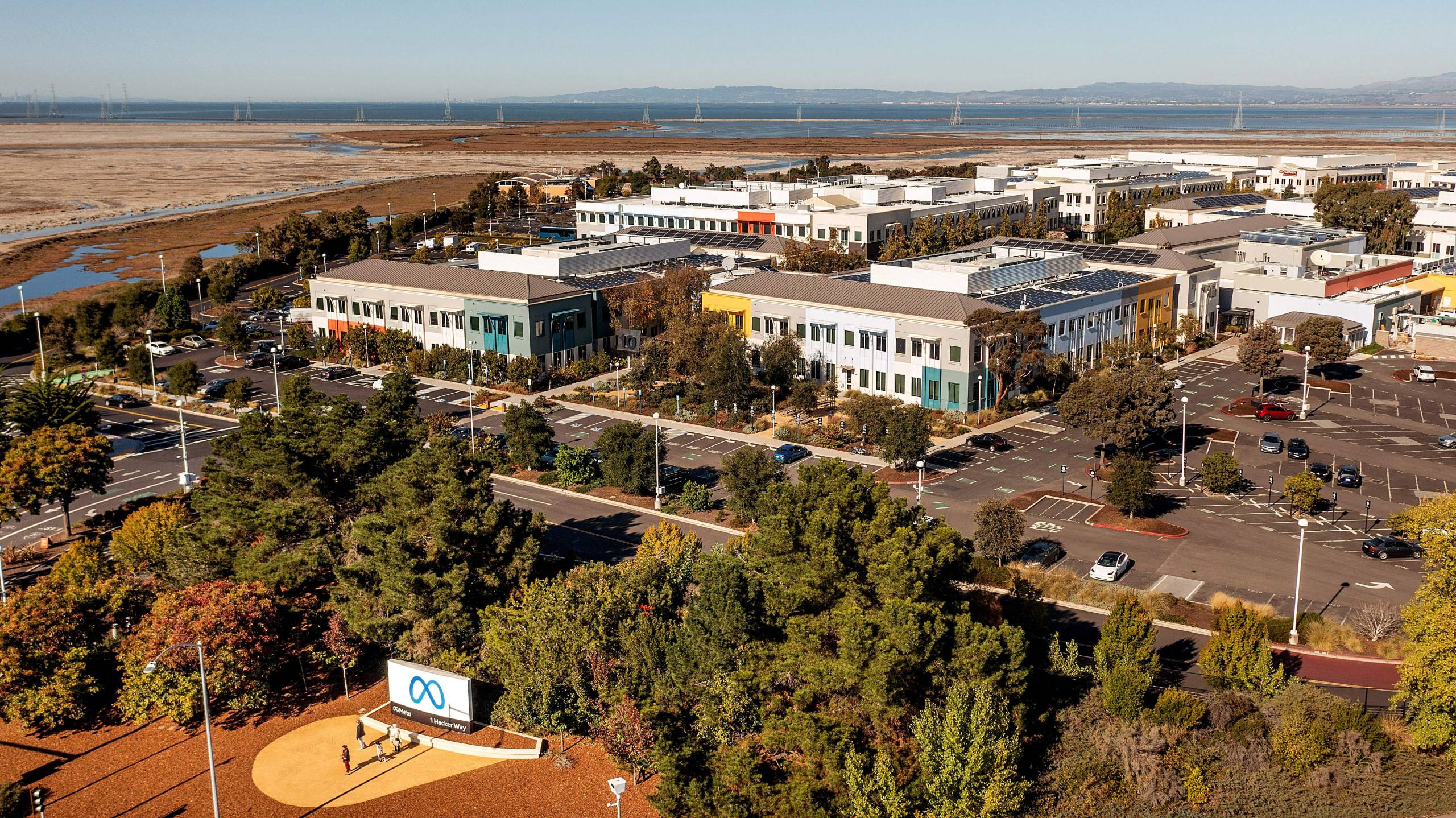
And understandably so, given the ghosts of IPOs past. A 2019 Zillow report found that after Facebook went public with a $104 billion valuation, home values near the company’s Menlo Park headquarters climbed at a higher rate than other parts of the Bay Area real estate market — 21% compared to 17%.
But UC Berkeley economics professor Enrico Moretti said this particular IPO might not cause prices to increase much more than they already have — because of the limited number of people who live in the city and work at Anthropic.
“The demand for housing will increase by a few thousand units,” Moretti said. Anthropic has 5,300 employees globally as of Sept. 30, according to its SEC filing, but Moretti said that not all of the employees and investors who will profit are based in San Francisco.

While newly wealthy shareholders may not push up prices across the city, they could still drive up prices in specific neighborhoods near Anthropic and OpenAI’s headquarters, said Karen Chapple, a professor emerita at UC Berkeley focused on economic development and housing.
These areas include Mission-Potrero, South of Market, Pacific Heights, Hayes Valley and potentially downtown, Chapple said. “People really want to get to work within 15 minutes,” she said.
Something else that might contribute to rising prices is the city’s ongoing shortage of available units.
“The Bay Area economy is between a rock and a hard place,” said Christopher Thornberg, a founding partner of research and consulting firm Beacon Economics. “The rock is this AI funding that’s pouring in; the hard place is the lack of housing.”
More money, more jobs and bigger ice cream cones
Who will be most impacted: Service industry employees, AI-adjacent industries and artisans.
When it comes to the economy, more money usually means more jobs — usually.
Moretti said a single new tech job typically creates four to five additional jobs outside the tech sector. That’s because “every time that a new tech job is created in a metro area, that income is spent, in part, in the local economy,” Moretti said, listing everything from retail and restaurants to healthcare, education and architecture.
But while research has linked previous IPOs to significant job creation, Moretti said that this particular Anthropic IPO may produce fewer new jobs.
That’s because companies have historically used IPOs to help them raise new capital and expand their operations — but that may not be the case for Anthropic.
“It had plenty of capital. In fact, there were people banging on its door to provide capital,” Moretti said, adding that the AI industry as a whole has not been “capital-constrained.”
Without major employment growth from Anthropic itself, there will be fewer new employees to spend money in the Bay Area and, subsequently, fewer new jobs in complementary industries, he said. “There’s only so much that you can spend locally,” Moretti said.
One sector that’s already seen an increase in local spending — and could see more as IPO wealth floods in? Elaborate, in-person events.
Vivienne Errington-Barnes, founder of [Shift + Alt], a company that produces everything from corporate retreats to birthday parties for individuals and companies in the tech sector, said that “there is a direct correlation between AI becoming more prolific and people wanting more in-person events.”


“There’s a lot of weird and wonderful things coming up, like people who are fabricating life-size ice cream cones,” Errington-Barnes said. “They want to be remembered.”
People don’t just want more events; they want their events to be high-touch, high-impact and exceptionally human, Errington-Barnes said, describing a shift from DJs to live music and from light projections to physical performances and elaborate installations.
“We want the chef to come out and make a speech about how he made this Michelin star dish and what his story is. We want to get a human-interest kind of angle,” Errington-Barnes said.
IPOs could boost the industry of love
Who will be most impacted: Wedding planners, divorce lawyers and the couples they serve.
Another business that could see a local bump? Marriages and divorces.
A 2012 Financial Times article tracked the trend leading up to Facebook’s IPO, and found that wedding planners and wealth managers were gearing up to court newly-minted millionaires.

Divorce lawyers, too, could see an influx of clients, said Haitham Amin, a San Francisco attorney and founding partner of Amin Law.
The attorney said 90% of his clients are in the tech industry, and forecasted a wide number of possibilities based on his experiences following the Facebook IPO and the rise of Nvidia. A boon can make or break some relationships, he said.
“There’s going to be a good chunk of people that are going to realize that big money comes with a lot of problems — usually marital problems,” Amin said. “People just change when they get a lot of money.”
Billionaire altruists could donate wealth
Who will be the most impacted: Anyone the effective altruists deem worthy.
As newly wealthy tech employees search for meaning and connection, they may start donating more to Bay Area charities … potentially.
After working with dot-com millionaires in the 1990s, psychologists Stephen Goldbart and Joan DiFuria coined the term “sudden wealth syndrome” — aimed at capturing how people can face issues finding meaning and purpose after coming into a shocking amount of money and can become isolated from friends and family.
“We’re seeing what we call billionaire bubbles,” DiFuria told KQED. “These gated communities are getting deeper and thicker, because the money is higher.”
Some newly-minted millionaires retreat from society, DiFuria said. But others might decide to invest their money into their local communities.
“If you’re richer and you decide to donate, history tells us that a share of that will go to local charities,” Moretti said. “I think this is an area where there’s probably going to be a significant effect.”
Berber Jin, AI enterprise reporter for The Wall Street Journal, told KQED’s Forum on Wednesday that early Anthropic employees have pledged up to half of their wealth to philanthropic causes.
While wealthy philanthropists have historically donated to arts, culture and local nonprofits, the company has strong ties to the effective altruism movement — a philosophy followed by some in the tech industry that purports to use rational thought to do the most long-term good possible.
The movement drew criticism after one of its most vocal proponents, crypto exchange founder Sam Bankman-Fried, was sentenced to 25 years in prison for fraud and money laundering.

Jin said the enduring popularity of the movement among Anthropic’s earliest hires will likely impact how they spend their money.
“Because effective altruism is so ingrained in their worldviews, the chatter right now amongst early employees is like we should donate this money to fund AI safety nonprofits,” Jin said. Effective altruists often focus on global causes including animal welfare and public health.
In addition to spending more on philanthropy, Anthropic employees could continue to ramp up their political donations — they’ve already been spending big on AI-safety PACs, according to SFGate.
Climate change and environmental concerns
Who will be the most impacted: Climate tech, nonprofits and environmental advocates.
AI’s impact on our environment is a hot topic — pun intended.
Many groups have called attention to data centers’ staggering energy and water usage — which can lead to increased emissions and disrupt local water supplies and ecosystems, according to MIT News.
Other research has also linked AI’s climate impact to the emissions associated with increasing production and economic growth.
Wealth itself is often linked to pollution, especially when it’s spent on fossil-fuel-intensive goods and services like driving, flying and eating red meat, just to name a few.
But on an individual level, “someone becoming a multimillionaire overnight does not suddenly mean that they are generating more emissions,” said Ben Gould, president of EcoDataLab, a firm that calculates consumer emissions for cities and counties.
“If anything, I would actually expect the IPO to have beneficial local climate impacts,” Gould told KQED by email. “Anthropic’s employees are probably more climate-conscious than average, and coming into a large amount of liquidity could help enable them to invest in low-emission technologies for their homes and lifestyles, like solar panels, heat pumps and EVs.”
His colleague Christopher Jones, director of UC Berkeley’s CoolClimate Network, a group aimed at scaling up climate solutions, suggested that the development of AI has the potential — like the advent of personal computers — to enable the spread of low-carbon technologies.
“The largest environmental impacts of AI will not be from the water or energy demand of server farms, or the wealth generated for shareholders or employees,” Jones said, “but rather how AI will be used to change the ways humans live on the planet.”
That is, if it doesn’t kill us all first.
KQED’s Danielle Venton and Elize Manoukian contributed to this report.