Tracking Data Center Drama … With AI?
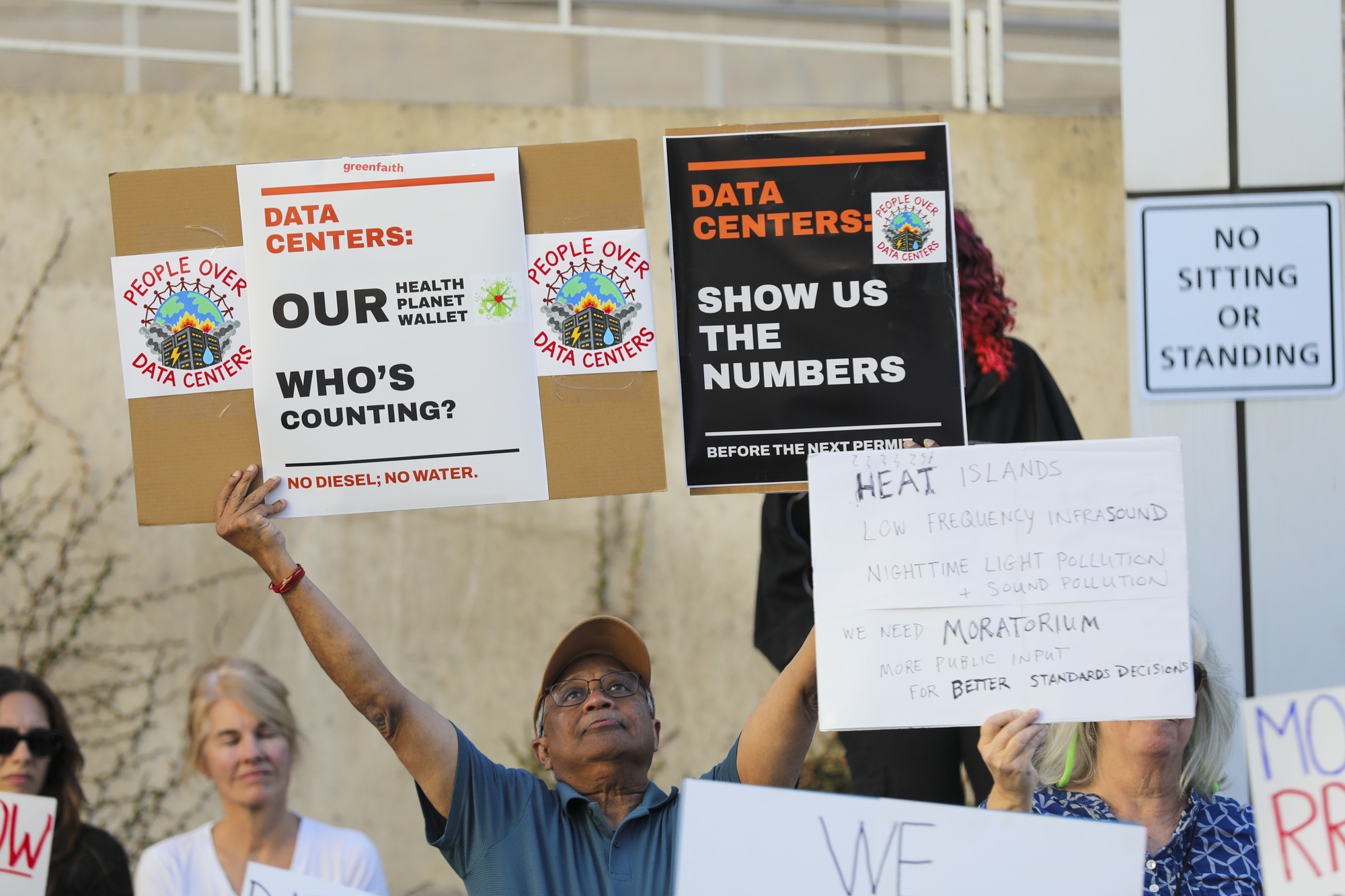
A San Francisco-based AI startup has found a new way to measure America’s data center discontent.
The company, Prophecy Gov, analyzed public comments from hundreds of government meetings held across the country that discussed data center projects. They then launched a website dubbed American Sentiment to display their findings.
Prophecy Gov’s analysis found that a whopping 90% of Americans detest data centers. But the sentiment changed based on more specific groupings, with 79% of self-identified union workers supporting data center development. Perhaps surprisingly, the analysis also found that 60% of self-identified data center workers were opposed to data center projects.
Prophecy Gov, which bills itself as an AI agent for local government employees, said on the American Sentiment website that they captured over 10,000 public comments from recordings of 906 local government meetings across 417 different government entities. (According to the 2022 census, there are over 90,000 local government entities in the U.S.)

They reported that the people showing up to public comment primarily talked about their distrust of tech billionaires, desire for more transparency and fear for our collective climate future.
The Prophecy Gov team did not respond to KQED’s multiple requests for comment, and there is no published methodology on the American Sentiment website. It’s not clear how the company translated spoken comments to a statistical rating.
But ironically, it seems almost certain that the company used AI tools — responsible in part for the data center construction boom — to scrape meeting recordings to, as the website put it, “propagate the voices of America.”
Without a full methodology, the specifics remain hazy, but Jonathan Bash, the CEO of Locunity, a company that uses AI to turn meeting agendas and videos into real-time briefings and alerts, said that the “recipe is straightforward.”
First, Bash said, software would collect all the recordings of government meetings. Next, an AI-powered speech-to-text program would create a transcript from each video. Then, an AI tool would find the public comments that touch on data centers, sort them by speaker, and assign some label to describe whether the comment was pro- or anti-data center. Then it would link the comments back to the video they came from.
Bash was speaking generally about how this AI-powered analysis would work —
“I can’t speak to their exact tech stack,” he said — but he was certain that AI would be used “at a minimum” for the transcription and sentiment analysis.
“It’s a smart piece of work,” Bash said. “Every comment appears verbatim, tied to a timestamp and its source video.”
However, Bash also offered a few words of caution. He said that AI can mishear names and misconstrue sarcasm, and that relying exclusively on city council data can overindex towards the people who feel most passionate about an issue.
“City council speaker data ultimately gives you a sense of what certain special interests and knowledgeable, hyper-active community members care about,” Bash said. “That’s incredibly valuable for an advocate, journalist or political candidate. Less so to predict elections or read residents’ minds.”
Kyle Short, a teacher at Gilroy Unified School District, is featured on the American Sentiment website with a 2 out of 5 “fire-y” rating. He said that he did not know about the American Sentiment project before speaking with KQED, but he was flattered to be included.
“It’s very inspiring that so many people across the political spectrum have taken issue with the way these data centers have been rolled out,” Short said.

Short said that he learned about the data center issue when he was trying to stop the ICE processing facility from being built in his city. In the past year, Gilroy, the so-called “garlic capital of the world,” became a potential construction site for two of many Americans’ least favorite things: an ICE detention facility and a data center. Short said that he saw a connection between the two.
“With data centers in particular, that kind of processing power can be used for ICE and ICE operations,” Short said. “So to protect our immigrant neighbors, it’s really important to stop the construction of these data centers as well.”
Despite being based in the Bay Area, Prophecy Gov did not capture public comments from San Francisco or neighboring Oakland, where residents have advocated for a data center moratorium during city council meetings.
Eisa Al-Shamma, an organizer with No Data Center Oakland and the Party for Socialism and Liberation, said dozens of residents have gone to Oakland city council meetings to protest proposed data center development.
Al-Shamma worries about the impact of data centers on climate change, but he said his main concern revolves around who controls the data centers and how they are being rolled out over the will of the people.
“The ultra-rich billionaire class is basically using the money, influence and power that they have to build these centers at a rapid rate,” Al-Shamma said.
Interestingly, Al-Shamma said that he did not take issue with the American Sentiment project using AI.
“It is not the technology itself that is the problem,” Al-Shamma said. “It’s the way that the technology is being used and developed and who is holding the levers of power to develop the technology.”
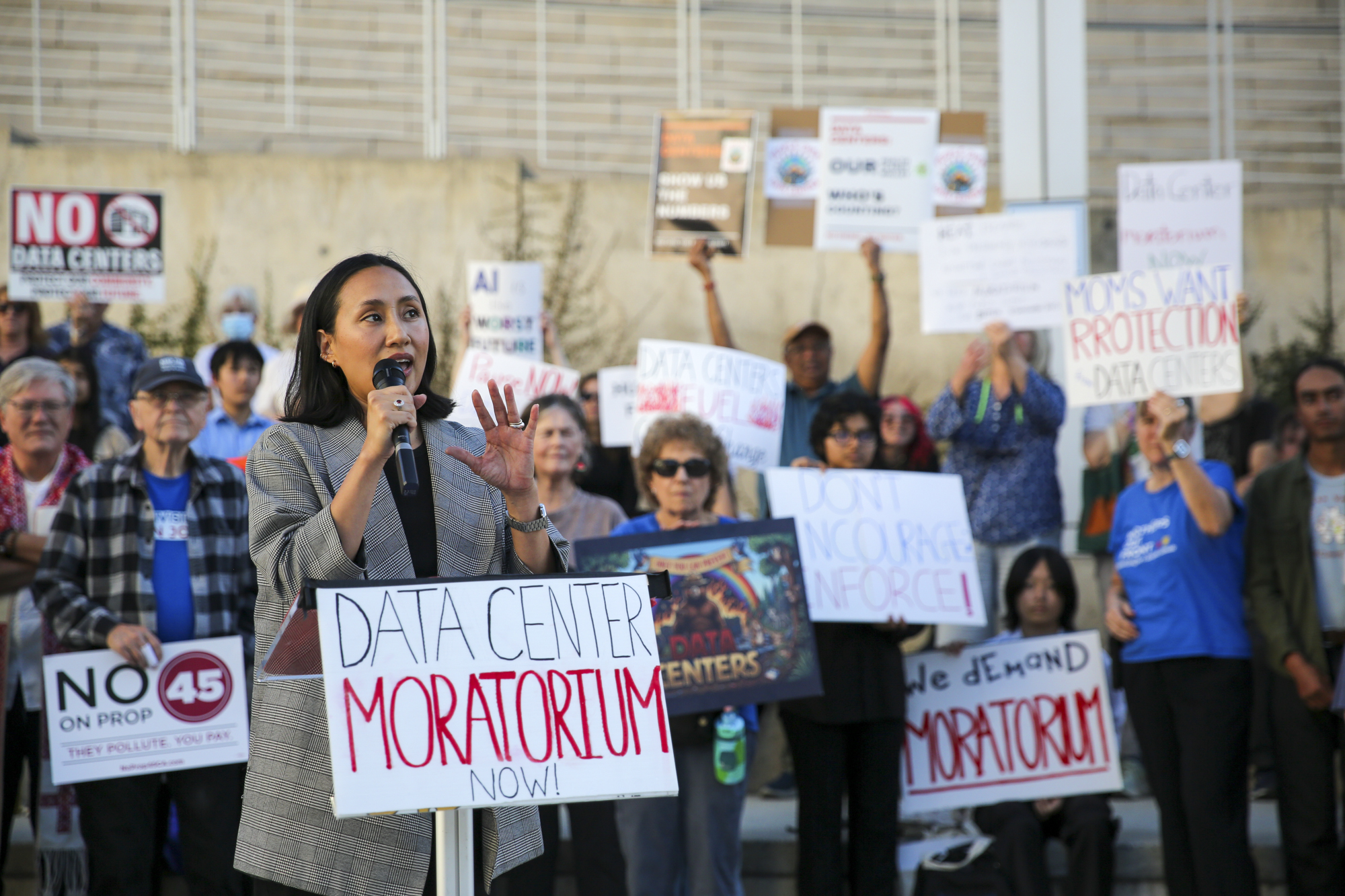
Members of the No Data Center Oakland group, along with dozens of Oakland residents and organizations, showed up at city council again last Tuesday before a vote on extending the data center moratorium that passed in October.
Their concerns mirrored those found in the American Sentiment data. Community members spoke about how data centers can harm the environment and fail to create lasting jobs, as well as the ways that the billionaires use the technology to consolidate power, among other issues. The council voted unanimously to extend the moratorium through Oct. 5, 2027.
“I felt it was imperative that I take immediate action to protect Oakland residents from what we’ve seen happen in other parts of the country,” said Councilmember Carroll Fife, who proposed the moratorium. “It’s guardrails against an industry that we’ve seen steamroll individuals across the entire globe.”