Across California, Big Tech Spending Led to Election Wins. But Not in These Races
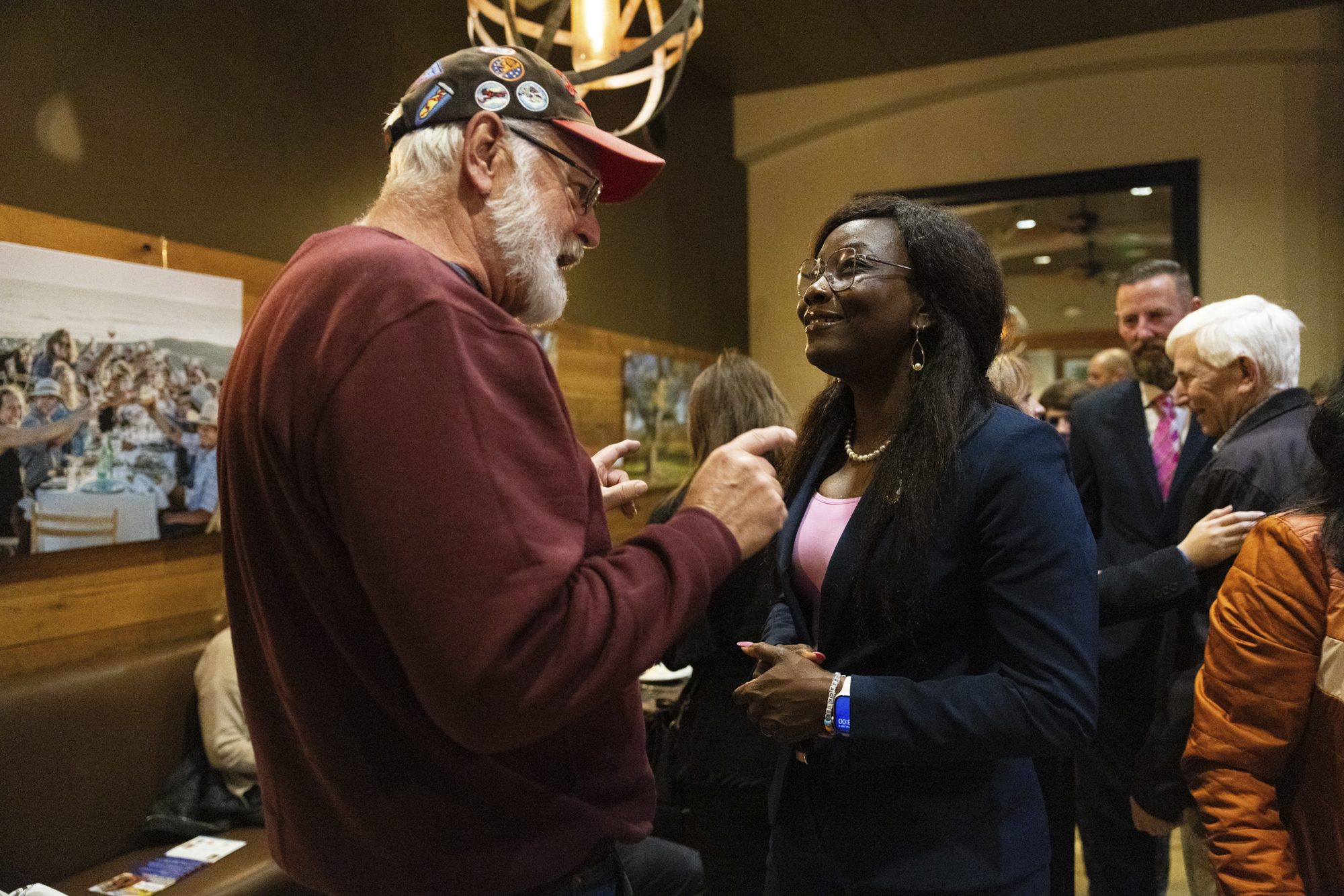
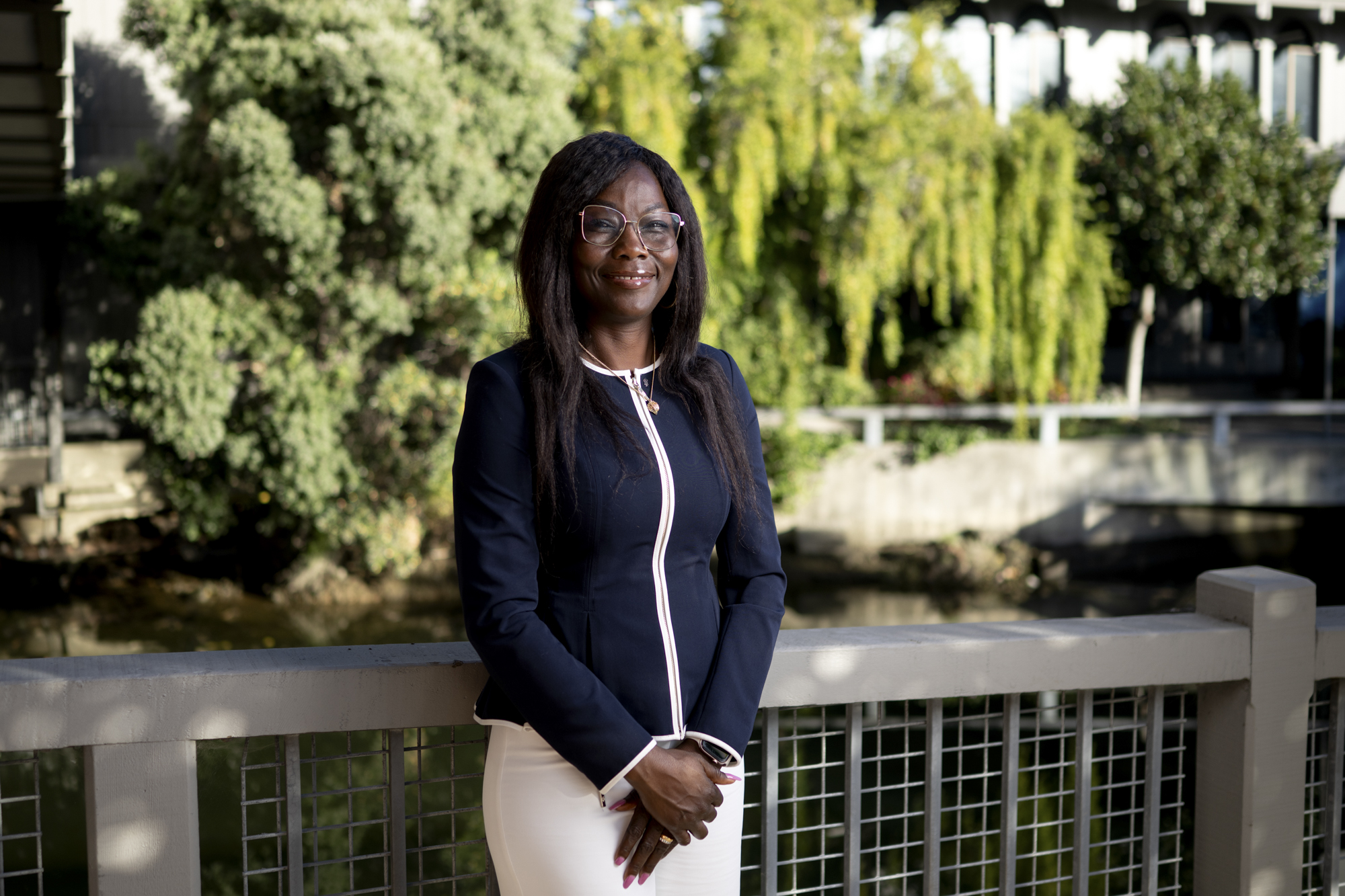
Ahead of Election Day, as Jackie Elward knocked on doors in a residential neighborhood of Petaluma, a postal carrier called out to her across the street.
“You came to our ‘Hell No’ rally and you came to our union meeting,” he yelled to the state Assembly hopeful, climbing out of his truck. “I’m proud to vote for you.”
Elward thanked him for his support as she hugged him.
“That sums up why it is important to continue voting for the working class,” she said. “And why those special interests, those billionaires, have no say, no part in influencing this race.”
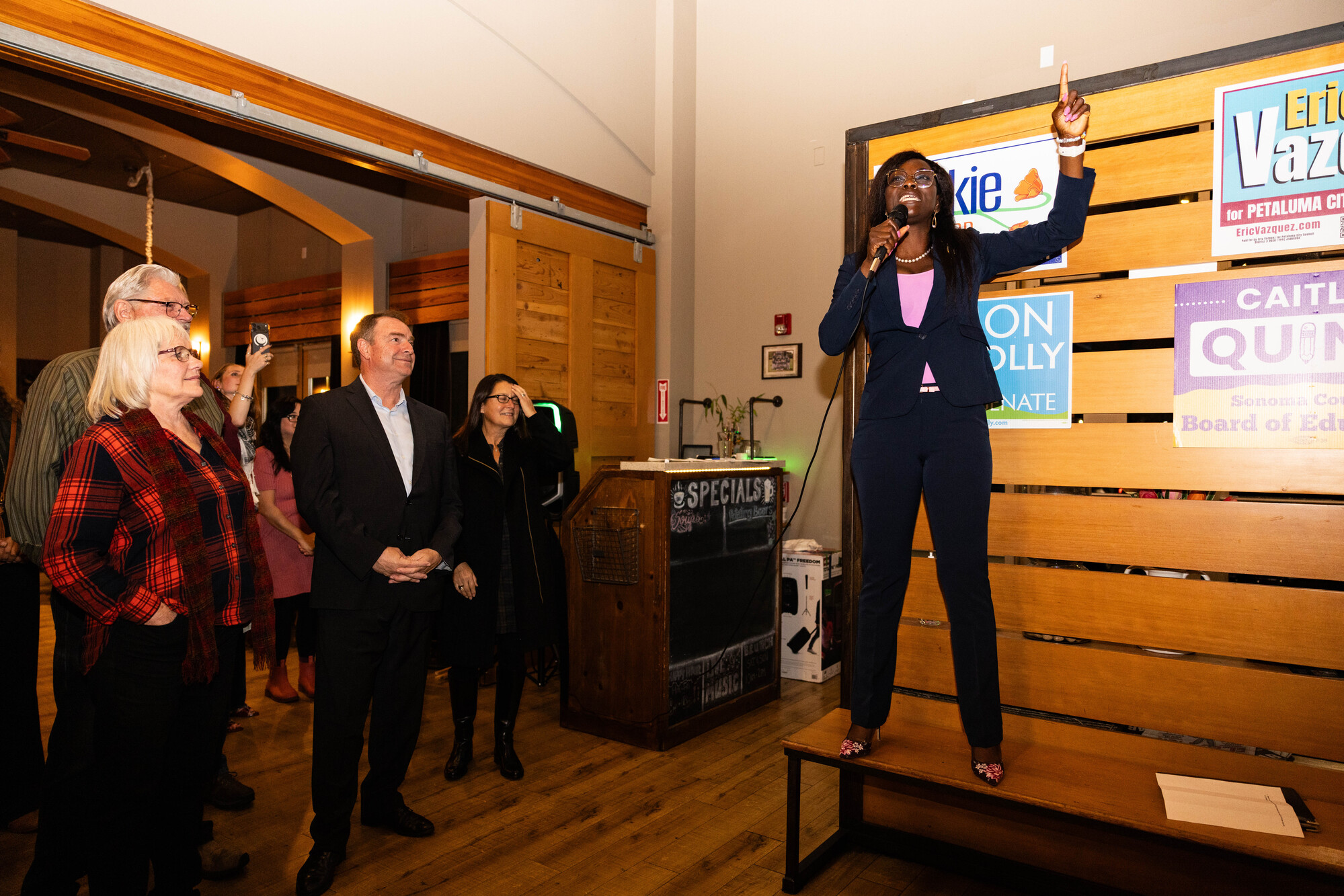
Elward, a Rohnert Park City Council member and progressive Democrat backed by labor unions, would go on to win a race that became defined by a torrent of outside money early on. A super PAC funded by two Silicon Valley billionaires spent nearly $4 million backing her Democratic opponent, Marin County Supervisor Eric Lucan, and a labor-backed super PAC responded with nearly $2 million in support of Elward.
But in a midterm election that became the most expensive in U.S. history, according to the firm AdImpact, the race to represent Marin and Sonoma counties in Assembly District 12 was an outlier for Big Tech’s political spending in California. Across the state, 14 of the 17 legislative candidates who benefited from large tech-aligned outside spending have won so far.
Political analysts credit Silicon Valley with a focused strategy: boosting mostly Democrats in safe blue districts and concentrating their ad messaging on affordability and effective governance rather than tech or artificial intelligence.
But two of their biggest bets, including District 12, failed. Where tech-backed candidates stumbled, analysts said, was in districts where the outside money became a primary issue.
Tech-backed candidates
Two tech-aligned super PACs spent nearly $39 million in independent expenditures for this election in California.
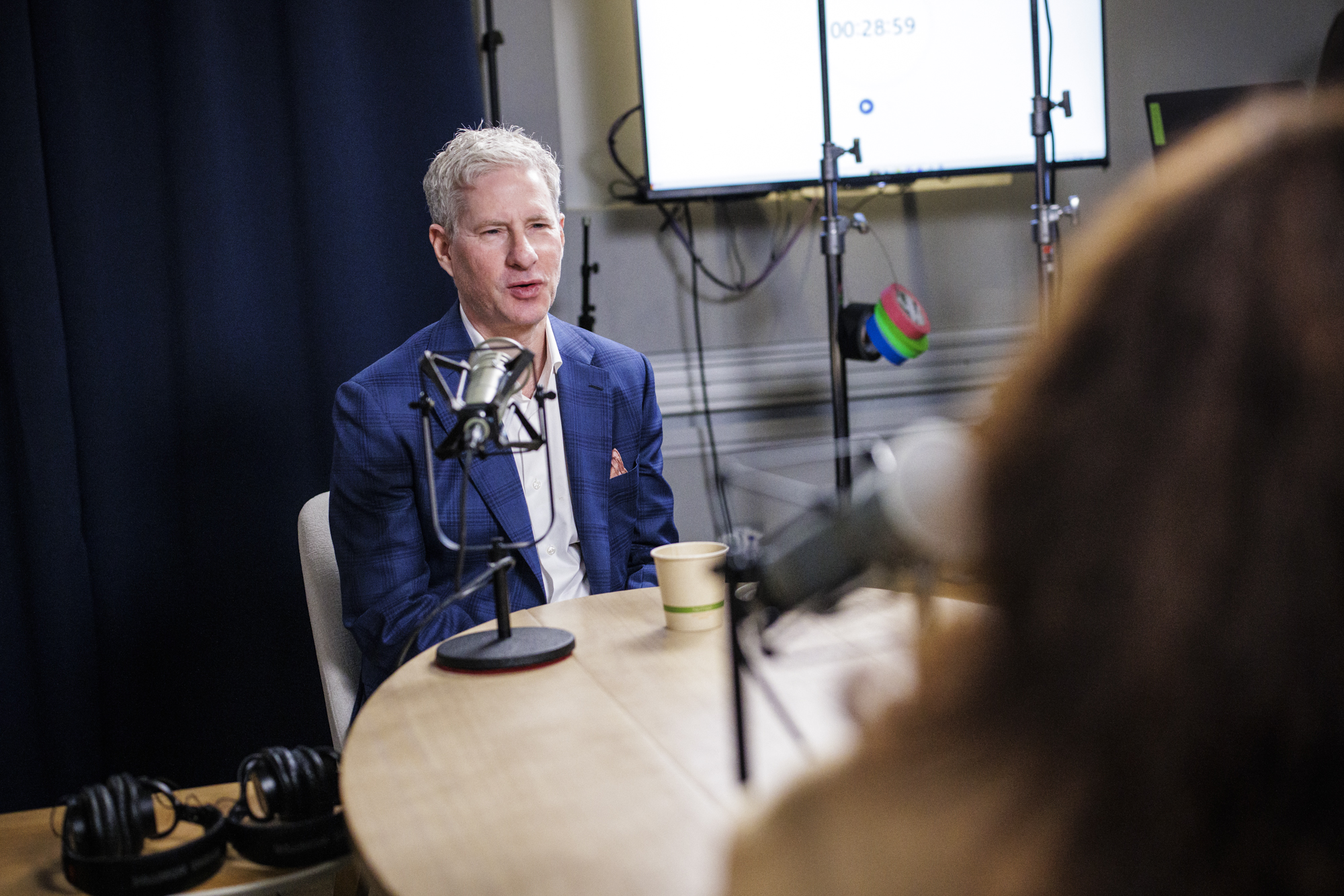
Grow California, funded mostly by crypto billionaire Chris Larsen and venture capitalist billionaire Tim Draper, backed Democrats only, spending almost $24 million across 11 races. The group sees this election as an overall success, but others disagree.
“Two of its largest investments fell short,” said Sacha Haworth, founder and CEO of the Tech Oversight Project, a watchdog group. “What the tech and the AI industry learned this cycle is that money only goes so far.”
In addition to Lucan’s defeat, the group also spent more than $4 million supporting another candidate who lost: David Penaloza, who was running for an Assembly seat in Orange County.
In some races, Grow California spent only in the primary. In Los Angeles County, for instance, it backed Compton educator Ayanna Davis for Assembly over fellow Democrat Fatima Iqbal-Zubair, who was endorsed by unions and progressive groups. Davis advanced in the primary and defeated Republican Lydia Gutierrez in the general election.
This was the tech industry’s central strategy, Haworth said: backing industry-aligned Democrats in safe seats to “curry favor” with lawmakers likely to win.
“They’re not actually sticking their neck out that far,” she said. “They’re banking seats. They’re banking votes.”
The other super PAC, California Leads, which is funded primarily by Meta and Google, spent nearly $15 million backing seven Democrats and three Republican incumbents: Riverside County Assemblymember Greg Wallis, Orange County Sen. Tony Strickland and San Diego County Assemblymember Laurie Davies. All three Republicans lost their bids.
California Leads did not respond to KQED’s request for comment.
UC San Diego political scientist Thad Kousser said tech leaders got savvier this election.
“They essentially made the same pivot that groups like the California Chamber [of Commerce] and the Business Roundtable made about a decade ago, which is realizing that the way that you boost your influence in California is by electing moderate Democrats,” he said.
Grow California disputes the characterization that it’s backing moderate, business-friendly candidates. Strategist Shaudi Fulp said the group’s leaders commissioned 43 polls to learn what issues matter most to voters, then selected candidates who they believe can deliver on cost of living, healthcare and housing.
“Voters want candidates who are independent of both labor and business,” Fulp said. “They want somebody who answers to them.”
Democrats are poised to expand their supermajority in Sacramento as the blue wave that swept the nation also flipped Republican-held legislative seats. As the party’s tent grows, divisions may become harder to ignore.
“We really do see a realignment of political coalitions taking shape, with more gradations among Democrats,” Fulp said. “It’s really not this binary of Democrats versus Republicans anymore.”
USC political science professor Christian Grose agrees the “moderate” label doesn’t fit every tech-backed candidate, but they tend to be less progressive than their rivals.
In the primary for an Assembly seat in Imperial County, for example, Grow California backed Imperial Mayor Ida Obeso-Martinez, a nurse practitioner who rejects both the moderate and progressive labels.
After edging out Indio Councilmember Oscar Ortiz, who was endorsed by the Legislative Progressive Caucus and California Federation of Labor, for second place in the primary, Obeso-Martinez went on to flip the district blue by defeating Republican incumbent Jeff Gonzalez in the general election.
“We need better words for it,” Grose said. “A lot of the people [tech interests] back are still pretty labor-friendly, they’re just not only labor-friendly.”
Kousser said it’s no surprise these PACs avoid talking about AI at a time when voters overwhelmingly oppose data centers.
“It’s not a political winner to say that your group is all about keeping regulations away from AI or helping tech,” he said. “It’s a much more palatable political pitch to seize on the main issues that Californians want to see progress on.”
Tech leaders aren’t all aligned on how to tackle AI-related issues like data centers, regulating frontier models and how the economy adjusts to AI-related job loss.
Larsen has strongly pushed for AI regulation, calling to “shut down all data centers until we get goddamn regulations” in an interview with KQED’s Political Breakdown. He also split from other tech leaders in national races, putting money behind Democrats Sherrod Brown in Ohio and James Talarico in Texas, both of whom won Senate seats.
Meanwhile, Republicans backed by tech figures like Elon Musk fared poorly nationwide, although in a blue-wave year, being a Republican was generally a liability.
Where did tech fall short?
Analysts said in most cases, voters likely did not know how heavily Silicon Valley had spent in their districts. But the spending became a focal point in the races lost by Lucan in the North Bay and Penaloza in Orange County.
“I think looking back, when folks look at this race, it unfortunately is going to be defined by the significant outside spending,” Lucan said.
Elward’s campaign and the labor PAC supporting her emphasized the role of money, including one digital ad that showed Larsen’s and Draper’s faces and announced, “Hey North Bay, crypto billionaires are trying to buy your Assembly seat.”
Combined with the district’s high turnout and engaged electorate, analysts said, that fueled a backlash.
“Receiving money from AI groups … that’s a hit piece that writes itself right now in California politics,” Kousser said. “If you can associate someone with data centers and AI companies, that can be a really effective political attack.”
Something similar played out in Orange County.
Voters there were flooded with mailers tying Penaloza, backed by both Grow California and California Leads, to AI and data centers, said Bulmaro Vicente, policy director of Orange County progressive political group Chispa.

“The committee backed by SEIU, they spent quite a lot opposing Penaloza’s campaign and really citing the fact that … these big tech companies are trying to buy your vote,” he said. “That was very visible on social media.”
Early returns on election night had Penaloza leading progressive Democrat Jessie Lopez, but Lopez pulled ahead in the following days and won narrowly with 52% of the vote.
Bay Area nonprofit TechEquity Action also ran a $1 million ad campaign highlighting the spending in both of these districts plus two others.
Founder Catherine Bracy said the campaign’s effectiveness is proven by the fact that candidates such as Lucan and Sara Hernandez, a Democrat running for state Senate in Los Angeles, disavowed the money spent by tech-aligned PACs in their favor.
“Many of them spoke out against this money after we started our campaign in a way that they didn’t seem to before,” Bracy said.
Grose said voters across the country cited corruption as a top concern in exit polls — and from there, it’s easy for many to draw a link to excessive outside spending on legislative races.
“Once money in politics becomes an issue, that’s adjacent to corruption,” he said. “Even if it’s not actually corruption.”