How the San Francisco Chinese Community’s Fight for Belonging Shaped Bilingual Education
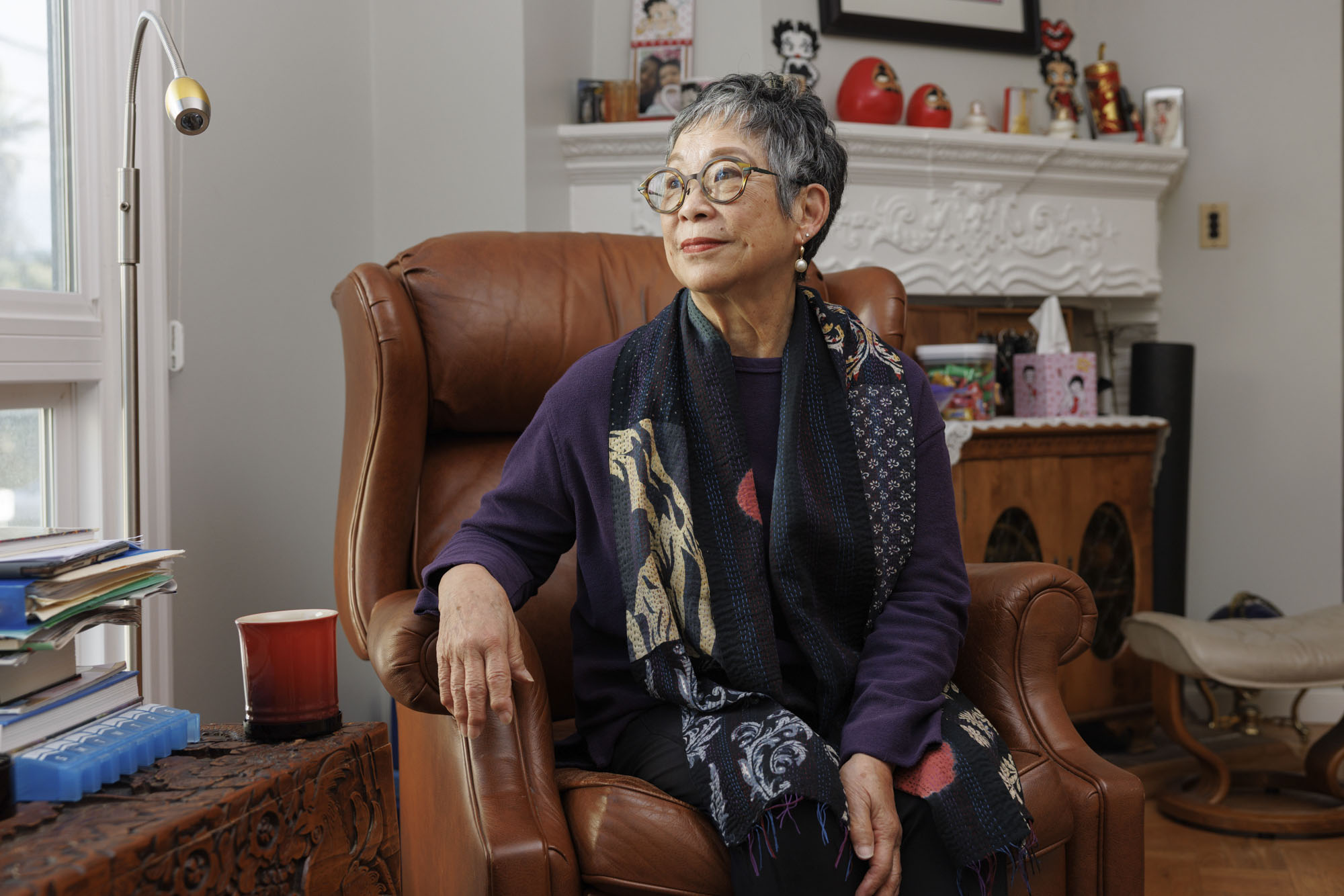
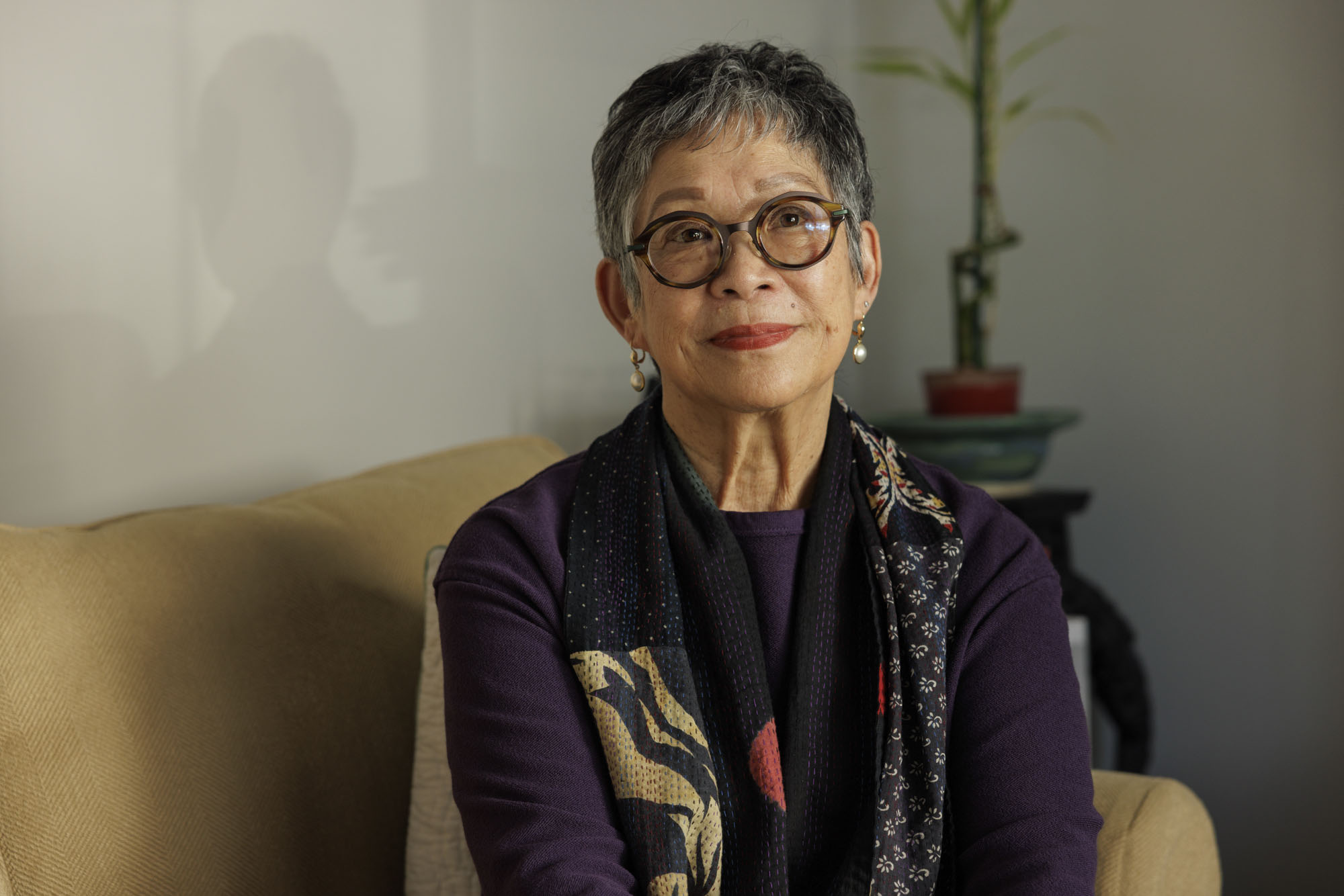
Laureen Chew, 78, still remembers her first day of kindergarten at Washington Irving Elementary School in San Francisco. It was the day she began to question her cultural heritage. Growing up in the city’s North Beach and Chinatown neighborhoods, Chew only spoke Cantonese. Born and raised in the U.S., Chew was raised primarily by her Chinese immigrant mother, who couldn’t speak English, and her world — up until then — was a tight-knit community of other Cantonese speakers.
“I remember going to school the first day being very excited because everybody said school was fun. All the kids there were Chinese Cantonese speakers; very few had English skills,” Chew said. “But then, the first thing that came out of the teacher’s mouth was English, and we were freaking out. And in fact, I didn’t wanna go back to school the next day.”
Chew said that by the time she was in the third grade, the language barriers evolved into a source of shame.
“The teachers did a very good job of downgrading our native language at school,” she said, reflecting on recess time in the schoolyard. “We’d be playing and speaking in Cantonese to each other, and they’d ring the bell and say, ‘You’re in American school now, speak English!”
It wasn’t until Chew became a student activist during college in the 1960s that she began to reclaim her cultural identity. She also discovered how to best help her community: by teaching and advocating for multilingual Chinese students.
“Bilingual ed is not only about language … It’s about identity so that you can feel that you’re worthy,” Chew said. “It’s about keeping a positive sense of who I am to help me express my voice in this country without feeling inferior.”
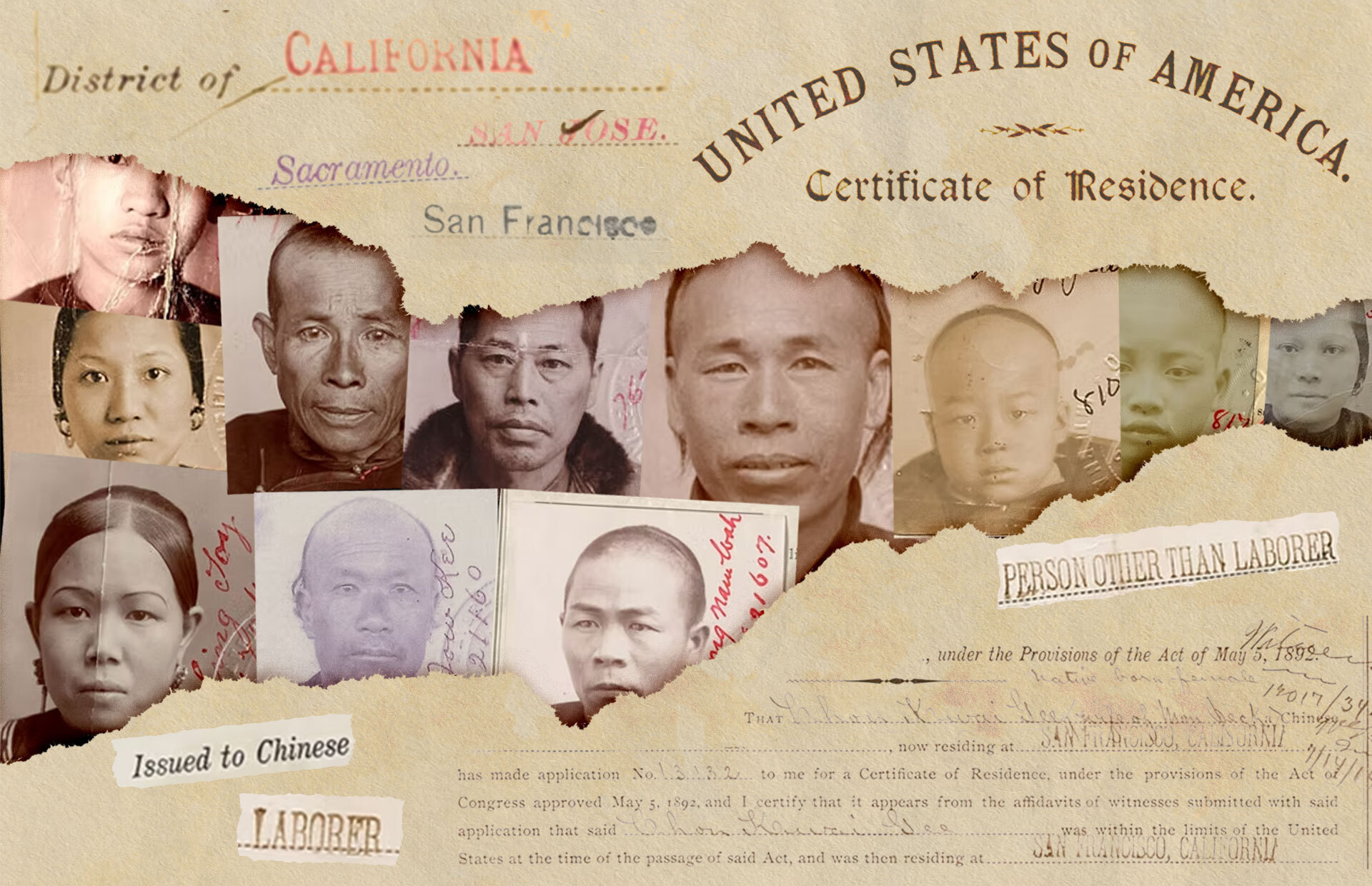
The Chinese community has played an important role in advancing bilingual education in San Francisco and across the country. The foundations of that advocacy trace back to the 19th-century Exclusion era when early Chinese immigrants fought for the most basic of education rights, like access to public schools. As they did in other arenas, including birthright citizenship, due process and equal protection and the right to remain in the country, Chinese immigrants leveraged the legal system and the resources afforded by a highly organized San Francisco Chinatown network to make their case for equal education. Their efforts have helped expand the protections available to immigrant families and their children.
Today, Chinese Americans and immigrants continue to grapple with questions of belonging, identity and equity in education. But as the Chinese population has changed over the generations, so too have the terms of their activism. The education debates within the community have become increasingly complex — and sometimes deeply divisive — yet a throughline persists: a continuing negotiation over what meaningful inclusion looks like, and who gets to define it.
Education organizing remains an important way for Chinese community members to assert their place in American society, and to claim a stake in its future. And people like Chew say it’s especially critical now as the Trump administration’s anti-immigrant rhetoric and policies are impacting things like language rights for student English learners. She said by fighting for bilingual education, she can help to protect and nurture a multiracial democracy.
Before bilingual education, the fight for a seat in the classroom
Chinese immigrants in San Francisco began fighting in the 1850s for access to education. The concept of public education — universally available, state-funded and free — gained traction in the 1830s, and one of its stated goals was to prepare young people to be capable voters who could safeguard American democracy.
That principle helps explain why public education has remained a contentious issue when it comes to immigrants, said Hiroshi Motomura, a professor and immigration law scholar at UCLA.
“Children become the source of a great hope and the source of a great threat,” Motomura said. “As a threat, I think it’s realizing that if you let kids become citizens or get educated, [there’s] the sense that they’re going to displace you … Education is the key to immigrant integration.”
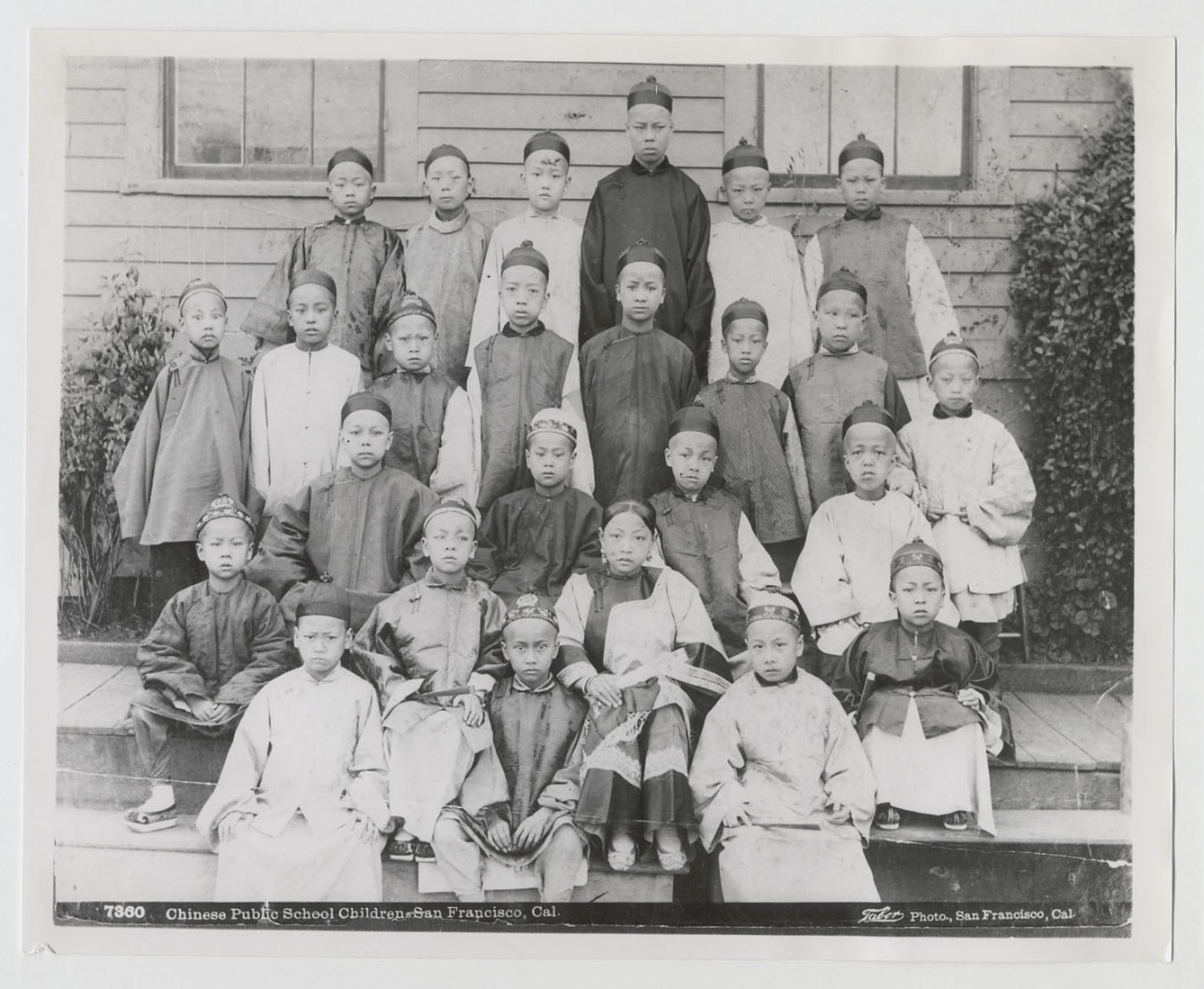
In 19th-century San Francisco, access to public education was largely reserved for white children. Although California law eventually required public schools to admit all children, Black, Asian and American Indian students were segregated from their white peers.
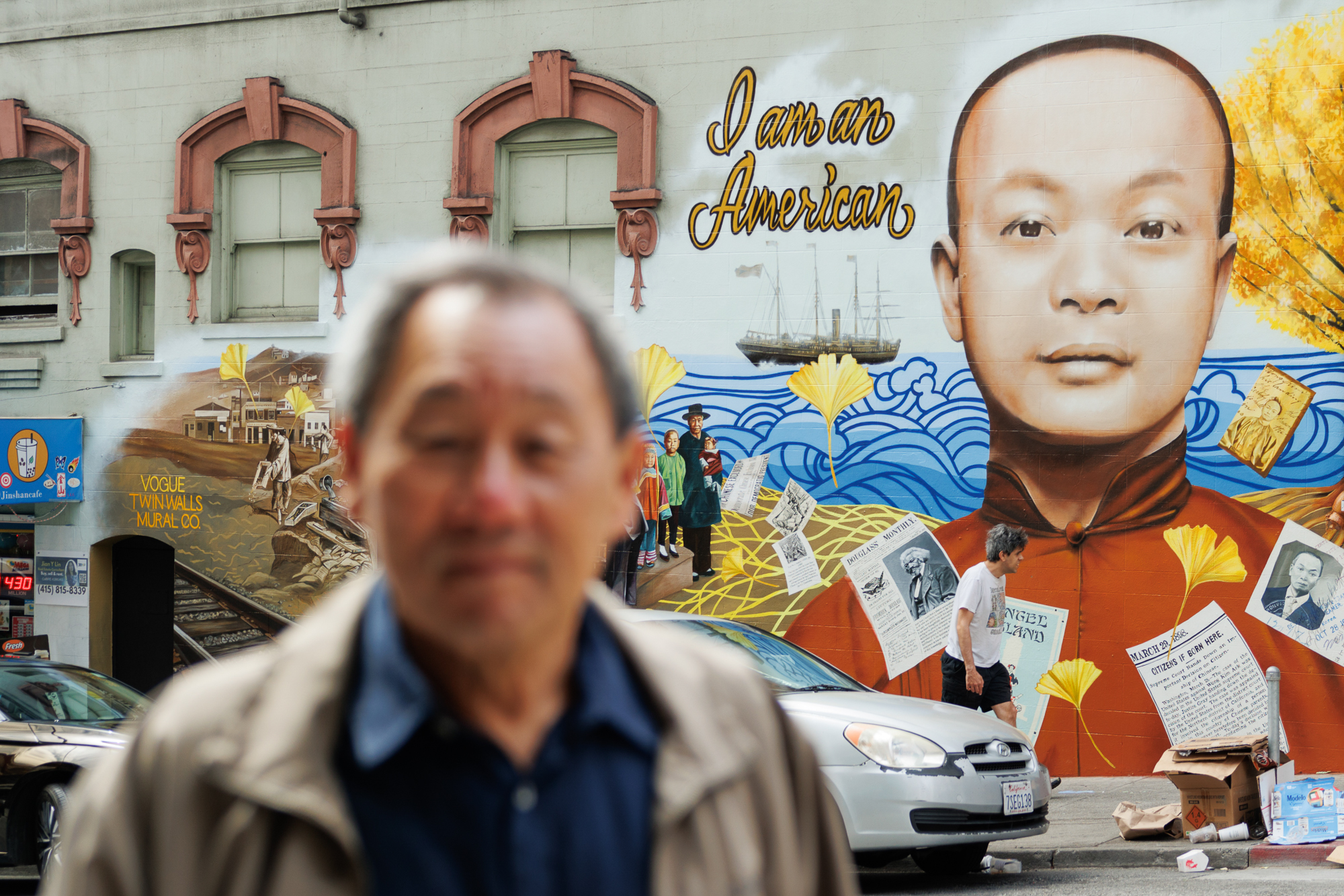
In 1871, as animosity and violence against the Chinese community intensified in San Francisco, Chinese children were banned from even segregated public schools. Throughout the next decade, both the San Francisco school board and the state legislature ignored petitions by thousands of Chinese residents for admission to public schools. That is until one Chinese family in particular spoke up: the Tape family.
By the 1880s, an estimated 1,000 Chinese school-age children were living in the city, and most of them were American-born, including 8-year-old Mamie Tape. Her parents, Joseph and Mary Tape, were atypical Chinese immigrants: they were Americanized, spoke excellent English, adopted Western-style manners and clothing and lived outside of Chinatown in a white, middle-class neighborhood.
In 1884, Mamie’s parents attempted to enroll her at the all-white Spring Valley School. But when they arrived, the school’s principal, Jennie Hurley, refused to let her in, citing the district’s policy against admitting Chinese children.
In response, Mamie’s father Joseph waged a legal battle that garnered widespread attention, captivating white and Chinese people alike. There was a lot at stake: would the privileges and benefits of U.S. citizenship be afforded to the American-born children of the much-reviled Chinese immigrant population?
Eventually, the Tapes won their case in San Francisco’s Superior Court, a decision that was upheld in the California Supreme Court in 1885’s historic case Tape v. Hurley. The court affirmed that Chinese children born in the U.S. were entitled to public education under the Constitution. However, the school board rushed an act through the state legislature, authorizing segregated schools for Chinese students; Mamie could attend a public school, but only a segregated one for Chinese children. In response, Mamie’s mother Mary wrote a long fiery letter to the school board in a local newspaper.
“Dear sirs, Will you please to tell me! Is it a disgrace to be Born a Chinese? … My children don’t dress like the other Chinese … It seems no matter how a Chinese may live and dress so long as you know they Chinese. Then they are hated as one. There is not any right or justice for them.”
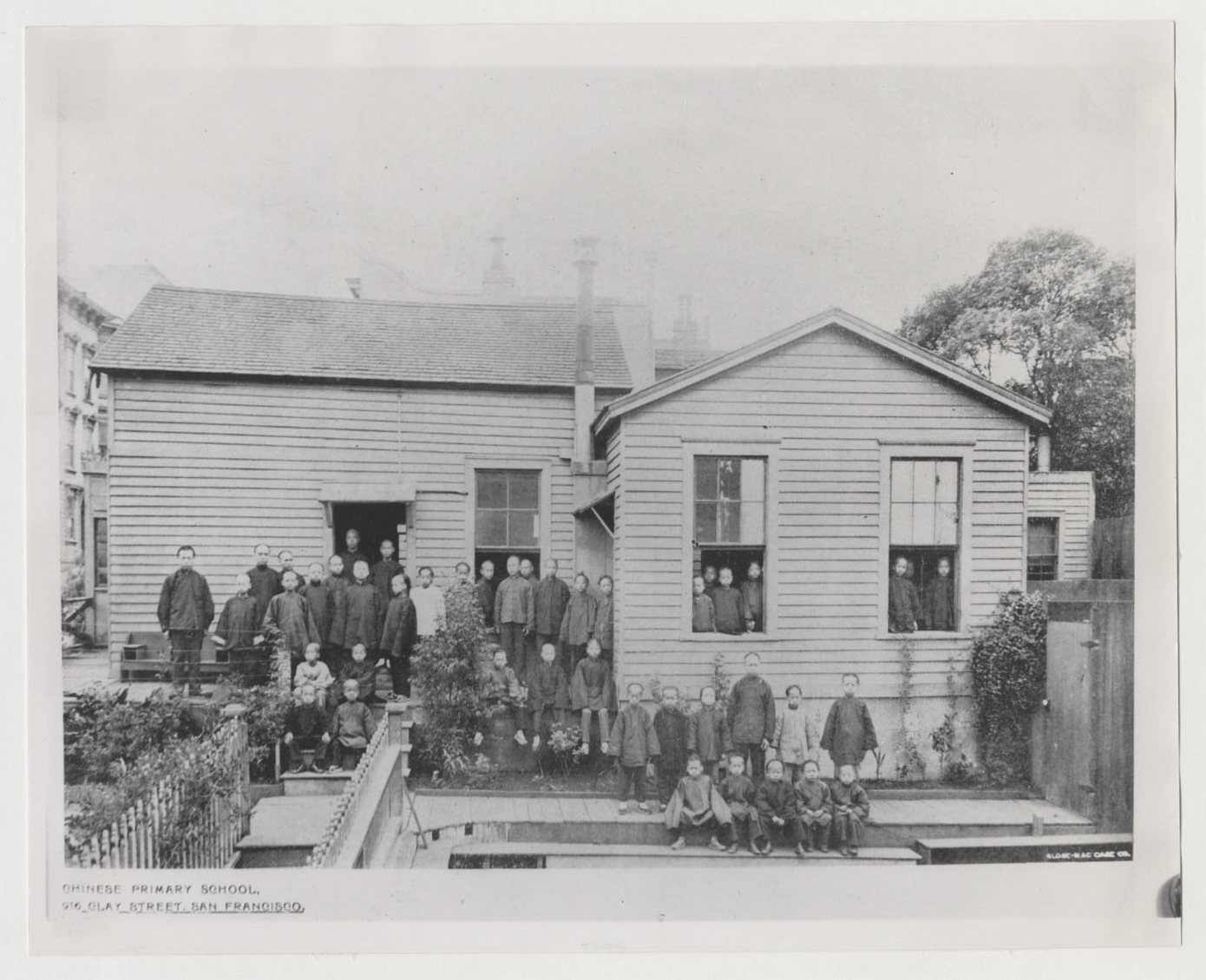
Mary declared that Mamie would not attend any Chinese-only schools, but eventually she and her brother Frank were among the first students to enroll in the Chinese Primary School when it opened.
Mae Ngai, a professor of history at Columbia University and author of The Lucky Ones, a book about the Tape family, called the ruling a “partial victory.”
“Tape v. Hurley was an exclusion case, not a segregation case,” she said. “In fact, the Chinese were so excluded that they got promoted to being segregated … they were not even on par with Black people and Native Americans in 19th-century California,” she said.
Ngai believes that the Tape’s argument, that Mamie should be admitted because the family identified with the white population, shouldn’t be seen as an aspirational strategy for the Chinese community today: “I don’t think it’s healthy for us to say people of color are only worthy when they deny their own cultures and languages and heritages,” Ngai said. “[The case] is maybe cautionary … if your idea is to convince the mainstream that you’re just going to be like white people.”
Nevertheless, Tape v. Hurley was a fundamental case for the country’s earliest immigrants, Ngai said. “Education is a central issue of settlement. ‘We’re here, we’re not citizens, but our children are born here, they are citizens, and we are here to stay.’ That is the message.”
How the Civil Rights era reshaped San Francisco’s classrooms — and the fight for equity
That tension — between gaining access to American institutions and submitting to cultural erasure — would become more explicit in the decades that followed, especially as the Chinese community fought for bilingual education. There were a series of historical milestones that set the stage for that fight, particularly during the Civil Rights Movement.
In 1954, the U.S. Supreme Court ruled that racial segregation in public schools was unconstitutional in Brown v. Board of Education. Meanwhile, arrivals to the U.S. dramatically shifted with the 1965 Immigration and Nationality Act, which eliminated decades-long immigration restrictions from Asian and African countries.
San Francisco’s Chinese immigrant population surged, and with it, the school district’s Chinese student population. But while school segregation was legally unconstitutional, de facto segregation — driven primarily by redlining and discriminatory housing policies — meant that schools in areas like Chinatown reflected the segregation of the surrounding neighborhoods.
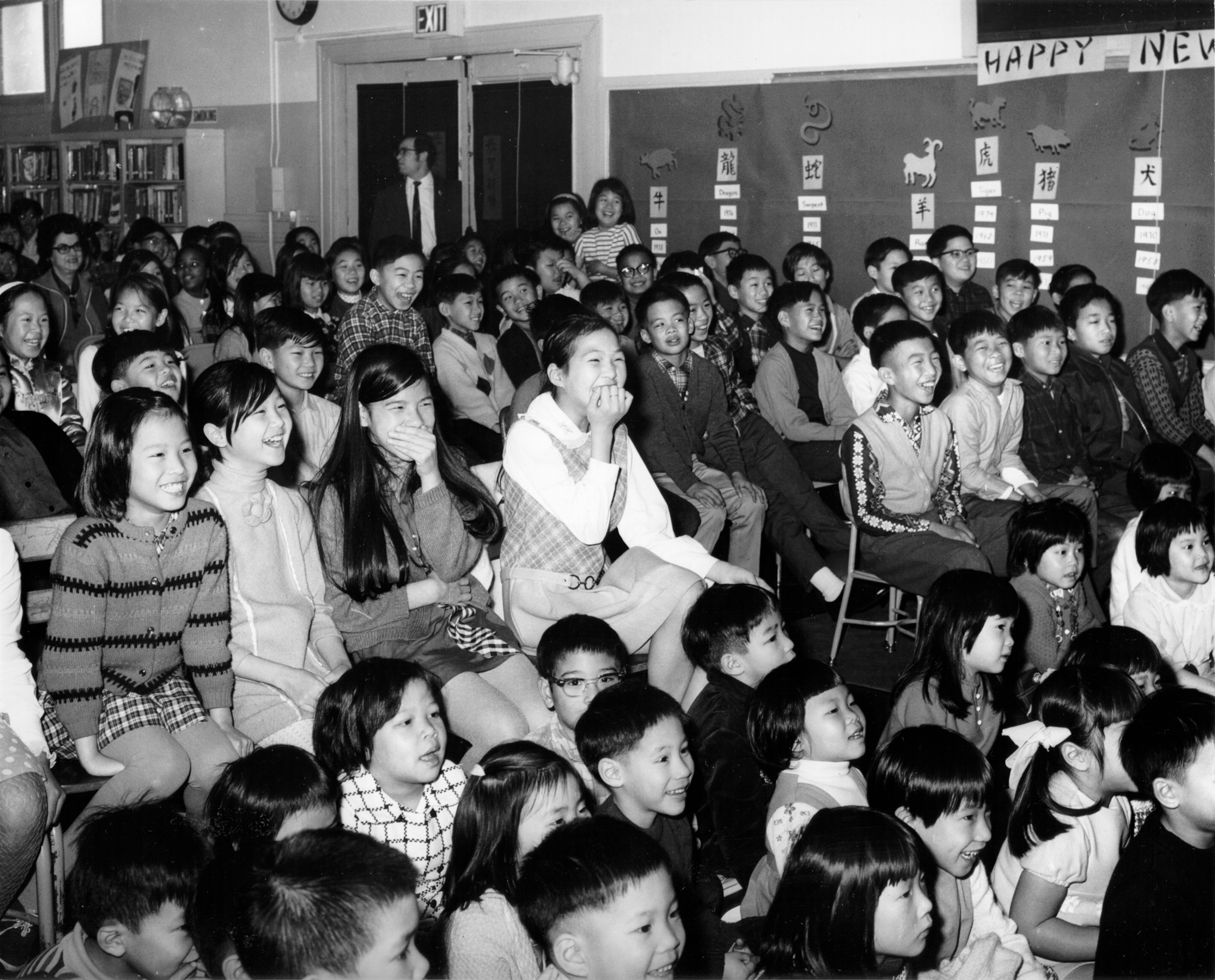
By the late 1960s and early 1970s, a new generation of immigrant and Chinese-speaking youth emerged, which increased the need for different resources, including language services at schools. Being placed in English-only classrooms meant many Chinese students were effectively excluded from participating in class, and that their academic progress — if any — was significantly slower than their peers’.
A 1974 California Law Review article describing those challenges said that Chinese students in these learning conditions were “doomed to poor achievement, illiteracy, and disproportionately high dropout rates” and that the isolating environment created psychological harm, making students feel inferior.
Despite the social problems in Chinatown, a new political consciousness was growing. Chew was part of a generation of young Chinese Americans who were returning to the neighborhood after monumental social upheavals.
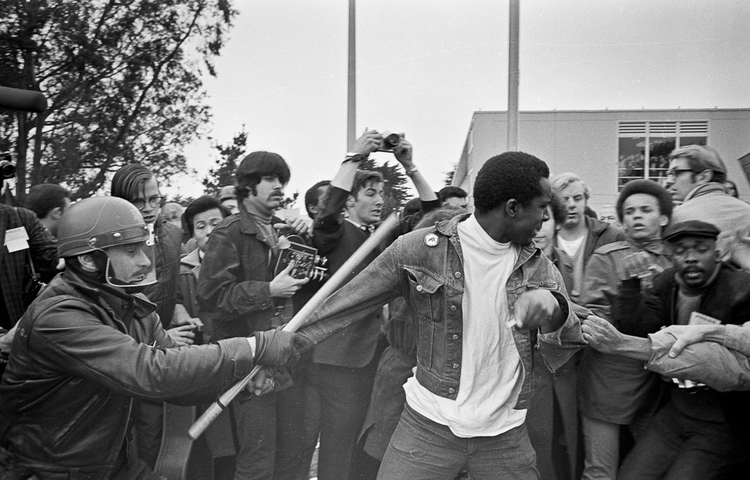
As a student at San Francisco State, she participated in the 1968-69 Third World Liberation Front (TWLF) Strikes, the longest student strike in U.S. history, where a coalition of student groups at SF State and UC Berkeley worked in solidarity to achieve their goals, including academic reforms and non-Eurocentric curricula. The term “Asian American” was formed at that time to create a political and organizing pan-ethnic identity, and the strike resulted in the formation of the nation’s first ethnic studies programs.
Up until then, Chew’s educational experience had left her feeling angry and invisible, but she said that joining the historic student movement was pivotal and “opened up a whole new world for me.” Working alongside Black, Chicano, Filipino, Native American and other student organizers, and questioning institutional power together, she learned to not only reembrace her community — she became motivated to fight for it.
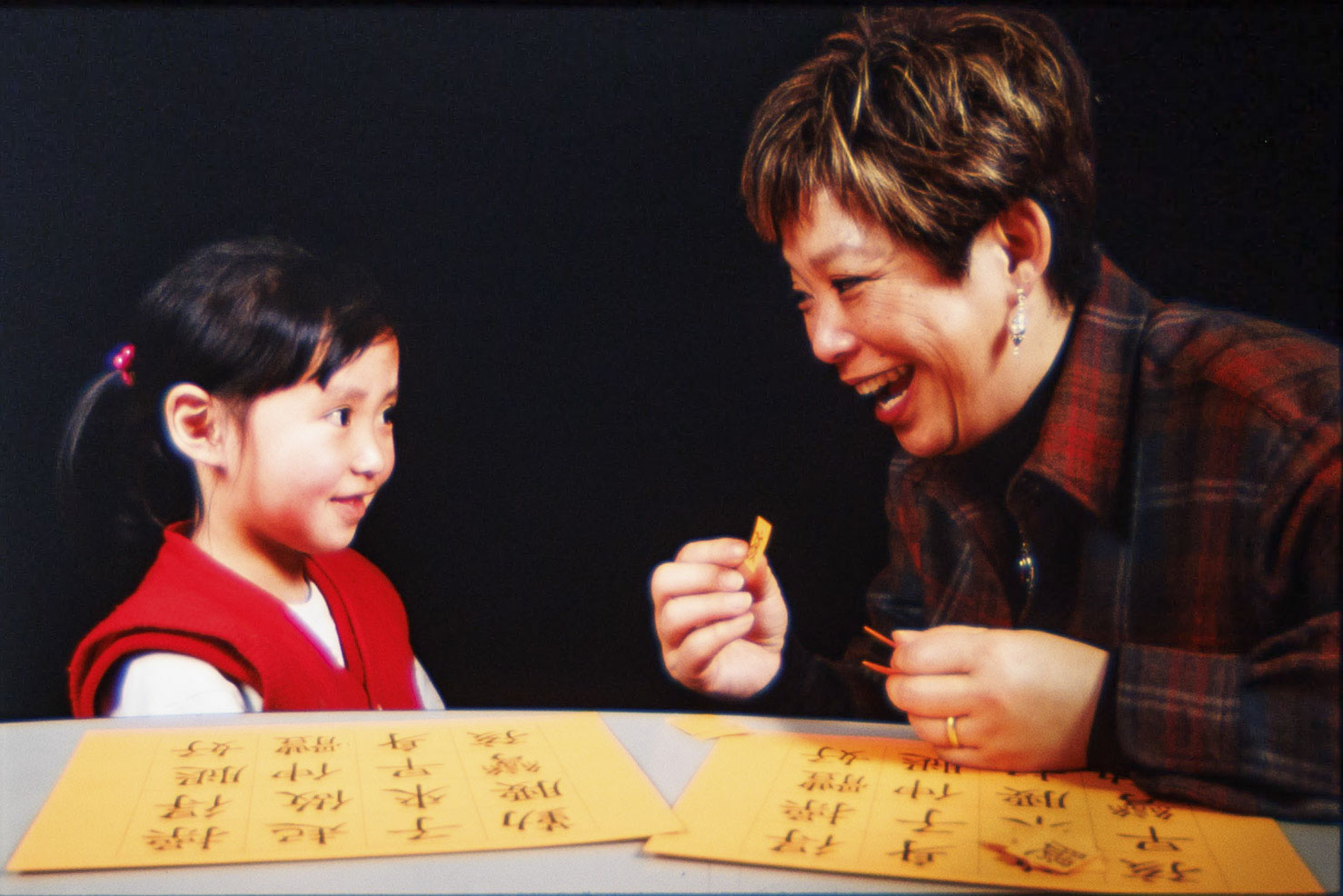
“I was so entrenched in the strike, but the strike wasn’t just about the strike,” Chew said. “That involvement made me think about [getting involved] in my community, in my context of being a Chinese American.” She wanted to help Chinese immigrant students embrace their language and cultural identity — an experience that she didn’t have growing up.
After graduating in 1972 and enlisting in the National Teacher Corps, Chew began teaching at Commodore Stockton Elementary. The building, which was once the segregated school for Chinese students that Mamie Tape attended, was now the site of San Francisco’s first Cantonese bilingual program, made possible by the Bilingual Education Act of 1968.
Chew said it was a unique time to join the school because, in addition to the pilot bilingual program, the district had just implemented busing to integrate the city’s elementary schools following Johnson v. SFUSD, in which Black families sued the district over school segregation.

Chinese immigrant parents largely opposed the court-ordered school busing program. One of their chief concerns was that it would scatter their children away from critical language resources at their neighborhood schools, like Commodore Stockton.
For Chew, who spent six years teaching second graders at Commodore, the overlap of bilingual teaching and the busing effort proved to be challenging yet exciting. While there were racial frictions between the kids from Chinatown and the Black students bussed in from Bayview-Hunter’s Point, she saw the benefits of bilingual education beyond language itself. As students learned English and Chinese together, it bridged the differences between them.
“I came from a different frame because of the [TWLF] strikes,” she said. “I was able to try a lot of different things during that time in terms of building humanity in a classroom and then more importantly, building community.”
The case for bilingual education: a new kind of grassroots movement in Chinatown
Even as the pilot bilingual program at Commodore Stockton took shape, there still weren’t adequate linguistic resources for all Chinese students in San Francisco.
In 1970, a group of Chinese American students filed a class-action lawsuit against SFUSD arguing an estimated 1,800 Chinese-speaking students were unable to meaningfully participate in their education because they were in English-only classrooms without any language support.
Most of the families in the case were low-income Chinese immigrant families who lived in Chinatown single room occupancy buildings. The lead plaintiff was Kinney Kinmon Lau, a Chinese American first grader attending Jean Parker Elementary School. The case was filed with the Chinese for Affirmative Action (CAA), one of the progressive Asian American civil rights and social services organizations that emerged in the late ’60s and early ’70s.
Political power was starting to shift in Chinatown. Since the 1800s, the Chinese Consolidated Benevolent Association, or the Chinese Six Companies — a group of family associations — had been the major player behind the fight for Chinese immigrant rights. The case for bilingual education demonstrated a new kind of grassroots resistance, one that was younger, multiracial, intersectional and based in self-determination.
“They’re younger activists who are able to connect what they’re seeing in Chinatown to the broader civil rights movement,” CAA’s current co-Executive Director Vincent Pan said. “That’s the difference. And they’re marrying that with parents who do have a very important interest in seeing their kids get a better education.”
Trish Morita-Mullaney, author of the book Lau v. Nichols and Chinese American Language Rights, called the case an “emergency response” to what was happening in the community and indicative of the growing language rights movement across the country.
“There was precedent set within the Latino community … [and here], the thinking around language rights is that ‘I really want my kid to have access to the instruction and because my kids are not proficient, we need differentiation of instruction, and Cantonese should be one of those options.’”
The District Court ruled in favor of SFUSD, stating that there was no constitutional responsibility to provide special language programs, a decision later upheld by the Ninth Circuit Court of Appeals. The plaintiffs brought the case to the U.S. Supreme Court, arguing that SFUSD’s “English-only” policy denied them equal protection.
In 1974, the Supreme Court ruled in favor of the Chinese plaintiffs, deciding that not providing non-English-speaking students with supplemental language courses was a violation of several legal precedents, namely the Civil Rights Act of 1964, delivering a victory for bilingual instruction.
The Lau decision set a national precedent that education needed to be responsive to the different language needs and identities of students, Morita-Mullaney said. While the Court didn’t specify the steps school districts needed to take, it mandated supplemental instruction for English language learners. SFUSD took the bilingual education route, entering into a federal legal agreement, called the Lau Consent Decree, which legally bound the district to provide specialized language instruction and equal educational access to all non-English-speaking students.
Pan sees the Lau victory as part of the struggle for Chinese Americans and immigrants to participate fully in American society that Tape v. Hurley began nearly 90 years earlier. While Tape was a fight for the Chinese people to be “seen as humans,” Pan said Lau took it a step further “to get at the issue of ‘you’re human even if you don’t speak English well.’”
What does fair and equitable public education mean now?
On a recent evening at the Southeast Community Center in Bayview-Hunters Point, six candidates running for San Francisco’s District 10 supervisor’s seat addressed a room full of students and families. CAA was co-hosting the event, and managing director of policy Annie Lee posed questions to the candidates. One by one, they each weighed in on a wide range of community issues, including Flock cameras and mental health services inside schools.
While the district is a historically Black community, nearly half of its population is Asian, and more than 60% of the residents speak a language that isn’t English at home. Recent reporting from The San Francisco Chronicle shows that the Chinese population grew by nearly two-thirds between 2010 and 2024.
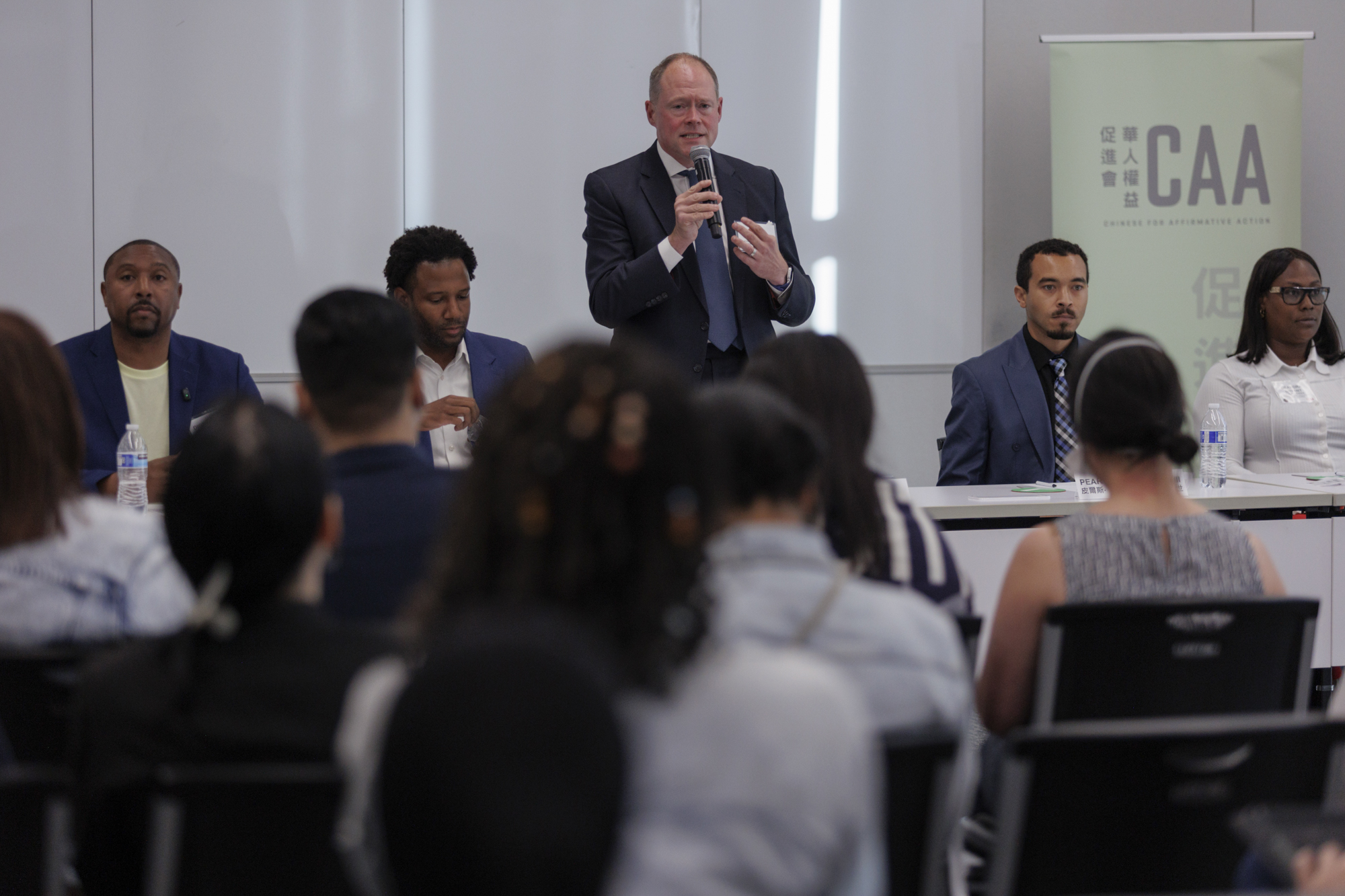
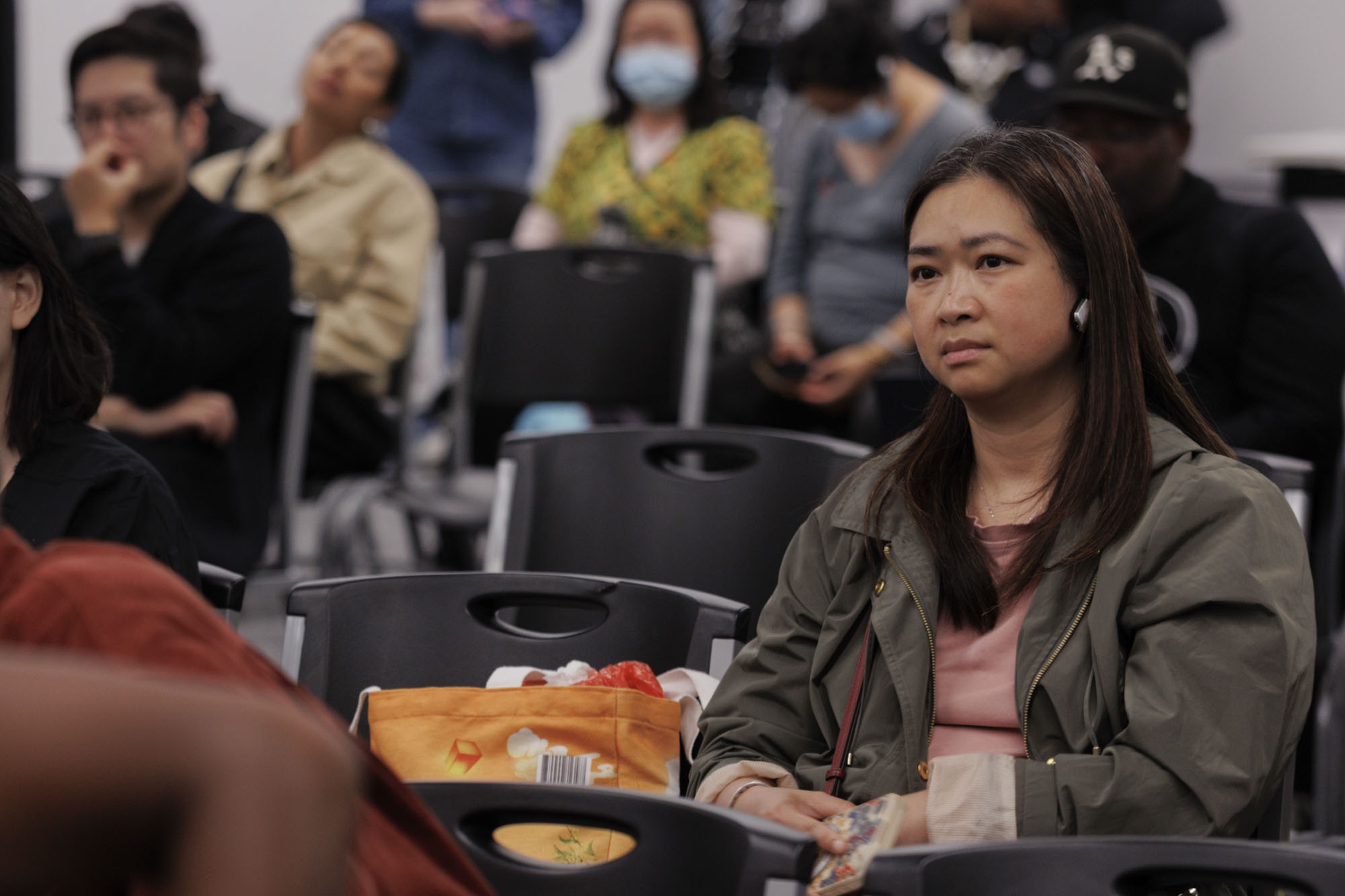
Among the crowd that evening were a few Chinese parents who wore headsets, as interpreters on the sidelines translated the conversation into Cantonese.
One of them was 43-year-old Christina Ouyang, a single mother with a 13-year-old daughter who works part-time doing community outreach with CAA.
“I came here to learn more about the programming and opportunities available to children in the school district,” Ouyang said in Cantonese, sharing that she was most concerned about the safety and well-being of her daughter, who had faced bullying at her school.
While the D10 candidates didn’t address that specific issue, the attendance of Chinese parents at events like these demonstrates that despite the language barriers, education remains a central way that they engage in the larger community.
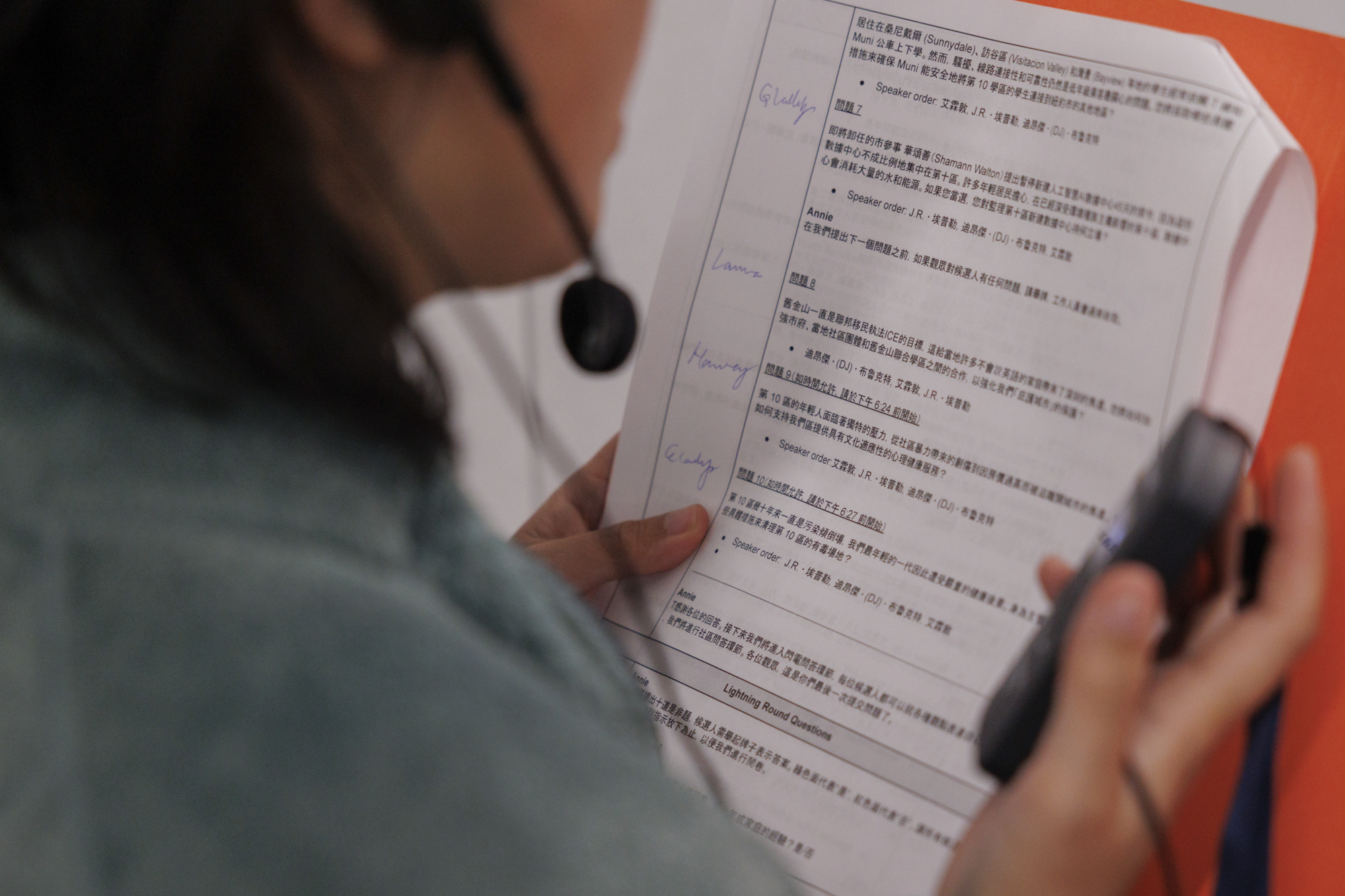
It’s the kind of work that CAA remains dedicated to today, and Pan sees it as a continuation of the Lau case’s legacy. In the past, they’ve helped immigrant parents have a say in their children’s education, including with efforts like helping noncitizens vote in school board elections.
“Who doesn’t want parents to be involved? … It’ll make the schools better for everyone, but because of all the rhetoric against immigrants, you can see that’s being demonized right now,” Pan said.
Education — often positioned as a gateway to American society — has become a contentious, hot-button issue for the Asian American community, especially around the recent U.S. Supreme Court ban on affirmative action, and the threats to ethnic studies. CAA often finds itself confronting divisions within the community, Pan said. Many Asian Americans were vocal and proactive in helping dismantle affirmative action, while others have called for the end of ethnic studies curriculum, including recently at Lowell High School in San Francisco. He notes these friction points reflect generational and class shifts: while some Chinese families advocate for strict meritocracy as the surest route to advancement, others see those moves as chipping away at the multiracial coalitions that secured rights for vulnerable learners in the first place.
He notes these friction points reflect generational and class shifts: while some Chinese families advocate for strict meritocracy as the surest route to advancement, others see those moves as chipping away at the multiracial coalitions that secured rights for vulnerable learners in the first place.
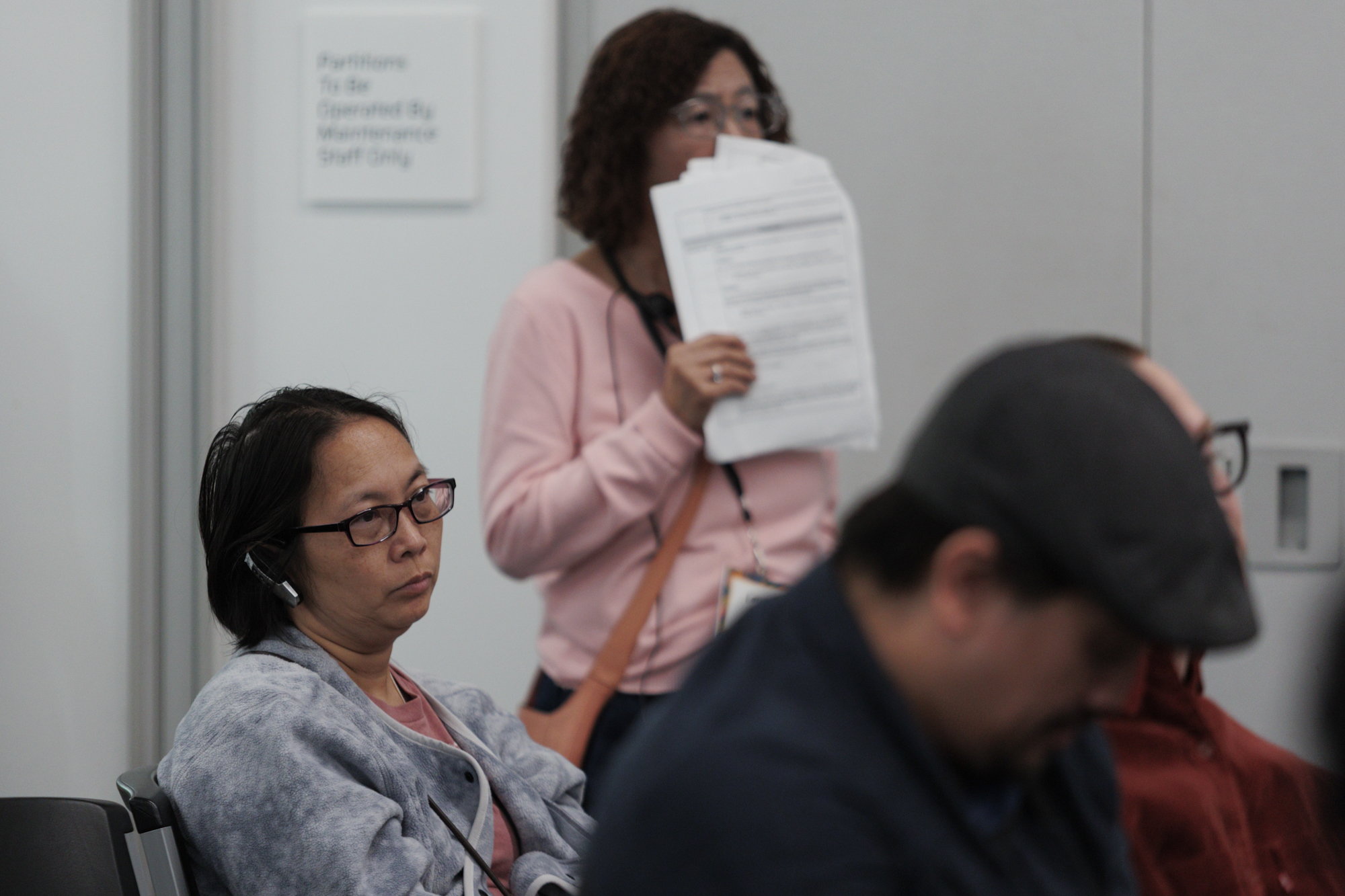
“Unfortunately, when the stakes are high, people can get emotional. What we really also need to do is to be able to think clear-headed about what the effective public policies might be,” Pan said. “The more viable common sense practical path is to actually expand opportunity as opposed to fight for limited seats in a system that makes high quality education very scarce.”
But the second-term Trump administration has done the opposite of expanding opportunities for English learners. In addition to weakening federal civil rights oversight of language access and terminating grants and support for English-learner programs, President Trump signed an executive order last year, declaring English as the nation’s only official language. The order states: “Speaking English not only opens doors economically, but it helps newcomers engage in their communities, participate in national traditions, and give back to our society.”
It’s a sentiment that flies in the face of everything Laureen Chew feels about the power of bilingual education to help “newcomers” engage in their broader communities.
Today, she’s working with the CAA and The Association of Chinese Teachers (another advocacy organization founded in the 1960s) to reactivate the bilingual teacher training track at SF State, to ensure there are teachers to help replace the generation of Cantonese bilingual teachers who are retiring. While there have been some heritage language preservation efforts in the city, like “Save Cantonese,” Chew said there’s still a need to provide bilingual language resources to the city’s most vulnerable Chinese students.
Bilingual education is also under pressure as districts like SFUSD face low enrollment numbers, less state funding and an emphasis on test scores.
In 2019 — 45 years after the Lau decision — SFUSD sunsetted the Lau Consent Decree, relieving the district of the federal mandate to provide services for English language learners. Officials declared that the district remained committed to supporting students, even without the oversight. But Morita-Mullaney said many have expressed concerns.
“There’s a lot of people I’ve talked to in Chinatown that are not happy about that because it was done very quietly.”
She explained that as more Chinese Americans become English-dominant, some teachers may adopt the same expectations and norms that prioritize English proficiency, weakening support for accountability measures that were designed to protect English learners. That’s why remembering the legacy of fights like Lau v. Nichols helps place bilingual education’s importance into context, Morita-Mullaney said.
“What Lau does for us is it says go back to the people. We are talking about the humanity of language learners, and what is their rightful case for language access. And so it is about the curriculum, it is about progress … but the beneficiaries are the students, and you don’t see that foregrounded in policy in the same way.”
For Chew, the attacks on immigrants can be disheartening. But as she approaches 80, she remains committed to the work, drawing on the lessons of a life spent challenging who gets to belong: from her childhood as a Chinese student taught to reject her native language to her work as one of San Francisco’s first Cantonese bilingual teachers. Each step has shaped her conviction that education should make room for everyone.
“I embrace this country for what it aspires to be … No matter how strange everything is nowadays, I still believe in [its] foundation, even though [the founders] were all flawed. Isn’t that interesting?” she said, with a laugh. “And yet, they had this idealistic version of what a country can be, and we’re all still trying to live by it.”