Under Proposed Trump Rule, Head Start Would Be English-Only

In San Francisco’s Chinatown, toddlers and preschoolers often learn their first English words at Lok Yuen Early Learning Center.
The center serves low-income families who qualify for Head Start, and the children come from households that speak Chinese, Vietnamese, Spanish, Arabic or Nepali. To connect with the kids and get them accustomed to the classroom, teachers greet them in their home languages and hang pictures and signs on the walls in multiple languages.
“Even if we don’t know their language, being able to learn one or two words like, ‘Hola, como estas?’ can make them feel welcome,” said Jennifer Lee Yuen, a teacher at the center run by Wu Yee Children’s Services, the largest Head Start provider in the city.
But these practices could end under a proposal to reform the 61-year-old program led by Department of Health and Human Services Secretary Robert F. Kennedy. Earlier this month, he unveiled a plan that would remove federal requirements for class sizes, staff qualifications and other standards with the goal of cutting administrative costs and increasing access to Head Start. Within that plan to eliminate “unnecessary bureaucracy,” however, is a new requirement that programs teach only in English.

If finalized, the requirement for English-only instruction would reverse longstanding regulations that Head Start programs support bilingualism. Administration officials say those regulations are “at odds” with President Donald Trump’s executive order designating English as the official language of the United States. But advocates for Head Start say this mandate would not only conflict with the administration’s messaging around decreasing federal oversight of the program, but it could also potentially cost jobs and millions of dollars to implement — a scenario the administration also acknowledges.
In the proposed rule, officials with the Administration for Children and Families (ACF), which oversees and funds Head Start, estimated that implementing the English-only mandate would cost about $47 million to replace learning materials at nearly 19,000 classrooms. Some teachers might need retraining, they wrote, “while others may need to be replaced.”
The proposal noted that having fewer bilingual staff might weaken non-English-speaking families’ engagement and suggested the educators use translation apps to communicate.

“To me that shows a disrespect of these families,” said Shantel Meek, executive director of the Children’s Equity Project at Arizona State University. “It’s common sense to have someone on staff who speaks the language of the families being served.”
Meek co-authored a policy brief that raises the possibility that the changes may conflict with the Head Start Act, a law passed by Congress which specifies that revisions to the program’s standards will not result in “any reduction in quality, scope, or types” of services already in place.
Education experts say the policy also runs counter to evidence that children learn a second language faster when they maintain the first language they learned at home.
“This really creates a false choice between learning English and maintaining a child’s home language,” said Martha Hernandez, executive director of Californians Together, an organization based in Long Beach that advocates for English learners and multilingual education in California.
“We absolutely want children to develop strong English,” she said. “The question is whether we have to ask a 3- or 4-year-old to give up the language they already know in order to do that. And the research-based approach has always been to build English while continuing to develop the home language.”
Head Start programs for American Indian children would be exempt from the English-only requirement, but advocates in California worry the policy would affect Early Head Start, which serves expectant moms and children under the age of 3, as well as Migrant Head Start, which serves the children of farm workers.

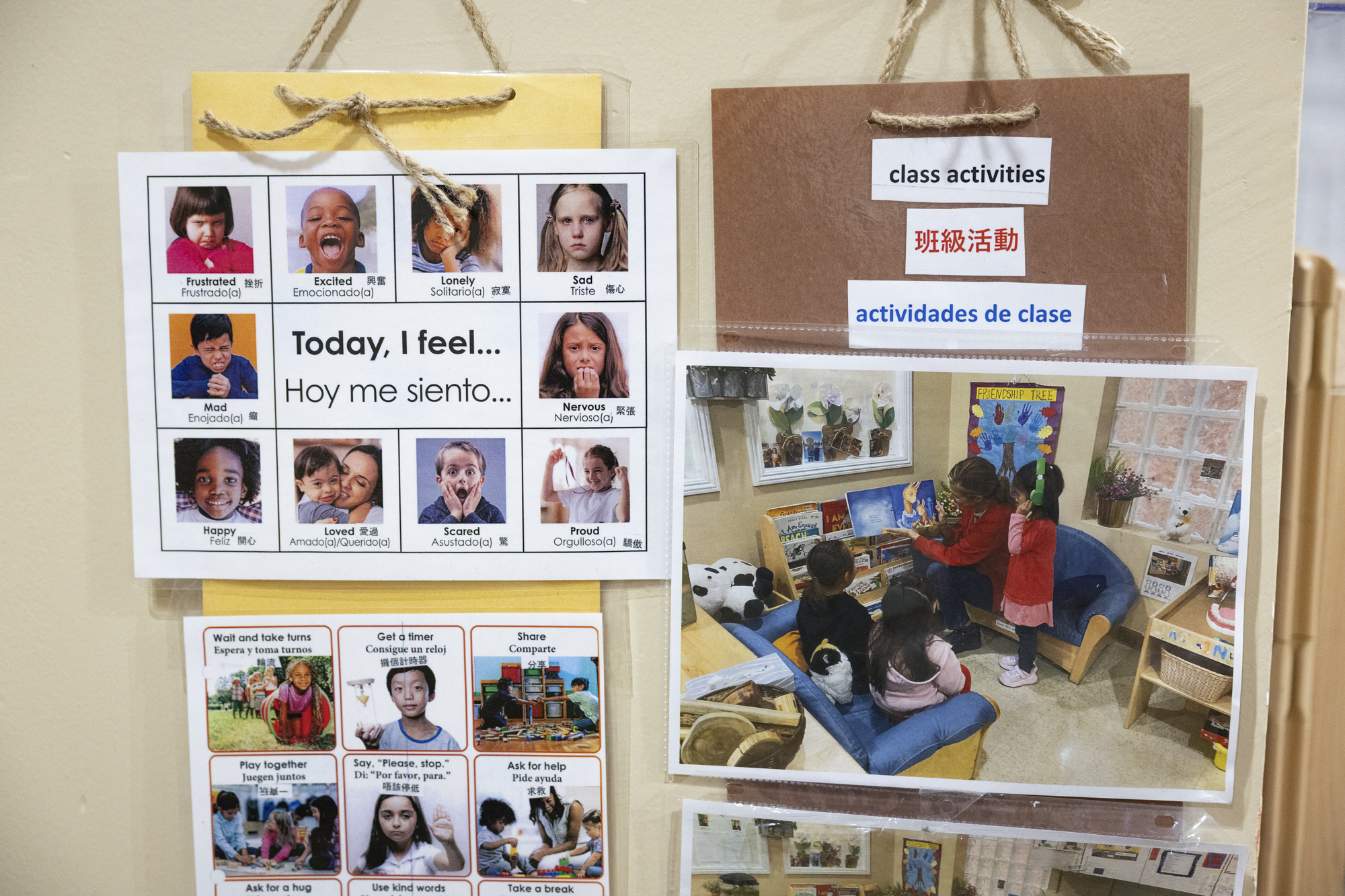

“For Early Head Start, we have classrooms where all of the teachers are monolingual in just, say, Spanish, because that’s what all of the kids in that classroom speak,” said Melanee Cottrill, executive director of Head Start California, an association of Head Start programs serving over 70,000 children in the Golden State.
“If you switch to English only, all of those classrooms would be completely devastated, and we would lose all those teachers,” she said.
Luis Bautista, who oversees Head Start programs for the Los Angeles County Office of Education, said the proposal has a “chilling effect.”
“It’s concerning to think that this is the message we would be sending to children and families across the country, especially when we’re charged to serve children that are in foster care, families that are experiencing homelessness, families that are already dealing with quite a number of challenges,” Bautista said. “We should not be adding more barriers to their participation.”

The ACF said cutting regulations would save money and give local providers and their parent-led governing bodies more flexibility to run programs that meet their communities’ needs.
“While the proposed rule requires programs to be conducted in English … it allows programs to seek a waiver from any specific requirement in the regulation as long as it does not relate to nutrition, physical activity, or eligibility,” an ACF representative told KQED.
The most recent data show more than 30% of Head Start staffers nationwide were bilingual, and 35% of children enrolled in the program were dual-language learners.
The numbers show that families seek out educators who speak the same language as them, said Savitha Moorthy, director of the Center for the Study of Child Care Employment at UC Berkeley.

“Their value is in their ability to provide instruction that’s in the family’s home languages, so [the proposal] is actually stripping away the diversity of the workforce,” she said.
Yuen, the teacher, said an English-only mandate would make it harder for her to do her job.
“In order for children to learn how to speak a language, they need to trust a teacher first,” she said.
When children feel safe and can trust the adults in their care, Yuen said, they’re open to learning.
The proposed changes on the Federal Register are open to public comment until Oct. 6, and could still be amended before being finalized in the coming months. On Sept. 14, Berkeley’s Center for the Study of Child Care Employment and EDvance College will host a webinar to explain the public comment process.