Chinese Immigrants Led the First Mass Resistance to America's Deportation System
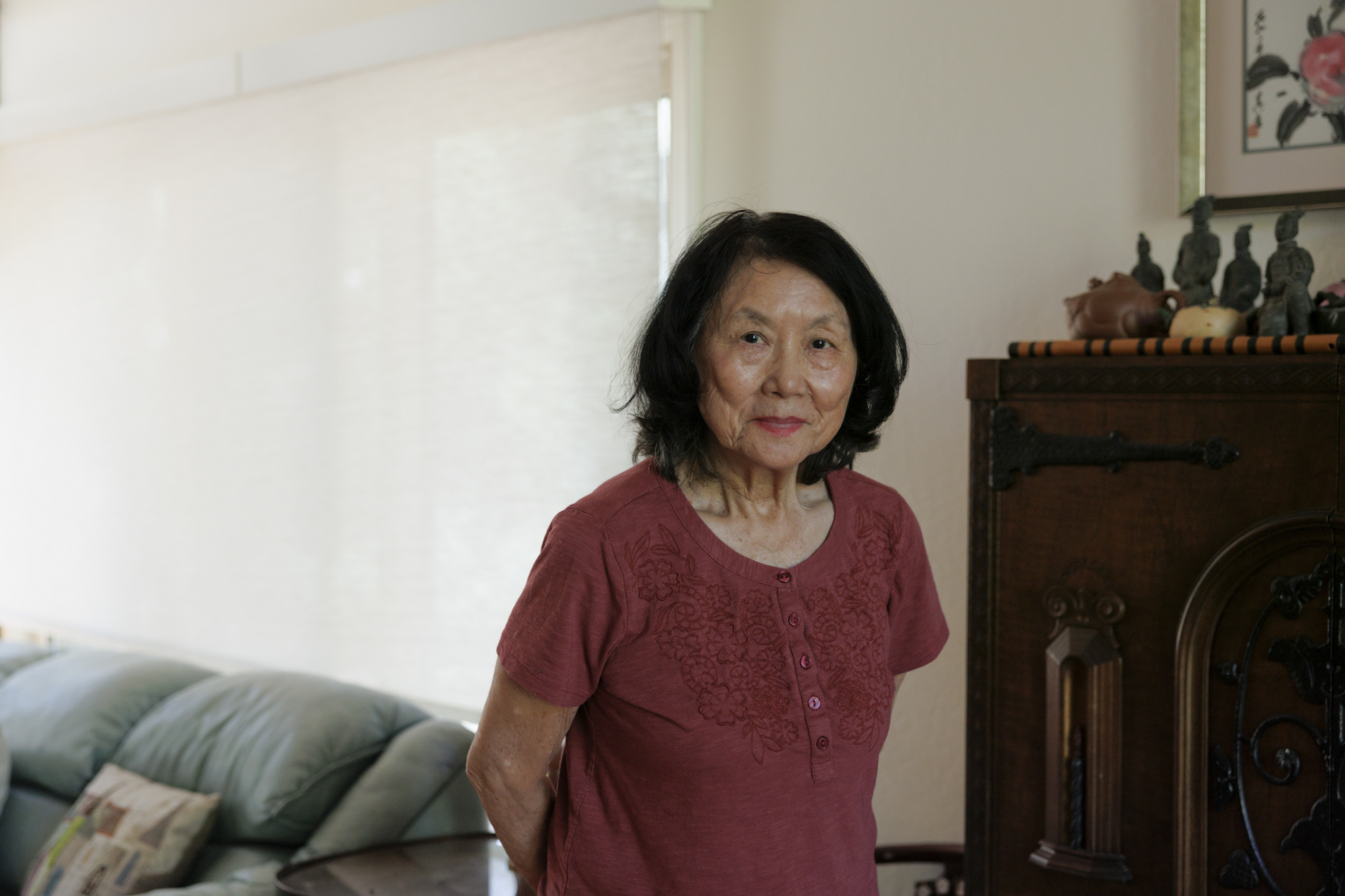
Connie Young Yu thought she knew a lot about her beloved gung gung. As a young girl, she would listen as her grandfather, Yung Wah Gok, recounted what it was like living through America’s Chinese Exclusion era of the late 19th century. She had heard many stories, like how, as a young boy in San José Chinatown, he’d have to sprint home while white residents hurled rocks at him.
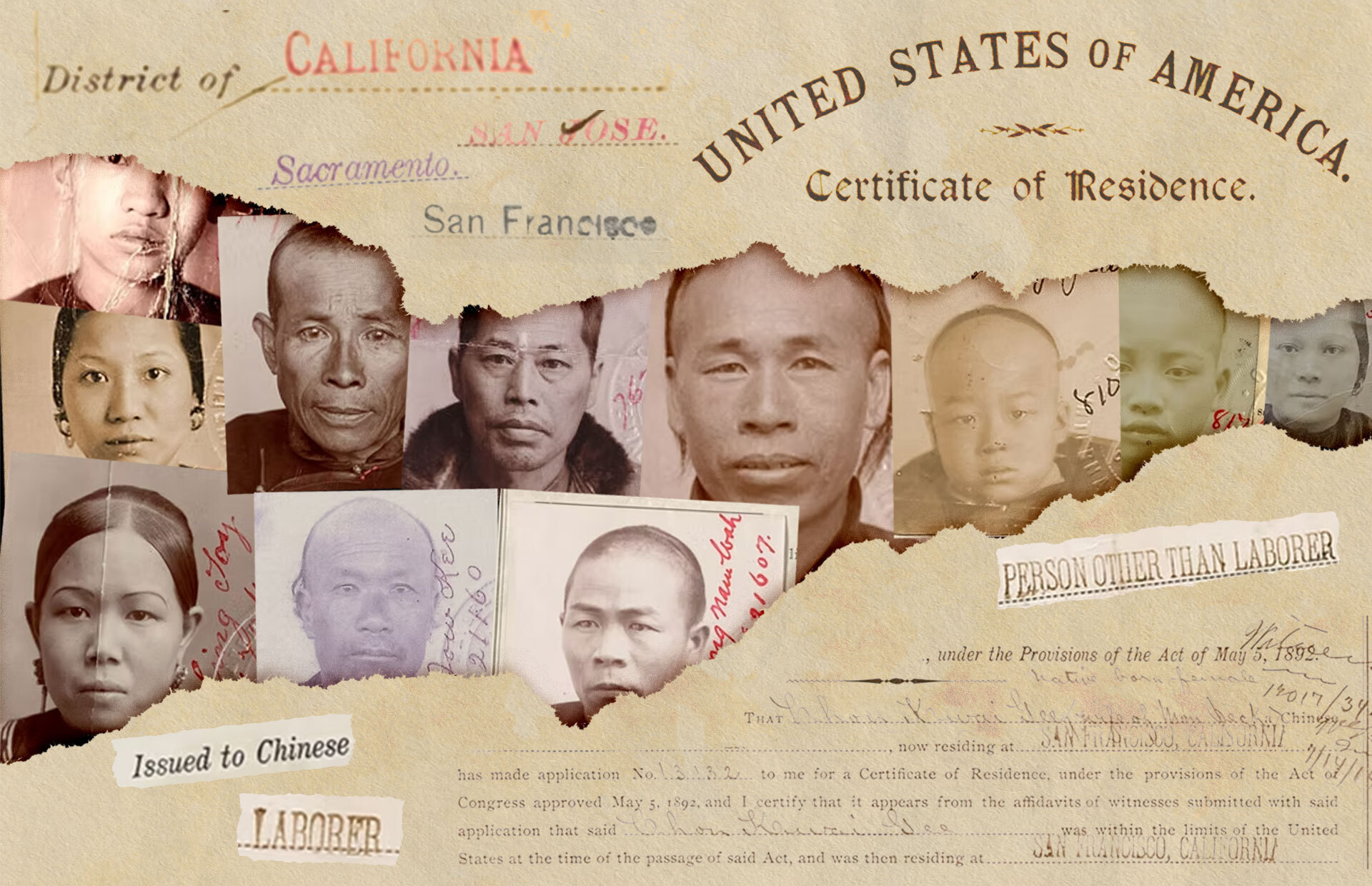
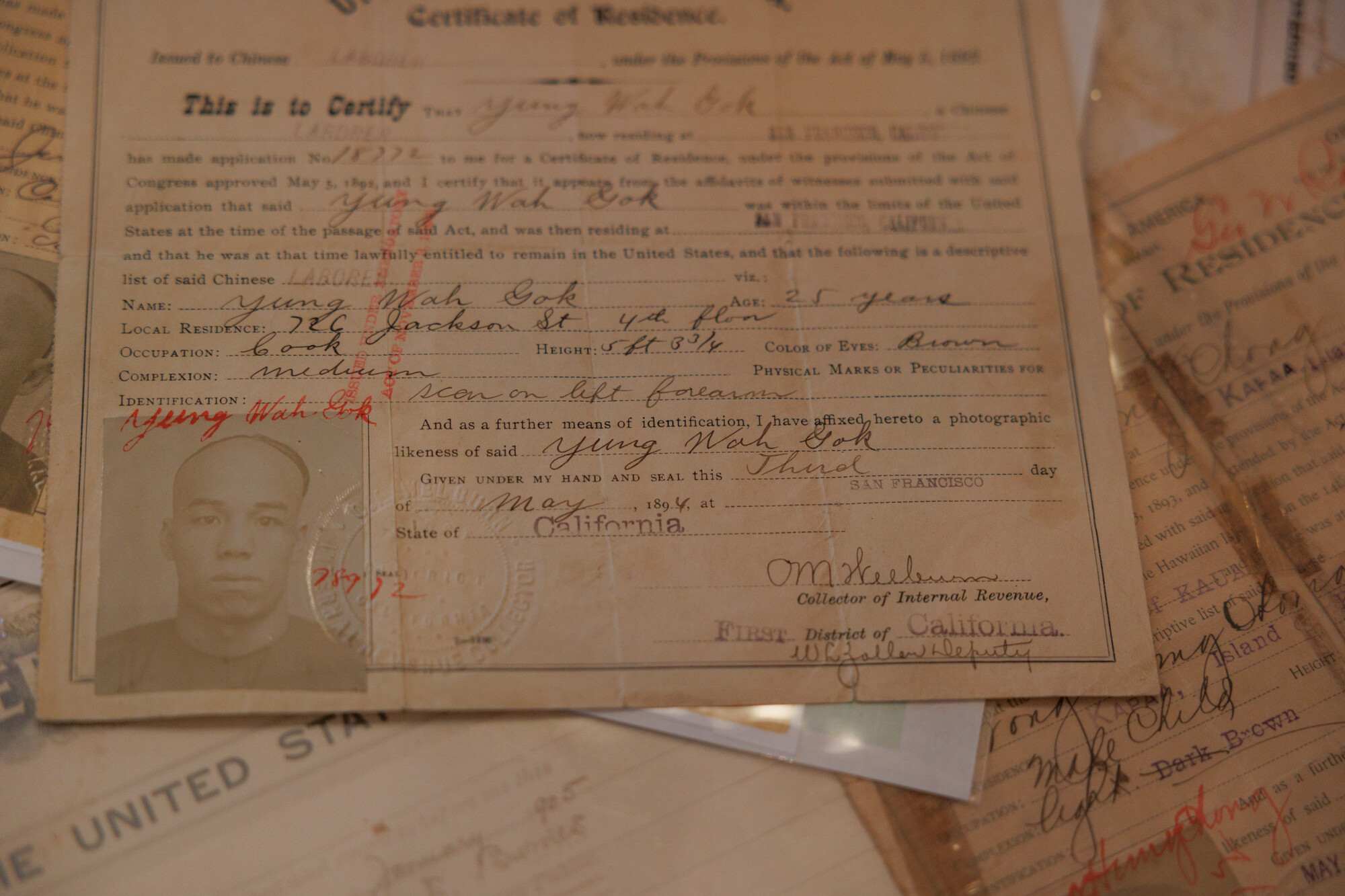
It wasn’t until 1972, when Yu was an adult active in Asian American organizing and scholarship, that her mother shared a surprising piece of his history with her. From the family’s large carved camphor chest in her bedroom, her mother pulled out a neatly folded parchment: It was her grandfather’s chak chee, a certificate of residence that all Chinese people in the U.S. were required to carry, as mandated by the 1892 Geary Act, the successor to the 1882 Chinese Exclusion Act.
Stamped across the top of the document was the word “LABORER.” Below it were his occupation — “cook,” his height — just over 5 feet, 3 inches and identifying marks — “scar on left forearm.” And in the lower left corner was a striking portrait photo of her grandfather at the age of 25.
“I just thought, ‘Gee … that doesn’t look like my gung gung,’” said Yu, now 85, who had known her grandfather as a dignified man who wore suits. “But actually, I really liked that picture in many ways because he looks very determined. Like a young rebel.”
The certificate was issued in May 1894, two years after the passage of the Geary Act, revealing that her grandfather had been one of the tens of thousands of Chinese residents across the country who had resisted the federal government’s demands to register — forming one of the largest campaigns of civil disobedience in U.S. history.
From 1892-93, Chinese immigrants refused to comply with the requirement to register with their local internal revenue offices. If they were caught without a certificate, they faced arrest, detention and deportation as stipulated by the Geary Act, which historians and legal theorists say helped shape today’s U.S. immigration system.
While Chinese immigrants are remembered for constitutional victories, including rulings that established birthright citizenship and strengthened equal protection, they have another legacy: they led a nationwide campaign against the federal government’s expansion of immigration powers. And though they ultimately failed to overturn the Geary Act in court, their resistance challenged the adoption of now-routine practices — calling them “cruel and unjust,” and incompatible with the nation’s constitutional ideals.
Those sentiments are echoed today by immigrant communities across the country, as the Trump administration continues to double down on its deportation efforts.
Yu, a longtime local historian and author, argues the resistance of early Chinese immigrants like her grandfather should be more well known. She co-founded The Geary Act Project two years ago and is now on a mission to collect more certificates — to lay a paper trail of evidence linking the racism experienced by her ancestors to the current administration’s immigration crackdown.
“Our society is under threat, we’re under attack,” she said. “We’re trying to show that the Chinese Exclusion Act was actually a foundation for ICE and the harassment of people of color and immigration detention and deportation.”
When Chinese exclusion wasn’t enough
Yu said it’s by luck that she was born in the United States. Her grandfather arrived in 1881, at age 11 — just one year before the Chinese Exclusion Act banned Chinese laborers from entering the U.S. for a decade.
“My parents always said, ‘If he had waited until he was 12, you wouldn’t be here,’” Yu said.
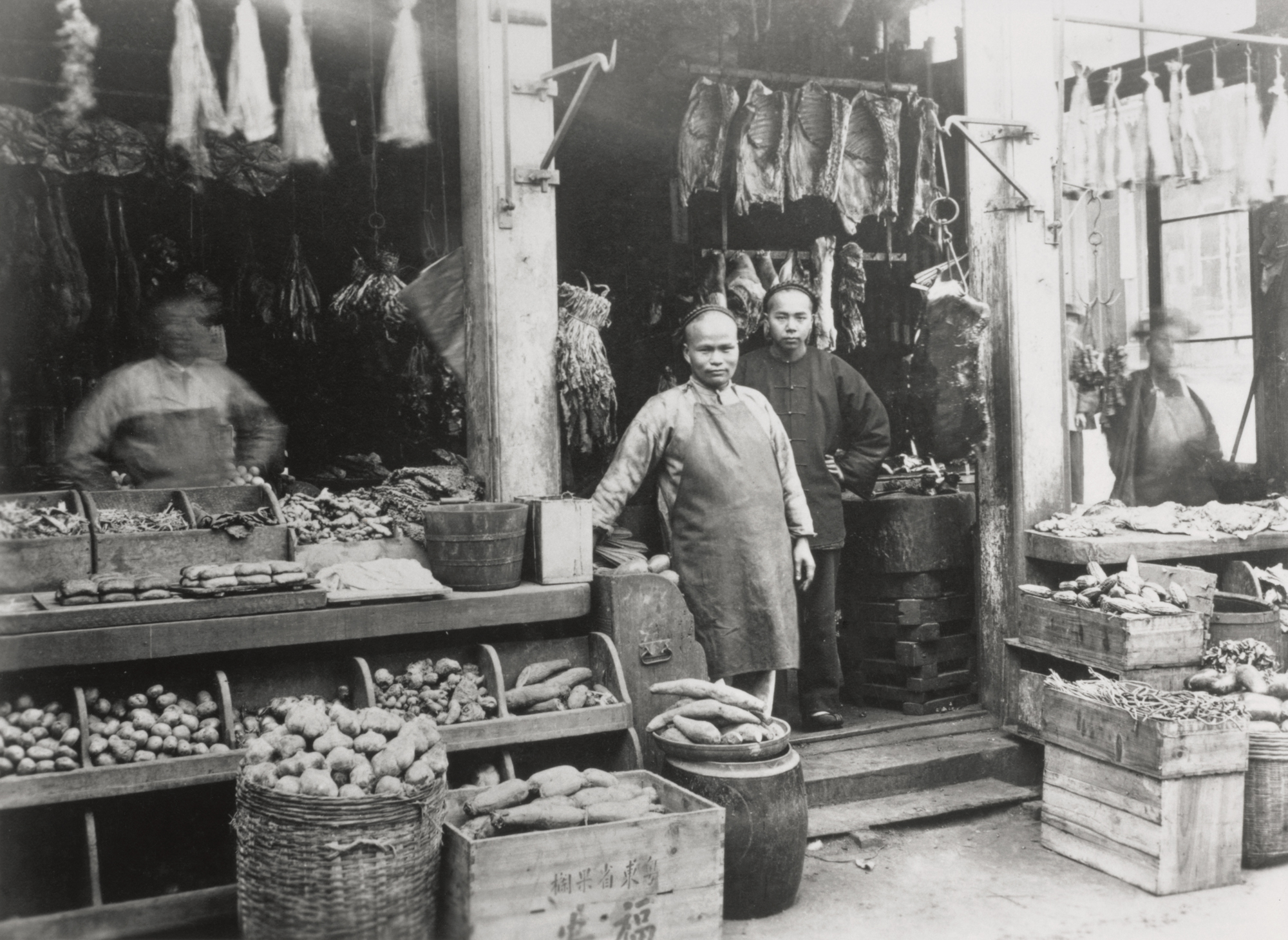
When Chinese people began arriving in the U.S. in the late 1840s, there was no federal immigration system. States, including California, passed laws targeting Chinese immigrants as anti-Chinese sentiment grew, fueled by the narrative that they threatened the nation’s economic well-being.
But Reconstruction — the post-Civil War era when constitutional protections were expanded for newly freed Black Americans — changed the landscape. The 14th Amendment ensured due process and equal protection to everyone, giving Chinese immigrants new grounds to challenge discriminatory state laws.
Several Supreme Court justices, along with others who wished to continue excluding Chinese immigrants, pushed for the federal government to take up immigration control, according to Kelly Lytle Hernández, an author and professor of history at UCLA.
“I understand our federal immigration system as being the creation of an effort to skirt the 14th Amendment, to skirt the growth of a multiracial democracy,” she said. ”Reconstruction and Chinese Exclusion are all part of the same story.”
In 1875, the Supreme Court ruled in Chy Lung v. Freeman that immigration was a federal responsibility, while the Page Act established one of the first major federal restrictions on immigration, targeting Chinese and other Asian women.
Seven years later came the Chinese Exclusion Act. Despite the passage of the landmark law, thousands of Chinese laborers and immigrants still arrived. They filed legal challenges to their exclusion, inundating federal courts in San Francisco and frustrating white politicians and residents who wanted to see Chinese immigration come to an end.
As the Chinese Exclusion Act was set to expire in 1892, the federal government realized it needed a way to plug the loopholes of the act, especially as anti-Chinese violence intensified.
“As soon as [white residents] saw that their goals weren’t being met by this experiment in diplomatic control, this is why we see the most violent anti-Chinese incidents happening between ’85 and ’88, not before 1882,” said Alexander Jin, a historian at Dartmouth University.
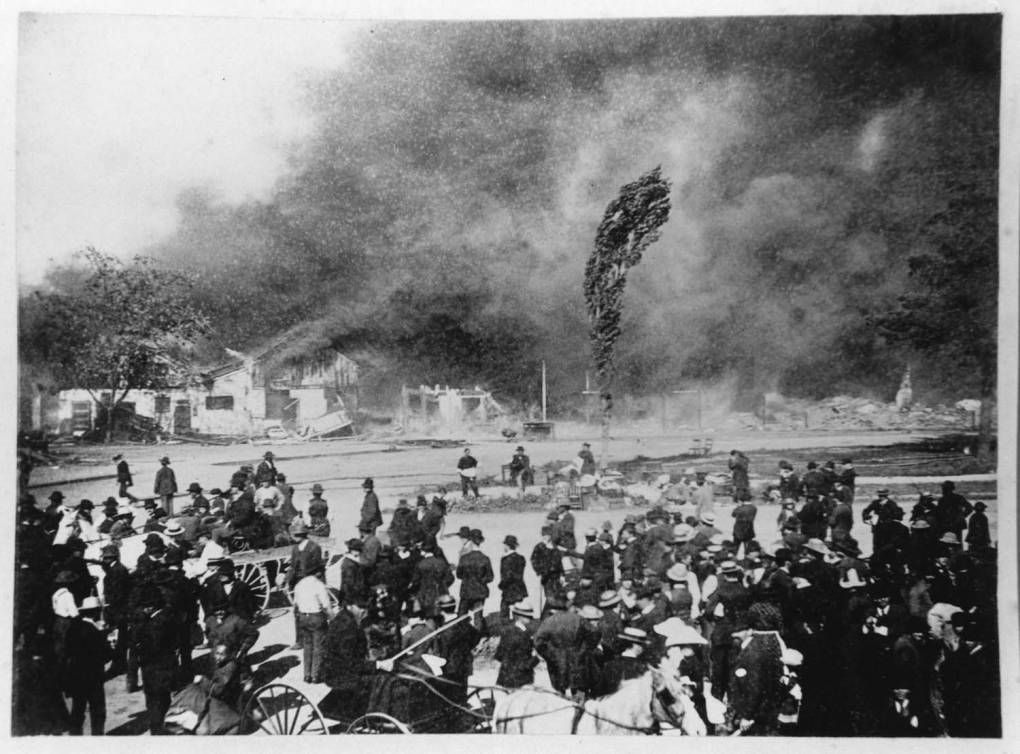
Vigilante mobs seized Chinese businesses and homes, and rural Chinatowns along the West Coast were set on fire, including Eureka, Antioch, Napa and San José.
Yu’s grandfather was a pioneer of San José’s Chinatown, and she said he shared details of how his community was destroyed in 1887: “The newspaper always said ‘mysterious fire’ … but my grandfather always said the fire was set to drive us out … [they should’ve] asked the Chinese themselves how they felt,” Yu said.
‘The Dog Tag Law’
Months before the Chinese Exclusion Act was set to lapse, Santa Rosa lawyer and U.S. House Representative Thomas J. Geary introduced legislation that addressed a question the original act had a hard time answering: how could the government not only restrict newcomers but remove Chinese people who were already living in the country?
The Geary Act became law, extending the Chinese Exclusion Act by a decade and imposing remarkable provisions on Chinese laborers living in the U.S. They had to register with the federal government and obtain a certificate of residence that they had to carry with them at all times or risk up to one year of hard labor in prison and deportation unless they could prove their immigration status with the testimony of two white witnesses.
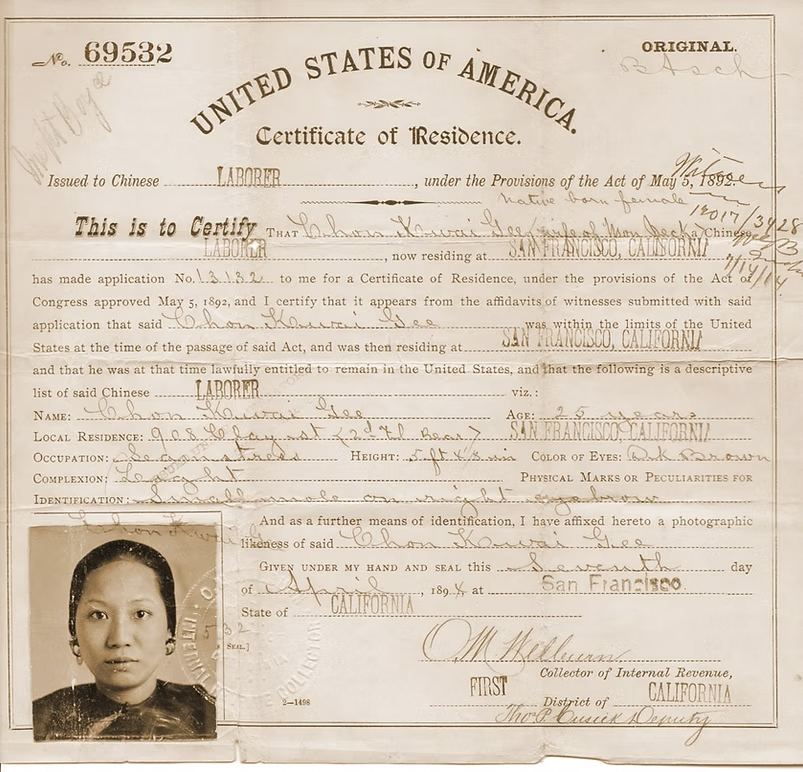
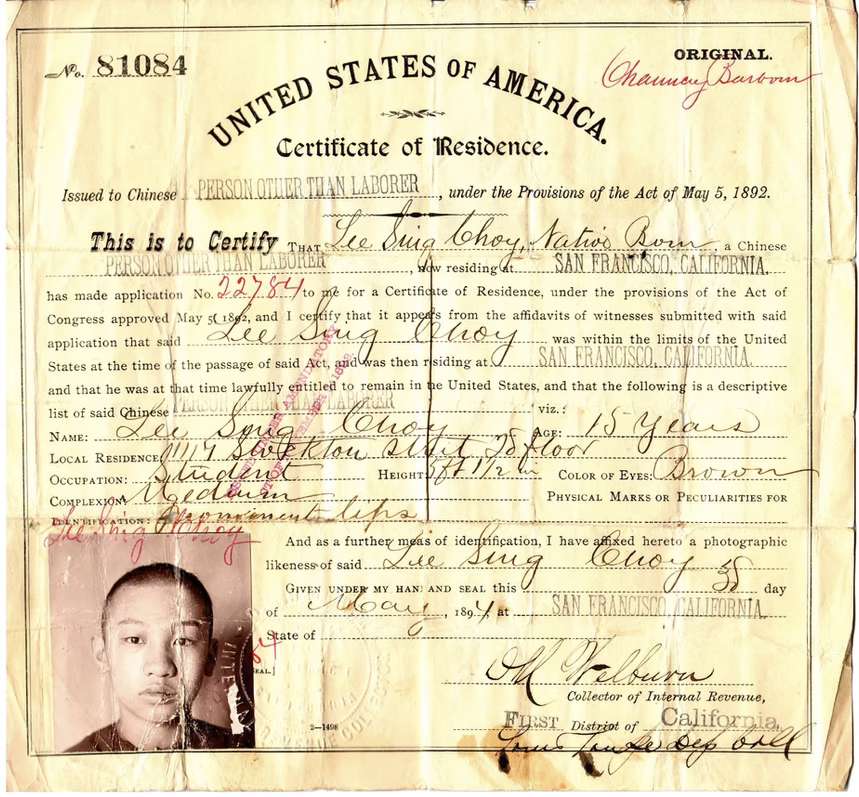
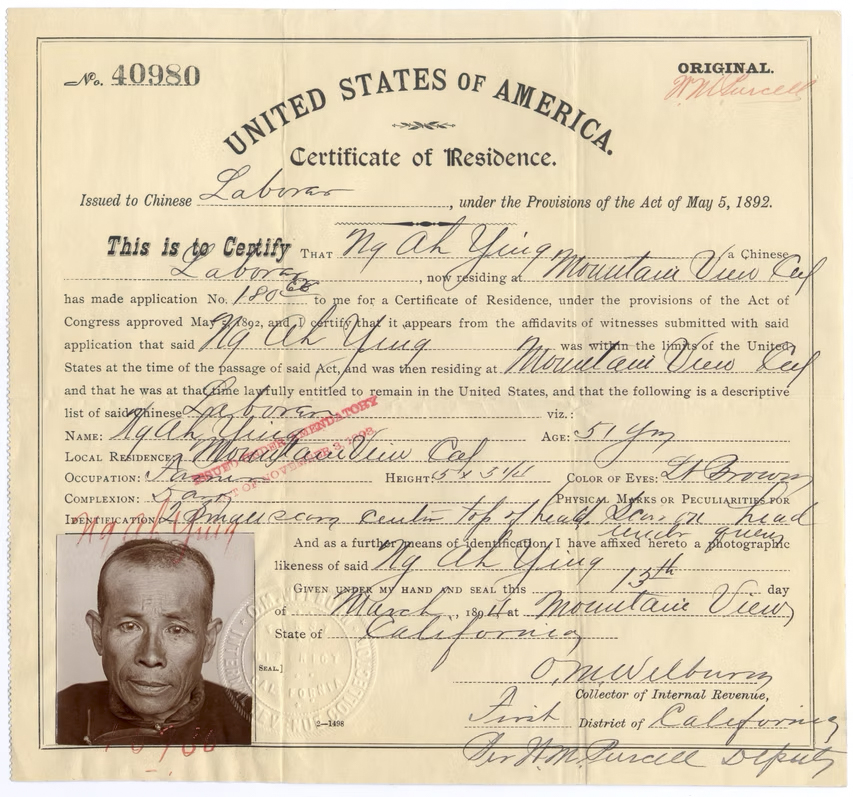
In other words, the Geary Act provided the U.S. government a way to deport longtime Chinese residents who had entered the U.S. legally. Historians say the law became the precursor to green cards, visas and other forms of surveillance and identification that the federal government uses today.
Though the act was signed into law, it garnered strongly worded protests within Congress, including from Robert R. Hitt, a representative from Illinois.
“Never before in a free country was there such a system of tagging a man like a dog to be caught by the police and examined, and if his tag or collar is not all right, taken to the pound or drowned or shot … Never before was it applied by a free people to a human being with the exception (which we can never refer to with pride) of the sad days of slavery.”
‘Un-American, barbarous and inhuman’
For the Chinese immigrant community, the law was unthinkable and unjust, and the response was swift.
The San Francisco-based Chinese Consolidated Benevolent Association, or the Chinese Six Companies, a powerful coalition that had financed earlier legal victories, asked Chinese residents to each contribute a dollar towards a legal campaign against the law. Meanwhile, in New York, the Chinese Equal Rights League was formed with the sole purpose of overturning the Geary Act.
In addition to applying political pressure and organizing petition drives, the groups organized Chinese residents to challenge the Geary Act through mass noncompliance. The Six Companies distributed leaflets in Chinese communities throughout the country, declaring that “The Geary Act is an unjust law and no Chinese should obey it … They have disregarded our rights and paid no attention to their promise, and made a law to suit themselves, no matter how unjust to us … Let us stand together.”
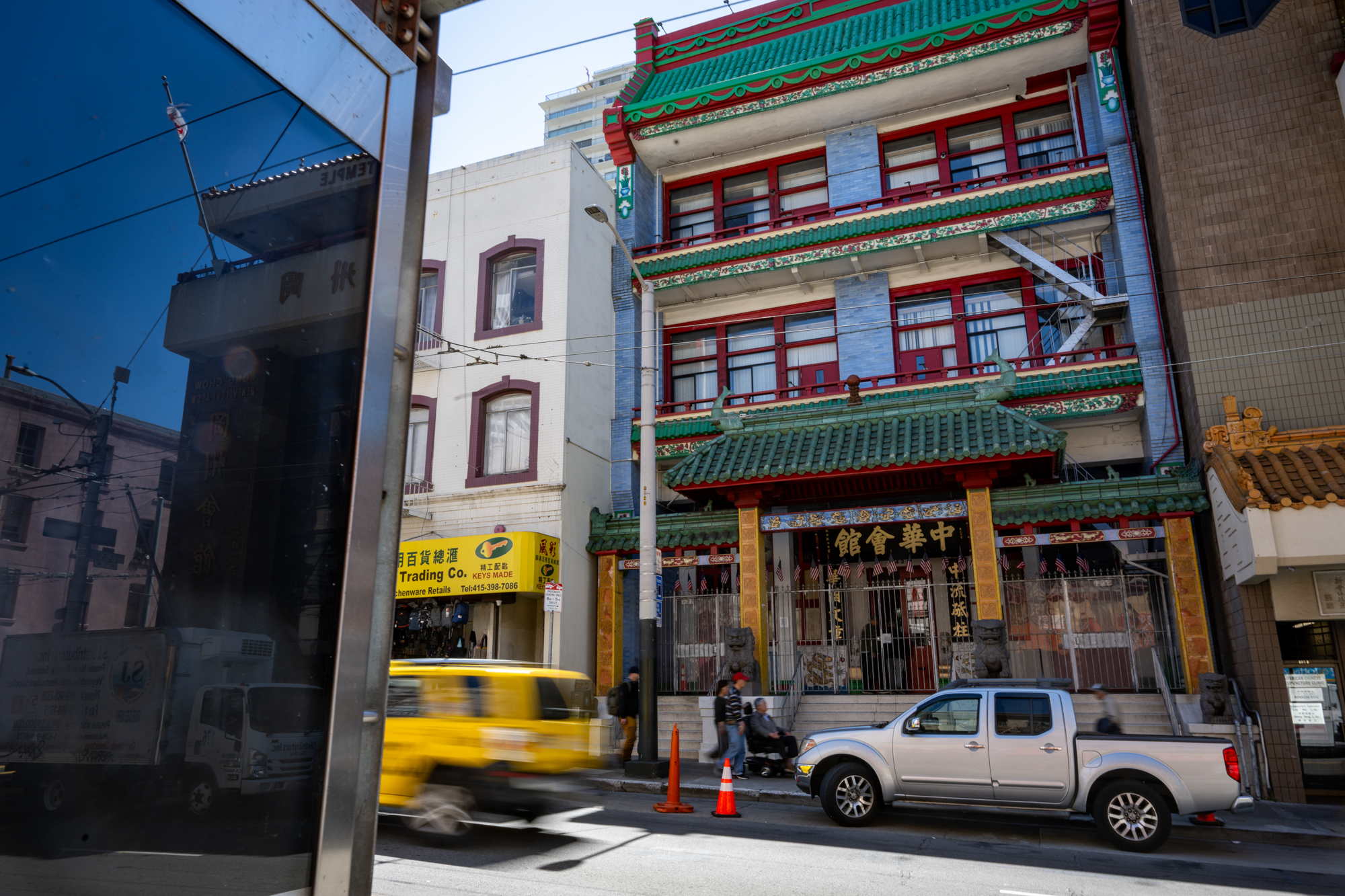
Russell Jeung, a professor of Asian American studies at San Francisco State University, remarked that spreading these messages across the country was an amazing feat, and demonstrated just how tight-knit and organized the Chinese immigrant population was: “The Chinese networks are in a better position to [raise awareness to] the Chinese community than the American government was … clearly there were networks and newspapers and communication among the community.”
Chinese residents found allyship with different faith communities, particularly Christians. Some white Americans were compelled, in part, by the efforts of people like Jee Gam, a community leader and the first Chinese congregational pastor in America. Gam wrote essays in English for publications, most notably one titled “The Geary Act: From the Standpoint of a Christian Chinese.”
“This Act withdraws some sacred rights such as in the Declaration of Independence are declared to be inalienable,” he wrote. “The right to a free, untrammelled pursuit of happiness, the right of habeas corpus, the right to be adjudged innocent until proven guilty … it is un-American, barbarous and inhuman.”
The call to participate in the civil disobedience campaign was an extraordinary success. Only about 13,000 of the approximately 100,000 Chinese residents in the country registered during the initial registration period. That left the federal government with the challenge of arresting and deporting over 85% of the nation’s Chinese population — something they weren’t prepared or resourced to do.
“Getting 100,000 people to do a thing is hard in itself, but I think the biggest success is making plain the weakness of the federal government,” Jin said. “Through the process of not registering and seeing how much power that had, they were able to find the weaknesses of the system and continue to exploit it throughout the exclusion era.”
The search for the Geary Act’s paper trail
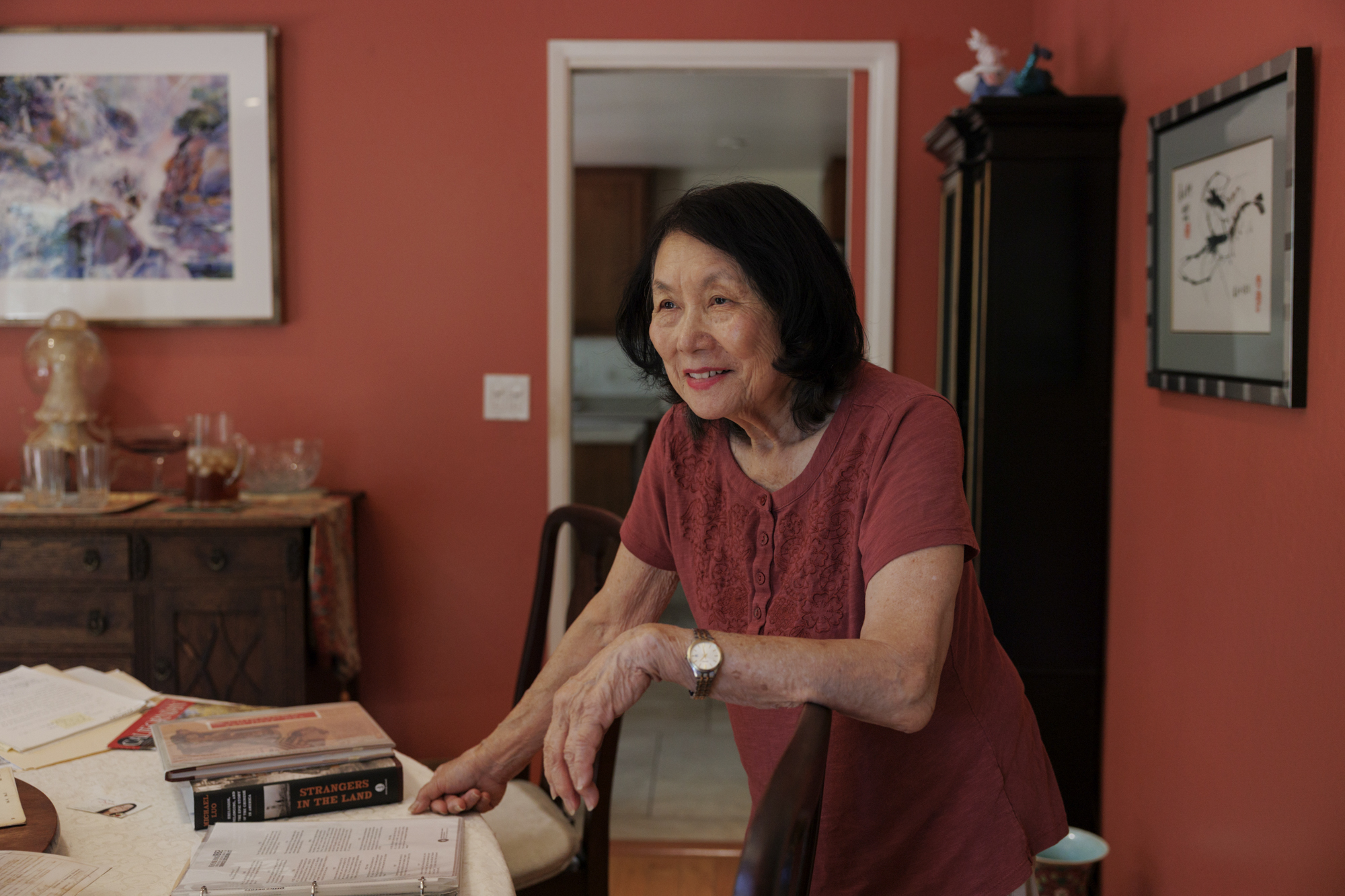
On a dining room table in her Los Altos home, Yu fanned out the chak chee’s that she’s been collecting, along with her grandfather’s. Since launching The Geary Act Project, Yu and documentary filmmaker Barre Fong have received and digitized almost 300 certificates.
“Tens of thousands of people were part of the civil disobedience, including my grandfather. They complied, and they felt unity; there was a community because everybody’s behind it,” Yu said, as she carefully picked up the documents. Most of them are men, marked as “laborers,” but there are also ones for women and children.
Almost all of the certificates collected by the project were issued a couple of years after the Geary Act became law. Chinese immigrants only registered after the Supreme Court upheld the law in its ruling on Fong Yue Ting v. United States, a case carefully orchestrated by the Six Companies. They had raised enough money to hire prominent attorneys and chose three unregistered laundrymen in New York to surrender themselves for arrest. The men were ordered to be deported in accordance with the Geary Act, and a lawsuit was initiated claiming the legislation was discriminatory and violated constitutional protections, including the 14th Amendment.
In May 1893, the court announced a 5-3 decision: the Geary Act was constitutional. The ruling extended the federal government’s power to exclude Chinese immigrants and gave it the ability to deport those already living in the U.S. The decision helped cement the plenary power doctrine, which gives the federal government almost unlimited discretion on all aspects of immigration policy and remains a key tenet of U.S. immigration law today.
“Things that seem normal today were actually created at a certain moment in time and for a very specific purpose: to keep Chinese immigrants, or as many as possible, out of the country,” Lytle Hernández said. “ What does it mean that the logic and the language and the rhetoric and the spirit of Chinese exclusion remains written into our precedent and our legal landscape of the immigration regime?”
In Strangers in the Land, author Michael Luo wrote about the news of the Geary Act ruling reaching the San Francisco headquarters of the Six Companies: “In the afternoon, a reporter from the Call found Gee Chong Tone, the secretary of the Six Companies, inside his office surrounded by stacks of telegrams from concerned immigrants across the state and country … he was shocked by the decision. ‘It’s like a man feeling safe being hit between the eyes in the dark,’ he said.”
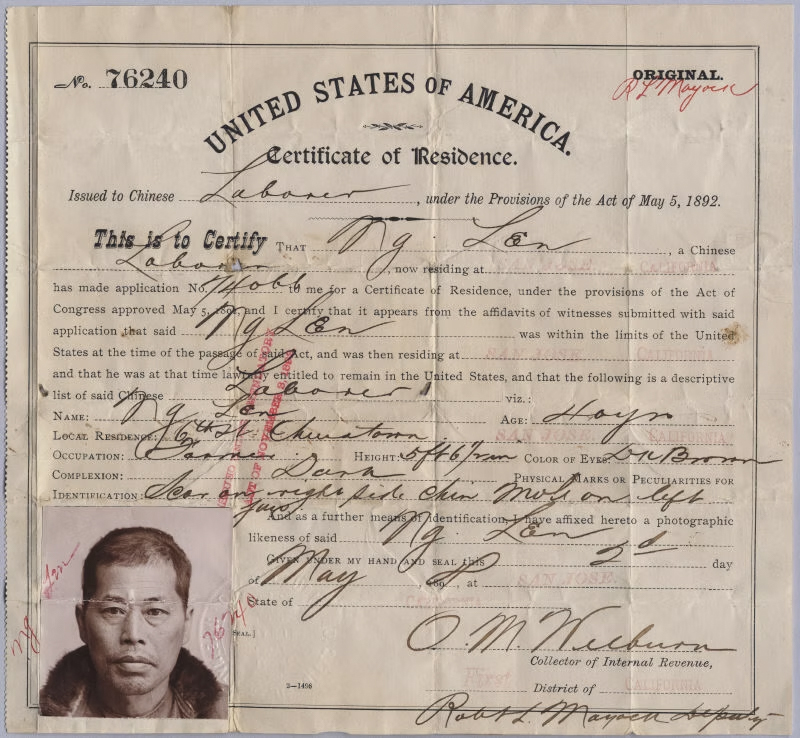
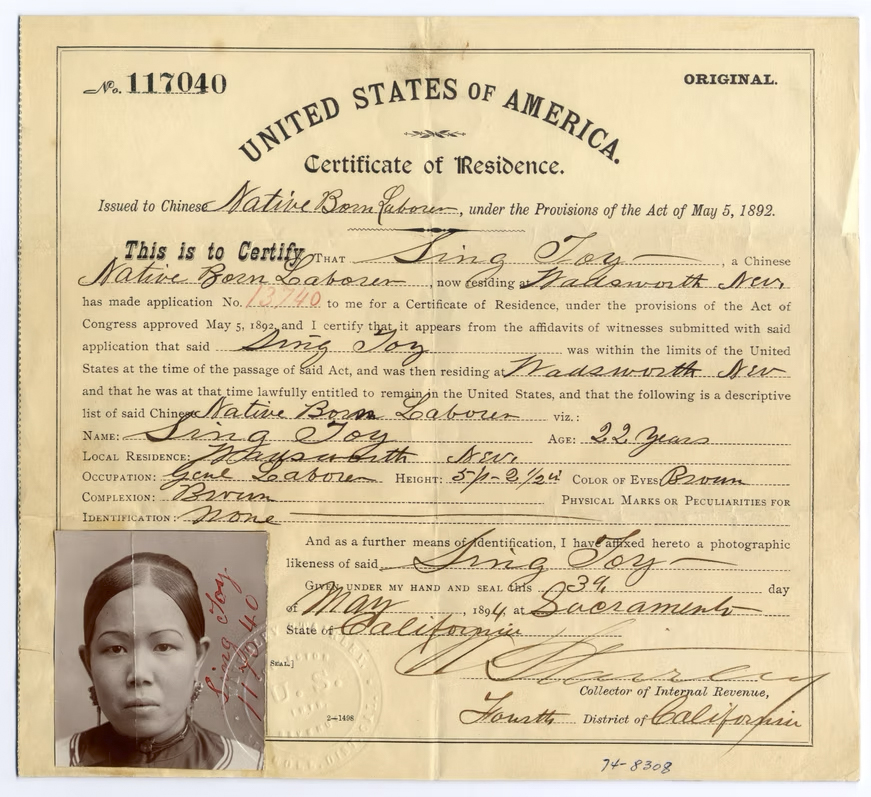
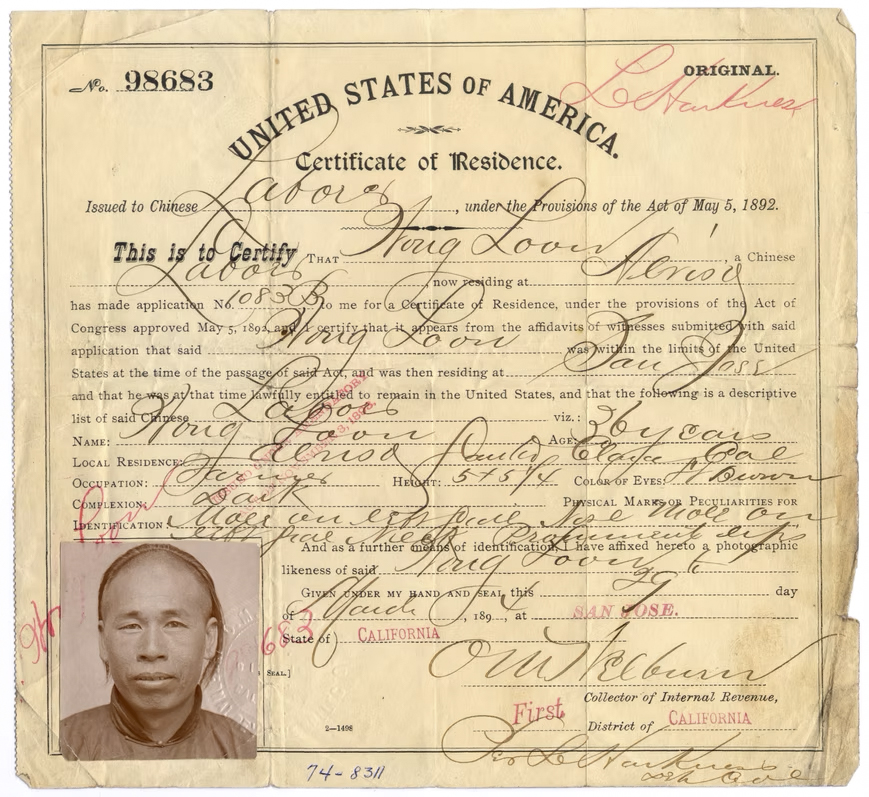
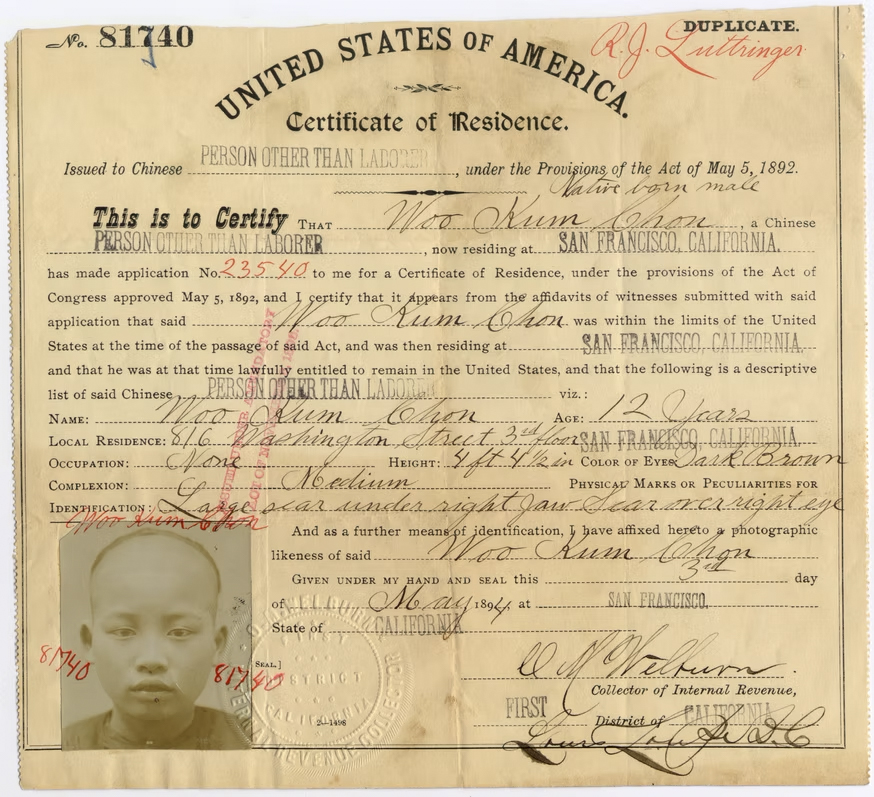
After the ruling, Geary added more teeth to the law, notably requiring the certificates of residence to include photographs.
“You can not make a verbal description of a Chinaman such as you can make of a white man … All Chinamen look alike, all dress alike, all have the same kind of eyes …” Geary said.
Yu acknowledges the cruelty of the requirement, but as a historian, she also understands the value of having such detailed documentation of the country’s earliest Chinese residents. You know where each person lived and their physical traits, as detailed as “gold filling in upper teeth” or “large wart on nose right side.” There were also portraits of their faces, some of which show indisputable evidence of their hard labor and the stresses of surviving exclusion: the tanned skin from working outside, the wrinkles on their foreheads, the bags under their eyes.
The idea to collect the documents came from a conversation with Yu during a community event, Fong said, shortly after Trump won his second presidential election. There was a “general sense of fear and dread” about the threat facing immigrants, he said, and it felt like the right time to tell a counter-narrative about some of the country’s earliest immigrants.
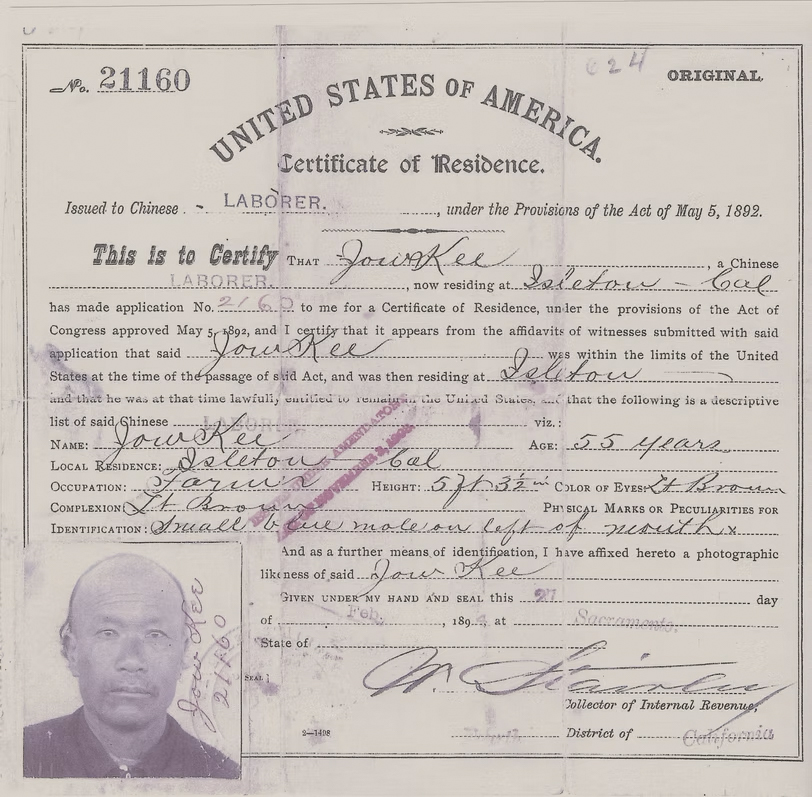
“Exclusion is kind of a nebulous idea, but then you look at the faces [on the certificates], and you’re like ‘oh those are real people’ … and they were trying to have a dream of what they wanted to do, and they’re trying to survive,” he said.
The preservation of the Geary Act certificates offers a tangible record of the government’s efforts to define and categorize Chinese immigrants. Yu and Fong say it’s a slow, manual, volunteer-run effort.
In addition to tapping into collections from different historical organizations, they’re depending on submissions from families that have held onto the documents as keepsakes for generations.
Some are stored at the National Archives in San Bruno, which announced its impending closure earlier this year. Documents could be dispersed across the country, Fong said, which would make the search far more difficult.
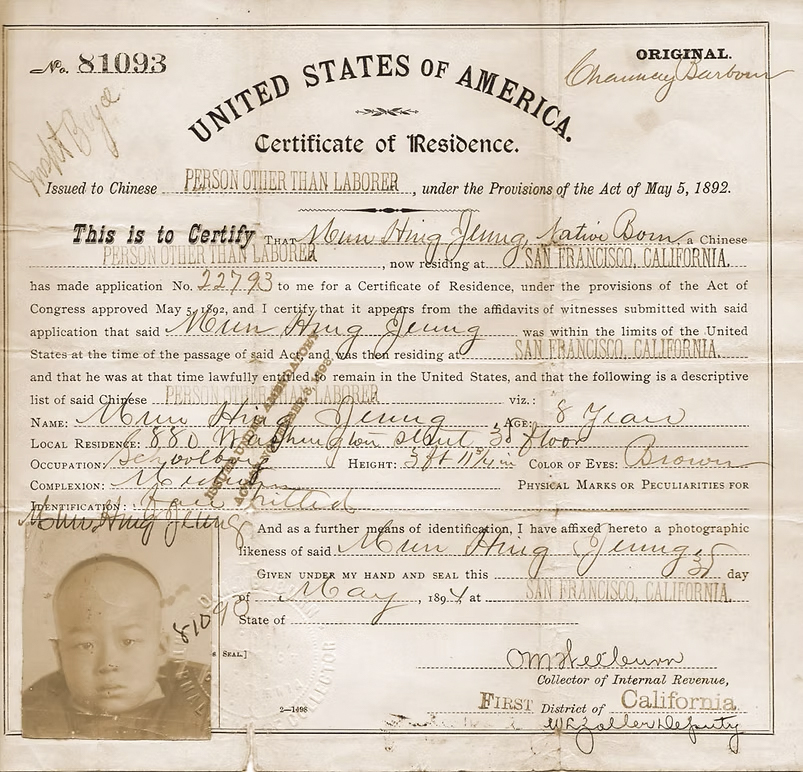
Among the most striking certificates collected by the Geary Act Project came from San Francisco resident Janice Tong, including those belonging to her great-grandfather, great-grandmother and her grandfather when he was just a young boy. It was the child’s certificate that struck Yu as particularly “cold-blooded.”
“This is how they describe somebody born in the United States. They describe him, this 8-year-old boy, ‘persons other than laborer.’ They do not say ‘American,’ they do not say ‘citizen.’ I want people to know this.”
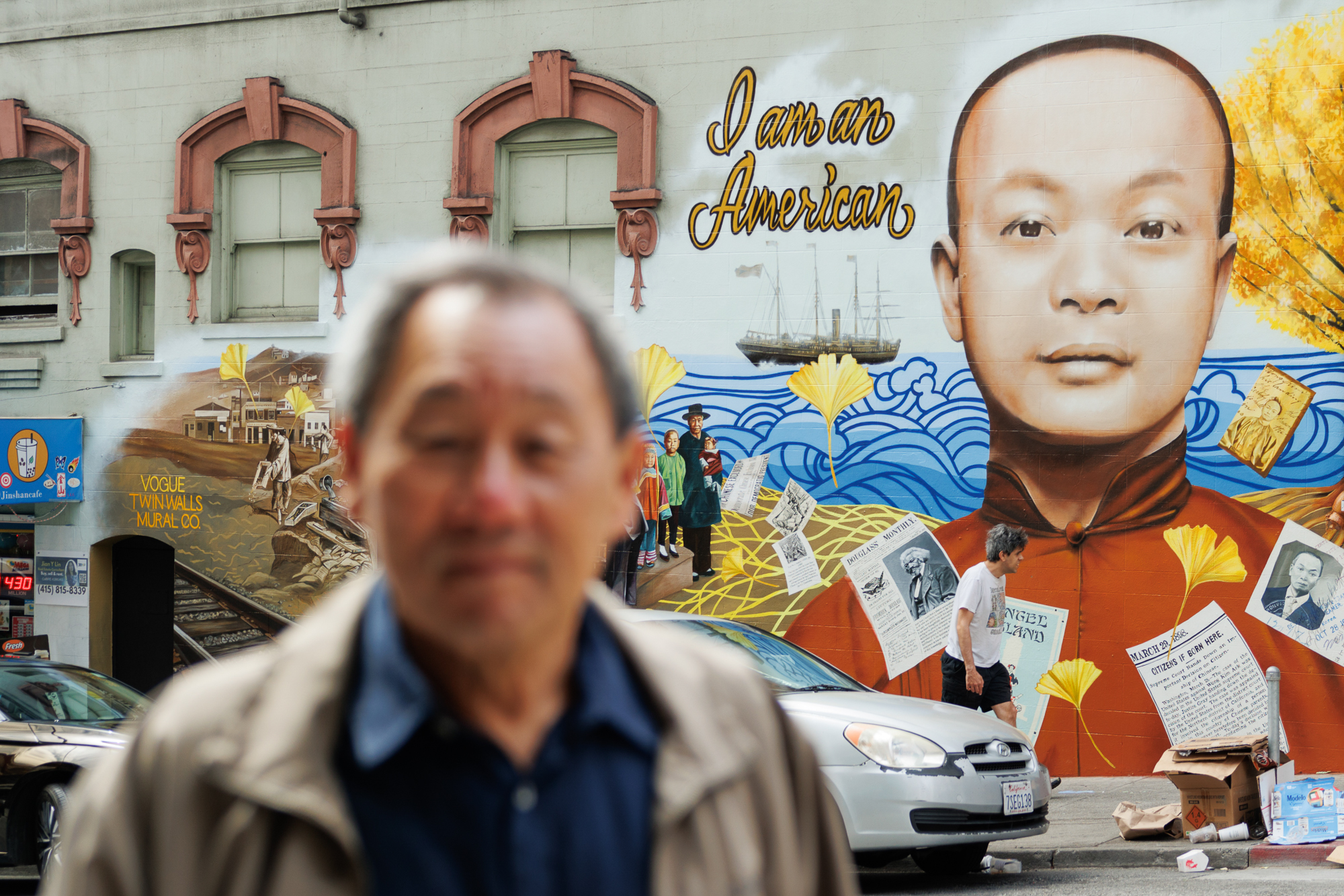
Among the most prized certificates they have uncovered was one belonging to Jow Kee, a transcontinental railroad worker. It is the only portrait that has been found of one of the roughly 12,000 Chinese men who helped build the railroad. It had been sitting in a box under a bed in a descendant’s home for years.
Fong said the collection of certificates could open up some critical conversations in the Chinese American community: “The Japanese American community’s incarcerated survivors [from World War II] are really great at talking about intergenerational trauma. The Chinese American community is not great at that … I think we should be better at talking about it.”
Meanwhile, the work of the Geary Act Project is not just a labor of love, Yu said. She believes it’s her “destiny” and that the current moment demands it.
As she carefully slipped the certificates back into their protective plastic sleeves, Yu shared a message to her community.
“The call to action is ‘stand up, Chinese Americans.’ Stand up for your people and the people in your community … because your ancestors have gone through this turmoil and struggle that so many immigrants are going through … show solidarity. Show empathy.”
She also hopes more Chinese American families will search their closets, attics and archives for more certificates — and share them.
“And bring proof of your ancestors’ lives,” she said, with a small smile. “They struggled to be here.”