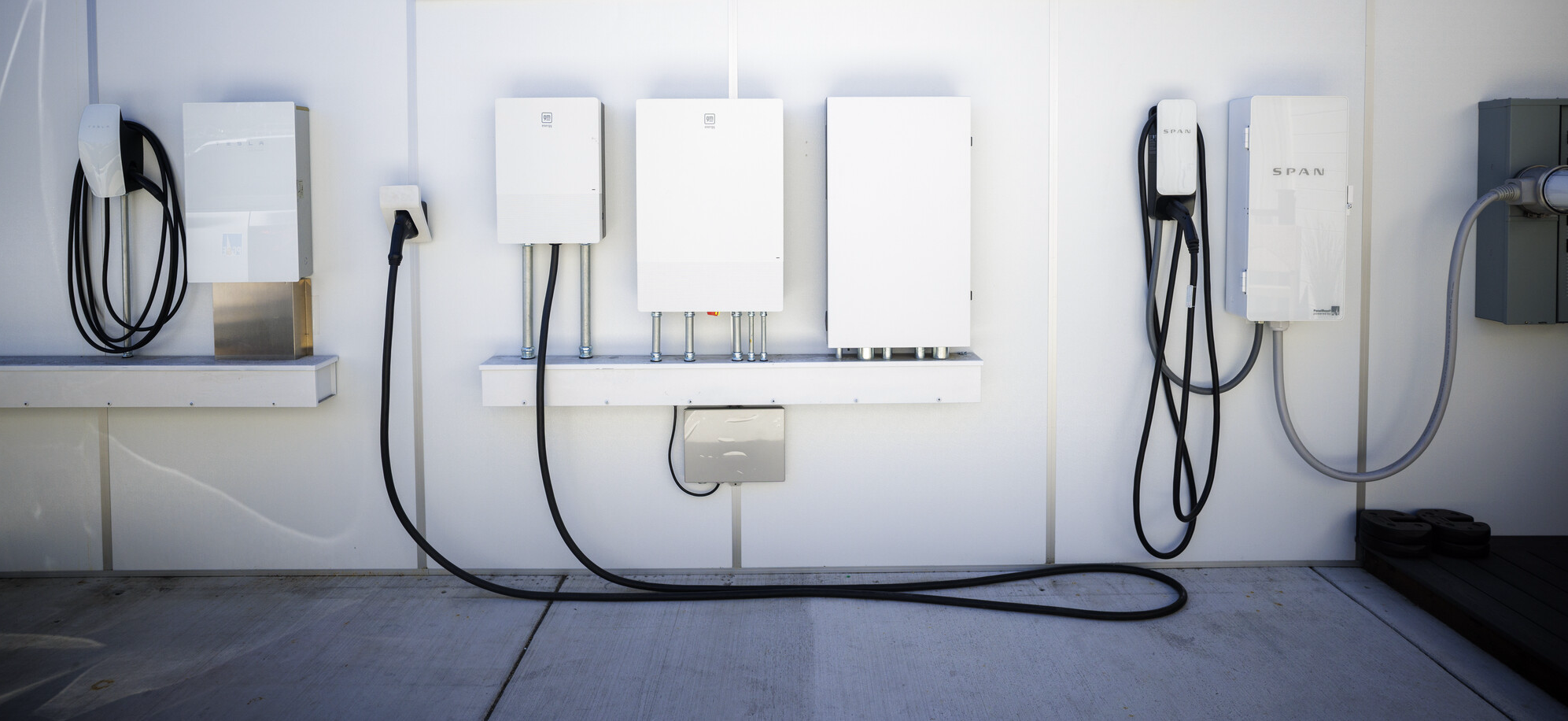
A KQED series examining California’s transition to clean energy. We’re exploring solutions, their limitations, and ultimately, how much money they will cost – or save – us.
From KQED’s Climate desk, “Flipping the Switch” documents California’s transition to clean energy and what it means for you. What works? What doesn’t? How much does it cost? Help us find these answers and more by donating today.
Watch
All Stories
Here’s What All-Electric Bay Area Restaurants Have Learned From Ditching Gas
California Officially Legalizes Balcony Solar, Opening the Market to the New Technology
Here’s What California Is Learning From Solar Panels Built Over Irrigation Canals
These Bay Area Residents Have Had Balcony Solar for a Year. Here’s How It’s Going
What Will It Take for California to Meet Its 100% Green Energy Goal?
California Lawmakers Greenlight Solar Panels You Can Plug Into the Wall
Could California’s 1 Million Electric Car Batteries Help Power the State’s Grid?
California’s Solar and Battery Boom Is Transforming the Power Grid
‘A Blessing From Heaven’: How Free Heat Pumps Are Saving Low-Income Californians From Extreme Heat
California’s Displaced Oil and Gas Workers’ Fund Is a Lifeline. Now Advocates Say It’s Time to Expand
Editors: Kevin Stark and Erika Kelly | Reporters: Laura Klivans, Sarah Mohamad, Julie Small, Ella Jackson, Guy Marzorati, Katherine Monahan, Azul Dahlstrom-Eckman | Photographers: Beth LaBerge, Martin do Nascimento, Juliana Yamada, Gustavo Hernandez, Tâm Vũ, Jules Hotz, Miles Cull | Engagement producers: Sarah Mohamad, Adrienne Lee | Fundraising: Taylor Beard
Player sponsored by
window.__IS_SSR__=true
window.__INITIAL_STATE__={
"attachmentsReducer": {
"audio_0": {
"type": "attachments",
"id": "audio_0",
"imgSizes": {
"kqedFullSize": {
"file": "https://ww2.kqed.org/news/wp-content/themes/KQED-unified/img/audio_bgs/background0.jpg"
}
}
},
"audio_1": {
"type": "attachments",
"id": "audio_1",
"imgSizes": {
"kqedFullSize": {
"file": "https://ww2.kqed.org/news/wp-content/themes/KQED-unified/img/audio_bgs/background1.jpg"
}
}
},
"audio_2": {
"type": "attachments",
"id": "audio_2",
"imgSizes": {
"kqedFullSize": {
"file": "https://ww2.kqed.org/news/wp-content/themes/KQED-unified/img/audio_bgs/background2.jpg"
}
}
},
"audio_3": {
"type": "attachments",
"id": "audio_3",
"imgSizes": {
"kqedFullSize": {
"file": "https://ww2.kqed.org/news/wp-content/themes/KQED-unified/img/audio_bgs/background3.jpg"
}
}
},
"audio_4": {
"type": "attachments",
"id": "audio_4",
"imgSizes": {
"kqedFullSize": {
"file": "https://ww2.kqed.org/news/wp-content/themes/KQED-unified/img/audio_bgs/background4.jpg"
}
}
},
"placeholder": {
"type": "attachments",
"id": "placeholder",
"imgSizes": {
"thumbnail": {
"file": "https://cdn.kqed.org/wp-content/uploads/2024/12/KQED-Default-Image-816638274-2000x1333-1-160x107.jpg",
"width": 160,
"height": 107,
"mimeType": "image/jpeg"
},
"medium": {
"file": "https://cdn.kqed.org/wp-content/uploads/2024/12/KQED-Default-Image-816638274-2000x1333-1-800x533.jpg",
"width": 800,
"height": 533,
"mimeType": "image/jpeg"
},
"medium_large": {
"file": "https://cdn.kqed.org/wp-content/uploads/2024/12/KQED-Default-Image-816638274-2000x1333-1-768x512.jpg",
"width": 768,
"height": 512,
"mimeType": "image/jpeg"
},
"large": {
"file": "https://cdn.kqed.org/wp-content/uploads/2024/12/KQED-Default-Image-816638274-2000x1333-1-1020x680.jpg",
"width": 1020,
"height": 680,
"mimeType": "image/jpeg"
},
"1536x1536": {
"file": "https://cdn.kqed.org/wp-content/uploads/2024/12/KQED-Default-Image-816638274-2000x1333-1-1536x1024.jpg",
"width": 1536,
"height": 1024,
"mimeType": "image/jpeg"
},
"fd-lrg": {
"file": "https://cdn.kqed.org/wp-content/uploads/2024/12/KQED-Default-Image-816638274-2000x1333-1-1536x1024.jpg",
"width": 1536,
"height": 1024,
"mimeType": "image/jpeg"
},
"fd-med": {
"file": "https://cdn.kqed.org/wp-content/uploads/2024/12/KQED-Default-Image-816638274-2000x1333-1-1020x680.jpg",
"width": 1020,
"height": 680,
"mimeType": "image/jpeg"
},
"fd-sm": {
"file": "https://cdn.kqed.org/wp-content/uploads/2024/12/KQED-Default-Image-816638274-2000x1333-1-800x533.jpg",
"width": 800,
"height": 533,
"mimeType": "image/jpeg"
},
"post-thumbnail": {
"file": "https://cdn.kqed.org/wp-content/uploads/2024/12/KQED-Default-Image-816638274-2000x1333-1-672x372.jpg",
"width": 672,
"height": 372,
"mimeType": "image/jpeg"
},
"twentyfourteen-full-width": {
"file": "https://cdn.kqed.org/wp-content/uploads/2024/12/KQED-Default-Image-816638274-2000x1333-1-1038x576.jpg",
"width": 1038,
"height": 576,
"mimeType": "image/jpeg"
},
"xxsmall": {
"file": "https://cdn.kqed.org/wp-content/uploads/2024/12/KQED-Default-Image-816638274-2000x1333-1-160x107.jpg",
"width": 160,
"height": 107,
"mimeType": "image/jpeg"
},
"xsmall": {
"file": "https://cdn.kqed.org/wp-content/uploads/2024/12/KQED-Default-Image-816638274-2000x1333-1-672x372.jpg",
"width": 672,
"height": 372,
"mimeType": "image/jpeg"
},
"small": {
"file": "https://cdn.kqed.org/wp-content/uploads/2024/12/KQED-Default-Image-816638274-2000x1333-1-672x372.jpg",
"width": 672,
"height": 372,
"mimeType": "image/jpeg"
},
"xlarge": {
"file": "https://cdn.kqed.org/wp-content/uploads/2024/12/KQED-Default-Image-816638274-2000x1333-1-1020x680.jpg",
"width": 1020,
"height": 680,
"mimeType": "image/jpeg"
},
"full-width": {
"file": "https://cdn.kqed.org/wp-content/uploads/2024/12/KQED-Default-Image-816638274-2000x1333-1-1920x1280.jpg",
"width": 1920,
"height": 1280,
"mimeType": "image/jpeg"
},
"guest-author-32": {
"file": "https://cdn.kqed.org/wp-content/uploads/2025/01/KQED-Default-Image-816638274-1333x1333-1-160x160.jpg",
"width": 32,
"height": 32,
"mimeType": "image/jpeg"
},
"guest-author-50": {
"file": "https://cdn.kqed.org/wp-content/uploads/2025/01/KQED-Default-Image-816638274-1333x1333-1-160x160.jpg",
"width": 50,
"height": 50,
"mimeType": "image/jpeg"
},
"guest-author-64": {
"file": "https://cdn.kqed.org/wp-content/uploads/2025/01/KQED-Default-Image-816638274-1333x1333-1-160x160.jpg",
"width": 64,
"height": 64,
"mimeType": "image/jpeg"
},
"guest-author-96": {
"file": "https://cdn.kqed.org/wp-content/uploads/2025/01/KQED-Default-Image-816638274-1333x1333-1-160x160.jpg",
"width": 96,
"height": 96,
"mimeType": "image/jpeg"
},
"guest-author-128": {
"file": "https://cdn.kqed.org/wp-content/uploads/2025/01/KQED-Default-Image-816638274-1333x1333-1-160x160.jpg",
"width": 128,
"height": 128,
"mimeType": "image/jpeg"
},
"detail": {
"file": "https://cdn.kqed.org/wp-content/uploads/2025/01/KQED-Default-Image-816638274-1333x1333-1-160x160.jpg",
"width": 160,
"height": 160,
"mimeType": "image/jpeg"
},
"kqedFullSize": {
"file": "https://cdn.kqed.org/wp-content/uploads/2024/12/KQED-Default-Image-816638274-2000x1333-1.jpg",
"width": 2000,
"height": 1333
}
}
},
"root-site_29132": {
"type": "attachments",
"id": "root-site_29132",
"meta": {
"index": "attachments_1716263798",
"site": "root-site",
"id": "29132",
"found": true
},
"title": "260729-POWER HOUSE-MD-06_qed[2]",
"publishDate": 1787854258,
"status": "inherit",
"parent": 29033,
"modified": 1787854258,
"caption": null,
"credit": null,
"altTag": null,
"description": null,
"imgSizes": {
"thumbnail": {
"file": "https://cdn.kqed.org/wp-content/uploads/2026/08/260729-POWER-HOUSE-MD-06_qed2-160x74.png",
"width": 160,
"height": 74,
"mimeType": "image/png"
},
"medium_large": {
"file": "https://cdn.kqed.org/wp-content/uploads/2026/08/260729-POWER-HOUSE-MD-06_qed2-768x353.png",
"width": 768,
"height": 353,
"mimeType": "image/png"
},
"1536x1536": {
"file": "https://cdn.kqed.org/wp-content/uploads/2026/08/260729-POWER-HOUSE-MD-06_qed2-1536x706.png",
"width": 1536,
"height": 706,
"mimeType": "image/png"
},
"post-thumbnail": {
"file": "https://cdn.kqed.org/wp-content/uploads/2026/08/260729-POWER-HOUSE-MD-06_qed2-672x372.png",
"width": 672,
"height": 372,
"mimeType": "image/png"
},
"twentyfourteen-full-width": {
"file": "https://cdn.kqed.org/wp-content/uploads/2026/08/260729-POWER-HOUSE-MD-06_qed2-1038x576.png",
"width": 1038,
"height": 576,
"mimeType": "image/png"
},
"kqedFullSize": {
"file": "https://cdn.kqed.org/wp-content/uploads/2026/08/260729-POWER-HOUSE-MD-06_qed2.png",
"width": 1993,
"height": 916
}
},
"isLoading": false,
"fetchFailed": false
},
"science_2001593": {
"type": "attachments",
"id": "science_2001593",
"meta": {
"index": "attachments_1716263798",
"site": "science",
"id": "2001593",
"found": true
},
"title": "260729-ELECTRICRESTAURANT-08-BL-KQED",
"publishDate": 1785776830,
"status": "inherit",
"parent": 0,
"modified": 1785776859,
"caption": "Ryan Pollnow, co-executive chef, prepares a pizza at Flour + Water Pizza Shop in Oakland on July 29, 2026. The Oakland location uses all-electric kitchen appliances, including its pizza oven.",
"credit": "Beth LaBerge/KQED",
"altTag": null,
"description": null,
"imgSizes": {
"thumbnail": {
"file": "https://cdn.kqed.org/wp-content/uploads/sites/35/2026/08/260729-ELECTRICRESTAURANT-08-BL-KQED-160x107.jpg",
"width": 160,
"height": 107,
"mimeType": "image/jpeg"
},
"medium_large": {
"file": "https://cdn.kqed.org/wp-content/uploads/sites/35/2026/08/260729-ELECTRICRESTAURANT-08-BL-KQED-768x512.jpg",
"width": 768,
"height": 512,
"mimeType": "image/jpeg"
},
"1536x1536": {
"file": "https://cdn.kqed.org/wp-content/uploads/sites/35/2026/08/260729-ELECTRICRESTAURANT-08-BL-KQED-1536x1024.jpg",
"width": 1536,
"height": 1024,
"mimeType": "image/jpeg"
},
"post-thumbnail": {
"file": "https://cdn.kqed.org/wp-content/uploads/sites/35/2026/08/260729-ELECTRICRESTAURANT-08-BL-KQED-672x372.jpg",
"width": 672,
"height": 372,
"mimeType": "image/jpeg"
},
"twentyfourteen-full-width": {
"file": "https://cdn.kqed.org/wp-content/uploads/sites/35/2026/08/260729-ELECTRICRESTAURANT-08-BL-KQED-1038x576.jpg",
"width": 1038,
"height": 576,
"mimeType": "image/jpeg"
},
"npr-cds-wide": {
"file": "https://cdn.kqed.org/wp-content/uploads/sites/35/2026/08/260729-ELECTRICRESTAURANT-08-BL-KQED-1200x675.jpg",
"width": 1200,
"height": 675,
"mimeType": "image/jpeg"
},
"npr-cds-square": {
"file": "https://cdn.kqed.org/wp-content/uploads/sites/35/2026/08/260729-ELECTRICRESTAURANT-08-BL-KQED-600x600.jpg",
"width": 600,
"height": 600,
"mimeType": "image/jpeg"
},
"kqedFullSize": {
"file": "https://cdn.kqed.org/wp-content/uploads/sites/35/2026/08/260729-ELECTRICRESTAURANT-08-BL-KQED.jpg",
"width": 2000,
"height": 1333
}
},
"isLoading": false,
"fetchFailed": false
},
"science_2001781": {
"type": "attachments",
"id": "science_2001781",
"meta": {
"index": "attachments_1716263798",
"site": "science",
"id": "2001781",
"found": true
},
"title": "260823-PLUGINSOLARFOLO-00824_TV-KQED",
"publishDate": 1787591640,
"status": "inherit",
"parent": 0,
"modified": 1788378789,
"caption": "A cord connected to solar panels plugs into an outlet in Agnes Chan’s backyard in Berkeley, California, on Aug. 23, 2026.",
"credit": "Tâm Vũ for KQED",
"altTag": null,
"description": null,
"imgSizes": {
"thumbnail": {
"file": "https://cdn.kqed.org/wp-content/uploads/sites/35/2026/08/260823-PLUGINSOLARFOLO-00824_TV-KQED-160x107.jpg",
"width": 160,
"height": 107,
"mimeType": "image/jpeg"
},
"medium_large": {
"file": "https://cdn.kqed.org/wp-content/uploads/sites/35/2026/08/260823-PLUGINSOLARFOLO-00824_TV-KQED-768x512.jpg",
"width": 768,
"height": 512,
"mimeType": "image/jpeg"
},
"1536x1536": {
"file": "https://cdn.kqed.org/wp-content/uploads/sites/35/2026/08/260823-PLUGINSOLARFOLO-00824_TV-KQED-1536x1024.jpg",
"width": 1536,
"height": 1024,
"mimeType": "image/jpeg"
},
"post-thumbnail": {
"file": "https://cdn.kqed.org/wp-content/uploads/sites/35/2026/08/260823-PLUGINSOLARFOLO-00824_TV-KQED-672x372.jpg",
"width": 672,
"height": 372,
"mimeType": "image/jpeg"
},
"twentyfourteen-full-width": {
"file": "https://cdn.kqed.org/wp-content/uploads/sites/35/2026/08/260823-PLUGINSOLARFOLO-00824_TV-KQED-1038x576.jpg",
"width": 1038,
"height": 576,
"mimeType": "image/jpeg"
},
"npr-cds-wide": {
"file": "https://cdn.kqed.org/wp-content/uploads/sites/35/2026/08/260823-PLUGINSOLARFOLO-00824_TV-KQED-1200x675.jpg",
"width": 1200,
"height": 675,
"mimeType": "image/jpeg"
},
"npr-cds-square": {
"file": "https://cdn.kqed.org/wp-content/uploads/sites/35/2026/08/260823-PLUGINSOLARFOLO-00824_TV-KQED-600x600.jpg",
"width": 600,
"height": 600,
"mimeType": "image/jpeg"
},
"kqedFullSize": {
"file": "https://cdn.kqed.org/wp-content/uploads/sites/35/2026/08/260823-PLUGINSOLARFOLO-00824_TV-KQED.jpg",
"width": 2000,
"height": 1333
}
},
"isLoading": false,
"fetchFailed": false
},
"science_2001986": {
"type": "attachments",
"id": "science_2001986",
"meta": {
"index": "attachments_1716263798",
"site": "science",
"id": "2001986",
"found": true
},
"title": "260904-ClimateSolutionsSolarCanal-21-BL-KQED",
"publishDate": 1788886065,
"status": "inherit",
"parent": 0,
"modified": 1788886120,
"caption": "Solar panels cover part of a Turlock Irrigation District canal as part of Project Nexus in Hickman on Sept. 4, 2026. The pilot project is testing the use of solar panels over working irrigation canals to generate renewable energy.",
"credit": "Beth LaBerge/KQED",
"altTag": null,
"description": null,
"imgSizes": {
"thumbnail": {
"file": "https://cdn.kqed.org/wp-content/uploads/sites/35/2026/09/260904-ClimateSolutionsSolarCanal-21-BL-KQED-160x107.jpg",
"width": 160,
"height": 107,
"mimeType": "image/jpeg"
},
"medium_large": {
"file": "https://cdn.kqed.org/wp-content/uploads/sites/35/2026/09/260904-ClimateSolutionsSolarCanal-21-BL-KQED-768x512.jpg",
"width": 768,
"height": 512,
"mimeType": "image/jpeg"
},
"1536x1536": {
"file": "https://cdn.kqed.org/wp-content/uploads/sites/35/2026/09/260904-ClimateSolutionsSolarCanal-21-BL-KQED-1536x1025.jpg",
"width": 1536,
"height": 1025,
"mimeType": "image/jpeg"
},
"post-thumbnail": {
"file": "https://cdn.kqed.org/wp-content/uploads/sites/35/2026/09/260904-ClimateSolutionsSolarCanal-21-BL-KQED-672x372.jpg",
"width": 672,
"height": 372,
"mimeType": "image/jpeg"
},
"twentyfourteen-full-width": {
"file": "https://cdn.kqed.org/wp-content/uploads/sites/35/2026/09/260904-ClimateSolutionsSolarCanal-21-BL-KQED-1038x576.jpg",
"width": 1038,
"height": 576,
"mimeType": "image/jpeg"
},
"npr-cds-wide": {
"file": "https://cdn.kqed.org/wp-content/uploads/sites/35/2026/09/260904-ClimateSolutionsSolarCanal-21-BL-KQED-1200x675.jpg",
"width": 1200,
"height": 675,
"mimeType": "image/jpeg"
},
"npr-cds-square": {
"file": "https://cdn.kqed.org/wp-content/uploads/sites/35/2026/09/260904-ClimateSolutionsSolarCanal-21-BL-KQED-600x600.jpg",
"width": 600,
"height": 600,
"mimeType": "image/jpeg"
},
"kqedFullSize": {
"file": "https://cdn.kqed.org/wp-content/uploads/sites/35/2026/09/260904-ClimateSolutionsSolarCanal-21-BL-KQED.jpg",
"width": 2000,
"height": 1334
}
},
"isLoading": false,
"fetchFailed": false
},
"science_2001785": {
"type": "attachments",
"id": "science_2001785",
"meta": {
"index": "attachments_1716263798",
"site": "science",
"id": "2001785",
"found": true
},
"title": "Agnes Chan poses for a portrait in her backyard in Berkeley on August 23, 2026.",
"publishDate": 1787591660,
"status": "inherit",
"parent": 0,
"modified": 1787602695,
"caption": "Agnes Chan poses for a portrait in her backyard in Berkeley on Aug. 23, 2026.",
"credit": "Tâm Vũ for KQED",
"altTag": null,
"description": null,
"imgSizes": {
"thumbnail": {
"file": "https://cdn.kqed.org/wp-content/uploads/sites/35/2026/08/260823-PLUGINSOLARFOLO-01043_TV-KQED-160x107.jpg",
"width": 160,
"height": 107,
"mimeType": "image/jpeg"
},
"medium_large": {
"file": "https://cdn.kqed.org/wp-content/uploads/sites/35/2026/08/260823-PLUGINSOLARFOLO-01043_TV-KQED-768x512.jpg",
"width": 768,
"height": 512,
"mimeType": "image/jpeg"
},
"1536x1536": {
"file": "https://cdn.kqed.org/wp-content/uploads/sites/35/2026/08/260823-PLUGINSOLARFOLO-01043_TV-KQED-1536x1024.jpg",
"width": 1536,
"height": 1024,
"mimeType": "image/jpeg"
},
"post-thumbnail": {
"file": "https://cdn.kqed.org/wp-content/uploads/sites/35/2026/08/260823-PLUGINSOLARFOLO-01043_TV-KQED-672x372.jpg",
"width": 672,
"height": 372,
"mimeType": "image/jpeg"
},
"twentyfourteen-full-width": {
"file": "https://cdn.kqed.org/wp-content/uploads/sites/35/2026/08/260823-PLUGINSOLARFOLO-01043_TV-KQED-1038x576.jpg",
"width": 1038,
"height": 576,
"mimeType": "image/jpeg"
},
"npr-cds-wide": {
"file": "https://cdn.kqed.org/wp-content/uploads/sites/35/2026/08/260823-PLUGINSOLARFOLO-01043_TV-KQED-1200x675.jpg",
"width": 1200,
"height": 675,
"mimeType": "image/jpeg"
},
"npr-cds-square": {
"file": "https://cdn.kqed.org/wp-content/uploads/sites/35/2026/08/260823-PLUGINSOLARFOLO-01043_TV-KQED-600x600.jpg",
"width": 600,
"height": 600,
"mimeType": "image/jpeg"
},
"kqedFullSize": {
"file": "https://cdn.kqed.org/wp-content/uploads/sites/35/2026/08/260823-PLUGINSOLARFOLO-01043_TV-KQED.jpg",
"width": 2000,
"height": 1333
}
},
"isLoading": false,
"fetchFailed": false
},
"science_2001905": {
"type": "attachments",
"id": "science_2001905",
"meta": {
"index": "attachments_1716263798",
"site": "science",
"id": "2001905",
"found": true
},
"title": "ClimateSolutions1Getty",
"publishDate": 1788283750,
"status": "inherit",
"parent": 2001900,
"modified": 1788283810,
"caption": "Golden Hills Wind farm in Alameda County, California, is a 85.9-megawatt wind farm with 481.7mw GE wind turbines. The turbine blades have a diameter of 100 meters and can power 25,500 homes. The project came online in December 2015 and was developed by Nextera Energy Resources for Google.",
"credit": "Steve Proehl/Getty Images",
"altTag": null,
"description": null,
"imgSizes": {
"thumbnail": {
"file": "https://cdn.kqed.org/wp-content/uploads/sites/35/2026/09/ClimateSolutions1Getty-160x80.jpg",
"width": 160,
"height": 80,
"mimeType": "image/jpeg"
},
"medium_large": {
"file": "https://cdn.kqed.org/wp-content/uploads/sites/35/2026/09/ClimateSolutions1Getty-768x384.jpg",
"width": 768,
"height": 384,
"mimeType": "image/jpeg"
},
"1536x1536": {
"file": "https://cdn.kqed.org/wp-content/uploads/sites/35/2026/09/ClimateSolutions1Getty-1536x767.jpg",
"width": 1536,
"height": 767,
"mimeType": "image/jpeg"
},
"post-thumbnail": {
"file": "https://cdn.kqed.org/wp-content/uploads/sites/35/2026/09/ClimateSolutions1Getty-672x372.jpg",
"width": 672,
"height": 372,
"mimeType": "image/jpeg"
},
"twentyfourteen-full-width": {
"file": "https://cdn.kqed.org/wp-content/uploads/sites/35/2026/09/ClimateSolutions1Getty-1038x576.jpg",
"width": 1038,
"height": 576,
"mimeType": "image/jpeg"
},
"npr-cds-wide": {
"file": "https://cdn.kqed.org/wp-content/uploads/sites/35/2026/09/ClimateSolutions1Getty-1200x675.jpg",
"width": 1200,
"height": 675,
"mimeType": "image/jpeg"
},
"npr-cds-square": {
"file": "https://cdn.kqed.org/wp-content/uploads/sites/35/2026/09/ClimateSolutions1Getty-600x600.jpg",
"width": 600,
"height": 600,
"mimeType": "image/jpeg"
},
"kqedFullSize": {
"file": "https://cdn.kqed.org/wp-content/uploads/sites/35/2026/09/ClimateSolutions1Getty.jpg",
"width": 2000,
"height": 999
}
},
"isLoading": false,
"fetchFailed": false
},
"science_2001784": {
"type": "attachments",
"id": "science_2001784",
"meta": {
"index": "attachments_1716263798",
"site": "science",
"id": "2001784",
"found": true
},
"title": "260823-PLUGINSOLARFOLO-00927_TV-KQED",
"publishDate": 1787591655,
"status": "inherit",
"parent": 0,
"modified": 1788379061,
"caption": "Plug-in solar panels sit on top of an accessory dwelling unit in Agnes Chan’s backyard in Berkeley, California, for KQED on Aug. 23, 2026.",
"credit": "Tâm Vũ for KQED",
"altTag": null,
"description": null,
"imgSizes": {
"thumbnail": {
"file": "https://cdn.kqed.org/wp-content/uploads/sites/35/2026/08/260823-PLUGINSOLARFOLO-00927_TV-KQED-160x107.jpg",
"width": 160,
"height": 107,
"mimeType": "image/jpeg"
},
"medium_large": {
"file": "https://cdn.kqed.org/wp-content/uploads/sites/35/2026/08/260823-PLUGINSOLARFOLO-00927_TV-KQED-768x512.jpg",
"width": 768,
"height": 512,
"mimeType": "image/jpeg"
},
"1536x1536": {
"file": "https://cdn.kqed.org/wp-content/uploads/sites/35/2026/08/260823-PLUGINSOLARFOLO-00927_TV-KQED-1536x1024.jpg",
"width": 1536,
"height": 1024,
"mimeType": "image/jpeg"
},
"post-thumbnail": {
"file": "https://cdn.kqed.org/wp-content/uploads/sites/35/2026/08/260823-PLUGINSOLARFOLO-00927_TV-KQED-672x372.jpg",
"width": 672,
"height": 372,
"mimeType": "image/jpeg"
},
"twentyfourteen-full-width": {
"file": "https://cdn.kqed.org/wp-content/uploads/sites/35/2026/08/260823-PLUGINSOLARFOLO-00927_TV-KQED-1038x576.jpg",
"width": 1038,
"height": 576,
"mimeType": "image/jpeg"
},
"npr-cds-wide": {
"file": "https://cdn.kqed.org/wp-content/uploads/sites/35/2026/08/260823-PLUGINSOLARFOLO-00927_TV-KQED-1200x675.jpg",
"width": 1200,
"height": 675,
"mimeType": "image/jpeg"
},
"npr-cds-square": {
"file": "https://cdn.kqed.org/wp-content/uploads/sites/35/2026/08/260823-PLUGINSOLARFOLO-00927_TV-KQED-600x600.jpg",
"width": 600,
"height": 600,
"mimeType": "image/jpeg"
},
"kqedFullSize": {
"file": "https://cdn.kqed.org/wp-content/uploads/sites/35/2026/08/260823-PLUGINSOLARFOLO-00927_TV-KQED.jpg",
"width": 2000,
"height": 1333
}
},
"isLoading": false,
"fetchFailed": false
},
"science_1931178": {
"type": "attachments",
"id": "science_1931178",
"meta": {
"index": "attachments_1716263798",
"site": "science",
"id": "1931178",
"found": true
},
"title": "ElectricCars_AW_06",
"publishDate": 1536793183,
"status": "inherit",
"parent": 1931169,
"modified": 1787613999,
"caption": "Electric cars are growing in the Bay Area but are only 6% of new vehicle sales statewide.",
"credit": "Anne Wernikoff/KQED",
"altTag": null,
"description": null,
"imgSizes": {
"thumbnail": {
"file": "https://cdn.kqed.org/wp-content/uploads/sites/35/2018/09/ElectricCars_AW_06-160x90.jpg",
"width": 160,
"height": 90,
"mimeType": "image/jpeg"
},
"medium": {
"file": "https://cdn.kqed.org/wp-content/uploads/sites/35/2018/09/ElectricCars_AW_06-800x450.jpg",
"width": 800,
"height": 450,
"mimeType": "image/jpeg"
},
"medium_large": {
"file": "https://cdn.kqed.org/wp-content/uploads/sites/35/2018/09/ElectricCars_AW_06-768x432.jpg",
"width": 768,
"height": 432,
"mimeType": "image/jpeg"
},
"large": {
"file": "https://cdn.kqed.org/wp-content/uploads/sites/35/2018/09/ElectricCars_AW_06-1020x574.jpg",
"width": 1020,
"height": 574,
"mimeType": "image/jpeg"
},
"complete_open_graph": {
"file": "https://cdn.kqed.org/wp-content/uploads/sites/35/2018/09/ElectricCars_AW_06-1200x675.jpg",
"width": 1200,
"height": 675,
"mimeType": "image/jpeg"
},
"fd-lrg": {
"file": "https://cdn.kqed.org/wp-content/uploads/sites/35/2018/09/ElectricCars_AW_06-1920x1080.jpg",
"width": 1920,
"height": 1080,
"mimeType": "image/jpeg"
},
"fd-med": {
"file": "https://cdn.kqed.org/wp-content/uploads/sites/35/2018/09/ElectricCars_AW_06-1180x664.jpg",
"width": 1180,
"height": 664,
"mimeType": "image/jpeg"
},
"fd-sm": {
"file": "https://cdn.kqed.org/wp-content/uploads/sites/35/2018/09/ElectricCars_AW_06-960x540.jpg",
"width": 960,
"height": 540,
"mimeType": "image/jpeg"
},
"post-thumbnail": {
"file": "https://cdn.kqed.org/wp-content/uploads/sites/35/2018/09/ElectricCars_AW_06-672x372.jpg",
"width": 672,
"height": 372,
"mimeType": "image/jpeg"
},
"twentyfourteen-full-width": {
"file": "https://cdn.kqed.org/wp-content/uploads/sites/35/2018/09/ElectricCars_AW_06-1038x576.jpg",
"width": 1038,
"height": 576,
"mimeType": "image/jpeg"
},
"xxsmall": {
"file": "https://cdn.kqed.org/wp-content/uploads/sites/35/2018/09/ElectricCars_AW_06-240x135.jpg",
"width": 240,
"height": 135,
"mimeType": "image/jpeg"
},
"xsmall": {
"file": "https://cdn.kqed.org/wp-content/uploads/sites/35/2018/09/ElectricCars_AW_06-375x211.jpg",
"width": 375,
"height": 211,
"mimeType": "image/jpeg"
},
"small": {
"file": "https://cdn.kqed.org/wp-content/uploads/sites/35/2018/09/ElectricCars_AW_06-520x293.jpg",
"width": 520,
"height": 293,
"mimeType": "image/jpeg"
},
"xlarge": {
"file": "https://cdn.kqed.org/wp-content/uploads/sites/35/2018/09/ElectricCars_AW_06-1180x664.jpg",
"width": 1180,
"height": 664,
"mimeType": "image/jpeg"
},
"full-width": {
"file": "https://cdn.kqed.org/wp-content/uploads/sites/35/2018/09/ElectricCars_AW_06-1920x1080.jpg",
"width": 1920,
"height": 1080,
"mimeType": "image/jpeg"
},
"guest-author-32": {
"file": "https://cdn.kqed.org/wp-content/uploads/sites/35/2018/09/ElectricCars_AW_06-32x32.jpg",
"width": 32,
"height": 32,
"mimeType": "image/jpeg"
},
"guest-author-50": {
"file": "https://cdn.kqed.org/wp-content/uploads/sites/35/2018/09/ElectricCars_AW_06-50x50.jpg",
"width": 50,
"height": 50,
"mimeType": "image/jpeg"
},
"guest-author-64": {
"file": "https://cdn.kqed.org/wp-content/uploads/sites/35/2018/09/ElectricCars_AW_06-64x64.jpg",
"width": 64,
"height": 64,
"mimeType": "image/jpeg"
},
"guest-author-96": {
"file": "https://cdn.kqed.org/wp-content/uploads/sites/35/2018/09/ElectricCars_AW_06-96x96.jpg",
"width": 96,
"height": 96,
"mimeType": "image/jpeg"
},
"guest-author-128": {
"file": "https://cdn.kqed.org/wp-content/uploads/sites/35/2018/09/ElectricCars_AW_06-128x128.jpg",
"width": 128,
"height": 128,
"mimeType": "image/jpeg"
},
"detail": {
"file": "https://cdn.kqed.org/wp-content/uploads/sites/35/2018/09/ElectricCars_AW_06-150x150.jpg",
"width": 150,
"height": 150,
"mimeType": "image/jpeg"
},
"kqedFullSize": {
"file": "https://cdn.kqed.org/wp-content/uploads/sites/35/2018/09/ElectricCars_AW_06.jpg",
"width": 1920,
"height": 1080
}
},
"isLoading": false,
"fetchFailed": false
},
"science_2001638": {
"type": "attachments",
"id": "science_2001638",
"meta": {
"index": "attachments_1716263798",
"site": "science",
"id": "2001638",
"found": true
},
"title": "Workers install solar panels",
"publishDate": 1786138053,
"status": "inherit",
"parent": 2001611,
"modified": 1786138263,
"caption": "The Los Angeles Department of Water and Power's biggest solar and battery storage plant, the Eland Solar and Storage Center, on Nov. 25, 2024, near California City, California.",
"credit": "Brian van der Brug/Los Angeles Times via Getty Images",
"altTag": null,
"description": null,
"imgSizes": {
"thumbnail": {
"file": "https://cdn.kqed.org/wp-content/uploads/sites/35/2026/08/ClimateSolutionsGetty-160x102.jpg",
"width": 160,
"height": 102,
"mimeType": "image/jpeg"
},
"medium_large": {
"file": "https://cdn.kqed.org/wp-content/uploads/sites/35/2026/08/ClimateSolutionsGetty-768x488.jpg",
"width": 768,
"height": 488,
"mimeType": "image/jpeg"
},
"1536x1536": {
"file": "https://cdn.kqed.org/wp-content/uploads/sites/35/2026/08/ClimateSolutionsGetty-1536x977.jpg",
"width": 1536,
"height": 977,
"mimeType": "image/jpeg"
},
"post-thumbnail": {
"file": "https://cdn.kqed.org/wp-content/uploads/sites/35/2026/08/ClimateSolutionsGetty-672x372.jpg",
"width": 672,
"height": 372,
"mimeType": "image/jpeg"
},
"twentyfourteen-full-width": {
"file": "https://cdn.kqed.org/wp-content/uploads/sites/35/2026/08/ClimateSolutionsGetty-1038x576.jpg",
"width": 1038,
"height": 576,
"mimeType": "image/jpeg"
},
"npr-cds-wide": {
"file": "https://cdn.kqed.org/wp-content/uploads/sites/35/2026/08/ClimateSolutionsGetty-1200x675.jpg",
"width": 1200,
"height": 675,
"mimeType": "image/jpeg"
},
"npr-cds-square": {
"file": "https://cdn.kqed.org/wp-content/uploads/sites/35/2026/08/ClimateSolutionsGetty-600x600.jpg",
"width": 600,
"height": 600,
"mimeType": "image/jpeg"
},
"kqedFullSize": {
"file": "https://cdn.kqed.org/wp-content/uploads/sites/35/2026/08/ClimateSolutionsGetty.jpg",
"width": 2000,
"height": 1272
}
},
"isLoading": false,
"fetchFailed": false
},
"science_2001317": {
"type": "attachments",
"id": "science_2001317",
"meta": {
"index": "attachments_1716263798",
"site": "science",
"id": "2001317",
"found": true
},
"title": "2026_06_11_HEAT_PUMP_00005-KQED",
"publishDate": 1781546369,
"status": "inherit",
"parent": 0,
"modified": 1783978002,
"caption": "Carolina Segura cools her Van Nuys home with the heat pump she got for free via state incentives and an enterprising contractor.",
"credit": "Jules Hotz for KQED",
"altTag": null,
"description": null,
"imgSizes": {
"thumbnail": {
"file": "https://cdn.kqed.org/wp-content/uploads/sites/35/2026/06/2026_06_11_HEAT_PUMP_00005-KQED-160x107.jpg",
"width": 160,
"height": 107,
"mimeType": "image/jpeg"
},
"medium_large": {
"file": "https://cdn.kqed.org/wp-content/uploads/sites/35/2026/06/2026_06_11_HEAT_PUMP_00005-KQED-768x512.jpg",
"width": 768,
"height": 512,
"mimeType": "image/jpeg"
},
"1536x1536": {
"file": "https://cdn.kqed.org/wp-content/uploads/sites/35/2026/06/2026_06_11_HEAT_PUMP_00005-KQED-1536x1024.jpg",
"width": 1536,
"height": 1024,
"mimeType": "image/jpeg"
},
"post-thumbnail": {
"file": "https://cdn.kqed.org/wp-content/uploads/sites/35/2026/06/2026_06_11_HEAT_PUMP_00005-KQED-672x372.jpg",
"width": 672,
"height": 372,
"mimeType": "image/jpeg"
},
"twentyfourteen-full-width": {
"file": "https://cdn.kqed.org/wp-content/uploads/sites/35/2026/06/2026_06_11_HEAT_PUMP_00005-KQED-1038x576.jpg",
"width": 1038,
"height": 576,
"mimeType": "image/jpeg"
},
"npr-cds-wide": {
"file": "https://cdn.kqed.org/wp-content/uploads/sites/35/2026/06/2026_06_11_HEAT_PUMP_00005-KQED-1200x675.jpg",
"width": 1200,
"height": 675,
"mimeType": "image/jpeg"
},
"npr-cds-square": {
"file": "https://cdn.kqed.org/wp-content/uploads/sites/35/2026/06/2026_06_11_HEAT_PUMP_00005-KQED-600x600.jpg",
"width": 600,
"height": 600,
"mimeType": "image/jpeg"
},
"kqedFullSize": {
"file": "https://cdn.kqed.org/wp-content/uploads/sites/35/2026/06/2026_06_11_HEAT_PUMP_00005-KQED.jpg",
"width": 2000,
"height": 1333
}
},
"isLoading": false,
"fetchFailed": false
},
"science_2001224": {
"type": "attachments",
"id": "science_2001224",
"meta": {
"index": "attachments_1716263798",
"site": "science",
"id": "2001224",
"found": true
},
"title": "052726_DISPLACEDOIL_9432-KQED",
"publishDate": 1780519769,
"status": "inherit",
"parent": 0,
"modified": 1784662035,
"caption": "Wayne Moule, Owner at Northwest Metrology, left, with new hire Joe Villarreal in Bakersfield on May 27, 2026.",
"credit": "Lauren Justice for KQED",
"altTag": null,
"description": null,
"imgSizes": {
"thumbnail": {
"file": "https://cdn.kqed.org/wp-content/uploads/sites/35/2026/06/052726_DISPLACEDOIL_9432-KQED-160x107.jpg",
"width": 160,
"height": 107,
"mimeType": "image/jpeg"
},
"medium_large": {
"file": "https://cdn.kqed.org/wp-content/uploads/sites/35/2026/06/052726_DISPLACEDOIL_9432-KQED-768x512.jpg",
"width": 768,
"height": 512,
"mimeType": "image/jpeg"
},
"1536x1536": {
"file": "https://cdn.kqed.org/wp-content/uploads/sites/35/2026/06/052726_DISPLACEDOIL_9432-KQED-1536x1024.jpg",
"width": 1536,
"height": 1024,
"mimeType": "image/jpeg"
},
"post-thumbnail": {
"file": "https://cdn.kqed.org/wp-content/uploads/sites/35/2026/06/052726_DISPLACEDOIL_9432-KQED-672x372.jpg",
"width": 672,
"height": 372,
"mimeType": "image/jpeg"
},
"twentyfourteen-full-width": {
"file": "https://cdn.kqed.org/wp-content/uploads/sites/35/2026/06/052726_DISPLACEDOIL_9432-KQED-1038x576.jpg",
"width": 1038,
"height": 576,
"mimeType": "image/jpeg"
},
"npr-cds-wide": {
"file": "https://cdn.kqed.org/wp-content/uploads/sites/35/2026/06/052726_DISPLACEDOIL_9432-KQED-1200x675.jpg",
"width": 1200,
"height": 675,
"mimeType": "image/jpeg"
},
"npr-cds-square": {
"file": "https://cdn.kqed.org/wp-content/uploads/sites/35/2026/06/052726_DISPLACEDOIL_9432-KQED-600x600.jpg",
"width": 600,
"height": 600,
"mimeType": "image/jpeg"
},
"kqedFullSize": {
"file": "https://cdn.kqed.org/wp-content/uploads/sites/35/2026/06/052726_DISPLACEDOIL_9432-KQED.jpg",
"width": 2000,
"height": 1333
}
},
"isLoading": false,
"fetchFailed": false
}
},
"audioPlayerReducer": {
"postId": "stream_live",
"isPaused": true,
"isPlaying": false,
"pfsActive": false,
"pledgeModalIsOpen": true,
"playerDrawerIsOpen": false,
"liveAudioPlayStartedAt": 0,
"liveAudioPlayContext": ""
},
"authorsReducer": {
"jsmall": {
"type": "authors",
"id": "6625",
"meta": {
"index": "authors_1716337520",
"id": "6625",
"found": true
},
"name": "Julie Small",
"firstName": "Julie",
"lastName": "Small",
"slug": "jsmall",
"email": "jsmall@kqed.org",
"display_author_email": true,
"staff_mastheads": [
"news"
],
"title": "KQED Contributor",
"bio": "Julie Small reports on criminal justice and immigration.\r\n\r\nShe was part of a team at KQED awarded a regional 2019 Edward R. Murrow award for continuing coverage of the Trump Administration's family separation policy.\r\n\r\nThe Society for Professional Journalists recognized Julie's 2018 \u003ca href=\"https://www.kqed.org/news/11636262/the-officer-tased-him-31-times-the-sheriff-called-his-death-an-accident\">reporting\u003c/a> on the San Joaquin County Sheriff's \u003ca href=\"https://www.kqed.org/news/11634689/autopsy-doctors-sheriff-overrode-death-findings-to-protect-law-enforcement\">interference\u003c/a> in death investigations with an Excellence in Journalism Award for Ongoing Coverage.\r\n\r\nJulie's\u003ca href=\"https://www.kqed.org/news/11039666/two-mentally-ill-inmates-died-one-month-in-santa-clara\"> reporting\u003c/a> with Lisa Pickoff-White on the treatment of mentally ill offenders in California jails earned a 2017 regional Edward R. Murrow Award for news reporting and an investigative reporting award from the SPJ of Northern California.\r\n\r\nBefore joining KQED, Julie covered government and politics in Sacramento for Southern California Public Radio (SCPR). Her 2010 \u003ca href=\"https://www.scpr.org/specials/prisonmedical/\">series\u003c/a> on lapses in California’s prison medical care also won a regional Edward R. Murrow Award for investigative reporting and a Golden Mic Award from the RTNDA of Southern California.\r\n\r\nJulie began her career in journalism in 2000 as the deputy foreign editor for public radio's \u003cem>Marketplace, \u003c/em>while earning her master's degree in journalism from USC’s Annenberg School of Communication.",
"avatar": "https://secure.gravatar.com/avatar/4baedf201468df97be97c2a9dd7585d0?s=600&d=blank&r=g",
"twitter": "@SmallRadio2",
"facebook": null,
"instagram": null,
"linkedin": null,
"sites": [
{
"site": "news",
"roles": [
"editor"
]
},
{
"site": "stateofhealth",
"roles": [
"author"
]
},
{
"site": "science",
"roles": [
"author"
]
}
],
"headData": {
"title": "Julie Small | KQED",
"description": "KQED Contributor",
"ogImgSrc": "https://secure.gravatar.com/avatar/4baedf201468df97be97c2a9dd7585d0?s=600&d=blank&r=g",
"twImgSrc": "https://secure.gravatar.com/avatar/4baedf201468df97be97c2a9dd7585d0?s=600&d=blank&r=g"
},
"isLoading": false,
"link": "/author/jsmall"
},
"lklivans": {
"type": "authors",
"id": "8648",
"meta": {
"index": "authors_1716337520",
"id": "8648",
"found": true
},
"name": "Laura Klivans",
"firstName": "Laura",
"lastName": "Klivans",
"slug": "lklivans",
"email": "lklivans@kqed.org",
"display_author_email": true,
"staff_mastheads": [
"news",
"science"
],
"title": "Reporter",
"bio": "Laura Klivans is an award-winning science reporter for KQED News, where she covers climate change with an eye on both groundbreaking progress and gaps in action. She is the former host of KQED's blockbuster video series about tiny, amazing animals, \u003cem>Deep Look\u003c/em>. Her work reaches national audiences through NPR, \u003cem>Here & Now, \u003c/em>PRI, and other major outlets. \r\n\r\nLaura’s won five Northern California Area Emmy Awards for Deep Look and First Place in the Greater Bay Area Journalism Awards for a podcast exploring how one Oakland neighborhood teamed up to reduce planet-heating pollution.\r\n\r\nBeyond her reporting, she hosts and moderates events. In the past, she taught audio storytelling at the UC Berkeley Graduate School of Journalism, led international education programs, worked with immigrants and refugees along the Thai-Burmese border, taught high schoolers sex ed, and was an actress. \r\n\r\nShe's a former UC Berkeley Human Rights Fellow, USC Center for Health Journalism's California Fellow and Coro Fellow in Public Affairs. Laura has a master’s in journalism from UC Berkeley, a master’s in education from Harvard, and an undergraduate degree from Northwestern University.\r\n\r\nShe loves trying to riddle the meaning out of vanity license plates.",
"avatar": "https://secure.gravatar.com/avatar/2d2ecd1550a494cc10ad4a503406965585902124739e775a9b3817eebf1d88be?s=600&d=blank&r=g",
"twitter": "lauraklivans",
"bluesky": null,
"facebook": null,
"instagram": null,
"linkedin": null,
"sites": [
{
"site": "news",
"roles": [
"editor"
]
},
{
"site": "stateofhealth",
"roles": [
"contributor",
"editor"
]
},
{
"site": "science",
"roles": [
"editor"
]
},
{
"site": "forum",
"roles": [
"editor"
]
}
],
"headData": {
"title": "Laura Klivans | KQED",
"description": "Reporter",
"ogImgSrc": "https://secure.gravatar.com/avatar/2d2ecd1550a494cc10ad4a503406965585902124739e775a9b3817eebf1d88be?s=600&d=blank&r=g",
"twImgSrc": "https://secure.gravatar.com/avatar/2d2ecd1550a494cc10ad4a503406965585902124739e775a9b3817eebf1d88be?s=600&d=blank&r=g"
},
"isLoading": false,
"link": "/author/lklivans"
},
"smohamad": {
"type": "authors",
"id": "11631",
"meta": {
"index": "authors_1716337520",
"id": "11631",
"found": true
},
"name": "Sarah Mohamad",
"firstName": "Sarah",
"lastName": "Mohamad",
"slug": "smohamad",
"email": "smohamad@KQED.org",
"display_author_email": true,
"staff_mastheads": [],
"title": "Engagement Producer and Reporter, KQED Science",
"bio": "Sarah Mohamad is an audience engagement reporter and producer for KQED Science. She reports on audience-focused science and environment stories and manages the team's social media, newsletter, and engagement efforts. Prior to this role, she played a key role as project manager for NSF's \u003ca href=\"https://www.kqed.org/crackingthecode\">\u003cem>Cracking the Code: Influencing Millennial Science Engagement\u003c/em> \u003c/a>audience research.",
"avatar": "https://secure.gravatar.com/avatar/e6224957cd82d015183756ddde1f928013a563d7ca2e4565f8c4de1ec64886c5?s=600&d=blank&r=g",
"twitter": "sarahkmohamad",
"bluesky": null,
"facebook": null,
"instagram": null,
"linkedin": null,
"sites": [
{
"site": "",
"roles": [
"editor"
]
},
{
"site": "arts",
"roles": [
"editor"
]
},
{
"site": "news",
"roles": [
"editor"
]
},
{
"site": "about",
"roles": [
"editor"
]
},
{
"site": "science",
"roles": [
"editor"
]
}
],
"headData": {
"title": "Sarah Mohamad | KQED",
"description": "Engagement Producer and Reporter, KQED Science",
"ogImgSrc": "https://secure.gravatar.com/avatar/e6224957cd82d015183756ddde1f928013a563d7ca2e4565f8c4de1ec64886c5?s=600&d=blank&r=g",
"twImgSrc": "https://secure.gravatar.com/avatar/e6224957cd82d015183756ddde1f928013a563d7ca2e4565f8c4de1ec64886c5?s=600&d=blank&r=g"
},
"isLoading": false,
"link": "/author/smohamad"
},
"adahlstromeckman": {
"type": "authors",
"id": "11785",
"meta": {
"index": "authors_1716337520",
"id": "11785",
"found": true
},
"name": "Azul Dahlstrom-Eckman",
"firstName": "Azul",
"lastName": "Dahlstrom-Eckman",
"slug": "adahlstromeckman",
"email": "adahlstrom-eckman@kqed.org",
"display_author_email": true,
"staff_mastheads": [],
"title": "Reporter",
"bio": "Azul is a reporter for KQED focusing on transportation and features. He joined KQED in 2021 as an alumna of KALW's Audio Academy radio journalism training program.",
"avatar": "https://secure.gravatar.com/avatar/9cb750298435add7815a777f55bf1f46845c1386bb8452555c60a7b820b5aba3?s=600&d=blank&r=g",
"twitter": "@zuliemann",
"bluesky": "@azul415.bsky.social",
"facebook": null,
"instagram": null,
"linkedin": null,
"sites": [
{
"site": "arts",
"roles": [
"editor"
]
},
{
"site": "news",
"roles": [
"editor"
]
},
{
"site": "science",
"roles": [
"editor"
]
},
{
"site": "liveblog",
"roles": [
"author"
]
}
],
"headData": {
"title": "Azul Dahlstrom-Eckman | KQED",
"description": "Reporter",
"ogImgSrc": "https://secure.gravatar.com/avatar/9cb750298435add7815a777f55bf1f46845c1386bb8452555c60a7b820b5aba3?s=600&d=blank&r=g",
"twImgSrc": "https://secure.gravatar.com/avatar/9cb750298435add7815a777f55bf1f46845c1386bb8452555c60a7b820b5aba3?s=600&d=blank&r=g"
},
"isLoading": false,
"link": "/author/adahlstromeckman"
},
"ejackson": {
"type": "authors",
"id": "12003",
"meta": {
"index": "authors_1716337520",
"id": "12003",
"found": true
},
"name": "Ella Jackson",
"firstName": "Ella",
"lastName": "Jackson",
"slug": "ejackson",
"email": "ejackson@kqed.org",
"display_author_email": false,
"staff_mastheads": [],
"title": "KQED Contributor",
"bio": null,
"avatar": "https://secure.gravatar.com/avatar/3c688edc62aec1dcae096e1475956d245f72bde99cff316455871c9b22a7205b?s=600&d=blank&r=g",
"twitter": null,
"bluesky": null,
"facebook": null,
"instagram": null,
"linkedin": null,
"sites": [
{
"site": "news",
"roles": [
"author"
]
},
{
"site": "science",
"roles": [
"author"
]
}
],
"headData": {
"title": "Ella Jackson | KQED",
"description": "KQED Contributor",
"ogImgSrc": "https://secure.gravatar.com/avatar/3c688edc62aec1dcae096e1475956d245f72bde99cff316455871c9b22a7205b?s=600&d=blank&r=g",
"twImgSrc": "https://secure.gravatar.com/avatar/3c688edc62aec1dcae096e1475956d245f72bde99cff316455871c9b22a7205b?s=600&d=blank&r=g"
},
"isLoading": false,
"link": "/author/ejackson"
}
},
"pagesReducer": {
"root-site_flippingtheswitch": {
"type": "pages",
"id": "root-site_29033",
"meta": {
"index": "pages_1716337520",
"site": "root-site",
"id": "29033",
"score": 0
},
"slug": "flippingtheswitch",
"title": "Flipping The Switch",
"headTitle": "Flipping The Switch | KQED",
"pagePath": "flippingtheswitch",
"pageMeta": {
"sticky": false,
"excludeFromSiteSearch": "Include"
},
"headData": {
"title": "Flipping The Switch | KQED",
"description": "A KQED series examining California’s transition to clean energy. We’re exploring solutions, their limitations, and ultimately, how much money they will cost – or save – us.",
"ogTitle": "Flipping The Switch",
"ogDescription": "A KQED series examining California’s transition to clean energy. We’re exploring solutions, their limitations, and ultimately, how much money they will cost – or save – us.",
"ogImgId": "root-site_29132",
"twTitle": "Flipping The Switch",
"twDescription": "A KQED series examining California’s transition to clean energy. We’re exploring solutions, their limitations, and ultimately, how much money they will cost – or save – us.",
"twImgId": "root-site_29132",
"socialTitle": "Flipping The Switch | KQED",
"socialDescription": "A KQED series examining California’s transition to clean energy. We’re exploring solutions, their limitations, and ultimately, how much money they will cost – or save – us.",
"metaRobotsNoIndex": "2"
},
"labelTerm": {
"site": ""
},
"publishDate": 1787088129,
"content": "\n\n\n\n\n\n\n\n\n\u003csection class=\"wp-block-kqed-v2-vertical-video-gallery vertical-video-gallery\" aria-label=\"Watch\">\u003cdiv class=\"vertical-video-gallery__inner\">\u003ch2 class=\"vertical-video-gallery__title\">Watch\u003c/h2>\u003cdiv class=\"vertical-video-gallery__track\">\n\u003cfigure class=\"wp-block-video is-vertical-video\">\u003cvideo controls src=\"https://cdn.jwplayer.com/manifests/mGhgmYYN.m3u8\">\u003c/video>\u003c/figure>\n\n\n\n\u003cfigure class=\"wp-block-video is-vertical-video\">\u003cvideo controls src=\"https://cdn.jwplayer.com/manifests/CV50SIWQ.m3u8\">\u003c/video>\u003c/figure>\n\n\n\n\u003cfigure class=\"wp-block-video is-vertical-video\">\u003cvideo controls src=\"https://cdn.jwplayer.com/manifests/CD0m13n9.m3u8\">\u003c/video>\u003c/figure>\n\n\n\n\u003cfigure class=\"wp-block-video is-vertical-video\">\u003cvideo controls src=\"https://cdn.jwplayer.com/manifests/LzAP1g7w.m3u8\">\u003c/video>\u003c/figure>\n\u003c/div>\u003c/div>\u003c/section>\n\n\n\n\u003csection class=\"wp-block-kqed-v2-vertical-video-gallery vertical-video-gallery\" aria-label=\"Vertical video gallery\">\u003cdiv class=\"vertical-video-gallery__inner\">\u003cdiv class=\"vertical-video-gallery__track\">\n\u003cfigure class=\"wp-block-video is-vertical-video\">\u003cvideo controls src=\"https://cdn.jwplayer.com/manifests/nBo3VByY.m3u8\">\u003c/video>\u003c/figure>\n\n\n\n\u003cfigure class=\"wp-block-video is-vertical-video\">\u003cvideo controls src=\"https://cdn.jwplayer.com/manifests/2iJ7Zowo.m3u8\">\u003c/video>\u003c/figure>\n\n\n\n\u003cfigure class=\"wp-block-video is-vertical-video\">\u003cvideo controls src=\"https://cdn.jwplayer.com/manifests/B4DvLLAD.m3u8\">\u003c/video>\u003c/figure>\n\n\n\n\u003cfigure class=\"wp-block-video is-vertical-video\">\u003cvideo controls src=\"https://cdn.jwplayer.com/manifests/TwIPwp3v.m3u8\">\u003c/video>\u003c/figure>\n\u003c/div>\u003c/div>\u003c/section>\n\n\n\n\n\n\u003cp>\u003cstrong>Editors:\u003c/strong> Kevin Stark and Erika Kelly | \u003cstrong>Reporters:\u003c/strong> Laura Klivans, Sarah Mohamad, Julie Small, Ella Jackson, Guy Marzorati, Katherine Monahan, Azul Dahlstrom-Eckman | \u003cstrong>Photographers: \u003c/strong>Beth LaBerge, Martin do Nascimento, Juliana Yamada, Gustavo Hernandez, Tâm Vũ, Jules Hotz, Miles Cull | \u003cstrong>Engagement producers:\u003c/strong> Sarah Mohamad, Adrienne Lee | \u003cstrong>Fundraising:\u003c/strong> Taylor Beard\u003c/p>\n\n\n",
"blocks": [
{
"blockName": "kqed-v2/page-header",
"attrs": {
"backgroundColor": "#2C333D",
"textTheme": "dark",
"overlayImageSource": "media",
"overlayImage": "https://cdn.kqed.org/wp-content/uploads/2026/08/260729-POWER-HOUSE-MD-06_qed2.png",
"overlayImageId": 29132,
"eyebrow": "KQED Climate Series",
"title": "Flipping The Switch",
"description": "A KQED series examining California’s transition to clean energy. We’re exploring solutions, their limitations, and ultimately, how much money they will cost – or save – us. ",
"breadcrumbItems": [
{
"text": "Home",
"url": "/"
},
{
"text": "Science",
"url": "https://www.kqed.org/science"
}
],
"overlayImageAlt": "",
"secondaryButtonStyle": "white"
},
"innerHTML": "",
"innerContent": [],
"innerBlocks": []
},
{
"blockName": "kqed-v2/top-story",
"attrs": {
"featureQuery": "posts?tag=flipping-the-switch&queryId=6055fd5b22",
"query": "posts?tag=flipping-the-switch&queryId=6055fd5b22",
"eyebrow": "Today's Top Story",
"eyebrow2": "",
"promoImg1": "",
"promoImg2": "",
"title1": "",
"title2": "",
"excerpt1": "",
"excerpt2": "",
"link1": "",
"link2": ""
},
"innerHTML": "",
"innerContent": [],
"innerBlocks": []
},
{
"blockName": "kqed-v2/more-stories",
"attrs": {
"query": "posts?tag=flipping-the-switch&queryId=11e9d770475",
"eyebrow": "More Stories",
"posts": [
{
"attributes": {
"mediaType": "",
"programName": ""
}
},
{
"attributes": {
"mediaType": "",
"programName": ""
}
},
{
"attributes": {
"mediaType": "",
"programName": ""
}
},
{
"attributes": {
"mediaType": "",
"programName": ""
}
}
],
"featureQuery": "posts?tag=flipping-the-switch&queryId=11e9d770475"
},
"innerHTML": "",
"innerContent": [],
"innerBlocks": []
},
{
"blockName": "kqed-v2/message",
"attrs": {
"byline": "A note from Science Reporter Laura Klivans",
"message": "From KQED’s Climate desk, “Flipping the Switch” documents California’s transition to clean energy and what it means for you. What works? What doesn’t? How much does it cost? Help us find these answers and more by donating today. ",
"primaryButtonLink": "https://donate.kqed.org/sojo",
"primaryButtonText": "Support our work",
"secondaryButtonLink": "",
"secondaryButtonText": "",
"image": "https://secure.gravatar.com/avatar/2d2ecd1550a494cc10ad4a503406965585902124739e775a9b3817eebf1d88be?s=600&d=https://cdn.kqed.org/wp-content/uploads/2020/06/thumb_12018.png&r=g"
},
"innerHTML": "",
"innerContent": [],
"innerBlocks": []
},
{
"blockName": "kqed-v2/vertical-video-gallery",
"attrs": {
"title": "Watch"
},
"innerHTML": "\n\u003csection class=\"wp-block-kqed-v2-vertical-video-gallery vertical-video-gallery\" aria-label=\"Watch\">\u003cdiv class=\"vertical-video-gallery__inner\">\u003ch2 class=\"vertical-video-gallery__title\">Watch\u003c/h2>\u003cdiv class=\"vertical-video-gallery__track\">\n\n\n\n\n\n\u003c/div>\u003c/div>\u003c/section>\n",
"innerContent": [
"\n\u003csection class=\"wp-block-kqed-v2-vertical-video-gallery vertical-video-gallery\" aria-label=\"Watch\">\u003cdiv class=\"vertical-video-gallery__inner\">\u003ch2 class=\"vertical-video-gallery__title\">Watch\u003c/h2>\u003cdiv class=\"vertical-video-gallery__track\">",
null,
"\n\n",
null,
"\n\n",
null,
"\n\n",
null,
"\u003c/div>\u003c/div>\u003c/section>\n"
],
"innerBlocks": [
{
"blockName": "core/video",
"attrs": {
"className": "is-vertical-video",
"controls": true,
"preload": "metadata",
"tracks": []
},
"innerBlocks": [],
"innerHTML": "\n\u003cfigure class=\"wp-block-video is-vertical-video\">\u003cvideo controls src=\"https://cdn.jwplayer.com/manifests/mGhgmYYN.m3u8\">\u003c/video>\u003c/figure>\n",
"innerContent": [
"\n\u003cfigure class=\"wp-block-video is-vertical-video\">\u003cvideo controls src=\"https://cdn.jwplayer.com/manifests/mGhgmYYN.m3u8\">\u003c/video>\u003c/figure>\n"
]
},
{
"blockName": "core/video",
"attrs": {
"className": "is-vertical-video",
"controls": true,
"preload": "metadata",
"tracks": []
},
"innerBlocks": [],
"innerHTML": "\n\u003cfigure class=\"wp-block-video is-vertical-video\">\u003cvideo controls src=\"https://cdn.jwplayer.com/manifests/CV50SIWQ.m3u8\">\u003c/video>\u003c/figure>\n",
"innerContent": [
"\n\u003cfigure class=\"wp-block-video is-vertical-video\">\u003cvideo controls src=\"https://cdn.jwplayer.com/manifests/CV50SIWQ.m3u8\">\u003c/video>\u003c/figure>\n"
]
},
{
"blockName": "core/video",
"attrs": {
"className": "is-vertical-video",
"controls": true,
"preload": "metadata",
"tracks": []
},
"innerBlocks": [],
"innerHTML": "\n\u003cfigure class=\"wp-block-video is-vertical-video\">\u003cvideo controls src=\"https://cdn.jwplayer.com/manifests/CD0m13n9.m3u8\">\u003c/video>\u003c/figure>\n",
"innerContent": [
"\n\u003cfigure class=\"wp-block-video is-vertical-video\">\u003cvideo controls src=\"https://cdn.jwplayer.com/manifests/CD0m13n9.m3u8\">\u003c/video>\u003c/figure>\n"
]
},
{
"blockName": "core/video",
"attrs": {
"className": "is-vertical-video",
"controls": true,
"preload": "metadata",
"tracks": []
},
"innerBlocks": [],
"innerHTML": "\n\u003cfigure class=\"wp-block-video is-vertical-video\">\u003cvideo controls src=\"https://cdn.jwplayer.com/manifests/LzAP1g7w.m3u8\">\u003c/video>\u003c/figure>\n",
"innerContent": [
"\n\u003cfigure class=\"wp-block-video is-vertical-video\">\u003cvideo controls src=\"https://cdn.jwplayer.com/manifests/LzAP1g7w.m3u8\">\u003c/video>\u003c/figure>\n"
]
}
]
},
{
"blockName": "kqed-v2/vertical-video-gallery",
"attrs": {
"title": ""
},
"innerHTML": "\n\u003csection class=\"wp-block-kqed-v2-vertical-video-gallery vertical-video-gallery\" aria-label=\"Vertical video gallery\">\u003cdiv class=\"vertical-video-gallery__inner\">\u003cdiv class=\"vertical-video-gallery__track\">\n\n\n\n\n\n\u003c/div>\u003c/div>\u003c/section>\n",
"innerContent": [
"\n\u003csection class=\"wp-block-kqed-v2-vertical-video-gallery vertical-video-gallery\" aria-label=\"Vertical video gallery\">\u003cdiv class=\"vertical-video-gallery__inner\">\u003cdiv class=\"vertical-video-gallery__track\">",
null,
"\n\n",
null,
"\n\n",
null,
"\n\n",
null,
"\u003c/div>\u003c/div>\u003c/section>\n"
],
"innerBlocks": [
{
"blockName": "core/video",
"attrs": {
"className": "is-vertical-video",
"controls": true,
"preload": "metadata",
"tracks": []
},
"innerBlocks": [],
"innerHTML": "\n\u003cfigure class=\"wp-block-video is-vertical-video\">\u003cvideo controls src=\"https://cdn.jwplayer.com/manifests/nBo3VByY.m3u8\">\u003c/video>\u003c/figure>\n",
"innerContent": [
"\n\u003cfigure class=\"wp-block-video is-vertical-video\">\u003cvideo controls src=\"https://cdn.jwplayer.com/manifests/nBo3VByY.m3u8\">\u003c/video>\u003c/figure>\n"
]
},
{
"blockName": "core/video",
"attrs": {
"className": "is-vertical-video",
"controls": true,
"preload": "metadata",
"tracks": []
},
"innerBlocks": [],
"innerHTML": "\n\u003cfigure class=\"wp-block-video is-vertical-video\">\u003cvideo controls src=\"https://cdn.jwplayer.com/manifests/2iJ7Zowo.m3u8\">\u003c/video>\u003c/figure>\n",
"innerContent": [
"\n\u003cfigure class=\"wp-block-video is-vertical-video\">\u003cvideo controls src=\"https://cdn.jwplayer.com/manifests/2iJ7Zowo.m3u8\">\u003c/video>\u003c/figure>\n"
]
},
{
"blockName": "core/video",
"attrs": {
"className": "is-vertical-video",
"controls": true,
"preload": "metadata",
"tracks": []
},
"innerBlocks": [],
"innerHTML": "\n\u003cfigure class=\"wp-block-video is-vertical-video\">\u003cvideo controls src=\"https://cdn.jwplayer.com/manifests/B4DvLLAD.m3u8\">\u003c/video>\u003c/figure>\n",
"innerContent": [
"\n\u003cfigure class=\"wp-block-video is-vertical-video\">\u003cvideo controls src=\"https://cdn.jwplayer.com/manifests/B4DvLLAD.m3u8\">\u003c/video>\u003c/figure>\n"
]
},
{
"blockName": "core/video",
"attrs": {
"className": "is-vertical-video",
"controls": true,
"preload": "metadata",
"tracks": []
},
"innerBlocks": [],
"innerHTML": "\n\u003cfigure class=\"wp-block-video is-vertical-video\">\u003cvideo controls src=\"https://cdn.jwplayer.com/manifests/TwIPwp3v.m3u8\">\u003c/video>\u003c/figure>\n",
"innerContent": [
"\n\u003cfigure class=\"wp-block-video is-vertical-video\">\u003cvideo controls src=\"https://cdn.jwplayer.com/manifests/TwIPwp3v.m3u8\">\u003c/video>\u003c/figure>\n"
]
}
]
},
{
"blockName": "kqed/post-list",
"attrs": {
"query": "posts/?tag=flipping-the-switch&queryId=18d0bd80c4c",
"title": "All Stories",
"useSSR": true,
"seeMore": true,
"sizeBase": 12
},
"innerHTML": "",
"innerContent": [],
"innerBlocks": []
},
{
"blockName": "core/paragraph",
"attrs": {
"dropCap": false
},
"innerHTML": "\n\u003cp>\u003cstrong>Editors:\u003c/strong> Kevin Stark and Erika Kelly | \u003cstrong>Reporters:\u003c/strong> Laura Klivans, Sarah Mohamad, Julie Small, Ella Jackson, Guy Marzorati, Katherine Monahan, Azul Dahlstrom-Eckman | \u003cstrong>Photographers: \u003c/strong>Beth LaBerge, Martin do Nascimento, Juliana Yamada, Gustavo Hernandez, Tâm Vũ, Jules Hotz, Miles Cull | \u003cstrong>Engagement producers:\u003c/strong> Sarah Mohamad, Adrienne Lee | \u003cstrong>Fundraising:\u003c/strong> Taylor Beard\u003c/p>\n",
"innerContent": [
"\n\u003cp>\u003cstrong>Editors:\u003c/strong> Kevin Stark and Erika Kelly | \u003cstrong>Reporters:\u003c/strong> Laura Klivans, Sarah Mohamad, Julie Small, Ella Jackson, Guy Marzorati, Katherine Monahan, Azul Dahlstrom-Eckman | \u003cstrong>Photographers: \u003c/strong>Beth LaBerge, Martin do Nascimento, Juliana Yamada, Gustavo Hernandez, Tâm Vũ, Jules Hotz, Miles Cull | \u003cstrong>Engagement producers:\u003c/strong> Sarah Mohamad, Adrienne Lee | \u003cstrong>Fundraising:\u003c/strong> Taylor Beard\u003c/p>\n"
],
"innerBlocks": []
},
{
"blockName": "kqed/ad",
"attrs": [],
"innerHTML": "",
"innerContent": [],
"innerBlocks": []
}
],
"status": "publish",
"parent": 0,
"modified": 1789056208,
"format": "standard",
"path": "/root-site/29033/flippingtheswitch",
"audioTrackLength": null,
"parsedContent": [
{
"type": "contentString",
"content": "\u003cdiv class=\"post-body\">\u003cp>\n\n\n\n\n\n\n\n\n\u003csection class=\"wp-block-kqed-v2-vertical-video-gallery vertical-video-gallery\" aria-label=\"Watch\">\u003cdiv class=\"vertical-video-gallery__inner\">\u003ch2 class=\"vertical-video-gallery__title\">Watch\u003c/h2>\u003cdiv class=\"vertical-video-gallery__track\">\n\u003cfigure class=\"wp-block-video is-vertical-video\">\u003cvideo controls src=\"https://cdn.jwplayer.com/manifests/mGhgmYYN.m3u8\">\u003c/video>\u003c/figure>\n\n\n\n\u003cfigure class=\"wp-block-video is-vertical-video\">\u003cvideo controls src=\"https://cdn.jwplayer.com/manifests/CV50SIWQ.m3u8\">\u003c/video>\u003c/figure>\n\n\n\n\u003cfigure class=\"wp-block-video is-vertical-video\">\u003cvideo controls src=\"https://cdn.jwplayer.com/manifests/CD0m13n9.m3u8\">\u003c/video>\u003c/figure>\n\n\n\n\u003cfigure class=\"wp-block-video is-vertical-video\">\u003cvideo controls src=\"https://cdn.jwplayer.com/manifests/LzAP1g7w.m3u8\">\u003c/video>\u003c/figure>\n\u003c/div>\u003c/div>\u003c/section>\n\n\n\n\u003csection class=\"wp-block-kqed-v2-vertical-video-gallery vertical-video-gallery\" aria-label=\"Vertical video gallery\">\u003cdiv class=\"vertical-video-gallery__inner\">\u003cdiv class=\"vertical-video-gallery__track\">\n\u003cfigure class=\"wp-block-video is-vertical-video\">\u003cvideo controls src=\"https://cdn.jwplayer.com/manifests/nBo3VByY.m3u8\">\u003c/video>\u003c/figure>\n\n\n\n\u003cfigure class=\"wp-block-video is-vertical-video\">\u003cvideo controls src=\"https://cdn.jwplayer.com/manifests/2iJ7Zowo.m3u8\">\u003c/video>\u003c/figure>\n\n\n\n\u003cfigure class=\"wp-block-video is-vertical-video\">\u003cvideo controls src=\"https://cdn.jwplayer.com/manifests/B4DvLLAD.m3u8\">\u003c/video>\u003c/figure>\n\n\n\n\u003cfigure class=\"wp-block-video is-vertical-video\">\u003cvideo controls src=\"https://cdn.jwplayer.com/manifests/TwIPwp3v.m3u8\">\u003c/video>\u003c/figure>\n\u003c/div>\u003c/div>\u003c/section>\n\n\n\n\n\n\u003cp>\u003cstrong>Editors:\u003c/strong> Kevin Stark and Erika Kelly | \u003cstrong>Reporters:\u003c/strong> Laura Klivans, Sarah Mohamad, Julie Small, Ella Jackson, Guy Marzorati, Katherine Monahan, Azul Dahlstrom-Eckman | \u003cstrong>Photographers: \u003c/strong>Beth LaBerge, Martin do Nascimento, Juliana Yamada, Gustavo Hernandez, Tâm Vũ, Jules Hotz, Miles Cull | \u003cstrong>Engagement producers:\u003c/strong> Sarah Mohamad, Adrienne Lee | \u003cstrong>Fundraising:\u003c/strong> Taylor Beard\u003c/p>\n\n\n\u003c/div>\u003c/p>",
"attributes": {
"named": {},
"numeric": []
}
}
],
"label": "root-site",
"isLoading": false
}
},
"pfsSessionReducer": {},
"postsReducer": {
"stream_live": {
"type": "live",
"id": "stream_live",
"audioUrl": "https://streams.kqed.org/kqedradio",
"title": "Live Stream",
"excerpt": "Live Stream information currently unavailable.",
"link": "/radio",
"featImg": "",
"label": {
"name": "KQED Live",
"link": "/"
}
},
"stream_kqedNewscast": {
"type": "posts",
"id": "stream_kqedNewscast",
"audioUrl": "https://www.kqed.org/.stream/anon/radio/RDnews/newscast.mp3?_=1",
"title": "KQED Newscast",
"featImg": "",
"label": {
"name": "88.5 FM",
"link": "/"
}
},
"science_2002089": {
"type": "posts",
"id": "science_2002089",
"meta": {
"index": "posts_1716263798",
"site": "science",
"id": "2002089",
"score": null,
"sort": [
1791314370000
]
},
"guestAuthors": [],
"slug": "heres-what-all-electric-bay-area-restaurants-have-learned-from-ditching-gas",
"title": "Here’s What All-Electric Bay Area Restaurants Have Learned From Ditching Gas",
"publishDate": 1791314370,
"format": "standard",
"headTitle": "Here’s What All-Electric Bay Area Restaurants Have Learned From Ditching Gas | KQED",
"labelTerm": {},
"content": "\n\u003cp>\u003cem>This story is part of \u003ca href=\"https://next.kqed.org/flippingtheswitch\">Flipping the Switch\u003c/a>, KQED’s series about California’s transition to clean energy and what it means for you. What works? What doesn’t? And how much does it cost?\u003c/em>\u003c/p>\n\n\n\n\u003cp>In the highly partisan debate over which \u003ca href=\"https://www.kqed.org/news/tag/bay-area\">Bay Area\u003c/a> restaurant makes the best pizza, Thomas McNaughton admitted his choice to use an electric oven is controversial. \u003c/p>\n\n\n\n\u003cp>For years, the CEO of Flour + Water Hospitality Group — a collection of six Bay Area restaurants and a food brand — couldn’t fathom an electric oven that produced the high heat critical for its award-winning pizza. Most pizza joints use gas or wood-fired ovens instead.\u003c/p>\n\n\n\n\u003cp>But that changed after he discovered professional electric pizza ovens around six years ago and fell in love with how they performed. \u003c/p>\n\n\n\n\u003cp>“ If you’re talking deck ovens, the electric models now outperform gas ovens 100%,” McNaughton said. “I didn’t realize how evolved the technology really is. They’re incredibly powerful.”\u003c/p>\n\n\n\n\u003cp>At the helm of a restaurant group that holds environmental sustainability as one of its core values, McNaughton realized Flour + Water could have an even greater impact if he switched the power source in their restaurants and kitchens from gas to electric. \u003c/p>\n\n\n\u003cdiv class=\"wp-block-image\">\n\u003cfigure class=\"aligncenter size-full\">\u003cimg loading=\"lazy\" decoding=\"async\" width=\"2000\" height=\"1333\" src=\"https://cdn.kqed.org/wp-content/uploads/sites/35/2026/08/260729-ELECTRICRESTAURANT-02-BL-KQED.jpg\" alt=\"\" class=\"wp-image-2001590\" srcset=\"https://cdn.kqed.org/wp-content/uploads/sites/35/2026/08/260729-ELECTRICRESTAURANT-02-BL-KQED.jpg 2000w, https://cdn.kqed.org/wp-content/uploads/sites/35/2026/08/260729-ELECTRICRESTAURANT-02-BL-KQED-160x107.jpg 160w, https://cdn.kqed.org/wp-content/uploads/sites/35/2026/08/260729-ELECTRICRESTAURANT-02-BL-KQED-768x512.jpg 768w, https://cdn.kqed.org/wp-content/uploads/sites/35/2026/08/260729-ELECTRICRESTAURANT-02-BL-KQED-1536x1024.jpg 1536w\" sizes=\"auto, (max-width: 2000px) 100vw, 2000px\" />\u003cfigcaption class=\"wp-element-caption\">An employee prepares a pizza before placing it in an all-electric oven at Flour + Water Pizza Shop in Oakland on July 29, 2026. (Beth LaBerge/KQED)\u003c/figcaption>\u003c/figure>\n\u003c/div>\n\n\n\u003cfigure class=\"wp-block-gallery has-nested-images columns-default is-cropped wp-block-gallery-5 is-layout-flex wp-block-gallery-is-layout-flex\">\n\u003cfigure class=\"wp-block-image size-full\">\u003cimg loading=\"lazy\" decoding=\"async\" width=\"2000\" height=\"1333\" data-id=\"2001594\" src=\"https://cdn.kqed.org/wp-content/uploads/sites/35/2026/08/260729-ELECTRICRESTAURANT-10-BL-KQED.jpg\" alt=\"\" class=\"wp-image-2001594\" srcset=\"https://cdn.kqed.org/wp-content/uploads/sites/35/2026/08/260729-ELECTRICRESTAURANT-10-BL-KQED.jpg 2000w, https://cdn.kqed.org/wp-content/uploads/sites/35/2026/08/260729-ELECTRICRESTAURANT-10-BL-KQED-160x107.jpg 160w, https://cdn.kqed.org/wp-content/uploads/sites/35/2026/08/260729-ELECTRICRESTAURANT-10-BL-KQED-768x512.jpg 768w, https://cdn.kqed.org/wp-content/uploads/sites/35/2026/08/260729-ELECTRICRESTAURANT-10-BL-KQED-1536x1024.jpg 1536w\" sizes=\"auto, (max-width: 2000px) 100vw, 2000px\" />\u003cfigcaption class=\"wp-element-caption\">A deep fryer at Flour + Water Pizza Shop in Oakland on July 29, 2026. (Beth LaBerge/KQED)\u003c/figcaption>\u003c/figure>\n\n\n\n\u003cfigure class=\"wp-block-image size-large\">\u003cimg loading=\"lazy\" decoding=\"async\" width=\"2000\" height=\"1333\" data-id=\"2001589\" src=\"https://cdn.kqed.org/wp-content/uploads/sites/35/2026/08/260729-ELECTRICRESTAURANT-01-BL-KQED.jpg\" alt=\"\" class=\"wp-image-2001589\" srcset=\"https://cdn.kqed.org/wp-content/uploads/sites/35/2026/08/260729-ELECTRICRESTAURANT-01-BL-KQED.jpg 2000w, https://cdn.kqed.org/wp-content/uploads/sites/35/2026/08/260729-ELECTRICRESTAURANT-01-BL-KQED-160x107.jpg 160w, https://cdn.kqed.org/wp-content/uploads/sites/35/2026/08/260729-ELECTRICRESTAURANT-01-BL-KQED-768x512.jpg 768w, https://cdn.kqed.org/wp-content/uploads/sites/35/2026/08/260729-ELECTRICRESTAURANT-01-BL-KQED-1536x1024.jpg 1536w\" sizes=\"auto, (max-width: 2000px) 100vw, 2000px\" />\u003cfigcaption class=\"wp-element-caption\">An employee places a pizza into an all-electric oven at Flour + Water Pizza Shop in Oakland on July 29, 2026. (Beth LaBerge/KQED)\u003c/figcaption>\u003c/figure>\n\u003c/figure>\n\n\n\n\u003cp>“ If this oven is so powerful, couldn’t we build our entire operation around electricity?” McNaughton said. \u003c/p>\n\n\n\n\u003cp>Flour + Water’s Oakland location, which opened Jan. 2026, is a testament to that vision. There, everything from the boozy slushie machine to the deep fryer, induction cooktops and pizza ovens — which churn out hundreds of pies a day — are 100% electric. \u003c/p>\n\n\n\n\u003cp>Three years ago, the company committed to all-electric power in all of its future buildouts, McNaughton said, including a planned pizza shop in Palo Alto and a dough production space in Oakland. Two of Flour + Water’s restaurants are now gas-less, and its flagship location in San Francisco’s pizza-dense North Beach neighborhood is mostly electric.\u003c/p>\n\n\n\n\u003cp>“It’s much easier than people think, and I think there will be a point where it’s not an option,” McNaughton said. \u003c/p>\n\n\n\u003cdiv class=\"wp-block-image\">\n\u003cfigure class=\"aligncenter size-full\">\u003cimg loading=\"lazy\" decoding=\"async\" width=\"2000\" height=\"1333\" src=\"https://cdn.kqed.org/wp-content/uploads/sites/35/2026/08/260729-ELECTRICRESTAURANT-07-BL-KQED.jpg\" alt=\"\" class=\"wp-image-2001592\" srcset=\"https://cdn.kqed.org/wp-content/uploads/sites/35/2026/08/260729-ELECTRICRESTAURANT-07-BL-KQED.jpg 2000w, https://cdn.kqed.org/wp-content/uploads/sites/35/2026/08/260729-ELECTRICRESTAURANT-07-BL-KQED-160x107.jpg 160w, https://cdn.kqed.org/wp-content/uploads/sites/35/2026/08/260729-ELECTRICRESTAURANT-07-BL-KQED-768x512.jpg 768w, https://cdn.kqed.org/wp-content/uploads/sites/35/2026/08/260729-ELECTRICRESTAURANT-07-BL-KQED-1536x1024.jpg 1536w\" sizes=\"auto, (max-width: 2000px) 100vw, 2000px\" />\u003cfigcaption class=\"wp-element-caption\">Thomas McNaughton, co-executive chef and CEO at Flour + Water Pizza Shop in Oakland on July 29, 2026. The Oakland location uses all-electric appliances in its kitchen. (Beth LaBerge/KQED)\u003c/figcaption>\u003c/figure>\n\u003c/div>\n\n\n\u003cp>Chefs like McNaughton are part of a Bay Area culinary movement proving that all-electric restaurants are not only financially viable, but able to produce the same quality food — or even better — as their fossil-fueled peers. \u003c/p>\n\n\n\n\u003cp>Still, these chefs are cutting against the grain in California, where restaurants still rely heavily on gas and industry groups have resisted the switch to electric cooking in the past, most notably by defeating Berkeley’s first-in-the-nation ban on natural gas hookups in new construction.\u003cbr>\u003cbr>The switch to electric appliances — which are less polluting, safer and cleaner — continues to be hampered by transition costs and misconceptions about inferiority.\u003c/p>\n\n\n\n\u003cp>“ We’re truly not giving up a single thing,” McNaughton said. “In fact, we’re enhancing what we believe we’re doing.”\u003c/p>\n\n\n\n\u003ch2 class=\"wp-block-heading\">‘A gas-heavy state’\u003c/h2>\n\n\n\n\u003cp>Despite California’s goals to fight climate change, including achieving net zero greenhouse gas emissions by \u003ca href=\"https://leginfo.legislature.ca.gov/faces/billTextClient.xhtml?bill_id=202120220AB1279\">2045\u003c/a>, it’s a “gas-heavy state,” according to Rob Jackson, an environmental scientist at Stanford University. \u003c/p>\n\n\n\n\u003cp>In California, 85% of restaurants use gas to power their appliances, Jackson said, higher than the \u003ca href=\"https://restaurant.org/nra/media/downloads/pdfs/advocacy/2022/banning-natural-gas-at-the-local-level.pdf\">national average\u003c/a> of 76%.\u003c/p>\n\n\n\u003cdiv class=\"wp-block-image\">\n\u003cfigure class=\"aligncenter size-full\">\u003cimg loading=\"lazy\" decoding=\"async\" width=\"2000\" height=\"1333\" src=\"https://cdn.kqed.org/wp-content/uploads/sites/35/2026/08/20260827_ElectricKitchens_GC-7-KQED.jpg\" alt=\"\" class=\"wp-image-2001894\" srcset=\"https://cdn.kqed.org/wp-content/uploads/sites/35/2026/08/20260827_ElectricKitchens_GC-7-KQED.jpg 2000w, https://cdn.kqed.org/wp-content/uploads/sites/35/2026/08/20260827_ElectricKitchens_GC-7-KQED-160x107.jpg 160w, https://cdn.kqed.org/wp-content/uploads/sites/35/2026/08/20260827_ElectricKitchens_GC-7-KQED-768x512.jpg 768w, https://cdn.kqed.org/wp-content/uploads/sites/35/2026/08/20260827_ElectricKitchens_GC-7-KQED-1536x1024.jpg 1536w\" sizes=\"auto, (max-width: 2000px) 100vw, 2000px\" />\u003cfigcaption class=\"wp-element-caption\">Rob Jackson, environmental scientist at Stanford University, poses for a portrait in the Jackson Lab in Stanford on Aug. 27, 2026. Jackson and his team examine how humans affect the Earth through global warming. He chairs the Global Carbon Project, which is working to measure and reduce greenhouse gas emissions. (Gina Castro for KQED)\u003c/figcaption>\u003c/figure>\n\u003c/div>\n\n\n\u003cp>“ If we’re to reach our climate goals, eventually that has to stop,” Jackson said.\u003c/p>\n\n\n\n\u003cp>Buildings account for nearly a quarter of all greenhouse gas emissions in the state, and restaurants require more energy to run than other commercial buildings, Jackson said. \u003c/p>\n\n\n\n\u003cp>Natural gas is mainly composed of methane, a greenhouse gas 28 times more potent, but shorter-lasting, than carbon dioxide. Transitioning from natural gas to electric appliances is the best way for restaurants to reduce their environmental and carbon footprints, Jackson said. \u003c/p>\n\n\n\u003cdiv class=\"wp-block-image\">\n\u003cfigure class=\"aligncenter size-full\">\u003cimg loading=\"lazy\" decoding=\"async\" width=\"2000\" height=\"1333\" src=\"https://cdn.kqed.org/wp-content/uploads/sites/35/2026/08/20260827_ElectricKitchens_GC-9-KQED.jpg\" alt=\"\" class=\"wp-image-2001895\" srcset=\"https://cdn.kqed.org/wp-content/uploads/sites/35/2026/08/20260827_ElectricKitchens_GC-9-KQED.jpg 2000w, https://cdn.kqed.org/wp-content/uploads/sites/35/2026/08/20260827_ElectricKitchens_GC-9-KQED-160x107.jpg 160w, https://cdn.kqed.org/wp-content/uploads/sites/35/2026/08/20260827_ElectricKitchens_GC-9-KQED-768x512.jpg 768w, https://cdn.kqed.org/wp-content/uploads/sites/35/2026/08/20260827_ElectricKitchens_GC-9-KQED-1536x1024.jpg 1536w\" sizes=\"auto, (max-width: 2000px) 100vw, 2000px\" />\u003cfigcaption class=\"wp-element-caption\">Samea Derrick, staff researcher at the Jackson Lab, holds an air pump to her ear to ensure air is pumping to the Aeris analyzer, which measures greenhouse gases in the air, at Stanford University on Aug. 27, 2026. (Gina Castro for KQED)\u003c/figcaption>\u003c/figure>\n\u003c/div>\n\n\n\u003cfigure class=\"wp-block-gallery has-nested-images columns-default is-cropped wp-block-gallery-6 is-layout-flex wp-block-gallery-is-layout-flex\">\n\u003cfigure class=\"wp-block-image size-full\">\u003cimg loading=\"lazy\" decoding=\"async\" width=\"2000\" height=\"1333\" data-id=\"2001896\" src=\"https://cdn.kqed.org/wp-content/uploads/sites/35/2026/08/20260827_ElectricKitchens_GC-11-KQED.jpg\" alt=\"\" class=\"wp-image-2001896\" srcset=\"https://cdn.kqed.org/wp-content/uploads/sites/35/2026/08/20260827_ElectricKitchens_GC-11-KQED.jpg 2000w, https://cdn.kqed.org/wp-content/uploads/sites/35/2026/08/20260827_ElectricKitchens_GC-11-KQED-160x107.jpg 160w, https://cdn.kqed.org/wp-content/uploads/sites/35/2026/08/20260827_ElectricKitchens_GC-11-KQED-768x512.jpg 768w, https://cdn.kqed.org/wp-content/uploads/sites/35/2026/08/20260827_ElectricKitchens_GC-11-KQED-1536x1024.jpg 1536w\" sizes=\"auto, (max-width: 2000px) 100vw, 2000px\" />\u003cfigcaption class=\"wp-element-caption\">The Jackson Lab at Stanford University on Aug. 27, 2026. The Jackson Lab examines how people affect the Earth and works on projects, including greenhouse gas emissions and climate change. (Gina Castro for KQED)\u003c/figcaption>\u003c/figure>\n\n\n\n\u003cfigure class=\"wp-block-image size-large\">\u003cimg loading=\"lazy\" decoding=\"async\" width=\"2000\" height=\"1333\" data-id=\"2001892\" src=\"https://cdn.kqed.org/wp-content/uploads/sites/35/2026/08/20260827_ElectricKitchens_GC-4-KQED.jpg\" alt=\"\" class=\"wp-image-2001892\" srcset=\"https://cdn.kqed.org/wp-content/uploads/sites/35/2026/08/20260827_ElectricKitchens_GC-4-KQED.jpg 2000w, https://cdn.kqed.org/wp-content/uploads/sites/35/2026/08/20260827_ElectricKitchens_GC-4-KQED-160x107.jpg 160w, https://cdn.kqed.org/wp-content/uploads/sites/35/2026/08/20260827_ElectricKitchens_GC-4-KQED-768x512.jpg 768w, https://cdn.kqed.org/wp-content/uploads/sites/35/2026/08/20260827_ElectricKitchens_GC-4-KQED-1536x1024.jpg 1536w\" sizes=\"auto, (max-width: 2000px) 100vw, 2000px\" />\u003cfigcaption class=\"wp-element-caption\">Samea Derrick, a staff researcher at the Jackson Lab, holds a thermocouple logger that measures the temperature on ovens at Stanford University on Aug. 27, 2026. (Gina Castro for KQED)\u003c/figcaption>\u003c/figure>\n\u003c/figure>\n\n\n\n\u003cp>Utilities in the state are under a mandate from lawmakers to source 100% of their electricity from renewable sources by 2045. The state is more than halfway to that goal, having sourced 67% of its energy from renewables in 2024. \u003c/p>\n\n\n\n\u003cp>But more emphasis needs to be put on decarbonizing the demand for energy in the state, said Brady Seals, director of electrification for health at Stanford’s Center for Human and Planetary Health. \u003c/p>\n\n\n\n\u003cp>“ If we’re not addressing the demand side, we’re going to be building buildings that are going to be using [natural gas] for the next thirty to fifty years,” Seals said. \u003c/p>\n\n\n\n\u003ch2 class=\"wp-block-heading\">A healthier, more efficient kitchen\u003cstrong> \u003c/strong>\u003c/h2>\n\n\n\n\u003cp>Emissions released by burning natural gas may also enter the human body, posing serious health risks. Gas cooking exposes restaurant workers — and homeowners alike — to harmful gases such as methane, benzene and nitrogen dioxide, which leak from stoves whether on or off, Jackson said. \u003c/p>\n\n\n\n\u003cp>Exposure to nitrogen dioxide from gas and propane stoves may be responsible for up to 19,000 deaths annually in the United States, roughly 40% of the deaths attributable to secondhand smoke, according to a \u003ca href=\"https://www.science.org/doi/10.1126/sciadv.adm8680\">2024 study\u003c/a> which Jackson led.\u003c/p>\n\n\n\n\u003cp>“You would never stand over the tailpipe of your car breathing in those pollutants, and yet people stand over the stove breathing the same pollutants day after day, meal after meal,” Jackson said.\u003c/p>\n\n\n\u003cdiv class=\"wp-block-image\">\n\u003cfigure class=\"aligncenter size-full\">\u003cimg loading=\"lazy\" decoding=\"async\" width=\"2000\" height=\"1358\" src=\"https://cdn.kqed.org/wp-content/uploads/sites/35/2026/08/20260827_ElectricKitchens_GC-2-KQED.jpg\" alt=\"\" class=\"wp-image-2001890\" srcset=\"https://cdn.kqed.org/wp-content/uploads/sites/35/2026/08/20260827_ElectricKitchens_GC-2-KQED.jpg 2000w, https://cdn.kqed.org/wp-content/uploads/sites/35/2026/08/20260827_ElectricKitchens_GC-2-KQED-160x109.jpg 160w, https://cdn.kqed.org/wp-content/uploads/sites/35/2026/08/20260827_ElectricKitchens_GC-2-KQED-768x521.jpg 768w, https://cdn.kqed.org/wp-content/uploads/sites/35/2026/08/20260827_ElectricKitchens_GC-2-KQED-1536x1043.jpg 1536w\" sizes=\"auto, (max-width: 2000px) 100vw, 2000px\" />\u003cfigcaption class=\"wp-element-caption\">Aeris analyzers, which measure methane, ethane, nitrous oxide, carbon dioxide and carbon monoxide, in the air rest at the Jackson Lab at Stanford University on Aug. 27, 2026. (Gina Castro for KQED)\u003c/figcaption>\u003c/figure>\n\u003c/div>\n\n\n\u003cp>He called commercial kitchens “amplifiers” of that pollution. Instead of using a single stove, like in a home, professional cooks may work at a 12-burner stove for hours, increasing their exposure. \u003c/p>\n\n\n\n\u003cp>“ We know the pollution that’s created by burning fossil fuels is harmful, and there’s no reason to do that when cleaner, better technologies are available,” Jackson said.\u003c/p>\n\n\n\n\u003cp>Chefs have reported other benefits from switching to induction cooktops, a type of electric stove which uses electromagnetic energy.\u003c/p>\n\n\n\n\u003cp>Induction cooktops are more efficient than gas ones because they heat pots and pans directly, instead of a gas cooktop, where an open flame heats the air around cookware, indirectly warming it, Jackson said. \u003c/p>\n\n\n\n\n\n\u003cp>“ When people say ‘electric kitchen,’ they think about your average apartment stove with a little coil on it, and they’re like, ‘You expect me to run a restaurant on that?’ But that’s not what it is at all,” said Ava Agopsowicz, a line cook at Flour + Water’s Oakland location. \u003c/p>\n\n\n\n\u003cp>Working at an induction cooktop feels “less greasy,” Agopsowicz said, adding that the kitchen also doesn’t get as hot as cooking with an open flame.\u003cbr>\u003cbr>Induction cooktops give chefs what McNaughton described as an “insane” amount of temperature control.\u003c/p>\n\n\n\n\u003cp>“You will never have a pot of cream boil over because they’re just so exact, which is really, really great,” McNaughton said.\u003c/p>\n\n\n\n\u003cp>Induction cooktops also drastically reduce the time restaurant workers spend cleaning their workstations, because they eliminate the soot and heat buildup characteristic of gas grills, said Jilly Middleton, program lead on chefs and cooktops for the Global Cooksafe Coalition.\u003c/p>\n\n\n\n\u003cp>“ With induction it’s literally a 20-second wipe down, and you can have apprentices do it safely because it cools down as soon as you turn the heat off,” Middleton said.\u003c/p>\n\n\n\n\u003cp>Switching from gas to induction also reduces the risk of kitchen workplace hazards such as burns, fires and explosions, Middleton said. \u003c/p>\n\n\n\u003cdiv class=\"wp-block-image\">\n\u003cfigure class=\"aligncenter size-full\">\u003cimg loading=\"lazy\" decoding=\"async\" width=\"2000\" height=\"1333\" src=\"https://cdn.kqed.org/wp-content/uploads/sites/35/2026/08/260729-ELECTRICRESTAURANT-11-BL-KQED.jpg\" alt=\"\" class=\"wp-image-2001595\" srcset=\"https://cdn.kqed.org/wp-content/uploads/sites/35/2026/08/260729-ELECTRICRESTAURANT-11-BL-KQED.jpg 2000w, https://cdn.kqed.org/wp-content/uploads/sites/35/2026/08/260729-ELECTRICRESTAURANT-11-BL-KQED-160x107.jpg 160w, https://cdn.kqed.org/wp-content/uploads/sites/35/2026/08/260729-ELECTRICRESTAURANT-11-BL-KQED-768x512.jpg 768w, https://cdn.kqed.org/wp-content/uploads/sites/35/2026/08/260729-ELECTRICRESTAURANT-11-BL-KQED-1536x1024.jpg 1536w\" sizes=\"auto, (max-width: 2000px) 100vw, 2000px\" />\u003cfigcaption class=\"wp-element-caption\">Jairo Pérez prepares food at Flour + Water Pizza Shop in Oakland on July 29, 2026. (Beth LaBerge/KQED)\u003c/figcaption>\u003c/figure>\n\u003c/div>\n\n\n\u003cp>Katie Chin, a Southern California-based “chefluencer” for the Building Decarbonization Coalition, a group that works to eliminate fossil fuels in buildings, said she was thankful to find an induction kitchen at a client’s house once working as a caterer. \u003c/p>\n\n\n\n\u003cp>She said she was late to the gig and needed to boil a lot of water in a hurry for a 200-person event.\u003c/p>\n\n\n\n\u003cp>“ Luckily that client had induction, so I was able to boil the water for six hundred dumplings in a fraction of the time it would’ve taken for me to use a gas stove and heat up all that water,” Chin said. \u003c/p>\n\n\n\n\u003cp>But while the advantages are many, the barriers are still significant.\u003c/p>\n\n\n\n\u003cp>“Let’s not sugarcoat it. It’s not easy to electrify when you already have gas,” Seals said.\u003c/p>\n\n\n\n\u003ch2 class=\"wp-block-heading\">Change is hard — and expensive \u003c/h2>\n\n\n\n\u003cp>One of the biggest challenges for Flour + Water to realize its all-electric dreams has been finding spaces that can be upgraded to provide the massive amount of energy needed to power their electric ovens, McNaughton said. \u003c/p>\n\n\n\n\u003cp>“A lot of older properties we’re not able to look at, so that can feel somewhat constricting at times,” McNaughton said.\u003c/p>\n\n\n\n\u003cp>Whereas many commercial spaces come with gas lines sufficient for restaurant service already installed, McNaughton said setting up the electric service at their Oakland location was a challenge, as it required contractors to “push incredibly thick conduit through many different 90-degree turns,” a step that wouldn’t have been necessary if they opted to use gas. \u003c/p>\n\n\n\u003cdiv class=\"wp-block-image\">\n\u003cfigure class=\"aligncenter size-full\">\u003cimg loading=\"lazy\" decoding=\"async\" width=\"2000\" height=\"1333\" src=\"https://cdn.kqed.org/wp-content/uploads/sites/35/2026/08/20260827_ElectricKitchens_GC-13-KQED.jpg\" alt=\"\" class=\"wp-image-2001898\" srcset=\"https://cdn.kqed.org/wp-content/uploads/sites/35/2026/08/20260827_ElectricKitchens_GC-13-KQED.jpg 2000w, https://cdn.kqed.org/wp-content/uploads/sites/35/2026/08/20260827_ElectricKitchens_GC-13-KQED-160x107.jpg 160w, https://cdn.kqed.org/wp-content/uploads/sites/35/2026/08/20260827_ElectricKitchens_GC-13-KQED-768x512.jpg 768w, https://cdn.kqed.org/wp-content/uploads/sites/35/2026/08/20260827_ElectricKitchens_GC-13-KQED-1536x1024.jpg 1536w\" sizes=\"auto, (max-width: 2000px) 100vw, 2000px\" />\u003cfigcaption class=\"wp-element-caption\">Brady Seals, Director of Electrification for Health, Human and Planetary Health, poses for a portrait at Stanford University on Aug. 27, 2026. (Gina Castro for KQED)\u003c/figcaption>\u003c/figure>\n\u003c/div>\n\n\n\u003cp>A lot of the cost of converting to all-electric isn’t the appliances themselves; “it’s really the whole electrical system to support it,” Seals said. \u003c/p>\n\n\n\n\u003cp>California’s highest-in-the-continental-U.S. electricity rates are also a consideration. Flour + Water’s Oakland location spends around $8,000 a month on electricity, according to a utility bill shared with KQED. Flour + Water’s most recent electric bill saw usage about 34 times greater than the average home in California uses in a month, according to the latest \u003ca href=\"https://www.eia.gov/electricity/sales_revenue_price/pdf/table_5A.pdf\">data\u003c/a> from the U.S. Energy Information Administration. \u003c/p>\n\n\n\n\u003cp>“ The rule of thumb for us is that it’s a small increase to purchase this equipment, and slightly more to run it on a monthly basis,” McNaughton said. \u003c/p>\n\n\n\n\u003cp>Chefluencers like Chin are also working hard to dispel stereotypes about induction cooking, namely, that it doesn’t get hot enough to appropriately use culturally specific cooking techniques, like Asian Wok cooking. \u003c/p>\n\n\n\n\u003cp>“ You just have to keep an open mind that Asian cooking isn’t synonymous with the blue flame,” Chin said. \u003c/p>\n\n\n\u003cdiv class=\"wp-block-image\">\n\u003cfigure class=\"aligncenter size-full\">\u003cimg loading=\"lazy\" decoding=\"async\" width=\"2000\" height=\"1333\" src=\"https://cdn.kqed.org/wp-content/uploads/sites/35/2026/08/260729-ELECTRICRESTAURANT-04-BL-KQED.jpg\" alt=\"\" class=\"wp-image-2001591\" srcset=\"https://cdn.kqed.org/wp-content/uploads/sites/35/2026/08/260729-ELECTRICRESTAURANT-04-BL-KQED.jpg 2000w, https://cdn.kqed.org/wp-content/uploads/sites/35/2026/08/260729-ELECTRICRESTAURANT-04-BL-KQED-160x107.jpg 160w, https://cdn.kqed.org/wp-content/uploads/sites/35/2026/08/260729-ELECTRICRESTAURANT-04-BL-KQED-768x512.jpg 768w, https://cdn.kqed.org/wp-content/uploads/sites/35/2026/08/260729-ELECTRICRESTAURANT-04-BL-KQED-1536x1024.jpg 1536w\" sizes=\"auto, (max-width: 2000px) 100vw, 2000px\" />\u003cfigcaption class=\"wp-element-caption\">An employee walks through a kitchen with all-electric appliances at Flour + Water Pizza Shop in Oakland on July 29, 2026. (Beth LaBerge/KQED)\u003c/figcaption>\u003c/figure>\n\u003c/div>\n\n\n\u003cp>On the contrary, induction wok burners get “super hot, so quickly,” and have actually improved her cooking due to induction’s superior temperature control, Chin said.\u003c/p>\n\n\n\n\u003cp>“And I’m not so cranky because it’s cooler in my kitchen,” Chin said. \u003c/p>\n\n\n\n\u003cp>Learning to cook on induction does require some technique changes, “but we’re hearing that line cooks are picking it up in a matter of weeks, not months,” Middleton said. \u003c/p>\n\n\n\n\u003cp>“When cooks try induction cookware, they’re often surprised and don’t want to go back,” she said. \u003c/p>\n\n\n\n\u003cp>The idea that induction cooktops could replace gas ones has been challenged by restaurant industry trade groups, such as the California Restaurant Association, which has argued induction cooking is inadequate. \u003c/p>\n\n\n\n\u003cp>The group did not respond to an interview request, but Jot Condie, the Association’s president and CEO, has previously \u003ca href=\"https://www.calrest.org/news/california-restaurant-association-continues-fight-against-ban-natural-gas-infrastructure\">said\u003c/a> that the loss of flame cooking “would dramatically impact restaurant kitchens” and that chefs rely on gas stoves to “grill vegetables, sear meats and create meals of all kinds inspired by cuisines from all over the world.” \u003c/p>\n\n\n\n\u003ch2 class=\"wp-block-heading\">Building momentum \u003c/h2>\n\n\n\n\u003cp>The city of Berkeley led the charge to incentivize building electrification in 2019 when it passed a first-in-the-nation ban on natural gas hookups in new construction.\u003c/p>\n\n\n\n\u003cp>“ The essential point of the bill was to say, if you’re building something new, then you would be putting in all-electric,” said Kate Harrison, a former Berkeley City Council member who spearheaded the ban. “We don’t want to expand the gas network.”\u003c/p>\n\n\n\n\u003cp>But Berkeley was ultimately forced to repeal the ban after a federal court sided with a lawsuit brought by the California Restaurant Association, which argued the city overstepped its authority and violated federal energy law.\u003c/p>\n\n\n\u003cdiv class=\"wp-block-image\">\n\u003cfigure class=\"aligncenter size-full\">\u003cimg loading=\"lazy\" decoding=\"async\" width=\"2000\" height=\"1333\" src=\"https://cdn.kqed.org/wp-content/uploads/sites/35/2026/08/20260827_ElectricKitchens_GC-3-KQED.jpg\" alt=\"\" class=\"wp-image-2001891\" srcset=\"https://cdn.kqed.org/wp-content/uploads/sites/35/2026/08/20260827_ElectricKitchens_GC-3-KQED.jpg 2000w, https://cdn.kqed.org/wp-content/uploads/sites/35/2026/08/20260827_ElectricKitchens_GC-3-KQED-160x107.jpg 160w, https://cdn.kqed.org/wp-content/uploads/sites/35/2026/08/20260827_ElectricKitchens_GC-3-KQED-768x512.jpg 768w, https://cdn.kqed.org/wp-content/uploads/sites/35/2026/08/20260827_ElectricKitchens_GC-3-KQED-1536x1024.jpg 1536w\" sizes=\"auto, (max-width: 2000px) 100vw, 2000px\" />\u003cfigcaption class=\"wp-element-caption\">Samea Derrick, staff researcher at the Jackson Lab, holds an eye button that measures the temperature on stoves and wall heaters, at Stanford University on Aug. 27, 2026. (Gina Castro for KQED)\u003c/figcaption>\u003c/figure>\n\u003c/div>\n\n\n\u003cp>Still, other municipalities are moving forward with all-electric mandates of their own. \u003c/p>\n\n\n\n\u003cp>California \u003ca href=\"https://www.energy.ca.gov/news/2024-09/energy-commission-adopts-updated-building-standards-expanding-requirements-heat\">established\u003c/a> electric-ready infrastructure requirements for some newly constructed commercial kitchens in 2024, mandating that buildings be constructed with the wiring and circuits necessary to replace gas infrastructure. New York City has also successfully \u003ca href=\"https://www.wired.com/story/us-cities-seeking-to-ban-natural-gas-in-new-buildings-just-got-a-big-win-in-court/\">defended\u003c/a> its own ban on natural gas in new buildings against legal challenges brought by plumbing and building trade groups. \u003c/p>\n\n\n\n\u003cp>As support for going all-electric builds, Harrison said she sees Berkeley’s original ban as a “proof of concept.” \u003c/p>\n\n\n\n\u003cp>“It’s inevitable. This is where we’re going,” Harrison said. \u003c/p>\n\n\n\n\u003cp>Electric-ready mandates in new construction are good policy if California is to meet its climate goals, Seals said. But retrofits — redesigning existing spaces to use electricity instead of gas — are “the hardest nut to crack,” she said. \u003c/p>\n\n\n\u003cdiv class=\"wp-block-image\">\n\u003cfigure class=\"aligncenter size-full\">\u003cimg loading=\"lazy\" decoding=\"async\" width=\"2000\" height=\"1333\" src=\"https://cdn.kqed.org/wp-content/uploads/sites/35/2026/09/260729-ElectricRestaurant-03-BL_qed.jpg\" alt=\"\" class=\"wp-image-2002113\" srcset=\"https://cdn.kqed.org/wp-content/uploads/sites/35/2026/09/260729-ElectricRestaurant-03-BL_qed.jpg 2000w, https://cdn.kqed.org/wp-content/uploads/sites/35/2026/09/260729-ElectricRestaurant-03-BL_qed-160x107.jpg 160w, https://cdn.kqed.org/wp-content/uploads/sites/35/2026/09/260729-ElectricRestaurant-03-BL_qed-768x512.jpg 768w, https://cdn.kqed.org/wp-content/uploads/sites/35/2026/09/260729-ElectricRestaurant-03-BL_qed-1536x1024.jpg 1536w\" sizes=\"auto, (max-width: 2000px) 100vw, 2000px\" />\u003cfigcaption class=\"wp-element-caption\">An employee places a pizza into an all-electric oven at Flour + Water Pizza Shop in Oakland on July 29, 2026. The Oakland location uses all-electric appliances, including its pizza ovens. (Beth LaBerge/KQED)\u003c/figcaption>\u003c/figure>\n\u003c/div>\n\n\n\u003cp>“ Policymakers have a real role to play for spurring this market, and that’s going to be happening in places like building codes and other kinds of rulemaking,” Seals said. “ This is a sleeper issue that hasn’t gotten a lot of attention until recently, and we’re really in the beginning part of this wave, which I find to be very exciting.”\u003c/p>\n\n\n\n\u003cp>For Chin, encouraging electrification also means education tailored towards specific ethnic groups and overcoming language barriers. \u003c/p>\n\n\n\n\u003cp>“ I do feel like a lot of the Asian restaurant owners may not have access to learning about induction cooking,” Chin said. \u003c/p>\n\n\n\n\u003cp>Induction advocates said the future is all-electric. \u003c/p>\n\n\n\n\u003cp>“ The Great British Bake Off is induction. Some of the top restaurants in the world are induction,” Seals said. “The momentum in the market is pushing toward renewable energy and electrification.”\u003c/p>\n\n\n\n\u003cp>Flour + Water’s McNaughton isn’t looking back.\u003c/p>\n\n\n\n\u003cp>“We’ve never said, ‘Oh man, I really wish we had a six-burner all-gas range,’” he said. “I don’t miss it at all.”\u003c/p>\n\n\n\n\u003cimg loading=\"lazy\" decoding=\"async\" class=\"size-medium aligncenter\" style=\"width: 500px;margin: 80px auto 40px\" src=\"https://cdn.kqed.org/wp-content/uploads/2026/06/KQED-membership-your-support-makes-this-work-possible-500x353@2x.png\" alt=\"Your support makes this work possible.\" width=\"1000\" height=\"706\" />\nFrom KQED’s Climate desk, “Flipping the Switch” documents California’s transition to clean energy and what it means for you. What works? What doesn’t? How much does it cost? Help us find these answers and more by donating today.\n\u003ca href=\"https://donate.kqed.org/sojo?ms=W2510EANXXXX26\" target=\"_blank\" rel=\"noopener\">\u003cimg loading=\"lazy\" decoding=\"async\" class=\"aligncenter\" style=\"width: 272px;margin: 40px auto\" src=\"https://cdn.kqed.org/wp-content/uploads/2026/06/KQED-membership-support-kqed-journalism-272x57@2x.png\" alt=\"Button: Support KQED journalism\" width=\"544\" height=\"114\" />\u003c/a>\n",
"blocks": [
{
"blockName": "core/paragraph",
"attrs": {
"dropCap": false
},
"innerHTML": "\n\u003cp>\u003cem>This story is part of \u003ca href=\"https://next.kqed.org/flippingtheswitch\">Flipping the Switch\u003c/a>, KQED’s series about California’s transition to clean energy and what it means for you. What works? What doesn’t? And how much does it cost?\u003c/em>\u003c/p>\n",
"innerContent": [
"\n\u003cp>\u003cem>This story is part of \u003ca href=\"https://next.kqed.org/flippingtheswitch\">Flipping the Switch\u003c/a>, KQED’s series about California’s transition to clean energy and what it means for you. What works? What doesn’t? And how much does it cost?\u003c/em>\u003c/p>\n"
],
"innerBlocks": []
},
{
"blockName": "core/paragraph",
"attrs": {
"dropCap": false
},
"innerHTML": "\n\u003cp>In the highly partisan debate over which \u003ca href=\"https://www.kqed.org/news/tag/bay-area\">Bay Area\u003c/a> restaurant makes the best pizza, Thomas McNaughton admitted his choice to use an electric oven is controversial. \u003c/p>\n",
"innerContent": [
"\n\u003cp>In the highly partisan debate over which \u003ca href=\"https://www.kqed.org/news/tag/bay-area\">Bay Area\u003c/a> restaurant makes the best pizza, Thomas McNaughton admitted his choice to use an electric oven is controversial. \u003c/p>\n"
],
"innerBlocks": []
},
{
"blockName": "core/paragraph",
"attrs": {
"dropCap": false
},
"innerHTML": "\n\u003cp>For years, the CEO of Flour + Water Hospitality Group — a collection of six Bay Area restaurants and a food brand — couldn’t fathom an electric oven that produced the high heat critical for its award-winning pizza. Most pizza joints use gas or wood-fired ovens instead.\u003c/p>\n",
"innerContent": [
"\n\u003cp>For years, the CEO of Flour + Water Hospitality Group — a collection of six Bay Area restaurants and a food brand — couldn’t fathom an electric oven that produced the high heat critical for its award-winning pizza. Most pizza joints use gas or wood-fired ovens instead.\u003c/p>\n"
],
"innerBlocks": []
},
{
"blockName": "core/paragraph",
"attrs": {
"dropCap": false
},
"innerHTML": "\n\u003cp>But that changed after he discovered professional electric pizza ovens around six years ago and fell in love with how they performed. \u003c/p>\n",
"innerContent": [
"\n\u003cp>But that changed after he discovered professional electric pizza ovens around six years ago and fell in love with how they performed. \u003c/p>\n"
],
"innerBlocks": []
},
{
"blockName": "core/paragraph",
"attrs": {
"dropCap": false
},
"innerHTML": "\n\u003cp>“ If you’re talking deck ovens, the electric models now outperform gas ovens 100%,” McNaughton said. “I didn’t realize how evolved the technology really is. They’re incredibly powerful.”\u003c/p>\n",
"innerContent": [
"\n\u003cp>“ If you’re talking deck ovens, the electric models now outperform gas ovens 100%,” McNaughton said. “I didn’t realize how evolved the technology really is. They’re incredibly powerful.”\u003c/p>\n"
],
"innerBlocks": []
},
{
"blockName": "core/paragraph",
"attrs": {
"dropCap": false
},
"innerHTML": "\n\u003cp>At the helm of a restaurant group that holds environmental sustainability as one of its core values, McNaughton realized Flour + Water could have an even greater impact if he switched the power source in their restaurants and kitchens from gas to electric. \u003c/p>\n",
"innerContent": [
"\n\u003cp>At the helm of a restaurant group that holds environmental sustainability as one of its core values, McNaughton realized Flour + Water could have an even greater impact if he switched the power source in their restaurants and kitchens from gas to electric. \u003c/p>\n"
],
"innerBlocks": []
},
{
"blockName": "core/image",
"attrs": {
"id": 2001590,
"sizeSlug": "full",
"linkDestination": "none",
"align": "center",
"alt": "",
"srcset": "https://cdn.kqed.org/wp-content/uploads/sites/35/2026/08/260729-ELECTRICRESTAURANT-02-BL-KQED.jpg 2000w, https://cdn.kqed.org/wp-content/uploads/sites/35/2026/08/260729-ELECTRICRESTAURANT-02-BL-KQED-160x107.jpg 160w, https://cdn.kqed.org/wp-content/uploads/sites/35/2026/08/260729-ELECTRICRESTAURANT-02-BL-KQED-768x512.jpg 768w, https://cdn.kqed.org/wp-content/uploads/sites/35/2026/08/260729-ELECTRICRESTAURANT-02-BL-KQED-1536x1024.jpg 1536w",
"sizes": "(min-width: 992px) min(100vw, 1536px), (min-width: 768px) min(100vw, 1280px), min(100vw, 1020px)"
},
"innerHTML": "\n\u003cfigure class=\"wp-block-image aligncenter size-full\">\u003cimg src=\"https://cdn.kqed.org/wp-content/uploads/sites/35/2026/08/260729-ELECTRICRESTAURANT-02-BL-KQED.jpg\" alt=\"\" class=\"wp-image-2001590\" srcset=\"https://cdn.kqed.org/wp-content/uploads/sites/35/2026/08/260729-ELECTRICRESTAURANT-02-BL-KQED.jpg 2000w, https://cdn.kqed.org/wp-content/uploads/sites/35/2026/08/260729-ELECTRICRESTAURANT-02-BL-KQED-160x107.jpg 160w, https://cdn.kqed.org/wp-content/uploads/sites/35/2026/08/260729-ELECTRICRESTAURANT-02-BL-KQED-768x512.jpg 768w, https://cdn.kqed.org/wp-content/uploads/sites/35/2026/08/260729-ELECTRICRESTAURANT-02-BL-KQED-1536x1024.jpg 1536w\" sizes=\"(min-width: 992px) min(100vw, 1536px), (min-width: 768px) min(100vw, 1280px), min(100vw, 1020px)\"/>\u003cfigcaption class=\"wp-element-caption\">An employee prepares a pizza before placing it in an all-electric oven at Flour + Water Pizza Shop in Oakland on July 29, 2026. \u003ccite class=\"wp-inline-image-credit\"> (Beth LaBerge/KQED)\u003c/cite>\u003c/figcaption>\u003c/figure>\n",
"innerContent": [
"\n\u003cfigure class=\"wp-block-image aligncenter size-full\">\u003cimg src=\"https://cdn.kqed.org/wp-content/uploads/sites/35/2026/08/260729-ELECTRICRESTAURANT-02-BL-KQED.jpg\" alt=\"\" class=\"wp-image-2001590\"/>\u003cfigcaption class=\"wp-element-caption\">An employee prepares a pizza before placing it in an all-electric oven at Flour + Water Pizza Shop in Oakland on July 29, 2026. \u003ccite class=\"wp-inline-image-credit\"> (Beth LaBerge/KQED)\u003c/cite>\u003c/figcaption>\u003c/figure>\n"
],
"innerBlocks": []
},
{
"blockName": "core/gallery",
"attrs": {
"linkTo": "none",
"images": [],
"ids": [],
"shortCodeTransforms": [],
"imageCrop": true,
"randomOrder": false,
"fixedHeight": true,
"sizeSlug": "large",
"allowResize": false,
"aspectRatio": "auto"
},
"innerHTML": "\n\u003cfigure class=\"wp-block-gallery has-nested-images columns-default is-cropped\">\n\n\u003c/figure>\n",
"innerContent": [
"\n\u003cfigure class=\"wp-block-gallery has-nested-images columns-default is-cropped\">",
null,
"\n\n",
null,
"\u003c/figure>\n"
],
"innerBlocks": [
{
"blockName": "core/image",
"attrs": {
"id": 2001594,
"sizeSlug": "full",
"linkDestination": "none",
"alt": ""
},
"innerBlocks": [],
"innerHTML": "\n\u003cfigure class=\"wp-block-image size-full\">\u003cimg src=\"https://cdn.kqed.org/wp-content/uploads/sites/35/2026/08/260729-ELECTRICRESTAURANT-10-BL-KQED.jpg\" alt=\"\" class=\"wp-image-2001594\"/>\u003cfigcaption class=\"wp-element-caption\">A deep fryer at Flour + Water Pizza Shop in Oakland on July 29, 2026. \u003c/figcaption>\u003c/figure>\n",
"innerContent": [
"\n\u003cfigure class=\"wp-block-image size-full\">\u003cimg src=\"https://cdn.kqed.org/wp-content/uploads/sites/35/2026/08/260729-ELECTRICRESTAURANT-10-BL-KQED.jpg\" alt=\"\" class=\"wp-image-2001594\"/>\u003cfigcaption class=\"wp-element-caption\">A deep fryer at Flour + Water Pizza Shop in Oakland on July 29, 2026. \u003c/figcaption>\u003c/figure>\n"
]
},
{
"blockName": "core/image",
"attrs": {
"id": 2001589,
"sizeSlug": "large",
"linkDestination": "none",
"alt": ""
},
"innerBlocks": [],
"innerHTML": "\n\u003cfigure class=\"wp-block-image size-large\">\u003cimg src=\"https://cdn.kqed.org/wp-content/uploads/sites/35/2026/08/260729-ELECTRICRESTAURANT-01-BL-KQED.jpg\" alt=\"\" class=\"wp-image-2001589\"/>\u003cfigcaption class=\"wp-element-caption\">An employee places a pizza into an all-electric oven at Flour + Water Pizza Shop in Oakland on July 29, 2026.\u003c/figcaption>\u003c/figure>\n",
"innerContent": [
"\n\u003cfigure class=\"wp-block-image size-large\">\u003cimg src=\"https://cdn.kqed.org/wp-content/uploads/sites/35/2026/08/260729-ELECTRICRESTAURANT-01-BL-KQED.jpg\" alt=\"\" class=\"wp-image-2001589\"/>\u003cfigcaption class=\"wp-element-caption\">An employee places a pizza into an all-electric oven at Flour + Water Pizza Shop in Oakland on July 29, 2026.\u003c/figcaption>\u003c/figure>\n"
]
}
]
},
{
"blockName": "core/paragraph",
"attrs": {
"dropCap": false
},
"innerHTML": "\n\u003cp>“ If this oven is so powerful, couldn’t we build our entire operation around electricity?” McNaughton said. \u003c/p>\n",
"innerContent": [
"\n\u003cp>“ If this oven is so powerful, couldn’t we build our entire operation around electricity?” McNaughton said. \u003c/p>\n"
],
"innerBlocks": []
},
{
"blockName": "core/paragraph",
"attrs": {
"dropCap": false
},
"innerHTML": "\n\u003cp>Flour + Water’s Oakland location, which opened Jan. 2026, is a testament to that vision. There, everything from the boozy slushie machine to the deep fryer, induction cooktops and pizza ovens — which churn out hundreds of pies a day — are 100% electric. \u003c/p>\n",
"innerContent": [
"\n\u003cp>Flour + Water’s Oakland location, which opened Jan. 2026, is a testament to that vision. There, everything from the boozy slushie machine to the deep fryer, induction cooktops and pizza ovens — which churn out hundreds of pies a day — are 100% electric. \u003c/p>\n"
],
"innerBlocks": []
},
{
"blockName": "core/paragraph",
"attrs": {
"dropCap": false
},
"innerHTML": "\n\u003cp>Three years ago, the company committed to all-electric power in all of its future buildouts, McNaughton said, including a planned pizza shop in Palo Alto and a dough production space in Oakland. Two of Flour + Water’s restaurants are now gas-less, and its flagship location in San Francisco’s pizza-dense North Beach neighborhood is mostly electric.\u003c/p>\n",
"innerContent": [
"\n\u003cp>Three years ago, the company committed to all-electric power in all of its future buildouts, McNaughton said, including a planned pizza shop in Palo Alto and a dough production space in Oakland. Two of Flour + Water’s restaurants are now gas-less, and its flagship location in San Francisco’s pizza-dense North Beach neighborhood is mostly electric.\u003c/p>\n"
],
"innerBlocks": []
},
{
"blockName": "core/paragraph",
"attrs": {
"dropCap": false
},
"innerHTML": "\n\u003cp>“It’s much easier than people think, and I think there will be a point where it’s not an option,” McNaughton said. \u003c/p>\n",
"innerContent": [
"\n\u003cp>“It’s much easier than people think, and I think there will be a point where it’s not an option,” McNaughton said. \u003c/p>\n"
],
"innerBlocks": []
},
{
"blockName": "core/image",
"attrs": {
"id": 2001592,
"sizeSlug": "full",
"linkDestination": "none",
"align": "center",
"alt": "",
"srcset": "https://cdn.kqed.org/wp-content/uploads/sites/35/2026/08/260729-ELECTRICRESTAURANT-07-BL-KQED.jpg 2000w, https://cdn.kqed.org/wp-content/uploads/sites/35/2026/08/260729-ELECTRICRESTAURANT-07-BL-KQED-160x107.jpg 160w, https://cdn.kqed.org/wp-content/uploads/sites/35/2026/08/260729-ELECTRICRESTAURANT-07-BL-KQED-768x512.jpg 768w, https://cdn.kqed.org/wp-content/uploads/sites/35/2026/08/260729-ELECTRICRESTAURANT-07-BL-KQED-1536x1024.jpg 1536w",
"sizes": "(min-width: 992px) min(100vw, 1536px), (min-width: 768px) min(100vw, 1280px), min(100vw, 1020px)"
},
"innerHTML": "\n\u003cfigure class=\"wp-block-image aligncenter size-full\">\u003cimg src=\"https://cdn.kqed.org/wp-content/uploads/sites/35/2026/08/260729-ELECTRICRESTAURANT-07-BL-KQED.jpg\" alt=\"\" class=\"wp-image-2001592\" srcset=\"https://cdn.kqed.org/wp-content/uploads/sites/35/2026/08/260729-ELECTRICRESTAURANT-07-BL-KQED.jpg 2000w, https://cdn.kqed.org/wp-content/uploads/sites/35/2026/08/260729-ELECTRICRESTAURANT-07-BL-KQED-160x107.jpg 160w, https://cdn.kqed.org/wp-content/uploads/sites/35/2026/08/260729-ELECTRICRESTAURANT-07-BL-KQED-768x512.jpg 768w, https://cdn.kqed.org/wp-content/uploads/sites/35/2026/08/260729-ELECTRICRESTAURANT-07-BL-KQED-1536x1024.jpg 1536w\" sizes=\"(min-width: 992px) min(100vw, 1536px), (min-width: 768px) min(100vw, 1280px), min(100vw, 1020px)\"/>\u003cfigcaption class=\"wp-element-caption\">Thomas McNaughton, co-executive chef and CEO at Flour + Water Pizza Shop in Oakland on July 29, 2026. The Oakland location uses all-electric appliances in its kitchen.\u003ccite class=\"wp-inline-image-credit\"> (Beth LaBerge/KQED)\u003c/cite>\u003c/figcaption>\u003c/figure>\n",
"innerContent": [
"\n\u003cfigure class=\"wp-block-image aligncenter size-full\">\u003cimg src=\"https://cdn.kqed.org/wp-content/uploads/sites/35/2026/08/260729-ELECTRICRESTAURANT-07-BL-KQED.jpg\" alt=\"\" class=\"wp-image-2001592\"/>\u003cfigcaption class=\"wp-element-caption\">Thomas McNaughton, co-executive chef and CEO at Flour + Water Pizza Shop in Oakland on July 29, 2026. The Oakland location uses all-electric appliances in its kitchen.\u003ccite class=\"wp-inline-image-credit\"> (Beth LaBerge/KQED)\u003c/cite>\u003c/figcaption>\u003c/figure>\n"
],
"innerBlocks": []
},
{
"blockName": "core/paragraph",
"attrs": {
"dropCap": false
},
"innerHTML": "\n\u003cp>Chefs like McNaughton are part of a Bay Area culinary movement proving that all-electric restaurants are not only financially viable, but able to produce the same quality food — or even better — as their fossil-fueled peers. \u003c/p>\n",
"innerContent": [
"\n\u003cp>Chefs like McNaughton are part of a Bay Area culinary movement proving that all-electric restaurants are not only financially viable, but able to produce the same quality food — or even better — as their fossil-fueled peers. \u003c/p>\n"
],
"innerBlocks": []
},
{
"blockName": "core/paragraph",
"attrs": {
"dropCap": false
},
"innerHTML": "\n\u003cp>Still, these chefs are cutting against the grain in California, where restaurants still rely heavily on gas and industry groups have resisted the switch to electric cooking in the past, most notably by defeating Berkeley’s first-in-the-nation ban on natural gas hookups in new construction.\u003cbr>\u003cbr>The switch to electric appliances — which are less polluting, safer and cleaner — continues to be hampered by transition costs and misconceptions about inferiority.\u003c/p>\n",
"innerContent": [
"\n\u003cp>Still, these chefs are cutting against the grain in California, where restaurants still rely heavily on gas and industry groups have resisted the switch to electric cooking in the past, most notably by defeating Berkeley’s first-in-the-nation ban on natural gas hookups in new construction.\u003cbr>\u003cbr>The switch to electric appliances — which are less polluting, safer and cleaner — continues to be hampered by transition costs and misconceptions about inferiority.\u003c/p>\n"
],
"innerBlocks": []
},
{
"blockName": "core/paragraph",
"attrs": {
"dropCap": false
},
"innerHTML": "\n\u003cp>“ We’re truly not giving up a single thing,” McNaughton said. “In fact, we’re enhancing what we believe we’re doing.”\u003c/p>\n",
"innerContent": [
"\n\u003cp>“ We’re truly not giving up a single thing,” McNaughton said. “In fact, we’re enhancing what we believe we’re doing.”\u003c/p>\n"
],
"innerBlocks": []
},
{
"blockName": "core/heading",
"attrs": {
"text": "‘A gas-heavy state’",
"level": 2
},
"innerHTML": "\n\u003ch2 class=\"wp-block-heading\">‘A gas-heavy state’\u003c/h2>\n",
"innerContent": [
"\n\u003ch2 class=\"wp-block-heading\">‘A gas-heavy state’\u003c/h2>\n"
],
"innerBlocks": []
},
{
"blockName": "core/paragraph",
"attrs": {
"dropCap": false
},
"innerHTML": "\n\u003cp>Despite California’s goals to fight climate change, including achieving net zero greenhouse gas emissions by \u003ca href=\"https://leginfo.legislature.ca.gov/faces/billTextClient.xhtml?bill_id=202120220AB1279\">2045\u003c/a>, it’s a “gas-heavy state,” according to Rob Jackson, an environmental scientist at Stanford University. \u003c/p>\n",
"innerContent": [
"\n\u003cp>Despite California’s goals to fight climate change, including achieving net zero greenhouse gas emissions by \u003ca href=\"https://leginfo.legislature.ca.gov/faces/billTextClient.xhtml?bill_id=202120220AB1279\">2045\u003c/a>, it’s a “gas-heavy state,” according to Rob Jackson, an environmental scientist at Stanford University. \u003c/p>\n"
],
"innerBlocks": []
},
{
"blockName": "core/paragraph",
"attrs": {
"dropCap": false
},
"innerHTML": "\n\u003cp>In California, 85% of restaurants use gas to power their appliances, Jackson said, higher than the \u003ca href=\"https://restaurant.org/nra/media/downloads/pdfs/advocacy/2022/banning-natural-gas-at-the-local-level.pdf\">national average\u003c/a> of 76%.\u003c/p>\n",
"innerContent": [
"\n\u003cp>In California, 85% of restaurants use gas to power their appliances, Jackson said, higher than the \u003ca href=\"https://restaurant.org/nra/media/downloads/pdfs/advocacy/2022/banning-natural-gas-at-the-local-level.pdf\">national average\u003c/a> of 76%.\u003c/p>\n"
],
"innerBlocks": []
},
{
"blockName": "core/image",
"attrs": {
"id": 2001894,
"sizeSlug": "full",
"linkDestination": "none",
"align": "center",
"alt": "",
"srcset": "https://cdn.kqed.org/wp-content/uploads/sites/35/2026/08/20260827_ElectricKitchens_GC-7-KQED.jpg 2000w, https://cdn.kqed.org/wp-content/uploads/sites/35/2026/08/20260827_ElectricKitchens_GC-7-KQED-160x107.jpg 160w, https://cdn.kqed.org/wp-content/uploads/sites/35/2026/08/20260827_ElectricKitchens_GC-7-KQED-768x512.jpg 768w, https://cdn.kqed.org/wp-content/uploads/sites/35/2026/08/20260827_ElectricKitchens_GC-7-KQED-1536x1024.jpg 1536w",
"sizes": "(min-width: 992px) min(100vw, 1536px), (min-width: 768px) min(100vw, 1280px), min(100vw, 1020px)"
},
"innerHTML": "\n\u003cfigure class=\"wp-block-image aligncenter size-full\">\u003cimg src=\"https://cdn.kqed.org/wp-content/uploads/sites/35/2026/08/20260827_ElectricKitchens_GC-7-KQED.jpg\" alt=\"\" class=\"wp-image-2001894\" srcset=\"https://cdn.kqed.org/wp-content/uploads/sites/35/2026/08/20260827_ElectricKitchens_GC-7-KQED.jpg 2000w, https://cdn.kqed.org/wp-content/uploads/sites/35/2026/08/20260827_ElectricKitchens_GC-7-KQED-160x107.jpg 160w, https://cdn.kqed.org/wp-content/uploads/sites/35/2026/08/20260827_ElectricKitchens_GC-7-KQED-768x512.jpg 768w, https://cdn.kqed.org/wp-content/uploads/sites/35/2026/08/20260827_ElectricKitchens_GC-7-KQED-1536x1024.jpg 1536w\" sizes=\"(min-width: 992px) min(100vw, 1536px), (min-width: 768px) min(100vw, 1280px), min(100vw, 1020px)\"/>\u003cfigcaption class=\"wp-element-caption\">Rob Jackson, environmental scientist at Stanford University, poses for a portrait in the Jackson Lab in Stanford on Aug. 27, 2026. Jackson and his team examine how humans affect the Earth through global warming. He chairs the Global Carbon Project, which is working to measure and reduce greenhouse gas emissions.\u003ccite class=\"wp-inline-image-credit\"> (Gina Castro for KQED)\u003c/cite>\u003c/figcaption>\u003c/figure>\n",
"innerContent": [
"\n\u003cfigure class=\"wp-block-image aligncenter size-full\">\u003cimg src=\"https://cdn.kqed.org/wp-content/uploads/sites/35/2026/08/20260827_ElectricKitchens_GC-7-KQED.jpg\" alt=\"\" class=\"wp-image-2001894\"/>\u003cfigcaption class=\"wp-element-caption\">Rob Jackson, environmental scientist at Stanford University, poses for a portrait in the Jackson Lab in Stanford on Aug. 27, 2026. Jackson and his team examine how humans affect the Earth through global warming. He chairs the Global Carbon Project, which is working to measure and reduce greenhouse gas emissions.\u003ccite class=\"wp-inline-image-credit\"> (Gina Castro for KQED)\u003c/cite>\u003c/figcaption>\u003c/figure>\n"
],
"innerBlocks": []
},
{
"blockName": "core/paragraph",
"attrs": {
"dropCap": false
},
"innerHTML": "\n\u003cp>“ If we’re to reach our climate goals, eventually that has to stop,” Jackson said.\u003c/p>\n",
"innerContent": [
"\n\u003cp>“ If we’re to reach our climate goals, eventually that has to stop,” Jackson said.\u003c/p>\n"
],
"innerBlocks": []
},
{
"blockName": "core/paragraph",
"attrs": {
"dropCap": false
},
"innerHTML": "\n\u003cp>Buildings account for nearly a quarter of all greenhouse gas emissions in the state, and restaurants require more energy to run than other commercial buildings, Jackson said. \u003c/p>\n",
"innerContent": [
"\n\u003cp>Buildings account for nearly a quarter of all greenhouse gas emissions in the state, and restaurants require more energy to run than other commercial buildings, Jackson said. \u003c/p>\n"
],
"innerBlocks": []
},
{
"blockName": "core/paragraph",
"attrs": {
"dropCap": false
},
"innerHTML": "\n\u003cp>Natural gas is mainly composed of methane, a greenhouse gas 28 times more potent, but shorter-lasting, than carbon dioxide. Transitioning from natural gas to electric appliances is the best way for restaurants to reduce their environmental and carbon footprints, Jackson said. \u003c/p>\n",
"innerContent": [
"\n\u003cp>Natural gas is mainly composed of methane, a greenhouse gas 28 times more potent, but shorter-lasting, than carbon dioxide. Transitioning from natural gas to electric appliances is the best way for restaurants to reduce their environmental and carbon footprints, Jackson said. \u003c/p>\n"
],
"innerBlocks": []
},
{
"blockName": "core/image",
"attrs": {
"id": 2001895,
"sizeSlug": "full",
"linkDestination": "none",
"align": "center",
"alt": "",
"srcset": "https://cdn.kqed.org/wp-content/uploads/sites/35/2026/08/20260827_ElectricKitchens_GC-9-KQED.jpg 2000w, https://cdn.kqed.org/wp-content/uploads/sites/35/2026/08/20260827_ElectricKitchens_GC-9-KQED-160x107.jpg 160w, https://cdn.kqed.org/wp-content/uploads/sites/35/2026/08/20260827_ElectricKitchens_GC-9-KQED-768x512.jpg 768w, https://cdn.kqed.org/wp-content/uploads/sites/35/2026/08/20260827_ElectricKitchens_GC-9-KQED-1536x1024.jpg 1536w",
"sizes": "(min-width: 992px) min(100vw, 1536px), (min-width: 768px) min(100vw, 1280px), min(100vw, 1020px)"
},
"innerHTML": "\n\u003cfigure class=\"wp-block-image aligncenter size-full\">\u003cimg src=\"https://cdn.kqed.org/wp-content/uploads/sites/35/2026/08/20260827_ElectricKitchens_GC-9-KQED.jpg\" alt=\"\" class=\"wp-image-2001895\" srcset=\"https://cdn.kqed.org/wp-content/uploads/sites/35/2026/08/20260827_ElectricKitchens_GC-9-KQED.jpg 2000w, https://cdn.kqed.org/wp-content/uploads/sites/35/2026/08/20260827_ElectricKitchens_GC-9-KQED-160x107.jpg 160w, https://cdn.kqed.org/wp-content/uploads/sites/35/2026/08/20260827_ElectricKitchens_GC-9-KQED-768x512.jpg 768w, https://cdn.kqed.org/wp-content/uploads/sites/35/2026/08/20260827_ElectricKitchens_GC-9-KQED-1536x1024.jpg 1536w\" sizes=\"(min-width: 992px) min(100vw, 1536px), (min-width: 768px) min(100vw, 1280px), min(100vw, 1020px)\"/>\u003cfigcaption class=\"wp-element-caption\">Samea Derrick, staff researcher at the Jackson Lab, holds an air pump to her ear to ensure air is pumping to the Aeris analyzer, which measures greenhouse gases in the air, at Stanford University on Aug. 27, 2026.\u003ccite class=\"wp-inline-image-credit\"> (Gina Castro for KQED)\u003c/cite>\u003c/figcaption>\u003c/figure>\n",
"innerContent": [
"\n\u003cfigure class=\"wp-block-image aligncenter size-full\">\u003cimg src=\"https://cdn.kqed.org/wp-content/uploads/sites/35/2026/08/20260827_ElectricKitchens_GC-9-KQED.jpg\" alt=\"\" class=\"wp-image-2001895\"/>\u003cfigcaption class=\"wp-element-caption\">Samea Derrick, staff researcher at the Jackson Lab, holds an air pump to her ear to ensure air is pumping to the Aeris analyzer, which measures greenhouse gases in the air, at Stanford University on Aug. 27, 2026.\u003ccite class=\"wp-inline-image-credit\"> (Gina Castro for KQED)\u003c/cite>\u003c/figcaption>\u003c/figure>\n"
],
"innerBlocks": []
},
{
"blockName": "core/gallery",
"attrs": {
"linkTo": "none",
"images": [],
"ids": [],
"shortCodeTransforms": [],
"imageCrop": true,
"randomOrder": false,
"fixedHeight": true,
"sizeSlug": "large",
"allowResize": false,
"aspectRatio": "auto"
},
"innerHTML": "\n\u003cfigure class=\"wp-block-gallery has-nested-images columns-default is-cropped\">\n\n\u003c/figure>\n",
"innerContent": [
"\n\u003cfigure class=\"wp-block-gallery has-nested-images columns-default is-cropped\">",
null,
"\n\n",
null,
"\u003c/figure>\n"
],
"innerBlocks": [
{
"blockName": "core/image",
"attrs": {
"id": 2001896,
"sizeSlug": "full",
"linkDestination": "none",
"alt": ""
},
"innerBlocks": [],
"innerHTML": "\n\u003cfigure class=\"wp-block-image size-full\">\u003cimg src=\"https://cdn.kqed.org/wp-content/uploads/sites/35/2026/08/20260827_ElectricKitchens_GC-11-KQED.jpg\" alt=\"\" class=\"wp-image-2001896\"/>\u003cfigcaption class=\"wp-element-caption\">The Jackson Lab at Stanford University on Aug. 27, 2026. The Jackson Lab examines how people affect the Earth and works on projects, including greenhouse gas emissions and climate change.\u003c/figcaption>\u003c/figure>\n",
"innerContent": [
"\n\u003cfigure class=\"wp-block-image size-full\">\u003cimg src=\"https://cdn.kqed.org/wp-content/uploads/sites/35/2026/08/20260827_ElectricKitchens_GC-11-KQED.jpg\" alt=\"\" class=\"wp-image-2001896\"/>\u003cfigcaption class=\"wp-element-caption\">The Jackson Lab at Stanford University on Aug. 27, 2026. The Jackson Lab examines how people affect the Earth and works on projects, including greenhouse gas emissions and climate change.\u003c/figcaption>\u003c/figure>\n"
]
},
{
"blockName": "core/image",
"attrs": {
"id": 2001892,
"sizeSlug": "large",
"linkDestination": "none",
"alt": ""
},
"innerBlocks": [],
"innerHTML": "\n\u003cfigure class=\"wp-block-image size-large\">\u003cimg src=\"https://cdn.kqed.org/wp-content/uploads/sites/35/2026/08/20260827_ElectricKitchens_GC-4-KQED.jpg\" alt=\"\" class=\"wp-image-2001892\"/>\u003cfigcaption class=\"wp-element-caption\">Samea Derrick, a staff researcher at the Jackson Lab, holds a thermocouple logger that measures the temperature on ovens at Stanford University on Aug. 27, 2026.\u003c/figcaption>\u003c/figure>\n",
"innerContent": [
"\n\u003cfigure class=\"wp-block-image size-large\">\u003cimg src=\"https://cdn.kqed.org/wp-content/uploads/sites/35/2026/08/20260827_ElectricKitchens_GC-4-KQED.jpg\" alt=\"\" class=\"wp-image-2001892\"/>\u003cfigcaption class=\"wp-element-caption\">Samea Derrick, a staff researcher at the Jackson Lab, holds a thermocouple logger that measures the temperature on ovens at Stanford University on Aug. 27, 2026.\u003c/figcaption>\u003c/figure>\n"
]
}
]
},
{
"blockName": "core/paragraph",
"attrs": {
"dropCap": false
},
"innerHTML": "\n\u003cp>Utilities in the state are under a mandate from lawmakers to source 100% of their electricity from renewable sources by 2045. The state is more than halfway to that goal, having sourced 67% of its energy from renewables in 2024. \u003c/p>\n",
"innerContent": [
"\n\u003cp>Utilities in the state are under a mandate from lawmakers to source 100% of their electricity from renewable sources by 2045. The state is more than halfway to that goal, having sourced 67% of its energy from renewables in 2024. \u003c/p>\n"
],
"innerBlocks": []
},
{
"blockName": "core/paragraph",
"attrs": {
"dropCap": false
},
"innerHTML": "\n\u003cp>But more emphasis needs to be put on decarbonizing the demand for energy in the state, said Brady Seals, director of electrification for health at Stanford’s Center for Human and Planetary Health. \u003c/p>\n",
"innerContent": [
"\n\u003cp>But more emphasis needs to be put on decarbonizing the demand for energy in the state, said Brady Seals, director of electrification for health at Stanford’s Center for Human and Planetary Health. \u003c/p>\n"
],
"innerBlocks": []
},
{
"blockName": "core/paragraph",
"attrs": {
"dropCap": false
},
"innerHTML": "\n\u003cp>“ If we’re not addressing the demand side, we’re going to be building buildings that are going to be using [natural gas] for the next thirty to fifty years,” Seals said. \u003c/p>\n",
"innerContent": [
"\n\u003cp>“ If we’re not addressing the demand side, we’re going to be building buildings that are going to be using [natural gas] for the next thirty to fifty years,” Seals said. \u003c/p>\n"
],
"innerBlocks": []
},
{
"blockName": "core/heading",
"attrs": {
"text": "A healthier, more efficient kitchen ",
"level": 2
},
"innerHTML": "\n\u003ch2 class=\"wp-block-heading\">A healthier, more efficient kitchen\u003cstrong> \u003c/strong>\u003c/h2>\n",
"innerContent": [
"\n\u003ch2 class=\"wp-block-heading\">A healthier, more efficient kitchen\u003cstrong> \u003c/strong>\u003c/h2>\n"
],
"innerBlocks": []
},
{
"blockName": "core/paragraph",
"attrs": {
"dropCap": false
},
"innerHTML": "\n\u003cp>Emissions released by burning natural gas may also enter the human body, posing serious health risks. Gas cooking exposes restaurant workers — and homeowners alike — to harmful gases such as methane, benzene and nitrogen dioxide, which leak from stoves whether on or off, Jackson said. \u003c/p>\n",
"innerContent": [
"\n\u003cp>Emissions released by burning natural gas may also enter the human body, posing serious health risks. Gas cooking exposes restaurant workers — and homeowners alike — to harmful gases such as methane, benzene and nitrogen dioxide, which leak from stoves whether on or off, Jackson said. \u003c/p>\n"
],
"innerBlocks": []
},
{
"blockName": "core/paragraph",
"attrs": {
"dropCap": false
},
"innerHTML": "\n\u003cp>Exposure to nitrogen dioxide from gas and propane stoves may be responsible for up to 19,000 deaths annually in the United States, roughly 40% of the deaths attributable to secondhand smoke, according to a \u003ca href=\"https://www.science.org/doi/10.1126/sciadv.adm8680\">2024 study\u003c/a> which Jackson led.\u003c/p>\n",
"innerContent": [
"\n\u003cp>Exposure to nitrogen dioxide from gas and propane stoves may be responsible for up to 19,000 deaths annually in the United States, roughly 40% of the deaths attributable to secondhand smoke, according to a \u003ca href=\"https://www.science.org/doi/10.1126/sciadv.adm8680\">2024 study\u003c/a> which Jackson led.\u003c/p>\n"
],
"innerBlocks": []
},
{
"blockName": "core/paragraph",
"attrs": {
"dropCap": false
},
"innerHTML": "\n\u003cp>“You would never stand over the tailpipe of your car breathing in those pollutants, and yet people stand over the stove breathing the same pollutants day after day, meal after meal,” Jackson said.\u003c/p>\n",
"innerContent": [
"\n\u003cp>“You would never stand over the tailpipe of your car breathing in those pollutants, and yet people stand over the stove breathing the same pollutants day after day, meal after meal,” Jackson said.\u003c/p>\n"
],
"innerBlocks": []
},
{
"blockName": "core/image",
"attrs": {
"id": 2001890,
"sizeSlug": "full",
"linkDestination": "none",
"align": "center",
"alt": "",
"srcset": "https://cdn.kqed.org/wp-content/uploads/sites/35/2026/08/20260827_ElectricKitchens_GC-2-KQED.jpg 2000w, https://cdn.kqed.org/wp-content/uploads/sites/35/2026/08/20260827_ElectricKitchens_GC-2-KQED-160x109.jpg 160w, https://cdn.kqed.org/wp-content/uploads/sites/35/2026/08/20260827_ElectricKitchens_GC-2-KQED-768x521.jpg 768w, https://cdn.kqed.org/wp-content/uploads/sites/35/2026/08/20260827_ElectricKitchens_GC-2-KQED-1536x1043.jpg 1536w",
"sizes": "(min-width: 992px) min(100vw, 1536px), (min-width: 768px) min(100vw, 1280px), min(100vw, 1020px)"
},
"innerHTML": "\n\u003cfigure class=\"wp-block-image aligncenter size-full\">\u003cimg src=\"https://cdn.kqed.org/wp-content/uploads/sites/35/2026/08/20260827_ElectricKitchens_GC-2-KQED.jpg\" alt=\"\" class=\"wp-image-2001890\" srcset=\"https://cdn.kqed.org/wp-content/uploads/sites/35/2026/08/20260827_ElectricKitchens_GC-2-KQED.jpg 2000w, https://cdn.kqed.org/wp-content/uploads/sites/35/2026/08/20260827_ElectricKitchens_GC-2-KQED-160x109.jpg 160w, https://cdn.kqed.org/wp-content/uploads/sites/35/2026/08/20260827_ElectricKitchens_GC-2-KQED-768x521.jpg 768w, https://cdn.kqed.org/wp-content/uploads/sites/35/2026/08/20260827_ElectricKitchens_GC-2-KQED-1536x1043.jpg 1536w\" sizes=\"(min-width: 992px) min(100vw, 1536px), (min-width: 768px) min(100vw, 1280px), min(100vw, 1020px)\"/>\u003cfigcaption class=\"wp-element-caption\">Aeris analyzers, which measure methane, ethane, nitrous oxide, carbon dioxide and carbon monoxide, in the air rest at the Jackson Lab at Stanford University on Aug. 27, 2026.\u003ccite class=\"wp-inline-image-credit\"> (Gina Castro for KQED)\u003c/cite>\u003c/figcaption>\u003c/figure>\n",
"innerContent": [
"\n\u003cfigure class=\"wp-block-image aligncenter size-full\">\u003cimg src=\"https://cdn.kqed.org/wp-content/uploads/sites/35/2026/08/20260827_ElectricKitchens_GC-2-KQED.jpg\" alt=\"\" class=\"wp-image-2001890\"/>\u003cfigcaption class=\"wp-element-caption\">Aeris analyzers, which measure methane, ethane, nitrous oxide, carbon dioxide and carbon monoxide, in the air rest at the Jackson Lab at Stanford University on Aug. 27, 2026.\u003ccite class=\"wp-inline-image-credit\"> (Gina Castro for KQED)\u003c/cite>\u003c/figcaption>\u003c/figure>\n"
],
"innerBlocks": []
},
{
"blockName": "core/paragraph",
"attrs": {
"dropCap": false
},
"innerHTML": "\n\u003cp>He called commercial kitchens “amplifiers” of that pollution. Instead of using a single stove, like in a home, professional cooks may work at a 12-burner stove for hours, increasing their exposure. \u003c/p>\n",
"innerContent": [
"\n\u003cp>He called commercial kitchens “amplifiers” of that pollution. Instead of using a single stove, like in a home, professional cooks may work at a 12-burner stove for hours, increasing their exposure. \u003c/p>\n"
],
"innerBlocks": []
},
{
"blockName": "core/paragraph",
"attrs": {
"dropCap": false
},
"innerHTML": "\n\u003cp>“ We know the pollution that’s created by burning fossil fuels is harmful, and there’s no reason to do that when cleaner, better technologies are available,” Jackson said.\u003c/p>\n",
"innerContent": [
"\n\u003cp>“ We know the pollution that’s created by burning fossil fuels is harmful, and there’s no reason to do that when cleaner, better technologies are available,” Jackson said.\u003c/p>\n"
],
"innerBlocks": []
},
{
"blockName": "core/paragraph",
"attrs": {
"dropCap": false
},
"innerHTML": "\n\u003cp>Chefs have reported other benefits from switching to induction cooktops, a type of electric stove which uses electromagnetic energy.\u003c/p>\n",
"innerContent": [
"\n\u003cp>Chefs have reported other benefits from switching to induction cooktops, a type of electric stove which uses electromagnetic energy.\u003c/p>\n"
],
"innerBlocks": []
},
{
"blockName": "core/paragraph",
"attrs": {
"dropCap": false
},
"innerHTML": "\n\u003cp>Induction cooktops are more efficient than gas ones because they heat pots and pans directly, instead of a gas cooktop, where an open flame heats the air around cookware, indirectly warming it, Jackson said. \u003c/p>\n",
"innerContent": [
"\n\u003cp>Induction cooktops are more efficient than gas ones because they heat pots and pans directly, instead of a gas cooktop, where an open flame heats the air around cookware, indirectly warming it, Jackson said. \u003c/p>\n"
],
"innerBlocks": []
},
{
"blockName": "kqed-v2/related-articles",
"attrs": {
"postIds": [
"science_2002033"
],
"label": "Related Articles",
"maxPosts": 1,
"showImages": false,
"heroImage": "https://cdn.kqed.org/wp-content/uploads/sites/35/2026/09/260904-ClimateSolutionsSolarCanal-21-BL-KQED.jpg",
"query": "",
"labelWasCleared": false,
"heroImageAlt": "",
"heroImageLink": "",
"labelLink": "",
"alignment": "right",
"target": "_self",
"manualLinks": [],
"posts": []
},
"innerHTML": "",
"innerContent": [],
"innerBlocks": []
},
{
"blockName": "core/paragraph",
"attrs": {
"dropCap": false
},
"innerHTML": "\n\u003cp>“ When people say ‘electric kitchen,’ they think about your average apartment stove with a little coil on it, and they’re like, ‘You expect me to run a restaurant on that?’ But that’s not what it is at all,” said Ava Agopsowicz, a line cook at Flour + Water’s Oakland location. \u003c/p>\n",
"innerContent": [
"\n\u003cp>“ When people say ‘electric kitchen,’ they think about your average apartment stove with a little coil on it, and they’re like, ‘You expect me to run a restaurant on that?’ But that’s not what it is at all,” said Ava Agopsowicz, a line cook at Flour + Water’s Oakland location. \u003c/p>\n"
],
"innerBlocks": []
},
{
"blockName": "core/paragraph",
"attrs": {
"dropCap": false
},
"innerHTML": "\n\u003cp>Working at an induction cooktop feels “less greasy,” Agopsowicz said, adding that the kitchen also doesn’t get as hot as cooking with an open flame.\u003cbr>\u003cbr>Induction cooktops give chefs what McNaughton described as an “insane” amount of temperature control.\u003c/p>\n",
"innerContent": [
"\n\u003cp>Working at an induction cooktop feels “less greasy,” Agopsowicz said, adding that the kitchen also doesn’t get as hot as cooking with an open flame.\u003cbr>\u003cbr>Induction cooktops give chefs what McNaughton described as an “insane” amount of temperature control.\u003c/p>\n"
],
"innerBlocks": []
},
{
"blockName": "core/paragraph",
"attrs": {
"dropCap": false
},
"innerHTML": "\n\u003cp>“You will never have a pot of cream boil over because they’re just so exact, which is really, really great,” McNaughton said.\u003c/p>\n",
"innerContent": [
"\n\u003cp>“You will never have a pot of cream boil over because they’re just so exact, which is really, really great,” McNaughton said.\u003c/p>\n"
],
"innerBlocks": []
},
{
"blockName": "core/paragraph",
"attrs": {
"dropCap": false
},
"innerHTML": "\n\u003cp>Induction cooktops also drastically reduce the time restaurant workers spend cleaning their workstations, because they eliminate the soot and heat buildup characteristic of gas grills, said Jilly Middleton, program lead on chefs and cooktops for the Global Cooksafe Coalition.\u003c/p>\n",
"innerContent": [
"\n\u003cp>Induction cooktops also drastically reduce the time restaurant workers spend cleaning their workstations, because they eliminate the soot and heat buildup characteristic of gas grills, said Jilly Middleton, program lead on chefs and cooktops for the Global Cooksafe Coalition.\u003c/p>\n"
],
"innerBlocks": []
},
{
"blockName": "core/paragraph",
"attrs": {
"dropCap": false
},
"innerHTML": "\n\u003cp>“ With induction it’s literally a 20-second wipe down, and you can have apprentices do it safely because it cools down as soon as you turn the heat off,” Middleton said.\u003c/p>\n",
"innerContent": [
"\n\u003cp>“ With induction it’s literally a 20-second wipe down, and you can have apprentices do it safely because it cools down as soon as you turn the heat off,” Middleton said.\u003c/p>\n"
],
"innerBlocks": []
},
{
"blockName": "core/paragraph",
"attrs": {
"dropCap": false
},
"innerHTML": "\n\u003cp>Switching from gas to induction also reduces the risk of kitchen workplace hazards such as burns, fires and explosions, Middleton said. \u003c/p>\n",
"innerContent": [
"\n\u003cp>Switching from gas to induction also reduces the risk of kitchen workplace hazards such as burns, fires and explosions, Middleton said. \u003c/p>\n"
],
"innerBlocks": []
},
{
"blockName": "core/image",
"attrs": {
"id": 2001595,
"sizeSlug": "full",
"linkDestination": "none",
"align": "center",
"alt": "",
"srcset": "https://cdn.kqed.org/wp-content/uploads/sites/35/2026/08/260729-ELECTRICRESTAURANT-11-BL-KQED.jpg 2000w, https://cdn.kqed.org/wp-content/uploads/sites/35/2026/08/260729-ELECTRICRESTAURANT-11-BL-KQED-160x107.jpg 160w, https://cdn.kqed.org/wp-content/uploads/sites/35/2026/08/260729-ELECTRICRESTAURANT-11-BL-KQED-768x512.jpg 768w, https://cdn.kqed.org/wp-content/uploads/sites/35/2026/08/260729-ELECTRICRESTAURANT-11-BL-KQED-1536x1024.jpg 1536w",
"sizes": "(min-width: 992px) min(100vw, 1536px), (min-width: 768px) min(100vw, 1280px), min(100vw, 1020px)"
},
"innerHTML": "\n\u003cfigure class=\"wp-block-image aligncenter size-full\">\u003cimg src=\"https://cdn.kqed.org/wp-content/uploads/sites/35/2026/08/260729-ELECTRICRESTAURANT-11-BL-KQED.jpg\" alt=\"\" class=\"wp-image-2001595\" srcset=\"https://cdn.kqed.org/wp-content/uploads/sites/35/2026/08/260729-ELECTRICRESTAURANT-11-BL-KQED.jpg 2000w, https://cdn.kqed.org/wp-content/uploads/sites/35/2026/08/260729-ELECTRICRESTAURANT-11-BL-KQED-160x107.jpg 160w, https://cdn.kqed.org/wp-content/uploads/sites/35/2026/08/260729-ELECTRICRESTAURANT-11-BL-KQED-768x512.jpg 768w, https://cdn.kqed.org/wp-content/uploads/sites/35/2026/08/260729-ELECTRICRESTAURANT-11-BL-KQED-1536x1024.jpg 1536w\" sizes=\"(min-width: 992px) min(100vw, 1536px), (min-width: 768px) min(100vw, 1280px), min(100vw, 1020px)\"/>\u003cfigcaption class=\"wp-element-caption\">Jairo Pérez prepares food at Flour + Water Pizza Shop in Oakland on July 29, 2026. \u003ccite class=\"wp-inline-image-credit\"> (Beth LaBerge/KQED)\u003c/cite>\u003c/figcaption>\u003c/figure>\n",
"innerContent": [
"\n\u003cfigure class=\"wp-block-image aligncenter size-full\">\u003cimg src=\"https://cdn.kqed.org/wp-content/uploads/sites/35/2026/08/260729-ELECTRICRESTAURANT-11-BL-KQED.jpg\" alt=\"\" class=\"wp-image-2001595\"/>\u003cfigcaption class=\"wp-element-caption\">Jairo Pérez prepares food at Flour + Water Pizza Shop in Oakland on July 29, 2026. \u003ccite class=\"wp-inline-image-credit\"> (Beth LaBerge/KQED)\u003c/cite>\u003c/figcaption>\u003c/figure>\n"
],
"innerBlocks": []
},
{
"blockName": "core/paragraph",
"attrs": {
"dropCap": false
},
"innerHTML": "\n\u003cp>Katie Chin, a Southern California-based “chefluencer” for the Building Decarbonization Coalition, a group that works to eliminate fossil fuels in buildings, said she was thankful to find an induction kitchen at a client’s house once working as a caterer. \u003c/p>\n",
"innerContent": [
"\n\u003cp>Katie Chin, a Southern California-based “chefluencer” for the Building Decarbonization Coalition, a group that works to eliminate fossil fuels in buildings, said she was thankful to find an induction kitchen at a client’s house once working as a caterer. \u003c/p>\n"
],
"innerBlocks": []
},
{
"blockName": "core/paragraph",
"attrs": {
"dropCap": false
},
"innerHTML": "\n\u003cp>She said she was late to the gig and needed to boil a lot of water in a hurry for a 200-person event.\u003c/p>\n",
"innerContent": [
"\n\u003cp>She said she was late to the gig and needed to boil a lot of water in a hurry for a 200-person event.\u003c/p>\n"
],
"innerBlocks": []
},
{
"blockName": "core/paragraph",
"attrs": {
"dropCap": false
},
"innerHTML": "\n\u003cp>“ Luckily that client had induction, so I was able to boil the water for six hundred dumplings in a fraction of the time it would’ve taken for me to use a gas stove and heat up all that water,” Chin said. \u003c/p>\n",
"innerContent": [
"\n\u003cp>“ Luckily that client had induction, so I was able to boil the water for six hundred dumplings in a fraction of the time it would’ve taken for me to use a gas stove and heat up all that water,” Chin said. \u003c/p>\n"
],
"innerBlocks": []
},
{
"blockName": "core/paragraph",
"attrs": {
"dropCap": false
},
"innerHTML": "\n\u003cp>But while the advantages are many, the barriers are still significant.\u003c/p>\n",
"innerContent": [
"\n\u003cp>But while the advantages are many, the barriers are still significant.\u003c/p>\n"
],
"innerBlocks": []
},
{
"blockName": "core/paragraph",
"attrs": {
"dropCap": false
},
"innerHTML": "\n\u003cp>“Let’s not sugarcoat it. It’s not easy to electrify when you already have gas,” Seals said.\u003c/p>\n",
"innerContent": [
"\n\u003cp>“Let’s not sugarcoat it. It’s not easy to electrify when you already have gas,” Seals said.\u003c/p>\n"
],
"innerBlocks": []
},
{
"blockName": "core/heading",
"attrs": {
"text": "Change is hard — and expensive",
"level": 2
},
"innerHTML": "\n\u003ch2 class=\"wp-block-heading\">Change is hard — and expensive \u003c/h2>\n",
"innerContent": [
"\n\u003ch2 class=\"wp-block-heading\">Change is hard — and expensive \u003c/h2>\n"
],
"innerBlocks": []
},
{
"blockName": "core/paragraph",
"attrs": {
"dropCap": false
},
"innerHTML": "\n\u003cp>One of the biggest challenges for Flour + Water to realize its all-electric dreams has been finding spaces that can be upgraded to provide the massive amount of energy needed to power their electric ovens, McNaughton said. \u003c/p>\n",
"innerContent": [
"\n\u003cp>One of the biggest challenges for Flour + Water to realize its all-electric dreams has been finding spaces that can be upgraded to provide the massive amount of energy needed to power their electric ovens, McNaughton said. \u003c/p>\n"
],
"innerBlocks": []
},
{
"blockName": "core/paragraph",
"attrs": {
"dropCap": false
},
"innerHTML": "\n\u003cp>“A lot of older properties we’re not able to look at, so that can feel somewhat constricting at times,” McNaughton said.\u003c/p>\n",
"innerContent": [
"\n\u003cp>“A lot of older properties we’re not able to look at, so that can feel somewhat constricting at times,” McNaughton said.\u003c/p>\n"
],
"innerBlocks": []
},
{
"blockName": "core/paragraph",
"attrs": {
"dropCap": false
},
"innerHTML": "\n\u003cp>Whereas many commercial spaces come with gas lines sufficient for restaurant service already installed, McNaughton said setting up the electric service at their Oakland location was a challenge, as it required contractors to “push incredibly thick conduit through many different 90-degree turns,” a step that wouldn’t have been necessary if they opted to use gas. \u003c/p>\n",
"innerContent": [
"\n\u003cp>Whereas many commercial spaces come with gas lines sufficient for restaurant service already installed, McNaughton said setting up the electric service at their Oakland location was a challenge, as it required contractors to “push incredibly thick conduit through many different 90-degree turns,” a step that wouldn’t have been necessary if they opted to use gas. \u003c/p>\n"
],
"innerBlocks": []
},
{
"blockName": "core/image",
"attrs": {
"id": 2001898,
"sizeSlug": "full",
"linkDestination": "none",
"align": "center",
"alt": "",
"srcset": "https://cdn.kqed.org/wp-content/uploads/sites/35/2026/08/20260827_ElectricKitchens_GC-13-KQED.jpg 2000w, https://cdn.kqed.org/wp-content/uploads/sites/35/2026/08/20260827_ElectricKitchens_GC-13-KQED-160x107.jpg 160w, https://cdn.kqed.org/wp-content/uploads/sites/35/2026/08/20260827_ElectricKitchens_GC-13-KQED-768x512.jpg 768w, https://cdn.kqed.org/wp-content/uploads/sites/35/2026/08/20260827_ElectricKitchens_GC-13-KQED-1536x1024.jpg 1536w",
"sizes": "(min-width: 992px) min(100vw, 1536px), (min-width: 768px) min(100vw, 1280px), min(100vw, 1020px)"
},
"innerHTML": "\n\u003cfigure class=\"wp-block-image aligncenter size-full\">\u003cimg src=\"https://cdn.kqed.org/wp-content/uploads/sites/35/2026/08/20260827_ElectricKitchens_GC-13-KQED.jpg\" alt=\"\" class=\"wp-image-2001898\" srcset=\"https://cdn.kqed.org/wp-content/uploads/sites/35/2026/08/20260827_ElectricKitchens_GC-13-KQED.jpg 2000w, https://cdn.kqed.org/wp-content/uploads/sites/35/2026/08/20260827_ElectricKitchens_GC-13-KQED-160x107.jpg 160w, https://cdn.kqed.org/wp-content/uploads/sites/35/2026/08/20260827_ElectricKitchens_GC-13-KQED-768x512.jpg 768w, https://cdn.kqed.org/wp-content/uploads/sites/35/2026/08/20260827_ElectricKitchens_GC-13-KQED-1536x1024.jpg 1536w\" sizes=\"(min-width: 992px) min(100vw, 1536px), (min-width: 768px) min(100vw, 1280px), min(100vw, 1020px)\"/>\u003cfigcaption class=\"wp-element-caption\">Brady Seals, Director of Electrification for Health, Human and Planetary Health, poses for a portrait at Stanford University on Aug. 27, 2026.\u003ccite class=\"wp-inline-image-credit\"> (Gina Castro for KQED)\u003c/cite>\u003c/figcaption>\u003c/figure>\n",
"innerContent": [
"\n\u003cfigure class=\"wp-block-image aligncenter size-full\">\u003cimg src=\"https://cdn.kqed.org/wp-content/uploads/sites/35/2026/08/20260827_ElectricKitchens_GC-13-KQED.jpg\" alt=\"\" class=\"wp-image-2001898\"/>\u003cfigcaption class=\"wp-element-caption\">Brady Seals, Director of Electrification for Health, Human and Planetary Health, poses for a portrait at Stanford University on Aug. 27, 2026.\u003ccite class=\"wp-inline-image-credit\"> (Gina Castro for KQED)\u003c/cite>\u003c/figcaption>\u003c/figure>\n"
],
"innerBlocks": []
},
{
"blockName": "core/paragraph",
"attrs": {
"dropCap": false
},
"innerHTML": "\n\u003cp>A lot of the cost of converting to all-electric isn’t the appliances themselves; “it’s really the whole electrical system to support it,” Seals said. \u003c/p>\n",
"innerContent": [
"\n\u003cp>A lot of the cost of converting to all-electric isn’t the appliances themselves; “it’s really the whole electrical system to support it,” Seals said. \u003c/p>\n"
],
"innerBlocks": []
},
{
"blockName": "core/paragraph",
"attrs": {
"dropCap": false
},
"innerHTML": "\n\u003cp>California’s highest-in-the-continental-U.S. electricity rates are also a consideration. Flour + Water’s Oakland location spends around $8,000 a month on electricity, according to a utility bill shared with KQED. Flour + Water’s most recent electric bill saw usage about 34 times greater than the average home in California uses in a month, according to the latest \u003ca href=\"https://www.eia.gov/electricity/sales_revenue_price/pdf/table_5A.pdf\">data\u003c/a> from the U.S. Energy Information Administration. \u003c/p>\n",
"innerContent": [
"\n\u003cp>California’s highest-in-the-continental-U.S. electricity rates are also a consideration. Flour + Water’s Oakland location spends around $8,000 a month on electricity, according to a utility bill shared with KQED. Flour + Water’s most recent electric bill saw usage about 34 times greater than the average home in California uses in a month, according to the latest \u003ca href=\"https://www.eia.gov/electricity/sales_revenue_price/pdf/table_5A.pdf\">data\u003c/a> from the U.S. Energy Information Administration. \u003c/p>\n"
],
"innerBlocks": []
},
{
"blockName": "core/paragraph",
"attrs": {
"dropCap": false
},
"innerHTML": "\n\u003cp>“ The rule of thumb for us is that it’s a small increase to purchase this equipment, and slightly more to run it on a monthly basis,” McNaughton said. \u003c/p>\n",
"innerContent": [
"\n\u003cp>“ The rule of thumb for us is that it’s a small increase to purchase this equipment, and slightly more to run it on a monthly basis,” McNaughton said. \u003c/p>\n"
],
"innerBlocks": []
},
{
"blockName": "core/paragraph",
"attrs": {
"dropCap": false
},
"innerHTML": "\n\u003cp>Chefluencers like Chin are also working hard to dispel stereotypes about induction cooking, namely, that it doesn’t get hot enough to appropriately use culturally specific cooking techniques, like Asian Wok cooking. \u003c/p>\n",
"innerContent": [
"\n\u003cp>Chefluencers like Chin are also working hard to dispel stereotypes about induction cooking, namely, that it doesn’t get hot enough to appropriately use culturally specific cooking techniques, like Asian Wok cooking. \u003c/p>\n"
],
"innerBlocks": []
},
{
"blockName": "core/paragraph",
"attrs": {
"dropCap": false
},
"innerHTML": "\n\u003cp>“ You just have to keep an open mind that Asian cooking isn’t synonymous with the blue flame,” Chin said. \u003c/p>\n",
"innerContent": [
"\n\u003cp>“ You just have to keep an open mind that Asian cooking isn’t synonymous with the blue flame,” Chin said. \u003c/p>\n"
],
"innerBlocks": []
},
{
"blockName": "core/image",
"attrs": {
"id": 2001591,
"sizeSlug": "full",
"linkDestination": "none",
"align": "center",
"alt": "",
"srcset": "https://cdn.kqed.org/wp-content/uploads/sites/35/2026/08/260729-ELECTRICRESTAURANT-04-BL-KQED.jpg 2000w, https://cdn.kqed.org/wp-content/uploads/sites/35/2026/08/260729-ELECTRICRESTAURANT-04-BL-KQED-160x107.jpg 160w, https://cdn.kqed.org/wp-content/uploads/sites/35/2026/08/260729-ELECTRICRESTAURANT-04-BL-KQED-768x512.jpg 768w, https://cdn.kqed.org/wp-content/uploads/sites/35/2026/08/260729-ELECTRICRESTAURANT-04-BL-KQED-1536x1024.jpg 1536w",
"sizes": "(min-width: 992px) min(100vw, 1536px), (min-width: 768px) min(100vw, 1280px), min(100vw, 1020px)"
},
"innerHTML": "\n\u003cfigure class=\"wp-block-image aligncenter size-full\">\u003cimg src=\"https://cdn.kqed.org/wp-content/uploads/sites/35/2026/08/260729-ELECTRICRESTAURANT-04-BL-KQED.jpg\" alt=\"\" class=\"wp-image-2001591\" srcset=\"https://cdn.kqed.org/wp-content/uploads/sites/35/2026/08/260729-ELECTRICRESTAURANT-04-BL-KQED.jpg 2000w, https://cdn.kqed.org/wp-content/uploads/sites/35/2026/08/260729-ELECTRICRESTAURANT-04-BL-KQED-160x107.jpg 160w, https://cdn.kqed.org/wp-content/uploads/sites/35/2026/08/260729-ELECTRICRESTAURANT-04-BL-KQED-768x512.jpg 768w, https://cdn.kqed.org/wp-content/uploads/sites/35/2026/08/260729-ELECTRICRESTAURANT-04-BL-KQED-1536x1024.jpg 1536w\" sizes=\"(min-width: 992px) min(100vw, 1536px), (min-width: 768px) min(100vw, 1280px), min(100vw, 1020px)\"/>\u003cfigcaption class=\"wp-element-caption\">An employee walks through a kitchen with all-electric appliances at Flour + Water Pizza Shop in Oakland on July 29, 2026. \u003ccite class=\"wp-inline-image-credit\"> (Beth LaBerge/KQED)\u003c/cite>\u003c/figcaption>\u003c/figure>\n",
"innerContent": [
"\n\u003cfigure class=\"wp-block-image aligncenter size-full\">\u003cimg src=\"https://cdn.kqed.org/wp-content/uploads/sites/35/2026/08/260729-ELECTRICRESTAURANT-04-BL-KQED.jpg\" alt=\"\" class=\"wp-image-2001591\"/>\u003cfigcaption class=\"wp-element-caption\">An employee walks through a kitchen with all-electric appliances at Flour + Water Pizza Shop in Oakland on July 29, 2026. \u003ccite class=\"wp-inline-image-credit\"> (Beth LaBerge/KQED)\u003c/cite>\u003c/figcaption>\u003c/figure>\n"
],
"innerBlocks": []
},
{
"blockName": "core/paragraph",
"attrs": {
"dropCap": false
},
"innerHTML": "\n\u003cp>On the contrary, induction wok burners get “super hot, so quickly,” and have actually improved her cooking due to induction’s superior temperature control, Chin said.\u003c/p>\n",
"innerContent": [
"\n\u003cp>On the contrary, induction wok burners get “super hot, so quickly,” and have actually improved her cooking due to induction’s superior temperature control, Chin said.\u003c/p>\n"
],
"innerBlocks": []
},
{
"blockName": "core/paragraph",
"attrs": {
"dropCap": false
},
"innerHTML": "\n\u003cp>“And I’m not so cranky because it’s cooler in my kitchen,” Chin said. \u003c/p>\n",
"innerContent": [
"\n\u003cp>“And I’m not so cranky because it’s cooler in my kitchen,” Chin said. \u003c/p>\n"
],
"innerBlocks": []
},
{
"blockName": "core/paragraph",
"attrs": {
"dropCap": false
},
"innerHTML": "\n\u003cp>Learning to cook on induction does require some technique changes, “but we’re hearing that line cooks are picking it up in a matter of weeks, not months,” Middleton said. \u003c/p>\n",
"innerContent": [
"\n\u003cp>Learning to cook on induction does require some technique changes, “but we’re hearing that line cooks are picking it up in a matter of weeks, not months,” Middleton said. \u003c/p>\n"
],
"innerBlocks": []
},
{
"blockName": "core/paragraph",
"attrs": {
"dropCap": false
},
"innerHTML": "\n\u003cp>“When cooks try induction cookware, they’re often surprised and don’t want to go back,” she said. \u003c/p>\n",
"innerContent": [
"\n\u003cp>“When cooks try induction cookware, they’re often surprised and don’t want to go back,” she said. \u003c/p>\n"
],
"innerBlocks": []
},
{
"blockName": "core/paragraph",
"attrs": {
"dropCap": false
},
"innerHTML": "\n\u003cp>The idea that induction cooktops could replace gas ones has been challenged by restaurant industry trade groups, such as the California Restaurant Association, which has argued induction cooking is inadequate. \u003c/p>\n",
"innerContent": [
"\n\u003cp>The idea that induction cooktops could replace gas ones has been challenged by restaurant industry trade groups, such as the California Restaurant Association, which has argued induction cooking is inadequate. \u003c/p>\n"
],
"innerBlocks": []
},
{
"blockName": "core/paragraph",
"attrs": {
"dropCap": false
},
"innerHTML": "\n\u003cp>The group did not respond to an interview request, but Jot Condie, the Association’s president and CEO, has previously \u003ca href=\"https://www.calrest.org/news/california-restaurant-association-continues-fight-against-ban-natural-gas-infrastructure\">said\u003c/a> that the loss of flame cooking “would dramatically impact restaurant kitchens” and that chefs rely on gas stoves to “grill vegetables, sear meats and create meals of all kinds inspired by cuisines from all over the world.” \u003c/p>\n",
"innerContent": [
"\n\u003cp>The group did not respond to an interview request, but Jot Condie, the Association’s president and CEO, has previously \u003ca href=\"https://www.calrest.org/news/california-restaurant-association-continues-fight-against-ban-natural-gas-infrastructure\">said\u003c/a> that the loss of flame cooking “would dramatically impact restaurant kitchens” and that chefs rely on gas stoves to “grill vegetables, sear meats and create meals of all kinds inspired by cuisines from all over the world.” \u003c/p>\n"
],
"innerBlocks": []
},
{
"blockName": "core/heading",
"attrs": {
"text": "Building momentum",
"level": 2
},
"innerHTML": "\n\u003ch2 class=\"wp-block-heading\">Building momentum \u003c/h2>\n",
"innerContent": [
"\n\u003ch2 class=\"wp-block-heading\">Building momentum \u003c/h2>\n"
],
"innerBlocks": []
},
{
"blockName": "core/paragraph",
"attrs": {
"dropCap": false
},
"innerHTML": "\n\u003cp>The city of Berkeley led the charge to incentivize building electrification in 2019 when it passed a first-in-the-nation ban on natural gas hookups in new construction.\u003c/p>\n",
"innerContent": [
"\n\u003cp>The city of Berkeley led the charge to incentivize building electrification in 2019 when it passed a first-in-the-nation ban on natural gas hookups in new construction.\u003c/p>\n"
],
"innerBlocks": []
},
{
"blockName": "core/paragraph",
"attrs": {
"dropCap": false
},
"innerHTML": "\n\u003cp>“ The essential point of the bill was to say, if you’re building something new, then you would be putting in all-electric,” said Kate Harrison, a former Berkeley City Council member who spearheaded the ban. “We don’t want to expand the gas network.”\u003c/p>\n",
"innerContent": [
"\n\u003cp>“ The essential point of the bill was to say, if you’re building something new, then you would be putting in all-electric,” said Kate Harrison, a former Berkeley City Council member who spearheaded the ban. “We don’t want to expand the gas network.”\u003c/p>\n"
],
"innerBlocks": []
},
{
"blockName": "core/paragraph",
"attrs": {
"dropCap": false
},
"innerHTML": "\n\u003cp>But Berkeley was ultimately forced to repeal the ban after a federal court sided with a lawsuit brought by the California Restaurant Association, which argued the city overstepped its authority and violated federal energy law.\u003c/p>\n",
"innerContent": [
"\n\u003cp>But Berkeley was ultimately forced to repeal the ban after a federal court sided with a lawsuit brought by the California Restaurant Association, which argued the city overstepped its authority and violated federal energy law.\u003c/p>\n"
],
"innerBlocks": []
},
{
"blockName": "core/image",
"attrs": {
"id": 2001891,
"sizeSlug": "full",
"linkDestination": "none",
"align": "center",
"alt": "",
"srcset": "https://cdn.kqed.org/wp-content/uploads/sites/35/2026/08/20260827_ElectricKitchens_GC-3-KQED.jpg 2000w, https://cdn.kqed.org/wp-content/uploads/sites/35/2026/08/20260827_ElectricKitchens_GC-3-KQED-160x107.jpg 160w, https://cdn.kqed.org/wp-content/uploads/sites/35/2026/08/20260827_ElectricKitchens_GC-3-KQED-768x512.jpg 768w, https://cdn.kqed.org/wp-content/uploads/sites/35/2026/08/20260827_ElectricKitchens_GC-3-KQED-1536x1024.jpg 1536w",
"sizes": "(min-width: 992px) min(100vw, 1536px), (min-width: 768px) min(100vw, 1280px), min(100vw, 1020px)"
},
"innerHTML": "\n\u003cfigure class=\"wp-block-image aligncenter size-full\">\u003cimg src=\"https://cdn.kqed.org/wp-content/uploads/sites/35/2026/08/20260827_ElectricKitchens_GC-3-KQED.jpg\" alt=\"\" class=\"wp-image-2001891\" srcset=\"https://cdn.kqed.org/wp-content/uploads/sites/35/2026/08/20260827_ElectricKitchens_GC-3-KQED.jpg 2000w, https://cdn.kqed.org/wp-content/uploads/sites/35/2026/08/20260827_ElectricKitchens_GC-3-KQED-160x107.jpg 160w, https://cdn.kqed.org/wp-content/uploads/sites/35/2026/08/20260827_ElectricKitchens_GC-3-KQED-768x512.jpg 768w, https://cdn.kqed.org/wp-content/uploads/sites/35/2026/08/20260827_ElectricKitchens_GC-3-KQED-1536x1024.jpg 1536w\" sizes=\"(min-width: 992px) min(100vw, 1536px), (min-width: 768px) min(100vw, 1280px), min(100vw, 1020px)\"/>\u003cfigcaption class=\"wp-element-caption\">Samea Derrick, staff researcher at the Jackson Lab, holds an eye button that measures the temperature on stoves and wall heaters, at Stanford University on Aug. 27, 2026.\u003ccite class=\"wp-inline-image-credit\"> (Gina Castro for KQED)\u003c/cite>\u003c/figcaption>\u003c/figure>\n",
"innerContent": [
"\n\u003cfigure class=\"wp-block-image aligncenter size-full\">\u003cimg src=\"https://cdn.kqed.org/wp-content/uploads/sites/35/2026/08/20260827_ElectricKitchens_GC-3-KQED.jpg\" alt=\"\" class=\"wp-image-2001891\"/>\u003cfigcaption class=\"wp-element-caption\">Samea Derrick, staff researcher at the Jackson Lab, holds an eye button that measures the temperature on stoves and wall heaters, at Stanford University on Aug. 27, 2026.\u003ccite class=\"wp-inline-image-credit\"> (Gina Castro for KQED)\u003c/cite>\u003c/figcaption>\u003c/figure>\n"
],
"innerBlocks": []
},
{
"blockName": "core/paragraph",
"attrs": {
"dropCap": false
},
"innerHTML": "\n\u003cp>Still, other municipalities are moving forward with all-electric mandates of their own. \u003c/p>\n",
"innerContent": [
"\n\u003cp>Still, other municipalities are moving forward with all-electric mandates of their own. \u003c/p>\n"
],
"innerBlocks": []
},
{
"blockName": "core/paragraph",
"attrs": {
"dropCap": false
},
"innerHTML": "\n\u003cp>California \u003ca href=\"https://www.energy.ca.gov/news/2024-09/energy-commission-adopts-updated-building-standards-expanding-requirements-heat\">established\u003c/a> electric-ready infrastructure requirements for some newly constructed commercial kitchens in 2024, mandating that buildings be constructed with the wiring and circuits necessary to replace gas infrastructure. New York City has also successfully \u003ca href=\"https://www.wired.com/story/us-cities-seeking-to-ban-natural-gas-in-new-buildings-just-got-a-big-win-in-court/\">defended\u003c/a> its own ban on natural gas in new buildings against legal challenges brought by plumbing and building trade groups. \u003c/p>\n",
"innerContent": [
"\n\u003cp>California \u003ca href=\"https://www.energy.ca.gov/news/2024-09/energy-commission-adopts-updated-building-standards-expanding-requirements-heat\">established\u003c/a> electric-ready infrastructure requirements for some newly constructed commercial kitchens in 2024, mandating that buildings be constructed with the wiring and circuits necessary to replace gas infrastructure. New York City has also successfully \u003ca href=\"https://www.wired.com/story/us-cities-seeking-to-ban-natural-gas-in-new-buildings-just-got-a-big-win-in-court/\">defended\u003c/a> its own ban on natural gas in new buildings against legal challenges brought by plumbing and building trade groups. \u003c/p>\n"
],
"innerBlocks": []
},
{
"blockName": "core/paragraph",
"attrs": {
"dropCap": false
},
"innerHTML": "\n\u003cp>As support for going all-electric builds, Harrison said she sees Berkeley’s original ban as a “proof of concept.” \u003c/p>\n",
"innerContent": [
"\n\u003cp>As support for going all-electric builds, Harrison said she sees Berkeley’s original ban as a “proof of concept.” \u003c/p>\n"
],
"innerBlocks": []
},
{
"blockName": "core/paragraph",
"attrs": {
"dropCap": false
},
"innerHTML": "\n\u003cp>“It’s inevitable. This is where we’re going,” Harrison said. \u003c/p>\n",
"innerContent": [
"\n\u003cp>“It’s inevitable. This is where we’re going,” Harrison said. \u003c/p>\n"
],
"innerBlocks": []
},
{
"blockName": "core/paragraph",
"attrs": {
"dropCap": false
},
"innerHTML": "\n\u003cp>Electric-ready mandates in new construction are good policy if California is to meet its climate goals, Seals said. But retrofits — redesigning existing spaces to use electricity instead of gas — are “the hardest nut to crack,” she said. \u003c/p>\n",
"innerContent": [
"\n\u003cp>Electric-ready mandates in new construction are good policy if California is to meet its climate goals, Seals said. But retrofits — redesigning existing spaces to use electricity instead of gas — are “the hardest nut to crack,” she said. \u003c/p>\n"
],
"innerBlocks": []
},
{
"blockName": "core/image",
"attrs": {
"id": 2002113,
"sizeSlug": "full",
"linkDestination": "none",
"align": "center",
"alt": "",
"srcset": "https://cdn.kqed.org/wp-content/uploads/sites/35/2026/09/260729-ElectricRestaurant-03-BL_qed.jpg 2000w, https://cdn.kqed.org/wp-content/uploads/sites/35/2026/09/260729-ElectricRestaurant-03-BL_qed-160x107.jpg 160w, https://cdn.kqed.org/wp-content/uploads/sites/35/2026/09/260729-ElectricRestaurant-03-BL_qed-768x512.jpg 768w, https://cdn.kqed.org/wp-content/uploads/sites/35/2026/09/260729-ElectricRestaurant-03-BL_qed-1536x1024.jpg 1536w",
"sizes": "(min-width: 992px) min(100vw, 1536px), (min-width: 768px) min(100vw, 1280px), min(100vw, 1020px)"
},
"innerHTML": "\n\u003cfigure class=\"wp-block-image aligncenter size-full\">\u003cimg src=\"https://cdn.kqed.org/wp-content/uploads/sites/35/2026/09/260729-ElectricRestaurant-03-BL_qed.jpg\" alt=\"\" class=\"wp-image-2002113\" srcset=\"https://cdn.kqed.org/wp-content/uploads/sites/35/2026/09/260729-ElectricRestaurant-03-BL_qed.jpg 2000w, https://cdn.kqed.org/wp-content/uploads/sites/35/2026/09/260729-ElectricRestaurant-03-BL_qed-160x107.jpg 160w, https://cdn.kqed.org/wp-content/uploads/sites/35/2026/09/260729-ElectricRestaurant-03-BL_qed-768x512.jpg 768w, https://cdn.kqed.org/wp-content/uploads/sites/35/2026/09/260729-ElectricRestaurant-03-BL_qed-1536x1024.jpg 1536w\" sizes=\"(min-width: 992px) min(100vw, 1536px), (min-width: 768px) min(100vw, 1280px), min(100vw, 1020px)\"/>\u003cfigcaption class=\"wp-element-caption\">An employee places a pizza into an all-electric oven at Flour + Water Pizza Shop in Oakland on July 29, 2026. The Oakland location uses all-electric appliances, including its pizza ovens.\u003ccite class=\"wp-inline-image-credit\"> (Beth LaBerge/KQED)\u003c/cite>\u003c/figcaption>\u003c/figure>\n",
"innerContent": [
"\n\u003cfigure class=\"wp-block-image aligncenter size-full\">\u003cimg src=\"https://cdn.kqed.org/wp-content/uploads/sites/35/2026/09/260729-ElectricRestaurant-03-BL_qed.jpg\" alt=\"\" class=\"wp-image-2002113\"/>\u003cfigcaption class=\"wp-element-caption\">An employee places a pizza into an all-electric oven at Flour + Water Pizza Shop in Oakland on July 29, 2026. The Oakland location uses all-electric appliances, including its pizza ovens.\u003ccite class=\"wp-inline-image-credit\"> (Beth LaBerge/KQED)\u003c/cite>\u003c/figcaption>\u003c/figure>\n"
],
"innerBlocks": []
},
{
"blockName": "core/paragraph",
"attrs": {
"dropCap": false
},
"innerHTML": "\n\u003cp>“ Policymakers have a real role to play for spurring this market, and that’s going to be happening in places like building codes and other kinds of rulemaking,” Seals said. “ This is a sleeper issue that hasn’t gotten a lot of attention until recently, and we’re really in the beginning part of this wave, which I find to be very exciting.”\u003c/p>\n",
"innerContent": [
"\n\u003cp>“ Policymakers have a real role to play for spurring this market, and that’s going to be happening in places like building codes and other kinds of rulemaking,” Seals said. “ This is a sleeper issue that hasn’t gotten a lot of attention until recently, and we’re really in the beginning part of this wave, which I find to be very exciting.”\u003c/p>\n"
],
"innerBlocks": []
},
{
"blockName": "core/paragraph",
"attrs": {
"dropCap": false
},
"innerHTML": "\n\u003cp>For Chin, encouraging electrification also means education tailored towards specific ethnic groups and overcoming language barriers. \u003c/p>\n",
"innerContent": [
"\n\u003cp>For Chin, encouraging electrification also means education tailored towards specific ethnic groups and overcoming language barriers. \u003c/p>\n"
],
"innerBlocks": []
},
{
"blockName": "core/paragraph",
"attrs": {
"dropCap": false
},
"innerHTML": "\n\u003cp>“ I do feel like a lot of the Asian restaurant owners may not have access to learning about induction cooking,” Chin said. \u003c/p>\n",
"innerContent": [
"\n\u003cp>“ I do feel like a lot of the Asian restaurant owners may not have access to learning about induction cooking,” Chin said. \u003c/p>\n"
],
"innerBlocks": []
},
{
"blockName": "core/paragraph",
"attrs": {
"dropCap": false
},
"innerHTML": "\n\u003cp>Induction advocates said the future is all-electric. \u003c/p>\n",
"innerContent": [
"\n\u003cp>Induction advocates said the future is all-electric. \u003c/p>\n"
],
"innerBlocks": []
},
{
"blockName": "core/paragraph",
"attrs": {
"dropCap": false
},
"innerHTML": "\n\u003cp>“ The Great British Bake Off is induction. Some of the top restaurants in the world are induction,” Seals said. “The momentum in the market is pushing toward renewable energy and electrification.”\u003c/p>\n",
"innerContent": [
"\n\u003cp>“ The Great British Bake Off is induction. Some of the top restaurants in the world are induction,” Seals said. “The momentum in the market is pushing toward renewable energy and electrification.”\u003c/p>\n"
],
"innerBlocks": []
},
{
"blockName": "core/paragraph",
"attrs": {
"dropCap": false
},
"innerHTML": "\n\u003cp>Flour + Water’s McNaughton isn’t looking back.\u003c/p>\n",
"innerContent": [
"\n\u003cp>Flour + Water’s McNaughton isn’t looking back.\u003c/p>\n"
],
"innerBlocks": []
},
{
"blockName": "core/paragraph",
"attrs": {
"dropCap": false
},
"innerHTML": "\n\u003cp>“We’ve never said, ‘Oh man, I really wish we had a six-burner all-gas range,’” he said. “I don’t miss it at all.”\u003c/p>\n",
"innerContent": [
"\n\u003cp>“We’ve never said, ‘Oh man, I really wish we had a six-burner all-gas range,’” he said. “I don’t miss it at all.”\u003c/p>\n"
],
"innerBlocks": []
},
{
"blockName": "core/html",
"attrs": [],
"innerHTML": "\n\u003cimg class=\"size-medium aligncenter\" style=\"width: 500px;margin: 80px auto 40px\" src=\"https://cdn.kqed.org/wp-content/uploads/2026/06/KQED-membership-your-support-makes-this-work-possible-500x353@2x.png\" alt=\"Your support makes this work possible.\" width=\"1000\" height=\"706\" />\nFrom KQED’s Climate desk, “Flipping the Switch” documents California’s transition to clean energy and what it means for you. What works? What doesn’t? How much does it cost? Help us find these answers and more by donating today.\n\u003ca href=\"https://donate.kqed.org/sojo?ms=W2510EANXXXX26\" target=\"_blank\" rel=\"noopener\">\u003cimg class=\"aligncenter\" style=\"width: 272px;margin: 40px auto\" src=\"https://cdn.kqed.org/wp-content/uploads/2026/06/KQED-membership-support-kqed-journalism-272x57@2x.png\" alt=\"Button: Support KQED journalism\" width=\"544\" height=\"114\" />\u003c/a>\n",
"innerContent": [
"\n\u003cimg class=\"size-medium aligncenter\" style=\"width: 500px;margin: 80px auto 40px\" src=\"https://cdn.kqed.org/wp-content/uploads/2026/06/KQED-membership-your-support-makes-this-work-possible-500x353@2x.png\" alt=\"Your support makes this work possible.\" width=\"1000\" height=\"706\" />\nFrom KQED’s Climate desk, “Flipping the Switch” documents California’s transition to clean energy and what it means for you. What works? What doesn’t? How much does it cost? Help us find these answers and more by donating today.\n\u003ca href=\"https://donate.kqed.org/sojo?ms=W2510EANXXXX26\" target=\"_blank\" rel=\"noopener\">\u003cimg class=\"aligncenter\" style=\"width: 272px;margin: 40px auto\" src=\"https://cdn.kqed.org/wp-content/uploads/2026/06/KQED-membership-support-kqed-journalism-272x57@2x.png\" alt=\"Button: Support KQED journalism\" width=\"544\" height=\"114\" />\u003c/a>\n"
],
"innerBlocks": []
}
],
"excerpt": "Electric kitchen conversions are expensive, but as California weans itself off fossil fuels, these chefs say it’s good for food quality, climate and health. ",
"status": "publish",
"parent": 0,
"modified": 1791318607,
"stats": {
"hasAudio": false,
"hasVideo": false,
"hasChartOrMap": false,
"iframeSrcs": [],
"hasGoogleForm": false,
"hasGallery": false,
"hasHearkenModule": false,
"hasPolis": false,
"paragraphCount": 68,
"wordCount": 2732
},
"headData": {
"title": "Here’s What All-Electric Bay Area Restaurants Have Learned From Ditching Gas | KQED",
"description": "Electric kitchen conversions are expensive, but as California weans itself off fossil fuels, these chefs say it’s good for food quality, climate and health. ",
"ogTitle": "",
"ogDescription": "",
"ogImgId": "",
"twTitle": "",
"twDescription": "",
"twImgId": "",
"schema": {
"@context": "https://schema.org",
"@type": "Article",
"headline": "Here’s What All-Electric Bay Area Restaurants Have Learned From Ditching Gas",
"datePublished": "2026-10-06T12:19:30-07:00",
"dateModified": "2026-10-06T13:30:07-07:00",
"image": "https://cdn.kqed.org/wp-content/uploads/2020/02/KQED-OG-Image@1x.png"
}
},
"primaryCategory": {
"termId": 35,
"slug": "environment",
"name": "Environment"
},
"source": "News",
"audioUrl": "https://traffic.omny.fm/d/clips/0af137ef-751e-4b19-a055-aaef00d2d578/ffca7e9f-6831-41c5-bcaf-aaef00f5a073/21cd3ac4-a4c0-412a-9aec-b4db013f3321/audio.mp3",
"sticky": false,
"nprStoryId": "kqed-2002089",
"templateType": "standard",
"featuredImageType": "standard",
"excludeFromSiteSearch": "Include",
"articleAge": "0",
"path": "/science/2002089/heres-what-all-electric-bay-area-restaurants-have-learned-from-ditching-gas",
"audioTrackLength": null,
"parsedContent": [
{
"type": "contentString",
"content": "\u003cdiv class=\"post-body\">\u003cp>\n\u003cp>\u003cem>This story is part of \u003ca href=\"https://next.kqed.org/flippingtheswitch\">Flipping the Switch\u003c/a>, KQED’s series about California’s transition to clean energy and what it means for you. What works? What doesn’t? And how much does it cost?\u003c/em>\u003c/p>\n\n\n\n\u003cp>In the highly partisan debate over which \u003ca href=\"https://www.kqed.org/news/tag/bay-area\">Bay Area\u003c/a> restaurant makes the best pizza, Thomas McNaughton admitted his choice to use an electric oven is controversial. \u003c/p>\n\n\n\n\u003cp>For years, the CEO of Flour + Water Hospitality Group — a collection of six Bay Area restaurants and a food brand — couldn’t fathom an electric oven that produced the high heat critical for its award-winning pizza. Most pizza joints use gas or wood-fired ovens instead.\u003c/p>\n\n\n\n\u003cp>But that changed after he discovered professional electric pizza ovens around six years ago and fell in love with how they performed. \u003c/p>\n\n\n\n\u003cp>“ If you’re talking deck ovens, the electric models now outperform gas ovens 100%,” McNaughton said. “I didn’t realize how evolved the technology really is. They’re incredibly powerful.”\u003c/p>\n\n\n\n\u003cp>At the helm of a restaurant group that holds environmental sustainability as one of its core values, McNaughton realized Flour + Water could have an even greater impact if he switched the power source in their restaurants and kitchens from gas to electric. \u003c/p>\n\n\n\u003cdiv class=\"wp-block-image\">\n\u003cfigure class=\"aligncenter size-full\">\u003cimg loading=\"lazy\" decoding=\"async\" width=\"2000\" height=\"1333\" src=\"https://cdn.kqed.org/wp-content/uploads/sites/35/2026/08/260729-ELECTRICRESTAURANT-02-BL-KQED.jpg\" alt=\"\" class=\"wp-image-2001590\" srcset=\"https://cdn.kqed.org/wp-content/uploads/sites/35/2026/08/260729-ELECTRICRESTAURANT-02-BL-KQED.jpg 2000w, https://cdn.kqed.org/wp-content/uploads/sites/35/2026/08/260729-ELECTRICRESTAURANT-02-BL-KQED-160x107.jpg 160w, https://cdn.kqed.org/wp-content/uploads/sites/35/2026/08/260729-ELECTRICRESTAURANT-02-BL-KQED-768x512.jpg 768w, https://cdn.kqed.org/wp-content/uploads/sites/35/2026/08/260729-ELECTRICRESTAURANT-02-BL-KQED-1536x1024.jpg 1536w\" sizes=\"auto, (max-width: 2000px) 100vw, 2000px\" />\u003cfigcaption class=\"wp-element-caption\">An employee prepares a pizza before placing it in an all-electric oven at Flour + Water Pizza Shop in Oakland on July 29, 2026. (Beth LaBerge/KQED)\u003c/figcaption>\u003c/figure>\n\u003c/div>\n\n\n\u003cfigure class=\"wp-block-gallery has-nested-images columns-default is-cropped wp-block-gallery-5 is-layout-flex wp-block-gallery-is-layout-flex\">\n\u003cfigure class=\"wp-block-image size-full\">\u003cimg loading=\"lazy\" decoding=\"async\" width=\"2000\" height=\"1333\" data-id=\"2001594\" src=\"https://cdn.kqed.org/wp-content/uploads/sites/35/2026/08/260729-ELECTRICRESTAURANT-10-BL-KQED.jpg\" alt=\"\" class=\"wp-image-2001594\" srcset=\"https://cdn.kqed.org/wp-content/uploads/sites/35/2026/08/260729-ELECTRICRESTAURANT-10-BL-KQED.jpg 2000w, https://cdn.kqed.org/wp-content/uploads/sites/35/2026/08/260729-ELECTRICRESTAURANT-10-BL-KQED-160x107.jpg 160w, https://cdn.kqed.org/wp-content/uploads/sites/35/2026/08/260729-ELECTRICRESTAURANT-10-BL-KQED-768x512.jpg 768w, https://cdn.kqed.org/wp-content/uploads/sites/35/2026/08/260729-ELECTRICRESTAURANT-10-BL-KQED-1536x1024.jpg 1536w\" sizes=\"auto, (max-width: 2000px) 100vw, 2000px\" />\u003cfigcaption class=\"wp-element-caption\">A deep fryer at Flour + Water Pizza Shop in Oakland on July 29, 2026. (Beth LaBerge/KQED)\u003c/figcaption>\u003c/figure>\n\n\n\n\u003cfigure class=\"wp-block-image size-large\">\u003cimg loading=\"lazy\" decoding=\"async\" width=\"2000\" height=\"1333\" data-id=\"2001589\" src=\"https://cdn.kqed.org/wp-content/uploads/sites/35/2026/08/260729-ELECTRICRESTAURANT-01-BL-KQED.jpg\" alt=\"\" class=\"wp-image-2001589\" srcset=\"https://cdn.kqed.org/wp-content/uploads/sites/35/2026/08/260729-ELECTRICRESTAURANT-01-BL-KQED.jpg 2000w, https://cdn.kqed.org/wp-content/uploads/sites/35/2026/08/260729-ELECTRICRESTAURANT-01-BL-KQED-160x107.jpg 160w, https://cdn.kqed.org/wp-content/uploads/sites/35/2026/08/260729-ELECTRICRESTAURANT-01-BL-KQED-768x512.jpg 768w, https://cdn.kqed.org/wp-content/uploads/sites/35/2026/08/260729-ELECTRICRESTAURANT-01-BL-KQED-1536x1024.jpg 1536w\" sizes=\"auto, (max-width: 2000px) 100vw, 2000px\" />\u003cfigcaption class=\"wp-element-caption\">An employee places a pizza into an all-electric oven at Flour + Water Pizza Shop in Oakland on July 29, 2026. (Beth LaBerge/KQED)\u003c/figcaption>\u003c/figure>\n\u003c/figure>\n\n\n\n\u003cp>“ If this oven is so powerful, couldn’t we build our entire operation around electricity?” McNaughton said. \u003c/p>\n\n\n\n\u003cp>Flour + Water’s Oakland location, which opened Jan. 2026, is a testament to that vision. There, everything from the boozy slushie machine to the deep fryer, induction cooktops and pizza ovens — which churn out hundreds of pies a day — are 100% electric. \u003c/p>\n\n\n\n\u003cp>Three years ago, the company committed to all-electric power in all of its future buildouts, McNaughton said, including a planned pizza shop in Palo Alto and a dough production space in Oakland. Two of Flour + Water’s restaurants are now gas-less, and its flagship location in San Francisco’s pizza-dense North Beach neighborhood is mostly electric.\u003c/p>\n\n\n\n\u003cp>“It’s much easier than people think, and I think there will be a point where it’s not an option,” McNaughton said. \u003c/p>\n\n\n\u003cdiv class=\"wp-block-image\">\n\u003cfigure class=\"aligncenter size-full\">\u003cimg loading=\"lazy\" decoding=\"async\" width=\"2000\" height=\"1333\" src=\"https://cdn.kqed.org/wp-content/uploads/sites/35/2026/08/260729-ELECTRICRESTAURANT-07-BL-KQED.jpg\" alt=\"\" class=\"wp-image-2001592\" srcset=\"https://cdn.kqed.org/wp-content/uploads/sites/35/2026/08/260729-ELECTRICRESTAURANT-07-BL-KQED.jpg 2000w, https://cdn.kqed.org/wp-content/uploads/sites/35/2026/08/260729-ELECTRICRESTAURANT-07-BL-KQED-160x107.jpg 160w, https://cdn.kqed.org/wp-content/uploads/sites/35/2026/08/260729-ELECTRICRESTAURANT-07-BL-KQED-768x512.jpg 768w, https://cdn.kqed.org/wp-content/uploads/sites/35/2026/08/260729-ELECTRICRESTAURANT-07-BL-KQED-1536x1024.jpg 1536w\" sizes=\"auto, (max-width: 2000px) 100vw, 2000px\" />\u003cfigcaption class=\"wp-element-caption\">Thomas McNaughton, co-executive chef and CEO at Flour + Water Pizza Shop in Oakland on July 29, 2026. The Oakland location uses all-electric appliances in its kitchen. (Beth LaBerge/KQED)\u003c/figcaption>\u003c/figure>\n\u003c/div>\n\n\n\u003cp>Chefs like McNaughton are part of a Bay Area culinary movement proving that all-electric restaurants are not only financially viable, but able to produce the same quality food — or even better — as their fossil-fueled peers. \u003c/p>\n\n\n\n\u003cp>Still, these chefs are cutting against the grain in California, where restaurants still rely heavily on gas and industry groups have resisted the switch to electric cooking in the past, most notably by defeating Berkeley’s first-in-the-nation ban on natural gas hookups in new construction.\u003cbr>\u003cbr>The switch to electric appliances — which are less polluting, safer and cleaner — continues to be hampered by transition costs and misconceptions about inferiority.\u003c/p>\n\n\n\n\u003cp>“ We’re truly not giving up a single thing,” McNaughton said. “In fact, we’re enhancing what we believe we’re doing.”\u003c/p>\n\n\n\n\u003ch2 class=\"wp-block-heading\">‘A gas-heavy state’\u003c/h2>\n\n\n\n\u003cp>Despite California’s goals to fight climate change, including achieving net zero greenhouse gas emissions by \u003ca href=\"https://leginfo.legislature.ca.gov/faces/billTextClient.xhtml?bill_id=202120220AB1279\">2045\u003c/a>, it’s a “gas-heavy state,” according to Rob Jackson, an environmental scientist at Stanford University. \u003c/p>\n\n\n\n\u003cp>In California, 85% of restaurants use gas to power their appliances, Jackson said, higher than the \u003ca href=\"https://restaurant.org/nra/media/downloads/pdfs/advocacy/2022/banning-natural-gas-at-the-local-level.pdf\">national average\u003c/a> of 76%.\u003c/p>\n\n\n\u003cdiv class=\"wp-block-image\">\n\u003cfigure class=\"aligncenter size-full\">\u003cimg loading=\"lazy\" decoding=\"async\" width=\"2000\" height=\"1333\" src=\"https://cdn.kqed.org/wp-content/uploads/sites/35/2026/08/20260827_ElectricKitchens_GC-7-KQED.jpg\" alt=\"\" class=\"wp-image-2001894\" srcset=\"https://cdn.kqed.org/wp-content/uploads/sites/35/2026/08/20260827_ElectricKitchens_GC-7-KQED.jpg 2000w, https://cdn.kqed.org/wp-content/uploads/sites/35/2026/08/20260827_ElectricKitchens_GC-7-KQED-160x107.jpg 160w, https://cdn.kqed.org/wp-content/uploads/sites/35/2026/08/20260827_ElectricKitchens_GC-7-KQED-768x512.jpg 768w, https://cdn.kqed.org/wp-content/uploads/sites/35/2026/08/20260827_ElectricKitchens_GC-7-KQED-1536x1024.jpg 1536w\" sizes=\"auto, (max-width: 2000px) 100vw, 2000px\" />\u003cfigcaption class=\"wp-element-caption\">Rob Jackson, environmental scientist at Stanford University, poses for a portrait in the Jackson Lab in Stanford on Aug. 27, 2026. Jackson and his team examine how humans affect the Earth through global warming. He chairs the Global Carbon Project, which is working to measure and reduce greenhouse gas emissions. (Gina Castro for KQED)\u003c/figcaption>\u003c/figure>\n\u003c/div>\n\n\n\u003cp>“ If we’re to reach our climate goals, eventually that has to stop,” Jackson said.\u003c/p>\n\n\n\n\u003cp>Buildings account for nearly a quarter of all greenhouse gas emissions in the state, and restaurants require more energy to run than other commercial buildings, Jackson said. \u003c/p>\n\n\n\n\u003cp>Natural gas is mainly composed of methane, a greenhouse gas 28 times more potent, but shorter-lasting, than carbon dioxide. Transitioning from natural gas to electric appliances is the best way for restaurants to reduce their environmental and carbon footprints, Jackson said. \u003c/p>\n\n\n\u003cdiv class=\"wp-block-image\">\n\u003cfigure class=\"aligncenter size-full\">\u003cimg loading=\"lazy\" decoding=\"async\" width=\"2000\" height=\"1333\" src=\"https://cdn.kqed.org/wp-content/uploads/sites/35/2026/08/20260827_ElectricKitchens_GC-9-KQED.jpg\" alt=\"\" class=\"wp-image-2001895\" srcset=\"https://cdn.kqed.org/wp-content/uploads/sites/35/2026/08/20260827_ElectricKitchens_GC-9-KQED.jpg 2000w, https://cdn.kqed.org/wp-content/uploads/sites/35/2026/08/20260827_ElectricKitchens_GC-9-KQED-160x107.jpg 160w, https://cdn.kqed.org/wp-content/uploads/sites/35/2026/08/20260827_ElectricKitchens_GC-9-KQED-768x512.jpg 768w, https://cdn.kqed.org/wp-content/uploads/sites/35/2026/08/20260827_ElectricKitchens_GC-9-KQED-1536x1024.jpg 1536w\" sizes=\"auto, (max-width: 2000px) 100vw, 2000px\" />\u003cfigcaption class=\"wp-element-caption\">Samea Derrick, staff researcher at the Jackson Lab, holds an air pump to her ear to ensure air is pumping to the Aeris analyzer, which measures greenhouse gases in the air, at Stanford University on Aug. 27, 2026. (Gina Castro for KQED)\u003c/figcaption>\u003c/figure>\n\u003c/div>\n\n\n\u003cfigure class=\"wp-block-gallery has-nested-images columns-default is-cropped wp-block-gallery-6 is-layout-flex wp-block-gallery-is-layout-flex\">\n\u003cfigure class=\"wp-block-image size-full\">\u003cimg loading=\"lazy\" decoding=\"async\" width=\"2000\" height=\"1333\" data-id=\"2001896\" src=\"https://cdn.kqed.org/wp-content/uploads/sites/35/2026/08/20260827_ElectricKitchens_GC-11-KQED.jpg\" alt=\"\" class=\"wp-image-2001896\" srcset=\"https://cdn.kqed.org/wp-content/uploads/sites/35/2026/08/20260827_ElectricKitchens_GC-11-KQED.jpg 2000w, https://cdn.kqed.org/wp-content/uploads/sites/35/2026/08/20260827_ElectricKitchens_GC-11-KQED-160x107.jpg 160w, https://cdn.kqed.org/wp-content/uploads/sites/35/2026/08/20260827_ElectricKitchens_GC-11-KQED-768x512.jpg 768w, https://cdn.kqed.org/wp-content/uploads/sites/35/2026/08/20260827_ElectricKitchens_GC-11-KQED-1536x1024.jpg 1536w\" sizes=\"auto, (max-width: 2000px) 100vw, 2000px\" />\u003cfigcaption class=\"wp-element-caption\">The Jackson Lab at Stanford University on Aug. 27, 2026. The Jackson Lab examines how people affect the Earth and works on projects, including greenhouse gas emissions and climate change. (Gina Castro for KQED)\u003c/figcaption>\u003c/figure>\n\n\n\n\u003cfigure class=\"wp-block-image size-large\">\u003cimg loading=\"lazy\" decoding=\"async\" width=\"2000\" height=\"1333\" data-id=\"2001892\" src=\"https://cdn.kqed.org/wp-content/uploads/sites/35/2026/08/20260827_ElectricKitchens_GC-4-KQED.jpg\" alt=\"\" class=\"wp-image-2001892\" srcset=\"https://cdn.kqed.org/wp-content/uploads/sites/35/2026/08/20260827_ElectricKitchens_GC-4-KQED.jpg 2000w, https://cdn.kqed.org/wp-content/uploads/sites/35/2026/08/20260827_ElectricKitchens_GC-4-KQED-160x107.jpg 160w, https://cdn.kqed.org/wp-content/uploads/sites/35/2026/08/20260827_ElectricKitchens_GC-4-KQED-768x512.jpg 768w, https://cdn.kqed.org/wp-content/uploads/sites/35/2026/08/20260827_ElectricKitchens_GC-4-KQED-1536x1024.jpg 1536w\" sizes=\"auto, (max-width: 2000px) 100vw, 2000px\" />\u003cfigcaption class=\"wp-element-caption\">Samea Derrick, a staff researcher at the Jackson Lab, holds a thermocouple logger that measures the temperature on ovens at Stanford University on Aug. 27, 2026. (Gina Castro for KQED)\u003c/figcaption>\u003c/figure>\n\u003c/figure>\n\n\n\n\u003cp>Utilities in the state are under a mandate from lawmakers to source 100% of their electricity from renewable sources by 2045. The state is more than halfway to that goal, having sourced 67% of its energy from renewables in 2024. \u003c/p>\n\n\n\n\u003cp>But more emphasis needs to be put on decarbonizing the demand for energy in the state, said Brady Seals, director of electrification for health at Stanford’s Center for Human and Planetary Health. \u003c/p>\n\n\n\n\u003cp>“ If we’re not addressing the demand side, we’re going to be building buildings that are going to be using [natural gas] for the next thirty to fifty years,” Seals said. \u003c/p>\n\n\n\n\u003ch2 class=\"wp-block-heading\">A healthier, more efficient kitchen\u003cstrong> \u003c/strong>\u003c/h2>\n\n\n\n\u003cp>Emissions released by burning natural gas may also enter the human body, posing serious health risks. Gas cooking exposes restaurant workers — and homeowners alike — to harmful gases such as methane, benzene and nitrogen dioxide, which leak from stoves whether on or off, Jackson said. \u003c/p>\n\n\n\n\u003cp>Exposure to nitrogen dioxide from gas and propane stoves may be responsible for up to 19,000 deaths annually in the United States, roughly 40% of the deaths attributable to secondhand smoke, according to a \u003ca href=\"https://www.science.org/doi/10.1126/sciadv.adm8680\">2024 study\u003c/a> which Jackson led.\u003c/p>\n\n\n\n\u003cp>“You would never stand over the tailpipe of your car breathing in those pollutants, and yet people stand over the stove breathing the same pollutants day after day, meal after meal,” Jackson said.\u003c/p>\n\n\n\u003cdiv class=\"wp-block-image\">\n\u003cfigure class=\"aligncenter size-full\">\u003cimg loading=\"lazy\" decoding=\"async\" width=\"2000\" height=\"1358\" src=\"https://cdn.kqed.org/wp-content/uploads/sites/35/2026/08/20260827_ElectricKitchens_GC-2-KQED.jpg\" alt=\"\" class=\"wp-image-2001890\" srcset=\"https://cdn.kqed.org/wp-content/uploads/sites/35/2026/08/20260827_ElectricKitchens_GC-2-KQED.jpg 2000w, https://cdn.kqed.org/wp-content/uploads/sites/35/2026/08/20260827_ElectricKitchens_GC-2-KQED-160x109.jpg 160w, https://cdn.kqed.org/wp-content/uploads/sites/35/2026/08/20260827_ElectricKitchens_GC-2-KQED-768x521.jpg 768w, https://cdn.kqed.org/wp-content/uploads/sites/35/2026/08/20260827_ElectricKitchens_GC-2-KQED-1536x1043.jpg 1536w\" sizes=\"auto, (max-width: 2000px) 100vw, 2000px\" />\u003cfigcaption class=\"wp-element-caption\">Aeris analyzers, which measure methane, ethane, nitrous oxide, carbon dioxide and carbon monoxide, in the air rest at the Jackson Lab at Stanford University on Aug. 27, 2026. (Gina Castro for KQED)\u003c/figcaption>\u003c/figure>\n\u003c/div>\n\n\n\u003cp>He called commercial kitchens “amplifiers” of that pollution. Instead of using a single stove, like in a home, professional cooks may work at a 12-burner stove for hours, increasing their exposure. \u003c/p>\n\n\n\n\u003cp>“ We know the pollution that’s created by burning fossil fuels is harmful, and there’s no reason to do that when cleaner, better technologies are available,” Jackson said.\u003c/p>\n\n\n\n\u003cp>Chefs have reported other benefits from switching to induction cooktops, a type of electric stove which uses electromagnetic energy.\u003c/p>\n\n\n\n\u003cp>Induction cooktops are more efficient than gas ones because they heat pots and pans directly, instead of a gas cooktop, where an open flame heats the air around cookware, indirectly warming it, Jackson said. \u003c/p>\n\n\n\n\n\n\u003cp>“ When people say ‘electric kitchen,’ they think about your average apartment stove with a little coil on it, and they’re like, ‘You expect me to run a restaurant on that?’ But that’s not what it is at all,” said Ava Agopsowicz, a line cook at Flour + Water’s Oakland location. \u003c/p>\n\n\n\n\u003cp>Working at an induction cooktop feels “less greasy,” Agopsowicz said, adding that the kitchen also doesn’t get as hot as cooking with an open flame.\u003cbr>\u003cbr>Induction cooktops give chefs what McNaughton described as an “insane” amount of temperature control.\u003c/p>\n\n\n\n\u003cp>“You will never have a pot of cream boil over because they’re just so exact, which is really, really great,” McNaughton said.\u003c/p>\n\n\n\n\u003cp>Induction cooktops also drastically reduce the time restaurant workers spend cleaning their workstations, because they eliminate the soot and heat buildup characteristic of gas grills, said Jilly Middleton, program lead on chefs and cooktops for the Global Cooksafe Coalition.\u003c/p>\n\n\n\n\u003cp>“ With induction it’s literally a 20-second wipe down, and you can have apprentices do it safely because it cools down as soon as you turn the heat off,” Middleton said.\u003c/p>\n\n\n\n\u003cp>Switching from gas to induction also reduces the risk of kitchen workplace hazards such as burns, fires and explosions, Middleton said. \u003c/p>\n\n\n\u003cdiv class=\"wp-block-image\">\n\u003cfigure class=\"aligncenter size-full\">\u003cimg loading=\"lazy\" decoding=\"async\" width=\"2000\" height=\"1333\" src=\"https://cdn.kqed.org/wp-content/uploads/sites/35/2026/08/260729-ELECTRICRESTAURANT-11-BL-KQED.jpg\" alt=\"\" class=\"wp-image-2001595\" srcset=\"https://cdn.kqed.org/wp-content/uploads/sites/35/2026/08/260729-ELECTRICRESTAURANT-11-BL-KQED.jpg 2000w, https://cdn.kqed.org/wp-content/uploads/sites/35/2026/08/260729-ELECTRICRESTAURANT-11-BL-KQED-160x107.jpg 160w, https://cdn.kqed.org/wp-content/uploads/sites/35/2026/08/260729-ELECTRICRESTAURANT-11-BL-KQED-768x512.jpg 768w, https://cdn.kqed.org/wp-content/uploads/sites/35/2026/08/260729-ELECTRICRESTAURANT-11-BL-KQED-1536x1024.jpg 1536w\" sizes=\"auto, (max-width: 2000px) 100vw, 2000px\" />\u003cfigcaption class=\"wp-element-caption\">Jairo Pérez prepares food at Flour + Water Pizza Shop in Oakland on July 29, 2026. (Beth LaBerge/KQED)\u003c/figcaption>\u003c/figure>\n\u003c/div>\n\n\n\u003cp>Katie Chin, a Southern California-based “chefluencer” for the Building Decarbonization Coalition, a group that works to eliminate fossil fuels in buildings, said she was thankful to find an induction kitchen at a client’s house once working as a caterer. \u003c/p>\n\n\n\n\u003cp>She said she was late to the gig and needed to boil a lot of water in a hurry for a 200-person event.\u003c/p>\n\n\n\n\u003cp>“ Luckily that client had induction, so I was able to boil the water for six hundred dumplings in a fraction of the time it would’ve taken for me to use a gas stove and heat up all that water,” Chin said. \u003c/p>\n\n\n\n\u003cp>But while the advantages are many, the barriers are still significant.\u003c/p>\n\n\n\n\u003cp>“Let’s not sugarcoat it. It’s not easy to electrify when you already have gas,” Seals said.\u003c/p>\n\n\n\n\u003ch2 class=\"wp-block-heading\">Change is hard — and expensive \u003c/h2>\n\n\n\n\u003cp>One of the biggest challenges for Flour + Water to realize its all-electric dreams has been finding spaces that can be upgraded to provide the massive amount of energy needed to power their electric ovens, McNaughton said. \u003c/p>\n\n\n\n\u003cp>“A lot of older properties we’re not able to look at, so that can feel somewhat constricting at times,” McNaughton said.\u003c/p>\n\n\n\n\u003cp>Whereas many commercial spaces come with gas lines sufficient for restaurant service already installed, McNaughton said setting up the electric service at their Oakland location was a challenge, as it required contractors to “push incredibly thick conduit through many different 90-degree turns,” a step that wouldn’t have been necessary if they opted to use gas. \u003c/p>\n\n\n\u003cdiv class=\"wp-block-image\">\n\u003cfigure class=\"aligncenter size-full\">\u003cimg loading=\"lazy\" decoding=\"async\" width=\"2000\" height=\"1333\" src=\"https://cdn.kqed.org/wp-content/uploads/sites/35/2026/08/20260827_ElectricKitchens_GC-13-KQED.jpg\" alt=\"\" class=\"wp-image-2001898\" srcset=\"https://cdn.kqed.org/wp-content/uploads/sites/35/2026/08/20260827_ElectricKitchens_GC-13-KQED.jpg 2000w, https://cdn.kqed.org/wp-content/uploads/sites/35/2026/08/20260827_ElectricKitchens_GC-13-KQED-160x107.jpg 160w, https://cdn.kqed.org/wp-content/uploads/sites/35/2026/08/20260827_ElectricKitchens_GC-13-KQED-768x512.jpg 768w, https://cdn.kqed.org/wp-content/uploads/sites/35/2026/08/20260827_ElectricKitchens_GC-13-KQED-1536x1024.jpg 1536w\" sizes=\"auto, (max-width: 2000px) 100vw, 2000px\" />\u003cfigcaption class=\"wp-element-caption\">Brady Seals, Director of Electrification for Health, Human and Planetary Health, poses for a portrait at Stanford University on Aug. 27, 2026. (Gina Castro for KQED)\u003c/figcaption>\u003c/figure>\n\u003c/div>\n\n\n\u003cp>A lot of the cost of converting to all-electric isn’t the appliances themselves; “it’s really the whole electrical system to support it,” Seals said. \u003c/p>\n\n\n\n\u003cp>California’s highest-in-the-continental-U.S. electricity rates are also a consideration. Flour + Water’s Oakland location spends around $8,000 a month on electricity, according to a utility bill shared with KQED. Flour + Water’s most recent electric bill saw usage about 34 times greater than the average home in California uses in a month, according to the latest \u003ca href=\"https://www.eia.gov/electricity/sales_revenue_price/pdf/table_5A.pdf\">data\u003c/a> from the U.S. Energy Information Administration. \u003c/p>\n\n\n\n\u003cp>“ The rule of thumb for us is that it’s a small increase to purchase this equipment, and slightly more to run it on a monthly basis,” McNaughton said. \u003c/p>\n\n\n\n\u003cp>Chefluencers like Chin are also working hard to dispel stereotypes about induction cooking, namely, that it doesn’t get hot enough to appropriately use culturally specific cooking techniques, like Asian Wok cooking. \u003c/p>\n\n\n\n\u003cp>“ You just have to keep an open mind that Asian cooking isn’t synonymous with the blue flame,” Chin said. \u003c/p>\n\n\n\u003cdiv class=\"wp-block-image\">\n\u003cfigure class=\"aligncenter size-full\">\u003cimg loading=\"lazy\" decoding=\"async\" width=\"2000\" height=\"1333\" src=\"https://cdn.kqed.org/wp-content/uploads/sites/35/2026/08/260729-ELECTRICRESTAURANT-04-BL-KQED.jpg\" alt=\"\" class=\"wp-image-2001591\" srcset=\"https://cdn.kqed.org/wp-content/uploads/sites/35/2026/08/260729-ELECTRICRESTAURANT-04-BL-KQED.jpg 2000w, https://cdn.kqed.org/wp-content/uploads/sites/35/2026/08/260729-ELECTRICRESTAURANT-04-BL-KQED-160x107.jpg 160w, https://cdn.kqed.org/wp-content/uploads/sites/35/2026/08/260729-ELECTRICRESTAURANT-04-BL-KQED-768x512.jpg 768w, https://cdn.kqed.org/wp-content/uploads/sites/35/2026/08/260729-ELECTRICRESTAURANT-04-BL-KQED-1536x1024.jpg 1536w\" sizes=\"auto, (max-width: 2000px) 100vw, 2000px\" />\u003cfigcaption class=\"wp-element-caption\">An employee walks through a kitchen with all-electric appliances at Flour + Water Pizza Shop in Oakland on July 29, 2026. (Beth LaBerge/KQED)\u003c/figcaption>\u003c/figure>\n\u003c/div>\n\n\n\u003cp>On the contrary, induction wok burners get “super hot, so quickly,” and have actually improved her cooking due to induction’s superior temperature control, Chin said.\u003c/p>\n\n\n\n\u003cp>“And I’m not so cranky because it’s cooler in my kitchen,” Chin said. \u003c/p>\n\n\n\n\u003cp>Learning to cook on induction does require some technique changes, “but we’re hearing that line cooks are picking it up in a matter of weeks, not months,” Middleton said. \u003c/p>\n\n\n\n\u003cp>“When cooks try induction cookware, they’re often surprised and don’t want to go back,” she said. \u003c/p>\n\n\n\n\u003cp>The idea that induction cooktops could replace gas ones has been challenged by restaurant industry trade groups, such as the California Restaurant Association, which has argued induction cooking is inadequate. \u003c/p>\n\n\n\n\u003cp>The group did not respond to an interview request, but Jot Condie, the Association’s president and CEO, has previously \u003ca href=\"https://www.calrest.org/news/california-restaurant-association-continues-fight-against-ban-natural-gas-infrastructure\">said\u003c/a> that the loss of flame cooking “would dramatically impact restaurant kitchens” and that chefs rely on gas stoves to “grill vegetables, sear meats and create meals of all kinds inspired by cuisines from all over the world.” \u003c/p>\n\n\n\n\u003ch2 class=\"wp-block-heading\">Building momentum \u003c/h2>\n\n\n\n\u003cp>The city of Berkeley led the charge to incentivize building electrification in 2019 when it passed a first-in-the-nation ban on natural gas hookups in new construction.\u003c/p>\n\n\n\n\u003cp>“ The essential point of the bill was to say, if you’re building something new, then you would be putting in all-electric,” said Kate Harrison, a former Berkeley City Council member who spearheaded the ban. “We don’t want to expand the gas network.”\u003c/p>\n\n\n\n\u003cp>But Berkeley was ultimately forced to repeal the ban after a federal court sided with a lawsuit brought by the California Restaurant Association, which argued the city overstepped its authority and violated federal energy law.\u003c/p>\n\n\n\u003cdiv class=\"wp-block-image\">\n\u003cfigure class=\"aligncenter size-full\">\u003cimg loading=\"lazy\" decoding=\"async\" width=\"2000\" height=\"1333\" src=\"https://cdn.kqed.org/wp-content/uploads/sites/35/2026/08/20260827_ElectricKitchens_GC-3-KQED.jpg\" alt=\"\" class=\"wp-image-2001891\" srcset=\"https://cdn.kqed.org/wp-content/uploads/sites/35/2026/08/20260827_ElectricKitchens_GC-3-KQED.jpg 2000w, https://cdn.kqed.org/wp-content/uploads/sites/35/2026/08/20260827_ElectricKitchens_GC-3-KQED-160x107.jpg 160w, https://cdn.kqed.org/wp-content/uploads/sites/35/2026/08/20260827_ElectricKitchens_GC-3-KQED-768x512.jpg 768w, https://cdn.kqed.org/wp-content/uploads/sites/35/2026/08/20260827_ElectricKitchens_GC-3-KQED-1536x1024.jpg 1536w\" sizes=\"auto, (max-width: 2000px) 100vw, 2000px\" />\u003cfigcaption class=\"wp-element-caption\">Samea Derrick, staff researcher at the Jackson Lab, holds an eye button that measures the temperature on stoves and wall heaters, at Stanford University on Aug. 27, 2026. (Gina Castro for KQED)\u003c/figcaption>\u003c/figure>\n\u003c/div>\n\n\n\u003cp>Still, other municipalities are moving forward with all-electric mandates of their own. \u003c/p>\n\n\n\n\u003cp>California \u003ca href=\"https://www.energy.ca.gov/news/2024-09/energy-commission-adopts-updated-building-standards-expanding-requirements-heat\">established\u003c/a> electric-ready infrastructure requirements for some newly constructed commercial kitchens in 2024, mandating that buildings be constructed with the wiring and circuits necessary to replace gas infrastructure. New York City has also successfully \u003ca href=\"https://www.wired.com/story/us-cities-seeking-to-ban-natural-gas-in-new-buildings-just-got-a-big-win-in-court/\">defended\u003c/a> its own ban on natural gas in new buildings against legal challenges brought by plumbing and building trade groups. \u003c/p>\n\n\n\n\u003cp>As support for going all-electric builds, Harrison said she sees Berkeley’s original ban as a “proof of concept.” \u003c/p>\n\n\n\n\u003cp>“It’s inevitable. This is where we’re going,” Harrison said. \u003c/p>\n\n\n\n\u003cp>Electric-ready mandates in new construction are good policy if California is to meet its climate goals, Seals said. But retrofits — redesigning existing spaces to use electricity instead of gas — are “the hardest nut to crack,” she said. \u003c/p>\n\n\n\u003cdiv class=\"wp-block-image\">\n\u003cfigure class=\"aligncenter size-full\">\u003cimg loading=\"lazy\" decoding=\"async\" width=\"2000\" height=\"1333\" src=\"https://cdn.kqed.org/wp-content/uploads/sites/35/2026/09/260729-ElectricRestaurant-03-BL_qed.jpg\" alt=\"\" class=\"wp-image-2002113\" srcset=\"https://cdn.kqed.org/wp-content/uploads/sites/35/2026/09/260729-ElectricRestaurant-03-BL_qed.jpg 2000w, https://cdn.kqed.org/wp-content/uploads/sites/35/2026/09/260729-ElectricRestaurant-03-BL_qed-160x107.jpg 160w, https://cdn.kqed.org/wp-content/uploads/sites/35/2026/09/260729-ElectricRestaurant-03-BL_qed-768x512.jpg 768w, https://cdn.kqed.org/wp-content/uploads/sites/35/2026/09/260729-ElectricRestaurant-03-BL_qed-1536x1024.jpg 1536w\" sizes=\"auto, (max-width: 2000px) 100vw, 2000px\" />\u003cfigcaption class=\"wp-element-caption\">An employee places a pizza into an all-electric oven at Flour + Water Pizza Shop in Oakland on July 29, 2026. The Oakland location uses all-electric appliances, including its pizza ovens. (Beth LaBerge/KQED)\u003c/figcaption>\u003c/figure>\n\u003c/div>\n\n\n\u003cp>“ Policymakers have a real role to play for spurring this market, and that’s going to be happening in places like building codes and other kinds of rulemaking,” Seals said. “ This is a sleeper issue that hasn’t gotten a lot of attention until recently, and we’re really in the beginning part of this wave, which I find to be very exciting.”\u003c/p>\n\n\n\n\u003cp>For Chin, encouraging electrification also means education tailored towards specific ethnic groups and overcoming language barriers. \u003c/p>\n\n\n\n\u003cp>“ I do feel like a lot of the Asian restaurant owners may not have access to learning about induction cooking,” Chin said. \u003c/p>\n\n\n\n\u003cp>Induction advocates said the future is all-electric. \u003c/p>\n\n\n\n\u003cp>“ The Great British Bake Off is induction. Some of the top restaurants in the world are induction,” Seals said. “The momentum in the market is pushing toward renewable energy and electrification.”\u003c/p>\n\n\n\n\u003cp>Flour + Water’s McNaughton isn’t looking back.\u003c/p>\n\n\n\n\u003cp>“We’ve never said, ‘Oh man, I really wish we had a six-burner all-gas range,’” he said. “I don’t miss it at all.”\u003c/p>\n\n\n\n\u003cimg loading=\"lazy\" decoding=\"async\" class=\"size-medium aligncenter\" style=\"width: 500px;margin: 80px auto 40px\" src=\"https://cdn.kqed.org/wp-content/uploads/2026/06/KQED-membership-your-support-makes-this-work-possible-500x353@2x.png\" alt=\"Your support makes this work possible.\" width=\"1000\" height=\"706\" />\nFrom KQED’s Climate desk, “Flipping the Switch” documents California’s transition to clean energy and what it means for you. What works? What doesn’t? How much does it cost? Help us find these answers and more by donating today.\n\u003ca href=\"https://donate.kqed.org/sojo?ms=W2510EANXXXX26\" target=\"_blank\" rel=\"noopener\">\u003cimg loading=\"lazy\" decoding=\"async\" class=\"aligncenter\" style=\"width: 272px;margin: 40px auto\" src=\"https://cdn.kqed.org/wp-content/uploads/2026/06/KQED-membership-support-kqed-journalism-272x57@2x.png\" alt=\"Button: Support KQED journalism\" width=\"544\" height=\"114\" />\u003c/a>\n\u003c/div>\u003c/p>",
"attributes": {
"named": {},
"numeric": []
}
}
],
"link": "/science/2002089/heres-what-all-electric-bay-area-restaurants-have-learned-from-ditching-gas",
"authors": [
"11785"
],
"categories": [
"science_31",
"science_33",
"science_35",
"science_36",
"science_4550",
"science_4450"
],
"tags": [
"science_856",
"science_2889",
"science_182",
"science_5492",
"science_135",
"science_356",
"science_5541",
"science_4414",
"science_5542",
"science_507",
"science_309",
"science_461"
],
"featImg": "science_2001593",
"label": "source_science_2002089"
},
"science_2002120": {
"type": "posts",
"id": "science_2002120",
"meta": {
"index": "posts_1716263798",
"site": "science",
"id": "2002120",
"score": null,
"sort": [
1790815034000
]
},
"guestAuthors": [],
"slug": "california-officially-legalizes-balcony-solar-opening-the-market-to-the-new-technology",
"title": "California Officially Legalizes Balcony Solar, Opening the Market to the New Technology",
"publishDate": 1790815034,
"format": "standard",
"headTitle": "California Officially Legalizes Balcony Solar, Opening the Market to the New Technology | KQED",
"labelTerm": {},
"content": "\n\u003cp>\u003cem>\u003cem>This story is part of \u003ca href=\"https://www.kqed.org/flippingtheswitch\" target=\"_blank\" rel=\"noreferrer noopener\">Flipping the Switch\u003c/a>, KQED’s series about California’s transition to clean energy and what it means for you. What works? What doesn’t? And how much does it cost?\u003c/em>\u003c/em>\u003c/p>\n\n\n\n\u003cp>Gov. Gavin Newsom signed a bill \u003ca href=\"https://www.kqed.org/science/2001842/california-lawmakers-greenlight-solar-panels-you-can-plug-into-the-wall\">legalizing balcony, or “plug-in,” solar\u003c/a> Wednesday.\u003c/p>\n\n\n\n\u003cp>The device is a twist on rooftop solar: smaller, portable, and relatively inexpensive. \u003c/p>\n\n\n\n\u003cp>\u003ca href=\"https://www.pbs.org/newshour/show/small-plug-in-solar-panels-gain-traction-as-an-affordable-way-to-cut-electricity-bills\">Balcony solar\u003c/a> kits consist of just a few panels, an inverter that converts solar energy into the kind used in a home, and cables. In places where the technology is popular, like Germany, it can be plugged into a standard wall outlet. \u003c/p>\n\n\n\n\u003cp>The new law comes as Californians struggle to pay outsized electricity bills, which have risen substantially in recent years. \u003ca href=\"https://www.kqed.org/science/1997918/forget-rooftops-bay-area-residents-are-plugging-solar-into-the-wall\">Plug-in devices\u003c/a> open the solar market to renters, people with unsuitable roofs, and those without the money to invest in a rooftop system.\u003c/p>\n\n\n\n\u003cp>“These small, easy-to-use solar panels will give everyone, including renters, the relief they desperately need on our outrageous energy bills,” said state Senator Scott Wiener (D – San Francisco) in a press release. Wiener authored the legislation. \u003c/p>\n\n\n\n\u003cfigure class=\"wp-block-image size-full\">\u003cimg loading=\"lazy\" decoding=\"async\" width=\"2000\" height=\"1333\" src=\"https://cdn.kqed.org/wp-content/uploads/sites/35/2026/08/260823-PLUGINSOLARFOLO-00927_TV-KQED.jpg\" alt=\"\" class=\"wp-image-2001784\" srcset=\"https://cdn.kqed.org/wp-content/uploads/sites/35/2026/08/260823-PLUGINSOLARFOLO-00927_TV-KQED.jpg 2000w, https://cdn.kqed.org/wp-content/uploads/sites/35/2026/08/260823-PLUGINSOLARFOLO-00927_TV-KQED-160x107.jpg 160w, https://cdn.kqed.org/wp-content/uploads/sites/35/2026/08/260823-PLUGINSOLARFOLO-00927_TV-KQED-768x512.jpg 768w, https://cdn.kqed.org/wp-content/uploads/sites/35/2026/08/260823-PLUGINSOLARFOLO-00927_TV-KQED-1536x1024.jpg 1536w\" sizes=\"auto, (max-width: 2000px) 100vw, 2000px\" />\u003cfigcaption class=\"wp-element-caption\">Plug-in solar panels sit on top of an accessory dwelling unit in Agnes Chan’s backyard in Berkeley, California, for KQED on Aug. 23, 2026. (Tâm Vũ for KQED)\u003c/figcaption>\u003c/figure>\n\n\n\n\u003cp>The \u003ca href=\"https://leginfo.legislature.ca.gov/faces/billTextClient.xhtml?bill_id=202520260SB868\">bill\u003c/a> received overwhelming bipartisan support from state lawmakers before landing on Newsom’s desk. \u003c/p>\n\n\n\n\u003cp>Panels can hang from a balcony, out a window, or be tented in the backyard. Existing models range from \u003ca href=\"https://www.brightsaver.org/\">$300\u003c/a> to \u003ca href=\"https://craftstrom.com/\">$2200\u003c/a>, depending on size. \u003c/p>\n\n\n\n\u003cp>One reason the technology is substantially less expensive than rooftop solar is that it cuts out the costs of installation. Customers themselves set it up, which some have said is \u003ca href=\"https://www.kqed.org/science/2001795/these-bay-area-residents-have-had-plug-in-solar-for-a-year-heres-how-its-going\">straightforward and others have found more challenging than advertised\u003c/a>.\u003cbr>\u003cbr>California’s law comes with a wrinkle, however. Plug-in solar panels must be certified by an outside safety organization. Since the technology is new in the U.S., there is just \u003ca href=\"https://www.ul.com/news/ul-solutions-debuts-testing-and-certification-framework-safer-plug-solar-across-united-states\">one existing certification\u003c/a> offered by Underwriters Laboratories. Depending on how manufacturers innovate and roll out products, some may require an electrician’s help to install, while others may be truly “plug and play.” \u003c/p>\n\n\n\n\u003cp>Electrical experts and other advocates of California’s new law are still calling its passage a massive win, and expect the safety certification to evolve and eventually allow the plug-in panels to connect to a standard wall outlet.\u003c/p>\n\n\n\n\u003cp>“We are celebrating,” said Cora Stryker, co-founder of plug-in solar advocacy group Bright Saver. “The market is sending a clear signal to manufacturers that they need to develop a California system.” \u003c/p>\n\n\n\n\u003cp>The new law will exempt plug-in panels from the typical way rooftop solar must be registered with utilities. Instead of paying upwards of a hundred dollars and waiting days to weeks, the new registration process will be free, straightforward, and immediate.\u003cbr>\u003cbr>A handful of states have passed similar legislation within the past 18 months. Utah was the first, with a law passed in March 2025. \u003c/p>\n\n\n\n\n\n\u003cp>Ten states now have bills on the books that allow a relatively straightforward process for purchasing and setting up balcony solar systems, including Colorado, Virginia and Maine.\u003cbr>\u003cbr>Supporters of the technology include hundreds of environmental and community groups, who argue plug-in solar democratizes access to solar power. They believe adoption by the most populous state would be a boon for the nascent U.S. balcony solar market. \u003c/p>\n\n\n\n\u003cp>Some of the state’s largest investor-owned utilities, including PG&E and SDG&E opposed the legislation, citing safety and a concern that the systems would shift energy costs to people without solar power in any form.\u003cbr>\u003cbr>Labor unions representing firefighters and PG&E employees initially opposed the bill, but took a neutral stance once lawmakers included requirements that systems must comply with state and national electrical codes. \u003c/p>\n\n\n\n\u003cp>Some Californians have already installed plug-in solar panels, but utilities ask them to complete an interconnection agreement, citing \u003ca href=\"https://www.cpuc.ca.gov/Rule21/\">state rules\u003c/a>. If done through PG&E for example, representatives from the utility said that process would cost between roughly $100 to $800 and take about an hour. Typically, the approval comes through in three days, PG&E staff said. \u003c/p>\n\n\n\n\u003cp>Plug-in solar advocates argued that the interconnection process defeated the plug-and-play goal of the technology, and could double or triple its cost.\u003cbr>\u003cbr>Their hope is to make the panels as ubiquitous and easy to install as any off-the-shelf appliance dotting the racks of a Home Depot or Costco. \u003c/p>\n\n\n\n\u003cfigure class=\"wp-block-image size-full\">\u003cimg loading=\"lazy\" decoding=\"async\" width=\"2000\" height=\"1334\" src=\"https://cdn.kqed.org/wp-content/uploads/sites/35/2025/05/250523-SOLAR-BALCONY-MD-13-KQED.jpg\" alt=\"\" class=\"wp-image-1997035\" srcset=\"https://cdn.kqed.org/wp-content/uploads/sites/35/2025/05/250523-SOLAR-BALCONY-MD-13-KQED.jpg 2000w, https://cdn.kqed.org/wp-content/uploads/sites/35/2025/05/250523-SOLAR-BALCONY-MD-13-KQED-800x534.jpg 800w, https://cdn.kqed.org/wp-content/uploads/sites/35/2025/05/250523-SOLAR-BALCONY-MD-13-KQED-1020x680.jpg 1020w, https://cdn.kqed.org/wp-content/uploads/sites/35/2025/05/250523-SOLAR-BALCONY-MD-13-KQED-160x107.jpg 160w, https://cdn.kqed.org/wp-content/uploads/sites/35/2025/05/250523-SOLAR-BALCONY-MD-13-KQED-768x512.jpg 768w, https://cdn.kqed.org/wp-content/uploads/sites/35/2025/05/250523-SOLAR-BALCONY-MD-13-KQED-1536x1025.jpg 1536w, https://cdn.kqed.org/wp-content/uploads/sites/35/2025/05/250523-SOLAR-BALCONY-MD-13-KQED-1920x1281.jpg 1920w\" sizes=\"auto, (max-width: 2000px) 100vw, 2000px\" />\u003cfigcaption class=\"wp-element-caption\">Rupert Mayer installs power inverters on the solar panels at Matthew Milner’s home in Kensington on May 23, 2025. (Martin do Nascimento/KQED)\u003c/figcaption>\u003c/figure>\n\n\n\n\u003cp>Proponents of the technology say it can meet up to 20% of a home’s electricity needs and save as much as $500 annually for a small apartment. \u003c/p>\n\n\n\n\u003cp>The new law outlines several device requirements. The balcony solar systems must not generate more than 1,200 watts per home — enough energy to power a window air-conditioning unit — and offset a customer’s onsite electricity use. They must be certified by an outside safety organization and have a feature that would prevent electricity from feeding back into the grid if there’s a power outage. \u003c/p>\n\n\n\n\u003cp>Plug-in solar products currently on the market do not yet meet the outlined requirements, and customers therefore must still register the available systems as though they are rooftop solar. The sale of non-compliant systems will become illegal in 2030.\u003c/p>\n\n\n\n\u003cp>Groups that sponsored the bill said there are a few companies already developing systems meeting the specific California standards, and they expect these models to hit the market in the spring. \u003c/p>\n\n\n\n\u003cp>The legislation goes into effect in 2027, and sunsets Jan. 1, 2030, “making it a fight that continues,” said Stryker.\u003c/p>\n\n\n\n\u003cimg loading=\"lazy\" decoding=\"async\" class=\"size-medium aligncenter\" style=\"width: 500px;margin: 80px auto 40px\" src=\"https://cdn.kqed.org/wp-content/uploads/2026/06/KQED-membership-your-support-makes-this-work-possible-500x353@2x.png\" alt=\"Your support makes this work possible.\" width=\"1000\" height=\"706\" />\nFrom KQED’s Climate desk, “Flipping the Switch” documents California’s transition to clean energy and what it means for you. What works? What doesn’t? How much does it cost? Help us find these answers and more by donating today.\n\u003ca href=\"https://donate.kqed.org/sojo?ms=W2510EANXXXX26\" target=\"_blank\" rel=\"noopener\">\u003cimg loading=\"lazy\" decoding=\"async\" class=\"aligncenter\" style=\"width: 272px;margin: 40px auto\" src=\"https://cdn.kqed.org/wp-content/uploads/2026/06/KQED-membership-support-kqed-journalism-272x57@2x.png\" alt=\"Button: Support KQED journalism\" width=\"544\" height=\"114\" />\u003c/a>\n",
"blocks": [
{
"blockName": "core/paragraph",
"attrs": {
"dropCap": false
},
"innerHTML": "\n\u003cp>\u003cem>\u003cem>This story is part of \u003ca href=\"https://www.kqed.org/flippingtheswitch\" target=\"_blank\" rel=\"noreferrer noopener\">Flipping the Switch\u003c/a>, KQED’s series about California’s transition to clean energy and what it means for you. What works? What doesn’t? And how much does it cost?\u003c/em>\u003c/em>\u003c/p>\n",
"innerContent": [
"\n\u003cp>\u003cem>\u003cem>This story is part of \u003ca href=\"https://www.kqed.org/flippingtheswitch\" target=\"_blank\" rel=\"noreferrer noopener\">Flipping the Switch\u003c/a>, KQED’s series about California’s transition to clean energy and what it means for you. What works? What doesn’t? And how much does it cost?\u003c/em>\u003c/em>\u003c/p>\n"
],
"innerBlocks": []
},
{
"blockName": "core/paragraph",
"attrs": {
"dropCap": false
},
"innerHTML": "\n\u003cp>Gov. Gavin Newsom signed a bill \u003ca href=\"https://www.kqed.org/science/2001842/california-lawmakers-greenlight-solar-panels-you-can-plug-into-the-wall\">legalizing balcony, or “plug-in,” solar\u003c/a> Wednesday.\u003c/p>\n",
"innerContent": [
"\n\u003cp>Gov. Gavin Newsom signed a bill \u003ca href=\"https://www.kqed.org/science/2001842/california-lawmakers-greenlight-solar-panels-you-can-plug-into-the-wall\">legalizing balcony, or “plug-in,” solar\u003c/a> Wednesday.\u003c/p>\n"
],
"innerBlocks": []
},
{
"blockName": "core/paragraph",
"attrs": {
"dropCap": false
},
"innerHTML": "\n\u003cp>The device is a twist on rooftop solar: smaller, portable, and relatively inexpensive. \u003c/p>\n",
"innerContent": [
"\n\u003cp>The device is a twist on rooftop solar: smaller, portable, and relatively inexpensive. \u003c/p>\n"
],
"innerBlocks": []
},
{
"blockName": "core/paragraph",
"attrs": {
"dropCap": false
},
"innerHTML": "\n\u003cp>\u003ca href=\"https://www.pbs.org/newshour/show/small-plug-in-solar-panels-gain-traction-as-an-affordable-way-to-cut-electricity-bills\">Balcony solar\u003c/a> kits consist of just a few panels, an inverter that converts solar energy into the kind used in a home, and cables. In places where the technology is popular, like Germany, it can be plugged into a standard wall outlet. \u003c/p>\n",
"innerContent": [
"\n\u003cp>\u003ca href=\"https://www.pbs.org/newshour/show/small-plug-in-solar-panels-gain-traction-as-an-affordable-way-to-cut-electricity-bills\">Balcony solar\u003c/a> kits consist of just a few panels, an inverter that converts solar energy into the kind used in a home, and cables. In places where the technology is popular, like Germany, it can be plugged into a standard wall outlet. \u003c/p>\n"
],
"innerBlocks": []
},
{
"blockName": "core/paragraph",
"attrs": {
"dropCap": false
},
"innerHTML": "\n\u003cp>The new law comes as Californians struggle to pay outsized electricity bills, which have risen substantially in recent years. \u003ca href=\"https://www.kqed.org/science/1997918/forget-rooftops-bay-area-residents-are-plugging-solar-into-the-wall\">Plug-in devices\u003c/a> open the solar market to renters, people with unsuitable roofs, and those without the money to invest in a rooftop system.\u003c/p>\n",
"innerContent": [
"\n\u003cp>The new law comes as Californians struggle to pay outsized electricity bills, which have risen substantially in recent years. \u003ca href=\"https://www.kqed.org/science/1997918/forget-rooftops-bay-area-residents-are-plugging-solar-into-the-wall\">Plug-in devices\u003c/a> open the solar market to renters, people with unsuitable roofs, and those without the money to invest in a rooftop system.\u003c/p>\n"
],
"innerBlocks": []
},
{
"blockName": "core/paragraph",
"attrs": {
"dropCap": false
},
"innerHTML": "\n\u003cp>“These small, easy-to-use solar panels will give everyone, including renters, the relief they desperately need on our outrageous energy bills,” said state Senator Scott Wiener (D – San Francisco) in a press release. Wiener authored the legislation. \u003c/p>\n",
"innerContent": [
"\n\u003cp>“These small, easy-to-use solar panels will give everyone, including renters, the relief they desperately need on our outrageous energy bills,” said state Senator Scott Wiener (D – San Francisco) in a press release. Wiener authored the legislation. \u003c/p>\n"
],
"innerBlocks": []
},
{
"blockName": "core/image",
"attrs": {
"id": 2001784,
"sizeSlug": "full",
"linkDestination": "none",
"alt": "",
"srcset": "https://cdn.kqed.org/wp-content/uploads/sites/35/2026/08/260823-PLUGINSOLARFOLO-00927_TV-KQED.jpg 2000w, https://cdn.kqed.org/wp-content/uploads/sites/35/2026/08/260823-PLUGINSOLARFOLO-00927_TV-KQED-160x107.jpg 160w, https://cdn.kqed.org/wp-content/uploads/sites/35/2026/08/260823-PLUGINSOLARFOLO-00927_TV-KQED-768x512.jpg 768w, https://cdn.kqed.org/wp-content/uploads/sites/35/2026/08/260823-PLUGINSOLARFOLO-00927_TV-KQED-1536x1024.jpg 1536w",
"sizes": "(min-width: 992px) min(100vw, 1536px), (min-width: 768px) min(100vw, 1280px), min(100vw, 1020px)"
},
"innerHTML": "\n\u003cfigure class=\"wp-block-image size-full\">\u003cimg src=\"https://cdn.kqed.org/wp-content/uploads/sites/35/2026/08/260823-PLUGINSOLARFOLO-00927_TV-KQED.jpg\" alt=\"\" class=\"wp-image-2001784\" srcset=\"https://cdn.kqed.org/wp-content/uploads/sites/35/2026/08/260823-PLUGINSOLARFOLO-00927_TV-KQED.jpg 2000w, https://cdn.kqed.org/wp-content/uploads/sites/35/2026/08/260823-PLUGINSOLARFOLO-00927_TV-KQED-160x107.jpg 160w, https://cdn.kqed.org/wp-content/uploads/sites/35/2026/08/260823-PLUGINSOLARFOLO-00927_TV-KQED-768x512.jpg 768w, https://cdn.kqed.org/wp-content/uploads/sites/35/2026/08/260823-PLUGINSOLARFOLO-00927_TV-KQED-1536x1024.jpg 1536w\" sizes=\"(min-width: 992px) min(100vw, 1536px), (min-width: 768px) min(100vw, 1280px), min(100vw, 1020px)\"/>\u003cfigcaption class=\"wp-element-caption\">Plug-in solar panels sit on top of an accessory dwelling unit in Agnes Chan’s backyard in Berkeley, California, for KQED on Aug. 23, 2026.\u003ccite class=\"wp-inline-image-credit\"> (Tâm Vũ for KQED)\u003c/cite>\u003c/figcaption>\u003c/figure>\n",
"innerContent": [
"\n\u003cfigure class=\"wp-block-image size-full\">\u003cimg src=\"https://cdn.kqed.org/wp-content/uploads/sites/35/2026/08/260823-PLUGINSOLARFOLO-00927_TV-KQED.jpg\" alt=\"\" class=\"wp-image-2001784\"/>\u003cfigcaption class=\"wp-element-caption\">Plug-in solar panels sit on top of an accessory dwelling unit in Agnes Chan’s backyard in Berkeley, California, for KQED on Aug. 23, 2026.\u003ccite class=\"wp-inline-image-credit\"> (Tâm Vũ for KQED)\u003c/cite>\u003c/figcaption>\u003c/figure>\n"
],
"innerBlocks": []
},
{
"blockName": "core/paragraph",
"attrs": {
"dropCap": false
},
"innerHTML": "\n\u003cp>The \u003ca href=\"https://leginfo.legislature.ca.gov/faces/billTextClient.xhtml?bill_id=202520260SB868\">bill\u003c/a> received overwhelming bipartisan support from state lawmakers before landing on Newsom’s desk. \u003c/p>\n",
"innerContent": [
"\n\u003cp>The \u003ca href=\"https://leginfo.legislature.ca.gov/faces/billTextClient.xhtml?bill_id=202520260SB868\">bill\u003c/a> received overwhelming bipartisan support from state lawmakers before landing on Newsom’s desk. \u003c/p>\n"
],
"innerBlocks": []
},
{
"blockName": "core/paragraph",
"attrs": {
"dropCap": false
},
"innerHTML": "\n\u003cp>Panels can hang from a balcony, out a window, or be tented in the backyard. Existing models range from \u003ca href=\"https://www.brightsaver.org/\">$300\u003c/a> to \u003ca href=\"https://craftstrom.com/\">$2200\u003c/a>, depending on size. \u003c/p>\n",
"innerContent": [
"\n\u003cp>Panels can hang from a balcony, out a window, or be tented in the backyard. Existing models range from \u003ca href=\"https://www.brightsaver.org/\">$300\u003c/a> to \u003ca href=\"https://craftstrom.com/\">$2200\u003c/a>, depending on size. \u003c/p>\n"
],
"innerBlocks": []
},
{
"blockName": "core/paragraph",
"attrs": {
"dropCap": false
},
"innerHTML": "\n\u003cp>One reason the technology is substantially less expensive than rooftop solar is that it cuts out the costs of installation. Customers themselves set it up, which some have said is \u003ca href=\"https://www.kqed.org/science/2001795/these-bay-area-residents-have-had-plug-in-solar-for-a-year-heres-how-its-going\">straightforward and others have found more challenging than advertised\u003c/a>.\u003cbr>\u003cbr>California’s law comes with a wrinkle, however. Plug-in solar panels must be certified by an outside safety organization. Since the technology is new in the U.S., there is just \u003ca href=\"https://www.ul.com/news/ul-solutions-debuts-testing-and-certification-framework-safer-plug-solar-across-united-states\">one existing certification\u003c/a> offered by Underwriters Laboratories. Depending on how manufacturers innovate and roll out products, some may require an electrician’s help to install, while others may be truly “plug and play.” \u003c/p>\n",
"innerContent": [
"\n\u003cp>One reason the technology is substantially less expensive than rooftop solar is that it cuts out the costs of installation. Customers themselves set it up, which some have said is \u003ca href=\"https://www.kqed.org/science/2001795/these-bay-area-residents-have-had-plug-in-solar-for-a-year-heres-how-its-going\">straightforward and others have found more challenging than advertised\u003c/a>.\u003cbr>\u003cbr>California’s law comes with a wrinkle, however. Plug-in solar panels must be certified by an outside safety organization. Since the technology is new in the U.S., there is just \u003ca href=\"https://www.ul.com/news/ul-solutions-debuts-testing-and-certification-framework-safer-plug-solar-across-united-states\">one existing certification\u003c/a> offered by Underwriters Laboratories. Depending on how manufacturers innovate and roll out products, some may require an electrician’s help to install, while others may be truly “plug and play.” \u003c/p>\n"
],
"innerBlocks": []
},
{
"blockName": "core/paragraph",
"attrs": {
"dropCap": false
},
"innerHTML": "\n\u003cp>Electrical experts and other advocates of California’s new law are still calling its passage a massive win, and expect the safety certification to evolve and eventually allow the plug-in panels to connect to a standard wall outlet.\u003c/p>\n",
"innerContent": [
"\n\u003cp>Electrical experts and other advocates of California’s new law are still calling its passage a massive win, and expect the safety certification to evolve and eventually allow the plug-in panels to connect to a standard wall outlet.\u003c/p>\n"
],
"innerBlocks": []
},
{
"blockName": "core/paragraph",
"attrs": {
"dropCap": false
},
"innerHTML": "\n\u003cp>“We are celebrating,” said Cora Stryker, co-founder of plug-in solar advocacy group Bright Saver. “The market is sending a clear signal to manufacturers that they need to develop a California system.” \u003c/p>\n",
"innerContent": [
"\n\u003cp>“We are celebrating,” said Cora Stryker, co-founder of plug-in solar advocacy group Bright Saver. “The market is sending a clear signal to manufacturers that they need to develop a California system.” \u003c/p>\n"
],
"innerBlocks": []
},
{
"blockName": "core/paragraph",
"attrs": {
"dropCap": false
},
"innerHTML": "\n\u003cp>The new law will exempt plug-in panels from the typical way rooftop solar must be registered with utilities. Instead of paying upwards of a hundred dollars and waiting days to weeks, the new registration process will be free, straightforward, and immediate.\u003cbr>\u003cbr>A handful of states have passed similar legislation within the past 18 months. Utah was the first, with a law passed in March 2025. \u003c/p>\n",
"innerContent": [
"\n\u003cp>The new law will exempt plug-in panels from the typical way rooftop solar must be registered with utilities. Instead of paying upwards of a hundred dollars and waiting days to weeks, the new registration process will be free, straightforward, and immediate.\u003cbr>\u003cbr>A handful of states have passed similar legislation within the past 18 months. Utah was the first, with a law passed in March 2025. \u003c/p>\n"
],
"innerBlocks": []
},
{
"blockName": "kqed-v2/related-articles",
"attrs": {
"postIds": [
"science_2002089"
],
"label": "Related Articles",
"maxPosts": 1,
"showImages": false,
"heroImage": "https://cdn.kqed.org/wp-content/uploads/sites/35/2026/08/260729-ELECTRICRESTAURANT-08-BL-KQED.jpg",
"query": "",
"labelWasCleared": false,
"heroImageAlt": "",
"heroImageLink": "",
"labelLink": "",
"alignment": "right",
"target": "_self",
"manualLinks": [],
"posts": []
},
"innerHTML": "",
"innerContent": [],
"innerBlocks": []
},
{
"blockName": "core/paragraph",
"attrs": {
"dropCap": false
},
"innerHTML": "\n\u003cp>Ten states now have bills on the books that allow a relatively straightforward process for purchasing and setting up balcony solar systems, including Colorado, Virginia and Maine.\u003cbr>\u003cbr>Supporters of the technology include hundreds of environmental and community groups, who argue plug-in solar democratizes access to solar power. They believe adoption by the most populous state would be a boon for the nascent U.S. balcony solar market. \u003c/p>\n",
"innerContent": [
"\n\u003cp>Ten states now have bills on the books that allow a relatively straightforward process for purchasing and setting up balcony solar systems, including Colorado, Virginia and Maine.\u003cbr>\u003cbr>Supporters of the technology include hundreds of environmental and community groups, who argue plug-in solar democratizes access to solar power. They believe adoption by the most populous state would be a boon for the nascent U.S. balcony solar market. \u003c/p>\n"
],
"innerBlocks": []
},
{
"blockName": "core/paragraph",
"attrs": {
"dropCap": false
},
"innerHTML": "\n\u003cp>Some of the state’s largest investor-owned utilities, including PG&E and SDG&E opposed the legislation, citing safety and a concern that the systems would shift energy costs to people without solar power in any form.\u003cbr>\u003cbr>Labor unions representing firefighters and PG&E employees initially opposed the bill, but took a neutral stance once lawmakers included requirements that systems must comply with state and national electrical codes. \u003c/p>\n",
"innerContent": [
"\n\u003cp>Some of the state’s largest investor-owned utilities, including PG&E and SDG&E opposed the legislation, citing safety and a concern that the systems would shift energy costs to people without solar power in any form.\u003cbr>\u003cbr>Labor unions representing firefighters and PG&E employees initially opposed the bill, but took a neutral stance once lawmakers included requirements that systems must comply with state and national electrical codes. \u003c/p>\n"
],
"innerBlocks": []
},
{
"blockName": "core/paragraph",
"attrs": {
"dropCap": false
},
"innerHTML": "\n\u003cp>Some Californians have already installed plug-in solar panels, but utilities ask them to complete an interconnection agreement, citing \u003ca href=\"https://www.cpuc.ca.gov/Rule21/\">state rules\u003c/a>. If done through PG&E for example, representatives from the utility said that process would cost between roughly $100 to $800 and take about an hour. Typically, the approval comes through in three days, PG&E staff said. \u003c/p>\n",
"innerContent": [
"\n\u003cp>Some Californians have already installed plug-in solar panels, but utilities ask them to complete an interconnection agreement, citing \u003ca href=\"https://www.cpuc.ca.gov/Rule21/\">state rules\u003c/a>. If done through PG&E for example, representatives from the utility said that process would cost between roughly $100 to $800 and take about an hour. Typically, the approval comes through in three days, PG&E staff said. \u003c/p>\n"
],
"innerBlocks": []
},
{
"blockName": "core/paragraph",
"attrs": {
"dropCap": false
},
"innerHTML": "\n\u003cp>Plug-in solar advocates argued that the interconnection process defeated the plug-and-play goal of the technology, and could double or triple its cost.\u003cbr>\u003cbr>Their hope is to make the panels as ubiquitous and easy to install as any off-the-shelf appliance dotting the racks of a Home Depot or Costco. \u003c/p>\n",
"innerContent": [
"\n\u003cp>Plug-in solar advocates argued that the interconnection process defeated the plug-and-play goal of the technology, and could double or triple its cost.\u003cbr>\u003cbr>Their hope is to make the panels as ubiquitous and easy to install as any off-the-shelf appliance dotting the racks of a Home Depot or Costco. \u003c/p>\n"
],
"innerBlocks": []
},
{
"blockName": "core/image",
"attrs": {
"id": 1997035,
"sizeSlug": "full",
"linkDestination": "none",
"alt": "",
"srcset": "https://cdn.kqed.org/wp-content/uploads/sites/35/2025/05/250523-SOLAR-BALCONY-MD-13-KQED.jpg 2000w, https://cdn.kqed.org/wp-content/uploads/sites/35/2025/05/250523-SOLAR-BALCONY-MD-13-KQED-800x534.jpg 800w, https://cdn.kqed.org/wp-content/uploads/sites/35/2025/05/250523-SOLAR-BALCONY-MD-13-KQED-1020x680.jpg 1020w, https://cdn.kqed.org/wp-content/uploads/sites/35/2025/05/250523-SOLAR-BALCONY-MD-13-KQED-160x107.jpg 160w, https://cdn.kqed.org/wp-content/uploads/sites/35/2025/05/250523-SOLAR-BALCONY-MD-13-KQED-768x512.jpg 768w, https://cdn.kqed.org/wp-content/uploads/sites/35/2025/05/250523-SOLAR-BALCONY-MD-13-KQED-1536x1025.jpg 1536w, https://cdn.kqed.org/wp-content/uploads/sites/35/2025/05/250523-SOLAR-BALCONY-MD-13-KQED-1920x1281.jpg 1920w",
"sizes": "(min-width: 992px) min(100vw, 1536px), (min-width: 768px) min(100vw, 1280px), min(100vw, 1020px)"
},
"innerHTML": "\n\u003cfigure class=\"wp-block-image size-full\">\u003cimg src=\"https://cdn.kqed.org/wp-content/uploads/sites/35/2025/05/250523-SOLAR-BALCONY-MD-13-KQED.jpg\" alt=\"\" class=\"wp-image-1997035\" srcset=\"https://cdn.kqed.org/wp-content/uploads/sites/35/2025/05/250523-SOLAR-BALCONY-MD-13-KQED.jpg 2000w, https://cdn.kqed.org/wp-content/uploads/sites/35/2025/05/250523-SOLAR-BALCONY-MD-13-KQED-800x534.jpg 800w, https://cdn.kqed.org/wp-content/uploads/sites/35/2025/05/250523-SOLAR-BALCONY-MD-13-KQED-1020x680.jpg 1020w, https://cdn.kqed.org/wp-content/uploads/sites/35/2025/05/250523-SOLAR-BALCONY-MD-13-KQED-160x107.jpg 160w, https://cdn.kqed.org/wp-content/uploads/sites/35/2025/05/250523-SOLAR-BALCONY-MD-13-KQED-768x512.jpg 768w, https://cdn.kqed.org/wp-content/uploads/sites/35/2025/05/250523-SOLAR-BALCONY-MD-13-KQED-1536x1025.jpg 1536w, https://cdn.kqed.org/wp-content/uploads/sites/35/2025/05/250523-SOLAR-BALCONY-MD-13-KQED-1920x1281.jpg 1920w\" sizes=\"(min-width: 992px) min(100vw, 1536px), (min-width: 768px) min(100vw, 1280px), min(100vw, 1020px)\"/>\u003cfigcaption class=\"wp-element-caption\">Rupert Mayer installs power inverters on the solar panels at Matthew Milner’s home in Kensington on May 23, 2025.\u003ccite class=\"wp-inline-image-credit\"> (Martin do Nascimento/KQED)\u003c/cite>\u003c/figcaption>\u003c/figure>\n",
"innerContent": [
"\n\u003cfigure class=\"wp-block-image size-full\">\u003cimg src=\"https://cdn.kqed.org/wp-content/uploads/sites/35/2025/05/250523-SOLAR-BALCONY-MD-13-KQED.jpg\" alt=\"\" class=\"wp-image-1997035\"/>\u003cfigcaption class=\"wp-element-caption\">Rupert Mayer installs power inverters on the solar panels at Matthew Milner’s home in Kensington on May 23, 2025.\u003ccite class=\"wp-inline-image-credit\"> (Martin do Nascimento/KQED)\u003c/cite>\u003c/figcaption>\u003c/figure>\n"
],
"innerBlocks": []
},
{
"blockName": "core/paragraph",
"attrs": {
"dropCap": false
},
"innerHTML": "\n\u003cp>Proponents of the technology say it can meet up to 20% of a home’s electricity needs and save as much as $500 annually for a small apartment. \u003c/p>\n",
"innerContent": [
"\n\u003cp>Proponents of the technology say it can meet up to 20% of a home’s electricity needs and save as much as $500 annually for a small apartment. \u003c/p>\n"
],
"innerBlocks": []
},
{
"blockName": "core/paragraph",
"attrs": {
"dropCap": false
},
"innerHTML": "\n\u003cp>The new law outlines several device requirements. The balcony solar systems must not generate more than 1,200 watts per home — enough energy to power a window air-conditioning unit — and offset a customer’s onsite electricity use. They must be certified by an outside safety organization and have a feature that would prevent electricity from feeding back into the grid if there’s a power outage. \u003c/p>\n",
"innerContent": [
"\n\u003cp>The new law outlines several device requirements. The balcony solar systems must not generate more than 1,200 watts per home — enough energy to power a window air-conditioning unit — and offset a customer’s onsite electricity use. They must be certified by an outside safety organization and have a feature that would prevent electricity from feeding back into the grid if there’s a power outage. \u003c/p>\n"
],
"innerBlocks": []
},
{
"blockName": "core/paragraph",
"attrs": {
"dropCap": false
},
"innerHTML": "\n\u003cp>Plug-in solar products currently on the market do not yet meet the outlined requirements, and customers therefore must still register the available systems as though they are rooftop solar. The sale of non-compliant systems will become illegal in 2030.\u003c/p>\n",
"innerContent": [
"\n\u003cp>Plug-in solar products currently on the market do not yet meet the outlined requirements, and customers therefore must still register the available systems as though they are rooftop solar. The sale of non-compliant systems will become illegal in 2030.\u003c/p>\n"
],
"innerBlocks": []
},
{
"blockName": "core/paragraph",
"attrs": {
"dropCap": false
},
"innerHTML": "\n\u003cp>Groups that sponsored the bill said there are a few companies already developing systems meeting the specific California standards, and they expect these models to hit the market in the spring. \u003c/p>\n",
"innerContent": [
"\n\u003cp>Groups that sponsored the bill said there are a few companies already developing systems meeting the specific California standards, and they expect these models to hit the market in the spring. \u003c/p>\n"
],
"innerBlocks": []
},
{
"blockName": "core/paragraph",
"attrs": {
"dropCap": false
},
"innerHTML": "\n\u003cp>The legislation goes into effect in 2027, and sunsets Jan. 1, 2030, “making it a fight that continues,” said Stryker.\u003c/p>\n",
"innerContent": [
"\n\u003cp>The legislation goes into effect in 2027, and sunsets Jan. 1, 2030, “making it a fight that continues,” said Stryker.\u003c/p>\n"
],
"innerBlocks": []
},
{
"blockName": "core/html",
"attrs": [],
"innerHTML": "\n\u003cimg class=\"size-medium aligncenter\" style=\"width: 500px;margin: 80px auto 40px\" src=\"https://cdn.kqed.org/wp-content/uploads/2026/06/KQED-membership-your-support-makes-this-work-possible-500x353@2x.png\" alt=\"Your support makes this work possible.\" width=\"1000\" height=\"706\" />\nFrom KQED’s Climate desk, “Flipping the Switch” documents California’s transition to clean energy and what it means for you. What works? What doesn’t? How much does it cost? Help us find these answers and more by donating today.\n\u003ca href=\"https://donate.kqed.org/sojo?ms=W2510EANXXXX26\" target=\"_blank\" rel=\"noopener\">\u003cimg class=\"aligncenter\" style=\"width: 272px;margin: 40px auto\" src=\"https://cdn.kqed.org/wp-content/uploads/2026/06/KQED-membership-support-kqed-journalism-272x57@2x.png\" alt=\"Button: Support KQED journalism\" width=\"544\" height=\"114\" />\u003c/a>\n",
"innerContent": [
"\n\u003cimg class=\"size-medium aligncenter\" style=\"width: 500px;margin: 80px auto 40px\" src=\"https://cdn.kqed.org/wp-content/uploads/2026/06/KQED-membership-your-support-makes-this-work-possible-500x353@2x.png\" alt=\"Your support makes this work possible.\" width=\"1000\" height=\"706\" />\nFrom KQED’s Climate desk, “Flipping the Switch” documents California’s transition to clean energy and what it means for you. What works? What doesn’t? How much does it cost? Help us find these answers and more by donating today.\n\u003ca href=\"https://donate.kqed.org/sojo?ms=W2510EANXXXX26\" target=\"_blank\" rel=\"noopener\">\u003cimg class=\"aligncenter\" style=\"width: 272px;margin: 40px auto\" src=\"https://cdn.kqed.org/wp-content/uploads/2026/06/KQED-membership-support-kqed-journalism-272x57@2x.png\" alt=\"Button: Support KQED journalism\" width=\"544\" height=\"114\" />\u003c/a>\n"
],
"innerBlocks": []
}
],
"excerpt": "Gov. Gavin Newsom signed legislation to make it simpler for Californians to install plug-in solar panels. Models that meet state standards are expected to be on sale in mid-2027.\n",
"status": "publish",
"parent": 0,
"modified": 1791242336,
"stats": {
"hasAudio": false,
"hasVideo": false,
"hasChartOrMap": false,
"iframeSrcs": [],
"hasGoogleForm": false,
"hasGallery": false,
"hasHearkenModule": false,
"hasPolis": false,
"paragraphCount": 21,
"wordCount": 1020
},
"headData": {
"title": "California Officially Legalizes Balcony Solar, Opening the Market to the New Technology | KQED",
"description": "Gov. Gavin Newsom signed legislation to make it simpler for Californians to install plug-in solar panels. Models that meet state standards are expected to be on sale in mid-2027.\n",
"ogTitle": "",
"ogDescription": "",
"ogImgId": "",
"twTitle": "",
"twDescription": "",
"twImgId": "",
"schema": {
"@context": "https://schema.org",
"@type": "Article",
"headline": "California Officially Legalizes Balcony Solar, Opening the Market to the New Technology",
"datePublished": "2026-09-30T17:37:14-07:00",
"dateModified": "2026-10-05T16:18:56-07:00",
"image": "https://cdn.kqed.org/wp-content/uploads/2020/02/KQED-OG-Image@1x.png"
}
},
"primaryCategory": {
"termId": 33,
"slug": "energy",
"name": "Energy"
},
"source": "News",
"sticky": false,
"nprStoryId": "kqed-2002120",
"templateType": "standard",
"featuredImageType": "standard",
"excludeFromSiteSearch": "Include",
"articleAge": "0",
"path": "/science/2002120/california-officially-legalizes-balcony-solar-opening-the-market-to-the-new-technology",
"audioTrackLength": null,
"parsedContent": [
{
"type": "contentString",
"content": "\u003cdiv class=\"post-body\">\u003cp>\n\u003cp>\u003cem>\u003cem>This story is part of \u003ca href=\"https://www.kqed.org/flippingtheswitch\" target=\"_blank\" rel=\"noreferrer noopener\">Flipping the Switch\u003c/a>, KQED’s series about California’s transition to clean energy and what it means for you. What works? What doesn’t? And how much does it cost?\u003c/em>\u003c/em>\u003c/p>\n\n\n\n\u003cp>Gov. Gavin Newsom signed a bill \u003ca href=\"https://www.kqed.org/science/2001842/california-lawmakers-greenlight-solar-panels-you-can-plug-into-the-wall\">legalizing balcony, or “plug-in,” solar\u003c/a> Wednesday.\u003c/p>\n\n\n\n\u003cp>The device is a twist on rooftop solar: smaller, portable, and relatively inexpensive. \u003c/p>\n\n\n\n\u003cp>\u003ca href=\"https://www.pbs.org/newshour/show/small-plug-in-solar-panels-gain-traction-as-an-affordable-way-to-cut-electricity-bills\">Balcony solar\u003c/a> kits consist of just a few panels, an inverter that converts solar energy into the kind used in a home, and cables. In places where the technology is popular, like Germany, it can be plugged into a standard wall outlet. \u003c/p>\n\n\n\n\u003cp>The new law comes as Californians struggle to pay outsized electricity bills, which have risen substantially in recent years. \u003ca href=\"https://www.kqed.org/science/1997918/forget-rooftops-bay-area-residents-are-plugging-solar-into-the-wall\">Plug-in devices\u003c/a> open the solar market to renters, people with unsuitable roofs, and those without the money to invest in a rooftop system.\u003c/p>\n\n\n\n\u003cp>“These small, easy-to-use solar panels will give everyone, including renters, the relief they desperately need on our outrageous energy bills,” said state Senator Scott Wiener (D – San Francisco) in a press release. Wiener authored the legislation. \u003c/p>\n\n\n\n\u003cfigure class=\"wp-block-image size-full\">\u003cimg loading=\"lazy\" decoding=\"async\" width=\"2000\" height=\"1333\" src=\"https://cdn.kqed.org/wp-content/uploads/sites/35/2026/08/260823-PLUGINSOLARFOLO-00927_TV-KQED.jpg\" alt=\"\" class=\"wp-image-2001784\" srcset=\"https://cdn.kqed.org/wp-content/uploads/sites/35/2026/08/260823-PLUGINSOLARFOLO-00927_TV-KQED.jpg 2000w, https://cdn.kqed.org/wp-content/uploads/sites/35/2026/08/260823-PLUGINSOLARFOLO-00927_TV-KQED-160x107.jpg 160w, https://cdn.kqed.org/wp-content/uploads/sites/35/2026/08/260823-PLUGINSOLARFOLO-00927_TV-KQED-768x512.jpg 768w, https://cdn.kqed.org/wp-content/uploads/sites/35/2026/08/260823-PLUGINSOLARFOLO-00927_TV-KQED-1536x1024.jpg 1536w\" sizes=\"auto, (max-width: 2000px) 100vw, 2000px\" />\u003cfigcaption class=\"wp-element-caption\">Plug-in solar panels sit on top of an accessory dwelling unit in Agnes Chan’s backyard in Berkeley, California, for KQED on Aug. 23, 2026. (Tâm Vũ for KQED)\u003c/figcaption>\u003c/figure>\n\n\n\n\u003cp>The \u003ca href=\"https://leginfo.legislature.ca.gov/faces/billTextClient.xhtml?bill_id=202520260SB868\">bill\u003c/a> received overwhelming bipartisan support from state lawmakers before landing on Newsom’s desk. \u003c/p>\n\n\n\n\u003cp>Panels can hang from a balcony, out a window, or be tented in the backyard. Existing models range from \u003ca href=\"https://www.brightsaver.org/\">$300\u003c/a> to \u003ca href=\"https://craftstrom.com/\">$2200\u003c/a>, depending on size. \u003c/p>\n\n\n\n\u003cp>One reason the technology is substantially less expensive than rooftop solar is that it cuts out the costs of installation. Customers themselves set it up, which some have said is \u003ca href=\"https://www.kqed.org/science/2001795/these-bay-area-residents-have-had-plug-in-solar-for-a-year-heres-how-its-going\">straightforward and others have found more challenging than advertised\u003c/a>.\u003cbr>\u003cbr>California’s law comes with a wrinkle, however. Plug-in solar panels must be certified by an outside safety organization. Since the technology is new in the U.S., there is just \u003ca href=\"https://www.ul.com/news/ul-solutions-debuts-testing-and-certification-framework-safer-plug-solar-across-united-states\">one existing certification\u003c/a> offered by Underwriters Laboratories. Depending on how manufacturers innovate and roll out products, some may require an electrician’s help to install, while others may be truly “plug and play.” \u003c/p>\n\n\n\n\u003cp>Electrical experts and other advocates of California’s new law are still calling its passage a massive win, and expect the safety certification to evolve and eventually allow the plug-in panels to connect to a standard wall outlet.\u003c/p>\n\n\n\n\u003cp>“We are celebrating,” said Cora Stryker, co-founder of plug-in solar advocacy group Bright Saver. “The market is sending a clear signal to manufacturers that they need to develop a California system.” \u003c/p>\n\n\n\n\u003cp>The new law will exempt plug-in panels from the typical way rooftop solar must be registered with utilities. Instead of paying upwards of a hundred dollars and waiting days to weeks, the new registration process will be free, straightforward, and immediate.\u003cbr>\u003cbr>A handful of states have passed similar legislation within the past 18 months. Utah was the first, with a law passed in March 2025. \u003c/p>\n\n\n\n\n\n\u003cp>Ten states now have bills on the books that allow a relatively straightforward process for purchasing and setting up balcony solar systems, including Colorado, Virginia and Maine.\u003cbr>\u003cbr>Supporters of the technology include hundreds of environmental and community groups, who argue plug-in solar democratizes access to solar power. They believe adoption by the most populous state would be a boon for the nascent U.S. balcony solar market. \u003c/p>\n\n\n\n\u003cp>Some of the state’s largest investor-owned utilities, including PG&E and SDG&E opposed the legislation, citing safety and a concern that the systems would shift energy costs to people without solar power in any form.\u003cbr>\u003cbr>Labor unions representing firefighters and PG&E employees initially opposed the bill, but took a neutral stance once lawmakers included requirements that systems must comply with state and national electrical codes. \u003c/p>\n\n\n\n\u003cp>Some Californians have already installed plug-in solar panels, but utilities ask them to complete an interconnection agreement, citing \u003ca href=\"https://www.cpuc.ca.gov/Rule21/\">state rules\u003c/a>. If done through PG&E for example, representatives from the utility said that process would cost between roughly $100 to $800 and take about an hour. Typically, the approval comes through in three days, PG&E staff said. \u003c/p>\n\n\n\n\u003cp>Plug-in solar advocates argued that the interconnection process defeated the plug-and-play goal of the technology, and could double or triple its cost.\u003cbr>\u003cbr>Their hope is to make the panels as ubiquitous and easy to install as any off-the-shelf appliance dotting the racks of a Home Depot or Costco. \u003c/p>\n\n\n\n\u003cfigure class=\"wp-block-image size-full\">\u003cimg loading=\"lazy\" decoding=\"async\" width=\"2000\" height=\"1334\" src=\"https://cdn.kqed.org/wp-content/uploads/sites/35/2025/05/250523-SOLAR-BALCONY-MD-13-KQED.jpg\" alt=\"\" class=\"wp-image-1997035\" srcset=\"https://cdn.kqed.org/wp-content/uploads/sites/35/2025/05/250523-SOLAR-BALCONY-MD-13-KQED.jpg 2000w, https://cdn.kqed.org/wp-content/uploads/sites/35/2025/05/250523-SOLAR-BALCONY-MD-13-KQED-800x534.jpg 800w, https://cdn.kqed.org/wp-content/uploads/sites/35/2025/05/250523-SOLAR-BALCONY-MD-13-KQED-1020x680.jpg 1020w, https://cdn.kqed.org/wp-content/uploads/sites/35/2025/05/250523-SOLAR-BALCONY-MD-13-KQED-160x107.jpg 160w, https://cdn.kqed.org/wp-content/uploads/sites/35/2025/05/250523-SOLAR-BALCONY-MD-13-KQED-768x512.jpg 768w, https://cdn.kqed.org/wp-content/uploads/sites/35/2025/05/250523-SOLAR-BALCONY-MD-13-KQED-1536x1025.jpg 1536w, https://cdn.kqed.org/wp-content/uploads/sites/35/2025/05/250523-SOLAR-BALCONY-MD-13-KQED-1920x1281.jpg 1920w\" sizes=\"auto, (max-width: 2000px) 100vw, 2000px\" />\u003cfigcaption class=\"wp-element-caption\">Rupert Mayer installs power inverters on the solar panels at Matthew Milner’s home in Kensington on May 23, 2025. (Martin do Nascimento/KQED)\u003c/figcaption>\u003c/figure>\n\n\n\n\u003cp>Proponents of the technology say it can meet up to 20% of a home’s electricity needs and save as much as $500 annually for a small apartment. \u003c/p>\n\n\n\n\u003cp>The new law outlines several device requirements. The balcony solar systems must not generate more than 1,200 watts per home — enough energy to power a window air-conditioning unit — and offset a customer’s onsite electricity use. They must be certified by an outside safety organization and have a feature that would prevent electricity from feeding back into the grid if there’s a power outage. \u003c/p>\n\n\n\n\u003cp>Plug-in solar products currently on the market do not yet meet the outlined requirements, and customers therefore must still register the available systems as though they are rooftop solar. The sale of non-compliant systems will become illegal in 2030.\u003c/p>\n\n\n\n\u003cp>Groups that sponsored the bill said there are a few companies already developing systems meeting the specific California standards, and they expect these models to hit the market in the spring. \u003c/p>\n\n\n\n\u003cp>The legislation goes into effect in 2027, and sunsets Jan. 1, 2030, “making it a fight that continues,” said Stryker.\u003c/p>\n\n\n\n\u003cimg loading=\"lazy\" decoding=\"async\" class=\"size-medium aligncenter\" style=\"width: 500px;margin: 80px auto 40px\" src=\"https://cdn.kqed.org/wp-content/uploads/2026/06/KQED-membership-your-support-makes-this-work-possible-500x353@2x.png\" alt=\"Your support makes this work possible.\" width=\"1000\" height=\"706\" />\nFrom KQED’s Climate desk, “Flipping the Switch” documents California’s transition to clean energy and what it means for you. What works? What doesn’t? How much does it cost? Help us find these answers and more by donating today.\n\u003ca href=\"https://donate.kqed.org/sojo?ms=W2510EANXXXX26\" target=\"_blank\" rel=\"noopener\">\u003cimg loading=\"lazy\" decoding=\"async\" class=\"aligncenter\" style=\"width: 272px;margin: 40px auto\" src=\"https://cdn.kqed.org/wp-content/uploads/2026/06/KQED-membership-support-kqed-journalism-272x57@2x.png\" alt=\"Button: Support KQED journalism\" width=\"544\" height=\"114\" />\u003c/a>\n\u003c/div>\u003c/p>",
"attributes": {
"named": {},
"numeric": []
}
}
],
"link": "/science/2002120/california-officially-legalizes-balcony-solar-opening-the-market-to-the-new-technology",
"authors": [
"8648"
],
"categories": [
"science_31",
"science_33",
"science_35",
"science_40",
"science_4450"
],
"tags": [
"science_5178",
"science_194",
"science_5492",
"science_134",
"science_5541",
"science_4417",
"science_4414",
"science_5542",
"science_5371",
"science_5375",
"science_138",
"science_1066",
"science_1134"
],
"featImg": "science_2001781",
"label": "source_science_2002120"
},
"science_2002033": {
"type": "posts",
"id": "science_2002033",
"meta": {
"index": "posts_1716263798",
"site": "science",
"id": "2002033",
"score": null,
"sort": [
1789999200000
]
},
"guestAuthors": [],
"slug": "heres-what-california-is-learning-from-solar-panels-built-over-irrigation-canals",
"title": "Here’s What California Is Learning From Solar Panels Built Over Irrigation Canals",
"publishDate": 1789999200,
"format": "standard",
"headTitle": "Here’s What California Is Learning From Solar Panels Built Over Irrigation Canals | KQED",
"labelTerm": {},
"content": "\n\u003cp>\u003cem>This story is part of \u003ca href=\"https://www.kqed.org/flippingtheswitch\">Flipping the Switch\u003c/a>, KQED’s series about California’s transition to clean energy and what it means for you. What works? What doesn’t? And how much does it cost? \u003c/em>\u003c/p>\n\n\n\n\u003cp>Driving from Los Angeles to \u003ca href=\"https://www.kqed.org/news/tag/san-francisco\">San Francisco\u003c/a>, Jordan Harris saw the concrete canals that transport water across the state slowly evaporating under the scorching West Coast sun.\u003c/p>\n\n\n\n\u003cp>Harris said he spent a lot of his life in France, where he noticed how trees lined the canals and protected their precious water from the wind and sun. “And so I started thinking, could we do something similar in California?”\u003c/p>\n\n\n\n\u003cp>California’s extensive network of canals and aqueducts is the lifeblood of the state, providing clean water to populous cities and expansive farms that wouldn’t otherwise have it. While the state has long struggled with evaporation, researchers at UC Davis estimate that California’s total water supply could \u003ca href=\"https://www.ucdavis.edu/climate/blog/california-risks-billions-economic-losses-without-water-supply-action\">shrink\u003c/a> by up to 25% by 2050, the equivalent of two Lake Shastas. They attribute the decline, in part, to hotter temperatures caused by climate change. \u003c/p>\n\n\n\n\u003cp>In an effort to limit warming poised to dry out the state, California pledged to shift to 100% clean electricity by 2045. \u003c/p>\n\n\n\n\u003cfigure class=\"wp-block-image size-full\">\u003cimg loading=\"lazy\" decoding=\"async\" width=\"2000\" height=\"1333\" src=\"https://cdn.kqed.org/wp-content/uploads/sites/35/2026/09/260904-ClimateSolutionsSolarCanal-27-BL-KQED.jpg\" alt=\"\" class=\"wp-image-2001988\" srcset=\"https://cdn.kqed.org/wp-content/uploads/sites/35/2026/09/260904-ClimateSolutionsSolarCanal-27-BL-KQED.jpg 2000w, https://cdn.kqed.org/wp-content/uploads/sites/35/2026/09/260904-ClimateSolutionsSolarCanal-27-BL-KQED-160x107.jpg 160w, https://cdn.kqed.org/wp-content/uploads/sites/35/2026/09/260904-ClimateSolutionsSolarCanal-27-BL-KQED-768x512.jpg 768w, https://cdn.kqed.org/wp-content/uploads/sites/35/2026/09/260904-ClimateSolutionsSolarCanal-27-BL-KQED-1536x1024.jpg 1536w\" sizes=\"auto, (max-width: 2000px) 100vw, 2000px\" />\u003cfigcaption class=\"wp-element-caption\">Solar panels cover part of a Turlock Irrigation District canal as part of Project Nexus in Hickman, California, on Sept. 4, 2026. (Beth LaBerge/KQED)\u003c/figcaption>\u003c/figure>\n\n\n\n\u003cp>The state currently generates \u003ca href=\"https://www.energy.ca.gov/data-reports/energy-almanac/california-electricity-data/2024-total-system-electric-generation\">62%\u003c/a> of its electricity from renewable and zero-carbon sources, with the largest percentage of that coming from \u003ca href=\"https://www.energy.ca.gov/data-reports/energy-almanac/california-electricity-data/2024-total-system-electric-generation\">solar\u003c/a>. But meeting California’s energy demand will require an \u003ca href=\"https://www.scienceforconservation.org/assets/downloads/TNC_The_Pace_of_Solar_Progress_Final_Report.pdf\">unprecedented expansion of solar and storage capacity\u003c/a>.\u003c/p>\n\n\n\n\u003cp>Thinking back to the baking concrete canals, Harris pitched an “obvious” solution to his friend Robin Raj: Why not build solar panels on top of California’s 4,000 miles of open canals that transport water across the state? The panels would produce clean energy while limiting evaporation by shading the canal — a win-win. \u003c/p>\n\n\n\n\u003cp>The duo went on to start Solar Aquagrid, an advocacy firm dedicated to reimagining aging canals, and partnered with the Turlock Irrigation District, UC Merced and the California Department of Water Resources to cover small sections of Turlock’s canals with solar panels. The new “solar canal” provides shade to limit evaporation and generates power all in one neat package. They call it Project Nexus, and it operates at the intersection of the state’s need for clean water and energy. \u003c/p>\n\n\n\n\n\n\u003cp>Project Nexus tests not one, but three different solar canal models. A wide-span canopy rises over one of Turlock’s 115-foot canals, resembling the top of a barn. A more classic set of slanting solar panels sits atop a 20-foot canal. And accordion-like retractable panels are positioned low across the narrow canal, ready to roll up at a moment’s notice. \u003c/p>\n\n\n\n\u003cp>Raj affectionately called the wide-span canopy his “singular field of dream.” \u003c/p>\n\n\n\n\u003cp>Roger Bales, a professor at UC Merced who co-authored a \u003ca href=\"https://escholarship.org/content/qt8cj5j07p/qt8cj5j07p.pdf\">2021\u003c/a> study that helped convince the state to invest in this pilot, said his initial calculations indicate that putting panels over 100 miles of Turlock’s narrow canals could save enough water for 2,700 households annually. \u003c/p>\n\n\n\n\u003cp>If the state put panels over 100 miles of the wide canals, it could save 11,000 households’ worth. \u003c/p>\n\n\n\n\u003cp>He also estimates that the narrow and the wide canal could generate 330 to 1,400 megawatts per hundred miles respectively — enough to power 77,000 to 304,000 households.\u003c/p>\n\n\n\n\u003cp>The pilot was fully completed and energized last year. Earlier this month, Harris walked alongside the solar panels that arched over a 115-foot canal. \u003c/p>\n\n\n\n\u003cfigure class=\"wp-block-image size-full\">\u003cimg loading=\"lazy\" decoding=\"async\" width=\"2000\" height=\"1333\" src=\"https://cdn.kqed.org/wp-content/uploads/sites/35/2026/09/260904-ClimateSolutionsSolarCanal-10-BL-KQED.jpg\" alt=\"\" class=\"wp-image-2001982\" srcset=\"https://cdn.kqed.org/wp-content/uploads/sites/35/2026/09/260904-ClimateSolutionsSolarCanal-10-BL-KQED.jpg 2000w, https://cdn.kqed.org/wp-content/uploads/sites/35/2026/09/260904-ClimateSolutionsSolarCanal-10-BL-KQED-160x107.jpg 160w, https://cdn.kqed.org/wp-content/uploads/sites/35/2026/09/260904-ClimateSolutionsSolarCanal-10-BL-KQED-768x512.jpg 768w, https://cdn.kqed.org/wp-content/uploads/sites/35/2026/09/260904-ClimateSolutionsSolarCanal-10-BL-KQED-1536x1024.jpg 1536w\" sizes=\"auto, (max-width: 2000px) 100vw, 2000px\" />\u003cfigcaption class=\"wp-element-caption\">Solar AquaGrid co-founders Jordan Harris (left) and Robin Raj walk alongside solar panels covering part of a Turlock Irrigation District canal in Hickman, California, on Sept. 4, 2026. Solar AquaGrid helped develop Project Nexus, a pilot project testing the use of solar panels over working irrigation canals. (Beth LaBerge/KQED)\u003c/figcaption>\u003c/figure>\n\n\n\n\u003cp>“These are disturbed spaces,” Harris said, pointing to the concrete ditch filled with murky water. “So why not take advantage of the fact that we’ve already done that and help them work harder, be more efficient, produce more and protect what’s around us?”\u003c/p>\n\n\n\n\u003cp>The research team also found numerous “co-benefits,” or silver linings that make the project more valuable than the sum of its water and power. \u003c/p>\n\n\n\n\u003cp>Bales said shading the canals led to less algal growth and less fixed aquatic weed growth — reducing maintenance and improving water quality.\u003c/p>\n\n\n\n\u003cp>Preventing new solar development on natural land benefits both people and planet, Bale added, emphasizing how preserving these lands is essential for maintaining life “as we know it on the Earth.” \u003c/p>\n\n\n\n\u003cp>Acquiring permits to build on undeveloped land can be a major bottleneck for developers, too. Building on open space takes 621 days on average, compared with 110 days for projects on developed land, according to a \u003ca href=\"https://www.scienceforconservation.org/assets/downloads/TNC_The_Pace_of_Solar_Progress_Final_Report.pdf\">study\u003c/a> from The Nature Conservancy.\u003c/p>\n\n\n\n\u003cfigure class=\"wp-block-image size-full\">\u003cimg loading=\"lazy\" decoding=\"async\" width=\"2000\" height=\"1334\" src=\"https://cdn.kqed.org/wp-content/uploads/sites/35/2026/09/260904-ClimateSolutionsSolarCanal-25-BL-KQED.jpg\" alt=\"\" class=\"wp-image-2001987\" srcset=\"https://cdn.kqed.org/wp-content/uploads/sites/35/2026/09/260904-ClimateSolutionsSolarCanal-25-BL-KQED.jpg 2000w, https://cdn.kqed.org/wp-content/uploads/sites/35/2026/09/260904-ClimateSolutionsSolarCanal-25-BL-KQED-160x107.jpg 160w, https://cdn.kqed.org/wp-content/uploads/sites/35/2026/09/260904-ClimateSolutionsSolarCanal-25-BL-KQED-768x512.jpg 768w, https://cdn.kqed.org/wp-content/uploads/sites/35/2026/09/260904-ClimateSolutionsSolarCanal-25-BL-KQED-1536x1025.jpg 1536w\" sizes=\"auto, (max-width: 2000px) 100vw, 2000px\" />\u003cfigcaption class=\"wp-element-caption\">A Turlock Irrigation District canal in Hickman, California, on Sept. 4, 2026. (Beth LaBerge/KQED)\u003c/figcaption>\u003c/figure>\n\n\n\n\u003cp>Given the numerous benefits, Bales said the project “just makes sense.” \u003c/p>\n\n\n\n\u003cp>But just because something makes sense does not mean it’s easy to implement. “We often talk about the challenges of getting to the obvious,” Harris said. \u003c/p>\n\n\n\n\u003cp>Projects touching land, water and power often involve coordinating many stakeholders. California’s canals can be managed by state or federal water agencies, as well as municipal governments and local irrigation districts. These operators often do not own the land around the canal, let alone the infrastructure to transmit the power to utilities — one of the most expensive parts of renewable energy projects, according to Harris. \u003c/p>\n\n\n\n\u003cp>Harris and Raj found their “ideal” partner in Turlock Irrigation District, a 139-year-old irrigation district operating 250 miles of canals that provides both water and power to nearly 5,000 farmers in the Central Valley growing everything from beans to peaches. \u003c/p>\n\n\n\n\n\n\u003cp>It is one of four irrigation districts in California providing both water and retail power, noted Josh Weimer, a spokesperson for Turlock.\u003c/p>\n\n\n\n\u003cp>Weimer said that the project received little pushback from locals, in part because, while the Irrigation District used some staff time for the project, a $20 million state grant paid for both the research and the infrastructure. \u003c/p>\n\n\n\n\u003cp>Weimer described the project as a “proof of concept” that generates just 1.7 megawatts of energy, a tiny fraction of the 56 megawatts that they generate with a solar farm in the desert. \u003c/p>\n\n\n\n\u003cp>But the canal site hosts more than just panels. Bales said they “have instruments out there to measure temperature, relative humidity, wind speed, incoming radiation, outgoing radiation, and a prototype instrument to measure evaporation directly.” \u003c/p>\n\n\n\n\u003cp>When it comes to algae, the panels helped. “Last year when we drained the canal at the end of the irrigation season, there was a physical line on the sun side of the canal that had algae growth and then not algae growth from where the shade was,” Weimer said. \u003c/p>\n\n\n\n\u003cp>Turlock’s solar panels tower above the water because the irrigation district cleans the canals on a regular basis with equipment. \u003c/p>\n\n\n\n\u003cfigure class=\"wp-block-image size-full\">\u003cimg loading=\"lazy\" decoding=\"async\" width=\"2000\" height=\"1333\" src=\"https://cdn.kqed.org/wp-content/uploads/sites/35/2026/09/260904-ClimateSolutionsSolarCanal-04-BL-KQED.jpg\" alt=\"\" class=\"wp-image-2001981\" srcset=\"https://cdn.kqed.org/wp-content/uploads/sites/35/2026/09/260904-ClimateSolutionsSolarCanal-04-BL-KQED.jpg 2000w, https://cdn.kqed.org/wp-content/uploads/sites/35/2026/09/260904-ClimateSolutionsSolarCanal-04-BL-KQED-160x107.jpg 160w, https://cdn.kqed.org/wp-content/uploads/sites/35/2026/09/260904-ClimateSolutionsSolarCanal-04-BL-KQED-768x512.jpg 768w, https://cdn.kqed.org/wp-content/uploads/sites/35/2026/09/260904-ClimateSolutionsSolarCanal-04-BL-KQED-1536x1024.jpg 1536w\" sizes=\"auto, (max-width: 2000px) 100vw, 2000px\" />\u003cfigcaption class=\"wp-element-caption\">Solar panels cover part of a Turlock Irrigation District canal as part of Project Nexus in Hickman, California, on Sept. 4, 2026. (Beth LaBerge/KQED)\u003c/figcaption>\u003c/figure>\n\n\n\n\u003cp>“This isn’t gonna be the only way to do it,” Weimer said — describing how they drag a massive anchor chain through the water to rip out weeds. Similar panels in India and Arizona sit low over the canals, leaving little room for the kind of cleaning that Turlock needs to do. \u003c/p>\n\n\n\n\u003cp>Over in Contra Costa County, the urban landscape makes any kind of solar canal project unrealistic, said Jennifer Allen, a spokesperson for the county’s water district.\u003c/p>\n\n\n\n\u003cp>The Contra Costa Water District manages 48 miles of canals winding from Knightsen to Martinez. The Bureau of Reclamation built the system back in the 1930s when the region was predominantly farmland — much like Turlock. \u003c/p>\n\n\n\n\u003cp>Today, the canal system runs through backyards and public parks.\u003c/p>\n\n\n\n\u003cp>Something like Project Nexus wouldn’t work because maintenance workers need to access the canals and have limited space to work alongside them, Allen said. \u003c/p>\n\n\n\n\u003cfigure class=\"wp-block-image size-full\">\u003cimg loading=\"lazy\" decoding=\"async\" width=\"2000\" height=\"1333\" src=\"https://cdn.kqed.org/wp-content/uploads/sites/35/2026/09/260904-ClimateSolutionsSolarCanal-15-BL-KQED.jpg\" alt=\"\" class=\"wp-image-2001984\" srcset=\"https://cdn.kqed.org/wp-content/uploads/sites/35/2026/09/260904-ClimateSolutionsSolarCanal-15-BL-KQED.jpg 2000w, https://cdn.kqed.org/wp-content/uploads/sites/35/2026/09/260904-ClimateSolutionsSolarCanal-15-BL-KQED-160x107.jpg 160w, https://cdn.kqed.org/wp-content/uploads/sites/35/2026/09/260904-ClimateSolutionsSolarCanal-15-BL-KQED-768x512.jpg 768w, https://cdn.kqed.org/wp-content/uploads/sites/35/2026/09/260904-ClimateSolutionsSolarCanal-15-BL-KQED-1536x1024.jpg 1536w\" sizes=\"auto, (max-width: 2000px) 100vw, 2000px\" />\u003cfigcaption class=\"wp-element-caption\">Solar AquaGrid co-founder Robin Raj stands near solar panels covering part of a Turlock Irrigation District canal in Hickman, California, on Sept. 4, 2026. The company helped develop Project Nexus, a pilot project testing solar panels over working irrigation canals. (Beth LaBerge/KQED)\u003c/figcaption>\u003c/figure>\n\n\n\n\u003cp>Even though the canal is fenced in, “we have instances where we have cars go into the canal — we’ll have people go into the canal, and animals go into the canal,” Allen said, describing some of the challenges they faced as an urban water district. \u003c/p>\n\n\n\n\u003cp>“What Turlock is doing with their projects is very impressive, but we have a different-looking canal system going through our service area,” Allen said. They are looking to put their canals into pipes to avoid evaporation, instead. \u003c/p>\n\n\n\n\u003cp>Andrew Schwarz, a spokesperson for the state’s Department of Water Resources, said that they are waiting to see the final report before deciding to invest in more projects. “These canals vary widely — from narrow, unlined dirt channels that deliver irrigation water to individual fields, to concrete-lined channels over a hundred feet wide that transport water across California,” Schwarz said. \u003c/p>\n\n\n\n\u003cp>The state remains focused on “evaluation, continued study, potential scaling and lessons learned.” \u003c/p>\n\n\n\n\u003cp>“Critical infrastructure change is really hard, and if you don’t have science behind it to justify the expense and be able to quantify the benefits, then you’re not gonna scale,” Harris said. \u003c/p>\n\n\n\n\u003cp>“We are fortunate to live in California where this is a priority and where our state agencies are open to this level of examination and exploration,” Raj said. “That can’t be taken for granted.” \u003c/p>\n\n\n\n\u003cp>The final report comes out later this year.\u003c/p>\n\n\n\n\u003cimg loading=\"lazy\" decoding=\"async\" class=\"size-medium aligncenter\" style=\"width: 500px;margin: 80px auto 40px\" src=\"https://cdn.kqed.org/wp-content/uploads/2026/06/KQED-membership-your-support-makes-this-work-possible-500x353@2x.png\" alt=\"Your support makes this work possible.\" width=\"1000\" height=\"706\" />\nFrom KQED’s Climate desk, “Flipping the Switch” documents California’s transition to clean energy and what it means for you. What works? What doesn’t? How much does it cost? Help us find these answers and more by donating today.\n\u003ca href=\"https://donate.kqed.org/sojo?ms=W2510EANXXXX26\" target=\"_blank\" rel=\"noopener\">\u003cimg loading=\"lazy\" decoding=\"async\" class=\"aligncenter\" style=\"width: 272px;margin: 40px auto\" src=\"https://cdn.kqed.org/wp-content/uploads/2026/06/KQED-membership-support-kqed-journalism-272x57@2x.png\" alt=\"Button: Support KQED journalism\" width=\"544\" height=\"114\" />\u003c/a>\n\n\n\n\u003cp>\u003c/p>\n",
"blocks": [
{
"blockName": "core/paragraph",
"attrs": {
"dropCap": false
},
"innerHTML": "\n\u003cp>\u003cem>This story is part of \u003ca href=\"https://www.kqed.org/flippingtheswitch\">Flipping the Switch\u003c/a>, KQED’s series about California’s transition to clean energy and what it means for you. What works? What doesn’t? And how much does it cost? \u003c/em>\u003c/p>\n",
"innerContent": [
"\n\u003cp>\u003cem>This story is part of \u003ca href=\"https://www.kqed.org/flippingtheswitch\">Flipping the Switch\u003c/a>, KQED’s series about California’s transition to clean energy and what it means for you. What works? What doesn’t? And how much does it cost? \u003c/em>\u003c/p>\n"
],
"innerBlocks": []
},
{
"blockName": "core/paragraph",
"attrs": {
"dropCap": false
},
"innerHTML": "\n\u003cp>Driving from Los Angeles to \u003ca href=\"https://www.kqed.org/news/tag/san-francisco\">San Francisco\u003c/a>, Jordan Harris saw the concrete canals that transport water across the state slowly evaporating under the scorching West Coast sun.\u003c/p>\n",
"innerContent": [
"\n\u003cp>Driving from Los Angeles to \u003ca href=\"https://www.kqed.org/news/tag/san-francisco\">San Francisco\u003c/a>, Jordan Harris saw the concrete canals that transport water across the state slowly evaporating under the scorching West Coast sun.\u003c/p>\n"
],
"innerBlocks": []
},
{
"blockName": "core/paragraph",
"attrs": {
"dropCap": false
},
"innerHTML": "\n\u003cp>Harris said he spent a lot of his life in France, where he noticed how trees lined the canals and protected their precious water from the wind and sun. “And so I started thinking, could we do something similar in California?”\u003c/p>\n",
"innerContent": [
"\n\u003cp>Harris said he spent a lot of his life in France, where he noticed how trees lined the canals and protected their precious water from the wind and sun. “And so I started thinking, could we do something similar in California?”\u003c/p>\n"
],
"innerBlocks": []
},
{
"blockName": "core/paragraph",
"attrs": {
"dropCap": false
},
"innerHTML": "\n\u003cp>California’s extensive network of canals and aqueducts is the lifeblood of the state, providing clean water to populous cities and expansive farms that wouldn’t otherwise have it. While the state has long struggled with evaporation, researchers at UC Davis estimate that California’s total water supply could \u003ca href=\"https://www.ucdavis.edu/climate/blog/california-risks-billions-economic-losses-without-water-supply-action\">shrink\u003c/a> by up to 25% by 2050, the equivalent of two Lake Shastas. They attribute the decline, in part, to hotter temperatures caused by climate change. \u003c/p>\n",
"innerContent": [
"\n\u003cp>California’s extensive network of canals and aqueducts is the lifeblood of the state, providing clean water to populous cities and expansive farms that wouldn’t otherwise have it. While the state has long struggled with evaporation, researchers at UC Davis estimate that California’s total water supply could \u003ca href=\"https://www.ucdavis.edu/climate/blog/california-risks-billions-economic-losses-without-water-supply-action\">shrink\u003c/a> by up to 25% by 2050, the equivalent of two Lake Shastas. They attribute the decline, in part, to hotter temperatures caused by climate change. \u003c/p>\n"
],
"innerBlocks": []
},
{
"blockName": "core/paragraph",
"attrs": {
"dropCap": false
},
"innerHTML": "\n\u003cp>In an effort to limit warming poised to dry out the state, California pledged to shift to 100% clean electricity by 2045. \u003c/p>\n",
"innerContent": [
"\n\u003cp>In an effort to limit warming poised to dry out the state, California pledged to shift to 100% clean electricity by 2045. \u003c/p>\n"
],
"innerBlocks": []
},
{
"blockName": "core/image",
"attrs": {
"id": 2001988,
"sizeSlug": "full",
"linkDestination": "none",
"alt": "",
"srcset": "https://cdn.kqed.org/wp-content/uploads/sites/35/2026/09/260904-ClimateSolutionsSolarCanal-27-BL-KQED.jpg 2000w, https://cdn.kqed.org/wp-content/uploads/sites/35/2026/09/260904-ClimateSolutionsSolarCanal-27-BL-KQED-160x107.jpg 160w, https://cdn.kqed.org/wp-content/uploads/sites/35/2026/09/260904-ClimateSolutionsSolarCanal-27-BL-KQED-768x512.jpg 768w, https://cdn.kqed.org/wp-content/uploads/sites/35/2026/09/260904-ClimateSolutionsSolarCanal-27-BL-KQED-1536x1024.jpg 1536w",
"sizes": "(min-width: 992px) min(100vw, 1536px), (min-width: 768px) min(100vw, 1280px), min(100vw, 1020px)"
},
"innerHTML": "\n\u003cfigure class=\"wp-block-image size-full\">\u003cimg src=\"https://cdn.kqed.org/wp-content/uploads/sites/35/2026/09/260904-ClimateSolutionsSolarCanal-27-BL-KQED.jpg\" alt=\"\" class=\"wp-image-2001988\" srcset=\"https://cdn.kqed.org/wp-content/uploads/sites/35/2026/09/260904-ClimateSolutionsSolarCanal-27-BL-KQED.jpg 2000w, https://cdn.kqed.org/wp-content/uploads/sites/35/2026/09/260904-ClimateSolutionsSolarCanal-27-BL-KQED-160x107.jpg 160w, https://cdn.kqed.org/wp-content/uploads/sites/35/2026/09/260904-ClimateSolutionsSolarCanal-27-BL-KQED-768x512.jpg 768w, https://cdn.kqed.org/wp-content/uploads/sites/35/2026/09/260904-ClimateSolutionsSolarCanal-27-BL-KQED-1536x1024.jpg 1536w\" sizes=\"(min-width: 992px) min(100vw, 1536px), (min-width: 768px) min(100vw, 1280px), min(100vw, 1020px)\"/>\u003cfigcaption class=\"wp-element-caption\">Solar panels cover part of a Turlock Irrigation District canal as part of Project Nexus in Hickman, California, on Sept. 4, 2026.\u003ccite class=\"wp-inline-image-credit\"> (Beth LaBerge/KQED)\u003c/cite>\u003c/figcaption>\u003c/figure>\n",
"innerContent": [
"\n\u003cfigure class=\"wp-block-image size-full\">\u003cimg src=\"https://cdn.kqed.org/wp-content/uploads/sites/35/2026/09/260904-ClimateSolutionsSolarCanal-27-BL-KQED.jpg\" alt=\"\" class=\"wp-image-2001988\"/>\u003cfigcaption class=\"wp-element-caption\">Solar panels cover part of a Turlock Irrigation District canal as part of Project Nexus in Hickman, California, on Sept. 4, 2026.\u003ccite class=\"wp-inline-image-credit\"> (Beth LaBerge/KQED)\u003c/cite>\u003c/figcaption>\u003c/figure>\n"
],
"innerBlocks": []
},
{
"blockName": "core/paragraph",
"attrs": {
"dropCap": false
},
"innerHTML": "\n\u003cp>The state currently generates \u003ca href=\"https://www.energy.ca.gov/data-reports/energy-almanac/california-electricity-data/2024-total-system-electric-generation\">62%\u003c/a> of its electricity from renewable and zero-carbon sources, with the largest percentage of that coming from \u003ca href=\"https://www.energy.ca.gov/data-reports/energy-almanac/california-electricity-data/2024-total-system-electric-generation\">solar\u003c/a>. But meeting California’s energy demand will require an \u003ca href=\"https://www.scienceforconservation.org/assets/downloads/TNC_The_Pace_of_Solar_Progress_Final_Report.pdf\">unprecedented expansion of solar and storage capacity\u003c/a>.\u003c/p>\n",
"innerContent": [
"\n\u003cp>The state currently generates \u003ca href=\"https://www.energy.ca.gov/data-reports/energy-almanac/california-electricity-data/2024-total-system-electric-generation\">62%\u003c/a> of its electricity from renewable and zero-carbon sources, with the largest percentage of that coming from \u003ca href=\"https://www.energy.ca.gov/data-reports/energy-almanac/california-electricity-data/2024-total-system-electric-generation\">solar\u003c/a>. But meeting California’s energy demand will require an \u003ca href=\"https://www.scienceforconservation.org/assets/downloads/TNC_The_Pace_of_Solar_Progress_Final_Report.pdf\">unprecedented expansion of solar and storage capacity\u003c/a>.\u003c/p>\n"
],
"innerBlocks": []
},
{
"blockName": "core/paragraph",
"attrs": {
"dropCap": false
},
"innerHTML": "\n\u003cp>Thinking back to the baking concrete canals, Harris pitched an “obvious” solution to his friend Robin Raj: Why not build solar panels on top of California’s 4,000 miles of open canals that transport water across the state? The panels would produce clean energy while limiting evaporation by shading the canal — a win-win. \u003c/p>\n",
"innerContent": [
"\n\u003cp>Thinking back to the baking concrete canals, Harris pitched an “obvious” solution to his friend Robin Raj: Why not build solar panels on top of California’s 4,000 miles of open canals that transport water across the state? The panels would produce clean energy while limiting evaporation by shading the canal — a win-win. \u003c/p>\n"
],
"innerBlocks": []
},
{
"blockName": "core/paragraph",
"attrs": {
"dropCap": false
},
"innerHTML": "\n\u003cp>The duo went on to start Solar Aquagrid, an advocacy firm dedicated to reimagining aging canals, and partnered with the Turlock Irrigation District, UC Merced and the California Department of Water Resources to cover small sections of Turlock’s canals with solar panels. The new “solar canal” provides shade to limit evaporation and generates power all in one neat package. They call it Project Nexus, and it operates at the intersection of the state’s need for clean water and energy. \u003c/p>\n",
"innerContent": [
"\n\u003cp>The duo went on to start Solar Aquagrid, an advocacy firm dedicated to reimagining aging canals, and partnered with the Turlock Irrigation District, UC Merced and the California Department of Water Resources to cover small sections of Turlock’s canals with solar panels. The new “solar canal” provides shade to limit evaporation and generates power all in one neat package. They call it Project Nexus, and it operates at the intersection of the state’s need for clean water and energy. \u003c/p>\n"
],
"innerBlocks": []
},
{
"blockName": "kqed-v2/related-articles",
"attrs": {
"postIds": [
"news_12093253"
],
"label": "Related Articles",
"maxPosts": 1,
"showImages": false,
"heroImage": "https://cdn.kqed.org/wp-content/uploads/sites/10/2026/07/260729-POWER-HOUSE-MD-07-KQED.jpg",
"query": "",
"labelWasCleared": false,
"heroImageAlt": "",
"heroImageLink": "",
"labelLink": "",
"alignment": "right",
"target": "_self",
"manualLinks": [],
"posts": []
},
"innerHTML": "",
"innerContent": [],
"innerBlocks": []
},
{
"blockName": "core/paragraph",
"attrs": {
"dropCap": false
},
"innerHTML": "\n\u003cp>Project Nexus tests not one, but three different solar canal models. A wide-span canopy rises over one of Turlock’s 115-foot canals, resembling the top of a barn. A more classic set of slanting solar panels sits atop a 20-foot canal. And accordion-like retractable panels are positioned low across the narrow canal, ready to roll up at a moment’s notice. \u003c/p>\n",
"innerContent": [
"\n\u003cp>Project Nexus tests not one, but three different solar canal models. A wide-span canopy rises over one of Turlock’s 115-foot canals, resembling the top of a barn. A more classic set of slanting solar panels sits atop a 20-foot canal. And accordion-like retractable panels are positioned low across the narrow canal, ready to roll up at a moment’s notice. \u003c/p>\n"
],
"innerBlocks": []
},
{
"blockName": "core/paragraph",
"attrs": {
"dropCap": false
},
"innerHTML": "\n\u003cp>Raj affectionately called the wide-span canopy his “singular field of dream.” \u003c/p>\n",
"innerContent": [
"\n\u003cp>Raj affectionately called the wide-span canopy his “singular field of dream.” \u003c/p>\n"
],
"innerBlocks": []
},
{
"blockName": "core/paragraph",
"attrs": {
"dropCap": false
},
"innerHTML": "\n\u003cp>Roger Bales, a professor at UC Merced who co-authored a \u003ca href=\"https://escholarship.org/content/qt8cj5j07p/qt8cj5j07p.pdf\">2021\u003c/a> study that helped convince the state to invest in this pilot, said his initial calculations indicate that putting panels over 100 miles of Turlock’s narrow canals could save enough water for 2,700 households annually. \u003c/p>\n",
"innerContent": [
"\n\u003cp>Roger Bales, a professor at UC Merced who co-authored a \u003ca href=\"https://escholarship.org/content/qt8cj5j07p/qt8cj5j07p.pdf\">2021\u003c/a> study that helped convince the state to invest in this pilot, said his initial calculations indicate that putting panels over 100 miles of Turlock’s narrow canals could save enough water for 2,700 households annually. \u003c/p>\n"
],
"innerBlocks": []
},
{
"blockName": "core/paragraph",
"attrs": {
"dropCap": false
},
"innerHTML": "\n\u003cp>If the state put panels over 100 miles of the wide canals, it could save 11,000 households’ worth. \u003c/p>\n",
"innerContent": [
"\n\u003cp>If the state put panels over 100 miles of the wide canals, it could save 11,000 households’ worth. \u003c/p>\n"
],
"innerBlocks": []
},
{
"blockName": "core/paragraph",
"attrs": {
"dropCap": false
},
"innerHTML": "\n\u003cp>He also estimates that the narrow and the wide canal could generate 330 to 1,400 megawatts per hundred miles respectively — enough to power 77,000 to 304,000 households.\u003c/p>\n",
"innerContent": [
"\n\u003cp>He also estimates that the narrow and the wide canal could generate 330 to 1,400 megawatts per hundred miles respectively — enough to power 77,000 to 304,000 households.\u003c/p>\n"
],
"innerBlocks": []
},
{
"blockName": "core/paragraph",
"attrs": {
"dropCap": false
},
"innerHTML": "\n\u003cp>The pilot was fully completed and energized last year. Earlier this month, Harris walked alongside the solar panels that arched over a 115-foot canal. \u003c/p>\n",
"innerContent": [
"\n\u003cp>The pilot was fully completed and energized last year. Earlier this month, Harris walked alongside the solar panels that arched over a 115-foot canal. \u003c/p>\n"
],
"innerBlocks": []
},
{
"blockName": "core/image",
"attrs": {
"id": 2001982,
"sizeSlug": "full",
"linkDestination": "none",
"alt": "",
"srcset": "https://cdn.kqed.org/wp-content/uploads/sites/35/2026/09/260904-ClimateSolutionsSolarCanal-10-BL-KQED.jpg 2000w, https://cdn.kqed.org/wp-content/uploads/sites/35/2026/09/260904-ClimateSolutionsSolarCanal-10-BL-KQED-160x107.jpg 160w, https://cdn.kqed.org/wp-content/uploads/sites/35/2026/09/260904-ClimateSolutionsSolarCanal-10-BL-KQED-768x512.jpg 768w, https://cdn.kqed.org/wp-content/uploads/sites/35/2026/09/260904-ClimateSolutionsSolarCanal-10-BL-KQED-1536x1024.jpg 1536w",
"sizes": "(min-width: 992px) min(100vw, 1536px), (min-width: 768px) min(100vw, 1280px), min(100vw, 1020px)"
},
"innerHTML": "\n\u003cfigure class=\"wp-block-image size-full\">\u003cimg src=\"https://cdn.kqed.org/wp-content/uploads/sites/35/2026/09/260904-ClimateSolutionsSolarCanal-10-BL-KQED.jpg\" alt=\"\" class=\"wp-image-2001982\" srcset=\"https://cdn.kqed.org/wp-content/uploads/sites/35/2026/09/260904-ClimateSolutionsSolarCanal-10-BL-KQED.jpg 2000w, https://cdn.kqed.org/wp-content/uploads/sites/35/2026/09/260904-ClimateSolutionsSolarCanal-10-BL-KQED-160x107.jpg 160w, https://cdn.kqed.org/wp-content/uploads/sites/35/2026/09/260904-ClimateSolutionsSolarCanal-10-BL-KQED-768x512.jpg 768w, https://cdn.kqed.org/wp-content/uploads/sites/35/2026/09/260904-ClimateSolutionsSolarCanal-10-BL-KQED-1536x1024.jpg 1536w\" sizes=\"(min-width: 992px) min(100vw, 1536px), (min-width: 768px) min(100vw, 1280px), min(100vw, 1020px)\"/>\u003cfigcaption class=\"wp-element-caption\">Solar AquaGrid co-founders Jordan Harris (left) and Robin Raj walk alongside solar panels covering part of a Turlock Irrigation District canal in Hickman, California, on Sept. 4, 2026. Solar AquaGrid helped develop Project Nexus, a pilot project testing the use of solar panels over working irrigation canals.\u003ccite class=\"wp-inline-image-credit\"> (Beth LaBerge/KQED)\u003c/cite>\u003c/figcaption>\u003c/figure>\n",
"innerContent": [
"\n\u003cfigure class=\"wp-block-image size-full\">\u003cimg src=\"https://cdn.kqed.org/wp-content/uploads/sites/35/2026/09/260904-ClimateSolutionsSolarCanal-10-BL-KQED.jpg\" alt=\"\" class=\"wp-image-2001982\"/>\u003cfigcaption class=\"wp-element-caption\">Solar AquaGrid co-founders Jordan Harris (left) and Robin Raj walk alongside solar panels covering part of a Turlock Irrigation District canal in Hickman, California, on Sept. 4, 2026. Solar AquaGrid helped develop Project Nexus, a pilot project testing the use of solar panels over working irrigation canals.\u003ccite class=\"wp-inline-image-credit\"> (Beth LaBerge/KQED)\u003c/cite>\u003c/figcaption>\u003c/figure>\n"
],
"innerBlocks": []
},
{
"blockName": "core/paragraph",
"attrs": {
"dropCap": false
},
"innerHTML": "\n\u003cp>“These are disturbed spaces,” Harris said, pointing to the concrete ditch filled with murky water. “So why not take advantage of the fact that we’ve already done that and help them work harder, be more efficient, produce more and protect what’s around us?”\u003c/p>\n",
"innerContent": [
"\n\u003cp>“These are disturbed spaces,” Harris said, pointing to the concrete ditch filled with murky water. “So why not take advantage of the fact that we’ve already done that and help them work harder, be more efficient, produce more and protect what’s around us?”\u003c/p>\n"
],
"innerBlocks": []
},
{
"blockName": "core/paragraph",
"attrs": {
"dropCap": false
},
"innerHTML": "\n\u003cp>The research team also found numerous “co-benefits,” or silver linings that make the project more valuable than the sum of its water and power. \u003c/p>\n",
"innerContent": [
"\n\u003cp>The research team also found numerous “co-benefits,” or silver linings that make the project more valuable than the sum of its water and power. \u003c/p>\n"
],
"innerBlocks": []
},
{
"blockName": "core/paragraph",
"attrs": {
"dropCap": false
},
"innerHTML": "\n\u003cp>Bales said shading the canals led to less algal growth and less fixed aquatic weed growth — reducing maintenance and improving water quality.\u003c/p>\n",
"innerContent": [
"\n\u003cp>Bales said shading the canals led to less algal growth and less fixed aquatic weed growth — reducing maintenance and improving water quality.\u003c/p>\n"
],
"innerBlocks": []
},
{
"blockName": "core/paragraph",
"attrs": {
"dropCap": false
},
"innerHTML": "\n\u003cp>Preventing new solar development on natural land benefits both people and planet, Bale added, emphasizing how preserving these lands is essential for maintaining life “as we know it on the Earth.” \u003c/p>\n",
"innerContent": [
"\n\u003cp>Preventing new solar development on natural land benefits both people and planet, Bale added, emphasizing how preserving these lands is essential for maintaining life “as we know it on the Earth.” \u003c/p>\n"
],
"innerBlocks": []
},
{
"blockName": "core/paragraph",
"attrs": {
"dropCap": false
},
"innerHTML": "\n\u003cp>Acquiring permits to build on undeveloped land can be a major bottleneck for developers, too. Building on open space takes 621 days on average, compared with 110 days for projects on developed land, according to a \u003ca href=\"https://www.scienceforconservation.org/assets/downloads/TNC_The_Pace_of_Solar_Progress_Final_Report.pdf\">study\u003c/a> from The Nature Conservancy.\u003c/p>\n",
"innerContent": [
"\n\u003cp>Acquiring permits to build on undeveloped land can be a major bottleneck for developers, too. Building on open space takes 621 days on average, compared with 110 days for projects on developed land, according to a \u003ca href=\"https://www.scienceforconservation.org/assets/downloads/TNC_The_Pace_of_Solar_Progress_Final_Report.pdf\">study\u003c/a> from The Nature Conservancy.\u003c/p>\n"
],
"innerBlocks": []
},
{
"blockName": "core/image",
"attrs": {
"id": 2001987,
"sizeSlug": "full",
"linkDestination": "none",
"alt": "",
"srcset": "https://cdn.kqed.org/wp-content/uploads/sites/35/2026/09/260904-ClimateSolutionsSolarCanal-25-BL-KQED.jpg 2000w, https://cdn.kqed.org/wp-content/uploads/sites/35/2026/09/260904-ClimateSolutionsSolarCanal-25-BL-KQED-160x107.jpg 160w, https://cdn.kqed.org/wp-content/uploads/sites/35/2026/09/260904-ClimateSolutionsSolarCanal-25-BL-KQED-768x512.jpg 768w, https://cdn.kqed.org/wp-content/uploads/sites/35/2026/09/260904-ClimateSolutionsSolarCanal-25-BL-KQED-1536x1025.jpg 1536w",
"sizes": "(min-width: 992px) min(100vw, 1536px), (min-width: 768px) min(100vw, 1280px), min(100vw, 1020px)"
},
"innerHTML": "\n\u003cfigure class=\"wp-block-image size-full\">\u003cimg src=\"https://cdn.kqed.org/wp-content/uploads/sites/35/2026/09/260904-ClimateSolutionsSolarCanal-25-BL-KQED.jpg\" alt=\"\" class=\"wp-image-2001987\" srcset=\"https://cdn.kqed.org/wp-content/uploads/sites/35/2026/09/260904-ClimateSolutionsSolarCanal-25-BL-KQED.jpg 2000w, https://cdn.kqed.org/wp-content/uploads/sites/35/2026/09/260904-ClimateSolutionsSolarCanal-25-BL-KQED-160x107.jpg 160w, https://cdn.kqed.org/wp-content/uploads/sites/35/2026/09/260904-ClimateSolutionsSolarCanal-25-BL-KQED-768x512.jpg 768w, https://cdn.kqed.org/wp-content/uploads/sites/35/2026/09/260904-ClimateSolutionsSolarCanal-25-BL-KQED-1536x1025.jpg 1536w\" sizes=\"(min-width: 992px) min(100vw, 1536px), (min-width: 768px) min(100vw, 1280px), min(100vw, 1020px)\"/>\u003cfigcaption class=\"wp-element-caption\">A Turlock Irrigation District canal in Hickman, California, on Sept. 4, 2026.\u003ccite class=\"wp-inline-image-credit\"> (Beth LaBerge/KQED)\u003c/cite>\u003c/figcaption>\u003c/figure>\n",
"innerContent": [
"\n\u003cfigure class=\"wp-block-image size-full\">\u003cimg src=\"https://cdn.kqed.org/wp-content/uploads/sites/35/2026/09/260904-ClimateSolutionsSolarCanal-25-BL-KQED.jpg\" alt=\"\" class=\"wp-image-2001987\"/>\u003cfigcaption class=\"wp-element-caption\">A Turlock Irrigation District canal in Hickman, California, on Sept. 4, 2026.\u003ccite class=\"wp-inline-image-credit\"> (Beth LaBerge/KQED)\u003c/cite>\u003c/figcaption>\u003c/figure>\n"
],
"innerBlocks": []
},
{
"blockName": "core/paragraph",
"attrs": {
"dropCap": false
},
"innerHTML": "\n\u003cp>Given the numerous benefits, Bales said the project “just makes sense.” \u003c/p>\n",
"innerContent": [
"\n\u003cp>Given the numerous benefits, Bales said the project “just makes sense.” \u003c/p>\n"
],
"innerBlocks": []
},
{
"blockName": "core/paragraph",
"attrs": {
"dropCap": false
},
"innerHTML": "\n\u003cp>But just because something makes sense does not mean it’s easy to implement. “We often talk about the challenges of getting to the obvious,” Harris said. \u003c/p>\n",
"innerContent": [
"\n\u003cp>But just because something makes sense does not mean it’s easy to implement. “We often talk about the challenges of getting to the obvious,” Harris said. \u003c/p>\n"
],
"innerBlocks": []
},
{
"blockName": "core/paragraph",
"attrs": {
"dropCap": false
},
"innerHTML": "\n\u003cp>Projects touching land, water and power often involve coordinating many stakeholders. California’s canals can be managed by state or federal water agencies, as well as municipal governments and local irrigation districts. These operators often do not own the land around the canal, let alone the infrastructure to transmit the power to utilities — one of the most expensive parts of renewable energy projects, according to Harris. \u003c/p>\n",
"innerContent": [
"\n\u003cp>Projects touching land, water and power often involve coordinating many stakeholders. California’s canals can be managed by state or federal water agencies, as well as municipal governments and local irrigation districts. These operators often do not own the land around the canal, let alone the infrastructure to transmit the power to utilities — one of the most expensive parts of renewable energy projects, according to Harris. \u003c/p>\n"
],
"innerBlocks": []
},
{
"blockName": "core/paragraph",
"attrs": {
"dropCap": false
},
"innerHTML": "\n\u003cp>Harris and Raj found their “ideal” partner in Turlock Irrigation District, a 139-year-old irrigation district operating 250 miles of canals that provides both water and power to nearly 5,000 farmers in the Central Valley growing everything from beans to peaches. \u003c/p>\n",
"innerContent": [
"\n\u003cp>Harris and Raj found their “ideal” partner in Turlock Irrigation District, a 139-year-old irrigation district operating 250 miles of canals that provides both water and power to nearly 5,000 farmers in the Central Valley growing everything from beans to peaches. \u003c/p>\n"
],
"innerBlocks": []
},
{
"blockName": "kqed-v2/related-articles",
"attrs": {
"postIds": [
"science_2001795"
],
"label": "Related Articles",
"maxPosts": 1,
"showImages": false,
"heroImage": "https://cdn.kqed.org/wp-content/uploads/sites/35/2026/08/260823-PLUGINSOLARFOLO-01043_TV-KQED.jpg",
"query": "",
"labelWasCleared": false,
"heroImageAlt": "",
"heroImageLink": "",
"labelLink": "",
"alignment": "right",
"target": "_self",
"manualLinks": [],
"posts": []
},
"innerHTML": "",
"innerContent": [],
"innerBlocks": []
},
{
"blockName": "core/paragraph",
"attrs": {
"dropCap": false
},
"innerHTML": "\n\u003cp>It is one of four irrigation districts in California providing both water and retail power, noted Josh Weimer, a spokesperson for Turlock.\u003c/p>\n",
"innerContent": [
"\n\u003cp>It is one of four irrigation districts in California providing both water and retail power, noted Josh Weimer, a spokesperson for Turlock.\u003c/p>\n"
],
"innerBlocks": []
},
{
"blockName": "core/paragraph",
"attrs": {
"dropCap": false
},
"innerHTML": "\n\u003cp>Weimer said that the project received little pushback from locals, in part because, while the Irrigation District used some staff time for the project, a $20 million state grant paid for both the research and the infrastructure. \u003c/p>\n",
"innerContent": [
"\n\u003cp>Weimer said that the project received little pushback from locals, in part because, while the Irrigation District used some staff time for the project, a $20 million state grant paid for both the research and the infrastructure. \u003c/p>\n"
],
"innerBlocks": []
},
{
"blockName": "core/paragraph",
"attrs": {
"dropCap": false
},
"innerHTML": "\n\u003cp>Weimer described the project as a “proof of concept” that generates just 1.7 megawatts of energy, a tiny fraction of the 56 megawatts that they generate with a solar farm in the desert. \u003c/p>\n",
"innerContent": [
"\n\u003cp>Weimer described the project as a “proof of concept” that generates just 1.7 megawatts of energy, a tiny fraction of the 56 megawatts that they generate with a solar farm in the desert. \u003c/p>\n"
],
"innerBlocks": []
},
{
"blockName": "core/paragraph",
"attrs": {
"dropCap": false
},
"innerHTML": "\n\u003cp>But the canal site hosts more than just panels. Bales said they “have instruments out there to measure temperature, relative humidity, wind speed, incoming radiation, outgoing radiation, and a prototype instrument to measure evaporation directly.” \u003c/p>\n",
"innerContent": [
"\n\u003cp>But the canal site hosts more than just panels. Bales said they “have instruments out there to measure temperature, relative humidity, wind speed, incoming radiation, outgoing radiation, and a prototype instrument to measure evaporation directly.” \u003c/p>\n"
],
"innerBlocks": []
},
{
"blockName": "core/paragraph",
"attrs": {
"dropCap": false
},
"innerHTML": "\n\u003cp>When it comes to algae, the panels helped. “Last year when we drained the canal at the end of the irrigation season, there was a physical line on the sun side of the canal that had algae growth and then not algae growth from where the shade was,” Weimer said. \u003c/p>\n",
"innerContent": [
"\n\u003cp>When it comes to algae, the panels helped. “Last year when we drained the canal at the end of the irrigation season, there was a physical line on the sun side of the canal that had algae growth and then not algae growth from where the shade was,” Weimer said. \u003c/p>\n"
],
"innerBlocks": []
},
{
"blockName": "core/paragraph",
"attrs": {
"dropCap": false
},
"innerHTML": "\n\u003cp>Turlock’s solar panels tower above the water because the irrigation district cleans the canals on a regular basis with equipment. \u003c/p>\n",
"innerContent": [
"\n\u003cp>Turlock’s solar panels tower above the water because the irrigation district cleans the canals on a regular basis with equipment. \u003c/p>\n"
],
"innerBlocks": []
},
{
"blockName": "core/image",
"attrs": {
"id": 2001981,
"sizeSlug": "full",
"linkDestination": "none",
"alt": "",
"srcset": "https://cdn.kqed.org/wp-content/uploads/sites/35/2026/09/260904-ClimateSolutionsSolarCanal-04-BL-KQED.jpg 2000w, https://cdn.kqed.org/wp-content/uploads/sites/35/2026/09/260904-ClimateSolutionsSolarCanal-04-BL-KQED-160x107.jpg 160w, https://cdn.kqed.org/wp-content/uploads/sites/35/2026/09/260904-ClimateSolutionsSolarCanal-04-BL-KQED-768x512.jpg 768w, https://cdn.kqed.org/wp-content/uploads/sites/35/2026/09/260904-ClimateSolutionsSolarCanal-04-BL-KQED-1536x1024.jpg 1536w",
"sizes": "(min-width: 992px) min(100vw, 1536px), (min-width: 768px) min(100vw, 1280px), min(100vw, 1020px)"
},
"innerHTML": "\n\u003cfigure class=\"wp-block-image size-full\">\u003cimg src=\"https://cdn.kqed.org/wp-content/uploads/sites/35/2026/09/260904-ClimateSolutionsSolarCanal-04-BL-KQED.jpg\" alt=\"\" class=\"wp-image-2001981\" srcset=\"https://cdn.kqed.org/wp-content/uploads/sites/35/2026/09/260904-ClimateSolutionsSolarCanal-04-BL-KQED.jpg 2000w, https://cdn.kqed.org/wp-content/uploads/sites/35/2026/09/260904-ClimateSolutionsSolarCanal-04-BL-KQED-160x107.jpg 160w, https://cdn.kqed.org/wp-content/uploads/sites/35/2026/09/260904-ClimateSolutionsSolarCanal-04-BL-KQED-768x512.jpg 768w, https://cdn.kqed.org/wp-content/uploads/sites/35/2026/09/260904-ClimateSolutionsSolarCanal-04-BL-KQED-1536x1024.jpg 1536w\" sizes=\"(min-width: 992px) min(100vw, 1536px), (min-width: 768px) min(100vw, 1280px), min(100vw, 1020px)\"/>\u003cfigcaption class=\"wp-element-caption\">Solar panels cover part of a Turlock Irrigation District canal as part of Project Nexus in Hickman, California, on Sept. 4, 2026.\u003ccite class=\"wp-inline-image-credit\"> (Beth LaBerge/KQED)\u003c/cite>\u003c/figcaption>\u003c/figure>\n",
"innerContent": [
"\n\u003cfigure class=\"wp-block-image size-full\">\u003cimg src=\"https://cdn.kqed.org/wp-content/uploads/sites/35/2026/09/260904-ClimateSolutionsSolarCanal-04-BL-KQED.jpg\" alt=\"\" class=\"wp-image-2001981\"/>\u003cfigcaption class=\"wp-element-caption\">Solar panels cover part of a Turlock Irrigation District canal as part of Project Nexus in Hickman, California, on Sept. 4, 2026.\u003ccite class=\"wp-inline-image-credit\"> (Beth LaBerge/KQED)\u003c/cite>\u003c/figcaption>\u003c/figure>\n"
],
"innerBlocks": []
},
{
"blockName": "core/paragraph",
"attrs": {
"dropCap": false
},
"innerHTML": "\n\u003cp>“This isn’t gonna be the only way to do it,” Weimer said — describing how they drag a massive anchor chain through the water to rip out weeds. Similar panels in India and Arizona sit low over the canals, leaving little room for the kind of cleaning that Turlock needs to do. \u003c/p>\n",
"innerContent": [
"\n\u003cp>“This isn’t gonna be the only way to do it,” Weimer said — describing how they drag a massive anchor chain through the water to rip out weeds. Similar panels in India and Arizona sit low over the canals, leaving little room for the kind of cleaning that Turlock needs to do. \u003c/p>\n"
],
"innerBlocks": []
},
{
"blockName": "core/paragraph",
"attrs": {
"dropCap": false
},
"innerHTML": "\n\u003cp>Over in Contra Costa County, the urban landscape makes any kind of solar canal project unrealistic, said Jennifer Allen, a spokesperson for the county’s water district.\u003c/p>\n",
"innerContent": [
"\n\u003cp>Over in Contra Costa County, the urban landscape makes any kind of solar canal project unrealistic, said Jennifer Allen, a spokesperson for the county’s water district.\u003c/p>\n"
],
"innerBlocks": []
},
{
"blockName": "core/paragraph",
"attrs": {
"dropCap": false
},
"innerHTML": "\n\u003cp>The Contra Costa Water District manages 48 miles of canals winding from Knightsen to Martinez. The Bureau of Reclamation built the system back in the 1930s when the region was predominantly farmland — much like Turlock. \u003c/p>\n",
"innerContent": [
"\n\u003cp>The Contra Costa Water District manages 48 miles of canals winding from Knightsen to Martinez. The Bureau of Reclamation built the system back in the 1930s when the region was predominantly farmland — much like Turlock. \u003c/p>\n"
],
"innerBlocks": []
},
{
"blockName": "core/paragraph",
"attrs": {
"dropCap": false
},
"innerHTML": "\n\u003cp>Today, the canal system runs through backyards and public parks.\u003c/p>\n",
"innerContent": [
"\n\u003cp>Today, the canal system runs through backyards and public parks.\u003c/p>\n"
],
"innerBlocks": []
},
{
"blockName": "core/paragraph",
"attrs": {
"dropCap": false
},
"innerHTML": "\n\u003cp>Something like Project Nexus wouldn’t work because maintenance workers need to access the canals and have limited space to work alongside them, Allen said. \u003c/p>\n",
"innerContent": [
"\n\u003cp>Something like Project Nexus wouldn’t work because maintenance workers need to access the canals and have limited space to work alongside them, Allen said. \u003c/p>\n"
],
"innerBlocks": []
},
{
"blockName": "core/image",
"attrs": {
"id": 2001984,
"sizeSlug": "full",
"linkDestination": "none",
"alt": "",
"srcset": "https://cdn.kqed.org/wp-content/uploads/sites/35/2026/09/260904-ClimateSolutionsSolarCanal-15-BL-KQED.jpg 2000w, https://cdn.kqed.org/wp-content/uploads/sites/35/2026/09/260904-ClimateSolutionsSolarCanal-15-BL-KQED-160x107.jpg 160w, https://cdn.kqed.org/wp-content/uploads/sites/35/2026/09/260904-ClimateSolutionsSolarCanal-15-BL-KQED-768x512.jpg 768w, https://cdn.kqed.org/wp-content/uploads/sites/35/2026/09/260904-ClimateSolutionsSolarCanal-15-BL-KQED-1536x1024.jpg 1536w",
"sizes": "(min-width: 992px) min(100vw, 1536px), (min-width: 768px) min(100vw, 1280px), min(100vw, 1020px)"
},
"innerHTML": "\n\u003cfigure class=\"wp-block-image size-full\">\u003cimg src=\"https://cdn.kqed.org/wp-content/uploads/sites/35/2026/09/260904-ClimateSolutionsSolarCanal-15-BL-KQED.jpg\" alt=\"\" class=\"wp-image-2001984\" srcset=\"https://cdn.kqed.org/wp-content/uploads/sites/35/2026/09/260904-ClimateSolutionsSolarCanal-15-BL-KQED.jpg 2000w, https://cdn.kqed.org/wp-content/uploads/sites/35/2026/09/260904-ClimateSolutionsSolarCanal-15-BL-KQED-160x107.jpg 160w, https://cdn.kqed.org/wp-content/uploads/sites/35/2026/09/260904-ClimateSolutionsSolarCanal-15-BL-KQED-768x512.jpg 768w, https://cdn.kqed.org/wp-content/uploads/sites/35/2026/09/260904-ClimateSolutionsSolarCanal-15-BL-KQED-1536x1024.jpg 1536w\" sizes=\"(min-width: 992px) min(100vw, 1536px), (min-width: 768px) min(100vw, 1280px), min(100vw, 1020px)\"/>\u003cfigcaption class=\"wp-element-caption\">Solar AquaGrid co-founder Robin Raj stands near solar panels covering part of a Turlock Irrigation District canal in Hickman, California, on Sept. 4, 2026. The company helped develop Project Nexus, a pilot project testing solar panels over working irrigation canals.\u003ccite class=\"wp-inline-image-credit\"> (Beth LaBerge/KQED)\u003c/cite>\u003c/figcaption>\u003c/figure>\n",
"innerContent": [
"\n\u003cfigure class=\"wp-block-image size-full\">\u003cimg src=\"https://cdn.kqed.org/wp-content/uploads/sites/35/2026/09/260904-ClimateSolutionsSolarCanal-15-BL-KQED.jpg\" alt=\"\" class=\"wp-image-2001984\"/>\u003cfigcaption class=\"wp-element-caption\">Solar AquaGrid co-founder Robin Raj stands near solar panels covering part of a Turlock Irrigation District canal in Hickman, California, on Sept. 4, 2026. The company helped develop Project Nexus, a pilot project testing solar panels over working irrigation canals.\u003ccite class=\"wp-inline-image-credit\"> (Beth LaBerge/KQED)\u003c/cite>\u003c/figcaption>\u003c/figure>\n"
],
"innerBlocks": []
},
{
"blockName": "core/paragraph",
"attrs": {
"dropCap": false
},
"innerHTML": "\n\u003cp>Even though the canal is fenced in, “we have instances where we have cars go into the canal — we’ll have people go into the canal, and animals go into the canal,” Allen said, describing some of the challenges they faced as an urban water district. \u003c/p>\n",
"innerContent": [
"\n\u003cp>Even though the canal is fenced in, “we have instances where we have cars go into the canal — we’ll have people go into the canal, and animals go into the canal,” Allen said, describing some of the challenges they faced as an urban water district. \u003c/p>\n"
],
"innerBlocks": []
},
{
"blockName": "core/paragraph",
"attrs": {
"dropCap": false
},
"innerHTML": "\n\u003cp>“What Turlock is doing with their projects is very impressive, but we have a different-looking canal system going through our service area,” Allen said. They are looking to put their canals into pipes to avoid evaporation, instead. \u003c/p>\n",
"innerContent": [
"\n\u003cp>“What Turlock is doing with their projects is very impressive, but we have a different-looking canal system going through our service area,” Allen said. They are looking to put their canals into pipes to avoid evaporation, instead. \u003c/p>\n"
],
"innerBlocks": []
},
{
"blockName": "core/paragraph",
"attrs": {
"dropCap": false
},
"innerHTML": "\n\u003cp>Andrew Schwarz, a spokesperson for the state’s Department of Water Resources, said that they are waiting to see the final report before deciding to invest in more projects. “These canals vary widely — from narrow, unlined dirt channels that deliver irrigation water to individual fields, to concrete-lined channels over a hundred feet wide that transport water across California,” Schwarz said. \u003c/p>\n",
"innerContent": [
"\n\u003cp>Andrew Schwarz, a spokesperson for the state’s Department of Water Resources, said that they are waiting to see the final report before deciding to invest in more projects. “These canals vary widely — from narrow, unlined dirt channels that deliver irrigation water to individual fields, to concrete-lined channels over a hundred feet wide that transport water across California,” Schwarz said. \u003c/p>\n"
],
"innerBlocks": []
},
{
"blockName": "core/paragraph",
"attrs": {
"dropCap": false
},
"innerHTML": "\n\u003cp>The state remains focused on “evaluation, continued study, potential scaling and lessons learned.” \u003c/p>\n",
"innerContent": [
"\n\u003cp>The state remains focused on “evaluation, continued study, potential scaling and lessons learned.” \u003c/p>\n"
],
"innerBlocks": []
},
{
"blockName": "core/paragraph",
"attrs": {
"dropCap": false
},
"innerHTML": "\n\u003cp>“Critical infrastructure change is really hard, and if you don’t have science behind it to justify the expense and be able to quantify the benefits, then you’re not gonna scale,” Harris said. \u003c/p>\n",
"innerContent": [
"\n\u003cp>“Critical infrastructure change is really hard, and if you don’t have science behind it to justify the expense and be able to quantify the benefits, then you’re not gonna scale,” Harris said. \u003c/p>\n"
],
"innerBlocks": []
},
{
"blockName": "core/paragraph",
"attrs": {
"dropCap": false
},
"innerHTML": "\n\u003cp>“We are fortunate to live in California where this is a priority and where our state agencies are open to this level of examination and exploration,” Raj said. “That can’t be taken for granted.” \u003c/p>\n",
"innerContent": [
"\n\u003cp>“We are fortunate to live in California where this is a priority and where our state agencies are open to this level of examination and exploration,” Raj said. “That can’t be taken for granted.” \u003c/p>\n"
],
"innerBlocks": []
},
{
"blockName": "core/paragraph",
"attrs": {
"dropCap": false
},
"innerHTML": "\n\u003cp>The final report comes out later this year.\u003c/p>\n",
"innerContent": [
"\n\u003cp>The final report comes out later this year.\u003c/p>\n"
],
"innerBlocks": []
},
{
"blockName": "core/html",
"attrs": [],
"innerHTML": "\n\u003cimg class=\"size-medium aligncenter\" style=\"width: 500px;margin: 80px auto 40px\" src=\"https://cdn.kqed.org/wp-content/uploads/2026/06/KQED-membership-your-support-makes-this-work-possible-500x353@2x.png\" alt=\"Your support makes this work possible.\" width=\"1000\" height=\"706\" />\nFrom KQED’s Climate desk, “Flipping the Switch” documents California’s transition to clean energy and what it means for you. What works? What doesn’t? How much does it cost? Help us find these answers and more by donating today.\n\u003ca href=\"https://donate.kqed.org/sojo?ms=W2510EANXXXX26\" target=\"_blank\" rel=\"noopener\">\u003cimg class=\"aligncenter\" style=\"width: 272px;margin: 40px auto\" src=\"https://cdn.kqed.org/wp-content/uploads/2026/06/KQED-membership-support-kqed-journalism-272x57@2x.png\" alt=\"Button: Support KQED journalism\" width=\"544\" height=\"114\" />\u003c/a>\n",
"innerContent": [
"\n\u003cimg class=\"size-medium aligncenter\" style=\"width: 500px;margin: 80px auto 40px\" src=\"https://cdn.kqed.org/wp-content/uploads/2026/06/KQED-membership-your-support-makes-this-work-possible-500x353@2x.png\" alt=\"Your support makes this work possible.\" width=\"1000\" height=\"706\" />\nFrom KQED’s Climate desk, “Flipping the Switch” documents California’s transition to clean energy and what it means for you. What works? What doesn’t? How much does it cost? Help us find these answers and more by donating today.\n\u003ca href=\"https://donate.kqed.org/sojo?ms=W2510EANXXXX26\" target=\"_blank\" rel=\"noopener\">\u003cimg class=\"aligncenter\" style=\"width: 272px;margin: 40px auto\" src=\"https://cdn.kqed.org/wp-content/uploads/2026/06/KQED-membership-support-kqed-journalism-272x57@2x.png\" alt=\"Button: Support KQED journalism\" width=\"544\" height=\"114\" />\u003c/a>\n"
],
"innerBlocks": []
},
{
"blockName": "core/paragraph",
"attrs": {
"dropCap": false
},
"innerHTML": "\n\u003cp>\u003c/p>\n",
"innerContent": [
"\n\u003cp>\u003c/p>\n"
],
"innerBlocks": []
}
],
"excerpt": "California solar panels tower over canals in Turlock, proving to save water, produce clean energy and improve local water quality.",
"status": "publish",
"parent": 0,
"modified": 1790632170,
"stats": {
"hasAudio": false,
"hasVideo": false,
"hasChartOrMap": false,
"iframeSrcs": [],
"hasGoogleForm": false,
"hasGallery": false,
"hasHearkenModule": false,
"hasPolis": false,
"paragraphCount": 42,
"wordCount": 1707
},
"headData": {
"title": "Here’s What California Is Learning From Solar Panels Built Over Irrigation Canals | KQED",
"description": "California solar panels tower over canals in Turlock, proving to save water, produce clean energy and improve local water quality.",
"ogTitle": "",
"ogDescription": "",
"ogImgId": "",
"twTitle": "",
"twDescription": "",
"twImgId": "",
"schema": {
"@context": "https://schema.org",
"@type": "Article",
"headline": "Here’s What California Is Learning From Solar Panels Built Over Irrigation Canals",
"datePublished": "2026-09-21T07:00:00-07:00",
"dateModified": "2026-09-28T14:49:30-07:00",
"image": "https://cdn.kqed.org/wp-content/uploads/2020/02/KQED-OG-Image@1x.png"
}
},
"primaryCategory": {
"termId": 33,
"slug": "energy",
"name": "Energy"
},
"source": "News",
"sticky": false,
"nprStoryId": "kqed-2002033",
"templateType": "standard",
"featuredImageType": "standard",
"excludeFromSiteSearch": "Include",
"articleAge": "0",
"path": "/science/2002033/heres-what-california-is-learning-from-solar-panels-built-over-irrigation-canals",
"audioTrackLength": null,
"parsedContent": [
{
"type": "contentString",
"content": "\u003cdiv class=\"post-body\">\u003cp>\n\u003cp>\u003cem>This story is part of \u003ca href=\"https://www.kqed.org/flippingtheswitch\">Flipping the Switch\u003c/a>, KQED’s series about California’s transition to clean energy and what it means for you. What works? What doesn’t? And how much does it cost? \u003c/em>\u003c/p>\n\n\n\n\u003cp>Driving from Los Angeles to \u003ca href=\"https://www.kqed.org/news/tag/san-francisco\">San Francisco\u003c/a>, Jordan Harris saw the concrete canals that transport water across the state slowly evaporating under the scorching West Coast sun.\u003c/p>\n\n\n\n\u003cp>Harris said he spent a lot of his life in France, where he noticed how trees lined the canals and protected their precious water from the wind and sun. “And so I started thinking, could we do something similar in California?”\u003c/p>\n\n\n\n\u003cp>California’s extensive network of canals and aqueducts is the lifeblood of the state, providing clean water to populous cities and expansive farms that wouldn’t otherwise have it. While the state has long struggled with evaporation, researchers at UC Davis estimate that California’s total water supply could \u003ca href=\"https://www.ucdavis.edu/climate/blog/california-risks-billions-economic-losses-without-water-supply-action\">shrink\u003c/a> by up to 25% by 2050, the equivalent of two Lake Shastas. They attribute the decline, in part, to hotter temperatures caused by climate change. \u003c/p>\n\n\n\n\u003cp>In an effort to limit warming poised to dry out the state, California pledged to shift to 100% clean electricity by 2045. \u003c/p>\n\n\n\n\u003cfigure class=\"wp-block-image size-full\">\u003cimg loading=\"lazy\" decoding=\"async\" width=\"2000\" height=\"1333\" src=\"https://cdn.kqed.org/wp-content/uploads/sites/35/2026/09/260904-ClimateSolutionsSolarCanal-27-BL-KQED.jpg\" alt=\"\" class=\"wp-image-2001988\" srcset=\"https://cdn.kqed.org/wp-content/uploads/sites/35/2026/09/260904-ClimateSolutionsSolarCanal-27-BL-KQED.jpg 2000w, https://cdn.kqed.org/wp-content/uploads/sites/35/2026/09/260904-ClimateSolutionsSolarCanal-27-BL-KQED-160x107.jpg 160w, https://cdn.kqed.org/wp-content/uploads/sites/35/2026/09/260904-ClimateSolutionsSolarCanal-27-BL-KQED-768x512.jpg 768w, https://cdn.kqed.org/wp-content/uploads/sites/35/2026/09/260904-ClimateSolutionsSolarCanal-27-BL-KQED-1536x1024.jpg 1536w\" sizes=\"auto, (max-width: 2000px) 100vw, 2000px\" />\u003cfigcaption class=\"wp-element-caption\">Solar panels cover part of a Turlock Irrigation District canal as part of Project Nexus in Hickman, California, on Sept. 4, 2026. (Beth LaBerge/KQED)\u003c/figcaption>\u003c/figure>\n\n\n\n\u003cp>The state currently generates \u003ca href=\"https://www.energy.ca.gov/data-reports/energy-almanac/california-electricity-data/2024-total-system-electric-generation\">62%\u003c/a> of its electricity from renewable and zero-carbon sources, with the largest percentage of that coming from \u003ca href=\"https://www.energy.ca.gov/data-reports/energy-almanac/california-electricity-data/2024-total-system-electric-generation\">solar\u003c/a>. But meeting California’s energy demand will require an \u003ca href=\"https://www.scienceforconservation.org/assets/downloads/TNC_The_Pace_of_Solar_Progress_Final_Report.pdf\">unprecedented expansion of solar and storage capacity\u003c/a>.\u003c/p>\n\n\n\n\u003cp>Thinking back to the baking concrete canals, Harris pitched an “obvious” solution to his friend Robin Raj: Why not build solar panels on top of California’s 4,000 miles of open canals that transport water across the state? The panels would produce clean energy while limiting evaporation by shading the canal — a win-win. \u003c/p>\n\n\n\n\u003cp>The duo went on to start Solar Aquagrid, an advocacy firm dedicated to reimagining aging canals, and partnered with the Turlock Irrigation District, UC Merced and the California Department of Water Resources to cover small sections of Turlock’s canals with solar panels. The new “solar canal” provides shade to limit evaporation and generates power all in one neat package. They call it Project Nexus, and it operates at the intersection of the state’s need for clean water and energy. \u003c/p>\n\n\n\n\n\n\u003cp>Project Nexus tests not one, but three different solar canal models. A wide-span canopy rises over one of Turlock’s 115-foot canals, resembling the top of a barn. A more classic set of slanting solar panels sits atop a 20-foot canal. And accordion-like retractable panels are positioned low across the narrow canal, ready to roll up at a moment’s notice. \u003c/p>\n\n\n\n\u003cp>Raj affectionately called the wide-span canopy his “singular field of dream.” \u003c/p>\n\n\n\n\u003cp>Roger Bales, a professor at UC Merced who co-authored a \u003ca href=\"https://escholarship.org/content/qt8cj5j07p/qt8cj5j07p.pdf\">2021\u003c/a> study that helped convince the state to invest in this pilot, said his initial calculations indicate that putting panels over 100 miles of Turlock’s narrow canals could save enough water for 2,700 households annually. \u003c/p>\n\n\n\n\u003cp>If the state put panels over 100 miles of the wide canals, it could save 11,000 households’ worth. \u003c/p>\n\n\n\n\u003cp>He also estimates that the narrow and the wide canal could generate 330 to 1,400 megawatts per hundred miles respectively — enough to power 77,000 to 304,000 households.\u003c/p>\n\n\n\n\u003cp>The pilot was fully completed and energized last year. Earlier this month, Harris walked alongside the solar panels that arched over a 115-foot canal. \u003c/p>\n\n\n\n\u003cfigure class=\"wp-block-image size-full\">\u003cimg loading=\"lazy\" decoding=\"async\" width=\"2000\" height=\"1333\" src=\"https://cdn.kqed.org/wp-content/uploads/sites/35/2026/09/260904-ClimateSolutionsSolarCanal-10-BL-KQED.jpg\" alt=\"\" class=\"wp-image-2001982\" srcset=\"https://cdn.kqed.org/wp-content/uploads/sites/35/2026/09/260904-ClimateSolutionsSolarCanal-10-BL-KQED.jpg 2000w, https://cdn.kqed.org/wp-content/uploads/sites/35/2026/09/260904-ClimateSolutionsSolarCanal-10-BL-KQED-160x107.jpg 160w, https://cdn.kqed.org/wp-content/uploads/sites/35/2026/09/260904-ClimateSolutionsSolarCanal-10-BL-KQED-768x512.jpg 768w, https://cdn.kqed.org/wp-content/uploads/sites/35/2026/09/260904-ClimateSolutionsSolarCanal-10-BL-KQED-1536x1024.jpg 1536w\" sizes=\"auto, (max-width: 2000px) 100vw, 2000px\" />\u003cfigcaption class=\"wp-element-caption\">Solar AquaGrid co-founders Jordan Harris (left) and Robin Raj walk alongside solar panels covering part of a Turlock Irrigation District canal in Hickman, California, on Sept. 4, 2026. Solar AquaGrid helped develop Project Nexus, a pilot project testing the use of solar panels over working irrigation canals. (Beth LaBerge/KQED)\u003c/figcaption>\u003c/figure>\n\n\n\n\u003cp>“These are disturbed spaces,” Harris said, pointing to the concrete ditch filled with murky water. “So why not take advantage of the fact that we’ve already done that and help them work harder, be more efficient, produce more and protect what’s around us?”\u003c/p>\n\n\n\n\u003cp>The research team also found numerous “co-benefits,” or silver linings that make the project more valuable than the sum of its water and power. \u003c/p>\n\n\n\n\u003cp>Bales said shading the canals led to less algal growth and less fixed aquatic weed growth — reducing maintenance and improving water quality.\u003c/p>\n\n\n\n\u003cp>Preventing new solar development on natural land benefits both people and planet, Bale added, emphasizing how preserving these lands is essential for maintaining life “as we know it on the Earth.” \u003c/p>\n\n\n\n\u003cp>Acquiring permits to build on undeveloped land can be a major bottleneck for developers, too. Building on open space takes 621 days on average, compared with 110 days for projects on developed land, according to a \u003ca href=\"https://www.scienceforconservation.org/assets/downloads/TNC_The_Pace_of_Solar_Progress_Final_Report.pdf\">study\u003c/a> from The Nature Conservancy.\u003c/p>\n\n\n\n\u003cfigure class=\"wp-block-image size-full\">\u003cimg loading=\"lazy\" decoding=\"async\" width=\"2000\" height=\"1334\" src=\"https://cdn.kqed.org/wp-content/uploads/sites/35/2026/09/260904-ClimateSolutionsSolarCanal-25-BL-KQED.jpg\" alt=\"\" class=\"wp-image-2001987\" srcset=\"https://cdn.kqed.org/wp-content/uploads/sites/35/2026/09/260904-ClimateSolutionsSolarCanal-25-BL-KQED.jpg 2000w, https://cdn.kqed.org/wp-content/uploads/sites/35/2026/09/260904-ClimateSolutionsSolarCanal-25-BL-KQED-160x107.jpg 160w, https://cdn.kqed.org/wp-content/uploads/sites/35/2026/09/260904-ClimateSolutionsSolarCanal-25-BL-KQED-768x512.jpg 768w, https://cdn.kqed.org/wp-content/uploads/sites/35/2026/09/260904-ClimateSolutionsSolarCanal-25-BL-KQED-1536x1025.jpg 1536w\" sizes=\"auto, (max-width: 2000px) 100vw, 2000px\" />\u003cfigcaption class=\"wp-element-caption\">A Turlock Irrigation District canal in Hickman, California, on Sept. 4, 2026. (Beth LaBerge/KQED)\u003c/figcaption>\u003c/figure>\n\n\n\n\u003cp>Given the numerous benefits, Bales said the project “just makes sense.” \u003c/p>\n\n\n\n\u003cp>But just because something makes sense does not mean it’s easy to implement. “We often talk about the challenges of getting to the obvious,” Harris said. \u003c/p>\n\n\n\n\u003cp>Projects touching land, water and power often involve coordinating many stakeholders. California’s canals can be managed by state or federal water agencies, as well as municipal governments and local irrigation districts. These operators often do not own the land around the canal, let alone the infrastructure to transmit the power to utilities — one of the most expensive parts of renewable energy projects, according to Harris. \u003c/p>\n\n\n\n\u003cp>Harris and Raj found their “ideal” partner in Turlock Irrigation District, a 139-year-old irrigation district operating 250 miles of canals that provides both water and power to nearly 5,000 farmers in the Central Valley growing everything from beans to peaches. \u003c/p>\n\n\n\n\n\n\u003cp>It is one of four irrigation districts in California providing both water and retail power, noted Josh Weimer, a spokesperson for Turlock.\u003c/p>\n\n\n\n\u003cp>Weimer said that the project received little pushback from locals, in part because, while the Irrigation District used some staff time for the project, a $20 million state grant paid for both the research and the infrastructure. \u003c/p>\n\n\n\n\u003cp>Weimer described the project as a “proof of concept” that generates just 1.7 megawatts of energy, a tiny fraction of the 56 megawatts that they generate with a solar farm in the desert. \u003c/p>\n\n\n\n\u003cp>But the canal site hosts more than just panels. Bales said they “have instruments out there to measure temperature, relative humidity, wind speed, incoming radiation, outgoing radiation, and a prototype instrument to measure evaporation directly.” \u003c/p>\n\n\n\n\u003cp>When it comes to algae, the panels helped. “Last year when we drained the canal at the end of the irrigation season, there was a physical line on the sun side of the canal that had algae growth and then not algae growth from where the shade was,” Weimer said. \u003c/p>\n\n\n\n\u003cp>Turlock’s solar panels tower above the water because the irrigation district cleans the canals on a regular basis with equipment. \u003c/p>\n\n\n\n\u003cfigure class=\"wp-block-image size-full\">\u003cimg loading=\"lazy\" decoding=\"async\" width=\"2000\" height=\"1333\" src=\"https://cdn.kqed.org/wp-content/uploads/sites/35/2026/09/260904-ClimateSolutionsSolarCanal-04-BL-KQED.jpg\" alt=\"\" class=\"wp-image-2001981\" srcset=\"https://cdn.kqed.org/wp-content/uploads/sites/35/2026/09/260904-ClimateSolutionsSolarCanal-04-BL-KQED.jpg 2000w, https://cdn.kqed.org/wp-content/uploads/sites/35/2026/09/260904-ClimateSolutionsSolarCanal-04-BL-KQED-160x107.jpg 160w, https://cdn.kqed.org/wp-content/uploads/sites/35/2026/09/260904-ClimateSolutionsSolarCanal-04-BL-KQED-768x512.jpg 768w, https://cdn.kqed.org/wp-content/uploads/sites/35/2026/09/260904-ClimateSolutionsSolarCanal-04-BL-KQED-1536x1024.jpg 1536w\" sizes=\"auto, (max-width: 2000px) 100vw, 2000px\" />\u003cfigcaption class=\"wp-element-caption\">Solar panels cover part of a Turlock Irrigation District canal as part of Project Nexus in Hickman, California, on Sept. 4, 2026. (Beth LaBerge/KQED)\u003c/figcaption>\u003c/figure>\n\n\n\n\u003cp>“This isn’t gonna be the only way to do it,” Weimer said — describing how they drag a massive anchor chain through the water to rip out weeds. Similar panels in India and Arizona sit low over the canals, leaving little room for the kind of cleaning that Turlock needs to do. \u003c/p>\n\n\n\n\u003cp>Over in Contra Costa County, the urban landscape makes any kind of solar canal project unrealistic, said Jennifer Allen, a spokesperson for the county’s water district.\u003c/p>\n\n\n\n\u003cp>The Contra Costa Water District manages 48 miles of canals winding from Knightsen to Martinez. The Bureau of Reclamation built the system back in the 1930s when the region was predominantly farmland — much like Turlock. \u003c/p>\n\n\n\n\u003cp>Today, the canal system runs through backyards and public parks.\u003c/p>\n\n\n\n\u003cp>Something like Project Nexus wouldn’t work because maintenance workers need to access the canals and have limited space to work alongside them, Allen said. \u003c/p>\n\n\n\n\u003cfigure class=\"wp-block-image size-full\">\u003cimg loading=\"lazy\" decoding=\"async\" width=\"2000\" height=\"1333\" src=\"https://cdn.kqed.org/wp-content/uploads/sites/35/2026/09/260904-ClimateSolutionsSolarCanal-15-BL-KQED.jpg\" alt=\"\" class=\"wp-image-2001984\" srcset=\"https://cdn.kqed.org/wp-content/uploads/sites/35/2026/09/260904-ClimateSolutionsSolarCanal-15-BL-KQED.jpg 2000w, https://cdn.kqed.org/wp-content/uploads/sites/35/2026/09/260904-ClimateSolutionsSolarCanal-15-BL-KQED-160x107.jpg 160w, https://cdn.kqed.org/wp-content/uploads/sites/35/2026/09/260904-ClimateSolutionsSolarCanal-15-BL-KQED-768x512.jpg 768w, https://cdn.kqed.org/wp-content/uploads/sites/35/2026/09/260904-ClimateSolutionsSolarCanal-15-BL-KQED-1536x1024.jpg 1536w\" sizes=\"auto, (max-width: 2000px) 100vw, 2000px\" />\u003cfigcaption class=\"wp-element-caption\">Solar AquaGrid co-founder Robin Raj stands near solar panels covering part of a Turlock Irrigation District canal in Hickman, California, on Sept. 4, 2026. The company helped develop Project Nexus, a pilot project testing solar panels over working irrigation canals. (Beth LaBerge/KQED)\u003c/figcaption>\u003c/figure>\n\n\n\n\u003cp>Even though the canal is fenced in, “we have instances where we have cars go into the canal — we’ll have people go into the canal, and animals go into the canal,” Allen said, describing some of the challenges they faced as an urban water district. \u003c/p>\n\n\n\n\u003cp>“What Turlock is doing with their projects is very impressive, but we have a different-looking canal system going through our service area,” Allen said. They are looking to put their canals into pipes to avoid evaporation, instead. \u003c/p>\n\n\n\n\u003cp>Andrew Schwarz, a spokesperson for the state’s Department of Water Resources, said that they are waiting to see the final report before deciding to invest in more projects. “These canals vary widely — from narrow, unlined dirt channels that deliver irrigation water to individual fields, to concrete-lined channels over a hundred feet wide that transport water across California,” Schwarz said. \u003c/p>\n\n\n\n\u003cp>The state remains focused on “evaluation, continued study, potential scaling and lessons learned.” \u003c/p>\n\n\n\n\u003cp>“Critical infrastructure change is really hard, and if you don’t have science behind it to justify the expense and be able to quantify the benefits, then you’re not gonna scale,” Harris said. \u003c/p>\n\n\n\n\u003cp>“We are fortunate to live in California where this is a priority and where our state agencies are open to this level of examination and exploration,” Raj said. “That can’t be taken for granted.” \u003c/p>\n\n\n\n\u003cp>The final report comes out later this year.\u003c/p>\n\n\n\n\u003cimg loading=\"lazy\" decoding=\"async\" class=\"size-medium aligncenter\" style=\"width: 500px;margin: 80px auto 40px\" src=\"https://cdn.kqed.org/wp-content/uploads/2026/06/KQED-membership-your-support-makes-this-work-possible-500x353@2x.png\" alt=\"Your support makes this work possible.\" width=\"1000\" height=\"706\" />\nFrom KQED’s Climate desk, “Flipping the Switch” documents California’s transition to clean energy and what it means for you. What works? What doesn’t? How much does it cost? Help us find these answers and more by donating today.\n\u003ca href=\"https://donate.kqed.org/sojo?ms=W2510EANXXXX26\" target=\"_blank\" rel=\"noopener\">\u003cimg loading=\"lazy\" decoding=\"async\" class=\"aligncenter\" style=\"width: 272px;margin: 40px auto\" src=\"https://cdn.kqed.org/wp-content/uploads/2026/06/KQED-membership-support-kqed-journalism-272x57@2x.png\" alt=\"Button: Support KQED journalism\" width=\"544\" height=\"114\" />\u003c/a>\n\n\n\n\u003cp>\u003c/p>\n\u003c/div>\u003c/p>",
"attributes": {
"named": {},
"numeric": []
}
}
],
"link": "/science/2002033/heres-what-california-is-learning-from-solar-panels-built-over-irrigation-canals",
"authors": [
"12003"
],
"categories": [
"science_31",
"science_33",
"science_35",
"science_40",
"science_4450",
"science_98"
],
"tags": [
"science_5178",
"science_3905",
"science_686",
"science_2889",
"science_182",
"science_5492",
"science_5541",
"science_5542",
"science_309",
"science_1066",
"science_201"
],
"featImg": "science_2001986",
"label": "source_science_2002033"
},
"science_2001795": {
"type": "posts",
"id": "science_2001795",
"meta": {
"index": "posts_1716263798",
"site": "science",
"id": "2001795",
"score": null,
"sort": [
1788444000000
]
},
"guestAuthors": [],
"slug": "these-bay-area-residents-have-had-plug-in-solar-for-a-year-heres-how-its-going",
"title": "These Bay Area Residents Have Had Balcony Solar for a Year. Here’s How It’s Going",
"publishDate": 1788444000,
"format": "standard",
"headTitle": "These Bay Area Residents Have Had Balcony Solar for a Year. Here’s How It’s Going | KQED",
"labelTerm": {},
"content": "\n\u003cp>\u003cem>California is transitioning to clean energy. KQED is reporting on what that means for you. What works? What doesn’t? How much does it cost? Help us find these answers and more by \u003c/em>\u003ca href=\"http://donate.kqed.org/sojo?ms=W2510EANXXXX22\">\u003cem>donating today\u003c/em>\u003c/a>\u003cem>.\u003c/em>\u003c/p>\n\n\n\n\u003cp>Each winter, retired teacher Agnes Chan would prepare for her utility bills to skyrocket, and the draft in her hundred-year-old \u003ca href=\"https://www.kqed.org/news/tag/berkeley\">Berkeley\u003c/a> home to chill her to the bone. \u003c/p>\n\n\n\n\u003cp>She’d tape long, thin pillows to the bottoms of her doors to stop airflow, ready her warmest belongings, and set her thermostat to 60.\u003c/p>\n\n\n\n\u003cp>“I would be so stingy with my usage that I would take one blanket, another blanket, a sleeping bag to sit in my room, which is no fun,” Chan said. \u003c/p>\n\n\n\n\u003cp>She upgraded her windows and doors to be double-paned years ago, but she worried that insulating her craftsman home could cause rot. \u003c/p>\n\n\n\u003cdiv class=\"wp-block-image\">\n\u003cfigure class=\"aligncenter size-full\">\u003cimg loading=\"lazy\" decoding=\"async\" width=\"2000\" height=\"1333\" src=\"https://cdn.kqed.org/wp-content/uploads/sites/35/2026/08/260823-PLUGINSOLARFOLO-00824_TV-KQED.jpg\" alt=\"\" class=\"wp-image-2001781\" srcset=\"https://cdn.kqed.org/wp-content/uploads/sites/35/2026/08/260823-PLUGINSOLARFOLO-00824_TV-KQED.jpg 2000w, https://cdn.kqed.org/wp-content/uploads/sites/35/2026/08/260823-PLUGINSOLARFOLO-00824_TV-KQED-160x107.jpg 160w, https://cdn.kqed.org/wp-content/uploads/sites/35/2026/08/260823-PLUGINSOLARFOLO-00824_TV-KQED-768x512.jpg 768w, https://cdn.kqed.org/wp-content/uploads/sites/35/2026/08/260823-PLUGINSOLARFOLO-00824_TV-KQED-1536x1024.jpg 1536w\" sizes=\"auto, (max-width: 2000px) 100vw, 2000px\" />\u003cfigcaption class=\"wp-element-caption\">A cord connected to solar panels plugs into an outlet in Agnes Chan’s backyard in Berkeley, California, on Aug. 23, 2026. (Tâm Vũ for KQED)\u003c/figcaption>\u003c/figure>\n\u003c/div>\n\n\n\u003cp>Living alone and on a fixed income, Chan would “make myself suffer,” she said.\u003c/p>\n\n\n\n\u003cp>Chan had long wanted to defray the costs of her bills, which would rise to almost $300 a month in the winter, by installing rooftop solar. But the price was prohibitive, in the tens of thousands of dollars.\u003c/p>\n\n\n\n\u003cp>So Chan turned to something else: \u003ca href=\"https://www.kqed.org/science/1997918/forget-rooftops-bay-area-residents-are-plugging-solar-into-the-wall\">plug-in solar\u003c/a>. \u003c/p>\n\n\n\n\u003cp>Plug-in, or balcony, solar is a kit consisting of a few solar panels, an inverter and cables. The devices can be hung from balconies or windows, tented in a backyard or placed on a roof. Their small size generates enough electricity to offset just a portion of someone’s energy use, but can meaningfully decrease monthly bills. Systems already being sold in California range in price from $300 to $2,200, depending on size. \u003c/p>\n\n\n\n\u003cp>California lawmakers \u003ca href=\"https://www.kqed.org/science/2001842/california-lawmakers-greenlight-solar-panels-you-can-plug-into-the-wall\">passed a bill \u003c/a>to formally legalize plug-in solar, which previously existed in a legal gray area. \u003ca href=\"https://leginfo.legislature.ca.gov/faces/billNavClient.xhtml?bill_id=202520260SB868\">That bill\u003c/a> now awaits Gov. Gavin Newsom’s signature. \u003c/p>\n\n\n\u003cdiv class=\"wp-block-image\">\n\u003cfigure class=\"aligncenter size-full\">\u003cimg loading=\"lazy\" decoding=\"async\" width=\"2000\" height=\"1333\" src=\"https://cdn.kqed.org/wp-content/uploads/sites/35/2026/08/260823-PLUGINSOLARFOLO-00883_TV-KQED.jpg\" alt=\"\" class=\"wp-image-2001782\" srcset=\"https://cdn.kqed.org/wp-content/uploads/sites/35/2026/08/260823-PLUGINSOLARFOLO-00883_TV-KQED.jpg 2000w, https://cdn.kqed.org/wp-content/uploads/sites/35/2026/08/260823-PLUGINSOLARFOLO-00883_TV-KQED-160x107.jpg 160w, https://cdn.kqed.org/wp-content/uploads/sites/35/2026/08/260823-PLUGINSOLARFOLO-00883_TV-KQED-768x512.jpg 768w, https://cdn.kqed.org/wp-content/uploads/sites/35/2026/08/260823-PLUGINSOLARFOLO-00883_TV-KQED-1536x1024.jpg 1536w\" sizes=\"auto, (max-width: 2000px) 100vw, 2000px\" />\u003cfigcaption class=\"wp-element-caption\">Plug-in solar panels sit on top of an accessory dwelling unit in Agnes Chan’s backyard in Berkeley, California, on Aug. 23, 2026. (Tâm Vũ for KQED)\u003c/figcaption>\u003c/figure>\n\u003c/div>\n\n\n\u003cp>If signed, it would take effect in January, and products will likely hit the California market in the spring, said Erik Mebust, communications director for Sen. Scott Wiener (D-San Francisco), the bill’s author. \u003c/p>\n\n\n\n\u003cp>The policy would exempt plug-in solar devices that meet safety and technical standards from the costly registration process required for rooftop solar arrays. That exemption would sunset in 2030, and advocates of the technology are already gearing up for a fight to see that date extended or erased. \u003c/p>\n\n\n\n\u003cp>By then, plug-in solar products sold would be required to meet standards outlined by independent safety organizations like Underwriters Laboratories. For now, any product already on the market can continue to be sold, but utilities say customers must register them.\u003c/p>\n\n\n\n\u003cp>Given California’s huge market, sunny weather and high electricity costs, supporters of the technology believe it will take off in the state in the coming years. Many of those who jumped on the plug-in solar bandwagon early have been happy with their purchases, while others offer some cautionary words about a market in its infancy.\u003c/p>\n\n\n\n\n\n\u003cp>Chan, for one, is very pleased with her system. \u003c/p>\n\n\n\n\u003cp>She purchased her kit through the plug-in solar nonprofit \u003ca href=\"https://www.brightsaver.org/\">Bright Saver\u003c/a>. It consists of two panels, an inverter, and cables that plug right into her existing 120-volt outdoor outlet. All told, she paid $400. The Bright Saver team installed her panels for free, something they typically do not do, since Chan is in her 80s and asked for assistance. It took less than an hour. \u003c/p>\n\n\n\n\u003cp>“I am getting a lot of energy on a sunny day. And even on half-foggy days, I’m still getting some. So, I’m pretty happy with that,” Chan said.\u003c/p>\n\n\n\n\u003cp>What’s more, Chan shed her frugal approach and winter sleeping bag get-up. Now, she pads around her one-story home in normal clothes with an electric heater in tow, which she feels is a luxury. Her average monthly bill is down to $200, a price that reflects what she called “comfort and warmth.”\u003c/p>\n\n\n\n\u003cp>Chan’s panels are on top of the accessory dwelling unit in her backyard, and recently, she added a small backup battery. It’s a simple plug-in unit, a large metallic rectangle, about the size of two laptops stacked atop one another. Chan said her battery is fully charged each night, from the excess solar she does not use during the day. She estimated the battery then powers her fridge and internet for the next few hours. \u003c/p>\n\n\n\n\u003cp>Other early adopters have run into roadblocks. \u003c/p>\n\n\n\n\u003cp>Misha Rashkin lives in Hayward and had wanted solar for years. He thought plug-in solar would be a great option to avoid being the first in his homeowners association to forge the path for approval for rooftop solar. \u003c/p>\n\n\n\u003cdiv class=\"wp-block-image\">\n\u003cfigure class=\"aligncenter size-full\">\u003cimg loading=\"lazy\" decoding=\"async\" width=\"2000\" height=\"1333\" src=\"https://cdn.kqed.org/wp-content/uploads/sites/35/2026/08/260823-PLUGINSOLARFOLO-00927_TV-KQED.jpg\" alt=\"\" class=\"wp-image-2001784\" srcset=\"https://cdn.kqed.org/wp-content/uploads/sites/35/2026/08/260823-PLUGINSOLARFOLO-00927_TV-KQED.jpg 2000w, https://cdn.kqed.org/wp-content/uploads/sites/35/2026/08/260823-PLUGINSOLARFOLO-00927_TV-KQED-160x107.jpg 160w, https://cdn.kqed.org/wp-content/uploads/sites/35/2026/08/260823-PLUGINSOLARFOLO-00927_TV-KQED-768x512.jpg 768w, https://cdn.kqed.org/wp-content/uploads/sites/35/2026/08/260823-PLUGINSOLARFOLO-00927_TV-KQED-1536x1024.jpg 1536w\" sizes=\"auto, (max-width: 2000px) 100vw, 2000px\" />\u003cfigcaption class=\"wp-element-caption\">Plug-in solar panels sit on top of an accessory dwelling unit in Agnes Chan’s backyard in Berkeley, California. (Tâm Vũ for KQED)\u003c/figcaption>\u003c/figure>\n\u003c/div>\n\n\n\u003cfigure class=\"wp-block-gallery has-nested-images columns-default is-cropped wp-block-gallery-5 is-layout-flex wp-block-gallery-is-layout-flex\">\n\u003cfigure class=\"wp-block-image size-large\">\u003cimg loading=\"lazy\" decoding=\"async\" width=\"2000\" height=\"1333\" data-id=\"2001789\" src=\"https://cdn.kqed.org/wp-content/uploads/sites/35/2026/08/260823-PLUGINSOLARFOLO-01110_TV-KQED.jpg\" alt=\"\" class=\"wp-image-2001789\" srcset=\"https://cdn.kqed.org/wp-content/uploads/sites/35/2026/08/260823-PLUGINSOLARFOLO-01110_TV-KQED.jpg 2000w, https://cdn.kqed.org/wp-content/uploads/sites/35/2026/08/260823-PLUGINSOLARFOLO-01110_TV-KQED-160x107.jpg 160w, https://cdn.kqed.org/wp-content/uploads/sites/35/2026/08/260823-PLUGINSOLARFOLO-01110_TV-KQED-768x512.jpg 768w, https://cdn.kqed.org/wp-content/uploads/sites/35/2026/08/260823-PLUGINSOLARFOLO-01110_TV-KQED-1536x1024.jpg 1536w\" sizes=\"auto, (max-width: 2000px) 100vw, 2000px\" />\u003cfigcaption class=\"wp-element-caption\">A space heater in Agnes Chan’s home in Berkeley, California. (Tâm Vũ for KQED)\u003c/figcaption>\u003c/figure>\n\n\n\n\u003cfigure class=\"wp-block-image size-large\">\u003cimg loading=\"lazy\" decoding=\"async\" width=\"2000\" height=\"1333\" data-id=\"2001786\" src=\"https://cdn.kqed.org/wp-content/uploads/sites/35/2026/08/260823-PLUGINSOLARFOLO-01049_TV-KQED.jpg\" alt=\"\" class=\"wp-image-2001786\" srcset=\"https://cdn.kqed.org/wp-content/uploads/sites/35/2026/08/260823-PLUGINSOLARFOLO-01049_TV-KQED.jpg 2000w, https://cdn.kqed.org/wp-content/uploads/sites/35/2026/08/260823-PLUGINSOLARFOLO-01049_TV-KQED-160x107.jpg 160w, https://cdn.kqed.org/wp-content/uploads/sites/35/2026/08/260823-PLUGINSOLARFOLO-01049_TV-KQED-768x512.jpg 768w, https://cdn.kqed.org/wp-content/uploads/sites/35/2026/08/260823-PLUGINSOLARFOLO-01049_TV-KQED-1536x1024.jpg 1536w\" sizes=\"auto, (max-width: 2000px) 100vw, 2000px\" />\u003cfigcaption class=\"wp-element-caption\">A draft stopper, which prevents air from traveling through door cracks, is taped to the bottom of a door in Agnes Chan’s home. (Tâm Vũ for KQED)\u003c/figcaption>\u003c/figure>\n\u003c/figure>\n\n\n\n\u003cp>“I have a balcony, and it seemed like the perfect fit for me,” Rashkin said.\u003c/p>\n\n\n\n\u003cp>Rashkin paid around $2,200 for what the manufacturer billed as a “plug-and-play solar” system, and sunk an additional $1,200 to install a new circuit and plug for it.\u003c/p>\n\n\n\n\u003cp>When it arrived, Rashkin attempted to put it together but was quickly overwhelmed, he said.\u003c/p>\n\n\n\n\u003cp>He enlisted a handyman’s help for about $600. Once installation was complete, and his panels were plugged in, Rashkin said he was unable to sync the system’s various parts since it is a smart technology.\u003c/p>\n\n\n\n\u003cp>“It’s just absolutely the opposite of what I need from a product that is called ‘plug and play,’” Rashkin said. \u003c/p>\n\n\n\u003cdiv class=\"wp-block-image\">\n\u003cfigure class=\"aligncenter size-full\">\u003cimg loading=\"lazy\" decoding=\"async\" width=\"2000\" height=\"1333\" src=\"https://cdn.kqed.org/wp-content/uploads/sites/35/2026/08/260823-PLUGINSOLARFOLO-00906_TV-KQED.jpg\" alt=\"\" class=\"wp-image-2001783\" srcset=\"https://cdn.kqed.org/wp-content/uploads/sites/35/2026/08/260823-PLUGINSOLARFOLO-00906_TV-KQED.jpg 2000w, https://cdn.kqed.org/wp-content/uploads/sites/35/2026/08/260823-PLUGINSOLARFOLO-00906_TV-KQED-160x107.jpg 160w, https://cdn.kqed.org/wp-content/uploads/sites/35/2026/08/260823-PLUGINSOLARFOLO-00906_TV-KQED-768x512.jpg 768w, https://cdn.kqed.org/wp-content/uploads/sites/35/2026/08/260823-PLUGINSOLARFOLO-00906_TV-KQED-1536x1024.jpg 1536w\" sizes=\"auto, (max-width: 2000px) 100vw, 2000px\" />\u003cfigcaption class=\"wp-element-caption\">Agnes Chan uses an app to monitor how much energy she uses at her home in Berkeley, California, on Aug. 23, 2026. (Tâm Vũ for KQED)\u003c/figcaption>\u003c/figure>\n\u003c/div>\n\n\n\u003cfigure class=\"wp-block-gallery has-nested-images columns-default is-cropped wp-block-gallery-6 is-layout-flex wp-block-gallery-is-layout-flex\">\n\u003cfigure class=\"wp-block-image size-large\">\u003cimg loading=\"lazy\" decoding=\"async\" width=\"2000\" height=\"1333\" data-id=\"2001788\" src=\"https://cdn.kqed.org/wp-content/uploads/sites/35/2026/08/260823-PLUGINSOLARFOLO-01100_TV-KQED.jpg\" alt=\"\" class=\"wp-image-2001788\" srcset=\"https://cdn.kqed.org/wp-content/uploads/sites/35/2026/08/260823-PLUGINSOLARFOLO-01100_TV-KQED.jpg 2000w, https://cdn.kqed.org/wp-content/uploads/sites/35/2026/08/260823-PLUGINSOLARFOLO-01100_TV-KQED-160x107.jpg 160w, https://cdn.kqed.org/wp-content/uploads/sites/35/2026/08/260823-PLUGINSOLARFOLO-01100_TV-KQED-768x512.jpg 768w, https://cdn.kqed.org/wp-content/uploads/sites/35/2026/08/260823-PLUGINSOLARFOLO-01100_TV-KQED-1536x1024.jpg 1536w\" sizes=\"auto, (max-width: 2000px) 100vw, 2000px\" />\u003cfigcaption class=\"wp-element-caption\">Agnes Chan lifts the curtains she uses to keep drafts from circulating in her home. (Tâm Vũ for KQED)\u003c/figcaption>\u003c/figure>\n\n\n\n\u003cfigure class=\"wp-block-image size-large\">\u003cimg loading=\"lazy\" decoding=\"async\" width=\"2000\" height=\"1333\" data-id=\"2001787\" src=\"https://cdn.kqed.org/wp-content/uploads/sites/35/2026/08/260823-PLUGINSOLARFOLO-01058_TV-KQED.jpg\" alt=\"\" class=\"wp-image-2001787\" srcset=\"https://cdn.kqed.org/wp-content/uploads/sites/35/2026/08/260823-PLUGINSOLARFOLO-01058_TV-KQED.jpg 2000w, https://cdn.kqed.org/wp-content/uploads/sites/35/2026/08/260823-PLUGINSOLARFOLO-01058_TV-KQED-160x107.jpg 160w, https://cdn.kqed.org/wp-content/uploads/sites/35/2026/08/260823-PLUGINSOLARFOLO-01058_TV-KQED-768x512.jpg 768w, https://cdn.kqed.org/wp-content/uploads/sites/35/2026/08/260823-PLUGINSOLARFOLO-01058_TV-KQED-1536x1024.jpg 1536w\" sizes=\"auto, (max-width: 2000px) 100vw, 2000px\" />\u003cfigcaption class=\"wp-element-caption\">Draft stoppers, which prevent air from traveling through door cracks, are placed around the perimeter of a door in Agnes Chan’s home to keep the house warm. (Tâm Vũ for KQED)\u003c/figcaption>\u003c/figure>\n\u003c/figure>\n\n\n\n\u003cp>After several attempts to fix the issues with his system through replacement parts, Rashkin grew frustrated, packaged up the bulky panels and returned the product to the manufacturer, \u003ca href=\"https://craftstrom.com/\">Craftstrom\u003c/a>, who refunded the purchase. \u003c/p>\n\n\n\n\u003cp>Stephan Scherer, Craftstrom’s CEO and founder, said he understood the criticism about the system being a little less user-friendly than people expect. Germany was an early adopter of the technology, and he said people there can literally buy a system and plug it in. He said safety and code requirements in the U.S. necessitate some additional steps. \u003c/p>\n\n\n\n\u003cp>For Craftstrom’s product, that means installing a small black cube called a power meter in a customer’s breaker box. The meter prevents electricity from feeding back into the grid, ensures circuits don’t get overloaded with power and calibrates how much power the panels produce to what is needed in the home.\u003c/p>\n\n\n\n\u003cp>Scherer said a lot of his customers install all the components themselves, but, for those who don’t feel comfortable doing it, his team recommends hiring an electrician for the power meter. \u003c/p>\n\n\n\n\u003cp>“We are actually innovating and trying to figure out ways to make this even more plug and play,” Scherer said. \u003c/p>\n\n\n\n\n\n\u003cp>This is especially important as Scherer has noticed customers are shifting. Many of the early adopters were older people with more time on their hands, or people with engineering backgrounds. Now, customers are younger and less tech-savvy, Scherer said.\u003cbr>\u003cbr>Balcony solar “is a young industry,” he continued. “We’re all learning, and we’re learning with our customers.”\u003c/p>\n\n\n\n\u003cp>Other Bay Area residents have had luck with the same company. Joe Tenenbaum installed four Craftstrom solar panels at his family’s Orinda home last year, and hopes to add a battery. He estimated they’re saving $60 to $70 on their monthly electricity bills. \u003c/p>\n\n\n\n\u003cp>The panels have also changed his family’s behavior around when they use their appliances. When it comes to laundry, he said, “I’m actually trying to use the electricity when the sun is out.”\u003c/p>\n\n\n\n\u003cp>Tenenbaum noted, agreeingly: “A lot of people have said this is a gateway drug. I definitely want more.” \u003c/p>\n\n\n\n\u003cp>Berkeley resident Matthew Milner was one of Bright Saver’s first customers in May 2025. He’d wanted rooftop solar, but the upfront costs were staggering.\u003cbr>\u003cbr>“This allows us to dip our toe in a little bit without having a huge financial cost and see how it works for us,” Milner said in an interview last summer. \u003c/p>\n\n\n\n\u003cp>More than a year later, he said: “They’ve worked like a charm, no real complaints, no real issues.” \u003c/p>\n\n\n\n\u003cp>Milner hopes to add more solar panels to those angled against his backyard fence, and install a battery, too. \u003c/p>\n\n\n\n\u003cp>He said it’s not quite as simple as plug and play. \u003c/p>\n\n\n\n\u003cp>“It’s not that level yet, you have to have some basic understanding of electricity and everything else,” Milner said. “It’s not idiot-proof, let’s put it that way.”\u003c/p>\n\n\n\n\u003cimg loading=\"lazy\" decoding=\"async\" class=\"size-medium aligncenter\" style=\"width: 500px;margin: 80px auto 40px\" src=\"https://cdn.kqed.org/wp-content/uploads/2026/06/KQED-membership-your-support-makes-this-work-possible-500x353@2x.png\" alt=\"Your support makes this work possible.\" width=\"1000\" height=\"706\" />\nFrom KQED’s Climate desk, “Flipping the Switch” documents California’s transition to clean energy and what it means for you. What works? What doesn’t? How much does it cost? Help us find these answers and more by donating today.\n\u003ca href=\"https://donate.kqed.org/sojo?ms=W2510EANXXXX26\" target=\"_blank\" rel=\"noopener\">\u003cimg loading=\"lazy\" decoding=\"async\" class=\"aligncenter\" style=\"width: 272px;margin: 40px auto\" src=\"https://cdn.kqed.org/wp-content/uploads/2026/06/KQED-membership-support-kqed-journalism-272x57@2x.png\" alt=\"Button: Support KQED journalism\" width=\"544\" height=\"114\" />\u003c/a>\n\n\n\n\u003cp>\u003c/p>\n",
"blocks": [
{
"blockName": "core/paragraph",
"attrs": {
"dropCap": false
},
"innerHTML": "\n\u003cp>\u003cem>California is transitioning to clean energy. KQED is reporting on what that means for you. What works? What doesn’t? How much does it cost? Help us find these answers and more by \u003c/em>\u003ca href=\"http://donate.kqed.org/sojo?ms=W2510EANXXXX22\">\u003cem>donating today\u003c/em>\u003c/a>\u003cem>.\u003c/em>\u003c/p>\n",
"innerContent": [
"\n\u003cp>\u003cem>California is transitioning to clean energy. KQED is reporting on what that means for you. What works? What doesn’t? How much does it cost? Help us find these answers and more by \u003c/em>\u003ca href=\"http://donate.kqed.org/sojo?ms=W2510EANXXXX22\">\u003cem>donating today\u003c/em>\u003c/a>\u003cem>.\u003c/em>\u003c/p>\n"
],
"innerBlocks": []
},
{
"blockName": "core/paragraph",
"attrs": {
"dropCap": false
},
"innerHTML": "\n\u003cp>Each winter, retired teacher Agnes Chan would prepare for her utility bills to skyrocket, and the draft in her hundred-year-old \u003ca href=\"https://www.kqed.org/news/tag/berkeley\">Berkeley\u003c/a> home to chill her to the bone. \u003c/p>\n",
"innerContent": [
"\n\u003cp>Each winter, retired teacher Agnes Chan would prepare for her utility bills to skyrocket, and the draft in her hundred-year-old \u003ca href=\"https://www.kqed.org/news/tag/berkeley\">Berkeley\u003c/a> home to chill her to the bone. \u003c/p>\n"
],
"innerBlocks": []
},
{
"blockName": "core/paragraph",
"attrs": {
"dropCap": false
},
"innerHTML": "\n\u003cp>She’d tape long, thin pillows to the bottoms of her doors to stop airflow, ready her warmest belongings, and set her thermostat to 60.\u003c/p>\n",
"innerContent": [
"\n\u003cp>She’d tape long, thin pillows to the bottoms of her doors to stop airflow, ready her warmest belongings, and set her thermostat to 60.\u003c/p>\n"
],
"innerBlocks": []
},
{
"blockName": "core/paragraph",
"attrs": {
"dropCap": false
},
"innerHTML": "\n\u003cp>“I would be so stingy with my usage that I would take one blanket, another blanket, a sleeping bag to sit in my room, which is no fun,” Chan said. \u003c/p>\n",
"innerContent": [
"\n\u003cp>“I would be so stingy with my usage that I would take one blanket, another blanket, a sleeping bag to sit in my room, which is no fun,” Chan said. \u003c/p>\n"
],
"innerBlocks": []
},
{
"blockName": "core/paragraph",
"attrs": {
"dropCap": false
},
"innerHTML": "\n\u003cp>She upgraded her windows and doors to be double-paned years ago, but she worried that insulating her craftsman home could cause rot. \u003c/p>\n",
"innerContent": [
"\n\u003cp>She upgraded her windows and doors to be double-paned years ago, but she worried that insulating her craftsman home could cause rot. \u003c/p>\n"
],
"innerBlocks": []
},
{
"blockName": "core/image",
"attrs": {
"id": 2001781,
"sizeSlug": "full",
"linkDestination": "none",
"align": "center",
"alt": "",
"srcset": "https://cdn.kqed.org/wp-content/uploads/sites/35/2026/08/260823-PLUGINSOLARFOLO-00824_TV-KQED.jpg 2000w, https://cdn.kqed.org/wp-content/uploads/sites/35/2026/08/260823-PLUGINSOLARFOLO-00824_TV-KQED-160x107.jpg 160w, https://cdn.kqed.org/wp-content/uploads/sites/35/2026/08/260823-PLUGINSOLARFOLO-00824_TV-KQED-768x512.jpg 768w, https://cdn.kqed.org/wp-content/uploads/sites/35/2026/08/260823-PLUGINSOLARFOLO-00824_TV-KQED-1536x1024.jpg 1536w",
"sizes": "(min-width: 992px) min(100vw, 1536px), (min-width: 768px) min(100vw, 1280px), min(100vw, 1020px)"
},
"innerHTML": "\n\u003cfigure class=\"wp-block-image aligncenter size-full\">\u003cimg src=\"https://cdn.kqed.org/wp-content/uploads/sites/35/2026/08/260823-PLUGINSOLARFOLO-00824_TV-KQED.jpg\" alt=\"\" class=\"wp-image-2001781\" srcset=\"https://cdn.kqed.org/wp-content/uploads/sites/35/2026/08/260823-PLUGINSOLARFOLO-00824_TV-KQED.jpg 2000w, https://cdn.kqed.org/wp-content/uploads/sites/35/2026/08/260823-PLUGINSOLARFOLO-00824_TV-KQED-160x107.jpg 160w, https://cdn.kqed.org/wp-content/uploads/sites/35/2026/08/260823-PLUGINSOLARFOLO-00824_TV-KQED-768x512.jpg 768w, https://cdn.kqed.org/wp-content/uploads/sites/35/2026/08/260823-PLUGINSOLARFOLO-00824_TV-KQED-1536x1024.jpg 1536w\" sizes=\"(min-width: 992px) min(100vw, 1536px), (min-width: 768px) min(100vw, 1280px), min(100vw, 1020px)\" />\u003cfigcaption class=\"wp-element-caption\">A cord connected to solar panels plugs into an outlet in Agnes Chan’s backyard in Berkeley, California, on Aug. 23, 2026.\u003ccite class=\"wp-inline-image-credit\"> (Tâm Vũ for KQED)\u003c/cite>\u003c/figcaption>\u003c/figure>\n",
"innerContent": [
"\n\u003cfigure class=\"wp-block-image aligncenter size-full\">\u003cimg src=\"https://cdn.kqed.org/wp-content/uploads/sites/35/2026/08/260823-PLUGINSOLARFOLO-00824_TV-KQED.jpg\" alt=\"\" class=\"wp-image-2001781\" />\u003cfigcaption class=\"wp-element-caption\">A cord connected to solar panels plugs into an outlet in Agnes Chan’s backyard in Berkeley, California, on Aug. 23, 2026.\u003ccite class=\"wp-inline-image-credit\"> (Tâm Vũ for KQED)\u003c/cite>\u003c/figcaption>\u003c/figure>\n"
],
"innerBlocks": []
},
{
"blockName": "core/paragraph",
"attrs": {
"dropCap": false
},
"innerHTML": "\n\u003cp>Living alone and on a fixed income, Chan would “make myself suffer,” she said.\u003c/p>\n",
"innerContent": [
"\n\u003cp>Living alone and on a fixed income, Chan would “make myself suffer,” she said.\u003c/p>\n"
],
"innerBlocks": []
},
{
"blockName": "core/paragraph",
"attrs": {
"dropCap": false
},
"innerHTML": "\n\u003cp>Chan had long wanted to defray the costs of her bills, which would rise to almost $300 a month in the winter, by installing rooftop solar. But the price was prohibitive, in the tens of thousands of dollars.\u003c/p>\n",
"innerContent": [
"\n\u003cp>Chan had long wanted to defray the costs of her bills, which would rise to almost $300 a month in the winter, by installing rooftop solar. But the price was prohibitive, in the tens of thousands of dollars.\u003c/p>\n"
],
"innerBlocks": []
},
{
"blockName": "core/paragraph",
"attrs": {
"dropCap": false
},
"innerHTML": "\n\u003cp>So Chan turned to something else: \u003ca href=\"https://www.kqed.org/science/1997918/forget-rooftops-bay-area-residents-are-plugging-solar-into-the-wall\">plug-in solar\u003c/a>. \u003c/p>\n",
"innerContent": [
"\n\u003cp>So Chan turned to something else: \u003ca href=\"https://www.kqed.org/science/1997918/forget-rooftops-bay-area-residents-are-plugging-solar-into-the-wall\">plug-in solar\u003c/a>. \u003c/p>\n"
],
"innerBlocks": []
},
{
"blockName": "core/paragraph",
"attrs": {
"dropCap": false
},
"innerHTML": "\n\u003cp>Plug-in, or balcony, solar is a kit consisting of a few solar panels, an inverter and cables. The devices can be hung from balconies or windows, tented in a backyard or placed on a roof. Their small size generates enough electricity to offset just a portion of someone’s energy use, but can meaningfully decrease monthly bills. Systems already being sold in California range in price from $300 to $2,200, depending on size. \u003c/p>\n",
"innerContent": [
"\n\u003cp>Plug-in, or balcony, solar is a kit consisting of a few solar panels, an inverter and cables. The devices can be hung from balconies or windows, tented in a backyard or placed on a roof. Their small size generates enough electricity to offset just a portion of someone’s energy use, but can meaningfully decrease monthly bills. Systems already being sold in California range in price from $300 to $2,200, depending on size. \u003c/p>\n"
],
"innerBlocks": []
},
{
"blockName": "core/paragraph",
"attrs": {
"dropCap": false
},
"innerHTML": "\n\u003cp>California lawmakers \u003ca href=\"https://www.kqed.org/science/2001842/california-lawmakers-greenlight-solar-panels-you-can-plug-into-the-wall\">passed a bill \u003c/a>to formally legalize plug-in solar, which previously existed in a legal gray area. \u003ca href=\"https://leginfo.legislature.ca.gov/faces/billNavClient.xhtml?bill_id=202520260SB868\">That bill\u003c/a> now awaits Gov. Gavin Newsom’s signature. \u003c/p>\n",
"innerContent": [
"\n\u003cp>California lawmakers \u003ca href=\"https://www.kqed.org/science/2001842/california-lawmakers-greenlight-solar-panels-you-can-plug-into-the-wall\">passed a bill \u003c/a>to formally legalize plug-in solar, which previously existed in a legal gray area. \u003ca href=\"https://leginfo.legislature.ca.gov/faces/billNavClient.xhtml?bill_id=202520260SB868\">That bill\u003c/a> now awaits Gov. Gavin Newsom’s signature. \u003c/p>\n"
],
"innerBlocks": []
},
{
"blockName": "core/image",
"attrs": {
"id": 2001782,
"sizeSlug": "full",
"linkDestination": "none",
"align": "center",
"alt": "",
"srcset": "https://cdn.kqed.org/wp-content/uploads/sites/35/2026/08/260823-PLUGINSOLARFOLO-00883_TV-KQED.jpg 2000w, https://cdn.kqed.org/wp-content/uploads/sites/35/2026/08/260823-PLUGINSOLARFOLO-00883_TV-KQED-160x107.jpg 160w, https://cdn.kqed.org/wp-content/uploads/sites/35/2026/08/260823-PLUGINSOLARFOLO-00883_TV-KQED-768x512.jpg 768w, https://cdn.kqed.org/wp-content/uploads/sites/35/2026/08/260823-PLUGINSOLARFOLO-00883_TV-KQED-1536x1024.jpg 1536w",
"sizes": "(min-width: 992px) min(100vw, 1536px), (min-width: 768px) min(100vw, 1280px), min(100vw, 1020px)"
},
"innerHTML": "\n\u003cfigure class=\"wp-block-image aligncenter size-full\">\u003cimg src=\"https://cdn.kqed.org/wp-content/uploads/sites/35/2026/08/260823-PLUGINSOLARFOLO-00883_TV-KQED.jpg\" alt=\"\" class=\"wp-image-2001782\" srcset=\"https://cdn.kqed.org/wp-content/uploads/sites/35/2026/08/260823-PLUGINSOLARFOLO-00883_TV-KQED.jpg 2000w, https://cdn.kqed.org/wp-content/uploads/sites/35/2026/08/260823-PLUGINSOLARFOLO-00883_TV-KQED-160x107.jpg 160w, https://cdn.kqed.org/wp-content/uploads/sites/35/2026/08/260823-PLUGINSOLARFOLO-00883_TV-KQED-768x512.jpg 768w, https://cdn.kqed.org/wp-content/uploads/sites/35/2026/08/260823-PLUGINSOLARFOLO-00883_TV-KQED-1536x1024.jpg 1536w\" sizes=\"(min-width: 992px) min(100vw, 1536px), (min-width: 768px) min(100vw, 1280px), min(100vw, 1020px)\" />\u003cfigcaption class=\"wp-element-caption\">Plug-in solar panels sit on top of an accessory dwelling unit in Agnes Chan’s backyard in Berkeley, California, on Aug. 23, 2026.\u003ccite class=\"wp-inline-image-credit\"> (Tâm Vũ for KQED)\u003c/cite>\u003c/figcaption>\u003c/figure>\n",
"innerContent": [
"\n\u003cfigure class=\"wp-block-image aligncenter size-full\">\u003cimg src=\"https://cdn.kqed.org/wp-content/uploads/sites/35/2026/08/260823-PLUGINSOLARFOLO-00883_TV-KQED.jpg\" alt=\"\" class=\"wp-image-2001782\" />\u003cfigcaption class=\"wp-element-caption\">Plug-in solar panels sit on top of an accessory dwelling unit in Agnes Chan’s backyard in Berkeley, California, on Aug. 23, 2026.\u003ccite class=\"wp-inline-image-credit\"> (Tâm Vũ for KQED)\u003c/cite>\u003c/figcaption>\u003c/figure>\n"
],
"innerBlocks": []
},
{
"blockName": "core/paragraph",
"attrs": {
"dropCap": false
},
"innerHTML": "\n\u003cp>If signed, it would take effect in January, and products will likely hit the California market in the spring, said Erik Mebust, communications director for Sen. Scott Wiener (D-San Francisco), the bill’s author. \u003c/p>\n",
"innerContent": [
"\n\u003cp>If signed, it would take effect in January, and products will likely hit the California market in the spring, said Erik Mebust, communications director for Sen. Scott Wiener (D-San Francisco), the bill’s author. \u003c/p>\n"
],
"innerBlocks": []
},
{
"blockName": "core/paragraph",
"attrs": {
"dropCap": false
},
"innerHTML": "\n\u003cp>The policy would exempt plug-in solar devices that meet safety and technical standards from the costly registration process required for rooftop solar arrays. That exemption would sunset in 2030, and advocates of the technology are already gearing up for a fight to see that date extended or erased. \u003c/p>\n",
"innerContent": [
"\n\u003cp>The policy would exempt plug-in solar devices that meet safety and technical standards from the costly registration process required for rooftop solar arrays. That exemption would sunset in 2030, and advocates of the technology are already gearing up for a fight to see that date extended or erased. \u003c/p>\n"
],
"innerBlocks": []
},
{
"blockName": "core/paragraph",
"attrs": {
"dropCap": false
},
"innerHTML": "\n\u003cp>By then, plug-in solar products sold would be required to meet standards outlined by independent safety organizations like Underwriters Laboratories. For now, any product already on the market can continue to be sold, but utilities say customers must register them.\u003c/p>\n",
"innerContent": [
"\n\u003cp>By then, plug-in solar products sold would be required to meet standards outlined by independent safety organizations like Underwriters Laboratories. For now, any product already on the market can continue to be sold, but utilities say customers must register them.\u003c/p>\n"
],
"innerBlocks": []
},
{
"blockName": "core/paragraph",
"attrs": {
"dropCap": false
},
"innerHTML": "\n\u003cp>Given California’s huge market, sunny weather and high electricity costs, supporters of the technology believe it will take off in the state in the coming years. Many of those who jumped on the plug-in solar bandwagon early have been happy with their purchases, while others offer some cautionary words about a market in its infancy.\u003c/p>\n",
"innerContent": [
"\n\u003cp>Given California’s huge market, sunny weather and high electricity costs, supporters of the technology believe it will take off in the state in the coming years. Many of those who jumped on the plug-in solar bandwagon early have been happy with their purchases, while others offer some cautionary words about a market in its infancy.\u003c/p>\n"
],
"innerBlocks": []
},
{
"blockName": "kqed-v2/related-articles",
"attrs": {
"postIds": [
"news_12093253"
],
"label": "Related Articles",
"maxPosts": 1,
"showImages": false,
"heroImage": "https://cdn.kqed.org/wp-content/uploads/sites/10/2026/07/260729-POWER-HOUSE-MD-07-KQED.jpg",
"query": "",
"labelWasCleared": false,
"heroImageAlt": "",
"heroImageLink": "",
"labelLink": "",
"alignment": "right",
"target": "_self",
"manualLinks": [],
"posts": []
},
"innerHTML": "",
"innerContent": [],
"innerBlocks": []
},
{
"blockName": "core/paragraph",
"attrs": {
"dropCap": false
},
"innerHTML": "\n\u003cp>Chan, for one, is very pleased with her system. \u003c/p>\n",
"innerContent": [
"\n\u003cp>Chan, for one, is very pleased with her system. \u003c/p>\n"
],
"innerBlocks": []
},
{
"blockName": "core/paragraph",
"attrs": {
"dropCap": false
},
"innerHTML": "\n\u003cp>She purchased her kit through the plug-in solar nonprofit \u003ca href=\"https://www.brightsaver.org/\">Bright Saver\u003c/a>. It consists of two panels, an inverter, and cables that plug right into her existing 120-volt outdoor outlet. All told, she paid $400. The Bright Saver team installed her panels for free, something they typically do not do, since Chan is in her 80s and asked for assistance. It took less than an hour. \u003c/p>\n",
"innerContent": [
"\n\u003cp>She purchased her kit through the plug-in solar nonprofit \u003ca href=\"https://www.brightsaver.org/\">Bright Saver\u003c/a>. It consists of two panels, an inverter, and cables that plug right into her existing 120-volt outdoor outlet. All told, she paid $400. The Bright Saver team installed her panels for free, something they typically do not do, since Chan is in her 80s and asked for assistance. It took less than an hour. \u003c/p>\n"
],
"innerBlocks": []
},
{
"blockName": "core/paragraph",
"attrs": {
"dropCap": false
},
"innerHTML": "\n\u003cp>“I am getting a lot of energy on a sunny day. And even on half-foggy days, I’m still getting some. So, I’m pretty happy with that,” Chan said.\u003c/p>\n",
"innerContent": [
"\n\u003cp>“I am getting a lot of energy on a sunny day. And even on half-foggy days, I’m still getting some. So, I’m pretty happy with that,” Chan said.\u003c/p>\n"
],
"innerBlocks": []
},
{
"blockName": "core/paragraph",
"attrs": {
"dropCap": false
},
"innerHTML": "\n\u003cp>What’s more, Chan shed her frugal approach and winter sleeping bag get-up. Now, she pads around her one-story home in normal clothes with an electric heater in tow, which she feels is a luxury. Her average monthly bill is down to $200, a price that reflects what she called “comfort and warmth.”\u003c/p>\n",
"innerContent": [
"\n\u003cp>What’s more, Chan shed her frugal approach and winter sleeping bag get-up. Now, she pads around her one-story home in normal clothes with an electric heater in tow, which she feels is a luxury. Her average monthly bill is down to $200, a price that reflects what she called “comfort and warmth.”\u003c/p>\n"
],
"innerBlocks": []
},
{
"blockName": "core/paragraph",
"attrs": {
"dropCap": false
},
"innerHTML": "\n\u003cp>Chan’s panels are on top of the accessory dwelling unit in her backyard, and recently, she added a small backup battery. It’s a simple plug-in unit, a large metallic rectangle, about the size of two laptops stacked atop one another. Chan said her battery is fully charged each night, from the excess solar she does not use during the day. She estimated the battery then powers her fridge and internet for the next few hours. \u003c/p>\n",
"innerContent": [
"\n\u003cp>Chan’s panels are on top of the accessory dwelling unit in her backyard, and recently, she added a small backup battery. It’s a simple plug-in unit, a large metallic rectangle, about the size of two laptops stacked atop one another. Chan said her battery is fully charged each night, from the excess solar she does not use during the day. She estimated the battery then powers her fridge and internet for the next few hours. \u003c/p>\n"
],
"innerBlocks": []
},
{
"blockName": "core/paragraph",
"attrs": {
"dropCap": false
},
"innerHTML": "\n\u003cp>Other early adopters have run into roadblocks. \u003c/p>\n",
"innerContent": [
"\n\u003cp>Other early adopters have run into roadblocks. \u003c/p>\n"
],
"innerBlocks": []
},
{
"blockName": "core/paragraph",
"attrs": {
"dropCap": false
},
"innerHTML": "\n\u003cp>Misha Rashkin lives in Hayward and had wanted solar for years. He thought plug-in solar would be a great option to avoid being the first in his homeowners association to forge the path for approval for rooftop solar. \u003c/p>\n",
"innerContent": [
"\n\u003cp>Misha Rashkin lives in Hayward and had wanted solar for years. He thought plug-in solar would be a great option to avoid being the first in his homeowners association to forge the path for approval for rooftop solar. \u003c/p>\n"
],
"innerBlocks": []
},
{
"blockName": "core/image",
"attrs": {
"id": 2001784,
"sizeSlug": "full",
"linkDestination": "none",
"align": "center",
"alt": "",
"srcset": "https://cdn.kqed.org/wp-content/uploads/sites/35/2026/08/260823-PLUGINSOLARFOLO-00927_TV-KQED.jpg 2000w, https://cdn.kqed.org/wp-content/uploads/sites/35/2026/08/260823-PLUGINSOLARFOLO-00927_TV-KQED-160x107.jpg 160w, https://cdn.kqed.org/wp-content/uploads/sites/35/2026/08/260823-PLUGINSOLARFOLO-00927_TV-KQED-768x512.jpg 768w, https://cdn.kqed.org/wp-content/uploads/sites/35/2026/08/260823-PLUGINSOLARFOLO-00927_TV-KQED-1536x1024.jpg 1536w",
"sizes": "(min-width: 992px) min(100vw, 1536px), (min-width: 768px) min(100vw, 1280px), min(100vw, 1020px)"
},
"innerHTML": "\n\u003cfigure class=\"wp-block-image aligncenter size-full\">\u003cimg src=\"https://cdn.kqed.org/wp-content/uploads/sites/35/2026/08/260823-PLUGINSOLARFOLO-00927_TV-KQED.jpg\" alt=\"\" class=\"wp-image-2001784\" srcset=\"https://cdn.kqed.org/wp-content/uploads/sites/35/2026/08/260823-PLUGINSOLARFOLO-00927_TV-KQED.jpg 2000w, https://cdn.kqed.org/wp-content/uploads/sites/35/2026/08/260823-PLUGINSOLARFOLO-00927_TV-KQED-160x107.jpg 160w, https://cdn.kqed.org/wp-content/uploads/sites/35/2026/08/260823-PLUGINSOLARFOLO-00927_TV-KQED-768x512.jpg 768w, https://cdn.kqed.org/wp-content/uploads/sites/35/2026/08/260823-PLUGINSOLARFOLO-00927_TV-KQED-1536x1024.jpg 1536w\" sizes=\"(min-width: 992px) min(100vw, 1536px), (min-width: 768px) min(100vw, 1280px), min(100vw, 1020px)\" />\u003cfigcaption class=\"wp-element-caption\">Plug-in solar panels sit on top of an accessory dwelling unit in Agnes Chan’s backyard in Berkeley, California.\u003ccite class=\"wp-inline-image-credit\"> (Tâm Vũ for KQED)\u003c/cite>\u003c/figcaption>\u003c/figure>\n",
"innerContent": [
"\n\u003cfigure class=\"wp-block-image aligncenter size-full\">\u003cimg src=\"https://cdn.kqed.org/wp-content/uploads/sites/35/2026/08/260823-PLUGINSOLARFOLO-00927_TV-KQED.jpg\" alt=\"\" class=\"wp-image-2001784\" />\u003cfigcaption class=\"wp-element-caption\">Plug-in solar panels sit on top of an accessory dwelling unit in Agnes Chan’s backyard in Berkeley, California.\u003ccite class=\"wp-inline-image-credit\"> (Tâm Vũ for KQED)\u003c/cite>\u003c/figcaption>\u003c/figure>\n"
],
"innerBlocks": []
},
{
"blockName": "core/gallery",
"attrs": {
"linkTo": "none",
"images": [],
"ids": [],
"shortCodeTransforms": [],
"imageCrop": true,
"randomOrder": false,
"fixedHeight": true,
"sizeSlug": "large",
"allowResize": false,
"aspectRatio": "auto"
},
"innerHTML": "\n\u003cfigure class=\"wp-block-gallery has-nested-images columns-default is-cropped\">\n\n\u003c/figure>\n",
"innerContent": [
"\n\u003cfigure class=\"wp-block-gallery has-nested-images columns-default is-cropped\">",
null,
"\n\n",
null,
"\u003c/figure>\n"
],
"innerBlocks": [
{
"blockName": "core/image",
"attrs": {
"id": 2001789,
"sizeSlug": "large",
"linkDestination": "none",
"alt": ""
},
"innerBlocks": [],
"innerHTML": "\n\u003cfigure class=\"wp-block-image size-large\">\u003cimg src=\"https://cdn.kqed.org/wp-content/uploads/sites/35/2026/08/260823-PLUGINSOLARFOLO-01110_TV-KQED.jpg\" alt=\"\" class=\"wp-image-2001789\" />\u003cfigcaption class=\"wp-element-caption\">A space heater in Agnes Chan’s home in Berkeley, California.\u003c/figcaption>\u003c/figure>\n",
"innerContent": [
"\n\u003cfigure class=\"wp-block-image size-large\">\u003cimg src=\"https://cdn.kqed.org/wp-content/uploads/sites/35/2026/08/260823-PLUGINSOLARFOLO-01110_TV-KQED.jpg\" alt=\"\" class=\"wp-image-2001789\" />\u003cfigcaption class=\"wp-element-caption\">A space heater in Agnes Chan’s home in Berkeley, California.\u003c/figcaption>\u003c/figure>\n"
]
},
{
"blockName": "core/image",
"attrs": {
"id": 2001786,
"sizeSlug": "large",
"linkDestination": "none",
"alt": ""
},
"innerBlocks": [],
"innerHTML": "\n\u003cfigure class=\"wp-block-image size-large\">\u003cimg src=\"https://cdn.kqed.org/wp-content/uploads/sites/35/2026/08/260823-PLUGINSOLARFOLO-01049_TV-KQED.jpg\" alt=\"\" class=\"wp-image-2001786\" />\u003cfigcaption class=\"wp-element-caption\">A draft stopper, which prevents air from traveling through door cracks, is taped to the bottom of a door in Agnes Chan’s home.\u003c/figcaption>\u003c/figure>\n",
"innerContent": [
"\n\u003cfigure class=\"wp-block-image size-large\">\u003cimg src=\"https://cdn.kqed.org/wp-content/uploads/sites/35/2026/08/260823-PLUGINSOLARFOLO-01049_TV-KQED.jpg\" alt=\"\" class=\"wp-image-2001786\" />\u003cfigcaption class=\"wp-element-caption\">A draft stopper, which prevents air from traveling through door cracks, is taped to the bottom of a door in Agnes Chan’s home.\u003c/figcaption>\u003c/figure>\n"
]
}
]
},
{
"blockName": "core/paragraph",
"attrs": {
"dropCap": false
},
"innerHTML": "\n\u003cp>“I have a balcony, and it seemed like the perfect fit for me,” Rashkin said.\u003c/p>\n",
"innerContent": [
"\n\u003cp>“I have a balcony, and it seemed like the perfect fit for me,” Rashkin said.\u003c/p>\n"
],
"innerBlocks": []
},
{
"blockName": "core/paragraph",
"attrs": {
"dropCap": false
},
"innerHTML": "\n\u003cp>Rashkin paid around $2,200 for what the manufacturer billed as a “plug-and-play solar” system, and sunk an additional $1,200 to install a new circuit and plug for it.\u003c/p>\n",
"innerContent": [
"\n\u003cp>Rashkin paid around $2,200 for what the manufacturer billed as a “plug-and-play solar” system, and sunk an additional $1,200 to install a new circuit and plug for it.\u003c/p>\n"
],
"innerBlocks": []
},
{
"blockName": "core/paragraph",
"attrs": {
"dropCap": false
},
"innerHTML": "\n\u003cp>When it arrived, Rashkin attempted to put it together but was quickly overwhelmed, he said.\u003c/p>\n",
"innerContent": [
"\n\u003cp>When it arrived, Rashkin attempted to put it together but was quickly overwhelmed, he said.\u003c/p>\n"
],
"innerBlocks": []
},
{
"blockName": "core/paragraph",
"attrs": {
"dropCap": false
},
"innerHTML": "\n\u003cp>He enlisted a handyman’s help for about $600. Once installation was complete, and his panels were plugged in, Rashkin said he was unable to sync the system’s various parts since it is a smart technology.\u003c/p>\n",
"innerContent": [
"\n\u003cp>He enlisted a handyman’s help for about $600. Once installation was complete, and his panels were plugged in, Rashkin said he was unable to sync the system’s various parts since it is a smart technology.\u003c/p>\n"
],
"innerBlocks": []
},
{
"blockName": "core/paragraph",
"attrs": {
"dropCap": false
},
"innerHTML": "\n\u003cp>“It’s just absolutely the opposite of what I need from a product that is called ‘plug and play,’” Rashkin said. \u003c/p>\n",
"innerContent": [
"\n\u003cp>“It’s just absolutely the opposite of what I need from a product that is called ‘plug and play,’” Rashkin said. \u003c/p>\n"
],
"innerBlocks": []
},
{
"blockName": "core/image",
"attrs": {
"id": 2001783,
"sizeSlug": "full",
"linkDestination": "none",
"align": "center",
"alt": "",
"srcset": "https://cdn.kqed.org/wp-content/uploads/sites/35/2026/08/260823-PLUGINSOLARFOLO-00906_TV-KQED.jpg 2000w, https://cdn.kqed.org/wp-content/uploads/sites/35/2026/08/260823-PLUGINSOLARFOLO-00906_TV-KQED-160x107.jpg 160w, https://cdn.kqed.org/wp-content/uploads/sites/35/2026/08/260823-PLUGINSOLARFOLO-00906_TV-KQED-768x512.jpg 768w, https://cdn.kqed.org/wp-content/uploads/sites/35/2026/08/260823-PLUGINSOLARFOLO-00906_TV-KQED-1536x1024.jpg 1536w",
"sizes": "(min-width: 992px) min(100vw, 1536px), (min-width: 768px) min(100vw, 1280px), min(100vw, 1020px)"
},
"innerHTML": "\n\u003cfigure class=\"wp-block-image aligncenter size-full\">\u003cimg src=\"https://cdn.kqed.org/wp-content/uploads/sites/35/2026/08/260823-PLUGINSOLARFOLO-00906_TV-KQED.jpg\" alt=\"\" class=\"wp-image-2001783\" srcset=\"https://cdn.kqed.org/wp-content/uploads/sites/35/2026/08/260823-PLUGINSOLARFOLO-00906_TV-KQED.jpg 2000w, https://cdn.kqed.org/wp-content/uploads/sites/35/2026/08/260823-PLUGINSOLARFOLO-00906_TV-KQED-160x107.jpg 160w, https://cdn.kqed.org/wp-content/uploads/sites/35/2026/08/260823-PLUGINSOLARFOLO-00906_TV-KQED-768x512.jpg 768w, https://cdn.kqed.org/wp-content/uploads/sites/35/2026/08/260823-PLUGINSOLARFOLO-00906_TV-KQED-1536x1024.jpg 1536w\" sizes=\"(min-width: 992px) min(100vw, 1536px), (min-width: 768px) min(100vw, 1280px), min(100vw, 1020px)\" />\u003cfigcaption class=\"wp-element-caption\">Agnes Chan uses an app to monitor how much energy she uses at her home in Berkeley, California, on Aug. 23, 2026.\u003ccite class=\"wp-inline-image-credit\"> (Tâm Vũ for KQED)\u003c/cite>\u003c/figcaption>\u003c/figure>\n",
"innerContent": [
"\n\u003cfigure class=\"wp-block-image aligncenter size-full\">\u003cimg src=\"https://cdn.kqed.org/wp-content/uploads/sites/35/2026/08/260823-PLUGINSOLARFOLO-00906_TV-KQED.jpg\" alt=\"\" class=\"wp-image-2001783\" />\u003cfigcaption class=\"wp-element-caption\">Agnes Chan uses an app to monitor how much energy she uses at her home in Berkeley, California, on Aug. 23, 2026.\u003ccite class=\"wp-inline-image-credit\"> (Tâm Vũ for KQED)\u003c/cite>\u003c/figcaption>\u003c/figure>\n"
],
"innerBlocks": []
},
{
"blockName": "core/gallery",
"attrs": {
"linkTo": "none",
"images": [],
"ids": [],
"shortCodeTransforms": [],
"imageCrop": true,
"randomOrder": false,
"fixedHeight": true,
"sizeSlug": "large",
"allowResize": false,
"aspectRatio": "auto"
},
"innerHTML": "\n\u003cfigure class=\"wp-block-gallery has-nested-images columns-default is-cropped\">\n\n\u003c/figure>\n",
"innerContent": [
"\n\u003cfigure class=\"wp-block-gallery has-nested-images columns-default is-cropped\">",
null,
"\n\n",
null,
"\u003c/figure>\n"
],
"innerBlocks": [
{
"blockName": "core/image",
"attrs": {
"id": 2001788,
"sizeSlug": "large",
"linkDestination": "none",
"alt": ""
},
"innerBlocks": [],
"innerHTML": "\n\u003cfigure class=\"wp-block-image size-large\">\u003cimg src=\"https://cdn.kqed.org/wp-content/uploads/sites/35/2026/08/260823-PLUGINSOLARFOLO-01100_TV-KQED.jpg\" alt=\"\" class=\"wp-image-2001788\" />\u003cfigcaption class=\"wp-element-caption\">Agnes Chan lifts the curtains she uses to keep drafts from circulating in her home.\u003c/figcaption>\u003c/figure>\n",
"innerContent": [
"\n\u003cfigure class=\"wp-block-image size-large\">\u003cimg src=\"https://cdn.kqed.org/wp-content/uploads/sites/35/2026/08/260823-PLUGINSOLARFOLO-01100_TV-KQED.jpg\" alt=\"\" class=\"wp-image-2001788\" />\u003cfigcaption class=\"wp-element-caption\">Agnes Chan lifts the curtains she uses to keep drafts from circulating in her home.\u003c/figcaption>\u003c/figure>\n"
]
},
{
"blockName": "core/image",
"attrs": {
"id": 2001787,
"sizeSlug": "large",
"linkDestination": "none",
"alt": ""
},
"innerBlocks": [],
"innerHTML": "\n\u003cfigure class=\"wp-block-image size-large\">\u003cimg src=\"https://cdn.kqed.org/wp-content/uploads/sites/35/2026/08/260823-PLUGINSOLARFOLO-01058_TV-KQED.jpg\" alt=\"\" class=\"wp-image-2001787\" />\u003cfigcaption class=\"wp-element-caption\">Draft stoppers, which prevent air from traveling through door cracks, are placed around the perimeter of a door in Agnes Chan’s home to keep the house warm.\u003c/figcaption>\u003c/figure>\n",
"innerContent": [
"\n\u003cfigure class=\"wp-block-image size-large\">\u003cimg src=\"https://cdn.kqed.org/wp-content/uploads/sites/35/2026/08/260823-PLUGINSOLARFOLO-01058_TV-KQED.jpg\" alt=\"\" class=\"wp-image-2001787\" />\u003cfigcaption class=\"wp-element-caption\">Draft stoppers, which prevent air from traveling through door cracks, are placed around the perimeter of a door in Agnes Chan’s home to keep the house warm.\u003c/figcaption>\u003c/figure>\n"
]
}
]
},
{
"blockName": "core/paragraph",
"attrs": {
"dropCap": false
},
"innerHTML": "\n\u003cp>After several attempts to fix the issues with his system through replacement parts, Rashkin grew frustrated, packaged up the bulky panels and returned the product to the manufacturer, \u003ca href=\"https://craftstrom.com/\">Craftstrom\u003c/a>, who refunded the purchase. \u003c/p>\n",
"innerContent": [
"\n\u003cp>After several attempts to fix the issues with his system through replacement parts, Rashkin grew frustrated, packaged up the bulky panels and returned the product to the manufacturer, \u003ca href=\"https://craftstrom.com/\">Craftstrom\u003c/a>, who refunded the purchase. \u003c/p>\n"
],
"innerBlocks": []
},
{
"blockName": "core/paragraph",
"attrs": {
"dropCap": false
},
"innerHTML": "\n\u003cp>Stephan Scherer, Craftstrom’s CEO and founder, said he understood the criticism about the system being a little less user-friendly than people expect. Germany was an early adopter of the technology, and he said people there can literally buy a system and plug it in. He said safety and code requirements in the U.S. necessitate some additional steps. \u003c/p>\n",
"innerContent": [
"\n\u003cp>Stephan Scherer, Craftstrom’s CEO and founder, said he understood the criticism about the system being a little less user-friendly than people expect. Germany was an early adopter of the technology, and he said people there can literally buy a system and plug it in. He said safety and code requirements in the U.S. necessitate some additional steps. \u003c/p>\n"
],
"innerBlocks": []
},
{
"blockName": "core/paragraph",
"attrs": {
"dropCap": false
},
"innerHTML": "\n\u003cp>For Craftstrom’s product, that means installing a small black cube called a power meter in a customer’s breaker box. The meter prevents electricity from feeding back into the grid, ensures circuits don’t get overloaded with power and calibrates how much power the panels produce to what is needed in the home.\u003c/p>\n",
"innerContent": [
"\n\u003cp>For Craftstrom’s product, that means installing a small black cube called a power meter in a customer’s breaker box. The meter prevents electricity from feeding back into the grid, ensures circuits don’t get overloaded with power and calibrates how much power the panels produce to what is needed in the home.\u003c/p>\n"
],
"innerBlocks": []
},
{
"blockName": "core/paragraph",
"attrs": {
"dropCap": false
},
"innerHTML": "\n\u003cp>Scherer said a lot of his customers install all the components themselves, but, for those who don’t feel comfortable doing it, his team recommends hiring an electrician for the power meter. \u003c/p>\n",
"innerContent": [
"\n\u003cp>Scherer said a lot of his customers install all the components themselves, but, for those who don’t feel comfortable doing it, his team recommends hiring an electrician for the power meter. \u003c/p>\n"
],
"innerBlocks": []
},
{
"blockName": "core/paragraph",
"attrs": {
"dropCap": false
},
"innerHTML": "\n\u003cp>“We are actually innovating and trying to figure out ways to make this even more plug and play,” Scherer said. \u003c/p>\n",
"innerContent": [
"\n\u003cp>“We are actually innovating and trying to figure out ways to make this even more plug and play,” Scherer said. \u003c/p>\n"
],
"innerBlocks": []
},
{
"blockName": "kqed-v2/related-articles",
"attrs": {
"postIds": [
"science_2001900"
],
"label": "Related Articles",
"maxPosts": 1,
"showImages": false,
"heroImage": "https://cdn.kqed.org/wp-content/uploads/sites/35/2026/09/ClimateSolutions1Getty.jpg",
"query": "",
"labelWasCleared": false,
"heroImageAlt": "",
"heroImageLink": "",
"labelLink": "",
"alignment": "right",
"target": "_self",
"manualLinks": [],
"posts": []
},
"innerHTML": "",
"innerContent": [],
"innerBlocks": []
},
{
"blockName": "core/paragraph",
"attrs": {
"dropCap": false
},
"innerHTML": "\n\u003cp>This is especially important as Scherer has noticed customers are shifting. Many of the early adopters were older people with more time on their hands, or people with engineering backgrounds. Now, customers are younger and less tech-savvy, Scherer said.\u003cbr>\u003cbr>Balcony solar “is a young industry,” he continued. “We’re all learning, and we’re learning with our customers.”\u003c/p>\n",
"innerContent": [
"\n\u003cp>This is especially important as Scherer has noticed customers are shifting. Many of the early adopters were older people with more time on their hands, or people with engineering backgrounds. Now, customers are younger and less tech-savvy, Scherer said.\u003cbr>\u003cbr>Balcony solar “is a young industry,” he continued. “We’re all learning, and we’re learning with our customers.”\u003c/p>\n"
],
"innerBlocks": []
},
{
"blockName": "core/paragraph",
"attrs": {
"dropCap": false
},
"innerHTML": "\n\u003cp>Other Bay Area residents have had luck with the same company. Joe Tenenbaum installed four Craftstrom solar panels at his family’s Orinda home last year, and hopes to add a battery. He estimated they’re saving $60 to $70 on their monthly electricity bills. \u003c/p>\n",
"innerContent": [
"\n\u003cp>Other Bay Area residents have had luck with the same company. Joe Tenenbaum installed four Craftstrom solar panels at his family’s Orinda home last year, and hopes to add a battery. He estimated they’re saving $60 to $70 on their monthly electricity bills. \u003c/p>\n"
],
"innerBlocks": []
},
{
"blockName": "core/paragraph",
"attrs": {
"dropCap": false
},
"innerHTML": "\n\u003cp>The panels have also changed his family’s behavior around when they use their appliances. When it comes to laundry, he said, “I’m actually trying to use the electricity when the sun is out.”\u003c/p>\n",
"innerContent": [
"\n\u003cp>The panels have also changed his family’s behavior around when they use their appliances. When it comes to laundry, he said, “I’m actually trying to use the electricity when the sun is out.”\u003c/p>\n"
],
"innerBlocks": []
},
{
"blockName": "core/paragraph",
"attrs": {
"dropCap": false
},
"innerHTML": "\n\u003cp>Tenenbaum noted, agreeingly: “A lot of people have said this is a gateway drug. I definitely want more.” \u003c/p>\n",
"innerContent": [
"\n\u003cp>Tenenbaum noted, agreeingly: “A lot of people have said this is a gateway drug. I definitely want more.” \u003c/p>\n"
],
"innerBlocks": []
},
{
"blockName": "core/paragraph",
"attrs": {
"dropCap": false
},
"innerHTML": "\n\u003cp>Berkeley resident Matthew Milner was one of Bright Saver’s first customers in May 2025. He’d wanted rooftop solar, but the upfront costs were staggering.\u003cbr>\u003cbr>“This allows us to dip our toe in a little bit without having a huge financial cost and see how it works for us,” Milner said in an interview last summer. \u003c/p>\n",
"innerContent": [
"\n\u003cp>Berkeley resident Matthew Milner was one of Bright Saver’s first customers in May 2025. He’d wanted rooftop solar, but the upfront costs were staggering.\u003cbr>\u003cbr>“This allows us to dip our toe in a little bit without having a huge financial cost and see how it works for us,” Milner said in an interview last summer. \u003c/p>\n"
],
"innerBlocks": []
},
{
"blockName": "core/paragraph",
"attrs": {
"dropCap": false
},
"innerHTML": "\n\u003cp>More than a year later, he said: “They’ve worked like a charm, no real complaints, no real issues.” \u003c/p>\n",
"innerContent": [
"\n\u003cp>More than a year later, he said: “They’ve worked like a charm, no real complaints, no real issues.” \u003c/p>\n"
],
"innerBlocks": []
},
{
"blockName": "core/paragraph",
"attrs": {
"dropCap": false
},
"innerHTML": "\n\u003cp>Milner hopes to add more solar panels to those angled against his backyard fence, and install a battery, too. \u003c/p>\n",
"innerContent": [
"\n\u003cp>Milner hopes to add more solar panels to those angled against his backyard fence, and install a battery, too. \u003c/p>\n"
],
"innerBlocks": []
},
{
"blockName": "core/paragraph",
"attrs": {
"dropCap": false
},
"innerHTML": "\n\u003cp>He said it’s not quite as simple as plug and play. \u003c/p>\n",
"innerContent": [
"\n\u003cp>He said it’s not quite as simple as plug and play. \u003c/p>\n"
],
"innerBlocks": []
},
{
"blockName": "core/paragraph",
"attrs": {
"dropCap": false
},
"innerHTML": "\n\u003cp>“It’s not that level yet, you have to have some basic understanding of electricity and everything else,” Milner said. “It’s not idiot-proof, let’s put it that way.”\u003c/p>\n",
"innerContent": [
"\n\u003cp>“It’s not that level yet, you have to have some basic understanding of electricity and everything else,” Milner said. “It’s not idiot-proof, let’s put it that way.”\u003c/p>\n"
],
"innerBlocks": []
},
{
"blockName": "core/html",
"attrs": [],
"innerHTML": "\n\u003cimg class=\"size-medium aligncenter\" style=\"width: 500px;margin: 80px auto 40px\" src=\"https://cdn.kqed.org/wp-content/uploads/2026/06/KQED-membership-your-support-makes-this-work-possible-500x353@2x.png\" alt=\"Your support makes this work possible.\" width=\"1000\" height=\"706\" />\nFrom KQED’s Climate desk, “Flipping the Switch” documents California’s transition to clean energy and what it means for you. What works? What doesn’t? How much does it cost? Help us find these answers and more by donating today.\n\u003ca href=\"https://donate.kqed.org/sojo?ms=W2510EANXXXX26\" target=\"_blank\" rel=\"noopener\">\u003cimg class=\"aligncenter\" style=\"width: 272px;margin: 40px auto\" src=\"https://cdn.kqed.org/wp-content/uploads/2026/06/KQED-membership-support-kqed-journalism-272x57@2x.png\" alt=\"Button: Support KQED journalism\" width=\"544\" height=\"114\" />\u003c/a>\n",
"innerContent": [
"\n\u003cimg class=\"size-medium aligncenter\" style=\"width: 500px;margin: 80px auto 40px\" src=\"https://cdn.kqed.org/wp-content/uploads/2026/06/KQED-membership-your-support-makes-this-work-possible-500x353@2x.png\" alt=\"Your support makes this work possible.\" width=\"1000\" height=\"706\" />\nFrom KQED’s Climate desk, “Flipping the Switch” documents California’s transition to clean energy and what it means for you. What works? What doesn’t? How much does it cost? Help us find these answers and more by donating today.\n\u003ca href=\"https://donate.kqed.org/sojo?ms=W2510EANXXXX26\" target=\"_blank\" rel=\"noopener\">\u003cimg class=\"aligncenter\" style=\"width: 272px;margin: 40px auto\" src=\"https://cdn.kqed.org/wp-content/uploads/2026/06/KQED-membership-support-kqed-journalism-272x57@2x.png\" alt=\"Button: Support KQED journalism\" width=\"544\" height=\"114\" />\u003c/a>\n"
],
"innerBlocks": []
},
{
"blockName": "core/paragraph",
"attrs": {
"dropCap": false
},
"innerHTML": "\n\u003cp>\u003c/p>\n",
"innerContent": [
"\n\u003cp>\u003c/p>\n"
],
"innerBlocks": []
}
],
"excerpt": "State legislators passed a bill to make plug-in solar simpler to install, and it’s on Gov. Gavin Newsom’s desk. Here’s what Bay Area residents who already have it are saying. ",
"status": "publish",
"parent": 0,
"modified": 1788470710,
"stats": {
"hasAudio": false,
"hasVideo": false,
"hasChartOrMap": false,
"iframeSrcs": [],
"hasGoogleForm": false,
"hasGallery": false,
"hasHearkenModule": false,
"hasPolis": false,
"paragraphCount": 41,
"wordCount": 1661
},
"headData": {
"title": "These Bay Area Residents Have Had Balcony Solar for a Year. Here’s How It’s Going | KQED",
"description": "State legislators passed a bill to make plug-in solar simpler to install, and it’s on Gov. Gavin Newsom’s desk. Here’s what Bay Area residents who already have it are saying. ",
"ogTitle": "",
"ogDescription": "",
"ogImgId": "",
"twTitle": "",
"twDescription": "",
"twImgId": "",
"schema": {
"@context": "https://schema.org",
"@type": "Article",
"headline": "These Bay Area Residents Have Had Balcony Solar for a Year. Here’s How It’s Going",
"datePublished": "2026-09-03T07:00:00-07:00",
"dateModified": "2026-09-03T14:25:10-07:00",
"image": "https://cdn.kqed.org/wp-content/uploads/2020/02/KQED-OG-Image@1x.png"
}
},
"primaryCategory": {
"termId": 31,
"slug": "climate",
"name": "Climate"
},
"source": "News",
"sticky": false,
"nprStoryId": "kqed-2001795",
"templateType": "standard",
"featuredImageType": "standard",
"excludeFromSiteSearch": "Include",
"articleAge": "0",
"path": "/science/2001795/these-bay-area-residents-have-had-plug-in-solar-for-a-year-heres-how-its-going",
"audioTrackLength": null,
"parsedContent": [
{
"type": "contentString",
"content": "\u003cdiv class=\"post-body\">\u003cp>\n\u003cp>\u003cem>California is transitioning to clean energy. KQED is reporting on what that means for you. What works? What doesn’t? How much does it cost? Help us find these answers and more by \u003c/em>\u003ca href=\"http://donate.kqed.org/sojo?ms=W2510EANXXXX22\">\u003cem>donating today\u003c/em>\u003c/a>\u003cem>.\u003c/em>\u003c/p>\n\n\n\n\u003cp>Each winter, retired teacher Agnes Chan would prepare for her utility bills to skyrocket, and the draft in her hundred-year-old \u003ca href=\"https://www.kqed.org/news/tag/berkeley\">Berkeley\u003c/a> home to chill her to the bone. \u003c/p>\n\n\n\n\u003cp>She’d tape long, thin pillows to the bottoms of her doors to stop airflow, ready her warmest belongings, and set her thermostat to 60.\u003c/p>\n\n\n\n\u003cp>“I would be so stingy with my usage that I would take one blanket, another blanket, a sleeping bag to sit in my room, which is no fun,” Chan said. \u003c/p>\n\n\n\n\u003cp>She upgraded her windows and doors to be double-paned years ago, but she worried that insulating her craftsman home could cause rot. \u003c/p>\n\n\n\u003cdiv class=\"wp-block-image\">\n\u003cfigure class=\"aligncenter size-full\">\u003cimg loading=\"lazy\" decoding=\"async\" width=\"2000\" height=\"1333\" src=\"https://cdn.kqed.org/wp-content/uploads/sites/35/2026/08/260823-PLUGINSOLARFOLO-00824_TV-KQED.jpg\" alt=\"\" class=\"wp-image-2001781\" srcset=\"https://cdn.kqed.org/wp-content/uploads/sites/35/2026/08/260823-PLUGINSOLARFOLO-00824_TV-KQED.jpg 2000w, https://cdn.kqed.org/wp-content/uploads/sites/35/2026/08/260823-PLUGINSOLARFOLO-00824_TV-KQED-160x107.jpg 160w, https://cdn.kqed.org/wp-content/uploads/sites/35/2026/08/260823-PLUGINSOLARFOLO-00824_TV-KQED-768x512.jpg 768w, https://cdn.kqed.org/wp-content/uploads/sites/35/2026/08/260823-PLUGINSOLARFOLO-00824_TV-KQED-1536x1024.jpg 1536w\" sizes=\"auto, (max-width: 2000px) 100vw, 2000px\" />\u003cfigcaption class=\"wp-element-caption\">A cord connected to solar panels plugs into an outlet in Agnes Chan’s backyard in Berkeley, California, on Aug. 23, 2026. (Tâm Vũ for KQED)\u003c/figcaption>\u003c/figure>\n\u003c/div>\n\n\n\u003cp>Living alone and on a fixed income, Chan would “make myself suffer,” she said.\u003c/p>\n\n\n\n\u003cp>Chan had long wanted to defray the costs of her bills, which would rise to almost $300 a month in the winter, by installing rooftop solar. But the price was prohibitive, in the tens of thousands of dollars.\u003c/p>\n\n\n\n\u003cp>So Chan turned to something else: \u003ca href=\"https://www.kqed.org/science/1997918/forget-rooftops-bay-area-residents-are-plugging-solar-into-the-wall\">plug-in solar\u003c/a>. \u003c/p>\n\n\n\n\u003cp>Plug-in, or balcony, solar is a kit consisting of a few solar panels, an inverter and cables. The devices can be hung from balconies or windows, tented in a backyard or placed on a roof. Their small size generates enough electricity to offset just a portion of someone’s energy use, but can meaningfully decrease monthly bills. Systems already being sold in California range in price from $300 to $2,200, depending on size. \u003c/p>\n\n\n\n\u003cp>California lawmakers \u003ca href=\"https://www.kqed.org/science/2001842/california-lawmakers-greenlight-solar-panels-you-can-plug-into-the-wall\">passed a bill \u003c/a>to formally legalize plug-in solar, which previously existed in a legal gray area. \u003ca href=\"https://leginfo.legislature.ca.gov/faces/billNavClient.xhtml?bill_id=202520260SB868\">That bill\u003c/a> now awaits Gov. Gavin Newsom’s signature. \u003c/p>\n\n\n\u003cdiv class=\"wp-block-image\">\n\u003cfigure class=\"aligncenter size-full\">\u003cimg loading=\"lazy\" decoding=\"async\" width=\"2000\" height=\"1333\" src=\"https://cdn.kqed.org/wp-content/uploads/sites/35/2026/08/260823-PLUGINSOLARFOLO-00883_TV-KQED.jpg\" alt=\"\" class=\"wp-image-2001782\" srcset=\"https://cdn.kqed.org/wp-content/uploads/sites/35/2026/08/260823-PLUGINSOLARFOLO-00883_TV-KQED.jpg 2000w, https://cdn.kqed.org/wp-content/uploads/sites/35/2026/08/260823-PLUGINSOLARFOLO-00883_TV-KQED-160x107.jpg 160w, https://cdn.kqed.org/wp-content/uploads/sites/35/2026/08/260823-PLUGINSOLARFOLO-00883_TV-KQED-768x512.jpg 768w, https://cdn.kqed.org/wp-content/uploads/sites/35/2026/08/260823-PLUGINSOLARFOLO-00883_TV-KQED-1536x1024.jpg 1536w\" sizes=\"auto, (max-width: 2000px) 100vw, 2000px\" />\u003cfigcaption class=\"wp-element-caption\">Plug-in solar panels sit on top of an accessory dwelling unit in Agnes Chan’s backyard in Berkeley, California, on Aug. 23, 2026. (Tâm Vũ for KQED)\u003c/figcaption>\u003c/figure>\n\u003c/div>\n\n\n\u003cp>If signed, it would take effect in January, and products will likely hit the California market in the spring, said Erik Mebust, communications director for Sen. Scott Wiener (D-San Francisco), the bill’s author. \u003c/p>\n\n\n\n\u003cp>The policy would exempt plug-in solar devices that meet safety and technical standards from the costly registration process required for rooftop solar arrays. That exemption would sunset in 2030, and advocates of the technology are already gearing up for a fight to see that date extended or erased. \u003c/p>\n\n\n\n\u003cp>By then, plug-in solar products sold would be required to meet standards outlined by independent safety organizations like Underwriters Laboratories. For now, any product already on the market can continue to be sold, but utilities say customers must register them.\u003c/p>\n\n\n\n\u003cp>Given California’s huge market, sunny weather and high electricity costs, supporters of the technology believe it will take off in the state in the coming years. Many of those who jumped on the plug-in solar bandwagon early have been happy with their purchases, while others offer some cautionary words about a market in its infancy.\u003c/p>\n\n\n\n\n\n\u003cp>Chan, for one, is very pleased with her system. \u003c/p>\n\n\n\n\u003cp>She purchased her kit through the plug-in solar nonprofit \u003ca href=\"https://www.brightsaver.org/\">Bright Saver\u003c/a>. It consists of two panels, an inverter, and cables that plug right into her existing 120-volt outdoor outlet. All told, she paid $400. The Bright Saver team installed her panels for free, something they typically do not do, since Chan is in her 80s and asked for assistance. It took less than an hour. \u003c/p>\n\n\n\n\u003cp>“I am getting a lot of energy on a sunny day. And even on half-foggy days, I’m still getting some. So, I’m pretty happy with that,” Chan said.\u003c/p>\n\n\n\n\u003cp>What’s more, Chan shed her frugal approach and winter sleeping bag get-up. Now, she pads around her one-story home in normal clothes with an electric heater in tow, which she feels is a luxury. Her average monthly bill is down to $200, a price that reflects what she called “comfort and warmth.”\u003c/p>\n\n\n\n\u003cp>Chan’s panels are on top of the accessory dwelling unit in her backyard, and recently, she added a small backup battery. It’s a simple plug-in unit, a large metallic rectangle, about the size of two laptops stacked atop one another. Chan said her battery is fully charged each night, from the excess solar she does not use during the day. She estimated the battery then powers her fridge and internet for the next few hours. \u003c/p>\n\n\n\n\u003cp>Other early adopters have run into roadblocks. \u003c/p>\n\n\n\n\u003cp>Misha Rashkin lives in Hayward and had wanted solar for years. He thought plug-in solar would be a great option to avoid being the first in his homeowners association to forge the path for approval for rooftop solar. \u003c/p>\n\n\n\u003cdiv class=\"wp-block-image\">\n\u003cfigure class=\"aligncenter size-full\">\u003cimg loading=\"lazy\" decoding=\"async\" width=\"2000\" height=\"1333\" src=\"https://cdn.kqed.org/wp-content/uploads/sites/35/2026/08/260823-PLUGINSOLARFOLO-00927_TV-KQED.jpg\" alt=\"\" class=\"wp-image-2001784\" srcset=\"https://cdn.kqed.org/wp-content/uploads/sites/35/2026/08/260823-PLUGINSOLARFOLO-00927_TV-KQED.jpg 2000w, https://cdn.kqed.org/wp-content/uploads/sites/35/2026/08/260823-PLUGINSOLARFOLO-00927_TV-KQED-160x107.jpg 160w, https://cdn.kqed.org/wp-content/uploads/sites/35/2026/08/260823-PLUGINSOLARFOLO-00927_TV-KQED-768x512.jpg 768w, https://cdn.kqed.org/wp-content/uploads/sites/35/2026/08/260823-PLUGINSOLARFOLO-00927_TV-KQED-1536x1024.jpg 1536w\" sizes=\"auto, (max-width: 2000px) 100vw, 2000px\" />\u003cfigcaption class=\"wp-element-caption\">Plug-in solar panels sit on top of an accessory dwelling unit in Agnes Chan’s backyard in Berkeley, California. (Tâm Vũ for KQED)\u003c/figcaption>\u003c/figure>\n\u003c/div>\n\n\n\u003cfigure class=\"wp-block-gallery has-nested-images columns-default is-cropped wp-block-gallery-5 is-layout-flex wp-block-gallery-is-layout-flex\">\n\u003cfigure class=\"wp-block-image size-large\">\u003cimg loading=\"lazy\" decoding=\"async\" width=\"2000\" height=\"1333\" data-id=\"2001789\" src=\"https://cdn.kqed.org/wp-content/uploads/sites/35/2026/08/260823-PLUGINSOLARFOLO-01110_TV-KQED.jpg\" alt=\"\" class=\"wp-image-2001789\" srcset=\"https://cdn.kqed.org/wp-content/uploads/sites/35/2026/08/260823-PLUGINSOLARFOLO-01110_TV-KQED.jpg 2000w, https://cdn.kqed.org/wp-content/uploads/sites/35/2026/08/260823-PLUGINSOLARFOLO-01110_TV-KQED-160x107.jpg 160w, https://cdn.kqed.org/wp-content/uploads/sites/35/2026/08/260823-PLUGINSOLARFOLO-01110_TV-KQED-768x512.jpg 768w, https://cdn.kqed.org/wp-content/uploads/sites/35/2026/08/260823-PLUGINSOLARFOLO-01110_TV-KQED-1536x1024.jpg 1536w\" sizes=\"auto, (max-width: 2000px) 100vw, 2000px\" />\u003cfigcaption class=\"wp-element-caption\">A space heater in Agnes Chan’s home in Berkeley, California. (Tâm Vũ for KQED)\u003c/figcaption>\u003c/figure>\n\n\n\n\u003cfigure class=\"wp-block-image size-large\">\u003cimg loading=\"lazy\" decoding=\"async\" width=\"2000\" height=\"1333\" data-id=\"2001786\" src=\"https://cdn.kqed.org/wp-content/uploads/sites/35/2026/08/260823-PLUGINSOLARFOLO-01049_TV-KQED.jpg\" alt=\"\" class=\"wp-image-2001786\" srcset=\"https://cdn.kqed.org/wp-content/uploads/sites/35/2026/08/260823-PLUGINSOLARFOLO-01049_TV-KQED.jpg 2000w, https://cdn.kqed.org/wp-content/uploads/sites/35/2026/08/260823-PLUGINSOLARFOLO-01049_TV-KQED-160x107.jpg 160w, https://cdn.kqed.org/wp-content/uploads/sites/35/2026/08/260823-PLUGINSOLARFOLO-01049_TV-KQED-768x512.jpg 768w, https://cdn.kqed.org/wp-content/uploads/sites/35/2026/08/260823-PLUGINSOLARFOLO-01049_TV-KQED-1536x1024.jpg 1536w\" sizes=\"auto, (max-width: 2000px) 100vw, 2000px\" />\u003cfigcaption class=\"wp-element-caption\">A draft stopper, which prevents air from traveling through door cracks, is taped to the bottom of a door in Agnes Chan’s home. (Tâm Vũ for KQED)\u003c/figcaption>\u003c/figure>\n\u003c/figure>\n\n\n\n\u003cp>“I have a balcony, and it seemed like the perfect fit for me,” Rashkin said.\u003c/p>\n\n\n\n\u003cp>Rashkin paid around $2,200 for what the manufacturer billed as a “plug-and-play solar” system, and sunk an additional $1,200 to install a new circuit and plug for it.\u003c/p>\n\n\n\n\u003cp>When it arrived, Rashkin attempted to put it together but was quickly overwhelmed, he said.\u003c/p>\n\n\n\n\u003cp>He enlisted a handyman’s help for about $600. Once installation was complete, and his panels were plugged in, Rashkin said he was unable to sync the system’s various parts since it is a smart technology.\u003c/p>\n\n\n\n\u003cp>“It’s just absolutely the opposite of what I need from a product that is called ‘plug and play,’” Rashkin said. \u003c/p>\n\n\n\u003cdiv class=\"wp-block-image\">\n\u003cfigure class=\"aligncenter size-full\">\u003cimg loading=\"lazy\" decoding=\"async\" width=\"2000\" height=\"1333\" src=\"https://cdn.kqed.org/wp-content/uploads/sites/35/2026/08/260823-PLUGINSOLARFOLO-00906_TV-KQED.jpg\" alt=\"\" class=\"wp-image-2001783\" srcset=\"https://cdn.kqed.org/wp-content/uploads/sites/35/2026/08/260823-PLUGINSOLARFOLO-00906_TV-KQED.jpg 2000w, https://cdn.kqed.org/wp-content/uploads/sites/35/2026/08/260823-PLUGINSOLARFOLO-00906_TV-KQED-160x107.jpg 160w, https://cdn.kqed.org/wp-content/uploads/sites/35/2026/08/260823-PLUGINSOLARFOLO-00906_TV-KQED-768x512.jpg 768w, https://cdn.kqed.org/wp-content/uploads/sites/35/2026/08/260823-PLUGINSOLARFOLO-00906_TV-KQED-1536x1024.jpg 1536w\" sizes=\"auto, (max-width: 2000px) 100vw, 2000px\" />\u003cfigcaption class=\"wp-element-caption\">Agnes Chan uses an app to monitor how much energy she uses at her home in Berkeley, California, on Aug. 23, 2026. (Tâm Vũ for KQED)\u003c/figcaption>\u003c/figure>\n\u003c/div>\n\n\n\u003cfigure class=\"wp-block-gallery has-nested-images columns-default is-cropped wp-block-gallery-6 is-layout-flex wp-block-gallery-is-layout-flex\">\n\u003cfigure class=\"wp-block-image size-large\">\u003cimg loading=\"lazy\" decoding=\"async\" width=\"2000\" height=\"1333\" data-id=\"2001788\" src=\"https://cdn.kqed.org/wp-content/uploads/sites/35/2026/08/260823-PLUGINSOLARFOLO-01100_TV-KQED.jpg\" alt=\"\" class=\"wp-image-2001788\" srcset=\"https://cdn.kqed.org/wp-content/uploads/sites/35/2026/08/260823-PLUGINSOLARFOLO-01100_TV-KQED.jpg 2000w, https://cdn.kqed.org/wp-content/uploads/sites/35/2026/08/260823-PLUGINSOLARFOLO-01100_TV-KQED-160x107.jpg 160w, https://cdn.kqed.org/wp-content/uploads/sites/35/2026/08/260823-PLUGINSOLARFOLO-01100_TV-KQED-768x512.jpg 768w, https://cdn.kqed.org/wp-content/uploads/sites/35/2026/08/260823-PLUGINSOLARFOLO-01100_TV-KQED-1536x1024.jpg 1536w\" sizes=\"auto, (max-width: 2000px) 100vw, 2000px\" />\u003cfigcaption class=\"wp-element-caption\">Agnes Chan lifts the curtains she uses to keep drafts from circulating in her home. (Tâm Vũ for KQED)\u003c/figcaption>\u003c/figure>\n\n\n\n\u003cfigure class=\"wp-block-image size-large\">\u003cimg loading=\"lazy\" decoding=\"async\" width=\"2000\" height=\"1333\" data-id=\"2001787\" src=\"https://cdn.kqed.org/wp-content/uploads/sites/35/2026/08/260823-PLUGINSOLARFOLO-01058_TV-KQED.jpg\" alt=\"\" class=\"wp-image-2001787\" srcset=\"https://cdn.kqed.org/wp-content/uploads/sites/35/2026/08/260823-PLUGINSOLARFOLO-01058_TV-KQED.jpg 2000w, https://cdn.kqed.org/wp-content/uploads/sites/35/2026/08/260823-PLUGINSOLARFOLO-01058_TV-KQED-160x107.jpg 160w, https://cdn.kqed.org/wp-content/uploads/sites/35/2026/08/260823-PLUGINSOLARFOLO-01058_TV-KQED-768x512.jpg 768w, https://cdn.kqed.org/wp-content/uploads/sites/35/2026/08/260823-PLUGINSOLARFOLO-01058_TV-KQED-1536x1024.jpg 1536w\" sizes=\"auto, (max-width: 2000px) 100vw, 2000px\" />\u003cfigcaption class=\"wp-element-caption\">Draft stoppers, which prevent air from traveling through door cracks, are placed around the perimeter of a door in Agnes Chan’s home to keep the house warm. (Tâm Vũ for KQED)\u003c/figcaption>\u003c/figure>\n\u003c/figure>\n\n\n\n\u003cp>After several attempts to fix the issues with his system through replacement parts, Rashkin grew frustrated, packaged up the bulky panels and returned the product to the manufacturer, \u003ca href=\"https://craftstrom.com/\">Craftstrom\u003c/a>, who refunded the purchase. \u003c/p>\n\n\n\n\u003cp>Stephan Scherer, Craftstrom’s CEO and founder, said he understood the criticism about the system being a little less user-friendly than people expect. Germany was an early adopter of the technology, and he said people there can literally buy a system and plug it in. He said safety and code requirements in the U.S. necessitate some additional steps. \u003c/p>\n\n\n\n\u003cp>For Craftstrom’s product, that means installing a small black cube called a power meter in a customer’s breaker box. The meter prevents electricity from feeding back into the grid, ensures circuits don’t get overloaded with power and calibrates how much power the panels produce to what is needed in the home.\u003c/p>\n\n\n\n\u003cp>Scherer said a lot of his customers install all the components themselves, but, for those who don’t feel comfortable doing it, his team recommends hiring an electrician for the power meter. \u003c/p>\n\n\n\n\u003cp>“We are actually innovating and trying to figure out ways to make this even more plug and play,” Scherer said. \u003c/p>\n\n\n\n\n\n\u003cp>This is especially important as Scherer has noticed customers are shifting. Many of the early adopters were older people with more time on their hands, or people with engineering backgrounds. Now, customers are younger and less tech-savvy, Scherer said.\u003cbr>\u003cbr>Balcony solar “is a young industry,” he continued. “We’re all learning, and we’re learning with our customers.”\u003c/p>\n\n\n\n\u003cp>Other Bay Area residents have had luck with the same company. Joe Tenenbaum installed four Craftstrom solar panels at his family’s Orinda home last year, and hopes to add a battery. He estimated they’re saving $60 to $70 on their monthly electricity bills. \u003c/p>\n\n\n\n\u003cp>The panels have also changed his family’s behavior around when they use their appliances. When it comes to laundry, he said, “I’m actually trying to use the electricity when the sun is out.”\u003c/p>\n\n\n\n\u003cp>Tenenbaum noted, agreeingly: “A lot of people have said this is a gateway drug. I definitely want more.” \u003c/p>\n\n\n\n\u003cp>Berkeley resident Matthew Milner was one of Bright Saver’s first customers in May 2025. He’d wanted rooftop solar, but the upfront costs were staggering.\u003cbr>\u003cbr>“This allows us to dip our toe in a little bit without having a huge financial cost and see how it works for us,” Milner said in an interview last summer. \u003c/p>\n\n\n\n\u003cp>More than a year later, he said: “They’ve worked like a charm, no real complaints, no real issues.” \u003c/p>\n\n\n\n\u003cp>Milner hopes to add more solar panels to those angled against his backyard fence, and install a battery, too. \u003c/p>\n\n\n\n\u003cp>He said it’s not quite as simple as plug and play. \u003c/p>\n\n\n\n\u003cp>“It’s not that level yet, you have to have some basic understanding of electricity and everything else,” Milner said. “It’s not idiot-proof, let’s put it that way.”\u003c/p>\n\n\n\n\u003cimg loading=\"lazy\" decoding=\"async\" class=\"size-medium aligncenter\" style=\"width: 500px;margin: 80px auto 40px\" src=\"https://cdn.kqed.org/wp-content/uploads/2026/06/KQED-membership-your-support-makes-this-work-possible-500x353@2x.png\" alt=\"Your support makes this work possible.\" width=\"1000\" height=\"706\" />\nFrom KQED’s Climate desk, “Flipping the Switch” documents California’s transition to clean energy and what it means for you. What works? What doesn’t? How much does it cost? Help us find these answers and more by donating today.\n\u003ca href=\"https://donate.kqed.org/sojo?ms=W2510EANXXXX26\" target=\"_blank\" rel=\"noopener\">\u003cimg loading=\"lazy\" decoding=\"async\" class=\"aligncenter\" style=\"width: 272px;margin: 40px auto\" src=\"https://cdn.kqed.org/wp-content/uploads/2026/06/KQED-membership-support-kqed-journalism-272x57@2x.png\" alt=\"Button: Support KQED journalism\" width=\"544\" height=\"114\" />\u003c/a>\n\n\n\n\u003cp>\u003c/p>\n\u003c/div>\u003c/p>",
"attributes": {
"named": {},
"numeric": []
}
}
],
"link": "/science/2001795/these-bay-area-residents-have-had-plug-in-solar-for-a-year-heres-how-its-going",
"authors": [
"8648"
],
"categories": [
"science_31",
"science_33",
"science_35",
"science_40",
"science_4450"
],
"tags": [
"science_856",
"science_5178",
"science_182",
"science_194",
"science_5492",
"science_134",
"science_5541",
"science_4414",
"science_5542",
"science_5249",
"science_140",
"science_138",
"science_1134"
],
"featImg": "science_2001785",
"label": "source_science_2001795"
},
"science_2001900": {
"type": "posts",
"id": "science_2001900",
"meta": {
"index": "posts_1716263798",
"site": "science",
"id": "2001900",
"score": null,
"sort": [
1788364800000
]
},
"guestAuthors": [],
"slug": "what-will-it-take-for-california-to-meet-its-100-green-energy-goal",
"title": "What Will It Take for California to Meet Its 100% Green Energy Goal?",
"publishDate": 1788364800,
"format": "standard",
"headTitle": "What Will It Take for California to Meet Its 100% Green Energy Goal? | KQED",
"labelTerm": {
"site": "science"
},
"content": "\n\u003cp>\u003cem>California is transitioning to clean energy. KQED is reporting on what that means for you. What works? What doesn’t? How much does it cost? Help us find these answers and more by \u003c/em>\u003ca href=\"http://donate.kqed.org/sojo?ms=W2510EANXXXX22\">\u003cem>donating today\u003c/em>\u003c/a>\u003cem>.\u003c/em>\u003c/p>\n\n\n\n\u003cp>\u003ca href=\"https://www.kqed.org/news/tag/california\">California\u003c/a>’s transition away from fossil fuels is no longer just about building more solar panels and batteries. The state is also changing how Californians heat their homes, drive their cars and power their businesses. \u003c/p>\n\n\n\n\u003cp>California set a goal of achieving 100% clean energy by 2045, as part of its broader effort to reach carbon neutrality. \u003c/p>\n\n\n\n\u003cp>That transition is already underway, but it’s happening at different speeds across the state’s energy systems. And while cleaner technologies are becoming more common, Californians are also facing high electricity bills, expensive home upgrades and questions about how low-income communities that can’t afford to go fully electric will be affected.\u003c/p>\n\n\n\n\u003cp>On a recent \u003ca href=\"https://www.kqed.org/forum/2010101914754/flipping-the-switch-what-will-it-take-for-california-to-meet-its-100-green-energy-goal\">episode of KQED Forum,\u003c/a> state and local leaders discussed where California is making real progress toward its green energy goal and where it’s falling short. \u003c/p>\n\n\n\n\u003ch2 class=\"wp-block-heading\">What does California’s energy transition actually involve?\u003c/h2>\n\n\n\n\u003cp>California is midway through a transition away from its old fossil-fuel system, which remains substantial, while building a new future powered by a clean energy system that is still growing. Experts call it “midtransition.”\u003c/p>\n\n\n\n\u003cp>California Energy Commission Vice Chair Siva Gunda said the state is essentially trying to coordinate three transitions at once: cleaning up the electric grid, reducing petroleum use and beginning to reduce natural gas use. \u003c/p>\n\n\n\n\u003cp>“You have the electric system and petroleum entering midtransition. And natural gas hasn’t really come into midtransition yet. So how do you harmonize the timing of those three systems?” he asked. “And that’s the complexity we face.”\u003c/p>\n\n\n\n\u003cfigure class=\"wp-block-image size-full\">\u003cimg loading=\"lazy\" decoding=\"async\" width=\"2000\" height=\"1334\" src=\"https://cdn.kqed.org/wp-content/uploads/sites/35/2025/05/250523-SOLAR-BALCONY-MD-13-KQED.jpg\" alt=\"\" class=\"wp-image-1997035\" srcset=\"https://cdn.kqed.org/wp-content/uploads/sites/35/2025/05/250523-SOLAR-BALCONY-MD-13-KQED.jpg 2000w, https://cdn.kqed.org/wp-content/uploads/sites/35/2025/05/250523-SOLAR-BALCONY-MD-13-KQED-800x534.jpg 800w, https://cdn.kqed.org/wp-content/uploads/sites/35/2025/05/250523-SOLAR-BALCONY-MD-13-KQED-1020x680.jpg 1020w, https://cdn.kqed.org/wp-content/uploads/sites/35/2025/05/250523-SOLAR-BALCONY-MD-13-KQED-160x107.jpg 160w, https://cdn.kqed.org/wp-content/uploads/sites/35/2025/05/250523-SOLAR-BALCONY-MD-13-KQED-768x512.jpg 768w, https://cdn.kqed.org/wp-content/uploads/sites/35/2025/05/250523-SOLAR-BALCONY-MD-13-KQED-1536x1025.jpg 1536w, https://cdn.kqed.org/wp-content/uploads/sites/35/2025/05/250523-SOLAR-BALCONY-MD-13-KQED-1920x1281.jpg 1920w\" sizes=\"auto, (max-width: 2000px) 100vw, 2000px\" />\u003cfigcaption class=\"wp-element-caption\">Rupert Mayer installs power inverters on the solar panels at Matthew Milner’s home in Kensington, California, on May 23, 2025. (Martin do Nascimento/KQED)\u003c/figcaption>\u003c/figure>\n\n\n\n\u003cp>Electricity generation is one sector that is furthest along this bridge. But it is also happening in vehicle transportation and the heating and cooling of buildings. \u003c/p>\n\n\n\n\u003cp>More Californians are driving electric vehicles, while homes and businesses are increasingly switching from gas furnaces and water heaters to electric heat pumps.\u003c/p>\n\n\n\n\u003cp>Gasoline sales have declined, while natural gas use has fallen about 12% over the past five years, said Merrian Borgeson, the California climate and energy policy director for the Natural Resources Defense Council. \u003c/p>\n\n\n\n\u003ch2 class=\"wp-block-heading\">Are Californians actually using less fossil fuel?\u003c/h2>\n\n\n\n\u003cp>Borgeson said California is running gas power plants less frequently as clean energy resources expand and the state becomes more connected to neighboring electricity markets. Some older gas plants could eventually be retired, she said.\u003c/p>\n\n\n\n\u003cp>Meanwhile, electrification is reshaping homes. Heat pumps can both heat and cool a home without burning fuel. In the first quarter of 2026, about 70% of new California homes were being built with electric space and water heating, Borgeson said. \u003c/p>\n\n\n\n\u003cfigure class=\"wp-block-image size-full\">\u003cimg loading=\"lazy\" decoding=\"async\" width=\"2000\" height=\"1333\" src=\"https://cdn.kqed.org/wp-content/uploads/sites/35/2026/08/260823-PLUGINSOLARFOLO-00906_TV-KQED.jpg\" alt=\"\" class=\"wp-image-2001783\" srcset=\"https://cdn.kqed.org/wp-content/uploads/sites/35/2026/08/260823-PLUGINSOLARFOLO-00906_TV-KQED.jpg 2000w, https://cdn.kqed.org/wp-content/uploads/sites/35/2026/08/260823-PLUGINSOLARFOLO-00906_TV-KQED-160x107.jpg 160w, https://cdn.kqed.org/wp-content/uploads/sites/35/2026/08/260823-PLUGINSOLARFOLO-00906_TV-KQED-768x512.jpg 768w, https://cdn.kqed.org/wp-content/uploads/sites/35/2026/08/260823-PLUGINSOLARFOLO-00906_TV-KQED-1536x1024.jpg 1536w\" sizes=\"auto, (max-width: 2000px) 100vw, 2000px\" />\u003cfigcaption class=\"wp-element-caption\">Agnes Chan uses an app to monitor how much energy she uses at her home in Berkeley, California, on Aug. 23, 2026. (Tâm Vũ for KQED)\u003c/figcaption>\u003c/figure>\n\n\n\n\u003cp>Electric vehicle adoption is also growing. In San José, more than 10% of cars are electric, according to Lori Mitchell, director of San José Clean Energy, and more than half of new car sales in recent years have been electric.\u003c/p>\n\n\n\n\u003cp>San José has moved particularly quickly on clean energy. Through San José Clean Energy, its community choice energy provider, it now offers electricity that is more than 90% carbon-free, Mitchell said. \u003c/p>\n\n\n\n\u003cp>But getting people to adopt these technologies depends on more than functionality. It also depends on whether people can afford them.\u003c/p>\n\n\n\n\u003ch2 class=\"wp-block-heading\">Does going electric actually save people money?\u003c/h2>\n\n\n\n\u003cp>This is one of the biggest questions facing Californians as the state asks households to switch from fossil fuels to electricity. \u003c/p>\n\n\n\n\u003cp>Electricity rates have risen substantially in recent years, in part because utilities are spending more on wildfire prevention, including vegetation management and, in some areas, paying to put power lines underground. \u003c/p>\n\n\n\n\u003cp>At the same time, the economics of electrification vary depending on households’ existing appliances, energy use and income. \u003c/p>\n\n\n\n\u003cfigure class=\"wp-block-image size-full\">\u003cimg loading=\"lazy\" decoding=\"async\" width=\"2000\" height=\"1333\" src=\"https://cdn.kqed.org/wp-content/uploads/sites/35/2026/09/ElectricGridGetty.jpg\" alt=\"\" class=\"wp-image-2001907\" srcset=\"https://cdn.kqed.org/wp-content/uploads/sites/35/2026/09/ElectricGridGetty.jpg 2000w, https://cdn.kqed.org/wp-content/uploads/sites/35/2026/09/ElectricGridGetty-160x107.jpg 160w, https://cdn.kqed.org/wp-content/uploads/sites/35/2026/09/ElectricGridGetty-768x512.jpg 768w, https://cdn.kqed.org/wp-content/uploads/sites/35/2026/09/ElectricGridGetty-1536x1024.jpg 1536w\" sizes=\"auto, (max-width: 2000px) 100vw, 2000px\" />\u003cfigcaption class=\"wp-element-caption\">Electrical power lines and pylons in California. (Bing Guan/Bloomberg via Getty Images)\u003c/figcaption>\u003c/figure>\n\n\n\n\u003cp>State programs tracking tens of thousands of heat-pump installations have found that many households save money after switching, Borgeson said.\u003c/p>\n\n\n\n\u003cp>For people who are replacing an existing air conditioner and gas furnace with a heat pump, the average savings are about $300 a year. Households without air conditioning that add a heat pump may instead save an average of about $80 a year. \u003c/p>\n\n\n\n\u003cp>But even when a technology saves money over time, the up-front cost can be difficult to afford.\u003c/p>\n\n\n\n\u003cp>In San José, a heat pump water heater typically costs about $6,500 to $8,500, Mitchell said. Rebates from community choice energy programs and the state can help \u003ca href=\"https://sanjosecleanenergy.org/ecohome-rebate/\">offset\u003c/a> that expense.\u003c/p>\n\n\n\n\u003ch2 class=\"wp-block-heading\">Who gets left behind?\u003c/h2>\n\n\n\n\u003cp>Affordability is one of the biggest equity challenges in California’s energy transition. \u003c/p>\n\n\n\n\u003cp>The California Energy Commission’s Gunda recalled visiting a household in Imperial Valley where someone earning $1,200 a month was spending $500 on energy. “That is not an example we want to create in California,” the vice chair said. \u003c/p>\n\n\n\n\u003cfigure class=\"wp-block-image size-full\">\u003cimg loading=\"lazy\" decoding=\"async\" width=\"1920\" height=\"1080\" src=\"https://cdn.kqed.org/wp-content/uploads/sites/35/2018/09/ElectricCars_AW_06.jpg\" alt=\"\" class=\"wp-image-1931178\" srcset=\"https://cdn.kqed.org/wp-content/uploads/sites/35/2018/09/ElectricCars_AW_06.jpg 1920w, https://cdn.kqed.org/wp-content/uploads/sites/35/2018/09/ElectricCars_AW_06-160x90.jpg 160w, https://cdn.kqed.org/wp-content/uploads/sites/35/2018/09/ElectricCars_AW_06-800x450.jpg 800w, https://cdn.kqed.org/wp-content/uploads/sites/35/2018/09/ElectricCars_AW_06-768x432.jpg 768w, https://cdn.kqed.org/wp-content/uploads/sites/35/2018/09/ElectricCars_AW_06-1020x574.jpg 1020w, https://cdn.kqed.org/wp-content/uploads/sites/35/2018/09/ElectricCars_AW_06-1200x675.jpg 1200w, https://cdn.kqed.org/wp-content/uploads/sites/35/2018/09/ElectricCars_AW_06-1180x664.jpg 1180w, https://cdn.kqed.org/wp-content/uploads/sites/35/2018/09/ElectricCars_AW_06-960x540.jpg 960w, https://cdn.kqed.org/wp-content/uploads/sites/35/2018/09/ElectricCars_AW_06-240x135.jpg 240w, https://cdn.kqed.org/wp-content/uploads/sites/35/2018/09/ElectricCars_AW_06-375x211.jpg 375w, https://cdn.kqed.org/wp-content/uploads/sites/35/2018/09/ElectricCars_AW_06-520x293.jpg 520w\" sizes=\"auto, (max-width: 1920px) 100vw, 1920px\" />\u003cfigcaption class=\"wp-element-caption\">Electric cars are growing in the Bay Area but are only 6% of new vehicle sales statewide. (Anne Wernikoff/KQED)\u003c/figcaption>\u003c/figure>\n\n\n\n\u003cp>Not everyone can transition at the same pace. A homeowner with money to spend can install solar panels, buy an electric vehicle and replace a gas furnace with a heat pump. A renter may not be able to make those decisions at all. And a lower-income household may not have thousands of dollars available for an appliance upgrade.\u003c/p>\n\n\n\n\u003cp>Mitchell said San José has tried to address that gap with larger incentives for lower-income residents, as well as discounts through the state’s \u003ca href=\"https://www.cpuc.ca.gov/industries-and-topics/electrical-energy/electric-costs/care-fera-program\">utility programs\u003c/a> that help reduce monthly energy costs for income-qualified households.\u003c/p>\n\n\n\n\u003cp>The goal is to ensure customers can afford both the new technology and the electricity required to operate it. \u003c/p>\n\n\n\n\u003ch2 class=\"wp-block-heading\">What happens to the natural gas system as people electrify? \u003c/h2>\n\n\n\n\u003cp>There is another, less visible problem that could become increasingly important: What happens to California’s natural gas infrastructure as fewer people use it?\u003c/p>\n\n\n\n\u003cp>Gas utilities continue to maintain and replace pipelines that serve homes and businesses. But if more customers leave the gas system, those costs could increasingly fall on a smaller group of remaining customers.\u003c/p>\n\n\n\n\u003cp>Borgeson gave an example from her own home. Her gas utility was preparing to replace the service line to her house while her family was in the process of electrifying their home. “What happened with me is, they redid our pipe,” she said. “And now, next month, I’m leaving the gas system. And every other customer is left holding the bag.” \u003c/p>\n\n\n\n\u003cfigure class=\"wp-block-image size-full\">\u003cimg loading=\"lazy\" decoding=\"async\" width=\"1999\" height=\"1333\" src=\"https://cdn.kqed.org/wp-content/uploads/sites/35/2026/09/250509-BeniciaRefinery-30-BL_qed.jpg\" alt=\"\" class=\"wp-image-2001913\" srcset=\"https://cdn.kqed.org/wp-content/uploads/sites/35/2026/09/250509-BeniciaRefinery-30-BL_qed.jpg 1999w, https://cdn.kqed.org/wp-content/uploads/sites/35/2026/09/250509-BeniciaRefinery-30-BL_qed-160x107.jpg 160w, https://cdn.kqed.org/wp-content/uploads/sites/35/2026/09/250509-BeniciaRefinery-30-BL_qed-768x512.jpg 768w, https://cdn.kqed.org/wp-content/uploads/sites/35/2026/09/250509-BeniciaRefinery-30-BL_qed-1536x1024.jpg 1536w\" sizes=\"auto, (max-width: 1999px) 100vw, 1999px\" />\u003cfigcaption class=\"wp-element-caption\">The Valero Benicia Refinery in Benicia on May 8, 2025, which processes up to 170,000 barrels of oil a day, making gasoline, diesel and other fuels for California. Valero plans to shut down the Benicia refinery by April 2026, citing high costs and strict environmental rules. (Beth LaBerge/KQED)\u003c/figcaption>\u003c/figure>\n\n\n\n\u003cp>Utilities can spend $15,000 to $20,000 replacing a gas service line, she said, with those costs ultimately shared among customers.\u003c/p>\n\n\n\n\u003cp>Her concern was that the investment would become unnecessary almost immediately if a household switches entirely to electricity. \u003c/p>\n\n\n\n\u003cp>Gunda said this illustrates why California’s energy transition needs to be better coordinated.\u003cbr>\u003cbr>“Much of our early work was very gadget-by-gadget replacement. But now the work is more integrated across energy systems, and it has to be really well coordinated,” he said.\u003c/p>\n\n\n\n\u003ch2 class=\"wp-block-heading\">What options do people have if they can’t afford a major upgrade? \u003c/h2>\n\n\n\n\u003cp>Electrification doesn’t always require a person to renovate their house. \u003c/p>\n\n\n\n\u003cp>Smaller heat-pump units can help people who rarely turn on their gas furnaces to heat their homes. They can cost substantially less than installing a central system, and some can be installed in a window or through a wall to heat a single room. \u003c/p>\n\n\n\n\u003cfigure class=\"wp-block-image size-full\">\u003cimg loading=\"lazy\" decoding=\"async\" width=\"2000\" height=\"1333\" src=\"https://cdn.kqed.org/wp-content/uploads/sites/35/2026/06/2026_06_11_HEAT_PUMP_00200-KQED.jpg\" alt=\"\" class=\"wp-image-2001321\" srcset=\"https://cdn.kqed.org/wp-content/uploads/sites/35/2026/06/2026_06_11_HEAT_PUMP_00200-KQED.jpg 2000w, https://cdn.kqed.org/wp-content/uploads/sites/35/2026/06/2026_06_11_HEAT_PUMP_00200-KQED-160x107.jpg 160w, https://cdn.kqed.org/wp-content/uploads/sites/35/2026/06/2026_06_11_HEAT_PUMP_00200-KQED-768x512.jpg 768w, https://cdn.kqed.org/wp-content/uploads/sites/35/2026/06/2026_06_11_HEAT_PUMP_00200-KQED-1536x1024.jpg 1536w\" sizes=\"auto, (max-width: 2000px) 100vw, 2000px\" />\u003cfigcaption class=\"wp-element-caption\">The heat-pump unit outside Maria Franco’s home in Van Nuys, California. (Jules Hotz for KQED)\u003c/figcaption>\u003c/figure>\n\n\n\n\u003cp>Renters face another challenge because they generally can’t install rooftop solar or replace major appliances themselves.\u003c/p>\n\n\n\n\u003cp>One potential solution is plug-in or balcony solar, \u003ca href=\"https://www.kqed.org/science/2001842/california-lawmakers-greenlight-solar-panels-you-can-plug-into-the-wall\">which lawmakers just voted to formally legalize in California\u003c/a>. Plug-in solar connects to a standard electrical outlet. \u003c/p>\n\n\n\n\u003cp>Community choice aggregators can also provide assistance. These local agencies purchase electricity and often offer rebates and technical assistance to help residents electrify.\u003c/p>\n\n\n\n\u003ch2 class=\"wp-block-heading\">Can California make the transition affordable and reliable?\u003c/h2>\n\n\n\n\u003cp>Gunda is cautiously optimistic about the grid’s ability to support the transition. But electricity demand is expected to grow as more vehicles, buildings and other parts of the economy become electrified. Large new electricity users, including data centers, could add another challenge. \u003c/p>\n\n\n\n\u003cp>Gunda said California needs to make sure the costs of that new demand don’t fall unfairly on existing ratepayers.\u003c/p>\n\n\n\n\u003cp>The state’s clean energy system has been decades in the making. California has built it while trying to keep energy reliable, affordable and accessible to people who don’t have the same resources to make the switch.\u003c/p>\n\n\n\n\u003cimg loading=\"lazy\" decoding=\"async\" class=\"size-medium aligncenter\" style=\"width: 500px;margin: 80px auto 40px\" src=\"https://cdn.kqed.org/wp-content/uploads/2026/06/KQED-membership-your-support-makes-this-work-possible-500x353@2x.png\" alt=\"Your support makes this work possible.\" width=\"1000\" height=\"706\" />\nFrom KQED’s Climate desk, “Flipping the Switch” documents California’s transition to clean energy and what it means for you. What works? What doesn’t? How much does it cost? Help us find these answers and more by donating today.\n\u003ca href=\"https://donate.kqed.org/sojo?ms=W2510EANXXXX26\" target=\"_blank\" rel=\"noopener\">\u003cimg loading=\"lazy\" decoding=\"async\" class=\"aligncenter\" style=\"width: 272px;margin: 40px auto\" src=\"https://cdn.kqed.org/wp-content/uploads/2026/06/KQED-membership-support-kqed-journalism-272x57@2x.png\" alt=\"Button: Support KQED journalism\" width=\"544\" height=\"114\" />\u003c/a>\n",
"blocks": [
{
"blockName": "core/paragraph",
"attrs": {
"dropCap": false
},
"innerHTML": "\n\u003cp>\u003cem>California is transitioning to clean energy. KQED is reporting on what that means for you. What works? What doesn’t? How much does it cost? Help us find these answers and more by \u003c/em>\u003ca href=\"http://donate.kqed.org/sojo?ms=W2510EANXXXX22\">\u003cem>donating today\u003c/em>\u003c/a>\u003cem>.\u003c/em>\u003c/p>\n",
"innerContent": [
"\n\u003cp>\u003cem>California is transitioning to clean energy. KQED is reporting on what that means for you. What works? What doesn’t? How much does it cost? Help us find these answers and more by \u003c/em>\u003ca href=\"http://donate.kqed.org/sojo?ms=W2510EANXXXX22\">\u003cem>donating today\u003c/em>\u003c/a>\u003cem>.\u003c/em>\u003c/p>\n"
],
"innerBlocks": []
},
{
"blockName": "core/paragraph",
"attrs": {
"dropCap": false
},
"innerHTML": "\n\u003cp>\u003ca href=\"https://www.kqed.org/news/tag/california\">California\u003c/a>’s transition away from fossil fuels is no longer just about building more solar panels and batteries. The state is also changing how Californians heat their homes, drive their cars and power their businesses. \u003c/p>\n",
"innerContent": [
"\n\u003cp>\u003ca href=\"https://www.kqed.org/news/tag/california\">California\u003c/a>’s transition away from fossil fuels is no longer just about building more solar panels and batteries. The state is also changing how Californians heat their homes, drive their cars and power their businesses. \u003c/p>\n"
],
"innerBlocks": []
},
{
"blockName": "core/paragraph",
"attrs": {
"dropCap": false
},
"innerHTML": "\n\u003cp>California set a goal of achieving 100% clean energy by 2045, as part of its broader effort to reach carbon neutrality. \u003c/p>\n",
"innerContent": [
"\n\u003cp>California set a goal of achieving 100% clean energy by 2045, as part of its broader effort to reach carbon neutrality. \u003c/p>\n"
],
"innerBlocks": []
},
{
"blockName": "core/paragraph",
"attrs": {
"dropCap": false
},
"innerHTML": "\n\u003cp>That transition is already underway, but it’s happening at different speeds across the state’s energy systems. And while cleaner technologies are becoming more common, Californians are also facing high electricity bills, expensive home upgrades and questions about how low-income communities that can’t afford to go fully electric will be affected.\u003c/p>\n",
"innerContent": [
"\n\u003cp>That transition is already underway, but it’s happening at different speeds across the state’s energy systems. And while cleaner technologies are becoming more common, Californians are also facing high electricity bills, expensive home upgrades and questions about how low-income communities that can’t afford to go fully electric will be affected.\u003c/p>\n"
],
"innerBlocks": []
},
{
"blockName": "core/paragraph",
"attrs": {
"dropCap": false
},
"innerHTML": "\n\u003cp>On a recent \u003ca href=\"https://www.kqed.org/forum/2010101914754/flipping-the-switch-what-will-it-take-for-california-to-meet-its-100-green-energy-goal\">episode of KQED Forum,\u003c/a> state and local leaders discussed where California is making real progress toward its green energy goal and where it’s falling short. \u003c/p>\n",
"innerContent": [
"\n\u003cp>On a recent \u003ca href=\"https://www.kqed.org/forum/2010101914754/flipping-the-switch-what-will-it-take-for-california-to-meet-its-100-green-energy-goal\">episode of KQED Forum,\u003c/a> state and local leaders discussed where California is making real progress toward its green energy goal and where it’s falling short. \u003c/p>\n"
],
"innerBlocks": []
},
{
"blockName": "core/heading",
"attrs": {
"text": "What does California’s energy transition actually involve?",
"level": 2
},
"innerHTML": "\n\u003ch2 class=\"wp-block-heading\">What does California’s energy transition actually involve?\u003c/h2>\n",
"innerContent": [
"\n\u003ch2 class=\"wp-block-heading\">What does California’s energy transition actually involve?\u003c/h2>\n"
],
"innerBlocks": []
},
{
"blockName": "core/paragraph",
"attrs": {
"dropCap": false
},
"innerHTML": "\n\u003cp>California is midway through a transition away from its old fossil-fuel system, which remains substantial, while building a new future powered by a clean energy system that is still growing. Experts call it “midtransition.”\u003c/p>\n",
"innerContent": [
"\n\u003cp>California is midway through a transition away from its old fossil-fuel system, which remains substantial, while building a new future powered by a clean energy system that is still growing. Experts call it “midtransition.”\u003c/p>\n"
],
"innerBlocks": []
},
{
"blockName": "core/paragraph",
"attrs": {
"dropCap": false
},
"innerHTML": "\n\u003cp>California Energy Commission Vice Chair Siva Gunda said the state is essentially trying to coordinate three transitions at once: cleaning up the electric grid, reducing petroleum use and beginning to reduce natural gas use. \u003c/p>\n",
"innerContent": [
"\n\u003cp>California Energy Commission Vice Chair Siva Gunda said the state is essentially trying to coordinate three transitions at once: cleaning up the electric grid, reducing petroleum use and beginning to reduce natural gas use. \u003c/p>\n"
],
"innerBlocks": []
},
{
"blockName": "core/paragraph",
"attrs": {
"dropCap": false
},
"innerHTML": "\n\u003cp>“You have the electric system and petroleum entering midtransition. And natural gas hasn’t really come into midtransition yet. So how do you harmonize the timing of those three systems?” he asked. “And that’s the complexity we face.”\u003c/p>\n",
"innerContent": [
"\n\u003cp>“You have the electric system and petroleum entering midtransition. And natural gas hasn’t really come into midtransition yet. So how do you harmonize the timing of those three systems?” he asked. “And that’s the complexity we face.”\u003c/p>\n"
],
"innerBlocks": []
},
{
"blockName": "core/image",
"attrs": {
"id": 1997035,
"sizeSlug": "full",
"linkDestination": "none",
"alt": "",
"srcset": "https://cdn.kqed.org/wp-content/uploads/sites/35/2025/05/250523-SOLAR-BALCONY-MD-13-KQED.jpg 2000w, https://cdn.kqed.org/wp-content/uploads/sites/35/2025/05/250523-SOLAR-BALCONY-MD-13-KQED-800x534.jpg 800w, https://cdn.kqed.org/wp-content/uploads/sites/35/2025/05/250523-SOLAR-BALCONY-MD-13-KQED-1020x680.jpg 1020w, https://cdn.kqed.org/wp-content/uploads/sites/35/2025/05/250523-SOLAR-BALCONY-MD-13-KQED-160x107.jpg 160w, https://cdn.kqed.org/wp-content/uploads/sites/35/2025/05/250523-SOLAR-BALCONY-MD-13-KQED-768x512.jpg 768w, https://cdn.kqed.org/wp-content/uploads/sites/35/2025/05/250523-SOLAR-BALCONY-MD-13-KQED-1536x1025.jpg 1536w, https://cdn.kqed.org/wp-content/uploads/sites/35/2025/05/250523-SOLAR-BALCONY-MD-13-KQED-1920x1281.jpg 1920w",
"sizes": "(min-width: 992px) min(100vw, 1536px), (min-width: 768px) min(100vw, 1280px), min(100vw, 1020px)"
},
"innerHTML": "\n\u003cfigure class=\"wp-block-image size-full\">\u003cimg src=\"https://cdn.kqed.org/wp-content/uploads/sites/35/2025/05/250523-SOLAR-BALCONY-MD-13-KQED.jpg\" alt=\"\" class=\"wp-image-1997035\" srcset=\"https://cdn.kqed.org/wp-content/uploads/sites/35/2025/05/250523-SOLAR-BALCONY-MD-13-KQED.jpg 2000w, https://cdn.kqed.org/wp-content/uploads/sites/35/2025/05/250523-SOLAR-BALCONY-MD-13-KQED-800x534.jpg 800w, https://cdn.kqed.org/wp-content/uploads/sites/35/2025/05/250523-SOLAR-BALCONY-MD-13-KQED-1020x680.jpg 1020w, https://cdn.kqed.org/wp-content/uploads/sites/35/2025/05/250523-SOLAR-BALCONY-MD-13-KQED-160x107.jpg 160w, https://cdn.kqed.org/wp-content/uploads/sites/35/2025/05/250523-SOLAR-BALCONY-MD-13-KQED-768x512.jpg 768w, https://cdn.kqed.org/wp-content/uploads/sites/35/2025/05/250523-SOLAR-BALCONY-MD-13-KQED-1536x1025.jpg 1536w, https://cdn.kqed.org/wp-content/uploads/sites/35/2025/05/250523-SOLAR-BALCONY-MD-13-KQED-1920x1281.jpg 1920w\" sizes=\"(min-width: 992px) min(100vw, 1536px), (min-width: 768px) min(100vw, 1280px), min(100vw, 1020px)\" />\u003cfigcaption class=\"wp-element-caption\">Rupert Mayer installs power inverters on the solar panels at Matthew Milner’s home in Kensington, California, on May 23, 2025.\u003ccite class=\"wp-inline-image-credit\"> (Martin do Nascimento/KQED)\u003c/cite>\u003c/figcaption>\u003c/figure>\n",
"innerContent": [
"\n\u003cfigure class=\"wp-block-image size-full\">\u003cimg src=\"https://cdn.kqed.org/wp-content/uploads/sites/35/2025/05/250523-SOLAR-BALCONY-MD-13-KQED.jpg\" alt=\"\" class=\"wp-image-1997035\" />\u003cfigcaption class=\"wp-element-caption\">Rupert Mayer installs power inverters on the solar panels at Matthew Milner’s home in Kensington, California, on May 23, 2025.\u003ccite class=\"wp-inline-image-credit\"> (Martin do Nascimento/KQED)\u003c/cite>\u003c/figcaption>\u003c/figure>\n"
],
"innerBlocks": []
},
{
"blockName": "core/paragraph",
"attrs": {
"dropCap": false
},
"innerHTML": "\n\u003cp>Electricity generation is one sector that is furthest along this bridge. But it is also happening in vehicle transportation and the heating and cooling of buildings. \u003c/p>\n",
"innerContent": [
"\n\u003cp>Electricity generation is one sector that is furthest along this bridge. But it is also happening in vehicle transportation and the heating and cooling of buildings. \u003c/p>\n"
],
"innerBlocks": []
},
{
"blockName": "core/paragraph",
"attrs": {
"dropCap": false
},
"innerHTML": "\n\u003cp>More Californians are driving electric vehicles, while homes and businesses are increasingly switching from gas furnaces and water heaters to electric heat pumps.\u003c/p>\n",
"innerContent": [
"\n\u003cp>More Californians are driving electric vehicles, while homes and businesses are increasingly switching from gas furnaces and water heaters to electric heat pumps.\u003c/p>\n"
],
"innerBlocks": []
},
{
"blockName": "core/paragraph",
"attrs": {
"dropCap": false
},
"innerHTML": "\n\u003cp>Gasoline sales have declined, while natural gas use has fallen about 12% over the past five years, said Merrian Borgeson, the California climate and energy policy director for the Natural Resources Defense Council. \u003c/p>\n",
"innerContent": [
"\n\u003cp>Gasoline sales have declined, while natural gas use has fallen about 12% over the past five years, said Merrian Borgeson, the California climate and energy policy director for the Natural Resources Defense Council. \u003c/p>\n"
],
"innerBlocks": []
},
{
"blockName": "core/heading",
"attrs": {
"text": "Are Californians actually using less fossil fuel?",
"level": 2
},
"innerHTML": "\n\u003ch2 class=\"wp-block-heading\">Are Californians actually using less fossil fuel?\u003c/h2>\n",
"innerContent": [
"\n\u003ch2 class=\"wp-block-heading\">Are Californians actually using less fossil fuel?\u003c/h2>\n"
],
"innerBlocks": []
},
{
"blockName": "core/paragraph",
"attrs": {
"dropCap": false
},
"innerHTML": "\n\u003cp>Borgeson said California is running gas power plants less frequently as clean energy resources expand and the state becomes more connected to neighboring electricity markets. Some older gas plants could eventually be retired, she said.\u003c/p>\n",
"innerContent": [
"\n\u003cp>Borgeson said California is running gas power plants less frequently as clean energy resources expand and the state becomes more connected to neighboring electricity markets. Some older gas plants could eventually be retired, she said.\u003c/p>\n"
],
"innerBlocks": []
},
{
"blockName": "core/paragraph",
"attrs": {
"dropCap": false
},
"innerHTML": "\n\u003cp>Meanwhile, electrification is reshaping homes. Heat pumps can both heat and cool a home without burning fuel. In the first quarter of 2026, about 70% of new California homes were being built with electric space and water heating, Borgeson said. \u003c/p>\n",
"innerContent": [
"\n\u003cp>Meanwhile, electrification is reshaping homes. Heat pumps can both heat and cool a home without burning fuel. In the first quarter of 2026, about 70% of new California homes were being built with electric space and water heating, Borgeson said. \u003c/p>\n"
],
"innerBlocks": []
},
{
"blockName": "core/image",
"attrs": {
"id": 2001783,
"sizeSlug": "full",
"linkDestination": "none",
"alt": "",
"srcset": "https://cdn.kqed.org/wp-content/uploads/sites/35/2026/08/260823-PLUGINSOLARFOLO-00906_TV-KQED.jpg 2000w, https://cdn.kqed.org/wp-content/uploads/sites/35/2026/08/260823-PLUGINSOLARFOLO-00906_TV-KQED-160x107.jpg 160w, https://cdn.kqed.org/wp-content/uploads/sites/35/2026/08/260823-PLUGINSOLARFOLO-00906_TV-KQED-768x512.jpg 768w, https://cdn.kqed.org/wp-content/uploads/sites/35/2026/08/260823-PLUGINSOLARFOLO-00906_TV-KQED-1536x1024.jpg 1536w",
"sizes": "(min-width: 992px) min(100vw, 1536px), (min-width: 768px) min(100vw, 1280px), min(100vw, 1020px)"
},
"innerHTML": "\n\u003cfigure class=\"wp-block-image size-full\">\u003cimg src=\"https://cdn.kqed.org/wp-content/uploads/sites/35/2026/08/260823-PLUGINSOLARFOLO-00906_TV-KQED.jpg\" alt=\"\" class=\"wp-image-2001783\" srcset=\"https://cdn.kqed.org/wp-content/uploads/sites/35/2026/08/260823-PLUGINSOLARFOLO-00906_TV-KQED.jpg 2000w, https://cdn.kqed.org/wp-content/uploads/sites/35/2026/08/260823-PLUGINSOLARFOLO-00906_TV-KQED-160x107.jpg 160w, https://cdn.kqed.org/wp-content/uploads/sites/35/2026/08/260823-PLUGINSOLARFOLO-00906_TV-KQED-768x512.jpg 768w, https://cdn.kqed.org/wp-content/uploads/sites/35/2026/08/260823-PLUGINSOLARFOLO-00906_TV-KQED-1536x1024.jpg 1536w\" sizes=\"(min-width: 992px) min(100vw, 1536px), (min-width: 768px) min(100vw, 1280px), min(100vw, 1020px)\" />\u003cfigcaption class=\"wp-element-caption\">Agnes Chan uses an app to monitor how much energy she uses at her home in Berkeley, California, on Aug. 23, 2026.\u003ccite class=\"wp-inline-image-credit\"> (Tâm Vũ for KQED)\u003c/cite>\u003c/figcaption>\u003c/figure>\n",
"innerContent": [
"\n\u003cfigure class=\"wp-block-image size-full\">\u003cimg src=\"https://cdn.kqed.org/wp-content/uploads/sites/35/2026/08/260823-PLUGINSOLARFOLO-00906_TV-KQED.jpg\" alt=\"\" class=\"wp-image-2001783\" />\u003cfigcaption class=\"wp-element-caption\">Agnes Chan uses an app to monitor how much energy she uses at her home in Berkeley, California, on Aug. 23, 2026.\u003ccite class=\"wp-inline-image-credit\"> (Tâm Vũ for KQED)\u003c/cite>\u003c/figcaption>\u003c/figure>\n"
],
"innerBlocks": []
},
{
"blockName": "core/paragraph",
"attrs": {
"dropCap": false
},
"innerHTML": "\n\u003cp>Electric vehicle adoption is also growing. In San José, more than 10% of cars are electric, according to Lori Mitchell, director of San José Clean Energy, and more than half of new car sales in recent years have been electric.\u003c/p>\n",
"innerContent": [
"\n\u003cp>Electric vehicle adoption is also growing. In San José, more than 10% of cars are electric, according to Lori Mitchell, director of San José Clean Energy, and more than half of new car sales in recent years have been electric.\u003c/p>\n"
],
"innerBlocks": []
},
{
"blockName": "core/paragraph",
"attrs": {
"dropCap": false
},
"innerHTML": "\n\u003cp>San José has moved particularly quickly on clean energy. Through San José Clean Energy, its community choice energy provider, it now offers electricity that is more than 90% carbon-free, Mitchell said. \u003c/p>\n",
"innerContent": [
"\n\u003cp>San José has moved particularly quickly on clean energy. Through San José Clean Energy, its community choice energy provider, it now offers electricity that is more than 90% carbon-free, Mitchell said. \u003c/p>\n"
],
"innerBlocks": []
},
{
"blockName": "core/paragraph",
"attrs": {
"dropCap": false
},
"innerHTML": "\n\u003cp>But getting people to adopt these technologies depends on more than functionality. It also depends on whether people can afford them.\u003c/p>\n",
"innerContent": [
"\n\u003cp>But getting people to adopt these technologies depends on more than functionality. It also depends on whether people can afford them.\u003c/p>\n"
],
"innerBlocks": []
},
{
"blockName": "core/heading",
"attrs": {
"text": "Does going electric actually save people money?",
"level": 2
},
"innerHTML": "\n\u003ch2 class=\"wp-block-heading\">Does going electric actually save people money?\u003c/h2>\n",
"innerContent": [
"\n\u003ch2 class=\"wp-block-heading\">Does going electric actually save people money?\u003c/h2>\n"
],
"innerBlocks": []
},
{
"blockName": "core/paragraph",
"attrs": {
"dropCap": false
},
"innerHTML": "\n\u003cp>This is one of the biggest questions facing Californians as the state asks households to switch from fossil fuels to electricity. \u003c/p>\n",
"innerContent": [
"\n\u003cp>This is one of the biggest questions facing Californians as the state asks households to switch from fossil fuels to electricity. \u003c/p>\n"
],
"innerBlocks": []
},
{
"blockName": "core/paragraph",
"attrs": {
"dropCap": false
},
"innerHTML": "\n\u003cp>Electricity rates have risen substantially in recent years, in part because utilities are spending more on wildfire prevention, including vegetation management and, in some areas, paying to put power lines underground. \u003c/p>\n",
"innerContent": [
"\n\u003cp>Electricity rates have risen substantially in recent years, in part because utilities are spending more on wildfire prevention, including vegetation management and, in some areas, paying to put power lines underground. \u003c/p>\n"
],
"innerBlocks": []
},
{
"blockName": "core/paragraph",
"attrs": {
"dropCap": false
},
"innerHTML": "\n\u003cp>At the same time, the economics of electrification vary depending on households’ existing appliances, energy use and income. \u003c/p>\n",
"innerContent": [
"\n\u003cp>At the same time, the economics of electrification vary depending on households’ existing appliances, energy use and income. \u003c/p>\n"
],
"innerBlocks": []
},
{
"blockName": "core/image",
"attrs": {
"id": 2001907,
"sizeSlug": "full",
"linkDestination": "none",
"alt": "",
"srcset": "https://cdn.kqed.org/wp-content/uploads/sites/35/2026/09/ElectricGridGetty.jpg 2000w, https://cdn.kqed.org/wp-content/uploads/sites/35/2026/09/ElectricGridGetty-160x107.jpg 160w, https://cdn.kqed.org/wp-content/uploads/sites/35/2026/09/ElectricGridGetty-768x512.jpg 768w, https://cdn.kqed.org/wp-content/uploads/sites/35/2026/09/ElectricGridGetty-1536x1024.jpg 1536w",
"sizes": "(min-width: 992px) min(100vw, 1536px), (min-width: 768px) min(100vw, 1280px), min(100vw, 1020px)"
},
"innerHTML": "\n\u003cfigure class=\"wp-block-image size-full\">\u003cimg src=\"https://cdn.kqed.org/wp-content/uploads/sites/35/2026/09/ElectricGridGetty.jpg\" alt=\"\" class=\"wp-image-2001907\" srcset=\"https://cdn.kqed.org/wp-content/uploads/sites/35/2026/09/ElectricGridGetty.jpg 2000w, https://cdn.kqed.org/wp-content/uploads/sites/35/2026/09/ElectricGridGetty-160x107.jpg 160w, https://cdn.kqed.org/wp-content/uploads/sites/35/2026/09/ElectricGridGetty-768x512.jpg 768w, https://cdn.kqed.org/wp-content/uploads/sites/35/2026/09/ElectricGridGetty-1536x1024.jpg 1536w\" sizes=\"(min-width: 992px) min(100vw, 1536px), (min-width: 768px) min(100vw, 1280px), min(100vw, 1020px)\" />\u003cfigcaption class=\"wp-element-caption\">Electrical power lines and pylons in California.\u003ccite class=\"wp-inline-image-credit\"> (Bing Guan/Bloomberg via Getty Images)\u003c/cite>\u003c/figcaption>\u003c/figure>\n",
"innerContent": [
"\n\u003cfigure class=\"wp-block-image size-full\">\u003cimg src=\"https://cdn.kqed.org/wp-content/uploads/sites/35/2026/09/ElectricGridGetty.jpg\" alt=\"\" class=\"wp-image-2001907\" />\u003cfigcaption class=\"wp-element-caption\">Electrical power lines and pylons in California.\u003ccite class=\"wp-inline-image-credit\"> (Bing Guan/Bloomberg via Getty Images)\u003c/cite>\u003c/figcaption>\u003c/figure>\n"
],
"innerBlocks": []
},
{
"blockName": "core/paragraph",
"attrs": {
"dropCap": false
},
"innerHTML": "\n\u003cp>State programs tracking tens of thousands of heat-pump installations have found that many households save money after switching, Borgeson said.\u003c/p>\n",
"innerContent": [
"\n\u003cp>State programs tracking tens of thousands of heat-pump installations have found that many households save money after switching, Borgeson said.\u003c/p>\n"
],
"innerBlocks": []
},
{
"blockName": "core/paragraph",
"attrs": {
"dropCap": false
},
"innerHTML": "\n\u003cp>For people who are replacing an existing air conditioner and gas furnace with a heat pump, the average savings are about $300 a year. Households without air conditioning that add a heat pump may instead save an average of about $80 a year. \u003c/p>\n",
"innerContent": [
"\n\u003cp>For people who are replacing an existing air conditioner and gas furnace with a heat pump, the average savings are about $300 a year. Households without air conditioning that add a heat pump may instead save an average of about $80 a year. \u003c/p>\n"
],
"innerBlocks": []
},
{
"blockName": "core/paragraph",
"attrs": {
"dropCap": false
},
"innerHTML": "\n\u003cp>But even when a technology saves money over time, the up-front cost can be difficult to afford.\u003c/p>\n",
"innerContent": [
"\n\u003cp>But even when a technology saves money over time, the up-front cost can be difficult to afford.\u003c/p>\n"
],
"innerBlocks": []
},
{
"blockName": "core/paragraph",
"attrs": {
"dropCap": false
},
"innerHTML": "\n\u003cp>In San José, a heat pump water heater typically costs about $6,500 to $8,500, Mitchell said. Rebates from community choice energy programs and the state can help \u003ca href=\"https://sanjosecleanenergy.org/ecohome-rebate/\">offset\u003c/a> that expense.\u003c/p>\n",
"innerContent": [
"\n\u003cp>In San José, a heat pump water heater typically costs about $6,500 to $8,500, Mitchell said. Rebates from community choice energy programs and the state can help \u003ca href=\"https://sanjosecleanenergy.org/ecohome-rebate/\">offset\u003c/a> that expense.\u003c/p>\n"
],
"innerBlocks": []
},
{
"blockName": "core/heading",
"attrs": {
"text": "Who gets left behind?",
"level": 2
},
"innerHTML": "\n\u003ch2 class=\"wp-block-heading\">Who gets left behind?\u003c/h2>\n",
"innerContent": [
"\n\u003ch2 class=\"wp-block-heading\">Who gets left behind?\u003c/h2>\n"
],
"innerBlocks": []
},
{
"blockName": "core/paragraph",
"attrs": {
"dropCap": false
},
"innerHTML": "\n\u003cp>Affordability is one of the biggest equity challenges in California’s energy transition. \u003c/p>\n",
"innerContent": [
"\n\u003cp>Affordability is one of the biggest equity challenges in California’s energy transition. \u003c/p>\n"
],
"innerBlocks": []
},
{
"blockName": "core/paragraph",
"attrs": {
"dropCap": false
},
"innerHTML": "\n\u003cp>The California Energy Commission’s Gunda recalled visiting a household in Imperial Valley where someone earning $1,200 a month was spending $500 on energy. “That is not an example we want to create in California,” the vice chair said. \u003c/p>\n",
"innerContent": [
"\n\u003cp>The California Energy Commission’s Gunda recalled visiting a household in Imperial Valley where someone earning $1,200 a month was spending $500 on energy. “That is not an example we want to create in California,” the vice chair said. \u003c/p>\n"
],
"innerBlocks": []
},
{
"blockName": "core/image",
"attrs": {
"id": 1931178,
"sizeSlug": "full",
"linkDestination": "none",
"alt": "",
"srcset": "https://cdn.kqed.org/wp-content/uploads/sites/35/2018/09/ElectricCars_AW_06.jpg 1920w, https://cdn.kqed.org/wp-content/uploads/sites/35/2018/09/ElectricCars_AW_06-160x90.jpg 160w, https://cdn.kqed.org/wp-content/uploads/sites/35/2018/09/ElectricCars_AW_06-800x450.jpg 800w, https://cdn.kqed.org/wp-content/uploads/sites/35/2018/09/ElectricCars_AW_06-768x432.jpg 768w, https://cdn.kqed.org/wp-content/uploads/sites/35/2018/09/ElectricCars_AW_06-1020x574.jpg 1020w, https://cdn.kqed.org/wp-content/uploads/sites/35/2018/09/ElectricCars_AW_06-1200x675.jpg 1200w, https://cdn.kqed.org/wp-content/uploads/sites/35/2018/09/ElectricCars_AW_06-1180x664.jpg 1180w, https://cdn.kqed.org/wp-content/uploads/sites/35/2018/09/ElectricCars_AW_06-960x540.jpg 960w, https://cdn.kqed.org/wp-content/uploads/sites/35/2018/09/ElectricCars_AW_06-240x135.jpg 240w, https://cdn.kqed.org/wp-content/uploads/sites/35/2018/09/ElectricCars_AW_06-375x211.jpg 375w, https://cdn.kqed.org/wp-content/uploads/sites/35/2018/09/ElectricCars_AW_06-520x293.jpg 520w",
"sizes": "(min-width: 992px) min(100vw, 1536px), (min-width: 768px) min(100vw, 1280px), min(100vw, 1020px)"
},
"innerHTML": "\n\u003cfigure class=\"wp-block-image size-full\">\u003cimg src=\"https://cdn.kqed.org/wp-content/uploads/sites/35/2018/09/ElectricCars_AW_06.jpg\" alt=\"\" class=\"wp-image-1931178\" srcset=\"https://cdn.kqed.org/wp-content/uploads/sites/35/2018/09/ElectricCars_AW_06.jpg 1920w, https://cdn.kqed.org/wp-content/uploads/sites/35/2018/09/ElectricCars_AW_06-160x90.jpg 160w, https://cdn.kqed.org/wp-content/uploads/sites/35/2018/09/ElectricCars_AW_06-800x450.jpg 800w, https://cdn.kqed.org/wp-content/uploads/sites/35/2018/09/ElectricCars_AW_06-768x432.jpg 768w, https://cdn.kqed.org/wp-content/uploads/sites/35/2018/09/ElectricCars_AW_06-1020x574.jpg 1020w, https://cdn.kqed.org/wp-content/uploads/sites/35/2018/09/ElectricCars_AW_06-1200x675.jpg 1200w, https://cdn.kqed.org/wp-content/uploads/sites/35/2018/09/ElectricCars_AW_06-1180x664.jpg 1180w, https://cdn.kqed.org/wp-content/uploads/sites/35/2018/09/ElectricCars_AW_06-960x540.jpg 960w, https://cdn.kqed.org/wp-content/uploads/sites/35/2018/09/ElectricCars_AW_06-240x135.jpg 240w, https://cdn.kqed.org/wp-content/uploads/sites/35/2018/09/ElectricCars_AW_06-375x211.jpg 375w, https://cdn.kqed.org/wp-content/uploads/sites/35/2018/09/ElectricCars_AW_06-520x293.jpg 520w\" sizes=\"(min-width: 992px) min(100vw, 1536px), (min-width: 768px) min(100vw, 1280px), min(100vw, 1020px)\" />\u003cfigcaption class=\"wp-element-caption\">Electric cars are growing in the Bay Area but are only 6% of new vehicle sales statewide.\u003ccite class=\"wp-inline-image-credit\"> (Anne Wernikoff/KQED)\u003c/cite>\u003c/figcaption>\u003c/figure>\n",
"innerContent": [
"\n\u003cfigure class=\"wp-block-image size-full\">\u003cimg src=\"https://cdn.kqed.org/wp-content/uploads/sites/35/2018/09/ElectricCars_AW_06.jpg\" alt=\"\" class=\"wp-image-1931178\" />\u003cfigcaption class=\"wp-element-caption\">Electric cars are growing in the Bay Area but are only 6% of new vehicle sales statewide.\u003ccite class=\"wp-inline-image-credit\"> (Anne Wernikoff/KQED)\u003c/cite>\u003c/figcaption>\u003c/figure>\n"
],
"innerBlocks": []
},
{
"blockName": "core/paragraph",
"attrs": {
"dropCap": false
},
"innerHTML": "\n\u003cp>Not everyone can transition at the same pace. A homeowner with money to spend can install solar panels, buy an electric vehicle and replace a gas furnace with a heat pump. A renter may not be able to make those decisions at all. And a lower-income household may not have thousands of dollars available for an appliance upgrade.\u003c/p>\n",
"innerContent": [
"\n\u003cp>Not everyone can transition at the same pace. A homeowner with money to spend can install solar panels, buy an electric vehicle and replace a gas furnace with a heat pump. A renter may not be able to make those decisions at all. And a lower-income household may not have thousands of dollars available for an appliance upgrade.\u003c/p>\n"
],
"innerBlocks": []
},
{
"blockName": "core/paragraph",
"attrs": {
"dropCap": false
},
"innerHTML": "\n\u003cp>Mitchell said San José has tried to address that gap with larger incentives for lower-income residents, as well as discounts through the state’s \u003ca href=\"https://www.cpuc.ca.gov/industries-and-topics/electrical-energy/electric-costs/care-fera-program\">utility programs\u003c/a> that help reduce monthly energy costs for income-qualified households.\u003c/p>\n",
"innerContent": [
"\n\u003cp>Mitchell said San José has tried to address that gap with larger incentives for lower-income residents, as well as discounts through the state’s \u003ca href=\"https://www.cpuc.ca.gov/industries-and-topics/electrical-energy/electric-costs/care-fera-program\">utility programs\u003c/a> that help reduce monthly energy costs for income-qualified households.\u003c/p>\n"
],
"innerBlocks": []
},
{
"blockName": "core/paragraph",
"attrs": {
"dropCap": false
},
"innerHTML": "\n\u003cp>The goal is to ensure customers can afford both the new technology and the electricity required to operate it. \u003c/p>\n",
"innerContent": [
"\n\u003cp>The goal is to ensure customers can afford both the new technology and the electricity required to operate it. \u003c/p>\n"
],
"innerBlocks": []
},
{
"blockName": "core/heading",
"attrs": {
"text": "What happens to the natural gas system as people electrify? ",
"level": 2
},
"innerHTML": "\n\u003ch2 class=\"wp-block-heading\">What happens to the natural gas system as people electrify? \u003c/h2>\n",
"innerContent": [
"\n\u003ch2 class=\"wp-block-heading\">What happens to the natural gas system as people electrify? \u003c/h2>\n"
],
"innerBlocks": []
},
{
"blockName": "core/paragraph",
"attrs": {
"dropCap": false
},
"innerHTML": "\n\u003cp>There is another, less visible problem that could become increasingly important: What happens to California’s natural gas infrastructure as fewer people use it?\u003c/p>\n",
"innerContent": [
"\n\u003cp>There is another, less visible problem that could become increasingly important: What happens to California’s natural gas infrastructure as fewer people use it?\u003c/p>\n"
],
"innerBlocks": []
},
{
"blockName": "core/paragraph",
"attrs": {
"dropCap": false
},
"innerHTML": "\n\u003cp>Gas utilities continue to maintain and replace pipelines that serve homes and businesses. But if more customers leave the gas system, those costs could increasingly fall on a smaller group of remaining customers.\u003c/p>\n",
"innerContent": [
"\n\u003cp>Gas utilities continue to maintain and replace pipelines that serve homes and businesses. But if more customers leave the gas system, those costs could increasingly fall on a smaller group of remaining customers.\u003c/p>\n"
],
"innerBlocks": []
},
{
"blockName": "core/paragraph",
"attrs": {
"dropCap": false
},
"innerHTML": "\n\u003cp>Borgeson gave an example from her own home. Her gas utility was preparing to replace the service line to her house while her family was in the process of electrifying their home. “What happened with me is, they redid our pipe,” she said. “And now, next month, I’m leaving the gas system. And every other customer is left holding the bag.” \u003c/p>\n",
"innerContent": [
"\n\u003cp>Borgeson gave an example from her own home. Her gas utility was preparing to replace the service line to her house while her family was in the process of electrifying their home. “What happened with me is, they redid our pipe,” she said. “And now, next month, I’m leaving the gas system. And every other customer is left holding the bag.” \u003c/p>\n"
],
"innerBlocks": []
},
{
"blockName": "core/image",
"attrs": {
"id": 2001913,
"sizeSlug": "full",
"linkDestination": "none",
"alt": "",
"srcset": "https://cdn.kqed.org/wp-content/uploads/sites/35/2026/09/250509-BeniciaRefinery-30-BL_qed.jpg 1999w, https://cdn.kqed.org/wp-content/uploads/sites/35/2026/09/250509-BeniciaRefinery-30-BL_qed-160x107.jpg 160w, https://cdn.kqed.org/wp-content/uploads/sites/35/2026/09/250509-BeniciaRefinery-30-BL_qed-768x512.jpg 768w, https://cdn.kqed.org/wp-content/uploads/sites/35/2026/09/250509-BeniciaRefinery-30-BL_qed-1536x1024.jpg 1536w",
"sizes": "(min-width: 992px) min(100vw, 1536px), (min-width: 768px) min(100vw, 1280px), min(100vw, 1020px)"
},
"innerHTML": "\n\u003cfigure class=\"wp-block-image size-full\">\u003cimg src=\"https://cdn.kqed.org/wp-content/uploads/sites/35/2026/09/250509-BeniciaRefinery-30-BL_qed.jpg\" alt=\"\" class=\"wp-image-2001913\" srcset=\"https://cdn.kqed.org/wp-content/uploads/sites/35/2026/09/250509-BeniciaRefinery-30-BL_qed.jpg 1999w, https://cdn.kqed.org/wp-content/uploads/sites/35/2026/09/250509-BeniciaRefinery-30-BL_qed-160x107.jpg 160w, https://cdn.kqed.org/wp-content/uploads/sites/35/2026/09/250509-BeniciaRefinery-30-BL_qed-768x512.jpg 768w, https://cdn.kqed.org/wp-content/uploads/sites/35/2026/09/250509-BeniciaRefinery-30-BL_qed-1536x1024.jpg 1536w\" sizes=\"(min-width: 992px) min(100vw, 1536px), (min-width: 768px) min(100vw, 1280px), min(100vw, 1020px)\" />\u003cfigcaption class=\"wp-element-caption\">The Valero Benicia Refinery in Benicia on May 8, 2025, which processes up to 170,000 barrels of oil a day, making gasoline, diesel and other fuels for California. Valero plans to shut down the Benicia refinery by April 2026, citing high costs and strict environmental rules.\u003ccite class=\"wp-inline-image-credit\"> (Beth LaBerge/KQED)\u003c/cite>\u003c/figcaption>\u003c/figure>\n",
"innerContent": [
"\n\u003cfigure class=\"wp-block-image size-full\">\u003cimg src=\"https://cdn.kqed.org/wp-content/uploads/sites/35/2026/09/250509-BeniciaRefinery-30-BL_qed.jpg\" alt=\"\" class=\"wp-image-2001913\" />\u003cfigcaption class=\"wp-element-caption\">The Valero Benicia Refinery in Benicia on May 8, 2025, which processes up to 170,000 barrels of oil a day, making gasoline, diesel and other fuels for California. Valero plans to shut down the Benicia refinery by April 2026, citing high costs and strict environmental rules.\u003ccite class=\"wp-inline-image-credit\"> (Beth LaBerge/KQED)\u003c/cite>\u003c/figcaption>\u003c/figure>\n"
],
"innerBlocks": []
},
{
"blockName": "core/paragraph",
"attrs": {
"dropCap": false
},
"innerHTML": "\n\u003cp>Utilities can spend $15,000 to $20,000 replacing a gas service line, she said, with those costs ultimately shared among customers.\u003c/p>\n",
"innerContent": [
"\n\u003cp>Utilities can spend $15,000 to $20,000 replacing a gas service line, she said, with those costs ultimately shared among customers.\u003c/p>\n"
],
"innerBlocks": []
},
{
"blockName": "core/paragraph",
"attrs": {
"dropCap": false
},
"innerHTML": "\n\u003cp>Her concern was that the investment would become unnecessary almost immediately if a household switches entirely to electricity. \u003c/p>\n",
"innerContent": [
"\n\u003cp>Her concern was that the investment would become unnecessary almost immediately if a household switches entirely to electricity. \u003c/p>\n"
],
"innerBlocks": []
},
{
"blockName": "core/paragraph",
"attrs": {
"dropCap": false
},
"innerHTML": "\n\u003cp>Gunda said this illustrates why California’s energy transition needs to be better coordinated.\u003cbr>\u003cbr>“Much of our early work was very gadget-by-gadget replacement. But now the work is more integrated across energy systems, and it has to be really well coordinated,” he said.\u003c/p>\n",
"innerContent": [
"\n\u003cp>Gunda said this illustrates why California’s energy transition needs to be better coordinated.\u003cbr>\u003cbr>“Much of our early work was very gadget-by-gadget replacement. But now the work is more integrated across energy systems, and it has to be really well coordinated,” he said.\u003c/p>\n"
],
"innerBlocks": []
},
{
"blockName": "core/heading",
"attrs": {
"text": "What options do people have if they can’t afford a major upgrade? ",
"level": 2
},
"innerHTML": "\n\u003ch2 class=\"wp-block-heading\">What options do people have if they can’t afford a major upgrade? \u003c/h2>\n",
"innerContent": [
"\n\u003ch2 class=\"wp-block-heading\">What options do people have if they can’t afford a major upgrade? \u003c/h2>\n"
],
"innerBlocks": []
},
{
"blockName": "core/paragraph",
"attrs": {
"dropCap": false
},
"innerHTML": "\n\u003cp>Electrification doesn’t always require a person to renovate their house. \u003c/p>\n",
"innerContent": [
"\n\u003cp>Electrification doesn’t always require a person to renovate their house. \u003c/p>\n"
],
"innerBlocks": []
},
{
"blockName": "core/paragraph",
"attrs": {
"dropCap": false
},
"innerHTML": "\n\u003cp>Smaller heat-pump units can help people who rarely turn on their gas furnaces to heat their homes. They can cost substantially less than installing a central system, and some can be installed in a window or through a wall to heat a single room. \u003c/p>\n",
"innerContent": [
"\n\u003cp>Smaller heat-pump units can help people who rarely turn on their gas furnaces to heat their homes. They can cost substantially less than installing a central system, and some can be installed in a window or through a wall to heat a single room. \u003c/p>\n"
],
"innerBlocks": []
},
{
"blockName": "core/image",
"attrs": {
"id": 2001321,
"sizeSlug": "full",
"linkDestination": "none",
"alt": "",
"srcset": "https://cdn.kqed.org/wp-content/uploads/sites/35/2026/06/2026_06_11_HEAT_PUMP_00200-KQED.jpg 2000w, https://cdn.kqed.org/wp-content/uploads/sites/35/2026/06/2026_06_11_HEAT_PUMP_00200-KQED-160x107.jpg 160w, https://cdn.kqed.org/wp-content/uploads/sites/35/2026/06/2026_06_11_HEAT_PUMP_00200-KQED-768x512.jpg 768w, https://cdn.kqed.org/wp-content/uploads/sites/35/2026/06/2026_06_11_HEAT_PUMP_00200-KQED-1536x1024.jpg 1536w",
"sizes": "(min-width: 992px) min(100vw, 1536px), (min-width: 768px) min(100vw, 1280px), min(100vw, 1020px)"
},
"innerHTML": "\n\u003cfigure class=\"wp-block-image size-full\">\u003cimg src=\"https://cdn.kqed.org/wp-content/uploads/sites/35/2026/06/2026_06_11_HEAT_PUMP_00200-KQED.jpg\" alt=\"\" class=\"wp-image-2001321\" srcset=\"https://cdn.kqed.org/wp-content/uploads/sites/35/2026/06/2026_06_11_HEAT_PUMP_00200-KQED.jpg 2000w, https://cdn.kqed.org/wp-content/uploads/sites/35/2026/06/2026_06_11_HEAT_PUMP_00200-KQED-160x107.jpg 160w, https://cdn.kqed.org/wp-content/uploads/sites/35/2026/06/2026_06_11_HEAT_PUMP_00200-KQED-768x512.jpg 768w, https://cdn.kqed.org/wp-content/uploads/sites/35/2026/06/2026_06_11_HEAT_PUMP_00200-KQED-1536x1024.jpg 1536w\" sizes=\"(min-width: 992px) min(100vw, 1536px), (min-width: 768px) min(100vw, 1280px), min(100vw, 1020px)\" />\u003cfigcaption class=\"wp-element-caption\">The heat-pump unit outside Maria Franco’s home in Van Nuys, California.\u003ccite class=\"wp-inline-image-credit\"> (Jules Hotz for KQED)\u003c/cite>\u003c/figcaption>\u003c/figure>\n",
"innerContent": [
"\n\u003cfigure class=\"wp-block-image size-full\">\u003cimg src=\"https://cdn.kqed.org/wp-content/uploads/sites/35/2026/06/2026_06_11_HEAT_PUMP_00200-KQED.jpg\" alt=\"\" class=\"wp-image-2001321\" />\u003cfigcaption class=\"wp-element-caption\">The heat-pump unit outside Maria Franco’s home in Van Nuys, California.\u003ccite class=\"wp-inline-image-credit\"> (Jules Hotz for KQED)\u003c/cite>\u003c/figcaption>\u003c/figure>\n"
],
"innerBlocks": []
},
{
"blockName": "core/paragraph",
"attrs": {
"dropCap": false
},
"innerHTML": "\n\u003cp>Renters face another challenge because they generally can’t install rooftop solar or replace major appliances themselves.\u003c/p>\n",
"innerContent": [
"\n\u003cp>Renters face another challenge because they generally can’t install rooftop solar or replace major appliances themselves.\u003c/p>\n"
],
"innerBlocks": []
},
{
"blockName": "core/paragraph",
"attrs": {
"dropCap": false
},
"innerHTML": "\n\u003cp>One potential solution is plug-in or balcony solar, \u003ca href=\"https://www.kqed.org/science/2001842/california-lawmakers-greenlight-solar-panels-you-can-plug-into-the-wall\">which lawmakers just voted to formally legalize in California\u003c/a>. Plug-in solar connects to a standard electrical outlet. \u003c/p>\n",
"innerContent": [
"\n\u003cp>One potential solution is plug-in or balcony solar, \u003ca href=\"https://www.kqed.org/science/2001842/california-lawmakers-greenlight-solar-panels-you-can-plug-into-the-wall\">which lawmakers just voted to formally legalize in California\u003c/a>. Plug-in solar connects to a standard electrical outlet. \u003c/p>\n"
],
"innerBlocks": []
},
{
"blockName": "core/paragraph",
"attrs": {
"dropCap": false
},
"innerHTML": "\n\u003cp>Community choice aggregators can also provide assistance. These local agencies purchase electricity and often offer rebates and technical assistance to help residents electrify.\u003c/p>\n",
"innerContent": [
"\n\u003cp>Community choice aggregators can also provide assistance. These local agencies purchase electricity and often offer rebates and technical assistance to help residents electrify.\u003c/p>\n"
],
"innerBlocks": []
},
{
"blockName": "core/heading",
"attrs": {
"text": "Can California make the transition affordable and reliable?",
"level": 2
},
"innerHTML": "\n\u003ch2 class=\"wp-block-heading\">Can California make the transition affordable and reliable?\u003c/h2>\n",
"innerContent": [
"\n\u003ch2 class=\"wp-block-heading\">Can California make the transition affordable and reliable?\u003c/h2>\n"
],
"innerBlocks": []
},
{
"blockName": "core/paragraph",
"attrs": {
"dropCap": false
},
"innerHTML": "\n\u003cp>Gunda is cautiously optimistic about the grid’s ability to support the transition. But electricity demand is expected to grow as more vehicles, buildings and other parts of the economy become electrified. Large new electricity users, including data centers, could add another challenge. \u003c/p>\n",
"innerContent": [
"\n\u003cp>Gunda is cautiously optimistic about the grid’s ability to support the transition. But electricity demand is expected to grow as more vehicles, buildings and other parts of the economy become electrified. Large new electricity users, including data centers, could add another challenge. \u003c/p>\n"
],
"innerBlocks": []
},
{
"blockName": "core/paragraph",
"attrs": {
"dropCap": false
},
"innerHTML": "\n\u003cp>Gunda said California needs to make sure the costs of that new demand don’t fall unfairly on existing ratepayers.\u003c/p>\n",
"innerContent": [
"\n\u003cp>Gunda said California needs to make sure the costs of that new demand don’t fall unfairly on existing ratepayers.\u003c/p>\n"
],
"innerBlocks": []
},
{
"blockName": "core/paragraph",
"attrs": {
"dropCap": false
},
"innerHTML": "\n\u003cp>The state’s clean energy system has been decades in the making. California has built it while trying to keep energy reliable, affordable and accessible to people who don’t have the same resources to make the switch.\u003c/p>\n",
"innerContent": [
"\n\u003cp>The state’s clean energy system has been decades in the making. California has built it while trying to keep energy reliable, affordable and accessible to people who don’t have the same resources to make the switch.\u003c/p>\n"
],
"innerBlocks": []
},
{
"blockName": "core/html",
"attrs": [],
"innerHTML": "\n\u003cimg class=\"size-medium aligncenter\" style=\"width: 500px;margin: 80px auto 40px\" src=\"https://cdn.kqed.org/wp-content/uploads/2026/06/KQED-membership-your-support-makes-this-work-possible-500x353@2x.png\" alt=\"Your support makes this work possible.\" width=\"1000\" height=\"706\" />\nFrom KQED’s Climate desk, “Flipping the Switch” documents California’s transition to clean energy and what it means for you. What works? What doesn’t? How much does it cost? Help us find these answers and more by donating today.\n\u003ca href=\"https://donate.kqed.org/sojo?ms=W2510EANXXXX26\" target=\"_blank\" rel=\"noopener\">\u003cimg class=\"aligncenter\" style=\"width: 272px;margin: 40px auto\" src=\"https://cdn.kqed.org/wp-content/uploads/2026/06/KQED-membership-support-kqed-journalism-272x57@2x.png\" alt=\"Button: Support KQED journalism\" width=\"544\" height=\"114\" />\u003c/a>\n",
"innerContent": [
"\n\u003cimg class=\"size-medium aligncenter\" style=\"width: 500px;margin: 80px auto 40px\" src=\"https://cdn.kqed.org/wp-content/uploads/2026/06/KQED-membership-your-support-makes-this-work-possible-500x353@2x.png\" alt=\"Your support makes this work possible.\" width=\"1000\" height=\"706\" />\nFrom KQED’s Climate desk, “Flipping the Switch” documents California’s transition to clean energy and what it means for you. What works? What doesn’t? How much does it cost? Help us find these answers and more by donating today.\n\u003ca href=\"https://donate.kqed.org/sojo?ms=W2510EANXXXX26\" target=\"_blank\" rel=\"noopener\">\u003cimg class=\"aligncenter\" style=\"width: 272px;margin: 40px auto\" src=\"https://cdn.kqed.org/wp-content/uploads/2026/06/KQED-membership-support-kqed-journalism-272x57@2x.png\" alt=\"Button: Support KQED journalism\" width=\"544\" height=\"114\" />\u003c/a>\n"
],
"innerBlocks": []
}
],
"excerpt": "Where is California making real progress toward its green energy goal, and where is it falling short?",
"status": "publish",
"parent": 0,
"modified": 1788387606,
"stats": {
"hasAudio": false,
"hasVideo": false,
"hasChartOrMap": false,
"iframeSrcs": [],
"hasGoogleForm": false,
"hasGallery": false,
"hasHearkenModule": false,
"hasPolis": false,
"paragraphCount": 42,
"wordCount": 1594
},
"headData": {
"title": "What Will It Take for California to Meet Its 100% Green Energy Goal? | KQED",
"description": "Where is California making real progress toward its green energy goal, and where is it falling short?",
"ogTitle": "",
"ogDescription": "",
"ogImgId": "",
"twTitle": "",
"twDescription": "",
"twImgId": "",
"schema": {
"@context": "https://schema.org",
"@type": "Article",
"headline": "What Will It Take for California to Meet Its 100% Green Energy Goal?",
"datePublished": "2026-09-02T09:00:00-07:00",
"dateModified": "2026-09-02T15:20:06-07:00",
"image": "https://cdn.kqed.org/wp-content/uploads/2020/02/KQED-OG-Image@1x.png"
}
},
"primaryCategory": {
"termId": 33,
"slug": "energy",
"name": "Energy"
},
"sticky": false,
"nprStoryId": "kqed-2001900",
"templateType": "standard",
"featuredImageType": "standard",
"excludeFromSiteSearch": "Include",
"articleAge": "0",
"path": "/science/2001900/what-will-it-take-for-california-to-meet-its-100-green-energy-goal",
"audioTrackLength": null,
"parsedContent": [
{
"type": "contentString",
"content": "\u003cdiv class=\"post-body\">\u003cp>\n\u003cp>\u003cem>California is transitioning to clean energy. KQED is reporting on what that means for you. What works? What doesn’t? How much does it cost? Help us find these answers and more by \u003c/em>\u003ca href=\"http://donate.kqed.org/sojo?ms=W2510EANXXXX22\">\u003cem>donating today\u003c/em>\u003c/a>\u003cem>.\u003c/em>\u003c/p>\n\n\n\n\u003cp>\u003ca href=\"https://www.kqed.org/news/tag/california\">California\u003c/a>’s transition away from fossil fuels is no longer just about building more solar panels and batteries. The state is also changing how Californians heat their homes, drive their cars and power their businesses. \u003c/p>\n\n\n\n\u003cp>California set a goal of achieving 100% clean energy by 2045, as part of its broader effort to reach carbon neutrality. \u003c/p>\n\n\n\n\u003cp>That transition is already underway, but it’s happening at different speeds across the state’s energy systems. And while cleaner technologies are becoming more common, Californians are also facing high electricity bills, expensive home upgrades and questions about how low-income communities that can’t afford to go fully electric will be affected.\u003c/p>\n\n\n\n\u003cp>On a recent \u003ca href=\"https://www.kqed.org/forum/2010101914754/flipping-the-switch-what-will-it-take-for-california-to-meet-its-100-green-energy-goal\">episode of KQED Forum,\u003c/a> state and local leaders discussed where California is making real progress toward its green energy goal and where it’s falling short. \u003c/p>\n\n\n\n\u003ch2 class=\"wp-block-heading\">What does California’s energy transition actually involve?\u003c/h2>\n\n\n\n\u003cp>California is midway through a transition away from its old fossil-fuel system, which remains substantial, while building a new future powered by a clean energy system that is still growing. Experts call it “midtransition.”\u003c/p>\n\n\n\n\u003cp>California Energy Commission Vice Chair Siva Gunda said the state is essentially trying to coordinate three transitions at once: cleaning up the electric grid, reducing petroleum use and beginning to reduce natural gas use. \u003c/p>\n\n\n\n\u003cp>“You have the electric system and petroleum entering midtransition. And natural gas hasn’t really come into midtransition yet. So how do you harmonize the timing of those three systems?” he asked. “And that’s the complexity we face.”\u003c/p>\n\n\n\n\u003cfigure class=\"wp-block-image size-full\">\u003cimg loading=\"lazy\" decoding=\"async\" width=\"2000\" height=\"1334\" src=\"https://cdn.kqed.org/wp-content/uploads/sites/35/2025/05/250523-SOLAR-BALCONY-MD-13-KQED.jpg\" alt=\"\" class=\"wp-image-1997035\" srcset=\"https://cdn.kqed.org/wp-content/uploads/sites/35/2025/05/250523-SOLAR-BALCONY-MD-13-KQED.jpg 2000w, https://cdn.kqed.org/wp-content/uploads/sites/35/2025/05/250523-SOLAR-BALCONY-MD-13-KQED-800x534.jpg 800w, https://cdn.kqed.org/wp-content/uploads/sites/35/2025/05/250523-SOLAR-BALCONY-MD-13-KQED-1020x680.jpg 1020w, https://cdn.kqed.org/wp-content/uploads/sites/35/2025/05/250523-SOLAR-BALCONY-MD-13-KQED-160x107.jpg 160w, https://cdn.kqed.org/wp-content/uploads/sites/35/2025/05/250523-SOLAR-BALCONY-MD-13-KQED-768x512.jpg 768w, https://cdn.kqed.org/wp-content/uploads/sites/35/2025/05/250523-SOLAR-BALCONY-MD-13-KQED-1536x1025.jpg 1536w, https://cdn.kqed.org/wp-content/uploads/sites/35/2025/05/250523-SOLAR-BALCONY-MD-13-KQED-1920x1281.jpg 1920w\" sizes=\"auto, (max-width: 2000px) 100vw, 2000px\" />\u003cfigcaption class=\"wp-element-caption\">Rupert Mayer installs power inverters on the solar panels at Matthew Milner’s home in Kensington, California, on May 23, 2025. (Martin do Nascimento/KQED)\u003c/figcaption>\u003c/figure>\n\n\n\n\u003cp>Electricity generation is one sector that is furthest along this bridge. But it is also happening in vehicle transportation and the heating and cooling of buildings. \u003c/p>\n\n\n\n\u003cp>More Californians are driving electric vehicles, while homes and businesses are increasingly switching from gas furnaces and water heaters to electric heat pumps.\u003c/p>\n\n\n\n\u003cp>Gasoline sales have declined, while natural gas use has fallen about 12% over the past five years, said Merrian Borgeson, the California climate and energy policy director for the Natural Resources Defense Council. \u003c/p>\n\n\n\n\u003ch2 class=\"wp-block-heading\">Are Californians actually using less fossil fuel?\u003c/h2>\n\n\n\n\u003cp>Borgeson said California is running gas power plants less frequently as clean energy resources expand and the state becomes more connected to neighboring electricity markets. Some older gas plants could eventually be retired, she said.\u003c/p>\n\n\n\n\u003cp>Meanwhile, electrification is reshaping homes. Heat pumps can both heat and cool a home without burning fuel. In the first quarter of 2026, about 70% of new California homes were being built with electric space and water heating, Borgeson said. \u003c/p>\n\n\n\n\u003cfigure class=\"wp-block-image size-full\">\u003cimg loading=\"lazy\" decoding=\"async\" width=\"2000\" height=\"1333\" src=\"https://cdn.kqed.org/wp-content/uploads/sites/35/2026/08/260823-PLUGINSOLARFOLO-00906_TV-KQED.jpg\" alt=\"\" class=\"wp-image-2001783\" srcset=\"https://cdn.kqed.org/wp-content/uploads/sites/35/2026/08/260823-PLUGINSOLARFOLO-00906_TV-KQED.jpg 2000w, https://cdn.kqed.org/wp-content/uploads/sites/35/2026/08/260823-PLUGINSOLARFOLO-00906_TV-KQED-160x107.jpg 160w, https://cdn.kqed.org/wp-content/uploads/sites/35/2026/08/260823-PLUGINSOLARFOLO-00906_TV-KQED-768x512.jpg 768w, https://cdn.kqed.org/wp-content/uploads/sites/35/2026/08/260823-PLUGINSOLARFOLO-00906_TV-KQED-1536x1024.jpg 1536w\" sizes=\"auto, (max-width: 2000px) 100vw, 2000px\" />\u003cfigcaption class=\"wp-element-caption\">Agnes Chan uses an app to monitor how much energy she uses at her home in Berkeley, California, on Aug. 23, 2026. (Tâm Vũ for KQED)\u003c/figcaption>\u003c/figure>\n\n\n\n\u003cp>Electric vehicle adoption is also growing. In San José, more than 10% of cars are electric, according to Lori Mitchell, director of San José Clean Energy, and more than half of new car sales in recent years have been electric.\u003c/p>\n\n\n\n\u003cp>San José has moved particularly quickly on clean energy. Through San José Clean Energy, its community choice energy provider, it now offers electricity that is more than 90% carbon-free, Mitchell said. \u003c/p>\n\n\n\n\u003cp>But getting people to adopt these technologies depends on more than functionality. It also depends on whether people can afford them.\u003c/p>\n\n\n\n\u003ch2 class=\"wp-block-heading\">Does going electric actually save people money?\u003c/h2>\n\n\n\n\u003cp>This is one of the biggest questions facing Californians as the state asks households to switch from fossil fuels to electricity. \u003c/p>\n\n\n\n\u003cp>Electricity rates have risen substantially in recent years, in part because utilities are spending more on wildfire prevention, including vegetation management and, in some areas, paying to put power lines underground. \u003c/p>\n\n\n\n\u003cp>At the same time, the economics of electrification vary depending on households’ existing appliances, energy use and income. \u003c/p>\n\n\n\n\u003cfigure class=\"wp-block-image size-full\">\u003cimg loading=\"lazy\" decoding=\"async\" width=\"2000\" height=\"1333\" src=\"https://cdn.kqed.org/wp-content/uploads/sites/35/2026/09/ElectricGridGetty.jpg\" alt=\"\" class=\"wp-image-2001907\" srcset=\"https://cdn.kqed.org/wp-content/uploads/sites/35/2026/09/ElectricGridGetty.jpg 2000w, https://cdn.kqed.org/wp-content/uploads/sites/35/2026/09/ElectricGridGetty-160x107.jpg 160w, https://cdn.kqed.org/wp-content/uploads/sites/35/2026/09/ElectricGridGetty-768x512.jpg 768w, https://cdn.kqed.org/wp-content/uploads/sites/35/2026/09/ElectricGridGetty-1536x1024.jpg 1536w\" sizes=\"auto, (max-width: 2000px) 100vw, 2000px\" />\u003cfigcaption class=\"wp-element-caption\">Electrical power lines and pylons in California. (Bing Guan/Bloomberg via Getty Images)\u003c/figcaption>\u003c/figure>\n\n\n\n\u003cp>State programs tracking tens of thousands of heat-pump installations have found that many households save money after switching, Borgeson said.\u003c/p>\n\n\n\n\u003cp>For people who are replacing an existing air conditioner and gas furnace with a heat pump, the average savings are about $300 a year. Households without air conditioning that add a heat pump may instead save an average of about $80 a year. \u003c/p>\n\n\n\n\u003cp>But even when a technology saves money over time, the up-front cost can be difficult to afford.\u003c/p>\n\n\n\n\u003cp>In San José, a heat pump water heater typically costs about $6,500 to $8,500, Mitchell said. Rebates from community choice energy programs and the state can help \u003ca href=\"https://sanjosecleanenergy.org/ecohome-rebate/\">offset\u003c/a> that expense.\u003c/p>\n\n\n\n\u003ch2 class=\"wp-block-heading\">Who gets left behind?\u003c/h2>\n\n\n\n\u003cp>Affordability is one of the biggest equity challenges in California’s energy transition. \u003c/p>\n\n\n\n\u003cp>The California Energy Commission’s Gunda recalled visiting a household in Imperial Valley where someone earning $1,200 a month was spending $500 on energy. “That is not an example we want to create in California,” the vice chair said. \u003c/p>\n\n\n\n\u003cfigure class=\"wp-block-image size-full\">\u003cimg loading=\"lazy\" decoding=\"async\" width=\"1920\" height=\"1080\" src=\"https://cdn.kqed.org/wp-content/uploads/sites/35/2018/09/ElectricCars_AW_06.jpg\" alt=\"\" class=\"wp-image-1931178\" srcset=\"https://cdn.kqed.org/wp-content/uploads/sites/35/2018/09/ElectricCars_AW_06.jpg 1920w, https://cdn.kqed.org/wp-content/uploads/sites/35/2018/09/ElectricCars_AW_06-160x90.jpg 160w, https://cdn.kqed.org/wp-content/uploads/sites/35/2018/09/ElectricCars_AW_06-800x450.jpg 800w, https://cdn.kqed.org/wp-content/uploads/sites/35/2018/09/ElectricCars_AW_06-768x432.jpg 768w, https://cdn.kqed.org/wp-content/uploads/sites/35/2018/09/ElectricCars_AW_06-1020x574.jpg 1020w, https://cdn.kqed.org/wp-content/uploads/sites/35/2018/09/ElectricCars_AW_06-1200x675.jpg 1200w, https://cdn.kqed.org/wp-content/uploads/sites/35/2018/09/ElectricCars_AW_06-1180x664.jpg 1180w, https://cdn.kqed.org/wp-content/uploads/sites/35/2018/09/ElectricCars_AW_06-960x540.jpg 960w, https://cdn.kqed.org/wp-content/uploads/sites/35/2018/09/ElectricCars_AW_06-240x135.jpg 240w, https://cdn.kqed.org/wp-content/uploads/sites/35/2018/09/ElectricCars_AW_06-375x211.jpg 375w, https://cdn.kqed.org/wp-content/uploads/sites/35/2018/09/ElectricCars_AW_06-520x293.jpg 520w\" sizes=\"auto, (max-width: 1920px) 100vw, 1920px\" />\u003cfigcaption class=\"wp-element-caption\">Electric cars are growing in the Bay Area but are only 6% of new vehicle sales statewide. (Anne Wernikoff/KQED)\u003c/figcaption>\u003c/figure>\n\n\n\n\u003cp>Not everyone can transition at the same pace. A homeowner with money to spend can install solar panels, buy an electric vehicle and replace a gas furnace with a heat pump. A renter may not be able to make those decisions at all. And a lower-income household may not have thousands of dollars available for an appliance upgrade.\u003c/p>\n\n\n\n\u003cp>Mitchell said San José has tried to address that gap with larger incentives for lower-income residents, as well as discounts through the state’s \u003ca href=\"https://www.cpuc.ca.gov/industries-and-topics/electrical-energy/electric-costs/care-fera-program\">utility programs\u003c/a> that help reduce monthly energy costs for income-qualified households.\u003c/p>\n\n\n\n\u003cp>The goal is to ensure customers can afford both the new technology and the electricity required to operate it. \u003c/p>\n\n\n\n\u003ch2 class=\"wp-block-heading\">What happens to the natural gas system as people electrify? \u003c/h2>\n\n\n\n\u003cp>There is another, less visible problem that could become increasingly important: What happens to California’s natural gas infrastructure as fewer people use it?\u003c/p>\n\n\n\n\u003cp>Gas utilities continue to maintain and replace pipelines that serve homes and businesses. But if more customers leave the gas system, those costs could increasingly fall on a smaller group of remaining customers.\u003c/p>\n\n\n\n\u003cp>Borgeson gave an example from her own home. Her gas utility was preparing to replace the service line to her house while her family was in the process of electrifying their home. “What happened with me is, they redid our pipe,” she said. “And now, next month, I’m leaving the gas system. And every other customer is left holding the bag.” \u003c/p>\n\n\n\n\u003cfigure class=\"wp-block-image size-full\">\u003cimg loading=\"lazy\" decoding=\"async\" width=\"1999\" height=\"1333\" src=\"https://cdn.kqed.org/wp-content/uploads/sites/35/2026/09/250509-BeniciaRefinery-30-BL_qed.jpg\" alt=\"\" class=\"wp-image-2001913\" srcset=\"https://cdn.kqed.org/wp-content/uploads/sites/35/2026/09/250509-BeniciaRefinery-30-BL_qed.jpg 1999w, https://cdn.kqed.org/wp-content/uploads/sites/35/2026/09/250509-BeniciaRefinery-30-BL_qed-160x107.jpg 160w, https://cdn.kqed.org/wp-content/uploads/sites/35/2026/09/250509-BeniciaRefinery-30-BL_qed-768x512.jpg 768w, https://cdn.kqed.org/wp-content/uploads/sites/35/2026/09/250509-BeniciaRefinery-30-BL_qed-1536x1024.jpg 1536w\" sizes=\"auto, (max-width: 1999px) 100vw, 1999px\" />\u003cfigcaption class=\"wp-element-caption\">The Valero Benicia Refinery in Benicia on May 8, 2025, which processes up to 170,000 barrels of oil a day, making gasoline, diesel and other fuels for California. Valero plans to shut down the Benicia refinery by April 2026, citing high costs and strict environmental rules. (Beth LaBerge/KQED)\u003c/figcaption>\u003c/figure>\n\n\n\n\u003cp>Utilities can spend $15,000 to $20,000 replacing a gas service line, she said, with those costs ultimately shared among customers.\u003c/p>\n\n\n\n\u003cp>Her concern was that the investment would become unnecessary almost immediately if a household switches entirely to electricity. \u003c/p>\n\n\n\n\u003cp>Gunda said this illustrates why California’s energy transition needs to be better coordinated.\u003cbr>\u003cbr>“Much of our early work was very gadget-by-gadget replacement. But now the work is more integrated across energy systems, and it has to be really well coordinated,” he said.\u003c/p>\n\n\n\n\u003ch2 class=\"wp-block-heading\">What options do people have if they can’t afford a major upgrade? \u003c/h2>\n\n\n\n\u003cp>Electrification doesn’t always require a person to renovate their house. \u003c/p>\n\n\n\n\u003cp>Smaller heat-pump units can help people who rarely turn on their gas furnaces to heat their homes. They can cost substantially less than installing a central system, and some can be installed in a window or through a wall to heat a single room. \u003c/p>\n\n\n\n\u003cfigure class=\"wp-block-image size-full\">\u003cimg loading=\"lazy\" decoding=\"async\" width=\"2000\" height=\"1333\" src=\"https://cdn.kqed.org/wp-content/uploads/sites/35/2026/06/2026_06_11_HEAT_PUMP_00200-KQED.jpg\" alt=\"\" class=\"wp-image-2001321\" srcset=\"https://cdn.kqed.org/wp-content/uploads/sites/35/2026/06/2026_06_11_HEAT_PUMP_00200-KQED.jpg 2000w, https://cdn.kqed.org/wp-content/uploads/sites/35/2026/06/2026_06_11_HEAT_PUMP_00200-KQED-160x107.jpg 160w, https://cdn.kqed.org/wp-content/uploads/sites/35/2026/06/2026_06_11_HEAT_PUMP_00200-KQED-768x512.jpg 768w, https://cdn.kqed.org/wp-content/uploads/sites/35/2026/06/2026_06_11_HEAT_PUMP_00200-KQED-1536x1024.jpg 1536w\" sizes=\"auto, (max-width: 2000px) 100vw, 2000px\" />\u003cfigcaption class=\"wp-element-caption\">The heat-pump unit outside Maria Franco’s home in Van Nuys, California. (Jules Hotz for KQED)\u003c/figcaption>\u003c/figure>\n\n\n\n\u003cp>Renters face another challenge because they generally can’t install rooftop solar or replace major appliances themselves.\u003c/p>\n\n\n\n\u003cp>One potential solution is plug-in or balcony solar, \u003ca href=\"https://www.kqed.org/science/2001842/california-lawmakers-greenlight-solar-panels-you-can-plug-into-the-wall\">which lawmakers just voted to formally legalize in California\u003c/a>. Plug-in solar connects to a standard electrical outlet. \u003c/p>\n\n\n\n\u003cp>Community choice aggregators can also provide assistance. These local agencies purchase electricity and often offer rebates and technical assistance to help residents electrify.\u003c/p>\n\n\n\n\u003ch2 class=\"wp-block-heading\">Can California make the transition affordable and reliable?\u003c/h2>\n\n\n\n\u003cp>Gunda is cautiously optimistic about the grid’s ability to support the transition. But electricity demand is expected to grow as more vehicles, buildings and other parts of the economy become electrified. Large new electricity users, including data centers, could add another challenge. \u003c/p>\n\n\n\n\u003cp>Gunda said California needs to make sure the costs of that new demand don’t fall unfairly on existing ratepayers.\u003c/p>\n\n\n\n\u003cp>The state’s clean energy system has been decades in the making. California has built it while trying to keep energy reliable, affordable and accessible to people who don’t have the same resources to make the switch.\u003c/p>\n\n\n\n\u003cimg loading=\"lazy\" decoding=\"async\" class=\"size-medium aligncenter\" style=\"width: 500px;margin: 80px auto 40px\" src=\"https://cdn.kqed.org/wp-content/uploads/2026/06/KQED-membership-your-support-makes-this-work-possible-500x353@2x.png\" alt=\"Your support makes this work possible.\" width=\"1000\" height=\"706\" />\nFrom KQED’s Climate desk, “Flipping the Switch” documents California’s transition to clean energy and what it means for you. What works? What doesn’t? How much does it cost? Help us find these answers and more by donating today.\n\u003ca href=\"https://donate.kqed.org/sojo?ms=W2510EANXXXX26\" target=\"_blank\" rel=\"noopener\">\u003cimg loading=\"lazy\" decoding=\"async\" class=\"aligncenter\" style=\"width: 272px;margin: 40px auto\" src=\"https://cdn.kqed.org/wp-content/uploads/2026/06/KQED-membership-support-kqed-journalism-272x57@2x.png\" alt=\"Button: Support KQED journalism\" width=\"544\" height=\"114\" />\u003c/a>\n\u003c/div>\u003c/p>",
"attributes": {
"named": {},
"numeric": []
}
}
],
"link": "/science/2001900/what-will-it-take-for-california-to-meet-its-100-green-energy-goal",
"authors": [
"11631",
"8648"
],
"categories": [
"science_31",
"science_33",
"science_35",
"science_40",
"science_4450"
],
"tags": [
"science_5178",
"science_2889",
"science_182",
"science_5492",
"science_134",
"science_5541",
"science_4414",
"science_5542",
"science_309"
],
"featImg": "science_2001905",
"label": "science"
},
"science_2001842": {
"type": "posts",
"id": "science_2001842",
"meta": {
"index": "posts_1716263798",
"site": "science",
"id": "2001842",
"score": null,
"sort": [
1787846237000
]
},
"guestAuthors": [],
"slug": "california-lawmakers-greenlight-solar-panels-you-can-plug-into-the-wall",
"title": "California Lawmakers Greenlight Solar Panels You Can Plug Into the Wall",
"publishDate": 1787846237,
"format": "standard",
"headTitle": "California Lawmakers Greenlight Solar Panels You Can Plug Into the Wall | KQED",
"labelTerm": {},
"content": "\n\u003cp>\u003cem>California is transitioning to clean energy. KQED is reporting on what that means for you. What works? What doesn’t? How much does it cost? Help us find these answers and more by \u003c/em>\u003ca href=\"http://donate.kqed.org/sojo?ms=W2510EANXXXX22\">\u003cem>donating today\u003c/em>\u003c/a>\u003cem>.\u003c/em>\u003c/p>\n\n\n\n\u003cp>In as little as a year, lowering your electricity bill could be as simple as \u003ca href=\"https://www.kqed.org/science/1997918/forget-rooftops-bay-area-residents-are-plugging-solar-into-the-wall\">buying a kit\u003c/a> with a few solar panels and accessories, completing a quick online registration form, and plugging it into a standard outlet. \u003c/p>\n\n\n\n\u003cp>California lawmakers passed a bill on Wednesday night to formally legalize \u003ca href=\"https://www.pbs.org/newshour/show/small-plug-in-solar-panels-gain-traction-as-an-affordable-way-to-cut-electricity-bills\">plug-in\u003c/a>, or balcony, solar: small, portable and relatively inexpensive systems that do not require rewiring or the costly installation fees that often come with rooftop solar.\u003cbr>\u003cbr>The legislation, \u003ca href=\"https://leginfo.legislature.ca.gov/faces/billTextClient.xhtml?bill_id=202520260SB868\">SB 868\u003c/a>, sailed through the state assembly and senate with bipartisan support. The bill now moves to the governor’s desk for signature.\u003c/p>\n\n\n\n\u003cp>The devices can be tented in a backyard, hung off a balcony or placed on a roof. Models range from as low as \u003ca href=\"https://www.brightsaver.org/\">$300\u003c/a> to \u003ca href=\"https://craftstrom.com/\">$2200\u003c/a>, depending on size. The bill would open the solar market to people who were previously left out: renters, people with unsuitable roofs, and those lacking the capital to build out a rooftop system, which can cost in the tens of thousands of dollars. \u003c/p>\n\n\n\n\u003cfigure class=\"wp-block-image size-full\">\u003cimg loading=\"lazy\" decoding=\"async\" width=\"2000\" height=\"1331\" src=\"https://cdn.kqed.org/wp-content/uploads/sites/35/2026/08/014_Berkeley_SolarHomeGranholmLee_08202021_qed.jpg\" alt=\"\" class=\"wp-image-2001854\" srcset=\"https://cdn.kqed.org/wp-content/uploads/sites/35/2026/08/014_Berkeley_SolarHomeGranholmLee_08202021_qed.jpg 2000w, https://cdn.kqed.org/wp-content/uploads/sites/35/2026/08/014_Berkeley_SolarHomeGranholmLee_08202021_qed-160x106.jpg 160w, https://cdn.kqed.org/wp-content/uploads/sites/35/2026/08/014_Berkeley_SolarHomeGranholmLee_08202021_qed-768x511.jpg 768w, https://cdn.kqed.org/wp-content/uploads/sites/35/2026/08/014_Berkeley_SolarHomeGranholmLee_08202021_qed-1536x1022.jpg 1536w\" sizes=\"auto, (max-width: 2000px) 100vw, 2000px\" />\u003cfigcaption class=\"wp-element-caption\">Bernadette Del Chiaro, executive director of California Solar & Storage Association, speaks during a press conference with Energy Secretary Jennifer Granholm during a visit to a solar-powered Berkeley home on Aug. 20, 2021. (Beth LaBerge/KQED)\u003c/figcaption>\u003c/figure>\n\n\n\n\u003cp>“There’s no question SB 868 is the most exciting clean energy and energy affordability bill right now up for consideration in California,” said Bernadette Del Chiaro, senior vice president at the Environmental Working Group, a nonprofit that co-sponsored the bill. “You never get to pass a big controversial bill in one year. We’re poised to do that. It is a huge win.”\u003cbr>\u003cbr>A wave of state legislation over the past 18 months is making balcony solar — a nascent technology in the U.S. — within reach of everyday Americans. Utah pioneered a law passed in March 2025, and others quickly followed. \u003c/p>\n\n\n\n\u003cp>Eight states now have bills on the books that allow a relatively straightforward process for purchasing and setting up balcony solar systems, including Colorado, Virginia and Maine. Bills in New York and New Jersey are awaiting the governors’ signatures, like California.\u003cbr>\u003cbr>Advocates believe California’s market has massive potential. They’re motivated by Germany, where millions of solar panels dot balconies across the country.\u003c/p>\n\n\n\n\n\n\u003cp>Some of the state’s largest investor-owned utilities, however, opposed the legislation, citing safety and a concern that the systems would shift energy costs to people without solar power. \u003c/p>\n\n\n\n\u003cp>PG&E initially said it supported the bill if it were amended, but opposed the final version. Spokesperson Paul Doherty said the utility is concerned that certain safety and certification requirements on some systems would not be enforced until 2030. \u003c/p>\n\n\n\n\u003cp>But he said that the company “supports plug-in solar and the opportunities it could create for customers, particularly renters and others who have not had easy access to traditional rooftop solar.” \u003c/p>\n\n\n\n\u003cp>San Diego Gas & Electric also opposed the legislation, citing concerns that even if balcony solar is designed to prevent feeding power back to the grid, systems may malfunction and endanger workers or customers. \u003c/p>\n\n\n\n\u003cp>Southern California Edison originally opposed the bill but later took a neutral stance after bill authors updated safety standards and how people notify their utility of their systems, spokesperson David Eisenhauer said.\u003cbr>\u003cbr>Notably, labor unions representing firefighters and PG&E employees dropped their opposition and took a neutral stance on the bill after lawmakers amended it to explicitly comply with state and national electrical codes. \u003c/p>\n\n\n\n\u003cp>If signed into law by Newsom, the legislation would exempt plug-in solar devices from what critics say is a cumbersome and expensive interconnection application process, and replace registration with a free and straightforward online form. \u003c/p>\n\n\n\n\u003cfigure class=\"wp-block-image size-full\">\u003cimg loading=\"lazy\" decoding=\"async\" width=\"2000\" height=\"1337\" src=\"https://cdn.kqed.org/wp-content/uploads/sites/35/2026/01/GavinNewsomStateoftheState2026AP.jpg\" alt=\"\" class=\"wp-image-1999772\" srcset=\"https://cdn.kqed.org/wp-content/uploads/sites/35/2026/01/GavinNewsomStateoftheState2026AP.jpg 2000w, https://cdn.kqed.org/wp-content/uploads/sites/35/2026/01/GavinNewsomStateoftheState2026AP-160x107.jpg 160w, https://cdn.kqed.org/wp-content/uploads/sites/35/2026/01/GavinNewsomStateoftheState2026AP-768x513.jpg 768w, https://cdn.kqed.org/wp-content/uploads/sites/35/2026/01/GavinNewsomStateoftheState2026AP-1536x1027.jpg 1536w\" sizes=\"auto, (max-width: 2000px) 100vw, 2000px\" />\u003cfigcaption class=\"wp-element-caption\">California Gov. Gavin Newsom speaks during his last State of the State address on Jan. 8, 2026, in Sacramento, California. (Godofredo A. Vásquez/AP Photo)\u003c/figcaption>\u003c/figure>\n\n\n\n\u003cp>Some Californians have already installed plug-in solar panels, but utilities ask them to complete an interconnection agreement, citing \u003ca href=\"https://www.cpuc.ca.gov/Rule21/\">state rules\u003c/a>. If done through PG&E, for example, representatives from the utility said that process would cost roughly $100 to $800 and take about an hour. Typically, the approval comes through in three days, PG&E staff said. \u003c/p>\n\n\n\n\u003cp>But plug-in solar advocates argued that the interconnection process defeats the plug-and-play nature of the technology, and could double or triple its cost.\u003cbr>\u003cbr>Their goal is to make the panels as ubiquitous and easy to install as any off-the-shelf appliance dotting the racks of a Home Depot or Costco. \u003c/p>\n\n\n\n\u003cp>The newly passed bill outlines several device requirements. The balcony solar systems must be capped at generating 1,200 watts per home, plug into a standard outlet, offset a customer’s onsite electricity use and meet state and national electrical codes. They also must be certified by an outside safety organization like Underwriters Laboratories and have a feature that would prevent electricity from feeding back into the grid if there’s a power outage. \u003c/p>\n\n\n\n\u003cfigure class=\"wp-block-image size-full\">\u003cimg loading=\"lazy\" decoding=\"async\" width=\"1999\" height=\"1333\" src=\"https://cdn.kqed.org/wp-content/uploads/sites/35/2026/06/250523-SOLAR-BALCONY-MD-12_qed.jpg\" alt=\"\" class=\"wp-image-2001208\" srcset=\"https://cdn.kqed.org/wp-content/uploads/sites/35/2026/06/250523-SOLAR-BALCONY-MD-12_qed.jpg 1999w, https://cdn.kqed.org/wp-content/uploads/sites/35/2026/06/250523-SOLAR-BALCONY-MD-12_qed-160x107.jpg 160w, https://cdn.kqed.org/wp-content/uploads/sites/35/2026/06/250523-SOLAR-BALCONY-MD-12_qed-768x512.jpg 768w, https://cdn.kqed.org/wp-content/uploads/sites/35/2026/06/250523-SOLAR-BALCONY-MD-12_qed-1536x1024.jpg 1536w\" sizes=\"auto, (max-width: 1999px) 100vw, 1999px\" />\u003cfigcaption class=\"wp-element-caption\">Rupert Mayer installs power inverters on the solar panels at Matthew Milner’s home in Kensington on May 23, 2025. (Martin do Nascimento/KQED)\u003c/figcaption>\u003c/figure>\n\n\n\n\u003cp>Current plug-in solar models do not yet meet the outlined requirements, and customers therefore must still register their systems as though they are rooftop solar. Del Chiaro said there are already a few companies developing devices that will meet the standards in the new California legislation.\u003c/p>\n\n\n\n\u003cp>The bill is meant to help reduce the cost of power for Californians and “eliminates red tape, so that people in California can actually use plug-in solar right now,” bill author and state Sen. Scott Wiener said during an Assembly hearing in June.\u003c/p>\n\n\n\n\u003cp>Del Chiaro estimated that just one 400-watt solar panel would cover about 14% of a typical renter’s apartment’s annual electricity bill and translate to energy-bill savings of roughly $250 a year. That system would provide enough juice to run a refrigerator, modem and Wi-Fi. A larger, 1,200-watt system would generate enough energy to power a window air conditioning unit, “enabling families, especially in our hotter regions, to afford to cool their home on increasingly hot days,” Del Chiaro said. \u003c/p>\n\n\n\n\u003cp>Dozens of environmental and community groups and a few cities supported the bill. \u003c/p>\n\n\n\n\u003cp>Plug-in solar advocacy group and nonprofit Bright Saver tentatively celebrated the action. \u003c/p>\n\n\n\n\u003cfigure class=\"wp-block-image size-full\">\u003cimg loading=\"lazy\" decoding=\"async\" width=\"2000\" height=\"1334\" src=\"https://cdn.kqed.org/wp-content/uploads/sites/35/2025/05/250523-SOLAR-BALCONY-MD-11-KQED.jpg\" alt=\"\" class=\"wp-image-1997031\" srcset=\"https://cdn.kqed.org/wp-content/uploads/sites/35/2025/05/250523-SOLAR-BALCONY-MD-11-KQED.jpg 2000w, https://cdn.kqed.org/wp-content/uploads/sites/35/2025/05/250523-SOLAR-BALCONY-MD-11-KQED-800x534.jpg 800w, https://cdn.kqed.org/wp-content/uploads/sites/35/2025/05/250523-SOLAR-BALCONY-MD-11-KQED-1020x680.jpg 1020w, https://cdn.kqed.org/wp-content/uploads/sites/35/2025/05/250523-SOLAR-BALCONY-MD-11-KQED-160x107.jpg 160w, https://cdn.kqed.org/wp-content/uploads/sites/35/2025/05/250523-SOLAR-BALCONY-MD-11-KQED-768x512.jpg 768w, https://cdn.kqed.org/wp-content/uploads/sites/35/2025/05/250523-SOLAR-BALCONY-MD-11-KQED-1536x1025.jpg 1536w, https://cdn.kqed.org/wp-content/uploads/sites/35/2025/05/250523-SOLAR-BALCONY-MD-11-KQED-1920x1281.jpg 1920w\" sizes=\"auto, (max-width: 2000px) 100vw, 2000px\" />\u003cfigcaption class=\"wp-element-caption\">Rupert Mayer monitors the power produced by the newly installed solar panels at Milner’s home in Kensington on May 23, 2025. (Martin do Nascimento/KQED)\u003c/figcaption>\u003c/figure>\n\n\n\n\u003cp>“It’s a clear statement that the biggest state in the union wants this,” said Cora Stryker, the group’s co-founder, although she said she was not happy with an amendment sunsetting the legislation in 2030 and other provisions that could slow down the market for balcony solar. \u003cbr>\u003cbr>“The devil in the details makes it not a home run. It makes it a fight that continues,” she said. \u003c/p>\n\n\n\n\u003cp>Fiscal analysis of the bill estimates implementation will cost the state between $200,000 and $500,000 annually to fund program administrator positions.\u003c/p>\n\n\n\n\u003cp>If Newsom signs, staff in Wiener’s office estimated that people would be able to buy compatible plug-in solar kits in the spring of 2027.\u003c/p>\n\n\n\n\u003cp>From KQED’s Climate desk, “Flipping the Switch” documents California’s transition to clean energy and what it means for you. What works? What doesn’t? How much does it cost? Help us find these answers and more by donating today.\u003c/p>\n\n\n\n\u003cimg loading=\"lazy\" decoding=\"async\" class=\"size-medium aligncenter\" style=\"width: 500px;margin: 80px auto 40px\" src=\"https://cdn.kqed.org/wp-content/uploads/2026/06/KQED-membership-your-support-makes-this-work-possible-500x353@2x.png\" alt=\"Your support makes this work possible.\" width=\"1000\" height=\"706\" />\n\nFrom KQED’s Climate desk, “Flipping the Switch” documents California’s transition to clean energy and what it means for you. What works? What doesn’t? How much does it cost? Help us find these answers and more by donating today.\n\n\u003ca href=\"https://donate.kqed.org/sojo?ms=W2510EANXXXX26\" target=\"_blank\" rel=\"noopener\">\u003cimg loading=\"lazy\" decoding=\"async\" class=\"aligncenter\" style=\"width: 272px;margin: 40px auto\" src=\"https://cdn.kqed.org/wp-content/uploads/2026/06/KQED-membership-support-kqed-journalism-272x57@2x.png\" alt=\"Button: Support KQED journalism\" width=\"544\" height=\"114\" />\u003c/a>\n\n\n\n\u003cp>\u003c/p>\n",
"blocks": [
{
"blockName": "core/paragraph",
"attrs": {
"dropCap": false
},
"innerHTML": "\n\u003cp>\u003cem>California is transitioning to clean energy. KQED is reporting on what that means for you. What works? What doesn’t? How much does it cost? Help us find these answers and more by \u003c/em>\u003ca href=\"http://donate.kqed.org/sojo?ms=W2510EANXXXX22\">\u003cem>donating today\u003c/em>\u003c/a>\u003cem>.\u003c/em>\u003c/p>\n",
"innerContent": [
"\n\u003cp>\u003cem>California is transitioning to clean energy. KQED is reporting on what that means for you. What works? What doesn’t? How much does it cost? Help us find these answers and more by \u003c/em>\u003ca href=\"http://donate.kqed.org/sojo?ms=W2510EANXXXX22\">\u003cem>donating today\u003c/em>\u003c/a>\u003cem>.\u003c/em>\u003c/p>\n"
],
"innerBlocks": []
},
{
"blockName": "core/paragraph",
"attrs": {
"dropCap": false
},
"innerHTML": "\n\u003cp>In as little as a year, lowering your electricity bill could be as simple as \u003ca href=\"https://www.kqed.org/science/1997918/forget-rooftops-bay-area-residents-are-plugging-solar-into-the-wall\">buying a kit\u003c/a> with a few solar panels and accessories, completing a quick online registration form, and plugging it into a standard outlet. \u003c/p>\n",
"innerContent": [
"\n\u003cp>In as little as a year, lowering your electricity bill could be as simple as \u003ca href=\"https://www.kqed.org/science/1997918/forget-rooftops-bay-area-residents-are-plugging-solar-into-the-wall\">buying a kit\u003c/a> with a few solar panels and accessories, completing a quick online registration form, and plugging it into a standard outlet. \u003c/p>\n"
],
"innerBlocks": []
},
{
"blockName": "core/paragraph",
"attrs": {
"dropCap": false
},
"innerHTML": "\n\u003cp>California lawmakers passed a bill on Wednesday night to formally legalize \u003ca href=\"https://www.pbs.org/newshour/show/small-plug-in-solar-panels-gain-traction-as-an-affordable-way-to-cut-electricity-bills\">plug-in\u003c/a>, or balcony, solar: small, portable and relatively inexpensive systems that do not require rewiring or the costly installation fees that often come with rooftop solar.\u003cbr>\u003cbr>The legislation, \u003ca href=\"https://leginfo.legislature.ca.gov/faces/billTextClient.xhtml?bill_id=202520260SB868\">SB 868\u003c/a>, sailed through the state assembly and senate with bipartisan support. The bill now moves to the governor’s desk for signature.\u003c/p>\n",
"innerContent": [
"\n\u003cp>California lawmakers passed a bill on Wednesday night to formally legalize \u003ca href=\"https://www.pbs.org/newshour/show/small-plug-in-solar-panels-gain-traction-as-an-affordable-way-to-cut-electricity-bills\">plug-in\u003c/a>, or balcony, solar: small, portable and relatively inexpensive systems that do not require rewiring or the costly installation fees that often come with rooftop solar.\u003cbr>\u003cbr>The legislation, \u003ca href=\"https://leginfo.legislature.ca.gov/faces/billTextClient.xhtml?bill_id=202520260SB868\">SB 868\u003c/a>, sailed through the state assembly and senate with bipartisan support. The bill now moves to the governor’s desk for signature.\u003c/p>\n"
],
"innerBlocks": []
},
{
"blockName": "core/paragraph",
"attrs": {
"dropCap": false
},
"innerHTML": "\n\u003cp>The devices can be tented in a backyard, hung off a balcony or placed on a roof. Models range from as low as \u003ca href=\"https://www.brightsaver.org/\">$300\u003c/a> to \u003ca href=\"https://craftstrom.com/\">$2200\u003c/a>, depending on size. The bill would open the solar market to people who were previously left out: renters, people with unsuitable roofs, and those lacking the capital to build out a rooftop system, which can cost in the tens of thousands of dollars. \u003c/p>\n",
"innerContent": [
"\n\u003cp>The devices can be tented in a backyard, hung off a balcony or placed on a roof. Models range from as low as \u003ca href=\"https://www.brightsaver.org/\">$300\u003c/a> to \u003ca href=\"https://craftstrom.com/\">$2200\u003c/a>, depending on size. The bill would open the solar market to people who were previously left out: renters, people with unsuitable roofs, and those lacking the capital to build out a rooftop system, which can cost in the tens of thousands of dollars. \u003c/p>\n"
],
"innerBlocks": []
},
{
"blockName": "core/image",
"attrs": {
"id": 2001854,
"sizeSlug": "full",
"linkDestination": "none",
"alt": "",
"srcset": "https://cdn.kqed.org/wp-content/uploads/sites/35/2026/08/014_Berkeley_SolarHomeGranholmLee_08202021_qed.jpg 2000w, https://cdn.kqed.org/wp-content/uploads/sites/35/2026/08/014_Berkeley_SolarHomeGranholmLee_08202021_qed-160x106.jpg 160w, https://cdn.kqed.org/wp-content/uploads/sites/35/2026/08/014_Berkeley_SolarHomeGranholmLee_08202021_qed-768x511.jpg 768w, https://cdn.kqed.org/wp-content/uploads/sites/35/2026/08/014_Berkeley_SolarHomeGranholmLee_08202021_qed-1536x1022.jpg 1536w",
"sizes": "(min-width: 992px) min(100vw, 1536px), (min-width: 768px) min(100vw, 1280px), min(100vw, 1020px)"
},
"innerHTML": "\n\u003cfigure class=\"wp-block-image size-full\">\u003cimg src=\"https://cdn.kqed.org/wp-content/uploads/sites/35/2026/08/014_Berkeley_SolarHomeGranholmLee_08202021_qed.jpg\" alt=\"\" class=\"wp-image-2001854\" srcset=\"https://cdn.kqed.org/wp-content/uploads/sites/35/2026/08/014_Berkeley_SolarHomeGranholmLee_08202021_qed.jpg 2000w, https://cdn.kqed.org/wp-content/uploads/sites/35/2026/08/014_Berkeley_SolarHomeGranholmLee_08202021_qed-160x106.jpg 160w, https://cdn.kqed.org/wp-content/uploads/sites/35/2026/08/014_Berkeley_SolarHomeGranholmLee_08202021_qed-768x511.jpg 768w, https://cdn.kqed.org/wp-content/uploads/sites/35/2026/08/014_Berkeley_SolarHomeGranholmLee_08202021_qed-1536x1022.jpg 1536w\" sizes=\"(min-width: 992px) min(100vw, 1536px), (min-width: 768px) min(100vw, 1280px), min(100vw, 1020px)\" />\u003cfigcaption class=\"wp-element-caption\">Bernadette Del Chiaro, executive director of California Solar & Storage Association, speaks during a press conference with Energy Secretary Jennifer Granholm during a visit to a solar-powered Berkeley home on Aug. 20, 2021.\u003ccite class=\"wp-inline-image-credit\"> (Beth LaBerge/KQED)\u003c/cite>\u003c/figcaption>\u003c/figure>\n",
"innerContent": [
"\n\u003cfigure class=\"wp-block-image size-full\">\u003cimg src=\"https://cdn.kqed.org/wp-content/uploads/sites/35/2026/08/014_Berkeley_SolarHomeGranholmLee_08202021_qed.jpg\" alt=\"\" class=\"wp-image-2001854\" />\u003cfigcaption class=\"wp-element-caption\">Bernadette Del Chiaro, executive director of California Solar & Storage Association, speaks during a press conference with Energy Secretary Jennifer Granholm during a visit to a solar-powered Berkeley home on Aug. 20, 2021.\u003ccite class=\"wp-inline-image-credit\"> (Beth LaBerge/KQED)\u003c/cite>\u003c/figcaption>\u003c/figure>\n"
],
"innerBlocks": []
},
{
"blockName": "core/paragraph",
"attrs": {
"dropCap": false
},
"innerHTML": "\n\u003cp>“There’s no question SB 868 is the most exciting clean energy and energy affordability bill right now up for consideration in California,” said Bernadette Del Chiaro, senior vice president at the Environmental Working Group, a nonprofit that co-sponsored the bill. “You never get to pass a big controversial bill in one year. We’re poised to do that. It is a huge win.”\u003cbr>\u003cbr>A wave of state legislation over the past 18 months is making balcony solar — a nascent technology in the U.S. — within reach of everyday Americans. Utah pioneered a law passed in March 2025, and others quickly followed. \u003c/p>\n",
"innerContent": [
"\n\u003cp>“There’s no question SB 868 is the most exciting clean energy and energy affordability bill right now up for consideration in California,” said Bernadette Del Chiaro, senior vice president at the Environmental Working Group, a nonprofit that co-sponsored the bill. “You never get to pass a big controversial bill in one year. We’re poised to do that. It is a huge win.”\u003cbr>\u003cbr>A wave of state legislation over the past 18 months is making balcony solar — a nascent technology in the U.S. — within reach of everyday Americans. Utah pioneered a law passed in March 2025, and others quickly followed. \u003c/p>\n"
],
"innerBlocks": []
},
{
"blockName": "core/paragraph",
"attrs": {
"dropCap": false
},
"innerHTML": "\n\u003cp>Eight states now have bills on the books that allow a relatively straightforward process for purchasing and setting up balcony solar systems, including Colorado, Virginia and Maine. Bills in New York and New Jersey are awaiting the governors’ signatures, like California.\u003cbr>\u003cbr>Advocates believe California’s market has massive potential. They’re motivated by Germany, where millions of solar panels dot balconies across the country.\u003c/p>\n",
"innerContent": [
"\n\u003cp>Eight states now have bills on the books that allow a relatively straightforward process for purchasing and setting up balcony solar systems, including Colorado, Virginia and Maine. Bills in New York and New Jersey are awaiting the governors’ signatures, like California.\u003cbr>\u003cbr>Advocates believe California’s market has massive potential. They’re motivated by Germany, where millions of solar panels dot balconies across the country.\u003c/p>\n"
],
"innerBlocks": []
},
{
"blockName": "kqed-v2/related-articles",
"attrs": {
"postIds": [
"news_12093253"
],
"label": "Related Articles",
"maxPosts": 1,
"showImages": false,
"heroImage": "https://cdn.kqed.org/wp-content/uploads/sites/10/2026/07/260729-POWER-HOUSE-MD-07-KQED.jpg",
"query": "",
"labelWasCleared": false,
"heroImageAlt": "",
"heroImageLink": "",
"labelLink": "",
"alignment": "right",
"target": "_self",
"manualLinks": [],
"posts": []
},
"innerHTML": "",
"innerContent": [],
"innerBlocks": []
},
{
"blockName": "core/paragraph",
"attrs": {
"dropCap": false
},
"innerHTML": "\n\u003cp>Some of the state’s largest investor-owned utilities, however, opposed the legislation, citing safety and a concern that the systems would shift energy costs to people without solar power. \u003c/p>\n",
"innerContent": [
"\n\u003cp>Some of the state’s largest investor-owned utilities, however, opposed the legislation, citing safety and a concern that the systems would shift energy costs to people without solar power. \u003c/p>\n"
],
"innerBlocks": []
},
{
"blockName": "core/paragraph",
"attrs": {
"dropCap": false
},
"innerHTML": "\n\u003cp>PG&E initially said it supported the bill if it were amended, but opposed the final version. Spokesperson Paul Doherty said the utility is concerned that certain safety and certification requirements on some systems would not be enforced until 2030. \u003c/p>\n",
"innerContent": [
"\n\u003cp>PG&E initially said it supported the bill if it were amended, but opposed the final version. Spokesperson Paul Doherty said the utility is concerned that certain safety and certification requirements on some systems would not be enforced until 2030. \u003c/p>\n"
],
"innerBlocks": []
},
{
"blockName": "core/paragraph",
"attrs": {
"dropCap": false
},
"innerHTML": "\n\u003cp>But he said that the company “supports plug-in solar and the opportunities it could create for customers, particularly renters and others who have not had easy access to traditional rooftop solar.” \u003c/p>\n",
"innerContent": [
"\n\u003cp>But he said that the company “supports plug-in solar and the opportunities it could create for customers, particularly renters and others who have not had easy access to traditional rooftop solar.” \u003c/p>\n"
],
"innerBlocks": []
},
{
"blockName": "core/paragraph",
"attrs": {
"dropCap": false
},
"innerHTML": "\n\u003cp>San Diego Gas & Electric also opposed the legislation, citing concerns that even if balcony solar is designed to prevent feeding power back to the grid, systems may malfunction and endanger workers or customers. \u003c/p>\n",
"innerContent": [
"\n\u003cp>San Diego Gas & Electric also opposed the legislation, citing concerns that even if balcony solar is designed to prevent feeding power back to the grid, systems may malfunction and endanger workers or customers. \u003c/p>\n"
],
"innerBlocks": []
},
{
"blockName": "core/paragraph",
"attrs": {
"dropCap": false
},
"innerHTML": "\n\u003cp>Southern California Edison originally opposed the bill but later took a neutral stance after bill authors updated safety standards and how people notify their utility of their systems, spokesperson David Eisenhauer said.\u003cbr>\u003cbr>Notably, labor unions representing firefighters and PG&E employees dropped their opposition and took a neutral stance on the bill after lawmakers amended it to explicitly comply with state and national electrical codes. \u003c/p>\n",
"innerContent": [
"\n\u003cp>Southern California Edison originally opposed the bill but later took a neutral stance after bill authors updated safety standards and how people notify their utility of their systems, spokesperson David Eisenhauer said.\u003cbr>\u003cbr>Notably, labor unions representing firefighters and PG&E employees dropped their opposition and took a neutral stance on the bill after lawmakers amended it to explicitly comply with state and national electrical codes. \u003c/p>\n"
],
"innerBlocks": []
},
{
"blockName": "core/paragraph",
"attrs": {
"dropCap": false
},
"innerHTML": "\n\u003cp>If signed into law by Newsom, the legislation would exempt plug-in solar devices from what critics say is a cumbersome and expensive interconnection application process, and replace registration with a free and straightforward online form. \u003c/p>\n",
"innerContent": [
"\n\u003cp>If signed into law by Newsom, the legislation would exempt plug-in solar devices from what critics say is a cumbersome and expensive interconnection application process, and replace registration with a free and straightforward online form. \u003c/p>\n"
],
"innerBlocks": []
},
{
"blockName": "core/image",
"attrs": {
"id": 1999772,
"sizeSlug": "full",
"linkDestination": "none",
"alt": "",
"srcset": "https://cdn.kqed.org/wp-content/uploads/sites/35/2026/01/GavinNewsomStateoftheState2026AP.jpg 2000w, https://cdn.kqed.org/wp-content/uploads/sites/35/2026/01/GavinNewsomStateoftheState2026AP-160x107.jpg 160w, https://cdn.kqed.org/wp-content/uploads/sites/35/2026/01/GavinNewsomStateoftheState2026AP-768x513.jpg 768w, https://cdn.kqed.org/wp-content/uploads/sites/35/2026/01/GavinNewsomStateoftheState2026AP-1536x1027.jpg 1536w",
"sizes": "(min-width: 992px) min(100vw, 1536px), (min-width: 768px) min(100vw, 1280px), min(100vw, 1020px)"
},
"innerHTML": "\n\u003cfigure class=\"wp-block-image size-full\">\u003cimg src=\"https://cdn.kqed.org/wp-content/uploads/sites/35/2026/01/GavinNewsomStateoftheState2026AP.jpg\" alt=\"\" class=\"wp-image-1999772\" srcset=\"https://cdn.kqed.org/wp-content/uploads/sites/35/2026/01/GavinNewsomStateoftheState2026AP.jpg 2000w, https://cdn.kqed.org/wp-content/uploads/sites/35/2026/01/GavinNewsomStateoftheState2026AP-160x107.jpg 160w, https://cdn.kqed.org/wp-content/uploads/sites/35/2026/01/GavinNewsomStateoftheState2026AP-768x513.jpg 768w, https://cdn.kqed.org/wp-content/uploads/sites/35/2026/01/GavinNewsomStateoftheState2026AP-1536x1027.jpg 1536w\" sizes=\"(min-width: 992px) min(100vw, 1536px), (min-width: 768px) min(100vw, 1280px), min(100vw, 1020px)\" />\u003cfigcaption class=\"wp-element-caption\">California Gov. Gavin Newsom speaks during his last State of the State address on Jan. 8, 2026, in Sacramento, California.\u003ccite class=\"wp-inline-image-credit\"> (Godofredo A. Vásquez/AP Photo)\u003c/cite>\u003c/figcaption>\u003c/figure>\n",
"innerContent": [
"\n\u003cfigure class=\"wp-block-image size-full\">\u003cimg src=\"https://cdn.kqed.org/wp-content/uploads/sites/35/2026/01/GavinNewsomStateoftheState2026AP.jpg\" alt=\"\" class=\"wp-image-1999772\" />\u003cfigcaption class=\"wp-element-caption\">California Gov. Gavin Newsom speaks during his last State of the State address on Jan. 8, 2026, in Sacramento, California.\u003ccite class=\"wp-inline-image-credit\"> (Godofredo A. Vásquez/AP Photo)\u003c/cite>\u003c/figcaption>\u003c/figure>\n"
],
"innerBlocks": []
},
{
"blockName": "core/paragraph",
"attrs": {
"dropCap": false
},
"innerHTML": "\n\u003cp>Some Californians have already installed plug-in solar panels, but utilities ask them to complete an interconnection agreement, citing \u003ca href=\"https://www.cpuc.ca.gov/Rule21/\">state rules\u003c/a>. If done through PG&E, for example, representatives from the utility said that process would cost roughly $100 to $800 and take about an hour. Typically, the approval comes through in three days, PG&E staff said. \u003c/p>\n",
"innerContent": [
"\n\u003cp>Some Californians have already installed plug-in solar panels, but utilities ask them to complete an interconnection agreement, citing \u003ca href=\"https://www.cpuc.ca.gov/Rule21/\">state rules\u003c/a>. If done through PG&E, for example, representatives from the utility said that process would cost roughly $100 to $800 and take about an hour. Typically, the approval comes through in three days, PG&E staff said. \u003c/p>\n"
],
"innerBlocks": []
},
{
"blockName": "core/paragraph",
"attrs": {
"dropCap": false
},
"innerHTML": "\n\u003cp>But plug-in solar advocates argued that the interconnection process defeats the plug-and-play nature of the technology, and could double or triple its cost.\u003cbr>\u003cbr>Their goal is to make the panels as ubiquitous and easy to install as any off-the-shelf appliance dotting the racks of a Home Depot or Costco. \u003c/p>\n",
"innerContent": [
"\n\u003cp>But plug-in solar advocates argued that the interconnection process defeats the plug-and-play nature of the technology, and could double or triple its cost.\u003cbr>\u003cbr>Their goal is to make the panels as ubiquitous and easy to install as any off-the-shelf appliance dotting the racks of a Home Depot or Costco. \u003c/p>\n"
],
"innerBlocks": []
},
{
"blockName": "core/paragraph",
"attrs": {
"dropCap": false
},
"innerHTML": "\n\u003cp>The newly passed bill outlines several device requirements. The balcony solar systems must be capped at generating 1,200 watts per home, plug into a standard outlet, offset a customer’s onsite electricity use and meet state and national electrical codes. They also must be certified by an outside safety organization like Underwriters Laboratories and have a feature that would prevent electricity from feeding back into the grid if there’s a power outage. \u003c/p>\n",
"innerContent": [
"\n\u003cp>The newly passed bill outlines several device requirements. The balcony solar systems must be capped at generating 1,200 watts per home, plug into a standard outlet, offset a customer’s onsite electricity use and meet state and national electrical codes. They also must be certified by an outside safety organization like Underwriters Laboratories and have a feature that would prevent electricity from feeding back into the grid if there’s a power outage. \u003c/p>\n"
],
"innerBlocks": []
},
{
"blockName": "core/image",
"attrs": {
"id": 2001208,
"sizeSlug": "full",
"linkDestination": "none",
"alt": "",
"srcset": "https://cdn.kqed.org/wp-content/uploads/sites/35/2026/06/250523-SOLAR-BALCONY-MD-12_qed.jpg 1999w, https://cdn.kqed.org/wp-content/uploads/sites/35/2026/06/250523-SOLAR-BALCONY-MD-12_qed-160x107.jpg 160w, https://cdn.kqed.org/wp-content/uploads/sites/35/2026/06/250523-SOLAR-BALCONY-MD-12_qed-768x512.jpg 768w, https://cdn.kqed.org/wp-content/uploads/sites/35/2026/06/250523-SOLAR-BALCONY-MD-12_qed-1536x1024.jpg 1536w",
"sizes": "(min-width: 992px) min(100vw, 1536px), (min-width: 768px) min(100vw, 1280px), min(100vw, 1020px)"
},
"innerHTML": "\n\u003cfigure class=\"wp-block-image size-full\">\u003cimg src=\"https://cdn.kqed.org/wp-content/uploads/sites/35/2026/06/250523-SOLAR-BALCONY-MD-12_qed.jpg\" alt=\"\" class=\"wp-image-2001208\" srcset=\"https://cdn.kqed.org/wp-content/uploads/sites/35/2026/06/250523-SOLAR-BALCONY-MD-12_qed.jpg 1999w, https://cdn.kqed.org/wp-content/uploads/sites/35/2026/06/250523-SOLAR-BALCONY-MD-12_qed-160x107.jpg 160w, https://cdn.kqed.org/wp-content/uploads/sites/35/2026/06/250523-SOLAR-BALCONY-MD-12_qed-768x512.jpg 768w, https://cdn.kqed.org/wp-content/uploads/sites/35/2026/06/250523-SOLAR-BALCONY-MD-12_qed-1536x1024.jpg 1536w\" sizes=\"(min-width: 992px) min(100vw, 1536px), (min-width: 768px) min(100vw, 1280px), min(100vw, 1020px)\" />\u003cfigcaption class=\"wp-element-caption\">Rupert Mayer installs power inverters on the solar panels at Matthew Milner’s home in Kensington on May 23, 2025.\u003ccite class=\"wp-inline-image-credit\"> (Martin do Nascimento/KQED)\u003c/cite>\u003c/figcaption>\u003c/figure>\n",
"innerContent": [
"\n\u003cfigure class=\"wp-block-image size-full\">\u003cimg src=\"https://cdn.kqed.org/wp-content/uploads/sites/35/2026/06/250523-SOLAR-BALCONY-MD-12_qed.jpg\" alt=\"\" class=\"wp-image-2001208\" />\u003cfigcaption class=\"wp-element-caption\">Rupert Mayer installs power inverters on the solar panels at Matthew Milner’s home in Kensington on May 23, 2025.\u003ccite class=\"wp-inline-image-credit\"> (Martin do Nascimento/KQED)\u003c/cite>\u003c/figcaption>\u003c/figure>\n"
],
"innerBlocks": []
},
{
"blockName": "core/paragraph",
"attrs": {
"dropCap": false
},
"innerHTML": "\n\u003cp>Current plug-in solar models do not yet meet the outlined requirements, and customers therefore must still register their systems as though they are rooftop solar. Del Chiaro said there are already a few companies developing devices that will meet the standards in the new California legislation.\u003c/p>\n",
"innerContent": [
"\n\u003cp>Current plug-in solar models do not yet meet the outlined requirements, and customers therefore must still register their systems as though they are rooftop solar. Del Chiaro said there are already a few companies developing devices that will meet the standards in the new California legislation.\u003c/p>\n"
],
"innerBlocks": []
},
{
"blockName": "core/paragraph",
"attrs": {
"dropCap": false
},
"innerHTML": "\n\u003cp>The bill is meant to help reduce the cost of power for Californians and “eliminates red tape, so that people in California can actually use plug-in solar right now,” bill author and state Sen. Scott Wiener said during an Assembly hearing in June.\u003c/p>\n",
"innerContent": [
"\n\u003cp>The bill is meant to help reduce the cost of power for Californians and “eliminates red tape, so that people in California can actually use plug-in solar right now,” bill author and state Sen. Scott Wiener said during an Assembly hearing in June.\u003c/p>\n"
],
"innerBlocks": []
},
{
"blockName": "core/paragraph",
"attrs": {
"dropCap": false
},
"innerHTML": "\n\u003cp>Del Chiaro estimated that just one 400-watt solar panel would cover about 14% of a typical renter’s apartment’s annual electricity bill and translate to energy-bill savings of roughly $250 a year. That system would provide enough juice to run a refrigerator, modem and Wi-Fi. A larger, 1,200-watt system would generate enough energy to power a window air conditioning unit, “enabling families, especially in our hotter regions, to afford to cool their home on increasingly hot days,” Del Chiaro said. \u003c/p>\n",
"innerContent": [
"\n\u003cp>Del Chiaro estimated that just one 400-watt solar panel would cover about 14% of a typical renter’s apartment’s annual electricity bill and translate to energy-bill savings of roughly $250 a year. That system would provide enough juice to run a refrigerator, modem and Wi-Fi. A larger, 1,200-watt system would generate enough energy to power a window air conditioning unit, “enabling families, especially in our hotter regions, to afford to cool their home on increasingly hot days,” Del Chiaro said. \u003c/p>\n"
],
"innerBlocks": []
},
{
"blockName": "core/paragraph",
"attrs": {
"dropCap": false
},
"innerHTML": "\n\u003cp>Dozens of environmental and community groups and a few cities supported the bill. \u003c/p>\n",
"innerContent": [
"\n\u003cp>Dozens of environmental and community groups and a few cities supported the bill. \u003c/p>\n"
],
"innerBlocks": []
},
{
"blockName": "core/paragraph",
"attrs": {
"dropCap": false
},
"innerHTML": "\n\u003cp>Plug-in solar advocacy group and nonprofit Bright Saver tentatively celebrated the action. \u003c/p>\n",
"innerContent": [
"\n\u003cp>Plug-in solar advocacy group and nonprofit Bright Saver tentatively celebrated the action. \u003c/p>\n"
],
"innerBlocks": []
},
{
"blockName": "core/image",
"attrs": {
"id": 1997031,
"sizeSlug": "full",
"linkDestination": "none",
"alt": "",
"srcset": "https://cdn.kqed.org/wp-content/uploads/sites/35/2025/05/250523-SOLAR-BALCONY-MD-11-KQED.jpg 2000w, https://cdn.kqed.org/wp-content/uploads/sites/35/2025/05/250523-SOLAR-BALCONY-MD-11-KQED-800x534.jpg 800w, https://cdn.kqed.org/wp-content/uploads/sites/35/2025/05/250523-SOLAR-BALCONY-MD-11-KQED-1020x680.jpg 1020w, https://cdn.kqed.org/wp-content/uploads/sites/35/2025/05/250523-SOLAR-BALCONY-MD-11-KQED-160x107.jpg 160w, https://cdn.kqed.org/wp-content/uploads/sites/35/2025/05/250523-SOLAR-BALCONY-MD-11-KQED-768x512.jpg 768w, https://cdn.kqed.org/wp-content/uploads/sites/35/2025/05/250523-SOLAR-BALCONY-MD-11-KQED-1536x1025.jpg 1536w, https://cdn.kqed.org/wp-content/uploads/sites/35/2025/05/250523-SOLAR-BALCONY-MD-11-KQED-1920x1281.jpg 1920w",
"sizes": "(min-width: 992px) min(100vw, 1536px), (min-width: 768px) min(100vw, 1280px), min(100vw, 1020px)"
},
"innerHTML": "\n\u003cfigure class=\"wp-block-image size-full\">\u003cimg src=\"https://cdn.kqed.org/wp-content/uploads/sites/35/2025/05/250523-SOLAR-BALCONY-MD-11-KQED.jpg\" alt=\"\" class=\"wp-image-1997031\" srcset=\"https://cdn.kqed.org/wp-content/uploads/sites/35/2025/05/250523-SOLAR-BALCONY-MD-11-KQED.jpg 2000w, https://cdn.kqed.org/wp-content/uploads/sites/35/2025/05/250523-SOLAR-BALCONY-MD-11-KQED-800x534.jpg 800w, https://cdn.kqed.org/wp-content/uploads/sites/35/2025/05/250523-SOLAR-BALCONY-MD-11-KQED-1020x680.jpg 1020w, https://cdn.kqed.org/wp-content/uploads/sites/35/2025/05/250523-SOLAR-BALCONY-MD-11-KQED-160x107.jpg 160w, https://cdn.kqed.org/wp-content/uploads/sites/35/2025/05/250523-SOLAR-BALCONY-MD-11-KQED-768x512.jpg 768w, https://cdn.kqed.org/wp-content/uploads/sites/35/2025/05/250523-SOLAR-BALCONY-MD-11-KQED-1536x1025.jpg 1536w, https://cdn.kqed.org/wp-content/uploads/sites/35/2025/05/250523-SOLAR-BALCONY-MD-11-KQED-1920x1281.jpg 1920w\" sizes=\"(min-width: 992px) min(100vw, 1536px), (min-width: 768px) min(100vw, 1280px), min(100vw, 1020px)\" />\u003cfigcaption class=\"wp-element-caption\">Rupert Mayer monitors the power produced by the newly installed solar panels at Milner’s home in Kensington on May 23, 2025.\u003ccite class=\"wp-inline-image-credit\"> (Martin do Nascimento/KQED)\u003c/cite>\u003c/figcaption>\u003c/figure>\n",
"innerContent": [
"\n\u003cfigure class=\"wp-block-image size-full\">\u003cimg src=\"https://cdn.kqed.org/wp-content/uploads/sites/35/2025/05/250523-SOLAR-BALCONY-MD-11-KQED.jpg\" alt=\"\" class=\"wp-image-1997031\" />\u003cfigcaption class=\"wp-element-caption\">Rupert Mayer monitors the power produced by the newly installed solar panels at Milner’s home in Kensington on May 23, 2025.\u003ccite class=\"wp-inline-image-credit\"> (Martin do Nascimento/KQED)\u003c/cite>\u003c/figcaption>\u003c/figure>\n"
],
"innerBlocks": []
},
{
"blockName": "core/paragraph",
"attrs": {
"dropCap": false
},
"innerHTML": "\n\u003cp>“It’s a clear statement that the biggest state in the union wants this,” said Cora Stryker, the group’s co-founder, although she said she was not happy with an amendment sunsetting the legislation in 2030 and other provisions that could slow down the market for balcony solar. \u003cbr>\u003cbr>“The devil in the details makes it not a home run. It makes it a fight that continues,” she said. \u003c/p>\n",
"innerContent": [
"\n\u003cp>“It’s a clear statement that the biggest state in the union wants this,” said Cora Stryker, the group’s co-founder, although she said she was not happy with an amendment sunsetting the legislation in 2030 and other provisions that could slow down the market for balcony solar. \u003cbr>\u003cbr>“The devil in the details makes it not a home run. It makes it a fight that continues,” she said. \u003c/p>\n"
],
"innerBlocks": []
},
{
"blockName": "core/paragraph",
"attrs": {
"dropCap": false
},
"innerHTML": "\n\u003cp>Fiscal analysis of the bill estimates implementation will cost the state between $200,000 and $500,000 annually to fund program administrator positions.\u003c/p>\n",
"innerContent": [
"\n\u003cp>Fiscal analysis of the bill estimates implementation will cost the state between $200,000 and $500,000 annually to fund program administrator positions.\u003c/p>\n"
],
"innerBlocks": []
},
{
"blockName": "core/paragraph",
"attrs": {
"dropCap": false
},
"innerHTML": "\n\u003cp>If Newsom signs, staff in Wiener’s office estimated that people would be able to buy compatible plug-in solar kits in the spring of 2027.\u003c/p>\n",
"innerContent": [
"\n\u003cp>If Newsom signs, staff in Wiener’s office estimated that people would be able to buy compatible plug-in solar kits in the spring of 2027.\u003c/p>\n"
],
"innerBlocks": []
},
{
"blockName": "core/paragraph",
"attrs": {
"dropCap": false
},
"innerHTML": "\n\u003cp>From KQED’s Climate desk, “Flipping the Switch” documents California’s transition to clean energy and what it means for you. What works? What doesn’t? How much does it cost? Help us find these answers and more by donating today.\u003c/p>\n",
"innerContent": [
"\n\u003cp>From KQED’s Climate desk, “Flipping the Switch” documents California’s transition to clean energy and what it means for you. What works? What doesn’t? How much does it cost? Help us find these answers and more by donating today.\u003c/p>\n"
],
"innerBlocks": []
},
{
"blockName": "core/html",
"attrs": [],
"innerHTML": "\n\u003cimg class=\"size-medium aligncenter\" style=\"width: 500px;margin: 80px auto 40px\" src=\"https://cdn.kqed.org/wp-content/uploads/2026/06/KQED-membership-your-support-makes-this-work-possible-500x353@2x.png\" alt=\"Your support makes this work possible.\" width=\"1000\" height=\"706\" />\n\nFrom KQED’s Climate desk, “Flipping the Switch” documents California’s transition to clean energy and what it means for you. What works? What doesn’t? How much does it cost? Help us find these answers and more by donating today.\n\n\u003ca href=\"https://donate.kqed.org/sojo?ms=W2510EANXXXX26\" target=\"_blank\" rel=\"noopener\">\u003cimg class=\"aligncenter\" style=\"width: 272px;margin: 40px auto\" src=\"https://cdn.kqed.org/wp-content/uploads/2026/06/KQED-membership-support-kqed-journalism-272x57@2x.png\" alt=\"Button: Support KQED journalism\" width=\"544\" height=\"114\" />\u003c/a>\n",
"innerContent": [
"\n\u003cimg class=\"size-medium aligncenter\" style=\"width: 500px;margin: 80px auto 40px\" src=\"https://cdn.kqed.org/wp-content/uploads/2026/06/KQED-membership-your-support-makes-this-work-possible-500x353@2x.png\" alt=\"Your support makes this work possible.\" width=\"1000\" height=\"706\" />\n\nFrom KQED’s Climate desk, “Flipping the Switch” documents California’s transition to clean energy and what it means for you. What works? What doesn’t? How much does it cost? Help us find these answers and more by donating today.\n\n\u003ca href=\"https://donate.kqed.org/sojo?ms=W2510EANXXXX26\" target=\"_blank\" rel=\"noopener\">\u003cimg class=\"aligncenter\" style=\"width: 272px;margin: 40px auto\" src=\"https://cdn.kqed.org/wp-content/uploads/2026/06/KQED-membership-support-kqed-journalism-272x57@2x.png\" alt=\"Button: Support KQED journalism\" width=\"544\" height=\"114\" />\u003c/a>\n"
],
"innerBlocks": []
},
{
"blockName": "core/paragraph",
"attrs": {
"dropCap": false
},
"innerHTML": "\n\u003cp>\u003c/p>\n",
"innerContent": [
"\n\u003cp>\u003c/p>\n"
],
"innerBlocks": []
}
],
"excerpt": "Legislation to make it easy for Californians to install plug-in solar panels is headed to Gov. Gavin Newsom’s desk.",
"status": "publish",
"parent": 0,
"modified": 1788284320,
"stats": {
"hasAudio": false,
"hasVideo": false,
"hasChartOrMap": false,
"iframeSrcs": [],
"hasGoogleForm": false,
"hasGallery": false,
"hasHearkenModule": false,
"hasPolis": false,
"paragraphCount": 25,
"wordCount": 1333
},
"headData": {
"title": "California Lawmakers Greenlight Solar Panels You Can Plug Into the Wall | KQED",
"description": "Legislation to make it easy for Californians to install plug-in solar panels is headed to Gov. Gavin Newsom’s desk.",
"ogTitle": "",
"ogDescription": "",
"ogImgId": "",
"twTitle": "",
"twDescription": "",
"twImgId": "",
"schema": {
"@context": "https://schema.org",
"@type": "Article",
"headline": "California Lawmakers Greenlight Solar Panels You Can Plug Into the Wall",
"datePublished": "2026-08-27T08:57:17-07:00",
"dateModified": "2026-09-01T10:38:40-07:00",
"image": "https://cdn.kqed.org/wp-content/uploads/2020/02/KQED-OG-Image@1x.png"
}
},
"primaryCategory": {
"termId": 33,
"slug": "energy",
"name": "Energy"
},
"source": "News",
"audioUrl": "https://traffic.omny.fm/d/clips/0af137ef-751e-4b19-a055-aaef00d2d578/ffca7e9f-6831-41c5-bcaf-aaef00f5a073/fa8b8bf1-5447-45c8-96b4-b4b8011786b9/audio.mp3",
"sticky": false,
"nprStoryId": "kqed-2001842",
"templateType": "standard",
"featuredImageType": "standard",
"excludeFromSiteSearch": "Include",
"articleAge": "0",
"path": "/science/2001842/california-lawmakers-greenlight-solar-panels-you-can-plug-into-the-wall",
"audioTrackLength": null,
"parsedContent": [
{
"type": "contentString",
"content": "\u003cdiv class=\"post-body\">\u003cp>\n\u003cp>\u003cem>California is transitioning to clean energy. KQED is reporting on what that means for you. What works? What doesn’t? How much does it cost? Help us find these answers and more by \u003c/em>\u003ca href=\"http://donate.kqed.org/sojo?ms=W2510EANXXXX22\">\u003cem>donating today\u003c/em>\u003c/a>\u003cem>.\u003c/em>\u003c/p>\n\n\n\n\u003cp>In as little as a year, lowering your electricity bill could be as simple as \u003ca href=\"https://www.kqed.org/science/1997918/forget-rooftops-bay-area-residents-are-plugging-solar-into-the-wall\">buying a kit\u003c/a> with a few solar panels and accessories, completing a quick online registration form, and plugging it into a standard outlet. \u003c/p>\n\n\n\n\u003cp>California lawmakers passed a bill on Wednesday night to formally legalize \u003ca href=\"https://www.pbs.org/newshour/show/small-plug-in-solar-panels-gain-traction-as-an-affordable-way-to-cut-electricity-bills\">plug-in\u003c/a>, or balcony, solar: small, portable and relatively inexpensive systems that do not require rewiring or the costly installation fees that often come with rooftop solar.\u003cbr>\u003cbr>The legislation, \u003ca href=\"https://leginfo.legislature.ca.gov/faces/billTextClient.xhtml?bill_id=202520260SB868\">SB 868\u003c/a>, sailed through the state assembly and senate with bipartisan support. The bill now moves to the governor’s desk for signature.\u003c/p>\n\n\n\n\u003cp>The devices can be tented in a backyard, hung off a balcony or placed on a roof. Models range from as low as \u003ca href=\"https://www.brightsaver.org/\">$300\u003c/a> to \u003ca href=\"https://craftstrom.com/\">$2200\u003c/a>, depending on size. The bill would open the solar market to people who were previously left out: renters, people with unsuitable roofs, and those lacking the capital to build out a rooftop system, which can cost in the tens of thousands of dollars. \u003c/p>\n\n\n\n\u003cfigure class=\"wp-block-image size-full\">\u003cimg loading=\"lazy\" decoding=\"async\" width=\"2000\" height=\"1331\" src=\"https://cdn.kqed.org/wp-content/uploads/sites/35/2026/08/014_Berkeley_SolarHomeGranholmLee_08202021_qed.jpg\" alt=\"\" class=\"wp-image-2001854\" srcset=\"https://cdn.kqed.org/wp-content/uploads/sites/35/2026/08/014_Berkeley_SolarHomeGranholmLee_08202021_qed.jpg 2000w, https://cdn.kqed.org/wp-content/uploads/sites/35/2026/08/014_Berkeley_SolarHomeGranholmLee_08202021_qed-160x106.jpg 160w, https://cdn.kqed.org/wp-content/uploads/sites/35/2026/08/014_Berkeley_SolarHomeGranholmLee_08202021_qed-768x511.jpg 768w, https://cdn.kqed.org/wp-content/uploads/sites/35/2026/08/014_Berkeley_SolarHomeGranholmLee_08202021_qed-1536x1022.jpg 1536w\" sizes=\"auto, (max-width: 2000px) 100vw, 2000px\" />\u003cfigcaption class=\"wp-element-caption\">Bernadette Del Chiaro, executive director of California Solar & Storage Association, speaks during a press conference with Energy Secretary Jennifer Granholm during a visit to a solar-powered Berkeley home on Aug. 20, 2021. (Beth LaBerge/KQED)\u003c/figcaption>\u003c/figure>\n\n\n\n\u003cp>“There’s no question SB 868 is the most exciting clean energy and energy affordability bill right now up for consideration in California,” said Bernadette Del Chiaro, senior vice president at the Environmental Working Group, a nonprofit that co-sponsored the bill. “You never get to pass a big controversial bill in one year. We’re poised to do that. It is a huge win.”\u003cbr>\u003cbr>A wave of state legislation over the past 18 months is making balcony solar — a nascent technology in the U.S. — within reach of everyday Americans. Utah pioneered a law passed in March 2025, and others quickly followed. \u003c/p>\n\n\n\n\u003cp>Eight states now have bills on the books that allow a relatively straightforward process for purchasing and setting up balcony solar systems, including Colorado, Virginia and Maine. Bills in New York and New Jersey are awaiting the governors’ signatures, like California.\u003cbr>\u003cbr>Advocates believe California’s market has massive potential. They’re motivated by Germany, where millions of solar panels dot balconies across the country.\u003c/p>\n\n\n\n\n\n\u003cp>Some of the state’s largest investor-owned utilities, however, opposed the legislation, citing safety and a concern that the systems would shift energy costs to people without solar power. \u003c/p>\n\n\n\n\u003cp>PG&E initially said it supported the bill if it were amended, but opposed the final version. Spokesperson Paul Doherty said the utility is concerned that certain safety and certification requirements on some systems would not be enforced until 2030. \u003c/p>\n\n\n\n\u003cp>But he said that the company “supports plug-in solar and the opportunities it could create for customers, particularly renters and others who have not had easy access to traditional rooftop solar.” \u003c/p>\n\n\n\n\u003cp>San Diego Gas & Electric also opposed the legislation, citing concerns that even if balcony solar is designed to prevent feeding power back to the grid, systems may malfunction and endanger workers or customers. \u003c/p>\n\n\n\n\u003cp>Southern California Edison originally opposed the bill but later took a neutral stance after bill authors updated safety standards and how people notify their utility of their systems, spokesperson David Eisenhauer said.\u003cbr>\u003cbr>Notably, labor unions representing firefighters and PG&E employees dropped their opposition and took a neutral stance on the bill after lawmakers amended it to explicitly comply with state and national electrical codes. \u003c/p>\n\n\n\n\u003cp>If signed into law by Newsom, the legislation would exempt plug-in solar devices from what critics say is a cumbersome and expensive interconnection application process, and replace registration with a free and straightforward online form. \u003c/p>\n\n\n\n\u003cfigure class=\"wp-block-image size-full\">\u003cimg loading=\"lazy\" decoding=\"async\" width=\"2000\" height=\"1337\" src=\"https://cdn.kqed.org/wp-content/uploads/sites/35/2026/01/GavinNewsomStateoftheState2026AP.jpg\" alt=\"\" class=\"wp-image-1999772\" srcset=\"https://cdn.kqed.org/wp-content/uploads/sites/35/2026/01/GavinNewsomStateoftheState2026AP.jpg 2000w, https://cdn.kqed.org/wp-content/uploads/sites/35/2026/01/GavinNewsomStateoftheState2026AP-160x107.jpg 160w, https://cdn.kqed.org/wp-content/uploads/sites/35/2026/01/GavinNewsomStateoftheState2026AP-768x513.jpg 768w, https://cdn.kqed.org/wp-content/uploads/sites/35/2026/01/GavinNewsomStateoftheState2026AP-1536x1027.jpg 1536w\" sizes=\"auto, (max-width: 2000px) 100vw, 2000px\" />\u003cfigcaption class=\"wp-element-caption\">California Gov. Gavin Newsom speaks during his last State of the State address on Jan. 8, 2026, in Sacramento, California. (Godofredo A. Vásquez/AP Photo)\u003c/figcaption>\u003c/figure>\n\n\n\n\u003cp>Some Californians have already installed plug-in solar panels, but utilities ask them to complete an interconnection agreement, citing \u003ca href=\"https://www.cpuc.ca.gov/Rule21/\">state rules\u003c/a>. If done through PG&E, for example, representatives from the utility said that process would cost roughly $100 to $800 and take about an hour. Typically, the approval comes through in three days, PG&E staff said. \u003c/p>\n\n\n\n\u003cp>But plug-in solar advocates argued that the interconnection process defeats the plug-and-play nature of the technology, and could double or triple its cost.\u003cbr>\u003cbr>Their goal is to make the panels as ubiquitous and easy to install as any off-the-shelf appliance dotting the racks of a Home Depot or Costco. \u003c/p>\n\n\n\n\u003cp>The newly passed bill outlines several device requirements. The balcony solar systems must be capped at generating 1,200 watts per home, plug into a standard outlet, offset a customer’s onsite electricity use and meet state and national electrical codes. They also must be certified by an outside safety organization like Underwriters Laboratories and have a feature that would prevent electricity from feeding back into the grid if there’s a power outage. \u003c/p>\n\n\n\n\u003cfigure class=\"wp-block-image size-full\">\u003cimg loading=\"lazy\" decoding=\"async\" width=\"1999\" height=\"1333\" src=\"https://cdn.kqed.org/wp-content/uploads/sites/35/2026/06/250523-SOLAR-BALCONY-MD-12_qed.jpg\" alt=\"\" class=\"wp-image-2001208\" srcset=\"https://cdn.kqed.org/wp-content/uploads/sites/35/2026/06/250523-SOLAR-BALCONY-MD-12_qed.jpg 1999w, https://cdn.kqed.org/wp-content/uploads/sites/35/2026/06/250523-SOLAR-BALCONY-MD-12_qed-160x107.jpg 160w, https://cdn.kqed.org/wp-content/uploads/sites/35/2026/06/250523-SOLAR-BALCONY-MD-12_qed-768x512.jpg 768w, https://cdn.kqed.org/wp-content/uploads/sites/35/2026/06/250523-SOLAR-BALCONY-MD-12_qed-1536x1024.jpg 1536w\" sizes=\"auto, (max-width: 1999px) 100vw, 1999px\" />\u003cfigcaption class=\"wp-element-caption\">Rupert Mayer installs power inverters on the solar panels at Matthew Milner’s home in Kensington on May 23, 2025. (Martin do Nascimento/KQED)\u003c/figcaption>\u003c/figure>\n\n\n\n\u003cp>Current plug-in solar models do not yet meet the outlined requirements, and customers therefore must still register their systems as though they are rooftop solar. Del Chiaro said there are already a few companies developing devices that will meet the standards in the new California legislation.\u003c/p>\n\n\n\n\u003cp>The bill is meant to help reduce the cost of power for Californians and “eliminates red tape, so that people in California can actually use plug-in solar right now,” bill author and state Sen. Scott Wiener said during an Assembly hearing in June.\u003c/p>\n\n\n\n\u003cp>Del Chiaro estimated that just one 400-watt solar panel would cover about 14% of a typical renter’s apartment’s annual electricity bill and translate to energy-bill savings of roughly $250 a year. That system would provide enough juice to run a refrigerator, modem and Wi-Fi. A larger, 1,200-watt system would generate enough energy to power a window air conditioning unit, “enabling families, especially in our hotter regions, to afford to cool their home on increasingly hot days,” Del Chiaro said. \u003c/p>\n\n\n\n\u003cp>Dozens of environmental and community groups and a few cities supported the bill. \u003c/p>\n\n\n\n\u003cp>Plug-in solar advocacy group and nonprofit Bright Saver tentatively celebrated the action. \u003c/p>\n\n\n\n\u003cfigure class=\"wp-block-image size-full\">\u003cimg loading=\"lazy\" decoding=\"async\" width=\"2000\" height=\"1334\" src=\"https://cdn.kqed.org/wp-content/uploads/sites/35/2025/05/250523-SOLAR-BALCONY-MD-11-KQED.jpg\" alt=\"\" class=\"wp-image-1997031\" srcset=\"https://cdn.kqed.org/wp-content/uploads/sites/35/2025/05/250523-SOLAR-BALCONY-MD-11-KQED.jpg 2000w, https://cdn.kqed.org/wp-content/uploads/sites/35/2025/05/250523-SOLAR-BALCONY-MD-11-KQED-800x534.jpg 800w, https://cdn.kqed.org/wp-content/uploads/sites/35/2025/05/250523-SOLAR-BALCONY-MD-11-KQED-1020x680.jpg 1020w, https://cdn.kqed.org/wp-content/uploads/sites/35/2025/05/250523-SOLAR-BALCONY-MD-11-KQED-160x107.jpg 160w, https://cdn.kqed.org/wp-content/uploads/sites/35/2025/05/250523-SOLAR-BALCONY-MD-11-KQED-768x512.jpg 768w, https://cdn.kqed.org/wp-content/uploads/sites/35/2025/05/250523-SOLAR-BALCONY-MD-11-KQED-1536x1025.jpg 1536w, https://cdn.kqed.org/wp-content/uploads/sites/35/2025/05/250523-SOLAR-BALCONY-MD-11-KQED-1920x1281.jpg 1920w\" sizes=\"auto, (max-width: 2000px) 100vw, 2000px\" />\u003cfigcaption class=\"wp-element-caption\">Rupert Mayer monitors the power produced by the newly installed solar panels at Milner’s home in Kensington on May 23, 2025. (Martin do Nascimento/KQED)\u003c/figcaption>\u003c/figure>\n\n\n\n\u003cp>“It’s a clear statement that the biggest state in the union wants this,” said Cora Stryker, the group’s co-founder, although she said she was not happy with an amendment sunsetting the legislation in 2030 and other provisions that could slow down the market for balcony solar. \u003cbr>\u003cbr>“The devil in the details makes it not a home run. It makes it a fight that continues,” she said. \u003c/p>\n\n\n\n\u003cp>Fiscal analysis of the bill estimates implementation will cost the state between $200,000 and $500,000 annually to fund program administrator positions.\u003c/p>\n\n\n\n\u003cp>If Newsom signs, staff in Wiener’s office estimated that people would be able to buy compatible plug-in solar kits in the spring of 2027.\u003c/p>\n\n\n\n\u003cp>From KQED’s Climate desk, “Flipping the Switch” documents California’s transition to clean energy and what it means for you. What works? What doesn’t? How much does it cost? Help us find these answers and more by donating today.\u003c/p>\n\n\n\n\u003cimg loading=\"lazy\" decoding=\"async\" class=\"size-medium aligncenter\" style=\"width: 500px;margin: 80px auto 40px\" src=\"https://cdn.kqed.org/wp-content/uploads/2026/06/KQED-membership-your-support-makes-this-work-possible-500x353@2x.png\" alt=\"Your support makes this work possible.\" width=\"1000\" height=\"706\" />\n\nFrom KQED’s Climate desk, “Flipping the Switch” documents California’s transition to clean energy and what it means for you. What works? What doesn’t? How much does it cost? Help us find these answers and more by donating today.\n\n\u003ca href=\"https://donate.kqed.org/sojo?ms=W2510EANXXXX26\" target=\"_blank\" rel=\"noopener\">\u003cimg loading=\"lazy\" decoding=\"async\" class=\"aligncenter\" style=\"width: 272px;margin: 40px auto\" src=\"https://cdn.kqed.org/wp-content/uploads/2026/06/KQED-membership-support-kqed-journalism-272x57@2x.png\" alt=\"Button: Support KQED journalism\" width=\"544\" height=\"114\" />\u003c/a>\n\n\n\n\u003cp>\u003c/p>\n\u003c/div>\u003c/p>",
"attributes": {
"named": {},
"numeric": []
}
}
],
"link": "/science/2001842/california-lawmakers-greenlight-solar-panels-you-can-plug-into-the-wall",
"authors": [
"8648"
],
"categories": [
"science_31",
"science_33",
"science_40",
"science_4450"
],
"tags": [
"science_5178",
"science_182",
"science_5492",
"science_134",
"science_5541",
"science_4414",
"science_5542",
"science_309",
"science_138",
"science_1134"
],
"featImg": "science_2001784",
"label": "source_science_2001842"
},
"science_2001775": {
"type": "posts",
"id": "science_2001775",
"meta": {
"index": "posts_1716263798",
"site": "science",
"id": "2001775",
"score": null,
"sort": [
1787673600000
]
},
"guestAuthors": [],
"slug": "could-californias-1-million-electric-car-batteries-help-power-the-states-grid",
"title": "Could California’s 1 Million Electric Car Batteries Help Power the State’s Grid? ",
"publishDate": 1787673600,
"format": "standard",
"headTitle": "Could California’s 1 Million Electric Car Batteries Help Power the State’s Grid? | KQED",
"labelTerm": {},
"content": "\n\u003cp>California is in the middle of a \u003ca href=\"https://www.kqed.org/science/2001611/californias-solar-and-battery-boom-is-transforming-the-power-grid\">battery boom\u003c/a>. Yet to meet its clean energy goals, the state needs a lot more storage capacity — \u003ca href=\"https://www.gov.ca.gov/2023/10/24/california-reaches-energy-storage-milestone/\">52,000 megawatts\u003c/a>, to be exact. That’s about double what it currently has online.\u003c/p>\n\n\n\n\u003cp>The state’s electric vehicles could help provide some of that energy through the magic of a technology called bidirectional charging. It allows electric vehicles to store energy generated by solar, wind, and other clean sources and utilities to tap into the car batteries when they need extra power. \u003c/p>\n\n\n\n\u003cp>California has over \u003ca href=\"https://afdc.energy.gov/data/10962\">1 million\u003c/a> electric vehicles parked at homes and offices across the state — the most of any state in the U.S. Today, these vehicles primarily take electricity from the grid, but if they could send it back, then they could contribute to the state’s storage capacity and get paid for their contributions.\u003c/p>\n\n\n\n\u003cfigure class=\"wp-block-image size-full\">\u003cimg loading=\"lazy\" decoding=\"async\" width=\"1920\" height=\"1183\" src=\"https://cdn.kqed.org/wp-content/uploads/sites/35/2018/09/ElectricCars_AW_16-1.jpg\" alt=\"\" class=\"wp-image-1931183\" srcset=\"https://cdn.kqed.org/wp-content/uploads/sites/35/2018/09/ElectricCars_AW_16-1.jpg 1920w, https://cdn.kqed.org/wp-content/uploads/sites/35/2018/09/ElectricCars_AW_16-1-160x99.jpg 160w, https://cdn.kqed.org/wp-content/uploads/sites/35/2018/09/ElectricCars_AW_16-1-800x493.jpg 800w, https://cdn.kqed.org/wp-content/uploads/sites/35/2018/09/ElectricCars_AW_16-1-768x473.jpg 768w, https://cdn.kqed.org/wp-content/uploads/sites/35/2018/09/ElectricCars_AW_16-1-1020x628.jpg 1020w, https://cdn.kqed.org/wp-content/uploads/sites/35/2018/09/ElectricCars_AW_16-1-1200x739.jpg 1200w, https://cdn.kqed.org/wp-content/uploads/sites/35/2018/09/ElectricCars_AW_16-1-1180x727.jpg 1180w, https://cdn.kqed.org/wp-content/uploads/sites/35/2018/09/ElectricCars_AW_16-1-960x592.jpg 960w, https://cdn.kqed.org/wp-content/uploads/sites/35/2018/09/ElectricCars_AW_16-1-240x148.jpg 240w, https://cdn.kqed.org/wp-content/uploads/sites/35/2018/09/ElectricCars_AW_16-1-375x231.jpg 375w, https://cdn.kqed.org/wp-content/uploads/sites/35/2018/09/ElectricCars_AW_16-1-520x320.jpg 520w\" sizes=\"auto, (max-width: 1920px) 100vw, 1920px\" />\u003cfigcaption class=\"wp-element-caption\">Electric cars use the carpool lane onramp to the Bay Bridge. Bidirectional charging technology would allow electric vehicles to store energy generated by solar, wind, and other clean sources and utilities to tap into the car batteries when they need extra power. (Anne Wernikoff/KQED)\u003c/figcaption>\u003c/figure>\n\n\n\n\u003cp>On Monday, PG&E \u003ca href=\"https://investor.pgecorp.com/news-events/press-releases/press-release-details/2026/More-California-EV-Owners-Can-Now-Power-Their-Homes-Save-on-Energy-Costs-and-Support-the-Grid-Through-PGEs-Expanded-Vehicle-to-Everything-Program/default.aspx\">announced\u003c/a> an expansion of its “vehicle to everything” pilot program designed to test this technology. \u003c/p>\n\n\n\n\u003cp>The program first launched in 2023 with select cars and chargers, according to Kristin Landry, PG&E’s product manager of Vehicle-Grid Integration. Kia, Volvo, Polestar and Nissan will now participate in the program along with new car models from existing partners. The utility also brought on new charging and software from Wallbox, dcbel, PowerFlex and Bidirectional Energy. \u003c/p>\n\n\n\n\u003cp>“Part of what is exciting is that all of these [partners] are really interested in this grid-tied capability, so they are helping customers through the interconnection process,” Landry said. \u003c/p>\n\n\n\n\u003cp>The fledgling program is still small, with just 51 residential customers right now. And, according to Landry, these customers can only generate backup power — meaning that they can power their home if the electricity gets cut.\u003c/p>\n\n\n\n\n\n\u003cp>Landry said that customers cannot sell energy back to PG&E and contribute to California’s overall energy storage capacity until they go through an \u003ca href=\"https://www.cpuc.ca.gov/Rule21/\">interconnection process\u003c/a> mandated by the California Public Utilities Commission; the same as for anyone who wants to generate or store energy on their property.\u003c/p>\n\n\n\n\u003cp>This process can be time-consuming and expensive for consumers. General Motors’ “vehicle to home” \u003ca href=\"https://gmenergy.gm.com/\">kits\u003c/a> cost between $8,998 and $29,997 — though they are currently on sale. In addition to the specialized equipment, consumers have to pay for the vehicle, the permits and, potentially, for an electrical upgrade if their home does not have the recommended 200-amp capacity. \u003c/p>\n\n\n\n\u003cp>According to \u003ca href=\"https://www.bidirectional.energy/learn/california\">Bidirectional Energy’s\u003c/a> website, the whole process can take three to five months. \u003c/p>\n\n\n\n\u003cp>Benjamin Tuff, the chief marketing officer at dcbel, one of the companies building bidirectional chargers, said that the company wants to handle most of the installation, site inspection and permitting to “make the process as white glove as possible.” \u003c/p>\n\n\n\n\u003cp>The utility and participating companies currently offer incentives to sweeten the deal for consumers interested in joining the program. All participants receive a $2,500 rebate from PG&E; the first 250 to join pocket an additional $1,500 — as of this month, the utility had 199 spots left, Landry said.\u003cbr>\u003cbr>There are also rebates for the Bidirectional Energy’s and dcbel’s charging systems, which range from $9,000 to $13,800, and customers can “stack” those on top of other incentives that California offers like its $3,500 \u003ca href=\"https://www.kqed.org/news/12091276/how-does-californias-3500-ev-rebate-work\">electric vehicle\u003c/a> rebate. \u003c/p>\n\n\n\n\u003cfigure class=\"wp-block-image size-full\">\u003cimg loading=\"lazy\" decoding=\"async\" width=\"4674\" height=\"3138\" src=\"https://cdn.kqed.org/wp-content/uploads/sites/35/2018/08/GettyImages-103634156-1.jpg\" alt=\"\" class=\"wp-image-1930311\" srcset=\"https://cdn.kqed.org/wp-content/uploads/sites/35/2018/08/GettyImages-103634156-1.jpg 4674w, https://cdn.kqed.org/wp-content/uploads/sites/35/2018/08/GettyImages-103634156-1-160x107.jpg 160w, https://cdn.kqed.org/wp-content/uploads/sites/35/2018/08/GettyImages-103634156-1-800x537.jpg 800w, https://cdn.kqed.org/wp-content/uploads/sites/35/2018/08/GettyImages-103634156-1-768x516.jpg 768w, https://cdn.kqed.org/wp-content/uploads/sites/35/2018/08/GettyImages-103634156-1-1020x685.jpg 1020w, https://cdn.kqed.org/wp-content/uploads/sites/35/2018/08/GettyImages-103634156-1-1200x806.jpg 1200w, https://cdn.kqed.org/wp-content/uploads/sites/35/2018/08/GettyImages-103634156-1-1920x1289.jpg 1920w, https://cdn.kqed.org/wp-content/uploads/sites/35/2018/08/GettyImages-103634156-1-1180x792.jpg 1180w, https://cdn.kqed.org/wp-content/uploads/sites/35/2018/08/GettyImages-103634156-1-960x645.jpg 960w, https://cdn.kqed.org/wp-content/uploads/sites/35/2018/08/GettyImages-103634156-1-240x161.jpg 240w, https://cdn.kqed.org/wp-content/uploads/sites/35/2018/08/GettyImages-103634156-1-375x252.jpg 375w, https://cdn.kqed.org/wp-content/uploads/sites/35/2018/08/GettyImages-103634156-1-520x349.jpg 520w\" sizes=\"auto, (max-width: 4674px) 100vw, 4674px\" />\u003cfigcaption class=\"wp-element-caption\">A vehicle-charging station is seen near San Francisco City Hall on Aug. 25, 2010. All participants in PG&E bidirectional charging pilot program will receive a $2,500 utility rebate, plus an extra $1,500 for the first 250 to join. (Justin Sullivan/Getty Images)\u003c/figcaption>\u003c/figure>\n\n\n\n\u003cp>After the upfront costs are paid, participants can reduce their annual energy costs — \u003ca href=\"https://www.dcbel.energy/ara\">dcbel\u003c/a> estimates people can save $1,300 a year with software that automatically charges vehicles when energy prices are the cheapest, typically between 9 a.m. and 4 p.m.\u003cbr>\u003cbr>And they can earn $3,200 each year by selling power back when electricity is at its most expensive, usually between 6 p.m. and 10 p.m.\u003c/p>\n\n\n\n\u003cp>Tuff said that their system takes care of all the technical and financial decisions for the consumer. For example, if a customer were to plug in their car after work when prices were high, the system would use the car battery to power the home and then switch over to charging later at night when prices drop. \u003c/p>\n\n\n\n\u003cp>The \u003ca href=\"http://iea.org/reports/vehicle-to-grid-technology\">International Energy Agency\u003c/a> found that battery degradation due to overuse has been a key concern for vehicle owners, but noted that recent testing found well-managed charging and discharging can potentially help. \u003c/p>\n\n\n\n\u003cp>Greggory Kresge, senior manager of utility engagement and transportation electrification at the World Resources Institute, said that these programs appeal to utilities like PG&E because these vehicles can “be this amazing resource that the utility doesn’t own, but that they can take advantage of” to help manage the grid and onboard more renewable energy. \u003c/p>\n\n\n\n\u003cp>“As [these programs] mature, and EV adoption and bidirectional charging increases, the adoption of electric vehicles is forecasted to reach 8 million vehicles by 2035,” PG&E told KQED in an email. This level of adoption could displace some of the need for building out large industrial battery parks.\u003c/p>\n",
"blocks": [
{
"blockName": "core/paragraph",
"attrs": {
"dropCap": false
},
"innerHTML": "\n\u003cp>California is in the middle of a \u003ca href=\"https://www.kqed.org/science/2001611/californias-solar-and-battery-boom-is-transforming-the-power-grid\">battery boom\u003c/a>. Yet to meet its clean energy goals, the state needs a lot more storage capacity — \u003ca href=\"https://www.gov.ca.gov/2023/10/24/california-reaches-energy-storage-milestone/\">52,000 megawatts\u003c/a>, to be exact. That’s about double what it currently has online.\u003c/p>\n",
"innerContent": [
"\n\u003cp>California is in the middle of a \u003ca href=\"https://www.kqed.org/science/2001611/californias-solar-and-battery-boom-is-transforming-the-power-grid\">battery boom\u003c/a>. Yet to meet its clean energy goals, the state needs a lot more storage capacity — \u003ca href=\"https://www.gov.ca.gov/2023/10/24/california-reaches-energy-storage-milestone/\">52,000 megawatts\u003c/a>, to be exact. That’s about double what it currently has online.\u003c/p>\n"
],
"innerBlocks": []
},
{
"blockName": "core/paragraph",
"attrs": {
"dropCap": false
},
"innerHTML": "\n\u003cp>The state’s electric vehicles could help provide some of that energy through the magic of a technology called bidirectional charging. It allows electric vehicles to store energy generated by solar, wind, and other clean sources and utilities to tap into the car batteries when they need extra power. \u003c/p>\n",
"innerContent": [
"\n\u003cp>The state’s electric vehicles could help provide some of that energy through the magic of a technology called bidirectional charging. It allows electric vehicles to store energy generated by solar, wind, and other clean sources and utilities to tap into the car batteries when they need extra power. \u003c/p>\n"
],
"innerBlocks": []
},
{
"blockName": "core/paragraph",
"attrs": {
"dropCap": false
},
"innerHTML": "\n\u003cp>California has over \u003ca href=\"https://afdc.energy.gov/data/10962\">1 million\u003c/a> electric vehicles parked at homes and offices across the state — the most of any state in the U.S. Today, these vehicles primarily take electricity from the grid, but if they could send it back, then they could contribute to the state’s storage capacity and get paid for their contributions.\u003c/p>\n",
"innerContent": [
"\n\u003cp>California has over \u003ca href=\"https://afdc.energy.gov/data/10962\">1 million\u003c/a> electric vehicles parked at homes and offices across the state — the most of any state in the U.S. Today, these vehicles primarily take electricity from the grid, but if they could send it back, then they could contribute to the state’s storage capacity and get paid for their contributions.\u003c/p>\n"
],
"innerBlocks": []
},
{
"blockName": "core/image",
"attrs": {
"id": 1931183,
"sizeSlug": "full",
"linkDestination": "none",
"alt": "",
"srcset": "https://cdn.kqed.org/wp-content/uploads/sites/35/2018/09/ElectricCars_AW_16-1.jpg 1920w, https://cdn.kqed.org/wp-content/uploads/sites/35/2018/09/ElectricCars_AW_16-1-160x99.jpg 160w, https://cdn.kqed.org/wp-content/uploads/sites/35/2018/09/ElectricCars_AW_16-1-800x493.jpg 800w, https://cdn.kqed.org/wp-content/uploads/sites/35/2018/09/ElectricCars_AW_16-1-768x473.jpg 768w, https://cdn.kqed.org/wp-content/uploads/sites/35/2018/09/ElectricCars_AW_16-1-1020x628.jpg 1020w, https://cdn.kqed.org/wp-content/uploads/sites/35/2018/09/ElectricCars_AW_16-1-1200x739.jpg 1200w, https://cdn.kqed.org/wp-content/uploads/sites/35/2018/09/ElectricCars_AW_16-1-1180x727.jpg 1180w, https://cdn.kqed.org/wp-content/uploads/sites/35/2018/09/ElectricCars_AW_16-1-960x592.jpg 960w, https://cdn.kqed.org/wp-content/uploads/sites/35/2018/09/ElectricCars_AW_16-1-240x148.jpg 240w, https://cdn.kqed.org/wp-content/uploads/sites/35/2018/09/ElectricCars_AW_16-1-375x231.jpg 375w, https://cdn.kqed.org/wp-content/uploads/sites/35/2018/09/ElectricCars_AW_16-1-520x320.jpg 520w",
"sizes": "(min-width: 992px) min(100vw, 1536px), (min-width: 768px) min(100vw, 1280px), min(100vw, 1020px)"
},
"innerHTML": "\n\u003cfigure class=\"wp-block-image size-full\">\u003cimg src=\"https://cdn.kqed.org/wp-content/uploads/sites/35/2018/09/ElectricCars_AW_16-1.jpg\" alt=\"\" class=\"wp-image-1931183\" srcset=\"https://cdn.kqed.org/wp-content/uploads/sites/35/2018/09/ElectricCars_AW_16-1.jpg 1920w, https://cdn.kqed.org/wp-content/uploads/sites/35/2018/09/ElectricCars_AW_16-1-160x99.jpg 160w, https://cdn.kqed.org/wp-content/uploads/sites/35/2018/09/ElectricCars_AW_16-1-800x493.jpg 800w, https://cdn.kqed.org/wp-content/uploads/sites/35/2018/09/ElectricCars_AW_16-1-768x473.jpg 768w, https://cdn.kqed.org/wp-content/uploads/sites/35/2018/09/ElectricCars_AW_16-1-1020x628.jpg 1020w, https://cdn.kqed.org/wp-content/uploads/sites/35/2018/09/ElectricCars_AW_16-1-1200x739.jpg 1200w, https://cdn.kqed.org/wp-content/uploads/sites/35/2018/09/ElectricCars_AW_16-1-1180x727.jpg 1180w, https://cdn.kqed.org/wp-content/uploads/sites/35/2018/09/ElectricCars_AW_16-1-960x592.jpg 960w, https://cdn.kqed.org/wp-content/uploads/sites/35/2018/09/ElectricCars_AW_16-1-240x148.jpg 240w, https://cdn.kqed.org/wp-content/uploads/sites/35/2018/09/ElectricCars_AW_16-1-375x231.jpg 375w, https://cdn.kqed.org/wp-content/uploads/sites/35/2018/09/ElectricCars_AW_16-1-520x320.jpg 520w\" sizes=\"(min-width: 992px) min(100vw, 1536px), (min-width: 768px) min(100vw, 1280px), min(100vw, 1020px)\"/>\u003cfigcaption class=\"wp-element-caption\">Electric cars use the carpool lane onramp to the Bay Bridge. Bidirectional charging technology would allow electric vehicles to store energy generated by solar, wind, and other clean sources and utilities to tap into the car batteries when they need extra power.\u003ccite class=\"wp-inline-image-credit\"> (Anne Wernikoff/KQED)\u003c/cite>\u003c/figcaption>\u003c/figure>\n",
"innerContent": [
"\n\u003cfigure class=\"wp-block-image size-full\">\u003cimg src=\"https://cdn.kqed.org/wp-content/uploads/sites/35/2018/09/ElectricCars_AW_16-1.jpg\" alt=\"\" class=\"wp-image-1931183\"/>\u003cfigcaption class=\"wp-element-caption\">Electric cars use the carpool lane onramp to the Bay Bridge. Bidirectional charging technology would allow electric vehicles to store energy generated by solar, wind, and other clean sources and utilities to tap into the car batteries when they need extra power.\u003ccite class=\"wp-inline-image-credit\"> (Anne Wernikoff/KQED)\u003c/cite>\u003c/figcaption>\u003c/figure>\n"
],
"innerBlocks": []
},
{
"blockName": "core/paragraph",
"attrs": {
"dropCap": false
},
"innerHTML": "\n\u003cp>On Monday, PG&E \u003ca href=\"https://investor.pgecorp.com/news-events/press-releases/press-release-details/2026/More-California-EV-Owners-Can-Now-Power-Their-Homes-Save-on-Energy-Costs-and-Support-the-Grid-Through-PGEs-Expanded-Vehicle-to-Everything-Program/default.aspx\">announced\u003c/a> an expansion of its “vehicle to everything” pilot program designed to test this technology. \u003c/p>\n",
"innerContent": [
"\n\u003cp>On Monday, PG&E \u003ca href=\"https://investor.pgecorp.com/news-events/press-releases/press-release-details/2026/More-California-EV-Owners-Can-Now-Power-Their-Homes-Save-on-Energy-Costs-and-Support-the-Grid-Through-PGEs-Expanded-Vehicle-to-Everything-Program/default.aspx\">announced\u003c/a> an expansion of its “vehicle to everything” pilot program designed to test this technology. \u003c/p>\n"
],
"innerBlocks": []
},
{
"blockName": "core/paragraph",
"attrs": {
"dropCap": false
},
"innerHTML": "\n\u003cp>The program first launched in 2023 with select cars and chargers, according to Kristin Landry, PG&E’s product manager of Vehicle-Grid Integration. Kia, Volvo, Polestar and Nissan will now participate in the program along with new car models from existing partners. The utility also brought on new charging and software from Wallbox, dcbel, PowerFlex and Bidirectional Energy. \u003c/p>\n",
"innerContent": [
"\n\u003cp>The program first launched in 2023 with select cars and chargers, according to Kristin Landry, PG&E’s product manager of Vehicle-Grid Integration. Kia, Volvo, Polestar and Nissan will now participate in the program along with new car models from existing partners. The utility also brought on new charging and software from Wallbox, dcbel, PowerFlex and Bidirectional Energy. \u003c/p>\n"
],
"innerBlocks": []
},
{
"blockName": "core/paragraph",
"attrs": {
"dropCap": false
},
"innerHTML": "\n\u003cp>“Part of what is exciting is that all of these [partners] are really interested in this grid-tied capability, so they are helping customers through the interconnection process,” Landry said. \u003c/p>\n",
"innerContent": [
"\n\u003cp>“Part of what is exciting is that all of these [partners] are really interested in this grid-tied capability, so they are helping customers through the interconnection process,” Landry said. \u003c/p>\n"
],
"innerBlocks": []
},
{
"blockName": "core/paragraph",
"attrs": {
"dropCap": false
},
"innerHTML": "\n\u003cp>The fledgling program is still small, with just 51 residential customers right now. And, according to Landry, these customers can only generate backup power — meaning that they can power their home if the electricity gets cut.\u003c/p>\n",
"innerContent": [
"\n\u003cp>The fledgling program is still small, with just 51 residential customers right now. And, according to Landry, these customers can only generate backup power — meaning that they can power their home if the electricity gets cut.\u003c/p>\n"
],
"innerBlocks": []
},
{
"blockName": "kqed-v2/related-articles",
"attrs": {
"postIds": [
"news_12096240"
],
"label": "Related Articles",
"maxPosts": 1,
"showImages": false,
"heroImage": "https://cdn.kqed.org/wp-content/uploads/sites/10/2026/08/Clipper-Card-Illustration-1_7.jpg",
"query": "",
"labelWasCleared": false,
"heroImageAlt": "",
"heroImageLink": "",
"labelLink": "",
"alignment": "right",
"target": "_self",
"manualLinks": [],
"posts": []
},
"innerHTML": "",
"innerContent": [],
"innerBlocks": []
},
{
"blockName": "core/paragraph",
"attrs": {
"dropCap": false
},
"innerHTML": "\n\u003cp>Landry said that customers cannot sell energy back to PG&E and contribute to California’s overall energy storage capacity until they go through an \u003ca href=\"https://www.cpuc.ca.gov/Rule21/\">interconnection process\u003c/a> mandated by the California Public Utilities Commission; the same as for anyone who wants to generate or store energy on their property.\u003c/p>\n",
"innerContent": [
"\n\u003cp>Landry said that customers cannot sell energy back to PG&E and contribute to California’s overall energy storage capacity until they go through an \u003ca href=\"https://www.cpuc.ca.gov/Rule21/\">interconnection process\u003c/a> mandated by the California Public Utilities Commission; the same as for anyone who wants to generate or store energy on their property.\u003c/p>\n"
],
"innerBlocks": []
},
{
"blockName": "core/paragraph",
"attrs": {
"dropCap": false
},
"innerHTML": "\n\u003cp>This process can be time-consuming and expensive for consumers. General Motors’ “vehicle to home” \u003ca href=\"https://gmenergy.gm.com/\">kits\u003c/a> cost between $8,998 and $29,997 — though they are currently on sale. In addition to the specialized equipment, consumers have to pay for the vehicle, the permits and, potentially, for an electrical upgrade if their home does not have the recommended 200-amp capacity. \u003c/p>\n",
"innerContent": [
"\n\u003cp>This process can be time-consuming and expensive for consumers. General Motors’ “vehicle to home” \u003ca href=\"https://gmenergy.gm.com/\">kits\u003c/a> cost between $8,998 and $29,997 — though they are currently on sale. In addition to the specialized equipment, consumers have to pay for the vehicle, the permits and, potentially, for an electrical upgrade if their home does not have the recommended 200-amp capacity. \u003c/p>\n"
],
"innerBlocks": []
},
{
"blockName": "core/paragraph",
"attrs": {
"dropCap": false
},
"innerHTML": "\n\u003cp>According to \u003ca href=\"https://www.bidirectional.energy/learn/california\">Bidirectional Energy’s\u003c/a> website, the whole process can take three to five months. \u003c/p>\n",
"innerContent": [
"\n\u003cp>According to \u003ca href=\"https://www.bidirectional.energy/learn/california\">Bidirectional Energy’s\u003c/a> website, the whole process can take three to five months. \u003c/p>\n"
],
"innerBlocks": []
},
{
"blockName": "core/paragraph",
"attrs": {
"dropCap": false
},
"innerHTML": "\n\u003cp>Benjamin Tuff, the chief marketing officer at dcbel, one of the companies building bidirectional chargers, said that the company wants to handle most of the installation, site inspection and permitting to “make the process as white glove as possible.” \u003c/p>\n",
"innerContent": [
"\n\u003cp>Benjamin Tuff, the chief marketing officer at dcbel, one of the companies building bidirectional chargers, said that the company wants to handle most of the installation, site inspection and permitting to “make the process as white glove as possible.” \u003c/p>\n"
],
"innerBlocks": []
},
{
"blockName": "core/paragraph",
"attrs": {
"dropCap": false
},
"innerHTML": "\n\u003cp>The utility and participating companies currently offer incentives to sweeten the deal for consumers interested in joining the program. All participants receive a $2,500 rebate from PG&E; the first 250 to join pocket an additional $1,500 — as of this month, the utility had 199 spots left, Landry said.\u003cbr>\u003cbr>There are also rebates for the Bidirectional Energy’s and dcbel’s charging systems, which range from $9,000 to $13,800, and customers can “stack” those on top of other incentives that California offers like its $3,500 \u003ca href=\"https://www.kqed.org/news/12091276/how-does-californias-3500-ev-rebate-work\">electric vehicle\u003c/a> rebate. \u003c/p>\n",
"innerContent": [
"\n\u003cp>The utility and participating companies currently offer incentives to sweeten the deal for consumers interested in joining the program. All participants receive a $2,500 rebate from PG&E; the first 250 to join pocket an additional $1,500 — as of this month, the utility had 199 spots left, Landry said.\u003cbr>\u003cbr>There are also rebates for the Bidirectional Energy’s and dcbel’s charging systems, which range from $9,000 to $13,800, and customers can “stack” those on top of other incentives that California offers like its $3,500 \u003ca href=\"https://www.kqed.org/news/12091276/how-does-californias-3500-ev-rebate-work\">electric vehicle\u003c/a> rebate. \u003c/p>\n"
],
"innerBlocks": []
},
{
"blockName": "core/image",
"attrs": {
"id": 1930311,
"sizeSlug": "full",
"linkDestination": "none",
"alt": "",
"srcset": "https://cdn.kqed.org/wp-content/uploads/sites/35/2018/08/GettyImages-103634156-1.jpg 4674w, https://cdn.kqed.org/wp-content/uploads/sites/35/2018/08/GettyImages-103634156-1-160x107.jpg 160w, https://cdn.kqed.org/wp-content/uploads/sites/35/2018/08/GettyImages-103634156-1-800x537.jpg 800w, https://cdn.kqed.org/wp-content/uploads/sites/35/2018/08/GettyImages-103634156-1-768x516.jpg 768w, https://cdn.kqed.org/wp-content/uploads/sites/35/2018/08/GettyImages-103634156-1-1020x685.jpg 1020w, https://cdn.kqed.org/wp-content/uploads/sites/35/2018/08/GettyImages-103634156-1-1200x806.jpg 1200w, https://cdn.kqed.org/wp-content/uploads/sites/35/2018/08/GettyImages-103634156-1-1920x1289.jpg 1920w, https://cdn.kqed.org/wp-content/uploads/sites/35/2018/08/GettyImages-103634156-1-1180x792.jpg 1180w, https://cdn.kqed.org/wp-content/uploads/sites/35/2018/08/GettyImages-103634156-1-960x645.jpg 960w, https://cdn.kqed.org/wp-content/uploads/sites/35/2018/08/GettyImages-103634156-1-240x161.jpg 240w, https://cdn.kqed.org/wp-content/uploads/sites/35/2018/08/GettyImages-103634156-1-375x252.jpg 375w, https://cdn.kqed.org/wp-content/uploads/sites/35/2018/08/GettyImages-103634156-1-520x349.jpg 520w",
"sizes": "(min-width: 992px) min(100vw, 1536px), (min-width: 768px) min(100vw, 1280px), min(100vw, 1020px)"
},
"innerHTML": "\n\u003cfigure class=\"wp-block-image size-full\">\u003cimg src=\"https://cdn.kqed.org/wp-content/uploads/sites/35/2018/08/GettyImages-103634156-1.jpg\" alt=\"\" class=\"wp-image-1930311\" srcset=\"https://cdn.kqed.org/wp-content/uploads/sites/35/2018/08/GettyImages-103634156-1.jpg 4674w, https://cdn.kqed.org/wp-content/uploads/sites/35/2018/08/GettyImages-103634156-1-160x107.jpg 160w, https://cdn.kqed.org/wp-content/uploads/sites/35/2018/08/GettyImages-103634156-1-800x537.jpg 800w, https://cdn.kqed.org/wp-content/uploads/sites/35/2018/08/GettyImages-103634156-1-768x516.jpg 768w, https://cdn.kqed.org/wp-content/uploads/sites/35/2018/08/GettyImages-103634156-1-1020x685.jpg 1020w, https://cdn.kqed.org/wp-content/uploads/sites/35/2018/08/GettyImages-103634156-1-1200x806.jpg 1200w, https://cdn.kqed.org/wp-content/uploads/sites/35/2018/08/GettyImages-103634156-1-1920x1289.jpg 1920w, https://cdn.kqed.org/wp-content/uploads/sites/35/2018/08/GettyImages-103634156-1-1180x792.jpg 1180w, https://cdn.kqed.org/wp-content/uploads/sites/35/2018/08/GettyImages-103634156-1-960x645.jpg 960w, https://cdn.kqed.org/wp-content/uploads/sites/35/2018/08/GettyImages-103634156-1-240x161.jpg 240w, https://cdn.kqed.org/wp-content/uploads/sites/35/2018/08/GettyImages-103634156-1-375x252.jpg 375w, https://cdn.kqed.org/wp-content/uploads/sites/35/2018/08/GettyImages-103634156-1-520x349.jpg 520w\" sizes=\"(min-width: 992px) min(100vw, 1536px), (min-width: 768px) min(100vw, 1280px), min(100vw, 1020px)\"/>\u003cfigcaption class=\"wp-element-caption\">A vehicle-charging station is seen near San Francisco City Hall on Aug. 25, 2010. All participants in PG&E bidirectional charging pilot program will receive a $2,500 utility rebate, plus an extra $1,500 for the first 250 to join.\u003ccite class=\"wp-inline-image-credit\"> (Justin Sullivan/Getty Images)\u003c/cite>\u003c/figcaption>\u003c/figure>\n",
"innerContent": [
"\n\u003cfigure class=\"wp-block-image size-full\">\u003cimg src=\"https://cdn.kqed.org/wp-content/uploads/sites/35/2018/08/GettyImages-103634156-1.jpg\" alt=\"\" class=\"wp-image-1930311\"/>\u003cfigcaption class=\"wp-element-caption\">A vehicle-charging station is seen near San Francisco City Hall on Aug. 25, 2010. All participants in PG&E bidirectional charging pilot program will receive a $2,500 utility rebate, plus an extra $1,500 for the first 250 to join.\u003ccite class=\"wp-inline-image-credit\"> (Justin Sullivan/Getty Images)\u003c/cite>\u003c/figcaption>\u003c/figure>\n"
],
"innerBlocks": []
},
{
"blockName": "core/paragraph",
"attrs": {
"dropCap": false
},
"innerHTML": "\n\u003cp>After the upfront costs are paid, participants can reduce their annual energy costs — \u003ca href=\"https://www.dcbel.energy/ara\">dcbel\u003c/a> estimates people can save $1,300 a year with software that automatically charges vehicles when energy prices are the cheapest, typically between 9 a.m. and 4 p.m.\u003cbr>\u003cbr>And they can earn $3,200 each year by selling power back when electricity is at its most expensive, usually between 6 p.m. and 10 p.m.\u003c/p>\n",
"innerContent": [
"\n\u003cp>After the upfront costs are paid, participants can reduce their annual energy costs — \u003ca href=\"https://www.dcbel.energy/ara\">dcbel\u003c/a> estimates people can save $1,300 a year with software that automatically charges vehicles when energy prices are the cheapest, typically between 9 a.m. and 4 p.m.\u003cbr>\u003cbr>And they can earn $3,200 each year by selling power back when electricity is at its most expensive, usually between 6 p.m. and 10 p.m.\u003c/p>\n"
],
"innerBlocks": []
},
{
"blockName": "core/paragraph",
"attrs": {
"dropCap": false
},
"innerHTML": "\n\u003cp>Tuff said that their system takes care of all the technical and financial decisions for the consumer. For example, if a customer were to plug in their car after work when prices were high, the system would use the car battery to power the home and then switch over to charging later at night when prices drop. \u003c/p>\n",
"innerContent": [
"\n\u003cp>Tuff said that their system takes care of all the technical and financial decisions for the consumer. For example, if a customer were to plug in their car after work when prices were high, the system would use the car battery to power the home and then switch over to charging later at night when prices drop. \u003c/p>\n"
],
"innerBlocks": []
},
{
"blockName": "core/paragraph",
"attrs": {
"dropCap": false
},
"innerHTML": "\n\u003cp>The \u003ca href=\"http://iea.org/reports/vehicle-to-grid-technology\">International Energy Agency\u003c/a> found that battery degradation due to overuse has been a key concern for vehicle owners, but noted that recent testing found well-managed charging and discharging can potentially help. \u003c/p>\n",
"innerContent": [
"\n\u003cp>The \u003ca href=\"http://iea.org/reports/vehicle-to-grid-technology\">International Energy Agency\u003c/a> found that battery degradation due to overuse has been a key concern for vehicle owners, but noted that recent testing found well-managed charging and discharging can potentially help. \u003c/p>\n"
],
"innerBlocks": []
},
{
"blockName": "core/paragraph",
"attrs": {
"dropCap": false
},
"innerHTML": "\n\u003cp>Greggory Kresge, senior manager of utility engagement and transportation electrification at the World Resources Institute, said that these programs appeal to utilities like PG&E because these vehicles can “be this amazing resource that the utility doesn’t own, but that they can take advantage of” to help manage the grid and onboard more renewable energy. \u003c/p>\n",
"innerContent": [
"\n\u003cp>Greggory Kresge, senior manager of utility engagement and transportation electrification at the World Resources Institute, said that these programs appeal to utilities like PG&E because these vehicles can “be this amazing resource that the utility doesn’t own, but that they can take advantage of” to help manage the grid and onboard more renewable energy. \u003c/p>\n"
],
"innerBlocks": []
},
{
"blockName": "core/paragraph",
"attrs": {
"dropCap": false
},
"innerHTML": "\n\u003cp>“As [these programs] mature, and EV adoption and bidirectional charging increases, the adoption of electric vehicles is forecasted to reach 8 million vehicles by 2035,” PG&E told KQED in an email. This level of adoption could displace some of the need for building out large industrial battery parks.\u003c/p>\n",
"innerContent": [
"\n\u003cp>“As [these programs] mature, and EV adoption and bidirectional charging increases, the adoption of electric vehicles is forecasted to reach 8 million vehicles by 2035,” PG&E told KQED in an email. This level of adoption could displace some of the need for building out large industrial battery parks.\u003c/p>\n"
],
"innerBlocks": []
}
],
"excerpt": "PG&E is expanding a program that allows electric vehicle owners to sell energy back to the grid when demand — and the price consumers will get for it — are highest. ",
"status": "publish",
"parent": 0,
"modified": 1791350951,
"stats": {
"hasAudio": false,
"hasVideo": false,
"hasChartOrMap": false,
"iframeSrcs": [],
"hasGoogleForm": false,
"hasGallery": false,
"hasHearkenModule": false,
"hasPolis": false,
"paragraphCount": 17,
"wordCount": 923
},
"headData": {
"title": "Could California’s 1 Million Electric Car Batteries Help Power the State’s Grid? | KQED",
"description": "PG&E is expanding a program that allows electric vehicle owners to sell energy back to the grid when demand — and the price consumers will get for it — are highest. ",
"ogTitle": "",
"ogDescription": "",
"ogImgId": "",
"twTitle": "",
"twDescription": "",
"twImgId": "",
"schema": {
"@context": "https://schema.org",
"@type": "Article",
"headline": "Could California’s 1 Million Electric Car Batteries Help Power the State’s Grid? ",
"datePublished": "2026-08-25T09:00:00-07:00",
"dateModified": "2026-10-06T22:29:11-07:00",
"image": "https://cdn.kqed.org/wp-content/uploads/2020/02/KQED-OG-Image@1x.png"
}
},
"primaryCategory": {
"termId": 35,
"slug": "environment",
"name": "Environment"
},
"source": "News",
"sticky": false,
"nprStoryId": "kqed-2001775",
"templateType": "standard",
"featuredImageType": "standard",
"excludeFromSiteSearch": "Include",
"showOnAuthorArchivePages": "No",
"articleAge": "0",
"path": "/science/2001775/could-californias-1-million-electric-car-batteries-help-power-the-states-grid",
"audioTrackLength": null,
"parsedContent": [
{
"type": "contentString",
"content": "\u003cdiv class=\"post-body\">\u003cp>\n\u003cp>California is in the middle of a \u003ca href=\"https://www.kqed.org/science/2001611/californias-solar-and-battery-boom-is-transforming-the-power-grid\">battery boom\u003c/a>. Yet to meet its clean energy goals, the state needs a lot more storage capacity — \u003ca href=\"https://www.gov.ca.gov/2023/10/24/california-reaches-energy-storage-milestone/\">52,000 megawatts\u003c/a>, to be exact. That’s about double what it currently has online.\u003c/p>\n\n\n\n\u003cp>The state’s electric vehicles could help provide some of that energy through the magic of a technology called bidirectional charging. It allows electric vehicles to store energy generated by solar, wind, and other clean sources and utilities to tap into the car batteries when they need extra power. \u003c/p>\n\n\n\n\u003cp>California has over \u003ca href=\"https://afdc.energy.gov/data/10962\">1 million\u003c/a> electric vehicles parked at homes and offices across the state — the most of any state in the U.S. Today, these vehicles primarily take electricity from the grid, but if they could send it back, then they could contribute to the state’s storage capacity and get paid for their contributions.\u003c/p>\n\n\n\n\u003cfigure class=\"wp-block-image size-full\">\u003cimg loading=\"lazy\" decoding=\"async\" width=\"1920\" height=\"1183\" src=\"https://cdn.kqed.org/wp-content/uploads/sites/35/2018/09/ElectricCars_AW_16-1.jpg\" alt=\"\" class=\"wp-image-1931183\" srcset=\"https://cdn.kqed.org/wp-content/uploads/sites/35/2018/09/ElectricCars_AW_16-1.jpg 1920w, https://cdn.kqed.org/wp-content/uploads/sites/35/2018/09/ElectricCars_AW_16-1-160x99.jpg 160w, https://cdn.kqed.org/wp-content/uploads/sites/35/2018/09/ElectricCars_AW_16-1-800x493.jpg 800w, https://cdn.kqed.org/wp-content/uploads/sites/35/2018/09/ElectricCars_AW_16-1-768x473.jpg 768w, https://cdn.kqed.org/wp-content/uploads/sites/35/2018/09/ElectricCars_AW_16-1-1020x628.jpg 1020w, https://cdn.kqed.org/wp-content/uploads/sites/35/2018/09/ElectricCars_AW_16-1-1200x739.jpg 1200w, https://cdn.kqed.org/wp-content/uploads/sites/35/2018/09/ElectricCars_AW_16-1-1180x727.jpg 1180w, https://cdn.kqed.org/wp-content/uploads/sites/35/2018/09/ElectricCars_AW_16-1-960x592.jpg 960w, https://cdn.kqed.org/wp-content/uploads/sites/35/2018/09/ElectricCars_AW_16-1-240x148.jpg 240w, https://cdn.kqed.org/wp-content/uploads/sites/35/2018/09/ElectricCars_AW_16-1-375x231.jpg 375w, https://cdn.kqed.org/wp-content/uploads/sites/35/2018/09/ElectricCars_AW_16-1-520x320.jpg 520w\" sizes=\"auto, (max-width: 1920px) 100vw, 1920px\" />\u003cfigcaption class=\"wp-element-caption\">Electric cars use the carpool lane onramp to the Bay Bridge. Bidirectional charging technology would allow electric vehicles to store energy generated by solar, wind, and other clean sources and utilities to tap into the car batteries when they need extra power. (Anne Wernikoff/KQED)\u003c/figcaption>\u003c/figure>\n\n\n\n\u003cp>On Monday, PG&E \u003ca href=\"https://investor.pgecorp.com/news-events/press-releases/press-release-details/2026/More-California-EV-Owners-Can-Now-Power-Their-Homes-Save-on-Energy-Costs-and-Support-the-Grid-Through-PGEs-Expanded-Vehicle-to-Everything-Program/default.aspx\">announced\u003c/a> an expansion of its “vehicle to everything” pilot program designed to test this technology. \u003c/p>\n\n\n\n\u003cp>The program first launched in 2023 with select cars and chargers, according to Kristin Landry, PG&E’s product manager of Vehicle-Grid Integration. Kia, Volvo, Polestar and Nissan will now participate in the program along with new car models from existing partners. The utility also brought on new charging and software from Wallbox, dcbel, PowerFlex and Bidirectional Energy. \u003c/p>\n\n\n\n\u003cp>“Part of what is exciting is that all of these [partners] are really interested in this grid-tied capability, so they are helping customers through the interconnection process,” Landry said. \u003c/p>\n\n\n\n\u003cp>The fledgling program is still small, with just 51 residential customers right now. And, according to Landry, these customers can only generate backup power — meaning that they can power their home if the electricity gets cut.\u003c/p>\n\n\n\n\n\n\u003cp>Landry said that customers cannot sell energy back to PG&E and contribute to California’s overall energy storage capacity until they go through an \u003ca href=\"https://www.cpuc.ca.gov/Rule21/\">interconnection process\u003c/a> mandated by the California Public Utilities Commission; the same as for anyone who wants to generate or store energy on their property.\u003c/p>\n\n\n\n\u003cp>This process can be time-consuming and expensive for consumers. General Motors’ “vehicle to home” \u003ca href=\"https://gmenergy.gm.com/\">kits\u003c/a> cost between $8,998 and $29,997 — though they are currently on sale. In addition to the specialized equipment, consumers have to pay for the vehicle, the permits and, potentially, for an electrical upgrade if their home does not have the recommended 200-amp capacity. \u003c/p>\n\n\n\n\u003cp>According to \u003ca href=\"https://www.bidirectional.energy/learn/california\">Bidirectional Energy’s\u003c/a> website, the whole process can take three to five months. \u003c/p>\n\n\n\n\u003cp>Benjamin Tuff, the chief marketing officer at dcbel, one of the companies building bidirectional chargers, said that the company wants to handle most of the installation, site inspection and permitting to “make the process as white glove as possible.” \u003c/p>\n\n\n\n\u003cp>The utility and participating companies currently offer incentives to sweeten the deal for consumers interested in joining the program. All participants receive a $2,500 rebate from PG&E; the first 250 to join pocket an additional $1,500 — as of this month, the utility had 199 spots left, Landry said.\u003cbr>\u003cbr>There are also rebates for the Bidirectional Energy’s and dcbel’s charging systems, which range from $9,000 to $13,800, and customers can “stack” those on top of other incentives that California offers like its $3,500 \u003ca href=\"https://www.kqed.org/news/12091276/how-does-californias-3500-ev-rebate-work\">electric vehicle\u003c/a> rebate. \u003c/p>\n\n\n\n\u003cfigure class=\"wp-block-image size-full\">\u003cimg loading=\"lazy\" decoding=\"async\" width=\"4674\" height=\"3138\" src=\"https://cdn.kqed.org/wp-content/uploads/sites/35/2018/08/GettyImages-103634156-1.jpg\" alt=\"\" class=\"wp-image-1930311\" srcset=\"https://cdn.kqed.org/wp-content/uploads/sites/35/2018/08/GettyImages-103634156-1.jpg 4674w, https://cdn.kqed.org/wp-content/uploads/sites/35/2018/08/GettyImages-103634156-1-160x107.jpg 160w, https://cdn.kqed.org/wp-content/uploads/sites/35/2018/08/GettyImages-103634156-1-800x537.jpg 800w, https://cdn.kqed.org/wp-content/uploads/sites/35/2018/08/GettyImages-103634156-1-768x516.jpg 768w, https://cdn.kqed.org/wp-content/uploads/sites/35/2018/08/GettyImages-103634156-1-1020x685.jpg 1020w, https://cdn.kqed.org/wp-content/uploads/sites/35/2018/08/GettyImages-103634156-1-1200x806.jpg 1200w, https://cdn.kqed.org/wp-content/uploads/sites/35/2018/08/GettyImages-103634156-1-1920x1289.jpg 1920w, https://cdn.kqed.org/wp-content/uploads/sites/35/2018/08/GettyImages-103634156-1-1180x792.jpg 1180w, https://cdn.kqed.org/wp-content/uploads/sites/35/2018/08/GettyImages-103634156-1-960x645.jpg 960w, https://cdn.kqed.org/wp-content/uploads/sites/35/2018/08/GettyImages-103634156-1-240x161.jpg 240w, https://cdn.kqed.org/wp-content/uploads/sites/35/2018/08/GettyImages-103634156-1-375x252.jpg 375w, https://cdn.kqed.org/wp-content/uploads/sites/35/2018/08/GettyImages-103634156-1-520x349.jpg 520w\" sizes=\"auto, (max-width: 4674px) 100vw, 4674px\" />\u003cfigcaption class=\"wp-element-caption\">A vehicle-charging station is seen near San Francisco City Hall on Aug. 25, 2010. All participants in PG&E bidirectional charging pilot program will receive a $2,500 utility rebate, plus an extra $1,500 for the first 250 to join. (Justin Sullivan/Getty Images)\u003c/figcaption>\u003c/figure>\n\n\n\n\u003cp>After the upfront costs are paid, participants can reduce their annual energy costs — \u003ca href=\"https://www.dcbel.energy/ara\">dcbel\u003c/a> estimates people can save $1,300 a year with software that automatically charges vehicles when energy prices are the cheapest, typically between 9 a.m. and 4 p.m.\u003cbr>\u003cbr>And they can earn $3,200 each year by selling power back when electricity is at its most expensive, usually between 6 p.m. and 10 p.m.\u003c/p>\n\n\n\n\u003cp>Tuff said that their system takes care of all the technical and financial decisions for the consumer. For example, if a customer were to plug in their car after work when prices were high, the system would use the car battery to power the home and then switch over to charging later at night when prices drop. \u003c/p>\n\n\n\n\u003cp>The \u003ca href=\"http://iea.org/reports/vehicle-to-grid-technology\">International Energy Agency\u003c/a> found that battery degradation due to overuse has been a key concern for vehicle owners, but noted that recent testing found well-managed charging and discharging can potentially help. \u003c/p>\n\n\n\n\u003cp>Greggory Kresge, senior manager of utility engagement and transportation electrification at the World Resources Institute, said that these programs appeal to utilities like PG&E because these vehicles can “be this amazing resource that the utility doesn’t own, but that they can take advantage of” to help manage the grid and onboard more renewable energy. \u003c/p>\n\n\n\n\u003cp>“As [these programs] mature, and EV adoption and bidirectional charging increases, the adoption of electric vehicles is forecasted to reach 8 million vehicles by 2035,” PG&E told KQED in an email. This level of adoption could displace some of the need for building out large industrial battery parks.\u003c/p>\n\u003c/div>\u003c/p>",
"attributes": {
"named": {},
"numeric": []
}
}
],
"link": "/science/2001775/could-californias-1-million-electric-car-batteries-help-power-the-states-grid",
"authors": [
"12003"
],
"categories": [
"science_31",
"science_35",
"science_4550",
"science_40",
"science_4450"
],
"tags": [
"science_188",
"science_2889",
"science_182",
"science_1133",
"science_134",
"science_4414",
"science_5542",
"science_136",
"science_309"
],
"featImg": "science_1931178",
"label": "source_science_2001775"
},
"science_2001611": {
"type": "posts",
"id": "science_2001611",
"meta": {
"index": "posts_1716263798",
"site": "science",
"id": "2001611",
"score": null,
"sort": [
1786456800000
]
},
"guestAuthors": [],
"slug": "californias-solar-and-battery-boom-is-transforming-the-power-grid",
"title": "California’s Solar and Battery Boom Is Transforming the Power Grid",
"publishDate": 1786456800,
"format": "standard",
"headTitle": "California’s Solar and Battery Boom Is Transforming the Power Grid | KQED",
"labelTerm": {},
"content": "\n\u003cp>\u003cem>This story is part of KQED’s series “Flipping the Switch,” examining California’s transition to clean energy and what it means for you. Find the series and more of our climate coverage \u003c/em>\u003ca href=\"https://www.kqed.org/climate\">\u003cem>here\u003c/em>\u003c/a>\u003cem>. \u003c/em>\u003c/p>\n\n\n\n\u003cp>California’s electric grid is cleaner today than it has ever been, thanks to renewable energy sources like solar power. \u003c/p>\n\n\n\n\u003cp>These sources of carbon-free power, including wind, hydroelectric power, geothermal and nuclear, \u003ca href=\"https://www.energy.ca.gov/data-reports/energy-almanac/california-electricity-data/2024-total-system-electric-generation\">provided 62% of California’s electricity in 2024\u003c/a>, according to the California Energy Commission. This is up from \u003ca href=\"https://www.energy.ca.gov/data-reports/energy-almanac/california-electricity-data/2023-total-system-electric-generation\">58% in 2023\u003c/a>, largely due to more electricity coming from solar. \u003c/p>\n\n\n\n\u003cp>Solar is now the state’s largest renewable source, though natural gas remains one of the single largest sources of electricity, particularly after sunset. \u003c/p>\n\n\n\u003cdiv class=\"wp-block-image\">\n\u003cfigure class=\"aligncenter size-full\">\u003cimg loading=\"lazy\" decoding=\"async\" width=\"1536\" height=\"1092\" src=\"https://cdn.kqed.org/wp-content/uploads/sites/35/2026/08/Estimated-Annual-Clean-Energy-1536x1092-1.jpg\" alt=\"\" class=\"wp-image-2001644\" srcset=\"https://cdn.kqed.org/wp-content/uploads/sites/35/2026/08/Estimated-Annual-Clean-Energy-1536x1092-1.jpg 1536w, https://cdn.kqed.org/wp-content/uploads/sites/35/2026/08/Estimated-Annual-Clean-Energy-1536x1092-1-160x114.jpg 160w, https://cdn.kqed.org/wp-content/uploads/sites/35/2026/08/Estimated-Annual-Clean-Energy-1536x1092-1-768x546.jpg 768w\" sizes=\"auto, (max-width: 1536px) 100vw, 1536px\" />\u003cfigcaption class=\"wp-element-caption\">Renewable and carbon-free sources — including solar, wind, hydroelectric and nuclear power — make up the majority of California’s electricity mix. (Courtesy of California Energy Commission)\u003c/figcaption>\u003c/figure>\n\u003c/div>\n\n\n\u003cp>Although that is changing with explosive growth this decade in California’s ability to store power in large batteries. \u003c/p>\n\n\n\n\u003cp>The state is now home to one of the world’s largest battery fleets, capable of punching through enough electricity to power more than 15 San Franciscos at the time of day the city needs it the most.\u003c/p>\n\n\n\n\u003cp>“It’s very steadily and significantly becoming more green,” said Andrew Campbell, executive director of the Energy Institute at UC Berkeley Haas. “The big change over the last 10 years is the dramatic growth in utility-scale solar and the growth of battery storage.\u003c/p>\n\n\n\n\u003cfigure class=\"wp-block-embed is-type-video is-provider-youtube wp-block-embed-youtube wp-embed-aspect-16-9 wp-has-aspect-ratio\">\u003cdiv class=\"wp-block-embed__wrapper\">\nhttps://www.youtube.com/watch?v=q3_zTu1nXKs&list=PLZE94xDSC2Yw&index=1\n\u003c/div>\u003c/figure>\n\n\n\n\u003cp>“California has more batteries installed than any other state or country at this point,” Campbell said. “The batteries alone could probably satisfy about a quarter of the state’s demand at peak times and maybe even half the demand at off-peak times.”\u003c/p>\n\n\n\n\u003cp>Batteries have transformed how California uses renewable energy. \u003c/p>\n\n\n\n\u003cp>They store excess electricity generated during the day, when production exceeds demand, and discharge it in the evening after the sun sets, when more people use electricity.\u003c/p>\n\n\n\n\u003ch2 class=\"wp-block-heading\">California’s electricity has changed dramatically in just one decade\u003c/h2>\n\n\n\n\u003cp>A \u003ca href=\"https://www.energy.ca.gov/data-reports/energy-almanac/california-electricity-data/2021-total-system-electric-generation/2016\">decade ago, natural gas was the main source of California’s electricity supply\u003c/a>, with solar providing just 8% of the energy mix. In 2024, solar’s share had more than doubled to 20%.\u003c/p>\n\n\n\n\u003cp>Large solar farm projects have cropped up across California, and \u003ca href=\"https://environmentamerica.org/california/articles/2026-solar-strong-priorities-for-california/\">more than 2 million homes now have rooftop solar\u003c/a>. Geothermal sources and \u003ca href=\"https://www.kqed.org/science/2000835/the-view-inside-californias-last-nuclear-power-plant\">Diablo Canyon nuclear plant\u003c/a> continue providing carbon-free electricity around the clock. \u003c/p>\n\n\n\n\u003cp>California now has the largest fleet of batteries in the country, producing roughly \u003ca href=\"https://www.energy.ca.gov/news/2026-08/california-surpasses-21000-megawatts-battery-resources-supporting-states\">21,000 megawatts\u003c/a> of power. Just five years ago, that number was only a fraction of today’s capacity.\u003c/p>\n\n\n\u003cdiv class=\"wp-block-image\">\n\u003cfigure class=\"aligncenter size-full\">\u003cimg loading=\"lazy\" decoding=\"async\" width=\"2000\" height=\"1125\" src=\"https://cdn.kqed.org/wp-content/uploads/sites/35/2026/08/Total-California-Power-Mix-08102026.jpg\" alt=\"\" class=\"wp-image-2001679\" srcset=\"https://cdn.kqed.org/wp-content/uploads/sites/35/2026/08/Total-California-Power-Mix-08102026.jpg 2000w, https://cdn.kqed.org/wp-content/uploads/sites/35/2026/08/Total-California-Power-Mix-08102026-160x90.jpg 160w, https://cdn.kqed.org/wp-content/uploads/sites/35/2026/08/Total-California-Power-Mix-08102026-768x432.jpg 768w, https://cdn.kqed.org/wp-content/uploads/sites/35/2026/08/Total-California-Power-Mix-08102026-1536x864.jpg 1536w, https://cdn.kqed.org/wp-content/uploads/sites/35/2026/08/Total-California-Power-Mix-08102026-1200x675.jpg 1200w\" sizes=\"auto, (max-width: 2000px) 100vw, 2000px\" />\u003cfigcaption class=\"wp-element-caption\">California’s electricity mix in 2014 and 2024. Data for 2024 are the latest available from the California Energy Commission. (Source: California Energy Commission. Credit: Sarah Mohamad/KQED)\u003c/figcaption>\u003c/figure>\n\u003c/div>\n\n\n\u003cp>“The grid has been transformed not just by solar, but really coupled with the growth of battery projects,” Campbell said. \u003c/p>\n\n\n\n\u003cp>Last year, California ran on 100% clean energy for 1,856 hours — that’s up from 147 hours in 2022, according to the \u003ca href=\"https://www.energy.ca.gov/data-reports/clean-energy-serving-california/tracking-progress-toward-100-clean-energy\">Energy Commission\u003c/a>. \u003c/p>\n\n\n\n\u003cp>During that time, solar, wind and other renewables collectively generated enough electricity to meet statewide demand, although some natural gas plants are still operating and helping to keep the grid stable. \u003c/p>\n\n\n\n\u003cp>This illustrates how rapidly renewable energy and storage have changed grid operations.\u003c/p>\n\n\n\n\u003ch2 class=\"wp-block-heading\">Why the state’s energy mix changes throughout the day\u003c/h2>\n\n\n\n\u003cp>California’s electricity mix changes minute by minute.\u003c/p>\n\n\n\n\u003cp>Keeping electricity flowing 24 hours a day means the state still relies on natural gas, imports power from neighboring states and constantly balances supply and demand in real time.\u003c/p>\n\n\n\u003cdiv class=\"wp-block-image\">\n\u003cfigure class=\"alignleft size-full\">\u003cimg loading=\"lazy\" decoding=\"async\" width=\"668\" height=\"426\" src=\"https://cdn.kqed.org/wp-content/uploads/sites/35/2026/08/Duck-Curve.png\" alt=\"\" class=\"wp-image-2001652\" srcset=\"https://cdn.kqed.org/wp-content/uploads/sites/35/2026/08/Duck-Curve.png 668w, https://cdn.kqed.org/wp-content/uploads/sites/35/2026/08/Duck-Curve-160x102.png 160w\" sizes=\"auto, (max-width: 668px) 100vw, 668px\" />\u003cfigcaption class=\"wp-element-caption\">The duck curve shows how solar generation peaks during the day, then drops as people return home and electricity demand rises. (Credit: U.S. Department of Energy)\u003c/figcaption>\u003c/figure>\n\u003c/div>\n\n\n\u003cp>The California Independent System Operator (CAISO), which manages about 80% of the state’s power grid, constantly adjusts which power plants, batteries and imports are supplying electricity to match demand.\u003c/p>\n\n\n\n\u003cp>Around midday, solar panels across California produce enormous amounts of electricity. \u003c/p>\n\n\n\n\u003cp>Then the sun begins to set. Between about 5 p.m. and 9 p.m., solar production falls rapidly as millions of Californians return home, cook dinner, charge electric vehicles, and turn on air conditioners.\u003c/p>\n\n\n\n\u003cp>Grid operators call this the \u003ca href=\"https://www.energy.gov/cmei/solar/articles/confronting-duck-curve-how-address-over-generation-solar-energy\">Duck Curve\u003c/a>, the famous phenomenon in which solar generation spikes during the day but drops off just as evening energy demand peaks.\u003c/p>\n\n\n\n\u003cp>For years, natural gas plants have covered that steep evening spike in demand for energy. Today, batteries increasingly do.\u003c/p>\n\n\n\n\u003ch2 class=\"wp-block-heading\">What role do batteries play for a greener grid?\u003c/h2>\n\n\n\n\u003cp>Batteries now provide more than 60% of the power to cover the evening surge in demand during hot months as people get home and turn on their appliances, according to CAISO.\u003c/p>\n\n\n\n\u003cp>That doesn’t mean natural gas has disappeared.\u003c/p>\n\n\n\n\u003cp>While California relies less on natural gas on a normal day because the state uses more wind and solar, “gas plants are still essential for meeting energy needs during,” [the busiest times] said Stacey Shepard, a senior information officer at the California Energy Commission. \u003c/p>\n\n\n\n\u003cp>Battery storage has dramatically reduced how often gas plants are needed, but they are still needed during prolonged heat waves, cloudy periods, wildfire-related power outages and other emergencies. \u003c/p>\n\n\n\n\u003ch2 class=\"wp-block-heading\">What happens when there’s too much solar power\u003c/h2>\n\n\n\n\u003cp>On some sunny afternoons, California generates more solar power than it can use. Thanks to batteries, that energy can be stored for later use in the evening.\u003cbr>\u003cbr>“That energy is then put back onto the grid in the evenings after the sun sets,” Campbell said. \u003c/p>\n\n\n\n\u003cp>California also exports extra energy to neighboring states. “It can be a positive thing where California is essentially making money by selling electricity to [for example] Arizona when the weather may be hot there,” Campbell said. \u003c/p>\n\n\n\n\u003cp>Over the course of a year, California imports more electricity than it exports. \u003c/p>\n\n\n\u003cdiv class=\"wp-block-image\">\n\u003cfigure class=\"aligncenter size-full\">\u003cimg loading=\"lazy\" decoding=\"async\" width=\"1992\" height=\"1504\" src=\"https://cdn.kqed.org/wp-content/uploads/sites/35/2023/12/GettyImages-812546100.jpeg\" alt=\"Solar panels and wind turbines in desert with mountains in the distance.\" class=\"wp-image-1985612\" srcset=\"https://cdn.kqed.org/wp-content/uploads/sites/35/2023/12/GettyImages-812546100.jpeg 1992w, https://cdn.kqed.org/wp-content/uploads/sites/35/2023/12/GettyImages-812546100-800x604.jpeg 800w, https://cdn.kqed.org/wp-content/uploads/sites/35/2023/12/GettyImages-812546100-1020x770.jpeg 1020w, https://cdn.kqed.org/wp-content/uploads/sites/35/2023/12/GettyImages-812546100-160x121.jpeg 160w, https://cdn.kqed.org/wp-content/uploads/sites/35/2023/12/GettyImages-812546100-768x580.jpeg 768w, https://cdn.kqed.org/wp-content/uploads/sites/35/2023/12/GettyImages-812546100-1536x1160.jpeg 1536w, https://cdn.kqed.org/wp-content/uploads/sites/35/2023/12/GettyImages-812546100-1920x1450.jpeg 1920w\" sizes=\"auto, (max-width: 1992px) 100vw, 1992px\" />\u003cfigcaption class=\"wp-element-caption\">A solar and wind farm in Palm Springs that generates 100% renewable energy. (Murat Taner/Getty Images)\u003c/figcaption>\u003c/figure>\n\u003c/div>\n\n\n\u003cp>The state often sends out electricity in the middle of a spring or summer day before bringing power in again in the evening. \u003c/p>\n\n\n\n\u003cp>The negative of having too much solar energy is that CAISO asks solar and wind farms to shut down or back off to avoid overloading the system; what the grid operator calls “curtailment.” \u003c/p>\n\n\n\n\u003cp>In 2024, \u003ca href=\"https://www.eia.gov/todayinenergy/detail.php?id=65364\">CAISO curtailed \u003c/a>29% more output from these farms than in the previous year.\u003c/p>\n\n\n\n\u003cp>“[Electricity] supply and demand have to be precisely equal at all times. What’s happening more and more is that some of these big [wind and solar] plants are being turned off,” Campbell said. \u003c/p>\n\n\n\n\u003ch2 class=\"wp-block-heading\">If renewable energy is so cheap, why are electric bills in California still so high?\u003c/h2>\n\n\n\n\u003cp>While solar and wind are some of the cheapest sources of electricity ever built, utilities have spent billions upgrading poles, wires and substations, expanding transmission lines and making all this equipment more secure and less likely to touch off a destructive wildfire. \u003c/p>\n\n\n\n\u003cp>“[High costs are] entirely related to the distribution grid,” Campbell said. Investments in the network that delivers electricity to homes and businesses are one of the \u003ca href=\"https://www.kqed.org/science/1999400/bay-area-electricity-bills-are-some-of-the-highest-where-does-your-money-go\">biggest drivers of California’s electric rates\u003c/a>, which are the \u003ca href=\"https://www.eia.gov/electricity/monthly/epm_table_grapher.php?t=epmt_5_6_a\">highest in the country\u003c/a> outside of Hawaii.\u003c/p>\n\n\n\n\u003cp>The Energy Commission said it’s trying to reduce future costs by focusing on improving energy efficiency, investing in emerging technologies and identifying the lowest-cost clean energy mix.\u003c/p>\n\n\n\n\u003ch2 class=\"wp-block-heading\">What about AI and data centers? \u003c/h2>\n\n\n\n\u003cp>Electricity demand is expected to grow substantially over the next two decades because of electric vehicles, building electrification and AI data centers. \u003c/p>\n\n\n\n\n\n\u003cp>California already has \u003ca href=\"https://www.energy.ca.gov/programs-and-topics/topics/data-centers\">more than 200 data centers\u003c/a>, and the state forecasts power demand from those facilities to more than quadruple by 2040.\u003c/p>\n\n\n\n\u003cp>Whether that raises consumer electricity bills depends largely on policy.\u003c/p>\n\n\n\n\u003cp>Campbell said the best outcome is for data centers to pay the full cost of connecting to the grid, which could actually help spread infrastructure costs across more customers and reduce the cost for everyone. \u003c/p>\n\n\n\n\u003cp>If they don’t, existing ratepayers may shoulder more of those expenses.\u003c/p>\n\n\n\n\u003ch2 class=\"wp-block-heading\">What can Californians do to help?\u003c/h2>\n\n\n\n\u003cp>When you use electricity increasingly matters as much as how much you use.\u003c/p>\n\n\n\n\u003cp>“Twenty years ago, using electricity in the middle of the day was a very bad idea,” Campbell said, referencing the energy crisis in the early 2000s when the grid relied on fossil fuels. “Now it’s entirely different. The middle of the day is the best time to use electricity.”\u003c/p>\n\n\n\n\u003cp>Power generation from solar panels peaks in the middle of the day. When you charge an electric vehicle, run the dishwasher or do laundry during sunny hours, you are using abundant solar power. \u003ca href=\"https://www.kqed.org/news/12023805/pge-bills-keep-rising-what-can-you-do-to-potentially-lower-your-bills\">Rates are also lower during this time.\u003c/a>\u003c/p>\n\n\n\n\u003cp>As California builds more renewable energy and batteries, residents shifting the time they use appliances is one of the easiest ways they can help make the grid greener.\u003c/p>\n\n\n\n\u003cimg loading=\"lazy\" decoding=\"async\" class=\"size-medium aligncenter\" style=\"width: 500px;margin: 80px auto 40px\" src=\"https://cdn.kqed.org/wp-content/uploads/2026/06/KQED-membership-your-support-makes-this-work-possible-500x353@2x.png\" alt=\"Your support makes this work possible.\" width=\"1000\" height=\"706\" />\nFrom KQED’s Climate desk, “Flipping the Switch” documents California’s transition to clean energy and what it means for you. What works? What doesn’t? How much does it cost? Help us find these answers and more by donating today.\n\u003ca href=\"https://donate.kqed.org/sojo?ms=W2510EANXXXX26\" target=\"_blank\" rel=\"noopener\">\u003cimg loading=\"lazy\" decoding=\"async\" class=\"aligncenter\" style=\"width: 272px;margin: 40px auto\" src=\"https://cdn.kqed.org/wp-content/uploads/2026/06/KQED-membership-support-kqed-journalism-272x57@2x.png\" alt=\"Button: Support KQED journalism\" width=\"544\" height=\"114\" />\u003c/a>\n",
"blocks": [
{
"blockName": "core/paragraph",
"attrs": {
"dropCap": false
},
"innerHTML": "\n\u003cp>\u003cem>This story is part of KQED’s series “Flipping the Switch,” examining California’s transition to clean energy and what it means for you. Find the series and more of our climate coverage \u003c/em>\u003ca href=\"https://www.kqed.org/climate\">\u003cem>here\u003c/em>\u003c/a>\u003cem>. \u003c/em>\u003c/p>\n",
"innerContent": [
"\n\u003cp>\u003cem>This story is part of KQED’s series “Flipping the Switch,” examining California’s transition to clean energy and what it means for you. Find the series and more of our climate coverage \u003c/em>\u003ca href=\"https://www.kqed.org/climate\">\u003cem>here\u003c/em>\u003c/a>\u003cem>. \u003c/em>\u003c/p>\n"
],
"innerBlocks": []
},
{
"blockName": "core/paragraph",
"attrs": {
"dropCap": false
},
"innerHTML": "\n\u003cp>California’s electric grid is cleaner today than it has ever been, thanks to renewable energy sources like solar power. \u003c/p>\n",
"innerContent": [
"\n\u003cp>California’s electric grid is cleaner today than it has ever been, thanks to renewable energy sources like solar power. \u003c/p>\n"
],
"innerBlocks": []
},
{
"blockName": "core/paragraph",
"attrs": {
"dropCap": false
},
"innerHTML": "\n\u003cp>These sources of carbon-free power, including wind, hydroelectric power, geothermal and nuclear, \u003ca href=\"https://www.energy.ca.gov/data-reports/energy-almanac/california-electricity-data/2024-total-system-electric-generation\">provided 62% of California’s electricity in 2024\u003c/a>, according to the California Energy Commission. This is up from \u003ca href=\"https://www.energy.ca.gov/data-reports/energy-almanac/california-electricity-data/2023-total-system-electric-generation\">58% in 2023\u003c/a>, largely due to more electricity coming from solar. \u003c/p>\n",
"innerContent": [
"\n\u003cp>These sources of carbon-free power, including wind, hydroelectric power, geothermal and nuclear, \u003ca href=\"https://www.energy.ca.gov/data-reports/energy-almanac/california-electricity-data/2024-total-system-electric-generation\">provided 62% of California’s electricity in 2024\u003c/a>, according to the California Energy Commission. This is up from \u003ca href=\"https://www.energy.ca.gov/data-reports/energy-almanac/california-electricity-data/2023-total-system-electric-generation\">58% in 2023\u003c/a>, largely due to more electricity coming from solar. \u003c/p>\n"
],
"innerBlocks": []
},
{
"blockName": "core/paragraph",
"attrs": {
"dropCap": false
},
"innerHTML": "\n\u003cp>Solar is now the state’s largest renewable source, though natural gas remains one of the single largest sources of electricity, particularly after sunset. \u003c/p>\n",
"innerContent": [
"\n\u003cp>Solar is now the state’s largest renewable source, though natural gas remains one of the single largest sources of electricity, particularly after sunset. \u003c/p>\n"
],
"innerBlocks": []
},
{
"blockName": "core/image",
"attrs": {
"id": 2001644,
"sizeSlug": "full",
"linkDestination": "none",
"align": "center",
"alt": "",
"srcset": "https://cdn.kqed.org/wp-content/uploads/sites/35/2026/08/Estimated-Annual-Clean-Energy-1536x1092-1.jpg 1536w, https://cdn.kqed.org/wp-content/uploads/sites/35/2026/08/Estimated-Annual-Clean-Energy-1536x1092-1-160x114.jpg 160w, https://cdn.kqed.org/wp-content/uploads/sites/35/2026/08/Estimated-Annual-Clean-Energy-1536x1092-1-768x546.jpg 768w",
"sizes": "(min-width: 992px) min(100vw, 1536px), (min-width: 768px) min(100vw, 1280px), min(100vw, 1020px)"
},
"innerHTML": "\n\u003cfigure class=\"wp-block-image aligncenter size-full\">\u003cimg src=\"https://cdn.kqed.org/wp-content/uploads/sites/35/2026/08/Estimated-Annual-Clean-Energy-1536x1092-1.jpg\" alt=\"\" class=\"wp-image-2001644\" srcset=\"https://cdn.kqed.org/wp-content/uploads/sites/35/2026/08/Estimated-Annual-Clean-Energy-1536x1092-1.jpg 1536w, https://cdn.kqed.org/wp-content/uploads/sites/35/2026/08/Estimated-Annual-Clean-Energy-1536x1092-1-160x114.jpg 160w, https://cdn.kqed.org/wp-content/uploads/sites/35/2026/08/Estimated-Annual-Clean-Energy-1536x1092-1-768x546.jpg 768w\" sizes=\"(min-width: 992px) min(100vw, 1536px), (min-width: 768px) min(100vw, 1280px), min(100vw, 1020px)\"/>\u003cfigcaption class=\"wp-element-caption\">Renewable and carbon-free sources — including solar, wind, hydroelectric and nuclear power — make up the majority of California’s electricity mix. \u003ccite class=\"wp-inline-image-credit\"> (Courtesy of California Energy Commission)\u003c/cite>\u003c/figcaption>\u003c/figure>\n",
"innerContent": [
"\n\u003cfigure class=\"wp-block-image aligncenter size-full\">\u003cimg src=\"https://cdn.kqed.org/wp-content/uploads/sites/35/2026/08/Estimated-Annual-Clean-Energy-1536x1092-1.jpg\" alt=\"\" class=\"wp-image-2001644\"/>\u003cfigcaption class=\"wp-element-caption\">Renewable and carbon-free sources — including solar, wind, hydroelectric and nuclear power — make up the majority of California’s electricity mix. \u003ccite class=\"wp-inline-image-credit\"> (Courtesy of California Energy Commission)\u003c/cite>\u003c/figcaption>\u003c/figure>\n"
],
"innerBlocks": []
},
{
"blockName": "core/paragraph",
"attrs": {
"dropCap": false
},
"innerHTML": "\n\u003cp>Although that is changing with explosive growth this decade in California’s ability to store power in large batteries. \u003c/p>\n",
"innerContent": [
"\n\u003cp>Although that is changing with explosive growth this decade in California’s ability to store power in large batteries. \u003c/p>\n"
],
"innerBlocks": []
},
{
"blockName": "core/paragraph",
"attrs": {
"dropCap": false
},
"innerHTML": "\n\u003cp>The state is now home to one of the world’s largest battery fleets, capable of punching through enough electricity to power more than 15 San Franciscos at the time of day the city needs it the most.\u003c/p>\n",
"innerContent": [
"\n\u003cp>The state is now home to one of the world’s largest battery fleets, capable of punching through enough electricity to power more than 15 San Franciscos at the time of day the city needs it the most.\u003c/p>\n"
],
"innerBlocks": []
},
{
"blockName": "core/paragraph",
"attrs": {
"dropCap": false
},
"innerHTML": "\n\u003cp>“It’s very steadily and significantly becoming more green,” said Andrew Campbell, executive director of the Energy Institute at UC Berkeley Haas. “The big change over the last 10 years is the dramatic growth in utility-scale solar and the growth of battery storage.\u003c/p>\n",
"innerContent": [
"\n\u003cp>“It’s very steadily and significantly becoming more green,” said Andrew Campbell, executive director of the Energy Institute at UC Berkeley Haas. “The big change over the last 10 years is the dramatic growth in utility-scale solar and the growth of battery storage.\u003c/p>\n"
],
"innerBlocks": []
},
{
"blockName": "core/embed",
"attrs": {
"url": "https://www.youtube.com/watch?v=q3_zTu1nXKs&list=PLZE94xDSC2Yw&index=1",
"type": "video",
"providerNameSlug": "youtube",
"responsive": true,
"className": "wp-embed-aspect-16-9 wp-has-aspect-ratio",
"allowResponsive": true,
"previewable": true
},
"innerHTML": "\n\u003cfigure class=\"wp-block-embed is-type-video is-provider-youtube wp-block-embed-youtube wp-embed-aspect-16-9 wp-has-aspect-ratio\">\u003cdiv class=\"wp-block-embed__wrapper\">\nhttps://www.youtube.com/watch?v=q3_zTu1nXKs&list=PLZE94xDSC2Yw&index=1\n\u003c/div>\u003c/figure>\n",
"innerContent": [
"\n\u003cfigure class=\"wp-block-embed is-type-video is-provider-youtube wp-block-embed-youtube wp-embed-aspect-16-9 wp-has-aspect-ratio\">\u003cdiv class=\"wp-block-embed__wrapper\">\nhttps://www.youtube.com/watch?v=q3_zTu1nXKs&list=PLZE94xDSC2Yw&index=1\n\u003c/div>\u003c/figure>\n"
],
"innerBlocks": []
},
{
"blockName": "core/paragraph",
"attrs": {
"dropCap": false
},
"innerHTML": "\n\u003cp>“California has more batteries installed than any other state or country at this point,” Campbell said. “The batteries alone could probably satisfy about a quarter of the state’s demand at peak times and maybe even half the demand at off-peak times.”\u003c/p>\n",
"innerContent": [
"\n\u003cp>“California has more batteries installed than any other state or country at this point,” Campbell said. “The batteries alone could probably satisfy about a quarter of the state’s demand at peak times and maybe even half the demand at off-peak times.”\u003c/p>\n"
],
"innerBlocks": []
},
{
"blockName": "core/paragraph",
"attrs": {
"dropCap": false
},
"innerHTML": "\n\u003cp>Batteries have transformed how California uses renewable energy. \u003c/p>\n",
"innerContent": [
"\n\u003cp>Batteries have transformed how California uses renewable energy. \u003c/p>\n"
],
"innerBlocks": []
},
{
"blockName": "core/paragraph",
"attrs": {
"dropCap": false
},
"innerHTML": "\n\u003cp>They store excess electricity generated during the day, when production exceeds demand, and discharge it in the evening after the sun sets, when more people use electricity.\u003c/p>\n",
"innerContent": [
"\n\u003cp>They store excess electricity generated during the day, when production exceeds demand, and discharge it in the evening after the sun sets, when more people use electricity.\u003c/p>\n"
],
"innerBlocks": []
},
{
"blockName": "core/heading",
"attrs": {
"text": "California’s electricity has changed dramatically in just one decade",
"level": 2
},
"innerHTML": "\n\u003ch2 class=\"wp-block-heading\">California’s electricity has changed dramatically in just one decade\u003c/h2>\n",
"innerContent": [
"\n\u003ch2 class=\"wp-block-heading\">California’s electricity has changed dramatically in just one decade\u003c/h2>\n"
],
"innerBlocks": []
},
{
"blockName": "core/paragraph",
"attrs": {
"dropCap": false
},
"innerHTML": "\n\u003cp>A \u003ca href=\"https://www.energy.ca.gov/data-reports/energy-almanac/california-electricity-data/2021-total-system-electric-generation/2016\">decade ago, natural gas was the main source of California’s electricity supply\u003c/a>, with solar providing just 8% of the energy mix. In 2024, solar’s share had more than doubled to 20%.\u003c/p>\n",
"innerContent": [
"\n\u003cp>A \u003ca href=\"https://www.energy.ca.gov/data-reports/energy-almanac/california-electricity-data/2021-total-system-electric-generation/2016\">decade ago, natural gas was the main source of California’s electricity supply\u003c/a>, with solar providing just 8% of the energy mix. In 2024, solar’s share had more than doubled to 20%.\u003c/p>\n"
],
"innerBlocks": []
},
{
"blockName": "core/paragraph",
"attrs": {
"dropCap": false
},
"innerHTML": "\n\u003cp>Large solar farm projects have cropped up across California, and \u003ca href=\"https://environmentamerica.org/california/articles/2026-solar-strong-priorities-for-california/\">more than 2 million homes now have rooftop solar\u003c/a>. Geothermal sources and \u003ca href=\"https://www.kqed.org/science/2000835/the-view-inside-californias-last-nuclear-power-plant\">Diablo Canyon nuclear plant\u003c/a> continue providing carbon-free electricity around the clock. \u003c/p>\n",
"innerContent": [
"\n\u003cp>Large solar farm projects have cropped up across California, and \u003ca href=\"https://environmentamerica.org/california/articles/2026-solar-strong-priorities-for-california/\">more than 2 million homes now have rooftop solar\u003c/a>. Geothermal sources and \u003ca href=\"https://www.kqed.org/science/2000835/the-view-inside-californias-last-nuclear-power-plant\">Diablo Canyon nuclear plant\u003c/a> continue providing carbon-free electricity around the clock. \u003c/p>\n"
],
"innerBlocks": []
},
{
"blockName": "core/paragraph",
"attrs": {
"dropCap": false
},
"innerHTML": "\n\u003cp>California now has the largest fleet of batteries in the country, producing roughly \u003ca href=\"https://www.energy.ca.gov/news/2026-08/california-surpasses-21000-megawatts-battery-resources-supporting-states\">21,000 megawatts\u003c/a> of power. Just five years ago, that number was only a fraction of today’s capacity.\u003c/p>\n",
"innerContent": [
"\n\u003cp>California now has the largest fleet of batteries in the country, producing roughly \u003ca href=\"https://www.energy.ca.gov/news/2026-08/california-surpasses-21000-megawatts-battery-resources-supporting-states\">21,000 megawatts\u003c/a> of power. Just five years ago, that number was only a fraction of today’s capacity.\u003c/p>\n"
],
"innerBlocks": []
},
{
"blockName": "core/image",
"attrs": {
"id": 2001679,
"sizeSlug": "full",
"linkDestination": "none",
"align": "center",
"alt": "",
"srcset": "https://cdn.kqed.org/wp-content/uploads/sites/35/2026/08/Total-California-Power-Mix-08102026.jpg 2000w, https://cdn.kqed.org/wp-content/uploads/sites/35/2026/08/Total-California-Power-Mix-08102026-160x90.jpg 160w, https://cdn.kqed.org/wp-content/uploads/sites/35/2026/08/Total-California-Power-Mix-08102026-768x432.jpg 768w, https://cdn.kqed.org/wp-content/uploads/sites/35/2026/08/Total-California-Power-Mix-08102026-1536x864.jpg 1536w, https://cdn.kqed.org/wp-content/uploads/sites/35/2026/08/Total-California-Power-Mix-08102026-1200x675.jpg 1200w",
"sizes": "(min-width: 992px) min(100vw, 1536px), (min-width: 768px) min(100vw, 1280px), min(100vw, 1020px)"
},
"innerHTML": "\n\u003cfigure class=\"wp-block-image aligncenter size-full\">\u003cimg src=\"https://cdn.kqed.org/wp-content/uploads/sites/35/2026/08/Total-California-Power-Mix-08102026.jpg\" alt=\"\" class=\"wp-image-2001679\" srcset=\"https://cdn.kqed.org/wp-content/uploads/sites/35/2026/08/Total-California-Power-Mix-08102026.jpg 2000w, https://cdn.kqed.org/wp-content/uploads/sites/35/2026/08/Total-California-Power-Mix-08102026-160x90.jpg 160w, https://cdn.kqed.org/wp-content/uploads/sites/35/2026/08/Total-California-Power-Mix-08102026-768x432.jpg 768w, https://cdn.kqed.org/wp-content/uploads/sites/35/2026/08/Total-California-Power-Mix-08102026-1536x864.jpg 1536w, https://cdn.kqed.org/wp-content/uploads/sites/35/2026/08/Total-California-Power-Mix-08102026-1200x675.jpg 1200w\" sizes=\"(min-width: 992px) min(100vw, 1536px), (min-width: 768px) min(100vw, 1280px), min(100vw, 1020px)\"/>\u003cfigcaption class=\"wp-element-caption\">California’s electricity mix in 2014 and 2024. Data for 2024 are the latest available from the California Energy Commission. \u003ccite class=\"wp-inline-image-credit\"> (Source: California Energy Commission. Credit: Sarah Mohamad/KQED)\u003c/cite>\u003c/figcaption>\u003c/figure>\n",
"innerContent": [
"\n\u003cfigure class=\"wp-block-image aligncenter size-full\">\u003cimg src=\"https://cdn.kqed.org/wp-content/uploads/sites/35/2026/08/Total-California-Power-Mix-08102026.jpg\" alt=\"\" class=\"wp-image-2001679\"/>\u003cfigcaption class=\"wp-element-caption\">California’s electricity mix in 2014 and 2024. Data for 2024 are the latest available from the California Energy Commission. \u003ccite class=\"wp-inline-image-credit\"> (Source: California Energy Commission. Credit: Sarah Mohamad/KQED)\u003c/cite>\u003c/figcaption>\u003c/figure>\n"
],
"innerBlocks": []
},
{
"blockName": "core/paragraph",
"attrs": {
"dropCap": false
},
"innerHTML": "\n\u003cp>“The grid has been transformed not just by solar, but really coupled with the growth of battery projects,” Campbell said. \u003c/p>\n",
"innerContent": [
"\n\u003cp>“The grid has been transformed not just by solar, but really coupled with the growth of battery projects,” Campbell said. \u003c/p>\n"
],
"innerBlocks": []
},
{
"blockName": "core/paragraph",
"attrs": {
"dropCap": false
},
"innerHTML": "\n\u003cp>Last year, California ran on 100% clean energy for 1,856 hours — that’s up from 147 hours in 2022, according to the \u003ca href=\"https://www.energy.ca.gov/data-reports/clean-energy-serving-california/tracking-progress-toward-100-clean-energy\">Energy Commission\u003c/a>. \u003c/p>\n",
"innerContent": [
"\n\u003cp>Last year, California ran on 100% clean energy for 1,856 hours — that’s up from 147 hours in 2022, according to the \u003ca href=\"https://www.energy.ca.gov/data-reports/clean-energy-serving-california/tracking-progress-toward-100-clean-energy\">Energy Commission\u003c/a>. \u003c/p>\n"
],
"innerBlocks": []
},
{
"blockName": "core/paragraph",
"attrs": {
"dropCap": false
},
"innerHTML": "\n\u003cp>During that time, solar, wind and other renewables collectively generated enough electricity to meet statewide demand, although some natural gas plants are still operating and helping to keep the grid stable. \u003c/p>\n",
"innerContent": [
"\n\u003cp>During that time, solar, wind and other renewables collectively generated enough electricity to meet statewide demand, although some natural gas plants are still operating and helping to keep the grid stable. \u003c/p>\n"
],
"innerBlocks": []
},
{
"blockName": "core/paragraph",
"attrs": {
"dropCap": false
},
"innerHTML": "\n\u003cp>This illustrates how rapidly renewable energy and storage have changed grid operations.\u003c/p>\n",
"innerContent": [
"\n\u003cp>This illustrates how rapidly renewable energy and storage have changed grid operations.\u003c/p>\n"
],
"innerBlocks": []
},
{
"blockName": "core/heading",
"attrs": {
"text": "Why the state’s energy mix changes throughout the day",
"level": 2
},
"innerHTML": "\n\u003ch2 class=\"wp-block-heading\">Why the state’s energy mix changes throughout the day\u003c/h2>\n",
"innerContent": [
"\n\u003ch2 class=\"wp-block-heading\">Why the state’s energy mix changes throughout the day\u003c/h2>\n"
],
"innerBlocks": []
},
{
"blockName": "core/paragraph",
"attrs": {
"dropCap": false
},
"innerHTML": "\n\u003cp>California’s electricity mix changes minute by minute.\u003c/p>\n",
"innerContent": [
"\n\u003cp>California’s electricity mix changes minute by minute.\u003c/p>\n"
],
"innerBlocks": []
},
{
"blockName": "core/paragraph",
"attrs": {
"dropCap": false
},
"innerHTML": "\n\u003cp>Keeping electricity flowing 24 hours a day means the state still relies on natural gas, imports power from neighboring states and constantly balances supply and demand in real time.\u003c/p>\n",
"innerContent": [
"\n\u003cp>Keeping electricity flowing 24 hours a day means the state still relies on natural gas, imports power from neighboring states and constantly balances supply and demand in real time.\u003c/p>\n"
],
"innerBlocks": []
},
{
"blockName": "core/image",
"attrs": {
"id": 2001652,
"sizeSlug": "full",
"linkDestination": "none",
"align": "left",
"alt": "",
"srcset": "https://cdn.kqed.org/wp-content/uploads/sites/35/2026/08/Duck-Curve.png 668w, https://cdn.kqed.org/wp-content/uploads/sites/35/2026/08/Duck-Curve-160x102.png 160w",
"sizes": "(min-width: 992px) min(100vw, 1536px), (min-width: 768px) min(100vw, 1280px), min(100vw, 1020px)"
},
"innerHTML": "\n\u003cfigure class=\"wp-block-image alignleft size-full\">\u003cimg src=\"https://cdn.kqed.org/wp-content/uploads/sites/35/2026/08/Duck-Curve.png\" alt=\"\" class=\"wp-image-2001652\" srcset=\"https://cdn.kqed.org/wp-content/uploads/sites/35/2026/08/Duck-Curve.png 668w, https://cdn.kqed.org/wp-content/uploads/sites/35/2026/08/Duck-Curve-160x102.png 160w\" sizes=\"(min-width: 992px) min(100vw, 1536px), (min-width: 768px) min(100vw, 1280px), min(100vw, 1020px)\"/>\u003cfigcaption class=\"wp-element-caption\">The duck curve shows how solar generation peaks during the day, then drops as people return home and electricity demand rises. \u003ccite class=\"wp-inline-image-credit\"> (Credit: U.S. Department of Energy)\u003c/cite>\u003c/figcaption>\u003c/figure>\n",
"innerContent": [
"\n\u003cfigure class=\"wp-block-image alignleft size-full\">\u003cimg src=\"https://cdn.kqed.org/wp-content/uploads/sites/35/2026/08/Duck-Curve.png\" alt=\"\" class=\"wp-image-2001652\"/>\u003cfigcaption class=\"wp-element-caption\">The duck curve shows how solar generation peaks during the day, then drops as people return home and electricity demand rises. \u003ccite class=\"wp-inline-image-credit\"> (Credit: U.S. Department of Energy)\u003c/cite>\u003c/figcaption>\u003c/figure>\n"
],
"innerBlocks": []
},
{
"blockName": "core/paragraph",
"attrs": {
"dropCap": false
},
"innerHTML": "\n\u003cp>The California Independent System Operator (CAISO), which manages about 80% of the state’s power grid, constantly adjusts which power plants, batteries and imports are supplying electricity to match demand.\u003c/p>\n",
"innerContent": [
"\n\u003cp>The California Independent System Operator (CAISO), which manages about 80% of the state’s power grid, constantly adjusts which power plants, batteries and imports are supplying electricity to match demand.\u003c/p>\n"
],
"innerBlocks": []
},
{
"blockName": "core/paragraph",
"attrs": {
"dropCap": false
},
"innerHTML": "\n\u003cp>Around midday, solar panels across California produce enormous amounts of electricity. \u003c/p>\n",
"innerContent": [
"\n\u003cp>Around midday, solar panels across California produce enormous amounts of electricity. \u003c/p>\n"
],
"innerBlocks": []
},
{
"blockName": "core/paragraph",
"attrs": {
"dropCap": false
},
"innerHTML": "\n\u003cp>Then the sun begins to set. Between about 5 p.m. and 9 p.m., solar production falls rapidly as millions of Californians return home, cook dinner, charge electric vehicles, and turn on air conditioners.\u003c/p>\n",
"innerContent": [
"\n\u003cp>Then the sun begins to set. Between about 5 p.m. and 9 p.m., solar production falls rapidly as millions of Californians return home, cook dinner, charge electric vehicles, and turn on air conditioners.\u003c/p>\n"
],
"innerBlocks": []
},
{
"blockName": "core/paragraph",
"attrs": {
"dropCap": false
},
"innerHTML": "\n\u003cp>Grid operators call this the \u003ca href=\"https://www.energy.gov/cmei/solar/articles/confronting-duck-curve-how-address-over-generation-solar-energy\">Duck Curve\u003c/a>, the famous phenomenon in which solar generation spikes during the day but drops off just as evening energy demand peaks.\u003c/p>\n",
"innerContent": [
"\n\u003cp>Grid operators call this the \u003ca href=\"https://www.energy.gov/cmei/solar/articles/confronting-duck-curve-how-address-over-generation-solar-energy\">Duck Curve\u003c/a>, the famous phenomenon in which solar generation spikes during the day but drops off just as evening energy demand peaks.\u003c/p>\n"
],
"innerBlocks": []
},
{
"blockName": "core/paragraph",
"attrs": {
"dropCap": false
},
"innerHTML": "\n\u003cp>For years, natural gas plants have covered that steep evening spike in demand for energy. Today, batteries increasingly do.\u003c/p>\n",
"innerContent": [
"\n\u003cp>For years, natural gas plants have covered that steep evening spike in demand for energy. Today, batteries increasingly do.\u003c/p>\n"
],
"innerBlocks": []
},
{
"blockName": "core/heading",
"attrs": {
"text": "What role do batteries play for a greener grid?",
"level": 2
},
"innerHTML": "\n\u003ch2 class=\"wp-block-heading\">What role do batteries play for a greener grid?\u003c/h2>\n",
"innerContent": [
"\n\u003ch2 class=\"wp-block-heading\">What role do batteries play for a greener grid?\u003c/h2>\n"
],
"innerBlocks": []
},
{
"blockName": "core/paragraph",
"attrs": {
"dropCap": false
},
"innerHTML": "\n\u003cp>Batteries now provide more than 60% of the power to cover the evening surge in demand during hot months as people get home and turn on their appliances, according to CAISO.\u003c/p>\n",
"innerContent": [
"\n\u003cp>Batteries now provide more than 60% of the power to cover the evening surge in demand during hot months as people get home and turn on their appliances, according to CAISO.\u003c/p>\n"
],
"innerBlocks": []
},
{
"blockName": "core/paragraph",
"attrs": {
"dropCap": false
},
"innerHTML": "\n\u003cp>That doesn’t mean natural gas has disappeared.\u003c/p>\n",
"innerContent": [
"\n\u003cp>That doesn’t mean natural gas has disappeared.\u003c/p>\n"
],
"innerBlocks": []
},
{
"blockName": "core/paragraph",
"attrs": {
"dropCap": false
},
"innerHTML": "\n\u003cp>While California relies less on natural gas on a normal day because the state uses more wind and solar, “gas plants are still essential for meeting energy needs during,” [the busiest times] said Stacey Shepard, a senior information officer at the California Energy Commission. \u003c/p>\n",
"innerContent": [
"\n\u003cp>While California relies less on natural gas on a normal day because the state uses more wind and solar, “gas plants are still essential for meeting energy needs during,” [the busiest times] said Stacey Shepard, a senior information officer at the California Energy Commission. \u003c/p>\n"
],
"innerBlocks": []
},
{
"blockName": "core/paragraph",
"attrs": {
"dropCap": false
},
"innerHTML": "\n\u003cp>Battery storage has dramatically reduced how often gas plants are needed, but they are still needed during prolonged heat waves, cloudy periods, wildfire-related power outages and other emergencies. \u003c/p>\n",
"innerContent": [
"\n\u003cp>Battery storage has dramatically reduced how often gas plants are needed, but they are still needed during prolonged heat waves, cloudy periods, wildfire-related power outages and other emergencies. \u003c/p>\n"
],
"innerBlocks": []
},
{
"blockName": "core/heading",
"attrs": {
"text": "What happens when there’s too much solar power",
"level": 2
},
"innerHTML": "\n\u003ch2 class=\"wp-block-heading\">What happens when there’s too much solar power\u003c/h2>\n",
"innerContent": [
"\n\u003ch2 class=\"wp-block-heading\">What happens when there’s too much solar power\u003c/h2>\n"
],
"innerBlocks": []
},
{
"blockName": "core/paragraph",
"attrs": {
"dropCap": false
},
"innerHTML": "\n\u003cp>On some sunny afternoons, California generates more solar power than it can use. Thanks to batteries, that energy can be stored for later use in the evening.\u003cbr>\u003cbr>“That energy is then put back onto the grid in the evenings after the sun sets,” Campbell said. \u003c/p>\n",
"innerContent": [
"\n\u003cp>On some sunny afternoons, California generates more solar power than it can use. Thanks to batteries, that energy can be stored for later use in the evening.\u003cbr>\u003cbr>“That energy is then put back onto the grid in the evenings after the sun sets,” Campbell said. \u003c/p>\n"
],
"innerBlocks": []
},
{
"blockName": "core/paragraph",
"attrs": {
"dropCap": false
},
"innerHTML": "\n\u003cp>California also exports extra energy to neighboring states. “It can be a positive thing where California is essentially making money by selling electricity to [for example] Arizona when the weather may be hot there,” Campbell said. \u003c/p>\n",
"innerContent": [
"\n\u003cp>California also exports extra energy to neighboring states. “It can be a positive thing where California is essentially making money by selling electricity to [for example] Arizona when the weather may be hot there,” Campbell said. \u003c/p>\n"
],
"innerBlocks": []
},
{
"blockName": "core/paragraph",
"attrs": {
"dropCap": false
},
"innerHTML": "\n\u003cp>Over the course of a year, California imports more electricity than it exports. \u003c/p>\n",
"innerContent": [
"\n\u003cp>Over the course of a year, California imports more electricity than it exports. \u003c/p>\n"
],
"innerBlocks": []
},
{
"blockName": "core/image",
"attrs": {
"id": 1985612,
"sizeSlug": "full",
"linkDestination": "none",
"align": "center",
"alt": "Solar panels and wind turbines in desert with mountains in the distance.",
"srcset": "https://cdn.kqed.org/wp-content/uploads/sites/35/2023/12/GettyImages-812546100.jpeg 1992w, https://cdn.kqed.org/wp-content/uploads/sites/35/2023/12/GettyImages-812546100-800x604.jpeg 800w, https://cdn.kqed.org/wp-content/uploads/sites/35/2023/12/GettyImages-812546100-1020x770.jpeg 1020w, https://cdn.kqed.org/wp-content/uploads/sites/35/2023/12/GettyImages-812546100-160x121.jpeg 160w, https://cdn.kqed.org/wp-content/uploads/sites/35/2023/12/GettyImages-812546100-768x580.jpeg 768w, https://cdn.kqed.org/wp-content/uploads/sites/35/2023/12/GettyImages-812546100-1536x1160.jpeg 1536w, https://cdn.kqed.org/wp-content/uploads/sites/35/2023/12/GettyImages-812546100-1920x1450.jpeg 1920w",
"sizes": "(min-width: 992px) min(100vw, 1536px), (min-width: 768px) min(100vw, 1280px), min(100vw, 1020px)"
},
"innerHTML": "\n\u003cfigure class=\"wp-block-image aligncenter size-full\">\u003cimg src=\"https://cdn.kqed.org/wp-content/uploads/sites/35/2023/12/GettyImages-812546100.jpeg\" alt=\"Solar panels and wind turbines in desert with mountains in the distance.\" class=\"wp-image-1985612\" srcset=\"https://cdn.kqed.org/wp-content/uploads/sites/35/2023/12/GettyImages-812546100.jpeg 1992w, https://cdn.kqed.org/wp-content/uploads/sites/35/2023/12/GettyImages-812546100-800x604.jpeg 800w, https://cdn.kqed.org/wp-content/uploads/sites/35/2023/12/GettyImages-812546100-1020x770.jpeg 1020w, https://cdn.kqed.org/wp-content/uploads/sites/35/2023/12/GettyImages-812546100-160x121.jpeg 160w, https://cdn.kqed.org/wp-content/uploads/sites/35/2023/12/GettyImages-812546100-768x580.jpeg 768w, https://cdn.kqed.org/wp-content/uploads/sites/35/2023/12/GettyImages-812546100-1536x1160.jpeg 1536w, https://cdn.kqed.org/wp-content/uploads/sites/35/2023/12/GettyImages-812546100-1920x1450.jpeg 1920w\" sizes=\"(min-width: 992px) min(100vw, 1536px), (min-width: 768px) min(100vw, 1280px), min(100vw, 1020px)\"/>\u003cfigcaption class=\"wp-element-caption\">A solar and wind farm in Palm Springs that generates 100% renewable energy. \u003ccite class=\"wp-inline-image-credit\"> (Murat Taner/Getty Images)\u003c/cite>\u003c/figcaption>\u003c/figure>\n",
"innerContent": [
"\n\u003cfigure class=\"wp-block-image aligncenter size-full\">\u003cimg src=\"https://cdn.kqed.org/wp-content/uploads/sites/35/2023/12/GettyImages-812546100.jpeg\" alt=\"Solar panels and wind turbines in desert with mountains in the distance.\" class=\"wp-image-1985612\"/>\u003cfigcaption class=\"wp-element-caption\">A solar and wind farm in Palm Springs that generates 100% renewable energy. \u003ccite class=\"wp-inline-image-credit\"> (Murat Taner/Getty Images)\u003c/cite>\u003c/figcaption>\u003c/figure>\n"
],
"innerBlocks": []
},
{
"blockName": "core/paragraph",
"attrs": {
"dropCap": false
},
"innerHTML": "\n\u003cp>The state often sends out electricity in the middle of a spring or summer day before bringing power in again in the evening. \u003c/p>\n",
"innerContent": [
"\n\u003cp>The state often sends out electricity in the middle of a spring or summer day before bringing power in again in the evening. \u003c/p>\n"
],
"innerBlocks": []
},
{
"blockName": "core/paragraph",
"attrs": {
"dropCap": false
},
"innerHTML": "\n\u003cp>The negative of having too much solar energy is that CAISO asks solar and wind farms to shut down or back off to avoid overloading the system; what the grid operator calls “curtailment.” \u003c/p>\n",
"innerContent": [
"\n\u003cp>The negative of having too much solar energy is that CAISO asks solar and wind farms to shut down or back off to avoid overloading the system; what the grid operator calls “curtailment.” \u003c/p>\n"
],
"innerBlocks": []
},
{
"blockName": "core/paragraph",
"attrs": {
"dropCap": false
},
"innerHTML": "\n\u003cp>In 2024, \u003ca href=\"https://www.eia.gov/todayinenergy/detail.php?id=65364\">CAISO curtailed \u003c/a>29% more output from these farms than in the previous year.\u003c/p>\n",
"innerContent": [
"\n\u003cp>In 2024, \u003ca href=\"https://www.eia.gov/todayinenergy/detail.php?id=65364\">CAISO curtailed \u003c/a>29% more output from these farms than in the previous year.\u003c/p>\n"
],
"innerBlocks": []
},
{
"blockName": "core/paragraph",
"attrs": {
"dropCap": false
},
"innerHTML": "\n\u003cp>“[Electricity] supply and demand have to be precisely equal at all times. What’s happening more and more is that some of these big [wind and solar] plants are being turned off,” Campbell said. \u003c/p>\n",
"innerContent": [
"\n\u003cp>“[Electricity] supply and demand have to be precisely equal at all times. What’s happening more and more is that some of these big [wind and solar] plants are being turned off,” Campbell said. \u003c/p>\n"
],
"innerBlocks": []
},
{
"blockName": "core/heading",
"attrs": {
"text": "If renewable energy is so cheap, why are electric bills in California still so high?",
"level": 2
},
"innerHTML": "\n\u003ch2 class=\"wp-block-heading\">If renewable energy is so cheap, why are electric bills in California still so high?\u003c/h2>\n",
"innerContent": [
"\n\u003ch2 class=\"wp-block-heading\">If renewable energy is so cheap, why are electric bills in California still so high?\u003c/h2>\n"
],
"innerBlocks": []
},
{
"blockName": "core/paragraph",
"attrs": {
"dropCap": false
},
"innerHTML": "\n\u003cp>While solar and wind are some of the cheapest sources of electricity ever built, utilities have spent billions upgrading poles, wires and substations, expanding transmission lines and making all this equipment more secure and less likely to touch off a destructive wildfire. \u003c/p>\n",
"innerContent": [
"\n\u003cp>While solar and wind are some of the cheapest sources of electricity ever built, utilities have spent billions upgrading poles, wires and substations, expanding transmission lines and making all this equipment more secure and less likely to touch off a destructive wildfire. \u003c/p>\n"
],
"innerBlocks": []
},
{
"blockName": "core/paragraph",
"attrs": {
"dropCap": false
},
"innerHTML": "\n\u003cp>“[High costs are] entirely related to the distribution grid,” Campbell said. Investments in the network that delivers electricity to homes and businesses are one of the \u003ca href=\"https://www.kqed.org/science/1999400/bay-area-electricity-bills-are-some-of-the-highest-where-does-your-money-go\">biggest drivers of California’s electric rates\u003c/a>, which are the \u003ca href=\"https://www.eia.gov/electricity/monthly/epm_table_grapher.php?t=epmt_5_6_a\">highest in the country\u003c/a> outside of Hawaii.\u003c/p>\n",
"innerContent": [
"\n\u003cp>“[High costs are] entirely related to the distribution grid,” Campbell said. Investments in the network that delivers electricity to homes and businesses are one of the \u003ca href=\"https://www.kqed.org/science/1999400/bay-area-electricity-bills-are-some-of-the-highest-where-does-your-money-go\">biggest drivers of California’s electric rates\u003c/a>, which are the \u003ca href=\"https://www.eia.gov/electricity/monthly/epm_table_grapher.php?t=epmt_5_6_a\">highest in the country\u003c/a> outside of Hawaii.\u003c/p>\n"
],
"innerBlocks": []
},
{
"blockName": "core/paragraph",
"attrs": {
"dropCap": false
},
"innerHTML": "\n\u003cp>The Energy Commission said it’s trying to reduce future costs by focusing on improving energy efficiency, investing in emerging technologies and identifying the lowest-cost clean energy mix.\u003c/p>\n",
"innerContent": [
"\n\u003cp>The Energy Commission said it’s trying to reduce future costs by focusing on improving energy efficiency, investing in emerging technologies and identifying the lowest-cost clean energy mix.\u003c/p>\n"
],
"innerBlocks": []
},
{
"blockName": "core/heading",
"attrs": {
"text": "What about AI and data centers? ",
"level": 2
},
"innerHTML": "\n\u003ch2 class=\"wp-block-heading\">What about AI and data centers? \u003c/h2>\n",
"innerContent": [
"\n\u003ch2 class=\"wp-block-heading\">What about AI and data centers? \u003c/h2>\n"
],
"innerBlocks": []
},
{
"blockName": "core/paragraph",
"attrs": {
"dropCap": false
},
"innerHTML": "\n\u003cp>Electricity demand is expected to grow substantially over the next two decades because of electric vehicles, building electrification and AI data centers. \u003c/p>\n",
"innerContent": [
"\n\u003cp>Electricity demand is expected to grow substantially over the next two decades because of electric vehicles, building electrification and AI data centers. \u003c/p>\n"
],
"innerBlocks": []
},
{
"blockName": "kqed-v2/related-articles",
"attrs": {
"postIds": [
"news_12093253"
],
"label": "Related Articles",
"maxPosts": 1,
"showImages": false,
"heroImage": "https://cdn.kqed.org/wp-content/uploads/sites/10/2026/07/260729-POWER-HOUSE-MD-07-KQED.jpg",
"query": "",
"labelWasCleared": false,
"heroImageAlt": "",
"heroImageLink": "",
"labelLink": "",
"alignment": "right",
"target": "_self",
"manualLinks": [],
"posts": []
},
"innerHTML": "",
"innerContent": [],
"innerBlocks": []
},
{
"blockName": "core/paragraph",
"attrs": {
"dropCap": false
},
"innerHTML": "\n\u003cp>California already has \u003ca href=\"https://www.energy.ca.gov/programs-and-topics/topics/data-centers\">more than 200 data centers\u003c/a>, and the state forecasts power demand from those facilities to more than quadruple by 2040.\u003c/p>\n",
"innerContent": [
"\n\u003cp>California already has \u003ca href=\"https://www.energy.ca.gov/programs-and-topics/topics/data-centers\">more than 200 data centers\u003c/a>, and the state forecasts power demand from those facilities to more than quadruple by 2040.\u003c/p>\n"
],
"innerBlocks": []
},
{
"blockName": "core/paragraph",
"attrs": {
"dropCap": false
},
"innerHTML": "\n\u003cp>Whether that raises consumer electricity bills depends largely on policy.\u003c/p>\n",
"innerContent": [
"\n\u003cp>Whether that raises consumer electricity bills depends largely on policy.\u003c/p>\n"
],
"innerBlocks": []
},
{
"blockName": "core/paragraph",
"attrs": {
"dropCap": false
},
"innerHTML": "\n\u003cp>Campbell said the best outcome is for data centers to pay the full cost of connecting to the grid, which could actually help spread infrastructure costs across more customers and reduce the cost for everyone. \u003c/p>\n",
"innerContent": [
"\n\u003cp>Campbell said the best outcome is for data centers to pay the full cost of connecting to the grid, which could actually help spread infrastructure costs across more customers and reduce the cost for everyone. \u003c/p>\n"
],
"innerBlocks": []
},
{
"blockName": "core/paragraph",
"attrs": {
"dropCap": false
},
"innerHTML": "\n\u003cp>If they don’t, existing ratepayers may shoulder more of those expenses.\u003c/p>\n",
"innerContent": [
"\n\u003cp>If they don’t, existing ratepayers may shoulder more of those expenses.\u003c/p>\n"
],
"innerBlocks": []
},
{
"blockName": "core/heading",
"attrs": {
"text": "What can Californians do to help?",
"level": 2
},
"innerHTML": "\n\u003ch2 class=\"wp-block-heading\">What can Californians do to help?\u003c/h2>\n",
"innerContent": [
"\n\u003ch2 class=\"wp-block-heading\">What can Californians do to help?\u003c/h2>\n"
],
"innerBlocks": []
},
{
"blockName": "core/paragraph",
"attrs": {
"dropCap": false
},
"innerHTML": "\n\u003cp>When you use electricity increasingly matters as much as how much you use.\u003c/p>\n",
"innerContent": [
"\n\u003cp>When you use electricity increasingly matters as much as how much you use.\u003c/p>\n"
],
"innerBlocks": []
},
{
"blockName": "core/paragraph",
"attrs": {
"dropCap": false
},
"innerHTML": "\n\u003cp>“Twenty years ago, using electricity in the middle of the day was a very bad idea,” Campbell said, referencing the energy crisis in the early 2000s when the grid relied on fossil fuels. “Now it’s entirely different. The middle of the day is the best time to use electricity.”\u003c/p>\n",
"innerContent": [
"\n\u003cp>“Twenty years ago, using electricity in the middle of the day was a very bad idea,” Campbell said, referencing the energy crisis in the early 2000s when the grid relied on fossil fuels. “Now it’s entirely different. The middle of the day is the best time to use electricity.”\u003c/p>\n"
],
"innerBlocks": []
},
{
"blockName": "core/paragraph",
"attrs": {
"dropCap": false
},
"innerHTML": "\n\u003cp>Power generation from solar panels peaks in the middle of the day. When you charge an electric vehicle, run the dishwasher or do laundry during sunny hours, you are using abundant solar power. \u003ca href=\"https://www.kqed.org/news/12023805/pge-bills-keep-rising-what-can-you-do-to-potentially-lower-your-bills\">Rates are also lower during this time.\u003c/a>\u003c/p>\n",
"innerContent": [
"\n\u003cp>Power generation from solar panels peaks in the middle of the day. When you charge an electric vehicle, run the dishwasher or do laundry during sunny hours, you are using abundant solar power. \u003ca href=\"https://www.kqed.org/news/12023805/pge-bills-keep-rising-what-can-you-do-to-potentially-lower-your-bills\">Rates are also lower during this time.\u003c/a>\u003c/p>\n"
],
"innerBlocks": []
},
{
"blockName": "core/paragraph",
"attrs": {
"dropCap": false
},
"innerHTML": "\n\u003cp>As California builds more renewable energy and batteries, residents shifting the time they use appliances is one of the easiest ways they can help make the grid greener.\u003c/p>\n",
"innerContent": [
"\n\u003cp>As California builds more renewable energy and batteries, residents shifting the time they use appliances is one of the easiest ways they can help make the grid greener.\u003c/p>\n"
],
"innerBlocks": []
},
{
"blockName": "core/html",
"attrs": [],
"innerHTML": "\n\u003cimg class=\"size-medium aligncenter\" style=\"width: 500px;margin: 80px auto 40px\" src=\"https://cdn.kqed.org/wp-content/uploads/2026/06/KQED-membership-your-support-makes-this-work-possible-500x353@2x.png\" alt=\"Your support makes this work possible.\" width=\"1000\" height=\"706\" />\nFrom KQED’s Climate desk, “Flipping the Switch” documents California’s transition to clean energy and what it means for you. What works? What doesn’t? How much does it cost? Help us find these answers and more by donating today.\n\u003ca href=\"https://donate.kqed.org/sojo?ms=W2510EANXXXX26\" target=\"_blank\" rel=\"noopener\">\u003cimg class=\"aligncenter\" style=\"width: 272px;margin: 40px auto\" src=\"https://cdn.kqed.org/wp-content/uploads/2026/06/KQED-membership-support-kqed-journalism-272x57@2x.png\" alt=\"Button: Support KQED journalism\" width=\"544\" height=\"114\" />\u003c/a>\n",
"innerContent": [
"\n\u003cimg class=\"size-medium aligncenter\" style=\"width: 500px;margin: 80px auto 40px\" src=\"https://cdn.kqed.org/wp-content/uploads/2026/06/KQED-membership-your-support-makes-this-work-possible-500x353@2x.png\" alt=\"Your support makes this work possible.\" width=\"1000\" height=\"706\" />\nFrom KQED’s Climate desk, “Flipping the Switch” documents California’s transition to clean energy and what it means for you. What works? What doesn’t? How much does it cost? Help us find these answers and more by donating today.\n\u003ca href=\"https://donate.kqed.org/sojo?ms=W2510EANXXXX26\" target=\"_blank\" rel=\"noopener\">\u003cimg class=\"aligncenter\" style=\"width: 272px;margin: 40px auto\" src=\"https://cdn.kqed.org/wp-content/uploads/2026/06/KQED-membership-support-kqed-journalism-272x57@2x.png\" alt=\"Button: Support KQED journalism\" width=\"544\" height=\"114\" />\u003c/a>\n"
],
"innerBlocks": []
}
],
"excerpt": "KQED readers have asked us about where their electricity comes from, how much of it is “green,” and what's powering the state's electric grid. So we found out.",
"status": "publish",
"parent": 0,
"modified": 1790791013,
"stats": {
"hasAudio": false,
"hasVideo": false,
"hasChartOrMap": false,
"iframeSrcs": [],
"hasGoogleForm": false,
"hasGallery": false,
"hasHearkenModule": false,
"hasPolis": false,
"paragraphCount": 47,
"wordCount": 1541
},
"headData": {
"title": "California’s Solar and Battery Boom Is Transforming the Power Grid | KQED",
"description": "KQED readers have asked us about where their electricity comes from, how much of it is “green,” and what's powering the state's electric grid. So we found out.",
"ogTitle": "",
"ogDescription": "",
"ogImgId": "",
"twTitle": "",
"twDescription": "",
"twImgId": "",
"schema": {
"@context": "https://schema.org",
"@type": "Article",
"headline": "California’s Solar and Battery Boom Is Transforming the Power Grid",
"datePublished": "2026-08-11T07:00:00-07:00",
"dateModified": "2026-09-30T10:56:53-07:00",
"image": "https://cdn.kqed.org/wp-content/uploads/2020/02/KQED-OG-Image@1x.png"
}
},
"primaryCategory": {
"termId": 31,
"slug": "climate",
"name": "Climate"
},
"source": "News",
"audioUrl": "https://traffic.omny.fm/d/clips/0af137ef-751e-4b19-a055-aaef00d2d578/ffca7e9f-6831-41c5-bcaf-aaef00f5a073/d3aacdd5-a26a-480a-952e-b4bf013185bd/audio.mp3",
"sticky": false,
"nprStoryId": "kqed-2001611",
"templateType": "standard",
"featuredImageType": "standard",
"excludeFromSiteSearch": "Include",
"articleAge": "0",
"path": "/science/2001611/californias-solar-and-battery-boom-is-transforming-the-power-grid",
"audioTrackLength": null,
"parsedContent": [
{
"type": "contentString",
"content": "\u003cdiv class=\"post-body\">\u003cp>\n\u003cp>\u003cem>This story is part of KQED’s series “Flipping the Switch,” examining California’s transition to clean energy and what it means for you. Find the series and more of our climate coverage \u003c/em>\u003ca href=\"https://www.kqed.org/climate\">\u003cem>here\u003c/em>\u003c/a>\u003cem>. \u003c/em>\u003c/p>\n\n\n\n\u003cp>California’s electric grid is cleaner today than it has ever been, thanks to renewable energy sources like solar power. \u003c/p>\n\n\n\n\u003cp>These sources of carbon-free power, including wind, hydroelectric power, geothermal and nuclear, \u003ca href=\"https://www.energy.ca.gov/data-reports/energy-almanac/california-electricity-data/2024-total-system-electric-generation\">provided 62% of California’s electricity in 2024\u003c/a>, according to the California Energy Commission. This is up from \u003ca href=\"https://www.energy.ca.gov/data-reports/energy-almanac/california-electricity-data/2023-total-system-electric-generation\">58% in 2023\u003c/a>, largely due to more electricity coming from solar. \u003c/p>\n\n\n\n\u003cp>Solar is now the state’s largest renewable source, though natural gas remains one of the single largest sources of electricity, particularly after sunset. \u003c/p>\n\n\n\u003cdiv class=\"wp-block-image\">\n\u003cfigure class=\"aligncenter size-full\">\u003cimg loading=\"lazy\" decoding=\"async\" width=\"1536\" height=\"1092\" src=\"https://cdn.kqed.org/wp-content/uploads/sites/35/2026/08/Estimated-Annual-Clean-Energy-1536x1092-1.jpg\" alt=\"\" class=\"wp-image-2001644\" srcset=\"https://cdn.kqed.org/wp-content/uploads/sites/35/2026/08/Estimated-Annual-Clean-Energy-1536x1092-1.jpg 1536w, https://cdn.kqed.org/wp-content/uploads/sites/35/2026/08/Estimated-Annual-Clean-Energy-1536x1092-1-160x114.jpg 160w, https://cdn.kqed.org/wp-content/uploads/sites/35/2026/08/Estimated-Annual-Clean-Energy-1536x1092-1-768x546.jpg 768w\" sizes=\"auto, (max-width: 1536px) 100vw, 1536px\" />\u003cfigcaption class=\"wp-element-caption\">Renewable and carbon-free sources — including solar, wind, hydroelectric and nuclear power — make up the majority of California’s electricity mix. (Courtesy of California Energy Commission)\u003c/figcaption>\u003c/figure>\n\u003c/div>\n\n\n\u003cp>Although that is changing with explosive growth this decade in California’s ability to store power in large batteries. \u003c/p>\n\n\n\n\u003cp>The state is now home to one of the world’s largest battery fleets, capable of punching through enough electricity to power more than 15 San Franciscos at the time of day the city needs it the most.\u003c/p>\n\n\n\n\u003cp>“It’s very steadily and significantly becoming more green,” said Andrew Campbell, executive director of the Energy Institute at UC Berkeley Haas. “The big change over the last 10 years is the dramatic growth in utility-scale solar and the growth of battery storage.\u003c/p>\n\n\n\n\u003cfigure class=\"wp-block-embed is-type-video is-provider-youtube wp-block-embed-youtube wp-embed-aspect-16-9 wp-has-aspect-ratio\">\u003cdiv class=\"wp-block-embed__wrapper\">\u003c/p>\u003cp>\u003cspan class='utils-parseShortcode-shortcodes-__youtubeShortcode__embedYoutube'>\n \u003cspan class='utils-parseShortcode-shortcodes-__youtubeShortcode__embedYoutubeInside'>\n \u003ciframe\n loading='lazy'\n class='utils-parseShortcode-shortcodes-__youtubeShortcode__youtubePlayer'\n type='text/html'\n src='//www.youtube.com/embed/q3_zTu1nXKs'\n title='//www.youtube.com/embed/q3_zTu1nXKs'\n allowfullscreen='true'\n style='border:0;'>\u003c/iframe>\n \u003c/span>\n \u003c/span>\u003c/p>\u003cp>\u003c/div>\u003c/figure>\n\n\n\n\u003cp>“California has more batteries installed than any other state or country at this point,” Campbell said. “The batteries alone could probably satisfy about a quarter of the state’s demand at peak times and maybe even half the demand at off-peak times.”\u003c/p>\n\n\n\n\u003cp>Batteries have transformed how California uses renewable energy. \u003c/p>\n\n\n\n\u003cp>They store excess electricity generated during the day, when production exceeds demand, and discharge it in the evening after the sun sets, when more people use electricity.\u003c/p>\n\n\n\n\u003ch2 class=\"wp-block-heading\">California’s electricity has changed dramatically in just one decade\u003c/h2>\n\n\n\n\u003cp>A \u003ca href=\"https://www.energy.ca.gov/data-reports/energy-almanac/california-electricity-data/2021-total-system-electric-generation/2016\">decade ago, natural gas was the main source of California’s electricity supply\u003c/a>, with solar providing just 8% of the energy mix. In 2024, solar’s share had more than doubled to 20%.\u003c/p>\n\n\n\n\u003cp>Large solar farm projects have cropped up across California, and \u003ca href=\"https://environmentamerica.org/california/articles/2026-solar-strong-priorities-for-california/\">more than 2 million homes now have rooftop solar\u003c/a>. Geothermal sources and \u003ca href=\"https://www.kqed.org/science/2000835/the-view-inside-californias-last-nuclear-power-plant\">Diablo Canyon nuclear plant\u003c/a> continue providing carbon-free electricity around the clock. \u003c/p>\n\n\n\n\u003cp>California now has the largest fleet of batteries in the country, producing roughly \u003ca href=\"https://www.energy.ca.gov/news/2026-08/california-surpasses-21000-megawatts-battery-resources-supporting-states\">21,000 megawatts\u003c/a> of power. Just five years ago, that number was only a fraction of today’s capacity.\u003c/p>\n\n\n\u003cdiv class=\"wp-block-image\">\n\u003cfigure class=\"aligncenter size-full\">\u003cimg loading=\"lazy\" decoding=\"async\" width=\"2000\" height=\"1125\" src=\"https://cdn.kqed.org/wp-content/uploads/sites/35/2026/08/Total-California-Power-Mix-08102026.jpg\" alt=\"\" class=\"wp-image-2001679\" srcset=\"https://cdn.kqed.org/wp-content/uploads/sites/35/2026/08/Total-California-Power-Mix-08102026.jpg 2000w, https://cdn.kqed.org/wp-content/uploads/sites/35/2026/08/Total-California-Power-Mix-08102026-160x90.jpg 160w, https://cdn.kqed.org/wp-content/uploads/sites/35/2026/08/Total-California-Power-Mix-08102026-768x432.jpg 768w, https://cdn.kqed.org/wp-content/uploads/sites/35/2026/08/Total-California-Power-Mix-08102026-1536x864.jpg 1536w, https://cdn.kqed.org/wp-content/uploads/sites/35/2026/08/Total-California-Power-Mix-08102026-1200x675.jpg 1200w\" sizes=\"auto, (max-width: 2000px) 100vw, 2000px\" />\u003cfigcaption class=\"wp-element-caption\">California’s electricity mix in 2014 and 2024. Data for 2024 are the latest available from the California Energy Commission. (Source: California Energy Commission. Credit: Sarah Mohamad/KQED)\u003c/figcaption>\u003c/figure>\n\u003c/div>\n\n\n\u003cp>“The grid has been transformed not just by solar, but really coupled with the growth of battery projects,” Campbell said. \u003c/p>\n\n\n\n\u003cp>Last year, California ran on 100% clean energy for 1,856 hours — that’s up from 147 hours in 2022, according to the \u003ca href=\"https://www.energy.ca.gov/data-reports/clean-energy-serving-california/tracking-progress-toward-100-clean-energy\">Energy Commission\u003c/a>. \u003c/p>\n\n\n\n\u003cp>During that time, solar, wind and other renewables collectively generated enough electricity to meet statewide demand, although some natural gas plants are still operating and helping to keep the grid stable. \u003c/p>\n\n\n\n\u003cp>This illustrates how rapidly renewable energy and storage have changed grid operations.\u003c/p>\n\n\n\n\u003ch2 class=\"wp-block-heading\">Why the state’s energy mix changes throughout the day\u003c/h2>\n\n\n\n\u003cp>California’s electricity mix changes minute by minute.\u003c/p>\n\n\n\n\u003cp>Keeping electricity flowing 24 hours a day means the state still relies on natural gas, imports power from neighboring states and constantly balances supply and demand in real time.\u003c/p>\n\n\n\u003cdiv class=\"wp-block-image\">\n\u003cfigure class=\"alignleft size-full\">\u003cimg loading=\"lazy\" decoding=\"async\" width=\"668\" height=\"426\" src=\"https://cdn.kqed.org/wp-content/uploads/sites/35/2026/08/Duck-Curve.png\" alt=\"\" class=\"wp-image-2001652\" srcset=\"https://cdn.kqed.org/wp-content/uploads/sites/35/2026/08/Duck-Curve.png 668w, https://cdn.kqed.org/wp-content/uploads/sites/35/2026/08/Duck-Curve-160x102.png 160w\" sizes=\"auto, (max-width: 668px) 100vw, 668px\" />\u003cfigcaption class=\"wp-element-caption\">The duck curve shows how solar generation peaks during the day, then drops as people return home and electricity demand rises. (Credit: U.S. Department of Energy)\u003c/figcaption>\u003c/figure>\n\u003c/div>\n\n\n\u003cp>The California Independent System Operator (CAISO), which manages about 80% of the state’s power grid, constantly adjusts which power plants, batteries and imports are supplying electricity to match demand.\u003c/p>\n\n\n\n\u003cp>Around midday, solar panels across California produce enormous amounts of electricity. \u003c/p>\n\n\n\n\u003cp>Then the sun begins to set. Between about 5 p.m. and 9 p.m., solar production falls rapidly as millions of Californians return home, cook dinner, charge electric vehicles, and turn on air conditioners.\u003c/p>\n\n\n\n\u003cp>Grid operators call this the \u003ca href=\"https://www.energy.gov/cmei/solar/articles/confronting-duck-curve-how-address-over-generation-solar-energy\">Duck Curve\u003c/a>, the famous phenomenon in which solar generation spikes during the day but drops off just as evening energy demand peaks.\u003c/p>\n\n\n\n\u003cp>For years, natural gas plants have covered that steep evening spike in demand for energy. Today, batteries increasingly do.\u003c/p>\n\n\n\n\u003ch2 class=\"wp-block-heading\">What role do batteries play for a greener grid?\u003c/h2>\n\n\n\n\u003cp>Batteries now provide more than 60% of the power to cover the evening surge in demand during hot months as people get home and turn on their appliances, according to CAISO.\u003c/p>\n\n\n\n\u003cp>That doesn’t mean natural gas has disappeared.\u003c/p>\n\n\n\n\u003cp>While California relies less on natural gas on a normal day because the state uses more wind and solar, “gas plants are still essential for meeting energy needs during,” [the busiest times] said Stacey Shepard, a senior information officer at the California Energy Commission. \u003c/p>\n\n\n\n\u003cp>Battery storage has dramatically reduced how often gas plants are needed, but they are still needed during prolonged heat waves, cloudy periods, wildfire-related power outages and other emergencies. \u003c/p>\n\n\n\n\u003ch2 class=\"wp-block-heading\">What happens when there’s too much solar power\u003c/h2>\n\n\n\n\u003cp>On some sunny afternoons, California generates more solar power than it can use. Thanks to batteries, that energy can be stored for later use in the evening.\u003cbr>\u003cbr>“That energy is then put back onto the grid in the evenings after the sun sets,” Campbell said. \u003c/p>\n\n\n\n\u003cp>California also exports extra energy to neighboring states. “It can be a positive thing where California is essentially making money by selling electricity to [for example] Arizona when the weather may be hot there,” Campbell said. \u003c/p>\n\n\n\n\u003cp>Over the course of a year, California imports more electricity than it exports. \u003c/p>\n\n\n\u003cdiv class=\"wp-block-image\">\n\u003cfigure class=\"aligncenter size-full\">\u003cimg loading=\"lazy\" decoding=\"async\" width=\"1992\" height=\"1504\" src=\"https://cdn.kqed.org/wp-content/uploads/sites/35/2023/12/GettyImages-812546100.jpeg\" alt=\"Solar panels and wind turbines in desert with mountains in the distance.\" class=\"wp-image-1985612\" srcset=\"https://cdn.kqed.org/wp-content/uploads/sites/35/2023/12/GettyImages-812546100.jpeg 1992w, https://cdn.kqed.org/wp-content/uploads/sites/35/2023/12/GettyImages-812546100-800x604.jpeg 800w, https://cdn.kqed.org/wp-content/uploads/sites/35/2023/12/GettyImages-812546100-1020x770.jpeg 1020w, https://cdn.kqed.org/wp-content/uploads/sites/35/2023/12/GettyImages-812546100-160x121.jpeg 160w, https://cdn.kqed.org/wp-content/uploads/sites/35/2023/12/GettyImages-812546100-768x580.jpeg 768w, https://cdn.kqed.org/wp-content/uploads/sites/35/2023/12/GettyImages-812546100-1536x1160.jpeg 1536w, https://cdn.kqed.org/wp-content/uploads/sites/35/2023/12/GettyImages-812546100-1920x1450.jpeg 1920w\" sizes=\"auto, (max-width: 1992px) 100vw, 1992px\" />\u003cfigcaption class=\"wp-element-caption\">A solar and wind farm in Palm Springs that generates 100% renewable energy. (Murat Taner/Getty Images)\u003c/figcaption>\u003c/figure>\n\u003c/div>\n\n\n\u003cp>The state often sends out electricity in the middle of a spring or summer day before bringing power in again in the evening. \u003c/p>\n\n\n\n\u003cp>The negative of having too much solar energy is that CAISO asks solar and wind farms to shut down or back off to avoid overloading the system; what the grid operator calls “curtailment.” \u003c/p>\n\n\n\n\u003cp>In 2024, \u003ca href=\"https://www.eia.gov/todayinenergy/detail.php?id=65364\">CAISO curtailed \u003c/a>29% more output from these farms than in the previous year.\u003c/p>\n\n\n\n\u003cp>“[Electricity] supply and demand have to be precisely equal at all times. What’s happening more and more is that some of these big [wind and solar] plants are being turned off,” Campbell said. \u003c/p>\n\n\n\n\u003ch2 class=\"wp-block-heading\">If renewable energy is so cheap, why are electric bills in California still so high?\u003c/h2>\n\n\n\n\u003cp>While solar and wind are some of the cheapest sources of electricity ever built, utilities have spent billions upgrading poles, wires and substations, expanding transmission lines and making all this equipment more secure and less likely to touch off a destructive wildfire. \u003c/p>\n\n\n\n\u003cp>“[High costs are] entirely related to the distribution grid,” Campbell said. Investments in the network that delivers electricity to homes and businesses are one of the \u003ca href=\"https://www.kqed.org/science/1999400/bay-area-electricity-bills-are-some-of-the-highest-where-does-your-money-go\">biggest drivers of California’s electric rates\u003c/a>, which are the \u003ca href=\"https://www.eia.gov/electricity/monthly/epm_table_grapher.php?t=epmt_5_6_a\">highest in the country\u003c/a> outside of Hawaii.\u003c/p>\n\n\n\n\u003cp>The Energy Commission said it’s trying to reduce future costs by focusing on improving energy efficiency, investing in emerging technologies and identifying the lowest-cost clean energy mix.\u003c/p>\n\n\n\n\u003ch2 class=\"wp-block-heading\">What about AI and data centers? \u003c/h2>\n\n\n\n\u003cp>Electricity demand is expected to grow substantially over the next two decades because of electric vehicles, building electrification and AI data centers. \u003c/p>\n\n\n\n\n\n\u003cp>California already has \u003ca href=\"https://www.energy.ca.gov/programs-and-topics/topics/data-centers\">more than 200 data centers\u003c/a>, and the state forecasts power demand from those facilities to more than quadruple by 2040.\u003c/p>\n\n\n\n\u003cp>Whether that raises consumer electricity bills depends largely on policy.\u003c/p>\n\n\n\n\u003cp>Campbell said the best outcome is for data centers to pay the full cost of connecting to the grid, which could actually help spread infrastructure costs across more customers and reduce the cost for everyone. \u003c/p>\n\n\n\n\u003cp>If they don’t, existing ratepayers may shoulder more of those expenses.\u003c/p>\n\n\n\n\u003ch2 class=\"wp-block-heading\">What can Californians do to help?\u003c/h2>\n\n\n\n\u003cp>When you use electricity increasingly matters as much as how much you use.\u003c/p>\n\n\n\n\u003cp>“Twenty years ago, using electricity in the middle of the day was a very bad idea,” Campbell said, referencing the energy crisis in the early 2000s when the grid relied on fossil fuels. “Now it’s entirely different. The middle of the day is the best time to use electricity.”\u003c/p>\n\n\n\n\u003cp>Power generation from solar panels peaks in the middle of the day. When you charge an electric vehicle, run the dishwasher or do laundry during sunny hours, you are using abundant solar power. \u003ca href=\"https://www.kqed.org/news/12023805/pge-bills-keep-rising-what-can-you-do-to-potentially-lower-your-bills\">Rates are also lower during this time.\u003c/a>\u003c/p>\n\n\n\n\u003cp>As California builds more renewable energy and batteries, residents shifting the time they use appliances is one of the easiest ways they can help make the grid greener.\u003c/p>\n\n\n\n\u003cimg loading=\"lazy\" decoding=\"async\" class=\"size-medium aligncenter\" style=\"width: 500px;margin: 80px auto 40px\" src=\"https://cdn.kqed.org/wp-content/uploads/2026/06/KQED-membership-your-support-makes-this-work-possible-500x353@2x.png\" alt=\"Your support makes this work possible.\" width=\"1000\" height=\"706\" />\nFrom KQED’s Climate desk, “Flipping the Switch” documents California’s transition to clean energy and what it means for you. What works? What doesn’t? How much does it cost? Help us find these answers and more by donating today.\n\u003ca href=\"https://donate.kqed.org/sojo?ms=W2510EANXXXX26\" target=\"_blank\" rel=\"noopener\">\u003cimg loading=\"lazy\" decoding=\"async\" class=\"aligncenter\" style=\"width: 272px;margin: 40px auto\" src=\"https://cdn.kqed.org/wp-content/uploads/2026/06/KQED-membership-support-kqed-journalism-272x57@2x.png\" alt=\"Button: Support KQED journalism\" width=\"544\" height=\"114\" />\u003c/a>\n\u003c/div>\u003c/p>",
"attributes": {
"named": {},
"numeric": []
}
}
],
"link": "/science/2001611/californias-solar-and-battery-boom-is-transforming-the-power-grid",
"authors": [
"11631"
],
"categories": [
"science_31",
"science_33",
"science_40",
"science_4450"
],
"tags": [
"science_856",
"science_5178",
"science_2889",
"science_182",
"science_5492",
"science_134",
"science_356",
"science_5542",
"science_283",
"science_309"
],
"featImg": "science_2001638",
"label": "source_science_2001611"
},
"science_2001431": {
"type": "posts",
"id": "science_2001431",
"meta": {
"index": "posts_1716263798",
"site": "science",
"id": "2001431",
"score": null,
"sort": [
1785337508000
]
},
"guestAuthors": [],
"slug": "tackling-affordability-and-extreme-heat-in-las-mobile-home-parks",
"title": "‘A Blessing From Heaven’: How Free Heat Pumps Are Saving Low-Income Californians From Extreme Heat",
"publishDate": 1785337508,
"format": "standard",
"headTitle": "‘A Blessing From Heaven’: How Free Heat Pumps Are Saving Low-Income Californians From Extreme Heat | KQED",
"labelTerm": {},
"content": "\u003cp>\u003cem>This story is part of KQED’s series \u003ca href=\"https://www.kqed.org/climate\">“Flipping the Switch,”\u003c/a> examining California’s transition to clean energy and what it means for you. What works? What doesn’t? How much does it cost?\u003c/em>\u003c/p>\n\u003cp>Maria Franco has lived in the Park Royale Mobile Home Community for 25 years, in the Van Nuys neighborhood in north \u003ca href=\"https://www.kqed.org/news/tag/los-angeles\">Los Angeles.\u003c/a> The community has just under 150 rectangular homes, lined up neatly on a large field of mostly asphalt, with fruit trees popping up here and there.\u003c/p>\n\u003cp>Two years ago, Franco faced a string of bad luck. The 65-year-old lost her long-time job packing orders at a distribution company when it abruptly moved to another county, a commute too far for her to make.\u003c/p>\n\u003cp>Then her water heater clonked out, so she hauled warm water from her stovetop to her bathroom, scooping it over her head for a shower.\u003c/p>\n\u003cp>[ad fullwidth]\u003c/p>\n\u003cp>“I was depressed,” Franco said in Spanish. “I was in shock.”\u003c/p>\n\u003cp>The Southern California summer bore down harshly where she lived in the San Fernando Valley, its temperatures regularly 10 to 15 degrees higher than those on the coast.\u003c/p>\n\u003cp>To cool off, Franco relied on a fan and a partially functional window air conditioning unit. When her adult kids and grandchildren came by, they found the heat inside oppressive.\u003c/p>\n\u003cp>A knock on her door changed all that. A young contractor named Ben Shamoon stood on her step, wanting to know if he could install a new water heater, and an HVAC system that both cooled and heated her home. The cost to Franco? Absolutely nothing.\u003c/p>\n\u003cfigure id=\"attachment_2001320\" class=\"wp-caption aligncenter\" style=\"max-width: 2000px\">\u003cimg loading=\"lazy\" decoding=\"async\" class=\"size-full wp-image-2001320\" src=\"https://cdn.kqed.org/wp-content/uploads/sites/35/2026/06/2026_06_11_HEAT_PUMP_00196-KQED.jpg\" alt=\"\" width=\"2000\" height=\"1333\" srcset=\"https://cdn.kqed.org/wp-content/uploads/sites/35/2026/06/2026_06_11_HEAT_PUMP_00196-KQED.jpg 2000w, https://cdn.kqed.org/wp-content/uploads/sites/35/2026/06/2026_06_11_HEAT_PUMP_00196-KQED-160x107.jpg 160w, https://cdn.kqed.org/wp-content/uploads/sites/35/2026/06/2026_06_11_HEAT_PUMP_00196-KQED-768x512.jpg 768w, https://cdn.kqed.org/wp-content/uploads/sites/35/2026/06/2026_06_11_HEAT_PUMP_00196-KQED-1536x1024.jpg 1536w\" sizes=\"auto, (max-width: 2000px) 100vw, 2000px\" />\u003cfigcaption class=\"wp-caption-text\">Heat pump customer, Maria Franco, outside her home in Van Nuys on June 11, 2026. \u003ccite>(Jules Hotz for KQED)\u003c/cite>\u003c/figcaption>\u003c/figure>\n\u003cp>“It was an inexplicable experience, a blessing from heaven,” Franco said.\u003c/p>\n\u003cp>Shamoon won over customers by canvassing trailer parks. By working with families who lived in close proximity, he could buy in bulk and work more efficiently to complete projects faster. The approach maximized incentives from a state program — aimed at supercharging heat pump adoption — to improve homes at no cost to owners.\u003c/p>\n\u003cp>He found a climate solution with a lot of wins — for customers, tradespeople and the planet. The approach cracked the nut of one way to bring heat pumps, which run on electricity rather than gas, to low-income Californians.\u003c/p>\n\u003cp>Best of all, Shamoon brought safety and comfort to families.\u003c/p>\n\u003ch2>Cold calls to San Diego\u003c/h2>\n\u003cp>In July of 2024, Shamoon was working to get his home upgrading business \u003ca href=\"https://livsmart.pro/\">Bryge\u003c/a>, then called LivSmart Home Services, off the ground. Tons of state and federal money was flowing to homeowners and contractors at the time through an initiative called \u003ca href=\"https://techcleanca.com/\">TECH Clean California\u003c/a>, to help deploy appliances like heat pumps that cut pollution. Low-income customers received the highest incentive.\u003c/p>\n\u003cp>Shamoon is based in Los Angeles, but the government incentives in the current funding cycle were exhausted in most parts of the state. He saw that there was some money left — about a million dollars to install heat pump water heaters for low-income customers in San Diego.\u003c/p>\n\u003cp>Shamoon often passed by a mobile home community at the end of his street. One day, an idea came: why not pitch mobile homeowners on the upgrades?\u003c/p>\n\u003cfigure id=\"attachment_2001323\" class=\"wp-caption aligncenter\" style=\"max-width: 2000px\">\u003cimg loading=\"lazy\" decoding=\"async\" class=\"size-full wp-image-2001323\" src=\"https://cdn.kqed.org/wp-content/uploads/sites/35/2026/06/2026_06_11_HEAT_PUMP_00233-KQED.jpg\" alt=\"\" width=\"2000\" height=\"1333\" srcset=\"https://cdn.kqed.org/wp-content/uploads/sites/35/2026/06/2026_06_11_HEAT_PUMP_00233-KQED.jpg 2000w, https://cdn.kqed.org/wp-content/uploads/sites/35/2026/06/2026_06_11_HEAT_PUMP_00233-KQED-160x107.jpg 160w, https://cdn.kqed.org/wp-content/uploads/sites/35/2026/06/2026_06_11_HEAT_PUMP_00233-KQED-768x512.jpg 768w, https://cdn.kqed.org/wp-content/uploads/sites/35/2026/06/2026_06_11_HEAT_PUMP_00233-KQED-1536x1024.jpg 1536w\" sizes=\"auto, (max-width: 2000px) 100vw, 2000px\" />\u003cfigcaption class=\"wp-caption-text\">Park Royale Trailer Park in Van Nuys on June 11, 2026. Van Nuys, which is in the San Fernando Valley, has cool winter nights and hot summer days. \u003ccite>(Jules Hotz for KQED)\u003c/cite>\u003c/figcaption>\u003c/figure>\n\u003cp>He could install the units at no cost to the customer and the roughly $8,885 incentive per job would be enough to pay for the equipment, labor, permits and profit.\u003c/p>\n\u003cp>Shamoon and a colleague found a list of San Diego mobile home parks and started cold-calling managers’ offices. Most said no, he could not go door to door, hoping to keep predatory schemes away from residents. Shamoon’s offer of free upgrades was hard to believe.\u003c/p>\n\u003cp>But a few said yes.\u003c/p>\n\u003cp>Door-knocking his way through each community, Shamoon picked up clients.\u003c/p>\n\u003cp>He found that — along with a higher concentration of potential customers — the mobile home parks were home to many families who made under 80% of the median income in the area, which meant they qualified for state assistance, and higher incentives.[aside postID=science_2001163 hero='https://cdn.kqed.org/wp-content/uploads/sites/35/2026/06/20260531-RENTERSELECTRIFY-JY-15-KQED.jpg']“We started to see a trend,” Shamoon said. Not only did most customers qualify for incentives, but like Franco, they needed the help.\u003c/p>\n\u003cp>He met senior citizens who’d been living without working water heaters for months. And people with no air conditioning on days when outside temperatures exceeded 100 degrees.\u003c/p>\n\u003cp>“It was just one door after the next, after the next,” Shamoon said. He started to see his work as not just about comfort, but about dignity.\u003c/p>\n\u003cp>As installations began, Shamoon stumbled on wins. Sending contractors to one community cut down on commute times and meant he could get three to four jobs done in a day, as opposed to just one or two. He could bulk order supplies and get lower prices.\u003c/p>\n\u003cp>After he and his colleagues first canvassed mobile home parks, word traveled fast through the tightknit communities.\u003c/p>\n\u003cp>People who had initially turned his company away visited their neighbors’ homes and were assured that they had indeed paid nothing for their fancy new appliances. They called Shamoon back and wanted in.\u003c/p>\n\u003cp>For most customers who had older, inefficient air conditioners and live in hot, dry areas, their monthly bills went down noticeably.\u003c/p>\n\u003cfigure id=\"attachment_2001322\" class=\"wp-caption aligncenter\" style=\"max-width: 2000px\">\u003cimg loading=\"lazy\" decoding=\"async\" class=\"size-full wp-image-2001322\" src=\"https://cdn.kqed.org/wp-content/uploads/sites/35/2026/06/2026_06_11_HEAT_PUMP_00226-KQED.jpg\" alt=\"\" width=\"2000\" height=\"1333\" srcset=\"https://cdn.kqed.org/wp-content/uploads/sites/35/2026/06/2026_06_11_HEAT_PUMP_00226-KQED.jpg 2000w, https://cdn.kqed.org/wp-content/uploads/sites/35/2026/06/2026_06_11_HEAT_PUMP_00226-KQED-160x107.jpg 160w, https://cdn.kqed.org/wp-content/uploads/sites/35/2026/06/2026_06_11_HEAT_PUMP_00226-KQED-768x512.jpg 768w, https://cdn.kqed.org/wp-content/uploads/sites/35/2026/06/2026_06_11_HEAT_PUMP_00226-KQED-1536x1024.jpg 1536w\" sizes=\"auto, (max-width: 2000px) 100vw, 2000px\" />\u003cfigcaption class=\"wp-caption-text\">While walking through a neighborhood in Van Nuys, Ben Shamoon (right), founder of Bryge and LivSmart Home Services, showed Evan Kamei, a director at Energy Solutions, one of the ways he creates social media and word of mouth awareness for Bryge. \u003ccite>(Jules Hotz for KQED)\u003c/cite>\u003c/figcaption>\u003c/figure>\n\u003cp>The process was not without challenges: electrical panels in some homes did not have capacity to power the upgrades. Different mobile home parks had restrictive rules about where appliances could be placed on the outside of homes.\u003c/p>\n\u003cp>But Shamoon was not deterred. He repeated the process, adding installations of heat pumps to warm and cool homes.\u003c/p>\n\u003cp>In the beginning, he worked with homeowners of all income levels, as there were incentives for people with high incomes too, but he eventually zeroed in on low-income homeowners.\u003c/p>\n\u003cp>Wealthier clients proved high-maintenance, despite getting free appliances, he said. Low-income families were incredibly grateful, and experienced a dramatic improvement in their quality of life.\u003c/p>\n\u003ch2>Hundreds of miles north in Oakland\u003c/h2>\n\u003cp>Consultant Evan Kamei started to take notice.\u003c/p>\n\u003cp>He had never met Shamoon, nor heard of his company before he started seeing its name pop up on spreadsheets. Kamei works in Oakland for Energy Solutions, an environmental consulting company that implements the state’s incentive program.\u003c/p>\n\u003cp>He keeps track of where heat pumps are being installed and how that impacts customer bills.\u003c/p>\n\u003cfigure id=\"attachment_2001327\" class=\"wp-caption aligncenter\" style=\"max-width: 2000px\">\u003cimg loading=\"lazy\" decoding=\"async\" class=\"size-full wp-image-2001327\" src=\"https://cdn.kqed.org/wp-content/uploads/sites/35/2026/06/2026_06_11_HEAT_PUMP_00350-KQED.jpg\" alt=\"\" width=\"2000\" height=\"1333\" srcset=\"https://cdn.kqed.org/wp-content/uploads/sites/35/2026/06/2026_06_11_HEAT_PUMP_00350-KQED.jpg 2000w, https://cdn.kqed.org/wp-content/uploads/sites/35/2026/06/2026_06_11_HEAT_PUMP_00350-KQED-160x107.jpg 160w, https://cdn.kqed.org/wp-content/uploads/sites/35/2026/06/2026_06_11_HEAT_PUMP_00350-KQED-768x512.jpg 768w, https://cdn.kqed.org/wp-content/uploads/sites/35/2026/06/2026_06_11_HEAT_PUMP_00350-KQED-1536x1024.jpg 1536w\" sizes=\"auto, (max-width: 2000px) 100vw, 2000px\" />\u003cfigcaption class=\"wp-caption-text\">Anissa Stull and Evan Kamei of Energy Solutions, an environmental consulting company that implements the state’s incentive program TECH Clean California, at the Park Royale Trailer Park. \u003ccite>(Jules Hotz for KQED)\u003c/cite>\u003c/figcaption>\u003c/figure>\n\u003cp>Kamei realized more and more mobile homeowners were participating in the program thanks to Shamoon.\u003c/p>\n\u003cp>His company has installed the majority of the roughly 1,500 TECH-funded heat pump HVAC and water heaters in mobile homes statewide. California’s incentive program has funded about 80,000 heat pump installations on all types of homes.\u003c/p>\n\u003cp>In Franco’s mobile home park, Shamoon has completed 38 projects.\u003c/p>\n\u003cp>“That’s the beauty of having a market-based solution of enabling contractors to figure out something that could work,” Kamei said, reflecting on contractor creativity, “It’s not something you typically see with an incentive program like this.”\u003c/p>\n\u003ch2>A lot of wins, and some limits\u003c/h2>\n\u003cp>What Shamoon is doing, swapping gas-powered heating and cooling for electric versions of appliances, lowers carbon pollution by pulling from the state’s \u003ca href=\"https://www.gov.ca.gov/2025/07/14/in-historic-first-california-powered-by-two-thirds-clean-energy-becoming-largest-economy-in-the-world-to-achieve-milestone/\">mostly green grid\u003c/a>. But it also could \u003ca href=\"https://yaleclimateconnections.org/2023/03/gas-stoves-pose-health-risks-are-gas-furnaces-and-other-appliances-safe-to-use/\">improve indoor air quality\u003c/a>.\u003c/p>\n\u003cp>Esperanza Sanchez is breathing easier after she upgraded her HVAC system to a heat pump with Shamoon’s help. Sanchez lives in the Blue Star Mobile Home Park in the San Fernando Valley’s Sylmar neighborhood.\u003c/p>\n\u003cp>Sanchez had previously avoided using her gas heater because it triggered her asthma. “It stung my nose and I couldn’t stand it,” Sanchez said in Spanish. After making the switch, she said her respiratory issues were gone.\u003c/p>\n\u003cfigure id=\"attachment_2001319\" class=\"wp-caption aligncenter\" style=\"max-width: 2000px\">\u003cimg loading=\"lazy\" decoding=\"async\" class=\"size-full wp-image-2001319\" src=\"https://cdn.kqed.org/wp-content/uploads/sites/35/2026/06/2026_06_11_HEAT_PUMP_00163-KQED.jpg\" alt=\"\" width=\"2000\" height=\"1333\" srcset=\"https://cdn.kqed.org/wp-content/uploads/sites/35/2026/06/2026_06_11_HEAT_PUMP_00163-KQED.jpg 2000w, https://cdn.kqed.org/wp-content/uploads/sites/35/2026/06/2026_06_11_HEAT_PUMP_00163-KQED-160x107.jpg 160w, https://cdn.kqed.org/wp-content/uploads/sites/35/2026/06/2026_06_11_HEAT_PUMP_00163-KQED-768x512.jpg 768w, https://cdn.kqed.org/wp-content/uploads/sites/35/2026/06/2026_06_11_HEAT_PUMP_00163-KQED-1536x1024.jpg 1536w\" sizes=\"auto, (max-width: 2000px) 100vw, 2000px\" />\u003cfigcaption class=\"wp-caption-text\">Maria Franco’s heat pump takes just 15 minutes to cool down her two-bedroom home on a scorching day. \u003ccite>(Jules Hotz for KQED)\u003c/cite>\u003c/figcaption>\u003c/figure>\n\u003cp>“It’s a public health thing. It’s an equity thing,” said Ethan Elkind, a UC Berkeley lawyer and policy researcher who’s studied how low-income Californians can adopt more \u003ca href=\"https://www.law.berkeley.edu/research/clee/research/climate/energy-efficiency/limf-energy-savings-retrofits/\">planet-friendly appliances\u003c/a>.\u003c/p>\n\u003cp>“It’s almost a human rights thing in these really hot climate zones — giving people access to reliable air conditioning,” Elkind said. “It checks a lot of boxes for what we need to do.”\u003c/p>\n\u003cp>But there are limits to this solution. There’s no way for the state to provide incentives for every low-income Californian to make the switch. California has doled out more than $219 million so far, but bringing electric appliances to all low-income residents would cost in the hundreds of billions of dollars, Elkind said, money the state does not have.\u003c/p>\n\u003cp>A settlement from a 2016 gas leak in the San Fernando Valley will funnel roughly $30 million in incentives to \u003ca href=\"https://leginfo.legislature.ca.gov/faces/billNavClient.xhtml?bill_id=202320240AB157\">nearby residents\u003c/a> through TECH starting late this summer. It’s unclear when these funds will again be available for Californians who live outside that region, and are not eligible for the settlement money.\u003c/p>\n\u003cp>One way to stretch the state’s limited funds is to use public dollars to attract private investors, Elkind said. Under this model, the state pays the interest upfront — giving low-income homeowners access to no-interest loans — and covers the loss if a borrower defaults. This safety net eliminates risk for private lenders, allowing them to finance the initial equipment upgrades. Homeowners would then pay back the loan principal over time, using the savings many see from now lower utility bills.\u003c/p>\n\u003cfigure id=\"attachment_2001325\" class=\"wp-caption aligncenter\" style=\"max-width: 2000px\">\u003cimg loading=\"lazy\" decoding=\"async\" class=\"size-full wp-image-2001325\" src=\"https://cdn.kqed.org/wp-content/uploads/sites/35/2026/06/2026_06_11_HEAT_PUMP_00274-KQED.jpg\" alt=\"\" width=\"2000\" height=\"1333\" srcset=\"https://cdn.kqed.org/wp-content/uploads/sites/35/2026/06/2026_06_11_HEAT_PUMP_00274-KQED.jpg 2000w, https://cdn.kqed.org/wp-content/uploads/sites/35/2026/06/2026_06_11_HEAT_PUMP_00274-KQED-160x107.jpg 160w, https://cdn.kqed.org/wp-content/uploads/sites/35/2026/06/2026_06_11_HEAT_PUMP_00274-KQED-768x512.jpg 768w, https://cdn.kqed.org/wp-content/uploads/sites/35/2026/06/2026_06_11_HEAT_PUMP_00274-KQED-1536x1024.jpg 1536w\" sizes=\"auto, (max-width: 2000px) 100vw, 2000px\" />\u003cfigcaption class=\"wp-caption-text\">A parked car with its front window shaded by a covering, at Park Royal Trailer Park in Van Nuys. \u003ccite>(Jules Hotz for KQED)\u003c/cite>\u003c/figcaption>\u003c/figure>\n\u003cp>But that could only go so far. National policies incentivizing heat pump adoption like those in the Biden Administration’s Inflation Reduction Act, done away with under the Trump Administration’s tax bill, would need to be reinstated to achieve large-scale adoption.\u003c/p>\n\u003cp>Reaching renters is another story. Gas appliances are cheaper upfront. So landlords have little financial incentive to make the switch — while there are bill savings, those go to renters.\u003c/p>\n\u003cp>Elkind said achieving this shift would take policies like those slated to roll out in the Bay Area in 2027, requiring all new water heater installations be electric.\u003c/p>\n\u003cp>The most glaring limit is California’s high cost of electricity. For many, monthly bills for a gas appliance are lower than electric alternatives. But for Californians like Franco, who replaced old, inefficient window air conditioners, their bills often go down. That’s because new technologies use less energy to do the same – and often a better – job.\u003c/p>\n\u003ch2>Cool air, hot showers\u003c/h2>\n\u003cp>Three months after that knock on her door, Franco watched two men install her new water heater. It had been half a year since she had the ability to step into her shower, turn a knob and have hot water come out.\u003c/p>\n\u003cp>“That first time using the shower was beautiful,” Franco said.\u003c/p>\n\u003cp>A month later, she welcomed a new mini-split heating and cooling unit, blowing crisp air in her living room.\u003c/p>\n\u003cfigure id=\"attachment_2001321\" class=\"wp-caption aligncenter\" style=\"max-width: 2000px\">\u003cimg loading=\"lazy\" decoding=\"async\" class=\"size-full wp-image-2001321\" src=\"https://cdn.kqed.org/wp-content/uploads/sites/35/2026/06/2026_06_11_HEAT_PUMP_00200-KQED.jpg\" alt=\"\" width=\"2000\" height=\"1333\" srcset=\"https://cdn.kqed.org/wp-content/uploads/sites/35/2026/06/2026_06_11_HEAT_PUMP_00200-KQED.jpg 2000w, https://cdn.kqed.org/wp-content/uploads/sites/35/2026/06/2026_06_11_HEAT_PUMP_00200-KQED-160x107.jpg 160w, https://cdn.kqed.org/wp-content/uploads/sites/35/2026/06/2026_06_11_HEAT_PUMP_00200-KQED-768x512.jpg 768w, https://cdn.kqed.org/wp-content/uploads/sites/35/2026/06/2026_06_11_HEAT_PUMP_00200-KQED-1536x1024.jpg 1536w\" sizes=\"auto, (max-width: 2000px) 100vw, 2000px\" />\u003cfigcaption class=\"wp-caption-text\">The heat pump unit outside Maria Franco’s home in Van Nuys. \u003ccite>(Jules Hotz for KQED)\u003c/cite>\u003c/figcaption>\u003c/figure>\n\u003cp>The single unit is powerful enough to transform her two-bedroom home from oppressive to refreshing in just 15 minutes.\u003c/p>\n\u003cp>Before the changes, her gas bill, which covered her furnace, water heater and stove, was $40 to $50 per month. It is now just $10. Her electricity bill went from $150 to around $80. The savings are meaningful given her monthly social security benefits of $1000.\u003c/p>\n\u003cp>Without Shamoon and his coworkers, Franco would have never learned about the state incentives, and never made the change.\u003c/p>\n\u003cp>“When I needed help the most, it came,” Franco said. “If it weren’t for them, we’d be suffering from the heat.”\u003c/p>\n\u003cp>\u003cimg loading=\"lazy\" decoding=\"async\" class=\"size-medium aligncenter\" style=\"width: 500px; margin: 80px auto 40px;\" src=\"https://cdn.kqed.org/wp-content/uploads/2026/06/KQED-membership-your-support-makes-this-work-possible-500x353@2x.png\" alt=\"Your support makes this work possible.\" width=\"1000\" height=\"706\" />\u003c/p>\n\u003cp>From KQED’s Climate desk, “Flipping the Switch” documents California’s transition to clean energy and what it means for you. What works? What doesn’t? How much does it cost? Help us find these answers and more by donating today.\u003c/p>\n\u003cp>\u003ca href=\"https://donate.kqed.org/sojo?ms=W2510EANXXXX26\" target=\"_blank\" rel=\"noopener\">\u003cimg loading=\"lazy\" decoding=\"async\" class=\"aligncenter\" style=\"width: 272px; margin: 40px auto;\" src=\"https://cdn.kqed.org/wp-content/uploads/2026/06/KQED-membership-support-kqed-journalism-272x57@2x.png\" alt=\"Button: Support KQED journalism\" width=\"544\" height=\"114\" />\u003c/a>\u003c/p>\n",
"blocks": [],
"excerpt": "One LA contractor found a greener, cheaper way to keep mobile home residents safe from dangerous summer heat.",
"status": "publish",
"parent": 0,
"modified": 1787939775,
"stats": {
"hasAudio": false,
"hasVideo": false,
"hasChartOrMap": false,
"iframeSrcs": [],
"hasGoogleForm": false,
"hasGallery": false,
"hasHearkenModule": false,
"hasPolis": false,
"paragraphCount": 60,
"wordCount": 2114
},
"headData": {
"title": "‘A Blessing From Heaven’: How Free Heat Pumps Are Saving Low-Income Californians From Extreme Heat | KQED",
"description": "One LA contractor found a greener, cheaper way to keep mobile home residents safe from dangerous summer heat.",
"ogTitle": "",
"ogDescription": "",
"ogImgId": "",
"twTitle": "",
"twDescription": "",
"twImgId": "",
"schema": {
"@context": "https://schema.org",
"@type": "Article",
"headline": "‘A Blessing From Heaven’: How Free Heat Pumps Are Saving Low-Income Californians From Extreme Heat",
"datePublished": "2026-07-29T08:05:08-07:00",
"dateModified": "2026-08-28T10:56:15-07:00",
"image": "https://cdn.kqed.org/wp-content/uploads/2020/02/KQED-OG-Image@1x.png"
}
},
"primaryCategory": {
"termId": 31,
"slug": "climate",
"name": "Climate"
},
"source": "News",
"audioUrl": "https://traffic.omny.fm/d/clips/0af137ef-751e-4b19-a055-aaef00d2d578/ffca7e9f-6831-41c5-bcaf-aaef00f5a073/474c8979-2b64-4694-93d4-b496011d24bd/audio.mp3",
"sticky": false,
"nprStoryId": "kqed-2001431",
"templateType": "standard",
"featuredImageType": "standard",
"excludeFromSiteSearch": "Include",
"articleAge": "0",
"path": "/science/2001431/tackling-affordability-and-extreme-heat-in-las-mobile-home-parks",
"audioTrackLength": null,
"parsedContent": [
{
"type": "contentString",
"content": "\u003cdiv class=\"post-body\">\u003cp>\u003cp>\u003cem>This story is part of KQED’s series \u003ca href=\"https://www.kqed.org/climate\">“Flipping the Switch,”\u003c/a> examining California’s transition to clean energy and what it means for you. What works? What doesn’t? How much does it cost?\u003c/em>\u003c/p>\n\u003cp>Maria Franco has lived in the Park Royale Mobile Home Community for 25 years, in the Van Nuys neighborhood in north \u003ca href=\"https://www.kqed.org/news/tag/los-angeles\">Los Angeles.\u003c/a> The community has just under 150 rectangular homes, lined up neatly on a large field of mostly asphalt, with fruit trees popping up here and there.\u003c/p>\n\u003cp>Two years ago, Franco faced a string of bad luck. The 65-year-old lost her long-time job packing orders at a distribution company when it abruptly moved to another county, a commute too far for her to make.\u003c/p>\n\u003cp>Then her water heater clonked out, so she hauled warm water from her stovetop to her bathroom, scooping it over her head for a shower.\u003c/p>\n\u003cp>\u003c/p>\u003c/div>",
"attributes": {
"named": {},
"numeric": []
}
},
{
"type": "component",
"content": "",
"name": "ad",
"attributes": {
"named": {
"label": "fullwidth"
},
"numeric": [
"fullwidth"
]
}
},
{
"type": "contentString",
"content": "\u003cdiv class=\"post-body\">\u003cp>\u003c/p>\n\u003cp>“I was depressed,” Franco said in Spanish. “I was in shock.”\u003c/p>\n\u003cp>The Southern California summer bore down harshly where she lived in the San Fernando Valley, its temperatures regularly 10 to 15 degrees higher than those on the coast.\u003c/p>\n\u003cp>To cool off, Franco relied on a fan and a partially functional window air conditioning unit. When her adult kids and grandchildren came by, they found the heat inside oppressive.\u003c/p>\n\u003cp>A knock on her door changed all that. A young contractor named Ben Shamoon stood on her step, wanting to know if he could install a new water heater, and an HVAC system that both cooled and heated her home. The cost to Franco? Absolutely nothing.\u003c/p>\n\u003cfigure id=\"attachment_2001320\" class=\"wp-caption aligncenter\" style=\"max-width: 2000px\">\u003cimg loading=\"lazy\" decoding=\"async\" class=\"size-full wp-image-2001320\" src=\"https://cdn.kqed.org/wp-content/uploads/sites/35/2026/06/2026_06_11_HEAT_PUMP_00196-KQED.jpg\" alt=\"\" width=\"2000\" height=\"1333\" srcset=\"https://cdn.kqed.org/wp-content/uploads/sites/35/2026/06/2026_06_11_HEAT_PUMP_00196-KQED.jpg 2000w, https://cdn.kqed.org/wp-content/uploads/sites/35/2026/06/2026_06_11_HEAT_PUMP_00196-KQED-160x107.jpg 160w, https://cdn.kqed.org/wp-content/uploads/sites/35/2026/06/2026_06_11_HEAT_PUMP_00196-KQED-768x512.jpg 768w, https://cdn.kqed.org/wp-content/uploads/sites/35/2026/06/2026_06_11_HEAT_PUMP_00196-KQED-1536x1024.jpg 1536w\" sizes=\"auto, (max-width: 2000px) 100vw, 2000px\" />\u003cfigcaption class=\"wp-caption-text\">Heat pump customer, Maria Franco, outside her home in Van Nuys on June 11, 2026. \u003ccite>(Jules Hotz for KQED)\u003c/cite>\u003c/figcaption>\u003c/figure>\n\u003cp>“It was an inexplicable experience, a blessing from heaven,” Franco said.\u003c/p>\n\u003cp>Shamoon won over customers by canvassing trailer parks. By working with families who lived in close proximity, he could buy in bulk and work more efficiently to complete projects faster. The approach maximized incentives from a state program — aimed at supercharging heat pump adoption — to improve homes at no cost to owners.\u003c/p>\n\u003cp>He found a climate solution with a lot of wins — for customers, tradespeople and the planet. The approach cracked the nut of one way to bring heat pumps, which run on electricity rather than gas, to low-income Californians.\u003c/p>\n\u003cp>Best of all, Shamoon brought safety and comfort to families.\u003c/p>\n\u003ch2>Cold calls to San Diego\u003c/h2>\n\u003cp>In July of 2024, Shamoon was working to get his home upgrading business \u003ca href=\"https://livsmart.pro/\">Bryge\u003c/a>, then called LivSmart Home Services, off the ground. Tons of state and federal money was flowing to homeowners and contractors at the time through an initiative called \u003ca href=\"https://techcleanca.com/\">TECH Clean California\u003c/a>, to help deploy appliances like heat pumps that cut pollution. Low-income customers received the highest incentive.\u003c/p>\n\u003cp>Shamoon is based in Los Angeles, but the government incentives in the current funding cycle were exhausted in most parts of the state. He saw that there was some money left — about a million dollars to install heat pump water heaters for low-income customers in San Diego.\u003c/p>\n\u003cp>Shamoon often passed by a mobile home community at the end of his street. One day, an idea came: why not pitch mobile homeowners on the upgrades?\u003c/p>\n\u003cfigure id=\"attachment_2001323\" class=\"wp-caption aligncenter\" style=\"max-width: 2000px\">\u003cimg loading=\"lazy\" decoding=\"async\" class=\"size-full wp-image-2001323\" src=\"https://cdn.kqed.org/wp-content/uploads/sites/35/2026/06/2026_06_11_HEAT_PUMP_00233-KQED.jpg\" alt=\"\" width=\"2000\" height=\"1333\" srcset=\"https://cdn.kqed.org/wp-content/uploads/sites/35/2026/06/2026_06_11_HEAT_PUMP_00233-KQED.jpg 2000w, https://cdn.kqed.org/wp-content/uploads/sites/35/2026/06/2026_06_11_HEAT_PUMP_00233-KQED-160x107.jpg 160w, https://cdn.kqed.org/wp-content/uploads/sites/35/2026/06/2026_06_11_HEAT_PUMP_00233-KQED-768x512.jpg 768w, https://cdn.kqed.org/wp-content/uploads/sites/35/2026/06/2026_06_11_HEAT_PUMP_00233-KQED-1536x1024.jpg 1536w\" sizes=\"auto, (max-width: 2000px) 100vw, 2000px\" />\u003cfigcaption class=\"wp-caption-text\">Park Royale Trailer Park in Van Nuys on June 11, 2026. Van Nuys, which is in the San Fernando Valley, has cool winter nights and hot summer days. \u003ccite>(Jules Hotz for KQED)\u003c/cite>\u003c/figcaption>\u003c/figure>\n\u003cp>He could install the units at no cost to the customer and the roughly $8,885 incentive per job would be enough to pay for the equipment, labor, permits and profit.\u003c/p>\n\u003cp>Shamoon and a colleague found a list of San Diego mobile home parks and started cold-calling managers’ offices. Most said no, he could not go door to door, hoping to keep predatory schemes away from residents. Shamoon’s offer of free upgrades was hard to believe.\u003c/p>\n\u003cp>But a few said yes.\u003c/p>\n\u003cp>Door-knocking his way through each community, Shamoon picked up clients.\u003c/p>\n\u003cp>He found that — along with a higher concentration of potential customers — the mobile home parks were home to many families who made under 80% of the median income in the area, which meant they qualified for state assistance, and higher incentives.\u003c/p>\u003c/div>",
"attributes": {
"named": {},
"numeric": []
}
},
{
"type": "component",
"content": "",
"name": "aside",
"attributes": {
"named": {
"postid": "science_2001163",
"hero": "https://cdn.kqed.org/wp-content/uploads/sites/35/2026/06/20260531-RENTERSELECTRIFY-JY-15-KQED.jpg",
"label": ""
},
"numeric": []
}
},
{
"type": "contentString",
"content": "\u003cdiv class=\"post-body\">\u003cp>“We started to see a trend,” Shamoon said. Not only did most customers qualify for incentives, but like Franco, they needed the help.\u003c/p>\n\u003cp>He met senior citizens who’d been living without working water heaters for months. And people with no air conditioning on days when outside temperatures exceeded 100 degrees.\u003c/p>\n\u003cp>“It was just one door after the next, after the next,” Shamoon said. He started to see his work as not just about comfort, but about dignity.\u003c/p>\n\u003cp>As installations began, Shamoon stumbled on wins. Sending contractors to one community cut down on commute times and meant he could get three to four jobs done in a day, as opposed to just one or two. He could bulk order supplies and get lower prices.\u003c/p>\n\u003cp>After he and his colleagues first canvassed mobile home parks, word traveled fast through the tightknit communities.\u003c/p>\n\u003cp>People who had initially turned his company away visited their neighbors’ homes and were assured that they had indeed paid nothing for their fancy new appliances. They called Shamoon back and wanted in.\u003c/p>\n\u003cp>For most customers who had older, inefficient air conditioners and live in hot, dry areas, their monthly bills went down noticeably.\u003c/p>\n\u003cfigure id=\"attachment_2001322\" class=\"wp-caption aligncenter\" style=\"max-width: 2000px\">\u003cimg loading=\"lazy\" decoding=\"async\" class=\"size-full wp-image-2001322\" src=\"https://cdn.kqed.org/wp-content/uploads/sites/35/2026/06/2026_06_11_HEAT_PUMP_00226-KQED.jpg\" alt=\"\" width=\"2000\" height=\"1333\" srcset=\"https://cdn.kqed.org/wp-content/uploads/sites/35/2026/06/2026_06_11_HEAT_PUMP_00226-KQED.jpg 2000w, https://cdn.kqed.org/wp-content/uploads/sites/35/2026/06/2026_06_11_HEAT_PUMP_00226-KQED-160x107.jpg 160w, https://cdn.kqed.org/wp-content/uploads/sites/35/2026/06/2026_06_11_HEAT_PUMP_00226-KQED-768x512.jpg 768w, https://cdn.kqed.org/wp-content/uploads/sites/35/2026/06/2026_06_11_HEAT_PUMP_00226-KQED-1536x1024.jpg 1536w\" sizes=\"auto, (max-width: 2000px) 100vw, 2000px\" />\u003cfigcaption class=\"wp-caption-text\">While walking through a neighborhood in Van Nuys, Ben Shamoon (right), founder of Bryge and LivSmart Home Services, showed Evan Kamei, a director at Energy Solutions, one of the ways he creates social media and word of mouth awareness for Bryge. \u003ccite>(Jules Hotz for KQED)\u003c/cite>\u003c/figcaption>\u003c/figure>\n\u003cp>The process was not without challenges: electrical panels in some homes did not have capacity to power the upgrades. Different mobile home parks had restrictive rules about where appliances could be placed on the outside of homes.\u003c/p>\n\u003cp>But Shamoon was not deterred. He repeated the process, adding installations of heat pumps to warm and cool homes.\u003c/p>\n\u003cp>In the beginning, he worked with homeowners of all income levels, as there were incentives for people with high incomes too, but he eventually zeroed in on low-income homeowners.\u003c/p>\n\u003cp>Wealthier clients proved high-maintenance, despite getting free appliances, he said. Low-income families were incredibly grateful, and experienced a dramatic improvement in their quality of life.\u003c/p>\n\u003ch2>Hundreds of miles north in Oakland\u003c/h2>\n\u003cp>Consultant Evan Kamei started to take notice.\u003c/p>\n\u003cp>He had never met Shamoon, nor heard of his company before he started seeing its name pop up on spreadsheets. Kamei works in Oakland for Energy Solutions, an environmental consulting company that implements the state’s incentive program.\u003c/p>\n\u003cp>He keeps track of where heat pumps are being installed and how that impacts customer bills.\u003c/p>\n\u003cfigure id=\"attachment_2001327\" class=\"wp-caption aligncenter\" style=\"max-width: 2000px\">\u003cimg loading=\"lazy\" decoding=\"async\" class=\"size-full wp-image-2001327\" src=\"https://cdn.kqed.org/wp-content/uploads/sites/35/2026/06/2026_06_11_HEAT_PUMP_00350-KQED.jpg\" alt=\"\" width=\"2000\" height=\"1333\" srcset=\"https://cdn.kqed.org/wp-content/uploads/sites/35/2026/06/2026_06_11_HEAT_PUMP_00350-KQED.jpg 2000w, https://cdn.kqed.org/wp-content/uploads/sites/35/2026/06/2026_06_11_HEAT_PUMP_00350-KQED-160x107.jpg 160w, https://cdn.kqed.org/wp-content/uploads/sites/35/2026/06/2026_06_11_HEAT_PUMP_00350-KQED-768x512.jpg 768w, https://cdn.kqed.org/wp-content/uploads/sites/35/2026/06/2026_06_11_HEAT_PUMP_00350-KQED-1536x1024.jpg 1536w\" sizes=\"auto, (max-width: 2000px) 100vw, 2000px\" />\u003cfigcaption class=\"wp-caption-text\">Anissa Stull and Evan Kamei of Energy Solutions, an environmental consulting company that implements the state’s incentive program TECH Clean California, at the Park Royale Trailer Park. \u003ccite>(Jules Hotz for KQED)\u003c/cite>\u003c/figcaption>\u003c/figure>\n\u003cp>Kamei realized more and more mobile homeowners were participating in the program thanks to Shamoon.\u003c/p>\n\u003cp>His company has installed the majority of the roughly 1,500 TECH-funded heat pump HVAC and water heaters in mobile homes statewide. California’s incentive program has funded about 80,000 heat pump installations on all types of homes.\u003c/p>\n\u003cp>In Franco’s mobile home park, Shamoon has completed 38 projects.\u003c/p>\n\u003cp>“That’s the beauty of having a market-based solution of enabling contractors to figure out something that could work,” Kamei said, reflecting on contractor creativity, “It’s not something you typically see with an incentive program like this.”\u003c/p>\n\u003ch2>A lot of wins, and some limits\u003c/h2>\n\u003cp>What Shamoon is doing, swapping gas-powered heating and cooling for electric versions of appliances, lowers carbon pollution by pulling from the state’s \u003ca href=\"https://www.gov.ca.gov/2025/07/14/in-historic-first-california-powered-by-two-thirds-clean-energy-becoming-largest-economy-in-the-world-to-achieve-milestone/\">mostly green grid\u003c/a>. But it also could \u003ca href=\"https://yaleclimateconnections.org/2023/03/gas-stoves-pose-health-risks-are-gas-furnaces-and-other-appliances-safe-to-use/\">improve indoor air quality\u003c/a>.\u003c/p>\n\u003cp>Esperanza Sanchez is breathing easier after she upgraded her HVAC system to a heat pump with Shamoon’s help. Sanchez lives in the Blue Star Mobile Home Park in the San Fernando Valley’s Sylmar neighborhood.\u003c/p>\n\u003cp>Sanchez had previously avoided using her gas heater because it triggered her asthma. “It stung my nose and I couldn’t stand it,” Sanchez said in Spanish. After making the switch, she said her respiratory issues were gone.\u003c/p>\n\u003cfigure id=\"attachment_2001319\" class=\"wp-caption aligncenter\" style=\"max-width: 2000px\">\u003cimg loading=\"lazy\" decoding=\"async\" class=\"size-full wp-image-2001319\" src=\"https://cdn.kqed.org/wp-content/uploads/sites/35/2026/06/2026_06_11_HEAT_PUMP_00163-KQED.jpg\" alt=\"\" width=\"2000\" height=\"1333\" srcset=\"https://cdn.kqed.org/wp-content/uploads/sites/35/2026/06/2026_06_11_HEAT_PUMP_00163-KQED.jpg 2000w, https://cdn.kqed.org/wp-content/uploads/sites/35/2026/06/2026_06_11_HEAT_PUMP_00163-KQED-160x107.jpg 160w, https://cdn.kqed.org/wp-content/uploads/sites/35/2026/06/2026_06_11_HEAT_PUMP_00163-KQED-768x512.jpg 768w, https://cdn.kqed.org/wp-content/uploads/sites/35/2026/06/2026_06_11_HEAT_PUMP_00163-KQED-1536x1024.jpg 1536w\" sizes=\"auto, (max-width: 2000px) 100vw, 2000px\" />\u003cfigcaption class=\"wp-caption-text\">Maria Franco’s heat pump takes just 15 minutes to cool down her two-bedroom home on a scorching day. \u003ccite>(Jules Hotz for KQED)\u003c/cite>\u003c/figcaption>\u003c/figure>\n\u003cp>“It’s a public health thing. It’s an equity thing,” said Ethan Elkind, a UC Berkeley lawyer and policy researcher who’s studied how low-income Californians can adopt more \u003ca href=\"https://www.law.berkeley.edu/research/clee/research/climate/energy-efficiency/limf-energy-savings-retrofits/\">planet-friendly appliances\u003c/a>.\u003c/p>\n\u003cp>“It’s almost a human rights thing in these really hot climate zones — giving people access to reliable air conditioning,” Elkind said. “It checks a lot of boxes for what we need to do.”\u003c/p>\n\u003cp>But there are limits to this solution. There’s no way for the state to provide incentives for every low-income Californian to make the switch. California has doled out more than $219 million so far, but bringing electric appliances to all low-income residents would cost in the hundreds of billions of dollars, Elkind said, money the state does not have.\u003c/p>\n\u003cp>A settlement from a 2016 gas leak in the San Fernando Valley will funnel roughly $30 million in incentives to \u003ca href=\"https://leginfo.legislature.ca.gov/faces/billNavClient.xhtml?bill_id=202320240AB157\">nearby residents\u003c/a> through TECH starting late this summer. It’s unclear when these funds will again be available for Californians who live outside that region, and are not eligible for the settlement money.\u003c/p>\n\u003cp>One way to stretch the state’s limited funds is to use public dollars to attract private investors, Elkind said. Under this model, the state pays the interest upfront — giving low-income homeowners access to no-interest loans — and covers the loss if a borrower defaults. This safety net eliminates risk for private lenders, allowing them to finance the initial equipment upgrades. Homeowners would then pay back the loan principal over time, using the savings many see from now lower utility bills.\u003c/p>\n\u003cfigure id=\"attachment_2001325\" class=\"wp-caption aligncenter\" style=\"max-width: 2000px\">\u003cimg loading=\"lazy\" decoding=\"async\" class=\"size-full wp-image-2001325\" src=\"https://cdn.kqed.org/wp-content/uploads/sites/35/2026/06/2026_06_11_HEAT_PUMP_00274-KQED.jpg\" alt=\"\" width=\"2000\" height=\"1333\" srcset=\"https://cdn.kqed.org/wp-content/uploads/sites/35/2026/06/2026_06_11_HEAT_PUMP_00274-KQED.jpg 2000w, https://cdn.kqed.org/wp-content/uploads/sites/35/2026/06/2026_06_11_HEAT_PUMP_00274-KQED-160x107.jpg 160w, https://cdn.kqed.org/wp-content/uploads/sites/35/2026/06/2026_06_11_HEAT_PUMP_00274-KQED-768x512.jpg 768w, https://cdn.kqed.org/wp-content/uploads/sites/35/2026/06/2026_06_11_HEAT_PUMP_00274-KQED-1536x1024.jpg 1536w\" sizes=\"auto, (max-width: 2000px) 100vw, 2000px\" />\u003cfigcaption class=\"wp-caption-text\">A parked car with its front window shaded by a covering, at Park Royal Trailer Park in Van Nuys. \u003ccite>(Jules Hotz for KQED)\u003c/cite>\u003c/figcaption>\u003c/figure>\n\u003cp>But that could only go so far. National policies incentivizing heat pump adoption like those in the Biden Administration’s Inflation Reduction Act, done away with under the Trump Administration’s tax bill, would need to be reinstated to achieve large-scale adoption.\u003c/p>\n\u003cp>Reaching renters is another story. Gas appliances are cheaper upfront. So landlords have little financial incentive to make the switch — while there are bill savings, those go to renters.\u003c/p>\n\u003cp>Elkind said achieving this shift would take policies like those slated to roll out in the Bay Area in 2027, requiring all new water heater installations be electric.\u003c/p>\n\u003cp>The most glaring limit is California’s high cost of electricity. For many, monthly bills for a gas appliance are lower than electric alternatives. But for Californians like Franco, who replaced old, inefficient window air conditioners, their bills often go down. That’s because new technologies use less energy to do the same – and often a better – job.\u003c/p>\n\u003ch2>Cool air, hot showers\u003c/h2>\n\u003cp>Three months after that knock on her door, Franco watched two men install her new water heater. It had been half a year since she had the ability to step into her shower, turn a knob and have hot water come out.\u003c/p>\n\u003cp>“That first time using the shower was beautiful,” Franco said.\u003c/p>\n\u003cp>A month later, she welcomed a new mini-split heating and cooling unit, blowing crisp air in her living room.\u003c/p>\n\u003cfigure id=\"attachment_2001321\" class=\"wp-caption aligncenter\" style=\"max-width: 2000px\">\u003cimg loading=\"lazy\" decoding=\"async\" class=\"size-full wp-image-2001321\" src=\"https://cdn.kqed.org/wp-content/uploads/sites/35/2026/06/2026_06_11_HEAT_PUMP_00200-KQED.jpg\" alt=\"\" width=\"2000\" height=\"1333\" srcset=\"https://cdn.kqed.org/wp-content/uploads/sites/35/2026/06/2026_06_11_HEAT_PUMP_00200-KQED.jpg 2000w, https://cdn.kqed.org/wp-content/uploads/sites/35/2026/06/2026_06_11_HEAT_PUMP_00200-KQED-160x107.jpg 160w, https://cdn.kqed.org/wp-content/uploads/sites/35/2026/06/2026_06_11_HEAT_PUMP_00200-KQED-768x512.jpg 768w, https://cdn.kqed.org/wp-content/uploads/sites/35/2026/06/2026_06_11_HEAT_PUMP_00200-KQED-1536x1024.jpg 1536w\" sizes=\"auto, (max-width: 2000px) 100vw, 2000px\" />\u003cfigcaption class=\"wp-caption-text\">The heat pump unit outside Maria Franco’s home in Van Nuys. \u003ccite>(Jules Hotz for KQED)\u003c/cite>\u003c/figcaption>\u003c/figure>\n\u003cp>The single unit is powerful enough to transform her two-bedroom home from oppressive to refreshing in just 15 minutes.\u003c/p>\n\u003cp>Before the changes, her gas bill, which covered her furnace, water heater and stove, was $40 to $50 per month. It is now just $10. Her electricity bill went from $150 to around $80. The savings are meaningful given her monthly social security benefits of $1000.\u003c/p>\n\u003cp>Without Shamoon and his coworkers, Franco would have never learned about the state incentives, and never made the change.\u003c/p>\n\u003cp>“When I needed help the most, it came,” Franco said. “If it weren’t for them, we’d be suffering from the heat.”\u003c/p>\n\u003cp>\u003cimg loading=\"lazy\" decoding=\"async\" class=\"size-medium aligncenter\" style=\"width: 500px; margin: 80px auto 40px;\" src=\"https://cdn.kqed.org/wp-content/uploads/2026/06/KQED-membership-your-support-makes-this-work-possible-500x353@2x.png\" alt=\"Your support makes this work possible.\" width=\"1000\" height=\"706\" />\u003c/p>\n\u003cp>From KQED’s Climate desk, “Flipping the Switch” documents California’s transition to clean energy and what it means for you. What works? What doesn’t? How much does it cost? Help us find these answers and more by donating today.\u003c/p>\n\u003cp>\u003ca href=\"https://donate.kqed.org/sojo?ms=W2510EANXXXX26\" target=\"_blank\" rel=\"noopener\">\u003cimg loading=\"lazy\" decoding=\"async\" class=\"aligncenter\" style=\"width: 272px; margin: 40px auto;\" src=\"https://cdn.kqed.org/wp-content/uploads/2026/06/KQED-membership-support-kqed-journalism-272x57@2x.png\" alt=\"Button: Support KQED journalism\" width=\"544\" height=\"114\" />\u003c/a>\u003c/p>\n\u003c/div>\u003c/p>",
"attributes": {
"named": {},
"numeric": []
}
}
],
"link": "/science/2001431/tackling-affordability-and-extreme-heat-in-las-mobile-home-parks",
"authors": [
"8648"
],
"categories": [
"science_31",
"science_40",
"science_4450"
],
"tags": [
"science_5492",
"science_5542",
"science_2184",
"science_309",
"science_201"
],
"featImg": "science_2001317",
"label": "source_science_2001431"
},
"science_2001488": {
"type": "posts",
"id": "science_2001488",
"meta": {
"index": "posts_1716263798",
"site": "science",
"id": "2001488",
"score": null,
"sort": [
1784728800000
]
},
"guestAuthors": [],
"slug": "californias-displaced-oil-and-gas-workers-fund-is-a-lifeline-now-advocates-say-its-time-to-expand",
"title": "California’s Displaced Oil and Gas Workers’ Fund Is a Lifeline. Now Advocates Say It’s Time to Expand",
"publishDate": 1784728800,
"format": "standard",
"headTitle": "California’s Displaced Oil and Gas Workers’ Fund Is a Lifeline. Now Advocates Say It’s Time to Expand | KQED",
"labelTerm": {},
"content": "\n\u003cp>\u003cem>This story is part of KQED’s series “Flipping the Switch,” examining California’s transition to clean energy and what it means for you. Find the series and more of our climate coverage \u003c/em>\u003ca href=\"https://www.kqed.org/climate\">\u003cem>here\u003c/em>\u003c/a>\u003cem>. \u003c/em>\u003c/p>\n\n\n\n\u003cp>Joe Villarreal spent his second day at Northwest Metrology honing a new skill: calibrating torque wrenches. The company’s Bakersfield headquarters is packed with pressure gauges, weights, and other specialized tools — all designed to ensure that everything from defibrillators to scales for weighing aircraft work without fail. \u003c/p>\n\n\n\n\u003cp>“We have an extensive client list,” said owner Wayne Moule, who has been serving hospitals, refineries and aerospace companies for decades.\u003c/p>\n\n\n\n\u003cp>Moule has a hard time finding employees who are a good fit for the painstaking work.\u003c/p>\n\n\n\n\u003cp>“People come in, give us resumes that look great,” Moule said, “but they just don’t have the work ethic. They don’t care about the accuracy. They say they calibrate a piece of equipment, and they don’t. And then I find out about it from a customer.”\u003c/p>\n\n\n\n\u003cfigure class=\"wp-block-image size-full\">\u003cimg loading=\"lazy\" decoding=\"async\" width=\"2000\" height=\"1333\" src=\"https://cdn.kqed.org/wp-content/uploads/sites/35/2026/06/052726_DISPLACEDOIL_9173-KQED.jpg\" alt=\"\" class=\"wp-image-2001220\" srcset=\"https://cdn.kqed.org/wp-content/uploads/sites/35/2026/06/052726_DISPLACEDOIL_9173-KQED.jpg 2000w, https://cdn.kqed.org/wp-content/uploads/sites/35/2026/06/052726_DISPLACEDOIL_9173-KQED-160x107.jpg 160w, https://cdn.kqed.org/wp-content/uploads/sites/35/2026/06/052726_DISPLACEDOIL_9173-KQED-768x512.jpg 768w, https://cdn.kqed.org/wp-content/uploads/sites/35/2026/06/052726_DISPLACEDOIL_9173-KQED-1536x1024.jpg 1536w\" sizes=\"auto, (max-width: 2000px) 100vw, 2000px\" />\u003cfigcaption class=\"wp-element-caption\">Joe Villarreal’s second day in his new job at Northwest Metrology in Bakersfield on May 27, 2026. Villarreal was displaced as an oil worker and got connected to a program helping oil workers find new careers. (Lauren Justice for KQED)\u003c/figcaption>\u003c/figure>\n\n\n\n\u003cp>The work is highly technical, requiring up to three years of training and the ability to read and follow 2-inch-thick manuals with detailed instructions for using each piece of equipment.\u003c/p>\n\n\n\n\u003cp>“Do you know how hard it is to get somebody to read a manual?” Moule said. \u003c/p>\n\n\n\n\u003cp>But the job was a good fit for Villarreal, a 55-year-old father of three who spent 30 years working in the oil and gas industry.\u003c/p>\n\n\n\n\u003cp>In the early days of his career, he worked gritty, hands-on jobs in Bakersfield’s scorching hot oil fields, checking equipment for leaks.\u003c/p>\n\n\n\n\u003cp>Later, he switched to the administrative side, working out of the sun. In his final job as an engineering technician, Villarreal applied for new drilling permits, kept records and filed reports. He was laid off last year.\u003c/p>\n\n\n\n\u003cfigure class=\"wp-block-image size-full\">\u003cimg loading=\"lazy\" decoding=\"async\" width=\"2000\" height=\"1333\" src=\"https://cdn.kqed.org/wp-content/uploads/sites/35/2026/06/052726_DISPLACEDOIL_9441-KQED.jpg\" alt=\"\" class=\"wp-image-2001225\" srcset=\"https://cdn.kqed.org/wp-content/uploads/sites/35/2026/06/052726_DISPLACEDOIL_9441-KQED.jpg 2000w, https://cdn.kqed.org/wp-content/uploads/sites/35/2026/06/052726_DISPLACEDOIL_9441-KQED-160x107.jpg 160w, https://cdn.kqed.org/wp-content/uploads/sites/35/2026/06/052726_DISPLACEDOIL_9441-KQED-768x512.jpg 768w, https://cdn.kqed.org/wp-content/uploads/sites/35/2026/06/052726_DISPLACEDOIL_9441-KQED-1536x1024.jpg 1536w\" sizes=\"auto, (max-width: 2000px) 100vw, 2000px\" />\u003cfigcaption class=\"wp-element-caption\">Joe Villarreal’s second day in his new job at Northwest Metrology in Bakersfield on May 27, 2026. Villarreal was displaced as an oil worker and got connected to a program helping oil workers find new careers. (Lauren Justice for KQED)\u003c/figcaption>\u003c/figure>\n\n\n\n\u003cp>“The oil industry has always had its up and downs,” Villarreal said. “I’m not really sure what happened this time … I thought we were doing good, the oil industry, and just, it just changed overnight for me.” \u003c/p>\n\n\n\n\u003cp>Villarreal landed his new job at Northwest Metrology in May through a state program designed to mitigate the impact on oil and gas workers as California transitions away from fossil fuels.\u003c/p>\n\n\n\n\u003cp>The program connected Villarreal with three case managers who invited him to weekly “job hubs” that featured presentations from employers looking to hire. With no experience in calibration, he was reluctant to apply for the job but decided, “I should at least go talk to them ’cause it don’t hurt.”\u003c/p>\n\n\n\n\u003cp>California’s goal to achieve net zero emissions by 2045 has accelerated the decline of the oil and gas industry, which employs an estimated 94,000 people in high-paying, often unionized jobs with benefits.\u003c/p>\n\n\n\n\u003cp>Since 2020, the closure or conversion of six refineries has eliminated roughly 2,000 jobs, dislodging highly skilled workers from decadeslong careers spent extracting and refining crude oil into gasoline, diesel, jet fuel, asphalt and petrochemicals.\u003c/p>\n\n\n\n\u003cfigure class=\"wp-block-image size-full\">\u003cimg loading=\"lazy\" decoding=\"async\" width=\"2000\" height=\"1333\" src=\"https://cdn.kqed.org/wp-content/uploads/sites/35/2026/06/052726_DISPLACEDOIL_9275-KQED.jpg\" alt=\"\" class=\"wp-image-2001222\" srcset=\"https://cdn.kqed.org/wp-content/uploads/sites/35/2026/06/052726_DISPLACEDOIL_9275-KQED.jpg 2000w, https://cdn.kqed.org/wp-content/uploads/sites/35/2026/06/052726_DISPLACEDOIL_9275-KQED-160x107.jpg 160w, https://cdn.kqed.org/wp-content/uploads/sites/35/2026/06/052726_DISPLACEDOIL_9275-KQED-768x512.jpg 768w, https://cdn.kqed.org/wp-content/uploads/sites/35/2026/06/052726_DISPLACEDOIL_9275-KQED-1536x1024.jpg 1536w\" sizes=\"auto, (max-width: 2000px) 100vw, 2000px\" />\u003cfigcaption class=\"wp-element-caption\">Wayne Moule, Owner at Northwest Metrology, has utilized a program helping to employ displaced oil workers in new jobs in Bakersfield on May 27, 2026. (Lauren Justice for KQED)\u003c/figcaption>\u003c/figure>\n\n\n\n\u003cp>The Displaced Oil and Gas Workers Fund is California’s most tangible effort to help workers transition to comparable jobs in other industries. The $30 million fund, created through a state law in 2022, provides grants to local workforce development boards, unions, and other groups in the most affected areas of the state: Kern, Contra Costa and Los Angeles counties.\u003c/p>\n\n\n\n\u003cp>State records indicate the fund has helped more than 630 workers transition to new careers. And that could be an undercount, as grant recipients say they’ve helped closer to a thousand workers like Villarreal get training and find new jobs.\u003c/p>\n\n\n\n\u003cp>Even with its successes, proponents of the program say it’s falling short. They are urging the state to extend it beyond the current end date in 2027 and provide new benefits, including wage replacement during transitions, college credits for on-the-job experience and at least two years of financial support during apprenticeships.\u003c/p>\n\n\n\n\n\n\u003cp>Some of the biggest job losses from the energy transition are expected in Bakersfield, where the oil and gas industry employs an estimated 6100 people, according to a \u003ca href=\"https://www.ppic.org/publication/californias-energy-workforce-needs-and-opportunities/\">report\u003c/a> from the Public Policy Institute of California. The nonprofit think tank predicts that 40% of those jobs are likely to disappear in the next decade or so and warns that the city’s small labor market provides few new opportunities. \u003c/p>\n\n\n\n\u003cp>The Bakersfield office of the Kern and Inyo counties workforce development board received $11.3 million, the largest distribution from the state fund, and pledged to provide job search and placement services to 900 oil and gas workers. \u003c/p>\n\n\n\n\u003cp>By the end of May, more than 650 eligible people enrolled and nearly 200 found new jobs, according to Susana Vasquez, program manager for Kern County’s Employer Training Resource.\u003c/p>\n\n\n\n\u003cp>Eligible workers can receive $15,000 in state funding to pay for education, a certificate or licensing program, or on-the-job training. They can also get up to $2,500 for job-related costs, such as transportation, work clothes, tools or relocation.\u003c/p>\n\n\n\n\u003cp>Convincing workers to accept help, though, is not always easy. Many in the industry view California’s turn away from fossil fuel as inconceivable, and they doubt the state’s promise that new jobs will offer comparable pay and benefits.\u003c/p>\n\n\n\n\u003cfigure class=\"wp-block-image size-full\">\u003cimg loading=\"lazy\" decoding=\"async\" width=\"2000\" height=\"1333\" src=\"https://cdn.kqed.org/wp-content/uploads/sites/35/2026/06/052726_DISPLACEDOIL_0726-KQED.jpg\" alt=\"\" class=\"wp-image-2001217\" srcset=\"https://cdn.kqed.org/wp-content/uploads/sites/35/2026/06/052726_DISPLACEDOIL_0726-KQED.jpg 2000w, https://cdn.kqed.org/wp-content/uploads/sites/35/2026/06/052726_DISPLACEDOIL_0726-KQED-160x107.jpg 160w, https://cdn.kqed.org/wp-content/uploads/sites/35/2026/06/052726_DISPLACEDOIL_0726-KQED-768x512.jpg 768w, https://cdn.kqed.org/wp-content/uploads/sites/35/2026/06/052726_DISPLACEDOIL_0726-KQED-1536x1024.jpg 1536w\" sizes=\"auto, (max-width: 2000px) 100vw, 2000px\" />\u003cfigcaption class=\"wp-element-caption\">Career Planner Francisco J. Avila works with Jose Vicente Arroyo, 58, as he navigates the next phase of his career in Bakersfield on May 27, 2026. (Lauren Justice for KQED)\u003c/figcaption>\u003c/figure>\n\n\n\n\u003cp>One morning in late May, a dozen men gathered at the job center in Bakersfield, where they listened with a mixture of skepticism and guarded hope as job counselor Francisco Avila described why California employers want to hire former oil and gas workers.\u003c/p>\n\n\n\n\u003cp>“They’re looking for you,” Avila said. “Your experience, your knowledge, your skill set, they want to apply that to their industry.” \u003c/p>\n\n\n\n\u003cp>Anthony Strauss, 45, worked for years mixing chemical mud, which makes it easier to extract oil from wells. He lost his job in 2025 when the company he worked for moved to another state.\u003c/p>\n\n\n\n\u003cp>“ When I was first laid off, they [the employer] had told me about this program,” said Strauss, who has been out of work for nearly a year. “However, in my personal life, I had taken on some other opportunities that didn’t pan out as well as what they said that they would provide. So I came back here.”\u003c/p>\n\n\n\n\u003ch2 class=\"wp-block-heading\">The wake-up call\u003c/h2>\n\n\n\n\u003cp>The idea for the Displaced Oil and Gas Workers Fund grew out of the abrupt 2020 closure of the Marathon Refinery in Contra Costa County.\u003c/p>\n\n\n\n\u003cp>Marathon gave employees just 60 days’ notice and prohibited them from transferring to their other refineries, according to a 2025 \u003ca href=\"https://laborcenter.berkeley.edu/fossil-fuel-layoff/\">report \u003c/a>by the UC Berkeley Labor Center.\u003c/p>\n\n\n\n\u003cp>The company laid off over 750 workers, including 345 unionized staff who received only short-term severance. A year after the layoff, UC Labor Center surveyed the union workers and found nearly a third had taken early withdrawals from their retirement accounts to sustain themselves.\u003c/p>\n\n\n\n\u003cfigure class=\"wp-block-image size-full\">\u003cimg loading=\"lazy\" decoding=\"async\" width=\"2000\" height=\"1333\" src=\"https://cdn.kqed.org/wp-content/uploads/sites/35/2026/06/052726_DISPLACEDOIL_9005-KQED.jpg\" alt=\"\" class=\"wp-image-2001218\" srcset=\"https://cdn.kqed.org/wp-content/uploads/sites/35/2026/06/052726_DISPLACEDOIL_9005-KQED.jpg 2000w, https://cdn.kqed.org/wp-content/uploads/sites/35/2026/06/052726_DISPLACEDOIL_9005-KQED-160x107.jpg 160w, https://cdn.kqed.org/wp-content/uploads/sites/35/2026/06/052726_DISPLACEDOIL_9005-KQED-768x512.jpg 768w, https://cdn.kqed.org/wp-content/uploads/sites/35/2026/06/052726_DISPLACEDOIL_9005-KQED-1536x1024.jpg 1536w\" sizes=\"auto, (max-width: 2000px) 100vw, 2000px\" />\u003cfigcaption class=\"wp-element-caption\">Pamphlets and paperwork are seen at a presentation for displaced oil workers as they navigate the next phase of their careers in Bakersfield on May 27, 2026. (Lauren Justice for KQED)\u003c/figcaption>\u003c/figure>\n\n\n\n\u003cp>The United Steel Workers union, whose members comprise the majority of people employed by refineries in California, anticipated members would need help taking the next step. The union lobbied state lawmakers to establish the displaced workers fund, and created the California Oil and Refinery Workers Readiness Program, or CORP, to help members use the resources.\u003c/p>\n\n\n\n\u003cp>“We needed something that the members were gonna be able to grasp,” said Rosi Romo, program director for CORP.\u003c/p>\n\n\n\n\u003cp>CORP received $9 million of the new funds, enough to help at least 650 people, and recruited a handful of union members to act as navigators, who could help their coworkers consider their options and take action. \u003c/p>\n\n\n\n\u003cp>When Phillips 66 announced in October 2024 that it was closing its refineries in Carson and Wilmington, Romo said, “We were able to have them [navigators] on the ground talking to people, enrolling them, and so they were gaining momentum.”\u003c/p>\n\n\n\n\u003cp>Statewide, USW navigators have counseled 400 members, and by June, half of them were enrolled in courses paid for by the state. \u003c/p>\n\n\n\n\u003cfigure class=\"wp-block-image size-full\">\u003cimg loading=\"lazy\" decoding=\"async\" width=\"2000\" height=\"1333\" src=\"https://cdn.kqed.org/wp-content/uploads/sites/35/2026/06/052726_DISPLACEDOIL_0609-KQED.jpg\" alt=\"\" class=\"wp-image-2001215\" srcset=\"https://cdn.kqed.org/wp-content/uploads/sites/35/2026/06/052726_DISPLACEDOIL_0609-KQED.jpg 2000w, https://cdn.kqed.org/wp-content/uploads/sites/35/2026/06/052726_DISPLACEDOIL_0609-KQED-160x107.jpg 160w, https://cdn.kqed.org/wp-content/uploads/sites/35/2026/06/052726_DISPLACEDOIL_0609-KQED-768x512.jpg 768w, https://cdn.kqed.org/wp-content/uploads/sites/35/2026/06/052726_DISPLACEDOIL_0609-KQED-1536x1024.jpg 1536w\" sizes=\"auto, (max-width: 2000px) 100vw, 2000px\" />\u003cfigcaption class=\"wp-element-caption\">Career Planner Francisco J. Avila leads a presentation and discussion with displaced oil workers as they navigate the next phase of their careers in Bakersfield on May 27, 2026. (Lauren Justice for KQED)\u003c/figcaption>\u003c/figure>\n\n\n\n\u003cp>Wilfredo Cruz, a 37-year-old industrial mechanic at the Phillips 66 Wilmington refinery, became a navigator. \u003c/p>\n\n\n\n\u003cp>“I could help myself and my coworkers to be able to find something new or at least get some sort of training, so we can find our next job,” said Cruz, who had seen his dad become a respiratory therapist after getting laid off from a refinery job.\u003c/p>\n\n\n\n\u003cp>Many asked Cruz if they should get started while still on the job. He told them to start as early as possible. \u003c/p>\n\n\n\n\u003cp>Some union members transitioned to careers in radiology, wastewater treatment and as EMTS. \u003c/p>\n\n\n\n\u003cp>Cruz enrolled in a cybersecurity program at UC San Diego while he worked at the refinery, listening to lectures while commuting. Though he was laid off in March 2026, months before he expected to complete his education, his wife works a good job, and they have been able to swing it so far.\u003c/p>\n\n\n\n\u003cfigure class=\"wp-block-image size-full\">\u003cimg loading=\"lazy\" decoding=\"async\" width=\"2000\" height=\"1333\" src=\"https://cdn.kqed.org/wp-content/uploads/sites/35/2026/06/052726_DISPLACEDOIL_0672-KQED.jpg\" alt=\"\" class=\"wp-image-2001216\" srcset=\"https://cdn.kqed.org/wp-content/uploads/sites/35/2026/06/052726_DISPLACEDOIL_0672-KQED.jpg 2000w, https://cdn.kqed.org/wp-content/uploads/sites/35/2026/06/052726_DISPLACEDOIL_0672-KQED-160x107.jpg 160w, https://cdn.kqed.org/wp-content/uploads/sites/35/2026/06/052726_DISPLACEDOIL_0672-KQED-768x512.jpg 768w, https://cdn.kqed.org/wp-content/uploads/sites/35/2026/06/052726_DISPLACEDOIL_0672-KQED-1536x1024.jpg 1536w\" sizes=\"auto, (max-width: 2000px) 100vw, 2000px\" />\u003cfigcaption class=\"wp-element-caption\">Jose Vicente Arroyo, 58, left, and Anthony Strauss, 45, right, listen to a presentation for displaced oil workers as they navigate the next phase of their careers in Bakersfield on May 27, 2026. (Lauren Justice for KQED)\u003c/figcaption>\u003c/figure>\n\n\n\n\u003cp>As a navigator, Cruz heard his coworkers’ frustrations with the displaced workers’ program and its limitations.\u003c/p>\n\n\n\n\u003cp>Some who were working 12- to 16-hour days to wind down refinery operations did not have time for training programs.\u003c/p>\n\n\n\n\u003cp>Others who were sole breadwinners for their families faced a dilemma that forced them to consider a lower-paying job or one that doesn’t utilize their technical skills and knowledge. \u003c/p>\n\n\n\n\u003cp>“You kinda have to choose,” Cruz said. “Do I go to school? Or do I need a job now? It’s very hard to do both.”\u003c/p>\n\n\n\n\u003cp>A lot of workers over the age of 55 took early retirement, Cruz said. The prospect of going back to school and starting in a brand new industry didn’t seem worth it.\u003c/p>\n\n\n\n\n\n\u003cp>Laurie Wallace, another union navigator at the Wilmington refinery, has pressed state lawmakers to extend the lifetime of the fund to give oil and gas workers more time to transition. \u003c/p>\n\n\n\n\u003cp>As the 50-year-old process technician urged coworkers to take care of their medical check-ups and treatment before they lost their insurance, she did the same. That’s when her doctor told her she had breast cancer.\u003c/p>\n\n\n\n\u003cp>“I call it divine intervention,” Wallace said.\u003c/p>\n\n\n\n\u003cp>Early detection allowed her to undergo treatment and make a full recovery. She returned to work to help shut down the refinery and counsel her colleagues. \u003c/p>\n\n\n\n\u003cp>She said a lot of them were terrified about losing a career in an industry that had afforded them and their families a comfortable life.\u003cbr>\u003cbr>Wallace said she had a different reaction to the closure. “I felt relieved,” she said, excited about the possibilities of working in another industry.\u003c/p>\n\n\n\n\u003cp>The refinery laid her off in April. She has since started to earn an associate’s degree and is thinking about becoming a grant writer or driving a forklift.\u003c/p>\n\n\n\n\u003cp>“I always believe that when a door closes, a window opens,” Wallace said. “I just gotta figure out how to crawl through it.” \u003c/p>\n\n\n\n\u003ch2 class=\"wp-block-heading\">Lessons from Marathon’s refinery closure \u003c/h2>\n\n\n\n\u003cp>Refinery workers in Contra Costa County have also benefited from the Displaced Oil and Gas Workers Fund.\u003c/p>\n\n\n\n\u003cp>When Marathon closed its refinery there in 2020, existing benefits weren’t sufficient for laid-off employees, said Tamia Brown, executive director of the county’s workforce development board. \u003c/p>\n\n\n\n\u003cp>But by last year, when Valero announced it would close its Benicia refinery and lay off 282 nonunion employees, the county agency was ready to help with a \u003ca href=\"https://www.wdbccc.com/wp-content/uploads/2023/09/Laid-Off-Oil-Gas-Workers-Program-2_Fact-Sheet_ADA-Compliant.pdf\">grant \u003c/a>of $4.3 million from the fund. They met with roughly 50 Valero workers by June.\u003c/p>\n\n\n\n\u003cfigure class=\"wp-block-image size-full\">\u003cimg loading=\"lazy\" decoding=\"async\" width=\"2000\" height=\"1333\" src=\"https://cdn.kqed.org/wp-content/uploads/sites/35/2026/04/230921-VALERO-BENICIA-REFINERY-MD-01-KQED.jpg\" alt=\"\" class=\"wp-image-2000873\" srcset=\"https://cdn.kqed.org/wp-content/uploads/sites/35/2026/04/230921-VALERO-BENICIA-REFINERY-MD-01-KQED.jpg 2000w, https://cdn.kqed.org/wp-content/uploads/sites/35/2026/04/230921-VALERO-BENICIA-REFINERY-MD-01-KQED-160x107.jpg 160w, https://cdn.kqed.org/wp-content/uploads/sites/35/2026/04/230921-VALERO-BENICIA-REFINERY-MD-01-KQED-768x512.jpg 768w, https://cdn.kqed.org/wp-content/uploads/sites/35/2026/04/230921-VALERO-BENICIA-REFINERY-MD-01-KQED-1536x1024.jpg 1536w\" sizes=\"auto, (max-width: 2000px) 100vw, 2000px\" />\u003cfigcaption class=\"wp-element-caption\">The Valero refinery in Benicia on Sept. 21, 2023. (Martin do Nascimento/KQED)\u003c/figcaption>\u003c/figure>\n\n\n\n\u003cp>Brown expects that number to climb as severance and unemployment benefits dwindle. But she said people don’t have to wait until that happens to access benefits and other resources. \u003c/p>\n\n\n\n\u003cp>She said the funds are a huge help but would be even more effective if they covered a longer transition, to allow people to pursue apprenticeships and degree programs, which can take at least two years.\u003c/p>\n\n\n\n\u003cp>“In order to get back to a comparable wage, a person may need to learn a new skill set or transfer to a different industry. That takes time,” she said. \u003c/p>\n\n\n\n\n\n\u003cp>Extending the benefits would cost the state more, Brown said, but she thinks it’s a worthwhile investment. \u003c/p>\n\n\n\n\u003cp>Of the original $30 million in the fund, $18 million has yet to be spent.\u003c/p>\n\n\n\n\u003cp>The fund is due to sunset in July of 2027, but advocates are urging lawmakers to extend it, as tens of thousands more industry jobs face elimination over the next decade.\u003c/p>\n\n\n\n\u003cp>“ There’s folks in our system who have been displaced or know that they are going to be displaced and are going through training programs,” Brown said. “We need to be able to continue to support them.” \u003c/p>\n\n\n\n\u003cp>A bill to make the fund permanent is moving through the state legislature. At a hearing in April, the bill’s author, State Assemblymember Damon Connolly, D-San Rafael, urged his colleagues to approve it. \u003c/p>\n\n\n\n\u003cp>“Providing support for these workers during their time of need should not be controversial. Simply put, it’s the right thing to do.”\u003c/p>\n\n\n\n\u003cimg loading=\"lazy\" decoding=\"async\" class=\"size-medium aligncenter\" style=\"width: 450px; margin: 20px auto 40px;\" src=\"https://cdn.kqed.org/wp-content/uploads/2026/06/KQED-membership-photo-laura-klivans-450x298@2x.jpg\" alt=\"Your support makes this work possible.\" width=\"900\" height=\"596\" />\n\u003cp style=\"text-align: center; font-family: Georgia, serif; font-size: 110%; margin-bottom: 1em;\">\u003cem>From Laura Klivans, Climate Reporter at KQED:\u003c/em>\u003c/p>\n\u003cp style=\"text-align: center; font-family: Georgia, serif; font-size: 110%; margin-bottom: 1em;\">I know climate change is important to you. And it can feel overwhelming. This year, we want to empower the Bay Area to face our changing climate by bringing you stories about solutions.\u003c/p>\n\u003cp style=\"text-align: center; font-family: Georgia, serif; font-size: 110%; margin-bottom: 1em;\">If this story helped you today, please consider donating to support our work. It takes just a moment to make your tax-deductible donation, and your gift keeps articles like this from KQED accessible to everyone.\u003c/p>\n\u003ca href=\"https://donate.kqed.org/sojo?ms=W2510EANXXXX25\">\u003cimg loading=\"lazy\" decoding=\"async\" class=\"aligncenter\" style=\"width: 272px; margin: 40px auto;\" src=\"https://cdn.kqed.org/wp-content/uploads/2026/06/KQED-membership-support-kqed-journalism-272x57@2x.png\" alt=\"Button: Support KQED journalism\" width=\"544\" height=\"114\" />\u003c/a>\n",
"blocks": [
{
"blockName": "core/paragraph",
"attrs": {
"dropCap": false
},
"innerHTML": "\n\u003cp>\u003cem>This story is part of KQED’s series “Flipping the Switch,” examining California’s transition to clean energy and what it means for you. Find the series and more of our climate coverage \u003c/em>\u003ca href=\"https://www.kqed.org/climate\">\u003cem>here\u003c/em>\u003c/a>\u003cem>. \u003c/em>\u003c/p>\n",
"innerContent": [
"\n\u003cp>\u003cem>This story is part of KQED’s series “Flipping the Switch,” examining California’s transition to clean energy and what it means for you. Find the series and more of our climate coverage \u003c/em>\u003ca href=\"https://www.kqed.org/climate\">\u003cem>here\u003c/em>\u003c/a>\u003cem>. \u003c/em>\u003c/p>\n"
],
"innerBlocks": []
},
{
"blockName": "core/paragraph",
"attrs": {
"dropCap": false
},
"innerHTML": "\n\u003cp>Joe Villarreal spent his second day at Northwest Metrology honing a new skill: calibrating torque wrenches. The company’s Bakersfield headquarters is packed with pressure gauges, weights, and other specialized tools — all designed to ensure that everything from defibrillators to scales for weighing aircraft work without fail. \u003c/p>\n",
"innerContent": [
"\n\u003cp>Joe Villarreal spent his second day at Northwest Metrology honing a new skill: calibrating torque wrenches. The company’s Bakersfield headquarters is packed with pressure gauges, weights, and other specialized tools — all designed to ensure that everything from defibrillators to scales for weighing aircraft work without fail. \u003c/p>\n"
],
"innerBlocks": []
},
{
"blockName": "core/paragraph",
"attrs": {
"dropCap": false
},
"innerHTML": "\n\u003cp>“We have an extensive client list,” said owner Wayne Moule, who has been serving hospitals, refineries and aerospace companies for decades.\u003c/p>\n",
"innerContent": [
"\n\u003cp>“We have an extensive client list,” said owner Wayne Moule, who has been serving hospitals, refineries and aerospace companies for decades.\u003c/p>\n"
],
"innerBlocks": []
},
{
"blockName": "core/paragraph",
"attrs": {
"dropCap": false
},
"innerHTML": "\n\u003cp>Moule has a hard time finding employees who are a good fit for the painstaking work.\u003c/p>\n",
"innerContent": [
"\n\u003cp>Moule has a hard time finding employees who are a good fit for the painstaking work.\u003c/p>\n"
],
"innerBlocks": []
},
{
"blockName": "core/paragraph",
"attrs": {
"dropCap": false
},
"innerHTML": "\n\u003cp>“People come in, give us resumes that look great,” Moule said, “but they just don’t have the work ethic. They don’t care about the accuracy. They say they calibrate a piece of equipment, and they don’t. And then I find out about it from a customer.”\u003c/p>\n",
"innerContent": [
"\n\u003cp>“People come in, give us resumes that look great,” Moule said, “but they just don’t have the work ethic. They don’t care about the accuracy. They say they calibrate a piece of equipment, and they don’t. And then I find out about it from a customer.”\u003c/p>\n"
],
"innerBlocks": []
},
{
"blockName": "core/image",
"attrs": {
"id": 2001220,
"sizeSlug": "full",
"linkDestination": "none",
"alt": "",
"srcset": "https://cdn.kqed.org/wp-content/uploads/sites/35/2026/06/052726_DISPLACEDOIL_9173-KQED.jpg 2000w, https://cdn.kqed.org/wp-content/uploads/sites/35/2026/06/052726_DISPLACEDOIL_9173-KQED-160x107.jpg 160w, https://cdn.kqed.org/wp-content/uploads/sites/35/2026/06/052726_DISPLACEDOIL_9173-KQED-768x512.jpg 768w, https://cdn.kqed.org/wp-content/uploads/sites/35/2026/06/052726_DISPLACEDOIL_9173-KQED-1536x1024.jpg 1536w",
"sizes": "(min-width: 992px) min(100vw, 1536px), (min-width: 768px) min(100vw, 1280px), min(100vw, 1020px)"
},
"innerHTML": "\n\u003cfigure class=\"wp-block-image size-full\">\u003cimg src=\"https://cdn.kqed.org/wp-content/uploads/sites/35/2026/06/052726_DISPLACEDOIL_9173-KQED.jpg\" alt=\"\" class=\"wp-image-2001220\" srcset=\"https://cdn.kqed.org/wp-content/uploads/sites/35/2026/06/052726_DISPLACEDOIL_9173-KQED.jpg 2000w, https://cdn.kqed.org/wp-content/uploads/sites/35/2026/06/052726_DISPLACEDOIL_9173-KQED-160x107.jpg 160w, https://cdn.kqed.org/wp-content/uploads/sites/35/2026/06/052726_DISPLACEDOIL_9173-KQED-768x512.jpg 768w, https://cdn.kqed.org/wp-content/uploads/sites/35/2026/06/052726_DISPLACEDOIL_9173-KQED-1536x1024.jpg 1536w\" sizes=\"(min-width: 992px) min(100vw, 1536px), (min-width: 768px) min(100vw, 1280px), min(100vw, 1020px)\"/>\u003cfigcaption class=\"wp-element-caption\">Joe Villarreal’s second day in his new job at Northwest Metrology in Bakersfield on May 27, 2026. Villarreal was displaced as an oil worker and got connected to a program helping oil workers find new careers.\u003ccite class=\"wp-inline-image-credit\"> (Lauren Justice for KQED)\u003c/cite>\u003c/figcaption>\u003c/figure>\n",
"innerContent": [
"\n\u003cfigure class=\"wp-block-image size-full\">\u003cimg src=\"https://cdn.kqed.org/wp-content/uploads/sites/35/2026/06/052726_DISPLACEDOIL_9173-KQED.jpg\" alt=\"\" class=\"wp-image-2001220\"/>\u003cfigcaption class=\"wp-element-caption\">Joe Villarreal’s second day in his new job at Northwest Metrology in Bakersfield on May 27, 2026. Villarreal was displaced as an oil worker and got connected to a program helping oil workers find new careers.\u003ccite class=\"wp-inline-image-credit\"> (Lauren Justice for KQED)\u003c/cite>\u003c/figcaption>\u003c/figure>\n"
],
"innerBlocks": []
},
{
"blockName": "core/paragraph",
"attrs": {
"dropCap": false
},
"innerHTML": "\n\u003cp>The work is highly technical, requiring up to three years of training and the ability to read and follow 2-inch-thick manuals with detailed instructions for using each piece of equipment.\u003c/p>\n",
"innerContent": [
"\n\u003cp>The work is highly technical, requiring up to three years of training and the ability to read and follow 2-inch-thick manuals with detailed instructions for using each piece of equipment.\u003c/p>\n"
],
"innerBlocks": []
},
{
"blockName": "core/paragraph",
"attrs": {
"dropCap": false
},
"innerHTML": "\n\u003cp>“Do you know how hard it is to get somebody to read a manual?” Moule said. \u003c/p>\n",
"innerContent": [
"\n\u003cp>“Do you know how hard it is to get somebody to read a manual?” Moule said. \u003c/p>\n"
],
"innerBlocks": []
},
{
"blockName": "core/paragraph",
"attrs": {
"dropCap": false
},
"innerHTML": "\n\u003cp>But the job was a good fit for Villarreal, a 55-year-old father of three who spent 30 years working in the oil and gas industry.\u003c/p>\n",
"innerContent": [
"\n\u003cp>But the job was a good fit for Villarreal, a 55-year-old father of three who spent 30 years working in the oil and gas industry.\u003c/p>\n"
],
"innerBlocks": []
},
{
"blockName": "core/paragraph",
"attrs": {
"dropCap": false
},
"innerHTML": "\n\u003cp>In the early days of his career, he worked gritty, hands-on jobs in Bakersfield’s scorching hot oil fields, checking equipment for leaks.\u003c/p>\n",
"innerContent": [
"\n\u003cp>In the early days of his career, he worked gritty, hands-on jobs in Bakersfield’s scorching hot oil fields, checking equipment for leaks.\u003c/p>\n"
],
"innerBlocks": []
},
{
"blockName": "core/paragraph",
"attrs": {
"dropCap": false
},
"innerHTML": "\n\u003cp>Later, he switched to the administrative side, working out of the sun. In his final job as an engineering technician, Villarreal applied for new drilling permits, kept records and filed reports. He was laid off last year.\u003c/p>\n",
"innerContent": [
"\n\u003cp>Later, he switched to the administrative side, working out of the sun. In his final job as an engineering technician, Villarreal applied for new drilling permits, kept records and filed reports. He was laid off last year.\u003c/p>\n"
],
"innerBlocks": []
},
{
"blockName": "core/image",
"attrs": {
"id": 2001225,
"sizeSlug": "full",
"linkDestination": "none",
"alt": "",
"srcset": "https://cdn.kqed.org/wp-content/uploads/sites/35/2026/06/052726_DISPLACEDOIL_9441-KQED.jpg 2000w, https://cdn.kqed.org/wp-content/uploads/sites/35/2026/06/052726_DISPLACEDOIL_9441-KQED-160x107.jpg 160w, https://cdn.kqed.org/wp-content/uploads/sites/35/2026/06/052726_DISPLACEDOIL_9441-KQED-768x512.jpg 768w, https://cdn.kqed.org/wp-content/uploads/sites/35/2026/06/052726_DISPLACEDOIL_9441-KQED-1536x1024.jpg 1536w",
"sizes": "(min-width: 992px) min(100vw, 1536px), (min-width: 768px) min(100vw, 1280px), min(100vw, 1020px)"
},
"innerHTML": "\n\u003cfigure class=\"wp-block-image size-full\">\u003cimg src=\"https://cdn.kqed.org/wp-content/uploads/sites/35/2026/06/052726_DISPLACEDOIL_9441-KQED.jpg\" alt=\"\" class=\"wp-image-2001225\" srcset=\"https://cdn.kqed.org/wp-content/uploads/sites/35/2026/06/052726_DISPLACEDOIL_9441-KQED.jpg 2000w, https://cdn.kqed.org/wp-content/uploads/sites/35/2026/06/052726_DISPLACEDOIL_9441-KQED-160x107.jpg 160w, https://cdn.kqed.org/wp-content/uploads/sites/35/2026/06/052726_DISPLACEDOIL_9441-KQED-768x512.jpg 768w, https://cdn.kqed.org/wp-content/uploads/sites/35/2026/06/052726_DISPLACEDOIL_9441-KQED-1536x1024.jpg 1536w\" sizes=\"(min-width: 992px) min(100vw, 1536px), (min-width: 768px) min(100vw, 1280px), min(100vw, 1020px)\"/>\u003cfigcaption class=\"wp-element-caption\">Joe Villarreal’s second day in his new job at Northwest Metrology in Bakersfield on May 27, 2026. Villarreal was displaced as an oil worker and got connected to a program helping oil workers find new careers. \u003ccite class=\"wp-inline-image-credit\"> (Lauren Justice for KQED)\u003c/cite>\u003c/figcaption>\u003c/figure>\n",
"innerContent": [
"\n\u003cfigure class=\"wp-block-image size-full\">\u003cimg src=\"https://cdn.kqed.org/wp-content/uploads/sites/35/2026/06/052726_DISPLACEDOIL_9441-KQED.jpg\" alt=\"\" class=\"wp-image-2001225\"/>\u003cfigcaption class=\"wp-element-caption\">Joe Villarreal’s second day in his new job at Northwest Metrology in Bakersfield on May 27, 2026. Villarreal was displaced as an oil worker and got connected to a program helping oil workers find new careers. \u003ccite class=\"wp-inline-image-credit\"> (Lauren Justice for KQED)\u003c/cite>\u003c/figcaption>\u003c/figure>\n"
],
"innerBlocks": []
},
{
"blockName": "core/paragraph",
"attrs": {
"dropCap": false
},
"innerHTML": "\n\u003cp>“The oil industry has always had its up and downs,” Villarreal said. “I’m not really sure what happened this time … I thought we were doing good, the oil industry, and just, it just changed overnight for me.” \u003c/p>\n",
"innerContent": [
"\n\u003cp>“The oil industry has always had its up and downs,” Villarreal said. “I’m not really sure what happened this time … I thought we were doing good, the oil industry, and just, it just changed overnight for me.” \u003c/p>\n"
],
"innerBlocks": []
},
{
"blockName": "core/paragraph",
"attrs": {
"dropCap": false
},
"innerHTML": "\n\u003cp>Villarreal landed his new job at Northwest Metrology in May through a state program designed to mitigate the impact on oil and gas workers as California transitions away from fossil fuels.\u003c/p>\n",
"innerContent": [
"\n\u003cp>Villarreal landed his new job at Northwest Metrology in May through a state program designed to mitigate the impact on oil and gas workers as California transitions away from fossil fuels.\u003c/p>\n"
],
"innerBlocks": []
},
{
"blockName": "core/paragraph",
"attrs": {
"dropCap": false
},
"innerHTML": "\n\u003cp>The program connected Villarreal with three case managers who invited him to weekly “job hubs” that featured presentations from employers looking to hire. With no experience in calibration, he was reluctant to apply for the job but decided, “I should at least go talk to them ’cause it don’t hurt.”\u003c/p>\n",
"innerContent": [
"\n\u003cp>The program connected Villarreal with three case managers who invited him to weekly “job hubs” that featured presentations from employers looking to hire. With no experience in calibration, he was reluctant to apply for the job but decided, “I should at least go talk to them ’cause it don’t hurt.”\u003c/p>\n"
],
"innerBlocks": []
},
{
"blockName": "core/paragraph",
"attrs": {
"dropCap": false
},
"innerHTML": "\n\u003cp>California’s goal to achieve net zero emissions by 2045 has accelerated the decline of the oil and gas industry, which employs an estimated 94,000 people in high-paying, often unionized jobs with benefits.\u003c/p>\n",
"innerContent": [
"\n\u003cp>California’s goal to achieve net zero emissions by 2045 has accelerated the decline of the oil and gas industry, which employs an estimated 94,000 people in high-paying, often unionized jobs with benefits.\u003c/p>\n"
],
"innerBlocks": []
},
{
"blockName": "core/paragraph",
"attrs": {
"dropCap": false
},
"innerHTML": "\n\u003cp>Since 2020, the closure or conversion of six refineries has eliminated roughly 2,000 jobs, dislodging highly skilled workers from decadeslong careers spent extracting and refining crude oil into gasoline, diesel, jet fuel, asphalt and petrochemicals.\u003c/p>\n",
"innerContent": [
"\n\u003cp>Since 2020, the closure or conversion of six refineries has eliminated roughly 2,000 jobs, dislodging highly skilled workers from decadeslong careers spent extracting and refining crude oil into gasoline, diesel, jet fuel, asphalt and petrochemicals.\u003c/p>\n"
],
"innerBlocks": []
},
{
"blockName": "core/image",
"attrs": {
"id": 2001222,
"sizeSlug": "full",
"linkDestination": "none",
"alt": "",
"srcset": "https://cdn.kqed.org/wp-content/uploads/sites/35/2026/06/052726_DISPLACEDOIL_9275-KQED.jpg 2000w, https://cdn.kqed.org/wp-content/uploads/sites/35/2026/06/052726_DISPLACEDOIL_9275-KQED-160x107.jpg 160w, https://cdn.kqed.org/wp-content/uploads/sites/35/2026/06/052726_DISPLACEDOIL_9275-KQED-768x512.jpg 768w, https://cdn.kqed.org/wp-content/uploads/sites/35/2026/06/052726_DISPLACEDOIL_9275-KQED-1536x1024.jpg 1536w",
"sizes": "(min-width: 992px) min(100vw, 1536px), (min-width: 768px) min(100vw, 1280px), min(100vw, 1020px)"
},
"innerHTML": "\n\u003cfigure class=\"wp-block-image size-full\">\u003cimg src=\"https://cdn.kqed.org/wp-content/uploads/sites/35/2026/06/052726_DISPLACEDOIL_9275-KQED.jpg\" alt=\"\" class=\"wp-image-2001222\" srcset=\"https://cdn.kqed.org/wp-content/uploads/sites/35/2026/06/052726_DISPLACEDOIL_9275-KQED.jpg 2000w, https://cdn.kqed.org/wp-content/uploads/sites/35/2026/06/052726_DISPLACEDOIL_9275-KQED-160x107.jpg 160w, https://cdn.kqed.org/wp-content/uploads/sites/35/2026/06/052726_DISPLACEDOIL_9275-KQED-768x512.jpg 768w, https://cdn.kqed.org/wp-content/uploads/sites/35/2026/06/052726_DISPLACEDOIL_9275-KQED-1536x1024.jpg 1536w\" sizes=\"(min-width: 992px) min(100vw, 1536px), (min-width: 768px) min(100vw, 1280px), min(100vw, 1020px)\"/>\u003cfigcaption class=\"wp-element-caption\">Wayne Moule, Owner at Northwest Metrology, has utilized a program helping to employ displaced oil workers in new jobs in Bakersfield on May 27, 2026.\u003ccite class=\"wp-inline-image-credit\"> (Lauren Justice for KQED)\u003c/cite>\u003c/figcaption>\u003c/figure>\n",
"innerContent": [
"\n\u003cfigure class=\"wp-block-image size-full\">\u003cimg src=\"https://cdn.kqed.org/wp-content/uploads/sites/35/2026/06/052726_DISPLACEDOIL_9275-KQED.jpg\" alt=\"\" class=\"wp-image-2001222\"/>\u003cfigcaption class=\"wp-element-caption\">Wayne Moule, Owner at Northwest Metrology, has utilized a program helping to employ displaced oil workers in new jobs in Bakersfield on May 27, 2026.\u003ccite class=\"wp-inline-image-credit\"> (Lauren Justice for KQED)\u003c/cite>\u003c/figcaption>\u003c/figure>\n"
],
"innerBlocks": []
},
{
"blockName": "core/paragraph",
"attrs": {
"dropCap": false
},
"innerHTML": "\n\u003cp>The Displaced Oil and Gas Workers Fund is California’s most tangible effort to help workers transition to comparable jobs in other industries. The $30 million fund, created through a state law in 2022, provides grants to local workforce development boards, unions, and other groups in the most affected areas of the state: Kern, Contra Costa and Los Angeles counties.\u003c/p>\n",
"innerContent": [
"\n\u003cp>The Displaced Oil and Gas Workers Fund is California’s most tangible effort to help workers transition to comparable jobs in other industries. The $30 million fund, created through a state law in 2022, provides grants to local workforce development boards, unions, and other groups in the most affected areas of the state: Kern, Contra Costa and Los Angeles counties.\u003c/p>\n"
],
"innerBlocks": []
},
{
"blockName": "core/paragraph",
"attrs": {
"dropCap": false
},
"innerHTML": "\n\u003cp>State records indicate the fund has helped more than 630 workers transition to new careers. And that could be an undercount, as grant recipients say they’ve helped closer to a thousand workers like Villarreal get training and find new jobs.\u003c/p>\n",
"innerContent": [
"\n\u003cp>State records indicate the fund has helped more than 630 workers transition to new careers. And that could be an undercount, as grant recipients say they’ve helped closer to a thousand workers like Villarreal get training and find new jobs.\u003c/p>\n"
],
"innerBlocks": []
},
{
"blockName": "core/paragraph",
"attrs": {
"dropCap": false
},
"innerHTML": "\n\u003cp>Even with its successes, proponents of the program say it’s falling short. They are urging the state to extend it beyond the current end date in 2027 and provide new benefits, including wage replacement during transitions, college credits for on-the-job experience and at least two years of financial support during apprenticeships.\u003c/p>\n",
"innerContent": [
"\n\u003cp>Even with its successes, proponents of the program say it’s falling short. They are urging the state to extend it beyond the current end date in 2027 and provide new benefits, including wage replacement during transitions, college credits for on-the-job experience and at least two years of financial support during apprenticeships.\u003c/p>\n"
],
"innerBlocks": []
},
{
"blockName": "kqed-v2/related-articles",
"attrs": {
"postIds": [
"science_2001431"
],
"label": "Related Articles",
"maxPosts": 1,
"showImages": false,
"heroImage": "https://cdn.kqed.org/wp-content/uploads/sites/35/2026/06/2026_06_11_HEAT_PUMP_00005-KQED.jpg",
"query": "",
"labelWasCleared": false,
"heroImageAlt": "",
"heroImageLink": "",
"labelLink": "",
"alignment": "right",
"target": "_self",
"manualLinks": [],
"posts": []
},
"innerHTML": "",
"innerContent": [],
"innerBlocks": []
},
{
"blockName": "core/paragraph",
"attrs": {
"dropCap": false
},
"innerHTML": "\n\u003cp>Some of the biggest job losses from the energy transition are expected in Bakersfield, where the oil and gas industry employs an estimated 6100 people, according to a \u003ca href=\"https://www.ppic.org/publication/californias-energy-workforce-needs-and-opportunities/\">report\u003c/a> from the Public Policy Institute of California. The nonprofit think tank predicts that 40% of those jobs are likely to disappear in the next decade or so and warns that the city’s small labor market provides few new opportunities. \u003c/p>\n",
"innerContent": [
"\n\u003cp>Some of the biggest job losses from the energy transition are expected in Bakersfield, where the oil and gas industry employs an estimated 6100 people, according to a \u003ca href=\"https://www.ppic.org/publication/californias-energy-workforce-needs-and-opportunities/\">report\u003c/a> from the Public Policy Institute of California. The nonprofit think tank predicts that 40% of those jobs are likely to disappear in the next decade or so and warns that the city’s small labor market provides few new opportunities. \u003c/p>\n"
],
"innerBlocks": []
},
{
"blockName": "core/paragraph",
"attrs": {
"dropCap": false
},
"innerHTML": "\n\u003cp>The Bakersfield office of the Kern and Inyo counties workforce development board received $11.3 million, the largest distribution from the state fund, and pledged to provide job search and placement services to 900 oil and gas workers. \u003c/p>\n",
"innerContent": [
"\n\u003cp>The Bakersfield office of the Kern and Inyo counties workforce development board received $11.3 million, the largest distribution from the state fund, and pledged to provide job search and placement services to 900 oil and gas workers. \u003c/p>\n"
],
"innerBlocks": []
},
{
"blockName": "core/paragraph",
"attrs": {
"dropCap": false
},
"innerHTML": "\n\u003cp>By the end of May, more than 650 eligible people enrolled and nearly 200 found new jobs, according to Susana Vasquez, program manager for Kern County’s Employer Training Resource.\u003c/p>\n",
"innerContent": [
"\n\u003cp>By the end of May, more than 650 eligible people enrolled and nearly 200 found new jobs, according to Susana Vasquez, program manager for Kern County’s Employer Training Resource.\u003c/p>\n"
],
"innerBlocks": []
},
{
"blockName": "core/paragraph",
"attrs": {
"dropCap": false
},
"innerHTML": "\n\u003cp>Eligible workers can receive $15,000 in state funding to pay for education, a certificate or licensing program, or on-the-job training. They can also get up to $2,500 for job-related costs, such as transportation, work clothes, tools or relocation.\u003c/p>\n",
"innerContent": [
"\n\u003cp>Eligible workers can receive $15,000 in state funding to pay for education, a certificate or licensing program, or on-the-job training. They can also get up to $2,500 for job-related costs, such as transportation, work clothes, tools or relocation.\u003c/p>\n"
],
"innerBlocks": []
},
{
"blockName": "core/paragraph",
"attrs": {
"dropCap": false
},
"innerHTML": "\n\u003cp>Convincing workers to accept help, though, is not always easy. Many in the industry view California’s turn away from fossil fuel as inconceivable, and they doubt the state’s promise that new jobs will offer comparable pay and benefits.\u003c/p>\n",
"innerContent": [
"\n\u003cp>Convincing workers to accept help, though, is not always easy. Many in the industry view California’s turn away from fossil fuel as inconceivable, and they doubt the state’s promise that new jobs will offer comparable pay and benefits.\u003c/p>\n"
],
"innerBlocks": []
},
{
"blockName": "core/image",
"attrs": {
"id": 2001217,
"sizeSlug": "full",
"linkDestination": "none",
"alt": "",
"srcset": "https://cdn.kqed.org/wp-content/uploads/sites/35/2026/06/052726_DISPLACEDOIL_0726-KQED.jpg 2000w, https://cdn.kqed.org/wp-content/uploads/sites/35/2026/06/052726_DISPLACEDOIL_0726-KQED-160x107.jpg 160w, https://cdn.kqed.org/wp-content/uploads/sites/35/2026/06/052726_DISPLACEDOIL_0726-KQED-768x512.jpg 768w, https://cdn.kqed.org/wp-content/uploads/sites/35/2026/06/052726_DISPLACEDOIL_0726-KQED-1536x1024.jpg 1536w",
"sizes": "(min-width: 992px) min(100vw, 1536px), (min-width: 768px) min(100vw, 1280px), min(100vw, 1020px)"
},
"innerHTML": "\n\u003cfigure class=\"wp-block-image size-full\">\u003cimg src=\"https://cdn.kqed.org/wp-content/uploads/sites/35/2026/06/052726_DISPLACEDOIL_0726-KQED.jpg\" alt=\"\" class=\"wp-image-2001217\" srcset=\"https://cdn.kqed.org/wp-content/uploads/sites/35/2026/06/052726_DISPLACEDOIL_0726-KQED.jpg 2000w, https://cdn.kqed.org/wp-content/uploads/sites/35/2026/06/052726_DISPLACEDOIL_0726-KQED-160x107.jpg 160w, https://cdn.kqed.org/wp-content/uploads/sites/35/2026/06/052726_DISPLACEDOIL_0726-KQED-768x512.jpg 768w, https://cdn.kqed.org/wp-content/uploads/sites/35/2026/06/052726_DISPLACEDOIL_0726-KQED-1536x1024.jpg 1536w\" sizes=\"(min-width: 992px) min(100vw, 1536px), (min-width: 768px) min(100vw, 1280px), min(100vw, 1020px)\"/>\u003cfigcaption class=\"wp-element-caption\">Career Planner Francisco J. Avila works with Jose Vicente Arroyo, 58, as he navigates the next phase of his career in Bakersfield on May 27, 2026.\u003ccite class=\"wp-inline-image-credit\"> (Lauren Justice for KQED)\u003c/cite>\u003c/figcaption>\u003c/figure>\n",
"innerContent": [
"\n\u003cfigure class=\"wp-block-image size-full\">\u003cimg src=\"https://cdn.kqed.org/wp-content/uploads/sites/35/2026/06/052726_DISPLACEDOIL_0726-KQED.jpg\" alt=\"\" class=\"wp-image-2001217\"/>\u003cfigcaption class=\"wp-element-caption\">Career Planner Francisco J. Avila works with Jose Vicente Arroyo, 58, as he navigates the next phase of his career in Bakersfield on May 27, 2026.\u003ccite class=\"wp-inline-image-credit\"> (Lauren Justice for KQED)\u003c/cite>\u003c/figcaption>\u003c/figure>\n"
],
"innerBlocks": []
},
{
"blockName": "core/paragraph",
"attrs": {
"dropCap": false
},
"innerHTML": "\n\u003cp>One morning in late May, a dozen men gathered at the job center in Bakersfield, where they listened with a mixture of skepticism and guarded hope as job counselor Francisco Avila described why California employers want to hire former oil and gas workers.\u003c/p>\n",
"innerContent": [
"\n\u003cp>One morning in late May, a dozen men gathered at the job center in Bakersfield, where they listened with a mixture of skepticism and guarded hope as job counselor Francisco Avila described why California employers want to hire former oil and gas workers.\u003c/p>\n"
],
"innerBlocks": []
},
{
"blockName": "core/paragraph",
"attrs": {
"dropCap": false
},
"innerHTML": "\n\u003cp>“They’re looking for you,” Avila said. “Your experience, your knowledge, your skill set, they want to apply that to their industry.” \u003c/p>\n",
"innerContent": [
"\n\u003cp>“They’re looking for you,” Avila said. “Your experience, your knowledge, your skill set, they want to apply that to their industry.” \u003c/p>\n"
],
"innerBlocks": []
},
{
"blockName": "core/paragraph",
"attrs": {
"dropCap": false
},
"innerHTML": "\n\u003cp>Anthony Strauss, 45, worked for years mixing chemical mud, which makes it easier to extract oil from wells. He lost his job in 2025 when the company he worked for moved to another state.\u003c/p>\n",
"innerContent": [
"\n\u003cp>Anthony Strauss, 45, worked for years mixing chemical mud, which makes it easier to extract oil from wells. He lost his job in 2025 when the company he worked for moved to another state.\u003c/p>\n"
],
"innerBlocks": []
},
{
"blockName": "core/paragraph",
"attrs": {
"dropCap": false
},
"innerHTML": "\n\u003cp>“ When I was first laid off, they [the employer] had told me about this program,” said Strauss, who has been out of work for nearly a year. “However, in my personal life, I had taken on some other opportunities that didn’t pan out as well as what they said that they would provide. So I came back here.”\u003c/p>\n",
"innerContent": [
"\n\u003cp>“ When I was first laid off, they [the employer] had told me about this program,” said Strauss, who has been out of work for nearly a year. “However, in my personal life, I had taken on some other opportunities that didn’t pan out as well as what they said that they would provide. So I came back here.”\u003c/p>\n"
],
"innerBlocks": []
},
{
"blockName": "core/heading",
"attrs": {
"text": "The wake-up call",
"level": 2
},
"innerHTML": "\n\u003ch2 class=\"wp-block-heading\">The wake-up call\u003c/h2>\n",
"innerContent": [
"\n\u003ch2 class=\"wp-block-heading\">The wake-up call\u003c/h2>\n"
],
"innerBlocks": []
},
{
"blockName": "core/paragraph",
"attrs": {
"dropCap": false
},
"innerHTML": "\n\u003cp>The idea for the Displaced Oil and Gas Workers Fund grew out of the abrupt 2020 closure of the Marathon Refinery in Contra Costa County.\u003c/p>\n",
"innerContent": [
"\n\u003cp>The idea for the Displaced Oil and Gas Workers Fund grew out of the abrupt 2020 closure of the Marathon Refinery in Contra Costa County.\u003c/p>\n"
],
"innerBlocks": []
},
{
"blockName": "core/paragraph",
"attrs": {
"dropCap": false
},
"innerHTML": "\n\u003cp>Marathon gave employees just 60 days’ notice and prohibited them from transferring to their other refineries, according to a 2025 \u003ca href=\"https://laborcenter.berkeley.edu/fossil-fuel-layoff/\">report \u003c/a>by the UC Berkeley Labor Center.\u003c/p>\n",
"innerContent": [
"\n\u003cp>Marathon gave employees just 60 days’ notice and prohibited them from transferring to their other refineries, according to a 2025 \u003ca href=\"https://laborcenter.berkeley.edu/fossil-fuel-layoff/\">report \u003c/a>by the UC Berkeley Labor Center.\u003c/p>\n"
],
"innerBlocks": []
},
{
"blockName": "core/paragraph",
"attrs": {
"dropCap": false
},
"innerHTML": "\n\u003cp>The company laid off over 750 workers, including 345 unionized staff who received only short-term severance. A year after the layoff, UC Labor Center surveyed the union workers and found nearly a third had taken early withdrawals from their retirement accounts to sustain themselves.\u003c/p>\n",
"innerContent": [
"\n\u003cp>The company laid off over 750 workers, including 345 unionized staff who received only short-term severance. A year after the layoff, UC Labor Center surveyed the union workers and found nearly a third had taken early withdrawals from their retirement accounts to sustain themselves.\u003c/p>\n"
],
"innerBlocks": []
},
{
"blockName": "core/image",
"attrs": {
"id": 2001218,
"sizeSlug": "full",
"linkDestination": "none",
"alt": "",
"srcset": "https://cdn.kqed.org/wp-content/uploads/sites/35/2026/06/052726_DISPLACEDOIL_9005-KQED.jpg 2000w, https://cdn.kqed.org/wp-content/uploads/sites/35/2026/06/052726_DISPLACEDOIL_9005-KQED-160x107.jpg 160w, https://cdn.kqed.org/wp-content/uploads/sites/35/2026/06/052726_DISPLACEDOIL_9005-KQED-768x512.jpg 768w, https://cdn.kqed.org/wp-content/uploads/sites/35/2026/06/052726_DISPLACEDOIL_9005-KQED-1536x1024.jpg 1536w",
"sizes": "(min-width: 992px) min(100vw, 1536px), (min-width: 768px) min(100vw, 1280px), min(100vw, 1020px)"
},
"innerHTML": "\n\u003cfigure class=\"wp-block-image size-full\">\u003cimg src=\"https://cdn.kqed.org/wp-content/uploads/sites/35/2026/06/052726_DISPLACEDOIL_9005-KQED.jpg\" alt=\"\" class=\"wp-image-2001218\" srcset=\"https://cdn.kqed.org/wp-content/uploads/sites/35/2026/06/052726_DISPLACEDOIL_9005-KQED.jpg 2000w, https://cdn.kqed.org/wp-content/uploads/sites/35/2026/06/052726_DISPLACEDOIL_9005-KQED-160x107.jpg 160w, https://cdn.kqed.org/wp-content/uploads/sites/35/2026/06/052726_DISPLACEDOIL_9005-KQED-768x512.jpg 768w, https://cdn.kqed.org/wp-content/uploads/sites/35/2026/06/052726_DISPLACEDOIL_9005-KQED-1536x1024.jpg 1536w\" sizes=\"(min-width: 992px) min(100vw, 1536px), (min-width: 768px) min(100vw, 1280px), min(100vw, 1020px)\"/>\u003cfigcaption class=\"wp-element-caption\">Pamphlets and paperwork are seen at a presentation for displaced oil workers as they navigate the next phase of their careers in Bakersfield on May 27, 2026.\u003ccite class=\"wp-inline-image-credit\"> (Lauren Justice for KQED)\u003c/cite>\u003c/figcaption>\u003c/figure>\n",
"innerContent": [
"\n\u003cfigure class=\"wp-block-image size-full\">\u003cimg src=\"https://cdn.kqed.org/wp-content/uploads/sites/35/2026/06/052726_DISPLACEDOIL_9005-KQED.jpg\" alt=\"\" class=\"wp-image-2001218\"/>\u003cfigcaption class=\"wp-element-caption\">Pamphlets and paperwork are seen at a presentation for displaced oil workers as they navigate the next phase of their careers in Bakersfield on May 27, 2026.\u003ccite class=\"wp-inline-image-credit\"> (Lauren Justice for KQED)\u003c/cite>\u003c/figcaption>\u003c/figure>\n"
],
"innerBlocks": []
},
{
"blockName": "core/paragraph",
"attrs": {
"dropCap": false
},
"innerHTML": "\n\u003cp>The United Steel Workers union, whose members comprise the majority of people employed by refineries in California, anticipated members would need help taking the next step. The union lobbied state lawmakers to establish the displaced workers fund, and created the California Oil and Refinery Workers Readiness Program, or CORP, to help members use the resources.\u003c/p>\n",
"innerContent": [
"\n\u003cp>The United Steel Workers union, whose members comprise the majority of people employed by refineries in California, anticipated members would need help taking the next step. The union lobbied state lawmakers to establish the displaced workers fund, and created the California Oil and Refinery Workers Readiness Program, or CORP, to help members use the resources.\u003c/p>\n"
],
"innerBlocks": []
},
{
"blockName": "core/paragraph",
"attrs": {
"dropCap": false
},
"innerHTML": "\n\u003cp>“We needed something that the members were gonna be able to grasp,” said Rosi Romo, program director for CORP.\u003c/p>\n",
"innerContent": [
"\n\u003cp>“We needed something that the members were gonna be able to grasp,” said Rosi Romo, program director for CORP.\u003c/p>\n"
],
"innerBlocks": []
},
{
"blockName": "core/paragraph",
"attrs": {
"dropCap": false
},
"innerHTML": "\n\u003cp>CORP received $9 million of the new funds, enough to help at least 650 people, and recruited a handful of union members to act as navigators, who could help their coworkers consider their options and take action. \u003c/p>\n",
"innerContent": [
"\n\u003cp>CORP received $9 million of the new funds, enough to help at least 650 people, and recruited a handful of union members to act as navigators, who could help their coworkers consider their options and take action. \u003c/p>\n"
],
"innerBlocks": []
},
{
"blockName": "core/paragraph",
"attrs": {
"dropCap": false
},
"innerHTML": "\n\u003cp>When Phillips 66 announced in October 2024 that it was closing its refineries in Carson and Wilmington, Romo said, “We were able to have them [navigators] on the ground talking to people, enrolling them, and so they were gaining momentum.”\u003c/p>\n",
"innerContent": [
"\n\u003cp>When Phillips 66 announced in October 2024 that it was closing its refineries in Carson and Wilmington, Romo said, “We were able to have them [navigators] on the ground talking to people, enrolling them, and so they were gaining momentum.”\u003c/p>\n"
],
"innerBlocks": []
},
{
"blockName": "core/paragraph",
"attrs": {
"dropCap": false
},
"innerHTML": "\n\u003cp>Statewide, USW navigators have counseled 400 members, and by June, half of them were enrolled in courses paid for by the state. \u003c/p>\n",
"innerContent": [
"\n\u003cp>Statewide, USW navigators have counseled 400 members, and by June, half of them were enrolled in courses paid for by the state. \u003c/p>\n"
],
"innerBlocks": []
},
{
"blockName": "core/image",
"attrs": {
"id": 2001215,
"sizeSlug": "full",
"linkDestination": "none",
"alt": "",
"srcset": "https://cdn.kqed.org/wp-content/uploads/sites/35/2026/06/052726_DISPLACEDOIL_0609-KQED.jpg 2000w, https://cdn.kqed.org/wp-content/uploads/sites/35/2026/06/052726_DISPLACEDOIL_0609-KQED-160x107.jpg 160w, https://cdn.kqed.org/wp-content/uploads/sites/35/2026/06/052726_DISPLACEDOIL_0609-KQED-768x512.jpg 768w, https://cdn.kqed.org/wp-content/uploads/sites/35/2026/06/052726_DISPLACEDOIL_0609-KQED-1536x1024.jpg 1536w",
"sizes": "(min-width: 992px) min(100vw, 1536px), (min-width: 768px) min(100vw, 1280px), min(100vw, 1020px)"
},
"innerHTML": "\n\u003cfigure class=\"wp-block-image size-full\">\u003cimg src=\"https://cdn.kqed.org/wp-content/uploads/sites/35/2026/06/052726_DISPLACEDOIL_0609-KQED.jpg\" alt=\"\" class=\"wp-image-2001215\" srcset=\"https://cdn.kqed.org/wp-content/uploads/sites/35/2026/06/052726_DISPLACEDOIL_0609-KQED.jpg 2000w, https://cdn.kqed.org/wp-content/uploads/sites/35/2026/06/052726_DISPLACEDOIL_0609-KQED-160x107.jpg 160w, https://cdn.kqed.org/wp-content/uploads/sites/35/2026/06/052726_DISPLACEDOIL_0609-KQED-768x512.jpg 768w, https://cdn.kqed.org/wp-content/uploads/sites/35/2026/06/052726_DISPLACEDOIL_0609-KQED-1536x1024.jpg 1536w\" sizes=\"(min-width: 992px) min(100vw, 1536px), (min-width: 768px) min(100vw, 1280px), min(100vw, 1020px)\"/>\u003cfigcaption class=\"wp-element-caption\">Career Planner Francisco J. Avila leads a presentation and discussion with displaced oil workers as they navigate the next phase of their careers in Bakersfield on May 27, 2026.\u003ccite class=\"wp-inline-image-credit\"> (Lauren Justice for KQED)\u003c/cite>\u003c/figcaption>\u003c/figure>\n",
"innerContent": [
"\n\u003cfigure class=\"wp-block-image size-full\">\u003cimg src=\"https://cdn.kqed.org/wp-content/uploads/sites/35/2026/06/052726_DISPLACEDOIL_0609-KQED.jpg\" alt=\"\" class=\"wp-image-2001215\"/>\u003cfigcaption class=\"wp-element-caption\">Career Planner Francisco J. Avila leads a presentation and discussion with displaced oil workers as they navigate the next phase of their careers in Bakersfield on May 27, 2026.\u003ccite class=\"wp-inline-image-credit\"> (Lauren Justice for KQED)\u003c/cite>\u003c/figcaption>\u003c/figure>\n"
],
"innerBlocks": []
},
{
"blockName": "core/paragraph",
"attrs": {
"dropCap": false
},
"innerHTML": "\n\u003cp>Wilfredo Cruz, a 37-year-old industrial mechanic at the Phillips 66 Wilmington refinery, became a navigator. \u003c/p>\n",
"innerContent": [
"\n\u003cp>Wilfredo Cruz, a 37-year-old industrial mechanic at the Phillips 66 Wilmington refinery, became a navigator. \u003c/p>\n"
],
"innerBlocks": []
},
{
"blockName": "core/paragraph",
"attrs": {
"dropCap": false
},
"innerHTML": "\n\u003cp>“I could help myself and my coworkers to be able to find something new or at least get some sort of training, so we can find our next job,” said Cruz, who had seen his dad become a respiratory therapist after getting laid off from a refinery job.\u003c/p>\n",
"innerContent": [
"\n\u003cp>“I could help myself and my coworkers to be able to find something new or at least get some sort of training, so we can find our next job,” said Cruz, who had seen his dad become a respiratory therapist after getting laid off from a refinery job.\u003c/p>\n"
],
"innerBlocks": []
},
{
"blockName": "core/paragraph",
"attrs": {
"dropCap": false
},
"innerHTML": "\n\u003cp>Many asked Cruz if they should get started while still on the job. He told them to start as early as possible. \u003c/p>\n",
"innerContent": [
"\n\u003cp>Many asked Cruz if they should get started while still on the job. He told them to start as early as possible. \u003c/p>\n"
],
"innerBlocks": []
},
{
"blockName": "core/paragraph",
"attrs": {
"dropCap": false
},
"innerHTML": "\n\u003cp>Some union members transitioned to careers in radiology, wastewater treatment and as EMTS. \u003c/p>\n",
"innerContent": [
"\n\u003cp>Some union members transitioned to careers in radiology, wastewater treatment and as EMTS. \u003c/p>\n"
],
"innerBlocks": []
},
{
"blockName": "core/paragraph",
"attrs": {
"dropCap": false
},
"innerHTML": "\n\u003cp>Cruz enrolled in a cybersecurity program at UC San Diego while he worked at the refinery, listening to lectures while commuting. Though he was laid off in March 2026, months before he expected to complete his education, his wife works a good job, and they have been able to swing it so far.\u003c/p>\n",
"innerContent": [
"\n\u003cp>Cruz enrolled in a cybersecurity program at UC San Diego while he worked at the refinery, listening to lectures while commuting. Though he was laid off in March 2026, months before he expected to complete his education, his wife works a good job, and they have been able to swing it so far.\u003c/p>\n"
],
"innerBlocks": []
},
{
"blockName": "core/image",
"attrs": {
"id": 2001216,
"sizeSlug": "full",
"linkDestination": "none",
"alt": "",
"srcset": "https://cdn.kqed.org/wp-content/uploads/sites/35/2026/06/052726_DISPLACEDOIL_0672-KQED.jpg 2000w, https://cdn.kqed.org/wp-content/uploads/sites/35/2026/06/052726_DISPLACEDOIL_0672-KQED-160x107.jpg 160w, https://cdn.kqed.org/wp-content/uploads/sites/35/2026/06/052726_DISPLACEDOIL_0672-KQED-768x512.jpg 768w, https://cdn.kqed.org/wp-content/uploads/sites/35/2026/06/052726_DISPLACEDOIL_0672-KQED-1536x1024.jpg 1536w",
"sizes": "(min-width: 992px) min(100vw, 1536px), (min-width: 768px) min(100vw, 1280px), min(100vw, 1020px)"
},
"innerHTML": "\n\u003cfigure class=\"wp-block-image size-full\">\u003cimg src=\"https://cdn.kqed.org/wp-content/uploads/sites/35/2026/06/052726_DISPLACEDOIL_0672-KQED.jpg\" alt=\"\" class=\"wp-image-2001216\" srcset=\"https://cdn.kqed.org/wp-content/uploads/sites/35/2026/06/052726_DISPLACEDOIL_0672-KQED.jpg 2000w, https://cdn.kqed.org/wp-content/uploads/sites/35/2026/06/052726_DISPLACEDOIL_0672-KQED-160x107.jpg 160w, https://cdn.kqed.org/wp-content/uploads/sites/35/2026/06/052726_DISPLACEDOIL_0672-KQED-768x512.jpg 768w, https://cdn.kqed.org/wp-content/uploads/sites/35/2026/06/052726_DISPLACEDOIL_0672-KQED-1536x1024.jpg 1536w\" sizes=\"(min-width: 992px) min(100vw, 1536px), (min-width: 768px) min(100vw, 1280px), min(100vw, 1020px)\"/>\u003cfigcaption class=\"wp-element-caption\">Jose Vicente Arroyo, 58, left, and Anthony Strauss, 45, right, listen to a presentation for displaced oil workers as they navigate the next phase of their careers in Bakersfield on May 27, 2026.\u003ccite class=\"wp-inline-image-credit\"> (Lauren Justice for KQED)\u003c/cite>\u003c/figcaption>\u003c/figure>\n",
"innerContent": [
"\n\u003cfigure class=\"wp-block-image size-full\">\u003cimg src=\"https://cdn.kqed.org/wp-content/uploads/sites/35/2026/06/052726_DISPLACEDOIL_0672-KQED.jpg\" alt=\"\" class=\"wp-image-2001216\"/>\u003cfigcaption class=\"wp-element-caption\">Jose Vicente Arroyo, 58, left, and Anthony Strauss, 45, right, listen to a presentation for displaced oil workers as they navigate the next phase of their careers in Bakersfield on May 27, 2026.\u003ccite class=\"wp-inline-image-credit\"> (Lauren Justice for KQED)\u003c/cite>\u003c/figcaption>\u003c/figure>\n"
],
"innerBlocks": []
},
{
"blockName": "core/paragraph",
"attrs": {
"dropCap": false
},
"innerHTML": "\n\u003cp>As a navigator, Cruz heard his coworkers’ frustrations with the displaced workers’ program and its limitations.\u003c/p>\n",
"innerContent": [
"\n\u003cp>As a navigator, Cruz heard his coworkers’ frustrations with the displaced workers’ program and its limitations.\u003c/p>\n"
],
"innerBlocks": []
},
{
"blockName": "core/paragraph",
"attrs": {
"dropCap": false
},
"innerHTML": "\n\u003cp>Some who were working 12- to 16-hour days to wind down refinery operations did not have time for training programs.\u003c/p>\n",
"innerContent": [
"\n\u003cp>Some who were working 12- to 16-hour days to wind down refinery operations did not have time for training programs.\u003c/p>\n"
],
"innerBlocks": []
},
{
"blockName": "core/paragraph",
"attrs": {
"dropCap": false
},
"innerHTML": "\n\u003cp>Others who were sole breadwinners for their families faced a dilemma that forced them to consider a lower-paying job or one that doesn’t utilize their technical skills and knowledge. \u003c/p>\n",
"innerContent": [
"\n\u003cp>Others who were sole breadwinners for their families faced a dilemma that forced them to consider a lower-paying job or one that doesn’t utilize their technical skills and knowledge. \u003c/p>\n"
],
"innerBlocks": []
},
{
"blockName": "core/paragraph",
"attrs": {
"dropCap": false
},
"innerHTML": "\n\u003cp>“You kinda have to choose,” Cruz said. “Do I go to school? Or do I need a job now? It’s very hard to do both.”\u003c/p>\n",
"innerContent": [
"\n\u003cp>“You kinda have to choose,” Cruz said. “Do I go to school? Or do I need a job now? It’s very hard to do both.”\u003c/p>\n"
],
"innerBlocks": []
},
{
"blockName": "core/paragraph",
"attrs": {
"dropCap": false
},
"innerHTML": "\n\u003cp>A lot of workers over the age of 55 took early retirement, Cruz said. The prospect of going back to school and starting in a brand new industry didn’t seem worth it.\u003c/p>\n",
"innerContent": [
"\n\u003cp>A lot of workers over the age of 55 took early retirement, Cruz said. The prospect of going back to school and starting in a brand new industry didn’t seem worth it.\u003c/p>\n"
],
"innerBlocks": []
},
{
"blockName": "kqed-v2/related-articles",
"attrs": {
"postIds": [
"science_2001163"
],
"label": "Related Articles",
"maxPosts": 1,
"showImages": false,
"heroImage": "https://cdn.kqed.org/wp-content/uploads/sites/35/2026/06/20260531-RENTERSELECTRIFY-JY-15-KQED.jpg",
"query": "",
"labelWasCleared": false,
"heroImageAlt": "",
"heroImageLink": "",
"labelLink": "",
"alignment": "right",
"target": "_self",
"manualLinks": [],
"posts": []
},
"innerHTML": "",
"innerContent": [],
"innerBlocks": []
},
{
"blockName": "core/paragraph",
"attrs": {
"dropCap": false
},
"innerHTML": "\n\u003cp>Laurie Wallace, another union navigator at the Wilmington refinery, has pressed state lawmakers to extend the lifetime of the fund to give oil and gas workers more time to transition. \u003c/p>\n",
"innerContent": [
"\n\u003cp>Laurie Wallace, another union navigator at the Wilmington refinery, has pressed state lawmakers to extend the lifetime of the fund to give oil and gas workers more time to transition. \u003c/p>\n"
],
"innerBlocks": []
},
{
"blockName": "core/paragraph",
"attrs": {
"dropCap": false
},
"innerHTML": "\n\u003cp>As the 50-year-old process technician urged coworkers to take care of their medical check-ups and treatment before they lost their insurance, she did the same. That’s when her doctor told her she had breast cancer.\u003c/p>\n",
"innerContent": [
"\n\u003cp>As the 50-year-old process technician urged coworkers to take care of their medical check-ups and treatment before they lost their insurance, she did the same. That’s when her doctor told her she had breast cancer.\u003c/p>\n"
],
"innerBlocks": []
},
{
"blockName": "core/paragraph",
"attrs": {
"dropCap": false
},
"innerHTML": "\n\u003cp>“I call it divine intervention,” Wallace said.\u003c/p>\n",
"innerContent": [
"\n\u003cp>“I call it divine intervention,” Wallace said.\u003c/p>\n"
],
"innerBlocks": []
},
{
"blockName": "core/paragraph",
"attrs": {
"dropCap": false
},
"innerHTML": "\n\u003cp>Early detection allowed her to undergo treatment and make a full recovery. She returned to work to help shut down the refinery and counsel her colleagues. \u003c/p>\n",
"innerContent": [
"\n\u003cp>Early detection allowed her to undergo treatment and make a full recovery. She returned to work to help shut down the refinery and counsel her colleagues. \u003c/p>\n"
],
"innerBlocks": []
},
{
"blockName": "core/paragraph",
"attrs": {
"dropCap": false
},
"innerHTML": "\n\u003cp>She said a lot of them were terrified about losing a career in an industry that had afforded them and their families a comfortable life.\u003cbr>\u003cbr>Wallace said she had a different reaction to the closure. “I felt relieved,” she said, excited about the possibilities of working in another industry.\u003c/p>\n",
"innerContent": [
"\n\u003cp>She said a lot of them were terrified about losing a career in an industry that had afforded them and their families a comfortable life.\u003cbr>\u003cbr>Wallace said she had a different reaction to the closure. “I felt relieved,” she said, excited about the possibilities of working in another industry.\u003c/p>\n"
],
"innerBlocks": []
},
{
"blockName": "core/paragraph",
"attrs": {
"dropCap": false
},
"innerHTML": "\n\u003cp>The refinery laid her off in April. She has since started to earn an associate’s degree and is thinking about becoming a grant writer or driving a forklift.\u003c/p>\n",
"innerContent": [
"\n\u003cp>The refinery laid her off in April. She has since started to earn an associate’s degree and is thinking about becoming a grant writer or driving a forklift.\u003c/p>\n"
],
"innerBlocks": []
},
{
"blockName": "core/paragraph",
"attrs": {
"dropCap": false
},
"innerHTML": "\n\u003cp>“I always believe that when a door closes, a window opens,” Wallace said. “I just gotta figure out how to crawl through it.” \u003c/p>\n",
"innerContent": [
"\n\u003cp>“I always believe that when a door closes, a window opens,” Wallace said. “I just gotta figure out how to crawl through it.” \u003c/p>\n"
],
"innerBlocks": []
},
{
"blockName": "core/heading",
"attrs": {
"text": "Lessons from Marathon’s refinery closure ",
"level": 2
},
"innerHTML": "\n\u003ch2 class=\"wp-block-heading\">Lessons from Marathon’s refinery closure \u003c/h2>\n",
"innerContent": [
"\n\u003ch2 class=\"wp-block-heading\">Lessons from Marathon’s refinery closure \u003c/h2>\n"
],
"innerBlocks": []
},
{
"blockName": "core/paragraph",
"attrs": {
"dropCap": false
},
"innerHTML": "\n\u003cp>Refinery workers in Contra Costa County have also benefited from the Displaced Oil and Gas Workers Fund.\u003c/p>\n",
"innerContent": [
"\n\u003cp>Refinery workers in Contra Costa County have also benefited from the Displaced Oil and Gas Workers Fund.\u003c/p>\n"
],
"innerBlocks": []
},
{
"blockName": "core/paragraph",
"attrs": {
"dropCap": false
},
"innerHTML": "\n\u003cp>When Marathon closed its refinery there in 2020, existing benefits weren’t sufficient for laid-off employees, said Tamia Brown, executive director of the county’s workforce development board. \u003c/p>\n",
"innerContent": [
"\n\u003cp>When Marathon closed its refinery there in 2020, existing benefits weren’t sufficient for laid-off employees, said Tamia Brown, executive director of the county’s workforce development board. \u003c/p>\n"
],
"innerBlocks": []
},
{
"blockName": "core/paragraph",
"attrs": {
"dropCap": false
},
"innerHTML": "\n\u003cp>But by last year, when Valero announced it would close its Benicia refinery and lay off 282 nonunion employees, the county agency was ready to help with a \u003ca href=\"https://www.wdbccc.com/wp-content/uploads/2023/09/Laid-Off-Oil-Gas-Workers-Program-2_Fact-Sheet_ADA-Compliant.pdf\">grant \u003c/a>of $4.3 million from the fund. They met with roughly 50 Valero workers by June.\u003c/p>\n",
"innerContent": [
"\n\u003cp>But by last year, when Valero announced it would close its Benicia refinery and lay off 282 nonunion employees, the county agency was ready to help with a \u003ca href=\"https://www.wdbccc.com/wp-content/uploads/2023/09/Laid-Off-Oil-Gas-Workers-Program-2_Fact-Sheet_ADA-Compliant.pdf\">grant \u003c/a>of $4.3 million from the fund. They met with roughly 50 Valero workers by June.\u003c/p>\n"
],
"innerBlocks": []
},
{
"blockName": "core/image",
"attrs": {
"id": 2000873,
"sizeSlug": "full",
"linkDestination": "none",
"alt": "",
"srcset": "https://cdn.kqed.org/wp-content/uploads/sites/35/2026/04/230921-VALERO-BENICIA-REFINERY-MD-01-KQED.jpg 2000w, https://cdn.kqed.org/wp-content/uploads/sites/35/2026/04/230921-VALERO-BENICIA-REFINERY-MD-01-KQED-160x107.jpg 160w, https://cdn.kqed.org/wp-content/uploads/sites/35/2026/04/230921-VALERO-BENICIA-REFINERY-MD-01-KQED-768x512.jpg 768w, https://cdn.kqed.org/wp-content/uploads/sites/35/2026/04/230921-VALERO-BENICIA-REFINERY-MD-01-KQED-1536x1024.jpg 1536w",
"sizes": "(min-width: 992px) min(100vw, 1536px), (min-width: 768px) min(100vw, 1280px), min(100vw, 1020px)"
},
"innerHTML": "\n\u003cfigure class=\"wp-block-image size-full\">\u003cimg src=\"https://cdn.kqed.org/wp-content/uploads/sites/35/2026/04/230921-VALERO-BENICIA-REFINERY-MD-01-KQED.jpg\" alt=\"\" class=\"wp-image-2000873\" srcset=\"https://cdn.kqed.org/wp-content/uploads/sites/35/2026/04/230921-VALERO-BENICIA-REFINERY-MD-01-KQED.jpg 2000w, https://cdn.kqed.org/wp-content/uploads/sites/35/2026/04/230921-VALERO-BENICIA-REFINERY-MD-01-KQED-160x107.jpg 160w, https://cdn.kqed.org/wp-content/uploads/sites/35/2026/04/230921-VALERO-BENICIA-REFINERY-MD-01-KQED-768x512.jpg 768w, https://cdn.kqed.org/wp-content/uploads/sites/35/2026/04/230921-VALERO-BENICIA-REFINERY-MD-01-KQED-1536x1024.jpg 1536w\" sizes=\"(min-width: 992px) min(100vw, 1536px), (min-width: 768px) min(100vw, 1280px), min(100vw, 1020px)\"/>\u003cfigcaption class=\"wp-element-caption\">The Valero refinery in Benicia on Sept. 21, 2023.\u003ccite class=\"wp-inline-image-credit\"> (Martin do Nascimento/KQED)\u003c/cite>\u003c/figcaption>\u003c/figure>\n",
"innerContent": [
"\n\u003cfigure class=\"wp-block-image size-full\">\u003cimg src=\"https://cdn.kqed.org/wp-content/uploads/sites/35/2026/04/230921-VALERO-BENICIA-REFINERY-MD-01-KQED.jpg\" alt=\"\" class=\"wp-image-2000873\"/>\u003cfigcaption class=\"wp-element-caption\">The Valero refinery in Benicia on Sept. 21, 2023.\u003ccite class=\"wp-inline-image-credit\"> (Martin do Nascimento/KQED)\u003c/cite>\u003c/figcaption>\u003c/figure>\n"
],
"innerBlocks": []
},
{
"blockName": "core/paragraph",
"attrs": {
"dropCap": false
},
"innerHTML": "\n\u003cp>Brown expects that number to climb as severance and unemployment benefits dwindle. But she said people don’t have to wait until that happens to access benefits and other resources. \u003c/p>\n",
"innerContent": [
"\n\u003cp>Brown expects that number to climb as severance and unemployment benefits dwindle. But she said people don’t have to wait until that happens to access benefits and other resources. \u003c/p>\n"
],
"innerBlocks": []
},
{
"blockName": "core/paragraph",
"attrs": {
"dropCap": false
},
"innerHTML": "\n\u003cp>She said the funds are a huge help but would be even more effective if they covered a longer transition, to allow people to pursue apprenticeships and degree programs, which can take at least two years.\u003c/p>\n",
"innerContent": [
"\n\u003cp>She said the funds are a huge help but would be even more effective if they covered a longer transition, to allow people to pursue apprenticeships and degree programs, which can take at least two years.\u003c/p>\n"
],
"innerBlocks": []
},
{
"blockName": "core/paragraph",
"attrs": {
"dropCap": false
},
"innerHTML": "\n\u003cp>“In order to get back to a comparable wage, a person may need to learn a new skill set or transfer to a different industry. That takes time,” she said. \u003c/p>\n",
"innerContent": [
"\n\u003cp>“In order to get back to a comparable wage, a person may need to learn a new skill set or transfer to a different industry. That takes time,” she said. \u003c/p>\n"
],
"innerBlocks": []
},
{
"blockName": "kqed-v2/related-articles",
"attrs": {
"postIds": [
"science_2000962"
],
"label": "Related Articles",
"maxPosts": 1,
"showImages": false,
"heroImage": "https://cdn.kqed.org/wp-content/uploads/sites/35/2026/05/260429-CLIMATESOLUTIONSINDUCTION00012_TV-KQED.jpg",
"query": "",
"labelWasCleared": false,
"heroImageAlt": "",
"heroImageLink": "",
"labelLink": "",
"alignment": "right",
"target": "_self",
"manualLinks": [],
"posts": []
},
"innerHTML": "",
"innerContent": [],
"innerBlocks": []
},
{
"blockName": "core/paragraph",
"attrs": {
"dropCap": false
},
"innerHTML": "\n\u003cp>Extending the benefits would cost the state more, Brown said, but she thinks it’s a worthwhile investment. \u003c/p>\n",
"innerContent": [
"\n\u003cp>Extending the benefits would cost the state more, Brown said, but she thinks it’s a worthwhile investment. \u003c/p>\n"
],
"innerBlocks": []
},
{
"blockName": "core/paragraph",
"attrs": {
"dropCap": false
},
"innerHTML": "\n\u003cp>Of the original $30 million in the fund, $18 million has yet to be spent.\u003c/p>\n",
"innerContent": [
"\n\u003cp>Of the original $30 million in the fund, $18 million has yet to be spent.\u003c/p>\n"
],
"innerBlocks": []
},
{
"blockName": "core/paragraph",
"attrs": {
"dropCap": false
},
"innerHTML": "\n\u003cp>The fund is due to sunset in July of 2027, but advocates are urging lawmakers to extend it, as tens of thousands more industry jobs face elimination over the next decade.\u003c/p>\n",
"innerContent": [
"\n\u003cp>The fund is due to sunset in July of 2027, but advocates are urging lawmakers to extend it, as tens of thousands more industry jobs face elimination over the next decade.\u003c/p>\n"
],
"innerBlocks": []
},
{
"blockName": "core/paragraph",
"attrs": {
"dropCap": false
},
"innerHTML": "\n\u003cp>“ There’s folks in our system who have been displaced or know that they are going to be displaced and are going through training programs,” Brown said. “We need to be able to continue to support them.” \u003c/p>\n",
"innerContent": [
"\n\u003cp>“ There’s folks in our system who have been displaced or know that they are going to be displaced and are going through training programs,” Brown said. “We need to be able to continue to support them.” \u003c/p>\n"
],
"innerBlocks": []
},
{
"blockName": "core/paragraph",
"attrs": {
"dropCap": false
},
"innerHTML": "\n\u003cp>A bill to make the fund permanent is moving through the state legislature. At a hearing in April, the bill’s author, State Assemblymember Damon Connolly, D-San Rafael, urged his colleagues to approve it. \u003c/p>\n",
"innerContent": [
"\n\u003cp>A bill to make the fund permanent is moving through the state legislature. At a hearing in April, the bill’s author, State Assemblymember Damon Connolly, D-San Rafael, urged his colleagues to approve it. \u003c/p>\n"
],
"innerBlocks": []
},
{
"blockName": "core/paragraph",
"attrs": {
"dropCap": false
},
"innerHTML": "\n\u003cp>“Providing support for these workers during their time of need should not be controversial. Simply put, it’s the right thing to do.”\u003c/p>\n",
"innerContent": [
"\n\u003cp>“Providing support for these workers during their time of need should not be controversial. Simply put, it’s the right thing to do.”\u003c/p>\n"
],
"innerBlocks": []
},
{
"blockName": "core/html",
"attrs": [],
"innerHTML": "\n\u003cimg class=\"size-medium aligncenter\" style=\"width: 450px; margin: 20px auto 40px;\" src=\"https://cdn.kqed.org/wp-content/uploads/2026/06/KQED-membership-photo-laura-klivans-450x298@2x.jpg\" alt=\"Your support makes this work possible.\" width=\"900\" height=\"596\" />\n\u003cp style=\"text-align: center; font-family: Georgia, serif; font-size: 110%; margin-bottom: 1em;\">\u003cem>From Laura Klivans, Climate Reporter at KQED:\u003c/em>\u003c/p>\n\u003cp style=\"text-align: center; font-family: Georgia, serif; font-size: 110%; margin-bottom: 1em;\">I know climate change is important to you. And it can feel overwhelming. This year, we want to empower the Bay Area to face our changing climate by bringing you stories about solutions.\u003c/p>\n\u003cp style=\"text-align: center; font-family: Georgia, serif; font-size: 110%; margin-bottom: 1em;\">If this story helped you today, please consider donating to support our work. It takes just a moment to make your tax-deductible donation, and your gift keeps articles like this from KQED accessible to everyone.\u003c/p>\n\u003ca href=\"https://donate.kqed.org/sojo?ms=W2510EANXXXX25\">\u003cimg class=\"aligncenter\" style=\"width: 272px; margin: 40px auto;\" src=\"https://cdn.kqed.org/wp-content/uploads/2026/06/KQED-membership-support-kqed-journalism-272x57@2x.png\" alt=\"Button: Support KQED journalism\" width=\"544\" height=\"114\" />\u003c/a>\n",
"innerContent": [
"\n\u003cimg class=\"size-medium aligncenter\" style=\"width: 450px; margin: 20px auto 40px;\" src=\"https://cdn.kqed.org/wp-content/uploads/2026/06/KQED-membership-photo-laura-klivans-450x298@2x.jpg\" alt=\"Your support makes this work possible.\" width=\"900\" height=\"596\" />\n\u003cp style=\"text-align: center; font-family: Georgia, serif; font-size: 110%; margin-bottom: 1em;\">\u003cem>From Laura Klivans, Climate Reporter at KQED:\u003c/em>\u003c/p>\n\u003cp style=\"text-align: center; font-family: Georgia, serif; font-size: 110%; margin-bottom: 1em;\">I know climate change is important to you. And it can feel overwhelming. This year, we want to empower the Bay Area to face our changing climate by bringing you stories about solutions.\u003c/p>\n\u003cp style=\"text-align: center; font-family: Georgia, serif; font-size: 110%; margin-bottom: 1em;\">If this story helped you today, please consider donating to support our work. It takes just a moment to make your tax-deductible donation, and your gift keeps articles like this from KQED accessible to everyone.\u003c/p>\n\u003ca href=\"https://donate.kqed.org/sojo?ms=W2510EANXXXX25\">\u003cimg class=\"aligncenter\" style=\"width: 272px; margin: 40px auto;\" src=\"https://cdn.kqed.org/wp-content/uploads/2026/06/KQED-membership-support-kqed-journalism-272x57@2x.png\" alt=\"Button: Support KQED journalism\" width=\"544\" height=\"114\" />\u003c/a>\n"
],
"innerBlocks": []
}
],
"excerpt": "With more industry closures looming, labor leaders are urging lawmakers to expand the safety net that has helped more than 600 workers transition to new careers. ",
"status": "publish",
"parent": 0,
"modified": 1787939727,
"stats": {
"hasAudio": false,
"hasVideo": false,
"hasChartOrMap": false,
"iframeSrcs": [],
"hasGoogleForm": false,
"hasGallery": false,
"hasHearkenModule": false,
"hasPolis": false,
"paragraphCount": 64,
"wordCount": 2504
},
"headData": {
"title": "California’s Displaced Oil and Gas Workers’ Fund Is a Lifeline. Now Advocates Say It’s Time to Expand | KQED",
"description": "With more industry closures looming, labor leaders are urging lawmakers to expand the safety net that has helped more than 600 workers transition to new careers. ",
"ogTitle": "",
"ogDescription": "",
"ogImgId": "",
"twTitle": "",
"twDescription": "",
"twImgId": "",
"schema": {
"@context": "https://schema.org",
"@type": "Article",
"headline": "California’s Displaced Oil and Gas Workers’ Fund Is a Lifeline. Now Advocates Say It’s Time to Expand",
"datePublished": "2026-07-22T07:00:00-07:00",
"dateModified": "2026-08-28T10:55:27-07:00",
"image": "https://cdn.kqed.org/wp-content/uploads/2020/02/KQED-OG-Image@1x.png"
}
},
"primaryCategory": {
"termId": 31,
"slug": "climate",
"name": "Climate"
},
"source": "News",
"sticky": false,
"nprStoryId": "kqed-2001488",
"templateType": "standard",
"featuredImageType": "standard",
"excludeFromSiteSearch": "Include",
"articleAge": "0",
"path": "/science/2001488/californias-displaced-oil-and-gas-workers-fund-is-a-lifeline-now-advocates-say-its-time-to-expand",
"audioTrackLength": null,
"parsedContent": [
{
"type": "contentString",
"content": "\u003cdiv class=\"post-body\">\u003cp>\n\u003cp>\u003cem>This story is part of KQED’s series “Flipping the Switch,” examining California’s transition to clean energy and what it means for you. Find the series and more of our climate coverage \u003c/em>\u003ca href=\"https://www.kqed.org/climate\">\u003cem>here\u003c/em>\u003c/a>\u003cem>. \u003c/em>\u003c/p>\n\n\n\n\u003cp>Joe Villarreal spent his second day at Northwest Metrology honing a new skill: calibrating torque wrenches. The company’s Bakersfield headquarters is packed with pressure gauges, weights, and other specialized tools — all designed to ensure that everything from defibrillators to scales for weighing aircraft work without fail. \u003c/p>\n\n\n\n\u003cp>“We have an extensive client list,” said owner Wayne Moule, who has been serving hospitals, refineries and aerospace companies for decades.\u003c/p>\n\n\n\n\u003cp>Moule has a hard time finding employees who are a good fit for the painstaking work.\u003c/p>\n\n\n\n\u003cp>“People come in, give us resumes that look great,” Moule said, “but they just don’t have the work ethic. They don’t care about the accuracy. They say they calibrate a piece of equipment, and they don’t. And then I find out about it from a customer.”\u003c/p>\n\n\n\n\u003cfigure class=\"wp-block-image size-full\">\u003cimg loading=\"lazy\" decoding=\"async\" width=\"2000\" height=\"1333\" src=\"https://cdn.kqed.org/wp-content/uploads/sites/35/2026/06/052726_DISPLACEDOIL_9173-KQED.jpg\" alt=\"\" class=\"wp-image-2001220\" srcset=\"https://cdn.kqed.org/wp-content/uploads/sites/35/2026/06/052726_DISPLACEDOIL_9173-KQED.jpg 2000w, https://cdn.kqed.org/wp-content/uploads/sites/35/2026/06/052726_DISPLACEDOIL_9173-KQED-160x107.jpg 160w, https://cdn.kqed.org/wp-content/uploads/sites/35/2026/06/052726_DISPLACEDOIL_9173-KQED-768x512.jpg 768w, https://cdn.kqed.org/wp-content/uploads/sites/35/2026/06/052726_DISPLACEDOIL_9173-KQED-1536x1024.jpg 1536w\" sizes=\"auto, (max-width: 2000px) 100vw, 2000px\" />\u003cfigcaption class=\"wp-element-caption\">Joe Villarreal’s second day in his new job at Northwest Metrology in Bakersfield on May 27, 2026. Villarreal was displaced as an oil worker and got connected to a program helping oil workers find new careers. (Lauren Justice for KQED)\u003c/figcaption>\u003c/figure>\n\n\n\n\u003cp>The work is highly technical, requiring up to three years of training and the ability to read and follow 2-inch-thick manuals with detailed instructions for using each piece of equipment.\u003c/p>\n\n\n\n\u003cp>“Do you know how hard it is to get somebody to read a manual?” Moule said. \u003c/p>\n\n\n\n\u003cp>But the job was a good fit for Villarreal, a 55-year-old father of three who spent 30 years working in the oil and gas industry.\u003c/p>\n\n\n\n\u003cp>In the early days of his career, he worked gritty, hands-on jobs in Bakersfield’s scorching hot oil fields, checking equipment for leaks.\u003c/p>\n\n\n\n\u003cp>Later, he switched to the administrative side, working out of the sun. In his final job as an engineering technician, Villarreal applied for new drilling permits, kept records and filed reports. He was laid off last year.\u003c/p>\n\n\n\n\u003cfigure class=\"wp-block-image size-full\">\u003cimg loading=\"lazy\" decoding=\"async\" width=\"2000\" height=\"1333\" src=\"https://cdn.kqed.org/wp-content/uploads/sites/35/2026/06/052726_DISPLACEDOIL_9441-KQED.jpg\" alt=\"\" class=\"wp-image-2001225\" srcset=\"https://cdn.kqed.org/wp-content/uploads/sites/35/2026/06/052726_DISPLACEDOIL_9441-KQED.jpg 2000w, https://cdn.kqed.org/wp-content/uploads/sites/35/2026/06/052726_DISPLACEDOIL_9441-KQED-160x107.jpg 160w, https://cdn.kqed.org/wp-content/uploads/sites/35/2026/06/052726_DISPLACEDOIL_9441-KQED-768x512.jpg 768w, https://cdn.kqed.org/wp-content/uploads/sites/35/2026/06/052726_DISPLACEDOIL_9441-KQED-1536x1024.jpg 1536w\" sizes=\"auto, (max-width: 2000px) 100vw, 2000px\" />\u003cfigcaption class=\"wp-element-caption\">Joe Villarreal’s second day in his new job at Northwest Metrology in Bakersfield on May 27, 2026. Villarreal was displaced as an oil worker and got connected to a program helping oil workers find new careers. (Lauren Justice for KQED)\u003c/figcaption>\u003c/figure>\n\n\n\n\u003cp>“The oil industry has always had its up and downs,” Villarreal said. “I’m not really sure what happened this time … I thought we were doing good, the oil industry, and just, it just changed overnight for me.” \u003c/p>\n\n\n\n\u003cp>Villarreal landed his new job at Northwest Metrology in May through a state program designed to mitigate the impact on oil and gas workers as California transitions away from fossil fuels.\u003c/p>\n\n\n\n\u003cp>The program connected Villarreal with three case managers who invited him to weekly “job hubs” that featured presentations from employers looking to hire. With no experience in calibration, he was reluctant to apply for the job but decided, “I should at least go talk to them ’cause it don’t hurt.”\u003c/p>\n\n\n\n\u003cp>California’s goal to achieve net zero emissions by 2045 has accelerated the decline of the oil and gas industry, which employs an estimated 94,000 people in high-paying, often unionized jobs with benefits.\u003c/p>\n\n\n\n\u003cp>Since 2020, the closure or conversion of six refineries has eliminated roughly 2,000 jobs, dislodging highly skilled workers from decadeslong careers spent extracting and refining crude oil into gasoline, diesel, jet fuel, asphalt and petrochemicals.\u003c/p>\n\n\n\n\u003cfigure class=\"wp-block-image size-full\">\u003cimg loading=\"lazy\" decoding=\"async\" width=\"2000\" height=\"1333\" src=\"https://cdn.kqed.org/wp-content/uploads/sites/35/2026/06/052726_DISPLACEDOIL_9275-KQED.jpg\" alt=\"\" class=\"wp-image-2001222\" srcset=\"https://cdn.kqed.org/wp-content/uploads/sites/35/2026/06/052726_DISPLACEDOIL_9275-KQED.jpg 2000w, https://cdn.kqed.org/wp-content/uploads/sites/35/2026/06/052726_DISPLACEDOIL_9275-KQED-160x107.jpg 160w, https://cdn.kqed.org/wp-content/uploads/sites/35/2026/06/052726_DISPLACEDOIL_9275-KQED-768x512.jpg 768w, https://cdn.kqed.org/wp-content/uploads/sites/35/2026/06/052726_DISPLACEDOIL_9275-KQED-1536x1024.jpg 1536w\" sizes=\"auto, (max-width: 2000px) 100vw, 2000px\" />\u003cfigcaption class=\"wp-element-caption\">Wayne Moule, Owner at Northwest Metrology, has utilized a program helping to employ displaced oil workers in new jobs in Bakersfield on May 27, 2026. (Lauren Justice for KQED)\u003c/figcaption>\u003c/figure>\n\n\n\n\u003cp>The Displaced Oil and Gas Workers Fund is California’s most tangible effort to help workers transition to comparable jobs in other industries. The $30 million fund, created through a state law in 2022, provides grants to local workforce development boards, unions, and other groups in the most affected areas of the state: Kern, Contra Costa and Los Angeles counties.\u003c/p>\n\n\n\n\u003cp>State records indicate the fund has helped more than 630 workers transition to new careers. And that could be an undercount, as grant recipients say they’ve helped closer to a thousand workers like Villarreal get training and find new jobs.\u003c/p>\n\n\n\n\u003cp>Even with its successes, proponents of the program say it’s falling short. They are urging the state to extend it beyond the current end date in 2027 and provide new benefits, including wage replacement during transitions, college credits for on-the-job experience and at least two years of financial support during apprenticeships.\u003c/p>\n\n\n\n\n\n\u003cp>Some of the biggest job losses from the energy transition are expected in Bakersfield, where the oil and gas industry employs an estimated 6100 people, according to a \u003ca href=\"https://www.ppic.org/publication/californias-energy-workforce-needs-and-opportunities/\">report\u003c/a> from the Public Policy Institute of California. The nonprofit think tank predicts that 40% of those jobs are likely to disappear in the next decade or so and warns that the city’s small labor market provides few new opportunities. \u003c/p>\n\n\n\n\u003cp>The Bakersfield office of the Kern and Inyo counties workforce development board received $11.3 million, the largest distribution from the state fund, and pledged to provide job search and placement services to 900 oil and gas workers. \u003c/p>\n\n\n\n\u003cp>By the end of May, more than 650 eligible people enrolled and nearly 200 found new jobs, according to Susana Vasquez, program manager for Kern County’s Employer Training Resource.\u003c/p>\n\n\n\n\u003cp>Eligible workers can receive $15,000 in state funding to pay for education, a certificate or licensing program, or on-the-job training. They can also get up to $2,500 for job-related costs, such as transportation, work clothes, tools or relocation.\u003c/p>\n\n\n\n\u003cp>Convincing workers to accept help, though, is not always easy. Many in the industry view California’s turn away from fossil fuel as inconceivable, and they doubt the state’s promise that new jobs will offer comparable pay and benefits.\u003c/p>\n\n\n\n\u003cfigure class=\"wp-block-image size-full\">\u003cimg loading=\"lazy\" decoding=\"async\" width=\"2000\" height=\"1333\" src=\"https://cdn.kqed.org/wp-content/uploads/sites/35/2026/06/052726_DISPLACEDOIL_0726-KQED.jpg\" alt=\"\" class=\"wp-image-2001217\" srcset=\"https://cdn.kqed.org/wp-content/uploads/sites/35/2026/06/052726_DISPLACEDOIL_0726-KQED.jpg 2000w, https://cdn.kqed.org/wp-content/uploads/sites/35/2026/06/052726_DISPLACEDOIL_0726-KQED-160x107.jpg 160w, https://cdn.kqed.org/wp-content/uploads/sites/35/2026/06/052726_DISPLACEDOIL_0726-KQED-768x512.jpg 768w, https://cdn.kqed.org/wp-content/uploads/sites/35/2026/06/052726_DISPLACEDOIL_0726-KQED-1536x1024.jpg 1536w\" sizes=\"auto, (max-width: 2000px) 100vw, 2000px\" />\u003cfigcaption class=\"wp-element-caption\">Career Planner Francisco J. Avila works with Jose Vicente Arroyo, 58, as he navigates the next phase of his career in Bakersfield on May 27, 2026. (Lauren Justice for KQED)\u003c/figcaption>\u003c/figure>\n\n\n\n\u003cp>One morning in late May, a dozen men gathered at the job center in Bakersfield, where they listened with a mixture of skepticism and guarded hope as job counselor Francisco Avila described why California employers want to hire former oil and gas workers.\u003c/p>\n\n\n\n\u003cp>“They’re looking for you,” Avila said. “Your experience, your knowledge, your skill set, they want to apply that to their industry.” \u003c/p>\n\n\n\n\u003cp>Anthony Strauss, 45, worked for years mixing chemical mud, which makes it easier to extract oil from wells. He lost his job in 2025 when the company he worked for moved to another state.\u003c/p>\n\n\n\n\u003cp>“ When I was first laid off, they [the employer] had told me about this program,” said Strauss, who has been out of work for nearly a year. “However, in my personal life, I had taken on some other opportunities that didn’t pan out as well as what they said that they would provide. So I came back here.”\u003c/p>\n\n\n\n\u003ch2 class=\"wp-block-heading\">The wake-up call\u003c/h2>\n\n\n\n\u003cp>The idea for the Displaced Oil and Gas Workers Fund grew out of the abrupt 2020 closure of the Marathon Refinery in Contra Costa County.\u003c/p>\n\n\n\n\u003cp>Marathon gave employees just 60 days’ notice and prohibited them from transferring to their other refineries, according to a 2025 \u003ca href=\"https://laborcenter.berkeley.edu/fossil-fuel-layoff/\">report \u003c/a>by the UC Berkeley Labor Center.\u003c/p>\n\n\n\n\u003cp>The company laid off over 750 workers, including 345 unionized staff who received only short-term severance. A year after the layoff, UC Labor Center surveyed the union workers and found nearly a third had taken early withdrawals from their retirement accounts to sustain themselves.\u003c/p>\n\n\n\n\u003cfigure class=\"wp-block-image size-full\">\u003cimg loading=\"lazy\" decoding=\"async\" width=\"2000\" height=\"1333\" src=\"https://cdn.kqed.org/wp-content/uploads/sites/35/2026/06/052726_DISPLACEDOIL_9005-KQED.jpg\" alt=\"\" class=\"wp-image-2001218\" srcset=\"https://cdn.kqed.org/wp-content/uploads/sites/35/2026/06/052726_DISPLACEDOIL_9005-KQED.jpg 2000w, https://cdn.kqed.org/wp-content/uploads/sites/35/2026/06/052726_DISPLACEDOIL_9005-KQED-160x107.jpg 160w, https://cdn.kqed.org/wp-content/uploads/sites/35/2026/06/052726_DISPLACEDOIL_9005-KQED-768x512.jpg 768w, https://cdn.kqed.org/wp-content/uploads/sites/35/2026/06/052726_DISPLACEDOIL_9005-KQED-1536x1024.jpg 1536w\" sizes=\"auto, (max-width: 2000px) 100vw, 2000px\" />\u003cfigcaption class=\"wp-element-caption\">Pamphlets and paperwork are seen at a presentation for displaced oil workers as they navigate the next phase of their careers in Bakersfield on May 27, 2026. (Lauren Justice for KQED)\u003c/figcaption>\u003c/figure>\n\n\n\n\u003cp>The United Steel Workers union, whose members comprise the majority of people employed by refineries in California, anticipated members would need help taking the next step. The union lobbied state lawmakers to establish the displaced workers fund, and created the California Oil and Refinery Workers Readiness Program, or CORP, to help members use the resources.\u003c/p>\n\n\n\n\u003cp>“We needed something that the members were gonna be able to grasp,” said Rosi Romo, program director for CORP.\u003c/p>\n\n\n\n\u003cp>CORP received $9 million of the new funds, enough to help at least 650 people, and recruited a handful of union members to act as navigators, who could help their coworkers consider their options and take action. \u003c/p>\n\n\n\n\u003cp>When Phillips 66 announced in October 2024 that it was closing its refineries in Carson and Wilmington, Romo said, “We were able to have them [navigators] on the ground talking to people, enrolling them, and so they were gaining momentum.”\u003c/p>\n\n\n\n\u003cp>Statewide, USW navigators have counseled 400 members, and by June, half of them were enrolled in courses paid for by the state. \u003c/p>\n\n\n\n\u003cfigure class=\"wp-block-image size-full\">\u003cimg loading=\"lazy\" decoding=\"async\" width=\"2000\" height=\"1333\" src=\"https://cdn.kqed.org/wp-content/uploads/sites/35/2026/06/052726_DISPLACEDOIL_0609-KQED.jpg\" alt=\"\" class=\"wp-image-2001215\" srcset=\"https://cdn.kqed.org/wp-content/uploads/sites/35/2026/06/052726_DISPLACEDOIL_0609-KQED.jpg 2000w, https://cdn.kqed.org/wp-content/uploads/sites/35/2026/06/052726_DISPLACEDOIL_0609-KQED-160x107.jpg 160w, https://cdn.kqed.org/wp-content/uploads/sites/35/2026/06/052726_DISPLACEDOIL_0609-KQED-768x512.jpg 768w, https://cdn.kqed.org/wp-content/uploads/sites/35/2026/06/052726_DISPLACEDOIL_0609-KQED-1536x1024.jpg 1536w\" sizes=\"auto, (max-width: 2000px) 100vw, 2000px\" />\u003cfigcaption class=\"wp-element-caption\">Career Planner Francisco J. Avila leads a presentation and discussion with displaced oil workers as they navigate the next phase of their careers in Bakersfield on May 27, 2026. (Lauren Justice for KQED)\u003c/figcaption>\u003c/figure>\n\n\n\n\u003cp>Wilfredo Cruz, a 37-year-old industrial mechanic at the Phillips 66 Wilmington refinery, became a navigator. \u003c/p>\n\n\n\n\u003cp>“I could help myself and my coworkers to be able to find something new or at least get some sort of training, so we can find our next job,” said Cruz, who had seen his dad become a respiratory therapist after getting laid off from a refinery job.\u003c/p>\n\n\n\n\u003cp>Many asked Cruz if they should get started while still on the job. He told them to start as early as possible. \u003c/p>\n\n\n\n\u003cp>Some union members transitioned to careers in radiology, wastewater treatment and as EMTS. \u003c/p>\n\n\n\n\u003cp>Cruz enrolled in a cybersecurity program at UC San Diego while he worked at the refinery, listening to lectures while commuting. Though he was laid off in March 2026, months before he expected to complete his education, his wife works a good job, and they have been able to swing it so far.\u003c/p>\n\n\n\n\u003cfigure class=\"wp-block-image size-full\">\u003cimg loading=\"lazy\" decoding=\"async\" width=\"2000\" height=\"1333\" src=\"https://cdn.kqed.org/wp-content/uploads/sites/35/2026/06/052726_DISPLACEDOIL_0672-KQED.jpg\" alt=\"\" class=\"wp-image-2001216\" srcset=\"https://cdn.kqed.org/wp-content/uploads/sites/35/2026/06/052726_DISPLACEDOIL_0672-KQED.jpg 2000w, https://cdn.kqed.org/wp-content/uploads/sites/35/2026/06/052726_DISPLACEDOIL_0672-KQED-160x107.jpg 160w, https://cdn.kqed.org/wp-content/uploads/sites/35/2026/06/052726_DISPLACEDOIL_0672-KQED-768x512.jpg 768w, https://cdn.kqed.org/wp-content/uploads/sites/35/2026/06/052726_DISPLACEDOIL_0672-KQED-1536x1024.jpg 1536w\" sizes=\"auto, (max-width: 2000px) 100vw, 2000px\" />\u003cfigcaption class=\"wp-element-caption\">Jose Vicente Arroyo, 58, left, and Anthony Strauss, 45, right, listen to a presentation for displaced oil workers as they navigate the next phase of their careers in Bakersfield on May 27, 2026. (Lauren Justice for KQED)\u003c/figcaption>\u003c/figure>\n\n\n\n\u003cp>As a navigator, Cruz heard his coworkers’ frustrations with the displaced workers’ program and its limitations.\u003c/p>\n\n\n\n\u003cp>Some who were working 12- to 16-hour days to wind down refinery operations did not have time for training programs.\u003c/p>\n\n\n\n\u003cp>Others who were sole breadwinners for their families faced a dilemma that forced them to consider a lower-paying job or one that doesn’t utilize their technical skills and knowledge. \u003c/p>\n\n\n\n\u003cp>“You kinda have to choose,” Cruz said. “Do I go to school? Or do I need a job now? It’s very hard to do both.”\u003c/p>\n\n\n\n\u003cp>A lot of workers over the age of 55 took early retirement, Cruz said. The prospect of going back to school and starting in a brand new industry didn’t seem worth it.\u003c/p>\n\n\n\n\n\n\u003cp>Laurie Wallace, another union navigator at the Wilmington refinery, has pressed state lawmakers to extend the lifetime of the fund to give oil and gas workers more time to transition. \u003c/p>\n\n\n\n\u003cp>As the 50-year-old process technician urged coworkers to take care of their medical check-ups and treatment before they lost their insurance, she did the same. That’s when her doctor told her she had breast cancer.\u003c/p>\n\n\n\n\u003cp>“I call it divine intervention,” Wallace said.\u003c/p>\n\n\n\n\u003cp>Early detection allowed her to undergo treatment and make a full recovery. She returned to work to help shut down the refinery and counsel her colleagues. \u003c/p>\n\n\n\n\u003cp>She said a lot of them were terrified about losing a career in an industry that had afforded them and their families a comfortable life.\u003cbr>\u003cbr>Wallace said she had a different reaction to the closure. “I felt relieved,” she said, excited about the possibilities of working in another industry.\u003c/p>\n\n\n\n\u003cp>The refinery laid her off in April. She has since started to earn an associate’s degree and is thinking about becoming a grant writer or driving a forklift.\u003c/p>\n\n\n\n\u003cp>“I always believe that when a door closes, a window opens,” Wallace said. “I just gotta figure out how to crawl through it.” \u003c/p>\n\n\n\n\u003ch2 class=\"wp-block-heading\">Lessons from Marathon’s refinery closure \u003c/h2>\n\n\n\n\u003cp>Refinery workers in Contra Costa County have also benefited from the Displaced Oil and Gas Workers Fund.\u003c/p>\n\n\n\n\u003cp>When Marathon closed its refinery there in 2020, existing benefits weren’t sufficient for laid-off employees, said Tamia Brown, executive director of the county’s workforce development board. \u003c/p>\n\n\n\n\u003cp>But by last year, when Valero announced it would close its Benicia refinery and lay off 282 nonunion employees, the county agency was ready to help with a \u003ca href=\"https://www.wdbccc.com/wp-content/uploads/2023/09/Laid-Off-Oil-Gas-Workers-Program-2_Fact-Sheet_ADA-Compliant.pdf\">grant \u003c/a>of $4.3 million from the fund. They met with roughly 50 Valero workers by June.\u003c/p>\n\n\n\n\u003cfigure class=\"wp-block-image size-full\">\u003cimg loading=\"lazy\" decoding=\"async\" width=\"2000\" height=\"1333\" src=\"https://cdn.kqed.org/wp-content/uploads/sites/35/2026/04/230921-VALERO-BENICIA-REFINERY-MD-01-KQED.jpg\" alt=\"\" class=\"wp-image-2000873\" srcset=\"https://cdn.kqed.org/wp-content/uploads/sites/35/2026/04/230921-VALERO-BENICIA-REFINERY-MD-01-KQED.jpg 2000w, https://cdn.kqed.org/wp-content/uploads/sites/35/2026/04/230921-VALERO-BENICIA-REFINERY-MD-01-KQED-160x107.jpg 160w, https://cdn.kqed.org/wp-content/uploads/sites/35/2026/04/230921-VALERO-BENICIA-REFINERY-MD-01-KQED-768x512.jpg 768w, https://cdn.kqed.org/wp-content/uploads/sites/35/2026/04/230921-VALERO-BENICIA-REFINERY-MD-01-KQED-1536x1024.jpg 1536w\" sizes=\"auto, (max-width: 2000px) 100vw, 2000px\" />\u003cfigcaption class=\"wp-element-caption\">The Valero refinery in Benicia on Sept. 21, 2023. (Martin do Nascimento/KQED)\u003c/figcaption>\u003c/figure>\n\n\n\n\u003cp>Brown expects that number to climb as severance and unemployment benefits dwindle. But she said people don’t have to wait until that happens to access benefits and other resources. \u003c/p>\n\n\n\n\u003cp>She said the funds are a huge help but would be even more effective if they covered a longer transition, to allow people to pursue apprenticeships and degree programs, which can take at least two years.\u003c/p>\n\n\n\n\u003cp>“In order to get back to a comparable wage, a person may need to learn a new skill set or transfer to a different industry. That takes time,” she said. \u003c/p>\n\n\n\n\n\n\u003cp>Extending the benefits would cost the state more, Brown said, but she thinks it’s a worthwhile investment. \u003c/p>\n\n\n\n\u003cp>Of the original $30 million in the fund, $18 million has yet to be spent.\u003c/p>\n\n\n\n\u003cp>The fund is due to sunset in July of 2027, but advocates are urging lawmakers to extend it, as tens of thousands more industry jobs face elimination over the next decade.\u003c/p>\n\n\n\n\u003cp>“ There’s folks in our system who have been displaced or know that they are going to be displaced and are going through training programs,” Brown said. “We need to be able to continue to support them.” \u003c/p>\n\n\n\n\u003cp>A bill to make the fund permanent is moving through the state legislature. At a hearing in April, the bill’s author, State Assemblymember Damon Connolly, D-San Rafael, urged his colleagues to approve it. \u003c/p>\n\n\n\n\u003cp>“Providing support for these workers during their time of need should not be controversial. Simply put, it’s the right thing to do.”\u003c/p>\n\n\n\n\u003cimg loading=\"lazy\" decoding=\"async\" class=\"size-medium aligncenter\" style=\"width: 450px; margin: 20px auto 40px;\" src=\"https://cdn.kqed.org/wp-content/uploads/2026/06/KQED-membership-photo-laura-klivans-450x298@2x.jpg\" alt=\"Your support makes this work possible.\" width=\"900\" height=\"596\" />\n\u003cp style=\"text-align: center; font-family: Georgia, serif; font-size: 110%; margin-bottom: 1em;\">\u003cem>From Laura Klivans, Climate Reporter at KQED:\u003c/em>\u003c/p>\n\u003cp style=\"text-align: center; font-family: Georgia, serif; font-size: 110%; margin-bottom: 1em;\">I know climate change is important to you. And it can feel overwhelming. This year, we want to empower the Bay Area to face our changing climate by bringing you stories about solutions.\u003c/p>\n\u003cp style=\"text-align: center; font-family: Georgia, serif; font-size: 110%; margin-bottom: 1em;\">If this story helped you today, please consider donating to support our work. It takes just a moment to make your tax-deductible donation, and your gift keeps articles like this from KQED accessible to everyone.\u003c/p>\n\u003ca href=\"https://donate.kqed.org/sojo?ms=W2510EANXXXX25\">\u003cimg loading=\"lazy\" decoding=\"async\" class=\"aligncenter\" style=\"width: 272px; margin: 40px auto;\" src=\"https://cdn.kqed.org/wp-content/uploads/2026/06/KQED-membership-support-kqed-journalism-272x57@2x.png\" alt=\"Button: Support KQED journalism\" width=\"544\" height=\"114\" />\u003c/a>\n\u003c/div>\u003c/p>",
"attributes": {
"named": {},
"numeric": []
}
}
],
"link": "/science/2001488/californias-displaced-oil-and-gas-workers-fund-is-a-lifeline-now-advocates-say-its-time-to-expand",
"authors": [
"6625"
],
"categories": [
"science_31",
"science_4550",
"science_40",
"science_4450"
],
"tags": [
"science_5178",
"science_686",
"science_182",
"science_194",
"science_5492",
"science_5542",
"science_1712"
],
"featImg": "science_2001224",
"label": "source_science_2001488"
}
},
"podcastsReducer": {
"isFetching": false,
"fetchFailed": false,
"hasFetched": false,
"podcasts": {}
},
"radioProgramsReducer": {
"isFetching": false,
"fetchFailed": false,
"hasFetched": false,
"radioPrograms": {}
},
"radioSearchSegmentsReducer": {},
"programsReducer": {
"all-things-considered": {
"id": "all-things-considered",
"title": "All Things Considered",
"info": "Every weekday, \u003cem>All Things Considered\u003c/em> hosts Robert Siegel, Audie Cornish, Ari Shapiro, and Kelly McEvers present the program's trademark mix of news, interviews, commentaries, reviews, and offbeat features. Michel Martin hosts on the weekends.",
"airtime": "MON-FRI 1pm-2pm, 4:30pm-6:30pm\u003cbr />SAT-SUN 5pm-6pm",
"imageSrc": "https://cdn.kqed.org/wp-content/uploads/2024/04/All-Things-Considered-Podcast-Tile-360x360-1.jpg",
"officialWebsiteLink": "https://www.npr.org/programs/all-things-considered/",
"meta": {
"site": "news",
"source": "npr"
},
"link": "/radio/program/all-things-considered"
},
"american-suburb-podcast": {
"id": "american-suburb-podcast",
"title": "American Suburb: The Podcast",
"tagline": "The flip side of gentrification, told through one town",
"info": "Gentrification is changing cities across America, forcing people from neighborhoods they have long called home. Call them the displaced. Now those priced out of the Bay Area are looking for a better life in an unlikely place. American Suburb follows this migration to one California town along the Delta, 45 miles from San Francisco. But is this once sleepy suburb ready for them?",
"imageSrc": "https://cdn.kqed.org/wp-content/uploads/2024/04/American-Suburb-Podcast-Tile-703x703-1.jpg",
"officialWebsiteLink": "/news/series/american-suburb-podcast",
"meta": {
"site": "news",
"source": "kqed",
"order": 19
},
"link": "/news/series/american-suburb-podcast/",
"subscribe": {
"npr": "https://rpb3r.app.goo.gl/RBrW",
"apple": "https://itunes.apple.com/WebObjects/MZStore.woa/wa/viewPodcast?mt=2&id=1287748328",
"tuneIn": "https://tunein.com/radio/American-Suburb-p1086805/",
"rss": "https://ww2.kqed.org/news/series/american-suburb-podcast/feed/podcast",
"google": "https://podcasts.google.com/feed/aHR0cHM6Ly9mZWVkcy5tZWdhcGhvbmUuZm0vS1FJTkMzMDExODgxNjA5"
}
},
"baycurious": {
"id": "baycurious",
"title": "Bay Curious",
"tagline": "Exploring the Bay Area, one question at a time",
"info": "KQED’s new podcast, Bay Curious, gets to the bottom of the mysteries — both profound and peculiar — that give the Bay Area its unique identity. And we’ll do it with your help! You ask the questions. You decide what Bay Curious investigates. And you join us on the journey to find the answers.",
"imageSrc": "https://cdn.kqed.org/wp-content/uploads/2024/04/Bay-Curious-Podcast-Tile-703x703-1.jpg",
"imageAlt": "KQED Bay Curious",
"officialWebsiteLink": "/news/series/baycurious",
"meta": {
"site": "news",
"source": "kqed",
"order": 3
},
"link": "/podcasts/baycurious",
"subscribe": {
"apple": "https://podcasts.apple.com/us/podcast/bay-curious/id1172473406",
"npr": "https://www.npr.org/podcasts/500557090/bay-curious",
"rss": "https://ww2.kqed.org/news/category/bay-curious-podcast/feed/podcast",
"amazon": "https://music.amazon.com/podcasts/9a90d476-aa04-455d-9a4c-0871ed6216d4/bay-curious",
"stitcher": "https://www.stitcher.com/podcast/kqed/bay-curious",
"spotify": "https://open.spotify.com/show/6O76IdmhixfijmhTZLIJ8k"
}
},
"bbc-world-service": {
"id": "bbc-world-service",
"title": "BBC World Service",
"info": "The day's top stories from BBC News compiled twice daily in the week, once at weekends.",
"airtime": "MON-FRI 9pm-10pm, TUE-FRI 1am-2am",
"imageSrc": "https://cdn.kqed.org/wp-content/uploads/2024/04/BBC-World-Service-Podcast-Tile-360x360-1.jpg",
"officialWebsiteLink": "https://www.bbc.co.uk/sounds/play/live:bbc_world_service",
"meta": {
"site": "news",
"source": "BBC World Service"
},
"link": "/radio/program/bbc-world-service",
"subscribe": {
"apple": "https://itunes.apple.com/us/podcast/global-news-podcast/id135067274?mt=2",
"tuneIn": "https://tunein.com/radio/BBC-World-Service-p455581/",
"rss": "https://podcasts.files.bbci.co.uk/p02nq0gn.rss"
}
},
"californiareport": {
"id": "californiareport",
"title": "The California Report",
"tagline": "California, day by day",
"info": "KQED’s statewide radio news program providing daily coverage of issues, trends and public policy decisions.",
"imageSrc": "https://cdn.kqed.org/wp-content/uploads/2024/04/The-California-Report-Podcast-Tile-703x703-1.jpg",
"imageAlt": "KQED The California Report",
"officialWebsiteLink": "/californiareport",
"meta": {
"site": "news",
"source": "kqed",
"order": 8
},
"link": "/californiareport",
"subscribe": {
"apple": "https://podcasts.apple.com/us/podcast/kqeds-the-california-report/id79681292",
"amazon": "https://music.amazon.com/podcasts/26099305-72af-4542-9dde-ac1807fe36d5/kqed-s-the-california-report",
"npr": "https://www.npr.org/podcasts/432285393/the-california-report",
"stitcher": "https://www.stitcher.com/podcast/kqedfm-kqeds-the-california-report-podcast-8838",
"rss": "https://ww2.kqed.org/news/tag/tcram/feed/podcast"
}
},
"californiareportmagazine": {
"id": "californiareportmagazine",
"title": "The California Report Magazine",
"tagline": "Your state, your stories",
"info": "Every week, The California Report Magazine takes you on a road trip for the ears: to visit the places and meet the people who make California unique. The in-depth storytelling podcast from the California Report.",
"airtime": "FRI 4:30pm-5pm, 6:30pm-7pm, 11pm-11:30pm",
"imageSrc": "https://cdn.kqed.org/wp-content/uploads/2024/04/The-California-Report-Magazine-Podcast-Tile-703x703-1.jpg",
"imageAlt": "KQED The California Report Magazine",
"officialWebsiteLink": "/californiareportmagazine",
"meta": {
"site": "news",
"source": "kqed",
"order": 10
},
"link": "/californiareportmagazine",
"subscribe": {
"apple": "https://podcasts.apple.com/us/podcast/the-california-report-magazine/id1314750545",
"google": "https://podcasts.google.com/feed/aHR0cHM6Ly9mZWVkcy5tZWdhcGhvbmUuZm0vS1FJTkM3NjkwNjk1OTAz",
"npr": "https://www.npr.org/podcasts/564733126/the-california-report-magazine",
"stitcher": "https://www.stitcher.com/podcast/kqed/the-california-report-magazine",
"rss": "https://ww2.kqed.org/news/tag/tcrmag/feed/podcast"
}
},
"city-arts": {
"id": "city-arts",
"title": "City Arts & Lectures",
"info": "A one-hour radio program to hear celebrated writers, artists and thinkers address contemporary ideas and values, often discussing the creative process. Please note: tapes or transcripts are not available",
"imageSrc": "https://ww2.kqed.org/radio/wp-content/uploads/sites/50/2018/05/cityartsandlecture-300x300.jpg",
"officialWebsiteLink": "https://www.cityarts.net/",
"airtime": "SUN 1pm-2pm, TUE 10pm, WED 1am",
"meta": {
"site": "news",
"source": "City Arts & Lectures"
},
"link": "https://www.cityarts.net",
"subscribe": {
"tuneIn": "https://tunein.com/radio/City-Arts-and-Lectures-p692/",
"rss": "https://www.cityarts.net/feed/"
}
},
"closealltabs": {
"id": "closealltabs",
"title": "Close All Tabs",
"tagline": "Your irreverent guide to the trends redefining our world",
"info": "Close All Tabs breaks down how digital culture shapes our world through thoughtful insights and irreverent humor.",
"imageSrc": "https://cdn.kqed.org/wp-content/uploads/2025/02/CAT_2_Tile-scaled.jpg",
"imageAlt": "KQED Close All Tabs",
"officialWebsiteLink": "/podcasts/closealltabs",
"meta": {
"site": "news",
"source": "kqed",
"order": 1
},
"link": "/podcasts/closealltabs",
"subscribe": {
"apple": "https://podcasts.apple.com/us/podcast/close-all-tabs/id214663465",
"rss": "https://feeds.megaphone.fm/KQINC6993880386",
"amazon": "https://music.amazon.com/podcasts/92d9d4ac-67a3-4eed-b10a-fb45d45b1ef2/close-all-tabs",
"spotify": "https://open.spotify.com/show/6LAJFHnGK1pYXYzv6SIol6?si=deb0cae19813417c"
}
},
"code-switch-life-kit": {
"id": "code-switch-life-kit",
"title": "Code Switch / Life Kit",
"info": "\u003cem>Code Switch\u003c/em>, which listeners will hear in the first part of the hour, has fearless and much-needed conversations about race. Hosted by journalists of color, the show tackles the subject of race head-on, exploring how it impacts every part of society — from politics and pop culture to history, sports and more.\u003cbr />\u003cbr />\u003cem>Life Kit\u003c/em>, which will be in the second part of the hour, guides you through spaces and feelings no one prepares you for — from finances to mental health, from workplace microaggressions to imposter syndrome, from relationships to parenting. The show features experts with real world experience and shares their knowledge. Because everyone needs a little help being human.\u003cbr />\u003cbr />\u003ca href=\"https://www.npr.org/podcasts/510312/codeswitch\">\u003cem>Code Switch\u003c/em> offical site and podcast\u003c/a>\u003cbr />\u003ca href=\"https://www.npr.org/lifekit\">\u003cem>Life Kit\u003c/em> offical site and podcast\u003c/a>\u003cbr />",
"airtime": "SUN 9pm-10pm",
"imageSrc": "https://cdn.kqed.org/wp-content/uploads/2024/04/Code-Switch-Life-Kit-Podcast-Tile-360x360-1.jpg",
"meta": {
"site": "radio",
"source": "npr"
},
"link": "/radio/program/code-switch-life-kit",
"subscribe": {
"apple": "https://podcasts.apple.com/podcast/1112190608?mt=2&at=11l79Y&ct=nprdirectory",
"google": "https://podcasts.google.com/feed/aHR0cHM6Ly93d3cubnByLm9yZy9yc3MvcG9kY2FzdC5waHA_aWQ9NTEwMzEy",
"spotify": "https://open.spotify.com/show/3bExJ9JQpkwNhoHvaIIuyV",
"rss": "https://feeds.npr.org/510312/podcast.xml"
}
},
"commonwealth-club": {
"id": "commonwealth-club",
"title": "Commonwealth Club of California Podcast",
"info": "The Commonwealth Club of California is the nation's oldest and largest public affairs forum. As a non-partisan forum, The Club brings to the public airwaves diverse viewpoints on important topics. The Club's weekly radio broadcast - the oldest in the U.S., dating back to 1924 - is carried across the nation on public radio stations and is now podcasting. Our website archive features audio of our recent programs, as well as selected speeches from our long and distinguished history. This podcast feed is usually updated twice a week and is always un-edited.",
"airtime": "THU 10pm, FRI 1am",
"imageSrc": "https://cdn.kqed.org/wp-content/uploads/2024/04/Commonwealth-Club-Podcast-Tile-360x360-1.jpg",
"officialWebsiteLink": "https://www.commonwealthclub.org/podcasts",
"meta": {
"site": "news",
"source": "Commonwealth Club of California"
},
"link": "/radio/program/commonwealth-club",
"subscribe": {
"apple": "https://itunes.apple.com/us/podcast/commonwealth-club-of-california-podcast/id976334034?mt=2",
"google": "https://podcasts.google.com/feed/aHR0cDovL3d3dy5jb21tb253ZWFsdGhjbHViLm9yZy9hdWRpby9wb2RjYXN0L3dlZWtseS54bWw",
"tuneIn": "https://tunein.com/radio/Commonwealth-Club-of-California-p1060/"
}
},
"forum": {
"id": "forum",
"title": "Forum",
"tagline": "The conversation starts here",
"info": "KQED’s live call-in program discussing local, state, national and international issues, as well as in-depth interviews.",
"airtime": "MON-FRI 9am-11am, 10pm-11pm",
"imageSrc": "https://cdn.kqed.org/wp-content/uploads/2024/04/Forum-Podcast-Tile-703x703-1.jpg",
"imageAlt": "KQED Forum with Mina Kim and Alexis Madrigal",
"officialWebsiteLink": "/forum",
"meta": {
"site": "news",
"source": "kqed",
"order": 9
},
"link": "/forum",
"subscribe": {
"apple": "https://podcasts.apple.com/us/podcast/kqeds-forum/id73329719",
"google": "https://podcasts.google.com/feed/aHR0cHM6Ly9mZWVkcy5tZWdhcGhvbmUuZm0vS1FJTkM5NTU3MzgxNjMz",
"npr": "https://www.npr.org/podcasts/432307980/forum",
"stitcher": "https://www.stitcher.com/podcast/kqedfm-kqeds-forum-podcast",
"rss": "https://feeds.megaphone.fm/KQINC9557381633"
}
},
"freakonomics-radio": {
"id": "freakonomics-radio",
"title": "Freakonomics Radio",
"info": "Freakonomics Radio is a one-hour award-winning podcast and public-radio project hosted by Stephen Dubner, with co-author Steve Levitt as a regular guest. It is produced in partnership with WNYC.",
"imageSrc": "https://ww2.kqed.org/news/wp-content/uploads/sites/10/2018/05/freakonomicsRadio.png",
"officialWebsiteLink": "http://freakonomics.com/",
"airtime": "SUN 1am-2am, SAT 3pm-4pm",
"meta": {
"site": "radio",
"source": "WNYC"
},
"link": "/radio/program/freakonomics-radio",
"subscribe": {
"npr": "https://rpb3r.app.goo.gl/4s8b",
"apple": "https://itunes.apple.com/us/podcast/freakonomics-radio/id354668519",
"tuneIn": "https://tunein.com/podcasts/WNYC-Podcasts/Freakonomics-Radio-p272293/",
"rss": "https://feeds.feedburner.com/freakonomicsradio"
}
},
"fresh-air": {
"id": "fresh-air",
"title": "Fresh Air",
"info": "Hosted by Terry Gross, \u003cem>Fresh Air from WHYY\u003c/em> is the Peabody Award-winning weekday magazine of contemporary arts and issues. One of public radio's most popular programs, Fresh Air features intimate conversations with today's biggest luminaries.",
"airtime": "MON-FRI 7pm-8pm",
"imageSrc": "https://cdn.kqed.org/wp-content/uploads/2024/04/Fresh-Air-Podcast-Tile-360x360-1.jpg",
"officialWebsiteLink": "https://www.npr.org/programs/fresh-air/",
"meta": {
"site": "radio",
"source": "npr"
},
"link": "/radio/program/fresh-air",
"subscribe": {
"npr": "https://rpb3r.app.goo.gl/4s8b",
"apple": "https://itunes.apple.com/WebObjects/MZStore.woa/wa/viewPodcast?s=143441&mt=2&id=214089682&at=11l79Y&ct=nprdirectory",
"tuneIn": "https://tunein.com/radio/Fresh-Air-p17/",
"rss": "https://feeds.npr.org/381444908/podcast.xml"
}
},
"here-and-now": {
"id": "here-and-now",
"title": "Here & Now",
"info": "A live production of NPR and WBUR Boston, in collaboration with stations across the country, Here & Now reflects the fluid world of news as it's happening in the middle of the day, with timely, in-depth news, interviews and conversation. Hosted by Robin Young, Jeremy Hobson and Tonya Mosley.",
"airtime": "MON-THU 11am-12pm",
"imageSrc": "https://cdn.kqed.org/wp-content/uploads/2024/04/Here-And-Now-Podcast-Tile-360x360-1.jpg",
"officialWebsiteLink": "http://www.wbur.org/hereandnow",
"meta": {
"site": "news",
"source": "npr"
},
"link": "/radio/program/here-and-now",
"subsdcribe": {
"apple": "https://itunes.apple.com/WebObjects/MZStore.woa/wa/viewPodcast?mt=2&id=426698661",
"tuneIn": "https://tunein.com/radio/Here--Now-p211/",
"rss": "https://feeds.npr.org/510051/podcast.xml"
}
},
"hidden-brain": {
"id": "hidden-brain",
"title": "Hidden Brain",
"info": "Shankar Vedantam uses science and storytelling to reveal the unconscious patterns that drive human behavior, shape our choices and direct our relationships.",
"imageSrc": "https://ww2.kqed.org/radio/wp-content/uploads/sites/50/2018/05/hiddenbrain.jpg",
"officialWebsiteLink": "https://www.npr.org/series/423302056/hidden-brain",
"airtime": "SUN 7pm-8pm",
"meta": {
"site": "news",
"source": "NPR"
},
"link": "/radio/program/hidden-brain",
"subscribe": {
"apple": "https://itunes.apple.com/us/podcast/hidden-brain/id1028908750?mt=2",
"tuneIn": "https://tunein.com/podcasts/Science-Podcasts/Hidden-Brain-p787503/",
"rss": "https://feeds.npr.org/510308/podcast.xml"
}
},
"how-i-built-this": {
"id": "how-i-built-this",
"title": "How I Built This with Guy Raz",
"info": "Guy Raz dives into the stories behind some of the world's best known companies. How I Built This weaves a narrative journey about innovators, entrepreneurs and idealists—and the movements they built.",
"imageSrc": "https://ww2.kqed.org/news/wp-content/uploads/sites/10/2018/05/howIBuiltThis.png",
"officialWebsiteLink": "https://www.npr.org/podcasts/510313/how-i-built-this",
"airtime": "SUN 7:30pm-8pm",
"meta": {
"site": "news",
"source": "npr"
},
"link": "/radio/program/how-i-built-this",
"subscribe": {
"npr": "https://rpb3r.app.goo.gl/3zxy",
"apple": "https://itunes.apple.com/us/podcast/how-i-built-this-with-guy-raz/id1150510297?mt=2",
"tuneIn": "https://tunein.com/podcasts/Arts--Culture-Podcasts/How-I-Built-This-p910896/",
"rss": "https://feeds.npr.org/510313/podcast.xml"
}
},
"hyphenacion": {
"id": "hyphenacion",
"title": "Hyphenación",
"tagline": "Where conversation and cultura meet",
"info": "What kind of no sabo word is Hyphenación? For us, it’s about living within a hyphenation. Like being a third-gen Mexican-American from the Texas border now living that Bay Area Chicano life. Like Xorje! Each week we bring together a couple of hyphenated Latinos to talk all about personal life choices: family, careers, relationships, belonging … everything is on the table. ",
"imageSrc": "https://cdn.kqed.org/wp-content/uploads/2025/03/Hyphenacion_FinalAssets_PodcastTile.png",
"imageAlt": "KQED Hyphenación",
"officialWebsiteLink": "/podcasts/hyphenacion",
"meta": {
"site": "news",
"source": "kqed",
"order": 15
},
"link": "/podcasts/hyphenacion",
"subscribe": {
"apple": "https://podcasts.apple.com/us/podcast/hyphenaci%C3%B3n/id1191591838",
"spotify": "https://open.spotify.com/show/2p3Fifq96nw9BPcmFdIq0o?si=39209f7b25774f38",
"youtube": "https://www.youtube.com/c/kqedarts",
"amazon": "https://music.amazon.com/podcasts/6c3dd23c-93fb-4aab-97ba-1725fa6315f1/hyphenaci%C3%B3n",
"rss": "https://feeds.megaphone.fm/KQINC2275451163"
}
},
"jerrybrown": {
"id": "jerrybrown",
"title": "The Political Mind of Jerry Brown",
"tagline": "Lessons from a lifetime in politics",
"info": "The Political Mind of Jerry Brown brings listeners the wisdom of the former Governor, Mayor, and presidential candidate. Scott Shafer interviewed Brown for more than 40 hours, covering the former governor's life and half-century in the political game – and Brown has some lessons he'd like to share. ",
"imageSrc": "https://cdn.kqed.org/wp-content/uploads/2024/04/The-Political-Mind-of-Jerry-Brown-Podcast-Tile-703x703-1.jpg",
"imageAlt": "KQED The Political Mind of Jerry Brown",
"officialWebsiteLink": "/podcasts/jerrybrown",
"meta": {
"site": "news",
"source": "kqed",
"order": 18
},
"link": "/podcasts/jerrybrown",
"subscribe": {
"npr": "https://www.npr.org/podcasts/790253322/the-political-mind-of-jerry-brown",
"apple": "https://itunes.apple.com/us/podcast/id1492194549",
"rss": "https://ww2.kqed.org/news/series/jerrybrown/feed/podcast/",
"tuneIn": "http://tun.in/pjGcK",
"stitcher": "https://www.stitcher.com/podcast/kqed/the-political-mind-of-jerry-brown",
"spotify": "https://open.spotify.com/show/54C1dmuyFyKMFttY6X2j6r?si=K8SgRCoISNK6ZbjpXrX5-w",
"amazon": "https://music.amazon.com/podcasts/44420f75-3b0e-4301-ab3b-16da6b09e543/the-political-mind-of-jerry-brown"
}
},
"latino-usa": {
"id": "latino-usa",
"title": "Latino USA",
"airtime": "MON 1am-2am, SUN 6pm-7pm",
"info": "Latino USA, the radio journal of news and culture, is the only national, English-language radio program produced from a Latino perspective.",
"imageSrc": "https://ww2.kqed.org/radio/wp-content/uploads/sites/50/2018/04/latinoUsa.jpg",
"officialWebsiteLink": "http://latinousa.org/",
"meta": {
"site": "news",
"source": "npr"
},
"link": "/radio/program/latino-usa",
"subscribe": {
"npr": "https://rpb3r.app.goo.gl/xtTd",
"apple": "https://itunes.apple.com/WebObjects/MZStore.woa/wa/viewPodcast?s=143441&mt=2&id=79681317&at=11l79Y&ct=nprdirectory",
"tuneIn": "https://tunein.com/radio/Latino-USA-p621/",
"rss": "https://feeds.npr.org/510016/podcast.xml"
}
},
"marketplace": {
"id": "marketplace",
"title": "Marketplace",
"info": "Our flagship program, helmed by Kai Ryssdal, examines what the day in money delivered, through stories, conversations, newsworthy numbers and more. Updated Monday through Friday at about 3:30 p.m. PT.",
"airtime": "MON-FRI 4pm-4:30pm, MON-WED 6:30pm-7pm",
"imageSrc": "https://cdn.kqed.org/wp-content/uploads/2024/04/Marketplace-Podcast-Tile-360x360-1.jpg",
"officialWebsiteLink": "https://www.marketplace.org/",
"meta": {
"site": "news",
"source": "American Public Media"
},
"link": "/radio/program/marketplace",
"subscribe": {
"apple": "https://itunes.apple.com/WebObjects/MZStore.woa/wa/viewPodcast?s=143441&mt=2&id=201853034&at=11l79Y&ct=nprdirectory",
"tuneIn": "https://tunein.com/radio/APM-Marketplace-p88/",
"rss": "https://feeds.publicradio.org/public_feeds/marketplace-pm/rss/rss"
}
},
"masters-of-scale": {
"id": "masters-of-scale",
"title": "Masters of Scale",
"info": "Masters of Scale is an original podcast in which LinkedIn co-founder and Greylock Partner Reid Hoffman sets out to describe and prove theories that explain how great entrepreneurs take their companies from zero to a gazillion in ingenious fashion.",
"airtime": "Every other Wednesday June 12 through October 16 at 8pm (repeats Thursdays at 2am)",
"imageSrc": "https://cdn.kqed.org/wp-content/uploads/2024/04/Masters-of-Scale-Podcast-Tile-360x360-1.jpg",
"officialWebsiteLink": "https://mastersofscale.com/",
"meta": {
"site": "radio",
"source": "WaitWhat"
},
"link": "/radio/program/masters-of-scale",
"subscribe": {
"apple": "http://mastersofscale.app.link/",
"rss": "https://rss.art19.com/masters-of-scale"
}
},
"mindshift": {
"id": "mindshift",
"title": "MindShift",
"tagline": "A podcast about the future of learning and how we raise our kids",
"info": "The MindShift podcast explores the innovations in education that are shaping how kids learn. Hosts Ki Sung and Katrina Schwartz introduce listeners to educators, researchers, parents and students who are developing effective ways to improve how kids learn. We cover topics like how fed-up administrators are developing surprising tactics to deal with classroom disruptions; how listening to podcasts are helping kids develop reading skills; the consequences of overparenting; and why interdisciplinary learning can engage students on all ends of the traditional achievement spectrum. This podcast is part of the MindShift education site, a division of KQED News. KQED is an NPR/PBS member station based in San Francisco. You can also visit the MindShift website for episodes and supplemental blog posts or tweet us \u003ca href=\"https://twitter.com/MindShiftKQED\">@MindShiftKQED\u003c/a> or visit us at \u003ca href=\"/mindshift\">MindShift.KQED.org\u003c/a>",
"imageSrc": "https://cdn.kqed.org/wp-content/uploads/2024/04/Mindshift-Podcast-Tile-703x703-1.jpg",
"imageAlt": "KQED MindShift: How We Will Learn",
"officialWebsiteLink": "/mindshift/",
"meta": {
"site": "news",
"source": "kqed",
"order": 12
},
"link": "/podcasts/mindshift",
"subscribe": {
"apple": "https://podcasts.apple.com/us/podcast/mindshift-podcast/id1078765985",
"google": "https://podcasts.google.com/feed/aHR0cHM6Ly9mZWVkcy5tZWdhcGhvbmUuZm0vS1FJTkM1NzY0NjAwNDI5",
"npr": "https://www.npr.org/podcasts/464615685/mind-shift-podcast",
"stitcher": "https://www.stitcher.com/podcast/kqed/stories-teachers-share",
"spotify": "https://open.spotify.com/show/0MxSpNYZKNprFLCl7eEtyx"
}
},
"morning-edition": {
"id": "morning-edition",
"title": "Morning Edition",
"info": "\u003cem>Morning Edition\u003c/em> takes listeners around the country and the world with multi-faceted stories and commentaries every weekday. Hosts Steve Inskeep, David Greene and Rachel Martin bring you the latest breaking news and features to prepare you for the day.",
"airtime": "MON-FRI 3am-9am",
"imageSrc": "https://cdn.kqed.org/wp-content/uploads/2024/04/Morning-Edition-Podcast-Tile-360x360-1.jpg",
"officialWebsiteLink": "https://www.npr.org/programs/morning-edition/",
"meta": {
"site": "news",
"source": "npr"
},
"link": "/radio/program/morning-edition"
},
"onourwatch": {
"id": "onourwatch",
"title": "On Our Watch",
"tagline": "Deeply-reported investigative journalism",
"info": "For decades, the process for how police police themselves has been inconsistent – if not opaque. In some states, like California, these proceedings were completely hidden. After a new police transparency law unsealed scores of internal affairs files, our reporters set out to examine these cases and the shadow world of police discipline. On Our Watch brings listeners into the rooms where officers are questioned and witnesses are interrogated to find out who this system is really protecting. Is it the officers, or the public they've sworn to serve?",
"imageSrc": "https://cdn.kqed.org/wp-content/uploads/2024/04/On-Our-Watch-Podcast-Tile-703x703-1.jpg",
"imageAlt": "On Our Watch from NPR and KQED",
"officialWebsiteLink": "/podcasts/onourwatch",
"meta": {
"site": "news",
"source": "kqed",
"order": 11
},
"link": "/podcasts/onourwatch",
"subscribe": {
"apple": "https://podcasts.apple.com/podcast/id1567098962",
"google": "https://podcasts.google.com/feed/aHR0cHM6Ly9mZWVkcy5ucHIub3JnLzUxMDM2MC9wb2RjYXN0LnhtbD9zYz1nb29nbGVwb2RjYXN0cw",
"npr": "https://rpb3r.app.goo.gl/onourwatch",
"spotify": "https://open.spotify.com/show/0OLWoyizopu6tY1XiuX70x",
"tuneIn": "https://tunein.com/radio/On-Our-Watch-p1436229/",
"stitcher": "https://www.stitcher.com/show/on-our-watch",
"rss": "https://feeds.npr.org/510360/podcast.xml"
}
},
"on-the-media": {
"id": "on-the-media",
"title": "On The Media",
"info": "Our weekly podcast explores how the media 'sausage' is made, casts an incisive eye on fluctuations in the marketplace of ideas, and examines threats to the freedom of information and expression in America and abroad. For one hour a week, the show tries to lift the veil from the process of \"making media,\" especially news media, because it's through that lens that we see the world and the world sees us",
"airtime": "SUN 2pm-3pm, MON 12am-1am",
"imageSrc": "https://ww2.kqed.org/radio/wp-content/uploads/sites/50/2018/04/onTheMedia.png",
"officialWebsiteLink": "https://www.wnycstudios.org/shows/otm",
"meta": {
"site": "news",
"source": "wnyc"
},
"link": "/radio/program/on-the-media",
"subscribe": {
"apple": "https://itunes.apple.com/us/podcast/on-the-media/id73330715?mt=2",
"tuneIn": "https://tunein.com/radio/On-the-Media-p69/",
"rss": "http://feeds.wnyc.org/onthemedia"
}
},
"pbs-newshour": {
"id": "pbs-newshour",
"title": "PBS NewsHour",
"info": "Analysis, background reports and updates from the PBS NewsHour putting today's news in context.",
"airtime": "MON-FRI 3pm-4pm",
"imageSrc": "https://cdn.kqed.org/wp-content/uploads/2024/04/PBS-News-Hour-Podcast-Tile-360x360-1.jpg",
"officialWebsiteLink": "https://www.pbs.org/newshour/",
"meta": {
"site": "news",
"source": "pbs"
},
"link": "/radio/program/pbs-newshour",
"subscribe": {
"apple": "https://itunes.apple.com/us/podcast/pbs-newshour-full-show/id394432287?mt=2",
"tuneIn": "https://tunein.com/radio/PBS-NewsHour---Full-Show-p425698/",
"rss": "https://www.pbs.org/newshour/feeds/rss/podcasts/show"
}
},
"perspectives": {
"id": "perspectives",
"title": "Perspectives",
"tagline": "KQED's series of daily listener commentaries since 1991",
"info": "KQED's series of daily listener commentaries since 1991.",
"imageSrc": "https://cdn.kqed.org/wp-content/uploads/2025/01/Perspectives_Tile_Final.jpg",
"imageAlt": "KQED Perspectives",
"officialWebsiteLink": "/perspectives/",
"meta": {
"site": "radio",
"source": "kqed",
"order": 14
},
"link": "/perspectives",
"subscribe": {
"apple": "https://podcasts.apple.com/us/podcast/id73801135",
"npr": "https://www.npr.org/podcasts/432309616/perspectives",
"rss": "https://ww2.kqed.org/perspectives/category/perspectives/feed/",
"google": "https://podcasts.google.com/feed/aHR0cHM6Ly93dzIua3FlZC5vcmcvcGVyc3BlY3RpdmVzL2NhdGVnb3J5L3BlcnNwZWN0aXZlcy9mZWVkLw"
}
},
"planet-money": {
"id": "planet-money",
"title": "Planet Money",
"info": "The economy explained. Imagine you could call up a friend and say, Meet me at the bar and tell me what's going on with the economy. Now imagine that's actually a fun evening.",
"airtime": "SUN 3pm-4pm",
"imageSrc": "https://ww2.kqed.org/radio/wp-content/uploads/sites/50/2018/04/planetmoney.jpg",
"officialWebsiteLink": "https://www.npr.org/sections/money/",
"meta": {
"site": "news",
"source": "npr"
},
"link": "/radio/program/planet-money",
"subscribe": {
"npr": "https://rpb3r.app.goo.gl/M4f5",
"apple": "https://itunes.apple.com/us/podcast/planet-money/id290783428?mt=2",
"tuneIn": "https://tunein.com/podcasts/Business--Economics-Podcasts/Planet-Money-p164680/",
"rss": "https://feeds.npr.org/510289/podcast.xml"
}
},
"politicalbreakdown": {
"id": "politicalbreakdown",
"title": "Political Breakdown",
"tagline": "Politics from a personal perspective",
"info": "Political Breakdown is a new series that explores the political intersection of California and the nation. Each week hosts Scott Shafer and Marisa Lagos are joined with a new special guest to unpack politics -- with personality — and offer an insider’s glimpse at how politics happens.",
"airtime": "THU 6:30pm-7pm",
"imageSrc": "https://cdn.kqed.org/wp-content/uploads/2024/04/Political-Breakdown-2024-Podcast-Tile-703x703-1.jpg",
"imageAlt": "KQED Political Breakdown",
"officialWebsiteLink": "/podcasts/politicalbreakdown",
"meta": {
"site": "radio",
"source": "kqed",
"order": 5
},
"link": "/podcasts/politicalbreakdown",
"subscribe": {
"apple": "https://podcasts.apple.com/us/podcast/political-breakdown/id1327641087",
"amazon": "https://music.amazon.com/podcasts/e0c2d153-ad36-4c8d-901d-f1da6a724824/political-breakdown",
"npr": "https://www.npr.org/podcasts/572155894/political-breakdown",
"stitcher": "https://www.stitcher.com/podcast/kqed/political-breakdown",
"spotify": "https://open.spotify.com/show/07RVyIjIdk2WDuVehvBMoN",
"rss": "https://ww2.kqed.org/news/tag/political-breakdown/feed/podcast"
}
},
"possible": {
"id": "possible",
"title": "Possible",
"info": "Possible is hosted by entrepreneur Reid Hoffman and writer Aria Finger. Together in Possible, Hoffman and Finger lead enlightening discussions about building a brighter collective future. The show features interviews with visionary guests like Trevor Noah, Sam Altman and Janette Sadik-Khan. Possible paints an optimistic portrait of the world we can create through science, policy, business, art and our shared humanity. It asks: What if everything goes right for once? How can we get there? Each episode also includes a short fiction story generated by advanced AI GPT-4, serving as a thought-provoking springboard to speculate how humanity could leverage technology for good.",
"airtime": "SUN 2pm",
"imageSrc": "https://cdn.kqed.org/wp-content/uploads/2024/04/Possible-Podcast-Tile-360x360-1.jpg",
"officialWebsiteLink": "https://www.possible.fm/",
"meta": {
"site": "news",
"source": "Possible"
},
"link": "/radio/program/possible",
"subscribe": {
"apple": "https://podcasts.apple.com/us/podcast/possible/id1677184070",
"spotify": "https://open.spotify.com/show/730YpdUSNlMyPQwNnyjp4k"
}
},
"pri-the-world": {
"id": "pri-the-world",
"title": "PRI's The World: Latest Edition",
"info": "Each weekday, host Marco Werman and his team of producers bring you the world's most interesting stories in an hour of radio that reminds us just how small our planet really is.",
"airtime": "MON-FRI 2pm-3pm",
"imageSrc": "https://cdn.kqed.org/wp-content/uploads/2024/04/The-World-Podcast-Tile-360x360-1.jpg",
"officialWebsiteLink": "https://www.pri.org/programs/the-world",
"meta": {
"site": "news",
"source": "PRI"
},
"link": "/radio/program/pri-the-world",
"subscribe": {
"apple": "https://itunes.apple.com/us/podcast/pris-the-world-latest-edition/id278196007?mt=2",
"tuneIn": "https://tunein.com/podcasts/News--Politics-Podcasts/PRIs-The-World-p24/",
"rss": "http://feeds.feedburner.com/pri/theworld"
}
},
"radiolab": {
"id": "radiolab",
"title": "Radiolab",
"info": "A two-time Peabody Award-winner, Radiolab is an investigation told through sounds and stories, and centered around one big idea. In the Radiolab world, information sounds like music and science and culture collide. Hosted by Jad Abumrad and Robert Krulwich, the show is designed for listeners who demand skepticism, but appreciate wonder. WNYC Studios is the producer of other leading podcasts including Freakonomics Radio, Death, Sex & Money, On the Media and many more.",
"airtime": "SUN 12am-1am, SAT 2pm-3pm",
"imageSrc": "https://ww2.kqed.org/radio/wp-content/uploads/sites/50/2018/04/radiolab1400.png",
"officialWebsiteLink": "https://www.wnycstudios.org/shows/radiolab/",
"meta": {
"site": "science",
"source": "WNYC"
},
"link": "/radio/program/radiolab",
"subscribe": {
"apple": "https://itunes.apple.com/us/podcast/radiolab/id152249110?mt=2",
"tuneIn": "https://tunein.com/radio/RadioLab-p68032/",
"rss": "https://feeds.wnyc.org/radiolab"
}
},
"reveal": {
"id": "reveal",
"title": "Reveal",
"info": "Created by The Center for Investigative Reporting and PRX, Reveal is public radios first one-hour weekly radio show and podcast dedicated to investigative reporting. Credible, fact based and without a partisan agenda, Reveal combines the power and artistry of driveway moment storytelling with data-rich reporting on critically important issues. The result is stories that inform and inspire, arming our listeners with information to right injustices, hold the powerful accountable and improve lives.Reveal is hosted by Al Letson and showcases the award-winning work of CIR and newsrooms large and small across the nation. In a radio and podcast market crowded with choices, Reveal focuses on important and often surprising stories that illuminate the world for our listeners.",
"airtime": "SAT 4pm-5pm",
"imageSrc": "https://ww2.kqed.org/radio/wp-content/uploads/sites/50/2018/04/reveal300px.png",
"officialWebsiteLink": "https://www.revealnews.org/episodes/",
"meta": {
"site": "news",
"source": "npr"
},
"link": "/radio/program/reveal",
"subscribe": {
"apple": "https://itunes.apple.com/us/podcast/reveal/id886009669",
"tuneIn": "https://tunein.com/radio/Reveal-p679597/",
"rss": "http://feeds.revealradio.org/revealpodcast"
}
},
"rightnowish": {
"id": "rightnowish",
"title": "Rightnowish",
"tagline": "Art is where you find it",
"info": "Rightnowish digs into life in the Bay Area right now… ish. Journalist Pendarvis Harshaw takes us to galleries painted on the sides of liquor stores in West Oakland. We'll dance in warehouses in the Bayview, make smoothies with kids in South Berkeley, and listen to classical music in a 1984 Cutlass Supreme in Richmond. Every week, Pen talks to movers and shakers about how the Bay Area shapes what they create, and how they shape the place we call home.",
"imageSrc": "https://cdn.kqed.org/wp-content/uploads/2024/04/Rightnowish-Podcast-Tile-500x500-1.jpg",
"imageAlt": "KQED Rightnowish with Pendarvis Harshaw",
"officialWebsiteLink": "/podcasts/rightnowish",
"meta": {
"site": "arts",
"source": "kqed",
"order": 16
},
"link": "/podcasts/rightnowish",
"subscribe": {
"npr": "https://www.npr.org/podcasts/721590300/rightnowish",
"rss": "https://ww2.kqed.org/arts/programs/rightnowish/feed/podcast",
"apple": "https://podcasts.apple.com/us/podcast/rightnowish/id1482187648",
"stitcher": "https://www.stitcher.com/podcast/kqed/rightnowish",
"google": "https://podcasts.google.com/feed/aHR0cHM6Ly9mZWVkcy5tZWdhcGhvbmUuZm0vS1FJTkMxMjU5MTY3NDc4",
"spotify": "https://open.spotify.com/show/7kEJuafTzTVan7B78ttz1I"
}
},
"science-friday": {
"id": "science-friday",
"title": "Science Friday",
"info": "Science Friday is a weekly science talk show, broadcast live over public radio stations nationwide. Each week, the show focuses on science topics that are in the news and tries to bring an educated, balanced discussion to bear on the scientific issues at hand. Panels of expert guests join host Ira Flatow, a veteran science journalist, to discuss science and to take questions from listeners during the call-in portion of the program.",
"airtime": "FRI 11am-1pm",
"imageSrc": "https://cdn.kqed.org/wp-content/uploads/2024/04/Science-Friday-Podcast-Tile-360x360-1.jpg",
"officialWebsiteLink": "https://www.wnycstudios.org/shows/science-friday",
"meta": {
"site": "news",
"source": "npr"
},
"link": "/radio/program/science-friday",
"subscribe": {
"apple": "https://itunes.apple.com/WebObjects/MZStore.woa/wa/viewPodcast?s=143441&mt=2&id=73329284&at=11l79Y&ct=nprdirectory",
"tuneIn": "https://tunein.com/radio/Science-Friday-p394/",
"rss": "http://feeds.wnyc.org/science-friday"
}
},
"snap-judgment": {
"id": "snap-judgment",
"title": "Snap Judgment",
"tagline": "Real stories with killer beats",
"info": "The Snap Judgment radio show and podcast mixes real stories with killer beats to produce cinematic, dramatic radio. Snap's musical brand of storytelling dares listeners to see the world through the eyes of another. This is storytelling... with a BEAT!! Snap first aired on public radio stations nationwide in July 2010. Today, Snap Judgment airs on over 450 public radio stations and is brought to the airwaves by KQED & PRX.",
"airtime": "SAT 1pm-2pm, 9pm-10pm",
"imageSrc": "https://cdn.kqed.org/wp-content/uploads/2024/05/Snap-Judgment-Podcast-Tile-703x703-1.jpg",
"imageAlt": "KQED Snap Judgment",
"officialWebsiteLink": "https://snapjudgment.org",
"meta": {
"site": "arts",
"source": "kqed",
"order": 4
},
"link": "https://snapjudgment.org",
"subscribe": {
"apple": "https://podcasts.apple.com/us/podcast/snap-judgment/id283657561",
"npr": "https://www.npr.org/podcasts/449018144/snap-judgment",
"stitcher": "https://www.pandora.com/podcast/snap-judgment/PC:241?source=stitcher-sunset",
"spotify": "https://open.spotify.com/show/3Cct7ZWmxHNAtLgBTqjC5v",
"rss": "https://snap.feed.snapjudgment.org/"
}
},
"soldout": {
"id": "soldout",
"title": "SOLD OUT: Rethinking Housing in America",
"tagline": "A new future for housing",
"info": "Sold Out: Rethinking Housing in America",
"imageSrc": "https://cdn.kqed.org/wp-content/uploads/2024/04/Sold-Out-Podcast-Tile-703x703-1.jpg",
"imageAlt": "KQED Sold Out: Rethinking Housing in America",
"officialWebsiteLink": "/podcasts/soldout",
"meta": {
"site": "news",
"source": "kqed",
"order": 13
},
"link": "/podcasts/soldout",
"subscribe": {
"npr": "https://www.npr.org/podcasts/911586047/s-o-l-d-o-u-t-a-new-future-for-housing",
"apple": "https://podcasts.apple.com/us/podcast/introducing-sold-out-rethinking-housing-in-america/id1531354937",
"rss": "https://feeds.megaphone.fm/soldout",
"spotify": "https://open.spotify.com/show/38dTBSk2ISFoPiyYNoKn1X",
"stitcher": "https://www.stitcher.com/podcast/kqed/sold-out-rethinking-housing-in-america",
"tunein": "https://tunein.com/radio/SOLD-OUT-Rethinking-Housing-in-America-p1365871/"
}
},
"spooked": {
"id": "spooked",
"title": "Spooked",
"tagline": "True-life supernatural stories",
"info": "",
"imageSrc": "https://cdn.kqed.org/wp-content/uploads/2024/10/Spooked-Podcast-Tile-703x703-1.jpg",
"imageAlt": "KQED Spooked",
"officialWebsiteLink": "https://spookedpodcast.org/",
"meta": {
"site": "news",
"source": "kqed",
"order": 7
},
"link": "https://spookedpodcast.org/",
"subscribe": {
"apple": "https://podcasts.apple.com/us/podcast/spooked/id1279361017",
"npr": "https://www.npr.org/podcasts/549547848/snap-judgment-presents-spooked",
"spotify": "https://open.spotify.com/show/76571Rfl3m7PLJQZKQIGCT",
"rss": "https://feeds.simplecast.com/TBotaapn"
}
},
"tech-nation": {
"id": "tech-nation",
"title": "Tech Nation Radio Podcast",
"info": "Tech Nation is a weekly public radio program, hosted by Dr. Moira Gunn. Founded in 1993, it has grown from a simple interview show to a multi-faceted production, featuring conversations with noted technology and science leaders, and a weekly science and technology-related commentary.",
"airtime": "FRI 10pm",
"imageSrc": "https://cdn.kqed.org/wp-content/uploads/2024/04/Tech-Nation-Radio-Podcast-Tile-360x360-1.jpg",
"officialWebsiteLink": "http://technation.podomatic.com/",
"meta": {
"site": "science",
"source": "Tech Nation Media"
},
"link": "/radio/program/tech-nation",
"subscribe": {
"rss": "https://technation.podomatic.com/rss2.xml"
}
},
"ted-radio-hour": {
"id": "ted-radio-hour",
"title": "TED Radio Hour",
"info": "The TED Radio Hour is a journey through fascinating ideas, astonishing inventions, fresh approaches to old problems, and new ways to think and create.",
"airtime": "SUN 3pm-4pm, SAT 10pm-11pm",
"imageSrc": "https://ww2.kqed.org/radio/wp-content/uploads/sites/50/2018/04/tedRadioHour.jpg",
"officialWebsiteLink": "https://www.npr.org/programs/ted-radio-hour/?showDate=2018-06-22",
"meta": {
"site": "news",
"source": "npr"
},
"link": "/radio/program/ted-radio-hour",
"subscribe": {
"npr": "https://rpb3r.app.goo.gl/8vsS",
"apple": "https://itunes.apple.com/WebObjects/MZStore.woa/wa/viewPodcast?s=143441&mt=2&id=523121474&at=11l79Y&ct=nprdirectory",
"tuneIn": "https://tunein.com/radio/TED-Radio-Hour-p418021/",
"rss": "https://feeds.npr.org/510298/podcast.xml"
}
},
"thebay": {
"id": "thebay",
"title": "The Bay",
"tagline": "Local news to keep you rooted",
"info": "Host Devin Katayama walks you through the biggest story of the day with reporters and newsmakers.",
"imageSrc": "https://cdn.kqed.org/wp-content/uploads/2024/04/The-Bay-Podcast-Tile-703x703-1.jpg",
"imageAlt": "KQED The Bay",
"officialWebsiteLink": "/podcasts/thebay",
"meta": {
"site": "radio",
"source": "kqed",
"order": 2
},
"link": "/podcasts/thebay",
"subscribe": {
"apple": "https://podcasts.apple.com/us/podcast/the-bay/id1350043452",
"amazon": "https://music.amazon.com/podcasts/d800ea4c-7a2c-42f2-b861-edaf78a5db0b/the-bay",
"npr": "https://www.npr.org/podcasts/586725995/the-bay",
"stitcher": "https://www.stitcher.com/podcast/kqed/the-bay",
"spotify": "https://open.spotify.com/show/4BIKBKIujizLHlIlBNaAqQ",
"rss": "https://feeds.megaphone.fm/KQINC8259786327"
}
},
"thelatest": {
"id": "thelatest",
"title": "The Latest",
"tagline": "Trusted local news in real time",
"info": "",
"imageSrc": "https://cdn.kqed.org/wp-content/uploads/2025/05/The-Latest-2025-Podcast-Tile-703x703-1.jpg",
"imageAlt": "KQED The Latest",
"officialWebsiteLink": "/thelatest",
"meta": {
"site": "news",
"source": "kqed",
"order": 6
},
"link": "/thelatest",
"subscribe": {
"apple": "https://podcasts.apple.com/us/podcast/the-latest-from-kqed/id1197721799",
"npr": "https://www.npr.org/podcasts/1257949365/the-latest-from-k-q-e-d",
"spotify": "https://open.spotify.com/show/5KIIXMgM9GTi5AepwOYvIZ?si=bd3053fec7244dba",
"rss": "https://feeds.megaphone.fm/KQINC9137121918"
}
},
"theleap": {
"id": "theleap",
"title": "The Leap",
"tagline": "What if you closed your eyes, and jumped?",
"info": "Stories about people making dramatic, risky changes, told by award-winning public radio reporter Judy Campbell.",
"imageSrc": "https://cdn.kqed.org/wp-content/uploads/2024/04/The-Leap-Podcast-Tile-703x703-1.jpg",
"imageAlt": "KQED The Leap",
"officialWebsiteLink": "/podcasts/theleap",
"meta": {
"site": "news",
"source": "kqed",
"order": 17
},
"link": "/podcasts/theleap",
"subscribe": {
"apple": "https://podcasts.apple.com/us/podcast/the-leap/id1046668171",
"npr": "https://www.npr.org/podcasts/447248267/the-leap",
"stitcher": "https://www.stitcher.com/podcast/kqed/the-leap",
"spotify": "https://open.spotify.com/show/3sSlVHHzU0ytLwuGs1SD1U",
"rss": "https://ww2.kqed.org/news/programs/the-leap/feed/podcast"
}
},
"the-moth-radio-hour": {
"id": "the-moth-radio-hour",
"title": "The Moth Radio Hour",
"info": "Since its launch in 1997, The Moth has presented thousands of true stories, told live and without notes, to standing-room-only crowds worldwide. Moth storytellers stand alone, under a spotlight, with only a microphone and a roomful of strangers. The storyteller and the audience embark on a high-wire act of shared experience which is both terrifying and exhilarating. Since 2008, The Moth podcast has featured many of our favorite stories told live on Moth stages around the country. For information on all of our programs and live events, visit themoth.org.",
"airtime": "SAT 8pm-9pm and SUN 11am-12pm",
"imageSrc": "https://ww2.kqed.org/radio/wp-content/uploads/sites/50/2018/04/theMoth.jpg",
"officialWebsiteLink": "https://themoth.org/",
"meta": {
"site": "arts",
"source": "prx"
},
"link": "/radio/program/the-moth-radio-hour",
"subscribe": {
"apple": "https://itunes.apple.com/us/podcast/the-moth-podcast/id275699983?mt=2",
"tuneIn": "https://tunein.com/radio/The-Moth-p273888/",
"rss": "http://feeds.themoth.org/themothpodcast"
}
},
"the-new-yorker-radio-hour": {
"id": "the-new-yorker-radio-hour",
"title": "The New Yorker Radio Hour",
"info": "The New Yorker Radio Hour is a weekly program presented by the magazine's editor, David Remnick, and produced by WNYC Studios and The New Yorker. Each episode features a diverse mix of interviews, profiles, storytelling, and an occasional burst of humor inspired by the magazine, and shaped by its writers, artists, and editors. This isn't a radio version of a magazine, but something all its own, reflecting the rich possibilities of audio storytelling and conversation. Theme music for the show was composed and performed by Merrill Garbus of tUnE-YArDs.",
"airtime": "SAT 10am-11am",
"imageSrc": "https://cdn.kqed.org/wp-content/uploads/2024/04/The-New-Yorker-Podcast-Tile-360x360-1.jpg",
"officialWebsiteLink": "https://www.wnycstudios.org/shows/tnyradiohour",
"meta": {
"site": "arts",
"source": "WNYC"
},
"link": "/radio/program/the-new-yorker-radio-hour",
"subscribe": {
"apple": "https://itunes.apple.com/us/podcast/id1050430296",
"tuneIn": "https://tunein.com/podcasts/WNYC-Podcasts/New-Yorker-Radio-Hour-p803804/",
"rss": "https://feeds.feedburner.com/newyorkerradiohour"
}
},
"the-sam-sanders-show": {
"id": "the-sam-sanders-show",
"title": "The Sam Sanders Show",
"info": "One of public radio's most dynamic voices, Sam Sanders helped launch The NPR Politics Podcast and hosted NPR's hit show It's Been A Minute. Now, the award-winning host returns with something brand new, The Sam Sanders Show. Every week, Sam Sanders and friends dig into the culture that shapes our lives: what's driving the biggest trends, how artists really think, and even the memes you can't stop scrolling past. Sam is beloved for his way of unpacking the world and bringing you up close to fresh currents and engaging conversations. The Sam Sanders Show is smart, funny and always a good time.",
"airtime": "FRI 12-1pm AND SAT 11am-12pm",
"imageSrc": "https://cdn.kqed.org/wp-content/uploads/2025/11/The-Sam-Sanders-Show-Podcast-Tile-400x400-1.jpg",
"officialWebsiteLink": "https://www.kcrw.com/shows/the-sam-sanders-show/latest",
"meta": {
"site": "arts",
"source": "KCRW"
},
"link": "https://www.kcrw.com/shows/the-sam-sanders-show/latest",
"subscribe": {
"rss": "https://feed.cdnstream1.com/zjb/feed/download/ac/28/59/ac28594c-e1d0-4231-8728-61865cdc80e8.xml"
}
},
"the-splendid-table": {
"id": "the-splendid-table",
"title": "The Splendid Table",
"info": "\u003cem>The Splendid Table\u003c/em> hosts our nation's conversations about cooking, sustainability and food culture.",
"imageSrc": "https://cdn.kqed.org/wp-content/uploads/2024/04/The-Splendid-Table-Podcast-Tile-360x360-1.jpg",
"officialWebsiteLink": "https://www.splendidtable.org/",
"airtime": "SUN 10-11 pm",
"meta": {
"site": "radio",
"source": "npr"
},
"link": "/radio/program/the-splendid-table"
},
"this-american-life": {
"id": "this-american-life",
"title": "This American Life",
"info": "This American Life is a weekly public radio show, heard by 2.2 million people on more than 500 stations. Another 2.5 million people download the weekly podcast. It is hosted by Ira Glass, produced in collaboration with Chicago Public Media, delivered to stations by PRX The Public Radio Exchange, and has won all of the major broadcasting awards.",
"airtime": "SAT 12pm-1pm, 7pm-8pm",
"imageSrc": "https://ww2.kqed.org/radio/wp-content/uploads/sites/50/2018/04/thisAmericanLife.png",
"officialWebsiteLink": "https://www.thisamericanlife.org/",
"meta": {
"site": "news",
"source": "wbez"
},
"link": "/radio/program/this-american-life",
"subscribe": {
"apple": "https://itunes.apple.com/WebObjects/MZStore.woa/wa/viewPodcast?s=143441&mt=2&id=201671138&at=11l79Y&ct=nprdirectory",
"rss": "https://www.thisamericanlife.org/podcast/rss.xml"
}
},
"tinydeskradio": {
"id": "tinydeskradio",
"title": "Tiny Desk Radio",
"info": "We're bringing the best of Tiny Desk to the airwaves, only on public radio.",
"airtime": "SUN 8pm and SAT 9pm",
"imageSrc": "https://cdn.kqed.org/wp-content/uploads/2025/04/300x300-For-Member-Station-Logo-Tiny-Desk-Radio-@2x.png",
"officialWebsiteLink": "https://www.npr.org/series/g-s1-52030/tiny-desk-radio",
"meta": {
"site": "news",
"source": "npr"
},
"link": "/radio/program/tinydeskradio",
"subscribe": {
"rss": "https://feeds.npr.org/g-s1-52030/rss.xml"
}
},
"wait-wait-dont-tell-me": {
"id": "wait-wait-dont-tell-me",
"title": "Wait Wait... Don't Tell Me!",
"info": "Peter Sagal and Bill Kurtis host the weekly NPR News quiz show alongside some of the best and brightest news and entertainment personalities.",
"airtime": "SUN 10am-11am, SAT 11am-12pm, SAT 6pm-7pm",
"imageSrc": "https://cdn.kqed.org/wp-content/uploads/2024/04/Wait-Wait-Podcast-Tile-300x300-1.jpg",
"officialWebsiteLink": "https://www.npr.org/programs/wait-wait-dont-tell-me/",
"meta": {
"site": "news",
"source": "npr"
},
"link": "/radio/program/wait-wait-dont-tell-me",
"subscribe": {
"npr": "https://rpb3r.app.goo.gl/Xogv",
"apple": "https://itunes.apple.com/WebObjects/MZStore.woa/wa/viewPodcast?s=143441&mt=2&id=121493804&at=11l79Y&ct=nprdirectory",
"tuneIn": "https://tunein.com/radio/Wait-Wait-Dont-Tell-Me-p46/",
"rss": "https://feeds.npr.org/344098539/podcast.xml"
}
},
"weekend-edition-saturday": {
"id": "weekend-edition-saturday",
"title": "Weekend Edition Saturday",
"info": "Weekend Edition Saturday wraps up the week's news and offers a mix of analysis and features on a wide range of topics, including arts, sports, entertainment, and human interest stories. The two-hour program is hosted by NPR's Peabody Award-winning Scott Simon.",
"airtime": "SAT 5am-10am",
"imageSrc": "https://cdn.kqed.org/wp-content/uploads/2024/04/Weekend-Edition-Podcast-Tile-360x360-1.jpg",
"officialWebsiteLink": "https://www.npr.org/programs/weekend-edition-saturday/",
"meta": {
"site": "news",
"source": "npr"
},
"link": "/radio/program/weekend-edition-saturday"
},
"weekend-edition-sunday": {
"id": "weekend-edition-sunday",
"title": "Weekend Edition Sunday",
"info": "Weekend Edition Sunday features interviews with newsmakers, artists, scientists, politicians, musicians, writers, theologians and historians. The program has covered news events from Nelson Mandela's 1990 release from a South African prison to the capture of Saddam Hussein.",
"airtime": "SUN 5am-10am",
"imageSrc": "https://cdn.kqed.org/wp-content/uploads/2024/04/Weekend-Edition-Podcast-Tile-360x360-1.jpg",
"officialWebsiteLink": "https://www.npr.org/programs/weekend-edition-sunday/",
"meta": {
"site": "news",
"source": "npr"
},
"link": "/radio/program/weekend-edition-sunday"
}
},
"racesReducer": {},
"racesGenElectionReducer": {},
"racesGenElection2026Reducer": {},
"racesGenElection2026PresidentialReducer": {},
"radioSchedulesReducer": {},
"listsReducer": {
"posts/?tag=flipping-the-switch&queryId=18d0bd80c4c": {
"isFetching": false,
"latestQuery": {
"from": 0,
"size": 10
},
"vitalsOnly": false,
"totalRequested": 10,
"isLoading": false,
"isLoadingMore": true,
"total": {
"value": 16,
"relation": "eq"
},
"items": [
"science_2002089",
"science_2002120",
"science_2002033",
"science_2001795",
"science_2001900",
"science_2001842",
"science_2001775",
"science_2001611",
"science_2001431",
"science_2001488"
],
"complete": true
}
},
"recallGuideReducer": {
"intros": {},
"policy": {},
"candidates": {}
},
"savedArticleReducer": {
"articles": [],
"status": {}
},
"newslettersReducer": {
"isFetching": false,
"fetchFailed": false,
"hasFetched": false,
"newsletters": {},
"isSubscribing": false,
"isUnsubscribing": false,
"subscribedNewsletters": {}
},
"termsReducer": {
"about": {
"name": "About",
"type": "terms",
"id": "about",
"slug": "about",
"link": "/about",
"taxonomy": "site"
},
"arts": {
"name": "Arts & Culture",
"grouping": [
"arts",
"pop",
"trulyca"
],
"description": "KQED Arts provides daily in-depth coverage of the Bay Area's music, art, film, performing arts, literature and arts news, as well as cultural commentary and criticism.",
"type": "terms",
"id": "arts",
"slug": "arts",
"link": "/arts",
"taxonomy": "site"
},
"artschool": {
"name": "Art School",
"parent": "arts",
"type": "terms",
"id": "artschool",
"slug": "artschool",
"link": "/artschool",
"taxonomy": "site"
},
"bayareabites": {
"name": "KQED food",
"grouping": [
"food",
"bayareabites",
"checkplease"
],
"parent": "food",
"type": "terms",
"id": "bayareabites",
"slug": "bayareabites",
"link": "/food",
"taxonomy": "site"
},
"bayareahiphop": {
"name": "Bay Area Hiphop",
"type": "terms",
"id": "bayareahiphop",
"slug": "bayareahiphop",
"link": "/bayareahiphop",
"taxonomy": "site"
},
"campaign21": {
"name": "Campaign 21",
"type": "terms",
"id": "campaign21",
"slug": "campaign21",
"link": "/campaign21",
"taxonomy": "site"
},
"careers": {
"name": "Careers",
"type": "terms",
"id": "careers",
"slug": "careers",
"link": "/careers",
"taxonomy": "site"
},
"checkplease": {
"name": "KQED food",
"grouping": [
"food",
"bayareabites",
"checkplease"
],
"parent": "food",
"type": "terms",
"id": "checkplease",
"slug": "checkplease",
"link": "/food",
"taxonomy": "site"
},
"education": {
"name": "Education",
"grouping": [
"education"
],
"type": "terms",
"id": "education",
"slug": "education",
"link": "/education",
"taxonomy": "site"
},
"elections": {
"name": "Elections",
"type": "terms",
"id": "elections",
"slug": "elections",
"link": "/elections",
"taxonomy": "site"
},
"events": {
"name": "Events",
"type": "terms",
"id": "events",
"slug": "events",
"link": "/events",
"taxonomy": "site"
},
"event": {
"name": "Event",
"alias": "events",
"type": "terms",
"id": "event",
"slug": "event",
"link": "/event",
"taxonomy": "site"
},
"filmschoolshorts": {
"name": "Film School Shorts",
"type": "terms",
"id": "filmschoolshorts",
"slug": "filmschoolshorts",
"link": "/filmschoolshorts",
"taxonomy": "site"
},
"food": {
"name": "KQED food",
"grouping": [
"food",
"bayareabites",
"checkplease"
],
"type": "terms",
"id": "food",
"slug": "food",
"link": "/food",
"taxonomy": "site"
},
"forum": {
"name": "Forum",
"relatedContentQuery": "posts/forum?",
"parent": "news",
"type": "terms",
"id": "forum",
"slug": "forum",
"link": "/forum",
"taxonomy": "site"
},
"futureofyou": {
"name": "Future of You",
"grouping": [
"science",
"futureofyou"
],
"parent": "science",
"type": "terms",
"id": "futureofyou",
"slug": "futureofyou",
"link": "/futureofyou",
"taxonomy": "site"
},
"jpepinheart": {
"name": "KQED food",
"relatedContentQuery": "posts/food,bayareabites,checkplease",
"parent": "food",
"type": "terms",
"id": "jpepinheart",
"slug": "jpepinheart",
"link": "/food",
"taxonomy": "site"
},
"liveblog": {
"name": "Live Blog",
"type": "terms",
"id": "liveblog",
"slug": "liveblog",
"link": "/liveblog",
"taxonomy": "site"
},
"livetv": {
"name": "Live TV",
"parent": "tv",
"type": "terms",
"id": "livetv",
"slug": "livetv",
"link": "/livetv",
"taxonomy": "site"
},
"lowdown": {
"name": "The Lowdown",
"relatedContentQuery": "posts/lowdown?",
"parent": "news",
"type": "terms",
"id": "lowdown",
"slug": "lowdown",
"link": "/lowdown",
"taxonomy": "site"
},
"mindshift": {
"name": "Mindshift",
"parent": "news",
"description": "MindShift explores the future of education by highlighting the innovative – and sometimes counterintuitive – ways educators and parents are helping all children succeed.",
"type": "terms",
"id": "mindshift",
"slug": "mindshift",
"link": "/mindshift",
"taxonomy": "site"
},
"news": {
"name": "News",
"grouping": [
"news",
"forum"
],
"type": "terms",
"id": "news",
"slug": "news",
"link": "/news",
"taxonomy": "site"
},
"newsletters": {
"name": "newsletters",
"type": "terms",
"id": "newsletters",
"slug": "newsletters",
"link": "/newsletters",
"taxonomy": "site"
},
"perspectives": {
"name": "Perspectives",
"parent": "radio",
"type": "terms",
"id": "perspectives",
"slug": "perspectives",
"link": "/perspectives",
"taxonomy": "site"
},
"podcasts": {
"name": "Podcasts",
"type": "terms",
"id": "podcasts",
"slug": "podcasts",
"link": "/podcasts",
"taxonomy": "site"
},
"pop": {
"name": "Pop",
"parent": "arts",
"type": "terms",
"id": "pop",
"slug": "pop",
"link": "/pop",
"taxonomy": "site"
},
"pressroom": {
"name": "Pressroom",
"type": "terms",
"id": "pressroom",
"slug": "pressroom",
"link": "/pressroom",
"taxonomy": "site"
},
"quest": {
"name": "Quest",
"parent": "science",
"type": "terms",
"id": "quest",
"slug": "quest",
"link": "/quest",
"taxonomy": "site"
},
"radio": {
"name": "Radio",
"grouping": [
"forum",
"perspectives"
],
"description": "Listen to KQED Public Radio – home of Forum and The California Report – on 88.5 FM in San Francisco, 89.3 FM in Sacramento, 88.3 FM in Santa Rosa and 88.1 FM in Martinez.",
"type": "terms",
"id": "radio",
"slug": "radio",
"link": "/radio",
"taxonomy": "site"
},
"root": {
"name": "KQED",
"image": "https://ww2.kqed.org/app/uploads/2020/02/KQED-OG-Image@1x.png",
"imageWidth": 1200,
"imageHeight": 630,
"headData": {
"title": "KQED | News, Radio, Podcasts, TV | Public Media for Northern California",
"description": "KQED provides public radio, television, and independent reporting on issues that matter to the Bay Area. We’re the NPR and PBS member station for Northern California."
},
"type": "terms",
"id": "root",
"slug": "root",
"link": "/root",
"taxonomy": "site"
},
"science": {
"name": "Science",
"grouping": [
"science",
"futureofyou"
],
"description": "KQED Science brings you award-winning science and environment coverage from the Bay Area and beyond.",
"type": "terms",
"id": "science",
"slug": "science",
"link": "/science",
"taxonomy": "site"
},
"stateofhealth": {
"name": "State of Health",
"parent": "science",
"type": "terms",
"id": "stateofhealth",
"slug": "stateofhealth",
"link": "/stateofhealth",
"taxonomy": "site"
},
"support": {
"name": "Support",
"type": "terms",
"id": "support",
"slug": "support",
"link": "/support",
"taxonomy": "site"
},
"thedolist": {
"name": "The Do List",
"parent": "arts",
"type": "terms",
"id": "thedolist",
"slug": "thedolist",
"link": "/thedolist",
"taxonomy": "site"
},
"trulyca": {
"name": "Truly CA",
"grouping": [
"arts",
"pop",
"trulyca"
],
"parent": "arts",
"type": "terms",
"id": "trulyca",
"slug": "trulyca",
"link": "/trulyca",
"taxonomy": "site"
},
"tv": {
"name": "TV",
"type": "terms",
"id": "tv",
"slug": "tv",
"link": "/tv",
"taxonomy": "site"
},
"voterguide": {
"name": "Voter Guide",
"parent": "elections",
"alias": "elections",
"type": "terms",
"id": "voterguide",
"slug": "voterguide",
"link": "/voterguide",
"taxonomy": "site"
},
"guiaelectoral": {
"name": "Guia Electoral",
"parent": "elections",
"alias": "elections",
"type": "terms",
"id": "guiaelectoral",
"slug": "guiaelectoral",
"link": "/guiaelectoral",
"taxonomy": "site"
},
"source_science_2002089": {
"type": "terms",
"id": "source_science_2002089",
"meta": {
"override": true
},
"name": "News",
"isLoading": false
},
"source_science_2002120": {
"type": "terms",
"id": "source_science_2002120",
"meta": {
"override": true
},
"name": "News",
"isLoading": false
},
"source_science_2002033": {
"type": "terms",
"id": "source_science_2002033",
"meta": {
"override": true
},
"name": "News",
"isLoading": false
},
"source_science_2001795": {
"type": "terms",
"id": "source_science_2001795",
"meta": {
"override": true
},
"name": "News",
"isLoading": false
},
"source_science_2001842": {
"type": "terms",
"id": "source_science_2001842",
"meta": {
"override": true
},
"name": "News",
"isLoading": false
},
"source_science_2001775": {
"type": "terms",
"id": "source_science_2001775",
"meta": {
"override": true
},
"name": "News",
"isLoading": false
},
"source_science_2001611": {
"type": "terms",
"id": "source_science_2001611",
"meta": {
"override": true
},
"name": "News",
"isLoading": false
},
"source_science_2001431": {
"type": "terms",
"id": "source_science_2001431",
"meta": {
"override": true
},
"name": "News",
"isLoading": false
},
"source_science_2001488": {
"type": "terms",
"id": "source_science_2001488",
"meta": {
"override": true
},
"name": "News",
"isLoading": false
},
"science_31": {
"type": "terms",
"id": "science_31",
"meta": {
"index": "terms_1716263798",
"site": "science",
"id": "31",
"found": true
},
"relationships": {},
"featImg": null,
"name": "Climate",
"description": null,
"taxonomy": "category",
"headData": {
"twImgId": null,
"twTitle": null,
"ogTitle": null,
"ogImgId": null,
"twDescription": null,
"description": null,
"title": "Climate Archives | KQED Science",
"ogDescription": null
},
"ttid": 33,
"slug": "climate",
"isLoading": false,
"link": "/science/category/climate"
},
"science_33": {
"type": "terms",
"id": "science_33",
"meta": {
"index": "terms_1716263798",
"site": "science",
"id": "33",
"found": true
},
"relationships": {},
"featImg": null,
"name": "Energy",
"description": null,
"taxonomy": "category",
"headData": {
"twImgId": null,
"twTitle": null,
"ogTitle": null,
"ogImgId": null,
"twDescription": null,
"description": null,
"title": "Energy Archives | KQED Science",
"ogDescription": null
},
"ttid": 35,
"slug": "energy",
"isLoading": false,
"link": "/science/category/energy"
},
"science_35": {
"type": "terms",
"id": "science_35",
"meta": {
"index": "terms_1716263798",
"site": "science",
"id": "35",
"found": true
},
"relationships": {},
"featImg": null,
"name": "Environment",
"description": null,
"taxonomy": "category",
"headData": {
"twImgId": null,
"twTitle": null,
"ogTitle": null,
"ogImgId": null,
"twDescription": null,
"description": null,
"title": "Environment Archives | KQED Science",
"ogDescription": null
},
"ttid": 37,
"slug": "environment",
"isLoading": false,
"link": "/science/category/environment"
},
"science_36": {
"type": "terms",
"id": "science_36",
"meta": {
"index": "terms_1716263798",
"site": "science",
"id": "36",
"found": true
},
"relationships": {},
"featImg": null,
"name": "Food",
"description": null,
"taxonomy": "category",
"headData": {
"twImgId": null,
"twTitle": null,
"ogTitle": null,
"ogImgId": null,
"twDescription": null,
"description": null,
"title": "Food Archives | KQED Science",
"ogDescription": null
},
"ttid": 38,
"slug": "food",
"isLoading": false,
"link": "/science/category/food"
},
"science_4550": {
"type": "terms",
"id": "science_4550",
"meta": {
"index": "terms_1716263798",
"site": "science",
"id": "4550",
"found": true
},
"relationships": {},
"featImg": null,
"name": "Local",
"description": null,
"taxonomy": "category",
"headData": {
"twImgId": null,
"twTitle": null,
"ogTitle": null,
"ogImgId": null,
"twDescription": null,
"description": null,
"title": "Local Archives | KQED Science",
"ogDescription": null
},
"ttid": 4550,
"slug": "local",
"isLoading": false,
"link": "/science/category/local"
},
"science_4450": {
"type": "terms",
"id": "science_4450",
"meta": {
"index": "terms_1716263798",
"site": "science",
"id": "4450",
"found": true
},
"relationships": {},
"featImg": null,
"name": "Science",
"description": null,
"taxonomy": "category",
"headData": {
"twImgId": null,
"twTitle": null,
"ogTitle": null,
"ogImgId": null,
"twDescription": null,
"description": null,
"title": "Science Archives | KQED Science",
"ogDescription": null
},
"ttid": 4450,
"slug": "science",
"isLoading": false,
"link": "/science/category/science"
},
"science_856": {
"type": "terms",
"id": "science_856",
"meta": {
"index": "terms_1716263798",
"site": "science",
"id": "856",
"found": true
},
"relationships": {},
"featImg": null,
"name": "bay area",
"description": null,
"taxonomy": "tag",
"headData": {
"twImgId": null,
"twTitle": null,
"ogTitle": null,
"ogImgId": null,
"twDescription": null,
"description": null,
"title": "bay area Archives | KQED Science",
"ogDescription": null
},
"ttid": 862,
"slug": "bay-area",
"isLoading": false,
"link": "/science/tag/bay-area"
},
"science_2889": {
"type": "terms",
"id": "science_2889",
"meta": {
"index": "terms_1716263798",
"site": "science",
"id": "2889",
"found": true
},
"relationships": {},
"featImg": null,
"name": "clean energy",
"description": null,
"taxonomy": "tag",
"headData": {
"twImgId": null,
"twTitle": null,
"ogTitle": null,
"ogImgId": null,
"twDescription": null,
"description": null,
"title": "clean energy Archives | KQED Science",
"ogDescription": null
},
"ttid": 2889,
"slug": "clean-energy",
"isLoading": false,
"link": "/science/tag/clean-energy"
},
"science_182": {
"type": "terms",
"id": "science_182",
"meta": {
"index": "terms_1716263798",
"site": "science",
"id": "182",
"found": true
},
"relationships": {},
"featImg": null,
"name": "climate",
"description": null,
"taxonomy": "tag",
"headData": {
"twImgId": null,
"twTitle": null,
"ogTitle": null,
"ogImgId": null,
"twDescription": null,
"description": null,
"title": "climate Archives | KQED Science",
"ogDescription": null
},
"ttid": 186,
"slug": "climate-2",
"isLoading": false,
"link": "/science/tag/climate-2"
},
"science_5492": {
"type": "terms",
"id": "science_5492",
"meta": {
"index": "terms_1716263798",
"site": "science",
"id": "5492",
"found": true
},
"relationships": {},
"name": "climate solutions",
"slug": "climate-solutions",
"taxonomy": "tag",
"description": null,
"featImg": null,
"headData": {
"title": "climate solutions | KQED Science",
"description": null,
"ogTitle": null,
"ogDescription": null,
"ogImgId": null,
"twTitle": null,
"twDescription": null,
"twImgId": null
},
"ttid": 5492,
"isLoading": false,
"link": "/science/tag/climate-solutions"
},
"science_135": {
"type": "terms",
"id": "science_135",
"meta": {
"index": "terms_1716263798",
"site": "science",
"id": "135",
"found": true
},
"relationships": {},
"featImg": null,
"name": "electricity",
"description": null,
"taxonomy": "tag",
"headData": {
"twImgId": null,
"twTitle": null,
"ogTitle": null,
"ogImgId": null,
"twDescription": null,
"description": null,
"title": "electricity Archives | KQED Science",
"ogDescription": null
},
"ttid": 139,
"slug": "electricity",
"isLoading": false,
"link": "/science/tag/electricity"
},
"science_356": {
"type": "terms",
"id": "science_356",
"meta": {
"index": "terms_1716263798",
"site": "science",
"id": "356",
"found": true
},
"relationships": {},
"featImg": null,
"name": "energy efficiency",
"description": null,
"taxonomy": "tag",
"headData": {
"twImgId": null,
"twTitle": null,
"ogTitle": null,
"ogImgId": null,
"twDescription": null,
"description": null,
"title": "energy efficiency Archives | KQED Science",
"ogDescription": null
},
"ttid": 362,
"slug": "energy-efficiency",
"isLoading": false,
"link": "/science/tag/energy-efficiency"
},
"science_5541": {
"type": "terms",
"id": "science_5541",
"meta": {
"index": "terms_1716263798",
"site": "science",
"id": "5541",
"found": true
},
"relationships": {},
"name": "featured-flipping-the-switch",
"slug": "featured-flipping-the-switch",
"taxonomy": "tag",
"description": null,
"featImg": null,
"headData": {
"title": "featured-flipping-the-switch | KQED Science",
"description": null,
"ogTitle": null,
"ogDescription": null,
"ogImgId": null,
"twTitle": null,
"twDescription": null,
"twImgId": null
},
"ttid": 5541,
"isLoading": false,
"link": "/science/tag/featured-flipping-the-switch"
},
"science_4414": {
"type": "terms",
"id": "science_4414",
"meta": {
"index": "terms_1716263798",
"site": "science",
"id": "4414",
"found": true
},
"relationships": {},
"featImg": null,
"name": "featured-science",
"description": null,
"taxonomy": "tag",
"headData": {
"twImgId": null,
"twTitle": null,
"ogTitle": null,
"ogImgId": null,
"twDescription": null,
"description": null,
"title": "featured-science Archives | KQED Science",
"ogDescription": null
},
"ttid": 4414,
"slug": "featured-science",
"isLoading": false,
"link": "/science/tag/featured-science"
},
"science_5542": {
"type": "terms",
"id": "science_5542",
"meta": {
"index": "terms_1716263798",
"site": "science",
"id": "5542",
"found": true
},
"relationships": {},
"name": "flipping-the-switch",
"slug": "flipping-the-switch",
"taxonomy": "tag",
"description": null,
"featImg": null,
"headData": {
"title": "flipping-the-switch | KQED Science",
"description": null,
"ogTitle": null,
"ogDescription": null,
"ogImgId": null,
"twTitle": null,
"twDescription": null,
"twImgId": null
},
"ttid": 5542,
"isLoading": false,
"link": "/science/tag/flipping-the-switch"
},
"science_507": {
"type": "terms",
"id": "science_507",
"meta": {
"index": "terms_1716263798",
"site": "science",
"id": "507",
"found": true
},
"relationships": {},
"featImg": null,
"name": "food",
"description": null,
"taxonomy": "tag",
"headData": {
"twImgId": null,
"twTitle": null,
"ogTitle": null,
"ogImgId": null,
"twDescription": null,
"description": null,
"title": "food Archives | KQED Science",
"ogDescription": null
},
"ttid": 513,
"slug": "food-2",
"isLoading": false,
"link": "/science/tag/food-2"
},
"science_309": {
"type": "terms",
"id": "science_309",
"meta": {
"index": "terms_1716263798",
"site": "science",
"id": "309",
"found": true
},
"relationships": {},
"featImg": null,
"name": "science",
"description": null,
"taxonomy": "tag",
"headData": {
"twImgId": null,
"twTitle": null,
"ogTitle": null,
"ogImgId": null,
"twDescription": null,
"description": null,
"title": "science Archives | KQED Science",
"ogDescription": null
},
"ttid": 314,
"slug": "science",
"isLoading": false,
"link": "/science/tag/science"
},
"science_461": {
"type": "terms",
"id": "science_461",
"meta": {
"index": "terms_1716263798",
"site": "science",
"id": "461",
"found": true
},
"relationships": {},
"featImg": null,
"name": "technology",
"description": null,
"taxonomy": "tag",
"headData": {
"twImgId": null,
"twTitle": null,
"ogTitle": null,
"ogImgId": null,
"twDescription": null,
"description": null,
"title": "technology Archives | KQED Science",
"ogDescription": null
},
"ttid": 467,
"slug": "technology",
"isLoading": false,
"link": "/science/tag/technology"
},
"science_5229": {
"type": "terms",
"id": "science_5229",
"meta": {
"index": "terms_1716263798",
"site": "science",
"id": "5229",
"found": true
},
"relationships": {},
"featImg": null,
"name": "Climate",
"description": null,
"taxonomy": "interest",
"headData": {
"twImgId": null,
"twTitle": null,
"ogTitle": null,
"ogImgId": null,
"twDescription": null,
"description": null,
"title": "Climate Archives | KQED Science",
"ogDescription": null
},
"ttid": 5229,
"slug": "climate",
"isLoading": false,
"link": "/science/interest/climate"
},
"science_5212": {
"type": "terms",
"id": "science_5212",
"meta": {
"index": "terms_1716263798",
"site": "science",
"id": "5212",
"found": true
},
"relationships": {},
"featImg": null,
"name": "News",
"description": null,
"taxonomy": "interest",
"headData": {
"twImgId": null,
"twTitle": null,
"ogTitle": null,
"ogImgId": null,
"twDescription": null,
"description": null,
"title": "News Archives | KQED Science",
"ogDescription": null
},
"ttid": 5212,
"slug": "news",
"isLoading": false,
"link": "/science/interest/news"
},
"science_5211": {
"type": "terms",
"id": "science_5211",
"meta": {
"index": "terms_1716263798",
"site": "science",
"id": "5211",
"found": true
},
"relationships": {},
"featImg": null,
"name": "Technology",
"description": null,
"taxonomy": "interest",
"headData": {
"twImgId": null,
"twTitle": null,
"ogTitle": null,
"ogImgId": null,
"twDescription": null,
"description": null,
"title": "Technology Archives | KQED Science",
"ogDescription": null
},
"ttid": 5211,
"slug": "technology",
"isLoading": false,
"link": "/science/interest/technology"
},
"science_40": {
"type": "terms",
"id": "science_40",
"meta": {
"index": "terms_1716263798",
"site": "science",
"id": "40",
"found": true
},
"relationships": {},
"featImg": null,
"name": "News",
"description": null,
"taxonomy": "category",
"headData": {
"twImgId": null,
"twTitle": null,
"ogTitle": null,
"ogImgId": null,
"twDescription": null,
"description": null,
"title": "News Archives | KQED Science",
"ogDescription": null
},
"ttid": 42,
"slug": "news",
"isLoading": false,
"link": "/science/category/news"
},
"science_5178": {
"type": "terms",
"id": "science_5178",
"meta": {
"index": "terms_1716263798",
"site": "science",
"id": "5178",
"found": true
},
"relationships": {},
"featImg": null,
"name": "California",
"description": null,
"taxonomy": "tag",
"headData": {
"twImgId": null,
"twTitle": null,
"ogTitle": null,
"ogImgId": null,
"twDescription": null,
"description": null,
"title": "California Archives | KQED Science",
"ogDescription": null
},
"ttid": 5178,
"slug": "california",
"isLoading": false,
"link": "/science/tag/california"
},
"science_194": {
"type": "terms",
"id": "science_194",
"meta": {
"index": "terms_1716263798",
"site": "science",
"id": "194",
"found": true
},
"relationships": {},
"featImg": null,
"name": "climate change",
"description": null,
"taxonomy": "tag",
"headData": {
"twImgId": null,
"twTitle": null,
"ogTitle": null,
"ogImgId": null,
"twDescription": null,
"description": null,
"title": "climate change Archives | KQED Science",
"ogDescription": null
},
"ttid": 198,
"slug": "climate-change",
"isLoading": false,
"link": "/science/tag/climate-change"
},
"science_134": {
"type": "terms",
"id": "science_134",
"meta": {
"index": "terms_1716263798",
"site": "science",
"id": "134",
"found": true
},
"relationships": {},
"featImg": null,
"name": "energy",
"description": null,
"taxonomy": "tag",
"headData": {
"twImgId": null,
"twTitle": null,
"ogTitle": null,
"ogImgId": null,
"twDescription": null,
"description": null,
"title": "energy Archives | KQED Science",
"ogDescription": null
},
"ttid": 138,
"slug": "energy-2",
"isLoading": false,
"link": "/science/tag/energy-2"
},
"science_4417": {
"type": "terms",
"id": "science_4417",
"meta": {
"index": "terms_1716263798",
"site": "science",
"id": "4417",
"found": true
},
"relationships": {},
"featImg": null,
"name": "featured-news",
"description": null,
"taxonomy": "tag",
"headData": {
"twImgId": null,
"twTitle": null,
"ogTitle": null,
"ogImgId": null,
"twDescription": null,
"description": null,
"title": "featured-news Archives | KQED Science",
"ogDescription": null
},
"ttid": 4417,
"slug": "featured-news",
"isLoading": false,
"link": "/science/tag/featured-news"
},
"science_5371": {
"type": "terms",
"id": "science_5371",
"meta": {
"index": "terms_1716263798",
"site": "science",
"id": "5371",
"found": true
},
"relationships": {},
"name": "Gavin Newsom",
"slug": "gavin-newsom",
"taxonomy": "tag",
"description": null,
"featImg": null,
"headData": {
"title": "Gavin Newsom | KQED Science",
"description": null,
"ogTitle": null,
"ogDescription": null,
"ogImgId": null,
"twTitle": null,
"twDescription": null,
"twImgId": null
},
"ttid": 5371,
"isLoading": false,
"link": "/science/tag/gavin-newsom"
},
"science_5375": {
"type": "terms",
"id": "science_5375",
"meta": {
"index": "terms_1716263798",
"site": "science",
"id": "5375",
"found": true
},
"relationships": {},
"name": "politics",
"slug": "politics",
"taxonomy": "tag",
"description": null,
"featImg": null,
"headData": {
"title": "politics | KQED Science",
"description": null,
"ogTitle": null,
"ogDescription": null,
"ogImgId": null,
"twTitle": null,
"twDescription": null,
"twImgId": null
},
"ttid": 5375,
"isLoading": false,
"link": "/science/tag/politics"
},
"science_138": {
"type": "terms",
"id": "science_138",
"meta": {
"index": "terms_1716263798",
"site": "science",
"id": "138",
"found": true
},
"relationships": {},
"featImg": null,
"name": "solar",
"description": null,
"taxonomy": "tag",
"headData": {
"twImgId": null,
"twTitle": null,
"ogTitle": null,
"ogImgId": null,
"twDescription": null,
"description": null,
"title": "solar Archives | KQED Science",
"ogDescription": null
},
"ttid": 142,
"slug": "solar",
"isLoading": false,
"link": "/science/tag/solar"
},
"science_1066": {
"type": "terms",
"id": "science_1066",
"meta": {
"index": "terms_1716263798",
"site": "science",
"id": "1066",
"found": true
},
"relationships": {},
"featImg": null,
"name": "solar energy",
"description": null,
"taxonomy": "tag",
"headData": {
"twImgId": null,
"twTitle": null,
"ogTitle": null,
"ogImgId": null,
"twDescription": null,
"description": null,
"title": "solar energy Archives | KQED Science",
"ogDescription": null
},
"ttid": 1074,
"slug": "solar-energy",
"isLoading": false,
"link": "/science/tag/solar-energy"
},
"science_1134": {
"type": "terms",
"id": "science_1134",
"meta": {
"index": "terms_1716263798",
"site": "science",
"id": "1134",
"found": true
},
"relationships": {},
"featImg": null,
"name": "solar power",
"description": null,
"taxonomy": "tag",
"headData": {
"twImgId": null,
"twTitle": null,
"ogTitle": null,
"ogImgId": null,
"twDescription": null,
"description": null,
"title": "solar power Archives | KQED Science",
"ogDescription": null
},
"ttid": 1142,
"slug": "solar-power",
"isLoading": false,
"link": "/science/tag/solar-power"
},
"science_5217": {
"type": "terms",
"id": "science_5217",
"meta": {
"index": "terms_1716263798",
"site": "science",
"id": "5217",
"found": true
},
"relationships": {},
"featImg": null,
"name": "California",
"description": null,
"taxonomy": "interest",
"headData": {
"twImgId": null,
"twTitle": null,
"ogTitle": null,
"ogImgId": null,
"twDescription": null,
"description": null,
"title": "California Archives | KQED Science",
"ogDescription": null
},
"ttid": 5217,
"slug": "california",
"isLoading": false,
"link": "/science/interest/california"
},
"science_98": {
"type": "terms",
"id": "science_98",
"meta": {
"index": "terms_1716263798",
"site": "science",
"id": "98",
"found": true
},
"relationships": {},
"featImg": null,
"name": "Water",
"description": null,
"taxonomy": "category",
"headData": {
"twImgId": null,
"twTitle": null,
"ogTitle": null,
"ogImgId": null,
"twDescription": null,
"description": null,
"title": "Water Archives | KQED Science",
"ogDescription": null
},
"ttid": 102,
"slug": "water",
"isLoading": false,
"link": "/science/category/water"
},
"science_3905": {
"type": "terms",
"id": "science_3905",
"meta": {
"index": "terms_1716263798",
"site": "science",
"id": "3905",
"found": true
},
"relationships": {},
"featImg": null,
"name": "California water",
"description": null,
"taxonomy": "tag",
"headData": {
"twImgId": null,
"twTitle": null,
"ogTitle": null,
"ogImgId": null,
"twDescription": null,
"description": null,
"title": "California water Archives | KQED Science",
"ogDescription": null
},
"ttid": 3905,
"slug": "california-water",
"isLoading": false,
"link": "/science/tag/california-water"
},
"science_686": {
"type": "terms",
"id": "science_686",
"meta": {
"index": "terms_1716263798",
"site": "science",
"id": "686",
"found": true
},
"relationships": {},
"featImg": null,
"name": "central valley",
"description": null,
"taxonomy": "tag",
"headData": {
"twImgId": null,
"twTitle": null,
"ogTitle": null,
"ogImgId": null,
"twDescription": null,
"description": null,
"title": "central valley Archives | KQED Science",
"ogDescription": null
},
"ttid": 693,
"slug": "central-valley",
"isLoading": false,
"link": "/science/tag/central-valley"
},
"science_201": {
"type": "terms",
"id": "science_201",
"meta": {
"index": "terms_1716263798",
"site": "science",
"id": "201",
"found": true
},
"relationships": {},
"featImg": null,
"name": "water",
"description": null,
"taxonomy": "tag",
"headData": {
"twImgId": null,
"twTitle": null,
"ogTitle": null,
"ogImgId": null,
"twDescription": null,
"description": null,
"title": "water Archives | KQED Science",
"ogDescription": null
},
"ttid": 205,
"slug": "water-2",
"isLoading": false,
"link": "/science/tag/water-2"
},
"science_5249": {
"type": "terms",
"id": "science_5249",
"meta": {
"index": "terms_1716263798",
"site": "science",
"id": "5249",
"found": true
},
"relationships": {},
"featImg": null,
"name": "legislation",
"description": null,
"taxonomy": "tag",
"headData": {
"twImgId": null,
"twTitle": null,
"ogTitle": null,
"ogImgId": null,
"twDescription": null,
"description": null,
"title": "legislation Archives | KQED Science",
"ogDescription": null
},
"ttid": 5249,
"slug": "legislation",
"isLoading": false,
"link": "/science/tag/legislation"
},
"science_140": {
"type": "terms",
"id": "science_140",
"meta": {
"index": "terms_1716263798",
"site": "science",
"id": "140",
"found": true
},
"relationships": {},
"featImg": null,
"name": "renewable energy",
"description": null,
"taxonomy": "tag",
"headData": {
"twImgId": null,
"twTitle": null,
"ogTitle": null,
"ogImgId": null,
"twDescription": null,
"description": null,
"title": "renewable energy Archives | KQED Science",
"ogDescription": null
},
"ttid": 144,
"slug": "renewable-energy",
"isLoading": false,
"link": "/science/tag/renewable-energy"
},
"science_5216": {
"type": "terms",
"id": "science_5216",
"meta": {
"index": "terms_1716263798",
"site": "science",
"id": "5216",
"found": true
},
"relationships": {},
"featImg": null,
"name": "Science",
"description": null,
"taxonomy": "interest",
"headData": {
"twImgId": null,
"twTitle": null,
"ogTitle": null,
"ogImgId": null,
"twDescription": null,
"description": null,
"title": "Science Archives | KQED Science",
"ogDescription": null
},
"ttid": 5216,
"slug": "science",
"isLoading": false,
"link": "/science/interest/science"
},
"science_188": {
"type": "terms",
"id": "science_188",
"meta": {
"index": "terms_1716263798",
"site": "science",
"id": "188",
"found": true
},
"relationships": {},
"featImg": null,
"name": "batteries",
"description": null,
"taxonomy": "tag",
"headData": {
"twImgId": null,
"twTitle": null,
"ogTitle": null,
"ogImgId": null,
"twDescription": null,
"description": null,
"title": "batteries Archives | KQED Science",
"ogDescription": null
},
"ttid": 192,
"slug": "batteries",
"isLoading": false,
"link": "/science/tag/batteries"
},
"science_1133": {
"type": "terms",
"id": "science_1133",
"meta": {
"index": "terms_1716263798",
"site": "science",
"id": "1133",
"found": true
},
"relationships": {},
"featImg": null,
"name": "electric vehicles",
"description": null,
"taxonomy": "tag",
"headData": {
"twImgId": null,
"twTitle": null,
"ogTitle": null,
"ogImgId": null,
"twDescription": null,
"description": null,
"title": "electric vehicles Archives | KQED Science",
"ogDescription": null
},
"ttid": 1141,
"slug": "electric-vehicles",
"isLoading": false,
"link": "/science/tag/electric-vehicles"
},
"science_136": {
"type": "terms",
"id": "science_136",
"meta": {
"index": "terms_1716263798",
"site": "science",
"id": "136",
"found": true
},
"relationships": {},
"featImg": null,
"name": "PG&E",
"description": null,
"taxonomy": "tag",
"headData": {
"twImgId": null,
"twTitle": null,
"ogTitle": null,
"ogImgId": null,
"twDescription": null,
"description": null,
"title": "PG&E Archives | KQED Science",
"ogDescription": null
},
"ttid": 140,
"slug": "pge",
"isLoading": false,
"link": "/science/tag/pge"
},
"science_283": {
"type": "terms",
"id": "science_283",
"meta": {
"index": "terms_1716263798",
"site": "science",
"id": "283",
"found": true
},
"relationships": {},
"featImg": null,
"name": "power grid",
"description": null,
"taxonomy": "tag",
"headData": {
"twImgId": null,
"twTitle": null,
"ogTitle": null,
"ogImgId": null,
"twDescription": null,
"description": null,
"title": "power grid Archives | KQED Science",
"ogDescription": null
},
"ttid": 288,
"slug": "power-grid",
"isLoading": false,
"link": "/science/tag/power-grid"
},
"science_2184": {
"type": "terms",
"id": "science_2184",
"meta": {
"index": "terms_1716263798",
"site": "science",
"id": "2184",
"found": true
},
"relationships": {},
"featImg": null,
"name": "heat",
"description": null,
"taxonomy": "tag",
"headData": {
"twImgId": null,
"twTitle": null,
"ogTitle": null,
"ogImgId": null,
"twDescription": null,
"description": null,
"title": "heat Archives | KQED Science",
"ogDescription": null
},
"ttid": 2196,
"slug": "heat",
"isLoading": false,
"link": "/science/tag/heat"
},
"science_1712": {
"type": "terms",
"id": "science_1712",
"meta": {
"index": "terms_1716263798",
"site": "science",
"id": "1712",
"found": true
},
"relationships": {},
"featImg": null,
"name": "oil and gas production",
"description": null,
"taxonomy": "tag",
"headData": {
"twImgId": null,
"twTitle": null,
"ogTitle": null,
"ogImgId": null,
"twDescription": null,
"description": null,
"title": "oil and gas production Archives | KQED Science",
"ogDescription": null
},
"ttid": 1722,
"slug": "oil-and-gas-production",
"isLoading": false,
"link": "/science/tag/oil-and-gas-production"
}
},
"userPermissionsReducer": {
"wpLoggedIn": false
},
"eventsReducer": {},
"fssReducer": {},
"tvDailyScheduleReducer": {},
"tvWeeklyScheduleReducer": {},
"tvPrimetimeScheduleReducer": {},
"tvMonthlyScheduleReducer": {},
"userAccountReducer": {
"user": {
"email": null,
"emailStatus": "EMAIL_UNVALIDATED",
"loggedStatus": "LOGGED_OUT",
"loggingChecked": false,
"articles": [],
"firstName": null,
"lastName": null,
"phoneNumber": null,
"fetchingMembership": false,
"membershipError": false,
"memberships": [
{
"id": null,
"startDate": null,
"firstName": null,
"lastName": null,
"familyNumber": null,
"memberNumber": null,
"memberSince": null,
"expirationDate": null,
"pfsEligible": false,
"isSustaining": false,
"membershipLevel": "Prospect",
"membershipStatus": "Non Member",
"lastGiftDate": null,
"renewalDate": null,
"lastDonationAmount": null
}
]
},
"authModal": {
"isOpen": false,
"view": "LANDING_VIEW"
},
"error": null
},
"youthMediaReducer": {},
"checkPleaseReducer": {
"filterData": {
"region": {
"key": "Restaurant Region",
"filters": [
"Any Region"
]
},
"cuisine": {
"key": "Restaurant Cuisine",
"filters": [
"Any Cuisine"
]
}
},
"restaurantDataById": {},
"restaurantIdsSorted": [],
"error": null
},
"userAgentReducer": {
"userAgent": "Mozilla/5.0 AppleWebKit/537.36 (KHTML, like Gecko; compatible; ClaudeBot/1.0; +claudebot@anthropic.com)",
"isBot": true
},
"requestOutcomesReducer": {
"notFound": []
},
"navPromosReducer": {
"isFetching": false,
"fetchFailed": false,
"hasFetched": true,
"promos": {
"news": {},
"podcasts-radio": {},
"video-tv": {},
"events": {},
"support": {}
}
}
}