Could California’s 1 Million Electric Car Batteries Help Power the State’s Grid?
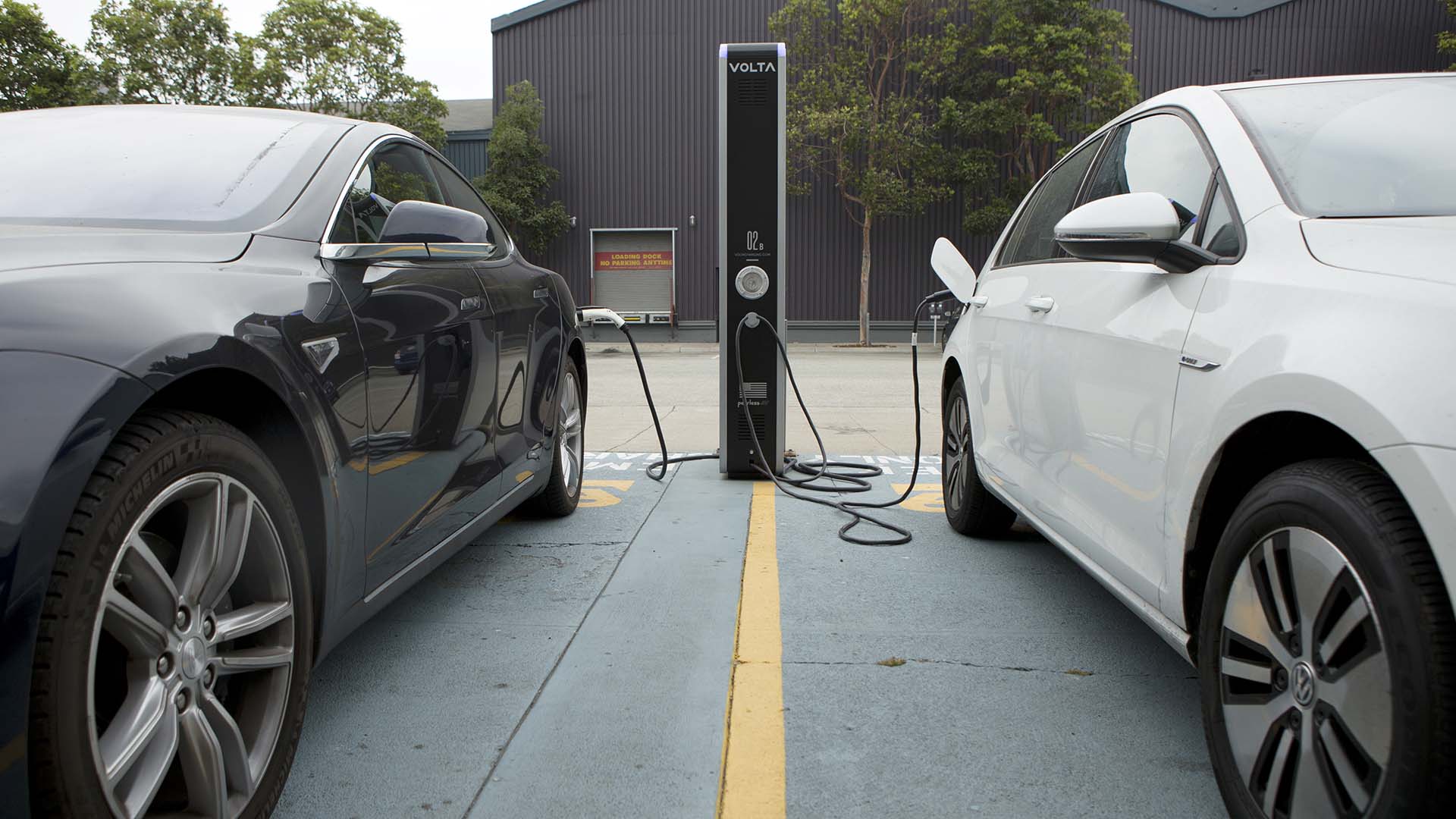
California is in the middle of a battery boom. Yet to meet its clean energy goals, the state needs a lot more storage capacity — 52,000 megawatts, to be exact. That’s about double what it currently has online.
The state’s electric vehicles could help provide some of that energy through the magic of a technology called bidirectional charging. It allows electric vehicles to store energy generated by solar, wind, and other clean sources and utilities to tap into the car batteries when they need extra power.
California has over 1 million electric vehicles parked at homes and offices across the state — the most of any state in the U.S. Today, these vehicles primarily take electricity from the grid, but if they could send it back, then they could contribute to the state’s storage capacity and get paid for their contributions.
On Monday, PG&E announced an expansion of its “vehicle to everything” pilot program designed to test this technology.
The program first launched in 2023 with select cars and chargers, according to Kristin Landry, PG&E’s product manager of Vehicle-Grid Integration. Kia, Volvo, Polestar and Nissan will now participate in the program along with new car models from existing partners. The utility also brought on new charging and software from Wallbox, dcbel, PowerFlex and Bidirectional Energy.
“Part of what is exciting is that all of these [partners] are really interested in this grid-tied capability, so they are helping customers through the interconnection process,” Landry said.
The fledgling program is still small, with just 51 residential customers right now. And, according to Landry, these customers can only generate backup power — meaning that they can power their home if the electricity gets cut.

Landry said that customers cannot sell energy back to PG&E and contribute to California’s overall energy storage capacity until they go through an interconnection process mandated by the California Public Utilities Commission; the same as for anyone who wants to generate or store energy on their property.
This process can be time-consuming and expensive for consumers. General Motors’ “vehicle to home” kits cost between $8,998 and $29,997 — though they are currently on sale. In addition to the specialized equipment, consumers have to pay for the vehicle, the permits and, potentially, for an electrical upgrade if their home does not have the recommended 200-amp capacity.
According to Bidirectional Energy’s website, the whole process can take three to five months.
Benjamin Tuff, the chief marketing officer at dcbel, one of the companies building bidirectional chargers, said that the company wants to handle most of the installation, site inspection and permitting to “make the process as white glove as possible.”
The utility and participating companies currently offer incentives to sweeten the deal for consumers interested in joining the program. All participants receive a $2,500 rebate from PG&E; the first 250 to join pocket an additional $1,500 — as of this month, the utility had 199 spots left, Landry said.
There are also rebates for the Bidirectional Energy’s and dcbel’s charging systems, which range from $9,000 to $13,800, and customers can “stack” those on top of other incentives that California offers like its $3,500 electric vehicle rebate.
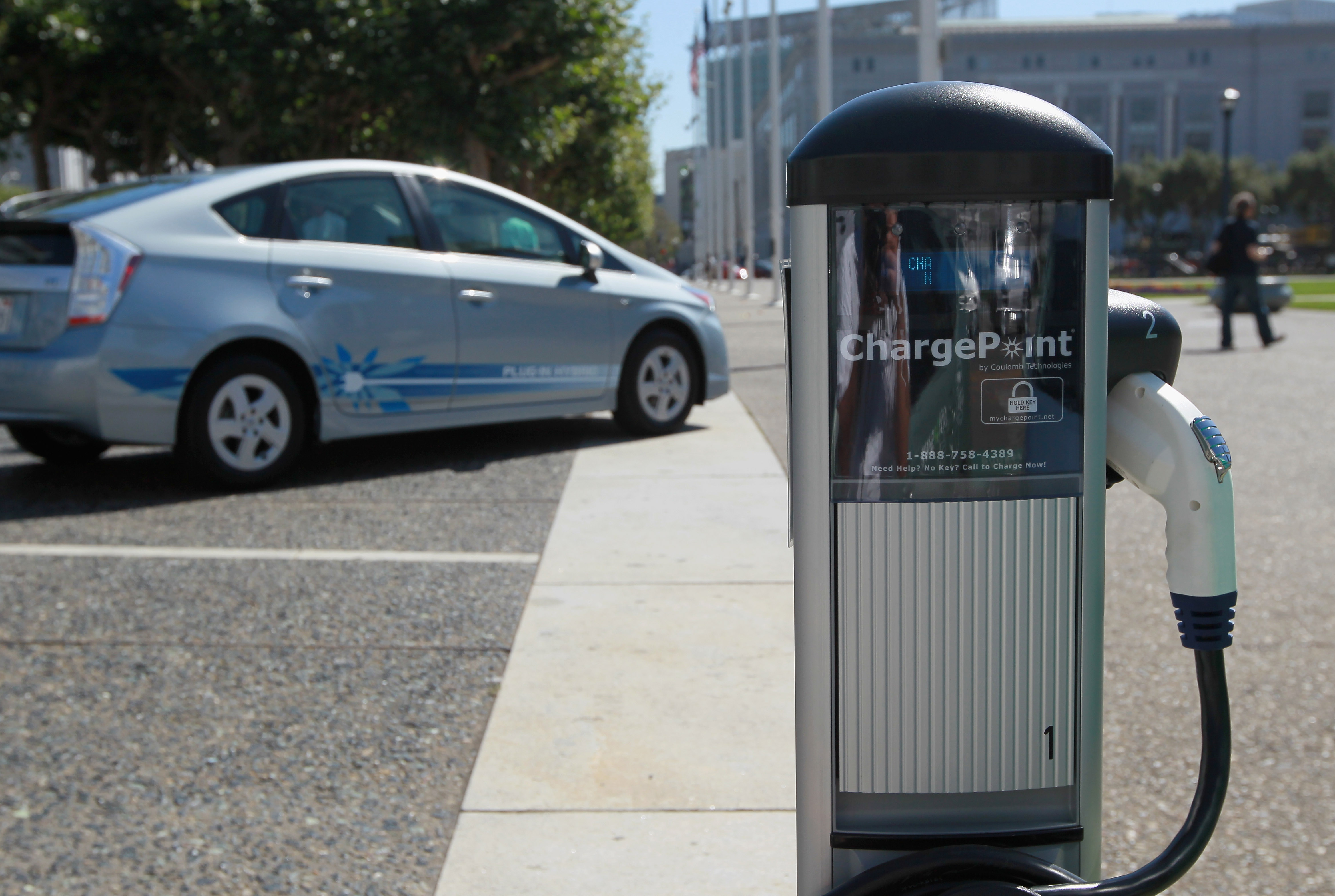
After the upfront costs are paid, participants can reduce their annual energy costs — dcbel estimates people can save $1,300 a year with software that automatically charges vehicles when energy prices are the cheapest, typically between 9 a.m. and 4 p.m.
And they can earn $3,200 each year by selling power back when electricity is at its most expensive, usually between 6 p.m. and 10 p.m.
Tuff said that their system takes care of all the technical and financial decisions for the consumer. For example, if a customer were to plug in their car after work when prices were high, the system would use the car battery to power the home and then switch over to charging later at night when prices drop.
The International Energy Agency found that battery degradation due to overuse has been a key concern for vehicle owners, but noted that recent testing found well-managed charging and discharging can potentially help.
Greggory Kresge, senior manager of utility engagement and transportation electrification at the World Resources Institute, said that these programs appeal to utilities like PG&E because these vehicles can “be this amazing resource that the utility doesn’t own, but that they can take advantage of” to help manage the grid and onboard more renewable energy.
“As [these programs] mature, and EV adoption and bidirectional charging increases, the adoption of electric vehicles is forecasted to reach 8 million vehicles by 2035,” PG&E told KQED in an email. This level of adoption could displace some of the need for building out large industrial battery parks.