California’s Solar and Battery Boom Is Transforming the Power Grid
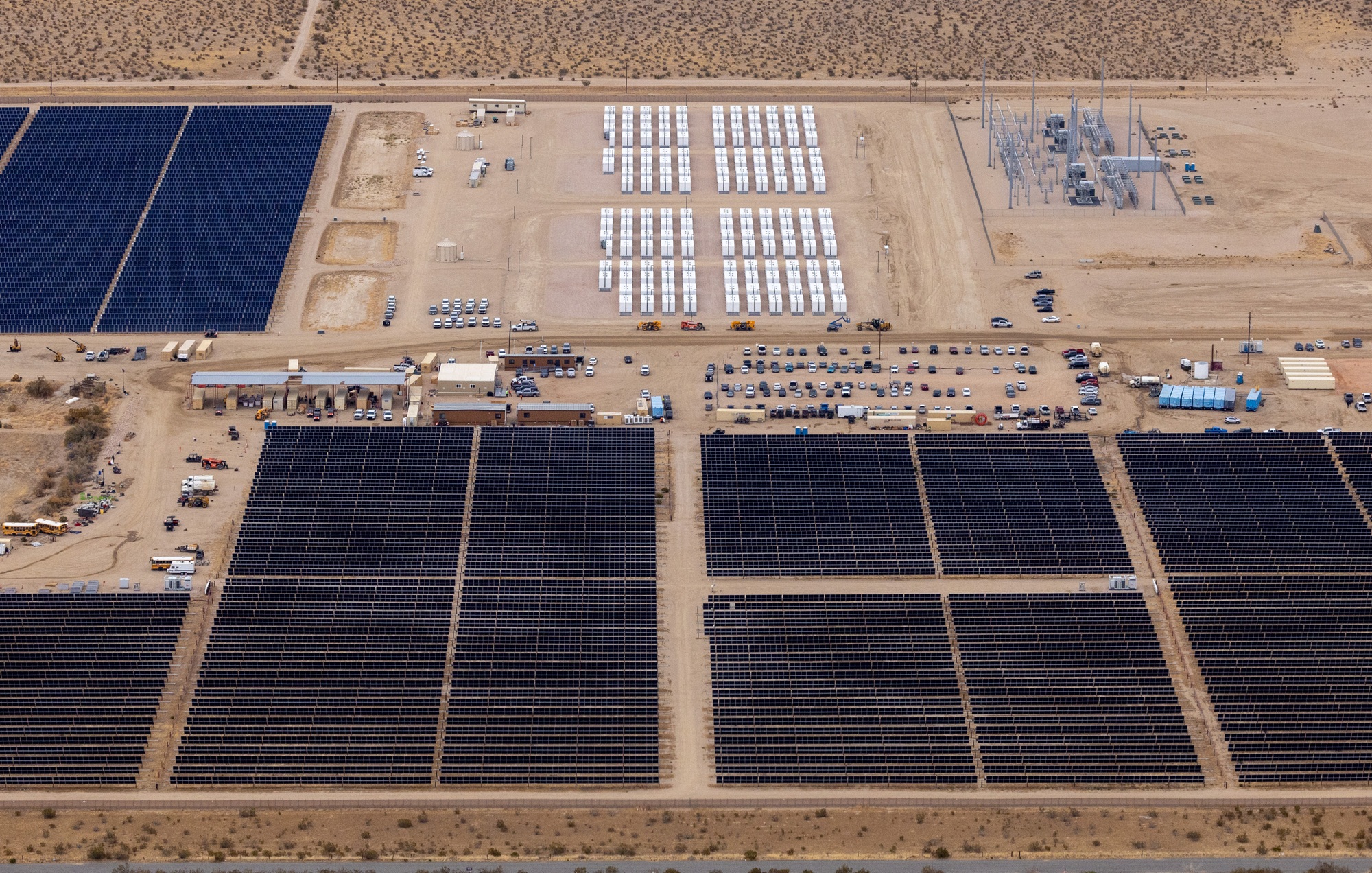
This story is part of KQED’s series “Flipping the Switch,” examining California’s transition to clean energy and what it means for you. Find the series and more of our climate coverage here.
California’s electric grid is cleaner today than it has ever been, thanks to renewable energy sources like solar power.
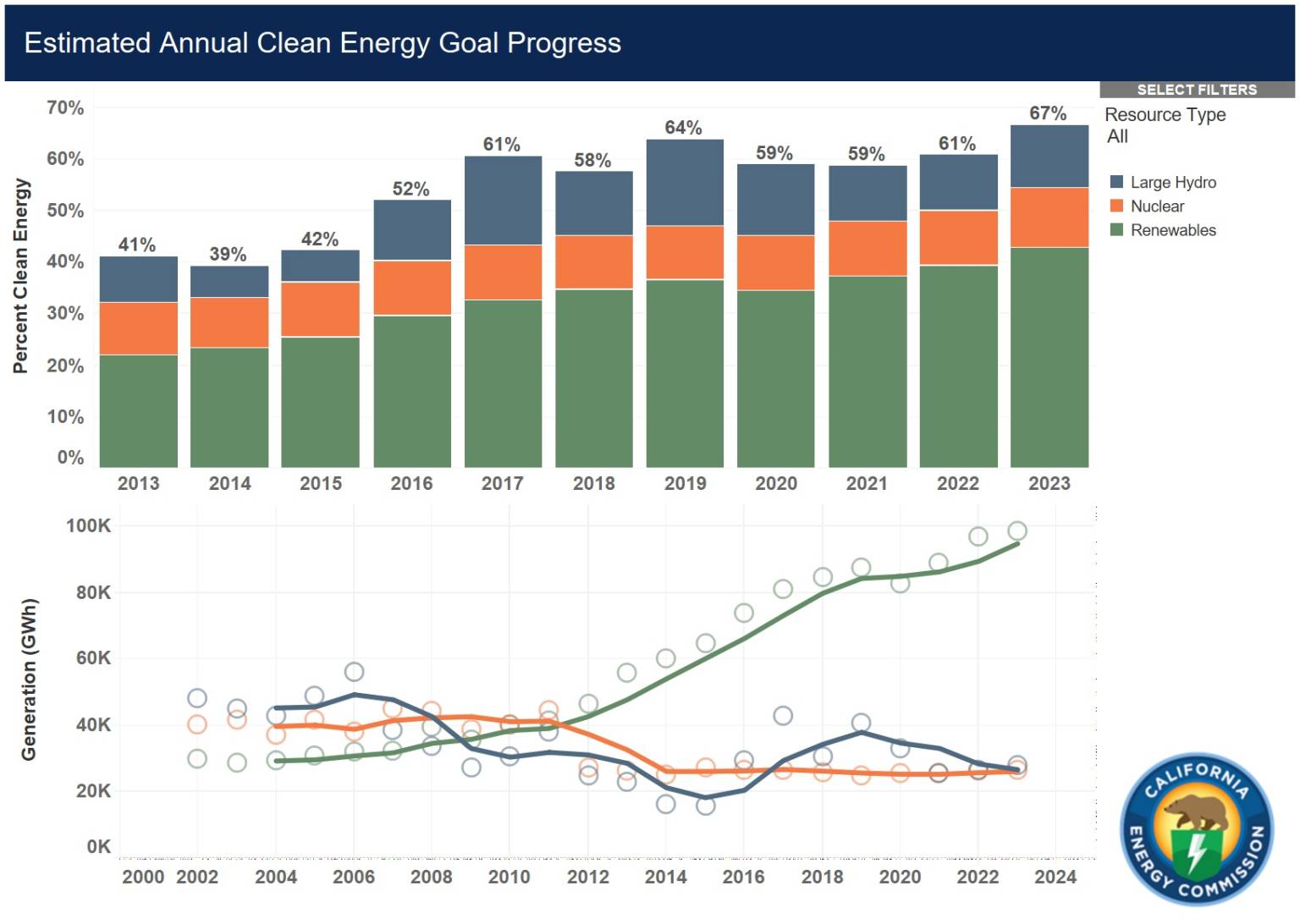
These sources of carbon-free power, including wind, hydroelectric power, geothermal and nuclear, provided 62% of California’s electricity in 2024, according to the California Energy Commission. This is up from 58% in 2023, largely due to more electricity coming from solar.
Solar is now the state’s largest renewable source, though natural gas remains one of the single largest sources of electricity, particularly after sunset.
Although that is changing with explosive growth this decade in California’s ability to store power in large batteries.
The state is now home to one of the world’s largest battery fleets, capable of punching through enough electricity to power more than 15 San Franciscos at the time of day the city needs it the most.
“It’s very steadily and significantly becoming more green,” said Andrew Campbell, executive director of the Energy Institute at UC Berkeley Haas. “The big change over the last 10 years is the dramatic growth in utility-scale solar and the growth of battery storage.
“California has more batteries installed than any other state or country at this point,” Campbell said. “The batteries alone could probably satisfy about a quarter of the state’s demand at peak times and maybe even half the demand at off-peak times.”
Batteries have transformed how California uses renewable energy.
They store excess electricity generated during the day, when production exceeds demand, and discharge it in the evening after the sun sets, when more people use electricity.
California’s electricity has changed dramatically in just one decade
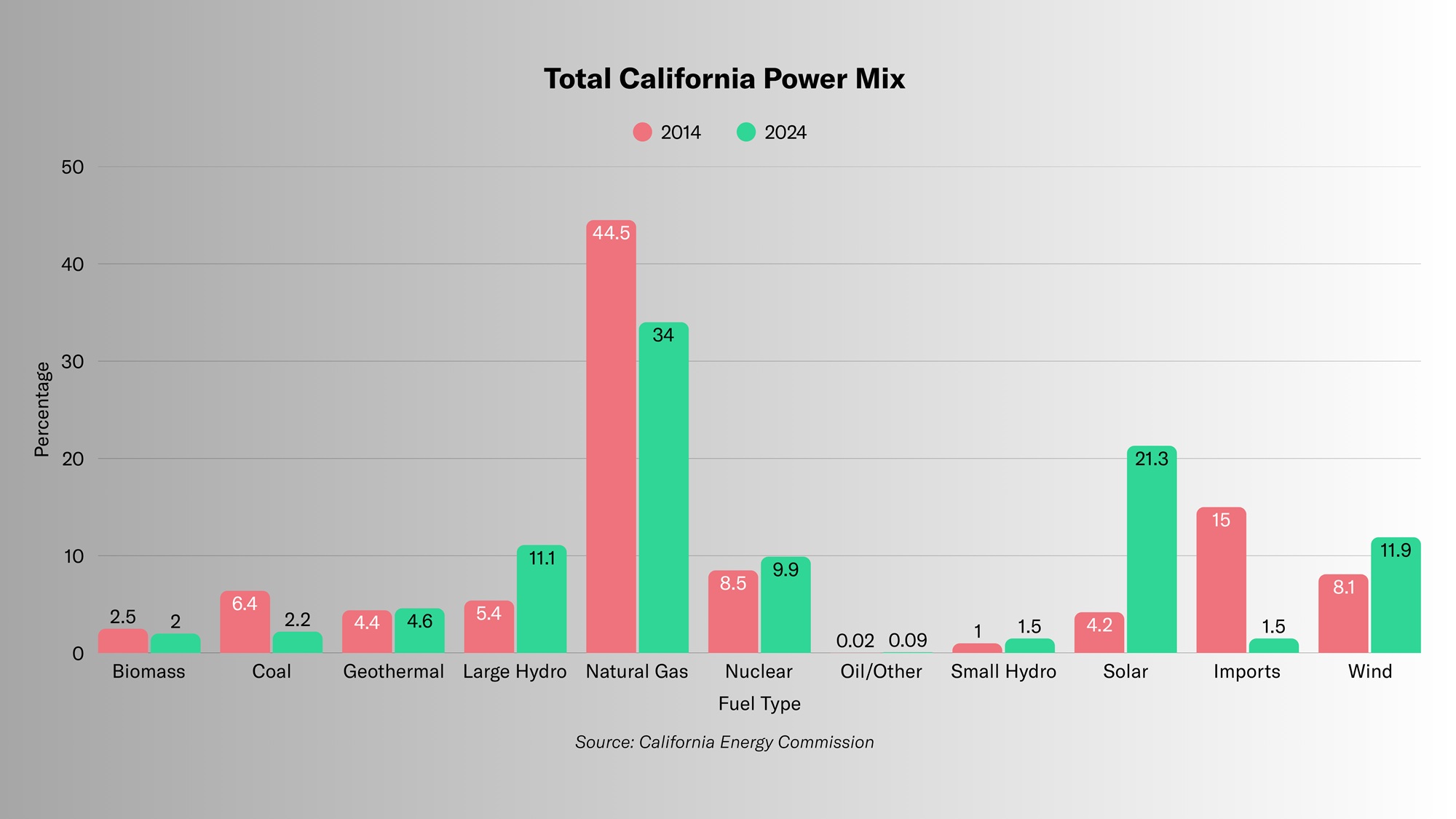
A decade ago, natural gas was the main source of California’s electricity supply, with solar providing just 8% of the energy mix. In 2024, solar’s share had more than doubled to 20%.
Large solar farm projects have cropped up across California, and more than 2 million homes now have rooftop solar. Geothermal sources and Diablo Canyon nuclear plant continue providing carbon-free electricity around the clock.
California now has the largest fleet of batteries in the country, producing roughly 21,000 megawatts of power. Just five years ago, that number was only a fraction of today’s capacity.
“The grid has been transformed not just by solar, but really coupled with the growth of battery projects,” Campbell said.
Last year, California ran on 100% clean energy for 1,856 hours — that’s up from 147 hours in 2022, according to the Energy Commission.
During that time, solar, wind and other renewables collectively generated enough electricity to meet statewide demand, although some natural gas plants are still operating and helping to keep the grid stable.
This illustrates how rapidly renewable energy and storage have changed grid operations.
Why the state’s energy mix changes throughout the day
California’s electricity mix changes minute by minute.
Keeping electricity flowing 24 hours a day means the state still relies on natural gas, imports power from neighboring states and constantly balances supply and demand in real time.
The California Independent System Operator (CAISO), which manages about 80% of the state’s power grid, constantly adjusts which power plants, batteries and imports are supplying electricity to match demand.
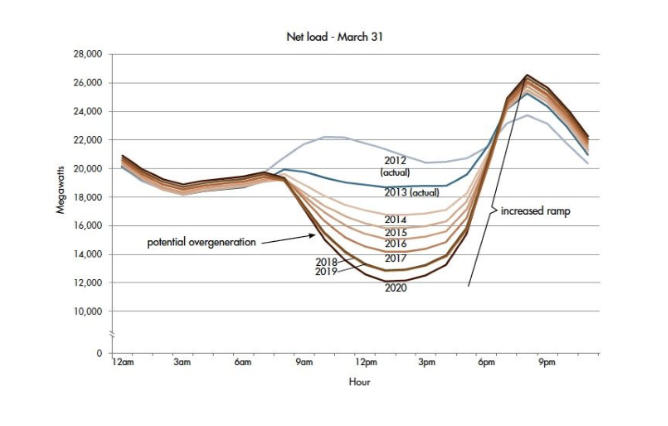
Around midday, solar panels across California produce enormous amounts of electricity.
Then the sun begins to set. Between about 5 p.m. and 9 p.m., solar production falls rapidly as millions of Californians return home, cook dinner, charge electric vehicles, and turn on air conditioners.
Grid operators call this the Duck Curve, the famous phenomenon in which solar generation spikes during the day but drops off just as evening energy demand peaks.
For years, natural gas plants have covered that steep evening spike in demand for energy. Today, batteries increasingly do.
What role do batteries play for a greener grid?
Batteries now provide more than 60% of the power to cover the evening surge in demand during hot months as people get home and turn on their appliances, according to CAISO.
That doesn’t mean natural gas has disappeared.
While California relies less on natural gas on a normal day because the state uses more wind and solar, “gas plants are still essential for meeting energy needs during,” [the busiest times] said Stacey Shepard, a senior information officer at the California Energy Commission.
Battery storage has dramatically reduced how often gas plants are needed, but they are still needed during prolonged heat waves, cloudy periods, wildfire-related power outages and other emergencies.
What happens when there’s too much solar power
On some sunny afternoons, California generates more solar power than it can use. Thanks to batteries, that energy can be stored for later use in the evening.
“That energy is then put back onto the grid in the evenings after the sun sets,” Campbell said.
California also exports extra energy to neighboring states. “It can be a positive thing where California is essentially making money by selling electricity to [for example] Arizona when the weather may be hot there,” Campbell said.
Over the course of a year, California imports more electricity than it exports.
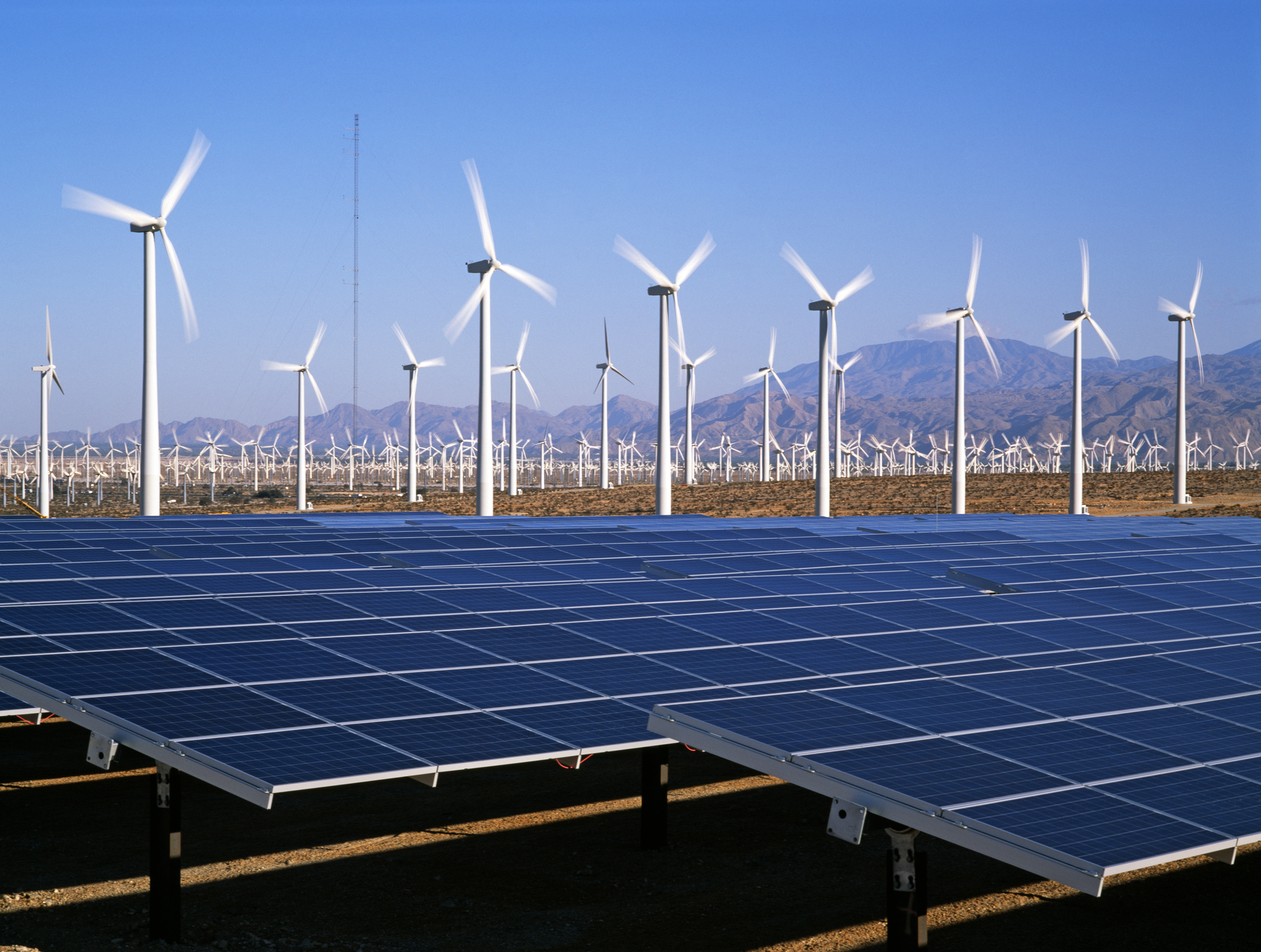
The state often sends out electricity in the middle of a spring or summer day before bringing power in again in the evening.
The negative of having too much solar energy is that CAISO asks solar and wind farms to shut down or back off to avoid overloading the system; what the grid operator calls “curtailment.”
In 2024, CAISO curtailed 29% more output from these farms than in the previous year.
“[Electricity] supply and demand have to be precisely equal at all times. What’s happening more and more is that some of these big [wind and solar] plants are being turned off,” Campbell said.
If renewable energy is so cheap, why are electric bills in California still so high?
While solar and wind are some of the cheapest sources of electricity ever built, utilities have spent billions upgrading poles, wires and substations, expanding transmission lines and making all this equipment more secure and less likely to touch off a destructive wildfire.
“[High costs are] entirely related to the distribution grid,” Campbell said. Investments in the network that delivers electricity to homes and businesses are one of the biggest drivers of California’s electric rates, which are the highest in the country outside of Hawaii.
The Energy Commission said it’s trying to reduce future costs by focusing on improving energy efficiency, investing in emerging technologies and identifying the lowest-cost clean energy mix.
What about AI and data centers?
Electricity demand is expected to grow substantially over the next two decades because of electric vehicles, building electrification and AI data centers.
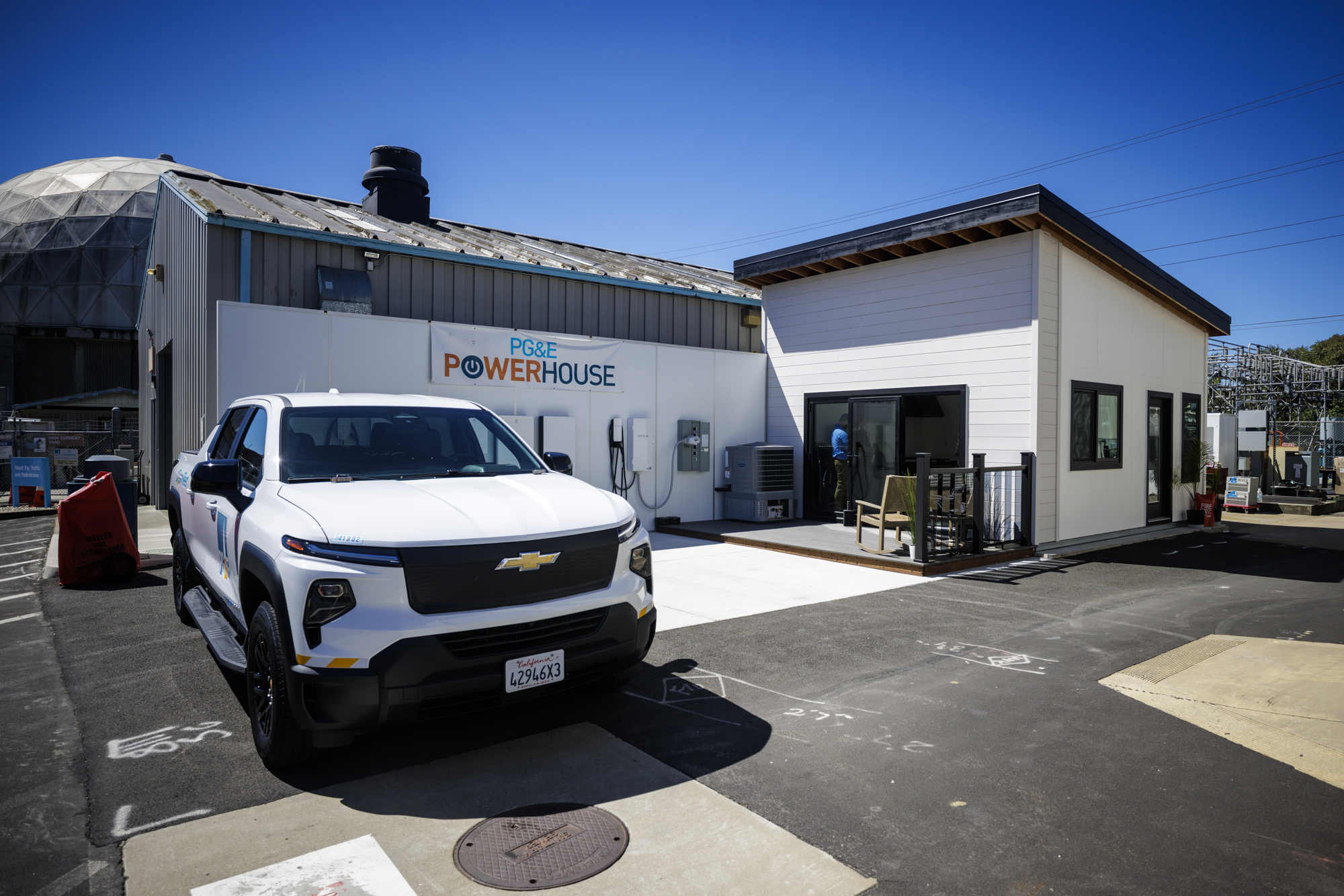
California already has more than 200 data centers, and the state forecasts power demand from those facilities to more than quadruple by 2040.
Whether that raises consumer electricity bills depends largely on policy.
Campbell said the best outcome is for data centers to pay the full cost of connecting to the grid, which could actually help spread infrastructure costs across more customers and reduce the cost for everyone.
If they don’t, existing ratepayers may shoulder more of those expenses.
What can Californians do to help?
When you use electricity increasingly matters as much as how much you use.
“Twenty years ago, using electricity in the middle of the day was a very bad idea,” Campbell said, referencing the energy crisis in the early 2000s when the grid relied on fossil fuels. “Now it’s entirely different. The middle of the day is the best time to use electricity.”
Power generation from solar panels peaks in the middle of the day. When you charge an electric vehicle, run the dishwasher or do laundry during sunny hours, you are using abundant solar power. Rates are also lower during this time.
As California builds more renewable energy and batteries, residents shifting the time they use appliances is one of the easiest ways they can help make the grid greener.
 From KQED’s Climate desk, “Flipping the Switch” documents California’s transition to clean energy and what it means for you. What works? What doesn’t? How much does it cost? Help us find these answers and more by donating today.