California Needs Clean Energy Electricians. This Oakland Center Is Training Them
This story is part of Flipping the Switch, KQED’s series about California’s transition to clean energy and what it means for you. What works? What doesn’t? And how much does it cost?
It took just 15 seconds of shaking for the top level of the Cypress Freeway in West Oakland to flatten with force onto the section of road below.
This structural failure was the deadliest catastrophe of the 1989 Loma Prieta earthquake, killing 42 people driving in Bay Area rush hour traffic.
The breakdown was especially devastating for West Oaklanders, who’d opposed the overpass’s construction — slicing through the heart of their neighborhood — in the first place. But out of the twisted rebar and tragedy, they created an opportunity.
First, they lobbied to relocate the freeway and build a greenbelt — Mandela Parkway — in its footprint. Second, they established the Cypress Mandela Training Center for West Oakland residents to be a part of the rebuilding process and set participants on a path toward secure, well-paying jobs in construction and related trades.
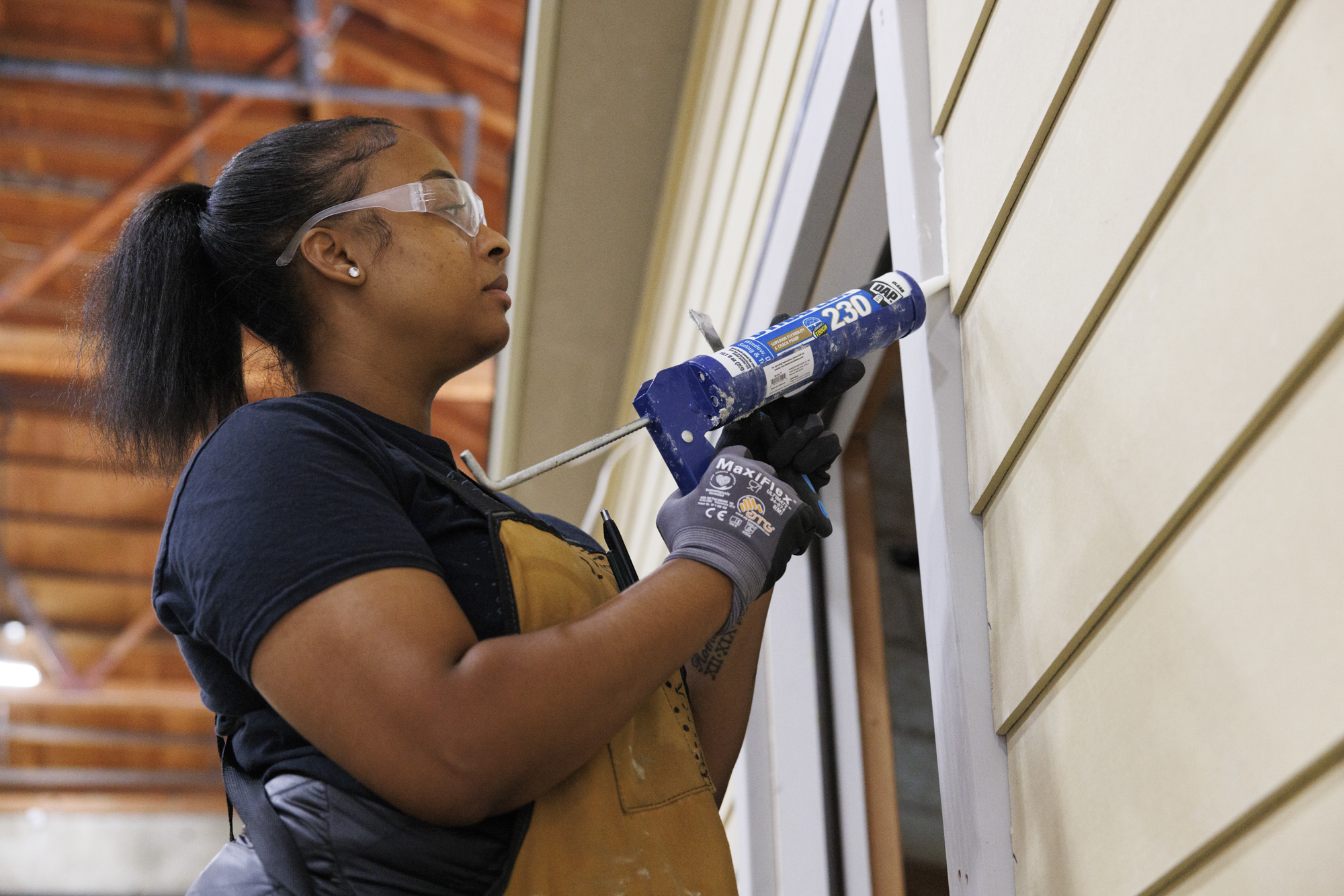
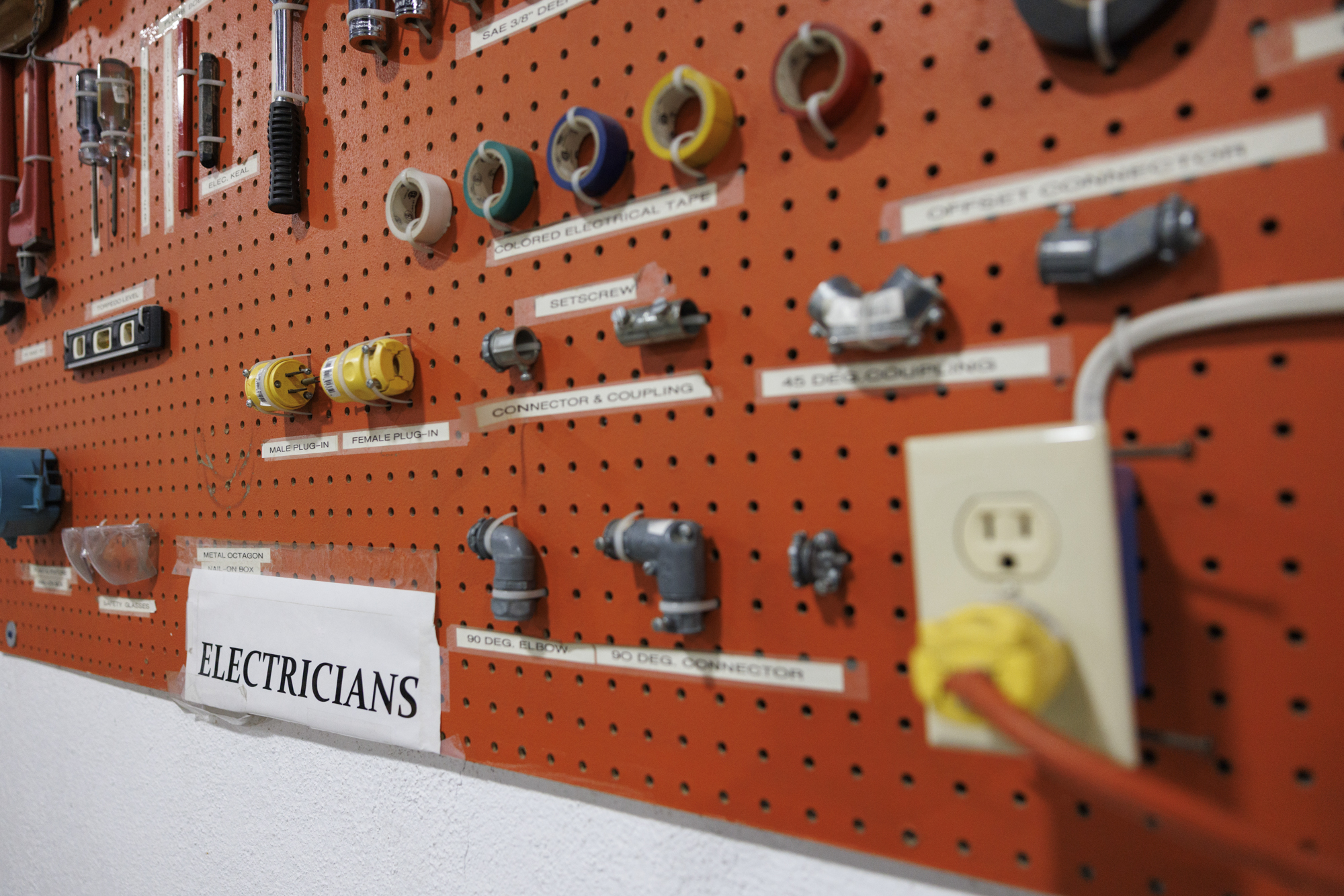
With time, Cypress Mandela expanded to provide foundational training for people all over the Bay Area, for an array of trades, including the basics of working with electricity. That sector is expected to grow 15% by 2034, through an increase of roughly 12,000 electrician jobs, many of those to power California’s enormous transition away from fossil fuels.
Workforce development programs like Cypress Mandela are an essential first step on a career path to build large-scale solar projects, fix up the electrical grid, and swap gas-burning appliances like furnaces for electric alternatives, not to mention build out data centers. Training programs like it are key to bringing low-income and minority trainees — at risk of getting left behind as the state abandons fossil fuels — into the fold.
The U.S. and California have a history of leaving minorities behind during major transitions. “The patterns of disparity and inequity are basically going to be reproduced when we do anything clean energy-wise, unless we approach it differently,” said Shrayas Jatkar, who worked for the U.S. Department of Energy under the Biden Administration.
A program that pushes you
Alejandro Ramos grew interested in the trades last year after his girlfriend gifted him a new gaming system that did not fit on the desk in his room.
Ramos took the table apart in his Oakland home and reassembled it to fit his video games. As he sweated, putting the slats of wood back together, he felt accomplished in a way he often had not during high school.
“I don’t really know how to explain it – but your own work – it feels good,” Ramos said, remembering the day last year.
Ramos is smart, he said, “but I can’t sit still in a classroom. I like to be up, moving.”
Ramos’s high school advertised a five-week summer program in the trades at Cypress Mandela.
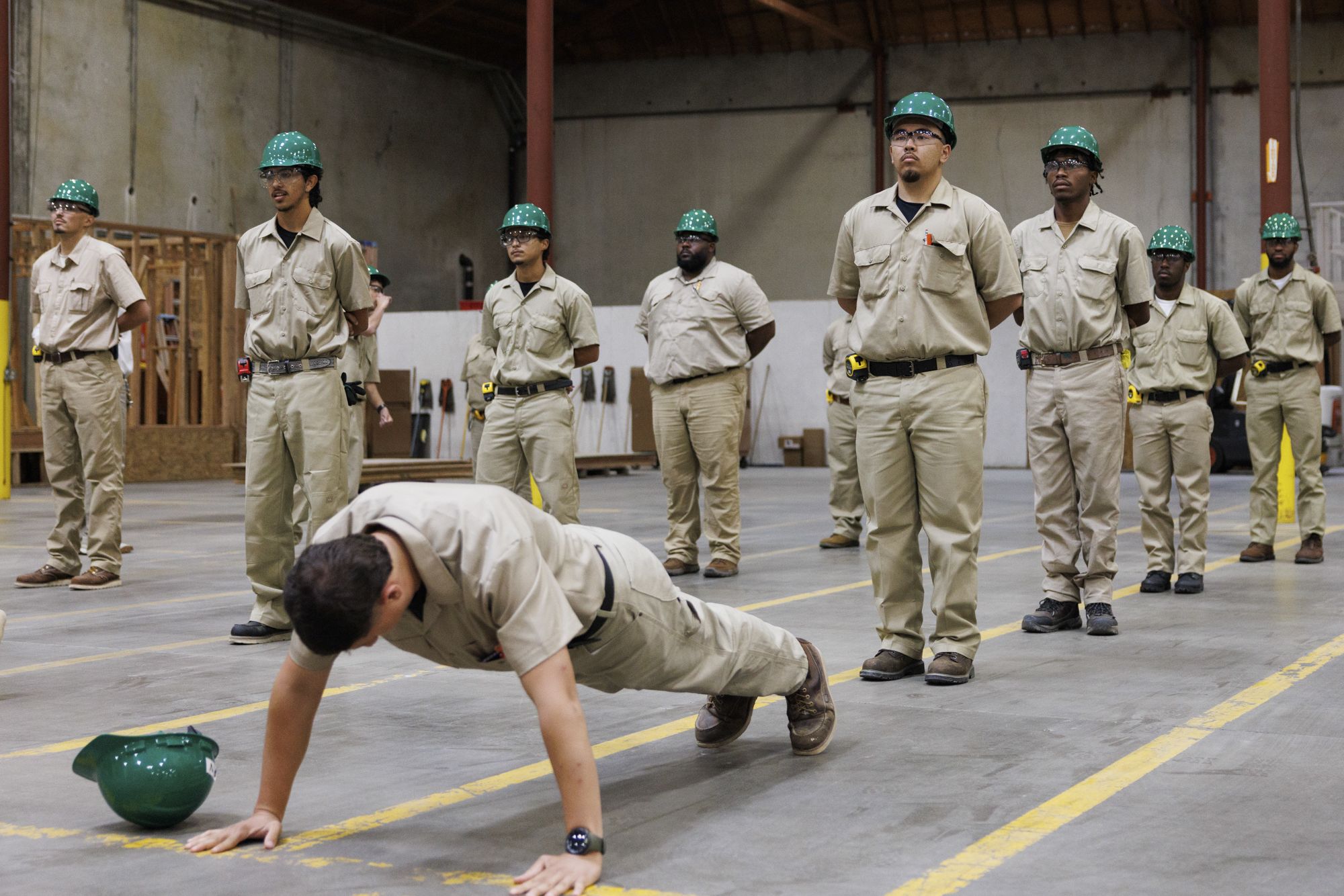
Despite some bumps at the program’s start — Ramos was late the first day, a transgression that cost him 100 push-ups — he was enthusiastic.
“The next day, I was the first one in line,” Ramos said. “It really pushes you to do better for yourself.”
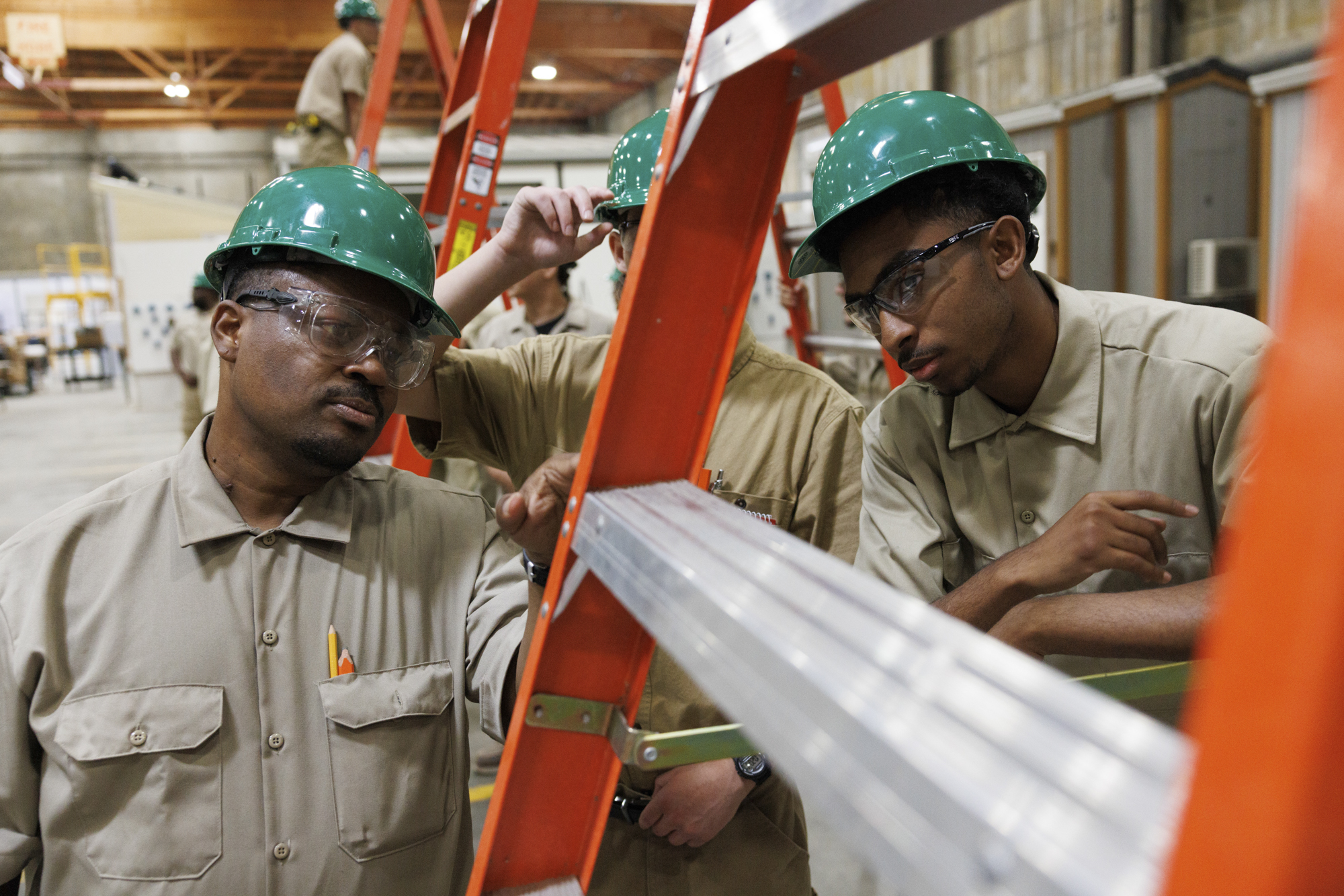
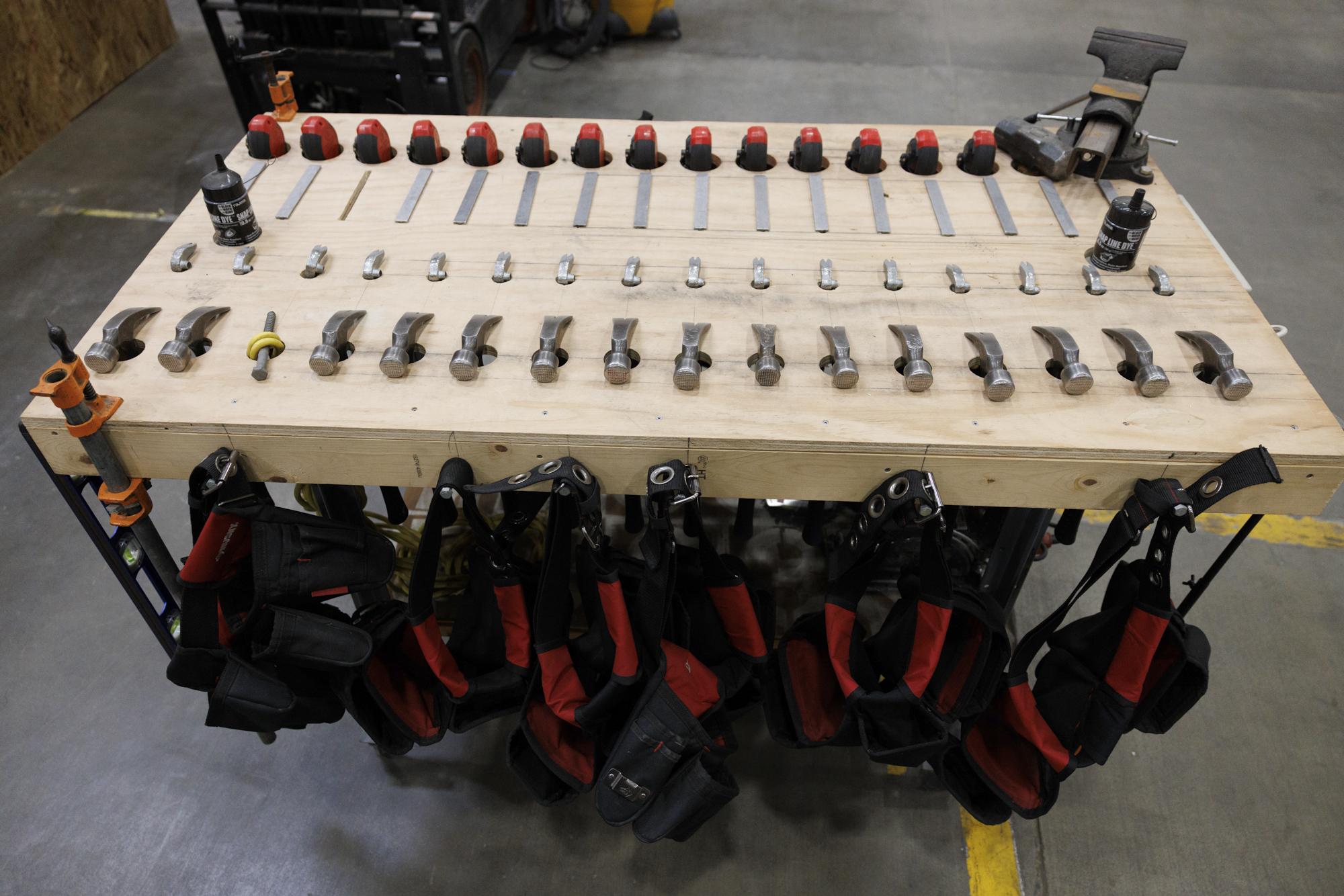
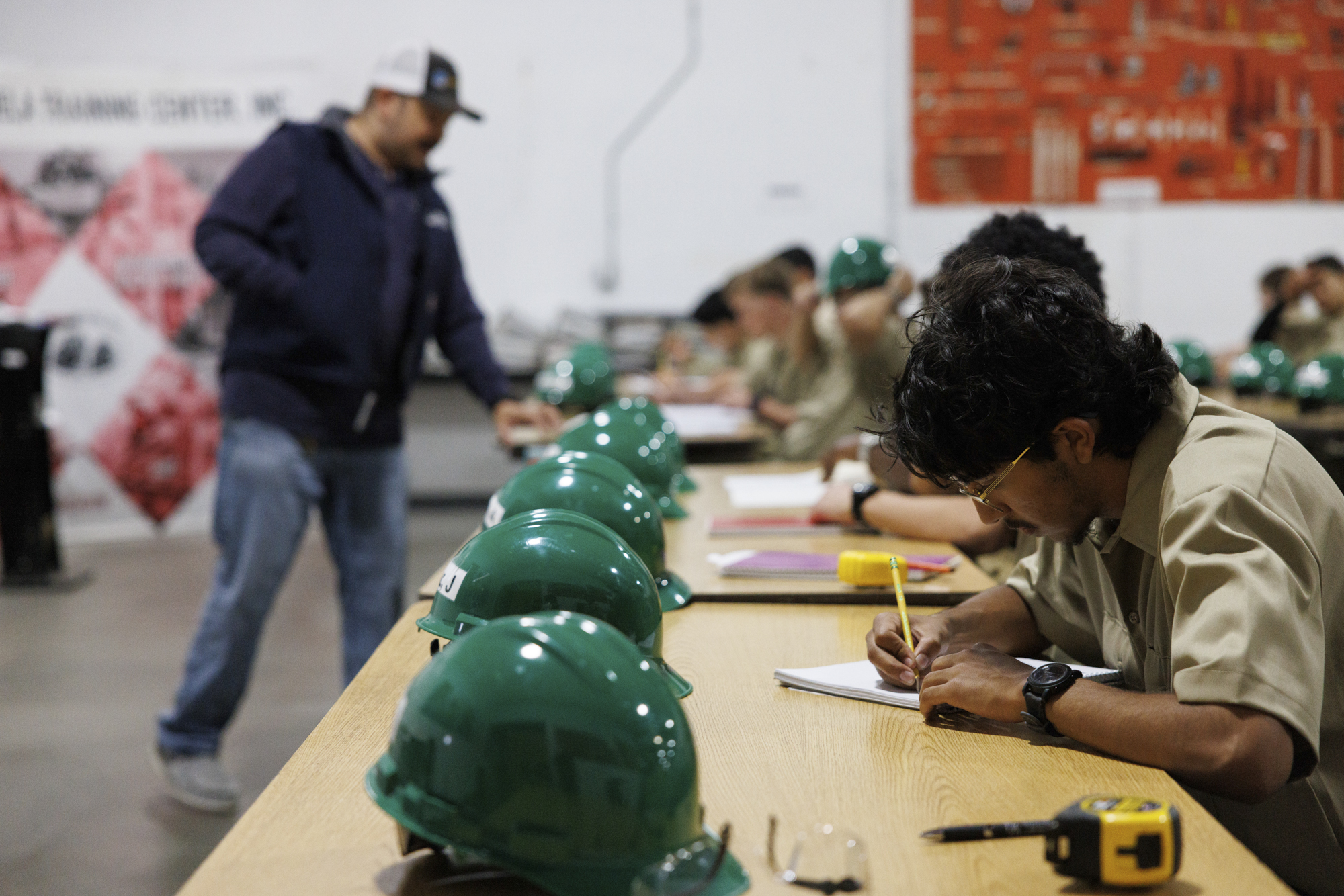
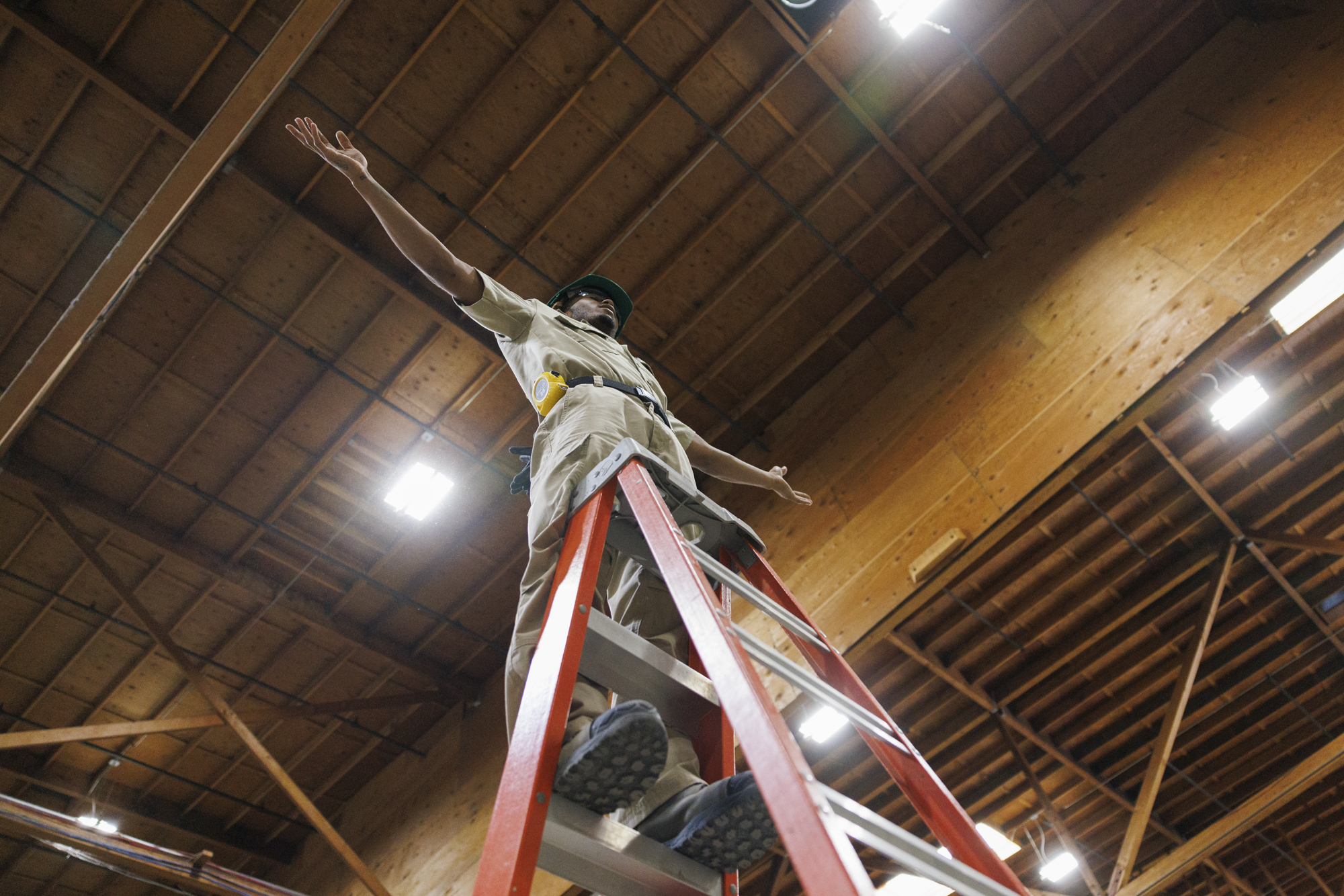
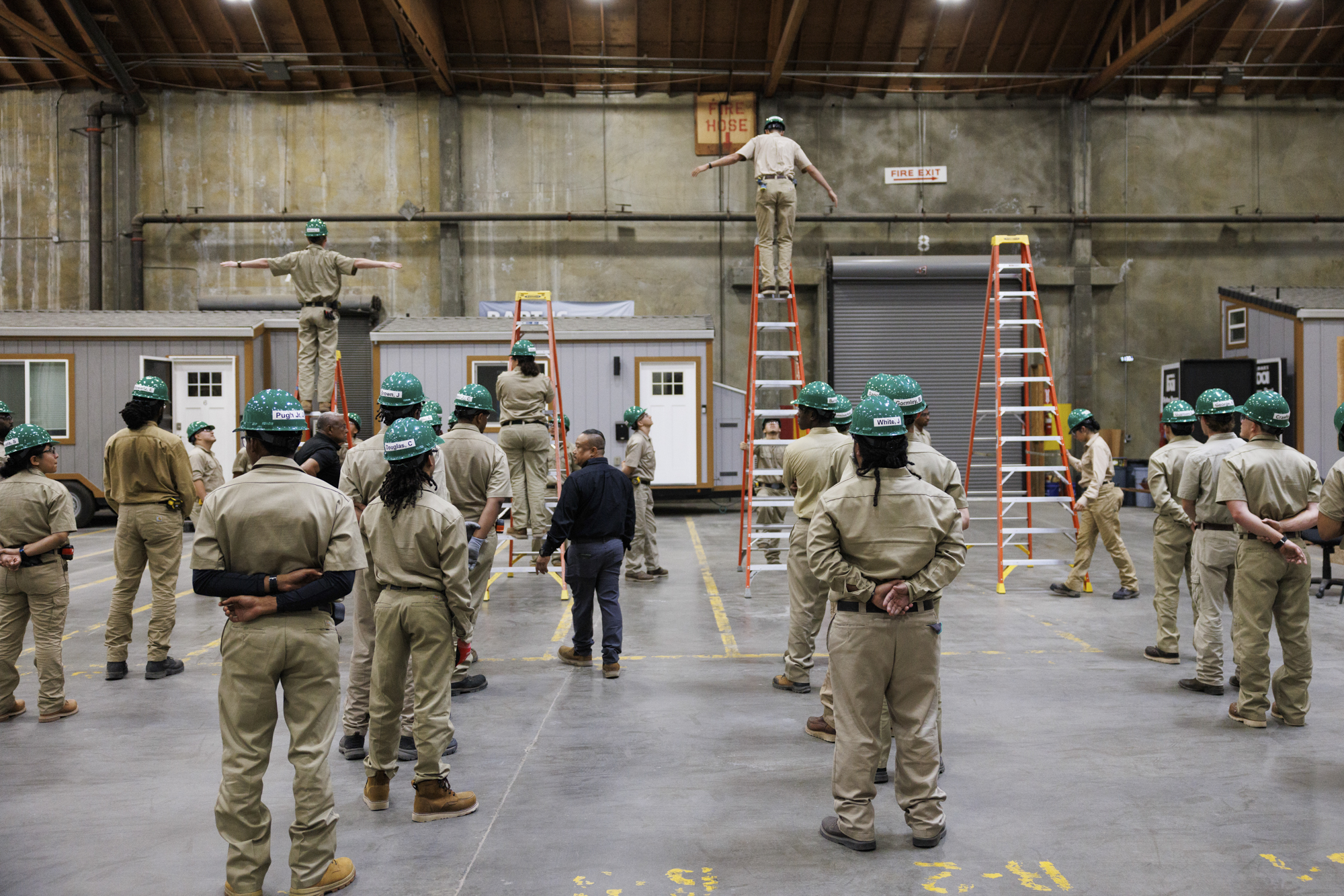
He continued on past the summer, joining the center’s flagship training program: a free, four-month journey, including hands-on skill-building and classroom instruction. Participants learn the basics of construction, plumbing, carpentry, concrete and electricity. One day they’ll be working on how to climb ladders of varying sizes safely, and the next they’ll be constructing a small home.
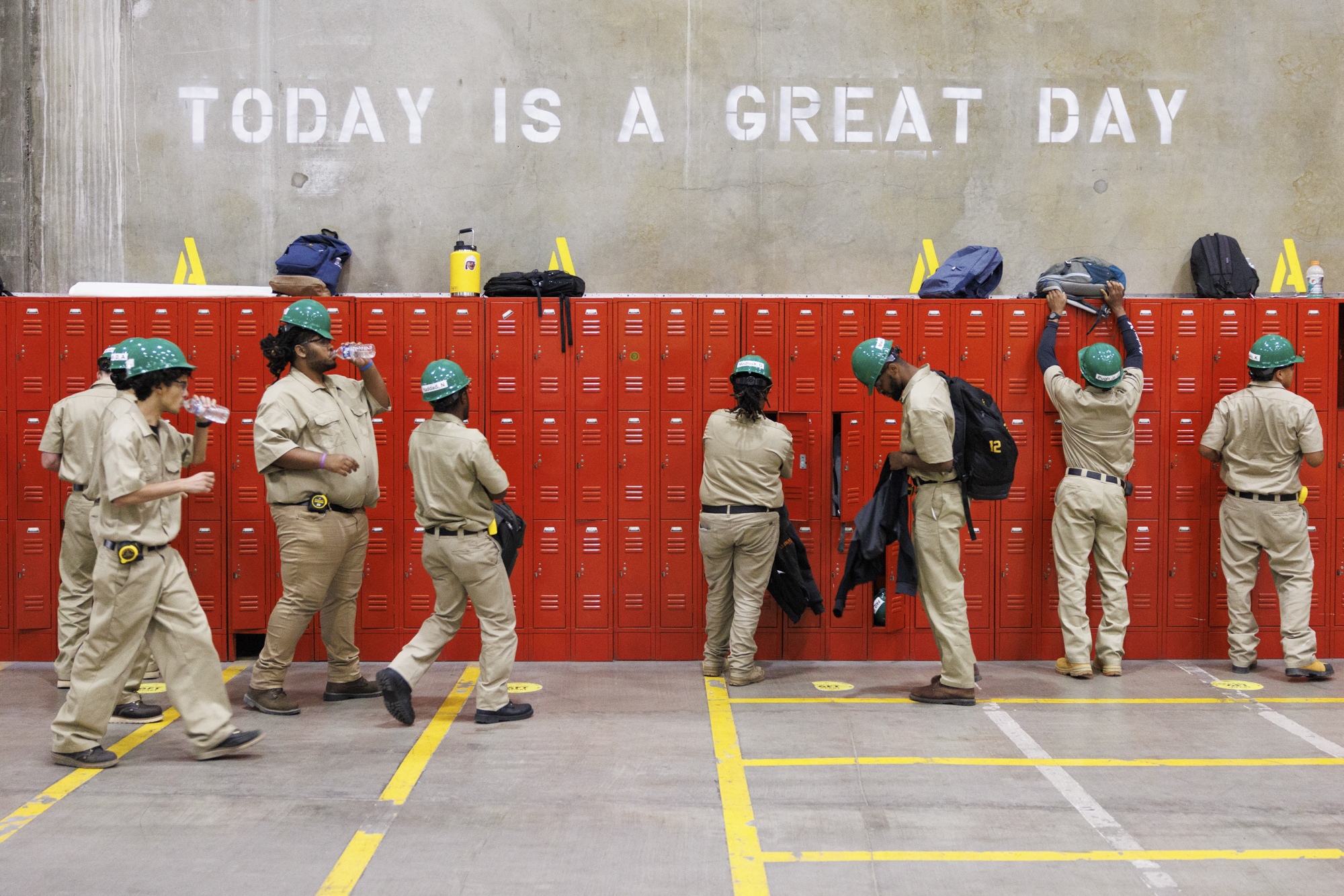
Cohorts range from 40 to 80 people, and come from all kinds of backgrounds — some having just finished high school, others finding their footing after being incarcerated. Participants commute daily from as far as Sacramento or Salinas to the enormous warehouse in East Oakland, where the center moved a decade ago.
‘We don’t build suffice, we build superior’
Cypress Mandela runs like a bootcamp. Participants don khaki uniforms and hard-toed work boots. They begin each day with an hourlong, rigorous workout, each person equidistant from their neighbor, in neat lines as they sweat through jumping jacks and crunches. If they fail to comply with the program’s high standards — a shirt is untucked, someone starts to doze in class — it’s more push-ups.
“Lines are straight. Everything is neat,” said Charles E. Simmons Jr., the center’s executive director. “We have a saying here: We don’t build suffice, we build superior. I don’t want your half, I want your best.”
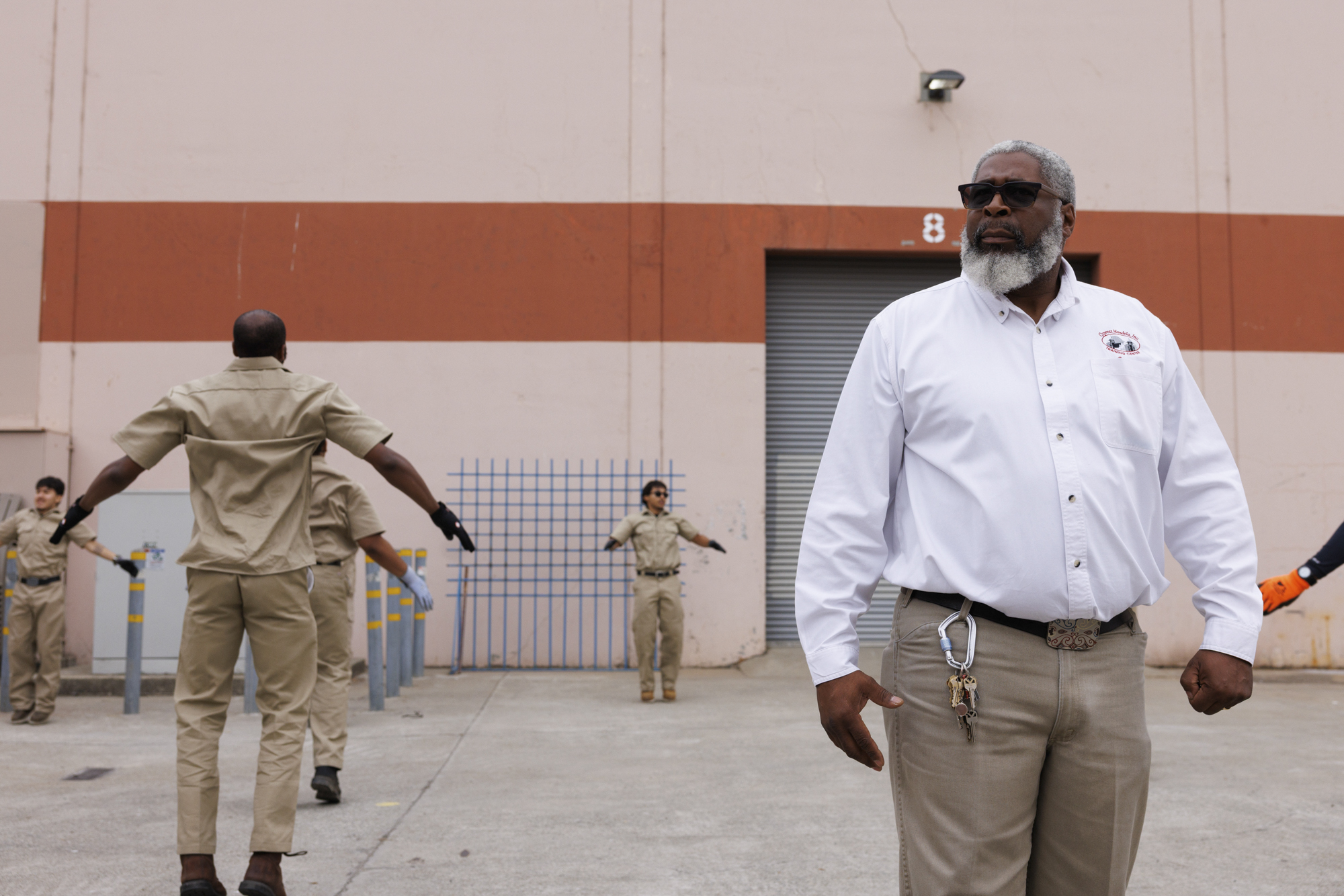
The tough-love approach is intentional, to match the real-world dangers of working in the trades. Occupations the students plan to go into have some of the highest rates of injuries and fatalities of all industries in California.
“This is not a game. You’re dealing with life and death situations here,” Simmons said.
Good quality green jobs
Workforce training programs like Cypress Mandela and dozens of others in the state are “really trying to create these on-ramps to registered apprenticeship and the construction trades,” Jatkar said.
Experts in the construction trades underscore the difference between what are known as “high road” jobs — offering good pay, benefits, and opportunities for growth, often found through union membership — and those that cut costs at a worker’s expense. High road jobs are more common when it comes to large-scale industrial or commercial projects than single-family residential work.
Julia Hatton, who heads a training program in the Bay Area and Central California, the Rising Sun Center for Opportunity, said some centers are focused on high-road jobs after learning hard lessons from President Barack Obama’s 2009 initiative to stimulate green jobs.
Back then, Hatton’s organization trained people to go into home solar installation and home weatherization, but the pay was low, the schedules were inconsistent, and people received no benefits. “We realized that those jobs were keeping people in poverty,” she said.
When Rising Sun saw money coming back to support more “green jobs” in recent years, they advocated for worker protections, like competitive wages for employees working on a state-funded program to cut sources of pollution from low-income homes.
Beyond pre-apprenticeships
For Cypress Mandela graduates interested in becoming electricians, one path forward is to enter an apprenticeship program, like that offered through the International Brotherhood of Electrical Workers, Local 595. Like most union apprenticeships, it’s yearslong and “earn while you learn,” meaning apprentices work and get paid while they also attend classes.
But they’re competitive to get into. Each year, roughly 3000 people apply for IBEW Local 595’s apprenticeship program, and only 50 to 75 get in, said Jason Bates, who directs its training.
Participants who go through Cypress Mandela’s vetted workforce development program, or others like it, have a few legs up, Bates said. For one, they don’t have to take a math and reading comprehension test, because they’ve gone through an algebra and reading comprehension curriculum.
They are also trained in how to interview, another key piece of IBEW Local 595’s selection process. They take classes on it and go through mock versions of the real thing, which is hugely important for people preparing for their first professional interview.
“It’s just like riding a bike. The first time you ride a bike, you’re not very good. But when you practice riding a bike, you get better and better until your training wheels are off,” Bates said.
Connecting participants to union jobs is important. These careers come with benefits, salary increases, pensions and more.
The center also has close partnerships with PG&E, East Bay Municipal Utility District, BART and other local contractors and employers.
Programs like Cypress Mandela “play a really vital role in creating pathways to registered apprenticeship in the trades,” Jatkar said. The reason they’re able to do that is “because of the long history and relationship that they have with one another, the familiarity, the trust. They know Cypress is turning out good graduates that are going to pan out.”
Cypress Mandela’s job placement success has been one of the forces sustaining it for so long.
“It gained a lot of notoriety for getting people jobs,” Simmons said. Roughly one-third of the most recent cohort was employed before the program finished, said Crystal McDowell, the center’s office manager.
Into the labor force
There are three main qualities that make for successful green job workforce development programs, said Jessie Hammerling, director of the Green Economy Program at the UC Berkeley Labor Center.
First, programs should teach a wide range of skills, avoiding going too deep on one kind of job that is currently in demand as California builds out its clean grid, but may fade as trends change.
Second, education should be responsive to market demands for certain jobs, tweaking curriculum to better match trends, like a surge in interest in heat pumps.
And third, training should teach students to consider job quality, union representation, and the progression of wages they can make by following certain paths, while avoiding others. In the construction sector in particular, “most of the jobs are really bifurcated,” Hammerling said, between those that lead to family-sustaining work versus jobs that barely make ends meet.
These qualities are central to Cypress Mandela, and likely one of the reasons the program born from a quick, violent jolt has had such staying power.
 From KQED’s Climate desk, “Flipping the Switch” documents California’s transition to clean energy and what it means for you. What works? What doesn’t? How much does it cost? Help us find these answers and more by donating today.