window.__IS_SSR__=true
window.__INITIAL_STATE__={
"attachmentsReducer": {
"audio_0": {
"type": "attachments",
"id": "audio_0",
"imgSizes": {
"kqedFullSize": {
"file": "https://ww2.kqed.org/news/wp-content/themes/KQED-unified/img/audio_bgs/background0.jpg"
}
}
},
"audio_1": {
"type": "attachments",
"id": "audio_1",
"imgSizes": {
"kqedFullSize": {
"file": "https://ww2.kqed.org/news/wp-content/themes/KQED-unified/img/audio_bgs/background1.jpg"
}
}
},
"audio_2": {
"type": "attachments",
"id": "audio_2",
"imgSizes": {
"kqedFullSize": {
"file": "https://ww2.kqed.org/news/wp-content/themes/KQED-unified/img/audio_bgs/background2.jpg"
}
}
},
"audio_3": {
"type": "attachments",
"id": "audio_3",
"imgSizes": {
"kqedFullSize": {
"file": "https://ww2.kqed.org/news/wp-content/themes/KQED-unified/img/audio_bgs/background3.jpg"
}
}
},
"audio_4": {
"type": "attachments",
"id": "audio_4",
"imgSizes": {
"kqedFullSize": {
"file": "https://ww2.kqed.org/news/wp-content/themes/KQED-unified/img/audio_bgs/background4.jpg"
}
}
},
"placeholder": {
"type": "attachments",
"id": "placeholder",
"imgSizes": {
"thumbnail": {
"file": "https://cdn.kqed.org/wp-content/uploads/2024/12/KQED-Default-Image-816638274-2000x1333-1-160x107.jpg",
"width": 160,
"height": 107,
"mimeType": "image/jpeg"
},
"medium": {
"file": "https://cdn.kqed.org/wp-content/uploads/2024/12/KQED-Default-Image-816638274-2000x1333-1-800x533.jpg",
"width": 800,
"height": 533,
"mimeType": "image/jpeg"
},
"medium_large": {
"file": "https://cdn.kqed.org/wp-content/uploads/2024/12/KQED-Default-Image-816638274-2000x1333-1-768x512.jpg",
"width": 768,
"height": 512,
"mimeType": "image/jpeg"
},
"large": {
"file": "https://cdn.kqed.org/wp-content/uploads/2024/12/KQED-Default-Image-816638274-2000x1333-1-1020x680.jpg",
"width": 1020,
"height": 680,
"mimeType": "image/jpeg"
},
"1536x1536": {
"file": "https://cdn.kqed.org/wp-content/uploads/2024/12/KQED-Default-Image-816638274-2000x1333-1-1536x1024.jpg",
"width": 1536,
"height": 1024,
"mimeType": "image/jpeg"
},
"fd-lrg": {
"file": "https://cdn.kqed.org/wp-content/uploads/2024/12/KQED-Default-Image-816638274-2000x1333-1-1536x1024.jpg",
"width": 1536,
"height": 1024,
"mimeType": "image/jpeg"
},
"fd-med": {
"file": "https://cdn.kqed.org/wp-content/uploads/2024/12/KQED-Default-Image-816638274-2000x1333-1-1020x680.jpg",
"width": 1020,
"height": 680,
"mimeType": "image/jpeg"
},
"fd-sm": {
"file": "https://cdn.kqed.org/wp-content/uploads/2024/12/KQED-Default-Image-816638274-2000x1333-1-800x533.jpg",
"width": 800,
"height": 533,
"mimeType": "image/jpeg"
},
"post-thumbnail": {
"file": "https://cdn.kqed.org/wp-content/uploads/2024/12/KQED-Default-Image-816638274-2000x1333-1-672x372.jpg",
"width": 672,
"height": 372,
"mimeType": "image/jpeg"
},
"twentyfourteen-full-width": {
"file": "https://cdn.kqed.org/wp-content/uploads/2024/12/KQED-Default-Image-816638274-2000x1333-1-1038x576.jpg",
"width": 1038,
"height": 576,
"mimeType": "image/jpeg"
},
"xxsmall": {
"file": "https://cdn.kqed.org/wp-content/uploads/2024/12/KQED-Default-Image-816638274-2000x1333-1-160x107.jpg",
"width": 160,
"height": 107,
"mimeType": "image/jpeg"
},
"xsmall": {
"file": "https://cdn.kqed.org/wp-content/uploads/2024/12/KQED-Default-Image-816638274-2000x1333-1-672x372.jpg",
"width": 672,
"height": 372,
"mimeType": "image/jpeg"
},
"small": {
"file": "https://cdn.kqed.org/wp-content/uploads/2024/12/KQED-Default-Image-816638274-2000x1333-1-672x372.jpg",
"width": 672,
"height": 372,
"mimeType": "image/jpeg"
},
"xlarge": {
"file": "https://cdn.kqed.org/wp-content/uploads/2024/12/KQED-Default-Image-816638274-2000x1333-1-1020x680.jpg",
"width": 1020,
"height": 680,
"mimeType": "image/jpeg"
},
"full-width": {
"file": "https://cdn.kqed.org/wp-content/uploads/2024/12/KQED-Default-Image-816638274-2000x1333-1-1920x1280.jpg",
"width": 1920,
"height": 1280,
"mimeType": "image/jpeg"
},
"guest-author-32": {
"file": "https://cdn.kqed.org/wp-content/uploads/2025/01/KQED-Default-Image-816638274-1333x1333-1-160x160.jpg",
"width": 32,
"height": 32,
"mimeType": "image/jpeg"
},
"guest-author-50": {
"file": "https://cdn.kqed.org/wp-content/uploads/2025/01/KQED-Default-Image-816638274-1333x1333-1-160x160.jpg",
"width": 50,
"height": 50,
"mimeType": "image/jpeg"
},
"guest-author-64": {
"file": "https://cdn.kqed.org/wp-content/uploads/2025/01/KQED-Default-Image-816638274-1333x1333-1-160x160.jpg",
"width": 64,
"height": 64,
"mimeType": "image/jpeg"
},
"guest-author-96": {
"file": "https://cdn.kqed.org/wp-content/uploads/2025/01/KQED-Default-Image-816638274-1333x1333-1-160x160.jpg",
"width": 96,
"height": 96,
"mimeType": "image/jpeg"
},
"guest-author-128": {
"file": "https://cdn.kqed.org/wp-content/uploads/2025/01/KQED-Default-Image-816638274-1333x1333-1-160x160.jpg",
"width": 128,
"height": 128,
"mimeType": "image/jpeg"
},
"detail": {
"file": "https://cdn.kqed.org/wp-content/uploads/2025/01/KQED-Default-Image-816638274-1333x1333-1-160x160.jpg",
"width": 160,
"height": 160,
"mimeType": "image/jpeg"
},
"kqedFullSize": {
"file": "https://cdn.kqed.org/wp-content/uploads/2024/12/KQED-Default-Image-816638274-2000x1333-1.jpg",
"width": 2000,
"height": 1333
}
}
},
"arts_13880336": {
"type": "attachments",
"id": "arts_13880336",
"meta": {
"index": "attachments_1716263798",
"site": "arts",
"id": "13880336",
"found": true
},
"parent": 13880317,
"imgSizes": {
"twentyfourteen-full-width": {
"file": "https://ww2.kqed.org/app/uploads/sites/2/2020/05/GettyImages-1220374541-1024x576.jpg",
"width": 1024,
"mimeType": "image/jpeg",
"height": 576
},
"thumbnail": {
"file": "https://ww2.kqed.org/app/uploads/sites/2/2020/05/GettyImages-1220374541-160x107.jpg",
"width": 160,
"mimeType": "image/jpeg",
"height": 107
},
"post-thumbnail": {
"file": "https://ww2.kqed.org/app/uploads/sites/2/2020/05/GettyImages-1220374541-672x372.jpg",
"width": 672,
"mimeType": "image/jpeg",
"height": 372
},
"kqedFullSize": {
"file": "https://ww2.kqed.org/app/uploads/sites/2/2020/05/GettyImages-1220374541.jpg",
"width": 1024,
"height": 683
},
"large": {
"file": "https://ww2.kqed.org/app/uploads/sites/2/2020/05/GettyImages-1220374541-1020x680.jpg",
"width": 1020,
"mimeType": "image/jpeg",
"height": 680
},
"medium": {
"file": "https://ww2.kqed.org/app/uploads/sites/2/2020/05/GettyImages-1220374541-800x534.jpg",
"width": 800,
"mimeType": "image/jpeg",
"height": 534
},
"medium_large": {
"file": "https://ww2.kqed.org/app/uploads/sites/2/2020/05/GettyImages-1220374541-768x512.jpg",
"width": 768,
"mimeType": "image/jpeg",
"height": 512
}
},
"publishDate": 1589395517,
"modified": 1589395594,
"caption": "A goat, thinking about invading your street. Maybe.",
"description": "A goat, thinking about invading your street. Maybe.",
"title": "A goat, thinking about invading your street. Maybe.",
"credit": "Christopher Furlong/Getty Images",
"status": "inherit",
"isLoading": false,
"fetchFailed": false
},
"arts_13879773": {
"type": "attachments",
"id": "arts_13879773",
"meta": {
"index": "attachments_1716263798",
"site": "arts",
"id": "13879773",
"found": true
},
"parent": 13879772,
"imgSizes": {
"thumbnail": {
"file": "https://ww2.kqed.org/app/uploads/sites/2/2020/05/DriveIn-160x90.jpg",
"width": 160,
"mimeType": "image/jpeg",
"height": 90
},
"post-thumbnail": {
"file": "https://ww2.kqed.org/app/uploads/sites/2/2020/05/DriveIn-672x372.jpg",
"width": 672,
"mimeType": "image/jpeg",
"height": 372
},
"kqedFullSize": {
"file": "https://ww2.kqed.org/app/uploads/sites/2/2020/05/DriveIn.jpg",
"width": 800,
"height": 450
},
"medium": {
"file": "https://ww2.kqed.org/app/uploads/sites/2/2020/05/DriveIn-800x450.jpg",
"width": 800,
"mimeType": "image/jpeg",
"height": 450
},
"medium_large": {
"file": "https://ww2.kqed.org/app/uploads/sites/2/2020/05/DriveIn-768x432.jpg",
"width": 768,
"mimeType": "image/jpeg",
"height": 432
}
},
"publishDate": 1588713592,
"modified": 1588713604,
"caption": null,
"description": null,
"title": "DriveIn",
"credit": "Courtesy West Wind",
"status": "inherit",
"isLoading": false,
"fetchFailed": false
},
"arts_13868487": {
"type": "attachments",
"id": "arts_13868487",
"meta": {
"index": "attachments_1716263798",
"site": "arts",
"id": "13868487",
"found": true
},
"parent": 13868479,
"imgSizes": {
"twentyfourteen-full-width": {
"file": "https://ww2.kqed.org/app/uploads/sites/2/2019/10/RS39591_Hasmik-Harutyunyan.-Photo-by-M.-Zakrzewski-2-qut-1038x576.jpg",
"width": 1038,
"mimeType": "image/jpeg",
"height": 576
},
"thumbnail": {
"file": "https://ww2.kqed.org/app/uploads/sites/2/2019/10/RS39591_Hasmik-Harutyunyan.-Photo-by-M.-Zakrzewski-2-qut-160x114.jpg",
"width": 160,
"mimeType": "image/jpeg",
"height": 114
},
"post-thumbnail": {
"file": "https://ww2.kqed.org/app/uploads/sites/2/2019/10/RS39591_Hasmik-Harutyunyan.-Photo-by-M.-Zakrzewski-2-qut-672x372.jpg",
"width": 672,
"mimeType": "image/jpeg",
"height": 372
},
"kqedFullSize": {
"file": "https://ww2.kqed.org/app/uploads/sites/2/2019/10/RS39591_Hasmik-Harutyunyan.-Photo-by-M.-Zakrzewski-2-qut.jpg",
"width": 1920,
"height": 1370
},
"large": {
"file": "https://ww2.kqed.org/app/uploads/sites/2/2019/10/RS39591_Hasmik-Harutyunyan.-Photo-by-M.-Zakrzewski-2-qut-1020x728.jpg",
"width": 1020,
"mimeType": "image/jpeg",
"height": 728
},
"complete_open_graph": {
"file": "https://ww2.kqed.org/app/uploads/sites/2/2019/10/RS39591_Hasmik-Harutyunyan.-Photo-by-M.-Zakrzewski-2-qut-1200x856.jpg",
"width": 1200,
"mimeType": "image/jpeg",
"height": 856
},
"full-width": {
"file": "https://ww2.kqed.org/app/uploads/sites/2/2019/10/RS39591_Hasmik-Harutyunyan.-Photo-by-M.-Zakrzewski-2-qut-1920x1370.jpg",
"width": 1920,
"mimeType": "image/jpeg",
"height": 1370
},
"medium": {
"file": "https://ww2.kqed.org/app/uploads/sites/2/2019/10/RS39591_Hasmik-Harutyunyan.-Photo-by-M.-Zakrzewski-2-qut-800x571.jpg",
"width": 800,
"mimeType": "image/jpeg",
"height": 571
},
"medium_large": {
"file": "https://ww2.kqed.org/app/uploads/sites/2/2019/10/RS39591_Hasmik-Harutyunyan.-Photo-by-M.-Zakrzewski-2-qut-768x548.jpg",
"width": 768,
"mimeType": "image/jpeg",
"height": 548
}
},
"publishDate": 1571493343,
"modified": 1571493385,
"caption": "Singer and ethnomusicologist Hasmik Harutyunyan performs ancient Armenian folk music with Oakland's all-female chorus Kitka in “Gorani: Love Songs to Lost Homelands.”",
"description": "Singer and ethnomusicologist Hasmik Harutyunyan performs ancient Armenian folk music with Oakland's all-female chorus Kitka in “Gorani: Love Songs to Lost Homelands.”",
"title": "RS39591_Hasmik Harutyunyan. Photo by M. Zakrzewski (2)-qut",
"credit": "Photo: Courtesy of M. Zakrzewski ",
"status": "inherit",
"isLoading": false,
"fetchFailed": false
},
"arts_13868392": {
"type": "attachments",
"id": "arts_13868392",
"meta": {
"index": "attachments_1716263798",
"site": "arts",
"id": "13868392",
"found": true
},
"parent": 13868382,
"imgSizes": {
"twentyfourteen-full-width": {
"file": "https://ww2.kqed.org/app/uploads/sites/2/2019/10/02_Murals_COVER-1038x576.jpg",
"width": 1038,
"mimeType": "image/jpeg",
"height": 576
},
"thumbnail": {
"file": "https://ww2.kqed.org/app/uploads/sites/2/2019/10/02_Murals_COVER-160x90.jpg",
"width": 160,
"mimeType": "image/jpeg",
"height": 90
},
"post-thumbnail": {
"file": "https://ww2.kqed.org/app/uploads/sites/2/2019/10/02_Murals_COVER-672x372.jpg",
"width": 672,
"mimeType": "image/jpeg",
"height": 372
},
"kqedFullSize": {
"file": "https://ww2.kqed.org/app/uploads/sites/2/2019/10/02_Murals_COVER.jpg",
"width": 1920,
"height": 1080
},
"large": {
"file": "https://ww2.kqed.org/app/uploads/sites/2/2019/10/02_Murals_COVER-1020x574.jpg",
"width": 1020,
"mimeType": "image/jpeg",
"height": 574
},
"complete_open_graph": {
"file": "https://ww2.kqed.org/app/uploads/sites/2/2019/10/02_Murals_COVER-1200x675.jpg",
"width": 1200,
"mimeType": "image/jpeg",
"height": 675
},
"full-width": {
"file": "https://ww2.kqed.org/app/uploads/sites/2/2019/10/02_Murals_COVER-1920x1080.jpg",
"width": 1920,
"mimeType": "image/jpeg",
"height": 1080
},
"medium": {
"file": "https://ww2.kqed.org/app/uploads/sites/2/2019/10/02_Murals_COVER-800x450.jpg",
"width": 800,
"mimeType": "image/jpeg",
"height": 450
},
"medium_large": {
"file": "https://ww2.kqed.org/app/uploads/sites/2/2019/10/02_Murals_COVER-768x432.jpg",
"width": 768,
"mimeType": "image/jpeg",
"height": 432
}
},
"publishDate": 1571351730,
"modified": 1571351813,
"caption": "Members of the grassroots organization El Comité for the Preservation of Chicano Arts after successfully advocating for the protection of Chicano murals at the Historic Landmarks Commission meeting in San Jose on Oct. 2, 2019.",
"description": "Members of the grassroots organization El Comité for the Preservation of Chicano Arts after successfully advocating for the protection of Chicano murals at the Historic Landmarks Commission meeting in San Jose on Oct. 2, 2019.",
"title": "02_Murals_COVER",
"credit": "Vanessa Ochavillo/Peninsula Press",
"status": "inherit",
"isLoading": false,
"fetchFailed": false
},
"arts_13865941": {
"type": "attachments",
"id": "arts_13865941",
"meta": {
"index": "attachments_1716263798",
"site": "arts",
"id": "13865941",
"found": true
},
"parent": 13865937,
"imgSizes": {
"twentyfourteen-full-width": {
"file": "https://ww2.kqed.org/app/uploads/sites/2/2019/09/Local-Poet-Katharine-Wilson_Live-Lit-Crowd-1038x576.jpeg",
"width": 1038,
"mimeType": "image/jpeg",
"height": 576
},
"thumbnail": {
"file": "https://ww2.kqed.org/app/uploads/sites/2/2019/09/Local-Poet-Katharine-Wilson_Live-Lit-Crowd-160x114.jpeg",
"width": 160,
"mimeType": "image/jpeg",
"height": 114
},
"post-thumbnail": {
"file": "https://ww2.kqed.org/app/uploads/sites/2/2019/09/Local-Poet-Katharine-Wilson_Live-Lit-Crowd-672x372.jpeg",
"width": 672,
"mimeType": "image/jpeg",
"height": 372
},
"kqedFullSize": {
"file": "https://ww2.kqed.org/app/uploads/sites/2/2019/09/Local-Poet-Katharine-Wilson_Live-Lit-Crowd.jpeg",
"width": 2048,
"height": 1456
},
"large": {
"file": "https://ww2.kqed.org/app/uploads/sites/2/2019/09/Local-Poet-Katharine-Wilson_Live-Lit-Crowd-1020x725.jpeg",
"width": 1020,
"mimeType": "image/jpeg",
"height": 725
},
"complete_open_graph": {
"file": "https://ww2.kqed.org/app/uploads/sites/2/2019/09/Local-Poet-Katharine-Wilson_Live-Lit-Crowd-1200x853.jpeg",
"width": 1200,
"mimeType": "image/jpeg",
"height": 853
},
"full-width": {
"file": "https://ww2.kqed.org/app/uploads/sites/2/2019/09/Local-Poet-Katharine-Wilson_Live-Lit-Crowd-1920x1365.jpeg",
"width": 1920,
"mimeType": "image/jpeg",
"height": 1365
},
"medium": {
"file": "https://ww2.kqed.org/app/uploads/sites/2/2019/09/Local-Poet-Katharine-Wilson_Live-Lit-Crowd-800x569.jpeg",
"width": 800,
"mimeType": "image/jpeg",
"height": 569
},
"medium_large": {
"file": "https://ww2.kqed.org/app/uploads/sites/2/2019/09/Local-Poet-Katharine-Wilson_Live-Lit-Crowd-768x546.jpeg",
"width": 768,
"mimeType": "image/jpeg",
"height": 546
}
},
"publishDate": 1567894586,
"modified": 1567894669,
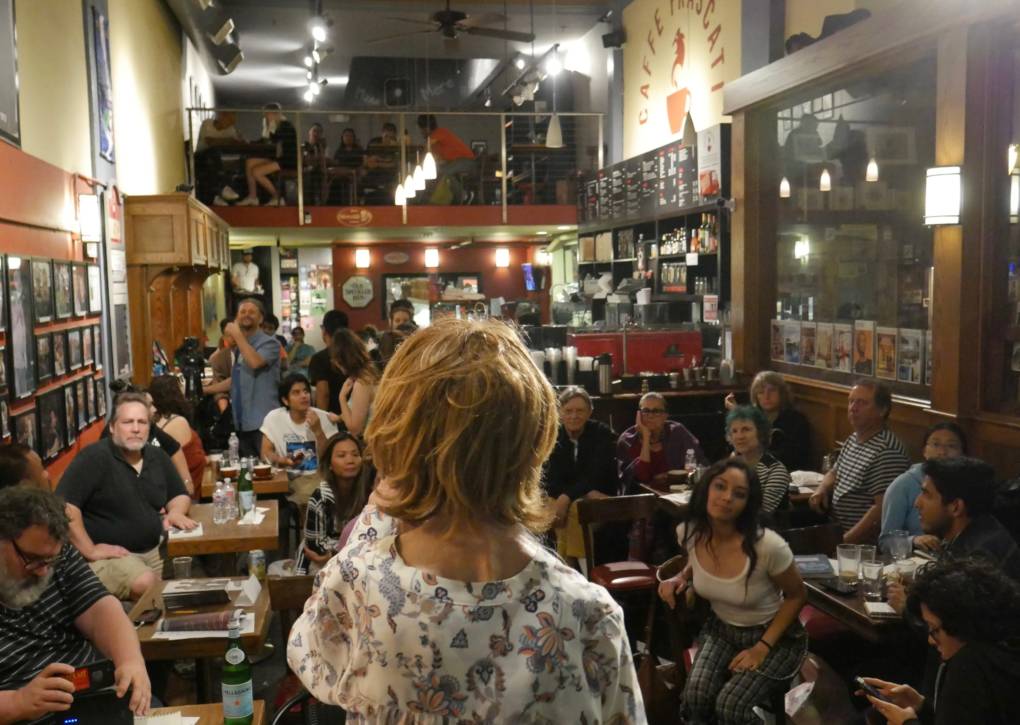
"caption": "What it looks like to be poet Katharine Wilson performing poetry before a packed Cafe Frascati in downtown San Jose.",
"description": "What it looks like to be poet Katharine Wilson performing poetry before a packed Cafe Frascati in downtown San Jose.",
"title": "Local Poet - Katharine Wilson_Live Lit Crowd",
"credit": "Courtesy of Mighty Mike McGee",
"status": "inherit",
"isLoading": false,
"fetchFailed": false
},
"arts_13865320": {
"type": "attachments",
"id": "arts_13865320",
"meta": {
"index": "attachments_1716263798",
"site": "arts",
"id": "13865320",
"found": true
},
"parent": 13865311,
"imgSizes": {
"twentyfourteen-full-width": {
"file": "https://ww2.kqed.org/app/uploads/sites/2/2019/08/L_7KCJgA-1038x576.jpeg",
"width": 1038,
"mimeType": "image/jpeg",
"height": 576
},
"thumbnail": {
"file": "https://ww2.kqed.org/app/uploads/sites/2/2019/08/L_7KCJgA-160x90.jpeg",
"width": 160,
"mimeType": "image/jpeg",
"height": 90
},
"post-thumbnail": {
"file": "https://ww2.kqed.org/app/uploads/sites/2/2019/08/L_7KCJgA-672x372.jpeg",
"width": 672,
"mimeType": "image/jpeg",
"height": 372
},
"kqedFullSize": {
"file": "https://ww2.kqed.org/app/uploads/sites/2/2019/08/L_7KCJgA.jpeg",
"width": 1920,
"height": 1080
},
"large": {
"file": "https://ww2.kqed.org/app/uploads/sites/2/2019/08/L_7KCJgA-1020x574.jpeg",
"width": 1020,
"mimeType": "image/jpeg",
"height": 574
},
"complete_open_graph": {
"file": "https://ww2.kqed.org/app/uploads/sites/2/2019/08/L_7KCJgA-1200x675.jpeg",
"width": 1200,
"mimeType": "image/jpeg",
"height": 675
},
"full-width": {
"file": "https://ww2.kqed.org/app/uploads/sites/2/2019/08/L_7KCJgA-1920x1080.jpeg",
"width": 1920,
"mimeType": "image/jpeg",
"height": 1080
},
"medium": {
"file": "https://ww2.kqed.org/app/uploads/sites/2/2019/08/L_7KCJgA-800x450.jpeg",
"width": 800,
"mimeType": "image/jpeg",
"height": 450
},
"medium_large": {
"file": "https://ww2.kqed.org/app/uploads/sites/2/2019/08/L_7KCJgA-768x432.jpeg",
"width": 768,
"mimeType": "image/jpeg",
"height": 432
}
},
"publishDate": 1567121544,
"modified": 1567121598,
"caption": "The crowd at Sonido Clash Music Fest in 2018.",
"description": "The crowd at Sonido Clash Music Fest in 2018.",
"title": "L_7KCJgA",
"credit": "Franz Barreto ",
"status": "inherit",
"isLoading": false,
"fetchFailed": false
},
"arts_13862982": {
"type": "attachments",
"id": "arts_13862982",
"meta": {
"index": "attachments_1716263798",
"site": "arts",
"id": "13862982",
"found": true
},
"parent": 13862954,
"imgSizes": {
"twentyfourteen-full-width": {
"file": "https://ww2.kqed.org/app/uploads/sites/2/2019/08/RS38384_IMG_3026-qut-1038x576.jpg",
"width": 1038,
"mimeType": "image/jpeg",
"height": 576
},
"thumbnail": {
"file": "https://ww2.kqed.org/app/uploads/sites/2/2019/08/RS38384_IMG_3026-qut-160x120.jpg",
"width": 160,
"mimeType": "image/jpeg",
"height": 120
},
"post-thumbnail": {
"file": "https://ww2.kqed.org/app/uploads/sites/2/2019/08/RS38384_IMG_3026-qut-672x372.jpg",
"width": 672,
"mimeType": "image/jpeg",
"height": 372
},
"kqedFullSize": {
"file": "https://ww2.kqed.org/app/uploads/sites/2/2019/08/RS38384_IMG_3026-qut.jpg",
"width": 1920,
"height": 1440
},
"large": {
"file": "https://ww2.kqed.org/app/uploads/sites/2/2019/08/RS38384_IMG_3026-qut-1020x765.jpg",
"width": 1020,
"mimeType": "image/jpeg",
"height": 765
},
"complete_open_graph": {
"file": "https://ww2.kqed.org/app/uploads/sites/2/2019/08/RS38384_IMG_3026-qut-1200x900.jpg",
"width": 1200,
"mimeType": "image/jpeg",
"height": 900
},
"full-width": {
"file": "https://ww2.kqed.org/app/uploads/sites/2/2019/08/RS38384_IMG_3026-qut-1920x1440.jpg",
"width": 1920,
"mimeType": "image/jpeg",
"height": 1440
},
"medium": {
"file": "https://ww2.kqed.org/app/uploads/sites/2/2019/08/RS38384_IMG_3026-qut-800x600.jpg",
"width": 800,
"mimeType": "image/jpeg",
"height": 600
},
"medium_large": {
"file": "https://ww2.kqed.org/app/uploads/sites/2/2019/08/RS38384_IMG_3026-qut-768x576.jpg",
"width": 768,
"mimeType": "image/jpeg",
"height": 576
}
},
"publishDate": 1564942699,
"modified": 1564942811,
"caption": "Members of the band pack into this living room for rehearsals.",
"description": null,
"title": "RS38384_IMG_3026-qut",
"credit": "Tiffany Camhi/KQED",
"status": "inherit",
"isLoading": false,
"fetchFailed": false
},
"arts_13863065": {
"type": "attachments",
"id": "arts_13863065",
"meta": {
"index": "attachments_1716263798",
"site": "arts",
"id": "13863065",
"found": true
},
"parent": 13863049,
"imgSizes": {
"twentyfourteen-full-width": {
"file": "https://ww2.kqed.org/app/uploads/sites/2/2019/08/RS38403_2016SummerFest-FunkyMetersAudience-JeromeBrunet-qut-1038x576.jpg",
"width": 1038,
"mimeType": "image/jpeg",
"height": 576
},
"thumbnail": {
"file": "https://ww2.kqed.org/app/uploads/sites/2/2019/08/RS38403_2016SummerFest-FunkyMetersAudience-JeromeBrunet-qut-160x104.jpg",
"width": 160,
"mimeType": "image/jpeg",
"height": 104
},
"post-thumbnail": {
"file": "https://ww2.kqed.org/app/uploads/sites/2/2019/08/RS38403_2016SummerFest-FunkyMetersAudience-JeromeBrunet-qut-672x372.jpg",
"width": 672,
"mimeType": "image/jpeg",
"height": 372
},
"kqedFullSize": {
"file": "https://ww2.kqed.org/app/uploads/sites/2/2019/08/RS38403_2016SummerFest-FunkyMetersAudience-JeromeBrunet-qut.jpg",
"width": 1920,
"height": 1242
},
"large": {
"file": "https://ww2.kqed.org/app/uploads/sites/2/2019/08/RS38403_2016SummerFest-FunkyMetersAudience-JeromeBrunet-qut-1020x660.jpg",
"width": 1020,
"mimeType": "image/jpeg",
"height": 660
},
"complete_open_graph": {
"file": "https://ww2.kqed.org/app/uploads/sites/2/2019/08/RS38403_2016SummerFest-FunkyMetersAudience-JeromeBrunet-qut-1200x776.jpg",
"width": 1200,
"mimeType": "image/jpeg",
"height": 776
},
"full-width": {
"file": "https://ww2.kqed.org/app/uploads/sites/2/2019/08/RS38403_2016SummerFest-FunkyMetersAudience-JeromeBrunet-qut-1920x1242.jpg",
"width": 1920,
"mimeType": "image/jpeg",
"height": 1242
},
"medium": {
"file": "https://ww2.kqed.org/app/uploads/sites/2/2019/08/RS38403_2016SummerFest-FunkyMetersAudience-JeromeBrunet-qut-800x518.jpg",
"width": 800,
"mimeType": "image/jpeg",
"height": 518
},
"medium_large": {
"file": "https://ww2.kqed.org/app/uploads/sites/2/2019/08/RS38403_2016SummerFest-FunkyMetersAudience-JeromeBrunet-qut-768x497.jpg",
"width": 768,
"mimeType": "image/jpeg",
"height": 497
}
},
"publishDate": 1565048821,
"modified": 1565048862,
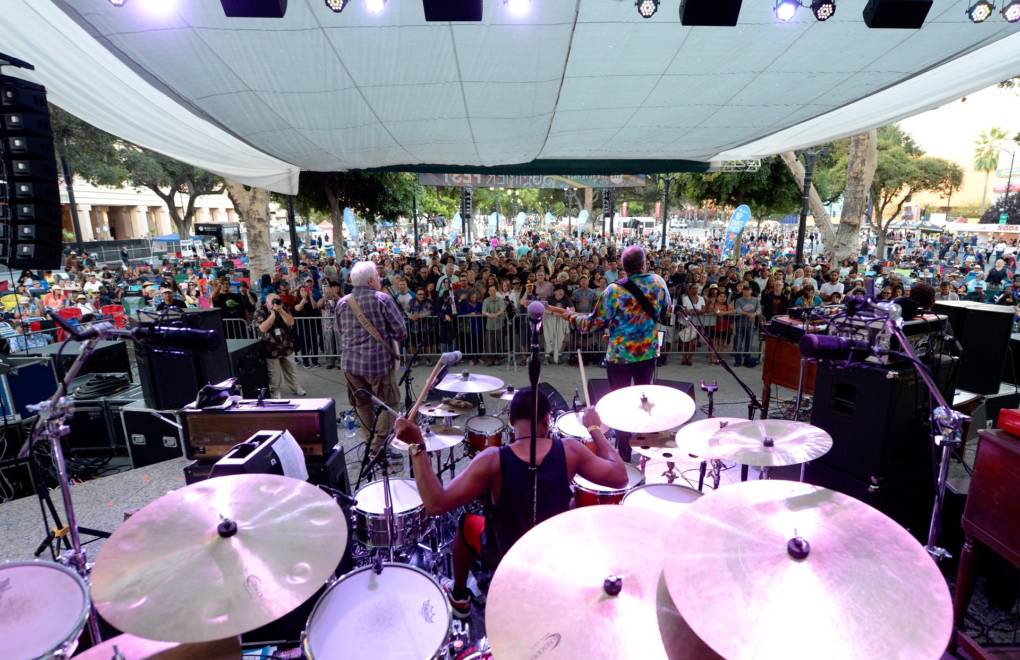
"caption": "Funky Meters perform for a packed Main Stage audience during the 2016 San Jose Jazz Summer Fest.",
"description": "Funky Meters perform for a packed Main Stage audience during the 2016 San Jose Jazz Summer Fest.",
"title": "RS38403_2016SummerFest-FunkyMetersAudience-JeromeBrunet-qut",
"credit": "Photo: Courtesy of Jerome Brunet",
"status": "inherit",
"isLoading": false,
"fetchFailed": false
},
"arts_13862369": {
"type": "attachments",
"id": "arts_13862369",
"meta": {
"index": "attachments_1716263798",
"site": "arts",
"id": "13862369",
"found": true
},
"parent": 13862365,
"imgSizes": {
"twentyfourteen-full-width": {
"file": "https://ww2.kqed.org/app/uploads/sites/2/2019/07/Screen-Shot-2019-07-26-at-4.22.41-PM-1038x576.jpeg",
"width": 1038,
"mimeType": "image/jpeg",
"height": 576
},
"thumbnail": {
"file": "https://ww2.kqed.org/app/uploads/sites/2/2019/07/Screen-Shot-2019-07-26-at-4.22.41-PM-160x107.jpeg",
"width": 160,
"mimeType": "image/jpeg",
"height": 107
},
"post-thumbnail": {
"file": "https://ww2.kqed.org/app/uploads/sites/2/2019/07/Screen-Shot-2019-07-26-at-4.22.41-PM-672x372.jpeg",
"width": 672,
"mimeType": "image/jpeg",
"height": 372
},
"kqedFullSize": {
"file": "https://ww2.kqed.org/app/uploads/sites/2/2019/07/Screen-Shot-2019-07-26-at-4.22.41-PM.jpeg",
"width": 1482,
"height": 992
},
"large": {
"file": "https://ww2.kqed.org/app/uploads/sites/2/2019/07/Screen-Shot-2019-07-26-at-4.22.41-PM-1020x683.jpeg",
"width": 1020,
"mimeType": "image/jpeg",
"height": 683
},
"complete_open_graph": {
"file": "https://ww2.kqed.org/app/uploads/sites/2/2019/07/Screen-Shot-2019-07-26-at-4.22.41-PM-1200x803.jpeg",
"width": 1200,
"mimeType": "image/jpeg",
"height": 803
},
"medium": {
"file": "https://ww2.kqed.org/app/uploads/sites/2/2019/07/Screen-Shot-2019-07-26-at-4.22.41-PM-800x535.jpeg",
"width": 800,
"mimeType": "image/jpeg",
"height": 535
},
"medium_large": {
"file": "https://ww2.kqed.org/app/uploads/sites/2/2019/07/Screen-Shot-2019-07-26-at-4.22.41-PM-768x514.jpeg",
"width": 768,
"mimeType": "image/jpeg",
"height": 514
}
},
"publishDate": 1564233442,
"modified": 1564240717,
"caption": "Broadway actors Morgan Anita Wood, DeAundre' Woods, Christopher Henry Young and Marja Harmon conducted an improv workshop in San Jose for the Silicon Valley Urban Debate League.",
"description": "Broadway actors Morgan Anita Wood, DeAundre' Woods, Christopher Henry Young and Marja Harmon conducted an improv workshop in San Jose for the Silicon Valley Urban Debate League.",
"title": "Screen Shot 2019-07-26 at 4.22.41 PM",
"credit": "Photo: Courtesy of SF BATCO",
"status": "inherit",
"isLoading": false,
"fetchFailed": false
},
"arts_13861838": {
"type": "attachments",
"id": "arts_13861838",
"meta": {
"index": "attachments_1716263798",
"site": "arts",
"id": "13861838",
"found": true
},
"parent": 13861823,
"imgSizes": {
"twentyfourteen-full-width": {
"file": "https://ww2.kqed.org/app/uploads/sites/2/2019/07/Photo-Jul-18-1-35-07-PM-1038x576.jpeg",
"width": 1038,
"mimeType": "image/jpeg",
"height": 576
},
"thumbnail": {
"file": "https://ww2.kqed.org/app/uploads/sites/2/2019/07/Photo-Jul-18-1-35-07-PM-160x160.jpeg",
"width": 160,
"mimeType": "image/jpeg",
"height": 160
},
"post-thumbnail": {
"file": "https://ww2.kqed.org/app/uploads/sites/2/2019/07/Photo-Jul-18-1-35-07-PM-672x372.jpeg",
"width": 672,
"mimeType": "image/jpeg",
"height": 372
},
"kqedFullSize": {
"file": "https://ww2.kqed.org/app/uploads/sites/2/2019/07/Photo-Jul-18-1-35-07-PM.jpeg",
"width": 2048,
"height": 2048
},
"large": {
"file": "https://ww2.kqed.org/app/uploads/sites/2/2019/07/Photo-Jul-18-1-35-07-PM-1020x1020.jpeg",
"width": 1020,
"mimeType": "image/jpeg",
"height": 1020
},
"complete_open_graph": {
"file": "https://ww2.kqed.org/app/uploads/sites/2/2019/07/Photo-Jul-18-1-35-07-PM-1200x1200.jpeg",
"width": 1200,
"mimeType": "image/jpeg",
"height": 1200
},
"full-width": {
"file": "https://ww2.kqed.org/app/uploads/sites/2/2019/07/Photo-Jul-18-1-35-07-PM-1920x1920.jpeg",
"width": 1920,
"mimeType": "image/jpeg",
"height": 1920
},
"medium": {
"file": "https://ww2.kqed.org/app/uploads/sites/2/2019/07/Photo-Jul-18-1-35-07-PM-800x800.jpeg",
"width": 800,
"mimeType": "image/jpeg",
"height": 800
},
"medium_large": {
"file": "https://ww2.kqed.org/app/uploads/sites/2/2019/07/Photo-Jul-18-1-35-07-PM-768x768.jpeg",
"width": 768,
"mimeType": "image/jpeg",
"height": 768
}
},
"publishDate": 1563639751,
"modified": 1563639814,
"caption": "Ceremonial huipil, made of cotton. Mayan Traje at the San Jose Museum of Quilts and Textiles surveys the changing language of traditional dress from the early 20th century to modern day. ",
"description": "Ceremonial huipil, made of cotton. Mayan Traje at the San Jose Museum of Quilts and Textiles surveys the changing language of traditional dress from the early 20th century to modern day. ",
"title": "Photo Jul 18, 1 35 07 PM",
"credit": "Rachael Myrow/KQED",
"status": "inherit",
"isLoading": false,
"fetchFailed": false
},
"arts_13859835": {
"type": "attachments",
"id": "arts_13859835",
"meta": {
"index": "attachments_1716263798",
"site": "arts",
"id": "13859835",
"found": true
},
"parent": 13859833,
"imgSizes": {
"twentyfourteen-full-width": {
"file": "https://ww2.kqed.org/app/uploads/sites/2/2019/06/Transient2_COVER-1038x576.jpg",
"width": 1038,
"mimeType": "image/jpeg",
"height": 576
},
"thumbnail": {
"file": "https://ww2.kqed.org/app/uploads/sites/2/2019/06/Transient2_COVER-160x90.jpg",
"width": 160,
"mimeType": "image/jpeg",
"height": 90
},
"post-thumbnail": {
"file": "https://ww2.kqed.org/app/uploads/sites/2/2019/06/Transient2_COVER-672x372.jpg",
"width": 672,
"mimeType": "image/jpeg",
"height": 372
},
"kqedFullSize": {
"file": "https://ww2.kqed.org/app/uploads/sites/2/2019/06/Transient2_COVER.jpg",
"width": 1920,
"height": 1080
},
"large": {
"file": "https://ww2.kqed.org/app/uploads/sites/2/2019/06/Transient2_COVER-1020x574.jpg",
"width": 1020,
"mimeType": "image/jpeg",
"height": 574
},
"complete_open_graph": {
"file": "https://ww2.kqed.org/app/uploads/sites/2/2019/06/Transient2_COVER-1200x675.jpg",
"width": 1200,
"mimeType": "image/jpeg",
"height": 675
},
"full-width": {
"file": "https://ww2.kqed.org/app/uploads/sites/2/2019/06/Transient2_COVER-1920x1080.jpg",
"width": 1920,
"mimeType": "image/jpeg",
"height": 1080
},
"medium": {
"file": "https://ww2.kqed.org/app/uploads/sites/2/2019/06/Transient2_COVER-800x450.jpg",
"width": 800,
"mimeType": "image/jpeg",
"height": 450
},
"medium_large": {
"file": "https://ww2.kqed.org/app/uploads/sites/2/2019/06/Transient2_COVER-768x432.jpg",
"width": 768,
"mimeType": "image/jpeg",
"height": 432
}
},
"publishDate": 1560817802,
"modified": 1560817858,
"caption": "Yukiko Nagakura, 'About 160 Bird,' 2019; Pigmented Inkjet Print.",
"description": "Yukiko Nagakura, 'About 160 Bird,' 2019; Pigmented Inkjet Print.",
"title": "Transient2_COVER",
"credit": "Courtesy of the artist",
"status": "inherit",
"isLoading": false,
"fetchFailed": false
},
"arts_13859668": {
"type": "attachments",
"id": "arts_13859668",
"meta": {
"index": "attachments_1716263798",
"site": "arts",
"id": "13859668",
"found": true
},
"parent": 13859659,
"imgSizes": {
"twentyfourteen-full-width": {
"file": "https://ww2.kqed.org/app/uploads/sites/2/2019/06/RS37718_Photo-Jun-14-9-28-35-AM-qut-1038x576.jpg",
"width": 1038,
"mimeType": "image/jpeg",
"height": 576
},
"thumbnail": {
"file": "https://ww2.kqed.org/app/uploads/sites/2/2019/06/RS37718_Photo-Jun-14-9-28-35-AM-qut-160x100.jpg",
"width": 160,
"mimeType": "image/jpeg",
"height": 100
},
"post-thumbnail": {
"file": "https://ww2.kqed.org/app/uploads/sites/2/2019/06/RS37718_Photo-Jun-14-9-28-35-AM-qut-672x372.jpg",
"width": 672,
"mimeType": "image/jpeg",
"height": 372
},
"kqedFullSize": {
"file": "https://ww2.kqed.org/app/uploads/sites/2/2019/06/RS37718_Photo-Jun-14-9-28-35-AM-qut.jpg",
"width": 1920,
"height": 1204
},
"large": {
"file": "https://ww2.kqed.org/app/uploads/sites/2/2019/06/RS37718_Photo-Jun-14-9-28-35-AM-qut-1020x640.jpg",
"width": 1020,
"mimeType": "image/jpeg",
"height": 640
},
"complete_open_graph": {
"file": "https://ww2.kqed.org/app/uploads/sites/2/2019/06/RS37718_Photo-Jun-14-9-28-35-AM-qut-1200x753.jpg",
"width": 1200,
"mimeType": "image/jpeg",
"height": 753
},
"full-width": {
"file": "https://ww2.kqed.org/app/uploads/sites/2/2019/06/RS37718_Photo-Jun-14-9-28-35-AM-qut-1920x1204.jpg",
"width": 1920,
"mimeType": "image/jpeg",
"height": 1204
},
"medium": {
"file": "https://ww2.kqed.org/app/uploads/sites/2/2019/06/RS37718_Photo-Jun-14-9-28-35-AM-qut-800x502.jpg",
"width": 800,
"mimeType": "image/jpeg",
"height": 502
},
"medium_large": {
"file": "https://ww2.kqed.org/app/uploads/sites/2/2019/06/RS37718_Photo-Jun-14-9-28-35-AM-qut-768x482.jpg",
"width": 768,
"mimeType": "image/jpeg",
"height": 482
}
},
"publishDate": 1560562975,
"modified": 1560563003,
"caption": "\"La Raza Cosmica\" by Michael Menchaca reinterprets an essay by Mexican philosopher Jose Vasconcelo that imagines a \"fifth race\" in the Americas. Inspired by pre-COlumbian iconography, Menchaca deconstructs Vasconcelo's mestizo identity theory with animated animals.",
"description": "\"La Raza Cosmica\" by Michael Menchaca reinterprets an essay by Mexican philosopher Jose Vasconcelo that imagines a \"fifth race\" in the Americas. Inspired by pre-COlumbian iconography, Menchaca deconstructs Vasconcelo's mestizo identity theory with animated animals.",
"title": "RS37718_Photo Jun 14, 9 28 35 AM-qut",
"credit": "Rachael Myrow/KQED",
"status": "inherit",
"isLoading": false,
"fetchFailed": false
}
},
"audioPlayerReducer": {
"postId": "stream_live",
"isPaused": true,
"isPlaying": false,
"pfsActive": false,
"pledgeModalIsOpen": true,
"playerDrawerIsOpen": false,
"liveAudioPlayStartedAt": 0,
"liveAudioPlayContext": ""
},
"authorsReducer": {
"byline_arts_13868382": {
"type": "authors",
"id": "byline_arts_13868382",
"meta": {
"override": true
},
"slug": "byline_arts_13868382",
"name": "Vanessa Ochavillo",
"isLoading": false
},
"byline_arts_13865311": {
"type": "authors",
"id": "byline_arts_13865311",
"meta": {
"override": true
},
"slug": "byline_arts_13865311",
"name": "Azucena Rasilla",
"isLoading": false
},
"shotchkiss": {
"type": "authors",
"id": "61",
"meta": {
"index": "authors_1716337520",
"id": "61",
"found": true
},
"name": "Sarah Hotchkiss",
"firstName": "Sarah",
"lastName": "Hotchkiss",
"slug": "shotchkiss",
"email": "shotchkiss@kqed.org",
"display_author_email": true,
"staff_mastheads": [
"arts"
],
"title": "Senior Editor",
"bio": "Sarah Hotchkiss is a San Francisco \u003ca href=\"http://www.sarahhotchkiss.com\">artist\u003c/a> and arts writer. In 2019, she received the Dorothea & Leo Rabkin Foundation grant for visual art journalism and in 2020 she received a Society of Professional Journalists, Northern California award for excellence in arts and culture reporting.",
"avatar": "https://secure.gravatar.com/avatar/bc662df144b3d27fd8b1b6f1c2a420d34e91e53154d411bb7ad353cc8b6cea8d?s=600&d=blank&r=g",
"twitter": null,
"bluesky": null,
"facebook": null,
"instagram": null,
"linkedin": null,
"sites": [
{
"site": "",
"roles": [
"editor"
]
},
{
"site": "arts",
"roles": [
"Contributor",
"administrator"
]
},
{
"site": "artschool",
"roles": [
"administrator"
]
},
{
"site": "news",
"roles": [
"editor"
]
},
{
"site": "pop",
"roles": [
"administrator"
]
},
{
"site": "bayareabites",
"roles": [
"editor"
]
},
{
"site": "spark",
"roles": [
"editor"
]
},
{
"site": "checkplease",
"roles": [
"editor"
]
}
],
"headData": {
"title": "Sarah Hotchkiss | KQED",
"description": "Senior Editor",
"ogImgSrc": "https://secure.gravatar.com/avatar/bc662df144b3d27fd8b1b6f1c2a420d34e91e53154d411bb7ad353cc8b6cea8d?s=600&d=blank&r=g",
"twImgSrc": "https://secure.gravatar.com/avatar/bc662df144b3d27fd8b1b6f1c2a420d34e91e53154d411bb7ad353cc8b6cea8d?s=600&d=blank&r=g"
},
"isLoading": false,
"link": "/author/shotchkiss"
},
"gmeline": {
"type": "authors",
"id": "185",
"meta": {
"index": "authors_1716337520",
"id": "185",
"found": true
},
"name": "Gabe Meline",
"firstName": "Gabe",
"lastName": "Meline",
"slug": "gmeline",
"email": "gmeline@kqed.org",
"display_author_email": true,
"staff_mastheads": [
"arts"
],
"title": "Senior Editor, KQED Arts & Culture",
"bio": "Gabe Meline entered journalism at age 15 making photocopied zines, and has since earned awards from the Edward R. Murrow Awards, the Society for Professional Journalists, the Online Journalism Awards, the Association of Alternative Newsweeklies and the California Newspaper Publishers Association. Prior to KQED, he was the editor of the \u003cem>North Bay Bohemian\u003c/em> and a touring musician. He lives with his wife and daughter in his hometown of Santa Rosa, CA.",
"avatar": "https://secure.gravatar.com/avatar/5bebe57be0d8bc2dd318934feb47299e2d2d10cba28d09d8d7afb389a2ce2bdd?s=600&d=blank&r=g",
"twitter": null,
"bluesky": null,
"facebook": null,
"instagram": null,
"linkedin": null,
"sites": [
{
"site": "",
"roles": [
"editor"
]
},
{
"site": "arts",
"roles": [
"administrator"
]
},
{
"site": "artschool",
"roles": [
"editor"
]
},
{
"site": "news",
"roles": [
"author"
]
},
{
"site": "pop",
"roles": [
"editor"
]
},
{
"site": "bayareabites",
"roles": [
"editor"
]
},
{
"site": "food",
"roles": [
"editor"
]
},
{
"site": "forum",
"roles": [
"administrator"
]
},
{
"site": "liveblog",
"roles": [
"editor"
]
},
{
"site": "hiphop",
"roles": [
"editor"
]
}
],
"headData": {
"title": "Gabe Meline | KQED",
"description": "Senior Editor, KQED Arts & Culture",
"ogImgSrc": "https://secure.gravatar.com/avatar/5bebe57be0d8bc2dd318934feb47299e2d2d10cba28d09d8d7afb389a2ce2bdd?s=600&d=blank&r=g",
"twImgSrc": "https://secure.gravatar.com/avatar/5bebe57be0d8bc2dd318934feb47299e2d2d10cba28d09d8d7afb389a2ce2bdd?s=600&d=blank&r=g"
},
"isLoading": false,
"link": "/author/gmeline"
},
"rachael-myrow": {
"type": "authors",
"id": "251",
"meta": {
"index": "authors_1716337520",
"id": "251",
"found": true
},
"name": "Rachael Myrow",
"firstName": "Rachael",
"lastName": "Myrow",
"slug": "rachael-myrow",
"email": "rmyrow@kqed.org",
"display_author_email": true,
"staff_mastheads": [
"news"
],
"title": "Senior Editor of KQED's Silicon Valley News Desk",
"bio": "• I write and edit stories about how Silicon Valley power and policies shape everyday life in California. I’m also passionate about making Bay Area history and culture more accessible to a broad public. • I’ve been a journalist for most of my life, starting in high school with The Franklin Press in Los Angeles, where I grew up. While earning my first degree in English at UC Berkeley, I got my start in public radio at KALX-FM. After completing a second degree in journalism at Cal, I landed my first professional job at Marketplace, then moved on to KPCC (now LAist), and then KQED, where I hosted The California Report for more than seven years. • My reporting has appeared on NPR, The World, WBUR’s \u003ci>Here & Now\u003c/i>, and the BBC. I also guest host for KQED’s \u003ci>Forum\u003c/i>, as well as the Commonwealth Club in San Francisco. • I speak periodically on media, democracy and technology issues, and do voiceover work for documentaries and educational video projects. • Outside of the studio, you'll find me hiking Bay Area trails and whipping up Insta-ready meals in my kitchen. • I do not accept gifts, money, or favors from anyone connected to my reporting, I don't pay people for information, and I do not support or donate to political causes. • I strive to treat the people I report on with fairness, honesty, and respect. I also recognize there are often multiple sides to a story and work to verify information through multiple sources and documentation. If I get something wrong, I correct it.",
"avatar": "https://secure.gravatar.com/avatar/3ed8a3c5f26025e4a805ba634cda8cd764906b97438a6d9ce216b044e340da4e?s=600&d=blank&r=g",
"twitter": "rachaelmyrow",
"bluesky": null,
"facebook": null,
"instagram": null,
"linkedin": "https://www.linkedin.com/in/rachaelmyrow/",
"sites": [
{
"site": "arts",
"roles": [
"administrator"
]
},
{
"site": "news",
"roles": [
"edit_others_posts",
"editor"
]
},
{
"site": "futureofyou",
"roles": [
"editor"
]
},
{
"site": "bayareabites",
"roles": [
"editor"
]
},
{
"site": "stateofhealth",
"roles": [
"editor"
]
},
{
"site": "science",
"roles": [
"editor"
]
},
{
"site": "food",
"roles": [
"editor"
]
},
{
"site": "forum",
"roles": [
"editor"
]
},
{
"site": "liveblog",
"roles": [
"author"
]
}
],
"headData": {
"title": "Rachael Myrow | KQED",
"description": "Senior Editor of KQED's Silicon Valley News Desk",
"ogImgSrc": "https://secure.gravatar.com/avatar/3ed8a3c5f26025e4a805ba634cda8cd764906b97438a6d9ce216b044e340da4e?s=600&d=blank&r=g",
"twImgSrc": "https://secure.gravatar.com/avatar/3ed8a3c5f26025e4a805ba634cda8cd764906b97438a6d9ce216b044e340da4e?s=600&d=blank&r=g"
},
"isLoading": false,
"link": "/author/rachael-myrow"
},
"tcamhi": {
"type": "authors",
"id": "3251",
"meta": {
"index": "authors_1716337520",
"id": "3251",
"found": true
},
"name": "Tiffany Camhi",
"firstName": "Tiffany",
"lastName": "Camhi",
"slug": "tcamhi",
"email": "tiffanycamhi@gmail.com",
"display_author_email": false,
"staff_mastheads": [],
"title": "KQED Contributor",
"bio": null,
"avatar": "https://secure.gravatar.com/avatar/f8204ce351139205d3b3dc1581016a5e30d7d8b38cb2c139348c151ec14b792e?s=600&d=blank&r=g",
"twitter": null,
"bluesky": null,
"facebook": null,
"instagram": null,
"linkedin": null,
"sites": [
{
"site": "arts",
"roles": [
"subscriber"
]
},
{
"site": "news",
"roles": [
"subscriber"
]
}
],
"headData": {
"title": "Tiffany Camhi | KQED",
"description": "KQED Contributor",
"ogImgSrc": "https://secure.gravatar.com/avatar/f8204ce351139205d3b3dc1581016a5e30d7d8b38cb2c139348c151ec14b792e?s=600&d=blank&r=g",
"twImgSrc": "https://secure.gravatar.com/avatar/f8204ce351139205d3b3dc1581016a5e30d7d8b38cb2c139348c151ec14b792e?s=600&d=blank&r=g"
},
"isLoading": false,
"link": "/author/tcamhi"
},
"ralexandra": {
"type": "authors",
"id": "11242",
"meta": {
"index": "authors_1716337520",
"id": "11242",
"found": true
},
"name": "Rae Alexandra",
"firstName": "Rae",
"lastName": "Alexandra",
"slug": "ralexandra",
"email": "ralexandra@kqed.org",
"display_author_email": true,
"staff_mastheads": [],
"title": "Reporter/Producer",
"bio": "Rae Alexandra is a Reporter/Producer for KQED Arts & Culture, and the creator/author of the \u003ca href=\"https://www.kqed.org/arts/program/rebel-girls-from-bay-area-history\">Rebel Girls From Bay Area History\u003c/a> and \u003ca href=\"https://www.kqed.org/bizarrebayarea\">Bizarre Bay Area\u003c/a> series. Her debut book, \u003ca href=\"https://citylights.com/politics-current-events-history/unsung-heroines35-women-who-changed/\">Unsung Heroines: 35 Women Who Changed the Bay Area\u003c/a> was published by City Lights in March 2026. In 2023, Rae was awarded an SPJ Excellence in Journalism Award for Arts & Culture. Rae was born and raised in Wales and subsequently — even after two decades in Northern California — still uses phrases that regularly baffle her coworkers.",
"avatar": "https://secure.gravatar.com/avatar/edfee8176c80cc0a382b051190f5341997df378a934a5774dcb0977732dfd401?s=600&d=blank&r=g",
"twitter": null,
"bluesky": null,
"facebook": null,
"instagram": null,
"linkedin": null,
"sites": [
{
"site": "arts",
"roles": [
"subscriber"
]
},
{
"site": "news",
"roles": [
"subscriber"
]
},
{
"site": "pop",
"roles": [
"subscriber"
]
},
{
"site": "bayareabites",
"roles": [
"subscriber"
]
},
{
"site": "science",
"roles": [
"subscriber"
]
}
],
"headData": {
"title": "Rae Alexandra | KQED",
"description": "Reporter/Producer",
"ogImgSrc": "https://secure.gravatar.com/avatar/edfee8176c80cc0a382b051190f5341997df378a934a5774dcb0977732dfd401?s=600&d=blank&r=g",
"twImgSrc": "https://secure.gravatar.com/avatar/edfee8176c80cc0a382b051190f5341997df378a934a5774dcb0977732dfd401?s=600&d=blank&r=g"
},
"isLoading": false,
"link": "/author/ralexandra"
}
},
"pagesReducer": {
"arts_tag_san-jose": {
"type": "terms",
"id": "arts_1084",
"meta": {
"index": "terms_1716263798",
"site": "arts",
"id": "1084",
"score": 8.005517
},
"featImg": null,
"name": "San Jose",
"description": null,
"taxonomy": "tag",
"headData": {
"twImgId": null,
"twTitle": null,
"ogTitle": null,
"ogImgId": null,
"twDescription": null,
"description": null,
"title": "San Jose Archives | KQED Arts",
"ogDescription": null
},
"ttid": 1101,
"slug": "san-jose",
"isLoading": false,
"title": "San Jose",
"pageMeta": {
"site": "arts",
"WpPageTemplate": "page-topic-editorial",
"currentPage": 12
},
"blocks": [
{
"blockName": "kqed/post-list",
"attrs": {
"layout": "cardArticle2",
"query": "posts/arts?tag=san-jose",
"seeMore": false,
"paginated": true,
"page": 12
}
},
{
"blockName": "kqed/ad"
}
]
}
},
"pfsSessionReducer": {},
"postsReducer": {
"stream_live": {
"type": "live",
"id": "stream_live",
"audioUrl": "https://streams.kqed.org/kqedradio",
"title": "Live Stream",
"excerpt": "Live Stream information currently unavailable.",
"link": "/radio",
"featImg": "",
"label": {
"name": "KQED Live",
"link": "/"
}
},
"stream_kqedNewscast": {
"type": "posts",
"id": "stream_kqedNewscast",
"audioUrl": "https://www.kqed.org/.stream/anon/radio/RDnews/newscast.mp3?_=1",
"title": "KQED Newscast",
"featImg": "",
"label": {
"name": "88.5 FM",
"link": "/"
}
},
"arts_13880317": {
"type": "posts",
"id": "arts_13880317",
"meta": {
"index": "posts_1716263798",
"site": "arts",
"id": "13880317",
"score": null,
"sort": [
1589397627000
]
},
"parent": 0,
"labelTerm": {
"site": "arts"
},
"blocks": [],
"publishDate": 1589397627,
"format": "standard",
"title": "Escaped Goats in San Jose Live Out Our Shelter-in-Place Fantasies",
"headTitle": "Escaped Goats in San Jose Live Out Our Shelter-in-Place Fantasies | KQED",
"content": "\u003cp>Goats in San Jose got to live out everyone’s shelter-in-place fantasies last night after getting together in a massive group and going out to a bunch of places they’re not supposed to go.\u003c/p>\n\u003cp>The herd of 200 broke a fence and gallivanted through the streets of the East Foothills neighborhood until a rancher could contain them again.\u003c/p>\n\u003cp>The goat party was witnessed by Terry Roelands and his son Zach, who live near the hill the goats currently reside on. Zach caught some of the chaos on tape:\u003c/p>\n\u003cp>https://www.youtube.com/watch?v=1-QJCdhXXU4\u003c/p>\n\u003cp>Goats are proving to be supremely opportunistic animals during shelter in place. The San Jose herd follows the now-infamous Llandudno goats, who have been “\u003ca href=\"https://www.theguardian.com/news/2020/mar/31/llandudno-goats-herd-running-riot-coronavirus-lockdown\" target=\"_blank\" rel=\"noopener noreferrer\">running riot\u003c/a>” and “\u003ca href=\"https://www.theguardian.com/news/2020/mar/31/llandudno-goats-herd-running-riot-coronavirus-lockdown\" target=\"_blank\" rel=\"noopener noreferrer\">munching through gardens\u003c/a>” in the Welsh seaside resort since late March.\u003c/p>\n\u003cp>[ad fullwidth]\u003c/p>\n\u003cp>https://twitter.com/zeblet_jmh/status/1260599199017689088\u003c/p>\n\u003cp>It’s not just goats though. Last month, Turkish TV channel TRT made a helpful compilation of animals invading urban spaces and taking advantage of the decrease in humans wandering around.\u003c/p>\n\u003cp>Enjoy it while you can, creatures of the world …\u003c/p>\n\u003cp>\u003c/p>\n\u003cp>https://www.youtube.com/watch?v=OP3XclQXrFQ\u003c/p>\n\n",
"stats": {
"hasVideo": true,
"hasChartOrMap": false,
"hasAudio": false,
"hasPolis": false,
"wordCount": 201,
"hasGoogleForm": false,
"hasGallery": false,
"hasHearkenModule": false,
"iframeSrcs": [],
"paragraphCount": 8
},
"modified": 1705020751,
"excerpt": "A herd of 200 goats went viral after breaking free and partying on the streets of San Jose last night.",
"headData": {
"twImgId": "",
"twTitle": "",
"ogTitle": "",
"ogImgId": "",
"twDescription": "",
"description": "A herd of 200 goats went viral after breaking free and partying on the streets of San Jose last night.",
"title": "Escaped Goats in San Jose Live Out Our Shelter-in-Place Fantasies | KQED",
"ogDescription": "",
"schema": {
"@context": "https://schema.org",
"@type": "Article",
"headline": "Escaped Goats in San Jose Live Out Our Shelter-in-Place Fantasies",
"datePublished": "2020-05-13T12:20:27-07:00",
"dateModified": "2024-01-11T16:52:31-08:00",
"image": "https://cdn.kqed.org/wp-content/uploads/2020/02/KQED-OG-Image@1x.png"
}
},
"guestAuthors": [],
"slug": "escaped-goats-in-san-jose-live-out-our-shelter-in-place-fantasies",
"status": "publish",
"templateType": "standard",
"featuredImageType": "standard",
"sticky": false,
"path": "/arts/13880317/escaped-goats-in-san-jose-live-out-our-shelter-in-place-fantasies",
"audioTrackLength": null,
"parsedContent": [
{
"type": "contentString",
"content": "\u003cdiv class=\"post-body\">\u003cp>\u003cp>Goats in San Jose got to live out everyone’s shelter-in-place fantasies last night after getting together in a massive group and going out to a bunch of places they’re not supposed to go.\u003c/p>\n\u003cp>The herd of 200 broke a fence and gallivanted through the streets of the East Foothills neighborhood until a rancher could contain them again.\u003c/p>\n\u003cp>The goat party was witnessed by Terry Roelands and his son Zach, who live near the hill the goats currently reside on. Zach caught some of the chaos on tape:\u003c/p>\u003c/p>\u003cp>\u003cspan class='utils-parseShortcode-shortcodes-__youtubeShortcode__embedYoutube'>\n \u003cspan class='utils-parseShortcode-shortcodes-__youtubeShortcode__embedYoutubeInside'>\n \u003ciframe\n loading='lazy'\n class='utils-parseShortcode-shortcodes-__youtubeShortcode__youtubePlayer'\n type='text/html'\n src='//www.youtube.com/embed/1-QJCdhXXU4'\n title='//www.youtube.com/embed/1-QJCdhXXU4'\n allowfullscreen='true'\n style='border:0;'>\u003c/iframe>\n \u003c/span>\n \u003c/span>\u003c/p>\u003cp>\u003cp>Goats are proving to be supremely opportunistic animals during shelter in place. The San Jose herd follows the now-infamous Llandudno goats, who have been “\u003ca href=\"https://www.theguardian.com/news/2020/mar/31/llandudno-goats-herd-running-riot-coronavirus-lockdown\" target=\"_blank\" rel=\"noopener noreferrer\">running riot\u003c/a>” and “\u003ca href=\"https://www.theguardian.com/news/2020/mar/31/llandudno-goats-herd-running-riot-coronavirus-lockdown\" target=\"_blank\" rel=\"noopener noreferrer\">munching through gardens\u003c/a>” in the Welsh seaside resort since late March.\u003c/p>\n\u003cp>\u003c/p>\u003c/div>",
"attributes": {
"named": {},
"numeric": []
}
},
{
"type": "component",
"content": "",
"name": "ad",
"attributes": {
"named": {
"label": "fullwidth"
},
"numeric": [
"fullwidth"
]
}
},
{
"type": "contentString",
"content": "\u003cdiv class=\"post-body\">\u003cp>\u003c/p>\u003c/p>\u003c/div>",
"attributes": {
"named": {},
"numeric": []
}
},
{
"type": "component",
"content": "",
"name": "singleTwitterStatus",
"attributes": {
"named": {
"id": "1260599199017689088"
},
"numeric": []
}
},
{
"type": "contentString",
"content": "\u003cdiv class=\"post-body\">\u003cp>\n\u003cp>It’s not just goats though. Last month, Turkish TV channel TRT made a helpful compilation of animals invading urban spaces and taking advantage of the decrease in humans wandering around.\u003c/p>\n\u003cp>Enjoy it while you can, creatures of the world …\u003c/p>\n\u003cp>\u003c/p>\u003c/p>\u003cp>\u003cspan class='utils-parseShortcode-shortcodes-__youtubeShortcode__embedYoutube'>\n \u003cspan class='utils-parseShortcode-shortcodes-__youtubeShortcode__embedYoutubeInside'>\n \u003ciframe\n loading='lazy'\n class='utils-parseShortcode-shortcodes-__youtubeShortcode__youtubePlayer'\n type='text/html'\n src='//www.youtube.com/embed/OP3XclQXrFQ'\n title='//www.youtube.com/embed/OP3XclQXrFQ'\n allowfullscreen='true'\n style='border:0;'>\u003c/iframe>\n \u003c/span>\n \u003c/span>\u003c/p>\u003cp>\n\u003c/div>\u003c/p>",
"attributes": {
"named": {},
"numeric": []
}
}
],
"link": "/arts/13880317/escaped-goats-in-san-jose-live-out-our-shelter-in-place-fantasies",
"authors": [
"11242"
],
"categories": [
"arts_1",
"arts_75"
],
"tags": [
"arts_9124",
"arts_10126",
"arts_1084",
"arts_10416",
"arts_8491"
],
"featImg": "arts_13880336",
"label": "arts"
},
"arts_13879772": {
"type": "posts",
"id": "arts_13879772",
"meta": {
"index": "posts_1716263798",
"site": "arts",
"id": "13879772",
"score": null,
"sort": [
1588715467000
]
},
"parent": 0,
"labelTerm": {
"site": "arts",
"term": 140
},
"blocks": [],
"publishDate": 1588715467,
"format": "standard",
"title": "Hooray, You Can Go to the Movies Again—at a Drive-In Theater",
"headTitle": "Hooray, You Can Go to the Movies Again—at a Drive-In Theater | KQED",
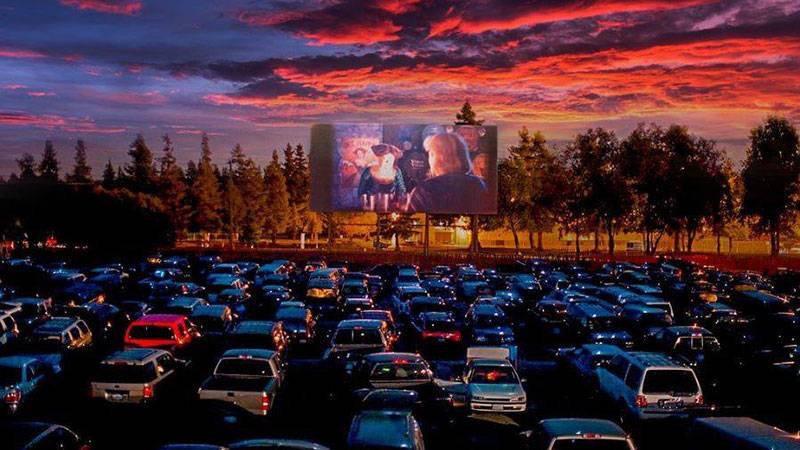
"content": "\u003cp>Drive-in theaters in San Jose and Concord reopened to the general public on Tuesday, providing a welcome respite for those missing a communal movie-watching experience. \u003c/p>\n\u003cp>The West Wind-owned theaters, among the last remaining drive-ins in the Bay Area, will enforce strict rules: you’ll have to wear a mask to leave your car, and can only exit your car to go to the bathroom. Cars must park 10 feet apart. And the concession stand will be closed. (Customers may bring their own snacks.) \u003c/p>\n\u003cp>So… what’s playing? You can find full current schedules for each theater \u003ca href=\"https://www.westwinddi.com/\" rel=\"noopener noreferrer\" target=\"_blank\">here\u003c/a>. But as a taste, in San Jose, the following double features are showing at the Capitol Drive-In this week:\u003c/p>\n\u003cp>\u003cem>The Hunt\u003c/em> and \u003cem>The Invisible Man\u003c/em>\u003cbr>\n\u003cem>Gretel & Hansel\u003c/em> and \u003cem>Brahms: The Boy II\u003c/em>\u003cbr>\n\u003cem>Fast & Furious Presents: Hobbs & Shaw\u003c/em> and \u003cem>Good Boys\u003c/em>\u003cbr>\n\u003cem>The Wretched\u003c/em> and \u003cem>Disappearance at Clifton Hill\u003c/em>\u003cbr>\n\u003cem>Trolls World Tour\u003c/em> and \u003cem>Dolittle\u003c/em>\u003cbr>\n\u003cem>Onward\u003c/em> and \u003cem>Trolls World Tour\u003c/em>\u003c/p>\n\u003cp>Never been to a drive-in theater before? Here are \u003ca href=\"https://www.westwinddi.com/blog/2018/10-drive-in-movie-tips\" rel=\"noopener noreferrer\" target=\"_blank\">some tips\u003c/a> for those ready to try the classic drive-in experience. (And if you’re closer to Sacramento, West Wind also operates a \u003ca href=\"https://www.westwinddi.com/locations/sacramento\" rel=\"noopener noreferrer\" target=\"_blank\">drive-in theater\u003c/a> there, currently showing an extra-nostalgic double feature of \u003cem>Raiders of the Lost Ark\u003c/em> and \u003cem>Indiana Jones and the Last Crusade\u003c/em>.)\u003c/p>\n\u003cp>[ad fullwidth]\u003c/p>\n\u003cp>\u003c/p>\n\u003cp>Tickets are $8.25 general admission / $1.75 for kids age 5–11. (No smuggling your friends in the trunk, now!) \u003ca href=\"https://www.westwinddi.com/\" rel=\"noopener noreferrer\" target=\"_blank\">Details here\u003c/a>.\u003c/p>\n\n",
"stats": {
"hasVideo": false,
"hasChartOrMap": false,
"hasAudio": false,
"hasPolis": false,
"wordCount": 250,
"hasGoogleForm": false,
"hasGallery": false,
"hasHearkenModule": false,
"iframeSrcs": [],
"paragraphCount": 8
},
"modified": 1705020804,
"excerpt": "Drive-in theaters have reopened in San Jose and Concord, showing double features on the big screen.",
"headData": {
"twImgId": "",
"twTitle": "",
"ogTitle": "",
"ogImgId": "",
"twDescription": "",
"description": "Drive-in theaters have reopened in San Jose and Concord, showing double features on the big screen.",
"title": "Hooray, You Can Go to the Movies Again—at a Drive-In Theater | KQED",
"ogDescription": "",
"schema": {
"@context": "https://schema.org",
"@type": "Article",
"headline": "Hooray, You Can Go to the Movies Again—at a Drive-In Theater",
"datePublished": "2020-05-05T14:51:07-07:00",
"dateModified": "2024-01-11T16:53:24-08:00",
"image": "https://cdn.kqed.org/wp-content/uploads/2020/02/KQED-OG-Image@1x.png"
}
},
"guestAuthors": [],
"slug": "hooray-you-can-go-to-the-movies-again-at-a-drive-in-theater",
"status": "publish",
"templateType": "standard",
"featuredImageType": "standard",
"sticky": false,
"path": "/arts/13879772/hooray-you-can-go-to-the-movies-again-at-a-drive-in-theater",
"audioTrackLength": null,
"parsedContent": [
{
"type": "contentString",
"content": "\u003cdiv class=\"post-body\">\u003cp>\u003cp>Drive-in theaters in San Jose and Concord reopened to the general public on Tuesday, providing a welcome respite for those missing a communal movie-watching experience. \u003c/p>\n\u003cp>The West Wind-owned theaters, among the last remaining drive-ins in the Bay Area, will enforce strict rules: you’ll have to wear a mask to leave your car, and can only exit your car to go to the bathroom. Cars must park 10 feet apart. And the concession stand will be closed. (Customers may bring their own snacks.) \u003c/p>\n\u003cp>So… what’s playing? You can find full current schedules for each theater \u003ca href=\"https://www.westwinddi.com/\" rel=\"noopener noreferrer\" target=\"_blank\">here\u003c/a>. But as a taste, in San Jose, the following double features are showing at the Capitol Drive-In this week:\u003c/p>\n\u003cp>\u003cem>The Hunt\u003c/em> and \u003cem>The Invisible Man\u003c/em>\u003cbr>\n\u003cem>Gretel & Hansel\u003c/em> and \u003cem>Brahms: The Boy II\u003c/em>\u003cbr>\n\u003cem>Fast & Furious Presents: Hobbs & Shaw\u003c/em> and \u003cem>Good Boys\u003c/em>\u003cbr>\n\u003cem>The Wretched\u003c/em> and \u003cem>Disappearance at Clifton Hill\u003c/em>\u003cbr>\n\u003cem>Trolls World Tour\u003c/em> and \u003cem>Dolittle\u003c/em>\u003cbr>\n\u003cem>Onward\u003c/em> and \u003cem>Trolls World Tour\u003c/em>\u003c/p>\n\u003cp>Never been to a drive-in theater before? Here are \u003ca href=\"https://www.westwinddi.com/blog/2018/10-drive-in-movie-tips\" rel=\"noopener noreferrer\" target=\"_blank\">some tips\u003c/a> for those ready to try the classic drive-in experience. (And if you’re closer to Sacramento, West Wind also operates a \u003ca href=\"https://www.westwinddi.com/locations/sacramento\" rel=\"noopener noreferrer\" target=\"_blank\">drive-in theater\u003c/a> there, currently showing an extra-nostalgic double feature of \u003cem>Raiders of the Lost Ark\u003c/em> and \u003cem>Indiana Jones and the Last Crusade\u003c/em>.)\u003c/p>\n\u003cp>\u003c/p>\u003c/div>",
"attributes": {
"named": {},
"numeric": []
}
},
{
"type": "component",
"content": "",
"name": "ad",
"attributes": {
"named": {
"label": "fullwidth"
},
"numeric": [
"fullwidth"
]
}
},
{
"type": "contentString",
"content": "\u003cdiv class=\"post-body\">\u003cp>\u003c/p>\n\u003cp>\u003c/p>\n\u003cp>Tickets are $8.25 general admission / $1.75 for kids age 5–11. (No smuggling your friends in the trunk, now!) \u003ca href=\"https://www.westwinddi.com/\" rel=\"noopener noreferrer\" target=\"_blank\">Details here\u003c/a>.\u003c/p>\n\n\u003c/div>\u003c/p>",
"attributes": {
"named": {},
"numeric": []
}
}
],
"link": "/arts/13879772/hooray-you-can-go-to-the-movies-again-at-a-drive-in-theater",
"authors": [
"185"
],
"programs": [
"arts_140"
],
"categories": [
"arts_1",
"arts_74",
"arts_235"
],
"tags": [
"arts_8080",
"arts_977",
"arts_3465",
"arts_10902",
"arts_5779",
"arts_1084",
"arts_585"
],
"featImg": "arts_13879773",
"label": "arts_140"
},
"arts_13868479": {
"type": "posts",
"id": "arts_13868479",
"meta": {
"index": "posts_1716263798",
"site": "arts",
"id": "13868479",
"score": null,
"sort": [
1571495144000
]
},
"guestAuthors": [],
"slug": "travel-to-the-lost-homelands-of-armenia-on-a-musical-tour-led-by-kitka",
"title": "Travel to the Lost Homelands of Armenia on a Musical Tour Led by Kitka",
"publishDate": 1571495144,
"format": "audio",
"headTitle": "Travel to the Lost Homelands of Armenia on a Musical Tour Led by Kitka | KQED",
"labelTerm": {
"term": 140,
"site": "arts"
},
"content": "\u003cp>For 40 years now, an all-female vocal ensemble from Oakland has led audiences in the Bay Area and beyond down a musical rabbit hole to visit the imagined recesses of our collective past in Europe and Eurasia.\u003c/p>\n\u003cp>The eight women of \u003ca href=\"http://www.kitka.org\" target=\"_blank\" rel=\"noopener\">Kitka Women’s Vocal Ensemble\u003c/a> call on that past in polyphonic unison, performing a staggering variety of traditional music that evokes, not \u003cem>your\u003c/em> past per se, but that of your great-grandmothers, in some village lost to the mists of time, and often, tragedy. It’s powerful stuff, both because the singing is fabulous, but also because the singers of Kitka do their homework and collaborate with people who come from the countries where these ancient lullabies, love songs and laments are sung.\u003c/p>\n\u003cp>This month, Kitka brought over \u003ca href=\"http://www.road-to-armenia.com/hasmik/hasmik.html\" target=\"_blank\" rel=\"noopener\">Hasmik Harutyunyan\u003c/a>, one of the premier voices of Armenian folk music, who runs the \u003ca href=\"https://musicofarmenia.com/shoghaken-folk-ensemble\" target=\"_blank\" rel=\"noopener\">Shoghaken Folk Ensemble\u003c/a> and directs the Hayrik Muradyan Traditional Song and Dance Children’s Ensemble in the Armenian capital, Yerevan. Tonight, she performs the last concert of a series, \u003cem>\u003ca href=\"http://www.kitka.org/events/2019/10/17/kitka-amp-hasmik-harutyunyan-in-concert-gorani-love-songs-and-lullabies-to-lost-homelands-435tp\" target=\"_blank\" rel=\"noopener\">Gorani: Love Songs to Lost Homelands\u003c/a>\u003c/em>.\u003c/p>\n\u003cp>Harutyunyan says the concerts delivers exactly what the title implies: a musical bridge to village life before the slaughter and forced diaspora of the early 20th century.\u003c/p>\n\u003cp>“After the concert, people are coming to me and sometimes they’re so excited. They’re telling, ‘Oh that’s the song my parents or grandparents were singing.’” This music, she says, takes them on a journey to their childhood.\u003c/p>\n\u003cp>[ad fullwidth]\u003c/p>\n\u003cp>“This is actually our third collaborative project with Hasmik Harutyunyan,” says Kitka’s longtime artistic director Shira Cion. “She’s taught us so much. She’s so generous spirited. She’s like an encyclopedia of Armenian folk music.”\u003c/p>\n\u003cfigure id=\"attachment_13868488\" class=\"wp-caption aligncenter\" style=\"max-width: 1920px\">\u003cimg loading=\"lazy\" decoding=\"async\" class=\"size-full wp-image-13868488\" src=\"https://ww2.kqed.org/arts/wp-content/uploads/sites/2/2019/10/RS39594_Kitka.-Photo-by-Tomas-Pacha-2-qut.jpg\" alt=\"Bay Area institution Kitka is celebrating its 40th year performing traditional folk music from Europe and Eurasia, as well as introducing folk musicians from those regions to American audiences.\" width=\"1920\" height=\"1261\" srcset=\"https://cdn.kqed.org/wp-content/uploads/sites/2/2019/10/RS39594_Kitka.-Photo-by-Tomas-Pacha-2-qut.jpg 1920w, https://cdn.kqed.org/wp-content/uploads/sites/2/2019/10/RS39594_Kitka.-Photo-by-Tomas-Pacha-2-qut-160x105.jpg 160w, https://cdn.kqed.org/wp-content/uploads/sites/2/2019/10/RS39594_Kitka.-Photo-by-Tomas-Pacha-2-qut-800x525.jpg 800w, https://cdn.kqed.org/wp-content/uploads/sites/2/2019/10/RS39594_Kitka.-Photo-by-Tomas-Pacha-2-qut-768x504.jpg 768w, https://cdn.kqed.org/wp-content/uploads/sites/2/2019/10/RS39594_Kitka.-Photo-by-Tomas-Pacha-2-qut-1020x670.jpg 1020w, https://cdn.kqed.org/wp-content/uploads/sites/2/2019/10/RS39594_Kitka.-Photo-by-Tomas-Pacha-2-qut-1200x788.jpg 1200w\" sizes=\"(max-width: 1920px) 100vw, 1920px\">\u003cfigcaption class=\"wp-caption-text\">Bay Area institution Kitka is celebrating its 40th year performing traditional folk music from Europe and Eurasia, as well as introducing folk musicians from those regions to American audiences. \u003ccite>(Photo: Courtesy of Tomas Pacha)\u003c/cite>\u003c/figcaption>\u003c/figure>\n\u003cp>Harutyunyan is no stranger to the US. She was last in the US with Kitka nearly ten years ago. She performed at Carnegie Hall and participated in Yo-Yo Ma’s \u003ca href=\"https://www.silkroad.org\" target=\"_blank\" rel=\"noopener\">Silk Road\u003c/a> Project. Her music can also be heard on the soundtrack of the film \u003cem>Ararat\u003c/em>.\u003c/p>\n\u003cp>Kitka’s fascination with Armenian folk singing might seem obvious, but the music is a departure from the rich harmonies and intricate ornamentation of traditional Eastern European vocal music Kitka is known for. (Kitka means “bouquet” in Bulgarian and Macedonian.)\u003c/p>\n\u003cp>“Armenian music is really a different colored crayon than what we’re accustomed to,” says Cion. “Most of Kitka’s repertoire is polyphonic, meaning scored for many voices singing in harmony. Whereas Armenian music is modal music and monodic music. So it’s different. It’s really based on melody lines that interact with a bass drone pitch. This sort of music is much more common in the Near East, in Indian music and Persian music. Because there isn’t so much fussing with the harmonies, the melody lines are particularly beautiful, intricate, rich and compelling.”\u003c/p>\n\u003cp>This program also features the music of by the Armenian composer and folk song collector Komitas Vardapet (1869-1935), an iconic figure in Armenian history.\u003c/p>\n\u003cp>“He was very much like Bartok was for Hungary or Alan Lomax was for American folk music. As a Western trained classical composer, he took inspiration from these folk melodies and created harmonized choral pieces in a more Western classical tradition, both for choirs and for the piano,” Cion says.\u003c/p>\n\u003cp>Thanks to the work of Vardapet and his students, thousands of traditional songs survived the Armenian Genocide of 1914-1923. Harutyunyan aims to do the same in modern times. \u003cem>Ororotsayin\u003c/em>, Harutyunyan’s new book and CD anthology of 57 historical Armenian lullabies, includes mostly songs that have never been recorded before.\u003c/p>\n\u003cp>https://www.youtube.com/watch?v=fSDVgS7CTr4\u003c/p>\n\u003cp>Harutyunyan first learned to love her tradition at the knee of her grandmother who sang to her as a child in historic (Western) Armenia. As an adult, Harutyunyan picked up more from other grandmothers, as well as from their descendants and old song collections.\u003c/p>\n\u003cp>For Harutyunyan, this practice of ethnomusicology is not academic. “Folk songs are the road to take to go back to our homeland. If we lose that road, we are going to be lost forever.”\u003c/p>\n\u003cp>Along those lines, Harutyunyan notes, “We still have thousands of music, songs and melodies in \u003cem>khaz\u003c/em>. That’s the old Armenian notation system. We lost the key to read these melodies. So we are still waiting for some day when some smart generation will be able to read these melodies and songs.\u003c/p>\n\u003cp>There’s a sizable Armenian-American population \u003ca href=\"https://www.kqed.org/bayareabites/70323/food-spirituality-fall-feast-with-armenians-in-san-francisco\" target=\"_blank\" rel=\"noopener\">in the San Francisco Bay Area\u003c/a>, concentrated in and around San Francisco, Oakland and San Jose. Harutyunyan’s concerts typically draw a large turnout. Might there be some Silicon Valley techies in the audience game to take up that challenge? “Maybe,” she muses, laughing. “Computer now is doing so many amazing things. Why not? This is the time!”\u003c/p>\n\u003cp>\u003c/p>\n\u003cp>You can catch the last concert of this series tonight at the Hammer Theatre Center in San Jose. \u003ca href=\"https://hammertheatre.com/calendar/\" target=\"_blank\" rel=\"noopener\">\u003cem>Details here\u003c/em>\u003c/a>.\u003c/p>\n\n",
"blocks": [],
"excerpt": "Singer and ethnomusicologist Hasmik Harutyunyan performs ancient Armenian folk music with Oakland's Kitka, celebrating its 40th year.",
"status": "publish",
"parent": 0,
"modified": 1726765076,
"stats": {
"hasAudio": false,
"hasVideo": true,
"hasChartOrMap": false,
"iframeSrcs": [],
"hasGoogleForm": false,
"hasGallery": false,
"hasHearkenModule": false,
"hasPolis": false,
"paragraphCount": 19,
"wordCount": 910
},
"headData": {
"title": "Travel to the Lost Homelands of Armenia on a Musical Tour Led by Kitka | KQED",
"description": "Singer and ethnomusicologist Hasmik Harutyunyan performs ancient Armenian folk music with Oakland's Kitka, celebrating its 40th year.",
"ogTitle": "",
"ogDescription": "",
"ogImgId": "",
"twTitle": "",
"twDescription": "",
"twImgId": "",
"schema": {
"@context": "https://schema.org",
"@type": "Article",
"headline": "Travel to the Lost Homelands of Armenia on a Musical Tour Led by Kitka",
"datePublished": "2019-10-19T07:25:44-07:00",
"dateModified": "2024-09-19T09:57:56-07:00",
"image": "https://cdn.kqed.org/wp-content/uploads/2020/02/KQED-OG-Image@1x.png"
}
},
"audioUrl": "https://www.kqed.org/.stream/anon/radio/RDnews/2019/10/MyrowKitka.mp3",
"sticky": false,
"audioTrackLength": 120,
"path": "/arts/13868479/travel-to-the-lost-homelands-of-armenia-on-a-musical-tour-led-by-kitka",
"parsedContent": [
{
"type": "contentString",
"content": "\u003cdiv class=\"post-body\">\u003cp>\u003cp>For 40 years now, an all-female vocal ensemble from Oakland has led audiences in the Bay Area and beyond down a musical rabbit hole to visit the imagined recesses of our collective past in Europe and Eurasia.\u003c/p>\n\u003cp>The eight women of \u003ca href=\"http://www.kitka.org\" target=\"_blank\" rel=\"noopener\">Kitka Women’s Vocal Ensemble\u003c/a> call on that past in polyphonic unison, performing a staggering variety of traditional music that evokes, not \u003cem>your\u003c/em> past per se, but that of your great-grandmothers, in some village lost to the mists of time, and often, tragedy. It’s powerful stuff, both because the singing is fabulous, but also because the singers of Kitka do their homework and collaborate with people who come from the countries where these ancient lullabies, love songs and laments are sung.\u003c/p>\n\u003cp>This month, Kitka brought over \u003ca href=\"http://www.road-to-armenia.com/hasmik/hasmik.html\" target=\"_blank\" rel=\"noopener\">Hasmik Harutyunyan\u003c/a>, one of the premier voices of Armenian folk music, who runs the \u003ca href=\"https://musicofarmenia.com/shoghaken-folk-ensemble\" target=\"_blank\" rel=\"noopener\">Shoghaken Folk Ensemble\u003c/a> and directs the Hayrik Muradyan Traditional Song and Dance Children’s Ensemble in the Armenian capital, Yerevan. Tonight, she performs the last concert of a series, \u003cem>\u003ca href=\"http://www.kitka.org/events/2019/10/17/kitka-amp-hasmik-harutyunyan-in-concert-gorani-love-songs-and-lullabies-to-lost-homelands-435tp\" target=\"_blank\" rel=\"noopener\">Gorani: Love Songs to Lost Homelands\u003c/a>\u003c/em>.\u003c/p>\n\u003cp>Harutyunyan says the concerts delivers exactly what the title implies: a musical bridge to village life before the slaughter and forced diaspora of the early 20th century.\u003c/p>\n\u003cp>“After the concert, people are coming to me and sometimes they’re so excited. They’re telling, ‘Oh that’s the song my parents or grandparents were singing.’” This music, she says, takes them on a journey to their childhood.\u003c/p>\n\u003cp>\u003c/p>\u003c/div>",
"attributes": {
"named": {},
"numeric": []
}
},
{
"type": "component",
"content": "",
"name": "ad",
"attributes": {
"named": {
"label": "fullwidth"
},
"numeric": [
"fullwidth"
]
}
},
{
"type": "contentString",
"content": "\u003cdiv class=\"post-body\">\u003cp>\u003c/p>\n\u003cp>“This is actually our third collaborative project with Hasmik Harutyunyan,” says Kitka’s longtime artistic director Shira Cion. “She’s taught us so much. She’s so generous spirited. She’s like an encyclopedia of Armenian folk music.”\u003c/p>\n\u003cfigure id=\"attachment_13868488\" class=\"wp-caption aligncenter\" style=\"max-width: 1920px\">\u003cimg loading=\"lazy\" decoding=\"async\" class=\"size-full wp-image-13868488\" src=\"https://ww2.kqed.org/arts/wp-content/uploads/sites/2/2019/10/RS39594_Kitka.-Photo-by-Tomas-Pacha-2-qut.jpg\" alt=\"Bay Area institution Kitka is celebrating its 40th year performing traditional folk music from Europe and Eurasia, as well as introducing folk musicians from those regions to American audiences.\" width=\"1920\" height=\"1261\" srcset=\"https://cdn.kqed.org/wp-content/uploads/sites/2/2019/10/RS39594_Kitka.-Photo-by-Tomas-Pacha-2-qut.jpg 1920w, https://cdn.kqed.org/wp-content/uploads/sites/2/2019/10/RS39594_Kitka.-Photo-by-Tomas-Pacha-2-qut-160x105.jpg 160w, https://cdn.kqed.org/wp-content/uploads/sites/2/2019/10/RS39594_Kitka.-Photo-by-Tomas-Pacha-2-qut-800x525.jpg 800w, https://cdn.kqed.org/wp-content/uploads/sites/2/2019/10/RS39594_Kitka.-Photo-by-Tomas-Pacha-2-qut-768x504.jpg 768w, https://cdn.kqed.org/wp-content/uploads/sites/2/2019/10/RS39594_Kitka.-Photo-by-Tomas-Pacha-2-qut-1020x670.jpg 1020w, https://cdn.kqed.org/wp-content/uploads/sites/2/2019/10/RS39594_Kitka.-Photo-by-Tomas-Pacha-2-qut-1200x788.jpg 1200w\" sizes=\"(max-width: 1920px) 100vw, 1920px\">\u003cfigcaption class=\"wp-caption-text\">Bay Area institution Kitka is celebrating its 40th year performing traditional folk music from Europe and Eurasia, as well as introducing folk musicians from those regions to American audiences. \u003ccite>(Photo: Courtesy of Tomas Pacha)\u003c/cite>\u003c/figcaption>\u003c/figure>\n\u003cp>Harutyunyan is no stranger to the US. She was last in the US with Kitka nearly ten years ago. She performed at Carnegie Hall and participated in Yo-Yo Ma’s \u003ca href=\"https://www.silkroad.org\" target=\"_blank\" rel=\"noopener\">Silk Road\u003c/a> Project. Her music can also be heard on the soundtrack of the film \u003cem>Ararat\u003c/em>.\u003c/p>\n\u003cp>Kitka’s fascination with Armenian folk singing might seem obvious, but the music is a departure from the rich harmonies and intricate ornamentation of traditional Eastern European vocal music Kitka is known for. (Kitka means “bouquet” in Bulgarian and Macedonian.)\u003c/p>\n\u003cp>“Armenian music is really a different colored crayon than what we’re accustomed to,” says Cion. “Most of Kitka’s repertoire is polyphonic, meaning scored for many voices singing in harmony. Whereas Armenian music is modal music and monodic music. So it’s different. It’s really based on melody lines that interact with a bass drone pitch. This sort of music is much more common in the Near East, in Indian music and Persian music. Because there isn’t so much fussing with the harmonies, the melody lines are particularly beautiful, intricate, rich and compelling.”\u003c/p>\n\u003cp>This program also features the music of by the Armenian composer and folk song collector Komitas Vardapet (1869-1935), an iconic figure in Armenian history.\u003c/p>\n\u003cp>“He was very much like Bartok was for Hungary or Alan Lomax was for American folk music. As a Western trained classical composer, he took inspiration from these folk melodies and created harmonized choral pieces in a more Western classical tradition, both for choirs and for the piano,” Cion says.\u003c/p>\n\u003cp>Thanks to the work of Vardapet and his students, thousands of traditional songs survived the Armenian Genocide of 1914-1923. Harutyunyan aims to do the same in modern times. \u003cem>Ororotsayin\u003c/em>, Harutyunyan’s new book and CD anthology of 57 historical Armenian lullabies, includes mostly songs that have never been recorded before.\u003c/p>\u003c/p>\u003cp>\u003cspan class='utils-parseShortcode-shortcodes-__youtubeShortcode__embedYoutube'>\n \u003cspan class='utils-parseShortcode-shortcodes-__youtubeShortcode__embedYoutubeInside'>\n \u003ciframe\n loading='lazy'\n class='utils-parseShortcode-shortcodes-__youtubeShortcode__youtubePlayer'\n type='text/html'\n src='//www.youtube.com/embed/fSDVgS7CTr4'\n title='//www.youtube.com/embed/fSDVgS7CTr4'\n allowfullscreen='true'\n style='border:0;'>\u003c/iframe>\n \u003c/span>\n \u003c/span>\u003c/p>\u003cp>\u003cp>Harutyunyan first learned to love her tradition at the knee of her grandmother who sang to her as a child in historic (Western) Armenia. As an adult, Harutyunyan picked up more from other grandmothers, as well as from their descendants and old song collections.\u003c/p>\n\u003cp>For Harutyunyan, this practice of ethnomusicology is not academic. “Folk songs are the road to take to go back to our homeland. If we lose that road, we are going to be lost forever.”\u003c/p>\n\u003cp>Along those lines, Harutyunyan notes, “We still have thousands of music, songs and melodies in \u003cem>khaz\u003c/em>. That’s the old Armenian notation system. We lost the key to read these melodies. So we are still waiting for some day when some smart generation will be able to read these melodies and songs.\u003c/p>\n\u003cp>There’s a sizable Armenian-American population \u003ca href=\"https://www.kqed.org/bayareabites/70323/food-spirituality-fall-feast-with-armenians-in-san-francisco\" target=\"_blank\" rel=\"noopener\">in the San Francisco Bay Area\u003c/a>, concentrated in and around San Francisco, Oakland and San Jose. Harutyunyan’s concerts typically draw a large turnout. Might there be some Silicon Valley techies in the audience game to take up that challenge? “Maybe,” she muses, laughing. “Computer now is doing so many amazing things. Why not? This is the time!”\u003c/p>\n\u003cp>\u003c/p>\n\u003cp>You can catch the last concert of this series tonight at the Hammer Theatre Center in San Jose. \u003ca href=\"https://hammertheatre.com/calendar/\" target=\"_blank\" rel=\"noopener\">\u003cem>Details here\u003c/em>\u003c/a>.\u003c/p>\n\n\u003c/div>\u003c/p>",
"attributes": {
"named": {},
"numeric": []
}
}
],
"link": "/arts/13868479/travel-to-the-lost-homelands-of-armenia-on-a-musical-tour-led-by-kitka",
"authors": [
"251"
],
"programs": [
"arts_140"
],
"categories": [
"arts_1",
"arts_69",
"arts_235"
],
"tags": [
"arts_15393",
"arts_1118",
"arts_2415",
"arts_596",
"arts_4642",
"arts_1084"
],
"featImg": "arts_13868487",
"label": "arts_140"
},
"arts_13868382": {
"type": "posts",
"id": "arts_13868382",
"meta": {
"index": "posts_1716263798",
"site": "arts",
"id": "13868382",
"score": null,
"sort": [
1571353776000
]
},
"guestAuthors": [],
"slug": "after-grassroots-organizing-san-jose-recognizes-chicano-murals-as-historic-sites",
"title": "After Grassroots Organizing, San Jose Recognizes Chicano Murals as Historic Sites",
"publishDate": 1571353776,
"format": "standard",
"headTitle": "After Grassroots Organizing, San Jose Recognizes Chicano Murals as Historic Sites | KQED",
"labelTerm": {
"site": "arts"
},
"content": "\u003cp>\u003ci>This article originally appeared in \u003c/i>\u003ca href=\"http://peninsulapress.com/2019/10/16/community-celebrates-first-ever-protections-for-chicano-murals/\" rel=\"noopener\" target=\"_blank\">Peninsula Press\u003c/a>\u003ci>.\u003c/i>\u003c/p>\n\u003cp>Community members who want to preserve Chicano art in San Jose are celebrating a unanimous decision by the city’s Historic Landmarks Commission to grant protections to six murals previously at risk of being painted over.\u003c/p>\n\u003cp>The commission’s Oct. 2 decision to add the murals to a database of historic sites—the \u003ca href=\"https://www.sanjoseca.gov/index.aspx?NID=2172\" rel=\"noopener\" target=\"_blank\">Historic Resources Inventory\u003c/a>—comes after nearly a year of advocacy by a group of artists, activists and residents who were alarmed by the sudden removal of \u003cem>Mural de la Raza\u003c/em>, which was on the side of a now-shuttered Payless ShoeSource. The organizing group, El Comité for the Preservation of Chicano Arts, worried that incidents like this would continue without government action.\u003c/p>\n\u003cp>[aside postID='arts_13845793' hero='https://ww2.kqed.org/wp-content/uploads/sites/2/2018/11/RS34242_dEBsesIhcbhuqUG-800x450-noPad-qut.jpg']\u003c/p>\n\u003cp>“Every time we passed by, my parents were able to point out the parts of Mexican history that they… recognized in that mural,” San Jose resident Cristal Olivas told the commission about \u003cem>Mural de la Raza\u003c/em>.\u003c/p>\n\u003cp>“In this critical time of increasing displacement, preserving these cultural pieces is a small step in showing us that our communities belong… and that we are wanted,” Olivas added.\u003c/p>\n\u003cp>Olivas joined 20 other El Comité representatives who testified before the commission about the importance of preserving Chicano culture in a city where a third of the population is Latino, many of them of Mexican descent.\u003c/p>\n\u003cp>This is the first time a Chicano mural will be added to the inventory, which is composed mostly of homes deemed historic for their architectural design.\u003c/p>\n\u003cfigure id=\"attachment_13868391\" class=\"wp-caption aligncenter\" style=\"max-width: 1920px\">\u003cimg loading=\"lazy\" decoding=\"async\" src=\"https://ww2.kqed.org/arts/wp-content/uploads/sites/2/2019/10/03_Murals_COVER.jpg\" alt=\"One of the six murals that the San Jose Historic Landmarks Commission recently added to the Historic Resources Inventory is painted on the shuttered Guadelajara Market #2 on Empire Street in San Jose.\" width=\"1920\" height=\"1080\" class=\"size-full wp-image-13868391\" srcset=\"https://cdn.kqed.org/wp-content/uploads/sites/2/2019/10/03_Murals_COVER.jpg 1920w, https://cdn.kqed.org/wp-content/uploads/sites/2/2019/10/03_Murals_COVER-160x90.jpg 160w, https://cdn.kqed.org/wp-content/uploads/sites/2/2019/10/03_Murals_COVER-800x450.jpg 800w, https://cdn.kqed.org/wp-content/uploads/sites/2/2019/10/03_Murals_COVER-768x432.jpg 768w, https://cdn.kqed.org/wp-content/uploads/sites/2/2019/10/03_Murals_COVER-1020x574.jpg 1020w, https://cdn.kqed.org/wp-content/uploads/sites/2/2019/10/03_Murals_COVER-1200x675.jpg 1200w\" sizes=\"(max-width: 1920px) 100vw, 1920px\">\u003cfigcaption class=\"wp-caption-text\">One of the six murals that the San Jose Historic Landmarks Commission recently added to the Historic Resources Inventory is painted on the shuttered Guadelajara Market #2 on Empire Street in San Jose. \u003ccite>(Vanessa Ochavillo/Peninsula Press)\u003c/cite>\u003c/figcaption>\u003c/figure>\n\u003cp>The murals prominently feature Mexican symbols, including the Aztec calendar and the Virgin Mary. One mural spans the building where labor leaders Cesar Chavez and Dolores Huerta organized farmworkers in the 1960s and 1970s. Painted by Jose Mesa Velasquez in 1985, \u003cem>Mural de la Raza\u003c/em> featured the faces of well-known local activists and residents.\u003c/p>\n\u003cp>But the murals are not fully in the clear.\u003c/p>\n\u003cp>“This is kind of just a first step,” said Juliet Arroyo, the city’s Historic Preservation Officer who reviews any proposed additions to the inventory.\u003c/p>\n\u003cp>Arroyo explained that inclusion in the inventory acts as a “red flag” that alerts officials at the Department of Planning, Building and Code Enforcement that proposed changes to a property with a mural must undergo additional scrutiny. There is no guarantee that a mural will be spared after review.\u003c/p>\n\u003cp>El Comité aims to get the city to recognize each mural as a City Landmark, a designation that ensures they will be preserved and routinely maintained. Landmark designation requires approval from city council.\u003c/p>\n\u003cp>The move brings San Jose in step with Los Angeles, Oakland and others where city governments have granted protections to Chicano murals. In San Diego, the Barrio Logan Chicano Park, with more than 80 murals, is a national landmark.\u003c/p>\n\u003cp>“San Jose is not unique in protecting this culture but it’s a long time coming,” said Samantha Emmanuel, a professional art conservator who has volunteered her expertise with El Comité.\u003c/p>\n\u003cfigure id=\"attachment_13868393\" class=\"wp-caption aligncenter\" style=\"max-width: 1200px\">\u003cimg loading=\"lazy\" decoding=\"async\" src=\"https://ww2.kqed.org/arts/wp-content/uploads/sites/2/2019/10/00_-Murals_1200.jpg\" alt=\"Residents Juan Carlos Araujo and Maricela Lechuga hold up signs urging the Historic Landmarks Commission to help protect Chicano murals at City Hall in San Jose, on Oct. 2, 2019.\" width=\"1200\" height=\"800\" class=\"size-full wp-image-13868393\" srcset=\"https://cdn.kqed.org/wp-content/uploads/sites/2/2019/10/00_-Murals_1200.jpg 1200w, https://cdn.kqed.org/wp-content/uploads/sites/2/2019/10/00_-Murals_1200-160x107.jpg 160w, https://cdn.kqed.org/wp-content/uploads/sites/2/2019/10/00_-Murals_1200-800x533.jpg 800w, https://cdn.kqed.org/wp-content/uploads/sites/2/2019/10/00_-Murals_1200-768x512.jpg 768w, https://cdn.kqed.org/wp-content/uploads/sites/2/2019/10/00_-Murals_1200-1020x680.jpg 1020w\" sizes=\"(max-width: 1200px) 100vw, 1200px\">\u003cfigcaption class=\"wp-caption-text\">Residents Juan Carlos Araujo and Maricela Lechuga hold up signs urging the Historic Landmarks Commission to help protect Chicano murals at City Hall in San Jose, on Oct. 2, 2019. \u003ccite>(Vanessa Ochavillo/Peninsula Press)\u003c/cite>\u003c/figcaption>\u003c/figure>\n\u003cp>To be considered for the inventory, the murals needed detailed documentation, which hadn’t been done before. El Comité members spent the last eight months photographing the murals, taking dimensions, identifying the artists, and researching the years they were painted.\u003c/p>\n\u003cp>El Comité plans on trying to add eight more murals to the inventory.\u003c/p>\n\u003cp>Because a mural is often painted in an informal arrangement between an artist and a property owner, there is typically no official record of the agreement.\u003c/p>\n\u003cp>Also, a change in ownership can lead to a mural’s removal. That’s what happened to \u003cem>Mural de la Raza\u003c/em> in August 2018 and at least four others since 2002.\u003c/p>\n\u003cp>One such mural, \u003cem>El Tarasco\u003c/em> was painted after the artist, Alfonso Salazar, received permission and $500 in commission from the owner of the taqueria across the street from where he worked. After twenty-five years, the restaurant went out of business, and with it his mural.\u003c/p>\n\u003cp>Five of the six murals are on properties whose owners El Comité expected would be amenable to preserving public art: a church, three schools and a community health center. Arroyo, however, said that because none of the properties are fully owned by the city (the health center is partly owned by the city), the fate of the murals is still uncertain.\u003c/p>\n\u003cp>The sixth mural is the most vulnerable. It is painted on a building that used to be Guadelajara Market, and neither Arroyo nor members of El Comité can identify the owner and whether the building is for sale or for lease.\u003c/p>\n\u003cp>“This is a good reason to add it to the inventory,” said Emmanuel. “A new owner or new buyer may not know anything about the significance of the mural.”\u003c/p>\n\u003cp>[ad fullwidth]\u003c/p>\n\u003cp>\u003c/p>\n",
"blocks": [],
"excerpt": "For the first time, Chicano murals will enter the city's Historic Resources Inventory, which is mostly composed of architecturally significant homes.",
"status": "publish",
"parent": 0,
"modified": 1726766053,
"stats": {
"hasAudio": false,
"hasVideo": false,
"hasChartOrMap": false,
"iframeSrcs": [],
"hasGoogleForm": false,
"hasGallery": false,
"hasHearkenModule": false,
"hasPolis": false,
"paragraphCount": 25,
"wordCount": 903
},
"headData": {
"title": "After Grassroots Organizing, San Jose Recognizes Chicano Murals as Historic Sites | KQED",
"description": "For the first time, Chicano murals will enter the city's Historic Resources Inventory, which is mostly composed of architecturally significant homes.",
"ogTitle": "",
"ogDescription": "",
"ogImgId": "",
"twTitle": "",
"twDescription": "",
"twImgId": "",
"schema": {
"@context": "https://schema.org",
"@type": "Article",
"headline": "After Grassroots Organizing, San Jose Recognizes Chicano Murals as Historic Sites",
"datePublished": "2019-10-17T16:09:36-07:00",
"dateModified": "2024-09-19T10:14:13-07:00",
"image": "https://cdn.kqed.org/wp-content/uploads/2020/02/KQED-OG-Image@1x.png"
}
},
"sticky": false,
"nprByline": "Vanessa Ochavillo",
"templateType": "standard",
"featuredImageType": "standard",
"path": "/arts/13868382/after-grassroots-organizing-san-jose-recognizes-chicano-murals-as-historic-sites",
"audioTrackLength": null,
"parsedContent": [
{
"type": "contentString",
"content": "\u003cdiv class=\"post-body\">\u003cp>\u003cp>\u003ci>This article originally appeared in \u003c/i>\u003ca href=\"http://peninsulapress.com/2019/10/16/community-celebrates-first-ever-protections-for-chicano-murals/\" rel=\"noopener\" target=\"_blank\">Peninsula Press\u003c/a>\u003ci>.\u003c/i>\u003c/p>\n\u003cp>Community members who want to preserve Chicano art in San Jose are celebrating a unanimous decision by the city’s Historic Landmarks Commission to grant protections to six murals previously at risk of being painted over.\u003c/p>\n\u003cp>The commission’s Oct. 2 decision to add the murals to a database of historic sites—the \u003ca href=\"https://www.sanjoseca.gov/index.aspx?NID=2172\" rel=\"noopener\" target=\"_blank\">Historic Resources Inventory\u003c/a>—comes after nearly a year of advocacy by a group of artists, activists and residents who were alarmed by the sudden removal of \u003cem>Mural de la Raza\u003c/em>, which was on the side of a now-shuttered Payless ShoeSource. The organizing group, El Comité for the Preservation of Chicano Arts, worried that incidents like this would continue without government action.\u003c/p>\n\u003cp>\u003c/p>\u003c/div>",
"attributes": {
"named": {},
"numeric": []
}
},
{
"type": "component",
"content": "",
"name": "aside",
"attributes": {
"named": {
"postid": "arts_13845793",
"hero": "https://ww2.kqed.org/wp-content/uploads/sites/2/2018/11/RS34242_dEBsesIhcbhuqUG-800x450-noPad-qut.jpg",
"label": ""
},
"numeric": []
}
},
{
"type": "contentString",
"content": "\u003cdiv class=\"post-body\">\u003cp>\u003c/p>\n\u003cp>“Every time we passed by, my parents were able to point out the parts of Mexican history that they… recognized in that mural,” San Jose resident Cristal Olivas told the commission about \u003cem>Mural de la Raza\u003c/em>.\u003c/p>\n\u003cp>“In this critical time of increasing displacement, preserving these cultural pieces is a small step in showing us that our communities belong… and that we are wanted,” Olivas added.\u003c/p>\n\u003cp>Olivas joined 20 other El Comité representatives who testified before the commission about the importance of preserving Chicano culture in a city where a third of the population is Latino, many of them of Mexican descent.\u003c/p>\n\u003cp>This is the first time a Chicano mural will be added to the inventory, which is composed mostly of homes deemed historic for their architectural design.\u003c/p>\n\u003cfigure id=\"attachment_13868391\" class=\"wp-caption aligncenter\" style=\"max-width: 1920px\">\u003cimg loading=\"lazy\" decoding=\"async\" src=\"https://ww2.kqed.org/arts/wp-content/uploads/sites/2/2019/10/03_Murals_COVER.jpg\" alt=\"One of the six murals that the San Jose Historic Landmarks Commission recently added to the Historic Resources Inventory is painted on the shuttered Guadelajara Market #2 on Empire Street in San Jose.\" width=\"1920\" height=\"1080\" class=\"size-full wp-image-13868391\" srcset=\"https://cdn.kqed.org/wp-content/uploads/sites/2/2019/10/03_Murals_COVER.jpg 1920w, https://cdn.kqed.org/wp-content/uploads/sites/2/2019/10/03_Murals_COVER-160x90.jpg 160w, https://cdn.kqed.org/wp-content/uploads/sites/2/2019/10/03_Murals_COVER-800x450.jpg 800w, https://cdn.kqed.org/wp-content/uploads/sites/2/2019/10/03_Murals_COVER-768x432.jpg 768w, https://cdn.kqed.org/wp-content/uploads/sites/2/2019/10/03_Murals_COVER-1020x574.jpg 1020w, https://cdn.kqed.org/wp-content/uploads/sites/2/2019/10/03_Murals_COVER-1200x675.jpg 1200w\" sizes=\"(max-width: 1920px) 100vw, 1920px\">\u003cfigcaption class=\"wp-caption-text\">One of the six murals that the San Jose Historic Landmarks Commission recently added to the Historic Resources Inventory is painted on the shuttered Guadelajara Market #2 on Empire Street in San Jose. \u003ccite>(Vanessa Ochavillo/Peninsula Press)\u003c/cite>\u003c/figcaption>\u003c/figure>\n\u003cp>The murals prominently feature Mexican symbols, including the Aztec calendar and the Virgin Mary. One mural spans the building where labor leaders Cesar Chavez and Dolores Huerta organized farmworkers in the 1960s and 1970s. Painted by Jose Mesa Velasquez in 1985, \u003cem>Mural de la Raza\u003c/em> featured the faces of well-known local activists and residents.\u003c/p>\n\u003cp>But the murals are not fully in the clear.\u003c/p>\n\u003cp>“This is kind of just a first step,” said Juliet Arroyo, the city’s Historic Preservation Officer who reviews any proposed additions to the inventory.\u003c/p>\n\u003cp>Arroyo explained that inclusion in the inventory acts as a “red flag” that alerts officials at the Department of Planning, Building and Code Enforcement that proposed changes to a property with a mural must undergo additional scrutiny. There is no guarantee that a mural will be spared after review.\u003c/p>\n\u003cp>El Comité aims to get the city to recognize each mural as a City Landmark, a designation that ensures they will be preserved and routinely maintained. Landmark designation requires approval from city council.\u003c/p>\n\u003cp>The move brings San Jose in step with Los Angeles, Oakland and others where city governments have granted protections to Chicano murals. In San Diego, the Barrio Logan Chicano Park, with more than 80 murals, is a national landmark.\u003c/p>\n\u003cp>“San Jose is not unique in protecting this culture but it’s a long time coming,” said Samantha Emmanuel, a professional art conservator who has volunteered her expertise with El Comité.\u003c/p>\n\u003cfigure id=\"attachment_13868393\" class=\"wp-caption aligncenter\" style=\"max-width: 1200px\">\u003cimg loading=\"lazy\" decoding=\"async\" src=\"https://ww2.kqed.org/arts/wp-content/uploads/sites/2/2019/10/00_-Murals_1200.jpg\" alt=\"Residents Juan Carlos Araujo and Maricela Lechuga hold up signs urging the Historic Landmarks Commission to help protect Chicano murals at City Hall in San Jose, on Oct. 2, 2019.\" width=\"1200\" height=\"800\" class=\"size-full wp-image-13868393\" srcset=\"https://cdn.kqed.org/wp-content/uploads/sites/2/2019/10/00_-Murals_1200.jpg 1200w, https://cdn.kqed.org/wp-content/uploads/sites/2/2019/10/00_-Murals_1200-160x107.jpg 160w, https://cdn.kqed.org/wp-content/uploads/sites/2/2019/10/00_-Murals_1200-800x533.jpg 800w, https://cdn.kqed.org/wp-content/uploads/sites/2/2019/10/00_-Murals_1200-768x512.jpg 768w, https://cdn.kqed.org/wp-content/uploads/sites/2/2019/10/00_-Murals_1200-1020x680.jpg 1020w\" sizes=\"(max-width: 1200px) 100vw, 1200px\">\u003cfigcaption class=\"wp-caption-text\">Residents Juan Carlos Araujo and Maricela Lechuga hold up signs urging the Historic Landmarks Commission to help protect Chicano murals at City Hall in San Jose, on Oct. 2, 2019. \u003ccite>(Vanessa Ochavillo/Peninsula Press)\u003c/cite>\u003c/figcaption>\u003c/figure>\n\u003cp>To be considered for the inventory, the murals needed detailed documentation, which hadn’t been done before. El Comité members spent the last eight months photographing the murals, taking dimensions, identifying the artists, and researching the years they were painted.\u003c/p>\n\u003cp>El Comité plans on trying to add eight more murals to the inventory.\u003c/p>\n\u003cp>Because a mural is often painted in an informal arrangement between an artist and a property owner, there is typically no official record of the agreement.\u003c/p>\n\u003cp>Also, a change in ownership can lead to a mural’s removal. That’s what happened to \u003cem>Mural de la Raza\u003c/em> in August 2018 and at least four others since 2002.\u003c/p>\n\u003cp>One such mural, \u003cem>El Tarasco\u003c/em> was painted after the artist, Alfonso Salazar, received permission and $500 in commission from the owner of the taqueria across the street from where he worked. After twenty-five years, the restaurant went out of business, and with it his mural.\u003c/p>\n\u003cp>Five of the six murals are on properties whose owners El Comité expected would be amenable to preserving public art: a church, three schools and a community health center. Arroyo, however, said that because none of the properties are fully owned by the city (the health center is partly owned by the city), the fate of the murals is still uncertain.\u003c/p>\n\u003cp>The sixth mural is the most vulnerable. It is painted on a building that used to be Guadelajara Market, and neither Arroyo nor members of El Comité can identify the owner and whether the building is for sale or for lease.\u003c/p>\n\u003cp>“This is a good reason to add it to the inventory,” said Emmanuel. “A new owner or new buyer may not know anything about the significance of the mural.”\u003c/p>\n\u003cp>\u003c/p>\u003c/div>",
"attributes": {
"named": {},
"numeric": []
}
},
{
"type": "component",
"content": "",
"name": "ad",
"attributes": {
"named": {
"label": "fullwidth"
},
"numeric": [
"fullwidth"
]
}
},
{
"type": "contentString",
"content": "\u003cdiv class=\"post-body\">\u003cp>\u003c/p>\n\u003cp>\u003c/p>\n\u003c/div>\u003c/p>",
"attributes": {
"named": {},
"numeric": []
}
}
],
"link": "/arts/13868382/after-grassroots-organizing-san-jose-recognizes-chicano-murals-as-historic-sites",
"authors": [
"byline_arts_13868382"
],
"categories": [
"arts_235",
"arts_70"
],
"tags": [
"arts_3419",
"arts_1084"
],
"featImg": "arts_13868392",
"label": "arts"
},
"arts_13865937": {
"type": "posts",
"id": "arts_13865937",
"meta": {
"index": "posts_1716263798",
"site": "arts",
"id": "13865937",
"score": null,
"sort": [
1567897346000
]
},
"guestAuthors": [],
"slug": "san-jose-poetry-festival-spotlights-a-scene-with-stuff-to-strut",
"title": "San Jose Poetry Fest Spotlights a Scene With Stuff to Strut",
"publishDate": 1567897346,
"format": "audio",
"headTitle": "San Jose Poetry Fest Spotlights a Scene With Stuff to Strut | KQED",
"labelTerm": {
"site": "arts"
},
"content": "\u003cp>Poetry is having a moment in San Jose right now. A week, really: the 5th Annual \u003ca href=\"http://pcsj.org/festival\" target=\"_blank\" rel=\"noopener\">San José Poetry Festival\u003c/a> started Thursday night and runs through Tuesday at a variety of venues downtown.\u003c/p>\n\u003cp>Poems are like cats. Not everybody loves them, but those that do feel an inexplicable sense of ownership over particular individuals, like they were written for the express purpose of pleasing you. Though, of course, you can’t own a poem, anymore than you can own a cat.\u003c/p>\n\u003cp>So there’s really no point in telling you what you want to see amongst the smorgasbord of options to choose from. But Saturday night, a solid bet is MACLA on 1st Street, which will feature youth poets Emma Rheams, Rohnny Vallarta, and Anouk Yeh from MACLA’s DMC Studio program. They’ll be followed by performances from Riley O’Connell, editor-in-chief of \u003ca href=\"https://santaclarareview.com\" target=\"_blank\" rel=\"noopener\">The Santa Clara Review\u003c/a>, and \u003ca href=\"https://www.hercampus.com/author/christina-madueno\" target=\"_blank\" rel=\"noopener\">Christina Madueño\u003c/a>.\u003c/p>\n\u003cp>They’ll be followed in turn by my new favorite, \u003ca href=\"http://brendanconstantine.com/brendan/\" target=\"_blank\" rel=\"noopener\">Brendan Constantine\u003c/a> of Los Angeles. He teaches poetry, which inspires poetry, like his masterpiece “The Opposites,” which inspired this animated interpretation from TED-ed:\u003c/p>\n\u003cp>[youtube https://www.youtube.com/watch?v=KO6527S5JOU]\u003c/p>\n\u003cp>Brendan Constantine’s work can be found in such salubrious publications as \u003cem>Best American Poetry, Poem-a-Day, Tin House, Rattle, \u003c/em>and \u003cem>Chautauqua.\u003c/em> Alongside him is no slouch \u003ca href=\"http://authorjoyelan.com\" target=\"_blank\" rel=\"noopener\">Joy Elan\u003c/a> from the East Bay. She won twice at the National Poetry Awards for Poetry Video of the Year (2015) and Poet of the Year (2016).\u003c/p>\n\u003cp>[ad fullwidth]\u003c/p>\n\u003cp class=\"style30\" align=\"left\">Constantine will also lead a Sunday poetry workshop at \u003ca href=\"https://workssanjose.org\" target=\"_blank\" rel=\"noopener\">Works/San José\u003c/a>). Promised topics include dreams, writer’s block, and “how to end a poem.” No experience necessary.\u003c/p>\n\u003cp>Sunday, you won’t want to miss spoken word artist Bri Blue of Berkeley, who’s a joy to watch on YouTube, and even better live at the \u003ca href=\"http://www.caravanloungesanjose.com\" target=\"_blank\" rel=\"noopener\">Caravan Lounge\u003c/a>. Don’t know if you believe me? Watch this.\u003c/p>\n\u003cp>[youtube https://www.youtube.com/watch?v=5AVsHXL4dmc]\u003c/p>\n\u003cp>“I love an incredible turn of phrase,” says outgoing Santa Clara County Poet Laureate \u003ca href=\"https://mightymikemcgee.com\" target=\"_blank\" rel=\"noopener\">Mighty Mike McGee\u003c/a>. (Submissions for the next one are being accepted \u003ca href=\"https://www.svcreates.org/santa-clara-county-poet-laureate-guidelines-and-application-instructions/\" target=\"_blank\" rel=\"noopener\">here\u003c/a>. “I’m hoping thousands of people apply.”)\u003c/p>\n\u003cp>He gave the festival’s keynote address and he’ll be here out all week. Literally.\u003c/p>\n\u003cp>“I’m telling ya. There is a poem out there for you. Whether you want to write it or not. Somebody will write the poem that you need. And you will likely hear it if you go out there enough,” he said.\u003c/p>\n\u003cp>So go out there.\u003c/p>\n\u003cp>\u003c/p>\n\u003cp>\u003cem>\u003cimg loading=\"lazy\" decoding=\"async\" class=\"aligncenter size-full wp-image-12127869\" src=\"https://ww2.kqed.org/arts/wp-content/uploads/sites/2/2016/09/Q.Logo_.Break_.jpg\" alt=\"\" width=\"800\" height=\"78\" srcset=\"https://cdn.kqed.org/wp-content/uploads/sites/2/2016/09/Q.Logo_.Break_.jpg 800w, https://cdn.kqed.org/wp-content/uploads/sites/2/2016/09/Q.Logo_.Break_-400x39.jpg 400w, https://cdn.kqed.org/wp-content/uploads/sites/2/2016/09/Q.Logo_.Break_-768x75.jpg 768w\" sizes=\"(max-width: 800px) 100vw, 800px\">The \u003cstrong>San Jose Poetry Festival\u003c/strong> runs Sept. 5-10 at various venues in downtown San Jose. For more information, click \u003ca href=\"http://pcsj.org/festival\" target=\"_blank\" rel=\"noopener\">\u003cstrong>here\u003c/strong>\u003c/a>. \u003c/em>\u003c/p>\n\n",
"blocks": [],
"excerpt": "For the fifth year in a row, the San Jose Poetry Festival shows just how vibrant a scene there is in the Bay Area.",
"status": "publish",
"parent": 0,
"modified": 1726700526,
"stats": {
"hasAudio": false,
"hasVideo": true,
"hasChartOrMap": false,
"iframeSrcs": [],
"hasGoogleForm": false,
"hasGallery": false,
"hasHearkenModule": false,
"hasPolis": false,
"paragraphCount": 15,
"wordCount": 479
},
"headData": {
"title": "San Jose Poetry Fest Spotlights a Scene With Stuff to Strut | KQED",
"description": "For the fifth year in a row, the San Jose Poetry Festival shows just how vibrant a scene there is in the Bay Area.",
"ogTitle": "",
"ogDescription": "",
"ogImgId": "",
"twTitle": "",
"twDescription": "",
"twImgId": "",
"schema": {
"@context": "https://schema.org",
"@type": "Article",
"headline": "San Jose Poetry Fest Spotlights a Scene With Stuff to Strut",
"datePublished": "2019-09-07T16:02:26-07:00",
"dateModified": "2024-09-18T16:02:06-07:00",
"image": "https://cdn.kqed.org/wp-content/uploads/2020/02/KQED-OG-Image@1x.png"
}
},
"audioUrl": "https://www.kqed.org/.stream/anon/radio/RDnews/2019/09/MyrowSanJosePoetry.mp3",
"sticky": false,
"audioTrackLength": 106,
"path": "/arts/13865937/san-jose-poetry-festival-spotlights-a-scene-with-stuff-to-strut",
"parsedContent": [
{
"type": "contentString",
"content": "\u003cdiv class=\"post-body\">\u003cp>\u003cp>Poetry is having a moment in San Jose right now. A week, really: the 5th Annual \u003ca href=\"http://pcsj.org/festival\" target=\"_blank\" rel=\"noopener\">San José Poetry Festival\u003c/a> started Thursday night and runs through Tuesday at a variety of venues downtown.\u003c/p>\n\u003cp>Poems are like cats. Not everybody loves them, but those that do feel an inexplicable sense of ownership over particular individuals, like they were written for the express purpose of pleasing you. Though, of course, you can’t own a poem, anymore than you can own a cat.\u003c/p>\n\u003cp>So there’s really no point in telling you what you want to see amongst the smorgasbord of options to choose from. But Saturday night, a solid bet is MACLA on 1st Street, which will feature youth poets Emma Rheams, Rohnny Vallarta, and Anouk Yeh from MACLA’s DMC Studio program. They’ll be followed by performances from Riley O’Connell, editor-in-chief of \u003ca href=\"https://santaclarareview.com\" target=\"_blank\" rel=\"noopener\">The Santa Clara Review\u003c/a>, and \u003ca href=\"https://www.hercampus.com/author/christina-madueno\" target=\"_blank\" rel=\"noopener\">Christina Madueño\u003c/a>.\u003c/p>\n\u003cp>They’ll be followed in turn by my new favorite, \u003ca href=\"http://brendanconstantine.com/brendan/\" target=\"_blank\" rel=\"noopener\">Brendan Constantine\u003c/a> of Los Angeles. He teaches poetry, which inspires poetry, like his masterpiece “The Opposites,” which inspired this animated interpretation from TED-ed:\u003c/p>\n\u003cp>\u003c/p>\u003cp>\u003cspan class='utils-parseShortcode-shortcodes-__youtubeShortcode__embedYoutube'>\n \u003cspan class='utils-parseShortcode-shortcodes-__youtubeShortcode__embedYoutubeInside'>\n \u003ciframe\n loading='lazy'\n class='utils-parseShortcode-shortcodes-__youtubeShortcode__youtubePlayer'\n type='text/html'\n src='//www.youtube.com/embed/KO6527S5JOU'\n title='//www.youtube.com/embed/KO6527S5JOU'\n allowfullscreen='true'\n style='border:0;'>\u003c/iframe>\n \u003c/span>\n \u003c/span>\u003c/p>\u003cp>\u003c/p>\n\u003cp>Brendan Constantine’s work can be found in such salubrious publications as \u003cem>Best American Poetry, Poem-a-Day, Tin House, Rattle, \u003c/em>and \u003cem>Chautauqua.\u003c/em> Alongside him is no slouch \u003ca href=\"http://authorjoyelan.com\" target=\"_blank\" rel=\"noopener\">Joy Elan\u003c/a> from the East Bay. She won twice at the National Poetry Awards for Poetry Video of the Year (2015) and Poet of the Year (2016).\u003c/p>\n\u003cp>\u003c/p>\u003c/div>",
"attributes": {
"named": {},
"numeric": []
}
},
{
"type": "component",
"content": "",
"name": "ad",
"attributes": {
"named": {
"label": "fullwidth"
},
"numeric": [
"fullwidth"
]
}
},
{
"type": "contentString",
"content": "\u003cdiv class=\"post-body\">\u003cp>\u003c/p>\n\u003cp class=\"style30\" align=\"left\">Constantine will also lead a Sunday poetry workshop at \u003ca href=\"https://workssanjose.org\" target=\"_blank\" rel=\"noopener\">Works/San José\u003c/a>). Promised topics include dreams, writer’s block, and “how to end a poem.” No experience necessary.\u003c/p>\n\u003cp>Sunday, you won’t want to miss spoken word artist Bri Blue of Berkeley, who’s a joy to watch on YouTube, and even better live at the \u003ca href=\"http://www.caravanloungesanjose.com\" target=\"_blank\" rel=\"noopener\">Caravan Lounge\u003c/a>. Don’t know if you believe me? Watch this.\u003c/p>\n\u003cp>\u003c/p>\u003cp>\u003cspan class='utils-parseShortcode-shortcodes-__youtubeShortcode__embedYoutube'>\n \u003cspan class='utils-parseShortcode-shortcodes-__youtubeShortcode__embedYoutubeInside'>\n \u003ciframe\n loading='lazy'\n class='utils-parseShortcode-shortcodes-__youtubeShortcode__youtubePlayer'\n type='text/html'\n src='//www.youtube.com/embed/5AVsHXL4dmc'\n title='//www.youtube.com/embed/5AVsHXL4dmc'\n allowfullscreen='true'\n style='border:0;'>\u003c/iframe>\n \u003c/span>\n \u003c/span>\u003c/p>\u003cp>\u003c/p>\n\u003cp>“I love an incredible turn of phrase,” says outgoing Santa Clara County Poet Laureate \u003ca href=\"https://mightymikemcgee.com\" target=\"_blank\" rel=\"noopener\">Mighty Mike McGee\u003c/a>. (Submissions for the next one are being accepted \u003ca href=\"https://www.svcreates.org/santa-clara-county-poet-laureate-guidelines-and-application-instructions/\" target=\"_blank\" rel=\"noopener\">here\u003c/a>. “I’m hoping thousands of people apply.”)\u003c/p>\n\u003cp>He gave the festival’s keynote address and he’ll be here out all week. Literally.\u003c/p>\n\u003cp>“I’m telling ya. There is a poem out there for you. Whether you want to write it or not. Somebody will write the poem that you need. And you will likely hear it if you go out there enough,” he said.\u003c/p>\n\u003cp>So go out there.\u003c/p>\n\u003cp>\u003c/p>\n\u003cp>\u003cem>\u003cimg loading=\"lazy\" decoding=\"async\" class=\"aligncenter size-full wp-image-12127869\" src=\"https://ww2.kqed.org/arts/wp-content/uploads/sites/2/2016/09/Q.Logo_.Break_.jpg\" alt=\"\" width=\"800\" height=\"78\" srcset=\"https://cdn.kqed.org/wp-content/uploads/sites/2/2016/09/Q.Logo_.Break_.jpg 800w, https://cdn.kqed.org/wp-content/uploads/sites/2/2016/09/Q.Logo_.Break_-400x39.jpg 400w, https://cdn.kqed.org/wp-content/uploads/sites/2/2016/09/Q.Logo_.Break_-768x75.jpg 768w\" sizes=\"(max-width: 800px) 100vw, 800px\">The \u003cstrong>San Jose Poetry Festival\u003c/strong> runs Sept. 5-10 at various venues in downtown San Jose. For more information, click \u003ca href=\"http://pcsj.org/festival\" target=\"_blank\" rel=\"noopener\">\u003cstrong>here\u003c/strong>\u003c/a>. \u003c/em>\u003c/p>\n\n\u003c/div>\u003c/p>",
"attributes": {
"named": {},
"numeric": []
}
}
],
"link": "/arts/13865937/san-jose-poetry-festival-spotlights-a-scene-with-stuff-to-strut",
"authors": [
"251"
],
"categories": [
"arts_1"
],
"tags": [
"arts_1118",
"arts_2500",
"arts_596",
"arts_1496",
"arts_4642",
"arts_1084",
"arts_2728"
],
"featImg": "arts_13865941",
"label": "arts"
},
"arts_13865311": {
"type": "posts",
"id": "arts_13865311",
"meta": {
"index": "posts_1716263798",
"site": "arts",
"id": "13865311",
"score": null,
"sort": [
1567126060000
]
},
"parent": 0,
"labelTerm": {
"site": "arts",
"term": 140
},
"blocks": [],
"publishDate": 1567126060,
"format": "standard",
"title": "How Sonido Clash Music Fest Became a Hub for Forward-Thinking Latinx Sounds",
"headTitle": "How Sonido Clash Music Fest Became a Hub for Forward-Thinking Latinx Sounds | KQED",
"content": "\u003cp>\u003cstrong>By Azucena Rasilla\u003c/strong>\u003c/p>\n\u003cp>\u003cspan style=\"font-weight: 400\">Before Chicanx singer-songwriter Cuco had international buzz, he was handpicked to perform at \u003c/span>\u003ca href=\"http://sonidoclash.com/sonido-clash-music-fest/\" target=\"_blank\" rel=\"noopener noreferrer\">\u003cspan style=\"font-weight: 400\">Sonido Clash Music Fest\u003c/span>\u003c/a>\u003cspan style=\"font-weight: 400\">, a small but influential upstart out of East San Jose, in the heart of Silicon Valley. \u003c/span>\u003c/p>\n\u003cp>\u003cspan style=\"font-weight: 400\">For the past ten years, the \u003c/span>\u003ca href=\"http://sonidoclash.com/\" target=\"_blank\" rel=\"noopener noreferrer\">\u003cspan style=\"font-weight: 400\">Sonido Clash\u003c/span>\u003c/a>\u003cspan style=\"font-weight: 400\"> crew has created a platform for emerging, out-there Latinx sounds, curating events with an eclectic mix of genres such as punk, cumbia, alternativo, oldies and hip-hop. The collective (comprised of \u003c/span>\u003ca href=\"http://instagram.com/mextape\" target=\"_blank\" rel=\"noopener noreferrer\">\u003cspan style=\"font-weight: 400\">Angel “Mextape” Luna\u003c/span>\u003c/a>; \u003ca href=\"https://www.instagram.com/turbosonidero/?hl=en\">\u003cspan style=\"font-weight: 400\">Roman Zepeda, a.k.a. Turbo Sonidero\u003c/span>\u003c/a>;\u003cspan style=\"font-weight: 400\"> \u003c/span>\u003ca href=\"http://instagram.com/thereal_chalebrown\">\u003cspan style=\"font-weight: 400\">Thomas Ramon Aguilar, a.k.a. Chale Brown\u003c/span>\u003c/a>;\u003ca href=\"http://instagram.com/sonido_ozzy\">\u003cspan style=\"font-weight: 400\"> Osvaldo Chavez, a.k.a. Sonido Ozzy\u003c/span>\u003c/a>;\u003cspan style=\"font-weight: 400\"> \u003c/span>\u003ca href=\"http://instagram.com/quynhlatifah\">\u003cspan style=\"font-weight: 400\">Quynh-Mai Nguyen\u003c/span>\u003c/a>;\u003cspan style=\"font-weight: 400\"> and \u003c/span>\u003ca href=\"http://instagram.com/tlacoyo\">\u003cspan style=\"font-weight: 400\">Fernando J. Pérez Fiesco, a.k.a. Tlacoyo\u003c/span>\u003c/a>)\u003cspan style=\"font-weight: 400\"> reflects the Bay Area’s melting pot, and is committed to representing Eastside San Jose’s Latinx community amid ongoing gentrification. \u003c/span>\u003c/p>\n\u003cp>\u003cspan style=\"font-weight: 400\">With DJs and culture workers among their ranks, the members of Sonido Clash have a knack for booking buzzworthy acts before they blow up, and for introducing important international artists to the Bay Area music scene. For the festival’s fourth installation on Sept. 1, expect to hear music from Argentine-Spanish perreo artist Ms Nina, cumbia DJ G-Flux from Mexico City and headliners Nina Sky, the Puerto Rican twin duo known for 2000s pop hits like “Move Ya Body.”\u003c/span>\u003c/p>\n\u003cfigure id=\"attachment_13865317\" class=\"wp-caption aligncenter\" style=\"max-width: 800px\">\u003cimg loading=\"lazy\" decoding=\"async\" class=\"size-medium wp-image-13865317\" src=\"https://ww2.kqed.org/arts/wp-content/uploads/sites/2/2019/08/Sonido-Clash-800x550.jpg\" alt=\"Sonido Clash members (from left to right) Fernando J. Pérez Fiesco, Ramon Zepeda, Quynh-Mai Nguyen, Angel Luna, Thomas Aguilar and Osvaldo Chavez.\" width=\"800\" height=\"550\" srcset=\"https://cdn.kqed.org/wp-content/uploads/sites/2/2019/08/Sonido-Clash-800x550.jpg 800w, https://cdn.kqed.org/wp-content/uploads/sites/2/2019/08/Sonido-Clash-160x110.jpg 160w, https://cdn.kqed.org/wp-content/uploads/sites/2/2019/08/Sonido-Clash-768x528.jpg 768w, https://cdn.kqed.org/wp-content/uploads/sites/2/2019/08/Sonido-Clash-1020x701.jpg 1020w, https://cdn.kqed.org/wp-content/uploads/sites/2/2019/08/Sonido-Clash-1200x825.jpg 1200w, https://cdn.kqed.org/wp-content/uploads/sites/2/2019/08/Sonido-Clash.jpg 1920w\" sizes=\"(max-width: 800px) 100vw, 800px\">\u003cfigcaption class=\"wp-caption-text\">Sonido Clash members (from left to right) Fernando J. Pérez Fiesco, Ramon Zepeda, Quynh-Mai Nguyen, Angel Luna, Thomas Aguilar and Osvaldo Chavez. \u003ccite>(Azucena Rasilla)\u003c/cite>\u003c/figcaption>\u003c/figure>\n\u003cp>\u003cspan style=\"font-weight: 400\">Sonido Clash’s events represent a multicultural viewpoint familiar to many Latinx folks in the United States, where cumbia and ranchera sounds might be the norm in some households, while soul, hip-hop and oldies are in rotation in others. Previous editions of Sonido Clash Music Fest have featured new and old-school acts alike, such as Mexican dembow producer Chico Sonido, garage-pop band Los Blenders, electronic “cholo goth” duo Prayers and electro-funk pioneer Egyptian Lover. \u003c/span>\u003c/p>\n\u003cp>\u003cspan style=\"font-weight: 400\">Keeping it hella San Jose, the festival takes place at the School of Arts and Culture at the Mexican Heritage Plaza. Since 1999, the Mexican Heritage Plaza has been a hub for Chicanx culture in the South Bay, hosting concerts by Mexican bands like Kinky when rock en Español\u003c/span>\u003cspan style=\"font-weight: 400\"> \u003c/span>\u003cspan style=\"font-weight: 400\">reigned supreme. For the past four summers, Sonido Clash Music Fest has transformed the campus into a vibrant celebration of Latinx youth culture.\u003c/span>\u003cspan style=\"font-weight: 400\"> [aside postid='arts_13864931']\u003c/span>\u003c/p>\n\u003cp>\u003cspan style=\"font-weight: 400\">Every year at Sonido Clash Music Fest, local vendors’ and visual artists’ booths line the pathways of the Mexican Heritage Plaza. In addition to two music stages, there’s one devoted to spoken-word poetry. This year, the Poets of Color podcast crew and San Jose undocu-artist, poet and author Yosimar Reyes are slated to perform.\u003c/span>\u003c/p>\n\u003cp>\u003cspan style=\"font-weight: 400\">While in recent years, reggaeton and Latinx trap have become fixtures on the radio, and collaborations among artists from different genres are no longer uncommon, this was far from the norm when the Sonido Clash crew got their start back in 2009. “Everyone was [musically] segregated,” says Luna, adding that those into rock en Español, cumbia or pop did not mingle with one another. \u003c/span>\u003c/p>\n\u003cp>\u003cspan style=\"font-weight: 400\">The crew put their ideas and resources together and got to work. Their first events took place at Silicon Valley De-Bug (where Pérez works), an organization rooted in social-justice organizing through multimedia storytelling. For one of their first events, titled Cultura en Tu Idioma (or Culture in Your Language), they booked Cuban artists DJ Leidis and Las Krudas, as well as Mexican rapper and poet Bocafloja. “We had punk bands with cumbia bands all together,” Zepeda adds. \u003c/span>\u003c/p>\n\u003cfigure id=\"attachment_13865322\" class=\"wp-caption aligncenter\" style=\"max-width: 800px\">\u003cimg loading=\"lazy\" decoding=\"async\" class=\"size-medium wp-image-13865322\" src=\"https://ww2.kqed.org/arts/wp-content/uploads/sites/2/2019/08/71tb573Q-800x450.jpeg\" alt=\"Sonido Clash's eclectic booking has made the collective a force in the South Bay music scene and beyond.\" width=\"800\" height=\"450\" srcset=\"https://cdn.kqed.org/wp-content/uploads/sites/2/2019/08/71tb573Q-800x450.jpeg 800w, https://cdn.kqed.org/wp-content/uploads/sites/2/2019/08/71tb573Q-160x90.jpeg 160w, https://cdn.kqed.org/wp-content/uploads/sites/2/2019/08/71tb573Q-768x432.jpeg 768w, https://cdn.kqed.org/wp-content/uploads/sites/2/2019/08/71tb573Q-1020x574.jpeg 1020w, https://cdn.kqed.org/wp-content/uploads/sites/2/2019/08/71tb573Q-1200x675.jpeg 1200w, https://cdn.kqed.org/wp-content/uploads/sites/2/2019/08/71tb573Q.jpeg 1920w\" sizes=\"(max-width: 800px) 100vw, 800px\">\u003cfigcaption class=\"wp-caption-text\">Sonido Clash’s eclectic booking has made the collective a force in the South Bay music scene and beyond. \u003ccite>(Franz Berrato )\u003c/cite>\u003c/figcaption>\u003c/figure>\n\u003cp>\u003cspan style=\"font-weight: 400\">It was through Aguilar’s reputation as a hip-hop DJ that Sonido Clash was able to break into clubs that typically played hip-hop and Top 40, though the crew encountered some resistance from club owners at first. “It was difficult,” Luna says. “[There was] ignorance about the music we were playing, and what we were doing.”\u003c/span>\u003c/p>\n\u003cp>\u003cspan style=\"font-weight: 400\">After years of making a name for themselves with monthly parties, the crew’s inaugural Sonido Clash fest in 2016 was well received, with over 600 people in attendance, exceeding the 250 that the collective had anticipated. That year, artists like bilingual hip-hop duo \u003c/span>\u003ca href=\"https://www.kqed.org/arts/13861579/before-urbano-took-over-the-airwaves-oakland-had-los-rakas\" target=\"_blank\" rel=\"noopener noreferrer\">\u003cspan style=\"font-weight: 400\">Los Rakas\u003c/span>\u003c/a>,\u003cspan style=\"font-weight: 400\"> hip-hop and funk band \u003c/span>\u003ca href=\"https://www.eastbayexpress.com/oakland/bang-data-joins-the-resistance/Content?oid=9423362\" target=\"_blank\" rel=\"noopener noreferrer\">\u003cspan style=\"font-weight: 400\">Bang Data\u003c/span>\u003c/a>\u003cspan style=\"font-weight: 400\">, East Los Angeles disco-pop artist Tropa Magica and DJ collective Chulita Vinyl Club were on the lineup. By 2018, the number of attendees grew to 1,700. [aside postid='arts_13861579']\u003c/span>\u003c/p>\n\u003cp>\u003cspan style=\"font-weight: 400\">Over the last decade, the members of Sonido Clash have seen their influence grow. This year, they curated a stage at the renowned San Jose Jazz Summer Fest. And former Sonido Clash member \u003c/span>\u003ca href=\"https://www.instagram.com/eazyuno/\" target=\"_blank\" rel=\"noopener noreferrer\">\u003cspan style=\"font-weight: 400\">DJ Eazy Uno\u003c/span>\u003c/a>\u003cspan style=\"font-weight: 400\"> recently set up a similar event in Los Angeles, El Meneaito at La Cita Bar. “He was the best DJ in our collective,” Zepeda says. \u003c/span>\u003c/p>\n\u003cp>\u003cspan style=\"font-weight: 400\">Following in Sonido Clash’s footsteps, new Bay Area party crews specializing in eclectic Latinx sounds have sprung up in recent years, including Chulita Vinyl Club (whose \u003c/span>\u003ca href=\"https://www.instagram.com/mare.e.fresh/\" target=\"_blank\" rel=\"noopener noreferrer\">\u003cspan style=\"font-weight: 400\">DJ Mare E. Fresh\u003c/span>\u003c/a>\u003cspan style=\"font-weight: 400\"> joined Sonido Clash as a resident DJ) and the Central American DJ collective \u003c/span>\u003ca href=\"https://www.instagram.com/amordigital415/\" target=\"_blank\" rel=\"noopener noreferrer\">\u003cspan style=\"font-weight: 400\">Amor Digital\u003c/span>\u003c/a>\u003cspan style=\"font-weight: 400\">, comprised of Juanny Depp, Namaste Shawty and 99 Percent Lean.\u003c/span>\u003c/p>\n\u003cp>\u003cspan style=\"font-weight: 400\">As the members of Sonido Clash celebrate their 10th anniversary as a crew, they have a clear vision of the work they want to continue in the years to come. As they get older and start families, they want to inspire the next generation to take risks and continue building space for communities of color. \u003c/span>\u003c/p>\n\u003cp>\u003cspan style=\"font-weight: 400\">As Luna put it, “We’re not afraid to be who we are and preserve history.”\u003c/span>\u003c/p>\n\u003cp>[ad fullwidth]\u003c/p>\n\u003cp>\u003c/p>\n",
"stats": {
"hasVideo": false,
"hasChartOrMap": false,
"hasAudio": false,
"hasPolis": false,
"wordCount": 1006,
"hasGoogleForm": false,
"hasGallery": false,
"hasHearkenModule": false,
"iframeSrcs": [],
"paragraphCount": 17
},
"modified": 1705022228,
"excerpt": "The San Jose DJs were once shunned for their eclectic tastes. Now, they're considered trailblazers. ",
"headData": {
"twImgId": "",
"twTitle": "",
"ogTitle": "",
"ogImgId": "",
"twDescription": "",
"description": "The San Jose DJs were once shunned for their eclectic tastes. Now, they're considered trailblazers. ",
"title": "How Sonido Clash Music Fest Became a Hub for Forward-Thinking Latinx Sounds | KQED",
"ogDescription": "",
"schema": {
"@context": "https://schema.org",
"@type": "Article",
"headline": "How Sonido Clash Music Fest Became a Hub for Forward-Thinking Latinx Sounds",
"datePublished": "2019-08-29T17:47:40-07:00",
"dateModified": "2024-01-11T17:17:08-08:00",
"image": "https://cdn.kqed.org/wp-content/uploads/2020/02/KQED-OG-Image@1x.png"
}
},
"guestAuthors": [],
"slug": "how-sonido-clash-music-fest-became-a-hub-for-forward-thinking-latinx-sounds",
"status": "publish",
"templateType": "event",
"venueName": "School of Arts and Culture at Mexican Heritage Plaza",
"nprByline": "Azucena Rasilla",
"featuredImageType": "standard",
"sticky": false,
"startTime": 1567378800,
"endTime": 1567407540,
"venueAddress": "1700 Alum Rock Ave., San Jose",
"eventLink": "http://sonidoclash.com",
"path": "/arts/13865311/how-sonido-clash-music-fest-became-a-hub-for-forward-thinking-latinx-sounds",
"audioTrackLength": null,
"parsedContent": [
{
"type": "contentString",
"content": "\u003cdiv class=\"post-body\">\u003cp>\u003cp>\u003cstrong>By Azucena Rasilla\u003c/strong>\u003c/p>\n\u003cp>\u003cspan style=\"font-weight: 400\">Before Chicanx singer-songwriter Cuco had international buzz, he was handpicked to perform at \u003c/span>\u003ca href=\"http://sonidoclash.com/sonido-clash-music-fest/\" target=\"_blank\" rel=\"noopener noreferrer\">\u003cspan style=\"font-weight: 400\">Sonido Clash Music Fest\u003c/span>\u003c/a>\u003cspan style=\"font-weight: 400\">, a small but influential upstart out of East San Jose, in the heart of Silicon Valley. \u003c/span>\u003c/p>\n\u003cp>\u003cspan style=\"font-weight: 400\">For the past ten years, the \u003c/span>\u003ca href=\"http://sonidoclash.com/\" target=\"_blank\" rel=\"noopener noreferrer\">\u003cspan style=\"font-weight: 400\">Sonido Clash\u003c/span>\u003c/a>\u003cspan style=\"font-weight: 400\"> crew has created a platform for emerging, out-there Latinx sounds, curating events with an eclectic mix of genres such as punk, cumbia, alternativo, oldies and hip-hop. The collective (comprised of \u003c/span>\u003ca href=\"http://instagram.com/mextape\" target=\"_blank\" rel=\"noopener noreferrer\">\u003cspan style=\"font-weight: 400\">Angel “Mextape” Luna\u003c/span>\u003c/a>; \u003ca href=\"https://www.instagram.com/turbosonidero/?hl=en\">\u003cspan style=\"font-weight: 400\">Roman Zepeda, a.k.a. Turbo Sonidero\u003c/span>\u003c/a>;\u003cspan style=\"font-weight: 400\"> \u003c/span>\u003ca href=\"http://instagram.com/thereal_chalebrown\">\u003cspan style=\"font-weight: 400\">Thomas Ramon Aguilar, a.k.a. Chale Brown\u003c/span>\u003c/a>;\u003ca href=\"http://instagram.com/sonido_ozzy\">\u003cspan style=\"font-weight: 400\"> Osvaldo Chavez, a.k.a. Sonido Ozzy\u003c/span>\u003c/a>;\u003cspan style=\"font-weight: 400\"> \u003c/span>\u003ca href=\"http://instagram.com/quynhlatifah\">\u003cspan style=\"font-weight: 400\">Quynh-Mai Nguyen\u003c/span>\u003c/a>;\u003cspan style=\"font-weight: 400\"> and \u003c/span>\u003ca href=\"http://instagram.com/tlacoyo\">\u003cspan style=\"font-weight: 400\">Fernando J. Pérez Fiesco, a.k.a. Tlacoyo\u003c/span>\u003c/a>)\u003cspan style=\"font-weight: 400\"> reflects the Bay Area’s melting pot, and is committed to representing Eastside San Jose’s Latinx community amid ongoing gentrification. \u003c/span>\u003c/p>\n\u003cp>\u003cspan style=\"font-weight: 400\">With DJs and culture workers among their ranks, the members of Sonido Clash have a knack for booking buzzworthy acts before they blow up, and for introducing important international artists to the Bay Area music scene. For the festival’s fourth installation on Sept. 1, expect to hear music from Argentine-Spanish perreo artist Ms Nina, cumbia DJ G-Flux from Mexico City and headliners Nina Sky, the Puerto Rican twin duo known for 2000s pop hits like “Move Ya Body.”\u003c/span>\u003c/p>\n\u003cfigure id=\"attachment_13865317\" class=\"wp-caption aligncenter\" style=\"max-width: 800px\">\u003cimg loading=\"lazy\" decoding=\"async\" class=\"size-medium wp-image-13865317\" src=\"https://ww2.kqed.org/arts/wp-content/uploads/sites/2/2019/08/Sonido-Clash-800x550.jpg\" alt=\"Sonido Clash members (from left to right) Fernando J. Pérez Fiesco, Ramon Zepeda, Quynh-Mai Nguyen, Angel Luna, Thomas Aguilar and Osvaldo Chavez.\" width=\"800\" height=\"550\" srcset=\"https://cdn.kqed.org/wp-content/uploads/sites/2/2019/08/Sonido-Clash-800x550.jpg 800w, https://cdn.kqed.org/wp-content/uploads/sites/2/2019/08/Sonido-Clash-160x110.jpg 160w, https://cdn.kqed.org/wp-content/uploads/sites/2/2019/08/Sonido-Clash-768x528.jpg 768w, https://cdn.kqed.org/wp-content/uploads/sites/2/2019/08/Sonido-Clash-1020x701.jpg 1020w, https://cdn.kqed.org/wp-content/uploads/sites/2/2019/08/Sonido-Clash-1200x825.jpg 1200w, https://cdn.kqed.org/wp-content/uploads/sites/2/2019/08/Sonido-Clash.jpg 1920w\" sizes=\"(max-width: 800px) 100vw, 800px\">\u003cfigcaption class=\"wp-caption-text\">Sonido Clash members (from left to right) Fernando J. Pérez Fiesco, Ramon Zepeda, Quynh-Mai Nguyen, Angel Luna, Thomas Aguilar and Osvaldo Chavez. \u003ccite>(Azucena Rasilla)\u003c/cite>\u003c/figcaption>\u003c/figure>\n\u003cp>\u003cspan style=\"font-weight: 400\">Sonido Clash’s events represent a multicultural viewpoint familiar to many Latinx folks in the United States, where cumbia and ranchera sounds might be the norm in some households, while soul, hip-hop and oldies are in rotation in others. Previous editions of Sonido Clash Music Fest have featured new and old-school acts alike, such as Mexican dembow producer Chico Sonido, garage-pop band Los Blenders, electronic “cholo goth” duo Prayers and electro-funk pioneer Egyptian Lover. \u003c/span>\u003c/p>\n\u003cp>\u003cspan style=\"font-weight: 400\">Keeping it hella San Jose, the festival takes place at the School of Arts and Culture at the Mexican Heritage Plaza. Since 1999, the Mexican Heritage Plaza has been a hub for Chicanx culture in the South Bay, hosting concerts by Mexican bands like Kinky when rock en Español\u003c/span>\u003cspan style=\"font-weight: 400\"> \u003c/span>\u003cspan style=\"font-weight: 400\">reigned supreme. For the past four summers, Sonido Clash Music Fest has transformed the campus into a vibrant celebration of Latinx youth culture.\u003c/span>\u003cspan style=\"font-weight: 400\"> \u003c/p>\u003c/div>",
"attributes": {
"named": {},
"numeric": []
}
},
{
"type": "component",
"content": "",
"name": "aside",
"attributes": {
"named": {
"postid": "arts_13864931",
"label": ""
},
"numeric": []
}
},
{
"type": "contentString",
"content": "\u003cdiv class=\"post-body\">\u003cp>\u003c/span>\u003c/p>\n\u003cp>\u003cspan style=\"font-weight: 400\">Every year at Sonido Clash Music Fest, local vendors’ and visual artists’ booths line the pathways of the Mexican Heritage Plaza. In addition to two music stages, there’s one devoted to spoken-word poetry. This year, the Poets of Color podcast crew and San Jose undocu-artist, poet and author Yosimar Reyes are slated to perform.\u003c/span>\u003c/p>\n\u003cp>\u003cspan style=\"font-weight: 400\">While in recent years, reggaeton and Latinx trap have become fixtures on the radio, and collaborations among artists from different genres are no longer uncommon, this was far from the norm when the Sonido Clash crew got their start back in 2009. “Everyone was [musically] segregated,” says Luna, adding that those into rock en Español, cumbia or pop did not mingle with one another. \u003c/span>\u003c/p>\n\u003cp>\u003cspan style=\"font-weight: 400\">The crew put their ideas and resources together and got to work. Their first events took place at Silicon Valley De-Bug (where Pérez works), an organization rooted in social-justice organizing through multimedia storytelling. For one of their first events, titled Cultura en Tu Idioma (or Culture in Your Language), they booked Cuban artists DJ Leidis and Las Krudas, as well as Mexican rapper and poet Bocafloja. “We had punk bands with cumbia bands all together,” Zepeda adds. \u003c/span>\u003c/p>\n\u003cfigure id=\"attachment_13865322\" class=\"wp-caption aligncenter\" style=\"max-width: 800px\">\u003cimg loading=\"lazy\" decoding=\"async\" class=\"size-medium wp-image-13865322\" src=\"https://ww2.kqed.org/arts/wp-content/uploads/sites/2/2019/08/71tb573Q-800x450.jpeg\" alt=\"Sonido Clash's eclectic booking has made the collective a force in the South Bay music scene and beyond.\" width=\"800\" height=\"450\" srcset=\"https://cdn.kqed.org/wp-content/uploads/sites/2/2019/08/71tb573Q-800x450.jpeg 800w, https://cdn.kqed.org/wp-content/uploads/sites/2/2019/08/71tb573Q-160x90.jpeg 160w, https://cdn.kqed.org/wp-content/uploads/sites/2/2019/08/71tb573Q-768x432.jpeg 768w, https://cdn.kqed.org/wp-content/uploads/sites/2/2019/08/71tb573Q-1020x574.jpeg 1020w, https://cdn.kqed.org/wp-content/uploads/sites/2/2019/08/71tb573Q-1200x675.jpeg 1200w, https://cdn.kqed.org/wp-content/uploads/sites/2/2019/08/71tb573Q.jpeg 1920w\" sizes=\"(max-width: 800px) 100vw, 800px\">\u003cfigcaption class=\"wp-caption-text\">Sonido Clash’s eclectic booking has made the collective a force in the South Bay music scene and beyond. \u003ccite>(Franz Berrato )\u003c/cite>\u003c/figcaption>\u003c/figure>\n\u003cp>\u003cspan style=\"font-weight: 400\">It was through Aguilar’s reputation as a hip-hop DJ that Sonido Clash was able to break into clubs that typically played hip-hop and Top 40, though the crew encountered some resistance from club owners at first. “It was difficult,” Luna says. “[There was] ignorance about the music we were playing, and what we were doing.”\u003c/span>\u003c/p>\n\u003cp>\u003cspan style=\"font-weight: 400\">After years of making a name for themselves with monthly parties, the crew’s inaugural Sonido Clash fest in 2016 was well received, with over 600 people in attendance, exceeding the 250 that the collective had anticipated. That year, artists like bilingual hip-hop duo \u003c/span>\u003ca href=\"https://www.kqed.org/arts/13861579/before-urbano-took-over-the-airwaves-oakland-had-los-rakas\" target=\"_blank\" rel=\"noopener noreferrer\">\u003cspan style=\"font-weight: 400\">Los Rakas\u003c/span>\u003c/a>,\u003cspan style=\"font-weight: 400\"> hip-hop and funk band \u003c/span>\u003ca href=\"https://www.eastbayexpress.com/oakland/bang-data-joins-the-resistance/Content?oid=9423362\" target=\"_blank\" rel=\"noopener noreferrer\">\u003cspan style=\"font-weight: 400\">Bang Data\u003c/span>\u003c/a>\u003cspan style=\"font-weight: 400\">, East Los Angeles disco-pop artist Tropa Magica and DJ collective Chulita Vinyl Club were on the lineup. By 2018, the number of attendees grew to 1,700. \u003c/p>\u003c/div>",
"attributes": {
"named": {},
"numeric": []
}
},
{
"type": "component",
"content": "",
"name": "aside",
"attributes": {
"named": {
"postid": "arts_13861579",
"label": ""
},
"numeric": []
}
},
{
"type": "contentString",
"content": "\u003cdiv class=\"post-body\">\u003cp>\u003c/span>\u003c/p>\n\u003cp>\u003cspan style=\"font-weight: 400\">Over the last decade, the members of Sonido Clash have seen their influence grow. This year, they curated a stage at the renowned San Jose Jazz Summer Fest. And former Sonido Clash member \u003c/span>\u003ca href=\"https://www.instagram.com/eazyuno/\" target=\"_blank\" rel=\"noopener noreferrer\">\u003cspan style=\"font-weight: 400\">DJ Eazy Uno\u003c/span>\u003c/a>\u003cspan style=\"font-weight: 400\"> recently set up a similar event in Los Angeles, El Meneaito at La Cita Bar. “He was the best DJ in our collective,” Zepeda says. \u003c/span>\u003c/p>\n\u003cp>\u003cspan style=\"font-weight: 400\">Following in Sonido Clash’s footsteps, new Bay Area party crews specializing in eclectic Latinx sounds have sprung up in recent years, including Chulita Vinyl Club (whose \u003c/span>\u003ca href=\"https://www.instagram.com/mare.e.fresh/\" target=\"_blank\" rel=\"noopener noreferrer\">\u003cspan style=\"font-weight: 400\">DJ Mare E. Fresh\u003c/span>\u003c/a>\u003cspan style=\"font-weight: 400\"> joined Sonido Clash as a resident DJ) and the Central American DJ collective \u003c/span>\u003ca href=\"https://www.instagram.com/amordigital415/\" target=\"_blank\" rel=\"noopener noreferrer\">\u003cspan style=\"font-weight: 400\">Amor Digital\u003c/span>\u003c/a>\u003cspan style=\"font-weight: 400\">, comprised of Juanny Depp, Namaste Shawty and 99 Percent Lean.\u003c/span>\u003c/p>\n\u003cp>\u003cspan style=\"font-weight: 400\">As the members of Sonido Clash celebrate their 10th anniversary as a crew, they have a clear vision of the work they want to continue in the years to come. As they get older and start families, they want to inspire the next generation to take risks and continue building space for communities of color. \u003c/span>\u003c/p>\n\u003cp>\u003cspan style=\"font-weight: 400\">As Luna put it, “We’re not afraid to be who we are and preserve history.”\u003c/span>\u003c/p>\n\u003cp>\u003c/p>\u003c/div>",
"attributes": {
"named": {},
"numeric": []
}
},
{
"type": "component",
"content": "",
"name": "ad",
"attributes": {
"named": {
"label": "fullwidth"
},
"numeric": [
"fullwidth"
]
}
},
{
"type": "contentString",
"content": "\u003cdiv class=\"post-body\">\u003cp>\u003c/p>\n\u003cp>\u003c/p>\n\u003c/div>\u003c/p>",
"attributes": {
"named": {},
"numeric": []
}
}
],
"link": "/arts/13865311/how-sonido-clash-music-fest-became-a-hub-for-forward-thinking-latinx-sounds",
"authors": [
"byline_arts_13865311"
],
"programs": [
"arts_140"
],
"categories": [
"arts_69",
"arts_235"
],
"tags": [
"arts_5747",
"arts_1694",
"arts_1084",
"arts_2238"
],
"featImg": "arts_13865320",
"label": "arts_140"
},
"arts_13862954": {
"type": "posts",
"id": "arts_13862954",
"meta": {
"index": "posts_1716263798",
"site": "arts",
"id": "13862954",
"score": null,
"sort": [
1565184658000
]
},
"parent": 0,
"labelTerm": {
"site": "arts"
},
"blocks": [],
"publishDate": 1565184658,
"format": "audio",
"title": "Not Your Grandma's Big Band: 7th Street Reaches for the Edge of Jazz",
"headTitle": "Not Your Grandma’s Big Band: 7th Street Reaches for the Edge of Jazz | KQED",
"content": "\u003cp>Pretty much the only thing traditional about San Jose’s \u003ca href=\"https://www.7thstreetbigband.com/\">7th Street Big Band\u003c/a> is the instrumentation.\u003c/p>\n\u003cp>At a recent rehearsal, the group’s founder, band leader and drum set player Gabby Horlick, ticked off the personnel.\u003c/p>\n\u003cp>“Today we’ll have four trumpets, four trombones, five saxophones, a flute and a full rhythm section,” said Horlick. “We have a bunch of singers coming today, also.”\u003c/p>\n\u003cp>Horlick said people filter in and out of the band, but there’s usually about 20 members. They barely fit in Horlick’s living room, which she converts to a rehearsal space every other Sunday.\u003c/p>\n\u003cp>Now, if big band makes you think swing music, you might be disappointed with the sound of 7th Street.\u003c/p>\n\u003cfigure id=\"attachment_13862984\" class=\"wp-caption alignnone\" style=\"max-width: 800px\">\u003cimg loading=\"lazy\" decoding=\"async\" class=\"size-medium wp-image-13862984\" src=\"https://ww2.kqed.org/arts/wp-content/uploads/sites/2/2019/08/RS38386_IMG_3054-qut-800x600.jpg\" alt=\"\" width=\"800\" height=\"600\" srcset=\"https://cdn.kqed.org/wp-content/uploads/sites/2/2019/08/RS38386_IMG_3054-qut-800x600.jpg 800w, https://cdn.kqed.org/wp-content/uploads/sites/2/2019/08/RS38386_IMG_3054-qut-160x120.jpg 160w, https://cdn.kqed.org/wp-content/uploads/sites/2/2019/08/RS38386_IMG_3054-qut-768x576.jpg 768w, https://cdn.kqed.org/wp-content/uploads/sites/2/2019/08/RS38386_IMG_3054-qut-1020x765.jpg 1020w, https://cdn.kqed.org/wp-content/uploads/sites/2/2019/08/RS38386_IMG_3054-qut-1200x900.jpg 1200w, https://cdn.kqed.org/wp-content/uploads/sites/2/2019/08/RS38386_IMG_3054-qut.jpg 1920w\" sizes=\"(max-width: 800px) 100vw, 800px\">\u003cfigcaption class=\"wp-caption-text\">Besides playing the drums in the band, Gabby Horlick organizes band charts and gigs and helps lead rehearsals.\u003c/figcaption>\u003c/figure>\n\u003cp>“Our tagline is ‘we’re not your grandparents big band’,” said Horlick. “ We don’t really play “In the Mood” and “Sing Sing Sing” and these traditional big band songs.”\u003c/p>\n\u003cp>[ad fullwidth]\u003c/p>\n\u003cp>[aside postID='arts_13863049,arts_13804037,arts_10885260' label='More San Jose Jazz']But, Horlick says, they do have the chops to play those songs and they’ve performed standards like those when the group first got together in 2013.\u003c/p>\n\u003cp>Like many musicians today, they feel free to draw from multiple musical traditions. Influences range from pop and funk to hip hop, as well as jazz. And they do covers, like Childish Gambino’s “Redbone”.\u003c/p>\n\u003cp>But the 7th Street Big Band plays a lot of original music, too. Their most streamed song on Spotify, from their 2018 album “Off Cinderella Lane” was written by their tenor saxophone player. It’s called “\u003ca href=\"https://open.spotify.com/track/5L3FLFDJCua5vqhtNe3j5s\" target=\"_blank\" rel=\"noopener\">One Man’s Trash\u003c/a>” and it’s another piece that bucks big band tradition with its heavy tinges of electronic dance music.\u003c/p>\n\u003cp>Most members of the band are recent grads from San Jose State. Hence the band name, a nod to one of the prominent streets adjacent to campus.\u003c/p>\n\u003cp>https://www.youtube.com/watch?v=czvmy1qYOis\u003c/p>\n\u003cp>24-year-old band member Brittany Biala studied jazz at San Jose State and graduated last year. Now she teaches music and plays saxophone with the group. Biala said this is not the first time she’s played with a big band.\u003c/p>\n\u003cp>“The typical big bands that I’ve been in definitely have an older generation of people who want to play mostly straight-ahead jazz, which is awesome,” says Biala. “But we definitely play some funkier versions. And we have a rapper.”\u003c/p>\n\u003cp>Biala says the band members, who are almost all in their 20s, enjoy each other’s company and that leads to more musical experimentation. And, of course, jazz is all about experimentation.\u003c/p>\n\u003cp>“It’s survived by mixing with so many genres,” says Biala. “And that’s how it always is turning into something new, creating something new, becoming something new.”\u003c/p>\n\u003cp>\u003cem>\u003cimg loading=\"lazy\" decoding=\"async\" class=\"aligncenter size-full wp-image-12127869\" src=\"https://ww2.kqed.org/arts/wp-content/uploads/sites/2/2016/09/Q.Logo_.Break_.jpg\" alt=\"\" width=\"800\" height=\"78\" srcset=\"https://cdn.kqed.org/wp-content/uploads/sites/2/2016/09/Q.Logo_.Break_.jpg 800w, https://cdn.kqed.org/wp-content/uploads/sites/2/2016/09/Q.Logo_.Break_-400x39.jpg 400w, https://cdn.kqed.org/wp-content/uploads/sites/2/2016/09/Q.Logo_.Break_-768x75.jpg 768w\" sizes=\"(max-width: 800px) 100vw, 800px\">\u003c/em>\u003c/p>\n\u003cp>\u003c/p>\n\u003cp>\u003cem>The\u003cstrong> 7th Street Big Band\u003c/strong> performs as part of the \u003cstrong>San Jose Jazz Summer Fest\u003c/strong> on August 10, 2019 on the Swing Stage. For more information, click \u003ca href=\"https://summerfest.sanjosejazz.org/artists/7th-street-big-band\" target=\"_blank\" rel=\"noopener\">\u003cstrong>here\u003c/strong>\u003c/a>.\u003c/em>\u003c/p>\n\n",
"stats": {
"hasVideo": true,
"hasChartOrMap": false,
"hasAudio": false,
"hasPolis": false,
"wordCount": 551,
"hasGoogleForm": false,
"hasGallery": false,
"hasHearkenModule": false,
"iframeSrcs": [],
"paragraphCount": 18
},
"modified": 1705022383,
"excerpt": "San Jose’s 7th Street Big Band redefines what big band jazz music sounds like with original music and varied musical influences.",
"headData": {
"twImgId": "",
"twTitle": "",
"ogTitle": "",
"ogImgId": "",
"twDescription": "",
"description": "San Jose’s 7th Street Big Band redefines what big band jazz music sounds like with original music and varied musical influences.",
"title": "Not Your Grandma's Big Band: 7th Street Reaches for the Edge of Jazz | KQED",
"ogDescription": "",
"schema": {
"@context": "https://schema.org",
"@type": "Article",
"headline": "Not Your Grandma's Big Band: 7th Street Reaches for the Edge of Jazz",
"datePublished": "2019-08-07T06:30:58-07:00",
"dateModified": "2024-01-11T17:19:43-08:00",
"image": "https://cdn.kqed.org/wp-content/uploads/2020/02/KQED-OG-Image@1x.png"
}
},
"guestAuthors": [],
"slug": "not-your-grandmas-big-band-7th-street-reaches-for-the-edge-of-jazz",
"status": "publish",
"audioUrl": "https://www.kqed.org/.stream/anon/radio/RDnews/2019/08/CamhiSanJoseJazzBand.mp3",
"sticky": false,
"audioTrackLength": 148,
"path": "/arts/13862954/not-your-grandmas-big-band-7th-street-reaches-for-the-edge-of-jazz",
"audioDuration": 148000,
"parsedContent": [
{
"type": "contentString",
"content": "\u003cdiv class=\"post-body\">\u003cp>\u003cp>Pretty much the only thing traditional about San Jose’s \u003ca href=\"https://www.7thstreetbigband.com/\">7th Street Big Band\u003c/a> is the instrumentation.\u003c/p>\n\u003cp>At a recent rehearsal, the group’s founder, band leader and drum set player Gabby Horlick, ticked off the personnel.\u003c/p>\n\u003cp>“Today we’ll have four trumpets, four trombones, five saxophones, a flute and a full rhythm section,” said Horlick. “We have a bunch of singers coming today, also.”\u003c/p>\n\u003cp>Horlick said people filter in and out of the band, but there’s usually about 20 members. They barely fit in Horlick’s living room, which she converts to a rehearsal space every other Sunday.\u003c/p>\n\u003cp>Now, if big band makes you think swing music, you might be disappointed with the sound of 7th Street.\u003c/p>\n\u003cfigure id=\"attachment_13862984\" class=\"wp-caption alignnone\" style=\"max-width: 800px\">\u003cimg loading=\"lazy\" decoding=\"async\" class=\"size-medium wp-image-13862984\" src=\"https://ww2.kqed.org/arts/wp-content/uploads/sites/2/2019/08/RS38386_IMG_3054-qut-800x600.jpg\" alt=\"\" width=\"800\" height=\"600\" srcset=\"https://cdn.kqed.org/wp-content/uploads/sites/2/2019/08/RS38386_IMG_3054-qut-800x600.jpg 800w, https://cdn.kqed.org/wp-content/uploads/sites/2/2019/08/RS38386_IMG_3054-qut-160x120.jpg 160w, https://cdn.kqed.org/wp-content/uploads/sites/2/2019/08/RS38386_IMG_3054-qut-768x576.jpg 768w, https://cdn.kqed.org/wp-content/uploads/sites/2/2019/08/RS38386_IMG_3054-qut-1020x765.jpg 1020w, https://cdn.kqed.org/wp-content/uploads/sites/2/2019/08/RS38386_IMG_3054-qut-1200x900.jpg 1200w, https://cdn.kqed.org/wp-content/uploads/sites/2/2019/08/RS38386_IMG_3054-qut.jpg 1920w\" sizes=\"(max-width: 800px) 100vw, 800px\">\u003cfigcaption class=\"wp-caption-text\">Besides playing the drums in the band, Gabby Horlick organizes band charts and gigs and helps lead rehearsals.\u003c/figcaption>\u003c/figure>\n\u003cp>“Our tagline is ‘we’re not your grandparents big band’,” said Horlick. “ We don’t really play “In the Mood” and “Sing Sing Sing” and these traditional big band songs.”\u003c/p>\n\u003cp>\u003c/p>\u003c/div>",
"attributes": {
"named": {},
"numeric": []
}
},
{
"type": "component",
"content": "",
"name": "ad",
"attributes": {
"named": {
"label": "fullwidth"
},
"numeric": [
"fullwidth"
]
}
},
{
"type": "contentString",
"content": "\u003cdiv class=\"post-body\">\u003cp>\u003c/p>\n\u003cp>\u003c/p>\u003c/div>",
"attributes": {
"named": {},
"numeric": []
}
},
{
"type": "component",
"content": "",
"name": "aside",
"attributes": {
"named": {
"postid": "arts_13863049,arts_13804037,arts_10885260",
"label": "More San Jose Jazz "
},
"numeric": []
}
},
{
"type": "contentString",
"content": "\u003cdiv class=\"post-body\">\u003cp>But, Horlick says, they do have the chops to play those songs and they’ve performed standards like those when the group first got together in 2013.\u003c/p>\n\u003cp>Like many musicians today, they feel free to draw from multiple musical traditions. Influences range from pop and funk to hip hop, as well as jazz. And they do covers, like Childish Gambino’s “Redbone”.\u003c/p>\n\u003cp>But the 7th Street Big Band plays a lot of original music, too. Their most streamed song on Spotify, from their 2018 album “Off Cinderella Lane” was written by their tenor saxophone player. It’s called “\u003ca href=\"https://open.spotify.com/track/5L3FLFDJCua5vqhtNe3j5s\" target=\"_blank\" rel=\"noopener\">One Man’s Trash\u003c/a>” and it’s another piece that bucks big band tradition with its heavy tinges of electronic dance music.\u003c/p>\n\u003cp>Most members of the band are recent grads from San Jose State. Hence the band name, a nod to one of the prominent streets adjacent to campus.\u003c/p>\u003c/p>\u003cp>\u003cspan class='utils-parseShortcode-shortcodes-__youtubeShortcode__embedYoutube'>\n \u003cspan class='utils-parseShortcode-shortcodes-__youtubeShortcode__embedYoutubeInside'>\n \u003ciframe\n loading='lazy'\n class='utils-parseShortcode-shortcodes-__youtubeShortcode__youtubePlayer'\n type='text/html'\n src='//www.youtube.com/embed/czvmy1qYOis'\n title='//www.youtube.com/embed/czvmy1qYOis'\n allowfullscreen='true'\n style='border:0;'>\u003c/iframe>\n \u003c/span>\n \u003c/span>\u003c/p>\u003cp>\u003cp>24-year-old band member Brittany Biala studied jazz at San Jose State and graduated last year. Now she teaches music and plays saxophone with the group. Biala said this is not the first time she’s played with a big band.\u003c/p>\n\u003cp>“The typical big bands that I’ve been in definitely have an older generation of people who want to play mostly straight-ahead jazz, which is awesome,” says Biala. “But we definitely play some funkier versions. And we have a rapper.”\u003c/p>\n\u003cp>Biala says the band members, who are almost all in their 20s, enjoy each other’s company and that leads to more musical experimentation. And, of course, jazz is all about experimentation.\u003c/p>\n\u003cp>“It’s survived by mixing with so many genres,” says Biala. “And that’s how it always is turning into something new, creating something new, becoming something new.”\u003c/p>\n\u003cp>\u003cem>\u003cimg loading=\"lazy\" decoding=\"async\" class=\"aligncenter size-full wp-image-12127869\" src=\"https://ww2.kqed.org/arts/wp-content/uploads/sites/2/2016/09/Q.Logo_.Break_.jpg\" alt=\"\" width=\"800\" height=\"78\" srcset=\"https://cdn.kqed.org/wp-content/uploads/sites/2/2016/09/Q.Logo_.Break_.jpg 800w, https://cdn.kqed.org/wp-content/uploads/sites/2/2016/09/Q.Logo_.Break_-400x39.jpg 400w, https://cdn.kqed.org/wp-content/uploads/sites/2/2016/09/Q.Logo_.Break_-768x75.jpg 768w\" sizes=\"(max-width: 800px) 100vw, 800px\">\u003c/em>\u003c/p>\n\u003cp>\u003c/p>\n\u003cp>\u003cem>The\u003cstrong> 7th Street Big Band\u003c/strong> performs as part of the \u003cstrong>San Jose Jazz Summer Fest\u003c/strong> on August 10, 2019 on the Swing Stage. For more information, click \u003ca href=\"https://summerfest.sanjosejazz.org/artists/7th-street-big-band\" target=\"_blank\" rel=\"noopener\">\u003cstrong>here\u003c/strong>\u003c/a>.\u003c/em>\u003c/p>\n\n\u003c/div>\u003c/p>",
"attributes": {
"named": {},
"numeric": []
}
}
],
"link": "/arts/13862954/not-your-grandmas-big-band-7th-street-reaches-for-the-edge-of-jazz",
"authors": [
"3251"
],
"categories": [
"arts_1",
"arts_69",
"arts_235"
],
"tags": [
"arts_1420",
"arts_1694",
"arts_1084",
"arts_2078"
],
"featImg": "arts_13862982",
"label": "arts"
},
"arts_13863049": {
"type": "posts",
"id": "arts_13863049",
"meta": {
"index": "posts_1716263798",
"site": "arts",
"id": "13863049",
"score": null,
"sort": [
1565097343000
]
},
"parent": 0,
"labelTerm": {
"site": "arts"
},
"blocks": [],
"publishDate": 1565097343,
"format": "audio",
"title": "San Jose Jazz Summer Fest: In the Pocket at 30",
"headTitle": "San Jose Jazz Summer Fest: In the Pocket at 30 | KQED",
"content": "\u003cp>This weekend, an estimated 40,000 people will descend on downtown San Jose for the 30th anniversary of the \u003ca href=\"https://summerfest.sanjosejazz.org\" target=\"_blank\" rel=\"noopener\">San Jose Jazz Summer Fest\u003c/a>. (And yes, extra security is expected.)\u003c/p>\n\u003cp>As you might expect, the original ambition was decidedly more modest in 1990. So says Artistic & Festival Director Bruce Labadie, there at the creation: “We decided to have it free and outdoors and, basically, was going to be made successful by selling beer.”\u003c/p>\n\u003cp>Of course, a few sponsorship deals helped, as did careful selection of eight headliners, including Bobby Hutcherson, Freddie Hubbard, and Poncho Sánchez. “10,000 people showed up over two days. It was amazing. So we knew it was going to be successful from the beginning.”\u003c/p>\n\u003cp>30 years later, the Summer Fest is much bigger: 14 stages instead of two, 150 acts, or so, instead of eight. But also, the organization itself is much bigger than its annual summer fest.\u003c/p>\n\u003cp>“There’s really nothing else like it in the Bay Area,” says jazz writer Andy Gilbert, who’s covered the organization for KQED over many years. “This takes over downtown San Jose, around the Plaza de Cesar Chavez. You’ve got outdoor stages. It’s a huge street party, with fantastic music.”\u003c/p>\n\u003cfigure id=\"attachment_13863066\" class=\"wp-caption aligncenter\" style=\"max-width: 1600px\">\u003cimg loading=\"lazy\" decoding=\"async\" class=\"size-full wp-image-13863066\" src=\"https://ww2.kqed.org/arts/wp-content/uploads/sites/2/2019/08/RS38405_Yes_2001deedeebridgewaterandy-qut.jpg\" alt=\"Dee Dee Bridgewater headlined the 2001 San Jose Jazz Summer Fest.\" width=\"1600\" height=\"1194\" srcset=\"https://cdn.kqed.org/wp-content/uploads/sites/2/2019/08/RS38405_Yes_2001deedeebridgewaterandy-qut.jpg 1600w, https://cdn.kqed.org/wp-content/uploads/sites/2/2019/08/RS38405_Yes_2001deedeebridgewaterandy-qut-160x119.jpg 160w, https://cdn.kqed.org/wp-content/uploads/sites/2/2019/08/RS38405_Yes_2001deedeebridgewaterandy-qut-800x597.jpg 800w, https://cdn.kqed.org/wp-content/uploads/sites/2/2019/08/RS38405_Yes_2001deedeebridgewaterandy-qut-768x573.jpg 768w, https://cdn.kqed.org/wp-content/uploads/sites/2/2019/08/RS38405_Yes_2001deedeebridgewaterandy-qut-1020x761.jpg 1020w, https://cdn.kqed.org/wp-content/uploads/sites/2/2019/08/RS38405_Yes_2001deedeebridgewaterandy-qut-1200x896.jpg 1200w\" sizes=\"(max-width: 1600px) 100vw, 1600px\">\u003cfigcaption class=\"wp-caption-text\">Dee Dee Bridgewater headlined the 2001 San Jose Jazz Summer Fest. \u003ccite>(Photo: Courtesy of Andy Nozaka)\u003c/cite>\u003c/figcaption>\u003c/figure>\n\u003cp>“We’re also active year round. We do a couple hundred performances throughout all of San Jose throughout the year. We also do a Winter Fest and then we’re active in a lot of San Jose schools with different music education programs,” said Executive Director Brendan Rawson.\u003c/p>\n\u003cp>[ad fullwidth]\u003c/p>\n\u003cp>Marketing Director Massimo Chisessi adds, “San Jose Jazz has nurtured a local ecology of musicians here, through jams year-round. We also bring them work, gigs at local restaurants. One of the results is there’s a lot more interest now in live music (in downtown San Jose) than there was 30 years ago.”\u003c/p>\n\u003cp>[aside postID='arts_13857655,arts_13804037,arts_10885260' label='More San Jose Jazz']Rawson estimates half of the Summer Fest’s audience is local to Silicon Valley. The other half is split between the greater Bay Area and the world beyond, stretching as far afield as Los Angeles, Chicago and Atlanta.\u003c/p>\n\u003cp>Full disclosure: I grew up in a family full of talented jazz composers, and I love jazz. But like a lot of musical traditions, jazz’s audience is growing frailer and paler, and it’s dropped off the radio dial in many cities.\u003c/p>\n\u003cp>So I had to ask, how has San Jose Jazz survived and thrived? Short answer: like most jazz festivals, with a definition of jazz much more expansive than what insiders call “straight-ahead.” That, along with smooth jazz, makes up only 20 percent of what’s on the roster of San Jose Jazz today. The rest represents gospel, blues, funk, soul, hip hop, R&B, and of course, lots of salsa.\u003c/p>\n\u003cfigure id=\"attachment_13863068\" class=\"wp-caption aligncenter\" style=\"max-width: 1920px\">\u003cimg loading=\"lazy\" decoding=\"async\" class=\"size-full wp-image-13863068\" src=\"https://ww2.kqed.org/arts/wp-content/uploads/sites/2/2019/08/RS38408_SJJSummerfest_TromboneShortyandOrleansAvenue6_creditBruceFram-qut.jpg\" alt=\"Trombone Shorty and Orleans Avenue during the 2011 San Jose Jazz Summer Fest.\" width=\"1920\" height=\"1272\" srcset=\"https://cdn.kqed.org/wp-content/uploads/sites/2/2019/08/RS38408_SJJSummerfest_TromboneShortyandOrleansAvenue6_creditBruceFram-qut.jpg 1920w, https://cdn.kqed.org/wp-content/uploads/sites/2/2019/08/RS38408_SJJSummerfest_TromboneShortyandOrleansAvenue6_creditBruceFram-qut-160x106.jpg 160w, https://cdn.kqed.org/wp-content/uploads/sites/2/2019/08/RS38408_SJJSummerfest_TromboneShortyandOrleansAvenue6_creditBruceFram-qut-800x530.jpg 800w, https://cdn.kqed.org/wp-content/uploads/sites/2/2019/08/RS38408_SJJSummerfest_TromboneShortyandOrleansAvenue6_creditBruceFram-qut-768x509.jpg 768w, https://cdn.kqed.org/wp-content/uploads/sites/2/2019/08/RS38408_SJJSummerfest_TromboneShortyandOrleansAvenue6_creditBruceFram-qut-1020x676.jpg 1020w, https://cdn.kqed.org/wp-content/uploads/sites/2/2019/08/RS38408_SJJSummerfest_TromboneShortyandOrleansAvenue6_creditBruceFram-qut-1200x795.jpg 1200w\" sizes=\"(max-width: 1920px) 100vw, 1920px\">\u003cfigcaption class=\"wp-caption-text\">Trombone Shorty and Orleans Avenue during the 2011 San Jose Jazz Summer Fest. \u003ccite>(Photo: Courtesy of Bruce Fram)\u003c/cite>\u003c/figcaption>\u003c/figure>\n\u003cp>“There’s nothing like seeing a band live onstage, because it’s infectious, it’s contagious, it’s … it’s music that you want to dance to!” said Betto Arcos of KPCC in Los Angeles, one of a host of curators who bring specialized rolodexes with them, along with bigger, broader audiences from the Bay Area and beyond.\u003c/p>\n\u003cp>“This year we’re bringing a band from Columbia (\u003ca href=\"http://www.la-33.com\" target=\"_blank\" rel=\"noopener\">Orquesta La 33\u003c/a>). This is like the top salsa band from Colombia has come into perform to the Jazz Fest,” Arcos adds.\u003c/p>\n\u003cp>Gilbert says San Jose Jazz’s commitment to Latin music has been genuine since the beginning. “Showing how that is woven in to the fabric of jazz. This year is no different.”\u003c/p>\n\u003cp>Labadie say the audiences who come to San Jose Jazz come with big, broad musical appetites, keen to take in the unfamiliar and cheer on the young and the local. Why not, when about 40 percent of music is free?\u003c/p>\n\u003ch2>Jazz is roots music\u003c/h2>\n\u003cp>“There’s a lot of these young artists that come of age in a hip hop generation, but they’re incredibly well-trained jazz artists, and you’re seeing them sort of in sort of informing and shaping a lot of popular music today,” Rawson says.\u003c/p>\n\u003cp>It’s fair to say San Jose Jazz has helped to “inform and shape” by giving an early chance to musicians coming up. Labadie has a lot of stories along these lines…\u003c/p>\n\u003cfigure id=\"attachment_13863069\" class=\"wp-caption aligncenter\" style=\"max-width: 1543px\">\u003cimg loading=\"lazy\" decoding=\"async\" class=\"size-full wp-image-13863069\" src=\"https://ww2.kqed.org/arts/wp-content/uploads/sites/2/2019/08/RS38406_Yes_2002johnsantosandy-qut.jpg\" alt=\"John Santos with the Machete Ensemble at the 2002 San Jose Jazz Summer Fest.\" width=\"1543\" height=\"1200\" srcset=\"https://cdn.kqed.org/wp-content/uploads/sites/2/2019/08/RS38406_Yes_2002johnsantosandy-qut.jpg 1543w, https://cdn.kqed.org/wp-content/uploads/sites/2/2019/08/RS38406_Yes_2002johnsantosandy-qut-160x124.jpg 160w, https://cdn.kqed.org/wp-content/uploads/sites/2/2019/08/RS38406_Yes_2002johnsantosandy-qut-800x622.jpg 800w, https://cdn.kqed.org/wp-content/uploads/sites/2/2019/08/RS38406_Yes_2002johnsantosandy-qut-768x597.jpg 768w, https://cdn.kqed.org/wp-content/uploads/sites/2/2019/08/RS38406_Yes_2002johnsantosandy-qut-1020x793.jpg 1020w, https://cdn.kqed.org/wp-content/uploads/sites/2/2019/08/RS38406_Yes_2002johnsantosandy-qut-1200x933.jpg 1200w\" sizes=\"(max-width: 1543px) 100vw, 1543px\">\u003cfigcaption class=\"wp-caption-text\">John Santos with the Machete Ensemble at the 2002 San Jose Jazz Summer Fest. \u003ccite>(Photo: Courtesy of Andy Nozaka)\u003c/cite>\u003c/figcaption>\u003c/figure>\n\u003cp>“Years ago, we had the \u003ca href=\"https://www.lulawashington.org\" target=\"_blank\" rel=\"noopener\">Lulu Washington Dance Company\u003c/a>, and the guy that promotes it, the husband of Lulu Washington, said, ‘Oh, my nephew is really a good player!’ I go, ‘Okay, whatever.’ Then I open \u003cem>Rolling Stone\u003c/em> and there he was. \u003ca href=\"https://www.kamasiwashington.com\" target=\"_blank\" rel=\"noopener\">Kamasi Washington\u003c/a>. He didn’t have an agent. We paid him a little bit of money, and then he was charging $50,000 right after that.”\u003c/p>\n\u003cp>“Same with Trombone Shorty, who we found. You know, played at the main stage, and became unaffordable a couple of years after we had him.”\u003c/p>\n\u003cp>Like anybody else, the organizers are partial to headliners. Rawson’s favorite? “I’m really excited that we’re having \u003ca href=\"http://diannereeves.com\" target=\"_blank\" rel=\"noopener\">Dianne Reeves\u003c/a> back. She was named an \u003ca href=\"https://www.arts.gov/honors/jazz/dianne-reeves\" target=\"_blank\" rel=\"noopener\">NEA Jazz Master\u003c/a> last year. She was with us in our second year of the festival. She’s this will be her fourth time appearing with us, and it’s always there’s really a sense of almost homecoming for a lot of our folks that come each year, and she’s just outstanding.”\u003c/p>\n\u003cp>San Jose Jazz doesn’t typically have performance recording rights. The local radio station \u003ca href=\"https://www.kcsm.org\" target=\"_blank\" rel=\"noopener\">KCSM\u003c/a> broadcasts some of the music live, and they do run a highlight show the following spring. There’s also some live streaming. But generally, you have to be in San Jose to experience Summer Fest in all its multi-faceted, musical glory.\u003c/p>\n\u003cp>\u003cem>\u003cimg loading=\"lazy\" decoding=\"async\" class=\"aligncenter size-full wp-image-12127869\" src=\"https://ww2.kqed.org/arts/wp-content/uploads/sites/2/2016/09/Q.Logo_.Break_.jpg\" alt=\"\" width=\"800\" height=\"78\" srcset=\"https://cdn.kqed.org/wp-content/uploads/sites/2/2016/09/Q.Logo_.Break_.jpg 800w, https://cdn.kqed.org/wp-content/uploads/sites/2/2016/09/Q.Logo_.Break_-400x39.jpg 400w, https://cdn.kqed.org/wp-content/uploads/sites/2/2016/09/Q.Logo_.Break_-768x75.jpg 768w\" sizes=\"(max-width: 800px) 100vw, 800px\">\u003c/em>\u003c/p>\n\u003cp>\u003c/p>\n\u003cp>\u003cem>The \u003cstrong>San Jose Jazz Summer Fest\u003c/strong> runs August 9-11, 2019. For more information, click \u003ca href=\"https://summerfest.sanjosejazz.org/artists/7th-street-big-band\" target=\"_blank\" rel=\"noopener\">\u003cstrong>here\u003c/strong>\u003c/a>.\u003c/em>\u003c/p>\n\n",
"stats": {
"hasVideo": false,
"hasChartOrMap": false,
"hasAudio": false,
"hasPolis": false,
"wordCount": 1094,
"hasGoogleForm": false,
"hasGallery": false,
"hasHearkenModule": false,
"iframeSrcs": [],
"paragraphCount": 24
},
"modified": 1705022401,
"excerpt": "How the venerable South Bay institution San Jose Jazz got from 1990 to today.",
"headData": {
"twImgId": "",
"twTitle": "",
"ogTitle": "",
"ogImgId": "",
"twDescription": "",
"description": "How the venerable South Bay institution San Jose Jazz got from 1990 to today.",
"title": "San Jose Jazz Summer Fest: In the Pocket at 30 | KQED",
"ogDescription": "",
"schema": {
"@context": "https://schema.org",
"@type": "Article",
"headline": "San Jose Jazz Summer Fest: In the Pocket at 30",
"datePublished": "2019-08-06T06:15:43-07:00",
"dateModified": "2024-01-11T17:20:01-08:00",
"image": "https://cdn.kqed.org/wp-content/uploads/2020/02/KQED-OG-Image@1x.png"
}
},
"guestAuthors": [],
"slug": "san-jose-jazz-summer-fest-in-the-pocket-at-30",
"status": "publish",
"audioUrl": "https://www.kqed.org/.stream/anon/radio/RDnews/2019/08/MyrowSanJoseJazz.mp3",
"sticky": false,
"audioTrackLength": 283,
"path": "/arts/13863049/san-jose-jazz-summer-fest-in-the-pocket-at-30",
"audioDuration": 283000,
"parsedContent": [
{
"type": "contentString",
"content": "\u003cdiv class=\"post-body\">\u003cp>\u003cp>This weekend, an estimated 40,000 people will descend on downtown San Jose for the 30th anniversary of the \u003ca href=\"https://summerfest.sanjosejazz.org\" target=\"_blank\" rel=\"noopener\">San Jose Jazz Summer Fest\u003c/a>. (And yes, extra security is expected.)\u003c/p>\n\u003cp>As you might expect, the original ambition was decidedly more modest in 1990. So says Artistic & Festival Director Bruce Labadie, there at the creation: “We decided to have it free and outdoors and, basically, was going to be made successful by selling beer.”\u003c/p>\n\u003cp>Of course, a few sponsorship deals helped, as did careful selection of eight headliners, including Bobby Hutcherson, Freddie Hubbard, and Poncho Sánchez. “10,000 people showed up over two days. It was amazing. So we knew it was going to be successful from the beginning.”\u003c/p>\n\u003cp>30 years later, the Summer Fest is much bigger: 14 stages instead of two, 150 acts, or so, instead of eight. But also, the organization itself is much bigger than its annual summer fest.\u003c/p>\n\u003cp>“There’s really nothing else like it in the Bay Area,” says jazz writer Andy Gilbert, who’s covered the organization for KQED over many years. “This takes over downtown San Jose, around the Plaza de Cesar Chavez. You’ve got outdoor stages. It’s a huge street party, with fantastic music.”\u003c/p>\n\u003cfigure id=\"attachment_13863066\" class=\"wp-caption aligncenter\" style=\"max-width: 1600px\">\u003cimg loading=\"lazy\" decoding=\"async\" class=\"size-full wp-image-13863066\" src=\"https://ww2.kqed.org/arts/wp-content/uploads/sites/2/2019/08/RS38405_Yes_2001deedeebridgewaterandy-qut.jpg\" alt=\"Dee Dee Bridgewater headlined the 2001 San Jose Jazz Summer Fest.\" width=\"1600\" height=\"1194\" srcset=\"https://cdn.kqed.org/wp-content/uploads/sites/2/2019/08/RS38405_Yes_2001deedeebridgewaterandy-qut.jpg 1600w, https://cdn.kqed.org/wp-content/uploads/sites/2/2019/08/RS38405_Yes_2001deedeebridgewaterandy-qut-160x119.jpg 160w, https://cdn.kqed.org/wp-content/uploads/sites/2/2019/08/RS38405_Yes_2001deedeebridgewaterandy-qut-800x597.jpg 800w, https://cdn.kqed.org/wp-content/uploads/sites/2/2019/08/RS38405_Yes_2001deedeebridgewaterandy-qut-768x573.jpg 768w, https://cdn.kqed.org/wp-content/uploads/sites/2/2019/08/RS38405_Yes_2001deedeebridgewaterandy-qut-1020x761.jpg 1020w, https://cdn.kqed.org/wp-content/uploads/sites/2/2019/08/RS38405_Yes_2001deedeebridgewaterandy-qut-1200x896.jpg 1200w\" sizes=\"(max-width: 1600px) 100vw, 1600px\">\u003cfigcaption class=\"wp-caption-text\">Dee Dee Bridgewater headlined the 2001 San Jose Jazz Summer Fest. \u003ccite>(Photo: Courtesy of Andy Nozaka)\u003c/cite>\u003c/figcaption>\u003c/figure>\n\u003cp>“We’re also active year round. We do a couple hundred performances throughout all of San Jose throughout the year. We also do a Winter Fest and then we’re active in a lot of San Jose schools with different music education programs,” said Executive Director Brendan Rawson.\u003c/p>\n\u003cp>\u003c/p>\u003c/div>",
"attributes": {
"named": {},
"numeric": []
}
},
{
"type": "component",
"content": "",
"name": "ad",
"attributes": {
"named": {
"label": "fullwidth"
},
"numeric": [
"fullwidth"
]
}
},
{
"type": "contentString",
"content": "\u003cdiv class=\"post-body\">\u003cp>\u003c/p>\n\u003cp>Marketing Director Massimo Chisessi adds, “San Jose Jazz has nurtured a local ecology of musicians here, through jams year-round. We also bring them work, gigs at local restaurants. One of the results is there’s a lot more interest now in live music (in downtown San Jose) than there was 30 years ago.”\u003c/p>\n\u003cp>\u003c/p>\u003c/div>",
"attributes": {
"named": {},
"numeric": []
}
},
{
"type": "component",
"content": "",
"name": "aside",
"attributes": {
"named": {
"postid": "arts_13857655,arts_13804037,arts_10885260",
"label": "More San Jose Jazz "
},
"numeric": []
}
},
{
"type": "contentString",
"content": "\u003cdiv class=\"post-body\">\u003cp>Rawson estimates half of the Summer Fest’s audience is local to Silicon Valley. The other half is split between the greater Bay Area and the world beyond, stretching as far afield as Los Angeles, Chicago and Atlanta.\u003c/p>\n\u003cp>Full disclosure: I grew up in a family full of talented jazz composers, and I love jazz. But like a lot of musical traditions, jazz’s audience is growing frailer and paler, and it’s dropped off the radio dial in many cities.\u003c/p>\n\u003cp>So I had to ask, how has San Jose Jazz survived and thrived? Short answer: like most jazz festivals, with a definition of jazz much more expansive than what insiders call “straight-ahead.” That, along with smooth jazz, makes up only 20 percent of what’s on the roster of San Jose Jazz today. The rest represents gospel, blues, funk, soul, hip hop, R&B, and of course, lots of salsa.\u003c/p>\n\u003cfigure id=\"attachment_13863068\" class=\"wp-caption aligncenter\" style=\"max-width: 1920px\">\u003cimg loading=\"lazy\" decoding=\"async\" class=\"size-full wp-image-13863068\" src=\"https://ww2.kqed.org/arts/wp-content/uploads/sites/2/2019/08/RS38408_SJJSummerfest_TromboneShortyandOrleansAvenue6_creditBruceFram-qut.jpg\" alt=\"Trombone Shorty and Orleans Avenue during the 2011 San Jose Jazz Summer Fest.\" width=\"1920\" height=\"1272\" srcset=\"https://cdn.kqed.org/wp-content/uploads/sites/2/2019/08/RS38408_SJJSummerfest_TromboneShortyandOrleansAvenue6_creditBruceFram-qut.jpg 1920w, https://cdn.kqed.org/wp-content/uploads/sites/2/2019/08/RS38408_SJJSummerfest_TromboneShortyandOrleansAvenue6_creditBruceFram-qut-160x106.jpg 160w, https://cdn.kqed.org/wp-content/uploads/sites/2/2019/08/RS38408_SJJSummerfest_TromboneShortyandOrleansAvenue6_creditBruceFram-qut-800x530.jpg 800w, https://cdn.kqed.org/wp-content/uploads/sites/2/2019/08/RS38408_SJJSummerfest_TromboneShortyandOrleansAvenue6_creditBruceFram-qut-768x509.jpg 768w, https://cdn.kqed.org/wp-content/uploads/sites/2/2019/08/RS38408_SJJSummerfest_TromboneShortyandOrleansAvenue6_creditBruceFram-qut-1020x676.jpg 1020w, https://cdn.kqed.org/wp-content/uploads/sites/2/2019/08/RS38408_SJJSummerfest_TromboneShortyandOrleansAvenue6_creditBruceFram-qut-1200x795.jpg 1200w\" sizes=\"(max-width: 1920px) 100vw, 1920px\">\u003cfigcaption class=\"wp-caption-text\">Trombone Shorty and Orleans Avenue during the 2011 San Jose Jazz Summer Fest. \u003ccite>(Photo: Courtesy of Bruce Fram)\u003c/cite>\u003c/figcaption>\u003c/figure>\n\u003cp>“There’s nothing like seeing a band live onstage, because it’s infectious, it’s contagious, it’s … it’s music that you want to dance to!” said Betto Arcos of KPCC in Los Angeles, one of a host of curators who bring specialized rolodexes with them, along with bigger, broader audiences from the Bay Area and beyond.\u003c/p>\n\u003cp>“This year we’re bringing a band from Columbia (\u003ca href=\"http://www.la-33.com\" target=\"_blank\" rel=\"noopener\">Orquesta La 33\u003c/a>). This is like the top salsa band from Colombia has come into perform to the Jazz Fest,” Arcos adds.\u003c/p>\n\u003cp>Gilbert says San Jose Jazz’s commitment to Latin music has been genuine since the beginning. “Showing how that is woven in to the fabric of jazz. This year is no different.”\u003c/p>\n\u003cp>Labadie say the audiences who come to San Jose Jazz come with big, broad musical appetites, keen to take in the unfamiliar and cheer on the young and the local. Why not, when about 40 percent of music is free?\u003c/p>\n\u003ch2>Jazz is roots music\u003c/h2>\n\u003cp>“There’s a lot of these young artists that come of age in a hip hop generation, but they’re incredibly well-trained jazz artists, and you’re seeing them sort of in sort of informing and shaping a lot of popular music today,” Rawson says.\u003c/p>\n\u003cp>It’s fair to say San Jose Jazz has helped to “inform and shape” by giving an early chance to musicians coming up. Labadie has a lot of stories along these lines…\u003c/p>\n\u003cfigure id=\"attachment_13863069\" class=\"wp-caption aligncenter\" style=\"max-width: 1543px\">\u003cimg loading=\"lazy\" decoding=\"async\" class=\"size-full wp-image-13863069\" src=\"https://ww2.kqed.org/arts/wp-content/uploads/sites/2/2019/08/RS38406_Yes_2002johnsantosandy-qut.jpg\" alt=\"John Santos with the Machete Ensemble at the 2002 San Jose Jazz Summer Fest.\" width=\"1543\" height=\"1200\" srcset=\"https://cdn.kqed.org/wp-content/uploads/sites/2/2019/08/RS38406_Yes_2002johnsantosandy-qut.jpg 1543w, https://cdn.kqed.org/wp-content/uploads/sites/2/2019/08/RS38406_Yes_2002johnsantosandy-qut-160x124.jpg 160w, https://cdn.kqed.org/wp-content/uploads/sites/2/2019/08/RS38406_Yes_2002johnsantosandy-qut-800x622.jpg 800w, https://cdn.kqed.org/wp-content/uploads/sites/2/2019/08/RS38406_Yes_2002johnsantosandy-qut-768x597.jpg 768w, https://cdn.kqed.org/wp-content/uploads/sites/2/2019/08/RS38406_Yes_2002johnsantosandy-qut-1020x793.jpg 1020w, https://cdn.kqed.org/wp-content/uploads/sites/2/2019/08/RS38406_Yes_2002johnsantosandy-qut-1200x933.jpg 1200w\" sizes=\"(max-width: 1543px) 100vw, 1543px\">\u003cfigcaption class=\"wp-caption-text\">John Santos with the Machete Ensemble at the 2002 San Jose Jazz Summer Fest. \u003ccite>(Photo: Courtesy of Andy Nozaka)\u003c/cite>\u003c/figcaption>\u003c/figure>\n\u003cp>“Years ago, we had the \u003ca href=\"https://www.lulawashington.org\" target=\"_blank\" rel=\"noopener\">Lulu Washington Dance Company\u003c/a>, and the guy that promotes it, the husband of Lulu Washington, said, ‘Oh, my nephew is really a good player!’ I go, ‘Okay, whatever.’ Then I open \u003cem>Rolling Stone\u003c/em> and there he was. \u003ca href=\"https://www.kamasiwashington.com\" target=\"_blank\" rel=\"noopener\">Kamasi Washington\u003c/a>. He didn’t have an agent. We paid him a little bit of money, and then he was charging $50,000 right after that.”\u003c/p>\n\u003cp>“Same with Trombone Shorty, who we found. You know, played at the main stage, and became unaffordable a couple of years after we had him.”\u003c/p>\n\u003cp>Like anybody else, the organizers are partial to headliners. Rawson’s favorite? “I’m really excited that we’re having \u003ca href=\"http://diannereeves.com\" target=\"_blank\" rel=\"noopener\">Dianne Reeves\u003c/a> back. She was named an \u003ca href=\"https://www.arts.gov/honors/jazz/dianne-reeves\" target=\"_blank\" rel=\"noopener\">NEA Jazz Master\u003c/a> last year. She was with us in our second year of the festival. She’s this will be her fourth time appearing with us, and it’s always there’s really a sense of almost homecoming for a lot of our folks that come each year, and she’s just outstanding.”\u003c/p>\n\u003cp>San Jose Jazz doesn’t typically have performance recording rights. The local radio station \u003ca href=\"https://www.kcsm.org\" target=\"_blank\" rel=\"noopener\">KCSM\u003c/a> broadcasts some of the music live, and they do run a highlight show the following spring. There’s also some live streaming. But generally, you have to be in San Jose to experience Summer Fest in all its multi-faceted, musical glory.\u003c/p>\n\u003cp>\u003cem>\u003cimg loading=\"lazy\" decoding=\"async\" class=\"aligncenter size-full wp-image-12127869\" src=\"https://ww2.kqed.org/arts/wp-content/uploads/sites/2/2016/09/Q.Logo_.Break_.jpg\" alt=\"\" width=\"800\" height=\"78\" srcset=\"https://cdn.kqed.org/wp-content/uploads/sites/2/2016/09/Q.Logo_.Break_.jpg 800w, https://cdn.kqed.org/wp-content/uploads/sites/2/2016/09/Q.Logo_.Break_-400x39.jpg 400w, https://cdn.kqed.org/wp-content/uploads/sites/2/2016/09/Q.Logo_.Break_-768x75.jpg 768w\" sizes=\"(max-width: 800px) 100vw, 800px\">\u003c/em>\u003c/p>\n\u003cp>\u003c/p>\n\u003cp>\u003cem>The \u003cstrong>San Jose Jazz Summer Fest\u003c/strong> runs August 9-11, 2019. For more information, click \u003ca href=\"https://summerfest.sanjosejazz.org/artists/7th-street-big-band\" target=\"_blank\" rel=\"noopener\">\u003cstrong>here\u003c/strong>\u003c/a>.\u003c/em>\u003c/p>\n\n\u003c/div>\u003c/p>",
"attributes": {
"named": {},
"numeric": []
}
}
],
"link": "/arts/13863049/san-jose-jazz-summer-fest-in-the-pocket-at-30",
"authors": [
"251"
],
"categories": [
"arts_1",
"arts_69",
"arts_235"
],
"tags": [
"arts_638",
"arts_879",
"arts_1118",
"arts_1923",
"arts_3277",
"arts_831",
"arts_1420",
"arts_1774",
"arts_1694",
"arts_596",
"arts_924",
"arts_4642",
"arts_1084",
"arts_2078",
"arts_956"
],
"featImg": "arts_13863065",
"label": "arts"
},
"arts_13862365": {
"type": "posts",
"id": "arts_13862365",
"meta": {
"index": "posts_1716263798",
"site": "arts",
"id": "13862365",
"score": null,
"sort": [
1564241526000
]
},
"guestAuthors": [],
"slug": "be-it-so-others-can-see-it-sf-hamilton-actors-run-improv-workshop-at-san-jose-high-school",
"title": "'Be it, so others can see it.' SF 'Hamilton' Actors Run Improv Workshop at San Jose High School",
"publishDate": 1564241526,
"format": "audio",
"headTitle": "‘Be it, so others can see it.’ SF ‘Hamilton’ Actors Run Improv Workshop at San Jose High School | KQED",
"labelTerm": {
"site": "arts"
},
"content": "\u003cp>Sometimes, when you ask, you receive. So it was for Rolland Janairo, the new executive director of the \u003ca href=\"https://www.svudl.org/\" target=\"_blank\" rel=\"noopener\">Silicon Valley Urban Debate League\u003c/a>. A few months ago, he attended a performance of \u003ca href=\"https://hamiltonmusical.com/san-francisco/\" target=\"_blank\" rel=\"noopener\">\u003cem>Hamilton\u003c/em>\u003c/a> in San Francisco, went back stage to meet the actors, pitched Christopher Henry Young on coaching a gaggle of high school debate students, and “his eyes just lit up.” \u003c/p>\n\u003cp>So it was, with an assist from the \u003ca href=\"http://www.sfbatco.org\" target=\"_blank\" rel=\"noopener\">San Francisco Bay Area Theatre Company\u003c/a>, that Young showed up with at Yerba Buena High School in San Jose last week with three fellow cast members (in an unofficial capacity, as far as the musical is concerned). Unofficial or not, it was the headlining highlight of this year’s SVUDL summer debate institute.\u003c/p>\n\u003cp>“Little secret,” Young confided before the group gathered in the cafeteria. “We’re all much shyer than we appear. It’s all smoke and mirrors. So I’m able to be up here, and look you in the eye, not because it’s natural to me, but because I’ve had to learn tools and tricks,” said the \u003cem>Hamilton\u003c/em> ensemble member, who’s also been in \u003cem>The Wiz\u003c/em> and \u003cem>Guys and Dolls\u003c/em> on Broadway.\u003c/p>\n\u003cp>Frankly, they could have recited the \u003cem>U.S. Constitution\u003c/em> and this crowd of 35 students would have paid rapt attention, but it turns out debate and public speaking are legitimately a lot like theatre, because performers have to be prepared to respond to the unexpected while performing on stage.\u003c/p>\n\u003cp>“A lot of the exercises that we’re going to have you do today are things like we’ve done in theatre classes. They all help with concentration, flexibility, being able to think on your feet, focus, empathizing and sharing experiences with each other,” said Marja Harmon, who is the standby for all the Schuyler sisters in the local tour of \u003cem>Hamilton, \u003c/em>after stints in \u003cem>Book of Mormon \u003c/em>and\u003cem> Cat on a Hot Tin Roof\u003c/em> on Broadway\u003cem>.\u003c/em>\u003c/p>\n\u003cfigure id=\"attachment_13862370\" class=\"wp-caption aligncenter\" style=\"max-width: 2013px\">\u003cimg loading=\"lazy\" decoding=\"async\" class=\"size-full wp-image-13862370\" src=\"https://ww2.kqed.org/arts/wp-content/uploads/sites/2/2019/07/Screen-Shot-2019-07-26-at-4.28.46-PM.jpeg\" alt=\"\" width=\"2013\" height=\"1328\" srcset=\"https://cdn.kqed.org/wp-content/uploads/sites/2/2019/07/Screen-Shot-2019-07-26-at-4.28.46-PM.jpeg 2013w, https://cdn.kqed.org/wp-content/uploads/sites/2/2019/07/Screen-Shot-2019-07-26-at-4.28.46-PM-160x106.jpeg 160w, https://cdn.kqed.org/wp-content/uploads/sites/2/2019/07/Screen-Shot-2019-07-26-at-4.28.46-PM-800x528.jpeg 800w, https://cdn.kqed.org/wp-content/uploads/sites/2/2019/07/Screen-Shot-2019-07-26-at-4.28.46-PM-768x507.jpeg 768w, https://cdn.kqed.org/wp-content/uploads/sites/2/2019/07/Screen-Shot-2019-07-26-at-4.28.46-PM-1020x673.jpeg 1020w, https://cdn.kqed.org/wp-content/uploads/sites/2/2019/07/Screen-Shot-2019-07-26-at-4.28.46-PM-1200x792.jpeg 1200w, https://cdn.kqed.org/wp-content/uploads/sites/2/2019/07/Screen-Shot-2019-07-26-at-4.28.46-PM-1920x1267.jpeg 1920w\" sizes=\"(max-width: 2013px) 100vw, 2013px\">\u003cfigcaption class=\"wp-caption-text\">Broadway actors Christopher Henry Young, Marja Harmon and Morgan Wood pay rapt attention as students with Silicon Valley Urban Debate League perform an improv exercise. \u003ccite>(Photo: Courtesy of SF BATCO)\u003c/cite>\u003c/figcaption>\u003c/figure>\n\u003cp>There were powerful moments of poignancy as a few students were called up on stage and asked to describe themselves in 90 seconds. Think you can do it on the spot? Not so easy, regardless of your age. Most of us shy away from the most compelling thing you can be in front of others: confidently genuine. It’s what a lot of people describe as “owning your own truth,” and if it were easy, we’d all be doing it, all the time.\u003c/p>\n\u003cp>[ad fullwidth]\u003c/p>\n\u003cp>Of course, everybody, students and debate coaches alike, were waiting for Q&A time, when they got to ask the actors about their careers and advice on life generally.\u003c/p>\n\u003cp>Morgan Anita Wood (a \u003cem>Hamilton\u003c/em> ensemble member and understudy for the the Schuyler sisters) admitted she’s a natural extrovert. When students asked what she likes best about acting, she professed she loves to play characters completely unlike her. “Everyone has their truth and their story. You could be playing a murderer, and there’s a reason they did what they did. Getting to play people who are completely outside of my personal realm of understanding makes me a more empathetic human being.”\u003c/p>\n\u003cp>The actors are not too far from high school themselves, and Young made a point of urging students to accept themselves in all their awkward, teenage glory. “When I was younger, if I would have saw me, I would not have been afraid to be me then. Be it, so others can see it.”\u003c/p>\n\u003cp>\u003c/p>\n\u003cp>That, really, was the point of the program, said Janairo, noting that SVUDL is focused on low-income students in East Palo Alto and San Jose. “I hope they’re taking some nuggets home about how to present themselves, how to speak their truth, and find their joy.”\u003c/p>\n\n",
"blocks": [],
"excerpt": "Broadway actors visiting the Bay Area to perform in 'Hamilton' play a new role as mentors to local teenagers.",
"status": "publish",
"parent": 0,
"modified": 1726766583,
"stats": {
"hasAudio": false,
"hasVideo": false,
"hasChartOrMap": false,
"iframeSrcs": [],
"hasGoogleForm": false,
"hasGallery": false,
"hasHearkenModule": false,
"hasPolis": false,
"paragraphCount": 12,
"wordCount": 696
},
"headData": {
"title": "'Be it, so others can see it.' SF 'Hamilton' Actors Run Improv Workshop at San Jose High School | KQED",
"description": "Broadway actors visiting the Bay Area to perform in 'Hamilton' play a new role as mentors to local teenagers.",
"ogTitle": "",
"ogDescription": "",
"ogImgId": "",
"twTitle": "",
"twDescription": "",
"twImgId": "",
"schema": {
"@context": "https://schema.org",
"@type": "Article",
"headline": "'Be it, so others can see it.' SF 'Hamilton' Actors Run Improv Workshop at San Jose High School",
"datePublished": "2019-07-27T08:32:06-07:00",
"dateModified": "2024-09-19T10:23:03-07:00",
"image": "https://cdn.kqed.org/wp-content/uploads/2020/02/KQED-OG-Image@1x.png"
}
},
"audioUrl": "https://www.kqed.org/.stream/anon/radio/RDnews/2019/07/MyrowHamiltonspot.mp3",
"sticky": false,
"audioTrackLength": 107,
"templateType": "standard",
"featuredImageType": "standard",
"path": "/arts/13862365/be-it-so-others-can-see-it-sf-hamilton-actors-run-improv-workshop-at-san-jose-high-school",
"parsedContent": [
{
"type": "contentString",
"content": "\u003cdiv class=\"post-body\">\u003cp>\u003cp>Sometimes, when you ask, you receive. So it was for Rolland Janairo, the new executive director of the \u003ca href=\"https://www.svudl.org/\" target=\"_blank\" rel=\"noopener\">Silicon Valley Urban Debate League\u003c/a>. A few months ago, he attended a performance of \u003ca href=\"https://hamiltonmusical.com/san-francisco/\" target=\"_blank\" rel=\"noopener\">\u003cem>Hamilton\u003c/em>\u003c/a> in San Francisco, went back stage to meet the actors, pitched Christopher Henry Young on coaching a gaggle of high school debate students, and “his eyes just lit up.” \u003c/p>\n\u003cp>So it was, with an assist from the \u003ca href=\"http://www.sfbatco.org\" target=\"_blank\" rel=\"noopener\">San Francisco Bay Area Theatre Company\u003c/a>, that Young showed up with at Yerba Buena High School in San Jose last week with three fellow cast members (in an unofficial capacity, as far as the musical is concerned). Unofficial or not, it was the headlining highlight of this year’s SVUDL summer debate institute.\u003c/p>\n\u003cp>“Little secret,” Young confided before the group gathered in the cafeteria. “We’re all much shyer than we appear. It’s all smoke and mirrors. So I’m able to be up here, and look you in the eye, not because it’s natural to me, but because I’ve had to learn tools and tricks,” said the \u003cem>Hamilton\u003c/em> ensemble member, who’s also been in \u003cem>The Wiz\u003c/em> and \u003cem>Guys and Dolls\u003c/em> on Broadway.\u003c/p>\n\u003cp>Frankly, they could have recited the \u003cem>U.S. Constitution\u003c/em> and this crowd of 35 students would have paid rapt attention, but it turns out debate and public speaking are legitimately a lot like theatre, because performers have to be prepared to respond to the unexpected while performing on stage.\u003c/p>\n\u003cp>“A lot of the exercises that we’re going to have you do today are things like we’ve done in theatre classes. They all help with concentration, flexibility, being able to think on your feet, focus, empathizing and sharing experiences with each other,” said Marja Harmon, who is the standby for all the Schuyler sisters in the local tour of \u003cem>Hamilton, \u003c/em>after stints in \u003cem>Book of Mormon \u003c/em>and\u003cem> Cat on a Hot Tin Roof\u003c/em> on Broadway\u003cem>.\u003c/em>\u003c/p>\n\u003cfigure id=\"attachment_13862370\" class=\"wp-caption aligncenter\" style=\"max-width: 2013px\">\u003cimg loading=\"lazy\" decoding=\"async\" class=\"size-full wp-image-13862370\" src=\"https://ww2.kqed.org/arts/wp-content/uploads/sites/2/2019/07/Screen-Shot-2019-07-26-at-4.28.46-PM.jpeg\" alt=\"\" width=\"2013\" height=\"1328\" srcset=\"https://cdn.kqed.org/wp-content/uploads/sites/2/2019/07/Screen-Shot-2019-07-26-at-4.28.46-PM.jpeg 2013w, https://cdn.kqed.org/wp-content/uploads/sites/2/2019/07/Screen-Shot-2019-07-26-at-4.28.46-PM-160x106.jpeg 160w, https://cdn.kqed.org/wp-content/uploads/sites/2/2019/07/Screen-Shot-2019-07-26-at-4.28.46-PM-800x528.jpeg 800w, https://cdn.kqed.org/wp-content/uploads/sites/2/2019/07/Screen-Shot-2019-07-26-at-4.28.46-PM-768x507.jpeg 768w, https://cdn.kqed.org/wp-content/uploads/sites/2/2019/07/Screen-Shot-2019-07-26-at-4.28.46-PM-1020x673.jpeg 1020w, https://cdn.kqed.org/wp-content/uploads/sites/2/2019/07/Screen-Shot-2019-07-26-at-4.28.46-PM-1200x792.jpeg 1200w, https://cdn.kqed.org/wp-content/uploads/sites/2/2019/07/Screen-Shot-2019-07-26-at-4.28.46-PM-1920x1267.jpeg 1920w\" sizes=\"(max-width: 2013px) 100vw, 2013px\">\u003cfigcaption class=\"wp-caption-text\">Broadway actors Christopher Henry Young, Marja Harmon and Morgan Wood pay rapt attention as students with Silicon Valley Urban Debate League perform an improv exercise. \u003ccite>(Photo: Courtesy of SF BATCO)\u003c/cite>\u003c/figcaption>\u003c/figure>\n\u003cp>There were powerful moments of poignancy as a few students were called up on stage and asked to describe themselves in 90 seconds. Think you can do it on the spot? Not so easy, regardless of your age. Most of us shy away from the most compelling thing you can be in front of others: confidently genuine. It’s what a lot of people describe as “owning your own truth,” and if it were easy, we’d all be doing it, all the time.\u003c/p>\n\u003cp>\u003c/p>\u003c/div>",
"attributes": {
"named": {},
"numeric": []
}
},
{
"type": "component",
"content": "",
"name": "ad",
"attributes": {
"named": {
"label": "fullwidth"
},
"numeric": [
"fullwidth"
]
}
},
{
"type": "contentString",
"content": "\u003cdiv class=\"post-body\">\u003cp>\u003c/p>\n\u003cp>Of course, everybody, students and debate coaches alike, were waiting for Q&A time, when they got to ask the actors about their careers and advice on life generally.\u003c/p>\n\u003cp>Morgan Anita Wood (a \u003cem>Hamilton\u003c/em> ensemble member and understudy for the the Schuyler sisters) admitted she’s a natural extrovert. When students asked what she likes best about acting, she professed she loves to play characters completely unlike her. “Everyone has their truth and their story. You could be playing a murderer, and there’s a reason they did what they did. Getting to play people who are completely outside of my personal realm of understanding makes me a more empathetic human being.”\u003c/p>\n\u003cp>The actors are not too far from high school themselves, and Young made a point of urging students to accept themselves in all their awkward, teenage glory. “When I was younger, if I would have saw me, I would not have been afraid to be me then. Be it, so others can see it.”\u003c/p>\n\u003cp>\u003c/p>\n\u003cp>That, really, was the point of the program, said Janairo, noting that SVUDL is focused on low-income students in East Palo Alto and San Jose. “I hope they’re taking some nuggets home about how to present themselves, how to speak their truth, and find their joy.”\u003c/p>\n\n\u003c/div>\u003c/p>",
"attributes": {
"named": {},
"numeric": []
}
}
],
"link": "/arts/13862365/be-it-so-others-can-see-it-sf-hamilton-actors-run-improv-workshop-at-san-jose-high-school",
"authors": [
"251"
],
"categories": [
"arts_1",
"arts_235",
"arts_967"
],
"tags": [
"arts_1118",
"arts_1922",
"arts_6004",
"arts_596",
"arts_4642",
"arts_1084"
],
"featImg": "arts_13862369",
"label": "arts"
},
"arts_13861823": {
"type": "posts",
"id": "arts_13861823",
"meta": {
"index": "posts_1716263798",
"site": "arts",
"id": "13861823",
"score": null,
"sort": [
1563638545000
]
},
"parent": 0,
"labelTerm": {
"site": "arts"
},
"blocks": [],
"publishDate": 1563638545,
"format": "audio",
"title": "Mayan Fashion a Feast for the Eyes in San Jose",
"headTitle": "Mayan Fashion a Feast for the Eyes in San Jose | KQED",
"content": "\u003cp>For thousands of years, Mayan women have woven their own fabrics, and embroidered on top of that to create works of art to wear on holidays and at religious ceremonies. In many ways, this dress has become iconic: what we think of when we think of modern Mayan culture.\u003c/p>\n\u003cp>The San Francisco Bay Area is home to a growing number of Mayans from Guatemala, including local members of a group called \u003ca href=\"http://www.ixchelfriends.org\" target=\"_blank\" rel=\"noopener\">Friends of the Ixchel Museum\u003c/a>, which is located in \u003ca href=\"https://museoixchel.org/home\" target=\"_blank\" rel=\"noopener\">Guatemala City\u003c/a>. (Ixchel is the Mayan goddess of weaving, among other things.)\u003c/p>\n\u003cp>So it was they made curator Amy DiPlacido of the \u003ca href=\"https://www.sjquiltmuseum.org\" target=\"_blank\" rel=\"noopener\">San Jose Museum of Quilts and Textiles\u003c/a> an offer she couldn’t refuse: an exhibition of Mayan traje (clothing), much of it dating back to the early 20th century, from their private collections here in the United States.\u003c/p>\n\u003cp>It’s not often you get the chance to move in close and stare at wearable art, but you can in San Jose, where the exhibition \u003cem>\u003ci>Mayan Traje: A Tradition in Transition\u003c/i> \u003c/em>presents the clothing on walls and manikins out in the open, not parked behind glass.\u003c/p>\n\u003cfigure id=\"attachment_13861828\" class=\"wp-caption aligncenter\" style=\"max-width: 1920px\">\u003cimg loading=\"lazy\" decoding=\"async\" class=\"size-full wp-image-13861828\" src=\"https://ww2.kqed.org/arts/wp-content/uploads/sites/2/2019/07/RS38164_Photo-Jul-18-1-37-43-PM-2-qut.jpg\" alt=\"Behold the Wall of Skirts. These fabrics feature ikat, a dyeing technique used to pattern textiles that employs resist dyeing on the yarns prior to dyeing and weaving the fabric.\" width=\"1920\" height=\"1440\" srcset=\"https://cdn.kqed.org/wp-content/uploads/sites/2/2019/07/RS38164_Photo-Jul-18-1-37-43-PM-2-qut.jpg 1920w, https://cdn.kqed.org/wp-content/uploads/sites/2/2019/07/RS38164_Photo-Jul-18-1-37-43-PM-2-qut-160x120.jpg 160w, https://cdn.kqed.org/wp-content/uploads/sites/2/2019/07/RS38164_Photo-Jul-18-1-37-43-PM-2-qut-800x600.jpg 800w, https://cdn.kqed.org/wp-content/uploads/sites/2/2019/07/RS38164_Photo-Jul-18-1-37-43-PM-2-qut-768x576.jpg 768w, https://cdn.kqed.org/wp-content/uploads/sites/2/2019/07/RS38164_Photo-Jul-18-1-37-43-PM-2-qut-1020x765.jpg 1020w, https://cdn.kqed.org/wp-content/uploads/sites/2/2019/07/RS38164_Photo-Jul-18-1-37-43-PM-2-qut-1200x900.jpg 1200w\" sizes=\"(max-width: 1920px) 100vw, 1920px\">\u003cfigcaption class=\"wp-caption-text\">Behold the Wall of Skirts. These fabrics feature ikat, a dyeing technique used to pattern textiles that employs resist dyeing on the yarns prior to dyeing and weaving the fabric. \u003ccite>(Rachael Myrow/KQED)\u003c/cite>\u003c/figcaption>\u003c/figure>\n\u003cp>This means you can really take in the quality of the weaving and embroidery; the creative choices made, the effort put in. It’s a feast for the eyes, for newbies and textile artists alike.\u003c/p>\n\u003cp>[ad fullwidth]\u003c/p>\n\u003cp>“Really, this show is focusing on pieces never made for the tourist market but very traditional to the indigenous people,” DiPlacido said.\u003c/p>\n\u003cp>She explained there are four parts to the traditional woman’s outfit, or \u003cem>traje\u003c/em>: the boxy blouse up top called the \u003cem>huipal\u003c/em>, the ankle length skirt underneath, the apron, or \u003cem>delantal,\u003c/em> worn over that, and a \u003cem>faje\u003c/em>, or embroidered belt, that ties it all together.\u003c/p>\n\u003cp>For centuries, each Mayan village cultivated a distinctive visual tradition, a point of pride and handy visual guide announcing a woman’s hometown when she traveled in the region.\u003c/p>\n\u003cfigure id=\"attachment_13861827\" class=\"wp-caption aligncenter\" style=\"max-width: 1920px\">\u003cimg loading=\"lazy\" decoding=\"async\" class=\"size-full wp-image-13861827\" src=\"https://ww2.kqed.org/arts/wp-content/uploads/sites/2/2019/07/RS38162_Photo-Jul-18-1-32-41-PM-qut.jpg\" alt=\"\" width=\"1920\" height=\"1331\" srcset=\"https://cdn.kqed.org/wp-content/uploads/sites/2/2019/07/RS38162_Photo-Jul-18-1-32-41-PM-qut.jpg 1920w, https://cdn.kqed.org/wp-content/uploads/sites/2/2019/07/RS38162_Photo-Jul-18-1-32-41-PM-qut-160x111.jpg 160w, https://cdn.kqed.org/wp-content/uploads/sites/2/2019/07/RS38162_Photo-Jul-18-1-32-41-PM-qut-800x555.jpg 800w, https://cdn.kqed.org/wp-content/uploads/sites/2/2019/07/RS38162_Photo-Jul-18-1-32-41-PM-qut-768x532.jpg 768w, https://cdn.kqed.org/wp-content/uploads/sites/2/2019/07/RS38162_Photo-Jul-18-1-32-41-PM-qut-1020x707.jpg 1020w, https://cdn.kqed.org/wp-content/uploads/sites/2/2019/07/RS38162_Photo-Jul-18-1-32-41-PM-qut-1200x832.jpg 1200w\" sizes=\"(max-width: 1920px) 100vw, 1920px\">\u003cfigcaption class=\"wp-caption-text\">A photograph of a Mayan weaver using a backstrap loom. So-called because the loom comes around the back of the weaver. The museum will feature a live demonstration on July 21, 2019, the opening date of the exhibit. \u003ccite>(Photo: Courtesy of Yolanda Alcorta)\u003c/cite>\u003c/figcaption>\u003c/figure>\n\u003cp>But Mayans have acquired smart phones and satellite dishes just like the rest of us, and this exhibition is keen to show how the tradition has adapted to changing modern tastes.\u003c/p>\n\u003cp>Today, cloth is often purchased instead of woven by backstrap loom. \u003cem>Huipals\u003c/em> and \u003cem>delentales\u003c/em> now feature computer generated designs, sparkly rhinestones, and even cell phone pockets.\u003c/p>\n\u003cp>Mayan women also no longer feel constrained to represent their village with their dress. They’re free to wear designs of all kinds, and do. That said, there’s a keen awareness of how their tradition has been \u003ca href=\"https://globalvoices.org/2017/09/25/after-years-of-cultural-appropriation-mayan-weavers-want-legal-protection-for-their-heritage/\" target=\"_blank\" rel=\"noopener\">culturally appropriated\u003c/a> by non-indigenous designers and even the Guatemalan government, keen to use the art form to promote tourism.\u003c/p>\n\u003cp>That’s despite its historic neglect of indigenous Guatemalans, who make up approximately 40 percent of the population but account for \u003ca href=\"http://www.americasquarterly.org/content/repression-resistance-and-indigenous-rights-guatemala\">80 percent of the country’s poor\u003c/a>.\u003c/p>\n\u003cfigure id=\"attachment_13861833\" class=\"wp-caption aligncenter\" style=\"max-width: 1920px\">\u003cimg loading=\"lazy\" decoding=\"async\" class=\"size-full wp-image-13861833\" src=\"https://ww2.kqed.org/arts/wp-content/uploads/sites/2/2019/07/RS38166_Photo-Jul-18-1-32-07-PM-qut.jpg\" alt=\"Modern Maya aprons, or delentales, are flashy creatures, often featuring lace, rhinestones and beads. Hidden pockets hold necessities like phones. Unlike antique clothing, modern fashions spread like wildfire through the highlands of Guatemala, then give way quickly to the new, new thing.\" width=\"1920\" height=\"1080\" srcset=\"https://cdn.kqed.org/wp-content/uploads/sites/2/2019/07/RS38166_Photo-Jul-18-1-32-07-PM-qut.jpg 1920w, https://cdn.kqed.org/wp-content/uploads/sites/2/2019/07/RS38166_Photo-Jul-18-1-32-07-PM-qut-160x90.jpg 160w, https://cdn.kqed.org/wp-content/uploads/sites/2/2019/07/RS38166_Photo-Jul-18-1-32-07-PM-qut-800x450.jpg 800w, https://cdn.kqed.org/wp-content/uploads/sites/2/2019/07/RS38166_Photo-Jul-18-1-32-07-PM-qut-768x432.jpg 768w, https://cdn.kqed.org/wp-content/uploads/sites/2/2019/07/RS38166_Photo-Jul-18-1-32-07-PM-qut-1020x574.jpg 1020w, https://cdn.kqed.org/wp-content/uploads/sites/2/2019/07/RS38166_Photo-Jul-18-1-32-07-PM-qut-1200x675.jpg 1200w\" sizes=\"(max-width: 1920px) 100vw, 1920px\">\u003cfigcaption class=\"wp-caption-text\">Modern Maya aprons, or delentales, are flashy creatures, often featuring lace, rhinestones and beads. Hidden pockets hold necessities like phones. Unlike antique clothing, modern fashions spread like wildfire through the highlands of Guatemala, then give way quickly to the new, new thing. \u003ccite>(Rachael Myrow/KQED)\u003c/cite>\u003c/figcaption>\u003c/figure>\n\u003cp>The Guatemalan Civil War that raged between 1960 and 1996 disproportionately victimized Mayans, and that’s a history you see reflected in the clothing as well. “The political upheaval changed the style of dress,” noted DiPlacido, adding something as basic as dyes were made of what was available.\u003c/p>\n\u003cp>The antique textiles have been through a lot: wear, washing, war. There are items that date to the 1850s, “but past that, you don’t usually see them anymore, because they do tend to wear down,” DiPlacido said.\u003c/p>\n\u003cp>The museum has posted explanatory text in English and Spanish, but perhaps it was a bridge too far to add Mam to the mix. Mam is a Mayan language spoken by about half a million people in throughout Central America. [youtube https://www.youtube.com/watch?v=j2WZsDB2LHM]\u003cbr>\nHere in the San Francisco Bay Area, there are just a few thousand Mam speakers. You can bet many of them will be making their way to this exhibition in the coming months.\u003c/p>\n\u003cp>\u003cem>\u003cimg loading=\"lazy\" decoding=\"async\" class=\"aligncenter size-full wp-image-12127869\" src=\"https://ww2.kqed.org/arts/wp-content/uploads/sites/2/2016/09/Q.Logo_.Break_.jpg\" alt=\"\" width=\"800\" height=\"78\" srcset=\"https://cdn.kqed.org/wp-content/uploads/sites/2/2016/09/Q.Logo_.Break_.jpg 800w, https://cdn.kqed.org/wp-content/uploads/sites/2/2016/09/Q.Logo_.Break_-400x39.jpg 400w, https://cdn.kqed.org/wp-content/uploads/sites/2/2016/09/Q.Logo_.Break_-768x75.jpg 768w\" sizes=\"(max-width: 800px) 100vw, 800px\">\u003c/em>\u003c/p>\n\u003cp class=\"site-name\">\u003cem>\u003cstrong>\u003ci>Mayan Traje: A Tradition in Transition\u003c/i>\u003c/strong> runs July 21 – October 13, 2019 at the San Jose Museum of Quilts and Textiles. For more information, click \u003cstrong>\u003ca href=\"https://www.sjquiltmuseum.org/current-exhibitions\" target=\"_blank\" rel=\"noopener\">here\u003c/a>\u003c/strong>.\u003c/em>\u003c/p>\n\u003cp>\u003c/p>\n\u003cp> \u003c/p>\n\n",
"stats": {
"hasVideo": true,
"hasChartOrMap": false,
"hasAudio": false,
"hasPolis": false,
"wordCount": 805,
"hasGoogleForm": false,
"hasGallery": false,
"hasHearkenModule": false,
"iframeSrcs": [],
"paragraphCount": 18
},
"modified": 1705022512,
"excerpt": "Mayan Traje at the San Jose Museum of Quilts and Textiles is a rare opportunity to explore the history and creativity of the dress form.",
"headData": {
"twImgId": "",
"twTitle": "",
"ogTitle": "",
"ogImgId": "",
"twDescription": "",
"description": "Mayan Traje at the San Jose Museum of Quilts and Textiles is a rare opportunity to explore the history and creativity of the dress form.",
"title": "Mayan Fashion a Feast for the Eyes in San Jose | KQED",
"ogDescription": "",
"schema": {
"@context": "https://schema.org",
"@type": "Article",
"headline": "Mayan Fashion a Feast for the Eyes in San Jose",
"datePublished": "2019-07-20T09:02:25-07:00",
"dateModified": "2024-01-11T17:21:52-08:00",
"image": "https://cdn.kqed.org/wp-content/uploads/2020/02/KQED-OG-Image@1x.png"
}
},
"guestAuthors": [],
"slug": "mayan-fashion-a-feast-for-the-eyes-in-san-jose",
"status": "publish",
"audioUrl": "https://www.kqed.org/.stream/anon/radio/RDnews/2019/07/MyrowMayanTraje.mp3",
"sticky": false,
"audioTrackLength": 112,
"path": "/arts/13861823/mayan-fashion-a-feast-for-the-eyes-in-san-jose",
"audioDuration": 112000,
"parsedContent": [
{
"type": "contentString",
"content": "\u003cdiv class=\"post-body\">\u003cp>\u003cp>For thousands of years, Mayan women have woven their own fabrics, and embroidered on top of that to create works of art to wear on holidays and at religious ceremonies. In many ways, this dress has become iconic: what we think of when we think of modern Mayan culture.\u003c/p>\n\u003cp>The San Francisco Bay Area is home to a growing number of Mayans from Guatemala, including local members of a group called \u003ca href=\"http://www.ixchelfriends.org\" target=\"_blank\" rel=\"noopener\">Friends of the Ixchel Museum\u003c/a>, which is located in \u003ca href=\"https://museoixchel.org/home\" target=\"_blank\" rel=\"noopener\">Guatemala City\u003c/a>. (Ixchel is the Mayan goddess of weaving, among other things.)\u003c/p>\n\u003cp>So it was they made curator Amy DiPlacido of the \u003ca href=\"https://www.sjquiltmuseum.org\" target=\"_blank\" rel=\"noopener\">San Jose Museum of Quilts and Textiles\u003c/a> an offer she couldn’t refuse: an exhibition of Mayan traje (clothing), much of it dating back to the early 20th century, from their private collections here in the United States.\u003c/p>\n\u003cp>It’s not often you get the chance to move in close and stare at wearable art, but you can in San Jose, where the exhibition \u003cem>\u003ci>Mayan Traje: A Tradition in Transition\u003c/i> \u003c/em>presents the clothing on walls and manikins out in the open, not parked behind glass.\u003c/p>\n\u003cfigure id=\"attachment_13861828\" class=\"wp-caption aligncenter\" style=\"max-width: 1920px\">\u003cimg loading=\"lazy\" decoding=\"async\" class=\"size-full wp-image-13861828\" src=\"https://ww2.kqed.org/arts/wp-content/uploads/sites/2/2019/07/RS38164_Photo-Jul-18-1-37-43-PM-2-qut.jpg\" alt=\"Behold the Wall of Skirts. These fabrics feature ikat, a dyeing technique used to pattern textiles that employs resist dyeing on the yarns prior to dyeing and weaving the fabric.\" width=\"1920\" height=\"1440\" srcset=\"https://cdn.kqed.org/wp-content/uploads/sites/2/2019/07/RS38164_Photo-Jul-18-1-37-43-PM-2-qut.jpg 1920w, https://cdn.kqed.org/wp-content/uploads/sites/2/2019/07/RS38164_Photo-Jul-18-1-37-43-PM-2-qut-160x120.jpg 160w, https://cdn.kqed.org/wp-content/uploads/sites/2/2019/07/RS38164_Photo-Jul-18-1-37-43-PM-2-qut-800x600.jpg 800w, https://cdn.kqed.org/wp-content/uploads/sites/2/2019/07/RS38164_Photo-Jul-18-1-37-43-PM-2-qut-768x576.jpg 768w, https://cdn.kqed.org/wp-content/uploads/sites/2/2019/07/RS38164_Photo-Jul-18-1-37-43-PM-2-qut-1020x765.jpg 1020w, https://cdn.kqed.org/wp-content/uploads/sites/2/2019/07/RS38164_Photo-Jul-18-1-37-43-PM-2-qut-1200x900.jpg 1200w\" sizes=\"(max-width: 1920px) 100vw, 1920px\">\u003cfigcaption class=\"wp-caption-text\">Behold the Wall of Skirts. These fabrics feature ikat, a dyeing technique used to pattern textiles that employs resist dyeing on the yarns prior to dyeing and weaving the fabric. \u003ccite>(Rachael Myrow/KQED)\u003c/cite>\u003c/figcaption>\u003c/figure>\n\u003cp>This means you can really take in the quality of the weaving and embroidery; the creative choices made, the effort put in. It’s a feast for the eyes, for newbies and textile artists alike.\u003c/p>\n\u003cp>\u003c/p>\u003c/div>",
"attributes": {
"named": {},
"numeric": []
}
},
{
"type": "component",
"content": "",
"name": "ad",
"attributes": {
"named": {
"label": "fullwidth"
},
"numeric": [
"fullwidth"
]
}
},
{
"type": "contentString",
"content": "\u003cdiv class=\"post-body\">\u003cp>\u003c/p>\n\u003cp>“Really, this show is focusing on pieces never made for the tourist market but very traditional to the indigenous people,” DiPlacido said.\u003c/p>\n\u003cp>She explained there are four parts to the traditional woman’s outfit, or \u003cem>traje\u003c/em>: the boxy blouse up top called the \u003cem>huipal\u003c/em>, the ankle length skirt underneath, the apron, or \u003cem>delantal,\u003c/em> worn over that, and a \u003cem>faje\u003c/em>, or embroidered belt, that ties it all together.\u003c/p>\n\u003cp>For centuries, each Mayan village cultivated a distinctive visual tradition, a point of pride and handy visual guide announcing a woman’s hometown when she traveled in the region.\u003c/p>\n\u003cfigure id=\"attachment_13861827\" class=\"wp-caption aligncenter\" style=\"max-width: 1920px\">\u003cimg loading=\"lazy\" decoding=\"async\" class=\"size-full wp-image-13861827\" src=\"https://ww2.kqed.org/arts/wp-content/uploads/sites/2/2019/07/RS38162_Photo-Jul-18-1-32-41-PM-qut.jpg\" alt=\"\" width=\"1920\" height=\"1331\" srcset=\"https://cdn.kqed.org/wp-content/uploads/sites/2/2019/07/RS38162_Photo-Jul-18-1-32-41-PM-qut.jpg 1920w, https://cdn.kqed.org/wp-content/uploads/sites/2/2019/07/RS38162_Photo-Jul-18-1-32-41-PM-qut-160x111.jpg 160w, https://cdn.kqed.org/wp-content/uploads/sites/2/2019/07/RS38162_Photo-Jul-18-1-32-41-PM-qut-800x555.jpg 800w, https://cdn.kqed.org/wp-content/uploads/sites/2/2019/07/RS38162_Photo-Jul-18-1-32-41-PM-qut-768x532.jpg 768w, https://cdn.kqed.org/wp-content/uploads/sites/2/2019/07/RS38162_Photo-Jul-18-1-32-41-PM-qut-1020x707.jpg 1020w, https://cdn.kqed.org/wp-content/uploads/sites/2/2019/07/RS38162_Photo-Jul-18-1-32-41-PM-qut-1200x832.jpg 1200w\" sizes=\"(max-width: 1920px) 100vw, 1920px\">\u003cfigcaption class=\"wp-caption-text\">A photograph of a Mayan weaver using a backstrap loom. So-called because the loom comes around the back of the weaver. The museum will feature a live demonstration on July 21, 2019, the opening date of the exhibit. \u003ccite>(Photo: Courtesy of Yolanda Alcorta)\u003c/cite>\u003c/figcaption>\u003c/figure>\n\u003cp>But Mayans have acquired smart phones and satellite dishes just like the rest of us, and this exhibition is keen to show how the tradition has adapted to changing modern tastes.\u003c/p>\n\u003cp>Today, cloth is often purchased instead of woven by backstrap loom. \u003cem>Huipals\u003c/em> and \u003cem>delentales\u003c/em> now feature computer generated designs, sparkly rhinestones, and even cell phone pockets.\u003c/p>\n\u003cp>Mayan women also no longer feel constrained to represent their village with their dress. They’re free to wear designs of all kinds, and do. That said, there’s a keen awareness of how their tradition has been \u003ca href=\"https://globalvoices.org/2017/09/25/after-years-of-cultural-appropriation-mayan-weavers-want-legal-protection-for-their-heritage/\" target=\"_blank\" rel=\"noopener\">culturally appropriated\u003c/a> by non-indigenous designers and even the Guatemalan government, keen to use the art form to promote tourism.\u003c/p>\n\u003cp>That’s despite its historic neglect of indigenous Guatemalans, who make up approximately 40 percent of the population but account for \u003ca href=\"http://www.americasquarterly.org/content/repression-resistance-and-indigenous-rights-guatemala\">80 percent of the country’s poor\u003c/a>.\u003c/p>\n\u003cfigure id=\"attachment_13861833\" class=\"wp-caption aligncenter\" style=\"max-width: 1920px\">\u003cimg loading=\"lazy\" decoding=\"async\" class=\"size-full wp-image-13861833\" src=\"https://ww2.kqed.org/arts/wp-content/uploads/sites/2/2019/07/RS38166_Photo-Jul-18-1-32-07-PM-qut.jpg\" alt=\"Modern Maya aprons, or delentales, are flashy creatures, often featuring lace, rhinestones and beads. Hidden pockets hold necessities like phones. Unlike antique clothing, modern fashions spread like wildfire through the highlands of Guatemala, then give way quickly to the new, new thing.\" width=\"1920\" height=\"1080\" srcset=\"https://cdn.kqed.org/wp-content/uploads/sites/2/2019/07/RS38166_Photo-Jul-18-1-32-07-PM-qut.jpg 1920w, https://cdn.kqed.org/wp-content/uploads/sites/2/2019/07/RS38166_Photo-Jul-18-1-32-07-PM-qut-160x90.jpg 160w, https://cdn.kqed.org/wp-content/uploads/sites/2/2019/07/RS38166_Photo-Jul-18-1-32-07-PM-qut-800x450.jpg 800w, https://cdn.kqed.org/wp-content/uploads/sites/2/2019/07/RS38166_Photo-Jul-18-1-32-07-PM-qut-768x432.jpg 768w, https://cdn.kqed.org/wp-content/uploads/sites/2/2019/07/RS38166_Photo-Jul-18-1-32-07-PM-qut-1020x574.jpg 1020w, https://cdn.kqed.org/wp-content/uploads/sites/2/2019/07/RS38166_Photo-Jul-18-1-32-07-PM-qut-1200x675.jpg 1200w\" sizes=\"(max-width: 1920px) 100vw, 1920px\">\u003cfigcaption class=\"wp-caption-text\">Modern Maya aprons, or delentales, are flashy creatures, often featuring lace, rhinestones and beads. Hidden pockets hold necessities like phones. Unlike antique clothing, modern fashions spread like wildfire through the highlands of Guatemala, then give way quickly to the new, new thing. \u003ccite>(Rachael Myrow/KQED)\u003c/cite>\u003c/figcaption>\u003c/figure>\n\u003cp>The Guatemalan Civil War that raged between 1960 and 1996 disproportionately victimized Mayans, and that’s a history you see reflected in the clothing as well. “The political upheaval changed the style of dress,” noted DiPlacido, adding something as basic as dyes were made of what was available.\u003c/p>\n\u003cp>The antique textiles have been through a lot: wear, washing, war. There are items that date to the 1850s, “but past that, you don’t usually see them anymore, because they do tend to wear down,” DiPlacido said.\u003c/p>\n\u003cp>The museum has posted explanatory text in English and Spanish, but perhaps it was a bridge too far to add Mam to the mix. Mam is a Mayan language spoken by about half a million people in throughout Central America. \u003c/p>\u003cp>\u003cspan class='utils-parseShortcode-shortcodes-__youtubeShortcode__embedYoutube'>\n \u003cspan class='utils-parseShortcode-shortcodes-__youtubeShortcode__embedYoutubeInside'>\n \u003ciframe\n loading='lazy'\n class='utils-parseShortcode-shortcodes-__youtubeShortcode__youtubePlayer'\n type='text/html'\n src='//www.youtube.com/embed/j2WZsDB2LHM'\n title='//www.youtube.com/embed/j2WZsDB2LHM'\n allowfullscreen='true'\n style='border:0;'>\u003c/iframe>\n \u003c/span>\n \u003c/span>\u003c/p>\u003cp>\u003cbr>\nHere in the San Francisco Bay Area, there are just a few thousand Mam speakers. You can bet many of them will be making their way to this exhibition in the coming months.\u003c/p>\n\u003cp>\u003cem>\u003cimg loading=\"lazy\" decoding=\"async\" class=\"aligncenter size-full wp-image-12127869\" src=\"https://ww2.kqed.org/arts/wp-content/uploads/sites/2/2016/09/Q.Logo_.Break_.jpg\" alt=\"\" width=\"800\" height=\"78\" srcset=\"https://cdn.kqed.org/wp-content/uploads/sites/2/2016/09/Q.Logo_.Break_.jpg 800w, https://cdn.kqed.org/wp-content/uploads/sites/2/2016/09/Q.Logo_.Break_-400x39.jpg 400w, https://cdn.kqed.org/wp-content/uploads/sites/2/2016/09/Q.Logo_.Break_-768x75.jpg 768w\" sizes=\"(max-width: 800px) 100vw, 800px\">\u003c/em>\u003c/p>\n\u003cp class=\"site-name\">\u003cem>\u003cstrong>\u003ci>Mayan Traje: A Tradition in Transition\u003c/i>\u003c/strong> runs July 21 – October 13, 2019 at the San Jose Museum of Quilts and Textiles. For more information, click \u003cstrong>\u003ca href=\"https://www.sjquiltmuseum.org/current-exhibitions\" target=\"_blank\" rel=\"noopener\">here\u003c/a>\u003c/strong>.\u003c/em>\u003c/p>\n\u003cp>\u003c/p>\n\u003cp> \u003c/p>\n\n\u003c/div>\u003c/p>",
"attributes": {
"named": {},
"numeric": []
}
}
],
"link": "/arts/13861823/mayan-fashion-a-feast-for-the-eyes-in-san-jose",
"authors": [
"251"
],
"categories": [
"arts_1",
"arts_76",
"arts_235"
],
"tags": [
"arts_1696",
"arts_1118",
"arts_596",
"arts_4642",
"arts_1084",
"arts_4606",
"arts_5253"
],
"featImg": "arts_13861838",
"label": "arts"
},
"arts_13859833": {
"type": "posts",
"id": "arts_13859833",
"meta": {
"index": "posts_1716263798",
"site": "arts",
"id": "13859833",
"score": null,
"sort": [
1560870007000
]
},
"parent": 0,
"labelTerm": {
"site": "arts",
"term": 140
},
"blocks": [],
"publishDate": 1560870007,
"format": "standard",
"title": "In San Jose’s Japantown, Contemporary Transience Takes on Historical Weight",
"headTitle": "In San Jose’s Japantown, Contemporary Transience Takes on Historical Weight | KQED",
"content": "\u003cp>For the four artists in \u003ca href=\"https://www.artobjectgallery.com/\" rel=\"noopener\" target=\"_blank\">ArtObjectGallery\u003c/a>’s \u003ci>Transient Existence\u003c/i>, the exhibition title refers not just to their own experiences of living abroad (all were born in Japan, but two now live in the Bay Area, two in Berlin), but of the historical movement of people—especially people of Japanese descent, and especially in the United States. \u003c/p>\n\u003cp>In the show, opening June 21 in the heart of San Jose’s Japantown, \u003ca href=\"http://aisukekondo.com/Home.html\" rel=\"noopener\" target=\"_blank\">Aisuke Kondo\u003c/a>, \u003ca href=\"http://takeshimoro.com/\" rel=\"noopener\" target=\"_blank\">Takeshi Moro\u003c/a>, \u003ca href=\"http://yukikonagakura.com/yukikonagakura.html\" rel=\"noopener\" target=\"_blank\">Yukiko Nagakura\u003c/a> and \u003ca href=\"http://kaoriyamashita.com/\" rel=\"noopener\" target=\"_blank\">Kaori Yamashita\u003c/a> deal mostly, but not exclusively, with their connections to the Tule Lake and Topaz concentration camps used to incarcerate Japanese Americans during WWII. \u003c/p>\n\u003cp>Nearly 80 years after President Franklin D. Roosevelt signed and issued Executive Order 9066, few survive who can speak to the experience of being wrongfully detained in their own country. At Tule Lake and Topaz—located at the California/Oregon border and in Utah, respectively—little but historical plaques remain. The artists of \u003ci>Transient Existence\u003c/i> find ways to amplify and broaden that story, exploring dynamics of power, vulnerability and impermanence across works of photography, sculpture and collage. \u003c/p>\n\u003cfigure id=\"attachment_13859836\" class=\"wp-caption aligncenter\" style=\"max-width: 1200px\">\u003cimg loading=\"lazy\" decoding=\"async\" src=\"https://ww2.kqed.org/arts/wp-content/uploads/sites/2/2019/06/Transient4_1200.jpg\" alt=\"Takeshi Moro, 'The Gleaner,' 2019; Pigmented Inkjet Print.\" width=\"1200\" height=\"899\" class=\"size-full wp-image-13859836\" srcset=\"https://cdn.kqed.org/wp-content/uploads/sites/2/2019/06/Transient4_1200.jpg 1200w, https://cdn.kqed.org/wp-content/uploads/sites/2/2019/06/Transient4_1200-160x120.jpg 160w, https://cdn.kqed.org/wp-content/uploads/sites/2/2019/06/Transient4_1200-800x599.jpg 800w, https://cdn.kqed.org/wp-content/uploads/sites/2/2019/06/Transient4_1200-768x575.jpg 768w, https://cdn.kqed.org/wp-content/uploads/sites/2/2019/06/Transient4_1200-1020x764.jpg 1020w\" sizes=\"(max-width: 1200px) 100vw, 1200px\">\u003cfigcaption class=\"wp-caption-text\">Takeshi Moro, ‘The Gleaner,’ 2019; Pigmented Inkjet Print. \u003ccite>(Courtesy of the artist)\u003c/cite>\u003c/figcaption>\u003c/figure>\n\u003cp>The projects displayed are as varied as their individual practices and backgrounds. Kondo’s ongoing series \u003ci>Matter and Memory\u003c/i> retraces his great-grandfather’s life as an immigrant in the United States, during which he was relocated from San Francisco to Topaz. Moro’s work is informed by his years of working with elders at San Jose’s Japantown senior center, and with the Japanese American Museum of San Jose. Nagakura is particularly interested in highlighting instances of gender inequality; an example of work from the show pulls from racist newspaper reporting about Japanese women. And Yamashita’s previous work—delicate ceramics and sculptural installations hinting at architectural ruins—demonstrates an ability to gesture at larger, universal concerns within the format of carefully constructed tableaux. \u003c/p>\n\u003cp>Together, the artists of \u003ci>Transient Existence\u003c/i> find common ground in their shared experience of living “elsewhere,” and in doing so, usher our understanding of contemporary transience (its privileges and pains) into conversation with forced movements of the past.\u003c/p>\n\u003cp>[ad fullwidth]\u003c/p>\u003cp>\u003c/p>\n",
"stats": {
"hasVideo": false,
"hasChartOrMap": false,
"hasAudio": false,
"hasPolis": false,
"wordCount": 372,
"hasGoogleForm": false,
"hasGallery": false,
"hasHearkenModule": false,
"iframeSrcs": [],
"paragraphCount": 7
},
"modified": 1705026000,
"excerpt": "A four-person show at ArtObjectGallery shows work by artists dealing with, in part, the legacies of the Tule Lake and Topaz concentration camps. ",
"headData": {
"twImgId": "",
"twTitle": "",
"ogTitle": "",
"ogImgId": "",
"twDescription": "",
"description": "A four-person show at ArtObjectGallery shows work by artists dealing with, in part, the legacies of the Tule Lake and Topaz concentration camps. ",
"title": "In San Jose’s Japantown, Contemporary Transience Takes on Historical Weight | KQED",
"ogDescription": "",
"schema": {
"@context": "https://schema.org",
"@type": "Article",
"headline": "In San Jose’s Japantown, Contemporary Transience Takes on Historical Weight",
"datePublished": "2019-06-18T08:00:07-07:00",
"dateModified": "2024-01-11T18:20:00-08:00",
"image": "https://cdn.kqed.org/wp-content/uploads/2020/02/KQED-OG-Image@1x.png"
}
},
"guestAuthors": [],
"slug": "transient-existence-artobjectgallery-san-jose-japantown",
"status": "publish",
"sticky": false,
"path": "/arts/13859833/transient-existence-artobjectgallery-san-jose-japantown",
"audioTrackLength": null,
"parsedContent": [
{
"type": "contentString",
"content": "\u003cdiv class=\"post-body\">\u003cp>\u003cp>For the four artists in \u003ca href=\"https://www.artobjectgallery.com/\" rel=\"noopener\" target=\"_blank\">ArtObjectGallery\u003c/a>’s \u003ci>Transient Existence\u003c/i>, the exhibition title refers not just to their own experiences of living abroad (all were born in Japan, but two now live in the Bay Area, two in Berlin), but of the historical movement of people—especially people of Japanese descent, and especially in the United States. \u003c/p>\n\u003cp>In the show, opening June 21 in the heart of San Jose’s Japantown, \u003ca href=\"http://aisukekondo.com/Home.html\" rel=\"noopener\" target=\"_blank\">Aisuke Kondo\u003c/a>, \u003ca href=\"http://takeshimoro.com/\" rel=\"noopener\" target=\"_blank\">Takeshi Moro\u003c/a>, \u003ca href=\"http://yukikonagakura.com/yukikonagakura.html\" rel=\"noopener\" target=\"_blank\">Yukiko Nagakura\u003c/a> and \u003ca href=\"http://kaoriyamashita.com/\" rel=\"noopener\" target=\"_blank\">Kaori Yamashita\u003c/a> deal mostly, but not exclusively, with their connections to the Tule Lake and Topaz concentration camps used to incarcerate Japanese Americans during WWII. \u003c/p>\n\u003cp>Nearly 80 years after President Franklin D. Roosevelt signed and issued Executive Order 9066, few survive who can speak to the experience of being wrongfully detained in their own country. At Tule Lake and Topaz—located at the California/Oregon border and in Utah, respectively—little but historical plaques remain. The artists of \u003ci>Transient Existence\u003c/i> find ways to amplify and broaden that story, exploring dynamics of power, vulnerability and impermanence across works of photography, sculpture and collage. \u003c/p>\n\u003cfigure id=\"attachment_13859836\" class=\"wp-caption aligncenter\" style=\"max-width: 1200px\">\u003cimg loading=\"lazy\" decoding=\"async\" src=\"https://ww2.kqed.org/arts/wp-content/uploads/sites/2/2019/06/Transient4_1200.jpg\" alt=\"Takeshi Moro, 'The Gleaner,' 2019; Pigmented Inkjet Print.\" width=\"1200\" height=\"899\" class=\"size-full wp-image-13859836\" srcset=\"https://cdn.kqed.org/wp-content/uploads/sites/2/2019/06/Transient4_1200.jpg 1200w, https://cdn.kqed.org/wp-content/uploads/sites/2/2019/06/Transient4_1200-160x120.jpg 160w, https://cdn.kqed.org/wp-content/uploads/sites/2/2019/06/Transient4_1200-800x599.jpg 800w, https://cdn.kqed.org/wp-content/uploads/sites/2/2019/06/Transient4_1200-768x575.jpg 768w, https://cdn.kqed.org/wp-content/uploads/sites/2/2019/06/Transient4_1200-1020x764.jpg 1020w\" sizes=\"(max-width: 1200px) 100vw, 1200px\">\u003cfigcaption class=\"wp-caption-text\">Takeshi Moro, ‘The Gleaner,’ 2019; Pigmented Inkjet Print. \u003ccite>(Courtesy of the artist)\u003c/cite>\u003c/figcaption>\u003c/figure>\n\u003cp>The projects displayed are as varied as their individual practices and backgrounds. Kondo’s ongoing series \u003ci>Matter and Memory\u003c/i> retraces his great-grandfather’s life as an immigrant in the United States, during which he was relocated from San Francisco to Topaz. Moro’s work is informed by his years of working with elders at San Jose’s Japantown senior center, and with the Japanese American Museum of San Jose. Nagakura is particularly interested in highlighting instances of gender inequality; an example of work from the show pulls from racist newspaper reporting about Japanese women. And Yamashita’s previous work—delicate ceramics and sculptural installations hinting at architectural ruins—demonstrates an ability to gesture at larger, universal concerns within the format of carefully constructed tableaux. \u003c/p>\n\u003cp>Together, the artists of \u003ci>Transient Existence\u003c/i> find common ground in their shared experience of living “elsewhere,” and in doing so, usher our understanding of contemporary transience (its privileges and pains) into conversation with forced movements of the past.\u003c/p>\n\u003cp>\u003c/p>\u003c/div>",
"attributes": {
"named": {},
"numeric": []
}
},
{
"type": "component",
"content": "",
"name": "ad",
"attributes": {
"named": {
"label": "fullwidth"
},
"numeric": [
"fullwidth"
]
}
},
{
"type": "contentString",
"content": "\u003cdiv class=\"post-body\">\u003cp>\u003c/p>\u003cp>\u003c/p>\n\u003c/div>\u003c/p>",
"attributes": {
"named": {},
"numeric": []
}
}
],
"link": "/arts/13859833/transient-existence-artobjectgallery-san-jose-japantown",
"authors": [
"61"
],
"programs": [
"arts_140"
],
"categories": [
"arts_235",
"arts_70"
],
"tags": [
"arts_1118",
"arts_3649",
"arts_1006",
"arts_596",
"arts_1084",
"arts_1334"
],
"featImg": "arts_13859835",
"label": "arts_140"
},
"arts_13859659": {
"type": "posts",
"id": "arts_13859659",
"meta": {
"index": "posts_1716263798",
"site": "arts",
"id": "13859659",
"score": null,
"sort": [
1560621120000
]
},
"guestAuthors": [],
"slug": "dystopian-dreams-and-goofy-sci-fi-humor-at-san-joses-macla",
"title": "Dystopian Dreams and Goofy Sci Fi Humor at San Jose's MACLA",
"publishDate": 1560621120,
"format": "audio",
"headTitle": "Dystopian Dreams and Goofy Sci Fi Humor at San Jose’s MACLA | KQED",
"labelTerm": {
"site": "arts"
},
"content": "\u003cp>Science fiction has always been a creative space for working out our deepest hopes and fears about the future, and really, the present. White males have dominated the genre for decades, but that’s not to say it’s a white, male genre. After all, it all started with Mary Shelley’s seminal 1818 novel \u003cem>Frankenstein.\u003c/em>\u003c/p>\n\u003cp>So let’s start here with the idea that Latino artists and writers have a long history mining ancient and native mythologies and incorporating them into modern contexts with magical realism, as in Gabriel García Márquez’s \u003cem>One Hundred Years of Solitude\u003c/em>.\u003c/p>\n\u003cp>GenXers and younger will recall \u003ca href=\"http://www.fantagraphics.com/series/loveandrockets/\" target=\"_blank\" rel=\"noopener\">\u003cem>Love and Rockets\u003c/em>\u003c/a>, a comic book series birthed in the early 1980 and recently rebooted by Fantagraphics from brothers Gilbert, Jaime, and Mario Hernandez of Oxnard.\u003c/p>\n\u003cp>Sci fi is not a stretch.\u003c/p>\n\u003cfigure id=\"attachment_13859673\" class=\"wp-caption aligncenter\" style=\"max-width: 1369px\">\u003cimg loading=\"lazy\" decoding=\"async\" class=\"size-full wp-image-13859673\" src=\"https://ww2.kqed.org/arts/wp-content/uploads/sites/2/2019/06/RS37717.jpg\" alt=\""El Calendario," by San Jose artist Claudia Blanco. Note that this sci fi nod to Jesus Helguera's iconic 1966 painting "La Leyenda de los Volcanes" purports to come from the East Palo Alto bakery called the Pink Elephant.\" width=\"1369\" height=\"2048\" srcset=\"https://cdn.kqed.org/wp-content/uploads/sites/2/2019/06/RS37717.jpg 1369w, https://cdn.kqed.org/wp-content/uploads/sites/2/2019/06/RS37717-160x239.jpg 160w, https://cdn.kqed.org/wp-content/uploads/sites/2/2019/06/RS37717-800x1197.jpg 800w, https://cdn.kqed.org/wp-content/uploads/sites/2/2019/06/RS37717-768x1149.jpg 768w, https://cdn.kqed.org/wp-content/uploads/sites/2/2019/06/RS37717-1020x1526.jpg 1020w, https://cdn.kqed.org/wp-content/uploads/sites/2/2019/06/RS37717-802x1200.jpg 802w, https://cdn.kqed.org/wp-content/uploads/sites/2/2019/06/RS37717-1920x2872.jpg 1920w\" sizes=\"(max-width: 1369px) 100vw, 1369px\">\u003cfigcaption class=\"wp-caption-text\">“El Calendario,” by San Jose artist Claudia Blanco. Note that this sci fi nod to Jesus Helguera’s iconic 1966 painting “La Leyenda de los Volcanes” purports to come from the East Palo Alto bakery called the\u003ca href=\"http://thepinkelephantbakery.com\" target=\"_blank\" rel=\"noopener\"> Pink Elephant\u003c/a>. \u003ccite>(Rachael Myrow/KQED)\u003c/cite>\u003c/figcaption>\u003c/figure>\n\u003cp>Unicorns, Aliens, and Futuristic Cities at Movimiento de Arte y Cultura Latino Americana (MACLA) in San Jose is a pocket-sized exhibit that showcases a handful of contemporary visual artists exploring dystopian paranoia, fantasy and humor. The exhibition was co-curated by Joey Reyes and MACLA’s Visual Arts Engagement Coordinator Maryela Perez.\u003c/p>\n\u003cp>[ad fullwidth]\u003c/p>\n\u003cp>\u003ci>El Calen\u003c/i>\u003ci>da\u003c/i>\u003ci>rio\u003c/i>, a painting created for this exhibit by San Jose artist Claudia Blanco, functions as its visual mascot, and for good reason. “She reimagines a calendar that a lot of Latino folks that visit bakeries, like, panderias, they get at the end of the year,” Perez says.\u003c/p>\n\u003cp>Many of these calendars feature a particular, iconic image by Mexican artist Jesus Helguera called \u003ci>La Leyenda de los Volcanes,\u003c/i> or \u003cem>The Legend of the Volcanos\u003c/em>. Our Aztec hero staggers forward with his dead lover, tragically limp in his arms. On Blanco’s calendar, the warrior is replaced by an alien from the 1996 movie \u003ca href=\"https://www.rottentomatoes.com/m/mars_attacks\" target=\"_blank\" rel=\"noopener\">\u003cem>Mars Attacks\u003c/em>\u003c/a>.\u003c/p>\n\u003cfigure id=\"attachment_13859674\" class=\"wp-caption aligncenter\" style=\"max-width: 1920px\">\u003cimg loading=\"lazy\" decoding=\"async\" class=\"size-full wp-image-13859674\" src=\"https://ww2.kqed.org/arts/wp-content/uploads/sites/2/2019/06/RS37719_Photo-Jun-14-9-28-02-AM-qut.jpg\" alt='\"Birth of the Four Directions,\" by Jorge Gonzales. Color pencil on paper, 2016.' width=\"1920\" height=\"1625\" srcset=\"https://cdn.kqed.org/wp-content/uploads/sites/2/2019/06/RS37719_Photo-Jun-14-9-28-02-AM-qut.jpg 1920w, https://cdn.kqed.org/wp-content/uploads/sites/2/2019/06/RS37719_Photo-Jun-14-9-28-02-AM-qut-160x135.jpg 160w, https://cdn.kqed.org/wp-content/uploads/sites/2/2019/06/RS37719_Photo-Jun-14-9-28-02-AM-qut-800x677.jpg 800w, https://cdn.kqed.org/wp-content/uploads/sites/2/2019/06/RS37719_Photo-Jun-14-9-28-02-AM-qut-768x650.jpg 768w, https://cdn.kqed.org/wp-content/uploads/sites/2/2019/06/RS37719_Photo-Jun-14-9-28-02-AM-qut-1020x863.jpg 1020w, https://cdn.kqed.org/wp-content/uploads/sites/2/2019/06/RS37719_Photo-Jun-14-9-28-02-AM-qut-1200x1016.jpg 1200w\" sizes=\"(max-width: 1920px) 100vw, 1920px\">\u003cfigcaption class=\"wp-caption-text\">“Birth of the Four Directions,” by Jorge Gonzales. Color pencil on paper, 2016. \u003ccite>(Rachael Myrow/KQED)\u003c/cite>\u003c/figcaption>\u003c/figure>\n\u003cp>The exhibit also explores an unexpected affinity between science fiction and spirituality. Take \u003cem>Birth of the Four Directions\u003c/em> by Jorge Gonzales. The pencil drawing depicts a ball of concentrated energy in the cosmos bursting into four directions.\u003cbr>\n“We often think about the Big Bang and how it was the birth of the universe, but you can easily connect the birth of the four directions,” Perez says.\u003c/p>\n\u003cp>There is an aspect of science fiction that echoes the imperialistic compulsions of colonialism. Think of the appeal of creating “new worlds,” bumping aside “alien” species to pursue a nationalistic vision with self-righteous violence.\u003c/p>\n\u003cp>\u003cem>La Raza Cosmica\u003c/em> (see above) by Michael Menchaca reinterprets an essay by Mexican philosopher Jose Vasconcelo that imagines a “fifth race” in the Americas. Inspired by pre-Columbian iconography, Menchaca deconstructs Vasconcelo’s mestizo identity theory with animated animals.\u003c/p>\n\u003cfigure id=\"attachment_13859675\" class=\"wp-caption aligncenter\" style=\"max-width: 858px\">\u003cimg loading=\"lazy\" decoding=\"async\" class=\"size-full wp-image-13859675\" src=\"https://ww2.kqed.org/arts/wp-content/uploads/sites/2/2019/06/RS37715_Double20Ass20Coyotl20-20Javier20Martinez-qut.jpg\" alt='\"Double Ass Coyotl\" by Javier Martinez. \"No matter what way you turn, your past is going to be following you,\" says MACLA’s Visual Arts Engagement Coordinator Maryela Perez.' width=\"858\" height=\"589\" srcset=\"https://cdn.kqed.org/wp-content/uploads/sites/2/2019/06/RS37715_Double20Ass20Coyotl20-20Javier20Martinez-qut.jpg 858w, https://cdn.kqed.org/wp-content/uploads/sites/2/2019/06/RS37715_Double20Ass20Coyotl20-20Javier20Martinez-qut-160x110.jpg 160w, https://cdn.kqed.org/wp-content/uploads/sites/2/2019/06/RS37715_Double20Ass20Coyotl20-20Javier20Martinez-qut-800x549.jpg 800w, https://cdn.kqed.org/wp-content/uploads/sites/2/2019/06/RS37715_Double20Ass20Coyotl20-20Javier20Martinez-qut-768x527.jpg 768w\" sizes=\"(max-width: 858px) 100vw, 858px\">\u003cfigcaption class=\"wp-caption-text\">“Double Ass Coyotl” by Javier Martinez. “No matter what way you turn, your past is going to be following you,” says MACLA’s Visual Arts Engagement Coordinator Maryela Perez. \u003ccite>(Courtesy of MACLA)\u003c/cite>\u003c/figcaption>\u003c/figure>\n\u003cp>Cats, clowns, bears and elephants dance about in the multi-media video installation, at once cartoonish and fantastical. With multi-layered humor, Menchaca is essentially thumbing his nose at Spanish racism as it’s played out in the New World.\u003c/p>\n\u003cp>Even lowrider culture gets a spacey nod from Javier Martinez, who explores fantastical combinations of machine, machine and animal in three pieces on view in the gallery. Each one is funny, but also a little bit disturbing, provocative.\u003c/p>\n\u003cp>Have you noticed? Latinx sci fi is having a moment right now: in \u003ca href=\"http://www.comicosity.com/tag/comix-latinx/\" target=\"_blank\" rel=\"noopener\">comic books\u003c/a>, \u003ca href=\"https://queensmuseum.org/2018/09/mundos-alternos\" target=\"_blank\" rel=\"noopener\">museums\u003c/a>, even \u003ci>Black Mirror \u003c/i>on Netflix, which just produced a series of \u003ca href=\"https://www.youtube.com/channel/UC5ZiUaIJ2b5dYBYGf5iEUrA\" target=\"_blank\" rel=\"noopener\">YouTube\u003c/a> shorts in Spanish , featuring a cast of Latinx social media stars.\u003c/p>\n\u003cp>[youtube https://www.youtube.com/watch?v=RqATb20dO34]\u003c/p>\n\u003cp>\u003cem>\u003cimg loading=\"lazy\" decoding=\"async\" class=\"aligncenter size-full wp-image-12127869\" src=\"https://ww2.kqed.org/arts/wp-content/uploads/sites/2/2016/09/Q.Logo_.Break_.jpg\" alt=\"\" width=\"800\" height=\"78\" srcset=\"https://cdn.kqed.org/wp-content/uploads/sites/2/2016/09/Q.Logo_.Break_.jpg 800w, https://cdn.kqed.org/wp-content/uploads/sites/2/2016/09/Q.Logo_.Break_-400x39.jpg 400w, https://cdn.kqed.org/wp-content/uploads/sites/2/2016/09/Q.Logo_.Break_-768x75.jpg 768w\" sizes=\"(max-width: 800px) 100vw, 800px\">\u003c/em>\u003c/p>\n\u003cp>\u003c/p>\n\u003cp>\u003cem>\u003cstrong>\u003ci>Unicorns, Aliens, and Futuristic Cities \u003c/i>\u003c/strong>runs June 5 – August 19, 2019 at Movimiento de Arte y Cultura Latino Americana (MACLA) in San Jose. For more information, click \u003cstrong>\u003ca href=\"https://maclaarte.org/programs/visual-arts/\" target=\"_blank\" rel=\"noopener\">here\u003c/a>\u003c/strong>.\u003c/em>\u003c/p>\n\n",
"blocks": [],
"excerpt": "Unicorns, Aliens, and Futuristic Cities showcases a wide variety of contemporary Latinx visual art. ",
"status": "publish",
"parent": 0,
"modified": 1726766758,
"stats": {
"hasAudio": false,
"hasVideo": true,
"hasChartOrMap": false,
"iframeSrcs": [],
"hasGoogleForm": false,
"hasGallery": false,
"hasHearkenModule": false,
"hasPolis": false,
"paragraphCount": 18,
"wordCount": 730
},
"headData": {
"title": "Dystopian Dreams and Goofy Sci Fi Humor at San Jose's MACLA | KQED",
"description": "Unicorns, Aliens, and Futuristic Cities showcases a wide variety of contemporary Latinx visual art. ",
"ogTitle": "",
"ogDescription": "",
"ogImgId": "",
"twTitle": "",
"twDescription": "",
"twImgId": "",
"schema": {
"@context": "https://schema.org",
"@type": "Article",
"headline": "Dystopian Dreams and Goofy Sci Fi Humor at San Jose's MACLA",
"datePublished": "2019-06-15T10:52:00-07:00",
"dateModified": "2024-09-19T10:25:58-07:00",
"image": "https://cdn.kqed.org/wp-content/uploads/2020/02/KQED-OG-Image@1x.png"
}
},
"audioUrl": "https://www.kqed.org/.stream/anon/radio/RDnews/2019/06/MyrowLatinxSciFi.mp3",
"sticky": false,
"audioTrackLength": 97,
"path": "/arts/13859659/dystopian-dreams-and-goofy-sci-fi-humor-at-san-joses-macla",
"parsedContent": [
{
"type": "contentString",
"content": "\u003cdiv class=\"post-body\">\u003cp>\u003cp>Science fiction has always been a creative space for working out our deepest hopes and fears about the future, and really, the present. White males have dominated the genre for decades, but that’s not to say it’s a white, male genre. After all, it all started with Mary Shelley’s seminal 1818 novel \u003cem>Frankenstein.\u003c/em>\u003c/p>\n\u003cp>So let’s start here with the idea that Latino artists and writers have a long history mining ancient and native mythologies and incorporating them into modern contexts with magical realism, as in Gabriel García Márquez’s \u003cem>One Hundred Years of Solitude\u003c/em>.\u003c/p>\n\u003cp>GenXers and younger will recall \u003ca href=\"http://www.fantagraphics.com/series/loveandrockets/\" target=\"_blank\" rel=\"noopener\">\u003cem>Love and Rockets\u003c/em>\u003c/a>, a comic book series birthed in the early 1980 and recently rebooted by Fantagraphics from brothers Gilbert, Jaime, and Mario Hernandez of Oxnard.\u003c/p>\n\u003cp>Sci fi is not a stretch.\u003c/p>\n\u003cfigure id=\"attachment_13859673\" class=\"wp-caption aligncenter\" style=\"max-width: 1369px\">\u003cimg loading=\"lazy\" decoding=\"async\" class=\"size-full wp-image-13859673\" src=\"https://ww2.kqed.org/arts/wp-content/uploads/sites/2/2019/06/RS37717.jpg\" alt=\""El Calendario," by San Jose artist Claudia Blanco. Note that this sci fi nod to Jesus Helguera's iconic 1966 painting "La Leyenda de los Volcanes" purports to come from the East Palo Alto bakery called the Pink Elephant.\" width=\"1369\" height=\"2048\" srcset=\"https://cdn.kqed.org/wp-content/uploads/sites/2/2019/06/RS37717.jpg 1369w, https://cdn.kqed.org/wp-content/uploads/sites/2/2019/06/RS37717-160x239.jpg 160w, https://cdn.kqed.org/wp-content/uploads/sites/2/2019/06/RS37717-800x1197.jpg 800w, https://cdn.kqed.org/wp-content/uploads/sites/2/2019/06/RS37717-768x1149.jpg 768w, https://cdn.kqed.org/wp-content/uploads/sites/2/2019/06/RS37717-1020x1526.jpg 1020w, https://cdn.kqed.org/wp-content/uploads/sites/2/2019/06/RS37717-802x1200.jpg 802w, https://cdn.kqed.org/wp-content/uploads/sites/2/2019/06/RS37717-1920x2872.jpg 1920w\" sizes=\"(max-width: 1369px) 100vw, 1369px\">\u003cfigcaption class=\"wp-caption-text\">“El Calendario,” by San Jose artist Claudia Blanco. Note that this sci fi nod to Jesus Helguera’s iconic 1966 painting “La Leyenda de los Volcanes” purports to come from the East Palo Alto bakery called the\u003ca href=\"http://thepinkelephantbakery.com\" target=\"_blank\" rel=\"noopener\"> Pink Elephant\u003c/a>. \u003ccite>(Rachael Myrow/KQED)\u003c/cite>\u003c/figcaption>\u003c/figure>\n\u003cp>Unicorns, Aliens, and Futuristic Cities at Movimiento de Arte y Cultura Latino Americana (MACLA) in San Jose is a pocket-sized exhibit that showcases a handful of contemporary visual artists exploring dystopian paranoia, fantasy and humor. The exhibition was co-curated by Joey Reyes and MACLA’s Visual Arts Engagement Coordinator Maryela Perez.\u003c/p>\n\u003cp>\u003c/p>\u003c/div>",
"attributes": {
"named": {},
"numeric": []
}
},
{
"type": "component",
"content": "",
"name": "ad",
"attributes": {
"named": {
"label": "fullwidth"
},
"numeric": [
"fullwidth"
]
}
},
{
"type": "contentString",
"content": "\u003cdiv class=\"post-body\">\u003cp>\u003c/p>\n\u003cp>\u003ci>El Calen\u003c/i>\u003ci>da\u003c/i>\u003ci>rio\u003c/i>, a painting created for this exhibit by San Jose artist Claudia Blanco, functions as its visual mascot, and for good reason. “She reimagines a calendar that a lot of Latino folks that visit bakeries, like, panderias, they get at the end of the year,” Perez says.\u003c/p>\n\u003cp>Many of these calendars feature a particular, iconic image by Mexican artist Jesus Helguera called \u003ci>La Leyenda de los Volcanes,\u003c/i> or \u003cem>The Legend of the Volcanos\u003c/em>. Our Aztec hero staggers forward with his dead lover, tragically limp in his arms. On Blanco’s calendar, the warrior is replaced by an alien from the 1996 movie \u003ca href=\"https://www.rottentomatoes.com/m/mars_attacks\" target=\"_blank\" rel=\"noopener\">\u003cem>Mars Attacks\u003c/em>\u003c/a>.\u003c/p>\n\u003cfigure id=\"attachment_13859674\" class=\"wp-caption aligncenter\" style=\"max-width: 1920px\">\u003cimg loading=\"lazy\" decoding=\"async\" class=\"size-full wp-image-13859674\" src=\"https://ww2.kqed.org/arts/wp-content/uploads/sites/2/2019/06/RS37719_Photo-Jun-14-9-28-02-AM-qut.jpg\" alt='\"Birth of the Four Directions,\" by Jorge Gonzales. Color pencil on paper, 2016.' width=\"1920\" height=\"1625\" srcset=\"https://cdn.kqed.org/wp-content/uploads/sites/2/2019/06/RS37719_Photo-Jun-14-9-28-02-AM-qut.jpg 1920w, https://cdn.kqed.org/wp-content/uploads/sites/2/2019/06/RS37719_Photo-Jun-14-9-28-02-AM-qut-160x135.jpg 160w, https://cdn.kqed.org/wp-content/uploads/sites/2/2019/06/RS37719_Photo-Jun-14-9-28-02-AM-qut-800x677.jpg 800w, https://cdn.kqed.org/wp-content/uploads/sites/2/2019/06/RS37719_Photo-Jun-14-9-28-02-AM-qut-768x650.jpg 768w, https://cdn.kqed.org/wp-content/uploads/sites/2/2019/06/RS37719_Photo-Jun-14-9-28-02-AM-qut-1020x863.jpg 1020w, https://cdn.kqed.org/wp-content/uploads/sites/2/2019/06/RS37719_Photo-Jun-14-9-28-02-AM-qut-1200x1016.jpg 1200w\" sizes=\"(max-width: 1920px) 100vw, 1920px\">\u003cfigcaption class=\"wp-caption-text\">“Birth of the Four Directions,” by Jorge Gonzales. Color pencil on paper, 2016. \u003ccite>(Rachael Myrow/KQED)\u003c/cite>\u003c/figcaption>\u003c/figure>\n\u003cp>The exhibit also explores an unexpected affinity between science fiction and spirituality. Take \u003cem>Birth of the Four Directions\u003c/em> by Jorge Gonzales. The pencil drawing depicts a ball of concentrated energy in the cosmos bursting into four directions.\u003cbr>\n“We often think about the Big Bang and how it was the birth of the universe, but you can easily connect the birth of the four directions,” Perez says.\u003c/p>\n\u003cp>There is an aspect of science fiction that echoes the imperialistic compulsions of colonialism. Think of the appeal of creating “new worlds,” bumping aside “alien” species to pursue a nationalistic vision with self-righteous violence.\u003c/p>\n\u003cp>\u003cem>La Raza Cosmica\u003c/em> (see above) by Michael Menchaca reinterprets an essay by Mexican philosopher Jose Vasconcelo that imagines a “fifth race” in the Americas. Inspired by pre-Columbian iconography, Menchaca deconstructs Vasconcelo’s mestizo identity theory with animated animals.\u003c/p>\n\u003cfigure id=\"attachment_13859675\" class=\"wp-caption aligncenter\" style=\"max-width: 858px\">\u003cimg loading=\"lazy\" decoding=\"async\" class=\"size-full wp-image-13859675\" src=\"https://ww2.kqed.org/arts/wp-content/uploads/sites/2/2019/06/RS37715_Double20Ass20Coyotl20-20Javier20Martinez-qut.jpg\" alt='\"Double Ass Coyotl\" by Javier Martinez. \"No matter what way you turn, your past is going to be following you,\" says MACLA’s Visual Arts Engagement Coordinator Maryela Perez.' width=\"858\" height=\"589\" srcset=\"https://cdn.kqed.org/wp-content/uploads/sites/2/2019/06/RS37715_Double20Ass20Coyotl20-20Javier20Martinez-qut.jpg 858w, https://cdn.kqed.org/wp-content/uploads/sites/2/2019/06/RS37715_Double20Ass20Coyotl20-20Javier20Martinez-qut-160x110.jpg 160w, https://cdn.kqed.org/wp-content/uploads/sites/2/2019/06/RS37715_Double20Ass20Coyotl20-20Javier20Martinez-qut-800x549.jpg 800w, https://cdn.kqed.org/wp-content/uploads/sites/2/2019/06/RS37715_Double20Ass20Coyotl20-20Javier20Martinez-qut-768x527.jpg 768w\" sizes=\"(max-width: 858px) 100vw, 858px\">\u003cfigcaption class=\"wp-caption-text\">“Double Ass Coyotl” by Javier Martinez. “No matter what way you turn, your past is going to be following you,” says MACLA’s Visual Arts Engagement Coordinator Maryela Perez. \u003ccite>(Courtesy of MACLA)\u003c/cite>\u003c/figcaption>\u003c/figure>\n\u003cp>Cats, clowns, bears and elephants dance about in the multi-media video installation, at once cartoonish and fantastical. With multi-layered humor, Menchaca is essentially thumbing his nose at Spanish racism as it’s played out in the New World.\u003c/p>\n\u003cp>Even lowrider culture gets a spacey nod from Javier Martinez, who explores fantastical combinations of machine, machine and animal in three pieces on view in the gallery. Each one is funny, but also a little bit disturbing, provocative.\u003c/p>\n\u003cp>Have you noticed? Latinx sci fi is having a moment right now: in \u003ca href=\"http://www.comicosity.com/tag/comix-latinx/\" target=\"_blank\" rel=\"noopener\">comic books\u003c/a>, \u003ca href=\"https://queensmuseum.org/2018/09/mundos-alternos\" target=\"_blank\" rel=\"noopener\">museums\u003c/a>, even \u003ci>Black Mirror \u003c/i>on Netflix, which just produced a series of \u003ca href=\"https://www.youtube.com/channel/UC5ZiUaIJ2b5dYBYGf5iEUrA\" target=\"_blank\" rel=\"noopener\">YouTube\u003c/a> shorts in Spanish , featuring a cast of Latinx social media stars.\u003c/p>\n\u003cp>\u003c/p>\u003cp>\u003cspan class='utils-parseShortcode-shortcodes-__youtubeShortcode__embedYoutube'>\n \u003cspan class='utils-parseShortcode-shortcodes-__youtubeShortcode__embedYoutubeInside'>\n \u003ciframe\n loading='lazy'\n class='utils-parseShortcode-shortcodes-__youtubeShortcode__youtubePlayer'\n type='text/html'\n src='//www.youtube.com/embed/RqATb20dO34'\n title='//www.youtube.com/embed/RqATb20dO34'\n allowfullscreen='true'\n style='border:0;'>\u003c/iframe>\n \u003c/span>\n \u003c/span>\u003c/p>\u003cp>\u003c/p>\n\u003cp>\u003cem>\u003cimg loading=\"lazy\" decoding=\"async\" class=\"aligncenter size-full wp-image-12127869\" src=\"https://ww2.kqed.org/arts/wp-content/uploads/sites/2/2016/09/Q.Logo_.Break_.jpg\" alt=\"\" width=\"800\" height=\"78\" srcset=\"https://cdn.kqed.org/wp-content/uploads/sites/2/2016/09/Q.Logo_.Break_.jpg 800w, https://cdn.kqed.org/wp-content/uploads/sites/2/2016/09/Q.Logo_.Break_-400x39.jpg 400w, https://cdn.kqed.org/wp-content/uploads/sites/2/2016/09/Q.Logo_.Break_-768x75.jpg 768w\" sizes=\"(max-width: 800px) 100vw, 800px\">\u003c/em>\u003c/p>\n\u003cp>\u003c/p>\n\u003cp>\u003cem>\u003cstrong>\u003ci>Unicorns, Aliens, and Futuristic Cities \u003c/i>\u003c/strong>runs June 5 – August 19, 2019 at Movimiento de Arte y Cultura Latino Americana (MACLA) in San Jose. For more information, click \u003cstrong>\u003ca href=\"https://maclaarte.org/programs/visual-arts/\" target=\"_blank\" rel=\"noopener\">here\u003c/a>\u003c/strong>.\u003c/em>\u003c/p>\n\n\u003c/div>\u003c/p>",
"attributes": {
"named": {},
"numeric": []
}
}
],
"link": "/arts/13859659/dystopian-dreams-and-goofy-sci-fi-humor-at-san-joses-macla",
"authors": [
"251"
],
"categories": [
"arts_1",
"arts_235",
"arts_70"
],
"tags": [
"arts_1118",
"arts_1256",
"arts_5747",
"arts_2500",
"arts_596",
"arts_4642",
"arts_1084",
"arts_3797",
"arts_1884"
],
"featImg": "arts_13859668",
"label": "arts"
}
},
"podcastsReducer": {
"isFetching": false,
"fetchFailed": false,
"hasFetched": false,
"podcasts": {}
},
"radioProgramsReducer": {
"isFetching": false,
"fetchFailed": false,
"hasFetched": false,
"radioPrograms": {}
},
"radioSearchSegmentsReducer": {},
"programsReducer": {
"all-things-considered": {
"id": "all-things-considered",
"title": "All Things Considered",
"info": "Every weekday, \u003cem>All Things Considered\u003c/em> hosts Robert Siegel, Audie Cornish, Ari Shapiro, and Kelly McEvers present the program's trademark mix of news, interviews, commentaries, reviews, and offbeat features. Michel Martin hosts on the weekends.",
"airtime": "MON-FRI 1pm-2pm, 4:30pm-6:30pm\u003cbr />SAT-SUN 5pm-6pm",
"imageSrc": "https://cdn.kqed.org/wp-content/uploads/2024/04/All-Things-Considered-Podcast-Tile-360x360-1.jpg",
"officialWebsiteLink": "https://www.npr.org/programs/all-things-considered/",
"meta": {
"site": "news",
"source": "npr"
},
"link": "/radio/program/all-things-considered"
},
"american-suburb-podcast": {
"id": "american-suburb-podcast",
"title": "American Suburb: The Podcast",
"tagline": "The flip side of gentrification, told through one town",
"info": "Gentrification is changing cities across America, forcing people from neighborhoods they have long called home. Call them the displaced. Now those priced out of the Bay Area are looking for a better life in an unlikely place. American Suburb follows this migration to one California town along the Delta, 45 miles from San Francisco. But is this once sleepy suburb ready for them?",
"imageSrc": "https://cdn.kqed.org/wp-content/uploads/2024/04/American-Suburb-Podcast-Tile-703x703-1.jpg",
"officialWebsiteLink": "/news/series/american-suburb-podcast",
"meta": {
"site": "news",
"source": "kqed",
"order": 19
},
"link": "/news/series/american-suburb-podcast/",
"subscribe": {
"npr": "https://rpb3r.app.goo.gl/RBrW",
"apple": "https://itunes.apple.com/WebObjects/MZStore.woa/wa/viewPodcast?mt=2&id=1287748328",
"tuneIn": "https://tunein.com/radio/American-Suburb-p1086805/",
"rss": "https://ww2.kqed.org/news/series/american-suburb-podcast/feed/podcast",
"google": "https://podcasts.google.com/feed/aHR0cHM6Ly9mZWVkcy5tZWdhcGhvbmUuZm0vS1FJTkMzMDExODgxNjA5"
}
},
"baycurious": {
"id": "baycurious",
"title": "Bay Curious",
"tagline": "Exploring the Bay Area, one question at a time",
"info": "KQED’s new podcast, Bay Curious, gets to the bottom of the mysteries — both profound and peculiar — that give the Bay Area its unique identity. And we’ll do it with your help! You ask the questions. You decide what Bay Curious investigates. And you join us on the journey to find the answers.",
"imageSrc": "https://cdn.kqed.org/wp-content/uploads/2024/04/Bay-Curious-Podcast-Tile-703x703-1.jpg",
"imageAlt": "KQED Bay Curious",
"officialWebsiteLink": "/news/series/baycurious",
"meta": {
"site": "news",
"source": "kqed",
"order": 3
},
"link": "/podcasts/baycurious",
"subscribe": {
"apple": "https://podcasts.apple.com/us/podcast/bay-curious/id1172473406",
"npr": "https://www.npr.org/podcasts/500557090/bay-curious",
"rss": "https://ww2.kqed.org/news/category/bay-curious-podcast/feed/podcast",
"amazon": "https://music.amazon.com/podcasts/9a90d476-aa04-455d-9a4c-0871ed6216d4/bay-curious",
"stitcher": "https://www.stitcher.com/podcast/kqed/bay-curious",
"spotify": "https://open.spotify.com/show/6O76IdmhixfijmhTZLIJ8k"
}
},
"bbc-world-service": {
"id": "bbc-world-service",
"title": "BBC World Service",
"info": "The day's top stories from BBC News compiled twice daily in the week, once at weekends.",
"airtime": "MON-FRI 9pm-10pm, TUE-FRI 1am-2am",
"imageSrc": "https://cdn.kqed.org/wp-content/uploads/2024/04/BBC-World-Service-Podcast-Tile-360x360-1.jpg",
"officialWebsiteLink": "https://www.bbc.co.uk/sounds/play/live:bbc_world_service",
"meta": {
"site": "news",
"source": "BBC World Service"
},
"link": "/radio/program/bbc-world-service",
"subscribe": {
"apple": "https://itunes.apple.com/us/podcast/global-news-podcast/id135067274?mt=2",
"tuneIn": "https://tunein.com/radio/BBC-World-Service-p455581/",
"rss": "https://podcasts.files.bbci.co.uk/p02nq0gn.rss"
}
},
"californiareport": {
"id": "californiareport",
"title": "The California Report",
"tagline": "California, day by day",
"info": "KQED’s statewide radio news program providing daily coverage of issues, trends and public policy decisions.",
"imageSrc": "https://cdn.kqed.org/wp-content/uploads/2024/04/The-California-Report-Podcast-Tile-703x703-1.jpg",
"imageAlt": "KQED The California Report",
"officialWebsiteLink": "/californiareport",
"meta": {
"site": "news",
"source": "kqed",
"order": 8
},
"link": "/californiareport",
"subscribe": {
"apple": "https://podcasts.apple.com/us/podcast/kqeds-the-california-report/id79681292",
"amazon": "https://music.amazon.com/podcasts/26099305-72af-4542-9dde-ac1807fe36d5/kqed-s-the-california-report",
"npr": "https://www.npr.org/podcasts/432285393/the-california-report",
"stitcher": "https://www.stitcher.com/podcast/kqedfm-kqeds-the-california-report-podcast-8838",
"rss": "https://ww2.kqed.org/news/tag/tcram/feed/podcast"
}
},
"californiareportmagazine": {
"id": "californiareportmagazine",
"title": "The California Report Magazine",
"tagline": "Your state, your stories",
"info": "Every week, The California Report Magazine takes you on a road trip for the ears: to visit the places and meet the people who make California unique. The in-depth storytelling podcast from the California Report.",
"airtime": "FRI 4:30pm-5pm, 6:30pm-7pm, 11pm-11:30pm",
"imageSrc": "https://cdn.kqed.org/wp-content/uploads/2024/04/The-California-Report-Magazine-Podcast-Tile-703x703-1.jpg",
"imageAlt": "KQED The California Report Magazine",
"officialWebsiteLink": "/californiareportmagazine",
"meta": {
"site": "news",
"source": "kqed",
"order": 10
},
"link": "/californiareportmagazine",
"subscribe": {
"apple": "https://podcasts.apple.com/us/podcast/the-california-report-magazine/id1314750545",
"google": "https://podcasts.google.com/feed/aHR0cHM6Ly9mZWVkcy5tZWdhcGhvbmUuZm0vS1FJTkM3NjkwNjk1OTAz",
"npr": "https://www.npr.org/podcasts/564733126/the-california-report-magazine",
"stitcher": "https://www.stitcher.com/podcast/kqed/the-california-report-magazine",
"rss": "https://ww2.kqed.org/news/tag/tcrmag/feed/podcast"
}
},
"city-arts": {
"id": "city-arts",
"title": "City Arts & Lectures",
"info": "A one-hour radio program to hear celebrated writers, artists and thinkers address contemporary ideas and values, often discussing the creative process. Please note: tapes or transcripts are not available",
"imageSrc": "https://ww2.kqed.org/radio/wp-content/uploads/sites/50/2018/05/cityartsandlecture-300x300.jpg",
"officialWebsiteLink": "https://www.cityarts.net/",
"airtime": "SUN 1pm-2pm, TUE 10pm, WED 1am",
"meta": {
"site": "news",
"source": "City Arts & Lectures"
},
"link": "https://www.cityarts.net",
"subscribe": {
"tuneIn": "https://tunein.com/radio/City-Arts-and-Lectures-p692/",
"rss": "https://www.cityarts.net/feed/"
}
},
"closealltabs": {
"id": "closealltabs",
"title": "Close All Tabs",
"tagline": "Your irreverent guide to the trends redefining our world",
"info": "Close All Tabs breaks down how digital culture shapes our world through thoughtful insights and irreverent humor.",
"imageSrc": "https://cdn.kqed.org/wp-content/uploads/2025/02/CAT_2_Tile-scaled.jpg",
"imageAlt": "KQED Close All Tabs",
"officialWebsiteLink": "/podcasts/closealltabs",
"meta": {
"site": "news",
"source": "kqed",
"order": 1
},
"link": "/podcasts/closealltabs",
"subscribe": {
"apple": "https://podcasts.apple.com/us/podcast/close-all-tabs/id214663465",
"rss": "https://feeds.megaphone.fm/KQINC6993880386",
"amazon": "https://music.amazon.com/podcasts/92d9d4ac-67a3-4eed-b10a-fb45d45b1ef2/close-all-tabs",
"spotify": "https://open.spotify.com/show/6LAJFHnGK1pYXYzv6SIol6?si=deb0cae19813417c"
}
},
"code-switch-life-kit": {
"id": "code-switch-life-kit",
"title": "Code Switch / Life Kit",
"info": "\u003cem>Code Switch\u003c/em>, which listeners will hear in the first part of the hour, has fearless and much-needed conversations about race. Hosted by journalists of color, the show tackles the subject of race head-on, exploring how it impacts every part of society — from politics and pop culture to history, sports and more.\u003cbr />\u003cbr />\u003cem>Life Kit\u003c/em>, which will be in the second part of the hour, guides you through spaces and feelings no one prepares you for — from finances to mental health, from workplace microaggressions to imposter syndrome, from relationships to parenting. The show features experts with real world experience and shares their knowledge. Because everyone needs a little help being human.\u003cbr />\u003cbr />\u003ca href=\"https://www.npr.org/podcasts/510312/codeswitch\">\u003cem>Code Switch\u003c/em> offical site and podcast\u003c/a>\u003cbr />\u003ca href=\"https://www.npr.org/lifekit\">\u003cem>Life Kit\u003c/em> offical site and podcast\u003c/a>\u003cbr />",
"airtime": "SUN 9pm-10pm",
"imageSrc": "https://cdn.kqed.org/wp-content/uploads/2024/04/Code-Switch-Life-Kit-Podcast-Tile-360x360-1.jpg",
"meta": {
"site": "radio",
"source": "npr"
},
"link": "/radio/program/code-switch-life-kit",
"subscribe": {
"apple": "https://podcasts.apple.com/podcast/1112190608?mt=2&at=11l79Y&ct=nprdirectory",
"google": "https://podcasts.google.com/feed/aHR0cHM6Ly93d3cubnByLm9yZy9yc3MvcG9kY2FzdC5waHA_aWQ9NTEwMzEy",
"spotify": "https://open.spotify.com/show/3bExJ9JQpkwNhoHvaIIuyV",
"rss": "https://feeds.npr.org/510312/podcast.xml"
}
},
"commonwealth-club": {
"id": "commonwealth-club",
"title": "Commonwealth Club of California Podcast",
"info": "The Commonwealth Club of California is the nation's oldest and largest public affairs forum. As a non-partisan forum, The Club brings to the public airwaves diverse viewpoints on important topics. The Club's weekly radio broadcast - the oldest in the U.S., dating back to 1924 - is carried across the nation on public radio stations and is now podcasting. Our website archive features audio of our recent programs, as well as selected speeches from our long and distinguished history. This podcast feed is usually updated twice a week and is always un-edited.",
"airtime": "THU 10pm, FRI 1am",
"imageSrc": "https://cdn.kqed.org/wp-content/uploads/2024/04/Commonwealth-Club-Podcast-Tile-360x360-1.jpg",
"officialWebsiteLink": "https://www.commonwealthclub.org/podcasts",
"meta": {
"site": "news",
"source": "Commonwealth Club of California"
},
"link": "/radio/program/commonwealth-club",
"subscribe": {
"apple": "https://itunes.apple.com/us/podcast/commonwealth-club-of-california-podcast/id976334034?mt=2",
"google": "https://podcasts.google.com/feed/aHR0cDovL3d3dy5jb21tb253ZWFsdGhjbHViLm9yZy9hdWRpby9wb2RjYXN0L3dlZWtseS54bWw",
"tuneIn": "https://tunein.com/radio/Commonwealth-Club-of-California-p1060/"
}
},
"forum": {
"id": "forum",
"title": "Forum",
"tagline": "The conversation starts here",
"info": "KQED’s live call-in program discussing local, state, national and international issues, as well as in-depth interviews.",
"airtime": "MON-FRI 9am-11am, 10pm-11pm",
"imageSrc": "https://cdn.kqed.org/wp-content/uploads/2024/04/Forum-Podcast-Tile-703x703-1.jpg",
"imageAlt": "KQED Forum with Mina Kim and Alexis Madrigal",
"officialWebsiteLink": "/forum",
"meta": {
"site": "news",
"source": "kqed",
"order": 9
},
"link": "/forum",
"subscribe": {
"apple": "https://podcasts.apple.com/us/podcast/kqeds-forum/id73329719",
"google": "https://podcasts.google.com/feed/aHR0cHM6Ly9mZWVkcy5tZWdhcGhvbmUuZm0vS1FJTkM5NTU3MzgxNjMz",
"npr": "https://www.npr.org/podcasts/432307980/forum",
"stitcher": "https://www.stitcher.com/podcast/kqedfm-kqeds-forum-podcast",
"rss": "https://feeds.megaphone.fm/KQINC9557381633"
}
},
"freakonomics-radio": {
"id": "freakonomics-radio",
"title": "Freakonomics Radio",
"info": "Freakonomics Radio is a one-hour award-winning podcast and public-radio project hosted by Stephen Dubner, with co-author Steve Levitt as a regular guest. It is produced in partnership with WNYC.",
"imageSrc": "https://ww2.kqed.org/news/wp-content/uploads/sites/10/2018/05/freakonomicsRadio.png",
"officialWebsiteLink": "http://freakonomics.com/",
"airtime": "SUN 1am-2am, SAT 3pm-4pm",
"meta": {
"site": "radio",
"source": "WNYC"
},
"link": "/radio/program/freakonomics-radio",
"subscribe": {
"npr": "https://rpb3r.app.goo.gl/4s8b",
"apple": "https://itunes.apple.com/us/podcast/freakonomics-radio/id354668519",
"tuneIn": "https://tunein.com/podcasts/WNYC-Podcasts/Freakonomics-Radio-p272293/",
"rss": "https://feeds.feedburner.com/freakonomicsradio"
}
},
"fresh-air": {
"id": "fresh-air",
"title": "Fresh Air",
"info": "Hosted by Terry Gross, \u003cem>Fresh Air from WHYY\u003c/em> is the Peabody Award-winning weekday magazine of contemporary arts and issues. One of public radio's most popular programs, Fresh Air features intimate conversations with today's biggest luminaries.",
"airtime": "MON-FRI 7pm-8pm",
"imageSrc": "https://cdn.kqed.org/wp-content/uploads/2024/04/Fresh-Air-Podcast-Tile-360x360-1.jpg",
"officialWebsiteLink": "https://www.npr.org/programs/fresh-air/",
"meta": {
"site": "radio",
"source": "npr"
},
"link": "/radio/program/fresh-air",
"subscribe": {
"npr": "https://rpb3r.app.goo.gl/4s8b",
"apple": "https://itunes.apple.com/WebObjects/MZStore.woa/wa/viewPodcast?s=143441&mt=2&id=214089682&at=11l79Y&ct=nprdirectory",
"tuneIn": "https://tunein.com/radio/Fresh-Air-p17/",
"rss": "https://feeds.npr.org/381444908/podcast.xml"
}
},
"here-and-now": {
"id": "here-and-now",
"title": "Here & Now",
"info": "A live production of NPR and WBUR Boston, in collaboration with stations across the country, Here & Now reflects the fluid world of news as it's happening in the middle of the day, with timely, in-depth news, interviews and conversation. Hosted by Robin Young, Jeremy Hobson and Tonya Mosley.",
"airtime": "MON-THU 11am-12pm",
"imageSrc": "https://cdn.kqed.org/wp-content/uploads/2024/04/Here-And-Now-Podcast-Tile-360x360-1.jpg",
"officialWebsiteLink": "http://www.wbur.org/hereandnow",
"meta": {
"site": "news",
"source": "npr"
},
"link": "/radio/program/here-and-now",
"subsdcribe": {
"apple": "https://itunes.apple.com/WebObjects/MZStore.woa/wa/viewPodcast?mt=2&id=426698661",
"tuneIn": "https://tunein.com/radio/Here--Now-p211/",
"rss": "https://feeds.npr.org/510051/podcast.xml"
}
},
"hidden-brain": {
"id": "hidden-brain",
"title": "Hidden Brain",
"info": "Shankar Vedantam uses science and storytelling to reveal the unconscious patterns that drive human behavior, shape our choices and direct our relationships.",
"imageSrc": "https://ww2.kqed.org/radio/wp-content/uploads/sites/50/2018/05/hiddenbrain.jpg",
"officialWebsiteLink": "https://www.npr.org/series/423302056/hidden-brain",
"airtime": "SUN 7pm-8pm",
"meta": {
"site": "news",
"source": "NPR"
},
"link": "/radio/program/hidden-brain",
"subscribe": {
"apple": "https://itunes.apple.com/us/podcast/hidden-brain/id1028908750?mt=2",
"tuneIn": "https://tunein.com/podcasts/Science-Podcasts/Hidden-Brain-p787503/",
"rss": "https://feeds.npr.org/510308/podcast.xml"
}
},
"how-i-built-this": {
"id": "how-i-built-this",
"title": "How I Built This with Guy Raz",
"info": "Guy Raz dives into the stories behind some of the world's best known companies. How I Built This weaves a narrative journey about innovators, entrepreneurs and idealists—and the movements they built.",
"imageSrc": "https://ww2.kqed.org/news/wp-content/uploads/sites/10/2018/05/howIBuiltThis.png",
"officialWebsiteLink": "https://www.npr.org/podcasts/510313/how-i-built-this",
"airtime": "SUN 7:30pm-8pm",
"meta": {
"site": "news",
"source": "npr"
},
"link": "/radio/program/how-i-built-this",
"subscribe": {
"npr": "https://rpb3r.app.goo.gl/3zxy",
"apple": "https://itunes.apple.com/us/podcast/how-i-built-this-with-guy-raz/id1150510297?mt=2",
"tuneIn": "https://tunein.com/podcasts/Arts--Culture-Podcasts/How-I-Built-This-p910896/",
"rss": "https://feeds.npr.org/510313/podcast.xml"
}
},
"hyphenacion": {
"id": "hyphenacion",
"title": "Hyphenación",
"tagline": "Where conversation and cultura meet",
"info": "What kind of no sabo word is Hyphenación? For us, it’s about living within a hyphenation. Like being a third-gen Mexican-American from the Texas border now living that Bay Area Chicano life. Like Xorje! Each week we bring together a couple of hyphenated Latinos to talk all about personal life choices: family, careers, relationships, belonging … everything is on the table. ",
"imageSrc": "https://cdn.kqed.org/wp-content/uploads/2025/03/Hyphenacion_FinalAssets_PodcastTile.png",
"imageAlt": "KQED Hyphenación",
"officialWebsiteLink": "/podcasts/hyphenacion",
"meta": {
"site": "news",
"source": "kqed",
"order": 15
},
"link": "/podcasts/hyphenacion",
"subscribe": {
"apple": "https://podcasts.apple.com/us/podcast/hyphenaci%C3%B3n/id1191591838",
"spotify": "https://open.spotify.com/show/2p3Fifq96nw9BPcmFdIq0o?si=39209f7b25774f38",
"youtube": "https://www.youtube.com/c/kqedarts",
"amazon": "https://music.amazon.com/podcasts/6c3dd23c-93fb-4aab-97ba-1725fa6315f1/hyphenaci%C3%B3n",
"rss": "https://feeds.megaphone.fm/KQINC2275451163"
}
},
"jerrybrown": {
"id": "jerrybrown",
"title": "The Political Mind of Jerry Brown",
"tagline": "Lessons from a lifetime in politics",
"info": "The Political Mind of Jerry Brown brings listeners the wisdom of the former Governor, Mayor, and presidential candidate. Scott Shafer interviewed Brown for more than 40 hours, covering the former governor's life and half-century in the political game – and Brown has some lessons he'd like to share. ",
"imageSrc": "https://cdn.kqed.org/wp-content/uploads/2024/04/The-Political-Mind-of-Jerry-Brown-Podcast-Tile-703x703-1.jpg",
"imageAlt": "KQED The Political Mind of Jerry Brown",
"officialWebsiteLink": "/podcasts/jerrybrown",
"meta": {
"site": "news",
"source": "kqed",
"order": 18
},
"link": "/podcasts/jerrybrown",
"subscribe": {
"npr": "https://www.npr.org/podcasts/790253322/the-political-mind-of-jerry-brown",
"apple": "https://itunes.apple.com/us/podcast/id1492194549",
"rss": "https://ww2.kqed.org/news/series/jerrybrown/feed/podcast/",
"tuneIn": "http://tun.in/pjGcK",
"stitcher": "https://www.stitcher.com/podcast/kqed/the-political-mind-of-jerry-brown",
"spotify": "https://open.spotify.com/show/54C1dmuyFyKMFttY6X2j6r?si=K8SgRCoISNK6ZbjpXrX5-w",
"amazon": "https://music.amazon.com/podcasts/44420f75-3b0e-4301-ab3b-16da6b09e543/the-political-mind-of-jerry-brown"
}
},
"latino-usa": {
"id": "latino-usa",
"title": "Latino USA",
"airtime": "MON 1am-2am, SUN 6pm-7pm",
"info": "Latino USA, the radio journal of news and culture, is the only national, English-language radio program produced from a Latino perspective.",
"imageSrc": "https://ww2.kqed.org/radio/wp-content/uploads/sites/50/2018/04/latinoUsa.jpg",
"officialWebsiteLink": "http://latinousa.org/",
"meta": {
"site": "news",
"source": "npr"
},
"link": "/radio/program/latino-usa",
"subscribe": {
"npr": "https://rpb3r.app.goo.gl/xtTd",
"apple": "https://itunes.apple.com/WebObjects/MZStore.woa/wa/viewPodcast?s=143441&mt=2&id=79681317&at=11l79Y&ct=nprdirectory",
"tuneIn": "https://tunein.com/radio/Latino-USA-p621/",
"rss": "https://feeds.npr.org/510016/podcast.xml"
}
},
"marketplace": {
"id": "marketplace",
"title": "Marketplace",
"info": "Our flagship program, helmed by Kai Ryssdal, examines what the day in money delivered, through stories, conversations, newsworthy numbers and more. Updated Monday through Friday at about 3:30 p.m. PT.",
"airtime": "MON-FRI 4pm-4:30pm, MON-WED 6:30pm-7pm",
"imageSrc": "https://cdn.kqed.org/wp-content/uploads/2024/04/Marketplace-Podcast-Tile-360x360-1.jpg",
"officialWebsiteLink": "https://www.marketplace.org/",
"meta": {
"site": "news",
"source": "American Public Media"
},
"link": "/radio/program/marketplace",
"subscribe": {
"apple": "https://itunes.apple.com/WebObjects/MZStore.woa/wa/viewPodcast?s=143441&mt=2&id=201853034&at=11l79Y&ct=nprdirectory",
"tuneIn": "https://tunein.com/radio/APM-Marketplace-p88/",
"rss": "https://feeds.publicradio.org/public_feeds/marketplace-pm/rss/rss"
}
},
"masters-of-scale": {
"id": "masters-of-scale",
"title": "Masters of Scale",
"info": "Masters of Scale is an original podcast in which LinkedIn co-founder and Greylock Partner Reid Hoffman sets out to describe and prove theories that explain how great entrepreneurs take their companies from zero to a gazillion in ingenious fashion.",
"airtime": "Every other Wednesday June 12 through October 16 at 8pm (repeats Thursdays at 2am)",
"imageSrc": "https://cdn.kqed.org/wp-content/uploads/2024/04/Masters-of-Scale-Podcast-Tile-360x360-1.jpg",
"officialWebsiteLink": "https://mastersofscale.com/",
"meta": {
"site": "radio",
"source": "WaitWhat"
},
"link": "/radio/program/masters-of-scale",
"subscribe": {
"apple": "http://mastersofscale.app.link/",
"rss": "https://rss.art19.com/masters-of-scale"
}
},
"mindshift": {
"id": "mindshift",
"title": "MindShift",
"tagline": "A podcast about the future of learning and how we raise our kids",
"info": "The MindShift podcast explores the innovations in education that are shaping how kids learn. Hosts Ki Sung and Katrina Schwartz introduce listeners to educators, researchers, parents and students who are developing effective ways to improve how kids learn. We cover topics like how fed-up administrators are developing surprising tactics to deal with classroom disruptions; how listening to podcasts are helping kids develop reading skills; the consequences of overparenting; and why interdisciplinary learning can engage students on all ends of the traditional achievement spectrum. This podcast is part of the MindShift education site, a division of KQED News. KQED is an NPR/PBS member station based in San Francisco. You can also visit the MindShift website for episodes and supplemental blog posts or tweet us \u003ca href=\"https://twitter.com/MindShiftKQED\">@MindShiftKQED\u003c/a> or visit us at \u003ca href=\"/mindshift\">MindShift.KQED.org\u003c/a>",
"imageSrc": "https://cdn.kqed.org/wp-content/uploads/2024/04/Mindshift-Podcast-Tile-703x703-1.jpg",
"imageAlt": "KQED MindShift: How We Will Learn",
"officialWebsiteLink": "/mindshift/",
"meta": {
"site": "news",
"source": "kqed",
"order": 12
},
"link": "/podcasts/mindshift",
"subscribe": {
"apple": "https://podcasts.apple.com/us/podcast/mindshift-podcast/id1078765985",
"google": "https://podcasts.google.com/feed/aHR0cHM6Ly9mZWVkcy5tZWdhcGhvbmUuZm0vS1FJTkM1NzY0NjAwNDI5",
"npr": "https://www.npr.org/podcasts/464615685/mind-shift-podcast",
"stitcher": "https://www.stitcher.com/podcast/kqed/stories-teachers-share",
"spotify": "https://open.spotify.com/show/0MxSpNYZKNprFLCl7eEtyx"
}
},
"morning-edition": {
"id": "morning-edition",
"title": "Morning Edition",
"info": "\u003cem>Morning Edition\u003c/em> takes listeners around the country and the world with multi-faceted stories and commentaries every weekday. Hosts Steve Inskeep, David Greene and Rachel Martin bring you the latest breaking news and features to prepare you for the day.",
"airtime": "MON-FRI 3am-9am",
"imageSrc": "https://cdn.kqed.org/wp-content/uploads/2024/04/Morning-Edition-Podcast-Tile-360x360-1.jpg",
"officialWebsiteLink": "https://www.npr.org/programs/morning-edition/",
"meta": {
"site": "news",
"source": "npr"
},
"link": "/radio/program/morning-edition"
},
"onourwatch": {
"id": "onourwatch",
"title": "On Our Watch",
"tagline": "Deeply-reported investigative journalism",
"info": "For decades, the process for how police police themselves has been inconsistent – if not opaque. In some states, like California, these proceedings were completely hidden. After a new police transparency law unsealed scores of internal affairs files, our reporters set out to examine these cases and the shadow world of police discipline. On Our Watch brings listeners into the rooms where officers are questioned and witnesses are interrogated to find out who this system is really protecting. Is it the officers, or the public they've sworn to serve?",
"imageSrc": "https://cdn.kqed.org/wp-content/uploads/2024/04/On-Our-Watch-Podcast-Tile-703x703-1.jpg",
"imageAlt": "On Our Watch from NPR and KQED",
"officialWebsiteLink": "/podcasts/onourwatch",
"meta": {
"site": "news",
"source": "kqed",
"order": 11
},
"link": "/podcasts/onourwatch",
"subscribe": {
"apple": "https://podcasts.apple.com/podcast/id1567098962",
"google": "https://podcasts.google.com/feed/aHR0cHM6Ly9mZWVkcy5ucHIub3JnLzUxMDM2MC9wb2RjYXN0LnhtbD9zYz1nb29nbGVwb2RjYXN0cw",
"npr": "https://rpb3r.app.goo.gl/onourwatch",
"spotify": "https://open.spotify.com/show/0OLWoyizopu6tY1XiuX70x",
"tuneIn": "https://tunein.com/radio/On-Our-Watch-p1436229/",
"stitcher": "https://www.stitcher.com/show/on-our-watch",
"rss": "https://feeds.npr.org/510360/podcast.xml"
}
},
"on-the-media": {
"id": "on-the-media",
"title": "On The Media",
"info": "Our weekly podcast explores how the media 'sausage' is made, casts an incisive eye on fluctuations in the marketplace of ideas, and examines threats to the freedom of information and expression in America and abroad. For one hour a week, the show tries to lift the veil from the process of \"making media,\" especially news media, because it's through that lens that we see the world and the world sees us",
"airtime": "SUN 2pm-3pm, MON 12am-1am",
"imageSrc": "https://ww2.kqed.org/radio/wp-content/uploads/sites/50/2018/04/onTheMedia.png",
"officialWebsiteLink": "https://www.wnycstudios.org/shows/otm",
"meta": {
"site": "news",
"source": "wnyc"
},
"link": "/radio/program/on-the-media",
"subscribe": {
"apple": "https://itunes.apple.com/us/podcast/on-the-media/id73330715?mt=2",
"tuneIn": "https://tunein.com/radio/On-the-Media-p69/",
"rss": "http://feeds.wnyc.org/onthemedia"
}
},
"pbs-newshour": {
"id": "pbs-newshour",
"title": "PBS NewsHour",
"info": "Analysis, background reports and updates from the PBS NewsHour putting today's news in context.",
"airtime": "MON-FRI 3pm-4pm",
"imageSrc": "https://cdn.kqed.org/wp-content/uploads/2024/04/PBS-News-Hour-Podcast-Tile-360x360-1.jpg",
"officialWebsiteLink": "https://www.pbs.org/newshour/",
"meta": {
"site": "news",
"source": "pbs"
},
"link": "/radio/program/pbs-newshour",
"subscribe": {
"apple": "https://itunes.apple.com/us/podcast/pbs-newshour-full-show/id394432287?mt=2",
"tuneIn": "https://tunein.com/radio/PBS-NewsHour---Full-Show-p425698/",
"rss": "https://www.pbs.org/newshour/feeds/rss/podcasts/show"
}
},
"perspectives": {
"id": "perspectives",
"title": "Perspectives",
"tagline": "KQED's series of daily listener commentaries since 1991",
"info": "KQED's series of daily listener commentaries since 1991.",
"imageSrc": "https://cdn.kqed.org/wp-content/uploads/2025/01/Perspectives_Tile_Final.jpg",
"imageAlt": "KQED Perspectives",
"officialWebsiteLink": "/perspectives/",
"meta": {
"site": "radio",
"source": "kqed",
"order": 14
},
"link": "/perspectives",
"subscribe": {
"apple": "https://podcasts.apple.com/us/podcast/id73801135",
"npr": "https://www.npr.org/podcasts/432309616/perspectives",
"rss": "https://ww2.kqed.org/perspectives/category/perspectives/feed/",
"google": "https://podcasts.google.com/feed/aHR0cHM6Ly93dzIua3FlZC5vcmcvcGVyc3BlY3RpdmVzL2NhdGVnb3J5L3BlcnNwZWN0aXZlcy9mZWVkLw"
}
},
"planet-money": {
"id": "planet-money",
"title": "Planet Money",
"info": "The economy explained. Imagine you could call up a friend and say, Meet me at the bar and tell me what's going on with the economy. Now imagine that's actually a fun evening.",
"airtime": "SUN 3pm-4pm",
"imageSrc": "https://ww2.kqed.org/radio/wp-content/uploads/sites/50/2018/04/planetmoney.jpg",
"officialWebsiteLink": "https://www.npr.org/sections/money/",
"meta": {
"site": "news",
"source": "npr"
},
"link": "/radio/program/planet-money",
"subscribe": {
"npr": "https://rpb3r.app.goo.gl/M4f5",
"apple": "https://itunes.apple.com/us/podcast/planet-money/id290783428?mt=2",
"tuneIn": "https://tunein.com/podcasts/Business--Economics-Podcasts/Planet-Money-p164680/",
"rss": "https://feeds.npr.org/510289/podcast.xml"
}
},
"politicalbreakdown": {
"id": "politicalbreakdown",
"title": "Political Breakdown",
"tagline": "Politics from a personal perspective",
"info": "Political Breakdown is a new series that explores the political intersection of California and the nation. Each week hosts Scott Shafer and Marisa Lagos are joined with a new special guest to unpack politics -- with personality — and offer an insider’s glimpse at how politics happens.",
"airtime": "THU 6:30pm-7pm",
"imageSrc": "https://cdn.kqed.org/wp-content/uploads/2024/04/Political-Breakdown-2024-Podcast-Tile-703x703-1.jpg",
"imageAlt": "KQED Political Breakdown",
"officialWebsiteLink": "/podcasts/politicalbreakdown",
"meta": {
"site": "radio",
"source": "kqed",
"order": 5
},
"link": "/podcasts/politicalbreakdown",
"subscribe": {
"apple": "https://podcasts.apple.com/us/podcast/political-breakdown/id1327641087",
"amazon": "https://music.amazon.com/podcasts/e0c2d153-ad36-4c8d-901d-f1da6a724824/political-breakdown",
"npr": "https://www.npr.org/podcasts/572155894/political-breakdown",
"stitcher": "https://www.stitcher.com/podcast/kqed/political-breakdown",
"spotify": "https://open.spotify.com/show/07RVyIjIdk2WDuVehvBMoN",
"rss": "https://ww2.kqed.org/news/tag/political-breakdown/feed/podcast"
}
},
"possible": {
"id": "possible",
"title": "Possible",
"info": "Possible is hosted by entrepreneur Reid Hoffman and writer Aria Finger. Together in Possible, Hoffman and Finger lead enlightening discussions about building a brighter collective future. The show features interviews with visionary guests like Trevor Noah, Sam Altman and Janette Sadik-Khan. Possible paints an optimistic portrait of the world we can create through science, policy, business, art and our shared humanity. It asks: What if everything goes right for once? How can we get there? Each episode also includes a short fiction story generated by advanced AI GPT-4, serving as a thought-provoking springboard to speculate how humanity could leverage technology for good.",
"airtime": "SUN 2pm",
"imageSrc": "https://cdn.kqed.org/wp-content/uploads/2024/04/Possible-Podcast-Tile-360x360-1.jpg",
"officialWebsiteLink": "https://www.possible.fm/",
"meta": {
"site": "news",
"source": "Possible"
},
"link": "/radio/program/possible",
"subscribe": {
"apple": "https://podcasts.apple.com/us/podcast/possible/id1677184070",
"spotify": "https://open.spotify.com/show/730YpdUSNlMyPQwNnyjp4k"
}
},
"pri-the-world": {
"id": "pri-the-world",
"title": "PRI's The World: Latest Edition",
"info": "Each weekday, host Marco Werman and his team of producers bring you the world's most interesting stories in an hour of radio that reminds us just how small our planet really is.",
"airtime": "MON-FRI 2pm-3pm",
"imageSrc": "https://cdn.kqed.org/wp-content/uploads/2024/04/The-World-Podcast-Tile-360x360-1.jpg",
"officialWebsiteLink": "https://www.pri.org/programs/the-world",
"meta": {
"site": "news",
"source": "PRI"
},
"link": "/radio/program/pri-the-world",
"subscribe": {
"apple": "https://itunes.apple.com/us/podcast/pris-the-world-latest-edition/id278196007?mt=2",
"tuneIn": "https://tunein.com/podcasts/News--Politics-Podcasts/PRIs-The-World-p24/",
"rss": "http://feeds.feedburner.com/pri/theworld"
}
},
"radiolab": {
"id": "radiolab",
"title": "Radiolab",
"info": "A two-time Peabody Award-winner, Radiolab is an investigation told through sounds and stories, and centered around one big idea. In the Radiolab world, information sounds like music and science and culture collide. Hosted by Jad Abumrad and Robert Krulwich, the show is designed for listeners who demand skepticism, but appreciate wonder. WNYC Studios is the producer of other leading podcasts including Freakonomics Radio, Death, Sex & Money, On the Media and many more.",
"airtime": "SUN 12am-1am, SAT 2pm-3pm",
"imageSrc": "https://ww2.kqed.org/radio/wp-content/uploads/sites/50/2018/04/radiolab1400.png",
"officialWebsiteLink": "https://www.wnycstudios.org/shows/radiolab/",
"meta": {
"site": "science",
"source": "WNYC"
},
"link": "/radio/program/radiolab",
"subscribe": {
"apple": "https://itunes.apple.com/us/podcast/radiolab/id152249110?mt=2",
"tuneIn": "https://tunein.com/radio/RadioLab-p68032/",
"rss": "https://feeds.wnyc.org/radiolab"
}
},
"reveal": {
"id": "reveal",
"title": "Reveal",
"info": "Created by The Center for Investigative Reporting and PRX, Reveal is public radios first one-hour weekly radio show and podcast dedicated to investigative reporting. Credible, fact based and without a partisan agenda, Reveal combines the power and artistry of driveway moment storytelling with data-rich reporting on critically important issues. The result is stories that inform and inspire, arming our listeners with information to right injustices, hold the powerful accountable and improve lives.Reveal is hosted by Al Letson and showcases the award-winning work of CIR and newsrooms large and small across the nation. In a radio and podcast market crowded with choices, Reveal focuses on important and often surprising stories that illuminate the world for our listeners.",
"airtime": "SAT 4pm-5pm",
"imageSrc": "https://ww2.kqed.org/radio/wp-content/uploads/sites/50/2018/04/reveal300px.png",
"officialWebsiteLink": "https://www.revealnews.org/episodes/",
"meta": {
"site": "news",
"source": "npr"
},
"link": "/radio/program/reveal",
"subscribe": {
"apple": "https://itunes.apple.com/us/podcast/reveal/id886009669",
"tuneIn": "https://tunein.com/radio/Reveal-p679597/",
"rss": "http://feeds.revealradio.org/revealpodcast"
}
},
"rightnowish": {
"id": "rightnowish",
"title": "Rightnowish",
"tagline": "Art is where you find it",
"info": "Rightnowish digs into life in the Bay Area right now… ish. Journalist Pendarvis Harshaw takes us to galleries painted on the sides of liquor stores in West Oakland. We'll dance in warehouses in the Bayview, make smoothies with kids in South Berkeley, and listen to classical music in a 1984 Cutlass Supreme in Richmond. Every week, Pen talks to movers and shakers about how the Bay Area shapes what they create, and how they shape the place we call home.",
"imageSrc": "https://cdn.kqed.org/wp-content/uploads/2024/04/Rightnowish-Podcast-Tile-500x500-1.jpg",
"imageAlt": "KQED Rightnowish with Pendarvis Harshaw",
"officialWebsiteLink": "/podcasts/rightnowish",
"meta": {
"site": "arts",
"source": "kqed",
"order": 16
},
"link": "/podcasts/rightnowish",
"subscribe": {
"npr": "https://www.npr.org/podcasts/721590300/rightnowish",
"rss": "https://ww2.kqed.org/arts/programs/rightnowish/feed/podcast",
"apple": "https://podcasts.apple.com/us/podcast/rightnowish/id1482187648",
"stitcher": "https://www.stitcher.com/podcast/kqed/rightnowish",
"google": "https://podcasts.google.com/feed/aHR0cHM6Ly9mZWVkcy5tZWdhcGhvbmUuZm0vS1FJTkMxMjU5MTY3NDc4",
"spotify": "https://open.spotify.com/show/7kEJuafTzTVan7B78ttz1I"
}
},
"science-friday": {
"id": "science-friday",
"title": "Science Friday",
"info": "Science Friday is a weekly science talk show, broadcast live over public radio stations nationwide. Each week, the show focuses on science topics that are in the news and tries to bring an educated, balanced discussion to bear on the scientific issues at hand. Panels of expert guests join host Ira Flatow, a veteran science journalist, to discuss science and to take questions from listeners during the call-in portion of the program.",
"airtime": "FRI 11am-1pm",
"imageSrc": "https://cdn.kqed.org/wp-content/uploads/2024/04/Science-Friday-Podcast-Tile-360x360-1.jpg",
"officialWebsiteLink": "https://www.wnycstudios.org/shows/science-friday",
"meta": {
"site": "news",
"source": "npr"
},
"link": "/radio/program/science-friday",
"subscribe": {
"apple": "https://itunes.apple.com/WebObjects/MZStore.woa/wa/viewPodcast?s=143441&mt=2&id=73329284&at=11l79Y&ct=nprdirectory",
"tuneIn": "https://tunein.com/radio/Science-Friday-p394/",
"rss": "http://feeds.wnyc.org/science-friday"
}
},
"snap-judgment": {
"id": "snap-judgment",
"title": "Snap Judgment",
"tagline": "Real stories with killer beats",
"info": "The Snap Judgment radio show and podcast mixes real stories with killer beats to produce cinematic, dramatic radio. Snap's musical brand of storytelling dares listeners to see the world through the eyes of another. This is storytelling... with a BEAT!! Snap first aired on public radio stations nationwide in July 2010. Today, Snap Judgment airs on over 450 public radio stations and is brought to the airwaves by KQED & PRX.",
"airtime": "SAT 1pm-2pm, 9pm-10pm",
"imageSrc": "https://cdn.kqed.org/wp-content/uploads/2024/05/Snap-Judgment-Podcast-Tile-703x703-1.jpg",
"imageAlt": "KQED Snap Judgment",
"officialWebsiteLink": "https://snapjudgment.org",
"meta": {
"site": "arts",
"source": "kqed",
"order": 4
},
"link": "https://snapjudgment.org",
"subscribe": {
"apple": "https://podcasts.apple.com/us/podcast/snap-judgment/id283657561",
"npr": "https://www.npr.org/podcasts/449018144/snap-judgment",
"stitcher": "https://www.pandora.com/podcast/snap-judgment/PC:241?source=stitcher-sunset",
"spotify": "https://open.spotify.com/show/3Cct7ZWmxHNAtLgBTqjC5v",
"rss": "https://snap.feed.snapjudgment.org/"
}
},
"soldout": {
"id": "soldout",
"title": "SOLD OUT: Rethinking Housing in America",
"tagline": "A new future for housing",
"info": "Sold Out: Rethinking Housing in America",
"imageSrc": "https://cdn.kqed.org/wp-content/uploads/2024/04/Sold-Out-Podcast-Tile-703x703-1.jpg",
"imageAlt": "KQED Sold Out: Rethinking Housing in America",
"officialWebsiteLink": "/podcasts/soldout",
"meta": {
"site": "news",
"source": "kqed",
"order": 13
},
"link": "/podcasts/soldout",
"subscribe": {
"npr": "https://www.npr.org/podcasts/911586047/s-o-l-d-o-u-t-a-new-future-for-housing",
"apple": "https://podcasts.apple.com/us/podcast/introducing-sold-out-rethinking-housing-in-america/id1531354937",
"rss": "https://feeds.megaphone.fm/soldout",
"spotify": "https://open.spotify.com/show/38dTBSk2ISFoPiyYNoKn1X",
"stitcher": "https://www.stitcher.com/podcast/kqed/sold-out-rethinking-housing-in-america",
"tunein": "https://tunein.com/radio/SOLD-OUT-Rethinking-Housing-in-America-p1365871/"
}
},
"spooked": {
"id": "spooked",
"title": "Spooked",
"tagline": "True-life supernatural stories",
"info": "",
"imageSrc": "https://cdn.kqed.org/wp-content/uploads/2024/10/Spooked-Podcast-Tile-703x703-1.jpg",
"imageAlt": "KQED Spooked",
"officialWebsiteLink": "https://spookedpodcast.org/",
"meta": {
"site": "news",
"source": "kqed",
"order": 7
},
"link": "https://spookedpodcast.org/",
"subscribe": {
"apple": "https://podcasts.apple.com/us/podcast/spooked/id1279361017",
"npr": "https://www.npr.org/podcasts/549547848/snap-judgment-presents-spooked",
"spotify": "https://open.spotify.com/show/76571Rfl3m7PLJQZKQIGCT",
"rss": "https://feeds.simplecast.com/TBotaapn"
}
},
"tech-nation": {
"id": "tech-nation",
"title": "Tech Nation Radio Podcast",
"info": "Tech Nation is a weekly public radio program, hosted by Dr. Moira Gunn. Founded in 1993, it has grown from a simple interview show to a multi-faceted production, featuring conversations with noted technology and science leaders, and a weekly science and technology-related commentary.",
"airtime": "FRI 10pm",
"imageSrc": "https://cdn.kqed.org/wp-content/uploads/2024/04/Tech-Nation-Radio-Podcast-Tile-360x360-1.jpg",
"officialWebsiteLink": "http://technation.podomatic.com/",
"meta": {
"site": "science",
"source": "Tech Nation Media"
},
"link": "/radio/program/tech-nation",
"subscribe": {
"rss": "https://technation.podomatic.com/rss2.xml"
}
},
"ted-radio-hour": {
"id": "ted-radio-hour",
"title": "TED Radio Hour",
"info": "The TED Radio Hour is a journey through fascinating ideas, astonishing inventions, fresh approaches to old problems, and new ways to think and create.",
"airtime": "SUN 3pm-4pm, SAT 10pm-11pm",
"imageSrc": "https://ww2.kqed.org/radio/wp-content/uploads/sites/50/2018/04/tedRadioHour.jpg",
"officialWebsiteLink": "https://www.npr.org/programs/ted-radio-hour/?showDate=2018-06-22",
"meta": {
"site": "news",
"source": "npr"
},
"link": "/radio/program/ted-radio-hour",
"subscribe": {
"npr": "https://rpb3r.app.goo.gl/8vsS",
"apple": "https://itunes.apple.com/WebObjects/MZStore.woa/wa/viewPodcast?s=143441&mt=2&id=523121474&at=11l79Y&ct=nprdirectory",
"tuneIn": "https://tunein.com/radio/TED-Radio-Hour-p418021/",
"rss": "https://feeds.npr.org/510298/podcast.xml"
}
},
"thebay": {
"id": "thebay",
"title": "The Bay",
"tagline": "Local news to keep you rooted",
"info": "Host Devin Katayama walks you through the biggest story of the day with reporters and newsmakers.",
"imageSrc": "https://cdn.kqed.org/wp-content/uploads/2024/04/The-Bay-Podcast-Tile-703x703-1.jpg",
"imageAlt": "KQED The Bay",
"officialWebsiteLink": "/podcasts/thebay",
"meta": {
"site": "radio",
"source": "kqed",
"order": 2
},
"link": "/podcasts/thebay",
"subscribe": {
"apple": "https://podcasts.apple.com/us/podcast/the-bay/id1350043452",
"amazon": "https://music.amazon.com/podcasts/d800ea4c-7a2c-42f2-b861-edaf78a5db0b/the-bay",
"npr": "https://www.npr.org/podcasts/586725995/the-bay",
"stitcher": "https://www.stitcher.com/podcast/kqed/the-bay",
"spotify": "https://open.spotify.com/show/4BIKBKIujizLHlIlBNaAqQ",
"rss": "https://feeds.megaphone.fm/KQINC8259786327"
}
},
"thelatest": {
"id": "thelatest",
"title": "The Latest",
"tagline": "Trusted local news in real time",
"info": "",
"imageSrc": "https://cdn.kqed.org/wp-content/uploads/2025/05/The-Latest-2025-Podcast-Tile-703x703-1.jpg",
"imageAlt": "KQED The Latest",
"officialWebsiteLink": "/thelatest",
"meta": {
"site": "news",
"source": "kqed",
"order": 6
},
"link": "/thelatest",
"subscribe": {
"apple": "https://podcasts.apple.com/us/podcast/the-latest-from-kqed/id1197721799",
"npr": "https://www.npr.org/podcasts/1257949365/the-latest-from-k-q-e-d",
"spotify": "https://open.spotify.com/show/5KIIXMgM9GTi5AepwOYvIZ?si=bd3053fec7244dba",
"rss": "https://feeds.megaphone.fm/KQINC9137121918"
}
},
"theleap": {
"id": "theleap",
"title": "The Leap",
"tagline": "What if you closed your eyes, and jumped?",
"info": "Stories about people making dramatic, risky changes, told by award-winning public radio reporter Judy Campbell.",
"imageSrc": "https://cdn.kqed.org/wp-content/uploads/2024/04/The-Leap-Podcast-Tile-703x703-1.jpg",
"imageAlt": "KQED The Leap",
"officialWebsiteLink": "/podcasts/theleap",
"meta": {
"site": "news",
"source": "kqed",
"order": 17
},
"link": "/podcasts/theleap",
"subscribe": {
"apple": "https://podcasts.apple.com/us/podcast/the-leap/id1046668171",
"npr": "https://www.npr.org/podcasts/447248267/the-leap",
"stitcher": "https://www.stitcher.com/podcast/kqed/the-leap",
"spotify": "https://open.spotify.com/show/3sSlVHHzU0ytLwuGs1SD1U",
"rss": "https://ww2.kqed.org/news/programs/the-leap/feed/podcast"
}
},
"the-moth-radio-hour": {
"id": "the-moth-radio-hour",
"title": "The Moth Radio Hour",
"info": "Since its launch in 1997, The Moth has presented thousands of true stories, told live and without notes, to standing-room-only crowds worldwide. Moth storytellers stand alone, under a spotlight, with only a microphone and a roomful of strangers. The storyteller and the audience embark on a high-wire act of shared experience which is both terrifying and exhilarating. Since 2008, The Moth podcast has featured many of our favorite stories told live on Moth stages around the country. For information on all of our programs and live events, visit themoth.org.",
"airtime": "SAT 8pm-9pm and SUN 11am-12pm",
"imageSrc": "https://ww2.kqed.org/radio/wp-content/uploads/sites/50/2018/04/theMoth.jpg",
"officialWebsiteLink": "https://themoth.org/",
"meta": {
"site": "arts",
"source": "prx"
},
"link": "/radio/program/the-moth-radio-hour",
"subscribe": {
"apple": "https://itunes.apple.com/us/podcast/the-moth-podcast/id275699983?mt=2",
"tuneIn": "https://tunein.com/radio/The-Moth-p273888/",
"rss": "http://feeds.themoth.org/themothpodcast"
}
},
"the-new-yorker-radio-hour": {
"id": "the-new-yorker-radio-hour",
"title": "The New Yorker Radio Hour",
"info": "The New Yorker Radio Hour is a weekly program presented by the magazine's editor, David Remnick, and produced by WNYC Studios and The New Yorker. Each episode features a diverse mix of interviews, profiles, storytelling, and an occasional burst of humor inspired by the magazine, and shaped by its writers, artists, and editors. This isn't a radio version of a magazine, but something all its own, reflecting the rich possibilities of audio storytelling and conversation. Theme music for the show was composed and performed by Merrill Garbus of tUnE-YArDs.",
"airtime": "SAT 10am-11am",
"imageSrc": "https://cdn.kqed.org/wp-content/uploads/2024/04/The-New-Yorker-Podcast-Tile-360x360-1.jpg",
"officialWebsiteLink": "https://www.wnycstudios.org/shows/tnyradiohour",
"meta": {
"site": "arts",
"source": "WNYC"
},
"link": "/radio/program/the-new-yorker-radio-hour",
"subscribe": {
"apple": "https://itunes.apple.com/us/podcast/id1050430296",
"tuneIn": "https://tunein.com/podcasts/WNYC-Podcasts/New-Yorker-Radio-Hour-p803804/",
"rss": "https://feeds.feedburner.com/newyorkerradiohour"
}
},
"the-sam-sanders-show": {
"id": "the-sam-sanders-show",
"title": "The Sam Sanders Show",
"info": "One of public radio's most dynamic voices, Sam Sanders helped launch The NPR Politics Podcast and hosted NPR's hit show It's Been A Minute. Now, the award-winning host returns with something brand new, The Sam Sanders Show. Every week, Sam Sanders and friends dig into the culture that shapes our lives: what's driving the biggest trends, how artists really think, and even the memes you can't stop scrolling past. Sam is beloved for his way of unpacking the world and bringing you up close to fresh currents and engaging conversations. The Sam Sanders Show is smart, funny and always a good time.",
"airtime": "FRI 12-1pm AND SAT 11am-12pm",
"imageSrc": "https://cdn.kqed.org/wp-content/uploads/2025/11/The-Sam-Sanders-Show-Podcast-Tile-400x400-1.jpg",
"officialWebsiteLink": "https://www.kcrw.com/shows/the-sam-sanders-show/latest",
"meta": {
"site": "arts",
"source": "KCRW"
},
"link": "https://www.kcrw.com/shows/the-sam-sanders-show/latest",
"subscribe": {
"rss": "https://feed.cdnstream1.com/zjb/feed/download/ac/28/59/ac28594c-e1d0-4231-8728-61865cdc80e8.xml"
}
},
"the-splendid-table": {
"id": "the-splendid-table",
"title": "The Splendid Table",
"info": "\u003cem>The Splendid Table\u003c/em> hosts our nation's conversations about cooking, sustainability and food culture.",
"imageSrc": "https://cdn.kqed.org/wp-content/uploads/2024/04/The-Splendid-Table-Podcast-Tile-360x360-1.jpg",
"officialWebsiteLink": "https://www.splendidtable.org/",
"airtime": "SUN 10-11 pm",
"meta": {
"site": "radio",
"source": "npr"
},
"link": "/radio/program/the-splendid-table"
},
"this-american-life": {
"id": "this-american-life",
"title": "This American Life",
"info": "This American Life is a weekly public radio show, heard by 2.2 million people on more than 500 stations. Another 2.5 million people download the weekly podcast. It is hosted by Ira Glass, produced in collaboration with Chicago Public Media, delivered to stations by PRX The Public Radio Exchange, and has won all of the major broadcasting awards.",
"airtime": "SAT 12pm-1pm, 7pm-8pm",
"imageSrc": "https://ww2.kqed.org/radio/wp-content/uploads/sites/50/2018/04/thisAmericanLife.png",
"officialWebsiteLink": "https://www.thisamericanlife.org/",
"meta": {
"site": "news",
"source": "wbez"
},
"link": "/radio/program/this-american-life",
"subscribe": {
"apple": "https://itunes.apple.com/WebObjects/MZStore.woa/wa/viewPodcast?s=143441&mt=2&id=201671138&at=11l79Y&ct=nprdirectory",
"rss": "https://www.thisamericanlife.org/podcast/rss.xml"
}
},
"tinydeskradio": {
"id": "tinydeskradio",
"title": "Tiny Desk Radio",
"info": "We're bringing the best of Tiny Desk to the airwaves, only on public radio.",
"airtime": "SUN 8pm and SAT 9pm",
"imageSrc": "https://cdn.kqed.org/wp-content/uploads/2025/04/300x300-For-Member-Station-Logo-Tiny-Desk-Radio-@2x.png",
"officialWebsiteLink": "https://www.npr.org/series/g-s1-52030/tiny-desk-radio",
"meta": {
"site": "news",
"source": "npr"
},
"link": "/radio/program/tinydeskradio",
"subscribe": {
"rss": "https://feeds.npr.org/g-s1-52030/rss.xml"
}
},
"wait-wait-dont-tell-me": {
"id": "wait-wait-dont-tell-me",
"title": "Wait Wait... Don't Tell Me!",
"info": "Peter Sagal and Bill Kurtis host the weekly NPR News quiz show alongside some of the best and brightest news and entertainment personalities.",
"airtime": "SUN 10am-11am, SAT 11am-12pm, SAT 6pm-7pm",
"imageSrc": "https://cdn.kqed.org/wp-content/uploads/2024/04/Wait-Wait-Podcast-Tile-300x300-1.jpg",
"officialWebsiteLink": "https://www.npr.org/programs/wait-wait-dont-tell-me/",
"meta": {
"site": "news",
"source": "npr"
},
"link": "/radio/program/wait-wait-dont-tell-me",
"subscribe": {
"npr": "https://rpb3r.app.goo.gl/Xogv",
"apple": "https://itunes.apple.com/WebObjects/MZStore.woa/wa/viewPodcast?s=143441&mt=2&id=121493804&at=11l79Y&ct=nprdirectory",
"tuneIn": "https://tunein.com/radio/Wait-Wait-Dont-Tell-Me-p46/",
"rss": "https://feeds.npr.org/344098539/podcast.xml"
}
},
"weekend-edition-saturday": {
"id": "weekend-edition-saturday",
"title": "Weekend Edition Saturday",
"info": "Weekend Edition Saturday wraps up the week's news and offers a mix of analysis and features on a wide range of topics, including arts, sports, entertainment, and human interest stories. The two-hour program is hosted by NPR's Peabody Award-winning Scott Simon.",
"airtime": "SAT 5am-10am",
"imageSrc": "https://cdn.kqed.org/wp-content/uploads/2024/04/Weekend-Edition-Podcast-Tile-360x360-1.jpg",
"officialWebsiteLink": "https://www.npr.org/programs/weekend-edition-saturday/",
"meta": {
"site": "news",
"source": "npr"
},
"link": "/radio/program/weekend-edition-saturday"
},
"weekend-edition-sunday": {
"id": "weekend-edition-sunday",
"title": "Weekend Edition Sunday",
"info": "Weekend Edition Sunday features interviews with newsmakers, artists, scientists, politicians, musicians, writers, theologians and historians. The program has covered news events from Nelson Mandela's 1990 release from a South African prison to the capture of Saddam Hussein.",
"airtime": "SUN 5am-10am",
"imageSrc": "https://cdn.kqed.org/wp-content/uploads/2024/04/Weekend-Edition-Podcast-Tile-360x360-1.jpg",
"officialWebsiteLink": "https://www.npr.org/programs/weekend-edition-sunday/",
"meta": {
"site": "news",
"source": "npr"
},
"link": "/radio/program/weekend-edition-sunday"
}
},
"racesReducer": {},
"racesGenElectionReducer": {},
"racesGenElection2026Reducer": {},
"radioSchedulesReducer": {},
"listsReducer": {
"posts/arts?tag=san-jose": {
"isFetching": false,
"latestQuery": {
"from": 132,
"size": 12
},
"vitalsOnly": false,
"totalRequested": 12,
"isLoading": false,
"isLoadingMore": true,
"total": {
"value": 193,
"relation": "eq"
},
"items": [
"arts_13880317",
"arts_13879772",
"arts_13868479",
"arts_13868382",
"arts_13865937",
"arts_13865311",
"arts_13862954",
"arts_13863049",
"arts_13862365",
"arts_13861823",
"arts_13859833",
"arts_13859659"
],
"complete": true
}
},
"recallGuideReducer": {
"intros": {},
"policy": {},
"candidates": {}
},
"savedArticleReducer": {
"articles": [],
"status": {}
},
"newslettersReducer": {
"isFetching": false,
"fetchFailed": false,
"hasFetched": false,
"newsletters": {},
"isSubscribing": false,
"isUnsubscribing": false,
"subscribedNewsletters": {}
},
"termsReducer": {
"about": {
"name": "About",
"type": "terms",
"id": "about",
"slug": "about",
"link": "/about",
"taxonomy": "site"
},
"arts": {
"name": "Arts & Culture",
"grouping": [
"arts",
"pop",
"trulyca"
],
"description": "KQED Arts provides daily in-depth coverage of the Bay Area's music, art, film, performing arts, literature and arts news, as well as cultural commentary and criticism.",
"type": "terms",
"id": "arts",
"slug": "arts",
"link": "/arts",
"taxonomy": "site"
},
"artschool": {
"name": "Art School",
"parent": "arts",
"type": "terms",
"id": "artschool",
"slug": "artschool",
"link": "/artschool",
"taxonomy": "site"
},
"bayareabites": {
"name": "KQED food",
"grouping": [
"food",
"bayareabites",
"checkplease"
],
"parent": "food",
"type": "terms",
"id": "bayareabites",
"slug": "bayareabites",
"link": "/food",
"taxonomy": "site"
},
"bayareahiphop": {
"name": "Bay Area Hiphop",
"type": "terms",
"id": "bayareahiphop",
"slug": "bayareahiphop",
"link": "/bayareahiphop",
"taxonomy": "site"
},
"campaign21": {
"name": "Campaign 21",
"type": "terms",
"id": "campaign21",
"slug": "campaign21",
"link": "/campaign21",
"taxonomy": "site"
},
"careers": {
"name": "Careers",
"type": "terms",
"id": "careers",
"slug": "careers",
"link": "/careers",
"taxonomy": "site"
},
"checkplease": {
"name": "KQED food",
"grouping": [
"food",
"bayareabites",
"checkplease"
],
"parent": "food",
"type": "terms",
"id": "checkplease",
"slug": "checkplease",
"link": "/food",
"taxonomy": "site"
},
"education": {
"name": "Education",
"grouping": [
"education"
],
"type": "terms",
"id": "education",
"slug": "education",
"link": "/education",
"taxonomy": "site"
},
"elections": {
"name": "Elections",
"type": "terms",
"id": "elections",
"slug": "elections",
"link": "/elections",
"taxonomy": "site"
},
"events": {
"name": "Events",
"type": "terms",
"id": "events",
"slug": "events",
"link": "/events",
"taxonomy": "site"
},
"event": {
"name": "Event",
"alias": "events",
"type": "terms",
"id": "event",
"slug": "event",
"link": "/event",
"taxonomy": "site"
},
"filmschoolshorts": {
"name": "Film School Shorts",
"type": "terms",
"id": "filmschoolshorts",
"slug": "filmschoolshorts",
"link": "/filmschoolshorts",
"taxonomy": "site"
},
"food": {
"name": "KQED food",
"grouping": [
"food",
"bayareabites",
"checkplease"
],
"type": "terms",
"id": "food",
"slug": "food",
"link": "/food",
"taxonomy": "site"
},
"forum": {
"name": "Forum",
"relatedContentQuery": "posts/forum?",
"parent": "news",
"type": "terms",
"id": "forum",
"slug": "forum",
"link": "/forum",
"taxonomy": "site"
},
"futureofyou": {
"name": "Future of You",
"grouping": [
"science",
"futureofyou"
],
"parent": "science",
"type": "terms",
"id": "futureofyou",
"slug": "futureofyou",
"link": "/futureofyou",
"taxonomy": "site"
},
"jpepinheart": {
"name": "KQED food",
"relatedContentQuery": "posts/food,bayareabites,checkplease",
"parent": "food",
"type": "terms",
"id": "jpepinheart",
"slug": "jpepinheart",
"link": "/food",
"taxonomy": "site"
},
"liveblog": {
"name": "Live Blog",
"type": "terms",
"id": "liveblog",
"slug": "liveblog",
"link": "/liveblog",
"taxonomy": "site"
},
"livetv": {
"name": "Live TV",
"parent": "tv",
"type": "terms",
"id": "livetv",
"slug": "livetv",
"link": "/livetv",
"taxonomy": "site"
},
"lowdown": {
"name": "The Lowdown",
"relatedContentQuery": "posts/lowdown?",
"parent": "news",
"type": "terms",
"id": "lowdown",
"slug": "lowdown",
"link": "/lowdown",
"taxonomy": "site"
},
"mindshift": {
"name": "Mindshift",
"parent": "news",
"description": "MindShift explores the future of education by highlighting the innovative – and sometimes counterintuitive – ways educators and parents are helping all children succeed.",
"type": "terms",
"id": "mindshift",
"slug": "mindshift",
"link": "/mindshift",
"taxonomy": "site"
},
"news": {
"name": "News",
"grouping": [
"news",
"forum"
],
"type": "terms",
"id": "news",
"slug": "news",
"link": "/news",
"taxonomy": "site"
},
"newsletters": {
"name": "newsletters",
"type": "terms",
"id": "newsletters",
"slug": "newsletters",
"link": "/newsletters",
"taxonomy": "site"
},
"perspectives": {
"name": "Perspectives",
"parent": "radio",
"type": "terms",
"id": "perspectives",
"slug": "perspectives",
"link": "/perspectives",
"taxonomy": "site"
},
"podcasts": {
"name": "Podcasts",
"type": "terms",
"id": "podcasts",
"slug": "podcasts",
"link": "/podcasts",
"taxonomy": "site"
},
"pop": {
"name": "Pop",
"parent": "arts",
"type": "terms",
"id": "pop",
"slug": "pop",
"link": "/pop",
"taxonomy": "site"
},
"pressroom": {
"name": "Pressroom",
"type": "terms",
"id": "pressroom",
"slug": "pressroom",
"link": "/pressroom",
"taxonomy": "site"
},
"quest": {
"name": "Quest",
"parent": "science",
"type": "terms",
"id": "quest",
"slug": "quest",
"link": "/quest",
"taxonomy": "site"
},
"radio": {
"name": "Radio",
"grouping": [
"forum",
"perspectives"
],
"description": "Listen to KQED Public Radio – home of Forum and The California Report – on 88.5 FM in San Francisco, 89.3 FM in Sacramento, 88.3 FM in Santa Rosa and 88.1 FM in Martinez.",
"type": "terms",
"id": "radio",
"slug": "radio",
"link": "/radio",
"taxonomy": "site"
},
"root": {
"name": "KQED",
"image": "https://ww2.kqed.org/app/uploads/2020/02/KQED-OG-Image@1x.png",
"imageWidth": 1200,
"imageHeight": 630,
"headData": {
"title": "KQED | News, Radio, Podcasts, TV | Public Media for Northern California",
"description": "KQED provides public radio, television, and independent reporting on issues that matter to the Bay Area. We’re the NPR and PBS member station for Northern California."
},
"type": "terms",
"id": "root",
"slug": "root",
"link": "/root",
"taxonomy": "site"
},
"science": {
"name": "Science",
"grouping": [
"science",
"futureofyou"
],
"description": "KQED Science brings you award-winning science and environment coverage from the Bay Area and beyond.",
"type": "terms",
"id": "science",
"slug": "science",
"link": "/science",
"taxonomy": "site"
},
"stateofhealth": {
"name": "State of Health",
"parent": "science",
"type": "terms",
"id": "stateofhealth",
"slug": "stateofhealth",
"link": "/stateofhealth",
"taxonomy": "site"
},
"support": {
"name": "Support",
"type": "terms",
"id": "support",
"slug": "support",
"link": "/support",
"taxonomy": "site"
},
"thedolist": {
"name": "The Do List",
"parent": "arts",
"type": "terms",
"id": "thedolist",
"slug": "thedolist",
"link": "/thedolist",
"taxonomy": "site"
},
"trulyca": {
"name": "Truly CA",
"grouping": [
"arts",
"pop",
"trulyca"
],
"parent": "arts",
"type": "terms",
"id": "trulyca",
"slug": "trulyca",
"link": "/trulyca",
"taxonomy": "site"
},
"tv": {
"name": "TV",
"type": "terms",
"id": "tv",
"slug": "tv",
"link": "/tv",
"taxonomy": "site"
},
"voterguide": {
"name": "Voter Guide",
"parent": "elections",
"alias": "elections",
"type": "terms",
"id": "voterguide",
"slug": "voterguide",
"link": "/voterguide",
"taxonomy": "site"
},
"guiaelectoral": {
"name": "Guia Electoral",
"parent": "elections",
"alias": "elections",
"type": "terms",
"id": "guiaelectoral",
"slug": "guiaelectoral",
"link": "/guiaelectoral",
"taxonomy": "site"
},
"arts_tag_san-jose": {
"isLoading": true
},
"arts_1084": {
"type": "terms",
"id": "arts_1084",
"meta": {
"index": "terms_1716263798",
"site": "arts",
"id": "1084",
"found": true
},
"relationships": {},
"featImg": null,
"name": "San Jose",
"description": null,
"taxonomy": "tag",
"headData": {
"twImgId": null,
"twTitle": null,
"ogTitle": null,
"ogImgId": null,
"twDescription": null,
"description": null,
"title": "San Jose Archives | KQED Arts",
"ogDescription": null
},
"ttid": 1101,
"slug": "san-jose",
"isLoading": false,
"link": "/arts/tag/san-jose"
},
"arts_1": {
"type": "terms",
"id": "arts_1",
"meta": {
"index": "terms_1716263798",
"site": "arts",
"id": "1",
"found": true
},
"relationships": {},
"featImg": null,
"name": "Arts",
"description": null,
"taxonomy": "category",
"headData": {
"twImgId": null,
"twTitle": null,
"ogTitle": null,
"ogImgId": null,
"twDescription": null,
"description": null,
"title": "Arts Archives | KQED Arts",
"ogDescription": null
},
"ttid": 1,
"slug": "arts",
"isLoading": false,
"link": "/arts/category/arts"
},
"arts_75": {
"type": "terms",
"id": "arts_75",
"meta": {
"index": "terms_1716263798",
"site": "arts",
"id": "75",
"found": true
},
"relationships": {},
"featImg": null,
"name": "Pop Culture",
"description": null,
"taxonomy": "category",
"headData": {
"twImgId": null,
"twTitle": null,
"ogTitle": null,
"ogImgId": null,
"twDescription": null,
"description": null,
"title": "Pop Culture Archives | KQED Arts",
"ogDescription": null
},
"ttid": 76,
"slug": "popculture",
"isLoading": false,
"link": "/arts/category/popculture"
},
"arts_9124": {
"type": "terms",
"id": "arts_9124",
"meta": {
"index": "terms_1716263798",
"site": "arts",
"id": "9124",
"found": true
},
"relationships": {},
"name": "Animals",
"slug": "animals",
"taxonomy": "tag",
"description": null,
"featImg": null,
"headData": {
"title": "Animals | KQED Arts",
"description": null,
"ogTitle": null,
"ogDescription": null,
"ogImgId": null,
"twTitle": null,
"twDescription": null,
"twImgId": null
},
"ttid": 9136,
"isLoading": false,
"link": "/arts/tag/animals"
},
"arts_10126": {
"type": "terms",
"id": "arts_10126",
"meta": {
"index": "terms_1716263798",
"site": "arts",
"id": "10126",
"found": true
},
"relationships": {},
"featImg": null,
"name": "coronavirus",
"description": null,
"taxonomy": "tag",
"headData": {
"twImgId": null,
"twTitle": null,
"ogTitle": null,
"ogImgId": null,
"twDescription": null,
"description": null,
"title": "coronavirus Archives | KQED Arts",
"ogDescription": null
},
"ttid": 10138,
"slug": "coronavirus",
"isLoading": false,
"link": "/arts/tag/coronavirus"
},
"arts_10416": {
"type": "terms",
"id": "arts_10416",
"meta": {
"index": "terms_1716263798",
"site": "arts",
"id": "10416",
"found": true
},
"relationships": {},
"featImg": null,
"name": "shelter in place",
"description": null,
"taxonomy": "tag",
"headData": {
"twImgId": null,
"twTitle": null,
"ogTitle": null,
"ogImgId": null,
"twDescription": null,
"description": null,
"title": "shelter in place Archives | KQED Arts",
"ogDescription": null
},
"ttid": 10428,
"slug": "shelter-in-place",
"isLoading": false,
"link": "/arts/tag/shelter-in-place"
},
"arts_8491": {
"type": "terms",
"id": "arts_8491",
"meta": {
"index": "terms_1716263798",
"site": "arts",
"id": "8491",
"found": true
},
"relationships": {},
"featImg": null,
"name": "viral video",
"description": null,
"taxonomy": "tag",
"headData": {
"twImgId": null,
"twTitle": null,
"ogTitle": null,
"ogImgId": null,
"twDescription": null,
"description": null,
"title": "viral video Archives | KQED Arts",
"ogDescription": null
},
"ttid": 8503,
"slug": "viral-video",
"isLoading": false,
"link": "/arts/tag/viral-video"
},
"arts_140": {
"type": "terms",
"id": "arts_140",
"meta": {
"index": "terms_1716263798",
"site": "arts",
"id": "140",
"found": true
},
"relationships": {},
"name": "The Do List",
"slug": "the-do-list",
"taxonomy": "program",
"description": null,
"featImg": "https://cdn.kqed.org/wp-content/uploads/sites/2/2015/11/The-Do-LIst-logo-2014-horizontal-015.png",
"headData": {
"title": "The Do List Archives | KQED Arts",
"description": null,
"ogTitle": null,
"ogDescription": null,
"ogImgId": null,
"twTitle": null,
"twDescription": null,
"twImgId": null
},
"ttid": 141,
"isLoading": false,
"link": "/arts/program/the-do-list"
},
"arts_74": {
"type": "terms",
"id": "arts_74",
"meta": {
"index": "terms_1716263798",
"site": "arts",
"id": "74",
"found": true
},
"relationships": {},
"featImg": null,
"name": "Movies",
"description": null,
"taxonomy": "category",
"headData": {
"twImgId": null,
"twTitle": null,
"ogTitle": null,
"ogImgId": null,
"twDescription": null,
"description": null,
"title": "Movies Archives | KQED Arts",
"ogDescription": null
},
"ttid": 75,
"slug": "movies",
"isLoading": false,
"link": "/arts/category/movies"
},
"arts_235": {
"type": "terms",
"id": "arts_235",
"meta": {
"index": "terms_1716263798",
"site": "arts",
"id": "235",
"found": true
},
"relationships": {},
"featImg": null,
"name": "News",
"description": null,
"taxonomy": "category",
"headData": {
"twImgId": null,
"twTitle": null,
"ogTitle": null,
"ogImgId": null,
"twDescription": null,
"description": null,
"title": "News Archives | KQED Arts",
"ogDescription": null
},
"ttid": 236,
"slug": "news",
"isLoading": false,
"link": "/arts/category/news"
},
"arts_8080": {
"type": "terms",
"id": "arts_8080",
"meta": {
"index": "terms_1716263798",
"site": "arts",
"id": "8080",
"found": true
},
"relationships": {},
"featImg": null,
"name": "concord",
"description": null,
"taxonomy": "tag",
"headData": {
"twImgId": null,
"twTitle": null,
"ogTitle": null,
"ogImgId": null,
"twDescription": null,
"description": null,
"title": "concord Archives | KQED Arts",
"ogDescription": null
},
"ttid": 8092,
"slug": "concord",
"isLoading": false,
"link": "/arts/tag/concord"
},
"arts_977": {
"type": "terms",
"id": "arts_977",
"meta": {
"index": "terms_1716263798",
"site": "arts",
"id": "977",
"found": true
},
"relationships": {},
"name": "Film",
"slug": "film",
"taxonomy": "tag",
"description": null,
"featImg": null,
"headData": {
"title": "Film Archives | KQED Arts",
"description": null,
"ogTitle": null,
"ogDescription": null,
"ogImgId": null,
"twTitle": null,
"twDescription": null,
"twImgId": null
},
"ttid": 995,
"isLoading": false,
"link": "/arts/tag/film"
},
"arts_3465": {
"type": "terms",
"id": "arts_3465",
"meta": {
"index": "terms_1716263798",
"site": "arts",
"id": "3465",
"found": true
},
"relationships": {},
"featImg": null,
"name": "movies",
"description": null,
"taxonomy": "tag",
"headData": {
"twImgId": null,
"twTitle": null,
"ogTitle": null,
"ogImgId": null,
"twDescription": null,
"description": null,
"title": "movies Archives | KQED Arts",
"ogDescription": null
},
"ttid": 3477,
"slug": "movies",
"isLoading": false,
"link": "/arts/tag/movies"
},
"arts_10902": {
"type": "terms",
"id": "arts_10902",
"meta": {
"index": "terms_1716263798",
"site": "arts",
"id": "10902",
"found": true
},
"relationships": {},
"featImg": null,
"name": "reopening",
"description": null,
"taxonomy": "tag",
"headData": {
"twImgId": null,
"twTitle": null,
"ogTitle": null,
"ogImgId": null,
"twDescription": null,
"description": null,
"title": "reopening Archives | KQED Arts",
"ogDescription": null
},
"ttid": 10914,
"slug": "reopening",
"isLoading": false,
"link": "/arts/tag/reopening"
},
"arts_5779": {
"type": "terms",
"id": "arts_5779",
"meta": {
"index": "terms_1716263798",
"site": "arts",
"id": "5779",
"found": true
},
"relationships": {},
"featImg": null,
"name": "sacramento",
"description": null,
"taxonomy": "tag",
"headData": {
"twImgId": null,
"twTitle": null,
"ogTitle": null,
"ogImgId": null,
"twDescription": null,
"description": null,
"title": "sacramento Archives | KQED Arts",
"ogDescription": null
},
"ttid": 5791,
"slug": "sacramento",
"isLoading": false,
"link": "/arts/tag/sacramento"
},
"arts_585": {
"type": "terms",
"id": "arts_585",
"meta": {
"index": "terms_1716263798",
"site": "arts",
"id": "585",
"found": true
},
"relationships": {},
"featImg": null,
"name": "thedolist",
"description": null,
"taxonomy": "tag",
"headData": {
"twImgId": null,
"twTitle": null,
"ogTitle": null,
"ogImgId": null,
"twDescription": null,
"description": null,
"title": "thedolist Archives | KQED Arts",
"ogDescription": null
},
"ttid": 590,
"slug": "thedolist",
"isLoading": false,
"link": "/arts/tag/thedolist"
},
"arts_69": {
"type": "terms",
"id": "arts_69",
"meta": {
"index": "terms_1716263798",
"site": "arts",
"id": "69",
"found": true
},
"relationships": {},
"featImg": null,
"name": "Music",
"description": null,
"taxonomy": "category",
"headData": {
"twImgId": null,
"twTitle": null,
"ogTitle": null,
"ogImgId": null,
"twDescription": null,
"description": null,
"title": "Music Archives | KQED Arts",
"ogDescription": null
},
"ttid": 70,
"slug": "music",
"isLoading": false,
"link": "/arts/category/music"
},
"arts_15393": {
"type": "terms",
"id": "arts_15393",
"meta": {
"index": "terms_1716263798",
"site": "arts",
"id": "15393",
"found": true
},
"relationships": {},
"featImg": null,
"name": "classical",
"description": null,
"taxonomy": "tag",
"headData": {
"twImgId": null,
"twTitle": null,
"ogTitle": null,
"ogImgId": null,
"twDescription": null,
"description": null,
"title": "classical Archives | KQED Arts",
"ogDescription": null
},
"ttid": 15405,
"slug": "classical",
"isLoading": false,
"link": "/arts/tag/classical"
},
"arts_1118": {
"type": "terms",
"id": "arts_1118",
"meta": {
"index": "terms_1716263798",
"site": "arts",
"id": "1118",
"found": true
},
"relationships": {},
"featImg": null,
"name": "featured",
"description": null,
"taxonomy": "tag",
"headData": {
"twImgId": null,
"twTitle": null,
"ogTitle": null,
"ogImgId": null,
"twDescription": null,
"description": null,
"title": "featured Archives | KQED Arts",
"ogDescription": null
},
"ttid": 1135,
"slug": "featured",
"isLoading": false,
"link": "/arts/tag/featured"
},
"arts_2415": {
"type": "terms",
"id": "arts_2415",
"meta": {
"index": "terms_1716263798",
"site": "arts",
"id": "2415",
"found": true
},
"relationships": {},
"featImg": null,
"name": "folk music",
"description": null,
"taxonomy": "tag",
"headData": {
"twImgId": null,
"twTitle": null,
"ogTitle": null,
"ogImgId": null,
"twDescription": null,
"description": null,
"title": "folk music Archives | KQED Arts",
"ogDescription": null
},
"ttid": 2427,
"slug": "folk-music",
"isLoading": false,
"link": "/arts/tag/folk-music"
},
"arts_596": {
"type": "terms",
"id": "arts_596",
"meta": {
"index": "terms_1716263798",
"site": "arts",
"id": "596",
"found": true
},
"relationships": {},
"featImg": null,
"name": "ntv",
"description": null,
"taxonomy": "tag",
"headData": {
"twImgId": null,
"twTitle": null,
"ogTitle": null,
"ogImgId": null,
"twDescription": null,
"description": null,
"title": "ntv Archives | KQED Arts",
"ogDescription": null
},
"ttid": 602,
"slug": "ntv",
"isLoading": false,
"link": "/arts/tag/ntv"
},
"arts_4642": {
"type": "terms",
"id": "arts_4642",
"meta": {
"index": "terms_1716263798",
"site": "arts",
"id": "4642",
"found": true
},
"relationships": {},
"featImg": null,
"name": "Rachael Myrow",
"description": null,
"taxonomy": "tag",
"headData": {
"twImgId": null,
"twTitle": null,
"ogTitle": null,
"ogImgId": null,
"twDescription": null,
"description": null,
"title": "Rachael Myrow Archives | KQED Arts",
"ogDescription": null
},
"ttid": 4654,
"slug": "rachael-myrow",
"isLoading": false,
"link": "/arts/tag/rachael-myrow"
},
"arts_70": {
"type": "terms",
"id": "arts_70",
"meta": {
"index": "terms_1716263798",
"site": "arts",
"id": "70",
"found": true
},
"relationships": {},
"featImg": null,
"name": "Visual Arts",
"description": null,
"taxonomy": "category",
"headData": {
"twImgId": null,
"twTitle": null,
"ogTitle": null,
"ogImgId": null,
"twDescription": null,
"description": null,
"title": "Visual Arts Archives | KQED Arts",
"ogDescription": null
},
"ttid": 71,
"slug": "visualarts",
"isLoading": false,
"link": "/arts/category/visualarts"
},
"arts_3419": {
"type": "terms",
"id": "arts_3419",
"meta": {
"index": "terms_1716263798",
"site": "arts",
"id": "3419",
"found": true
},
"relationships": {},
"featImg": null,
"name": "Chicano",
"description": null,
"taxonomy": "tag",
"headData": {
"twImgId": null,
"twTitle": null,
"ogTitle": null,
"ogImgId": null,
"twDescription": null,
"description": null,
"title": "Chicano Archives | KQED Arts",
"ogDescription": null
},
"ttid": 3431,
"slug": "chicano",
"isLoading": false,
"link": "/arts/tag/chicano"
},
"arts_2500": {
"type": "terms",
"id": "arts_2500",
"meta": {
"index": "terms_1716263798",
"site": "arts",
"id": "2500",
"found": true
},
"relationships": {},
"featImg": null,
"name": "macla",
"description": null,
"taxonomy": "tag",
"headData": {
"twImgId": null,
"twTitle": null,
"ogTitle": null,
"ogImgId": null,
"twDescription": null,
"description": null,
"title": "macla Archives | KQED Arts",
"ogDescription": null
},
"ttid": 2512,
"slug": "macla",
"isLoading": false,
"link": "/arts/tag/macla"
},
"arts_1496": {
"type": "terms",
"id": "arts_1496",
"meta": {
"index": "terms_1716263798",
"site": "arts",
"id": "1496",
"found": true
},
"relationships": {},
"featImg": null,
"name": "Poetry",
"description": null,
"taxonomy": "tag",
"headData": {
"twImgId": null,
"twTitle": null,
"ogTitle": null,
"ogImgId": null,
"twDescription": null,
"description": null,
"title": "Poetry Archives | KQED Arts",
"ogDescription": null
},
"ttid": 1508,
"slug": "poetry",
"isLoading": false,
"link": "/arts/tag/poetry"
},
"arts_2728": {
"type": "terms",
"id": "arts_2728",
"meta": {
"index": "terms_1716263798",
"site": "arts",
"id": "2728",
"found": true
},
"relationships": {},
"featImg": null,
"name": "Spoken Word Poetry",
"description": null,
"taxonomy": "tag",
"headData": {
"twImgId": null,
"twTitle": null,
"ogTitle": null,
"ogImgId": null,
"twDescription": null,
"description": null,
"title": "Spoken Word Poetry Archives | KQED Arts",
"ogDescription": null
},
"ttid": 2740,
"slug": "spoken-word-poetry",
"isLoading": false,
"link": "/arts/tag/spoken-word-poetry"
},
"arts_5747": {
"type": "terms",
"id": "arts_5747",
"meta": {
"index": "terms_1716263798",
"site": "arts",
"id": "5747",
"found": true
},
"relationships": {},
"featImg": null,
"name": "latinx",
"description": null,
"taxonomy": "tag",
"headData": {
"twImgId": null,
"twTitle": null,
"ogTitle": null,
"ogImgId": null,
"twDescription": null,
"description": null,
"title": "latinx Archives | KQED Arts",
"ogDescription": null
},
"ttid": 5759,
"slug": "latinx",
"isLoading": false,
"link": "/arts/tag/latinx"
},
"arts_1694": {
"type": "terms",
"id": "arts_1694",
"meta": {
"index": "terms_1716263798",
"site": "arts",
"id": "1694",
"found": true
},
"relationships": {},
"featImg": null,
"name": "music festivals",
"description": null,
"taxonomy": "tag",
"headData": {
"twImgId": null,
"twTitle": null,
"ogTitle": null,
"ogImgId": null,
"twDescription": null,
"description": null,
"title": "music festivals Archives | KQED Arts",
"ogDescription": null
},
"ttid": 1706,
"slug": "music-festivals",
"isLoading": false,
"link": "/arts/tag/music-festivals"
},
"arts_2238": {
"type": "terms",
"id": "arts_2238",
"meta": {
"index": "terms_1716263798",
"site": "arts",
"id": "2238",
"found": true
},
"relationships": {},
"featImg": null,
"name": "sonido clash",
"description": null,
"taxonomy": "tag",
"headData": {
"twImgId": null,
"twTitle": null,
"ogTitle": null,
"ogImgId": null,
"twDescription": null,
"description": null,
"title": "sonido clash Archives | KQED Arts",
"ogDescription": null
},
"ttid": 2250,
"slug": "sonido-clash",
"isLoading": false,
"link": "/arts/tag/sonido-clash"
},
"arts_1420": {
"type": "terms",
"id": "arts_1420",
"meta": {
"index": "terms_1716263798",
"site": "arts",
"id": "1420",
"found": true
},
"relationships": {},
"featImg": null,
"name": "jazz",
"description": null,
"taxonomy": "tag",
"headData": {
"twImgId": null,
"twTitle": null,
"ogTitle": null,
"ogImgId": null,
"twDescription": null,
"description": null,
"title": "jazz Archives | KQED Arts",
"ogDescription": null
},
"ttid": 1432,
"slug": "jazz",
"isLoading": false,
"link": "/arts/tag/jazz"
},
"arts_2078": {
"type": "terms",
"id": "arts_2078",
"meta": {
"index": "terms_1716263798",
"site": "arts",
"id": "2078",
"found": true
},
"relationships": {},
"featImg": null,
"name": "san jose jazz",
"description": null,
"taxonomy": "tag",
"headData": {
"twImgId": null,
"twTitle": null,
"ogTitle": null,
"ogImgId": null,
"twDescription": null,
"description": null,
"title": "san jose jazz Archives | KQED Arts",
"ogDescription": null
},
"ttid": 2090,
"slug": "san-jose-jazz",
"isLoading": false,
"link": "/arts/tag/san-jose-jazz"
},
"arts_638": {
"type": "terms",
"id": "arts_638",
"meta": {
"index": "terms_1716263798",
"site": "arts",
"id": "638",
"found": true
},
"relationships": {},
"featImg": null,
"name": "blues",
"description": null,
"taxonomy": "tag",
"headData": {
"twImgId": null,
"twTitle": null,
"ogTitle": null,
"ogImgId": null,
"twDescription": null,
"description": null,
"title": "blues Archives | KQED Arts",
"ogDescription": null
},
"ttid": 647,
"slug": "blues",
"isLoading": false,
"link": "/arts/tag/blues"
},
"arts_879": {
"type": "terms",
"id": "arts_879",
"meta": {
"index": "terms_1716263798",
"site": "arts",
"id": "879",
"found": true
},
"relationships": {},
"featImg": null,
"name": "dance",
"description": "Covering dance events in the Bay Area and more.",
"taxonomy": "tag",
"headData": {
"twImgId": null,
"twTitle": null,
"ogTitle": null,
"ogImgId": null,
"twDescription": null,
"description": "Covering dance events in the Bay Area and more.",
"title": "dance Archives | KQED Arts",
"ogDescription": null
},
"ttid": 897,
"slug": "dance",
"isLoading": false,
"link": "/arts/tag/dance"
},
"arts_1923": {
"type": "terms",
"id": "arts_1923",
"meta": {
"index": "terms_1716263798",
"site": "arts",
"id": "1923",
"found": true
},
"relationships": {},
"featImg": null,
"name": "Funk",
"description": null,
"taxonomy": "tag",
"headData": {
"twImgId": null,
"twTitle": null,
"ogTitle": null,
"ogImgId": null,
"twDescription": null,
"description": null,
"title": "Funk Archives | KQED Arts",
"ogDescription": null
},
"ttid": 1935,
"slug": "funk",
"isLoading": false,
"link": "/arts/tag/funk"
},
"arts_3277": {
"type": "terms",
"id": "arts_3277",
"meta": {
"index": "terms_1716263798",
"site": "arts",
"id": "3277",
"found": true
},
"relationships": {},
"featImg": null,
"name": "Gospel",
"description": null,
"taxonomy": "tag",
"headData": {
"twImgId": null,
"twTitle": null,
"ogTitle": null,
"ogImgId": null,
"twDescription": null,
"description": null,
"title": "Gospel Archives | KQED Arts",
"ogDescription": null
},
"ttid": 3289,
"slug": "gospel",
"isLoading": false,
"link": "/arts/tag/gospel"
},
"arts_831": {
"type": "terms",
"id": "arts_831",
"meta": {
"index": "terms_1716263798",
"site": "arts",
"id": "831",
"found": true
},
"relationships": {},
"featImg": null,
"name": "Hip Hop",
"description": null,
"taxonomy": "tag",
"headData": {
"twImgId": null,
"twTitle": null,
"socialTitle": "Fresh Off the Streets: Get Amped by the Bay's Hottest Hip-Hop Stories",
"ogTitle": null,
"ogImgId": null,
"twDescription": null,
"description": "Discover rising stars, hidden gems, and live events that'll keep your head nodding. Find your next favorite local hip hop artist right here.",
"metaRobotsNoIndex": "index",
"title": "Fresh Off the Streets: Get Amped by the Bay's Hottest Hip-Hop Stories",
"ogDescription": null
},
"ttid": 849,
"slug": "hip-hop",
"isLoading": false,
"link": "/arts/tag/hip-hop"
},
"arts_1774": {
"type": "terms",
"id": "arts_1774",
"meta": {
"index": "terms_1716263798",
"site": "arts",
"id": "1774",
"found": true
},
"relationships": {},
"featImg": null,
"name": "kendrick lamar",
"description": null,
"taxonomy": "tag",
"headData": {
"twImgId": null,
"twTitle": null,
"ogTitle": null,
"ogImgId": null,
"twDescription": null,
"description": null,
"title": "kendrick lamar Archives | KQED Arts",
"ogDescription": null
},
"ttid": 1786,
"slug": "kendrick-lamar",
"isLoading": false,
"link": "/arts/tag/kendrick-lamar"
},
"arts_924": {
"type": "terms",
"id": "arts_924",
"meta": {
"index": "terms_1716263798",
"site": "arts",
"id": "924",
"found": true
},
"relationships": {},
"featImg": null,
"name": "R&B",
"description": null,
"taxonomy": "tag",
"headData": {
"twImgId": null,
"twTitle": null,
"ogTitle": null,
"ogImgId": null,
"twDescription": null,
"description": null,
"title": "R&B Archives | KQED Arts",
"ogDescription": null
},
"ttid": 942,
"slug": "rb",
"isLoading": false,
"link": "/arts/tag/rb"
},
"arts_956": {
"type": "terms",
"id": "arts_956",
"meta": {
"index": "terms_1716263798",
"site": "arts",
"id": "956",
"found": true
},
"relationships": {},
"featImg": null,
"name": "Soul",
"description": null,
"taxonomy": "tag",
"headData": {
"twImgId": null,
"twTitle": null,
"ogTitle": null,
"ogImgId": null,
"twDescription": null,
"description": null,
"title": "Soul Archives | KQED Arts",
"ogDescription": null
},
"ttid": 974,
"slug": "soul",
"isLoading": false,
"link": "/arts/tag/soul"
},
"arts_967": {
"type": "terms",
"id": "arts_967",
"meta": {
"index": "terms_1716263798",
"site": "arts",
"id": "967",
"found": true
},
"relationships": {},
"featImg": null,
"name": "Theater",
"description": null,
"taxonomy": "category",
"headData": {
"twImgId": null,
"twTitle": null,
"ogTitle": null,
"ogImgId": null,
"twDescription": null,
"description": null,
"title": "Theater Archives | KQED Arts",
"ogDescription": null
},
"ttid": 985,
"slug": "theater",
"isLoading": false,
"link": "/arts/category/theater"
},
"arts_1922": {
"type": "terms",
"id": "arts_1922",
"meta": {
"index": "terms_1716263798",
"site": "arts",
"id": "1922",
"found": true
},
"relationships": {},
"featImg": null,
"name": "hamilton",
"description": null,
"taxonomy": "tag",
"headData": {
"twImgId": null,
"twTitle": null,
"ogTitle": null,
"ogImgId": null,
"twDescription": null,
"description": null,
"title": "hamilton Archives | KQED Arts",
"ogDescription": null
},
"ttid": 1934,
"slug": "hamilton",
"isLoading": false,
"link": "/arts/tag/hamilton"
},
"arts_6004": {
"type": "terms",
"id": "arts_6004",
"meta": {
"index": "terms_1716263798",
"site": "arts",
"id": "6004",
"found": true
},
"relationships": {},
"featImg": null,
"name": "improvisation",
"description": null,
"taxonomy": "tag",
"headData": {
"twImgId": null,
"twTitle": null,
"ogTitle": null,
"ogImgId": null,
"twDescription": null,
"description": null,
"title": "improvisation Archives | KQED Arts",
"ogDescription": null
},
"ttid": 6016,
"slug": "improvisation",
"isLoading": false,
"link": "/arts/tag/improvisation"
},
"arts_76": {
"type": "terms",
"id": "arts_76",
"meta": {
"index": "terms_1716263798",
"site": "arts",
"id": "76",
"found": true
},
"relationships": {},
"featImg": null,
"name": "Fashion/Design",
"description": null,
"taxonomy": "category",
"headData": {
"twImgId": null,
"twTitle": null,
"ogTitle": null,
"ogImgId": null,
"twDescription": null,
"description": null,
"title": "Fashion/Design Archives | KQED Arts",
"ogDescription": null
},
"ttid": 77,
"slug": "design",
"isLoading": false,
"link": "/arts/category/design"
},
"arts_1696": {
"type": "terms",
"id": "arts_1696",
"meta": {
"index": "terms_1716263798",
"site": "arts",
"id": "1696",
"found": true
},
"relationships": {},
"featImg": null,
"name": "fashion",
"description": null,
"taxonomy": "tag",
"headData": {
"twImgId": null,
"twTitle": null,
"ogTitle": null,
"ogImgId": null,
"twDescription": null,
"description": null,
"title": "fashion Archives | KQED Arts",
"ogDescription": null
},
"ttid": 1708,
"slug": "fashion",
"isLoading": false,
"link": "/arts/tag/fashion"
},
"arts_4606": {
"type": "terms",
"id": "arts_4606",
"meta": {
"index": "terms_1716263798",
"site": "arts",
"id": "4606",
"found": true
},
"relationships": {},
"featImg": null,
"name": "San Jose Museum of Quilts and Textiles",
"description": null,
"taxonomy": "tag",
"headData": {
"twImgId": null,
"twTitle": null,
"ogTitle": null,
"ogImgId": null,
"twDescription": null,
"description": null,
"title": "San Jose Museum of Quilts and Textiles Archives | KQED Arts",
"ogDescription": null
},
"ttid": 4618,
"slug": "san-jose-museum-of-quilts-and-textiles",
"isLoading": false,
"link": "/arts/tag/san-jose-museum-of-quilts-and-textiles"
},
"arts_5253": {
"type": "terms",
"id": "arts_5253",
"meta": {
"index": "terms_1716263798",
"site": "arts",
"id": "5253",
"found": true
},
"relationships": {},
"featImg": null,
"name": "textile art",
"description": null,
"taxonomy": "tag",
"headData": {
"twImgId": null,
"twTitle": null,
"ogTitle": null,
"ogImgId": null,
"twDescription": null,
"description": null,
"title": "textile art Archives | KQED Arts",
"ogDescription": null
},
"ttid": 5265,
"slug": "textile-art",
"isLoading": false,
"link": "/arts/tag/textile-art"
},
"arts_3649": {
"type": "terms",
"id": "arts_3649",
"meta": {
"index": "terms_1716263798",
"site": "arts",
"id": "3649",
"found": true
},
"relationships": {},
"featImg": null,
"name": "galleries",
"description": null,
"taxonomy": "tag",
"headData": {
"twImgId": null,
"twTitle": null,
"ogTitle": null,
"ogImgId": null,
"twDescription": null,
"description": null,
"title": "galleries Archives | KQED Arts",
"ogDescription": null
},
"ttid": 3661,
"slug": "galleries",
"isLoading": false,
"link": "/arts/tag/galleries"
},
"arts_1006": {
"type": "terms",
"id": "arts_1006",
"meta": {
"index": "terms_1716263798",
"site": "arts",
"id": "1006",
"found": true
},
"relationships": {},
"featImg": null,
"name": "guide",
"description": null,
"taxonomy": "tag",
"headData": {
"twImgId": null,
"twTitle": null,
"ogTitle": null,
"ogImgId": null,
"twDescription": null,
"description": null,
"title": "guide Archives | KQED Arts",
"ogDescription": null
},
"ttid": 1023,
"slug": "guide",
"isLoading": false,
"link": "/arts/tag/guide"
},
"arts_1334": {
"type": "terms",
"id": "arts_1334",
"meta": {
"index": "terms_1716263798",
"site": "arts",
"id": "1334",
"found": true
},
"relationships": {},
"featImg": null,
"name": "the do list",
"description": null,
"taxonomy": "tag",
"headData": {
"twImgId": null,
"twTitle": null,
"ogTitle": null,
"ogImgId": null,
"twDescription": null,
"description": null,
"title": "the do list Archives | KQED Arts",
"ogDescription": null
},
"ttid": 1346,
"slug": "the-do-list",
"isLoading": false,
"link": "/arts/tag/the-do-list"
},
"arts_1256": {
"type": "terms",
"id": "arts_1256",
"meta": {
"index": "terms_1716263798",
"site": "arts",
"id": "1256",
"found": true
},
"relationships": {},
"featImg": null,
"name": "Latino",
"description": null,
"taxonomy": "tag",
"headData": {
"twImgId": null,
"twTitle": null,
"ogTitle": null,
"ogImgId": null,
"twDescription": null,
"description": null,
"title": "Latino Archives | KQED Arts",
"ogDescription": null
},
"ttid": 1268,
"slug": "latino",
"isLoading": false,
"link": "/arts/tag/latino"
},
"arts_3797": {
"type": "terms",
"id": "arts_3797",
"meta": {
"index": "terms_1716263798",
"site": "arts",
"id": "3797",
"found": true
},
"relationships": {},
"featImg": null,
"name": "sci-fi",
"description": null,
"taxonomy": "tag",
"headData": {
"twImgId": null,
"twTitle": null,
"ogTitle": null,
"ogImgId": null,
"twDescription": null,
"description": null,
"title": "sci-fi Archives | KQED Arts",
"ogDescription": null
},
"ttid": 3809,
"slug": "sci-fi",
"isLoading": false,
"link": "/arts/tag/sci-fi"
},
"arts_1884": {
"type": "terms",
"id": "arts_1884",
"meta": {
"index": "terms_1716263798",
"site": "arts",
"id": "1884",
"found": true
},
"relationships": {},
"featImg": null,
"name": "science fiction",
"description": null,
"taxonomy": "tag",
"headData": {
"twImgId": null,
"twTitle": null,
"ogTitle": null,
"ogImgId": null,
"twDescription": null,
"description": null,
"title": "science fiction Archives | KQED Arts",
"ogDescription": null
},
"ttid": 1896,
"slug": "science-fiction",
"isLoading": false,
"link": "/arts/tag/science-fiction"
}
},
"userPermissionsReducer": {
"wpLoggedIn": false
},
"eventsReducer": {},
"fssReducer": {},
"tvDailyScheduleReducer": {},
"tvWeeklyScheduleReducer": {},
"tvPrimetimeScheduleReducer": {},
"tvMonthlyScheduleReducer": {},
"userAccountReducer": {
"user": {
"email": null,
"emailStatus": "EMAIL_UNVALIDATED",
"loggedStatus": "LOGGED_OUT",
"loggingChecked": false,
"articles": [],
"firstName": null,
"lastName": null,
"phoneNumber": null,
"fetchingMembership": false,
"membershipError": false,
"memberships": [
{
"id": null,
"startDate": null,
"firstName": null,
"lastName": null,
"familyNumber": null,
"memberNumber": null,
"memberSince": null,
"expirationDate": null,
"pfsEligible": false,
"isSustaining": false,
"membershipLevel": "Prospect",
"membershipStatus": "Non Member",
"lastGiftDate": null,
"renewalDate": null,
"lastDonationAmount": null
}
]
},
"authModal": {
"isOpen": false,
"view": "LANDING_VIEW"
},
"error": null
},
"youthMediaReducer": {},
"checkPleaseReducer": {
"filterData": {
"region": {
"key": "Restaurant Region",
"filters": [
"Any Region"
]
},
"cuisine": {
"key": "Restaurant Cuisine",
"filters": [
"Any Cuisine"
]
}
},
"restaurantDataById": {},
"restaurantIdsSorted": [],
"error": null
},
"userAgentReducer": {
"userAgent": "Mozilla/5.0 AppleWebKit/537.36 (KHTML, like Gecko; compatible; ClaudeBot/1.0; +claudebot@anthropic.com)",
"isBot": true
},
"requestOutcomesReducer": {
"notFound": []
}
}