window.__IS_SSR__=true
window.__INITIAL_STATE__={
"attachmentsReducer": {
"audio_0": {
"type": "attachments",
"id": "audio_0",
"imgSizes": {
"kqedFullSize": {
"file": "https://ww2.kqed.org/news/wp-content/themes/KQED-unified/img/audio_bgs/background0.jpg"
}
}
},
"audio_1": {
"type": "attachments",
"id": "audio_1",
"imgSizes": {
"kqedFullSize": {
"file": "https://ww2.kqed.org/news/wp-content/themes/KQED-unified/img/audio_bgs/background1.jpg"
}
}
},
"audio_2": {
"type": "attachments",
"id": "audio_2",
"imgSizes": {
"kqedFullSize": {
"file": "https://ww2.kqed.org/news/wp-content/themes/KQED-unified/img/audio_bgs/background2.jpg"
}
}
},
"audio_3": {
"type": "attachments",
"id": "audio_3",
"imgSizes": {
"kqedFullSize": {
"file": "https://ww2.kqed.org/news/wp-content/themes/KQED-unified/img/audio_bgs/background3.jpg"
}
}
},
"audio_4": {
"type": "attachments",
"id": "audio_4",
"imgSizes": {
"kqedFullSize": {
"file": "https://ww2.kqed.org/news/wp-content/themes/KQED-unified/img/audio_bgs/background4.jpg"
}
}
},
"placeholder": {
"type": "attachments",
"id": "placeholder",
"imgSizes": {
"thumbnail": {
"file": "https://cdn.kqed.org/wp-content/uploads/2024/12/KQED-Default-Image-816638274-2000x1333-1-160x107.jpg",
"width": 160,
"height": 107,
"mimeType": "image/jpeg"
},
"medium": {
"file": "https://cdn.kqed.org/wp-content/uploads/2024/12/KQED-Default-Image-816638274-2000x1333-1-800x533.jpg",
"width": 800,
"height": 533,
"mimeType": "image/jpeg"
},
"medium_large": {
"file": "https://cdn.kqed.org/wp-content/uploads/2024/12/KQED-Default-Image-816638274-2000x1333-1-768x512.jpg",
"width": 768,
"height": 512,
"mimeType": "image/jpeg"
},
"large": {
"file": "https://cdn.kqed.org/wp-content/uploads/2024/12/KQED-Default-Image-816638274-2000x1333-1-1020x680.jpg",
"width": 1020,
"height": 680,
"mimeType": "image/jpeg"
},
"1536x1536": {
"file": "https://cdn.kqed.org/wp-content/uploads/2024/12/KQED-Default-Image-816638274-2000x1333-1-1536x1024.jpg",
"width": 1536,
"height": 1024,
"mimeType": "image/jpeg"
},
"fd-lrg": {
"file": "https://cdn.kqed.org/wp-content/uploads/2024/12/KQED-Default-Image-816638274-2000x1333-1-1536x1024.jpg",
"width": 1536,
"height": 1024,
"mimeType": "image/jpeg"
},
"fd-med": {
"file": "https://cdn.kqed.org/wp-content/uploads/2024/12/KQED-Default-Image-816638274-2000x1333-1-1020x680.jpg",
"width": 1020,
"height": 680,
"mimeType": "image/jpeg"
},
"fd-sm": {
"file": "https://cdn.kqed.org/wp-content/uploads/2024/12/KQED-Default-Image-816638274-2000x1333-1-800x533.jpg",
"width": 800,
"height": 533,
"mimeType": "image/jpeg"
},
"post-thumbnail": {
"file": "https://cdn.kqed.org/wp-content/uploads/2024/12/KQED-Default-Image-816638274-2000x1333-1-672x372.jpg",
"width": 672,
"height": 372,
"mimeType": "image/jpeg"
},
"twentyfourteen-full-width": {
"file": "https://cdn.kqed.org/wp-content/uploads/2024/12/KQED-Default-Image-816638274-2000x1333-1-1038x576.jpg",
"width": 1038,
"height": 576,
"mimeType": "image/jpeg"
},
"xxsmall": {
"file": "https://cdn.kqed.org/wp-content/uploads/2024/12/KQED-Default-Image-816638274-2000x1333-1-160x107.jpg",
"width": 160,
"height": 107,
"mimeType": "image/jpeg"
},
"xsmall": {
"file": "https://cdn.kqed.org/wp-content/uploads/2024/12/KQED-Default-Image-816638274-2000x1333-1-672x372.jpg",
"width": 672,
"height": 372,
"mimeType": "image/jpeg"
},
"small": {
"file": "https://cdn.kqed.org/wp-content/uploads/2024/12/KQED-Default-Image-816638274-2000x1333-1-672x372.jpg",
"width": 672,
"height": 372,
"mimeType": "image/jpeg"
},
"xlarge": {
"file": "https://cdn.kqed.org/wp-content/uploads/2024/12/KQED-Default-Image-816638274-2000x1333-1-1020x680.jpg",
"width": 1020,
"height": 680,
"mimeType": "image/jpeg"
},
"full-width": {
"file": "https://cdn.kqed.org/wp-content/uploads/2024/12/KQED-Default-Image-816638274-2000x1333-1-1920x1280.jpg",
"width": 1920,
"height": 1280,
"mimeType": "image/jpeg"
},
"guest-author-32": {
"file": "https://cdn.kqed.org/wp-content/uploads/2025/01/KQED-Default-Image-816638274-1333x1333-1-160x160.jpg",
"width": 32,
"height": 32,
"mimeType": "image/jpeg"
},
"guest-author-50": {
"file": "https://cdn.kqed.org/wp-content/uploads/2025/01/KQED-Default-Image-816638274-1333x1333-1-160x160.jpg",
"width": 50,
"height": 50,
"mimeType": "image/jpeg"
},
"guest-author-64": {
"file": "https://cdn.kqed.org/wp-content/uploads/2025/01/KQED-Default-Image-816638274-1333x1333-1-160x160.jpg",
"width": 64,
"height": 64,
"mimeType": "image/jpeg"
},
"guest-author-96": {
"file": "https://cdn.kqed.org/wp-content/uploads/2025/01/KQED-Default-Image-816638274-1333x1333-1-160x160.jpg",
"width": 96,
"height": 96,
"mimeType": "image/jpeg"
},
"guest-author-128": {
"file": "https://cdn.kqed.org/wp-content/uploads/2025/01/KQED-Default-Image-816638274-1333x1333-1-160x160.jpg",
"width": 128,
"height": 128,
"mimeType": "image/jpeg"
},
"detail": {
"file": "https://cdn.kqed.org/wp-content/uploads/2025/01/KQED-Default-Image-816638274-1333x1333-1-160x160.jpg",
"width": 160,
"height": 160,
"mimeType": "image/jpeg"
},
"kqedFullSize": {
"file": "https://cdn.kqed.org/wp-content/uploads/2024/12/KQED-Default-Image-816638274-2000x1333-1.jpg",
"width": 2000,
"height": 1333
}
}
},
"arts_13859295": {
"type": "attachments",
"id": "arts_13859295",
"meta": {
"index": "attachments_1716263798",
"site": "arts",
"id": "13859295",
"found": true
},
"parent": 13859263,
"imgSizes": {
"twentyfourteen-full-width": {
"file": "https://ww2.kqed.org/app/uploads/sites/2/2019/06/67-1038x576.jpg",
"width": 1038,
"mimeType": "image/jpeg",
"height": 576
},
"thumbnail": {
"file": "https://ww2.kqed.org/app/uploads/sites/2/2019/06/67-160x124.jpg",
"width": 160,
"mimeType": "image/jpeg",
"height": 124
},
"post-thumbnail": {
"file": "https://ww2.kqed.org/app/uploads/sites/2/2019/06/67-672x372.jpg",
"width": 672,
"mimeType": "image/jpeg",
"height": 372
},
"kqedFullSize": {
"file": "https://ww2.kqed.org/app/uploads/sites/2/2019/06/67.jpg",
"width": 1800,
"height": 1390
},
"large": {
"file": "https://ww2.kqed.org/app/uploads/sites/2/2019/06/67-1020x788.jpg",
"width": 1020,
"mimeType": "image/jpeg",
"height": 788
},
"complete_open_graph": {
"file": "https://ww2.kqed.org/app/uploads/sites/2/2019/06/67-1200x927.jpg",
"width": 1200,
"mimeType": "image/jpeg",
"height": 927
},
"medium": {
"file": "https://ww2.kqed.org/app/uploads/sites/2/2019/06/67-800x618.jpg",
"width": 800,
"mimeType": "image/jpeg",
"height": 618
},
"medium_large": {
"file": "https://ww2.kqed.org/app/uploads/sites/2/2019/06/67-768x593.jpg",
"width": 768,
"mimeType": "image/jpeg",
"height": 593
}
},
"publishDate": 1559954492,
"modified": 1559954669,
"caption": "\"History seeped through the cracks despite their best efforts,\" acrylic on canvas, 2018, by Esther Elia",
"description": "\"History seeped through the cracks despite their best efforts,\" acrylic on canvas, 2018, by Esther Elia",
"title": "History seeped through the cracks",
"credit": "Courtesy of Esther Elia",
"status": "inherit",
"isLoading": false,
"fetchFailed": false
},
"arts_13858760": {
"type": "attachments",
"id": "arts_13858760",
"meta": {
"index": "attachments_1716263798",
"site": "arts",
"id": "13858760",
"found": true
},
"parent": 13858627,
"imgSizes": {
"twentyfourteen-full-width": {
"file": "https://ww2.kqed.org/app/uploads/sites/2/2019/06/ChloeAngst_boots-1038x576.jpeg",
"width": 1038,
"mimeType": "image/jpeg",
"height": 576
},
"thumbnail": {
"file": "https://ww2.kqed.org/app/uploads/sites/2/2019/06/ChloeAngst_boots-160x123.jpeg",
"width": 160,
"mimeType": "image/jpeg",
"height": 123
},
"post-thumbnail": {
"file": "https://ww2.kqed.org/app/uploads/sites/2/2019/06/ChloeAngst_boots-672x372.jpeg",
"width": 672,
"mimeType": "image/jpeg",
"height": 372
},
"kqedFullSize": {
"file": "https://ww2.kqed.org/app/uploads/sites/2/2019/06/ChloeAngst_boots.jpeg",
"width": 2048,
"height": 1575
},
"large": {
"file": "https://ww2.kqed.org/app/uploads/sites/2/2019/06/ChloeAngst_boots-1020x784.jpeg",
"width": 1020,
"mimeType": "image/jpeg",
"height": 784
},
"complete_open_graph": {
"file": "https://ww2.kqed.org/app/uploads/sites/2/2019/06/ChloeAngst_boots-1200x923.jpeg",
"width": 1200,
"mimeType": "image/jpeg",
"height": 923
},
"full-width": {
"file": "https://ww2.kqed.org/app/uploads/sites/2/2019/06/ChloeAngst_boots-1920x1477.jpeg",
"width": 1920,
"mimeType": "image/jpeg",
"height": 1477
},
"medium": {
"file": "https://ww2.kqed.org/app/uploads/sites/2/2019/06/ChloeAngst_boots-800x615.jpeg",
"width": 800,
"mimeType": "image/jpeg",
"height": 615
},
"medium_large": {
"file": "https://ww2.kqed.org/app/uploads/sites/2/2019/06/ChloeAngst_boots-768x591.jpeg",
"width": 768,
"mimeType": "image/jpeg",
"height": 591
}
},
"publishDate": 1559398132,
"modified": 1559398250,
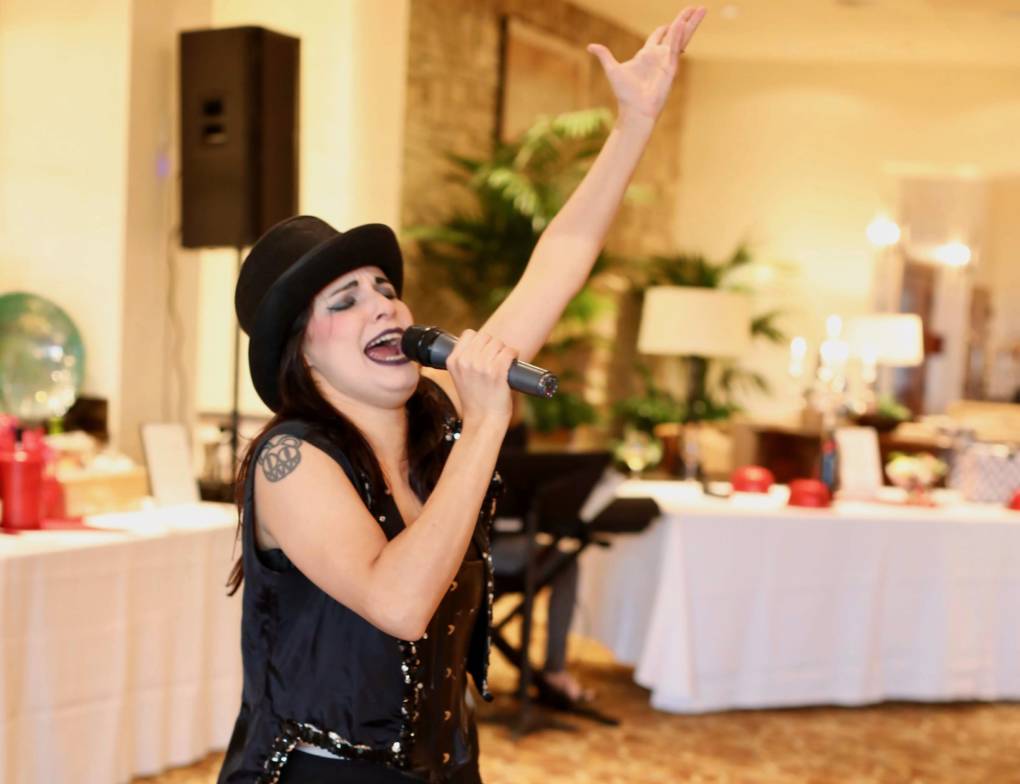
"caption": "Chloë Angst sings \"Willkommen\" as The Emcee from \"Cabaret\" at a fundraiser for City Lights Theater Company earlier this year.",
"description": "Chloë Angst sings \"Willkommen\" as The Emcee from \"Cabaret\" at a fundraiser for City Lights Theater Company earlier this year.",
"title": "ChloeAngst_boots",
"credit": "Courtesy of Taylor Sanders",
"status": "inherit",
"isLoading": false,
"fetchFailed": false
},
"arts_13858206": {
"type": "attachments",
"id": "arts_13858206",
"meta": {
"index": "attachments_1716263798",
"site": "arts",
"id": "13858206",
"found": true
},
"parent": 13857655,
"imgSizes": {
"twentyfourteen-full-width": {
"file": "https://ww2.kqed.org/app/uploads/sites/2/2019/05/SonsofKemet-1038x576.jpg",
"width": 1038,
"mimeType": "image/jpeg",
"height": 576
},
"thumbnail": {
"file": "https://ww2.kqed.org/app/uploads/sites/2/2019/05/SonsofKemet-160x90.jpg",
"width": 160,
"mimeType": "image/jpeg",
"height": 90
},
"post-thumbnail": {
"file": "https://ww2.kqed.org/app/uploads/sites/2/2019/05/SonsofKemet-672x372.jpg",
"width": 672,
"mimeType": "image/jpeg",
"height": 372
},
"kqedFullSize": {
"file": "https://ww2.kqed.org/app/uploads/sites/2/2019/05/SonsofKemet.jpg",
"width": 1182,
"height": 665
},
"large": {
"file": "https://ww2.kqed.org/app/uploads/sites/2/2019/05/SonsofKemet-1020x574.jpg",
"width": 1020,
"mimeType": "image/jpeg",
"height": 574
},
"medium": {
"file": "https://ww2.kqed.org/app/uploads/sites/2/2019/05/SonsofKemet-800x450.jpg",
"width": 800,
"mimeType": "image/jpeg",
"height": 450
},
"medium_large": {
"file": "https://ww2.kqed.org/app/uploads/sites/2/2019/05/SonsofKemet-768x432.jpg",
"width": 768,
"mimeType": "image/jpeg",
"height": 432
}
},
"publishDate": 1558723800,
"modified": 1558724035,
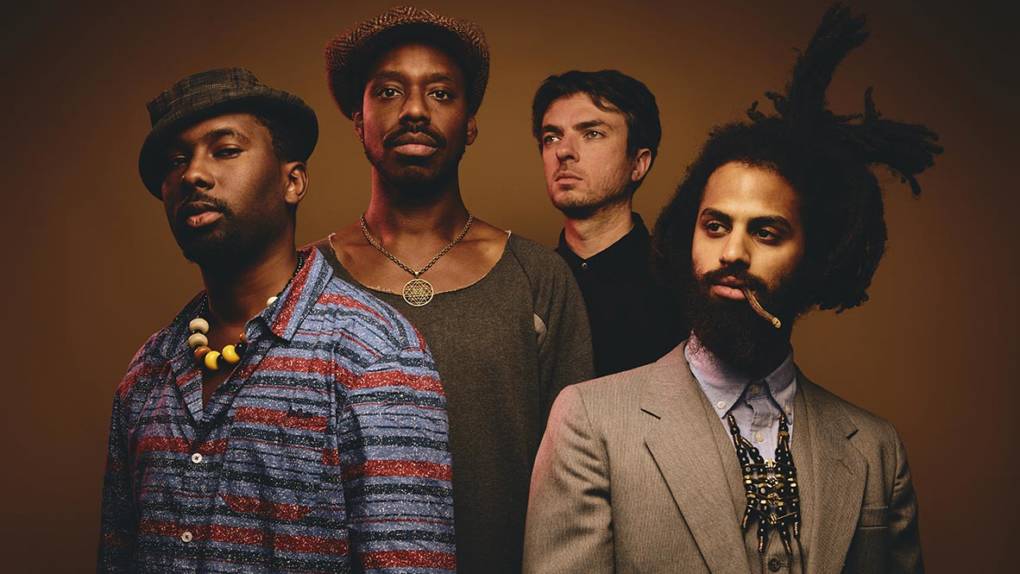
"caption": "British jazz sensations Sons of Kemet perform at this year's San Jose Jazz Summer Fest.",
"description": "British jazz sensations Sons of Kemet perform at this year's San Jose Jazz Summer Fest.",
"title": "SonsofKemet",
"credit": "Courtesy Sons of Kemet",
"status": "inherit",
"isLoading": false,
"fetchFailed": false
},
"arts_13858254": {
"type": "attachments",
"id": "arts_13858254",
"meta": {
"index": "attachments_1716263798",
"site": "arts",
"id": "13858254",
"found": true
},
"parent": 13858246,
"imgSizes": {
"twentyfourteen-full-width": {
"file": "https://ww2.kqed.org/app/uploads/sites/2/2019/05/Tuan-Sarah3-851x576.jpeg",
"width": 851,
"mimeType": "image/jpeg",
"height": 576
},
"thumbnail": {
"file": "https://ww2.kqed.org/app/uploads/sites/2/2019/05/Tuan-Sarah3-160x117.jpeg",
"width": 160,
"mimeType": "image/jpeg",
"height": 117
},
"post-thumbnail": {
"file": "https://ww2.kqed.org/app/uploads/sites/2/2019/05/Tuan-Sarah3-672x372.jpeg",
"width": 672,
"mimeType": "image/jpeg",
"height": 372
},
"kqedFullSize": {
"file": "https://ww2.kqed.org/app/uploads/sites/2/2019/05/Tuan-Sarah3.jpeg",
"width": 851,
"height": 624
},
"medium": {
"file": "https://ww2.kqed.org/app/uploads/sites/2/2019/05/Tuan-Sarah3-800x587.jpeg",
"width": 800,
"mimeType": "image/jpeg",
"height": 587
},
"medium_large": {
"file": "https://ww2.kqed.org/app/uploads/sites/2/2019/05/Tuan-Sarah3-768x563.jpeg",
"width": 768,
"mimeType": "image/jpeg",
"height": 563
}
},
"publishDate": 1558751054,
"modified": 1558751070,
"caption": "Sarah Tuan of San Jose is one of just 24 pianists aged 13-17 due to compete in the 2019 Cliburn International Junior Piano Competition.",
"description": "Sarah Tuan of San Jose is one of just 24 pianists aged 13-17 due to compete in the 2019 Cliburn International Junior Piano Competition.",
"title": "Tuan, Sarah3",
"credit": "Courtesy of Cliburn",
"status": "inherit",
"isLoading": false,
"fetchFailed": false
},
"arts_13857558": {
"type": "attachments",
"id": "arts_13857558",
"meta": {
"index": "attachments_1716263798",
"site": "arts",
"id": "13857558",
"found": true
},
"parent": 13857555,
"imgSizes": {
"twentyfourteen-full-width": {
"file": "https://ww2.kqed.org/app/uploads/sites/2/2019/05/RS37171_citylights_silentsky_mariagieremarquis-qut-1038x576.jpg",
"width": 1038,
"mimeType": "image/jpeg",
"height": 576
},
"thumbnail": {
"file": "https://ww2.kqed.org/app/uploads/sites/2/2019/05/RS37171_citylights_silentsky_mariagieremarquis-qut-160x107.jpg",
"width": 160,
"mimeType": "image/jpeg",
"height": 107
},
"post-thumbnail": {
"file": "https://ww2.kqed.org/app/uploads/sites/2/2019/05/RS37171_citylights_silentsky_mariagieremarquis-qut-672x372.jpg",
"width": 672,
"mimeType": "image/jpeg",
"height": 372
},
"kqedFullSize": {
"file": "https://ww2.kqed.org/app/uploads/sites/2/2019/05/RS37171_citylights_silentsky_mariagieremarquis-qut.jpg",
"width": 1920,
"height": 1280
},
"large": {
"file": "https://ww2.kqed.org/app/uploads/sites/2/2019/05/RS37171_citylights_silentsky_mariagieremarquis-qut-1020x680.jpg",
"width": 1020,
"mimeType": "image/jpeg",
"height": 680
},
"complete_open_graph": {
"file": "https://ww2.kqed.org/app/uploads/sites/2/2019/05/RS37171_citylights_silentsky_mariagieremarquis-qut-1200x800.jpg",
"width": 1200,
"mimeType": "image/jpeg",
"height": 800
},
"full-width": {
"file": "https://ww2.kqed.org/app/uploads/sites/2/2019/05/RS37171_citylights_silentsky_mariagieremarquis-qut-1920x1280.jpg",
"width": 1920,
"mimeType": "image/jpeg",
"height": 1280
},
"medium": {
"file": "https://ww2.kqed.org/app/uploads/sites/2/2019/05/RS37171_citylights_silentsky_mariagieremarquis-qut-800x533.jpg",
"width": 800,
"mimeType": "image/jpeg",
"height": 533
},
"medium_large": {
"file": "https://ww2.kqed.org/app/uploads/sites/2/2019/05/RS37171_citylights_silentsky_mariagieremarquis-qut-768x512.jpg",
"width": 768,
"mimeType": "image/jpeg",
"height": 512
}
},
"publishDate": 1558135061,
"modified": 1558135097,
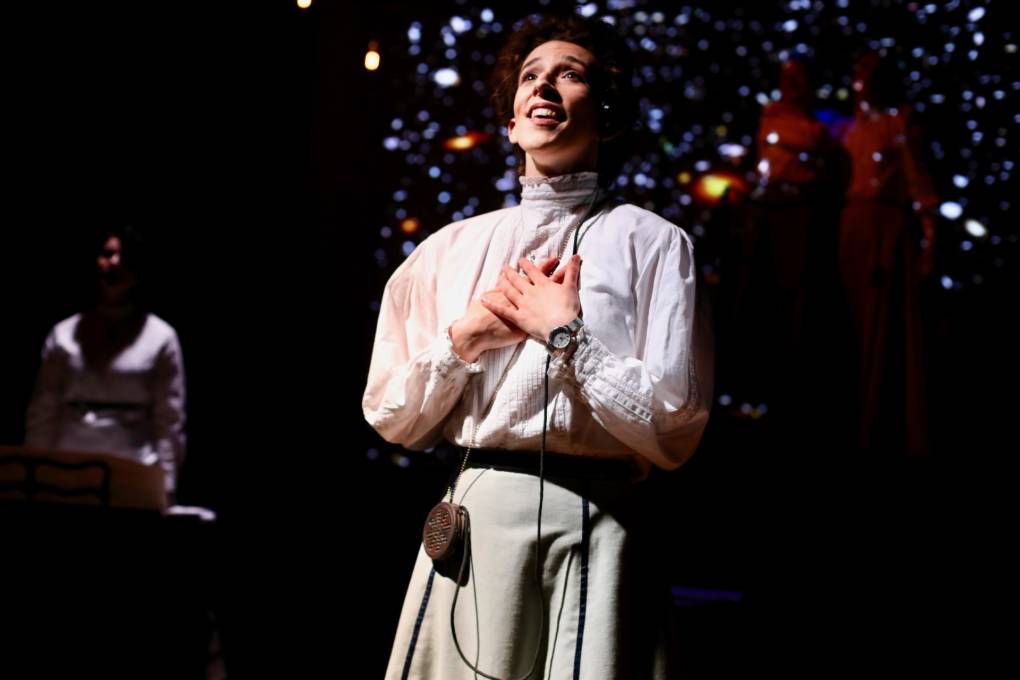
"caption": "Henrietta (Maria Giere Marquis) is captivated by a look into the heavens. ",
"description": "Henrietta (Maria Giere Marquis) is captivated by a look into the heavens. ",
"title": "RS37171_citylights_silentsky_mariagieremarquis-qut",
"credit": "Photo: Courtesy of Taylor Sanders",
"status": "inherit",
"isLoading": false,
"fetchFailed": false
},
"arts_13856272": {
"type": "attachments",
"id": "arts_13856272",
"meta": {
"index": "attachments_1716263798",
"site": "arts",
"id": "13856272",
"found": true
},
"parent": 13856270,
"imgSizes": {
"twentyfourteen-full-width": {
"file": "https://ww2.kqed.org/app/uploads/sites/2/2019/04/jemison_escaped-lunatic_web_2-1024x576.jpg",
"width": 1024,
"mimeType": "image/jpeg",
"height": 576
},
"thumbnail": {
"file": "https://ww2.kqed.org/app/uploads/sites/2/2019/04/jemison_escaped-lunatic_web_2-160x90.jpg",
"width": 160,
"mimeType": "image/jpeg",
"height": 90
},
"post-thumbnail": {
"file": "https://ww2.kqed.org/app/uploads/sites/2/2019/04/jemison_escaped-lunatic_web_2-672x372.jpg",
"width": 672,
"mimeType": "image/jpeg",
"height": 372
},
"kqedFullSize": {
"file": "https://ww2.kqed.org/app/uploads/sites/2/2019/04/jemison_escaped-lunatic_web_2.jpg",
"width": 1024,
"height": 577
},
"large": {
"file": "https://ww2.kqed.org/app/uploads/sites/2/2019/04/jemison_escaped-lunatic_web_2-1020x575.jpg",
"width": 1020,
"mimeType": "image/jpeg",
"height": 575
},
"medium": {
"file": "https://ww2.kqed.org/app/uploads/sites/2/2019/04/jemison_escaped-lunatic_web_2-800x451.jpg",
"width": 800,
"mimeType": "image/jpeg",
"height": 451
},
"medium_large": {
"file": "https://ww2.kqed.org/app/uploads/sites/2/2019/04/jemison_escaped-lunatic_web_2-768x433.jpg",
"width": 768,
"mimeType": "image/jpeg",
"height": 433
}
},
"publishDate": 1556578059,
"modified": 1556578143,
"caption": "Steffani Jemison, video still form 'Escaped Lunatic,' 2010–11.",
"description": "Steffani Jemison, video still form 'Escaped Lunatic,' 2010–11.",
"title": "jemison_escaped-lunatic_web_2",
"credit": "Courtesy of the artist",
"status": "inherit",
"isLoading": false,
"fetchFailed": false
},
"arts_13855467": {
"type": "attachments",
"id": "arts_13855467",
"meta": {
"index": "attachments_1716263798",
"site": "arts",
"id": "13855467",
"found": true
},
"parent": 13855466,
"imgSizes": {
"twentyfourteen-full-width": {
"file": "https://ww2.kqed.org/app/uploads/sites/2/2019/04/RS36629_Photo-Apr-18-10-51-34-AM-qut-1038x576.jpg",
"width": 1038,
"mimeType": "image/jpeg",
"height": 576
},
"thumbnail": {
"file": "https://ww2.kqed.org/app/uploads/sites/2/2019/04/RS36629_Photo-Apr-18-10-51-34-AM-qut-160x110.jpg",
"width": 160,
"mimeType": "image/jpeg",
"height": 110
},
"post-thumbnail": {
"file": "https://ww2.kqed.org/app/uploads/sites/2/2019/04/RS36629_Photo-Apr-18-10-51-34-AM-qut-672x372.jpg",
"width": 672,
"mimeType": "image/jpeg",
"height": 372
},
"kqedFullSize": {
"file": "https://ww2.kqed.org/app/uploads/sites/2/2019/04/RS36629_Photo-Apr-18-10-51-34-AM-qut.jpg",
"width": 1920,
"height": 1323
},
"large": {
"file": "https://ww2.kqed.org/app/uploads/sites/2/2019/04/RS36629_Photo-Apr-18-10-51-34-AM-qut-1020x703.jpg",
"width": 1020,
"mimeType": "image/jpeg",
"height": 703
},
"complete_open_graph": {
"file": "https://ww2.kqed.org/app/uploads/sites/2/2019/04/RS36629_Photo-Apr-18-10-51-34-AM-qut-1200x827.jpg",
"width": 1200,
"mimeType": "image/jpeg",
"height": 827
},
"full-width": {
"file": "https://ww2.kqed.org/app/uploads/sites/2/2019/04/RS36629_Photo-Apr-18-10-51-34-AM-qut-1920x1323.jpg",
"width": 1920,
"mimeType": "image/jpeg",
"height": 1323
},
"medium": {
"file": "https://ww2.kqed.org/app/uploads/sites/2/2019/04/RS36629_Photo-Apr-18-10-51-34-AM-qut-800x551.jpg",
"width": 800,
"mimeType": "image/jpeg",
"height": 551
},
"medium_large": {
"file": "https://ww2.kqed.org/app/uploads/sites/2/2019/04/RS36629_Photo-Apr-18-10-51-34-AM-qut-768x529.jpg",
"width": 768,
"mimeType": "image/jpeg",
"height": 529
}
},
"publishDate": 1555714310,
"modified": 1555719476,
"caption": "San Jose’s Public Art and Environmental Services departments co-sponsored an environmental poetry contest in local middle and high schools, and put the winning 10 poems on trash cans around the city, pretty visualized by San Jose artist Carlos Perez.",
"description": "San Jose’s Public Art and Environmental Services departments co-sponsored an environmental poetry contest in local middle and high schools, and put the winning 10 poems on trash cans around the city, pretty visualized by San Jose artist Carlos Perez.",
"title": "RS36629_Photo Apr 18, 10 51 34 AM-qut",
"credit": "Photo: Rachael Myrow/KQED",
"status": "inherit",
"isLoading": false,
"fetchFailed": false
},
"arts_13853934": {
"type": "attachments",
"id": "arts_13853934",
"meta": {
"index": "attachments_1716263798",
"site": "arts",
"id": "13853934",
"found": true
},
"parent": 13853932,
"imgSizes": {
"twentyfourteen-full-width": {
"file": "https://ww2.kqed.org/app/uploads/sites/2/2019/03/RS36280_IMG_2868-qut-1038x576.jpg",
"width": 1038,
"mimeType": "image/jpeg",
"height": 576
},
"thumbnail": {
"file": "https://ww2.kqed.org/app/uploads/sites/2/2019/03/RS36280_IMG_2868-qut-160x104.jpg",
"width": 160,
"mimeType": "image/jpeg",
"height": 104
},
"post-thumbnail": {
"file": "https://ww2.kqed.org/app/uploads/sites/2/2019/03/RS36280_IMG_2868-qut-672x372.jpg",
"width": 672,
"mimeType": "image/jpeg",
"height": 372
},
"kqedFullSize": {
"file": "https://ww2.kqed.org/app/uploads/sites/2/2019/03/RS36280_IMG_2868-qut.jpg",
"width": 1920,
"height": 1245
},
"large": {
"file": "https://ww2.kqed.org/app/uploads/sites/2/2019/03/RS36280_IMG_2868-qut-1020x661.jpg",
"width": 1020,
"mimeType": "image/jpeg",
"height": 661
},
"complete_open_graph": {
"file": "https://ww2.kqed.org/app/uploads/sites/2/2019/03/RS36280_IMG_2868-qut-1200x778.jpg",
"width": 1200,
"mimeType": "image/jpeg",
"height": 778
},
"guest-author-50": {
"file": "https://ww2.kqed.org/app/uploads/sites/2/2019/03/RS36280_IMG_2868-qut-50x50.jpg",
"width": 50,
"mimeType": "image/jpeg",
"height": 50
},
"guest-author-96": {
"file": "https://ww2.kqed.org/app/uploads/sites/2/2019/03/RS36280_IMG_2868-qut-96x96.jpg",
"width": 96,
"mimeType": "image/jpeg",
"height": 96
},
"medium": {
"file": "https://ww2.kqed.org/app/uploads/sites/2/2019/03/RS36280_IMG_2868-qut-800x519.jpg",
"width": 800,
"mimeType": "image/jpeg",
"height": 519
},
"guest-author-64": {
"file": "https://ww2.kqed.org/app/uploads/sites/2/2019/03/RS36280_IMG_2868-qut-64x64.jpg",
"width": 64,
"mimeType": "image/jpeg",
"height": 64
},
"guest-author-32": {
"file": "https://ww2.kqed.org/app/uploads/sites/2/2019/03/RS36280_IMG_2868-qut-32x32.jpg",
"width": 32,
"mimeType": "image/jpeg",
"height": 32
},
"full-width": {
"file": "https://ww2.kqed.org/app/uploads/sites/2/2019/03/RS36280_IMG_2868-qut-1920x1245.jpg",
"width": 1920,
"mimeType": "image/jpeg",
"height": 1245
},
"medium_large": {
"file": "https://ww2.kqed.org/app/uploads/sites/2/2019/03/RS36280_IMG_2868-qut-768x498.jpg",
"width": 768,
"mimeType": "image/jpeg",
"height": 498
},
"guest-author-128": {
"file": "https://ww2.kqed.org/app/uploads/sites/2/2019/03/RS36280_IMG_2868-qut-128x128.jpg",
"width": 128,
"mimeType": "image/jpeg",
"height": 128
}
},
"publishDate": 1553883586,
"modified": 1553883634,
"caption": "Two masters of their respective crafts: KQED local Morning Edition host Brian Watt and Opera San Jose baritone Trevor Neal.",
"description": "Two masters of their respective crafts: KQED local Morning Edition host Brian Watt and Opera San Jose baritone Trevor Neal.",
"title": "RS36280_IMG_2868-qut",
"credit": "Brian Watt/KQED",
"status": "inherit",
"isLoading": false,
"fetchFailed": false
},
"arts_13853574": {
"type": "attachments",
"id": "arts_13853574",
"meta": {
"index": "attachments_1716263798",
"site": "arts",
"id": "13853574",
"found": true
},
"parent": 13853573,
"imgSizes": {
"twentyfourteen-full-width": {
"file": "https://ww2.kqed.org/app/uploads/sites/2/2019/03/CityLights_Eurydice_LeahCohen_LaurenRhodes_hands2-1038x576.jpeg",
"width": 1038,
"mimeType": "image/jpeg",
"height": 576
},
"thumbnail": {
"file": "https://ww2.kqed.org/app/uploads/sites/2/2019/03/CityLights_Eurydice_LeahCohen_LaurenRhodes_hands2-160x107.jpeg",
"width": 160,
"mimeType": "image/jpeg",
"height": 107
},
"post-thumbnail": {
"file": "https://ww2.kqed.org/app/uploads/sites/2/2019/03/CityLights_Eurydice_LeahCohen_LaurenRhodes_hands2-672x372.jpeg",
"width": 672,
"mimeType": "image/jpeg",
"height": 372
},
"kqedFullSize": {
"file": "https://ww2.kqed.org/app/uploads/sites/2/2019/03/CityLights_Eurydice_LeahCohen_LaurenRhodes_hands2.jpeg",
"width": 2048,
"height": 1365
},
"large": {
"file": "https://ww2.kqed.org/app/uploads/sites/2/2019/03/CityLights_Eurydice_LeahCohen_LaurenRhodes_hands2-1020x680.jpeg",
"width": 1020,
"mimeType": "image/jpeg",
"height": 680
},
"complete_open_graph": {
"file": "https://ww2.kqed.org/app/uploads/sites/2/2019/03/CityLights_Eurydice_LeahCohen_LaurenRhodes_hands2-1200x800.jpeg",
"width": 1200,
"mimeType": "image/jpeg",
"height": 800
},
"guest-author-50": {
"file": "https://ww2.kqed.org/app/uploads/sites/2/2019/03/CityLights_Eurydice_LeahCohen_LaurenRhodes_hands2-50x50.jpeg",
"width": 50,
"mimeType": "image/jpeg",
"height": 50
},
"guest-author-96": {
"file": "https://ww2.kqed.org/app/uploads/sites/2/2019/03/CityLights_Eurydice_LeahCohen_LaurenRhodes_hands2-96x96.jpeg",
"width": 96,
"mimeType": "image/jpeg",
"height": 96
},
"medium": {
"file": "https://ww2.kqed.org/app/uploads/sites/2/2019/03/CityLights_Eurydice_LeahCohen_LaurenRhodes_hands2-800x533.jpeg",
"width": 800,
"mimeType": "image/jpeg",
"height": 533
},
"guest-author-64": {
"file": "https://ww2.kqed.org/app/uploads/sites/2/2019/03/CityLights_Eurydice_LeahCohen_LaurenRhodes_hands2-64x64.jpeg",
"width": 64,
"mimeType": "image/jpeg",
"height": 64
},
"guest-author-32": {
"file": "https://ww2.kqed.org/app/uploads/sites/2/2019/03/CityLights_Eurydice_LeahCohen_LaurenRhodes_hands2-32x32.jpeg",
"width": 32,
"mimeType": "image/jpeg",
"height": 32
},
"full-width": {
"file": "https://ww2.kqed.org/app/uploads/sites/2/2019/03/CityLights_Eurydice_LeahCohen_LaurenRhodes_hands2-1920x1280.jpeg",
"width": 1920,
"mimeType": "image/jpeg",
"height": 1280
},
"medium_large": {
"file": "https://ww2.kqed.org/app/uploads/sites/2/2019/03/CityLights_Eurydice_LeahCohen_LaurenRhodes_hands2-768x512.jpeg",
"width": 768,
"mimeType": "image/jpeg",
"height": 512
},
"guest-author-128": {
"file": "https://ww2.kqed.org/app/uploads/sites/2/2019/03/CityLights_Eurydice_LeahCohen_LaurenRhodes_hands2-128x128.jpeg",
"width": 128,
"mimeType": "image/jpeg",
"height": 128
}
},
"publishDate": 1553312439,
"modified": 1553369878,
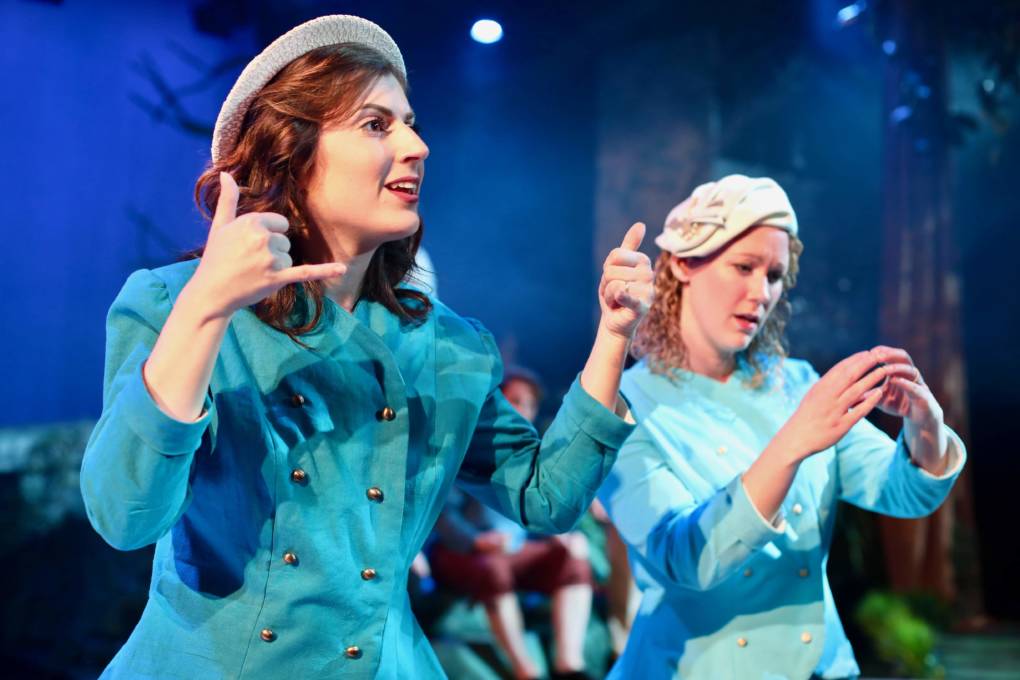
"caption": "Every role in the City Light production of 'Eurydice' is played by two actors: one signing in American Sign Language, and one speaking English. Pictured: Leah Cohen, ASL, and Lauren Rhodes, English.",
"description": "Every role in the City Light production of 'Eurydice' is played by two actors: one signing in American Sign Language, and one speaking English. Pictured: Leah Cohen, ASL, and Lauren Rhodes, English.",
"title": "CityLights_Eurydice_LeahCohen_LaurenRhodes_hands2",
"credit": "Photo: Courtesy of Taylor Sanders",
"status": "inherit",
"isLoading": false,
"fetchFailed": false
},
"arts_13829861": {
"type": "attachments",
"id": "arts_13829861",
"meta": {
"index": "attachments_1716263798",
"site": "arts",
"id": "13829861",
"found": true
},
"parent": 13829679,
"imgSizes": {
"small": {
"file": "https://ww2.kqed.org/app/uploads/sites/2/2018/04/Apple-Park-3-520x293.jpg",
"width": 520,
"mimeType": "image/jpeg",
"height": 293
},
"twentyfourteen-full-width": {
"file": "https://ww2.kqed.org/app/uploads/sites/2/2018/04/Apple-Park-3-1038x576.jpg",
"width": 1038,
"mimeType": "image/jpeg",
"height": 576
},
"thumbnail": {
"file": "https://ww2.kqed.org/app/uploads/sites/2/2018/04/Apple-Park-3-160x90.jpg",
"width": 160,
"mimeType": "image/jpeg",
"height": 90
},
"fd-sm": {
"file": "https://ww2.kqed.org/app/uploads/sites/2/2018/04/Apple-Park-3-960x540.jpg",
"width": 960,
"mimeType": "image/jpeg",
"height": 540
},
"post-thumbnail": {
"file": "https://ww2.kqed.org/app/uploads/sites/2/2018/04/Apple-Park-3-672x372.jpg",
"width": 672,
"mimeType": "image/jpeg",
"height": 372
},
"xsmall": {
"file": "https://ww2.kqed.org/app/uploads/sites/2/2018/04/Apple-Park-3-375x211.jpg",
"width": 375,
"mimeType": "image/jpeg",
"height": 211
},
"kqedFullSize": {
"file": "https://ww2.kqed.org/app/uploads/sites/2/2018/04/Apple-Park-3.jpg",
"width": 1920,
"height": 1080
},
"large": {
"file": "https://ww2.kqed.org/app/uploads/sites/2/2018/04/Apple-Park-3-1020x574.jpg",
"width": 1020,
"mimeType": "image/jpeg",
"height": 574
},
"xlarge": {
"file": "https://ww2.kqed.org/app/uploads/sites/2/2018/04/Apple-Park-3-1180x664.jpg",
"width": 1180,
"mimeType": "image/jpeg",
"height": 664
},
"complete_open_graph": {
"file": "https://ww2.kqed.org/app/uploads/sites/2/2018/04/Apple-Park-3-1200x675.jpg",
"width": 1200,
"mimeType": "image/jpeg",
"height": 675
},
"guest-author-50": {
"file": "https://ww2.kqed.org/app/uploads/sites/2/2018/04/Apple-Park-3-50x50.jpg",
"width": 50,
"mimeType": "image/jpeg",
"height": 50
},
"guest-author-96": {
"file": "https://ww2.kqed.org/app/uploads/sites/2/2018/04/Apple-Park-3-96x96.jpg",
"width": 96,
"mimeType": "image/jpeg",
"height": 96
},
"medium": {
"file": "https://ww2.kqed.org/app/uploads/sites/2/2018/04/Apple-Park-3-800x450.jpg",
"width": 800,
"mimeType": "image/jpeg",
"height": 450
},
"guest-author-64": {
"file": "https://ww2.kqed.org/app/uploads/sites/2/2018/04/Apple-Park-3-64x64.jpg",
"width": 64,
"mimeType": "image/jpeg",
"height": 64
},
"guest-author-32": {
"file": "https://ww2.kqed.org/app/uploads/sites/2/2018/04/Apple-Park-3-32x32.jpg",
"width": 32,
"mimeType": "image/jpeg",
"height": 32
},
"fd-lrg": {
"file": "https://ww2.kqed.org/app/uploads/sites/2/2018/04/Apple-Park-3-1920x1080.jpg",
"width": 1920,
"mimeType": "image/jpeg",
"height": 1080
},
"fd-med": {
"file": "https://ww2.kqed.org/app/uploads/sites/2/2018/04/Apple-Park-3-1180x664.jpg",
"width": 1180,
"mimeType": "image/jpeg",
"height": 664
},
"full-width": {
"file": "https://ww2.kqed.org/app/uploads/sites/2/2018/04/Apple-Park-3-1920x1080.jpg",
"width": 1920,
"mimeType": "image/jpeg",
"height": 1080
},
"detail": {
"file": "https://ww2.kqed.org/app/uploads/sites/2/2018/04/Apple-Park-3-150x150.jpg",
"width": 150,
"mimeType": "image/jpeg",
"height": 150
},
"medium_large": {
"file": "https://ww2.kqed.org/app/uploads/sites/2/2018/04/Apple-Park-3-768x432.jpg",
"width": 768,
"mimeType": "image/jpeg",
"height": 432
},
"guest-author-128": {
"file": "https://ww2.kqed.org/app/uploads/sites/2/2018/04/Apple-Park-3-128x128.jpg",
"width": 128,
"mimeType": "image/jpeg",
"height": 128
},
"xxsmall": {
"file": "https://ww2.kqed.org/app/uploads/sites/2/2018/04/Apple-Park-3-240x135.jpg",
"width": 240,
"mimeType": "image/jpeg",
"height": 135
}
},
"publishDate": 1524097678,
"modified": 1552613863,
"caption": "Apple Park viewed from the air. Is this the best visual symbol of Silicon Valley? Or the South Bay?",
"description": "Apple Park viewed from the air. Is this the best visual symbol of Silicon Valley? Or the South Bay?",
"title": "Apple Park",
"credit": "Photo: Courtesy of Duncan Sinfield",
"status": "inherit",
"isLoading": false,
"fetchFailed": false
},
"arts_13850996": {
"type": "attachments",
"id": "arts_13850996",
"meta": {
"index": "attachments_1716263798",
"site": "arts",
"id": "13850996",
"found": true
},
"parent": 13850950,
"imgSizes": {
"twentyfourteen-full-width": {
"file": "https://ww2.kqed.org/app/uploads/sites/2/2019/02/RS35281_43162166811_242d411b97_o-qut-1038x576.jpg",
"width": 1038,
"mimeType": "image/jpeg",
"height": 576
},
"thumbnail": {
"file": "https://ww2.kqed.org/app/uploads/sites/2/2019/02/RS35281_43162166811_242d411b97_o-qut-160x106.jpg",
"width": 160,
"mimeType": "image/jpeg",
"height": 106
},
"post-thumbnail": {
"file": "https://ww2.kqed.org/app/uploads/sites/2/2019/02/RS35281_43162166811_242d411b97_o-qut-672x372.jpg",
"width": 672,
"mimeType": "image/jpeg",
"height": 372
},
"kqedFullSize": {
"file": "https://ww2.kqed.org/app/uploads/sites/2/2019/02/RS35281_43162166811_242d411b97_o-qut.jpg",
"width": 1920,
"height": 1277
},
"large": {
"file": "https://ww2.kqed.org/app/uploads/sites/2/2019/02/RS35281_43162166811_242d411b97_o-qut-1020x678.jpg",
"width": 1020,
"mimeType": "image/jpeg",
"height": 678
},
"complete_open_graph": {
"file": "https://ww2.kqed.org/app/uploads/sites/2/2019/02/RS35281_43162166811_242d411b97_o-qut-1200x798.jpg",
"width": 1200,
"mimeType": "image/jpeg",
"height": 798
},
"guest-author-50": {
"file": "https://ww2.kqed.org/app/uploads/sites/2/2019/02/RS35281_43162166811_242d411b97_o-qut-50x50.jpg",
"width": 50,
"mimeType": "image/jpeg",
"height": 50
},
"guest-author-96": {
"file": "https://ww2.kqed.org/app/uploads/sites/2/2019/02/RS35281_43162166811_242d411b97_o-qut-96x96.jpg",
"width": 96,
"mimeType": "image/jpeg",
"height": 96
},
"medium": {
"file": "https://ww2.kqed.org/app/uploads/sites/2/2019/02/RS35281_43162166811_242d411b97_o-qut-800x532.jpg",
"width": 800,
"mimeType": "image/jpeg",
"height": 532
},
"guest-author-64": {
"file": "https://ww2.kqed.org/app/uploads/sites/2/2019/02/RS35281_43162166811_242d411b97_o-qut-64x64.jpg",
"width": 64,
"mimeType": "image/jpeg",
"height": 64
},
"guest-author-32": {
"file": "https://ww2.kqed.org/app/uploads/sites/2/2019/02/RS35281_43162166811_242d411b97_o-qut-32x32.jpg",
"width": 32,
"mimeType": "image/jpeg",
"height": 32
},
"full-width": {
"file": "https://ww2.kqed.org/app/uploads/sites/2/2019/02/RS35281_43162166811_242d411b97_o-qut-1920x1277.jpg",
"width": 1920,
"mimeType": "image/jpeg",
"height": 1277
},
"detail": {
"file": "https://ww2.kqed.org/app/uploads/sites/2/2019/02/RS35281_43162166811_242d411b97_o-qut-150x150.jpg",
"width": 150,
"mimeType": "image/jpeg",
"height": 150
},
"medium_large": {
"file": "https://ww2.kqed.org/app/uploads/sites/2/2019/02/RS35281_43162166811_242d411b97_o-qut-768x511.jpg",
"width": 768,
"mimeType": "image/jpeg",
"height": 511
},
"guest-author-128": {
"file": "https://ww2.kqed.org/app/uploads/sites/2/2019/02/RS35281_43162166811_242d411b97_o-qut-128x128.jpg",
"width": 128,
"mimeType": "image/jpeg",
"height": 128
}
},
"publishDate": 1550328690,
"modified": 1550328753,
"caption": "Detail of Crossing the Farther Shore, 2014. Found photographs, thread, and linen tape.",
"description": "Detail of Crossing the Farther Shore, 2014. Found photographs, thread, and linen tape.",
"title": "RS35281_43162166811_242d411b97_o-qut",
"credit": "Courtesy of Nash Baker",
"status": "inherit",
"isLoading": false,
"fetchFailed": false
},
"arts_13848628": {
"type": "attachments",
"id": "arts_13848628",
"meta": {
"index": "attachments_1716263798",
"site": "arts",
"id": "13848628",
"found": true
},
"parent": 13848625,
"imgSizes": {
"twentyfourteen-full-width": {
"file": "https://ww2.kqed.org/app/uploads/sites/2/2019/01/RS34643_42386100272_6ebf2d55bc_o-qut-1038x576.jpg",
"width": 1038,
"mimeType": "image/jpeg",
"height": 576
},
"thumbnail": {
"file": "https://ww2.kqed.org/app/uploads/sites/2/2019/01/RS34643_42386100272_6ebf2d55bc_o-qut-160x90.jpg",
"width": 160,
"mimeType": "image/jpeg",
"height": 90
},
"post-thumbnail": {
"file": "https://ww2.kqed.org/app/uploads/sites/2/2019/01/RS34643_42386100272_6ebf2d55bc_o-qut-672x372.jpg",
"width": 672,
"mimeType": "image/jpeg",
"height": 372
},
"kqedFullSize": {
"file": "https://ww2.kqed.org/app/uploads/sites/2/2019/01/RS34643_42386100272_6ebf2d55bc_o-qut.jpg",
"width": 1920,
"height": 1080
},
"large": {
"file": "https://ww2.kqed.org/app/uploads/sites/2/2019/01/RS34643_42386100272_6ebf2d55bc_o-qut-1020x574.jpg",
"width": 1020,
"mimeType": "image/jpeg",
"height": 574
},
"complete_open_graph": {
"file": "https://ww2.kqed.org/app/uploads/sites/2/2019/01/RS34643_42386100272_6ebf2d55bc_o-qut-1200x675.jpg",
"width": 1200,
"mimeType": "image/jpeg",
"height": 675
},
"guest-author-50": {
"file": "https://ww2.kqed.org/app/uploads/sites/2/2019/01/RS34643_42386100272_6ebf2d55bc_o-qut-50x50.jpg",
"width": 50,
"mimeType": "image/jpeg",
"height": 50
},
"guest-author-96": {
"file": "https://ww2.kqed.org/app/uploads/sites/2/2019/01/RS34643_42386100272_6ebf2d55bc_o-qut-96x96.jpg",
"width": 96,
"mimeType": "image/jpeg",
"height": 96
},
"medium": {
"file": "https://ww2.kqed.org/app/uploads/sites/2/2019/01/RS34643_42386100272_6ebf2d55bc_o-qut-800x450.jpg",
"width": 800,
"mimeType": "image/jpeg",
"height": 450
},
"guest-author-64": {
"file": "https://ww2.kqed.org/app/uploads/sites/2/2019/01/RS34643_42386100272_6ebf2d55bc_o-qut-64x64.jpg",
"width": 64,
"mimeType": "image/jpeg",
"height": 64
},
"guest-author-32": {
"file": "https://ww2.kqed.org/app/uploads/sites/2/2019/01/RS34643_42386100272_6ebf2d55bc_o-qut-32x32.jpg",
"width": 32,
"mimeType": "image/jpeg",
"height": 32
},
"full-width": {
"file": "https://ww2.kqed.org/app/uploads/sites/2/2019/01/RS34643_42386100272_6ebf2d55bc_o-qut-1920x1080.jpg",
"width": 1920,
"mimeType": "image/jpeg",
"height": 1080
},
"detail": {
"file": "https://ww2.kqed.org/app/uploads/sites/2/2019/01/RS34643_42386100272_6ebf2d55bc_o-qut-150x150.jpg",
"width": 150,
"mimeType": "image/jpeg",
"height": 150
},
"medium_large": {
"file": "https://ww2.kqed.org/app/uploads/sites/2/2019/01/RS34643_42386100272_6ebf2d55bc_o-qut-768x432.jpg",
"width": 768,
"mimeType": "image/jpeg",
"height": 432
},
"guest-author-128": {
"file": "https://ww2.kqed.org/app/uploads/sites/2/2019/01/RS34643_42386100272_6ebf2d55bc_o-qut-128x128.jpg",
"width": 128,
"mimeType": "image/jpeg",
"height": 128
}
},
"publishDate": 1547302554,
"modified": 1547302762,
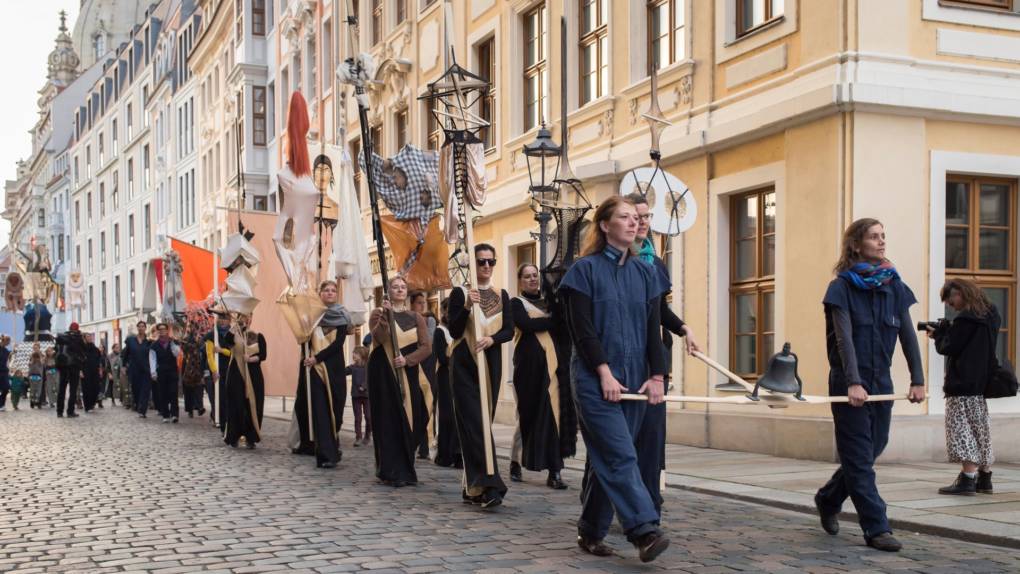
"caption": "Suffragette City, a walking art exhibit, is the brainchild of LA-based artist Lara Schnitger, who was inspired by the women's suffragette movement. Since 2015, her volunteers (the one in Dresden is shown here) have marched in cities across Europe and North America.",
"description": "Suffragette City, a walking art exhibit, is the brainchild of LA-based artist Lara Schnitger, who was inspired by the women's suffragette movement. Since 2015, her volunteers (the one in Dresden is shown here) have marched in cities across Europe and North America.",
"title": "Suffragette City, Dresden",
"credit": "Photo: Courtesy of Swen Rudolph",
"status": "inherit",
"isLoading": false,
"fetchFailed": false
}
},
"audioPlayerReducer": {
"postId": "stream_live",
"isPaused": true,
"isPlaying": false,
"pfsActive": false,
"pledgeModalIsOpen": true,
"playerDrawerIsOpen": false,
"liveAudioPlayStartedAt": 0,
"liveAudioPlayContext": ""
},
"authorsReducer": {
"shotchkiss": {
"type": "authors",
"id": "61",
"meta": {
"index": "authors_1716337520",
"id": "61",
"found": true
},
"name": "Sarah Hotchkiss",
"firstName": "Sarah",
"lastName": "Hotchkiss",
"slug": "shotchkiss",
"email": "shotchkiss@kqed.org",
"display_author_email": true,
"staff_mastheads": [
"arts"
],
"title": "Senior Editor",
"bio": "Sarah Hotchkiss is a San Francisco \u003ca href=\"http://www.sarahhotchkiss.com\">artist\u003c/a> and arts writer. In 2019, she received the Dorothea & Leo Rabkin Foundation grant for visual art journalism and in 2020 she received a Society of Professional Journalists, Northern California award for excellence in arts and culture reporting.",
"avatar": "https://secure.gravatar.com/avatar/bc662df144b3d27fd8b1b6f1c2a420d34e91e53154d411bb7ad353cc8b6cea8d?s=600&d=blank&r=g",
"twitter": null,
"bluesky": null,
"facebook": null,
"instagram": null,
"linkedin": null,
"sites": [
{
"site": "",
"roles": [
"editor"
]
},
{
"site": "arts",
"roles": [
"Contributor",
"administrator"
]
},
{
"site": "artschool",
"roles": [
"administrator"
]
},
{
"site": "news",
"roles": [
"editor"
]
},
{
"site": "pop",
"roles": [
"administrator"
]
},
{
"site": "bayareabites",
"roles": [
"editor"
]
},
{
"site": "spark",
"roles": [
"editor"
]
},
{
"site": "checkplease",
"roles": [
"editor"
]
}
],
"headData": {
"title": "Sarah Hotchkiss | KQED",
"description": "Senior Editor",
"ogImgSrc": "https://secure.gravatar.com/avatar/bc662df144b3d27fd8b1b6f1c2a420d34e91e53154d411bb7ad353cc8b6cea8d?s=600&d=blank&r=g",
"twImgSrc": "https://secure.gravatar.com/avatar/bc662df144b3d27fd8b1b6f1c2a420d34e91e53154d411bb7ad353cc8b6cea8d?s=600&d=blank&r=g"
},
"isLoading": false,
"link": "/author/shotchkiss"
},
"rachael-myrow": {
"type": "authors",
"id": "251",
"meta": {
"index": "authors_1716337520",
"id": "251",
"found": true
},
"name": "Rachael Myrow",
"firstName": "Rachael",
"lastName": "Myrow",
"slug": "rachael-myrow",
"email": "rmyrow@kqed.org",
"display_author_email": true,
"staff_mastheads": [
"news"
],
"title": "Senior Editor of KQED's Silicon Valley News Desk",
"bio": "• I write and edit stories about how Silicon Valley power and policies shape everyday life in California. I’m also passionate about making Bay Area history and culture more accessible to a broad public. • I’ve been a journalist for most of my life, starting in high school with The Franklin Press in Los Angeles, where I grew up. While earning my first degree in English at UC Berkeley, I got my start in public radio at KALX-FM. After completing a second degree in journalism at Cal, I landed my first professional job at Marketplace, then moved on to KPCC (now LAist), and then KQED, where I hosted The California Report for more than seven years. • My reporting has appeared on NPR, The World, WBUR’s \u003ci>Here & Now\u003c/i>, and the BBC. I also guest host for KQED’s \u003ci>Forum\u003c/i>, as well as the Commonwealth Club in San Francisco. • I speak periodically on media, democracy and technology issues, and do voiceover work for documentaries and educational video projects. • Outside of the studio, you'll find me hiking Bay Area trails and whipping up Insta-ready meals in my kitchen. • I do not accept gifts, money, or favors from anyone connected to my reporting, I don't pay people for information, and I do not support or donate to political causes. • I strive to treat the people I report on with fairness, honesty, and respect. I also recognize there are often multiple sides to a story and work to verify information through multiple sources and documentation. If I get something wrong, I correct it.",
"avatar": "https://secure.gravatar.com/avatar/3ed8a3c5f26025e4a805ba634cda8cd764906b97438a6d9ce216b044e340da4e?s=600&d=blank&r=g",
"twitter": "rachaelmyrow",
"bluesky": null,
"facebook": null,
"instagram": null,
"linkedin": "https://www.linkedin.com/in/rachaelmyrow/",
"sites": [
{
"site": "arts",
"roles": [
"administrator"
]
},
{
"site": "news",
"roles": [
"edit_others_posts",
"editor"
]
},
{
"site": "futureofyou",
"roles": [
"editor"
]
},
{
"site": "bayareabites",
"roles": [
"editor"
]
},
{
"site": "stateofhealth",
"roles": [
"editor"
]
},
{
"site": "science",
"roles": [
"editor"
]
},
{
"site": "food",
"roles": [
"editor"
]
},
{
"site": "forum",
"roles": [
"editor"
]
},
{
"site": "liveblog",
"roles": [
"author"
]
}
],
"headData": {
"title": "Rachael Myrow | KQED",
"description": "Senior Editor of KQED's Silicon Valley News Desk",
"ogImgSrc": "https://secure.gravatar.com/avatar/3ed8a3c5f26025e4a805ba634cda8cd764906b97438a6d9ce216b044e340da4e?s=600&d=blank&r=g",
"twImgSrc": "https://secure.gravatar.com/avatar/3ed8a3c5f26025e4a805ba634cda8cd764906b97438a6d9ce216b044e340da4e?s=600&d=blank&r=g"
},
"isLoading": false,
"link": "/author/rachael-myrow"
},
"bwatt": {
"type": "authors",
"id": "11238",
"meta": {
"index": "authors_1716337520",
"id": "11238",
"found": true
},
"name": "Brian Watt",
"firstName": "Brian",
"lastName": "Watt",
"slug": "bwatt",
"email": "bwatt@KQED.org",
"display_author_email": false,
"staff_mastheads": [
"news"
],
"title": "Morning News Anchor",
"bio": "Brian Watt is KQED's morning radio news anchor. He joined the KQED News team in April of 2016. Prior to that, he worked as a Reporter for KPCC in Los Angeles and a producer at \u003cem>Marketplace.\u003c/em>\r\n\r\nDuring eight years at KPCC, Brian covered business and economics, and his work won several awards. In 2008, he won the Los Angeles Press Club’s first-place award for Business and Financial Reporting, Broadcast. He’s also received honorable mention and been first runner up for the Press Club’s Radio Journalist of the Year. He won two Golden Mike awards from the Radio and TV News Association of Southern California.\r\n\r\nBrian holds degrees in theater from Yale University and the Sorbonne, and has worked as an actor in France, Italy, Brazil, Hungary and . . . Hollywood. He appeared in a few television shows, including \u003cem>The West Wing, Judging Amy\u003c/em> and \u003cem>The District.\u003c/em>\r\n\r\nEmail: bwatt@KQED.org Twitter: @RadioBWatt",
"avatar": "https://secure.gravatar.com/avatar/55393ff57ed34e2be773ba4789dd6a19?s=600&d=blank&r=g",
"twitter": "@RadioBWatt",
"facebook": null,
"instagram": null,
"linkedin": null,
"sites": [
{
"site": "arts",
"roles": [
"contributor"
]
},
{
"site": "news",
"roles": [
"editor"
]
}
],
"headData": {
"title": "Brian Watt | KQED",
"description": "Morning News Anchor",
"ogImgSrc": "https://secure.gravatar.com/avatar/55393ff57ed34e2be773ba4789dd6a19?s=600&d=blank&r=g",
"twImgSrc": "https://secure.gravatar.com/avatar/55393ff57ed34e2be773ba4789dd6a19?s=600&d=blank&r=g"
},
"isLoading": false,
"link": "/author/bwatt"
}
},
"pagesReducer": {
"arts_tag_san-jose": {
"type": "terms",
"id": "arts_1084",
"meta": {
"index": "terms_1716263798",
"site": "arts",
"id": "1084",
"score": 8.005517
},
"featImg": null,
"name": "San Jose",
"description": null,
"taxonomy": "tag",
"headData": {
"twImgId": null,
"twTitle": null,
"ogTitle": null,
"ogImgId": null,
"twDescription": null,
"description": null,
"title": "San Jose Archives | KQED Arts",
"ogDescription": null
},
"ttid": 1101,
"slug": "san-jose",
"isLoading": false,
"title": "San Jose",
"pageMeta": {
"site": "arts",
"WpPageTemplate": "page-topic-editorial",
"currentPage": 13
},
"blocks": [
{
"blockName": "kqed/post-list",
"attrs": {
"layout": "cardArticle2",
"query": "posts/arts?tag=san-jose",
"seeMore": false,
"paginated": true,
"page": 13
}
},
{
"blockName": "kqed/ad"
}
]
}
},
"pfsSessionReducer": {},
"postsReducer": {
"stream_live": {
"type": "live",
"id": "stream_live",
"audioUrl": "https://streams.kqed.org/kqedradio",
"title": "Live Stream",
"excerpt": "Live Stream information currently unavailable.",
"link": "/radio",
"featImg": "",
"label": {
"name": "KQED Live",
"link": "/"
}
},
"stream_kqedNewscast": {
"type": "posts",
"id": "stream_kqedNewscast",
"audioUrl": "https://www.kqed.org/.stream/anon/radio/RDnews/newscast.mp3?_=1",
"title": "KQED Newscast",
"featImg": "",
"label": {
"name": "88.5 FM",
"link": "/"
}
},
"arts_13859263": {
"type": "posts",
"id": "arts_13859263",
"meta": {
"index": "posts_1716263798",
"site": "arts",
"id": "13859263",
"score": null,
"sort": [
1560000652000
]
},
"parent": 0,
"labelTerm": {
"site": "arts"
},
"blocks": [],
"publishDate": 1560000652,
"format": "audio",
"title": "Diaspora in Bloom: Assyrian-American Art on View in San Jose",
"headTitle": "Diaspora in Bloom: Assyrian-American Art on View in San Jose | KQED",
"content": "\u003cp>How much do you know about Assyrians? For many Americans, it’s news we have members of the ancient Middle Eastern ethnic group living here in the U.S. today.\u003c/p>\n\u003cp>Members of the Assyrian diaspora are spread out all over world, most in Iraq, Syria, Turkey and Iran. But conflicts \u003ca href=\"https://www.csmonitor.com/World/Middle-East/2019/0410/In-northeast-Syria-a-Christian-community-fights-for-survival\" target=\"_blank\" rel=\"noopener\">modern\u003c/a>, \u003ca href=\"https://www.bbc.co.uk/sounds/play/b00b7r71\" target=\"_blank\" rel=\"noopener\">ancient\u003c/a> and \u003ca href=\"https://en.wikipedia.org/wiki/Assyrian_genocide\" target=\"_blank\" rel=\"noopener\">in between\u003c/a> forced hundreds of thousands of predominantly Christian Assyrians to move further afield, and the most recent figures from the U.S. Census Bureau estimate roughly 100,000 live in the United States.\u003c/p>\n\u003cp>\u003ca href=\"https://www.svlg.org/about-us/our-staff/nardin-sarkis/\" target=\"_blank\" rel=\"noopener\">Nardin Sarkis\u003c/a> works in government relations at the Silicon Valley Leadership Group. He estimates 10,000 Assyrians live in this region alone. So it was he got to chatting with fellow Assyrian-American \u003ca href=\"https://www.plugandplaytechcenter.com/about/our-team/akadina-yadegar/\" target=\"_blank\" rel=\"noopener\">Akadina Yadegar\u003c/a>, who works at Plug and Play Tech Center, about the dearth of modern Assyrian art in museums and galleries.\u003c/p>\n\u003cp>Ancient art there’s plenty of. The Assyrian Empire of Mesopotamia flourished some 4,000 years ago. At its peak, the empire stretched from Cyprus to Iran, from present-day Armenia and Azerbaijan to the Arabian Peninsula, Egypt and eastern Libya.\u003c/p>\n\u003cp>Assyrian kings spent some of their fabulous wealth on palaces full of art, including iconic, muscular stonework. Archeologists continue to pour over the details of of the empire’s sophisticated bureaucracy, detailed in durable clay cuneiform tablets.\u003c/p>\n\u003cp>[ad fullwidth]\u003c/p>\n\u003cp>[youtube https://www.youtube.com/watch?v=7pa54hWROpQ][aside postID='news_10796779,news_2359,forum_2010101859436' label='Related Coverage']All of that said, Assyrians didn’t stop making art after that empire collapsed.\u003c/p>\n\u003cp>Neither Sarkis nor Yadegar is a professional art curator. But they wanted to show their own community and the wider Bay Area community that Assyrians have “more to offer” the world of visual arts than their admittedly impressive heritage from ancient times.\u003c/p>\n\u003cp>“The goal for the exhibit itself is to elevate the modern over the ancient, celebrate present Assyrian artists who are looking at contemporary issues,” explains Yadegar.\u003c/p>\n\u003cp>These two Millennials went looking — where else? — on Instagram, and found artists like \u003ca href=\"https://www.instagram.com/atra.givarkes/\" target=\"_blank\" rel=\"noopener\">Atra Givarkes\u003c/a> of Orange County, who gives neo-Aramaic calligraphy a bright, pop art face lift.\u003c/p>\n\u003cfigure id=\"attachment_13859296\" class=\"wp-caption aligncenter\" style=\"max-width: 2048px\">\u003cimg loading=\"lazy\" decoding=\"async\" class=\"size-full wp-image-13859296\" src=\"https://ww2.kqed.org/arts/wp-content/uploads/sites/2/2019/06/DSC_0619-Copy.jpeg\" alt=\"Tablet Series by artist Atra Givarkes\" width=\"2048\" height=\"1074\" srcset=\"https://cdn.kqed.org/wp-content/uploads/sites/2/2019/06/DSC_0619-Copy.jpeg 2048w, https://cdn.kqed.org/wp-content/uploads/sites/2/2019/06/DSC_0619-Copy-160x84.jpeg 160w, https://cdn.kqed.org/wp-content/uploads/sites/2/2019/06/DSC_0619-Copy-800x419.jpeg 800w, https://cdn.kqed.org/wp-content/uploads/sites/2/2019/06/DSC_0619-Copy-768x403.jpeg 768w, https://cdn.kqed.org/wp-content/uploads/sites/2/2019/06/DSC_0619-Copy-1020x535.jpeg 1020w, https://cdn.kqed.org/wp-content/uploads/sites/2/2019/06/DSC_0619-Copy-1200x629.jpeg 1200w, https://cdn.kqed.org/wp-content/uploads/sites/2/2019/06/DSC_0619-Copy-1920x1006.jpeg 1920w\" sizes=\"(max-width: 2048px) 100vw, 2048px\">\u003cfigcaption class=\"wp-caption-text\">Tablet Series by artist Atra Givarkes \u003ccite>(Courtesy of Megan White)\u003c/cite>\u003c/figcaption>\u003c/figure>\n\u003cp>Then there’s \u003ca href=\"http://www.estherestheresther.com/index.html\" target=\"_blank\" rel=\"noopener\">Esther Elia\u003c/a> of San Francisco, who works in multiple mediums. Some of her most striking contributions to this show include paintings she based on her family’s photographs from the early 20th century.\u003c/p>\n\u003cp>Elia explores the refugee experience both as a psychological journey for generations of Assyrian-Americans, and as an emotionally laden lens through which to view the current state of anti-immigration sentiment in the United States and Western Europe.\u003c/p>\n\u003cp>“Assyrians that were forced out of their lands and came to America for a new life as so many do; came as refugees and look what we’ve created. We’ve created art. We’ve created culture to give back to our community,” Sarkis said.\u003c/p>\n\u003cfigure id=\"attachment_13859297\" class=\"wp-caption aligncenter\" style=\"max-width: 2048px\">\u003cimg loading=\"lazy\" decoding=\"async\" class=\"size-full wp-image-13859297\" src=\"https://ww2.kqed.org/arts/wp-content/uploads/sites/2/2019/06/Photo-Jun-06-10-28-50-AM.jpeg\" alt=\"Artist Esther Elia writes, "The picture shows my great-grandfather side by side with his brothers, all refugees fresh from Iran. While in Denmark recently, a taxi driver helpfully informed us that 'the refugees ruined Sweden.' What he said as pragmatic fact struck me as a personal rejection of my own people. It ultimately led me to ask, 'At what cost does the happiest place in the world maintain itself?'" Acrylic on canvas, 2018.\" width=\"2048\" height=\"1916\" srcset=\"https://cdn.kqed.org/wp-content/uploads/sites/2/2019/06/Photo-Jun-06-10-28-50-AM.jpeg 2048w, https://cdn.kqed.org/wp-content/uploads/sites/2/2019/06/Photo-Jun-06-10-28-50-AM-160x150.jpeg 160w, https://cdn.kqed.org/wp-content/uploads/sites/2/2019/06/Photo-Jun-06-10-28-50-AM-800x749.jpeg 800w, https://cdn.kqed.org/wp-content/uploads/sites/2/2019/06/Photo-Jun-06-10-28-50-AM-768x719.jpeg 768w, https://cdn.kqed.org/wp-content/uploads/sites/2/2019/06/Photo-Jun-06-10-28-50-AM-1020x954.jpeg 1020w, https://cdn.kqed.org/wp-content/uploads/sites/2/2019/06/Photo-Jun-06-10-28-50-AM-1200x1123.jpeg 1200w, https://cdn.kqed.org/wp-content/uploads/sites/2/2019/06/Photo-Jun-06-10-28-50-AM-1920x1797.jpeg 1920w\" sizes=\"(max-width: 2048px) 100vw, 2048px\">\u003cfigcaption class=\"wp-caption-text\">Artist Esther Elia writes, “The picture shows my great-grandfather side by side with his brothers, all refugees fresh from Iran. While in Denmark recently, a taxi driver helpfully informed us that ‘the refugees ruined Sweden.’ What he said as pragmatic fact struck me as a personal rejection of my own people. It ultimately led me to ask, ‘At what cost does the happiest place in the world maintain itself?'” Acrylic on canvas, 2018. \u003ccite>(Rachael Myrow/KQED)\u003c/cite>\u003c/figcaption>\u003c/figure>\n\u003cp>It’s hard to argue, observing more than 30 works of painting, photography, pottery, graphic design and video in this exhibition.\u003c/p>\n\u003cp>It took the two amateur curators a year to put \u003cem>Diaspora in Bloom\u003c/em> together. Naturally, I ask if they’re game to do something like this again. Yadegar pauses for a moment, smiling.\u003c/p>\n\u003cp>“It’s possible,” she replies.\u003c/p>\n\u003cp>\u003cem>\u003cimg loading=\"lazy\" decoding=\"async\" class=\"aligncenter size-full wp-image-12127869\" src=\"https://ww2.kqed.org/arts/wp-content/uploads/sites/2/2016/09/Q.Logo_.Break_.jpg\" alt=\"\" width=\"800\" height=\"78\" srcset=\"https://cdn.kqed.org/wp-content/uploads/sites/2/2016/09/Q.Logo_.Break_.jpg 800w, https://cdn.kqed.org/wp-content/uploads/sites/2/2016/09/Q.Logo_.Break_-400x39.jpg 400w, https://cdn.kqed.org/wp-content/uploads/sites/2/2016/09/Q.Logo_.Break_-768x75.jpg 768w\" sizes=\"(max-width: 800px) 100vw, 800px\">\u003c/em>\u003c/p>\n\u003cp>\u003c/p>\n\u003cp>\u003cem>\u003cstrong>Diaspora in Bloom: \u003c/strong>\u003cstrong>Assyrians in the 20th Century & Beyond\u003c/strong>\u003c/em>\u003cem>\u003cstrong> \u003c/strong>runs June 1, 7, 8 & 14: 6pm-9pm and June 2,9 & 15 noon-4pm at \u003ca href=\"https://www.artarkgallery.com\" target=\"_blank\" rel=\"noopener\">Art Ark Gallery\u003c/a> in San Jose. For more information, click \u003cstrong>\u003ca href=\"https://www.artarkgallery.com/current.html\" target=\"_blank\" rel=\"noopener\">here\u003c/a>\u003c/strong>.\u003c/em>\u003c/p>\n\n",
"stats": {
"hasVideo": true,
"hasChartOrMap": false,
"hasAudio": false,
"hasPolis": false,
"wordCount": 692,
"hasGoogleForm": false,
"hasGallery": false,
"hasHearkenModule": false,
"iframeSrcs": [],
"paragraphCount": 19
},
"modified": 1705026068,
"excerpt": "Assyrian-American visual art gets a chance to strut its stuff in an exhibition at San Jose's Art Ark Gallery.",
"headData": {
"twImgId": "",
"twTitle": "",
"ogTitle": "",
"ogImgId": "",
"twDescription": "",
"description": "Assyrian-American visual art gets a chance to strut its stuff in an exhibition at San Jose's Art Ark Gallery.",
"title": "Diaspora in Bloom: Assyrian-American Art on View in San Jose | KQED",
"ogDescription": "",
"schema": {
"@context": "https://schema.org",
"@type": "Article",
"headline": "Diaspora in Bloom: Assyrian-American Art on View in San Jose",
"datePublished": "2019-06-08T06:30:52-07:00",
"dateModified": "2024-01-11T18:21:08-08:00",
"image": "https://cdn.kqed.org/wp-content/uploads/2020/02/KQED-OG-Image@1x.png"
}
},
"guestAuthors": [],
"slug": "diaspora-in-bloom-assyrian-american-art-on-view-in-san-jose",
"status": "publish",
"audioUrl": "https://www.kqed.org/.stream/anon/radio/RDnews/2019/06/MyrowAssyrianArt.mp3",
"sticky": false,
"audioTrackLength": 107,
"path": "/arts/13859263/diaspora-in-bloom-assyrian-american-art-on-view-in-san-jose",
"audioDuration": 107000,
"parsedContent": [
{
"type": "contentString",
"content": "\u003cdiv class=\"post-body\">\u003cp>\u003cp>How much do you know about Assyrians? For many Americans, it’s news we have members of the ancient Middle Eastern ethnic group living here in the U.S. today.\u003c/p>\n\u003cp>Members of the Assyrian diaspora are spread out all over world, most in Iraq, Syria, Turkey and Iran. But conflicts \u003ca href=\"https://www.csmonitor.com/World/Middle-East/2019/0410/In-northeast-Syria-a-Christian-community-fights-for-survival\" target=\"_blank\" rel=\"noopener\">modern\u003c/a>, \u003ca href=\"https://www.bbc.co.uk/sounds/play/b00b7r71\" target=\"_blank\" rel=\"noopener\">ancient\u003c/a> and \u003ca href=\"https://en.wikipedia.org/wiki/Assyrian_genocide\" target=\"_blank\" rel=\"noopener\">in between\u003c/a> forced hundreds of thousands of predominantly Christian Assyrians to move further afield, and the most recent figures from the U.S. Census Bureau estimate roughly 100,000 live in the United States.\u003c/p>\n\u003cp>\u003ca href=\"https://www.svlg.org/about-us/our-staff/nardin-sarkis/\" target=\"_blank\" rel=\"noopener\">Nardin Sarkis\u003c/a> works in government relations at the Silicon Valley Leadership Group. He estimates 10,000 Assyrians live in this region alone. So it was he got to chatting with fellow Assyrian-American \u003ca href=\"https://www.plugandplaytechcenter.com/about/our-team/akadina-yadegar/\" target=\"_blank\" rel=\"noopener\">Akadina Yadegar\u003c/a>, who works at Plug and Play Tech Center, about the dearth of modern Assyrian art in museums and galleries.\u003c/p>\n\u003cp>Ancient art there’s plenty of. The Assyrian Empire of Mesopotamia flourished some 4,000 years ago. At its peak, the empire stretched from Cyprus to Iran, from present-day Armenia and Azerbaijan to the Arabian Peninsula, Egypt and eastern Libya.\u003c/p>\n\u003cp>Assyrian kings spent some of their fabulous wealth on palaces full of art, including iconic, muscular stonework. Archeologists continue to pour over the details of of the empire’s sophisticated bureaucracy, detailed in durable clay cuneiform tablets.\u003c/p>\n\u003cp>\u003c/p>\u003c/div>",
"attributes": {
"named": {},
"numeric": []
}
},
{
"type": "component",
"content": "",
"name": "ad",
"attributes": {
"named": {
"label": "fullwidth"
},
"numeric": [
"fullwidth"
]
}
},
{
"type": "contentString",
"content": "\u003cdiv class=\"post-body\">\u003cp>\u003c/p>\n\u003cp>\u003c/p>\u003cp>\u003cspan class='utils-parseShortcode-shortcodes-__youtubeShortcode__embedYoutube'>\n \u003cspan class='utils-parseShortcode-shortcodes-__youtubeShortcode__embedYoutubeInside'>\n \u003ciframe\n loading='lazy'\n class='utils-parseShortcode-shortcodes-__youtubeShortcode__youtubePlayer'\n type='text/html'\n src='//www.youtube.com/embed/7pa54hWROpQ'\n title='//www.youtube.com/embed/7pa54hWROpQ'\n allowfullscreen='true'\n style='border:0;'>\u003c/iframe>\n \u003c/span>\n \u003c/span>\u003c/p>\u003cp>\u003c/p>\u003c/div>",
"attributes": {
"named": {},
"numeric": []
}
},
{
"type": "component",
"content": "",
"name": "aside",
"attributes": {
"named": {
"postid": "news_10796779,news_2359,forum_2010101859436",
"label": "Related Coverage "
},
"numeric": []
}
},
{
"type": "contentString",
"content": "\u003cdiv class=\"post-body\">\u003cp>All of that said, Assyrians didn’t stop making art after that empire collapsed.\u003c/p>\n\u003cp>Neither Sarkis nor Yadegar is a professional art curator. But they wanted to show their own community and the wider Bay Area community that Assyrians have “more to offer” the world of visual arts than their admittedly impressive heritage from ancient times.\u003c/p>\n\u003cp>“The goal for the exhibit itself is to elevate the modern over the ancient, celebrate present Assyrian artists who are looking at contemporary issues,” explains Yadegar.\u003c/p>\n\u003cp>These two Millennials went looking — where else? — on Instagram, and found artists like \u003ca href=\"https://www.instagram.com/atra.givarkes/\" target=\"_blank\" rel=\"noopener\">Atra Givarkes\u003c/a> of Orange County, who gives neo-Aramaic calligraphy a bright, pop art face lift.\u003c/p>\n\u003cfigure id=\"attachment_13859296\" class=\"wp-caption aligncenter\" style=\"max-width: 2048px\">\u003cimg loading=\"lazy\" decoding=\"async\" class=\"size-full wp-image-13859296\" src=\"https://ww2.kqed.org/arts/wp-content/uploads/sites/2/2019/06/DSC_0619-Copy.jpeg\" alt=\"Tablet Series by artist Atra Givarkes\" width=\"2048\" height=\"1074\" srcset=\"https://cdn.kqed.org/wp-content/uploads/sites/2/2019/06/DSC_0619-Copy.jpeg 2048w, https://cdn.kqed.org/wp-content/uploads/sites/2/2019/06/DSC_0619-Copy-160x84.jpeg 160w, https://cdn.kqed.org/wp-content/uploads/sites/2/2019/06/DSC_0619-Copy-800x419.jpeg 800w, https://cdn.kqed.org/wp-content/uploads/sites/2/2019/06/DSC_0619-Copy-768x403.jpeg 768w, https://cdn.kqed.org/wp-content/uploads/sites/2/2019/06/DSC_0619-Copy-1020x535.jpeg 1020w, https://cdn.kqed.org/wp-content/uploads/sites/2/2019/06/DSC_0619-Copy-1200x629.jpeg 1200w, https://cdn.kqed.org/wp-content/uploads/sites/2/2019/06/DSC_0619-Copy-1920x1006.jpeg 1920w\" sizes=\"(max-width: 2048px) 100vw, 2048px\">\u003cfigcaption class=\"wp-caption-text\">Tablet Series by artist Atra Givarkes \u003ccite>(Courtesy of Megan White)\u003c/cite>\u003c/figcaption>\u003c/figure>\n\u003cp>Then there’s \u003ca href=\"http://www.estherestheresther.com/index.html\" target=\"_blank\" rel=\"noopener\">Esther Elia\u003c/a> of San Francisco, who works in multiple mediums. Some of her most striking contributions to this show include paintings she based on her family’s photographs from the early 20th century.\u003c/p>\n\u003cp>Elia explores the refugee experience both as a psychological journey for generations of Assyrian-Americans, and as an emotionally laden lens through which to view the current state of anti-immigration sentiment in the United States and Western Europe.\u003c/p>\n\u003cp>“Assyrians that were forced out of their lands and came to America for a new life as so many do; came as refugees and look what we’ve created. We’ve created art. We’ve created culture to give back to our community,” Sarkis said.\u003c/p>\n\u003cfigure id=\"attachment_13859297\" class=\"wp-caption aligncenter\" style=\"max-width: 2048px\">\u003cimg loading=\"lazy\" decoding=\"async\" class=\"size-full wp-image-13859297\" src=\"https://ww2.kqed.org/arts/wp-content/uploads/sites/2/2019/06/Photo-Jun-06-10-28-50-AM.jpeg\" alt=\"Artist Esther Elia writes, "The picture shows my great-grandfather side by side with his brothers, all refugees fresh from Iran. While in Denmark recently, a taxi driver helpfully informed us that 'the refugees ruined Sweden.' What he said as pragmatic fact struck me as a personal rejection of my own people. It ultimately led me to ask, 'At what cost does the happiest place in the world maintain itself?'" Acrylic on canvas, 2018.\" width=\"2048\" height=\"1916\" srcset=\"https://cdn.kqed.org/wp-content/uploads/sites/2/2019/06/Photo-Jun-06-10-28-50-AM.jpeg 2048w, https://cdn.kqed.org/wp-content/uploads/sites/2/2019/06/Photo-Jun-06-10-28-50-AM-160x150.jpeg 160w, https://cdn.kqed.org/wp-content/uploads/sites/2/2019/06/Photo-Jun-06-10-28-50-AM-800x749.jpeg 800w, https://cdn.kqed.org/wp-content/uploads/sites/2/2019/06/Photo-Jun-06-10-28-50-AM-768x719.jpeg 768w, https://cdn.kqed.org/wp-content/uploads/sites/2/2019/06/Photo-Jun-06-10-28-50-AM-1020x954.jpeg 1020w, https://cdn.kqed.org/wp-content/uploads/sites/2/2019/06/Photo-Jun-06-10-28-50-AM-1200x1123.jpeg 1200w, https://cdn.kqed.org/wp-content/uploads/sites/2/2019/06/Photo-Jun-06-10-28-50-AM-1920x1797.jpeg 1920w\" sizes=\"(max-width: 2048px) 100vw, 2048px\">\u003cfigcaption class=\"wp-caption-text\">Artist Esther Elia writes, “The picture shows my great-grandfather side by side with his brothers, all refugees fresh from Iran. While in Denmark recently, a taxi driver helpfully informed us that ‘the refugees ruined Sweden.’ What he said as pragmatic fact struck me as a personal rejection of my own people. It ultimately led me to ask, ‘At what cost does the happiest place in the world maintain itself?'” Acrylic on canvas, 2018. \u003ccite>(Rachael Myrow/KQED)\u003c/cite>\u003c/figcaption>\u003c/figure>\n\u003cp>It’s hard to argue, observing more than 30 works of painting, photography, pottery, graphic design and video in this exhibition.\u003c/p>\n\u003cp>It took the two amateur curators a year to put \u003cem>Diaspora in Bloom\u003c/em> together. Naturally, I ask if they’re game to do something like this again. Yadegar pauses for a moment, smiling.\u003c/p>\n\u003cp>“It’s possible,” she replies.\u003c/p>\n\u003cp>\u003cem>\u003cimg loading=\"lazy\" decoding=\"async\" class=\"aligncenter size-full wp-image-12127869\" src=\"https://ww2.kqed.org/arts/wp-content/uploads/sites/2/2016/09/Q.Logo_.Break_.jpg\" alt=\"\" width=\"800\" height=\"78\" srcset=\"https://cdn.kqed.org/wp-content/uploads/sites/2/2016/09/Q.Logo_.Break_.jpg 800w, https://cdn.kqed.org/wp-content/uploads/sites/2/2016/09/Q.Logo_.Break_-400x39.jpg 400w, https://cdn.kqed.org/wp-content/uploads/sites/2/2016/09/Q.Logo_.Break_-768x75.jpg 768w\" sizes=\"(max-width: 800px) 100vw, 800px\">\u003c/em>\u003c/p>\n\u003cp>\u003c/p>\n\u003cp>\u003cem>\u003cstrong>Diaspora in Bloom: \u003c/strong>\u003cstrong>Assyrians in the 20th Century & Beyond\u003c/strong>\u003c/em>\u003cem>\u003cstrong> \u003c/strong>runs June 1, 7, 8 & 14: 6pm-9pm and June 2,9 & 15 noon-4pm at \u003ca href=\"https://www.artarkgallery.com\" target=\"_blank\" rel=\"noopener\">Art Ark Gallery\u003c/a> in San Jose. For more information, click \u003cstrong>\u003ca href=\"https://www.artarkgallery.com/current.html\" target=\"_blank\" rel=\"noopener\">here\u003c/a>\u003c/strong>.\u003c/em>\u003c/p>\n\n\u003c/div>\u003c/p>",
"attributes": {
"named": {},
"numeric": []
}
}
],
"link": "/arts/13859263/diaspora-in-bloom-assyrian-american-art-on-view-in-san-jose",
"authors": [
"251"
],
"categories": [
"arts_1",
"arts_235",
"arts_70"
],
"tags": [
"arts_1118",
"arts_3649",
"arts_2098",
"arts_1494",
"arts_596",
"arts_4642",
"arts_1084",
"arts_3001"
],
"featImg": "arts_13859295",
"label": "arts"
},
"arts_13858627": {
"type": "posts",
"id": "arts_13858627",
"meta": {
"index": "posts_1716263798",
"site": "arts",
"id": "13858627",
"score": null,
"sort": [
1559395823000
]
},
"guestAuthors": [],
"slug": "gender-bent-broadway-frees-musical-theater-from-tired-old-attitudes",
"title": "'Gender Bent Broadway' Frees Musical Theater From Tired, Old Attitudes",
"publishDate": 1559395823,
"format": "audio",
"headTitle": "‘Gender Bent Broadway’ Frees Musical Theater From Tired, Old Attitudes | KQED",
"labelTerm": {
"site": "arts"
},
"content": "\u003cp>Just in time for LGBTQ+ Pride Month, \u003ca href=\"https://cltc.org\" target=\"_blank\" rel=\"noopener\">City Lights Theater Company\u003c/a> in San Jose presents \u003cem>Gender Bent Broadway\u003c/em>. That is to say, actors singing songs from roles they’ve always wanted to play, but couldn’t because of boring gender norms.\u003c/p>\n\u003cp>If you’re a fan of musical theater, and what 7 year old isn’t, it’s easy to love Robert Preston singing “Ya Got Trouble” from the 1957 Broadway musical \u003cem>The Music Man\u003c/em>.\u003c/p>\n\u003cp>Chloë Angst of Fremont fell in love with the song when she was 7.\u003c/p>\n\u003cp>“I loved it so much and I thought, ‘I want to play that part one day,'” Angst said, taking a moment’s respite from rehearsals ahead of the concert Sunday night.\u003c/p>\n\u003cp>But when she became a professional actor, right here in the San Francisco Bay Area, Angst was shocked to discover most casting directors seem inclined to hire biological males for roles written for men.\u003c/p>\n\u003cp>[ad fullwidth]\u003c/p>\n\u003cp>[youtube https://www.youtube.com/watch?v=LI_Oe-jtgdI]\u003c/p>\n\u003cp>“There’s usually a question on the audition form that says, ‘Which roles are you interested in taking?’ I will write down a male role, and 99% of the time, I do not get called back for that role and it is cast as a male.”\u003c/p>\n\u003cp>[aside postID='arts_13858609,arts_13858699,forum_2010101855532' label='Related Coverage']What could possibly account for this conventionality in the San Francisco Bay Area in 2019? Angst suggests timid regional theater companies fear offending older season subscribers. That, despite the fact Baby Boomers, right here in the Bay Area, helped usher in the sexual revolution and gay rights revolution in the 1960s and 70s.\u003c/p>\n\u003cp>Certainly, cabaret theater in the U.S. and abroad has celebrated gender fluidity for decades. In a revue, it doesn’t require any leap of imagination to divorce a song from the character that song was written for.\u003c/p>\n\u003cp>Broadway plays like \u003cem>Hedwig\u003c/em> and \u003cem>M. Butterfly\u003c/em> show there’s an appetite for stories detached from hetereonormative traditions. But that consciousness doesn’t necessarily find its way to modern productions of older plays and musicals.\u003c/p>\n\u003cp>Perhaps gender bending casting choices seem less risky when it’s a \u003ca href=\"http://www.playbill.com/article/6-gender-bending-broadway-replacements\" target=\"_blank\" rel=\"noopener\">celebrity\u003c/a> casting choice, as in the English actor \u003ca href=\"https://variety.com/2019/legit/reviews/king-lear-review-glenda-jackson-broadway-1203180018/\" target=\"_blank\" rel=\"noopener\">Glenda Jackson playing King Lear\u003c/a> on Broadway.\u003c/p>\n\u003cp>[youtube https://www.youtube.com/watch?v=M6b9ITKGWQM]\u003c/p>\n\u003cp>Whatever the case, with \u003ca href=\"http://cltc.org/concerts-special-events/\" target=\"_blank\" rel=\"noopener\">Gender Bent Broadway\u003c/a>, Angst gives herself and five other singing actors the chance to switch up the casting in a cabaret format. Also, the concert functions as a fundraiser for Angst’s new theater company, \u003ca href=\"http://www.badtheatrecompany.com\" target=\"_blank\" rel=\"noopener noreferrer\">B.A.D. Theatre Company\u003c/a>. B.A.D. there standing for Bay Area Diversity.\u003c/p>\n\u003cp>\u003c/p>\n\u003cp>In other words, expect more of the same. Finally!\u003c/p>\n\n",
"blocks": [],
"excerpt": "Young Bay Area actors are keen to gender bend in casting, playing roles written in past eras for the \"other\" sex.",
"status": "publish",
"parent": 0,
"modified": 1741366791,
"stats": {
"hasAudio": false,
"hasVideo": true,
"hasChartOrMap": false,
"iframeSrcs": [],
"hasGoogleForm": false,
"hasGallery": false,
"hasHearkenModule": false,
"hasPolis": false,
"paragraphCount": 16,
"wordCount": 468
},
"headData": {
"title": "'Gender Bent Broadway' Frees Musical Theater From Tired, Old Attitudes | KQED",
"description": "Young Bay Area actors are keen to gender bend in casting, playing roles written in past eras for the "other" sex.",
"ogTitle": "",
"ogDescription": "",
"ogImgId": "",
"twTitle": "",
"twDescription": "",
"twImgId": "",
"schema": {
"@context": "https://schema.org",
"@type": "Article",
"headline": "'Gender Bent Broadway' Frees Musical Theater From Tired, Old Attitudes",
"datePublished": "2019-06-01T06:30:23-07:00",
"dateModified": "2025-03-07T08:59:51-08:00",
"image": "https://cdn.kqed.org/wp-content/uploads/2020/02/KQED-OG-Image@1x.png"
}
},
"audioUrl": "https://www.kqed.org/.stream/anon/radio/RDnews/2019/06/MyrowGenderBentBroadway.mp3",
"sticky": false,
"audioTrackLength": 106,
"path": "/arts/13858627/gender-bent-broadway-frees-musical-theater-from-tired-old-attitudes",
"parsedContent": [
{
"type": "contentString",
"content": "\u003cdiv class=\"post-body\">\u003cp>\u003cp>Just in time for LGBTQ+ Pride Month, \u003ca href=\"https://cltc.org\" target=\"_blank\" rel=\"noopener\">City Lights Theater Company\u003c/a> in San Jose presents \u003cem>Gender Bent Broadway\u003c/em>. That is to say, actors singing songs from roles they’ve always wanted to play, but couldn’t because of boring gender norms.\u003c/p>\n\u003cp>If you’re a fan of musical theater, and what 7 year old isn’t, it’s easy to love Robert Preston singing “Ya Got Trouble” from the 1957 Broadway musical \u003cem>The Music Man\u003c/em>.\u003c/p>\n\u003cp>Chloë Angst of Fremont fell in love with the song when she was 7.\u003c/p>\n\u003cp>“I loved it so much and I thought, ‘I want to play that part one day,'” Angst said, taking a moment’s respite from rehearsals ahead of the concert Sunday night.\u003c/p>\n\u003cp>But when she became a professional actor, right here in the San Francisco Bay Area, Angst was shocked to discover most casting directors seem inclined to hire biological males for roles written for men.\u003c/p>\n\u003cp>\u003c/p>\u003c/div>",
"attributes": {
"named": {},
"numeric": []
}
},
{
"type": "component",
"content": "",
"name": "ad",
"attributes": {
"named": {
"label": "fullwidth"
},
"numeric": [
"fullwidth"
]
}
},
{
"type": "contentString",
"content": "\u003cdiv class=\"post-body\">\u003cp>\u003c/p>\n\u003cp>\u003c/p>\u003cp>\u003cspan class='utils-parseShortcode-shortcodes-__youtubeShortcode__embedYoutube'>\n \u003cspan class='utils-parseShortcode-shortcodes-__youtubeShortcode__embedYoutubeInside'>\n \u003ciframe\n loading='lazy'\n class='utils-parseShortcode-shortcodes-__youtubeShortcode__youtubePlayer'\n type='text/html'\n src='//www.youtube.com/embed/LI_Oe-jtgdI'\n title='//www.youtube.com/embed/LI_Oe-jtgdI'\n allowfullscreen='true'\n style='border:0;'>\u003c/iframe>\n \u003c/span>\n \u003c/span>\u003c/p>\u003cp>\u003c/p>\n\u003cp>“There’s usually a question on the audition form that says, ‘Which roles are you interested in taking?’ I will write down a male role, and 99% of the time, I do not get called back for that role and it is cast as a male.”\u003c/p>\n\u003cp>\u003c/p>\u003c/div>",
"attributes": {
"named": {},
"numeric": []
}
},
{
"type": "component",
"content": "",
"name": "aside",
"attributes": {
"named": {
"postid": "arts_13858609,arts_13858699,forum_2010101855532",
"label": "Related Coverage "
},
"numeric": []
}
},
{
"type": "contentString",
"content": "\u003cdiv class=\"post-body\">\u003cp>What could possibly account for this conventionality in the San Francisco Bay Area in 2019? Angst suggests timid regional theater companies fear offending older season subscribers. That, despite the fact Baby Boomers, right here in the Bay Area, helped usher in the sexual revolution and gay rights revolution in the 1960s and 70s.\u003c/p>\n\u003cp>Certainly, cabaret theater in the U.S. and abroad has celebrated gender fluidity for decades. In a revue, it doesn’t require any leap of imagination to divorce a song from the character that song was written for.\u003c/p>\n\u003cp>Broadway plays like \u003cem>Hedwig\u003c/em> and \u003cem>M. Butterfly\u003c/em> show there’s an appetite for stories detached from hetereonormative traditions. But that consciousness doesn’t necessarily find its way to modern productions of older plays and musicals.\u003c/p>\n\u003cp>Perhaps gender bending casting choices seem less risky when it’s a \u003ca href=\"http://www.playbill.com/article/6-gender-bending-broadway-replacements\" target=\"_blank\" rel=\"noopener\">celebrity\u003c/a> casting choice, as in the English actor \u003ca href=\"https://variety.com/2019/legit/reviews/king-lear-review-glenda-jackson-broadway-1203180018/\" target=\"_blank\" rel=\"noopener\">Glenda Jackson playing King Lear\u003c/a> on Broadway.\u003c/p>\n\u003cp>\u003c/p>\u003cp>\u003cspan class='utils-parseShortcode-shortcodes-__youtubeShortcode__embedYoutube'>\n \u003cspan class='utils-parseShortcode-shortcodes-__youtubeShortcode__embedYoutubeInside'>\n \u003ciframe\n loading='lazy'\n class='utils-parseShortcode-shortcodes-__youtubeShortcode__youtubePlayer'\n type='text/html'\n src='//www.youtube.com/embed/M6b9ITKGWQM'\n title='//www.youtube.com/embed/M6b9ITKGWQM'\n allowfullscreen='true'\n style='border:0;'>\u003c/iframe>\n \u003c/span>\n \u003c/span>\u003c/p>\u003cp>\u003c/p>\n\u003cp>Whatever the case, with \u003ca href=\"http://cltc.org/concerts-special-events/\" target=\"_blank\" rel=\"noopener\">Gender Bent Broadway\u003c/a>, Angst gives herself and five other singing actors the chance to switch up the casting in a cabaret format. Also, the concert functions as a fundraiser for Angst’s new theater company, \u003ca href=\"http://www.badtheatrecompany.com\" target=\"_blank\" rel=\"noopener noreferrer\">B.A.D. Theatre Company\u003c/a>. B.A.D. there standing for Bay Area Diversity.\u003c/p>\n\u003cp>\u003c/p>\n\u003cp>In other words, expect more of the same. Finally!\u003c/p>\n\n\u003c/div>\u003c/p>",
"attributes": {
"named": {},
"numeric": []
}
}
],
"link": "/arts/13858627/gender-bent-broadway-frees-musical-theater-from-tired-old-attitudes",
"authors": [
"251"
],
"categories": [
"arts_1",
"arts_69",
"arts_235",
"arts_967"
],
"tags": [
"arts_3343",
"arts_1118",
"arts_5870",
"arts_3226",
"arts_596",
"arts_4642",
"arts_1084"
],
"featImg": "arts_13858760",
"label": "arts"
},
"arts_13857655": {
"type": "posts",
"id": "arts_13857655",
"meta": {
"index": "posts_1716263798",
"site": "arts",
"id": "13857655",
"score": null,
"sort": [
1559142010000
]
},
"guestAuthors": [],
"slug": "summer-guide-2019-how-the-south-bay-plans-to-party-this-summer",
"title": "Summer Guide 2019: How the South Bay Plans to Party This Summer",
"publishDate": 1559142010,
"format": "standard",
"headTitle": "Summer Guide 2019: How the South Bay Plans to Party This Summer | KQED",
"labelTerm": {
"term": 140,
"site": "arts"
},
"content": "\u003cp>Summertime is the right time in the South Bay for getting outdoors, whether your jam is a movie, concert, or strolling after dinner through the art galleries and museums of downtown. People north of the Peninsula may wonder what’s worth driving so far south to see, but let them wonder. We’re drawing big crowds from the neighborhoods nearby as it is.\u003c/p>\n\u003cfigure id=\"attachment_13857558\" class=\"wp-caption aligncenter\" style=\"max-width: 1920px\">\u003cimg loading=\"lazy\" decoding=\"async\" class=\"size-full wp-image-13857558\" src=\"https://ww2.kqed.org/arts/wp-content/uploads/sites/2/2019/05/RS37171_citylights_silentsky_mariagieremarquis-qut.jpg\" alt=\"Henrietta (Maria Giere Marquis) is captivated by a look into the heavens.\" width=\"1920\" height=\"1280\" srcset=\"https://cdn.kqed.org/wp-content/uploads/sites/2/2019/05/RS37171_citylights_silentsky_mariagieremarquis-qut.jpg 1920w, https://cdn.kqed.org/wp-content/uploads/sites/2/2019/05/RS37171_citylights_silentsky_mariagieremarquis-qut-160x107.jpg 160w, https://cdn.kqed.org/wp-content/uploads/sites/2/2019/05/RS37171_citylights_silentsky_mariagieremarquis-qut-800x533.jpg 800w, https://cdn.kqed.org/wp-content/uploads/sites/2/2019/05/RS37171_citylights_silentsky_mariagieremarquis-qut-768x512.jpg 768w, https://cdn.kqed.org/wp-content/uploads/sites/2/2019/05/RS37171_citylights_silentsky_mariagieremarquis-qut-1020x680.jpg 1020w, https://cdn.kqed.org/wp-content/uploads/sites/2/2019/05/RS37171_citylights_silentsky_mariagieremarquis-qut-1200x800.jpg 1200w\" sizes=\"(max-width: 1920px) 100vw, 1920px\">\u003cfigcaption class=\"wp-caption-text\">Henrietta (Maria Giere Marquis) is captivated by a look into the heavens. \u003ccite>(Photo: Courtesy of Taylor Sanders)\u003c/cite>\u003c/figcaption>\u003c/figure>\n\u003ch2>Silent Sky\u003c/h2>\n\u003cp>\u003ci>May 16–June 16 \u003c/i>\u003cbr>\n\u003cem>City Lights Theater Company, San Jose\u003c/em>\u003cbr>\n\u003ca style=\"font-style: italic\" href=\"http://cltc.org/silent-sky/\" target=\"_blank\" rel=\"noopener\">More information\u003c/a>\u003c/p>\n\u003cp>The 2016 movie \u003cem>Hidden Figures\u003c/em> wasn’t the first to resurrect the previously underreported stories of lady giants of science. But now we’re definitely paying attention to what’s proving to be a rich and varied genre of entertainment, especially here in Silicon Valley. San Francisco playwright Lauren Gunderson’s \u003ca href=\"https://www.kqed.org/arts/13857555/silent-sky-shines-a-spotlight-on-a-woman-in-love-with-astronomy\" target=\"_blank\" rel=\"noopener\">\u003cem>Silent Sky\u003c/em>\u003c/a> focuses on a woman named Henrietta Swan Leavitt, whose scientific breakthroughs at the turn of the 20th century laid the ground for later revelations—like the idea that the universe is much bigger than our little solar system. The play is moving tribute to scientists of every stripe.\u003c/p>\n\u003cfigure id=\"attachment_13857666\" class=\"wp-caption aligncenter\" style=\"max-width: 638px\">\u003cimg loading=\"lazy\" decoding=\"async\" class=\"size-full wp-image-13857666\" src=\"https://ww2.kqed.org/arts/wp-content/uploads/sites/2/2019/05/D60xfioW0AABYHA.jpg-large-2.jpeg\" alt=\"Future Win will be performing live at this year's subZERO Festival in San Jose.\" width=\"638\" height=\"479\" srcset=\"https://cdn.kqed.org/wp-content/uploads/sites/2/2019/05/D60xfioW0AABYHA.jpg-large-2.jpeg 638w, https://cdn.kqed.org/wp-content/uploads/sites/2/2019/05/D60xfioW0AABYHA.jpg-large-2-160x120.jpeg 160w\" sizes=\"(max-width: 638px) 100vw, 638px\">\u003cfigcaption class=\"wp-caption-text\">Future Win will perform live at this year’s subZERO Festival in San Jose. \u003ccite>(Courtesy of Future Win)\u003c/cite>\u003c/figcaption>\u003c/figure>\n\u003ch2>SubZERO Festival\u003c/h2>\n\u003cp>\u003ci>June 7–8\u003c/i>\u003cbr>\n\u003cem>SoFA District, San Jose\u003c/em>\u003cbr>\n\u003ca style=\"font-style: italic\" href=\"https://www.subzerofestival.com\" target=\"_blank\" rel=\"noopener\">More information \u003c/a>\u003c/p>\n\u003cp>Produced by Two Fish Design, SubZERO is a “DIY, artistically bent, hi/lo-techno mashup where street meets geek.” Got it? Bands, dancers, visual artists and the people who love them will fill the streets of downtown San Jose with sound, as well as craft beer and food trucks. Also, there will be wood carving.\u003c/p>\n\u003cdiv class=\"mceTemp\">\u003c/div>\n\u003cp>[youtube https://www.youtube.com/watch?v=ilUCwLLdltQ]\u003c/p>\n\u003cp>[ad fullwidth]\u003cbr>\n\u003cstrong>Music in the Park\u003c/strong>\u003cbr>\n\u003cem>June 21–Aug. 23\u003cbr>\nPlaza de Caesar Chavez, San Jose\u003cbr>\n\u003ca href=\"https://sjdowntown.com/music-in-the-park/\" target=\"_blank\" rel=\"noopener\">More information\u003c/a>\u003c/em>\u003c/p>\n\u003cp>For Music in the Park, bring a blanket, sunglasses, a jacket (even San Jose can get chilly at night) and some pocket money for snacks. If you wear comfortable shoes, it’s an easy walk from the CalTrain station. This year’s line-up includes a range of artists, but they’re all chill, i.e. likely to please everybody in the family, from junior to grandma: The Delfonics, Ozomatli, Cuco and J Boog.\u003c/p>\n\u003cfigure id=\"attachment_13857659\" class=\"wp-caption aligncenter\" style=\"max-width: 2048px\">\u003cimg loading=\"lazy\" decoding=\"async\" class=\"size-full wp-image-13857659\" src=\"https://ww2.kqed.org/arts/wp-content/uploads/sites/2/2019/05/RS20453_Chidori_festival.jpg\" alt=\"The Chidori Band performs at the Obon festival in San Jose's Japantown on July 9, 2016.\" width=\"2048\" height=\"1368\" srcset=\"https://cdn.kqed.org/wp-content/uploads/sites/2/2019/05/RS20453_Chidori_festival.jpg 2048w, https://cdn.kqed.org/wp-content/uploads/sites/2/2019/05/RS20453_Chidori_festival-160x107.jpg 160w, https://cdn.kqed.org/wp-content/uploads/sites/2/2019/05/RS20453_Chidori_festival-800x534.jpg 800w, https://cdn.kqed.org/wp-content/uploads/sites/2/2019/05/RS20453_Chidori_festival-768x513.jpg 768w, https://cdn.kqed.org/wp-content/uploads/sites/2/2019/05/RS20453_Chidori_festival-1020x681.jpg 1020w, https://cdn.kqed.org/wp-content/uploads/sites/2/2019/05/RS20453_Chidori_festival-1200x802.jpg 1200w, https://cdn.kqed.org/wp-content/uploads/sites/2/2019/05/RS20453_Chidori_festival-1920x1282.jpg 1920w\" sizes=\"(max-width: 2048px) 100vw, 2048px\">\u003cfigcaption class=\"wp-caption-text\">The Chidori band performs at the Obon Festival in Japantown in San Jose on Saturday, July 9. \u003ccite>(James Tensuan/KQED)\u003c/cite>\u003c/figcaption>\u003c/figure>\n\u003ch2>San Jose Obon Festival\u003c/h2>\n\u003cp>\u003cem>July 13–14\u003cbr>\nSan Jose Buddhist Church\u003cbr>\n\u003ca href=\"http://www.sjbetsuin.com\" target=\"_blank\" rel=\"noopener\">More Information\u003c/a>\u003c/em>\u003c/p>\n\u003cp>In Japan, the Obon festival is one of year’s most significant religious and cultural events. In San Jose, it’s also a delightful opportunity for the South Bay’s Japanese Americans to celebrate one of the\u003ca href=\"https://www.kqed.org/forum/201503271000/125-years-of-history-and-culture-in-san-joses-japantown\" target=\"_blank\" rel=\"noopener\"> last remaining Japantowns\u003c/a> in the United States. Also, who doesn’t want to watch \u003ca href=\"https://taiko.org\" target=\"_blank\" rel=\"noopener\">San Jose Taiko\u003c/a> and the \u003ca href=\"https://chidoriband.com\" target=\"_blank\" rel=\"noopener\">San Jose Chidori Band\u003c/a> perform while eating teriyaki and tempura?\u003c/p>\n\u003cfigure id=\"attachment_13857661\" class=\"wp-caption aligncenter\" style=\"max-width: 1000px\">\u003cimg loading=\"lazy\" decoding=\"async\" class=\"size-full wp-image-13857661\" src=\"https://ww2.kqed.org/arts/wp-content/uploads/sites/2/2019/05/SantaLuciaWhite.png\" alt=\"Ceremonial huipil, Santa Lucía Utatlán, 1930’s/1940’s\" width=\"1000\" height=\"730\" srcset=\"https://cdn.kqed.org/wp-content/uploads/sites/2/2019/05/SantaLuciaWhite.png 1000w, https://cdn.kqed.org/wp-content/uploads/sites/2/2019/05/SantaLuciaWhite-160x117.png 160w, https://cdn.kqed.org/wp-content/uploads/sites/2/2019/05/SantaLuciaWhite-800x584.png 800w, https://cdn.kqed.org/wp-content/uploads/sites/2/2019/05/SantaLuciaWhite-768x561.png 768w\" sizes=\"(max-width: 1000px) 100vw, 1000px\">\u003cfigcaption class=\"wp-caption-text\">Ceremonial huipil, Santa Lucía Utatlán, 1930’s/1940’s \u003ccite>(Courtesy of Friends of the Ixchel Museum)\u003c/cite>\u003c/figcaption>\u003c/figure>\n\u003ch2>Mayan Traje: A Tradition in Transition\u003c/h2>\n\u003cp>\u003cem>July 21–Oct. 13\u003cbr>\nSan Jose Museum of Quilts and Textiles\u003cbr>\n\u003ca href=\"https://www.sjquiltmuseum.org/upcoming-exhibitions\" target=\"_blank\" rel=\"noopener\">More information \u003c/a>\u003c/em>\u003c/p>\n\u003cp id=\"yui_3_17_2_1_1558317826563_414\" class=\"\">The Maya of Guatemala are known worldwide for their distinctive \u003cem>trajes\u003c/em> (traditional clothing). These were once 100% village-specific, to the extent your hometown could be pegged based on the clothes you wore. Those days have faded, but there’s still a lot of Mayan pride in the tradition and a keen regard for the fact it’s considered “wearable art”. This exhibit focuses on contemporary clothing as well as historical samples dating back to the early 20th century, drawing from the rarely-displayed collection of the \u003ca href=\"http://www.ixchelfriends.org\" target=\"_blank\" rel=\"noopener\">Friends of the Ixchel Museum\u003c/a>.\u003c/p>\n\u003cfigure id=\"attachment_13816938\" class=\"wp-caption aligncenter\" style=\"max-width: 2400px\">\u003cimg loading=\"lazy\" decoding=\"async\" class=\"wp-image-13816938 size-full\" src=\"https://ww2.kqed.org/arts/wp-content/uploads/sites/2/2017/12/Gregory-Porter-e1512606114413.jpg\" alt=\"Gregory Porter is just one of a host of nationally known artists performing this year at the 30th annual San Jose Jazz Summer Fest.\" width=\"2400\" height=\"1734\" srcset=\"https://cdn.kqed.org/wp-content/uploads/sites/2/2017/12/Gregory-Porter-e1512606114413.jpg 2400w, https://cdn.kqed.org/wp-content/uploads/sites/2/2017/12/Gregory-Porter-e1512606114413-160x116.jpg 160w, https://cdn.kqed.org/wp-content/uploads/sites/2/2017/12/Gregory-Porter-e1512606114413-800x578.jpg 800w, https://cdn.kqed.org/wp-content/uploads/sites/2/2017/12/Gregory-Porter-e1512606114413-768x555.jpg 768w, https://cdn.kqed.org/wp-content/uploads/sites/2/2017/12/Gregory-Porter-e1512606114413-1020x737.jpg 1020w, https://cdn.kqed.org/wp-content/uploads/sites/2/2017/12/Gregory-Porter-e1512606114413-1920x1387.jpg 1920w, https://cdn.kqed.org/wp-content/uploads/sites/2/2017/12/Gregory-Porter-e1512606114413-1180x853.jpg 1180w, https://cdn.kqed.org/wp-content/uploads/sites/2/2017/12/Gregory-Porter-e1512606114413-960x694.jpg 960w, https://cdn.kqed.org/wp-content/uploads/sites/2/2017/12/Gregory-Porter-e1512606114413-240x173.jpg 240w, https://cdn.kqed.org/wp-content/uploads/sites/2/2017/12/Gregory-Porter-e1512606114413-375x271.jpg 375w, https://cdn.kqed.org/wp-content/uploads/sites/2/2017/12/Gregory-Porter-e1512606114413-520x376.jpg 520w\" sizes=\"(max-width: 2400px) 100vw, 2400px\">\u003cfigcaption class=\"wp-caption-text\">Gregory Porter is just one of a host of nationally known artists performing this year at the 30th annual San Jose Jazz Summer Fest. \u003ccite>(Photo: Courtesy of Gregory Porter)\u003c/cite>\u003c/figcaption>\u003c/figure>\n\u003ch2>San Jose Jazz Summer Fest\u003c/h2>\n\u003cp>\u003cem>Aug. 9–11\u003cbr>\nVarious venues, San Jose\u003cbr>\n\u003ca href=\"https://summerfest.sanjosejazz.org\" target=\"_blank\" rel=\"noopener\">More information\u003c/a>\u003cbr>\n\u003c/em>\u003c/p>\n\u003cp>My, how Summer Fest has grown. The 30 year-old San Jose institution now features 100+ performances in jazz, blues, Latin, R&B and more, at venues throughout downtown. This year, headliners include Dianne Reeves, Gregory Porter, Pink Martini, The O’Jays, Sons of Kemet, Monty Alexander and the Harlem-Kingston Express, Ivan Lins, and the Oakland Interfaith Gospel Choir. Don’t be intimidated! Just try to enjoy as much as you can. Venerable music critic Andy Gilbert suggests a couple South Bay acts, in case you want to support local jazz talent: San Jose vocalist \u003ca href=\"https://www.youtube.com/channel/UCel_i6Vb1cxU2tCSGz0bn7A\" target=\"_blank\" rel=\"noopener\">Amy Dabalos\u003c/a> (aka Amy D), and the \u003ca href=\"https://www.youtube.com/channel/UCN2aaLfyY7rar2gSksq08GQ\" target=\"_blank\" rel=\"noopener\">7th Street Big Band\u003c/a>.\u003c/p>\n\u003cfigure id=\"attachment_13858407\" class=\"wp-caption aligncenter\" style=\"max-width: 750px\">\u003cimg loading=\"lazy\" decoding=\"async\" src=\"https://ww2.kqed.org/arts/wp-content/uploads/sites/2/2019/05/NinaSky.jpg\" alt=\"Nina Sky headline this year's Sonido Clash festival in East Side San Jose.\" width=\"750\" height=\"464\" class=\"size-full wp-image-13858407\" srcset=\"https://cdn.kqed.org/wp-content/uploads/sites/2/2019/05/NinaSky.jpg 750w, https://cdn.kqed.org/wp-content/uploads/sites/2/2019/05/NinaSky-160x99.jpg 160w\" sizes=\"(max-width: 750px) 100vw, 750px\">\u003cfigcaption class=\"wp-caption-text\">Nina Sky headline this year’s Sonido Clash festival in East Side San Jose.\u003c/figcaption>\u003c/figure>\n\u003ch2>Sonido Clash Music Fest\u003c/h2>\n\u003cp>\u003cem>Sept. 1\u003c/em>\u003cbr>\n\u003cem>School of Arts & Culture, Mexican Heritage Plaza\u003c/em>\u003cbr>\n\u003ca href=\"http://sonidoclash.com\" target=\"_blank\" rel=\"noopener\">More Information\u003c/a>\u003c/p>\n\u003cp>This Latinx collective famous for “cumbia, soul, y más” never fails to deliver a pleasing, all-ages party mix on multiple stages. This year’s lineup includes Nina Sky, Katzo Oso, Ms Nina, Rudy Da Ana, San Cha, and many more. Also, word: this year, San Jose Jazz Summer Fest includes a Sonido Clash Stage. Really, there’s no excuse to miss these guys this summer.\u003c/p>\n\u003cfigure id=\"attachment_11911630\" class=\"wp-caption aligncenter\" style=\"max-width: 840px\">\u003cimg loading=\"lazy\" decoding=\"async\" class=\"wp-image-11911630 size-full\" src=\"https://ww2.kqed.org/arts/wp-content/uploads/sites/2/2016/08/Royal-Tenenbaums.jpg\" alt=\"'The Royal Tenenbaums' is one of a series of Wes Anderson films featured at History Park in San Jose this summer.\" width=\"840\" height=\"356\" srcset=\"https://cdn.kqed.org/wp-content/uploads/sites/2/2016/08/Royal-Tenenbaums.jpg 840w, https://cdn.kqed.org/wp-content/uploads/sites/2/2016/08/Royal-Tenenbaums-400x170.jpg 400w, https://cdn.kqed.org/wp-content/uploads/sites/2/2016/08/Royal-Tenenbaums-800x339.jpg 800w, https://cdn.kqed.org/wp-content/uploads/sites/2/2016/08/Royal-Tenenbaums-768x325.jpg 768w\" sizes=\"(max-width: 840px) 100vw, 840px\">\u003cfigcaption class=\"wp-caption-text\">‘The Royal Tenenbaums’ is one of a series of Wes Anderson films featured at History Park in San Jose this summer. \u003ccite>(Courtesy of the Roxie)\u003c/cite>\u003c/figcaption>\u003c/figure>\n\u003ch2>Flicks and Grooves\u003c/h2>\n\u003cp>\u003cem>May 10–Oct. 25\u003cbr>\nHistory Park, San Jose\u003cbr>\n\u003ca href=\"https://www.eventbrite.com/e/flicks-and-grooves-a-summertime-film-music-series-tickets-60093563466\" target=\"_blank\" rel=\"noopener\">More information\u003c/a>\u003c/em>\u003c/p>\n\u003cp>\u003cdel datetime=\"2019-06-20T22:04:36+00:00\">History San Jose hosts movies and music under the stars, and this year’s outdoor cinema lineup showcases the idiosyncratic genius of director \u003ca href=\"https://www.youtube.com/watch?v=nqfRmceGwUs\" target=\"_blank\" rel=\"noopener\">Wes Anderson\u003c/a> the second Friday of each month. Even if you’ve already seen all of Anderson’s films, they bear a second viewing, given the rich, detailed universes he creates. Though the series is already underway at press time, still to come are \u003cem>The Life Aquatic With Steve Zissou\u003c/em>, \u003cem>Rushmore\u003c/em>, \u003cem>The Grand Budapest Hotel\u003c/em>, \u003cem>The Royal Tenenbaums\u003c/em> and \u003cem>The Fantastic Mr. Fox\u003c/em>.\u003c/del>\u003c/p>\n\u003cp>\u003cstrong>UPDATE: the majority of Flicks and Grooves events have been canceled. \u003c/strong>\u003cem>\u003c/em>\u003c/p>\n\u003cp>\u003c/p>\n",
"blocks": [],
"excerpt": "Enjoying San Jose this summer could easily be a full-time job, what with this look ahead to good times for you and your crew.",
"status": "publish",
"parent": 0,
"modified": 1726766900,
"stats": {
"hasAudio": false,
"hasVideo": true,
"hasChartOrMap": false,
"iframeSrcs": [],
"hasGoogleForm": false,
"hasGallery": false,
"hasHearkenModule": false,
"hasPolis": false,
"paragraphCount": 19,
"wordCount": 1050
},
"headData": {
"title": "Summer Guide 2019: How the South Bay Plans to Party This Summer | KQED",
"description": "Enjoying San Jose this summer could easily be a full-time job, what with this look ahead to good times for you and your crew.",
"ogTitle": "",
"ogDescription": "",
"ogImgId": "",
"twTitle": "",
"twDescription": "",
"twImgId": "",
"schema": {
"@context": "https://schema.org",
"@type": "Article",
"headline": "Summer Guide 2019: How the South Bay Plans to Party This Summer",
"datePublished": "2019-05-29T08:00:10-07:00",
"dateModified": "2024-09-19T10:28:20-07:00",
"image": "https://cdn.kqed.org/wp-content/uploads/2020/02/KQED-OG-Image@1x.png"
}
},
"sticky": false,
"path": "/arts/13857655/summer-guide-2019-how-the-south-bay-plans-to-party-this-summer",
"audioTrackLength": null,
"parsedContent": [
{
"type": "contentString",
"content": "\u003cdiv class=\"post-body\">\u003cp>\u003cp>Summertime is the right time in the South Bay for getting outdoors, whether your jam is a movie, concert, or strolling after dinner through the art galleries and museums of downtown. People north of the Peninsula may wonder what’s worth driving so far south to see, but let them wonder. We’re drawing big crowds from the neighborhoods nearby as it is.\u003c/p>\n\u003cfigure id=\"attachment_13857558\" class=\"wp-caption aligncenter\" style=\"max-width: 1920px\">\u003cimg loading=\"lazy\" decoding=\"async\" class=\"size-full wp-image-13857558\" src=\"https://ww2.kqed.org/arts/wp-content/uploads/sites/2/2019/05/RS37171_citylights_silentsky_mariagieremarquis-qut.jpg\" alt=\"Henrietta (Maria Giere Marquis) is captivated by a look into the heavens.\" width=\"1920\" height=\"1280\" srcset=\"https://cdn.kqed.org/wp-content/uploads/sites/2/2019/05/RS37171_citylights_silentsky_mariagieremarquis-qut.jpg 1920w, https://cdn.kqed.org/wp-content/uploads/sites/2/2019/05/RS37171_citylights_silentsky_mariagieremarquis-qut-160x107.jpg 160w, https://cdn.kqed.org/wp-content/uploads/sites/2/2019/05/RS37171_citylights_silentsky_mariagieremarquis-qut-800x533.jpg 800w, https://cdn.kqed.org/wp-content/uploads/sites/2/2019/05/RS37171_citylights_silentsky_mariagieremarquis-qut-768x512.jpg 768w, https://cdn.kqed.org/wp-content/uploads/sites/2/2019/05/RS37171_citylights_silentsky_mariagieremarquis-qut-1020x680.jpg 1020w, https://cdn.kqed.org/wp-content/uploads/sites/2/2019/05/RS37171_citylights_silentsky_mariagieremarquis-qut-1200x800.jpg 1200w\" sizes=\"(max-width: 1920px) 100vw, 1920px\">\u003cfigcaption class=\"wp-caption-text\">Henrietta (Maria Giere Marquis) is captivated by a look into the heavens. \u003ccite>(Photo: Courtesy of Taylor Sanders)\u003c/cite>\u003c/figcaption>\u003c/figure>\n\u003ch2>Silent Sky\u003c/h2>\n\u003cp>\u003ci>May 16–June 16 \u003c/i>\u003cbr>\n\u003cem>City Lights Theater Company, San Jose\u003c/em>\u003cbr>\n\u003ca style=\"font-style: italic\" href=\"http://cltc.org/silent-sky/\" target=\"_blank\" rel=\"noopener\">More information\u003c/a>\u003c/p>\n\u003cp>The 2016 movie \u003cem>Hidden Figures\u003c/em> wasn’t the first to resurrect the previously underreported stories of lady giants of science. But now we’re definitely paying attention to what’s proving to be a rich and varied genre of entertainment, especially here in Silicon Valley. San Francisco playwright Lauren Gunderson’s \u003ca href=\"https://www.kqed.org/arts/13857555/silent-sky-shines-a-spotlight-on-a-woman-in-love-with-astronomy\" target=\"_blank\" rel=\"noopener\">\u003cem>Silent Sky\u003c/em>\u003c/a> focuses on a woman named Henrietta Swan Leavitt, whose scientific breakthroughs at the turn of the 20th century laid the ground for later revelations—like the idea that the universe is much bigger than our little solar system. The play is moving tribute to scientists of every stripe.\u003c/p>\n\u003cfigure id=\"attachment_13857666\" class=\"wp-caption aligncenter\" style=\"max-width: 638px\">\u003cimg loading=\"lazy\" decoding=\"async\" class=\"size-full wp-image-13857666\" src=\"https://ww2.kqed.org/arts/wp-content/uploads/sites/2/2019/05/D60xfioW0AABYHA.jpg-large-2.jpeg\" alt=\"Future Win will be performing live at this year's subZERO Festival in San Jose.\" width=\"638\" height=\"479\" srcset=\"https://cdn.kqed.org/wp-content/uploads/sites/2/2019/05/D60xfioW0AABYHA.jpg-large-2.jpeg 638w, https://cdn.kqed.org/wp-content/uploads/sites/2/2019/05/D60xfioW0AABYHA.jpg-large-2-160x120.jpeg 160w\" sizes=\"(max-width: 638px) 100vw, 638px\">\u003cfigcaption class=\"wp-caption-text\">Future Win will perform live at this year’s subZERO Festival in San Jose. \u003ccite>(Courtesy of Future Win)\u003c/cite>\u003c/figcaption>\u003c/figure>\n\u003ch2>SubZERO Festival\u003c/h2>\n\u003cp>\u003ci>June 7–8\u003c/i>\u003cbr>\n\u003cem>SoFA District, San Jose\u003c/em>\u003cbr>\n\u003ca style=\"font-style: italic\" href=\"https://www.subzerofestival.com\" target=\"_blank\" rel=\"noopener\">More information \u003c/a>\u003c/p>\n\u003cp>Produced by Two Fish Design, SubZERO is a “DIY, artistically bent, hi/lo-techno mashup where street meets geek.” Got it? Bands, dancers, visual artists and the people who love them will fill the streets of downtown San Jose with sound, as well as craft beer and food trucks. Also, there will be wood carving.\u003c/p>\n\u003cdiv class=\"mceTemp\">\u003c/div>\n\u003cp>\u003c/p>\u003cp>\u003cspan class='utils-parseShortcode-shortcodes-__youtubeShortcode__embedYoutube'>\n \u003cspan class='utils-parseShortcode-shortcodes-__youtubeShortcode__embedYoutubeInside'>\n \u003ciframe\n loading='lazy'\n class='utils-parseShortcode-shortcodes-__youtubeShortcode__youtubePlayer'\n type='text/html'\n src='//www.youtube.com/embed/ilUCwLLdltQ'\n title='//www.youtube.com/embed/ilUCwLLdltQ'\n allowfullscreen='true'\n style='border:0;'>\u003c/iframe>\n \u003c/span>\n \u003c/span>\u003c/p>\u003cp>\u003c/p>\n\u003cp>\u003c/p>\u003c/div>",
"attributes": {
"named": {},
"numeric": []
}
},
{
"type": "component",
"content": "",
"name": "ad",
"attributes": {
"named": {
"label": "fullwidth"
},
"numeric": [
"fullwidth"
]
}
},
{
"type": "contentString",
"content": "\u003cdiv class=\"post-body\">\u003cp>\u003cbr>\n\u003cstrong>Music in the Park\u003c/strong>\u003cbr>\n\u003cem>June 21–Aug. 23\u003cbr>\nPlaza de Caesar Chavez, San Jose\u003cbr>\n\u003ca href=\"https://sjdowntown.com/music-in-the-park/\" target=\"_blank\" rel=\"noopener\">More information\u003c/a>\u003c/em>\u003c/p>\n\u003cp>For Music in the Park, bring a blanket, sunglasses, a jacket (even San Jose can get chilly at night) and some pocket money for snacks. If you wear comfortable shoes, it’s an easy walk from the CalTrain station. This year’s line-up includes a range of artists, but they’re all chill, i.e. likely to please everybody in the family, from junior to grandma: The Delfonics, Ozomatli, Cuco and J Boog.\u003c/p>\n\u003cfigure id=\"attachment_13857659\" class=\"wp-caption aligncenter\" style=\"max-width: 2048px\">\u003cimg loading=\"lazy\" decoding=\"async\" class=\"size-full wp-image-13857659\" src=\"https://ww2.kqed.org/arts/wp-content/uploads/sites/2/2019/05/RS20453_Chidori_festival.jpg\" alt=\"The Chidori Band performs at the Obon festival in San Jose's Japantown on July 9, 2016.\" width=\"2048\" height=\"1368\" srcset=\"https://cdn.kqed.org/wp-content/uploads/sites/2/2019/05/RS20453_Chidori_festival.jpg 2048w, https://cdn.kqed.org/wp-content/uploads/sites/2/2019/05/RS20453_Chidori_festival-160x107.jpg 160w, https://cdn.kqed.org/wp-content/uploads/sites/2/2019/05/RS20453_Chidori_festival-800x534.jpg 800w, https://cdn.kqed.org/wp-content/uploads/sites/2/2019/05/RS20453_Chidori_festival-768x513.jpg 768w, https://cdn.kqed.org/wp-content/uploads/sites/2/2019/05/RS20453_Chidori_festival-1020x681.jpg 1020w, https://cdn.kqed.org/wp-content/uploads/sites/2/2019/05/RS20453_Chidori_festival-1200x802.jpg 1200w, https://cdn.kqed.org/wp-content/uploads/sites/2/2019/05/RS20453_Chidori_festival-1920x1282.jpg 1920w\" sizes=\"(max-width: 2048px) 100vw, 2048px\">\u003cfigcaption class=\"wp-caption-text\">The Chidori band performs at the Obon Festival in Japantown in San Jose on Saturday, July 9. \u003ccite>(James Tensuan/KQED)\u003c/cite>\u003c/figcaption>\u003c/figure>\n\u003ch2>San Jose Obon Festival\u003c/h2>\n\u003cp>\u003cem>July 13–14\u003cbr>\nSan Jose Buddhist Church\u003cbr>\n\u003ca href=\"http://www.sjbetsuin.com\" target=\"_blank\" rel=\"noopener\">More Information\u003c/a>\u003c/em>\u003c/p>\n\u003cp>In Japan, the Obon festival is one of year’s most significant religious and cultural events. In San Jose, it’s also a delightful opportunity for the South Bay’s Japanese Americans to celebrate one of the\u003ca href=\"https://www.kqed.org/forum/201503271000/125-years-of-history-and-culture-in-san-joses-japantown\" target=\"_blank\" rel=\"noopener\"> last remaining Japantowns\u003c/a> in the United States. Also, who doesn’t want to watch \u003ca href=\"https://taiko.org\" target=\"_blank\" rel=\"noopener\">San Jose Taiko\u003c/a> and the \u003ca href=\"https://chidoriband.com\" target=\"_blank\" rel=\"noopener\">San Jose Chidori Band\u003c/a> perform while eating teriyaki and tempura?\u003c/p>\n\u003cfigure id=\"attachment_13857661\" class=\"wp-caption aligncenter\" style=\"max-width: 1000px\">\u003cimg loading=\"lazy\" decoding=\"async\" class=\"size-full wp-image-13857661\" src=\"https://ww2.kqed.org/arts/wp-content/uploads/sites/2/2019/05/SantaLuciaWhite.png\" alt=\"Ceremonial huipil, Santa Lucía Utatlán, 1930’s/1940’s\" width=\"1000\" height=\"730\" srcset=\"https://cdn.kqed.org/wp-content/uploads/sites/2/2019/05/SantaLuciaWhite.png 1000w, https://cdn.kqed.org/wp-content/uploads/sites/2/2019/05/SantaLuciaWhite-160x117.png 160w, https://cdn.kqed.org/wp-content/uploads/sites/2/2019/05/SantaLuciaWhite-800x584.png 800w, https://cdn.kqed.org/wp-content/uploads/sites/2/2019/05/SantaLuciaWhite-768x561.png 768w\" sizes=\"(max-width: 1000px) 100vw, 1000px\">\u003cfigcaption class=\"wp-caption-text\">Ceremonial huipil, Santa Lucía Utatlán, 1930’s/1940’s \u003ccite>(Courtesy of Friends of the Ixchel Museum)\u003c/cite>\u003c/figcaption>\u003c/figure>\n\u003ch2>Mayan Traje: A Tradition in Transition\u003c/h2>\n\u003cp>\u003cem>July 21–Oct. 13\u003cbr>\nSan Jose Museum of Quilts and Textiles\u003cbr>\n\u003ca href=\"https://www.sjquiltmuseum.org/upcoming-exhibitions\" target=\"_blank\" rel=\"noopener\">More information \u003c/a>\u003c/em>\u003c/p>\n\u003cp id=\"yui_3_17_2_1_1558317826563_414\" class=\"\">The Maya of Guatemala are known worldwide for their distinctive \u003cem>trajes\u003c/em> (traditional clothing). These were once 100% village-specific, to the extent your hometown could be pegged based on the clothes you wore. Those days have faded, but there’s still a lot of Mayan pride in the tradition and a keen regard for the fact it’s considered “wearable art”. This exhibit focuses on contemporary clothing as well as historical samples dating back to the early 20th century, drawing from the rarely-displayed collection of the \u003ca href=\"http://www.ixchelfriends.org\" target=\"_blank\" rel=\"noopener\">Friends of the Ixchel Museum\u003c/a>.\u003c/p>\n\u003cfigure id=\"attachment_13816938\" class=\"wp-caption aligncenter\" style=\"max-width: 2400px\">\u003cimg loading=\"lazy\" decoding=\"async\" class=\"wp-image-13816938 size-full\" src=\"https://ww2.kqed.org/arts/wp-content/uploads/sites/2/2017/12/Gregory-Porter-e1512606114413.jpg\" alt=\"Gregory Porter is just one of a host of nationally known artists performing this year at the 30th annual San Jose Jazz Summer Fest.\" width=\"2400\" height=\"1734\" srcset=\"https://cdn.kqed.org/wp-content/uploads/sites/2/2017/12/Gregory-Porter-e1512606114413.jpg 2400w, https://cdn.kqed.org/wp-content/uploads/sites/2/2017/12/Gregory-Porter-e1512606114413-160x116.jpg 160w, https://cdn.kqed.org/wp-content/uploads/sites/2/2017/12/Gregory-Porter-e1512606114413-800x578.jpg 800w, https://cdn.kqed.org/wp-content/uploads/sites/2/2017/12/Gregory-Porter-e1512606114413-768x555.jpg 768w, https://cdn.kqed.org/wp-content/uploads/sites/2/2017/12/Gregory-Porter-e1512606114413-1020x737.jpg 1020w, https://cdn.kqed.org/wp-content/uploads/sites/2/2017/12/Gregory-Porter-e1512606114413-1920x1387.jpg 1920w, https://cdn.kqed.org/wp-content/uploads/sites/2/2017/12/Gregory-Porter-e1512606114413-1180x853.jpg 1180w, https://cdn.kqed.org/wp-content/uploads/sites/2/2017/12/Gregory-Porter-e1512606114413-960x694.jpg 960w, https://cdn.kqed.org/wp-content/uploads/sites/2/2017/12/Gregory-Porter-e1512606114413-240x173.jpg 240w, https://cdn.kqed.org/wp-content/uploads/sites/2/2017/12/Gregory-Porter-e1512606114413-375x271.jpg 375w, https://cdn.kqed.org/wp-content/uploads/sites/2/2017/12/Gregory-Porter-e1512606114413-520x376.jpg 520w\" sizes=\"(max-width: 2400px) 100vw, 2400px\">\u003cfigcaption class=\"wp-caption-text\">Gregory Porter is just one of a host of nationally known artists performing this year at the 30th annual San Jose Jazz Summer Fest. \u003ccite>(Photo: Courtesy of Gregory Porter)\u003c/cite>\u003c/figcaption>\u003c/figure>\n\u003ch2>San Jose Jazz Summer Fest\u003c/h2>\n\u003cp>\u003cem>Aug. 9–11\u003cbr>\nVarious venues, San Jose\u003cbr>\n\u003ca href=\"https://summerfest.sanjosejazz.org\" target=\"_blank\" rel=\"noopener\">More information\u003c/a>\u003cbr>\n\u003c/em>\u003c/p>\n\u003cp>My, how Summer Fest has grown. The 30 year-old San Jose institution now features 100+ performances in jazz, blues, Latin, R&B and more, at venues throughout downtown. This year, headliners include Dianne Reeves, Gregory Porter, Pink Martini, The O’Jays, Sons of Kemet, Monty Alexander and the Harlem-Kingston Express, Ivan Lins, and the Oakland Interfaith Gospel Choir. Don’t be intimidated! Just try to enjoy as much as you can. Venerable music critic Andy Gilbert suggests a couple South Bay acts, in case you want to support local jazz talent: San Jose vocalist \u003ca href=\"https://www.youtube.com/channel/UCel_i6Vb1cxU2tCSGz0bn7A\" target=\"_blank\" rel=\"noopener\">Amy Dabalos\u003c/a> (aka Amy D), and the \u003ca href=\"https://www.youtube.com/channel/UCN2aaLfyY7rar2gSksq08GQ\" target=\"_blank\" rel=\"noopener\">7th Street Big Band\u003c/a>.\u003c/p>\n\u003cfigure id=\"attachment_13858407\" class=\"wp-caption aligncenter\" style=\"max-width: 750px\">\u003cimg loading=\"lazy\" decoding=\"async\" src=\"https://ww2.kqed.org/arts/wp-content/uploads/sites/2/2019/05/NinaSky.jpg\" alt=\"Nina Sky headline this year's Sonido Clash festival in East Side San Jose.\" width=\"750\" height=\"464\" class=\"size-full wp-image-13858407\" srcset=\"https://cdn.kqed.org/wp-content/uploads/sites/2/2019/05/NinaSky.jpg 750w, https://cdn.kqed.org/wp-content/uploads/sites/2/2019/05/NinaSky-160x99.jpg 160w\" sizes=\"(max-width: 750px) 100vw, 750px\">\u003cfigcaption class=\"wp-caption-text\">Nina Sky headline this year’s Sonido Clash festival in East Side San Jose.\u003c/figcaption>\u003c/figure>\n\u003ch2>Sonido Clash Music Fest\u003c/h2>\n\u003cp>\u003cem>Sept. 1\u003c/em>\u003cbr>\n\u003cem>School of Arts & Culture, Mexican Heritage Plaza\u003c/em>\u003cbr>\n\u003ca href=\"http://sonidoclash.com\" target=\"_blank\" rel=\"noopener\">More Information\u003c/a>\u003c/p>\n\u003cp>This Latinx collective famous for “cumbia, soul, y más” never fails to deliver a pleasing, all-ages party mix on multiple stages. This year’s lineup includes Nina Sky, Katzo Oso, Ms Nina, Rudy Da Ana, San Cha, and many more. Also, word: this year, San Jose Jazz Summer Fest includes a Sonido Clash Stage. Really, there’s no excuse to miss these guys this summer.\u003c/p>\n\u003cfigure id=\"attachment_11911630\" class=\"wp-caption aligncenter\" style=\"max-width: 840px\">\u003cimg loading=\"lazy\" decoding=\"async\" class=\"wp-image-11911630 size-full\" src=\"https://ww2.kqed.org/arts/wp-content/uploads/sites/2/2016/08/Royal-Tenenbaums.jpg\" alt=\"'The Royal Tenenbaums' is one of a series of Wes Anderson films featured at History Park in San Jose this summer.\" width=\"840\" height=\"356\" srcset=\"https://cdn.kqed.org/wp-content/uploads/sites/2/2016/08/Royal-Tenenbaums.jpg 840w, https://cdn.kqed.org/wp-content/uploads/sites/2/2016/08/Royal-Tenenbaums-400x170.jpg 400w, https://cdn.kqed.org/wp-content/uploads/sites/2/2016/08/Royal-Tenenbaums-800x339.jpg 800w, https://cdn.kqed.org/wp-content/uploads/sites/2/2016/08/Royal-Tenenbaums-768x325.jpg 768w\" sizes=\"(max-width: 840px) 100vw, 840px\">\u003cfigcaption class=\"wp-caption-text\">‘The Royal Tenenbaums’ is one of a series of Wes Anderson films featured at History Park in San Jose this summer. \u003ccite>(Courtesy of the Roxie)\u003c/cite>\u003c/figcaption>\u003c/figure>\n\u003ch2>Flicks and Grooves\u003c/h2>\n\u003cp>\u003cem>May 10–Oct. 25\u003cbr>\nHistory Park, San Jose\u003cbr>\n\u003ca href=\"https://www.eventbrite.com/e/flicks-and-grooves-a-summertime-film-music-series-tickets-60093563466\" target=\"_blank\" rel=\"noopener\">More information\u003c/a>\u003c/em>\u003c/p>\n\u003cp>\u003cdel datetime=\"2019-06-20T22:04:36+00:00\">History San Jose hosts movies and music under the stars, and this year’s outdoor cinema lineup showcases the idiosyncratic genius of director \u003ca href=\"https://www.youtube.com/watch?v=nqfRmceGwUs\" target=\"_blank\" rel=\"noopener\">Wes Anderson\u003c/a> the second Friday of each month. Even if you’ve already seen all of Anderson’s films, they bear a second viewing, given the rich, detailed universes he creates. Though the series is already underway at press time, still to come are \u003cem>The Life Aquatic With Steve Zissou\u003c/em>, \u003cem>Rushmore\u003c/em>, \u003cem>The Grand Budapest Hotel\u003c/em>, \u003cem>The Royal Tenenbaums\u003c/em> and \u003cem>The Fantastic Mr. Fox\u003c/em>.\u003c/del>\u003c/p>\n\u003cp>\u003cstrong>UPDATE: the majority of Flicks and Grooves events have been canceled. \u003c/strong>\u003cem>\u003c/em>\u003c/p>\n\u003cp>\u003c/p>\n\u003c/div>\u003c/p>",
"attributes": {
"named": {},
"numeric": []
}
}
],
"link": "/arts/13857655/summer-guide-2019-how-the-south-bay-plans-to-party-this-summer",
"authors": [
"251"
],
"programs": [
"arts_140"
],
"categories": [
"arts_1",
"arts_74",
"arts_69",
"arts_70"
],
"tags": [
"arts_3343",
"arts_1118",
"arts_7455",
"arts_1694",
"arts_596",
"arts_1084",
"arts_2078",
"arts_2238",
"arts_2475"
],
"featImg": "arts_13858206",
"label": "arts_140"
},
"arts_13858246": {
"type": "posts",
"id": "arts_13858246",
"meta": {
"index": "posts_1716263798",
"site": "arts",
"id": "13858246",
"score": null,
"sort": [
1558791036000
]
},
"guestAuthors": [],
"slug": "san-jose-teen-to-compete-in-the-cliburn-junior-piano-competition",
"title": "San Jose Teen to Compete in the Cliburn Junior Piano Competition",
"publishDate": 1558791036,
"format": "audio",
"headTitle": "San Jose Teen to Compete in the Cliburn Junior Piano Competition | KQED",
"labelTerm": {
"site": "arts"
},
"content": "\u003cp>A local 16 year-old born and raised in San Jose flies to Dallas Tuesday to play in one of the most prestigious piano competitions on the planet.\u003c/p>\n\u003cp>\u003ca href=\"https://www.cliburn.org/?performer=sarah-tuan\" target=\"_blank\" rel=\"noopener\">Sarah Tuan\u003c/a>, a junior at Valley Christian High School, says she practices four to five hours a day. She loves Chopin, along with origami, bubble milk tea, and cats. But right now her focus is Chopin.\u003c/p>\n\u003cp>[aside postID='news_11679413,arts_11311114,arts_11129413' label='Related Coverage']Why classical music? It’s not just that her mom is a piano teacher. “I feel like there’s a lot of um very complicated classical stories told in classical music. You know, bringing a very traditional art to the modern world, I think it’s something very exciting and fascinating for me to do.” Tuan has been playing piano for 10 years now.\u003c/p>\n\u003cp>A student now of Cal State Fullerton’s \u003ca href=\"https://www.fullerton.edu/arts/music/about_us/faculty_administration/an_n.php\" target=\"_blank\" rel=\"noopener\">Ning An \u003c/a>who’s been been featured on NPR’s \u003ca href=\"https://www.fromthetop.org/musician/sarah-tuan/\" target=\"_blank\" rel=\"noopener\">From the Top\u003c/a>, Tuan has won several competitions already. But the \u003ca href=\"https://www.cliburn.org\" target=\"_blank\" rel=\"noopener\">Cliburn International Junior Piano Competition\u003c/a> is of the world’s toughest for pianists aged 13-17.\u003c/p>\n\u003cp>230 teenagers from 32 countries applied to compete. Just 24 were accepted. Tuan has prepared 10 pieces to play in three rounds, including the Chopin Etude in G-sharp Minor.\u003c/p>\n\u003cp>[ad fullwidth]\u003c/p>\n\u003cp>[youtube https://www.youtube.com/watch?v=3kX29ljnz8c&w=560&h=315]”Especially in these last few days, it’s like, you know, a runner sprinting to finish the last lap of a marathon,” Tuan said.\u003c/p>\n\u003cp>The sports analogy is an apt one. One of the judges has said these kids are all capable of making a living from their musical talent, something quite rare these days.\u003c/p>\n\u003cp>The competition hopes to excite the ambitions of contestants at a key moment in their young lives, and turn them towards doing this professionally for the rest of us. Tuan says she hasn’t made her mind up yet about a career as a pianist, but she’ll do something involving music.\u003c/p>\n\u003cp>“It definitely has to be related to music because I really can’t imagine myself doing anything else.”\u003c/p>\n\u003cul>\n\u003cli>May 31–June 1, 2019 – Preliminary Round\u003c/li>\n\u003cli>June 2–3, 2019 – Quarterfinal Round\u003c/li>\n\u003cli>June 5–6, 2019 – Semifinal Round\u003c/li>\n\u003cli>June 8, 2019 – Final Round and Awards Ceremony\u003c/li>\n\u003c/ul>\n\u003cp>\u003c/p>\n\u003cp>The entire competition will be webcast live at \u003ca href=\"https://www.cliburn.org/\">cliburn.org\u003c/a>.\u003c/p>\n\n",
"blocks": [],
"excerpt": "The Bay Area is represented at this year's the Cliburn International Junior Piano Competition by a San Jose teenager.",
"status": "publish",
"parent": 0,
"modified": 1726700847,
"stats": {
"hasAudio": false,
"hasVideo": true,
"hasChartOrMap": false,
"iframeSrcs": [],
"hasGoogleForm": false,
"hasGallery": false,
"hasHearkenModule": false,
"hasPolis": false,
"paragraphCount": 12,
"wordCount": 420
},
"headData": {
"title": "San Jose Teen to Compete in the Cliburn Junior Piano Competition | KQED",
"description": "The Bay Area is represented at this year's the Cliburn International Junior Piano Competition by a San Jose teenager.",
"ogTitle": "",
"ogDescription": "",
"ogImgId": "",
"twTitle": "",
"twDescription": "",
"twImgId": "",
"schema": {
"@context": "https://schema.org",
"@type": "Article",
"headline": "San Jose Teen to Compete in the Cliburn Junior Piano Competition",
"datePublished": "2019-05-25T06:30:36-07:00",
"dateModified": "2024-09-18T16:07:27-07:00",
"image": "https://cdn.kqed.org/wp-content/uploads/2020/02/KQED-OG-Image@1x.png"
}
},
"audioUrl": "https://www.kqed.org/.stream/anon/radio/RDnews/2019/05/AudioforCliburnContestant1.mp3",
"sticky": false,
"audioTrackLength": 84,
"templateType": "standard",
"featuredImageType": "standard",
"path": "/arts/13858246/san-jose-teen-to-compete-in-the-cliburn-junior-piano-competition",
"parsedContent": [
{
"type": "contentString",
"content": "\u003cdiv class=\"post-body\">\u003cp>\u003cp>A local 16 year-old born and raised in San Jose flies to Dallas Tuesday to play in one of the most prestigious piano competitions on the planet.\u003c/p>\n\u003cp>\u003ca href=\"https://www.cliburn.org/?performer=sarah-tuan\" target=\"_blank\" rel=\"noopener\">Sarah Tuan\u003c/a>, a junior at Valley Christian High School, says she practices four to five hours a day. She loves Chopin, along with origami, bubble milk tea, and cats. But right now her focus is Chopin.\u003c/p>\n\u003cp>\u003c/p>\u003c/div>",
"attributes": {
"named": {},
"numeric": []
}
},
{
"type": "component",
"content": "",
"name": "aside",
"attributes": {
"named": {
"postid": "news_11679413,arts_11311114,arts_11129413",
"label": "Related Coverage "
},
"numeric": []
}
},
{
"type": "contentString",
"content": "\u003cdiv class=\"post-body\">\u003cp>Why classical music? It’s not just that her mom is a piano teacher. “I feel like there’s a lot of um very complicated classical stories told in classical music. You know, bringing a very traditional art to the modern world, I think it’s something very exciting and fascinating for me to do.” Tuan has been playing piano for 10 years now.\u003c/p>\n\u003cp>A student now of Cal State Fullerton’s \u003ca href=\"https://www.fullerton.edu/arts/music/about_us/faculty_administration/an_n.php\" target=\"_blank\" rel=\"noopener\">Ning An \u003c/a>who’s been been featured on NPR’s \u003ca href=\"https://www.fromthetop.org/musician/sarah-tuan/\" target=\"_blank\" rel=\"noopener\">From the Top\u003c/a>, Tuan has won several competitions already. But the \u003ca href=\"https://www.cliburn.org\" target=\"_blank\" rel=\"noopener\">Cliburn International Junior Piano Competition\u003c/a> is of the world’s toughest for pianists aged 13-17.\u003c/p>\n\u003cp>230 teenagers from 32 countries applied to compete. Just 24 were accepted. Tuan has prepared 10 pieces to play in three rounds, including the Chopin Etude in G-sharp Minor.\u003c/p>\n\u003cp>\u003c/p>\u003c/div>",
"attributes": {
"named": {},
"numeric": []
}
},
{
"type": "component",
"content": "",
"name": "ad",
"attributes": {
"named": {
"label": "fullwidth"
},
"numeric": [
"fullwidth"
]
}
},
{
"type": "contentString",
"content": "\u003cdiv class=\"post-body\">\u003cp>\u003c/p>\n\u003cp>\u003c/p>\u003cp>\u003cspan class='utils-parseShortcode-shortcodes-__youtubeShortcode__embedYoutube'>\n \u003cspan class='utils-parseShortcode-shortcodes-__youtubeShortcode__embedYoutubeInside'>\n \u003ciframe\n loading='lazy'\n class='utils-parseShortcode-shortcodes-__youtubeShortcode__youtubePlayer'\n type='text/html'\n src='//www.youtube.com/embed/3kX29ljnz8c'\n title='//www.youtube.com/embed/3kX29ljnz8c'\n allowfullscreen='true'\n style='border:0;'>\u003c/iframe>\n \u003c/span>\n \u003c/span>\u003c/p>\u003cp>”Especially in these last few days, it’s like, you know, a runner sprinting to finish the last lap of a marathon,” Tuan said.\u003c/p>\n\u003cp>The sports analogy is an apt one. One of the judges has said these kids are all capable of making a living from their musical talent, something quite rare these days.\u003c/p>\n\u003cp>The competition hopes to excite the ambitions of contestants at a key moment in their young lives, and turn them towards doing this professionally for the rest of us. Tuan says she hasn’t made her mind up yet about a career as a pianist, but she’ll do something involving music.\u003c/p>\n\u003cp>“It definitely has to be related to music because I really can’t imagine myself doing anything else.”\u003c/p>\n\u003cul>\n\u003cli>May 31–June 1, 2019 – Preliminary Round\u003c/li>\n\u003cli>June 2–3, 2019 – Quarterfinal Round\u003c/li>\n\u003cli>June 5–6, 2019 – Semifinal Round\u003c/li>\n\u003cli>June 8, 2019 – Final Round and Awards Ceremony\u003c/li>\n\u003c/ul>\n\u003cp>\u003c/p>\n\u003cp>The entire competition will be webcast live at \u003ca href=\"https://www.cliburn.org/\">cliburn.org\u003c/a>.\u003c/p>\n\n\u003c/div>\u003c/p>",
"attributes": {
"named": {},
"numeric": []
}
}
],
"link": "/arts/13858246/san-jose-teen-to-compete-in-the-cliburn-junior-piano-competition",
"authors": [
"251"
],
"categories": [
"arts_1",
"arts_69",
"arts_235"
],
"tags": [
"arts_1118",
"arts_596",
"arts_4642",
"arts_1084"
],
"featImg": "arts_13858254",
"label": "arts"
},
"arts_13857555": {
"type": "posts",
"id": "arts_13857555",
"meta": {
"index": "posts_1716263798",
"site": "arts",
"id": "13857555",
"score": null,
"sort": [
1558184408000
]
},
"parent": 0,
"labelTerm": {
"site": "arts"
},
"blocks": [],
"publishDate": 1558184408,
"format": "standard",
"title": "'Silent Sky' Shines a Spotlight on a Woman in Love with Astronomy",
"headTitle": "‘Silent Sky’ Shines a Spotlight on a Woman in Love with Astronomy | KQED",
"content": "\u003cp>Which is worse? To have your work minimized as boring and routine? Or trumpeted to the heavens but the credit hogged by the man you work for? These narratives are sadly common when you look at the history of women in science — but they make for good theater, as in the play \u003ca href=\"http://cltc.org/silent-sky/\" target=\"_blank\" rel=\"noopener\">\u003cem>Silent Sky\u003c/em>\u003c/a> in San Jose.\u003ci>\u003c/i>\u003c/p>\n\u003cp>The play focuses on a woman named Henrietta Swan Leavitt, whose work laid the ground for later revelations, like the idea the universe is much bigger than our little solar system.\u003c/p>\n\u003cp>When the Harvard Observatory hired her at the turn of the 20th century, women weren’t allowed to look through its telescopes. The delicate dears might catch a chill in the evening air. Also, they could be paid a whole lot less than men.\u003c/p>\n\u003cp>Leavitt and other “computers,” as female mathematicians were called then, volunteered or worked for 30 cents an hour cataloguing the brightness of stars on photographic plates taken by astronomer Edward Charles Pickering. But Leavitt, looking down at those plates of Cepheid variable stars, had an a-ha moment. Well, two of them, really.\u003c/p>\n\u003cp>The brightness of these “variable” stars varies, from day to day or week to week. Leavitt figured out that the longer a star took to change brightness, the brighter it actually was. So, if a star took a longer time to change brightness than others but didn’t appear brighter, it must be farther away.\u003c/p>\n\u003cfigure id=\"attachment_13857560\" class=\"wp-caption aligncenter\" style=\"max-width: 800px\">\u003cimg loading=\"lazy\" decoding=\"async\" class=\"size-medium wp-image-13857560\" src=\"https://ww2.kqed.org/arts/wp-content/uploads/sites/2/2019/05/RS37167_citylights_silentsky_astronomers-qut-800x1200.jpg\" alt=\"Three pioneering woman astronomers at work in the Harvard Observatory: from left, Williamina Fleming (Karen DeHart), Henrietta Leavitt (Maria Giere Marquis) and Annie Jump Cannon (April Green). \" width=\"800\" height=\"1200\" srcset=\"https://cdn.kqed.org/wp-content/uploads/sites/2/2019/05/RS37167_citylights_silentsky_astronomers-qut-800x1200.jpg 800w, https://cdn.kqed.org/wp-content/uploads/sites/2/2019/05/RS37167_citylights_silentsky_astronomers-qut-160x240.jpg 160w, https://cdn.kqed.org/wp-content/uploads/sites/2/2019/05/RS37167_citylights_silentsky_astronomers-qut-768x1152.jpg 768w, https://cdn.kqed.org/wp-content/uploads/sites/2/2019/05/RS37167_citylights_silentsky_astronomers-qut-1020x1530.jpg 1020w, https://cdn.kqed.org/wp-content/uploads/sites/2/2019/05/RS37167_citylights_silentsky_astronomers-qut-1920x2880.jpg 1920w, https://cdn.kqed.org/wp-content/uploads/sites/2/2019/05/RS37167_citylights_silentsky_astronomers-qut.jpg 1365w\" sizes=\"(max-width: 800px) 100vw, 800px\">\u003cfigcaption class=\"wp-caption-text\">Three pioneering woman astronomers at work in the Harvard Observatory: from left, Williamina Fleming (Karen DeHart), Henrietta Leavitt (Maria Giere Marquis) and Annie Jump Cannon (April Green). \u003ccite>(Photo: Courtesy of Taylor Sanders)\u003c/cite>\u003c/figcaption>\u003c/figure>\n\u003cp>Looking at a clutch of these stars in the same astronomic neighborhood, the Magellanic Clouds, she came to another conclusion: if one star looked much brighter than another, it was probably brighter. Together, these observations help astronomers figure out relative distances between stars and the Earth.\u003c/p>\n\u003cp>[ad fullwidth]\u003c/p>\n\u003cp>“If you know how quickly the star is changing brightness, you can actually measure its distance. It helped us establish the size and scale of the universe,” said \u003ca href=\"http://www.ucolick.org/~egates/\" target=\"_blank\" rel=\"noopener\">Elinor Gates\u003c/a> of Lick Observatory was a local science consultant for the City Lights production of Silent Sky, written by \u003ca href=\"http://laurengunderson.com\" target=\"_blank\" rel=\"noopener\">Lauren Gunderson\u003c/a> of San Francisco.\u003c/p>\n\u003cp>Gunderson has a taste for science and a habit of profiling women under-represented in history. Leavitt, she said, was an obvious choice. “Her story is a beautiful one. Her scientific discovery is profound. She really had a major impact. It was a real pleasure and an honor to tell her story,” Gunderson said.\u003c/p>\n\u003cp>\u003cem>Silent Sky\u003c/em> has been making the rounds of small community theaters around the country since its publication in 2010. It debuted in the Bay Area in \u003ca href=\"https://www.kqed.org/arts/129311/seeking-answers-in-a-silent-sky\" target=\"_blank\" rel=\"noopener\">2014\u003c/a> with a \u003ca href=\"https://theatreworks.org\" target=\"_blank\" rel=\"noopener\">TheatreWorks Silicon Valley\u003c/a> production.\u003c/p>\n\u003cp>Science and Leavitt’s love for it may be at the heart of the play, but Gunderson externalizes what could be a quiet internal drama by exploring Leavitt’s relationships with family and colleagues.\u003c/p>\n\u003cfigure id=\"attachment_13857562\" class=\"wp-caption aligncenter\" style=\"max-width: 800px\">\u003cimg loading=\"lazy\" decoding=\"async\" class=\"size-medium wp-image-13857562\" src=\"https://ww2.kqed.org/arts/wp-content/uploads/sites/2/2019/05/Astronomer_Edward_Charles_Pickerings_Harvard_computers-800x585.jpeg\" alt=\""Pickering's Harem," so-called, for the group of women computers at the Harvard College Observatory, who worked for the astronomer Edward Charles Pickering. The group included Henrietta Swan Leavitt, Annie Jump Cannon, and Williamina Fleming.\" width=\"800\" height=\"585\" srcset=\"https://cdn.kqed.org/wp-content/uploads/sites/2/2019/05/Astronomer_Edward_Charles_Pickerings_Harvard_computers-800x585.jpeg 800w, https://cdn.kqed.org/wp-content/uploads/sites/2/2019/05/Astronomer_Edward_Charles_Pickerings_Harvard_computers-160x117.jpeg 160w, https://cdn.kqed.org/wp-content/uploads/sites/2/2019/05/Astronomer_Edward_Charles_Pickerings_Harvard_computers-768x562.jpeg 768w, https://cdn.kqed.org/wp-content/uploads/sites/2/2019/05/Astronomer_Edward_Charles_Pickerings_Harvard_computers-1020x746.jpeg 1020w, https://cdn.kqed.org/wp-content/uploads/sites/2/2019/05/Astronomer_Edward_Charles_Pickerings_Harvard_computers-1200x878.jpeg 1200w, https://cdn.kqed.org/wp-content/uploads/sites/2/2019/05/Astronomer_Edward_Charles_Pickerings_Harvard_computers.jpeg 1762w\" sizes=\"(max-width: 800px) 100vw, 800px\">\u003cfigcaption class=\"wp-caption-text\">“Pickering’s Harem,” so-called, for the group of women computers at the Harvard College Observatory, who worked for the astronomer Edward Charles Pickering. The group included Henrietta Swan Leavitt, Annie Jump Cannon, and Williamina Fleming. \u003ccite>(Photo: Courtesy of Harvard College Observatory)\u003c/cite>\u003c/figcaption>\u003c/figure>\n\u003cp>Married sister Margaret provides a convenient Victorian Era counterpoint, content to keep to the domestic sphere as society expected at the time.\u003c/p>\n\u003cp>Wisecracking buddies Williamina Fleming and Annie Jump Cannon stand in for the team of Harvard computers Leavitt worked with. Of course, Fleming and Cannon were accomplished astronomers as well, stultified in many of the same ways. The Harvard Computers in that room you see pictured above were full of scientific talent, and if they weren’t respected properly, they were surrounded by data they could use.\u003c/p>\n\u003cp>In real life, Cannon shares credit with Pickering for designing the Harvard Classification Scheme, the first serious attempt to classify stars based on their temperatures and spectral types. Fleming, who first came to Harvard to work as a maid, is best known now for her discovery of the Horsehead Nebula in 1888.\u003c/p>\n\u003cp>“It’s not actually the story of one incredible woman. It’s the story of four!” said Gunderson. “I’m inspired because it’s a true story. They were doing this menial work, but even so, they discovered things that changed the course of astronomy.”\u003c/p>\n\u003cp>“It’s about all of these people who are just so hungry for the truth,” said actress \u003ca href=\"http://www.mariagmarquis.com\" target=\"_blank\" rel=\"noopener\">Maria Marquis\u003c/a>, who plays Leavitt. Her favorite line in the play? “The real point is seeing something bigger, and knowing you’re a small part of it, if you’re lucky. In the end, that is a life well lived.”\u003c/p>\n\u003cfigure id=\"attachment_13857559\" class=\"wp-caption aligncenter\" style=\"max-width: 800px\">\u003cimg loading=\"lazy\" decoding=\"async\" class=\"size-medium wp-image-13857559\" src=\"https://ww2.kqed.org/arts/wp-content/uploads/sites/2/2019/05/RS37170_citylights_silentsky_mariagieremarquis_jessicawhittemore_hug-qut-800x533.jpg\" alt=\"For women in the early 1900s, balancing career and family was never easy. Here, Henrietta's (Maria Giere Marquis, left) relationship with her sister Margaret (Jessica Whittemore) has become strained.\" width=\"800\" height=\"533\" srcset=\"https://cdn.kqed.org/wp-content/uploads/sites/2/2019/05/RS37170_citylights_silentsky_mariagieremarquis_jessicawhittemore_hug-qut-800x533.jpg 800w, https://cdn.kqed.org/wp-content/uploads/sites/2/2019/05/RS37170_citylights_silentsky_mariagieremarquis_jessicawhittemore_hug-qut-160x107.jpg 160w, https://cdn.kqed.org/wp-content/uploads/sites/2/2019/05/RS37170_citylights_silentsky_mariagieremarquis_jessicawhittemore_hug-qut-768x512.jpg 768w, https://cdn.kqed.org/wp-content/uploads/sites/2/2019/05/RS37170_citylights_silentsky_mariagieremarquis_jessicawhittemore_hug-qut-1020x680.jpg 1020w, https://cdn.kqed.org/wp-content/uploads/sites/2/2019/05/RS37170_citylights_silentsky_mariagieremarquis_jessicawhittemore_hug-qut-1200x800.jpg 1200w, https://cdn.kqed.org/wp-content/uploads/sites/2/2019/05/RS37170_citylights_silentsky_mariagieremarquis_jessicawhittemore_hug-qut.jpg 1920w\" sizes=\"(max-width: 800px) 100vw, 800px\">\u003cfigcaption class=\"wp-caption-text\">For women in the early 1900s, balancing career and family was never easy. Here, Henrietta’s (Maria Giere Marquis, left) relationship with her sister Margaret (Jessica Whittemore) has become strained. \u003ccite>(Photo: Courtesy of Taylor Sanders)\u003c/cite>\u003c/figcaption>\u003c/figure>\n\u003cp>[aside postID='arts_13853573,forum_2010101864798,news_10342438' label='Related Coverage']Marquis is a stand in for all of us who admire astronomy from a distance. “If you talk to astronomers, they all know who [Leavitt] is. But we aren’t taught about her at all. So I did a bunch of research then, after being cast, and was like, ‘Why are we not yelling her name from the rooftops?’”\u003c/p>\n\u003cp>Leavitt did publish her findings, and her name was on those papers, but their importance didn’t become clear to the world until years later, when Edwin Hubble used her work to show how the universe is expanding.\u003c/p>\n\u003cp>Hubble often said Leavitt deserved a Nobel Prize for her work, but even though he was a nominator on the Nobel committee, it was Swedish mathematician Gustaf Mittag-Leffler who tried to nominate Leavitt in 1924. He was too late. Leavitt died in 1921, and Nobel Prizes can’t be awarded posthumously.\u003c/p>\n\u003cp>She never got proper credit during her lifetime, but Leavitt’s work lit the way for later discoveries. It would take decades for the rest of the world to catch up to a woman with an irrepressible passion for astronomy.\u003c/p>\n\u003cp>\u003cem>\u003cimg loading=\"lazy\" decoding=\"async\" class=\"aligncenter size-full wp-image-12127869\" src=\"https://ww2.kqed.org/arts/wp-content/uploads/sites/2/2016/09/Q.Logo_.Break_.jpg\" alt=\"\" width=\"800\" height=\"78\" srcset=\"https://cdn.kqed.org/wp-content/uploads/sites/2/2016/09/Q.Logo_.Break_.jpg 800w, https://cdn.kqed.org/wp-content/uploads/sites/2/2016/09/Q.Logo_.Break_-400x39.jpg 400w, https://cdn.kqed.org/wp-content/uploads/sites/2/2016/09/Q.Logo_.Break_-768x75.jpg 768w\" sizes=\"(max-width: 800px) 100vw, 800px\">\u003c/em>\u003c/p>\n\u003cp>[ad floatright]\u003c/p>\n\u003cp>\u003cem>\u003cstrong>Silent Sky \u003c/strong>runs May 16 – June 16, 2019 at City Lights Theater Company in San Jose. For more information, click \u003ca href=\"http://cltc.org/silent-sky/\" target=\"_blank\" rel=\"noopener\">\u003cstrong>here\u003c/strong>\u003c/a>.\u003c/em>\u003c/p>\n\n",
"stats": {
"hasVideo": false,
"hasChartOrMap": false,
"hasAudio": false,
"hasPolis": false,
"wordCount": 1090,
"hasGoogleForm": false,
"hasGallery": false,
"hasHearkenModule": false,
"iframeSrcs": [],
"paragraphCount": 23
},
"modified": 1705026191,
"excerpt": "San Francisco playwright Lauren Gunderson resurrects the story of a trailblazing astronomer and her cohort.",
"headData": {
"twImgId": "",
"twTitle": "",
"ogTitle": "",
"ogImgId": "",
"twDescription": "",
"description": "San Francisco playwright Lauren Gunderson resurrects the story of a trailblazing astronomer and her cohort.",
"title": "'Silent Sky' Shines a Spotlight on a Woman in Love with Astronomy | KQED",
"ogDescription": "",
"schema": {
"@context": "https://schema.org",
"@type": "Article",
"headline": "'Silent Sky' Shines a Spotlight on a Woman in Love with Astronomy",
"datePublished": "2019-05-18T06:00:08-07:00",
"dateModified": "2024-01-11T18:23:11-08:00",
"image": "https://cdn.kqed.org/wp-content/uploads/2020/02/KQED-OG-Image@1x.png"
}
},
"guestAuthors": [],
"slug": "silent-sky-shines-a-spotlight-on-a-woman-in-love-with-astronomy",
"status": "publish",
"audioUrl": "https://www.kqed.org/.stream/anon/radio/RDnews/2019/05/SilentSky.mp3",
"sticky": false,
"audioTrackLength": 104,
"path": "/arts/13857555/silent-sky-shines-a-spotlight-on-a-woman-in-love-with-astronomy",
"parsedContent": [
{
"type": "contentString",
"content": "\u003cdiv class=\"post-body\">\u003cp>\u003cp>Which is worse? To have your work minimized as boring and routine? Or trumpeted to the heavens but the credit hogged by the man you work for? These narratives are sadly common when you look at the history of women in science — but they make for good theater, as in the play \u003ca href=\"http://cltc.org/silent-sky/\" target=\"_blank\" rel=\"noopener\">\u003cem>Silent Sky\u003c/em>\u003c/a> in San Jose.\u003ci>\u003c/i>\u003c/p>\n\u003cp>The play focuses on a woman named Henrietta Swan Leavitt, whose work laid the ground for later revelations, like the idea the universe is much bigger than our little solar system.\u003c/p>\n\u003cp>When the Harvard Observatory hired her at the turn of the 20th century, women weren’t allowed to look through its telescopes. The delicate dears might catch a chill in the evening air. Also, they could be paid a whole lot less than men.\u003c/p>\n\u003cp>Leavitt and other “computers,” as female mathematicians were called then, volunteered or worked for 30 cents an hour cataloguing the brightness of stars on photographic plates taken by astronomer Edward Charles Pickering. But Leavitt, looking down at those plates of Cepheid variable stars, had an a-ha moment. Well, two of them, really.\u003c/p>\n\u003cp>The brightness of these “variable” stars varies, from day to day or week to week. Leavitt figured out that the longer a star took to change brightness, the brighter it actually was. So, if a star took a longer time to change brightness than others but didn’t appear brighter, it must be farther away.\u003c/p>\n\u003cfigure id=\"attachment_13857560\" class=\"wp-caption aligncenter\" style=\"max-width: 800px\">\u003cimg loading=\"lazy\" decoding=\"async\" class=\"size-medium wp-image-13857560\" src=\"https://ww2.kqed.org/arts/wp-content/uploads/sites/2/2019/05/RS37167_citylights_silentsky_astronomers-qut-800x1200.jpg\" alt=\"Three pioneering woman astronomers at work in the Harvard Observatory: from left, Williamina Fleming (Karen DeHart), Henrietta Leavitt (Maria Giere Marquis) and Annie Jump Cannon (April Green). \" width=\"800\" height=\"1200\" srcset=\"https://cdn.kqed.org/wp-content/uploads/sites/2/2019/05/RS37167_citylights_silentsky_astronomers-qut-800x1200.jpg 800w, https://cdn.kqed.org/wp-content/uploads/sites/2/2019/05/RS37167_citylights_silentsky_astronomers-qut-160x240.jpg 160w, https://cdn.kqed.org/wp-content/uploads/sites/2/2019/05/RS37167_citylights_silentsky_astronomers-qut-768x1152.jpg 768w, https://cdn.kqed.org/wp-content/uploads/sites/2/2019/05/RS37167_citylights_silentsky_astronomers-qut-1020x1530.jpg 1020w, https://cdn.kqed.org/wp-content/uploads/sites/2/2019/05/RS37167_citylights_silentsky_astronomers-qut-1920x2880.jpg 1920w, https://cdn.kqed.org/wp-content/uploads/sites/2/2019/05/RS37167_citylights_silentsky_astronomers-qut.jpg 1365w\" sizes=\"(max-width: 800px) 100vw, 800px\">\u003cfigcaption class=\"wp-caption-text\">Three pioneering woman astronomers at work in the Harvard Observatory: from left, Williamina Fleming (Karen DeHart), Henrietta Leavitt (Maria Giere Marquis) and Annie Jump Cannon (April Green). \u003ccite>(Photo: Courtesy of Taylor Sanders)\u003c/cite>\u003c/figcaption>\u003c/figure>\n\u003cp>Looking at a clutch of these stars in the same astronomic neighborhood, the Magellanic Clouds, she came to another conclusion: if one star looked much brighter than another, it was probably brighter. Together, these observations help astronomers figure out relative distances between stars and the Earth.\u003c/p>\n\u003cp>\u003c/p>\u003c/div>",
"attributes": {
"named": {},
"numeric": []
}
},
{
"type": "component",
"content": "",
"name": "ad",
"attributes": {
"named": {
"label": "fullwidth"
},
"numeric": [
"fullwidth"
]
}
},
{
"type": "contentString",
"content": "\u003cdiv class=\"post-body\">\u003cp>\u003c/p>\n\u003cp>“If you know how quickly the star is changing brightness, you can actually measure its distance. It helped us establish the size and scale of the universe,” said \u003ca href=\"http://www.ucolick.org/~egates/\" target=\"_blank\" rel=\"noopener\">Elinor Gates\u003c/a> of Lick Observatory was a local science consultant for the City Lights production of Silent Sky, written by \u003ca href=\"http://laurengunderson.com\" target=\"_blank\" rel=\"noopener\">Lauren Gunderson\u003c/a> of San Francisco.\u003c/p>\n\u003cp>Gunderson has a taste for science and a habit of profiling women under-represented in history. Leavitt, she said, was an obvious choice. “Her story is a beautiful one. Her scientific discovery is profound. She really had a major impact. It was a real pleasure and an honor to tell her story,” Gunderson said.\u003c/p>\n\u003cp>\u003cem>Silent Sky\u003c/em> has been making the rounds of small community theaters around the country since its publication in 2010. It debuted in the Bay Area in \u003ca href=\"https://www.kqed.org/arts/129311/seeking-answers-in-a-silent-sky\" target=\"_blank\" rel=\"noopener\">2014\u003c/a> with a \u003ca href=\"https://theatreworks.org\" target=\"_blank\" rel=\"noopener\">TheatreWorks Silicon Valley\u003c/a> production.\u003c/p>\n\u003cp>Science and Leavitt’s love for it may be at the heart of the play, but Gunderson externalizes what could be a quiet internal drama by exploring Leavitt’s relationships with family and colleagues.\u003c/p>\n\u003cfigure id=\"attachment_13857562\" class=\"wp-caption aligncenter\" style=\"max-width: 800px\">\u003cimg loading=\"lazy\" decoding=\"async\" class=\"size-medium wp-image-13857562\" src=\"https://ww2.kqed.org/arts/wp-content/uploads/sites/2/2019/05/Astronomer_Edward_Charles_Pickerings_Harvard_computers-800x585.jpeg\" alt=\""Pickering's Harem," so-called, for the group of women computers at the Harvard College Observatory, who worked for the astronomer Edward Charles Pickering. The group included Henrietta Swan Leavitt, Annie Jump Cannon, and Williamina Fleming.\" width=\"800\" height=\"585\" srcset=\"https://cdn.kqed.org/wp-content/uploads/sites/2/2019/05/Astronomer_Edward_Charles_Pickerings_Harvard_computers-800x585.jpeg 800w, https://cdn.kqed.org/wp-content/uploads/sites/2/2019/05/Astronomer_Edward_Charles_Pickerings_Harvard_computers-160x117.jpeg 160w, https://cdn.kqed.org/wp-content/uploads/sites/2/2019/05/Astronomer_Edward_Charles_Pickerings_Harvard_computers-768x562.jpeg 768w, https://cdn.kqed.org/wp-content/uploads/sites/2/2019/05/Astronomer_Edward_Charles_Pickerings_Harvard_computers-1020x746.jpeg 1020w, https://cdn.kqed.org/wp-content/uploads/sites/2/2019/05/Astronomer_Edward_Charles_Pickerings_Harvard_computers-1200x878.jpeg 1200w, https://cdn.kqed.org/wp-content/uploads/sites/2/2019/05/Astronomer_Edward_Charles_Pickerings_Harvard_computers.jpeg 1762w\" sizes=\"(max-width: 800px) 100vw, 800px\">\u003cfigcaption class=\"wp-caption-text\">“Pickering’s Harem,” so-called, for the group of women computers at the Harvard College Observatory, who worked for the astronomer Edward Charles Pickering. The group included Henrietta Swan Leavitt, Annie Jump Cannon, and Williamina Fleming. \u003ccite>(Photo: Courtesy of Harvard College Observatory)\u003c/cite>\u003c/figcaption>\u003c/figure>\n\u003cp>Married sister Margaret provides a convenient Victorian Era counterpoint, content to keep to the domestic sphere as society expected at the time.\u003c/p>\n\u003cp>Wisecracking buddies Williamina Fleming and Annie Jump Cannon stand in for the team of Harvard computers Leavitt worked with. Of course, Fleming and Cannon were accomplished astronomers as well, stultified in many of the same ways. The Harvard Computers in that room you see pictured above were full of scientific talent, and if they weren’t respected properly, they were surrounded by data they could use.\u003c/p>\n\u003cp>In real life, Cannon shares credit with Pickering for designing the Harvard Classification Scheme, the first serious attempt to classify stars based on their temperatures and spectral types. Fleming, who first came to Harvard to work as a maid, is best known now for her discovery of the Horsehead Nebula in 1888.\u003c/p>\n\u003cp>“It’s not actually the story of one incredible woman. It’s the story of four!” said Gunderson. “I’m inspired because it’s a true story. They were doing this menial work, but even so, they discovered things that changed the course of astronomy.”\u003c/p>\n\u003cp>“It’s about all of these people who are just so hungry for the truth,” said actress \u003ca href=\"http://www.mariagmarquis.com\" target=\"_blank\" rel=\"noopener\">Maria Marquis\u003c/a>, who plays Leavitt. Her favorite line in the play? “The real point is seeing something bigger, and knowing you’re a small part of it, if you’re lucky. In the end, that is a life well lived.”\u003c/p>\n\u003cfigure id=\"attachment_13857559\" class=\"wp-caption aligncenter\" style=\"max-width: 800px\">\u003cimg loading=\"lazy\" decoding=\"async\" class=\"size-medium wp-image-13857559\" src=\"https://ww2.kqed.org/arts/wp-content/uploads/sites/2/2019/05/RS37170_citylights_silentsky_mariagieremarquis_jessicawhittemore_hug-qut-800x533.jpg\" alt=\"For women in the early 1900s, balancing career and family was never easy. Here, Henrietta's (Maria Giere Marquis, left) relationship with her sister Margaret (Jessica Whittemore) has become strained.\" width=\"800\" height=\"533\" srcset=\"https://cdn.kqed.org/wp-content/uploads/sites/2/2019/05/RS37170_citylights_silentsky_mariagieremarquis_jessicawhittemore_hug-qut-800x533.jpg 800w, https://cdn.kqed.org/wp-content/uploads/sites/2/2019/05/RS37170_citylights_silentsky_mariagieremarquis_jessicawhittemore_hug-qut-160x107.jpg 160w, https://cdn.kqed.org/wp-content/uploads/sites/2/2019/05/RS37170_citylights_silentsky_mariagieremarquis_jessicawhittemore_hug-qut-768x512.jpg 768w, https://cdn.kqed.org/wp-content/uploads/sites/2/2019/05/RS37170_citylights_silentsky_mariagieremarquis_jessicawhittemore_hug-qut-1020x680.jpg 1020w, https://cdn.kqed.org/wp-content/uploads/sites/2/2019/05/RS37170_citylights_silentsky_mariagieremarquis_jessicawhittemore_hug-qut-1200x800.jpg 1200w, https://cdn.kqed.org/wp-content/uploads/sites/2/2019/05/RS37170_citylights_silentsky_mariagieremarquis_jessicawhittemore_hug-qut.jpg 1920w\" sizes=\"(max-width: 800px) 100vw, 800px\">\u003cfigcaption class=\"wp-caption-text\">For women in the early 1900s, balancing career and family was never easy. Here, Henrietta’s (Maria Giere Marquis, left) relationship with her sister Margaret (Jessica Whittemore) has become strained. \u003ccite>(Photo: Courtesy of Taylor Sanders)\u003c/cite>\u003c/figcaption>\u003c/figure>\n\u003cp>\u003c/p>\u003c/div>",
"attributes": {
"named": {},
"numeric": []
}
},
{
"type": "component",
"content": "",
"name": "aside",
"attributes": {
"named": {
"postid": "arts_13853573,forum_2010101864798,news_10342438",
"label": "Related Coverage "
},
"numeric": []
}
},
{
"type": "contentString",
"content": "\u003cdiv class=\"post-body\">\u003cp>Marquis is a stand in for all of us who admire astronomy from a distance. “If you talk to astronomers, they all know who [Leavitt] is. But we aren’t taught about her at all. So I did a bunch of research then, after being cast, and was like, ‘Why are we not yelling her name from the rooftops?’”\u003c/p>\n\u003cp>Leavitt did publish her findings, and her name was on those papers, but their importance didn’t become clear to the world until years later, when Edwin Hubble used her work to show how the universe is expanding.\u003c/p>\n\u003cp>Hubble often said Leavitt deserved a Nobel Prize for her work, but even though he was a nominator on the Nobel committee, it was Swedish mathematician Gustaf Mittag-Leffler who tried to nominate Leavitt in 1924. He was too late. Leavitt died in 1921, and Nobel Prizes can’t be awarded posthumously.\u003c/p>\n\u003cp>She never got proper credit during her lifetime, but Leavitt’s work lit the way for later discoveries. It would take decades for the rest of the world to catch up to a woman with an irrepressible passion for astronomy.\u003c/p>\n\u003cp>\u003cem>\u003cimg loading=\"lazy\" decoding=\"async\" class=\"aligncenter size-full wp-image-12127869\" src=\"https://ww2.kqed.org/arts/wp-content/uploads/sites/2/2016/09/Q.Logo_.Break_.jpg\" alt=\"\" width=\"800\" height=\"78\" srcset=\"https://cdn.kqed.org/wp-content/uploads/sites/2/2016/09/Q.Logo_.Break_.jpg 800w, https://cdn.kqed.org/wp-content/uploads/sites/2/2016/09/Q.Logo_.Break_-400x39.jpg 400w, https://cdn.kqed.org/wp-content/uploads/sites/2/2016/09/Q.Logo_.Break_-768x75.jpg 768w\" sizes=\"(max-width: 800px) 100vw, 800px\">\u003c/em>\u003c/p>\n\u003cp>\u003c/p>\u003c/div>",
"attributes": {
"named": {},
"numeric": []
}
},
{
"type": "component",
"content": "",
"name": "ad",
"attributes": {
"named": {
"label": "floatright"
},
"numeric": [
"floatright"
]
}
},
{
"type": "contentString",
"content": "\u003cdiv class=\"post-body\">\u003cp>\u003c/p>\n\u003cp>\u003cem>\u003cstrong>Silent Sky \u003c/strong>runs May 16 – June 16, 2019 at City Lights Theater Company in San Jose. For more information, click \u003ca href=\"http://cltc.org/silent-sky/\" target=\"_blank\" rel=\"noopener\">\u003cstrong>here\u003c/strong>\u003c/a>.\u003c/em>\u003c/p>\n\n\u003c/div>\u003c/p>",
"attributes": {
"named": {},
"numeric": []
}
}
],
"link": "/arts/13857555/silent-sky-shines-a-spotlight-on-a-woman-in-love-with-astronomy",
"authors": [
"251"
],
"categories": [
"arts_235",
"arts_967"
],
"tags": [
"arts_3343",
"arts_1118",
"arts_596",
"arts_4642",
"arts_1084",
"arts_1072",
"arts_1815"
],
"featImg": "arts_13857558",
"label": "arts"
},
"arts_13856270": {
"type": "posts",
"id": "arts_13856270",
"meta": {
"index": "posts_1716263798",
"site": "arts",
"id": "13856270",
"score": null,
"sort": [
1556636419000
]
},
"parent": 0,
"labelTerm": {
"site": "arts",
"term": 140
},
"blocks": [],
"publishDate": 1556636419,
"format": "standard",
"title": "Female Artists Resist Easy Interpretation in SJMA’s ‘Screen Acts’",
"headTitle": "Female Artists Resist Easy Interpretation in SJMA’s ‘Screen Acts’ | KQED",
"content": "\u003cp>“For reasons unknown I saw him running,” says a voiceover in Carrie Mae Weems’ 15-minute video \u003ci>People of a Darker Hue\u003c/i>. The piece poetically and specifically commemorates the unarmed black men, women and children shot and killed by police leading up to the video’s 2016 creation, but that precise bit of dialogue could also subtitle Steffani Jemison’s \u003ci>Escaped Lunatic\u003c/i>. In that piece, staged in empty lots and playgrounds around Houston, four members of a local parkour team run across the static shots, their acrobatic movements offering multiple interpretations. Are they fleeing something, chasing something, or simply—joyfully—running?\u003c/p>\n\u003cp>Both videos featured in the San Jose Museum of Art’s \u003ci>\u003ca href=\"https://sjmusart.org/exhibition/screen-acts-women-film-and-video\" rel=\"noopener\" target=\"_blank\">Screen Acts: Women in Film and Video\u003c/a>\u003c/i>, on view through June 30. Curated by Kathryn Wade and Rory Padeken around ideas of cinematic tropes (such as Jemison’s chase sequences), even more compelling is all five artists’ ability to skillfully depict or describe action without offering explanation. (I know this is happening, but I don’t know why.) The results include dreamlike parables, fragmented documentations or, in Weems’ case, a heartfelt, expansive eulogy. \u003c/p>\n\u003cfigure id=\"attachment_13856271\" class=\"wp-caption aligncenter\" style=\"max-width: 1024px\">\u003cimg loading=\"lazy\" decoding=\"async\" src=\"https://ww2.kqed.org/arts/wp-content/uploads/sites/2/2019/04/eblast2-03-28-19.jpg\" alt=\"Elena Damiani, video still from 'Intersticio,' 2012.\" width=\"1024\" height=\"576\" class=\"size-full wp-image-13856271\" srcset=\"https://cdn.kqed.org/wp-content/uploads/sites/2/2019/04/eblast2-03-28-19.jpg 1024w, https://cdn.kqed.org/wp-content/uploads/sites/2/2019/04/eblast2-03-28-19-160x90.jpg 160w, https://cdn.kqed.org/wp-content/uploads/sites/2/2019/04/eblast2-03-28-19-800x450.jpg 800w, https://cdn.kqed.org/wp-content/uploads/sites/2/2019/04/eblast2-03-28-19-768x432.jpg 768w, https://cdn.kqed.org/wp-content/uploads/sites/2/2019/04/eblast2-03-28-19-1020x574.jpg 1020w\" sizes=\"(max-width: 1024px) 100vw, 1024px\">\u003cfigcaption class=\"wp-caption-text\">Elena Damiani, video still from ‘Intersticio,’ 2012. \u003ccite>(Courtesy of the artist)\u003c/cite>\u003c/figcaption>\u003c/figure>\n\u003cp>Sometimes even two points of view offer no definitive truth. In Jazmín López’s \u003ci>Juego Vivo\u003c/i>, two back-to-back views of the same scene create a harrowing vision of a child’s game made real—and possibly deadly. Sometimes images are at odds with words. Elena Damiani’s \u003ci>Intersticio\u003c/i> muses on non-specific sites, providing enigmatic narration over a slideshow of found images that have the dispassionate, scientific focus of a geologist’s fieldnotes. \u003c/p>\n\u003cp>And sometimes there’s simply no way to encompass everything informing a particular moment. In the Ethnocine Collective’s \u003ci>For My Art\u003c/i>, five female performance artists in Yangon, Myanmar enact their art in the streets, markets, malls and docks, enlisting ordinary people as their collaborators and audiences. Capturing non-art audiences regarding performances with nervousness, laughter, suspicion and nonchalance, \u003ci>For My Art\u003c/i> emphasizes the bravery and vulnerability inherent in taking art out of white-wall settings, while gathering some of the sights, sounds and imagined smells of the life that inspire these artists.\u003c/p>\n\u003cp>Again and again, despite the visual evidence on display, the artists of \u003ci>Screen Acts\u003c/i> prove the impossibility of a single source of truth—which itself is a refreshing reminder of art’s ambiguous and challenging nature, all in just under one hour of looping play.\u003c/p>\n\u003cp>[ad fullwidth]\u003c/p>\u003cp>\u003c/p>\n",
"stats": {
"hasVideo": false,
"hasChartOrMap": false,
"hasAudio": false,
"hasPolis": false,
"wordCount": 438,
"hasGoogleForm": false,
"hasGallery": false,
"hasHearkenModule": false,
"iframeSrcs": [],
"paragraphCount": 7
},
"modified": 1705026260,
"excerpt": "With works by Carrie Mae Weems and Steffani Jemison, the looping video program challenges audiences to hold multiple truths simultaneously.",
"headData": {
"twImgId": "",
"twTitle": "",
"ogTitle": "",
"ogImgId": "",
"twDescription": "",
"description": "With works by Carrie Mae Weems and Steffani Jemison, the looping video program challenges audiences to hold multiple truths simultaneously.",
"title": "Female Artists Resist Easy Interpretation in SJMA’s ‘Screen Acts’ | KQED",
"ogDescription": "",
"schema": {
"@context": "https://schema.org",
"@type": "Article",
"headline": "Female Artists Resist Easy Interpretation in SJMA’s ‘Screen Acts’",
"datePublished": "2019-04-30T08:00:19-07:00",
"dateModified": "2024-01-11T18:24:20-08:00",
"image": "https://cdn.kqed.org/wp-content/uploads/2020/02/KQED-OG-Image@1x.png"
}
},
"guestAuthors": [],
"slug": "sjma-screen-acts-women-in-film-and-video",
"status": "publish",
"sticky": false,
"path": "/arts/13856270/sjma-screen-acts-women-in-film-and-video",
"audioTrackLength": null,
"parsedContent": [
{
"type": "contentString",
"content": "\u003cdiv class=\"post-body\">\u003cp>\u003cp>“For reasons unknown I saw him running,” says a voiceover in Carrie Mae Weems’ 15-minute video \u003ci>People of a Darker Hue\u003c/i>. The piece poetically and specifically commemorates the unarmed black men, women and children shot and killed by police leading up to the video’s 2016 creation, but that precise bit of dialogue could also subtitle Steffani Jemison’s \u003ci>Escaped Lunatic\u003c/i>. In that piece, staged in empty lots and playgrounds around Houston, four members of a local parkour team run across the static shots, their acrobatic movements offering multiple interpretations. Are they fleeing something, chasing something, or simply—joyfully—running?\u003c/p>\n\u003cp>Both videos featured in the San Jose Museum of Art’s \u003ci>\u003ca href=\"https://sjmusart.org/exhibition/screen-acts-women-film-and-video\" rel=\"noopener\" target=\"_blank\">Screen Acts: Women in Film and Video\u003c/a>\u003c/i>, on view through June 30. Curated by Kathryn Wade and Rory Padeken around ideas of cinematic tropes (such as Jemison’s chase sequences), even more compelling is all five artists’ ability to skillfully depict or describe action without offering explanation. (I know this is happening, but I don’t know why.) The results include dreamlike parables, fragmented documentations or, in Weems’ case, a heartfelt, expansive eulogy. \u003c/p>\n\u003cfigure id=\"attachment_13856271\" class=\"wp-caption aligncenter\" style=\"max-width: 1024px\">\u003cimg loading=\"lazy\" decoding=\"async\" src=\"https://ww2.kqed.org/arts/wp-content/uploads/sites/2/2019/04/eblast2-03-28-19.jpg\" alt=\"Elena Damiani, video still from 'Intersticio,' 2012.\" width=\"1024\" height=\"576\" class=\"size-full wp-image-13856271\" srcset=\"https://cdn.kqed.org/wp-content/uploads/sites/2/2019/04/eblast2-03-28-19.jpg 1024w, https://cdn.kqed.org/wp-content/uploads/sites/2/2019/04/eblast2-03-28-19-160x90.jpg 160w, https://cdn.kqed.org/wp-content/uploads/sites/2/2019/04/eblast2-03-28-19-800x450.jpg 800w, https://cdn.kqed.org/wp-content/uploads/sites/2/2019/04/eblast2-03-28-19-768x432.jpg 768w, https://cdn.kqed.org/wp-content/uploads/sites/2/2019/04/eblast2-03-28-19-1020x574.jpg 1020w\" sizes=\"(max-width: 1024px) 100vw, 1024px\">\u003cfigcaption class=\"wp-caption-text\">Elena Damiani, video still from ‘Intersticio,’ 2012. \u003ccite>(Courtesy of the artist)\u003c/cite>\u003c/figcaption>\u003c/figure>\n\u003cp>Sometimes even two points of view offer no definitive truth. In Jazmín López’s \u003ci>Juego Vivo\u003c/i>, two back-to-back views of the same scene create a harrowing vision of a child’s game made real—and possibly deadly. Sometimes images are at odds with words. Elena Damiani’s \u003ci>Intersticio\u003c/i> muses on non-specific sites, providing enigmatic narration over a slideshow of found images that have the dispassionate, scientific focus of a geologist’s fieldnotes. \u003c/p>\n\u003cp>And sometimes there’s simply no way to encompass everything informing a particular moment. In the Ethnocine Collective’s \u003ci>For My Art\u003c/i>, five female performance artists in Yangon, Myanmar enact their art in the streets, markets, malls and docks, enlisting ordinary people as their collaborators and audiences. Capturing non-art audiences regarding performances with nervousness, laughter, suspicion and nonchalance, \u003ci>For My Art\u003c/i> emphasizes the bravery and vulnerability inherent in taking art out of white-wall settings, while gathering some of the sights, sounds and imagined smells of the life that inspire these artists.\u003c/p>\n\u003cp>Again and again, despite the visual evidence on display, the artists of \u003ci>Screen Acts\u003c/i> prove the impossibility of a single source of truth—which itself is a refreshing reminder of art’s ambiguous and challenging nature, all in just under one hour of looping play.\u003c/p>\n\u003cp>\u003c/p>\u003c/div>",
"attributes": {
"named": {},
"numeric": []
}
},
{
"type": "component",
"content": "",
"name": "ad",
"attributes": {
"named": {
"label": "fullwidth"
},
"numeric": [
"fullwidth"
]
}
},
{
"type": "contentString",
"content": "\u003cdiv class=\"post-body\">\u003cp>\u003c/p>\u003cp>\u003c/p>\n\u003c/div>\u003c/p>",
"attributes": {
"named": {},
"numeric": []
}
}
],
"link": "/arts/13856270/sjma-screen-acts-women-in-film-and-video",
"authors": [
"61"
],
"programs": [
"arts_140"
],
"categories": [
"arts_70"
],
"tags": [
"arts_1118",
"arts_1084",
"arts_1187",
"arts_1334"
],
"featImg": "arts_13856272",
"label": "arts_140"
},
"arts_13855466": {
"type": "posts",
"id": "arts_13855466",
"meta": {
"index": "posts_1716263798",
"site": "arts",
"id": "13855466",
"score": null,
"sort": [
1555767024000
]
},
"parent": 0,
"labelTerm": {
"site": "arts"
},
"blocks": [],
"publishDate": 1555767024,
"format": "audio",
"title": "Young San Jose Poets Urge Us All to Pick Up That Trash, Pretty Please",
"headTitle": "Young San Jose Poets Urge Us All to Pick Up That Trash, Pretty Please | KQED",
"content": "\u003cp>The idea is so obvious and clever, you wonder why this kind of thing isn’t everywhere: children’s poems about our troubled planet, urging us to keep it clean. Or clean\u003cstrong>\u003cem>er\u003c/em>\u003c/strong>, anyways. Starting with litter.\u003c/p>\n\u003cp>Kerry Adams Hapner, Cultural Affairs Director for San Jose, explained that \u003ca href=\"http://www.sanjoseca.gov/index.aspx?NID=6310\" target=\"_blank\" rel=\"noopener\">\u003cem>Litter-ature\u003c/em>\u003c/a>\u003cem>, \u003c/em>as the program is called, cultivated then featured 10 winning poems on 500 trash cans in 17 different business improvement districts around the city,\u003c/p>\n\u003cp>“We have a call to action. It’s our youth that recognizes we have to change. Otherwise, we’re going to lose different parts of this beautiful earth.”\u003c/p>\n\u003cfigure id=\"attachment_13855477\" class=\"wp-caption aligncenter\" style=\"max-width: 800px\">\u003cimg loading=\"lazy\" decoding=\"async\" class=\"size-medium wp-image-13855477\" src=\"https://ww2.kqed.org/arts/wp-content/uploads/sites/2/2019/04/Litter-Ature-Poem-5-021319-800x506.jpg\" alt='\"Please\" and \"This\" by Ishani Cheshire, 12th Grade' width=\"800\" height=\"506\" srcset=\"https://cdn.kqed.org/wp-content/uploads/sites/2/2019/04/Litter-Ature-Poem-5-021319-800x506.jpg 800w, https://cdn.kqed.org/wp-content/uploads/sites/2/2019/04/Litter-Ature-Poem-5-021319-160x101.jpg 160w, https://cdn.kqed.org/wp-content/uploads/sites/2/2019/04/Litter-Ature-Poem-5-021319-768x485.jpg 768w, https://cdn.kqed.org/wp-content/uploads/sites/2/2019/04/Litter-Ature-Poem-5-021319.jpg 1000w\" sizes=\"(max-width: 800px) 100vw, 800px\">\u003cfigcaption class=\"wp-caption-text\">“Please” and “This” by Ishani Cheshire, 12th Grade \u003ccite>(Photo: Courtesy of San Jose)\u003c/cite>\u003c/figcaption>\u003c/figure>\n\u003cp>Hundreds of middle and high school students sent in more than 300 short poems. Then, a panel of judges led by Santa Clara County’s Poet Laureate \u003ca href=\"https://poetlaureateblog.org/author/mightymikemcgee/\" target=\"_blank\" rel=\"noopener\">Mike McGee\u003c/a> sorted through all of it: thoughtful, anguished, half-hearted, even funny.\u003c/p>\n\u003cp>“We sweated over the fact we could only pick 10. It was really hard,” he said, adding, “Kids are thinking about their environment, because they’re seeing adults not doing anything about it.”\u003c/p>\n\u003cp>[ad fullwidth]\u003c/p>\n\u003cp>[aside postID='arts_12808325,arts_13077335,arts_13661123' label='Related Coverage']Ouch, but fair point.\u003c/p>\n\u003cp>San Jose artist \u003ca href=\"https://www.coroflot.com/artorigin\" target=\"_blank\" rel=\"noopener\">Carlos Pérez,\u003c/a> who made his name designing the first logo for Apple back in 1977, helped to make the poems pop visually with dreamy, ecologically evocative graphics, printed on aluminum sides that wrap the trash cans.\u003c/p>\n\u003cp>“I felt the spirit of each one and created an image behind it. We wanted to keep the images supportive but quiet, so that the poetry would come through,” Pérez said.\u003c/p>\n\u003cp>“If you look really closely at the art, there’s a lot happening in it,” said McGee. “He has a great way of taking the words he’s given and then applying colors to them.”\u003c/p>\n\u003cfigure id=\"attachment_13855478\" class=\"wp-caption aligncenter\" style=\"max-width: 800px\">\u003cimg loading=\"lazy\" decoding=\"async\" class=\"size-medium wp-image-13855478\" src=\"https://ww2.kqed.org/arts/wp-content/uploads/sites/2/2019/04/Litter-Ature-Poem-8-021319-800x506.jpg\" alt='\"Summer is hotter\" by Ethan Xie, 11th Grade' width=\"800\" height=\"506\" srcset=\"https://cdn.kqed.org/wp-content/uploads/sites/2/2019/04/Litter-Ature-Poem-8-021319-800x506.jpg 800w, https://cdn.kqed.org/wp-content/uploads/sites/2/2019/04/Litter-Ature-Poem-8-021319-160x101.jpg 160w, https://cdn.kqed.org/wp-content/uploads/sites/2/2019/04/Litter-Ature-Poem-8-021319-768x485.jpg 768w, https://cdn.kqed.org/wp-content/uploads/sites/2/2019/04/Litter-Ature-Poem-8-021319.jpg 1000w\" sizes=\"(max-width: 800px) 100vw, 800px\">\u003cfigcaption class=\"wp-caption-text\">“Summer is hotter” by Ethan Xie, 11th Grade \u003ccite>(Photo: Courtesy of San Jose)\u003c/cite>\u003c/figcaption>\u003c/figure>\n\u003cp>Winning poets got gift certificates to the bookseller Barnes and Noble, recognition from the city, of course, and glossy booklets of their poems designed by Pérez.\u003c/p>\n\u003cp>\u003c/p>\n\u003cp>\u003cem>Litter-ature\u003c/em> is an eminently \u003ca href=\"https://www.instagram.com/explore/tags/litteraturesj/\" target=\"_blank\" rel=\"noopener\">Instagramable\u003c/a> spin on the one-day litter cleanups you usually see on Earth Day. With these cans, there’s no excuse! Pick up that trash, people, and put it where it belongs! Whether you snap a selfie while doing it is up to you.\u003c/p>\n\n",
"stats": {
"hasVideo": false,
"hasChartOrMap": false,
"hasAudio": false,
"hasPolis": false,
"wordCount": 432,
"hasGoogleForm": false,
"hasGallery": false,
"hasHearkenModule": false,
"iframeSrcs": [],
"paragraphCount": 13
},
"modified": 1705026303,
"excerpt": "A new public art program called “Litter-ature” features student-written poetry on trash cans around San Jose.",
"headData": {
"twImgId": "",
"twTitle": "",
"ogTitle": "",
"ogImgId": "",
"twDescription": "",
"description": "A new public art program called “Litter-ature” features student-written poetry on trash cans around San Jose.",
"title": "Young San Jose Poets Urge Us All to Pick Up That Trash, Pretty Please | KQED",
"ogDescription": "",
"schema": {
"@context": "https://schema.org",
"@type": "Article",
"headline": "Young San Jose Poets Urge Us All to Pick Up That Trash, Pretty Please",
"datePublished": "2019-04-20T06:30:24-07:00",
"dateModified": "2024-01-11T18:25:03-08:00",
"image": "https://cdn.kqed.org/wp-content/uploads/2020/02/KQED-OG-Image@1x.png"
}
},
"guestAuthors": [],
"slug": "young-san-jose-poets-urge-us-all-to-pick-up-that-trash-pretty-please",
"status": "publish",
"audioUrl": "https://www.kqed.org/.stream/anon/radio/RDnews/2019/04/AudioforGarbagePoetry1.mp3",
"sticky": false,
"audioTrackLength": 88,
"path": "/arts/13855466/young-san-jose-poets-urge-us-all-to-pick-up-that-trash-pretty-please",
"audioDuration": 88000,
"parsedContent": [
{
"type": "contentString",
"content": "\u003cdiv class=\"post-body\">\u003cp>\u003cp>The idea is so obvious and clever, you wonder why this kind of thing isn’t everywhere: children’s poems about our troubled planet, urging us to keep it clean. Or clean\u003cstrong>\u003cem>er\u003c/em>\u003c/strong>, anyways. Starting with litter.\u003c/p>\n\u003cp>Kerry Adams Hapner, Cultural Affairs Director for San Jose, explained that \u003ca href=\"http://www.sanjoseca.gov/index.aspx?NID=6310\" target=\"_blank\" rel=\"noopener\">\u003cem>Litter-ature\u003c/em>\u003c/a>\u003cem>, \u003c/em>as the program is called, cultivated then featured 10 winning poems on 500 trash cans in 17 different business improvement districts around the city,\u003c/p>\n\u003cp>“We have a call to action. It’s our youth that recognizes we have to change. Otherwise, we’re going to lose different parts of this beautiful earth.”\u003c/p>\n\u003cfigure id=\"attachment_13855477\" class=\"wp-caption aligncenter\" style=\"max-width: 800px\">\u003cimg loading=\"lazy\" decoding=\"async\" class=\"size-medium wp-image-13855477\" src=\"https://ww2.kqed.org/arts/wp-content/uploads/sites/2/2019/04/Litter-Ature-Poem-5-021319-800x506.jpg\" alt='\"Please\" and \"This\" by Ishani Cheshire, 12th Grade' width=\"800\" height=\"506\" srcset=\"https://cdn.kqed.org/wp-content/uploads/sites/2/2019/04/Litter-Ature-Poem-5-021319-800x506.jpg 800w, https://cdn.kqed.org/wp-content/uploads/sites/2/2019/04/Litter-Ature-Poem-5-021319-160x101.jpg 160w, https://cdn.kqed.org/wp-content/uploads/sites/2/2019/04/Litter-Ature-Poem-5-021319-768x485.jpg 768w, https://cdn.kqed.org/wp-content/uploads/sites/2/2019/04/Litter-Ature-Poem-5-021319.jpg 1000w\" sizes=\"(max-width: 800px) 100vw, 800px\">\u003cfigcaption class=\"wp-caption-text\">“Please” and “This” by Ishani Cheshire, 12th Grade \u003ccite>(Photo: Courtesy of San Jose)\u003c/cite>\u003c/figcaption>\u003c/figure>\n\u003cp>Hundreds of middle and high school students sent in more than 300 short poems. Then, a panel of judges led by Santa Clara County’s Poet Laureate \u003ca href=\"https://poetlaureateblog.org/author/mightymikemcgee/\" target=\"_blank\" rel=\"noopener\">Mike McGee\u003c/a> sorted through all of it: thoughtful, anguished, half-hearted, even funny.\u003c/p>\n\u003cp>“We sweated over the fact we could only pick 10. It was really hard,” he said, adding, “Kids are thinking about their environment, because they’re seeing adults not doing anything about it.”\u003c/p>\n\u003cp>\u003c/p>\u003c/div>",
"attributes": {
"named": {},
"numeric": []
}
},
{
"type": "component",
"content": "",
"name": "ad",
"attributes": {
"named": {
"label": "fullwidth"
},
"numeric": [
"fullwidth"
]
}
},
{
"type": "contentString",
"content": "\u003cdiv class=\"post-body\">\u003cp>\u003c/p>\n\u003cp>\u003c/p>\u003c/div>",
"attributes": {
"named": {},
"numeric": []
}
},
{
"type": "component",
"content": "",
"name": "aside",
"attributes": {
"named": {
"postid": "arts_12808325,arts_13077335,arts_13661123",
"label": "Related Coverage "
},
"numeric": []
}
},
{
"type": "contentString",
"content": "\u003cdiv class=\"post-body\">\u003cp>Ouch, but fair point.\u003c/p>\n\u003cp>San Jose artist \u003ca href=\"https://www.coroflot.com/artorigin\" target=\"_blank\" rel=\"noopener\">Carlos Pérez,\u003c/a> who made his name designing the first logo for Apple back in 1977, helped to make the poems pop visually with dreamy, ecologically evocative graphics, printed on aluminum sides that wrap the trash cans.\u003c/p>\n\u003cp>“I felt the spirit of each one and created an image behind it. We wanted to keep the images supportive but quiet, so that the poetry would come through,” Pérez said.\u003c/p>\n\u003cp>“If you look really closely at the art, there’s a lot happening in it,” said McGee. “He has a great way of taking the words he’s given and then applying colors to them.”\u003c/p>\n\u003cfigure id=\"attachment_13855478\" class=\"wp-caption aligncenter\" style=\"max-width: 800px\">\u003cimg loading=\"lazy\" decoding=\"async\" class=\"size-medium wp-image-13855478\" src=\"https://ww2.kqed.org/arts/wp-content/uploads/sites/2/2019/04/Litter-Ature-Poem-8-021319-800x506.jpg\" alt='\"Summer is hotter\" by Ethan Xie, 11th Grade' width=\"800\" height=\"506\" srcset=\"https://cdn.kqed.org/wp-content/uploads/sites/2/2019/04/Litter-Ature-Poem-8-021319-800x506.jpg 800w, https://cdn.kqed.org/wp-content/uploads/sites/2/2019/04/Litter-Ature-Poem-8-021319-160x101.jpg 160w, https://cdn.kqed.org/wp-content/uploads/sites/2/2019/04/Litter-Ature-Poem-8-021319-768x485.jpg 768w, https://cdn.kqed.org/wp-content/uploads/sites/2/2019/04/Litter-Ature-Poem-8-021319.jpg 1000w\" sizes=\"(max-width: 800px) 100vw, 800px\">\u003cfigcaption class=\"wp-caption-text\">“Summer is hotter” by Ethan Xie, 11th Grade \u003ccite>(Photo: Courtesy of San Jose)\u003c/cite>\u003c/figcaption>\u003c/figure>\n\u003cp>Winning poets got gift certificates to the bookseller Barnes and Noble, recognition from the city, of course, and glossy booklets of their poems designed by Pérez.\u003c/p>\n\u003cp>\u003c/p>\n\u003cp>\u003cem>Litter-ature\u003c/em> is an eminently \u003ca href=\"https://www.instagram.com/explore/tags/litteraturesj/\" target=\"_blank\" rel=\"noopener\">Instagramable\u003c/a> spin on the one-day litter cleanups you usually see on Earth Day. With these cans, there’s no excuse! Pick up that trash, people, and put it where it belongs! Whether you snap a selfie while doing it is up to you.\u003c/p>\n\n\u003c/div>\u003c/p>",
"attributes": {
"named": {},
"numeric": []
}
}
],
"link": "/arts/13855466/young-san-jose-poets-urge-us-all-to-pick-up-that-trash-pretty-please",
"authors": [
"251"
],
"categories": [
"arts_1",
"arts_235",
"arts_70"
],
"tags": [
"arts_7215",
"arts_1118",
"arts_596",
"arts_1496",
"arts_4642",
"arts_1084"
],
"featImg": "arts_13855467",
"label": "arts"
},
"arts_13853932": {
"type": "posts",
"id": "arts_13853932",
"meta": {
"index": "posts_1716263798",
"site": "arts",
"id": "13853932",
"score": null,
"sort": [
1553950805000
]
},
"parent": 0,
"labelTerm": {
"site": "arts"
},
"blocks": [],
"publishDate": 1553950805,
"format": "audio",
"title": "Trevor Neal: A Storyteller on Stage Whose Baritone Will Blow You Away",
"headTitle": "Trevor Neal: A Storyteller on Stage Whose Baritone Will Blow You Away | KQED",
"content": "\u003cp>This week, KQED’s local \u003cem>Morning Edition\u003c/em> host Brian Watt set up shop in the Silicon Valley bureau in San Jose. He made sure to check out the best the region has to offer: \u003ca href=\"https://www.kqed.org/news/11736402/inside-san-joses-shark-tank-the-sounds-of-playoff-fever\" target=\"_blank\" rel=\"noopener\">ice hockey\u003c/a> at the SAP Center, dirigible development at Moffett Field (a coming Bay Curious story from yours truly), and of course, baritone \u003ca href=\"https://trevornealbaritone.com\" target=\"_blank\" rel=\"noopener\">Trevor Neal\u003c/a> of \u003ca href=\"https://www.operasj.org\" target=\"_blank\" rel=\"noopener\">Opera San Jose\u003c/a>.\u003c/p>\n\u003cp>[aside postID='arts_13806981,arts_13805009,arts_13842695' label='Related Coverage']For prep work ahead of the interview, “I called my aunt who sings opera,” Watt says of Fleur Paysour, a contralto who these days, works as a spokeswoman for the \u003ca href=\"https://nmaahc.si.edu\" target=\"_blank\" rel=\"noopener\">National Museum of African American History and Culture\u003c/a>. “She definitely wanted me to ask [Neal] about performances he had to really work up to. And how he manages his voice on days when it isn’t cooperating.”\u003c/p>\n\u003cp>Neal said, “You can only do the best that you can do that day. And my mom always instilled in me, you have to believe in yourself first.”\u003c/p>\n\u003cp>Paysour also asked Watt to ask Neal about what it’s like to be a top flight African-American opera singer. Neal, as it happens, created a Facebook \u003ca href=\"https://www.facebook.com/groups/244681085882660/\" target=\"_blank\" rel=\"noopener\">group\u003c/a>, where black opera performers can let loose and discuss their experiences in a safe space. Current topics include role discrimination and the lack of people of color in administrative positions in the arts.\u003c/p>\n\u003cp>Watt says it was refreshing to talk to a master of his craft who is nonetheless extremely down to earth. “He’s obviously a big singer, but he is a very regular fellow.”\u003c/p>\n\u003cfigure id=\"attachment_13853946\" class=\"wp-caption aligncenter\" style=\"max-width: 800px\">\u003cimg loading=\"lazy\" decoding=\"async\" class=\"size-medium wp-image-13853946\" src=\"https://ww2.kqed.org/arts/wp-content/uploads/sites/2/2019/03/RS26151_20170801_Opera_jt_140-qut-800x533.jpg\" alt=\"KQED's Rachael Myrow first discovered Trevor Neal when he performed Arias at the Office at Adobe Headquarters in San Jose, Calif. on Tuesday, Aug. 1, 2017. \" width=\"800\" height=\"533\" srcset=\"https://cdn.kqed.org/wp-content/uploads/sites/2/2019/03/RS26151_20170801_Opera_jt_140-qut-800x533.jpg 800w, https://cdn.kqed.org/wp-content/uploads/sites/2/2019/03/RS26151_20170801_Opera_jt_140-qut-160x107.jpg 160w, https://cdn.kqed.org/wp-content/uploads/sites/2/2019/03/RS26151_20170801_Opera_jt_140-qut-768x512.jpg 768w, https://cdn.kqed.org/wp-content/uploads/sites/2/2019/03/RS26151_20170801_Opera_jt_140-qut-1020x680.jpg 1020w, https://cdn.kqed.org/wp-content/uploads/sites/2/2019/03/RS26151_20170801_Opera_jt_140-qut-1200x800.jpg 1200w, https://cdn.kqed.org/wp-content/uploads/sites/2/2019/03/RS26151_20170801_Opera_jt_140-qut.jpg 1920w\" sizes=\"(max-width: 800px) 100vw, 800px\">\u003cfigcaption class=\"wp-caption-text\">KQED’s Rachael Myrow first discovered Trevor Neal when he performed Arias at the Office at Adobe Headquarters in San Jose, Calif. on Tuesday, Aug. 1, 2017. \u003ccite>(James Tensuan/KQED)\u003c/cite>\u003c/figcaption>\u003c/figure>\n\u003cp>“Our job is to tell a story,” said Neal. “It’s important for us to show we’re not this upper crust elite. We are accessible.”\u003c/p>\n\u003cp>[ad fullwidth]\u003c/p>\n\u003cp>As for that voice? Watt says the sensation of listening is something akin to “being in a wind tunnel.”\u003c/p>\n\u003cp>Neal’s contract with Opera San Jose as a member of the resident company is rolling to a close. His last role before leaving is the American consul Sharpless in \u003ca href=\"https://www.operasj.org/tickets/madama-butterfly/\" target=\"_blank\" rel=\"noopener\">\u003cem>Madama Butterly\u003c/em>\u003c/a>. “Of course, you have to come see the show!”\u003c/p>\n\u003cp>\u003cimg loading=\"lazy\" decoding=\"async\" class=\"aligncenter size-full wp-image-12127869\" src=\"https://ww2.kqed.org/arts/wp-content/uploads/sites/2/2016/09/Q.Logo_.Break_.jpg\" alt=\"\" width=\"800\" height=\"78\" srcset=\"https://cdn.kqed.org/wp-content/uploads/sites/2/2016/09/Q.Logo_.Break_.jpg 800w, https://cdn.kqed.org/wp-content/uploads/sites/2/2016/09/Q.Logo_.Break_-400x39.jpg 400w, https://cdn.kqed.org/wp-content/uploads/sites/2/2016/09/Q.Logo_.Break_-768x75.jpg 768w\" sizes=\"(max-width: 800px) 100vw, 800px\">\u003c/p>\n\u003cp>\u003c/p>\n\u003cp>\u003cem>\u003cstrong>Madama Butterfly\u003c/strong> runs through April 13-28, 2019 at Opera San Jose. For more information, click \u003ca href=\"https://www.operasj.org/tickets/madama-butterfly/\" target=\"_blank\" rel=\"noopener\">\u003cstrong>here\u003c/strong>\u003c/a>.\u003c/em>\u003c/p>\n\n",
"stats": {
"hasVideo": false,
"hasChartOrMap": false,
"hasAudio": false,
"hasPolis": false,
"wordCount": 425,
"hasGoogleForm": false,
"hasGallery": false,
"hasHearkenModule": false,
"iframeSrcs": [],
"paragraphCount": 12
},
"modified": 1705026407,
"excerpt": "Ahead of Opera San Jose's presentation of Puccini’s 'Madama Butterfly,' KQED's Brian Watt talks to South Bay opera phenom Trevor Neal.",
"headData": {
"twImgId": "",
"twTitle": "",
"ogTitle": "",
"ogImgId": "",
"twDescription": "",
"description": "Ahead of Opera San Jose's presentation of Puccini’s 'Madama Butterfly,' KQED's Brian Watt talks to South Bay opera phenom Trevor Neal.",
"title": "Trevor Neal: A Storyteller on Stage Whose Baritone Will Blow You Away | KQED",
"ogDescription": "",
"schema": {
"@context": "https://schema.org",
"@type": "Article",
"headline": "Trevor Neal: A Storyteller on Stage Whose Baritone Will Blow You Away",
"datePublished": "2019-03-30T06:00:05-07:00",
"dateModified": "2024-01-11T18:26:47-08:00",
"image": "https://cdn.kqed.org/wp-content/uploads/2020/02/KQED-OG-Image@1x.png"
}
},
"guestAuthors": [],
"slug": "trevor-neal-a-regular-fellow-whose-baritone-will-blow-you-away",
"status": "publish",
"audioUrl": "https://www.kqed.org/.stream/anon/radio/RDnews/2019/03/WattSJOperaSinger.mp3",
"sticky": false,
"audioTrackLength": 307,
"path": "/arts/13853932/trevor-neal-a-regular-fellow-whose-baritone-will-blow-you-away",
"audioDuration": 307000,
"parsedContent": [
{
"type": "contentString",
"content": "\u003cdiv class=\"post-body\">\u003cp>\u003cp>This week, KQED’s local \u003cem>Morning Edition\u003c/em> host Brian Watt set up shop in the Silicon Valley bureau in San Jose. He made sure to check out the best the region has to offer: \u003ca href=\"https://www.kqed.org/news/11736402/inside-san-joses-shark-tank-the-sounds-of-playoff-fever\" target=\"_blank\" rel=\"noopener\">ice hockey\u003c/a> at the SAP Center, dirigible development at Moffett Field (a coming Bay Curious story from yours truly), and of course, baritone \u003ca href=\"https://trevornealbaritone.com\" target=\"_blank\" rel=\"noopener\">Trevor Neal\u003c/a> of \u003ca href=\"https://www.operasj.org\" target=\"_blank\" rel=\"noopener\">Opera San Jose\u003c/a>.\u003c/p>\n\u003cp>\u003c/p>\u003c/div>",
"attributes": {
"named": {},
"numeric": []
}
},
{
"type": "component",
"content": "",
"name": "aside",
"attributes": {
"named": {
"postid": "arts_13806981,arts_13805009,arts_13842695",
"label": "Related Coverage "
},
"numeric": []
}
},
{
"type": "contentString",
"content": "\u003cdiv class=\"post-body\">\u003cp>For prep work ahead of the interview, “I called my aunt who sings opera,” Watt says of Fleur Paysour, a contralto who these days, works as a spokeswoman for the \u003ca href=\"https://nmaahc.si.edu\" target=\"_blank\" rel=\"noopener\">National Museum of African American History and Culture\u003c/a>. “She definitely wanted me to ask [Neal] about performances he had to really work up to. And how he manages his voice on days when it isn’t cooperating.”\u003c/p>\n\u003cp>Neal said, “You can only do the best that you can do that day. And my mom always instilled in me, you have to believe in yourself first.”\u003c/p>\n\u003cp>Paysour also asked Watt to ask Neal about what it’s like to be a top flight African-American opera singer. Neal, as it happens, created a Facebook \u003ca href=\"https://www.facebook.com/groups/244681085882660/\" target=\"_blank\" rel=\"noopener\">group\u003c/a>, where black opera performers can let loose and discuss their experiences in a safe space. Current topics include role discrimination and the lack of people of color in administrative positions in the arts.\u003c/p>\n\u003cp>Watt says it was refreshing to talk to a master of his craft who is nonetheless extremely down to earth. “He’s obviously a big singer, but he is a very regular fellow.”\u003c/p>\n\u003cfigure id=\"attachment_13853946\" class=\"wp-caption aligncenter\" style=\"max-width: 800px\">\u003cimg loading=\"lazy\" decoding=\"async\" class=\"size-medium wp-image-13853946\" src=\"https://ww2.kqed.org/arts/wp-content/uploads/sites/2/2019/03/RS26151_20170801_Opera_jt_140-qut-800x533.jpg\" alt=\"KQED's Rachael Myrow first discovered Trevor Neal when he performed Arias at the Office at Adobe Headquarters in San Jose, Calif. on Tuesday, Aug. 1, 2017. \" width=\"800\" height=\"533\" srcset=\"https://cdn.kqed.org/wp-content/uploads/sites/2/2019/03/RS26151_20170801_Opera_jt_140-qut-800x533.jpg 800w, https://cdn.kqed.org/wp-content/uploads/sites/2/2019/03/RS26151_20170801_Opera_jt_140-qut-160x107.jpg 160w, https://cdn.kqed.org/wp-content/uploads/sites/2/2019/03/RS26151_20170801_Opera_jt_140-qut-768x512.jpg 768w, https://cdn.kqed.org/wp-content/uploads/sites/2/2019/03/RS26151_20170801_Opera_jt_140-qut-1020x680.jpg 1020w, https://cdn.kqed.org/wp-content/uploads/sites/2/2019/03/RS26151_20170801_Opera_jt_140-qut-1200x800.jpg 1200w, https://cdn.kqed.org/wp-content/uploads/sites/2/2019/03/RS26151_20170801_Opera_jt_140-qut.jpg 1920w\" sizes=\"(max-width: 800px) 100vw, 800px\">\u003cfigcaption class=\"wp-caption-text\">KQED’s Rachael Myrow first discovered Trevor Neal when he performed Arias at the Office at Adobe Headquarters in San Jose, Calif. on Tuesday, Aug. 1, 2017. \u003ccite>(James Tensuan/KQED)\u003c/cite>\u003c/figcaption>\u003c/figure>\n\u003cp>“Our job is to tell a story,” said Neal. “It’s important for us to show we’re not this upper crust elite. We are accessible.”\u003c/p>\n\u003cp>\u003c/p>\u003c/div>",
"attributes": {
"named": {},
"numeric": []
}
},
{
"type": "component",
"content": "",
"name": "ad",
"attributes": {
"named": {
"label": "fullwidth"
},
"numeric": [
"fullwidth"
]
}
},
{
"type": "contentString",
"content": "\u003cdiv class=\"post-body\">\u003cp>\u003c/p>\n\u003cp>As for that voice? Watt says the sensation of listening is something akin to “being in a wind tunnel.”\u003c/p>\n\u003cp>Neal’s contract with Opera San Jose as a member of the resident company is rolling to a close. His last role before leaving is the American consul Sharpless in \u003ca href=\"https://www.operasj.org/tickets/madama-butterfly/\" target=\"_blank\" rel=\"noopener\">\u003cem>Madama Butterly\u003c/em>\u003c/a>. “Of course, you have to come see the show!”\u003c/p>\n\u003cp>\u003cimg loading=\"lazy\" decoding=\"async\" class=\"aligncenter size-full wp-image-12127869\" src=\"https://ww2.kqed.org/arts/wp-content/uploads/sites/2/2016/09/Q.Logo_.Break_.jpg\" alt=\"\" width=\"800\" height=\"78\" srcset=\"https://cdn.kqed.org/wp-content/uploads/sites/2/2016/09/Q.Logo_.Break_.jpg 800w, https://cdn.kqed.org/wp-content/uploads/sites/2/2016/09/Q.Logo_.Break_-400x39.jpg 400w, https://cdn.kqed.org/wp-content/uploads/sites/2/2016/09/Q.Logo_.Break_-768x75.jpg 768w\" sizes=\"(max-width: 800px) 100vw, 800px\">\u003c/p>\n\u003cp>\u003c/p>\n\u003cp>\u003cem>\u003cstrong>Madama Butterfly\u003c/strong> runs through April 13-28, 2019 at Opera San Jose. For more information, click \u003ca href=\"https://www.operasj.org/tickets/madama-butterfly/\" target=\"_blank\" rel=\"noopener\">\u003cstrong>here\u003c/strong>\u003c/a>.\u003c/em>\u003c/p>\n\n\u003c/div>\u003c/p>",
"attributes": {
"named": {},
"numeric": []
}
}
],
"link": "/arts/13853932/trevor-neal-a-regular-fellow-whose-baritone-will-blow-you-away",
"authors": [
"251",
"11238"
],
"categories": [
"arts_1",
"arts_69",
"arts_235"
],
"tags": [
"arts_1118",
"arts_596",
"arts_763",
"arts_4642",
"arts_1084"
],
"featImg": "arts_13853934",
"label": "arts"
},
"arts_13853573": {
"type": "posts",
"id": "arts_13853573",
"meta": {
"index": "posts_1716263798",
"site": "arts",
"id": "13853573",
"score": null,
"sort": [
1553346039000
]
},
"guestAuthors": [],
"slug": "eurydice-in-stereo-with-english-and-american-sign-language",
"title": "‘Eurydice’ in Stereo, with English and American Sign Language",
"publishDate": 1553346039,
"format": "audio",
"headTitle": "‘Eurydice’ in Stereo, with English and American Sign Language | KQED",
"labelTerm": {
"site": "arts"
},
"content": "\u003cp>How do you perform a play in English and American Sign Language simultaneously? Can that work? Yes.\u003c/p>\n\u003cp>“I’ve always felt American Sign Language is not only a beautiful language, but it’s inherently theatrical,” said Lisa Mallette, executive artistic director for\u003ca href=\"https://cltc.org\" target=\"_blank\" rel=\"noopener\"> City Lights Theater Company\u003c/a> in San Jose. “I’m one of those people that, if I’m at a conference and they have an interpreter off to the side, I can’t take my eyes off of the interpreter.”\u003cspan class=\"Apple-converted-space\"> \u003c/span>\u003c/p>\n\u003cp>[aside postID='arts_13827545,arts_13851676,arts_13808400' label='Related Coverage']She says she first came up with the idea of bilingual theater in English and ASL. Then she had to find the right play to serve as a vehicle. “It was harder than I thought it was going to be.”\u003c/p>\n\u003cp>Mallette finally fixed on playwright Sarah Ruhl’s \u003ci>Eurydice,\u003c/i> a modern retelling of the classic Greek myth. You’ll recall the basic construct: Orpheus is a talented musician whose bride Eurydice is stolen away by the Lord of the Underworld. Can Orpheus get her back?\u003c/p>\n\u003cp>Ruhl’s 90-minute take on the story centers on Eurydice’s love for her dead father and her fear of forgetting him.\u003c/p>\n\u003cp>[ad fullwidth]\u003c/p>\n\u003cp>Once she’s among the dead, the threatening Lord of the Underworld more or less becomes a comic caricature, and the story instead focuses on whether Eurydice will regain her memory, lost in the river of forgetfulness (the river Styx in the original Greek myth), whose waters erase the passions that hold the dead to the living.\u003c/p>\n\u003cfigure id=\"attachment_13853576\" class=\"wp-caption aligncenter\" style=\"max-width: 800px\">\u003cimg loading=\"lazy\" decoding=\"async\" class=\"wp-image-13853576 size-medium\" src=\"https://ww2.kqed.org/arts/wp-content/uploads/sites/2/2019/03/CityLights_Eurydice_BrianHerndon_LaurenRhodes-800x533.jpeg\" alt=\"In City Lights' production of Sarah Ruhl's 'Eurydice,' Eurydice (Lauren Rhodes) signs 'father' to her lost father (Brian Rhodes).\" width=\"800\" height=\"533\" srcset=\"https://cdn.kqed.org/wp-content/uploads/sites/2/2019/03/CityLights_Eurydice_BrianHerndon_LaurenRhodes-800x533.jpeg 800w, https://cdn.kqed.org/wp-content/uploads/sites/2/2019/03/CityLights_Eurydice_BrianHerndon_LaurenRhodes-160x107.jpeg 160w, https://cdn.kqed.org/wp-content/uploads/sites/2/2019/03/CityLights_Eurydice_BrianHerndon_LaurenRhodes-768x512.jpeg 768w, https://cdn.kqed.org/wp-content/uploads/sites/2/2019/03/CityLights_Eurydice_BrianHerndon_LaurenRhodes-1020x680.jpeg 1020w, https://cdn.kqed.org/wp-content/uploads/sites/2/2019/03/CityLights_Eurydice_BrianHerndon_LaurenRhodes-1200x800.jpeg 1200w, https://cdn.kqed.org/wp-content/uploads/sites/2/2019/03/CityLights_Eurydice_BrianHerndon_LaurenRhodes-1920x1280.jpeg 1920w, https://cdn.kqed.org/wp-content/uploads/sites/2/2019/03/CityLights_Eurydice_BrianHerndon_LaurenRhodes.jpeg 2048w\" sizes=\"(max-width: 800px) 100vw, 800px\">\u003cfigcaption class=\"wp-caption-text\">In City Lights’ production of Sarah Ruhl’s ‘Eurydice,’ Eurydice (Lauren Rhodes) signs ‘father’ to her lost father (Brian Rhodes). \u003ccite>(Photo: Courtesy of Taylor Sanders)\u003c/cite>\u003c/figcaption>\u003c/figure>\n\u003cp>Somehow, Eurydice’s father has retained his memory of and love for her, but will she remember her love for him? When Orpheus appears at the gates, singing her name, it’s not clear whether Eurydice will follow her husband or stay below with her dad, even if it means marrying that annoying lord.\u003c/p>\n\u003cp>Mallette got Ruhl’s permission to experiment with the play. “Sarah Ruhl’s beautiful play works perfectly. It’s has a lovely, poetic language already. It’s almost fantastical in its presentation. There aren’t a lot of props, so people’s hands aren’t busy. It’s also not very long.”\u003c/p>\n\u003cp>Mallette cast two actors for every major role: one to speak, one to sign. “If you see them side by side, some of the signs are lovely and kind of obvious. Of course that’s someone falling from the sky onto a fluffy cloud. It makes perfect sense.”\u003c/p>\n\u003cp>So for instance, actor Lauren Rhodes plays Eurydice — and so does Leah Cohen. “We are actually performing simultaneously onstage while [Rhodes] is speaking,” Cohen explained. “I’m signing, but I’m not just standing there looking at her, or looking out at the audience. I’m actually incorporated into the show. I interact with the speaking characters, as well as some of the other signing roles onstage.”\u003c/p>\n\u003cfigure id=\"attachment_13853577\" class=\"wp-caption aligncenter\" style=\"max-width: 800px\">\u003cimg loading=\"lazy\" decoding=\"async\" class=\"wp-image-13853577 size-medium\" src=\"https://ww2.kqed.org/arts/wp-content/uploads/sites/2/2019/03/CityLights_Eurydice_Lauren_Erik_Leah_Dane-800x533.jpeg\" alt=\"In City Lights' production of Sarah Ruhl's 'Eurydice,' the Eurydices are menaced by the Lords of the Underworld. Pictured, from left: Lauren Rhodes (English), Erik Gandolfi (English), Leah Cohen (ASL) and Dane K. Lentz (ASL).\" width=\"800\" height=\"533\" srcset=\"https://cdn.kqed.org/wp-content/uploads/sites/2/2019/03/CityLights_Eurydice_Lauren_Erik_Leah_Dane-800x533.jpeg 800w, https://cdn.kqed.org/wp-content/uploads/sites/2/2019/03/CityLights_Eurydice_Lauren_Erik_Leah_Dane-160x107.jpeg 160w, https://cdn.kqed.org/wp-content/uploads/sites/2/2019/03/CityLights_Eurydice_Lauren_Erik_Leah_Dane-768x512.jpeg 768w, https://cdn.kqed.org/wp-content/uploads/sites/2/2019/03/CityLights_Eurydice_Lauren_Erik_Leah_Dane-1020x680.jpeg 1020w, https://cdn.kqed.org/wp-content/uploads/sites/2/2019/03/CityLights_Eurydice_Lauren_Erik_Leah_Dane-1200x800.jpeg 1200w, https://cdn.kqed.org/wp-content/uploads/sites/2/2019/03/CityLights_Eurydice_Lauren_Erik_Leah_Dane-1920x1280.jpeg 1920w, https://cdn.kqed.org/wp-content/uploads/sites/2/2019/03/CityLights_Eurydice_Lauren_Erik_Leah_Dane.jpeg 2048w\" sizes=\"(max-width: 800px) 100vw, 800px\">\u003cfigcaption class=\"wp-caption-text\">In City Lights’ production of Sarah Ruhl’s ‘Eurydice,’ the Eurydices are menaced by the Lords of the Underworld. Pictured, from left: Lauren Rhodes (English), Erik Gandolfi (English), Leah Cohen (ASL) and Dane K. Lentz (ASL). \u003ccite>(Photo: Courtesy of Taylor Sanders)\u003c/cite>\u003c/figcaption>\u003c/figure>\n\u003cp>Stephanie Foisy plays the signing Orpheus. “As a professional sign language interpreter, I’ve been interpreting for theater for years, but I’ve always been the supplement to what’s happening onstage. Getting a chance to be part of the action has been really fun,” Foisy said.\u003c/p>\n\u003cp>A portion of the ticket sales from \u003cem>Eurydice\u003c/em> goes to support the American Sign Language and Deaf Studies Program at \u003ca href=\"https://www.ohlone.edu/deafstudies/asl\" target=\"_blank\" rel=\"noopener\">Ohlone College\u003c/a>.\u003c/p>\n\u003cp>However, not a single person in the production is deaf. Those who sign came to it out of curiosity. Cohen took an “Interpreting for Musical Theater” course at the New School in Manhattan. “I just fell in love with it.”\u003c/p>\n\u003cp>\u003cem>Eurydice\u003c/em> gives the audience the opportunity to do the same.\u003c/p>\n\u003cp>\u003cimg loading=\"lazy\" decoding=\"async\" class=\"aligncenter size-full wp-image-12127869\" src=\"https://ww2.kqed.org/arts/wp-content/uploads/sites/2/2016/09/Q.Logo_.Break_.jpg\" alt=\"\" width=\"800\" height=\"78\" srcset=\"https://cdn.kqed.org/wp-content/uploads/sites/2/2016/09/Q.Logo_.Break_.jpg 800w, https://cdn.kqed.org/wp-content/uploads/sites/2/2016/09/Q.Logo_.Break_-400x39.jpg 400w, https://cdn.kqed.org/wp-content/uploads/sites/2/2016/09/Q.Logo_.Break_-768x75.jpg 768w\" sizes=\"(max-width: 800px) 100vw, 800px\">\u003c/p>\n\u003cp>\u003c/p>\n\u003cp>\u003cem>\u003cstrong>Eurydice\u003c/strong> runs through April 14, 2019 at City Lights Theater Company in San Jose. For more information, click \u003ca href=\"http://cltc.org/eurydice/\" target=\"_blank\" rel=\"noopener\">\u003cstrong>here\u003c/strong>\u003c/a>.\u003c/em>\u003c/p>\n\n",
"blocks": [],
"excerpt": "Every role in City Light's production of 'Eurydice' is played by two actors: one signing in ASL and one speaking English.",
"status": "publish",
"parent": 0,
"modified": 1726767165,
"stats": {
"hasAudio": false,
"hasVideo": false,
"hasChartOrMap": false,
"iframeSrcs": [],
"hasGoogleForm": false,
"hasGallery": false,
"hasHearkenModule": false,
"hasPolis": false,
"paragraphCount": 18,
"wordCount": 749
},
"headData": {
"title": "‘Eurydice’ in Stereo, with English and American Sign Language | KQED",
"description": "Every role in City Light's production of 'Eurydice' is played by two actors: one signing in ASL and one speaking English.",
"ogTitle": "",
"ogDescription": "",
"ogImgId": "",
"twTitle": "",
"twDescription": "",
"twImgId": "",
"schema": {
"@context": "https://schema.org",
"@type": "Article",
"headline": "‘Eurydice’ in Stereo, with English and American Sign Language",
"datePublished": "2019-03-23T06:00:39-07:00",
"dateModified": "2024-09-19T10:32:45-07:00",
"image": "https://cdn.kqed.org/wp-content/uploads/2020/02/KQED-OG-Image@1x.png"
}
},
"audioUrl": "https://www.kqed.org/.stream/anon/radio/RDnews/2019/03/ASLEurydice.mp3",
"sticky": false,
"audioTrackLength": 116,
"path": "/arts/13853573/eurydice-in-stereo-with-english-and-american-sign-language",
"parsedContent": [
{
"type": "contentString",
"content": "\u003cdiv class=\"post-body\">\u003cp>\u003cp>How do you perform a play in English and American Sign Language simultaneously? Can that work? Yes.\u003c/p>\n\u003cp>“I’ve always felt American Sign Language is not only a beautiful language, but it’s inherently theatrical,” said Lisa Mallette, executive artistic director for\u003ca href=\"https://cltc.org\" target=\"_blank\" rel=\"noopener\"> City Lights Theater Company\u003c/a> in San Jose. “I’m one of those people that, if I’m at a conference and they have an interpreter off to the side, I can’t take my eyes off of the interpreter.”\u003cspan class=\"Apple-converted-space\"> \u003c/span>\u003c/p>\n\u003cp>\u003c/p>\u003c/div>",
"attributes": {
"named": {},
"numeric": []
}
},
{
"type": "component",
"content": "",
"name": "aside",
"attributes": {
"named": {
"postid": "arts_13827545,arts_13851676,arts_13808400",
"label": "Related Coverage "
},
"numeric": []
}
},
{
"type": "contentString",
"content": "\u003cdiv class=\"post-body\">\u003cp>She says she first came up with the idea of bilingual theater in English and ASL. Then she had to find the right play to serve as a vehicle. “It was harder than I thought it was going to be.”\u003c/p>\n\u003cp>Mallette finally fixed on playwright Sarah Ruhl’s \u003ci>Eurydice,\u003c/i> a modern retelling of the classic Greek myth. You’ll recall the basic construct: Orpheus is a talented musician whose bride Eurydice is stolen away by the Lord of the Underworld. Can Orpheus get her back?\u003c/p>\n\u003cp>Ruhl’s 90-minute take on the story centers on Eurydice’s love for her dead father and her fear of forgetting him.\u003c/p>\n\u003cp>\u003c/p>\u003c/div>",
"attributes": {
"named": {},
"numeric": []
}
},
{
"type": "component",
"content": "",
"name": "ad",
"attributes": {
"named": {
"label": "fullwidth"
},
"numeric": [
"fullwidth"
]
}
},
{
"type": "contentString",
"content": "\u003cdiv class=\"post-body\">\u003cp>\u003c/p>\n\u003cp>Once she’s among the dead, the threatening Lord of the Underworld more or less becomes a comic caricature, and the story instead focuses on whether Eurydice will regain her memory, lost in the river of forgetfulness (the river Styx in the original Greek myth), whose waters erase the passions that hold the dead to the living.\u003c/p>\n\u003cfigure id=\"attachment_13853576\" class=\"wp-caption aligncenter\" style=\"max-width: 800px\">\u003cimg loading=\"lazy\" decoding=\"async\" class=\"wp-image-13853576 size-medium\" src=\"https://ww2.kqed.org/arts/wp-content/uploads/sites/2/2019/03/CityLights_Eurydice_BrianHerndon_LaurenRhodes-800x533.jpeg\" alt=\"In City Lights' production of Sarah Ruhl's 'Eurydice,' Eurydice (Lauren Rhodes) signs 'father' to her lost father (Brian Rhodes).\" width=\"800\" height=\"533\" srcset=\"https://cdn.kqed.org/wp-content/uploads/sites/2/2019/03/CityLights_Eurydice_BrianHerndon_LaurenRhodes-800x533.jpeg 800w, https://cdn.kqed.org/wp-content/uploads/sites/2/2019/03/CityLights_Eurydice_BrianHerndon_LaurenRhodes-160x107.jpeg 160w, https://cdn.kqed.org/wp-content/uploads/sites/2/2019/03/CityLights_Eurydice_BrianHerndon_LaurenRhodes-768x512.jpeg 768w, https://cdn.kqed.org/wp-content/uploads/sites/2/2019/03/CityLights_Eurydice_BrianHerndon_LaurenRhodes-1020x680.jpeg 1020w, https://cdn.kqed.org/wp-content/uploads/sites/2/2019/03/CityLights_Eurydice_BrianHerndon_LaurenRhodes-1200x800.jpeg 1200w, https://cdn.kqed.org/wp-content/uploads/sites/2/2019/03/CityLights_Eurydice_BrianHerndon_LaurenRhodes-1920x1280.jpeg 1920w, https://cdn.kqed.org/wp-content/uploads/sites/2/2019/03/CityLights_Eurydice_BrianHerndon_LaurenRhodes.jpeg 2048w\" sizes=\"(max-width: 800px) 100vw, 800px\">\u003cfigcaption class=\"wp-caption-text\">In City Lights’ production of Sarah Ruhl’s ‘Eurydice,’ Eurydice (Lauren Rhodes) signs ‘father’ to her lost father (Brian Rhodes). \u003ccite>(Photo: Courtesy of Taylor Sanders)\u003c/cite>\u003c/figcaption>\u003c/figure>\n\u003cp>Somehow, Eurydice’s father has retained his memory of and love for her, but will she remember her love for him? When Orpheus appears at the gates, singing her name, it’s not clear whether Eurydice will follow her husband or stay below with her dad, even if it means marrying that annoying lord.\u003c/p>\n\u003cp>Mallette got Ruhl’s permission to experiment with the play. “Sarah Ruhl’s beautiful play works perfectly. It’s has a lovely, poetic language already. It’s almost fantastical in its presentation. There aren’t a lot of props, so people’s hands aren’t busy. It’s also not very long.”\u003c/p>\n\u003cp>Mallette cast two actors for every major role: one to speak, one to sign. “If you see them side by side, some of the signs are lovely and kind of obvious. Of course that’s someone falling from the sky onto a fluffy cloud. It makes perfect sense.”\u003c/p>\n\u003cp>So for instance, actor Lauren Rhodes plays Eurydice — and so does Leah Cohen. “We are actually performing simultaneously onstage while [Rhodes] is speaking,” Cohen explained. “I’m signing, but I’m not just standing there looking at her, or looking out at the audience. I’m actually incorporated into the show. I interact with the speaking characters, as well as some of the other signing roles onstage.”\u003c/p>\n\u003cfigure id=\"attachment_13853577\" class=\"wp-caption aligncenter\" style=\"max-width: 800px\">\u003cimg loading=\"lazy\" decoding=\"async\" class=\"wp-image-13853577 size-medium\" src=\"https://ww2.kqed.org/arts/wp-content/uploads/sites/2/2019/03/CityLights_Eurydice_Lauren_Erik_Leah_Dane-800x533.jpeg\" alt=\"In City Lights' production of Sarah Ruhl's 'Eurydice,' the Eurydices are menaced by the Lords of the Underworld. Pictured, from left: Lauren Rhodes (English), Erik Gandolfi (English), Leah Cohen (ASL) and Dane K. Lentz (ASL).\" width=\"800\" height=\"533\" srcset=\"https://cdn.kqed.org/wp-content/uploads/sites/2/2019/03/CityLights_Eurydice_Lauren_Erik_Leah_Dane-800x533.jpeg 800w, https://cdn.kqed.org/wp-content/uploads/sites/2/2019/03/CityLights_Eurydice_Lauren_Erik_Leah_Dane-160x107.jpeg 160w, https://cdn.kqed.org/wp-content/uploads/sites/2/2019/03/CityLights_Eurydice_Lauren_Erik_Leah_Dane-768x512.jpeg 768w, https://cdn.kqed.org/wp-content/uploads/sites/2/2019/03/CityLights_Eurydice_Lauren_Erik_Leah_Dane-1020x680.jpeg 1020w, https://cdn.kqed.org/wp-content/uploads/sites/2/2019/03/CityLights_Eurydice_Lauren_Erik_Leah_Dane-1200x800.jpeg 1200w, https://cdn.kqed.org/wp-content/uploads/sites/2/2019/03/CityLights_Eurydice_Lauren_Erik_Leah_Dane-1920x1280.jpeg 1920w, https://cdn.kqed.org/wp-content/uploads/sites/2/2019/03/CityLights_Eurydice_Lauren_Erik_Leah_Dane.jpeg 2048w\" sizes=\"(max-width: 800px) 100vw, 800px\">\u003cfigcaption class=\"wp-caption-text\">In City Lights’ production of Sarah Ruhl’s ‘Eurydice,’ the Eurydices are menaced by the Lords of the Underworld. Pictured, from left: Lauren Rhodes (English), Erik Gandolfi (English), Leah Cohen (ASL) and Dane K. Lentz (ASL). \u003ccite>(Photo: Courtesy of Taylor Sanders)\u003c/cite>\u003c/figcaption>\u003c/figure>\n\u003cp>Stephanie Foisy plays the signing Orpheus. “As a professional sign language interpreter, I’ve been interpreting for theater for years, but I’ve always been the supplement to what’s happening onstage. Getting a chance to be part of the action has been really fun,” Foisy said.\u003c/p>\n\u003cp>A portion of the ticket sales from \u003cem>Eurydice\u003c/em> goes to support the American Sign Language and Deaf Studies Program at \u003ca href=\"https://www.ohlone.edu/deafstudies/asl\" target=\"_blank\" rel=\"noopener\">Ohlone College\u003c/a>.\u003c/p>\n\u003cp>However, not a single person in the production is deaf. Those who sign came to it out of curiosity. Cohen took an “Interpreting for Musical Theater” course at the New School in Manhattan. “I just fell in love with it.”\u003c/p>\n\u003cp>\u003cem>Eurydice\u003c/em> gives the audience the opportunity to do the same.\u003c/p>\n\u003cp>\u003cimg loading=\"lazy\" decoding=\"async\" class=\"aligncenter size-full wp-image-12127869\" src=\"https://ww2.kqed.org/arts/wp-content/uploads/sites/2/2016/09/Q.Logo_.Break_.jpg\" alt=\"\" width=\"800\" height=\"78\" srcset=\"https://cdn.kqed.org/wp-content/uploads/sites/2/2016/09/Q.Logo_.Break_.jpg 800w, https://cdn.kqed.org/wp-content/uploads/sites/2/2016/09/Q.Logo_.Break_-400x39.jpg 400w, https://cdn.kqed.org/wp-content/uploads/sites/2/2016/09/Q.Logo_.Break_-768x75.jpg 768w\" sizes=\"(max-width: 800px) 100vw, 800px\">\u003c/p>\n\u003cp>\u003c/p>\n\u003cp>\u003cem>\u003cstrong>Eurydice\u003c/strong> runs through April 14, 2019 at City Lights Theater Company in San Jose. For more information, click \u003ca href=\"http://cltc.org/eurydice/\" target=\"_blank\" rel=\"noopener\">\u003cstrong>here\u003c/strong>\u003c/a>.\u003c/em>\u003c/p>\n\n\u003c/div>\u003c/p>",
"attributes": {
"named": {},
"numeric": []
}
}
],
"link": "/arts/13853573/eurydice-in-stereo-with-english-and-american-sign-language",
"authors": [
"251"
],
"categories": [
"arts_1",
"arts_235",
"arts_967"
],
"tags": [
"arts_3343",
"arts_9693",
"arts_1118",
"arts_596",
"arts_4642",
"arts_1084",
"arts_1072"
],
"featImg": "arts_13853574",
"label": "arts"
},
"arts_13852981": {
"type": "posts",
"id": "arts_13852981",
"meta": {
"index": "posts_1716263798",
"site": "arts",
"id": "13852981",
"score": null,
"sort": [
1552741217000
]
},
"guestAuthors": [],
"slug": "does-silicon-valley-need-an-instagramable-icon",
"title": "Does Silicon Valley Need an Instagramable Icon?",
"publishDate": 1552741217,
"format": "audio",
"headTitle": "Does Silicon Valley Need an Instagramable Icon? | KQED",
"labelTerm": {
"site": "arts"
},
"content": "\u003cp>Hollywood has the Hollywood Sign. San Francisco has the Golden Gate Bridge.\u003cspan class=\"Apple-converted-space\"> \u003c/span>But there’s no one iconic visual the world recognizes as embodying Silicon Valley. \u003ci>\u003c/i>\u003c/p>\n\u003cp>The garage in Palo Alto where Hewlett Packard began? Too humble, visually speaking.\u003c/p>\n\u003cp>How about Apple’s snazzy new\u003cspan class=\"Apple-converted-space\"> corporate headquarters\u003c/span> in Cupertino? Too corporate, and frankly, a little chilling in this dystopian era of Big Tech choking the San Francisco Bay Area with traffic and rising real estate prices.\u003c/p>\n\u003cp>The Electric Light Tower, a commanding if spindly precursor to the Eiffel Tower championed by the \u003ca href=\"http://www.sanjoselighttower.org\" target=\"_blank\" rel=\"noopener\">San Jose Light Tower Corporation\u003c/a> was inspiring in its day, but a modern version would likely prove more of a nostalgic nod to times past than a cohesive symbol of what we are today.\u003c/p>\n\u003cp>There’s really no one visual that says “Silicon Valley.” Or “South Bay.”\u003cspan class=\"Apple-converted-space\"> \u003c/span>\u003c/p>\n\u003cp>[ad fullwidth]\u003c/p>\n\u003cp>“What are people going to Instagram when they come to San Jose and Silicon Valley?” asks \u003ca href=\"https://www.mercurynews.com/author/sal-pizarro/\" target=\"_blank\" rel=\"noopener\">Sal Pizarro\u003c/a>, Around Town columnist with the \u003ci>Mercury News\u003c/i>. One might argue the region doesn’t need an icon if one hasn’t organically emerged by now.\u003c/p>\n\u003cp>But Pizarro says a \u003ca href=\"https://sanjose.legistar.com/LegislationDetail.aspx?ID=3871636&GUID=6E11BF0F-5D33-4866-80BE-0811F12A3BEC&Options=&Search=\" target=\"_blank\" rel=\"noopener\">new design competition\u003c/a> in San Jose — and the patronizing coverage that followed from various publications led by the \u003ca href=\"https://www.nytimes.com/2019/03/09/technology/silicon-valley-monument-landmark.html\" target=\"_blank\" rel=\"noopener\">\u003cem>New York Times\u003c/em>\u003c/a> this past week — indicates that, perhaps, we do.\u003c/p>\n\u003cfigure id=\"attachment_13853000\" class=\"wp-caption aligncenter\" style=\"max-width: 800px\">\u003cimg loading=\"lazy\" decoding=\"async\" class=\"size-medium wp-image-13853000\" src=\"https://ww2.kqed.org/arts/wp-content/uploads/sites/2/2019/03/5b218a82a2fa13a462b50dbe_Screen-Shot-2018-06-13-at-5.18.57-PM-800x646.png\" alt=\"The Electric Light Tower was proposed by the publisher of the San Jose Mercury, the precursor of the Mercury News. In 1881, the tower was a pioneering use of electricity for municipal purposes. \" width=\"800\" height=\"646\" srcset=\"https://cdn.kqed.org/wp-content/uploads/sites/2/2019/03/5b218a82a2fa13a462b50dbe_Screen-Shot-2018-06-13-at-5.18.57-PM-800x646.png 800w, https://cdn.kqed.org/wp-content/uploads/sites/2/2019/03/5b218a82a2fa13a462b50dbe_Screen-Shot-2018-06-13-at-5.18.57-PM-160x129.png 160w, https://cdn.kqed.org/wp-content/uploads/sites/2/2019/03/5b218a82a2fa13a462b50dbe_Screen-Shot-2018-06-13-at-5.18.57-PM-768x620.png 768w, https://cdn.kqed.org/wp-content/uploads/sites/2/2019/03/5b218a82a2fa13a462b50dbe_Screen-Shot-2018-06-13-at-5.18.57-PM-1020x824.png 1020w, https://cdn.kqed.org/wp-content/uploads/sites/2/2019/03/5b218a82a2fa13a462b50dbe_Screen-Shot-2018-06-13-at-5.18.57-PM-1200x970.png 1200w, https://cdn.kqed.org/wp-content/uploads/sites/2/2019/03/5b218a82a2fa13a462b50dbe_Screen-Shot-2018-06-13-at-5.18.57-PM.png 1260w\" sizes=\"(max-width: 800px) 100vw, 800px\">\u003cfigcaption class=\"wp-caption-text\">The Electric Light Tower was proposed by the publisher of the San Jose Mercury, the precursor of the Mercury News. In 1881, the tower was a pioneering use of electricity for municipal purposes. \u003ccite>(Photo: Courtesy of San Jose State University)\u003c/cite>\u003c/figcaption>\u003c/figure>\n\u003cp>“We do have a problem identifying who we are,” Pizarro acknowledges. “I think we’ve got a great culture, and a great arts scene here, and we have some really wonderful things to do. But when someone comes from out of town, it’s hard to say, ‘We have great Vietnamese restaurants. Take a picture in front of them.’”\u003c/p>\n\u003cp>That works for me. How \u003ci>about\u003c/i> a giant bowl of pho?\u003cspan class=\"Apple-converted-space\"> \u003c/span>\u003c/p>\n\u003cp>Why is it so hard to come up with one idea everyone can get behind?\u003c/p>\n\u003cp>For one thing, there’s a problem conflating San Jose with Silicon Valley. The two aren’t the same thing. Also, there is no disputing in matters of taste.\u003c/p>\n\u003cdiv class=\"page\" title=\"Page 18\">\n\u003cdiv class=\"section\">\n\u003cdiv class=\"layoutArea\">\n\u003cdiv class=\"column\">\n\u003cp>The San Jose Light Tower Corporation’s plan is to hold an international competition to solicit concepts for a “world-class iconic landmark” tentatively intended for Guadalupe River Park at Arena Green.\u003c/p>\n\u003cdiv class=\"page\" title=\"Page 2\">\n\u003cdiv class=\"layoutArea\">\n\u003cdiv class=\"column\">\n\u003cp>Three finalists chosen by a seven-member jury will be awarded a monetary stipend to develop their ideas for further review and selection of the final design. Sometime in early 2020, the nonprofit will return to the San Jose City Council with a recommendation and seek authorization to proceed with design and development.\u003c/p>\n\u003c/div>\n\u003c/div>\n\u003c/div>\n\u003c/div>\n\u003c/div>\n\u003c/div>\n\u003c/div>\n\u003cfigure id=\"attachment_13853002\" class=\"wp-caption aligncenter\" style=\"max-width: 747px\">\u003cimg loading=\"lazy\" decoding=\"async\" class=\"size-full wp-image-13853002\" src=\"https://ww2.kqed.org/arts/wp-content/uploads/sites/2/2019/03/giphy.gif\" alt='How HBO cracked the nut for its \"Silicon Valley\" show open.' width=\"747\" height=\"419\">\u003cfigcaption class=\"wp-caption-text\">How HBO cracked the nut for its “Silicon Valley” show open. \u003ccite>(Photo: Courtesy of HBO)\u003c/cite>\u003c/figcaption>\u003c/figure>\n\u003cp>“I’m confident that no matter how good the design, it will not work for everyone,” says San Jose Mayor Sam Liccardo. “There will be someone who has a reason to object. But that’s OK. We don’t need unanimity to move forward with something that is compelling, and hopefully inspiring.”\u003c/p>\n\u003cp>Yes, he has an idea to submit for the contest, and no, he’s not going to share it with us at this time. “Hell, no! I want it to win!”\u003c/p>\n\u003cp>\u003c/p>\n\u003cp>\u003cimg loading=\"lazy\" decoding=\"async\" class=\"aligncenter size-full wp-image-12127869\" src=\"https://ww2.kqed.org/arts/wp-content/uploads/sites/2/2016/09/Q.Logo_.Break_.jpg\" alt=\"\" width=\"800\" height=\"78\" srcset=\"https://cdn.kqed.org/wp-content/uploads/sites/2/2016/09/Q.Logo_.Break_.jpg 800w, https://cdn.kqed.org/wp-content/uploads/sites/2/2016/09/Q.Logo_.Break_-400x39.jpg 400w, https://cdn.kqed.org/wp-content/uploads/sites/2/2016/09/Q.Logo_.Break_-768x75.jpg 768w\" sizes=\"(max-width: 800px) 100vw, 800px\">\u003c/p>\n\n",
"blocks": [],
"excerpt": "There’s really no single visual that says 'Silicon Valley.' Or 'South Bay.' Is that a problem? Yes, to some.",
"status": "publish",
"parent": 0,
"modified": 1726767193,
"stats": {
"hasAudio": false,
"hasVideo": false,
"hasChartOrMap": false,
"iframeSrcs": [],
"hasGoogleForm": false,
"hasGallery": false,
"hasHearkenModule": false,
"hasPolis": false,
"paragraphCount": 18,
"wordCount": 601
},
"headData": {
"title": "Does Silicon Valley Need an Instagramable Icon? | KQED",
"description": "There’s really no single visual that says 'Silicon Valley.' Or 'South Bay.' Is that a problem? Yes, to some.",
"ogTitle": "",
"ogDescription": "",
"ogImgId": "",
"twTitle": "",
"twDescription": "",
"twImgId": "",
"schema": {
"@context": "https://schema.org",
"@type": "Article",
"headline": "Does Silicon Valley Need an Instagramable Icon?",
"datePublished": "2019-03-16T06:00:17-07:00",
"dateModified": "2024-09-19T10:33:13-07:00",
"image": "https://cdn.kqed.org/wp-content/uploads/2020/02/KQED-OG-Image@1x.png"
}
},
"audioUrl": "https://www.kqed.org/.stream/anon/radio/RDnews/2019/03/SiliconValleySymbol.mp3",
"sticky": false,
"audioTrackLength": 116,
"path": "/arts/13852981/does-silicon-valley-need-an-instagramable-icon",
"parsedContent": [
{
"type": "contentString",
"content": "\u003cdiv class=\"post-body\">\u003cp>\u003cp>Hollywood has the Hollywood Sign. San Francisco has the Golden Gate Bridge.\u003cspan class=\"Apple-converted-space\"> \u003c/span>But there’s no one iconic visual the world recognizes as embodying Silicon Valley. \u003ci>\u003c/i>\u003c/p>\n\u003cp>The garage in Palo Alto where Hewlett Packard began? Too humble, visually speaking.\u003c/p>\n\u003cp>How about Apple’s snazzy new\u003cspan class=\"Apple-converted-space\"> corporate headquarters\u003c/span> in Cupertino? Too corporate, and frankly, a little chilling in this dystopian era of Big Tech choking the San Francisco Bay Area with traffic and rising real estate prices.\u003c/p>\n\u003cp>The Electric Light Tower, a commanding if spindly precursor to the Eiffel Tower championed by the \u003ca href=\"http://www.sanjoselighttower.org\" target=\"_blank\" rel=\"noopener\">San Jose Light Tower Corporation\u003c/a> was inspiring in its day, but a modern version would likely prove more of a nostalgic nod to times past than a cohesive symbol of what we are today.\u003c/p>\n\u003cp>There’s really no one visual that says “Silicon Valley.” Or “South Bay.”\u003cspan class=\"Apple-converted-space\"> \u003c/span>\u003c/p>\n\u003cp>\u003c/p>\u003c/div>",
"attributes": {
"named": {},
"numeric": []
}
},
{
"type": "component",
"content": "",
"name": "ad",
"attributes": {
"named": {
"label": "fullwidth"
},
"numeric": [
"fullwidth"
]
}
},
{
"type": "contentString",
"content": "\u003cdiv class=\"post-body\">\u003cp>\u003c/p>\n\u003cp>“What are people going to Instagram when they come to San Jose and Silicon Valley?” asks \u003ca href=\"https://www.mercurynews.com/author/sal-pizarro/\" target=\"_blank\" rel=\"noopener\">Sal Pizarro\u003c/a>, Around Town columnist with the \u003ci>Mercury News\u003c/i>. One might argue the region doesn’t need an icon if one hasn’t organically emerged by now.\u003c/p>\n\u003cp>But Pizarro says a \u003ca href=\"https://sanjose.legistar.com/LegislationDetail.aspx?ID=3871636&GUID=6E11BF0F-5D33-4866-80BE-0811F12A3BEC&Options=&Search=\" target=\"_blank\" rel=\"noopener\">new design competition\u003c/a> in San Jose — and the patronizing coverage that followed from various publications led by the \u003ca href=\"https://www.nytimes.com/2019/03/09/technology/silicon-valley-monument-landmark.html\" target=\"_blank\" rel=\"noopener\">\u003cem>New York Times\u003c/em>\u003c/a> this past week — indicates that, perhaps, we do.\u003c/p>\n\u003cfigure id=\"attachment_13853000\" class=\"wp-caption aligncenter\" style=\"max-width: 800px\">\u003cimg loading=\"lazy\" decoding=\"async\" class=\"size-medium wp-image-13853000\" src=\"https://ww2.kqed.org/arts/wp-content/uploads/sites/2/2019/03/5b218a82a2fa13a462b50dbe_Screen-Shot-2018-06-13-at-5.18.57-PM-800x646.png\" alt=\"The Electric Light Tower was proposed by the publisher of the San Jose Mercury, the precursor of the Mercury News. In 1881, the tower was a pioneering use of electricity for municipal purposes. \" width=\"800\" height=\"646\" srcset=\"https://cdn.kqed.org/wp-content/uploads/sites/2/2019/03/5b218a82a2fa13a462b50dbe_Screen-Shot-2018-06-13-at-5.18.57-PM-800x646.png 800w, https://cdn.kqed.org/wp-content/uploads/sites/2/2019/03/5b218a82a2fa13a462b50dbe_Screen-Shot-2018-06-13-at-5.18.57-PM-160x129.png 160w, https://cdn.kqed.org/wp-content/uploads/sites/2/2019/03/5b218a82a2fa13a462b50dbe_Screen-Shot-2018-06-13-at-5.18.57-PM-768x620.png 768w, https://cdn.kqed.org/wp-content/uploads/sites/2/2019/03/5b218a82a2fa13a462b50dbe_Screen-Shot-2018-06-13-at-5.18.57-PM-1020x824.png 1020w, https://cdn.kqed.org/wp-content/uploads/sites/2/2019/03/5b218a82a2fa13a462b50dbe_Screen-Shot-2018-06-13-at-5.18.57-PM-1200x970.png 1200w, https://cdn.kqed.org/wp-content/uploads/sites/2/2019/03/5b218a82a2fa13a462b50dbe_Screen-Shot-2018-06-13-at-5.18.57-PM.png 1260w\" sizes=\"(max-width: 800px) 100vw, 800px\">\u003cfigcaption class=\"wp-caption-text\">The Electric Light Tower was proposed by the publisher of the San Jose Mercury, the precursor of the Mercury News. In 1881, the tower was a pioneering use of electricity for municipal purposes. \u003ccite>(Photo: Courtesy of San Jose State University)\u003c/cite>\u003c/figcaption>\u003c/figure>\n\u003cp>“We do have a problem identifying who we are,” Pizarro acknowledges. “I think we’ve got a great culture, and a great arts scene here, and we have some really wonderful things to do. But when someone comes from out of town, it’s hard to say, ‘We have great Vietnamese restaurants. Take a picture in front of them.’”\u003c/p>\n\u003cp>That works for me. How \u003ci>about\u003c/i> a giant bowl of pho?\u003cspan class=\"Apple-converted-space\"> \u003c/span>\u003c/p>\n\u003cp>Why is it so hard to come up with one idea everyone can get behind?\u003c/p>\n\u003cp>For one thing, there’s a problem conflating San Jose with Silicon Valley. The two aren’t the same thing. Also, there is no disputing in matters of taste.\u003c/p>\n\u003cdiv class=\"page\" title=\"Page 18\">\n\u003cdiv class=\"section\">\n\u003cdiv class=\"layoutArea\">\n\u003cdiv class=\"column\">\n\u003cp>The San Jose Light Tower Corporation’s plan is to hold an international competition to solicit concepts for a “world-class iconic landmark” tentatively intended for Guadalupe River Park at Arena Green.\u003c/p>\n\u003cdiv class=\"page\" title=\"Page 2\">\n\u003cdiv class=\"layoutArea\">\n\u003cdiv class=\"column\">\n\u003cp>Three finalists chosen by a seven-member jury will be awarded a monetary stipend to develop their ideas for further review and selection of the final design. Sometime in early 2020, the nonprofit will return to the San Jose City Council with a recommendation and seek authorization to proceed with design and development.\u003c/p>\n\u003c/div>\n\u003c/div>\n\u003c/div>\n\u003c/div>\n\u003c/div>\n\u003c/div>\n\u003c/div>\n\u003cfigure id=\"attachment_13853002\" class=\"wp-caption aligncenter\" style=\"max-width: 747px\">\u003cimg loading=\"lazy\" decoding=\"async\" class=\"size-full wp-image-13853002\" src=\"https://ww2.kqed.org/arts/wp-content/uploads/sites/2/2019/03/giphy.gif\" alt='How HBO cracked the nut for its \"Silicon Valley\" show open.' width=\"747\" height=\"419\">\u003cfigcaption class=\"wp-caption-text\">How HBO cracked the nut for its “Silicon Valley” show open. \u003ccite>(Photo: Courtesy of HBO)\u003c/cite>\u003c/figcaption>\u003c/figure>\n\u003cp>“I’m confident that no matter how good the design, it will not work for everyone,” says San Jose Mayor Sam Liccardo. “There will be someone who has a reason to object. But that’s OK. We don’t need unanimity to move forward with something that is compelling, and hopefully inspiring.”\u003c/p>\n\u003cp>Yes, he has an idea to submit for the contest, and no, he’s not going to share it with us at this time. “Hell, no! I want it to win!”\u003c/p>\n\u003cp>\u003c/p>\n\u003cp>\u003cimg loading=\"lazy\" decoding=\"async\" class=\"aligncenter size-full wp-image-12127869\" src=\"https://ww2.kqed.org/arts/wp-content/uploads/sites/2/2016/09/Q.Logo_.Break_.jpg\" alt=\"\" width=\"800\" height=\"78\" srcset=\"https://cdn.kqed.org/wp-content/uploads/sites/2/2016/09/Q.Logo_.Break_.jpg 800w, https://cdn.kqed.org/wp-content/uploads/sites/2/2016/09/Q.Logo_.Break_-400x39.jpg 400w, https://cdn.kqed.org/wp-content/uploads/sites/2/2016/09/Q.Logo_.Break_-768x75.jpg 768w\" sizes=\"(max-width: 800px) 100vw, 800px\">\u003c/p>\n\n\u003c/div>\u003c/p>",
"attributes": {
"named": {},
"numeric": []
}
}
],
"link": "/arts/13852981/does-silicon-valley-need-an-instagramable-icon",
"authors": [
"251"
],
"categories": [
"arts_235",
"arts_70"
],
"tags": [
"arts_6902",
"arts_1118",
"arts_596",
"arts_1315",
"arts_1084",
"arts_3001"
],
"featImg": "arts_13829861",
"label": "arts"
},
"arts_13850950": {
"type": "posts",
"id": "arts_13850950",
"meta": {
"index": "posts_1716263798",
"site": "arts",
"id": "13850950",
"score": null,
"sort": [
1550332082000
]
},
"parent": 0,
"labelTerm": {
"site": "arts",
"term": 140
},
"blocks": [],
"publishDate": 1550332082,
"format": "audio",
"title": "Dinh Q. Lê and the Art of Weaving Memory",
"headTitle": "Dinh Q. Lê and the Art of Weaving Memory | KQED",
"content": "\u003cp>Dinh Q. Lê was born in Vietnam. He lives there now, since moving back there in 1997. But he also grew up a refugee in Simi Valley, California after the end of the Vietnam War. His memories of the Vietnam War, or what the Vietnamese call the American War, are as much informed by American news and movies as his life experience.\u003c/p>\n\u003cp>As Lê told Western Washington University students a couple of years ago (about 22 minutes in to the video below), it came as a shock to him to realize he “remembered” helicopters he never saw.\u003cbr>\n[youtube https://www.youtube.com/watch?v=wLEHheUf-QI]\u003cbr>\n“From \u003cem>Apocalypse Now\u003c/em>! It’s not my personal experience! So where is my memory of the Vietnam War today?” he said.\u003c/p>\n\u003cp>He’s working on it, literally. The Vietnamese American artist has made a career weaving together photographs using a technique his aunt taught him to make grass mats. He pairs disparate images to highlight the argument or conversation between disparate views of history and culture.\u003c/p>\n\u003cp>\u003ca href=\"https://sjmusart.org/exhibition/dinh-q-le-true-journey-return\" target=\"_blank\" rel=\"noopener\">\u003ci>True Journey is Return\u003c/i>\u003c/a> on view at the San Jose Museum of Art offers a wide-ranging collection of Lê’s work, perhaps none more striking than \u003cem>Crossing the Farther Shore\u003c/em>.\u003c/p>\n\u003cp>Lê strings together Vietnamese family photographs taken in Vietnam during the 1940s-1980s into structures resembling mosquito nets.\u003c/p>\n\u003cp>[ad fullwidth]\u003c/p>\n\u003cp>They aren’t Lê’s family photos, but they might as well be, abandoned by families like his, fleeing South Vietnam after the fall of Saigon. The images depict weddings, vacations, first days of school: the quotidian stories that constitute history as much as any war.\u003c/p>\n\u003cp>Some of the cards are flipped to feature original notes, but also snippets of recollections that speak to the South Vietnamese experience before the end of the Vietnam War. The text was drawn from interviews conducted by the \u003ca href=\"https://sites.uci.edu/vaohp/\" target=\"_blank\" rel=\"noopener\">Vietnamese-American Oral History Project \u003c/a>as well as the \u003ca href=\"https://haaa.rice.edu\" target=\"_blank\" rel=\"noopener\">Houston Asian American Archives\u003c/a>.\u003c/p>\n\u003cfigure id=\"attachment_13850997\" class=\"wp-caption aligncenter\" style=\"max-width: 800px\">\u003cimg loading=\"lazy\" decoding=\"async\" class=\"size-medium wp-image-13850997\" src=\"https://ww2.kqed.org/arts/wp-content/uploads/sites/2/2019/02/RS35282_44129490425_f538f4c9d4_o-qut-800x533.jpg\" alt=\"In Crossing the Farther Shore, Dinh Q. Lê strings together Vietnamese family photographs taken in Vietnam during the 1940s-1980s into structures resembling mosquito nets. Some of the cards are flipped to feature snippets of poetry and other ideas that speak to the South Vietnamese experience before the end of the Vietnam War. \" width=\"800\" height=\"533\" srcset=\"https://cdn.kqed.org/wp-content/uploads/sites/2/2019/02/RS35282_44129490425_f538f4c9d4_o-qut-800x533.jpg 800w, https://cdn.kqed.org/wp-content/uploads/sites/2/2019/02/RS35282_44129490425_f538f4c9d4_o-qut-160x107.jpg 160w, https://cdn.kqed.org/wp-content/uploads/sites/2/2019/02/RS35282_44129490425_f538f4c9d4_o-qut-768x512.jpg 768w, https://cdn.kqed.org/wp-content/uploads/sites/2/2019/02/RS35282_44129490425_f538f4c9d4_o-qut-1020x680.jpg 1020w, https://cdn.kqed.org/wp-content/uploads/sites/2/2019/02/RS35282_44129490425_f538f4c9d4_o-qut-1200x800.jpg 1200w, https://cdn.kqed.org/wp-content/uploads/sites/2/2019/02/RS35282_44129490425_f538f4c9d4_o-qut.jpg 1920w\" sizes=\"(max-width: 800px) 100vw, 800px\">\u003cfigcaption class=\"wp-caption-text\">In Crossing the Farther Shore, Dinh Q. Lê strings together Vietnamese family photographs taken in Vietnam during the 1940s-1980s into structures resembling mosquito nets. Some of the cards are flipped to feature snippets of poetry and other ideas that speak to the South Vietnamese experience before the end of the Vietnam War. \u003ccite>(Photo: Courtesy of Ben Blackwell)\u003c/cite>\u003c/figcaption>\u003c/figure>\n\u003cp>Those who read Vietnamese will also recognize passages from the epic poem, \u003cem>The Tale of Kieu\u003c/em>, by Nguyên Du (1766-1820). The poem tells the story of Thúy Kiêu, a beautiful woman who sold herself into a grim marriage to save her family from ruin. After trials and tribulation, she makes it home to reunite with her original family.\u003c/p>\n\u003cp>“Lê honors the past. He honors all of those lives that were lost. But he also celebrates those that are living and are thriving,” says Associate Curator Rory Padeken.\u003c/p>\n\u003cp>This show also celebrates Lê’s more abstract works. “I’m a big fan of abstraction because I think it can speak to many different issues, particularly difficult ones like loss, trauma, death. There’s no one image that’s dominating. It’s always in flux, because that’s how memory functions in the human mind,” Padeken says.\u003c/p>\n\u003cp>The exhibition also features documentary work by Lê, including \u003cem>Light and Belief\u003c/em>, a survey of the work of Communist Vietnamese artists who drew bucolic tableaus and portraits of soldiers in moments of rest between battles. The illustrations seem ripped from a children’s book, and collectively, they build a narrative as fictional as \u003cem>Apocalypse Now \u003c/em>and other Hollywood films.\u003c/p>\n\u003cfigure id=\"attachment_13851001\" class=\"wp-caption aligncenter\" style=\"max-width: 800px\">\u003cimg loading=\"lazy\" decoding=\"async\" class=\"size-medium wp-image-13851001\" src=\"https://ww2.kqed.org/arts/wp-content/uploads/sites/2/2019/02/RS35280_30210673628_e6357dca24_o-1-800x553.jpeg\" alt=\"Still from Dinh Q. Lê's "Light and Belief: Voices and Sketches of Life from the Vietnam War" (2012)\" width=\"800\" height=\"553\" srcset=\"https://cdn.kqed.org/wp-content/uploads/sites/2/2019/02/RS35280_30210673628_e6357dca24_o-1-800x553.jpeg 800w, https://cdn.kqed.org/wp-content/uploads/sites/2/2019/02/RS35280_30210673628_e6357dca24_o-1-160x111.jpeg 160w, https://cdn.kqed.org/wp-content/uploads/sites/2/2019/02/RS35280_30210673628_e6357dca24_o-1-768x531.jpeg 768w, https://cdn.kqed.org/wp-content/uploads/sites/2/2019/02/RS35280_30210673628_e6357dca24_o-1.jpeg 921w\" sizes=\"(max-width: 800px) 100vw, 800px\">\u003cfigcaption class=\"wp-caption-text\">Still from Dinh Q. Lê’s “Light and Belief: Voices and Sketches of Life from the Vietnam War” (2012) \u003ccite>(Photo: Courtesy of Dinh Q. Lê)\u003c/cite>\u003c/figcaption>\u003c/figure>\n\u003cp>But unlike American fictions, typically focused on white men working out their psychological travails in a country foreign to them, these paintings served a practical purpose: depicting men and women as they might want to be remembered in the event of their death at war. Lê is drawing attention to their work as a genuine, if contested, version of history.\u003c/p>\n\u003cp>Lê co-founded a collective called \u003ca href=\"https://www.facebook.com/SanArtVN/\" target=\"_blank\" rel=\"noopener\">San Art\u003c/a> in Ho Chi Minh City, one of several institutions launched in recent years as young Vietnamese educated abroad immigrate back and breathe new life into the fine art scene in Vietnam.\u003c/p>\n\u003cp>\u003c/p>\n\u003cp>There’s local benefit but a lot of the work travels, too. Lê and the other artists of San Art, including \u003ca href=\"http://www.trfineart.com/artist/tiffany-chung/\" target=\"_blank\" rel=\"noopener\">Tiffany Chung\u003c/a> and \u003ca href=\"https://www.tuanandrewnguyen.com\" target=\"_blank\" rel=\"noopener\">Tuan Andrew Nguyen\u003c/a> of the \u003ca href=\"https://www.the-propeller-group.com\" target=\"_blank\" rel=\"noopener\">Propeller Group\u003c/a>, are crafting new narratives of Vietnam’s past and present for consumption at home and abroad.\u003c/p>\n\u003cdiv class=\"src-routes-Site-routes-Post-components-Post-___Post__post_Body___Bkfwv\">\n\u003cp>\u003cimg loading=\"lazy\" decoding=\"async\" class=\"aligncenter size-full wp-image-12127869\" src=\"https://ww2.kqed.org/arts/wp-content/uploads/sites/2/2016/09/Q.Logo_.Break_.jpg\" alt=\"\" width=\"800\" height=\"78\" srcset=\"https://cdn.kqed.org/wp-content/uploads/sites/2/2016/09/Q.Logo_.Break_.jpg 800w, https://cdn.kqed.org/wp-content/uploads/sites/2/2016/09/Q.Logo_.Break_-400x39.jpg 400w, https://cdn.kqed.org/wp-content/uploads/sites/2/2016/09/Q.Logo_.Break_-768x75.jpg 768w\" sizes=\"(max-width: 800px) 100vw, 800px\">\u003c/p>\n\u003c/div>\n\u003cdiv class=\"src-routes-Site-routes-Post-components-Post-___Post__post_Body___Bkfwv\">\n\u003cp>\u003cem>‘Dinh Q. Lê: True Journey is Return’ is on view at the San Jose Museum of Art through April 7, 2019. \u003ca href=\"https://sjmusart.org/exhibition/dinh-q-le-true-journey-return\" target=\"_blank\" rel=\"noopener\">Details here\u003c/a>.\u003c/em>\u003c/p>\n\u003c/div>\n\n",
"stats": {
"hasVideo": true,
"hasChartOrMap": false,
"hasAudio": false,
"hasPolis": false,
"wordCount": 839,
"hasGoogleForm": false,
"hasGallery": false,
"hasHearkenModule": false,
"iframeSrcs": [],
"paragraphCount": 18
},
"modified": 1705026587,
"excerpt": "Dinh Q. Lê's work explores suffering, loss and resilience in Vietnam during and after the war.",
"headData": {
"twImgId": "",
"twTitle": "",
"ogTitle": "",
"ogImgId": "",
"twDescription": "",
"description": "Dinh Q. Lê's work explores suffering, loss and resilience in Vietnam during and after the war.",
"title": "Dinh Q. Lê and the Art of Weaving Memory | KQED",
"ogDescription": "",
"schema": {
"@context": "https://schema.org",
"@type": "Article",
"headline": "Dinh Q. Lê and the Art of Weaving Memory",
"datePublished": "2019-02-16T07:48:02-08:00",
"dateModified": "2024-01-11T18:29:47-08:00",
"image": "https://cdn.kqed.org/wp-content/uploads/2020/02/KQED-OG-Image@1x.png"
}
},
"guestAuthors": [],
"slug": "dinh-q-le-and-the-art-of-weaving-memory",
"status": "publish",
"audioUrl": "https://www.kqed.org/.stream/anon/radio//2019/02/20190216local935AM.mp3",
"sticky": false,
"audioTrackLength": 100,
"path": "/arts/13850950/dinh-q-le-and-the-art-of-weaving-memory",
"parsedContent": [
{
"type": "contentString",
"content": "\u003cdiv class=\"post-body\">\u003cp>\u003cp>Dinh Q. Lê was born in Vietnam. He lives there now, since moving back there in 1997. But he also grew up a refugee in Simi Valley, California after the end of the Vietnam War. His memories of the Vietnam War, or what the Vietnamese call the American War, are as much informed by American news and movies as his life experience.\u003c/p>\n\u003cp>As Lê told Western Washington University students a couple of years ago (about 22 minutes in to the video below), it came as a shock to him to realize he “remembered” helicopters he never saw.\u003cbr>\n\u003c/p>\u003cp>\u003cspan class='utils-parseShortcode-shortcodes-__youtubeShortcode__embedYoutube'>\n \u003cspan class='utils-parseShortcode-shortcodes-__youtubeShortcode__embedYoutubeInside'>\n \u003ciframe\n loading='lazy'\n class='utils-parseShortcode-shortcodes-__youtubeShortcode__youtubePlayer'\n type='text/html'\n src='//www.youtube.com/embed/wLEHheUf-QI'\n title='//www.youtube.com/embed/wLEHheUf-QI'\n allowfullscreen='true'\n style='border:0;'>\u003c/iframe>\n \u003c/span>\n \u003c/span>\u003c/p>\u003cp>\u003cbr>\n“From \u003cem>Apocalypse Now\u003c/em>! It’s not my personal experience! So where is my memory of the Vietnam War today?” he said.\u003c/p>\n\u003cp>He’s working on it, literally. The Vietnamese American artist has made a career weaving together photographs using a technique his aunt taught him to make grass mats. He pairs disparate images to highlight the argument or conversation between disparate views of history and culture.\u003c/p>\n\u003cp>\u003ca href=\"https://sjmusart.org/exhibition/dinh-q-le-true-journey-return\" target=\"_blank\" rel=\"noopener\">\u003ci>True Journey is Return\u003c/i>\u003c/a> on view at the San Jose Museum of Art offers a wide-ranging collection of Lê’s work, perhaps none more striking than \u003cem>Crossing the Farther Shore\u003c/em>.\u003c/p>\n\u003cp>Lê strings together Vietnamese family photographs taken in Vietnam during the 1940s-1980s into structures resembling mosquito nets.\u003c/p>\n\u003cp>\u003c/p>\u003c/div>",
"attributes": {
"named": {},
"numeric": []
}
},
{
"type": "component",
"content": "",
"name": "ad",
"attributes": {
"named": {
"label": "fullwidth"
},
"numeric": [
"fullwidth"
]
}
},
{
"type": "contentString",
"content": "\u003cdiv class=\"post-body\">\u003cp>\u003c/p>\n\u003cp>They aren’t Lê’s family photos, but they might as well be, abandoned by families like his, fleeing South Vietnam after the fall of Saigon. The images depict weddings, vacations, first days of school: the quotidian stories that constitute history as much as any war.\u003c/p>\n\u003cp>Some of the cards are flipped to feature original notes, but also snippets of recollections that speak to the South Vietnamese experience before the end of the Vietnam War. The text was drawn from interviews conducted by the \u003ca href=\"https://sites.uci.edu/vaohp/\" target=\"_blank\" rel=\"noopener\">Vietnamese-American Oral History Project \u003c/a>as well as the \u003ca href=\"https://haaa.rice.edu\" target=\"_blank\" rel=\"noopener\">Houston Asian American Archives\u003c/a>.\u003c/p>\n\u003cfigure id=\"attachment_13850997\" class=\"wp-caption aligncenter\" style=\"max-width: 800px\">\u003cimg loading=\"lazy\" decoding=\"async\" class=\"size-medium wp-image-13850997\" src=\"https://ww2.kqed.org/arts/wp-content/uploads/sites/2/2019/02/RS35282_44129490425_f538f4c9d4_o-qut-800x533.jpg\" alt=\"In Crossing the Farther Shore, Dinh Q. Lê strings together Vietnamese family photographs taken in Vietnam during the 1940s-1980s into structures resembling mosquito nets. Some of the cards are flipped to feature snippets of poetry and other ideas that speak to the South Vietnamese experience before the end of the Vietnam War. \" width=\"800\" height=\"533\" srcset=\"https://cdn.kqed.org/wp-content/uploads/sites/2/2019/02/RS35282_44129490425_f538f4c9d4_o-qut-800x533.jpg 800w, https://cdn.kqed.org/wp-content/uploads/sites/2/2019/02/RS35282_44129490425_f538f4c9d4_o-qut-160x107.jpg 160w, https://cdn.kqed.org/wp-content/uploads/sites/2/2019/02/RS35282_44129490425_f538f4c9d4_o-qut-768x512.jpg 768w, https://cdn.kqed.org/wp-content/uploads/sites/2/2019/02/RS35282_44129490425_f538f4c9d4_o-qut-1020x680.jpg 1020w, https://cdn.kqed.org/wp-content/uploads/sites/2/2019/02/RS35282_44129490425_f538f4c9d4_o-qut-1200x800.jpg 1200w, https://cdn.kqed.org/wp-content/uploads/sites/2/2019/02/RS35282_44129490425_f538f4c9d4_o-qut.jpg 1920w\" sizes=\"(max-width: 800px) 100vw, 800px\">\u003cfigcaption class=\"wp-caption-text\">In Crossing the Farther Shore, Dinh Q. Lê strings together Vietnamese family photographs taken in Vietnam during the 1940s-1980s into structures resembling mosquito nets. Some of the cards are flipped to feature snippets of poetry and other ideas that speak to the South Vietnamese experience before the end of the Vietnam War. \u003ccite>(Photo: Courtesy of Ben Blackwell)\u003c/cite>\u003c/figcaption>\u003c/figure>\n\u003cp>Those who read Vietnamese will also recognize passages from the epic poem, \u003cem>The Tale of Kieu\u003c/em>, by Nguyên Du (1766-1820). The poem tells the story of Thúy Kiêu, a beautiful woman who sold herself into a grim marriage to save her family from ruin. After trials and tribulation, she makes it home to reunite with her original family.\u003c/p>\n\u003cp>“Lê honors the past. He honors all of those lives that were lost. But he also celebrates those that are living and are thriving,” says Associate Curator Rory Padeken.\u003c/p>\n\u003cp>This show also celebrates Lê’s more abstract works. “I’m a big fan of abstraction because I think it can speak to many different issues, particularly difficult ones like loss, trauma, death. There’s no one image that’s dominating. It’s always in flux, because that’s how memory functions in the human mind,” Padeken says.\u003c/p>\n\u003cp>The exhibition also features documentary work by Lê, including \u003cem>Light and Belief\u003c/em>, a survey of the work of Communist Vietnamese artists who drew bucolic tableaus and portraits of soldiers in moments of rest between battles. The illustrations seem ripped from a children’s book, and collectively, they build a narrative as fictional as \u003cem>Apocalypse Now \u003c/em>and other Hollywood films.\u003c/p>\n\u003cfigure id=\"attachment_13851001\" class=\"wp-caption aligncenter\" style=\"max-width: 800px\">\u003cimg loading=\"lazy\" decoding=\"async\" class=\"size-medium wp-image-13851001\" src=\"https://ww2.kqed.org/arts/wp-content/uploads/sites/2/2019/02/RS35280_30210673628_e6357dca24_o-1-800x553.jpeg\" alt=\"Still from Dinh Q. Lê's "Light and Belief: Voices and Sketches of Life from the Vietnam War" (2012)\" width=\"800\" height=\"553\" srcset=\"https://cdn.kqed.org/wp-content/uploads/sites/2/2019/02/RS35280_30210673628_e6357dca24_o-1-800x553.jpeg 800w, https://cdn.kqed.org/wp-content/uploads/sites/2/2019/02/RS35280_30210673628_e6357dca24_o-1-160x111.jpeg 160w, https://cdn.kqed.org/wp-content/uploads/sites/2/2019/02/RS35280_30210673628_e6357dca24_o-1-768x531.jpeg 768w, https://cdn.kqed.org/wp-content/uploads/sites/2/2019/02/RS35280_30210673628_e6357dca24_o-1.jpeg 921w\" sizes=\"(max-width: 800px) 100vw, 800px\">\u003cfigcaption class=\"wp-caption-text\">Still from Dinh Q. Lê’s “Light and Belief: Voices and Sketches of Life from the Vietnam War” (2012) \u003ccite>(Photo: Courtesy of Dinh Q. Lê)\u003c/cite>\u003c/figcaption>\u003c/figure>\n\u003cp>But unlike American fictions, typically focused on white men working out their psychological travails in a country foreign to them, these paintings served a practical purpose: depicting men and women as they might want to be remembered in the event of their death at war. Lê is drawing attention to their work as a genuine, if contested, version of history.\u003c/p>\n\u003cp>Lê co-founded a collective called \u003ca href=\"https://www.facebook.com/SanArtVN/\" target=\"_blank\" rel=\"noopener\">San Art\u003c/a> in Ho Chi Minh City, one of several institutions launched in recent years as young Vietnamese educated abroad immigrate back and breathe new life into the fine art scene in Vietnam.\u003c/p>\n\u003cp>\u003c/p>\n\u003cp>There’s local benefit but a lot of the work travels, too. Lê and the other artists of San Art, including \u003ca href=\"http://www.trfineart.com/artist/tiffany-chung/\" target=\"_blank\" rel=\"noopener\">Tiffany Chung\u003c/a> and \u003ca href=\"https://www.tuanandrewnguyen.com\" target=\"_blank\" rel=\"noopener\">Tuan Andrew Nguyen\u003c/a> of the \u003ca href=\"https://www.the-propeller-group.com\" target=\"_blank\" rel=\"noopener\">Propeller Group\u003c/a>, are crafting new narratives of Vietnam’s past and present for consumption at home and abroad.\u003c/p>\n\u003cdiv class=\"src-routes-Site-routes-Post-components-Post-___Post__post_Body___Bkfwv\">\n\u003cp>\u003cimg loading=\"lazy\" decoding=\"async\" class=\"aligncenter size-full wp-image-12127869\" src=\"https://ww2.kqed.org/arts/wp-content/uploads/sites/2/2016/09/Q.Logo_.Break_.jpg\" alt=\"\" width=\"800\" height=\"78\" srcset=\"https://cdn.kqed.org/wp-content/uploads/sites/2/2016/09/Q.Logo_.Break_.jpg 800w, https://cdn.kqed.org/wp-content/uploads/sites/2/2016/09/Q.Logo_.Break_-400x39.jpg 400w, https://cdn.kqed.org/wp-content/uploads/sites/2/2016/09/Q.Logo_.Break_-768x75.jpg 768w\" sizes=\"(max-width: 800px) 100vw, 800px\">\u003c/p>\n\u003c/div>\n\u003cdiv class=\"src-routes-Site-routes-Post-components-Post-___Post__post_Body___Bkfwv\">\n\u003cp>\u003cem>‘Dinh Q. Lê: True Journey is Return’ is on view at the San Jose Museum of Art through April 7, 2019. \u003ca href=\"https://sjmusart.org/exhibition/dinh-q-le-true-journey-return\" target=\"_blank\" rel=\"noopener\">Details here\u003c/a>.\u003c/em>\u003c/p>\n\u003c/div>\n\n\u003c/div>\u003c/p>",
"attributes": {
"named": {},
"numeric": []
}
}
],
"link": "/arts/13850950/dinh-q-le-and-the-art-of-weaving-memory",
"authors": [
"251"
],
"programs": [
"arts_140"
],
"categories": [
"arts_1",
"arts_235",
"arts_70"
],
"tags": [
"arts_1118",
"arts_596",
"arts_4642",
"arts_1084",
"arts_2473"
],
"featImg": "arts_13850996",
"label": "arts_140"
},
"arts_13848625": {
"type": "posts",
"id": "arts_13848625",
"meta": {
"index": "posts_1716263798",
"site": "arts",
"id": "13848625",
"score": null,
"sort": [
1547306415000
]
},
"guestAuthors": [],
"slug": "suffragette-city-delivers-a-feminist-call-to-arms-in-downtown-san-jose",
"title": "'Suffragette City' Delivers A Feminist Call to Arms in Downtown San Jose",
"publishDate": 1547306415,
"format": "audio",
"headTitle": "‘Suffragette City’ Delivers A Feminist Call to Arms in Downtown San Jose | KQED",
"labelTerm": {
"site": "arts"
},
"content": "\u003cp>What drives people to take to the streets? The reasons are varied and the history long. We march to protest, to celebrate, to worship. We march in large part to feel the exhilaration of common purpose and identity, and to collectively announce ourselves to the broader community.\u003c/p>\n\u003cp>Dutch-American, Los Angeles-based artist \u003ca href=\"http://www.laraschnitger.com\" target=\"_blank\" rel=\"noopener\">Lara Schnitger\u003c/a> has been fascinated for years by the potential of these ephemeral events, and eager to take her artwork out onto the streets, turning a static exhibition into a participatory experience for the marchers and those watching the march.\u003c/p>\n\u003cp>You’ll have a chance to see for yourself on January 12, 2019, when roughly 100 volunteers are expected to march through downtown San Jose as part of Schnitger’s walking art exhibit, \u003ca href=\"https://sjmusart.org/event/suffragette-city-participatory-procession-and-protest-lara-schnitger\" target=\"_blank\" rel=\"noopener\">\u003cem>Suffragette City\u003c/em>\u003c/a>.\u003c/p>\n\u003cp>They’ll be wearing fashionable floor length gowns and Rosie -the Riveter-like jump-suits. They’ll be carrying Schnitger’s textile sculptures and quilted signs bearing feminist slogans, like, “Don’t Let the Boys Win,” “All of Us,” and “A Dress is Not a Yes.”\u003c/p>\n\u003cfigure id=\"attachment_13848630\" class=\"wp-caption aligncenter\" style=\"max-width: 800px\">\u003cimg loading=\"lazy\" decoding=\"async\" class=\"size-medium wp-image-13848630\" src=\"https://ww2.kqed.org/arts/wp-content/uploads/sites/2/2019/01/Other-Walks_12-18_048-800x533.jpg\" alt=\"The props for the march/procession are the pieces from Lara Schnitger's work up in the San Jose Museum of Art.\" width=\"800\" height=\"533\" srcset=\"https://cdn.kqed.org/wp-content/uploads/sites/2/2019/01/Other-Walks_12-18_048-800x533.jpg 800w, https://cdn.kqed.org/wp-content/uploads/sites/2/2019/01/Other-Walks_12-18_048-160x107.jpg 160w, https://cdn.kqed.org/wp-content/uploads/sites/2/2019/01/Other-Walks_12-18_048-768x512.jpg 768w, https://cdn.kqed.org/wp-content/uploads/sites/2/2019/01/Other-Walks_12-18_048-1020x680.jpg 1020w, https://cdn.kqed.org/wp-content/uploads/sites/2/2019/01/Other-Walks_12-18_048-1200x800.jpg 1200w, https://cdn.kqed.org/wp-content/uploads/sites/2/2019/01/Other-Walks_12-18_048-1920x1280.jpg 1920w, https://cdn.kqed.org/wp-content/uploads/sites/2/2019/01/Other-Walks_12-18_048.jpg 2000w\" sizes=\"(max-width: 800px) 100vw, 800px\">\u003cfigcaption class=\"wp-caption-text\">The props for the march/procession are the pieces from Lara Schnitger’s work up in the San Jose Museum of Art. \u003ccite>(Photo: Courtesy of JKA Photography)\u003c/cite>\u003c/figcaption>\u003c/figure>\n\u003cp>Schnitger drew on multiple inspirations for this project, most obviously the women’s suffrage movement active around the turn of the last century. It so happens this year marks the 100th anniversary since Congress sent the 19th amendment to the states for ratification.\u003c/p>\n\u003cp>[ad fullwidth]\u003c/p>\n\u003cp>“America was one of the later countries to give the vote. And I feel there’s still so much inequality. That’s how it’s still good to keep raising our voices.”\u003c/p>\n\u003cp>Schnitger was also moved by SlutWalk — a transnational movement of scantily clad women marching against rape culture. Her work in response touches on a lot of different elements: “dress codes, what women should wear and not wear,” said Schnitger.\u003c/p>\n\u003cp>She produced a series of “slut sticks,” wood strung with the kind of fabric typically used in sexy lingerie. The effect is both humorous and pointed. “Even though the pieces are still, I look for a certain life force within them,” said Schnitger.\u003c/p>\n\u003cp>\u003ci>Suffragette City\u003c/i> has marched in Berlin, Dresden, Paris, New York, DC and LA since it debuted in 2015. Watch footage from that march in Basel, Switzerland.\u003c/p>\n\u003cp>[youtube https://www.youtube.com/watch?v=oRyYoliFVuA]\u003c/p>\n\u003cp>Here in the Bay Area, \u003ci>Suffragette City \u003c/i>is part of the San Jose Museum of Art’s show called \u003ca href=\"https://sjmusart.org/exhibition/other-walks-gabriel-orozco\" target=\"_blank\" rel=\"noopener\">\u003ci>Other Walks, Other Lines\u003c/i>\u003c/a>. The exhibition delivers a broad exploration of “pilgrimage, marches, migration, immigration, and accessibility,” said curatorial associate Kathryn Wade.\u003c/p>\n\u003cp>Some of the work is commissioned, like “City of Marches” by \u003ca href=\"https://lordyrodriguez.com/home.html\" target=\"_blank\" rel=\"noopener\">Lordy Rodriguez.\u003c/a> His map lays a number of protest marches, death marches and parades from around the world on top of each other over one city grid. Naturally, he included two significant San Jose marches: the \u003ca href=\"https://www.kqed.org/arts/12654582/at-bay-area-womens-marches-creativity-out-in-force\" target=\"_blank\" rel=\"noopener\">Women’s March \u003c/a>of 2017 and the \u003ca href=\"https://www.kqed.org/news/11657553/march-for-our-lives-protests-fill-the-streets-of-over-a-dozen-bay-area-cities\" target=\"_blank\" rel=\"noopener\">March for Our Lives\u003c/a> of 2018.\u003c/p>\n\u003cfigure id=\"attachment_13848632\" class=\"wp-caption aligncenter\" style=\"max-width: 800px\">\u003cimg loading=\"lazy\" decoding=\"async\" class=\"size-medium wp-image-13848632\" src=\"https://ww2.kqed.org/arts/wp-content/uploads/sites/2/2019/01/Other-Walks_12-18_010-800x450.jpeg\" alt=\"There's a map key to the side of Lordy Rodriguez‘s “City of Marches” that explains what famous march is what, but the piece itself lays several protest marches, death marches and parades from around the world onto the same city grid, differentiated only by color. \" width=\"800\" height=\"450\" srcset=\"https://cdn.kqed.org/wp-content/uploads/sites/2/2019/01/Other-Walks_12-18_010-800x450.jpeg 800w, https://cdn.kqed.org/wp-content/uploads/sites/2/2019/01/Other-Walks_12-18_010-160x90.jpeg 160w, https://cdn.kqed.org/wp-content/uploads/sites/2/2019/01/Other-Walks_12-18_010-768x432.jpeg 768w, https://cdn.kqed.org/wp-content/uploads/sites/2/2019/01/Other-Walks_12-18_010.jpeg 878w\" sizes=\"(max-width: 800px) 100vw, 800px\">\u003cfigcaption class=\"wp-caption-text\">There’s a map key to the side of Lordy Rodriguez‘s “City of Marches” that explains what famous march is what, but the piece itself lays several protest marches, death marches and parades from around the world onto the same city grid, differentiated only by color. \u003ccite>(Photo: Courtesy of JKA Photography)\u003c/cite>\u003c/figcaption>\u003c/figure>\n\u003cp>“Walking here is a political act,” said Wade, who’s enthusiastic about Schnitger’s ambulatory approach to art. “When all of these works exit the gallery and go on procession in the streets of downtown San Jose, we are a visual call to arms.”\u003c/p>\n\u003cp>The fact the third annual \u003ca href=\"https://www.womensmarch.com/2019/\" target=\"_blank\" rel=\"noopener\">Women’s March\u003c/a> takes place next week is just a coincidence, but you could see \u003ci>Suffragette City\u003c/i> as a warm up.\u003c/p>\n\u003cp>\u003c/p>\n\u003cp>\u003cem>\u003ca href=\"https://sjmusart.org/event/suffragette-city-participatory-procession-and-protest-lara-schnitger\" target=\"_blank\" rel=\"noopener\">\u003cstrong>Suffragette City\u003c/strong>\u003c/a> takes place January 12, 2019 from 10 am – 1 pm, starting at the San Jose Museum of Art. \u003ca href=\"https://sjmusart.org/exhibition/other-walks-gabriel-orozco\" target=\"_blank\" rel=\"noopener\">Other Walks, Other Lines\u003c/a> continues through March 10, 2019. \u003c/em>\u003c/p>\n\n",
"blocks": [],
"excerpt": "The walking art exhibit Suffragette City takes to downtown San Jose Saturday. It's the brainchild of artist Lara Schnitger, who has traveled the world with this project.",
"status": "publish",
"parent": 0,
"modified": 1726700879,
"stats": {
"hasAudio": false,
"hasVideo": true,
"hasChartOrMap": false,
"iframeSrcs": [],
"hasGoogleForm": false,
"hasGallery": false,
"hasHearkenModule": false,
"hasPolis": false,
"paragraphCount": 17,
"wordCount": 701
},
"headData": {
"title": "'Suffragette City' Delivers A Feminist Call to Arms in Downtown San Jose | KQED",
"description": "The walking art exhibit Suffragette City takes to downtown San Jose Saturday. It's the brainchild of artist Lara Schnitger, who has traveled the world with this project.",
"ogTitle": "",
"ogDescription": "",
"ogImgId": "",
"twTitle": "",
"twDescription": "",
"twImgId": "",
"schema": {
"@context": "https://schema.org",
"@type": "Article",
"headline": "'Suffragette City' Delivers A Feminist Call to Arms in Downtown San Jose",
"datePublished": "2019-01-12T07:20:15-08:00",
"dateModified": "2024-09-18T16:07:59-07:00",
"image": "https://cdn.kqed.org/wp-content/uploads/2020/02/KQED-OG-Image@1x.png"
}
},
"audioUrl": "https://www.kqed.org/.stream/anon/radio//2019/01/MyrowSuffragette.mp3",
"sticky": false,
"audioTrackLength": 93,
"path": "/arts/13848625/suffragette-city-delivers-a-feminist-call-to-arms-in-downtown-san-jose",
"parsedContent": [
{
"type": "contentString",
"content": "\u003cdiv class=\"post-body\">\u003cp>\u003cp>What drives people to take to the streets? The reasons are varied and the history long. We march to protest, to celebrate, to worship. We march in large part to feel the exhilaration of common purpose and identity, and to collectively announce ourselves to the broader community.\u003c/p>\n\u003cp>Dutch-American, Los Angeles-based artist \u003ca href=\"http://www.laraschnitger.com\" target=\"_blank\" rel=\"noopener\">Lara Schnitger\u003c/a> has been fascinated for years by the potential of these ephemeral events, and eager to take her artwork out onto the streets, turning a static exhibition into a participatory experience for the marchers and those watching the march.\u003c/p>\n\u003cp>You’ll have a chance to see for yourself on January 12, 2019, when roughly 100 volunteers are expected to march through downtown San Jose as part of Schnitger’s walking art exhibit, \u003ca href=\"https://sjmusart.org/event/suffragette-city-participatory-procession-and-protest-lara-schnitger\" target=\"_blank\" rel=\"noopener\">\u003cem>Suffragette City\u003c/em>\u003c/a>.\u003c/p>\n\u003cp>They’ll be wearing fashionable floor length gowns and Rosie -the Riveter-like jump-suits. They’ll be carrying Schnitger’s textile sculptures and quilted signs bearing feminist slogans, like, “Don’t Let the Boys Win,” “All of Us,” and “A Dress is Not a Yes.”\u003c/p>\n\u003cfigure id=\"attachment_13848630\" class=\"wp-caption aligncenter\" style=\"max-width: 800px\">\u003cimg loading=\"lazy\" decoding=\"async\" class=\"size-medium wp-image-13848630\" src=\"https://ww2.kqed.org/arts/wp-content/uploads/sites/2/2019/01/Other-Walks_12-18_048-800x533.jpg\" alt=\"The props for the march/procession are the pieces from Lara Schnitger's work up in the San Jose Museum of Art.\" width=\"800\" height=\"533\" srcset=\"https://cdn.kqed.org/wp-content/uploads/sites/2/2019/01/Other-Walks_12-18_048-800x533.jpg 800w, https://cdn.kqed.org/wp-content/uploads/sites/2/2019/01/Other-Walks_12-18_048-160x107.jpg 160w, https://cdn.kqed.org/wp-content/uploads/sites/2/2019/01/Other-Walks_12-18_048-768x512.jpg 768w, https://cdn.kqed.org/wp-content/uploads/sites/2/2019/01/Other-Walks_12-18_048-1020x680.jpg 1020w, https://cdn.kqed.org/wp-content/uploads/sites/2/2019/01/Other-Walks_12-18_048-1200x800.jpg 1200w, https://cdn.kqed.org/wp-content/uploads/sites/2/2019/01/Other-Walks_12-18_048-1920x1280.jpg 1920w, https://cdn.kqed.org/wp-content/uploads/sites/2/2019/01/Other-Walks_12-18_048.jpg 2000w\" sizes=\"(max-width: 800px) 100vw, 800px\">\u003cfigcaption class=\"wp-caption-text\">The props for the march/procession are the pieces from Lara Schnitger’s work up in the San Jose Museum of Art. \u003ccite>(Photo: Courtesy of JKA Photography)\u003c/cite>\u003c/figcaption>\u003c/figure>\n\u003cp>Schnitger drew on multiple inspirations for this project, most obviously the women’s suffrage movement active around the turn of the last century. It so happens this year marks the 100th anniversary since Congress sent the 19th amendment to the states for ratification.\u003c/p>\n\u003cp>\u003c/p>\u003c/div>",
"attributes": {
"named": {},
"numeric": []
}
},
{
"type": "component",
"content": "",
"name": "ad",
"attributes": {
"named": {
"label": "fullwidth"
},
"numeric": [
"fullwidth"
]
}
},
{
"type": "contentString",
"content": "\u003cdiv class=\"post-body\">\u003cp>\u003c/p>\n\u003cp>“America was one of the later countries to give the vote. And I feel there’s still so much inequality. That’s how it’s still good to keep raising our voices.”\u003c/p>\n\u003cp>Schnitger was also moved by SlutWalk — a transnational movement of scantily clad women marching against rape culture. Her work in response touches on a lot of different elements: “dress codes, what women should wear and not wear,” said Schnitger.\u003c/p>\n\u003cp>She produced a series of “slut sticks,” wood strung with the kind of fabric typically used in sexy lingerie. The effect is both humorous and pointed. “Even though the pieces are still, I look for a certain life force within them,” said Schnitger.\u003c/p>\n\u003cp>\u003ci>Suffragette City\u003c/i> has marched in Berlin, Dresden, Paris, New York, DC and LA since it debuted in 2015. Watch footage from that march in Basel, Switzerland.\u003c/p>\n\u003cp>\u003c/p>\u003cp>\u003cspan class='utils-parseShortcode-shortcodes-__youtubeShortcode__embedYoutube'>\n \u003cspan class='utils-parseShortcode-shortcodes-__youtubeShortcode__embedYoutubeInside'>\n \u003ciframe\n loading='lazy'\n class='utils-parseShortcode-shortcodes-__youtubeShortcode__youtubePlayer'\n type='text/html'\n src='//www.youtube.com/embed/oRyYoliFVuA'\n title='//www.youtube.com/embed/oRyYoliFVuA'\n allowfullscreen='true'\n style='border:0;'>\u003c/iframe>\n \u003c/span>\n \u003c/span>\u003c/p>\u003cp>\u003c/p>\n\u003cp>Here in the Bay Area, \u003ci>Suffragette City \u003c/i>is part of the San Jose Museum of Art’s show called \u003ca href=\"https://sjmusart.org/exhibition/other-walks-gabriel-orozco\" target=\"_blank\" rel=\"noopener\">\u003ci>Other Walks, Other Lines\u003c/i>\u003c/a>. The exhibition delivers a broad exploration of “pilgrimage, marches, migration, immigration, and accessibility,” said curatorial associate Kathryn Wade.\u003c/p>\n\u003cp>Some of the work is commissioned, like “City of Marches” by \u003ca href=\"https://lordyrodriguez.com/home.html\" target=\"_blank\" rel=\"noopener\">Lordy Rodriguez.\u003c/a> His map lays a number of protest marches, death marches and parades from around the world on top of each other over one city grid. Naturally, he included two significant San Jose marches: the \u003ca href=\"https://www.kqed.org/arts/12654582/at-bay-area-womens-marches-creativity-out-in-force\" target=\"_blank\" rel=\"noopener\">Women’s March \u003c/a>of 2017 and the \u003ca href=\"https://www.kqed.org/news/11657553/march-for-our-lives-protests-fill-the-streets-of-over-a-dozen-bay-area-cities\" target=\"_blank\" rel=\"noopener\">March for Our Lives\u003c/a> of 2018.\u003c/p>\n\u003cfigure id=\"attachment_13848632\" class=\"wp-caption aligncenter\" style=\"max-width: 800px\">\u003cimg loading=\"lazy\" decoding=\"async\" class=\"size-medium wp-image-13848632\" src=\"https://ww2.kqed.org/arts/wp-content/uploads/sites/2/2019/01/Other-Walks_12-18_010-800x450.jpeg\" alt=\"There's a map key to the side of Lordy Rodriguez‘s “City of Marches” that explains what famous march is what, but the piece itself lays several protest marches, death marches and parades from around the world onto the same city grid, differentiated only by color. \" width=\"800\" height=\"450\" srcset=\"https://cdn.kqed.org/wp-content/uploads/sites/2/2019/01/Other-Walks_12-18_010-800x450.jpeg 800w, https://cdn.kqed.org/wp-content/uploads/sites/2/2019/01/Other-Walks_12-18_010-160x90.jpeg 160w, https://cdn.kqed.org/wp-content/uploads/sites/2/2019/01/Other-Walks_12-18_010-768x432.jpeg 768w, https://cdn.kqed.org/wp-content/uploads/sites/2/2019/01/Other-Walks_12-18_010.jpeg 878w\" sizes=\"(max-width: 800px) 100vw, 800px\">\u003cfigcaption class=\"wp-caption-text\">There’s a map key to the side of Lordy Rodriguez‘s “City of Marches” that explains what famous march is what, but the piece itself lays several protest marches, death marches and parades from around the world onto the same city grid, differentiated only by color. \u003ccite>(Photo: Courtesy of JKA Photography)\u003c/cite>\u003c/figcaption>\u003c/figure>\n\u003cp>“Walking here is a political act,” said Wade, who’s enthusiastic about Schnitger’s ambulatory approach to art. “When all of these works exit the gallery and go on procession in the streets of downtown San Jose, we are a visual call to arms.”\u003c/p>\n\u003cp>The fact the third annual \u003ca href=\"https://www.womensmarch.com/2019/\" target=\"_blank\" rel=\"noopener\">Women’s March\u003c/a> takes place next week is just a coincidence, but you could see \u003ci>Suffragette City\u003c/i> as a warm up.\u003c/p>\n\u003cp>\u003c/p>\n\u003cp>\u003cem>\u003ca href=\"https://sjmusart.org/event/suffragette-city-participatory-procession-and-protest-lara-schnitger\" target=\"_blank\" rel=\"noopener\">\u003cstrong>Suffragette City\u003c/strong>\u003c/a> takes place January 12, 2019 from 10 am – 1 pm, starting at the San Jose Museum of Art. \u003ca href=\"https://sjmusart.org/exhibition/other-walks-gabriel-orozco\" target=\"_blank\" rel=\"noopener\">Other Walks, Other Lines\u003c/a> continues through March 10, 2019. \u003c/em>\u003c/p>\n\n\u003c/div>\u003c/p>",
"attributes": {
"named": {},
"numeric": []
}
}
],
"link": "/arts/13848625/suffragette-city-delivers-a-feminist-call-to-arms-in-downtown-san-jose",
"authors": [
"251"
],
"categories": [
"arts_235",
"arts_70"
],
"tags": [
"arts_1118",
"arts_1962",
"arts_596",
"arts_4642",
"arts_1084",
"arts_1187",
"arts_3001",
"arts_5165",
"arts_5618"
],
"featImg": "arts_13848628",
"label": "arts"
}
},
"podcastsReducer": {
"isFetching": false,
"fetchFailed": false,
"hasFetched": false,
"podcasts": {}
},
"radioProgramsReducer": {
"isFetching": false,
"fetchFailed": false,
"hasFetched": false,
"radioPrograms": {}
},
"radioSearchSegmentsReducer": {},
"programsReducer": {
"all-things-considered": {
"id": "all-things-considered",
"title": "All Things Considered",
"info": "Every weekday, \u003cem>All Things Considered\u003c/em> hosts Robert Siegel, Audie Cornish, Ari Shapiro, and Kelly McEvers present the program's trademark mix of news, interviews, commentaries, reviews, and offbeat features. Michel Martin hosts on the weekends.",
"airtime": "MON-FRI 1pm-2pm, 4:30pm-6:30pm\u003cbr />SAT-SUN 5pm-6pm",
"imageSrc": "https://cdn.kqed.org/wp-content/uploads/2024/04/All-Things-Considered-Podcast-Tile-360x360-1.jpg",
"officialWebsiteLink": "https://www.npr.org/programs/all-things-considered/",
"meta": {
"site": "news",
"source": "npr"
},
"link": "/radio/program/all-things-considered"
},
"american-suburb-podcast": {
"id": "american-suburb-podcast",
"title": "American Suburb: The Podcast",
"tagline": "The flip side of gentrification, told through one town",
"info": "Gentrification is changing cities across America, forcing people from neighborhoods they have long called home. Call them the displaced. Now those priced out of the Bay Area are looking for a better life in an unlikely place. American Suburb follows this migration to one California town along the Delta, 45 miles from San Francisco. But is this once sleepy suburb ready for them?",
"imageSrc": "https://cdn.kqed.org/wp-content/uploads/2024/04/American-Suburb-Podcast-Tile-703x703-1.jpg",
"officialWebsiteLink": "/news/series/american-suburb-podcast",
"meta": {
"site": "news",
"source": "kqed",
"order": 19
},
"link": "/news/series/american-suburb-podcast/",
"subscribe": {
"npr": "https://rpb3r.app.goo.gl/RBrW",
"apple": "https://itunes.apple.com/WebObjects/MZStore.woa/wa/viewPodcast?mt=2&id=1287748328",
"tuneIn": "https://tunein.com/radio/American-Suburb-p1086805/",
"rss": "https://ww2.kqed.org/news/series/american-suburb-podcast/feed/podcast",
"google": "https://podcasts.google.com/feed/aHR0cHM6Ly9mZWVkcy5tZWdhcGhvbmUuZm0vS1FJTkMzMDExODgxNjA5"
}
},
"baycurious": {
"id": "baycurious",
"title": "Bay Curious",
"tagline": "Exploring the Bay Area, one question at a time",
"info": "KQED’s new podcast, Bay Curious, gets to the bottom of the mysteries — both profound and peculiar — that give the Bay Area its unique identity. And we’ll do it with your help! You ask the questions. You decide what Bay Curious investigates. And you join us on the journey to find the answers.",
"imageSrc": "https://cdn.kqed.org/wp-content/uploads/2024/04/Bay-Curious-Podcast-Tile-703x703-1.jpg",
"imageAlt": "KQED Bay Curious",
"officialWebsiteLink": "/news/series/baycurious",
"meta": {
"site": "news",
"source": "kqed",
"order": 3
},
"link": "/podcasts/baycurious",
"subscribe": {
"apple": "https://podcasts.apple.com/us/podcast/bay-curious/id1172473406",
"npr": "https://www.npr.org/podcasts/500557090/bay-curious",
"rss": "https://ww2.kqed.org/news/category/bay-curious-podcast/feed/podcast",
"amazon": "https://music.amazon.com/podcasts/9a90d476-aa04-455d-9a4c-0871ed6216d4/bay-curious",
"stitcher": "https://www.stitcher.com/podcast/kqed/bay-curious",
"spotify": "https://open.spotify.com/show/6O76IdmhixfijmhTZLIJ8k"
}
},
"bbc-world-service": {
"id": "bbc-world-service",
"title": "BBC World Service",
"info": "The day's top stories from BBC News compiled twice daily in the week, once at weekends.",
"airtime": "MON-FRI 9pm-10pm, TUE-FRI 1am-2am",
"imageSrc": "https://cdn.kqed.org/wp-content/uploads/2024/04/BBC-World-Service-Podcast-Tile-360x360-1.jpg",
"officialWebsiteLink": "https://www.bbc.co.uk/sounds/play/live:bbc_world_service",
"meta": {
"site": "news",
"source": "BBC World Service"
},
"link": "/radio/program/bbc-world-service",
"subscribe": {
"apple": "https://itunes.apple.com/us/podcast/global-news-podcast/id135067274?mt=2",
"tuneIn": "https://tunein.com/radio/BBC-World-Service-p455581/",
"rss": "https://podcasts.files.bbci.co.uk/p02nq0gn.rss"
}
},
"californiareport": {
"id": "californiareport",
"title": "The California Report",
"tagline": "California, day by day",
"info": "KQED’s statewide radio news program providing daily coverage of issues, trends and public policy decisions.",
"imageSrc": "https://cdn.kqed.org/wp-content/uploads/2024/04/The-California-Report-Podcast-Tile-703x703-1.jpg",
"imageAlt": "KQED The California Report",
"officialWebsiteLink": "/californiareport",
"meta": {
"site": "news",
"source": "kqed",
"order": 8
},
"link": "/californiareport",
"subscribe": {
"apple": "https://podcasts.apple.com/us/podcast/kqeds-the-california-report/id79681292",
"amazon": "https://music.amazon.com/podcasts/26099305-72af-4542-9dde-ac1807fe36d5/kqed-s-the-california-report",
"npr": "https://www.npr.org/podcasts/432285393/the-california-report",
"stitcher": "https://www.stitcher.com/podcast/kqedfm-kqeds-the-california-report-podcast-8838",
"rss": "https://ww2.kqed.org/news/tag/tcram/feed/podcast"
}
},
"californiareportmagazine": {
"id": "californiareportmagazine",
"title": "The California Report Magazine",
"tagline": "Your state, your stories",
"info": "Every week, The California Report Magazine takes you on a road trip for the ears: to visit the places and meet the people who make California unique. The in-depth storytelling podcast from the California Report.",
"airtime": "FRI 4:30pm-5pm, 6:30pm-7pm, 11pm-11:30pm",
"imageSrc": "https://cdn.kqed.org/wp-content/uploads/2024/04/The-California-Report-Magazine-Podcast-Tile-703x703-1.jpg",
"imageAlt": "KQED The California Report Magazine",
"officialWebsiteLink": "/californiareportmagazine",
"meta": {
"site": "news",
"source": "kqed",
"order": 10
},
"link": "/californiareportmagazine",
"subscribe": {
"apple": "https://podcasts.apple.com/us/podcast/the-california-report-magazine/id1314750545",
"google": "https://podcasts.google.com/feed/aHR0cHM6Ly9mZWVkcy5tZWdhcGhvbmUuZm0vS1FJTkM3NjkwNjk1OTAz",
"npr": "https://www.npr.org/podcasts/564733126/the-california-report-magazine",
"stitcher": "https://www.stitcher.com/podcast/kqed/the-california-report-magazine",
"rss": "https://ww2.kqed.org/news/tag/tcrmag/feed/podcast"
}
},
"city-arts": {
"id": "city-arts",
"title": "City Arts & Lectures",
"info": "A one-hour radio program to hear celebrated writers, artists and thinkers address contemporary ideas and values, often discussing the creative process. Please note: tapes or transcripts are not available",
"imageSrc": "https://ww2.kqed.org/radio/wp-content/uploads/sites/50/2018/05/cityartsandlecture-300x300.jpg",
"officialWebsiteLink": "https://www.cityarts.net/",
"airtime": "SUN 1pm-2pm, TUE 10pm, WED 1am",
"meta": {
"site": "news",
"source": "City Arts & Lectures"
},
"link": "https://www.cityarts.net",
"subscribe": {
"tuneIn": "https://tunein.com/radio/City-Arts-and-Lectures-p692/",
"rss": "https://www.cityarts.net/feed/"
}
},
"closealltabs": {
"id": "closealltabs",
"title": "Close All Tabs",
"tagline": "Your irreverent guide to the trends redefining our world",
"info": "Close All Tabs breaks down how digital culture shapes our world through thoughtful insights and irreverent humor.",
"imageSrc": "https://cdn.kqed.org/wp-content/uploads/2025/02/CAT_2_Tile-scaled.jpg",
"imageAlt": "KQED Close All Tabs",
"officialWebsiteLink": "/podcasts/closealltabs",
"meta": {
"site": "news",
"source": "kqed",
"order": 1
},
"link": "/podcasts/closealltabs",
"subscribe": {
"apple": "https://podcasts.apple.com/us/podcast/close-all-tabs/id214663465",
"rss": "https://feeds.megaphone.fm/KQINC6993880386",
"amazon": "https://music.amazon.com/podcasts/92d9d4ac-67a3-4eed-b10a-fb45d45b1ef2/close-all-tabs",
"spotify": "https://open.spotify.com/show/6LAJFHnGK1pYXYzv6SIol6?si=deb0cae19813417c"
}
},
"code-switch-life-kit": {
"id": "code-switch-life-kit",
"title": "Code Switch / Life Kit",
"info": "\u003cem>Code Switch\u003c/em>, which listeners will hear in the first part of the hour, has fearless and much-needed conversations about race. Hosted by journalists of color, the show tackles the subject of race head-on, exploring how it impacts every part of society — from politics and pop culture to history, sports and more.\u003cbr />\u003cbr />\u003cem>Life Kit\u003c/em>, which will be in the second part of the hour, guides you through spaces and feelings no one prepares you for — from finances to mental health, from workplace microaggressions to imposter syndrome, from relationships to parenting. The show features experts with real world experience and shares their knowledge. Because everyone needs a little help being human.\u003cbr />\u003cbr />\u003ca href=\"https://www.npr.org/podcasts/510312/codeswitch\">\u003cem>Code Switch\u003c/em> offical site and podcast\u003c/a>\u003cbr />\u003ca href=\"https://www.npr.org/lifekit\">\u003cem>Life Kit\u003c/em> offical site and podcast\u003c/a>\u003cbr />",
"airtime": "SUN 9pm-10pm",
"imageSrc": "https://cdn.kqed.org/wp-content/uploads/2024/04/Code-Switch-Life-Kit-Podcast-Tile-360x360-1.jpg",
"meta": {
"site": "radio",
"source": "npr"
},
"link": "/radio/program/code-switch-life-kit",
"subscribe": {
"apple": "https://podcasts.apple.com/podcast/1112190608?mt=2&at=11l79Y&ct=nprdirectory",
"google": "https://podcasts.google.com/feed/aHR0cHM6Ly93d3cubnByLm9yZy9yc3MvcG9kY2FzdC5waHA_aWQ9NTEwMzEy",
"spotify": "https://open.spotify.com/show/3bExJ9JQpkwNhoHvaIIuyV",
"rss": "https://feeds.npr.org/510312/podcast.xml"
}
},
"commonwealth-club": {
"id": "commonwealth-club",
"title": "Commonwealth Club of California Podcast",
"info": "The Commonwealth Club of California is the nation's oldest and largest public affairs forum. As a non-partisan forum, The Club brings to the public airwaves diverse viewpoints on important topics. The Club's weekly radio broadcast - the oldest in the U.S., dating back to 1924 - is carried across the nation on public radio stations and is now podcasting. Our website archive features audio of our recent programs, as well as selected speeches from our long and distinguished history. This podcast feed is usually updated twice a week and is always un-edited.",
"airtime": "THU 10pm, FRI 1am",
"imageSrc": "https://cdn.kqed.org/wp-content/uploads/2024/04/Commonwealth-Club-Podcast-Tile-360x360-1.jpg",
"officialWebsiteLink": "https://www.commonwealthclub.org/podcasts",
"meta": {
"site": "news",
"source": "Commonwealth Club of California"
},
"link": "/radio/program/commonwealth-club",
"subscribe": {
"apple": "https://itunes.apple.com/us/podcast/commonwealth-club-of-california-podcast/id976334034?mt=2",
"google": "https://podcasts.google.com/feed/aHR0cDovL3d3dy5jb21tb253ZWFsdGhjbHViLm9yZy9hdWRpby9wb2RjYXN0L3dlZWtseS54bWw",
"tuneIn": "https://tunein.com/radio/Commonwealth-Club-of-California-p1060/"
}
},
"forum": {
"id": "forum",
"title": "Forum",
"tagline": "The conversation starts here",
"info": "KQED’s live call-in program discussing local, state, national and international issues, as well as in-depth interviews.",
"airtime": "MON-FRI 9am-11am, 10pm-11pm",
"imageSrc": "https://cdn.kqed.org/wp-content/uploads/2024/04/Forum-Podcast-Tile-703x703-1.jpg",
"imageAlt": "KQED Forum with Mina Kim and Alexis Madrigal",
"officialWebsiteLink": "/forum",
"meta": {
"site": "news",
"source": "kqed",
"order": 9
},
"link": "/forum",
"subscribe": {
"apple": "https://podcasts.apple.com/us/podcast/kqeds-forum/id73329719",
"google": "https://podcasts.google.com/feed/aHR0cHM6Ly9mZWVkcy5tZWdhcGhvbmUuZm0vS1FJTkM5NTU3MzgxNjMz",
"npr": "https://www.npr.org/podcasts/432307980/forum",
"stitcher": "https://www.stitcher.com/podcast/kqedfm-kqeds-forum-podcast",
"rss": "https://feeds.megaphone.fm/KQINC9557381633"
}
},
"freakonomics-radio": {
"id": "freakonomics-radio",
"title": "Freakonomics Radio",
"info": "Freakonomics Radio is a one-hour award-winning podcast and public-radio project hosted by Stephen Dubner, with co-author Steve Levitt as a regular guest. It is produced in partnership with WNYC.",
"imageSrc": "https://ww2.kqed.org/news/wp-content/uploads/sites/10/2018/05/freakonomicsRadio.png",
"officialWebsiteLink": "http://freakonomics.com/",
"airtime": "SUN 1am-2am, SAT 3pm-4pm",
"meta": {
"site": "radio",
"source": "WNYC"
},
"link": "/radio/program/freakonomics-radio",
"subscribe": {
"npr": "https://rpb3r.app.goo.gl/4s8b",
"apple": "https://itunes.apple.com/us/podcast/freakonomics-radio/id354668519",
"tuneIn": "https://tunein.com/podcasts/WNYC-Podcasts/Freakonomics-Radio-p272293/",
"rss": "https://feeds.feedburner.com/freakonomicsradio"
}
},
"fresh-air": {
"id": "fresh-air",
"title": "Fresh Air",
"info": "Hosted by Terry Gross, \u003cem>Fresh Air from WHYY\u003c/em> is the Peabody Award-winning weekday magazine of contemporary arts and issues. One of public radio's most popular programs, Fresh Air features intimate conversations with today's biggest luminaries.",
"airtime": "MON-FRI 7pm-8pm",
"imageSrc": "https://cdn.kqed.org/wp-content/uploads/2024/04/Fresh-Air-Podcast-Tile-360x360-1.jpg",
"officialWebsiteLink": "https://www.npr.org/programs/fresh-air/",
"meta": {
"site": "radio",
"source": "npr"
},
"link": "/radio/program/fresh-air",
"subscribe": {
"npr": "https://rpb3r.app.goo.gl/4s8b",
"apple": "https://itunes.apple.com/WebObjects/MZStore.woa/wa/viewPodcast?s=143441&mt=2&id=214089682&at=11l79Y&ct=nprdirectory",
"tuneIn": "https://tunein.com/radio/Fresh-Air-p17/",
"rss": "https://feeds.npr.org/381444908/podcast.xml"
}
},
"here-and-now": {
"id": "here-and-now",
"title": "Here & Now",
"info": "A live production of NPR and WBUR Boston, in collaboration with stations across the country, Here & Now reflects the fluid world of news as it's happening in the middle of the day, with timely, in-depth news, interviews and conversation. Hosted by Robin Young, Jeremy Hobson and Tonya Mosley.",
"airtime": "MON-THU 11am-12pm",
"imageSrc": "https://cdn.kqed.org/wp-content/uploads/2024/04/Here-And-Now-Podcast-Tile-360x360-1.jpg",
"officialWebsiteLink": "http://www.wbur.org/hereandnow",
"meta": {
"site": "news",
"source": "npr"
},
"link": "/radio/program/here-and-now",
"subsdcribe": {
"apple": "https://itunes.apple.com/WebObjects/MZStore.woa/wa/viewPodcast?mt=2&id=426698661",
"tuneIn": "https://tunein.com/radio/Here--Now-p211/",
"rss": "https://feeds.npr.org/510051/podcast.xml"
}
},
"hidden-brain": {
"id": "hidden-brain",
"title": "Hidden Brain",
"info": "Shankar Vedantam uses science and storytelling to reveal the unconscious patterns that drive human behavior, shape our choices and direct our relationships.",
"imageSrc": "https://ww2.kqed.org/radio/wp-content/uploads/sites/50/2018/05/hiddenbrain.jpg",
"officialWebsiteLink": "https://www.npr.org/series/423302056/hidden-brain",
"airtime": "SUN 7pm-8pm",
"meta": {
"site": "news",
"source": "NPR"
},
"link": "/radio/program/hidden-brain",
"subscribe": {
"apple": "https://itunes.apple.com/us/podcast/hidden-brain/id1028908750?mt=2",
"tuneIn": "https://tunein.com/podcasts/Science-Podcasts/Hidden-Brain-p787503/",
"rss": "https://feeds.npr.org/510308/podcast.xml"
}
},
"how-i-built-this": {
"id": "how-i-built-this",
"title": "How I Built This with Guy Raz",
"info": "Guy Raz dives into the stories behind some of the world's best known companies. How I Built This weaves a narrative journey about innovators, entrepreneurs and idealists—and the movements they built.",
"imageSrc": "https://ww2.kqed.org/news/wp-content/uploads/sites/10/2018/05/howIBuiltThis.png",
"officialWebsiteLink": "https://www.npr.org/podcasts/510313/how-i-built-this",
"airtime": "SUN 7:30pm-8pm",
"meta": {
"site": "news",
"source": "npr"
},
"link": "/radio/program/how-i-built-this",
"subscribe": {
"npr": "https://rpb3r.app.goo.gl/3zxy",
"apple": "https://itunes.apple.com/us/podcast/how-i-built-this-with-guy-raz/id1150510297?mt=2",
"tuneIn": "https://tunein.com/podcasts/Arts--Culture-Podcasts/How-I-Built-This-p910896/",
"rss": "https://feeds.npr.org/510313/podcast.xml"
}
},
"hyphenacion": {
"id": "hyphenacion",
"title": "Hyphenación",
"tagline": "Where conversation and cultura meet",
"info": "What kind of no sabo word is Hyphenación? For us, it’s about living within a hyphenation. Like being a third-gen Mexican-American from the Texas border now living that Bay Area Chicano life. Like Xorje! Each week we bring together a couple of hyphenated Latinos to talk all about personal life choices: family, careers, relationships, belonging … everything is on the table. ",
"imageSrc": "https://cdn.kqed.org/wp-content/uploads/2025/03/Hyphenacion_FinalAssets_PodcastTile.png",
"imageAlt": "KQED Hyphenación",
"officialWebsiteLink": "/podcasts/hyphenacion",
"meta": {
"site": "news",
"source": "kqed",
"order": 15
},
"link": "/podcasts/hyphenacion",
"subscribe": {
"apple": "https://podcasts.apple.com/us/podcast/hyphenaci%C3%B3n/id1191591838",
"spotify": "https://open.spotify.com/show/2p3Fifq96nw9BPcmFdIq0o?si=39209f7b25774f38",
"youtube": "https://www.youtube.com/c/kqedarts",
"amazon": "https://music.amazon.com/podcasts/6c3dd23c-93fb-4aab-97ba-1725fa6315f1/hyphenaci%C3%B3n",
"rss": "https://feeds.megaphone.fm/KQINC2275451163"
}
},
"jerrybrown": {
"id": "jerrybrown",
"title": "The Political Mind of Jerry Brown",
"tagline": "Lessons from a lifetime in politics",
"info": "The Political Mind of Jerry Brown brings listeners the wisdom of the former Governor, Mayor, and presidential candidate. Scott Shafer interviewed Brown for more than 40 hours, covering the former governor's life and half-century in the political game – and Brown has some lessons he'd like to share. ",
"imageSrc": "https://cdn.kqed.org/wp-content/uploads/2024/04/The-Political-Mind-of-Jerry-Brown-Podcast-Tile-703x703-1.jpg",
"imageAlt": "KQED The Political Mind of Jerry Brown",
"officialWebsiteLink": "/podcasts/jerrybrown",
"meta": {
"site": "news",
"source": "kqed",
"order": 18
},
"link": "/podcasts/jerrybrown",
"subscribe": {
"npr": "https://www.npr.org/podcasts/790253322/the-political-mind-of-jerry-brown",
"apple": "https://itunes.apple.com/us/podcast/id1492194549",
"rss": "https://ww2.kqed.org/news/series/jerrybrown/feed/podcast/",
"tuneIn": "http://tun.in/pjGcK",
"stitcher": "https://www.stitcher.com/podcast/kqed/the-political-mind-of-jerry-brown",
"spotify": "https://open.spotify.com/show/54C1dmuyFyKMFttY6X2j6r?si=K8SgRCoISNK6ZbjpXrX5-w",
"amazon": "https://music.amazon.com/podcasts/44420f75-3b0e-4301-ab3b-16da6b09e543/the-political-mind-of-jerry-brown"
}
},
"latino-usa": {
"id": "latino-usa",
"title": "Latino USA",
"airtime": "MON 1am-2am, SUN 6pm-7pm",
"info": "Latino USA, the radio journal of news and culture, is the only national, English-language radio program produced from a Latino perspective.",
"imageSrc": "https://ww2.kqed.org/radio/wp-content/uploads/sites/50/2018/04/latinoUsa.jpg",
"officialWebsiteLink": "http://latinousa.org/",
"meta": {
"site": "news",
"source": "npr"
},
"link": "/radio/program/latino-usa",
"subscribe": {
"npr": "https://rpb3r.app.goo.gl/xtTd",
"apple": "https://itunes.apple.com/WebObjects/MZStore.woa/wa/viewPodcast?s=143441&mt=2&id=79681317&at=11l79Y&ct=nprdirectory",
"tuneIn": "https://tunein.com/radio/Latino-USA-p621/",
"rss": "https://feeds.npr.org/510016/podcast.xml"
}
},
"marketplace": {
"id": "marketplace",
"title": "Marketplace",
"info": "Our flagship program, helmed by Kai Ryssdal, examines what the day in money delivered, through stories, conversations, newsworthy numbers and more. Updated Monday through Friday at about 3:30 p.m. PT.",
"airtime": "MON-FRI 4pm-4:30pm, MON-WED 6:30pm-7pm",
"imageSrc": "https://cdn.kqed.org/wp-content/uploads/2024/04/Marketplace-Podcast-Tile-360x360-1.jpg",
"officialWebsiteLink": "https://www.marketplace.org/",
"meta": {
"site": "news",
"source": "American Public Media"
},
"link": "/radio/program/marketplace",
"subscribe": {
"apple": "https://itunes.apple.com/WebObjects/MZStore.woa/wa/viewPodcast?s=143441&mt=2&id=201853034&at=11l79Y&ct=nprdirectory",
"tuneIn": "https://tunein.com/radio/APM-Marketplace-p88/",
"rss": "https://feeds.publicradio.org/public_feeds/marketplace-pm/rss/rss"
}
},
"masters-of-scale": {
"id": "masters-of-scale",
"title": "Masters of Scale",
"info": "Masters of Scale is an original podcast in which LinkedIn co-founder and Greylock Partner Reid Hoffman sets out to describe and prove theories that explain how great entrepreneurs take their companies from zero to a gazillion in ingenious fashion.",
"airtime": "Every other Wednesday June 12 through October 16 at 8pm (repeats Thursdays at 2am)",
"imageSrc": "https://cdn.kqed.org/wp-content/uploads/2024/04/Masters-of-Scale-Podcast-Tile-360x360-1.jpg",
"officialWebsiteLink": "https://mastersofscale.com/",
"meta": {
"site": "radio",
"source": "WaitWhat"
},
"link": "/radio/program/masters-of-scale",
"subscribe": {
"apple": "http://mastersofscale.app.link/",
"rss": "https://rss.art19.com/masters-of-scale"
}
},
"mindshift": {
"id": "mindshift",
"title": "MindShift",
"tagline": "A podcast about the future of learning and how we raise our kids",
"info": "The MindShift podcast explores the innovations in education that are shaping how kids learn. Hosts Ki Sung and Katrina Schwartz introduce listeners to educators, researchers, parents and students who are developing effective ways to improve how kids learn. We cover topics like how fed-up administrators are developing surprising tactics to deal with classroom disruptions; how listening to podcasts are helping kids develop reading skills; the consequences of overparenting; and why interdisciplinary learning can engage students on all ends of the traditional achievement spectrum. This podcast is part of the MindShift education site, a division of KQED News. KQED is an NPR/PBS member station based in San Francisco. You can also visit the MindShift website for episodes and supplemental blog posts or tweet us \u003ca href=\"https://twitter.com/MindShiftKQED\">@MindShiftKQED\u003c/a> or visit us at \u003ca href=\"/mindshift\">MindShift.KQED.org\u003c/a>",
"imageSrc": "https://cdn.kqed.org/wp-content/uploads/2024/04/Mindshift-Podcast-Tile-703x703-1.jpg",
"imageAlt": "KQED MindShift: How We Will Learn",
"officialWebsiteLink": "/mindshift/",
"meta": {
"site": "news",
"source": "kqed",
"order": 12
},
"link": "/podcasts/mindshift",
"subscribe": {
"apple": "https://podcasts.apple.com/us/podcast/mindshift-podcast/id1078765985",
"google": "https://podcasts.google.com/feed/aHR0cHM6Ly9mZWVkcy5tZWdhcGhvbmUuZm0vS1FJTkM1NzY0NjAwNDI5",
"npr": "https://www.npr.org/podcasts/464615685/mind-shift-podcast",
"stitcher": "https://www.stitcher.com/podcast/kqed/stories-teachers-share",
"spotify": "https://open.spotify.com/show/0MxSpNYZKNprFLCl7eEtyx"
}
},
"morning-edition": {
"id": "morning-edition",
"title": "Morning Edition",
"info": "\u003cem>Morning Edition\u003c/em> takes listeners around the country and the world with multi-faceted stories and commentaries every weekday. Hosts Steve Inskeep, David Greene and Rachel Martin bring you the latest breaking news and features to prepare you for the day.",
"airtime": "MON-FRI 3am-9am",
"imageSrc": "https://cdn.kqed.org/wp-content/uploads/2024/04/Morning-Edition-Podcast-Tile-360x360-1.jpg",
"officialWebsiteLink": "https://www.npr.org/programs/morning-edition/",
"meta": {
"site": "news",
"source": "npr"
},
"link": "/radio/program/morning-edition"
},
"onourwatch": {
"id": "onourwatch",
"title": "On Our Watch",
"tagline": "Deeply-reported investigative journalism",
"info": "For decades, the process for how police police themselves has been inconsistent – if not opaque. In some states, like California, these proceedings were completely hidden. After a new police transparency law unsealed scores of internal affairs files, our reporters set out to examine these cases and the shadow world of police discipline. On Our Watch brings listeners into the rooms where officers are questioned and witnesses are interrogated to find out who this system is really protecting. Is it the officers, or the public they've sworn to serve?",
"imageSrc": "https://cdn.kqed.org/wp-content/uploads/2024/04/On-Our-Watch-Podcast-Tile-703x703-1.jpg",
"imageAlt": "On Our Watch from NPR and KQED",
"officialWebsiteLink": "/podcasts/onourwatch",
"meta": {
"site": "news",
"source": "kqed",
"order": 11
},
"link": "/podcasts/onourwatch",
"subscribe": {
"apple": "https://podcasts.apple.com/podcast/id1567098962",
"google": "https://podcasts.google.com/feed/aHR0cHM6Ly9mZWVkcy5ucHIub3JnLzUxMDM2MC9wb2RjYXN0LnhtbD9zYz1nb29nbGVwb2RjYXN0cw",
"npr": "https://rpb3r.app.goo.gl/onourwatch",
"spotify": "https://open.spotify.com/show/0OLWoyizopu6tY1XiuX70x",
"tuneIn": "https://tunein.com/radio/On-Our-Watch-p1436229/",
"stitcher": "https://www.stitcher.com/show/on-our-watch",
"rss": "https://feeds.npr.org/510360/podcast.xml"
}
},
"on-the-media": {
"id": "on-the-media",
"title": "On The Media",
"info": "Our weekly podcast explores how the media 'sausage' is made, casts an incisive eye on fluctuations in the marketplace of ideas, and examines threats to the freedom of information and expression in America and abroad. For one hour a week, the show tries to lift the veil from the process of \"making media,\" especially news media, because it's through that lens that we see the world and the world sees us",
"airtime": "SUN 2pm-3pm, MON 12am-1am",
"imageSrc": "https://ww2.kqed.org/radio/wp-content/uploads/sites/50/2018/04/onTheMedia.png",
"officialWebsiteLink": "https://www.wnycstudios.org/shows/otm",
"meta": {
"site": "news",
"source": "wnyc"
},
"link": "/radio/program/on-the-media",
"subscribe": {
"apple": "https://itunes.apple.com/us/podcast/on-the-media/id73330715?mt=2",
"tuneIn": "https://tunein.com/radio/On-the-Media-p69/",
"rss": "http://feeds.wnyc.org/onthemedia"
}
},
"pbs-newshour": {
"id": "pbs-newshour",
"title": "PBS NewsHour",
"info": "Analysis, background reports and updates from the PBS NewsHour putting today's news in context.",
"airtime": "MON-FRI 3pm-4pm",
"imageSrc": "https://cdn.kqed.org/wp-content/uploads/2024/04/PBS-News-Hour-Podcast-Tile-360x360-1.jpg",
"officialWebsiteLink": "https://www.pbs.org/newshour/",
"meta": {
"site": "news",
"source": "pbs"
},
"link": "/radio/program/pbs-newshour",
"subscribe": {
"apple": "https://itunes.apple.com/us/podcast/pbs-newshour-full-show/id394432287?mt=2",
"tuneIn": "https://tunein.com/radio/PBS-NewsHour---Full-Show-p425698/",
"rss": "https://www.pbs.org/newshour/feeds/rss/podcasts/show"
}
},
"perspectives": {
"id": "perspectives",
"title": "Perspectives",
"tagline": "KQED's series of daily listener commentaries since 1991",
"info": "KQED's series of daily listener commentaries since 1991.",
"imageSrc": "https://cdn.kqed.org/wp-content/uploads/2025/01/Perspectives_Tile_Final.jpg",
"imageAlt": "KQED Perspectives",
"officialWebsiteLink": "/perspectives/",
"meta": {
"site": "radio",
"source": "kqed",
"order": 14
},
"link": "/perspectives",
"subscribe": {
"apple": "https://podcasts.apple.com/us/podcast/id73801135",
"npr": "https://www.npr.org/podcasts/432309616/perspectives",
"rss": "https://ww2.kqed.org/perspectives/category/perspectives/feed/",
"google": "https://podcasts.google.com/feed/aHR0cHM6Ly93dzIua3FlZC5vcmcvcGVyc3BlY3RpdmVzL2NhdGVnb3J5L3BlcnNwZWN0aXZlcy9mZWVkLw"
}
},
"planet-money": {
"id": "planet-money",
"title": "Planet Money",
"info": "The economy explained. Imagine you could call up a friend and say, Meet me at the bar and tell me what's going on with the economy. Now imagine that's actually a fun evening.",
"airtime": "SUN 3pm-4pm",
"imageSrc": "https://ww2.kqed.org/radio/wp-content/uploads/sites/50/2018/04/planetmoney.jpg",
"officialWebsiteLink": "https://www.npr.org/sections/money/",
"meta": {
"site": "news",
"source": "npr"
},
"link": "/radio/program/planet-money",
"subscribe": {
"npr": "https://rpb3r.app.goo.gl/M4f5",
"apple": "https://itunes.apple.com/us/podcast/planet-money/id290783428?mt=2",
"tuneIn": "https://tunein.com/podcasts/Business--Economics-Podcasts/Planet-Money-p164680/",
"rss": "https://feeds.npr.org/510289/podcast.xml"
}
},
"politicalbreakdown": {
"id": "politicalbreakdown",
"title": "Political Breakdown",
"tagline": "Politics from a personal perspective",
"info": "Political Breakdown is a new series that explores the political intersection of California and the nation. Each week hosts Scott Shafer and Marisa Lagos are joined with a new special guest to unpack politics -- with personality — and offer an insider’s glimpse at how politics happens.",
"airtime": "THU 6:30pm-7pm",
"imageSrc": "https://cdn.kqed.org/wp-content/uploads/2024/04/Political-Breakdown-2024-Podcast-Tile-703x703-1.jpg",
"imageAlt": "KQED Political Breakdown",
"officialWebsiteLink": "/podcasts/politicalbreakdown",
"meta": {
"site": "radio",
"source": "kqed",
"order": 5
},
"link": "/podcasts/politicalbreakdown",
"subscribe": {
"apple": "https://podcasts.apple.com/us/podcast/political-breakdown/id1327641087",
"amazon": "https://music.amazon.com/podcasts/e0c2d153-ad36-4c8d-901d-f1da6a724824/political-breakdown",
"npr": "https://www.npr.org/podcasts/572155894/political-breakdown",
"stitcher": "https://www.stitcher.com/podcast/kqed/political-breakdown",
"spotify": "https://open.spotify.com/show/07RVyIjIdk2WDuVehvBMoN",
"rss": "https://ww2.kqed.org/news/tag/political-breakdown/feed/podcast"
}
},
"possible": {
"id": "possible",
"title": "Possible",
"info": "Possible is hosted by entrepreneur Reid Hoffman and writer Aria Finger. Together in Possible, Hoffman and Finger lead enlightening discussions about building a brighter collective future. The show features interviews with visionary guests like Trevor Noah, Sam Altman and Janette Sadik-Khan. Possible paints an optimistic portrait of the world we can create through science, policy, business, art and our shared humanity. It asks: What if everything goes right for once? How can we get there? Each episode also includes a short fiction story generated by advanced AI GPT-4, serving as a thought-provoking springboard to speculate how humanity could leverage technology for good.",
"airtime": "SUN 2pm",
"imageSrc": "https://cdn.kqed.org/wp-content/uploads/2024/04/Possible-Podcast-Tile-360x360-1.jpg",
"officialWebsiteLink": "https://www.possible.fm/",
"meta": {
"site": "news",
"source": "Possible"
},
"link": "/radio/program/possible",
"subscribe": {
"apple": "https://podcasts.apple.com/us/podcast/possible/id1677184070",
"spotify": "https://open.spotify.com/show/730YpdUSNlMyPQwNnyjp4k"
}
},
"pri-the-world": {
"id": "pri-the-world",
"title": "PRI's The World: Latest Edition",
"info": "Each weekday, host Marco Werman and his team of producers bring you the world's most interesting stories in an hour of radio that reminds us just how small our planet really is.",
"airtime": "MON-FRI 2pm-3pm",
"imageSrc": "https://cdn.kqed.org/wp-content/uploads/2024/04/The-World-Podcast-Tile-360x360-1.jpg",
"officialWebsiteLink": "https://www.pri.org/programs/the-world",
"meta": {
"site": "news",
"source": "PRI"
},
"link": "/radio/program/pri-the-world",
"subscribe": {
"apple": "https://itunes.apple.com/us/podcast/pris-the-world-latest-edition/id278196007?mt=2",
"tuneIn": "https://tunein.com/podcasts/News--Politics-Podcasts/PRIs-The-World-p24/",
"rss": "http://feeds.feedburner.com/pri/theworld"
}
},
"radiolab": {
"id": "radiolab",
"title": "Radiolab",
"info": "A two-time Peabody Award-winner, Radiolab is an investigation told through sounds and stories, and centered around one big idea. In the Radiolab world, information sounds like music and science and culture collide. Hosted by Jad Abumrad and Robert Krulwich, the show is designed for listeners who demand skepticism, but appreciate wonder. WNYC Studios is the producer of other leading podcasts including Freakonomics Radio, Death, Sex & Money, On the Media and many more.",
"airtime": "SUN 12am-1am, SAT 2pm-3pm",
"imageSrc": "https://ww2.kqed.org/radio/wp-content/uploads/sites/50/2018/04/radiolab1400.png",
"officialWebsiteLink": "https://www.wnycstudios.org/shows/radiolab/",
"meta": {
"site": "science",
"source": "WNYC"
},
"link": "/radio/program/radiolab",
"subscribe": {
"apple": "https://itunes.apple.com/us/podcast/radiolab/id152249110?mt=2",
"tuneIn": "https://tunein.com/radio/RadioLab-p68032/",
"rss": "https://feeds.wnyc.org/radiolab"
}
},
"reveal": {
"id": "reveal",
"title": "Reveal",
"info": "Created by The Center for Investigative Reporting and PRX, Reveal is public radios first one-hour weekly radio show and podcast dedicated to investigative reporting. Credible, fact based and without a partisan agenda, Reveal combines the power and artistry of driveway moment storytelling with data-rich reporting on critically important issues. The result is stories that inform and inspire, arming our listeners with information to right injustices, hold the powerful accountable and improve lives.Reveal is hosted by Al Letson and showcases the award-winning work of CIR and newsrooms large and small across the nation. In a radio and podcast market crowded with choices, Reveal focuses on important and often surprising stories that illuminate the world for our listeners.",
"airtime": "SAT 4pm-5pm",
"imageSrc": "https://ww2.kqed.org/radio/wp-content/uploads/sites/50/2018/04/reveal300px.png",
"officialWebsiteLink": "https://www.revealnews.org/episodes/",
"meta": {
"site": "news",
"source": "npr"
},
"link": "/radio/program/reveal",
"subscribe": {
"apple": "https://itunes.apple.com/us/podcast/reveal/id886009669",
"tuneIn": "https://tunein.com/radio/Reveal-p679597/",
"rss": "http://feeds.revealradio.org/revealpodcast"
}
},
"rightnowish": {
"id": "rightnowish",
"title": "Rightnowish",
"tagline": "Art is where you find it",
"info": "Rightnowish digs into life in the Bay Area right now… ish. Journalist Pendarvis Harshaw takes us to galleries painted on the sides of liquor stores in West Oakland. We'll dance in warehouses in the Bayview, make smoothies with kids in South Berkeley, and listen to classical music in a 1984 Cutlass Supreme in Richmond. Every week, Pen talks to movers and shakers about how the Bay Area shapes what they create, and how they shape the place we call home.",
"imageSrc": "https://cdn.kqed.org/wp-content/uploads/2024/04/Rightnowish-Podcast-Tile-500x500-1.jpg",
"imageAlt": "KQED Rightnowish with Pendarvis Harshaw",
"officialWebsiteLink": "/podcasts/rightnowish",
"meta": {
"site": "arts",
"source": "kqed",
"order": 16
},
"link": "/podcasts/rightnowish",
"subscribe": {
"npr": "https://www.npr.org/podcasts/721590300/rightnowish",
"rss": "https://ww2.kqed.org/arts/programs/rightnowish/feed/podcast",
"apple": "https://podcasts.apple.com/us/podcast/rightnowish/id1482187648",
"stitcher": "https://www.stitcher.com/podcast/kqed/rightnowish",
"google": "https://podcasts.google.com/feed/aHR0cHM6Ly9mZWVkcy5tZWdhcGhvbmUuZm0vS1FJTkMxMjU5MTY3NDc4",
"spotify": "https://open.spotify.com/show/7kEJuafTzTVan7B78ttz1I"
}
},
"science-friday": {
"id": "science-friday",
"title": "Science Friday",
"info": "Science Friday is a weekly science talk show, broadcast live over public radio stations nationwide. Each week, the show focuses on science topics that are in the news and tries to bring an educated, balanced discussion to bear on the scientific issues at hand. Panels of expert guests join host Ira Flatow, a veteran science journalist, to discuss science and to take questions from listeners during the call-in portion of the program.",
"airtime": "FRI 11am-1pm",
"imageSrc": "https://cdn.kqed.org/wp-content/uploads/2024/04/Science-Friday-Podcast-Tile-360x360-1.jpg",
"officialWebsiteLink": "https://www.wnycstudios.org/shows/science-friday",
"meta": {
"site": "news",
"source": "npr"
},
"link": "/radio/program/science-friday",
"subscribe": {
"apple": "https://itunes.apple.com/WebObjects/MZStore.woa/wa/viewPodcast?s=143441&mt=2&id=73329284&at=11l79Y&ct=nprdirectory",
"tuneIn": "https://tunein.com/radio/Science-Friday-p394/",
"rss": "http://feeds.wnyc.org/science-friday"
}
},
"snap-judgment": {
"id": "snap-judgment",
"title": "Snap Judgment",
"tagline": "Real stories with killer beats",
"info": "The Snap Judgment radio show and podcast mixes real stories with killer beats to produce cinematic, dramatic radio. Snap's musical brand of storytelling dares listeners to see the world through the eyes of another. This is storytelling... with a BEAT!! Snap first aired on public radio stations nationwide in July 2010. Today, Snap Judgment airs on over 450 public radio stations and is brought to the airwaves by KQED & PRX.",
"airtime": "SAT 1pm-2pm, 9pm-10pm",
"imageSrc": "https://cdn.kqed.org/wp-content/uploads/2024/05/Snap-Judgment-Podcast-Tile-703x703-1.jpg",
"imageAlt": "KQED Snap Judgment",
"officialWebsiteLink": "https://snapjudgment.org",
"meta": {
"site": "arts",
"source": "kqed",
"order": 4
},
"link": "https://snapjudgment.org",
"subscribe": {
"apple": "https://podcasts.apple.com/us/podcast/snap-judgment/id283657561",
"npr": "https://www.npr.org/podcasts/449018144/snap-judgment",
"stitcher": "https://www.pandora.com/podcast/snap-judgment/PC:241?source=stitcher-sunset",
"spotify": "https://open.spotify.com/show/3Cct7ZWmxHNAtLgBTqjC5v",
"rss": "https://snap.feed.snapjudgment.org/"
}
},
"soldout": {
"id": "soldout",
"title": "SOLD OUT: Rethinking Housing in America",
"tagline": "A new future for housing",
"info": "Sold Out: Rethinking Housing in America",
"imageSrc": "https://cdn.kqed.org/wp-content/uploads/2024/04/Sold-Out-Podcast-Tile-703x703-1.jpg",
"imageAlt": "KQED Sold Out: Rethinking Housing in America",
"officialWebsiteLink": "/podcasts/soldout",
"meta": {
"site": "news",
"source": "kqed",
"order": 13
},
"link": "/podcasts/soldout",
"subscribe": {
"npr": "https://www.npr.org/podcasts/911586047/s-o-l-d-o-u-t-a-new-future-for-housing",
"apple": "https://podcasts.apple.com/us/podcast/introducing-sold-out-rethinking-housing-in-america/id1531354937",
"rss": "https://feeds.megaphone.fm/soldout",
"spotify": "https://open.spotify.com/show/38dTBSk2ISFoPiyYNoKn1X",
"stitcher": "https://www.stitcher.com/podcast/kqed/sold-out-rethinking-housing-in-america",
"tunein": "https://tunein.com/radio/SOLD-OUT-Rethinking-Housing-in-America-p1365871/"
}
},
"spooked": {
"id": "spooked",
"title": "Spooked",
"tagline": "True-life supernatural stories",
"info": "",
"imageSrc": "https://cdn.kqed.org/wp-content/uploads/2024/10/Spooked-Podcast-Tile-703x703-1.jpg",
"imageAlt": "KQED Spooked",
"officialWebsiteLink": "https://spookedpodcast.org/",
"meta": {
"site": "news",
"source": "kqed",
"order": 7
},
"link": "https://spookedpodcast.org/",
"subscribe": {
"apple": "https://podcasts.apple.com/us/podcast/spooked/id1279361017",
"npr": "https://www.npr.org/podcasts/549547848/snap-judgment-presents-spooked",
"spotify": "https://open.spotify.com/show/76571Rfl3m7PLJQZKQIGCT",
"rss": "https://feeds.simplecast.com/TBotaapn"
}
},
"tech-nation": {
"id": "tech-nation",
"title": "Tech Nation Radio Podcast",
"info": "Tech Nation is a weekly public radio program, hosted by Dr. Moira Gunn. Founded in 1993, it has grown from a simple interview show to a multi-faceted production, featuring conversations with noted technology and science leaders, and a weekly science and technology-related commentary.",
"airtime": "FRI 10pm",
"imageSrc": "https://cdn.kqed.org/wp-content/uploads/2024/04/Tech-Nation-Radio-Podcast-Tile-360x360-1.jpg",
"officialWebsiteLink": "http://technation.podomatic.com/",
"meta": {
"site": "science",
"source": "Tech Nation Media"
},
"link": "/radio/program/tech-nation",
"subscribe": {
"rss": "https://technation.podomatic.com/rss2.xml"
}
},
"ted-radio-hour": {
"id": "ted-radio-hour",
"title": "TED Radio Hour",
"info": "The TED Radio Hour is a journey through fascinating ideas, astonishing inventions, fresh approaches to old problems, and new ways to think and create.",
"airtime": "SUN 3pm-4pm, SAT 10pm-11pm",
"imageSrc": "https://ww2.kqed.org/radio/wp-content/uploads/sites/50/2018/04/tedRadioHour.jpg",
"officialWebsiteLink": "https://www.npr.org/programs/ted-radio-hour/?showDate=2018-06-22",
"meta": {
"site": "news",
"source": "npr"
},
"link": "/radio/program/ted-radio-hour",
"subscribe": {
"npr": "https://rpb3r.app.goo.gl/8vsS",
"apple": "https://itunes.apple.com/WebObjects/MZStore.woa/wa/viewPodcast?s=143441&mt=2&id=523121474&at=11l79Y&ct=nprdirectory",
"tuneIn": "https://tunein.com/radio/TED-Radio-Hour-p418021/",
"rss": "https://feeds.npr.org/510298/podcast.xml"
}
},
"thebay": {
"id": "thebay",
"title": "The Bay",
"tagline": "Local news to keep you rooted",
"info": "Host Devin Katayama walks you through the biggest story of the day with reporters and newsmakers.",
"imageSrc": "https://cdn.kqed.org/wp-content/uploads/2024/04/The-Bay-Podcast-Tile-703x703-1.jpg",
"imageAlt": "KQED The Bay",
"officialWebsiteLink": "/podcasts/thebay",
"meta": {
"site": "radio",
"source": "kqed",
"order": 2
},
"link": "/podcasts/thebay",
"subscribe": {
"apple": "https://podcasts.apple.com/us/podcast/the-bay/id1350043452",
"amazon": "https://music.amazon.com/podcasts/d800ea4c-7a2c-42f2-b861-edaf78a5db0b/the-bay",
"npr": "https://www.npr.org/podcasts/586725995/the-bay",
"stitcher": "https://www.stitcher.com/podcast/kqed/the-bay",
"spotify": "https://open.spotify.com/show/4BIKBKIujizLHlIlBNaAqQ",
"rss": "https://feeds.megaphone.fm/KQINC8259786327"
}
},
"thelatest": {
"id": "thelatest",
"title": "The Latest",
"tagline": "Trusted local news in real time",
"info": "",
"imageSrc": "https://cdn.kqed.org/wp-content/uploads/2025/05/The-Latest-2025-Podcast-Tile-703x703-1.jpg",
"imageAlt": "KQED The Latest",
"officialWebsiteLink": "/thelatest",
"meta": {
"site": "news",
"source": "kqed",
"order": 6
},
"link": "/thelatest",
"subscribe": {
"apple": "https://podcasts.apple.com/us/podcast/the-latest-from-kqed/id1197721799",
"npr": "https://www.npr.org/podcasts/1257949365/the-latest-from-k-q-e-d",
"spotify": "https://open.spotify.com/show/5KIIXMgM9GTi5AepwOYvIZ?si=bd3053fec7244dba",
"rss": "https://feeds.megaphone.fm/KQINC9137121918"
}
},
"theleap": {
"id": "theleap",
"title": "The Leap",
"tagline": "What if you closed your eyes, and jumped?",
"info": "Stories about people making dramatic, risky changes, told by award-winning public radio reporter Judy Campbell.",
"imageSrc": "https://cdn.kqed.org/wp-content/uploads/2024/04/The-Leap-Podcast-Tile-703x703-1.jpg",
"imageAlt": "KQED The Leap",
"officialWebsiteLink": "/podcasts/theleap",
"meta": {
"site": "news",
"source": "kqed",
"order": 17
},
"link": "/podcasts/theleap",
"subscribe": {
"apple": "https://podcasts.apple.com/us/podcast/the-leap/id1046668171",
"npr": "https://www.npr.org/podcasts/447248267/the-leap",
"stitcher": "https://www.stitcher.com/podcast/kqed/the-leap",
"spotify": "https://open.spotify.com/show/3sSlVHHzU0ytLwuGs1SD1U",
"rss": "https://ww2.kqed.org/news/programs/the-leap/feed/podcast"
}
},
"the-moth-radio-hour": {
"id": "the-moth-radio-hour",
"title": "The Moth Radio Hour",
"info": "Since its launch in 1997, The Moth has presented thousands of true stories, told live and without notes, to standing-room-only crowds worldwide. Moth storytellers stand alone, under a spotlight, with only a microphone and a roomful of strangers. The storyteller and the audience embark on a high-wire act of shared experience which is both terrifying and exhilarating. Since 2008, The Moth podcast has featured many of our favorite stories told live on Moth stages around the country. For information on all of our programs and live events, visit themoth.org.",
"airtime": "SAT 8pm-9pm and SUN 11am-12pm",
"imageSrc": "https://ww2.kqed.org/radio/wp-content/uploads/sites/50/2018/04/theMoth.jpg",
"officialWebsiteLink": "https://themoth.org/",
"meta": {
"site": "arts",
"source": "prx"
},
"link": "/radio/program/the-moth-radio-hour",
"subscribe": {
"apple": "https://itunes.apple.com/us/podcast/the-moth-podcast/id275699983?mt=2",
"tuneIn": "https://tunein.com/radio/The-Moth-p273888/",
"rss": "http://feeds.themoth.org/themothpodcast"
}
},
"the-new-yorker-radio-hour": {
"id": "the-new-yorker-radio-hour",
"title": "The New Yorker Radio Hour",
"info": "The New Yorker Radio Hour is a weekly program presented by the magazine's editor, David Remnick, and produced by WNYC Studios and The New Yorker. Each episode features a diverse mix of interviews, profiles, storytelling, and an occasional burst of humor inspired by the magazine, and shaped by its writers, artists, and editors. This isn't a radio version of a magazine, but something all its own, reflecting the rich possibilities of audio storytelling and conversation. Theme music for the show was composed and performed by Merrill Garbus of tUnE-YArDs.",
"airtime": "SAT 10am-11am",
"imageSrc": "https://cdn.kqed.org/wp-content/uploads/2024/04/The-New-Yorker-Podcast-Tile-360x360-1.jpg",
"officialWebsiteLink": "https://www.wnycstudios.org/shows/tnyradiohour",
"meta": {
"site": "arts",
"source": "WNYC"
},
"link": "/radio/program/the-new-yorker-radio-hour",
"subscribe": {
"apple": "https://itunes.apple.com/us/podcast/id1050430296",
"tuneIn": "https://tunein.com/podcasts/WNYC-Podcasts/New-Yorker-Radio-Hour-p803804/",
"rss": "https://feeds.feedburner.com/newyorkerradiohour"
}
},
"the-sam-sanders-show": {
"id": "the-sam-sanders-show",
"title": "The Sam Sanders Show",
"info": "One of public radio's most dynamic voices, Sam Sanders helped launch The NPR Politics Podcast and hosted NPR's hit show It's Been A Minute. Now, the award-winning host returns with something brand new, The Sam Sanders Show. Every week, Sam Sanders and friends dig into the culture that shapes our lives: what's driving the biggest trends, how artists really think, and even the memes you can't stop scrolling past. Sam is beloved for his way of unpacking the world and bringing you up close to fresh currents and engaging conversations. The Sam Sanders Show is smart, funny and always a good time.",
"airtime": "FRI 12-1pm AND SAT 11am-12pm",
"imageSrc": "https://cdn.kqed.org/wp-content/uploads/2025/11/The-Sam-Sanders-Show-Podcast-Tile-400x400-1.jpg",
"officialWebsiteLink": "https://www.kcrw.com/shows/the-sam-sanders-show/latest",
"meta": {
"site": "arts",
"source": "KCRW"
},
"link": "https://www.kcrw.com/shows/the-sam-sanders-show/latest",
"subscribe": {
"rss": "https://feed.cdnstream1.com/zjb/feed/download/ac/28/59/ac28594c-e1d0-4231-8728-61865cdc80e8.xml"
}
},
"the-splendid-table": {
"id": "the-splendid-table",
"title": "The Splendid Table",
"info": "\u003cem>The Splendid Table\u003c/em> hosts our nation's conversations about cooking, sustainability and food culture.",
"imageSrc": "https://cdn.kqed.org/wp-content/uploads/2024/04/The-Splendid-Table-Podcast-Tile-360x360-1.jpg",
"officialWebsiteLink": "https://www.splendidtable.org/",
"airtime": "SUN 10-11 pm",
"meta": {
"site": "radio",
"source": "npr"
},
"link": "/radio/program/the-splendid-table"
},
"this-american-life": {
"id": "this-american-life",
"title": "This American Life",
"info": "This American Life is a weekly public radio show, heard by 2.2 million people on more than 500 stations. Another 2.5 million people download the weekly podcast. It is hosted by Ira Glass, produced in collaboration with Chicago Public Media, delivered to stations by PRX The Public Radio Exchange, and has won all of the major broadcasting awards.",
"airtime": "SAT 12pm-1pm, 7pm-8pm",
"imageSrc": "https://ww2.kqed.org/radio/wp-content/uploads/sites/50/2018/04/thisAmericanLife.png",
"officialWebsiteLink": "https://www.thisamericanlife.org/",
"meta": {
"site": "news",
"source": "wbez"
},
"link": "/radio/program/this-american-life",
"subscribe": {
"apple": "https://itunes.apple.com/WebObjects/MZStore.woa/wa/viewPodcast?s=143441&mt=2&id=201671138&at=11l79Y&ct=nprdirectory",
"rss": "https://www.thisamericanlife.org/podcast/rss.xml"
}
},
"tinydeskradio": {
"id": "tinydeskradio",
"title": "Tiny Desk Radio",
"info": "We're bringing the best of Tiny Desk to the airwaves, only on public radio.",
"airtime": "SUN 8pm and SAT 9pm",
"imageSrc": "https://cdn.kqed.org/wp-content/uploads/2025/04/300x300-For-Member-Station-Logo-Tiny-Desk-Radio-@2x.png",
"officialWebsiteLink": "https://www.npr.org/series/g-s1-52030/tiny-desk-radio",
"meta": {
"site": "news",
"source": "npr"
},
"link": "/radio/program/tinydeskradio",
"subscribe": {
"rss": "https://feeds.npr.org/g-s1-52030/rss.xml"
}
},
"wait-wait-dont-tell-me": {
"id": "wait-wait-dont-tell-me",
"title": "Wait Wait... Don't Tell Me!",
"info": "Peter Sagal and Bill Kurtis host the weekly NPR News quiz show alongside some of the best and brightest news and entertainment personalities.",
"airtime": "SUN 10am-11am, SAT 11am-12pm, SAT 6pm-7pm",
"imageSrc": "https://cdn.kqed.org/wp-content/uploads/2024/04/Wait-Wait-Podcast-Tile-300x300-1.jpg",
"officialWebsiteLink": "https://www.npr.org/programs/wait-wait-dont-tell-me/",
"meta": {
"site": "news",
"source": "npr"
},
"link": "/radio/program/wait-wait-dont-tell-me",
"subscribe": {
"npr": "https://rpb3r.app.goo.gl/Xogv",
"apple": "https://itunes.apple.com/WebObjects/MZStore.woa/wa/viewPodcast?s=143441&mt=2&id=121493804&at=11l79Y&ct=nprdirectory",
"tuneIn": "https://tunein.com/radio/Wait-Wait-Dont-Tell-Me-p46/",
"rss": "https://feeds.npr.org/344098539/podcast.xml"
}
},
"weekend-edition-saturday": {
"id": "weekend-edition-saturday",
"title": "Weekend Edition Saturday",
"info": "Weekend Edition Saturday wraps up the week's news and offers a mix of analysis and features on a wide range of topics, including arts, sports, entertainment, and human interest stories. The two-hour program is hosted by NPR's Peabody Award-winning Scott Simon.",
"airtime": "SAT 5am-10am",
"imageSrc": "https://cdn.kqed.org/wp-content/uploads/2024/04/Weekend-Edition-Podcast-Tile-360x360-1.jpg",
"officialWebsiteLink": "https://www.npr.org/programs/weekend-edition-saturday/",
"meta": {
"site": "news",
"source": "npr"
},
"link": "/radio/program/weekend-edition-saturday"
},
"weekend-edition-sunday": {
"id": "weekend-edition-sunday",
"title": "Weekend Edition Sunday",
"info": "Weekend Edition Sunday features interviews with newsmakers, artists, scientists, politicians, musicians, writers, theologians and historians. The program has covered news events from Nelson Mandela's 1990 release from a South African prison to the capture of Saddam Hussein.",
"airtime": "SUN 5am-10am",
"imageSrc": "https://cdn.kqed.org/wp-content/uploads/2024/04/Weekend-Edition-Podcast-Tile-360x360-1.jpg",
"officialWebsiteLink": "https://www.npr.org/programs/weekend-edition-sunday/",
"meta": {
"site": "news",
"source": "npr"
},
"link": "/radio/program/weekend-edition-sunday"
}
},
"racesReducer": {},
"racesGenElectionReducer": {},
"racesGenElection2026Reducer": {},
"radioSchedulesReducer": {},
"listsReducer": {
"posts/arts?tag=san-jose": {
"isFetching": false,
"latestQuery": {
"from": 144,
"size": 12
},
"vitalsOnly": false,
"totalRequested": 12,
"isLoading": false,
"isLoadingMore": true,
"total": {
"value": 193,
"relation": "eq"
},
"items": [
"arts_13859263",
"arts_13858627",
"arts_13857655",
"arts_13858246",
"arts_13857555",
"arts_13856270",
"arts_13855466",
"arts_13853932",
"arts_13853573",
"arts_13852981",
"arts_13850950",
"arts_13848625"
],
"complete": true
}
},
"recallGuideReducer": {
"intros": {},
"policy": {},
"candidates": {}
},
"savedArticleReducer": {
"articles": [],
"status": {}
},
"newslettersReducer": {
"isFetching": false,
"fetchFailed": false,
"hasFetched": false,
"newsletters": {},
"isSubscribing": false,
"isUnsubscribing": false,
"subscribedNewsletters": {}
},
"termsReducer": {
"about": {
"name": "About",
"type": "terms",
"id": "about",
"slug": "about",
"link": "/about",
"taxonomy": "site"
},
"arts": {
"name": "Arts & Culture",
"grouping": [
"arts",
"pop",
"trulyca"
],
"description": "KQED Arts provides daily in-depth coverage of the Bay Area's music, art, film, performing arts, literature and arts news, as well as cultural commentary and criticism.",
"type": "terms",
"id": "arts",
"slug": "arts",
"link": "/arts",
"taxonomy": "site"
},
"artschool": {
"name": "Art School",
"parent": "arts",
"type": "terms",
"id": "artschool",
"slug": "artschool",
"link": "/artschool",
"taxonomy": "site"
},
"bayareabites": {
"name": "KQED food",
"grouping": [
"food",
"bayareabites",
"checkplease"
],
"parent": "food",
"type": "terms",
"id": "bayareabites",
"slug": "bayareabites",
"link": "/food",
"taxonomy": "site"
},
"bayareahiphop": {
"name": "Bay Area Hiphop",
"type": "terms",
"id": "bayareahiphop",
"slug": "bayareahiphop",
"link": "/bayareahiphop",
"taxonomy": "site"
},
"campaign21": {
"name": "Campaign 21",
"type": "terms",
"id": "campaign21",
"slug": "campaign21",
"link": "/campaign21",
"taxonomy": "site"
},
"careers": {
"name": "Careers",
"type": "terms",
"id": "careers",
"slug": "careers",
"link": "/careers",
"taxonomy": "site"
},
"checkplease": {
"name": "KQED food",
"grouping": [
"food",
"bayareabites",
"checkplease"
],
"parent": "food",
"type": "terms",
"id": "checkplease",
"slug": "checkplease",
"link": "/food",
"taxonomy": "site"
},
"education": {
"name": "Education",
"grouping": [
"education"
],
"type": "terms",
"id": "education",
"slug": "education",
"link": "/education",
"taxonomy": "site"
},
"elections": {
"name": "Elections",
"type": "terms",
"id": "elections",
"slug": "elections",
"link": "/elections",
"taxonomy": "site"
},
"events": {
"name": "Events",
"type": "terms",
"id": "events",
"slug": "events",
"link": "/events",
"taxonomy": "site"
},
"event": {
"name": "Event",
"alias": "events",
"type": "terms",
"id": "event",
"slug": "event",
"link": "/event",
"taxonomy": "site"
},
"filmschoolshorts": {
"name": "Film School Shorts",
"type": "terms",
"id": "filmschoolshorts",
"slug": "filmschoolshorts",
"link": "/filmschoolshorts",
"taxonomy": "site"
},
"food": {
"name": "KQED food",
"grouping": [
"food",
"bayareabites",
"checkplease"
],
"type": "terms",
"id": "food",
"slug": "food",
"link": "/food",
"taxonomy": "site"
},
"forum": {
"name": "Forum",
"relatedContentQuery": "posts/forum?",
"parent": "news",
"type": "terms",
"id": "forum",
"slug": "forum",
"link": "/forum",
"taxonomy": "site"
},
"futureofyou": {
"name": "Future of You",
"grouping": [
"science",
"futureofyou"
],
"parent": "science",
"type": "terms",
"id": "futureofyou",
"slug": "futureofyou",
"link": "/futureofyou",
"taxonomy": "site"
},
"jpepinheart": {
"name": "KQED food",
"relatedContentQuery": "posts/food,bayareabites,checkplease",
"parent": "food",
"type": "terms",
"id": "jpepinheart",
"slug": "jpepinheart",
"link": "/food",
"taxonomy": "site"
},
"liveblog": {
"name": "Live Blog",
"type": "terms",
"id": "liveblog",
"slug": "liveblog",
"link": "/liveblog",
"taxonomy": "site"
},
"livetv": {
"name": "Live TV",
"parent": "tv",
"type": "terms",
"id": "livetv",
"slug": "livetv",
"link": "/livetv",
"taxonomy": "site"
},
"lowdown": {
"name": "The Lowdown",
"relatedContentQuery": "posts/lowdown?",
"parent": "news",
"type": "terms",
"id": "lowdown",
"slug": "lowdown",
"link": "/lowdown",
"taxonomy": "site"
},
"mindshift": {
"name": "Mindshift",
"parent": "news",
"description": "MindShift explores the future of education by highlighting the innovative – and sometimes counterintuitive – ways educators and parents are helping all children succeed.",
"type": "terms",
"id": "mindshift",
"slug": "mindshift",
"link": "/mindshift",
"taxonomy": "site"
},
"news": {
"name": "News",
"grouping": [
"news",
"forum"
],
"type": "terms",
"id": "news",
"slug": "news",
"link": "/news",
"taxonomy": "site"
},
"newsletters": {
"name": "newsletters",
"type": "terms",
"id": "newsletters",
"slug": "newsletters",
"link": "/newsletters",
"taxonomy": "site"
},
"perspectives": {
"name": "Perspectives",
"parent": "radio",
"type": "terms",
"id": "perspectives",
"slug": "perspectives",
"link": "/perspectives",
"taxonomy": "site"
},
"podcasts": {
"name": "Podcasts",
"type": "terms",
"id": "podcasts",
"slug": "podcasts",
"link": "/podcasts",
"taxonomy": "site"
},
"pop": {
"name": "Pop",
"parent": "arts",
"type": "terms",
"id": "pop",
"slug": "pop",
"link": "/pop",
"taxonomy": "site"
},
"pressroom": {
"name": "Pressroom",
"type": "terms",
"id": "pressroom",
"slug": "pressroom",
"link": "/pressroom",
"taxonomy": "site"
},
"quest": {
"name": "Quest",
"parent": "science",
"type": "terms",
"id": "quest",
"slug": "quest",
"link": "/quest",
"taxonomy": "site"
},
"radio": {
"name": "Radio",
"grouping": [
"forum",
"perspectives"
],
"description": "Listen to KQED Public Radio – home of Forum and The California Report – on 88.5 FM in San Francisco, 89.3 FM in Sacramento, 88.3 FM in Santa Rosa and 88.1 FM in Martinez.",
"type": "terms",
"id": "radio",
"slug": "radio",
"link": "/radio",
"taxonomy": "site"
},
"root": {
"name": "KQED",
"image": "https://ww2.kqed.org/app/uploads/2020/02/KQED-OG-Image@1x.png",
"imageWidth": 1200,
"imageHeight": 630,
"headData": {
"title": "KQED | News, Radio, Podcasts, TV | Public Media for Northern California",
"description": "KQED provides public radio, television, and independent reporting on issues that matter to the Bay Area. We’re the NPR and PBS member station for Northern California."
},
"type": "terms",
"id": "root",
"slug": "root",
"link": "/root",
"taxonomy": "site"
},
"science": {
"name": "Science",
"grouping": [
"science",
"futureofyou"
],
"description": "KQED Science brings you award-winning science and environment coverage from the Bay Area and beyond.",
"type": "terms",
"id": "science",
"slug": "science",
"link": "/science",
"taxonomy": "site"
},
"stateofhealth": {
"name": "State of Health",
"parent": "science",
"type": "terms",
"id": "stateofhealth",
"slug": "stateofhealth",
"link": "/stateofhealth",
"taxonomy": "site"
},
"support": {
"name": "Support",
"type": "terms",
"id": "support",
"slug": "support",
"link": "/support",
"taxonomy": "site"
},
"thedolist": {
"name": "The Do List",
"parent": "arts",
"type": "terms",
"id": "thedolist",
"slug": "thedolist",
"link": "/thedolist",
"taxonomy": "site"
},
"trulyca": {
"name": "Truly CA",
"grouping": [
"arts",
"pop",
"trulyca"
],
"parent": "arts",
"type": "terms",
"id": "trulyca",
"slug": "trulyca",
"link": "/trulyca",
"taxonomy": "site"
},
"tv": {
"name": "TV",
"type": "terms",
"id": "tv",
"slug": "tv",
"link": "/tv",
"taxonomy": "site"
},
"voterguide": {
"name": "Voter Guide",
"parent": "elections",
"alias": "elections",
"type": "terms",
"id": "voterguide",
"slug": "voterguide",
"link": "/voterguide",
"taxonomy": "site"
},
"guiaelectoral": {
"name": "Guia Electoral",
"parent": "elections",
"alias": "elections",
"type": "terms",
"id": "guiaelectoral",
"slug": "guiaelectoral",
"link": "/guiaelectoral",
"taxonomy": "site"
},
"arts_tag_san-jose": {
"isLoading": true
},
"arts_1084": {
"type": "terms",
"id": "arts_1084",
"meta": {
"index": "terms_1716263798",
"site": "arts",
"id": "1084",
"found": true
},
"relationships": {},
"featImg": null,
"name": "San Jose",
"description": null,
"taxonomy": "tag",
"headData": {
"twImgId": null,
"twTitle": null,
"ogTitle": null,
"ogImgId": null,
"twDescription": null,
"description": null,
"title": "San Jose Archives | KQED Arts",
"ogDescription": null
},
"ttid": 1101,
"slug": "san-jose",
"isLoading": false,
"link": "/arts/tag/san-jose"
},
"arts_1": {
"type": "terms",
"id": "arts_1",
"meta": {
"index": "terms_1716263798",
"site": "arts",
"id": "1",
"found": true
},
"relationships": {},
"featImg": null,
"name": "Arts",
"description": null,
"taxonomy": "category",
"headData": {
"twImgId": null,
"twTitle": null,
"ogTitle": null,
"ogImgId": null,
"twDescription": null,
"description": null,
"title": "Arts Archives | KQED Arts",
"ogDescription": null
},
"ttid": 1,
"slug": "arts",
"isLoading": false,
"link": "/arts/category/arts"
},
"arts_235": {
"type": "terms",
"id": "arts_235",
"meta": {
"index": "terms_1716263798",
"site": "arts",
"id": "235",
"found": true
},
"relationships": {},
"featImg": null,
"name": "News",
"description": null,
"taxonomy": "category",
"headData": {
"twImgId": null,
"twTitle": null,
"ogTitle": null,
"ogImgId": null,
"twDescription": null,
"description": null,
"title": "News Archives | KQED Arts",
"ogDescription": null
},
"ttid": 236,
"slug": "news",
"isLoading": false,
"link": "/arts/category/news"
},
"arts_70": {
"type": "terms",
"id": "arts_70",
"meta": {
"index": "terms_1716263798",
"site": "arts",
"id": "70",
"found": true
},
"relationships": {},
"featImg": null,
"name": "Visual Arts",
"description": null,
"taxonomy": "category",
"headData": {
"twImgId": null,
"twTitle": null,
"ogTitle": null,
"ogImgId": null,
"twDescription": null,
"description": null,
"title": "Visual Arts Archives | KQED Arts",
"ogDescription": null
},
"ttid": 71,
"slug": "visualarts",
"isLoading": false,
"link": "/arts/category/visualarts"
},
"arts_1118": {
"type": "terms",
"id": "arts_1118",
"meta": {
"index": "terms_1716263798",
"site": "arts",
"id": "1118",
"found": true
},
"relationships": {},
"featImg": null,
"name": "featured",
"description": null,
"taxonomy": "tag",
"headData": {
"twImgId": null,
"twTitle": null,
"ogTitle": null,
"ogImgId": null,
"twDescription": null,
"description": null,
"title": "featured Archives | KQED Arts",
"ogDescription": null
},
"ttid": 1135,
"slug": "featured",
"isLoading": false,
"link": "/arts/tag/featured"
},
"arts_3649": {
"type": "terms",
"id": "arts_3649",
"meta": {
"index": "terms_1716263798",
"site": "arts",
"id": "3649",
"found": true
},
"relationships": {},
"featImg": null,
"name": "galleries",
"description": null,
"taxonomy": "tag",
"headData": {
"twImgId": null,
"twTitle": null,
"ogTitle": null,
"ogImgId": null,
"twDescription": null,
"description": null,
"title": "galleries Archives | KQED Arts",
"ogDescription": null
},
"ttid": 3661,
"slug": "galleries",
"isLoading": false,
"link": "/arts/tag/galleries"
},
"arts_2098": {
"type": "terms",
"id": "arts_2098",
"meta": {
"index": "terms_1716263798",
"site": "arts",
"id": "2098",
"found": true
},
"relationships": {},
"featImg": null,
"name": "instagram",
"description": null,
"taxonomy": "tag",
"headData": {
"twImgId": null,
"twTitle": null,
"ogTitle": null,
"ogImgId": null,
"twDescription": null,
"description": null,
"title": "instagram Archives | KQED Arts",
"ogDescription": null
},
"ttid": 2110,
"slug": "instagram",
"isLoading": false,
"link": "/arts/tag/instagram"
},
"arts_1494": {
"type": "terms",
"id": "arts_1494",
"meta": {
"index": "terms_1716263798",
"site": "arts",
"id": "1494",
"found": true
},
"relationships": {},
"featImg": null,
"name": "Iran",
"description": null,
"taxonomy": "tag",
"headData": {
"twImgId": null,
"twTitle": null,
"ogTitle": null,
"ogImgId": null,
"twDescription": null,
"description": null,
"title": "Iran Archives | KQED Arts",
"ogDescription": null
},
"ttid": 1506,
"slug": "iran",
"isLoading": false,
"link": "/arts/tag/iran"
},
"arts_596": {
"type": "terms",
"id": "arts_596",
"meta": {
"index": "terms_1716263798",
"site": "arts",
"id": "596",
"found": true
},
"relationships": {},
"featImg": null,
"name": "ntv",
"description": null,
"taxonomy": "tag",
"headData": {
"twImgId": null,
"twTitle": null,
"ogTitle": null,
"ogImgId": null,
"twDescription": null,
"description": null,
"title": "ntv Archives | KQED Arts",
"ogDescription": null
},
"ttid": 602,
"slug": "ntv",
"isLoading": false,
"link": "/arts/tag/ntv"
},
"arts_4642": {
"type": "terms",
"id": "arts_4642",
"meta": {
"index": "terms_1716263798",
"site": "arts",
"id": "4642",
"found": true
},
"relationships": {},
"featImg": null,
"name": "Rachael Myrow",
"description": null,
"taxonomy": "tag",
"headData": {
"twImgId": null,
"twTitle": null,
"ogTitle": null,
"ogImgId": null,
"twDescription": null,
"description": null,
"title": "Rachael Myrow Archives | KQED Arts",
"ogDescription": null
},
"ttid": 4654,
"slug": "rachael-myrow",
"isLoading": false,
"link": "/arts/tag/rachael-myrow"
},
"arts_3001": {
"type": "terms",
"id": "arts_3001",
"meta": {
"index": "terms_1716263798",
"site": "arts",
"id": "3001",
"found": true
},
"relationships": {},
"featImg": null,
"name": "silicon valley",
"description": null,
"taxonomy": "tag",
"headData": {
"twImgId": null,
"twTitle": null,
"ogTitle": null,
"ogImgId": null,
"twDescription": null,
"description": null,
"title": "silicon valley Archives | KQED Arts",
"ogDescription": null
},
"ttid": 3013,
"slug": "silicon-valley",
"isLoading": false,
"link": "/arts/tag/silicon-valley"
},
"arts_69": {
"type": "terms",
"id": "arts_69",
"meta": {
"index": "terms_1716263798",
"site": "arts",
"id": "69",
"found": true
},
"relationships": {},
"featImg": null,
"name": "Music",
"description": null,
"taxonomy": "category",
"headData": {
"twImgId": null,
"twTitle": null,
"ogTitle": null,
"ogImgId": null,
"twDescription": null,
"description": null,
"title": "Music Archives | KQED Arts",
"ogDescription": null
},
"ttid": 70,
"slug": "music",
"isLoading": false,
"link": "/arts/category/music"
},
"arts_967": {
"type": "terms",
"id": "arts_967",
"meta": {
"index": "terms_1716263798",
"site": "arts",
"id": "967",
"found": true
},
"relationships": {},
"featImg": null,
"name": "Theater",
"description": null,
"taxonomy": "category",
"headData": {
"twImgId": null,
"twTitle": null,
"ogTitle": null,
"ogImgId": null,
"twDescription": null,
"description": null,
"title": "Theater Archives | KQED Arts",
"ogDescription": null
},
"ttid": 985,
"slug": "theater",
"isLoading": false,
"link": "/arts/category/theater"
},
"arts_3343": {
"type": "terms",
"id": "arts_3343",
"meta": {
"index": "terms_1716263798",
"site": "arts",
"id": "3343",
"found": true
},
"relationships": {},
"featImg": null,
"name": "City Lights Theater Company",
"description": null,
"taxonomy": "tag",
"headData": {
"twImgId": null,
"twTitle": null,
"ogTitle": null,
"ogImgId": null,
"twDescription": null,
"description": null,
"title": "City Lights Theater Company Archives | KQED Arts",
"ogDescription": null
},
"ttid": 3355,
"slug": "city-lights-theater-company",
"isLoading": false,
"link": "/arts/tag/city-lights-theater-company"
},
"arts_5870": {
"type": "terms",
"id": "arts_5870",
"meta": {
"index": "terms_1716263798",
"site": "arts",
"id": "5870",
"found": true
},
"relationships": {},
"featImg": null,
"name": "gender equity",
"description": null,
"taxonomy": "tag",
"headData": {
"twImgId": null,
"twTitle": null,
"ogTitle": null,
"ogImgId": null,
"twDescription": null,
"description": null,
"title": "gender equity Archives | KQED Arts",
"ogDescription": null
},
"ttid": 5882,
"slug": "gender-equity",
"isLoading": false,
"link": "/arts/tag/gender-equity"
},
"arts_3226": {
"type": "terms",
"id": "arts_3226",
"meta": {
"index": "terms_1716263798",
"site": "arts",
"id": "3226",
"found": true
},
"relationships": {},
"name": "LGBTQ+",
"slug": "lgbtq",
"taxonomy": "tag",
"description": null,
"featImg": null,
"headData": {
"title": "LGBTQ+ | KQED Arts",
"description": null,
"ogTitle": null,
"ogDescription": null,
"ogImgId": null,
"twTitle": null,
"twDescription": null,
"twImgId": null
},
"ttid": 3238,
"isLoading": false,
"link": "/arts/tag/lgbtq"
},
"arts_140": {
"type": "terms",
"id": "arts_140",
"meta": {
"index": "terms_1716263798",
"site": "arts",
"id": "140",
"found": true
},
"relationships": {},
"name": "The Do List",
"slug": "the-do-list",
"taxonomy": "program",
"description": null,
"featImg": "https://cdn.kqed.org/wp-content/uploads/sites/2/2015/11/The-Do-LIst-logo-2014-horizontal-015.png",
"headData": {
"title": "The Do List Archives | KQED Arts",
"description": null,
"ogTitle": null,
"ogDescription": null,
"ogImgId": null,
"twTitle": null,
"twDescription": null,
"twImgId": null
},
"ttid": 141,
"isLoading": false,
"link": "/arts/program/the-do-list"
},
"arts_74": {
"type": "terms",
"id": "arts_74",
"meta": {
"index": "terms_1716263798",
"site": "arts",
"id": "74",
"found": true
},
"relationships": {},
"featImg": null,
"name": "Movies",
"description": null,
"taxonomy": "category",
"headData": {
"twImgId": null,
"twTitle": null,
"ogTitle": null,
"ogImgId": null,
"twDescription": null,
"description": null,
"title": "Movies Archives | KQED Arts",
"ogDescription": null
},
"ttid": 75,
"slug": "movies",
"isLoading": false,
"link": "/arts/category/movies"
},
"arts_7455": {
"type": "terms",
"id": "arts_7455",
"meta": {
"index": "terms_1716263798",
"site": "arts",
"id": "7455",
"found": true
},
"relationships": {},
"featImg": null,
"name": "hot summer guide 2019",
"description": null,
"taxonomy": "tag",
"headData": {
"twImgId": null,
"twTitle": null,
"ogTitle": null,
"ogImgId": null,
"twDescription": null,
"description": null,
"title": "hot summer guide 2019 Archives | KQED Arts",
"ogDescription": null
},
"ttid": 7467,
"slug": "hot-summer-guide-2019",
"isLoading": false,
"link": "/arts/tag/hot-summer-guide-2019"
},
"arts_1694": {
"type": "terms",
"id": "arts_1694",
"meta": {
"index": "terms_1716263798",
"site": "arts",
"id": "1694",
"found": true
},
"relationships": {},
"featImg": null,
"name": "music festivals",
"description": null,
"taxonomy": "tag",
"headData": {
"twImgId": null,
"twTitle": null,
"ogTitle": null,
"ogImgId": null,
"twDescription": null,
"description": null,
"title": "music festivals Archives | KQED Arts",
"ogDescription": null
},
"ttid": 1706,
"slug": "music-festivals",
"isLoading": false,
"link": "/arts/tag/music-festivals"
},
"arts_2078": {
"type": "terms",
"id": "arts_2078",
"meta": {
"index": "terms_1716263798",
"site": "arts",
"id": "2078",
"found": true
},
"relationships": {},
"featImg": null,
"name": "san jose jazz",
"description": null,
"taxonomy": "tag",
"headData": {
"twImgId": null,
"twTitle": null,
"ogTitle": null,
"ogImgId": null,
"twDescription": null,
"description": null,
"title": "san jose jazz Archives | KQED Arts",
"ogDescription": null
},
"ttid": 2090,
"slug": "san-jose-jazz",
"isLoading": false,
"link": "/arts/tag/san-jose-jazz"
},
"arts_2238": {
"type": "terms",
"id": "arts_2238",
"meta": {
"index": "terms_1716263798",
"site": "arts",
"id": "2238",
"found": true
},
"relationships": {},
"featImg": null,
"name": "sonido clash",
"description": null,
"taxonomy": "tag",
"headData": {
"twImgId": null,
"twTitle": null,
"ogTitle": null,
"ogImgId": null,
"twDescription": null,
"description": null,
"title": "sonido clash Archives | KQED Arts",
"ogDescription": null
},
"ttid": 2250,
"slug": "sonido-clash",
"isLoading": false,
"link": "/arts/tag/sonido-clash"
},
"arts_2475": {
"type": "terms",
"id": "arts_2475",
"meta": {
"index": "terms_1716263798",
"site": "arts",
"id": "2475",
"found": true
},
"relationships": {},
"featImg": null,
"name": "South Bay",
"description": null,
"taxonomy": "tag",
"headData": {
"twImgId": null,
"twTitle": null,
"ogTitle": null,
"ogImgId": null,
"twDescription": null,
"description": null,
"title": "South Bay Archives | KQED Arts",
"ogDescription": null
},
"ttid": 2487,
"slug": "south-bay",
"isLoading": false,
"link": "/arts/tag/south-bay"
},
"arts_1072": {
"type": "terms",
"id": "arts_1072",
"meta": {
"index": "terms_1716263798",
"site": "arts",
"id": "1072",
"found": true
},
"relationships": {},
"featImg": null,
"name": "theater",
"description": null,
"taxonomy": "tag",
"headData": {
"twImgId": null,
"twTitle": null,
"ogTitle": null,
"ogImgId": null,
"twDescription": null,
"description": null,
"title": "theater Archives | KQED Arts",
"ogDescription": null
},
"ttid": 1089,
"slug": "theater",
"isLoading": false,
"link": "/arts/tag/theater"
},
"arts_1815": {
"type": "terms",
"id": "arts_1815",
"meta": {
"index": "terms_1716263798",
"site": "arts",
"id": "1815",
"found": true
},
"relationships": {},
"featImg": null,
"name": "theatreworks silicon valley",
"description": null,
"taxonomy": "tag",
"headData": {
"twImgId": null,
"twTitle": null,
"ogTitle": null,
"ogImgId": null,
"twDescription": null,
"description": null,
"title": "theatreworks silicon valley Archives | KQED Arts",
"ogDescription": null
},
"ttid": 1827,
"slug": "theatreworks-silicon-valley",
"isLoading": false,
"link": "/arts/tag/theatreworks-silicon-valley"
},
"arts_1187": {
"type": "terms",
"id": "arts_1187",
"meta": {
"index": "terms_1716263798",
"site": "arts",
"id": "1187",
"found": true
},
"relationships": {},
"name": "San José Museum of Art",
"slug": "san-jose-museum-of-art",
"taxonomy": "tag",
"description": null,
"featImg": null,
"headData": {
"title": "San José Museum of Art | KQED Arts",
"description": null,
"ogTitle": null,
"ogDescription": null,
"ogImgId": null,
"twTitle": null,
"twDescription": null,
"twImgId": null
},
"ttid": 1199,
"isLoading": false,
"link": "/arts/tag/san-jose-museum-of-art"
},
"arts_1334": {
"type": "terms",
"id": "arts_1334",
"meta": {
"index": "terms_1716263798",
"site": "arts",
"id": "1334",
"found": true
},
"relationships": {},
"featImg": null,
"name": "the do list",
"description": null,
"taxonomy": "tag",
"headData": {
"twImgId": null,
"twTitle": null,
"ogTitle": null,
"ogImgId": null,
"twDescription": null,
"description": null,
"title": "the do list Archives | KQED Arts",
"ogDescription": null
},
"ttid": 1346,
"slug": "the-do-list",
"isLoading": false,
"link": "/arts/tag/the-do-list"
},
"arts_7215": {
"type": "terms",
"id": "arts_7215",
"meta": {
"index": "terms_1716263798",
"site": "arts",
"id": "7215",
"found": true
},
"relationships": {},
"featImg": null,
"name": "Earth Day",
"description": null,
"taxonomy": "tag",
"headData": {
"twImgId": null,
"twTitle": null,
"ogTitle": null,
"ogImgId": null,
"twDescription": null,
"description": null,
"title": "Earth Day Archives | KQED Arts",
"ogDescription": null
},
"ttid": 7227,
"slug": "earth-day",
"isLoading": false,
"link": "/arts/tag/earth-day"
},
"arts_1496": {
"type": "terms",
"id": "arts_1496",
"meta": {
"index": "terms_1716263798",
"site": "arts",
"id": "1496",
"found": true
},
"relationships": {},
"featImg": null,
"name": "Poetry",
"description": null,
"taxonomy": "tag",
"headData": {
"twImgId": null,
"twTitle": null,
"ogTitle": null,
"ogImgId": null,
"twDescription": null,
"description": null,
"title": "Poetry Archives | KQED Arts",
"ogDescription": null
},
"ttid": 1508,
"slug": "poetry",
"isLoading": false,
"link": "/arts/tag/poetry"
},
"arts_763": {
"type": "terms",
"id": "arts_763",
"meta": {
"index": "terms_1716263798",
"site": "arts",
"id": "763",
"found": true
},
"relationships": {},
"featImg": null,
"name": "Opera",
"description": null,
"taxonomy": "tag",
"headData": {
"twImgId": null,
"twTitle": null,
"ogTitle": null,
"ogImgId": null,
"twDescription": null,
"description": null,
"title": "Opera Archives | KQED Arts",
"ogDescription": null
},
"ttid": 781,
"slug": "opera",
"isLoading": false,
"link": "/arts/tag/opera"
},
"arts_9693": {
"type": "terms",
"id": "arts_9693",
"meta": {
"index": "terms_1716263798",
"site": "arts",
"id": "9693",
"found": true
},
"relationships": {},
"featImg": null,
"name": "disability",
"description": null,
"taxonomy": "tag",
"headData": {
"twImgId": null,
"twTitle": null,
"ogTitle": null,
"ogImgId": null,
"twDescription": null,
"description": null,
"title": "disability Archives | KQED Arts",
"ogDescription": null
},
"ttid": 9705,
"slug": "disability",
"isLoading": false,
"link": "/arts/tag/disability"
},
"arts_6902": {
"type": "terms",
"id": "arts_6902",
"meta": {
"index": "terms_1716263798",
"site": "arts",
"id": "6902",
"found": true
},
"relationships": {},
"featImg": null,
"name": "Cupertino",
"description": null,
"taxonomy": "tag",
"headData": {
"twImgId": null,
"twTitle": null,
"ogTitle": null,
"ogImgId": null,
"twDescription": null,
"description": null,
"title": "Cupertino Archives | KQED Arts",
"ogDescription": null
},
"ttid": 6914,
"slug": "cupertino",
"isLoading": false,
"link": "/arts/tag/cupertino"
},
"arts_1315": {
"type": "terms",
"id": "arts_1315",
"meta": {
"index": "terms_1716263798",
"site": "arts",
"id": "1315",
"found": true
},
"relationships": {},
"featImg": null,
"name": "Palo Alto",
"description": null,
"taxonomy": "tag",
"headData": {
"twImgId": null,
"twTitle": null,
"ogTitle": null,
"ogImgId": null,
"twDescription": null,
"description": null,
"title": "Palo Alto Archives | KQED Arts",
"ogDescription": null
},
"ttid": 1327,
"slug": "palo-alto",
"isLoading": false,
"link": "/arts/tag/palo-alto"
},
"arts_2473": {
"type": "terms",
"id": "arts_2473",
"meta": {
"index": "terms_1716263798",
"site": "arts",
"id": "2473",
"found": true
},
"relationships": {},
"featImg": null,
"name": "Vietnam",
"description": null,
"taxonomy": "tag",
"headData": {
"twImgId": null,
"twTitle": null,
"ogTitle": null,
"ogImgId": null,
"twDescription": null,
"description": null,
"title": "Vietnam Archives | KQED Arts",
"ogDescription": null
},
"ttid": 2485,
"slug": "vietnam",
"isLoading": false,
"link": "/arts/tag/vietnam"
},
"arts_1962": {
"type": "terms",
"id": "arts_1962",
"meta": {
"index": "terms_1716263798",
"site": "arts",
"id": "1962",
"found": true
},
"relationships": {},
"featImg": null,
"name": "feminism",
"description": null,
"taxonomy": "tag",
"headData": {
"twImgId": null,
"twTitle": null,
"ogTitle": null,
"ogImgId": null,
"twDescription": null,
"description": null,
"title": "feminism Archives | KQED Arts",
"ogDescription": null
},
"ttid": 1974,
"slug": "feminism",
"isLoading": false,
"link": "/arts/tag/feminism"
},
"arts_5165": {
"type": "terms",
"id": "arts_5165",
"meta": {
"index": "terms_1716263798",
"site": "arts",
"id": "5165",
"found": true
},
"relationships": {},
"featImg": null,
"name": "SV Feature",
"description": null,
"taxonomy": "tag",
"headData": {
"twImgId": null,
"twTitle": null,
"ogTitle": null,
"ogImgId": null,
"twDescription": null,
"description": null,
"title": "SV Feature Archives | KQED Arts",
"ogDescription": null
},
"ttid": 5177,
"slug": "sv-feature",
"isLoading": false,
"link": "/arts/tag/sv-feature"
},
"arts_5618": {
"type": "terms",
"id": "arts_5618",
"meta": {
"index": "terms_1716263798",
"site": "arts",
"id": "5618",
"found": true
},
"relationships": {},
"featImg": null,
"name": "SVfeature",
"description": null,
"taxonomy": "tag",
"headData": {
"twImgId": null,
"twTitle": null,
"ogTitle": null,
"ogImgId": null,
"twDescription": null,
"description": null,
"title": "SVfeature Archives | KQED Arts",
"ogDescription": null
},
"ttid": 5630,
"slug": "svfeature",
"isLoading": false,
"link": "/arts/tag/svfeature"
}
},
"userPermissionsReducer": {
"wpLoggedIn": false
},
"eventsReducer": {},
"fssReducer": {},
"tvDailyScheduleReducer": {},
"tvWeeklyScheduleReducer": {},
"tvPrimetimeScheduleReducer": {},
"tvMonthlyScheduleReducer": {},
"userAccountReducer": {
"user": {
"email": null,
"emailStatus": "EMAIL_UNVALIDATED",
"loggedStatus": "LOGGED_OUT",
"loggingChecked": false,
"articles": [],
"firstName": null,
"lastName": null,
"phoneNumber": null,
"fetchingMembership": false,
"membershipError": false,
"memberships": [
{
"id": null,
"startDate": null,
"firstName": null,
"lastName": null,
"familyNumber": null,
"memberNumber": null,
"memberSince": null,
"expirationDate": null,
"pfsEligible": false,
"isSustaining": false,
"membershipLevel": "Prospect",
"membershipStatus": "Non Member",
"lastGiftDate": null,
"renewalDate": null,
"lastDonationAmount": null
}
]
},
"authModal": {
"isOpen": false,
"view": "LANDING_VIEW"
},
"error": null
},
"youthMediaReducer": {},
"checkPleaseReducer": {
"filterData": {
"region": {
"key": "Restaurant Region",
"filters": [
"Any Region"
]
},
"cuisine": {
"key": "Restaurant Cuisine",
"filters": [
"Any Cuisine"
]
}
},
"restaurantDataById": {},
"restaurantIdsSorted": [],
"error": null
},
"userAgentReducer": {
"userAgent": "Mozilla/5.0 AppleWebKit/537.36 (KHTML, like Gecko; compatible; ClaudeBot/1.0; +claudebot@anthropic.com)",
"isBot": true
},
"requestOutcomesReducer": {
"notFound": []
}
}