window.__IS_SSR__=true
window.__INITIAL_STATE__={
"attachmentsReducer": {
"audio_0": {
"type": "attachments",
"id": "audio_0",
"imgSizes": {
"kqedFullSize": {
"file": "https://ww2.kqed.org/news/wp-content/themes/KQED-unified/img/audio_bgs/background0.jpg"
}
}
},
"audio_1": {
"type": "attachments",
"id": "audio_1",
"imgSizes": {
"kqedFullSize": {
"file": "https://ww2.kqed.org/news/wp-content/themes/KQED-unified/img/audio_bgs/background1.jpg"
}
}
},
"audio_2": {
"type": "attachments",
"id": "audio_2",
"imgSizes": {
"kqedFullSize": {
"file": "https://ww2.kqed.org/news/wp-content/themes/KQED-unified/img/audio_bgs/background2.jpg"
}
}
},
"audio_3": {
"type": "attachments",
"id": "audio_3",
"imgSizes": {
"kqedFullSize": {
"file": "https://ww2.kqed.org/news/wp-content/themes/KQED-unified/img/audio_bgs/background3.jpg"
}
}
},
"audio_4": {
"type": "attachments",
"id": "audio_4",
"imgSizes": {
"kqedFullSize": {
"file": "https://ww2.kqed.org/news/wp-content/themes/KQED-unified/img/audio_bgs/background4.jpg"
}
}
},
"placeholder": {
"type": "attachments",
"id": "placeholder",
"imgSizes": {
"thumbnail": {
"file": "https://cdn.kqed.org/wp-content/uploads/2024/12/KQED-Default-Image-816638274-2000x1333-1-160x107.jpg",
"width": 160,
"height": 107,
"mimeType": "image/jpeg"
},
"medium": {
"file": "https://cdn.kqed.org/wp-content/uploads/2024/12/KQED-Default-Image-816638274-2000x1333-1-800x533.jpg",
"width": 800,
"height": 533,
"mimeType": "image/jpeg"
},
"medium_large": {
"file": "https://cdn.kqed.org/wp-content/uploads/2024/12/KQED-Default-Image-816638274-2000x1333-1-768x512.jpg",
"width": 768,
"height": 512,
"mimeType": "image/jpeg"
},
"large": {
"file": "https://cdn.kqed.org/wp-content/uploads/2024/12/KQED-Default-Image-816638274-2000x1333-1-1020x680.jpg",
"width": 1020,
"height": 680,
"mimeType": "image/jpeg"
},
"1536x1536": {
"file": "https://cdn.kqed.org/wp-content/uploads/2024/12/KQED-Default-Image-816638274-2000x1333-1-1536x1024.jpg",
"width": 1536,
"height": 1024,
"mimeType": "image/jpeg"
},
"fd-lrg": {
"file": "https://cdn.kqed.org/wp-content/uploads/2024/12/KQED-Default-Image-816638274-2000x1333-1-1536x1024.jpg",
"width": 1536,
"height": 1024,
"mimeType": "image/jpeg"
},
"fd-med": {
"file": "https://cdn.kqed.org/wp-content/uploads/2024/12/KQED-Default-Image-816638274-2000x1333-1-1020x680.jpg",
"width": 1020,
"height": 680,
"mimeType": "image/jpeg"
},
"fd-sm": {
"file": "https://cdn.kqed.org/wp-content/uploads/2024/12/KQED-Default-Image-816638274-2000x1333-1-800x533.jpg",
"width": 800,
"height": 533,
"mimeType": "image/jpeg"
},
"post-thumbnail": {
"file": "https://cdn.kqed.org/wp-content/uploads/2024/12/KQED-Default-Image-816638274-2000x1333-1-672x372.jpg",
"width": 672,
"height": 372,
"mimeType": "image/jpeg"
},
"twentyfourteen-full-width": {
"file": "https://cdn.kqed.org/wp-content/uploads/2024/12/KQED-Default-Image-816638274-2000x1333-1-1038x576.jpg",
"width": 1038,
"height": 576,
"mimeType": "image/jpeg"
},
"xxsmall": {
"file": "https://cdn.kqed.org/wp-content/uploads/2024/12/KQED-Default-Image-816638274-2000x1333-1-160x107.jpg",
"width": 160,
"height": 107,
"mimeType": "image/jpeg"
},
"xsmall": {
"file": "https://cdn.kqed.org/wp-content/uploads/2024/12/KQED-Default-Image-816638274-2000x1333-1-672x372.jpg",
"width": 672,
"height": 372,
"mimeType": "image/jpeg"
},
"small": {
"file": "https://cdn.kqed.org/wp-content/uploads/2024/12/KQED-Default-Image-816638274-2000x1333-1-672x372.jpg",
"width": 672,
"height": 372,
"mimeType": "image/jpeg"
},
"xlarge": {
"file": "https://cdn.kqed.org/wp-content/uploads/2024/12/KQED-Default-Image-816638274-2000x1333-1-1020x680.jpg",
"width": 1020,
"height": 680,
"mimeType": "image/jpeg"
},
"full-width": {
"file": "https://cdn.kqed.org/wp-content/uploads/2024/12/KQED-Default-Image-816638274-2000x1333-1-1920x1280.jpg",
"width": 1920,
"height": 1280,
"mimeType": "image/jpeg"
},
"guest-author-32": {
"file": "https://cdn.kqed.org/wp-content/uploads/2025/01/KQED-Default-Image-816638274-1333x1333-1-160x160.jpg",
"width": 32,
"height": 32,
"mimeType": "image/jpeg"
},
"guest-author-50": {
"file": "https://cdn.kqed.org/wp-content/uploads/2025/01/KQED-Default-Image-816638274-1333x1333-1-160x160.jpg",
"width": 50,
"height": 50,
"mimeType": "image/jpeg"
},
"guest-author-64": {
"file": "https://cdn.kqed.org/wp-content/uploads/2025/01/KQED-Default-Image-816638274-1333x1333-1-160x160.jpg",
"width": 64,
"height": 64,
"mimeType": "image/jpeg"
},
"guest-author-96": {
"file": "https://cdn.kqed.org/wp-content/uploads/2025/01/KQED-Default-Image-816638274-1333x1333-1-160x160.jpg",
"width": 96,
"height": 96,
"mimeType": "image/jpeg"
},
"guest-author-128": {
"file": "https://cdn.kqed.org/wp-content/uploads/2025/01/KQED-Default-Image-816638274-1333x1333-1-160x160.jpg",
"width": 128,
"height": 128,
"mimeType": "image/jpeg"
},
"detail": {
"file": "https://cdn.kqed.org/wp-content/uploads/2025/01/KQED-Default-Image-816638274-1333x1333-1-160x160.jpg",
"width": 160,
"height": 160,
"mimeType": "image/jpeg"
},
"kqedFullSize": {
"file": "https://cdn.kqed.org/wp-content/uploads/2024/12/KQED-Default-Image-816638274-2000x1333-1.jpg",
"width": 2000,
"height": 1333
}
}
},
"arts_13845969": {
"type": "attachments",
"id": "arts_13845969",
"meta": {
"index": "attachments_1716263798",
"site": "arts",
"id": "13845969",
"found": true
},
"parent": 13845793,
"imgSizes": {
"twentyfourteen-full-width": {
"file": "https://ww2.kqed.org/app/uploads/sites/2/2018/11/SanJoseChicanoMurals.MAIN_-1038x576.jpg",
"width": 1038,
"mimeType": "image/jpeg",
"height": 576
},
"thumbnail": {
"file": "https://ww2.kqed.org/app/uploads/sites/2/2018/11/SanJoseChicanoMurals.MAIN_-160x90.jpg",
"width": 160,
"mimeType": "image/jpeg",
"height": 90
},
"post-thumbnail": {
"file": "https://ww2.kqed.org/app/uploads/sites/2/2018/11/SanJoseChicanoMurals.MAIN_-672x372.jpg",
"width": 672,
"mimeType": "image/jpeg",
"height": 372
},
"kqedFullSize": {
"file": "https://ww2.kqed.org/app/uploads/sites/2/2018/11/SanJoseChicanoMurals.MAIN_.jpg",
"width": 1080,
"height": 608
},
"large": {
"file": "https://ww2.kqed.org/app/uploads/sites/2/2018/11/SanJoseChicanoMurals.MAIN_-1020x574.jpg",
"width": 1020,
"mimeType": "image/jpeg",
"height": 574
},
"guest-author-50": {
"file": "https://ww2.kqed.org/app/uploads/sites/2/2018/11/SanJoseChicanoMurals.MAIN_-50x50.jpg",
"width": 50,
"mimeType": "image/jpeg",
"height": 50
},
"guest-author-96": {
"file": "https://ww2.kqed.org/app/uploads/sites/2/2018/11/SanJoseChicanoMurals.MAIN_-96x96.jpg",
"width": 96,
"mimeType": "image/jpeg",
"height": 96
},
"medium": {
"file": "https://ww2.kqed.org/app/uploads/sites/2/2018/11/SanJoseChicanoMurals.MAIN_-800x450.jpg",
"width": 800,
"mimeType": "image/jpeg",
"height": 450
},
"guest-author-64": {
"file": "https://ww2.kqed.org/app/uploads/sites/2/2018/11/SanJoseChicanoMurals.MAIN_-64x64.jpg",
"width": 64,
"mimeType": "image/jpeg",
"height": 64
},
"guest-author-32": {
"file": "https://ww2.kqed.org/app/uploads/sites/2/2018/11/SanJoseChicanoMurals.MAIN_-32x32.jpg",
"width": 32,
"mimeType": "image/jpeg",
"height": 32
},
"detail": {
"file": "https://ww2.kqed.org/app/uploads/sites/2/2018/11/SanJoseChicanoMurals.MAIN_-150x150.jpg",
"width": 150,
"mimeType": "image/jpeg",
"height": 150
},
"medium_large": {
"file": "https://ww2.kqed.org/app/uploads/sites/2/2018/11/SanJoseChicanoMurals.MAIN_-768x432.jpg",
"width": 768,
"mimeType": "image/jpeg",
"height": 432
},
"guest-author-128": {
"file": "https://ww2.kqed.org/app/uploads/sites/2/2018/11/SanJoseChicanoMurals.MAIN_-128x128.jpg",
"width": 128,
"mimeType": "image/jpeg",
"height": 128
}
},
"publishDate": 1543481032,
"modified": 1543481071,
"caption": "Sam Rodriguez and team in the process of painting 'Here & There' on the side of Kiem Service Laundromat in San Jose's Japantown.",
"description": "Sam Rodriguez and team in the process of painting 'Here & There' on the side of Kiem Service Laundromat in San Jose's Japantown.",
"title": "SanJoseChicanoMurals.MAIN",
"credit": "Courtesy Empire Seven Studios",
"status": "inherit",
"isLoading": false,
"fetchFailed": false
},
"arts_13844649": {
"type": "attachments",
"id": "arts_13844649",
"meta": {
"index": "attachments_1716263798",
"site": "arts",
"id": "13844649",
"found": true
},
"parent": 13844629,
"imgSizes": {
"small": {
"file": "https://ww2.kqed.org/app/uploads/sites/2/2018/11/RS33828_IMG_7876-qut-520x390.jpg",
"width": 520,
"mimeType": "image/jpeg",
"height": 390
},
"twentyfourteen-full-width": {
"file": "https://ww2.kqed.org/app/uploads/sites/2/2018/11/RS33828_IMG_7876-qut-1038x576.jpg",
"width": 1038,
"mimeType": "image/jpeg",
"height": 576
},
"thumbnail": {
"file": "https://ww2.kqed.org/app/uploads/sites/2/2018/11/RS33828_IMG_7876-qut-160x120.jpg",
"width": 160,
"mimeType": "image/jpeg",
"height": 120
},
"fd-sm": {
"file": "https://ww2.kqed.org/app/uploads/sites/2/2018/11/RS33828_IMG_7876-qut-960x720.jpg",
"width": 960,
"mimeType": "image/jpeg",
"height": 720
},
"post-thumbnail": {
"file": "https://ww2.kqed.org/app/uploads/sites/2/2018/11/RS33828_IMG_7876-qut-672x372.jpg",
"width": 672,
"mimeType": "image/jpeg",
"height": 372
},
"xsmall": {
"file": "https://ww2.kqed.org/app/uploads/sites/2/2018/11/RS33828_IMG_7876-qut-375x281.jpg",
"width": 375,
"mimeType": "image/jpeg",
"height": 281
},
"kqedFullSize": {
"file": "https://ww2.kqed.org/app/uploads/sites/2/2018/11/RS33828_IMG_7876-qut.jpg",
"width": 1920,
"height": 1440
},
"large": {
"file": "https://ww2.kqed.org/app/uploads/sites/2/2018/11/RS33828_IMG_7876-qut-1020x765.jpg",
"width": 1020,
"mimeType": "image/jpeg",
"height": 765
},
"xlarge": {
"file": "https://ww2.kqed.org/app/uploads/sites/2/2018/11/RS33828_IMG_7876-qut-1180x885.jpg",
"width": 1180,
"mimeType": "image/jpeg",
"height": 885
},
"complete_open_graph": {
"file": "https://ww2.kqed.org/app/uploads/sites/2/2018/11/RS33828_IMG_7876-qut-1200x900.jpg",
"width": 1200,
"mimeType": "image/jpeg",
"height": 900
},
"guest-author-50": {
"file": "https://ww2.kqed.org/app/uploads/sites/2/2018/11/RS33828_IMG_7876-qut-50x50.jpg",
"width": 50,
"mimeType": "image/jpeg",
"height": 50
},
"guest-author-96": {
"file": "https://ww2.kqed.org/app/uploads/sites/2/2018/11/RS33828_IMG_7876-qut-96x96.jpg",
"width": 96,
"mimeType": "image/jpeg",
"height": 96
},
"medium": {
"file": "https://ww2.kqed.org/app/uploads/sites/2/2018/11/RS33828_IMG_7876-qut-800x600.jpg",
"width": 800,
"mimeType": "image/jpeg",
"height": 600
},
"guest-author-64": {
"file": "https://ww2.kqed.org/app/uploads/sites/2/2018/11/RS33828_IMG_7876-qut-64x64.jpg",
"width": 64,
"mimeType": "image/jpeg",
"height": 64
},
"guest-author-32": {
"file": "https://ww2.kqed.org/app/uploads/sites/2/2018/11/RS33828_IMG_7876-qut-32x32.jpg",
"width": 32,
"mimeType": "image/jpeg",
"height": 32
},
"fd-lrg": {
"file": "https://ww2.kqed.org/app/uploads/sites/2/2018/11/RS33828_IMG_7876-qut-1920x1440.jpg",
"width": 1920,
"mimeType": "image/jpeg",
"height": 1440
},
"fd-med": {
"file": "https://ww2.kqed.org/app/uploads/sites/2/2018/11/RS33828_IMG_7876-qut-1180x885.jpg",
"width": 1180,
"mimeType": "image/jpeg",
"height": 885
},
"full-width": {
"file": "https://ww2.kqed.org/app/uploads/sites/2/2018/11/RS33828_IMG_7876-qut-1920x1440.jpg",
"width": 1920,
"mimeType": "image/jpeg",
"height": 1440
},
"detail": {
"file": "https://ww2.kqed.org/app/uploads/sites/2/2018/11/RS33828_IMG_7876-qut-150x150.jpg",
"width": 150,
"mimeType": "image/jpeg",
"height": 150
},
"medium_large": {
"file": "https://ww2.kqed.org/app/uploads/sites/2/2018/11/RS33828_IMG_7876-qut-768x576.jpg",
"width": 768,
"mimeType": "image/jpeg",
"height": 576
},
"guest-author-128": {
"file": "https://ww2.kqed.org/app/uploads/sites/2/2018/11/RS33828_IMG_7876-qut-128x128.jpg",
"width": 128,
"mimeType": "image/jpeg",
"height": 128
},
"xxsmall": {
"file": "https://ww2.kqed.org/app/uploads/sites/2/2018/11/RS33828_IMG_7876-qut-240x180.jpg",
"width": 240,
"mimeType": "image/jpeg",
"height": 180
}
},
"publishDate": 1541824944,
"modified": 1541825005,
"caption": "Orange County columnist Gustavo Arellano and Anthony Garcia, executive artistic director of the Denver theatre company Su Teatro, pose for a photo at Movimiento de Arte y Cultura Latino Americana in San Jose, California.",
"description": "Orange County columnist Gustavo Arellano and Anthony Garcia, executive artistic director of the Denver theatre company Su Teatro, pose for a photo at Movimiento de Arte y Cultura Latino Americana in San Jose, California.",
"title": "RS33828_IMG_7876-qut",
"credit": "Rachael Myrow/KQED",
"status": "inherit",
"isLoading": false,
"fetchFailed": false
},
"arts_13843650": {
"type": "attachments",
"id": "arts_13843650",
"meta": {
"index": "attachments_1716263798",
"site": "arts",
"id": "13843650",
"found": true
},
"parent": 13843649,
"imgSizes": {
"small": {
"file": "https://ww2.kqed.org/app/uploads/sites/2/2018/10/Screen-Shot-2018-10-26-at-7.35.36-PM-520x354.png",
"width": 520,
"mimeType": "image/png",
"height": 354
},
"twentyfourteen-full-width": {
"file": "https://ww2.kqed.org/app/uploads/sites/2/2018/10/Screen-Shot-2018-10-26-at-7.35.36-PM-1038x576.png",
"width": 1038,
"mimeType": "image/png",
"height": 576
},
"thumbnail": {
"file": "https://ww2.kqed.org/app/uploads/sites/2/2018/10/Screen-Shot-2018-10-26-at-7.35.36-PM-160x109.png",
"width": 160,
"mimeType": "image/png",
"height": 109
},
"fd-sm": {
"file": "https://ww2.kqed.org/app/uploads/sites/2/2018/10/Screen-Shot-2018-10-26-at-7.35.36-PM-960x654.png",
"width": 960,
"mimeType": "image/png",
"height": 654
},
"post-thumbnail": {
"file": "https://ww2.kqed.org/app/uploads/sites/2/2018/10/Screen-Shot-2018-10-26-at-7.35.36-PM-672x372.png",
"width": 672,
"mimeType": "image/png",
"height": 372
},
"xsmall": {
"file": "https://ww2.kqed.org/app/uploads/sites/2/2018/10/Screen-Shot-2018-10-26-at-7.35.36-PM-375x256.png",
"width": 375,
"mimeType": "image/png",
"height": 256
},
"kqedFullSize": {
"file": "https://ww2.kqed.org/app/uploads/sites/2/2018/10/Screen-Shot-2018-10-26-at-7.35.36-PM.png",
"width": 2048,
"height": 1396
},
"large": {
"file": "https://ww2.kqed.org/app/uploads/sites/2/2018/10/Screen-Shot-2018-10-26-at-7.35.36-PM-1020x695.png",
"width": 1020,
"mimeType": "image/png",
"height": 695
},
"xlarge": {
"file": "https://ww2.kqed.org/app/uploads/sites/2/2018/10/Screen-Shot-2018-10-26-at-7.35.36-PM-1180x804.png",
"width": 1180,
"mimeType": "image/png",
"height": 804
},
"complete_open_graph": {
"file": "https://ww2.kqed.org/app/uploads/sites/2/2018/10/Screen-Shot-2018-10-26-at-7.35.36-PM-1200x818.png",
"width": 1200,
"mimeType": "image/png",
"height": 818
},
"guest-author-50": {
"file": "https://ww2.kqed.org/app/uploads/sites/2/2018/10/Screen-Shot-2018-10-26-at-7.35.36-PM-50x50.png",
"width": 50,
"mimeType": "image/png",
"height": 50
},
"guest-author-96": {
"file": "https://ww2.kqed.org/app/uploads/sites/2/2018/10/Screen-Shot-2018-10-26-at-7.35.36-PM-96x96.png",
"width": 96,
"mimeType": "image/png",
"height": 96
},
"medium": {
"file": "https://ww2.kqed.org/app/uploads/sites/2/2018/10/Screen-Shot-2018-10-26-at-7.35.36-PM-800x545.png",
"width": 800,
"mimeType": "image/png",
"height": 545
},
"guest-author-64": {
"file": "https://ww2.kqed.org/app/uploads/sites/2/2018/10/Screen-Shot-2018-10-26-at-7.35.36-PM-64x64.png",
"width": 64,
"mimeType": "image/png",
"height": 64
},
"guest-author-32": {
"file": "https://ww2.kqed.org/app/uploads/sites/2/2018/10/Screen-Shot-2018-10-26-at-7.35.36-PM-32x32.png",
"width": 32,
"mimeType": "image/png",
"height": 32
},
"fd-lrg": {
"file": "https://ww2.kqed.org/app/uploads/sites/2/2018/10/Screen-Shot-2018-10-26-at-7.35.36-PM-1920x1308.png",
"width": 1920,
"mimeType": "image/png",
"height": 1308
},
"fd-med": {
"file": "https://ww2.kqed.org/app/uploads/sites/2/2018/10/Screen-Shot-2018-10-26-at-7.35.36-PM-1180x804.png",
"width": 1180,
"mimeType": "image/png",
"height": 804
},
"full-width": {
"file": "https://ww2.kqed.org/app/uploads/sites/2/2018/10/Screen-Shot-2018-10-26-at-7.35.36-PM-1920x1308.png",
"width": 1920,
"mimeType": "image/png",
"height": 1308
},
"detail": {
"file": "https://ww2.kqed.org/app/uploads/sites/2/2018/10/Screen-Shot-2018-10-26-at-7.35.36-PM-150x150.png",
"width": 150,
"mimeType": "image/png",
"height": 150
},
"medium_large": {
"file": "https://ww2.kqed.org/app/uploads/sites/2/2018/10/Screen-Shot-2018-10-26-at-7.35.36-PM-768x523.png",
"width": 768,
"mimeType": "image/png",
"height": 523
},
"guest-author-128": {
"file": "https://ww2.kqed.org/app/uploads/sites/2/2018/10/Screen-Shot-2018-10-26-at-7.35.36-PM-128x128.png",
"width": 128,
"mimeType": "image/png",
"height": 128
},
"xxsmall": {
"file": "https://ww2.kqed.org/app/uploads/sites/2/2018/10/Screen-Shot-2018-10-26-at-7.35.36-PM-240x164.png",
"width": 240,
"mimeType": "image/png",
"height": 164
}
},
"publishDate": 1540607948,
"modified": 1540608127,
"caption": "\"We aren't just there for the show. We are the show,\" Twitch CEO Emmett Shear said during his keynote speech at TwitchCon 2018.",
"description": "\"We aren't just there for the show. We are the show,\" Twitch CEO Emmett Shear said during his keynote speech at TwitchCon 2018.",
"title": "Screen Shot 2018-10-26 at 7.35.36 PM",
"credit": "Photo: Courtesy of Twitch",
"status": "inherit",
"isLoading": false,
"fetchFailed": false
},
"arts_13841136": {
"type": "attachments",
"id": "arts_13841136",
"meta": {
"index": "attachments_1716263798",
"site": "arts",
"id": "13841136",
"found": true
},
"parent": 13841135,
"imgSizes": {
"small": {
"file": "https://ww2.kqed.org/app/uploads/sites/2/2018/09/suhitathumb_fav-520x293.jpg",
"width": 520,
"mimeType": "image/jpeg",
"height": 293
},
"twentyfourteen-full-width": {
"file": "https://ww2.kqed.org/app/uploads/sites/2/2018/09/suhitathumb_fav-1038x576.jpg",
"width": 1038,
"mimeType": "image/jpeg",
"height": 576
},
"thumbnail": {
"file": "https://ww2.kqed.org/app/uploads/sites/2/2018/09/suhitathumb_fav-160x90.jpg",
"width": 160,
"mimeType": "image/jpeg",
"height": 90
},
"fd-sm": {
"file": "https://ww2.kqed.org/app/uploads/sites/2/2018/09/suhitathumb_fav-960x540.jpg",
"width": 960,
"mimeType": "image/jpeg",
"height": 540
},
"post-thumbnail": {
"file": "https://ww2.kqed.org/app/uploads/sites/2/2018/09/suhitathumb_fav-672x372.jpg",
"width": 672,
"mimeType": "image/jpeg",
"height": 372
},
"xsmall": {
"file": "https://ww2.kqed.org/app/uploads/sites/2/2018/09/suhitathumb_fav-375x211.jpg",
"width": 375,
"mimeType": "image/jpeg",
"height": 211
},
"kqedFullSize": {
"file": "https://ww2.kqed.org/app/uploads/sites/2/2018/09/suhitathumb_fav.jpg",
"width": 1920,
"height": 1080
},
"large": {
"file": "https://ww2.kqed.org/app/uploads/sites/2/2018/09/suhitathumb_fav-1020x574.jpg",
"width": 1020,
"mimeType": "image/jpeg",
"height": 574
},
"xlarge": {
"file": "https://ww2.kqed.org/app/uploads/sites/2/2018/09/suhitathumb_fav-1180x664.jpg",
"width": 1180,
"mimeType": "image/jpeg",
"height": 664
},
"complete_open_graph": {
"file": "https://ww2.kqed.org/app/uploads/sites/2/2018/09/suhitathumb_fav-1200x675.jpg",
"width": 1200,
"mimeType": "image/jpeg",
"height": 675
},
"guest-author-50": {
"file": "https://ww2.kqed.org/app/uploads/sites/2/2018/09/suhitathumb_fav-50x50.jpg",
"width": 50,
"mimeType": "image/jpeg",
"height": 50
},
"guest-author-96": {
"file": "https://ww2.kqed.org/app/uploads/sites/2/2018/09/suhitathumb_fav-96x96.jpg",
"width": 96,
"mimeType": "image/jpeg",
"height": 96
},
"medium": {
"file": "https://ww2.kqed.org/app/uploads/sites/2/2018/09/suhitathumb_fav-800x450.jpg",
"width": 800,
"mimeType": "image/jpeg",
"height": 450
},
"guest-author-64": {
"file": "https://ww2.kqed.org/app/uploads/sites/2/2018/09/suhitathumb_fav-64x64.jpg",
"width": 64,
"mimeType": "image/jpeg",
"height": 64
},
"guest-author-32": {
"file": "https://ww2.kqed.org/app/uploads/sites/2/2018/09/suhitathumb_fav-32x32.jpg",
"width": 32,
"mimeType": "image/jpeg",
"height": 32
},
"fd-lrg": {
"file": "https://ww2.kqed.org/app/uploads/sites/2/2018/09/suhitathumb_fav-1920x1080.jpg",
"width": 1920,
"mimeType": "image/jpeg",
"height": 1080
},
"fd-med": {
"file": "https://ww2.kqed.org/app/uploads/sites/2/2018/09/suhitathumb_fav-1180x664.jpg",
"width": 1180,
"mimeType": "image/jpeg",
"height": 664
},
"full-width": {
"file": "https://ww2.kqed.org/app/uploads/sites/2/2018/09/suhitathumb_fav-1920x1080.jpg",
"width": 1920,
"mimeType": "image/jpeg",
"height": 1080
},
"detail": {
"file": "https://ww2.kqed.org/app/uploads/sites/2/2018/09/suhitathumb_fav-150x150.jpg",
"width": 150,
"mimeType": "image/jpeg",
"height": 150
},
"medium_large": {
"file": "https://ww2.kqed.org/app/uploads/sites/2/2018/09/suhitathumb_fav-768x432.jpg",
"width": 768,
"mimeType": "image/jpeg",
"height": 432
},
"guest-author-128": {
"file": "https://ww2.kqed.org/app/uploads/sites/2/2018/09/suhitathumb_fav-128x128.jpg",
"width": 128,
"mimeType": "image/jpeg",
"height": 128
},
"xxsmall": {
"file": "https://ww2.kqed.org/app/uploads/sites/2/2018/09/suhitathumb_fav-240x135.jpg",
"width": 240,
"mimeType": "image/jpeg",
"height": 135
}
},
"publishDate": 1537375640,
"modified": 1537375704,
"caption": null,
"description": "Suhita Shirodkar sketches and paints vintage signs in San Jose",
"title": null,
"credit": null,
"status": "inherit",
"isLoading": false,
"fetchFailed": false
},
"arts_13839325": {
"type": "attachments",
"id": "arts_13839325",
"meta": {
"index": "attachments_1716263798",
"site": "arts",
"id": "13839325",
"found": true
},
"parent": 13839312,
"imgSizes": {
"small": {
"file": "https://ww2.kqed.org/app/uploads/sites/2/2018/08/TheFaceOnTheBarroomFloor-2-520x371.jpg",
"width": 520,
"mimeType": "image/jpeg",
"height": 371
},
"twentyfourteen-full-width": {
"file": "https://ww2.kqed.org/app/uploads/sites/2/2018/08/TheFaceOnTheBarroomFloor-2-1038x576.jpg",
"width": 1038,
"mimeType": "image/jpeg",
"height": 576
},
"thumbnail": {
"file": "https://ww2.kqed.org/app/uploads/sites/2/2018/08/TheFaceOnTheBarroomFloor-2-160x114.jpg",
"width": 160,
"mimeType": "image/jpeg",
"height": 114
},
"fd-sm": {
"file": "https://ww2.kqed.org/app/uploads/sites/2/2018/08/TheFaceOnTheBarroomFloor-2-960x685.jpg",
"width": 960,
"mimeType": "image/jpeg",
"height": 685
},
"post-thumbnail": {
"file": "https://ww2.kqed.org/app/uploads/sites/2/2018/08/TheFaceOnTheBarroomFloor-2-672x372.jpg",
"width": 672,
"mimeType": "image/jpeg",
"height": 372
},
"xsmall": {
"file": "https://ww2.kqed.org/app/uploads/sites/2/2018/08/TheFaceOnTheBarroomFloor-2-375x268.jpg",
"width": 375,
"mimeType": "image/jpeg",
"height": 268
},
"kqedFullSize": {
"file": "https://ww2.kqed.org/app/uploads/sites/2/2018/08/TheFaceOnTheBarroomFloor-2.jpg",
"width": 2048,
"height": 1462
},
"large": {
"file": "https://ww2.kqed.org/app/uploads/sites/2/2018/08/TheFaceOnTheBarroomFloor-2-1020x728.jpg",
"width": 1020,
"mimeType": "image/jpeg",
"height": 728
},
"xlarge": {
"file": "https://ww2.kqed.org/app/uploads/sites/2/2018/08/TheFaceOnTheBarroomFloor-2-1180x842.jpg",
"width": 1180,
"mimeType": "image/jpeg",
"height": 842
},
"complete_open_graph": {
"file": "https://ww2.kqed.org/app/uploads/sites/2/2018/08/TheFaceOnTheBarroomFloor-2-1200x856.jpg",
"width": 1200,
"mimeType": "image/jpeg",
"height": 856
},
"guest-author-50": {
"file": "https://ww2.kqed.org/app/uploads/sites/2/2018/08/TheFaceOnTheBarroomFloor-2-50x50.jpg",
"width": 50,
"mimeType": "image/jpeg",
"height": 50
},
"guest-author-96": {
"file": "https://ww2.kqed.org/app/uploads/sites/2/2018/08/TheFaceOnTheBarroomFloor-2-96x96.jpg",
"width": 96,
"mimeType": "image/jpeg",
"height": 96
},
"medium": {
"file": "https://ww2.kqed.org/app/uploads/sites/2/2018/08/TheFaceOnTheBarroomFloor-2-800x571.jpg",
"width": 800,
"mimeType": "image/jpeg",
"height": 571
},
"guest-author-64": {
"file": "https://ww2.kqed.org/app/uploads/sites/2/2018/08/TheFaceOnTheBarroomFloor-2-64x64.jpg",
"width": 64,
"mimeType": "image/jpeg",
"height": 64
},
"guest-author-32": {
"file": "https://ww2.kqed.org/app/uploads/sites/2/2018/08/TheFaceOnTheBarroomFloor-2-32x32.jpg",
"width": 32,
"mimeType": "image/jpeg",
"height": 32
},
"fd-lrg": {
"file": "https://ww2.kqed.org/app/uploads/sites/2/2018/08/TheFaceOnTheBarroomFloor-2-1920x1370.jpg",
"width": 1920,
"mimeType": "image/jpeg",
"height": 1370
},
"fd-med": {
"file": "https://ww2.kqed.org/app/uploads/sites/2/2018/08/TheFaceOnTheBarroomFloor-2-1180x842.jpg",
"width": 1180,
"mimeType": "image/jpeg",
"height": 842
},
"full-width": {
"file": "https://ww2.kqed.org/app/uploads/sites/2/2018/08/TheFaceOnTheBarroomFloor-2-1920x1370.jpg",
"width": 1920,
"mimeType": "image/jpeg",
"height": 1370
},
"detail": {
"file": "https://ww2.kqed.org/app/uploads/sites/2/2018/08/TheFaceOnTheBarroomFloor-2-150x150.jpg",
"width": 150,
"mimeType": "image/jpeg",
"height": 150
},
"medium_large": {
"file": "https://ww2.kqed.org/app/uploads/sites/2/2018/08/TheFaceOnTheBarroomFloor-2-768x548.jpg",
"width": 768,
"mimeType": "image/jpeg",
"height": 548
},
"guest-author-128": {
"file": "https://ww2.kqed.org/app/uploads/sites/2/2018/08/TheFaceOnTheBarroomFloor-2-128x128.jpg",
"width": 128,
"mimeType": "image/jpeg",
"height": 128
},
"xxsmall": {
"file": "https://ww2.kqed.org/app/uploads/sites/2/2018/08/TheFaceOnTheBarroomFloor-2-240x171.jpg",
"width": 240,
"mimeType": "image/jpeg",
"height": 171
}
},
"publishDate": 1534557306,
"modified": 1534557351,
"caption": "The eponymous \"face on the barroom floor\" in Central City, Colorado that inspired the one-act opera by composer Henry Mollicone and librettist John Bowman.",
"description": "The eponymous \"face on the barroom floor\" in Central City, Colorado that inspired the one-act opera by composer Henry Mollicone and librettist John Bowman.",
"title": "TheFaceOnTheBarroomFloor 2",
"credit": "Photo: Courtesy of Teller House",
"status": "inherit",
"isLoading": false,
"fetchFailed": false
},
"arts_13918873": {
"type": "attachments",
"id": "arts_13918873",
"meta": {
"index": "attachments_1716263798",
"site": "arts",
"id": "13918873",
"found": true
},
"parent": 13838466,
"imgSizes": {
"twentyfourteen-full-width": {
"file": "https://ww2.kqed.org/app/uploads/sites/2/2018/08/ASHAforWP-1038x576.jpg",
"width": 1038,
"mimeType": "image/jpeg",
"height": 576
},
"thumbnail": {
"file": "https://ww2.kqed.org/app/uploads/sites/2/2018/08/ASHAforWP-160x90.jpg",
"width": 160,
"mimeType": "image/jpeg",
"height": 90
},
"post-thumbnail": {
"file": "https://ww2.kqed.org/app/uploads/sites/2/2018/08/ASHAforWP-672x372.jpg",
"width": 672,
"mimeType": "image/jpeg",
"height": 372
},
"kqedFullSize": {
"file": "https://ww2.kqed.org/app/uploads/sites/2/2018/08/ASHAforWP.jpg",
"width": 1080,
"height": 607
},
"large": {
"file": "https://ww2.kqed.org/app/uploads/sites/2/2018/08/ASHAforWP-1020x573.jpg",
"width": 1020,
"mimeType": "image/jpeg",
"height": 573
},
"medium": {
"file": "https://ww2.kqed.org/app/uploads/sites/2/2018/08/ASHAforWP-800x450.jpg",
"width": 800,
"mimeType": "image/jpeg",
"height": 450
},
"medium_large": {
"file": "https://ww2.kqed.org/app/uploads/sites/2/2018/08/ASHAforWP-768x432.jpg",
"width": 768,
"mimeType": "image/jpeg",
"height": 432
}
},
"publishDate": 1662664573,
"modified": 1662664778,
"caption": "ASHA, San Jose-based artist, educator and revolutionary.",
"description": "ASHA, San Jose-based artist, educator and revolutionary.",
"title": "ASHAforWP",
"credit": "Claudia Escobar",
"status": "inherit",
"altTag": "A close-up of a woman with long hair who is looking straight into the camera.",
"isLoading": false,
"fetchFailed": false
},
"arts_13833345": {
"type": "attachments",
"id": "arts_13833345",
"meta": {
"index": "attachments_1716263798",
"site": "arts",
"id": "13833345",
"found": true
},
"parent": 13833343,
"imgSizes": {
"small": {
"file": "https://ww2.kqed.org/app/uploads/sites/2/2018/05/sheermag-e1527118327727-520x293.jpg",
"width": 520,
"mimeType": "image/jpeg",
"height": 293
},
"twentyfourteen-full-width": {
"file": "https://ww2.kqed.org/app/uploads/sites/2/2018/05/sheermag-e1527118327727-1038x576.jpg",
"width": 1038,
"mimeType": "image/jpeg",
"height": 576
},
"thumbnail": {
"file": "https://ww2.kqed.org/app/uploads/sites/2/2018/05/sheermag-e1527118327727-160x90.jpg",
"width": 160,
"mimeType": "image/jpeg",
"height": 90
},
"fd-sm": {
"file": "https://ww2.kqed.org/app/uploads/sites/2/2018/05/sheermag-e1527118327727-960x541.jpg",
"width": 960,
"mimeType": "image/jpeg",
"height": 541
},
"post-thumbnail": {
"file": "https://ww2.kqed.org/app/uploads/sites/2/2018/05/sheermag-e1527118327727-672x372.jpg",
"width": 672,
"mimeType": "image/jpeg",
"height": 372
},
"xsmall": {
"file": "https://ww2.kqed.org/app/uploads/sites/2/2018/05/sheermag-e1527118327727-375x211.jpg",
"width": 375,
"mimeType": "image/jpeg",
"height": 211
},
"kqedFullSize": {
"file": "https://ww2.kqed.org/app/uploads/sites/2/2018/05/sheermag-e1527118327727.jpg",
"width": 1617,
"height": 911
},
"large": {
"file": "https://ww2.kqed.org/app/uploads/sites/2/2018/05/sheermag-e1527118327727-1020x575.jpg",
"width": 1020,
"mimeType": "image/jpeg",
"height": 575
},
"xlarge": {
"file": "https://ww2.kqed.org/app/uploads/sites/2/2018/05/sheermag-e1527118327727-1180x665.jpg",
"width": 1180,
"mimeType": "image/jpeg",
"height": 665
},
"complete_open_graph": {
"file": "https://ww2.kqed.org/app/uploads/sites/2/2018/05/sheermag-e1527118327727-1200x676.jpg",
"width": 1200,
"mimeType": "image/jpeg",
"height": 676
},
"guest-author-50": {
"file": "https://ww2.kqed.org/app/uploads/sites/2/2018/05/sheermag-e1527118327727-50x50.jpg",
"width": 50,
"mimeType": "image/jpeg",
"height": 50
},
"guest-author-96": {
"file": "https://ww2.kqed.org/app/uploads/sites/2/2018/05/sheermag-e1527118327727-96x96.jpg",
"width": 96,
"mimeType": "image/jpeg",
"height": 96
},
"medium": {
"file": "https://ww2.kqed.org/app/uploads/sites/2/2018/05/sheermag-e1527118327727-800x451.jpg",
"width": 800,
"mimeType": "image/jpeg",
"height": 451
},
"guest-author-64": {
"file": "https://ww2.kqed.org/app/uploads/sites/2/2018/05/sheermag-e1527118327727-64x64.jpg",
"width": 64,
"mimeType": "image/jpeg",
"height": 64
},
"guest-author-32": {
"file": "https://ww2.kqed.org/app/uploads/sites/2/2018/05/sheermag-e1527118327727-32x32.jpg",
"width": 32,
"mimeType": "image/jpeg",
"height": 32
},
"fd-lrg": {
"file": "https://ww2.kqed.org/app/uploads/sites/2/2018/05/sheermag-1920x2400.jpg",
"width": 1920,
"mimeType": "image/jpeg",
"height": 2400
},
"fd-med": {
"file": "https://ww2.kqed.org/app/uploads/sites/2/2018/05/sheermag-e1527118327727-1180x665.jpg",
"width": 1180,
"mimeType": "image/jpeg",
"height": 665
},
"full-width": {
"file": "https://ww2.kqed.org/app/uploads/sites/2/2018/05/sheermag-1920x2400.jpg",
"width": 1920,
"mimeType": "image/jpeg",
"height": 2400
},
"detail": {
"file": "https://ww2.kqed.org/app/uploads/sites/2/2018/05/sheermag-e1527118327727-150x150.jpg",
"width": 150,
"mimeType": "image/jpeg",
"height": 150
},
"medium_large": {
"file": "https://ww2.kqed.org/app/uploads/sites/2/2018/05/sheermag-e1527118327727-768x433.jpg",
"width": 768,
"mimeType": "image/jpeg",
"height": 433
},
"guest-author-128": {
"file": "https://ww2.kqed.org/app/uploads/sites/2/2018/05/sheermag-e1527118327727-128x128.jpg",
"width": 128,
"mimeType": "image/jpeg",
"height": 128
},
"xxsmall": {
"file": "https://ww2.kqed.org/app/uploads/sites/2/2018/05/sheermag-e1527118327727-240x135.jpg",
"width": 240,
"mimeType": "image/jpeg",
"height": 135
}
},
"publishDate": 1527118280,
"modified": 1527125442,
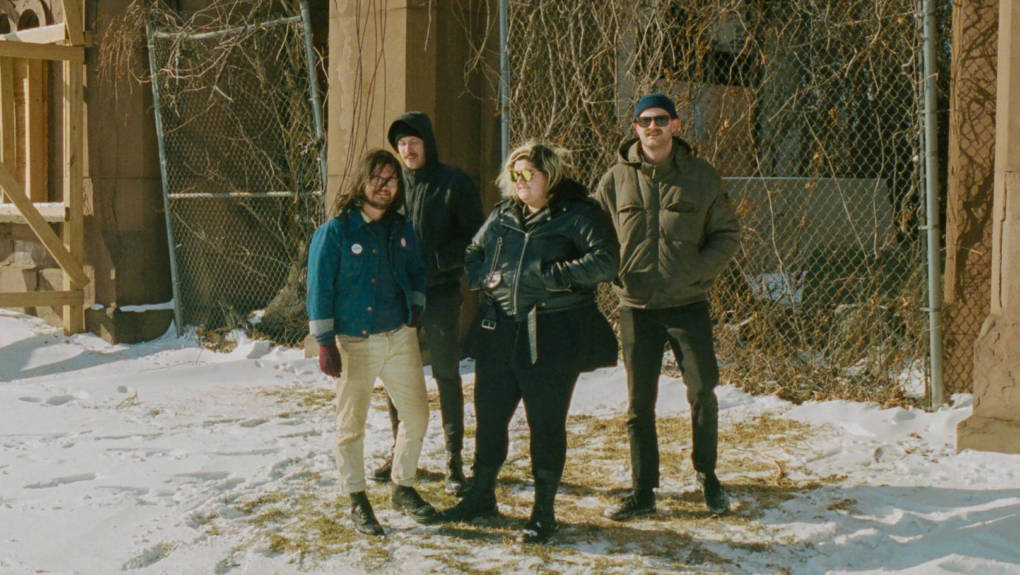
"caption": "Philadelphia's Sheer Mag play in San Jose and San Francisco.",
"description": "Philadelphia's Sheer Mag play in San Jose and San Francisco.",
"title": "Philadelphias Sheer Mag plays in San Jose and San Francisco next week.",
"credit": "Artist Photo",
"status": "inherit",
"isLoading": false,
"fetchFailed": false
},
"arts_13847453": {
"type": "attachments",
"id": "arts_13847453",
"meta": {
"index": "attachments_1716263798",
"site": "arts",
"id": "13847453",
"found": true
},
"parent": 13833179,
"imgSizes": {
"twentyfourteen-full-width": {
"file": "https://ww2.kqed.org/app/uploads/sites/2/2018/05/ICCD_San_Jose-1038x576.jpg",
"width": 1038,
"mimeType": "image/jpeg",
"height": 576
},
"thumbnail": {
"file": "https://ww2.kqed.org/app/uploads/sites/2/2018/05/ICCD_San_Jose-160x90.jpg",
"width": 160,
"mimeType": "image/jpeg",
"height": 90
},
"post-thumbnail": {
"file": "https://ww2.kqed.org/app/uploads/sites/2/2018/05/ICCD_San_Jose-672x372.jpg",
"width": 672,
"mimeType": "image/jpeg",
"height": 372
},
"kqedFullSize": {
"file": "https://ww2.kqed.org/app/uploads/sites/2/2018/05/ICCD_San_Jose.jpg",
"width": 1920,
"height": 1079
},
"large": {
"file": "https://ww2.kqed.org/app/uploads/sites/2/2018/05/ICCD_San_Jose-1020x573.jpg",
"width": 1020,
"mimeType": "image/jpeg",
"height": 573
},
"complete_open_graph": {
"file": "https://ww2.kqed.org/app/uploads/sites/2/2018/05/ICCD_San_Jose-1200x674.jpg",
"width": 1200,
"mimeType": "image/jpeg",
"height": 674
},
"guest-author-50": {
"file": "https://ww2.kqed.org/app/uploads/sites/2/2018/05/ICCD_San_Jose-50x50.jpg",
"width": 50,
"mimeType": "image/jpeg",
"height": 50
},
"guest-author-96": {
"file": "https://ww2.kqed.org/app/uploads/sites/2/2018/05/ICCD_San_Jose-96x96.jpg",
"width": 96,
"mimeType": "image/jpeg",
"height": 96
},
"medium": {
"file": "https://ww2.kqed.org/app/uploads/sites/2/2018/05/ICCD_San_Jose-800x450.jpg",
"width": 800,
"mimeType": "image/jpeg",
"height": 450
},
"guest-author-64": {
"file": "https://ww2.kqed.org/app/uploads/sites/2/2018/05/ICCD_San_Jose-64x64.jpg",
"width": 64,
"mimeType": "image/jpeg",
"height": 64
},
"guest-author-32": {
"file": "https://ww2.kqed.org/app/uploads/sites/2/2018/05/ICCD_San_Jose-32x32.jpg",
"width": 32,
"mimeType": "image/jpeg",
"height": 32
},
"full-width": {
"file": "https://ww2.kqed.org/app/uploads/sites/2/2018/05/ICCD_San_Jose-1920x1079.jpg",
"width": 1920,
"mimeType": "image/jpeg",
"height": 1079
},
"detail": {
"file": "https://ww2.kqed.org/app/uploads/sites/2/2018/05/ICCD_San_Jose-150x150.jpg",
"width": 150,
"mimeType": "image/jpeg",
"height": 150
},
"medium_large": {
"file": "https://ww2.kqed.org/app/uploads/sites/2/2018/05/ICCD_San_Jose-768x432.jpg",
"width": 768,
"mimeType": "image/jpeg",
"height": 432
},
"guest-author-128": {
"file": "https://ww2.kqed.org/app/uploads/sites/2/2018/05/ICCD_San_Jose-128x128.jpg",
"width": 128,
"mimeType": "image/jpeg",
"height": 128
}
},
"publishDate": 1545265335,
"modified": 1558569278,
"caption": "Playboyz Inc. popping and strutting in San Jose, CA",
"description": "Playboyz Inc. popping and strutting in San Jose, CA",
"title": "ICCD_San_Jose",
"credit": null,
"status": "inherit",
"isLoading": false,
"fetchFailed": false
},
"arts_13832003": {
"type": "attachments",
"id": "arts_13832003",
"meta": {
"index": "attachments_1716263798",
"site": "arts",
"id": "13832003",
"found": true
},
"parent": 13832000,
"imgSizes": {
"small": {
"file": "https://ww2.kqed.org/app/uploads/sites/2/2018/05/RS30917_Outdoor-procession-2016-qut-520x347.jpg",
"width": 520,
"mimeType": "image/jpeg",
"height": 347
},
"twentyfourteen-full-width": {
"file": "https://ww2.kqed.org/app/uploads/sites/2/2018/05/RS30917_Outdoor-procession-2016-qut-1038x576.jpg",
"width": 1038,
"mimeType": "image/jpeg",
"height": 576
},
"thumbnail": {
"file": "https://ww2.kqed.org/app/uploads/sites/2/2018/05/RS30917_Outdoor-procession-2016-qut-160x107.jpg",
"width": 160,
"mimeType": "image/jpeg",
"height": 107
},
"fd-sm": {
"file": "https://ww2.kqed.org/app/uploads/sites/2/2018/05/RS30917_Outdoor-procession-2016-qut-960x641.jpg",
"width": 960,
"mimeType": "image/jpeg",
"height": 641
},
"post-thumbnail": {
"file": "https://ww2.kqed.org/app/uploads/sites/2/2018/05/RS30917_Outdoor-procession-2016-qut-672x372.jpg",
"width": 672,
"mimeType": "image/jpeg",
"height": 372
},
"xsmall": {
"file": "https://ww2.kqed.org/app/uploads/sites/2/2018/05/RS30917_Outdoor-procession-2016-qut-375x250.jpg",
"width": 375,
"mimeType": "image/jpeg",
"height": 250
},
"kqedFullSize": {
"file": "https://ww2.kqed.org/app/uploads/sites/2/2018/05/RS30917_Outdoor-procession-2016-qut.jpg",
"width": 1920,
"height": 1281
},
"large": {
"file": "https://ww2.kqed.org/app/uploads/sites/2/2018/05/RS30917_Outdoor-procession-2016-qut-1020x681.jpg",
"width": 1020,
"mimeType": "image/jpeg",
"height": 681
},
"xlarge": {
"file": "https://ww2.kqed.org/app/uploads/sites/2/2018/05/RS30917_Outdoor-procession-2016-qut-1180x787.jpg",
"width": 1180,
"mimeType": "image/jpeg",
"height": 787
},
"complete_open_graph": {
"file": "https://ww2.kqed.org/app/uploads/sites/2/2018/05/RS30917_Outdoor-procession-2016-qut-1200x801.jpg",
"width": 1200,
"mimeType": "image/jpeg",
"height": 801
},
"guest-author-50": {
"file": "https://ww2.kqed.org/app/uploads/sites/2/2018/05/RS30917_Outdoor-procession-2016-qut-50x50.jpg",
"width": 50,
"mimeType": "image/jpeg",
"height": 50
},
"guest-author-96": {
"file": "https://ww2.kqed.org/app/uploads/sites/2/2018/05/RS30917_Outdoor-procession-2016-qut-96x96.jpg",
"width": 96,
"mimeType": "image/jpeg",
"height": 96
},
"medium": {
"file": "https://ww2.kqed.org/app/uploads/sites/2/2018/05/RS30917_Outdoor-procession-2016-qut-800x534.jpg",
"width": 800,
"mimeType": "image/jpeg",
"height": 534
},
"guest-author-64": {
"file": "https://ww2.kqed.org/app/uploads/sites/2/2018/05/RS30917_Outdoor-procession-2016-qut-64x64.jpg",
"width": 64,
"mimeType": "image/jpeg",
"height": 64
},
"guest-author-32": {
"file": "https://ww2.kqed.org/app/uploads/sites/2/2018/05/RS30917_Outdoor-procession-2016-qut-32x32.jpg",
"width": 32,
"mimeType": "image/jpeg",
"height": 32
},
"fd-lrg": {
"file": "https://ww2.kqed.org/app/uploads/sites/2/2018/05/RS30917_Outdoor-procession-2016-qut-1920x1281.jpg",
"width": 1920,
"mimeType": "image/jpeg",
"height": 1281
},
"fd-med": {
"file": "https://ww2.kqed.org/app/uploads/sites/2/2018/05/RS30917_Outdoor-procession-2016-qut-1180x787.jpg",
"width": 1180,
"mimeType": "image/jpeg",
"height": 787
},
"full-width": {
"file": "https://ww2.kqed.org/app/uploads/sites/2/2018/05/RS30917_Outdoor-procession-2016-qut-1920x1281.jpg",
"width": 1920,
"mimeType": "image/jpeg",
"height": 1281
},
"detail": {
"file": "https://ww2.kqed.org/app/uploads/sites/2/2018/05/RS30917_Outdoor-procession-2016-qut-150x150.jpg",
"width": 150,
"mimeType": "image/jpeg",
"height": 150
},
"medium_large": {
"file": "https://ww2.kqed.org/app/uploads/sites/2/2018/05/RS30917_Outdoor-procession-2016-qut-768x512.jpg",
"width": 768,
"mimeType": "image/jpeg",
"height": 512
},
"guest-author-128": {
"file": "https://ww2.kqed.org/app/uploads/sites/2/2018/05/RS30917_Outdoor-procession-2016-qut-128x128.jpg",
"width": 128,
"mimeType": "image/jpeg",
"height": 128
},
"xxsmall": {
"file": "https://ww2.kqed.org/app/uploads/sites/2/2018/05/RS30917_Outdoor-procession-2016-qut-240x160.jpg",
"width": 240,
"mimeType": "image/jpeg",
"height": 160
}
},
"publishDate": 1526081250,
"modified": 1526081298,
"caption": "From the Ao Dai Festival in 2016. The San Jose celebration pays tribute to a bit of Vietnamese Culture everybody can get behind, regardless of generation or politics.",
"description": "From the Ao Dai Festival in 2016. The San Jose celebration pays tribute to a bit of Vietnamese Culture everybody can get behind, regardless of generation or politics.",
"title": "RS30917_Outdoor procession 2016-qut",
"credit": "Photo: Courtesy of Christine Jade",
"status": "inherit",
"isLoading": false,
"fetchFailed": false
},
"arts_13831476": {
"type": "attachments",
"id": "arts_13831476",
"meta": {
"index": "attachments_1716263798",
"site": "arts",
"id": "13831476",
"found": true
},
"parent": 13831431,
"imgSizes": {
"small": {
"file": "https://ww2.kqed.org/app/uploads/sites/2/2018/05/Unlovable-520x293.jpg",
"width": 520,
"mimeType": "image/jpeg",
"height": 293
},
"thumbnail": {
"file": "https://ww2.kqed.org/app/uploads/sites/2/2018/05/Unlovable-160x90.jpg",
"width": 160,
"mimeType": "image/jpeg",
"height": 90
},
"post-thumbnail": {
"file": "https://ww2.kqed.org/app/uploads/sites/2/2018/05/Unlovable-672x372.jpg",
"width": 672,
"mimeType": "image/jpeg",
"height": 372
},
"xsmall": {
"file": "https://ww2.kqed.org/app/uploads/sites/2/2018/05/Unlovable-375x211.jpg",
"width": 375,
"mimeType": "image/jpeg",
"height": 211
},
"kqedFullSize": {
"file": "https://ww2.kqed.org/app/uploads/sites/2/2018/05/Unlovable.jpg",
"width": 800,
"height": 450
},
"guest-author-50": {
"file": "https://ww2.kqed.org/app/uploads/sites/2/2018/05/Unlovable-50x50.jpg",
"width": 50,
"mimeType": "image/jpeg",
"height": 50
},
"guest-author-96": {
"file": "https://ww2.kqed.org/app/uploads/sites/2/2018/05/Unlovable-96x96.jpg",
"width": 96,
"mimeType": "image/jpeg",
"height": 96
},
"medium": {
"file": "https://ww2.kqed.org/app/uploads/sites/2/2018/05/Unlovable-800x450.jpg",
"width": 800,
"mimeType": "image/jpeg",
"height": 450
},
"guest-author-64": {
"file": "https://ww2.kqed.org/app/uploads/sites/2/2018/05/Unlovable-64x64.jpg",
"width": 64,
"mimeType": "image/jpeg",
"height": 64
},
"guest-author-32": {
"file": "https://ww2.kqed.org/app/uploads/sites/2/2018/05/Unlovable-32x32.jpg",
"width": 32,
"mimeType": "image/jpeg",
"height": 32
},
"detail": {
"file": "https://ww2.kqed.org/app/uploads/sites/2/2018/05/Unlovable-150x150.jpg",
"width": 150,
"mimeType": "image/jpeg",
"height": 150
},
"medium_large": {
"file": "https://ww2.kqed.org/app/uploads/sites/2/2018/05/Unlovable-768x432.jpg",
"width": 768,
"mimeType": "image/jpeg",
"height": 432
},
"guest-author-128": {
"file": "https://ww2.kqed.org/app/uploads/sites/2/2018/05/Unlovable-128x128.jpg",
"width": 128,
"mimeType": "image/jpeg",
"height": 128
},
"xxsmall": {
"file": "https://ww2.kqed.org/app/uploads/sites/2/2018/05/Unlovable-240x135.jpg",
"width": 240,
"mimeType": "image/jpeg",
"height": 135
}
},
"publishDate": 1525723091,
"modified": 1525723224,
"caption": "Charlene deGuzman, born and raised in San Jose, stars in Suzi Yoonessi's 'Unlovable.'",
"description": "Charlene deGuzman, born and raised in San Jose, stars in Suzi Yoonessi's 'Unlovable.'",
"title": "Unlovable",
"credit": "Courtesy CAAMFest",
"status": "inherit",
"isLoading": false,
"fetchFailed": false
},
"arts_13830088": {
"type": "attachments",
"id": "arts_13830088",
"meta": {
"index": "attachments_1716263798",
"site": "arts",
"id": "13830088",
"found": true
},
"parent": 13830080,
"imgSizes": {
"small": {
"file": "https://ww2.kqed.org/app/uploads/sites/2/2018/04/RS30547_Ursa-Mater-San-Jose-2-qut-520x347.jpg",
"width": 520,
"mimeType": "image/jpeg",
"height": 347
},
"twentyfourteen-full-width": {
"file": "https://ww2.kqed.org/app/uploads/sites/2/2018/04/RS30547_Ursa-Mater-San-Jose-2-qut-1038x576.jpg",
"width": 1038,
"mimeType": "image/jpeg",
"height": 576
},
"thumbnail": {
"file": "https://ww2.kqed.org/app/uploads/sites/2/2018/04/RS30547_Ursa-Mater-San-Jose-2-qut-160x107.jpg",
"width": 160,
"mimeType": "image/jpeg",
"height": 107
},
"fd-sm": {
"file": "https://ww2.kqed.org/app/uploads/sites/2/2018/04/RS30547_Ursa-Mater-San-Jose-2-qut-960x640.jpg",
"width": 960,
"mimeType": "image/jpeg",
"height": 640
},
"post-thumbnail": {
"file": "https://ww2.kqed.org/app/uploads/sites/2/2018/04/RS30547_Ursa-Mater-San-Jose-2-qut-672x372.jpg",
"width": 672,
"mimeType": "image/jpeg",
"height": 372
},
"xsmall": {
"file": "https://ww2.kqed.org/app/uploads/sites/2/2018/04/RS30547_Ursa-Mater-San-Jose-2-qut-375x250.jpg",
"width": 375,
"mimeType": "image/jpeg",
"height": 250
},
"kqedFullSize": {
"file": "https://ww2.kqed.org/app/uploads/sites/2/2018/04/RS30547_Ursa-Mater-San-Jose-2-qut.jpg",
"width": 1920,
"height": 1280
},
"large": {
"file": "https://ww2.kqed.org/app/uploads/sites/2/2018/04/RS30547_Ursa-Mater-San-Jose-2-qut-1020x680.jpg",
"width": 1020,
"mimeType": "image/jpeg",
"height": 680
},
"xlarge": {
"file": "https://ww2.kqed.org/app/uploads/sites/2/2018/04/RS30547_Ursa-Mater-San-Jose-2-qut-1180x787.jpg",
"width": 1180,
"mimeType": "image/jpeg",
"height": 787
},
"complete_open_graph": {
"file": "https://ww2.kqed.org/app/uploads/sites/2/2018/04/RS30547_Ursa-Mater-San-Jose-2-qut-1200x800.jpg",
"width": 1200,
"mimeType": "image/jpeg",
"height": 800
},
"guest-author-50": {
"file": "https://ww2.kqed.org/app/uploads/sites/2/2018/04/RS30547_Ursa-Mater-San-Jose-2-qut-50x50.jpg",
"width": 50,
"mimeType": "image/jpeg",
"height": 50
},
"guest-author-96": {
"file": "https://ww2.kqed.org/app/uploads/sites/2/2018/04/RS30547_Ursa-Mater-San-Jose-2-qut-96x96.jpg",
"width": 96,
"mimeType": "image/jpeg",
"height": 96
},
"medium": {
"file": "https://ww2.kqed.org/app/uploads/sites/2/2018/04/RS30547_Ursa-Mater-San-Jose-2-qut-800x533.jpg",
"width": 800,
"mimeType": "image/jpeg",
"height": 533
},
"guest-author-64": {
"file": "https://ww2.kqed.org/app/uploads/sites/2/2018/04/RS30547_Ursa-Mater-San-Jose-2-qut-64x64.jpg",
"width": 64,
"mimeType": "image/jpeg",
"height": 64
},
"guest-author-32": {
"file": "https://ww2.kqed.org/app/uploads/sites/2/2018/04/RS30547_Ursa-Mater-San-Jose-2-qut-32x32.jpg",
"width": 32,
"mimeType": "image/jpeg",
"height": 32
},
"fd-lrg": {
"file": "https://ww2.kqed.org/app/uploads/sites/2/2018/04/RS30547_Ursa-Mater-San-Jose-2-qut-1920x1280.jpg",
"width": 1920,
"mimeType": "image/jpeg",
"height": 1280
},
"fd-med": {
"file": "https://ww2.kqed.org/app/uploads/sites/2/2018/04/RS30547_Ursa-Mater-San-Jose-2-qut-1180x787.jpg",
"width": 1180,
"mimeType": "image/jpeg",
"height": 787
},
"full-width": {
"file": "https://ww2.kqed.org/app/uploads/sites/2/2018/04/RS30547_Ursa-Mater-San-Jose-2-qut-1920x1280.jpg",
"width": 1920,
"mimeType": "image/jpeg",
"height": 1280
},
"detail": {
"file": "https://ww2.kqed.org/app/uploads/sites/2/2018/04/RS30547_Ursa-Mater-San-Jose-2-qut-150x150.jpg",
"width": 150,
"mimeType": "image/jpeg",
"height": 150
},
"medium_large": {
"file": "https://ww2.kqed.org/app/uploads/sites/2/2018/04/RS30547_Ursa-Mater-San-Jose-2-qut-768x512.jpg",
"width": 768,
"mimeType": "image/jpeg",
"height": 512
},
"guest-author-128": {
"file": "https://ww2.kqed.org/app/uploads/sites/2/2018/04/RS30547_Ursa-Mater-San-Jose-2-qut-128x128.jpg",
"width": 128,
"mimeType": "image/jpeg",
"height": 128
},
"xxsmall": {
"file": "https://ww2.kqed.org/app/uploads/sites/2/2018/04/RS30547_Ursa-Mater-San-Jose-2-qut-240x160.jpg",
"width": 240,
"mimeType": "image/jpeg",
"height": 160
}
},
"publishDate": 1524274223,
"modified": 1524274260,
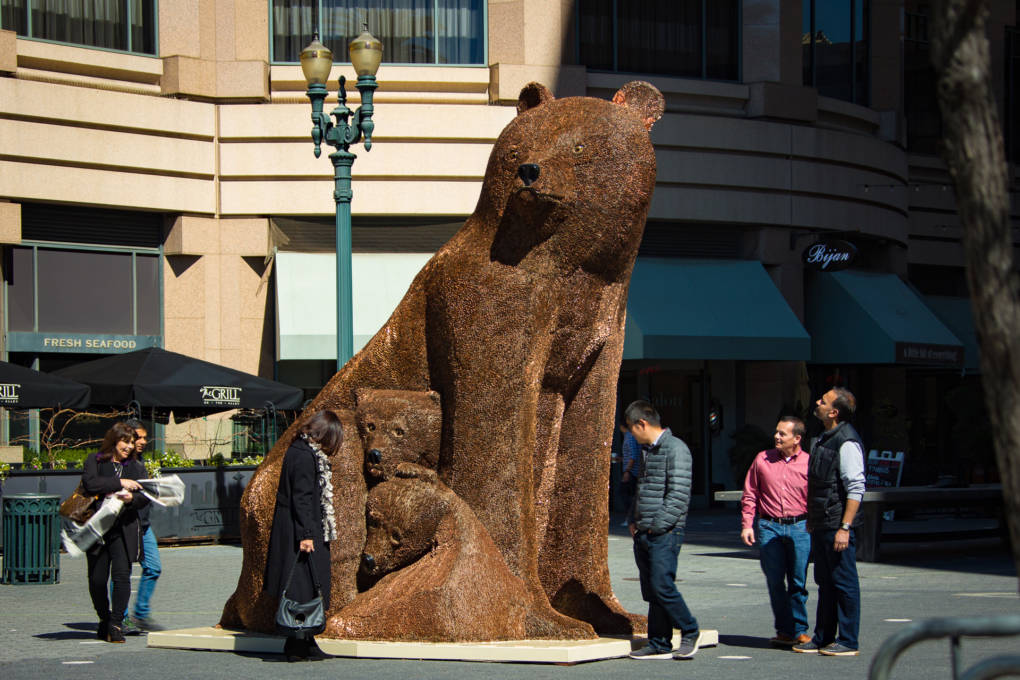
"caption": "\"Ursa Mater\" aka \"Mama Penny Bear\" is obviously, openly appealing to passers by in downtown San Jose. Californians love bears, for one thing, but most people do a second double-take when they realize the sculpture's \"fur\" is made of pennies.",
"description": "\"Ursa Mater\" aka \"Mama Penny Bear\" is obviously, openly appealing to passers by in downtown San Jose. Californians love bears, for one thing, but most people do a second double-take when they realize the sculpture's \"fur\" is made of pennies.",
"title": "RS30547_Ursa Mater San Jose 2-qut",
"credit": "Photo: Courtesy of Lisa Ferguson",
"status": "inherit",
"isLoading": false,
"fetchFailed": false
},
"arts_13827950": {
"type": "attachments",
"id": "arts_13827950",
"meta": {
"index": "attachments_1716263798",
"site": "arts",
"id": "13827950",
"found": true
},
"parent": 13827949,
"imgSizes": {
"small": {
"file": "https://ww2.kqed.org/app/uploads/sites/2/2018/03/RS30031_IMG_3778-2-qut-520x293.jpg",
"width": 520,
"mimeType": "image/jpeg",
"height": 293
},
"twentyfourteen-full-width": {
"file": "https://ww2.kqed.org/app/uploads/sites/2/2018/03/RS30031_IMG_3778-2-qut-1038x576.jpg",
"width": 1038,
"mimeType": "image/jpeg",
"height": 576
},
"thumbnail": {
"file": "https://ww2.kqed.org/app/uploads/sites/2/2018/03/RS30031_IMG_3778-2-qut-160x90.jpg",
"width": 160,
"mimeType": "image/jpeg",
"height": 90
},
"fd-sm": {
"file": "https://ww2.kqed.org/app/uploads/sites/2/2018/03/RS30031_IMG_3778-2-qut-960x540.jpg",
"width": 960,
"mimeType": "image/jpeg",
"height": 540
},
"post-thumbnail": {
"file": "https://ww2.kqed.org/app/uploads/sites/2/2018/03/RS30031_IMG_3778-2-qut-672x372.jpg",
"width": 672,
"mimeType": "image/jpeg",
"height": 372
},
"xsmall": {
"file": "https://ww2.kqed.org/app/uploads/sites/2/2018/03/RS30031_IMG_3778-2-qut-375x211.jpg",
"width": 375,
"mimeType": "image/jpeg",
"height": 211
},
"kqedFullSize": {
"file": "https://ww2.kqed.org/app/uploads/sites/2/2018/03/RS30031_IMG_3778-2-qut.jpg",
"width": 1920,
"height": 1080
},
"large": {
"file": "https://ww2.kqed.org/app/uploads/sites/2/2018/03/RS30031_IMG_3778-2-qut-1020x574.jpg",
"width": 1020,
"mimeType": "image/jpeg",
"height": 574
},
"xlarge": {
"file": "https://ww2.kqed.org/app/uploads/sites/2/2018/03/RS30031_IMG_3778-2-qut-1180x664.jpg",
"width": 1180,
"mimeType": "image/jpeg",
"height": 664
},
"guest-author-50": {
"file": "https://ww2.kqed.org/app/uploads/sites/2/2018/03/RS30031_IMG_3778-2-qut-50x50.jpg",
"width": 50,
"mimeType": "image/jpeg",
"height": 50
},
"guest-author-96": {
"file": "https://ww2.kqed.org/app/uploads/sites/2/2018/03/RS30031_IMG_3778-2-qut-96x96.jpg",
"width": 96,
"mimeType": "image/jpeg",
"height": 96
},
"medium": {
"file": "https://ww2.kqed.org/app/uploads/sites/2/2018/03/RS30031_IMG_3778-2-qut-800x450.jpg",
"width": 800,
"mimeType": "image/jpeg",
"height": 450
},
"guest-author-64": {
"file": "https://ww2.kqed.org/app/uploads/sites/2/2018/03/RS30031_IMG_3778-2-qut-64x64.jpg",
"width": 64,
"mimeType": "image/jpeg",
"height": 64
},
"guest-author-32": {
"file": "https://ww2.kqed.org/app/uploads/sites/2/2018/03/RS30031_IMG_3778-2-qut-32x32.jpg",
"width": 32,
"mimeType": "image/jpeg",
"height": 32
},
"fd-lrg": {
"file": "https://ww2.kqed.org/app/uploads/sites/2/2018/03/RS30031_IMG_3778-2-qut-1920x1080.jpg",
"width": 1920,
"mimeType": "image/jpeg",
"height": 1080
},
"fd-med": {
"file": "https://ww2.kqed.org/app/uploads/sites/2/2018/03/RS30031_IMG_3778-2-qut-1180x664.jpg",
"width": 1180,
"mimeType": "image/jpeg",
"height": 664
},
"full-width": {
"file": "https://ww2.kqed.org/app/uploads/sites/2/2018/03/RS30031_IMG_3778-2-qut-1920x1080.jpg",
"width": 1920,
"mimeType": "image/jpeg",
"height": 1080
},
"detail": {
"file": "https://ww2.kqed.org/app/uploads/sites/2/2018/03/RS30031_IMG_3778-2-qut-150x150.jpg",
"width": 150,
"mimeType": "image/jpeg",
"height": 150
},
"medium_large": {
"file": "https://ww2.kqed.org/app/uploads/sites/2/2018/03/RS30031_IMG_3778-2-qut-768x432.jpg",
"width": 768,
"mimeType": "image/jpeg",
"height": 432
},
"guest-author-128": {
"file": "https://ww2.kqed.org/app/uploads/sites/2/2018/03/RS30031_IMG_3778-2-qut-128x128.jpg",
"width": 128,
"mimeType": "image/jpeg",
"height": 128
},
"xxsmall": {
"file": "https://ww2.kqed.org/app/uploads/sites/2/2018/03/RS30031_IMG_3778-2-qut-240x135.jpg",
"width": 240,
"mimeType": "image/jpeg",
"height": 135
}
},
"publishDate": 1521854350,
"modified": 1529972481,
"caption": "Detail of “Sophie Holding the World Together” by El Mac spans a park-facing wall of the Children’s Discovery Museum in San Jose. The mural was commissioned by the San Jose Museum of Art and The Propeller Group.",
"description": "Detail of “Sophie Holding the World Together” by El Mac spans a park-facing wall of the Children’s Discovery Museum in San Jose. The mural was commissioned by the San Jose Museum of Art and The Propeller Group.",
"title": "RS30031_IMG_3778 2-qut",
"credit": "Rachael Myrow/KQED",
"status": "inherit",
"isLoading": false,
"fetchFailed": false
}
},
"audioPlayerReducer": {
"postId": "stream_live",
"isPaused": true,
"isPlaying": false,
"pfsActive": false,
"pledgeModalIsOpen": true,
"playerDrawerIsOpen": false,
"liveAudioPlayStartedAt": 0,
"liveAudioPlayContext": ""
},
"authorsReducer": {
"byline_arts_13841135": {
"type": "authors",
"id": "byline_arts_13841135",
"meta": {
"override": true
},
"slug": "byline_arts_13841135",
"name": "Creo Noveno",
"isLoading": false
},
"byline_arts_13838466": {
"type": "authors",
"id": "byline_arts_13838466",
"meta": {
"override": true
},
"slug": "byline_arts_13838466",
"name": "Mary Mendoza",
"isLoading": false
},
"mfox": {
"type": "authors",
"id": "22",
"meta": {
"index": "authors_1716337520",
"id": "22",
"found": true
},
"name": "Michael Fox",
"firstName": "Michael",
"lastName": "Fox",
"slug": "mfox",
"email": "foxonfilm@yahoo.com",
"display_author_email": false,
"staff_mastheads": [],
"title": "KQED Contributor",
"bio": "Michael Fox has written about film for dozens of publications since 1987. He is a founding member of the San Francisco Bay Area Film Critics Circle.",
"avatar": "https://secure.gravatar.com/avatar/d9849d6c659c41414795c471d907bb97b396e2a32b88e20e6ff66f65fbdd6dcd?s=600&d=blank&r=g",
"twitter": null,
"bluesky": null,
"facebook": null,
"instagram": null,
"linkedin": null,
"sites": [
{
"site": "arts",
"roles": [
"Contributor",
"contributor"
]
}
],
"headData": {
"title": "Michael Fox | KQED",
"description": "KQED Contributor",
"ogImgSrc": "https://secure.gravatar.com/avatar/d9849d6c659c41414795c471d907bb97b396e2a32b88e20e6ff66f65fbdd6dcd?s=600&d=blank&r=g",
"twImgSrc": "https://secure.gravatar.com/avatar/d9849d6c659c41414795c471d907bb97b396e2a32b88e20e6ff66f65fbdd6dcd?s=600&d=blank&r=g"
},
"isLoading": false,
"link": "/author/mfox"
},
"gmeline": {
"type": "authors",
"id": "185",
"meta": {
"index": "authors_1716337520",
"id": "185",
"found": true
},
"name": "Gabe Meline",
"firstName": "Gabe",
"lastName": "Meline",
"slug": "gmeline",
"email": "gmeline@kqed.org",
"display_author_email": true,
"staff_mastheads": [
"arts"
],
"title": "Senior Editor, KQED Arts & Culture",
"bio": "Gabe Meline entered journalism at age 15 making photocopied zines, and has since earned awards from the Edward R. Murrow Awards, the Society for Professional Journalists, the Online Journalism Awards, the Association of Alternative Newsweeklies and the California Newspaper Publishers Association. Prior to KQED, he was the editor of the \u003cem>North Bay Bohemian\u003c/em> and a touring musician. He lives with his wife and daughter in his hometown of Santa Rosa, CA.",
"avatar": "https://secure.gravatar.com/avatar/5bebe57be0d8bc2dd318934feb47299e2d2d10cba28d09d8d7afb389a2ce2bdd?s=600&d=blank&r=g",
"twitter": null,
"bluesky": null,
"facebook": null,
"instagram": null,
"linkedin": null,
"sites": [
{
"site": "",
"roles": [
"editor"
]
},
{
"site": "arts",
"roles": [
"administrator"
]
},
{
"site": "artschool",
"roles": [
"editor"
]
},
{
"site": "news",
"roles": [
"author"
]
},
{
"site": "pop",
"roles": [
"editor"
]
},
{
"site": "bayareabites",
"roles": [
"editor"
]
},
{
"site": "food",
"roles": [
"editor"
]
},
{
"site": "forum",
"roles": [
"administrator"
]
},
{
"site": "liveblog",
"roles": [
"editor"
]
},
{
"site": "hiphop",
"roles": [
"editor"
]
}
],
"headData": {
"title": "Gabe Meline | KQED",
"description": "Senior Editor, KQED Arts & Culture",
"ogImgSrc": "https://secure.gravatar.com/avatar/5bebe57be0d8bc2dd318934feb47299e2d2d10cba28d09d8d7afb389a2ce2bdd?s=600&d=blank&r=g",
"twImgSrc": "https://secure.gravatar.com/avatar/5bebe57be0d8bc2dd318934feb47299e2d2d10cba28d09d8d7afb389a2ce2bdd?s=600&d=blank&r=g"
},
"isLoading": false,
"link": "/author/gmeline"
},
"rachael-myrow": {
"type": "authors",
"id": "251",
"meta": {
"index": "authors_1716337520",
"id": "251",
"found": true
},
"name": "Rachael Myrow",
"firstName": "Rachael",
"lastName": "Myrow",
"slug": "rachael-myrow",
"email": "rmyrow@kqed.org",
"display_author_email": true,
"staff_mastheads": [
"news"
],
"title": "Senior Editor of KQED's Silicon Valley News Desk",
"bio": "• I write and edit stories about how Silicon Valley power and policies shape everyday life in California. I’m also passionate about making Bay Area history and culture more accessible to a broad public. • I’ve been a journalist for most of my life, starting in high school with The Franklin Press in Los Angeles, where I grew up. While earning my first degree in English at UC Berkeley, I got my start in public radio at KALX-FM. After completing a second degree in journalism at Cal, I landed my first professional job at Marketplace, then moved on to KPCC (now LAist), and then KQED, where I hosted The California Report for more than seven years. • My reporting has appeared on NPR, The World, WBUR’s \u003ci>Here & Now\u003c/i>, and the BBC. I also guest host for KQED’s \u003ci>Forum\u003c/i>, as well as the Commonwealth Club in San Francisco. • I speak periodically on media, democracy and technology issues, and do voiceover work for documentaries and educational video projects. • Outside of the studio, you'll find me hiking Bay Area trails and whipping up Insta-ready meals in my kitchen. • I do not accept gifts, money, or favors from anyone connected to my reporting, I don't pay people for information, and I do not support or donate to political causes. • I strive to treat the people I report on with fairness, honesty, and respect. I also recognize there are often multiple sides to a story and work to verify information through multiple sources and documentation. If I get something wrong, I correct it.",
"avatar": "https://secure.gravatar.com/avatar/3ed8a3c5f26025e4a805ba634cda8cd764906b97438a6d9ce216b044e340da4e?s=600&d=blank&r=g",
"twitter": "rachaelmyrow",
"bluesky": null,
"facebook": null,
"instagram": null,
"linkedin": "https://www.linkedin.com/in/rachaelmyrow/",
"sites": [
{
"site": "arts",
"roles": [
"administrator"
]
},
{
"site": "news",
"roles": [
"edit_others_posts",
"editor"
]
},
{
"site": "futureofyou",
"roles": [
"editor"
]
},
{
"site": "bayareabites",
"roles": [
"editor"
]
},
{
"site": "stateofhealth",
"roles": [
"editor"
]
},
{
"site": "science",
"roles": [
"editor"
]
},
{
"site": "food",
"roles": [
"editor"
]
},
{
"site": "forum",
"roles": [
"editor"
]
},
{
"site": "liveblog",
"roles": [
"author"
]
}
],
"headData": {
"title": "Rachael Myrow | KQED",
"description": "Senior Editor of KQED's Silicon Valley News Desk",
"ogImgSrc": "https://secure.gravatar.com/avatar/3ed8a3c5f26025e4a805ba634cda8cd764906b97438a6d9ce216b044e340da4e?s=600&d=blank&r=g",
"twImgSrc": "https://secure.gravatar.com/avatar/3ed8a3c5f26025e4a805ba634cda8cd764906b97438a6d9ce216b044e340da4e?s=600&d=blank&r=g"
},
"isLoading": false,
"link": "/author/rachael-myrow"
},
"kwhalen": {
"type": "authors",
"id": "3248",
"meta": {
"index": "authors_1716337520",
"id": "3248",
"found": true
},
"name": "Kelly Whalen",
"firstName": "Kelly",
"lastName": "Whalen",
"slug": "kwhalen",
"email": "kwhalen@kqed.org",
"display_author_email": false,
"staff_mastheads": [],
"title": "Senior Video Producer",
"bio": "Kelly Whalen is a filmmaker and educator who directs and produces social justice documentaries and award-winning arts and culture web series. She is the creator of KQED Arts’ three-time Webby Award-winning YouTube series \u003cem>If Cities Could Dance\u003c/em>, featuring dancers across the country representing their cities’ signature moves, and the director of \u003cem>When the Waters Get Deep\u003c/em>, a documentary about Oakland-based artists SOL Development and their work toward healing their communities’ trauma from gun violence.",
"avatar": "https://secure.gravatar.com/avatar/1a2b57e8a13abdcfc3d4966d9c0e1512?s=600&d=blank&r=g",
"twitter": "kellyfilmmaker",
"facebook": null,
"instagram": null,
"linkedin": null,
"sites": [
{
"site": "arts",
"roles": [
"subscriber"
]
}
],
"headData": {
"title": "Kelly Whalen | KQED",
"description": "Senior Video Producer",
"ogImgSrc": "https://secure.gravatar.com/avatar/1a2b57e8a13abdcfc3d4966d9c0e1512?s=600&d=blank&r=g",
"twImgSrc": "https://secure.gravatar.com/avatar/1a2b57e8a13abdcfc3d4966d9c0e1512?s=600&d=blank&r=g"
},
"isLoading": false,
"link": "/author/kwhalen"
}
},
"pagesReducer": {
"arts_tag_san-jose": {
"type": "terms",
"id": "arts_1084",
"meta": {
"index": "terms_1716263798",
"site": "arts",
"id": "1084",
"score": 8.005498
},
"featImg": null,
"name": "San Jose",
"description": null,
"taxonomy": "tag",
"headData": {
"twImgId": null,
"twTitle": null,
"ogTitle": null,
"ogImgId": null,
"twDescription": null,
"description": null,
"title": "San Jose Archives | KQED Arts",
"ogDescription": null
},
"ttid": 1101,
"slug": "san-jose",
"isLoading": false,
"title": "San Jose",
"pageMeta": {
"site": "arts",
"WpPageTemplate": "page-topic-editorial",
"currentPage": 14
},
"blocks": [
{
"blockName": "kqed/post-list",
"attrs": {
"layout": "cardArticle2",
"query": "posts/arts?tag=san-jose",
"seeMore": false,
"paginated": true,
"page": 14
}
},
{
"blockName": "kqed/ad"
}
]
}
},
"pfsSessionReducer": {},
"postsReducer": {
"stream_live": {
"type": "live",
"id": "stream_live",
"audioUrl": "https://streams.kqed.org/kqedradio",
"title": "Live Stream",
"excerpt": "Live Stream information currently unavailable.",
"link": "/radio",
"featImg": "",
"label": {
"name": "KQED Live",
"link": "/"
}
},
"stream_kqedNewscast": {
"type": "posts",
"id": "stream_kqedNewscast",
"audioUrl": "https://www.kqed.org/.stream/anon/radio/RDnews/newscast.mp3?_=1",
"title": "KQED Newscast",
"featImg": "",
"label": {
"name": "88.5 FM",
"link": "/"
}
},
"arts_13845793": {
"type": "posts",
"id": "arts_13845793",
"meta": {
"index": "posts_1716263798",
"site": "arts",
"id": "13845793",
"score": null,
"sort": [
1543504547000
]
},
"guestAuthors": [],
"slug": "walkabout-san-joses-chicano-murals",
"title": "Do You Know the Way to San Jose's Chicano Murals?",
"publishDate": 1543504547,
"format": "audio",
"headTitle": "Do You Know the Way to San Jose’s Chicano Murals? | KQED",
"labelTerm": {
"site": "arts"
},
"content": "\u003cp>A few weeks ago, news broke about Bay Area artist Jose Meza Velasquez \u003ca href=\"https://www.mercurynews.com/2018/11/05/mysterious-removal-of-historic-san-jose-mural-sparks-5-million-lawsuit/\" target=\"_blank\" rel=\"noopener\">filing a $5 million lawsuit\u003c/a> after a real estate developer painted over his historic \u003cem>Mural de la Raza\u003c/em> in San Jose.\u003c/p>\n\u003cp>But by and large, Chicano mural art is still thriving in the South Bay—and worth a sightseeing tour on your preferred set of wheels.\u003c/p>\n\u003cp>\u003cem>Mural de la Raza\u003c/em> was not the only mural to pay homage to Chicano culture, but it was up for more than 30 years; one of a shrinking number of murals to last that long. Murals, and especially Chicano murals, function as a form of visual history for the neighborhoods in which they sit. That helps to explain the outrage when Velasquez’s work disappeared under a coat of gray paint.\u003c/p>\n\u003cp>I asked a few people in the know where to spot some of San Jose’s most impressive older murals. Jose Manuel Valle of \u003ca href=\"https://www.siliconvalleydebug.org\" target=\"_blank\" rel=\"noopener\">Silicon Valley De-Bug\u003c/a> was more than happy to oblige with a list. He’s a key figure behind El Emergency Comité for the Preservation of Chicano Arts, which sponsored an \u003ca href=\"https://www.change.org/p/restore-mural-de-la-raza-in-san-jose\" target=\"_blank\" rel=\"noopener\">online petition in support of Velasquez\u003c/a> that’s garnered more than 2,900 signatures.\u003c/p>\n\u003cp>“Right now, the most important thing is to build public interest,” Valle says.\u003c/p>\n\u003cfigure id=\"attachment_13845893\" class=\"wp-caption aligncenter\" style=\"max-width: 800px\">\u003cimg loading=\"lazy\" decoding=\"async\" class=\"size-medium wp-image-13845893\" src=\"https://ww2.kqed.org/arts/wp-content/uploads/sites/2/2018/11/RS34242_dEBsesIhcbhuqUG-800x450-noPad-qut-800x450.jpg\" alt=\"Detail of "Mural de la Raza' by Jose Meza Velasquez, Frank Torres and a local youth group. At the time, the building was a Payless Shoes store. Ahead of a recent sale of the property, a developer painted the mural over with gray paint. Velasquez is now suing.\" width=\"800\" height=\"450\" srcset=\"https://cdn.kqed.org/wp-content/uploads/sites/2/2018/11/RS34242_dEBsesIhcbhuqUG-800x450-noPad-qut.jpg 800w, https://cdn.kqed.org/wp-content/uploads/sites/2/2018/11/RS34242_dEBsesIhcbhuqUG-800x450-noPad-qut-160x90.jpg 160w, https://cdn.kqed.org/wp-content/uploads/sites/2/2018/11/RS34242_dEBsesIhcbhuqUG-800x450-noPad-qut-768x432.jpg 768w\" sizes=\"(max-width: 800px) 100vw, 800px\">\u003cfigcaption class=\"wp-caption-text\">Detail of “Mural de la Raza’ by Jose Meza Velasquez, Frank Torres and a local youth group. At the time, the building was a Payless Shoes store. Ahead of a recent sale of the property, a developer painted the mural over with gray paint. Velasquez is now suing. \u003ccite>(Photo: Courtesy of Jose Manuel Valle)\u003c/cite>\u003c/figcaption>\u003c/figure>\n\u003cp>Murals are delicate artworks, vulnerable to oblivious landlords, paint-bleaching sunshine and teenage taggers. So grab your camera and start photographing community treasures like \u003ci>La Medicina y La Comunidad\u003c/i>, by Gustavo Bernal, on the front of the \u003ca href=\"https://gardnerfamilyhealth.org\" target=\"_blank\" rel=\"noopener\">Gardner Health Center\u003c/a> on East Virginia Street.\u003c/p>\n\u003cp>[ad fullwidth]\u003c/p>\n\u003cp>Health care providers are depicted alongside Aztec and Roman Catholic icons, making doctors look like the modern-day heroes they are. \u003ci>La Medicina \u003c/i>no doubt benefits from its position above street level. (It was also retouched in 2009 by San Jose artist \u003ca href=\"http://www.pauljgonzalezartstudios.com\" target=\"_blank\" rel=\"noopener\">Paul J. Gonzalez\u003c/a>.) Valle notes that Bernal also painted a mural on the side of Miller Elementary that’s no longer there.\u003c/p>\n\u003cp>Juan Carlos Araujo was a kid growing up in San Jose when he visited this health center with his mother. Back then, he didn’t know much about the artwork he passed by, but something must have stuck.\u003c/p>\n\u003cfigure id=\"attachment_13845896\" class=\"wp-caption aligncenter\" style=\"max-width: 800px\">\u003cimg loading=\"lazy\" decoding=\"async\" class=\"size-medium wp-image-13845896\" src=\"https://ww2.kqed.org/arts/wp-content/uploads/sites/2/2018/11/RS34244_Photo-Nov-26-10-52-23-AM-qut-800x450.jpg\" alt='\"La Medicina y La Comunidad Mural\" (1990) by Gustavo Bernal, on the Gardner Health Center off of 5th and East Virginia in San Jose.' width=\"800\" height=\"450\" srcset=\"https://cdn.kqed.org/wp-content/uploads/sites/2/2018/11/RS34244_Photo-Nov-26-10-52-23-AM-qut-800x450.jpg 800w, https://cdn.kqed.org/wp-content/uploads/sites/2/2018/11/RS34244_Photo-Nov-26-10-52-23-AM-qut-160x90.jpg 160w, https://cdn.kqed.org/wp-content/uploads/sites/2/2018/11/RS34244_Photo-Nov-26-10-52-23-AM-qut-768x432.jpg 768w, https://cdn.kqed.org/wp-content/uploads/sites/2/2018/11/RS34244_Photo-Nov-26-10-52-23-AM-qut-1020x574.jpg 1020w, https://cdn.kqed.org/wp-content/uploads/sites/2/2018/11/RS34244_Photo-Nov-26-10-52-23-AM-qut-1200x675.jpg 1200w, https://cdn.kqed.org/wp-content/uploads/sites/2/2018/11/RS34244_Photo-Nov-26-10-52-23-AM-qut.jpg 1920w, https://cdn.kqed.org/wp-content/uploads/sites/2/2018/11/RS34244_Photo-Nov-26-10-52-23-AM-qut-1180x664.jpg 1180w, https://cdn.kqed.org/wp-content/uploads/sites/2/2018/11/RS34244_Photo-Nov-26-10-52-23-AM-qut-960x540.jpg 960w, https://cdn.kqed.org/wp-content/uploads/sites/2/2018/11/RS34244_Photo-Nov-26-10-52-23-AM-qut-240x135.jpg 240w, https://cdn.kqed.org/wp-content/uploads/sites/2/2018/11/RS34244_Photo-Nov-26-10-52-23-AM-qut-375x211.jpg 375w, https://cdn.kqed.org/wp-content/uploads/sites/2/2018/11/RS34244_Photo-Nov-26-10-52-23-AM-qut-520x293.jpg 520w\" sizes=\"(max-width: 800px) 100vw, 800px\">\u003cfigcaption class=\"wp-caption-text\">‘La Medicina y La Comunidad Mural’ (1990) by Gustavo Bernal, on the Gardner Health Center off of 5th and East Virginia in San Jose. \u003ccite>(Rachael Myrow/KQED)\u003c/cite>\u003c/figcaption>\u003c/figure>\n\u003cp>Today, the 36 year-old runs \u003ca href=\"https://www.empiresevenstudios.com/about-e7s-empiresevenstudios-japantown-sanjose/\" target=\"_blank\" rel=\"noopener\">Empire Seven Studios\u003c/a> along with Jennifer Ahn, helping to put up new murals by modern artists reflecting San Jose’s past, present and future.\u003c/p>\n\u003cp>“Like life itself, [murals don’t] last forever. What is important is to leave some knowledge, some history behind. You know, it’s generational,” Araujo says.\u003c/p>\n\u003cp>Next on the tour is \u003ca href=\"https://www.olgparishsj.org/index.html\" target=\"_blank\" rel=\"noopener\">Our Lady of Guadalupe Church\u003c/a> in East San Jose. Cesar Chavez attended services here, and started organizing farmworkers. McDonnell Hall, in the back of the church, is now a National Historic Landmark.\u003c/p>\n\u003cp>Technically, the church’s art isn’t a mural but a mosaic, a triptych traveling through time from the Aztecs to the 1960s. There are lots of clever touches: a toothy Quetzalcoatl on the bottom left corner, the two contrasting suns in the top corners, the labor union signs on the bottom right.\u003c/p>\n\u003cp>Katherine Oppenheimer of Sunnyvale originally created the mosaic in 1967, along with two fellow artist friends, for a planned Chicano community center that never came to be. Oppenheimer passed on about five years ago, but her son David Oppenheimer says she was “deeply inspired by the civil rights movement,” and meant the mosaic to celebrate how that movement freed so many people from colonial (and also religious) oppression.\u003c/p>\n\u003cfigure id=\"attachment_13845897\" class=\"wp-caption aligncenter\" style=\"max-width: 800px\">\u003cimg loading=\"lazy\" decoding=\"async\" class=\"size-medium wp-image-13845897\" src=\"https://ww2.kqed.org/arts/wp-content/uploads/sites/2/2018/11/RS34246_Photo-Nov-26-11-16-23-AM-qut-800x600.jpg\" alt=\""Nuestra Senora de Guadalupe" by Katherine M. Oppenheimer, Marie G. Hutton, and Lois C. Cronemiller. The mosaic is visible from the street but you'll want to walk on to the campus of Our Lady of Guadalupe Church in San Jose to get a closer look.\" width=\"800\" height=\"600\" srcset=\"https://cdn.kqed.org/wp-content/uploads/sites/2/2018/11/RS34246_Photo-Nov-26-11-16-23-AM-qut-800x600.jpg 800w, https://cdn.kqed.org/wp-content/uploads/sites/2/2018/11/RS34246_Photo-Nov-26-11-16-23-AM-qut-160x120.jpg 160w, https://cdn.kqed.org/wp-content/uploads/sites/2/2018/11/RS34246_Photo-Nov-26-11-16-23-AM-qut-768x576.jpg 768w, https://cdn.kqed.org/wp-content/uploads/sites/2/2018/11/RS34246_Photo-Nov-26-11-16-23-AM-qut-1020x765.jpg 1020w, https://cdn.kqed.org/wp-content/uploads/sites/2/2018/11/RS34246_Photo-Nov-26-11-16-23-AM-qut-1200x900.jpg 1200w, https://cdn.kqed.org/wp-content/uploads/sites/2/2018/11/RS34246_Photo-Nov-26-11-16-23-AM-qut.jpg 1920w\" sizes=\"(max-width: 800px) 100vw, 800px\">\u003cfigcaption class=\"wp-caption-text\">‘Nuestra Senora de Guadalupe’ by Katherine Oppenheimer, Marie Hutton, and Lois Cronemiller. The mosaic is visible from the street, but you’ll want to walk on to the campus of Our Lady of Guadalupe Church in San Jose to get a closer look. \u003ccite>(Photo: Rachael Myrow/KQED)\u003c/cite>\u003c/figcaption>\u003c/figure>\n\u003cp>He points out that we see a man bowing down in the left, a couple on their knees in the middle, and marchers “for the first time, standing on their feet” on the right. Ironically, a church became the caretaker for the piece after the community center fell through.\u003c/p>\n\u003cp>“It’s tradition. It’s heritage. It’s really our teachings, outside of English textbooks,” Araujo says, adding this mosaic is blessed to be on this church campus, because that means it’s not under the kind of threat those on commercial properties face. Take the mural that used to grace the Cal Foods store in the Five Wounds neighborhood: after gang members defaced large parts of it with graffiti, the property owner painted over those sections.\u003c/p>\n\u003cp>Araujo used to come to Cal Foods for the cheese burritos. “I’ve known the property owner for some time. She’s been here for over 25 years. At some point, she’s going to retire. Who am I to tell her ‘no’? So this will be another mural that will be gone.”\u003c/p>\n\u003cp>Murals are often intended to beautify the streets and alleys they’re chosen for. They may not erase the sight of homeless encampments, or empty parking lots, or other signs of urban decay. But their splashes of color and intricate storytelling brightens the neighborhood, shouting out to pedestrians passing by to stop, look and learn.\u003c/p>\n\u003cfigure id=\"attachment_13845898\" class=\"wp-caption aligncenter\" style=\"max-width: 800px\">\u003cimg loading=\"lazy\" decoding=\"async\" class=\"size-medium wp-image-13845898\" src=\"https://ww2.kqed.org/arts/wp-content/uploads/sites/2/2018/11/RS34247_Photo-Nov-26-11-39-35-AM-qut-800x1068.jpg\" alt=\"What's left of a larger mural that included the Virgen de Guadalupe by an unknown artist on the wall of Cal Foods Tienda y Carniceria in the Five Wounds neighborhood of San Jose.\" width=\"800\" height=\"1068\" srcset=\"https://cdn.kqed.org/wp-content/uploads/sites/2/2018/11/RS34247_Photo-Nov-26-11-39-35-AM-qut-800x1068.jpg 800w, https://cdn.kqed.org/wp-content/uploads/sites/2/2018/11/RS34247_Photo-Nov-26-11-39-35-AM-qut-160x214.jpg 160w, https://cdn.kqed.org/wp-content/uploads/sites/2/2018/11/RS34247_Photo-Nov-26-11-39-35-AM-qut-768x1025.jpg 768w, https://cdn.kqed.org/wp-content/uploads/sites/2/2018/11/RS34247_Photo-Nov-26-11-39-35-AM-qut-1020x1362.jpg 1020w, https://cdn.kqed.org/wp-content/uploads/sites/2/2018/11/RS34247_Photo-Nov-26-11-39-35-AM-qut-899x1200.jpg 899w, https://cdn.kqed.org/wp-content/uploads/sites/2/2018/11/RS34247_Photo-Nov-26-11-39-35-AM-qut.jpg 1534w\" sizes=\"(max-width: 800px) 100vw, 800px\">\u003cfigcaption class=\"wp-caption-text\">Part of what’s left of a larger mural that included the Virgen de Guadalupe, by an unknown artist on the wall of Cal Foods Tienda y Carniceria in the Five Wounds neighborhood of San Jose. \u003ccite>(Photo: Rachael Myrow/KQED)\u003c/cite>\u003c/figcaption>\u003c/figure>\n\u003cp>While much of the iconography in Chicano murals is familiar to anyone who grew up in California, there are personal touches from the artists, who often work as a team, sometimes including young people on court order to do community service.\u003c/p>\n\u003cp>Those kids might not be up on Spanish colonialism, or the Valley of Heart’s Delight, or the early days of Silicon Valley, but murals like the one Opski Chan painted on an old IBM building near Roosevelt Park in San Jose give a nod to all of that history.\u003c/p>\n\u003cp>Chan pulled some of his imagery and fonts from the packing boxes of the fruit orchards that once filled the Santa Clara Valley. “It’s a lot like graffiti, but used in a different way,” says Araujo, who grew up doing graffiti himself before he turned to art.\u003c/p>\n\u003cfigure id=\"attachment_13845901\" class=\"wp-caption aligncenter\" style=\"max-width: 800px\">\u003cimg loading=\"lazy\" decoding=\"async\" class=\"size-medium wp-image-13845901\" src=\"https://ww2.kqed.org/arts/wp-content/uploads/sites/2/2018/11/RS34243_IMG_9003-800x379.jpg\" alt=\"Mural by Opski Chan on the wall of what used to be an IBM building near the corner of St. John and 16th in San Jose.\" width=\"800\" height=\"379\" srcset=\"https://cdn.kqed.org/wp-content/uploads/sites/2/2018/11/RS34243_IMG_9003-800x379.jpg 800w, https://cdn.kqed.org/wp-content/uploads/sites/2/2018/11/RS34243_IMG_9003-160x76.jpg 160w, https://cdn.kqed.org/wp-content/uploads/sites/2/2018/11/RS34243_IMG_9003-768x363.jpg 768w, https://cdn.kqed.org/wp-content/uploads/sites/2/2018/11/RS34243_IMG_9003-1020x483.jpg 1020w, https://cdn.kqed.org/wp-content/uploads/sites/2/2018/11/RS34243_IMG_9003-960x454.jpg 960w, https://cdn.kqed.org/wp-content/uploads/sites/2/2018/11/RS34243_IMG_9003-240x114.jpg 240w, https://cdn.kqed.org/wp-content/uploads/sites/2/2018/11/RS34243_IMG_9003-375x177.jpg 375w, https://cdn.kqed.org/wp-content/uploads/sites/2/2018/11/RS34243_IMG_9003-520x246.jpg 520w, https://cdn.kqed.org/wp-content/uploads/sites/2/2018/11/RS34243_IMG_9003.jpg 1080w\" sizes=\"(max-width: 800px) 100vw, 800px\">\u003cfigcaption class=\"wp-caption-text\">Mural by Opski Chan on the wall of what used to be an IBM building near the corner of St. John and 16th in San Jose. \u003ccite>(Photo: Courtesy of Empire Seven Studios)\u003c/cite>\u003c/figcaption>\u003c/figure>\n\u003cp>That sensibility is evident in many of the murals Empire Seven collaborates on.\u003c/p>\n\u003cp>\u003cem>Here & There\u003c/em> by Sam Rodriguez, in San Jose’s Japantown, mashes together bits from multiple visual languages. A lotus flower floats in the same scene with Mexican bread and images from the video game Pac-Man.\u003c/p>\n\u003cp>This is San Jose’s culture, Araujo says. It’s where Rodriguez comes from. It’s where we come from.\u003c/p>\n\u003cp>“We’ve lost a lot of murals,” Araujo says, but new murals are going up, too. “It’s hard to erase people’s culture. Our culture is rooted deep here.”\u003c/p>\n\u003cfigure id=\"attachment_13845942\" class=\"wp-caption aligncenter\" style=\"max-width: 800px\">\u003cimg loading=\"lazy\" decoding=\"async\" class=\"size-medium wp-image-13845942\" src=\"https://ww2.kqed.org/arts/wp-content/uploads/sites/2/2018/11/RS34249_Photo-Nov-26-12-35-21-PM-qut-800x450.jpg\" alt=\"Detail of "Here & There" by Sam Rodriguez in San Jose's Japantown. The more you look, the more you see, like the letters "S" and "J" in Olde English font on either side of his daughter's face. You know: SJ, for San Jose.\" width=\"800\" height=\"450\" srcset=\"https://cdn.kqed.org/wp-content/uploads/sites/2/2018/11/RS34249_Photo-Nov-26-12-35-21-PM-qut-800x450.jpg 800w, https://cdn.kqed.org/wp-content/uploads/sites/2/2018/11/RS34249_Photo-Nov-26-12-35-21-PM-qut-160x90.jpg 160w, https://cdn.kqed.org/wp-content/uploads/sites/2/2018/11/RS34249_Photo-Nov-26-12-35-21-PM-qut-768x432.jpg 768w, https://cdn.kqed.org/wp-content/uploads/sites/2/2018/11/RS34249_Photo-Nov-26-12-35-21-PM-qut-1020x574.jpg 1020w, https://cdn.kqed.org/wp-content/uploads/sites/2/2018/11/RS34249_Photo-Nov-26-12-35-21-PM-qut-1200x675.jpg 1200w, https://cdn.kqed.org/wp-content/uploads/sites/2/2018/11/RS34249_Photo-Nov-26-12-35-21-PM-qut.jpg 1920w\" sizes=\"(max-width: 800px) 100vw, 800px\">\u003cfigcaption class=\"wp-caption-text\">Detail of ‘Here & There’ by Sam Rodriguez in San Jose’s Japantown. Note the letters “S” and “J” in Olde English font on either side of his daughter’s face, for San Jose. \u003ccite>(Photo: Rachael Myrow/KQED)\u003c/cite>\u003c/figcaption>\u003c/figure>\n\u003cp>\u003cimg loading=\"lazy\" decoding=\"async\" class=\"aligncenter size-medium wp-image-12127869\" src=\"https://ww2.kqed.org/arts/wp-content/uploads/sites/2/2016/09/Q.Logo_.Break_-800x78.jpg\" alt=\"\" width=\"800\" height=\"78\" srcset=\"https://cdn.kqed.org/wp-content/uploads/sites/2/2016/09/Q.Logo_.Break_.jpg 800w, https://cdn.kqed.org/wp-content/uploads/sites/2/2016/09/Q.Logo_.Break_-400x39.jpg 400w, https://cdn.kqed.org/wp-content/uploads/sites/2/2016/09/Q.Logo_.Break_-768x75.jpg 768w\" sizes=\"(max-width: 800px) 100vw, 800px\">\u003c/p>\n\u003cp>[ad floatright]\u003c/p>\n\u003cp>\u003cem>Want to go on your own Chicano mural walking tour in San Jose? In collaboration with Empire Seven, software engineer \u003ca href=\"https://www.yanyinchoy.com\" target=\"_blank\" rel=\"noopener\">Yan-Yin Choy\u003c/a> of \u003ca href=\"https://www.codeforsanjose.com\" target=\"_blank\" rel=\"noopener\">Code for San Jose\u003c/a> developed \u003ca href=\"http://www.codeforsanjose.com/heartofthevalley\" target=\"_blank\" rel=\"noopener\">\u003cem>Heart of the Valley\u003c/em>\u003c/a>, an open-source map of murals and other public art in the South Bay. \u003ca href=\"http://www.codeforsanjose.com/heartofthevalley\" target=\"_blank\" rel=\"noopener\">Check it out here\u003c/a>.\u003c/em>\u003c/p>\n\n",
"blocks": [],
"excerpt": "San Jose's Chicano murals date back to the 1970s—here's where you can find them.",
"status": "publish",
"parent": 0,
"modified": 1726770894,
"stats": {
"hasAudio": false,
"hasVideo": false,
"hasChartOrMap": false,
"iframeSrcs": [],
"hasGoogleForm": false,
"hasGallery": false,
"hasHearkenModule": false,
"hasPolis": false,
"paragraphCount": 28,
"wordCount": 1417
},
"headData": {
"title": "Do You Know the Way to San Jose's Chicano Murals? | KQED",
"description": "San Jose's Chicano murals date back to the 1970s—here's where you can find them.",
"ogTitle": "",
"ogDescription": "",
"ogImgId": "",
"twTitle": "",
"twDescription": "",
"twImgId": "",
"schema": {
"@context": "https://schema.org",
"@type": "Article",
"headline": "Do You Know the Way to San Jose's Chicano Murals?",
"datePublished": "2018-11-29T07:15:47-08:00",
"dateModified": "2024-09-19T11:34:54-07:00",
"image": "https://cdn.kqed.org/wp-content/uploads/2020/02/KQED-OG-Image@1x.png"
}
},
"audioUrl": "https://www.kqed.org/.stream/anon/radio/RDnews/2018/11/MyrowSanJoseMurals.mp3",
"sticky": false,
"audioTrackLength": 153,
"path": "/arts/13845793/walkabout-san-joses-chicano-murals",
"parsedContent": [
{
"type": "contentString",
"content": "\u003cdiv class=\"post-body\">\u003cp>\u003cp>A few weeks ago, news broke about Bay Area artist Jose Meza Velasquez \u003ca href=\"https://www.mercurynews.com/2018/11/05/mysterious-removal-of-historic-san-jose-mural-sparks-5-million-lawsuit/\" target=\"_blank\" rel=\"noopener\">filing a $5 million lawsuit\u003c/a> after a real estate developer painted over his historic \u003cem>Mural de la Raza\u003c/em> in San Jose.\u003c/p>\n\u003cp>But by and large, Chicano mural art is still thriving in the South Bay—and worth a sightseeing tour on your preferred set of wheels.\u003c/p>\n\u003cp>\u003cem>Mural de la Raza\u003c/em> was not the only mural to pay homage to Chicano culture, but it was up for more than 30 years; one of a shrinking number of murals to last that long. Murals, and especially Chicano murals, function as a form of visual history for the neighborhoods in which they sit. That helps to explain the outrage when Velasquez’s work disappeared under a coat of gray paint.\u003c/p>\n\u003cp>I asked a few people in the know where to spot some of San Jose’s most impressive older murals. Jose Manuel Valle of \u003ca href=\"https://www.siliconvalleydebug.org\" target=\"_blank\" rel=\"noopener\">Silicon Valley De-Bug\u003c/a> was more than happy to oblige with a list. He’s a key figure behind El Emergency Comité for the Preservation of Chicano Arts, which sponsored an \u003ca href=\"https://www.change.org/p/restore-mural-de-la-raza-in-san-jose\" target=\"_blank\" rel=\"noopener\">online petition in support of Velasquez\u003c/a> that’s garnered more than 2,900 signatures.\u003c/p>\n\u003cp>“Right now, the most important thing is to build public interest,” Valle says.\u003c/p>\n\u003cfigure id=\"attachment_13845893\" class=\"wp-caption aligncenter\" style=\"max-width: 800px\">\u003cimg loading=\"lazy\" decoding=\"async\" class=\"size-medium wp-image-13845893\" src=\"https://ww2.kqed.org/arts/wp-content/uploads/sites/2/2018/11/RS34242_dEBsesIhcbhuqUG-800x450-noPad-qut-800x450.jpg\" alt=\"Detail of "Mural de la Raza' by Jose Meza Velasquez, Frank Torres and a local youth group. At the time, the building was a Payless Shoes store. Ahead of a recent sale of the property, a developer painted the mural over with gray paint. Velasquez is now suing.\" width=\"800\" height=\"450\" srcset=\"https://cdn.kqed.org/wp-content/uploads/sites/2/2018/11/RS34242_dEBsesIhcbhuqUG-800x450-noPad-qut.jpg 800w, https://cdn.kqed.org/wp-content/uploads/sites/2/2018/11/RS34242_dEBsesIhcbhuqUG-800x450-noPad-qut-160x90.jpg 160w, https://cdn.kqed.org/wp-content/uploads/sites/2/2018/11/RS34242_dEBsesIhcbhuqUG-800x450-noPad-qut-768x432.jpg 768w\" sizes=\"(max-width: 800px) 100vw, 800px\">\u003cfigcaption class=\"wp-caption-text\">Detail of “Mural de la Raza’ by Jose Meza Velasquez, Frank Torres and a local youth group. At the time, the building was a Payless Shoes store. Ahead of a recent sale of the property, a developer painted the mural over with gray paint. Velasquez is now suing. \u003ccite>(Photo: Courtesy of Jose Manuel Valle)\u003c/cite>\u003c/figcaption>\u003c/figure>\n\u003cp>Murals are delicate artworks, vulnerable to oblivious landlords, paint-bleaching sunshine and teenage taggers. So grab your camera and start photographing community treasures like \u003ci>La Medicina y La Comunidad\u003c/i>, by Gustavo Bernal, on the front of the \u003ca href=\"https://gardnerfamilyhealth.org\" target=\"_blank\" rel=\"noopener\">Gardner Health Center\u003c/a> on East Virginia Street.\u003c/p>\n\u003cp>\u003c/p>\u003c/div>",
"attributes": {
"named": {},
"numeric": []
}
},
{
"type": "component",
"content": "",
"name": "ad",
"attributes": {
"named": {
"label": "fullwidth"
},
"numeric": [
"fullwidth"
]
}
},
{
"type": "contentString",
"content": "\u003cdiv class=\"post-body\">\u003cp>\u003c/p>\n\u003cp>Health care providers are depicted alongside Aztec and Roman Catholic icons, making doctors look like the modern-day heroes they are. \u003ci>La Medicina \u003c/i>no doubt benefits from its position above street level. (It was also retouched in 2009 by San Jose artist \u003ca href=\"http://www.pauljgonzalezartstudios.com\" target=\"_blank\" rel=\"noopener\">Paul J. Gonzalez\u003c/a>.) Valle notes that Bernal also painted a mural on the side of Miller Elementary that’s no longer there.\u003c/p>\n\u003cp>Juan Carlos Araujo was a kid growing up in San Jose when he visited this health center with his mother. Back then, he didn’t know much about the artwork he passed by, but something must have stuck.\u003c/p>\n\u003cfigure id=\"attachment_13845896\" class=\"wp-caption aligncenter\" style=\"max-width: 800px\">\u003cimg loading=\"lazy\" decoding=\"async\" class=\"size-medium wp-image-13845896\" src=\"https://ww2.kqed.org/arts/wp-content/uploads/sites/2/2018/11/RS34244_Photo-Nov-26-10-52-23-AM-qut-800x450.jpg\" alt='\"La Medicina y La Comunidad Mural\" (1990) by Gustavo Bernal, on the Gardner Health Center off of 5th and East Virginia in San Jose.' width=\"800\" height=\"450\" srcset=\"https://cdn.kqed.org/wp-content/uploads/sites/2/2018/11/RS34244_Photo-Nov-26-10-52-23-AM-qut-800x450.jpg 800w, https://cdn.kqed.org/wp-content/uploads/sites/2/2018/11/RS34244_Photo-Nov-26-10-52-23-AM-qut-160x90.jpg 160w, https://cdn.kqed.org/wp-content/uploads/sites/2/2018/11/RS34244_Photo-Nov-26-10-52-23-AM-qut-768x432.jpg 768w, https://cdn.kqed.org/wp-content/uploads/sites/2/2018/11/RS34244_Photo-Nov-26-10-52-23-AM-qut-1020x574.jpg 1020w, https://cdn.kqed.org/wp-content/uploads/sites/2/2018/11/RS34244_Photo-Nov-26-10-52-23-AM-qut-1200x675.jpg 1200w, https://cdn.kqed.org/wp-content/uploads/sites/2/2018/11/RS34244_Photo-Nov-26-10-52-23-AM-qut.jpg 1920w, https://cdn.kqed.org/wp-content/uploads/sites/2/2018/11/RS34244_Photo-Nov-26-10-52-23-AM-qut-1180x664.jpg 1180w, https://cdn.kqed.org/wp-content/uploads/sites/2/2018/11/RS34244_Photo-Nov-26-10-52-23-AM-qut-960x540.jpg 960w, https://cdn.kqed.org/wp-content/uploads/sites/2/2018/11/RS34244_Photo-Nov-26-10-52-23-AM-qut-240x135.jpg 240w, https://cdn.kqed.org/wp-content/uploads/sites/2/2018/11/RS34244_Photo-Nov-26-10-52-23-AM-qut-375x211.jpg 375w, https://cdn.kqed.org/wp-content/uploads/sites/2/2018/11/RS34244_Photo-Nov-26-10-52-23-AM-qut-520x293.jpg 520w\" sizes=\"(max-width: 800px) 100vw, 800px\">\u003cfigcaption class=\"wp-caption-text\">‘La Medicina y La Comunidad Mural’ (1990) by Gustavo Bernal, on the Gardner Health Center off of 5th and East Virginia in San Jose. \u003ccite>(Rachael Myrow/KQED)\u003c/cite>\u003c/figcaption>\u003c/figure>\n\u003cp>Today, the 36 year-old runs \u003ca href=\"https://www.empiresevenstudios.com/about-e7s-empiresevenstudios-japantown-sanjose/\" target=\"_blank\" rel=\"noopener\">Empire Seven Studios\u003c/a> along with Jennifer Ahn, helping to put up new murals by modern artists reflecting San Jose’s past, present and future.\u003c/p>\n\u003cp>“Like life itself, [murals don’t] last forever. What is important is to leave some knowledge, some history behind. You know, it’s generational,” Araujo says.\u003c/p>\n\u003cp>Next on the tour is \u003ca href=\"https://www.olgparishsj.org/index.html\" target=\"_blank\" rel=\"noopener\">Our Lady of Guadalupe Church\u003c/a> in East San Jose. Cesar Chavez attended services here, and started organizing farmworkers. McDonnell Hall, in the back of the church, is now a National Historic Landmark.\u003c/p>\n\u003cp>Technically, the church’s art isn’t a mural but a mosaic, a triptych traveling through time from the Aztecs to the 1960s. There are lots of clever touches: a toothy Quetzalcoatl on the bottom left corner, the two contrasting suns in the top corners, the labor union signs on the bottom right.\u003c/p>\n\u003cp>Katherine Oppenheimer of Sunnyvale originally created the mosaic in 1967, along with two fellow artist friends, for a planned Chicano community center that never came to be. Oppenheimer passed on about five years ago, but her son David Oppenheimer says she was “deeply inspired by the civil rights movement,” and meant the mosaic to celebrate how that movement freed so many people from colonial (and also religious) oppression.\u003c/p>\n\u003cfigure id=\"attachment_13845897\" class=\"wp-caption aligncenter\" style=\"max-width: 800px\">\u003cimg loading=\"lazy\" decoding=\"async\" class=\"size-medium wp-image-13845897\" src=\"https://ww2.kqed.org/arts/wp-content/uploads/sites/2/2018/11/RS34246_Photo-Nov-26-11-16-23-AM-qut-800x600.jpg\" alt=\""Nuestra Senora de Guadalupe" by Katherine M. Oppenheimer, Marie G. Hutton, and Lois C. Cronemiller. The mosaic is visible from the street but you'll want to walk on to the campus of Our Lady of Guadalupe Church in San Jose to get a closer look.\" width=\"800\" height=\"600\" srcset=\"https://cdn.kqed.org/wp-content/uploads/sites/2/2018/11/RS34246_Photo-Nov-26-11-16-23-AM-qut-800x600.jpg 800w, https://cdn.kqed.org/wp-content/uploads/sites/2/2018/11/RS34246_Photo-Nov-26-11-16-23-AM-qut-160x120.jpg 160w, https://cdn.kqed.org/wp-content/uploads/sites/2/2018/11/RS34246_Photo-Nov-26-11-16-23-AM-qut-768x576.jpg 768w, https://cdn.kqed.org/wp-content/uploads/sites/2/2018/11/RS34246_Photo-Nov-26-11-16-23-AM-qut-1020x765.jpg 1020w, https://cdn.kqed.org/wp-content/uploads/sites/2/2018/11/RS34246_Photo-Nov-26-11-16-23-AM-qut-1200x900.jpg 1200w, https://cdn.kqed.org/wp-content/uploads/sites/2/2018/11/RS34246_Photo-Nov-26-11-16-23-AM-qut.jpg 1920w\" sizes=\"(max-width: 800px) 100vw, 800px\">\u003cfigcaption class=\"wp-caption-text\">‘Nuestra Senora de Guadalupe’ by Katherine Oppenheimer, Marie Hutton, and Lois Cronemiller. The mosaic is visible from the street, but you’ll want to walk on to the campus of Our Lady of Guadalupe Church in San Jose to get a closer look. \u003ccite>(Photo: Rachael Myrow/KQED)\u003c/cite>\u003c/figcaption>\u003c/figure>\n\u003cp>He points out that we see a man bowing down in the left, a couple on their knees in the middle, and marchers “for the first time, standing on their feet” on the right. Ironically, a church became the caretaker for the piece after the community center fell through.\u003c/p>\n\u003cp>“It’s tradition. It’s heritage. It’s really our teachings, outside of English textbooks,” Araujo says, adding this mosaic is blessed to be on this church campus, because that means it’s not under the kind of threat those on commercial properties face. Take the mural that used to grace the Cal Foods store in the Five Wounds neighborhood: after gang members defaced large parts of it with graffiti, the property owner painted over those sections.\u003c/p>\n\u003cp>Araujo used to come to Cal Foods for the cheese burritos. “I’ve known the property owner for some time. She’s been here for over 25 years. At some point, she’s going to retire. Who am I to tell her ‘no’? So this will be another mural that will be gone.”\u003c/p>\n\u003cp>Murals are often intended to beautify the streets and alleys they’re chosen for. They may not erase the sight of homeless encampments, or empty parking lots, or other signs of urban decay. But their splashes of color and intricate storytelling brightens the neighborhood, shouting out to pedestrians passing by to stop, look and learn.\u003c/p>\n\u003cfigure id=\"attachment_13845898\" class=\"wp-caption aligncenter\" style=\"max-width: 800px\">\u003cimg loading=\"lazy\" decoding=\"async\" class=\"size-medium wp-image-13845898\" src=\"https://ww2.kqed.org/arts/wp-content/uploads/sites/2/2018/11/RS34247_Photo-Nov-26-11-39-35-AM-qut-800x1068.jpg\" alt=\"What's left of a larger mural that included the Virgen de Guadalupe by an unknown artist on the wall of Cal Foods Tienda y Carniceria in the Five Wounds neighborhood of San Jose.\" width=\"800\" height=\"1068\" srcset=\"https://cdn.kqed.org/wp-content/uploads/sites/2/2018/11/RS34247_Photo-Nov-26-11-39-35-AM-qut-800x1068.jpg 800w, https://cdn.kqed.org/wp-content/uploads/sites/2/2018/11/RS34247_Photo-Nov-26-11-39-35-AM-qut-160x214.jpg 160w, https://cdn.kqed.org/wp-content/uploads/sites/2/2018/11/RS34247_Photo-Nov-26-11-39-35-AM-qut-768x1025.jpg 768w, https://cdn.kqed.org/wp-content/uploads/sites/2/2018/11/RS34247_Photo-Nov-26-11-39-35-AM-qut-1020x1362.jpg 1020w, https://cdn.kqed.org/wp-content/uploads/sites/2/2018/11/RS34247_Photo-Nov-26-11-39-35-AM-qut-899x1200.jpg 899w, https://cdn.kqed.org/wp-content/uploads/sites/2/2018/11/RS34247_Photo-Nov-26-11-39-35-AM-qut.jpg 1534w\" sizes=\"(max-width: 800px) 100vw, 800px\">\u003cfigcaption class=\"wp-caption-text\">Part of what’s left of a larger mural that included the Virgen de Guadalupe, by an unknown artist on the wall of Cal Foods Tienda y Carniceria in the Five Wounds neighborhood of San Jose. \u003ccite>(Photo: Rachael Myrow/KQED)\u003c/cite>\u003c/figcaption>\u003c/figure>\n\u003cp>While much of the iconography in Chicano murals is familiar to anyone who grew up in California, there are personal touches from the artists, who often work as a team, sometimes including young people on court order to do community service.\u003c/p>\n\u003cp>Those kids might not be up on Spanish colonialism, or the Valley of Heart’s Delight, or the early days of Silicon Valley, but murals like the one Opski Chan painted on an old IBM building near Roosevelt Park in San Jose give a nod to all of that history.\u003c/p>\n\u003cp>Chan pulled some of his imagery and fonts from the packing boxes of the fruit orchards that once filled the Santa Clara Valley. “It’s a lot like graffiti, but used in a different way,” says Araujo, who grew up doing graffiti himself before he turned to art.\u003c/p>\n\u003cfigure id=\"attachment_13845901\" class=\"wp-caption aligncenter\" style=\"max-width: 800px\">\u003cimg loading=\"lazy\" decoding=\"async\" class=\"size-medium wp-image-13845901\" src=\"https://ww2.kqed.org/arts/wp-content/uploads/sites/2/2018/11/RS34243_IMG_9003-800x379.jpg\" alt=\"Mural by Opski Chan on the wall of what used to be an IBM building near the corner of St. John and 16th in San Jose.\" width=\"800\" height=\"379\" srcset=\"https://cdn.kqed.org/wp-content/uploads/sites/2/2018/11/RS34243_IMG_9003-800x379.jpg 800w, https://cdn.kqed.org/wp-content/uploads/sites/2/2018/11/RS34243_IMG_9003-160x76.jpg 160w, https://cdn.kqed.org/wp-content/uploads/sites/2/2018/11/RS34243_IMG_9003-768x363.jpg 768w, https://cdn.kqed.org/wp-content/uploads/sites/2/2018/11/RS34243_IMG_9003-1020x483.jpg 1020w, https://cdn.kqed.org/wp-content/uploads/sites/2/2018/11/RS34243_IMG_9003-960x454.jpg 960w, https://cdn.kqed.org/wp-content/uploads/sites/2/2018/11/RS34243_IMG_9003-240x114.jpg 240w, https://cdn.kqed.org/wp-content/uploads/sites/2/2018/11/RS34243_IMG_9003-375x177.jpg 375w, https://cdn.kqed.org/wp-content/uploads/sites/2/2018/11/RS34243_IMG_9003-520x246.jpg 520w, https://cdn.kqed.org/wp-content/uploads/sites/2/2018/11/RS34243_IMG_9003.jpg 1080w\" sizes=\"(max-width: 800px) 100vw, 800px\">\u003cfigcaption class=\"wp-caption-text\">Mural by Opski Chan on the wall of what used to be an IBM building near the corner of St. John and 16th in San Jose. \u003ccite>(Photo: Courtesy of Empire Seven Studios)\u003c/cite>\u003c/figcaption>\u003c/figure>\n\u003cp>That sensibility is evident in many of the murals Empire Seven collaborates on.\u003c/p>\n\u003cp>\u003cem>Here & There\u003c/em> by Sam Rodriguez, in San Jose’s Japantown, mashes together bits from multiple visual languages. A lotus flower floats in the same scene with Mexican bread and images from the video game Pac-Man.\u003c/p>\n\u003cp>This is San Jose’s culture, Araujo says. It’s where Rodriguez comes from. It’s where we come from.\u003c/p>\n\u003cp>“We’ve lost a lot of murals,” Araujo says, but new murals are going up, too. “It’s hard to erase people’s culture. Our culture is rooted deep here.”\u003c/p>\n\u003cfigure id=\"attachment_13845942\" class=\"wp-caption aligncenter\" style=\"max-width: 800px\">\u003cimg loading=\"lazy\" decoding=\"async\" class=\"size-medium wp-image-13845942\" src=\"https://ww2.kqed.org/arts/wp-content/uploads/sites/2/2018/11/RS34249_Photo-Nov-26-12-35-21-PM-qut-800x450.jpg\" alt=\"Detail of "Here & There" by Sam Rodriguez in San Jose's Japantown. The more you look, the more you see, like the letters "S" and "J" in Olde English font on either side of his daughter's face. You know: SJ, for San Jose.\" width=\"800\" height=\"450\" srcset=\"https://cdn.kqed.org/wp-content/uploads/sites/2/2018/11/RS34249_Photo-Nov-26-12-35-21-PM-qut-800x450.jpg 800w, https://cdn.kqed.org/wp-content/uploads/sites/2/2018/11/RS34249_Photo-Nov-26-12-35-21-PM-qut-160x90.jpg 160w, https://cdn.kqed.org/wp-content/uploads/sites/2/2018/11/RS34249_Photo-Nov-26-12-35-21-PM-qut-768x432.jpg 768w, https://cdn.kqed.org/wp-content/uploads/sites/2/2018/11/RS34249_Photo-Nov-26-12-35-21-PM-qut-1020x574.jpg 1020w, https://cdn.kqed.org/wp-content/uploads/sites/2/2018/11/RS34249_Photo-Nov-26-12-35-21-PM-qut-1200x675.jpg 1200w, https://cdn.kqed.org/wp-content/uploads/sites/2/2018/11/RS34249_Photo-Nov-26-12-35-21-PM-qut.jpg 1920w\" sizes=\"(max-width: 800px) 100vw, 800px\">\u003cfigcaption class=\"wp-caption-text\">Detail of ‘Here & There’ by Sam Rodriguez in San Jose’s Japantown. Note the letters “S” and “J” in Olde English font on either side of his daughter’s face, for San Jose. \u003ccite>(Photo: Rachael Myrow/KQED)\u003c/cite>\u003c/figcaption>\u003c/figure>\n\u003cp>\u003cimg loading=\"lazy\" decoding=\"async\" class=\"aligncenter size-medium wp-image-12127869\" src=\"https://ww2.kqed.org/arts/wp-content/uploads/sites/2/2016/09/Q.Logo_.Break_-800x78.jpg\" alt=\"\" width=\"800\" height=\"78\" srcset=\"https://cdn.kqed.org/wp-content/uploads/sites/2/2016/09/Q.Logo_.Break_.jpg 800w, https://cdn.kqed.org/wp-content/uploads/sites/2/2016/09/Q.Logo_.Break_-400x39.jpg 400w, https://cdn.kqed.org/wp-content/uploads/sites/2/2016/09/Q.Logo_.Break_-768x75.jpg 768w\" sizes=\"(max-width: 800px) 100vw, 800px\">\u003c/p>\n\u003cp>\u003c/p>\u003c/div>",
"attributes": {
"named": {},
"numeric": []
}
},
{
"type": "component",
"content": "",
"name": "ad",
"attributes": {
"named": {
"label": "floatright"
},
"numeric": [
"floatright"
]
}
},
{
"type": "contentString",
"content": "\u003cdiv class=\"post-body\">\u003cp>\u003c/p>\n\u003cp>\u003cem>Want to go on your own Chicano mural walking tour in San Jose? In collaboration with Empire Seven, software engineer \u003ca href=\"https://www.yanyinchoy.com\" target=\"_blank\" rel=\"noopener\">Yan-Yin Choy\u003c/a> of \u003ca href=\"https://www.codeforsanjose.com\" target=\"_blank\" rel=\"noopener\">Code for San Jose\u003c/a> developed \u003ca href=\"http://www.codeforsanjose.com/heartofthevalley\" target=\"_blank\" rel=\"noopener\">\u003cem>Heart of the Valley\u003c/em>\u003c/a>, an open-source map of murals and other public art in the South Bay. \u003ca href=\"http://www.codeforsanjose.com/heartofthevalley\" target=\"_blank\" rel=\"noopener\">Check it out here\u003c/a>.\u003c/em>\u003c/p>\n\n\u003c/div>\u003c/p>",
"attributes": {
"named": {},
"numeric": []
}
}
],
"link": "/arts/13845793/walkabout-san-joses-chicano-murals",
"authors": [
"251"
],
"categories": [
"arts_235",
"arts_70"
],
"tags": [
"arts_3419",
"arts_1118",
"arts_1737",
"arts_596",
"arts_1084",
"arts_3001",
"arts_5165"
],
"featImg": "arts_13845969",
"label": "arts"
},
"arts_13844629": {
"type": "posts",
"id": "arts_13844629",
"meta": {
"index": "posts_1716263798",
"site": "arts",
"id": "13844629",
"score": null,
"sort": [
1541858421000
]
},
"guestAuthors": [],
"slug": "con-su-pluma-en-su-mano-gustavo-arellano-inspires-stage-tribute-in-san-jose",
"title": "Con Su Pluma En Su Mano, Gustavo Arellano Inspires Stage Tribute in San Jose",
"publishDate": 1541858421,
"format": "audio",
"headTitle": "Con Su Pluma En Su Mano, Gustavo Arellano Inspires Stage Tribute in San Jose | KQED",
"labelTerm": {
"term": 140,
"site": "arts"
},
"content": "\u003cp>The \u003ca href=\"https://ocweekly.com\" target=\"_blank\" rel=\"noopener noreferrer\">\u003ci>OC Weekly\u003c/i>\u003c/a> column \u003ca href=\"https://www.amazon.com/Ask-Mexican-Gustavo-Arellano/dp/1416540032\" target=\"_blank\" rel=\"noopener noreferrer\">\u003cem>Ask a Mexican\u003c/em>\u003c/a> started out as a joke in 2004, but within a couple of years, \u003ca href=\"https://tinyletter.com/gustavoarellanosweekly\" target=\"_blank\" rel=\"noopener noreferrer\">Gustavo Arellano\u003c/a> became a nationally syndicated spokesman for Orange County: the good, the bad and the very, very racist. This weekend, you can see his sense of humor interpreted for the stage in San Jose with \u003cem>\u003ca href=\"https://www.eventbrite.com/e/interview-with-a-mexican-tickets-50795561893\" target=\"_blank\" rel=\"noopener noreferrer\">¡Interview with a Mexican!\u003c/a>\u003c/em> at Movimiento de Arte y Cultura Latino Americana, or \u003ca href=\"https://maclaarte.org\" target=\"_blank\" rel=\"noopener noreferrer\">MACLA\u003c/a> for short.\u003c/p>\n\u003cp>The 39 year-old Mexican-American born and raised in Anaheim has covered many topics over the course of his journalistic career: “Tacos, pedophile priests, Mexicans and neo-Nazis. Hey, it’s a living right?” Love his pointed sense of humor or hate it, you’d be hard-pressed to find anyone else who does such a wickedly funny job documenting Orange County’s historically uber-right politics, and politically incorrect attitudes.\u003c/p>\n\u003cp>In \u003cem>Ask a Mexican\u003c/em>, which ended in 2017, Arellano blended a genuine desire to educate with a sarcastic edge that makes the lesson amusing to readers — whether they know the answer already or find themselves quietly taking notes. Here is but one example:\u003c/p>\n\u003cblockquote>\n\u003cp id=\"p_1_1\" class=\"container\">\u003cstrong>Dear Mexican: Believe I’ve heard from you, in an interview, that “gringo” is either out-of-date or inappropriate and that \u003cem>gabacho\u003c/em> is the better choice. I’ve checked online and most sources say that \u003cem>gabacho\u003c/em> is a pejorative and/or generally refers to Europeans. Is this the case, or is \u003cem>gabacho\u003c/em> just a better word than “gringo”? Also, as a native SoCal cracker, is it acceptable for me to use \u003cem>gabacho\u003c/em> or to refer to myself as such? What is the proper etiquette and usage so I don’t offend anyone or embarrass myself? I’ve also asked friends, but the vote seems to be split. \u003c/strong>\u003c/p>\n\u003cp id=\"p_1_2\" class=\"container\">\u003cstrong>Gringo-Gabacho Greg\u003c/strong>\u003c/p>\n\u003cp> \u003c/p>\n\u003cp id=\"p_1_3\" class=\"container\">Dear Gabacho: As I’ve explained in this \u003cem>columna\u003c/em> before, \u003cem>gabacho\u003c/em> and gringo are synonyms for the same thing—\u003cem>gabachos\u003c/em>, with the key differences being certainty in their respective etymology (\u003cem>gabacho\u003c/em> comes from Provencal, while no one has ever put forth a definite origin story for “gringo”), and the important fact that \u003cem>gabachos\u003c/em> long ago appropriated “gringo” into a harmless term that has absolutely no sting, while \u003cem>gabacho\u003c/em> maintains its sting. And now you want to proudly refer to yourself as a \u003cem>gabacho\u003c/em>, \u003cem>gabacho\u003c/em>? No. Content yourself with the theft of half of Mexico back in the day, and leave our treasures alone once and for all.\u003c/p>\n\u003c/blockquote>\n\u003cfigure id=\"attachment_13844650\" class=\"wp-caption aligncenter\" style=\"max-width: 800px\">\u003cimg loading=\"lazy\" decoding=\"async\" class=\"size-medium wp-image-13844650\" src=\"https://ww2.kqed.org/arts/wp-content/uploads/sites/2/2018/11/RS33830_IMG_0959-qut-800x450.jpg\" alt=\"The Mexican “Goldhat,” played by actor Lorenzo Gonzalez, plays off of Gustavo Arellano's stereotype-busting column, "Ask a Mexican."\" width=\"800\" height=\"450\" srcset=\"https://cdn.kqed.org/wp-content/uploads/sites/2/2018/11/RS33830_IMG_0959-qut-800x450.jpg 800w, https://cdn.kqed.org/wp-content/uploads/sites/2/2018/11/RS33830_IMG_0959-qut-160x90.jpg 160w, https://cdn.kqed.org/wp-content/uploads/sites/2/2018/11/RS33830_IMG_0959-qut-768x432.jpg 768w, https://cdn.kqed.org/wp-content/uploads/sites/2/2018/11/RS33830_IMG_0959-qut-1020x574.jpg 1020w, https://cdn.kqed.org/wp-content/uploads/sites/2/2018/11/RS33830_IMG_0959-qut-1200x675.jpg 1200w, https://cdn.kqed.org/wp-content/uploads/sites/2/2018/11/RS33830_IMG_0959-qut.jpg 1920w, https://cdn.kqed.org/wp-content/uploads/sites/2/2018/11/RS33830_IMG_0959-qut-1180x664.jpg 1180w, https://cdn.kqed.org/wp-content/uploads/sites/2/2018/11/RS33830_IMG_0959-qut-960x540.jpg 960w, https://cdn.kqed.org/wp-content/uploads/sites/2/2018/11/RS33830_IMG_0959-qut-240x135.jpg 240w, https://cdn.kqed.org/wp-content/uploads/sites/2/2018/11/RS33830_IMG_0959-qut-375x211.jpg 375w, https://cdn.kqed.org/wp-content/uploads/sites/2/2018/11/RS33830_IMG_0959-qut-520x293.jpg 520w\" sizes=\"(max-width: 800px) 100vw, 800px\">\u003cfigcaption class=\"wp-caption-text\">The Mexican “Goldhat,” played by actor Lorenzo Gonzalez, plays off of Gustavo Arellano’s stereotype-busting column, “Ask a Mexican.” \u003ccite>(Photo: Courtesy of Steven Abeyta)\u003c/cite>\u003c/figcaption>\u003c/figure>\n\u003cp class=\"css-1xl4flh e2kc3sl0\">You can see why Arellano has taken heat from readers on the political left as well as right. He takes pride in the criticism, calling himself a Jeremiah, the Old Testament prophet whose complaints about the Jews were not greeted with enthusiasm or warmth by the Chosen People. “I say how it is, whether people like it or not. Most of the time, people don’t like it, but that’s OK,” Arellano says.\u003c/p>\n\u003cp>Arellano \u003ca class=\"css-1g7m0tk\" title=\"\" href=\"https://www.ocregister.com/2017/10/13/gustavo-arellano-editor-in-chief-of-oc-weekly-says-he-quit-instead-of-laying-off-staffers/\" target=\"_blank\" rel=\"noopener noreferrer\">resigned\u003c/a> as editor in chief of the \u003cem>OC Weekly\u003c/em> in 2017, rather than capitulate to a demand by the publication’s owners to lay off most of his staff. Soon after, he began writing a weekly column for the opinion section of \u003cem>\u003ca href=\"http://www.latimes.com/opinion/op-ed/la-oe-arellano-california-20170103-story.html\" target=\"_blank\" rel=\"noopener noreferrer\">The Los Angeles Times\u003c/a>,\u003c/em> and he delivers regular commentary in a series called\u003cem> \u003ca href=\"https://www.kcrw.com/people/gustavo-arellano\" target=\"_blank\" rel=\"noopener noreferrer\">Orange County Line\u003c/a>\u003c/em> for the Santa Monica public radio station KCRW. But the copyright for the \u003cem>Ask A Mexican\u003c/em> column remains the property of the \u003cem>OC Weekly\u003c/em>, even if it has no value without Arellano’s trademark wit.\u003c/p>\n\u003cp>[ad fullwidth]\u003c/p>\n\u003cp>“I would have never imagined that the column would even run that long,” he says. “There was a proposed television show. That flamed out. \u003cem>Ask a Mexican: The Movie.\u003c/em> Yeah, that wasn’t going to happen.”\u003c/p>\n\u003cp>There was even a play, but that died after one reading. But Arellano knew playwright Anthony Garcia, executive artistic director of the Denver theatre company\u003ca href=\"http://suteatro.org\" target=\"_blank\" rel=\"noopener noreferrer\"> Su Teatro\u003c/a>. So when Garcia pitched his concept for another play, “I trusted him,” Arellano says. “And he came up with a great piece of theatre.”\u003c/p>\n\u003cfigure id=\"attachment_13844651\" class=\"wp-caption aligncenter\" style=\"max-width: 800px\">\u003cimg loading=\"lazy\" decoding=\"async\" class=\"size-medium wp-image-13844651\" src=\"https://ww2.kqed.org/arts/wp-content/uploads/sites/2/2018/11/RS33829_IMG_0942-qut-800x450.jpg\" alt=\"Ramon (Miguel Martimen) and Andrea (Paola Miranda) eat tamales in ¡Interview with a Mexican! at Movimiento de Arte y Cultura Latino Americana in San Jose.\" width=\"800\" height=\"450\" srcset=\"https://cdn.kqed.org/wp-content/uploads/sites/2/2018/11/RS33829_IMG_0942-qut-800x450.jpg 800w, https://cdn.kqed.org/wp-content/uploads/sites/2/2018/11/RS33829_IMG_0942-qut-160x90.jpg 160w, https://cdn.kqed.org/wp-content/uploads/sites/2/2018/11/RS33829_IMG_0942-qut-768x432.jpg 768w, https://cdn.kqed.org/wp-content/uploads/sites/2/2018/11/RS33829_IMG_0942-qut-1020x574.jpg 1020w, https://cdn.kqed.org/wp-content/uploads/sites/2/2018/11/RS33829_IMG_0942-qut-1200x675.jpg 1200w, https://cdn.kqed.org/wp-content/uploads/sites/2/2018/11/RS33829_IMG_0942-qut.jpg 1920w, https://cdn.kqed.org/wp-content/uploads/sites/2/2018/11/RS33829_IMG_0942-qut-1180x664.jpg 1180w, https://cdn.kqed.org/wp-content/uploads/sites/2/2018/11/RS33829_IMG_0942-qut-960x540.jpg 960w, https://cdn.kqed.org/wp-content/uploads/sites/2/2018/11/RS33829_IMG_0942-qut-240x135.jpg 240w, https://cdn.kqed.org/wp-content/uploads/sites/2/2018/11/RS33829_IMG_0942-qut-375x211.jpg 375w, https://cdn.kqed.org/wp-content/uploads/sites/2/2018/11/RS33829_IMG_0942-qut-520x293.jpg 520w\" sizes=\"(max-width: 800px) 100vw, 800px\">\u003cfigcaption class=\"wp-caption-text\">Ramon (Miguel Martimen) and Andrea (Paola Miranda) eat tamales in ¡Interview with a Mexican! at Movimiento de Arte y Cultura Latino Americana in San Jose. \u003ccite>(Photo: Courtesy of Steven Abeyta)\u003c/cite>\u003c/figcaption>\u003c/figure>\n\u003ch2 class=\"css-1xl4flh e2kc3sl0\">So how does this become a play?\u003c/h2>\n\u003cp>To make it work for the stage, Garcia married bits from Arellano’s columns and books with music, dance, and back-and-forth with the audience. “The whole piece really is about asking questions. We say, “Ask, so you don’t look like a \u003ci>pendejo\u003c/i>.” I.e. stupid. “You can get educated and insulted at the same time.”\u003c/p>\n\u003cp>In the last year since the first staged reading at MACLA, \u003cem>¡Interview with a Mexican!\u003c/em> played in Denver and Albuquerque before returning to the Bay Area.\u003c/p>\n\u003cp>Garcia says he’s been surprised at how warmly audiences accept the edgy humor. “There is a conversation about how we can’t talk about race anymore without understanding everybody’s personal vibe. Clearly, I know enough to know when to keep my mouth shut, but on stage, I don’t think we have those same restrictions.”\u003c/p>\n\u003cp>Garcia has led Su Teatro for half a century, and says Arellano’s humor plays well in Denver. “There are Chicanos who’ve been there for a very long time. There’s recent immigrants. There’s second and third-generation Mexican-Americans kids who call themselves Mexicanos but don’t know shit about the Virgen de Guadalupe. And these are my students!” says Garcia, who’s also an adjunct professor at Metro State College in Denver.\u003c/p>\n\u003cp>Garcia adds he hopes this play can serve as a tool to help younger generations understand more about themselves in a palatable fashion. “We love to laugh at ourselves.”\u003c/p>\n\u003cp>Is there one question Arellano gets all the time: “If you hate Orange County so much, why do you live here?”\u003c/p>\n\u003cp>His answer: “You can only truly love Orange County if you despise it. Cause there’s a lot of horrible things with Orange County, but those things are slowly going away.”\u003c/p>\n\u003cp>Does that make Gustavo Arellano an optimist or a pessimist? Well, he’s still living there.\u003c/p>\n\u003cp>[ad floatright]\u003c/p>\n\u003cp>\u003cem>\u003cstrong>\u003ca href=\"https://www.eventbrite.com/e/interview-with-a-mexican-tickets-50795561893\" target=\"_blank\" rel=\"noopener noreferrer\">¡Interview with a Mexican!\u003c/a> \u003c/strong>runs through November 11, 2018 at Movimiento de Arte y Cultura Latino Americana in San Jose. For more information, click \u003cstrong>\u003ca href=\"https://maclaarte.org\" target=\"_blank\" rel=\"noopener noreferrer\">here\u003c/a>\u003c/strong>.\u003c/em>\u003c/p>\n\n",
"blocks": [],
"excerpt": "Gustavo Arellano's edgy humor takes center stage in a theatrical adaptation of his writings about life in Orange County.",
"status": "publish",
"parent": 0,
"modified": 1726770911,
"stats": {
"hasAudio": false,
"hasVideo": false,
"hasChartOrMap": false,
"iframeSrcs": [],
"hasGoogleForm": false,
"hasGallery": false,
"hasHearkenModule": false,
"hasPolis": false,
"paragraphCount": 17,
"wordCount": 1160
},
"headData": {
"title": "Con Su Pluma En Su Mano, Gustavo Arellano Inspires Stage Tribute in San Jose | KQED",
"description": "Gustavo Arellano's edgy humor takes center stage in a theatrical adaptation of his writings about life in Orange County.",
"ogTitle": "",
"ogDescription": "",
"ogImgId": "",
"twTitle": "",
"twDescription": "",
"twImgId": "",
"schema": {
"@context": "https://schema.org",
"@type": "Article",
"headline": "Con Su Pluma En Su Mano, Gustavo Arellano Inspires Stage Tribute in San Jose",
"datePublished": "2018-11-10T06:00:21-08:00",
"dateModified": "2024-09-19T11:35:11-07:00",
"image": "https://cdn.kqed.org/wp-content/uploads/2020/02/KQED-OG-Image@1x.png"
}
},
"audioUrl": "https://www.kqed.org/.stream/anon/radio/RDnews/2018/11/AskAMexicanMyrow.mp3",
"sticky": false,
"audioTrackLength": 115,
"excludeFromSiteSearch": "Include",
"articleAge": "0",
"path": "/arts/13844629/con-su-pluma-en-su-mano-gustavo-arellano-inspires-stage-tribute-in-san-jose",
"parsedContent": [
{
"type": "contentString",
"content": "\u003cdiv class=\"post-body\">\u003cp>\u003cp>The \u003ca href=\"https://ocweekly.com\" target=\"_blank\" rel=\"noopener noreferrer\">\u003ci>OC Weekly\u003c/i>\u003c/a> column \u003ca href=\"https://www.amazon.com/Ask-Mexican-Gustavo-Arellano/dp/1416540032\" target=\"_blank\" rel=\"noopener noreferrer\">\u003cem>Ask a Mexican\u003c/em>\u003c/a> started out as a joke in 2004, but within a couple of years, \u003ca href=\"https://tinyletter.com/gustavoarellanosweekly\" target=\"_blank\" rel=\"noopener noreferrer\">Gustavo Arellano\u003c/a> became a nationally syndicated spokesman for Orange County: the good, the bad and the very, very racist. This weekend, you can see his sense of humor interpreted for the stage in San Jose with \u003cem>\u003ca href=\"https://www.eventbrite.com/e/interview-with-a-mexican-tickets-50795561893\" target=\"_blank\" rel=\"noopener noreferrer\">¡Interview with a Mexican!\u003c/a>\u003c/em> at Movimiento de Arte y Cultura Latino Americana, or \u003ca href=\"https://maclaarte.org\" target=\"_blank\" rel=\"noopener noreferrer\">MACLA\u003c/a> for short.\u003c/p>\n\u003cp>The 39 year-old Mexican-American born and raised in Anaheim has covered many topics over the course of his journalistic career: “Tacos, pedophile priests, Mexicans and neo-Nazis. Hey, it’s a living right?” Love his pointed sense of humor or hate it, you’d be hard-pressed to find anyone else who does such a wickedly funny job documenting Orange County’s historically uber-right politics, and politically incorrect attitudes.\u003c/p>\n\u003cp>In \u003cem>Ask a Mexican\u003c/em>, which ended in 2017, Arellano blended a genuine desire to educate with a sarcastic edge that makes the lesson amusing to readers — whether they know the answer already or find themselves quietly taking notes. Here is but one example:\u003c/p>\n\u003cblockquote>\n\u003cp id=\"p_1_1\" class=\"container\">\u003cstrong>Dear Mexican: Believe I’ve heard from you, in an interview, that “gringo” is either out-of-date or inappropriate and that \u003cem>gabacho\u003c/em> is the better choice. I’ve checked online and most sources say that \u003cem>gabacho\u003c/em> is a pejorative and/or generally refers to Europeans. Is this the case, or is \u003cem>gabacho\u003c/em> just a better word than “gringo”? Also, as a native SoCal cracker, is it acceptable for me to use \u003cem>gabacho\u003c/em> or to refer to myself as such? What is the proper etiquette and usage so I don’t offend anyone or embarrass myself? I’ve also asked friends, but the vote seems to be split. \u003c/strong>\u003c/p>\n\u003cp id=\"p_1_2\" class=\"container\">\u003cstrong>Gringo-Gabacho Greg\u003c/strong>\u003c/p>\n\u003cp> \u003c/p>\n\u003cp id=\"p_1_3\" class=\"container\">Dear Gabacho: As I’ve explained in this \u003cem>columna\u003c/em> before, \u003cem>gabacho\u003c/em> and gringo are synonyms for the same thing—\u003cem>gabachos\u003c/em>, with the key differences being certainty in their respective etymology (\u003cem>gabacho\u003c/em> comes from Provencal, while no one has ever put forth a definite origin story for “gringo”), and the important fact that \u003cem>gabachos\u003c/em> long ago appropriated “gringo” into a harmless term that has absolutely no sting, while \u003cem>gabacho\u003c/em> maintains its sting. And now you want to proudly refer to yourself as a \u003cem>gabacho\u003c/em>, \u003cem>gabacho\u003c/em>? No. Content yourself with the theft of half of Mexico back in the day, and leave our treasures alone once and for all.\u003c/p>\n\u003c/blockquote>\n\u003cfigure id=\"attachment_13844650\" class=\"wp-caption aligncenter\" style=\"max-width: 800px\">\u003cimg loading=\"lazy\" decoding=\"async\" class=\"size-medium wp-image-13844650\" src=\"https://ww2.kqed.org/arts/wp-content/uploads/sites/2/2018/11/RS33830_IMG_0959-qut-800x450.jpg\" alt=\"The Mexican “Goldhat,” played by actor Lorenzo Gonzalez, plays off of Gustavo Arellano's stereotype-busting column, "Ask a Mexican."\" width=\"800\" height=\"450\" srcset=\"https://cdn.kqed.org/wp-content/uploads/sites/2/2018/11/RS33830_IMG_0959-qut-800x450.jpg 800w, https://cdn.kqed.org/wp-content/uploads/sites/2/2018/11/RS33830_IMG_0959-qut-160x90.jpg 160w, https://cdn.kqed.org/wp-content/uploads/sites/2/2018/11/RS33830_IMG_0959-qut-768x432.jpg 768w, https://cdn.kqed.org/wp-content/uploads/sites/2/2018/11/RS33830_IMG_0959-qut-1020x574.jpg 1020w, https://cdn.kqed.org/wp-content/uploads/sites/2/2018/11/RS33830_IMG_0959-qut-1200x675.jpg 1200w, https://cdn.kqed.org/wp-content/uploads/sites/2/2018/11/RS33830_IMG_0959-qut.jpg 1920w, https://cdn.kqed.org/wp-content/uploads/sites/2/2018/11/RS33830_IMG_0959-qut-1180x664.jpg 1180w, https://cdn.kqed.org/wp-content/uploads/sites/2/2018/11/RS33830_IMG_0959-qut-960x540.jpg 960w, https://cdn.kqed.org/wp-content/uploads/sites/2/2018/11/RS33830_IMG_0959-qut-240x135.jpg 240w, https://cdn.kqed.org/wp-content/uploads/sites/2/2018/11/RS33830_IMG_0959-qut-375x211.jpg 375w, https://cdn.kqed.org/wp-content/uploads/sites/2/2018/11/RS33830_IMG_0959-qut-520x293.jpg 520w\" sizes=\"(max-width: 800px) 100vw, 800px\">\u003cfigcaption class=\"wp-caption-text\">The Mexican “Goldhat,” played by actor Lorenzo Gonzalez, plays off of Gustavo Arellano’s stereotype-busting column, “Ask a Mexican.” \u003ccite>(Photo: Courtesy of Steven Abeyta)\u003c/cite>\u003c/figcaption>\u003c/figure>\n\u003cp class=\"css-1xl4flh e2kc3sl0\">You can see why Arellano has taken heat from readers on the political left as well as right. He takes pride in the criticism, calling himself a Jeremiah, the Old Testament prophet whose complaints about the Jews were not greeted with enthusiasm or warmth by the Chosen People. “I say how it is, whether people like it or not. Most of the time, people don’t like it, but that’s OK,” Arellano says.\u003c/p>\n\u003cp>Arellano \u003ca class=\"css-1g7m0tk\" title=\"\" href=\"https://www.ocregister.com/2017/10/13/gustavo-arellano-editor-in-chief-of-oc-weekly-says-he-quit-instead-of-laying-off-staffers/\" target=\"_blank\" rel=\"noopener noreferrer\">resigned\u003c/a> as editor in chief of the \u003cem>OC Weekly\u003c/em> in 2017, rather than capitulate to a demand by the publication’s owners to lay off most of his staff. Soon after, he began writing a weekly column for the opinion section of \u003cem>\u003ca href=\"http://www.latimes.com/opinion/op-ed/la-oe-arellano-california-20170103-story.html\" target=\"_blank\" rel=\"noopener noreferrer\">The Los Angeles Times\u003c/a>,\u003c/em> and he delivers regular commentary in a series called\u003cem> \u003ca href=\"https://www.kcrw.com/people/gustavo-arellano\" target=\"_blank\" rel=\"noopener noreferrer\">Orange County Line\u003c/a>\u003c/em> for the Santa Monica public radio station KCRW. But the copyright for the \u003cem>Ask A Mexican\u003c/em> column remains the property of the \u003cem>OC Weekly\u003c/em>, even if it has no value without Arellano’s trademark wit.\u003c/p>\n\u003cp>\u003c/p>\u003c/div>",
"attributes": {
"named": {},
"numeric": []
}
},
{
"type": "component",
"content": "",
"name": "ad",
"attributes": {
"named": {
"label": "fullwidth"
},
"numeric": [
"fullwidth"
]
}
},
{
"type": "contentString",
"content": "\u003cdiv class=\"post-body\">\u003cp>\u003c/p>\n\u003cp>“I would have never imagined that the column would even run that long,” he says. “There was a proposed television show. That flamed out. \u003cem>Ask a Mexican: The Movie.\u003c/em> Yeah, that wasn’t going to happen.”\u003c/p>\n\u003cp>There was even a play, but that died after one reading. But Arellano knew playwright Anthony Garcia, executive artistic director of the Denver theatre company\u003ca href=\"http://suteatro.org\" target=\"_blank\" rel=\"noopener noreferrer\"> Su Teatro\u003c/a>. So when Garcia pitched his concept for another play, “I trusted him,” Arellano says. “And he came up with a great piece of theatre.”\u003c/p>\n\u003cfigure id=\"attachment_13844651\" class=\"wp-caption aligncenter\" style=\"max-width: 800px\">\u003cimg loading=\"lazy\" decoding=\"async\" class=\"size-medium wp-image-13844651\" src=\"https://ww2.kqed.org/arts/wp-content/uploads/sites/2/2018/11/RS33829_IMG_0942-qut-800x450.jpg\" alt=\"Ramon (Miguel Martimen) and Andrea (Paola Miranda) eat tamales in ¡Interview with a Mexican! at Movimiento de Arte y Cultura Latino Americana in San Jose.\" width=\"800\" height=\"450\" srcset=\"https://cdn.kqed.org/wp-content/uploads/sites/2/2018/11/RS33829_IMG_0942-qut-800x450.jpg 800w, https://cdn.kqed.org/wp-content/uploads/sites/2/2018/11/RS33829_IMG_0942-qut-160x90.jpg 160w, https://cdn.kqed.org/wp-content/uploads/sites/2/2018/11/RS33829_IMG_0942-qut-768x432.jpg 768w, https://cdn.kqed.org/wp-content/uploads/sites/2/2018/11/RS33829_IMG_0942-qut-1020x574.jpg 1020w, https://cdn.kqed.org/wp-content/uploads/sites/2/2018/11/RS33829_IMG_0942-qut-1200x675.jpg 1200w, https://cdn.kqed.org/wp-content/uploads/sites/2/2018/11/RS33829_IMG_0942-qut.jpg 1920w, https://cdn.kqed.org/wp-content/uploads/sites/2/2018/11/RS33829_IMG_0942-qut-1180x664.jpg 1180w, https://cdn.kqed.org/wp-content/uploads/sites/2/2018/11/RS33829_IMG_0942-qut-960x540.jpg 960w, https://cdn.kqed.org/wp-content/uploads/sites/2/2018/11/RS33829_IMG_0942-qut-240x135.jpg 240w, https://cdn.kqed.org/wp-content/uploads/sites/2/2018/11/RS33829_IMG_0942-qut-375x211.jpg 375w, https://cdn.kqed.org/wp-content/uploads/sites/2/2018/11/RS33829_IMG_0942-qut-520x293.jpg 520w\" sizes=\"(max-width: 800px) 100vw, 800px\">\u003cfigcaption class=\"wp-caption-text\">Ramon (Miguel Martimen) and Andrea (Paola Miranda) eat tamales in ¡Interview with a Mexican! at Movimiento de Arte y Cultura Latino Americana in San Jose. \u003ccite>(Photo: Courtesy of Steven Abeyta)\u003c/cite>\u003c/figcaption>\u003c/figure>\n\u003ch2 class=\"css-1xl4flh e2kc3sl0\">So how does this become a play?\u003c/h2>\n\u003cp>To make it work for the stage, Garcia married bits from Arellano’s columns and books with music, dance, and back-and-forth with the audience. “The whole piece really is about asking questions. We say, “Ask, so you don’t look like a \u003ci>pendejo\u003c/i>.” I.e. stupid. “You can get educated and insulted at the same time.”\u003c/p>\n\u003cp>In the last year since the first staged reading at MACLA, \u003cem>¡Interview with a Mexican!\u003c/em> played in Denver and Albuquerque before returning to the Bay Area.\u003c/p>\n\u003cp>Garcia says he’s been surprised at how warmly audiences accept the edgy humor. “There is a conversation about how we can’t talk about race anymore without understanding everybody’s personal vibe. Clearly, I know enough to know when to keep my mouth shut, but on stage, I don’t think we have those same restrictions.”\u003c/p>\n\u003cp>Garcia has led Su Teatro for half a century, and says Arellano’s humor plays well in Denver. “There are Chicanos who’ve been there for a very long time. There’s recent immigrants. There’s second and third-generation Mexican-Americans kids who call themselves Mexicanos but don’t know shit about the Virgen de Guadalupe. And these are my students!” says Garcia, who’s also an adjunct professor at Metro State College in Denver.\u003c/p>\n\u003cp>Garcia adds he hopes this play can serve as a tool to help younger generations understand more about themselves in a palatable fashion. “We love to laugh at ourselves.”\u003c/p>\n\u003cp>Is there one question Arellano gets all the time: “If you hate Orange County so much, why do you live here?”\u003c/p>\n\u003cp>His answer: “You can only truly love Orange County if you despise it. Cause there’s a lot of horrible things with Orange County, but those things are slowly going away.”\u003c/p>\n\u003cp>Does that make Gustavo Arellano an optimist or a pessimist? Well, he’s still living there.\u003c/p>\n\u003cp>\u003c/p>\u003c/div>",
"attributes": {
"named": {},
"numeric": []
}
},
{
"type": "component",
"content": "",
"name": "ad",
"attributes": {
"named": {
"label": "floatright"
},
"numeric": [
"floatright"
]
}
},
{
"type": "contentString",
"content": "\u003cdiv class=\"post-body\">\u003cp>\u003c/p>\n\u003cp>\u003cem>\u003cstrong>\u003ca href=\"https://www.eventbrite.com/e/interview-with-a-mexican-tickets-50795561893\" target=\"_blank\" rel=\"noopener noreferrer\">¡Interview with a Mexican!\u003c/a> \u003c/strong>runs through November 11, 2018 at Movimiento de Arte y Cultura Latino Americana in San Jose. For more information, click \u003cstrong>\u003ca href=\"https://maclaarte.org\" target=\"_blank\" rel=\"noopener noreferrer\">here\u003c/a>\u003c/strong>.\u003c/em>\u003c/p>\n\n\u003c/div>\u003c/p>",
"attributes": {
"named": {},
"numeric": []
}
}
],
"link": "/arts/13844629/con-su-pluma-en-su-mano-gustavo-arellano-inspires-stage-tribute-in-san-jose",
"authors": [
"251"
],
"programs": [
"arts_140"
],
"categories": [
"arts_968",
"arts_2303",
"arts_235",
"arts_967"
],
"tags": [
"arts_3419",
"arts_2767",
"arts_1118",
"arts_1297",
"arts_1256",
"arts_5747",
"arts_2500",
"arts_596",
"arts_4642",
"arts_1084"
],
"featImg": "arts_13844649",
"label": "arts_140"
},
"arts_13843649": {
"type": "posts",
"id": "arts_13843649",
"meta": {
"index": "posts_1716263798",
"site": "arts",
"id": "13843649",
"score": null,
"sort": [
1540666814000
]
},
"guestAuthors": [],
"slug": "oh-the-humanity-twitchcon-draws-streaming-masses-to-san-jose",
"title": "Oh, the Humanity! TwitchCon Draws Streaming Masses to San Jose",
"publishDate": 1540666814,
"format": "standard",
"headTitle": "Oh, the Humanity! TwitchCon Draws Streaming Masses to San Jose | KQED",
"labelTerm": {
"site": "arts"
},
"content": "\u003cp>Tens of thousands of fans have descended from parts near and far on San Jose for \u003ca href=\"https://www.twitchcon.com/\" target=\"_blank\" rel=\"noopener\">TwitchCon 2018,\u003c/a> one giant thrill fest for those who live on the live-streaming platform.\u003c/p>\n\u003cp>During his \u003ca href=\"https://www.twitch.tv/videos/327720797?collection=QA6Amns-YRUdIA\" target=\"_blank\" rel=\"noopener\">keynote speech\u003c/a>, Twitch CEO Emmett Shear made a point of emphasizing his emphasis on community. “Today, you’re going to hear me say ‘community’ 46 times. There’s a good reason for that. Billions of them, actually.”\u003c/p>\n\u003cp>Twitch is predicated on a basic fact about humans: we like to watch other people and we like other people to watch us. TwitchCon is predicated on another basic fact about humans: we like to see the people we interact with, in person, eventually.\u003c/p>\n\u003cfigure id=\"attachment_13843653\" class=\"wp-caption aligncenter\" style=\"max-width: 800px\">\u003cimg loading=\"lazy\" decoding=\"async\" class=\"size-medium wp-image-13843653\" src=\"https://ww2.kqed.org/arts/wp-content/uploads/sites/2/2018/10/RS33450_Photo-Oct-26-12-46-59-PM-qut-800x1067.jpg\" alt='Anthony Garcia and Alma Grace of Las Vegas dressed as \"skins\" from the game Fortnite: specifically, trex and triceratops. “It’s really fun. Every year, it grows,\" says Garcia. \"Just seeing all these other streamers and the community, it’s awesome.” ' width=\"800\" height=\"1067\" srcset=\"https://cdn.kqed.org/wp-content/uploads/sites/2/2018/10/RS33450_Photo-Oct-26-12-46-59-PM-qut-800x1067.jpg 800w, https://cdn.kqed.org/wp-content/uploads/sites/2/2018/10/RS33450_Photo-Oct-26-12-46-59-PM-qut-160x213.jpg 160w, https://cdn.kqed.org/wp-content/uploads/sites/2/2018/10/RS33450_Photo-Oct-26-12-46-59-PM-qut-768x1024.jpg 768w, https://cdn.kqed.org/wp-content/uploads/sites/2/2018/10/RS33450_Photo-Oct-26-12-46-59-PM-qut-1020x1360.jpg 1020w, https://cdn.kqed.org/wp-content/uploads/sites/2/2018/10/RS33450_Photo-Oct-26-12-46-59-PM-qut-900x1200.jpg 900w, https://cdn.kqed.org/wp-content/uploads/sites/2/2018/10/RS33450_Photo-Oct-26-12-46-59-PM-qut-1920x2560.jpg 1920w, https://cdn.kqed.org/wp-content/uploads/sites/2/2018/10/RS33450_Photo-Oct-26-12-46-59-PM-qut-1180x1573.jpg 1180w, https://cdn.kqed.org/wp-content/uploads/sites/2/2018/10/RS33450_Photo-Oct-26-12-46-59-PM-qut-960x1280.jpg 960w, https://cdn.kqed.org/wp-content/uploads/sites/2/2018/10/RS33450_Photo-Oct-26-12-46-59-PM-qut-240x320.jpg 240w, https://cdn.kqed.org/wp-content/uploads/sites/2/2018/10/RS33450_Photo-Oct-26-12-46-59-PM-qut-375x500.jpg 375w, https://cdn.kqed.org/wp-content/uploads/sites/2/2018/10/RS33450_Photo-Oct-26-12-46-59-PM-qut-520x693.jpg 520w, https://cdn.kqed.org/wp-content/uploads/sites/2/2018/10/RS33450_Photo-Oct-26-12-46-59-PM-qut.jpg 1536w\" sizes=\"(max-width: 800px) 100vw, 800px\">\u003cfigcaption class=\"wp-caption-text\">Anthony Garcia and Alma Grace of Las Vegas dressed as “skins” from the game Fortnite: specifically, trex and triceratops. “It’s really fun. Every year, it grows,” says Garcia. “Just seeing all these other streamers and the community, it’s awesome.” \u003ccite>(Photo: Rachael Myrow/KQED)\u003c/cite>\u003c/figcaption>\u003c/figure>\n\u003cp>Thus, there’s a palpable thrill in the air at San Jose’s convention center, the kind of thrill that comes with viscerally sensing you are not alone in your passion for Twitch.\u003c/p>\n\u003cp>That’s the case for Marvin England, a systems engineer from Austin. “I’m here to meet other streamers I’ve only met online,” he says; especially Filipino streamers.\u003c/p>\n\u003cp>[ad fullwidth]\u003c/p>\n\u003cp>3D animator Lionel Milbourne of Baltimore was surprised by the size of this crowd after attending cons closer to home. “So far, it’s pretty lit. It’s a lot of people right here,” he says, his eyes spinning at the passing crowd.\u003c/p>\n\u003cp>Even people who work for Twitch are susceptible to the euphoria. Elena Gauvin of Sacramento, who works in trust and safety, says, “I’m excited to see my coworkers, because a lot of us are working remotely. So this might be the first time we’re meeting in person.”\u003c/p>\n\u003cfigure id=\"attachment_13843654\" class=\"wp-caption aligncenter\" style=\"max-width: 800px\">\u003cimg loading=\"lazy\" decoding=\"async\" class=\"size-medium wp-image-13843654\" src=\"https://ww2.kqed.org/arts/wp-content/uploads/sites/2/2018/10/RS33446_Photo-Oct-26-1-07-59-PM-qut-800x1067.jpg\" alt=\"Hair stylist Tara Yorence of Los Angeles offers advice to Joshua Tafur of New Jersey on how to grow his Twitch stream. (She’s got 1,600 followers.) “Don’t focus on numbers. That’s what’s going to burn you out. Just focus on having fun.” \" width=\"800\" height=\"1067\" srcset=\"https://cdn.kqed.org/wp-content/uploads/sites/2/2018/10/RS33446_Photo-Oct-26-1-07-59-PM-qut-800x1067.jpg 800w, https://cdn.kqed.org/wp-content/uploads/sites/2/2018/10/RS33446_Photo-Oct-26-1-07-59-PM-qut-160x213.jpg 160w, https://cdn.kqed.org/wp-content/uploads/sites/2/2018/10/RS33446_Photo-Oct-26-1-07-59-PM-qut-768x1024.jpg 768w, https://cdn.kqed.org/wp-content/uploads/sites/2/2018/10/RS33446_Photo-Oct-26-1-07-59-PM-qut-1020x1360.jpg 1020w, https://cdn.kqed.org/wp-content/uploads/sites/2/2018/10/RS33446_Photo-Oct-26-1-07-59-PM-qut-900x1200.jpg 900w, https://cdn.kqed.org/wp-content/uploads/sites/2/2018/10/RS33446_Photo-Oct-26-1-07-59-PM-qut-1920x2560.jpg 1920w, https://cdn.kqed.org/wp-content/uploads/sites/2/2018/10/RS33446_Photo-Oct-26-1-07-59-PM-qut-1180x1573.jpg 1180w, https://cdn.kqed.org/wp-content/uploads/sites/2/2018/10/RS33446_Photo-Oct-26-1-07-59-PM-qut-960x1280.jpg 960w, https://cdn.kqed.org/wp-content/uploads/sites/2/2018/10/RS33446_Photo-Oct-26-1-07-59-PM-qut-240x320.jpg 240w, https://cdn.kqed.org/wp-content/uploads/sites/2/2018/10/RS33446_Photo-Oct-26-1-07-59-PM-qut-375x500.jpg 375w, https://cdn.kqed.org/wp-content/uploads/sites/2/2018/10/RS33446_Photo-Oct-26-1-07-59-PM-qut-520x693.jpg 520w, https://cdn.kqed.org/wp-content/uploads/sites/2/2018/10/RS33446_Photo-Oct-26-1-07-59-PM-qut.jpg 1536w\" sizes=\"(max-width: 800px) 100vw, 800px\">\u003cfigcaption class=\"wp-caption-text\">Hair stylist Tara Yorence of Los Angeles offered advice to Joshua Tafur of New Jersey on how to grow his Twitch stream. (She’s got 1,600 followers.) “Don’t focus on numbers. That’s what’s going to burn you out. Just focus on having fun.” \u003ccite>(Photo: Rachael Myrow/KQED)\u003c/cite>\u003c/figcaption>\u003c/figure>\n\u003cp>It must also be said many Twitch streamers are interested in much more than engaging in it as a hobby. Like would-be Internet celebrities everywhere, huge numbers of streamers dream of achieving online stardom and lucrative sponsorship deals, and Twitch knows this.\u003c/p>\n\u003cp>The San Francisco-based, Amazon-owned platform has mastered the gamification of engagement with streamers. The more you stream, the more followers you have, the more support you get from Twitch building a bigger, better community.\u003c/p>\n\u003cp>If you can deliver 500 minutes of broadcast in the last 30 days with at least seven broadcasts, you can apply to be a part of a Twitch Affiliate program, where viewers can subscribe to your channel for $4.99.\u003c/p>\n\u003cp>\u003c!-- iframe plugin v.4.3 wordpress.org/plugins/iframe/ -->\u003cbr>\n\u003ciframe loading=\"lazy\" src=\"https://player.twitch.tv/?autoplay=false&video=v327720797\" frameborder=\"0\" allowfullscreen=\"true\" scrolling=\"no\" height=\"378\" width=\"620\" class=\"iframe-class\">\u003c/iframe>\u003c/p>\n\u003cp>Consistently attract 70-80 viewers per stream, and you can become a Twitch Partner. This year, Twitch says more than 235,000 streamers reached Affiliate status, and 6,800 reached Partner status.\u003c/p>\n\u003cp>Subscriptions, sponsorships, ads, direct donations from fans: is it enough to quit your day job? Maybe for superstar streamers like Ninja, who landed the platform’s biggest pop culture coup when he got to play Fortnite with rapper Drake.\u003c/p>\n\u003cp>Ninja makes more than $500,000 a month, \u003ca href=\"https://www.cnbc.com/2018/03/19/tyler-ninja-blevins-explains-how-he-makes-more-than-500000-a-month-playing-video-game-fortnite.html\">according to CNBC\u003c/a>. But that’s not going to happen for most of the more than 15 million daily visitors Twitch says it has. Still, a streamer can dream, and TwitchCon encourages that dream with celebrity panels and new feature announcements.\u003c/p>\n\u003cfigure id=\"attachment_13843655\" class=\"wp-caption aligncenter\" style=\"max-width: 800px\">\u003cimg loading=\"lazy\" decoding=\"async\" class=\"size-medium wp-image-13843655\" src=\"https://ww2.kqed.org/arts/wp-content/uploads/sites/2/2018/10/RS33448_Photo-Oct-26-12-17-08-PM-qut-800x604.jpg\" alt=\"The chalk wall at TwitchCon 2018 at the San Jose Convention Center.\" width=\"800\" height=\"604\" srcset=\"https://cdn.kqed.org/wp-content/uploads/sites/2/2018/10/RS33448_Photo-Oct-26-12-17-08-PM-qut-800x604.jpg 800w, https://cdn.kqed.org/wp-content/uploads/sites/2/2018/10/RS33448_Photo-Oct-26-12-17-08-PM-qut-160x121.jpg 160w, https://cdn.kqed.org/wp-content/uploads/sites/2/2018/10/RS33448_Photo-Oct-26-12-17-08-PM-qut-768x580.jpg 768w, https://cdn.kqed.org/wp-content/uploads/sites/2/2018/10/RS33448_Photo-Oct-26-12-17-08-PM-qut-1020x770.jpg 1020w, https://cdn.kqed.org/wp-content/uploads/sites/2/2018/10/RS33448_Photo-Oct-26-12-17-08-PM-qut-1200x906.jpg 1200w, https://cdn.kqed.org/wp-content/uploads/sites/2/2018/10/RS33448_Photo-Oct-26-12-17-08-PM-qut.jpg 1920w, https://cdn.kqed.org/wp-content/uploads/sites/2/2018/10/RS33448_Photo-Oct-26-12-17-08-PM-qut-1180x891.jpg 1180w, https://cdn.kqed.org/wp-content/uploads/sites/2/2018/10/RS33448_Photo-Oct-26-12-17-08-PM-qut-960x725.jpg 960w, https://cdn.kqed.org/wp-content/uploads/sites/2/2018/10/RS33448_Photo-Oct-26-12-17-08-PM-qut-240x181.jpg 240w, https://cdn.kqed.org/wp-content/uploads/sites/2/2018/10/RS33448_Photo-Oct-26-12-17-08-PM-qut-375x283.jpg 375w, https://cdn.kqed.org/wp-content/uploads/sites/2/2018/10/RS33448_Photo-Oct-26-12-17-08-PM-qut-520x392.jpg 520w\" sizes=\"(max-width: 800px) 100vw, 800px\">\u003cfigcaption class=\"wp-caption-text\">The chalk wall at TwitchCon 2018 at the San Jose Convention Center. \u003ccite>(Photo: Rachael Myrow/KQED)\u003c/cite>\u003c/figcaption>\u003c/figure>\n\u003cp>If anybody at TwitchCom 2018 was thinking about the two people killed and 11 injured in a mass shooting during a “Madden NFL” tournament in Jacksonville, Florida two months ago, nobody was talking about it with this reporter.\u003c/p>\n\u003cp>But they were buzzing about safety and security \u003cem>online\u003c/em>: namely, troll control. Twitch is doing better supporting civility, says Miriam Aguirre. She’s a senior VP of engineering at \u003ca href=\"http://corp.skillz.com\" target=\"_blank\" rel=\"noopener\">Skillz\u003c/a>, an mobile multiplayer competition platform.\u003c/p>\n\u003cp>Aguirre is speaking Sunday on a \u003ca href=\"https://twitchcon.com/schedule/women-in-gaming-how-to-break-the-cycle-of-underrepresentation/\" target=\"_blank\" rel=\"noopener\">panel\u003c/a> about the under-representation of women in gaming. She’s hoping people who left gaming because they felt unwelcome or unsafe in previous years consider coming back in 2018. She says the industry has grown increasingly sensitized to the need for tools like the one Twitch just unveiled, allowing streamers and moderators to see anybody’s chat rap sheet at a click.\u003c/p>\n\u003cp>\u003c/p>\n\u003cp>“A lot of these tools should have been made available early on, but I’m glad they’re finally getting around to it,” Aguirre says.\u003c/p>\n\n",
"blocks": [],
"excerpt": "Legions of Twitch streamers are gathering in San Jose this weekend to see each other in the real world.",
"status": "publish",
"parent": 0,
"modified": 1726770927,
"stats": {
"hasAudio": false,
"hasVideo": false,
"hasChartOrMap": true,
"iframeSrcs": [
"https://player.twitch.tv/"
],
"hasGoogleForm": false,
"hasGallery": false,
"hasHearkenModule": false,
"hasPolis": false,
"paragraphCount": 20,
"wordCount": 842
},
"headData": {
"title": "Oh, the Humanity! TwitchCon Draws Streaming Masses to San Jose | KQED",
"description": "Legions of Twitch streamers are gathering in San Jose this weekend to see each other in the real world.",
"ogTitle": "",
"ogDescription": "",
"ogImgId": "",
"twTitle": "",
"twDescription": "",
"twImgId": "",
"schema": {
"@context": "https://schema.org",
"@type": "Article",
"headline": "Oh, the Humanity! TwitchCon Draws Streaming Masses to San Jose",
"datePublished": "2018-10-27T12:00:14-07:00",
"dateModified": "2024-09-19T11:35:27-07:00",
"image": "https://cdn.kqed.org/wp-content/uploads/2020/02/KQED-OG-Image@1x.png"
}
},
"sticky": false,
"audioTrackLength": 75,
"path": "/arts/13843649/oh-the-humanity-twitchcon-draws-streaming-masses-to-san-jose",
"parsedContent": [
{
"type": "contentString",
"content": "\u003cdiv class=\"post-body\">\u003cp>\u003cp>Tens of thousands of fans have descended from parts near and far on San Jose for \u003ca href=\"https://www.twitchcon.com/\" target=\"_blank\" rel=\"noopener\">TwitchCon 2018,\u003c/a> one giant thrill fest for those who live on the live-streaming platform.\u003c/p>\n\u003cp>During his \u003ca href=\"https://www.twitch.tv/videos/327720797?collection=QA6Amns-YRUdIA\" target=\"_blank\" rel=\"noopener\">keynote speech\u003c/a>, Twitch CEO Emmett Shear made a point of emphasizing his emphasis on community. “Today, you’re going to hear me say ‘community’ 46 times. There’s a good reason for that. Billions of them, actually.”\u003c/p>\n\u003cp>Twitch is predicated on a basic fact about humans: we like to watch other people and we like other people to watch us. TwitchCon is predicated on another basic fact about humans: we like to see the people we interact with, in person, eventually.\u003c/p>\n\u003cfigure id=\"attachment_13843653\" class=\"wp-caption aligncenter\" style=\"max-width: 800px\">\u003cimg loading=\"lazy\" decoding=\"async\" class=\"size-medium wp-image-13843653\" src=\"https://ww2.kqed.org/arts/wp-content/uploads/sites/2/2018/10/RS33450_Photo-Oct-26-12-46-59-PM-qut-800x1067.jpg\" alt='Anthony Garcia and Alma Grace of Las Vegas dressed as \"skins\" from the game Fortnite: specifically, trex and triceratops. “It’s really fun. Every year, it grows,\" says Garcia. \"Just seeing all these other streamers and the community, it’s awesome.” ' width=\"800\" height=\"1067\" srcset=\"https://cdn.kqed.org/wp-content/uploads/sites/2/2018/10/RS33450_Photo-Oct-26-12-46-59-PM-qut-800x1067.jpg 800w, https://cdn.kqed.org/wp-content/uploads/sites/2/2018/10/RS33450_Photo-Oct-26-12-46-59-PM-qut-160x213.jpg 160w, https://cdn.kqed.org/wp-content/uploads/sites/2/2018/10/RS33450_Photo-Oct-26-12-46-59-PM-qut-768x1024.jpg 768w, https://cdn.kqed.org/wp-content/uploads/sites/2/2018/10/RS33450_Photo-Oct-26-12-46-59-PM-qut-1020x1360.jpg 1020w, https://cdn.kqed.org/wp-content/uploads/sites/2/2018/10/RS33450_Photo-Oct-26-12-46-59-PM-qut-900x1200.jpg 900w, https://cdn.kqed.org/wp-content/uploads/sites/2/2018/10/RS33450_Photo-Oct-26-12-46-59-PM-qut-1920x2560.jpg 1920w, https://cdn.kqed.org/wp-content/uploads/sites/2/2018/10/RS33450_Photo-Oct-26-12-46-59-PM-qut-1180x1573.jpg 1180w, https://cdn.kqed.org/wp-content/uploads/sites/2/2018/10/RS33450_Photo-Oct-26-12-46-59-PM-qut-960x1280.jpg 960w, https://cdn.kqed.org/wp-content/uploads/sites/2/2018/10/RS33450_Photo-Oct-26-12-46-59-PM-qut-240x320.jpg 240w, https://cdn.kqed.org/wp-content/uploads/sites/2/2018/10/RS33450_Photo-Oct-26-12-46-59-PM-qut-375x500.jpg 375w, https://cdn.kqed.org/wp-content/uploads/sites/2/2018/10/RS33450_Photo-Oct-26-12-46-59-PM-qut-520x693.jpg 520w, https://cdn.kqed.org/wp-content/uploads/sites/2/2018/10/RS33450_Photo-Oct-26-12-46-59-PM-qut.jpg 1536w\" sizes=\"(max-width: 800px) 100vw, 800px\">\u003cfigcaption class=\"wp-caption-text\">Anthony Garcia and Alma Grace of Las Vegas dressed as “skins” from the game Fortnite: specifically, trex and triceratops. “It’s really fun. Every year, it grows,” says Garcia. “Just seeing all these other streamers and the community, it’s awesome.” \u003ccite>(Photo: Rachael Myrow/KQED)\u003c/cite>\u003c/figcaption>\u003c/figure>\n\u003cp>Thus, there’s a palpable thrill in the air at San Jose’s convention center, the kind of thrill that comes with viscerally sensing you are not alone in your passion for Twitch.\u003c/p>\n\u003cp>That’s the case for Marvin England, a systems engineer from Austin. “I’m here to meet other streamers I’ve only met online,” he says; especially Filipino streamers.\u003c/p>\n\u003cp>\u003c/p>\u003c/div>",
"attributes": {
"named": {},
"numeric": []
}
},
{
"type": "component",
"content": "",
"name": "ad",
"attributes": {
"named": {
"label": "fullwidth"
},
"numeric": [
"fullwidth"
]
}
},
{
"type": "contentString",
"content": "\u003cdiv class=\"post-body\">\u003cp>\u003c/p>\n\u003cp>3D animator Lionel Milbourne of Baltimore was surprised by the size of this crowd after attending cons closer to home. “So far, it’s pretty lit. It’s a lot of people right here,” he says, his eyes spinning at the passing crowd.\u003c/p>\n\u003cp>Even people who work for Twitch are susceptible to the euphoria. Elena Gauvin of Sacramento, who works in trust and safety, says, “I’m excited to see my coworkers, because a lot of us are working remotely. So this might be the first time we’re meeting in person.”\u003c/p>\n\u003cfigure id=\"attachment_13843654\" class=\"wp-caption aligncenter\" style=\"max-width: 800px\">\u003cimg loading=\"lazy\" decoding=\"async\" class=\"size-medium wp-image-13843654\" src=\"https://ww2.kqed.org/arts/wp-content/uploads/sites/2/2018/10/RS33446_Photo-Oct-26-1-07-59-PM-qut-800x1067.jpg\" alt=\"Hair stylist Tara Yorence of Los Angeles offers advice to Joshua Tafur of New Jersey on how to grow his Twitch stream. (She’s got 1,600 followers.) “Don’t focus on numbers. That’s what’s going to burn you out. Just focus on having fun.” \" width=\"800\" height=\"1067\" srcset=\"https://cdn.kqed.org/wp-content/uploads/sites/2/2018/10/RS33446_Photo-Oct-26-1-07-59-PM-qut-800x1067.jpg 800w, https://cdn.kqed.org/wp-content/uploads/sites/2/2018/10/RS33446_Photo-Oct-26-1-07-59-PM-qut-160x213.jpg 160w, https://cdn.kqed.org/wp-content/uploads/sites/2/2018/10/RS33446_Photo-Oct-26-1-07-59-PM-qut-768x1024.jpg 768w, https://cdn.kqed.org/wp-content/uploads/sites/2/2018/10/RS33446_Photo-Oct-26-1-07-59-PM-qut-1020x1360.jpg 1020w, https://cdn.kqed.org/wp-content/uploads/sites/2/2018/10/RS33446_Photo-Oct-26-1-07-59-PM-qut-900x1200.jpg 900w, https://cdn.kqed.org/wp-content/uploads/sites/2/2018/10/RS33446_Photo-Oct-26-1-07-59-PM-qut-1920x2560.jpg 1920w, https://cdn.kqed.org/wp-content/uploads/sites/2/2018/10/RS33446_Photo-Oct-26-1-07-59-PM-qut-1180x1573.jpg 1180w, https://cdn.kqed.org/wp-content/uploads/sites/2/2018/10/RS33446_Photo-Oct-26-1-07-59-PM-qut-960x1280.jpg 960w, https://cdn.kqed.org/wp-content/uploads/sites/2/2018/10/RS33446_Photo-Oct-26-1-07-59-PM-qut-240x320.jpg 240w, https://cdn.kqed.org/wp-content/uploads/sites/2/2018/10/RS33446_Photo-Oct-26-1-07-59-PM-qut-375x500.jpg 375w, https://cdn.kqed.org/wp-content/uploads/sites/2/2018/10/RS33446_Photo-Oct-26-1-07-59-PM-qut-520x693.jpg 520w, https://cdn.kqed.org/wp-content/uploads/sites/2/2018/10/RS33446_Photo-Oct-26-1-07-59-PM-qut.jpg 1536w\" sizes=\"(max-width: 800px) 100vw, 800px\">\u003cfigcaption class=\"wp-caption-text\">Hair stylist Tara Yorence of Los Angeles offered advice to Joshua Tafur of New Jersey on how to grow his Twitch stream. (She’s got 1,600 followers.) “Don’t focus on numbers. That’s what’s going to burn you out. Just focus on having fun.” \u003ccite>(Photo: Rachael Myrow/KQED)\u003c/cite>\u003c/figcaption>\u003c/figure>\n\u003cp>It must also be said many Twitch streamers are interested in much more than engaging in it as a hobby. Like would-be Internet celebrities everywhere, huge numbers of streamers dream of achieving online stardom and lucrative sponsorship deals, and Twitch knows this.\u003c/p>\n\u003cp>The San Francisco-based, Amazon-owned platform has mastered the gamification of engagement with streamers. The more you stream, the more followers you have, the more support you get from Twitch building a bigger, better community.\u003c/p>\n\u003cp>If you can deliver 500 minutes of broadcast in the last 30 days with at least seven broadcasts, you can apply to be a part of a Twitch Affiliate program, where viewers can subscribe to your channel for $4.99.\u003c/p>\n\u003cp>\u003c!-- iframe plugin v.4.3 wordpress.org/plugins/iframe/ -->\u003cbr>\n\u003ciframe loading=\"lazy\" src=\"https://player.twitch.tv/?autoplay=false&video=v327720797\" frameborder=\"0\" allowfullscreen=\"true\" scrolling=\"no\" height=\"378\" width=\"620\" class=\"iframe-class\">\u003c/iframe>\u003c/p>\n\u003cp>Consistently attract 70-80 viewers per stream, and you can become a Twitch Partner. This year, Twitch says more than 235,000 streamers reached Affiliate status, and 6,800 reached Partner status.\u003c/p>\n\u003cp>Subscriptions, sponsorships, ads, direct donations from fans: is it enough to quit your day job? Maybe for superstar streamers like Ninja, who landed the platform’s biggest pop culture coup when he got to play Fortnite with rapper Drake.\u003c/p>\n\u003cp>Ninja makes more than $500,000 a month, \u003ca href=\"https://www.cnbc.com/2018/03/19/tyler-ninja-blevins-explains-how-he-makes-more-than-500000-a-month-playing-video-game-fortnite.html\">according to CNBC\u003c/a>. But that’s not going to happen for most of the more than 15 million daily visitors Twitch says it has. Still, a streamer can dream, and TwitchCon encourages that dream with celebrity panels and new feature announcements.\u003c/p>\n\u003cfigure id=\"attachment_13843655\" class=\"wp-caption aligncenter\" style=\"max-width: 800px\">\u003cimg loading=\"lazy\" decoding=\"async\" class=\"size-medium wp-image-13843655\" src=\"https://ww2.kqed.org/arts/wp-content/uploads/sites/2/2018/10/RS33448_Photo-Oct-26-12-17-08-PM-qut-800x604.jpg\" alt=\"The chalk wall at TwitchCon 2018 at the San Jose Convention Center.\" width=\"800\" height=\"604\" srcset=\"https://cdn.kqed.org/wp-content/uploads/sites/2/2018/10/RS33448_Photo-Oct-26-12-17-08-PM-qut-800x604.jpg 800w, https://cdn.kqed.org/wp-content/uploads/sites/2/2018/10/RS33448_Photo-Oct-26-12-17-08-PM-qut-160x121.jpg 160w, https://cdn.kqed.org/wp-content/uploads/sites/2/2018/10/RS33448_Photo-Oct-26-12-17-08-PM-qut-768x580.jpg 768w, https://cdn.kqed.org/wp-content/uploads/sites/2/2018/10/RS33448_Photo-Oct-26-12-17-08-PM-qut-1020x770.jpg 1020w, https://cdn.kqed.org/wp-content/uploads/sites/2/2018/10/RS33448_Photo-Oct-26-12-17-08-PM-qut-1200x906.jpg 1200w, https://cdn.kqed.org/wp-content/uploads/sites/2/2018/10/RS33448_Photo-Oct-26-12-17-08-PM-qut.jpg 1920w, https://cdn.kqed.org/wp-content/uploads/sites/2/2018/10/RS33448_Photo-Oct-26-12-17-08-PM-qut-1180x891.jpg 1180w, https://cdn.kqed.org/wp-content/uploads/sites/2/2018/10/RS33448_Photo-Oct-26-12-17-08-PM-qut-960x725.jpg 960w, https://cdn.kqed.org/wp-content/uploads/sites/2/2018/10/RS33448_Photo-Oct-26-12-17-08-PM-qut-240x181.jpg 240w, https://cdn.kqed.org/wp-content/uploads/sites/2/2018/10/RS33448_Photo-Oct-26-12-17-08-PM-qut-375x283.jpg 375w, https://cdn.kqed.org/wp-content/uploads/sites/2/2018/10/RS33448_Photo-Oct-26-12-17-08-PM-qut-520x392.jpg 520w\" sizes=\"(max-width: 800px) 100vw, 800px\">\u003cfigcaption class=\"wp-caption-text\">The chalk wall at TwitchCon 2018 at the San Jose Convention Center. \u003ccite>(Photo: Rachael Myrow/KQED)\u003c/cite>\u003c/figcaption>\u003c/figure>\n\u003cp>If anybody at TwitchCom 2018 was thinking about the two people killed and 11 injured in a mass shooting during a “Madden NFL” tournament in Jacksonville, Florida two months ago, nobody was talking about it with this reporter.\u003c/p>\n\u003cp>But they were buzzing about safety and security \u003cem>online\u003c/em>: namely, troll control. Twitch is doing better supporting civility, says Miriam Aguirre. She’s a senior VP of engineering at \u003ca href=\"http://corp.skillz.com\" target=\"_blank\" rel=\"noopener\">Skillz\u003c/a>, an mobile multiplayer competition platform.\u003c/p>\n\u003cp>Aguirre is speaking Sunday on a \u003ca href=\"https://twitchcon.com/schedule/women-in-gaming-how-to-break-the-cycle-of-underrepresentation/\" target=\"_blank\" rel=\"noopener\">panel\u003c/a> about the under-representation of women in gaming. She’s hoping people who left gaming because they felt unwelcome or unsafe in previous years consider coming back in 2018. She says the industry has grown increasingly sensitized to the need for tools like the one Twitch just unveiled, allowing streamers and moderators to see anybody’s chat rap sheet at a click.\u003c/p>\n\u003cp>\u003c/p>\n\u003cp>“A lot of these tools should have been made available early on, but I’m glad they’re finally getting around to it,” Aguirre says.\u003c/p>\n\n\u003c/div>\u003c/p>",
"attributes": {
"named": {},
"numeric": []
}
}
],
"link": "/arts/13843649/oh-the-humanity-twitchcon-draws-streaming-masses-to-san-jose",
"authors": [
"251"
],
"categories": [
"arts_1",
"arts_235"
],
"tags": [
"arts_1119",
"arts_10318",
"arts_596",
"arts_4642",
"arts_1084",
"arts_3001",
"arts_5165"
],
"featImg": "arts_13843650",
"label": "arts"
},
"arts_13841135": {
"type": "posts",
"id": "arts_13841135",
"meta": {
"index": "posts_1716263798",
"site": "arts",
"id": "13841135",
"score": null,
"sort": [
1537394454000
]
},
"parent": 0,
"labelTerm": {
"site": "arts"
},
"blocks": [],
"publishDate": 1537394454,
"format": "standard",
"title": "Vintage Signs of San Jose Light Up Forever in Suhita Shirodkar's Sketches",
"headTitle": "Vintage Signs of San Jose Light Up Forever in Suhita Shirodkar’s Sketches | KQED",
"content": "\u003cp>If you see a woman gazing at the city skyline in downtown San Jose, watercolor brush in one hand, sketchpad in the other, chances are it’s Suhita Shirodkar. And you’d best take note of what she’s painting—it might not be there for long.\u003cspan class=\"Apple-converted-space\"> \u003c/span>\u003c/p>\n\u003cp>\u003ca href=\"http://www.suhitasketch.com\" target=\"_blank\" rel=\"noopener\">Shirodkar\u003c/a> is a sign painter, but not \u003cem>that\u003c/em> kind of sign painter. Instead of making the large-scale neon and metal signs that once drew crowds to bowling alleys, liquor stores and auto dealers, Shirodkar paints what remains, often capturing vestiges of a San Jose long gone.\u003c/p>\n\u003cp>https://www.instagram.com/p/Bn6y9llF43u/?taken-by=kqed_arts\u003c/p>\n\u003cp>Her urban sketches memorialize the vintage signs of family-owned businesses, formerly popular pastimes and even the area’s agricultural past. Maintenance and questions of ownership often leave vintage signs in limbo, and volunteer preservationists are often no match for the speed of San Jose’s development.\u003c/p>\n\u003cp>Despite the number of \u003ca href=\"http://www.vintagesignsanjose.com/tag/vintage-signs/\" target=\"_blank\" rel=\"noopener\">signs she’s painted that have since disappeared\u003c/a>, Shirodkar is optimistic. “Preservation and development don’t have to be enemies. They can happen hand in hand,” she says. “There’s a big hope that a lot of the big companies here that are part of this quick development will also be part of who helps preserve these signs.”\u003c/p>\n\u003cp>[ad fullwidth]\u003c/p>\n\u003cp>\u003c/p>\n\u003cp>Watch Shirodkar draw inspiration from San Jose’s past and see more of her sketches in person in \u003ca href=\"http://historysanjose.org/wp/exhibits-activities/mckay-gallery/\" target=\"_blank\" rel=\"noopener\">\u003cem>Sign of the Times\u003c/em>\u003c/a> at History San José. – \u003cem>Text by Sarah Hotchkiss\u003c/em>\u003c/p>\n\n",
"stats": {
"hasVideo": false,
"hasChartOrMap": false,
"hasAudio": false,
"hasPolis": false,
"wordCount": 281,
"hasGoogleForm": false,
"hasGallery": false,
"hasHearkenModule": false,
"iframeSrcs": [],
"paragraphCount": 7
},
"modified": 1705027235,
"excerpt": "The visual artist draws inspiration from disappearing family-owned businesses, popular pastimes and the city’s agricultural past.",
"headData": {
"twImgId": "",
"twTitle": "",
"ogTitle": "",
"ogImgId": "",
"twDescription": "",
"description": "The visual artist draws inspiration from disappearing family-owned businesses, popular pastimes and the city’s agricultural past.",
"title": "Vintage Signs of San Jose Light Up Forever in Suhita Shirodkar's Sketches | KQED",
"ogDescription": "",
"schema": {
"@context": "https://schema.org",
"@type": "Article",
"headline": "Vintage Signs of San Jose Light Up Forever in Suhita Shirodkar's Sketches",
"datePublished": "2018-09-19T15:00:54-07:00",
"dateModified": "2024-01-11T18:40:35-08:00",
"image": "https://cdn.kqed.org/wp-content/uploads/2020/02/KQED-OG-Image@1x.png"
}
},
"guestAuthors": [],
"slug": "vintage-signs-of-san-jose-light-up-forever-in-suhita-shirodkars-sketches",
"status": "publish",
"nprByline": "Creo Noveno",
"sticky": false,
"path": "/arts/13841135/vintage-signs-of-san-jose-light-up-forever-in-suhita-shirodkars-sketches",
"audioTrackLength": null,
"parsedContent": [
{
"type": "contentString",
"content": "\u003cdiv class=\"post-body\">\u003cp>\u003cp>If you see a woman gazing at the city skyline in downtown San Jose, watercolor brush in one hand, sketchpad in the other, chances are it’s Suhita Shirodkar. And you’d best take note of what she’s painting—it might not be there for long.\u003cspan class=\"Apple-converted-space\"> \u003c/span>\u003c/p>\n\u003cp>\u003ca href=\"http://www.suhitasketch.com\" target=\"_blank\" rel=\"noopener\">Shirodkar\u003c/a> is a sign painter, but not \u003cem>that\u003c/em> kind of sign painter. Instead of making the large-scale neon and metal signs that once drew crowds to bowling alleys, liquor stores and auto dealers, Shirodkar paints what remains, often capturing vestiges of a San Jose long gone.\u003c/p>\u003c/p>\u003c/div>",
"attributes": {
"named": {},
"numeric": []
}
},
{
"type": "component",
"content": "",
"name": "instagramLink",
"attributes": {
"named": {
"instagramUrl": "https://www.instagram.com/p/Bn6y9llF43u/?taken-by=kqed_arts"
},
"numeric": []
}
},
{
"type": "contentString",
"content": "\u003cdiv class=\"post-body\">\u003cp>\u003cp>Her urban sketches memorialize the vintage signs of family-owned businesses, formerly popular pastimes and even the area’s agricultural past. Maintenance and questions of ownership often leave vintage signs in limbo, and volunteer preservationists are often no match for the speed of San Jose’s development.\u003c/p>\n\u003cp>Despite the number of \u003ca href=\"http://www.vintagesignsanjose.com/tag/vintage-signs/\" target=\"_blank\" rel=\"noopener\">signs she’s painted that have since disappeared\u003c/a>, Shirodkar is optimistic. “Preservation and development don’t have to be enemies. They can happen hand in hand,” she says. “There’s a big hope that a lot of the big companies here that are part of this quick development will also be part of who helps preserve these signs.”\u003c/p>\n\u003cp>\u003c/p>\u003c/div>",
"attributes": {
"named": {},
"numeric": []
}
},
{
"type": "component",
"content": "",
"name": "ad",
"attributes": {
"named": {
"label": "fullwidth"
},
"numeric": [
"fullwidth"
]
}
},
{
"type": "contentString",
"content": "\u003cdiv class=\"post-body\">\u003cp>\u003c/p>\n\u003cp>\u003c/p>\n\u003cp>Watch Shirodkar draw inspiration from San Jose’s past and see more of her sketches in person in \u003ca href=\"http://historysanjose.org/wp/exhibits-activities/mckay-gallery/\" target=\"_blank\" rel=\"noopener\">\u003cem>Sign of the Times\u003c/em>\u003c/a> at History San José. – \u003cem>Text by Sarah Hotchkiss\u003c/em>\u003c/p>\n\n\u003c/div>\u003c/p>",
"attributes": {
"named": {},
"numeric": []
}
}
],
"link": "/arts/13841135/vintage-signs-of-san-jose-light-up-forever-in-suhita-shirodkars-sketches",
"authors": [
"byline_arts_13841135"
],
"categories": [
"arts_70"
],
"tags": [
"arts_1118",
"arts_596",
"arts_1084"
],
"featImg": "arts_13841136",
"label": "arts"
},
"arts_13839312": {
"type": "posts",
"id": "arts_13839312",
"meta": {
"index": "posts_1716263798",
"site": "arts",
"id": "13839312",
"score": null,
"sort": [
1534597210000
]
},
"parent": 0,
"labelTerm": {
"site": "arts"
},
"blocks": [],
"publishDate": 1534597210,
"format": "audio",
"title": "'The Face on the Barroom Floor' Celebrates 40 Years",
"headTitle": "‘The Face on the Barroom Floor’ Celebrates 40 Years | KQED",
"content": "\u003cp>Composer \u003ca href=\"http://henrymollicone.com\" target=\"_blank\" rel=\"noopener\">Henry Mollicone\u003c/a> was a young man 40 years ago when the \u003ca href=\"https://centralcityopera.org\" target=\"_blank\" rel=\"noopener\">Central City Opera Company\u003c/a> in Colorado commissioned him to write something short, something its younger singers could cut their teeth on. \u003c/p>\n\u003cp>“To our great shock it caught on like wildfire,” he says.\u003c/p>\n\u003cp>Mollicone, a South Bay local, doesn’t have an exact count as to how many times \u003ci>The Face on the Barroom Floor\u003c/i> has been performed since 1978, but it’s well north of 700. \u003c/p>\n\u003cp>“Unbelievable. We had no idea that it would become a popular work,” he says.\u003c/p>\n\u003cp>No, that’s not a common fate for most modern American operas, even for Mollicone, who’s written more than one popular work in a long, successful career as a composer. Mollicone suspects this opera’s enduring appeal is tied to the fact that it’s cheap to perform.\u003c/p>\n\u003cp>[ad fullwidth]\u003c/p>\n\u003cp>“There’s only three instruments and three singers, and all you need is a set, the barroom set. Or even better, perform it in a barroom,” Mollicone says. \u003c/p>\n\u003cp>Also, there’s the engaging libretto by John Bowman, inspired by a locally-famous painting of a pretty woman’s face on the floor of a hotel bar near the Central City Opera House. The Denver artist who created it, Herndon Davis, was said to have used his wife Juanita as the model, but the concept was inspired by Hugh Antoine D’Arcy’s 1887 poem, \u003ca href=\"https://en.wikipedia.org/wiki/The_Face_upon_the_Barroom_Floor\" target=\"_blank\" rel=\"noopener\">\u003cem>The Face Upon the Floor\u003c/em>\u003c/a>. Here’s a wee excerpt to give you an idea:\u003c/p>\n\u003cdl>\n\u003cdd>\u003cem>Say boys, if you give me just another whiskey, I’ll be glad.\u003c/em>\u003c/dd>\n\u003cdd>\u003cem>And I’ll draw right here a picture, of the face that drove me mad.\u003c/em>\u003c/dd>\n\u003cdd>\u003cem>Give me that piece of chalk with which you mark the baseball score\u003c/em>\u003c/dd>\n\u003cdd>\u003cem>And you shall see the lovely Madeline upon the barroom floor.\u003c/em>\u003c/dd>\n\u003c/dl>\n\u003cp>The poem, it must be said, is a little dated. But it wasn’t anything more than a loose inspiration for the opera. “We created our own story,” Mollicone says.\u003c/p>\n\u003cfigure id=\"attachment_13839328\" class=\"wp-caption aligncenter\" style=\"max-width: 800px\">\u003cimg loading=\"lazy\" decoding=\"async\" class=\"size-medium wp-image-13839328\" src=\"https://ww2.kqed.org/arts/wp-content/uploads/sites/2/2018/08/RS32464_finalccofacedress18_0015-qut-800x533.jpg\" alt=\"The Central City Opera Company still performs the opera it commissioned. In their production earlier this year, Zachary Johnson played Tom and John.\" width=\"800\" height=\"533\" srcset=\"https://cdn.kqed.org/wp-content/uploads/sites/2/2018/08/RS32464_finalccofacedress18_0015-qut-800x533.jpg 800w, https://cdn.kqed.org/wp-content/uploads/sites/2/2018/08/RS32464_finalccofacedress18_0015-qut-160x107.jpg 160w, https://cdn.kqed.org/wp-content/uploads/sites/2/2018/08/RS32464_finalccofacedress18_0015-qut-768x512.jpg 768w, https://cdn.kqed.org/wp-content/uploads/sites/2/2018/08/RS32464_finalccofacedress18_0015-qut-1020x680.jpg 1020w, https://cdn.kqed.org/wp-content/uploads/sites/2/2018/08/RS32464_finalccofacedress18_0015-qut-1200x800.jpg 1200w, https://cdn.kqed.org/wp-content/uploads/sites/2/2018/08/RS32464_finalccofacedress18_0015-qut.jpg 1920w, https://cdn.kqed.org/wp-content/uploads/sites/2/2018/08/RS32464_finalccofacedress18_0015-qut-1180x787.jpg 1180w, https://cdn.kqed.org/wp-content/uploads/sites/2/2018/08/RS32464_finalccofacedress18_0015-qut-960x640.jpg 960w, https://cdn.kqed.org/wp-content/uploads/sites/2/2018/08/RS32464_finalccofacedress18_0015-qut-240x160.jpg 240w, https://cdn.kqed.org/wp-content/uploads/sites/2/2018/08/RS32464_finalccofacedress18_0015-qut-375x250.jpg 375w, https://cdn.kqed.org/wp-content/uploads/sites/2/2018/08/RS32464_finalccofacedress18_0015-qut-520x347.jpg 520w\" sizes=\"(max-width: 800px) 100vw, 800px\">\u003cfigcaption class=\"wp-caption-text\">The Central City Opera Company still performs the opera it commissioned. In their production earlier this year, Zachary Johnson played Tom and John. \u003ccite>(Photo: Courtesy of Amanda Tipton)\u003c/cite>\u003c/figcaption>\u003c/figure>\n\u003cp>The opera tells two tales, separated in time, and parallel in character and theme. The poem’s Madeline becomes a saloon girl in a 19th-century gold mining camp. Her modern counterpart, sung by the same singer, is Isabel, an ambitious up-and-comer in the Central City Opera chorus. Both are loved by two men, and as the opera moves between centuries, the parallel plots come to the same tragic end — all in less than half an hour.\u003c/p>\n\u003cp>Mollicone’s music is accessible, even to non-opera fans, as it draws liberally from jazz and musical theater. “It’s melodic. Like many of my operas, it has popular jazz elements woven into an operatic texture. I call a lot of my operatic works crossover pieces,” he says.\u003c/p>\n\u003cp>Barbara Day Turner and \u003ca href=\"https://www.danielhelfgot.com\" target=\"_blank\" rel=\"noopener\">Daniel Helfgot\u003c/a>, a super couple in the South Bay opera world working on the latest rendition of \u003cem>The Face\u003c/em>, agree. Turner is the founder and music director of the \u003ca href=\"https://sjco.org\" target=\"_blank\" rel=\"noopener\">San Jose Chamber Orchestra\u003c/a>, which is performing \u003ci>The Face on the Barroom Floor\u003c/i> at \u003ca href=\"https://3belowtheaters.com/events/face-barroom-floor/\" target=\"_blank\" rel=\"noopener\">3Below Theaters\u003c/a>.\u003c/p>\n\u003cp>Helfgot is a stage director. “We love Henry Mollicone’s musical language. We’ve done at least three of his operas,” he says.\u003c/p>\n\u003cp>“He really is a treasure,” says Turner, who recalls performing \u003cem>Face on the Barroom Floor\u003c/em> roughly 30 years ago with \u003ca href=\"https://www.operasj.org\" target=\"_blank\" rel=\"noopener\">Opera San Jose\u003c/a>, back when the space \u003ca href=\"http://www.cafestritch.com\" target=\"_blank\" rel=\"noopener\">Cafe Stritch\u003c/a> now occupies was the Eulipia Restaurant and Bar.\u003c/p>\n\u003cp>If you’re thinking a half hour is rather short for a schlep to downtown San Jose, you’ll be pleased to hear there’s more to the evening than the opera. Its performance will be preceded by a selection of Mollicone’s other works, as well as a clip from a 2013 documentary, \u003cem>The Face On The Barroom Floor: The Poem, The Place, The Opera.\u003c/em>\u003cbr>\n[youtube https://www.youtube.com/watch?v=QnKiW8AP4CQ]\u003c/p>\n\u003cp>As for why Turner believes the opera hasn’t aged out of the opera world’s repertoire? “Human relationships and artistry: It’s a story that’s not tied to a time.”\u003c/p>\n\u003cp>Helfgot adds, “Most opera was written reflecting some contemporary issues. The fact that they survive the time is because the musical language is valuable. Most operas premiere and you never hear about them again. So the fact that [\u003cem>The\u003c/em> \u003cem>Face on the Barroom Floor\u003c/em>] has been around for forty years is a really good sign.”\u003c/p>\n\u003cp>\u003c/p>\n\u003cp>\u003cem>\u003cstrong>The Face on the Barroom Floor\u003c/strong> plays August 24-26, 2018 at 3Below Theaters in San Jose. For more information, click \u003ca href=\"https://3belowtheaters.com/events/face-barroom-floor/\" target=\"_blank\" rel=\"noopener\">\u003cstrong>here\u003c/strong>\u003c/a>.\u003c/em>\u003c/p>\n\n",
"stats": {
"hasVideo": true,
"hasChartOrMap": false,
"hasAudio": false,
"hasPolis": false,
"wordCount": 840,
"hasGoogleForm": false,
"hasGallery": false,
"hasHearkenModule": false,
"iframeSrcs": [],
"paragraphCount": 19
},
"modified": 1705027351,
"excerpt": "\"Unbelievable. We had no idea that it would become a popular work,\" says composer and South Bay local, Henry Mollicone.",
"headData": {
"twImgId": "",
"twTitle": "",
"ogTitle": "",
"ogImgId": "",
"twDescription": "",
"description": ""Unbelievable. We had no idea that it would become a popular work," says composer and South Bay local, Henry Mollicone.",
"title": "'The Face on the Barroom Floor' Celebrates 40 Years | KQED",
"ogDescription": "",
"schema": {
"@context": "https://schema.org",
"@type": "Article",
"headline": "'The Face on the Barroom Floor' Celebrates 40 Years",
"datePublished": "2018-08-18T06:00:10-07:00",
"dateModified": "2024-01-11T18:42:31-08:00",
"image": "https://cdn.kqed.org/wp-content/uploads/2020/02/KQED-OG-Image@1x.png"
}
},
"guestAuthors": [],
"slug": "the-face-on-the-barroom-floor-celebrates-40-years",
"status": "publish",
"audioUrl": "https://www.kqed.org/.stream/anon/radio/RDnews/2018/08/MyrowFaceBarroomFloor.mp3",
"sticky": false,
"audioTrackLength": 117,
"path": "/arts/13839312/the-face-on-the-barroom-floor-celebrates-40-years",
"parsedContent": [
{
"type": "contentString",
"content": "\u003cdiv class=\"post-body\">\u003cp>\u003cp>Composer \u003ca href=\"http://henrymollicone.com\" target=\"_blank\" rel=\"noopener\">Henry Mollicone\u003c/a> was a young man 40 years ago when the \u003ca href=\"https://centralcityopera.org\" target=\"_blank\" rel=\"noopener\">Central City Opera Company\u003c/a> in Colorado commissioned him to write something short, something its younger singers could cut their teeth on. \u003c/p>\n\u003cp>“To our great shock it caught on like wildfire,” he says.\u003c/p>\n\u003cp>Mollicone, a South Bay local, doesn’t have an exact count as to how many times \u003ci>The Face on the Barroom Floor\u003c/i> has been performed since 1978, but it’s well north of 700. \u003c/p>\n\u003cp>“Unbelievable. We had no idea that it would become a popular work,” he says.\u003c/p>\n\u003cp>No, that’s not a common fate for most modern American operas, even for Mollicone, who’s written more than one popular work in a long, successful career as a composer. Mollicone suspects this opera’s enduring appeal is tied to the fact that it’s cheap to perform.\u003c/p>\n\u003cp>\u003c/p>\u003c/div>",
"attributes": {
"named": {},
"numeric": []
}
},
{
"type": "component",
"content": "",
"name": "ad",
"attributes": {
"named": {
"label": "fullwidth"
},
"numeric": [
"fullwidth"
]
}
},
{
"type": "contentString",
"content": "\u003cdiv class=\"post-body\">\u003cp>\u003c/p>\n\u003cp>“There’s only three instruments and three singers, and all you need is a set, the barroom set. Or even better, perform it in a barroom,” Mollicone says. \u003c/p>\n\u003cp>Also, there’s the engaging libretto by John Bowman, inspired by a locally-famous painting of a pretty woman’s face on the floor of a hotel bar near the Central City Opera House. The Denver artist who created it, Herndon Davis, was said to have used his wife Juanita as the model, but the concept was inspired by Hugh Antoine D’Arcy’s 1887 poem, \u003ca href=\"https://en.wikipedia.org/wiki/The_Face_upon_the_Barroom_Floor\" target=\"_blank\" rel=\"noopener\">\u003cem>The Face Upon the Floor\u003c/em>\u003c/a>. Here’s a wee excerpt to give you an idea:\u003c/p>\n\u003cdl>\n\u003cdd>\u003cem>Say boys, if you give me just another whiskey, I’ll be glad.\u003c/em>\u003c/dd>\n\u003cdd>\u003cem>And I’ll draw right here a picture, of the face that drove me mad.\u003c/em>\u003c/dd>\n\u003cdd>\u003cem>Give me that piece of chalk with which you mark the baseball score\u003c/em>\u003c/dd>\n\u003cdd>\u003cem>And you shall see the lovely Madeline upon the barroom floor.\u003c/em>\u003c/dd>\n\u003c/dl>\n\u003cp>The poem, it must be said, is a little dated. But it wasn’t anything more than a loose inspiration for the opera. “We created our own story,” Mollicone says.\u003c/p>\n\u003cfigure id=\"attachment_13839328\" class=\"wp-caption aligncenter\" style=\"max-width: 800px\">\u003cimg loading=\"lazy\" decoding=\"async\" class=\"size-medium wp-image-13839328\" src=\"https://ww2.kqed.org/arts/wp-content/uploads/sites/2/2018/08/RS32464_finalccofacedress18_0015-qut-800x533.jpg\" alt=\"The Central City Opera Company still performs the opera it commissioned. In their production earlier this year, Zachary Johnson played Tom and John.\" width=\"800\" height=\"533\" srcset=\"https://cdn.kqed.org/wp-content/uploads/sites/2/2018/08/RS32464_finalccofacedress18_0015-qut-800x533.jpg 800w, https://cdn.kqed.org/wp-content/uploads/sites/2/2018/08/RS32464_finalccofacedress18_0015-qut-160x107.jpg 160w, https://cdn.kqed.org/wp-content/uploads/sites/2/2018/08/RS32464_finalccofacedress18_0015-qut-768x512.jpg 768w, https://cdn.kqed.org/wp-content/uploads/sites/2/2018/08/RS32464_finalccofacedress18_0015-qut-1020x680.jpg 1020w, https://cdn.kqed.org/wp-content/uploads/sites/2/2018/08/RS32464_finalccofacedress18_0015-qut-1200x800.jpg 1200w, https://cdn.kqed.org/wp-content/uploads/sites/2/2018/08/RS32464_finalccofacedress18_0015-qut.jpg 1920w, https://cdn.kqed.org/wp-content/uploads/sites/2/2018/08/RS32464_finalccofacedress18_0015-qut-1180x787.jpg 1180w, https://cdn.kqed.org/wp-content/uploads/sites/2/2018/08/RS32464_finalccofacedress18_0015-qut-960x640.jpg 960w, https://cdn.kqed.org/wp-content/uploads/sites/2/2018/08/RS32464_finalccofacedress18_0015-qut-240x160.jpg 240w, https://cdn.kqed.org/wp-content/uploads/sites/2/2018/08/RS32464_finalccofacedress18_0015-qut-375x250.jpg 375w, https://cdn.kqed.org/wp-content/uploads/sites/2/2018/08/RS32464_finalccofacedress18_0015-qut-520x347.jpg 520w\" sizes=\"(max-width: 800px) 100vw, 800px\">\u003cfigcaption class=\"wp-caption-text\">The Central City Opera Company still performs the opera it commissioned. In their production earlier this year, Zachary Johnson played Tom and John. \u003ccite>(Photo: Courtesy of Amanda Tipton)\u003c/cite>\u003c/figcaption>\u003c/figure>\n\u003cp>The opera tells two tales, separated in time, and parallel in character and theme. The poem’s Madeline becomes a saloon girl in a 19th-century gold mining camp. Her modern counterpart, sung by the same singer, is Isabel, an ambitious up-and-comer in the Central City Opera chorus. Both are loved by two men, and as the opera moves between centuries, the parallel plots come to the same tragic end — all in less than half an hour.\u003c/p>\n\u003cp>Mollicone’s music is accessible, even to non-opera fans, as it draws liberally from jazz and musical theater. “It’s melodic. Like many of my operas, it has popular jazz elements woven into an operatic texture. I call a lot of my operatic works crossover pieces,” he says.\u003c/p>\n\u003cp>Barbara Day Turner and \u003ca href=\"https://www.danielhelfgot.com\" target=\"_blank\" rel=\"noopener\">Daniel Helfgot\u003c/a>, a super couple in the South Bay opera world working on the latest rendition of \u003cem>The Face\u003c/em>, agree. Turner is the founder and music director of the \u003ca href=\"https://sjco.org\" target=\"_blank\" rel=\"noopener\">San Jose Chamber Orchestra\u003c/a>, which is performing \u003ci>The Face on the Barroom Floor\u003c/i> at \u003ca href=\"https://3belowtheaters.com/events/face-barroom-floor/\" target=\"_blank\" rel=\"noopener\">3Below Theaters\u003c/a>.\u003c/p>\n\u003cp>Helfgot is a stage director. “We love Henry Mollicone’s musical language. We’ve done at least three of his operas,” he says.\u003c/p>\n\u003cp>“He really is a treasure,” says Turner, who recalls performing \u003cem>Face on the Barroom Floor\u003c/em> roughly 30 years ago with \u003ca href=\"https://www.operasj.org\" target=\"_blank\" rel=\"noopener\">Opera San Jose\u003c/a>, back when the space \u003ca href=\"http://www.cafestritch.com\" target=\"_blank\" rel=\"noopener\">Cafe Stritch\u003c/a> now occupies was the Eulipia Restaurant and Bar.\u003c/p>\n\u003cp>If you’re thinking a half hour is rather short for a schlep to downtown San Jose, you’ll be pleased to hear there’s more to the evening than the opera. Its performance will be preceded by a selection of Mollicone’s other works, as well as a clip from a 2013 documentary, \u003cem>The Face On The Barroom Floor: The Poem, The Place, The Opera.\u003c/em>\u003cbr>\n\u003c/p>\u003cp>\u003cspan class='utils-parseShortcode-shortcodes-__youtubeShortcode__embedYoutube'>\n \u003cspan class='utils-parseShortcode-shortcodes-__youtubeShortcode__embedYoutubeInside'>\n \u003ciframe\n loading='lazy'\n class='utils-parseShortcode-shortcodes-__youtubeShortcode__youtubePlayer'\n type='text/html'\n src='//www.youtube.com/embed/QnKiW8AP4CQ'\n title='//www.youtube.com/embed/QnKiW8AP4CQ'\n allowfullscreen='true'\n style='border:0;'>\u003c/iframe>\n \u003c/span>\n \u003c/span>\u003c/p>\u003cp>\u003c/p>\n\u003cp>As for why Turner believes the opera hasn’t aged out of the opera world’s repertoire? “Human relationships and artistry: It’s a story that’s not tied to a time.”\u003c/p>\n\u003cp>Helfgot adds, “Most opera was written reflecting some contemporary issues. The fact that they survive the time is because the musical language is valuable. Most operas premiere and you never hear about them again. So the fact that [\u003cem>The\u003c/em> \u003cem>Face on the Barroom Floor\u003c/em>] has been around for forty years is a really good sign.”\u003c/p>\n\u003cp>\u003c/p>\n\u003cp>\u003cem>\u003cstrong>The Face on the Barroom Floor\u003c/strong> plays August 24-26, 2018 at 3Below Theaters in San Jose. For more information, click \u003ca href=\"https://3belowtheaters.com/events/face-barroom-floor/\" target=\"_blank\" rel=\"noopener\">\u003cstrong>here\u003c/strong>\u003c/a>.\u003c/em>\u003c/p>\n\n\u003c/div>\u003c/p>",
"attributes": {
"named": {},
"numeric": []
}
}
],
"link": "/arts/13839312/the-face-on-the-barroom-floor-celebrates-40-years",
"authors": [
"251"
],
"categories": [
"arts_1",
"arts_69",
"arts_235",
"arts_967"
],
"tags": [
"arts_1118",
"arts_596",
"arts_763",
"arts_4642",
"arts_1084",
"arts_5164"
],
"featImg": "arts_13839325",
"label": "arts"
},
"arts_13838466": {
"type": "posts",
"id": "arts_13838466",
"meta": {
"index": "posts_1716263798",
"site": "arts",
"id": "13838466",
"score": null,
"sort": [
1533682745000
]
},
"guestAuthors": [],
"slug": "asha-san-jose-artist-educator-and-revolutionary-wants-you-to-speak-up",
"title": "ASHA, San Jose Artist, Educator and Revolutionary, Wants You to Speak Up",
"publishDate": 1533682745,
"format": "video",
"headTitle": "ASHA, San Jose Artist, Educator and Revolutionary, Wants You to Speak Up | KQED",
"labelTerm": {
"site": "arts"
},
"content": "\u003cp>Whether she’s teaching history to eighth graders at Monroe Middle School, performing spoken-word poetry at \u003ca href=\"https://workssanjose.org/\">Works/San José\u003c/a> or rallying a crowd of protestors,\u003ca href=\"http://www.ashapoet.com/\"> ASHA\u003c/a> is unapologetically herself.\u003c/p>\n\u003cp>Part of that confidence and stage presence comes from knowing her family’s story—the result of generations of displacement and migration—won’t be told by anyone else, especially not the history books. That realization came early: In sixth grade she found her family’s name, Sudra, summed up in two brief paragraphs about India’s caste system.\u003c/p>\n\u003cp>“My family story is so much more rich than that,” she says, tracing their path from India to British-run East Africa, then to refugee camps in England and finally, Los Angeles, where she was born.\u003c/p>\n\u003cp>Her family’s trajectory deeply informs her own art, where she talks about the ramifications of colonialism, the realities of growing up as a person of color in the United States, and how she grew to be comfortable in her own skin.\u003c/p>\n\u003cp>In her history classes, she provides students with the tools to examine their own identities and learn about their families’ paths to San Jose. On stage and at the front of the classroom, she refuses to let her story—or theirs—be erased or forgotten.\u003c/p>\n\u003cp>[ad fullwidth]\u003c/p>\n\u003cp>“I’m calling on you to speak up,” ASHA says. “Find your story, find your history. No one will speak for us.” — \u003cem>Text by Sarah Hotchkiss\u003c/em>\u003c/p>\n\u003cp>\u003cem>Watch ASHA perform an excerpt from her poem ‘She Walked’ below.\u003c/em>\u003c/p>\n\u003cp>\u003c/p>\n\u003cp>https://www.instagram.com/p/BmMXj8jlOKV/?taken-by=kqed_arts\u003c/p>\n\n",
"blocks": [],
"excerpt": "The spoken-word poet urges her audiences and students to tell their own stories, refusing to let them be erased or forgotten.",
"status": "publish",
"parent": 0,
"modified": 1726771014,
"stats": {
"hasAudio": false,
"hasVideo": false,
"hasChartOrMap": false,
"iframeSrcs": [],
"hasGoogleForm": false,
"hasGallery": false,
"hasHearkenModule": false,
"hasPolis": false,
"paragraphCount": 9,
"wordCount": 284
},
"headData": {
"title": "ASHA, San Jose Artist, Educator and Revolutionary, Wants You to Speak Up | KQED",
"description": "The spoken-word poet urges her audiences and students to tell their own stories, refusing to let them be erased or forgotten.",
"ogTitle": "",
"ogDescription": "",
"ogImgId": "",
"twTitle": "",
"twDescription": "",
"twImgId": "",
"schema": {
"@context": "https://schema.org",
"@type": "Article",
"headline": "ASHA, San Jose Artist, Educator and Revolutionary, Wants You to Speak Up",
"datePublished": "2018-08-07T15:59:05-07:00",
"dateModified": "2024-09-19T11:36:54-07:00",
"image": "https://cdn.kqed.org/wp-content/uploads/2020/02/KQED-OG-Image@1x.png"
}
},
"videoEmbed": "https://youtu.be/l2jAYMcpruM",
"pbsMediaId": "3071158062",
"sticky": false,
"nprByline": "Mary Mendoza",
"excludeFromSiteSearch": "Include",
"showOnAuthorArchivePages": "No",
"path": "/arts/13838466/asha-san-jose-artist-educator-and-revolutionary-wants-you-to-speak-up",
"audioTrackLength": null,
"parsedContent": [
{
"type": "contentString",
"content": "\u003cdiv class=\"post-body\">\u003cp>\u003cp>Whether she’s teaching history to eighth graders at Monroe Middle School, performing spoken-word poetry at \u003ca href=\"https://workssanjose.org/\">Works/San José\u003c/a> or rallying a crowd of protestors,\u003ca href=\"http://www.ashapoet.com/\"> ASHA\u003c/a> is unapologetically herself.\u003c/p>\n\u003cp>Part of that confidence and stage presence comes from knowing her family’s story—the result of generations of displacement and migration—won’t be told by anyone else, especially not the history books. That realization came early: In sixth grade she found her family’s name, Sudra, summed up in two brief paragraphs about India’s caste system.\u003c/p>\n\u003cp>“My family story is so much more rich than that,” she says, tracing their path from India to British-run East Africa, then to refugee camps in England and finally, Los Angeles, where she was born.\u003c/p>\n\u003cp>Her family’s trajectory deeply informs her own art, where she talks about the ramifications of colonialism, the realities of growing up as a person of color in the United States, and how she grew to be comfortable in her own skin.\u003c/p>\n\u003cp>In her history classes, she provides students with the tools to examine their own identities and learn about their families’ paths to San Jose. On stage and at the front of the classroom, she refuses to let her story—or theirs—be erased or forgotten.\u003c/p>\n\u003cp>\u003c/p>\u003c/div>",
"attributes": {
"named": {},
"numeric": []
}
},
{
"type": "component",
"content": "",
"name": "ad",
"attributes": {
"named": {
"label": "fullwidth"
},
"numeric": [
"fullwidth"
]
}
},
{
"type": "contentString",
"content": "\u003cdiv class=\"post-body\">\u003cp>\u003c/p>\n\u003cp>“I’m calling on you to speak up,” ASHA says. “Find your story, find your history. No one will speak for us.” — \u003cem>Text by Sarah Hotchkiss\u003c/em>\u003c/p>\n\u003cp>\u003cem>Watch ASHA perform an excerpt from her poem ‘She Walked’ below.\u003c/em>\u003c/p>\n\u003cp>\u003c/p>\u003c/p>\u003c/div>",
"attributes": {
"named": {},
"numeric": []
}
},
{
"type": "component",
"content": "",
"name": "instagramLink",
"attributes": {
"named": {
"instagramUrl": "https://www.instagram.com/p/BmMXj8jlOKV/?taken-by=kqed_arts"
},
"numeric": []
}
},
{
"type": "contentString",
"content": "\u003cdiv class=\"post-body\">\u003cp>\n\u003c/div>\u003c/p>",
"attributes": {
"named": {},
"numeric": []
}
}
],
"link": "/arts/13838466/asha-san-jose-artist-educator-and-revolutionary-wants-you-to-speak-up",
"authors": [
"byline_arts_13838466"
],
"categories": [
"arts_1"
],
"tags": [
"arts_1118",
"arts_2640",
"arts_5266",
"arts_4205",
"arts_596",
"arts_1496",
"arts_3126",
"arts_1084",
"arts_2728",
"arts_5267",
"arts_1007"
],
"featImg": "arts_13918873",
"label": "arts"
},
"arts_13833343": {
"type": "posts",
"id": "arts_13833343",
"meta": {
"index": "posts_1716263798",
"site": "arts",
"id": "13833343",
"score": null,
"sort": [
1527126044000
]
},
"parent": 0,
"labelTerm": {
"site": "arts",
"term": 140
},
"blocks": [],
"publishDate": 1527126044,
"format": "standard",
"title": "Sheer Mag, the Best Arena-Rock Band on the DIY Circuit",
"headTitle": "Sheer Mag, the Best Arena-Rock Band on the DIY Circuit | KQED",
"content": "\u003cp>The Philadelphia band Sheer Mag channel the classic rock of the ’70s with the mustaches to prove it—and their live shows are out of this world. When I \u003ca href=\"https://www.kqed.org/arts/11525017/live-review-fresh-from-coachella-sheer-mag-proves-theyre-diy-as-ever\" rel=\"noopener\" target=\"_blank\">saw them a few years ago in the lobby of a tattoo shop\u003c/a>, both guys and girls danced topless in the front row.\u003c/p>\n\u003cp>One thing about Sheer Mag is that despite sounding like 1976 Cleveland arena rock, they’re staunchly punk in spirit; they refuse to sign a record deal, they book their own tours, they put out their own records—and I like to think it’s paid off by preserving a lot of the fun that makes them special.\u003c/p>\n\u003cp>\u003cem>Sheer Mag play Thursday, May 31, at the Great American Music Hall in San Francisco, and Friday, June 1, at the Ritz in San Jose. \u003ca href=\"https://www.songkick.com/artists/8333673-sheer-mag\" rel=\"noopener\" target=\"_blank\">Details here\u003c/a>.\u003c/em>\u003c/p>\n\u003cp>[ad fullwidth]\u003c/p>\u003cp>\u003c/p>\n",
"stats": {
"hasVideo": false,
"hasChartOrMap": false,
"hasAudio": false,
"hasPolis": false,
"wordCount": 144,
"hasGoogleForm": false,
"hasGallery": false,
"hasHearkenModule": false,
"iframeSrcs": [],
"paragraphCount": 5
},
"modified": 1705027786,
"excerpt": null,
"headData": {
"twImgId": "",
"twTitle": "",
"ogTitle": "",
"ogImgId": "",
"twDescription": "",
"description": "The Philadelphia band Sheer Mag channel the classic rock of the ’70s with the mustaches to prove it—and their live shows are out of this world. When I saw them a few years ago in the lobby of a tattoo shop, both guys and girls danced topless in the front row. One thing about Sheer",
"title": "Sheer Mag, the Best Arena-Rock Band on the DIY Circuit | KQED",
"ogDescription": "",
"schema": {
"@context": "https://schema.org",
"@type": "Article",
"headline": "Sheer Mag, the Best Arena-Rock Band on the DIY Circuit",
"datePublished": "2018-05-23T18:40:44-07:00",
"dateModified": "2024-01-11T18:49:46-08:00",
"image": "https://cdn.kqed.org/wp-content/uploads/2020/02/KQED-OG-Image@1x.png"
}
},
"guestAuthors": [],
"slug": "sheer-mag-the-best-arena-rock-band-on-the-diy-circuit",
"status": "publish",
"sticky": false,
"path": "/arts/13833343/sheer-mag-the-best-arena-rock-band-on-the-diy-circuit",
"audioTrackLength": null,
"parsedContent": [
{
"type": "contentString",
"content": "\u003cdiv class=\"post-body\">\u003cp>\u003cp>The Philadelphia band Sheer Mag channel the classic rock of the ’70s with the mustaches to prove it—and their live shows are out of this world. When I \u003ca href=\"https://www.kqed.org/arts/11525017/live-review-fresh-from-coachella-sheer-mag-proves-theyre-diy-as-ever\" rel=\"noopener\" target=\"_blank\">saw them a few years ago in the lobby of a tattoo shop\u003c/a>, both guys and girls danced topless in the front row.\u003c/p>\n\u003cp>One thing about Sheer Mag is that despite sounding like 1976 Cleveland arena rock, they’re staunchly punk in spirit; they refuse to sign a record deal, they book their own tours, they put out their own records—and I like to think it’s paid off by preserving a lot of the fun that makes them special.\u003c/p>\n\u003cp>\u003cem>Sheer Mag play Thursday, May 31, at the Great American Music Hall in San Francisco, and Friday, June 1, at the Ritz in San Jose. \u003ca href=\"https://www.songkick.com/artists/8333673-sheer-mag\" rel=\"noopener\" target=\"_blank\">Details here\u003c/a>.\u003c/em>\u003c/p>\n\u003cp>\u003c/p>\u003c/div>",
"attributes": {
"named": {},
"numeric": []
}
},
{
"type": "component",
"content": "",
"name": "ad",
"attributes": {
"named": {
"label": "fullwidth"
},
"numeric": [
"fullwidth"
]
}
},
{
"type": "contentString",
"content": "\u003cdiv class=\"post-body\">\u003cp>\u003c/p>\u003cp>\u003c/p>\n\u003c/div>\u003c/p>",
"attributes": {
"named": {},
"numeric": []
}
}
],
"link": "/arts/13833343/sheer-mag-the-best-arena-rock-band-on-the-diy-circuit",
"authors": [
"185"
],
"programs": [
"arts_140"
],
"categories": [
"arts_69"
],
"tags": [
"arts_21788",
"arts_596",
"arts_1146",
"arts_1084",
"arts_2102"
],
"featImg": "arts_13833345",
"label": "arts_140"
},
"arts_13833179": {
"type": "posts",
"id": "arts_13833179",
"meta": {
"index": "posts_1716263798",
"site": "arts",
"id": "13833179",
"score": null,
"sort": [
1527032438000
]
},
"guestAuthors": [],
"slug": "playboyz-inc-dancers-keep-strutting-and-popping-alive-in-san-jose",
"title": "Playboyz Inc. Dancers Keep Strutting and Popping Alive in San Jose",
"publishDate": 1527032438,
"format": "video",
"headTitle": "Playboyz Inc. Dancers Keep Strutting and Popping Alive in San Jose | KQED",
"labelTerm": {
"term": 4422,
"site": "arts"
},
"content": "\u003cp>In San Jose, dancers create an illusion you can’t look away from. Arms move fluidly, then suddenly lock into place. Feet glide across the pavement. The motions echo across the group in perfect synchronization. They pop, they strut. They’re Playboyz Inc.\u003c/p>\n\u003cp>Their origin story goes all the way back to 1981, making Playboyz one of the oldest dance crews in the Bay Area. With electro funk blasting, kids gathered in garages, on the streets, in their local rec centers, developing their own variations of a style of street dance that spread up and down the West Coast.\u003c/p>\n\u003cp>In East San Jose, Playboyz founder Robert Sabala recruited 12-year-old Bryan Moreno (a.k.a. Money B) to join his new dance crew, their moves an extension of their Chicano culture. Friends and family moved in and out of the group over the years, dance moves and street cred traveling by word of mouth and VHS tapes.\u003c/p>\n\u003cp>“The whole signature San Jose style is super swagged out, smooth, very street,” says current Playboyz member Alex Flores (a.k.a. Prince Ali). “It just reminded me what it was like to grow up here.”\u003c/p>\n\u003cp>Today, Moreno, who credits dancing with keeping him out of gangs and saving his life, carries on the legacy of the Playboyz with a new group of dancers, some as young as 10.\u003c/p>\n\u003cp>[ad fullwidth]\u003c/p>\n\u003cp>“It makes me feel proud that I am from San Jose and that I am able to rep a crew that started in 1981,” says Jeremy Miramontes (a.k.a. Jermz). “I’m proud to keep that name going.”\u003c/p>\n\u003cp>\u003c/p>\n\u003cp>As a new landscape of glass facades rises in San Jose, the Playboyz capture the essence of a city that shapes their every move. Watch them pop, wave, strut and tut underneath the SJSU \u003ca href=\"http://www.judybaca.com/artist/portfolio/cesar-chavez-monument-2008/\" target=\"_blank\" rel=\"noopener noreferrer\">Arch of Dignity, Equality, and Justice\u003c/a>, through the intersection of Paseo de San Antonio and 4th to the steps of San Jose’s City Hall. \u003cem>–Sarah Hotchkiss\u003c/em>\u003c/p>\n\n",
"blocks": [],
"excerpt": "Playboyz Inc. have repped East San Jose's signature dance styles since 1981, and now they're passing the torch to the next generation.",
"status": "publish",
"parent": 0,
"modified": 1725920620,
"stats": {
"hasAudio": false,
"hasVideo": false,
"hasChartOrMap": false,
"iframeSrcs": [],
"hasGoogleForm": false,
"hasGallery": false,
"hasHearkenModule": false,
"hasPolis": false,
"paragraphCount": 9,
"wordCount": 342
},
"headData": {
"title": "Playboyz Inc. Dancers Keep Strutting and Popping Alive in San Jose | KQED",
"description": "Playboyz Inc. have repped East San Jose's signature dance styles since 1981, and now they're passing the torch to the next generation.",
"ogTitle": "",
"ogDescription": "",
"ogImgId": "",
"twTitle": "",
"twDescription": "",
"twImgId": "",
"schema": {
"@context": "https://schema.org",
"@type": "Article",
"headline": "Playboyz Inc. Dancers Keep Strutting and Popping Alive in San Jose",
"datePublished": "2018-05-22T16:40:38-07:00",
"dateModified": "2024-09-09T15:23:40-07:00",
"image": "https://cdn.kqed.org/wp-content/uploads/2020/02/KQED-OG-Image@1x.png"
}
},
"videoEmbed": "https://youtu.be/8N32yLUbCNQ",
"pbsMediaId": "3019557689",
"sticky": false,
"excludeFromSiteSearch": "Include",
"path": "/arts/13833179/playboyz-inc-dancers-keep-strutting-and-popping-alive-in-san-jose",
"audioTrackLength": null,
"parsedContent": [
{
"type": "contentString",
"content": "\u003cdiv class=\"post-body\">\u003cp>\u003cp>In San Jose, dancers create an illusion you can’t look away from. Arms move fluidly, then suddenly lock into place. Feet glide across the pavement. The motions echo across the group in perfect synchronization. They pop, they strut. They’re Playboyz Inc.\u003c/p>\n\u003cp>Their origin story goes all the way back to 1981, making Playboyz one of the oldest dance crews in the Bay Area. With electro funk blasting, kids gathered in garages, on the streets, in their local rec centers, developing their own variations of a style of street dance that spread up and down the West Coast.\u003c/p>\n\u003cp>In East San Jose, Playboyz founder Robert Sabala recruited 12-year-old Bryan Moreno (a.k.a. Money B) to join his new dance crew, their moves an extension of their Chicano culture. Friends and family moved in and out of the group over the years, dance moves and street cred traveling by word of mouth and VHS tapes.\u003c/p>\n\u003cp>“The whole signature San Jose style is super swagged out, smooth, very street,” says current Playboyz member Alex Flores (a.k.a. Prince Ali). “It just reminded me what it was like to grow up here.”\u003c/p>\n\u003cp>Today, Moreno, who credits dancing with keeping him out of gangs and saving his life, carries on the legacy of the Playboyz with a new group of dancers, some as young as 10.\u003c/p>\n\u003cp>\u003c/p>\u003c/div>",
"attributes": {
"named": {},
"numeric": []
}
},
{
"type": "component",
"content": "",
"name": "ad",
"attributes": {
"named": {
"label": "fullwidth"
},
"numeric": [
"fullwidth"
]
}
},
{
"type": "contentString",
"content": "\u003cdiv class=\"post-body\">\u003cp>\u003c/p>\n\u003cp>“It makes me feel proud that I am from San Jose and that I am able to rep a crew that started in 1981,” says Jeremy Miramontes (a.k.a. Jermz). “I’m proud to keep that name going.”\u003c/p>\n\u003cp>\u003c/p>\n\u003cp>As a new landscape of glass facades rises in San Jose, the Playboyz capture the essence of a city that shapes their every move. Watch them pop, wave, strut and tut underneath the SJSU \u003ca href=\"http://www.judybaca.com/artist/portfolio/cesar-chavez-monument-2008/\" target=\"_blank\" rel=\"noopener noreferrer\">Arch of Dignity, Equality, and Justice\u003c/a>, through the intersection of Paseo de San Antonio and 4th to the steps of San Jose’s City Hall. \u003cem>–Sarah Hotchkiss\u003c/em>\u003c/p>\n\n\u003c/div>\u003c/p>",
"attributes": {
"named": {},
"numeric": []
}
}
],
"link": "/arts/13833179/playboyz-inc-dancers-keep-strutting-and-popping-alive-in-san-jose",
"authors": [
"3248"
],
"series": [
"arts_4422"
],
"categories": [
"arts_966",
"arts_22189"
],
"tags": [
"arts_879",
"arts_1118",
"arts_4524",
"arts_7241",
"arts_4205",
"arts_596",
"arts_1084",
"arts_4204",
"arts_1007"
],
"featImg": "arts_13847453",
"label": "arts_4422"
},
"arts_13832000": {
"type": "posts",
"id": "arts_13832000",
"meta": {
"index": "posts_1716263798",
"site": "arts",
"id": "13832000",
"score": null,
"sort": [
1526135519000
]
},
"guestAuthors": [],
"slug": "streets-of-san-jose-spring-to-life-with-a-vietnamese-fashion-statement",
"title": "Streets of San Jose Spring to Life With a Vietnamese Fashion Statement",
"publishDate": 1526135519,
"format": "audio",
"headTitle": "Streets of San Jose Spring to Life With a Vietnamese Fashion Statement | KQED",
"labelTerm": {
"site": "arts"
},
"content": "\u003cp>\u003cspan style=\"font-weight: 400\"> More than one thousand people are expected to show up in downtown San Jose Saturday to celebrate the fifth \u003ca href=\"http://aodaifestival.com/\" target=\"_blank\" rel=\"noopener noreferrer\">Ao Dai Festival\u003c/a>.\u003c/span>\u003c/p>\n\u003cp>\u003cspan style=\"font-weight: 400\">The \u003ca href=\"http://aodaifestival.com/history/\" target=\"_blank\" rel=\"noopener noreferrer\">\u003cem>ao dai\u003c/em> \u003c/a>(say “ow-zai”) is a traditional Vietnamese outfit — a long tunic worn over pants, worn by women and men. Starting in the 18th century in the south of Vietnam, the \u003cem>ao dai\u003c/em> has grown from a regional nod to tradition to something much bigger: a national symbol of Vietnamese beauty.\u003c/span>\u003c/p>\n\u003cp>\u003cspan style=\"font-weight: 400\">In recent years in San Jose, the \u003cem>ao dai\u003c/em> has become something else yet again: a cultural point of pride most Vietnamese-Americans can get behind. \u003c/span>\u003c/p>\n\u003cp>\u003cspan style=\"font-weight: 400\">“It is neutral. It is something that everyone agrees is beautiful,” says \u003c/span>\u003cspan style=\"font-weight: 400\">Trami Nguyen Cron, on the Ao Dai Festival’s steering committee. The author and founder of \u003ca href=\"http://www.chopsticksalley.com/\" target=\"_blank\" rel=\"noopener noreferrer\">Chopsticks Alley\u003c/a>, a nonprofit featuring Southeast Asian Artists in the Bay Area, adds, “Let’s come together to celebrate being one, being Vietnamese!”\u003c/span>\u003c/p>\n\u003cfigure id=\"attachment_13832007\" class=\"wp-caption aligncenter\" style=\"max-width: 800px\">\u003cimg loading=\"lazy\" decoding=\"async\" class=\"size-medium wp-image-13832007\" src=\"https://ww2.kqed.org/arts/wp-content/uploads/sites/2/2018/05/RS30914_Ao-Dai-Designed-by-Tuan-Tran-2016-qut-800x534.jpg\" alt=\"Models on the catwalk display fresh designs from Tuan Tran at the 2016 Ao Dai Festival in San Jose.\" width=\"800\" height=\"534\" srcset=\"https://cdn.kqed.org/wp-content/uploads/sites/2/2018/05/RS30914_Ao-Dai-Designed-by-Tuan-Tran-2016-qut-800x534.jpg 800w, https://cdn.kqed.org/wp-content/uploads/sites/2/2018/05/RS30914_Ao-Dai-Designed-by-Tuan-Tran-2016-qut-160x107.jpg 160w, https://cdn.kqed.org/wp-content/uploads/sites/2/2018/05/RS30914_Ao-Dai-Designed-by-Tuan-Tran-2016-qut-768x512.jpg 768w, https://cdn.kqed.org/wp-content/uploads/sites/2/2018/05/RS30914_Ao-Dai-Designed-by-Tuan-Tran-2016-qut-1020x681.jpg 1020w, https://cdn.kqed.org/wp-content/uploads/sites/2/2018/05/RS30914_Ao-Dai-Designed-by-Tuan-Tran-2016-qut-1200x801.jpg 1200w, https://cdn.kqed.org/wp-content/uploads/sites/2/2018/05/RS30914_Ao-Dai-Designed-by-Tuan-Tran-2016-qut.jpg 1920w, https://cdn.kqed.org/wp-content/uploads/sites/2/2018/05/RS30914_Ao-Dai-Designed-by-Tuan-Tran-2016-qut-1180x787.jpg 1180w, https://cdn.kqed.org/wp-content/uploads/sites/2/2018/05/RS30914_Ao-Dai-Designed-by-Tuan-Tran-2016-qut-960x641.jpg 960w, https://cdn.kqed.org/wp-content/uploads/sites/2/2018/05/RS30914_Ao-Dai-Designed-by-Tuan-Tran-2016-qut-240x160.jpg 240w, https://cdn.kqed.org/wp-content/uploads/sites/2/2018/05/RS30914_Ao-Dai-Designed-by-Tuan-Tran-2016-qut-375x250.jpg 375w, https://cdn.kqed.org/wp-content/uploads/sites/2/2018/05/RS30914_Ao-Dai-Designed-by-Tuan-Tran-2016-qut-520x347.jpg 520w\" sizes=\"(max-width: 800px) 100vw, 800px\">\u003cfigcaption class=\"wp-caption-text\">Models on the catwalk display fresh designs from Tuan Tran at the 2016 Ao Dai Festival in San Jose. \u003ccite>(Photo: Courtesy of Christine Jade)\u003c/cite>\u003c/figcaption>\u003c/figure>\n\u003cp>\u003cspan style=\"font-weight: 400\">For so many who fled Vietnam as adults, modern art and music from the home country is an unpleasant reminder of the Communist regime. \u003c/span>\u003c/p>\n\u003cp>[ad fullwidth]\u003c/p>\n\u003cp>\u003cspan style=\"font-weight: 400\">Younger generations may quietly enjoy the cultural dynamism coming from Vietnam today. Publicly? Not so much. \u003c/span>\u003cspan style=\"font-weight: 400\">But as the years pass, young Vietnamese-Americans are eager to take the reins and lead local cultural celebrations. \u003c/span>\u003c/p>\n\u003cp>\u003cspan style=\"font-weight: 400\">Or launch them. The San Jose festival was developed by a local attorney, Jenny Do, a refugee who came to the US in 1975. Cron explains, “They want to be connected to their culture, and this is an easy way for them to do it.”\u003c/span>\u003c/p>\n\u003cp>\u003cspan style=\"font-weight: 400\">This year’s theme in San Jose is a “Confluence of Rivers,” and festival will fill a whole day with fashion, music and dance\u003c/span>, starting with a weaving project at 11 a.m. in the Circle of Palms outside the San Jose Museum of Art. At 4 p.m., there’s a fashion walk – slash – march from City Hall to the Circle of Palms. At 5 p.m., there’s traditional music and dance, and finally at 5:30 p.m., a cocktail reception and dinner inside the Fairmont Hotel.\u003c/p>\n\u003cfigure id=\"attachment_13832022\" class=\"wp-caption aligncenter\" style=\"max-width: 800px\">\u003cimg loading=\"lazy\" decoding=\"async\" class=\"size-medium wp-image-13832022\" src=\"https://ww2.kqed.org/arts/wp-content/uploads/sites/2/2018/05/RS30916_Outdoor-performance-drummers-2016-qut-800x534.jpg\" alt=\"The Ao Dai Festival also features modern renditions of traditional music.\" width=\"800\" height=\"534\" srcset=\"https://cdn.kqed.org/wp-content/uploads/sites/2/2018/05/RS30916_Outdoor-performance-drummers-2016-qut-800x534.jpg 800w, https://cdn.kqed.org/wp-content/uploads/sites/2/2018/05/RS30916_Outdoor-performance-drummers-2016-qut-160x107.jpg 160w, https://cdn.kqed.org/wp-content/uploads/sites/2/2018/05/RS30916_Outdoor-performance-drummers-2016-qut-768x512.jpg 768w, https://cdn.kqed.org/wp-content/uploads/sites/2/2018/05/RS30916_Outdoor-performance-drummers-2016-qut-1020x681.jpg 1020w, https://cdn.kqed.org/wp-content/uploads/sites/2/2018/05/RS30916_Outdoor-performance-drummers-2016-qut-1200x801.jpg 1200w, https://cdn.kqed.org/wp-content/uploads/sites/2/2018/05/RS30916_Outdoor-performance-drummers-2016-qut.jpg 1920w, https://cdn.kqed.org/wp-content/uploads/sites/2/2018/05/RS30916_Outdoor-performance-drummers-2016-qut-1180x787.jpg 1180w, https://cdn.kqed.org/wp-content/uploads/sites/2/2018/05/RS30916_Outdoor-performance-drummers-2016-qut-960x641.jpg 960w, https://cdn.kqed.org/wp-content/uploads/sites/2/2018/05/RS30916_Outdoor-performance-drummers-2016-qut-240x160.jpg 240w, https://cdn.kqed.org/wp-content/uploads/sites/2/2018/05/RS30916_Outdoor-performance-drummers-2016-qut-375x250.jpg 375w, https://cdn.kqed.org/wp-content/uploads/sites/2/2018/05/RS30916_Outdoor-performance-drummers-2016-qut-520x347.jpg 520w\" sizes=\"(max-width: 800px) 100vw, 800px\">\u003cfigcaption class=\"wp-caption-text\">The Ao Dai Festival also features modern renditions of traditional music. \u003ccite>(Photo: Courtesy of Christine Jade)\u003c/cite>\u003c/figcaption>\u003c/figure>\n\u003cp>\u003cstrong>From demure to sexy\u003c/strong>\u003c/p>\n\u003cp>Fashion designers have been playing with the \u003cem>ao dai\u003c/em> since the 1930s, when French-trained artists started taking the costume in a more provocative direction. What was loose became more tight-fitting. Slits up the side sometimes go high enough to show a little skin.\u003c/p>\n\u003cp>A new generation of fashion designers in the Bay Area and beyond continues to play with the classic form. Cron says, “We have local designers from San Jose, from San Francisco, and also famous designers from Vietnam.”\u003c/p>\n\u003cp>\u003c/p>\n\u003cp>As the organizers hoped, every generation wants in on the celebration, wants to strut their stuff and celebrate. Pride, fashion, gorgeousness: what’s not to like?\u003cspan class=\"Apple-converted-space\"> \u003c/span>\u003c/p>\n\n",
"blocks": [],
"excerpt": "The traditional Vietnamese ao dai proves a ready showcase for multi-generational cultural pride.",
"status": "publish",
"parent": 0,
"modified": 1726771143,
"stats": {
"hasAudio": false,
"hasVideo": false,
"hasChartOrMap": false,
"iframeSrcs": [],
"hasGoogleForm": false,
"hasGallery": false,
"hasHearkenModule": false,
"hasPolis": false,
"paragraphCount": 14,
"wordCount": 530
},
"headData": {
"title": "Streets of San Jose Spring to Life With a Vietnamese Fashion Statement | KQED",
"description": "The traditional Vietnamese ao dai proves a ready showcase for multi-generational cultural pride.",
"ogTitle": "",
"ogDescription": "",
"ogImgId": "",
"twTitle": "",
"twDescription": "",
"twImgId": "",
"schema": {
"@context": "https://schema.org",
"@type": "Article",
"headline": "Streets of San Jose Spring to Life With a Vietnamese Fashion Statement",
"datePublished": "2018-05-12T07:31:59-07:00",
"dateModified": "2024-09-19T11:39:03-07:00",
"image": "https://cdn.kqed.org/wp-content/uploads/2020/02/KQED-OG-Image@1x.png"
}
},
"audioUrl": "https://www.kqed.org/.stream/anon/radio/2018/05/myrowfestival.mp3",
"sticky": false,
"path": "/arts/13832000/streets-of-san-jose-spring-to-life-with-a-vietnamese-fashion-statement",
"audioTrackLength": null,
"parsedContent": [
{
"type": "contentString",
"content": "\u003cdiv class=\"post-body\">\u003cp>\u003cp>\u003cspan style=\"font-weight: 400\"> More than one thousand people are expected to show up in downtown San Jose Saturday to celebrate the fifth \u003ca href=\"http://aodaifestival.com/\" target=\"_blank\" rel=\"noopener noreferrer\">Ao Dai Festival\u003c/a>.\u003c/span>\u003c/p>\n\u003cp>\u003cspan style=\"font-weight: 400\">The \u003ca href=\"http://aodaifestival.com/history/\" target=\"_blank\" rel=\"noopener noreferrer\">\u003cem>ao dai\u003c/em> \u003c/a>(say “ow-zai”) is a traditional Vietnamese outfit — a long tunic worn over pants, worn by women and men. Starting in the 18th century in the south of Vietnam, the \u003cem>ao dai\u003c/em> has grown from a regional nod to tradition to something much bigger: a national symbol of Vietnamese beauty.\u003c/span>\u003c/p>\n\u003cp>\u003cspan style=\"font-weight: 400\">In recent years in San Jose, the \u003cem>ao dai\u003c/em> has become something else yet again: a cultural point of pride most Vietnamese-Americans can get behind. \u003c/span>\u003c/p>\n\u003cp>\u003cspan style=\"font-weight: 400\">“It is neutral. It is something that everyone agrees is beautiful,” says \u003c/span>\u003cspan style=\"font-weight: 400\">Trami Nguyen Cron, on the Ao Dai Festival’s steering committee. The author and founder of \u003ca href=\"http://www.chopsticksalley.com/\" target=\"_blank\" rel=\"noopener noreferrer\">Chopsticks Alley\u003c/a>, a nonprofit featuring Southeast Asian Artists in the Bay Area, adds, “Let’s come together to celebrate being one, being Vietnamese!”\u003c/span>\u003c/p>\n\u003cfigure id=\"attachment_13832007\" class=\"wp-caption aligncenter\" style=\"max-width: 800px\">\u003cimg loading=\"lazy\" decoding=\"async\" class=\"size-medium wp-image-13832007\" src=\"https://ww2.kqed.org/arts/wp-content/uploads/sites/2/2018/05/RS30914_Ao-Dai-Designed-by-Tuan-Tran-2016-qut-800x534.jpg\" alt=\"Models on the catwalk display fresh designs from Tuan Tran at the 2016 Ao Dai Festival in San Jose.\" width=\"800\" height=\"534\" srcset=\"https://cdn.kqed.org/wp-content/uploads/sites/2/2018/05/RS30914_Ao-Dai-Designed-by-Tuan-Tran-2016-qut-800x534.jpg 800w, https://cdn.kqed.org/wp-content/uploads/sites/2/2018/05/RS30914_Ao-Dai-Designed-by-Tuan-Tran-2016-qut-160x107.jpg 160w, https://cdn.kqed.org/wp-content/uploads/sites/2/2018/05/RS30914_Ao-Dai-Designed-by-Tuan-Tran-2016-qut-768x512.jpg 768w, https://cdn.kqed.org/wp-content/uploads/sites/2/2018/05/RS30914_Ao-Dai-Designed-by-Tuan-Tran-2016-qut-1020x681.jpg 1020w, https://cdn.kqed.org/wp-content/uploads/sites/2/2018/05/RS30914_Ao-Dai-Designed-by-Tuan-Tran-2016-qut-1200x801.jpg 1200w, https://cdn.kqed.org/wp-content/uploads/sites/2/2018/05/RS30914_Ao-Dai-Designed-by-Tuan-Tran-2016-qut.jpg 1920w, https://cdn.kqed.org/wp-content/uploads/sites/2/2018/05/RS30914_Ao-Dai-Designed-by-Tuan-Tran-2016-qut-1180x787.jpg 1180w, https://cdn.kqed.org/wp-content/uploads/sites/2/2018/05/RS30914_Ao-Dai-Designed-by-Tuan-Tran-2016-qut-960x641.jpg 960w, https://cdn.kqed.org/wp-content/uploads/sites/2/2018/05/RS30914_Ao-Dai-Designed-by-Tuan-Tran-2016-qut-240x160.jpg 240w, https://cdn.kqed.org/wp-content/uploads/sites/2/2018/05/RS30914_Ao-Dai-Designed-by-Tuan-Tran-2016-qut-375x250.jpg 375w, https://cdn.kqed.org/wp-content/uploads/sites/2/2018/05/RS30914_Ao-Dai-Designed-by-Tuan-Tran-2016-qut-520x347.jpg 520w\" sizes=\"(max-width: 800px) 100vw, 800px\">\u003cfigcaption class=\"wp-caption-text\">Models on the catwalk display fresh designs from Tuan Tran at the 2016 Ao Dai Festival in San Jose. \u003ccite>(Photo: Courtesy of Christine Jade)\u003c/cite>\u003c/figcaption>\u003c/figure>\n\u003cp>\u003cspan style=\"font-weight: 400\">For so many who fled Vietnam as adults, modern art and music from the home country is an unpleasant reminder of the Communist regime. \u003c/span>\u003c/p>\n\u003cp>\u003c/p>\u003c/div>",
"attributes": {
"named": {},
"numeric": []
}
},
{
"type": "component",
"content": "",
"name": "ad",
"attributes": {
"named": {
"label": "fullwidth"
},
"numeric": [
"fullwidth"
]
}
},
{
"type": "contentString",
"content": "\u003cdiv class=\"post-body\">\u003cp>\u003c/p>\n\u003cp>\u003cspan style=\"font-weight: 400\">Younger generations may quietly enjoy the cultural dynamism coming from Vietnam today. Publicly? Not so much. \u003c/span>\u003cspan style=\"font-weight: 400\">But as the years pass, young Vietnamese-Americans are eager to take the reins and lead local cultural celebrations. \u003c/span>\u003c/p>\n\u003cp>\u003cspan style=\"font-weight: 400\">Or launch them. The San Jose festival was developed by a local attorney, Jenny Do, a refugee who came to the US in 1975. Cron explains, “They want to be connected to their culture, and this is an easy way for them to do it.”\u003c/span>\u003c/p>\n\u003cp>\u003cspan style=\"font-weight: 400\">This year’s theme in San Jose is a “Confluence of Rivers,” and festival will fill a whole day with fashion, music and dance\u003c/span>, starting with a weaving project at 11 a.m. in the Circle of Palms outside the San Jose Museum of Art. At 4 p.m., there’s a fashion walk – slash – march from City Hall to the Circle of Palms. At 5 p.m., there’s traditional music and dance, and finally at 5:30 p.m., a cocktail reception and dinner inside the Fairmont Hotel.\u003c/p>\n\u003cfigure id=\"attachment_13832022\" class=\"wp-caption aligncenter\" style=\"max-width: 800px\">\u003cimg loading=\"lazy\" decoding=\"async\" class=\"size-medium wp-image-13832022\" src=\"https://ww2.kqed.org/arts/wp-content/uploads/sites/2/2018/05/RS30916_Outdoor-performance-drummers-2016-qut-800x534.jpg\" alt=\"The Ao Dai Festival also features modern renditions of traditional music.\" width=\"800\" height=\"534\" srcset=\"https://cdn.kqed.org/wp-content/uploads/sites/2/2018/05/RS30916_Outdoor-performance-drummers-2016-qut-800x534.jpg 800w, https://cdn.kqed.org/wp-content/uploads/sites/2/2018/05/RS30916_Outdoor-performance-drummers-2016-qut-160x107.jpg 160w, https://cdn.kqed.org/wp-content/uploads/sites/2/2018/05/RS30916_Outdoor-performance-drummers-2016-qut-768x512.jpg 768w, https://cdn.kqed.org/wp-content/uploads/sites/2/2018/05/RS30916_Outdoor-performance-drummers-2016-qut-1020x681.jpg 1020w, https://cdn.kqed.org/wp-content/uploads/sites/2/2018/05/RS30916_Outdoor-performance-drummers-2016-qut-1200x801.jpg 1200w, https://cdn.kqed.org/wp-content/uploads/sites/2/2018/05/RS30916_Outdoor-performance-drummers-2016-qut.jpg 1920w, https://cdn.kqed.org/wp-content/uploads/sites/2/2018/05/RS30916_Outdoor-performance-drummers-2016-qut-1180x787.jpg 1180w, https://cdn.kqed.org/wp-content/uploads/sites/2/2018/05/RS30916_Outdoor-performance-drummers-2016-qut-960x641.jpg 960w, https://cdn.kqed.org/wp-content/uploads/sites/2/2018/05/RS30916_Outdoor-performance-drummers-2016-qut-240x160.jpg 240w, https://cdn.kqed.org/wp-content/uploads/sites/2/2018/05/RS30916_Outdoor-performance-drummers-2016-qut-375x250.jpg 375w, https://cdn.kqed.org/wp-content/uploads/sites/2/2018/05/RS30916_Outdoor-performance-drummers-2016-qut-520x347.jpg 520w\" sizes=\"(max-width: 800px) 100vw, 800px\">\u003cfigcaption class=\"wp-caption-text\">The Ao Dai Festival also features modern renditions of traditional music. \u003ccite>(Photo: Courtesy of Christine Jade)\u003c/cite>\u003c/figcaption>\u003c/figure>\n\u003cp>\u003cstrong>From demure to sexy\u003c/strong>\u003c/p>\n\u003cp>Fashion designers have been playing with the \u003cem>ao dai\u003c/em> since the 1930s, when French-trained artists started taking the costume in a more provocative direction. What was loose became more tight-fitting. Slits up the side sometimes go high enough to show a little skin.\u003c/p>\n\u003cp>A new generation of fashion designers in the Bay Area and beyond continues to play with the classic form. Cron says, “We have local designers from San Jose, from San Francisco, and also famous designers from Vietnam.”\u003c/p>\n\u003cp>\u003c/p>\n\u003cp>As the organizers hoped, every generation wants in on the celebration, wants to strut their stuff and celebrate. Pride, fashion, gorgeousness: what’s not to like?\u003cspan class=\"Apple-converted-space\"> \u003c/span>\u003c/p>\n\n\u003c/div>\u003c/p>",
"attributes": {
"named": {},
"numeric": []
}
}
],
"link": "/arts/13832000/streets-of-san-jose-spring-to-life-with-a-vietnamese-fashion-statement",
"authors": [
"251"
],
"categories": [
"arts_1",
"arts_76",
"arts_235"
],
"tags": [
"arts_1118",
"arts_9773",
"arts_596",
"arts_4642",
"arts_1084",
"arts_1187",
"arts_4385"
],
"featImg": "arts_13832003",
"label": "arts"
},
"arts_13831431": {
"type": "posts",
"id": "arts_13831431",
"meta": {
"index": "posts_1716263798",
"site": "arts",
"id": "13831431",
"score": null,
"sort": [
1525730410000
]
},
"parent": 0,
"labelTerm": {
"site": "arts"
},
"blocks": [],
"publishDate": 1525730410,
"format": "standard",
"title": "Now Playing! CAAMFest Salutes Pathbreakers, Then and Now",
"headTitle": "Now Playing! CAAMFest Salutes Pathbreakers, Then and Now | KQED",
"content": "\u003cp>Over three-plus decades, the San Francisco International Asian American Film Festival has expanded, evolved and shape-shifted into the cultural compendium \u003ca href=\"https://caamfest.com/2018/\" rel=\"noopener\" target=\"_blank\">CAAMFest\u003c/a>. Movies still comprise the lion’s share of the program (May 10-24 in numerous venues in San Francisco and Oakland), with music and food now taking a turn in the spotlight. What hasn’t changed across the years, though, is the festival’s commitment to Asian American history by way of tributes to directors, actors and public figures who overcame prejudice and racism.\u003c/p>\n\u003cfigure id=\"attachment_13831477\" class=\"wp-caption aligncenter\" style=\"max-width: 800px\">\u003cimg loading=\"lazy\" decoding=\"async\" src=\"https://ww2.kqed.org/arts/wp-content/uploads/sites/2/2018/05/Norman.Mineta-800x450.jpg\" alt=\"Norman Mineta, the subject of Dianne Fukami’s documentary 'An American Story: Norman Mineta and His Legacy.'\" width=\"800\" height=\"450\" class=\"size-medium wp-image-13831477\" srcset=\"https://cdn.kqed.org/wp-content/uploads/sites/2/2018/05/Norman.Mineta-800x450.jpg 800w, https://cdn.kqed.org/wp-content/uploads/sites/2/2018/05/Norman.Mineta-160x90.jpg 160w, https://cdn.kqed.org/wp-content/uploads/sites/2/2018/05/Norman.Mineta-768x432.jpg 768w, https://cdn.kqed.org/wp-content/uploads/sites/2/2018/05/Norman.Mineta-1020x574.jpg 1020w, https://cdn.kqed.org/wp-content/uploads/sites/2/2018/05/Norman.Mineta-1200x675.jpg 1200w, https://cdn.kqed.org/wp-content/uploads/sites/2/2018/05/Norman.Mineta.jpg 1920w, https://cdn.kqed.org/wp-content/uploads/sites/2/2018/05/Norman.Mineta-1180x664.jpg 1180w, https://cdn.kqed.org/wp-content/uploads/sites/2/2018/05/Norman.Mineta-960x540.jpg 960w, https://cdn.kqed.org/wp-content/uploads/sites/2/2018/05/Norman.Mineta-240x135.jpg 240w, https://cdn.kqed.org/wp-content/uploads/sites/2/2018/05/Norman.Mineta-375x211.jpg 375w, https://cdn.kqed.org/wp-content/uploads/sites/2/2018/05/Norman.Mineta-520x293.jpg 520w\" sizes=\"(max-width: 800px) 100vw, 800px\">\u003cfigcaption class=\"wp-caption-text\">Norman Mineta, the subject of Dianne Fukami’s documentary ‘An American Story: Norman Mineta and His Legacy.’ \u003ccite>(Courtesy CAAMFest)\u003c/cite>\u003c/figcaption>\u003c/figure>\n\u003cp>Norman Mineta, the first Japanese-American mayor of a major U.S. city (San Jose, in 1971), is just such an individual. Later a congressman and Secretary of Transportation, Mineta is expected at the Castro on opening night for the world premiere of Dianne Fukami’s \u003cem>An American Story: Norman Mineta and His Legacy\u003c/em>. Another Bay Area icon, the writer, actress and activist Brenda Wong Aoki, showcases her range and versatility May 24 at Herbst Theatre in the performance film \u003cem>Aunt Lily’s Flower Book: 100 Years of Legalized Racism\u003c/em>.\u003c/p>\n\u003cp>Taking a cue from Aoki, the young female filmmakers of \u003cem>Dead Pigs\u003c/em> (May 13 at the Kabuki and May 20 at the Roxie) and \u003cem>Unlovable\u003c/em> (May 11 at the Kabuki and May 20 at the Roxie) chose titles that grab attention. Cathy Yan’s ambitious debut \u003cem>Dead Pigs\u003c/em> follows five characters across China’s newly fluid social strata who are upended in some way by the discovery of thousands of deceased swine floating down the river. Suzi Yoonessi’s U.S. indie feature \u003cem>Unlovable\u003c/em>, co-written with lead actress Charlene deGuzman, follows a sex/love addict going through the highs and lows of a 12-step program. \u003cem>Unlovable\u003c/em> embodies another key aspect of CAAMFest: Highlighting the breadth of representation of Asian Americans in contemporary cinema. Did Norman Mineta imagine this degree of expression, acceptance and freedom half a century ago?\u003c/p>\n\u003cp>[ad fullwidth]\u003c/p>\u003cp>\u003c/p>\n",
"stats": {
"hasVideo": false,
"hasChartOrMap": false,
"hasAudio": false,
"hasPolis": false,
"wordCount": 349,
"hasGoogleForm": false,
"hasGallery": false,
"hasHearkenModule": false,
"iframeSrcs": [],
"paragraphCount": 5
},
"modified": 1705027928,
"excerpt": "Over three-plus decades, the San Francisco Asian American Film Festival has expanded, evolved and shape-shifted into the cultural compendium CAAMFest.",
"headData": {
"twImgId": "",
"twTitle": "",
"ogTitle": "",
"ogImgId": "",
"twDescription": "",
"description": "Over three-plus decades, the San Francisco Asian American Film Festival has expanded, evolved and shape-shifted into the cultural compendium CAAMFest.",
"title": "Now Playing! CAAMFest Salutes Pathbreakers, Then and Now | KQED",
"ogDescription": "",
"schema": {
"@context": "https://schema.org",
"@type": "Article",
"headline": "Now Playing! CAAMFest Salutes Pathbreakers, Then and Now",
"datePublished": "2018-05-07T15:00:10-07:00",
"dateModified": "2024-01-11T18:52:08-08:00",
"image": "https://cdn.kqed.org/wp-content/uploads/2020/02/KQED-OG-Image@1x.png"
}
},
"guestAuthors": [],
"slug": "now-playing-caamfest-salutes-pathbreakers-then-and-now",
"status": "publish",
"sticky": false,
"path": "/arts/13831431/now-playing-caamfest-salutes-pathbreakers-then-and-now",
"audioTrackLength": null,
"parsedContent": [
{
"type": "contentString",
"content": "\u003cdiv class=\"post-body\">\u003cp>\u003cp>Over three-plus decades, the San Francisco International Asian American Film Festival has expanded, evolved and shape-shifted into the cultural compendium \u003ca href=\"https://caamfest.com/2018/\" rel=\"noopener\" target=\"_blank\">CAAMFest\u003c/a>. Movies still comprise the lion’s share of the program (May 10-24 in numerous venues in San Francisco and Oakland), with music and food now taking a turn in the spotlight. What hasn’t changed across the years, though, is the festival’s commitment to Asian American history by way of tributes to directors, actors and public figures who overcame prejudice and racism.\u003c/p>\n\u003cfigure id=\"attachment_13831477\" class=\"wp-caption aligncenter\" style=\"max-width: 800px\">\u003cimg loading=\"lazy\" decoding=\"async\" src=\"https://ww2.kqed.org/arts/wp-content/uploads/sites/2/2018/05/Norman.Mineta-800x450.jpg\" alt=\"Norman Mineta, the subject of Dianne Fukami’s documentary 'An American Story: Norman Mineta and His Legacy.'\" width=\"800\" height=\"450\" class=\"size-medium wp-image-13831477\" srcset=\"https://cdn.kqed.org/wp-content/uploads/sites/2/2018/05/Norman.Mineta-800x450.jpg 800w, https://cdn.kqed.org/wp-content/uploads/sites/2/2018/05/Norman.Mineta-160x90.jpg 160w, https://cdn.kqed.org/wp-content/uploads/sites/2/2018/05/Norman.Mineta-768x432.jpg 768w, https://cdn.kqed.org/wp-content/uploads/sites/2/2018/05/Norman.Mineta-1020x574.jpg 1020w, https://cdn.kqed.org/wp-content/uploads/sites/2/2018/05/Norman.Mineta-1200x675.jpg 1200w, https://cdn.kqed.org/wp-content/uploads/sites/2/2018/05/Norman.Mineta.jpg 1920w, https://cdn.kqed.org/wp-content/uploads/sites/2/2018/05/Norman.Mineta-1180x664.jpg 1180w, https://cdn.kqed.org/wp-content/uploads/sites/2/2018/05/Norman.Mineta-960x540.jpg 960w, https://cdn.kqed.org/wp-content/uploads/sites/2/2018/05/Norman.Mineta-240x135.jpg 240w, https://cdn.kqed.org/wp-content/uploads/sites/2/2018/05/Norman.Mineta-375x211.jpg 375w, https://cdn.kqed.org/wp-content/uploads/sites/2/2018/05/Norman.Mineta-520x293.jpg 520w\" sizes=\"(max-width: 800px) 100vw, 800px\">\u003cfigcaption class=\"wp-caption-text\">Norman Mineta, the subject of Dianne Fukami’s documentary ‘An American Story: Norman Mineta and His Legacy.’ \u003ccite>(Courtesy CAAMFest)\u003c/cite>\u003c/figcaption>\u003c/figure>\n\u003cp>Norman Mineta, the first Japanese-American mayor of a major U.S. city (San Jose, in 1971), is just such an individual. Later a congressman and Secretary of Transportation, Mineta is expected at the Castro on opening night for the world premiere of Dianne Fukami’s \u003cem>An American Story: Norman Mineta and His Legacy\u003c/em>. Another Bay Area icon, the writer, actress and activist Brenda Wong Aoki, showcases her range and versatility May 24 at Herbst Theatre in the performance film \u003cem>Aunt Lily’s Flower Book: 100 Years of Legalized Racism\u003c/em>.\u003c/p>\n\u003cp>Taking a cue from Aoki, the young female filmmakers of \u003cem>Dead Pigs\u003c/em> (May 13 at the Kabuki and May 20 at the Roxie) and \u003cem>Unlovable\u003c/em> (May 11 at the Kabuki and May 20 at the Roxie) chose titles that grab attention. Cathy Yan’s ambitious debut \u003cem>Dead Pigs\u003c/em> follows five characters across China’s newly fluid social strata who are upended in some way by the discovery of thousands of deceased swine floating down the river. Suzi Yoonessi’s U.S. indie feature \u003cem>Unlovable\u003c/em>, co-written with lead actress Charlene deGuzman, follows a sex/love addict going through the highs and lows of a 12-step program. \u003cem>Unlovable\u003c/em> embodies another key aspect of CAAMFest: Highlighting the breadth of representation of Asian Americans in contemporary cinema. Did Norman Mineta imagine this degree of expression, acceptance and freedom half a century ago?\u003c/p>\n\u003cp>\u003c/p>\u003c/div>",
"attributes": {
"named": {},
"numeric": []
}
},
{
"type": "component",
"content": "",
"name": "ad",
"attributes": {
"named": {
"label": "fullwidth"
},
"numeric": [
"fullwidth"
]
}
},
{
"type": "contentString",
"content": "\u003cdiv class=\"post-body\">\u003cp>\u003c/p>\u003cp>\u003c/p>\n\u003c/div>\u003c/p>",
"attributes": {
"named": {},
"numeric": []
}
}
],
"link": "/arts/13831431/now-playing-caamfest-salutes-pathbreakers-then-and-now",
"authors": [
"22"
],
"categories": [
"arts_74"
],
"tags": [
"arts_4762",
"arts_1118",
"arts_596",
"arts_1084"
],
"featImg": "arts_13831476",
"label": "arts"
},
"arts_13830080": {
"type": "posts",
"id": "arts_13830080",
"meta": {
"index": "posts_1716263798",
"site": "arts",
"id": "13830080",
"score": null,
"sort": [
1524922215000
]
},
"guestAuthors": [],
"slug": "mama-penny-bears-back-story-is-as-delightful-as-youd-expect",
"title": "Mama Penny Bear's Back Story is as Delightful as You'd Expect",
"publishDate": 1524922215,
"format": "audio",
"headTitle": "Mama Penny Bear’s Back Story is as Delightful as You’d Expect | KQED",
"labelTerm": {
"term": 140,
"site": "arts"
},
"content": "\u003cp>The sculpture is 12 feet tall — 12 feet six inches if you count the ears. A 5,700 pound grizzly bear with two cubs nestled into her side. She has a fancy Latin name, Ursa Mater, but really, everyone just calls her Mama Penny Bear — including the artists, \u003ca href=\"https://www.mr-and-mrs-ferguson.com\" target=\"_blank\" rel=\"noopener\">Robert and Lisa Ferguson\u003c/a>.\u003cb> \u003c/b>\u003c/p>\n\u003cp>Do I need to tell you they met and married three years later\u003cspan class=\"Apple-converted-space\"> \u003c/span>at Burning Man?\u003c/p>\n\u003cp>And every year, a few weeks after they return from the burn, Lisa will come up with a flash of inspiration for their next project.\u003cspan class=\"Apple-converted-space\"> Robert says, “\u003c/span>She’ll be sitting on the couch and go “Sooooo, hear me out. I have this idea.” She comes up with these concepts, then I’m the one that has to figure out how to execute ‘em.”\u003c/p>\n\u003cp>Robert has a welding company in Hayward. Lisa’s a cinematographer, and for a number of years now, she’s been obsessed with pennies.\u003cspan class=\"Apple-converted-space\"> “\u003c/span>Cause they’re being taken \u003ca href=\"http://www.mint.ca/store/mint/about-the-mint/phasing-out-the-penny-6900002#.Wtqboy-ZOMJ\" target=\"_blank\" rel=\"noopener\">out of circulation\u003c/a> in Canada,” Lisa says. Also, \u003cspan class=\"Apple-converted-space\">“\u003c/span>People have this thing with pennies, Cause they’re whimsical. It’s a fun coin.”\u003c/p>\n\u003cp>Lisa was the one who suggested tens of thousands of pennies turned on their sides would look like fur, and Robert figured he could get them to stay up and in using adhesive stucco called Loctite over a bear built of steel and foam. “You push the pennies in and two hours later, they weren’t coming out,” he says.\u003cb> \u003c/b>\u003ci>\u003c/i>\u003c/p>\n\u003cfigure id=\"attachment_13830089\" class=\"wp-caption aligncenter\" style=\"max-width: 800px\">\u003cimg loading=\"lazy\" decoding=\"async\" class=\"size-medium wp-image-13830089\" src=\"https://ww2.kqed.org/arts/wp-content/uploads/sites/2/2018/04/RS30549_Ursa-Mater-Burning-Man-1-qut-800x450.jpg\" alt=\""Ursa Mater" aka "Mama Penny Bear" on the Playa at Burning Man. "It's battle tested," says Robert Ferguson. "You're out in the desert in wind, blowing sand, heat, rain. And people are at it, 70,000 of them. At the end of the day, it comes home intact, you know you have something that's going to be able to be in the public eye."\" width=\"800\" height=\"450\" srcset=\"https://cdn.kqed.org/wp-content/uploads/sites/2/2018/04/RS30549_Ursa-Mater-Burning-Man-1-qut-800x450.jpg 800w, https://cdn.kqed.org/wp-content/uploads/sites/2/2018/04/RS30549_Ursa-Mater-Burning-Man-1-qut-160x90.jpg 160w, https://cdn.kqed.org/wp-content/uploads/sites/2/2018/04/RS30549_Ursa-Mater-Burning-Man-1-qut-768x432.jpg 768w, https://cdn.kqed.org/wp-content/uploads/sites/2/2018/04/RS30549_Ursa-Mater-Burning-Man-1-qut-1020x574.jpg 1020w, https://cdn.kqed.org/wp-content/uploads/sites/2/2018/04/RS30549_Ursa-Mater-Burning-Man-1-qut-1200x675.jpg 1200w, https://cdn.kqed.org/wp-content/uploads/sites/2/2018/04/RS30549_Ursa-Mater-Burning-Man-1-qut.jpg 1920w, https://cdn.kqed.org/wp-content/uploads/sites/2/2018/04/RS30549_Ursa-Mater-Burning-Man-1-qut-1180x664.jpg 1180w, https://cdn.kqed.org/wp-content/uploads/sites/2/2018/04/RS30549_Ursa-Mater-Burning-Man-1-qut-960x540.jpg 960w, https://cdn.kqed.org/wp-content/uploads/sites/2/2018/04/RS30549_Ursa-Mater-Burning-Man-1-qut-240x135.jpg 240w, https://cdn.kqed.org/wp-content/uploads/sites/2/2018/04/RS30549_Ursa-Mater-Burning-Man-1-qut-375x211.jpg 375w, https://cdn.kqed.org/wp-content/uploads/sites/2/2018/04/RS30549_Ursa-Mater-Burning-Man-1-qut-520x293.jpg 520w\" sizes=\"(max-width: 800px) 100vw, 800px\">\u003cfigcaption class=\"wp-caption-text\">“Ursa Mater” aka “Mama Penny Bear” on the Playa at Burning Man. “It’s battle tested,” says Robert Ferguson. “You’re out in the desert in wind, blowing sand, heat, rain. And people are at it, 70,000 of them. At the end of the day, it comes home intact, you know you have something that’s going to be able to be in the public eye.” \u003ccite>(Photo: Courtesy of Lisa Ferguson)\u003c/cite>\u003c/figcaption>\u003c/figure>\n\u003cp>A growing number of art works from Burning Man are moving on to the nation’s museums and city plazas. But only San Jose has a three year partnership with the \u003ca href=\"https://burningman.org/culture/burning-man-arts/\" target=\"_blank\" rel=\"noopener\">Burning Man Foundation\u003c/a> to bring a rotating cast of Burning Man sculptures to the city’s streets. It’s called the “Playa to the Paseo” project.\u003c/p>\n\u003cp>[ad fullwidth]\u003c/p>\n\u003cp>It all started when the Director of Cultural Affairs for the City of San Jose, Kerry Adams Hapner went to Burning Man for the first time in 2016. “I was blown away,” she says. ” The quality and scale of the artwork was unsurpassed. I know some select projects do receive grants from Burning Man, but the artists do it in large part on their own dime. And these artists are not necessarily the ones applying for our public art commissions.”\u003c/p>\n\u003cp>She was also excited by the outsider aesthetic of the art on display on the Burning Man playa. “So dynamic, engaging, interactive. I realized there is a huge opportunity here to assist the artists and deliver a reciprocal benefit to the community of San Jose,” steeped as it is, she says, in “authentic maker culture.”\u003c/p>\n\u003cp>The Burning Man Project gives out $1.3 million in grants each year and resources like fuel, heavy equipment, labor, et cetera. San Jose and Burning Man co-curate what gets selected, based largely on quality and what works in an urban environment. Cost and availability dictate how long the works stay up in San Jose.\u003c/p>\n\u003cp>Mama Penny Bear is the second of three Burning Man pieces installed in San Jose so far.\u003cspan class=\"Apple-converted-space\"> \u003c/span>The first was the Sonic Runway, at San Jose City Hall, from November to March of this year. The newest is“Tara Mechani” is a 15-foot-high metal figurative sculpture by Bay Area artist Dana Albany, now in the Plaza de Cesar Chavez though June 9, 2018.\u003c/p>\n\u003cfigure id=\"attachment_13830090\" class=\"wp-caption aligncenter\" style=\"max-width: 800px\">\u003cimg loading=\"lazy\" decoding=\"async\" class=\"size-medium wp-image-13830090\" src=\"https://ww2.kqed.org/arts/wp-content/uploads/sites/2/2018/04/RS30548_Penny-The-Goose-qut-800x533.jpg\" alt=\""Ursa Mater" aka "Mama Penny Bear" is the third in a series of penny sculptures that started with this goose. Coming next? A bald eagle. Lisa warns it will appear more threatening. "The eagle's staring right at you. The talons are at your chest level. So you'll feel like a squirrel or a gopher, about to be taken off the ground." \" width=\"800\" height=\"533\" srcset=\"https://cdn.kqed.org/wp-content/uploads/sites/2/2018/04/RS30548_Penny-The-Goose-qut-800x533.jpg 800w, https://cdn.kqed.org/wp-content/uploads/sites/2/2018/04/RS30548_Penny-The-Goose-qut-160x107.jpg 160w, https://cdn.kqed.org/wp-content/uploads/sites/2/2018/04/RS30548_Penny-The-Goose-qut-768x512.jpg 768w, https://cdn.kqed.org/wp-content/uploads/sites/2/2018/04/RS30548_Penny-The-Goose-qut-1020x680.jpg 1020w, https://cdn.kqed.org/wp-content/uploads/sites/2/2018/04/RS30548_Penny-The-Goose-qut-1200x800.jpg 1200w, https://cdn.kqed.org/wp-content/uploads/sites/2/2018/04/RS30548_Penny-The-Goose-qut.jpg 1920w, https://cdn.kqed.org/wp-content/uploads/sites/2/2018/04/RS30548_Penny-The-Goose-qut-1180x787.jpg 1180w, https://cdn.kqed.org/wp-content/uploads/sites/2/2018/04/RS30548_Penny-The-Goose-qut-960x640.jpg 960w, https://cdn.kqed.org/wp-content/uploads/sites/2/2018/04/RS30548_Penny-The-Goose-qut-240x160.jpg 240w, https://cdn.kqed.org/wp-content/uploads/sites/2/2018/04/RS30548_Penny-The-Goose-qut-375x250.jpg 375w, https://cdn.kqed.org/wp-content/uploads/sites/2/2018/04/RS30548_Penny-The-Goose-qut-520x347.jpg 520w\" sizes=\"(max-width: 800px) 100vw, 800px\">\u003cfigcaption class=\"wp-caption-text\">“Ursa Mater” aka “Mama Penny Bear” is the third in a series of penny sculptures that started with this goose. Coming next? A bald eagle. Lisa warns it will appear more threatening. “The eagle’s staring right at you. The talons are at your chest level. So you’ll feel like a squirrel or a gopher, about to be taken off the ground.” \u003ccite>(Photo: Courtesy of Lisa Ferguson)\u003c/cite>\u003c/figcaption>\u003c/figure>\n\u003cp>Mama Penny Bear is up in the Paseo de San Antonio near the Fairmont Hotel\u003cspan class=\"Apple-converted-space\"> \u003c/span>through the month of May. After that, it’s off to Lake Tahoe for a year. Ursa Major, the first bear the Fergusons made, is on view at Smithsonian’s \u003ca href=\"https://americanart.si.edu/exhibitions/burning-man\" target=\"_blank\" rel=\"noopener\">Renwick Gallery\u003c/a> in Washington DC. To see a great video of how both bears were made, click \u003ca href=\"https://www.mr-and-mrs-ferguson.com/ursa-major/\">here\u003c/a>.\u003c/p>\n\u003cp>Lisa and Robert say the first question everybody asks is how many pennies did it take to make Mama Penny Bear? “Also, why would anybody do this?” Lisa says, chuckling.\u003c/p>\n\u003cp>\u003c/p>\n\u003cp>If you don’t intuit the answer to the second question, there may be no answer that works for you. But the answer to the first question? 205,000 pennies.\u003c/p>\n\n",
"blocks": [],
"excerpt": "Each year in Nevada’s Black Rock Desert, enormous art installations go up. Many are burned. But not all. ",
"status": "publish",
"parent": 0,
"modified": 1726771150,
"stats": {
"hasAudio": false,
"hasVideo": false,
"hasChartOrMap": false,
"iframeSrcs": [],
"hasGoogleForm": false,
"hasGallery": false,
"hasHearkenModule": false,
"hasPolis": false,
"paragraphCount": 15,
"wordCount": 900
},
"headData": {
"title": "Mama Penny Bear's Back Story is as Delightful as You'd Expect | KQED",
"description": "Each year in Nevada’s Black Rock Desert, enormous art installations go up. Many are burned. But not all. ",
"ogTitle": "",
"ogDescription": "",
"ogImgId": "",
"twTitle": "",
"twDescription": "",
"twImgId": "",
"schema": {
"@context": "https://schema.org",
"@type": "Article",
"headline": "Mama Penny Bear's Back Story is as Delightful as You'd Expect",
"datePublished": "2018-04-28T06:30:15-07:00",
"dateModified": "2024-09-19T11:39:10-07:00",
"image": "https://cdn.kqed.org/wp-content/uploads/2020/02/KQED-OG-Image@1x.png"
}
},
"audioUrl": "https://www.kqed.org/.stream/anon/radio/2018/04/pennybears.mp3",
"sticky": false,
"path": "/arts/13830080/mama-penny-bears-back-story-is-as-delightful-as-youd-expect",
"audioTrackLength": null,
"parsedContent": [
{
"type": "contentString",
"content": "\u003cdiv class=\"post-body\">\u003cp>\u003cp>The sculpture is 12 feet tall — 12 feet six inches if you count the ears. A 5,700 pound grizzly bear with two cubs nestled into her side. She has a fancy Latin name, Ursa Mater, but really, everyone just calls her Mama Penny Bear — including the artists, \u003ca href=\"https://www.mr-and-mrs-ferguson.com\" target=\"_blank\" rel=\"noopener\">Robert and Lisa Ferguson\u003c/a>.\u003cb> \u003c/b>\u003c/p>\n\u003cp>Do I need to tell you they met and married three years later\u003cspan class=\"Apple-converted-space\"> \u003c/span>at Burning Man?\u003c/p>\n\u003cp>And every year, a few weeks after they return from the burn, Lisa will come up with a flash of inspiration for their next project.\u003cspan class=\"Apple-converted-space\"> Robert says, “\u003c/span>She’ll be sitting on the couch and go “Sooooo, hear me out. I have this idea.” She comes up with these concepts, then I’m the one that has to figure out how to execute ‘em.”\u003c/p>\n\u003cp>Robert has a welding company in Hayward. Lisa’s a cinematographer, and for a number of years now, she’s been obsessed with pennies.\u003cspan class=\"Apple-converted-space\"> “\u003c/span>Cause they’re being taken \u003ca href=\"http://www.mint.ca/store/mint/about-the-mint/phasing-out-the-penny-6900002#.Wtqboy-ZOMJ\" target=\"_blank\" rel=\"noopener\">out of circulation\u003c/a> in Canada,” Lisa says. Also, \u003cspan class=\"Apple-converted-space\">“\u003c/span>People have this thing with pennies, Cause they’re whimsical. It’s a fun coin.”\u003c/p>\n\u003cp>Lisa was the one who suggested tens of thousands of pennies turned on their sides would look like fur, and Robert figured he could get them to stay up and in using adhesive stucco called Loctite over a bear built of steel and foam. “You push the pennies in and two hours later, they weren’t coming out,” he says.\u003cb> \u003c/b>\u003ci>\u003c/i>\u003c/p>\n\u003cfigure id=\"attachment_13830089\" class=\"wp-caption aligncenter\" style=\"max-width: 800px\">\u003cimg loading=\"lazy\" decoding=\"async\" class=\"size-medium wp-image-13830089\" src=\"https://ww2.kqed.org/arts/wp-content/uploads/sites/2/2018/04/RS30549_Ursa-Mater-Burning-Man-1-qut-800x450.jpg\" alt=\""Ursa Mater" aka "Mama Penny Bear" on the Playa at Burning Man. "It's battle tested," says Robert Ferguson. "You're out in the desert in wind, blowing sand, heat, rain. And people are at it, 70,000 of them. At the end of the day, it comes home intact, you know you have something that's going to be able to be in the public eye."\" width=\"800\" height=\"450\" srcset=\"https://cdn.kqed.org/wp-content/uploads/sites/2/2018/04/RS30549_Ursa-Mater-Burning-Man-1-qut-800x450.jpg 800w, https://cdn.kqed.org/wp-content/uploads/sites/2/2018/04/RS30549_Ursa-Mater-Burning-Man-1-qut-160x90.jpg 160w, https://cdn.kqed.org/wp-content/uploads/sites/2/2018/04/RS30549_Ursa-Mater-Burning-Man-1-qut-768x432.jpg 768w, https://cdn.kqed.org/wp-content/uploads/sites/2/2018/04/RS30549_Ursa-Mater-Burning-Man-1-qut-1020x574.jpg 1020w, https://cdn.kqed.org/wp-content/uploads/sites/2/2018/04/RS30549_Ursa-Mater-Burning-Man-1-qut-1200x675.jpg 1200w, https://cdn.kqed.org/wp-content/uploads/sites/2/2018/04/RS30549_Ursa-Mater-Burning-Man-1-qut.jpg 1920w, https://cdn.kqed.org/wp-content/uploads/sites/2/2018/04/RS30549_Ursa-Mater-Burning-Man-1-qut-1180x664.jpg 1180w, https://cdn.kqed.org/wp-content/uploads/sites/2/2018/04/RS30549_Ursa-Mater-Burning-Man-1-qut-960x540.jpg 960w, https://cdn.kqed.org/wp-content/uploads/sites/2/2018/04/RS30549_Ursa-Mater-Burning-Man-1-qut-240x135.jpg 240w, https://cdn.kqed.org/wp-content/uploads/sites/2/2018/04/RS30549_Ursa-Mater-Burning-Man-1-qut-375x211.jpg 375w, https://cdn.kqed.org/wp-content/uploads/sites/2/2018/04/RS30549_Ursa-Mater-Burning-Man-1-qut-520x293.jpg 520w\" sizes=\"(max-width: 800px) 100vw, 800px\">\u003cfigcaption class=\"wp-caption-text\">“Ursa Mater” aka “Mama Penny Bear” on the Playa at Burning Man. “It’s battle tested,” says Robert Ferguson. “You’re out in the desert in wind, blowing sand, heat, rain. And people are at it, 70,000 of them. At the end of the day, it comes home intact, you know you have something that’s going to be able to be in the public eye.” \u003ccite>(Photo: Courtesy of Lisa Ferguson)\u003c/cite>\u003c/figcaption>\u003c/figure>\n\u003cp>A growing number of art works from Burning Man are moving on to the nation’s museums and city plazas. But only San Jose has a three year partnership with the \u003ca href=\"https://burningman.org/culture/burning-man-arts/\" target=\"_blank\" rel=\"noopener\">Burning Man Foundation\u003c/a> to bring a rotating cast of Burning Man sculptures to the city’s streets. It’s called the “Playa to the Paseo” project.\u003c/p>\n\u003cp>\u003c/p>\u003c/div>",
"attributes": {
"named": {},
"numeric": []
}
},
{
"type": "component",
"content": "",
"name": "ad",
"attributes": {
"named": {
"label": "fullwidth"
},
"numeric": [
"fullwidth"
]
}
},
{
"type": "contentString",
"content": "\u003cdiv class=\"post-body\">\u003cp>\u003c/p>\n\u003cp>It all started when the Director of Cultural Affairs for the City of San Jose, Kerry Adams Hapner went to Burning Man for the first time in 2016. “I was blown away,” she says. ” The quality and scale of the artwork was unsurpassed. I know some select projects do receive grants from Burning Man, but the artists do it in large part on their own dime. And these artists are not necessarily the ones applying for our public art commissions.”\u003c/p>\n\u003cp>She was also excited by the outsider aesthetic of the art on display on the Burning Man playa. “So dynamic, engaging, interactive. I realized there is a huge opportunity here to assist the artists and deliver a reciprocal benefit to the community of San Jose,” steeped as it is, she says, in “authentic maker culture.”\u003c/p>\n\u003cp>The Burning Man Project gives out $1.3 million in grants each year and resources like fuel, heavy equipment, labor, et cetera. San Jose and Burning Man co-curate what gets selected, based largely on quality and what works in an urban environment. Cost and availability dictate how long the works stay up in San Jose.\u003c/p>\n\u003cp>Mama Penny Bear is the second of three Burning Man pieces installed in San Jose so far.\u003cspan class=\"Apple-converted-space\"> \u003c/span>The first was the Sonic Runway, at San Jose City Hall, from November to March of this year. The newest is“Tara Mechani” is a 15-foot-high metal figurative sculpture by Bay Area artist Dana Albany, now in the Plaza de Cesar Chavez though June 9, 2018.\u003c/p>\n\u003cfigure id=\"attachment_13830090\" class=\"wp-caption aligncenter\" style=\"max-width: 800px\">\u003cimg loading=\"lazy\" decoding=\"async\" class=\"size-medium wp-image-13830090\" src=\"https://ww2.kqed.org/arts/wp-content/uploads/sites/2/2018/04/RS30548_Penny-The-Goose-qut-800x533.jpg\" alt=\""Ursa Mater" aka "Mama Penny Bear" is the third in a series of penny sculptures that started with this goose. Coming next? A bald eagle. Lisa warns it will appear more threatening. "The eagle's staring right at you. The talons are at your chest level. So you'll feel like a squirrel or a gopher, about to be taken off the ground." \" width=\"800\" height=\"533\" srcset=\"https://cdn.kqed.org/wp-content/uploads/sites/2/2018/04/RS30548_Penny-The-Goose-qut-800x533.jpg 800w, https://cdn.kqed.org/wp-content/uploads/sites/2/2018/04/RS30548_Penny-The-Goose-qut-160x107.jpg 160w, https://cdn.kqed.org/wp-content/uploads/sites/2/2018/04/RS30548_Penny-The-Goose-qut-768x512.jpg 768w, https://cdn.kqed.org/wp-content/uploads/sites/2/2018/04/RS30548_Penny-The-Goose-qut-1020x680.jpg 1020w, https://cdn.kqed.org/wp-content/uploads/sites/2/2018/04/RS30548_Penny-The-Goose-qut-1200x800.jpg 1200w, https://cdn.kqed.org/wp-content/uploads/sites/2/2018/04/RS30548_Penny-The-Goose-qut.jpg 1920w, https://cdn.kqed.org/wp-content/uploads/sites/2/2018/04/RS30548_Penny-The-Goose-qut-1180x787.jpg 1180w, https://cdn.kqed.org/wp-content/uploads/sites/2/2018/04/RS30548_Penny-The-Goose-qut-960x640.jpg 960w, https://cdn.kqed.org/wp-content/uploads/sites/2/2018/04/RS30548_Penny-The-Goose-qut-240x160.jpg 240w, https://cdn.kqed.org/wp-content/uploads/sites/2/2018/04/RS30548_Penny-The-Goose-qut-375x250.jpg 375w, https://cdn.kqed.org/wp-content/uploads/sites/2/2018/04/RS30548_Penny-The-Goose-qut-520x347.jpg 520w\" sizes=\"(max-width: 800px) 100vw, 800px\">\u003cfigcaption class=\"wp-caption-text\">“Ursa Mater” aka “Mama Penny Bear” is the third in a series of penny sculptures that started with this goose. Coming next? A bald eagle. Lisa warns it will appear more threatening. “The eagle’s staring right at you. The talons are at your chest level. So you’ll feel like a squirrel or a gopher, about to be taken off the ground.” \u003ccite>(Photo: Courtesy of Lisa Ferguson)\u003c/cite>\u003c/figcaption>\u003c/figure>\n\u003cp>Mama Penny Bear is up in the Paseo de San Antonio near the Fairmont Hotel\u003cspan class=\"Apple-converted-space\"> \u003c/span>through the month of May. After that, it’s off to Lake Tahoe for a year. Ursa Major, the first bear the Fergusons made, is on view at Smithsonian’s \u003ca href=\"https://americanart.si.edu/exhibitions/burning-man\" target=\"_blank\" rel=\"noopener\">Renwick Gallery\u003c/a> in Washington DC. To see a great video of how both bears were made, click \u003ca href=\"https://www.mr-and-mrs-ferguson.com/ursa-major/\">here\u003c/a>.\u003c/p>\n\u003cp>Lisa and Robert say the first question everybody asks is how many pennies did it take to make Mama Penny Bear? “Also, why would anybody do this?” Lisa says, chuckling.\u003c/p>\n\u003cp>\u003c/p>\n\u003cp>If you don’t intuit the answer to the second question, there may be no answer that works for you. But the answer to the first question? 205,000 pennies.\u003c/p>\n\n\u003c/div>\u003c/p>",
"attributes": {
"named": {},
"numeric": []
}
}
],
"link": "/arts/13830080/mama-penny-bears-back-story-is-as-delightful-as-youd-expect",
"authors": [
"251"
],
"programs": [
"arts_140"
],
"categories": [
"arts_1",
"arts_235",
"arts_70"
],
"tags": [
"arts_1335",
"arts_1118",
"arts_2628",
"arts_4642",
"arts_1084",
"arts_3001"
],
"featImg": "arts_13830088",
"label": "arts_140"
},
"arts_13827949": {
"type": "posts",
"id": "arts_13827949",
"meta": {
"index": "posts_1716263798",
"site": "arts",
"id": "13827949",
"score": null,
"sort": [
1521896436000
]
},
"guestAuthors": [],
"slug": "mural-of-pint-sized-immigration-activist-sophie-cruz-beams-over-san-jose",
"title": "Mural of Pint-Sized Immigration Activist Sophie Cruz Beams Over San Jose",
"publishDate": 1521896436,
"format": "standard",
"headTitle": "Mural of Pint-Sized Immigration Activist Sophie Cruz Beams Over San Jose | KQED",
"labelTerm": {
"site": "arts"
},
"content": "\u003cp>If you’ve walked past the \u003ca href=\"https://www.cdm.org\">Children’s Discovery Museum\u003c/a> in San Jose in recent weeks, you’ve seen it going up…a giant mural of a little girl. The dedication is Saturday, and likely to benefit from the spillover crowd coming from the local \u003ca href=\"https://www.eventbrite.com/e/march-for-our-lives-san-jose-official-tickets-43497165192\" target=\"_blank\" rel=\"noopener\">March For Our Lives\u003c/a> just a mile away at San Jose City Hall.\u003c/p>\n\u003cp>The mural features a gargantuan, smiling Sophie Cruz, who, at nine years old, is one of the nation’s youngest and most well-known immigration reform activists.\u003c/p>\n\u003cp>You might have seen her on YouTube. When she was five, she ran out to greet Pope Francis in his motorcade when he visited Washington DC.\u003c/p>\n\u003cp>[youtube https://www.youtube.com/watch?v=yPq5WWXcaTU]Cruz got to meet President Barack Obama at the White House. Then, last year, she impressed quite a few people with her self-possessed stage manner at the \u003ca href=\"https://www.youtube.com/watch?v=qPa464CEbuE\" target=\"_blank\" rel=\"noopener\">Woman’s March on Washington\u003c/a>.\u003c/p>\n\u003cp>The mural, called “Sophie Holding the World Together,” was commissioned by the \u003ca href=\"https://sjmusart.org\" target=\"_blank\" rel=\"noopener\">San Jose Museum of Art\u003c/a> to complement an \u003ca href=\"https://sjmusart.org/exhibition/propeller-group\" target=\"_blank\" rel=\"noopener\">exhibition\u003c/a> by the artists’ collective called \u003ca href=\"http://www.the-propeller-group.com/contactus\" target=\"_blank\" rel=\"noopener\">The Propeller Group\u003c/a>. Curator Lauren Schell Dickens explains the group is focused on “rethinking the way media does or does not support ideas around nationalism, nationality, immigration, refugeeism, connectivity; all those sorts of questions.”\u003c/p>\n\u003cp>[ad fullwidth]\u003c/p>\n\u003cp>Dickens says \u003ca href=\"http://www.tuanandrewnguyen.com\" target=\"_blank\" rel=\"noopener\">Tuan Andrew Nguyen\u003c/a> of The Propeller Group was impressed with how many murals there are in downtown San Jose and wanted to add to the mix.\u003c/p>\n\u003cp>The Propeller Group has worked with \u003ca href=\"https://elmac.net\" target=\"_blank\" rel=\"noopener\">El Mac\u003c/a> (Miles MacGregor) before in Vietnam, Cambodia and elsewhere. The art museum didn’t have an available public-facing wall. The building’s historic wing, sitting alongside the Circle of Palms Plaza, dates back to 1892. So they partnered with the art gallery \u003ca href=\"https://www.empiresevenstudios.com\" target=\"_blank\" rel=\"noopener\">Empire Seven Studios\u003c/a> to find one the few walls in San Jose it hasn’t already covered with a mural yet.\u003c/p>\n\u003cfigure id=\"attachment_13827951\" class=\"wp-caption aligncenter\" style=\"max-width: 800px\">\u003cimg loading=\"lazy\" decoding=\"async\" class=\"wp-image-13827951 size-medium\" src=\"https://ww2.kqed.org/arts/wp-content/uploads/sites/2/2018/03/RS30030_IMG_3770-2-qut-800x450.jpg\" alt='El Mac writes in his blog about this mural: \"When I met Sophie to shoot reference photos of her, I asked if there was anything she wanted to hold for the photographs, and she came back holding a globe. This seemed perfect, while the lotus was added to symbolize the beauty that can grow from humble origins.\"' width=\"800\" height=\"450\" srcset=\"https://cdn.kqed.org/wp-content/uploads/sites/2/2018/03/RS30030_IMG_3770-2-qut-800x450.jpg 800w, https://cdn.kqed.org/wp-content/uploads/sites/2/2018/03/RS30030_IMG_3770-2-qut-160x90.jpg 160w, https://cdn.kqed.org/wp-content/uploads/sites/2/2018/03/RS30030_IMG_3770-2-qut-768x432.jpg 768w, https://cdn.kqed.org/wp-content/uploads/sites/2/2018/03/RS30030_IMG_3770-2-qut-1020x574.jpg 1020w, https://cdn.kqed.org/wp-content/uploads/sites/2/2018/03/RS30030_IMG_3770-2-qut.jpg 1920w, https://cdn.kqed.org/wp-content/uploads/sites/2/2018/03/RS30030_IMG_3770-2-qut-1180x664.jpg 1180w, https://cdn.kqed.org/wp-content/uploads/sites/2/2018/03/RS30030_IMG_3770-2-qut-960x540.jpg 960w, https://cdn.kqed.org/wp-content/uploads/sites/2/2018/03/RS30030_IMG_3770-2-qut-240x135.jpg 240w, https://cdn.kqed.org/wp-content/uploads/sites/2/2018/03/RS30030_IMG_3770-2-qut-375x211.jpg 375w, https://cdn.kqed.org/wp-content/uploads/sites/2/2018/03/RS30030_IMG_3770-2-qut-520x293.jpg 520w\" sizes=\"(max-width: 800px) 100vw, 800px\">\u003cfigcaption class=\"wp-caption-text\">El Mac writes in his \u003ca href=\"http://mac-arte.blogspot.com/2018/03/new-mural-for-san-jose-museum-of-art.html\" target=\"_blank\" rel=\"noopener\">blog\u003c/a> about this mural: “When I met Sophie to shoot reference photos of her, I asked if there was anything she wanted to hold for the photographs, and she came back holding a globe. This seemed perfect, while the lotus was added to symbolize the beauty that can grow from humble origins.” \u003ccite>(Photo: Rachael Myrow/KQED)\u003c/cite>\u003c/figcaption>\u003c/figure>\n\u003cp>The Propeller Group likes to break free of traditional museum walls and get out into the community — something the San Jose Museum of Art wants to do more of, too. “The themes of the mural — this idea of borderless thinking, I think speak to our desire to engage people where they are,” Dickens says.\u003c/p>\n\u003cp>On a personal note, she adds, ““It’s a really hopeful image about what our future can be. She’s a girl. She’s young. I loved showing it to my nieces, who are nine. They’re pretty blown away that someone that young, someone their age, could have an impact, could inspire other people, could be featured in a monumentally sized wall mural.”\u003c/p>\n\u003cp>\u003c/p>\n\u003cp>Sophie Cruz, El Mac and Tuan Andrew Nguyen of The Propeller Group will all be on hand outside the Children’s Discovery Museum Saturday at 2 p.m. to officially dedicate the mural.\u003c/p>\n\n",
"blocks": [],
"excerpt": "Downtown San Jose's latest mural makes a monumental bid for immigration reform with a famous face.",
"status": "publish",
"parent": 0,
"modified": 1729112010,
"stats": {
"hasAudio": false,
"hasVideo": true,
"hasChartOrMap": false,
"iframeSrcs": [],
"hasGoogleForm": false,
"hasGallery": false,
"hasHearkenModule": false,
"hasPolis": false,
"paragraphCount": 12,
"wordCount": 566
},
"headData": {
"title": "Mural of Pint-Sized Immigration Activist Sophie Cruz Beams Over San Jose | KQED",
"description": "Downtown San Jose's latest mural makes a monumental bid for immigration reform with a famous face.",
"ogTitle": "",
"ogDescription": "",
"ogImgId": "",
"twTitle": "",
"twDescription": "",
"twImgId": "",
"schema": {
"@context": "https://schema.org",
"@type": "Article",
"headline": "Mural of Pint-Sized Immigration Activist Sophie Cruz Beams Over San Jose",
"datePublished": "2018-03-24T06:00:36-07:00",
"dateModified": "2024-10-16T13:53:30-07:00",
"image": "https://cdn.kqed.org/wp-content/uploads/2020/02/KQED-OG-Image@1x.png"
}
},
"sticky": false,
"path": "/arts/13827949/mural-of-pint-sized-immigration-activist-sophie-cruz-beams-over-san-jose",
"audioTrackLength": null,
"parsedContent": [
{
"type": "contentString",
"content": "\u003cdiv class=\"post-body\">\u003cp>\u003cp>If you’ve walked past the \u003ca href=\"https://www.cdm.org\">Children’s Discovery Museum\u003c/a> in San Jose in recent weeks, you’ve seen it going up…a giant mural of a little girl. The dedication is Saturday, and likely to benefit from the spillover crowd coming from the local \u003ca href=\"https://www.eventbrite.com/e/march-for-our-lives-san-jose-official-tickets-43497165192\" target=\"_blank\" rel=\"noopener\">March For Our Lives\u003c/a> just a mile away at San Jose City Hall.\u003c/p>\n\u003cp>The mural features a gargantuan, smiling Sophie Cruz, who, at nine years old, is one of the nation’s youngest and most well-known immigration reform activists.\u003c/p>\n\u003cp>You might have seen her on YouTube. When she was five, she ran out to greet Pope Francis in his motorcade when he visited Washington DC.\u003c/p>\n\u003cp>\u003c/p>\u003cp>\u003cspan class='utils-parseShortcode-shortcodes-__youtubeShortcode__embedYoutube'>\n \u003cspan class='utils-parseShortcode-shortcodes-__youtubeShortcode__embedYoutubeInside'>\n \u003ciframe\n loading='lazy'\n class='utils-parseShortcode-shortcodes-__youtubeShortcode__youtubePlayer'\n type='text/html'\n src='//www.youtube.com/embed/yPq5WWXcaTU'\n title='//www.youtube.com/embed/yPq5WWXcaTU'\n allowfullscreen='true'\n style='border:0;'>\u003c/iframe>\n \u003c/span>\n \u003c/span>\u003c/p>\u003cp>Cruz got to meet President Barack Obama at the White House. Then, last year, she impressed quite a few people with her self-possessed stage manner at the \u003ca href=\"https://www.youtube.com/watch?v=qPa464CEbuE\" target=\"_blank\" rel=\"noopener\">Woman’s March on Washington\u003c/a>.\u003c/p>\n\u003cp>The mural, called “Sophie Holding the World Together,” was commissioned by the \u003ca href=\"https://sjmusart.org\" target=\"_blank\" rel=\"noopener\">San Jose Museum of Art\u003c/a> to complement an \u003ca href=\"https://sjmusart.org/exhibition/propeller-group\" target=\"_blank\" rel=\"noopener\">exhibition\u003c/a> by the artists’ collective called \u003ca href=\"http://www.the-propeller-group.com/contactus\" target=\"_blank\" rel=\"noopener\">The Propeller Group\u003c/a>. Curator Lauren Schell Dickens explains the group is focused on “rethinking the way media does or does not support ideas around nationalism, nationality, immigration, refugeeism, connectivity; all those sorts of questions.”\u003c/p>\n\u003cp>\u003c/p>\u003c/div>",
"attributes": {
"named": {},
"numeric": []
}
},
{
"type": "component",
"content": "",
"name": "ad",
"attributes": {
"named": {
"label": "fullwidth"
},
"numeric": [
"fullwidth"
]
}
},
{
"type": "contentString",
"content": "\u003cdiv class=\"post-body\">\u003cp>\u003c/p>\n\u003cp>Dickens says \u003ca href=\"http://www.tuanandrewnguyen.com\" target=\"_blank\" rel=\"noopener\">Tuan Andrew Nguyen\u003c/a> of The Propeller Group was impressed with how many murals there are in downtown San Jose and wanted to add to the mix.\u003c/p>\n\u003cp>The Propeller Group has worked with \u003ca href=\"https://elmac.net\" target=\"_blank\" rel=\"noopener\">El Mac\u003c/a> (Miles MacGregor) before in Vietnam, Cambodia and elsewhere. The art museum didn’t have an available public-facing wall. The building’s historic wing, sitting alongside the Circle of Palms Plaza, dates back to 1892. So they partnered with the art gallery \u003ca href=\"https://www.empiresevenstudios.com\" target=\"_blank\" rel=\"noopener\">Empire Seven Studios\u003c/a> to find one the few walls in San Jose it hasn’t already covered with a mural yet.\u003c/p>\n\u003cfigure id=\"attachment_13827951\" class=\"wp-caption aligncenter\" style=\"max-width: 800px\">\u003cimg loading=\"lazy\" decoding=\"async\" class=\"wp-image-13827951 size-medium\" src=\"https://ww2.kqed.org/arts/wp-content/uploads/sites/2/2018/03/RS30030_IMG_3770-2-qut-800x450.jpg\" alt='El Mac writes in his blog about this mural: \"When I met Sophie to shoot reference photos of her, I asked if there was anything she wanted to hold for the photographs, and she came back holding a globe. This seemed perfect, while the lotus was added to symbolize the beauty that can grow from humble origins.\"' width=\"800\" height=\"450\" srcset=\"https://cdn.kqed.org/wp-content/uploads/sites/2/2018/03/RS30030_IMG_3770-2-qut-800x450.jpg 800w, https://cdn.kqed.org/wp-content/uploads/sites/2/2018/03/RS30030_IMG_3770-2-qut-160x90.jpg 160w, https://cdn.kqed.org/wp-content/uploads/sites/2/2018/03/RS30030_IMG_3770-2-qut-768x432.jpg 768w, https://cdn.kqed.org/wp-content/uploads/sites/2/2018/03/RS30030_IMG_3770-2-qut-1020x574.jpg 1020w, https://cdn.kqed.org/wp-content/uploads/sites/2/2018/03/RS30030_IMG_3770-2-qut.jpg 1920w, https://cdn.kqed.org/wp-content/uploads/sites/2/2018/03/RS30030_IMG_3770-2-qut-1180x664.jpg 1180w, https://cdn.kqed.org/wp-content/uploads/sites/2/2018/03/RS30030_IMG_3770-2-qut-960x540.jpg 960w, https://cdn.kqed.org/wp-content/uploads/sites/2/2018/03/RS30030_IMG_3770-2-qut-240x135.jpg 240w, https://cdn.kqed.org/wp-content/uploads/sites/2/2018/03/RS30030_IMG_3770-2-qut-375x211.jpg 375w, https://cdn.kqed.org/wp-content/uploads/sites/2/2018/03/RS30030_IMG_3770-2-qut-520x293.jpg 520w\" sizes=\"(max-width: 800px) 100vw, 800px\">\u003cfigcaption class=\"wp-caption-text\">El Mac writes in his \u003ca href=\"http://mac-arte.blogspot.com/2018/03/new-mural-for-san-jose-museum-of-art.html\" target=\"_blank\" rel=\"noopener\">blog\u003c/a> about this mural: “When I met Sophie to shoot reference photos of her, I asked if there was anything she wanted to hold for the photographs, and she came back holding a globe. This seemed perfect, while the lotus was added to symbolize the beauty that can grow from humble origins.” \u003ccite>(Photo: Rachael Myrow/KQED)\u003c/cite>\u003c/figcaption>\u003c/figure>\n\u003cp>The Propeller Group likes to break free of traditional museum walls and get out into the community — something the San Jose Museum of Art wants to do more of, too. “The themes of the mural — this idea of borderless thinking, I think speak to our desire to engage people where they are,” Dickens says.\u003c/p>\n\u003cp>On a personal note, she adds, ““It’s a really hopeful image about what our future can be. She’s a girl. She’s young. I loved showing it to my nieces, who are nine. They’re pretty blown away that someone that young, someone their age, could have an impact, could inspire other people, could be featured in a monumentally sized wall mural.”\u003c/p>\n\u003cp>\u003c/p>\n\u003cp>Sophie Cruz, El Mac and Tuan Andrew Nguyen of The Propeller Group will all be on hand outside the Children’s Discovery Museum Saturday at 2 p.m. to officially dedicate the mural.\u003c/p>\n\n\u003c/div>\u003c/p>",
"attributes": {
"named": {},
"numeric": []
}
}
],
"link": "/arts/13827949/mural-of-pint-sized-immigration-activist-sophie-cruz-beams-over-san-jose",
"authors": [
"251"
],
"categories": [
"arts_22352",
"arts_235",
"arts_70"
],
"tags": [
"arts_1773",
"arts_3648",
"arts_1084",
"arts_1187"
],
"featImg": "arts_13827950",
"label": "arts"
}
},
"podcastsReducer": {
"isFetching": false,
"fetchFailed": false,
"hasFetched": false,
"podcasts": {}
},
"radioProgramsReducer": {
"isFetching": false,
"fetchFailed": false,
"hasFetched": false,
"radioPrograms": {}
},
"radioSearchSegmentsReducer": {},
"programsReducer": {
"all-things-considered": {
"id": "all-things-considered",
"title": "All Things Considered",
"info": "Every weekday, \u003cem>All Things Considered\u003c/em> hosts Robert Siegel, Audie Cornish, Ari Shapiro, and Kelly McEvers present the program's trademark mix of news, interviews, commentaries, reviews, and offbeat features. Michel Martin hosts on the weekends.",
"airtime": "MON-FRI 1pm-2pm, 4:30pm-6:30pm\u003cbr />SAT-SUN 5pm-6pm",
"imageSrc": "https://cdn.kqed.org/wp-content/uploads/2024/04/All-Things-Considered-Podcast-Tile-360x360-1.jpg",
"officialWebsiteLink": "https://www.npr.org/programs/all-things-considered/",
"meta": {
"site": "news",
"source": "npr"
},
"link": "/radio/program/all-things-considered"
},
"american-suburb-podcast": {
"id": "american-suburb-podcast",
"title": "American Suburb: The Podcast",
"tagline": "The flip side of gentrification, told through one town",
"info": "Gentrification is changing cities across America, forcing people from neighborhoods they have long called home. Call them the displaced. Now those priced out of the Bay Area are looking for a better life in an unlikely place. American Suburb follows this migration to one California town along the Delta, 45 miles from San Francisco. But is this once sleepy suburb ready for them?",
"imageSrc": "https://cdn.kqed.org/wp-content/uploads/2024/04/American-Suburb-Podcast-Tile-703x703-1.jpg",
"officialWebsiteLink": "/news/series/american-suburb-podcast",
"meta": {
"site": "news",
"source": "kqed",
"order": 19
},
"link": "/news/series/american-suburb-podcast/",
"subscribe": {
"npr": "https://rpb3r.app.goo.gl/RBrW",
"apple": "https://itunes.apple.com/WebObjects/MZStore.woa/wa/viewPodcast?mt=2&id=1287748328",
"tuneIn": "https://tunein.com/radio/American-Suburb-p1086805/",
"rss": "https://ww2.kqed.org/news/series/american-suburb-podcast/feed/podcast",
"google": "https://podcasts.google.com/feed/aHR0cHM6Ly9mZWVkcy5tZWdhcGhvbmUuZm0vS1FJTkMzMDExODgxNjA5"
}
},
"baycurious": {
"id": "baycurious",
"title": "Bay Curious",
"tagline": "Exploring the Bay Area, one question at a time",
"info": "KQED’s new podcast, Bay Curious, gets to the bottom of the mysteries — both profound and peculiar — that give the Bay Area its unique identity. And we’ll do it with your help! You ask the questions. You decide what Bay Curious investigates. And you join us on the journey to find the answers.",
"imageSrc": "https://cdn.kqed.org/wp-content/uploads/2024/04/Bay-Curious-Podcast-Tile-703x703-1.jpg",
"imageAlt": "KQED Bay Curious",
"officialWebsiteLink": "/news/series/baycurious",
"meta": {
"site": "news",
"source": "kqed",
"order": 3
},
"link": "/podcasts/baycurious",
"subscribe": {
"apple": "https://podcasts.apple.com/us/podcast/bay-curious/id1172473406",
"npr": "https://www.npr.org/podcasts/500557090/bay-curious",
"rss": "https://ww2.kqed.org/news/category/bay-curious-podcast/feed/podcast",
"amazon": "https://music.amazon.com/podcasts/9a90d476-aa04-455d-9a4c-0871ed6216d4/bay-curious",
"stitcher": "https://www.stitcher.com/podcast/kqed/bay-curious",
"spotify": "https://open.spotify.com/show/6O76IdmhixfijmhTZLIJ8k"
}
},
"bbc-world-service": {
"id": "bbc-world-service",
"title": "BBC World Service",
"info": "The day's top stories from BBC News compiled twice daily in the week, once at weekends.",
"airtime": "MON-FRI 9pm-10pm, TUE-FRI 1am-2am",
"imageSrc": "https://cdn.kqed.org/wp-content/uploads/2024/04/BBC-World-Service-Podcast-Tile-360x360-1.jpg",
"officialWebsiteLink": "https://www.bbc.co.uk/sounds/play/live:bbc_world_service",
"meta": {
"site": "news",
"source": "BBC World Service"
},
"link": "/radio/program/bbc-world-service",
"subscribe": {
"apple": "https://itunes.apple.com/us/podcast/global-news-podcast/id135067274?mt=2",
"tuneIn": "https://tunein.com/radio/BBC-World-Service-p455581/",
"rss": "https://podcasts.files.bbci.co.uk/p02nq0gn.rss"
}
},
"californiareport": {
"id": "californiareport",
"title": "The California Report",
"tagline": "California, day by day",
"info": "KQED’s statewide radio news program providing daily coverage of issues, trends and public policy decisions.",
"imageSrc": "https://cdn.kqed.org/wp-content/uploads/2024/04/The-California-Report-Podcast-Tile-703x703-1.jpg",
"imageAlt": "KQED The California Report",
"officialWebsiteLink": "/californiareport",
"meta": {
"site": "news",
"source": "kqed",
"order": 8
},
"link": "/californiareport",
"subscribe": {
"apple": "https://podcasts.apple.com/us/podcast/kqeds-the-california-report/id79681292",
"amazon": "https://music.amazon.com/podcasts/26099305-72af-4542-9dde-ac1807fe36d5/kqed-s-the-california-report",
"npr": "https://www.npr.org/podcasts/432285393/the-california-report",
"stitcher": "https://www.stitcher.com/podcast/kqedfm-kqeds-the-california-report-podcast-8838",
"rss": "https://ww2.kqed.org/news/tag/tcram/feed/podcast"
}
},
"californiareportmagazine": {
"id": "californiareportmagazine",
"title": "The California Report Magazine",
"tagline": "Your state, your stories",
"info": "Every week, The California Report Magazine takes you on a road trip for the ears: to visit the places and meet the people who make California unique. The in-depth storytelling podcast from the California Report.",
"airtime": "FRI 4:30pm-5pm, 6:30pm-7pm, 11pm-11:30pm",
"imageSrc": "https://cdn.kqed.org/wp-content/uploads/2024/04/The-California-Report-Magazine-Podcast-Tile-703x703-1.jpg",
"imageAlt": "KQED The California Report Magazine",
"officialWebsiteLink": "/californiareportmagazine",
"meta": {
"site": "news",
"source": "kqed",
"order": 10
},
"link": "/californiareportmagazine",
"subscribe": {
"apple": "https://podcasts.apple.com/us/podcast/the-california-report-magazine/id1314750545",
"google": "https://podcasts.google.com/feed/aHR0cHM6Ly9mZWVkcy5tZWdhcGhvbmUuZm0vS1FJTkM3NjkwNjk1OTAz",
"npr": "https://www.npr.org/podcasts/564733126/the-california-report-magazine",
"stitcher": "https://www.stitcher.com/podcast/kqed/the-california-report-magazine",
"rss": "https://ww2.kqed.org/news/tag/tcrmag/feed/podcast"
}
},
"city-arts": {
"id": "city-arts",
"title": "City Arts & Lectures",
"info": "A one-hour radio program to hear celebrated writers, artists and thinkers address contemporary ideas and values, often discussing the creative process. Please note: tapes or transcripts are not available",
"imageSrc": "https://ww2.kqed.org/radio/wp-content/uploads/sites/50/2018/05/cityartsandlecture-300x300.jpg",
"officialWebsiteLink": "https://www.cityarts.net/",
"airtime": "SUN 1pm-2pm, TUE 10pm, WED 1am",
"meta": {
"site": "news",
"source": "City Arts & Lectures"
},
"link": "https://www.cityarts.net",
"subscribe": {
"tuneIn": "https://tunein.com/radio/City-Arts-and-Lectures-p692/",
"rss": "https://www.cityarts.net/feed/"
}
},
"closealltabs": {
"id": "closealltabs",
"title": "Close All Tabs",
"tagline": "Your irreverent guide to the trends redefining our world",
"info": "Close All Tabs breaks down how digital culture shapes our world through thoughtful insights and irreverent humor.",
"imageSrc": "https://cdn.kqed.org/wp-content/uploads/2025/02/CAT_2_Tile-scaled.jpg",
"imageAlt": "KQED Close All Tabs",
"officialWebsiteLink": "/podcasts/closealltabs",
"meta": {
"site": "news",
"source": "kqed",
"order": 1
},
"link": "/podcasts/closealltabs",
"subscribe": {
"apple": "https://podcasts.apple.com/us/podcast/close-all-tabs/id214663465",
"rss": "https://feeds.megaphone.fm/KQINC6993880386",
"amazon": "https://music.amazon.com/podcasts/92d9d4ac-67a3-4eed-b10a-fb45d45b1ef2/close-all-tabs",
"spotify": "https://open.spotify.com/show/6LAJFHnGK1pYXYzv6SIol6?si=deb0cae19813417c"
}
},
"code-switch-life-kit": {
"id": "code-switch-life-kit",
"title": "Code Switch / Life Kit",
"info": "\u003cem>Code Switch\u003c/em>, which listeners will hear in the first part of the hour, has fearless and much-needed conversations about race. Hosted by journalists of color, the show tackles the subject of race head-on, exploring how it impacts every part of society — from politics and pop culture to history, sports and more.\u003cbr />\u003cbr />\u003cem>Life Kit\u003c/em>, which will be in the second part of the hour, guides you through spaces and feelings no one prepares you for — from finances to mental health, from workplace microaggressions to imposter syndrome, from relationships to parenting. The show features experts with real world experience and shares their knowledge. Because everyone needs a little help being human.\u003cbr />\u003cbr />\u003ca href=\"https://www.npr.org/podcasts/510312/codeswitch\">\u003cem>Code Switch\u003c/em> offical site and podcast\u003c/a>\u003cbr />\u003ca href=\"https://www.npr.org/lifekit\">\u003cem>Life Kit\u003c/em> offical site and podcast\u003c/a>\u003cbr />",
"airtime": "SUN 9pm-10pm",
"imageSrc": "https://cdn.kqed.org/wp-content/uploads/2024/04/Code-Switch-Life-Kit-Podcast-Tile-360x360-1.jpg",
"meta": {
"site": "radio",
"source": "npr"
},
"link": "/radio/program/code-switch-life-kit",
"subscribe": {
"apple": "https://podcasts.apple.com/podcast/1112190608?mt=2&at=11l79Y&ct=nprdirectory",
"google": "https://podcasts.google.com/feed/aHR0cHM6Ly93d3cubnByLm9yZy9yc3MvcG9kY2FzdC5waHA_aWQ9NTEwMzEy",
"spotify": "https://open.spotify.com/show/3bExJ9JQpkwNhoHvaIIuyV",
"rss": "https://feeds.npr.org/510312/podcast.xml"
}
},
"commonwealth-club": {
"id": "commonwealth-club",
"title": "Commonwealth Club of California Podcast",
"info": "The Commonwealth Club of California is the nation's oldest and largest public affairs forum. As a non-partisan forum, The Club brings to the public airwaves diverse viewpoints on important topics. The Club's weekly radio broadcast - the oldest in the U.S., dating back to 1924 - is carried across the nation on public radio stations and is now podcasting. Our website archive features audio of our recent programs, as well as selected speeches from our long and distinguished history. This podcast feed is usually updated twice a week and is always un-edited.",
"airtime": "THU 10pm, FRI 1am",
"imageSrc": "https://cdn.kqed.org/wp-content/uploads/2024/04/Commonwealth-Club-Podcast-Tile-360x360-1.jpg",
"officialWebsiteLink": "https://www.commonwealthclub.org/podcasts",
"meta": {
"site": "news",
"source": "Commonwealth Club of California"
},
"link": "/radio/program/commonwealth-club",
"subscribe": {
"apple": "https://itunes.apple.com/us/podcast/commonwealth-club-of-california-podcast/id976334034?mt=2",
"google": "https://podcasts.google.com/feed/aHR0cDovL3d3dy5jb21tb253ZWFsdGhjbHViLm9yZy9hdWRpby9wb2RjYXN0L3dlZWtseS54bWw",
"tuneIn": "https://tunein.com/radio/Commonwealth-Club-of-California-p1060/"
}
},
"forum": {
"id": "forum",
"title": "Forum",
"tagline": "The conversation starts here",
"info": "KQED’s live call-in program discussing local, state, national and international issues, as well as in-depth interviews.",
"airtime": "MON-FRI 9am-11am, 10pm-11pm",
"imageSrc": "https://cdn.kqed.org/wp-content/uploads/2024/04/Forum-Podcast-Tile-703x703-1.jpg",
"imageAlt": "KQED Forum with Mina Kim and Alexis Madrigal",
"officialWebsiteLink": "/forum",
"meta": {
"site": "news",
"source": "kqed",
"order": 9
},
"link": "/forum",
"subscribe": {
"apple": "https://podcasts.apple.com/us/podcast/kqeds-forum/id73329719",
"google": "https://podcasts.google.com/feed/aHR0cHM6Ly9mZWVkcy5tZWdhcGhvbmUuZm0vS1FJTkM5NTU3MzgxNjMz",
"npr": "https://www.npr.org/podcasts/432307980/forum",
"stitcher": "https://www.stitcher.com/podcast/kqedfm-kqeds-forum-podcast",
"rss": "https://feeds.megaphone.fm/KQINC9557381633"
}
},
"freakonomics-radio": {
"id": "freakonomics-radio",
"title": "Freakonomics Radio",
"info": "Freakonomics Radio is a one-hour award-winning podcast and public-radio project hosted by Stephen Dubner, with co-author Steve Levitt as a regular guest. It is produced in partnership with WNYC.",
"imageSrc": "https://ww2.kqed.org/news/wp-content/uploads/sites/10/2018/05/freakonomicsRadio.png",
"officialWebsiteLink": "http://freakonomics.com/",
"airtime": "SUN 1am-2am, SAT 3pm-4pm",
"meta": {
"site": "radio",
"source": "WNYC"
},
"link": "/radio/program/freakonomics-radio",
"subscribe": {
"npr": "https://rpb3r.app.goo.gl/4s8b",
"apple": "https://itunes.apple.com/us/podcast/freakonomics-radio/id354668519",
"tuneIn": "https://tunein.com/podcasts/WNYC-Podcasts/Freakonomics-Radio-p272293/",
"rss": "https://feeds.feedburner.com/freakonomicsradio"
}
},
"fresh-air": {
"id": "fresh-air",
"title": "Fresh Air",
"info": "Hosted by Terry Gross, \u003cem>Fresh Air from WHYY\u003c/em> is the Peabody Award-winning weekday magazine of contemporary arts and issues. One of public radio's most popular programs, Fresh Air features intimate conversations with today's biggest luminaries.",
"airtime": "MON-FRI 7pm-8pm",
"imageSrc": "https://cdn.kqed.org/wp-content/uploads/2024/04/Fresh-Air-Podcast-Tile-360x360-1.jpg",
"officialWebsiteLink": "https://www.npr.org/programs/fresh-air/",
"meta": {
"site": "radio",
"source": "npr"
},
"link": "/radio/program/fresh-air",
"subscribe": {
"npr": "https://rpb3r.app.goo.gl/4s8b",
"apple": "https://itunes.apple.com/WebObjects/MZStore.woa/wa/viewPodcast?s=143441&mt=2&id=214089682&at=11l79Y&ct=nprdirectory",
"tuneIn": "https://tunein.com/radio/Fresh-Air-p17/",
"rss": "https://feeds.npr.org/381444908/podcast.xml"
}
},
"here-and-now": {
"id": "here-and-now",
"title": "Here & Now",
"info": "A live production of NPR and WBUR Boston, in collaboration with stations across the country, Here & Now reflects the fluid world of news as it's happening in the middle of the day, with timely, in-depth news, interviews and conversation. Hosted by Robin Young, Jeremy Hobson and Tonya Mosley.",
"airtime": "MON-THU 11am-12pm",
"imageSrc": "https://cdn.kqed.org/wp-content/uploads/2024/04/Here-And-Now-Podcast-Tile-360x360-1.jpg",
"officialWebsiteLink": "http://www.wbur.org/hereandnow",
"meta": {
"site": "news",
"source": "npr"
},
"link": "/radio/program/here-and-now",
"subsdcribe": {
"apple": "https://itunes.apple.com/WebObjects/MZStore.woa/wa/viewPodcast?mt=2&id=426698661",
"tuneIn": "https://tunein.com/radio/Here--Now-p211/",
"rss": "https://feeds.npr.org/510051/podcast.xml"
}
},
"hidden-brain": {
"id": "hidden-brain",
"title": "Hidden Brain",
"info": "Shankar Vedantam uses science and storytelling to reveal the unconscious patterns that drive human behavior, shape our choices and direct our relationships.",
"imageSrc": "https://ww2.kqed.org/radio/wp-content/uploads/sites/50/2018/05/hiddenbrain.jpg",
"officialWebsiteLink": "https://www.npr.org/series/423302056/hidden-brain",
"airtime": "SUN 7pm-8pm",
"meta": {
"site": "news",
"source": "NPR"
},
"link": "/radio/program/hidden-brain",
"subscribe": {
"apple": "https://itunes.apple.com/us/podcast/hidden-brain/id1028908750?mt=2",
"tuneIn": "https://tunein.com/podcasts/Science-Podcasts/Hidden-Brain-p787503/",
"rss": "https://feeds.npr.org/510308/podcast.xml"
}
},
"how-i-built-this": {
"id": "how-i-built-this",
"title": "How I Built This with Guy Raz",
"info": "Guy Raz dives into the stories behind some of the world's best known companies. How I Built This weaves a narrative journey about innovators, entrepreneurs and idealists—and the movements they built.",
"imageSrc": "https://ww2.kqed.org/news/wp-content/uploads/sites/10/2018/05/howIBuiltThis.png",
"officialWebsiteLink": "https://www.npr.org/podcasts/510313/how-i-built-this",
"airtime": "SUN 7:30pm-8pm",
"meta": {
"site": "news",
"source": "npr"
},
"link": "/radio/program/how-i-built-this",
"subscribe": {
"npr": "https://rpb3r.app.goo.gl/3zxy",
"apple": "https://itunes.apple.com/us/podcast/how-i-built-this-with-guy-raz/id1150510297?mt=2",
"tuneIn": "https://tunein.com/podcasts/Arts--Culture-Podcasts/How-I-Built-This-p910896/",
"rss": "https://feeds.npr.org/510313/podcast.xml"
}
},
"hyphenacion": {
"id": "hyphenacion",
"title": "Hyphenación",
"tagline": "Where conversation and cultura meet",
"info": "What kind of no sabo word is Hyphenación? For us, it’s about living within a hyphenation. Like being a third-gen Mexican-American from the Texas border now living that Bay Area Chicano life. Like Xorje! Each week we bring together a couple of hyphenated Latinos to talk all about personal life choices: family, careers, relationships, belonging … everything is on the table. ",
"imageSrc": "https://cdn.kqed.org/wp-content/uploads/2025/03/Hyphenacion_FinalAssets_PodcastTile.png",
"imageAlt": "KQED Hyphenación",
"officialWebsiteLink": "/podcasts/hyphenacion",
"meta": {
"site": "news",
"source": "kqed",
"order": 15
},
"link": "/podcasts/hyphenacion",
"subscribe": {
"apple": "https://podcasts.apple.com/us/podcast/hyphenaci%C3%B3n/id1191591838",
"spotify": "https://open.spotify.com/show/2p3Fifq96nw9BPcmFdIq0o?si=39209f7b25774f38",
"youtube": "https://www.youtube.com/c/kqedarts",
"amazon": "https://music.amazon.com/podcasts/6c3dd23c-93fb-4aab-97ba-1725fa6315f1/hyphenaci%C3%B3n",
"rss": "https://feeds.megaphone.fm/KQINC2275451163"
}
},
"jerrybrown": {
"id": "jerrybrown",
"title": "The Political Mind of Jerry Brown",
"tagline": "Lessons from a lifetime in politics",
"info": "The Political Mind of Jerry Brown brings listeners the wisdom of the former Governor, Mayor, and presidential candidate. Scott Shafer interviewed Brown for more than 40 hours, covering the former governor's life and half-century in the political game – and Brown has some lessons he'd like to share. ",
"imageSrc": "https://cdn.kqed.org/wp-content/uploads/2024/04/The-Political-Mind-of-Jerry-Brown-Podcast-Tile-703x703-1.jpg",
"imageAlt": "KQED The Political Mind of Jerry Brown",
"officialWebsiteLink": "/podcasts/jerrybrown",
"meta": {
"site": "news",
"source": "kqed",
"order": 18
},
"link": "/podcasts/jerrybrown",
"subscribe": {
"npr": "https://www.npr.org/podcasts/790253322/the-political-mind-of-jerry-brown",
"apple": "https://itunes.apple.com/us/podcast/id1492194549",
"rss": "https://ww2.kqed.org/news/series/jerrybrown/feed/podcast/",
"tuneIn": "http://tun.in/pjGcK",
"stitcher": "https://www.stitcher.com/podcast/kqed/the-political-mind-of-jerry-brown",
"spotify": "https://open.spotify.com/show/54C1dmuyFyKMFttY6X2j6r?si=K8SgRCoISNK6ZbjpXrX5-w",
"amazon": "https://music.amazon.com/podcasts/44420f75-3b0e-4301-ab3b-16da6b09e543/the-political-mind-of-jerry-brown"
}
},
"latino-usa": {
"id": "latino-usa",
"title": "Latino USA",
"airtime": "MON 1am-2am, SUN 6pm-7pm",
"info": "Latino USA, the radio journal of news and culture, is the only national, English-language radio program produced from a Latino perspective.",
"imageSrc": "https://ww2.kqed.org/radio/wp-content/uploads/sites/50/2018/04/latinoUsa.jpg",
"officialWebsiteLink": "http://latinousa.org/",
"meta": {
"site": "news",
"source": "npr"
},
"link": "/radio/program/latino-usa",
"subscribe": {
"npr": "https://rpb3r.app.goo.gl/xtTd",
"apple": "https://itunes.apple.com/WebObjects/MZStore.woa/wa/viewPodcast?s=143441&mt=2&id=79681317&at=11l79Y&ct=nprdirectory",
"tuneIn": "https://tunein.com/radio/Latino-USA-p621/",
"rss": "https://feeds.npr.org/510016/podcast.xml"
}
},
"marketplace": {
"id": "marketplace",
"title": "Marketplace",
"info": "Our flagship program, helmed by Kai Ryssdal, examines what the day in money delivered, through stories, conversations, newsworthy numbers and more. Updated Monday through Friday at about 3:30 p.m. PT.",
"airtime": "MON-FRI 4pm-4:30pm, MON-WED 6:30pm-7pm",
"imageSrc": "https://cdn.kqed.org/wp-content/uploads/2024/04/Marketplace-Podcast-Tile-360x360-1.jpg",
"officialWebsiteLink": "https://www.marketplace.org/",
"meta": {
"site": "news",
"source": "American Public Media"
},
"link": "/radio/program/marketplace",
"subscribe": {
"apple": "https://itunes.apple.com/WebObjects/MZStore.woa/wa/viewPodcast?s=143441&mt=2&id=201853034&at=11l79Y&ct=nprdirectory",
"tuneIn": "https://tunein.com/radio/APM-Marketplace-p88/",
"rss": "https://feeds.publicradio.org/public_feeds/marketplace-pm/rss/rss"
}
},
"masters-of-scale": {
"id": "masters-of-scale",
"title": "Masters of Scale",
"info": "Masters of Scale is an original podcast in which LinkedIn co-founder and Greylock Partner Reid Hoffman sets out to describe and prove theories that explain how great entrepreneurs take their companies from zero to a gazillion in ingenious fashion.",
"airtime": "Every other Wednesday June 12 through October 16 at 8pm (repeats Thursdays at 2am)",
"imageSrc": "https://cdn.kqed.org/wp-content/uploads/2024/04/Masters-of-Scale-Podcast-Tile-360x360-1.jpg",
"officialWebsiteLink": "https://mastersofscale.com/",
"meta": {
"site": "radio",
"source": "WaitWhat"
},
"link": "/radio/program/masters-of-scale",
"subscribe": {
"apple": "http://mastersofscale.app.link/",
"rss": "https://rss.art19.com/masters-of-scale"
}
},
"mindshift": {
"id": "mindshift",
"title": "MindShift",
"tagline": "A podcast about the future of learning and how we raise our kids",
"info": "The MindShift podcast explores the innovations in education that are shaping how kids learn. Hosts Ki Sung and Katrina Schwartz introduce listeners to educators, researchers, parents and students who are developing effective ways to improve how kids learn. We cover topics like how fed-up administrators are developing surprising tactics to deal with classroom disruptions; how listening to podcasts are helping kids develop reading skills; the consequences of overparenting; and why interdisciplinary learning can engage students on all ends of the traditional achievement spectrum. This podcast is part of the MindShift education site, a division of KQED News. KQED is an NPR/PBS member station based in San Francisco. You can also visit the MindShift website for episodes and supplemental blog posts or tweet us \u003ca href=\"https://twitter.com/MindShiftKQED\">@MindShiftKQED\u003c/a> or visit us at \u003ca href=\"/mindshift\">MindShift.KQED.org\u003c/a>",
"imageSrc": "https://cdn.kqed.org/wp-content/uploads/2024/04/Mindshift-Podcast-Tile-703x703-1.jpg",
"imageAlt": "KQED MindShift: How We Will Learn",
"officialWebsiteLink": "/mindshift/",
"meta": {
"site": "news",
"source": "kqed",
"order": 12
},
"link": "/podcasts/mindshift",
"subscribe": {
"apple": "https://podcasts.apple.com/us/podcast/mindshift-podcast/id1078765985",
"google": "https://podcasts.google.com/feed/aHR0cHM6Ly9mZWVkcy5tZWdhcGhvbmUuZm0vS1FJTkM1NzY0NjAwNDI5",
"npr": "https://www.npr.org/podcasts/464615685/mind-shift-podcast",
"stitcher": "https://www.stitcher.com/podcast/kqed/stories-teachers-share",
"spotify": "https://open.spotify.com/show/0MxSpNYZKNprFLCl7eEtyx"
}
},
"morning-edition": {
"id": "morning-edition",
"title": "Morning Edition",
"info": "\u003cem>Morning Edition\u003c/em> takes listeners around the country and the world with multi-faceted stories and commentaries every weekday. Hosts Steve Inskeep, David Greene and Rachel Martin bring you the latest breaking news and features to prepare you for the day.",
"airtime": "MON-FRI 3am-9am",
"imageSrc": "https://cdn.kqed.org/wp-content/uploads/2024/04/Morning-Edition-Podcast-Tile-360x360-1.jpg",
"officialWebsiteLink": "https://www.npr.org/programs/morning-edition/",
"meta": {
"site": "news",
"source": "npr"
},
"link": "/radio/program/morning-edition"
},
"onourwatch": {
"id": "onourwatch",
"title": "On Our Watch",
"tagline": "Deeply-reported investigative journalism",
"info": "For decades, the process for how police police themselves has been inconsistent – if not opaque. In some states, like California, these proceedings were completely hidden. After a new police transparency law unsealed scores of internal affairs files, our reporters set out to examine these cases and the shadow world of police discipline. On Our Watch brings listeners into the rooms where officers are questioned and witnesses are interrogated to find out who this system is really protecting. Is it the officers, or the public they've sworn to serve?",
"imageSrc": "https://cdn.kqed.org/wp-content/uploads/2024/04/On-Our-Watch-Podcast-Tile-703x703-1.jpg",
"imageAlt": "On Our Watch from NPR and KQED",
"officialWebsiteLink": "/podcasts/onourwatch",
"meta": {
"site": "news",
"source": "kqed",
"order": 11
},
"link": "/podcasts/onourwatch",
"subscribe": {
"apple": "https://podcasts.apple.com/podcast/id1567098962",
"google": "https://podcasts.google.com/feed/aHR0cHM6Ly9mZWVkcy5ucHIub3JnLzUxMDM2MC9wb2RjYXN0LnhtbD9zYz1nb29nbGVwb2RjYXN0cw",
"npr": "https://rpb3r.app.goo.gl/onourwatch",
"spotify": "https://open.spotify.com/show/0OLWoyizopu6tY1XiuX70x",
"tuneIn": "https://tunein.com/radio/On-Our-Watch-p1436229/",
"stitcher": "https://www.stitcher.com/show/on-our-watch",
"rss": "https://feeds.npr.org/510360/podcast.xml"
}
},
"on-the-media": {
"id": "on-the-media",
"title": "On The Media",
"info": "Our weekly podcast explores how the media 'sausage' is made, casts an incisive eye on fluctuations in the marketplace of ideas, and examines threats to the freedom of information and expression in America and abroad. For one hour a week, the show tries to lift the veil from the process of \"making media,\" especially news media, because it's through that lens that we see the world and the world sees us",
"airtime": "SUN 2pm-3pm, MON 12am-1am",
"imageSrc": "https://ww2.kqed.org/radio/wp-content/uploads/sites/50/2018/04/onTheMedia.png",
"officialWebsiteLink": "https://www.wnycstudios.org/shows/otm",
"meta": {
"site": "news",
"source": "wnyc"
},
"link": "/radio/program/on-the-media",
"subscribe": {
"apple": "https://itunes.apple.com/us/podcast/on-the-media/id73330715?mt=2",
"tuneIn": "https://tunein.com/radio/On-the-Media-p69/",
"rss": "http://feeds.wnyc.org/onthemedia"
}
},
"pbs-newshour": {
"id": "pbs-newshour",
"title": "PBS NewsHour",
"info": "Analysis, background reports and updates from the PBS NewsHour putting today's news in context.",
"airtime": "MON-FRI 3pm-4pm",
"imageSrc": "https://cdn.kqed.org/wp-content/uploads/2024/04/PBS-News-Hour-Podcast-Tile-360x360-1.jpg",
"officialWebsiteLink": "https://www.pbs.org/newshour/",
"meta": {
"site": "news",
"source": "pbs"
},
"link": "/radio/program/pbs-newshour",
"subscribe": {
"apple": "https://itunes.apple.com/us/podcast/pbs-newshour-full-show/id394432287?mt=2",
"tuneIn": "https://tunein.com/radio/PBS-NewsHour---Full-Show-p425698/",
"rss": "https://www.pbs.org/newshour/feeds/rss/podcasts/show"
}
},
"perspectives": {
"id": "perspectives",
"title": "Perspectives",
"tagline": "KQED's series of daily listener commentaries since 1991",
"info": "KQED's series of daily listener commentaries since 1991.",
"imageSrc": "https://cdn.kqed.org/wp-content/uploads/2025/01/Perspectives_Tile_Final.jpg",
"imageAlt": "KQED Perspectives",
"officialWebsiteLink": "/perspectives/",
"meta": {
"site": "radio",
"source": "kqed",
"order": 14
},
"link": "/perspectives",
"subscribe": {
"apple": "https://podcasts.apple.com/us/podcast/id73801135",
"npr": "https://www.npr.org/podcasts/432309616/perspectives",
"rss": "https://ww2.kqed.org/perspectives/category/perspectives/feed/",
"google": "https://podcasts.google.com/feed/aHR0cHM6Ly93dzIua3FlZC5vcmcvcGVyc3BlY3RpdmVzL2NhdGVnb3J5L3BlcnNwZWN0aXZlcy9mZWVkLw"
}
},
"planet-money": {
"id": "planet-money",
"title": "Planet Money",
"info": "The economy explained. Imagine you could call up a friend and say, Meet me at the bar and tell me what's going on with the economy. Now imagine that's actually a fun evening.",
"airtime": "SUN 3pm-4pm",
"imageSrc": "https://ww2.kqed.org/radio/wp-content/uploads/sites/50/2018/04/planetmoney.jpg",
"officialWebsiteLink": "https://www.npr.org/sections/money/",
"meta": {
"site": "news",
"source": "npr"
},
"link": "/radio/program/planet-money",
"subscribe": {
"npr": "https://rpb3r.app.goo.gl/M4f5",
"apple": "https://itunes.apple.com/us/podcast/planet-money/id290783428?mt=2",
"tuneIn": "https://tunein.com/podcasts/Business--Economics-Podcasts/Planet-Money-p164680/",
"rss": "https://feeds.npr.org/510289/podcast.xml"
}
},
"politicalbreakdown": {
"id": "politicalbreakdown",
"title": "Political Breakdown",
"tagline": "Politics from a personal perspective",
"info": "Political Breakdown is a new series that explores the political intersection of California and the nation. Each week hosts Scott Shafer and Marisa Lagos are joined with a new special guest to unpack politics -- with personality — and offer an insider’s glimpse at how politics happens.",
"airtime": "THU 6:30pm-7pm",
"imageSrc": "https://cdn.kqed.org/wp-content/uploads/2024/04/Political-Breakdown-2024-Podcast-Tile-703x703-1.jpg",
"imageAlt": "KQED Political Breakdown",
"officialWebsiteLink": "/podcasts/politicalbreakdown",
"meta": {
"site": "radio",
"source": "kqed",
"order": 5
},
"link": "/podcasts/politicalbreakdown",
"subscribe": {
"apple": "https://podcasts.apple.com/us/podcast/political-breakdown/id1327641087",
"amazon": "https://music.amazon.com/podcasts/e0c2d153-ad36-4c8d-901d-f1da6a724824/political-breakdown",
"npr": "https://www.npr.org/podcasts/572155894/political-breakdown",
"stitcher": "https://www.stitcher.com/podcast/kqed/political-breakdown",
"spotify": "https://open.spotify.com/show/07RVyIjIdk2WDuVehvBMoN",
"rss": "https://ww2.kqed.org/news/tag/political-breakdown/feed/podcast"
}
},
"possible": {
"id": "possible",
"title": "Possible",
"info": "Possible is hosted by entrepreneur Reid Hoffman and writer Aria Finger. Together in Possible, Hoffman and Finger lead enlightening discussions about building a brighter collective future. The show features interviews with visionary guests like Trevor Noah, Sam Altman and Janette Sadik-Khan. Possible paints an optimistic portrait of the world we can create through science, policy, business, art and our shared humanity. It asks: What if everything goes right for once? How can we get there? Each episode also includes a short fiction story generated by advanced AI GPT-4, serving as a thought-provoking springboard to speculate how humanity could leverage technology for good.",
"airtime": "SUN 2pm",
"imageSrc": "https://cdn.kqed.org/wp-content/uploads/2024/04/Possible-Podcast-Tile-360x360-1.jpg",
"officialWebsiteLink": "https://www.possible.fm/",
"meta": {
"site": "news",
"source": "Possible"
},
"link": "/radio/program/possible",
"subscribe": {
"apple": "https://podcasts.apple.com/us/podcast/possible/id1677184070",
"spotify": "https://open.spotify.com/show/730YpdUSNlMyPQwNnyjp4k"
}
},
"pri-the-world": {
"id": "pri-the-world",
"title": "PRI's The World: Latest Edition",
"info": "Each weekday, host Marco Werman and his team of producers bring you the world's most interesting stories in an hour of radio that reminds us just how small our planet really is.",
"airtime": "MON-FRI 2pm-3pm",
"imageSrc": "https://cdn.kqed.org/wp-content/uploads/2024/04/The-World-Podcast-Tile-360x360-1.jpg",
"officialWebsiteLink": "https://www.pri.org/programs/the-world",
"meta": {
"site": "news",
"source": "PRI"
},
"link": "/radio/program/pri-the-world",
"subscribe": {
"apple": "https://itunes.apple.com/us/podcast/pris-the-world-latest-edition/id278196007?mt=2",
"tuneIn": "https://tunein.com/podcasts/News--Politics-Podcasts/PRIs-The-World-p24/",
"rss": "http://feeds.feedburner.com/pri/theworld"
}
},
"radiolab": {
"id": "radiolab",
"title": "Radiolab",
"info": "A two-time Peabody Award-winner, Radiolab is an investigation told through sounds and stories, and centered around one big idea. In the Radiolab world, information sounds like music and science and culture collide. Hosted by Jad Abumrad and Robert Krulwich, the show is designed for listeners who demand skepticism, but appreciate wonder. WNYC Studios is the producer of other leading podcasts including Freakonomics Radio, Death, Sex & Money, On the Media and many more.",
"airtime": "SUN 12am-1am, SAT 2pm-3pm",
"imageSrc": "https://ww2.kqed.org/radio/wp-content/uploads/sites/50/2018/04/radiolab1400.png",
"officialWebsiteLink": "https://www.wnycstudios.org/shows/radiolab/",
"meta": {
"site": "science",
"source": "WNYC"
},
"link": "/radio/program/radiolab",
"subscribe": {
"apple": "https://itunes.apple.com/us/podcast/radiolab/id152249110?mt=2",
"tuneIn": "https://tunein.com/radio/RadioLab-p68032/",
"rss": "https://feeds.wnyc.org/radiolab"
}
},
"reveal": {
"id": "reveal",
"title": "Reveal",
"info": "Created by The Center for Investigative Reporting and PRX, Reveal is public radios first one-hour weekly radio show and podcast dedicated to investigative reporting. Credible, fact based and without a partisan agenda, Reveal combines the power and artistry of driveway moment storytelling with data-rich reporting on critically important issues. The result is stories that inform and inspire, arming our listeners with information to right injustices, hold the powerful accountable and improve lives.Reveal is hosted by Al Letson and showcases the award-winning work of CIR and newsrooms large and small across the nation. In a radio and podcast market crowded with choices, Reveal focuses on important and often surprising stories that illuminate the world for our listeners.",
"airtime": "SAT 4pm-5pm",
"imageSrc": "https://ww2.kqed.org/radio/wp-content/uploads/sites/50/2018/04/reveal300px.png",
"officialWebsiteLink": "https://www.revealnews.org/episodes/",
"meta": {
"site": "news",
"source": "npr"
},
"link": "/radio/program/reveal",
"subscribe": {
"apple": "https://itunes.apple.com/us/podcast/reveal/id886009669",
"tuneIn": "https://tunein.com/radio/Reveal-p679597/",
"rss": "http://feeds.revealradio.org/revealpodcast"
}
},
"rightnowish": {
"id": "rightnowish",
"title": "Rightnowish",
"tagline": "Art is where you find it",
"info": "Rightnowish digs into life in the Bay Area right now… ish. Journalist Pendarvis Harshaw takes us to galleries painted on the sides of liquor stores in West Oakland. We'll dance in warehouses in the Bayview, make smoothies with kids in South Berkeley, and listen to classical music in a 1984 Cutlass Supreme in Richmond. Every week, Pen talks to movers and shakers about how the Bay Area shapes what they create, and how they shape the place we call home.",
"imageSrc": "https://cdn.kqed.org/wp-content/uploads/2024/04/Rightnowish-Podcast-Tile-500x500-1.jpg",
"imageAlt": "KQED Rightnowish with Pendarvis Harshaw",
"officialWebsiteLink": "/podcasts/rightnowish",
"meta": {
"site": "arts",
"source": "kqed",
"order": 16
},
"link": "/podcasts/rightnowish",
"subscribe": {
"npr": "https://www.npr.org/podcasts/721590300/rightnowish",
"rss": "https://ww2.kqed.org/arts/programs/rightnowish/feed/podcast",
"apple": "https://podcasts.apple.com/us/podcast/rightnowish/id1482187648",
"stitcher": "https://www.stitcher.com/podcast/kqed/rightnowish",
"google": "https://podcasts.google.com/feed/aHR0cHM6Ly9mZWVkcy5tZWdhcGhvbmUuZm0vS1FJTkMxMjU5MTY3NDc4",
"spotify": "https://open.spotify.com/show/7kEJuafTzTVan7B78ttz1I"
}
},
"science-friday": {
"id": "science-friday",
"title": "Science Friday",
"info": "Science Friday is a weekly science talk show, broadcast live over public radio stations nationwide. Each week, the show focuses on science topics that are in the news and tries to bring an educated, balanced discussion to bear on the scientific issues at hand. Panels of expert guests join host Ira Flatow, a veteran science journalist, to discuss science and to take questions from listeners during the call-in portion of the program.",
"airtime": "FRI 11am-1pm",
"imageSrc": "https://cdn.kqed.org/wp-content/uploads/2024/04/Science-Friday-Podcast-Tile-360x360-1.jpg",
"officialWebsiteLink": "https://www.wnycstudios.org/shows/science-friday",
"meta": {
"site": "news",
"source": "npr"
},
"link": "/radio/program/science-friday",
"subscribe": {
"apple": "https://itunes.apple.com/WebObjects/MZStore.woa/wa/viewPodcast?s=143441&mt=2&id=73329284&at=11l79Y&ct=nprdirectory",
"tuneIn": "https://tunein.com/radio/Science-Friday-p394/",
"rss": "http://feeds.wnyc.org/science-friday"
}
},
"snap-judgment": {
"id": "snap-judgment",
"title": "Snap Judgment",
"tagline": "Real stories with killer beats",
"info": "The Snap Judgment radio show and podcast mixes real stories with killer beats to produce cinematic, dramatic radio. Snap's musical brand of storytelling dares listeners to see the world through the eyes of another. This is storytelling... with a BEAT!! Snap first aired on public radio stations nationwide in July 2010. Today, Snap Judgment airs on over 450 public radio stations and is brought to the airwaves by KQED & PRX.",
"airtime": "SAT 1pm-2pm, 9pm-10pm",
"imageSrc": "https://cdn.kqed.org/wp-content/uploads/2024/05/Snap-Judgment-Podcast-Tile-703x703-1.jpg",
"imageAlt": "KQED Snap Judgment",
"officialWebsiteLink": "https://snapjudgment.org",
"meta": {
"site": "arts",
"source": "kqed",
"order": 4
},
"link": "https://snapjudgment.org",
"subscribe": {
"apple": "https://podcasts.apple.com/us/podcast/snap-judgment/id283657561",
"npr": "https://www.npr.org/podcasts/449018144/snap-judgment",
"stitcher": "https://www.pandora.com/podcast/snap-judgment/PC:241?source=stitcher-sunset",
"spotify": "https://open.spotify.com/show/3Cct7ZWmxHNAtLgBTqjC5v",
"rss": "https://snap.feed.snapjudgment.org/"
}
},
"soldout": {
"id": "soldout",
"title": "SOLD OUT: Rethinking Housing in America",
"tagline": "A new future for housing",
"info": "Sold Out: Rethinking Housing in America",
"imageSrc": "https://cdn.kqed.org/wp-content/uploads/2024/04/Sold-Out-Podcast-Tile-703x703-1.jpg",
"imageAlt": "KQED Sold Out: Rethinking Housing in America",
"officialWebsiteLink": "/podcasts/soldout",
"meta": {
"site": "news",
"source": "kqed",
"order": 13
},
"link": "/podcasts/soldout",
"subscribe": {
"npr": "https://www.npr.org/podcasts/911586047/s-o-l-d-o-u-t-a-new-future-for-housing",
"apple": "https://podcasts.apple.com/us/podcast/introducing-sold-out-rethinking-housing-in-america/id1531354937",
"rss": "https://feeds.megaphone.fm/soldout",
"spotify": "https://open.spotify.com/show/38dTBSk2ISFoPiyYNoKn1X",
"stitcher": "https://www.stitcher.com/podcast/kqed/sold-out-rethinking-housing-in-america",
"tunein": "https://tunein.com/radio/SOLD-OUT-Rethinking-Housing-in-America-p1365871/"
}
},
"spooked": {
"id": "spooked",
"title": "Spooked",
"tagline": "True-life supernatural stories",
"info": "",
"imageSrc": "https://cdn.kqed.org/wp-content/uploads/2024/10/Spooked-Podcast-Tile-703x703-1.jpg",
"imageAlt": "KQED Spooked",
"officialWebsiteLink": "https://spookedpodcast.org/",
"meta": {
"site": "news",
"source": "kqed",
"order": 7
},
"link": "https://spookedpodcast.org/",
"subscribe": {
"apple": "https://podcasts.apple.com/us/podcast/spooked/id1279361017",
"npr": "https://www.npr.org/podcasts/549547848/snap-judgment-presents-spooked",
"spotify": "https://open.spotify.com/show/76571Rfl3m7PLJQZKQIGCT",
"rss": "https://feeds.simplecast.com/TBotaapn"
}
},
"tech-nation": {
"id": "tech-nation",
"title": "Tech Nation Radio Podcast",
"info": "Tech Nation is a weekly public radio program, hosted by Dr. Moira Gunn. Founded in 1993, it has grown from a simple interview show to a multi-faceted production, featuring conversations with noted technology and science leaders, and a weekly science and technology-related commentary.",
"airtime": "FRI 10pm",
"imageSrc": "https://cdn.kqed.org/wp-content/uploads/2024/04/Tech-Nation-Radio-Podcast-Tile-360x360-1.jpg",
"officialWebsiteLink": "http://technation.podomatic.com/",
"meta": {
"site": "science",
"source": "Tech Nation Media"
},
"link": "/radio/program/tech-nation",
"subscribe": {
"rss": "https://technation.podomatic.com/rss2.xml"
}
},
"ted-radio-hour": {
"id": "ted-radio-hour",
"title": "TED Radio Hour",
"info": "The TED Radio Hour is a journey through fascinating ideas, astonishing inventions, fresh approaches to old problems, and new ways to think and create.",
"airtime": "SUN 3pm-4pm, SAT 10pm-11pm",
"imageSrc": "https://ww2.kqed.org/radio/wp-content/uploads/sites/50/2018/04/tedRadioHour.jpg",
"officialWebsiteLink": "https://www.npr.org/programs/ted-radio-hour/?showDate=2018-06-22",
"meta": {
"site": "news",
"source": "npr"
},
"link": "/radio/program/ted-radio-hour",
"subscribe": {
"npr": "https://rpb3r.app.goo.gl/8vsS",
"apple": "https://itunes.apple.com/WebObjects/MZStore.woa/wa/viewPodcast?s=143441&mt=2&id=523121474&at=11l79Y&ct=nprdirectory",
"tuneIn": "https://tunein.com/radio/TED-Radio-Hour-p418021/",
"rss": "https://feeds.npr.org/510298/podcast.xml"
}
},
"thebay": {
"id": "thebay",
"title": "The Bay",
"tagline": "Local news to keep you rooted",
"info": "Host Devin Katayama walks you through the biggest story of the day with reporters and newsmakers.",
"imageSrc": "https://cdn.kqed.org/wp-content/uploads/2024/04/The-Bay-Podcast-Tile-703x703-1.jpg",
"imageAlt": "KQED The Bay",
"officialWebsiteLink": "/podcasts/thebay",
"meta": {
"site": "radio",
"source": "kqed",
"order": 2
},
"link": "/podcasts/thebay",
"subscribe": {
"apple": "https://podcasts.apple.com/us/podcast/the-bay/id1350043452",
"amazon": "https://music.amazon.com/podcasts/d800ea4c-7a2c-42f2-b861-edaf78a5db0b/the-bay",
"npr": "https://www.npr.org/podcasts/586725995/the-bay",
"stitcher": "https://www.stitcher.com/podcast/kqed/the-bay",
"spotify": "https://open.spotify.com/show/4BIKBKIujizLHlIlBNaAqQ",
"rss": "https://feeds.megaphone.fm/KQINC8259786327"
}
},
"thelatest": {
"id": "thelatest",
"title": "The Latest",
"tagline": "Trusted local news in real time",
"info": "",
"imageSrc": "https://cdn.kqed.org/wp-content/uploads/2025/05/The-Latest-2025-Podcast-Tile-703x703-1.jpg",
"imageAlt": "KQED The Latest",
"officialWebsiteLink": "/thelatest",
"meta": {
"site": "news",
"source": "kqed",
"order": 6
},
"link": "/thelatest",
"subscribe": {
"apple": "https://podcasts.apple.com/us/podcast/the-latest-from-kqed/id1197721799",
"npr": "https://www.npr.org/podcasts/1257949365/the-latest-from-k-q-e-d",
"spotify": "https://open.spotify.com/show/5KIIXMgM9GTi5AepwOYvIZ?si=bd3053fec7244dba",
"rss": "https://feeds.megaphone.fm/KQINC9137121918"
}
},
"theleap": {
"id": "theleap",
"title": "The Leap",
"tagline": "What if you closed your eyes, and jumped?",
"info": "Stories about people making dramatic, risky changes, told by award-winning public radio reporter Judy Campbell.",
"imageSrc": "https://cdn.kqed.org/wp-content/uploads/2024/04/The-Leap-Podcast-Tile-703x703-1.jpg",
"imageAlt": "KQED The Leap",
"officialWebsiteLink": "/podcasts/theleap",
"meta": {
"site": "news",
"source": "kqed",
"order": 17
},
"link": "/podcasts/theleap",
"subscribe": {
"apple": "https://podcasts.apple.com/us/podcast/the-leap/id1046668171",
"npr": "https://www.npr.org/podcasts/447248267/the-leap",
"stitcher": "https://www.stitcher.com/podcast/kqed/the-leap",
"spotify": "https://open.spotify.com/show/3sSlVHHzU0ytLwuGs1SD1U",
"rss": "https://ww2.kqed.org/news/programs/the-leap/feed/podcast"
}
},
"the-moth-radio-hour": {
"id": "the-moth-radio-hour",
"title": "The Moth Radio Hour",
"info": "Since its launch in 1997, The Moth has presented thousands of true stories, told live and without notes, to standing-room-only crowds worldwide. Moth storytellers stand alone, under a spotlight, with only a microphone and a roomful of strangers. The storyteller and the audience embark on a high-wire act of shared experience which is both terrifying and exhilarating. Since 2008, The Moth podcast has featured many of our favorite stories told live on Moth stages around the country. For information on all of our programs and live events, visit themoth.org.",
"airtime": "SAT 8pm-9pm and SUN 11am-12pm",
"imageSrc": "https://ww2.kqed.org/radio/wp-content/uploads/sites/50/2018/04/theMoth.jpg",
"officialWebsiteLink": "https://themoth.org/",
"meta": {
"site": "arts",
"source": "prx"
},
"link": "/radio/program/the-moth-radio-hour",
"subscribe": {
"apple": "https://itunes.apple.com/us/podcast/the-moth-podcast/id275699983?mt=2",
"tuneIn": "https://tunein.com/radio/The-Moth-p273888/",
"rss": "http://feeds.themoth.org/themothpodcast"
}
},
"the-new-yorker-radio-hour": {
"id": "the-new-yorker-radio-hour",
"title": "The New Yorker Radio Hour",
"info": "The New Yorker Radio Hour is a weekly program presented by the magazine's editor, David Remnick, and produced by WNYC Studios and The New Yorker. Each episode features a diverse mix of interviews, profiles, storytelling, and an occasional burst of humor inspired by the magazine, and shaped by its writers, artists, and editors. This isn't a radio version of a magazine, but something all its own, reflecting the rich possibilities of audio storytelling and conversation. Theme music for the show was composed and performed by Merrill Garbus of tUnE-YArDs.",
"airtime": "SAT 10am-11am",
"imageSrc": "https://cdn.kqed.org/wp-content/uploads/2024/04/The-New-Yorker-Podcast-Tile-360x360-1.jpg",
"officialWebsiteLink": "https://www.wnycstudios.org/shows/tnyradiohour",
"meta": {
"site": "arts",
"source": "WNYC"
},
"link": "/radio/program/the-new-yorker-radio-hour",
"subscribe": {
"apple": "https://itunes.apple.com/us/podcast/id1050430296",
"tuneIn": "https://tunein.com/podcasts/WNYC-Podcasts/New-Yorker-Radio-Hour-p803804/",
"rss": "https://feeds.feedburner.com/newyorkerradiohour"
}
},
"the-sam-sanders-show": {
"id": "the-sam-sanders-show",
"title": "The Sam Sanders Show",
"info": "One of public radio's most dynamic voices, Sam Sanders helped launch The NPR Politics Podcast and hosted NPR's hit show It's Been A Minute. Now, the award-winning host returns with something brand new, The Sam Sanders Show. Every week, Sam Sanders and friends dig into the culture that shapes our lives: what's driving the biggest trends, how artists really think, and even the memes you can't stop scrolling past. Sam is beloved for his way of unpacking the world and bringing you up close to fresh currents and engaging conversations. The Sam Sanders Show is smart, funny and always a good time.",
"airtime": "FRI 12-1pm AND SAT 11am-12pm",
"imageSrc": "https://cdn.kqed.org/wp-content/uploads/2025/11/The-Sam-Sanders-Show-Podcast-Tile-400x400-1.jpg",
"officialWebsiteLink": "https://www.kcrw.com/shows/the-sam-sanders-show/latest",
"meta": {
"site": "arts",
"source": "KCRW"
},
"link": "https://www.kcrw.com/shows/the-sam-sanders-show/latest",
"subscribe": {
"rss": "https://feed.cdnstream1.com/zjb/feed/download/ac/28/59/ac28594c-e1d0-4231-8728-61865cdc80e8.xml"
}
},
"the-splendid-table": {
"id": "the-splendid-table",
"title": "The Splendid Table",
"info": "\u003cem>The Splendid Table\u003c/em> hosts our nation's conversations about cooking, sustainability and food culture.",
"imageSrc": "https://cdn.kqed.org/wp-content/uploads/2024/04/The-Splendid-Table-Podcast-Tile-360x360-1.jpg",
"officialWebsiteLink": "https://www.splendidtable.org/",
"airtime": "SUN 10-11 pm",
"meta": {
"site": "radio",
"source": "npr"
},
"link": "/radio/program/the-splendid-table"
},
"this-american-life": {
"id": "this-american-life",
"title": "This American Life",
"info": "This American Life is a weekly public radio show, heard by 2.2 million people on more than 500 stations. Another 2.5 million people download the weekly podcast. It is hosted by Ira Glass, produced in collaboration with Chicago Public Media, delivered to stations by PRX The Public Radio Exchange, and has won all of the major broadcasting awards.",
"airtime": "SAT 12pm-1pm, 7pm-8pm",
"imageSrc": "https://ww2.kqed.org/radio/wp-content/uploads/sites/50/2018/04/thisAmericanLife.png",
"officialWebsiteLink": "https://www.thisamericanlife.org/",
"meta": {
"site": "news",
"source": "wbez"
},
"link": "/radio/program/this-american-life",
"subscribe": {
"apple": "https://itunes.apple.com/WebObjects/MZStore.woa/wa/viewPodcast?s=143441&mt=2&id=201671138&at=11l79Y&ct=nprdirectory",
"rss": "https://www.thisamericanlife.org/podcast/rss.xml"
}
},
"tinydeskradio": {
"id": "tinydeskradio",
"title": "Tiny Desk Radio",
"info": "We're bringing the best of Tiny Desk to the airwaves, only on public radio.",
"airtime": "SUN 8pm and SAT 9pm",
"imageSrc": "https://cdn.kqed.org/wp-content/uploads/2025/04/300x300-For-Member-Station-Logo-Tiny-Desk-Radio-@2x.png",
"officialWebsiteLink": "https://www.npr.org/series/g-s1-52030/tiny-desk-radio",
"meta": {
"site": "news",
"source": "npr"
},
"link": "/radio/program/tinydeskradio",
"subscribe": {
"rss": "https://feeds.npr.org/g-s1-52030/rss.xml"
}
},
"wait-wait-dont-tell-me": {
"id": "wait-wait-dont-tell-me",
"title": "Wait Wait... Don't Tell Me!",
"info": "Peter Sagal and Bill Kurtis host the weekly NPR News quiz show alongside some of the best and brightest news and entertainment personalities.",
"airtime": "SUN 10am-11am, SAT 11am-12pm, SAT 6pm-7pm",
"imageSrc": "https://cdn.kqed.org/wp-content/uploads/2024/04/Wait-Wait-Podcast-Tile-300x300-1.jpg",
"officialWebsiteLink": "https://www.npr.org/programs/wait-wait-dont-tell-me/",
"meta": {
"site": "news",
"source": "npr"
},
"link": "/radio/program/wait-wait-dont-tell-me",
"subscribe": {
"npr": "https://rpb3r.app.goo.gl/Xogv",
"apple": "https://itunes.apple.com/WebObjects/MZStore.woa/wa/viewPodcast?s=143441&mt=2&id=121493804&at=11l79Y&ct=nprdirectory",
"tuneIn": "https://tunein.com/radio/Wait-Wait-Dont-Tell-Me-p46/",
"rss": "https://feeds.npr.org/344098539/podcast.xml"
}
},
"weekend-edition-saturday": {
"id": "weekend-edition-saturday",
"title": "Weekend Edition Saturday",
"info": "Weekend Edition Saturday wraps up the week's news and offers a mix of analysis and features on a wide range of topics, including arts, sports, entertainment, and human interest stories. The two-hour program is hosted by NPR's Peabody Award-winning Scott Simon.",
"airtime": "SAT 5am-10am",
"imageSrc": "https://cdn.kqed.org/wp-content/uploads/2024/04/Weekend-Edition-Podcast-Tile-360x360-1.jpg",
"officialWebsiteLink": "https://www.npr.org/programs/weekend-edition-saturday/",
"meta": {
"site": "news",
"source": "npr"
},
"link": "/radio/program/weekend-edition-saturday"
},
"weekend-edition-sunday": {
"id": "weekend-edition-sunday",
"title": "Weekend Edition Sunday",
"info": "Weekend Edition Sunday features interviews with newsmakers, artists, scientists, politicians, musicians, writers, theologians and historians. The program has covered news events from Nelson Mandela's 1990 release from a South African prison to the capture of Saddam Hussein.",
"airtime": "SUN 5am-10am",
"imageSrc": "https://cdn.kqed.org/wp-content/uploads/2024/04/Weekend-Edition-Podcast-Tile-360x360-1.jpg",
"officialWebsiteLink": "https://www.npr.org/programs/weekend-edition-sunday/",
"meta": {
"site": "news",
"source": "npr"
},
"link": "/radio/program/weekend-edition-sunday"
}
},
"racesReducer": {},
"racesGenElectionReducer": {},
"racesGenElection2026Reducer": {},
"radioSchedulesReducer": {},
"listsReducer": {
"posts/arts?tag=san-jose": {
"isFetching": false,
"latestQuery": {
"from": 156,
"size": 12
},
"vitalsOnly": false,
"totalRequested": 12,
"isLoading": false,
"isLoadingMore": true,
"total": {
"value": 193,
"relation": "eq"
},
"items": [
"arts_13845793",
"arts_13844629",
"arts_13843649",
"arts_13841135",
"arts_13839312",
"arts_13838466",
"arts_13833343",
"arts_13833179",
"arts_13832000",
"arts_13831431",
"arts_13830080",
"arts_13827949"
],
"complete": true
}
},
"recallGuideReducer": {
"intros": {},
"policy": {},
"candidates": {}
},
"savedArticleReducer": {
"articles": [],
"status": {}
},
"newslettersReducer": {
"isFetching": false,
"fetchFailed": false,
"hasFetched": false,
"newsletters": {},
"isSubscribing": false,
"isUnsubscribing": false,
"subscribedNewsletters": {}
},
"termsReducer": {
"about": {
"name": "About",
"type": "terms",
"id": "about",
"slug": "about",
"link": "/about",
"taxonomy": "site"
},
"arts": {
"name": "Arts & Culture",
"grouping": [
"arts",
"pop",
"trulyca"
],
"description": "KQED Arts provides daily in-depth coverage of the Bay Area's music, art, film, performing arts, literature and arts news, as well as cultural commentary and criticism.",
"type": "terms",
"id": "arts",
"slug": "arts",
"link": "/arts",
"taxonomy": "site"
},
"artschool": {
"name": "Art School",
"parent": "arts",
"type": "terms",
"id": "artschool",
"slug": "artschool",
"link": "/artschool",
"taxonomy": "site"
},
"bayareabites": {
"name": "KQED food",
"grouping": [
"food",
"bayareabites",
"checkplease"
],
"parent": "food",
"type": "terms",
"id": "bayareabites",
"slug": "bayareabites",
"link": "/food",
"taxonomy": "site"
},
"bayareahiphop": {
"name": "Bay Area Hiphop",
"type": "terms",
"id": "bayareahiphop",
"slug": "bayareahiphop",
"link": "/bayareahiphop",
"taxonomy": "site"
},
"campaign21": {
"name": "Campaign 21",
"type": "terms",
"id": "campaign21",
"slug": "campaign21",
"link": "/campaign21",
"taxonomy": "site"
},
"careers": {
"name": "Careers",
"type": "terms",
"id": "careers",
"slug": "careers",
"link": "/careers",
"taxonomy": "site"
},
"checkplease": {
"name": "KQED food",
"grouping": [
"food",
"bayareabites",
"checkplease"
],
"parent": "food",
"type": "terms",
"id": "checkplease",
"slug": "checkplease",
"link": "/food",
"taxonomy": "site"
},
"education": {
"name": "Education",
"grouping": [
"education"
],
"type": "terms",
"id": "education",
"slug": "education",
"link": "/education",
"taxonomy": "site"
},
"elections": {
"name": "Elections",
"type": "terms",
"id": "elections",
"slug": "elections",
"link": "/elections",
"taxonomy": "site"
},
"events": {
"name": "Events",
"type": "terms",
"id": "events",
"slug": "events",
"link": "/events",
"taxonomy": "site"
},
"event": {
"name": "Event",
"alias": "events",
"type": "terms",
"id": "event",
"slug": "event",
"link": "/event",
"taxonomy": "site"
},
"filmschoolshorts": {
"name": "Film School Shorts",
"type": "terms",
"id": "filmschoolshorts",
"slug": "filmschoolshorts",
"link": "/filmschoolshorts",
"taxonomy": "site"
},
"food": {
"name": "KQED food",
"grouping": [
"food",
"bayareabites",
"checkplease"
],
"type": "terms",
"id": "food",
"slug": "food",
"link": "/food",
"taxonomy": "site"
},
"forum": {
"name": "Forum",
"relatedContentQuery": "posts/forum?",
"parent": "news",
"type": "terms",
"id": "forum",
"slug": "forum",
"link": "/forum",
"taxonomy": "site"
},
"futureofyou": {
"name": "Future of You",
"grouping": [
"science",
"futureofyou"
],
"parent": "science",
"type": "terms",
"id": "futureofyou",
"slug": "futureofyou",
"link": "/futureofyou",
"taxonomy": "site"
},
"jpepinheart": {
"name": "KQED food",
"relatedContentQuery": "posts/food,bayareabites,checkplease",
"parent": "food",
"type": "terms",
"id": "jpepinheart",
"slug": "jpepinheart",
"link": "/food",
"taxonomy": "site"
},
"liveblog": {
"name": "Live Blog",
"type": "terms",
"id": "liveblog",
"slug": "liveblog",
"link": "/liveblog",
"taxonomy": "site"
},
"livetv": {
"name": "Live TV",
"parent": "tv",
"type": "terms",
"id": "livetv",
"slug": "livetv",
"link": "/livetv",
"taxonomy": "site"
},
"lowdown": {
"name": "The Lowdown",
"relatedContentQuery": "posts/lowdown?",
"parent": "news",
"type": "terms",
"id": "lowdown",
"slug": "lowdown",
"link": "/lowdown",
"taxonomy": "site"
},
"mindshift": {
"name": "Mindshift",
"parent": "news",
"description": "MindShift explores the future of education by highlighting the innovative – and sometimes counterintuitive – ways educators and parents are helping all children succeed.",
"type": "terms",
"id": "mindshift",
"slug": "mindshift",
"link": "/mindshift",
"taxonomy": "site"
},
"news": {
"name": "News",
"grouping": [
"news",
"forum"
],
"type": "terms",
"id": "news",
"slug": "news",
"link": "/news",
"taxonomy": "site"
},
"newsletters": {
"name": "newsletters",
"type": "terms",
"id": "newsletters",
"slug": "newsletters",
"link": "/newsletters",
"taxonomy": "site"
},
"perspectives": {
"name": "Perspectives",
"parent": "radio",
"type": "terms",
"id": "perspectives",
"slug": "perspectives",
"link": "/perspectives",
"taxonomy": "site"
},
"podcasts": {
"name": "Podcasts",
"type": "terms",
"id": "podcasts",
"slug": "podcasts",
"link": "/podcasts",
"taxonomy": "site"
},
"pop": {
"name": "Pop",
"parent": "arts",
"type": "terms",
"id": "pop",
"slug": "pop",
"link": "/pop",
"taxonomy": "site"
},
"pressroom": {
"name": "Pressroom",
"type": "terms",
"id": "pressroom",
"slug": "pressroom",
"link": "/pressroom",
"taxonomy": "site"
},
"quest": {
"name": "Quest",
"parent": "science",
"type": "terms",
"id": "quest",
"slug": "quest",
"link": "/quest",
"taxonomy": "site"
},
"radio": {
"name": "Radio",
"grouping": [
"forum",
"perspectives"
],
"description": "Listen to KQED Public Radio – home of Forum and The California Report – on 88.5 FM in San Francisco, 89.3 FM in Sacramento, 88.3 FM in Santa Rosa and 88.1 FM in Martinez.",
"type": "terms",
"id": "radio",
"slug": "radio",
"link": "/radio",
"taxonomy": "site"
},
"root": {
"name": "KQED",
"image": "https://ww2.kqed.org/app/uploads/2020/02/KQED-OG-Image@1x.png",
"imageWidth": 1200,
"imageHeight": 630,
"headData": {
"title": "KQED | News, Radio, Podcasts, TV | Public Media for Northern California",
"description": "KQED provides public radio, television, and independent reporting on issues that matter to the Bay Area. We’re the NPR and PBS member station for Northern California."
},
"type": "terms",
"id": "root",
"slug": "root",
"link": "/root",
"taxonomy": "site"
},
"science": {
"name": "Science",
"grouping": [
"science",
"futureofyou"
],
"description": "KQED Science brings you award-winning science and environment coverage from the Bay Area and beyond.",
"type": "terms",
"id": "science",
"slug": "science",
"link": "/science",
"taxonomy": "site"
},
"stateofhealth": {
"name": "State of Health",
"parent": "science",
"type": "terms",
"id": "stateofhealth",
"slug": "stateofhealth",
"link": "/stateofhealth",
"taxonomy": "site"
},
"support": {
"name": "Support",
"type": "terms",
"id": "support",
"slug": "support",
"link": "/support",
"taxonomy": "site"
},
"thedolist": {
"name": "The Do List",
"parent": "arts",
"type": "terms",
"id": "thedolist",
"slug": "thedolist",
"link": "/thedolist",
"taxonomy": "site"
},
"trulyca": {
"name": "Truly CA",
"grouping": [
"arts",
"pop",
"trulyca"
],
"parent": "arts",
"type": "terms",
"id": "trulyca",
"slug": "trulyca",
"link": "/trulyca",
"taxonomy": "site"
},
"tv": {
"name": "TV",
"type": "terms",
"id": "tv",
"slug": "tv",
"link": "/tv",
"taxonomy": "site"
},
"voterguide": {
"name": "Voter Guide",
"parent": "elections",
"alias": "elections",
"type": "terms",
"id": "voterguide",
"slug": "voterguide",
"link": "/voterguide",
"taxonomy": "site"
},
"guiaelectoral": {
"name": "Guia Electoral",
"parent": "elections",
"alias": "elections",
"type": "terms",
"id": "guiaelectoral",
"slug": "guiaelectoral",
"link": "/guiaelectoral",
"taxonomy": "site"
},
"arts_tag_san-jose": {
"isLoading": true
},
"arts_1084": {
"type": "terms",
"id": "arts_1084",
"meta": {
"index": "terms_1716263798",
"site": "arts",
"id": "1084",
"found": true
},
"relationships": {},
"featImg": null,
"name": "San Jose",
"description": null,
"taxonomy": "tag",
"headData": {
"twImgId": null,
"twTitle": null,
"ogTitle": null,
"ogImgId": null,
"twDescription": null,
"description": null,
"title": "San Jose Archives | KQED Arts",
"ogDescription": null
},
"ttid": 1101,
"slug": "san-jose",
"isLoading": false,
"link": "/arts/tag/san-jose"
},
"arts_235": {
"type": "terms",
"id": "arts_235",
"meta": {
"index": "terms_1716263798",
"site": "arts",
"id": "235",
"found": true
},
"relationships": {},
"featImg": null,
"name": "News",
"description": null,
"taxonomy": "category",
"headData": {
"twImgId": null,
"twTitle": null,
"ogTitle": null,
"ogImgId": null,
"twDescription": null,
"description": null,
"title": "News Archives | KQED Arts",
"ogDescription": null
},
"ttid": 236,
"slug": "news",
"isLoading": false,
"link": "/arts/category/news"
},
"arts_70": {
"type": "terms",
"id": "arts_70",
"meta": {
"index": "terms_1716263798",
"site": "arts",
"id": "70",
"found": true
},
"relationships": {},
"featImg": null,
"name": "Visual Arts",
"description": null,
"taxonomy": "category",
"headData": {
"twImgId": null,
"twTitle": null,
"ogTitle": null,
"ogImgId": null,
"twDescription": null,
"description": null,
"title": "Visual Arts Archives | KQED Arts",
"ogDescription": null
},
"ttid": 71,
"slug": "visualarts",
"isLoading": false,
"link": "/arts/category/visualarts"
},
"arts_3419": {
"type": "terms",
"id": "arts_3419",
"meta": {
"index": "terms_1716263798",
"site": "arts",
"id": "3419",
"found": true
},
"relationships": {},
"featImg": null,
"name": "Chicano",
"description": null,
"taxonomy": "tag",
"headData": {
"twImgId": null,
"twTitle": null,
"ogTitle": null,
"ogImgId": null,
"twDescription": null,
"description": null,
"title": "Chicano Archives | KQED Arts",
"ogDescription": null
},
"ttid": 3431,
"slug": "chicano",
"isLoading": false,
"link": "/arts/tag/chicano"
},
"arts_1118": {
"type": "terms",
"id": "arts_1118",
"meta": {
"index": "terms_1716263798",
"site": "arts",
"id": "1118",
"found": true
},
"relationships": {},
"featImg": null,
"name": "featured",
"description": null,
"taxonomy": "tag",
"headData": {
"twImgId": null,
"twTitle": null,
"ogTitle": null,
"ogImgId": null,
"twDescription": null,
"description": null,
"title": "featured Archives | KQED Arts",
"ogDescription": null
},
"ttid": 1135,
"slug": "featured",
"isLoading": false,
"link": "/arts/tag/featured"
},
"arts_1737": {
"type": "terms",
"id": "arts_1737",
"meta": {
"index": "terms_1716263798",
"site": "arts",
"id": "1737",
"found": true
},
"relationships": {},
"featImg": null,
"name": "murals",
"description": null,
"taxonomy": "tag",
"headData": {
"twImgId": null,
"twTitle": null,
"ogTitle": null,
"ogImgId": null,
"twDescription": null,
"description": null,
"title": "murals Archives | KQED Arts",
"ogDescription": null
},
"ttid": 1749,
"slug": "murals",
"isLoading": false,
"link": "/arts/tag/murals"
},
"arts_596": {
"type": "terms",
"id": "arts_596",
"meta": {
"index": "terms_1716263798",
"site": "arts",
"id": "596",
"found": true
},
"relationships": {},
"featImg": null,
"name": "ntv",
"description": null,
"taxonomy": "tag",
"headData": {
"twImgId": null,
"twTitle": null,
"ogTitle": null,
"ogImgId": null,
"twDescription": null,
"description": null,
"title": "ntv Archives | KQED Arts",
"ogDescription": null
},
"ttid": 602,
"slug": "ntv",
"isLoading": false,
"link": "/arts/tag/ntv"
},
"arts_3001": {
"type": "terms",
"id": "arts_3001",
"meta": {
"index": "terms_1716263798",
"site": "arts",
"id": "3001",
"found": true
},
"relationships": {},
"featImg": null,
"name": "silicon valley",
"description": null,
"taxonomy": "tag",
"headData": {
"twImgId": null,
"twTitle": null,
"ogTitle": null,
"ogImgId": null,
"twDescription": null,
"description": null,
"title": "silicon valley Archives | KQED Arts",
"ogDescription": null
},
"ttid": 3013,
"slug": "silicon-valley",
"isLoading": false,
"link": "/arts/tag/silicon-valley"
},
"arts_5165": {
"type": "terms",
"id": "arts_5165",
"meta": {
"index": "terms_1716263798",
"site": "arts",
"id": "5165",
"found": true
},
"relationships": {},
"featImg": null,
"name": "SV Feature",
"description": null,
"taxonomy": "tag",
"headData": {
"twImgId": null,
"twTitle": null,
"ogTitle": null,
"ogImgId": null,
"twDescription": null,
"description": null,
"title": "SV Feature Archives | KQED Arts",
"ogDescription": null
},
"ttid": 5177,
"slug": "sv-feature",
"isLoading": false,
"link": "/arts/tag/sv-feature"
},
"arts_140": {
"type": "terms",
"id": "arts_140",
"meta": {
"index": "terms_1716263798",
"site": "arts",
"id": "140",
"found": true
},
"relationships": {},
"name": "The Do List",
"slug": "the-do-list",
"taxonomy": "program",
"description": null,
"featImg": "https://cdn.kqed.org/wp-content/uploads/sites/2/2015/11/The-Do-LIst-logo-2014-horizontal-015.png",
"headData": {
"title": "The Do List Archives | KQED Arts",
"description": null,
"ogTitle": null,
"ogDescription": null,
"ogImgId": null,
"twTitle": null,
"twDescription": null,
"twImgId": null
},
"ttid": 141,
"isLoading": false,
"link": "/arts/program/the-do-list"
},
"arts_968": {
"type": "terms",
"id": "arts_968",
"meta": {
"index": "terms_1716263798",
"site": "arts",
"id": "968",
"found": true
},
"relationships": {},
"featImg": null,
"name": "Comedy",
"description": null,
"taxonomy": "category",
"headData": {
"twImgId": null,
"twTitle": null,
"ogTitle": null,
"ogImgId": null,
"twDescription": null,
"description": null,
"title": "Comedy Archives | KQED Arts",
"ogDescription": null
},
"ttid": 986,
"slug": "comedy",
"isLoading": false,
"link": "/arts/category/comedy"
},
"arts_2303": {
"type": "terms",
"id": "arts_2303",
"meta": {
"index": "terms_1716263798",
"site": "arts",
"id": "2303",
"found": true
},
"relationships": {},
"featImg": null,
"name": "Commentary",
"description": null,
"taxonomy": "category",
"headData": {
"twImgId": null,
"twTitle": null,
"ogTitle": null,
"ogImgId": null,
"twDescription": null,
"description": null,
"title": "Commentary Archives | KQED Arts",
"ogDescription": null
},
"ttid": 2315,
"slug": "commentary",
"isLoading": false,
"link": "/arts/category/commentary"
},
"arts_967": {
"type": "terms",
"id": "arts_967",
"meta": {
"index": "terms_1716263798",
"site": "arts",
"id": "967",
"found": true
},
"relationships": {},
"featImg": null,
"name": "Theater",
"description": null,
"taxonomy": "category",
"headData": {
"twImgId": null,
"twTitle": null,
"ogTitle": null,
"ogImgId": null,
"twDescription": null,
"description": null,
"title": "Theater Archives | KQED Arts",
"ogDescription": null
},
"ttid": 985,
"slug": "theater",
"isLoading": false,
"link": "/arts/category/theater"
},
"arts_2767": {
"type": "terms",
"id": "arts_2767",
"meta": {
"index": "terms_1716263798",
"site": "arts",
"id": "2767",
"found": true
},
"relationships": {},
"featImg": null,
"name": "commentary",
"description": null,
"taxonomy": "tag",
"headData": {
"twImgId": null,
"twTitle": null,
"ogTitle": null,
"ogImgId": null,
"twDescription": null,
"description": null,
"title": "commentary Archives | KQED Arts",
"ogDescription": null
},
"ttid": 2779,
"slug": "commentary",
"isLoading": false,
"link": "/arts/tag/commentary"
},
"arts_1297": {
"type": "terms",
"id": "arts_1297",
"meta": {
"index": "terms_1716263798",
"site": "arts",
"id": "1297",
"found": true
},
"relationships": {},
"featImg": null,
"name": "food",
"description": null,
"taxonomy": "tag",
"headData": {
"twImgId": null,
"twTitle": null,
"ogTitle": null,
"ogImgId": null,
"twDescription": null,
"description": null,
"title": "food Archives | KQED Arts",
"ogDescription": null
},
"ttid": 1309,
"slug": "food",
"isLoading": false,
"link": "/arts/tag/food"
},
"arts_1256": {
"type": "terms",
"id": "arts_1256",
"meta": {
"index": "terms_1716263798",
"site": "arts",
"id": "1256",
"found": true
},
"relationships": {},
"featImg": null,
"name": "Latino",
"description": null,
"taxonomy": "tag",
"headData": {
"twImgId": null,
"twTitle": null,
"ogTitle": null,
"ogImgId": null,
"twDescription": null,
"description": null,
"title": "Latino Archives | KQED Arts",
"ogDescription": null
},
"ttid": 1268,
"slug": "latino",
"isLoading": false,
"link": "/arts/tag/latino"
},
"arts_5747": {
"type": "terms",
"id": "arts_5747",
"meta": {
"index": "terms_1716263798",
"site": "arts",
"id": "5747",
"found": true
},
"relationships": {},
"featImg": null,
"name": "latinx",
"description": null,
"taxonomy": "tag",
"headData": {
"twImgId": null,
"twTitle": null,
"ogTitle": null,
"ogImgId": null,
"twDescription": null,
"description": null,
"title": "latinx Archives | KQED Arts",
"ogDescription": null
},
"ttid": 5759,
"slug": "latinx",
"isLoading": false,
"link": "/arts/tag/latinx"
},
"arts_2500": {
"type": "terms",
"id": "arts_2500",
"meta": {
"index": "terms_1716263798",
"site": "arts",
"id": "2500",
"found": true
},
"relationships": {},
"featImg": null,
"name": "macla",
"description": null,
"taxonomy": "tag",
"headData": {
"twImgId": null,
"twTitle": null,
"ogTitle": null,
"ogImgId": null,
"twDescription": null,
"description": null,
"title": "macla Archives | KQED Arts",
"ogDescription": null
},
"ttid": 2512,
"slug": "macla",
"isLoading": false,
"link": "/arts/tag/macla"
},
"arts_4642": {
"type": "terms",
"id": "arts_4642",
"meta": {
"index": "terms_1716263798",
"site": "arts",
"id": "4642",
"found": true
},
"relationships": {},
"featImg": null,
"name": "Rachael Myrow",
"description": null,
"taxonomy": "tag",
"headData": {
"twImgId": null,
"twTitle": null,
"ogTitle": null,
"ogImgId": null,
"twDescription": null,
"description": null,
"title": "Rachael Myrow Archives | KQED Arts",
"ogDescription": null
},
"ttid": 4654,
"slug": "rachael-myrow",
"isLoading": false,
"link": "/arts/tag/rachael-myrow"
},
"arts_1": {
"type": "terms",
"id": "arts_1",
"meta": {
"index": "terms_1716263798",
"site": "arts",
"id": "1",
"found": true
},
"relationships": {},
"featImg": null,
"name": "Arts",
"description": null,
"taxonomy": "category",
"headData": {
"twImgId": null,
"twTitle": null,
"ogTitle": null,
"ogImgId": null,
"twDescription": null,
"description": null,
"title": "Arts Archives | KQED Arts",
"ogDescription": null
},
"ttid": 1,
"slug": "arts",
"isLoading": false,
"link": "/arts/category/arts"
},
"arts_1119": {
"type": "terms",
"id": "arts_1119",
"meta": {
"index": "terms_1716263798",
"site": "arts",
"id": "1119",
"found": true
},
"relationships": {},
"featImg": null,
"name": "feature",
"description": null,
"taxonomy": "tag",
"headData": {
"twImgId": null,
"twTitle": null,
"ogTitle": null,
"ogImgId": null,
"twDescription": null,
"description": null,
"title": "feature Archives | KQED Arts",
"ogDescription": null
},
"ttid": 1136,
"slug": "feature",
"isLoading": false,
"link": "/arts/tag/feature"
},
"arts_10318": {
"type": "terms",
"id": "arts_10318",
"meta": {
"index": "terms_1716263798",
"site": "arts",
"id": "10318",
"found": true
},
"relationships": {},
"featImg": null,
"name": "livestreaming",
"description": null,
"taxonomy": "tag",
"headData": {
"twImgId": null,
"twTitle": null,
"ogTitle": null,
"ogImgId": null,
"twDescription": null,
"description": null,
"title": "livestreaming Archives | KQED Arts",
"ogDescription": null
},
"ttid": 10330,
"slug": "livestreaming",
"isLoading": false,
"link": "/arts/tag/livestreaming"
},
"arts_69": {
"type": "terms",
"id": "arts_69",
"meta": {
"index": "terms_1716263798",
"site": "arts",
"id": "69",
"found": true
},
"relationships": {},
"featImg": null,
"name": "Music",
"description": null,
"taxonomy": "category",
"headData": {
"twImgId": null,
"twTitle": null,
"ogTitle": null,
"ogImgId": null,
"twDescription": null,
"description": null,
"title": "Music Archives | KQED Arts",
"ogDescription": null
},
"ttid": 70,
"slug": "music",
"isLoading": false,
"link": "/arts/category/music"
},
"arts_763": {
"type": "terms",
"id": "arts_763",
"meta": {
"index": "terms_1716263798",
"site": "arts",
"id": "763",
"found": true
},
"relationships": {},
"featImg": null,
"name": "Opera",
"description": null,
"taxonomy": "tag",
"headData": {
"twImgId": null,
"twTitle": null,
"ogTitle": null,
"ogImgId": null,
"twDescription": null,
"description": null,
"title": "Opera Archives | KQED Arts",
"ogDescription": null
},
"ttid": 781,
"slug": "opera",
"isLoading": false,
"link": "/arts/tag/opera"
},
"arts_5164": {
"type": "terms",
"id": "arts_5164",
"meta": {
"index": "terms_1716263798",
"site": "arts",
"id": "5164",
"found": true
},
"relationships": {},
"featImg": null,
"name": "SVCulture",
"description": null,
"taxonomy": "tag",
"headData": {
"twImgId": null,
"twTitle": null,
"ogTitle": null,
"ogImgId": null,
"twDescription": null,
"description": null,
"title": "SVCulture Archives | KQED Arts",
"ogDescription": null
},
"ttid": 5176,
"slug": "svculture",
"isLoading": false,
"link": "/arts/tag/svculture"
},
"arts_2640": {
"type": "terms",
"id": "arts_2640",
"meta": {
"index": "terms_1716263798",
"site": "arts",
"id": "2640",
"found": true
},
"relationships": {},
"featImg": null,
"name": "history",
"description": null,
"taxonomy": "tag",
"headData": {
"twImgId": null,
"twTitle": null,
"ogTitle": null,
"ogImgId": null,
"twDescription": null,
"description": null,
"title": "history Archives | KQED Arts",
"ogDescription": null
},
"ttid": 2652,
"slug": "history",
"isLoading": false,
"link": "/arts/tag/history"
},
"arts_5266": {
"type": "terms",
"id": "arts_5266",
"meta": {
"index": "terms_1716263798",
"site": "arts",
"id": "5266",
"found": true
},
"relationships": {},
"featImg": null,
"name": "KQED Arts",
"description": null,
"taxonomy": "tag",
"headData": {
"twImgId": null,
"twTitle": null,
"ogTitle": null,
"ogImgId": null,
"twDescription": null,
"description": null,
"title": "KQED Arts Archives | KQED Arts",
"ogDescription": null
},
"ttid": 5278,
"slug": "kqed-arts",
"isLoading": false,
"link": "/arts/tag/kqed-arts"
},
"arts_4205": {
"type": "terms",
"id": "arts_4205",
"meta": {
"index": "terms_1716263798",
"site": "arts",
"id": "4205",
"found": true
},
"relationships": {},
"featImg": null,
"name": "latest video",
"description": null,
"taxonomy": "tag",
"headData": {
"twImgId": null,
"twTitle": null,
"ogTitle": null,
"ogImgId": null,
"twDescription": null,
"description": null,
"title": "latest video Archives | KQED Arts",
"ogDescription": null
},
"ttid": 4217,
"slug": "latest-video",
"isLoading": false,
"link": "/arts/tag/latest-video"
},
"arts_1496": {
"type": "terms",
"id": "arts_1496",
"meta": {
"index": "terms_1716263798",
"site": "arts",
"id": "1496",
"found": true
},
"relationships": {},
"featImg": null,
"name": "Poetry",
"description": null,
"taxonomy": "tag",
"headData": {
"twImgId": null,
"twTitle": null,
"ogTitle": null,
"ogImgId": null,
"twDescription": null,
"description": null,
"title": "Poetry Archives | KQED Arts",
"ogDescription": null
},
"ttid": 1508,
"slug": "poetry",
"isLoading": false,
"link": "/arts/tag/poetry"
},
"arts_3126": {
"type": "terms",
"id": "arts_3126",
"meta": {
"index": "terms_1716263798",
"site": "arts",
"id": "3126",
"found": true
},
"relationships": {},
"featImg": null,
"name": "represent",
"description": null,
"taxonomy": "tag",
"headData": {
"twImgId": null,
"twTitle": null,
"ogTitle": null,
"ogImgId": null,
"twDescription": null,
"description": null,
"title": "represent Archives | KQED Arts",
"ogDescription": null
},
"ttid": 3138,
"slug": "represent",
"isLoading": false,
"link": "/arts/tag/represent"
},
"arts_2728": {
"type": "terms",
"id": "arts_2728",
"meta": {
"index": "terms_1716263798",
"site": "arts",
"id": "2728",
"found": true
},
"relationships": {},
"featImg": null,
"name": "Spoken Word Poetry",
"description": null,
"taxonomy": "tag",
"headData": {
"twImgId": null,
"twTitle": null,
"ogTitle": null,
"ogImgId": null,
"twDescription": null,
"description": null,
"title": "Spoken Word Poetry Archives | KQED Arts",
"ogDescription": null
},
"ttid": 2740,
"slug": "spoken-word-poetry",
"isLoading": false,
"link": "/arts/tag/spoken-word-poetry"
},
"arts_5267": {
"type": "terms",
"id": "arts_5267",
"meta": {
"index": "terms_1716263798",
"site": "arts",
"id": "5267",
"found": true
},
"relationships": {},
"featImg": null,
"name": "topvideo",
"description": null,
"taxonomy": "tag",
"headData": {
"twImgId": null,
"twTitle": null,
"ogTitle": null,
"ogImgId": null,
"twDescription": null,
"description": null,
"title": "topvideo Archives | KQED Arts",
"ogDescription": null
},
"ttid": 5279,
"slug": "topvideo",
"isLoading": false,
"link": "/arts/tag/topvideo"
},
"arts_1007": {
"type": "terms",
"id": "arts_1007",
"meta": {
"index": "terms_1716263798",
"site": "arts",
"id": "1007",
"found": true
},
"relationships": {},
"featImg": null,
"name": "video",
"description": null,
"taxonomy": "tag",
"headData": {
"twImgId": null,
"twTitle": null,
"ogTitle": null,
"ogImgId": null,
"twDescription": null,
"description": null,
"title": "video Archives | KQED Arts",
"ogDescription": null
},
"ttid": 1024,
"slug": "video",
"isLoading": false,
"link": "/arts/tag/video"
},
"arts_21788": {
"type": "terms",
"id": "arts_21788",
"meta": {
"index": "terms_1716263798",
"site": "arts",
"id": "21788",
"found": true
},
"relationships": {},
"featImg": null,
"name": "indie rock",
"description": null,
"taxonomy": "tag",
"headData": {
"twImgId": null,
"twTitle": null,
"ogTitle": null,
"ogImgId": null,
"twDescription": null,
"description": null,
"title": "indie rock Archives | KQED Arts",
"ogDescription": null
},
"ttid": 21800,
"slug": "indie-rock",
"isLoading": false,
"link": "/arts/tag/indie-rock"
},
"arts_1146": {
"type": "terms",
"id": "arts_1146",
"meta": {
"index": "terms_1716263798",
"site": "arts",
"id": "1146",
"found": true
},
"relationships": {},
"featImg": null,
"name": "San Francisco",
"description": null,
"taxonomy": "tag",
"headData": {
"twImgId": null,
"twTitle": null,
"ogTitle": null,
"ogImgId": null,
"twDescription": null,
"description": null,
"title": "San Francisco Archives | KQED Arts",
"ogDescription": null
},
"ttid": 701,
"slug": "san-francisco",
"isLoading": false,
"link": "/arts/tag/san-francisco"
},
"arts_2102": {
"type": "terms",
"id": "arts_2102",
"meta": {
"index": "terms_1716263798",
"site": "arts",
"id": "2102",
"found": true
},
"relationships": {},
"featImg": null,
"name": "the ritz",
"description": null,
"taxonomy": "tag",
"headData": {
"twImgId": null,
"twTitle": null,
"ogTitle": null,
"ogImgId": null,
"twDescription": null,
"description": null,
"title": "the ritz Archives | KQED Arts",
"ogDescription": null
},
"ttid": 2114,
"slug": "the-ritz",
"isLoading": false,
"link": "/arts/tag/the-ritz"
},
"arts_4422": {
"type": "terms",
"id": "arts_4422",
"meta": {
"index": "terms_1716263798",
"site": "arts",
"id": "4422",
"found": true
},
"relationships": {},
"featImg": null,
"name": "If Cities Could Dance: A Video Series",
"description": null,
"taxonomy": "series",
"headData": {
"twImgId": null,
"twTitle": null,
"ogTitle": null,
"ogImgId": null,
"twDescription": null,
"description": null,
"title": "If Cities Could Dance: A Video Series Archives | KQED Arts",
"ogDescription": null
},
"ttid": 4434,
"slug": "ifcitiescoulddance",
"isLoading": false,
"link": "/arts/series/ifcitiescoulddance"
},
"arts_966": {
"type": "terms",
"id": "arts_966",
"meta": {
"index": "terms_1716263798",
"site": "arts",
"id": "966",
"found": true
},
"relationships": {},
"featImg": null,
"name": "Dance",
"description": null,
"taxonomy": "category",
"headData": {
"twImgId": null,
"twTitle": null,
"ogTitle": null,
"ogImgId": null,
"twDescription": null,
"description": null,
"title": "Dance Archives | KQED Arts",
"ogDescription": null
},
"ttid": 984,
"slug": "dance",
"isLoading": false,
"link": "/arts/category/dance"
},
"arts_22189": {
"type": "terms",
"id": "arts_22189",
"meta": {
"index": "terms_1716263798",
"site": "arts",
"id": "22189",
"found": true
},
"relationships": {},
"name": "Video",
"slug": "video",
"taxonomy": "category",
"description": null,
"featImg": null,
"headData": {
"title": "Video Archives | KQED Arts",
"description": null,
"ogTitle": null,
"ogDescription": null,
"ogImgId": null,
"twTitle": null,
"twDescription": null,
"twImgId": null
},
"ttid": 22201,
"isLoading": false,
"link": "/arts/category/video"
},
"arts_879": {
"type": "terms",
"id": "arts_879",
"meta": {
"index": "terms_1716263798",
"site": "arts",
"id": "879",
"found": true
},
"relationships": {},
"featImg": null,
"name": "dance",
"description": "Covering dance events in the Bay Area and more.",
"taxonomy": "tag",
"headData": {
"twImgId": null,
"twTitle": null,
"ogTitle": null,
"ogImgId": null,
"twDescription": null,
"description": "Covering dance events in the Bay Area and more.",
"title": "dance Archives | KQED Arts",
"ogDescription": null
},
"ttid": 897,
"slug": "dance",
"isLoading": false,
"link": "/arts/tag/dance"
},
"arts_4524": {
"type": "terms",
"id": "arts_4524",
"meta": {
"index": "terms_1716263798",
"site": "arts",
"id": "4524",
"found": true
},
"relationships": {},
"featImg": null,
"name": "if-cities-could-dance-featured",
"description": null,
"taxonomy": "tag",
"headData": {
"twImgId": null,
"twTitle": null,
"ogTitle": null,
"ogImgId": null,
"twDescription": null,
"description": null,
"title": "if-cities-could-dance-featured Archives | KQED Arts",
"ogDescription": null
},
"ttid": 4536,
"slug": "if-cities-could-dance-featured",
"isLoading": false,
"link": "/arts/tag/if-cities-could-dance-featured"
},
"arts_7241": {
"type": "terms",
"id": "arts_7241",
"meta": {
"index": "terms_1716263798",
"site": "arts",
"id": "7241",
"found": true
},
"relationships": {},
"featImg": null,
"name": "if-cities-could-dance1",
"description": null,
"taxonomy": "tag",
"headData": {
"twImgId": null,
"twTitle": null,
"ogTitle": null,
"ogImgId": null,
"twDescription": null,
"description": null,
"title": "if-cities-could-dance1 Archives | KQED Arts",
"ogDescription": null
},
"ttid": 7253,
"slug": "if-cities-could-dance1",
"isLoading": false,
"link": "/arts/tag/if-cities-could-dance1"
},
"arts_4204": {
"type": "terms",
"id": "arts_4204",
"meta": {
"index": "terms_1716263798",
"site": "arts",
"id": "4204",
"found": true
},
"relationships": {},
"featImg": null,
"name": "top video",
"description": null,
"taxonomy": "tag",
"headData": {
"twImgId": null,
"twTitle": null,
"ogTitle": null,
"ogImgId": null,
"twDescription": null,
"description": null,
"title": "top video Archives | KQED Arts",
"ogDescription": null
},
"ttid": 4216,
"slug": "top-video",
"isLoading": false,
"link": "/arts/tag/top-video"
},
"arts_76": {
"type": "terms",
"id": "arts_76",
"meta": {
"index": "terms_1716263798",
"site": "arts",
"id": "76",
"found": true
},
"relationships": {},
"featImg": null,
"name": "Fashion/Design",
"description": null,
"taxonomy": "category",
"headData": {
"twImgId": null,
"twTitle": null,
"ogTitle": null,
"ogImgId": null,
"twDescription": null,
"description": null,
"title": "Fashion/Design Archives | KQED Arts",
"ogDescription": null
},
"ttid": 77,
"slug": "design",
"isLoading": false,
"link": "/arts/category/design"
},
"arts_9773": {
"type": "terms",
"id": "arts_9773",
"meta": {
"index": "terms_1716263798",
"site": "arts",
"id": "9773",
"found": true
},
"relationships": {},
"featImg": null,
"name": "Little Saigon",
"description": null,
"taxonomy": "tag",
"headData": {
"twImgId": null,
"twTitle": null,
"ogTitle": null,
"ogImgId": null,
"twDescription": null,
"description": null,
"title": "Little Saigon Archives | KQED Arts",
"ogDescription": null
},
"ttid": 9785,
"slug": "little-saigon",
"isLoading": false,
"link": "/arts/tag/little-saigon"
},
"arts_1187": {
"type": "terms",
"id": "arts_1187",
"meta": {
"index": "terms_1716263798",
"site": "arts",
"id": "1187",
"found": true
},
"relationships": {},
"name": "San José Museum of Art",
"slug": "san-jose-museum-of-art",
"taxonomy": "tag",
"description": null,
"featImg": null,
"headData": {
"title": "San José Museum of Art | KQED Arts",
"description": null,
"ogTitle": null,
"ogDescription": null,
"ogImgId": null,
"twTitle": null,
"twDescription": null,
"twImgId": null
},
"ttid": 1199,
"isLoading": false,
"link": "/arts/tag/san-jose-museum-of-art"
},
"arts_4385": {
"type": "terms",
"id": "arts_4385",
"meta": {
"index": "terms_1716263798",
"site": "arts",
"id": "4385",
"found": true
},
"relationships": {},
"featImg": null,
"name": "Vietnamese",
"description": null,
"taxonomy": "tag",
"headData": {
"twImgId": null,
"twTitle": null,
"ogTitle": null,
"ogImgId": null,
"twDescription": null,
"description": null,
"title": "Vietnamese Archives | KQED Arts",
"ogDescription": null
},
"ttid": 4397,
"slug": "vietnamese",
"isLoading": false,
"link": "/arts/tag/vietnamese"
},
"arts_74": {
"type": "terms",
"id": "arts_74",
"meta": {
"index": "terms_1716263798",
"site": "arts",
"id": "74",
"found": true
},
"relationships": {},
"featImg": null,
"name": "Movies",
"description": null,
"taxonomy": "category",
"headData": {
"twImgId": null,
"twTitle": null,
"ogTitle": null,
"ogImgId": null,
"twDescription": null,
"description": null,
"title": "Movies Archives | KQED Arts",
"ogDescription": null
},
"ttid": 75,
"slug": "movies",
"isLoading": false,
"link": "/arts/category/movies"
},
"arts_4762": {
"type": "terms",
"id": "arts_4762",
"meta": {
"index": "terms_1716263798",
"site": "arts",
"id": "4762",
"found": true
},
"relationships": {},
"featImg": null,
"name": "caamfest",
"description": null,
"taxonomy": "tag",
"headData": {
"twImgId": null,
"twTitle": null,
"ogTitle": null,
"ogImgId": null,
"twDescription": null,
"description": null,
"title": "caamfest Archives | KQED Arts",
"ogDescription": null
},
"ttid": 4774,
"slug": "caamfest",
"isLoading": false,
"link": "/arts/tag/caamfest"
},
"arts_1335": {
"type": "terms",
"id": "arts_1335",
"meta": {
"index": "terms_1716263798",
"site": "arts",
"id": "1335",
"found": true
},
"relationships": {},
"featImg": null,
"name": "Burning Man",
"description": null,
"taxonomy": "tag",
"headData": {
"twImgId": null,
"twTitle": null,
"ogTitle": null,
"ogImgId": null,
"twDescription": null,
"description": null,
"title": "Burning Man Archives | KQED Arts",
"ogDescription": null
},
"ttid": 1347,
"slug": "burning-man",
"isLoading": false,
"link": "/arts/tag/burning-man"
},
"arts_2628": {
"type": "terms",
"id": "arts_2628",
"meta": {
"index": "terms_1716263798",
"site": "arts",
"id": "2628",
"found": true
},
"relationships": {},
"name": "Public Art",
"slug": "public-art",
"taxonomy": "tag",
"description": null,
"featImg": null,
"headData": {
"title": "Public Art | KQED Arts",
"description": null,
"ogTitle": null,
"ogDescription": null,
"ogImgId": null,
"twTitle": null,
"twDescription": null,
"twImgId": null
},
"ttid": 2640,
"isLoading": false,
"link": "/arts/tag/public-art"
},
"arts_22352": {
"type": "terms",
"id": "arts_22352",
"meta": {
"index": "terms_1716263798",
"site": "arts",
"id": "22352",
"found": true
},
"relationships": {},
"name": "Immigration",
"slug": "immigration",
"taxonomy": "category",
"description": null,
"featImg": null,
"headData": {
"title": "Immigration | KQED Arts",
"description": null,
"ogTitle": null,
"ogDescription": null,
"ogImgId": null,
"twTitle": null,
"twDescription": null,
"twImgId": null
},
"ttid": 22364,
"isLoading": false,
"link": "/arts/category/immigration"
},
"arts_1773": {
"type": "terms",
"id": "arts_1773",
"meta": {
"index": "terms_1716263798",
"site": "arts",
"id": "1773",
"found": true
},
"relationships": {},
"featImg": null,
"name": "immigration",
"description": null,
"taxonomy": "tag",
"headData": {
"twImgId": null,
"twTitle": null,
"ogTitle": null,
"ogImgId": null,
"twDescription": null,
"description": null,
"title": "immigration Archives | KQED Arts",
"ogDescription": null
},
"ttid": 1785,
"slug": "immigration",
"isLoading": false,
"link": "/arts/tag/immigration"
},
"arts_3648": {
"type": "terms",
"id": "arts_3648",
"meta": {
"index": "terms_1716263798",
"site": "arts",
"id": "3648",
"found": true
},
"relationships": {},
"featImg": null,
"name": "museums",
"description": null,
"taxonomy": "tag",
"headData": {
"twImgId": null,
"twTitle": null,
"ogTitle": null,
"ogImgId": null,
"twDescription": null,
"description": null,
"title": "museums Archives | KQED Arts",
"ogDescription": null
},
"ttid": 3660,
"slug": "museums",
"isLoading": false,
"link": "/arts/tag/museums"
}
},
"userPermissionsReducer": {
"wpLoggedIn": false
},
"eventsReducer": {},
"fssReducer": {},
"tvDailyScheduleReducer": {},
"tvWeeklyScheduleReducer": {},
"tvPrimetimeScheduleReducer": {},
"tvMonthlyScheduleReducer": {},
"userAccountReducer": {
"user": {
"email": null,
"emailStatus": "EMAIL_UNVALIDATED",
"loggedStatus": "LOGGED_OUT",
"loggingChecked": false,
"articles": [],
"firstName": null,
"lastName": null,
"phoneNumber": null,
"fetchingMembership": false,
"membershipError": false,
"memberships": [
{
"id": null,
"startDate": null,
"firstName": null,
"lastName": null,
"familyNumber": null,
"memberNumber": null,
"memberSince": null,
"expirationDate": null,
"pfsEligible": false,
"isSustaining": false,
"membershipLevel": "Prospect",
"membershipStatus": "Non Member",
"lastGiftDate": null,
"renewalDate": null,
"lastDonationAmount": null
}
]
},
"authModal": {
"isOpen": false,
"view": "LANDING_VIEW"
},
"error": null
},
"youthMediaReducer": {},
"checkPleaseReducer": {
"filterData": {
"region": {
"key": "Restaurant Region",
"filters": [
"Any Region"
]
},
"cuisine": {
"key": "Restaurant Cuisine",
"filters": [
"Any Cuisine"
]
}
},
"restaurantDataById": {},
"restaurantIdsSorted": [],
"error": null
},
"userAgentReducer": {
"userAgent": "Mozilla/5.0 AppleWebKit/537.36 (KHTML, like Gecko; compatible; ClaudeBot/1.0; +claudebot@anthropic.com)",
"isBot": true
},
"requestOutcomesReducer": {
"notFound": []
}
}