window.__IS_SSR__=true
window.__INITIAL_STATE__={
"attachmentsReducer": {
"audio_0": {
"type": "attachments",
"id": "audio_0",
"imgSizes": {
"kqedFullSize": {
"file": "https://ww2.kqed.org/news/wp-content/themes/KQED-unified/img/audio_bgs/background0.jpg"
}
}
},
"audio_1": {
"type": "attachments",
"id": "audio_1",
"imgSizes": {
"kqedFullSize": {
"file": "https://ww2.kqed.org/news/wp-content/themes/KQED-unified/img/audio_bgs/background1.jpg"
}
}
},
"audio_2": {
"type": "attachments",
"id": "audio_2",
"imgSizes": {
"kqedFullSize": {
"file": "https://ww2.kqed.org/news/wp-content/themes/KQED-unified/img/audio_bgs/background2.jpg"
}
}
},
"audio_3": {
"type": "attachments",
"id": "audio_3",
"imgSizes": {
"kqedFullSize": {
"file": "https://ww2.kqed.org/news/wp-content/themes/KQED-unified/img/audio_bgs/background3.jpg"
}
}
},
"audio_4": {
"type": "attachments",
"id": "audio_4",
"imgSizes": {
"kqedFullSize": {
"file": "https://ww2.kqed.org/news/wp-content/themes/KQED-unified/img/audio_bgs/background4.jpg"
}
}
},
"placeholder": {
"type": "attachments",
"id": "placeholder",
"imgSizes": {
"thumbnail": {
"file": "https://cdn.kqed.org/wp-content/uploads/2024/12/KQED-Default-Image-816638274-2000x1333-1-160x107.jpg",
"width": 160,
"height": 107,
"mimeType": "image/jpeg"
},
"medium": {
"file": "https://cdn.kqed.org/wp-content/uploads/2024/12/KQED-Default-Image-816638274-2000x1333-1-800x533.jpg",
"width": 800,
"height": 533,
"mimeType": "image/jpeg"
},
"medium_large": {
"file": "https://cdn.kqed.org/wp-content/uploads/2024/12/KQED-Default-Image-816638274-2000x1333-1-768x512.jpg",
"width": 768,
"height": 512,
"mimeType": "image/jpeg"
},
"large": {
"file": "https://cdn.kqed.org/wp-content/uploads/2024/12/KQED-Default-Image-816638274-2000x1333-1-1020x680.jpg",
"width": 1020,
"height": 680,
"mimeType": "image/jpeg"
},
"1536x1536": {
"file": "https://cdn.kqed.org/wp-content/uploads/2024/12/KQED-Default-Image-816638274-2000x1333-1-1536x1024.jpg",
"width": 1536,
"height": 1024,
"mimeType": "image/jpeg"
},
"fd-lrg": {
"file": "https://cdn.kqed.org/wp-content/uploads/2024/12/KQED-Default-Image-816638274-2000x1333-1-1536x1024.jpg",
"width": 1536,
"height": 1024,
"mimeType": "image/jpeg"
},
"fd-med": {
"file": "https://cdn.kqed.org/wp-content/uploads/2024/12/KQED-Default-Image-816638274-2000x1333-1-1020x680.jpg",
"width": 1020,
"height": 680,
"mimeType": "image/jpeg"
},
"fd-sm": {
"file": "https://cdn.kqed.org/wp-content/uploads/2024/12/KQED-Default-Image-816638274-2000x1333-1-800x533.jpg",
"width": 800,
"height": 533,
"mimeType": "image/jpeg"
},
"post-thumbnail": {
"file": "https://cdn.kqed.org/wp-content/uploads/2024/12/KQED-Default-Image-816638274-2000x1333-1-672x372.jpg",
"width": 672,
"height": 372,
"mimeType": "image/jpeg"
},
"twentyfourteen-full-width": {
"file": "https://cdn.kqed.org/wp-content/uploads/2024/12/KQED-Default-Image-816638274-2000x1333-1-1038x576.jpg",
"width": 1038,
"height": 576,
"mimeType": "image/jpeg"
},
"xxsmall": {
"file": "https://cdn.kqed.org/wp-content/uploads/2024/12/KQED-Default-Image-816638274-2000x1333-1-160x107.jpg",
"width": 160,
"height": 107,
"mimeType": "image/jpeg"
},
"xsmall": {
"file": "https://cdn.kqed.org/wp-content/uploads/2024/12/KQED-Default-Image-816638274-2000x1333-1-672x372.jpg",
"width": 672,
"height": 372,
"mimeType": "image/jpeg"
},
"small": {
"file": "https://cdn.kqed.org/wp-content/uploads/2024/12/KQED-Default-Image-816638274-2000x1333-1-672x372.jpg",
"width": 672,
"height": 372,
"mimeType": "image/jpeg"
},
"xlarge": {
"file": "https://cdn.kqed.org/wp-content/uploads/2024/12/KQED-Default-Image-816638274-2000x1333-1-1020x680.jpg",
"width": 1020,
"height": 680,
"mimeType": "image/jpeg"
},
"full-width": {
"file": "https://cdn.kqed.org/wp-content/uploads/2024/12/KQED-Default-Image-816638274-2000x1333-1-1920x1280.jpg",
"width": 1920,
"height": 1280,
"mimeType": "image/jpeg"
},
"guest-author-32": {
"file": "https://cdn.kqed.org/wp-content/uploads/2025/01/KQED-Default-Image-816638274-1333x1333-1-160x160.jpg",
"width": 32,
"height": 32,
"mimeType": "image/jpeg"
},
"guest-author-50": {
"file": "https://cdn.kqed.org/wp-content/uploads/2025/01/KQED-Default-Image-816638274-1333x1333-1-160x160.jpg",
"width": 50,
"height": 50,
"mimeType": "image/jpeg"
},
"guest-author-64": {
"file": "https://cdn.kqed.org/wp-content/uploads/2025/01/KQED-Default-Image-816638274-1333x1333-1-160x160.jpg",
"width": 64,
"height": 64,
"mimeType": "image/jpeg"
},
"guest-author-96": {
"file": "https://cdn.kqed.org/wp-content/uploads/2025/01/KQED-Default-Image-816638274-1333x1333-1-160x160.jpg",
"width": 96,
"height": 96,
"mimeType": "image/jpeg"
},
"guest-author-128": {
"file": "https://cdn.kqed.org/wp-content/uploads/2025/01/KQED-Default-Image-816638274-1333x1333-1-160x160.jpg",
"width": 128,
"height": 128,
"mimeType": "image/jpeg"
},
"detail": {
"file": "https://cdn.kqed.org/wp-content/uploads/2025/01/KQED-Default-Image-816638274-1333x1333-1-160x160.jpg",
"width": 160,
"height": 160,
"mimeType": "image/jpeg"
},
"kqedFullSize": {
"file": "https://cdn.kqed.org/wp-content/uploads/2024/12/KQED-Default-Image-816638274-2000x1333-1.jpg",
"width": 2000,
"height": 1333
}
}
},
"arts_13926155": {
"type": "attachments",
"id": "arts_13926155",
"meta": {
"index": "attachments_1716263798",
"site": "arts",
"id": "13926155",
"found": true
},
"parent": 13926133,
"imgSizes": {
"twentyfourteen-full-width": {
"file": "https://ww2.kqed.org/app/uploads/sites/2/2023/03/muni-raised-me-4-1038x576.jpg",
"width": 1038,
"mimeType": "image/jpeg",
"height": 576
},
"thumbnail": {
"file": "https://ww2.kqed.org/app/uploads/sites/2/2023/03/muni-raised-me-4-160x90.jpg",
"width": 160,
"mimeType": "image/jpeg",
"height": 90
},
"post-thumbnail": {
"file": "https://ww2.kqed.org/app/uploads/sites/2/2023/03/muni-raised-me-4-672x372.jpg",
"width": 672,
"mimeType": "image/jpeg",
"height": 372
},
"kqedFullSize": {
"file": "https://ww2.kqed.org/app/uploads/sites/2/2023/03/muni-raised-me-4.jpg",
"width": 1920,
"height": 1080
},
"large": {
"file": "https://ww2.kqed.org/app/uploads/sites/2/2023/03/muni-raised-me-4-1020x574.jpg",
"width": 1020,
"mimeType": "image/jpeg",
"height": 574
},
"1536x1536": {
"file": "https://ww2.kqed.org/app/uploads/sites/2/2023/03/muni-raised-me-4-1536x864.jpg",
"width": 1536,
"mimeType": "image/jpeg",
"height": 864
},
"medium": {
"file": "https://ww2.kqed.org/app/uploads/sites/2/2023/03/muni-raised-me-4-800x450.jpg",
"width": 800,
"mimeType": "image/jpeg",
"height": 450
},
"medium_large": {
"file": "https://ww2.kqed.org/app/uploads/sites/2/2023/03/muni-raised-me-4-768x432.jpg",
"width": 768,
"mimeType": "image/jpeg",
"height": 432
}
},
"publishDate": 1678748186,
"modified": 1678818440,
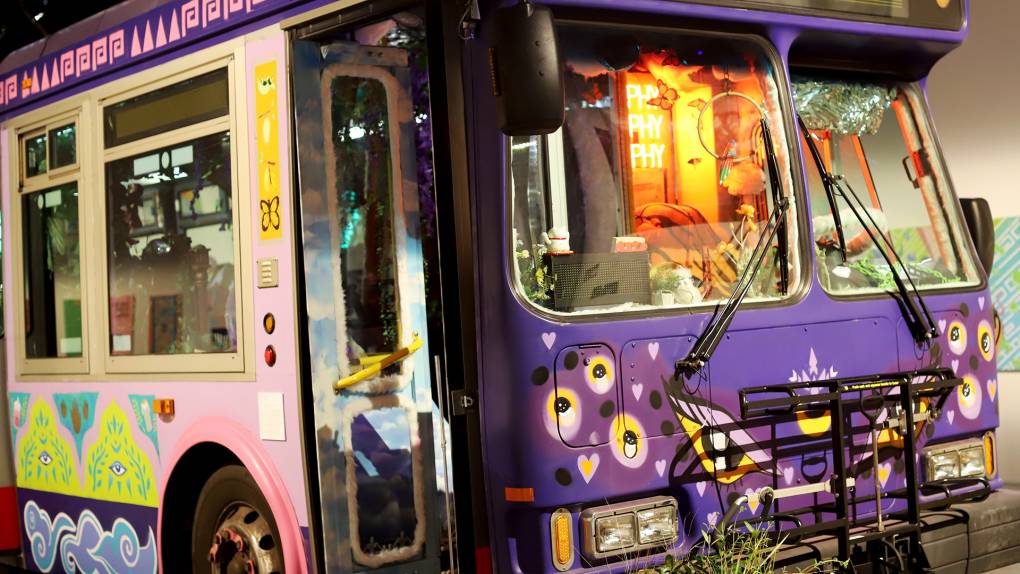
"caption": "'Altared SF' by Sasha Vu and Ling Ling Lee on view in 'Muni Raised Me' at SOMArts.",
"description": null,
"title": "muni raised me 4",
"credit": "Nastia Voynovskaya",
"status": "inherit",
"altTag": "A city bus painted in bright colors",
"isLoading": false,
"fetchFailed": false
},
"arts_13925945": {
"type": "attachments",
"id": "arts_13925945",
"meta": {
"index": "attachments_1716263798",
"site": "arts",
"id": "13925945",
"found": true
},
"parent": 13925929,
"imgSizes": {
"twentyfourteen-full-width": {
"file": "https://ww2.kqed.org/app/uploads/sites/2/2023/03/R3-Closing-02_COVER-1038x576.jpg",
"width": 1038,
"mimeType": "image/jpeg",
"height": 576
},
"thumbnail": {
"file": "https://ww2.kqed.org/app/uploads/sites/2/2023/03/R3-Closing-02_COVER-160x90.jpg",
"width": 160,
"mimeType": "image/jpeg",
"height": 90
},
"post-thumbnail": {
"file": "https://ww2.kqed.org/app/uploads/sites/2/2023/03/R3-Closing-02_COVER-672x372.jpg",
"width": 672,
"mimeType": "image/jpeg",
"height": 372
},
"kqedFullSize": {
"file": "https://ww2.kqed.org/app/uploads/sites/2/2023/03/R3-Closing-02_COVER.jpg",
"width": 1920,
"height": 1080
},
"large": {
"file": "https://ww2.kqed.org/app/uploads/sites/2/2023/03/R3-Closing-02_COVER-1020x574.jpg",
"width": 1020,
"mimeType": "image/jpeg",
"height": 574
},
"1536x1536": {
"file": "https://ww2.kqed.org/app/uploads/sites/2/2023/03/R3-Closing-02_COVER-1536x864.jpg",
"width": 1536,
"mimeType": "image/jpeg",
"height": 864
},
"medium": {
"file": "https://ww2.kqed.org/app/uploads/sites/2/2023/03/R3-Closing-02_COVER-800x450.jpg",
"width": 800,
"mimeType": "image/jpeg",
"height": 450
},
"medium_large": {
"file": "https://ww2.kqed.org/app/uploads/sites/2/2023/03/R3-Closing-02_COVER-768x432.jpg",
"width": 768,
"mimeType": "image/jpeg",
"height": 432
}
},
"publishDate": 1678242255,
"modified": 1678242308,
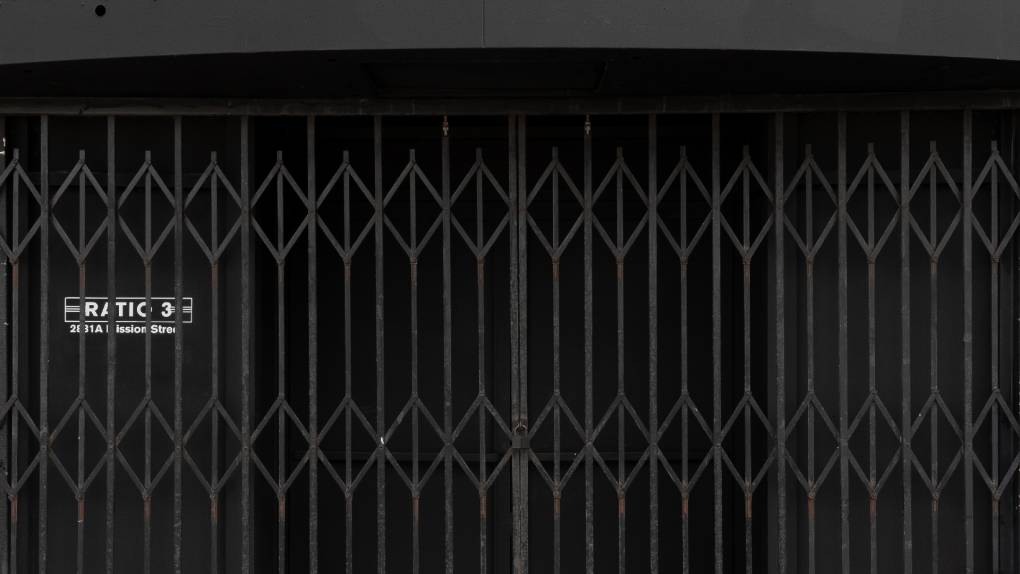
"caption": "The front door of Ratio 3's current space on Mission Street, which is closed as of March 4, 2023.",
"description": null,
"title": "R3-Closing-02_COVER",
"credit": "Courtesy Ratio 3",
"status": "inherit",
"altTag": "Black gate in front of black storefront with white lettering \"Ratio 3\"",
"isLoading": false,
"fetchFailed": false
},
"arts_13925878": {
"type": "attachments",
"id": "arts_13925878",
"meta": {
"index": "attachments_1716263798",
"site": "arts",
"id": "13925878",
"found": true
},
"parent": 13925875,
"imgSizes": {
"twentyfourteen-full-width": {
"file": "https://ww2.kqed.org/app/uploads/sites/2/2023/03/CCA_COVER-1038x576.jpg",
"width": 1038,
"mimeType": "image/jpeg",
"height": 576
},
"thumbnail": {
"file": "https://ww2.kqed.org/app/uploads/sites/2/2023/03/CCA_COVER-160x90.jpg",
"width": 160,
"mimeType": "image/jpeg",
"height": 90
},
"post-thumbnail": {
"file": "https://ww2.kqed.org/app/uploads/sites/2/2023/03/CCA_COVER-672x372.jpg",
"width": 672,
"mimeType": "image/jpeg",
"height": 372
},
"kqedFullSize": {
"file": "https://ww2.kqed.org/app/uploads/sites/2/2023/03/CCA_COVER.jpg",
"width": 1920,
"height": 1080
},
"large": {
"file": "https://ww2.kqed.org/app/uploads/sites/2/2023/03/CCA_COVER-1020x574.jpg",
"width": 1020,
"mimeType": "image/jpeg",
"height": 574
},
"1536x1536": {
"file": "https://ww2.kqed.org/app/uploads/sites/2/2023/03/CCA_COVER-1536x864.jpg",
"width": 1536,
"mimeType": "image/jpeg",
"height": 864
},
"medium": {
"file": "https://ww2.kqed.org/app/uploads/sites/2/2023/03/CCA_COVER-800x450.jpg",
"width": 800,
"mimeType": "image/jpeg",
"height": 450
},
"medium_large": {
"file": "https://ww2.kqed.org/app/uploads/sites/2/2023/03/CCA_COVER-768x432.jpg",
"width": 768,
"mimeType": "image/jpeg",
"height": 432
}
},
"publishDate": 1678138107,
"modified": 1678148991,
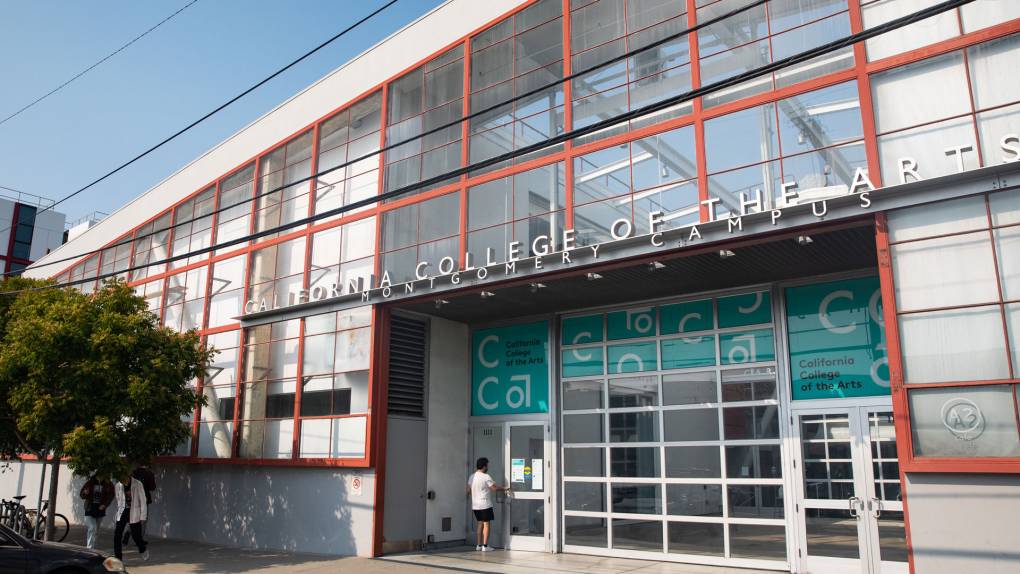
"caption": "California College of the Arts' San Francisco campus, where the curatorial practice master's program has run since 2002.",
"description": null,
"title": "CCA_COVER",
"credit": "Courtesy of CCA",
"status": "inherit",
"altTag": "View of building exterior with glass and school name above doorway",
"isLoading": false,
"fetchFailed": false
},
"arts_13925727": {
"type": "attachments",
"id": "arts_13925727",
"meta": {
"index": "attachments_1716263798",
"site": "arts",
"id": "13925727",
"found": true
},
"parent": 13925710,
"imgSizes": {
"twentyfourteen-full-width": {
"file": "https://ww2.kqed.org/app/uploads/sites/2/2023/02/DSC05113-1038x576.jpg",
"width": 1038,
"mimeType": "image/jpeg",
"height": 576
},
"thumbnail": {
"file": "https://ww2.kqed.org/app/uploads/sites/2/2023/02/DSC05113-160x107.jpg",
"width": 160,
"mimeType": "image/jpeg",
"height": 107
},
"post-thumbnail": {
"file": "https://ww2.kqed.org/app/uploads/sites/2/2023/02/DSC05113-672x372.jpg",
"width": 672,
"mimeType": "image/jpeg",
"height": 372
},
"kqedFullSize": {
"file": "https://ww2.kqed.org/app/uploads/sites/2/2023/02/DSC05113.jpg",
"width": 1616,
"height": 1080
},
"large": {
"file": "https://ww2.kqed.org/app/uploads/sites/2/2023/02/DSC05113-1020x682.jpg",
"width": 1020,
"mimeType": "image/jpeg",
"height": 682
},
"1536x1536": {
"file": "https://ww2.kqed.org/app/uploads/sites/2/2023/02/DSC05113-1536x1027.jpg",
"width": 1536,
"mimeType": "image/jpeg",
"height": 1027
},
"medium": {
"file": "https://ww2.kqed.org/app/uploads/sites/2/2023/02/DSC05113-800x535.jpg",
"width": 800,
"mimeType": "image/jpeg",
"height": 535
},
"medium_large": {
"file": "https://ww2.kqed.org/app/uploads/sites/2/2023/02/DSC05113-768x513.jpg",
"width": 768,
"mimeType": "image/jpeg",
"height": 513
}
},
"publishDate": 1677547172,
"modified": 1677547487,
"caption": "Shomari Smith and Viviana Rodriguez-Smith at the opening reception for Oakland's Black Modern Arts Renaissance.",
"description": "Shomari Smith and Viviana Rodriguez-Smith at the opening reception for Oakland's Black Modern Arts Renaissance.",
"title": "Shomari Smith and Viviana Rodriguez-Smith at the opening reception for Oakland's Black Modern Arts Renaissance.",
"credit": "Pendarvis Harshaw",
"status": "inherit",
"altTag": "Shomari Smith and Viviana Rodriguez-Smith at the opening reception for Oakland's Black Modern Arts Renaissance.",
"isLoading": false,
"fetchFailed": false
},
"arts_13925447": {
"type": "attachments",
"id": "arts_13925447",
"meta": {
"index": "attachments_1716263798",
"site": "arts",
"id": "13925447",
"found": true
},
"parent": 13925416,
"imgSizes": {
"twentyfourteen-full-width": {
"file": "https://ww2.kqed.org/app/uploads/sites/2/2023/02/Adana-Tillman_Wild-Things-1038x576.jpg",
"width": 1038,
"mimeType": "image/jpeg",
"height": 576
},
"thumbnail": {
"file": "https://ww2.kqed.org/app/uploads/sites/2/2023/02/Adana-Tillman_Wild-Things-160x94.jpg",
"width": 160,
"mimeType": "image/jpeg",
"height": 94
},
"post-thumbnail": {
"file": "https://ww2.kqed.org/app/uploads/sites/2/2023/02/Adana-Tillman_Wild-Things-672x372.jpg",
"width": 672,
"mimeType": "image/jpeg",
"height": 372
},
"kqedFullSize": {
"file": "https://ww2.kqed.org/app/uploads/sites/2/2023/02/Adana-Tillman_Wild-Things-scaled.jpg",
"width": 2560,
"height": 1500
},
"2048x2048": {
"file": "https://ww2.kqed.org/app/uploads/sites/2/2023/02/Adana-Tillman_Wild-Things-2048x1200.jpg",
"width": 2048,
"mimeType": "image/jpeg",
"height": 1200
},
"large": {
"file": "https://ww2.kqed.org/app/uploads/sites/2/2023/02/Adana-Tillman_Wild-Things-1020x598.jpg",
"width": 1020,
"mimeType": "image/jpeg",
"height": 598
},
"1536x1536": {
"file": "https://ww2.kqed.org/app/uploads/sites/2/2023/02/Adana-Tillman_Wild-Things-1536x900.jpg",
"width": 1536,
"mimeType": "image/jpeg",
"height": 900
},
"full-width": {
"file": "https://ww2.kqed.org/app/uploads/sites/2/2023/02/Adana-Tillman_Wild-Things-1920x1125.jpg",
"width": 1920,
"mimeType": "image/jpeg",
"height": 1125
},
"medium": {
"file": "https://ww2.kqed.org/app/uploads/sites/2/2023/02/Adana-Tillman_Wild-Things-800x469.jpg",
"width": 800,
"mimeType": "image/jpeg",
"height": 469
},
"medium_large": {
"file": "https://ww2.kqed.org/app/uploads/sites/2/2023/02/Adana-Tillman_Wild-Things-768x450.jpg",
"width": 768,
"mimeType": "image/jpeg",
"height": 450
}
},
"publishDate": 1677187334,
"modified": 1677187428,
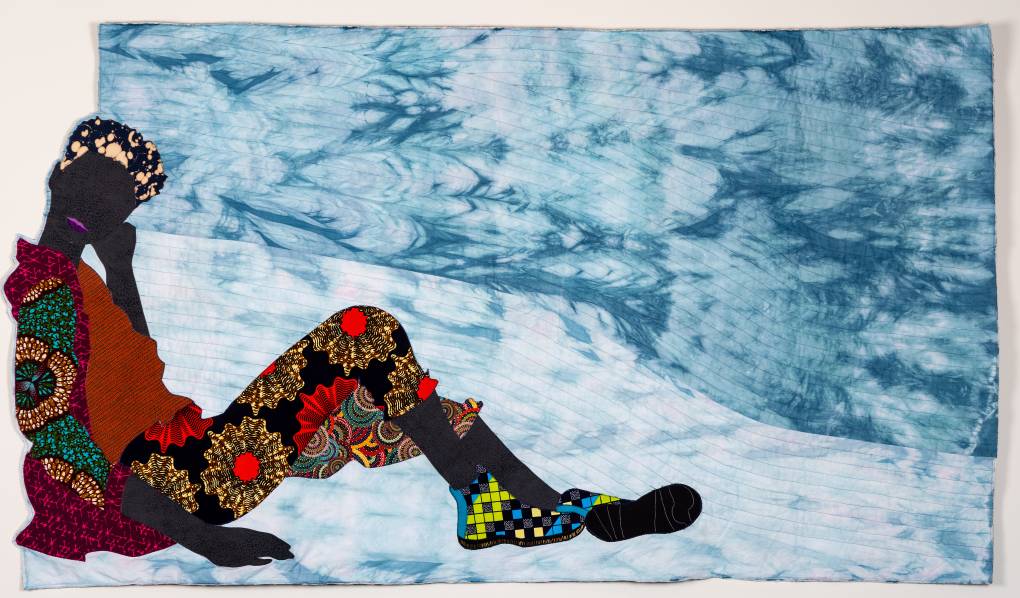
"caption": "Adana Tillman’s ‘Wild Thoughts,’ 2020. Appliqued fabric on hand dyed textiles with hand embroidery and beading.",
"description": null,
"title": "Adana Tillman_Wild Things",
"credit": "Courtesy of the artist",
"status": "inherit",
"altTag": "in a textile work, a Black woman in colorful clothing rests sitting on the ground and smiling against a blue backdrop",
"isLoading": false,
"fetchFailed": false
},
"arts_13925375": {
"type": "attachments",
"id": "arts_13925375",
"meta": {
"index": "attachments_1716263798",
"site": "arts",
"id": "13925375",
"found": true
},
"parent": 13925374,
"imgSizes": {
"twentyfourteen-full-width": {
"file": "https://ww2.kqed.org/app/uploads/sites/2/2023/02/Moore_Matrix280_2023_004_COVER-1038x576.jpg",
"width": 1038,
"mimeType": "image/jpeg",
"height": 576
},
"thumbnail": {
"file": "https://ww2.kqed.org/app/uploads/sites/2/2023/02/Moore_Matrix280_2023_004_COVER-160x90.jpg",
"width": 160,
"mimeType": "image/jpeg",
"height": 90
},
"post-thumbnail": {
"file": "https://ww2.kqed.org/app/uploads/sites/2/2023/02/Moore_Matrix280_2023_004_COVER-672x372.jpg",
"width": 672,
"mimeType": "image/jpeg",
"height": 372
},
"kqedFullSize": {
"file": "https://ww2.kqed.org/app/uploads/sites/2/2023/02/Moore_Matrix280_2023_004_COVER.jpg",
"width": 1920,
"height": 1080
},
"large": {
"file": "https://ww2.kqed.org/app/uploads/sites/2/2023/02/Moore_Matrix280_2023_004_COVER-1020x574.jpg",
"width": 1020,
"mimeType": "image/jpeg",
"height": 574
},
"1536x1536": {
"file": "https://ww2.kqed.org/app/uploads/sites/2/2023/02/Moore_Matrix280_2023_004_COVER-1536x864.jpg",
"width": 1536,
"mimeType": "image/jpeg",
"height": 864
},
"medium": {
"file": "https://ww2.kqed.org/app/uploads/sites/2/2023/02/Moore_Matrix280_2023_004_COVER-800x450.jpg",
"width": 800,
"mimeType": "image/jpeg",
"height": 450
},
"medium_large": {
"file": "https://ww2.kqed.org/app/uploads/sites/2/2023/02/Moore_Matrix280_2023_004_COVER-768x432.jpg",
"width": 768,
"mimeType": "image/jpeg",
"height": 432
}
},
"publishDate": 1677011141,
"modified": 1677011708,
"caption": "Installation view of 'Frank Moore / MATRIX 280: Theater of Human Melting' at the Berkeley Art Museum and Pacific Film Archive.",
"description": null,
"title": "Moore_Matrix280_2023_004_COVER",
"credit": "Whit Forester",
"status": "inherit",
"altTag": null,
"isLoading": false,
"fetchFailed": false
},
"arts_13925363": {
"type": "attachments",
"id": "arts_13925363",
"meta": {
"index": "attachments_1716263798",
"site": "arts",
"id": "13925363",
"found": true
},
"parent": 13925355,
"imgSizes": {
"twentyfourteen-full-width": {
"file": "https://ww2.kqed.org/app/uploads/sites/2/2023/02/hi_res_facing_symbols_COVER-1038x576.jpg",
"width": 1038,
"mimeType": "image/jpeg",
"height": 576
},
"thumbnail": {
"file": "https://ww2.kqed.org/app/uploads/sites/2/2023/02/hi_res_facing_symbols_COVER-160x125.jpg",
"width": 160,
"mimeType": "image/jpeg",
"height": 125
},
"post-thumbnail": {
"file": "https://ww2.kqed.org/app/uploads/sites/2/2023/02/hi_res_facing_symbols_COVER-672x372.jpg",
"width": 672,
"mimeType": "image/jpeg",
"height": 372
},
"kqedFullSize": {
"file": "https://ww2.kqed.org/app/uploads/sites/2/2023/02/hi_res_facing_symbols_COVER.jpg",
"width": 1920,
"height": 1503
},
"large": {
"file": "https://ww2.kqed.org/app/uploads/sites/2/2023/02/hi_res_facing_symbols_COVER-1020x798.jpg",
"width": 1020,
"mimeType": "image/jpeg",
"height": 798
},
"1536x1536": {
"file": "https://ww2.kqed.org/app/uploads/sites/2/2023/02/hi_res_facing_symbols_COVER-1536x1202.jpg",
"width": 1536,
"mimeType": "image/jpeg",
"height": 1202
},
"medium": {
"file": "https://ww2.kqed.org/app/uploads/sites/2/2023/02/hi_res_facing_symbols_COVER-800x626.jpg",
"width": 800,
"mimeType": "image/jpeg",
"height": 626
},
"medium_large": {
"file": "https://ww2.kqed.org/app/uploads/sites/2/2023/02/hi_res_facing_symbols_COVER-768x601.jpg",
"width": 768,
"mimeType": "image/jpeg",
"height": 601
}
},
"publishDate": 1677006459,
"modified": 1677006512,
"caption": "Ashley A. Ross' 'Facing Symbols,' on view in her debut solo exhibition at San Francisco's Museum of the African Diaspora.",
"description": null,
"title": "hi_res_facing_symbols_COVER",
"credit": "Courtesy of the artist",
"status": "inherit",
"altTag": "Black-and-white image of back of Black girl's head with white cross above.",
"isLoading": false,
"fetchFailed": false
},
"arts_13925090": {
"type": "attachments",
"id": "arts_13925090",
"meta": {
"index": "attachments_1716263798",
"site": "arts",
"id": "13925090",
"found": true
},
"parent": 13925086,
"imgSizes": {
"twentyfourteen-full-width": {
"file": "https://ww2.kqed.org/app/uploads/sites/2/2023/02/031_KQEDArts_SanFranciscoArtInstitute_02012023-1038x576.jpg",
"width": 1038,
"mimeType": "image/jpeg",
"height": 576
},
"thumbnail": {
"file": "https://ww2.kqed.org/app/uploads/sites/2/2023/02/031_KQEDArts_SanFranciscoArtInstitute_02012023-160x107.jpg",
"width": 160,
"mimeType": "image/jpeg",
"height": 107
},
"post-thumbnail": {
"file": "https://ww2.kqed.org/app/uploads/sites/2/2023/02/031_KQEDArts_SanFranciscoArtInstitute_02012023-672x372.jpg",
"width": 672,
"mimeType": "image/jpeg",
"height": 372
},
"kqedFullSize": {
"file": "https://ww2.kqed.org/app/uploads/sites/2/2023/02/031_KQEDArts_SanFranciscoArtInstitute_02012023.jpg",
"width": 1920,
"height": 1280
},
"large": {
"file": "https://ww2.kqed.org/app/uploads/sites/2/2023/02/031_KQEDArts_SanFranciscoArtInstitute_02012023-1020x680.jpg",
"width": 1020,
"mimeType": "image/jpeg",
"height": 680
},
"1536x1536": {
"file": "https://ww2.kqed.org/app/uploads/sites/2/2023/02/031_KQEDArts_SanFranciscoArtInstitute_02012023-1536x1024.jpg",
"width": 1536,
"mimeType": "image/jpeg",
"height": 1024
},
"medium": {
"file": "https://ww2.kqed.org/app/uploads/sites/2/2023/02/031_KQEDArts_SanFranciscoArtInstitute_02012023-800x533.jpg",
"width": 800,
"mimeType": "image/jpeg",
"height": 533
},
"medium_large": {
"file": "https://ww2.kqed.org/app/uploads/sites/2/2023/02/031_KQEDArts_SanFranciscoArtInstitute_02012023-768x512.jpg",
"width": 768,
"mimeType": "image/jpeg",
"height": 512
}
},
"publishDate": 1676340732,
"modified": 1676392667,
"caption": "Archivist Jeff Gunderson among the boxes containing a fraction of the San Francisco Art Institute’s 152-year-old history on Feb. 1, 2023.",
"description": null,
"title": "031_KQEDArts_SanFranciscoArtInstitute_02012023",
"credit": "Beth LaBerge",
"status": "inherit",
"altTag": "Older white man looks to left and smiles in room filled with bankers boxes",
"isLoading": false,
"fetchFailed": false
},
"arts_13925032": {
"type": "attachments",
"id": "arts_13925032",
"meta": {
"index": "attachments_1716263798",
"site": "arts",
"id": "13925032",
"found": true
},
"parent": 0,
"imgSizes": {
"twentyfourteen-full-width": {
"file": "https://ww2.kqed.org/app/uploads/sites/2/2023/02/McDonald_Koudelka-1038x576.jpg",
"width": 1038,
"mimeType": "image/jpeg",
"height": 576
},
"thumbnail": {
"file": "https://ww2.kqed.org/app/uploads/sites/2/2023/02/McDonald_Koudelka-160x120.jpg",
"width": 160,
"mimeType": "image/jpeg",
"height": 120
},
"post-thumbnail": {
"file": "https://ww2.kqed.org/app/uploads/sites/2/2023/02/McDonald_Koudelka-672x372.jpg",
"width": 672,
"mimeType": "image/jpeg",
"height": 372
},
"kqedFullSize": {
"file": "https://ww2.kqed.org/app/uploads/sites/2/2023/02/McDonald_Koudelka-scaled.jpg",
"width": 2560,
"height": 1920
},
"2048x2048": {
"file": "https://ww2.kqed.org/app/uploads/sites/2/2023/02/McDonald_Koudelka-2048x1536.jpg",
"width": 2048,
"mimeType": "image/jpeg",
"height": 1536
},
"large": {
"file": "https://ww2.kqed.org/app/uploads/sites/2/2023/02/McDonald_Koudelka-1020x765.jpg",
"width": 1020,
"mimeType": "image/jpeg",
"height": 765
},
"1536x1536": {
"file": "https://ww2.kqed.org/app/uploads/sites/2/2023/02/McDonald_Koudelka-1536x1152.jpg",
"width": 1536,
"mimeType": "image/jpeg",
"height": 1152
},
"full-width": {
"file": "https://ww2.kqed.org/app/uploads/sites/2/2023/02/McDonald_Koudelka-1920x1440.jpg",
"width": 1920,
"mimeType": "image/jpeg",
"height": 1440
},
"medium": {
"file": "https://ww2.kqed.org/app/uploads/sites/2/2023/02/McDonald_Koudelka-800x600.jpg",
"width": 800,
"mimeType": "image/jpeg",
"height": 600
},
"medium_large": {
"file": "https://ww2.kqed.org/app/uploads/sites/2/2023/02/McDonald_Koudelka-768x576.jpg",
"width": 768,
"mimeType": "image/jpeg",
"height": 576
}
},
"publishDate": 1676074636,
"modified": 1676345368,
"caption": "Christy McDonald, 'San Francisco,' 2020; after Josef Koudelka, 'Prague,' 1968.",
"description": null,
"title": "San Francisco, 2020 / after Josef Koudelka, Prague, 1968",
"credit": "Courtesy of the artist",
"status": "inherit",
"altTag": "Black-and-white image of hand holding roll of toilet paper on empty street leading to Transamerica Pyramid",
"isLoading": false,
"fetchFailed": false
},
"arts_13924980": {
"type": "attachments",
"id": "arts_13924980",
"meta": {
"index": "attachments_1716263798",
"site": "arts",
"id": "13924980",
"found": true
},
"parent": 13924934,
"imgSizes": {
"twentyfourteen-full-width": {
"file": "https://ww2.kqed.org/app/uploads/sites/2/2023/02/AMB-Transparent-Migration_Detail_2001_COVER-1038x576.jpg",
"width": 1038,
"mimeType": "image/jpeg",
"height": 576
},
"thumbnail": {
"file": "https://ww2.kqed.org/app/uploads/sites/2/2023/02/AMB-Transparent-Migration_Detail_2001_COVER-160x90.jpg",
"width": 160,
"mimeType": "image/jpeg",
"height": 90
},
"post-thumbnail": {
"file": "https://ww2.kqed.org/app/uploads/sites/2/2023/02/AMB-Transparent-Migration_Detail_2001_COVER-672x372.jpg",
"width": 672,
"mimeType": "image/jpeg",
"height": 372
},
"kqedFullSize": {
"file": "https://ww2.kqed.org/app/uploads/sites/2/2023/02/AMB-Transparent-Migration_Detail_2001_COVER.jpg",
"width": 1920,
"height": 1080
},
"large": {
"file": "https://ww2.kqed.org/app/uploads/sites/2/2023/02/AMB-Transparent-Migration_Detail_2001_COVER-1020x574.jpg",
"width": 1020,
"mimeType": "image/jpeg",
"height": 574
},
"1536x1536": {
"file": "https://ww2.kqed.org/app/uploads/sites/2/2023/02/AMB-Transparent-Migration_Detail_2001_COVER-1536x864.jpg",
"width": 1536,
"mimeType": "image/jpeg",
"height": 864
},
"medium": {
"file": "https://ww2.kqed.org/app/uploads/sites/2/2023/02/AMB-Transparent-Migration_Detail_2001_COVER-800x450.jpg",
"width": 800,
"mimeType": "image/jpeg",
"height": 450
},
"medium_large": {
"file": "https://ww2.kqed.org/app/uploads/sites/2/2023/02/AMB-Transparent-Migration_Detail_2001_COVER-768x432.jpg",
"width": 768,
"mimeType": "image/jpeg",
"height": 432
}
},
"publishDate": 1676011685,
"modified": 1676012724,
"caption": "Amalia Mesa-Bains, Detail of 'Transparent Migrations,' 2001; mixed media installation.",
"description": null,
"title": "AMB-Transparent-Migration_Detail_2001_COVER",
"credit": "Courtesy BAMPFA",
"status": "inherit",
"altTag": "Collection of sparkling glass objects, including a Virgin Mary statue in a red cabinet space.",
"isLoading": false,
"fetchFailed": false
},
"arts_13924667": {
"type": "attachments",
"id": "arts_13924667",
"meta": {
"index": "attachments_1716263798",
"site": "arts",
"id": "13924667",
"found": true
},
"parent": 13924661,
"imgSizes": {
"twentyfourteen-full-width": {
"file": "https://ww2.kqed.org/app/uploads/sites/2/2023/02/House_of_Seiko_Cardinal_Index_Install_hires32_COVER-1038x576.jpg",
"width": 1038,
"mimeType": "image/jpeg",
"height": 576
},
"thumbnail": {
"file": "https://ww2.kqed.org/app/uploads/sites/2/2023/02/House_of_Seiko_Cardinal_Index_Install_hires32_COVER-160x107.jpg",
"width": 160,
"mimeType": "image/jpeg",
"height": 107
},
"post-thumbnail": {
"file": "https://ww2.kqed.org/app/uploads/sites/2/2023/02/House_of_Seiko_Cardinal_Index_Install_hires32_COVER-672x372.jpg",
"width": 672,
"mimeType": "image/jpeg",
"height": 372
},
"kqedFullSize": {
"file": "https://ww2.kqed.org/app/uploads/sites/2/2023/02/House_of_Seiko_Cardinal_Index_Install_hires32_COVER.jpg",
"width": 1920,
"height": 1280
},
"large": {
"file": "https://ww2.kqed.org/app/uploads/sites/2/2023/02/House_of_Seiko_Cardinal_Index_Install_hires32_COVER-1020x680.jpg",
"width": 1020,
"mimeType": "image/jpeg",
"height": 680
},
"1536x1536": {
"file": "https://ww2.kqed.org/app/uploads/sites/2/2023/02/House_of_Seiko_Cardinal_Index_Install_hires32_COVER-1536x1024.jpg",
"width": 1536,
"mimeType": "image/jpeg",
"height": 1024
},
"medium": {
"file": "https://ww2.kqed.org/app/uploads/sites/2/2023/02/House_of_Seiko_Cardinal_Index_Install_hires32_COVER-800x533.jpg",
"width": 800,
"mimeType": "image/jpeg",
"height": 533
},
"medium_large": {
"file": "https://ww2.kqed.org/app/uploads/sites/2/2023/02/House_of_Seiko_Cardinal_Index_Install_hires32_COVER-768x512.jpg",
"width": 768,
"mimeType": "image/jpeg",
"height": 512
}
},
"publishDate": 1675378366,
"modified": 1675378438,
"caption": "House of Seiko opened on 22nd Street on Jan. 14 with its inaugural show, 'Cardinal Index.'",
"description": null,
"title": "House_of_Seiko_Cardinal_Index_Install_hires32_COVER",
"credit": "Courtesy of House of Seiko",
"status": "inherit",
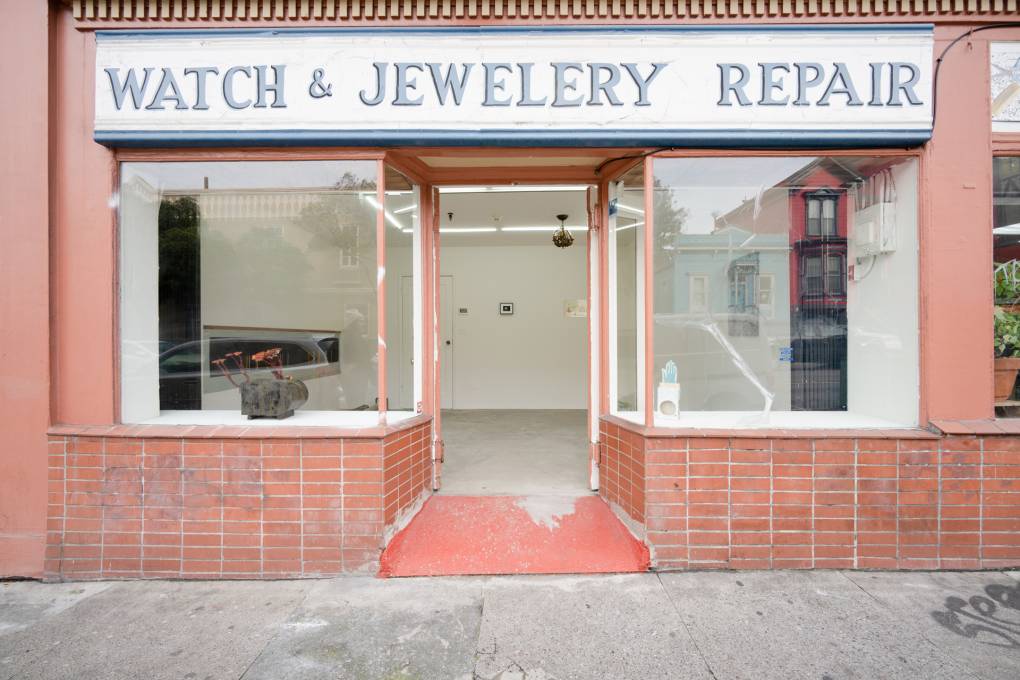
"altTag": "Red bright storefront with white wall gallery inside, sign above door reads 'watch & jewelery repair'",
"isLoading": false,
"fetchFailed": false
},
"arts_13924128": {
"type": "attachments",
"id": "arts_13924128",
"meta": {
"index": "attachments_1716263798",
"site": "arts",
"id": "13924128",
"found": true
},
"parent": 13924126,
"imgSizes": {
"twentyfourteen-full-width": {
"file": "https://ww2.kqed.org/app/uploads/sites/2/2023/01/HipHopPreschool.SQ_-1038x576.jpg",
"width": 1038,
"mimeType": "image/jpeg",
"height": 576
},
"thumbnail": {
"file": "https://ww2.kqed.org/app/uploads/sites/2/2023/01/HipHopPreschool.SQ_-160x160.jpg",
"width": 160,
"mimeType": "image/jpeg",
"height": 160
},
"post-thumbnail": {
"file": "https://ww2.kqed.org/app/uploads/sites/2/2023/01/HipHopPreschool.SQ_-672x372.jpg",
"width": 672,
"mimeType": "image/jpeg",
"height": 372
},
"kqedFullSize": {
"file": "https://ww2.kqed.org/app/uploads/sites/2/2023/01/HipHopPreschool.SQ_.jpg",
"width": 1920,
"height": 1920
},
"large": {
"file": "https://ww2.kqed.org/app/uploads/sites/2/2023/01/HipHopPreschool.SQ_-1020x1020.jpg",
"width": 1020,
"mimeType": "image/jpeg",
"height": 1020
},
"1536x1536": {
"file": "https://ww2.kqed.org/app/uploads/sites/2/2023/01/HipHopPreschool.SQ_-1536x1536.jpg",
"width": 1536,
"mimeType": "image/jpeg",
"height": 1536
},
"medium": {
"file": "https://ww2.kqed.org/app/uploads/sites/2/2023/01/HipHopPreschool.SQ_-800x800.jpg",
"width": 800,
"mimeType": "image/jpeg",
"height": 800
},
"medium_large": {
"file": "https://ww2.kqed.org/app/uploads/sites/2/2023/01/HipHopPreschool.SQ_-768x768.jpg",
"width": 768,
"mimeType": "image/jpeg",
"height": 768
}
},
"publishDate": 1674596688,
"modified": 1674596688,
"caption": null,
"description": null,
"title": "HipHopPreschool.SQ",
"credit": null,
"status": "inherit",
"altTag": null,
"isLoading": false,
"fetchFailed": false
}
},
"audioPlayerReducer": {
"postId": "stream_live",
"isPaused": true,
"isPlaying": false,
"pfsActive": false,
"pledgeModalIsOpen": true,
"playerDrawerIsOpen": false,
"liveAudioPlayStartedAt": 0,
"liveAudioPlayContext": ""
},
"authorsReducer": {
"byline_arts_13925875": {
"type": "authors",
"id": "byline_arts_13925875",
"meta": {
"override": true
},
"slug": "byline_arts_13925875",
"name": "Maddie Klett",
"isLoading": false
},
"shotchkiss": {
"type": "authors",
"id": "61",
"meta": {
"index": "authors_1716337520",
"id": "61",
"found": true
},
"name": "Sarah Hotchkiss",
"firstName": "Sarah",
"lastName": "Hotchkiss",
"slug": "shotchkiss",
"email": "shotchkiss@kqed.org",
"display_author_email": true,
"staff_mastheads": [
"arts"
],
"title": "Senior Editor",
"bio": "Sarah Hotchkiss is a San Francisco \u003ca href=\"http://www.sarahhotchkiss.com\">artist\u003c/a> and arts writer. In 2019, she received the Dorothea & Leo Rabkin Foundation grant for visual art journalism and in 2020 she received a Society of Professional Journalists, Northern California award for excellence in arts and culture reporting.",
"avatar": "https://secure.gravatar.com/avatar/bc662df144b3d27fd8b1b6f1c2a420d34e91e53154d411bb7ad353cc8b6cea8d?s=600&d=blank&r=g",
"twitter": null,
"bluesky": null,
"facebook": null,
"instagram": null,
"linkedin": null,
"sites": [
{
"site": "",
"roles": [
"editor"
]
},
{
"site": "arts",
"roles": [
"Contributor",
"administrator"
]
},
{
"site": "artschool",
"roles": [
"administrator"
]
},
{
"site": "news",
"roles": [
"editor"
]
},
{
"site": "pop",
"roles": [
"administrator"
]
},
{
"site": "bayareabites",
"roles": [
"editor"
]
},
{
"site": "spark",
"roles": [
"editor"
]
},
{
"site": "checkplease",
"roles": [
"editor"
]
}
],
"headData": {
"title": "Sarah Hotchkiss | KQED",
"description": "Senior Editor",
"ogImgSrc": "https://secure.gravatar.com/avatar/bc662df144b3d27fd8b1b6f1c2a420d34e91e53154d411bb7ad353cc8b6cea8d?s=600&d=blank&r=g",
"twImgSrc": "https://secure.gravatar.com/avatar/bc662df144b3d27fd8b1b6f1c2a420d34e91e53154d411bb7ad353cc8b6cea8d?s=600&d=blank&r=g"
},
"isLoading": false,
"link": "/author/shotchkiss"
},
"rseikaly": {
"type": "authors",
"id": "77",
"meta": {
"index": "authors_1716337520",
"id": "77",
"found": true
},
"name": "Roula Seikaly",
"firstName": "Roula",
"lastName": "Seikaly",
"slug": "rseikaly",
"email": "roula@roulaseikaly.com",
"display_author_email": false,
"staff_mastheads": [],
"title": "KQED Contributor",
"bio": "Roula Seikaly in an independent writer and curator based in Berkeley, California, and Senior Editor at \u003ca href=\"http://hafny.org/\">Humble Arts Foundation\u003c/a>. She has curated exhibitions at Colorado Photographic Arts Center, Filter Photo Festival, Blue Sky Gallery, SF Camerawork, SOMArts, and the Utah Museum of Arts. She is a regular contributor to Photograph, Hyerallergic, BOMB Magazine, and KQED Arts.",
"avatar": "https://secure.gravatar.com/avatar/771cde409896af1326a07050f2e4e489?s=600&d=blank&r=g",
"twitter": null,
"facebook": null,
"instagram": null,
"linkedin": null,
"sites": [
{
"site": "arts",
"roles": [
"Contributor",
"contributor"
]
}
],
"headData": {
"title": "Roula Seikaly | KQED",
"description": "KQED Contributor",
"ogImgSrc": "https://secure.gravatar.com/avatar/771cde409896af1326a07050f2e4e489?s=600&d=blank&r=g",
"twImgSrc": "https://secure.gravatar.com/avatar/771cde409896af1326a07050f2e4e489?s=600&d=blank&r=g"
},
"isLoading": false,
"link": "/author/rseikaly"
},
"ahenderson": {
"type": "authors",
"id": "11272",
"meta": {
"index": "authors_1716337520",
"id": "11272",
"found": true
},
"name": "Aine Henderson",
"firstName": "Aine",
"lastName": "Henderson",
"slug": "ahenderson",
"email": "ahenderson@KQED.org",
"display_author_email": false,
"staff_mastheads": [],
"title": "KQED Contributor",
"bio": null,
"avatar": "https://secure.gravatar.com/avatar/52eb8bcbf0bb97068e4ad609525e763c?s=600&d=blank&r=g",
"twitter": null,
"facebook": null,
"instagram": null,
"linkedin": null,
"sites": [
{
"site": "arts",
"roles": [
"editor"
]
},
{
"site": "about",
"roles": [
"editor"
]
},
{
"site": "trulyca",
"roles": [
"administrator",
"author",
"editor"
]
},
{
"site": "pressroom",
"roles": [
"editor"
]
},
{
"site": "filmschoolshorts",
"roles": [
"editor"
]
}
],
"headData": {
"title": "Aine Henderson | KQED",
"description": "KQED Contributor",
"ogImgSrc": "https://secure.gravatar.com/avatar/52eb8bcbf0bb97068e4ad609525e763c?s=600&d=blank&r=g",
"twImgSrc": "https://secure.gravatar.com/avatar/52eb8bcbf0bb97068e4ad609525e763c?s=600&d=blank&r=g"
},
"isLoading": false,
"link": "/author/ahenderson"
},
"aproehl": {
"type": "authors",
"id": "11296",
"meta": {
"index": "authors_1716337520",
"id": "11296",
"found": true
},
"name": "Ariana Proehl",
"firstName": "Ariana",
"lastName": "Proehl",
"slug": "aproehl",
"email": "aproehl@KQED.org",
"display_author_email": true,
"staff_mastheads": [
"news"
],
"title": "Culture Reporter, KQED",
"bio": "Ariana Proehl is a Culture Reporter and Host.",
"avatar": "https://secure.gravatar.com/avatar/c96b24567eb5bb3a4f8bb295ed53e232?s=600&d=blank&r=g",
"twitter": "ArianaProehl",
"facebook": null,
"instagram": null,
"linkedin": null,
"sites": [
{
"site": "arts",
"roles": []
},
{
"site": "news",
"roles": []
},
{
"site": "education",
"roles": []
},
{
"site": "forum",
"roles": []
}
],
"headData": {
"title": "Ariana Proehl | KQED",
"description": "Culture Reporter, KQED",
"ogImgSrc": "https://secure.gravatar.com/avatar/c96b24567eb5bb3a4f8bb295ed53e232?s=600&d=blank&r=g",
"twImgSrc": "https://secure.gravatar.com/avatar/c96b24567eb5bb3a4f8bb295ed53e232?s=600&d=blank&r=g"
},
"isLoading": false,
"link": "/author/aproehl"
},
"nvoynovskaya": {
"type": "authors",
"id": "11387",
"meta": {
"index": "authors_1716337520",
"id": "11387",
"found": true
},
"name": "Nastia Voynovskaya",
"firstName": "Nastia",
"lastName": "Voynovskaya",
"slug": "nvoynovskaya",
"email": "nvoynovskaya@kqed.org",
"display_author_email": false,
"staff_mastheads": [
"arts"
],
"title": "Editor and reporter",
"bio": "Nastia Voynovskaya is a reporter, editor and host at KQED Arts & Culture. She's been covering the arts in the Bay Area for over a decade, with a focus on music, queer culture, labor issues and grassroots organizing. She has edited KQED story series such as Trans Bay: A History of San Francisco's Gender-Diverse Community, and co-created KQED's Bay Area hip-hop history project, That's My Word. Nastia's work has been recognized by the Society of Professional Journalists and San Francisco Press Club. She regularly appears on podcasts and radio programs, including NPR's All Songs Considered, and hosts live events where music, culture and conversation meet.",
"avatar": "https://secure.gravatar.com/avatar/5025ee460e5a85d69ca20ea6c6f2f80d7e17795c828f61ea3aecfcd924e9042e?s=600&d=blank&r=g",
"twitter": null,
"bluesky": null,
"facebook": null,
"instagram": "https://www.instagram.com/nananastia/",
"linkedin": null,
"sites": [
{
"site": "",
"roles": [
"editor"
]
},
{
"site": "arts",
"roles": [
"administrator"
]
},
{
"site": "news",
"roles": [
"editor"
]
},
{
"site": "pop",
"roles": [
"administrator"
]
},
{
"site": "bayareabites",
"roles": [
"editor"
]
},
{
"site": "podcasts",
"roles": [
"editor"
]
},
{
"site": "hiphop",
"roles": [
"editor"
]
}
],
"headData": {
"title": "Nastia Voynovskaya | KQED",
"description": "Editor and reporter",
"ogImgSrc": "https://secure.gravatar.com/avatar/5025ee460e5a85d69ca20ea6c6f2f80d7e17795c828f61ea3aecfcd924e9042e?s=600&d=blank&r=g",
"twImgSrc": "https://secure.gravatar.com/avatar/5025ee460e5a85d69ca20ea6c6f2f80d7e17795c828f61ea3aecfcd924e9042e?s=600&d=blank&r=g"
},
"isLoading": false,
"link": "/author/nvoynovskaya"
},
"ogpenn": {
"type": "authors",
"id": "11491",
"meta": {
"index": "authors_1716337520",
"id": "11491",
"found": true
},
"name": "Pendarvis Harshaw",
"firstName": "Pendarvis",
"lastName": "Harshaw",
"slug": "ogpenn",
"email": "ogpenn@gmail.com",
"display_author_email": false,
"staff_mastheads": [
"arts"
],
"title": "Community Engagement Reporter",
"bio": "Pendarvis Harshaw is an educator, host and writer with KQED Arts.",
"avatar": "https://secure.gravatar.com/avatar/972b77ee8e3f346ae2b00622661187fbfabd059b5693bbdc1475ea7a722fd4cd?s=600&d=blank&r=g",
"twitter": null,
"bluesky": null,
"facebook": null,
"instagram": "ogpenn",
"linkedin": null,
"sites": [
{
"site": "arts",
"roles": [
"administrator"
]
},
{
"site": "news",
"roles": [
"editor"
]
},
{
"site": "bayareabites",
"roles": [
"author"
]
},
{
"site": "hiphop",
"roles": [
"editor"
]
}
],
"headData": {
"title": "Pendarvis Harshaw | KQED",
"description": "Community Engagement Reporter",
"ogImgSrc": "https://secure.gravatar.com/avatar/972b77ee8e3f346ae2b00622661187fbfabd059b5693bbdc1475ea7a722fd4cd?s=600&d=blank&r=g",
"twImgSrc": "https://secure.gravatar.com/avatar/972b77ee8e3f346ae2b00622661187fbfabd059b5693bbdc1475ea7a722fd4cd?s=600&d=blank&r=g"
},
"isLoading": false,
"link": "/author/ogpenn"
},
"twalsh": {
"type": "authors",
"id": "11696",
"meta": {
"index": "authors_1716337520",
"id": "11696",
"found": true
},
"name": "Theadora Walsh",
"firstName": "Theadora",
"lastName": "Walsh",
"slug": "twalsh",
"email": "theadora.walsh@gmail.com",
"display_author_email": false,
"staff_mastheads": [],
"title": "KQED Contributor",
"bio": "Theadora Walsh is a writer and digital artist. She has contributed criticism to Art Papers, SFMOMA's Open Space, BOMB, Hyperallergic, and elsewhere.",
"avatar": "https://secure.gravatar.com/avatar/f933ebf68ddf31c7a828c5671bd7af03?s=600&d=blank&r=g",
"twitter": "theadora_tm",
"facebook": null,
"instagram": null,
"linkedin": null,
"sites": [
{
"site": "arts",
"roles": [
"contributor"
]
}
],
"headData": {
"title": "Theadora Walsh | KQED",
"description": "KQED Contributor",
"ogImgSrc": "https://secure.gravatar.com/avatar/f933ebf68ddf31c7a828c5671bd7af03?s=600&d=blank&r=g",
"twImgSrc": "https://secure.gravatar.com/avatar/f933ebf68ddf31c7a828c5671bd7af03?s=600&d=blank&r=g"
},
"isLoading": false,
"link": "/author/twalsh"
},
"earnold": {
"type": "authors",
"id": "11839",
"meta": {
"index": "authors_1716337520",
"id": "11839",
"found": true
},
"name": "Eric Arnold",
"firstName": "Eric",
"lastName": "Arnold",
"slug": "earnold",
"email": "earnold@kqed.org",
"display_author_email": false,
"staff_mastheads": [],
"title": "Contributing Editor, 'That's My Word'",
"bio": "Eric Arnold has covered hip-hop locally and nationally for over 30 years. Formerly the managing editor of \u003cem>4080\u003c/em> and columnist for \u003cem>The Source\u003c/em>, he chronicled hyphy’s rise and fall, co-curated the Oakland Museum of California’s first hip-hop exhibit in 2018 and won a 2022 Northern California Emmy Award for a mini-documentary on Oakland’s Boogaloo dance culture. He is a contributing editor for \u003cem>That’s My Word\u003c/em>, KQED's series on the history of Bay Area hip-hop.",
"avatar": "https://secure.gravatar.com/avatar/ede45b04898456ad0893a2811e78b0a2?s=600&d=blank&r=g",
"twitter": null,
"facebook": null,
"instagram": null,
"linkedin": null,
"sites": [
{
"site": "arts",
"roles": [
"contributor"
]
},
{
"site": "news",
"roles": [
"contributor"
]
},
{
"site": "hiphop",
"roles": [
"contributor"
]
}
],
"headData": {
"title": "Eric Arnold | KQED",
"description": "Contributing Editor, 'That's My Word'",
"ogImgSrc": "https://secure.gravatar.com/avatar/ede45b04898456ad0893a2811e78b0a2?s=600&d=blank&r=g",
"twImgSrc": "https://secure.gravatar.com/avatar/ede45b04898456ad0893a2811e78b0a2?s=600&d=blank&r=g"
},
"isLoading": false,
"link": "/author/earnold"
}
},
"pagesReducer": {
"arts_category_visualarts": {
"type": "terms",
"id": "arts_70",
"meta": {
"index": "terms_1716263798",
"site": "arts",
"id": "70",
"score": 14.4072075
},
"featImg": null,
"name": "Visual Arts",
"description": null,
"taxonomy": "category",
"headData": {
"twImgId": null,
"twTitle": null,
"ogTitle": null,
"ogImgId": null,
"twDescription": null,
"description": null,
"title": "Visual Arts Archives | KQED Arts",
"ogDescription": null
},
"ttid": 71,
"slug": "visualarts",
"isLoading": false,
"title": "Visual Arts",
"pageMeta": {
"site": "arts",
"WpPageTemplate": "page-topic-editorial",
"currentPage": 33
},
"blocks": [
{
"blockName": "kqed/post-list",
"attrs": {
"layout": "cardArticle2",
"query": "posts/arts?category=visualarts",
"seeMore": false,
"paginated": true,
"page": 33
}
},
{
"blockName": "kqed/ad"
}
]
}
},
"pfsSessionReducer": {},
"postsReducer": {
"stream_live": {
"type": "live",
"id": "stream_live",
"audioUrl": "https://streams.kqed.org/kqedradio",
"title": "Live Stream",
"excerpt": "Live Stream information currently unavailable.",
"link": "/radio",
"featImg": "",
"label": {
"name": "KQED Live",
"link": "/"
}
},
"stream_kqedNewscast": {
"type": "posts",
"id": "stream_kqedNewscast",
"audioUrl": "https://www.kqed.org/.stream/anon/radio/RDnews/newscast.mp3?_=1",
"title": "KQED Newscast",
"featImg": "",
"label": {
"name": "88.5 FM",
"link": "/"
}
},
"arts_13926133": {
"type": "posts",
"id": "arts_13926133",
"meta": {
"index": "posts_1716263798",
"site": "arts",
"id": "13926133",
"score": null,
"sort": [
1678819480000
]
},
"parent": 0,
"labelTerm": {
"site": "arts",
"term": 140
},
"blocks": [],
"publishDate": 1678819480,
"format": "standard",
"title": "All Aboard ‘Muni Raised Me,’ SOMArts’ Ode to Working-Class San Francisco",
"headTitle": "All Aboard ‘Muni Raised Me,’ SOMArts’ Ode to Working-Class San Francisco | KQED",
"content": "\u003cp>Almost every longtime Bay Area resident has their favorite Muni route. For me, it’s the 38, the bus that starts downtown, then cruises past the Fillmore and Japantown to the Richmond District. When I exit through the back doors and into the heart of San Francisco’s Russian-speaking immigrant neighborhood, the smells of church frankincense and fresh rye bread awaken some of my favorite childhood memories.\u003c/p>\n\u003cp>As an immigrant kid growing up in the East Bay, my family’s frequent trips to San Francisco anchored me in my cultural identity. So I felt an instant connection to the intimate, poetic way 13 San Francisco-born-and-raised artists approach city life and public transit in the new group exhibition \u003ca href=\"https://somarts.org/event/muniraisedme/\">\u003ci>Muni Raised Me\u003c/i>\u003c/a>.\u003c/p>\n\u003cp>In the SOMArts show curated by Meymey Lee, \u003ca href=\"http://www.sashavu.com/\">Sasha Vu\u003c/a> and Celi Tamayo-Lee, bus lines are the arteries that connect immigrant, Black and working-class neighborhoods — the heart and soul of San Francisco culture. The multicultural crew of artists tells collective and personal histories through installations, paintings, audio and video. In the context of record-shattering rent prices and ongoing displacement, their memories feel like precious keepsakes.\u003c/p>\n\u003cp>The centerpiece in SOMArts’ high-ceilinged, warehouse gallery is \u003ci>Altared SF\u003c/i> by Sasha Vu and Ling Ling Lee, a real-life, decommissioned Muni bus turned into a temple with an original soundtrack of beats by Vu’s brother, Ben Vu. The \u003ci>Magic School Bus\u003c/i>-esque, psychedelic ride transports viewers with its maximalist assemblages of objects, each one evoking a different San Francisco cultural touchpoint.\u003c/p>\n\u003cp>As I took in the hippie-raver curios, Buddhist statues and rainbow decorations, I arrived at a quiet moment of contemplation. In the back, an altar honors victims of police brutality, including Mario Woods and Alex Nieto, whose deaths galvanized San Francisco’s movement for police accountability over the past decade. Like much of \u003ci>Muni Raised Me\u003c/i>, the piece feels joyful yet grounded in a sobering reality.\u003c/p>\n\u003cfigure id=\"attachment_13926157\" class=\"wp-caption aligncenter\" style=\"max-width: 1920px\">\u003cimg loading=\"lazy\" decoding=\"async\" class=\"size-full wp-image-13926157\" src=\"https://ww2.kqed.org/app/uploads/sites/2/2023/03/muni-raised-me-3.jpg\" alt=\"A circular passageway decorated with plants and rainbows ending in an altar\" width=\"1920\" height=\"1269\" srcset=\"https://cdn.kqed.org/wp-content/uploads/sites/2/2023/03/muni-raised-me-3.jpg 1920w, https://cdn.kqed.org/wp-content/uploads/sites/2/2023/03/muni-raised-me-3-800x529.jpg 800w, https://cdn.kqed.org/wp-content/uploads/sites/2/2023/03/muni-raised-me-3-1020x674.jpg 1020w, https://cdn.kqed.org/wp-content/uploads/sites/2/2023/03/muni-raised-me-3-160x106.jpg 160w, https://cdn.kqed.org/wp-content/uploads/sites/2/2023/03/muni-raised-me-3-768x508.jpg 768w, https://cdn.kqed.org/wp-content/uploads/sites/2/2023/03/muni-raised-me-3-1536x1015.jpg 1536w\" sizes=\"(max-width: 1920px) 100vw, 1920px\">\u003cfigcaption class=\"wp-caption-text\">A view inside ‘Altared SF’ by Sasha Vu and Ling Ling Lee. \u003ccite>(Nastia Voynovskaya)\u003c/cite>\u003c/figcaption>\u003c/figure>\n\u003cp>The art in \u003ci>Muni Raised Me\u003c/i> mimics the texture and aliveness of the City. Music videos by local artists such as Qing Qi, La Doña, A-1 and Baghead bring a house party soundtrack. Ben Vu’s short film \u003ci>All That and Dim Sum\u003c/i> radiates warmth, reminding us that San Francisco is also a city of families who eat dumplings together on Sundays — not just individualistic strivers. Sophia Mitty’s custom embroidery on jackets tells stories through workwear-inspired fashion. And tanea lunsford lynx’s installation, a listening booth collaged with family photos, plays poems about connection, loss and longing from her point of view as a fourth-generation Black San Franciscan.\u003c/p>\n\u003cp>[ad fullwidth]\u003c/p>\n\u003cp>\u003ci>Muni Raised Me\u003c/i> feels intentional and full of care, which falls in line with the three curators’ mission to be of service. Outside of their art practices, Vu and Lee are both educators, and Tamayo-Lee is the co-director of \u003ca href=\"https://www.sfrising.org/\">San Francisco Rising\u003c/a>, an organization that aims to politically empower working class people of color. I spoke with them about their vision for the show, their favorite Muni routes and how they managed to fit a real bus into a gallery.\u003c/p>\n\u003cp>[aside postid='arts_13925483']\u003ci>This conversation has been edited for length and clarity.\u003c/i>\u003c/p>\n\u003cp>\u003cb>Nastia Voynovskaya: I was struck by how so many of the artists involved are also organizers and educators who pour themselves into their community. What does that say to you about the art scene in San Francisco?\u003c/b>\u003c/p>\n\u003cp>\u003cb>Sasha Vu\u003c/b>: That’s a fascinating question because I feel like it really speaks to specifically this art show, not so much the larger art scene in San Francisco. So many of the folks I know who stayed in the City, who have grown up here, have had to balance their identity as artists with other professions, especially if you’re a local up-and-coming artist. Then I think also looking at the world through the artistic lens, it really lends itself to seeing various cracks and injustices, which therefore puts you in a place where you’re like, “How can I have my art better serve the community? How can my being better serve the community?”\u003c/p>\n\u003cp>\u003cb>Meymey Lee:\u003c/b> Public institutions are the things that raised us, so public transit, public schools and public parks. I think we really benefited from a really robust civil infrastructure. That really does speak to a San Francisco spirit, a very service-oriented sense of giving back to the city that raised us.\u003c/p>\n\u003cp>\u003cb>Celi Tamayo-Lee:\u003c/b> [\u003ci>Muni Raised Me\u003c/i> is] a huge shoutout to the bus drivers, the teachers, the after-school caregivers, the volunteers who worked during recess or helped us cross the street. In so many ways, we spent more time with those adults than some of our own parents. And I think for me, there’s a feeling of just wanting to re-seed that in today’s youth and share that love that we’ve been given, and getting to be that cool, weird, funky adult. It’s a piece of pride for a lot of us.\u003c/p>\n\u003cfigure id=\"attachment_13926158\" class=\"wp-caption aligncenter\" style=\"max-width: 1920px\">\u003cimg loading=\"lazy\" decoding=\"async\" class=\"size-full wp-image-13926158\" src=\"https://ww2.kqed.org/app/uploads/sites/2/2023/03/muni-raised-me-5.jpg\" alt=\"Handmade black and white jacket with symbols of city life embroidered\" width=\"1920\" height=\"1280\" srcset=\"https://cdn.kqed.org/wp-content/uploads/sites/2/2023/03/muni-raised-me-5.jpg 1920w, https://cdn.kqed.org/wp-content/uploads/sites/2/2023/03/muni-raised-me-5-800x533.jpg 800w, https://cdn.kqed.org/wp-content/uploads/sites/2/2023/03/muni-raised-me-5-1020x680.jpg 1020w, https://cdn.kqed.org/wp-content/uploads/sites/2/2023/03/muni-raised-me-5-160x107.jpg 160w, https://cdn.kqed.org/wp-content/uploads/sites/2/2023/03/muni-raised-me-5-768x512.jpg 768w, https://cdn.kqed.org/wp-content/uploads/sites/2/2023/03/muni-raised-me-5-1536x1024.jpg 1536w\" sizes=\"(max-width: 1920px) 100vw, 1920px\">\u003cfigcaption class=\"wp-caption-text\">One of the garments in Sophia Mitty’s installation ‘Ode to SF,’ on view in ‘Muni Raised Me’ at SOMArts. \u003ccite>(Nastia Voynovskaya)\u003c/cite>\u003c/figcaption>\u003c/figure>\n\u003cp>\u003cb>So many of the pieces in the show feel nostalgic and centered on childhood memories. What’s the importance of that to you as curators and artists?\u003c/b>\u003c/p>\n\u003cp>\u003cb>Sasha Vu:\u003c/b> So much of this show is pulling from a deep-seated nostalgia that really comes from having roots here. It’s an accumulation of 20 to 40 years of being in the same place. Being able to pull from childhood is such a unique lens because there are so many people here who didn’t grow up here, who are transplants in various ways and will never see the city through the same lens that we see it. And this is kind of offering a peek into that world.\u003c/p>\n\u003cp>\u003cb>Meymey Lee:\u003c/b> I felt nostalgia when I was like 17. Nostalgia is such a forced emotion when you grow up in San Francisco because the change has just been so rapid and incredible. And maybe that’s just the nature of cities. But also there was definitely a malicious edge to it, you know, watching the tech industry come in, watching so many working-class families leave — so many of our friends and family. There’s a lot of sadness. We wanted to honor the pride and the sadness and the joy we have here.\u003c/p>\n\u003cp>\u003cb>Celi Tamayo-Lee:\u003c/b> And to romanticize the ’90s in San Francisco. It was coming off the coattails of the AIDS epidemic and the war on drugs. There was such a vivacious and growing queer community. I felt like my childhood was very infused with a lot of music and art and street festivals and free concerts in the park. I feel like it takes a lot more effort to find that and build that nowadays.\u003c/p>\n\u003cfigure id=\"attachment_13926159\" class=\"wp-caption aligncenter\" style=\"max-width: 1920px\">\u003cimg loading=\"lazy\" decoding=\"async\" class=\"size-full wp-image-13926159\" src=\"https://ww2.kqed.org/app/uploads/sites/2/2023/03/muni-raised-me-6.jpg\" alt=\"Colorful collage of bus tickets with text about Halloween in the Castro\" width=\"1920\" height=\"1280\" srcset=\"https://cdn.kqed.org/wp-content/uploads/sites/2/2023/03/muni-raised-me-6.jpg 1920w, https://cdn.kqed.org/wp-content/uploads/sites/2/2023/03/muni-raised-me-6-800x533.jpg 800w, https://cdn.kqed.org/wp-content/uploads/sites/2/2023/03/muni-raised-me-6-1020x680.jpg 1020w, https://cdn.kqed.org/wp-content/uploads/sites/2/2023/03/muni-raised-me-6-160x107.jpg 160w, https://cdn.kqed.org/wp-content/uploads/sites/2/2023/03/muni-raised-me-6-768x512.jpg 768w, https://cdn.kqed.org/wp-content/uploads/sites/2/2023/03/muni-raised-me-6-1536x1024.jpg 1536w\" sizes=\"(max-width: 1920px) 100vw, 1920px\">\u003cfigcaption class=\"wp-caption-text\">A close-up of the family photos in tanea lunsford lynx’s oral history audio installation, ‘I Used to Live Here.’ \u003ccite>(Nastia Voynovskaya)\u003c/cite>\u003c/figcaption>\u003c/figure>\n\u003cp>\u003cb>It seems like collaboration played a pretty big role on the show, in some of the pieces themselves and also in your process as the three curators. Could you tell me a little bit about that and how it relates to the spirit of this exhibit?\u003c/b>\u003c/p>\n\u003cp>\u003cb>Meymey Lee:\u003c/b> So much of this show has been really about looking around and realizing that I’m in community with so many amazing people, artists and educators and curators that don’t really have a place to shine. So many of the artists we’ve known since high school. I’ve known Sasha since I was five and Celi since middle school. Having these relationships that go really far back has definitely been the backbone and the saving grace. It’s been so amazing to see these wonderful people in a whole new light.\u003c/p>\n\u003cp>[aside postid='arts_13925416']\u003cb>Celi Tamayo-Lee:\u003c/b> I think it was also a beautiful process of learning about each other outside of just being friends. Mey was like, “You know what? Like, screw it. I’m just going to try and apply to [SOMArts’ Curatorial Residency Program]. Here is my vision.” And we were like, “OK, we will follow you.” A third of the gallery is pieces by Sasha. Sasha has just had that artistic ambition to bring a lot of her skills and vision to a single place. I was the admin dom in terms of, “Are we meeting deadlines? Are we crossing our t’s dotting our i’s?” Learning how to work together has also just been like a big part of community building.\u003c/p>\n\u003cp>\u003cb>Sasha, could you tell me about the bus?\u003c/b>\u003c/p>\n\u003cp>\u003cb>Sasha Vu:\u003c/b> My initial idea was like, maybe we can laser cut a bus and paint it, like a mini bus. But Celi was able to call someone who knew somebody who was able to get us in touch with the SFMTA. And we were able to have the bus donated. That was a huge blessing, completely unexpected in so many ways. And it became the centerpiece of the show.\u003c/p>\n\u003cp>A lot of love and planning and time was poured into the bus. We’re showing our vision of the temple bus, the altar bus, the ultimate psychedelic bus experience. And in so many ways it’s the true bus, the bus of our deep consciousness. I did the exterior art on the bus. And Ling Ling [Lee], who is Mey’s sibling and my close friend, designed a lot of the interior. The bus is meant to be a transformative piece that really ties together all of the nostalgia of the past with the possibilities of the future.\u003c/p>\n\u003cfigure id=\"attachment_13926161\" class=\"wp-caption aligncenter\" style=\"max-width: 1920px\">\u003cimg loading=\"lazy\" decoding=\"async\" class=\"size-full wp-image-13926161\" src=\"https://ww2.kqed.org/app/uploads/sites/2/2023/03/muni-raised-me-1.jpg\" alt=\"Close-up view of plants and photographs in altar arrangement\" width=\"1920\" height=\"1280\" srcset=\"https://cdn.kqed.org/wp-content/uploads/sites/2/2023/03/muni-raised-me-1.jpg 1920w, https://cdn.kqed.org/wp-content/uploads/sites/2/2023/03/muni-raised-me-1-800x533.jpg 800w, https://cdn.kqed.org/wp-content/uploads/sites/2/2023/03/muni-raised-me-1-1020x680.jpg 1020w, https://cdn.kqed.org/wp-content/uploads/sites/2/2023/03/muni-raised-me-1-160x107.jpg 160w, https://cdn.kqed.org/wp-content/uploads/sites/2/2023/03/muni-raised-me-1-768x512.jpg 768w, https://cdn.kqed.org/wp-content/uploads/sites/2/2023/03/muni-raised-me-1-1536x1024.jpg 1536w\" sizes=\"(max-width: 1920px) 100vw, 1920px\">\u003cfigcaption class=\"wp-caption-text\">A close-up shot of the altar aboard ‘Altared SF’ by Sasha Vu and Ling Ling Lee. The photo on the left features Alex Nieto, who was killed by San Francisco police in 2014. \u003ccite>(Nastia Voynovskaya)\u003c/cite>\u003c/figcaption>\u003c/figure>\n\u003cp>\u003cb>Before we wrap up, what are some of your favorite bus lines and destinations on them?\u003c/b>\u003c/p>\n\u003cp>\u003cb>Meymey Lee:\u003c/b> I’ll talk about the 44 because that’s basically how I met my best friend. She grew up in the Bayview. The 44 goes from the Bayview to Geary and California, it traverses the city. It’s such a journey. We would see each other in the morning, we would wait for the bus together after school. These were the moments that solidified our connection. She’s been my best friend for the past 15 years, and I really have the 44 to thank for that. And some locations along the 44 — Green Apple Books. Hing Wang Bakery on 9th and Judah. Yeah. Golden Gate Park. We would all go to the arboretum after school.\u003c/p>\n\u003cp>\u003cb>Sasha Vu:\u003c/b> For me the line I took home was the K Ingleside. It travels a very foggy, liminal route unreached by a lot of other buses. I grew up in the Mission and Ingleside, but during high school my family was in Ingleside. I would take the bus from my house to Castro and I’d get a slice of pizza at Marcello’s. And then I would walk down to Dolores Park, where all the homies were.\u003c/p>\n\u003cp>\u003cimg loading=\"lazy\" decoding=\"async\" class=\"aligncenter size-medium wp-image-12127869\" src=\"https://ww2.kqed.org/app/uploads/sites/2/2016/09/Q.Logo_.Break_-800x78.jpg\" alt=\"\" width=\"800\" height=\"78\" srcset=\"https://cdn.kqed.org/wp-content/uploads/sites/2/2016/09/Q.Logo_.Break_.jpg 800w, https://cdn.kqed.org/wp-content/uploads/sites/2/2016/09/Q.Logo_.Break_-400x39.jpg 400w, https://cdn.kqed.org/wp-content/uploads/sites/2/2016/09/Q.Logo_.Break_-768x75.jpg 768w\" sizes=\"(max-width: 800px) 100vw, 800px\">\u003c/p>\n\u003cp>[ad floatright]\u003c/p>\n\u003cp>\u003ci>‘Muni Raised Me’ is on view at SOMArts through April 9, 2023. \u003ca href=\"https://somarts.org/event/muniraisedme/\">Details here\u003c/a>.\u003c/i>\u003c/p>\n\n",
"stats": {
"hasVideo": false,
"hasChartOrMap": false,
"hasAudio": false,
"hasPolis": false,
"wordCount": 1962,
"hasGoogleForm": false,
"hasGallery": false,
"hasHearkenModule": false,
"iframeSrcs": [],
"paragraphCount": 29
},
"modified": 1705005745,
"excerpt": "The curators of SOMArts' new group show tell us how they fit a bus into a gallery and why nostalgia matters.",
"headData": {
"twImgId": "",
"twTitle": "All Aboard ‘Muni Raised Me,’ SOMArts’ Ode to Working-Class San Francisco",
"socialTitle": "‘Muni Raised Me’ Review: An Ode to Working-Class San Francisco %%page%% %%sep%% KQED",
"ogTitle": "All Aboard ‘Muni Raised Me,’ SOMArts’ Ode to Working-Class San Francisco",
"ogImgId": "",
"twDescription": "",
"description": "The curators of SOMArts' new group show tell us how they fit a bus into a gallery and why nostalgia matters.",
"title": "‘Muni Raised Me’ Review: An Ode to Working-Class San Francisco | KQED",
"ogDescription": "",
"schema": {
"@context": "https://schema.org",
"@type": "Article",
"headline": "All Aboard ‘Muni Raised Me,’ SOMArts’ Ode to Working-Class San Francisco",
"datePublished": "2023-03-14T11:44:40-07:00",
"dateModified": "2024-01-11T12:42:25-08:00",
"image": "https://cdn.kqed.org/wp-content/uploads/2020/02/KQED-OG-Image@1x.png"
}
},
"guestAuthors": [],
"slug": "muni-raised-me-somarts-san-francisco",
"status": "publish",
"templateType": "standard",
"excludeFromSiteSearch": "Include",
"featuredImageType": "standard",
"sticky": false,
"articleAge": "0",
"path": "/arts/13926133/muni-raised-me-somarts-san-francisco",
"audioTrackLength": null,
"parsedContent": [
{
"type": "contentString",
"content": "\u003cdiv class=\"post-body\">\u003cp>\u003cp>Almost every longtime Bay Area resident has their favorite Muni route. For me, it’s the 38, the bus that starts downtown, then cruises past the Fillmore and Japantown to the Richmond District. When I exit through the back doors and into the heart of San Francisco’s Russian-speaking immigrant neighborhood, the smells of church frankincense and fresh rye bread awaken some of my favorite childhood memories.\u003c/p>\n\u003cp>As an immigrant kid growing up in the East Bay, my family’s frequent trips to San Francisco anchored me in my cultural identity. So I felt an instant connection to the intimate, poetic way 13 San Francisco-born-and-raised artists approach city life and public transit in the new group exhibition \u003ca href=\"https://somarts.org/event/muniraisedme/\">\u003ci>Muni Raised Me\u003c/i>\u003c/a>.\u003c/p>\n\u003cp>In the SOMArts show curated by Meymey Lee, \u003ca href=\"http://www.sashavu.com/\">Sasha Vu\u003c/a> and Celi Tamayo-Lee, bus lines are the arteries that connect immigrant, Black and working-class neighborhoods — the heart and soul of San Francisco culture. The multicultural crew of artists tells collective and personal histories through installations, paintings, audio and video. In the context of record-shattering rent prices and ongoing displacement, their memories feel like precious keepsakes.\u003c/p>\n\u003cp>The centerpiece in SOMArts’ high-ceilinged, warehouse gallery is \u003ci>Altared SF\u003c/i> by Sasha Vu and Ling Ling Lee, a real-life, decommissioned Muni bus turned into a temple with an original soundtrack of beats by Vu’s brother, Ben Vu. The \u003ci>Magic School Bus\u003c/i>-esque, psychedelic ride transports viewers with its maximalist assemblages of objects, each one evoking a different San Francisco cultural touchpoint.\u003c/p>\n\u003cp>As I took in the hippie-raver curios, Buddhist statues and rainbow decorations, I arrived at a quiet moment of contemplation. In the back, an altar honors victims of police brutality, including Mario Woods and Alex Nieto, whose deaths galvanized San Francisco’s movement for police accountability over the past decade. Like much of \u003ci>Muni Raised Me\u003c/i>, the piece feels joyful yet grounded in a sobering reality.\u003c/p>\n\u003cfigure id=\"attachment_13926157\" class=\"wp-caption aligncenter\" style=\"max-width: 1920px\">\u003cimg loading=\"lazy\" decoding=\"async\" class=\"size-full wp-image-13926157\" src=\"https://ww2.kqed.org/app/uploads/sites/2/2023/03/muni-raised-me-3.jpg\" alt=\"A circular passageway decorated with plants and rainbows ending in an altar\" width=\"1920\" height=\"1269\" srcset=\"https://cdn.kqed.org/wp-content/uploads/sites/2/2023/03/muni-raised-me-3.jpg 1920w, https://cdn.kqed.org/wp-content/uploads/sites/2/2023/03/muni-raised-me-3-800x529.jpg 800w, https://cdn.kqed.org/wp-content/uploads/sites/2/2023/03/muni-raised-me-3-1020x674.jpg 1020w, https://cdn.kqed.org/wp-content/uploads/sites/2/2023/03/muni-raised-me-3-160x106.jpg 160w, https://cdn.kqed.org/wp-content/uploads/sites/2/2023/03/muni-raised-me-3-768x508.jpg 768w, https://cdn.kqed.org/wp-content/uploads/sites/2/2023/03/muni-raised-me-3-1536x1015.jpg 1536w\" sizes=\"(max-width: 1920px) 100vw, 1920px\">\u003cfigcaption class=\"wp-caption-text\">A view inside ‘Altared SF’ by Sasha Vu and Ling Ling Lee. \u003ccite>(Nastia Voynovskaya)\u003c/cite>\u003c/figcaption>\u003c/figure>\n\u003cp>The art in \u003ci>Muni Raised Me\u003c/i> mimics the texture and aliveness of the City. Music videos by local artists such as Qing Qi, La Doña, A-1 and Baghead bring a house party soundtrack. Ben Vu’s short film \u003ci>All That and Dim Sum\u003c/i> radiates warmth, reminding us that San Francisco is also a city of families who eat dumplings together on Sundays — not just individualistic strivers. Sophia Mitty’s custom embroidery on jackets tells stories through workwear-inspired fashion. And tanea lunsford lynx’s installation, a listening booth collaged with family photos, plays poems about connection, loss and longing from her point of view as a fourth-generation Black San Franciscan.\u003c/p>\n\u003cp>\u003c/p>\u003c/div>",
"attributes": {
"named": {},
"numeric": []
}
},
{
"type": "component",
"content": "",
"name": "ad",
"attributes": {
"named": {
"label": "fullwidth"
},
"numeric": [
"fullwidth"
]
}
},
{
"type": "contentString",
"content": "\u003cdiv class=\"post-body\">\u003cp>\u003c/p>\n\u003cp>\u003ci>Muni Raised Me\u003c/i> feels intentional and full of care, which falls in line with the three curators’ mission to be of service. Outside of their art practices, Vu and Lee are both educators, and Tamayo-Lee is the co-director of \u003ca href=\"https://www.sfrising.org/\">San Francisco Rising\u003c/a>, an organization that aims to politically empower working class people of color. I spoke with them about their vision for the show, their favorite Muni routes and how they managed to fit a real bus into a gallery.\u003c/p>\n\u003cp>\u003c/p>\u003c/div>",
"attributes": {
"named": {},
"numeric": []
}
},
{
"type": "component",
"content": "",
"name": "aside",
"attributes": {
"named": {
"postid": "arts_13925483",
"label": ""
},
"numeric": []
}
},
{
"type": "contentString",
"content": "\u003cdiv class=\"post-body\">\u003cp>\u003ci>This conversation has been edited for length and clarity.\u003c/i>\u003c/p>\n\u003cp>\u003cb>Nastia Voynovskaya: I was struck by how so many of the artists involved are also organizers and educators who pour themselves into their community. What does that say to you about the art scene in San Francisco?\u003c/b>\u003c/p>\n\u003cp>\u003cb>Sasha Vu\u003c/b>: That’s a fascinating question because I feel like it really speaks to specifically this art show, not so much the larger art scene in San Francisco. So many of the folks I know who stayed in the City, who have grown up here, have had to balance their identity as artists with other professions, especially if you’re a local up-and-coming artist. Then I think also looking at the world through the artistic lens, it really lends itself to seeing various cracks and injustices, which therefore puts you in a place where you’re like, “How can I have my art better serve the community? How can my being better serve the community?”\u003c/p>\n\u003cp>\u003cb>Meymey Lee:\u003c/b> Public institutions are the things that raised us, so public transit, public schools and public parks. I think we really benefited from a really robust civil infrastructure. That really does speak to a San Francisco spirit, a very service-oriented sense of giving back to the city that raised us.\u003c/p>\n\u003cp>\u003cb>Celi Tamayo-Lee:\u003c/b> [\u003ci>Muni Raised Me\u003c/i> is] a huge shoutout to the bus drivers, the teachers, the after-school caregivers, the volunteers who worked during recess or helped us cross the street. In so many ways, we spent more time with those adults than some of our own parents. And I think for me, there’s a feeling of just wanting to re-seed that in today’s youth and share that love that we’ve been given, and getting to be that cool, weird, funky adult. It’s a piece of pride for a lot of us.\u003c/p>\n\u003cfigure id=\"attachment_13926158\" class=\"wp-caption aligncenter\" style=\"max-width: 1920px\">\u003cimg loading=\"lazy\" decoding=\"async\" class=\"size-full wp-image-13926158\" src=\"https://ww2.kqed.org/app/uploads/sites/2/2023/03/muni-raised-me-5.jpg\" alt=\"Handmade black and white jacket with symbols of city life embroidered\" width=\"1920\" height=\"1280\" srcset=\"https://cdn.kqed.org/wp-content/uploads/sites/2/2023/03/muni-raised-me-5.jpg 1920w, https://cdn.kqed.org/wp-content/uploads/sites/2/2023/03/muni-raised-me-5-800x533.jpg 800w, https://cdn.kqed.org/wp-content/uploads/sites/2/2023/03/muni-raised-me-5-1020x680.jpg 1020w, https://cdn.kqed.org/wp-content/uploads/sites/2/2023/03/muni-raised-me-5-160x107.jpg 160w, https://cdn.kqed.org/wp-content/uploads/sites/2/2023/03/muni-raised-me-5-768x512.jpg 768w, https://cdn.kqed.org/wp-content/uploads/sites/2/2023/03/muni-raised-me-5-1536x1024.jpg 1536w\" sizes=\"(max-width: 1920px) 100vw, 1920px\">\u003cfigcaption class=\"wp-caption-text\">One of the garments in Sophia Mitty’s installation ‘Ode to SF,’ on view in ‘Muni Raised Me’ at SOMArts. \u003ccite>(Nastia Voynovskaya)\u003c/cite>\u003c/figcaption>\u003c/figure>\n\u003cp>\u003cb>So many of the pieces in the show feel nostalgic and centered on childhood memories. What’s the importance of that to you as curators and artists?\u003c/b>\u003c/p>\n\u003cp>\u003cb>Sasha Vu:\u003c/b> So much of this show is pulling from a deep-seated nostalgia that really comes from having roots here. It’s an accumulation of 20 to 40 years of being in the same place. Being able to pull from childhood is such a unique lens because there are so many people here who didn’t grow up here, who are transplants in various ways and will never see the city through the same lens that we see it. And this is kind of offering a peek into that world.\u003c/p>\n\u003cp>\u003cb>Meymey Lee:\u003c/b> I felt nostalgia when I was like 17. Nostalgia is such a forced emotion when you grow up in San Francisco because the change has just been so rapid and incredible. And maybe that’s just the nature of cities. But also there was definitely a malicious edge to it, you know, watching the tech industry come in, watching so many working-class families leave — so many of our friends and family. There’s a lot of sadness. We wanted to honor the pride and the sadness and the joy we have here.\u003c/p>\n\u003cp>\u003cb>Celi Tamayo-Lee:\u003c/b> And to romanticize the ’90s in San Francisco. It was coming off the coattails of the AIDS epidemic and the war on drugs. There was such a vivacious and growing queer community. I felt like my childhood was very infused with a lot of music and art and street festivals and free concerts in the park. I feel like it takes a lot more effort to find that and build that nowadays.\u003c/p>\n\u003cfigure id=\"attachment_13926159\" class=\"wp-caption aligncenter\" style=\"max-width: 1920px\">\u003cimg loading=\"lazy\" decoding=\"async\" class=\"size-full wp-image-13926159\" src=\"https://ww2.kqed.org/app/uploads/sites/2/2023/03/muni-raised-me-6.jpg\" alt=\"Colorful collage of bus tickets with text about Halloween in the Castro\" width=\"1920\" height=\"1280\" srcset=\"https://cdn.kqed.org/wp-content/uploads/sites/2/2023/03/muni-raised-me-6.jpg 1920w, https://cdn.kqed.org/wp-content/uploads/sites/2/2023/03/muni-raised-me-6-800x533.jpg 800w, https://cdn.kqed.org/wp-content/uploads/sites/2/2023/03/muni-raised-me-6-1020x680.jpg 1020w, https://cdn.kqed.org/wp-content/uploads/sites/2/2023/03/muni-raised-me-6-160x107.jpg 160w, https://cdn.kqed.org/wp-content/uploads/sites/2/2023/03/muni-raised-me-6-768x512.jpg 768w, https://cdn.kqed.org/wp-content/uploads/sites/2/2023/03/muni-raised-me-6-1536x1024.jpg 1536w\" sizes=\"(max-width: 1920px) 100vw, 1920px\">\u003cfigcaption class=\"wp-caption-text\">A close-up of the family photos in tanea lunsford lynx’s oral history audio installation, ‘I Used to Live Here.’ \u003ccite>(Nastia Voynovskaya)\u003c/cite>\u003c/figcaption>\u003c/figure>\n\u003cp>\u003cb>It seems like collaboration played a pretty big role on the show, in some of the pieces themselves and also in your process as the three curators. Could you tell me a little bit about that and how it relates to the spirit of this exhibit?\u003c/b>\u003c/p>\n\u003cp>\u003cb>Meymey Lee:\u003c/b> So much of this show has been really about looking around and realizing that I’m in community with so many amazing people, artists and educators and curators that don’t really have a place to shine. So many of the artists we’ve known since high school. I’ve known Sasha since I was five and Celi since middle school. Having these relationships that go really far back has definitely been the backbone and the saving grace. It’s been so amazing to see these wonderful people in a whole new light.\u003c/p>\n\u003cp>\u003c/p>\u003c/div>",
"attributes": {
"named": {},
"numeric": []
}
},
{
"type": "component",
"content": "",
"name": "aside",
"attributes": {
"named": {
"postid": "arts_13925416",
"label": ""
},
"numeric": []
}
},
{
"type": "contentString",
"content": "\u003cdiv class=\"post-body\">\u003cp>\u003cb>Celi Tamayo-Lee:\u003c/b> I think it was also a beautiful process of learning about each other outside of just being friends. Mey was like, “You know what? Like, screw it. I’m just going to try and apply to [SOMArts’ Curatorial Residency Program]. Here is my vision.” And we were like, “OK, we will follow you.” A third of the gallery is pieces by Sasha. Sasha has just had that artistic ambition to bring a lot of her skills and vision to a single place. I was the admin dom in terms of, “Are we meeting deadlines? Are we crossing our t’s dotting our i’s?” Learning how to work together has also just been like a big part of community building.\u003c/p>\n\u003cp>\u003cb>Sasha, could you tell me about the bus?\u003c/b>\u003c/p>\n\u003cp>\u003cb>Sasha Vu:\u003c/b> My initial idea was like, maybe we can laser cut a bus and paint it, like a mini bus. But Celi was able to call someone who knew somebody who was able to get us in touch with the SFMTA. And we were able to have the bus donated. That was a huge blessing, completely unexpected in so many ways. And it became the centerpiece of the show.\u003c/p>\n\u003cp>A lot of love and planning and time was poured into the bus. We’re showing our vision of the temple bus, the altar bus, the ultimate psychedelic bus experience. And in so many ways it’s the true bus, the bus of our deep consciousness. I did the exterior art on the bus. And Ling Ling [Lee], who is Mey’s sibling and my close friend, designed a lot of the interior. The bus is meant to be a transformative piece that really ties together all of the nostalgia of the past with the possibilities of the future.\u003c/p>\n\u003cfigure id=\"attachment_13926161\" class=\"wp-caption aligncenter\" style=\"max-width: 1920px\">\u003cimg loading=\"lazy\" decoding=\"async\" class=\"size-full wp-image-13926161\" src=\"https://ww2.kqed.org/app/uploads/sites/2/2023/03/muni-raised-me-1.jpg\" alt=\"Close-up view of plants and photographs in altar arrangement\" width=\"1920\" height=\"1280\" srcset=\"https://cdn.kqed.org/wp-content/uploads/sites/2/2023/03/muni-raised-me-1.jpg 1920w, https://cdn.kqed.org/wp-content/uploads/sites/2/2023/03/muni-raised-me-1-800x533.jpg 800w, https://cdn.kqed.org/wp-content/uploads/sites/2/2023/03/muni-raised-me-1-1020x680.jpg 1020w, https://cdn.kqed.org/wp-content/uploads/sites/2/2023/03/muni-raised-me-1-160x107.jpg 160w, https://cdn.kqed.org/wp-content/uploads/sites/2/2023/03/muni-raised-me-1-768x512.jpg 768w, https://cdn.kqed.org/wp-content/uploads/sites/2/2023/03/muni-raised-me-1-1536x1024.jpg 1536w\" sizes=\"(max-width: 1920px) 100vw, 1920px\">\u003cfigcaption class=\"wp-caption-text\">A close-up shot of the altar aboard ‘Altared SF’ by Sasha Vu and Ling Ling Lee. The photo on the left features Alex Nieto, who was killed by San Francisco police in 2014. \u003ccite>(Nastia Voynovskaya)\u003c/cite>\u003c/figcaption>\u003c/figure>\n\u003cp>\u003cb>Before we wrap up, what are some of your favorite bus lines and destinations on them?\u003c/b>\u003c/p>\n\u003cp>\u003cb>Meymey Lee:\u003c/b> I’ll talk about the 44 because that’s basically how I met my best friend. She grew up in the Bayview. The 44 goes from the Bayview to Geary and California, it traverses the city. It’s such a journey. We would see each other in the morning, we would wait for the bus together after school. These were the moments that solidified our connection. She’s been my best friend for the past 15 years, and I really have the 44 to thank for that. And some locations along the 44 — Green Apple Books. Hing Wang Bakery on 9th and Judah. Yeah. Golden Gate Park. We would all go to the arboretum after school.\u003c/p>\n\u003cp>\u003cb>Sasha Vu:\u003c/b> For me the line I took home was the K Ingleside. It travels a very foggy, liminal route unreached by a lot of other buses. I grew up in the Mission and Ingleside, but during high school my family was in Ingleside. I would take the bus from my house to Castro and I’d get a slice of pizza at Marcello’s. And then I would walk down to Dolores Park, where all the homies were.\u003c/p>\n\u003cp>\u003cimg loading=\"lazy\" decoding=\"async\" class=\"aligncenter size-medium wp-image-12127869\" src=\"https://ww2.kqed.org/app/uploads/sites/2/2016/09/Q.Logo_.Break_-800x78.jpg\" alt=\"\" width=\"800\" height=\"78\" srcset=\"https://cdn.kqed.org/wp-content/uploads/sites/2/2016/09/Q.Logo_.Break_.jpg 800w, https://cdn.kqed.org/wp-content/uploads/sites/2/2016/09/Q.Logo_.Break_-400x39.jpg 400w, https://cdn.kqed.org/wp-content/uploads/sites/2/2016/09/Q.Logo_.Break_-768x75.jpg 768w\" sizes=\"(max-width: 800px) 100vw, 800px\">\u003c/p>\n\u003cp>\u003c/p>\u003c/div>",
"attributes": {
"named": {},
"numeric": []
}
},
{
"type": "component",
"content": "",
"name": "ad",
"attributes": {
"named": {
"label": "floatright"
},
"numeric": [
"floatright"
]
}
},
{
"type": "contentString",
"content": "\u003cdiv class=\"post-body\">\u003cp>\u003c/p>\n\u003cp>\u003ci>‘Muni Raised Me’ is on view at SOMArts through April 9, 2023. \u003ca href=\"https://somarts.org/event/muniraisedme/\">Details here\u003c/a>.\u003c/i>\u003c/p>\n\n\u003c/div>\u003c/p>",
"attributes": {
"named": {},
"numeric": []
}
}
],
"link": "/arts/13926133/muni-raised-me-somarts-san-francisco",
"authors": [
"11387"
],
"programs": [
"arts_140"
],
"categories": [
"arts_1",
"arts_70"
],
"tags": [
"arts_10342",
"arts_10278",
"arts_1332",
"arts_7718",
"arts_2207",
"arts_585",
"arts_901"
],
"featImg": "arts_13926155",
"label": "arts_140"
},
"arts_13925929": {
"type": "posts",
"id": "arts_13925929",
"meta": {
"index": "posts_1716263798",
"site": "arts",
"id": "13925929",
"score": null,
"sort": [
1678294853000
]
},
"parent": 0,
"labelTerm": {
"site": "arts"
},
"blocks": [],
"publishDate": 1678294853,
"format": "standard",
"title": "A Fond Farewell to Ratio 3, Closing After 20 Years in San Francisco",
"headTitle": "A Fond Farewell to Ratio 3, Closing After 20 Years in San Francisco | KQED",
"content": "\u003cp>On March 7, the Mission District gallery \u003ca href=\"https://www.ratio3.org/\">Ratio 3\u003c/a> announced its permanent closure. “The time has come for us to close the gallery and explore other creative endeavors,” read the Tuesday email announcement. In an interview, gallery founder Chris Perez said future plans for the gallery’s space at 24th and Mission will be revealed in the coming months.\u003c/p>\n\u003cp>Ratio 3 represented artists such as Barry McGee, Takeshi Murata and Ryan McGinley, as well as the estate of Margaret Kilgallen. The gallery has shown over 182 artists in its 20 years of exhibitions, and has been central to various Bay Area visual art scenes.\u003c/p>\n\u003cp>When Ratio 3 opened in 2003, it was in a room in Perez’s apartment at Guerrero and 21st Street. The first show was \u003ca href=\"https://www.ratio3.org/exhibitions/mark-shetabi-the-anxious-journey/installation\">an installation by Mark Shetabi\u003c/a>, who built a hallway and small room inside of the 11-by-13-foot room Perez, his roommate, and his boyfriend had dedicated to the gallery. Through a peephole, at the end of the hallway, you could see two oil paintings. They sold the piece to a local collector. Perez says he thought, “Huh? I guess we can keep doing this!”\u003c/p>\n\u003cfigure id=\"attachment_13925947\" class=\"wp-caption aligncenter\" style=\"max-width: 1200px\">\u003cimg loading=\"lazy\" decoding=\"async\" class=\"size-full wp-image-13925947\" src=\"https://ww2.kqed.org/app/uploads/sites/2/2023/03/RMcGinley-Installation-LifeAdjustmentCenter-11_1200.jpg\" alt=\"Wood floored gallery with large framed photographs on white walls\" width=\"1200\" height=\"800\" srcset=\"https://cdn.kqed.org/wp-content/uploads/sites/2/2023/03/RMcGinley-Installation-LifeAdjustmentCenter-11_1200.jpg 1200w, https://cdn.kqed.org/wp-content/uploads/sites/2/2023/03/RMcGinley-Installation-LifeAdjustmentCenter-11_1200-800x533.jpg 800w, https://cdn.kqed.org/wp-content/uploads/sites/2/2023/03/RMcGinley-Installation-LifeAdjustmentCenter-11_1200-1020x680.jpg 1020w, https://cdn.kqed.org/wp-content/uploads/sites/2/2023/03/RMcGinley-Installation-LifeAdjustmentCenter-11_1200-160x107.jpg 160w, https://cdn.kqed.org/wp-content/uploads/sites/2/2023/03/RMcGinley-Installation-LifeAdjustmentCenter-11_1200-768x512.jpg 768w\" sizes=\"(max-width: 1200px) 100vw, 1200px\">\u003cfigcaption class=\"wp-caption-text\">An installation view of Ryan McGinley’s show ‘Life Adjustment Center’ at Ratio 3’s Stevenson Street location in 2010. \u003ccite>(Courtesy of Ratio 3)\u003c/cite>\u003c/figcaption>\u003c/figure>\n\u003ch2>Early possibilities\u003c/h2>\n\u003cp>After graduating from California College of the Arts, Perez worked as a curatorial assistant to Larry Rinder at the Whitney Museum in New York. It was there that he met Barry McGee, who traveled to install Margaret Killgallen’s work in the 2002 Whitney Biennial.\u003c/p>\n\u003cp>Perez also met Ryan McGinley during his New York years. “One day, I was walking in Chelsea and saw the old Printed Matter bookstore,” Perez remembers. “I walked in and saw this little Ryan McGinley book published by \u003ci>Index Magazine\u003c/i> and I thought, this is really interesting.” He emailed the publisher for the artist’s contact and made plans with McGinley to do a studio visit. With pen and notepad in hand, he climbed through Dan Colen’s room to sit on McGinley’s bed; the artist pulled boxes of photographs out from under Perez’s perch.\u003c/p>\n\u003cp>[ad fullwidth]\u003c/p>\n\u003cp>Since then, Ratio 3 has put on five solo exhibitions of McGinley’s work, each one marking a specific moment in both the artist’s career and Bay Area art history. The haunting pop band Girls, fronted by Christopher Owens, played \u003ca href=\"https://www.ratio3.org/exhibitions/ryan-mcginley-life-adjustment-center/installation\">McGinley’s second opening\u003c/a> in a quintessential late-2000s scene. The gallery was so crowded that Perez and his team pulled the speakers out to the street for the assembled crowd. It was raining, lightly.\u003c/p>\n\u003cp>“Everyone was so young,” Perez remembers, “the possibilities in life seemed endless.”\u003c/p>\n\u003cfigure id=\"attachment_13925944\" class=\"wp-caption aligncenter\" style=\"max-width: 1920px\">\u003cimg loading=\"lazy\" decoding=\"async\" class=\"size-full wp-image-13925944\" src=\"https://ww2.kqed.org/app/uploads/sites/2/2023/03/kiki01_1200.jpg\" alt=\"Wood floored gallery with eclectic mix of wall work, sculpture and video\" width=\"1920\" height=\"1440\" srcset=\"https://cdn.kqed.org/wp-content/uploads/sites/2/2023/03/kiki01_1200.jpg 1920w, https://cdn.kqed.org/wp-content/uploads/sites/2/2023/03/kiki01_1200-800x600.jpg 800w, https://cdn.kqed.org/wp-content/uploads/sites/2/2023/03/kiki01_1200-1020x765.jpg 1020w, https://cdn.kqed.org/wp-content/uploads/sites/2/2023/03/kiki01_1200-160x120.jpg 160w, https://cdn.kqed.org/wp-content/uploads/sites/2/2023/03/kiki01_1200-768x576.jpg 768w, https://cdn.kqed.org/wp-content/uploads/sites/2/2023/03/kiki01_1200-1536x1152.jpg 1536w\" sizes=\"(max-width: 1920px) 100vw, 1920px\">\u003cfigcaption class=\"wp-caption-text\">Installation view of ‘Kiki: The Proof is in the Pudding’ at Ratio 3’s Stevenson Street location in 2008. \u003ccite>(Courtesy of Ratio 3)\u003c/cite>\u003c/figcaption>\u003c/figure>\n\u003ch2>Carrying on vital work\u003c/h2>\n\u003cp>By this time, the gallery had moved from the apartment to its second home on Stevenson Street, an orphaned half-block between Valencia and a freeway off-ramp. Kiki Gallery, the ephemeral and unmatchable curatorial project of Rick Jacobsen, which closed in 1995, had been just a block away from the new spot. In 2008, Chris worked with the artist Colter Jacobsen and writer \u003ca href=\"https://www.kqed.org/arts/13859939/remembering-kevin-killian-poet-playwright-and-artist-who-gave-us-courage\">Kevin Killian\u003c/a> to curate a show honoring Kiki’s legacy and Rick Jacobsen’s work. It opened on Pride weekend.[aside postID='arts_13883032']\u003c/p>\n\u003cp>“It was one of those shows that you kind of knew was important,” Perez says, “Not just for the art, but for the people.” In the press release for \u003ci>\u003ca href=\"https://www.ratio3.org/exhibitions/kiki-the-proof-is-in-the-pudding/installation\">Kiki Gallery: The Proof is in the Pudding\u003c/a>\u003c/i>, it says that Kiki, as a noncommercial space, was a key player in the “nascent Mission School movement, giving it a homocore dimension and a political edge.” Ratio 3 has, in many ways, carried on this vital work.\u003c/p>\n\u003cp>Over the years Ratio 3 has opened a number of shows during Pride weekend. Last year, they stayed open late to inaugurate a retrospective of the feminist filmmaker and photographer Barbara Hammer that rivaled institutional presentations of the artist’s work. In 2015, they showed Hal Fischer’s \u003ci>Gay Semiotics\u003c/i>. It was the first time the work had been presented in San Francisco in over four decades.\u003c/p>\n\u003cfigure id=\"attachment_13925948\" class=\"wp-caption aligncenter\" style=\"max-width: 1200px\">\u003cimg loading=\"lazy\" decoding=\"async\" class=\"size-full wp-image-13925948\" src=\"https://ww2.kqed.org/app/uploads/sites/2/2023/03/Vanishing_Point-019_1200.jpg\" alt=\"Large gray photograph of white shapes and lines adhered directly to white gallery wall\" width=\"1200\" height=\"900\" srcset=\"https://cdn.kqed.org/wp-content/uploads/sites/2/2023/03/Vanishing_Point-019_1200.jpg 1200w, https://cdn.kqed.org/wp-content/uploads/sites/2/2023/03/Vanishing_Point-019_1200-800x600.jpg 800w, https://cdn.kqed.org/wp-content/uploads/sites/2/2023/03/Vanishing_Point-019_1200-1020x765.jpg 1020w, https://cdn.kqed.org/wp-content/uploads/sites/2/2023/03/Vanishing_Point-019_1200-160x120.jpg 160w, https://cdn.kqed.org/wp-content/uploads/sites/2/2023/03/Vanishing_Point-019_1200-768x576.jpg 768w\" sizes=\"(max-width: 1200px) 100vw, 1200px\">\u003cfigcaption class=\"wp-caption-text\">Installation view of Miriam Böhm’s ‘Detail IV,’ 2016 in the 2016 show ‘Vanishing Point.’ \u003ccite>(Courtesy of Ratio 3)\u003c/cite>\u003c/figcaption>\u003c/figure>\n\u003ch2>Attuned to space\u003c/h2>\n\u003cp>If the gallery has an aesthetic, it’s one of minimalism, clean lines, and pronounced experimentation with space. “It’s evolved, but essentially I like circles and squares,” Perez admits, recalling the early influence of Ellsworth Kelly’s \u003ci>Red Blue Green\u003c/i>.\u003c/p>\n\u003cp>[aside postID='arts_11430961']In the 2015 show \u003ci>\u003ca href=\"https://www.kqed.org/arts/11430961/minimal-lines-fill-maximum-space-in-ratio-3s-vanishing-point\">Vanishing Point\u003c/a>\u003c/i>, his curatorial proclivity reached an affecting apotheosis. It was a conceptually based group show made up of single works from Fred Sandback, Feliz Gonzalez-Torres and Sol LeWitt, and a selection of pieces from Miriam Böhm and Mitzi Pederson. The result was a meditation on space and mark-marking, both subtle and all-consuming. Looking through documentation of some of the gallery’s 122 shows, the gallery used to have a motto: “Ratio 3: Bringing vastness to the mind.”\u003c/p>\n\u003cp>Consistently, shows at Ratio 3 are attuned to space and to the labor of creating exhibitions. Perez, gallery director Theo Elliott and other staffers transform the gallery to suit each show, taking pride in a willingness to tear down walls, design exhibitions, build screening rooms, carpet the gallery — whatever needs to happen for the work to feel right. “I’m a curator at heart,” Perez says, “I love creating installations.”\u003c/p>\n\u003cfigure id=\"attachment_13925943\" class=\"wp-caption aligncenter\" style=\"max-width: 1200px\">\u003cimg loading=\"lazy\" decoding=\"async\" class=\"size-full wp-image-13925943\" src=\"https://ww2.kqed.org/app/uploads/sites/2/2023/03/ASiegel-Installation-Winter-Ratio_3-020_1200.jpg\" alt=\"Darkened gallery with musicians, projected image and person in sound booth with mic\" width=\"1200\" height=\"800\" srcset=\"https://cdn.kqed.org/wp-content/uploads/sites/2/2023/03/ASiegel-Installation-Winter-Ratio_3-020_1200.jpg 1200w, https://cdn.kqed.org/wp-content/uploads/sites/2/2023/03/ASiegel-Installation-Winter-Ratio_3-020_1200-800x533.jpg 800w, https://cdn.kqed.org/wp-content/uploads/sites/2/2023/03/ASiegel-Installation-Winter-Ratio_3-020_1200-1020x680.jpg 1020w, https://cdn.kqed.org/wp-content/uploads/sites/2/2023/03/ASiegel-Installation-Winter-Ratio_3-020_1200-160x107.jpg 160w, https://cdn.kqed.org/wp-content/uploads/sites/2/2023/03/ASiegel-Installation-Winter-Ratio_3-020_1200-768x512.jpg 768w\" sizes=\"(max-width: 1200px) 100vw, 1200px\">\u003cfigcaption class=\"wp-caption-text\">A performance of Amie Siegel’s ‘Winter’ in the exhibition ‘High Noon’ in 2019. \u003ccite>(Courtesy of Ratio 3)\u003c/cite>\u003c/figcaption>\u003c/figure>\n\u003cp>Always located in the Mission, from Guerrero, to Stevenson, to its third and final location at 24th and Mission, Ratio 3 has been a touchstone for numerous periods of artmaking, scenes, friendships and movements in the cacophonous neighborhood.\u003c/p>\n\u003cp>In the beginning of the pandemic, the gallery’s registrar and artist liaison, Haegen Crosby, curated a show of Bay Area painters, \u003ci>\u003ca href=\"https://www.ratio3.org/exhibitions/bell-weather-picture-garden/works\">The Bell Weather Picture Garden\u003c/a>\u003c/i>. He worked primarily with younger, less-established artists to share a fecund, percolating creativity with the city. One got the sense of a new and emerging scene.\u003c/p>\n\u003cp>“I have a lot of love for San Francisco,” Perez says, resolutely, not goaded into bitterness about the myriad ways the city’s changed, “It’s been an advantage to not have the financial pressure of a bigger city, and to be able to take time. The gallery’s roster, the space it has cultivated, and the community fostered grew slowly, organically, and over the course of years.”\u003c/p>\n\u003cfigure id=\"attachment_13925946\" class=\"wp-caption aligncenter\" style=\"max-width: 1200px\">\u003cimg loading=\"lazy\" decoding=\"async\" class=\"size-full wp-image-13925946\" src=\"https://ww2.kqed.org/app/uploads/sites/2/2023/03/R3DMS004_1200.jpg\" alt=\"Square abstract paitning with blocks of green and red color on light gray background\" width=\"1200\" height=\"1200\" srcset=\"https://cdn.kqed.org/wp-content/uploads/sites/2/2023/03/R3DMS004_1200.jpg 1200w, https://cdn.kqed.org/wp-content/uploads/sites/2/2023/03/R3DMS004_1200-800x800.jpg 800w, https://cdn.kqed.org/wp-content/uploads/sites/2/2023/03/R3DMS004_1200-1020x1020.jpg 1020w, https://cdn.kqed.org/wp-content/uploads/sites/2/2023/03/R3DMS004_1200-160x160.jpg 160w, https://cdn.kqed.org/wp-content/uploads/sites/2/2023/03/R3DMS004_1200-768x768.jpg 768w\" sizes=\"(max-width: 1200px) 100vw, 1200px\">\u003cfigcaption class=\"wp-caption-text\">Daisy May Sheff’s painting ‘Faint, Faint is My Track,’ 2021, included in the 2021 group show ‘Bell Weather Picture Garden.’ \u003ccite>(Courtesy of Ratio 3)\u003c/cite>\u003c/figcaption>\u003c/figure>\n\u003cp>In many ways Ratio 3 has been an access point for contemporary art in the Bay Area, consistently putting on shows with art historical significance and institutional levels of presentation. This almost reads like an obituary. Forgive that. It’s just that it is sad Ratio 3 will no longer be a space to visit in San Francisco.\u003c/p>\n\u003cp>Saturday, March 4, was Ratio 3’s last day. They held a closing event for the artist \u003ca href=\"https://www.ratio3.org/exhibitions/james-sterling-pitt-ways/overview\">James Sterling Pitt’s show of ceramics\u003c/a>, a concert by musicians Danny Paul Grody and Rich Douthit, who gave the space ambient, attentive harmonies. The \u003ca href=\"https://www.instagram.com/p/CpYUpThyMiy/?\">Instagram announcement for the event\u003c/a> ended coquettishly, “Thank you San Francisco!”\u003c/p>\n\u003cp>[ad floatright]\u003c/p>\n\u003cp>When asked how he felt in those final hours, Perez said it was like waking from a long beautiful dream: “Art affords you that. It can go in any direction and it can go in any way. I’m lucky to have shared this dream. Now I’m rubbing my eyes, and I have to go pee.”\u003c/p>\n\n",
"stats": {
"hasVideo": false,
"hasChartOrMap": false,
"hasAudio": false,
"hasPolis": false,
"wordCount": 1391,
"hasGoogleForm": false,
"hasGallery": false,
"hasHearkenModule": false,
"iframeSrcs": [],
"paragraphCount": 21
},
"modified": 1705005769,
"excerpt": "The Mission District gallery announced its permanent closure on March 7; it has shown over 182 artists. ",
"headData": {
"twImgId": "",
"twTitle": "A Fond Farewell to Ratio 3, Closing After 20 Years in San Francisco",
"socialTitle": "San Francisco Gallery Ratio 3 Is Closing After 20 Years %%page%% %%sep%% KQED",
"ogTitle": "A Fond Farewell to Ratio 3, Closing After 20 Years in San Francisco",
"ogImgId": "",
"twDescription": "",
"description": "The Mission District gallery announced its permanent closure on March 7; it has shown over 182 artists. ",
"title": "San Francisco Gallery Ratio 3 Is Closing After 20 Years | KQED",
"ogDescription": "",
"schema": {
"@context": "https://schema.org",
"@type": "Article",
"headline": "A Fond Farewell to Ratio 3, Closing After 20 Years in San Francisco",
"datePublished": "2023-03-08T09:00:53-08:00",
"dateModified": "2024-01-11T12:42:49-08:00",
"image": "https://cdn.kqed.org/wp-content/uploads/2020/02/KQED-OG-Image@1x.png"
}
},
"guestAuthors": [],
"slug": "ratio-3-san-francisco-gallery-closing-after-20-years",
"status": "publish",
"templateType": "standard",
"excludeFromSiteSearch": "Include",
"featuredImageType": "standard",
"sticky": false,
"articleAge": "0",
"path": "/arts/13925929/ratio-3-san-francisco-gallery-closing-after-20-years",
"audioTrackLength": null,
"parsedContent": [
{
"type": "contentString",
"content": "\u003cdiv class=\"post-body\">\u003cp>\u003cp>On March 7, the Mission District gallery \u003ca href=\"https://www.ratio3.org/\">Ratio 3\u003c/a> announced its permanent closure. “The time has come for us to close the gallery and explore other creative endeavors,” read the Tuesday email announcement. In an interview, gallery founder Chris Perez said future plans for the gallery’s space at 24th and Mission will be revealed in the coming months.\u003c/p>\n\u003cp>Ratio 3 represented artists such as Barry McGee, Takeshi Murata and Ryan McGinley, as well as the estate of Margaret Kilgallen. The gallery has shown over 182 artists in its 20 years of exhibitions, and has been central to various Bay Area visual art scenes.\u003c/p>\n\u003cp>When Ratio 3 opened in 2003, it was in a room in Perez’s apartment at Guerrero and 21st Street. The first show was \u003ca href=\"https://www.ratio3.org/exhibitions/mark-shetabi-the-anxious-journey/installation\">an installation by Mark Shetabi\u003c/a>, who built a hallway and small room inside of the 11-by-13-foot room Perez, his roommate, and his boyfriend had dedicated to the gallery. Through a peephole, at the end of the hallway, you could see two oil paintings. They sold the piece to a local collector. Perez says he thought, “Huh? I guess we can keep doing this!”\u003c/p>\n\u003cfigure id=\"attachment_13925947\" class=\"wp-caption aligncenter\" style=\"max-width: 1200px\">\u003cimg loading=\"lazy\" decoding=\"async\" class=\"size-full wp-image-13925947\" src=\"https://ww2.kqed.org/app/uploads/sites/2/2023/03/RMcGinley-Installation-LifeAdjustmentCenter-11_1200.jpg\" alt=\"Wood floored gallery with large framed photographs on white walls\" width=\"1200\" height=\"800\" srcset=\"https://cdn.kqed.org/wp-content/uploads/sites/2/2023/03/RMcGinley-Installation-LifeAdjustmentCenter-11_1200.jpg 1200w, https://cdn.kqed.org/wp-content/uploads/sites/2/2023/03/RMcGinley-Installation-LifeAdjustmentCenter-11_1200-800x533.jpg 800w, https://cdn.kqed.org/wp-content/uploads/sites/2/2023/03/RMcGinley-Installation-LifeAdjustmentCenter-11_1200-1020x680.jpg 1020w, https://cdn.kqed.org/wp-content/uploads/sites/2/2023/03/RMcGinley-Installation-LifeAdjustmentCenter-11_1200-160x107.jpg 160w, https://cdn.kqed.org/wp-content/uploads/sites/2/2023/03/RMcGinley-Installation-LifeAdjustmentCenter-11_1200-768x512.jpg 768w\" sizes=\"(max-width: 1200px) 100vw, 1200px\">\u003cfigcaption class=\"wp-caption-text\">An installation view of Ryan McGinley’s show ‘Life Adjustment Center’ at Ratio 3’s Stevenson Street location in 2010. \u003ccite>(Courtesy of Ratio 3)\u003c/cite>\u003c/figcaption>\u003c/figure>\n\u003ch2>Early possibilities\u003c/h2>\n\u003cp>After graduating from California College of the Arts, Perez worked as a curatorial assistant to Larry Rinder at the Whitney Museum in New York. It was there that he met Barry McGee, who traveled to install Margaret Killgallen’s work in the 2002 Whitney Biennial.\u003c/p>\n\u003cp>Perez also met Ryan McGinley during his New York years. “One day, I was walking in Chelsea and saw the old Printed Matter bookstore,” Perez remembers. “I walked in and saw this little Ryan McGinley book published by \u003ci>Index Magazine\u003c/i> and I thought, this is really interesting.” He emailed the publisher for the artist’s contact and made plans with McGinley to do a studio visit. With pen and notepad in hand, he climbed through Dan Colen’s room to sit on McGinley’s bed; the artist pulled boxes of photographs out from under Perez’s perch.\u003c/p>\n\u003cp>\u003c/p>\u003c/div>",
"attributes": {
"named": {},
"numeric": []
}
},
{
"type": "component",
"content": "",
"name": "ad",
"attributes": {
"named": {
"label": "fullwidth"
},
"numeric": [
"fullwidth"
]
}
},
{
"type": "contentString",
"content": "\u003cdiv class=\"post-body\">\u003cp>\u003c/p>\n\u003cp>Since then, Ratio 3 has put on five solo exhibitions of McGinley’s work, each one marking a specific moment in both the artist’s career and Bay Area art history. The haunting pop band Girls, fronted by Christopher Owens, played \u003ca href=\"https://www.ratio3.org/exhibitions/ryan-mcginley-life-adjustment-center/installation\">McGinley’s second opening\u003c/a> in a quintessential late-2000s scene. The gallery was so crowded that Perez and his team pulled the speakers out to the street for the assembled crowd. It was raining, lightly.\u003c/p>\n\u003cp>“Everyone was so young,” Perez remembers, “the possibilities in life seemed endless.”\u003c/p>\n\u003cfigure id=\"attachment_13925944\" class=\"wp-caption aligncenter\" style=\"max-width: 1920px\">\u003cimg loading=\"lazy\" decoding=\"async\" class=\"size-full wp-image-13925944\" src=\"https://ww2.kqed.org/app/uploads/sites/2/2023/03/kiki01_1200.jpg\" alt=\"Wood floored gallery with eclectic mix of wall work, sculpture and video\" width=\"1920\" height=\"1440\" srcset=\"https://cdn.kqed.org/wp-content/uploads/sites/2/2023/03/kiki01_1200.jpg 1920w, https://cdn.kqed.org/wp-content/uploads/sites/2/2023/03/kiki01_1200-800x600.jpg 800w, https://cdn.kqed.org/wp-content/uploads/sites/2/2023/03/kiki01_1200-1020x765.jpg 1020w, https://cdn.kqed.org/wp-content/uploads/sites/2/2023/03/kiki01_1200-160x120.jpg 160w, https://cdn.kqed.org/wp-content/uploads/sites/2/2023/03/kiki01_1200-768x576.jpg 768w, https://cdn.kqed.org/wp-content/uploads/sites/2/2023/03/kiki01_1200-1536x1152.jpg 1536w\" sizes=\"(max-width: 1920px) 100vw, 1920px\">\u003cfigcaption class=\"wp-caption-text\">Installation view of ‘Kiki: The Proof is in the Pudding’ at Ratio 3’s Stevenson Street location in 2008. \u003ccite>(Courtesy of Ratio 3)\u003c/cite>\u003c/figcaption>\u003c/figure>\n\u003ch2>Carrying on vital work\u003c/h2>\n\u003cp>By this time, the gallery had moved from the apartment to its second home on Stevenson Street, an orphaned half-block between Valencia and a freeway off-ramp. Kiki Gallery, the ephemeral and unmatchable curatorial project of Rick Jacobsen, which closed in 1995, had been just a block away from the new spot. In 2008, Chris worked with the artist Colter Jacobsen and writer \u003ca href=\"https://www.kqed.org/arts/13859939/remembering-kevin-killian-poet-playwright-and-artist-who-gave-us-courage\">Kevin Killian\u003c/a> to curate a show honoring Kiki’s legacy and Rick Jacobsen’s work. It opened on Pride weekend.\u003c/p>\u003c/div>",
"attributes": {
"named": {},
"numeric": []
}
},
{
"type": "component",
"content": "",
"name": "aside",
"attributes": {
"named": {
"postid": "arts_13883032",
"label": ""
},
"numeric": []
}
},
{
"type": "contentString",
"content": "\u003cdiv class=\"post-body\">\u003cp>\u003c/p>\n\u003cp>“It was one of those shows that you kind of knew was important,” Perez says, “Not just for the art, but for the people.” In the press release for \u003ci>\u003ca href=\"https://www.ratio3.org/exhibitions/kiki-the-proof-is-in-the-pudding/installation\">Kiki Gallery: The Proof is in the Pudding\u003c/a>\u003c/i>, it says that Kiki, as a noncommercial space, was a key player in the “nascent Mission School movement, giving it a homocore dimension and a political edge.” Ratio 3 has, in many ways, carried on this vital work.\u003c/p>\n\u003cp>Over the years Ratio 3 has opened a number of shows during Pride weekend. Last year, they stayed open late to inaugurate a retrospective of the feminist filmmaker and photographer Barbara Hammer that rivaled institutional presentations of the artist’s work. In 2015, they showed Hal Fischer’s \u003ci>Gay Semiotics\u003c/i>. It was the first time the work had been presented in San Francisco in over four decades.\u003c/p>\n\u003cfigure id=\"attachment_13925948\" class=\"wp-caption aligncenter\" style=\"max-width: 1200px\">\u003cimg loading=\"lazy\" decoding=\"async\" class=\"size-full wp-image-13925948\" src=\"https://ww2.kqed.org/app/uploads/sites/2/2023/03/Vanishing_Point-019_1200.jpg\" alt=\"Large gray photograph of white shapes and lines adhered directly to white gallery wall\" width=\"1200\" height=\"900\" srcset=\"https://cdn.kqed.org/wp-content/uploads/sites/2/2023/03/Vanishing_Point-019_1200.jpg 1200w, https://cdn.kqed.org/wp-content/uploads/sites/2/2023/03/Vanishing_Point-019_1200-800x600.jpg 800w, https://cdn.kqed.org/wp-content/uploads/sites/2/2023/03/Vanishing_Point-019_1200-1020x765.jpg 1020w, https://cdn.kqed.org/wp-content/uploads/sites/2/2023/03/Vanishing_Point-019_1200-160x120.jpg 160w, https://cdn.kqed.org/wp-content/uploads/sites/2/2023/03/Vanishing_Point-019_1200-768x576.jpg 768w\" sizes=\"(max-width: 1200px) 100vw, 1200px\">\u003cfigcaption class=\"wp-caption-text\">Installation view of Miriam Böhm’s ‘Detail IV,’ 2016 in the 2016 show ‘Vanishing Point.’ \u003ccite>(Courtesy of Ratio 3)\u003c/cite>\u003c/figcaption>\u003c/figure>\n\u003ch2>Attuned to space\u003c/h2>\n\u003cp>If the gallery has an aesthetic, it’s one of minimalism, clean lines, and pronounced experimentation with space. “It’s evolved, but essentially I like circles and squares,” Perez admits, recalling the early influence of Ellsworth Kelly’s \u003ci>Red Blue Green\u003c/i>.\u003c/p>\n\u003cp>\u003c/p>\u003c/div>",
"attributes": {
"named": {},
"numeric": []
}
},
{
"type": "component",
"content": "",
"name": "aside",
"attributes": {
"named": {
"postid": "arts_11430961",
"label": ""
},
"numeric": []
}
},
{
"type": "contentString",
"content": "\u003cdiv class=\"post-body\">\u003cp>In the 2015 show \u003ci>\u003ca href=\"https://www.kqed.org/arts/11430961/minimal-lines-fill-maximum-space-in-ratio-3s-vanishing-point\">Vanishing Point\u003c/a>\u003c/i>, his curatorial proclivity reached an affecting apotheosis. It was a conceptually based group show made up of single works from Fred Sandback, Feliz Gonzalez-Torres and Sol LeWitt, and a selection of pieces from Miriam Böhm and Mitzi Pederson. The result was a meditation on space and mark-marking, both subtle and all-consuming. Looking through documentation of some of the gallery’s 122 shows, the gallery used to have a motto: “Ratio 3: Bringing vastness to the mind.”\u003c/p>\n\u003cp>Consistently, shows at Ratio 3 are attuned to space and to the labor of creating exhibitions. Perez, gallery director Theo Elliott and other staffers transform the gallery to suit each show, taking pride in a willingness to tear down walls, design exhibitions, build screening rooms, carpet the gallery — whatever needs to happen for the work to feel right. “I’m a curator at heart,” Perez says, “I love creating installations.”\u003c/p>\n\u003cfigure id=\"attachment_13925943\" class=\"wp-caption aligncenter\" style=\"max-width: 1200px\">\u003cimg loading=\"lazy\" decoding=\"async\" class=\"size-full wp-image-13925943\" src=\"https://ww2.kqed.org/app/uploads/sites/2/2023/03/ASiegel-Installation-Winter-Ratio_3-020_1200.jpg\" alt=\"Darkened gallery with musicians, projected image and person in sound booth with mic\" width=\"1200\" height=\"800\" srcset=\"https://cdn.kqed.org/wp-content/uploads/sites/2/2023/03/ASiegel-Installation-Winter-Ratio_3-020_1200.jpg 1200w, https://cdn.kqed.org/wp-content/uploads/sites/2/2023/03/ASiegel-Installation-Winter-Ratio_3-020_1200-800x533.jpg 800w, https://cdn.kqed.org/wp-content/uploads/sites/2/2023/03/ASiegel-Installation-Winter-Ratio_3-020_1200-1020x680.jpg 1020w, https://cdn.kqed.org/wp-content/uploads/sites/2/2023/03/ASiegel-Installation-Winter-Ratio_3-020_1200-160x107.jpg 160w, https://cdn.kqed.org/wp-content/uploads/sites/2/2023/03/ASiegel-Installation-Winter-Ratio_3-020_1200-768x512.jpg 768w\" sizes=\"(max-width: 1200px) 100vw, 1200px\">\u003cfigcaption class=\"wp-caption-text\">A performance of Amie Siegel’s ‘Winter’ in the exhibition ‘High Noon’ in 2019. \u003ccite>(Courtesy of Ratio 3)\u003c/cite>\u003c/figcaption>\u003c/figure>\n\u003cp>Always located in the Mission, from Guerrero, to Stevenson, to its third and final location at 24th and Mission, Ratio 3 has been a touchstone for numerous periods of artmaking, scenes, friendships and movements in the cacophonous neighborhood.\u003c/p>\n\u003cp>In the beginning of the pandemic, the gallery’s registrar and artist liaison, Haegen Crosby, curated a show of Bay Area painters, \u003ci>\u003ca href=\"https://www.ratio3.org/exhibitions/bell-weather-picture-garden/works\">The Bell Weather Picture Garden\u003c/a>\u003c/i>. He worked primarily with younger, less-established artists to share a fecund, percolating creativity with the city. One got the sense of a new and emerging scene.\u003c/p>\n\u003cp>“I have a lot of love for San Francisco,” Perez says, resolutely, not goaded into bitterness about the myriad ways the city’s changed, “It’s been an advantage to not have the financial pressure of a bigger city, and to be able to take time. The gallery’s roster, the space it has cultivated, and the community fostered grew slowly, organically, and over the course of years.”\u003c/p>\n\u003cfigure id=\"attachment_13925946\" class=\"wp-caption aligncenter\" style=\"max-width: 1200px\">\u003cimg loading=\"lazy\" decoding=\"async\" class=\"size-full wp-image-13925946\" src=\"https://ww2.kqed.org/app/uploads/sites/2/2023/03/R3DMS004_1200.jpg\" alt=\"Square abstract paitning with blocks of green and red color on light gray background\" width=\"1200\" height=\"1200\" srcset=\"https://cdn.kqed.org/wp-content/uploads/sites/2/2023/03/R3DMS004_1200.jpg 1200w, https://cdn.kqed.org/wp-content/uploads/sites/2/2023/03/R3DMS004_1200-800x800.jpg 800w, https://cdn.kqed.org/wp-content/uploads/sites/2/2023/03/R3DMS004_1200-1020x1020.jpg 1020w, https://cdn.kqed.org/wp-content/uploads/sites/2/2023/03/R3DMS004_1200-160x160.jpg 160w, https://cdn.kqed.org/wp-content/uploads/sites/2/2023/03/R3DMS004_1200-768x768.jpg 768w\" sizes=\"(max-width: 1200px) 100vw, 1200px\">\u003cfigcaption class=\"wp-caption-text\">Daisy May Sheff’s painting ‘Faint, Faint is My Track,’ 2021, included in the 2021 group show ‘Bell Weather Picture Garden.’ \u003ccite>(Courtesy of Ratio 3)\u003c/cite>\u003c/figcaption>\u003c/figure>\n\u003cp>In many ways Ratio 3 has been an access point for contemporary art in the Bay Area, consistently putting on shows with art historical significance and institutional levels of presentation. This almost reads like an obituary. Forgive that. It’s just that it is sad Ratio 3 will no longer be a space to visit in San Francisco.\u003c/p>\n\u003cp>Saturday, March 4, was Ratio 3’s last day. They held a closing event for the artist \u003ca href=\"https://www.ratio3.org/exhibitions/james-sterling-pitt-ways/overview\">James Sterling Pitt’s show of ceramics\u003c/a>, a concert by musicians Danny Paul Grody and Rich Douthit, who gave the space ambient, attentive harmonies. The \u003ca href=\"https://www.instagram.com/p/CpYUpThyMiy/?\">Instagram announcement for the event\u003c/a> ended coquettishly, “Thank you San Francisco!”\u003c/p>\n\u003cp>\u003c/p>\u003c/div>",
"attributes": {
"named": {},
"numeric": []
}
},
{
"type": "component",
"content": "",
"name": "ad",
"attributes": {
"named": {
"label": "floatright"
},
"numeric": [
"floatright"
]
}
},
{
"type": "contentString",
"content": "\u003cdiv class=\"post-body\">\u003cp>\u003c/p>\n\u003cp>When asked how he felt in those final hours, Perez said it was like waking from a long beautiful dream: “Art affords you that. It can go in any direction and it can go in any way. I’m lucky to have shared this dream. Now I’m rubbing my eyes, and I have to go pee.”\u003c/p>\n\n\u003c/div>\u003c/p>",
"attributes": {
"named": {},
"numeric": []
}
}
],
"link": "/arts/13925929/ratio-3-san-francisco-gallery-closing-after-20-years",
"authors": [
"11696"
],
"categories": [
"arts_1",
"arts_70"
],
"tags": [
"arts_10278",
"arts_3649",
"arts_901"
],
"featImg": "arts_13925945",
"label": "arts"
},
"arts_13925875": {
"type": "posts",
"id": "arts_13925875",
"meta": {
"index": "posts_1716263798",
"site": "arts",
"id": "13925875",
"score": null,
"sort": [
1678149225000
]
},
"guestAuthors": [],
"slug": "cca-pauses-curatorial-practice-program-after-21-years",
"title": "As CCA Pauses its Curatorial Practice Program, a Look Back at its Influential Scope",
"publishDate": 1678149225,
"format": "standard",
"headTitle": "As CCA Pauses its Curatorial Practice Program, a Look Back at its Influential Scope | KQED",
"labelTerm": {
"site": "arts"
},
"content": "\u003cp>The news spread quickly through my former classmates. On Feb. 3, California College of the Arts sent out an email to alumni of its curatorial practice master’s program (CURP), announcing the school’s decision to “pause” new student admission starting with the fall 2023 semester. I graduated from the program in 2018; after 21 years, the class of 2024 will be the CURP program’s last for the foreseeable future.\u003c/p>\n\u003cp>In the email, CCA’s provost \u003ca href=\"https://portal.cca.edu/learning/academic-programs/curatorial-practice-ma/\">Tammy Rae Carland explained the decision\u003c/a>: “This temporary pause will allow CCA to explore new opportunities related to campus expansion and to explore deeper connections with the internationally-recognized Wattis Institute for Contemporary Arts.” CCA’s expansion is set to be completed by July 2024, and the Wattis will move back onto campus as part of the school’s new grounds.\u003c/p>\n\u003cp>Much is in flux: The Wattis will soon begin a search for its next director, following \u003ca href=\"https://www.artforum.com/news/anthony-huberman-named-executive-director-of-john-giorno-foundation-90010\">Anthony Huberman’s departure\u003c/a> earlier this year. CURP’s current chair, Glen Helfand, is the third to hold the position in the past five years. In an interview, Carland also confirmed that application rates have dipped, with seven students across both current years compared to cohorts of up to 13 in the mid-2000s. Presumeably economics are also at play in the desire to refresh and restructure.\u003c/p>\n\u003cfigure id=\"attachment_13925880\" class=\"wp-caption aligncenter\" style=\"max-width: 1200px\">\u003cimg loading=\"lazy\" decoding=\"async\" src=\"https://ww2.kqed.org/app/uploads/sites/2/2023/03/CCA-Aerial_Courtesy-Studio-Gang-and-Kilograph_1200.jpg\" alt=\"Panoramic view of SF design district with downtown in background \" width=\"1200\" height=\"676\" class=\"size-full wp-image-13925880\" srcset=\"https://cdn.kqed.org/wp-content/uploads/sites/2/2023/03/CCA-Aerial_Courtesy-Studio-Gang-and-Kilograph_1200.jpg 1200w, https://cdn.kqed.org/wp-content/uploads/sites/2/2023/03/CCA-Aerial_Courtesy-Studio-Gang-and-Kilograph_1200-800x451.jpg 800w, https://cdn.kqed.org/wp-content/uploads/sites/2/2023/03/CCA-Aerial_Courtesy-Studio-Gang-and-Kilograph_1200-1020x575.jpg 1020w, https://cdn.kqed.org/wp-content/uploads/sites/2/2023/03/CCA-Aerial_Courtesy-Studio-Gang-and-Kilograph_1200-160x90.jpg 160w, https://cdn.kqed.org/wp-content/uploads/sites/2/2023/03/CCA-Aerial_Courtesy-Studio-Gang-and-Kilograph_1200-768x433.jpg 768w\" sizes=\"auto, (max-width: 1200px) 100vw, 1200px\">\u003cfigcaption class=\"wp-caption-text\">A view of CCA’s San Francisco campus with the planned expansion, set to finish by July 2024. \u003ccite>(Courtesy Studio Gang and Kilograph)\u003c/cite>\u003c/figcaption>\u003c/figure>\n\u003ch2>Born during the biennial boom\u003c/h2>\n\u003cp>The CURP program admitted its first class of students in the fall of 2002. Kate Fowle, CURP’s first chair, and then-Wattis Director Ralph Rugoff recruited the aspiring curators and shaped the curriculum. Curatorial master’s degrees were a new concept at that time; programs at the Royal College in London and Bard College in New York were the only existing models. \u003c/p>\n\u003cp>“As the first program on the West Coast and only the second in the country, it was important to focus out into the Pacific Rim and Latin America,” Fowle explains of CCA’s distinction, “because all the masters at the time were focused on a Western European tradition of creating.”\u003c/p>\n\u003cp>[ad fullwidth]\u003c/p>\n\u003cp>CCA’s program was further distinguished by being in an art school. “It was artist-centered, and thinking around creating was important,” Fowle says. “We looked at a lot of artist initiatives and the rise of land art and alternative practices.” Fowle consulted artists like Fred Wilson and Andrea Fraser, who were at the forefront of institutional critique, to recommend five books each for the inaugural reading list.\u003c/p>\n\u003cfigure id=\"attachment_13925881\" class=\"wp-caption aligncenter\" style=\"max-width: 1200px\">\u003cimg loading=\"lazy\" decoding=\"async\" src=\"https://ww2.kqed.org/app/uploads/sites/2/2023/03/Wattis_1200.jpg\" alt=\"Exterior view of gray building with gallery name on front\" width=\"1200\" height=\"800\" class=\"size-full wp-image-13925881\" srcset=\"https://cdn.kqed.org/wp-content/uploads/sites/2/2023/03/Wattis_1200.jpg 1200w, https://cdn.kqed.org/wp-content/uploads/sites/2/2023/03/Wattis_1200-800x533.jpg 800w, https://cdn.kqed.org/wp-content/uploads/sites/2/2023/03/Wattis_1200-1020x680.jpg 1020w, https://cdn.kqed.org/wp-content/uploads/sites/2/2023/03/Wattis_1200-160x107.jpg 160w, https://cdn.kqed.org/wp-content/uploads/sites/2/2023/03/Wattis_1200-768x512.jpg 768w\" sizes=\"auto, (max-width: 1200px) 100vw, 1200px\">\u003cfigcaption class=\"wp-caption-text\">CCA’s Wattis Institute moved to its current location on Kansas Street in 2013. \u003ccite>(Courtesy CCA)\u003c/cite>\u003c/figcaption>\u003c/figure>\n\u003cp>2002 was the height of the biennale boom, with almost every major city instituting a perennial exhibition of contemporary art, and curators were at the center of this discourse. Fowle capitalized on that excitement to fundraise. Grants from the Warhol Foundation aided with student travel and scholarships, and funding from Getty and the Wattis enabled the program to invite prominent practitioners, including Magalí Arriola, Adriano Pedrosa and Raimundas Malašauskas, to teach and curate. \u003c/p>\n\u003cp>After learning that curators and artists who received Asian Cultural Council grants stopped over en route to New York, Fowle began hosting them in San Francisco. All of this was to expose the students to people working on the ground in different contexts.\u003c/p>\n\u003cp>The program created its own far-reaching network through these initiatives. Kitty Scott first met Fowle at a bus stop during \u003ca href=\"https://www.documenta.de/en/retrospective/documenta11\">\u003ci>documenta11\u003c/i>\u003c/a> in 2002. Scott was the curator of contemporary art at the National Gallery of Canada, and Fowle proposed she teach a two-week course about the process of acquisitions. “I loved teaching in San Francisco,” Scott remembers. “It enriched my life. I’d often run into a great person somewhere else in the world, and we would quickly figure out we first met in San Francisco.”\u003c/p>\n\u003cfigure id=\"attachment_13925884\" class=\"wp-caption aligncenter\" style=\"max-width: 1200px\">\u003cimg loading=\"lazy\" decoding=\"async\" src=\"https://ww2.kqed.org/app/uploads/sites/2/2023/03/Jetty1200.jpeg\" alt=\"Five figures in a watery plain, sky and ground both gray blue\" width=\"1200\" height=\"900\" class=\"size-full wp-image-13925884\" srcset=\"https://cdn.kqed.org/wp-content/uploads/sites/2/2023/03/Jetty1200.jpeg 1200w, https://cdn.kqed.org/wp-content/uploads/sites/2/2023/03/Jetty1200-800x600.jpeg 800w, https://cdn.kqed.org/wp-content/uploads/sites/2/2023/03/Jetty1200-1020x765.jpeg 1020w, https://cdn.kqed.org/wp-content/uploads/sites/2/2023/03/Jetty1200-160x120.jpeg 160w, https://cdn.kqed.org/wp-content/uploads/sites/2/2023/03/Jetty1200-768x576.jpeg 768w\" sizes=\"auto, (max-width: 1200px) 100vw, 1200px\">\u003cfigcaption class=\"wp-caption-text\">CCA curatorial practice students at Robert Smithson’s ‘Spiral Jetty’ in 2010. \u003ccite>(Courtesy of David Kasprzak)\u003c/cite>\u003c/figcaption>\u003c/figure>\n\u003ch2>‘Culture in many forms’\u003c/h2>\n\u003cp>In 2006, when Xiaoyu Weng applied to CCA, contemporary art curation was a new concept in China. “There were no programs like that in China or even Asia,” she remembers. Her university professors connected her to Fowle, who was visiting for the Shanghai Biennale. “We hit it off and she encouraged me to apply. Then she gave me a full scholarship,” Weng says. \u003c/p>\n\u003cp>Studying in the U.S. would have been impossible without this support, she says. It was also an opportune time. “That was a moment when, politically speaking, China and the U.S. were in a much better relationship,” she explains. “Culture was playing a much bigger role in facilitating mutual understanding.”[aside postID='arts_12870329']\u003c/p>\n\u003cp>Weng moved to San Francisco just as Fowle was stepping down as chair in 2007. Faculty member Leigh Markopoulos took the helm. J. Myers-Szupinska, who was teaching art history courses and advising student theses, says the program shifted at that time. With the onset of the Great Recession, funding decreased and the focus turned towards the immediate region.\u003c/p>\n\u003cp>“We were trying to work with what we had and what allowed us to do compelling things, without a really strong budget for travel,” Myers-Szupinska says. “I think that Leigh was very resourceful in those years.” Subsequent thesis exhibitions did the important work of historicizing the Bay Area, with students accessing local archives, artists and estates. \u003c/p>\n\u003cp>[aside postID='arts_11427070']“We did an exhibition of \u003ca href=\"https://www.kqed.org/arts/13907271/etel-adnan-remembrance-poet-painter\">Etel Adnan\u003c/a>, an exhibition of \u003ca href=\"https://www.kqed.org/arts/13810347/why-you-should-join-the-martin-wong-fan-club-i-just-started\">Martin Wong\u003c/a>, an exhibition about \u003ca href=\"https://www.kqed.org/arts/11427070/more-than-mosh-pits-void-california-displays-the-art-of-a-punk-scene\">the punk scene in California\u003c/a> in the 80s,” Myers-Szupinska lists off. The goal of those shows and their publications was not only to fulfill a degree requirement, but to make a contribution to the field. “We treated them as an ambitious form of exhibition making,” Myers-Szupinska adds, “a collective project that could provide something of use to the world.”\u003c/p>\n\u003cp>As chair, Markopoulos was committed to students with interests and backgrounds beyond conventional understandings of high-art. “Leigh was aware of culture in many forms,” remembers David Kasprzak, a 2011 CURP graduate. “She encouraged me to bring my experiences — things like organizing shows in a DIY punk venue in Ohio and on freight trains — into a world where that hadn’t been accepted.” Markopoulos combined this openness with a knack for networking, matching students with people who would become longtime mentors and friends. \u003c/p>\n\u003cp>\u003ca href=\"https://www.kqed.org/arts/12870329/remembering-leigh-markopolous-teacher-curator-writer-and-heavy-metal-vocalist\">Markopoulos died in a traffic accident\u003c/a> in February 2017. It was an unfathomable tragedy for those of us in the program (I was in my first year), but the loss of Markopoulos was also a huge loss for the broader curatorial community, including CURP alumni.\u003c/p>\n\u003cfigure id=\"attachment_13925886\" class=\"wp-caption aligncenter\" style=\"max-width: 1125px\">\u003cimg loading=\"lazy\" decoding=\"async\" src=\"https://ww2.kqed.org/app/uploads/sites/2/2023/03/small_digital_png-48828987681_447abf3440_o.png\" alt=\"A speaker at a desk with a room of seated students and books on walls\" width=\"1125\" height=\"750\" class=\"size-full wp-image-13925886\" srcset=\"https://cdn.kqed.org/wp-content/uploads/sites/2/2023/03/small_digital_png-48828987681_447abf3440_o.png 1125w, https://cdn.kqed.org/wp-content/uploads/sites/2/2023/03/small_digital_png-48828987681_447abf3440_o-800x533.png 800w, https://cdn.kqed.org/wp-content/uploads/sites/2/2023/03/small_digital_png-48828987681_447abf3440_o-1020x680.png 1020w, https://cdn.kqed.org/wp-content/uploads/sites/2/2023/03/small_digital_png-48828987681_447abf3440_o-160x107.png 160w, https://cdn.kqed.org/wp-content/uploads/sites/2/2023/03/small_digital_png-48828987681_447abf3440_o-768x512.png 768w\" sizes=\"auto, (max-width: 1125px) 100vw, 1125px\">\u003cfigcaption class=\"wp-caption-text\">A curatorial practice class at YBCA, which housed the program 2018–2020. \u003ccite>(Courtesy of CCA)\u003c/cite>\u003c/figcaption>\u003c/figure>\n\u003ch2>A period of instability\u003c/h2>\n\u003cp>Qianjin Montoya was one year ahead of me at CCA; she came to the program specifically because of its local focus. Now a curator at San Francisco’s Contemporary Jewish Museum, she is unsurprised the CURP program is pausing. She describes the transition in leadership after Markopoulos’s death as “shaky.” \u003c/p>\n\u003cp>There have been three chairs (James Voorhies, Christina Linden and Glen Helfand) over the last five years. “It’s about arts programs falling to the passion of one person,” Montoya says of the program’s recent instability. “That’s not fair. That’s a failure on the side of a whole system that says it supports it.”\u003c/p>\n\u003cp>These leadership shifts have led to sudden changes. Voorhies moved CURP classes away from CCA’s campus and the Wattis Institute to a bookstore he temporarily established at the Yerba Buena Center for the Arts. Yomna Osman, the program’s sole 2019 graduate, was organizing her thesis exhibition at the Wattis when Voorhies pursued this reinvention, and she felt it wasn’t for her. “Anything that was happening with this move seemed like it was for the next class,” she says.\u003c/p>\n\u003cp>With that experience in mind, Osman thinks this pause is a good thing. “I feel like this is a delayed response to a force majeure problem that happened a few years ago,” she says. \u003c/p>\n\u003cfigure id=\"attachment_13925887\" class=\"wp-caption aligncenter\" style=\"max-width: 1586px\">\u003cimg loading=\"lazy\" decoding=\"async\" src=\"https://ww2.kqed.org/app/uploads/sites/2/2023/03/small_digital_png-CURP_Playspace-install_SP2022-0413.png\" alt=\"Two students wearing masks install artwork against colorful background\" width=\"1586\" height=\"1057\" class=\"size-full wp-image-13925887\" srcset=\"https://cdn.kqed.org/wp-content/uploads/sites/2/2023/03/small_digital_png-CURP_Playspace-install_SP2022-0413.png 1586w, https://cdn.kqed.org/wp-content/uploads/sites/2/2023/03/small_digital_png-CURP_Playspace-install_SP2022-0413-800x533.png 800w, https://cdn.kqed.org/wp-content/uploads/sites/2/2023/03/small_digital_png-CURP_Playspace-install_SP2022-0413-1020x680.png 1020w, https://cdn.kqed.org/wp-content/uploads/sites/2/2023/03/small_digital_png-CURP_Playspace-install_SP2022-0413-160x107.png 160w, https://cdn.kqed.org/wp-content/uploads/sites/2/2023/03/small_digital_png-CURP_Playspace-install_SP2022-0413-768x512.png 768w, https://cdn.kqed.org/wp-content/uploads/sites/2/2023/03/small_digital_png-CURP_Playspace-install_SP2022-0413-1536x1024.png 1536w\" sizes=\"auto, (max-width: 1586px) 100vw, 1586px\">\u003cfigcaption class=\"wp-caption-text\">CURP students installing an exhibition in CCA’s Playspace gallery in 2022. \u003ccite>(Courtesy CCA)\u003c/cite>\u003c/figcaption>\u003c/figure>\n\u003ch2>CURP reimagined\u003c/h2>\n\u003cp>Carland, CCA’s provost, describes the pause as a logistical necessity, to avoid what Osman went through, and so the current and incoming classes are not running on two different curricula established by different chairs. The new vision for the program, still very much undecided, could include drastic changes. “We could have a track for architects and designers,” Carland suggests. \u003c/p>\n\u003cp>When I asked if she had an existing educational model in mind, she didn’t have one to share, but emphasized that any change would entail a closer relationship to the Wattis. CURP students have curated their thesis exhibitions at the Wattis since 2010, but the institute’s directors, including Huberman, have not always incorporated the curatorial program to the level that CCA desires. \u003c/p>\n\u003cp>Huberman even argued against curatorial education, in a public debate organized by Markopoulos in 2015. “I do not see proximity to artists, nor do I hear the voices of artists, in curatorial education,” he said at that event. “That can’t happen in a classroom, just as it doesn’t happen purely by sitting down in a room with someone and talking with them about their work.” \u003c/p>\n\u003cp>[aside post ID='arts_13841205']Graduates are entering a different art world. In recent months, \u003ca href=\"https://www.nytimes.com/2022/06/10/arts/design/kate-fowle-moma-ps1-director-resigns.html\">Fowle\u003c/a>, \u003ca href=\"https://www.artnews.com/art-news/news/national-gallery-of-canada-fires-senior-curators-greg-hill-kitty-scott-1234647287/\">Scott\u003c/a> and Weng have all left prominent institutional positions. “There is nothing like an exhibition in which curators and artists create the conditions to bring out the best in each other,” Scott says. But in recent years, she has noticed “a diffusing of the curatorial voice,” perhaps driven by the influence of the art market and museum marketing departments. Put another way: Curatorial influence is not as welcome as it was 20 years ago.\u003c/p>\n\u003cfigure id=\"attachment_13925889\" class=\"wp-caption aligncenter\" style=\"max-width: 2000px\">\u003cimg loading=\"lazy\" decoding=\"async\" src=\"https://ww2.kqed.org/app/uploads/sites/2/2023/03/Natani_Notah.jpg\" alt=\"Tan walls with video and three photographic prints, hanging textile sculpture rests on floor\" width=\"2000\" height=\"1428\" class=\"size-full wp-image-13925889\" srcset=\"https://cdn.kqed.org/wp-content/uploads/sites/2/2023/03/Natani_Notah.jpg 2000w, https://cdn.kqed.org/wp-content/uploads/sites/2/2023/03/Natani_Notah-800x571.jpg 800w, https://cdn.kqed.org/wp-content/uploads/sites/2/2023/03/Natani_Notah-1020x728.jpg 1020w, https://cdn.kqed.org/wp-content/uploads/sites/2/2023/03/Natani_Notah-160x114.jpg 160w, https://cdn.kqed.org/wp-content/uploads/sites/2/2023/03/Natani_Notah-768x548.jpg 768w, https://cdn.kqed.org/wp-content/uploads/sites/2/2023/03/Natani_Notah-1536x1097.jpg 1536w, https://cdn.kqed.org/wp-content/uploads/sites/2/2023/03/Natani_Notah-1920x1371.jpg 1920w\" sizes=\"auto, (max-width: 2000px) 100vw, 2000px\">\u003cfigcaption class=\"wp-caption-text\">An installation view of Natani Notah’s work in the 2022 CURP exhibition at the Wattis, ‘Resonance of Place.’ \u003ccite>(Courtesy of CCA)\u003c/cite>\u003c/figcaption>\u003c/figure>\n\u003cp>“Redesigning” and “invigorating,” words both used in Carland’s email, are promising terms. Still, it’s clear from the rapid-fire changes in chairs since 2017 that reinvention can also harm an educational project, especially if new leadership rejects the strengths of its lineage. Carland says this upcoming period of evaluation will involve speaking to alumni and previous faculty about their experiences. \u003c/p>\n\u003cp>The future for CURP is unclear, and I hope it only reemerges if there is intention behind its curriculum, faculty, funding and context within San Francisco (where the cost of living continues to rise). For now, seven students will complete their degrees before the program takes its hiatus. Current first-year Sam Hiura stressed her disappointment that there won’t be an incoming class in the fall. “Community-building and collaboration is a guiding value of the program for me,” she says. \u003c/p>\n\u003cp>The CURP network has been incredibly important to my life, and Hiura is right to desire these relationships. As curatorial trajectories shift, I am evaluating, along with my peers and mentors, my role in serving artists and institutions. I hope we can be a resource for students like Hiura — those graduating into an ever-changing field.\u003c/p>\n\u003cp>[ad floatright]\u003c/p>\n\u003cp>\u003cimg loading=\"lazy\" decoding=\"async\" src=\"https://ww2.kqed.org/app/uploads/sites/2/2016/09/Q.Logo_.Break_.jpg\" alt=\"\" width=\"800\" height=\"78\" class=\"aligncenter size-full wp-image-12127869\" srcset=\"https://cdn.kqed.org/wp-content/uploads/sites/2/2016/09/Q.Logo_.Break_.jpg 800w, https://cdn.kqed.org/wp-content/uploads/sites/2/2016/09/Q.Logo_.Break_-400x39.jpg 400w, https://cdn.kqed.org/wp-content/uploads/sites/2/2016/09/Q.Logo_.Break_-768x75.jpg 768w\" sizes=\"auto, (max-width: 800px) 100vw, 800px\">\u003c/p>\n\n",
"blocks": [],
"excerpt": "After 21 years, the San Francisco art school announced a hiatus to redesign the program.",
"status": "publish",
"parent": 0,
"modified": 1745356314,
"stats": {
"hasAudio": false,
"hasVideo": false,
"hasChartOrMap": false,
"iframeSrcs": [],
"hasGoogleForm": false,
"hasGallery": false,
"hasHearkenModule": false,
"hasPolis": false,
"paragraphCount": 30,
"wordCount": 1987
},
"headData": {
"title": "CCA Pausing Its Curatorial Practice Program After 21 Years | KQED",
"description": "After 21 years, the San Francisco art school announced a hiatus to redesign the program.",
"ogTitle": "As CCA Pauses its Curatorial Practice Program, a Look Back at its Influential Scope",
"ogDescription": "",
"ogImgId": "",
"twTitle": "As CCA Pauses its Curatorial Practice Program, a Look Back at its Influential Scope",
"twDescription": "",
"twImgId": "",
"socialTitle": "CCA Pausing Its Curatorial Practice Program After 21 Years %%page%% %%sep%% KQED",
"schema": {
"@context": "https://schema.org",
"@type": "Article",
"headline": "As CCA Pauses its Curatorial Practice Program, a Look Back at its Influential Scope",
"datePublished": "2023-03-06T16:33:45-08:00",
"dateModified": "2025-04-22T14:11:54-07:00",
"image": "https://cdn.kqed.org/wp-content/uploads/2020/02/KQED-OG-Image@1x.png"
}
},
"sticky": false,
"nprByline": "Maddie Klett",
"templateType": "standard",
"featuredImageType": "standard",
"excludeFromSiteSearch": "Include",
"showOnAuthorArchivePages": "No",
"articleAge": "0",
"path": "/arts/13925875/cca-pauses-curatorial-practice-program-after-21-years",
"audioTrackLength": null,
"parsedContent": [
{
"type": "contentString",
"content": "\u003cdiv class=\"post-body\">\u003cp>\u003cp>The news spread quickly through my former classmates. On Feb. 3, California College of the Arts sent out an email to alumni of its curatorial practice master’s program (CURP), announcing the school’s decision to “pause” new student admission starting with the fall 2023 semester. I graduated from the program in 2018; after 21 years, the class of 2024 will be the CURP program’s last for the foreseeable future.\u003c/p>\n\u003cp>In the email, CCA’s provost \u003ca href=\"https://portal.cca.edu/learning/academic-programs/curatorial-practice-ma/\">Tammy Rae Carland explained the decision\u003c/a>: “This temporary pause will allow CCA to explore new opportunities related to campus expansion and to explore deeper connections with the internationally-recognized Wattis Institute for Contemporary Arts.” CCA’s expansion is set to be completed by July 2024, and the Wattis will move back onto campus as part of the school’s new grounds.\u003c/p>\n\u003cp>Much is in flux: The Wattis will soon begin a search for its next director, following \u003ca href=\"https://www.artforum.com/news/anthony-huberman-named-executive-director-of-john-giorno-foundation-90010\">Anthony Huberman’s departure\u003c/a> earlier this year. CURP’s current chair, Glen Helfand, is the third to hold the position in the past five years. In an interview, Carland also confirmed that application rates have dipped, with seven students across both current years compared to cohorts of up to 13 in the mid-2000s. Presumeably economics are also at play in the desire to refresh and restructure.\u003c/p>\n\u003cfigure id=\"attachment_13925880\" class=\"wp-caption aligncenter\" style=\"max-width: 1200px\">\u003cimg loading=\"lazy\" decoding=\"async\" src=\"https://ww2.kqed.org/app/uploads/sites/2/2023/03/CCA-Aerial_Courtesy-Studio-Gang-and-Kilograph_1200.jpg\" alt=\"Panoramic view of SF design district with downtown in background \" width=\"1200\" height=\"676\" class=\"size-full wp-image-13925880\" srcset=\"https://cdn.kqed.org/wp-content/uploads/sites/2/2023/03/CCA-Aerial_Courtesy-Studio-Gang-and-Kilograph_1200.jpg 1200w, https://cdn.kqed.org/wp-content/uploads/sites/2/2023/03/CCA-Aerial_Courtesy-Studio-Gang-and-Kilograph_1200-800x451.jpg 800w, https://cdn.kqed.org/wp-content/uploads/sites/2/2023/03/CCA-Aerial_Courtesy-Studio-Gang-and-Kilograph_1200-1020x575.jpg 1020w, https://cdn.kqed.org/wp-content/uploads/sites/2/2023/03/CCA-Aerial_Courtesy-Studio-Gang-and-Kilograph_1200-160x90.jpg 160w, https://cdn.kqed.org/wp-content/uploads/sites/2/2023/03/CCA-Aerial_Courtesy-Studio-Gang-and-Kilograph_1200-768x433.jpg 768w\" sizes=\"auto, (max-width: 1200px) 100vw, 1200px\">\u003cfigcaption class=\"wp-caption-text\">A view of CCA’s San Francisco campus with the planned expansion, set to finish by July 2024. \u003ccite>(Courtesy Studio Gang and Kilograph)\u003c/cite>\u003c/figcaption>\u003c/figure>\n\u003ch2>Born during the biennial boom\u003c/h2>\n\u003cp>The CURP program admitted its first class of students in the fall of 2002. Kate Fowle, CURP’s first chair, and then-Wattis Director Ralph Rugoff recruited the aspiring curators and shaped the curriculum. Curatorial master’s degrees were a new concept at that time; programs at the Royal College in London and Bard College in New York were the only existing models. \u003c/p>\n\u003cp>“As the first program on the West Coast and only the second in the country, it was important to focus out into the Pacific Rim and Latin America,” Fowle explains of CCA’s distinction, “because all the masters at the time were focused on a Western European tradition of creating.”\u003c/p>\n\u003cp>\u003c/p>\u003c/div>",
"attributes": {
"named": {},
"numeric": []
}
},
{
"type": "component",
"content": "",
"name": "ad",
"attributes": {
"named": {
"label": "fullwidth"
},
"numeric": [
"fullwidth"
]
}
},
{
"type": "contentString",
"content": "\u003cdiv class=\"post-body\">\u003cp>\u003c/p>\n\u003cp>CCA’s program was further distinguished by being in an art school. “It was artist-centered, and thinking around creating was important,” Fowle says. “We looked at a lot of artist initiatives and the rise of land art and alternative practices.” Fowle consulted artists like Fred Wilson and Andrea Fraser, who were at the forefront of institutional critique, to recommend five books each for the inaugural reading list.\u003c/p>\n\u003cfigure id=\"attachment_13925881\" class=\"wp-caption aligncenter\" style=\"max-width: 1200px\">\u003cimg loading=\"lazy\" decoding=\"async\" src=\"https://ww2.kqed.org/app/uploads/sites/2/2023/03/Wattis_1200.jpg\" alt=\"Exterior view of gray building with gallery name on front\" width=\"1200\" height=\"800\" class=\"size-full wp-image-13925881\" srcset=\"https://cdn.kqed.org/wp-content/uploads/sites/2/2023/03/Wattis_1200.jpg 1200w, https://cdn.kqed.org/wp-content/uploads/sites/2/2023/03/Wattis_1200-800x533.jpg 800w, https://cdn.kqed.org/wp-content/uploads/sites/2/2023/03/Wattis_1200-1020x680.jpg 1020w, https://cdn.kqed.org/wp-content/uploads/sites/2/2023/03/Wattis_1200-160x107.jpg 160w, https://cdn.kqed.org/wp-content/uploads/sites/2/2023/03/Wattis_1200-768x512.jpg 768w\" sizes=\"auto, (max-width: 1200px) 100vw, 1200px\">\u003cfigcaption class=\"wp-caption-text\">CCA’s Wattis Institute moved to its current location on Kansas Street in 2013. \u003ccite>(Courtesy CCA)\u003c/cite>\u003c/figcaption>\u003c/figure>\n\u003cp>2002 was the height of the biennale boom, with almost every major city instituting a perennial exhibition of contemporary art, and curators were at the center of this discourse. Fowle capitalized on that excitement to fundraise. Grants from the Warhol Foundation aided with student travel and scholarships, and funding from Getty and the Wattis enabled the program to invite prominent practitioners, including Magalí Arriola, Adriano Pedrosa and Raimundas Malašauskas, to teach and curate. \u003c/p>\n\u003cp>After learning that curators and artists who received Asian Cultural Council grants stopped over en route to New York, Fowle began hosting them in San Francisco. All of this was to expose the students to people working on the ground in different contexts.\u003c/p>\n\u003cp>The program created its own far-reaching network through these initiatives. Kitty Scott first met Fowle at a bus stop during \u003ca href=\"https://www.documenta.de/en/retrospective/documenta11\">\u003ci>documenta11\u003c/i>\u003c/a> in 2002. Scott was the curator of contemporary art at the National Gallery of Canada, and Fowle proposed she teach a two-week course about the process of acquisitions. “I loved teaching in San Francisco,” Scott remembers. “It enriched my life. I’d often run into a great person somewhere else in the world, and we would quickly figure out we first met in San Francisco.”\u003c/p>\n\u003cfigure id=\"attachment_13925884\" class=\"wp-caption aligncenter\" style=\"max-width: 1200px\">\u003cimg loading=\"lazy\" decoding=\"async\" src=\"https://ww2.kqed.org/app/uploads/sites/2/2023/03/Jetty1200.jpeg\" alt=\"Five figures in a watery plain, sky and ground both gray blue\" width=\"1200\" height=\"900\" class=\"size-full wp-image-13925884\" srcset=\"https://cdn.kqed.org/wp-content/uploads/sites/2/2023/03/Jetty1200.jpeg 1200w, https://cdn.kqed.org/wp-content/uploads/sites/2/2023/03/Jetty1200-800x600.jpeg 800w, https://cdn.kqed.org/wp-content/uploads/sites/2/2023/03/Jetty1200-1020x765.jpeg 1020w, https://cdn.kqed.org/wp-content/uploads/sites/2/2023/03/Jetty1200-160x120.jpeg 160w, https://cdn.kqed.org/wp-content/uploads/sites/2/2023/03/Jetty1200-768x576.jpeg 768w\" sizes=\"auto, (max-width: 1200px) 100vw, 1200px\">\u003cfigcaption class=\"wp-caption-text\">CCA curatorial practice students at Robert Smithson’s ‘Spiral Jetty’ in 2010. \u003ccite>(Courtesy of David Kasprzak)\u003c/cite>\u003c/figcaption>\u003c/figure>\n\u003ch2>‘Culture in many forms’\u003c/h2>\n\u003cp>In 2006, when Xiaoyu Weng applied to CCA, contemporary art curation was a new concept in China. “There were no programs like that in China or even Asia,” she remembers. Her university professors connected her to Fowle, who was visiting for the Shanghai Biennale. “We hit it off and she encouraged me to apply. Then she gave me a full scholarship,” Weng says. \u003c/p>\n\u003cp>Studying in the U.S. would have been impossible without this support, she says. It was also an opportune time. “That was a moment when, politically speaking, China and the U.S. were in a much better relationship,” she explains. “Culture was playing a much bigger role in facilitating mutual understanding.”\u003c/p>\u003c/div>",
"attributes": {
"named": {},
"numeric": []
}
},
{
"type": "component",
"content": "",
"name": "aside",
"attributes": {
"named": {
"postid": "arts_12870329",
"label": ""
},
"numeric": []
}
},
{
"type": "contentString",
"content": "\u003cdiv class=\"post-body\">\u003cp>\u003c/p>\n\u003cp>Weng moved to San Francisco just as Fowle was stepping down as chair in 2007. Faculty member Leigh Markopoulos took the helm. J. Myers-Szupinska, who was teaching art history courses and advising student theses, says the program shifted at that time. With the onset of the Great Recession, funding decreased and the focus turned towards the immediate region.\u003c/p>\n\u003cp>“We were trying to work with what we had and what allowed us to do compelling things, without a really strong budget for travel,” Myers-Szupinska says. “I think that Leigh was very resourceful in those years.” Subsequent thesis exhibitions did the important work of historicizing the Bay Area, with students accessing local archives, artists and estates. \u003c/p>\n\u003cp>\u003c/p>\u003c/div>",
"attributes": {
"named": {},
"numeric": []
}
},
{
"type": "component",
"content": "",
"name": "aside",
"attributes": {
"named": {
"postid": "arts_11427070",
"label": ""
},
"numeric": []
}
},
{
"type": "contentString",
"content": "\u003cdiv class=\"post-body\">\u003cp>“We did an exhibition of \u003ca href=\"https://www.kqed.org/arts/13907271/etel-adnan-remembrance-poet-painter\">Etel Adnan\u003c/a>, an exhibition of \u003ca href=\"https://www.kqed.org/arts/13810347/why-you-should-join-the-martin-wong-fan-club-i-just-started\">Martin Wong\u003c/a>, an exhibition about \u003ca href=\"https://www.kqed.org/arts/11427070/more-than-mosh-pits-void-california-displays-the-art-of-a-punk-scene\">the punk scene in California\u003c/a> in the 80s,” Myers-Szupinska lists off. The goal of those shows and their publications was not only to fulfill a degree requirement, but to make a contribution to the field. “We treated them as an ambitious form of exhibition making,” Myers-Szupinska adds, “a collective project that could provide something of use to the world.”\u003c/p>\n\u003cp>As chair, Markopoulos was committed to students with interests and backgrounds beyond conventional understandings of high-art. “Leigh was aware of culture in many forms,” remembers David Kasprzak, a 2011 CURP graduate. “She encouraged me to bring my experiences — things like organizing shows in a DIY punk venue in Ohio and on freight trains — into a world where that hadn’t been accepted.” Markopoulos combined this openness with a knack for networking, matching students with people who would become longtime mentors and friends. \u003c/p>\n\u003cp>\u003ca href=\"https://www.kqed.org/arts/12870329/remembering-leigh-markopolous-teacher-curator-writer-and-heavy-metal-vocalist\">Markopoulos died in a traffic accident\u003c/a> in February 2017. It was an unfathomable tragedy for those of us in the program (I was in my first year), but the loss of Markopoulos was also a huge loss for the broader curatorial community, including CURP alumni.\u003c/p>\n\u003cfigure id=\"attachment_13925886\" class=\"wp-caption aligncenter\" style=\"max-width: 1125px\">\u003cimg loading=\"lazy\" decoding=\"async\" src=\"https://ww2.kqed.org/app/uploads/sites/2/2023/03/small_digital_png-48828987681_447abf3440_o.png\" alt=\"A speaker at a desk with a room of seated students and books on walls\" width=\"1125\" height=\"750\" class=\"size-full wp-image-13925886\" srcset=\"https://cdn.kqed.org/wp-content/uploads/sites/2/2023/03/small_digital_png-48828987681_447abf3440_o.png 1125w, https://cdn.kqed.org/wp-content/uploads/sites/2/2023/03/small_digital_png-48828987681_447abf3440_o-800x533.png 800w, https://cdn.kqed.org/wp-content/uploads/sites/2/2023/03/small_digital_png-48828987681_447abf3440_o-1020x680.png 1020w, https://cdn.kqed.org/wp-content/uploads/sites/2/2023/03/small_digital_png-48828987681_447abf3440_o-160x107.png 160w, https://cdn.kqed.org/wp-content/uploads/sites/2/2023/03/small_digital_png-48828987681_447abf3440_o-768x512.png 768w\" sizes=\"auto, (max-width: 1125px) 100vw, 1125px\">\u003cfigcaption class=\"wp-caption-text\">A curatorial practice class at YBCA, which housed the program 2018–2020. \u003ccite>(Courtesy of CCA)\u003c/cite>\u003c/figcaption>\u003c/figure>\n\u003ch2>A period of instability\u003c/h2>\n\u003cp>Qianjin Montoya was one year ahead of me at CCA; she came to the program specifically because of its local focus. Now a curator at San Francisco’s Contemporary Jewish Museum, she is unsurprised the CURP program is pausing. She describes the transition in leadership after Markopoulos’s death as “shaky.” \u003c/p>\n\u003cp>There have been three chairs (James Voorhies, Christina Linden and Glen Helfand) over the last five years. “It’s about arts programs falling to the passion of one person,” Montoya says of the program’s recent instability. “That’s not fair. That’s a failure on the side of a whole system that says it supports it.”\u003c/p>\n\u003cp>These leadership shifts have led to sudden changes. Voorhies moved CURP classes away from CCA’s campus and the Wattis Institute to a bookstore he temporarily established at the Yerba Buena Center for the Arts. Yomna Osman, the program’s sole 2019 graduate, was organizing her thesis exhibition at the Wattis when Voorhies pursued this reinvention, and she felt it wasn’t for her. “Anything that was happening with this move seemed like it was for the next class,” she says.\u003c/p>\n\u003cp>With that experience in mind, Osman thinks this pause is a good thing. “I feel like this is a delayed response to a force majeure problem that happened a few years ago,” she says. \u003c/p>\n\u003cfigure id=\"attachment_13925887\" class=\"wp-caption aligncenter\" style=\"max-width: 1586px\">\u003cimg loading=\"lazy\" decoding=\"async\" src=\"https://ww2.kqed.org/app/uploads/sites/2/2023/03/small_digital_png-CURP_Playspace-install_SP2022-0413.png\" alt=\"Two students wearing masks install artwork against colorful background\" width=\"1586\" height=\"1057\" class=\"size-full wp-image-13925887\" srcset=\"https://cdn.kqed.org/wp-content/uploads/sites/2/2023/03/small_digital_png-CURP_Playspace-install_SP2022-0413.png 1586w, https://cdn.kqed.org/wp-content/uploads/sites/2/2023/03/small_digital_png-CURP_Playspace-install_SP2022-0413-800x533.png 800w, https://cdn.kqed.org/wp-content/uploads/sites/2/2023/03/small_digital_png-CURP_Playspace-install_SP2022-0413-1020x680.png 1020w, https://cdn.kqed.org/wp-content/uploads/sites/2/2023/03/small_digital_png-CURP_Playspace-install_SP2022-0413-160x107.png 160w, https://cdn.kqed.org/wp-content/uploads/sites/2/2023/03/small_digital_png-CURP_Playspace-install_SP2022-0413-768x512.png 768w, https://cdn.kqed.org/wp-content/uploads/sites/2/2023/03/small_digital_png-CURP_Playspace-install_SP2022-0413-1536x1024.png 1536w\" sizes=\"auto, (max-width: 1586px) 100vw, 1586px\">\u003cfigcaption class=\"wp-caption-text\">CURP students installing an exhibition in CCA’s Playspace gallery in 2022. \u003ccite>(Courtesy CCA)\u003c/cite>\u003c/figcaption>\u003c/figure>\n\u003ch2>CURP reimagined\u003c/h2>\n\u003cp>Carland, CCA’s provost, describes the pause as a logistical necessity, to avoid what Osman went through, and so the current and incoming classes are not running on two different curricula established by different chairs. The new vision for the program, still very much undecided, could include drastic changes. “We could have a track for architects and designers,” Carland suggests. \u003c/p>\n\u003cp>When I asked if she had an existing educational model in mind, she didn’t have one to share, but emphasized that any change would entail a closer relationship to the Wattis. CURP students have curated their thesis exhibitions at the Wattis since 2010, but the institute’s directors, including Huberman, have not always incorporated the curatorial program to the level that CCA desires. \u003c/p>\n\u003cp>Huberman even argued against curatorial education, in a public debate organized by Markopoulos in 2015. “I do not see proximity to artists, nor do I hear the voices of artists, in curatorial education,” he said at that event. “That can’t happen in a classroom, just as it doesn’t happen purely by sitting down in a room with someone and talking with them about their work.” \u003c/p>\n\u003cp>\u003c/p>\u003c/div>",
"attributes": {
"named": {},
"numeric": []
}
},
{
"type": "component",
"content": "",
"name": "aside",
"attributes": {
"named": {
"id": "arts_13841205",
"label": "post"
},
"numeric": [
"post"
]
}
},
{
"type": "contentString",
"content": "\u003cdiv class=\"post-body\">\u003cp>Graduates are entering a different art world. In recent months, \u003ca href=\"https://www.nytimes.com/2022/06/10/arts/design/kate-fowle-moma-ps1-director-resigns.html\">Fowle\u003c/a>, \u003ca href=\"https://www.artnews.com/art-news/news/national-gallery-of-canada-fires-senior-curators-greg-hill-kitty-scott-1234647287/\">Scott\u003c/a> and Weng have all left prominent institutional positions. “There is nothing like an exhibition in which curators and artists create the conditions to bring out the best in each other,” Scott says. But in recent years, she has noticed “a diffusing of the curatorial voice,” perhaps driven by the influence of the art market and museum marketing departments. Put another way: Curatorial influence is not as welcome as it was 20 years ago.\u003c/p>\n\u003cfigure id=\"attachment_13925889\" class=\"wp-caption aligncenter\" style=\"max-width: 2000px\">\u003cimg loading=\"lazy\" decoding=\"async\" src=\"https://ww2.kqed.org/app/uploads/sites/2/2023/03/Natani_Notah.jpg\" alt=\"Tan walls with video and three photographic prints, hanging textile sculpture rests on floor\" width=\"2000\" height=\"1428\" class=\"size-full wp-image-13925889\" srcset=\"https://cdn.kqed.org/wp-content/uploads/sites/2/2023/03/Natani_Notah.jpg 2000w, https://cdn.kqed.org/wp-content/uploads/sites/2/2023/03/Natani_Notah-800x571.jpg 800w, https://cdn.kqed.org/wp-content/uploads/sites/2/2023/03/Natani_Notah-1020x728.jpg 1020w, https://cdn.kqed.org/wp-content/uploads/sites/2/2023/03/Natani_Notah-160x114.jpg 160w, https://cdn.kqed.org/wp-content/uploads/sites/2/2023/03/Natani_Notah-768x548.jpg 768w, https://cdn.kqed.org/wp-content/uploads/sites/2/2023/03/Natani_Notah-1536x1097.jpg 1536w, https://cdn.kqed.org/wp-content/uploads/sites/2/2023/03/Natani_Notah-1920x1371.jpg 1920w\" sizes=\"auto, (max-width: 2000px) 100vw, 2000px\">\u003cfigcaption class=\"wp-caption-text\">An installation view of Natani Notah’s work in the 2022 CURP exhibition at the Wattis, ‘Resonance of Place.’ \u003ccite>(Courtesy of CCA)\u003c/cite>\u003c/figcaption>\u003c/figure>\n\u003cp>“Redesigning” and “invigorating,” words both used in Carland’s email, are promising terms. Still, it’s clear from the rapid-fire changes in chairs since 2017 that reinvention can also harm an educational project, especially if new leadership rejects the strengths of its lineage. Carland says this upcoming period of evaluation will involve speaking to alumni and previous faculty about their experiences. \u003c/p>\n\u003cp>The future for CURP is unclear, and I hope it only reemerges if there is intention behind its curriculum, faculty, funding and context within San Francisco (where the cost of living continues to rise). For now, seven students will complete their degrees before the program takes its hiatus. Current first-year Sam Hiura stressed her disappointment that there won’t be an incoming class in the fall. “Community-building and collaboration is a guiding value of the program for me,” she says. \u003c/p>\n\u003cp>The CURP network has been incredibly important to my life, and Hiura is right to desire these relationships. As curatorial trajectories shift, I am evaluating, along with my peers and mentors, my role in serving artists and institutions. I hope we can be a resource for students like Hiura — those graduating into an ever-changing field.\u003c/p>\n\u003cp>\u003c/p>\u003c/div>",
"attributes": {
"named": {},
"numeric": []
}
},
{
"type": "component",
"content": "",
"name": "ad",
"attributes": {
"named": {
"label": "floatright"
},
"numeric": [
"floatright"
]
}
},
{
"type": "contentString",
"content": "\u003cdiv class=\"post-body\">\u003cp>\u003c/p>\n\u003cp>\u003cimg loading=\"lazy\" decoding=\"async\" src=\"https://ww2.kqed.org/app/uploads/sites/2/2016/09/Q.Logo_.Break_.jpg\" alt=\"\" width=\"800\" height=\"78\" class=\"aligncenter size-full wp-image-12127869\" srcset=\"https://cdn.kqed.org/wp-content/uploads/sites/2/2016/09/Q.Logo_.Break_.jpg 800w, https://cdn.kqed.org/wp-content/uploads/sites/2/2016/09/Q.Logo_.Break_-400x39.jpg 400w, https://cdn.kqed.org/wp-content/uploads/sites/2/2016/09/Q.Logo_.Break_-768x75.jpg 768w\" sizes=\"auto, (max-width: 800px) 100vw, 800px\">\u003c/p>\n\n\u003c/div>\u003c/p>",
"attributes": {
"named": {},
"numeric": []
}
}
],
"link": "/arts/13925875/cca-pauses-curatorial-practice-program-after-21-years",
"authors": [
"byline_arts_13925875"
],
"categories": [
"arts_1",
"arts_70"
],
"tags": [
"arts_5936",
"arts_10278",
"arts_6487"
],
"featImg": "arts_13925878",
"label": "arts"
},
"arts_13925710": {
"type": "posts",
"id": "arts_13925710",
"meta": {
"index": "posts_1716263798",
"site": "arts",
"id": "13925710",
"score": null,
"sort": [
1677625469000
]
},
"parent": 0,
"labelTerm": {
"site": "arts",
"term": 140
},
"blocks": [],
"publishDate": 1677625469,
"format": "standard",
"title": "A Celebration of Oakland's Black Cultural Figures, in Portraiture",
"headTitle": "A Celebration of Oakland’s Black Cultural Figures, in Portraiture | KQED",
"content": "\u003cp>Inside a lobby off Frank H. Ogawa Plaza in Oakland is a series of illustrations of educators and MCs, as well as photographers, poets and Black Panther Party members.\u003c/p>\n\u003cp>The portraits — all comprised of black jigsaw-puzzle-like images on top of yellow backgrounds with a vertical red line through the face — are a part of the \u003cem>Oakland’s Black Modern Arts Renaissance\u003c/em> exhibition by \u003ca href=\"https://www.instagram.com/shomari7382/\" target=\"_blank\" rel=\"noopener\">Shomari Smith\u003c/a>.\u003c/p>\n\u003cfigure id=\"attachment_13925728\" class=\"wp-caption aligncenter\" style=\"max-width: 800px\">\u003cimg loading=\"lazy\" decoding=\"async\" class=\"size-medium wp-image-13925728\" src=\"https://ww2.kqed.org/app/uploads/sites/2/2023/02/DSC05106-800x535.jpg\" alt=\"Famed visual artist and Black Panther Party Newspaper illustrator Emory Douglas takes in Shomari Smith's Oakland's Black Modern Arts Renaissance exhibit. \" width=\"800\" height=\"535\" srcset=\"https://cdn.kqed.org/wp-content/uploads/sites/2/2023/02/DSC05106-800x535.jpg 800w, https://cdn.kqed.org/wp-content/uploads/sites/2/2023/02/DSC05106-1020x682.jpg 1020w, https://cdn.kqed.org/wp-content/uploads/sites/2/2023/02/DSC05106-160x107.jpg 160w, https://cdn.kqed.org/wp-content/uploads/sites/2/2023/02/DSC05106-768x513.jpg 768w, https://cdn.kqed.org/wp-content/uploads/sites/2/2023/02/DSC05106-1536x1027.jpg 1536w, https://cdn.kqed.org/wp-content/uploads/sites/2/2023/02/DSC05106.jpg 1616w\" sizes=\"(max-width: 800px) 100vw, 800px\">\u003cfigcaption class=\"wp-caption-text\">Famed visual artist and Black Panther Party newspaper illustrator Emory Douglas takes in Shomari Smith’s ‘Oakland’s Black Modern Arts Renaissance’ exhibit. \u003ccite>(Pendarvis Harshaw)\u003c/cite>\u003c/figcaption>\u003c/figure>\n\u003cp>“These are all of my people,” said Smith, a visual artist and \u003ca href=\"https://www.kqed.org/arts/13924170/hieroglyphics-hobo-junction-battle-documentary\" target=\"_blank\" rel=\"noopener\">documentary filmmaker\u003c/a>, at an opening reception with guests, portrait subjects and Oakland Mayor Sheng Thao. “These are people who taught me, people I’ve worked with, people I admire and people I’ve been inspired by.”\u003c/p>\n\u003cp>The images include portraits of \u003ca href=\"http://www.theblackwomanisgod.com/artists/jtlewis\" target=\"_blank\" rel=\"noopener\">Joan Tarika Lewis\u003c/a>, the first woman to join the Black Panther Party, as well as \u003ca href=\"https://sambafunk.com/about-us/\" target=\"_blank\" rel=\"noopener\">Theo Aytchan Williams\u003c/a> of SambaFunk!, OUSD educator Jasmene Miranda and jazz radio show host \u003ca href=\"https://www.instagram.com/g1rhythm/\" target=\"_blank\" rel=\"noopener\">Greg Bridges\u003c/a>, to name a few. (Full disclosure: there’s even a portrait of me.)\u003c/p>\n\u003cfigure id=\"attachment_13925748\" class=\"wp-caption aligncenter\" style=\"max-width: 600px\">\u003cimg loading=\"lazy\" decoding=\"async\" src=\"https://ww2.kqed.org/app/uploads/sites/2/2023/02/Screen-Shot-2023-02-28-at-2.27.48-PM-800x1006.png\" alt=\"An illustration of a man with a healthy beard and big smile, with a yellow background and a thick red line running vertically over the face\" width=\"600\" height=\"802\" class=\"size-medium wp-image-13925748\">\u003cfigcaption class=\"wp-caption-text\">A portrait of long-running jazz DJ Greg Bridges is one of many featured in ‘Oakland’s Black Modern Arts Renaissance,’ on view near Oakland City Hall. \u003ccite>(Shomari Smith)\u003c/cite>\u003c/figcaption>\u003c/figure>\n\u003cp>As the wall text explains, the yellow backgrounds of Smith’s portraits represent creativity, while the red line represents a shared African bloodline. \u003c/p>\n\u003cp>[ad fullwidth]\u003c/p>\n\u003cp>“Look these people up and find out more about their work,” encouraged Smith, while explaining that creating these images is his way of giving a little love back to the community — and making sure others recognize their work as well.\u003c/p>\n\u003cfigure id=\"attachment_13925729\" class=\"wp-caption aligncenter\" style=\"max-width: 800px\">\u003cimg loading=\"lazy\" decoding=\"async\" src=\"https://ww2.kqed.org/app/uploads/sites/2/2023/02/DSC05124-800x535.jpg\" alt=\"Artists, educators and more gather to celebrate the opening reception of Shomari Smith's Oakland's Black Modern Arts Renaissance exhibit.\" width=\"800\" height=\"535\" class=\"size-medium wp-image-13925729\" srcset=\"https://cdn.kqed.org/wp-content/uploads/sites/2/2023/02/DSC05124-800x535.jpg 800w, https://cdn.kqed.org/wp-content/uploads/sites/2/2023/02/DSC05124-1020x682.jpg 1020w, https://cdn.kqed.org/wp-content/uploads/sites/2/2023/02/DSC05124-160x107.jpg 160w, https://cdn.kqed.org/wp-content/uploads/sites/2/2023/02/DSC05124-768x513.jpg 768w, https://cdn.kqed.org/wp-content/uploads/sites/2/2023/02/DSC05124-1536x1027.jpg 1536w, https://cdn.kqed.org/wp-content/uploads/sites/2/2023/02/DSC05124.jpg 1616w\" sizes=\"(max-width: 800px) 100vw, 800px\">\u003cfigcaption class=\"wp-caption-text\">Artists, educators and more gather to celebrate the opening reception of Shomari Smith’s ‘Oakland’s Black Modern Arts Renaissance’ exhibit. \u003ccite>(Amir Aziz)\u003c/cite>\u003c/figcaption>\u003c/figure>\n\u003cp>\u003c/p>\n\u003cp>\u003cem>‘Oakland’s Black Modern Arts Renaissance’ is free and open to the public during business hours, through the month of March, at the City of Oakland building at 250 Frank Ogawa Plaza in Oakland. \u003ca href=\"https://www.instagram.com/shomari7382/\">Details here\u003c/a>. \u003c/em>\u003c/p>\n\n",
"stats": {
"hasVideo": false,
"hasChartOrMap": false,
"hasAudio": false,
"hasPolis": false,
"wordCount": 373,
"hasGoogleForm": false,
"hasGallery": false,
"hasHearkenModule": false,
"iframeSrcs": [],
"paragraphCount": 9
},
"modified": 1705005791,
"excerpt": "'These are all of my people,' said artist Shomari Smith of his portraits, currently on view near City Hall.",
"headData": {
"twImgId": "",
"twTitle": "",
"ogTitle": "",
"ogImgId": "",
"twDescription": "",
"description": "'These are all of my people,' said artist Shomari Smith of his portraits, currently on view near City Hall.",
"title": "A Celebration of Oakland's Black Cultural Figures, in Portraiture | KQED",
"ogDescription": "",
"schema": {
"@context": "https://schema.org",
"@type": "Article",
"headline": "A Celebration of Oakland's Black Cultural Figures, in Portraiture",
"datePublished": "2023-02-28T15:04:29-08:00",
"dateModified": "2024-01-11T12:43:11-08:00",
"image": "https://cdn.kqed.org/wp-content/uploads/2020/02/KQED-OG-Image@1x.png"
}
},
"guestAuthors": [],
"slug": "shomari-smith-portraits-oakland",
"status": "publish",
"templateType": "standard",
"excludeFromSiteSearch": "Include",
"featuredImageType": "standard",
"sticky": false,
"subhead": "Honoring a Few of the Town's People Through Art",
"WpOldSlug": "a-celebration-of-oaklands-black-cultural-figures-in-portraiture",
"articleAge": "0",
"path": "/arts/13925710/shomari-smith-portraits-oakland",
"audioTrackLength": null,
"parsedContent": [
{
"type": "contentString",
"content": "\u003cdiv class=\"post-body\">\u003cp>\u003cp>Inside a lobby off Frank H. Ogawa Plaza in Oakland is a series of illustrations of educators and MCs, as well as photographers, poets and Black Panther Party members.\u003c/p>\n\u003cp>The portraits — all comprised of black jigsaw-puzzle-like images on top of yellow backgrounds with a vertical red line through the face — are a part of the \u003cem>Oakland’s Black Modern Arts Renaissance\u003c/em> exhibition by \u003ca href=\"https://www.instagram.com/shomari7382/\" target=\"_blank\" rel=\"noopener\">Shomari Smith\u003c/a>.\u003c/p>\n\u003cfigure id=\"attachment_13925728\" class=\"wp-caption aligncenter\" style=\"max-width: 800px\">\u003cimg loading=\"lazy\" decoding=\"async\" class=\"size-medium wp-image-13925728\" src=\"https://ww2.kqed.org/app/uploads/sites/2/2023/02/DSC05106-800x535.jpg\" alt=\"Famed visual artist and Black Panther Party Newspaper illustrator Emory Douglas takes in Shomari Smith's Oakland's Black Modern Arts Renaissance exhibit. \" width=\"800\" height=\"535\" srcset=\"https://cdn.kqed.org/wp-content/uploads/sites/2/2023/02/DSC05106-800x535.jpg 800w, https://cdn.kqed.org/wp-content/uploads/sites/2/2023/02/DSC05106-1020x682.jpg 1020w, https://cdn.kqed.org/wp-content/uploads/sites/2/2023/02/DSC05106-160x107.jpg 160w, https://cdn.kqed.org/wp-content/uploads/sites/2/2023/02/DSC05106-768x513.jpg 768w, https://cdn.kqed.org/wp-content/uploads/sites/2/2023/02/DSC05106-1536x1027.jpg 1536w, https://cdn.kqed.org/wp-content/uploads/sites/2/2023/02/DSC05106.jpg 1616w\" sizes=\"(max-width: 800px) 100vw, 800px\">\u003cfigcaption class=\"wp-caption-text\">Famed visual artist and Black Panther Party newspaper illustrator Emory Douglas takes in Shomari Smith’s ‘Oakland’s Black Modern Arts Renaissance’ exhibit. \u003ccite>(Pendarvis Harshaw)\u003c/cite>\u003c/figcaption>\u003c/figure>\n\u003cp>“These are all of my people,” said Smith, a visual artist and \u003ca href=\"https://www.kqed.org/arts/13924170/hieroglyphics-hobo-junction-battle-documentary\" target=\"_blank\" rel=\"noopener\">documentary filmmaker\u003c/a>, at an opening reception with guests, portrait subjects and Oakland Mayor Sheng Thao. “These are people who taught me, people I’ve worked with, people I admire and people I’ve been inspired by.”\u003c/p>\n\u003cp>The images include portraits of \u003ca href=\"http://www.theblackwomanisgod.com/artists/jtlewis\" target=\"_blank\" rel=\"noopener\">Joan Tarika Lewis\u003c/a>, the first woman to join the Black Panther Party, as well as \u003ca href=\"https://sambafunk.com/about-us/\" target=\"_blank\" rel=\"noopener\">Theo Aytchan Williams\u003c/a> of SambaFunk!, OUSD educator Jasmene Miranda and jazz radio show host \u003ca href=\"https://www.instagram.com/g1rhythm/\" target=\"_blank\" rel=\"noopener\">Greg Bridges\u003c/a>, to name a few. (Full disclosure: there’s even a portrait of me.)\u003c/p>\n\u003cfigure id=\"attachment_13925748\" class=\"wp-caption aligncenter\" style=\"max-width: 600px\">\u003cimg loading=\"lazy\" decoding=\"async\" src=\"https://ww2.kqed.org/app/uploads/sites/2/2023/02/Screen-Shot-2023-02-28-at-2.27.48-PM-800x1006.png\" alt=\"An illustration of a man with a healthy beard and big smile, with a yellow background and a thick red line running vertically over the face\" width=\"600\" height=\"802\" class=\"size-medium wp-image-13925748\">\u003cfigcaption class=\"wp-caption-text\">A portrait of long-running jazz DJ Greg Bridges is one of many featured in ‘Oakland’s Black Modern Arts Renaissance,’ on view near Oakland City Hall. \u003ccite>(Shomari Smith)\u003c/cite>\u003c/figcaption>\u003c/figure>\n\u003cp>As the wall text explains, the yellow backgrounds of Smith’s portraits represent creativity, while the red line represents a shared African bloodline. \u003c/p>\n\u003cp>\u003c/p>\u003c/div>",
"attributes": {
"named": {},
"numeric": []
}
},
{
"type": "component",
"content": "",
"name": "ad",
"attributes": {
"named": {
"label": "fullwidth"
},
"numeric": [
"fullwidth"
]
}
},
{
"type": "contentString",
"content": "\u003cdiv class=\"post-body\">\u003cp>\u003c/p>\n\u003cp>“Look these people up and find out more about their work,” encouraged Smith, while explaining that creating these images is his way of giving a little love back to the community — and making sure others recognize their work as well.\u003c/p>\n\u003cfigure id=\"attachment_13925729\" class=\"wp-caption aligncenter\" style=\"max-width: 800px\">\u003cimg loading=\"lazy\" decoding=\"async\" src=\"https://ww2.kqed.org/app/uploads/sites/2/2023/02/DSC05124-800x535.jpg\" alt=\"Artists, educators and more gather to celebrate the opening reception of Shomari Smith's Oakland's Black Modern Arts Renaissance exhibit.\" width=\"800\" height=\"535\" class=\"size-medium wp-image-13925729\" srcset=\"https://cdn.kqed.org/wp-content/uploads/sites/2/2023/02/DSC05124-800x535.jpg 800w, https://cdn.kqed.org/wp-content/uploads/sites/2/2023/02/DSC05124-1020x682.jpg 1020w, https://cdn.kqed.org/wp-content/uploads/sites/2/2023/02/DSC05124-160x107.jpg 160w, https://cdn.kqed.org/wp-content/uploads/sites/2/2023/02/DSC05124-768x513.jpg 768w, https://cdn.kqed.org/wp-content/uploads/sites/2/2023/02/DSC05124-1536x1027.jpg 1536w, https://cdn.kqed.org/wp-content/uploads/sites/2/2023/02/DSC05124.jpg 1616w\" sizes=\"(max-width: 800px) 100vw, 800px\">\u003cfigcaption class=\"wp-caption-text\">Artists, educators and more gather to celebrate the opening reception of Shomari Smith’s ‘Oakland’s Black Modern Arts Renaissance’ exhibit. \u003ccite>(Amir Aziz)\u003c/cite>\u003c/figcaption>\u003c/figure>\n\u003cp>\u003c/p>\n\u003cp>\u003cem>‘Oakland’s Black Modern Arts Renaissance’ is free and open to the public during business hours, through the month of March, at the City of Oakland building at 250 Frank Ogawa Plaza in Oakland. \u003ca href=\"https://www.instagram.com/shomari7382/\">Details here\u003c/a>. \u003c/em>\u003c/p>\n\n\u003c/div>\u003c/p>",
"attributes": {
"named": {},
"numeric": []
}
}
],
"link": "/arts/13925710/shomari-smith-portraits-oakland",
"authors": [
"11491"
],
"programs": [
"arts_140"
],
"categories": [
"arts_1",
"arts_70"
],
"tags": [
"arts_5471",
"arts_10278",
"arts_1420",
"arts_1143",
"arts_585"
],
"featImg": "arts_13925727",
"label": "arts_140"
},
"arts_13925416": {
"type": "posts",
"id": "arts_13925416",
"meta": {
"index": "posts_1716263798",
"site": "arts",
"id": "13925416",
"score": null,
"sort": [
1677190377000
]
},
"guestAuthors": [],
"slug": "resting-our-eyes-ica-sf-review-black-women-leisure",
"title": "At ICA SF, ‘Resting Our Eyes’ Affirms Black Women’s Right to Leisure",
"publishDate": 1677190377,
"format": "standard",
"headTitle": "At ICA SF, ‘Resting Our Eyes’ Affirms Black Women’s Right to Leisure | KQED",
"labelTerm": {},
"content": "\u003cp>The late Toni Morrison once \u003ca href=\"https://twitter.com/ARRAYNow/status/1111382762492039168?s=20\">reflected on her work\u003c/a> as a Nobel Prize-winning Black woman author who wrote about Black people by saying: “I stood at the border, stood at the edge, and claimed it as central and let the rest of the world move over to where I was.”\u003c/p>\n\u003cp>That sentiment rang true for me when I visited \u003ca href=\"https://www.icasf.org/exhibitions/3-resting-our-eyes\">\u003ci>Resting Our Eyes\u003c/i>\u003c/a>, an exhibition that curators Tahirah Rasheed and Autumn Breon created to celebrate Black women “through the lens of leisure and physical adornment.” It’s on view at the new \u003ca href=\"https://www.icasf.org/about\">Institute for Contemporary Art\u003c/a> in San Francisco through June 25.\u003c/p>\n\u003cp>In this space, I was the center. My style. My attitude. My adornment. Resting \u003ci>our\u003c/i> eyes meant resting \u003ci>my\u003c/i> eyes. And the rest of the exhibition’s viewers — none of whom, at the time I visited, were Black women — metaphorically moved over to where \u003ci>I\u003c/i> was.\u003c/p>\n\u003cfigure id=\"attachment_13925449\" class=\"wp-caption aligncenter\" style=\"max-width: 800px\">\u003ca href=\"https://ww2.kqed.org/app/uploads/sites/2/2023/02/Barnette_Easy-in-the-Den-2019_SB00101PG_John-Wilson-White.jpg\">\u003cimg loading=\"lazy\" decoding=\"async\" class=\"size-medium wp-image-13925449\" src=\"https://ww2.kqed.org/app/uploads/sites/2/2023/02/Barnette_Easy-in-the-Den-2019_SB00101PG_John-Wilson-White-800x584.jpg\" alt=\"\" width=\"800\" height=\"584\" srcset=\"https://cdn.kqed.org/wp-content/uploads/sites/2/2023/02/Barnette_Easy-in-the-Den-2019_SB00101PG_John-Wilson-White-800x584.jpg 800w, https://cdn.kqed.org/wp-content/uploads/sites/2/2023/02/Barnette_Easy-in-the-Den-2019_SB00101PG_John-Wilson-White-1020x745.jpg 1020w, https://cdn.kqed.org/wp-content/uploads/sites/2/2023/02/Barnette_Easy-in-the-Den-2019_SB00101PG_John-Wilson-White-160x117.jpg 160w, https://cdn.kqed.org/wp-content/uploads/sites/2/2023/02/Barnette_Easy-in-the-Den-2019_SB00101PG_John-Wilson-White-768x561.jpg 768w, https://cdn.kqed.org/wp-content/uploads/sites/2/2023/02/Barnette_Easy-in-the-Den-2019_SB00101PG_John-Wilson-White-1536x1122.jpg 1536w, https://cdn.kqed.org/wp-content/uploads/sites/2/2023/02/Barnette_Easy-in-the-Den-2019_SB00101PG_John-Wilson-White.jpg 1800w\" sizes=\"(max-width: 800px) 100vw, 800px\">\u003c/a>\u003cfigcaption class=\"wp-caption-text\">Oakland-based artist Sadie Barnette’s ‘Easy in the Den,’ 2019. Archival pigment print, photography of found film with overlaid rhinestone. \u003ccite>(Courtesy of the artist and Jessica Silverman, San Francisco)\u003c/cite>\u003c/figcaption>\u003c/figure>\n\u003cp>To be clear, this exhibition is for everybody to experience, enjoy and reflect on, not just Black women. But one doesn’t have to look very hard to see all the reasons this exhibition was conceived to center the Black woman’s peace of mind, body and soul. As young girls, we’re \u003ca href=\"https://www.ted.com/talks/monique_w_morris_why_black_girls_are_targeted_for_punishment_at_school_and_how_to_change_that?language=en\">targeted for punishment\u003c/a> at school. We experience \u003ca href=\"https://iwpr.org/iwpr-issues/race-ethnicity-gender-and-economy/violence-against-black-women-many-types-far-reaching-effects/\">higher rates of intimate partner violence\u003c/a> than any other racial group. Our \u003ca href=\"https://www.today.com/health/implicit-bias-medicine-how-it-hurts-black-women-t187866\">physical pain is dismissed\u003c/a> or overlooked in the health care system. And we navigate a whole lot of micro- and macro-aggressions \u003ca href=\"https://hbr.org/2022/05/why-many-women-of-color-dont-want-to-return-to-the-office\">at work\u003c/a>.\u003c/p>\n\u003cp>In their curators’ statement, Rasheed, a Cal alum, and Breon, a Stanford graduate, reference \u003ca href=\"https://www.facebook.com/Thenapministry/photos/so-in-1918-white-folks-got-together-to-create-an-ordinance-for-black-women-to-wo/2766939353549262/?paipv=0&eav=AfZctv5r112s91ldhHymeSJt1NUpCDsa-AHhBUIqfQY1gE3q2GSWeDFQRhAchz2Pdjc&_rdr\">a 1918 ordinance\u003c/a> in Greenville, South Carolina that “jailed or fined Black women if they could not prove ‘regular and useful employment.’”\u003c/p>\n\u003cp>[ad fullwidth]\u003c/p>\n\u003cp>So, yeah — the idea of Black women getting to just \u003ci>be?\u003c/i> Getting to \u003ci>rest?\u003c/i> It’s radical.\u003c/p>\n\u003cfigure id=\"attachment_13925452\" class=\"wp-caption aligncenter\" style=\"max-width: 800px\">\u003ca href=\"https://ww2.kqed.org/app/uploads/sites/2/2023/02/GaryJ_Citational-Ethics_HR_Paula-Cooper-cropped-scaled.jpg\">\u003cimg loading=\"lazy\" decoding=\"async\" class=\"size-medium wp-image-13925452\" src=\"https://ww2.kqed.org/app/uploads/sites/2/2023/02/GaryJ_Citational-Ethics_HR_Paula-Cooper-cropped-800x734.jpg\" alt=\"a neon sculpture with a red outline of hands and the words 'care is the antidote to violence' in purple\" width=\"800\" height=\"734\" srcset=\"https://cdn.kqed.org/wp-content/uploads/sites/2/2023/02/GaryJ_Citational-Ethics_HR_Paula-Cooper-cropped-800x734.jpg 800w, https://cdn.kqed.org/wp-content/uploads/sites/2/2023/02/GaryJ_Citational-Ethics_HR_Paula-Cooper-cropped-1020x936.jpg 1020w, https://cdn.kqed.org/wp-content/uploads/sites/2/2023/02/GaryJ_Citational-Ethics_HR_Paula-Cooper-cropped-160x147.jpg 160w, https://cdn.kqed.org/wp-content/uploads/sites/2/2023/02/GaryJ_Citational-Ethics_HR_Paula-Cooper-cropped-768x705.jpg 768w, https://cdn.kqed.org/wp-content/uploads/sites/2/2023/02/GaryJ_Citational-Ethics_HR_Paula-Cooper-cropped-1536x1410.jpg 1536w, https://cdn.kqed.org/wp-content/uploads/sites/2/2023/02/GaryJ_Citational-Ethics_HR_Paula-Cooper-cropped-2048x1880.jpg 2048w, https://cdn.kqed.org/wp-content/uploads/sites/2/2023/02/GaryJ_Citational-Ethics_HR_Paula-Cooper-cropped-1920x1762.jpg 1920w\" sizes=\"(max-width: 800px) 100vw, 800px\">\u003c/a>\u003cfigcaption class=\"wp-caption-text\">Ja’Tovia Gary’s ‘Citational Ethics (Saidiya Hartman, 2017),’ 2020. Neon, glass, wire and metal. \u003ccite>(Courtesy of Collection of Bob Rennie; Vancouver, Canada)\u003c/cite>\u003c/figcaption>\u003c/figure>\n\u003cp>A radical spirit is what fueled Rasheed and Breon, who turned to the words of the \u003ca href=\"https://www.thenation.com/article/society/combahee-river-collective-oral-history/\">Combahee River Collective\u003c/a> when imagining the exhibition. The collective was a Black feminist lesbian socialist organization, active in the mid- to late-70s, that published the influential \u003ca href=\"https://americanstudies.yale.edu/sites/default/files/files/Keyword%20Coalition_Readings.pdf\">Combahee River Collective Statement\u003c/a>. Their statement introduced the concept of “identity politics” as necessary in the fight for liberation, writing, “we believe that the most profound and potentially most radical politics come directly out of our own identity…”[aside label=\"Related Stories\" postID=\"arts_13889089,arts_13920320\"]\u003c/p>\n\u003cp>Put more plainly: When Black women are free, society benefits.\u003c/p>\n\u003cp>Inspired by this philosophy, Breon \u003ca href=\"https://www.harpersbazaar.com/culture/art-books-music/a42789004/resting-our-eyes-ica-art-interview/\">told \u003cem>Harper’s Bazaar\u003c/em>\u003c/a> that she and Rasheed “kept on coming back to the idea of ‘What is the aesthetic of a free Black woman?’”\u003c/p>\n\u003cp>Their answer to that question is in the new and existing works on display from 20 Black artists — including four from the Bay Area – who span generations and mediums, including mixed media, photography, painting, video, textile and sculpture.\u003c/p>\n\u003cp>I reflected on my time with a few of these works below.\u003c/p>\n\u003ch2>Mickalene Thomas, ‘Love’s Been Good to Me Too #2’\u003c/h2>\n\u003cfigure id=\"attachment_13925455\" class=\"wp-caption aligncenter\" style=\"max-width: 800px\">\u003ca href=\"https://ww2.kqed.org/app/uploads/sites/2/2023/02/Thomas_LovesBeenGood2_hires.jpg\">\u003cimg loading=\"lazy\" decoding=\"async\" class=\"size-medium wp-image-13925455\" src=\"https://ww2.kqed.org/app/uploads/sites/2/2023/02/Thomas_LovesBeenGood2_hires-800x1047.jpg\" alt=\"a textile work shows a Black woman dressed in colorful clothes sitting against colorful cushions\" width=\"800\" height=\"1047\" srcset=\"https://cdn.kqed.org/wp-content/uploads/sites/2/2023/02/Thomas_LovesBeenGood2_hires-800x1047.jpg 800w, https://cdn.kqed.org/wp-content/uploads/sites/2/2023/02/Thomas_LovesBeenGood2_hires-1020x1334.jpg 1020w, https://cdn.kqed.org/wp-content/uploads/sites/2/2023/02/Thomas_LovesBeenGood2_hires-160x209.jpg 160w, https://cdn.kqed.org/wp-content/uploads/sites/2/2023/02/Thomas_LovesBeenGood2_hires-768x1005.jpg 768w, https://cdn.kqed.org/wp-content/uploads/sites/2/2023/02/Thomas_LovesBeenGood2_hires-1174x1536.jpg 1174w, https://cdn.kqed.org/wp-content/uploads/sites/2/2023/02/Thomas_LovesBeenGood2_hires-1565x2048.jpg 1565w, https://cdn.kqed.org/wp-content/uploads/sites/2/2023/02/Thomas_LovesBeenGood2_hires.jpg 1875w\" sizes=\"(max-width: 800px) 100vw, 800px\">\u003c/a>\u003cfigcaption class=\"wp-caption-text\">Mickalene Thomas’ ‘Love’s Been Good To Me #2,’ 2010. Rhinestones, acrylic and enamel on wood panel. \u003ccite>(Courtesy of Collection of Jeffrey N. Dauber and Marc A. Levin)\u003c/cite>\u003c/figcaption>\u003c/figure>\n\u003cp>Brooklyn-based Mickalene Thomas, one of my favorite visual artists, is an iconic voice when it comes to showcasing Black women in repose. The Black woman subject in \u003ci>Love’s Been Good to Me Too #2\u003c/i> is towering in size and bold in her bejeweled presentation. With her confident pose, glittering eyeshadow and colorful resort wear, I couldn’t help but hear “Take Up Space Sis” (from the official, Rasheed-curated \u003ca href=\"https://open.spotify.com/playlist/2YAHHv2AXWF0yugSvd4vcx?si=0S5O5b9ZR5Wc8Uv8SEjBdw&nd=1\">\u003cem>Resting Our Eyes\u003c/em> Spotify playlist\u003c/a>) playing in my mind: “I hype me up, I gas me up / Take up space sis, got more room with this.”\u003c/p>\n\u003ch2>Lava Thomas, ‘Clouds of Joy’\u003c/h2>\n\u003cfigure id=\"attachment_13925456\" class=\"wp-caption aligncenter\" style=\"max-width: 800px\">\u003ca href=\"https://ww2.kqed.org/app/uploads/sites/2/2023/02/CloudsofJoy-scaled.jpg\">\u003cimg loading=\"lazy\" decoding=\"async\" class=\"size-medium wp-image-13925456\" src=\"https://ww2.kqed.org/app/uploads/sites/2/2023/02/CloudsofJoy-800x587.jpg\" alt=\"a textile work shows different sizes and shades of blue circles on a white background\" width=\"800\" height=\"587\" srcset=\"https://cdn.kqed.org/wp-content/uploads/sites/2/2023/02/CloudsofJoy-800x587.jpg 800w, https://cdn.kqed.org/wp-content/uploads/sites/2/2023/02/CloudsofJoy-1020x749.jpg 1020w, https://cdn.kqed.org/wp-content/uploads/sites/2/2023/02/CloudsofJoy-160x117.jpg 160w, https://cdn.kqed.org/wp-content/uploads/sites/2/2023/02/CloudsofJoy-768x564.jpg 768w, https://cdn.kqed.org/wp-content/uploads/sites/2/2023/02/CloudsofJoy-1536x1127.jpg 1536w, https://cdn.kqed.org/wp-content/uploads/sites/2/2023/02/CloudsofJoy-2048x1503.jpg 2048w, https://cdn.kqed.org/wp-content/uploads/sites/2/2023/02/CloudsofJoy-1920x1409.jpg 1920w\" sizes=\"(max-width: 800px) 100vw, 800px\">\u003c/a>\u003cfigcaption class=\"wp-caption-text\">Lava Thomas’ ‘Clouds of Joy,’ 2021. Tambourines, leather, suede, acrylic mirror, blue acrylic discs and ribbon. \u003ccite>(Courtesy of the artist and Rena Bransten Gallery)\u003c/cite>\u003c/figcaption>\u003c/figure>\n\u003cp>I stood in front of \u003cem>Clouds of Joy\u003c/em>, by Berkeley’s Lava Thomas, for a time. I took in the piece as a whole, as well as my own blue-tinted reflection in the mirrored surfaces (I must say, it’s a flattering hue). Reading in the exhibition guide that \u003ci>Clouds of Joy\u003c/i> is part of Thomas’ “ongoing project that recalls Civil Rights Era protest songs in the African American music tradition” deepened my experience of it.\u003c/p>\n\u003ch2>Traci Bartlow, ‘Girl Boss’\u003c/h2>\n\u003cfigure id=\"attachment_13925457\" class=\"wp-caption aligncenter\" style=\"max-width: 800px\">\u003ca href=\"https://ww2.kqed.org/app/uploads/sites/2/2023/02/Copy-of-Girl-Boss-9-8-scaled.jpg\">\u003cimg loading=\"lazy\" decoding=\"async\" class=\"size-medium wp-image-13925457\" src=\"https://ww2.kqed.org/app/uploads/sites/2/2023/02/Copy-of-Girl-Boss-9-8-800x1208.jpg\" alt=\"a color photograph shows a young Black woman in green pants and a dark shirt and sneakers sitting on the street looking at the camera\" width=\"800\" height=\"1208\" srcset=\"https://cdn.kqed.org/wp-content/uploads/sites/2/2023/02/Copy-of-Girl-Boss-9-8-800x1208.jpg 800w, https://cdn.kqed.org/wp-content/uploads/sites/2/2023/02/Copy-of-Girl-Boss-9-8-1020x1540.jpg 1020w, https://cdn.kqed.org/wp-content/uploads/sites/2/2023/02/Copy-of-Girl-Boss-9-8-160x242.jpg 160w, https://cdn.kqed.org/wp-content/uploads/sites/2/2023/02/Copy-of-Girl-Boss-9-8-768x1159.jpg 768w, https://cdn.kqed.org/wp-content/uploads/sites/2/2023/02/Copy-of-Girl-Boss-9-8-1018x1536.jpg 1018w, https://cdn.kqed.org/wp-content/uploads/sites/2/2023/02/Copy-of-Girl-Boss-9-8-1357x2048.jpg 1357w, https://cdn.kqed.org/wp-content/uploads/sites/2/2023/02/Copy-of-Girl-Boss-9-8-1920x2898.jpg 1920w, https://cdn.kqed.org/wp-content/uploads/sites/2/2023/02/Copy-of-Girl-Boss-9-8-scaled.jpg 1696w\" sizes=\"(max-width: 800px) 100vw, 800px\">\u003c/a>\u003cfigcaption class=\"wp-caption-text\">Traci Bartlow’s ‘Girl Boss,’ 1996. Photograph. \u003ccite>(Courtesy of the artist)\u003c/cite>\u003c/figcaption>\u003c/figure>\n\u003cp>When I saw the aptly titled \u003ci>Girl Boss\u003c/i>, a photograph taken in 1996 by Oakland-born Traci Bartlow, the young woman’s resolute pose and stare grabbed me. So unbothered. I immediately thought of the words of Zora Neale Hurston: “I love myself when I am laughing … and then again when I’m looking mean and impressive.”\u003c/p>\n\u003ch2>Lauren Halsey, ‘Untitled’\u003c/h2>\n\u003cfigure id=\"attachment_13925467\" class=\"wp-caption aligncenter\" style=\"max-width: 1200px\">\u003cimg loading=\"lazy\" decoding=\"async\" src=\"https://ww2.kqed.org/app/uploads/sites/2/2023/02/LHA-21-042-hr_1200.jpg\" alt=\"\" width=\"1200\" height=\"1680\" class=\"size-full wp-image-13925467\" srcset=\"https://cdn.kqed.org/wp-content/uploads/sites/2/2023/02/LHA-21-042-hr_1200.jpg 1200w, https://cdn.kqed.org/wp-content/uploads/sites/2/2023/02/LHA-21-042-hr_1200-800x1120.jpg 800w, https://cdn.kqed.org/wp-content/uploads/sites/2/2023/02/LHA-21-042-hr_1200-1020x1428.jpg 1020w, https://cdn.kqed.org/wp-content/uploads/sites/2/2023/02/LHA-21-042-hr_1200-160x224.jpg 160w, https://cdn.kqed.org/wp-content/uploads/sites/2/2023/02/LHA-21-042-hr_1200-768x1075.jpg 768w, https://cdn.kqed.org/wp-content/uploads/sites/2/2023/02/LHA-21-042-hr_1200-1097x1536.jpg 1097w\" sizes=\"(max-width: 1200px) 100vw, 1200px\">\u003cfigcaption class=\"wp-caption-text\">Lauren Halsey, ‘Untitled,’ 2021. Synthetic hair on wood, 110 x 56 x 8 inches. \u003ccite>(Photo by Allen Chen; Courtesy of David Kordansky Gallery)\u003c/cite>\u003c/figcaption>\u003c/figure>\n\u003cp>One of the last pieces I observed, this work — created with synthetic hair bundles — was literally a soft place to land. I’ve been in a space of personally expanding the colors that I wear, from clothes to jewelry to hair, in a way that feels more daring to me, yet more authentic to my true self. This piece felt like another affirmation to lean into the freedom of expression I’ve been feeling. It’s one of many freedoms that was once \u003ca href=\"https://www.vice.com/en/article/j5abvx/black-womens-hair-illegal-tignon-laws-new-orleans-louisiana\">denied to Black women\u003c/a>, as Rasheed and Breon drive home in their curators’ statement.\u003c/p>\n\u003cp>Ironically, I’ve written all this while tired and not having experienced the most restful sleep the last few weeks (deadlines, oh so many deadlines). But among the many affirmations Rasheed and Breon’s exhibition left me with was this: Just like art is a practice, so is rest. It’s a radical and necessary one, in fact. (Let the \u003ca href=\"https://thenapministry.com/\">Nap Ministry\u003c/a> say “Amen!”)\u003c/p>\n\u003cp>Now if you’ll excuse me while I rest my eyes.\u003c/p>\n\u003cp>\u003cimg loading=\"lazy\" decoding=\"async\" class=\"aligncenter size-full wp-image-12127869\" src=\"https://ww2.kqed.org/app/uploads/sites/2/2016/09/Q.Logo_.Break_.jpg\" alt=\"\" width=\"800\" height=\"78\" srcset=\"https://cdn.kqed.org/wp-content/uploads/sites/2/2016/09/Q.Logo_.Break_.jpg 800w, https://cdn.kqed.org/wp-content/uploads/sites/2/2016/09/Q.Logo_.Break_-400x39.jpg 400w, https://cdn.kqed.org/wp-content/uploads/sites/2/2016/09/Q.Logo_.Break_-768x75.jpg 768w\" sizes=\"(max-width: 800px) 100vw, 800px\">\u003c/p>\n\u003cp>[ad floatright]\u003c/p>\n\u003cp>\u003ci>‘Resting Our Eyes,’ curated by Tahirah Rasheed and Autumn Breon, is on view at the Institute of Contemporary Art San Francisco through June 25. \u003ca href=\"https://www.icasf.org/exhibitions/3-resting-our-eyes\">www.\u003c/a>\u003ca href=\"https://www.icasf.org/exhibitions/3-resting-our-eyes\">Details here\u003c/a>.\u003c/i>\u003c/p>\n\n",
"blocks": [],
"excerpt": "Curators Tahirah Rasheed and Autumn Breon aimed to center the Black woman’s peace of mind, body and soul.",
"status": "publish",
"parent": 0,
"modified": 1726758904,
"stats": {
"hasAudio": false,
"hasVideo": false,
"hasChartOrMap": false,
"iframeSrcs": [],
"hasGoogleForm": false,
"hasGallery": false,
"hasHearkenModule": false,
"hasPolis": false,
"paragraphCount": 21,
"wordCount": 1158
},
"headData": {
"title": "‘Resting Our Eyes’ at ICA SF: Black Women’s Right to Leisure | KQED",
"description": "Curators Tahirah Rasheed and Autumn Breon aimed to center the Black woman’s peace of mind, body and soul.",
"ogTitle": "At ICA SF, ‘Resting Our Eyes’ Affirms Black Women’s Right to Leisure",
"ogDescription": "",
"ogImgId": "",
"twTitle": "At ICA SF, ‘Resting Our Eyes’ Affirms Black Women’s Right to Leisure",
"twDescription": "",
"twImgId": "",
"socialTitle": "‘Resting Our Eyes’ at ICA SF: Black Women’s Right to Leisure %%page%% %%sep%% KQED",
"schema": {
"@context": "https://schema.org",
"@type": "Article",
"headline": "At ICA SF, ‘Resting Our Eyes’ Affirms Black Women’s Right to Leisure",
"datePublished": "2023-02-23T14:12:57-08:00",
"dateModified": "2024-09-19T08:15:04-07:00",
"image": "https://cdn.kqed.org/wp-content/uploads/2020/02/KQED-OG-Image@1x.png"
}
},
"source": "Food",
"sourceUrl": "https://www.kqed.org/food",
"sticky": false,
"templateType": "standard",
"featuredImageType": "standard",
"excludeFromSiteSearch": "Include",
"articleAge": "0",
"path": "/arts/13925416/resting-our-eyes-ica-sf-review-black-women-leisure",
"audioTrackLength": null,
"parsedContent": [
{
"type": "contentString",
"content": "\u003cdiv class=\"post-body\">\u003cp>\u003cp>The late Toni Morrison once \u003ca href=\"https://twitter.com/ARRAYNow/status/1111382762492039168?s=20\">reflected on her work\u003c/a> as a Nobel Prize-winning Black woman author who wrote about Black people by saying: “I stood at the border, stood at the edge, and claimed it as central and let the rest of the world move over to where I was.”\u003c/p>\n\u003cp>That sentiment rang true for me when I visited \u003ca href=\"https://www.icasf.org/exhibitions/3-resting-our-eyes\">\u003ci>Resting Our Eyes\u003c/i>\u003c/a>, an exhibition that curators Tahirah Rasheed and Autumn Breon created to celebrate Black women “through the lens of leisure and physical adornment.” It’s on view at the new \u003ca href=\"https://www.icasf.org/about\">Institute for Contemporary Art\u003c/a> in San Francisco through June 25.\u003c/p>\n\u003cp>In this space, I was the center. My style. My attitude. My adornment. Resting \u003ci>our\u003c/i> eyes meant resting \u003ci>my\u003c/i> eyes. And the rest of the exhibition’s viewers — none of whom, at the time I visited, were Black women — metaphorically moved over to where \u003ci>I\u003c/i> was.\u003c/p>\n\u003cfigure id=\"attachment_13925449\" class=\"wp-caption aligncenter\" style=\"max-width: 800px\">\u003ca href=\"https://ww2.kqed.org/app/uploads/sites/2/2023/02/Barnette_Easy-in-the-Den-2019_SB00101PG_John-Wilson-White.jpg\">\u003cimg loading=\"lazy\" decoding=\"async\" class=\"size-medium wp-image-13925449\" src=\"https://ww2.kqed.org/app/uploads/sites/2/2023/02/Barnette_Easy-in-the-Den-2019_SB00101PG_John-Wilson-White-800x584.jpg\" alt=\"\" width=\"800\" height=\"584\" srcset=\"https://cdn.kqed.org/wp-content/uploads/sites/2/2023/02/Barnette_Easy-in-the-Den-2019_SB00101PG_John-Wilson-White-800x584.jpg 800w, https://cdn.kqed.org/wp-content/uploads/sites/2/2023/02/Barnette_Easy-in-the-Den-2019_SB00101PG_John-Wilson-White-1020x745.jpg 1020w, https://cdn.kqed.org/wp-content/uploads/sites/2/2023/02/Barnette_Easy-in-the-Den-2019_SB00101PG_John-Wilson-White-160x117.jpg 160w, https://cdn.kqed.org/wp-content/uploads/sites/2/2023/02/Barnette_Easy-in-the-Den-2019_SB00101PG_John-Wilson-White-768x561.jpg 768w, https://cdn.kqed.org/wp-content/uploads/sites/2/2023/02/Barnette_Easy-in-the-Den-2019_SB00101PG_John-Wilson-White-1536x1122.jpg 1536w, https://cdn.kqed.org/wp-content/uploads/sites/2/2023/02/Barnette_Easy-in-the-Den-2019_SB00101PG_John-Wilson-White.jpg 1800w\" sizes=\"(max-width: 800px) 100vw, 800px\">\u003c/a>\u003cfigcaption class=\"wp-caption-text\">Oakland-based artist Sadie Barnette’s ‘Easy in the Den,’ 2019. Archival pigment print, photography of found film with overlaid rhinestone. \u003ccite>(Courtesy of the artist and Jessica Silverman, San Francisco)\u003c/cite>\u003c/figcaption>\u003c/figure>\n\u003cp>To be clear, this exhibition is for everybody to experience, enjoy and reflect on, not just Black women. But one doesn’t have to look very hard to see all the reasons this exhibition was conceived to center the Black woman’s peace of mind, body and soul. As young girls, we’re \u003ca href=\"https://www.ted.com/talks/monique_w_morris_why_black_girls_are_targeted_for_punishment_at_school_and_how_to_change_that?language=en\">targeted for punishment\u003c/a> at school. We experience \u003ca href=\"https://iwpr.org/iwpr-issues/race-ethnicity-gender-and-economy/violence-against-black-women-many-types-far-reaching-effects/\">higher rates of intimate partner violence\u003c/a> than any other racial group. Our \u003ca href=\"https://www.today.com/health/implicit-bias-medicine-how-it-hurts-black-women-t187866\">physical pain is dismissed\u003c/a> or overlooked in the health care system. And we navigate a whole lot of micro- and macro-aggressions \u003ca href=\"https://hbr.org/2022/05/why-many-women-of-color-dont-want-to-return-to-the-office\">at work\u003c/a>.\u003c/p>\n\u003cp>In their curators’ statement, Rasheed, a Cal alum, and Breon, a Stanford graduate, reference \u003ca href=\"https://www.facebook.com/Thenapministry/photos/so-in-1918-white-folks-got-together-to-create-an-ordinance-for-black-women-to-wo/2766939353549262/?paipv=0&eav=AfZctv5r112s91ldhHymeSJt1NUpCDsa-AHhBUIqfQY1gE3q2GSWeDFQRhAchz2Pdjc&_rdr\">a 1918 ordinance\u003c/a> in Greenville, South Carolina that “jailed or fined Black women if they could not prove ‘regular and useful employment.’”\u003c/p>\n\u003cp>\u003c/p>\u003c/div>",
"attributes": {
"named": {},
"numeric": []
}
},
{
"type": "component",
"content": "",
"name": "ad",
"attributes": {
"named": {
"label": "fullwidth"
},
"numeric": [
"fullwidth"
]
}
},
{
"type": "contentString",
"content": "\u003cdiv class=\"post-body\">\u003cp>\u003c/p>\n\u003cp>So, yeah — the idea of Black women getting to just \u003ci>be?\u003c/i> Getting to \u003ci>rest?\u003c/i> It’s radical.\u003c/p>\n\u003cfigure id=\"attachment_13925452\" class=\"wp-caption aligncenter\" style=\"max-width: 800px\">\u003ca href=\"https://ww2.kqed.org/app/uploads/sites/2/2023/02/GaryJ_Citational-Ethics_HR_Paula-Cooper-cropped-scaled.jpg\">\u003cimg loading=\"lazy\" decoding=\"async\" class=\"size-medium wp-image-13925452\" src=\"https://ww2.kqed.org/app/uploads/sites/2/2023/02/GaryJ_Citational-Ethics_HR_Paula-Cooper-cropped-800x734.jpg\" alt=\"a neon sculpture with a red outline of hands and the words 'care is the antidote to violence' in purple\" width=\"800\" height=\"734\" srcset=\"https://cdn.kqed.org/wp-content/uploads/sites/2/2023/02/GaryJ_Citational-Ethics_HR_Paula-Cooper-cropped-800x734.jpg 800w, https://cdn.kqed.org/wp-content/uploads/sites/2/2023/02/GaryJ_Citational-Ethics_HR_Paula-Cooper-cropped-1020x936.jpg 1020w, https://cdn.kqed.org/wp-content/uploads/sites/2/2023/02/GaryJ_Citational-Ethics_HR_Paula-Cooper-cropped-160x147.jpg 160w, https://cdn.kqed.org/wp-content/uploads/sites/2/2023/02/GaryJ_Citational-Ethics_HR_Paula-Cooper-cropped-768x705.jpg 768w, https://cdn.kqed.org/wp-content/uploads/sites/2/2023/02/GaryJ_Citational-Ethics_HR_Paula-Cooper-cropped-1536x1410.jpg 1536w, https://cdn.kqed.org/wp-content/uploads/sites/2/2023/02/GaryJ_Citational-Ethics_HR_Paula-Cooper-cropped-2048x1880.jpg 2048w, https://cdn.kqed.org/wp-content/uploads/sites/2/2023/02/GaryJ_Citational-Ethics_HR_Paula-Cooper-cropped-1920x1762.jpg 1920w\" sizes=\"(max-width: 800px) 100vw, 800px\">\u003c/a>\u003cfigcaption class=\"wp-caption-text\">Ja’Tovia Gary’s ‘Citational Ethics (Saidiya Hartman, 2017),’ 2020. Neon, glass, wire and metal. \u003ccite>(Courtesy of Collection of Bob Rennie; Vancouver, Canada)\u003c/cite>\u003c/figcaption>\u003c/figure>\n\u003cp>A radical spirit is what fueled Rasheed and Breon, who turned to the words of the \u003ca href=\"https://www.thenation.com/article/society/combahee-river-collective-oral-history/\">Combahee River Collective\u003c/a> when imagining the exhibition. The collective was a Black feminist lesbian socialist organization, active in the mid- to late-70s, that published the influential \u003ca href=\"https://americanstudies.yale.edu/sites/default/files/files/Keyword%20Coalition_Readings.pdf\">Combahee River Collective Statement\u003c/a>. Their statement introduced the concept of “identity politics” as necessary in the fight for liberation, writing, “we believe that the most profound and potentially most radical politics come directly out of our own identity…”\u003c/p>\u003c/div>",
"attributes": {
"named": {},
"numeric": []
}
},
{
"type": "component",
"content": "",
"name": "aside",
"attributes": {
"named": {
"label": "Related Stories ",
"postid": "arts_13889089,arts_13920320"
},
"numeric": []
}
},
{
"type": "contentString",
"content": "\u003cdiv class=\"post-body\">\u003cp>\u003c/p>\n\u003cp>Put more plainly: When Black women are free, society benefits.\u003c/p>\n\u003cp>Inspired by this philosophy, Breon \u003ca href=\"https://www.harpersbazaar.com/culture/art-books-music/a42789004/resting-our-eyes-ica-art-interview/\">told \u003cem>Harper’s Bazaar\u003c/em>\u003c/a> that she and Rasheed “kept on coming back to the idea of ‘What is the aesthetic of a free Black woman?’”\u003c/p>\n\u003cp>Their answer to that question is in the new and existing works on display from 20 Black artists — including four from the Bay Area – who span generations and mediums, including mixed media, photography, painting, video, textile and sculpture.\u003c/p>\n\u003cp>I reflected on my time with a few of these works below.\u003c/p>\n\u003ch2>Mickalene Thomas, ‘Love’s Been Good to Me Too #2’\u003c/h2>\n\u003cfigure id=\"attachment_13925455\" class=\"wp-caption aligncenter\" style=\"max-width: 800px\">\u003ca href=\"https://ww2.kqed.org/app/uploads/sites/2/2023/02/Thomas_LovesBeenGood2_hires.jpg\">\u003cimg loading=\"lazy\" decoding=\"async\" class=\"size-medium wp-image-13925455\" src=\"https://ww2.kqed.org/app/uploads/sites/2/2023/02/Thomas_LovesBeenGood2_hires-800x1047.jpg\" alt=\"a textile work shows a Black woman dressed in colorful clothes sitting against colorful cushions\" width=\"800\" height=\"1047\" srcset=\"https://cdn.kqed.org/wp-content/uploads/sites/2/2023/02/Thomas_LovesBeenGood2_hires-800x1047.jpg 800w, https://cdn.kqed.org/wp-content/uploads/sites/2/2023/02/Thomas_LovesBeenGood2_hires-1020x1334.jpg 1020w, https://cdn.kqed.org/wp-content/uploads/sites/2/2023/02/Thomas_LovesBeenGood2_hires-160x209.jpg 160w, https://cdn.kqed.org/wp-content/uploads/sites/2/2023/02/Thomas_LovesBeenGood2_hires-768x1005.jpg 768w, https://cdn.kqed.org/wp-content/uploads/sites/2/2023/02/Thomas_LovesBeenGood2_hires-1174x1536.jpg 1174w, https://cdn.kqed.org/wp-content/uploads/sites/2/2023/02/Thomas_LovesBeenGood2_hires-1565x2048.jpg 1565w, https://cdn.kqed.org/wp-content/uploads/sites/2/2023/02/Thomas_LovesBeenGood2_hires.jpg 1875w\" sizes=\"(max-width: 800px) 100vw, 800px\">\u003c/a>\u003cfigcaption class=\"wp-caption-text\">Mickalene Thomas’ ‘Love’s Been Good To Me #2,’ 2010. Rhinestones, acrylic and enamel on wood panel. \u003ccite>(Courtesy of Collection of Jeffrey N. Dauber and Marc A. Levin)\u003c/cite>\u003c/figcaption>\u003c/figure>\n\u003cp>Brooklyn-based Mickalene Thomas, one of my favorite visual artists, is an iconic voice when it comes to showcasing Black women in repose. The Black woman subject in \u003ci>Love’s Been Good to Me Too #2\u003c/i> is towering in size and bold in her bejeweled presentation. With her confident pose, glittering eyeshadow and colorful resort wear, I couldn’t help but hear “Take Up Space Sis” (from the official, Rasheed-curated \u003ca href=\"https://open.spotify.com/playlist/2YAHHv2AXWF0yugSvd4vcx?si=0S5O5b9ZR5Wc8Uv8SEjBdw&nd=1\">\u003cem>Resting Our Eyes\u003c/em> Spotify playlist\u003c/a>) playing in my mind: “I hype me up, I gas me up / Take up space sis, got more room with this.”\u003c/p>\n\u003ch2>Lava Thomas, ‘Clouds of Joy’\u003c/h2>\n\u003cfigure id=\"attachment_13925456\" class=\"wp-caption aligncenter\" style=\"max-width: 800px\">\u003ca href=\"https://ww2.kqed.org/app/uploads/sites/2/2023/02/CloudsofJoy-scaled.jpg\">\u003cimg loading=\"lazy\" decoding=\"async\" class=\"size-medium wp-image-13925456\" src=\"https://ww2.kqed.org/app/uploads/sites/2/2023/02/CloudsofJoy-800x587.jpg\" alt=\"a textile work shows different sizes and shades of blue circles on a white background\" width=\"800\" height=\"587\" srcset=\"https://cdn.kqed.org/wp-content/uploads/sites/2/2023/02/CloudsofJoy-800x587.jpg 800w, https://cdn.kqed.org/wp-content/uploads/sites/2/2023/02/CloudsofJoy-1020x749.jpg 1020w, https://cdn.kqed.org/wp-content/uploads/sites/2/2023/02/CloudsofJoy-160x117.jpg 160w, https://cdn.kqed.org/wp-content/uploads/sites/2/2023/02/CloudsofJoy-768x564.jpg 768w, https://cdn.kqed.org/wp-content/uploads/sites/2/2023/02/CloudsofJoy-1536x1127.jpg 1536w, https://cdn.kqed.org/wp-content/uploads/sites/2/2023/02/CloudsofJoy-2048x1503.jpg 2048w, https://cdn.kqed.org/wp-content/uploads/sites/2/2023/02/CloudsofJoy-1920x1409.jpg 1920w\" sizes=\"(max-width: 800px) 100vw, 800px\">\u003c/a>\u003cfigcaption class=\"wp-caption-text\">Lava Thomas’ ‘Clouds of Joy,’ 2021. Tambourines, leather, suede, acrylic mirror, blue acrylic discs and ribbon. \u003ccite>(Courtesy of the artist and Rena Bransten Gallery)\u003c/cite>\u003c/figcaption>\u003c/figure>\n\u003cp>I stood in front of \u003cem>Clouds of Joy\u003c/em>, by Berkeley’s Lava Thomas, for a time. I took in the piece as a whole, as well as my own blue-tinted reflection in the mirrored surfaces (I must say, it’s a flattering hue). Reading in the exhibition guide that \u003ci>Clouds of Joy\u003c/i> is part of Thomas’ “ongoing project that recalls Civil Rights Era protest songs in the African American music tradition” deepened my experience of it.\u003c/p>\n\u003ch2>Traci Bartlow, ‘Girl Boss’\u003c/h2>\n\u003cfigure id=\"attachment_13925457\" class=\"wp-caption aligncenter\" style=\"max-width: 800px\">\u003ca href=\"https://ww2.kqed.org/app/uploads/sites/2/2023/02/Copy-of-Girl-Boss-9-8-scaled.jpg\">\u003cimg loading=\"lazy\" decoding=\"async\" class=\"size-medium wp-image-13925457\" src=\"https://ww2.kqed.org/app/uploads/sites/2/2023/02/Copy-of-Girl-Boss-9-8-800x1208.jpg\" alt=\"a color photograph shows a young Black woman in green pants and a dark shirt and sneakers sitting on the street looking at the camera\" width=\"800\" height=\"1208\" srcset=\"https://cdn.kqed.org/wp-content/uploads/sites/2/2023/02/Copy-of-Girl-Boss-9-8-800x1208.jpg 800w, https://cdn.kqed.org/wp-content/uploads/sites/2/2023/02/Copy-of-Girl-Boss-9-8-1020x1540.jpg 1020w, https://cdn.kqed.org/wp-content/uploads/sites/2/2023/02/Copy-of-Girl-Boss-9-8-160x242.jpg 160w, https://cdn.kqed.org/wp-content/uploads/sites/2/2023/02/Copy-of-Girl-Boss-9-8-768x1159.jpg 768w, https://cdn.kqed.org/wp-content/uploads/sites/2/2023/02/Copy-of-Girl-Boss-9-8-1018x1536.jpg 1018w, https://cdn.kqed.org/wp-content/uploads/sites/2/2023/02/Copy-of-Girl-Boss-9-8-1357x2048.jpg 1357w, https://cdn.kqed.org/wp-content/uploads/sites/2/2023/02/Copy-of-Girl-Boss-9-8-1920x2898.jpg 1920w, https://cdn.kqed.org/wp-content/uploads/sites/2/2023/02/Copy-of-Girl-Boss-9-8-scaled.jpg 1696w\" sizes=\"(max-width: 800px) 100vw, 800px\">\u003c/a>\u003cfigcaption class=\"wp-caption-text\">Traci Bartlow’s ‘Girl Boss,’ 1996. Photograph. \u003ccite>(Courtesy of the artist)\u003c/cite>\u003c/figcaption>\u003c/figure>\n\u003cp>When I saw the aptly titled \u003ci>Girl Boss\u003c/i>, a photograph taken in 1996 by Oakland-born Traci Bartlow, the young woman’s resolute pose and stare grabbed me. So unbothered. I immediately thought of the words of Zora Neale Hurston: “I love myself when I am laughing … and then again when I’m looking mean and impressive.”\u003c/p>\n\u003ch2>Lauren Halsey, ‘Untitled’\u003c/h2>\n\u003cfigure id=\"attachment_13925467\" class=\"wp-caption aligncenter\" style=\"max-width: 1200px\">\u003cimg loading=\"lazy\" decoding=\"async\" src=\"https://ww2.kqed.org/app/uploads/sites/2/2023/02/LHA-21-042-hr_1200.jpg\" alt=\"\" width=\"1200\" height=\"1680\" class=\"size-full wp-image-13925467\" srcset=\"https://cdn.kqed.org/wp-content/uploads/sites/2/2023/02/LHA-21-042-hr_1200.jpg 1200w, https://cdn.kqed.org/wp-content/uploads/sites/2/2023/02/LHA-21-042-hr_1200-800x1120.jpg 800w, https://cdn.kqed.org/wp-content/uploads/sites/2/2023/02/LHA-21-042-hr_1200-1020x1428.jpg 1020w, https://cdn.kqed.org/wp-content/uploads/sites/2/2023/02/LHA-21-042-hr_1200-160x224.jpg 160w, https://cdn.kqed.org/wp-content/uploads/sites/2/2023/02/LHA-21-042-hr_1200-768x1075.jpg 768w, https://cdn.kqed.org/wp-content/uploads/sites/2/2023/02/LHA-21-042-hr_1200-1097x1536.jpg 1097w\" sizes=\"(max-width: 1200px) 100vw, 1200px\">\u003cfigcaption class=\"wp-caption-text\">Lauren Halsey, ‘Untitled,’ 2021. Synthetic hair on wood, 110 x 56 x 8 inches. \u003ccite>(Photo by Allen Chen; Courtesy of David Kordansky Gallery)\u003c/cite>\u003c/figcaption>\u003c/figure>\n\u003cp>One of the last pieces I observed, this work — created with synthetic hair bundles — was literally a soft place to land. I’ve been in a space of personally expanding the colors that I wear, from clothes to jewelry to hair, in a way that feels more daring to me, yet more authentic to my true self. This piece felt like another affirmation to lean into the freedom of expression I’ve been feeling. It’s one of many freedoms that was once \u003ca href=\"https://www.vice.com/en/article/j5abvx/black-womens-hair-illegal-tignon-laws-new-orleans-louisiana\">denied to Black women\u003c/a>, as Rasheed and Breon drive home in their curators’ statement.\u003c/p>\n\u003cp>Ironically, I’ve written all this while tired and not having experienced the most restful sleep the last few weeks (deadlines, oh so many deadlines). But among the many affirmations Rasheed and Breon’s exhibition left me with was this: Just like art is a practice, so is rest. It’s a radical and necessary one, in fact. (Let the \u003ca href=\"https://thenapministry.com/\">Nap Ministry\u003c/a> say “Amen!”)\u003c/p>\n\u003cp>Now if you’ll excuse me while I rest my eyes.\u003c/p>\n\u003cp>\u003cimg loading=\"lazy\" decoding=\"async\" class=\"aligncenter size-full wp-image-12127869\" src=\"https://ww2.kqed.org/app/uploads/sites/2/2016/09/Q.Logo_.Break_.jpg\" alt=\"\" width=\"800\" height=\"78\" srcset=\"https://cdn.kqed.org/wp-content/uploads/sites/2/2016/09/Q.Logo_.Break_.jpg 800w, https://cdn.kqed.org/wp-content/uploads/sites/2/2016/09/Q.Logo_.Break_-400x39.jpg 400w, https://cdn.kqed.org/wp-content/uploads/sites/2/2016/09/Q.Logo_.Break_-768x75.jpg 768w\" sizes=\"(max-width: 800px) 100vw, 800px\">\u003c/p>\n\u003cp>\u003c/p>\u003c/div>",
"attributes": {
"named": {},
"numeric": []
}
},
{
"type": "component",
"content": "",
"name": "ad",
"attributes": {
"named": {
"label": "floatright"
},
"numeric": [
"floatright"
]
}
},
{
"type": "contentString",
"content": "\u003cdiv class=\"post-body\">\u003cp>\u003c/p>\n\u003cp>\u003ci>‘Resting Our Eyes,’ curated by Tahirah Rasheed and Autumn Breon, is on view at the Institute of Contemporary Art San Francisco through June 25. \u003ca href=\"https://www.icasf.org/exhibitions/3-resting-our-eyes\">www.\u003c/a>\u003ca href=\"https://www.icasf.org/exhibitions/3-resting-our-eyes\">Details here\u003c/a>.\u003c/i>\u003c/p>\n\n\u003c/div>\u003c/p>",
"attributes": {
"named": {},
"numeric": []
}
}
],
"link": "/arts/13925416/resting-our-eyes-ica-sf-review-black-women-leisure",
"authors": [
"11296"
],
"programs": [
"arts_140"
],
"categories": [
"arts_1",
"arts_70"
],
"tags": [
"arts_10342",
"arts_3649",
"arts_5206",
"arts_585",
"arts_6713"
],
"featImg": "arts_13925447",
"label": "source_arts_13925416"
},
"arts_13925374": {
"type": "posts",
"id": "arts_13925374",
"meta": {
"index": "posts_1716263798",
"site": "arts",
"id": "13925374",
"score": null,
"sort": [
1677092079000
]
},
"parent": 0,
"labelTerm": {
"site": "arts",
"term": 140
},
"blocks": [],
"publishDate": 1677092079,
"format": "standard",
"title": "Frank Moore’s Radical Portraits of Love, Lust and Pop Culture Solidify His Legacy",
"headTitle": "Frank Moore’s Radical Portraits of Love, Lust and Pop Culture Solidify His Legacy | KQED",
"content": "\u003cp>Leave it to Bay Area legend \u003ca href=\"https://www.eroplay.com/\">Frank Moore\u003c/a> to have more breasts in his first museum exhibition than a \u003cem>Girls Gone Wild\u003c/em> VHS. One should expect no less from the exhibitionist, shaman, presidential candidate and performance artist, who passed away in 2013. His resume reads like an artistic Mad Libs in the best possible way. And his exhibition, now on display at the Berkeley Art Museum and Pacific Film Archive, conveys that warm and radical spirit through paintings sometimes delightfully imposing in scale. \u003c/p>\n\u003cp>[aside postID='arts_13835688']Part documentation of pop culture, part exploration of skin, the show isn’t a large one. But it is intimate and comforting; Moore’s paintings are neatly arranged, mainly on one wall, shirking the typical gallery experience. Titled \u003cem>\u003ca href=\"https://bampfa.org/program/frank-moore-matrix-280-theater-human-melting\">Theater of Human Melting\u003c/a>\u003c/em>, the show is co-curated by San Francisco sculptor \u003ca href=\"https://matthewmarks.com/artists/vincent-fecteau\">Vincent Fecteau\u003c/a> and filmmaker \u003ca href=\"https://wall-eye.com/\">Keith Wilson\u003c/a>, whose \u003ca href=\"https://wall-eye.com/Untitled-Frank-Moore-Project\">feature documentary on Frank Moore\u003c/a> is currently in production.\u003c/p>\n\u003cp>Their presentation method is purposeful. “We knew we wanted the exhibit to mimic the vibrancy and discordant nature of Frank’s own walls,” Wilson explained by email. “When hanging the show, we decided against organizing them by chronology or subject matter, and attempted to hang them in clusters that are both discordant and harmonious.”\u003c/p>\n\u003cfigure id=\"attachment_13925377\" class=\"wp-caption aligncenter\" style=\"max-width: 1200px\">\u003cimg loading=\"lazy\" decoding=\"async\" src=\"https://ww2.kqed.org/app/uploads/sites/2/2023/02/Moore_Matrix280_2023_010_1200.jpg\" alt=\"Painting of bluish face with mouth open and hand held up, red background\" width=\"1200\" height=\"800\" class=\"size-full wp-image-13925377\" srcset=\"https://cdn.kqed.org/wp-content/uploads/sites/2/2023/02/Moore_Matrix280_2023_010_1200.jpg 1200w, https://cdn.kqed.org/wp-content/uploads/sites/2/2023/02/Moore_Matrix280_2023_010_1200-800x533.jpg 800w, https://cdn.kqed.org/wp-content/uploads/sites/2/2023/02/Moore_Matrix280_2023_010_1200-1020x680.jpg 1020w, https://cdn.kqed.org/wp-content/uploads/sites/2/2023/02/Moore_Matrix280_2023_010_1200-160x107.jpg 160w, https://cdn.kqed.org/wp-content/uploads/sites/2/2023/02/Moore_Matrix280_2023_010_1200-768x512.jpg 768w\" sizes=\"(max-width: 1200px) 100vw, 1200px\">\u003cfigcaption class=\"wp-caption-text\">Frank Moore, ‘Batman’s Face,’ 1979; Oil on canvas, 40 x 40 inches. \u003ccite>(Whit Forester)\u003c/cite>\u003c/figcaption>\u003c/figure>\n\u003cp>Moore’s paintings are aggressive, frantic portraits of love, lust and icons rounded out with titles reflecting on death and absurdity (see \u003cem>Corpse Love\u003c/em> or \u003cem>Rabbit on a Scooter\u003c/em>). He painted similarly to how he communicated with his speech board, but in place of his pointer, he strapped a paintbrush to his head. His wife, Linda Mac, would set up his paints for him and rotate each canvas when instructed. He chose to paint portraits, he says in his book \u003cem>Art of a Shaman\u003c/em>, “Because I wanted to see people nude, and touch them, and to create an intensity between us.” \u003c/p>\n\u003cp>Even though the work at BAMPFA was made between the 1960s and the early 1980s, Moore’s color choices remain fresh, balanced and striking. His work is linguistic; color choices speak to one another in juxtaposition rather than joining as one. Often not fully mixed, his brushstrokes could be seen as signs of his urgency to create. He was constantly working on something. \u003c/p>\n\u003cp>[ad fullwidth]\u003c/p>\n\u003cp>“One of the most striking things about these paintings are their expressive paint handling,” Fecteau says via email. “Though they are largely representative, their goal does not seem to be perfect description. Rather they seem to be searching for something beyond the surface.” The outcome is satisfying: a response Moore might not have focused on or cared about in his other mediums. \u003c/p>\n\u003cp>Moore was very “punk” in that way. He got a lot of satisfaction out of confusing his audiences, like the time he organized a kind of happening, directing women to flirt with men in coffee shops without the context of a stage or an announced performance. In so much of his work, Moore pushed performance past its typical setting, blurring the lines between audience and actor. \u003c/p>\n\u003cfigure id=\"attachment_13925379\" class=\"wp-caption aligncenter\" style=\"max-width: 1200px\">\u003cimg loading=\"lazy\" decoding=\"async\" src=\"https://ww2.kqed.org/app/uploads/sites/2/2023/02/Moore_Matrix280_2023_011_1200.jpg\" alt=\"Gallery view with TV in front center, white man with beard and glasses open-mouth on screen\" width=\"1200\" height=\"800\" class=\"size-full wp-image-13925379\" srcset=\"https://cdn.kqed.org/wp-content/uploads/sites/2/2023/02/Moore_Matrix280_2023_011_1200.jpg 1200w, https://cdn.kqed.org/wp-content/uploads/sites/2/2023/02/Moore_Matrix280_2023_011_1200-800x533.jpg 800w, https://cdn.kqed.org/wp-content/uploads/sites/2/2023/02/Moore_Matrix280_2023_011_1200-1020x680.jpg 1020w, https://cdn.kqed.org/wp-content/uploads/sites/2/2023/02/Moore_Matrix280_2023_011_1200-160x107.jpg 160w, https://cdn.kqed.org/wp-content/uploads/sites/2/2023/02/Moore_Matrix280_2023_011_1200-768x512.jpg 768w\" sizes=\"(max-width: 1200px) 100vw, 1200px\">\u003cfigcaption class=\"wp-caption-text\">Installation of ‘Frank Moore / MATRIX 280: Theater of Human Melting’ at BAMPFA with a view of Moore in the trailer for ‘Let Me Be Frank.’ \u003ccite>(Whit Forester)\u003c/cite>\u003c/figcaption>\u003c/figure>\n\u003cp>\u003cem>Theater of Human Melting\u003c/em> brings together disparate images from the pop culture Moore admired, with depictions of Batman, Frankenstein and Patti Smith (he idolized punk rockers). He chose these subjects because they brought him joy. This decision to follow fulfillment was a key element of Moore’s life; one day he chose to find himself beautiful. His declaration of feeling worthy and valued moved others to see that quality in him. When the confines of society differed from his thought process, Moore turned to self-love, creating his most radical persona.\u003c/p>\n\u003cp>For Fecteau and Wilson, the process of working on this show has been deeply enmeshed with the ideas of disability aesthetics. “Disability is not something to overcome in order to make art or creative work. Disability itself is generative, producing art and ideas that would otherwise not be realized,” Wilson says. Had Moore not been who he was, Wilson adds, “these dynamic, gestural, melting paintings would not be possible.”\u003c/p>\n\u003cp>A decade after his death, Moore’s legend continues. The BAMPFA exhibit includes the trailer for a newly launched web series called \u003cem>\u003ca href=\"https://frankadelic.com/\">Let Me Be Frank\u003c/a>\u003c/em>, featuring a song with his vocals and samples of his performance pieces. If nothing else, this body of work at BAMPFA might make you feel a bit antagonized, and rightfully so. The essence of Frank Moore is that there can always be more: more creation, more exploration, more enjoyment in living life. And he’d want you to know that. \u003c/p>\n\u003cp>\u003cimg loading=\"lazy\" decoding=\"async\" src=\"https://ww2.kqed.org/app/uploads/sites/2/2016/09/Q.Logo_.Break_.jpg\" alt=\"\" width=\"800\" height=\"78\" class=\"aligncenter size-full wp-image-12127869\" srcset=\"https://cdn.kqed.org/wp-content/uploads/sites/2/2016/09/Q.Logo_.Break_.jpg 800w, https://cdn.kqed.org/wp-content/uploads/sites/2/2016/09/Q.Logo_.Break_-400x39.jpg 400w, https://cdn.kqed.org/wp-content/uploads/sites/2/2016/09/Q.Logo_.Break_-768x75.jpg 768w\" sizes=\"(max-width: 800px) 100vw, 800px\">\u003c/p>\n\u003cp>\u003c/p>\n\u003cp>\u003cem>‘Frank Moore / MATRIX 280: Theater of Human Melting’ is on view at the Berkeley Art Museum and Pacific Film Archive through April 23, 2023. \u003ca href=\"https://bampfa.org/program/frank-moore-matrix-280-theater-human-melting\">Details here\u003c/a>.\u003c/em>\u003c/p>\n\n",
"stats": {
"hasVideo": false,
"hasChartOrMap": false,
"hasAudio": false,
"hasPolis": false,
"wordCount": 848,
"hasGoogleForm": false,
"hasGallery": false,
"hasHearkenModule": false,
"iframeSrcs": [],
"paragraphCount": 14
},
"modified": 1705005817,
"excerpt": "A solo exhibition at BAMPFA hints at the larger, thrilling world of multi-hyphenate artist Frank Moore.",
"headData": {
"twImgId": "",
"twTitle": "Frank Moore’s Radical Portraits of Love, Lust and Pop Culture Solidify His Legacy",
"socialTitle": "Franke Moore at BAMPFA: Paintings Capture an Artist’s Urgency %%page%% %%sep%% KQED",
"ogTitle": "Frank Moore’s Radical Portraits of Love, Lust and Pop Culture Solidify His Legacy",
"ogImgId": "",
"twDescription": "",
"description": "A solo exhibition at BAMPFA hints at the larger, thrilling world of multi-hyphenate artist Frank Moore.",
"title": "Franke Moore at BAMPFA: Paintings Capture an Artist’s Urgency | KQED",
"ogDescription": "",
"schema": {
"@context": "https://schema.org",
"@type": "Article",
"headline": "Frank Moore’s Radical Portraits of Love, Lust and Pop Culture Solidify His Legacy",
"datePublished": "2023-02-22T10:54:39-08:00",
"dateModified": "2024-01-11T12:43:37-08:00",
"image": "https://cdn.kqed.org/wp-content/uploads/2020/02/KQED-OG-Image@1x.png"
}
},
"guestAuthors": [],
"slug": "frank-moore-paintings-bampfa-theater-of-human-melting-review",
"status": "publish",
"templateType": "standard",
"excludeFromSiteSearch": "Include",
"featuredImageType": "standard",
"sticky": false,
"articleAge": "0",
"path": "/arts/13925374/frank-moore-paintings-bampfa-theater-of-human-melting-review",
"audioTrackLength": null,
"parsedContent": [
{
"type": "contentString",
"content": "\u003cdiv class=\"post-body\">\u003cp>\u003cp>Leave it to Bay Area legend \u003ca href=\"https://www.eroplay.com/\">Frank Moore\u003c/a> to have more breasts in his first museum exhibition than a \u003cem>Girls Gone Wild\u003c/em> VHS. One should expect no less from the exhibitionist, shaman, presidential candidate and performance artist, who passed away in 2013. His resume reads like an artistic Mad Libs in the best possible way. And his exhibition, now on display at the Berkeley Art Museum and Pacific Film Archive, conveys that warm and radical spirit through paintings sometimes delightfully imposing in scale. \u003c/p>\n\u003cp>\u003c/p>\u003c/div>",
"attributes": {
"named": {},
"numeric": []
}
},
{
"type": "component",
"content": "",
"name": "aside",
"attributes": {
"named": {
"postid": "arts_13835688",
"label": ""
},
"numeric": []
}
},
{
"type": "contentString",
"content": "\u003cdiv class=\"post-body\">\u003cp>Part documentation of pop culture, part exploration of skin, the show isn’t a large one. But it is intimate and comforting; Moore’s paintings are neatly arranged, mainly on one wall, shirking the typical gallery experience. Titled \u003cem>\u003ca href=\"https://bampfa.org/program/frank-moore-matrix-280-theater-human-melting\">Theater of Human Melting\u003c/a>\u003c/em>, the show is co-curated by San Francisco sculptor \u003ca href=\"https://matthewmarks.com/artists/vincent-fecteau\">Vincent Fecteau\u003c/a> and filmmaker \u003ca href=\"https://wall-eye.com/\">Keith Wilson\u003c/a>, whose \u003ca href=\"https://wall-eye.com/Untitled-Frank-Moore-Project\">feature documentary on Frank Moore\u003c/a> is currently in production.\u003c/p>\n\u003cp>Their presentation method is purposeful. “We knew we wanted the exhibit to mimic the vibrancy and discordant nature of Frank’s own walls,” Wilson explained by email. “When hanging the show, we decided against organizing them by chronology or subject matter, and attempted to hang them in clusters that are both discordant and harmonious.”\u003c/p>\n\u003cfigure id=\"attachment_13925377\" class=\"wp-caption aligncenter\" style=\"max-width: 1200px\">\u003cimg loading=\"lazy\" decoding=\"async\" src=\"https://ww2.kqed.org/app/uploads/sites/2/2023/02/Moore_Matrix280_2023_010_1200.jpg\" alt=\"Painting of bluish face with mouth open and hand held up, red background\" width=\"1200\" height=\"800\" class=\"size-full wp-image-13925377\" srcset=\"https://cdn.kqed.org/wp-content/uploads/sites/2/2023/02/Moore_Matrix280_2023_010_1200.jpg 1200w, https://cdn.kqed.org/wp-content/uploads/sites/2/2023/02/Moore_Matrix280_2023_010_1200-800x533.jpg 800w, https://cdn.kqed.org/wp-content/uploads/sites/2/2023/02/Moore_Matrix280_2023_010_1200-1020x680.jpg 1020w, https://cdn.kqed.org/wp-content/uploads/sites/2/2023/02/Moore_Matrix280_2023_010_1200-160x107.jpg 160w, https://cdn.kqed.org/wp-content/uploads/sites/2/2023/02/Moore_Matrix280_2023_010_1200-768x512.jpg 768w\" sizes=\"(max-width: 1200px) 100vw, 1200px\">\u003cfigcaption class=\"wp-caption-text\">Frank Moore, ‘Batman’s Face,’ 1979; Oil on canvas, 40 x 40 inches. \u003ccite>(Whit Forester)\u003c/cite>\u003c/figcaption>\u003c/figure>\n\u003cp>Moore’s paintings are aggressive, frantic portraits of love, lust and icons rounded out with titles reflecting on death and absurdity (see \u003cem>Corpse Love\u003c/em> or \u003cem>Rabbit on a Scooter\u003c/em>). He painted similarly to how he communicated with his speech board, but in place of his pointer, he strapped a paintbrush to his head. His wife, Linda Mac, would set up his paints for him and rotate each canvas when instructed. He chose to paint portraits, he says in his book \u003cem>Art of a Shaman\u003c/em>, “Because I wanted to see people nude, and touch them, and to create an intensity between us.” \u003c/p>\n\u003cp>Even though the work at BAMPFA was made between the 1960s and the early 1980s, Moore’s color choices remain fresh, balanced and striking. His work is linguistic; color choices speak to one another in juxtaposition rather than joining as one. Often not fully mixed, his brushstrokes could be seen as signs of his urgency to create. He was constantly working on something. \u003c/p>\n\u003cp>\u003c/p>\u003c/div>",
"attributes": {
"named": {},
"numeric": []
}
},
{
"type": "component",
"content": "",
"name": "ad",
"attributes": {
"named": {
"label": "fullwidth"
},
"numeric": [
"fullwidth"
]
}
},
{
"type": "contentString",
"content": "\u003cdiv class=\"post-body\">\u003cp>\u003c/p>\n\u003cp>“One of the most striking things about these paintings are their expressive paint handling,” Fecteau says via email. “Though they are largely representative, their goal does not seem to be perfect description. Rather they seem to be searching for something beyond the surface.” The outcome is satisfying: a response Moore might not have focused on or cared about in his other mediums. \u003c/p>\n\u003cp>Moore was very “punk” in that way. He got a lot of satisfaction out of confusing his audiences, like the time he organized a kind of happening, directing women to flirt with men in coffee shops without the context of a stage or an announced performance. In so much of his work, Moore pushed performance past its typical setting, blurring the lines between audience and actor. \u003c/p>\n\u003cfigure id=\"attachment_13925379\" class=\"wp-caption aligncenter\" style=\"max-width: 1200px\">\u003cimg loading=\"lazy\" decoding=\"async\" src=\"https://ww2.kqed.org/app/uploads/sites/2/2023/02/Moore_Matrix280_2023_011_1200.jpg\" alt=\"Gallery view with TV in front center, white man with beard and glasses open-mouth on screen\" width=\"1200\" height=\"800\" class=\"size-full wp-image-13925379\" srcset=\"https://cdn.kqed.org/wp-content/uploads/sites/2/2023/02/Moore_Matrix280_2023_011_1200.jpg 1200w, https://cdn.kqed.org/wp-content/uploads/sites/2/2023/02/Moore_Matrix280_2023_011_1200-800x533.jpg 800w, https://cdn.kqed.org/wp-content/uploads/sites/2/2023/02/Moore_Matrix280_2023_011_1200-1020x680.jpg 1020w, https://cdn.kqed.org/wp-content/uploads/sites/2/2023/02/Moore_Matrix280_2023_011_1200-160x107.jpg 160w, https://cdn.kqed.org/wp-content/uploads/sites/2/2023/02/Moore_Matrix280_2023_011_1200-768x512.jpg 768w\" sizes=\"(max-width: 1200px) 100vw, 1200px\">\u003cfigcaption class=\"wp-caption-text\">Installation of ‘Frank Moore / MATRIX 280: Theater of Human Melting’ at BAMPFA with a view of Moore in the trailer for ‘Let Me Be Frank.’ \u003ccite>(Whit Forester)\u003c/cite>\u003c/figcaption>\u003c/figure>\n\u003cp>\u003cem>Theater of Human Melting\u003c/em> brings together disparate images from the pop culture Moore admired, with depictions of Batman, Frankenstein and Patti Smith (he idolized punk rockers). He chose these subjects because they brought him joy. This decision to follow fulfillment was a key element of Moore’s life; one day he chose to find himself beautiful. His declaration of feeling worthy and valued moved others to see that quality in him. When the confines of society differed from his thought process, Moore turned to self-love, creating his most radical persona.\u003c/p>\n\u003cp>For Fecteau and Wilson, the process of working on this show has been deeply enmeshed with the ideas of disability aesthetics. “Disability is not something to overcome in order to make art or creative work. Disability itself is generative, producing art and ideas that would otherwise not be realized,” Wilson says. Had Moore not been who he was, Wilson adds, “these dynamic, gestural, melting paintings would not be possible.”\u003c/p>\n\u003cp>A decade after his death, Moore’s legend continues. The BAMPFA exhibit includes the trailer for a newly launched web series called \u003cem>\u003ca href=\"https://frankadelic.com/\">Let Me Be Frank\u003c/a>\u003c/em>, featuring a song with his vocals and samples of his performance pieces. If nothing else, this body of work at BAMPFA might make you feel a bit antagonized, and rightfully so. The essence of Frank Moore is that there can always be more: more creation, more exploration, more enjoyment in living life. And he’d want you to know that. \u003c/p>\n\u003cp>\u003cimg loading=\"lazy\" decoding=\"async\" src=\"https://ww2.kqed.org/app/uploads/sites/2/2016/09/Q.Logo_.Break_.jpg\" alt=\"\" width=\"800\" height=\"78\" class=\"aligncenter size-full wp-image-12127869\" srcset=\"https://cdn.kqed.org/wp-content/uploads/sites/2/2016/09/Q.Logo_.Break_.jpg 800w, https://cdn.kqed.org/wp-content/uploads/sites/2/2016/09/Q.Logo_.Break_-400x39.jpg 400w, https://cdn.kqed.org/wp-content/uploads/sites/2/2016/09/Q.Logo_.Break_-768x75.jpg 768w\" sizes=\"(max-width: 800px) 100vw, 800px\">\u003c/p>\n\u003cp>\u003c/p>\n\u003cp>\u003cem>‘Frank Moore / MATRIX 280: Theater of Human Melting’ is on view at the Berkeley Art Museum and Pacific Film Archive through April 23, 2023. \u003ca href=\"https://bampfa.org/program/frank-moore-matrix-280-theater-human-melting\">Details here\u003c/a>.\u003c/em>\u003c/p>\n\n\u003c/div>\u003c/p>",
"attributes": {
"named": {},
"numeric": []
}
}
],
"link": "/arts/13925374/frank-moore-paintings-bampfa-theater-of-human-melting-review",
"authors": [
"11272"
],
"programs": [
"arts_140"
],
"categories": [
"arts_1",
"arts_70"
],
"tags": [
"arts_2227",
"arts_10278",
"arts_2636",
"arts_585"
],
"featImg": "arts_13925375",
"label": "arts_140"
},
"arts_13925355": {
"type": "posts",
"id": "arts_13925355",
"meta": {
"index": "posts_1716263798",
"site": "arts",
"id": "13925355",
"score": null,
"sort": [
1677009610000
]
},
"parent": 0,
"labelTerm": {
"site": "arts",
"term": 140
},
"blocks": [],
"publishDate": 1677009610,
"format": "standard",
"title": "Oakland Photographer Ashley A. Ross Reflects on Her Religious Upbringing in Debut MoAD Show",
"headTitle": "Oakland Photographer Ashley A. Ross Reflects on Her Religious Upbringing in Debut MoAD Show | KQED",
"content": "\u003cp>Photographer \u003ca href=\"http://ashleyaross.com\">Ashley A. Ross\u003c/a> knew as early as high school that she wanted to pursue art as a career. After graduating from California College of the Arts in 2021, the Oakland artist has debuted her solo exhibition \u003cem>\u003ca href=\"https://www.moadsf.org/exhibitions/10-27-03\">10/27/03\u003c/a>\u003c/em> at the Museum of the African Diaspora – up now through March 5 – as part of their \u003ca href=\"https://www.moadsf.org/projects/emerging-artists-program\">Emerging Artists program\u003c/a>. The series of staged photographs, intermingled with documents from her personal archive, reflect on her religious upbringing as an only child in a Black, Apostolic Christian household. KQED talked with Ross about the exhibition, her craft and the ways she’s exploring her point of view as an artist.\u003c/p>\n\u003cp>\u003cstrong>Ariana Proehl: Where did the concept for \u003cem>10/27/03\u003c/em> come from? \u003c/strong>\u003c/p>\n\u003cp>\u003cstrong>Ashley A. Ross:\u003c/strong> The project began a few years ago when I came across some personal memorabilia I hadn’t seen in a while. There was a particular certificate describing “your new spiritual birthday” with the date “10/27/03” and it had scriptures on it. That sparked a lot for me because at that point in time I was in my early 20s, I was at CCA in my sophomore year. I was really searching for my calling and what I want to say with my art. It made me think about growing up in a religious environment with a specific doctrine that was heavily focused on this idea of rebirth, being “born again” and the concepts of sin and being a saint — all of these heavy concepts that we as adults still have a hard time trying to rationalize. And so it’s actually a certificate that I received when I was baptized and “born again” as a child. I pulled the name for the exhibition from that day and that certificate is actually in the show. I have a photo of me being baptized as a child, alongside portraits of my parents, portraits of this little girl who represents me as a child. And so I’m dealing with memory, the past and the present. \u003c/p>\n\u003cp>\u003cstrong>So what’s your relationship with these religious beliefs today? And what are your reflections coming out of putting the show together?\u003c/strong>\u003c/p>\n\u003cp>Right now, I don’t identify as a practicing Christian, but I think this project has been a great way for me to process these questions and these thoughts that I continue to have. People tend to have very strong opinions, either they’re against religion or really dedicated to their faith. But we don’t really talk about that in-between stage, you know, somebody who really doesn’t know, somebody who maybe has past experience with a religion and is kind of healing from that or is not far removed from that. Or somebody who is just like, “you know what? I don’t know what to think of it.” That’s what this project has meant for me, and it’s the conversation that I would like to have with other people. \u003c/p>\n\u003cfigure id=\"attachment_13925362\" class=\"wp-caption aligncenter\" style=\"max-width: 1200px\">\u003cimg loading=\"lazy\" decoding=\"async\" src=\"https://ww2.kqed.org/app/uploads/sites/2/2023/02/hi_res_Whos_That_Young_Girl_Dressed_In_White_AROSS_1200.jpg\" alt=\"Black-and-white image of a woman's figure draped in transparent fabric, standing in water\" width=\"1200\" height=\"1533\" class=\"size-full wp-image-13925362\" srcset=\"https://cdn.kqed.org/wp-content/uploads/sites/2/2023/02/hi_res_Whos_That_Young_Girl_Dressed_In_White_AROSS_1200.jpg 1200w, https://cdn.kqed.org/wp-content/uploads/sites/2/2023/02/hi_res_Whos_That_Young_Girl_Dressed_In_White_AROSS_1200-800x1022.jpg 800w, https://cdn.kqed.org/wp-content/uploads/sites/2/2023/02/hi_res_Whos_That_Young_Girl_Dressed_In_White_AROSS_1200-1020x1303.jpg 1020w, https://cdn.kqed.org/wp-content/uploads/sites/2/2023/02/hi_res_Whos_That_Young_Girl_Dressed_In_White_AROSS_1200-160x204.jpg 160w, https://cdn.kqed.org/wp-content/uploads/sites/2/2023/02/hi_res_Whos_That_Young_Girl_Dressed_In_White_AROSS_1200-768x981.jpg 768w\" sizes=\"(max-width: 1200px) 100vw, 1200px\">\u003cfigcaption class=\"wp-caption-text\">Ashely A. Ross, ‘Who’s That Young Girl Dressed in White.’ \u003ccite>(Courtesy of the artist)\u003c/cite>\u003c/figcaption>\u003c/figure>\n\u003cp>\u003cstrong>Can you talk about the decision you made to showcase this particular work as your debut – to have portraits, staged photographs and archival material included? And what you wanted to reveal about your aesthetic as a photographer? \u003c/strong>\u003c/p>\n\u003cp>[ad fullwidth]\u003c/p>\n\u003cp>We have these black walls and how the lighting is situated, it really creates this intimate environment, kind of almost like you’re walking into somebody’s house, or in a silent film. A space that is very curated and intimate, which was my intention. \u003c/p>\n\u003cp>The staged black-and-white images were shot on film. There’s this technical element of analog photography that requires you to really slow down your process. With medium format, you have only 12 shots, depending on the camera — and film itself is an expensive process. So it requires you to sit and really look at what you’re trying to shoot and be precise with what each frame is going to show. So for me, that was the benefit of using the film camera and black-and-white. \u003c/p>\n\u003cp>As I mentioned, my parents are included in the exhibition and that allowed me time to sit and talk with them as I’m photographing them. The little girl who represents me in that photograph is my little cousin. I used her as my model. Even spending time with her — which, she did an excellent job — allowed me to really look at my surroundings, like, how is this going to aid the project? So I think it has been a foundation for what I hope my visual esthetic continues to be. \u003c/p>\n\u003cp>\u003cstrong>How do you envision your work going forward and what themes are you excited to explore?\u003c/strong>\u003c/p>\n\u003cp>I’ve been thinking a lot about labor and ideas around capitalism. More specifically, Black labor and that history within this country. Honestly, our current climate right now, economically and socially, has really inspired a lot of these questions I’ve been having about labor, the workforce, you know, how we value other human beings and what they contribute to society. \u003c/p>\n\u003cp>And as an artist, I feel like I’m in a kind of transitional stage right now. Like, what is my art practice right now? What do I want it to be? I’m definitely looking for my practice to be more interdisciplinary. I would love photography to be the foundation and the basis of my visual esthetic. But I would love to get into sculpture and installation. \u003ca href=\"https://www.theastergates.com/\">Theaster Gates\u003c/a> is an artist I really admire — how he creates sustainable ecosystems for people to be part of a community and communicate with each other. So I’m moving towards really creating experiences for when people come into a space, the exhibition is evolving. \u003c/p>\n\u003cp>\u003cimg loading=\"lazy\" decoding=\"async\" src=\"https://ww2.kqed.org/app/uploads/sites/2/2016/09/Q.Logo_.Break_.jpg\" alt=\"\" width=\"800\" height=\"78\" class=\"aligncenter size-full wp-image-12127869\" srcset=\"https://cdn.kqed.org/wp-content/uploads/sites/2/2016/09/Q.Logo_.Break_.jpg 800w, https://cdn.kqed.org/wp-content/uploads/sites/2/2016/09/Q.Logo_.Break_-400x39.jpg 400w, https://cdn.kqed.org/wp-content/uploads/sites/2/2016/09/Q.Logo_.Break_-768x75.jpg 768w\" sizes=\"(max-width: 800px) 100vw, 800px\">\u003c/p>\n\u003cp>\u003c/p>\n\u003cp>\u003ci>‘10/27/03’ is on view at the Museum of the African Diaspora in San Francisco through March 5. \u003ca href=\"https://www.moadsf.org/exhibitions/10-27-03\">Exhibition details here\u003c/a>. An in-person artist talk and reception takes place at the museum Saturday, March 4, 3–4 p.m. \u003ca href=\"https://www.moadsf.org/event/artist-talk-reception-emerging-artist-program-presents-ashley-a-ross-10-27-03\">Register to attend here\u003c/a>.\u003c/i>\u003c/p>\n\n",
"stats": {
"hasVideo": false,
"hasChartOrMap": false,
"hasAudio": false,
"hasPolis": false,
"wordCount": 1055,
"hasGoogleForm": false,
"hasGallery": false,
"hasHearkenModule": false,
"iframeSrcs": [],
"paragraphCount": 16
},
"modified": 1705005822,
"excerpt": "The photographer’s first solo museum show deals with growing up as only child in a Black, Apostolic Christian household.",
"headData": {
"twImgId": "",
"twTitle": "Oakland Photographer Ashley A. Ross Reflects on Her Religious Upbringing in Debut MoAD Show",
"socialTitle": "Ashley A. Ross at MoAD: Reflecting on a Religious Upbringing %%page%% %%sep%% KQED",
"ogTitle": "Oakland Photographer Ashley A. Ross Reflects on Her Religious Upbringing in Debut MoAD Show",
"ogImgId": "",
"twDescription": "",
"description": "The photographer’s first solo museum show deals with growing up as only child in a Black, Apostolic Christian household.",
"title": "Ashley A. Ross at MoAD: Reflecting on a Religious Upbringing | KQED",
"ogDescription": "",
"schema": {
"@context": "https://schema.org",
"@type": "Article",
"headline": "Oakland Photographer Ashley A. Ross Reflects on Her Religious Upbringing in Debut MoAD Show",
"datePublished": "2023-02-21T12:00:10-08:00",
"dateModified": "2024-01-11T12:43:42-08:00",
"image": "https://cdn.kqed.org/wp-content/uploads/2020/02/KQED-OG-Image@1x.png"
}
},
"guestAuthors": [],
"slug": "ashley-a-ross-moad-102703-photography-q-and-a",
"status": "publish",
"templateType": "standard",
"excludeFromSiteSearch": "Include",
"featuredImageType": "standard",
"sticky": false,
"articleAge": "0",
"path": "/arts/13925355/ashley-a-ross-moad-102703-photography-q-and-a",
"audioTrackLength": null,
"parsedContent": [
{
"type": "contentString",
"content": "\u003cdiv class=\"post-body\">\u003cp>\u003cp>Photographer \u003ca href=\"http://ashleyaross.com\">Ashley A. Ross\u003c/a> knew as early as high school that she wanted to pursue art as a career. After graduating from California College of the Arts in 2021, the Oakland artist has debuted her solo exhibition \u003cem>\u003ca href=\"https://www.moadsf.org/exhibitions/10-27-03\">10/27/03\u003c/a>\u003c/em> at the Museum of the African Diaspora – up now through March 5 – as part of their \u003ca href=\"https://www.moadsf.org/projects/emerging-artists-program\">Emerging Artists program\u003c/a>. The series of staged photographs, intermingled with documents from her personal archive, reflect on her religious upbringing as an only child in a Black, Apostolic Christian household. KQED talked with Ross about the exhibition, her craft and the ways she’s exploring her point of view as an artist.\u003c/p>\n\u003cp>\u003cstrong>Ariana Proehl: Where did the concept for \u003cem>10/27/03\u003c/em> come from? \u003c/strong>\u003c/p>\n\u003cp>\u003cstrong>Ashley A. Ross:\u003c/strong> The project began a few years ago when I came across some personal memorabilia I hadn’t seen in a while. There was a particular certificate describing “your new spiritual birthday” with the date “10/27/03” and it had scriptures on it. That sparked a lot for me because at that point in time I was in my early 20s, I was at CCA in my sophomore year. I was really searching for my calling and what I want to say with my art. It made me think about growing up in a religious environment with a specific doctrine that was heavily focused on this idea of rebirth, being “born again” and the concepts of sin and being a saint — all of these heavy concepts that we as adults still have a hard time trying to rationalize. And so it’s actually a certificate that I received when I was baptized and “born again” as a child. I pulled the name for the exhibition from that day and that certificate is actually in the show. I have a photo of me being baptized as a child, alongside portraits of my parents, portraits of this little girl who represents me as a child. And so I’m dealing with memory, the past and the present. \u003c/p>\n\u003cp>\u003cstrong>So what’s your relationship with these religious beliefs today? And what are your reflections coming out of putting the show together?\u003c/strong>\u003c/p>\n\u003cp>Right now, I don’t identify as a practicing Christian, but I think this project has been a great way for me to process these questions and these thoughts that I continue to have. People tend to have very strong opinions, either they’re against religion or really dedicated to their faith. But we don’t really talk about that in-between stage, you know, somebody who really doesn’t know, somebody who maybe has past experience with a religion and is kind of healing from that or is not far removed from that. Or somebody who is just like, “you know what? I don’t know what to think of it.” That’s what this project has meant for me, and it’s the conversation that I would like to have with other people. \u003c/p>\n\u003cfigure id=\"attachment_13925362\" class=\"wp-caption aligncenter\" style=\"max-width: 1200px\">\u003cimg loading=\"lazy\" decoding=\"async\" src=\"https://ww2.kqed.org/app/uploads/sites/2/2023/02/hi_res_Whos_That_Young_Girl_Dressed_In_White_AROSS_1200.jpg\" alt=\"Black-and-white image of a woman's figure draped in transparent fabric, standing in water\" width=\"1200\" height=\"1533\" class=\"size-full wp-image-13925362\" srcset=\"https://cdn.kqed.org/wp-content/uploads/sites/2/2023/02/hi_res_Whos_That_Young_Girl_Dressed_In_White_AROSS_1200.jpg 1200w, https://cdn.kqed.org/wp-content/uploads/sites/2/2023/02/hi_res_Whos_That_Young_Girl_Dressed_In_White_AROSS_1200-800x1022.jpg 800w, https://cdn.kqed.org/wp-content/uploads/sites/2/2023/02/hi_res_Whos_That_Young_Girl_Dressed_In_White_AROSS_1200-1020x1303.jpg 1020w, https://cdn.kqed.org/wp-content/uploads/sites/2/2023/02/hi_res_Whos_That_Young_Girl_Dressed_In_White_AROSS_1200-160x204.jpg 160w, https://cdn.kqed.org/wp-content/uploads/sites/2/2023/02/hi_res_Whos_That_Young_Girl_Dressed_In_White_AROSS_1200-768x981.jpg 768w\" sizes=\"(max-width: 1200px) 100vw, 1200px\">\u003cfigcaption class=\"wp-caption-text\">Ashely A. Ross, ‘Who’s That Young Girl Dressed in White.’ \u003ccite>(Courtesy of the artist)\u003c/cite>\u003c/figcaption>\u003c/figure>\n\u003cp>\u003cstrong>Can you talk about the decision you made to showcase this particular work as your debut – to have portraits, staged photographs and archival material included? And what you wanted to reveal about your aesthetic as a photographer? \u003c/strong>\u003c/p>\n\u003cp>\u003c/p>\u003c/div>",
"attributes": {
"named": {},
"numeric": []
}
},
{
"type": "component",
"content": "",
"name": "ad",
"attributes": {
"named": {
"label": "fullwidth"
},
"numeric": [
"fullwidth"
]
}
},
{
"type": "contentString",
"content": "\u003cdiv class=\"post-body\">\u003cp>\u003c/p>\n\u003cp>We have these black walls and how the lighting is situated, it really creates this intimate environment, kind of almost like you’re walking into somebody’s house, or in a silent film. A space that is very curated and intimate, which was my intention. \u003c/p>\n\u003cp>The staged black-and-white images were shot on film. There’s this technical element of analog photography that requires you to really slow down your process. With medium format, you have only 12 shots, depending on the camera — and film itself is an expensive process. So it requires you to sit and really look at what you’re trying to shoot and be precise with what each frame is going to show. So for me, that was the benefit of using the film camera and black-and-white. \u003c/p>\n\u003cp>As I mentioned, my parents are included in the exhibition and that allowed me time to sit and talk with them as I’m photographing them. The little girl who represents me in that photograph is my little cousin. I used her as my model. Even spending time with her — which, she did an excellent job — allowed me to really look at my surroundings, like, how is this going to aid the project? So I think it has been a foundation for what I hope my visual esthetic continues to be. \u003c/p>\n\u003cp>\u003cstrong>How do you envision your work going forward and what themes are you excited to explore?\u003c/strong>\u003c/p>\n\u003cp>I’ve been thinking a lot about labor and ideas around capitalism. More specifically, Black labor and that history within this country. Honestly, our current climate right now, economically and socially, has really inspired a lot of these questions I’ve been having about labor, the workforce, you know, how we value other human beings and what they contribute to society. \u003c/p>\n\u003cp>And as an artist, I feel like I’m in a kind of transitional stage right now. Like, what is my art practice right now? What do I want it to be? I’m definitely looking for my practice to be more interdisciplinary. I would love photography to be the foundation and the basis of my visual esthetic. But I would love to get into sculpture and installation. \u003ca href=\"https://www.theastergates.com/\">Theaster Gates\u003c/a> is an artist I really admire — how he creates sustainable ecosystems for people to be part of a community and communicate with each other. So I’m moving towards really creating experiences for when people come into a space, the exhibition is evolving. \u003c/p>\n\u003cp>\u003cimg loading=\"lazy\" decoding=\"async\" src=\"https://ww2.kqed.org/app/uploads/sites/2/2016/09/Q.Logo_.Break_.jpg\" alt=\"\" width=\"800\" height=\"78\" class=\"aligncenter size-full wp-image-12127869\" srcset=\"https://cdn.kqed.org/wp-content/uploads/sites/2/2016/09/Q.Logo_.Break_.jpg 800w, https://cdn.kqed.org/wp-content/uploads/sites/2/2016/09/Q.Logo_.Break_-400x39.jpg 400w, https://cdn.kqed.org/wp-content/uploads/sites/2/2016/09/Q.Logo_.Break_-768x75.jpg 768w\" sizes=\"(max-width: 800px) 100vw, 800px\">\u003c/p>\n\u003cp>\u003c/p>\n\u003cp>\u003ci>‘10/27/03’ is on view at the Museum of the African Diaspora in San Francisco through March 5. \u003ca href=\"https://www.moadsf.org/exhibitions/10-27-03\">Exhibition details here\u003c/a>. An in-person artist talk and reception takes place at the museum Saturday, March 4, 3–4 p.m. \u003ca href=\"https://www.moadsf.org/event/artist-talk-reception-emerging-artist-program-presents-ashley-a-ross-10-27-03\">Register to attend here\u003c/a>.\u003c/i>\u003c/p>\n\n\u003c/div>\u003c/p>",
"attributes": {
"named": {},
"numeric": []
}
}
],
"link": "/arts/13925355/ashley-a-ross-moad-102703-photography-q-and-a",
"authors": [
"11296"
],
"programs": [
"arts_140"
],
"categories": [
"arts_1",
"arts_70"
],
"tags": [
"arts_1987",
"arts_822",
"arts_989",
"arts_585"
],
"featImg": "arts_13925363",
"label": "arts_140"
},
"arts_13925086": {
"type": "posts",
"id": "arts_13925086",
"meta": {
"index": "posts_1716263798",
"site": "arts",
"id": "13925086",
"score": null,
"sort": [
1676480402000
]
},
"guestAuthors": [],
"slug": "new-sfai-legacy-foundation-archive-art-school-closed",
"title": "In a San Francisco Bell Tower, SFAI’s Archive Prepares for a Big Move",
"publishDate": 1676480402,
"format": "standard",
"headTitle": "In a San Francisco Bell Tower, SFAI’s Archive Prepares for a Big Move | KQED",
"labelTerm": {
"site": "arts"
},
"content": "\u003cp>[dropcap]I[/dropcap]t’s been very quiet on the San Francisco Art Institute campus since the school \u003ca href=\"https://www.kqed.org/arts/13916517/sfai-closed-students-for-action-usf-aquisition\">closed its doors behind its last graduating class\u003c/a> on July 15, 2022. Except for a security guard, archivists Jeff Gunderson and Becky Alexander are the only regular visitors to 800 Chestnut St. Even the fountain’s turtles have been relocated to the Sonoma County Reptile Rescue.\u003c/p>\n\u003cp>[aside postID='arts_13916517']But that stillness belies the major work taking place behind the scenes, in Zoom meetings and over email, to create a brand new and financially separate nonprofit institution known as the \u003ca href=\"https://www.sfailegacyarchive.org/\">SFAI Legacy Foundation + Archive\u003c/a>. While the school wobbles at the edge of seemingly inevitable bankruptcy proceedings, the newly formed legacy foundation aims to shepherd SFAI’s tangible history into a safe, stable and publicly accessible future. \u003c/p>\n\u003cp>“The scenario that led SFAI to not be in the business of providing education … became the opportunity for us to do something which I think would be profoundly important even if they were still providing education,” says Charles DeSantis, legacy foundation president and board chair. He is joined by Gale Elston, a New York-based lawyer with a background in artists’ rights, and Katie Hood Morgan, the former \u003ca href=\"https://www.kqed.org/arts/13841205/curatorial-crisis-bay-area-art-institutions\">curator of exhibitions and public programs at SFAI\u003c/a>, now an independent curator.\u003c/p>\n\u003cp>DeSantis, the chief benefits officer and associate vice president for benefits and wellness at Georgetown University, also attended SFAI for what he calls his “self-appointed post-baccalaureate program” in the early 2000s, connecting deeply with the faculty, campus and student body. Elston has worked with SFAI-connected artists and used to live a few blocks from the school. \u003c/p>\n\u003cfigure id=\"attachment_13925091\" class=\"wp-caption aligncenter\" style=\"max-width: 1920px\">\u003cimg loading=\"lazy\" decoding=\"async\" src=\"https://ww2.kqed.org/app/uploads/sites/2/2023/02/005_KQEDArts_SanFranciscoArtInstitute_02012023.jpg\" alt=\"Empty Italianate courtyard with trees, fountain and shadows\" width=\"1920\" height=\"1280\" class=\"size-full wp-image-13925091\" srcset=\"https://cdn.kqed.org/wp-content/uploads/sites/2/2023/02/005_KQEDArts_SanFranciscoArtInstitute_02012023.jpg 1920w, https://cdn.kqed.org/wp-content/uploads/sites/2/2023/02/005_KQEDArts_SanFranciscoArtInstitute_02012023-800x533.jpg 800w, https://cdn.kqed.org/wp-content/uploads/sites/2/2023/02/005_KQEDArts_SanFranciscoArtInstitute_02012023-1020x680.jpg 1020w, https://cdn.kqed.org/wp-content/uploads/sites/2/2023/02/005_KQEDArts_SanFranciscoArtInstitute_02012023-160x107.jpg 160w, https://cdn.kqed.org/wp-content/uploads/sites/2/2023/02/005_KQEDArts_SanFranciscoArtInstitute_02012023-768x512.jpg 768w, https://cdn.kqed.org/wp-content/uploads/sites/2/2023/02/005_KQEDArts_SanFranciscoArtInstitute_02012023-1536x1024.jpg 1536w\" sizes=\"(max-width: 1920px) 100vw, 1920px\">\u003cfigcaption class=\"wp-caption-text\">Piles of scattered leaves cover the brick ground of the courtyard of the San Francisco Art Institute in on Feb. 1, 2023. \u003ccite>(Beth LaBerge)\u003c/cite>\u003c/figcaption>\u003c/figure>\n\u003cp>Despite their connections, all three founding board members are new to leadership positions at the school. This was purposeful. After the tumult of the past three years, the legacy foundation needed to be completely separate from SFAI’s administration, board and even the \u003ca href=\"https://www.kqed.org/arts/13892120/the-san-francisco-art-institute-that-could-have-been\">Reimagine Committee\u003c/a>, a group of alumni, staff and faculty who met for six months in 2020 and early 2021 to propose a radically different SFAI.\u003c/p>\n\u003cp>[ad fullwidth]\u003c/p>\n\u003cp>In the listening tours that current SFAI board chair Lonnie Graham and vice chair John Marx undertook following the departure of embattled board chair Pam Rorke Levy, Marx says the issue of the archive kept coming up.\u003c/p>\n\u003cp>“This came from the community,” he says. “Every time we’d have a meeting, it’s like, ‘Well, if you go bankrupt, how are we going to protect the archive? How are we going to protect the spirit of the school?’”\u003c/p>\n\u003cfigure id=\"attachment_13925092\" class=\"wp-caption aligncenter\" style=\"max-width: 1200px\">\u003cimg loading=\"lazy\" decoding=\"async\" src=\"https://ww2.kqed.org/app/uploads/sites/2/2023/02/1973-1974-SFAI-College-Catalog-with-Basketball_1200.jpg\" alt=\"Booklet cover with text over black and white photograph of students playing basketball on brutalist campus\" width=\"1200\" height=\"1837\" class=\"size-full wp-image-13925092\" srcset=\"https://cdn.kqed.org/wp-content/uploads/sites/2/2023/02/1973-1974-SFAI-College-Catalog-with-Basketball_1200.jpg 1200w, https://cdn.kqed.org/wp-content/uploads/sites/2/2023/02/1973-1974-SFAI-College-Catalog-with-Basketball_1200-800x1225.jpg 800w, https://cdn.kqed.org/wp-content/uploads/sites/2/2023/02/1973-1974-SFAI-College-Catalog-with-Basketball_1200-1020x1561.jpg 1020w, https://cdn.kqed.org/wp-content/uploads/sites/2/2023/02/1973-1974-SFAI-College-Catalog-with-Basketball_1200-160x245.jpg 160w, https://cdn.kqed.org/wp-content/uploads/sites/2/2023/02/1973-1974-SFAI-College-Catalog-with-Basketball_1200-768x1176.jpg 768w, https://cdn.kqed.org/wp-content/uploads/sites/2/2023/02/1973-1974-SFAI-College-Catalog-with-Basketball_1200-1003x1536.jpg 1003w\" sizes=\"(max-width: 1200px) 100vw, 1200px\">\u003cfigcaption class=\"wp-caption-text\">The 1973–1974 catalog advertising courses at SFAI. \u003ccite>(Courtesy the SFAI Legacy Archive + Foundation)\u003c/cite>\u003c/figcaption>\u003c/figure>\n\u003ch2>What the archive is\u003c/h2>\n\u003cp>The archive is expansive. Currently housed in the Anne Bremer Memorial Library and within three chilly, musty rooms in the school’s bell-less bell tower, it contains 550 linear feet of archival records from the school’s 152-year history. These include manuscripts, account books, minutes of meetings, photographs, blueprints, broadsides, ephemera, and audio and video recordings. Organization ranges from donations labeled “not yet looked through” to hyper-specific collections in acid-free boxes. \u003c/p>\n\u003cp>A sampling: a 1978 advertisement for SFAI’s summer session, featuring a “Non-Sculpture” class with Paul Kos; 1878 board minutes approving Eadweard Muybridge’s use of rooms for “the exhibition of his photographs of trotting horses”; a collection of student newspapers and periodicals, including \u003ci>The Philistine\u003c/i> (1992–1996); documents relating to the Montalvo estate in Saratoga, which SFAI once owned (!); and a well-organized section on parties thrown between 1904 and 1976. There’s even an ever-popular ghost file, which includes documentation of several visits from ghost hunters seeking out the spirit who supposedly haunts SFAI’s tower. \u003c/p>\n\u003cp>As archivist Gunderson says, “No one ever threw anything away here, you know? And the last time it really burned up was in 1906. So there’s a lot of stuff.”\u003c/p>\n\u003cfigure id=\"attachment_13925094\" class=\"wp-caption aligncenter\" style=\"max-width: 1920px\">\u003cimg loading=\"lazy\" decoding=\"async\" src=\"https://ww2.kqed.org/app/uploads/sites/2/2023/02/025_KQEDArts_SanFranciscoArtInstitute_02012023.jpg\" alt=\"Shadows fall across pages of handwritten text in elegant cursive\" width=\"1920\" height=\"1280\" class=\"size-full wp-image-13925094\" srcset=\"https://cdn.kqed.org/wp-content/uploads/sites/2/2023/02/025_KQEDArts_SanFranciscoArtInstitute_02012023.jpg 1920w, https://cdn.kqed.org/wp-content/uploads/sites/2/2023/02/025_KQEDArts_SanFranciscoArtInstitute_02012023-800x533.jpg 800w, https://cdn.kqed.org/wp-content/uploads/sites/2/2023/02/025_KQEDArts_SanFranciscoArtInstitute_02012023-1020x680.jpg 1020w, https://cdn.kqed.org/wp-content/uploads/sites/2/2023/02/025_KQEDArts_SanFranciscoArtInstitute_02012023-160x107.jpg 160w, https://cdn.kqed.org/wp-content/uploads/sites/2/2023/02/025_KQEDArts_SanFranciscoArtInstitute_02012023-768x512.jpg 768w, https://cdn.kqed.org/wp-content/uploads/sites/2/2023/02/025_KQEDArts_SanFranciscoArtInstitute_02012023-1536x1024.jpg 1536w\" sizes=\"(max-width: 1920px) 100vw, 1920px\">\u003cfigcaption class=\"wp-caption-text\">A board of directors meeting log from 1878 sits open to a page that mentions Eadweard Muybridge, known for his photographic studies of motion of humans and animals, at the San Francisco Art Institute on Feb. 1, 2023. \u003ccite>(Beth LaBerge)\u003c/cite>\u003c/figcaption>\u003c/figure>\n\u003cp>In November 2022, SFAI’s archive officially transferred to the newly formed legacy foundation, and with it the right to administer a 2022 National Endowment for the Humanities grant. This $234,820 award will pay for Gunderson and Alexander’s labor and materials as they arrange, describe and rehouse the materials. For while the archive has always been open to researchers, the grant application points out, informing dozens of books, articles, exhibitions, films, lectures and courses, “it has never been as accessible or discoverable as its historical value demands.”\u003c/p>\n\u003cp>[aside postID='arts_13889433']Caring for the archive in this way is also a matter of equity. Instead of just the “greatest hits,” this project will allow lesser-known stories and new voices to emerge in the school’s history. “We’ll be looking at everything at least a little bit and have a chance to see what has been buried in there, which is very cool,” Alexander explains. Eventually, all the descriptions and finding aids will be available via the \u003ca href=\"https://oac.cdlib.org/\">Online Archive of California\u003c/a>. “It’ll be just a lot more easy to find what you might not even have known you were looking for,” she adds.\u003c/p>\n\u003cp>In the immediate, the legacy foundation’s goal is to raise enough funds — DeSantis says “at least $100,000” — to rent space to house the archives, and where Gunderson and Alexander can start their work. If they can raise $250,000, DeSantis says, all the better. That would guarantee a bit of stability. The legacy foundation is looking for a minimum of 650 square feet in San Francisco, though the long-term goal is to house the archive somewhere larger, where the public could visit and programming could take place.\u003c/p>\n\u003cp>In true SFAI fashion, the deadline for when the archive must leave campus is uncertain, as is the very future of 800 Chestnut St. \u003c/p>\n\u003cfigure id=\"attachment_13925095\" class=\"wp-caption aligncenter\" style=\"max-width: 1920px\">\u003cimg loading=\"lazy\" decoding=\"async\" src=\"https://ww2.kqed.org/app/uploads/sites/2/2023/02/052_KQEDArts_SanFranciscoArtInstitute_02012023.jpg\" alt=\"Looking down on dimly lit space with empty work tables\" width=\"1920\" height=\"1280\" class=\"size-full wp-image-13925095\" srcset=\"https://cdn.kqed.org/wp-content/uploads/sites/2/2023/02/052_KQEDArts_SanFranciscoArtInstitute_02012023.jpg 1920w, https://cdn.kqed.org/wp-content/uploads/sites/2/2023/02/052_KQEDArts_SanFranciscoArtInstitute_02012023-800x533.jpg 800w, https://cdn.kqed.org/wp-content/uploads/sites/2/2023/02/052_KQEDArts_SanFranciscoArtInstitute_02012023-1020x680.jpg 1020w, https://cdn.kqed.org/wp-content/uploads/sites/2/2023/02/052_KQEDArts_SanFranciscoArtInstitute_02012023-160x107.jpg 160w, https://cdn.kqed.org/wp-content/uploads/sites/2/2023/02/052_KQEDArts_SanFranciscoArtInstitute_02012023-768x512.jpg 768w, https://cdn.kqed.org/wp-content/uploads/sites/2/2023/02/052_KQEDArts_SanFranciscoArtInstitute_02012023-1536x1024.jpg 1536w\" sizes=\"(max-width: 1920px) 100vw, 1920px\">\u003cfigcaption class=\"wp-caption-text\">The ceramics studio sits empty at the San Francisco Art Institute on Feb. 1, 2023. \u003ccite>(Beth LaBerge)\u003c/cite>\u003c/figcaption>\u003c/figure>\n\u003ch2>What the archive is not\u003c/h2>\n\u003cp>There are many things the archive is not: the Diego Rivera mural, the circulating books in the library, the studio equipment and the campus itself. The archive is not an educational institution. In fact, so long as SFAI, “the school,” exists in some form, the legacy foundation cannot offer instruction. Improbably, half a year after the proposed merger with USF fell through, SFAI “the school” endures, paying rent to the UC Regents. \u003c/p>\n\u003cp>Will SFAI have to declare bankruptcy? Marx says that is “the interesting question with no easy answer.” SFAI and the UC Regents, who now own 800 Chestnut St., are in negotiations with developers about a possible sale. Reasonable uses of the property could include education, housing or a hotel.\u003c/p>\n\u003cp>“But ultimately,” Marx explains, “the long-term success of SFAI and the ability to reemerge as a school of fine arts is dependent on being able to sell the mural.” Marx says that buyer would have to guarantee Rivera’s \u003ci>The Making of a Fresco Showing the Building of a City\u003c/i> remains publicly accessible, in situ. \u003c/p>\n\u003cfigure id=\"attachment_13925093\" class=\"wp-caption aligncenter\" style=\"max-width: 1920px\">\u003cimg loading=\"lazy\" decoding=\"async\" src=\"https://ww2.kqed.org/app/uploads/sites/2/2023/02/003_KQEDArts_SanFranciscoArtInstitute_02012023.jpg\" alt=\"Giant colorful mural lit by only skylight in otherwise empty room\" width=\"1920\" height=\"1280\" class=\"size-full wp-image-13925093\" srcset=\"https://cdn.kqed.org/wp-content/uploads/sites/2/2023/02/003_KQEDArts_SanFranciscoArtInstitute_02012023.jpg 1920w, https://cdn.kqed.org/wp-content/uploads/sites/2/2023/02/003_KQEDArts_SanFranciscoArtInstitute_02012023-800x533.jpg 800w, https://cdn.kqed.org/wp-content/uploads/sites/2/2023/02/003_KQEDArts_SanFranciscoArtInstitute_02012023-1020x680.jpg 1020w, https://cdn.kqed.org/wp-content/uploads/sites/2/2023/02/003_KQEDArts_SanFranciscoArtInstitute_02012023-160x107.jpg 160w, https://cdn.kqed.org/wp-content/uploads/sites/2/2023/02/003_KQEDArts_SanFranciscoArtInstitute_02012023-768x512.jpg 768w, https://cdn.kqed.org/wp-content/uploads/sites/2/2023/02/003_KQEDArts_SanFranciscoArtInstitute_02012023-1536x1024.jpg 1536w\" sizes=\"(max-width: 1920px) 100vw, 1920px\">\u003cfigcaption class=\"wp-caption-text\">The walls in the Diego Rivera Gallery sit empty except for Diego Rivera’s mural, ‘The Making of a Fresco Showing the Building of a City,’ from 1931, at the San Francisco Art Institute on Feb. 1, 2023. \u003ccite>(Beth LaBerge)\u003c/cite>\u003c/figcaption>\u003c/figure>\n\u003cp>Complicating this potential sale is the fact that SFAI no longer owns the gallery the mural exists within — the UC Regents do. In one dream scenario, a museum could buy the Rivera and establish a satellite gallery with an easement of sorts; SFAI might reemerge with a smaller footprint, perhaps just as a graduate program. \u003c/p>\n\u003cp>“We are definitely aggressively pursuing every opportunity that we still have relative to restarting the school,” Marx says. Even so, if the school loses all its assets and emerges with something like $5 million, that’s not enough to move forward. In that scenario, SFAI “the school” would pay the faculty and staff additional severance and close for good.[pullquote size='medium' align='right' citation='Becky Alexander, Archivist']‘We don’t want to be the ghosts.’[/pullquote] \u003c/p>\n\u003cp>“The goal is to restart it, not to just have it linger on in some sort of near-death experience,” Marx explains.\u003c/p>\n\u003ch2>The archive leaves SFAI\u003c/h2>\n\u003cp>For nearly 100 years, the archive has been part of the campus architecture. It lines the staircase of the bell tower, taking up nearly every available nook and cranny. Removing the material from the school will be “wrenching,” Alexander says. But at the same time, maybe it’s for the best. “We don’t want to be the ghosts,” she adds.\u003c/p>\n\u003cp>On a recent visit to SFAI, Gunderson toured me around the archive and through the empty school. Leaves had blown down hallways and into studios. A succulent grew out of a once heavily trafficked concrete step. There was a bit of a stench in the sculpture pit, where the drains used to get flushed out on a regular basis. \u003c/p>\n\u003cfigure id=\"attachment_13925099\" class=\"wp-caption aligncenter\" style=\"max-width: 1920px\">\u003cimg loading=\"lazy\" decoding=\"async\" src=\"https://ww2.kqed.org/app/uploads/sites/2/2023/02/058_KQEDArts_SanFranciscoArtInstitute_02012023.jpg\" alt=\"Cast plaster statue of Tweety bird sit inside ajar locker\" width=\"1920\" height=\"1280\" class=\"size-full wp-image-13925099\" srcset=\"https://cdn.kqed.org/wp-content/uploads/sites/2/2023/02/058_KQEDArts_SanFranciscoArtInstitute_02012023.jpg 1920w, https://cdn.kqed.org/wp-content/uploads/sites/2/2023/02/058_KQEDArts_SanFranciscoArtInstitute_02012023-800x533.jpg 800w, https://cdn.kqed.org/wp-content/uploads/sites/2/2023/02/058_KQEDArts_SanFranciscoArtInstitute_02012023-1020x680.jpg 1020w, https://cdn.kqed.org/wp-content/uploads/sites/2/2023/02/058_KQEDArts_SanFranciscoArtInstitute_02012023-160x107.jpg 160w, https://cdn.kqed.org/wp-content/uploads/sites/2/2023/02/058_KQEDArts_SanFranciscoArtInstitute_02012023-768x512.jpg 768w, https://cdn.kqed.org/wp-content/uploads/sites/2/2023/02/058_KQEDArts_SanFranciscoArtInstitute_02012023-1536x1024.jpg 1536w\" sizes=\"(max-width: 1920px) 100vw, 1920px\">\u003cfigcaption class=\"wp-caption-text\">A sculpture sits in an open locker at the San Francisco Art Institute on Feb. 1, 2023. \u003ccite>(Beth LaBerge)\u003c/cite>\u003c/figcaption>\u003c/figure>\n\u003cp>All the creative energy that used to fill those spaces is now dispersed among the SFAI’s former staff, faculty, students and fans. The school’s \u003ca href=\"https://www.sfartistsalumni.org/\">alumni group\u003c/a>, in particular, has worked hard to keep those connections alive. That’s where the SFAI Legacy Archive + Foundation can act as a destination, and what makes its board hopeful for success.\u003c/p>\n\u003cp>[ad floatright]\u003c/p>\n\u003cp>“There’s so much desire to help and chip in and really contribute to something positive related to the school,” Morgan says of their bet on the next 152 years. “I think people have been looking for that, hoping for that, like a ray of light of some kind.”\u003c/p>\n\n",
"blocks": [],
"excerpt": "As the art school teeters on the brink of bankruptcy, a new nonprofit will care for SFAI’s 152-year-old history.",
"status": "publish",
"parent": 0,
"modified": 1726771143,
"stats": {
"hasAudio": false,
"hasVideo": false,
"hasChartOrMap": false,
"iframeSrcs": [],
"hasGoogleForm": false,
"hasGallery": false,
"hasHearkenModule": false,
"hasPolis": false,
"paragraphCount": 26,
"wordCount": 1757
},
"headData": {
"title": "SFAI’s Archive Will Split From School to Protect Its Legacy | KQED",
"description": "As the art school teeters on the brink of bankruptcy, a new nonprofit will care for SFAI’s 152-year-old history.",
"ogTitle": "In a San Francisco Bell Tower, SFAI’s Archive Prepares for a Big Move",
"ogDescription": "",
"ogImgId": "",
"twTitle": "In a San Francisco Bell Tower, SFAI’s Archive Prepares for a Big Move",
"twDescription": "",
"twImgId": "",
"socialTitle": "SFAI’s Archive Will Split From School to Protect Its Legacy %%page%% %%sep%% KQED",
"schema": {
"@context": "https://schema.org",
"@type": "Article",
"headline": "In a San Francisco Bell Tower, SFAI’s Archive Prepares for a Big Move",
"datePublished": "2023-02-15T09:00:02-08:00",
"dateModified": "2024-09-19T11:39:03-07:00",
"image": "https://cdn.kqed.org/wp-content/uploads/2020/02/KQED-OG-Image@1x.png"
}
},
"sticky": false,
"templateType": "standard",
"featuredImageType": "standard",
"excludeFromSiteSearch": "Include",
"articleAge": "0",
"path": "/arts/13925086/new-sfai-legacy-foundation-archive-art-school-closed",
"audioTrackLength": null,
"parsedContent": [
{
"type": "contentString",
"content": "\u003cdiv class=\"post-body\">\u003cp>\u003cp>\u003c/p>\u003cp>\u003cspan class=\"utils-parseShortcode-shortcodes-__dropcapShortcode__dropcap\">I\u003c/span>\u003c/p>\u003cp>t’s been very quiet on the San Francisco Art Institute campus since the school \u003ca href=\"https://www.kqed.org/arts/13916517/sfai-closed-students-for-action-usf-aquisition\">closed its doors behind its last graduating class\u003c/a> on July 15, 2022. Except for a security guard, archivists Jeff Gunderson and Becky Alexander are the only regular visitors to 800 Chestnut St. Even the fountain’s turtles have been relocated to the Sonoma County Reptile Rescue.\u003c/p>\n\u003cp>\u003c/p>\u003c/div>",
"attributes": {
"named": {},
"numeric": []
}
},
{
"type": "component",
"content": "",
"name": "aside",
"attributes": {
"named": {
"postid": "arts_13916517",
"label": ""
},
"numeric": []
}
},
{
"type": "contentString",
"content": "\u003cdiv class=\"post-body\">\u003cp>But that stillness belies the major work taking place behind the scenes, in Zoom meetings and over email, to create a brand new and financially separate nonprofit institution known as the \u003ca href=\"https://www.sfailegacyarchive.org/\">SFAI Legacy Foundation + Archive\u003c/a>. While the school wobbles at the edge of seemingly inevitable bankruptcy proceedings, the newly formed legacy foundation aims to shepherd SFAI’s tangible history into a safe, stable and publicly accessible future. \u003c/p>\n\u003cp>“The scenario that led SFAI to not be in the business of providing education … became the opportunity for us to do something which I think would be profoundly important even if they were still providing education,” says Charles DeSantis, legacy foundation president and board chair. He is joined by Gale Elston, a New York-based lawyer with a background in artists’ rights, and Katie Hood Morgan, the former \u003ca href=\"https://www.kqed.org/arts/13841205/curatorial-crisis-bay-area-art-institutions\">curator of exhibitions and public programs at SFAI\u003c/a>, now an independent curator.\u003c/p>\n\u003cp>DeSantis, the chief benefits officer and associate vice president for benefits and wellness at Georgetown University, also attended SFAI for what he calls his “self-appointed post-baccalaureate program” in the early 2000s, connecting deeply with the faculty, campus and student body. Elston has worked with SFAI-connected artists and used to live a few blocks from the school. \u003c/p>\n\u003cfigure id=\"attachment_13925091\" class=\"wp-caption aligncenter\" style=\"max-width: 1920px\">\u003cimg loading=\"lazy\" decoding=\"async\" src=\"https://ww2.kqed.org/app/uploads/sites/2/2023/02/005_KQEDArts_SanFranciscoArtInstitute_02012023.jpg\" alt=\"Empty Italianate courtyard with trees, fountain and shadows\" width=\"1920\" height=\"1280\" class=\"size-full wp-image-13925091\" srcset=\"https://cdn.kqed.org/wp-content/uploads/sites/2/2023/02/005_KQEDArts_SanFranciscoArtInstitute_02012023.jpg 1920w, https://cdn.kqed.org/wp-content/uploads/sites/2/2023/02/005_KQEDArts_SanFranciscoArtInstitute_02012023-800x533.jpg 800w, https://cdn.kqed.org/wp-content/uploads/sites/2/2023/02/005_KQEDArts_SanFranciscoArtInstitute_02012023-1020x680.jpg 1020w, https://cdn.kqed.org/wp-content/uploads/sites/2/2023/02/005_KQEDArts_SanFranciscoArtInstitute_02012023-160x107.jpg 160w, https://cdn.kqed.org/wp-content/uploads/sites/2/2023/02/005_KQEDArts_SanFranciscoArtInstitute_02012023-768x512.jpg 768w, https://cdn.kqed.org/wp-content/uploads/sites/2/2023/02/005_KQEDArts_SanFranciscoArtInstitute_02012023-1536x1024.jpg 1536w\" sizes=\"(max-width: 1920px) 100vw, 1920px\">\u003cfigcaption class=\"wp-caption-text\">Piles of scattered leaves cover the brick ground of the courtyard of the San Francisco Art Institute in on Feb. 1, 2023. \u003ccite>(Beth LaBerge)\u003c/cite>\u003c/figcaption>\u003c/figure>\n\u003cp>Despite their connections, all three founding board members are new to leadership positions at the school. This was purposeful. After the tumult of the past three years, the legacy foundation needed to be completely separate from SFAI’s administration, board and even the \u003ca href=\"https://www.kqed.org/arts/13892120/the-san-francisco-art-institute-that-could-have-been\">Reimagine Committee\u003c/a>, a group of alumni, staff and faculty who met for six months in 2020 and early 2021 to propose a radically different SFAI.\u003c/p>\n\u003cp>\u003c/p>\u003c/div>",
"attributes": {
"named": {},
"numeric": []
}
},
{
"type": "component",
"content": "",
"name": "ad",
"attributes": {
"named": {
"label": "fullwidth"
},
"numeric": [
"fullwidth"
]
}
},
{
"type": "contentString",
"content": "\u003cdiv class=\"post-body\">\u003cp>\u003c/p>\n\u003cp>In the listening tours that current SFAI board chair Lonnie Graham and vice chair John Marx undertook following the departure of embattled board chair Pam Rorke Levy, Marx says the issue of the archive kept coming up.\u003c/p>\n\u003cp>“This came from the community,” he says. “Every time we’d have a meeting, it’s like, ‘Well, if you go bankrupt, how are we going to protect the archive? How are we going to protect the spirit of the school?’”\u003c/p>\n\u003cfigure id=\"attachment_13925092\" class=\"wp-caption aligncenter\" style=\"max-width: 1200px\">\u003cimg loading=\"lazy\" decoding=\"async\" src=\"https://ww2.kqed.org/app/uploads/sites/2/2023/02/1973-1974-SFAI-College-Catalog-with-Basketball_1200.jpg\" alt=\"Booklet cover with text over black and white photograph of students playing basketball on brutalist campus\" width=\"1200\" height=\"1837\" class=\"size-full wp-image-13925092\" srcset=\"https://cdn.kqed.org/wp-content/uploads/sites/2/2023/02/1973-1974-SFAI-College-Catalog-with-Basketball_1200.jpg 1200w, https://cdn.kqed.org/wp-content/uploads/sites/2/2023/02/1973-1974-SFAI-College-Catalog-with-Basketball_1200-800x1225.jpg 800w, https://cdn.kqed.org/wp-content/uploads/sites/2/2023/02/1973-1974-SFAI-College-Catalog-with-Basketball_1200-1020x1561.jpg 1020w, https://cdn.kqed.org/wp-content/uploads/sites/2/2023/02/1973-1974-SFAI-College-Catalog-with-Basketball_1200-160x245.jpg 160w, https://cdn.kqed.org/wp-content/uploads/sites/2/2023/02/1973-1974-SFAI-College-Catalog-with-Basketball_1200-768x1176.jpg 768w, https://cdn.kqed.org/wp-content/uploads/sites/2/2023/02/1973-1974-SFAI-College-Catalog-with-Basketball_1200-1003x1536.jpg 1003w\" sizes=\"(max-width: 1200px) 100vw, 1200px\">\u003cfigcaption class=\"wp-caption-text\">The 1973–1974 catalog advertising courses at SFAI. \u003ccite>(Courtesy the SFAI Legacy Archive + Foundation)\u003c/cite>\u003c/figcaption>\u003c/figure>\n\u003ch2>What the archive is\u003c/h2>\n\u003cp>The archive is expansive. Currently housed in the Anne Bremer Memorial Library and within three chilly, musty rooms in the school’s bell-less bell tower, it contains 550 linear feet of archival records from the school’s 152-year history. These include manuscripts, account books, minutes of meetings, photographs, blueprints, broadsides, ephemera, and audio and video recordings. Organization ranges from donations labeled “not yet looked through” to hyper-specific collections in acid-free boxes. \u003c/p>\n\u003cp>A sampling: a 1978 advertisement for SFAI’s summer session, featuring a “Non-Sculpture” class with Paul Kos; 1878 board minutes approving Eadweard Muybridge’s use of rooms for “the exhibition of his photographs of trotting horses”; a collection of student newspapers and periodicals, including \u003ci>The Philistine\u003c/i> (1992–1996); documents relating to the Montalvo estate in Saratoga, which SFAI once owned (!); and a well-organized section on parties thrown between 1904 and 1976. There’s even an ever-popular ghost file, which includes documentation of several visits from ghost hunters seeking out the spirit who supposedly haunts SFAI’s tower. \u003c/p>\n\u003cp>As archivist Gunderson says, “No one ever threw anything away here, you know? And the last time it really burned up was in 1906. So there’s a lot of stuff.”\u003c/p>\n\u003cfigure id=\"attachment_13925094\" class=\"wp-caption aligncenter\" style=\"max-width: 1920px\">\u003cimg loading=\"lazy\" decoding=\"async\" src=\"https://ww2.kqed.org/app/uploads/sites/2/2023/02/025_KQEDArts_SanFranciscoArtInstitute_02012023.jpg\" alt=\"Shadows fall across pages of handwritten text in elegant cursive\" width=\"1920\" height=\"1280\" class=\"size-full wp-image-13925094\" srcset=\"https://cdn.kqed.org/wp-content/uploads/sites/2/2023/02/025_KQEDArts_SanFranciscoArtInstitute_02012023.jpg 1920w, https://cdn.kqed.org/wp-content/uploads/sites/2/2023/02/025_KQEDArts_SanFranciscoArtInstitute_02012023-800x533.jpg 800w, https://cdn.kqed.org/wp-content/uploads/sites/2/2023/02/025_KQEDArts_SanFranciscoArtInstitute_02012023-1020x680.jpg 1020w, https://cdn.kqed.org/wp-content/uploads/sites/2/2023/02/025_KQEDArts_SanFranciscoArtInstitute_02012023-160x107.jpg 160w, https://cdn.kqed.org/wp-content/uploads/sites/2/2023/02/025_KQEDArts_SanFranciscoArtInstitute_02012023-768x512.jpg 768w, https://cdn.kqed.org/wp-content/uploads/sites/2/2023/02/025_KQEDArts_SanFranciscoArtInstitute_02012023-1536x1024.jpg 1536w\" sizes=\"(max-width: 1920px) 100vw, 1920px\">\u003cfigcaption class=\"wp-caption-text\">A board of directors meeting log from 1878 sits open to a page that mentions Eadweard Muybridge, known for his photographic studies of motion of humans and animals, at the San Francisco Art Institute on Feb. 1, 2023. \u003ccite>(Beth LaBerge)\u003c/cite>\u003c/figcaption>\u003c/figure>\n\u003cp>In November 2022, SFAI’s archive officially transferred to the newly formed legacy foundation, and with it the right to administer a 2022 National Endowment for the Humanities grant. This $234,820 award will pay for Gunderson and Alexander’s labor and materials as they arrange, describe and rehouse the materials. For while the archive has always been open to researchers, the grant application points out, informing dozens of books, articles, exhibitions, films, lectures and courses, “it has never been as accessible or discoverable as its historical value demands.”\u003c/p>\n\u003cp>\u003c/p>\u003c/div>",
"attributes": {
"named": {},
"numeric": []
}
},
{
"type": "component",
"content": "",
"name": "aside",
"attributes": {
"named": {
"postid": "arts_13889433",
"label": ""
},
"numeric": []
}
},
{
"type": "contentString",
"content": "\u003cdiv class=\"post-body\">\u003cp>Caring for the archive in this way is also a matter of equity. Instead of just the “greatest hits,” this project will allow lesser-known stories and new voices to emerge in the school’s history. “We’ll be looking at everything at least a little bit and have a chance to see what has been buried in there, which is very cool,” Alexander explains. Eventually, all the descriptions and finding aids will be available via the \u003ca href=\"https://oac.cdlib.org/\">Online Archive of California\u003c/a>. “It’ll be just a lot more easy to find what you might not even have known you were looking for,” she adds.\u003c/p>\n\u003cp>In the immediate, the legacy foundation’s goal is to raise enough funds — DeSantis says “at least $100,000” — to rent space to house the archives, and where Gunderson and Alexander can start their work. If they can raise $250,000, DeSantis says, all the better. That would guarantee a bit of stability. The legacy foundation is looking for a minimum of 650 square feet in San Francisco, though the long-term goal is to house the archive somewhere larger, where the public could visit and programming could take place.\u003c/p>\n\u003cp>In true SFAI fashion, the deadline for when the archive must leave campus is uncertain, as is the very future of 800 Chestnut St. \u003c/p>\n\u003cfigure id=\"attachment_13925095\" class=\"wp-caption aligncenter\" style=\"max-width: 1920px\">\u003cimg loading=\"lazy\" decoding=\"async\" src=\"https://ww2.kqed.org/app/uploads/sites/2/2023/02/052_KQEDArts_SanFranciscoArtInstitute_02012023.jpg\" alt=\"Looking down on dimly lit space with empty work tables\" width=\"1920\" height=\"1280\" class=\"size-full wp-image-13925095\" srcset=\"https://cdn.kqed.org/wp-content/uploads/sites/2/2023/02/052_KQEDArts_SanFranciscoArtInstitute_02012023.jpg 1920w, https://cdn.kqed.org/wp-content/uploads/sites/2/2023/02/052_KQEDArts_SanFranciscoArtInstitute_02012023-800x533.jpg 800w, https://cdn.kqed.org/wp-content/uploads/sites/2/2023/02/052_KQEDArts_SanFranciscoArtInstitute_02012023-1020x680.jpg 1020w, https://cdn.kqed.org/wp-content/uploads/sites/2/2023/02/052_KQEDArts_SanFranciscoArtInstitute_02012023-160x107.jpg 160w, https://cdn.kqed.org/wp-content/uploads/sites/2/2023/02/052_KQEDArts_SanFranciscoArtInstitute_02012023-768x512.jpg 768w, https://cdn.kqed.org/wp-content/uploads/sites/2/2023/02/052_KQEDArts_SanFranciscoArtInstitute_02012023-1536x1024.jpg 1536w\" sizes=\"(max-width: 1920px) 100vw, 1920px\">\u003cfigcaption class=\"wp-caption-text\">The ceramics studio sits empty at the San Francisco Art Institute on Feb. 1, 2023. \u003ccite>(Beth LaBerge)\u003c/cite>\u003c/figcaption>\u003c/figure>\n\u003ch2>What the archive is not\u003c/h2>\n\u003cp>There are many things the archive is not: the Diego Rivera mural, the circulating books in the library, the studio equipment and the campus itself. The archive is not an educational institution. In fact, so long as SFAI, “the school,” exists in some form, the legacy foundation cannot offer instruction. Improbably, half a year after the proposed merger with USF fell through, SFAI “the school” endures, paying rent to the UC Regents. \u003c/p>\n\u003cp>Will SFAI have to declare bankruptcy? Marx says that is “the interesting question with no easy answer.” SFAI and the UC Regents, who now own 800 Chestnut St., are in negotiations with developers about a possible sale. Reasonable uses of the property could include education, housing or a hotel.\u003c/p>\n\u003cp>“But ultimately,” Marx explains, “the long-term success of SFAI and the ability to reemerge as a school of fine arts is dependent on being able to sell the mural.” Marx says that buyer would have to guarantee Rivera’s \u003ci>The Making of a Fresco Showing the Building of a City\u003c/i> remains publicly accessible, in situ. \u003c/p>\n\u003cfigure id=\"attachment_13925093\" class=\"wp-caption aligncenter\" style=\"max-width: 1920px\">\u003cimg loading=\"lazy\" decoding=\"async\" src=\"https://ww2.kqed.org/app/uploads/sites/2/2023/02/003_KQEDArts_SanFranciscoArtInstitute_02012023.jpg\" alt=\"Giant colorful mural lit by only skylight in otherwise empty room\" width=\"1920\" height=\"1280\" class=\"size-full wp-image-13925093\" srcset=\"https://cdn.kqed.org/wp-content/uploads/sites/2/2023/02/003_KQEDArts_SanFranciscoArtInstitute_02012023.jpg 1920w, https://cdn.kqed.org/wp-content/uploads/sites/2/2023/02/003_KQEDArts_SanFranciscoArtInstitute_02012023-800x533.jpg 800w, https://cdn.kqed.org/wp-content/uploads/sites/2/2023/02/003_KQEDArts_SanFranciscoArtInstitute_02012023-1020x680.jpg 1020w, https://cdn.kqed.org/wp-content/uploads/sites/2/2023/02/003_KQEDArts_SanFranciscoArtInstitute_02012023-160x107.jpg 160w, https://cdn.kqed.org/wp-content/uploads/sites/2/2023/02/003_KQEDArts_SanFranciscoArtInstitute_02012023-768x512.jpg 768w, https://cdn.kqed.org/wp-content/uploads/sites/2/2023/02/003_KQEDArts_SanFranciscoArtInstitute_02012023-1536x1024.jpg 1536w\" sizes=\"(max-width: 1920px) 100vw, 1920px\">\u003cfigcaption class=\"wp-caption-text\">The walls in the Diego Rivera Gallery sit empty except for Diego Rivera’s mural, ‘The Making of a Fresco Showing the Building of a City,’ from 1931, at the San Francisco Art Institute on Feb. 1, 2023. \u003ccite>(Beth LaBerge)\u003c/cite>\u003c/figcaption>\u003c/figure>\n\u003cp>Complicating this potential sale is the fact that SFAI no longer owns the gallery the mural exists within — the UC Regents do. In one dream scenario, a museum could buy the Rivera and establish a satellite gallery with an easement of sorts; SFAI might reemerge with a smaller footprint, perhaps just as a graduate program. \u003c/p>\n\u003cp>“We are definitely aggressively pursuing every opportunity that we still have relative to restarting the school,” Marx says. Even so, if the school loses all its assets and emerges with something like $5 million, that’s not enough to move forward. In that scenario, SFAI “the school” would pay the faculty and staff additional severance and close for good.\u003c/p>\u003c/div>",
"attributes": {
"named": {},
"numeric": []
}
},
{
"type": "component",
"content": "‘We don’t want to be the ghosts.’",
"name": "pullquote",
"attributes": {
"named": {
"size": "medium",
"align": "right",
"citation": "Becky Alexander, Archivist",
"label": ""
},
"numeric": []
}
},
{
"type": "contentString",
"content": "\u003cdiv class=\"post-body\">\u003cp> \u003c/p>\n\u003cp>“The goal is to restart it, not to just have it linger on in some sort of near-death experience,” Marx explains.\u003c/p>\n\u003ch2>The archive leaves SFAI\u003c/h2>\n\u003cp>For nearly 100 years, the archive has been part of the campus architecture. It lines the staircase of the bell tower, taking up nearly every available nook and cranny. Removing the material from the school will be “wrenching,” Alexander says. But at the same time, maybe it’s for the best. “We don’t want to be the ghosts,” she adds.\u003c/p>\n\u003cp>On a recent visit to SFAI, Gunderson toured me around the archive and through the empty school. Leaves had blown down hallways and into studios. A succulent grew out of a once heavily trafficked concrete step. There was a bit of a stench in the sculpture pit, where the drains used to get flushed out on a regular basis. \u003c/p>\n\u003cfigure id=\"attachment_13925099\" class=\"wp-caption aligncenter\" style=\"max-width: 1920px\">\u003cimg loading=\"lazy\" decoding=\"async\" src=\"https://ww2.kqed.org/app/uploads/sites/2/2023/02/058_KQEDArts_SanFranciscoArtInstitute_02012023.jpg\" alt=\"Cast plaster statue of Tweety bird sit inside ajar locker\" width=\"1920\" height=\"1280\" class=\"size-full wp-image-13925099\" srcset=\"https://cdn.kqed.org/wp-content/uploads/sites/2/2023/02/058_KQEDArts_SanFranciscoArtInstitute_02012023.jpg 1920w, https://cdn.kqed.org/wp-content/uploads/sites/2/2023/02/058_KQEDArts_SanFranciscoArtInstitute_02012023-800x533.jpg 800w, https://cdn.kqed.org/wp-content/uploads/sites/2/2023/02/058_KQEDArts_SanFranciscoArtInstitute_02012023-1020x680.jpg 1020w, https://cdn.kqed.org/wp-content/uploads/sites/2/2023/02/058_KQEDArts_SanFranciscoArtInstitute_02012023-160x107.jpg 160w, https://cdn.kqed.org/wp-content/uploads/sites/2/2023/02/058_KQEDArts_SanFranciscoArtInstitute_02012023-768x512.jpg 768w, https://cdn.kqed.org/wp-content/uploads/sites/2/2023/02/058_KQEDArts_SanFranciscoArtInstitute_02012023-1536x1024.jpg 1536w\" sizes=\"(max-width: 1920px) 100vw, 1920px\">\u003cfigcaption class=\"wp-caption-text\">A sculpture sits in an open locker at the San Francisco Art Institute on Feb. 1, 2023. \u003ccite>(Beth LaBerge)\u003c/cite>\u003c/figcaption>\u003c/figure>\n\u003cp>All the creative energy that used to fill those spaces is now dispersed among the SFAI’s former staff, faculty, students and fans. The school’s \u003ca href=\"https://www.sfartistsalumni.org/\">alumni group\u003c/a>, in particular, has worked hard to keep those connections alive. That’s where the SFAI Legacy Archive + Foundation can act as a destination, and what makes its board hopeful for success.\u003c/p>\n\u003cp>\u003c/p>\u003c/div>",
"attributes": {
"named": {},
"numeric": []
}
},
{
"type": "component",
"content": "",
"name": "ad",
"attributes": {
"named": {
"label": "floatright"
},
"numeric": [
"floatright"
]
}
},
{
"type": "contentString",
"content": "\u003cdiv class=\"post-body\">\u003cp>\u003c/p>\n\u003cp>“There’s so much desire to help and chip in and really contribute to something positive related to the school,” Morgan says of their bet on the next 152 years. “I think people have been looking for that, hoping for that, like a ray of light of some kind.”\u003c/p>\n\n\u003c/div>\u003c/p>",
"attributes": {
"named": {},
"numeric": []
}
}
],
"link": "/arts/13925086/new-sfai-legacy-foundation-archive-art-school-closed",
"authors": [
"61"
],
"categories": [
"arts_1",
"arts_7862",
"arts_70"
],
"tags": [
"arts_10342",
"arts_10278",
"arts_10431",
"arts_3992"
],
"featImg": "arts_13925090",
"label": "arts"
},
"arts_13925026": {
"type": "posts",
"id": "arts_13925026",
"meta": {
"index": "posts_1716263798",
"site": "arts",
"id": "13925026",
"score": null,
"sort": [
1676417915000
]
},
"parent": 0,
"labelTerm": {
"site": "arts",
"term": 140
},
"blocks": [],
"publishDate": 1676417915,
"format": "standard",
"title": "For Rolls and Tubes Collective, Toilet Paper Became a Creative Medium During Pandemic",
"headTitle": "For Rolls and Tubes Collective, Toilet Paper Became a Creative Medium During Pandemic | KQED",
"content": "\u003cp>I was scrolling Instagram as I worked on the first draft of this review (don’t judge) when a post from \u003ca href=\"https://www.instagram.com/p/CoWCvVYOc06/?hl=en\">@vodkalana\u003c/a> presented itself as the (chef’s kiss) perfect introduction. In one shared meme, she summarized quarantine and its after-effects: “Joe Exotic, banana bread, and fist fights over toilet paper.”\u003c/p>\n\u003cp>Thankfully, we’re well past that final phase. While the supply-chain issues aren’t completely resolved, we’re closer to life before the pandemic than we ever have been. Moving forward, though, may require that we take deeper stock of the earliest worry-filled pandemic days. \u003c/p>\n\u003cp>The latest exhibition at Noe Valley’s \u003ca href=\"https://www.chung24gallery.com/\">Chung 24 Gallery\u003c/a> presents the work of four Bay Area artists who navigated that fraught moment through humor, mutual support and creative challenges responding to the history of photography.\u003c/p>\n\u003cfigure id=\"attachment_13925030\" class=\"wp-caption aligncenter\" style=\"max-width: 1928px\">\u003cimg loading=\"lazy\" decoding=\"async\" src=\"https://ww2.kqed.org/app/uploads/sites/2/2023/02/Sampson_Kruger-scaled.jpg\" alt=\"Close-up image of Donald Trumps face with white text on red block reading 'LOSER' over his nose\" width=\"1928\" height=\"2560\" class=\"size-full wp-image-13925030\" srcset=\"https://cdn.kqed.org/wp-content/uploads/sites/2/2023/02/Sampson_Kruger-scaled.jpg 1928w, https://cdn.kqed.org/wp-content/uploads/sites/2/2023/02/Sampson_Kruger-800x1062.jpg 800w, https://cdn.kqed.org/wp-content/uploads/sites/2/2023/02/Sampson_Kruger-1020x1355.jpg 1020w, https://cdn.kqed.org/wp-content/uploads/sites/2/2023/02/Sampson_Kruger-160x212.jpg 160w, https://cdn.kqed.org/wp-content/uploads/sites/2/2023/02/Sampson_Kruger-768x1020.jpg 768w, https://cdn.kqed.org/wp-content/uploads/sites/2/2023/02/Sampson_Kruger-1157x1536.jpg 1157w, https://cdn.kqed.org/wp-content/uploads/sites/2/2023/02/Sampson_Kruger-1542x2048.jpg 1542w, https://cdn.kqed.org/wp-content/uploads/sites/2/2023/02/Sampson_Kruger-1920x2550.jpg 1920w\" sizes=\"(max-width: 1928px) 100vw, 1928px\">\u003cfigcaption class=\"wp-caption-text\">Jenny Sampson, ‘Loser,’ 2020; after Barbara Kruger for New York Magazine, 2016. \u003ccite>(Courtesy of the artist)\u003c/cite>\u003c/figcaption>\u003c/figure>\n\u003cp>\u003ca href=\"https://rollsandtubes.com/home.html\">Rolls and Tubes Collective\u003c/a> — Christy McDonald, Colleen Mullins, Jenny Sampson and Nicole White — started as a monthly critique group in early 2020. After one in-person meeting, the group pivoted to virtual gatherings and, given the quarantine context, struggled to produce meaningful work. One member posed a challenge: using toilet paper, recreate any image from the history of photography in two hours. The prompt supplied the artists with purpose and unanticipated joy, two forces that many of us gravely struggled to muster as the weeks and months dragged on.\u003c/p>\n\u003cp>The exhibition’s title, \u003ci>A History of Photography\u003c/i>, may set audience expectations of seeing black-and-white photographs reinterpreted. While the bulk of the compositions fall into that category, pieces recalling significant color images are also present. If curious about the source material, visitors are invited to scan QR codes provided by gallerist Diane Chung that link to the 31 exhibited photographs, which cover the medium’s sprawling 184-year history. It’s an elegant, context-setting solution. Rolls and Tubes Collective’s unique compositions stand on their own creative ground, without burdensome side-by-side comparisons.\u003c/p>\n\u003cp>[ad fullwidth]\u003c/p>\n\u003cp>Representing the medium’s contemporary and mixed media history, Jenny Sampson’s \u003ci>Loser\u003c/i> riffs on artist Barbara Kruger’s 2017 \u003ca href=\"https://nymag.com/press/2016/10/cover-donald-trump-by-barbara-kruger-for-the-election-issue.html\">\u003ci>New York Magazine\u003c/i>\u003c/a> cover that foretold former President Trump’s disastrous tenure and his paramount failure: comprehending the grave existential threat COVID-19 posed. \u003c/p>\n\u003cfigure id=\"attachment_13925031\" class=\"wp-caption aligncenter\" style=\"max-width: 2094px\">\u003cimg loading=\"lazy\" decoding=\"async\" src=\"https://ww2.kqed.org/app/uploads/sites/2/2023/02/White_Outerbridge-scaled.jpg\" alt=\"White hand with red nails touches unrolled toilet paper among cut-outs of red roses on teal background\" width=\"2094\" height=\"2560\" class=\"size-full wp-image-13925031\" srcset=\"https://cdn.kqed.org/wp-content/uploads/sites/2/2023/02/White_Outerbridge-scaled.jpg 2094w, https://cdn.kqed.org/wp-content/uploads/sites/2/2023/02/White_Outerbridge-800x978.jpg 800w, https://cdn.kqed.org/wp-content/uploads/sites/2/2023/02/White_Outerbridge-1020x1247.jpg 1020w, https://cdn.kqed.org/wp-content/uploads/sites/2/2023/02/White_Outerbridge-160x196.jpg 160w, https://cdn.kqed.org/wp-content/uploads/sites/2/2023/02/White_Outerbridge-768x939.jpg 768w, https://cdn.kqed.org/wp-content/uploads/sites/2/2023/02/White_Outerbridge-1257x1536.jpg 1257w, https://cdn.kqed.org/wp-content/uploads/sites/2/2023/02/White_Outerbridge-1676x2048.jpg 1676w, https://cdn.kqed.org/wp-content/uploads/sites/2/2023/02/White_Outerbridge-1920x2347.jpg 1920w\" sizes=\"(max-width: 2094px) 100vw, 2094px\">\u003cfigcaption class=\"wp-caption-text\">Nicole White, ‘Advertisement,’ 2020, after Paul Outerbridge Jr., ‘Advertisement,’ 1938. \u003ccite>(Courtesy of the artist)\u003c/cite>\u003c/figcaption>\u003c/figure>\n\u003cp>Nicole White’s \u003ci>Advertisement\u003c/i> — the only piece that draws on source material that includes toilet paper — mirrors Paul Outerbridge Jr.’s image for a 1936 Scott Paper Company campaign. Positioned against a vibrant teal backdrop and a bed of red rose blossoms, a perfectly manicured hand gestures to the toilet paper rolls in both photographs. Together, they illustrate performative mid-century ideas of domesticity and femininity, and how profoundly advertising still shapes the contours of life in wealthy, commodity-driven Western countries.\u003c/p>\n\u003cp>In \u003ci>Charmin, San Francisco\u003c/i>, after Harry Callahan’s \u003ci>Eleanor, Chicago\u003c/i> (1947), Colleen Mullins interpreted Callahan’s loving portrait of his wife’s derriere as twin stacks of toilet paper. Mullins’ composition is one of many in this installation that remind me how formally powerful photographs can be. Perhaps inadvertently, the image references the intended use of toilet paper. \u003c/p>\n\u003cfigure id=\"attachment_13925033\" class=\"wp-caption aligncenter\" style=\"max-width: 1724px\">\u003cimg loading=\"lazy\" decoding=\"async\" src=\"https://ww2.kqed.org/app/uploads/sites/2/2023/02/White_Pierson-scaled.jpg\" alt=\"Black-and-white image of person looking through cut-out paper, wrapped in sheet\" width=\"1724\" height=\"2560\" class=\"size-full wp-image-13925033\" srcset=\"https://cdn.kqed.org/wp-content/uploads/sites/2/2023/02/White_Pierson-scaled.jpg 1724w, https://cdn.kqed.org/wp-content/uploads/sites/2/2023/02/White_Pierson-800x1188.jpg 800w, https://cdn.kqed.org/wp-content/uploads/sites/2/2023/02/White_Pierson-1020x1515.jpg 1020w, https://cdn.kqed.org/wp-content/uploads/sites/2/2023/02/White_Pierson-160x238.jpg 160w, https://cdn.kqed.org/wp-content/uploads/sites/2/2023/02/White_Pierson-768x1140.jpg 768w, https://cdn.kqed.org/wp-content/uploads/sites/2/2023/02/White_Pierson-1034x1536.jpg 1034w, https://cdn.kqed.org/wp-content/uploads/sites/2/2023/02/White_Pierson-1379x2048.jpg 1379w, https://cdn.kqed.org/wp-content/uploads/sites/2/2023/02/White_Pierson-1920x2851.jpg 1920w\" sizes=\"(max-width: 1724px) 100vw, 1724px\">\u003cfigcaption class=\"wp-caption-text\">Nicole White, ‘Shelter-in-Place Official Portrait,’ 2020; after Pierre-Louis Pierson, ‘Scherzo di Follia,’ 1863/66. \u003ccite>(Courtesy of the artist)\u003c/cite>\u003c/figcaption>\u003c/figure>\n\u003cp>As curator Corey Keller wrote in her brilliant catalog essay, “commonplace and scarce, virginally blank and ultimately scatological, toilet paper embraces a surprising range of contradictions.” \u003ci>San Francisco\u003c/i>, Christy McDonald’s interpretation of Josef Koudelka’s potent 1968 image \u003ci>Prague\u003c/i>, pleasantly raised the hairs on my arms. McDonald photographed herself, or someone else, wearing a watch and holding a fluttering toilet paper roll with a view of the Transamerica Pyramid in the background. In Koudelka’s iconic scene, we witness an eerie calm before the Soviets invade and violently subdue the Prague Spring resistance movement. McDonald’s view of a formerly bustling North Beach street is likewise unsettling, recalling how empty San Francisco and other urban centers felt.\u003c/p>\n\u003cp>Watching the artists and excited guests step into Chung 24 Gallery for the opening reception on a recent rainy Saturday afternoon, the anxiety that I and many of us once felt about quarantine isolation started to ease. Instead, I felt a warm and abiding appreciation for the extraordinary professional community that surrounded me, the Rolls and Tubes Collective artists included. \u003c/p>\n\u003cp>If the smiles of recognition and reunion led to talk of Joe Exotic or making bread or sourcing toilet paper, I don’t know. It doesn’t matter. Rolls and Tubes Collective’s \u003ci>A History of Photography\u003c/i> invites their community to marvel at a project that began as a way to defeat creative block, and transformed into an appreciation of photographic history through loving homage.\u003c/p>\n\u003cp>\u003cimg loading=\"lazy\" decoding=\"async\" src=\"https://ww2.kqed.org/app/uploads/sites/2/2016/09/Q.Logo_.Break_.jpg\" alt=\"\" width=\"800\" height=\"78\" class=\"aligncenter size-full wp-image-12127869\" srcset=\"https://cdn.kqed.org/wp-content/uploads/sites/2/2016/09/Q.Logo_.Break_.jpg 800w, https://cdn.kqed.org/wp-content/uploads/sites/2/2016/09/Q.Logo_.Break_-400x39.jpg 400w, https://cdn.kqed.org/wp-content/uploads/sites/2/2016/09/Q.Logo_.Break_-768x75.jpg 768w\" sizes=\"(max-width: 800px) 100vw, 800px\">\u003c/p>\n\u003cp>\u003c/p>\n\u003cp>\u003ci>Rolls and Tubes Collective’s ‘A History of Photography’ is on view at Chung 24 Gallery (4071 24th St., San Francisco) through March 11. \u003ca href=\"https://www.chung24gallery.com/current-exhibition\">Details here\u003c/a>.\u003c/i>\u003c/p>\n\n",
"stats": {
"hasVideo": false,
"hasChartOrMap": false,
"hasAudio": false,
"hasPolis": false,
"wordCount": 875,
"hasGoogleForm": false,
"hasGallery": false,
"hasHearkenModule": false,
"iframeSrcs": [],
"paragraphCount": 15
},
"modified": 1705005841,
"excerpt": "A collective shows their homages to famous photographs and the early days of COVID-19 at Chung 24 Gallery.",
"headData": {
"twImgId": "",
"twTitle": "For Rolls and Tubes Collective, Toilet Paper Became a Creative Medium During Pandemic",
"socialTitle": "Rolls and Tubes Collective: A Novel Approach to Photography %%page%% %%sep%% KQED",
"ogTitle": "For Rolls and Tubes Collective, Toilet Paper Became a Creative Medium During Pandemic",
"ogImgId": "",
"twDescription": "",
"description": "A collective shows their homages to famous photographs and the early days of COVID-19 at Chung 24 Gallery.",
"title": "Rolls and Tubes Collective: A Novel Approach to Photography | KQED",
"ogDescription": "",
"schema": {
"@context": "https://schema.org",
"@type": "Article",
"headline": "For Rolls and Tubes Collective, Toilet Paper Became a Creative Medium During Pandemic",
"datePublished": "2023-02-14T15:38:35-08:00",
"dateModified": "2024-01-11T12:44:01-08:00",
"image": "https://cdn.kqed.org/wp-content/uploads/2020/02/KQED-OG-Image@1x.png"
}
},
"guestAuthors": [],
"slug": "rolls-and-tubes-collective-a-history-of-photography-chung-24-gallery",
"status": "publish",
"templateType": "standard",
"excludeFromSiteSearch": "Include",
"featuredImageType": "standard",
"sticky": false,
"articleAge": "0",
"path": "/arts/13925026/rolls-and-tubes-collective-a-history-of-photography-chung-24-gallery",
"audioTrackLength": null,
"parsedContent": [
{
"type": "contentString",
"content": "\u003cdiv class=\"post-body\">\u003cp>\u003cp>I was scrolling Instagram as I worked on the first draft of this review (don’t judge) when a post from \u003ca href=\"https://www.instagram.com/p/CoWCvVYOc06/?hl=en\">@vodkalana\u003c/a> presented itself as the (chef’s kiss) perfect introduction. In one shared meme, she summarized quarantine and its after-effects: “Joe Exotic, banana bread, and fist fights over toilet paper.”\u003c/p>\n\u003cp>Thankfully, we’re well past that final phase. While the supply-chain issues aren’t completely resolved, we’re closer to life before the pandemic than we ever have been. Moving forward, though, may require that we take deeper stock of the earliest worry-filled pandemic days. \u003c/p>\n\u003cp>The latest exhibition at Noe Valley’s \u003ca href=\"https://www.chung24gallery.com/\">Chung 24 Gallery\u003c/a> presents the work of four Bay Area artists who navigated that fraught moment through humor, mutual support and creative challenges responding to the history of photography.\u003c/p>\n\u003cfigure id=\"attachment_13925030\" class=\"wp-caption aligncenter\" style=\"max-width: 1928px\">\u003cimg loading=\"lazy\" decoding=\"async\" src=\"https://ww2.kqed.org/app/uploads/sites/2/2023/02/Sampson_Kruger-scaled.jpg\" alt=\"Close-up image of Donald Trumps face with white text on red block reading 'LOSER' over his nose\" width=\"1928\" height=\"2560\" class=\"size-full wp-image-13925030\" srcset=\"https://cdn.kqed.org/wp-content/uploads/sites/2/2023/02/Sampson_Kruger-scaled.jpg 1928w, https://cdn.kqed.org/wp-content/uploads/sites/2/2023/02/Sampson_Kruger-800x1062.jpg 800w, https://cdn.kqed.org/wp-content/uploads/sites/2/2023/02/Sampson_Kruger-1020x1355.jpg 1020w, https://cdn.kqed.org/wp-content/uploads/sites/2/2023/02/Sampson_Kruger-160x212.jpg 160w, https://cdn.kqed.org/wp-content/uploads/sites/2/2023/02/Sampson_Kruger-768x1020.jpg 768w, https://cdn.kqed.org/wp-content/uploads/sites/2/2023/02/Sampson_Kruger-1157x1536.jpg 1157w, https://cdn.kqed.org/wp-content/uploads/sites/2/2023/02/Sampson_Kruger-1542x2048.jpg 1542w, https://cdn.kqed.org/wp-content/uploads/sites/2/2023/02/Sampson_Kruger-1920x2550.jpg 1920w\" sizes=\"(max-width: 1928px) 100vw, 1928px\">\u003cfigcaption class=\"wp-caption-text\">Jenny Sampson, ‘Loser,’ 2020; after Barbara Kruger for New York Magazine, 2016. \u003ccite>(Courtesy of the artist)\u003c/cite>\u003c/figcaption>\u003c/figure>\n\u003cp>\u003ca href=\"https://rollsandtubes.com/home.html\">Rolls and Tubes Collective\u003c/a> — Christy McDonald, Colleen Mullins, Jenny Sampson and Nicole White — started as a monthly critique group in early 2020. After one in-person meeting, the group pivoted to virtual gatherings and, given the quarantine context, struggled to produce meaningful work. One member posed a challenge: using toilet paper, recreate any image from the history of photography in two hours. The prompt supplied the artists with purpose and unanticipated joy, two forces that many of us gravely struggled to muster as the weeks and months dragged on.\u003c/p>\n\u003cp>The exhibition’s title, \u003ci>A History of Photography\u003c/i>, may set audience expectations of seeing black-and-white photographs reinterpreted. While the bulk of the compositions fall into that category, pieces recalling significant color images are also present. If curious about the source material, visitors are invited to scan QR codes provided by gallerist Diane Chung that link to the 31 exhibited photographs, which cover the medium’s sprawling 184-year history. It’s an elegant, context-setting solution. Rolls and Tubes Collective’s unique compositions stand on their own creative ground, without burdensome side-by-side comparisons.\u003c/p>\n\u003cp>\u003c/p>\u003c/div>",
"attributes": {
"named": {},
"numeric": []
}
},
{
"type": "component",
"content": "",
"name": "ad",
"attributes": {
"named": {
"label": "fullwidth"
},
"numeric": [
"fullwidth"
]
}
},
{
"type": "contentString",
"content": "\u003cdiv class=\"post-body\">\u003cp>\u003c/p>\n\u003cp>Representing the medium’s contemporary and mixed media history, Jenny Sampson’s \u003ci>Loser\u003c/i> riffs on artist Barbara Kruger’s 2017 \u003ca href=\"https://nymag.com/press/2016/10/cover-donald-trump-by-barbara-kruger-for-the-election-issue.html\">\u003ci>New York Magazine\u003c/i>\u003c/a> cover that foretold former President Trump’s disastrous tenure and his paramount failure: comprehending the grave existential threat COVID-19 posed. \u003c/p>\n\u003cfigure id=\"attachment_13925031\" class=\"wp-caption aligncenter\" style=\"max-width: 2094px\">\u003cimg loading=\"lazy\" decoding=\"async\" src=\"https://ww2.kqed.org/app/uploads/sites/2/2023/02/White_Outerbridge-scaled.jpg\" alt=\"White hand with red nails touches unrolled toilet paper among cut-outs of red roses on teal background\" width=\"2094\" height=\"2560\" class=\"size-full wp-image-13925031\" srcset=\"https://cdn.kqed.org/wp-content/uploads/sites/2/2023/02/White_Outerbridge-scaled.jpg 2094w, https://cdn.kqed.org/wp-content/uploads/sites/2/2023/02/White_Outerbridge-800x978.jpg 800w, https://cdn.kqed.org/wp-content/uploads/sites/2/2023/02/White_Outerbridge-1020x1247.jpg 1020w, https://cdn.kqed.org/wp-content/uploads/sites/2/2023/02/White_Outerbridge-160x196.jpg 160w, https://cdn.kqed.org/wp-content/uploads/sites/2/2023/02/White_Outerbridge-768x939.jpg 768w, https://cdn.kqed.org/wp-content/uploads/sites/2/2023/02/White_Outerbridge-1257x1536.jpg 1257w, https://cdn.kqed.org/wp-content/uploads/sites/2/2023/02/White_Outerbridge-1676x2048.jpg 1676w, https://cdn.kqed.org/wp-content/uploads/sites/2/2023/02/White_Outerbridge-1920x2347.jpg 1920w\" sizes=\"(max-width: 2094px) 100vw, 2094px\">\u003cfigcaption class=\"wp-caption-text\">Nicole White, ‘Advertisement,’ 2020, after Paul Outerbridge Jr., ‘Advertisement,’ 1938. \u003ccite>(Courtesy of the artist)\u003c/cite>\u003c/figcaption>\u003c/figure>\n\u003cp>Nicole White’s \u003ci>Advertisement\u003c/i> — the only piece that draws on source material that includes toilet paper — mirrors Paul Outerbridge Jr.’s image for a 1936 Scott Paper Company campaign. Positioned against a vibrant teal backdrop and a bed of red rose blossoms, a perfectly manicured hand gestures to the toilet paper rolls in both photographs. Together, they illustrate performative mid-century ideas of domesticity and femininity, and how profoundly advertising still shapes the contours of life in wealthy, commodity-driven Western countries.\u003c/p>\n\u003cp>In \u003ci>Charmin, San Francisco\u003c/i>, after Harry Callahan’s \u003ci>Eleanor, Chicago\u003c/i> (1947), Colleen Mullins interpreted Callahan’s loving portrait of his wife’s derriere as twin stacks of toilet paper. Mullins’ composition is one of many in this installation that remind me how formally powerful photographs can be. Perhaps inadvertently, the image references the intended use of toilet paper. \u003c/p>\n\u003cfigure id=\"attachment_13925033\" class=\"wp-caption aligncenter\" style=\"max-width: 1724px\">\u003cimg loading=\"lazy\" decoding=\"async\" src=\"https://ww2.kqed.org/app/uploads/sites/2/2023/02/White_Pierson-scaled.jpg\" alt=\"Black-and-white image of person looking through cut-out paper, wrapped in sheet\" width=\"1724\" height=\"2560\" class=\"size-full wp-image-13925033\" srcset=\"https://cdn.kqed.org/wp-content/uploads/sites/2/2023/02/White_Pierson-scaled.jpg 1724w, https://cdn.kqed.org/wp-content/uploads/sites/2/2023/02/White_Pierson-800x1188.jpg 800w, https://cdn.kqed.org/wp-content/uploads/sites/2/2023/02/White_Pierson-1020x1515.jpg 1020w, https://cdn.kqed.org/wp-content/uploads/sites/2/2023/02/White_Pierson-160x238.jpg 160w, https://cdn.kqed.org/wp-content/uploads/sites/2/2023/02/White_Pierson-768x1140.jpg 768w, https://cdn.kqed.org/wp-content/uploads/sites/2/2023/02/White_Pierson-1034x1536.jpg 1034w, https://cdn.kqed.org/wp-content/uploads/sites/2/2023/02/White_Pierson-1379x2048.jpg 1379w, https://cdn.kqed.org/wp-content/uploads/sites/2/2023/02/White_Pierson-1920x2851.jpg 1920w\" sizes=\"(max-width: 1724px) 100vw, 1724px\">\u003cfigcaption class=\"wp-caption-text\">Nicole White, ‘Shelter-in-Place Official Portrait,’ 2020; after Pierre-Louis Pierson, ‘Scherzo di Follia,’ 1863/66. \u003ccite>(Courtesy of the artist)\u003c/cite>\u003c/figcaption>\u003c/figure>\n\u003cp>As curator Corey Keller wrote in her brilliant catalog essay, “commonplace and scarce, virginally blank and ultimately scatological, toilet paper embraces a surprising range of contradictions.” \u003ci>San Francisco\u003c/i>, Christy McDonald’s interpretation of Josef Koudelka’s potent 1968 image \u003ci>Prague\u003c/i>, pleasantly raised the hairs on my arms. McDonald photographed herself, or someone else, wearing a watch and holding a fluttering toilet paper roll with a view of the Transamerica Pyramid in the background. In Koudelka’s iconic scene, we witness an eerie calm before the Soviets invade and violently subdue the Prague Spring resistance movement. McDonald’s view of a formerly bustling North Beach street is likewise unsettling, recalling how empty San Francisco and other urban centers felt.\u003c/p>\n\u003cp>Watching the artists and excited guests step into Chung 24 Gallery for the opening reception on a recent rainy Saturday afternoon, the anxiety that I and many of us once felt about quarantine isolation started to ease. Instead, I felt a warm and abiding appreciation for the extraordinary professional community that surrounded me, the Rolls and Tubes Collective artists included. \u003c/p>\n\u003cp>If the smiles of recognition and reunion led to talk of Joe Exotic or making bread or sourcing toilet paper, I don’t know. It doesn’t matter. Rolls and Tubes Collective’s \u003ci>A History of Photography\u003c/i> invites their community to marvel at a project that began as a way to defeat creative block, and transformed into an appreciation of photographic history through loving homage.\u003c/p>\n\u003cp>\u003cimg loading=\"lazy\" decoding=\"async\" src=\"https://ww2.kqed.org/app/uploads/sites/2/2016/09/Q.Logo_.Break_.jpg\" alt=\"\" width=\"800\" height=\"78\" class=\"aligncenter size-full wp-image-12127869\" srcset=\"https://cdn.kqed.org/wp-content/uploads/sites/2/2016/09/Q.Logo_.Break_.jpg 800w, https://cdn.kqed.org/wp-content/uploads/sites/2/2016/09/Q.Logo_.Break_-400x39.jpg 400w, https://cdn.kqed.org/wp-content/uploads/sites/2/2016/09/Q.Logo_.Break_-768x75.jpg 768w\" sizes=\"(max-width: 800px) 100vw, 800px\">\u003c/p>\n\u003cp>\u003c/p>\n\u003cp>\u003ci>Rolls and Tubes Collective’s ‘A History of Photography’ is on view at Chung 24 Gallery (4071 24th St., San Francisco) through March 11. \u003ca href=\"https://www.chung24gallery.com/current-exhibition\">Details here\u003c/a>.\u003c/i>\u003c/p>\n\n\u003c/div>\u003c/p>",
"attributes": {
"named": {},
"numeric": []
}
}
],
"link": "/arts/13925026/rolls-and-tubes-collective-a-history-of-photography-chung-24-gallery",
"authors": [
"77"
],
"programs": [
"arts_140"
],
"categories": [
"arts_1",
"arts_70"
],
"tags": [
"arts_10278",
"arts_822",
"arts_769",
"arts_585"
],
"featImg": "arts_13925032",
"label": "arts_140"
},
"arts_13924934": {
"type": "posts",
"id": "arts_13924934",
"meta": {
"index": "posts_1716263798",
"site": "arts",
"id": "13924934",
"score": null,
"sort": [
1676052581000
]
},
"guestAuthors": [],
"slug": "amalia-mesa-bains-archaeology-of-memory-bampfa-review",
"title": "Step Into the Shimmering World of Amalia Mesa-Bains at BAMPFA",
"publishDate": 1676052581,
"format": "standard",
"headTitle": "Step Into the Shimmering World of Amalia Mesa-Bains at BAMPFA | KQED",
"labelTerm": {
"term": 140,
"site": "arts"
},
"content": "\u003cp>Sometimes I forget my own advice, which is to never accept a photograph of an artwork as a substitution for the real thing. Even the flattest painting has a different impact in 3D space, whether that comes from the interaction of colors, unexpected scale or the satisfying detail of a taped-off edge. And installation work — well, I should know better.\u003c/p>\n\u003cp>I stepped into the Berkeley Art Museum and Pacific Film Archive’s magnificent retrospective \u003ci>\u003ca href=\"https://bampfa.org/program/amalia-mesa-bains-archaeology-memory\">Amalia Mesa-Bains: Archaeology of Memory\u003c/a>\u003c/i> with a handful of static, slightly murky images in my mind. I was wholly unprepared for the reality of her work, with its luxurious textures, vibrant color choices and dense arrangements of found and cherished objects. The scent of lavender drifted through the climate-controlled galleries. The show, co-curated by Laura E. Pérez and María Esther Fernández, is Mesa-Bains’ first retrospective, and a return to the Bay Area, where she spent much of her career. \u003c/p>\n\u003cfigure id=\"attachment_13924982\" class=\"wp-caption aligncenter\" style=\"max-width: 1200px\">\u003cimg loading=\"lazy\" decoding=\"async\" src=\"https://ww2.kqed.org/app/uploads/sites/2/2023/02/AMB-9_1200.jpg\" alt=\"White chair in front of vanity with white fabric draped behind\" width=\"1200\" height=\"800\" class=\"size-full wp-image-13924982\" srcset=\"https://cdn.kqed.org/wp-content/uploads/sites/2/2023/02/AMB-9_1200.jpg 1200w, https://cdn.kqed.org/wp-content/uploads/sites/2/2023/02/AMB-9_1200-800x533.jpg 800w, https://cdn.kqed.org/wp-content/uploads/sites/2/2023/02/AMB-9_1200-1020x680.jpg 1020w, https://cdn.kqed.org/wp-content/uploads/sites/2/2023/02/AMB-9_1200-160x107.jpg 160w, https://cdn.kqed.org/wp-content/uploads/sites/2/2023/02/AMB-9_1200-768x512.jpg 768w\" sizes=\"(max-width: 1200px) 100vw, 1200px\">\u003cfigcaption class=\"wp-caption-text\">Amalia Mesa-Bains, Installation view of ‘Venus Envy Chapter I: First Holy Communion, Moments Before the End,’ 1993/2022. \u003ccite>(Courtesy BAMPFA)\u003c/cite>\u003c/figcaption>\u003c/figure>\n\u003cp>\u003ci>Archaeology of Memory\u003c/i> opens with \u003ci>Venus Envy Chapter I: First Holy Communion, Moments Before the End\u003c/i> (1993/2022), part of a series shown here in its entirety for the first time. This is not a gradual introduction to Mesa-Bains’ five-decades-long art practice, but a sudden submersion into an arrangement of object-filled vitrines, furniture, religious paraphernalia, wall works, handwritten text, a bauble-encrusted vanity and many, many mirrors.\u003c/p>\n\u003cp>That first gallery effected the same feeling I have in a well-stocked bookstore: “I’m never going to live long enough to absorb all of this information.” But we are not meant to read all the text, nor see all the images. In almost all of Mesa-Bains’ work, regardless of medium, there is a process of layering and obscuring. That unknowability becomes strategic. Mesa-Bains does the work of unearthing histories — Indigenous, Mexican, Chicanx, political, domestic, feminist — and merges them with her own memories, creating evocative amalgamations of object and symbol. For as complex and powerful as the work is, Mesa-Bains’ methods signal that there is still so much to uncover: more stories, more experiences, more structures to question and complicate.\u003c/p>\n\u003cfigure id=\"attachment_13924978\" class=\"wp-caption aligncenter\" style=\"max-width: 1200px\">\u003cimg loading=\"lazy\" decoding=\"async\" src=\"https://ww2.kqed.org/app/uploads/sites/2/2023/02/AMB-10_1200.jpg\" alt=\"View of desk crowded with old-fashioned objects for studying and measuring, backgrounded by bright green wall\" width=\"1200\" height=\"800\" class=\"size-full wp-image-13924978\" srcset=\"https://cdn.kqed.org/wp-content/uploads/sites/2/2023/02/AMB-10_1200.jpg 1200w, https://cdn.kqed.org/wp-content/uploads/sites/2/2023/02/AMB-10_1200-800x533.jpg 800w, https://cdn.kqed.org/wp-content/uploads/sites/2/2023/02/AMB-10_1200-1020x680.jpg 1020w, https://cdn.kqed.org/wp-content/uploads/sites/2/2023/02/AMB-10_1200-160x107.jpg 160w, https://cdn.kqed.org/wp-content/uploads/sites/2/2023/02/AMB-10_1200-768x512.jpg 768w\" sizes=\"(max-width: 1200px) 100vw, 1200px\">\u003cfigcaption class=\"wp-caption-text\">Amalia Mesa-Bains, Installation view of ‘The Library of Sor Juana Inés de la Cruz,’ 1994/2021. \u003ccite>(Courtesy BAMPFA)\u003c/cite>\u003c/figcaption>\u003c/figure>\n\u003cp>In \u003ci>The Library of Sor Juana Inés de la Cruz\u003c/i> (1994/2021), from \u003ci>Venus Envy Chapter II: The Harem and Other Enclosures\u003c/i>, Mesa-Bains imagines the desk of the 17th century Mexican writer, philosopher, poet and nun. Among magnifying glasses, globes and petri dishes dangles a receipt-like list of Latino populations in different metro areas across the United States, followed by prison populations and COVID statistics.\u003c/p>\n\u003cp>[ad fullwidth]\u003c/p>\n\u003cp>This is the type of detail those preview images will always fail to depict. In each staging, an installation takes on a new and fresh form, simply by dint of assembling in a different space at a different time. This mutability nods to Mesa-Bains’ early work, which drew from her role as an altarista for Día de los Muertos celebrations. She connected with San Francisco’s \u003ca href=\"http://www.galeriadelaraza.org/\">Galería de la Raza\u003c/a> in 1971, and ofrendas became her medium of choice.\u003c/p>\n\u003cp>Things shifted toward permanence in the early 1990s, however, when she experienced major health issues and made a conscious move away from the ephemeral. Even so, the artworks that followed resist stillness. Objects repeat across installations (a noted challenge for the retrospective). The dried flowers and crushed glass that Mesa-Bains spreads around the bases of her pieces (a handy physical barrier that precludes the need for unsightly stanchions) are inherently unfixed.\u003c/p>\n\u003cfigure id=\"attachment_13924979\" class=\"wp-caption aligncenter\" style=\"max-width: 1200px\">\u003cimg loading=\"lazy\" decoding=\"async\" src=\"https://ww2.kqed.org/app/uploads/sites/2/2023/02/AMB-12_1200.jpg\" alt=\"Moss covered female figure reclines on green rug looking at giant mirror\" width=\"1200\" height=\"800\" class=\"size-full wp-image-13924979\" srcset=\"https://cdn.kqed.org/wp-content/uploads/sites/2/2023/02/AMB-12_1200.jpg 1200w, https://cdn.kqed.org/wp-content/uploads/sites/2/2023/02/AMB-12_1200-800x533.jpg 800w, https://cdn.kqed.org/wp-content/uploads/sites/2/2023/02/AMB-12_1200-1020x680.jpg 1020w, https://cdn.kqed.org/wp-content/uploads/sites/2/2023/02/AMB-12_1200-160x107.jpg 160w, https://cdn.kqed.org/wp-content/uploads/sites/2/2023/02/AMB-12_1200-768x512.jpg 768w\" sizes=\"(max-width: 1200px) 100vw, 1200px\">\u003cfigcaption class=\"wp-caption-text\">Amalia Mesa-Bains, Installation view of ‘Cihuateotl with Mirror in Private Landscapes and Public Territories,’ 1998-2011/2018. \u003ccite>(Courtesy of BAMPFA)\u003c/cite>\u003c/figcaption>\u003c/figure>\n\u003cp>After that first gallery, each section of \u003ci>Archaeology of Memory\u003c/i> seems to get more and more breathing room, creating space for Mesa-Bains’ “aesthetic of accumulation” in the viewer’s own mind. The final piece in the show, \u003ci>An Ofrenda for Dolores del Rio\u003c/i> (1984/1991), is a sparkling and pink-hued homage to the Mexican actress that gets its own wide wall.\u003c/p>\n\u003cp>Throughout the show, Mesa-Bains’ work uses intricate beauty to broach serious topics: marginalized histories, personal loss and pain. But there is also great joy and love in these pieces, as well as a scholarly rigor and a hint of the pleasure that comes from investigating diverse narrative threads. In an 11-minute documentary directed by Raymond Telles, which plays on a screen at the center of the exhibition, Mesa-Bains says, “I have no embarrassment about being a narrative artist, I have no embarrassment about telling a story, because I think that’s kind of my job.”\u003c/p>\n\u003cfigure id=\"attachment_13924981\" class=\"wp-caption aligncenter\" style=\"max-width: 1200px\">\u003cimg loading=\"lazy\" decoding=\"async\" src=\"https://ww2.kqed.org/app/uploads/sites/2/2023/02/AMB-2_1200.jpg\" alt=\"Framed photographs, film canisters and small objects flanked by pink curtains, ground covered in dried flowers\" width=\"1200\" height=\"800\" class=\"size-full wp-image-13924981\" srcset=\"https://cdn.kqed.org/wp-content/uploads/sites/2/2023/02/AMB-2_1200.jpg 1200w, https://cdn.kqed.org/wp-content/uploads/sites/2/2023/02/AMB-2_1200-800x533.jpg 800w, https://cdn.kqed.org/wp-content/uploads/sites/2/2023/02/AMB-2_1200-1020x680.jpg 1020w, https://cdn.kqed.org/wp-content/uploads/sites/2/2023/02/AMB-2_1200-160x107.jpg 160w, https://cdn.kqed.org/wp-content/uploads/sites/2/2023/02/AMB-2_1200-768x512.jpg 768w\" sizes=\"(max-width: 1200px) 100vw, 1200px\">\u003cfigcaption class=\"wp-caption-text\">Amalia Mesa-Bains, Detail of ‘An Ofrenda for Dolores del Rio,’ 1984/1991. \u003ccite>(Courtesy BAMPFA)\u003c/cite>\u003c/figcaption>\u003c/figure>\n\u003cp>What’s exciting and remarkable about her method of storytelling is that it exists in tangible, sculptural forms. It welcomes viewers in, and creates space for all the archeological work to come. In her catalog essay, co-curator Laura Pérez notes that Mesa-Bains has long been known within the Latinx art scene and among feminist artists of color, and has already influenced generations of younger artists. This retrospective, coming in Mesa-Bains’ 79th year, is almost a formality. But it’s an important formality, given the chronic underrepresentation of Latinx and Chicanx artists in museums — especially in a state like California, which owes so much of its history, culture and future to its Latino population.\u003c/p>\n\u003cp>Don’t miss the opportunity to have Amalia Mesa-Bains’ work take up residence in your own memories.\u003c/p>\n\u003cp>\u003cimg loading=\"lazy\" decoding=\"async\" class=\"aligncenter size-full wp-image-12127869\" src=\"https://ww2.kqed.org/app/uploads/sites/2/2016/09/Q.Logo_.Break_.jpg\" alt=\"\" width=\"800\" height=\"78\" srcset=\"https://cdn.kqed.org/wp-content/uploads/sites/2/2016/09/Q.Logo_.Break_.jpg 800w, https://cdn.kqed.org/wp-content/uploads/sites/2/2016/09/Q.Logo_.Break_-400x39.jpg 400w, https://cdn.kqed.org/wp-content/uploads/sites/2/2016/09/Q.Logo_.Break_-768x75.jpg 768w\" sizes=\"(max-width: 800px) 100vw, 800px\">\u003c/p>\n\u003cp>\u003c/p>\n\u003cp>\u003ci>‘Amalia Mesa-Bains: Archaeology of Memory’ is on view at the Berkeley Art Museum and Pacific Film Archive through June 23. \u003ca href=\"https://bampfa.org/program/amalia-mesa-bains-archaeology-memory\">Details here\u003c/a>.\u003c/i>\u003c/p>\n\n",
"blocks": [],
"excerpt": "The Chicana artist returns to the Bay Area with a magnificent display of large-scale installations. ",
"status": "publish",
"parent": 0,
"modified": 1726758952,
"stats": {
"hasAudio": false,
"hasVideo": false,
"hasChartOrMap": false,
"iframeSrcs": [],
"hasGoogleForm": false,
"hasGallery": false,
"hasHearkenModule": false,
"hasPolis": false,
"paragraphCount": 15,
"wordCount": 1021
},
"headData": {
"title": "Review: Amalia Mesa-Bains Retrospective Shimmers at BAMPFA | KQED",
"description": "The Chicana artist returns to the Bay Area with a magnificent display of large-scale installations. ",
"ogTitle": "Step Into the Shimmering World of Amalia Mesa-Bains at BAMPFA",
"ogDescription": "",
"ogImgId": "",
"twTitle": "Step Into the Shimmering World of Amalia Mesa-Bains at BAMPFA",
"twDescription": "",
"twImgId": "",
"socialTitle": "Review: Amalia Mesa-Bains Retrospective Shimmers at BAMPFA %%page%% %%sep%% KQED",
"schema": {
"@context": "https://schema.org",
"@type": "Article",
"headline": "Step Into the Shimmering World of Amalia Mesa-Bains at BAMPFA",
"datePublished": "2023-02-10T10:09:41-08:00",
"dateModified": "2024-09-19T08:15:52-07:00",
"image": "https://cdn.kqed.org/wp-content/uploads/2020/02/KQED-OG-Image@1x.png"
}
},
"sticky": false,
"templateType": "standard",
"featuredImageType": "standard",
"excludeFromSiteSearch": "Include",
"articleAge": "0",
"path": "/arts/13924934/amalia-mesa-bains-archaeology-of-memory-bampfa-review",
"audioTrackLength": null,
"parsedContent": [
{
"type": "contentString",
"content": "\u003cdiv class=\"post-body\">\u003cp>\u003cp>Sometimes I forget my own advice, which is to never accept a photograph of an artwork as a substitution for the real thing. Even the flattest painting has a different impact in 3D space, whether that comes from the interaction of colors, unexpected scale or the satisfying detail of a taped-off edge. And installation work — well, I should know better.\u003c/p>\n\u003cp>I stepped into the Berkeley Art Museum and Pacific Film Archive’s magnificent retrospective \u003ci>\u003ca href=\"https://bampfa.org/program/amalia-mesa-bains-archaeology-memory\">Amalia Mesa-Bains: Archaeology of Memory\u003c/a>\u003c/i> with a handful of static, slightly murky images in my mind. I was wholly unprepared for the reality of her work, with its luxurious textures, vibrant color choices and dense arrangements of found and cherished objects. The scent of lavender drifted through the climate-controlled galleries. The show, co-curated by Laura E. Pérez and María Esther Fernández, is Mesa-Bains’ first retrospective, and a return to the Bay Area, where she spent much of her career. \u003c/p>\n\u003cfigure id=\"attachment_13924982\" class=\"wp-caption aligncenter\" style=\"max-width: 1200px\">\u003cimg loading=\"lazy\" decoding=\"async\" src=\"https://ww2.kqed.org/app/uploads/sites/2/2023/02/AMB-9_1200.jpg\" alt=\"White chair in front of vanity with white fabric draped behind\" width=\"1200\" height=\"800\" class=\"size-full wp-image-13924982\" srcset=\"https://cdn.kqed.org/wp-content/uploads/sites/2/2023/02/AMB-9_1200.jpg 1200w, https://cdn.kqed.org/wp-content/uploads/sites/2/2023/02/AMB-9_1200-800x533.jpg 800w, https://cdn.kqed.org/wp-content/uploads/sites/2/2023/02/AMB-9_1200-1020x680.jpg 1020w, https://cdn.kqed.org/wp-content/uploads/sites/2/2023/02/AMB-9_1200-160x107.jpg 160w, https://cdn.kqed.org/wp-content/uploads/sites/2/2023/02/AMB-9_1200-768x512.jpg 768w\" sizes=\"(max-width: 1200px) 100vw, 1200px\">\u003cfigcaption class=\"wp-caption-text\">Amalia Mesa-Bains, Installation view of ‘Venus Envy Chapter I: First Holy Communion, Moments Before the End,’ 1993/2022. \u003ccite>(Courtesy BAMPFA)\u003c/cite>\u003c/figcaption>\u003c/figure>\n\u003cp>\u003ci>Archaeology of Memory\u003c/i> opens with \u003ci>Venus Envy Chapter I: First Holy Communion, Moments Before the End\u003c/i> (1993/2022), part of a series shown here in its entirety for the first time. This is not a gradual introduction to Mesa-Bains’ five-decades-long art practice, but a sudden submersion into an arrangement of object-filled vitrines, furniture, religious paraphernalia, wall works, handwritten text, a bauble-encrusted vanity and many, many mirrors.\u003c/p>\n\u003cp>That first gallery effected the same feeling I have in a well-stocked bookstore: “I’m never going to live long enough to absorb all of this information.” But we are not meant to read all the text, nor see all the images. In almost all of Mesa-Bains’ work, regardless of medium, there is a process of layering and obscuring. That unknowability becomes strategic. Mesa-Bains does the work of unearthing histories — Indigenous, Mexican, Chicanx, political, domestic, feminist — and merges them with her own memories, creating evocative amalgamations of object and symbol. For as complex and powerful as the work is, Mesa-Bains’ methods signal that there is still so much to uncover: more stories, more experiences, more structures to question and complicate.\u003c/p>\n\u003cfigure id=\"attachment_13924978\" class=\"wp-caption aligncenter\" style=\"max-width: 1200px\">\u003cimg loading=\"lazy\" decoding=\"async\" src=\"https://ww2.kqed.org/app/uploads/sites/2/2023/02/AMB-10_1200.jpg\" alt=\"View of desk crowded with old-fashioned objects for studying and measuring, backgrounded by bright green wall\" width=\"1200\" height=\"800\" class=\"size-full wp-image-13924978\" srcset=\"https://cdn.kqed.org/wp-content/uploads/sites/2/2023/02/AMB-10_1200.jpg 1200w, https://cdn.kqed.org/wp-content/uploads/sites/2/2023/02/AMB-10_1200-800x533.jpg 800w, https://cdn.kqed.org/wp-content/uploads/sites/2/2023/02/AMB-10_1200-1020x680.jpg 1020w, https://cdn.kqed.org/wp-content/uploads/sites/2/2023/02/AMB-10_1200-160x107.jpg 160w, https://cdn.kqed.org/wp-content/uploads/sites/2/2023/02/AMB-10_1200-768x512.jpg 768w\" sizes=\"(max-width: 1200px) 100vw, 1200px\">\u003cfigcaption class=\"wp-caption-text\">Amalia Mesa-Bains, Installation view of ‘The Library of Sor Juana Inés de la Cruz,’ 1994/2021. \u003ccite>(Courtesy BAMPFA)\u003c/cite>\u003c/figcaption>\u003c/figure>\n\u003cp>In \u003ci>The Library of Sor Juana Inés de la Cruz\u003c/i> (1994/2021), from \u003ci>Venus Envy Chapter II: The Harem and Other Enclosures\u003c/i>, Mesa-Bains imagines the desk of the 17th century Mexican writer, philosopher, poet and nun. Among magnifying glasses, globes and petri dishes dangles a receipt-like list of Latino populations in different metro areas across the United States, followed by prison populations and COVID statistics.\u003c/p>\n\u003cp>\u003c/p>\u003c/div>",
"attributes": {
"named": {},
"numeric": []
}
},
{
"type": "component",
"content": "",
"name": "ad",
"attributes": {
"named": {
"label": "fullwidth"
},
"numeric": [
"fullwidth"
]
}
},
{
"type": "contentString",
"content": "\u003cdiv class=\"post-body\">\u003cp>\u003c/p>\n\u003cp>This is the type of detail those preview images will always fail to depict. In each staging, an installation takes on a new and fresh form, simply by dint of assembling in a different space at a different time. This mutability nods to Mesa-Bains’ early work, which drew from her role as an altarista for Día de los Muertos celebrations. She connected with San Francisco’s \u003ca href=\"http://www.galeriadelaraza.org/\">Galería de la Raza\u003c/a> in 1971, and ofrendas became her medium of choice.\u003c/p>\n\u003cp>Things shifted toward permanence in the early 1990s, however, when she experienced major health issues and made a conscious move away from the ephemeral. Even so, the artworks that followed resist stillness. Objects repeat across installations (a noted challenge for the retrospective). The dried flowers and crushed glass that Mesa-Bains spreads around the bases of her pieces (a handy physical barrier that precludes the need for unsightly stanchions) are inherently unfixed.\u003c/p>\n\u003cfigure id=\"attachment_13924979\" class=\"wp-caption aligncenter\" style=\"max-width: 1200px\">\u003cimg loading=\"lazy\" decoding=\"async\" src=\"https://ww2.kqed.org/app/uploads/sites/2/2023/02/AMB-12_1200.jpg\" alt=\"Moss covered female figure reclines on green rug looking at giant mirror\" width=\"1200\" height=\"800\" class=\"size-full wp-image-13924979\" srcset=\"https://cdn.kqed.org/wp-content/uploads/sites/2/2023/02/AMB-12_1200.jpg 1200w, https://cdn.kqed.org/wp-content/uploads/sites/2/2023/02/AMB-12_1200-800x533.jpg 800w, https://cdn.kqed.org/wp-content/uploads/sites/2/2023/02/AMB-12_1200-1020x680.jpg 1020w, https://cdn.kqed.org/wp-content/uploads/sites/2/2023/02/AMB-12_1200-160x107.jpg 160w, https://cdn.kqed.org/wp-content/uploads/sites/2/2023/02/AMB-12_1200-768x512.jpg 768w\" sizes=\"(max-width: 1200px) 100vw, 1200px\">\u003cfigcaption class=\"wp-caption-text\">Amalia Mesa-Bains, Installation view of ‘Cihuateotl with Mirror in Private Landscapes and Public Territories,’ 1998-2011/2018. \u003ccite>(Courtesy of BAMPFA)\u003c/cite>\u003c/figcaption>\u003c/figure>\n\u003cp>After that first gallery, each section of \u003ci>Archaeology of Memory\u003c/i> seems to get more and more breathing room, creating space for Mesa-Bains’ “aesthetic of accumulation” in the viewer’s own mind. The final piece in the show, \u003ci>An Ofrenda for Dolores del Rio\u003c/i> (1984/1991), is a sparkling and pink-hued homage to the Mexican actress that gets its own wide wall.\u003c/p>\n\u003cp>Throughout the show, Mesa-Bains’ work uses intricate beauty to broach serious topics: marginalized histories, personal loss and pain. But there is also great joy and love in these pieces, as well as a scholarly rigor and a hint of the pleasure that comes from investigating diverse narrative threads. In an 11-minute documentary directed by Raymond Telles, which plays on a screen at the center of the exhibition, Mesa-Bains says, “I have no embarrassment about being a narrative artist, I have no embarrassment about telling a story, because I think that’s kind of my job.”\u003c/p>\n\u003cfigure id=\"attachment_13924981\" class=\"wp-caption aligncenter\" style=\"max-width: 1200px\">\u003cimg loading=\"lazy\" decoding=\"async\" src=\"https://ww2.kqed.org/app/uploads/sites/2/2023/02/AMB-2_1200.jpg\" alt=\"Framed photographs, film canisters and small objects flanked by pink curtains, ground covered in dried flowers\" width=\"1200\" height=\"800\" class=\"size-full wp-image-13924981\" srcset=\"https://cdn.kqed.org/wp-content/uploads/sites/2/2023/02/AMB-2_1200.jpg 1200w, https://cdn.kqed.org/wp-content/uploads/sites/2/2023/02/AMB-2_1200-800x533.jpg 800w, https://cdn.kqed.org/wp-content/uploads/sites/2/2023/02/AMB-2_1200-1020x680.jpg 1020w, https://cdn.kqed.org/wp-content/uploads/sites/2/2023/02/AMB-2_1200-160x107.jpg 160w, https://cdn.kqed.org/wp-content/uploads/sites/2/2023/02/AMB-2_1200-768x512.jpg 768w\" sizes=\"(max-width: 1200px) 100vw, 1200px\">\u003cfigcaption class=\"wp-caption-text\">Amalia Mesa-Bains, Detail of ‘An Ofrenda for Dolores del Rio,’ 1984/1991. \u003ccite>(Courtesy BAMPFA)\u003c/cite>\u003c/figcaption>\u003c/figure>\n\u003cp>What’s exciting and remarkable about her method of storytelling is that it exists in tangible, sculptural forms. It welcomes viewers in, and creates space for all the archeological work to come. In her catalog essay, co-curator Laura Pérez notes that Mesa-Bains has long been known within the Latinx art scene and among feminist artists of color, and has already influenced generations of younger artists. This retrospective, coming in Mesa-Bains’ 79th year, is almost a formality. But it’s an important formality, given the chronic underrepresentation of Latinx and Chicanx artists in museums — especially in a state like California, which owes so much of its history, culture and future to its Latino population.\u003c/p>\n\u003cp>Don’t miss the opportunity to have Amalia Mesa-Bains’ work take up residence in your own memories.\u003c/p>\n\u003cp>\u003cimg loading=\"lazy\" decoding=\"async\" class=\"aligncenter size-full wp-image-12127869\" src=\"https://ww2.kqed.org/app/uploads/sites/2/2016/09/Q.Logo_.Break_.jpg\" alt=\"\" width=\"800\" height=\"78\" srcset=\"https://cdn.kqed.org/wp-content/uploads/sites/2/2016/09/Q.Logo_.Break_.jpg 800w, https://cdn.kqed.org/wp-content/uploads/sites/2/2016/09/Q.Logo_.Break_-400x39.jpg 400w, https://cdn.kqed.org/wp-content/uploads/sites/2/2016/09/Q.Logo_.Break_-768x75.jpg 768w\" sizes=\"(max-width: 800px) 100vw, 800px\">\u003c/p>\n\u003cp>\u003c/p>\n\u003cp>\u003ci>‘Amalia Mesa-Bains: Archaeology of Memory’ is on view at the Berkeley Art Museum and Pacific Film Archive through June 23. \u003ca href=\"https://bampfa.org/program/amalia-mesa-bains-archaeology-memory\">Details here\u003c/a>.\u003c/i>\u003c/p>\n\n\u003c/div>\u003c/p>",
"attributes": {
"named": {},
"numeric": []
}
}
],
"link": "/arts/13924934/amalia-mesa-bains-archaeology-of-memory-bampfa-review",
"authors": [
"61"
],
"programs": [
"arts_140"
],
"categories": [
"arts_1",
"arts_70"
],
"tags": [
"arts_2227",
"arts_10278",
"arts_769",
"arts_585",
"arts_901"
],
"featImg": "arts_13924980",
"label": "arts_140"
},
"arts_13924661": {
"type": "posts",
"id": "arts_13924661",
"meta": {
"index": "posts_1716263798",
"site": "arts",
"id": "13924661",
"score": null,
"sort": [
1675385412000
]
},
"parent": 0,
"labelTerm": {
"site": "arts",
"term": 140
},
"blocks": [],
"publishDate": 1675385412,
"format": "standard",
"title": "House of Seiko’s Inaugural Show Revels in Subtlety and Process",
"headTitle": "House of Seiko’s Inaugural Show Revels in Subtlety and Process | KQED",
"content": "\u003cp>It’s easy to point to the losses in the Bay Area visual arts scene. But for as many closings as we’ve experienced, there have been — and hopefully always will be — inaugural shows, expansions and anniversaries to celebrate. When \u003ca href=\"https://www.instagram.com/delaplanesf/\">Delaplane\u003c/a>, a narrow space on San Francisco’s 14th Street, closed up shop in March 2022, its final group show was exultant, with crowds spilling onto the sidewalk and street.\u003c/p>\n\u003cp>It makes sense that a similarly enthusiastic mass of people gathered for the grand opening of \u003ca href=\"https://houseofseiko.info/\">House of Seiko\u003c/a> on Jan. 14, a new gallery run by one half of Delaplane, Cole Solinger, and Nicolas Torres of neighboring \u003ca href=\"https://www.buddythebar.com/\">Buddy Bar\u003c/a>. When the Bay Area art scene wants to, it can really show up.\u003c/p>\n\u003cp>The 22nd Street space (a former watch and “jewelery” repair shop, or so says the remaining sign), opened with \u003ci>Cardinal Index\u003c/i>, a group show of eight works by eight artists. In that mix of sculpture, installation and works on paper, we get a statement of purpose for the brand new gallery: a gentle invitation to look closer, and to enjoy work that comes from a group of artists with Bay Area ties.\u003c/p>\n\u003cfigure id=\"attachment_13924664\" class=\"wp-caption aligncenter\" style=\"max-width: 1200px\">\u003cimg loading=\"lazy\" decoding=\"async\" class=\"size-full wp-image-13924664\" src=\"https://ww2.kqed.org/app/uploads/sites/2/2023/02/House_of_Seiko_Cardinal_Index_Install_hires6_1200.jpg\" alt=\"Small pile of ziploc backs with clipped newspaper inside\" width=\"1200\" height=\"800\" srcset=\"https://cdn.kqed.org/wp-content/uploads/sites/2/2023/02/House_of_Seiko_Cardinal_Index_Install_hires6_1200.jpg 1200w, https://cdn.kqed.org/wp-content/uploads/sites/2/2023/02/House_of_Seiko_Cardinal_Index_Install_hires6_1200-800x533.jpg 800w, https://cdn.kqed.org/wp-content/uploads/sites/2/2023/02/House_of_Seiko_Cardinal_Index_Install_hires6_1200-1020x680.jpg 1020w, https://cdn.kqed.org/wp-content/uploads/sites/2/2023/02/House_of_Seiko_Cardinal_Index_Install_hires6_1200-160x107.jpg 160w, https://cdn.kqed.org/wp-content/uploads/sites/2/2023/02/House_of_Seiko_Cardinal_Index_Install_hires6_1200-768x512.jpg 768w\" sizes=\"(max-width: 1200px) 100vw, 1200px\">\u003cfigcaption class=\"wp-caption-text\">Colter Jacobsen, ‘it’s 8’s all the way down (Uncle Steve’s morning meditation),’ 2021. \u003ccite>(Courtesy of House of Seiko)\u003c/cite>\u003c/figcaption>\u003c/figure>\n\u003cp>None of the work here overwhelms, befitting the small scale of the gallery space. Colter Jacobson’s contribution to the show is a tidy pile of Ziploc bags in one corner. In each: a collection of carefully cut-out ‘8’s from newspapers and magazines, clipped by Jacobsen’s Uncle Steve and mailed to the artist.\u003c/p>\n\u003cp>Other pieces nearly blend into their surroundings: Syd Yocom’s untitled chandelier sculpture is covered in slug-like embellishments of beeswax and brass, and hangs unobtrusively from the gallery ceiling between fluorescent tubes. And Marisa Takal’s delicate collage on a cardboard box, a kind of concrete poem made up of the words “sky,” “tree” and “ground,” is easy to miss in the gallery’s large, street-facing window.\u003c/p>\n\u003cp>[ad fullwidth]\u003c/p>\n\u003cp>The show revels in subtlety and process; wild textures are the one extravagance. In Davina Semo’s \u003ci>Terrain\u003c/i>, a wall-mounted relief of aluminum, its surface resembles a rectangle of rough bark or a moisture-starved slab of clay. Something like an asterisk symbol punctures the organic forms — a mark of annotation or omission on this vertical, cryptic landscape.\u003c/p>\n\u003cfigure id=\"attachment_13924666\" class=\"wp-caption aligncenter\" style=\"max-width: 1200px\">\u003cimg loading=\"lazy\" decoding=\"async\" class=\"size-full wp-image-13924666\" src=\"https://ww2.kqed.org/app/uploads/sites/2/2023/02/House_of_Seiko_Cardinal_Index_Install_hires27_1200.jpg\" alt=\"Interior view of white walled gallery with floor and wall work under fluorescent lights\" width=\"1200\" height=\"800\" srcset=\"https://cdn.kqed.org/wp-content/uploads/sites/2/2023/02/House_of_Seiko_Cardinal_Index_Install_hires27_1200.jpg 1200w, https://cdn.kqed.org/wp-content/uploads/sites/2/2023/02/House_of_Seiko_Cardinal_Index_Install_hires27_1200-800x533.jpg 800w, https://cdn.kqed.org/wp-content/uploads/sites/2/2023/02/House_of_Seiko_Cardinal_Index_Install_hires27_1200-1020x680.jpg 1020w, https://cdn.kqed.org/wp-content/uploads/sites/2/2023/02/House_of_Seiko_Cardinal_Index_Install_hires27_1200-160x107.jpg 160w, https://cdn.kqed.org/wp-content/uploads/sites/2/2023/02/House_of_Seiko_Cardinal_Index_Install_hires27_1200-768x512.jpg 768w\" sizes=\"(max-width: 1200px) 100vw, 1200px\">\u003cfigcaption class=\"wp-caption-text\">Installation view of ‘Cardinal Index’ with work by Ishan Clemenco, Rumi Koshino, Kennedy Morgan, Syd Yocom and Colter Jacobsen. \u003ccite>(Courtesy of House of Seiko)\u003c/cite>\u003c/figcaption>\u003c/figure>\n\u003cp>In two small works on paper by Kennedy Morgan and Rumi Koshino, the material indulgence is all about different approaches to colored pencil: delicate or dense in each artist’s respective hands. Morgan’s \u003ci>The Ladder\u003c/i> (a nice compliment to Yocom’s twisty light fixture) shows entwined vines with feathery red and blue blossoms at their ends. Like a careful botanic study of an alien species, there is something otherworldly about Morgan’s drawing, mounted under an appropriately sci-fi sheet of plastic.\u003c/p>\n\u003cp>The restrained presentation of \u003ci>Cardinal Index\u003c/i> lends all the work a suggestion of possible expansion. Those ‘8’s could scatter across the floor. The organic growth implied in Yocom and Morgan’s work could wend its way across the white walls and through the metal security gate. An installation by Ishan Clemenco that uses chalk line dust, exposed sheet film and a wooden ruler (among many other materials) is all about marks and measurements — a series of precise moments charted in a highly personal way.\u003c/p>\n\u003cp>If this gallery used to be a temporary home for broken timepieces, it makes sense that the work we see here represents a pause within a larger, longer conversation. The most tangible representation of this idea comes from Sam Shoemaker’s \u003ci>Vessel #XI\u003c/i>, a ceramic and reishi mushroom sculpture made by allowing the reishi to grow for several months, responding to slight changes in its environment in its own “mushroom language.”\u003c/p>\n\u003cp>In House of Seiko’s window, this arrested collaboration between an artist and a fungus is a delightful sign of all the experimentation to come.\u003c/p>\n\u003cp>\u003cimg loading=\"lazy\" decoding=\"async\" class=\"aligncenter size-full wp-image-12127869\" src=\"https://ww2.kqed.org/app/uploads/sites/2/2016/09/Q.Logo_.Break_.jpg\" alt=\"\" width=\"800\" height=\"78\" srcset=\"https://cdn.kqed.org/wp-content/uploads/sites/2/2016/09/Q.Logo_.Break_.jpg 800w, https://cdn.kqed.org/wp-content/uploads/sites/2/2016/09/Q.Logo_.Break_-400x39.jpg 400w, https://cdn.kqed.org/wp-content/uploads/sites/2/2016/09/Q.Logo_.Break_-768x75.jpg 768w\" sizes=\"(max-width: 800px) 100vw, 800px\">\u003c/p>\n\u003cp>\u003c/p>\n\u003cp>\u003ci>‘Cardinal Index’ is on view at House of Seiko (3109 22nd St., San Francisco) through Feb. 25. \u003ca href=\"https://houseofseiko.info/\">Details here\u003c/a>.\u003c/i>\u003c/p>\n\n",
"stats": {
"hasVideo": false,
"hasChartOrMap": false,
"hasAudio": false,
"hasPolis": false,
"wordCount": 752,
"hasGoogleForm": false,
"hasGallery": false,
"hasHearkenModule": false,
"iframeSrcs": [],
"paragraphCount": 14
},
"modified": 1705005885,
"excerpt": "The brand-new gallery opened its first show of artists with Bay Area ties to a crowd of enthusiastic supporters.",
"headData": {
"twImgId": "",
"twTitle": "House of Seiko’s Inaugural Show Revels in Subtlety and Process",
"socialTitle": "‘Cardinal Index’ Review: House of Seiko’s Lovely Inaugural Show %%page%% %%sep%% KQED",
"ogTitle": "House of Seiko’s Inaugural Show Revels in Subtlety and Process",
"ogImgId": "",
"twDescription": "",
"description": "The brand-new gallery opened its first show of artists with Bay Area ties to a crowd of enthusiastic supporters.",
"title": "‘Cardinal Index’ Review: House of Seiko’s Lovely Inaugural Show | KQED",
"ogDescription": "",
"schema": {
"@context": "https://schema.org",
"@type": "Article",
"headline": "House of Seiko’s Inaugural Show Revels in Subtlety and Process",
"datePublished": "2023-02-02T16:50:12-08:00",
"dateModified": "2024-01-11T12:44:45-08:00",
"image": "https://cdn.kqed.org/wp-content/uploads/2020/02/KQED-OG-Image@1x.png"
}
},
"guestAuthors": [],
"slug": "house-of-seiko-cardinal-index-new-mission-gallery",
"status": "publish",
"templateType": "standard",
"excludeFromSiteSearch": "Include",
"featuredImageType": "standard",
"sticky": false,
"articleAge": "0",
"path": "/arts/13924661/house-of-seiko-cardinal-index-new-mission-gallery",
"audioTrackLength": null,
"parsedContent": [
{
"type": "contentString",
"content": "\u003cdiv class=\"post-body\">\u003cp>\u003cp>It’s easy to point to the losses in the Bay Area visual arts scene. But for as many closings as we’ve experienced, there have been — and hopefully always will be — inaugural shows, expansions and anniversaries to celebrate. When \u003ca href=\"https://www.instagram.com/delaplanesf/\">Delaplane\u003c/a>, a narrow space on San Francisco’s 14th Street, closed up shop in March 2022, its final group show was exultant, with crowds spilling onto the sidewalk and street.\u003c/p>\n\u003cp>It makes sense that a similarly enthusiastic mass of people gathered for the grand opening of \u003ca href=\"https://houseofseiko.info/\">House of Seiko\u003c/a> on Jan. 14, a new gallery run by one half of Delaplane, Cole Solinger, and Nicolas Torres of neighboring \u003ca href=\"https://www.buddythebar.com/\">Buddy Bar\u003c/a>. When the Bay Area art scene wants to, it can really show up.\u003c/p>\n\u003cp>The 22nd Street space (a former watch and “jewelery” repair shop, or so says the remaining sign), opened with \u003ci>Cardinal Index\u003c/i>, a group show of eight works by eight artists. In that mix of sculpture, installation and works on paper, we get a statement of purpose for the brand new gallery: a gentle invitation to look closer, and to enjoy work that comes from a group of artists with Bay Area ties.\u003c/p>\n\u003cfigure id=\"attachment_13924664\" class=\"wp-caption aligncenter\" style=\"max-width: 1200px\">\u003cimg loading=\"lazy\" decoding=\"async\" class=\"size-full wp-image-13924664\" src=\"https://ww2.kqed.org/app/uploads/sites/2/2023/02/House_of_Seiko_Cardinal_Index_Install_hires6_1200.jpg\" alt=\"Small pile of ziploc backs with clipped newspaper inside\" width=\"1200\" height=\"800\" srcset=\"https://cdn.kqed.org/wp-content/uploads/sites/2/2023/02/House_of_Seiko_Cardinal_Index_Install_hires6_1200.jpg 1200w, https://cdn.kqed.org/wp-content/uploads/sites/2/2023/02/House_of_Seiko_Cardinal_Index_Install_hires6_1200-800x533.jpg 800w, https://cdn.kqed.org/wp-content/uploads/sites/2/2023/02/House_of_Seiko_Cardinal_Index_Install_hires6_1200-1020x680.jpg 1020w, https://cdn.kqed.org/wp-content/uploads/sites/2/2023/02/House_of_Seiko_Cardinal_Index_Install_hires6_1200-160x107.jpg 160w, https://cdn.kqed.org/wp-content/uploads/sites/2/2023/02/House_of_Seiko_Cardinal_Index_Install_hires6_1200-768x512.jpg 768w\" sizes=\"(max-width: 1200px) 100vw, 1200px\">\u003cfigcaption class=\"wp-caption-text\">Colter Jacobsen, ‘it’s 8’s all the way down (Uncle Steve’s morning meditation),’ 2021. \u003ccite>(Courtesy of House of Seiko)\u003c/cite>\u003c/figcaption>\u003c/figure>\n\u003cp>None of the work here overwhelms, befitting the small scale of the gallery space. Colter Jacobson’s contribution to the show is a tidy pile of Ziploc bags in one corner. In each: a collection of carefully cut-out ‘8’s from newspapers and magazines, clipped by Jacobsen’s Uncle Steve and mailed to the artist.\u003c/p>\n\u003cp>Other pieces nearly blend into their surroundings: Syd Yocom’s untitled chandelier sculpture is covered in slug-like embellishments of beeswax and brass, and hangs unobtrusively from the gallery ceiling between fluorescent tubes. And Marisa Takal’s delicate collage on a cardboard box, a kind of concrete poem made up of the words “sky,” “tree” and “ground,” is easy to miss in the gallery’s large, street-facing window.\u003c/p>\n\u003cp>\u003c/p>\u003c/div>",
"attributes": {
"named": {},
"numeric": []
}
},
{
"type": "component",
"content": "",
"name": "ad",
"attributes": {
"named": {
"label": "fullwidth"
},
"numeric": [
"fullwidth"
]
}
},
{
"type": "contentString",
"content": "\u003cdiv class=\"post-body\">\u003cp>\u003c/p>\n\u003cp>The show revels in subtlety and process; wild textures are the one extravagance. In Davina Semo’s \u003ci>Terrain\u003c/i>, a wall-mounted relief of aluminum, its surface resembles a rectangle of rough bark or a moisture-starved slab of clay. Something like an asterisk symbol punctures the organic forms — a mark of annotation or omission on this vertical, cryptic landscape.\u003c/p>\n\u003cfigure id=\"attachment_13924666\" class=\"wp-caption aligncenter\" style=\"max-width: 1200px\">\u003cimg loading=\"lazy\" decoding=\"async\" class=\"size-full wp-image-13924666\" src=\"https://ww2.kqed.org/app/uploads/sites/2/2023/02/House_of_Seiko_Cardinal_Index_Install_hires27_1200.jpg\" alt=\"Interior view of white walled gallery with floor and wall work under fluorescent lights\" width=\"1200\" height=\"800\" srcset=\"https://cdn.kqed.org/wp-content/uploads/sites/2/2023/02/House_of_Seiko_Cardinal_Index_Install_hires27_1200.jpg 1200w, https://cdn.kqed.org/wp-content/uploads/sites/2/2023/02/House_of_Seiko_Cardinal_Index_Install_hires27_1200-800x533.jpg 800w, https://cdn.kqed.org/wp-content/uploads/sites/2/2023/02/House_of_Seiko_Cardinal_Index_Install_hires27_1200-1020x680.jpg 1020w, https://cdn.kqed.org/wp-content/uploads/sites/2/2023/02/House_of_Seiko_Cardinal_Index_Install_hires27_1200-160x107.jpg 160w, https://cdn.kqed.org/wp-content/uploads/sites/2/2023/02/House_of_Seiko_Cardinal_Index_Install_hires27_1200-768x512.jpg 768w\" sizes=\"(max-width: 1200px) 100vw, 1200px\">\u003cfigcaption class=\"wp-caption-text\">Installation view of ‘Cardinal Index’ with work by Ishan Clemenco, Rumi Koshino, Kennedy Morgan, Syd Yocom and Colter Jacobsen. \u003ccite>(Courtesy of House of Seiko)\u003c/cite>\u003c/figcaption>\u003c/figure>\n\u003cp>In two small works on paper by Kennedy Morgan and Rumi Koshino, the material indulgence is all about different approaches to colored pencil: delicate or dense in each artist’s respective hands. Morgan’s \u003ci>The Ladder\u003c/i> (a nice compliment to Yocom’s twisty light fixture) shows entwined vines with feathery red and blue blossoms at their ends. Like a careful botanic study of an alien species, there is something otherworldly about Morgan’s drawing, mounted under an appropriately sci-fi sheet of plastic.\u003c/p>\n\u003cp>The restrained presentation of \u003ci>Cardinal Index\u003c/i> lends all the work a suggestion of possible expansion. Those ‘8’s could scatter across the floor. The organic growth implied in Yocom and Morgan’s work could wend its way across the white walls and through the metal security gate. An installation by Ishan Clemenco that uses chalk line dust, exposed sheet film and a wooden ruler (among many other materials) is all about marks and measurements — a series of precise moments charted in a highly personal way.\u003c/p>\n\u003cp>If this gallery used to be a temporary home for broken timepieces, it makes sense that the work we see here represents a pause within a larger, longer conversation. The most tangible representation of this idea comes from Sam Shoemaker’s \u003ci>Vessel #XI\u003c/i>, a ceramic and reishi mushroom sculpture made by allowing the reishi to grow for several months, responding to slight changes in its environment in its own “mushroom language.”\u003c/p>\n\u003cp>In House of Seiko’s window, this arrested collaboration between an artist and a fungus is a delightful sign of all the experimentation to come.\u003c/p>\n\u003cp>\u003cimg loading=\"lazy\" decoding=\"async\" class=\"aligncenter size-full wp-image-12127869\" src=\"https://ww2.kqed.org/app/uploads/sites/2/2016/09/Q.Logo_.Break_.jpg\" alt=\"\" width=\"800\" height=\"78\" srcset=\"https://cdn.kqed.org/wp-content/uploads/sites/2/2016/09/Q.Logo_.Break_.jpg 800w, https://cdn.kqed.org/wp-content/uploads/sites/2/2016/09/Q.Logo_.Break_-400x39.jpg 400w, https://cdn.kqed.org/wp-content/uploads/sites/2/2016/09/Q.Logo_.Break_-768x75.jpg 768w\" sizes=\"(max-width: 800px) 100vw, 800px\">\u003c/p>\n\u003cp>\u003c/p>\n\u003cp>\u003ci>‘Cardinal Index’ is on view at House of Seiko (3109 22nd St., San Francisco) through Feb. 25. \u003ca href=\"https://houseofseiko.info/\">Details here\u003c/a>.\u003c/i>\u003c/p>\n\n\u003c/div>\u003c/p>",
"attributes": {
"named": {},
"numeric": []
}
}
],
"link": "/arts/13924661/house-of-seiko-cardinal-index-new-mission-gallery",
"authors": [
"61"
],
"programs": [
"arts_140"
],
"categories": [
"arts_1",
"arts_70"
],
"tags": [
"arts_10278",
"arts_3649",
"arts_769",
"arts_585"
],
"featImg": "arts_13924667",
"label": "arts_140"
},
"arts_13924126": {
"type": "posts",
"id": "arts_13924126",
"meta": {
"index": "posts_1716263798",
"site": "arts",
"id": "13924126",
"score": null,
"sort": [
1675282142000
]
},
"guestAuthors": [],
"slug": "the-bay-area-was-hip-hop-before-there-was-hip-hop",
"title": "The Bay Area Was Hip-Hop Before There Was Hip-Hop",
"publishDate": 1675282142,
"format": "aside",
"headTitle": "The Bay Area Was Hip-Hop Before There Was Hip-Hop | KQED",
"labelTerm": {},
"content": "\u003cfigure id=\"attachment_13924127\" class=\"wp-caption aligncenter\" style=\"max-width: 800px\">\u003cimg loading=\"lazy\" decoding=\"async\" class=\"size-medium wp-image-13924127\" src=\"https://ww2.kqed.org/app/uploads/sites/2/2023/01/HipHopPreschool.16.9-800x450.jpg\" alt=\"\" width=\"800\" height=\"450\" srcset=\"https://cdn.kqed.org/wp-content/uploads/sites/2/2023/01/HipHopPreschool.16.9-800x450.jpg 800w, https://cdn.kqed.org/wp-content/uploads/sites/2/2023/01/HipHopPreschool.16.9-1020x574.jpg 1020w, https://cdn.kqed.org/wp-content/uploads/sites/2/2023/01/HipHopPreschool.16.9-160x90.jpg 160w, https://cdn.kqed.org/wp-content/uploads/sites/2/2023/01/HipHopPreschool.16.9-768x432.jpg 768w, https://cdn.kqed.org/wp-content/uploads/sites/2/2023/01/HipHopPreschool.16.9-1536x864.jpg 1536w, https://cdn.kqed.org/wp-content/uploads/sites/2/2023/01/HipHopPreschool.16.9.jpg 1920w\" sizes=\"auto, (max-width: 800px) 100vw, 800px\">\u003cfigcaption class=\"wp-caption-text\">Clockwise from upper left: Women of the Black Panther Party (BAMPFA/Pirkle Jones Foundation); the Black Resurgents (artist photo); Ntozake Shange (John Kisch Archive/Getty Images); Sun Ra in ‘Space is the Place’ (Harte Recordings); Sly Stone (CBS Records).\u003c/figcaption>\u003c/figure>\n\u003cp>\u003cb>\u003ci>Editor’s note:\u003c/i>\u003c/b>\u003ci>\u003cspan style=\"font-weight: 400\"> This story is part of\u003c/span>\u003c/i>\u003ca href=\"http://kqed.org/bayareahiphop\"> \u003cspan style=\"font-weight: 400\">That’s My Word\u003c/span>\u003c/a>\u003ci>\u003cspan style=\"font-weight: 400\">, KQED’s year-long exploration of \u003ca href=\"https://www.kqed.org/bayareahiphop\">Bay Area hip-hop\u003c/a> history, with new content dropping all throughout 2023.\u003c/span>\u003c/i>\u003c/p>\n\u003cp>\u003cem>“People in the house, this is just for you/ A little rap to make you boogaloo”\u003c/em>\u003cbr>\n—The Sugarhill Gang, 1979\u003c/p>\n\u003cp>Grandmaster Caz, the Bronx pioneer who ghostwrote the Sugarhill Gang’s groundbreaking 1979 single “\u003ca href=\"https://www.youtube.com/watch?v=rKTUAESacQM\">Rapper’s Delight\u003c/a>,” once said, “Hip-hop didn’t invent anything. Hop-hop reinvented everything.”\u003c/p>\n\u003cp>That statement rings truer than ever as we approach the 50th anniversary of Kool Herc’s first party in the Bronx, where the globally influential music and culture were born. And it especially rings true here in the Bay Area.\u003c/p>\n\u003cp>Hip-hop wasn’t fully formed in 1973. In fact, it didn’t have an official name until 1982, the year the \u003ci>Village Voice\u003c/i> published a \u003ca href=\"https://digital.library.cornell.edu/catalog/ss:16057641\">profile of Zulu Nation founder Afrika Bambaataa\u003c/a>. Before Bambaataa joined the Black Spades street gang as a teenager, he hung out at the local Black Panther Information Center, and “his political leanings were encouraged by the appearance of songs like ‘Say It Loud, I’m Black and I’m Proud’ by James Brown and ‘Stand!’ by Sly and the Family Stone,” Steven Hager wrote.\u003c/p>\n\u003cp>[ad fullwidth]\u003c/p>\n\u003cp>In other words, two of the three cultural influences cited in one of the earliest known print references to hip-hop are from the Bay Area. Oh word? Say that then.\u003c/p>\n\u003cp>No one would dispute that hip-hop emerged from the Bronx, or that James Brown was one of its godfathers. But the impact the Bay Area had on hip-hop’s early sound, aesthetic and ideology is less widely recognized. A thorough exploration of the Bay’s cultural and political movements of the 1960s and ’70s strongly suggests the Bay was hip-hop before there was hip-hop.\u003c/p>\n\u003cfigure id=\"attachment_13924550\" class=\"wp-caption aligncenter\" style=\"max-width: 800px\">\u003cimg loading=\"lazy\" decoding=\"async\" class=\"size-medium wp-image-13924550\" src=\"https://ww2.kqed.org/app/uploads/sites/2/2023/01/HueyNewton.SlyStone.ShomariSmith-800x426.jpg\" alt=\"illustrations of huey newton and sly stone\" width=\"800\" height=\"426\" srcset=\"https://cdn.kqed.org/wp-content/uploads/sites/2/2023/01/HueyNewton.SlyStone.ShomariSmith-800x426.jpg 800w, https://cdn.kqed.org/wp-content/uploads/sites/2/2023/01/HueyNewton.SlyStone.ShomariSmith-1020x543.jpg 1020w, https://cdn.kqed.org/wp-content/uploads/sites/2/2023/01/HueyNewton.SlyStone.ShomariSmith-160x85.jpg 160w, https://cdn.kqed.org/wp-content/uploads/sites/2/2023/01/HueyNewton.SlyStone.ShomariSmith-768x409.jpg 768w, https://cdn.kqed.org/wp-content/uploads/sites/2/2023/01/HueyNewton.SlyStone.ShomariSmith-1536x818.jpg 1536w, https://cdn.kqed.org/wp-content/uploads/sites/2/2023/01/HueyNewton.SlyStone.ShomariSmith.jpg 1920w\" sizes=\"auto, (max-width: 800px) 100vw, 800px\">\u003cfigcaption class=\"wp-caption-text\">In the Bay Area, both Huey Newton and Sly Stone (L–R) helped sow the seeds of what would later be referred to as hip-hop. \u003ccite>(Illustrations by Shomari Smith)\u003c/cite>\u003c/figcaption>\u003c/figure>\n\u003cp>Consider this: Before he became a funk superstar, Sly Stone was a fast-talking radio personality whose \u003ca href=\"https://soundcloud.com/djstef415/sly-stone-on-ksol-1967\">on-air patter\u003c/a>, laden with hep phrases, took the form of rapping before rap music. When it came to dance, the Bay Area had boogaloo, robotting and strutting, whose innovative moves preceded b-boying by almost 10 years. (There’s even evidence of breakdancing crews at local talent shows prior to nationwide releases of \u003cem>Breakin’\u003c/em> and \u003cem>Beat Street\u003c/em>.)\u003c/p>\n\u003cp>The \u003ca href=\"https://en.wikipedia.org/wiki/Wall_of_Respect\">community mural movement\u003c/a>, which parallels the \u003ca href=\"https://blogs.cuit.columbia.edu/ijt2106/moment-of-departure/the-emergence-of-modern-graffiti/\">modern graffiti movement\u003c/a>, took root in the Bay before wildstyle frescoes appeared on New York subway trains. The Bay Area’s \u003ca href=\"https://legionsofboom.com/\">Filipino American mobile DJ scene\u003c/a> dates back to garage parties in the 1970s in South San Francisco and Daly City.\u003c/p>\n\u003cp>Consider also that the iconography of hip-hop was shaped by Bay Area activists, as well as street-level archetypes of badmen and tricksters whose legend became \u003ca href=\"https://www.youtube.com/watch?v=CsXK4_D6ByA\">urban folklore\u003c/a>. A key reason the Bay Area became an early adopter of hip-hop was because its culture not only anticipated its arrival, but contributed to its essence during its developmental stages.\u003c/p>\n\u003cfigure id=\"attachment_13924289\" class=\"wp-caption aligncenter\" style=\"max-width: 615px\">\u003cimg loading=\"lazy\" decoding=\"async\" class=\"size-full wp-image-13924289\" src=\"https://ww2.kqed.org/app/uploads/sites/2/2023/01/BPP2.png\" alt=\"\" width=\"615\" height=\"829\" srcset=\"https://cdn.kqed.org/wp-content/uploads/sites/2/2023/01/BPP2.png 615w, https://cdn.kqed.org/wp-content/uploads/sites/2/2023/01/BPP2-160x216.png 160w\" sizes=\"auto, (max-width: 615px) 100vw, 615px\">\u003cfigcaption class=\"wp-caption-text\">A 1971 flyer for a Black Panther Party rally calling for Bobby Seale, Ericka Huggins, Angela Davis and Ruchell Magee to be freed from prison. \u003ccite>(Courtesy of Black Panther Party Alumni Legacy Network)\u003c/cite>\u003c/figcaption>\u003c/figure>\n\u003ch2>The Black Panthers lay hip-hop’s ideological foundation\u003c/h2>\n\u003cp>Hip-hop began as an underground artform created by inner city youth with few resources, who were dynamic in how they expressed their style and identity. Much of its ideology and political viewpoints were shaped by the Black Panthers, who were founded in Oakland in 1966 and grew to 38 national chapters within two years.\u003c/p>\n\u003cp>The Black Panthers had a distinct influence on people like dancer Will “Mr. Penguin” Randolph, an early practitioner of boogaloo and co-founder of the dance crew the \u003ca href=\"https://www.blackresurgents.com/\">Black Resurgents.\u003c/a> Randolph, who grew up in East Oakland, remembers how the Panthers used culture to engage young people and push their revolutionary message.\u003c/p>\n\u003cp>“They had all these rallies with Elaine Brown and different people, and the Black Resurgents were the unofficial official dance group,” Randolph says. “And they would use us to draw the adults in to talk about the city’s plight politically. It was just phenomenal.” [aside postid='arts_13923938']\u003c/p>\n\u003cp>\u003ca href=\"https://www.kqed.org/arts/13851531/a-brief-history-of-the-lumpen-the-black-panthers-revolutionary-funk-band\" target=\"_blank\" rel=\"noopener\">The Lumpen\u003c/a>, a Black Panther-affiliated touring funk band, spread the party’s message around the country. It’s no coincidence that groups like the Chi-Lites, the O’Jays and the Isley Brothers began to reference Panther talking points on songs like “\u003ca href=\"https://youtu.be/qEwMaeN2x-c\" target=\"_blank\" rel=\"noopener\">Give More Power to the People\u003c/a>,” “\u003ca href=\"https://youtu.be/uebYua_vdPc\" target=\"_blank\" rel=\"noopener\">Give the People What They Want\u003c/a>” and “\u003ca href=\"https://youtu.be/8QZvoOqUkqw\" target=\"_blank\" rel=\"noopener\">Fight the Power\u003c/a>.”\u003c/p>\n\u003cp>“You have to consider that the Black Panther ideology was steeped in, as are most cultural ideas, in the music of the day,” Randolph says. “The grittiness of the blue collar town of Oakland, and the rise of the ideology of the Black Panther Party, and the rise of the funk music of the town all came together.”\u003c/p>\n\u003cp>In the hip-hop era, children of Black Panthers like Tupac Shakur and Digital Underground’s Money B — known as “Panther cubs” — would be the ones to carry the Panthers’ vision for Black liberation forward. There’s no “\u003ca href=\"https://youtu.be/zfuF2jOeUx8\" target=\"_blank\" rel=\"noopener\">Rebel of the Underground\u003c/a>,” an early agitprop Tupac song, without the Black Panthers. No “Break the Grip of Shame,” the classic 1990 single by San Francisco rapper Paris, either.\u003c/p>\n\u003cp>https://youtu.be/HJ96GPtnH70\u003c/p>\n\u003cp>Hip-hop activism’s cornerstone issues, police reform and the prison-industrial complex, contain obvious through-lines back to the Black Panthers. In 1966, the Panthers’ manifesto, the Ten-Point Program, stated, “We Want An Immediate End to Police Brutality and the Murder of Black People,” followed by a call for “all Black People (to) be released from the many jails and prisons.”\u003c/p>\n\u003cp>N.W.A’s “Fuck Tha Police” seemed outrageous in 1989, but became prescient three years later, when LAPD officers were caught on video beating Rodney King. Political rappers like Public Enemy and KRS-One often harbored strong anti-police views, which were shared by such less-likely sources as New York’s L.L. Cool J and Houston’s UGK, on down to Vallejo’s The Mac.\u003c/p>\n\u003cp>Before the NYPD killing of Amadou Diallo inspired the Hip Hop for Respect project in 2000, the 1995 death of Aaron Williams in SFPD custody led to hip-hop activist organization Third Eye Movement protesting the SF Police Commission, and later resisting California’s Juvenile Crime initiative, Prop. 21. In 2009, Mistah F.A.B., Boots Riley and other local hip-hop artists took part in \u003ca href=\"https://www.kqed.org/arts/13847704/after-oscar-grant-oakland-artists-inspired-a-new-generation-of-activists\" target=\"_blank\" rel=\"noopener\">protests against Oscar Grant’s killing\u003c/a> by BART police.\u003c/p>\n\u003cp>More recently, the 2016 \u003ca href=\"https://www.kqed.org/arts/11537324/equiptos-hunger-strike-the-importance-of-art-in-social-change\" target=\"_blank\" rel=\"noopener\">Frisco Five\u003c/a> hunger strike, spearheaded by rapper Equipto, resulted in SFPD reform. In 2020, \u003ca href=\"https://www.kqed.org/arts/13881529/photos-black-lives-matter-murals-call-for-justice-on-oaklands-walls\" target=\"_blank\" rel=\"noopener\">graffiti artists and muralists took to the Oakland streets\u003c/a> in response to George Floyd’s murder.\u003c/p>\n\u003cp>Over the past decade, activists have rallied around the Black Lives Matter movement, and it’s no coincidence that the phrase was first coined by Black Lives Matter cofounder Alicia Garza, in Oakland, the home of the Panthers.\u003c/p>\n\u003cfigure id=\"attachment_12159957\" class=\"wp-caption aligncenter\" style=\"max-width: 398px\">\u003cimg loading=\"lazy\" decoding=\"async\" class=\"size-medium wp-image-12159957\" src=\"https://ww2.kqed.org/app/uploads/sites/2/2016/10/H95.18.802-398x600.jpg\" alt=\"Lonnie Wilson, untitled (Black Panthers at Alameda County Courthouse), July 14, 1968. Gelatin silver photograph, 14 x 9.5 in. The Oakland Tribune Collection, the Oakland Museum of California, Gift of ANG Newspapers\" width=\"398\" height=\"600\" srcset=\"https://cdn.kqed.org/wp-content/uploads/sites/2/2016/10/H95.18.802-398x600.jpg 398w, https://cdn.kqed.org/wp-content/uploads/sites/2/2016/10/H95.18.802-400x602.jpg 400w, https://cdn.kqed.org/wp-content/uploads/sites/2/2016/10/H95.18.802-768x1156.jpg 768w, https://cdn.kqed.org/wp-content/uploads/sites/2/2016/10/H95.18.802-784x1180.jpg 784w, https://cdn.kqed.org/wp-content/uploads/sites/2/2016/10/H95.18.802-1180x1777.jpg 1180w, https://cdn.kqed.org/wp-content/uploads/sites/2/2016/10/H95.18.802-960x1446.jpg 960w, https://cdn.kqed.org/wp-content/uploads/sites/2/2016/10/H95.18.802.jpg 1793w\" sizes=\"auto, (max-width: 398px) 100vw, 398px\">\u003cfigcaption class=\"wp-caption-text\">Lonnie Wilson, untitled (Black Panthers at Alameda County Courthouse), July 14, 1968. Gelatin silver photograph, 14 x 9.5 in. The Oakland Tribune Collection, the Oakland Museum of California, Gift of ANG Newspapers. \u003ccite>(Courtesy of the Oakland Museum of California)\u003c/cite>\u003c/figcaption>\u003c/figure>\n\u003ch2>Before conscious rap, funk brought the message\u003c/h2>\n\u003cp>In the Bay Area, funk music was inextricably linked to the revolutionary movements of the 1960s. Beyond the Black Panthers were the Brown Berets, the Third World Liberation Front and the anti-Vietnam War movement, all animating young people to fight against an oppressive social order. One artist that emerged from this climate and eventually became one of hip-hop’s major influences was Sly Stone. A Vallejo-raised champion of multiculturalism and progressive social values, Sly transformed Black music during the ’60s and ’70s.\u003c/p>\n\u003cp>\u003c!-- iframe plugin v.4.3 wordpress.org/plugins/iframe/ -->\u003cbr>\n\u003ciframe style=\"border-radius:12px\" src=\"https://open.spotify.com/embed/playlist/6QO0SJgNdiPaDRpwHMPySi?utm_source=generator\" width=\"100%\" height=\"352\" frameborder=\"0\" allowfullscreen allow=\"autoplay; clipboard-write; encrypted-media; fullscreen; picture-in-picture\" loading=\"lazy\" scrolling=\"yes\" class=\"iframe-class\">\u003c/iframe>\u003c/p>\n\u003cp>Sly’s records often contained social commentary that mixed the personal with the political. “Stand!” is an anthem of self-determination positing that freedom is attainable “at least in your mind if you want to be”; Sly released similarly-themed songs like “\u003ca href=\"https://youtu.be/l8sz_7TPWE0\" target=\"_blank\" rel=\"noopener\">You Can Make It If You Try\u003c/a>,” “\u003ca href=\"https://youtu.be/HMQQcniF2Bg\" target=\"_blank\" rel=\"noopener\">Underdog\u003c/a>” and “\u003ca href=\"https://youtu.be/Ruq2HJGs31g\" target=\"_blank\" rel=\"noopener\">Skin I’m In\u003c/a>.”\u003c/p>\n\u003cp>In addition to his contributions to hip-hop’s lexicon — Sly and the Family Stone’s album \u003ci>Fresh\u003c/i> predates hip-hop’s popularizing of the term by at least a decade — there’s the music itself, which has become part of hip-hop’s genetic code. According to online sample databases, Sly and The Family Stone’s music has been sampled an astounding 967 times — up there with James Brown and the Meters.\u003c/p>\n\u003cp>Greg Errico’s drums on “\u003ca href=\"https://youtu.be/42YGprrAOj0\" target=\"_blank\" rel=\"noopener\">Sing A Simple Song\u003c/a>” alone have resurfaced in gangsta, alternative and even international rap songs, including Digital Underground’s “\u003ca href=\"https://youtu.be/PBsjggc5jHM\" target=\"_blank\" rel=\"noopener\">The Humpty Dance\u003c/a>,” Tupac’s “\u003ca href=\"https://youtu.be/skg0w8DpEe4\" target=\"_blank\" rel=\"noopener\">Temptations\u003c/a>,” Public Enemy’s “\u003ca href=\"https://youtu.be/mmo3HFa2vjg\" target=\"_blank\" rel=\"noopener\">Fight the Power\u003c/a>,” KRS-One’s “\u003ca href=\"https://youtu.be/9ZrAYxWPN6c\" target=\"_blank\" rel=\"noopener\">Sound of Da Police\u003c/a>,” A Tribe Called Quest’s “\u003ca href=\"https://youtu.be/cxN4nKk2cfk\" target=\"_blank\" rel=\"noopener\">Jazz\u003c/a>” and countless others.\u003c/p>\n\u003cp>Family Stone bassist and Oakland native Larry Graham’s slap-bass technique, prominently displayed on 1968’s “\u003ca href=\"https://youtu.be/N5BP2KlPD4U\" target=\"_blank\" rel=\"noopener\">Thank You (Falettinme Be Mice Elf Again)\u003c/a>,” became a defining characteristic of funk, later used by musicians like Bootsy Collins as well as Chic’s Bernard Edwards, whose “Good Times” bassline would later drive “Rapper’s Delight.” [pullquote size='large']No one would dispute that hip-hop emerged from the Bronx, or that James Brown was one of its godfathers. But the impact the Bay Area had on hip-hop’s early sound, aesthetic and ideology is less widely recognized.[/pullquote]\u003c/p>\n\u003cp>Sly also created a template for the artist-producer and independent label entrepreneur. He produced other artists for his short-lived Stone Flower label, often playing every musical instrument. His production of Little Sister’s “Somebody’s Watching You” became the first Top 40 hit to use electronic drums — a staple of nearly all hip-hop production.\u003c/p>\n\u003cp>“I feel like particularly with Sly, [he’s] part of the whole kind of mashup of the streets and the church,” says Lateef Daumont, a Panther cub best known as hip-hop artist Lateef the Truthspeaker of the Quannum collective. “They just had all of the things that would be blueprints for hip-hop later on — even business-wise, in a lot of ways.”\u003c/p>\n\u003cp>“Sly was the integrationist,” says author and educator Cecil Brown, a Berkeley resident during the ’70s who taught at Merritt College’s former campus on Grove Street (now Martin Luther King Jr. Way) in Oakland. “Also, Sly had an element of militancy in him, too, that was \u003cem>not\u003c/em> flower power, you know? It was like, ‘We got something that is going to make us feel better, and that belongs to us.’”\u003c/p>\n\u003cfigure id=\"attachment_13898274\" class=\"wp-caption aligncenter\" style=\"max-width: 800px\">\u003cimg loading=\"lazy\" decoding=\"async\" class=\"size-medium wp-image-13898274\" src=\"https://ww2.kqed.org/app/uploads/sites/2/2021/06/0SUMMER_OF_SOUL_-_Sly_Stone._Courtesy_of_Mass_Distraction_Media_1-800x450.jpg\" alt=\"\" width=\"800\" height=\"450\" srcset=\"https://cdn.kqed.org/wp-content/uploads/sites/2/2021/06/0SUMMER_OF_SOUL_-_Sly_Stone._Courtesy_of_Mass_Distraction_Media_1-800x450.jpg 800w, https://cdn.kqed.org/wp-content/uploads/sites/2/2021/06/0SUMMER_OF_SOUL_-_Sly_Stone._Courtesy_of_Mass_Distraction_Media_1-1020x574.jpg 1020w, https://cdn.kqed.org/wp-content/uploads/sites/2/2021/06/0SUMMER_OF_SOUL_-_Sly_Stone._Courtesy_of_Mass_Distraction_Media_1-160x90.jpg 160w, https://cdn.kqed.org/wp-content/uploads/sites/2/2021/06/0SUMMER_OF_SOUL_-_Sly_Stone._Courtesy_of_Mass_Distraction_Media_1-768x432.jpg 768w, https://cdn.kqed.org/wp-content/uploads/sites/2/2021/06/0SUMMER_OF_SOUL_-_Sly_Stone._Courtesy_of_Mass_Distraction_Media_1-1536x864.jpg 1536w, https://cdn.kqed.org/wp-content/uploads/sites/2/2021/06/0SUMMER_OF_SOUL_-_Sly_Stone._Courtesy_of_Mass_Distraction_Media_1-2048x1152.jpg 2048w, https://cdn.kqed.org/wp-content/uploads/sites/2/2021/06/0SUMMER_OF_SOUL_-_Sly_Stone._Courtesy_of_Mass_Distraction_Media_1-1920x1080.jpg 1920w\" sizes=\"auto, (max-width: 800px) 100vw, 800px\">\u003cfigcaption class=\"wp-caption-text\">Sly Stone in a still from Questlove’s new film ‘Summer of Soul.’ \u003ccite>(Courtesy of Mass Distraction Media)\u003c/cite>\u003c/figcaption>\u003c/figure>\n\u003cp>Remarkably, Stone was able to cross over to the pop charts while maintaining an unapologetically Black identity. In a \u003ca href=\"https://www.youtube.com/watch?v=zDOyaGvOyPk\">1974 clip from \u003ci>The Mike Douglas Show\u003c/i>\u003c/a>, Sly is asked if his young, white middle-class fans know what he’s singing about. “Yeah, they know,” he says. Hip-hop exemplifies the same paradigm: It appeals to white youth precisely because it offers entry into a different cultural space, with its own reference points and vernacular.\u003c/p>\n\u003cp>Just as The Coup’s Boots Riley performed his song “\u003ca href=\"https://youtu.be/_2bkG0wwdXc\" target=\"_blank\" rel=\"noopener\">Underdogs\u003c/a>” during the Occupy Oakland demonstrations of 2011, Sly occasionally performed at Black Panther rallies while living in Oakland. His ear-to-the-street perspective, containing equal parts optimism and cynicism, is evidenced by the No. 1 album \u003ci>There’s A Riot Goin’ On\u003c/i>, released in 1971. As cultural critic Okla Jones wrote on the occasion of the album’s 50th anniversary, “America was a nation in transition, feeling the effects of the previous decade. The shadow of Dr. King’s assassination loomed over the Black community, and the Vietnam War divided an entire country. What Sly and the Family Stone’s fifth album did was give a voice to a new generation yearning to be heard.”\u003c/p>\n\u003cp>This dynamic — young people speaking their minds and determining their own identities through cultural expression — not only defined the early ’70s but connected the funk era to the rap era. Once you depart from the New York-centric breakbeat aesthetic, funk becomes \u003cem>the\u003c/em> defining element of hip-hop’s sound, particularly in the Southern United States and parts of the Midwest, and especially in the Bay Area.\u003c/p>\n\u003cfigure id=\"attachment_13851562\" class=\"wp-caption aligncenter\" style=\"max-width: 800px\">\u003cimg loading=\"lazy\" decoding=\"async\" class=\"size-medium wp-image-13851562\" src=\"https://ww2.kqed.org/app/uploads/sites/2/2019/02/lumpen_stage-800x523.jpg\" alt=\"The Lumpen performed between 1970 and 1972; afterwards, Black Panther Party leadership assigned its members to other roles within the organization.\" width=\"800\" height=\"523\" srcset=\"https://cdn.kqed.org/wp-content/uploads/sites/2/2019/02/lumpen_stage.jpg 800w, https://cdn.kqed.org/wp-content/uploads/sites/2/2019/02/lumpen_stage-160x105.jpg 160w, https://cdn.kqed.org/wp-content/uploads/sites/2/2019/02/lumpen_stage-768x502.jpg 768w\" sizes=\"auto, (max-width: 800px) 100vw, 800px\">\u003cfigcaption class=\"wp-caption-text\">The Black Panther funk band The Lumpen performed between 1970 and 1972; afterwards, party leadership assigned its members to other roles within the organization. \u003ccite>(Courtesy of itsabouttime.com)\u003c/cite>\u003c/figcaption>\u003c/figure>\n\u003ch2>Before breaking, the Bay had boogaloo\u003c/h2>\n\u003cp>The dance style known as Oakland boogaloo began in the 1960s with R&B and soul as its soundtrack, but the emergence of funk raised the bar for creative expression. “The thumping of the bass and the snapping of the snare drum and the thumping of the bass drum, you started to see people doing this free-form movement, with a hit and with body contortions,” says Will Randolph, whose group the Black Resurgents once performed during a 1977 Parliament concert at the Oakland Coliseum Arena, where they emerged from the iconic mothership in front of more than 10,000 fans.\u003c/p>\n\u003cp>“When you talk about hip-hop dance, primarily people think of breaking and popping,” Randolph says. “When you talk about street dance on a nationwide level prior to hip-hop dance coming out of primarily New York, you have this whole West Coast sea of dance and street dance. The Bay Area in particular is really the debut for hip-hop.”\u003c/p>\n\u003cp>https://youtu.be/IUdS6kxw2aI\u003c/p>\n\u003cp>From the mid-1960s to the early ’70s, years before hip-hop had a name, Oakland groups like the Black Resurgents, One Plus One, the Black Messengers and Pirate and the Easy Walkers perfected moves that would become part of the hip-hop dance vernacular.\u003c/p>\n\u003cp>“What I’m saying is that boogaloo, robotting, and strutting dance styles predate hip-hop as a culture, as a name, and even hip-hop dance as an artform,” says Randolph. (In 1990’s “\u003ca href=\"https://www.youtube.com/watch?v=QDApdzFa3OI\">U Make Me Want Some\u003c/a>,” Mac Dre’s mentor and namesake The Mac even raps: “You can do the boogaloo / Like they used to do in 1972.”)\u003c/p>\n\u003cp>As boogaloo branched off into Richmond robotting and San Francisco strutting in the mid-1970s to become the predominant form of urban youth culture in the Bay Area, dancers adopted the sartorial flamboyance associated with pimps, incorporating top hats, canes and pointy-toed shoes into their aesthetic. White gloves created a mesmerizing effect under blacklight during performances in dark halls.\u003c/p>\n\u003cp>Fueled by talent show competitions, which brought local fame and popularity, the artform continued to develop into the early ’80s. Synchronized group routines, costumes, and stage props all became part of the mix. Most routines developed for competitions were performed just once. Some groups practiced in secret so no one could steal their moves. (The Black Resurgents were an exception; they were known to practice in front of an open window, often drawing crowds from their neighborhood.)\u003c/p>\n\u003cp>Coded signals between dancers would indicate they were participants in the same culture and ready to battle at a moment’s notice, such as popping one’s collar — which later became a signature hallmark of Bay Area hip-hop expression. Being known as a boogaloo, strutter or robotter also conferred social status, and could give practitioners a ghetto pass through hostile territory or nullify threats of violence altogether.\u003c/p>\n\u003cp>As boogaloo spread in the latter half of the ’70s to San Jose, Sacramento, Fresno and Los Angeles, a move originally known as “The Oakland Hit” became the “pop,” and blended with the locking style indigenous to Southern California. Pop-locking was born.\u003c/p>\n\u003cfigure id=\"attachment_13924302\" class=\"wp-caption aligncenter\" style=\"max-width: 800px\">\u003cimg loading=\"lazy\" decoding=\"async\" class=\"size-medium wp-image-13924302\" src=\"https://ww2.kqed.org/app/uploads/sites/2/2023/01/n5cCK1s8-800x609.jpg\" alt=\"\" width=\"800\" height=\"609\" srcset=\"https://cdn.kqed.org/wp-content/uploads/sites/2/2023/01/n5cCK1s8-800x609.jpg 800w, https://cdn.kqed.org/wp-content/uploads/sites/2/2023/01/n5cCK1s8-160x122.jpg 160w, https://cdn.kqed.org/wp-content/uploads/sites/2/2023/01/n5cCK1s8-768x584.jpg 768w, https://cdn.kqed.org/wp-content/uploads/sites/2/2023/01/n5cCK1s8.jpg 924w\" sizes=\"auto, (max-width: 800px) 100vw, 800px\">\u003cfigcaption class=\"wp-caption-text\">The Black Resurgents on ‘The Jay Payton Show,’ July 18, 1976. \u003ccite>(Courtesy AAMLO)\u003c/cite>\u003c/figcaption>\u003c/figure>\n\u003cp>But the Bay Area’s contributions didn’t make the history books. In 1979, the Electric Boogaloos \u003ca href=\"https://www.youtube.com/watch?v=rkejPbx9zSI\">appeared on \u003ci>Soul Train\u003c/i>\u003c/a> and were erroneously announced as the originators of boogaloo by host Don Cornelius. Boogaloo also spread to New York through Bay Area dancers like Jerry Rentie, who served active military duty there, but wasn’t recognized as a distinct style by New York rappers like Run-DMC, who said “let the poppers pop and the breakers break” on 1984’s “Rock Box.”\u003c/p>\n\u003cp>The Northern California origins of popping became further obscured when breakdancing arrived on the West Coast in the early ’80s, and boogaloo, strutting, robotting, popping and breaking were all subsumed into the amalgamation of hip-hop dance. In “\u003ca href=\"https://youtu.be/HshF2AOx4VM\" target=\"_blank\" rel=\"noopener\">West Coast Pop Lock\u003c/a>,” a 1982 hit for Ronnie Hudson that most know as the hook of Tupac’s “California Love,” Hudson shouts out Los Angeles, Watts and Compton — with no mention of Oakland at all.\u003c/p>\n\u003ch2>Pimp culture becomes pop culture\u003c/h2>\n\u003cp>Another key influence on hip-hop was Richard Pryor, who moved to Berkeley in 1969 and soaked up the city’s counterculture vibe. Pryor performed locally at venues like Laney College, and, similar to Tupac, key parts of his development came from the Bay Area before he moved to L.A. and became a superstar.\u003c/p>\n\u003cp>Pryor has been sampled in rap more than 400 times, which speaks to his street-level Black cultural perspective that placed more emphasis on barbershops, juke joints and strip clubs than churches and schools. And it was Pryor’s involvement in a 1973 movie, filmed in Oakland, that would cement his relationship to Bay Area hip-hop.\u003c/p>\n\u003cfigure id=\"attachment_13924297\" class=\"wp-caption aligncenter\" style=\"max-width: 800px\">\u003cimg loading=\"lazy\" decoding=\"async\" class=\"size-medium wp-image-13924297\" src=\"https://ww2.kqed.org/app/uploads/sites/2/2023/01/GettyImages-1137109661-800x1217.jpg\" alt=\"\" width=\"800\" height=\"1217\" srcset=\"https://cdn.kqed.org/wp-content/uploads/sites/2/2023/01/GettyImages-1137109661-800x1217.jpg 800w, https://cdn.kqed.org/wp-content/uploads/sites/2/2023/01/GettyImages-1137109661-1020x1551.jpg 1020w, https://cdn.kqed.org/wp-content/uploads/sites/2/2023/01/GettyImages-1137109661-160x243.jpg 160w, https://cdn.kqed.org/wp-content/uploads/sites/2/2023/01/GettyImages-1137109661-768x1168.jpg 768w, https://cdn.kqed.org/wp-content/uploads/sites/2/2023/01/GettyImages-1137109661-1010x1536.jpg 1010w, https://cdn.kqed.org/wp-content/uploads/sites/2/2023/01/GettyImages-1137109661-1347x2048.jpg 1347w, https://cdn.kqed.org/wp-content/uploads/sites/2/2023/01/GettyImages-1137109661-1920x2920.jpg 1920w, https://cdn.kqed.org/wp-content/uploads/sites/2/2023/01/GettyImages-1137109661-scaled.jpg 1683w\" sizes=\"auto, (max-width: 800px) 100vw, 800px\">\u003cfigcaption class=\"wp-caption-text\">The Mack, US poster, top from left: Max Julien, Richard Pryor, from a 1977 re-release of the film. \u003ccite>(Photo by LMPC via Getty Images)\u003c/cite>\u003c/figcaption>\u003c/figure>\n\u003cp>\u003ci>The Mack\u003c/i> is ostensibly a cautionary tale about the rise and fall of a pimp named Goldie (Max Julien), yet it glorified the illegal sex trade and the flamboyant pimp lifestyle. The movie’s lead was based directly on the notorious Oakland pimp and drug dealer Frank Ward, and infamously featured several real-life pimps and sex workers, in exchange for cameo roles for Ward and his brothers.\u003c/p>\n\u003cp>In \u003cem>The Mack\u003c/em>, Pryor played Slim, Goldie’s partner. Another character, Fat Man, coincidentally had the same initials as infamous Oakland drug kingpin Felix Mitchell. With Goldie’s brother Olinga as a Panther-esque Black nationalist, the film’s subtext hints at the real-life tension between the Black Panthers and Oakland’s gangster underworld. It’s a dynamic that foreshadowed the divisions between conscious and gangsta rap, and predated the way Tupac and many Bay Area rappers mixed elements of both.\u003c/p>\n\u003cp>When Melvin Van Peebles’ directorial debut \u003ci>Sweet Sweetback’s Baadasssss Song\u003c/i> was released in 1971, Panther leaders used their widely circulated newspaper to encourage Party members to see the film, which also featured the all-Black East Bay Dragons motorcycle club. “No distributors were supporting it,” says the Lumpen’s Dr. Saturu Ned, who worked in the Party’s newspaper office before he became a musician. “Because of the Black Panther Party, millions of people went to see the movie.”\u003c/p>\n\u003cp>\u003ci>Sweet Sweetback\u003c/i> birthed the so-called blaxploitation films of this era, championing a gritty view of street life with an undercurrent of anti-authoritarianism. The genre became a key reference point for hip-hop, along with the Panthers’ messages of Black power and resistance. [aside postid='arts_13923766']\u003c/p>\n\u003ch2>Hip-hop’s inspiration from the criminal underworld\u003c/h2>\n\u003cp>Without a doubt, one of hip-hop’s overarching themes has been the criminal underworld and the archetype of the pimp/player/hustler as hero and ghetto superstar. This, too, has significant ties to the Bay Area, and especially Oakland, which counts among its rap classics MC Pooh’s \u003ci>Life of a Criminal\u003c/i> and Too Short’s \u003ci>Born to Mack\u003c/i>.\u003c/p>\n\u003cp>In the Bay Area, a systemic devastation of Black neighborhoods created a formula for poverty. Blue-collar industrial jobs left after World War II, and the “urban renewal” of the ’60s and ’70s demolished homes and businesses in San Francisco as well as Oakland. For some, the underground economy became an appealing means of upward mobility.\u003c/p>\n\u003cp>Felix Mitchell operated out of the San Antonio Villa, a.k.a. 6-9 Ville, in East Oakland, which became the headquarters for the “69 Mob,” a criminal organization that established a nationwide heroin distribution network and employed young children as lookouts. The housing project’s notoriety extended well beyond Mitchell’s death in 1986: in 1992, the rapper Seagram released the single “The Ville,” which references “the M.O.B.” — an acronym for My Other Brother, the “official” name of Mitchell’s gang.\u003c/p>\n\u003cp>In the ’70s, the Black Panthers operated a school and community center just a few blocks from 6-9 Ville. This led to conflict over control of the neighborhood. Ned recalls that intakes at the community center for heroin overdoses were common, while the Black Resurgents’ Randolph, who lived nearby on Sunnyside and 82nd Avenue, remembers gun battles sometimes erupting between the two factions.\u003c/p>\n\u003cp>In the post-Felix Mitchell crack cocaine era, rapping about pimping, drug dealing, drive-by shootings and sideshows all became part of Oakland’s hip-hop lexicon — see Dru Down and the Luniz’ “Ice Cream Man,” Richie Rich’s “Sideshow” and “Half Thang,” or Dru Down’s “Pimp of the Year,” which stayed on the Billboard charts for 24 weeks and would often evoke boisterous sing-alongs when played in local clubs.\u003c/p>\n\u003cp>https://youtu.be/qnVtwzaw6lM\u003c/p>\n\u003cp>Mitchell himself had reportedly popularized drive-by shootings, becoming one of the inspirations for the Nino Brown character in the 1991 movie \u003ci>New Jack City\u003c/i>, which featured a hip-hop soundtrack.. And Mitchell’s rival, Milton “Mickey Mo” Moore, financed the first rap record to come out of the Bay Area: Motorcycle Mike’s “Super Rat.”\u003c/p>\n\u003cp>So while Philadelphia’s Schooly-D and L.A.’s Ice-T are often credited as the first gangsta rap artists, the genre has been heavily influenced by Bay Area criminal icons like Moore, Ward, Mitchell and San Francisco’s Fillmore Slim. Just like the Panthers predated conscious rap and progressive politics, the Bay basically been gangsta for years.\u003c/p>\n\u003ch2>Afrofuturism is at the heart of hip-hop’s imagination\u003c/h2>\n\u003cp>Not all hip-hop artists follow a street playbook. Nearly as influential as \u003ci>The Mack\u003c/i> was Sun Ra’s 1974 cult classic \u003ci>Space is the Place\u003c/i>, filmed at locations in Oakland, including the current Merritt College campus. Its origins date back to a 1971 \u003ca href=\"https://www.openculture.com/2014/07/full-lecture-and-reading-list-from-sun-ras-1971-uc-berkeley-course.html\">lecture course\u003c/a> given by Sun Ra at UC Berkeley, titled “The Black Man in the Cosmos.” The film’s convoluted plot depicts Ra as a time-traveling jazz musician who engages in a game of tarot with an “overseer” to decide the fate of the Black race. Ra eventually wins the contest thanks to his use of sound vibrations during a free jazz concert, boards a spaceship joined by young African Americans he’s recruited from Oakland, and travels to a better world.\u003c/p>\n\u003cp>Afrofuturistic themes in \u003ci>Space is the Place\u003c/i> not only preceded Parliament’s \u003ci>Clones of Dr. Funkenstein\u003c/i> and \u003ci>Mothership Connection\u003c/i> albums, but established a cultural precedent for those themes to be revisited by hip-hop, first in the electro-funk era, and subsequently through abstract, esoteric, spiritually and conceptually minded rappers and producers. In the Bay Area, Hieroglyphics’ Del the Funky Homosapien would imagine dystopian futures worthy of anime treatments; Blackalicious’ work would contain themes of technology as a means of liberation; and Zion I’s lyrics would reach towards spiritual enlightenment.\u003c/p>\n\u003cfigure id=\"attachment_13924298\" class=\"wp-caption aligncenter\" style=\"max-width: 800px\">\u003cimg loading=\"lazy\" decoding=\"async\" class=\"size-medium wp-image-13924298\" src=\"https://ww2.kqed.org/app/uploads/sites/2/2023/01/GettyImages-486166770-800x516.jpg\" alt=\"\" width=\"800\" height=\"516\" srcset=\"https://cdn.kqed.org/wp-content/uploads/sites/2/2023/01/GettyImages-486166770-800x516.jpg 800w, https://cdn.kqed.org/wp-content/uploads/sites/2/2023/01/GettyImages-486166770-1020x657.jpg 1020w, https://cdn.kqed.org/wp-content/uploads/sites/2/2023/01/GettyImages-486166770-160x103.jpg 160w, https://cdn.kqed.org/wp-content/uploads/sites/2/2023/01/GettyImages-486166770-768x495.jpg 768w, https://cdn.kqed.org/wp-content/uploads/sites/2/2023/01/GettyImages-486166770.jpg 1024w\" sizes=\"auto, (max-width: 800px) 100vw, 800px\">\u003cfigcaption class=\"wp-caption-text\">Sun Ra and his Sun Ra Archestra perform with a steel sculpture on September 23, 1978, at Hill Auditorium in Ann Arbor, Michigan. \u003ccite>(Leni Sinclair/Getty Images)\u003c/cite>\u003c/figcaption>\u003c/figure>\n\u003cp>Sun Ra was part of the Black Arts Movement (BAM) of the 1960s, which began in Harlem but was grounded in the Bay Area. Influential author, writer and BAM co-founder Amiri Bakara moved from New York in 1962 to teach at San Francisco State University; in 1964, he worked with a young graphic designer named Emory Douglas on set design for a play in San Francisco. Three years later, Douglas met Bobby Seale and Huey Newton at the Black Door, a Black-operated theater known for presenting avant-garde productions, and became the Black Panther’s minister of culture.\u003c/p>\n\u003cp>Douglas’ revolutionary illustrations were featured in the Panther newspaper, and went on to influence politically-minded graffiti artists and muralists worldwide, including in San Francisco’s famed Clarion Alley. The Coup’s logo, depicting a mother carrying a child in a sling while holding a rifle, is a \u003ca href=\"http://american-studies-uea.blogspot.com/2021/05/the-art-of-emory-douglas-and-asali.html\">direct descendant of Douglas’ work\u003c/a>. And during the late ’80s, a flourishing of political graffiti around the anti-apartheid movement crested into bold statements against police brutality and Christopher Columbus by Bay Area aerosol legends Mike Dream, Spie and the TDK collective in the early ’90s.\u003c/p>\n\u003cp>Baraka later became a founding board member of Oakland’s Eastside Arts Alliance, whose annual Malcolm X Jazz Arts Festival in San Antonio Park has featured hip-hop freestyle rhyme and dance cyphers, live painting in honor of Mike Dream, tributes to boogaloo, and performances by The Coup and the Last Poets’ Umar Bin Hassan. Meanwhile, Baraka’s daughter Dominique DiPrima would become the KRON-TV host of the popular Bay Area hip-hop show \u003cem>Home Turf\u003c/em>. [aside postid='arts_13906176']\u003c/p>\n\u003ch2>Spoken word, feminism\u003c/h2>\n\u003cp>From the Black Arts Movement lineage comes a local emphasis on spoken word poetry and alternative theater. This legacy of artistic expression ultimately connects pioneering poet/playwright Ntozake Shange to the hip-hop inspired Oakland poet Chinaka Hodge, and to the field of hip-hop theater explored by Marc Bamuthi Joseph in the Bay.\u003c/p>\n\u003cp>In her 1976 choreopoem \u003cem>for colored girls who’ve considered suicide/when the rainbow is enuf\u003c/em>, first performed at a lesbian bar on Solano Avenue in Albany, Shange foreshadowed women in hip-hop’s existential struggle with sexuality, self-affirmation and self-love while dealing with misogyny, toxic relationships and Black female identity. In “No More Love Poems pt 1,” Shange’s Lady in Orange describes “being left screaming in a street full of lunatics whispering slut, \u003cem>beeitch\u003c/em>…” — pronouncing the word with the same drawn-out intonation as Too Short would a decade later.\u003c/p>\n\u003cfigure id=\"attachment_13924299\" class=\"wp-caption aligncenter\" style=\"max-width: 801px\">\u003cimg loading=\"lazy\" decoding=\"async\" class=\"size-full wp-image-13924299\" src=\"https://ww2.kqed.org/app/uploads/sites/2/2023/01/801px-Ntozake_Shange_Reid_Lecture_Women_Issues_Luncheon_Womens_Center_November_1978_Crisco_edit.jpg\" alt=\"\" width=\"801\" height=\"1023\" srcset=\"https://cdn.kqed.org/wp-content/uploads/sites/2/2023/01/801px-Ntozake_Shange_Reid_Lecture_Women_Issues_Luncheon_Womens_Center_November_1978_Crisco_edit.jpg 801w, https://cdn.kqed.org/wp-content/uploads/sites/2/2023/01/801px-Ntozake_Shange_Reid_Lecture_Women_Issues_Luncheon_Womens_Center_November_1978_Crisco_edit-160x204.jpg 160w, https://cdn.kqed.org/wp-content/uploads/sites/2/2023/01/801px-Ntozake_Shange_Reid_Lecture_Women_Issues_Luncheon_Womens_Center_November_1978_Crisco_edit-768x981.jpg 768w\" sizes=\"auto, (max-width: 801px) 100vw, 801px\">\u003cfigcaption class=\"wp-caption-text\">Ntozake Shange in 1978. \u003ccite>(Barnard College/Wikimedia Commons)\u003c/cite>\u003c/figcaption>\u003c/figure>\n\u003cp>These same themes are present to some degree in the music of Bay Area women in funk — a list that includes Little Sister, Sugar Pie DeSanto, the Brides of Funkenstein, and Betty Davis (who recorded her first two albums in San Francisco with Bay Area musicians). The Pointer Sisters, the Oakland group whose career began with the self-affirming hit “\u003ca href=\"https://youtu.be/F2U1OUxXSMM\" target=\"_blank\" rel=\"noopener\">Yes We Can Can\u003c/a>,” would later be referenced by Ice Cube, the Treacherous Three and Salt-n-Pepa.\u003c/p>\n\u003cp>As SF State professor and cultural anthropologist Dawn-Elissa Fischer points out, the tradition extends even further back. “Some of the ideas that Angela Davis and Patricia Collins write about in terms of the impact of blues women — when we talk about the Panthers, we want to remember, while there are obvious ties, there’s this longer tradition of posting, boasting and rapping in the work of blues women in the Bay Area and elsewhere.” The same ideas and themes of the blues era, she says, were magnified and amplified during the funk era, and again in the hip-hop era.\u003c/p>\n\u003cp>Fischer, a contributor to \u003cem>The Smithsonian Anthology of Hip-Hop and Rap\u003c/em> and an advisor on KQED’s \u003ci>That’s My Word\u003c/i>, regularly studies funk music as well as contemporary rap in her work, connecting dots between generational movements. She maintains the funky divas of the 1970s provided not only an artistic blueprint for rappers like the Conscious Daughters to talk about gender, sexuality and reproductive rights, but an aesthetic influence as well. Local emcee Coco Peila, she says, is an example of both, along with Mystic, Suga-T and Ryan Nicole.\u003c/p>\n\u003cp>In looking critically at the intersection of funk, boogaloo, and the Black Panthers, Fischer says, “There was a lot of labor, gender and sexuality components of all of these movements, and specifically various forms of Black power. And \u003ca href=\"https://www.kqed.org/news/11858928/west-oakland-mural-honors-women-of-black-panther-party\" target=\"_blank\" rel=\"noopener\">Black women are a critical part of this paradigm\u003c/a>.”\u003c/p>\n\u003cp>The legacy of these movements is not only part of hip-hop history and American history, but Bay Area history specifically. What made these movements so significant and generational in their influence was their intersectional longevity. Funk, boogaloo, and social movements all spoke to each other throughout their existence. That dialogue has become a longer discussion with the advent of hip-hop, which, as it’s evolved, has carried along with it the aesthetics of past movements \u003cspan style=\"font-weight: 400\">—\u003c/span> be they Afros and boots, Black Power salutes, or tick-tocking robot moves over bass grooves.\u003c/p>\n\u003cp>[ad floatright]\u003c/p>\n\u003cp>\u003cimg loading=\"lazy\" decoding=\"async\" class=\"aligncenter size-medium wp-image-11687704\" src=\"https://ww2.kqed.org/app/uploads/sites/2/2016/06/Turntable.Break_-800x60.jpg\" alt=\"\" width=\"800\" height=\"60\" srcset=\"https://cdn.kqed.org/wp-content/uploads/sites/2/2016/06/Turntable.Break_.jpg 800w, https://cdn.kqed.org/wp-content/uploads/sites/2/2016/06/Turntable.Break_-400x30.jpg 400w, https://cdn.kqed.org/wp-content/uploads/sites/2/2016/06/Turntable.Break_-768x58.jpg 768w\" sizes=\"auto, (max-width: 800px) 100vw, 800px\">\u003c/p>\n\n",
"blocks": [],
"excerpt": "In the ’60s and ’70s, the Black Panthers, boogaloo dancers and Sly Stone anticipated the arrival of hip-hop.",
"status": "publish",
"parent": 0,
"modified": 1759872897,
"stats": {
"hasAudio": false,
"hasVideo": false,
"hasChartOrMap": false,
"iframeSrcs": [],
"hasGoogleForm": false,
"hasGallery": false,
"hasHearkenModule": false,
"hasPolis": false,
"paragraphCount": 71,
"wordCount": 5145
},
"headData": {
"title": "The Bay Area Was Hip-Hop Before There Was Hip-Hop | KQED",
"description": "In the ’60s and ’70s, the Black Panthers, boogaloo dancers and Sly Stone anticipated the arrival of hip-hop.",
"ogTitle": "",
"ogDescription": "",
"ogImgId": "",
"twTitle": "",
"twDescription": "",
"twImgId": "",
"schema": {
"@context": "https://schema.org",
"@type": "Article",
"headline": "The Bay Area Was Hip-Hop Before There Was Hip-Hop",
"datePublished": "2023-02-01T12:09:02-08:00",
"dateModified": "2025-10-07T14:34:57-07:00",
"image": "https://cdn.kqed.org/wp-content/uploads/2020/02/KQED-OG-Image@1x.png"
}
},
"primaryCategory": {
"termId": 1,
"slug": "arts",
"name": "Arts"
},
"source": "That's My Word",
"sourceUrl": "http://kqed.org/bayareahiphop",
"sticky": false,
"templateType": "standard",
"featuredImageType": "standard",
"excludeFromSiteSearch": "Include",
"articleAge": "0",
"path": "/arts/13924126/the-bay-area-was-hip-hop-before-there-was-hip-hop",
"audioTrackLength": null,
"parsedContent": [
{
"type": "contentString",
"content": "\u003cdiv class=\"post-body\">\u003cp>\u003cfigure id=\"attachment_13924127\" class=\"wp-caption aligncenter\" style=\"max-width: 800px\">\u003cimg loading=\"lazy\" decoding=\"async\" class=\"size-medium wp-image-13924127\" src=\"https://ww2.kqed.org/app/uploads/sites/2/2023/01/HipHopPreschool.16.9-800x450.jpg\" alt=\"\" width=\"800\" height=\"450\" srcset=\"https://cdn.kqed.org/wp-content/uploads/sites/2/2023/01/HipHopPreschool.16.9-800x450.jpg 800w, https://cdn.kqed.org/wp-content/uploads/sites/2/2023/01/HipHopPreschool.16.9-1020x574.jpg 1020w, https://cdn.kqed.org/wp-content/uploads/sites/2/2023/01/HipHopPreschool.16.9-160x90.jpg 160w, https://cdn.kqed.org/wp-content/uploads/sites/2/2023/01/HipHopPreschool.16.9-768x432.jpg 768w, https://cdn.kqed.org/wp-content/uploads/sites/2/2023/01/HipHopPreschool.16.9-1536x864.jpg 1536w, https://cdn.kqed.org/wp-content/uploads/sites/2/2023/01/HipHopPreschool.16.9.jpg 1920w\" sizes=\"auto, (max-width: 800px) 100vw, 800px\">\u003cfigcaption class=\"wp-caption-text\">Clockwise from upper left: Women of the Black Panther Party (BAMPFA/Pirkle Jones Foundation); the Black Resurgents (artist photo); Ntozake Shange (John Kisch Archive/Getty Images); Sun Ra in ‘Space is the Place’ (Harte Recordings); Sly Stone (CBS Records).\u003c/figcaption>\u003c/figure>\n\u003cp>\u003cb>\u003ci>Editor’s note:\u003c/i>\u003c/b>\u003ci>\u003cspan style=\"font-weight: 400\"> This story is part of\u003c/span>\u003c/i>\u003ca href=\"http://kqed.org/bayareahiphop\"> \u003cspan style=\"font-weight: 400\">That’s My Word\u003c/span>\u003c/a>\u003ci>\u003cspan style=\"font-weight: 400\">, KQED’s year-long exploration of \u003ca href=\"https://www.kqed.org/bayareahiphop\">Bay Area hip-hop\u003c/a> history, with new content dropping all throughout 2023.\u003c/span>\u003c/i>\u003c/p>\n\u003cp>\u003cem>“People in the house, this is just for you/ A little rap to make you boogaloo”\u003c/em>\u003cbr>\n—The Sugarhill Gang, 1979\u003c/p>\n\u003cp>Grandmaster Caz, the Bronx pioneer who ghostwrote the Sugarhill Gang’s groundbreaking 1979 single “\u003ca href=\"https://www.youtube.com/watch?v=rKTUAESacQM\">Rapper’s Delight\u003c/a>,” once said, “Hip-hop didn’t invent anything. Hop-hop reinvented everything.”\u003c/p>\n\u003cp>That statement rings truer than ever as we approach the 50th anniversary of Kool Herc’s first party in the Bronx, where the globally influential music and culture were born. And it especially rings true here in the Bay Area.\u003c/p>\n\u003cp>Hip-hop wasn’t fully formed in 1973. In fact, it didn’t have an official name until 1982, the year the \u003ci>Village Voice\u003c/i> published a \u003ca href=\"https://digital.library.cornell.edu/catalog/ss:16057641\">profile of Zulu Nation founder Afrika Bambaataa\u003c/a>. Before Bambaataa joined the Black Spades street gang as a teenager, he hung out at the local Black Panther Information Center, and “his political leanings were encouraged by the appearance of songs like ‘Say It Loud, I’m Black and I’m Proud’ by James Brown and ‘Stand!’ by Sly and the Family Stone,” Steven Hager wrote.\u003c/p>\n\u003cp>\u003c/p>\u003c/div>",
"attributes": {
"named": {},
"numeric": []
}
},
{
"type": "component",
"content": "",
"name": "ad",
"attributes": {
"named": {
"label": "fullwidth"
},
"numeric": [
"fullwidth"
]
}
},
{
"type": "contentString",
"content": "\u003cdiv class=\"post-body\">\u003cp>\u003c/p>\n\u003cp>In other words, two of the three cultural influences cited in one of the earliest known print references to hip-hop are from the Bay Area. Oh word? Say that then.\u003c/p>\n\u003cp>No one would dispute that hip-hop emerged from the Bronx, or that James Brown was one of its godfathers. But the impact the Bay Area had on hip-hop’s early sound, aesthetic and ideology is less widely recognized. A thorough exploration of the Bay’s cultural and political movements of the 1960s and ’70s strongly suggests the Bay was hip-hop before there was hip-hop.\u003c/p>\n\u003cfigure id=\"attachment_13924550\" class=\"wp-caption aligncenter\" style=\"max-width: 800px\">\u003cimg loading=\"lazy\" decoding=\"async\" class=\"size-medium wp-image-13924550\" src=\"https://ww2.kqed.org/app/uploads/sites/2/2023/01/HueyNewton.SlyStone.ShomariSmith-800x426.jpg\" alt=\"illustrations of huey newton and sly stone\" width=\"800\" height=\"426\" srcset=\"https://cdn.kqed.org/wp-content/uploads/sites/2/2023/01/HueyNewton.SlyStone.ShomariSmith-800x426.jpg 800w, https://cdn.kqed.org/wp-content/uploads/sites/2/2023/01/HueyNewton.SlyStone.ShomariSmith-1020x543.jpg 1020w, https://cdn.kqed.org/wp-content/uploads/sites/2/2023/01/HueyNewton.SlyStone.ShomariSmith-160x85.jpg 160w, https://cdn.kqed.org/wp-content/uploads/sites/2/2023/01/HueyNewton.SlyStone.ShomariSmith-768x409.jpg 768w, https://cdn.kqed.org/wp-content/uploads/sites/2/2023/01/HueyNewton.SlyStone.ShomariSmith-1536x818.jpg 1536w, https://cdn.kqed.org/wp-content/uploads/sites/2/2023/01/HueyNewton.SlyStone.ShomariSmith.jpg 1920w\" sizes=\"auto, (max-width: 800px) 100vw, 800px\">\u003cfigcaption class=\"wp-caption-text\">In the Bay Area, both Huey Newton and Sly Stone (L–R) helped sow the seeds of what would later be referred to as hip-hop. \u003ccite>(Illustrations by Shomari Smith)\u003c/cite>\u003c/figcaption>\u003c/figure>\n\u003cp>Consider this: Before he became a funk superstar, Sly Stone was a fast-talking radio personality whose \u003ca href=\"https://soundcloud.com/djstef415/sly-stone-on-ksol-1967\">on-air patter\u003c/a>, laden with hep phrases, took the form of rapping before rap music. When it came to dance, the Bay Area had boogaloo, robotting and strutting, whose innovative moves preceded b-boying by almost 10 years. (There’s even evidence of breakdancing crews at local talent shows prior to nationwide releases of \u003cem>Breakin’\u003c/em> and \u003cem>Beat Street\u003c/em>.)\u003c/p>\n\u003cp>The \u003ca href=\"https://en.wikipedia.org/wiki/Wall_of_Respect\">community mural movement\u003c/a>, which parallels the \u003ca href=\"https://blogs.cuit.columbia.edu/ijt2106/moment-of-departure/the-emergence-of-modern-graffiti/\">modern graffiti movement\u003c/a>, took root in the Bay before wildstyle frescoes appeared on New York subway trains. The Bay Area’s \u003ca href=\"https://legionsofboom.com/\">Filipino American mobile DJ scene\u003c/a> dates back to garage parties in the 1970s in South San Francisco and Daly City.\u003c/p>\n\u003cp>Consider also that the iconography of hip-hop was shaped by Bay Area activists, as well as street-level archetypes of badmen and tricksters whose legend became \u003ca href=\"https://www.youtube.com/watch?v=CsXK4_D6ByA\">urban folklore\u003c/a>. A key reason the Bay Area became an early adopter of hip-hop was because its culture not only anticipated its arrival, but contributed to its essence during its developmental stages.\u003c/p>\n\u003cfigure id=\"attachment_13924289\" class=\"wp-caption aligncenter\" style=\"max-width: 615px\">\u003cimg loading=\"lazy\" decoding=\"async\" class=\"size-full wp-image-13924289\" src=\"https://ww2.kqed.org/app/uploads/sites/2/2023/01/BPP2.png\" alt=\"\" width=\"615\" height=\"829\" srcset=\"https://cdn.kqed.org/wp-content/uploads/sites/2/2023/01/BPP2.png 615w, https://cdn.kqed.org/wp-content/uploads/sites/2/2023/01/BPP2-160x216.png 160w\" sizes=\"auto, (max-width: 615px) 100vw, 615px\">\u003cfigcaption class=\"wp-caption-text\">A 1971 flyer for a Black Panther Party rally calling for Bobby Seale, Ericka Huggins, Angela Davis and Ruchell Magee to be freed from prison. \u003ccite>(Courtesy of Black Panther Party Alumni Legacy Network)\u003c/cite>\u003c/figcaption>\u003c/figure>\n\u003ch2>The Black Panthers lay hip-hop’s ideological foundation\u003c/h2>\n\u003cp>Hip-hop began as an underground artform created by inner city youth with few resources, who were dynamic in how they expressed their style and identity. Much of its ideology and political viewpoints were shaped by the Black Panthers, who were founded in Oakland in 1966 and grew to 38 national chapters within two years.\u003c/p>\n\u003cp>The Black Panthers had a distinct influence on people like dancer Will “Mr. Penguin” Randolph, an early practitioner of boogaloo and co-founder of the dance crew the \u003ca href=\"https://www.blackresurgents.com/\">Black Resurgents.\u003c/a> Randolph, who grew up in East Oakland, remembers how the Panthers used culture to engage young people and push their revolutionary message.\u003c/p>\n\u003cp>“They had all these rallies with Elaine Brown and different people, and the Black Resurgents were the unofficial official dance group,” Randolph says. “And they would use us to draw the adults in to talk about the city’s plight politically. It was just phenomenal.” \u003c/p>\u003c/div>",
"attributes": {
"named": {},
"numeric": []
}
},
{
"type": "component",
"content": "",
"name": "aside",
"attributes": {
"named": {
"postid": "arts_13923938",
"label": ""
},
"numeric": []
}
},
{
"type": "contentString",
"content": "\u003cdiv class=\"post-body\">\u003cp>\u003c/p>\n\u003cp>\u003ca href=\"https://www.kqed.org/arts/13851531/a-brief-history-of-the-lumpen-the-black-panthers-revolutionary-funk-band\" target=\"_blank\" rel=\"noopener\">The Lumpen\u003c/a>, a Black Panther-affiliated touring funk band, spread the party’s message around the country. It’s no coincidence that groups like the Chi-Lites, the O’Jays and the Isley Brothers began to reference Panther talking points on songs like “\u003ca href=\"https://youtu.be/qEwMaeN2x-c\" target=\"_blank\" rel=\"noopener\">Give More Power to the People\u003c/a>,” “\u003ca href=\"https://youtu.be/uebYua_vdPc\" target=\"_blank\" rel=\"noopener\">Give the People What They Want\u003c/a>” and “\u003ca href=\"https://youtu.be/8QZvoOqUkqw\" target=\"_blank\" rel=\"noopener\">Fight the Power\u003c/a>.”\u003c/p>\n\u003cp>“You have to consider that the Black Panther ideology was steeped in, as are most cultural ideas, in the music of the day,” Randolph says. “The grittiness of the blue collar town of Oakland, and the rise of the ideology of the Black Panther Party, and the rise of the funk music of the town all came together.”\u003c/p>\n\u003cp>In the hip-hop era, children of Black Panthers like Tupac Shakur and Digital Underground’s Money B — known as “Panther cubs” — would be the ones to carry the Panthers’ vision for Black liberation forward. There’s no “\u003ca href=\"https://youtu.be/zfuF2jOeUx8\" target=\"_blank\" rel=\"noopener\">Rebel of the Underground\u003c/a>,” an early agitprop Tupac song, without the Black Panthers. No “Break the Grip of Shame,” the classic 1990 single by San Francisco rapper Paris, either.\u003c/p>\u003c/p>\u003cp>\u003cspan class='utils-parseShortcode-shortcodes-__youtubeShortcode__embedYoutube'>\n \u003cspan class='utils-parseShortcode-shortcodes-__youtubeShortcode__embedYoutubeInside'>\n \u003ciframe\n loading='lazy'\n class='utils-parseShortcode-shortcodes-__youtubeShortcode__youtubePlayer'\n type='text/html'\n src='//www.youtube.com/embed/HJ96GPtnH70'\n title='//www.youtube.com/embed/HJ96GPtnH70'\n allowfullscreen='true'\n style='border:0;'>\u003c/iframe>\n \u003c/span>\n \u003c/span>\u003c/p>\u003cp>\u003cp>Hip-hop activism’s cornerstone issues, police reform and the prison-industrial complex, contain obvious through-lines back to the Black Panthers. In 1966, the Panthers’ manifesto, the Ten-Point Program, stated, “We Want An Immediate End to Police Brutality and the Murder of Black People,” followed by a call for “all Black People (to) be released from the many jails and prisons.”\u003c/p>\n\u003cp>N.W.A’s “Fuck Tha Police” seemed outrageous in 1989, but became prescient three years later, when LAPD officers were caught on video beating Rodney King. Political rappers like Public Enemy and KRS-One often harbored strong anti-police views, which were shared by such less-likely sources as New York’s L.L. Cool J and Houston’s UGK, on down to Vallejo’s The Mac.\u003c/p>\n\u003cp>Before the NYPD killing of Amadou Diallo inspired the Hip Hop for Respect project in 2000, the 1995 death of Aaron Williams in SFPD custody led to hip-hop activist organization Third Eye Movement protesting the SF Police Commission, and later resisting California’s Juvenile Crime initiative, Prop. 21. In 2009, Mistah F.A.B., Boots Riley and other local hip-hop artists took part in \u003ca href=\"https://www.kqed.org/arts/13847704/after-oscar-grant-oakland-artists-inspired-a-new-generation-of-activists\" target=\"_blank\" rel=\"noopener\">protests against Oscar Grant’s killing\u003c/a> by BART police.\u003c/p>\n\u003cp>More recently, the 2016 \u003ca href=\"https://www.kqed.org/arts/11537324/equiptos-hunger-strike-the-importance-of-art-in-social-change\" target=\"_blank\" rel=\"noopener\">Frisco Five\u003c/a> hunger strike, spearheaded by rapper Equipto, resulted in SFPD reform. In 2020, \u003ca href=\"https://www.kqed.org/arts/13881529/photos-black-lives-matter-murals-call-for-justice-on-oaklands-walls\" target=\"_blank\" rel=\"noopener\">graffiti artists and muralists took to the Oakland streets\u003c/a> in response to George Floyd’s murder.\u003c/p>\n\u003cp>Over the past decade, activists have rallied around the Black Lives Matter movement, and it’s no coincidence that the phrase was first coined by Black Lives Matter cofounder Alicia Garza, in Oakland, the home of the Panthers.\u003c/p>\n\u003cfigure id=\"attachment_12159957\" class=\"wp-caption aligncenter\" style=\"max-width: 398px\">\u003cimg loading=\"lazy\" decoding=\"async\" class=\"size-medium wp-image-12159957\" src=\"https://ww2.kqed.org/app/uploads/sites/2/2016/10/H95.18.802-398x600.jpg\" alt=\"Lonnie Wilson, untitled (Black Panthers at Alameda County Courthouse), July 14, 1968. Gelatin silver photograph, 14 x 9.5 in. The Oakland Tribune Collection, the Oakland Museum of California, Gift of ANG Newspapers\" width=\"398\" height=\"600\" srcset=\"https://cdn.kqed.org/wp-content/uploads/sites/2/2016/10/H95.18.802-398x600.jpg 398w, https://cdn.kqed.org/wp-content/uploads/sites/2/2016/10/H95.18.802-400x602.jpg 400w, https://cdn.kqed.org/wp-content/uploads/sites/2/2016/10/H95.18.802-768x1156.jpg 768w, https://cdn.kqed.org/wp-content/uploads/sites/2/2016/10/H95.18.802-784x1180.jpg 784w, https://cdn.kqed.org/wp-content/uploads/sites/2/2016/10/H95.18.802-1180x1777.jpg 1180w, https://cdn.kqed.org/wp-content/uploads/sites/2/2016/10/H95.18.802-960x1446.jpg 960w, https://cdn.kqed.org/wp-content/uploads/sites/2/2016/10/H95.18.802.jpg 1793w\" sizes=\"auto, (max-width: 398px) 100vw, 398px\">\u003cfigcaption class=\"wp-caption-text\">Lonnie Wilson, untitled (Black Panthers at Alameda County Courthouse), July 14, 1968. Gelatin silver photograph, 14 x 9.5 in. The Oakland Tribune Collection, the Oakland Museum of California, Gift of ANG Newspapers. \u003ccite>(Courtesy of the Oakland Museum of California)\u003c/cite>\u003c/figcaption>\u003c/figure>\n\u003ch2>Before conscious rap, funk brought the message\u003c/h2>\n\u003cp>In the Bay Area, funk music was inextricably linked to the revolutionary movements of the 1960s. Beyond the Black Panthers were the Brown Berets, the Third World Liberation Front and the anti-Vietnam War movement, all animating young people to fight against an oppressive social order. One artist that emerged from this climate and eventually became one of hip-hop’s major influences was Sly Stone. A Vallejo-raised champion of multiculturalism and progressive social values, Sly transformed Black music during the ’60s and ’70s.\u003c/p>\n\u003cp>\u003c!-- iframe plugin v.4.3 wordpress.org/plugins/iframe/ -->\u003cbr>\n\u003ciframe style=\"border-radius:12px\" src=\"https://open.spotify.com/embed/playlist/6QO0SJgNdiPaDRpwHMPySi?utm_source=generator\" width=\"100%\" height=\"352\" frameborder=\"0\" allowfullscreen allow=\"autoplay; clipboard-write; encrypted-media; fullscreen; picture-in-picture\" loading=\"lazy\" scrolling=\"yes\" class=\"iframe-class\">\u003c/iframe>\u003c/p>\n\u003cp>Sly’s records often contained social commentary that mixed the personal with the political. “Stand!” is an anthem of self-determination positing that freedom is attainable “at least in your mind if you want to be”; Sly released similarly-themed songs like “\u003ca href=\"https://youtu.be/l8sz_7TPWE0\" target=\"_blank\" rel=\"noopener\">You Can Make It If You Try\u003c/a>,” “\u003ca href=\"https://youtu.be/HMQQcniF2Bg\" target=\"_blank\" rel=\"noopener\">Underdog\u003c/a>” and “\u003ca href=\"https://youtu.be/Ruq2HJGs31g\" target=\"_blank\" rel=\"noopener\">Skin I’m In\u003c/a>.”\u003c/p>\n\u003cp>In addition to his contributions to hip-hop’s lexicon — Sly and the Family Stone’s album \u003ci>Fresh\u003c/i> predates hip-hop’s popularizing of the term by at least a decade — there’s the music itself, which has become part of hip-hop’s genetic code. According to online sample databases, Sly and The Family Stone’s music has been sampled an astounding 967 times — up there with James Brown and the Meters.\u003c/p>\n\u003cp>Greg Errico’s drums on “\u003ca href=\"https://youtu.be/42YGprrAOj0\" target=\"_blank\" rel=\"noopener\">Sing A Simple Song\u003c/a>” alone have resurfaced in gangsta, alternative and even international rap songs, including Digital Underground’s “\u003ca href=\"https://youtu.be/PBsjggc5jHM\" target=\"_blank\" rel=\"noopener\">The Humpty Dance\u003c/a>,” Tupac’s “\u003ca href=\"https://youtu.be/skg0w8DpEe4\" target=\"_blank\" rel=\"noopener\">Temptations\u003c/a>,” Public Enemy’s “\u003ca href=\"https://youtu.be/mmo3HFa2vjg\" target=\"_blank\" rel=\"noopener\">Fight the Power\u003c/a>,” KRS-One’s “\u003ca href=\"https://youtu.be/9ZrAYxWPN6c\" target=\"_blank\" rel=\"noopener\">Sound of Da Police\u003c/a>,” A Tribe Called Quest’s “\u003ca href=\"https://youtu.be/cxN4nKk2cfk\" target=\"_blank\" rel=\"noopener\">Jazz\u003c/a>” and countless others.\u003c/p>\n\u003cp>Family Stone bassist and Oakland native Larry Graham’s slap-bass technique, prominently displayed on 1968’s “\u003ca href=\"https://youtu.be/N5BP2KlPD4U\" target=\"_blank\" rel=\"noopener\">Thank You (Falettinme Be Mice Elf Again)\u003c/a>,” became a defining characteristic of funk, later used by musicians like Bootsy Collins as well as Chic’s Bernard Edwards, whose “Good Times” bassline would later drive “Rapper’s Delight.” \u003c/p>\u003c/div>",
"attributes": {
"named": {},
"numeric": []
}
},
{
"type": "component",
"content": "No one would dispute that hip-hop emerged from the Bronx, or that James Brown was one of its godfathers. But the impact the Bay Area had on hip-hop’s early sound, aesthetic and ideology is less widely recognized.",
"name": "pullquote",
"attributes": {
"named": {
"size": "large",
"label": ""
},
"numeric": []
}
},
{
"type": "contentString",
"content": "\u003cdiv class=\"post-body\">\u003cp>\u003c/p>\n\u003cp>Sly also created a template for the artist-producer and independent label entrepreneur. He produced other artists for his short-lived Stone Flower label, often playing every musical instrument. His production of Little Sister’s “Somebody’s Watching You” became the first Top 40 hit to use electronic drums — a staple of nearly all hip-hop production.\u003c/p>\n\u003cp>“I feel like particularly with Sly, [he’s] part of the whole kind of mashup of the streets and the church,” says Lateef Daumont, a Panther cub best known as hip-hop artist Lateef the Truthspeaker of the Quannum collective. “They just had all of the things that would be blueprints for hip-hop later on — even business-wise, in a lot of ways.”\u003c/p>\n\u003cp>“Sly was the integrationist,” says author and educator Cecil Brown, a Berkeley resident during the ’70s who taught at Merritt College’s former campus on Grove Street (now Martin Luther King Jr. Way) in Oakland. “Also, Sly had an element of militancy in him, too, that was \u003cem>not\u003c/em> flower power, you know? It was like, ‘We got something that is going to make us feel better, and that belongs to us.’”\u003c/p>\n\u003cfigure id=\"attachment_13898274\" class=\"wp-caption aligncenter\" style=\"max-width: 800px\">\u003cimg loading=\"lazy\" decoding=\"async\" class=\"size-medium wp-image-13898274\" src=\"https://ww2.kqed.org/app/uploads/sites/2/2021/06/0SUMMER_OF_SOUL_-_Sly_Stone._Courtesy_of_Mass_Distraction_Media_1-800x450.jpg\" alt=\"\" width=\"800\" height=\"450\" srcset=\"https://cdn.kqed.org/wp-content/uploads/sites/2/2021/06/0SUMMER_OF_SOUL_-_Sly_Stone._Courtesy_of_Mass_Distraction_Media_1-800x450.jpg 800w, https://cdn.kqed.org/wp-content/uploads/sites/2/2021/06/0SUMMER_OF_SOUL_-_Sly_Stone._Courtesy_of_Mass_Distraction_Media_1-1020x574.jpg 1020w, https://cdn.kqed.org/wp-content/uploads/sites/2/2021/06/0SUMMER_OF_SOUL_-_Sly_Stone._Courtesy_of_Mass_Distraction_Media_1-160x90.jpg 160w, https://cdn.kqed.org/wp-content/uploads/sites/2/2021/06/0SUMMER_OF_SOUL_-_Sly_Stone._Courtesy_of_Mass_Distraction_Media_1-768x432.jpg 768w, https://cdn.kqed.org/wp-content/uploads/sites/2/2021/06/0SUMMER_OF_SOUL_-_Sly_Stone._Courtesy_of_Mass_Distraction_Media_1-1536x864.jpg 1536w, https://cdn.kqed.org/wp-content/uploads/sites/2/2021/06/0SUMMER_OF_SOUL_-_Sly_Stone._Courtesy_of_Mass_Distraction_Media_1-2048x1152.jpg 2048w, https://cdn.kqed.org/wp-content/uploads/sites/2/2021/06/0SUMMER_OF_SOUL_-_Sly_Stone._Courtesy_of_Mass_Distraction_Media_1-1920x1080.jpg 1920w\" sizes=\"auto, (max-width: 800px) 100vw, 800px\">\u003cfigcaption class=\"wp-caption-text\">Sly Stone in a still from Questlove’s new film ‘Summer of Soul.’ \u003ccite>(Courtesy of Mass Distraction Media)\u003c/cite>\u003c/figcaption>\u003c/figure>\n\u003cp>Remarkably, Stone was able to cross over to the pop charts while maintaining an unapologetically Black identity. In a \u003ca href=\"https://www.youtube.com/watch?v=zDOyaGvOyPk\">1974 clip from \u003ci>The Mike Douglas Show\u003c/i>\u003c/a>, Sly is asked if his young, white middle-class fans know what he’s singing about. “Yeah, they know,” he says. Hip-hop exemplifies the same paradigm: It appeals to white youth precisely because it offers entry into a different cultural space, with its own reference points and vernacular.\u003c/p>\n\u003cp>Just as The Coup’s Boots Riley performed his song “\u003ca href=\"https://youtu.be/_2bkG0wwdXc\" target=\"_blank\" rel=\"noopener\">Underdogs\u003c/a>” during the Occupy Oakland demonstrations of 2011, Sly occasionally performed at Black Panther rallies while living in Oakland. His ear-to-the-street perspective, containing equal parts optimism and cynicism, is evidenced by the No. 1 album \u003ci>There’s A Riot Goin’ On\u003c/i>, released in 1971. As cultural critic Okla Jones wrote on the occasion of the album’s 50th anniversary, “America was a nation in transition, feeling the effects of the previous decade. The shadow of Dr. King’s assassination loomed over the Black community, and the Vietnam War divided an entire country. What Sly and the Family Stone’s fifth album did was give a voice to a new generation yearning to be heard.”\u003c/p>\n\u003cp>This dynamic — young people speaking their minds and determining their own identities through cultural expression — not only defined the early ’70s but connected the funk era to the rap era. Once you depart from the New York-centric breakbeat aesthetic, funk becomes \u003cem>the\u003c/em> defining element of hip-hop’s sound, particularly in the Southern United States and parts of the Midwest, and especially in the Bay Area.\u003c/p>\n\u003cfigure id=\"attachment_13851562\" class=\"wp-caption aligncenter\" style=\"max-width: 800px\">\u003cimg loading=\"lazy\" decoding=\"async\" class=\"size-medium wp-image-13851562\" src=\"https://ww2.kqed.org/app/uploads/sites/2/2019/02/lumpen_stage-800x523.jpg\" alt=\"The Lumpen performed between 1970 and 1972; afterwards, Black Panther Party leadership assigned its members to other roles within the organization.\" width=\"800\" height=\"523\" srcset=\"https://cdn.kqed.org/wp-content/uploads/sites/2/2019/02/lumpen_stage.jpg 800w, https://cdn.kqed.org/wp-content/uploads/sites/2/2019/02/lumpen_stage-160x105.jpg 160w, https://cdn.kqed.org/wp-content/uploads/sites/2/2019/02/lumpen_stage-768x502.jpg 768w\" sizes=\"auto, (max-width: 800px) 100vw, 800px\">\u003cfigcaption class=\"wp-caption-text\">The Black Panther funk band The Lumpen performed between 1970 and 1972; afterwards, party leadership assigned its members to other roles within the organization. \u003ccite>(Courtesy of itsabouttime.com)\u003c/cite>\u003c/figcaption>\u003c/figure>\n\u003ch2>Before breaking, the Bay had boogaloo\u003c/h2>\n\u003cp>The dance style known as Oakland boogaloo began in the 1960s with R&B and soul as its soundtrack, but the emergence of funk raised the bar for creative expression. “The thumping of the bass and the snapping of the snare drum and the thumping of the bass drum, you started to see people doing this free-form movement, with a hit and with body contortions,” says Will Randolph, whose group the Black Resurgents once performed during a 1977 Parliament concert at the Oakland Coliseum Arena, where they emerged from the iconic mothership in front of more than 10,000 fans.\u003c/p>\n\u003cp>“When you talk about hip-hop dance, primarily people think of breaking and popping,” Randolph says. “When you talk about street dance on a nationwide level prior to hip-hop dance coming out of primarily New York, you have this whole West Coast sea of dance and street dance. The Bay Area in particular is really the debut for hip-hop.”\u003c/p>\u003c/p>\u003cp>\u003cspan class='utils-parseShortcode-shortcodes-__youtubeShortcode__embedYoutube'>\n \u003cspan class='utils-parseShortcode-shortcodes-__youtubeShortcode__embedYoutubeInside'>\n \u003ciframe\n loading='lazy'\n class='utils-parseShortcode-shortcodes-__youtubeShortcode__youtubePlayer'\n type='text/html'\n src='//www.youtube.com/embed/IUdS6kxw2aI'\n title='//www.youtube.com/embed/IUdS6kxw2aI'\n allowfullscreen='true'\n style='border:0;'>\u003c/iframe>\n \u003c/span>\n \u003c/span>\u003c/p>\u003cp>\u003cp>From the mid-1960s to the early ’70s, years before hip-hop had a name, Oakland groups like the Black Resurgents, One Plus One, the Black Messengers and Pirate and the Easy Walkers perfected moves that would become part of the hip-hop dance vernacular.\u003c/p>\n\u003cp>“What I’m saying is that boogaloo, robotting, and strutting dance styles predate hip-hop as a culture, as a name, and even hip-hop dance as an artform,” says Randolph. (In 1990’s “\u003ca href=\"https://www.youtube.com/watch?v=QDApdzFa3OI\">U Make Me Want Some\u003c/a>,” Mac Dre’s mentor and namesake The Mac even raps: “You can do the boogaloo / Like they used to do in 1972.”)\u003c/p>\n\u003cp>As boogaloo branched off into Richmond robotting and San Francisco strutting in the mid-1970s to become the predominant form of urban youth culture in the Bay Area, dancers adopted the sartorial flamboyance associated with pimps, incorporating top hats, canes and pointy-toed shoes into their aesthetic. White gloves created a mesmerizing effect under blacklight during performances in dark halls.\u003c/p>\n\u003cp>Fueled by talent show competitions, which brought local fame and popularity, the artform continued to develop into the early ’80s. Synchronized group routines, costumes, and stage props all became part of the mix. Most routines developed for competitions were performed just once. Some groups practiced in secret so no one could steal their moves. (The Black Resurgents were an exception; they were known to practice in front of an open window, often drawing crowds from their neighborhood.)\u003c/p>\n\u003cp>Coded signals between dancers would indicate they were participants in the same culture and ready to battle at a moment’s notice, such as popping one’s collar — which later became a signature hallmark of Bay Area hip-hop expression. Being known as a boogaloo, strutter or robotter also conferred social status, and could give practitioners a ghetto pass through hostile territory or nullify threats of violence altogether.\u003c/p>\n\u003cp>As boogaloo spread in the latter half of the ’70s to San Jose, Sacramento, Fresno and Los Angeles, a move originally known as “The Oakland Hit” became the “pop,” and blended with the locking style indigenous to Southern California. Pop-locking was born.\u003c/p>\n\u003cfigure id=\"attachment_13924302\" class=\"wp-caption aligncenter\" style=\"max-width: 800px\">\u003cimg loading=\"lazy\" decoding=\"async\" class=\"size-medium wp-image-13924302\" src=\"https://ww2.kqed.org/app/uploads/sites/2/2023/01/n5cCK1s8-800x609.jpg\" alt=\"\" width=\"800\" height=\"609\" srcset=\"https://cdn.kqed.org/wp-content/uploads/sites/2/2023/01/n5cCK1s8-800x609.jpg 800w, https://cdn.kqed.org/wp-content/uploads/sites/2/2023/01/n5cCK1s8-160x122.jpg 160w, https://cdn.kqed.org/wp-content/uploads/sites/2/2023/01/n5cCK1s8-768x584.jpg 768w, https://cdn.kqed.org/wp-content/uploads/sites/2/2023/01/n5cCK1s8.jpg 924w\" sizes=\"auto, (max-width: 800px) 100vw, 800px\">\u003cfigcaption class=\"wp-caption-text\">The Black Resurgents on ‘The Jay Payton Show,’ July 18, 1976. \u003ccite>(Courtesy AAMLO)\u003c/cite>\u003c/figcaption>\u003c/figure>\n\u003cp>But the Bay Area’s contributions didn’t make the history books. In 1979, the Electric Boogaloos \u003ca href=\"https://www.youtube.com/watch?v=rkejPbx9zSI\">appeared on \u003ci>Soul Train\u003c/i>\u003c/a> and were erroneously announced as the originators of boogaloo by host Don Cornelius. Boogaloo also spread to New York through Bay Area dancers like Jerry Rentie, who served active military duty there, but wasn’t recognized as a distinct style by New York rappers like Run-DMC, who said “let the poppers pop and the breakers break” on 1984’s “Rock Box.”\u003c/p>\n\u003cp>The Northern California origins of popping became further obscured when breakdancing arrived on the West Coast in the early ’80s, and boogaloo, strutting, robotting, popping and breaking were all subsumed into the amalgamation of hip-hop dance. In “\u003ca href=\"https://youtu.be/HshF2AOx4VM\" target=\"_blank\" rel=\"noopener\">West Coast Pop Lock\u003c/a>,” a 1982 hit for Ronnie Hudson that most know as the hook of Tupac’s “California Love,” Hudson shouts out Los Angeles, Watts and Compton — with no mention of Oakland at all.\u003c/p>\n\u003ch2>Pimp culture becomes pop culture\u003c/h2>\n\u003cp>Another key influence on hip-hop was Richard Pryor, who moved to Berkeley in 1969 and soaked up the city’s counterculture vibe. Pryor performed locally at venues like Laney College, and, similar to Tupac, key parts of his development came from the Bay Area before he moved to L.A. and became a superstar.\u003c/p>\n\u003cp>Pryor has been sampled in rap more than 400 times, which speaks to his street-level Black cultural perspective that placed more emphasis on barbershops, juke joints and strip clubs than churches and schools. And it was Pryor’s involvement in a 1973 movie, filmed in Oakland, that would cement his relationship to Bay Area hip-hop.\u003c/p>\n\u003cfigure id=\"attachment_13924297\" class=\"wp-caption aligncenter\" style=\"max-width: 800px\">\u003cimg loading=\"lazy\" decoding=\"async\" class=\"size-medium wp-image-13924297\" src=\"https://ww2.kqed.org/app/uploads/sites/2/2023/01/GettyImages-1137109661-800x1217.jpg\" alt=\"\" width=\"800\" height=\"1217\" srcset=\"https://cdn.kqed.org/wp-content/uploads/sites/2/2023/01/GettyImages-1137109661-800x1217.jpg 800w, https://cdn.kqed.org/wp-content/uploads/sites/2/2023/01/GettyImages-1137109661-1020x1551.jpg 1020w, https://cdn.kqed.org/wp-content/uploads/sites/2/2023/01/GettyImages-1137109661-160x243.jpg 160w, https://cdn.kqed.org/wp-content/uploads/sites/2/2023/01/GettyImages-1137109661-768x1168.jpg 768w, https://cdn.kqed.org/wp-content/uploads/sites/2/2023/01/GettyImages-1137109661-1010x1536.jpg 1010w, https://cdn.kqed.org/wp-content/uploads/sites/2/2023/01/GettyImages-1137109661-1347x2048.jpg 1347w, https://cdn.kqed.org/wp-content/uploads/sites/2/2023/01/GettyImages-1137109661-1920x2920.jpg 1920w, https://cdn.kqed.org/wp-content/uploads/sites/2/2023/01/GettyImages-1137109661-scaled.jpg 1683w\" sizes=\"auto, (max-width: 800px) 100vw, 800px\">\u003cfigcaption class=\"wp-caption-text\">The Mack, US poster, top from left: Max Julien, Richard Pryor, from a 1977 re-release of the film. \u003ccite>(Photo by LMPC via Getty Images)\u003c/cite>\u003c/figcaption>\u003c/figure>\n\u003cp>\u003ci>The Mack\u003c/i> is ostensibly a cautionary tale about the rise and fall of a pimp named Goldie (Max Julien), yet it glorified the illegal sex trade and the flamboyant pimp lifestyle. The movie’s lead was based directly on the notorious Oakland pimp and drug dealer Frank Ward, and infamously featured several real-life pimps and sex workers, in exchange for cameo roles for Ward and his brothers.\u003c/p>\n\u003cp>In \u003cem>The Mack\u003c/em>, Pryor played Slim, Goldie’s partner. Another character, Fat Man, coincidentally had the same initials as infamous Oakland drug kingpin Felix Mitchell. With Goldie’s brother Olinga as a Panther-esque Black nationalist, the film’s subtext hints at the real-life tension between the Black Panthers and Oakland’s gangster underworld. It’s a dynamic that foreshadowed the divisions between conscious and gangsta rap, and predated the way Tupac and many Bay Area rappers mixed elements of both.\u003c/p>\n\u003cp>When Melvin Van Peebles’ directorial debut \u003ci>Sweet Sweetback’s Baadasssss Song\u003c/i> was released in 1971, Panther leaders used their widely circulated newspaper to encourage Party members to see the film, which also featured the all-Black East Bay Dragons motorcycle club. “No distributors were supporting it,” says the Lumpen’s Dr. Saturu Ned, who worked in the Party’s newspaper office before he became a musician. “Because of the Black Panther Party, millions of people went to see the movie.”\u003c/p>\n\u003cp>\u003ci>Sweet Sweetback\u003c/i> birthed the so-called blaxploitation films of this era, championing a gritty view of street life with an undercurrent of anti-authoritarianism. The genre became a key reference point for hip-hop, along with the Panthers’ messages of Black power and resistance. \u003c/p>\u003c/div>",
"attributes": {
"named": {},
"numeric": []
}
},
{
"type": "component",
"content": "",
"name": "aside",
"attributes": {
"named": {
"postid": "arts_13923766",
"label": ""
},
"numeric": []
}
},
{
"type": "contentString",
"content": "\u003cdiv class=\"post-body\">\u003cp>\u003c/p>\n\u003ch2>Hip-hop’s inspiration from the criminal underworld\u003c/h2>\n\u003cp>Without a doubt, one of hip-hop’s overarching themes has been the criminal underworld and the archetype of the pimp/player/hustler as hero and ghetto superstar. This, too, has significant ties to the Bay Area, and especially Oakland, which counts among its rap classics MC Pooh’s \u003ci>Life of a Criminal\u003c/i> and Too Short’s \u003ci>Born to Mack\u003c/i>.\u003c/p>\n\u003cp>In the Bay Area, a systemic devastation of Black neighborhoods created a formula for poverty. Blue-collar industrial jobs left after World War II, and the “urban renewal” of the ’60s and ’70s demolished homes and businesses in San Francisco as well as Oakland. For some, the underground economy became an appealing means of upward mobility.\u003c/p>\n\u003cp>Felix Mitchell operated out of the San Antonio Villa, a.k.a. 6-9 Ville, in East Oakland, which became the headquarters for the “69 Mob,” a criminal organization that established a nationwide heroin distribution network and employed young children as lookouts. The housing project’s notoriety extended well beyond Mitchell’s death in 1986: in 1992, the rapper Seagram released the single “The Ville,” which references “the M.O.B.” — an acronym for My Other Brother, the “official” name of Mitchell’s gang.\u003c/p>\n\u003cp>In the ’70s, the Black Panthers operated a school and community center just a few blocks from 6-9 Ville. This led to conflict over control of the neighborhood. Ned recalls that intakes at the community center for heroin overdoses were common, while the Black Resurgents’ Randolph, who lived nearby on Sunnyside and 82nd Avenue, remembers gun battles sometimes erupting between the two factions.\u003c/p>\n\u003cp>In the post-Felix Mitchell crack cocaine era, rapping about pimping, drug dealing, drive-by shootings and sideshows all became part of Oakland’s hip-hop lexicon — see Dru Down and the Luniz’ “Ice Cream Man,” Richie Rich’s “Sideshow” and “Half Thang,” or Dru Down’s “Pimp of the Year,” which stayed on the Billboard charts for 24 weeks and would often evoke boisterous sing-alongs when played in local clubs.\u003c/p>\u003c/p>\u003cp>\u003cspan class='utils-parseShortcode-shortcodes-__youtubeShortcode__embedYoutube'>\n \u003cspan class='utils-parseShortcode-shortcodes-__youtubeShortcode__embedYoutubeInside'>\n \u003ciframe\n loading='lazy'\n class='utils-parseShortcode-shortcodes-__youtubeShortcode__youtubePlayer'\n type='text/html'\n src='//www.youtube.com/embed/qnVtwzaw6lM'\n title='//www.youtube.com/embed/qnVtwzaw6lM'\n allowfullscreen='true'\n style='border:0;'>\u003c/iframe>\n \u003c/span>\n \u003c/span>\u003c/p>\u003cp>\u003cp>Mitchell himself had reportedly popularized drive-by shootings, becoming one of the inspirations for the Nino Brown character in the 1991 movie \u003ci>New Jack City\u003c/i>, which featured a hip-hop soundtrack.. And Mitchell’s rival, Milton “Mickey Mo” Moore, financed the first rap record to come out of the Bay Area: Motorcycle Mike’s “Super Rat.”\u003c/p>\n\u003cp>So while Philadelphia’s Schooly-D and L.A.’s Ice-T are often credited as the first gangsta rap artists, the genre has been heavily influenced by Bay Area criminal icons like Moore, Ward, Mitchell and San Francisco’s Fillmore Slim. Just like the Panthers predated conscious rap and progressive politics, the Bay basically been gangsta for years.\u003c/p>\n\u003ch2>Afrofuturism is at the heart of hip-hop’s imagination\u003c/h2>\n\u003cp>Not all hip-hop artists follow a street playbook. Nearly as influential as \u003ci>The Mack\u003c/i> was Sun Ra’s 1974 cult classic \u003ci>Space is the Place\u003c/i>, filmed at locations in Oakland, including the current Merritt College campus. Its origins date back to a 1971 \u003ca href=\"https://www.openculture.com/2014/07/full-lecture-and-reading-list-from-sun-ras-1971-uc-berkeley-course.html\">lecture course\u003c/a> given by Sun Ra at UC Berkeley, titled “The Black Man in the Cosmos.” The film’s convoluted plot depicts Ra as a time-traveling jazz musician who engages in a game of tarot with an “overseer” to decide the fate of the Black race. Ra eventually wins the contest thanks to his use of sound vibrations during a free jazz concert, boards a spaceship joined by young African Americans he’s recruited from Oakland, and travels to a better world.\u003c/p>\n\u003cp>Afrofuturistic themes in \u003ci>Space is the Place\u003c/i> not only preceded Parliament’s \u003ci>Clones of Dr. Funkenstein\u003c/i> and \u003ci>Mothership Connection\u003c/i> albums, but established a cultural precedent for those themes to be revisited by hip-hop, first in the electro-funk era, and subsequently through abstract, esoteric, spiritually and conceptually minded rappers and producers. In the Bay Area, Hieroglyphics’ Del the Funky Homosapien would imagine dystopian futures worthy of anime treatments; Blackalicious’ work would contain themes of technology as a means of liberation; and Zion I’s lyrics would reach towards spiritual enlightenment.\u003c/p>\n\u003cfigure id=\"attachment_13924298\" class=\"wp-caption aligncenter\" style=\"max-width: 800px\">\u003cimg loading=\"lazy\" decoding=\"async\" class=\"size-medium wp-image-13924298\" src=\"https://ww2.kqed.org/app/uploads/sites/2/2023/01/GettyImages-486166770-800x516.jpg\" alt=\"\" width=\"800\" height=\"516\" srcset=\"https://cdn.kqed.org/wp-content/uploads/sites/2/2023/01/GettyImages-486166770-800x516.jpg 800w, https://cdn.kqed.org/wp-content/uploads/sites/2/2023/01/GettyImages-486166770-1020x657.jpg 1020w, https://cdn.kqed.org/wp-content/uploads/sites/2/2023/01/GettyImages-486166770-160x103.jpg 160w, https://cdn.kqed.org/wp-content/uploads/sites/2/2023/01/GettyImages-486166770-768x495.jpg 768w, https://cdn.kqed.org/wp-content/uploads/sites/2/2023/01/GettyImages-486166770.jpg 1024w\" sizes=\"auto, (max-width: 800px) 100vw, 800px\">\u003cfigcaption class=\"wp-caption-text\">Sun Ra and his Sun Ra Archestra perform with a steel sculpture on September 23, 1978, at Hill Auditorium in Ann Arbor, Michigan. \u003ccite>(Leni Sinclair/Getty Images)\u003c/cite>\u003c/figcaption>\u003c/figure>\n\u003cp>Sun Ra was part of the Black Arts Movement (BAM) of the 1960s, which began in Harlem but was grounded in the Bay Area. Influential author, writer and BAM co-founder Amiri Bakara moved from New York in 1962 to teach at San Francisco State University; in 1964, he worked with a young graphic designer named Emory Douglas on set design for a play in San Francisco. Three years later, Douglas met Bobby Seale and Huey Newton at the Black Door, a Black-operated theater known for presenting avant-garde productions, and became the Black Panther’s minister of culture.\u003c/p>\n\u003cp>Douglas’ revolutionary illustrations were featured in the Panther newspaper, and went on to influence politically-minded graffiti artists and muralists worldwide, including in San Francisco’s famed Clarion Alley. The Coup’s logo, depicting a mother carrying a child in a sling while holding a rifle, is a \u003ca href=\"http://american-studies-uea.blogspot.com/2021/05/the-art-of-emory-douglas-and-asali.html\">direct descendant of Douglas’ work\u003c/a>. And during the late ’80s, a flourishing of political graffiti around the anti-apartheid movement crested into bold statements against police brutality and Christopher Columbus by Bay Area aerosol legends Mike Dream, Spie and the TDK collective in the early ’90s.\u003c/p>\n\u003cp>Baraka later became a founding board member of Oakland’s Eastside Arts Alliance, whose annual Malcolm X Jazz Arts Festival in San Antonio Park has featured hip-hop freestyle rhyme and dance cyphers, live painting in honor of Mike Dream, tributes to boogaloo, and performances by The Coup and the Last Poets’ Umar Bin Hassan. Meanwhile, Baraka’s daughter Dominique DiPrima would become the KRON-TV host of the popular Bay Area hip-hop show \u003cem>Home Turf\u003c/em>. \u003c/p>\u003c/div>",
"attributes": {
"named": {},
"numeric": []
}
},
{
"type": "component",
"content": "",
"name": "aside",
"attributes": {
"named": {
"postid": "arts_13906176",
"label": ""
},
"numeric": []
}
},
{
"type": "contentString",
"content": "\u003cdiv class=\"post-body\">\u003cp>\u003c/p>\n\u003ch2>Spoken word, feminism\u003c/h2>\n\u003cp>From the Black Arts Movement lineage comes a local emphasis on spoken word poetry and alternative theater. This legacy of artistic expression ultimately connects pioneering poet/playwright Ntozake Shange to the hip-hop inspired Oakland poet Chinaka Hodge, and to the field of hip-hop theater explored by Marc Bamuthi Joseph in the Bay.\u003c/p>\n\u003cp>In her 1976 choreopoem \u003cem>for colored girls who’ve considered suicide/when the rainbow is enuf\u003c/em>, first performed at a lesbian bar on Solano Avenue in Albany, Shange foreshadowed women in hip-hop’s existential struggle with sexuality, self-affirmation and self-love while dealing with misogyny, toxic relationships and Black female identity. In “No More Love Poems pt 1,” Shange’s Lady in Orange describes “being left screaming in a street full of lunatics whispering slut, \u003cem>beeitch\u003c/em>…” — pronouncing the word with the same drawn-out intonation as Too Short would a decade later.\u003c/p>\n\u003cfigure id=\"attachment_13924299\" class=\"wp-caption aligncenter\" style=\"max-width: 801px\">\u003cimg loading=\"lazy\" decoding=\"async\" class=\"size-full wp-image-13924299\" src=\"https://ww2.kqed.org/app/uploads/sites/2/2023/01/801px-Ntozake_Shange_Reid_Lecture_Women_Issues_Luncheon_Womens_Center_November_1978_Crisco_edit.jpg\" alt=\"\" width=\"801\" height=\"1023\" srcset=\"https://cdn.kqed.org/wp-content/uploads/sites/2/2023/01/801px-Ntozake_Shange_Reid_Lecture_Women_Issues_Luncheon_Womens_Center_November_1978_Crisco_edit.jpg 801w, https://cdn.kqed.org/wp-content/uploads/sites/2/2023/01/801px-Ntozake_Shange_Reid_Lecture_Women_Issues_Luncheon_Womens_Center_November_1978_Crisco_edit-160x204.jpg 160w, https://cdn.kqed.org/wp-content/uploads/sites/2/2023/01/801px-Ntozake_Shange_Reid_Lecture_Women_Issues_Luncheon_Womens_Center_November_1978_Crisco_edit-768x981.jpg 768w\" sizes=\"auto, (max-width: 801px) 100vw, 801px\">\u003cfigcaption class=\"wp-caption-text\">Ntozake Shange in 1978. \u003ccite>(Barnard College/Wikimedia Commons)\u003c/cite>\u003c/figcaption>\u003c/figure>\n\u003cp>These same themes are present to some degree in the music of Bay Area women in funk — a list that includes Little Sister, Sugar Pie DeSanto, the Brides of Funkenstein, and Betty Davis (who recorded her first two albums in San Francisco with Bay Area musicians). The Pointer Sisters, the Oakland group whose career began with the self-affirming hit “\u003ca href=\"https://youtu.be/F2U1OUxXSMM\" target=\"_blank\" rel=\"noopener\">Yes We Can Can\u003c/a>,” would later be referenced by Ice Cube, the Treacherous Three and Salt-n-Pepa.\u003c/p>\n\u003cp>As SF State professor and cultural anthropologist Dawn-Elissa Fischer points out, the tradition extends even further back. “Some of the ideas that Angela Davis and Patricia Collins write about in terms of the impact of blues women — when we talk about the Panthers, we want to remember, while there are obvious ties, there’s this longer tradition of posting, boasting and rapping in the work of blues women in the Bay Area and elsewhere.” The same ideas and themes of the blues era, she says, were magnified and amplified during the funk era, and again in the hip-hop era.\u003c/p>\n\u003cp>Fischer, a contributor to \u003cem>The Smithsonian Anthology of Hip-Hop and Rap\u003c/em> and an advisor on KQED’s \u003ci>That’s My Word\u003c/i>, regularly studies funk music as well as contemporary rap in her work, connecting dots between generational movements. She maintains the funky divas of the 1970s provided not only an artistic blueprint for rappers like the Conscious Daughters to talk about gender, sexuality and reproductive rights, but an aesthetic influence as well. Local emcee Coco Peila, she says, is an example of both, along with Mystic, Suga-T and Ryan Nicole.\u003c/p>\n\u003cp>In looking critically at the intersection of funk, boogaloo, and the Black Panthers, Fischer says, “There was a lot of labor, gender and sexuality components of all of these movements, and specifically various forms of Black power. And \u003ca href=\"https://www.kqed.org/news/11858928/west-oakland-mural-honors-women-of-black-panther-party\" target=\"_blank\" rel=\"noopener\">Black women are a critical part of this paradigm\u003c/a>.”\u003c/p>\n\u003cp>The legacy of these movements is not only part of hip-hop history and American history, but Bay Area history specifically. What made these movements so significant and generational in their influence was their intersectional longevity. Funk, boogaloo, and social movements all spoke to each other throughout their existence. That dialogue has become a longer discussion with the advent of hip-hop, which, as it’s evolved, has carried along with it the aesthetics of past movements \u003cspan style=\"font-weight: 400\">—\u003c/span> be they Afros and boots, Black Power salutes, or tick-tocking robot moves over bass grooves.\u003c/p>\n\u003cp>\u003c/p>\u003c/div>",
"attributes": {
"named": {},
"numeric": []
}
},
{
"type": "component",
"content": "",
"name": "ad",
"attributes": {
"named": {
"label": "floatright"
},
"numeric": [
"floatright"
]
}
},
{
"type": "contentString",
"content": "\u003cdiv class=\"post-body\">\u003cp>\u003c/p>\n\u003cp>\u003cimg loading=\"lazy\" decoding=\"async\" class=\"aligncenter size-medium wp-image-11687704\" src=\"https://ww2.kqed.org/app/uploads/sites/2/2016/06/Turntable.Break_-800x60.jpg\" alt=\"\" width=\"800\" height=\"60\" srcset=\"https://cdn.kqed.org/wp-content/uploads/sites/2/2016/06/Turntable.Break_.jpg 800w, https://cdn.kqed.org/wp-content/uploads/sites/2/2016/06/Turntable.Break_-400x30.jpg 400w, https://cdn.kqed.org/wp-content/uploads/sites/2/2016/06/Turntable.Break_-768x58.jpg 768w\" sizes=\"auto, (max-width: 800px) 100vw, 800px\">\u003c/p>\n\n\u003c/div>\u003c/p>",
"attributes": {
"named": {},
"numeric": []
}
}
],
"link": "/arts/13924126/the-bay-area-was-hip-hop-before-there-was-hip-hop",
"authors": [
"11839"
],
"series": [
"arts_22314"
],
"categories": [
"arts_1",
"arts_966",
"arts_76",
"arts_7862",
"arts_74",
"arts_69",
"arts_75",
"arts_967",
"arts_990",
"arts_70"
],
"tags": [
"arts_1346",
"arts_879",
"arts_14230",
"arts_10278",
"arts_10422",
"arts_831",
"arts_1420",
"arts_19579",
"arts_4730",
"arts_19347",
"arts_4269"
],
"featImg": "arts_13924128",
"label": "source_arts_13924126"
}
},
"podcastsReducer": {
"isFetching": false,
"fetchFailed": false,
"hasFetched": false,
"podcasts": {}
},
"radioProgramsReducer": {
"isFetching": false,
"fetchFailed": false,
"hasFetched": false,
"radioPrograms": {}
},
"radioSearchSegmentsReducer": {},
"programsReducer": {
"all-things-considered": {
"id": "all-things-considered",
"title": "All Things Considered",
"info": "Every weekday, \u003cem>All Things Considered\u003c/em> hosts Robert Siegel, Audie Cornish, Ari Shapiro, and Kelly McEvers present the program's trademark mix of news, interviews, commentaries, reviews, and offbeat features. Michel Martin hosts on the weekends.",
"airtime": "MON-FRI 1pm-2pm, 4:30pm-6:30pm\u003cbr />SAT-SUN 5pm-6pm",
"imageSrc": "https://cdn.kqed.org/wp-content/uploads/2024/04/All-Things-Considered-Podcast-Tile-360x360-1.jpg",
"officialWebsiteLink": "https://www.npr.org/programs/all-things-considered/",
"meta": {
"site": "news",
"source": "npr"
},
"link": "/radio/program/all-things-considered"
},
"american-suburb-podcast": {
"id": "american-suburb-podcast",
"title": "American Suburb: The Podcast",
"tagline": "The flip side of gentrification, told through one town",
"info": "Gentrification is changing cities across America, forcing people from neighborhoods they have long called home. Call them the displaced. Now those priced out of the Bay Area are looking for a better life in an unlikely place. American Suburb follows this migration to one California town along the Delta, 45 miles from San Francisco. But is this once sleepy suburb ready for them?",
"imageSrc": "https://cdn.kqed.org/wp-content/uploads/2024/04/American-Suburb-Podcast-Tile-703x703-1.jpg",
"officialWebsiteLink": "/news/series/american-suburb-podcast",
"meta": {
"site": "news",
"source": "kqed",
"order": 19
},
"link": "/news/series/american-suburb-podcast/",
"subscribe": {
"npr": "https://rpb3r.app.goo.gl/RBrW",
"apple": "https://itunes.apple.com/WebObjects/MZStore.woa/wa/viewPodcast?mt=2&id=1287748328",
"tuneIn": "https://tunein.com/radio/American-Suburb-p1086805/",
"rss": "https://ww2.kqed.org/news/series/american-suburb-podcast/feed/podcast",
"google": "https://podcasts.google.com/feed/aHR0cHM6Ly9mZWVkcy5tZWdhcGhvbmUuZm0vS1FJTkMzMDExODgxNjA5"
}
},
"baycurious": {
"id": "baycurious",
"title": "Bay Curious",
"tagline": "Exploring the Bay Area, one question at a time",
"info": "KQED’s new podcast, Bay Curious, gets to the bottom of the mysteries — both profound and peculiar — that give the Bay Area its unique identity. And we’ll do it with your help! You ask the questions. You decide what Bay Curious investigates. And you join us on the journey to find the answers.",
"imageSrc": "https://cdn.kqed.org/wp-content/uploads/2024/04/Bay-Curious-Podcast-Tile-703x703-1.jpg",
"imageAlt": "KQED Bay Curious",
"officialWebsiteLink": "/news/series/baycurious",
"meta": {
"site": "news",
"source": "kqed",
"order": 3
},
"link": "/podcasts/baycurious",
"subscribe": {
"apple": "https://podcasts.apple.com/us/podcast/bay-curious/id1172473406",
"npr": "https://www.npr.org/podcasts/500557090/bay-curious",
"rss": "https://ww2.kqed.org/news/category/bay-curious-podcast/feed/podcast",
"amazon": "https://music.amazon.com/podcasts/9a90d476-aa04-455d-9a4c-0871ed6216d4/bay-curious",
"stitcher": "https://www.stitcher.com/podcast/kqed/bay-curious",
"spotify": "https://open.spotify.com/show/6O76IdmhixfijmhTZLIJ8k"
}
},
"bbc-world-service": {
"id": "bbc-world-service",
"title": "BBC World Service",
"info": "The day's top stories from BBC News compiled twice daily in the week, once at weekends.",
"airtime": "MON-FRI 9pm-10pm, TUE-FRI 1am-2am",
"imageSrc": "https://cdn.kqed.org/wp-content/uploads/2024/04/BBC-World-Service-Podcast-Tile-360x360-1.jpg",
"officialWebsiteLink": "https://www.bbc.co.uk/sounds/play/live:bbc_world_service",
"meta": {
"site": "news",
"source": "BBC World Service"
},
"link": "/radio/program/bbc-world-service",
"subscribe": {
"apple": "https://itunes.apple.com/us/podcast/global-news-podcast/id135067274?mt=2",
"tuneIn": "https://tunein.com/radio/BBC-World-Service-p455581/",
"rss": "https://podcasts.files.bbci.co.uk/p02nq0gn.rss"
}
},
"californiareport": {
"id": "californiareport",
"title": "The California Report",
"tagline": "California, day by day",
"info": "KQED’s statewide radio news program providing daily coverage of issues, trends and public policy decisions.",
"imageSrc": "https://cdn.kqed.org/wp-content/uploads/2024/04/The-California-Report-Podcast-Tile-703x703-1.jpg",
"imageAlt": "KQED The California Report",
"officialWebsiteLink": "/californiareport",
"meta": {
"site": "news",
"source": "kqed",
"order": 8
},
"link": "/californiareport",
"subscribe": {
"apple": "https://podcasts.apple.com/us/podcast/kqeds-the-california-report/id79681292",
"amazon": "https://music.amazon.com/podcasts/26099305-72af-4542-9dde-ac1807fe36d5/kqed-s-the-california-report",
"npr": "https://www.npr.org/podcasts/432285393/the-california-report",
"stitcher": "https://www.stitcher.com/podcast/kqedfm-kqeds-the-california-report-podcast-8838",
"rss": "https://ww2.kqed.org/news/tag/tcram/feed/podcast"
}
},
"californiareportmagazine": {
"id": "californiareportmagazine",
"title": "The California Report Magazine",
"tagline": "Your state, your stories",
"info": "Every week, The California Report Magazine takes you on a road trip for the ears: to visit the places and meet the people who make California unique. The in-depth storytelling podcast from the California Report.",
"airtime": "FRI 4:30pm-5pm, 6:30pm-7pm, 11pm-11:30pm",
"imageSrc": "https://cdn.kqed.org/wp-content/uploads/2024/04/The-California-Report-Magazine-Podcast-Tile-703x703-1.jpg",
"imageAlt": "KQED The California Report Magazine",
"officialWebsiteLink": "/californiareportmagazine",
"meta": {
"site": "news",
"source": "kqed",
"order": 10
},
"link": "/californiareportmagazine",
"subscribe": {
"apple": "https://podcasts.apple.com/us/podcast/the-california-report-magazine/id1314750545",
"google": "https://podcasts.google.com/feed/aHR0cHM6Ly9mZWVkcy5tZWdhcGhvbmUuZm0vS1FJTkM3NjkwNjk1OTAz",
"npr": "https://www.npr.org/podcasts/564733126/the-california-report-magazine",
"stitcher": "https://www.stitcher.com/podcast/kqed/the-california-report-magazine",
"rss": "https://ww2.kqed.org/news/tag/tcrmag/feed/podcast"
}
},
"city-arts": {
"id": "city-arts",
"title": "City Arts & Lectures",
"info": "A one-hour radio program to hear celebrated writers, artists and thinkers address contemporary ideas and values, often discussing the creative process. Please note: tapes or transcripts are not available",
"imageSrc": "https://ww2.kqed.org/radio/wp-content/uploads/sites/50/2018/05/cityartsandlecture-300x300.jpg",
"officialWebsiteLink": "https://www.cityarts.net/",
"airtime": "SUN 1pm-2pm, TUE 10pm, WED 1am",
"meta": {
"site": "news",
"source": "City Arts & Lectures"
},
"link": "https://www.cityarts.net",
"subscribe": {
"tuneIn": "https://tunein.com/radio/City-Arts-and-Lectures-p692/",
"rss": "https://www.cityarts.net/feed/"
}
},
"closealltabs": {
"id": "closealltabs",
"title": "Close All Tabs",
"tagline": "Your irreverent guide to the trends redefining our world",
"info": "Close All Tabs breaks down how digital culture shapes our world through thoughtful insights and irreverent humor.",
"imageSrc": "https://cdn.kqed.org/wp-content/uploads/2025/02/CAT_2_Tile-scaled.jpg",
"imageAlt": "KQED Close All Tabs",
"officialWebsiteLink": "/podcasts/closealltabs",
"meta": {
"site": "news",
"source": "kqed",
"order": 1
},
"link": "/podcasts/closealltabs",
"subscribe": {
"apple": "https://podcasts.apple.com/us/podcast/close-all-tabs/id214663465",
"rss": "https://feeds.megaphone.fm/KQINC6993880386",
"amazon": "https://music.amazon.com/podcasts/92d9d4ac-67a3-4eed-b10a-fb45d45b1ef2/close-all-tabs",
"spotify": "https://open.spotify.com/show/6LAJFHnGK1pYXYzv6SIol6?si=deb0cae19813417c"
}
},
"code-switch-life-kit": {
"id": "code-switch-life-kit",
"title": "Code Switch / Life Kit",
"info": "\u003cem>Code Switch\u003c/em>, which listeners will hear in the first part of the hour, has fearless and much-needed conversations about race. Hosted by journalists of color, the show tackles the subject of race head-on, exploring how it impacts every part of society — from politics and pop culture to history, sports and more.\u003cbr />\u003cbr />\u003cem>Life Kit\u003c/em>, which will be in the second part of the hour, guides you through spaces and feelings no one prepares you for — from finances to mental health, from workplace microaggressions to imposter syndrome, from relationships to parenting. The show features experts with real world experience and shares their knowledge. Because everyone needs a little help being human.\u003cbr />\u003cbr />\u003ca href=\"https://www.npr.org/podcasts/510312/codeswitch\">\u003cem>Code Switch\u003c/em> offical site and podcast\u003c/a>\u003cbr />\u003ca href=\"https://www.npr.org/lifekit\">\u003cem>Life Kit\u003c/em> offical site and podcast\u003c/a>\u003cbr />",
"airtime": "SUN 9pm-10pm",
"imageSrc": "https://cdn.kqed.org/wp-content/uploads/2024/04/Code-Switch-Life-Kit-Podcast-Tile-360x360-1.jpg",
"meta": {
"site": "radio",
"source": "npr"
},
"link": "/radio/program/code-switch-life-kit",
"subscribe": {
"apple": "https://podcasts.apple.com/podcast/1112190608?mt=2&at=11l79Y&ct=nprdirectory",
"google": "https://podcasts.google.com/feed/aHR0cHM6Ly93d3cubnByLm9yZy9yc3MvcG9kY2FzdC5waHA_aWQ9NTEwMzEy",
"spotify": "https://open.spotify.com/show/3bExJ9JQpkwNhoHvaIIuyV",
"rss": "https://feeds.npr.org/510312/podcast.xml"
}
},
"commonwealth-club": {
"id": "commonwealth-club",
"title": "Commonwealth Club of California Podcast",
"info": "The Commonwealth Club of California is the nation's oldest and largest public affairs forum. As a non-partisan forum, The Club brings to the public airwaves diverse viewpoints on important topics. The Club's weekly radio broadcast - the oldest in the U.S., dating back to 1924 - is carried across the nation on public radio stations and is now podcasting. Our website archive features audio of our recent programs, as well as selected speeches from our long and distinguished history. This podcast feed is usually updated twice a week and is always un-edited.",
"airtime": "THU 10pm, FRI 1am",
"imageSrc": "https://cdn.kqed.org/wp-content/uploads/2024/04/Commonwealth-Club-Podcast-Tile-360x360-1.jpg",
"officialWebsiteLink": "https://www.commonwealthclub.org/podcasts",
"meta": {
"site": "news",
"source": "Commonwealth Club of California"
},
"link": "/radio/program/commonwealth-club",
"subscribe": {
"apple": "https://itunes.apple.com/us/podcast/commonwealth-club-of-california-podcast/id976334034?mt=2",
"google": "https://podcasts.google.com/feed/aHR0cDovL3d3dy5jb21tb253ZWFsdGhjbHViLm9yZy9hdWRpby9wb2RjYXN0L3dlZWtseS54bWw",
"tuneIn": "https://tunein.com/radio/Commonwealth-Club-of-California-p1060/"
}
},
"forum": {
"id": "forum",
"title": "Forum",
"tagline": "The conversation starts here",
"info": "KQED’s live call-in program discussing local, state, national and international issues, as well as in-depth interviews.",
"airtime": "MON-FRI 9am-11am, 10pm-11pm",
"imageSrc": "https://cdn.kqed.org/wp-content/uploads/2024/04/Forum-Podcast-Tile-703x703-1.jpg",
"imageAlt": "KQED Forum with Mina Kim and Alexis Madrigal",
"officialWebsiteLink": "/forum",
"meta": {
"site": "news",
"source": "kqed",
"order": 9
},
"link": "/forum",
"subscribe": {
"apple": "https://podcasts.apple.com/us/podcast/kqeds-forum/id73329719",
"google": "https://podcasts.google.com/feed/aHR0cHM6Ly9mZWVkcy5tZWdhcGhvbmUuZm0vS1FJTkM5NTU3MzgxNjMz",
"npr": "https://www.npr.org/podcasts/432307980/forum",
"stitcher": "https://www.stitcher.com/podcast/kqedfm-kqeds-forum-podcast",
"rss": "https://feeds.megaphone.fm/KQINC9557381633"
}
},
"freakonomics-radio": {
"id": "freakonomics-radio",
"title": "Freakonomics Radio",
"info": "Freakonomics Radio is a one-hour award-winning podcast and public-radio project hosted by Stephen Dubner, with co-author Steve Levitt as a regular guest. It is produced in partnership with WNYC.",
"imageSrc": "https://ww2.kqed.org/news/wp-content/uploads/sites/10/2018/05/freakonomicsRadio.png",
"officialWebsiteLink": "http://freakonomics.com/",
"airtime": "SUN 1am-2am, SAT 3pm-4pm",
"meta": {
"site": "radio",
"source": "WNYC"
},
"link": "/radio/program/freakonomics-radio",
"subscribe": {
"npr": "https://rpb3r.app.goo.gl/4s8b",
"apple": "https://itunes.apple.com/us/podcast/freakonomics-radio/id354668519",
"tuneIn": "https://tunein.com/podcasts/WNYC-Podcasts/Freakonomics-Radio-p272293/",
"rss": "https://feeds.feedburner.com/freakonomicsradio"
}
},
"fresh-air": {
"id": "fresh-air",
"title": "Fresh Air",
"info": "Hosted by Terry Gross, \u003cem>Fresh Air from WHYY\u003c/em> is the Peabody Award-winning weekday magazine of contemporary arts and issues. One of public radio's most popular programs, Fresh Air features intimate conversations with today's biggest luminaries.",
"airtime": "MON-FRI 7pm-8pm",
"imageSrc": "https://cdn.kqed.org/wp-content/uploads/2024/04/Fresh-Air-Podcast-Tile-360x360-1.jpg",
"officialWebsiteLink": "https://www.npr.org/programs/fresh-air/",
"meta": {
"site": "radio",
"source": "npr"
},
"link": "/radio/program/fresh-air",
"subscribe": {
"npr": "https://rpb3r.app.goo.gl/4s8b",
"apple": "https://itunes.apple.com/WebObjects/MZStore.woa/wa/viewPodcast?s=143441&mt=2&id=214089682&at=11l79Y&ct=nprdirectory",
"tuneIn": "https://tunein.com/radio/Fresh-Air-p17/",
"rss": "https://feeds.npr.org/381444908/podcast.xml"
}
},
"here-and-now": {
"id": "here-and-now",
"title": "Here & Now",
"info": "A live production of NPR and WBUR Boston, in collaboration with stations across the country, Here & Now reflects the fluid world of news as it's happening in the middle of the day, with timely, in-depth news, interviews and conversation. Hosted by Robin Young, Jeremy Hobson and Tonya Mosley.",
"airtime": "MON-THU 11am-12pm",
"imageSrc": "https://cdn.kqed.org/wp-content/uploads/2024/04/Here-And-Now-Podcast-Tile-360x360-1.jpg",
"officialWebsiteLink": "http://www.wbur.org/hereandnow",
"meta": {
"site": "news",
"source": "npr"
},
"link": "/radio/program/here-and-now",
"subsdcribe": {
"apple": "https://itunes.apple.com/WebObjects/MZStore.woa/wa/viewPodcast?mt=2&id=426698661",
"tuneIn": "https://tunein.com/radio/Here--Now-p211/",
"rss": "https://feeds.npr.org/510051/podcast.xml"
}
},
"hidden-brain": {
"id": "hidden-brain",
"title": "Hidden Brain",
"info": "Shankar Vedantam uses science and storytelling to reveal the unconscious patterns that drive human behavior, shape our choices and direct our relationships.",
"imageSrc": "https://ww2.kqed.org/radio/wp-content/uploads/sites/50/2018/05/hiddenbrain.jpg",
"officialWebsiteLink": "https://www.npr.org/series/423302056/hidden-brain",
"airtime": "SUN 7pm-8pm",
"meta": {
"site": "news",
"source": "NPR"
},
"link": "/radio/program/hidden-brain",
"subscribe": {
"apple": "https://itunes.apple.com/us/podcast/hidden-brain/id1028908750?mt=2",
"tuneIn": "https://tunein.com/podcasts/Science-Podcasts/Hidden-Brain-p787503/",
"rss": "https://feeds.npr.org/510308/podcast.xml"
}
},
"how-i-built-this": {
"id": "how-i-built-this",
"title": "How I Built This with Guy Raz",
"info": "Guy Raz dives into the stories behind some of the world's best known companies. How I Built This weaves a narrative journey about innovators, entrepreneurs and idealists—and the movements they built.",
"imageSrc": "https://ww2.kqed.org/news/wp-content/uploads/sites/10/2018/05/howIBuiltThis.png",
"officialWebsiteLink": "https://www.npr.org/podcasts/510313/how-i-built-this",
"airtime": "SUN 7:30pm-8pm",
"meta": {
"site": "news",
"source": "npr"
},
"link": "/radio/program/how-i-built-this",
"subscribe": {
"npr": "https://rpb3r.app.goo.gl/3zxy",
"apple": "https://itunes.apple.com/us/podcast/how-i-built-this-with-guy-raz/id1150510297?mt=2",
"tuneIn": "https://tunein.com/podcasts/Arts--Culture-Podcasts/How-I-Built-This-p910896/",
"rss": "https://feeds.npr.org/510313/podcast.xml"
}
},
"hyphenacion": {
"id": "hyphenacion",
"title": "Hyphenación",
"tagline": "Where conversation and cultura meet",
"info": "What kind of no sabo word is Hyphenación? For us, it’s about living within a hyphenation. Like being a third-gen Mexican-American from the Texas border now living that Bay Area Chicano life. Like Xorje! Each week we bring together a couple of hyphenated Latinos to talk all about personal life choices: family, careers, relationships, belonging … everything is on the table. ",
"imageSrc": "https://cdn.kqed.org/wp-content/uploads/2025/03/Hyphenacion_FinalAssets_PodcastTile.png",
"imageAlt": "KQED Hyphenación",
"officialWebsiteLink": "/podcasts/hyphenacion",
"meta": {
"site": "news",
"source": "kqed",
"order": 15
},
"link": "/podcasts/hyphenacion",
"subscribe": {
"apple": "https://podcasts.apple.com/us/podcast/hyphenaci%C3%B3n/id1191591838",
"spotify": "https://open.spotify.com/show/2p3Fifq96nw9BPcmFdIq0o?si=39209f7b25774f38",
"youtube": "https://www.youtube.com/c/kqedarts",
"amazon": "https://music.amazon.com/podcasts/6c3dd23c-93fb-4aab-97ba-1725fa6315f1/hyphenaci%C3%B3n",
"rss": "https://feeds.megaphone.fm/KQINC2275451163"
}
},
"jerrybrown": {
"id": "jerrybrown",
"title": "The Political Mind of Jerry Brown",
"tagline": "Lessons from a lifetime in politics",
"info": "The Political Mind of Jerry Brown brings listeners the wisdom of the former Governor, Mayor, and presidential candidate. Scott Shafer interviewed Brown for more than 40 hours, covering the former governor's life and half-century in the political game – and Brown has some lessons he'd like to share. ",
"imageSrc": "https://cdn.kqed.org/wp-content/uploads/2024/04/The-Political-Mind-of-Jerry-Brown-Podcast-Tile-703x703-1.jpg",
"imageAlt": "KQED The Political Mind of Jerry Brown",
"officialWebsiteLink": "/podcasts/jerrybrown",
"meta": {
"site": "news",
"source": "kqed",
"order": 18
},
"link": "/podcasts/jerrybrown",
"subscribe": {
"npr": "https://www.npr.org/podcasts/790253322/the-political-mind-of-jerry-brown",
"apple": "https://itunes.apple.com/us/podcast/id1492194549",
"rss": "https://ww2.kqed.org/news/series/jerrybrown/feed/podcast/",
"tuneIn": "http://tun.in/pjGcK",
"stitcher": "https://www.stitcher.com/podcast/kqed/the-political-mind-of-jerry-brown",
"spotify": "https://open.spotify.com/show/54C1dmuyFyKMFttY6X2j6r?si=K8SgRCoISNK6ZbjpXrX5-w",
"amazon": "https://music.amazon.com/podcasts/44420f75-3b0e-4301-ab3b-16da6b09e543/the-political-mind-of-jerry-brown"
}
},
"latino-usa": {
"id": "latino-usa",
"title": "Latino USA",
"airtime": "MON 1am-2am, SUN 6pm-7pm",
"info": "Latino USA, the radio journal of news and culture, is the only national, English-language radio program produced from a Latino perspective.",
"imageSrc": "https://ww2.kqed.org/radio/wp-content/uploads/sites/50/2018/04/latinoUsa.jpg",
"officialWebsiteLink": "http://latinousa.org/",
"meta": {
"site": "news",
"source": "npr"
},
"link": "/radio/program/latino-usa",
"subscribe": {
"npr": "https://rpb3r.app.goo.gl/xtTd",
"apple": "https://itunes.apple.com/WebObjects/MZStore.woa/wa/viewPodcast?s=143441&mt=2&id=79681317&at=11l79Y&ct=nprdirectory",
"tuneIn": "https://tunein.com/radio/Latino-USA-p621/",
"rss": "https://feeds.npr.org/510016/podcast.xml"
}
},
"marketplace": {
"id": "marketplace",
"title": "Marketplace",
"info": "Our flagship program, helmed by Kai Ryssdal, examines what the day in money delivered, through stories, conversations, newsworthy numbers and more. Updated Monday through Friday at about 3:30 p.m. PT.",
"airtime": "MON-FRI 4pm-4:30pm, MON-WED 6:30pm-7pm",
"imageSrc": "https://cdn.kqed.org/wp-content/uploads/2024/04/Marketplace-Podcast-Tile-360x360-1.jpg",
"officialWebsiteLink": "https://www.marketplace.org/",
"meta": {
"site": "news",
"source": "American Public Media"
},
"link": "/radio/program/marketplace",
"subscribe": {
"apple": "https://itunes.apple.com/WebObjects/MZStore.woa/wa/viewPodcast?s=143441&mt=2&id=201853034&at=11l79Y&ct=nprdirectory",
"tuneIn": "https://tunein.com/radio/APM-Marketplace-p88/",
"rss": "https://feeds.publicradio.org/public_feeds/marketplace-pm/rss/rss"
}
},
"masters-of-scale": {
"id": "masters-of-scale",
"title": "Masters of Scale",
"info": "Masters of Scale is an original podcast in which LinkedIn co-founder and Greylock Partner Reid Hoffman sets out to describe and prove theories that explain how great entrepreneurs take their companies from zero to a gazillion in ingenious fashion.",
"airtime": "Every other Wednesday June 12 through October 16 at 8pm (repeats Thursdays at 2am)",
"imageSrc": "https://cdn.kqed.org/wp-content/uploads/2024/04/Masters-of-Scale-Podcast-Tile-360x360-1.jpg",
"officialWebsiteLink": "https://mastersofscale.com/",
"meta": {
"site": "radio",
"source": "WaitWhat"
},
"link": "/radio/program/masters-of-scale",
"subscribe": {
"apple": "http://mastersofscale.app.link/",
"rss": "https://rss.art19.com/masters-of-scale"
}
},
"mindshift": {
"id": "mindshift",
"title": "MindShift",
"tagline": "A podcast about the future of learning and how we raise our kids",
"info": "The MindShift podcast explores the innovations in education that are shaping how kids learn. Hosts Ki Sung and Katrina Schwartz introduce listeners to educators, researchers, parents and students who are developing effective ways to improve how kids learn. We cover topics like how fed-up administrators are developing surprising tactics to deal with classroom disruptions; how listening to podcasts are helping kids develop reading skills; the consequences of overparenting; and why interdisciplinary learning can engage students on all ends of the traditional achievement spectrum. This podcast is part of the MindShift education site, a division of KQED News. KQED is an NPR/PBS member station based in San Francisco. You can also visit the MindShift website for episodes and supplemental blog posts or tweet us \u003ca href=\"https://twitter.com/MindShiftKQED\">@MindShiftKQED\u003c/a> or visit us at \u003ca href=\"/mindshift\">MindShift.KQED.org\u003c/a>",
"imageSrc": "https://cdn.kqed.org/wp-content/uploads/2024/04/Mindshift-Podcast-Tile-703x703-1.jpg",
"imageAlt": "KQED MindShift: How We Will Learn",
"officialWebsiteLink": "/mindshift/",
"meta": {
"site": "news",
"source": "kqed",
"order": 12
},
"link": "/podcasts/mindshift",
"subscribe": {
"apple": "https://podcasts.apple.com/us/podcast/mindshift-podcast/id1078765985",
"google": "https://podcasts.google.com/feed/aHR0cHM6Ly9mZWVkcy5tZWdhcGhvbmUuZm0vS1FJTkM1NzY0NjAwNDI5",
"npr": "https://www.npr.org/podcasts/464615685/mind-shift-podcast",
"stitcher": "https://www.stitcher.com/podcast/kqed/stories-teachers-share",
"spotify": "https://open.spotify.com/show/0MxSpNYZKNprFLCl7eEtyx"
}
},
"morning-edition": {
"id": "morning-edition",
"title": "Morning Edition",
"info": "\u003cem>Morning Edition\u003c/em> takes listeners around the country and the world with multi-faceted stories and commentaries every weekday. Hosts Steve Inskeep, David Greene and Rachel Martin bring you the latest breaking news and features to prepare you for the day.",
"airtime": "MON-FRI 3am-9am",
"imageSrc": "https://cdn.kqed.org/wp-content/uploads/2024/04/Morning-Edition-Podcast-Tile-360x360-1.jpg",
"officialWebsiteLink": "https://www.npr.org/programs/morning-edition/",
"meta": {
"site": "news",
"source": "npr"
},
"link": "/radio/program/morning-edition"
},
"onourwatch": {
"id": "onourwatch",
"title": "On Our Watch",
"tagline": "Deeply-reported investigative journalism",
"info": "For decades, the process for how police police themselves has been inconsistent – if not opaque. In some states, like California, these proceedings were completely hidden. After a new police transparency law unsealed scores of internal affairs files, our reporters set out to examine these cases and the shadow world of police discipline. On Our Watch brings listeners into the rooms where officers are questioned and witnesses are interrogated to find out who this system is really protecting. Is it the officers, or the public they've sworn to serve?",
"imageSrc": "https://cdn.kqed.org/wp-content/uploads/2024/04/On-Our-Watch-Podcast-Tile-703x703-1.jpg",
"imageAlt": "On Our Watch from NPR and KQED",
"officialWebsiteLink": "/podcasts/onourwatch",
"meta": {
"site": "news",
"source": "kqed",
"order": 11
},
"link": "/podcasts/onourwatch",
"subscribe": {
"apple": "https://podcasts.apple.com/podcast/id1567098962",
"google": "https://podcasts.google.com/feed/aHR0cHM6Ly9mZWVkcy5ucHIub3JnLzUxMDM2MC9wb2RjYXN0LnhtbD9zYz1nb29nbGVwb2RjYXN0cw",
"npr": "https://rpb3r.app.goo.gl/onourwatch",
"spotify": "https://open.spotify.com/show/0OLWoyizopu6tY1XiuX70x",
"tuneIn": "https://tunein.com/radio/On-Our-Watch-p1436229/",
"stitcher": "https://www.stitcher.com/show/on-our-watch",
"rss": "https://feeds.npr.org/510360/podcast.xml"
}
},
"on-the-media": {
"id": "on-the-media",
"title": "On The Media",
"info": "Our weekly podcast explores how the media 'sausage' is made, casts an incisive eye on fluctuations in the marketplace of ideas, and examines threats to the freedom of information and expression in America and abroad. For one hour a week, the show tries to lift the veil from the process of \"making media,\" especially news media, because it's through that lens that we see the world and the world sees us",
"airtime": "SUN 2pm-3pm, MON 12am-1am",
"imageSrc": "https://ww2.kqed.org/radio/wp-content/uploads/sites/50/2018/04/onTheMedia.png",
"officialWebsiteLink": "https://www.wnycstudios.org/shows/otm",
"meta": {
"site": "news",
"source": "wnyc"
},
"link": "/radio/program/on-the-media",
"subscribe": {
"apple": "https://itunes.apple.com/us/podcast/on-the-media/id73330715?mt=2",
"tuneIn": "https://tunein.com/radio/On-the-Media-p69/",
"rss": "http://feeds.wnyc.org/onthemedia"
}
},
"pbs-newshour": {
"id": "pbs-newshour",
"title": "PBS NewsHour",
"info": "Analysis, background reports and updates from the PBS NewsHour putting today's news in context.",
"airtime": "MON-FRI 3pm-4pm",
"imageSrc": "https://cdn.kqed.org/wp-content/uploads/2024/04/PBS-News-Hour-Podcast-Tile-360x360-1.jpg",
"officialWebsiteLink": "https://www.pbs.org/newshour/",
"meta": {
"site": "news",
"source": "pbs"
},
"link": "/radio/program/pbs-newshour",
"subscribe": {
"apple": "https://itunes.apple.com/us/podcast/pbs-newshour-full-show/id394432287?mt=2",
"tuneIn": "https://tunein.com/radio/PBS-NewsHour---Full-Show-p425698/",
"rss": "https://www.pbs.org/newshour/feeds/rss/podcasts/show"
}
},
"perspectives": {
"id": "perspectives",
"title": "Perspectives",
"tagline": "KQED's series of daily listener commentaries since 1991",
"info": "KQED's series of daily listener commentaries since 1991.",
"imageSrc": "https://cdn.kqed.org/wp-content/uploads/2025/01/Perspectives_Tile_Final.jpg",
"imageAlt": "KQED Perspectives",
"officialWebsiteLink": "/perspectives/",
"meta": {
"site": "radio",
"source": "kqed",
"order": 14
},
"link": "/perspectives",
"subscribe": {
"apple": "https://podcasts.apple.com/us/podcast/id73801135",
"npr": "https://www.npr.org/podcasts/432309616/perspectives",
"rss": "https://ww2.kqed.org/perspectives/category/perspectives/feed/",
"google": "https://podcasts.google.com/feed/aHR0cHM6Ly93dzIua3FlZC5vcmcvcGVyc3BlY3RpdmVzL2NhdGVnb3J5L3BlcnNwZWN0aXZlcy9mZWVkLw"
}
},
"planet-money": {
"id": "planet-money",
"title": "Planet Money",
"info": "The economy explained. Imagine you could call up a friend and say, Meet me at the bar and tell me what's going on with the economy. Now imagine that's actually a fun evening.",
"airtime": "SUN 3pm-4pm",
"imageSrc": "https://ww2.kqed.org/radio/wp-content/uploads/sites/50/2018/04/planetmoney.jpg",
"officialWebsiteLink": "https://www.npr.org/sections/money/",
"meta": {
"site": "news",
"source": "npr"
},
"link": "/radio/program/planet-money",
"subscribe": {
"npr": "https://rpb3r.app.goo.gl/M4f5",
"apple": "https://itunes.apple.com/us/podcast/planet-money/id290783428?mt=2",
"tuneIn": "https://tunein.com/podcasts/Business--Economics-Podcasts/Planet-Money-p164680/",
"rss": "https://feeds.npr.org/510289/podcast.xml"
}
},
"politicalbreakdown": {
"id": "politicalbreakdown",
"title": "Political Breakdown",
"tagline": "Politics from a personal perspective",
"info": "Political Breakdown is a new series that explores the political intersection of California and the nation. Each week hosts Scott Shafer and Marisa Lagos are joined with a new special guest to unpack politics -- with personality — and offer an insider’s glimpse at how politics happens.",
"airtime": "THU 6:30pm-7pm",
"imageSrc": "https://cdn.kqed.org/wp-content/uploads/2024/04/Political-Breakdown-2024-Podcast-Tile-703x703-1.jpg",
"imageAlt": "KQED Political Breakdown",
"officialWebsiteLink": "/podcasts/politicalbreakdown",
"meta": {
"site": "radio",
"source": "kqed",
"order": 5
},
"link": "/podcasts/politicalbreakdown",
"subscribe": {
"apple": "https://podcasts.apple.com/us/podcast/political-breakdown/id1327641087",
"amazon": "https://music.amazon.com/podcasts/e0c2d153-ad36-4c8d-901d-f1da6a724824/political-breakdown",
"npr": "https://www.npr.org/podcasts/572155894/political-breakdown",
"stitcher": "https://www.stitcher.com/podcast/kqed/political-breakdown",
"spotify": "https://open.spotify.com/show/07RVyIjIdk2WDuVehvBMoN",
"rss": "https://ww2.kqed.org/news/tag/political-breakdown/feed/podcast"
}
},
"possible": {
"id": "possible",
"title": "Possible",
"info": "Possible is hosted by entrepreneur Reid Hoffman and writer Aria Finger. Together in Possible, Hoffman and Finger lead enlightening discussions about building a brighter collective future. The show features interviews with visionary guests like Trevor Noah, Sam Altman and Janette Sadik-Khan. Possible paints an optimistic portrait of the world we can create through science, policy, business, art and our shared humanity. It asks: What if everything goes right for once? How can we get there? Each episode also includes a short fiction story generated by advanced AI GPT-4, serving as a thought-provoking springboard to speculate how humanity could leverage technology for good.",
"airtime": "SUN 2pm",
"imageSrc": "https://cdn.kqed.org/wp-content/uploads/2024/04/Possible-Podcast-Tile-360x360-1.jpg",
"officialWebsiteLink": "https://www.possible.fm/",
"meta": {
"site": "news",
"source": "Possible"
},
"link": "/radio/program/possible",
"subscribe": {
"apple": "https://podcasts.apple.com/us/podcast/possible/id1677184070",
"spotify": "https://open.spotify.com/show/730YpdUSNlMyPQwNnyjp4k"
}
},
"pri-the-world": {
"id": "pri-the-world",
"title": "PRI's The World: Latest Edition",
"info": "Each weekday, host Marco Werman and his team of producers bring you the world's most interesting stories in an hour of radio that reminds us just how small our planet really is.",
"airtime": "MON-FRI 2pm-3pm",
"imageSrc": "https://cdn.kqed.org/wp-content/uploads/2024/04/The-World-Podcast-Tile-360x360-1.jpg",
"officialWebsiteLink": "https://www.pri.org/programs/the-world",
"meta": {
"site": "news",
"source": "PRI"
},
"link": "/radio/program/pri-the-world",
"subscribe": {
"apple": "https://itunes.apple.com/us/podcast/pris-the-world-latest-edition/id278196007?mt=2",
"tuneIn": "https://tunein.com/podcasts/News--Politics-Podcasts/PRIs-The-World-p24/",
"rss": "http://feeds.feedburner.com/pri/theworld"
}
},
"radiolab": {
"id": "radiolab",
"title": "Radiolab",
"info": "A two-time Peabody Award-winner, Radiolab is an investigation told through sounds and stories, and centered around one big idea. In the Radiolab world, information sounds like music and science and culture collide. Hosted by Jad Abumrad and Robert Krulwich, the show is designed for listeners who demand skepticism, but appreciate wonder. WNYC Studios is the producer of other leading podcasts including Freakonomics Radio, Death, Sex & Money, On the Media and many more.",
"airtime": "SUN 12am-1am, SAT 2pm-3pm",
"imageSrc": "https://ww2.kqed.org/radio/wp-content/uploads/sites/50/2018/04/radiolab1400.png",
"officialWebsiteLink": "https://www.wnycstudios.org/shows/radiolab/",
"meta": {
"site": "science",
"source": "WNYC"
},
"link": "/radio/program/radiolab",
"subscribe": {
"apple": "https://itunes.apple.com/us/podcast/radiolab/id152249110?mt=2",
"tuneIn": "https://tunein.com/radio/RadioLab-p68032/",
"rss": "https://feeds.wnyc.org/radiolab"
}
},
"reveal": {
"id": "reveal",
"title": "Reveal",
"info": "Created by The Center for Investigative Reporting and PRX, Reveal is public radios first one-hour weekly radio show and podcast dedicated to investigative reporting. Credible, fact based and without a partisan agenda, Reveal combines the power and artistry of driveway moment storytelling with data-rich reporting on critically important issues. The result is stories that inform and inspire, arming our listeners with information to right injustices, hold the powerful accountable and improve lives.Reveal is hosted by Al Letson and showcases the award-winning work of CIR and newsrooms large and small across the nation. In a radio and podcast market crowded with choices, Reveal focuses on important and often surprising stories that illuminate the world for our listeners.",
"airtime": "SAT 4pm-5pm",
"imageSrc": "https://ww2.kqed.org/radio/wp-content/uploads/sites/50/2018/04/reveal300px.png",
"officialWebsiteLink": "https://www.revealnews.org/episodes/",
"meta": {
"site": "news",
"source": "npr"
},
"link": "/radio/program/reveal",
"subscribe": {
"apple": "https://itunes.apple.com/us/podcast/reveal/id886009669",
"tuneIn": "https://tunein.com/radio/Reveal-p679597/",
"rss": "http://feeds.revealradio.org/revealpodcast"
}
},
"rightnowish": {
"id": "rightnowish",
"title": "Rightnowish",
"tagline": "Art is where you find it",
"info": "Rightnowish digs into life in the Bay Area right now… ish. Journalist Pendarvis Harshaw takes us to galleries painted on the sides of liquor stores in West Oakland. We'll dance in warehouses in the Bayview, make smoothies with kids in South Berkeley, and listen to classical music in a 1984 Cutlass Supreme in Richmond. Every week, Pen talks to movers and shakers about how the Bay Area shapes what they create, and how they shape the place we call home.",
"imageSrc": "https://cdn.kqed.org/wp-content/uploads/2024/04/Rightnowish-Podcast-Tile-500x500-1.jpg",
"imageAlt": "KQED Rightnowish with Pendarvis Harshaw",
"officialWebsiteLink": "/podcasts/rightnowish",
"meta": {
"site": "arts",
"source": "kqed",
"order": 16
},
"link": "/podcasts/rightnowish",
"subscribe": {
"npr": "https://www.npr.org/podcasts/721590300/rightnowish",
"rss": "https://ww2.kqed.org/arts/programs/rightnowish/feed/podcast",
"apple": "https://podcasts.apple.com/us/podcast/rightnowish/id1482187648",
"stitcher": "https://www.stitcher.com/podcast/kqed/rightnowish",
"google": "https://podcasts.google.com/feed/aHR0cHM6Ly9mZWVkcy5tZWdhcGhvbmUuZm0vS1FJTkMxMjU5MTY3NDc4",
"spotify": "https://open.spotify.com/show/7kEJuafTzTVan7B78ttz1I"
}
},
"science-friday": {
"id": "science-friday",
"title": "Science Friday",
"info": "Science Friday is a weekly science talk show, broadcast live over public radio stations nationwide. Each week, the show focuses on science topics that are in the news and tries to bring an educated, balanced discussion to bear on the scientific issues at hand. Panels of expert guests join host Ira Flatow, a veteran science journalist, to discuss science and to take questions from listeners during the call-in portion of the program.",
"airtime": "FRI 11am-1pm",
"imageSrc": "https://cdn.kqed.org/wp-content/uploads/2024/04/Science-Friday-Podcast-Tile-360x360-1.jpg",
"officialWebsiteLink": "https://www.wnycstudios.org/shows/science-friday",
"meta": {
"site": "news",
"source": "npr"
},
"link": "/radio/program/science-friday",
"subscribe": {
"apple": "https://itunes.apple.com/WebObjects/MZStore.woa/wa/viewPodcast?s=143441&mt=2&id=73329284&at=11l79Y&ct=nprdirectory",
"tuneIn": "https://tunein.com/radio/Science-Friday-p394/",
"rss": "http://feeds.wnyc.org/science-friday"
}
},
"snap-judgment": {
"id": "snap-judgment",
"title": "Snap Judgment",
"tagline": "Real stories with killer beats",
"info": "The Snap Judgment radio show and podcast mixes real stories with killer beats to produce cinematic, dramatic radio. Snap's musical brand of storytelling dares listeners to see the world through the eyes of another. This is storytelling... with a BEAT!! Snap first aired on public radio stations nationwide in July 2010. Today, Snap Judgment airs on over 450 public radio stations and is brought to the airwaves by KQED & PRX.",
"airtime": "SAT 1pm-2pm, 9pm-10pm",
"imageSrc": "https://cdn.kqed.org/wp-content/uploads/2024/05/Snap-Judgment-Podcast-Tile-703x703-1.jpg",
"imageAlt": "KQED Snap Judgment",
"officialWebsiteLink": "https://snapjudgment.org",
"meta": {
"site": "arts",
"source": "kqed",
"order": 4
},
"link": "https://snapjudgment.org",
"subscribe": {
"apple": "https://podcasts.apple.com/us/podcast/snap-judgment/id283657561",
"npr": "https://www.npr.org/podcasts/449018144/snap-judgment",
"stitcher": "https://www.pandora.com/podcast/snap-judgment/PC:241?source=stitcher-sunset",
"spotify": "https://open.spotify.com/show/3Cct7ZWmxHNAtLgBTqjC5v",
"rss": "https://snap.feed.snapjudgment.org/"
}
},
"soldout": {
"id": "soldout",
"title": "SOLD OUT: Rethinking Housing in America",
"tagline": "A new future for housing",
"info": "Sold Out: Rethinking Housing in America",
"imageSrc": "https://cdn.kqed.org/wp-content/uploads/2024/04/Sold-Out-Podcast-Tile-703x703-1.jpg",
"imageAlt": "KQED Sold Out: Rethinking Housing in America",
"officialWebsiteLink": "/podcasts/soldout",
"meta": {
"site": "news",
"source": "kqed",
"order": 13
},
"link": "/podcasts/soldout",
"subscribe": {
"npr": "https://www.npr.org/podcasts/911586047/s-o-l-d-o-u-t-a-new-future-for-housing",
"apple": "https://podcasts.apple.com/us/podcast/introducing-sold-out-rethinking-housing-in-america/id1531354937",
"rss": "https://feeds.megaphone.fm/soldout",
"spotify": "https://open.spotify.com/show/38dTBSk2ISFoPiyYNoKn1X",
"stitcher": "https://www.stitcher.com/podcast/kqed/sold-out-rethinking-housing-in-america",
"tunein": "https://tunein.com/radio/SOLD-OUT-Rethinking-Housing-in-America-p1365871/"
}
},
"spooked": {
"id": "spooked",
"title": "Spooked",
"tagline": "True-life supernatural stories",
"info": "",
"imageSrc": "https://cdn.kqed.org/wp-content/uploads/2024/10/Spooked-Podcast-Tile-703x703-1.jpg",
"imageAlt": "KQED Spooked",
"officialWebsiteLink": "https://spookedpodcast.org/",
"meta": {
"site": "news",
"source": "kqed",
"order": 7
},
"link": "https://spookedpodcast.org/",
"subscribe": {
"apple": "https://podcasts.apple.com/us/podcast/spooked/id1279361017",
"npr": "https://www.npr.org/podcasts/549547848/snap-judgment-presents-spooked",
"spotify": "https://open.spotify.com/show/76571Rfl3m7PLJQZKQIGCT",
"rss": "https://feeds.simplecast.com/TBotaapn"
}
},
"tech-nation": {
"id": "tech-nation",
"title": "Tech Nation Radio Podcast",
"info": "Tech Nation is a weekly public radio program, hosted by Dr. Moira Gunn. Founded in 1993, it has grown from a simple interview show to a multi-faceted production, featuring conversations with noted technology and science leaders, and a weekly science and technology-related commentary.",
"airtime": "FRI 10pm",
"imageSrc": "https://cdn.kqed.org/wp-content/uploads/2024/04/Tech-Nation-Radio-Podcast-Tile-360x360-1.jpg",
"officialWebsiteLink": "http://technation.podomatic.com/",
"meta": {
"site": "science",
"source": "Tech Nation Media"
},
"link": "/radio/program/tech-nation",
"subscribe": {
"rss": "https://technation.podomatic.com/rss2.xml"
}
},
"ted-radio-hour": {
"id": "ted-radio-hour",
"title": "TED Radio Hour",
"info": "The TED Radio Hour is a journey through fascinating ideas, astonishing inventions, fresh approaches to old problems, and new ways to think and create.",
"airtime": "SUN 3pm-4pm, SAT 10pm-11pm",
"imageSrc": "https://ww2.kqed.org/radio/wp-content/uploads/sites/50/2018/04/tedRadioHour.jpg",
"officialWebsiteLink": "https://www.npr.org/programs/ted-radio-hour/?showDate=2018-06-22",
"meta": {
"site": "news",
"source": "npr"
},
"link": "/radio/program/ted-radio-hour",
"subscribe": {
"npr": "https://rpb3r.app.goo.gl/8vsS",
"apple": "https://itunes.apple.com/WebObjects/MZStore.woa/wa/viewPodcast?s=143441&mt=2&id=523121474&at=11l79Y&ct=nprdirectory",
"tuneIn": "https://tunein.com/radio/TED-Radio-Hour-p418021/",
"rss": "https://feeds.npr.org/510298/podcast.xml"
}
},
"thebay": {
"id": "thebay",
"title": "The Bay",
"tagline": "Local news to keep you rooted",
"info": "Host Devin Katayama walks you through the biggest story of the day with reporters and newsmakers.",
"imageSrc": "https://cdn.kqed.org/wp-content/uploads/2024/04/The-Bay-Podcast-Tile-703x703-1.jpg",
"imageAlt": "KQED The Bay",
"officialWebsiteLink": "/podcasts/thebay",
"meta": {
"site": "radio",
"source": "kqed",
"order": 2
},
"link": "/podcasts/thebay",
"subscribe": {
"apple": "https://podcasts.apple.com/us/podcast/the-bay/id1350043452",
"amazon": "https://music.amazon.com/podcasts/d800ea4c-7a2c-42f2-b861-edaf78a5db0b/the-bay",
"npr": "https://www.npr.org/podcasts/586725995/the-bay",
"stitcher": "https://www.stitcher.com/podcast/kqed/the-bay",
"spotify": "https://open.spotify.com/show/4BIKBKIujizLHlIlBNaAqQ",
"rss": "https://feeds.megaphone.fm/KQINC8259786327"
}
},
"thelatest": {
"id": "thelatest",
"title": "The Latest",
"tagline": "Trusted local news in real time",
"info": "",
"imageSrc": "https://cdn.kqed.org/wp-content/uploads/2025/05/The-Latest-2025-Podcast-Tile-703x703-1.jpg",
"imageAlt": "KQED The Latest",
"officialWebsiteLink": "/thelatest",
"meta": {
"site": "news",
"source": "kqed",
"order": 6
},
"link": "/thelatest",
"subscribe": {
"apple": "https://podcasts.apple.com/us/podcast/the-latest-from-kqed/id1197721799",
"npr": "https://www.npr.org/podcasts/1257949365/the-latest-from-k-q-e-d",
"spotify": "https://open.spotify.com/show/5KIIXMgM9GTi5AepwOYvIZ?si=bd3053fec7244dba",
"rss": "https://feeds.megaphone.fm/KQINC9137121918"
}
},
"theleap": {
"id": "theleap",
"title": "The Leap",
"tagline": "What if you closed your eyes, and jumped?",
"info": "Stories about people making dramatic, risky changes, told by award-winning public radio reporter Judy Campbell.",
"imageSrc": "https://cdn.kqed.org/wp-content/uploads/2024/04/The-Leap-Podcast-Tile-703x703-1.jpg",
"imageAlt": "KQED The Leap",
"officialWebsiteLink": "/podcasts/theleap",
"meta": {
"site": "news",
"source": "kqed",
"order": 17
},
"link": "/podcasts/theleap",
"subscribe": {
"apple": "https://podcasts.apple.com/us/podcast/the-leap/id1046668171",
"npr": "https://www.npr.org/podcasts/447248267/the-leap",
"stitcher": "https://www.stitcher.com/podcast/kqed/the-leap",
"spotify": "https://open.spotify.com/show/3sSlVHHzU0ytLwuGs1SD1U",
"rss": "https://ww2.kqed.org/news/programs/the-leap/feed/podcast"
}
},
"the-moth-radio-hour": {
"id": "the-moth-radio-hour",
"title": "The Moth Radio Hour",
"info": "Since its launch in 1997, The Moth has presented thousands of true stories, told live and without notes, to standing-room-only crowds worldwide. Moth storytellers stand alone, under a spotlight, with only a microphone and a roomful of strangers. The storyteller and the audience embark on a high-wire act of shared experience which is both terrifying and exhilarating. Since 2008, The Moth podcast has featured many of our favorite stories told live on Moth stages around the country. For information on all of our programs and live events, visit themoth.org.",
"airtime": "SAT 8pm-9pm and SUN 11am-12pm",
"imageSrc": "https://ww2.kqed.org/radio/wp-content/uploads/sites/50/2018/04/theMoth.jpg",
"officialWebsiteLink": "https://themoth.org/",
"meta": {
"site": "arts",
"source": "prx"
},
"link": "/radio/program/the-moth-radio-hour",
"subscribe": {
"apple": "https://itunes.apple.com/us/podcast/the-moth-podcast/id275699983?mt=2",
"tuneIn": "https://tunein.com/radio/The-Moth-p273888/",
"rss": "http://feeds.themoth.org/themothpodcast"
}
},
"the-new-yorker-radio-hour": {
"id": "the-new-yorker-radio-hour",
"title": "The New Yorker Radio Hour",
"info": "The New Yorker Radio Hour is a weekly program presented by the magazine's editor, David Remnick, and produced by WNYC Studios and The New Yorker. Each episode features a diverse mix of interviews, profiles, storytelling, and an occasional burst of humor inspired by the magazine, and shaped by its writers, artists, and editors. This isn't a radio version of a magazine, but something all its own, reflecting the rich possibilities of audio storytelling and conversation. Theme music for the show was composed and performed by Merrill Garbus of tUnE-YArDs.",
"airtime": "SAT 10am-11am",
"imageSrc": "https://cdn.kqed.org/wp-content/uploads/2024/04/The-New-Yorker-Podcast-Tile-360x360-1.jpg",
"officialWebsiteLink": "https://www.wnycstudios.org/shows/tnyradiohour",
"meta": {
"site": "arts",
"source": "WNYC"
},
"link": "/radio/program/the-new-yorker-radio-hour",
"subscribe": {
"apple": "https://itunes.apple.com/us/podcast/id1050430296",
"tuneIn": "https://tunein.com/podcasts/WNYC-Podcasts/New-Yorker-Radio-Hour-p803804/",
"rss": "https://feeds.feedburner.com/newyorkerradiohour"
}
},
"the-sam-sanders-show": {
"id": "the-sam-sanders-show",
"title": "The Sam Sanders Show",
"info": "One of public radio's most dynamic voices, Sam Sanders helped launch The NPR Politics Podcast and hosted NPR's hit show It's Been A Minute. Now, the award-winning host returns with something brand new, The Sam Sanders Show. Every week, Sam Sanders and friends dig into the culture that shapes our lives: what's driving the biggest trends, how artists really think, and even the memes you can't stop scrolling past. Sam is beloved for his way of unpacking the world and bringing you up close to fresh currents and engaging conversations. The Sam Sanders Show is smart, funny and always a good time.",
"airtime": "FRI 12-1pm AND SAT 11am-12pm",
"imageSrc": "https://cdn.kqed.org/wp-content/uploads/2025/11/The-Sam-Sanders-Show-Podcast-Tile-400x400-1.jpg",
"officialWebsiteLink": "https://www.kcrw.com/shows/the-sam-sanders-show/latest",
"meta": {
"site": "arts",
"source": "KCRW"
},
"link": "https://www.kcrw.com/shows/the-sam-sanders-show/latest",
"subscribe": {
"rss": "https://feed.cdnstream1.com/zjb/feed/download/ac/28/59/ac28594c-e1d0-4231-8728-61865cdc80e8.xml"
}
},
"the-splendid-table": {
"id": "the-splendid-table",
"title": "The Splendid Table",
"info": "\u003cem>The Splendid Table\u003c/em> hosts our nation's conversations about cooking, sustainability and food culture.",
"imageSrc": "https://cdn.kqed.org/wp-content/uploads/2024/04/The-Splendid-Table-Podcast-Tile-360x360-1.jpg",
"officialWebsiteLink": "https://www.splendidtable.org/",
"airtime": "SUN 10-11 pm",
"meta": {
"site": "radio",
"source": "npr"
},
"link": "/radio/program/the-splendid-table"
},
"this-american-life": {
"id": "this-american-life",
"title": "This American Life",
"info": "This American Life is a weekly public radio show, heard by 2.2 million people on more than 500 stations. Another 2.5 million people download the weekly podcast. It is hosted by Ira Glass, produced in collaboration with Chicago Public Media, delivered to stations by PRX The Public Radio Exchange, and has won all of the major broadcasting awards.",
"airtime": "SAT 12pm-1pm, 7pm-8pm",
"imageSrc": "https://ww2.kqed.org/radio/wp-content/uploads/sites/50/2018/04/thisAmericanLife.png",
"officialWebsiteLink": "https://www.thisamericanlife.org/",
"meta": {
"site": "news",
"source": "wbez"
},
"link": "/radio/program/this-american-life",
"subscribe": {
"apple": "https://itunes.apple.com/WebObjects/MZStore.woa/wa/viewPodcast?s=143441&mt=2&id=201671138&at=11l79Y&ct=nprdirectory",
"rss": "https://www.thisamericanlife.org/podcast/rss.xml"
}
},
"tinydeskradio": {
"id": "tinydeskradio",
"title": "Tiny Desk Radio",
"info": "We're bringing the best of Tiny Desk to the airwaves, only on public radio.",
"airtime": "SUN 8pm and SAT 9pm",
"imageSrc": "https://cdn.kqed.org/wp-content/uploads/2025/04/300x300-For-Member-Station-Logo-Tiny-Desk-Radio-@2x.png",
"officialWebsiteLink": "https://www.npr.org/series/g-s1-52030/tiny-desk-radio",
"meta": {
"site": "news",
"source": "npr"
},
"link": "/radio/program/tinydeskradio",
"subscribe": {
"rss": "https://feeds.npr.org/g-s1-52030/rss.xml"
}
},
"wait-wait-dont-tell-me": {
"id": "wait-wait-dont-tell-me",
"title": "Wait Wait... Don't Tell Me!",
"info": "Peter Sagal and Bill Kurtis host the weekly NPR News quiz show alongside some of the best and brightest news and entertainment personalities.",
"airtime": "SUN 10am-11am, SAT 11am-12pm, SAT 6pm-7pm",
"imageSrc": "https://cdn.kqed.org/wp-content/uploads/2024/04/Wait-Wait-Podcast-Tile-300x300-1.jpg",
"officialWebsiteLink": "https://www.npr.org/programs/wait-wait-dont-tell-me/",
"meta": {
"site": "news",
"source": "npr"
},
"link": "/radio/program/wait-wait-dont-tell-me",
"subscribe": {
"npr": "https://rpb3r.app.goo.gl/Xogv",
"apple": "https://itunes.apple.com/WebObjects/MZStore.woa/wa/viewPodcast?s=143441&mt=2&id=121493804&at=11l79Y&ct=nprdirectory",
"tuneIn": "https://tunein.com/radio/Wait-Wait-Dont-Tell-Me-p46/",
"rss": "https://feeds.npr.org/344098539/podcast.xml"
}
},
"weekend-edition-saturday": {
"id": "weekend-edition-saturday",
"title": "Weekend Edition Saturday",
"info": "Weekend Edition Saturday wraps up the week's news and offers a mix of analysis and features on a wide range of topics, including arts, sports, entertainment, and human interest stories. The two-hour program is hosted by NPR's Peabody Award-winning Scott Simon.",
"airtime": "SAT 5am-10am",
"imageSrc": "https://cdn.kqed.org/wp-content/uploads/2024/04/Weekend-Edition-Podcast-Tile-360x360-1.jpg",
"officialWebsiteLink": "https://www.npr.org/programs/weekend-edition-saturday/",
"meta": {
"site": "news",
"source": "npr"
},
"link": "/radio/program/weekend-edition-saturday"
},
"weekend-edition-sunday": {
"id": "weekend-edition-sunday",
"title": "Weekend Edition Sunday",
"info": "Weekend Edition Sunday features interviews with newsmakers, artists, scientists, politicians, musicians, writers, theologians and historians. The program has covered news events from Nelson Mandela's 1990 release from a South African prison to the capture of Saddam Hussein.",
"airtime": "SUN 5am-10am",
"imageSrc": "https://cdn.kqed.org/wp-content/uploads/2024/04/Weekend-Edition-Podcast-Tile-360x360-1.jpg",
"officialWebsiteLink": "https://www.npr.org/programs/weekend-edition-sunday/",
"meta": {
"site": "news",
"source": "npr"
},
"link": "/radio/program/weekend-edition-sunday"
}
},
"racesReducer": {},
"racesGenElectionReducer": {},
"racesGenElection2026Reducer": {},
"racesGenElection2026PresidentialReducer": {},
"radioSchedulesReducer": {},
"listsReducer": {
"posts/arts?category=visualarts": {
"isFetching": false,
"latestQuery": {
"from": 384,
"size": 12
},
"vitalsOnly": false,
"totalRequested": 12,
"isLoading": false,
"isLoadingMore": true,
"total": {
"value": 2494,
"relation": "eq"
},
"items": [
"arts_13926133",
"arts_13925929",
"arts_13925875",
"arts_13925710",
"arts_13925416",
"arts_13925374",
"arts_13925355",
"arts_13925086",
"arts_13925026",
"arts_13924934",
"arts_13924661",
"arts_13924126"
],
"complete": true
}
},
"recallGuideReducer": {
"intros": {},
"policy": {},
"candidates": {}
},
"savedArticleReducer": {
"articles": [],
"status": {}
},
"newslettersReducer": {
"isFetching": false,
"fetchFailed": false,
"hasFetched": false,
"newsletters": {},
"isSubscribing": false,
"isUnsubscribing": false,
"subscribedNewsletters": {}
},
"termsReducer": {
"about": {
"name": "About",
"type": "terms",
"id": "about",
"slug": "about",
"link": "/about",
"taxonomy": "site"
},
"arts": {
"name": "Arts & Culture",
"grouping": [
"arts",
"pop",
"trulyca"
],
"description": "KQED Arts provides daily in-depth coverage of the Bay Area's music, art, film, performing arts, literature and arts news, as well as cultural commentary and criticism.",
"type": "terms",
"id": "arts",
"slug": "arts",
"link": "/arts",
"taxonomy": "site"
},
"artschool": {
"name": "Art School",
"parent": "arts",
"type": "terms",
"id": "artschool",
"slug": "artschool",
"link": "/artschool",
"taxonomy": "site"
},
"bayareabites": {
"name": "KQED food",
"grouping": [
"food",
"bayareabites",
"checkplease"
],
"parent": "food",
"type": "terms",
"id": "bayareabites",
"slug": "bayareabites",
"link": "/food",
"taxonomy": "site"
},
"bayareahiphop": {
"name": "Bay Area Hiphop",
"type": "terms",
"id": "bayareahiphop",
"slug": "bayareahiphop",
"link": "/bayareahiphop",
"taxonomy": "site"
},
"campaign21": {
"name": "Campaign 21",
"type": "terms",
"id": "campaign21",
"slug": "campaign21",
"link": "/campaign21",
"taxonomy": "site"
},
"careers": {
"name": "Careers",
"type": "terms",
"id": "careers",
"slug": "careers",
"link": "/careers",
"taxonomy": "site"
},
"checkplease": {
"name": "KQED food",
"grouping": [
"food",
"bayareabites",
"checkplease"
],
"parent": "food",
"type": "terms",
"id": "checkplease",
"slug": "checkplease",
"link": "/food",
"taxonomy": "site"
},
"education": {
"name": "Education",
"grouping": [
"education"
],
"type": "terms",
"id": "education",
"slug": "education",
"link": "/education",
"taxonomy": "site"
},
"elections": {
"name": "Elections",
"type": "terms",
"id": "elections",
"slug": "elections",
"link": "/elections",
"taxonomy": "site"
},
"events": {
"name": "Events",
"type": "terms",
"id": "events",
"slug": "events",
"link": "/events",
"taxonomy": "site"
},
"event": {
"name": "Event",
"alias": "events",
"type": "terms",
"id": "event",
"slug": "event",
"link": "/event",
"taxonomy": "site"
},
"filmschoolshorts": {
"name": "Film School Shorts",
"type": "terms",
"id": "filmschoolshorts",
"slug": "filmschoolshorts",
"link": "/filmschoolshorts",
"taxonomy": "site"
},
"food": {
"name": "KQED food",
"grouping": [
"food",
"bayareabites",
"checkplease"
],
"type": "terms",
"id": "food",
"slug": "food",
"link": "/food",
"taxonomy": "site"
},
"forum": {
"name": "Forum",
"relatedContentQuery": "posts/forum?",
"parent": "news",
"type": "terms",
"id": "forum",
"slug": "forum",
"link": "/forum",
"taxonomy": "site"
},
"futureofyou": {
"name": "Future of You",
"grouping": [
"science",
"futureofyou"
],
"parent": "science",
"type": "terms",
"id": "futureofyou",
"slug": "futureofyou",
"link": "/futureofyou",
"taxonomy": "site"
},
"jpepinheart": {
"name": "KQED food",
"relatedContentQuery": "posts/food,bayareabites,checkplease",
"parent": "food",
"type": "terms",
"id": "jpepinheart",
"slug": "jpepinheart",
"link": "/food",
"taxonomy": "site"
},
"liveblog": {
"name": "Live Blog",
"type": "terms",
"id": "liveblog",
"slug": "liveblog",
"link": "/liveblog",
"taxonomy": "site"
},
"livetv": {
"name": "Live TV",
"parent": "tv",
"type": "terms",
"id": "livetv",
"slug": "livetv",
"link": "/livetv",
"taxonomy": "site"
},
"lowdown": {
"name": "The Lowdown",
"relatedContentQuery": "posts/lowdown?",
"parent": "news",
"type": "terms",
"id": "lowdown",
"slug": "lowdown",
"link": "/lowdown",
"taxonomy": "site"
},
"mindshift": {
"name": "Mindshift",
"parent": "news",
"description": "MindShift explores the future of education by highlighting the innovative – and sometimes counterintuitive – ways educators and parents are helping all children succeed.",
"type": "terms",
"id": "mindshift",
"slug": "mindshift",
"link": "/mindshift",
"taxonomy": "site"
},
"news": {
"name": "News",
"grouping": [
"news",
"forum"
],
"type": "terms",
"id": "news",
"slug": "news",
"link": "/news",
"taxonomy": "site"
},
"newsletters": {
"name": "newsletters",
"type": "terms",
"id": "newsletters",
"slug": "newsletters",
"link": "/newsletters",
"taxonomy": "site"
},
"perspectives": {
"name": "Perspectives",
"parent": "radio",
"type": "terms",
"id": "perspectives",
"slug": "perspectives",
"link": "/perspectives",
"taxonomy": "site"
},
"podcasts": {
"name": "Podcasts",
"type": "terms",
"id": "podcasts",
"slug": "podcasts",
"link": "/podcasts",
"taxonomy": "site"
},
"pop": {
"name": "Pop",
"parent": "arts",
"type": "terms",
"id": "pop",
"slug": "pop",
"link": "/pop",
"taxonomy": "site"
},
"pressroom": {
"name": "Pressroom",
"type": "terms",
"id": "pressroom",
"slug": "pressroom",
"link": "/pressroom",
"taxonomy": "site"
},
"quest": {
"name": "Quest",
"parent": "science",
"type": "terms",
"id": "quest",
"slug": "quest",
"link": "/quest",
"taxonomy": "site"
},
"radio": {
"name": "Radio",
"grouping": [
"forum",
"perspectives"
],
"description": "Listen to KQED Public Radio – home of Forum and The California Report – on 88.5 FM in San Francisco, 89.3 FM in Sacramento, 88.3 FM in Santa Rosa and 88.1 FM in Martinez.",
"type": "terms",
"id": "radio",
"slug": "radio",
"link": "/radio",
"taxonomy": "site"
},
"root": {
"name": "KQED",
"image": "https://ww2.kqed.org/app/uploads/2020/02/KQED-OG-Image@1x.png",
"imageWidth": 1200,
"imageHeight": 630,
"headData": {
"title": "KQED | News, Radio, Podcasts, TV | Public Media for Northern California",
"description": "KQED provides public radio, television, and independent reporting on issues that matter to the Bay Area. We’re the NPR and PBS member station for Northern California."
},
"type": "terms",
"id": "root",
"slug": "root",
"link": "/root",
"taxonomy": "site"
},
"science": {
"name": "Science",
"grouping": [
"science",
"futureofyou"
],
"description": "KQED Science brings you award-winning science and environment coverage from the Bay Area and beyond.",
"type": "terms",
"id": "science",
"slug": "science",
"link": "/science",
"taxonomy": "site"
},
"stateofhealth": {
"name": "State of Health",
"parent": "science",
"type": "terms",
"id": "stateofhealth",
"slug": "stateofhealth",
"link": "/stateofhealth",
"taxonomy": "site"
},
"support": {
"name": "Support",
"type": "terms",
"id": "support",
"slug": "support",
"link": "/support",
"taxonomy": "site"
},
"thedolist": {
"name": "The Do List",
"parent": "arts",
"type": "terms",
"id": "thedolist",
"slug": "thedolist",
"link": "/thedolist",
"taxonomy": "site"
},
"trulyca": {
"name": "Truly CA",
"grouping": [
"arts",
"pop",
"trulyca"
],
"parent": "arts",
"type": "terms",
"id": "trulyca",
"slug": "trulyca",
"link": "/trulyca",
"taxonomy": "site"
},
"tv": {
"name": "TV",
"type": "terms",
"id": "tv",
"slug": "tv",
"link": "/tv",
"taxonomy": "site"
},
"voterguide": {
"name": "Voter Guide",
"parent": "elections",
"alias": "elections",
"type": "terms",
"id": "voterguide",
"slug": "voterguide",
"link": "/voterguide",
"taxonomy": "site"
},
"guiaelectoral": {
"name": "Guia Electoral",
"parent": "elections",
"alias": "elections",
"type": "terms",
"id": "guiaelectoral",
"slug": "guiaelectoral",
"link": "/guiaelectoral",
"taxonomy": "site"
},
"arts_category_visualarts": {
"isLoading": true
},
"arts_70": {
"type": "terms",
"id": "arts_70",
"meta": {
"index": "terms_1716263798",
"site": "arts",
"id": "70",
"found": true
},
"relationships": {},
"featImg": null,
"name": "Visual Arts",
"description": null,
"taxonomy": "category",
"headData": {
"twImgId": null,
"twTitle": null,
"ogTitle": null,
"ogImgId": null,
"twDescription": null,
"description": null,
"title": "Visual Arts Archives | KQED Arts",
"ogDescription": null
},
"ttid": 71,
"slug": "visualarts",
"isLoading": false,
"link": "/arts/category/visualarts"
},
"source_arts_13925416": {
"type": "terms",
"id": "source_arts_13925416",
"meta": {
"override": true
},
"name": "Food",
"link": "https://www.kqed.org/food",
"isLoading": false
},
"source_arts_13924126": {
"type": "terms",
"id": "source_arts_13924126",
"meta": {
"override": true
},
"name": "That's My Word",
"link": "http://kqed.org/bayareahiphop",
"isLoading": false
},
"arts_140": {
"type": "terms",
"id": "arts_140",
"meta": {
"index": "terms_1716263798",
"site": "arts",
"id": "140",
"found": true
},
"relationships": {},
"name": "The Do List",
"slug": "the-do-list",
"taxonomy": "program",
"description": null,
"featImg": "https://cdn.kqed.org/wp-content/uploads/sites/2/2015/11/The-Do-LIst-logo-2014-horizontal-015.png",
"headData": {
"title": "The Do List Archives | KQED Arts",
"description": null,
"ogTitle": null,
"ogDescription": null,
"ogImgId": null,
"twTitle": null,
"twDescription": null,
"twImgId": null
},
"ttid": 141,
"isLoading": false,
"link": "/arts/program/the-do-list"
},
"arts_1": {
"type": "terms",
"id": "arts_1",
"meta": {
"index": "terms_1716263798",
"site": "arts",
"id": "1",
"found": true
},
"relationships": {},
"featImg": null,
"name": "Arts",
"description": null,
"taxonomy": "category",
"headData": {
"twImgId": null,
"twTitle": null,
"ogTitle": null,
"ogImgId": null,
"twDescription": null,
"description": null,
"title": "Arts Archives | KQED Arts",
"ogDescription": null
},
"ttid": 1,
"slug": "arts",
"isLoading": false,
"link": "/arts/category/arts"
},
"arts_10342": {
"type": "terms",
"id": "arts_10342",
"meta": {
"index": "terms_1716263798",
"site": "arts",
"id": "10342",
"found": true
},
"relationships": {},
"featImg": null,
"name": "editorspick",
"description": null,
"taxonomy": "tag",
"headData": {
"twImgId": null,
"twTitle": null,
"ogTitle": null,
"ogImgId": null,
"twDescription": null,
"description": null,
"title": "editorspick Archives | KQED Arts",
"ogDescription": null
},
"ttid": 10354,
"slug": "editorspick",
"isLoading": false,
"link": "/arts/tag/editorspick"
},
"arts_10278": {
"type": "terms",
"id": "arts_10278",
"meta": {
"index": "terms_1716263798",
"site": "arts",
"id": "10278",
"found": true
},
"relationships": {},
"featImg": null,
"name": "featured-arts",
"description": null,
"taxonomy": "tag",
"headData": {
"twImgId": null,
"twTitle": null,
"ogTitle": null,
"ogImgId": null,
"twDescription": null,
"description": null,
"title": "featured-arts Archives | KQED Arts",
"ogDescription": null
},
"ttid": 10290,
"slug": "featured-arts",
"isLoading": false,
"link": "/arts/tag/featured-arts"
},
"arts_1332": {
"type": "terms",
"id": "arts_1332",
"meta": {
"index": "terms_1716263798",
"site": "arts",
"id": "1332",
"found": true
},
"relationships": {},
"featImg": null,
"name": "gentrification",
"description": null,
"taxonomy": "tag",
"headData": {
"twImgId": null,
"twTitle": null,
"ogTitle": null,
"ogImgId": null,
"twDescription": null,
"description": null,
"title": "gentrification Archives | KQED Arts",
"ogDescription": null
},
"ttid": 1344,
"slug": "gentrification",
"isLoading": false,
"link": "/arts/tag/gentrification"
},
"arts_7718": {
"type": "terms",
"id": "arts_7718",
"meta": {
"index": "terms_1716263798",
"site": "arts",
"id": "7718",
"found": true
},
"relationships": {},
"featImg": null,
"name": "muni",
"description": null,
"taxonomy": "tag",
"headData": {
"twImgId": null,
"twTitle": null,
"ogTitle": null,
"ogImgId": null,
"twDescription": null,
"description": null,
"title": "muni Archives | KQED Arts",
"ogDescription": null
},
"ttid": 7730,
"slug": "muni",
"isLoading": false,
"link": "/arts/tag/muni"
},
"arts_2207": {
"type": "terms",
"id": "arts_2207",
"meta": {
"index": "terms_1716263798",
"site": "arts",
"id": "2207",
"found": true
},
"relationships": {},
"featImg": null,
"name": "SOMArts",
"description": null,
"taxonomy": "tag",
"headData": {
"twImgId": null,
"twTitle": null,
"ogTitle": null,
"ogImgId": null,
"twDescription": null,
"description": null,
"title": "SOMArts Archives | KQED Arts",
"ogDescription": null
},
"ttid": 2219,
"slug": "somarts",
"isLoading": false,
"link": "/arts/tag/somarts"
},
"arts_585": {
"type": "terms",
"id": "arts_585",
"meta": {
"index": "terms_1716263798",
"site": "arts",
"id": "585",
"found": true
},
"relationships": {},
"featImg": null,
"name": "thedolist",
"description": null,
"taxonomy": "tag",
"headData": {
"twImgId": null,
"twTitle": null,
"ogTitle": null,
"ogImgId": null,
"twDescription": null,
"description": null,
"title": "thedolist Archives | KQED Arts",
"ogDescription": null
},
"ttid": 590,
"slug": "thedolist",
"isLoading": false,
"link": "/arts/tag/thedolist"
},
"arts_901": {
"type": "terms",
"id": "arts_901",
"meta": {
"index": "terms_1716263798",
"site": "arts",
"id": "901",
"found": true
},
"relationships": {},
"featImg": null,
"name": "visual art",
"description": null,
"taxonomy": "tag",
"headData": {
"twImgId": null,
"twTitle": null,
"ogTitle": null,
"ogImgId": null,
"twDescription": null,
"description": null,
"title": "visual art Archives | KQED Arts",
"ogDescription": null
},
"ttid": 919,
"slug": "visual-art",
"isLoading": false,
"link": "/arts/tag/visual-art"
},
"arts_3649": {
"type": "terms",
"id": "arts_3649",
"meta": {
"index": "terms_1716263798",
"site": "arts",
"id": "3649",
"found": true
},
"relationships": {},
"featImg": null,
"name": "galleries",
"description": null,
"taxonomy": "tag",
"headData": {
"twImgId": null,
"twTitle": null,
"ogTitle": null,
"ogImgId": null,
"twDescription": null,
"description": null,
"title": "galleries Archives | KQED Arts",
"ogDescription": null
},
"ttid": 3661,
"slug": "galleries",
"isLoading": false,
"link": "/arts/tag/galleries"
},
"arts_5936": {
"type": "terms",
"id": "arts_5936",
"meta": {
"index": "terms_1716263798",
"site": "arts",
"id": "5936",
"found": true
},
"relationships": {},
"featImg": null,
"name": "California College of the Arts",
"description": null,
"taxonomy": "tag",
"headData": {
"twImgId": null,
"twTitle": null,
"ogTitle": null,
"ogImgId": null,
"twDescription": null,
"description": null,
"title": "California College of the Arts Archives | KQED Arts",
"ogDescription": null
},
"ttid": 5948,
"slug": "california-college-of-the-arts",
"isLoading": false,
"link": "/arts/tag/california-college-of-the-arts"
},
"arts_6487": {
"type": "terms",
"id": "arts_6487",
"meta": {
"index": "terms_1716263798",
"site": "arts",
"id": "6487",
"found": true
},
"relationships": {},
"featImg": null,
"name": "wattis institute",
"description": null,
"taxonomy": "tag",
"headData": {
"twImgId": null,
"twTitle": null,
"ogTitle": null,
"ogImgId": null,
"twDescription": null,
"description": null,
"title": "wattis institute Archives | KQED Arts",
"ogDescription": null
},
"ttid": 6499,
"slug": "wattis-institute",
"isLoading": false,
"link": "/arts/tag/wattis-institute"
},
"arts_5471": {
"type": "terms",
"id": "arts_5471",
"meta": {
"index": "terms_1716263798",
"site": "arts",
"id": "5471",
"found": true
},
"relationships": {},
"featImg": null,
"name": "emory douglas",
"description": null,
"taxonomy": "tag",
"headData": {
"twImgId": null,
"twTitle": null,
"ogTitle": null,
"ogImgId": null,
"twDescription": null,
"description": null,
"title": "emory douglas Archives | KQED Arts",
"ogDescription": null
},
"ttid": 5483,
"slug": "emory-douglas",
"isLoading": false,
"link": "/arts/tag/emory-douglas"
},
"arts_1420": {
"type": "terms",
"id": "arts_1420",
"meta": {
"index": "terms_1716263798",
"site": "arts",
"id": "1420",
"found": true
},
"relationships": {},
"featImg": null,
"name": "jazz",
"description": null,
"taxonomy": "tag",
"headData": {
"twImgId": null,
"twTitle": null,
"ogTitle": null,
"ogImgId": null,
"twDescription": null,
"description": null,
"title": "jazz Archives | KQED Arts",
"ogDescription": null
},
"ttid": 1432,
"slug": "jazz",
"isLoading": false,
"link": "/arts/tag/jazz"
},
"arts_1143": {
"type": "terms",
"id": "arts_1143",
"meta": {
"index": "terms_1716263798",
"site": "arts",
"id": "1143",
"found": true
},
"relationships": {},
"featImg": null,
"name": "Oakland",
"description": null,
"taxonomy": "tag",
"headData": {
"twImgId": null,
"twTitle": null,
"ogTitle": null,
"ogImgId": null,
"twDescription": null,
"description": null,
"title": "Oakland Archives | KQED Arts",
"ogDescription": null
},
"ttid": 692,
"slug": "oakland",
"isLoading": false,
"link": "/arts/tag/oakland"
},
"arts_5206": {
"type": "terms",
"id": "arts_5206",
"meta": {
"index": "terms_1716263798",
"site": "arts",
"id": "5206",
"found": true
},
"relationships": {},
"featImg": null,
"name": "lava thomas",
"description": null,
"taxonomy": "tag",
"headData": {
"twImgId": null,
"twTitle": null,
"ogTitle": null,
"ogImgId": null,
"twDescription": null,
"description": null,
"title": "lava thomas Archives | KQED Arts",
"ogDescription": null
},
"ttid": 5218,
"slug": "lava-thomas",
"isLoading": false,
"link": "/arts/tag/lava-thomas"
},
"arts_6713": {
"type": "terms",
"id": "arts_6713",
"meta": {
"index": "terms_1716263798",
"site": "arts",
"id": "6713",
"found": true
},
"relationships": {},
"featImg": null,
"name": "toni morrison",
"description": null,
"taxonomy": "tag",
"headData": {
"twImgId": null,
"twTitle": null,
"ogTitle": null,
"ogImgId": null,
"twDescription": null,
"description": null,
"title": "toni morrison Archives | KQED Arts",
"ogDescription": null
},
"ttid": 6725,
"slug": "toni-morrison",
"isLoading": false,
"link": "/arts/tag/toni-morrison"
},
"arts_2227": {
"type": "terms",
"id": "arts_2227",
"meta": {
"index": "terms_1716263798",
"site": "arts",
"id": "2227",
"found": true
},
"relationships": {},
"featImg": null,
"name": "BAMPFA",
"description": null,
"taxonomy": "tag",
"headData": {
"twImgId": null,
"twTitle": null,
"ogTitle": null,
"ogImgId": null,
"twDescription": null,
"description": null,
"title": "BAMPFA Archives | KQED Arts",
"ogDescription": null
},
"ttid": 2239,
"slug": "bampfa",
"isLoading": false,
"link": "/arts/tag/bampfa"
},
"arts_2636": {
"type": "terms",
"id": "arts_2636",
"meta": {
"index": "terms_1716263798",
"site": "arts",
"id": "2636",
"found": true
},
"relationships": {},
"featImg": null,
"name": "painting",
"description": null,
"taxonomy": "tag",
"headData": {
"twImgId": null,
"twTitle": null,
"ogTitle": null,
"ogImgId": null,
"twDescription": null,
"description": null,
"title": "painting Archives | KQED Arts",
"ogDescription": null
},
"ttid": 2648,
"slug": "painting",
"isLoading": false,
"link": "/arts/tag/painting"
},
"arts_1987": {
"type": "terms",
"id": "arts_1987",
"meta": {
"index": "terms_1716263798",
"site": "arts",
"id": "1987",
"found": true
},
"relationships": {},
"featImg": null,
"name": "Museum of the African Diaspora",
"description": null,
"taxonomy": "tag",
"headData": {
"twImgId": null,
"twTitle": null,
"ogTitle": null,
"ogImgId": null,
"twDescription": null,
"description": null,
"title": "Museum of the African Diaspora Archives | KQED Arts",
"ogDescription": null
},
"ttid": 1999,
"slug": "museum-of-the-african-diaspora",
"isLoading": false,
"link": "/arts/tag/museum-of-the-african-diaspora"
},
"arts_822": {
"type": "terms",
"id": "arts_822",
"meta": {
"index": "terms_1716263798",
"site": "arts",
"id": "822",
"found": true
},
"relationships": {},
"featImg": null,
"name": "photography",
"description": null,
"taxonomy": "tag",
"headData": {
"twImgId": null,
"twTitle": null,
"ogTitle": null,
"ogImgId": null,
"twDescription": null,
"description": null,
"title": "photography Archives | KQED Arts",
"ogDescription": null
},
"ttid": 840,
"slug": "photography",
"isLoading": false,
"link": "/arts/tag/photography"
},
"arts_989": {
"type": "terms",
"id": "arts_989",
"meta": {
"index": "terms_1716263798",
"site": "arts",
"id": "989",
"found": true
},
"relationships": {},
"featImg": null,
"name": "Q&A",
"description": null,
"taxonomy": "tag",
"headData": {
"twImgId": null,
"twTitle": null,
"ogTitle": null,
"ogImgId": null,
"twDescription": null,
"description": null,
"title": "Q&A Archives | KQED Arts",
"ogDescription": null
},
"ttid": 1007,
"slug": "qa",
"isLoading": false,
"link": "/arts/tag/qa"
},
"arts_7862": {
"type": "terms",
"id": "arts_7862",
"meta": {
"index": "terms_1716263798",
"site": "arts",
"id": "7862",
"found": true
},
"relationships": {},
"featImg": null,
"name": "History",
"description": null,
"taxonomy": "category",
"headData": {
"twImgId": null,
"twTitle": null,
"ogTitle": null,
"ogImgId": null,
"twDescription": null,
"description": null,
"title": "History Archives | KQED Arts",
"ogDescription": null
},
"ttid": 7874,
"slug": "history",
"isLoading": false,
"link": "/arts/category/history"
},
"arts_10431": {
"type": "terms",
"id": "arts_10431",
"meta": {
"index": "terms_1716263798",
"site": "arts",
"id": "10431",
"found": true
},
"relationships": {},
"featImg": null,
"name": "san francisco art institute",
"description": null,
"taxonomy": "tag",
"headData": {
"twImgId": null,
"twTitle": null,
"ogTitle": null,
"ogImgId": null,
"twDescription": null,
"description": null,
"title": "san francisco art institute Archives | KQED Arts",
"ogDescription": null
},
"ttid": 10443,
"slug": "san-francisco-art-institute",
"isLoading": false,
"link": "/arts/tag/san-francisco-art-institute"
},
"arts_3992": {
"type": "terms",
"id": "arts_3992",
"meta": {
"index": "terms_1716263798",
"site": "arts",
"id": "3992",
"found": true
},
"relationships": {},
"featImg": null,
"name": "SFAI",
"description": null,
"taxonomy": "tag",
"headData": {
"twImgId": null,
"twTitle": null,
"ogTitle": null,
"ogImgId": null,
"twDescription": null,
"description": null,
"title": "SFAI Archives | KQED Arts",
"ogDescription": null
},
"ttid": 4004,
"slug": "sfai",
"isLoading": false,
"link": "/arts/tag/sfai"
},
"arts_769": {
"type": "terms",
"id": "arts_769",
"meta": {
"index": "terms_1716263798",
"site": "arts",
"id": "769",
"found": true
},
"relationships": {},
"featImg": null,
"name": "review",
"description": null,
"taxonomy": "tag",
"headData": {
"twImgId": null,
"twTitle": null,
"ogTitle": null,
"ogImgId": null,
"twDescription": null,
"description": null,
"title": "review Archives | KQED Arts",
"ogDescription": null
},
"ttid": 787,
"slug": "review",
"isLoading": false,
"link": "/arts/tag/review"
},
"arts_22314": {
"type": "terms",
"id": "arts_22314",
"meta": {
"index": "terms_1716263798",
"site": "arts",
"id": "22314",
"found": true
},
"relationships": {},
"name": "That’s My Word",
"slug": "thats-my-word",
"taxonomy": "series",
"description": null,
"featImg": null,
"headData": {
"title": "That’s My Word | KQED Arts",
"description": null,
"ogTitle": null,
"ogDescription": null,
"ogImgId": null,
"twTitle": null,
"twDescription": null,
"twImgId": null
},
"ttid": 22326,
"isLoading": false,
"link": "/arts/series/thats-my-word"
},
"arts_966": {
"type": "terms",
"id": "arts_966",
"meta": {
"index": "terms_1716263798",
"site": "arts",
"id": "966",
"found": true
},
"relationships": {},
"featImg": null,
"name": "Dance",
"description": null,
"taxonomy": "category",
"headData": {
"twImgId": null,
"twTitle": null,
"ogTitle": null,
"ogImgId": null,
"twDescription": null,
"description": null,
"title": "Dance Archives | KQED Arts",
"ogDescription": null
},
"ttid": 984,
"slug": "dance",
"isLoading": false,
"link": "/arts/category/dance"
},
"arts_76": {
"type": "terms",
"id": "arts_76",
"meta": {
"index": "terms_1716263798",
"site": "arts",
"id": "76",
"found": true
},
"relationships": {},
"featImg": null,
"name": "Fashion/Design",
"description": null,
"taxonomy": "category",
"headData": {
"twImgId": null,
"twTitle": null,
"ogTitle": null,
"ogImgId": null,
"twDescription": null,
"description": null,
"title": "Fashion/Design Archives | KQED Arts",
"ogDescription": null
},
"ttid": 77,
"slug": "design",
"isLoading": false,
"link": "/arts/category/design"
},
"arts_74": {
"type": "terms",
"id": "arts_74",
"meta": {
"index": "terms_1716263798",
"site": "arts",
"id": "74",
"found": true
},
"relationships": {},
"featImg": null,
"name": "Movies",
"description": null,
"taxonomy": "category",
"headData": {
"twImgId": null,
"twTitle": null,
"ogTitle": null,
"ogImgId": null,
"twDescription": null,
"description": null,
"title": "Movies Archives | KQED Arts",
"ogDescription": null
},
"ttid": 75,
"slug": "movies",
"isLoading": false,
"link": "/arts/category/movies"
},
"arts_69": {
"type": "terms",
"id": "arts_69",
"meta": {
"index": "terms_1716263798",
"site": "arts",
"id": "69",
"found": true
},
"relationships": {},
"featImg": null,
"name": "Music",
"description": null,
"taxonomy": "category",
"headData": {
"twImgId": null,
"twTitle": null,
"ogTitle": null,
"ogImgId": null,
"twDescription": null,
"description": null,
"title": "Music Archives | KQED Arts",
"ogDescription": null
},
"ttid": 70,
"slug": "music",
"isLoading": false,
"link": "/arts/category/music"
},
"arts_75": {
"type": "terms",
"id": "arts_75",
"meta": {
"index": "terms_1716263798",
"site": "arts",
"id": "75",
"found": true
},
"relationships": {},
"featImg": null,
"name": "Pop Culture",
"description": null,
"taxonomy": "category",
"headData": {
"twImgId": null,
"twTitle": null,
"ogTitle": null,
"ogImgId": null,
"twDescription": null,
"description": null,
"title": "Pop Culture Archives | KQED Arts",
"ogDescription": null
},
"ttid": 76,
"slug": "popculture",
"isLoading": false,
"link": "/arts/category/popculture"
},
"arts_967": {
"type": "terms",
"id": "arts_967",
"meta": {
"index": "terms_1716263798",
"site": "arts",
"id": "967",
"found": true
},
"relationships": {},
"featImg": null,
"name": "Theater",
"description": null,
"taxonomy": "category",
"headData": {
"twImgId": null,
"twTitle": null,
"ogTitle": null,
"ogImgId": null,
"twDescription": null,
"description": null,
"title": "Theater Archives | KQED Arts",
"ogDescription": null
},
"ttid": 985,
"slug": "theater",
"isLoading": false,
"link": "/arts/category/theater"
},
"arts_990": {
"type": "terms",
"id": "arts_990",
"meta": {
"index": "terms_1716263798",
"site": "arts",
"id": "990",
"found": true
},
"relationships": {},
"featImg": null,
"name": "TV",
"description": null,
"taxonomy": "category",
"headData": {
"twImgId": null,
"twTitle": null,
"ogTitle": null,
"ogImgId": null,
"twDescription": null,
"description": null,
"title": "TV Archives | KQED Arts",
"ogDescription": null
},
"ttid": 1008,
"slug": "tv",
"isLoading": false,
"link": "/arts/category/tv"
},
"arts_1346": {
"type": "terms",
"id": "arts_1346",
"meta": {
"index": "terms_1716263798",
"site": "arts",
"id": "1346",
"found": true
},
"relationships": {},
"featImg": null,
"name": "Black Panthers",
"description": null,
"taxonomy": "tag",
"headData": {
"twImgId": null,
"twTitle": null,
"ogTitle": null,
"ogImgId": null,
"twDescription": null,
"description": null,
"title": "Black Panthers Archives | KQED Arts",
"ogDescription": null
},
"ttid": 1358,
"slug": "black-panthers",
"isLoading": false,
"link": "/arts/tag/black-panthers"
},
"arts_879": {
"type": "terms",
"id": "arts_879",
"meta": {
"index": "terms_1716263798",
"site": "arts",
"id": "879",
"found": true
},
"relationships": {},
"featImg": null,
"name": "dance",
"description": "Covering dance events in the Bay Area and more.",
"taxonomy": "tag",
"headData": {
"twImgId": null,
"twTitle": null,
"ogTitle": null,
"ogImgId": null,
"twDescription": null,
"description": "Covering dance events in the Bay Area and more.",
"title": "dance Archives | KQED Arts",
"ogDescription": null
},
"ttid": 897,
"slug": "dance",
"isLoading": false,
"link": "/arts/tag/dance"
},
"arts_14230": {
"type": "terms",
"id": "arts_14230",
"meta": {
"index": "terms_1716263798",
"site": "arts",
"id": "14230",
"found": true
},
"relationships": {},
"featImg": null,
"name": "digital underground",
"description": null,
"taxonomy": "tag",
"headData": {
"twImgId": null,
"twTitle": null,
"ogTitle": null,
"ogImgId": null,
"twDescription": null,
"description": null,
"title": "digital underground Archives | KQED Arts",
"ogDescription": null
},
"ttid": 14242,
"slug": "digital-underground",
"isLoading": false,
"link": "/arts/tag/digital-underground"
},
"arts_10422": {
"type": "terms",
"id": "arts_10422",
"meta": {
"index": "terms_1716263798",
"site": "arts",
"id": "10422",
"found": true
},
"relationships": {},
"featImg": null,
"name": "featured-news",
"description": null,
"taxonomy": "tag",
"headData": {
"twImgId": null,
"twTitle": null,
"ogTitle": null,
"ogImgId": null,
"twDescription": null,
"description": null,
"title": "featured-news Archives | KQED Arts",
"ogDescription": null
},
"ttid": 10434,
"slug": "featured-news",
"isLoading": false,
"link": "/arts/tag/featured-news"
},
"arts_831": {
"type": "terms",
"id": "arts_831",
"meta": {
"index": "terms_1716263798",
"site": "arts",
"id": "831",
"found": true
},
"relationships": {},
"featImg": null,
"name": "Hip Hop",
"description": null,
"taxonomy": "tag",
"headData": {
"twImgId": null,
"twTitle": null,
"socialTitle": "Fresh Off the Streets: Get Amped by the Bay's Hottest Hip-Hop Stories",
"ogTitle": null,
"ogImgId": null,
"twDescription": null,
"description": "Discover rising stars, hidden gems, and live events that'll keep your head nodding. Find your next favorite local hip hop artist right here.",
"metaRobotsNoIndex": "index",
"title": "Fresh Off the Streets: Get Amped by the Bay's Hottest Hip-Hop Stories",
"ogDescription": null
},
"ttid": 849,
"slug": "hip-hop",
"isLoading": false,
"link": "/arts/tag/hip-hop"
},
"arts_19579": {
"type": "terms",
"id": "arts_19579",
"meta": {
"index": "terms_1716263798",
"site": "arts",
"id": "19579",
"found": true
},
"relationships": {},
"featImg": null,
"name": "pimp culture",
"description": null,
"taxonomy": "tag",
"headData": {
"twImgId": null,
"twTitle": null,
"ogTitle": null,
"ogImgId": null,
"twDescription": null,
"description": null,
"title": "pimp culture Archives | KQED Arts",
"ogDescription": null
},
"ttid": 19591,
"slug": "pimp-culture",
"isLoading": false,
"link": "/arts/tag/pimp-culture"
},
"arts_4730": {
"type": "terms",
"id": "arts_4730",
"meta": {
"index": "terms_1716263798",
"site": "arts",
"id": "4730",
"found": true
},
"relationships": {},
"featImg": null,
"name": "police",
"description": null,
"taxonomy": "tag",
"headData": {
"twImgId": null,
"twTitle": null,
"ogTitle": null,
"ogImgId": null,
"twDescription": null,
"description": null,
"title": "police Archives | KQED Arts",
"ogDescription": null
},
"ttid": 4742,
"slug": "police",
"isLoading": false,
"link": "/arts/tag/police"
},
"arts_19347": {
"type": "terms",
"id": "arts_19347",
"meta": {
"index": "terms_1716263798",
"site": "arts",
"id": "19347",
"found": true
},
"relationships": {},
"featImg": null,
"name": "tmw-latest",
"description": null,
"taxonomy": "tag",
"headData": {
"twImgId": null,
"twTitle": null,
"ogTitle": null,
"ogImgId": null,
"twDescription": null,
"description": null,
"title": "tmw-latest Archives | KQED Arts",
"ogDescription": null
},
"ttid": 19359,
"slug": "tmw-latest",
"isLoading": false,
"link": "/arts/tag/tmw-latest"
},
"arts_4269": {
"type": "terms",
"id": "arts_4269",
"meta": {
"index": "terms_1716263798",
"site": "arts",
"id": "4269",
"found": true
},
"relationships": {},
"featImg": null,
"name": "tupac shakur",
"description": null,
"taxonomy": "tag",
"headData": {
"twImgId": null,
"twTitle": null,
"ogTitle": null,
"ogImgId": null,
"twDescription": null,
"description": null,
"title": "tupac shakur Archives | KQED Arts",
"ogDescription": null
},
"ttid": 4281,
"slug": "tupac-shakur",
"isLoading": false,
"link": "/arts/tag/tupac-shakur"
}
},
"userPermissionsReducer": {
"wpLoggedIn": false
},
"eventsReducer": {},
"fssReducer": {},
"tvDailyScheduleReducer": {},
"tvWeeklyScheduleReducer": {},
"tvPrimetimeScheduleReducer": {},
"tvMonthlyScheduleReducer": {},
"userAccountReducer": {
"user": {
"email": null,
"emailStatus": "EMAIL_UNVALIDATED",
"loggedStatus": "LOGGED_OUT",
"loggingChecked": false,
"articles": [],
"firstName": null,
"lastName": null,
"phoneNumber": null,
"fetchingMembership": false,
"membershipError": false,
"memberships": [
{
"id": null,
"startDate": null,
"firstName": null,
"lastName": null,
"familyNumber": null,
"memberNumber": null,
"memberSince": null,
"expirationDate": null,
"pfsEligible": false,
"isSustaining": false,
"membershipLevel": "Prospect",
"membershipStatus": "Non Member",
"lastGiftDate": null,
"renewalDate": null,
"lastDonationAmount": null
}
]
},
"authModal": {
"isOpen": false,
"view": "LANDING_VIEW"
},
"error": null
},
"youthMediaReducer": {},
"checkPleaseReducer": {
"filterData": {
"region": {
"key": "Restaurant Region",
"filters": [
"Any Region"
]
},
"cuisine": {
"key": "Restaurant Cuisine",
"filters": [
"Any Cuisine"
]
}
},
"restaurantDataById": {},
"restaurantIdsSorted": [],
"error": null
},
"userAgentReducer": {
"userAgent": "Mozilla/5.0 AppleWebKit/537.36 (KHTML, like Gecko; compatible; ClaudeBot/1.0; +claudebot@anthropic.com)",
"isBot": true
},
"requestOutcomesReducer": {
"notFound": []
}
}