window.__IS_SSR__=true
window.__INITIAL_STATE__={
"attachmentsReducer": {
"audio_0": {
"type": "attachments",
"id": "audio_0",
"imgSizes": {
"kqedFullSize": {
"file": "https://ww2.kqed.org/news/wp-content/themes/KQED-unified/img/audio_bgs/background0.jpg"
}
}
},
"audio_1": {
"type": "attachments",
"id": "audio_1",
"imgSizes": {
"kqedFullSize": {
"file": "https://ww2.kqed.org/news/wp-content/themes/KQED-unified/img/audio_bgs/background1.jpg"
}
}
},
"audio_2": {
"type": "attachments",
"id": "audio_2",
"imgSizes": {
"kqedFullSize": {
"file": "https://ww2.kqed.org/news/wp-content/themes/KQED-unified/img/audio_bgs/background2.jpg"
}
}
},
"audio_3": {
"type": "attachments",
"id": "audio_3",
"imgSizes": {
"kqedFullSize": {
"file": "https://ww2.kqed.org/news/wp-content/themes/KQED-unified/img/audio_bgs/background3.jpg"
}
}
},
"audio_4": {
"type": "attachments",
"id": "audio_4",
"imgSizes": {
"kqedFullSize": {
"file": "https://ww2.kqed.org/news/wp-content/themes/KQED-unified/img/audio_bgs/background4.jpg"
}
}
},
"placeholder": {
"type": "attachments",
"id": "placeholder",
"imgSizes": {
"thumbnail": {
"file": "https://cdn.kqed.org/wp-content/uploads/2024/12/KQED-Default-Image-816638274-2000x1333-1-160x107.jpg",
"width": 160,
"height": 107,
"mimeType": "image/jpeg"
},
"medium": {
"file": "https://cdn.kqed.org/wp-content/uploads/2024/12/KQED-Default-Image-816638274-2000x1333-1-800x533.jpg",
"width": 800,
"height": 533,
"mimeType": "image/jpeg"
},
"medium_large": {
"file": "https://cdn.kqed.org/wp-content/uploads/2024/12/KQED-Default-Image-816638274-2000x1333-1-768x512.jpg",
"width": 768,
"height": 512,
"mimeType": "image/jpeg"
},
"large": {
"file": "https://cdn.kqed.org/wp-content/uploads/2024/12/KQED-Default-Image-816638274-2000x1333-1-1020x680.jpg",
"width": 1020,
"height": 680,
"mimeType": "image/jpeg"
},
"1536x1536": {
"file": "https://cdn.kqed.org/wp-content/uploads/2024/12/KQED-Default-Image-816638274-2000x1333-1-1536x1024.jpg",
"width": 1536,
"height": 1024,
"mimeType": "image/jpeg"
},
"fd-lrg": {
"file": "https://cdn.kqed.org/wp-content/uploads/2024/12/KQED-Default-Image-816638274-2000x1333-1-1536x1024.jpg",
"width": 1536,
"height": 1024,
"mimeType": "image/jpeg"
},
"fd-med": {
"file": "https://cdn.kqed.org/wp-content/uploads/2024/12/KQED-Default-Image-816638274-2000x1333-1-1020x680.jpg",
"width": 1020,
"height": 680,
"mimeType": "image/jpeg"
},
"fd-sm": {
"file": "https://cdn.kqed.org/wp-content/uploads/2024/12/KQED-Default-Image-816638274-2000x1333-1-800x533.jpg",
"width": 800,
"height": 533,
"mimeType": "image/jpeg"
},
"post-thumbnail": {
"file": "https://cdn.kqed.org/wp-content/uploads/2024/12/KQED-Default-Image-816638274-2000x1333-1-672x372.jpg",
"width": 672,
"height": 372,
"mimeType": "image/jpeg"
},
"twentyfourteen-full-width": {
"file": "https://cdn.kqed.org/wp-content/uploads/2024/12/KQED-Default-Image-816638274-2000x1333-1-1038x576.jpg",
"width": 1038,
"height": 576,
"mimeType": "image/jpeg"
},
"xxsmall": {
"file": "https://cdn.kqed.org/wp-content/uploads/2024/12/KQED-Default-Image-816638274-2000x1333-1-160x107.jpg",
"width": 160,
"height": 107,
"mimeType": "image/jpeg"
},
"xsmall": {
"file": "https://cdn.kqed.org/wp-content/uploads/2024/12/KQED-Default-Image-816638274-2000x1333-1-672x372.jpg",
"width": 672,
"height": 372,
"mimeType": "image/jpeg"
},
"small": {
"file": "https://cdn.kqed.org/wp-content/uploads/2024/12/KQED-Default-Image-816638274-2000x1333-1-672x372.jpg",
"width": 672,
"height": 372,
"mimeType": "image/jpeg"
},
"xlarge": {
"file": "https://cdn.kqed.org/wp-content/uploads/2024/12/KQED-Default-Image-816638274-2000x1333-1-1020x680.jpg",
"width": 1020,
"height": 680,
"mimeType": "image/jpeg"
},
"full-width": {
"file": "https://cdn.kqed.org/wp-content/uploads/2024/12/KQED-Default-Image-816638274-2000x1333-1-1920x1280.jpg",
"width": 1920,
"height": 1280,
"mimeType": "image/jpeg"
},
"guest-author-32": {
"file": "https://cdn.kqed.org/wp-content/uploads/2025/01/KQED-Default-Image-816638274-1333x1333-1-160x160.jpg",
"width": 32,
"height": 32,
"mimeType": "image/jpeg"
},
"guest-author-50": {
"file": "https://cdn.kqed.org/wp-content/uploads/2025/01/KQED-Default-Image-816638274-1333x1333-1-160x160.jpg",
"width": 50,
"height": 50,
"mimeType": "image/jpeg"
},
"guest-author-64": {
"file": "https://cdn.kqed.org/wp-content/uploads/2025/01/KQED-Default-Image-816638274-1333x1333-1-160x160.jpg",
"width": 64,
"height": 64,
"mimeType": "image/jpeg"
},
"guest-author-96": {
"file": "https://cdn.kqed.org/wp-content/uploads/2025/01/KQED-Default-Image-816638274-1333x1333-1-160x160.jpg",
"width": 96,
"height": 96,
"mimeType": "image/jpeg"
},
"guest-author-128": {
"file": "https://cdn.kqed.org/wp-content/uploads/2025/01/KQED-Default-Image-816638274-1333x1333-1-160x160.jpg",
"width": 128,
"height": 128,
"mimeType": "image/jpeg"
},
"detail": {
"file": "https://cdn.kqed.org/wp-content/uploads/2025/01/KQED-Default-Image-816638274-1333x1333-1-160x160.jpg",
"width": 160,
"height": 160,
"mimeType": "image/jpeg"
},
"kqedFullSize": {
"file": "https://cdn.kqed.org/wp-content/uploads/2024/12/KQED-Default-Image-816638274-2000x1333-1.jpg",
"width": 2000,
"height": 1333
}
}
},
"arts_13924226": {
"type": "attachments",
"id": "arts_13924226",
"meta": {
"index": "attachments_1716263798",
"site": "arts",
"id": "13924226",
"found": true
},
"parent": 13924224,
"imgSizes": {
"twentyfourteen-full-width": {
"file": "https://ww2.kqed.org/app/uploads/sites/2/2023/01/PLAYLISTS.featuredimage-1038x576.jpg",
"width": 1038,
"mimeType": "image/jpeg",
"height": 576
},
"thumbnail": {
"file": "https://ww2.kqed.org/app/uploads/sites/2/2023/01/PLAYLISTS.featuredimage-160x90.jpg",
"width": 160,
"mimeType": "image/jpeg",
"height": 90
},
"post-thumbnail": {
"file": "https://ww2.kqed.org/app/uploads/sites/2/2023/01/PLAYLISTS.featuredimage-672x372.jpg",
"width": 672,
"mimeType": "image/jpeg",
"height": 372
},
"kqedFullSize": {
"file": "https://ww2.kqed.org/app/uploads/sites/2/2023/01/PLAYLISTS.featuredimage.jpg",
"width": 1920,
"height": 1080
},
"large": {
"file": "https://ww2.kqed.org/app/uploads/sites/2/2023/01/PLAYLISTS.featuredimage-1020x574.jpg",
"width": 1020,
"mimeType": "image/jpeg",
"height": 574
},
"1536x1536": {
"file": "https://ww2.kqed.org/app/uploads/sites/2/2023/01/PLAYLISTS.featuredimage-1536x864.jpg",
"width": 1536,
"mimeType": "image/jpeg",
"height": 864
},
"medium": {
"file": "https://ww2.kqed.org/app/uploads/sites/2/2023/01/PLAYLISTS.featuredimage-800x450.jpg",
"width": 800,
"mimeType": "image/jpeg",
"height": 450
},
"medium_large": {
"file": "https://ww2.kqed.org/app/uploads/sites/2/2023/01/PLAYLISTS.featuredimage-768x432.jpg",
"width": 768,
"mimeType": "image/jpeg",
"height": 432
}
},
"publishDate": 1674689944,
"modified": 1675234978,
"caption": null,
"description": null,
"title": "PLAYLISTS.featuredimage",
"credit": null,
"status": "inherit",
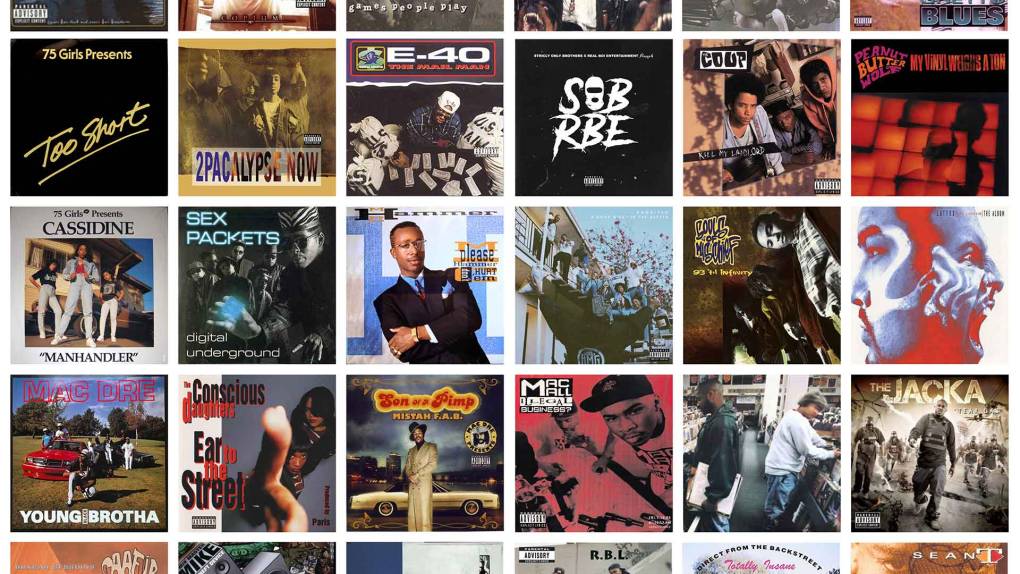
"altTag": "A grid of 18 album covers spanning bay area hip-hop history",
"isLoading": false,
"fetchFailed": false
},
"arts_13924401": {
"type": "attachments",
"id": "arts_13924401",
"meta": {
"index": "attachments_1716263798",
"site": "arts",
"id": "13924401",
"found": true
},
"parent": 13924170,
"imgSizes": {
"twentyfourteen-full-width": {
"file": "https://ww2.kqed.org/app/uploads/sites/2/2023/01/Saafir.Casual.H2H.SQ_-1038x576.jpg",
"width": 1038,
"mimeType": "image/jpeg",
"height": 576
},
"thumbnail": {
"file": "https://ww2.kqed.org/app/uploads/sites/2/2023/01/Saafir.Casual.H2H.SQ_-160x160.jpg",
"width": 160,
"mimeType": "image/jpeg",
"height": 160
},
"post-thumbnail": {
"file": "https://ww2.kqed.org/app/uploads/sites/2/2023/01/Saafir.Casual.H2H.SQ_-672x372.jpg",
"width": 672,
"mimeType": "image/jpeg",
"height": 372
},
"kqedFullSize": {
"file": "https://ww2.kqed.org/app/uploads/sites/2/2023/01/Saafir.Casual.H2H.SQ_.jpg",
"width": 1060,
"height": 1060
},
"large": {
"file": "https://ww2.kqed.org/app/uploads/sites/2/2023/01/Saafir.Casual.H2H.SQ_-1020x1020.jpg",
"width": 1020,
"mimeType": "image/jpeg",
"height": 1020
},
"medium": {
"file": "https://ww2.kqed.org/app/uploads/sites/2/2023/01/Saafir.Casual.H2H.SQ_-800x800.jpg",
"width": 800,
"mimeType": "image/jpeg",
"height": 800
},
"medium_large": {
"file": "https://ww2.kqed.org/app/uploads/sites/2/2023/01/Saafir.Casual.H2H.SQ_-768x768.jpg",
"width": 768,
"mimeType": "image/jpeg",
"height": 768
}
},
"publishDate": 1675020472,
"modified": 1675020548,
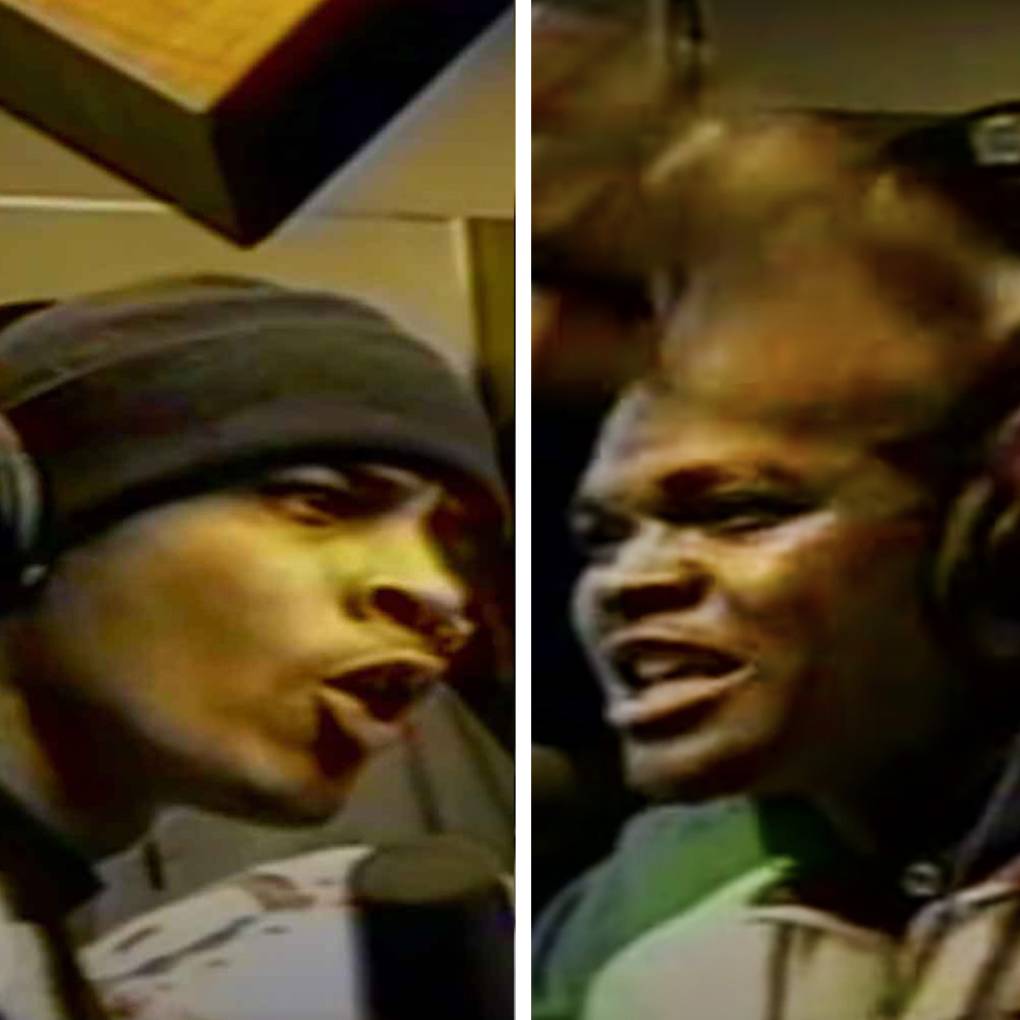
"caption": "Saafir and Casual (L–R) battled it out at KMEL studios in San Francisco, Nov. 18, 1994.",
"description": null,
"title": "Saafir.Casual.H2H.SQ",
"credit": "Alex Asher Daniel/Courtesy Skyfre Productions",
"status": "inherit",
"altTag": "A diptych of a man in a black beanie on the left and a man in a colorful jacket on the right, facing each other and both rapping into microphones",
"isLoading": false,
"fetchFailed": false
},
"arts_13924399": {
"type": "attachments",
"id": "arts_13924399",
"meta": {
"index": "attachments_1716263798",
"site": "arts",
"id": "13924399",
"found": true
},
"parent": 13924170,
"imgSizes": {
"twentyfourteen-full-width": {
"file": "https://ww2.kqed.org/app/uploads/sites/2/2023/01/Saafir.Casual.courtesy.ShomariSmith.2-1038x576.jpg",
"width": 1038,
"mimeType": "image/jpeg",
"height": 576
},
"thumbnail": {
"file": "https://ww2.kqed.org/app/uploads/sites/2/2023/01/Saafir.Casual.courtesy.ShomariSmith.2-160x90.jpg",
"width": 160,
"mimeType": "image/jpeg",
"height": 90
},
"post-thumbnail": {
"file": "https://ww2.kqed.org/app/uploads/sites/2/2023/01/Saafir.Casual.courtesy.ShomariSmith.2-672x372.jpg",
"width": 672,
"mimeType": "image/jpeg",
"height": 372
},
"kqedFullSize": {
"file": "https://ww2.kqed.org/app/uploads/sites/2/2023/01/Saafir.Casual.courtesy.ShomariSmith.2.jpg",
"width": 1884,
"height": 1060
},
"large": {
"file": "https://ww2.kqed.org/app/uploads/sites/2/2023/01/Saafir.Casual.courtesy.ShomariSmith.2-1020x574.jpg",
"width": 1020,
"mimeType": "image/jpeg",
"height": 574
},
"1536x1536": {
"file": "https://ww2.kqed.org/app/uploads/sites/2/2023/01/Saafir.Casual.courtesy.ShomariSmith.2-1536x864.jpg",
"width": 1536,
"mimeType": "image/jpeg",
"height": 864
},
"medium": {
"file": "https://ww2.kqed.org/app/uploads/sites/2/2023/01/Saafir.Casual.courtesy.ShomariSmith.2-800x450.jpg",
"width": 800,
"mimeType": "image/jpeg",
"height": 450
},
"medium_large": {
"file": "https://ww2.kqed.org/app/uploads/sites/2/2023/01/Saafir.Casual.courtesy.ShomariSmith.2-768x432.jpg",
"width": 768,
"mimeType": "image/jpeg",
"height": 432
}
},
"publishDate": 1675018969,
"modified": 1675019220,
"caption": "Saafir and Casual (L–R) battled it out at KMEL studios in San Francisco, Nov. 18, 1994.",
"description": null,
"title": "Saafir.Casual.courtesy.ShomariSmith.2",
"credit": "Alex Asher Daniel/Courtesy Skyfre Productions",
"status": "inherit",
"altTag": "A diptych of a man in a black beanie on the left and a man in a colorful jacket on the right, facing each other and both rapping into microphones",
"isLoading": false,
"fetchFailed": false
},
"arts_13924086": {
"type": "attachments",
"id": "arts_13924086",
"meta": {
"index": "attachments_1716263798",
"site": "arts",
"id": "13924086",
"found": true
},
"parent": 13924042,
"imgSizes": {
"twentyfourteen-full-width": {
"file": "https://ww2.kqed.org/app/uploads/sites/2/2023/01/c29a97dd-d8ee-4fa3-aa1a-cb0d4798fc62-929x576.jpg",
"width": 929,
"mimeType": "image/jpeg",
"height": 576
},
"thumbnail": {
"file": "https://ww2.kqed.org/app/uploads/sites/2/2023/01/c29a97dd-d8ee-4fa3-aa1a-cb0d4798fc62-160x160.jpg",
"width": 160,
"mimeType": "image/jpeg",
"height": 160
},
"post-thumbnail": {
"file": "https://ww2.kqed.org/app/uploads/sites/2/2023/01/c29a97dd-d8ee-4fa3-aa1a-cb0d4798fc62-672x372.jpg",
"width": 672,
"mimeType": "image/jpeg",
"height": 372
},
"kqedFullSize": {
"file": "https://ww2.kqed.org/app/uploads/sites/2/2023/01/c29a97dd-d8ee-4fa3-aa1a-cb0d4798fc62.jpg",
"width": 929,
"height": 929
},
"medium": {
"file": "https://ww2.kqed.org/app/uploads/sites/2/2023/01/c29a97dd-d8ee-4fa3-aa1a-cb0d4798fc62-800x800.jpg",
"width": 800,
"mimeType": "image/jpeg",
"height": 800
},
"medium_large": {
"file": "https://ww2.kqed.org/app/uploads/sites/2/2023/01/c29a97dd-d8ee-4fa3-aa1a-cb0d4798fc62-768x768.jpg",
"width": 768,
"mimeType": "image/jpeg",
"height": 768
}
},
"publishDate": 1674583331,
"modified": 1674583377,
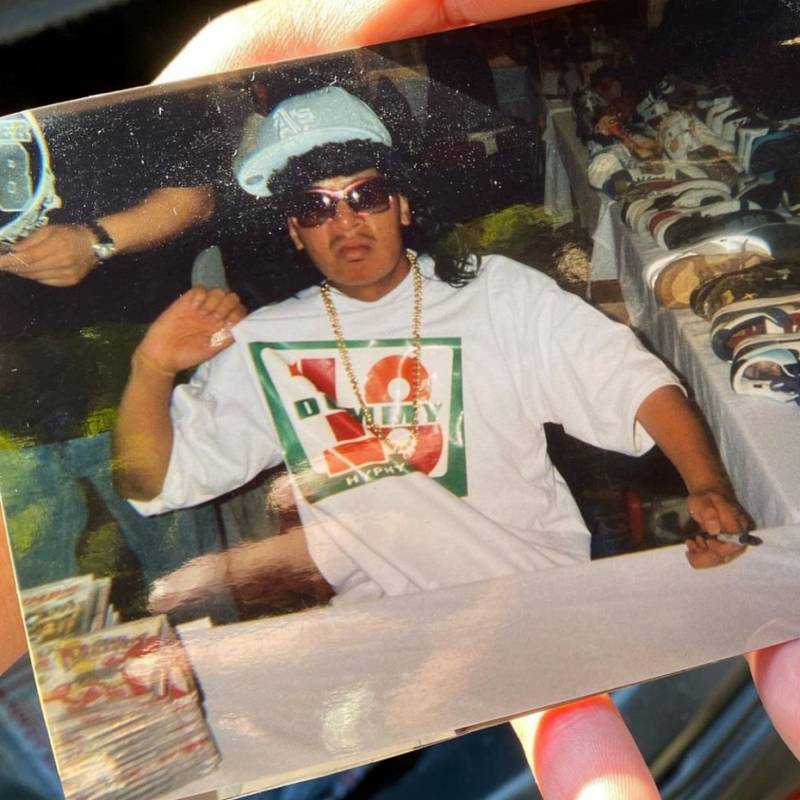
"caption": "Before his hit \"I Gott Grapes,\" Nump had a major hand in the hyphy movement, engineering tracks by The Federation, E-40, Mac Dre and Messy Marv. ",
"description": null,
"title": "c29a97dd-d8ee-4fa3-aa1a-cb0d4798fc62",
"credit": "Courtesy of Nump",
"status": "inherit",
"altTag": null,
"isLoading": false,
"fetchFailed": false
},
"arts_13924559": {
"type": "attachments",
"id": "arts_13924559",
"meta": {
"index": "attachments_1716263798",
"site": "arts",
"id": "13924559",
"found": true
},
"parent": 13923978,
"imgSizes": {
"twentyfourteen-full-width": {
"file": "https://ww2.kqed.org/app/uploads/sites/2/2023/01/DaveyD.KALX_.sq_-1038x576.jpg",
"width": 1038,
"mimeType": "image/jpeg",
"height": 576
},
"thumbnail": {
"file": "https://ww2.kqed.org/app/uploads/sites/2/2023/01/DaveyD.KALX_.sq_-160x160.jpg",
"width": 160,
"mimeType": "image/jpeg",
"height": 160
},
"post-thumbnail": {
"file": "https://ww2.kqed.org/app/uploads/sites/2/2023/01/DaveyD.KALX_.sq_-672x372.jpg",
"width": 672,
"mimeType": "image/jpeg",
"height": 372
},
"kqedFullSize": {
"file": "https://ww2.kqed.org/app/uploads/sites/2/2023/01/DaveyD.KALX_.sq_.jpg",
"width": 1529,
"height": 1529
},
"large": {
"file": "https://ww2.kqed.org/app/uploads/sites/2/2023/01/DaveyD.KALX_.sq_-1020x1020.jpg",
"width": 1020,
"mimeType": "image/jpeg",
"height": 1020
},
"medium": {
"file": "https://ww2.kqed.org/app/uploads/sites/2/2023/01/DaveyD.KALX_.sq_-800x800.jpg",
"width": 800,
"mimeType": "image/jpeg",
"height": 800
},
"medium_large": {
"file": "https://ww2.kqed.org/app/uploads/sites/2/2023/01/DaveyD.KALX_.sq_-768x768.jpg",
"width": 768,
"mimeType": "image/jpeg",
"height": 768
}
},
"publishDate": 1675239814,
"modified": 1675239845,
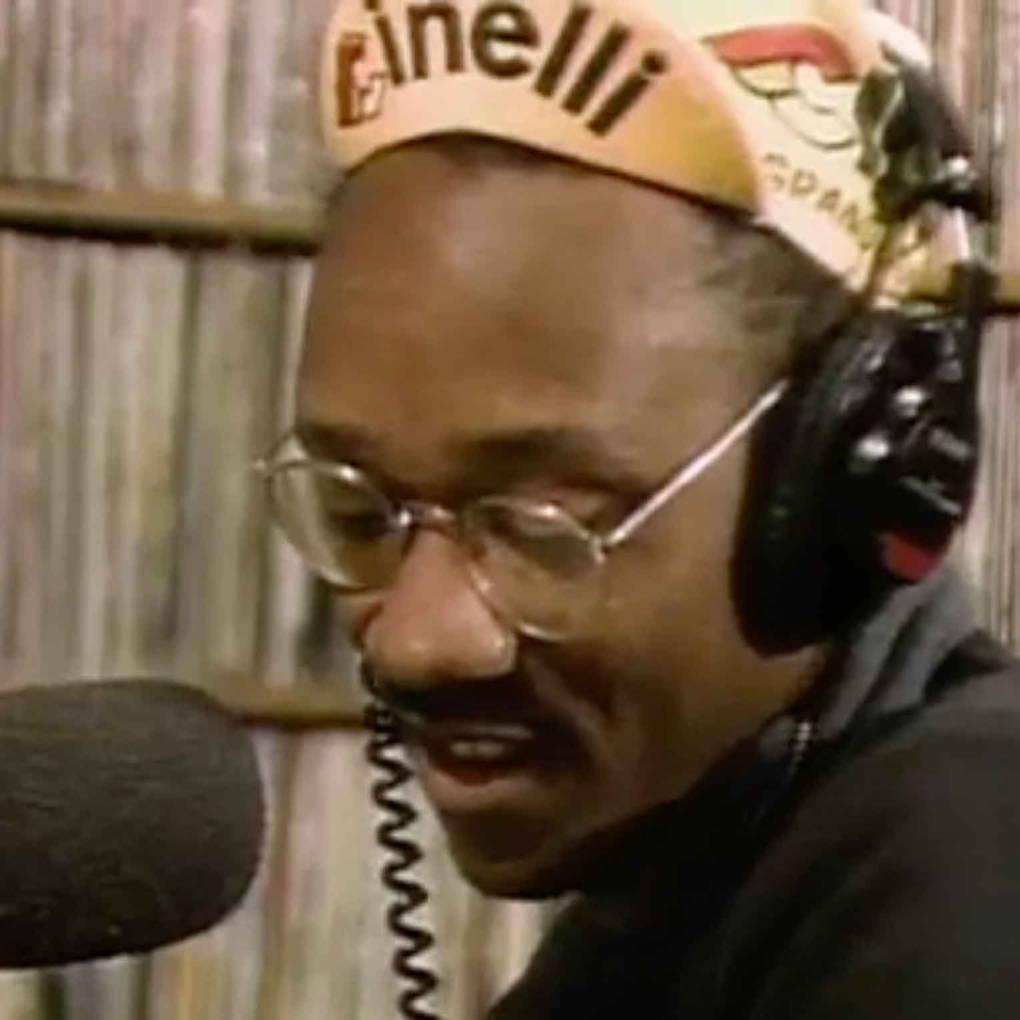
"caption": "Davey D is pictured here hosting his radio show on KALX in 1990. In the very early years of Bay Area hip-hop, Davey D says, the culture was still finding its place in society, and had yet to be defined.",
"description": null,
"title": "DaveyD.KALX.sq",
"credit": "KQED",
"status": "inherit",
"altTag": "A man in a yellow cycling cap talks into a microphone, with shelves of records in the background.",
"isLoading": false,
"fetchFailed": false
},
"arts_13924541": {
"type": "attachments",
"id": "arts_13924541",
"meta": {
"index": "attachments_1716263798",
"site": "arts",
"id": "13924541",
"found": true
},
"parent": 13923978,
"imgSizes": {
"twentyfourteen-full-width": {
"file": "https://ww2.kqed.org/app/uploads/sites/2/2023/01/DaveyD.KALX_.1990-1038x576.jpg",
"width": 1038,
"mimeType": "image/jpeg",
"height": 576
},
"thumbnail": {
"file": "https://ww2.kqed.org/app/uploads/sites/2/2023/01/DaveyD.KALX_.1990-160x104.jpg",
"width": 160,
"mimeType": "image/jpeg",
"height": 104
},
"post-thumbnail": {
"file": "https://ww2.kqed.org/app/uploads/sites/2/2023/01/DaveyD.KALX_.1990-672x372.jpg",
"width": 672,
"mimeType": "image/jpeg",
"height": 372
},
"kqedFullSize": {
"file": "https://ww2.kqed.org/app/uploads/sites/2/2023/01/DaveyD.KALX_.1990.jpg",
"width": 2350,
"height": 1529
},
"2048x2048": {
"file": "https://ww2.kqed.org/app/uploads/sites/2/2023/01/DaveyD.KALX_.1990-2048x1333.jpg",
"width": 2048,
"mimeType": "image/jpeg",
"height": 1333
},
"large": {
"file": "https://ww2.kqed.org/app/uploads/sites/2/2023/01/DaveyD.KALX_.1990-1020x664.jpg",
"width": 1020,
"mimeType": "image/jpeg",
"height": 664
},
"1536x1536": {
"file": "https://ww2.kqed.org/app/uploads/sites/2/2023/01/DaveyD.KALX_.1990-1536x999.jpg",
"width": 1536,
"mimeType": "image/jpeg",
"height": 999
},
"full-width": {
"file": "https://ww2.kqed.org/app/uploads/sites/2/2023/01/DaveyD.KALX_.1990-1920x1249.jpg",
"width": 1920,
"mimeType": "image/jpeg",
"height": 1249
},
"medium": {
"file": "https://ww2.kqed.org/app/uploads/sites/2/2023/01/DaveyD.KALX_.1990-800x521.jpg",
"width": 800,
"mimeType": "image/jpeg",
"height": 521
},
"medium_large": {
"file": "https://ww2.kqed.org/app/uploads/sites/2/2023/01/DaveyD.KALX_.1990-768x500.jpg",
"width": 768,
"mimeType": "image/jpeg",
"height": 500
}
},
"publishDate": 1675203539,
"modified": 1675203686,
"caption": "Davey D is pictured here hosting his radio show on KALX in 1990. In the very early years of Bay Area hip-hop, Davey D says, the culture was still finding its place in society, and had yet to be defined.",
"description": null,
"title": "DaveyD.KALX.1990",
"credit": "KQED",
"status": "inherit",
"altTag": "A man in a yellow cycling cap talks into a microphone, with shelves of records in the background.",
"isLoading": false,
"fetchFailed": false
},
"arts_13924461": {
"type": "attachments",
"id": "arts_13924461",
"meta": {
"index": "attachments_1716263798",
"site": "arts",
"id": "13924461",
"found": true
},
"parent": 13924375,
"imgSizes": {
"twentyfourteen-full-width": {
"file": "https://ww2.kqed.org/app/uploads/sites/2/2023/01/GettyImages-1169733361-1038x576.jpg",
"width": 1038,
"mimeType": "image/jpeg",
"height": 576
},
"thumbnail": {
"file": "https://ww2.kqed.org/app/uploads/sites/2/2023/01/GettyImages-1169733361-160x90.jpg",
"width": 160,
"mimeType": "image/jpeg",
"height": 90
},
"post-thumbnail": {
"file": "https://ww2.kqed.org/app/uploads/sites/2/2023/01/GettyImages-1169733361-672x372.jpg",
"width": 672,
"mimeType": "image/jpeg",
"height": 372
},
"kqedFullSize": {
"file": "https://ww2.kqed.org/app/uploads/sites/2/2023/01/GettyImages-1169733361.jpg",
"width": 1920,
"height": 1080
},
"large": {
"file": "https://ww2.kqed.org/app/uploads/sites/2/2023/01/GettyImages-1169733361-1020x574.jpg",
"width": 1020,
"mimeType": "image/jpeg",
"height": 574
},
"1536x1536": {
"file": "https://ww2.kqed.org/app/uploads/sites/2/2023/01/GettyImages-1169733361-1536x864.jpg",
"width": 1536,
"mimeType": "image/jpeg",
"height": 864
},
"medium": {
"file": "https://ww2.kqed.org/app/uploads/sites/2/2023/01/GettyImages-1169733361-800x450.jpg",
"width": 800,
"mimeType": "image/jpeg",
"height": 450
},
"medium_large": {
"file": "https://ww2.kqed.org/app/uploads/sites/2/2023/01/GettyImages-1169733361-768x432.jpg",
"width": 768,
"mimeType": "image/jpeg",
"height": 432
}
},
"publishDate": 1675121182,
"modified": 1675121269,
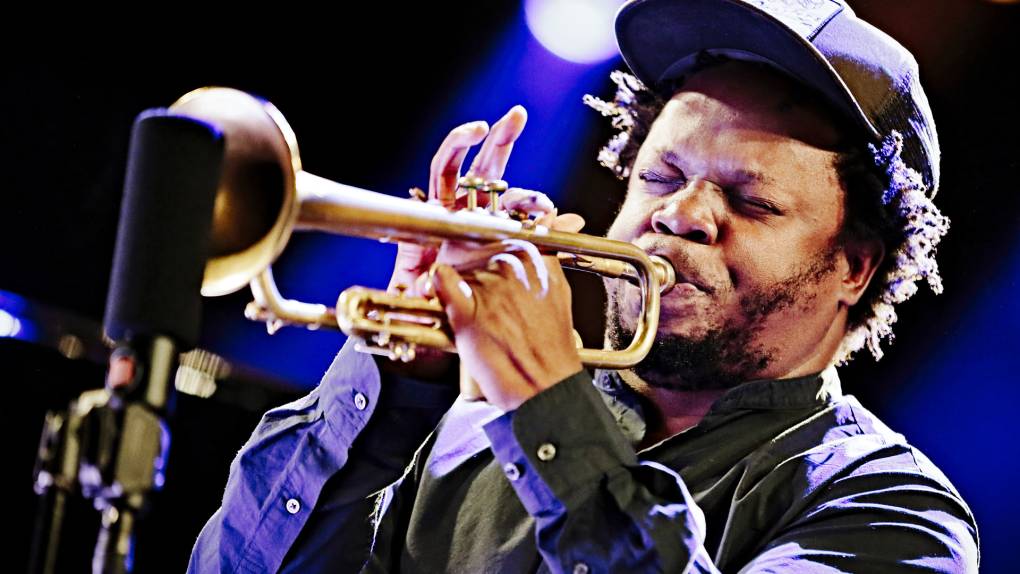
"caption": "Ambrose Akinmusire pictured in 2019. Akinmusire, who received his second Grammy nomination in November, will be skipping the award show in favor of his own residency at SFJAZZ, Feb. 3–5 and Feb. 9 at Grace Cathedral in San Francisco.",
"description": null,
"title": "GettyImages-1169733361",
"credit": "Peter Van Breukelen/Redferns/Getty Images",
"status": "inherit",
"altTag": "Black man in baseball cap plays trumpet with eyes closed",
"isLoading": false,
"fetchFailed": false
},
"arts_13924229": {
"type": "attachments",
"id": "arts_13924229",
"meta": {
"index": "attachments_1716263798",
"site": "arts",
"id": "13924229",
"found": true
},
"parent": 13924208,
"imgSizes": {
"twentyfourteen-full-width": {
"file": "https://ww2.kqed.org/app/uploads/sites/2/2023/01/GettyImages-104418996-1038x576.jpg",
"width": 1038,
"mimeType": "image/jpeg",
"height": 576
},
"thumbnail": {
"file": "https://ww2.kqed.org/app/uploads/sites/2/2023/01/GettyImages-104418996-160x118.jpg",
"width": 160,
"mimeType": "image/jpeg",
"height": 118
},
"post-thumbnail": {
"file": "https://ww2.kqed.org/app/uploads/sites/2/2023/01/GettyImages-104418996-672x372.jpg",
"width": 672,
"mimeType": "image/jpeg",
"height": 372
},
"kqedFullSize": {
"file": "https://ww2.kqed.org/app/uploads/sites/2/2023/01/GettyImages-104418996-scaled.jpg",
"width": 2560,
"height": 1882
},
"2048x2048": {
"file": "https://ww2.kqed.org/app/uploads/sites/2/2023/01/GettyImages-104418996-2048x1506.jpg",
"width": 2048,
"mimeType": "image/jpeg",
"height": 1506
},
"large": {
"file": "https://ww2.kqed.org/app/uploads/sites/2/2023/01/GettyImages-104418996-1020x750.jpg",
"width": 1020,
"mimeType": "image/jpeg",
"height": 750
},
"1536x1536": {
"file": "https://ww2.kqed.org/app/uploads/sites/2/2023/01/GettyImages-104418996-1536x1129.jpg",
"width": 1536,
"mimeType": "image/jpeg",
"height": 1129
},
"full-width": {
"file": "https://ww2.kqed.org/app/uploads/sites/2/2023/01/GettyImages-104418996-1920x1412.jpg",
"width": 1920,
"mimeType": "image/jpeg",
"height": 1412
},
"medium": {
"file": "https://ww2.kqed.org/app/uploads/sites/2/2023/01/GettyImages-104418996-800x588.jpg",
"width": 800,
"mimeType": "image/jpeg",
"height": 588
},
"medium_large": {
"file": "https://ww2.kqed.org/app/uploads/sites/2/2023/01/GettyImages-104418996-768x565.jpg",
"width": 768,
"mimeType": "image/jpeg",
"height": 565
}
},
"publishDate": 1674698635,
"modified": 1674698931,
"caption": "Elephant murdering ghoul-man Thomas Edison poses with his phonograph, an early form of record player that played tin and wax cylinders. West Orange, New Jersey, 1906.",
"description": null,
"title": "Elephant murdering ghoul-man Thomas Edison poses with his phonograph, an early form of record player that played tin and wax cylinders. West Orange, New Jersey, 1906.",
"credit": "Keystone-France/Gamma-Keystone via Getty Images",
"status": "inherit",
"altTag": null,
"isLoading": false,
"fetchFailed": false
},
"arts_13924049": {
"type": "attachments",
"id": "arts_13924049",
"meta": {
"index": "attachments_1716263798",
"site": "arts",
"id": "13924049",
"found": true
},
"parent": 13924014,
"imgSizes": {
"twentyfourteen-full-width": {
"file": "https://ww2.kqed.org/app/uploads/sites/2/2023/01/46-1038x576.png",
"width": 1038,
"mimeType": "image/png",
"height": 576
},
"thumbnail": {
"file": "https://ww2.kqed.org/app/uploads/sites/2/2023/01/46-160x90.png",
"width": 160,
"mimeType": "image/png",
"height": 90
},
"post-thumbnail": {
"file": "https://ww2.kqed.org/app/uploads/sites/2/2023/01/46-672x372.png",
"width": 672,
"mimeType": "image/png",
"height": 372
},
"kqedFullSize": {
"file": "https://ww2.kqed.org/app/uploads/sites/2/2023/01/46.png",
"width": 1920,
"height": 1080
},
"large": {
"file": "https://ww2.kqed.org/app/uploads/sites/2/2023/01/46-1020x574.png",
"width": 1020,
"mimeType": "image/png",
"height": 574
},
"1536x1536": {
"file": "https://ww2.kqed.org/app/uploads/sites/2/2023/01/46-1536x864.png",
"width": 1536,
"mimeType": "image/png",
"height": 864
},
"medium": {
"file": "https://ww2.kqed.org/app/uploads/sites/2/2023/01/46-800x450.png",
"width": 800,
"mimeType": "image/png",
"height": 450
},
"medium_large": {
"file": "https://ww2.kqed.org/app/uploads/sites/2/2023/01/46-768x432.png",
"width": 768,
"mimeType": "image/png",
"height": 432
}
},
"publishDate": 1674518887,
"modified": 1674519816,
"caption": "Seiji Oda is proud to represent a fusion of influences in his music.",
"description": null,
"title": "46",
"credit": "theclaydoe / Instagram",
"status": "inherit",
"altTag": "a young Asian-American presenting man in a yellow shirt and brown pants poses against a wall",
"isLoading": false,
"fetchFailed": false
},
"arts_13923984": {
"type": "attachments",
"id": "arts_13923984",
"meta": {
"index": "attachments_1716263798",
"site": "arts",
"id": "13923984",
"found": true
},
"parent": 13923980,
"imgSizes": {
"twentyfourteen-full-width": {
"file": "https://ww2.kqed.org/app/uploads/sites/2/2023/01/Screen-Shot-2023-01-23-at-10.37.16-AM-1038x576.png",
"width": 1038,
"mimeType": "image/png",
"height": 576
},
"thumbnail": {
"file": "https://ww2.kqed.org/app/uploads/sites/2/2023/01/Screen-Shot-2023-01-23-at-10.37.16-AM-160x104.png",
"width": 160,
"mimeType": "image/png",
"height": 104
},
"post-thumbnail": {
"file": "https://ww2.kqed.org/app/uploads/sites/2/2023/01/Screen-Shot-2023-01-23-at-10.37.16-AM-672x372.png",
"width": 672,
"mimeType": "image/png",
"height": 372
},
"kqedFullSize": {
"file": "https://ww2.kqed.org/app/uploads/sites/2/2023/01/Screen-Shot-2023-01-23-at-10.37.16-AM.png",
"width": 1932,
"height": 1252
},
"large": {
"file": "https://ww2.kqed.org/app/uploads/sites/2/2023/01/Screen-Shot-2023-01-23-at-10.37.16-AM-1020x661.png",
"width": 1020,
"mimeType": "image/png",
"height": 661
},
"1536x1536": {
"file": "https://ww2.kqed.org/app/uploads/sites/2/2023/01/Screen-Shot-2023-01-23-at-10.37.16-AM-1536x995.png",
"width": 1536,
"mimeType": "image/png",
"height": 995
},
"full-width": {
"file": "https://ww2.kqed.org/app/uploads/sites/2/2023/01/Screen-Shot-2023-01-23-at-10.37.16-AM-1920x1244.png",
"width": 1920,
"mimeType": "image/png",
"height": 1244
},
"medium": {
"file": "https://ww2.kqed.org/app/uploads/sites/2/2023/01/Screen-Shot-2023-01-23-at-10.37.16-AM-800x518.png",
"width": 800,
"mimeType": "image/png",
"height": 518
},
"medium_large": {
"file": "https://ww2.kqed.org/app/uploads/sites/2/2023/01/Screen-Shot-2023-01-23-at-10.37.16-AM-768x498.png",
"width": 768,
"mimeType": "image/png",
"height": 498
}
},
"publishDate": 1674499049,
"modified": 1674499185,
"caption": "Members of the Grant Avenue Follies, a senior cabaret dance troupe based in San Francisco’s Chinatown, collaborated with rapper Jason Chu on the Lunar New Year song “That Lunar Cheer.”",
"description": null,
"title": "Members of the Grant Avenue Follies, a senior cabaret dance troupe based in San Francisco’s Chinatown, collaborated with rapper Jason Chu on the Lunar New Year song “That Lunar Cheer.”",
"credit": "IW Group",
"status": "inherit",
"altTag": "A young Asian man crouches on the floor wearing track suit and red beanie, with a proud expression. Behind him three senior Asian women pose in red Adidas track suits.",
"isLoading": false,
"fetchFailed": false
},
"arts_13923885": {
"type": "attachments",
"id": "arts_13923885",
"meta": {
"index": "attachments_1716263798",
"site": "arts",
"id": "13923885",
"found": true
},
"parent": 13923883,
"imgSizes": {
"twentyfourteen-full-width": {
"file": "https://ww2.kqed.org/app/uploads/sites/2/2023/01/gettyimages-1152157889_wide-48ba17e8da248ac0593df80d88fffb320ac89111-1-1038x576.jpg",
"width": 1038,
"mimeType": "image/jpeg",
"height": 576
},
"thumbnail": {
"file": "https://ww2.kqed.org/app/uploads/sites/2/2023/01/gettyimages-1152157889_wide-48ba17e8da248ac0593df80d88fffb320ac89111-1-160x90.jpg",
"width": 160,
"mimeType": "image/jpeg",
"height": 90
},
"post-thumbnail": {
"file": "https://ww2.kqed.org/app/uploads/sites/2/2023/01/gettyimages-1152157889_wide-48ba17e8da248ac0593df80d88fffb320ac89111-1-672x372.jpg",
"width": 672,
"mimeType": "image/jpeg",
"height": 372
},
"kqedFullSize": {
"file": "https://ww2.kqed.org/app/uploads/sites/2/2023/01/gettyimages-1152157889_wide-48ba17e8da248ac0593df80d88fffb320ac89111-1-scaled.jpg",
"width": 2560,
"height": 1440
},
"2048x2048": {
"file": "https://ww2.kqed.org/app/uploads/sites/2/2023/01/gettyimages-1152157889_wide-48ba17e8da248ac0593df80d88fffb320ac89111-1-2048x1152.jpg",
"width": 2048,
"mimeType": "image/jpeg",
"height": 1152
},
"large": {
"file": "https://ww2.kqed.org/app/uploads/sites/2/2023/01/gettyimages-1152157889_wide-48ba17e8da248ac0593df80d88fffb320ac89111-1-1020x574.jpg",
"width": 1020,
"mimeType": "image/jpeg",
"height": 574
},
"1536x1536": {
"file": "https://ww2.kqed.org/app/uploads/sites/2/2023/01/gettyimages-1152157889_wide-48ba17e8da248ac0593df80d88fffb320ac89111-1-1536x864.jpg",
"width": 1536,
"mimeType": "image/jpeg",
"height": 864
},
"full-width": {
"file": "https://ww2.kqed.org/app/uploads/sites/2/2023/01/gettyimages-1152157889_wide-48ba17e8da248ac0593df80d88fffb320ac89111-1-1920x1080.jpg",
"width": 1920,
"mimeType": "image/jpeg",
"height": 1080
},
"medium": {
"file": "https://ww2.kqed.org/app/uploads/sites/2/2023/01/gettyimages-1152157889_wide-48ba17e8da248ac0593df80d88fffb320ac89111-1-800x450.jpg",
"width": 800,
"mimeType": "image/jpeg",
"height": 450
},
"medium_large": {
"file": "https://ww2.kqed.org/app/uploads/sites/2/2023/01/gettyimages-1152157889_wide-48ba17e8da248ac0593df80d88fffb320ac89111-1-768x432.jpg",
"width": 768,
"mimeType": "image/jpeg",
"height": 432
}
},
"publishDate": 1674172953,
"modified": 1674173139,
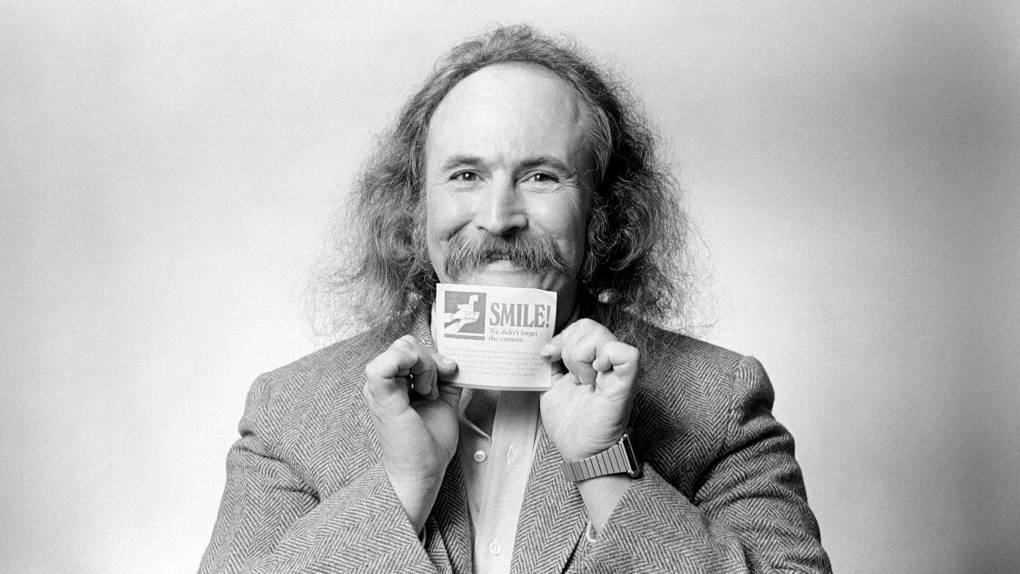
"caption": "David Crosby, photographed in New York on Aug. 3, 1984.",
"description": "David Crosby, photographed in New York on August 3, 1984.",
"title": "David Crosby, photographed in New York on August 3, 1984.",
"credit": "Ebet Roberts/Redferns",
"status": "inherit",
"altTag": "a black and white photo of a middle aged man with long hair and a mustache holding a card that reads 'smile!'",
"isLoading": false,
"fetchFailed": false
},
"arts_13923695": {
"type": "attachments",
"id": "arts_13923695",
"meta": {
"index": "attachments_1716263798",
"site": "arts",
"id": "13923695",
"found": true
},
"parent": 13923694,
"imgSizes": {
"twentyfourteen-full-width": {
"file": "https://ww2.kqed.org/app/uploads/sites/2/2023/01/SFJAZZ.10thAnniv-1038x576.jpg",
"width": 1038,
"mimeType": "image/jpeg",
"height": 576
},
"thumbnail": {
"file": "https://ww2.kqed.org/app/uploads/sites/2/2023/01/SFJAZZ.10thAnniv-160x96.jpg",
"width": 160,
"mimeType": "image/jpeg",
"height": 96
},
"post-thumbnail": {
"file": "https://ww2.kqed.org/app/uploads/sites/2/2023/01/SFJAZZ.10thAnniv-672x372.jpg",
"width": 672,
"mimeType": "image/jpeg",
"height": 372
},
"kqedFullSize": {
"file": "https://ww2.kqed.org/app/uploads/sites/2/2023/01/SFJAZZ.10thAnniv.jpg",
"width": 1920,
"height": 1151
},
"large": {
"file": "https://ww2.kqed.org/app/uploads/sites/2/2023/01/SFJAZZ.10thAnniv-1020x611.jpg",
"width": 1020,
"mimeType": "image/jpeg",
"height": 611
},
"1536x1536": {
"file": "https://ww2.kqed.org/app/uploads/sites/2/2023/01/SFJAZZ.10thAnniv-1536x921.jpg",
"width": 1536,
"mimeType": "image/jpeg",
"height": 921
},
"medium": {
"file": "https://ww2.kqed.org/app/uploads/sites/2/2023/01/SFJAZZ.10thAnniv-800x480.jpg",
"width": 800,
"mimeType": "image/jpeg",
"height": 480
},
"medium_large": {
"file": "https://ww2.kqed.org/app/uploads/sites/2/2023/01/SFJAZZ.10thAnniv-768x460.jpg",
"width": 768,
"mimeType": "image/jpeg",
"height": 460
}
},
"publishDate": 1673632981,
"modified": 1673633077,
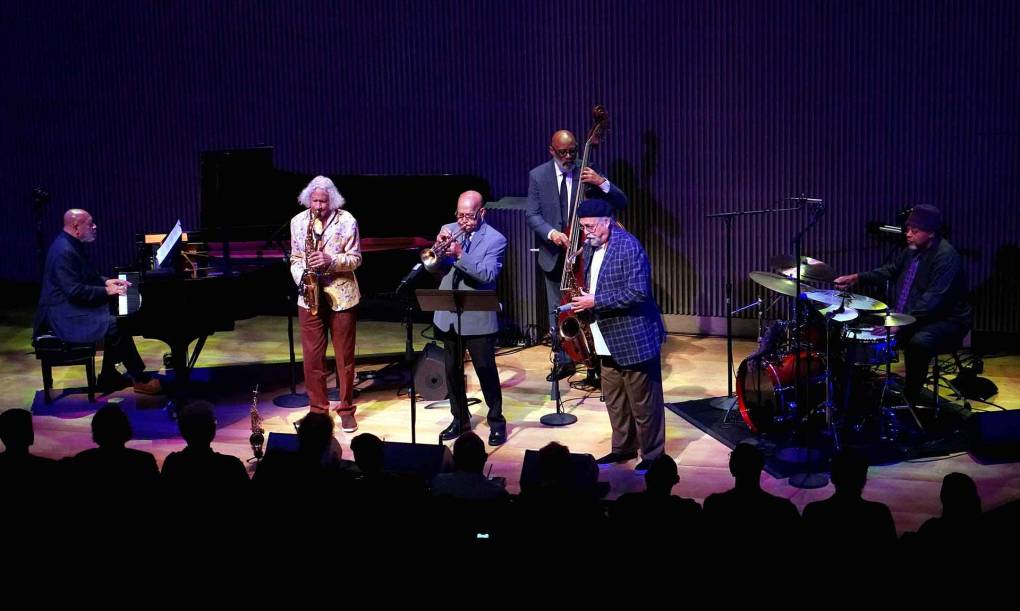
"caption": "(L–R) Kenny Barron, Gary Bartz, Eddie Henderson, Gerald Cannon, Joe Lovano and Jeff 'Tain' Watts celebrate the music of McCoy Tyner as part of SFJAZZ's 10th anniversary weekend on Jan. 12, 2023.",
"description": null,
"title": "SFJAZZ.10thAnniv",
"credit": "Rick Swig/SFJAZZ",
"status": "inherit",
"altTag": "Six men, playing piano, horns, bass and drums, perform on a dimly lit stage.",
"isLoading": false,
"fetchFailed": false
},
"arts_13923692": {
"type": "attachments",
"id": "arts_13923692",
"meta": {
"index": "attachments_1716263798",
"site": "arts",
"id": "13923692",
"found": true
},
"parent": 13923691,
"imgSizes": {
"twentyfourteen-full-width": {
"file": "https://ww2.kqed.org/app/uploads/sites/2/2023/01/LisaMarie-1024x576.jpg",
"width": 1024,
"mimeType": "image/jpeg",
"height": 576
},
"thumbnail": {
"file": "https://ww2.kqed.org/app/uploads/sites/2/2023/01/LisaMarie-160x115.jpg",
"width": 160,
"mimeType": "image/jpeg",
"height": 115
},
"post-thumbnail": {
"file": "https://ww2.kqed.org/app/uploads/sites/2/2023/01/LisaMarie-672x372.jpg",
"width": 672,
"mimeType": "image/jpeg",
"height": 372
},
"kqedFullSize": {
"file": "https://ww2.kqed.org/app/uploads/sites/2/2023/01/LisaMarie.jpg",
"width": 1024,
"height": 736
},
"large": {
"file": "https://ww2.kqed.org/app/uploads/sites/2/2023/01/LisaMarie-1020x733.jpg",
"width": 1020,
"mimeType": "image/jpeg",
"height": 733
},
"medium": {
"file": "https://ww2.kqed.org/app/uploads/sites/2/2023/01/LisaMarie-800x575.jpg",
"width": 800,
"mimeType": "image/jpeg",
"height": 575
},
"medium_large": {
"file": "https://ww2.kqed.org/app/uploads/sites/2/2023/01/LisaMarie-768x552.jpg",
"width": 768,
"mimeType": "image/jpeg",
"height": 552
}
},
"publishDate": 1673630971,
"modified": 1673631041,
"caption": "Lisa Marie Presley performs in 2014 to promote her album 'Storm & Grace' at the Blue Note in Tokyo, Japan. ",
"description": null,
"title": "Lisa Marie Presley Promotes New Album 'Storm and Grace'",
"credit": "Jun Sato/WireImage",
"status": "inherit",
"altTag": "A woman in a black dress holding a gold microphone against a black background",
"isLoading": false,
"fetchFailed": false
},
"arts_13870177": {
"type": "attachments",
"id": "arts_13870177",
"meta": {
"index": "attachments_1716263798",
"site": "arts",
"id": "13870177",
"found": true
},
"parent": 13870176,
"imgSizes": {
"twentyfourteen-full-width": {
"file": "https://ww2.kqed.org/app/uploads/sites/2/2019/11/gettyimages-1170417591-dec86ec1339c9bcd0f2c9e2b029ec46880caa8d2-1038x576.jpg",
"width": 1038,
"mimeType": "image/jpeg",
"height": 576
},
"thumbnail": {
"file": "https://ww2.kqed.org/app/uploads/sites/2/2019/11/gettyimages-1170417591-dec86ec1339c9bcd0f2c9e2b029ec46880caa8d2-160x120.jpg",
"width": 160,
"mimeType": "image/jpeg",
"height": 120
},
"post-thumbnail": {
"file": "https://ww2.kqed.org/app/uploads/sites/2/2019/11/gettyimages-1170417591-dec86ec1339c9bcd0f2c9e2b029ec46880caa8d2-672x372.jpg",
"width": 672,
"mimeType": "image/jpeg",
"height": 372
},
"kqedFullSize": {
"file": "https://ww2.kqed.org/app/uploads/sites/2/2019/11/gettyimages-1170417591-dec86ec1339c9bcd0f2c9e2b029ec46880caa8d2.jpg",
"width": 3996,
"height": 2997
},
"large": {
"file": "https://ww2.kqed.org/app/uploads/sites/2/2019/11/gettyimages-1170417591-dec86ec1339c9bcd0f2c9e2b029ec46880caa8d2-1020x765.jpg",
"width": 1020,
"mimeType": "image/jpeg",
"height": 765
},
"complete_open_graph": {
"file": "https://ww2.kqed.org/app/uploads/sites/2/2019/11/gettyimages-1170417591-dec86ec1339c9bcd0f2c9e2b029ec46880caa8d2-1200x900.jpg",
"width": 1200,
"mimeType": "image/jpeg",
"height": 900
},
"full-width": {
"file": "https://ww2.kqed.org/app/uploads/sites/2/2019/11/gettyimages-1170417591-dec86ec1339c9bcd0f2c9e2b029ec46880caa8d2-1920x1440.jpg",
"width": 1920,
"mimeType": "image/jpeg",
"height": 1440
},
"medium": {
"file": "https://ww2.kqed.org/app/uploads/sites/2/2019/11/gettyimages-1170417591-dec86ec1339c9bcd0f2c9e2b029ec46880caa8d2-800x600.jpg",
"width": 800,
"mimeType": "image/jpeg",
"height": 600
},
"medium_large": {
"file": "https://ww2.kqed.org/app/uploads/sites/2/2019/11/gettyimages-1170417591-dec86ec1339c9bcd0f2c9e2b029ec46880caa8d2-768x576.jpg",
"width": 768,
"mimeType": "image/jpeg",
"height": 576
}
},
"publishDate": 1574331498,
"modified": 1673289385,
"caption": "Lizzo and Lil Nas X, both nominees for best new artist at the 2020 Grammys, during the 2019 MTV Video Music Awards on August 26, 2019.",
"description": "Lizzo and Lil Nas X, both nominees for best new artist at the 2020 Grammys, during the 2019 MTV Video Music Awards on August 26, 2019.",
"title": "Lizzo and Lil Nas X, both nominees for best new artist at the 2020 Grammys, during the 2019 MTV Video Music Awards on August 26, 2019.",
"credit": "Getty Images",
"status": "inherit",
"altTag": null,
"isLoading": false,
"fetchFailed": false
}
},
"audioPlayerReducer": {
"postId": "stream_live",
"isPaused": true,
"isPlaying": false,
"pfsActive": false,
"pledgeModalIsOpen": true,
"playerDrawerIsOpen": false,
"liveAudioPlayStartedAt": 0,
"liveAudioPlayContext": ""
},
"authorsReducer": {
"byline_arts_13924224": {
"type": "authors",
"id": "byline_arts_13924224",
"meta": {
"override": true
},
"slug": "byline_arts_13924224",
"name": "That's My Word ",
"isLoading": false
},
"byline_arts_13923980": {
"type": "authors",
"id": "byline_arts_13923980",
"meta": {
"override": true
},
"slug": "byline_arts_13923980",
"name": "Chloe Veltman",
"isLoading": false
},
"byline_arts_13923883": {
"type": "authors",
"id": "byline_arts_13923883",
"meta": {
"override": true
},
"slug": "byline_arts_13923883",
"name": "Annie Zaleski",
"isLoading": false
},
"byline_arts_13923691": {
"type": "authors",
"id": "byline_arts_13923691",
"meta": {
"override": true
},
"slug": "byline_arts_13923691",
"name": "Kristin M. Hall and Hillel Italie, Associated Press",
"isLoading": false
},
"gmeline": {
"type": "authors",
"id": "185",
"meta": {
"index": "authors_1716337520",
"id": "185",
"found": true
},
"name": "Gabe Meline",
"firstName": "Gabe",
"lastName": "Meline",
"slug": "gmeline",
"email": "gmeline@kqed.org",
"display_author_email": true,
"staff_mastheads": [
"arts"
],
"title": "Senior Editor, KQED Arts & Culture",
"bio": "Gabe Meline entered journalism at age 15 making photocopied zines, and has since earned awards from the Edward R. Murrow Awards, the Society for Professional Journalists, the Online Journalism Awards, the Association of Alternative Newsweeklies and the California Newspaper Publishers Association. Prior to KQED, he was the editor of the \u003cem>North Bay Bohemian\u003c/em> and a touring musician. He lives with his wife and daughter in his hometown of Santa Rosa, CA.",
"avatar": "https://secure.gravatar.com/avatar/5bebe57be0d8bc2dd318934feb47299e2d2d10cba28d09d8d7afb389a2ce2bdd?s=600&d=blank&r=g",
"twitter": null,
"bluesky": null,
"facebook": null,
"instagram": null,
"linkedin": null,
"sites": [
{
"site": "",
"roles": [
"editor"
]
},
{
"site": "arts",
"roles": [
"administrator"
]
},
{
"site": "artschool",
"roles": [
"editor"
]
},
{
"site": "news",
"roles": [
"author"
]
},
{
"site": "pop",
"roles": [
"editor"
]
},
{
"site": "bayareabites",
"roles": [
"editor"
]
},
{
"site": "food",
"roles": [
"editor"
]
},
{
"site": "forum",
"roles": [
"administrator"
]
},
{
"site": "liveblog",
"roles": [
"editor"
]
},
{
"site": "hiphop",
"roles": [
"editor"
]
}
],
"headData": {
"title": "Gabe Meline | KQED",
"description": "Senior Editor, KQED Arts & Culture",
"ogImgSrc": "https://secure.gravatar.com/avatar/5bebe57be0d8bc2dd318934feb47299e2d2d10cba28d09d8d7afb389a2ce2bdd?s=600&d=blank&r=g",
"twImgSrc": "https://secure.gravatar.com/avatar/5bebe57be0d8bc2dd318934feb47299e2d2d10cba28d09d8d7afb389a2ce2bdd?s=600&d=blank&r=g"
},
"isLoading": false,
"link": "/author/gmeline"
},
"ralexandra": {
"type": "authors",
"id": "11242",
"meta": {
"index": "authors_1716337520",
"id": "11242",
"found": true
},
"name": "Rae Alexandra",
"firstName": "Rae",
"lastName": "Alexandra",
"slug": "ralexandra",
"email": "ralexandra@kqed.org",
"display_author_email": true,
"staff_mastheads": [],
"title": "Reporter/Producer",
"bio": "Rae Alexandra is a Reporter/Producer for KQED Arts & Culture, and the creator/author of the \u003ca href=\"https://www.kqed.org/arts/program/rebel-girls-from-bay-area-history\">Rebel Girls From Bay Area History\u003c/a> and \u003ca href=\"https://www.kqed.org/bizarrebayarea\">Bizarre Bay Area\u003c/a> series. Her debut book, \u003ca href=\"https://citylights.com/politics-current-events-history/unsung-heroines35-women-who-changed/\">Unsung Heroines: 35 Women Who Changed the Bay Area\u003c/a> was published by City Lights in March 2026. In 2023, Rae was awarded an SPJ Excellence in Journalism Award for Arts & Culture. Rae was born and raised in Wales and subsequently — even after two decades in Northern California — still uses phrases that regularly baffle her coworkers.",
"avatar": "https://secure.gravatar.com/avatar/edfee8176c80cc0a382b051190f5341997df378a934a5774dcb0977732dfd401?s=600&d=blank&r=g",
"twitter": null,
"bluesky": null,
"facebook": null,
"instagram": null,
"linkedin": null,
"sites": [
{
"site": "arts",
"roles": [
"subscriber"
]
},
{
"site": "news",
"roles": [
"subscriber"
]
},
{
"site": "pop",
"roles": [
"subscriber"
]
},
{
"site": "bayareabites",
"roles": [
"subscriber"
]
},
{
"site": "science",
"roles": [
"subscriber"
]
}
],
"headData": {
"title": "Rae Alexandra | KQED",
"description": "Reporter/Producer",
"ogImgSrc": "https://secure.gravatar.com/avatar/edfee8176c80cc0a382b051190f5341997df378a934a5774dcb0977732dfd401?s=600&d=blank&r=g",
"twImgSrc": "https://secure.gravatar.com/avatar/edfee8176c80cc0a382b051190f5341997df378a934a5774dcb0977732dfd401?s=600&d=blank&r=g"
},
"isLoading": false,
"link": "/author/ralexandra"
},
"aproehl": {
"type": "authors",
"id": "11296",
"meta": {
"index": "authors_1716337520",
"id": "11296",
"found": true
},
"name": "Ariana Proehl",
"firstName": "Ariana",
"lastName": "Proehl",
"slug": "aproehl",
"email": "aproehl@KQED.org",
"display_author_email": true,
"staff_mastheads": [
"news"
],
"title": "Culture Reporter, KQED",
"bio": "Ariana Proehl is a Culture Reporter and Host.",
"avatar": "https://secure.gravatar.com/avatar/c96b24567eb5bb3a4f8bb295ed53e232?s=600&d=blank&r=g",
"twitter": "ArianaProehl",
"facebook": null,
"instagram": null,
"linkedin": null,
"sites": [
{
"site": "arts",
"roles": []
},
{
"site": "news",
"roles": []
},
{
"site": "education",
"roles": []
},
{
"site": "forum",
"roles": []
}
],
"headData": {
"title": "Ariana Proehl | KQED",
"description": "Culture Reporter, KQED",
"ogImgSrc": "https://secure.gravatar.com/avatar/c96b24567eb5bb3a4f8bb295ed53e232?s=600&d=blank&r=g",
"twImgSrc": "https://secure.gravatar.com/avatar/c96b24567eb5bb3a4f8bb295ed53e232?s=600&d=blank&r=g"
},
"isLoading": false,
"link": "/author/aproehl"
},
"nvoynovskaya": {
"type": "authors",
"id": "11387",
"meta": {
"index": "authors_1716337520",
"id": "11387",
"found": true
},
"name": "Nastia Voynovskaya",
"firstName": "Nastia",
"lastName": "Voynovskaya",
"slug": "nvoynovskaya",
"email": "nvoynovskaya@kqed.org",
"display_author_email": false,
"staff_mastheads": [
"arts"
],
"title": "Editor and reporter",
"bio": "Nastia Voynovskaya is a reporter, editor and host at KQED Arts & Culture. She's been covering the arts in the Bay Area for over a decade, with a focus on music, queer culture, labor issues and grassroots organizing. She has edited KQED story series such as Trans Bay: A History of San Francisco's Gender-Diverse Community, and co-created KQED's Bay Area hip-hop history project, That's My Word. Nastia's work has been recognized by the Society of Professional Journalists and San Francisco Press Club. She regularly appears on podcasts and radio programs, including NPR's All Songs Considered, and hosts live events where music, culture and conversation meet.",
"avatar": "https://secure.gravatar.com/avatar/5025ee460e5a85d69ca20ea6c6f2f80d7e17795c828f61ea3aecfcd924e9042e?s=600&d=blank&r=g",
"twitter": null,
"bluesky": null,
"facebook": null,
"instagram": "https://www.instagram.com/nananastia/",
"linkedin": null,
"sites": [
{
"site": "",
"roles": [
"editor"
]
},
{
"site": "arts",
"roles": [
"administrator"
]
},
{
"site": "news",
"roles": [
"editor"
]
},
{
"site": "pop",
"roles": [
"administrator"
]
},
{
"site": "bayareabites",
"roles": [
"editor"
]
},
{
"site": "podcasts",
"roles": [
"editor"
]
},
{
"site": "hiphop",
"roles": [
"editor"
]
}
],
"headData": {
"title": "Nastia Voynovskaya | KQED",
"description": "Editor and reporter",
"ogImgSrc": "https://secure.gravatar.com/avatar/5025ee460e5a85d69ca20ea6c6f2f80d7e17795c828f61ea3aecfcd924e9042e?s=600&d=blank&r=g",
"twImgSrc": "https://secure.gravatar.com/avatar/5025ee460e5a85d69ca20ea6c6f2f80d7e17795c828f61ea3aecfcd924e9042e?s=600&d=blank&r=g"
},
"isLoading": false,
"link": "/author/nvoynovskaya"
},
"ogpenn": {
"type": "authors",
"id": "11491",
"meta": {
"index": "authors_1716337520",
"id": "11491",
"found": true
},
"name": "Pendarvis Harshaw",
"firstName": "Pendarvis",
"lastName": "Harshaw",
"slug": "ogpenn",
"email": "ogpenn@gmail.com",
"display_author_email": false,
"staff_mastheads": [
"arts"
],
"title": "Community Engagement Reporter",
"bio": "Pendarvis Harshaw is an educator, host and writer with KQED Arts.",
"avatar": "https://secure.gravatar.com/avatar/972b77ee8e3f346ae2b00622661187fbfabd059b5693bbdc1475ea7a722fd4cd?s=600&d=blank&r=g",
"twitter": null,
"bluesky": null,
"facebook": null,
"instagram": "ogpenn",
"linkedin": null,
"sites": [
{
"site": "arts",
"roles": [
"administrator"
]
},
{
"site": "news",
"roles": [
"editor"
]
},
{
"site": "bayareabites",
"roles": [
"author"
]
},
{
"site": "hiphop",
"roles": [
"editor"
]
}
],
"headData": {
"title": "Pendarvis Harshaw | KQED",
"description": "Community Engagement Reporter",
"ogImgSrc": "https://secure.gravatar.com/avatar/972b77ee8e3f346ae2b00622661187fbfabd059b5693bbdc1475ea7a722fd4cd?s=600&d=blank&r=g",
"twImgSrc": "https://secure.gravatar.com/avatar/972b77ee8e3f346ae2b00622661187fbfabd059b5693bbdc1475ea7a722fd4cd?s=600&d=blank&r=g"
},
"isLoading": false,
"link": "/author/ogpenn"
},
"achazaro": {
"type": "authors",
"id": "11748",
"meta": {
"index": "authors_1716337520",
"id": "11748",
"found": true
},
"name": "Alan Chazaro",
"firstName": "Alan",
"lastName": "Chazaro",
"slug": "achazaro",
"email": "agchazaro@gmail.com",
"display_author_email": true,
"staff_mastheads": [],
"title": "Food Writer and Reporter",
"bio": "Alan Chazaro is the author of \u003cem>This Is Not a Frank Ocean Cover Album\u003c/em> (Black Lawrence Press, 2019), \u003cem>Piñata Theory\u003c/em> (Black Lawrence Press, 2020), and \u003cem>Notes from the Eastern Span of the Bay Bridge\u003c/em> (Ghost City Press, 2021). He is a graduate of June Jordan’s Poetry for the People program at UC Berkeley and a former Lawrence Ferlinghetti Fellow at the University of San Francisco. He writes about sports, food, art, music, education, and culture while repping the Bay on \u003ca href=\"https://twitter.com/alan_chazaro\">Twitter\u003c/a> and \u003ca href=\"https://www.instagram.com/alan_chazaro/?hl=en\">Instagram\u003c/a> at @alan_chazaro.",
"avatar": "https://secure.gravatar.com/avatar/ea8b6dd970fc5c29e7a188e7d5861df7?s=600&d=blank&r=g",
"twitter": "alan_chazaro",
"facebook": null,
"instagram": null,
"linkedin": null,
"sites": [
{
"site": "arts",
"roles": [
"contributor"
]
},
{
"site": "news",
"roles": [
"editor"
]
}
],
"headData": {
"title": "Alan Chazaro | KQED",
"description": "Food Writer and Reporter",
"ogImgSrc": "https://secure.gravatar.com/avatar/ea8b6dd970fc5c29e7a188e7d5861df7?s=600&d=blank&r=g",
"twImgSrc": "https://secure.gravatar.com/avatar/ea8b6dd970fc5c29e7a188e7d5861df7?s=600&d=blank&r=g"
},
"isLoading": false,
"link": "/author/achazaro"
}
},
"pagesReducer": {
"arts_category_music": {
"type": "terms",
"id": "arts_69",
"meta": {
"index": "terms_1716263798",
"site": "arts",
"id": "69",
"score": 10.851607
},
"featImg": null,
"name": "Music",
"description": null,
"taxonomy": "category",
"headData": {
"twImgId": null,
"twTitle": null,
"ogTitle": null,
"ogImgId": null,
"twDescription": null,
"description": null,
"title": "Music Archives | KQED Arts",
"ogDescription": null
},
"ttid": 70,
"slug": "music",
"isLoading": false,
"title": "Music",
"pageMeta": {
"site": "arts",
"WpPageTemplate": "page-topic-editorial",
"currentPage": 83
},
"blocks": [
{
"blockName": "kqed/post-list",
"attrs": {
"layout": "cardArticle2",
"query": "posts/arts?category=music",
"seeMore": false,
"paginated": true,
"page": 83
}
},
{
"blockName": "kqed/ad"
}
]
}
},
"pfsSessionReducer": {},
"postsReducer": {
"stream_live": {
"type": "live",
"id": "stream_live",
"audioUrl": "https://streams.kqed.org/kqedradio",
"title": "Live Stream",
"excerpt": "Live Stream information currently unavailable.",
"link": "/radio",
"featImg": "",
"label": {
"name": "KQED Live",
"link": "/"
}
},
"stream_kqedNewscast": {
"type": "posts",
"id": "stream_kqedNewscast",
"audioUrl": "https://www.kqed.org/.stream/anon/radio/RDnews/newscast.mp3?_=1",
"title": "KQED Newscast",
"featImg": "",
"label": {
"name": "88.5 FM",
"link": "/"
}
},
"arts_13924224": {
"type": "posts",
"id": "arts_13924224",
"meta": {
"index": "posts_1716263798",
"site": "arts",
"id": "13924224",
"score": null,
"sort": [
1675281709000
]
},
"guestAuthors": [],
"slug": "playlists-bay-area-hip-hop",
"title": "Playlists: Dive Into Bay Area Hip-Hop Across the Decades",
"publishDate": 1675281709,
"format": "standard",
"headTitle": "Playlists: Dive Into Bay Area Hip-Hop Across the Decades | KQED",
"labelTerm": {},
"content": "\u003cp>As we kick off \u003ca href=\"http://kqed.org/bayareahiphop\">\u003cem>That’s My Word\u003c/em>\u003c/a>, a year-long exploration of Bay Area hip-hop history, it’s only right to include playlists of each decade’s music.\u003c/p>\n\u003ch2>1960s–1970s\u003c/h2>\n\u003cp>\u003c!-- iframe plugin v.4.3 wordpress.org/plugins/iframe/ -->\u003cbr>\n\u003ciframe style=\"border-radius:12px\" src=\"https://open.spotify.com/embed/playlist/6QO0SJgNdiPaDRpwHMPySi?utm_source=generator\" width=\"100%\" height=\"352\" frameborder=\"0\" allowfullscreen allow=\"autoplay; clipboard-write; encrypted-media; fullscreen; picture-in-picture\" loading=\"lazy\" scrolling=\"yes\" class=\"iframe-class\">\u003c/iframe>\u003c/p>\n\u003cp>The 1960s and ’70s are what one could call hip-hop’s “preschool” era — the era \u003cem>before\u003c/em> the old school. This was a time when the Black Panthers created a blueprint for hip-hop’s early ideology, and blaxploitation films like \u003ci>The Mack\u003c/i> fascinated America with larger-than-life heroes who later inspired rappers’ personas. Vallejo’s Sly Stone changed the sound and substance of Black music; Oakland’s Pointer Sisters made funky hits; and greats like Herbie Hancock and Betty Davis recorded in San Francisco. Hip-hop’s pioneers came of age during this dynamic era.\u003c/p>\n\u003cp>Listen on \u003ca href=\"https://open.spotify.com/playlist/6QO0SJgNdiPaDRpwHMPySi?si=879d429190394352\" target=\"_blank\" rel=\"noopener\">Spotify\u003c/a> and \u003ca href=\"https://youtube.com/playlist?list=PLeGdTT0--8KhFudHq4ubwy3biwplEwlfN\" target=\"_blank\" rel=\"noopener\">YouTube\u003c/a>.\u003c/p>\n\u003ch2>1980s\u003c/h2>\n\u003cp>\u003c!-- iframe plugin v.4.3 wordpress.org/plugins/iframe/ -->\u003cbr>\n\u003ciframe style=\"border-radius:12px\" src=\"https://open.spotify.com/embed/playlist/5Qh4JQ3yYUFhaC8t49NZnx?utm_source=generator\" width=\"100%\" height=\"352\" frameborder=\"0\" allowfullscreen allow=\"autoplay; clipboard-write; encrypted-media; fullscreen; picture-in-picture\" loading=\"lazy\" scrolling=\"yes\" class=\"iframe-class\">\u003c/iframe>\u003c/p>\n\u003cp>[ad fullwidth]\u003c/p>\n\u003cp>In the 1980s, Bay Area hip-hop grew from an underground youth subculture to a commercial force. A teenage Too Short, who began selling custom tapes out of his trunk, set a precedent for Bay Area rappers’ independent hustle and released his first major-label album by the end of the decade. MC Hammer went platinum and kicked off the career of hitmaking female rap group Oaktown 3.5.7. By 1989, a teenage Mac Dre, the multifaceted Digital Underground collective and the staunchly political rapper Paris all made their debuts. The ’80s show that Bay Area rap has never been just one thing — it has contained street, commercial, experimental and revolutionary elements from the beginning.\u003c/p>\n\u003cp>Listen on \u003ca href=\"https://open.spotify.com/playlist/5Qh4JQ3yYUFhaC8t49NZnx?si=60ee48b59ede433a\" target=\"_blank\" rel=\"noopener\">Spotify\u003c/a> and \u003ca href=\"https://youtube.com/playlist?list=PLeGdTT0--8Kj4L0_4wmYuJuxcu3cnriRk\" target=\"_blank\" rel=\"noopener\">YouTube\u003c/a>.\u003c/p>\n\u003ch2>1990s\u003c/h2>\n\u003cp>\u003c!-- iframe plugin v.4.3 wordpress.org/plugins/iframe/ -->\u003cbr>\n\u003ciframe style=\"border-radius:12px\" src=\"https://open.spotify.com/embed/playlist/0qR8qB6JbTVhK2HDodBv4b?utm_source=generator\" width=\"100%\" height=\"352\" frameborder=\"0\" allowfullscreen allow=\"autoplay; clipboard-write; encrypted-media; fullscreen; picture-in-picture\" loading=\"lazy\" scrolling=\"yes\" class=\"iframe-class\">\u003c/iframe>\u003c/p>\n\u003cp>Often referred to as the golden age of hip-hop, the 1990s saw the solo debuts of foundational Bay Area figures, including E-40, who has made hits in every decade since. Major labels took an interest in mobb music with artists like Spice 1 and Keak Da Sneak’s 3X Krazy. 2pac soaked up game from the Bay’s rap hustle and revolutionary politics. Conscious Daughters and Female Fonk paved the way for streetwise women who followed. And the Bay Area fostered a thriving alternative and conscious hip-hop scene that included The Coup, Hieroglyphics, Blackalicious and Mystik Journeymen.\u003c/p>\n\u003cp>Listen on \u003ca href=\"https://open.spotify.com/playlist/0qR8qB6JbTVhK2HDodBv4b?si=a45ebe28f4f34264\" target=\"_blank\" rel=\"noopener\">Spotify\u003c/a> and \u003ca href=\"https://youtube.com/playlist?list=PLeGdTT0--8KiylrEs49IVOGMDBAAxTyCj\" target=\"_blank\" rel=\"noopener\">YouTube\u003c/a>.\u003c/p>\n\u003ch2>2000s\u003c/h2>\n\u003cp>\u003c!-- iframe plugin v.4.3 wordpress.org/plugins/iframe/ -->\u003cbr>\n\u003ciframe style=\"border-radius:12px\" src=\"https://open.spotify.com/embed/playlist/24nGNva2CJnP8gBDYmJwXK?utm_source=generator\" width=\"100%\" height=\"352\" frameborder=\"0\" allowfullscreen allow=\"autoplay; clipboard-write; encrypted-media; fullscreen; picture-in-picture\" loading=\"lazy\" scrolling=\"yes\" class=\"iframe-class\">\u003c/iframe>\u003c/p>\n\u003cp>The first word that comes to mind to describe the 2000s in the Bay Area is “hyphy.” What began in the streets turned into a musical movement fueled by eccentric self-expression, rebelliousness and hard partying. Keak Da Sneak gave hyphy its name; Mac Dre encouraged people to embrace their inner weirdness; and E-40, Mistah F.A.B., the Pack, the Federation and many others made music to go dumb to. But the aughts were more than just hyphy — Mystic and Zion I put poetry to personal and societal struggles, Goapele and Keyshia Cole made R&B classics and Deep Dickollective unapologetically rhymed about their queer, Black experience.\u003c/p>\n\u003cp>Listen on \u003ca href=\"https://open.spotify.com/playlist/24nGNva2CJnP8gBDYmJwXK?si=06579db2baeb44e3\" target=\"_blank\" rel=\"noopener\">Spotify\u003c/a> and \u003ca href=\"https://youtube.com/playlist?list=PLeGdTT0--8KiyTww7LhwKGSiqsN40rJFf\" target=\"_blank\" rel=\"noopener\">YouTube\u003c/a>.\u003c/p>\n\u003ch2>2010s\u003c/h2>\n\u003cp>\u003c!-- iframe plugin v.4.3 wordpress.org/plugins/iframe/ -->\u003cbr>\n\u003ciframe style=\"border-radius:12px\" src=\"https://open.spotify.com/embed/playlist/5hVOob5M93yPwp8rVK257S?utm_source=generator\" width=\"100%\" height=\"352\" frameborder=\"0\" allowfullscreen allow=\"autoplay; clipboard-write; encrypted-media; fullscreen; picture-in-picture\" loading=\"lazy\" scrolling=\"yes\" class=\"iframe-class\">\u003c/iframe>\u003c/p>\n\u003cp>The beginning of the 2010s was sort of a comedown from the hyphy movement with hits like Clyde Carson’s “Slow Down” and D-Lo’s “No Hoe.” A new generation found its voice with the emergence of new artists like the party-centric HBK Gang, streetwise SOB x RBE, mobby Kamaiyah and thoughtful Rexx Life Raj. G-Eazy and Saweetie made big, hyphy-inspired commercial hits. And Kehlani, who got her start with HBK, emerged as a savvy R&B songwriter.\u003c/p>\n\u003cp>\u003c/p>\n\u003cp>Listen on \u003ca href=\"https://open.spotify.com/playlist/5hVOob5M93yPwp8rVK257S?si=566f406e8bce4c10\" target=\"_blank\" rel=\"noopener\">Spotify\u003c/a> and \u003ca href=\"https://youtube.com/playlist?list=PLeGdTT0--8Ki8-y0PrRxuFLm3smb496RO\" target=\"_blank\" rel=\"noopener\">YouTube\u003c/a>.\u003c/p>\n\n",
"blocks": [],
"excerpt": "Listen to the roots of Bay Area hip-hop, as well as old-school, golden era and hyphy classics. ",
"status": "publish",
"parent": 0,
"modified": 1726791230,
"stats": {
"hasAudio": false,
"hasVideo": false,
"hasChartOrMap": false,
"iframeSrcs": [],
"hasGoogleForm": false,
"hasGallery": false,
"hasHearkenModule": false,
"hasPolis": false,
"paragraphCount": 18,
"wordCount": 597
},
"headData": {
"title": "Playlists: Dive Into Bay Area Hip-Hop Across the Decades | KQED",
"description": "Listen to the roots of Bay Area hip-hop, as well as old-school, golden era and hyphy classics. ",
"ogTitle": "",
"ogDescription": "",
"ogImgId": "",
"twTitle": "",
"twDescription": "",
"twImgId": "",
"schema": {
"@context": "https://schema.org",
"@type": "Article",
"headline": "Playlists: Dive Into Bay Area Hip-Hop Across the Decades",
"datePublished": "2023-02-01T12:01:49-08:00",
"dateModified": "2024-09-19T17:13:50-07:00",
"image": "https://cdn.kqed.org/wp-content/uploads/2020/02/KQED-OG-Image@1x.png"
}
},
"source": "That's My Word",
"sourceUrl": "http://kqed.org/bayareahiphop",
"sticky": false,
"nprByline": "That's My Word ",
"templateType": "standard",
"featuredImageType": "standard",
"excludeFromSiteSearch": "Include",
"showOnAuthorArchivePages": "No",
"articleAge": "0",
"path": "/arts/13924224/playlists-bay-area-hip-hop",
"audioTrackLength": null,
"parsedContent": [
{
"type": "contentString",
"content": "\u003cdiv class=\"post-body\">\u003cp>\u003cp>As we kick off \u003ca href=\"http://kqed.org/bayareahiphop\">\u003cem>That’s My Word\u003c/em>\u003c/a>, a year-long exploration of Bay Area hip-hop history, it’s only right to include playlists of each decade’s music.\u003c/p>\n\u003ch2>1960s–1970s\u003c/h2>\n\u003cp>\u003c!-- iframe plugin v.4.3 wordpress.org/plugins/iframe/ -->\u003cbr>\n\u003ciframe style=\"border-radius:12px\" src=\"https://open.spotify.com/embed/playlist/6QO0SJgNdiPaDRpwHMPySi?utm_source=generator\" width=\"100%\" height=\"352\" frameborder=\"0\" allowfullscreen allow=\"autoplay; clipboard-write; encrypted-media; fullscreen; picture-in-picture\" loading=\"lazy\" scrolling=\"yes\" class=\"iframe-class\">\u003c/iframe>\u003c/p>\n\u003cp>The 1960s and ’70s are what one could call hip-hop’s “preschool” era — the era \u003cem>before\u003c/em> the old school. This was a time when the Black Panthers created a blueprint for hip-hop’s early ideology, and blaxploitation films like \u003ci>The Mack\u003c/i> fascinated America with larger-than-life heroes who later inspired rappers’ personas. Vallejo’s Sly Stone changed the sound and substance of Black music; Oakland’s Pointer Sisters made funky hits; and greats like Herbie Hancock and Betty Davis recorded in San Francisco. Hip-hop’s pioneers came of age during this dynamic era.\u003c/p>\n\u003cp>Listen on \u003ca href=\"https://open.spotify.com/playlist/6QO0SJgNdiPaDRpwHMPySi?si=879d429190394352\" target=\"_blank\" rel=\"noopener\">Spotify\u003c/a> and \u003ca href=\"https://youtube.com/playlist?list=PLeGdTT0--8KhFudHq4ubwy3biwplEwlfN\" target=\"_blank\" rel=\"noopener\">YouTube\u003c/a>.\u003c/p>\n\u003ch2>1980s\u003c/h2>\n\u003cp>\u003c!-- iframe plugin v.4.3 wordpress.org/plugins/iframe/ -->\u003cbr>\n\u003ciframe style=\"border-radius:12px\" src=\"https://open.spotify.com/embed/playlist/5Qh4JQ3yYUFhaC8t49NZnx?utm_source=generator\" width=\"100%\" height=\"352\" frameborder=\"0\" allowfullscreen allow=\"autoplay; clipboard-write; encrypted-media; fullscreen; picture-in-picture\" loading=\"lazy\" scrolling=\"yes\" class=\"iframe-class\">\u003c/iframe>\u003c/p>\n\u003cp>\u003c/p>\u003c/div>",
"attributes": {
"named": {},
"numeric": []
}
},
{
"type": "component",
"content": "",
"name": "ad",
"attributes": {
"named": {
"label": "fullwidth"
},
"numeric": [
"fullwidth"
]
}
},
{
"type": "contentString",
"content": "\u003cdiv class=\"post-body\">\u003cp>\u003c/p>\n\u003cp>In the 1980s, Bay Area hip-hop grew from an underground youth subculture to a commercial force. A teenage Too Short, who began selling custom tapes out of his trunk, set a precedent for Bay Area rappers’ independent hustle and released his first major-label album by the end of the decade. MC Hammer went platinum and kicked off the career of hitmaking female rap group Oaktown 3.5.7. By 1989, a teenage Mac Dre, the multifaceted Digital Underground collective and the staunchly political rapper Paris all made their debuts. The ’80s show that Bay Area rap has never been just one thing — it has contained street, commercial, experimental and revolutionary elements from the beginning.\u003c/p>\n\u003cp>Listen on \u003ca href=\"https://open.spotify.com/playlist/5Qh4JQ3yYUFhaC8t49NZnx?si=60ee48b59ede433a\" target=\"_blank\" rel=\"noopener\">Spotify\u003c/a> and \u003ca href=\"https://youtube.com/playlist?list=PLeGdTT0--8Kj4L0_4wmYuJuxcu3cnriRk\" target=\"_blank\" rel=\"noopener\">YouTube\u003c/a>.\u003c/p>\n\u003ch2>1990s\u003c/h2>\n\u003cp>\u003c!-- iframe plugin v.4.3 wordpress.org/plugins/iframe/ -->\u003cbr>\n\u003ciframe style=\"border-radius:12px\" src=\"https://open.spotify.com/embed/playlist/0qR8qB6JbTVhK2HDodBv4b?utm_source=generator\" width=\"100%\" height=\"352\" frameborder=\"0\" allowfullscreen allow=\"autoplay; clipboard-write; encrypted-media; fullscreen; picture-in-picture\" loading=\"lazy\" scrolling=\"yes\" class=\"iframe-class\">\u003c/iframe>\u003c/p>\n\u003cp>Often referred to as the golden age of hip-hop, the 1990s saw the solo debuts of foundational Bay Area figures, including E-40, who has made hits in every decade since. Major labels took an interest in mobb music with artists like Spice 1 and Keak Da Sneak’s 3X Krazy. 2pac soaked up game from the Bay’s rap hustle and revolutionary politics. Conscious Daughters and Female Fonk paved the way for streetwise women who followed. And the Bay Area fostered a thriving alternative and conscious hip-hop scene that included The Coup, Hieroglyphics, Blackalicious and Mystik Journeymen.\u003c/p>\n\u003cp>Listen on \u003ca href=\"https://open.spotify.com/playlist/0qR8qB6JbTVhK2HDodBv4b?si=a45ebe28f4f34264\" target=\"_blank\" rel=\"noopener\">Spotify\u003c/a> and \u003ca href=\"https://youtube.com/playlist?list=PLeGdTT0--8KiylrEs49IVOGMDBAAxTyCj\" target=\"_blank\" rel=\"noopener\">YouTube\u003c/a>.\u003c/p>\n\u003ch2>2000s\u003c/h2>\n\u003cp>\u003c!-- iframe plugin v.4.3 wordpress.org/plugins/iframe/ -->\u003cbr>\n\u003ciframe style=\"border-radius:12px\" src=\"https://open.spotify.com/embed/playlist/24nGNva2CJnP8gBDYmJwXK?utm_source=generator\" width=\"100%\" height=\"352\" frameborder=\"0\" allowfullscreen allow=\"autoplay; clipboard-write; encrypted-media; fullscreen; picture-in-picture\" loading=\"lazy\" scrolling=\"yes\" class=\"iframe-class\">\u003c/iframe>\u003c/p>\n\u003cp>The first word that comes to mind to describe the 2000s in the Bay Area is “hyphy.” What began in the streets turned into a musical movement fueled by eccentric self-expression, rebelliousness and hard partying. Keak Da Sneak gave hyphy its name; Mac Dre encouraged people to embrace their inner weirdness; and E-40, Mistah F.A.B., the Pack, the Federation and many others made music to go dumb to. But the aughts were more than just hyphy — Mystic and Zion I put poetry to personal and societal struggles, Goapele and Keyshia Cole made R&B classics and Deep Dickollective unapologetically rhymed about their queer, Black experience.\u003c/p>\n\u003cp>Listen on \u003ca href=\"https://open.spotify.com/playlist/24nGNva2CJnP8gBDYmJwXK?si=06579db2baeb44e3\" target=\"_blank\" rel=\"noopener\">Spotify\u003c/a> and \u003ca href=\"https://youtube.com/playlist?list=PLeGdTT0--8KiyTww7LhwKGSiqsN40rJFf\" target=\"_blank\" rel=\"noopener\">YouTube\u003c/a>.\u003c/p>\n\u003ch2>2010s\u003c/h2>\n\u003cp>\u003c!-- iframe plugin v.4.3 wordpress.org/plugins/iframe/ -->\u003cbr>\n\u003ciframe style=\"border-radius:12px\" src=\"https://open.spotify.com/embed/playlist/5hVOob5M93yPwp8rVK257S?utm_source=generator\" width=\"100%\" height=\"352\" frameborder=\"0\" allowfullscreen allow=\"autoplay; clipboard-write; encrypted-media; fullscreen; picture-in-picture\" loading=\"lazy\" scrolling=\"yes\" class=\"iframe-class\">\u003c/iframe>\u003c/p>\n\u003cp>The beginning of the 2010s was sort of a comedown from the hyphy movement with hits like Clyde Carson’s “Slow Down” and D-Lo’s “No Hoe.” A new generation found its voice with the emergence of new artists like the party-centric HBK Gang, streetwise SOB x RBE, mobby Kamaiyah and thoughtful Rexx Life Raj. G-Eazy and Saweetie made big, hyphy-inspired commercial hits. And Kehlani, who got her start with HBK, emerged as a savvy R&B songwriter.\u003c/p>\n\u003cp>\u003c/p>\n\u003cp>Listen on \u003ca href=\"https://open.spotify.com/playlist/5hVOob5M93yPwp8rVK257S?si=566f406e8bce4c10\" target=\"_blank\" rel=\"noopener\">Spotify\u003c/a> and \u003ca href=\"https://youtube.com/playlist?list=PLeGdTT0--8Ki8-y0PrRxuFLm3smb496RO\" target=\"_blank\" rel=\"noopener\">YouTube\u003c/a>.\u003c/p>\n\n\u003c/div>\u003c/p>",
"attributes": {
"named": {},
"numeric": []
}
}
],
"link": "/arts/13924224/playlists-bay-area-hip-hop",
"authors": [
"byline_arts_13924224"
],
"series": [
"arts_22314"
],
"categories": [
"arts_1",
"arts_69"
],
"tags": [
"arts_8505",
"arts_831",
"arts_6975",
"arts_19347"
],
"featImg": "arts_13924226",
"label": "source_arts_13924224"
},
"arts_13924170": {
"type": "posts",
"id": "arts_13924170",
"meta": {
"index": "posts_1716263798",
"site": "arts",
"id": "13924170",
"score": null,
"sort": [
1675281640000
]
},
"guestAuthors": [],
"slug": "hieroglyphics-hobo-junction-battle-documentary",
"title": "The Bay Area Rap Battle Heard 'Round the World",
"publishDate": 1675281640,
"format": "video",
"headTitle": "The Bay Area Rap Battle Heard ‘Round the World | KQED",
"labelTerm": {},
"content": "\u003cp>\u003cem>This story is part of \u003c/em>\u003ca href=\"http://kqed.org/bayareahiphop\">That’s My Word\u003c/a>\u003cem>, KQED’s year-long exploration of Bay Area hip-hop history, with new content dropping all throughout 2023.\u003c/em>\u003c/p>\n\u003cp>\u003cspan style=\"font-size: 4.6875em;float: left;line-height: 0.733em;padding: 0.05em 0.1em 0 0;font-family: times, serif, georgia\">B\u003c/span>efore \u003cem>8 Mile\u003c/em>, before Scribble Jam and WorldStar, and before MTV and BET developed freestyle shows, there was the Hiero-Hobo battle.\u003c/p>\n\u003cp>Pitting Saafir and his Hobo Junction crew against Casual and his Hieroglyphics crew, the 1994 rap battle held in KMEL’s San Francisco studios, broadcast live on the air, lasted more than 40 minutes. But its aftereffects lasted for decades.\u003c/p>\n\u003cp>“It was like an out-of-body experience, just watching it,” said KMEL host Sway. “It was the most amazing, beautiful conflict you could ever witness.”\u003c/p>\n\u003cp>Above, watch Shomari Smith’s 2021 short documentary \u003cem>The Battle\u003c/em>, which includes rare footage of the battle itself, and read below for some of the director’s reflections on this landmark meeting of Bay Area greats.\u003c/p>\n\u003cp>[ad fullwidth]\u003c/p>\n\u003cp>\u003cimg loading=\"lazy\" decoding=\"async\" class=\"aligncenter size-medium wp-image-13120075\" src=\"https://ww2.kqed.org/app/uploads/sites/2/2017/04/Microphone.Break_-800x97.jpg\" alt=\"\" width=\"400\" height=\"48\" srcset=\"https://cdn.kqed.org/wp-content/uploads/sites/2/2017/04/Microphone.Break_.jpg 800w, https://cdn.kqed.org/wp-content/uploads/sites/2/2017/04/Microphone.Break_-160x19.jpg 160w, https://cdn.kqed.org/wp-content/uploads/sites/2/2017/04/Microphone.Break_-768x93.jpg 768w, https://cdn.kqed.org/wp-content/uploads/sites/2/2017/04/Microphone.Break_-240x29.jpg 240w, https://cdn.kqed.org/wp-content/uploads/sites/2/2017/04/Microphone.Break_-375x45.jpg 375w, https://cdn.kqed.org/wp-content/uploads/sites/2/2017/04/Microphone.Break_-520x63.jpg 520w\" sizes=\"(max-width: 400px) 100vw, 400px\">\u003c/p>\n\u003cp>\u003cstrong>GABE MELINE: In the realm of Bay Area hip-hop history, in your own words, how important was this battle?\u003c/strong>\u003c/p>\n\u003cp>\u003cstrong>SHOMARI SMITH\u003c/strong>: This battle was one of \u003cem>the\u003c/em> most important, for sure, for West Coast MCs, especially during that time. There was a different style from New York that kind of spawned out of the West Coast, and it was great to see West Coast MCs just battling it out live on the radio. You don’t see that very often — I can’t think of another live battle that happened on the air, at all. It’s usually at a show, or on record. So yeah, it was unique, and very, very important.\u003c/p>\n\u003cp>[aside postid='arts_13923938']\u003cstrong>Freestyle battles weren’t as big a thing in the Bay as they were in New York, or Philly, or Cincinnati. Why do you think that is? \u003c/strong>\u003c/p>\n\u003cp>It’s interesting, because there \u003cem>was\u003c/em> a culture for it here. It was just smaller. You had to seek it out. A lot of it happened on street corners; you wouldn’t find it formally happening. And I believe it just had a lot to do with what was popularized here — Too Short, sort of spawning the culture, he had a totally different style. It wasn’t a battle-rap style. There was this subculture of MCs who liked to battle and meet up, but it was just a smaller community on the West Coast.\u003c/p>\n\u003cfigure id=\"attachment_13924171\" class=\"wp-caption aligncenter\" style=\"max-width: 800px\">\u003cimg loading=\"lazy\" decoding=\"async\" class=\"size-medium wp-image-13924171\" src=\"https://ww2.kqed.org/app/uploads/sites/2/2023/01/Saafir.Battle.72dpi-800x450.jpg\" alt=\"A man in a beanie and headphones raps assertively into a microphone in a radio station studio\" width=\"800\" height=\"450\" srcset=\"https://cdn.kqed.org/wp-content/uploads/sites/2/2023/01/Saafir.Battle.72dpi-800x450.jpg 800w, https://cdn.kqed.org/wp-content/uploads/sites/2/2023/01/Saafir.Battle.72dpi-1020x574.jpg 1020w, https://cdn.kqed.org/wp-content/uploads/sites/2/2023/01/Saafir.Battle.72dpi-160x90.jpg 160w, https://cdn.kqed.org/wp-content/uploads/sites/2/2023/01/Saafir.Battle.72dpi-768x432.jpg 768w, https://cdn.kqed.org/wp-content/uploads/sites/2/2023/01/Saafir.Battle.72dpi-1536x864.jpg 1536w, https://cdn.kqed.org/wp-content/uploads/sites/2/2023/01/Saafir.Battle.72dpi.jpg 1920w\" sizes=\"(max-width: 800px) 100vw, 800px\">\u003cfigcaption class=\"wp-caption-text\">Saafir takes aim at Casual during the Hieroglyphics / Hobo Junction rap battle at KMEL Studios, Nov. 18, 1994. \u003ccite>(Alex Asher Daniel / Courtesy Skyfre Productions)\u003c/cite>\u003c/figcaption>\u003c/figure>\n\u003cp>\u003cstrong>What ripple effects would you say the Hiero-Hobo battle had, for its participants but also in the culture at large?\u003c/strong>\u003c/p>\n\u003cp>The battle really spawned out of a personal dispute. And I think the biggest thing is that no one was physically hurt. So many times, you’ll see two rappers have a problem with each other, and then there’s a fight. Neither of these two guys ever got hurt over this battle, and there was a resolve on the mic.\u003c/p>\n\u003cp>But then also, as the tapes traveled, and now with \u003cem>The Battle\u003c/em> being available online, you hear this energy and spontaneity. It spread this understanding that, yes, there are rappers’ rappers here in the Bay Area that very early on were following in the tradition of some of the original elements of hip-hop. It really brought attention to the Bay Area in a way that we hadn’t seen before.\u003c/p>\n\u003cp>[aside postID='arts_13918720']\u003cstrong>When you first set out to do this documentary… were you worried at all about reigniting old disputes?\u003c/strong>\u003c/p>\n\u003cp>No. Making the \u003ca href=\"https://youtu.be/QVKJWlxpPy4\">Souls of Mischief documentary\u003c/a>, because they were a part of the battle, it was something that came up over and over again. At a certain point, I started making the battle a part of my line of questioning. And the last piece of it came when I ran into Saafir in Los Angeles, and I hadn’t seen him in a very, very long time, and he said so many nice things about the Souls. Right then and there, I knew this was something I could do.\u003c/p>\n\u003cp>Twenty years had passed. They had moved on. It seemed like they looked back on it finally like, “Oh, we were young guys, and I can’t believe we did that.” It was that energy.\u003c/p>\n\u003cp>\u003cstrong>One thing that really comes across is that, despite the passage of time, everybody remembers the events in that cramped studio really, really vividly.\u003c/strong>\u003c/p>\n\u003cp>It’s really incredible! Even 20 years later, the way they tell the story, like with the energy around it. A friend of mine, Alex Asher Daniel, who’s close with Hiero, also was in the room that night, and he brought a video camera to the battle. And Alex has had the tape this entire time, been watching it since the ’90s, but there’s no other tape that’s ever really surfaced of it. Everyone else who videotaped that night, I’m not sure what they did with their footage, or if it got lost, or it’s so far removed now, but nothing else has ever really surfaced.\u003c/p>\n\u003cp>I think the greatest element of the film is to actually see the footage of these guys in the studio facing off. It’s a special moment in hip-hop, and I think it deserved to be documented. We have to tell our own stories in our own way, and that’s why the way it’s told, the way I formed it, was very intentional. I didn’t have an angle in it, which was something Saafir really thanked me for, because he knows that I’m close with Hiero.\u003c/p>\n\u003cfigure id=\"attachment_13924404\" class=\"wp-caption aligncenter\" style=\"max-width: 800px\">\u003cimg loading=\"lazy\" decoding=\"async\" class=\"size-medium wp-image-13924404\" src=\"https://ww2.kqed.org/app/uploads/sites/2/2023/01/Casual.Battle.KMEL_-800x450.jpg\" alt=\"A man in a colorful jacket, rapping into a microphone, surrounded by supporters\" width=\"800\" height=\"450\" srcset=\"https://cdn.kqed.org/wp-content/uploads/sites/2/2023/01/Casual.Battle.KMEL_-800x450.jpg 800w, https://cdn.kqed.org/wp-content/uploads/sites/2/2023/01/Casual.Battle.KMEL_-1020x574.jpg 1020w, https://cdn.kqed.org/wp-content/uploads/sites/2/2023/01/Casual.Battle.KMEL_-160x90.jpg 160w, https://cdn.kqed.org/wp-content/uploads/sites/2/2023/01/Casual.Battle.KMEL_-768x432.jpg 768w, https://cdn.kqed.org/wp-content/uploads/sites/2/2023/01/Casual.Battle.KMEL_-1536x864.jpg 1536w, https://cdn.kqed.org/wp-content/uploads/sites/2/2023/01/Casual.Battle.KMEL_.jpg 1920w\" sizes=\"(max-width: 800px) 100vw, 800px\">\u003cfigcaption class=\"wp-caption-text\">Casual battles it out against Saafir at KMEL studios in San Francisco, Nov. 18, 1994. \u003ccite>(Alex Asher Daniel/Courtesy Skyfre Productions)\u003c/cite>\u003c/figcaption>\u003c/figure>\n\u003cp>\u003cstrong>So here’s the million-dollar question: Who do \u003cem>you\u003c/em> think won the battle?\u003c/strong>\u003c/p>\n\u003cp>Well, this is where my allegiance comes in. It’s Hiero, for sure. My whole thing was, if you’re only saying what is coming from your head at that moment, I think that’s pretty remarkable. Casual did not prepare at all, and that’s pretty incredible, to go live on the air with no rhymes written. I don’t know if there’s an MC that does that anymore. So yeah, my allegiance will always be with the Hiero crew, for sure. [aside postid='arts_13924167']\u003c/p>\n\u003cp>\u003cstrong>Is there anything else you want to add about the battle?\u003c/strong>\u003c/p>\n\u003cp>Like I was saying before, things spawned from the battle. Crews got involved. But no one died. This was a hip-hop conflict that was resolved in the right way, in the spirit of the culture. I really like to emphasize that because it seems like, more and more, people have trouble solving problems that don’t end up fatal. These guys have been able to go on and live their life, and finally talk about it later.\u003c/p>\n\u003cp>At the 20th anniversary of \u003cem>Fear Itself\u003c/em>, Casual had a show, and Saafir came. Casual brought him on stage. I was there for that moment, I put that in the film, and I think that’s the very essence of it. It’s like, “We were young, and we had some fun, and here we are now, 20 years later.” It’s pretty amazing for that to be the case, because so often it just isn’t.\u003c/p>\n\u003cp>[ad floatright]\u003c/p>\n\u003cp>\u003cimg loading=\"lazy\" decoding=\"async\" class=\"aligncenter size-medium wp-image-11687704\" src=\"https://ww2.kqed.org/app/uploads/sites/2/2016/06/Turntable.Break_-800x60.jpg\" alt=\"\" width=\"800\" height=\"60\" srcset=\"https://cdn.kqed.org/wp-content/uploads/sites/2/2016/06/Turntable.Break_.jpg 800w, https://cdn.kqed.org/wp-content/uploads/sites/2/2016/06/Turntable.Break_-400x30.jpg 400w, https://cdn.kqed.org/wp-content/uploads/sites/2/2016/06/Turntable.Break_-768x58.jpg 768w\" sizes=\"(max-width: 800px) 100vw, 800px\">\u003c/p>\n\n",
"blocks": [],
"excerpt": "Watch 'The Battle,' a short documentary about the 1994 Hieroglyphics / Hobo Junction freestyle battle.",
"status": "publish",
"parent": 0,
"modified": 1726791233,
"stats": {
"hasAudio": false,
"hasVideo": false,
"hasChartOrMap": false,
"iframeSrcs": [],
"hasGoogleForm": false,
"hasGallery": false,
"hasHearkenModule": false,
"hasPolis": false,
"paragraphCount": 27,
"wordCount": 1284
},
"headData": {
"title": "Watch: The Bay Area Rap Battle Heard 'Round the World | KQED",
"description": "Watch 'The Battle,' a short documentary about the 1994 Hieroglyphics / Hobo Junction freestyle battle.",
"ogTitle": "The Bay Area Rap Battle Heard 'Round the World",
"ogDescription": "Watch 'The Battle,' a short documentary about the 1994 Hieroglyphics / Hobo Junction freestyle battle.",
"ogImgId": "arts_13924399",
"twTitle": "The Bay Area Rap Battle Heard 'Round the World",
"twDescription": "Watch 'The Battle,' a short documentary about the 1994 Hieroglyphics / Hobo Junction freestyle battle.",
"twImgId": "arts_13924399",
"socialTitle": "Watch: The Bay Area Rap Battle Heard 'Round the World %%page%% %%sep%% KQED",
"schema": {
"@context": "https://schema.org",
"@type": "Article",
"headline": "The Bay Area Rap Battle Heard 'Round the World",
"datePublished": "2023-02-01T12:00:40-08:00",
"dateModified": "2024-09-19T17:13:53-07:00",
"image": "https://cdn.kqed.org/wp-content/uploads/2020/02/KQED-OG-Image@1x.png"
}
},
"videoEmbed": "https://www.youtube.com/watch?v=QC7OtfYxDaQ",
"source": "That's My Word",
"sourceUrl": "http://kqed.org/bayareahiphop",
"sticky": false,
"templateType": "standard",
"featuredImageType": "standard",
"excludeFromSiteSearch": "Include",
"articleAge": "0",
"path": "/arts/13924170/hieroglyphics-hobo-junction-battle-documentary",
"audioTrackLength": null,
"parsedContent": [
{
"type": "contentString",
"content": "\u003cdiv class=\"post-body\">\u003cp>\u003cp>\u003cem>This story is part of \u003c/em>\u003ca href=\"http://kqed.org/bayareahiphop\">That’s My Word\u003c/a>\u003cem>, KQED’s year-long exploration of Bay Area hip-hop history, with new content dropping all throughout 2023.\u003c/em>\u003c/p>\n\u003cp>\u003cspan style=\"font-size: 4.6875em;float: left;line-height: 0.733em;padding: 0.05em 0.1em 0 0;font-family: times, serif, georgia\">B\u003c/span>efore \u003cem>8 Mile\u003c/em>, before Scribble Jam and WorldStar, and before MTV and BET developed freestyle shows, there was the Hiero-Hobo battle.\u003c/p>\n\u003cp>Pitting Saafir and his Hobo Junction crew against Casual and his Hieroglyphics crew, the 1994 rap battle held in KMEL’s San Francisco studios, broadcast live on the air, lasted more than 40 minutes. But its aftereffects lasted for decades.\u003c/p>\n\u003cp>“It was like an out-of-body experience, just watching it,” said KMEL host Sway. “It was the most amazing, beautiful conflict you could ever witness.”\u003c/p>\n\u003cp>Above, watch Shomari Smith’s 2021 short documentary \u003cem>The Battle\u003c/em>, which includes rare footage of the battle itself, and read below for some of the director’s reflections on this landmark meeting of Bay Area greats.\u003c/p>\n\u003cp>\u003c/p>\u003c/div>",
"attributes": {
"named": {},
"numeric": []
}
},
{
"type": "component",
"content": "",
"name": "ad",
"attributes": {
"named": {
"label": "fullwidth"
},
"numeric": [
"fullwidth"
]
}
},
{
"type": "contentString",
"content": "\u003cdiv class=\"post-body\">\u003cp>\u003c/p>\n\u003cp>\u003cimg loading=\"lazy\" decoding=\"async\" class=\"aligncenter size-medium wp-image-13120075\" src=\"https://ww2.kqed.org/app/uploads/sites/2/2017/04/Microphone.Break_-800x97.jpg\" alt=\"\" width=\"400\" height=\"48\" srcset=\"https://cdn.kqed.org/wp-content/uploads/sites/2/2017/04/Microphone.Break_.jpg 800w, https://cdn.kqed.org/wp-content/uploads/sites/2/2017/04/Microphone.Break_-160x19.jpg 160w, https://cdn.kqed.org/wp-content/uploads/sites/2/2017/04/Microphone.Break_-768x93.jpg 768w, https://cdn.kqed.org/wp-content/uploads/sites/2/2017/04/Microphone.Break_-240x29.jpg 240w, https://cdn.kqed.org/wp-content/uploads/sites/2/2017/04/Microphone.Break_-375x45.jpg 375w, https://cdn.kqed.org/wp-content/uploads/sites/2/2017/04/Microphone.Break_-520x63.jpg 520w\" sizes=\"(max-width: 400px) 100vw, 400px\">\u003c/p>\n\u003cp>\u003cstrong>GABE MELINE: In the realm of Bay Area hip-hop history, in your own words, how important was this battle?\u003c/strong>\u003c/p>\n\u003cp>\u003cstrong>SHOMARI SMITH\u003c/strong>: This battle was one of \u003cem>the\u003c/em> most important, for sure, for West Coast MCs, especially during that time. There was a different style from New York that kind of spawned out of the West Coast, and it was great to see West Coast MCs just battling it out live on the radio. You don’t see that very often — I can’t think of another live battle that happened on the air, at all. It’s usually at a show, or on record. So yeah, it was unique, and very, very important.\u003c/p>\n\u003cp>\u003c/p>\u003c/div>",
"attributes": {
"named": {},
"numeric": []
}
},
{
"type": "component",
"content": "",
"name": "aside",
"attributes": {
"named": {
"postid": "arts_13923938",
"label": ""
},
"numeric": []
}
},
{
"type": "contentString",
"content": "\u003cdiv class=\"post-body\">\u003cp>\u003cstrong>Freestyle battles weren’t as big a thing in the Bay as they were in New York, or Philly, or Cincinnati. Why do you think that is? \u003c/strong>\u003c/p>\n\u003cp>It’s interesting, because there \u003cem>was\u003c/em> a culture for it here. It was just smaller. You had to seek it out. A lot of it happened on street corners; you wouldn’t find it formally happening. And I believe it just had a lot to do with what was popularized here — Too Short, sort of spawning the culture, he had a totally different style. It wasn’t a battle-rap style. There was this subculture of MCs who liked to battle and meet up, but it was just a smaller community on the West Coast.\u003c/p>\n\u003cfigure id=\"attachment_13924171\" class=\"wp-caption aligncenter\" style=\"max-width: 800px\">\u003cimg loading=\"lazy\" decoding=\"async\" class=\"size-medium wp-image-13924171\" src=\"https://ww2.kqed.org/app/uploads/sites/2/2023/01/Saafir.Battle.72dpi-800x450.jpg\" alt=\"A man in a beanie and headphones raps assertively into a microphone in a radio station studio\" width=\"800\" height=\"450\" srcset=\"https://cdn.kqed.org/wp-content/uploads/sites/2/2023/01/Saafir.Battle.72dpi-800x450.jpg 800w, https://cdn.kqed.org/wp-content/uploads/sites/2/2023/01/Saafir.Battle.72dpi-1020x574.jpg 1020w, https://cdn.kqed.org/wp-content/uploads/sites/2/2023/01/Saafir.Battle.72dpi-160x90.jpg 160w, https://cdn.kqed.org/wp-content/uploads/sites/2/2023/01/Saafir.Battle.72dpi-768x432.jpg 768w, https://cdn.kqed.org/wp-content/uploads/sites/2/2023/01/Saafir.Battle.72dpi-1536x864.jpg 1536w, https://cdn.kqed.org/wp-content/uploads/sites/2/2023/01/Saafir.Battle.72dpi.jpg 1920w\" sizes=\"(max-width: 800px) 100vw, 800px\">\u003cfigcaption class=\"wp-caption-text\">Saafir takes aim at Casual during the Hieroglyphics / Hobo Junction rap battle at KMEL Studios, Nov. 18, 1994. \u003ccite>(Alex Asher Daniel / Courtesy Skyfre Productions)\u003c/cite>\u003c/figcaption>\u003c/figure>\n\u003cp>\u003cstrong>What ripple effects would you say the Hiero-Hobo battle had, for its participants but also in the culture at large?\u003c/strong>\u003c/p>\n\u003cp>The battle really spawned out of a personal dispute. And I think the biggest thing is that no one was physically hurt. So many times, you’ll see two rappers have a problem with each other, and then there’s a fight. Neither of these two guys ever got hurt over this battle, and there was a resolve on the mic.\u003c/p>\n\u003cp>But then also, as the tapes traveled, and now with \u003cem>The Battle\u003c/em> being available online, you hear this energy and spontaneity. It spread this understanding that, yes, there are rappers’ rappers here in the Bay Area that very early on were following in the tradition of some of the original elements of hip-hop. It really brought attention to the Bay Area in a way that we hadn’t seen before.\u003c/p>\n\u003cp>\u003c/p>\u003c/div>",
"attributes": {
"named": {},
"numeric": []
}
},
{
"type": "component",
"content": "",
"name": "aside",
"attributes": {
"named": {
"postid": "arts_13918720",
"label": ""
},
"numeric": []
}
},
{
"type": "contentString",
"content": "\u003cdiv class=\"post-body\">\u003cp>\u003cstrong>When you first set out to do this documentary… were you worried at all about reigniting old disputes?\u003c/strong>\u003c/p>\n\u003cp>No. Making the \u003ca href=\"https://youtu.be/QVKJWlxpPy4\">Souls of Mischief documentary\u003c/a>, because they were a part of the battle, it was something that came up over and over again. At a certain point, I started making the battle a part of my line of questioning. And the last piece of it came when I ran into Saafir in Los Angeles, and I hadn’t seen him in a very, very long time, and he said so many nice things about the Souls. Right then and there, I knew this was something I could do.\u003c/p>\n\u003cp>Twenty years had passed. They had moved on. It seemed like they looked back on it finally like, “Oh, we were young guys, and I can’t believe we did that.” It was that energy.\u003c/p>\n\u003cp>\u003cstrong>One thing that really comes across is that, despite the passage of time, everybody remembers the events in that cramped studio really, really vividly.\u003c/strong>\u003c/p>\n\u003cp>It’s really incredible! Even 20 years later, the way they tell the story, like with the energy around it. A friend of mine, Alex Asher Daniel, who’s close with Hiero, also was in the room that night, and he brought a video camera to the battle. And Alex has had the tape this entire time, been watching it since the ’90s, but there’s no other tape that’s ever really surfaced of it. Everyone else who videotaped that night, I’m not sure what they did with their footage, or if it got lost, or it’s so far removed now, but nothing else has ever really surfaced.\u003c/p>\n\u003cp>I think the greatest element of the film is to actually see the footage of these guys in the studio facing off. It’s a special moment in hip-hop, and I think it deserved to be documented. We have to tell our own stories in our own way, and that’s why the way it’s told, the way I formed it, was very intentional. I didn’t have an angle in it, which was something Saafir really thanked me for, because he knows that I’m close with Hiero.\u003c/p>\n\u003cfigure id=\"attachment_13924404\" class=\"wp-caption aligncenter\" style=\"max-width: 800px\">\u003cimg loading=\"lazy\" decoding=\"async\" class=\"size-medium wp-image-13924404\" src=\"https://ww2.kqed.org/app/uploads/sites/2/2023/01/Casual.Battle.KMEL_-800x450.jpg\" alt=\"A man in a colorful jacket, rapping into a microphone, surrounded by supporters\" width=\"800\" height=\"450\" srcset=\"https://cdn.kqed.org/wp-content/uploads/sites/2/2023/01/Casual.Battle.KMEL_-800x450.jpg 800w, https://cdn.kqed.org/wp-content/uploads/sites/2/2023/01/Casual.Battle.KMEL_-1020x574.jpg 1020w, https://cdn.kqed.org/wp-content/uploads/sites/2/2023/01/Casual.Battle.KMEL_-160x90.jpg 160w, https://cdn.kqed.org/wp-content/uploads/sites/2/2023/01/Casual.Battle.KMEL_-768x432.jpg 768w, https://cdn.kqed.org/wp-content/uploads/sites/2/2023/01/Casual.Battle.KMEL_-1536x864.jpg 1536w, https://cdn.kqed.org/wp-content/uploads/sites/2/2023/01/Casual.Battle.KMEL_.jpg 1920w\" sizes=\"(max-width: 800px) 100vw, 800px\">\u003cfigcaption class=\"wp-caption-text\">Casual battles it out against Saafir at KMEL studios in San Francisco, Nov. 18, 1994. \u003ccite>(Alex Asher Daniel/Courtesy Skyfre Productions)\u003c/cite>\u003c/figcaption>\u003c/figure>\n\u003cp>\u003cstrong>So here’s the million-dollar question: Who do \u003cem>you\u003c/em> think won the battle?\u003c/strong>\u003c/p>\n\u003cp>Well, this is where my allegiance comes in. It’s Hiero, for sure. My whole thing was, if you’re only saying what is coming from your head at that moment, I think that’s pretty remarkable. Casual did not prepare at all, and that’s pretty incredible, to go live on the air with no rhymes written. I don’t know if there’s an MC that does that anymore. So yeah, my allegiance will always be with the Hiero crew, for sure. \u003c/p>\u003c/div>",
"attributes": {
"named": {},
"numeric": []
}
},
{
"type": "component",
"content": "",
"name": "aside",
"attributes": {
"named": {
"postid": "arts_13924167",
"label": ""
},
"numeric": []
}
},
{
"type": "contentString",
"content": "\u003cdiv class=\"post-body\">\u003cp>\u003c/p>\n\u003cp>\u003cstrong>Is there anything else you want to add about the battle?\u003c/strong>\u003c/p>\n\u003cp>Like I was saying before, things spawned from the battle. Crews got involved. But no one died. This was a hip-hop conflict that was resolved in the right way, in the spirit of the culture. I really like to emphasize that because it seems like, more and more, people have trouble solving problems that don’t end up fatal. These guys have been able to go on and live their life, and finally talk about it later.\u003c/p>\n\u003cp>At the 20th anniversary of \u003cem>Fear Itself\u003c/em>, Casual had a show, and Saafir came. Casual brought him on stage. I was there for that moment, I put that in the film, and I think that’s the very essence of it. It’s like, “We were young, and we had some fun, and here we are now, 20 years later.” It’s pretty amazing for that to be the case, because so often it just isn’t.\u003c/p>\n\u003cp>\u003c/p>\u003c/div>",
"attributes": {
"named": {},
"numeric": []
}
},
{
"type": "component",
"content": "",
"name": "ad",
"attributes": {
"named": {
"label": "floatright"
},
"numeric": [
"floatright"
]
}
},
{
"type": "contentString",
"content": "\u003cdiv class=\"post-body\">\u003cp>\u003c/p>\n\u003cp>\u003cimg loading=\"lazy\" decoding=\"async\" class=\"aligncenter size-medium wp-image-11687704\" src=\"https://ww2.kqed.org/app/uploads/sites/2/2016/06/Turntable.Break_-800x60.jpg\" alt=\"\" width=\"800\" height=\"60\" srcset=\"https://cdn.kqed.org/wp-content/uploads/sites/2/2016/06/Turntable.Break_.jpg 800w, https://cdn.kqed.org/wp-content/uploads/sites/2/2016/06/Turntable.Break_-400x30.jpg 400w, https://cdn.kqed.org/wp-content/uploads/sites/2/2016/06/Turntable.Break_-768x58.jpg 768w\" sizes=\"(max-width: 800px) 100vw, 800px\">\u003c/p>\n\n\u003c/div>\u003c/p>",
"attributes": {
"named": {},
"numeric": []
}
}
],
"link": "/arts/13924170/hieroglyphics-hobo-junction-battle-documentary",
"authors": [
"185"
],
"series": [
"arts_22314"
],
"categories": [
"arts_1",
"arts_7862",
"arts_74",
"arts_69"
],
"tags": [
"arts_2284",
"arts_831",
"arts_974",
"arts_19347"
],
"featImg": "arts_13924401",
"label": "source_arts_13924170"
},
"arts_13924042": {
"type": "posts",
"id": "arts_13924042",
"meta": {
"index": "posts_1716263798",
"site": "arts",
"id": "13924042",
"score": null,
"sort": [
1675281586000
]
},
"guestAuthors": [],
"slug": "nump-hyphy-i-gott-grapes-interview",
"title": "Before ‘I Gott Grapes,’ Nump Engineered Some of Hyphy’s Biggest Hits",
"publishDate": 1675281586,
"format": "standard",
"headTitle": "Before ‘I Gott Grapes,’ Nump Engineered Some of Hyphy’s Biggest Hits | KQED",
"labelTerm": {},
"content": "\u003cp>\u003ci>\u003cb>Editor’s note:\u003c/b> This story is part of \u003c/i>\u003ca href=\"http://kqed.org/bayareahiphop\" target=\"_blank\" rel=\"noopener noreferrer\">That’s My Word\u003c/a>\u003ci>, KQED’s year-long exploration of Bay Area hip-hop history, with new content dropping all throughout 2023.\u003c/i>\u003c/p>\n\u003cp>If you were into Bay Area hip-hop in the mid-2000s, you probably know the answer to the question, “Who got purple?” With “I Gott Grapes,” Nump made a hit that helped take the hyphy movement across the world.\u003c/p>\n\u003cp>Beyond his classic track, Nump has a solid body of work as a rapper and an audio engineer. But his journey in the music industry wasn’t easy. A true \u003ci>Student ov da Game\u003c/i>, as E-40 dubbed him on his 2009 sophomore album, he had to climb his way up — literally, as his first gig was “sniping” flyers onto telephone poles. [pullquote citation='Nump' align='right' size='medium']‘I’m still hyphy, and my kids is too. It ain’t just an era, it’s an expression.’[/pullquote]\u003c/p>\n\u003cp>After he graduated from the Conservatory of Recording Arts and Sciences in Arizona in the early 2000s, Nump hustled his way through unpaid internships, first at Green Day’s Studio 880 in Oakland’s Jingletown, where he alphabetized records for \u003ca href=\"https://www.kqed.org/arts/13899416/the-gift-of-gab-5-songs-to-know-by-the-blackalicious-legend\" target=\"_blank\" rel=\"noopener\">Blackalicious\u003c/a>’ Chief Xcel after hours. Later, at \u003ca href=\"https://www.discogs.com/artist/174134-Michael-Denten\" target=\"_blank\" rel=\"noopener\">Michael Denton\u003c/a>’s \u003ca href=\"https://www.infinitestudios.com/\" target=\"_blank\" rel=\"noopener\">Infinite Studios\u003c/a> in Nump’s hometown of Alameda, he ascended to house engineer. As the hyphy movement began to take off, Nump worked on some of the Bay Area’s most beloved songs, including Keak Da Sneak’s “White T-Shirt, Blue Jeans and Nikes” and The Federation’s “Hyphy.”\u003c/p>\n\u003cp>“That was my dream. And it all happened. Until I became Nump the touring artist, that was the best ‘the grit don’t quit’ story,” Nump says.\u003c/p>\n\u003cp>[ad fullwidth]\u003c/p>\n\u003cp>It was at Infinite Studios that Nump met E-40 — a relationship that would change his life forever. Nump has credits on some of E-40’s best-known albums, including \u003ca href=\"https://www.youtube.com/playlist?list=PL_UQr4mEaiZZMBHoFhb256C8mMhELh6yR\" target=\"_blank\" rel=\"noopener\">\u003ci>My Ghetto Report Card\u003c/i>\u003c/a>, and Forty Water equipped him with the connections and experience that turned “I Gott Grapes” into a hit. “Once E-40 met me, we had a bromance,” Nump says. “I showed him hard work ethic, and we got along great.”\u003c/p>\n\u003cp>https://youtu.be/1lV34zt_9Wk\u003c/p>\n\u003cp>When we meet for lunch in the East Bay suburbs on a recent rainy afternoon, Nump is in dad mode, with his three elementary school-aged children in tow. But a Sick Wid It Records forearm tattoo, iced-out chains and a neon-orange beanie embroidered with his \u003ca href=\"https://open.spotify.com/album/3aTLwvvyQUAipmwaWgrrEe\" target=\"_blank\" rel=\"noopener\">\u003ci>Lapu Lapu\u003c/i> album\u003c/a> signal that he’s still hyphy — just grown up.\u003c/p>\n\u003cp>Now, Nump is helping preserve the Bay Area’s hip-hop legacy for generations to come. In addition to his \u003ca href=\"https://eastbayexpress.com/its-easy-filipino-rapper-nump-enters-cannabis-delivery-service/\" target=\"_blank\" rel=\"noopener\">many entrepreneurial ventures\u003c/a>, he’s an executive producer of Laurence Madrigal’s documentary \u003ca href=\"https://www.wewerehyphy.com/\" target=\"_blank\" rel=\"noopener\">\u003ci>We Were Hyphy\u003c/i>\u003c/a>, which makes its \u003ca href=\"http://kqed.org/arts/13924109/stream-we-were-hyphy-documentary\">global streaming premiere today on KQED\u003c/a>. Here, he shares some incredible stories about the musical movement that came to define Bay Area rap in the aughts and beyond.\u003c/p>\n\u003cp>\u003ci>This conversation was edited for length and clarity.\u003c/i>\u003c/p>\n\u003cfigure id=\"attachment_13924087\" class=\"wp-caption aligncenter\" style=\"max-width: 800px\">\u003cimg loading=\"lazy\" decoding=\"async\" class=\"size-medium wp-image-13924087\" src=\"https://ww2.kqed.org/app/uploads/sites/2/2023/01/Nump-3-square-scaled-e1674583437718-800x800.jpg\" alt=\"\" width=\"800\" height=\"800\" srcset=\"https://cdn.kqed.org/wp-content/uploads/sites/2/2023/01/Nump-3-square-scaled-e1674583437718-800x800.jpg 800w, https://cdn.kqed.org/wp-content/uploads/sites/2/2023/01/Nump-3-square-scaled-e1674583437718-1020x1020.jpg 1020w, https://cdn.kqed.org/wp-content/uploads/sites/2/2023/01/Nump-3-square-scaled-e1674583437718-160x160.jpg 160w, https://cdn.kqed.org/wp-content/uploads/sites/2/2023/01/Nump-3-square-scaled-e1674583437718-768x768.jpg 768w, https://cdn.kqed.org/wp-content/uploads/sites/2/2023/01/Nump-3-square-scaled-e1674583437718-1536x1536.jpg 1536w, https://cdn.kqed.org/wp-content/uploads/sites/2/2023/01/Nump-3-square-scaled-e1674583437718.jpg 1920w\" sizes=\"(max-width: 800px) 100vw, 800px\">\u003cfigcaption class=\"wp-caption-text\">Nump with his family. \u003ccite>(Nastia Voynovskaya/KQED)\u003c/cite>\u003c/figcaption>\u003c/figure>\n\u003cp>\u003cb>NASTIA VOYNOVSKAYA: \u003c/b>Can you tell me about those \u003ci>My Ghetto Report Card\u003c/i> sessions with E-40? Those had to be legendary.\u003c/p>\n\u003cp>\u003cb>NUMP: \u003c/b>Are you ready for this? So, the song “\u003ca href=\"https://youtu.be/luzJj7eFPPY\" target=\"_blank\" rel=\"noopener\">Gouda\u003c/a>,” where he’s counting his money. He had just come up with the word “gouda.” We were recording this shit and he was like, “Five, ten, 15, gouda / 20, 25, 30, chalupa.” That wasn’t something he planned to say, he just ended up going off top. And that ended up being the hardest part of the hook.\u003c/p>\n\u003cp>I remember going to Atlanta to do some sessions with Lil Jon [who produced \u003cem>My Ghetto Report Card\u003c/em> with Rick Rock], and we go to the studio and Crime Mob pulls up, David Banner pulls up — all these South legends. My first time ever in the South, first time ever in Atlanta. And yeah, man, he was just making hit after hit. [aside postid='arts_13924109']\u003c/p>\n\u003cp>\u003cb>Were Rick Rock and Lil Jon in the studio together making beats?\u003c/b>\u003c/p>\n\u003cp>I don’t remember those sessions, but I worked a whole shit ton with Rick Rock. Not only helping him with the E-40 shit — I did the whole Federation project from head to toe, even the skits. We’re like this [\u003ci>crosses fingers\u003c/i>].\u003c/p>\n\u003cp>So that’s how I got Stresmatic and Doonie [of the Federation] on “I Gott Grapes.” We were hanging out so much, one day I was like, “Hey, I got the studio to myself.” Just using them opportunities. I told Mike [Denton], I’ll run all your studio sessions, but please let me just work after, and I’ll take care of your shit. That’s the reason why I’m here today. I always gotta show love to Mike Denton.\u003c/p>\n\u003cp>\u003c!-- iframe plugin v.4.3 wordpress.org/plugins/iframe/ -->\u003cbr>\n\u003ciframe style=\"border-radius:12px\" src=\"https://open.spotify.com/embed/playlist/24nGNva2CJnP8gBDYmJwXK?utm_source=generator\" width=\"100%\" height=\"352\" frameborder=\"0\" allowfullscreen allow=\"autoplay; clipboard-write; encrypted-media; fullscreen; picture-in-picture\" loading=\"lazy\" scrolling=\"yes\" class=\"iframe-class\">\u003c/iframe>\u003c/p>\n\u003cp>\u003cb>So that album you worked on with the Federation was what broke them — especially the song “Hyphy.”\u003c/b>\u003c/p>\n\u003cp>“\u003ca href=\"https://youtu.be/sfb6N9nSFpQ\" target=\"_blank\" rel=\"noopener\">Hyphy\u003c/a>” was crazy. I remember when they made that remix and they had San Quinn and Keak da Sneak on that shit, and they started adding the “White T-shirt, Blue Jeans and Nikes” beat behind Keak’s verse. I remember editing all that with them.\u003c/p>\n\u003cp>And working with Rick Rock off top — this fool is a genius. Maybe back in the day, like a Beethoven, you smell me? He could be on the MPC working on a slap, hear a sound, switch, turn that one off, go now make a whole new blap. The first song I got to work on [with him] was “White T-shirt, Blue Jeans and Nikes.” I sat in on that session and was like, “Oh my God, this that new Keak Da Sneak shit!” Imagine me, I’m a fan. I’m a Baydestrian. And now I’m behind the scenes doing what I love and engineering.\u003c/p>\n\u003cp>https://youtu.be/BcOzQ-SKlH0\u003c/p>\n\u003cp>Seeing how Rick Rock works actually evolved my style because I was blessed to be around these great motherfuckers. And when they would leave, I’m cleaning up, and now I’m messing around trying to make my own shit. I just saw Bruce Lee fight and train, but I saw what he did to do that high kick. Now he left the dojo — let me practice.\u003c/p>\n\u003cp>\u003cb>So tell me about how “I Gott Grapes” became a hit.\u003c/b>\u003c/p>\n\u003cp>We made the song that night. It was me, Doonie Baby and Stresmatic, [the producer] D1 and myself. So the song is done, and that night we’re all turnt. We go straight to the club — Ibiza in Oakland, it was hella poppin’ at the time. I give DJ E Rock the CD, he plays it, and it’s like a real-life movie scene. Everyone was singing the hook by the second time they heard it. He ran it back and played it again and they still wouldn’t stop. And that’s when we knew we made a banger.\u003c/p>\n\u003cp>That night I remember E Rock trying to take the CD from me, and I was like, “Nah, bruh, I can’t do it. It’s not done yet.” And he was like, “Nah, I already got it anyways.” But he was drunk, slippin’. I took the CD out of his backpack.\u003c/p>\n\u003cp>A lot of people really wanted to — not take my song, but at least use it because they knew it was so good. But I believed in it so much, like, “Nah, the only one who gonna put it out is me.”\u003c/p>\n\u003cp>So fast forward, I finally get an engineering session with E-40. It was probably five in the morning. We were probably on one or whatever, it’s been a long night. And I was like, “40, before we wrap it up, can I get you on this song? It’s already ready.”\u003c/p>\n\u003cp>So he did it. We’re recording it, you know, all he had to do was say, “I got grapes” like four, five, six times. I’m an engineer, so I’m layering this shit. And I’m hearing him go, “ough” or “yee.” He’s feeling himself. So I would take them little soundbites and I had it sprinkled all through the track. D1 did what he had to do with the beat, and that’s how we made “I Gott Grapes” featuring E-40 and the Federation.\u003c/p>\n\u003cfigure id=\"attachment_13924088\" class=\"wp-caption aligncenter\" style=\"max-width: 800px\">\u003cimg loading=\"lazy\" decoding=\"async\" class=\"size-medium wp-image-13924088\" src=\"https://ww2.kqed.org/app/uploads/sites/2/2023/01/b196f9d6-8ead-4914-9e3b-808ea08ba1b1-800x503.jpg\" alt=\"\" width=\"800\" height=\"503\" srcset=\"https://cdn.kqed.org/wp-content/uploads/sites/2/2023/01/b196f9d6-8ead-4914-9e3b-808ea08ba1b1-800x503.jpg 800w, https://cdn.kqed.org/wp-content/uploads/sites/2/2023/01/b196f9d6-8ead-4914-9e3b-808ea08ba1b1-1020x642.jpg 1020w, https://cdn.kqed.org/wp-content/uploads/sites/2/2023/01/b196f9d6-8ead-4914-9e3b-808ea08ba1b1-160x101.jpg 160w, https://cdn.kqed.org/wp-content/uploads/sites/2/2023/01/b196f9d6-8ead-4914-9e3b-808ea08ba1b1-768x483.jpg 768w, https://cdn.kqed.org/wp-content/uploads/sites/2/2023/01/b196f9d6-8ead-4914-9e3b-808ea08ba1b1.jpg 1125w\" sizes=\"(max-width: 800px) 100vw, 800px\">\u003cfigcaption class=\"wp-caption-text\">Nump looked up to E-40 growing up, and eventually became one of his go-to engineers during the hyphy movement. \u003ccite>(Courtesy of Nump)\u003c/cite>\u003c/figcaption>\u003c/figure>\n\u003cp>And then we would go to the club. At that time, E-40 had a nightclub called the Ambassador’s Lounge.\u003c/p>\n\u003cp>\u003cb>San Jose, right?\u003c/b>\u003c/p>\n\u003cp>San Jose, which was yankin’. Every Friday, there was a celebrity guest. Before Uber, 40 would call a limo, and if I’m the engineer, “Come on, you want to roll with me?” Katt Williams came with us one time. But the big memory was Nate Dogg. My patna was giggin’ — you know how they did it on \u003ci>Treal TV\u003c/i> — gig so hard your pants fall down. Nate Dogg was like, “What the fuck is this?” That’s how we dance out here, man. So RIP Nate Dogg. I’m just blessed to say I got to work with him and he was dope as fuck.\u003c/p>\n\u003cp>\u003cb>How did your life change after “I Gott Grapes”?\u003c/b>\u003c/p>\n\u003cp>Shout out to Big Von and Scotty Fox, they had \u003ci>On the Block\u003c/i> on KMEL. And at that time if you was a local Bay Area artist, that was the biggest platform to get your music heard. And they would always show me fuckin’ love.\u003c/p>\n\u003cp>After “I Gott Grapes” started poppin’ and I started doing shows, people were fuckin’ with me because of my energy. When I would do the concerts, they were like, “Bruh, this fool is lit. This fool is hyphy, going dumb, all that.” And I dressed the part too. I always had my stunna shades on, baggy clothes. I used to wear size 42 Girbauds, 4XL tall tees all the time.\u003c/p>\n\u003cp>https://youtu.be/jGoUezD5CxE\u003c/p>\n\u003cp>Then I got on MTV \u003ci>My Block\u003c/i>, Bay Area. And once that happened, my whole shit spiraled to the roof, to the moon, you feel me? I booked to go on DJ Shadow’s European tour with Mistah F.A.B. He wanted to show Europe how the hyphy movement was poppin’. We all bonded so well, we went to like eight countries. I mean, Lisbon, Portugal; Brussels, Belgium; Leeds; London; Barcelona, Spain and a couple of other ones.\u003c/p>\n\u003cp>And once I got back from Europe, I booked a Philippines and Asia tour. Then my shit kept going. I had my sophomore album \u003ca href=\"https://open.spotify.com/album/1PNXaz0wpnhYVi0qUMtIvR\" target=\"_blank\" rel=\"noopener\">\u003ci>Student ov da Game\u003c/i>\u003c/a>. The first single was called “Legalize My Medicine.”\u003c/p>\n\u003cp>\u003cb>With M.I.A.?\u003c/b>\u003c/p>\n\u003cp>Funny story about M.I.A. She hit us up. She liked the song “I Gott Grapes.” We finally connected. She talked to my brother D1, she talked to me. The next thing you know, the label calls. “Hey, we got your fuckin’ front-row tickets to go see M.I.A. It’s her last day on tour, she wants to meet y’all.” She’s playing at the Coliseum opening for Gwen Stefani, and this is when she dropped that “it’s bananas.” So we’re at this whole weird little youngster concert. M.I.A. is performing, it’s dope — I don’t know any of her music. But in the middle of her set she goes, “Hey, who got purple? I got grapes!” Swear to god. I wish I had IG back then or even a camera phone.\u003c/p>\n\u003cp>https://youtu.be/iMwM8EjebKY\u003c/p>\n\u003cp>We all hang out backstage. M.I.A. hangs out with us for a whole week and a half and basically stays in San Jose, works with D1 and they just make slaps. And it’s funny because we were at our aunty house doing the beat in the laundry room. When she got there, she’s like, “Where’s the studio?” We’re like, “This is the studio.” She’s like, “How do you listen to it? “Right here, put the headphones on.” She was like, “Oh, hell nah.” She went to Guitar Center and bought us speakers.\u003c/p>\n\u003cp>So after that happened, we built a cool little relationship.\u003c/p>\n\u003cp>\u003cb>You worked with Messy Marv pretty extensively too. Tell me about that.\u003c/b>\u003c/p>\n\u003cp>I really got a lot of respect for Messy Marv. He was the first person to call me Nump. When I met him, I was already a house engineer at Mike Denton’s, I was super excited. It was like right before [Messy Marv’s 2004] \u003ca href=\"https://open.spotify.com/album/6LWdXPpdVShQI8Sp6bryhW\" target=\"_blank\" rel=\"noopener\">\u003ci>Disobayish\u003c/i>\u003c/a> album — classic. I did that whole album from head to toe. No one would work like Mess. I was there when he was trying to shop a deal for Warner Brothers, when hyphy was at its peak, when all these labels was really looking at us.\u003c/p>\n\u003cfigure id=\"attachment_13924090\" class=\"wp-caption aligncenter\" style=\"max-width: 800px\">\u003cimg loading=\"lazy\" decoding=\"async\" class=\"size-medium wp-image-13924090\" src=\"https://ww2.kqed.org/app/uploads/sites/2/2023/01/1b391526-3797-4371-acff-a39092a7d871-800x756.jpg\" alt=\"\" width=\"800\" height=\"756\" srcset=\"https://cdn.kqed.org/wp-content/uploads/sites/2/2023/01/1b391526-3797-4371-acff-a39092a7d871-800x756.jpg 800w, https://cdn.kqed.org/wp-content/uploads/sites/2/2023/01/1b391526-3797-4371-acff-a39092a7d871-1020x964.jpg 1020w, https://cdn.kqed.org/wp-content/uploads/sites/2/2023/01/1b391526-3797-4371-acff-a39092a7d871-160x151.jpg 160w, https://cdn.kqed.org/wp-content/uploads/sites/2/2023/01/1b391526-3797-4371-acff-a39092a7d871-768x726.jpg 768w, https://cdn.kqed.org/wp-content/uploads/sites/2/2023/01/1b391526-3797-4371-acff-a39092a7d871.jpg 1125w\" sizes=\"(max-width: 800px) 100vw, 800px\">\u003cfigcaption class=\"wp-caption-text\">Nump with Messy Marv. \u003ccite>(Courtesy of Nump)\u003c/cite>\u003c/figcaption>\u003c/figure>\n\u003cp>\u003cb> What do you remember about working with Mac Dre?\u003c/b>\u003c/p>\n\u003cp>So Mac Dre came to the studio, shout out to Jonas [Teele]. He brings Mac Dre, and this is the time where \u003ca href=\"https://youtu.be/3SFLEJqzEJQ\" target=\"_blank\" rel=\"noopener\">\u003ci>Treal TV\u003c/i>\u003c/a> is the most popular DVD. We’re watching that DVD on loop every day, morning, noon and night. So this fool comes to the studio and I’m slightweight — I’m starstruck.\u003c/p>\n\u003cp>There’s a glass door right by the studio with a reflection, and he just giggin’ to the beat, looking at himself. And I’ll never forget, he had Vans on. Just real proper. He has some kind of Lacoste collared shirt on. He was business casual in my book.\u003c/p>\n\u003cp>So the rule at Infinite Studios is no smoking in the studio, and Mac Dre lit a Wood up. I was like, “Oh my God.” And I remembered in the DVD he was like, “Man, the engineer didn’t let me smoke in the studio, man. I had to take his top off, man.” And it showed him kneeing his head, right? So I’m like, “What do I do?” So my engineering brain starts troubleshooting. I open up all the doors, light hella incense. He’s in and out. Mac Dre could write his verse, lay it down and have it sound perfect in 30 minutes.\u003c/p>\n\u003cp>\u003cb>When you toured, what cities did you really see resonating with the hyphy movement?\u003c/b>\u003c/p>\n\u003cp>Hawaii loved the hyphy shit. Las Vegas. Seattle. A lot of the West Coast was really tapped in with the hyphy shit. But in the Philippines, they was really on me. They was on the \u003ci>Treal TV\u003c/i>, watching the shit. [aside postid='arts_13924126']\u003c/p>\n\u003cp>\u003cb>Was that your first time in the Philippines?\u003c/b>\u003c/p>\n\u003cp>It was my first time. I call it the motherland. It was a blessing because it showed me that I really need to be with my culture more. At that time, I really wasn’t tapped in how I should have been, even though I represented the \u003ca href=\"https://open.spotify.com/album/2zNP0qUityo240VXX1bN48\" target=\"_blank\" rel=\"noopener\">Gorillapino\u003c/a> side. They call us Fil-Am because we’re Filipino American. So what I learned from that was like, man, let me step it up. Let me learn this Tagalog, and from there [I started] learning the stories. And that’s what really got me excited about my culture, knowing that like a guy like \u003ca href=\"https://theculturetrip.com/asia/philippines/articles/the-story-of-lapu-lapu-the-legendary-filipino-hero/\" target=\"_blank\" rel=\"noopener\">Lapu Lapu\u003c/a> — Magellan tried to take over the Philippines, and Lapu Lapu was there ready to slice his head off. They had to run back to the boat and go with a plan B because they don’t expect us Filipinos to be savages like that. I teach it to the kids to this day.\u003c/p>\n\u003cp>That is actually one of my future goals in 2023, 2024, to curate and create more content for my Filipino people in the culture.\u003c/p>\n\u003cp>https://youtu.be/TdEaQwVvnNs\u003c/p>\n\u003cp>\u003cb>And there are a lot of \u003ca href=\"https://www.kqed.org/arts/13905208/a-new-generation-of-filipino-hip-hop-builds-on-a-deep-bay-area-legacy\" target=\"_blank\" rel=\"noopener\">influential Filipinos in Bay Area hip-hop\u003c/a>. Were you inspired by the ones who came before?\u003c/b>\u003c/p>\n\u003cp>Mine was KNT out of the City, they had the song with San Quinn, “Come See Us,” and they had that song “\u003ca href=\"https://youtu.be/m0-vvM0wJ2g\" target=\"_blank\" rel=\"noopener\">Cutty Bang\u003c/a>.” I was inspired by DJs, QBert and DJ Shortkut. It wasn’t a lot of us. But now, in 2023, from P-Lo to Guapdad to Ruby Ibarra to Saweetie to Bambu to H.E.R. It’s very inspiring. And it’s just dope to see H.E.R. on a fucking huge platform like Disney and my kids could see that and go, “She’s Filipino too.”\u003c/p>\n\u003cfigure id=\"attachment_13924091\" class=\"wp-caption aligncenter\" style=\"max-width: 800px\">\u003cimg loading=\"lazy\" decoding=\"async\" class=\"size-medium wp-image-13924091\" src=\"https://ww2.kqed.org/app/uploads/sites/2/2023/01/98f13f72-62e7-470f-847a-bf0255abdb05-800x589.jpg\" alt=\"\" width=\"800\" height=\"589\" srcset=\"https://cdn.kqed.org/wp-content/uploads/sites/2/2023/01/98f13f72-62e7-470f-847a-bf0255abdb05-800x589.jpg 800w, https://cdn.kqed.org/wp-content/uploads/sites/2/2023/01/98f13f72-62e7-470f-847a-bf0255abdb05-1020x751.jpg 1020w, https://cdn.kqed.org/wp-content/uploads/sites/2/2023/01/98f13f72-62e7-470f-847a-bf0255abdb05-160x118.jpg 160w, https://cdn.kqed.org/wp-content/uploads/sites/2/2023/01/98f13f72-62e7-470f-847a-bf0255abdb05-768x565.jpg 768w, https://cdn.kqed.org/wp-content/uploads/sites/2/2023/01/98f13f72-62e7-470f-847a-bf0255abdb05.jpg 1125w\" sizes=\"(max-width: 800px) 100vw, 800px\">\u003cfigcaption class=\"wp-caption-text\">Nump and Mike Dream’s friends, family and members of the TDK graffiti crew on the set of Nump’s ‘Be Like Mike Dream’ music video. \u003ccite>(Courtesy of Nump)\u003c/cite>\u003c/figcaption>\u003c/figure>\n\u003cp>\u003cb>You have a track dedicated to the graffiti artist \u003ca href=\"https://www.kqed.org/arts/10141391/dream-but-dont-sleep-remembering-mike-dream-francisco\" target=\"_blank\" rel=\"noopener\">Mike Dream\u003c/a>. Can you talk about why he’s important?\u003c/b>\u003c/p>\n\u003cp>Thank you for asking this question. My kids are heavily into graffiti, it’s a blessing. So the story is I was at Street Jam in San Jose, this Filipino festival. And I just remember that these fools were giving tattoos outside, and back then that was rare. So I was just watching what they doing, being curious, admiring it. I saw this literature they had, and it was all about “RIP Mike Dream.” And I just collected it all and saved it. I used to have a cubicle job — I put that up in my cubicle. That’s actually what paid for my school.\u003c/p>\n\u003cp>Fast forward, I made that song called “Be Like Mike Dream” — be like Mike, but not Michael Jordan. I was just so infatuated and inspired, and I had no clue. I just saw his style of graffiti, I really didn’t know no stories of how great he was for the community. Not until I met everybody. After I made the song, I was at Infinite Studios, and one of my brothers there, Jonas, was tapped in with Mike Dream[’s family]. So he brought the brother and a cousin through, and they all gave me my blessing. They all did my video shoot, and the rest is history. His son Akil is in there with my daughter, Trinity. Now they’re in their early 20s — back then, they’re like five. So that song meant more to me because, not just that I paid homage to a Filipino legend, but I also got to make a whole new family with that whole graffiti side, with the TDK crew and all them.\u003c/p>\n\u003cp>https://youtu.be/HDs0cvGS9Fs\u003c/p>\n\u003cp>\u003cb>OK, hyphy nostalgia lightning round. Where were some of your favorite places to perform in the Bay?\u003c/b>\u003c/p>\n\u003cp>Santa Cruz, the Catalyst. And in Petaluma, DJ Amen would do the “Super Hyphys” at Phoenix Theatre. I did a show there when “I Gott Grapes” was at its peak. I always used to do this fuckin’ skit, right? I’m an entertainer. I stop the record — “Hey, hold on, man. I want y’all to know real quick, we shootin’ the video for ‘I Gott Grapes.’ So if you see the camera, turn the fuck up.” And I’d do that everywhere. But at this particular time, it must have been the energy — these motherfuckers was going stuey.\u003c/p>\n\u003cp>And in the Town, On Broadway was the one, that was the spot. If you ever could perform over there or just pull up after the club was over, we would parking-lot all day over there, right across from Nation’s. And then San Jose, of course, the Ambassador’s Lounge.\u003c/p>\n\u003cp>But I used to do all the open mics, like every night of the week if I could — before I was even Nump and I was just trying to rap with my patnas, I would go to Club 510 in Fremont and all the San Jose open mics. And I always had my CDs, my merch and was always outside. And my friends were doing the same shit, until the point that we was outside at Berkeley, Rasputin’s, and we would all have some type of mixtape or album out. We were collecting our bread like a real job.\u003c/p>\n\u003cp>\u003cb>Do you remember your first sideshow?\u003c/b> [aside postid='arts_13924167']\u003c/p>\n\u003cp>Hell nah, that shit happened all the time. I just remember that shit be lit.\u003c/p>\n\u003cp>\u003cb>Do you remember your favorite tall tee?\u003c/b>\u003c/p>\n\u003cp>I had an “I Gott Grapes” one that I’d always wear. I had a Mac Dre airbrush one that I was really excited about, and I had one of Carlos Rossi Rhine. I used to always drink Carlos Rossi like E-40. I looked up to him so much, so whatever he did, I wanted to do just like him. And actually my patnas, we used to make our own tall tees until we met Prospect, the airbrush guy, and he was doing everything. Shout out to Filthy Dripped on Telegraph in Berkeley.\u003c/p>\n\u003cp>\u003cb>So what was it like when the hyphy movement started to end?\u003c/b>\u003c/p>\n\u003cp>Everything started sounding more like R&B radio style. Atlanta was kind of taking over with their sound. Nothing really changed with me. I was still dressing baggy, and I had to not get into a couple of clubs [because of dress code] and really start realizing, “Bro, I’ve got to transition. I gotta stop thinking that I’m in this era.” There were a few moments of that.\u003c/p>\n\u003cfigure id=\"attachment_13924089\" class=\"wp-caption aligncenter\" style=\"max-width: 800px\">\u003cimg loading=\"lazy\" decoding=\"async\" class=\"size-medium wp-image-13924089\" src=\"https://ww2.kqed.org/app/uploads/sites/2/2023/01/257fe056-0668-40b9-b124-40986b7a32ad-800x512.jpg\" alt=\"\" width=\"800\" height=\"512\" srcset=\"https://cdn.kqed.org/wp-content/uploads/sites/2/2023/01/257fe056-0668-40b9-b124-40986b7a32ad-800x512.jpg 800w, https://cdn.kqed.org/wp-content/uploads/sites/2/2023/01/257fe056-0668-40b9-b124-40986b7a32ad-160x102.jpg 160w, https://cdn.kqed.org/wp-content/uploads/sites/2/2023/01/257fe056-0668-40b9-b124-40986b7a32ad-768x492.jpg 768w, https://cdn.kqed.org/wp-content/uploads/sites/2/2023/01/257fe056-0668-40b9-b124-40986b7a32ad.jpg 946w\" sizes=\"(max-width: 800px) 100vw, 800px\">\u003cfigcaption class=\"wp-caption-text\">Nump and The Jacka. \u003ccite>(Courtesy of Nump)\u003c/cite>\u003c/figcaption>\u003c/figure>\n\u003cp>\u003cb>Now that we’re looking back on the hyphy movement as a piece of history, how do you want people to remember it?\u003c/b>\u003c/p>\n\u003cp>Positivity. Number one, bringing everybody together of all different cultures, all different colors, all different sizes, all different ages. Outside, just moving as one, ’cause the energy is there — no matter if you’re offbeat dancing, jumping around, going crazy or just laidback, bobbing your head, you could feel that hyphy spirit, and it’s still out there.\u003c/p>\n\u003cp>[ad floatright]\u003c/p>\n\u003cp>And I want to say, because everybody be online like, “Aw, why you call the movie \u003ci>We Were Hyphy\u003c/i>? I’m still hyphy.” No, fam, I’m not saying we \u003ci>aren’t\u003c/i> hyphy anymore. This is just an era when we were \u003ci>all\u003c/i> hyphy, and we’re trying to document it and show you guys what it was like. I’m still hyphy, and my kids is too. It ain’t just an era, it’s an expression.\u003c/p>\n\n",
"blocks": [],
"excerpt": "The artist shares incredible stories from studio sessions with Mac Dre, E-40, the Federation and M.I.A.",
"status": "publish",
"parent": 0,
"modified": 1726791235,
"stats": {
"hasAudio": false,
"hasVideo": false,
"hasChartOrMap": false,
"iframeSrcs": [],
"hasGoogleForm": false,
"hasGallery": false,
"hasHearkenModule": false,
"hasPolis": false,
"paragraphCount": 69,
"wordCount": 3990
},
"headData": {
"title": "Before ‘I Gott Grapes,’ Nump Engineered Some of Hyphy’s Biggest Hits | KQED",
"description": "The artist shares incredible stories from studio sessions with Mac Dre, E-40, the Federation and M.I.A.",
"ogTitle": "",
"ogDescription": "",
"ogImgId": "",
"twTitle": "",
"twDescription": "",
"twImgId": "",
"schema": {
"@context": "https://schema.org",
"@type": "Article",
"headline": "Before ‘I Gott Grapes,’ Nump Engineered Some of Hyphy’s Biggest Hits",
"datePublished": "2023-02-01T11:59:46-08:00",
"dateModified": "2024-09-19T17:13:55-07:00",
"image": "https://cdn.kqed.org/wp-content/uploads/2020/02/KQED-OG-Image@1x.png"
}
},
"source": "That's My Word",
"sourceUrl": "http://kqed.org/bayareahiphop",
"sticky": false,
"templateType": "standard",
"featuredImageType": "standard",
"excludeFromSiteSearch": "Include",
"articleAge": "0",
"path": "/arts/13924042/nump-hyphy-i-gott-grapes-interview",
"audioTrackLength": null,
"parsedContent": [
{
"type": "contentString",
"content": "\u003cdiv class=\"post-body\">\u003cp>\u003cp>\u003ci>\u003cb>Editor’s note:\u003c/b> This story is part of \u003c/i>\u003ca href=\"http://kqed.org/bayareahiphop\" target=\"_blank\" rel=\"noopener noreferrer\">That’s My Word\u003c/a>\u003ci>, KQED’s year-long exploration of Bay Area hip-hop history, with new content dropping all throughout 2023.\u003c/i>\u003c/p>\n\u003cp>If you were into Bay Area hip-hop in the mid-2000s, you probably know the answer to the question, “Who got purple?” With “I Gott Grapes,” Nump made a hit that helped take the hyphy movement across the world.\u003c/p>\n\u003cp>Beyond his classic track, Nump has a solid body of work as a rapper and an audio engineer. But his journey in the music industry wasn’t easy. A true \u003ci>Student ov da Game\u003c/i>, as E-40 dubbed him on his 2009 sophomore album, he had to climb his way up — literally, as his first gig was “sniping” flyers onto telephone poles. \u003c/p>\u003c/div>",
"attributes": {
"named": {},
"numeric": []
}
},
{
"type": "component",
"content": "‘I’m still hyphy, and my kids is too. It ain’t just an era, it’s an expression.’",
"name": "pullquote",
"attributes": {
"named": {
"citation": "Nump",
"align": "right",
"size": "medium",
"label": ""
},
"numeric": []
}
},
{
"type": "contentString",
"content": "\u003cdiv class=\"post-body\">\u003cp>\u003c/p>\n\u003cp>After he graduated from the Conservatory of Recording Arts and Sciences in Arizona in the early 2000s, Nump hustled his way through unpaid internships, first at Green Day’s Studio 880 in Oakland’s Jingletown, where he alphabetized records for \u003ca href=\"https://www.kqed.org/arts/13899416/the-gift-of-gab-5-songs-to-know-by-the-blackalicious-legend\" target=\"_blank\" rel=\"noopener\">Blackalicious\u003c/a>’ Chief Xcel after hours. Later, at \u003ca href=\"https://www.discogs.com/artist/174134-Michael-Denten\" target=\"_blank\" rel=\"noopener\">Michael Denton\u003c/a>’s \u003ca href=\"https://www.infinitestudios.com/\" target=\"_blank\" rel=\"noopener\">Infinite Studios\u003c/a> in Nump’s hometown of Alameda, he ascended to house engineer. As the hyphy movement began to take off, Nump worked on some of the Bay Area’s most beloved songs, including Keak Da Sneak’s “White T-Shirt, Blue Jeans and Nikes” and The Federation’s “Hyphy.”\u003c/p>\n\u003cp>“That was my dream. And it all happened. Until I became Nump the touring artist, that was the best ‘the grit don’t quit’ story,” Nump says.\u003c/p>\n\u003cp>\u003c/p>\u003c/div>",
"attributes": {
"named": {},
"numeric": []
}
},
{
"type": "component",
"content": "",
"name": "ad",
"attributes": {
"named": {
"label": "fullwidth"
},
"numeric": [
"fullwidth"
]
}
},
{
"type": "contentString",
"content": "\u003cdiv class=\"post-body\">\u003cp>\u003c/p>\n\u003cp>It was at Infinite Studios that Nump met E-40 — a relationship that would change his life forever. Nump has credits on some of E-40’s best-known albums, including \u003ca href=\"https://www.youtube.com/playlist?list=PL_UQr4mEaiZZMBHoFhb256C8mMhELh6yR\" target=\"_blank\" rel=\"noopener\">\u003ci>My Ghetto Report Card\u003c/i>\u003c/a>, and Forty Water equipped him with the connections and experience that turned “I Gott Grapes” into a hit. “Once E-40 met me, we had a bromance,” Nump says. “I showed him hard work ethic, and we got along great.”\u003c/p>\u003c/p>\u003cp>\u003cspan class='utils-parseShortcode-shortcodes-__youtubeShortcode__embedYoutube'>\n \u003cspan class='utils-parseShortcode-shortcodes-__youtubeShortcode__embedYoutubeInside'>\n \u003ciframe\n loading='lazy'\n class='utils-parseShortcode-shortcodes-__youtubeShortcode__youtubePlayer'\n type='text/html'\n src='//www.youtube.com/embed/1lV34zt_9Wk'\n title='//www.youtube.com/embed/1lV34zt_9Wk'\n allowfullscreen='true'\n style='border:0;'>\u003c/iframe>\n \u003c/span>\n \u003c/span>\u003c/p>\u003cp>\u003cp>When we meet for lunch in the East Bay suburbs on a recent rainy afternoon, Nump is in dad mode, with his three elementary school-aged children in tow. But a Sick Wid It Records forearm tattoo, iced-out chains and a neon-orange beanie embroidered with his \u003ca href=\"https://open.spotify.com/album/3aTLwvvyQUAipmwaWgrrEe\" target=\"_blank\" rel=\"noopener\">\u003ci>Lapu Lapu\u003c/i> album\u003c/a> signal that he’s still hyphy — just grown up.\u003c/p>\n\u003cp>Now, Nump is helping preserve the Bay Area’s hip-hop legacy for generations to come. In addition to his \u003ca href=\"https://eastbayexpress.com/its-easy-filipino-rapper-nump-enters-cannabis-delivery-service/\" target=\"_blank\" rel=\"noopener\">many entrepreneurial ventures\u003c/a>, he’s an executive producer of Laurence Madrigal’s documentary \u003ca href=\"https://www.wewerehyphy.com/\" target=\"_blank\" rel=\"noopener\">\u003ci>We Were Hyphy\u003c/i>\u003c/a>, which makes its \u003ca href=\"http://kqed.org/arts/13924109/stream-we-were-hyphy-documentary\">global streaming premiere today on KQED\u003c/a>. Here, he shares some incredible stories about the musical movement that came to define Bay Area rap in the aughts and beyond.\u003c/p>\n\u003cp>\u003ci>This conversation was edited for length and clarity.\u003c/i>\u003c/p>\n\u003cfigure id=\"attachment_13924087\" class=\"wp-caption aligncenter\" style=\"max-width: 800px\">\u003cimg loading=\"lazy\" decoding=\"async\" class=\"size-medium wp-image-13924087\" src=\"https://ww2.kqed.org/app/uploads/sites/2/2023/01/Nump-3-square-scaled-e1674583437718-800x800.jpg\" alt=\"\" width=\"800\" height=\"800\" srcset=\"https://cdn.kqed.org/wp-content/uploads/sites/2/2023/01/Nump-3-square-scaled-e1674583437718-800x800.jpg 800w, https://cdn.kqed.org/wp-content/uploads/sites/2/2023/01/Nump-3-square-scaled-e1674583437718-1020x1020.jpg 1020w, https://cdn.kqed.org/wp-content/uploads/sites/2/2023/01/Nump-3-square-scaled-e1674583437718-160x160.jpg 160w, https://cdn.kqed.org/wp-content/uploads/sites/2/2023/01/Nump-3-square-scaled-e1674583437718-768x768.jpg 768w, https://cdn.kqed.org/wp-content/uploads/sites/2/2023/01/Nump-3-square-scaled-e1674583437718-1536x1536.jpg 1536w, https://cdn.kqed.org/wp-content/uploads/sites/2/2023/01/Nump-3-square-scaled-e1674583437718.jpg 1920w\" sizes=\"(max-width: 800px) 100vw, 800px\">\u003cfigcaption class=\"wp-caption-text\">Nump with his family. \u003ccite>(Nastia Voynovskaya/KQED)\u003c/cite>\u003c/figcaption>\u003c/figure>\n\u003cp>\u003cb>NASTIA VOYNOVSKAYA: \u003c/b>Can you tell me about those \u003ci>My Ghetto Report Card\u003c/i> sessions with E-40? Those had to be legendary.\u003c/p>\n\u003cp>\u003cb>NUMP: \u003c/b>Are you ready for this? So, the song “\u003ca href=\"https://youtu.be/luzJj7eFPPY\" target=\"_blank\" rel=\"noopener\">Gouda\u003c/a>,” where he’s counting his money. He had just come up with the word “gouda.” We were recording this shit and he was like, “Five, ten, 15, gouda / 20, 25, 30, chalupa.” That wasn’t something he planned to say, he just ended up going off top. And that ended up being the hardest part of the hook.\u003c/p>\n\u003cp>I remember going to Atlanta to do some sessions with Lil Jon [who produced \u003cem>My Ghetto Report Card\u003c/em> with Rick Rock], and we go to the studio and Crime Mob pulls up, David Banner pulls up — all these South legends. My first time ever in the South, first time ever in Atlanta. And yeah, man, he was just making hit after hit. \u003c/p>\u003c/div>",
"attributes": {
"named": {},
"numeric": []
}
},
{
"type": "component",
"content": "",
"name": "aside",
"attributes": {
"named": {
"postid": "arts_13924109",
"label": ""
},
"numeric": []
}
},
{
"type": "contentString",
"content": "\u003cdiv class=\"post-body\">\u003cp>\u003c/p>\n\u003cp>\u003cb>Were Rick Rock and Lil Jon in the studio together making beats?\u003c/b>\u003c/p>\n\u003cp>I don’t remember those sessions, but I worked a whole shit ton with Rick Rock. Not only helping him with the E-40 shit — I did the whole Federation project from head to toe, even the skits. We’re like this [\u003ci>crosses fingers\u003c/i>].\u003c/p>\n\u003cp>So that’s how I got Stresmatic and Doonie [of the Federation] on “I Gott Grapes.” We were hanging out so much, one day I was like, “Hey, I got the studio to myself.” Just using them opportunities. I told Mike [Denton], I’ll run all your studio sessions, but please let me just work after, and I’ll take care of your shit. That’s the reason why I’m here today. I always gotta show love to Mike Denton.\u003c/p>\n\u003cp>\u003c!-- iframe plugin v.4.3 wordpress.org/plugins/iframe/ -->\u003cbr>\n\u003ciframe style=\"border-radius:12px\" src=\"https://open.spotify.com/embed/playlist/24nGNva2CJnP8gBDYmJwXK?utm_source=generator\" width=\"100%\" height=\"352\" frameborder=\"0\" allowfullscreen allow=\"autoplay; clipboard-write; encrypted-media; fullscreen; picture-in-picture\" loading=\"lazy\" scrolling=\"yes\" class=\"iframe-class\">\u003c/iframe>\u003c/p>\n\u003cp>\u003cb>So that album you worked on with the Federation was what broke them — especially the song “Hyphy.”\u003c/b>\u003c/p>\n\u003cp>“\u003ca href=\"https://youtu.be/sfb6N9nSFpQ\" target=\"_blank\" rel=\"noopener\">Hyphy\u003c/a>” was crazy. I remember when they made that remix and they had San Quinn and Keak da Sneak on that shit, and they started adding the “White T-shirt, Blue Jeans and Nikes” beat behind Keak’s verse. I remember editing all that with them.\u003c/p>\n\u003cp>And working with Rick Rock off top — this fool is a genius. Maybe back in the day, like a Beethoven, you smell me? He could be on the MPC working on a slap, hear a sound, switch, turn that one off, go now make a whole new blap. The first song I got to work on [with him] was “White T-shirt, Blue Jeans and Nikes.” I sat in on that session and was like, “Oh my God, this that new Keak Da Sneak shit!” Imagine me, I’m a fan. I’m a Baydestrian. And now I’m behind the scenes doing what I love and engineering.\u003c/p>\u003c/p>\u003cp>\u003cspan class='utils-parseShortcode-shortcodes-__youtubeShortcode__embedYoutube'>\n \u003cspan class='utils-parseShortcode-shortcodes-__youtubeShortcode__embedYoutubeInside'>\n \u003ciframe\n loading='lazy'\n class='utils-parseShortcode-shortcodes-__youtubeShortcode__youtubePlayer'\n type='text/html'\n src='//www.youtube.com/embed/BcOzQ-SKlH0'\n title='//www.youtube.com/embed/BcOzQ-SKlH0'\n allowfullscreen='true'\n style='border:0;'>\u003c/iframe>\n \u003c/span>\n \u003c/span>\u003c/p>\u003cp>\u003cp>Seeing how Rick Rock works actually evolved my style because I was blessed to be around these great motherfuckers. And when they would leave, I’m cleaning up, and now I’m messing around trying to make my own shit. I just saw Bruce Lee fight and train, but I saw what he did to do that high kick. Now he left the dojo — let me practice.\u003c/p>\n\u003cp>\u003cb>So tell me about how “I Gott Grapes” became a hit.\u003c/b>\u003c/p>\n\u003cp>We made the song that night. It was me, Doonie Baby and Stresmatic, [the producer] D1 and myself. So the song is done, and that night we’re all turnt. We go straight to the club — Ibiza in Oakland, it was hella poppin’ at the time. I give DJ E Rock the CD, he plays it, and it’s like a real-life movie scene. Everyone was singing the hook by the second time they heard it. He ran it back and played it again and they still wouldn’t stop. And that’s when we knew we made a banger.\u003c/p>\n\u003cp>That night I remember E Rock trying to take the CD from me, and I was like, “Nah, bruh, I can’t do it. It’s not done yet.” And he was like, “Nah, I already got it anyways.” But he was drunk, slippin’. I took the CD out of his backpack.\u003c/p>\n\u003cp>A lot of people really wanted to — not take my song, but at least use it because they knew it was so good. But I believed in it so much, like, “Nah, the only one who gonna put it out is me.”\u003c/p>\n\u003cp>So fast forward, I finally get an engineering session with E-40. It was probably five in the morning. We were probably on one or whatever, it’s been a long night. And I was like, “40, before we wrap it up, can I get you on this song? It’s already ready.”\u003c/p>\n\u003cp>So he did it. We’re recording it, you know, all he had to do was say, “I got grapes” like four, five, six times. I’m an engineer, so I’m layering this shit. And I’m hearing him go, “ough” or “yee.” He’s feeling himself. So I would take them little soundbites and I had it sprinkled all through the track. D1 did what he had to do with the beat, and that’s how we made “I Gott Grapes” featuring E-40 and the Federation.\u003c/p>\n\u003cfigure id=\"attachment_13924088\" class=\"wp-caption aligncenter\" style=\"max-width: 800px\">\u003cimg loading=\"lazy\" decoding=\"async\" class=\"size-medium wp-image-13924088\" src=\"https://ww2.kqed.org/app/uploads/sites/2/2023/01/b196f9d6-8ead-4914-9e3b-808ea08ba1b1-800x503.jpg\" alt=\"\" width=\"800\" height=\"503\" srcset=\"https://cdn.kqed.org/wp-content/uploads/sites/2/2023/01/b196f9d6-8ead-4914-9e3b-808ea08ba1b1-800x503.jpg 800w, https://cdn.kqed.org/wp-content/uploads/sites/2/2023/01/b196f9d6-8ead-4914-9e3b-808ea08ba1b1-1020x642.jpg 1020w, https://cdn.kqed.org/wp-content/uploads/sites/2/2023/01/b196f9d6-8ead-4914-9e3b-808ea08ba1b1-160x101.jpg 160w, https://cdn.kqed.org/wp-content/uploads/sites/2/2023/01/b196f9d6-8ead-4914-9e3b-808ea08ba1b1-768x483.jpg 768w, https://cdn.kqed.org/wp-content/uploads/sites/2/2023/01/b196f9d6-8ead-4914-9e3b-808ea08ba1b1.jpg 1125w\" sizes=\"(max-width: 800px) 100vw, 800px\">\u003cfigcaption class=\"wp-caption-text\">Nump looked up to E-40 growing up, and eventually became one of his go-to engineers during the hyphy movement. \u003ccite>(Courtesy of Nump)\u003c/cite>\u003c/figcaption>\u003c/figure>\n\u003cp>And then we would go to the club. At that time, E-40 had a nightclub called the Ambassador’s Lounge.\u003c/p>\n\u003cp>\u003cb>San Jose, right?\u003c/b>\u003c/p>\n\u003cp>San Jose, which was yankin’. Every Friday, there was a celebrity guest. Before Uber, 40 would call a limo, and if I’m the engineer, “Come on, you want to roll with me?” Katt Williams came with us one time. But the big memory was Nate Dogg. My patna was giggin’ — you know how they did it on \u003ci>Treal TV\u003c/i> — gig so hard your pants fall down. Nate Dogg was like, “What the fuck is this?” That’s how we dance out here, man. So RIP Nate Dogg. I’m just blessed to say I got to work with him and he was dope as fuck.\u003c/p>\n\u003cp>\u003cb>How did your life change after “I Gott Grapes”?\u003c/b>\u003c/p>\n\u003cp>Shout out to Big Von and Scotty Fox, they had \u003ci>On the Block\u003c/i> on KMEL. And at that time if you was a local Bay Area artist, that was the biggest platform to get your music heard. And they would always show me fuckin’ love.\u003c/p>\n\u003cp>After “I Gott Grapes” started poppin’ and I started doing shows, people were fuckin’ with me because of my energy. When I would do the concerts, they were like, “Bruh, this fool is lit. This fool is hyphy, going dumb, all that.” And I dressed the part too. I always had my stunna shades on, baggy clothes. I used to wear size 42 Girbauds, 4XL tall tees all the time.\u003c/p>\u003c/p>\u003cp>\u003cspan class='utils-parseShortcode-shortcodes-__youtubeShortcode__embedYoutube'>\n \u003cspan class='utils-parseShortcode-shortcodes-__youtubeShortcode__embedYoutubeInside'>\n \u003ciframe\n loading='lazy'\n class='utils-parseShortcode-shortcodes-__youtubeShortcode__youtubePlayer'\n type='text/html'\n src='//www.youtube.com/embed/jGoUezD5CxE'\n title='//www.youtube.com/embed/jGoUezD5CxE'\n allowfullscreen='true'\n style='border:0;'>\u003c/iframe>\n \u003c/span>\n \u003c/span>\u003c/p>\u003cp>\u003cp>Then I got on MTV \u003ci>My Block\u003c/i>, Bay Area. And once that happened, my whole shit spiraled to the roof, to the moon, you feel me? I booked to go on DJ Shadow’s European tour with Mistah F.A.B. He wanted to show Europe how the hyphy movement was poppin’. We all bonded so well, we went to like eight countries. I mean, Lisbon, Portugal; Brussels, Belgium; Leeds; London; Barcelona, Spain and a couple of other ones.\u003c/p>\n\u003cp>And once I got back from Europe, I booked a Philippines and Asia tour. Then my shit kept going. I had my sophomore album \u003ca href=\"https://open.spotify.com/album/1PNXaz0wpnhYVi0qUMtIvR\" target=\"_blank\" rel=\"noopener\">\u003ci>Student ov da Game\u003c/i>\u003c/a>. The first single was called “Legalize My Medicine.”\u003c/p>\n\u003cp>\u003cb>With M.I.A.?\u003c/b>\u003c/p>\n\u003cp>Funny story about M.I.A. She hit us up. She liked the song “I Gott Grapes.” We finally connected. She talked to my brother D1, she talked to me. The next thing you know, the label calls. “Hey, we got your fuckin’ front-row tickets to go see M.I.A. It’s her last day on tour, she wants to meet y’all.” She’s playing at the Coliseum opening for Gwen Stefani, and this is when she dropped that “it’s bananas.” So we’re at this whole weird little youngster concert. M.I.A. is performing, it’s dope — I don’t know any of her music. But in the middle of her set she goes, “Hey, who got purple? I got grapes!” Swear to god. I wish I had IG back then or even a camera phone.\u003c/p>\u003c/p>\u003cp>\u003cspan class='utils-parseShortcode-shortcodes-__youtubeShortcode__embedYoutube'>\n \u003cspan class='utils-parseShortcode-shortcodes-__youtubeShortcode__embedYoutubeInside'>\n \u003ciframe\n loading='lazy'\n class='utils-parseShortcode-shortcodes-__youtubeShortcode__youtubePlayer'\n type='text/html'\n src='//www.youtube.com/embed/iMwM8EjebKY'\n title='//www.youtube.com/embed/iMwM8EjebKY'\n allowfullscreen='true'\n style='border:0;'>\u003c/iframe>\n \u003c/span>\n \u003c/span>\u003c/p>\u003cp>\u003cp>We all hang out backstage. M.I.A. hangs out with us for a whole week and a half and basically stays in San Jose, works with D1 and they just make slaps. And it’s funny because we were at our aunty house doing the beat in the laundry room. When she got there, she’s like, “Where’s the studio?” We’re like, “This is the studio.” She’s like, “How do you listen to it? “Right here, put the headphones on.” She was like, “Oh, hell nah.” She went to Guitar Center and bought us speakers.\u003c/p>\n\u003cp>So after that happened, we built a cool little relationship.\u003c/p>\n\u003cp>\u003cb>You worked with Messy Marv pretty extensively too. Tell me about that.\u003c/b>\u003c/p>\n\u003cp>I really got a lot of respect for Messy Marv. He was the first person to call me Nump. When I met him, I was already a house engineer at Mike Denton’s, I was super excited. It was like right before [Messy Marv’s 2004] \u003ca href=\"https://open.spotify.com/album/6LWdXPpdVShQI8Sp6bryhW\" target=\"_blank\" rel=\"noopener\">\u003ci>Disobayish\u003c/i>\u003c/a> album — classic. I did that whole album from head to toe. No one would work like Mess. I was there when he was trying to shop a deal for Warner Brothers, when hyphy was at its peak, when all these labels was really looking at us.\u003c/p>\n\u003cfigure id=\"attachment_13924090\" class=\"wp-caption aligncenter\" style=\"max-width: 800px\">\u003cimg loading=\"lazy\" decoding=\"async\" class=\"size-medium wp-image-13924090\" src=\"https://ww2.kqed.org/app/uploads/sites/2/2023/01/1b391526-3797-4371-acff-a39092a7d871-800x756.jpg\" alt=\"\" width=\"800\" height=\"756\" srcset=\"https://cdn.kqed.org/wp-content/uploads/sites/2/2023/01/1b391526-3797-4371-acff-a39092a7d871-800x756.jpg 800w, https://cdn.kqed.org/wp-content/uploads/sites/2/2023/01/1b391526-3797-4371-acff-a39092a7d871-1020x964.jpg 1020w, https://cdn.kqed.org/wp-content/uploads/sites/2/2023/01/1b391526-3797-4371-acff-a39092a7d871-160x151.jpg 160w, https://cdn.kqed.org/wp-content/uploads/sites/2/2023/01/1b391526-3797-4371-acff-a39092a7d871-768x726.jpg 768w, https://cdn.kqed.org/wp-content/uploads/sites/2/2023/01/1b391526-3797-4371-acff-a39092a7d871.jpg 1125w\" sizes=\"(max-width: 800px) 100vw, 800px\">\u003cfigcaption class=\"wp-caption-text\">Nump with Messy Marv. \u003ccite>(Courtesy of Nump)\u003c/cite>\u003c/figcaption>\u003c/figure>\n\u003cp>\u003cb> What do you remember about working with Mac Dre?\u003c/b>\u003c/p>\n\u003cp>So Mac Dre came to the studio, shout out to Jonas [Teele]. He brings Mac Dre, and this is the time where \u003ca href=\"https://youtu.be/3SFLEJqzEJQ\" target=\"_blank\" rel=\"noopener\">\u003ci>Treal TV\u003c/i>\u003c/a> is the most popular DVD. We’re watching that DVD on loop every day, morning, noon and night. So this fool comes to the studio and I’m slightweight — I’m starstruck.\u003c/p>\n\u003cp>There’s a glass door right by the studio with a reflection, and he just giggin’ to the beat, looking at himself. And I’ll never forget, he had Vans on. Just real proper. He has some kind of Lacoste collared shirt on. He was business casual in my book.\u003c/p>\n\u003cp>So the rule at Infinite Studios is no smoking in the studio, and Mac Dre lit a Wood up. I was like, “Oh my God.” And I remembered in the DVD he was like, “Man, the engineer didn’t let me smoke in the studio, man. I had to take his top off, man.” And it showed him kneeing his head, right? So I’m like, “What do I do?” So my engineering brain starts troubleshooting. I open up all the doors, light hella incense. He’s in and out. Mac Dre could write his verse, lay it down and have it sound perfect in 30 minutes.\u003c/p>\n\u003cp>\u003cb>When you toured, what cities did you really see resonating with the hyphy movement?\u003c/b>\u003c/p>\n\u003cp>Hawaii loved the hyphy shit. Las Vegas. Seattle. A lot of the West Coast was really tapped in with the hyphy shit. But in the Philippines, they was really on me. They was on the \u003ci>Treal TV\u003c/i>, watching the shit. \u003c/p>\u003c/div>",
"attributes": {
"named": {},
"numeric": []
}
},
{
"type": "component",
"content": "",
"name": "aside",
"attributes": {
"named": {
"postid": "arts_13924126",
"label": ""
},
"numeric": []
}
},
{
"type": "contentString",
"content": "\u003cdiv class=\"post-body\">\u003cp>\u003c/p>\n\u003cp>\u003cb>Was that your first time in the Philippines?\u003c/b>\u003c/p>\n\u003cp>It was my first time. I call it the motherland. It was a blessing because it showed me that I really need to be with my culture more. At that time, I really wasn’t tapped in how I should have been, even though I represented the \u003ca href=\"https://open.spotify.com/album/2zNP0qUityo240VXX1bN48\" target=\"_blank\" rel=\"noopener\">Gorillapino\u003c/a> side. They call us Fil-Am because we’re Filipino American. So what I learned from that was like, man, let me step it up. Let me learn this Tagalog, and from there [I started] learning the stories. And that’s what really got me excited about my culture, knowing that like a guy like \u003ca href=\"https://theculturetrip.com/asia/philippines/articles/the-story-of-lapu-lapu-the-legendary-filipino-hero/\" target=\"_blank\" rel=\"noopener\">Lapu Lapu\u003c/a> — Magellan tried to take over the Philippines, and Lapu Lapu was there ready to slice his head off. They had to run back to the boat and go with a plan B because they don’t expect us Filipinos to be savages like that. I teach it to the kids to this day.\u003c/p>\n\u003cp>That is actually one of my future goals in 2023, 2024, to curate and create more content for my Filipino people in the culture.\u003c/p>\u003c/p>\u003cp>\u003cspan class='utils-parseShortcode-shortcodes-__youtubeShortcode__embedYoutube'>\n \u003cspan class='utils-parseShortcode-shortcodes-__youtubeShortcode__embedYoutubeInside'>\n \u003ciframe\n loading='lazy'\n class='utils-parseShortcode-shortcodes-__youtubeShortcode__youtubePlayer'\n type='text/html'\n src='//www.youtube.com/embed/TdEaQwVvnNs'\n title='//www.youtube.com/embed/TdEaQwVvnNs'\n allowfullscreen='true'\n style='border:0;'>\u003c/iframe>\n \u003c/span>\n \u003c/span>\u003c/p>\u003cp>\u003cp>\u003cb>And there are a lot of \u003ca href=\"https://www.kqed.org/arts/13905208/a-new-generation-of-filipino-hip-hop-builds-on-a-deep-bay-area-legacy\" target=\"_blank\" rel=\"noopener\">influential Filipinos in Bay Area hip-hop\u003c/a>. Were you inspired by the ones who came before?\u003c/b>\u003c/p>\n\u003cp>Mine was KNT out of the City, they had the song with San Quinn, “Come See Us,” and they had that song “\u003ca href=\"https://youtu.be/m0-vvM0wJ2g\" target=\"_blank\" rel=\"noopener\">Cutty Bang\u003c/a>.” I was inspired by DJs, QBert and DJ Shortkut. It wasn’t a lot of us. But now, in 2023, from P-Lo to Guapdad to Ruby Ibarra to Saweetie to Bambu to H.E.R. It’s very inspiring. And it’s just dope to see H.E.R. on a fucking huge platform like Disney and my kids could see that and go, “She’s Filipino too.”\u003c/p>\n\u003cfigure id=\"attachment_13924091\" class=\"wp-caption aligncenter\" style=\"max-width: 800px\">\u003cimg loading=\"lazy\" decoding=\"async\" class=\"size-medium wp-image-13924091\" src=\"https://ww2.kqed.org/app/uploads/sites/2/2023/01/98f13f72-62e7-470f-847a-bf0255abdb05-800x589.jpg\" alt=\"\" width=\"800\" height=\"589\" srcset=\"https://cdn.kqed.org/wp-content/uploads/sites/2/2023/01/98f13f72-62e7-470f-847a-bf0255abdb05-800x589.jpg 800w, https://cdn.kqed.org/wp-content/uploads/sites/2/2023/01/98f13f72-62e7-470f-847a-bf0255abdb05-1020x751.jpg 1020w, https://cdn.kqed.org/wp-content/uploads/sites/2/2023/01/98f13f72-62e7-470f-847a-bf0255abdb05-160x118.jpg 160w, https://cdn.kqed.org/wp-content/uploads/sites/2/2023/01/98f13f72-62e7-470f-847a-bf0255abdb05-768x565.jpg 768w, https://cdn.kqed.org/wp-content/uploads/sites/2/2023/01/98f13f72-62e7-470f-847a-bf0255abdb05.jpg 1125w\" sizes=\"(max-width: 800px) 100vw, 800px\">\u003cfigcaption class=\"wp-caption-text\">Nump and Mike Dream’s friends, family and members of the TDK graffiti crew on the set of Nump’s ‘Be Like Mike Dream’ music video. \u003ccite>(Courtesy of Nump)\u003c/cite>\u003c/figcaption>\u003c/figure>\n\u003cp>\u003cb>You have a track dedicated to the graffiti artist \u003ca href=\"https://www.kqed.org/arts/10141391/dream-but-dont-sleep-remembering-mike-dream-francisco\" target=\"_blank\" rel=\"noopener\">Mike Dream\u003c/a>. Can you talk about why he’s important?\u003c/b>\u003c/p>\n\u003cp>Thank you for asking this question. My kids are heavily into graffiti, it’s a blessing. So the story is I was at Street Jam in San Jose, this Filipino festival. And I just remember that these fools were giving tattoos outside, and back then that was rare. So I was just watching what they doing, being curious, admiring it. I saw this literature they had, and it was all about “RIP Mike Dream.” And I just collected it all and saved it. I used to have a cubicle job — I put that up in my cubicle. That’s actually what paid for my school.\u003c/p>\n\u003cp>Fast forward, I made that song called “Be Like Mike Dream” — be like Mike, but not Michael Jordan. I was just so infatuated and inspired, and I had no clue. I just saw his style of graffiti, I really didn’t know no stories of how great he was for the community. Not until I met everybody. After I made the song, I was at Infinite Studios, and one of my brothers there, Jonas, was tapped in with Mike Dream[’s family]. So he brought the brother and a cousin through, and they all gave me my blessing. They all did my video shoot, and the rest is history. His son Akil is in there with my daughter, Trinity. Now they’re in their early 20s — back then, they’re like five. So that song meant more to me because, not just that I paid homage to a Filipino legend, but I also got to make a whole new family with that whole graffiti side, with the TDK crew and all them.\u003c/p>\u003c/p>\u003cp>\u003cspan class='utils-parseShortcode-shortcodes-__youtubeShortcode__embedYoutube'>\n \u003cspan class='utils-parseShortcode-shortcodes-__youtubeShortcode__embedYoutubeInside'>\n \u003ciframe\n loading='lazy'\n class='utils-parseShortcode-shortcodes-__youtubeShortcode__youtubePlayer'\n type='text/html'\n src='//www.youtube.com/embed/HDs0cvGS9Fs'\n title='//www.youtube.com/embed/HDs0cvGS9Fs'\n allowfullscreen='true'\n style='border:0;'>\u003c/iframe>\n \u003c/span>\n \u003c/span>\u003c/p>\u003cp>\u003cp>\u003cb>OK, hyphy nostalgia lightning round. Where were some of your favorite places to perform in the Bay?\u003c/b>\u003c/p>\n\u003cp>Santa Cruz, the Catalyst. And in Petaluma, DJ Amen would do the “Super Hyphys” at Phoenix Theatre. I did a show there when “I Gott Grapes” was at its peak. I always used to do this fuckin’ skit, right? I’m an entertainer. I stop the record — “Hey, hold on, man. I want y’all to know real quick, we shootin’ the video for ‘I Gott Grapes.’ So if you see the camera, turn the fuck up.” And I’d do that everywhere. But at this particular time, it must have been the energy — these motherfuckers was going stuey.\u003c/p>\n\u003cp>And in the Town, On Broadway was the one, that was the spot. If you ever could perform over there or just pull up after the club was over, we would parking-lot all day over there, right across from Nation’s. And then San Jose, of course, the Ambassador’s Lounge.\u003c/p>\n\u003cp>But I used to do all the open mics, like every night of the week if I could — before I was even Nump and I was just trying to rap with my patnas, I would go to Club 510 in Fremont and all the San Jose open mics. And I always had my CDs, my merch and was always outside. And my friends were doing the same shit, until the point that we was outside at Berkeley, Rasputin’s, and we would all have some type of mixtape or album out. We were collecting our bread like a real job.\u003c/p>\n\u003cp>\u003cb>Do you remember your first sideshow?\u003c/b> \u003c/p>\u003c/div>",
"attributes": {
"named": {},
"numeric": []
}
},
{
"type": "component",
"content": "",
"name": "aside",
"attributes": {
"named": {
"postid": "arts_13924167",
"label": ""
},
"numeric": []
}
},
{
"type": "contentString",
"content": "\u003cdiv class=\"post-body\">\u003cp>\u003c/p>\n\u003cp>Hell nah, that shit happened all the time. I just remember that shit be lit.\u003c/p>\n\u003cp>\u003cb>Do you remember your favorite tall tee?\u003c/b>\u003c/p>\n\u003cp>I had an “I Gott Grapes” one that I’d always wear. I had a Mac Dre airbrush one that I was really excited about, and I had one of Carlos Rossi Rhine. I used to always drink Carlos Rossi like E-40. I looked up to him so much, so whatever he did, I wanted to do just like him. And actually my patnas, we used to make our own tall tees until we met Prospect, the airbrush guy, and he was doing everything. Shout out to Filthy Dripped on Telegraph in Berkeley.\u003c/p>\n\u003cp>\u003cb>So what was it like when the hyphy movement started to end?\u003c/b>\u003c/p>\n\u003cp>Everything started sounding more like R&B radio style. Atlanta was kind of taking over with their sound. Nothing really changed with me. I was still dressing baggy, and I had to not get into a couple of clubs [because of dress code] and really start realizing, “Bro, I’ve got to transition. I gotta stop thinking that I’m in this era.” There were a few moments of that.\u003c/p>\n\u003cfigure id=\"attachment_13924089\" class=\"wp-caption aligncenter\" style=\"max-width: 800px\">\u003cimg loading=\"lazy\" decoding=\"async\" class=\"size-medium wp-image-13924089\" src=\"https://ww2.kqed.org/app/uploads/sites/2/2023/01/257fe056-0668-40b9-b124-40986b7a32ad-800x512.jpg\" alt=\"\" width=\"800\" height=\"512\" srcset=\"https://cdn.kqed.org/wp-content/uploads/sites/2/2023/01/257fe056-0668-40b9-b124-40986b7a32ad-800x512.jpg 800w, https://cdn.kqed.org/wp-content/uploads/sites/2/2023/01/257fe056-0668-40b9-b124-40986b7a32ad-160x102.jpg 160w, https://cdn.kqed.org/wp-content/uploads/sites/2/2023/01/257fe056-0668-40b9-b124-40986b7a32ad-768x492.jpg 768w, https://cdn.kqed.org/wp-content/uploads/sites/2/2023/01/257fe056-0668-40b9-b124-40986b7a32ad.jpg 946w\" sizes=\"(max-width: 800px) 100vw, 800px\">\u003cfigcaption class=\"wp-caption-text\">Nump and The Jacka. \u003ccite>(Courtesy of Nump)\u003c/cite>\u003c/figcaption>\u003c/figure>\n\u003cp>\u003cb>Now that we’re looking back on the hyphy movement as a piece of history, how do you want people to remember it?\u003c/b>\u003c/p>\n\u003cp>Positivity. Number one, bringing everybody together of all different cultures, all different colors, all different sizes, all different ages. Outside, just moving as one, ’cause the energy is there — no matter if you’re offbeat dancing, jumping around, going crazy or just laidback, bobbing your head, you could feel that hyphy spirit, and it’s still out there.\u003c/p>\n\u003cp>\u003c/p>\u003c/div>",
"attributes": {
"named": {},
"numeric": []
}
},
{
"type": "component",
"content": "",
"name": "ad",
"attributes": {
"named": {
"label": "floatright"
},
"numeric": [
"floatright"
]
}
},
{
"type": "contentString",
"content": "\u003cdiv class=\"post-body\">\u003cp>\u003c/p>\n\u003cp>And I want to say, because everybody be online like, “Aw, why you call the movie \u003ci>We Were Hyphy\u003c/i>? I’m still hyphy.” No, fam, I’m not saying we \u003ci>aren’t\u003c/i> hyphy anymore. This is just an era when we were \u003ci>all\u003c/i> hyphy, and we’re trying to document it and show you guys what it was like. I’m still hyphy, and my kids is too. It ain’t just an era, it’s an expression.\u003c/p>\n\n\u003c/div>\u003c/p>",
"attributes": {
"named": {},
"numeric": []
}
}
],
"link": "/arts/13924042/nump-hyphy-i-gott-grapes-interview",
"authors": [
"11387"
],
"series": [
"arts_22314"
],
"categories": [
"arts_1",
"arts_69"
],
"tags": [
"arts_8505",
"arts_1601",
"arts_831",
"arts_6975",
"arts_2173",
"arts_19347"
],
"featImg": "arts_13924086",
"label": "source_arts_13924042"
},
"arts_13923978": {
"type": "posts",
"id": "arts_13923978",
"meta": {
"index": "posts_1716263798",
"site": "arts",
"id": "13923978",
"score": null,
"sort": [
1675281500000
]
},
"guestAuthors": [],
"slug": "davey-d-hip-hop-1984",
"title": "A Trip With Davey D Back to 1984, When Hip-Hop Was Still Undefined",
"publishDate": 1675281500,
"format": "audio",
"headTitle": "A Trip With Davey D Back to 1984, When Hip-Hop Was Still Undefined | KQED",
"labelTerm": {},
"content": "\u003cp>\u003cb>\u003ci>Editor’s note:\u003c/i>\u003c/b>\u003ci> This story is part of\u003c/i>\u003ca href=\"http://kqed.org/bayareahiphop\"> That’s My Word\u003c/a>\u003ci>, KQED’s year-long exploration of Bay Area hip-hop history, with new content dropping all throughout 2023.\u003c/i>\u003c/p>\n\u003cp>\u003ca href=\"https://www.daveyd.com/\" target=\"_blank\" rel=\"noopener noreferrer\">Dave “Davey D” Cook\u003c/a> is a cornerstone of hip-hop culture.\u003c/p>\n\u003cp>He currently co-hosts KPFA’s \u003ci>Hard Knock Radio\u003c/i> and serves as a professor of Africana studies at San Francisco State University, where he teaches popular courses on hip-hop and African American music. Working with historian Jeff Chang, Davey recently co-published the book \u003ci>Can’t Stop Won’t Stop: A History of the Hip-Hop Generation\u003c/i> (2021). (Both Davey and Jeff are advisors for KQED’s \u003ci>That’s My Word\u003c/i>.)\u003c/p>\n\u003cp>Davey D is a practitioner of the culture as well as a critic. Over the span of five decades, he’s been an MC, DJ, journalist, activist — the list goes on. He was at the heart of the \u003ca href=\"http://www.daveyd.com/articleradiosucks.html\" target=\"_blank\" rel=\"noopener noreferrer\">fight against a corporate media takeover\u003c/a> of a San Francisco hip-hop radio station. He \u003ca href=\"https://hiphopandpolitics.wordpress.com/tag/oscar-grant/\" target=\"_blank\" rel=\"noopener noreferrer\">amplified the call for justice\u003c/a> in Oakland after Oscar Grant was killed by BART police officer Johannes Mehserle. And during a financial literacy conference in New York, Davey D conducted one of the first major interviews with the \u003ca href=\"https://youtu.be/GwG4A_OrTmk\" target=\"_blank\" rel=\"noopener noreferrer\">late, legendary Los Angeles lyricist Nipsey Hussle\u003c/a>.\u003c/p>\n\u003cfigure id=\"attachment_13923991\" class=\"wp-caption aligncenter\" style=\"max-width: 800px\">\u003cimg loading=\"lazy\" decoding=\"async\" class=\"size-medium wp-image-13923991\" src=\"https://ww2.kqed.org/app/uploads/sites/2/2023/01/Screenshot-2022-12-05-at-11.21.56-AM-800x627.png\" alt=\"\" width=\"800\" height=\"627\" srcset=\"https://cdn.kqed.org/wp-content/uploads/sites/2/2023/01/Screenshot-2022-12-05-at-11.21.56-AM-800x627.png 800w, https://cdn.kqed.org/wp-content/uploads/sites/2/2023/01/Screenshot-2022-12-05-at-11.21.56-AM-1020x800.png 1020w, https://cdn.kqed.org/wp-content/uploads/sites/2/2023/01/Screenshot-2022-12-05-at-11.21.56-AM-160x125.png 160w, https://cdn.kqed.org/wp-content/uploads/sites/2/2023/01/Screenshot-2022-12-05-at-11.21.56-AM-768x602.png 768w, https://cdn.kqed.org/wp-content/uploads/sites/2/2023/01/Screenshot-2022-12-05-at-11.21.56-AM-1536x1205.png 1536w, https://cdn.kqed.org/wp-content/uploads/sites/2/2023/01/Screenshot-2022-12-05-at-11.21.56-AM-2048x1606.png 2048w, https://cdn.kqed.org/wp-content/uploads/sites/2/2023/01/Screenshot-2022-12-05-at-11.21.56-AM-1920x1506.png 1920w\" sizes=\"(max-width: 800px) 100vw, 800px\">\u003cfigcaption class=\"wp-caption-text\">Dave ‘Davey D’ Cook on stage with Dominique DiPrima at the Macy’s passport event in Oakland circa 1993. \u003ccite>(Courtesy of Davey D)\u003c/cite>\u003c/figcaption>\u003c/figure>\n\u003cp>Originally from The Bronx, New York, Davey D was there when this thing we call hip-hop was in its nascent form, before it even had a name. When he arrived in the Bay Area in the early ’80s, one of his missions as a UC Berkeley student was to lend some insight to this burgeoning culture. So he put on a few events, one of which was The Day in Hip-Hop on Oct. 24, 1984.\u003c/p>\n\u003cp>[ad fullwidth]\u003c/p>\n\u003cp>Footage of The Day in Hip-hop shows dancers, rappers and DJs performing in front of a captive audience, as they get a crash course on what would eventually become the most popular music in the world. The films are housed in UC Berkeley’s archives. Fortunately, a few clips have been uploaded to YouTube by Jim Richards. With the 50th anniversary of hip-hop at the front of mind, I spoke to Davey D about what the culture was like back then and how far it has come.\u003c/p>\n\u003cp>\u003c!-- iframe plugin v.4.3 wordpress.org/plugins/iframe/ -->\u003cbr>\n\u003ciframe loading=\"lazy\" frameborder=\"0\" height=\"200\" scrolling=\"no\" src=\"https://playlist.megaphone.fm/?e=KQINC6878706120&light=true\" width=\"100%\" class=\"iframe-class\">\u003c/iframe>\u003c/p>\n\u003cp>\u003cstrong>Below are lightly edited excerpts from my conversation with Davey D.\u003c/strong>\u003c/p>\n\u003cp>https://youtu.be/L_71XuDWzeE\u003c/p>\n\u003cp>\u003cb>PENDARVIS HARSHAW:\u003c/b> The objective of this interview is to talk about a video specifically from \u003ca href=\"https://www.youtube.com/watch?v=fOH_YgzQS7M\" target=\"_blank\" rel=\"noopener noreferrer\">1984 at UC Berkeley on Sproul Plaza\u003c/a> with you DJing. I saw the fresh cut, and you had your name on your shirt. It’s an early iteration of what hip-hop looks like in the Bay Area. It’s just a moving piece of footage. Can we talk through it while we watch it real quick?\u003c/p>\n\u003cp>\u003cb>DAVEY D:\u003c/b> So you got [the MCs] Commander C and Diamond D from Berkeley and Richmond. They were The Dazzling Two. And that graffiti that you see, that’s me.\u003c/p>\n\u003cp>\u003cb>You did the graffiti too?\u003c/b>\u003c/p>\n\u003cp>Yeah, I did the writing. I was never a graff artist, but I did do that. We were trying to do a showcase, and bring to the campus and celebrate this thing that was burgeoning. So what you see in the video is me, with a cut-off sweatshirt that has my name on it. You also see a guy named Patrick Norwood who is out of L.A. and was a good DJ. We had a crew called the New York/L.A. Connection because they were from L.A., and I was from New York. And we bought out some dancers. We brought out these artists. And it had to be several hundred people there watching as we did this thing. And it was just a day to remember, it was exciting. [pullquote align='right' size='medium' citation='Davey D']‘Hip-hop will [always] be a continuation of Black expression, it ain’t going nowhere.’[/pullquote]\u003c/p>\n\u003cp>When you look at it now, it’s kind of basic what we were doing. My scratches weren’t all that and the raps weren’t all that. But you know what? They were entertaining and could hold their own. I passed out a leaflet that explained what hip-hop was. They were on pink pieces of paper. And I think UC Berkeley filmed this as well, and they have it in their archives. We did another one several months later, and that one you actually have me rapping with a number of people. And we did an anti-apartheid song called “South Africa It’s Just a Matter of Time.”\u003c/p>\n\u003cp>Back in the day, I started out as an MC. I became a DJ when I moved out here. People just weren’t MCing like that when I first came out here. So I had more of an opportunity to do what I liked by DJing, versus getting on the mic and doing what the Dazzling Two were doing. I wonder whatever happened to them.\u003c/p>\n\u003cp>https://youtu.be/fOH_YgzQS7M\u003c/p>\n\u003cp>\u003cb>I’m watching the video, and the audience is kind of stunned. Sitting there, jaw dropped.\u003c/b>\u003c/p>\n\u003cp>They were watching because they hadn’t seen it. This was before the Fresh Fest [in December 1984, the first national hip-hop tour with Run D.M.C., Whodini and more]. So you didn’t really have performances like this. This was a treat for a lot of people. They might have seen something on a TV show, [or] \u003ci>Beat Street\u003c/i> the movie or something, but they hadn’t seen this up close and live. That’s why we wound up doing a second one. People were like, “Man, you all got to do that again.”\u003c/p>\n\u003cp>\u003cb>If we’re saying that the start of hip-hop was ’73, then 10 years later you have people rapping in French. And you have this spread to the West Coast.\u003c/b>\u003c/p>\n\u003cp>Well, that’s one way to look at it. Or the other way is to understand that Indigenous folks, and in this case when I say “Indigenous” I’m saying people that come from Black communities — you know, “the hood,” so to speak — we always had these expressions. And so hip-hop had two types of responses. If you talk to Commander C and Diamond from the Dazzling Two, and you tell them about rap, them being from [the East Bay], their response wouldn’t have been, “Oh wow, this is great. How do you do it?” Their response would have been more like, “Oh man, that sounds like something my uncle used to do.” Because there would be a reference point. “Oh man, it sounds like some hambone. That sounds like some pimp talk,” right? They’ve already seen people rhyming. They saw a \u003ci>Dolemite\u003c/i> movie. They had an uncle that would talk slick like that.\u003c/p>\n\u003cp>How [hip-hop] was packaged may have been new. Like, “Oh, I never thought to do it over beats like that.” But the concept wasn’t new. Then you have other people who’ve never seen anything like this. And their reference point then becomes, “What did I see on TV?” And if you’re telling me this is a New York thing, then I want to soak up everything that came out of New York. Whereas, I think a Richmond and Oakland cat was like, “This is good. I’m going to integrate this New York style with things that I’ve already done.”\u003c/p>\n\u003cp>\u003c!-- iframe plugin v.4.3 wordpress.org/plugins/iframe/ -->\u003cbr>\n\u003ciframe style=\"border-radius:12px\" src=\"https://open.spotify.com/embed/playlist/5Qh4JQ3yYUFhaC8t49NZnx?utm_source=generator\" width=\"100%\" height=\"352\" frameborder=\"0\" allowfullscreen allow=\"autoplay; clipboard-write; encrypted-media; fullscreen; picture-in-picture\" loading=\"lazy\" scrolling=\"yes\" class=\"iframe-class\">\u003c/iframe>\u003c/p>\n\u003cp>So if you listen to those guys, to their credit, they didn’t try to sound like they were from New York. They still sound like some cat from Richmond in ’83, ’84. And I think that’s a testament to the Bay. [It] has its own identity… They didn’t feel like [they] needed to follow a prescribed path.\u003c/p>\n\u003cp>You have to understand that there’s no YouTube at the time. Most people never saw a video like this until years later. This wasn’t on Channel Two or ABC or anything like that. This was something that [you] had to be there [for]. So for a lot of folks, they hadn’t seen this whole package until that day… And that’s what made it special. And I think if you were there, what I recall was the energy. There was a vibe. And it was almost euphoric, especially once the dancers got on.\u003c/p>\n\u003cp>https://youtu.be/JrbBU_Mfi1s\u003c/p>\n\u003cp>\u003cb>The dancers turned it out. There’s a scene where the dancers line up. You think it’s about to start, and then they drop their pants and they have pants under their pants. And you see their uniforms, and it’s like, ‘Oh, it’s about to go down.’\u003c/b>\u003c/p>\n\u003cp>But you also got to remember, in the Bay dance expression has been around for a long time too. They’re doing breaking, right? But there was a Bay style of dance that is — big shout out to The Black Resurgents and The Messengers, and all those groups. The Black Resurgents just celebrated their 50th anniversary. They were doing the boogaloo, and they were strutting, and they were roboting. [aside postid='arts_13891300']\u003c/p>\n\u003cp>So these guys [on campus] were breaking, they weren’t doing Bay traditional dances, and we can get into why that was the case: Because [some of] those guys who came out of that dance era that actually predates hip-hop in New York had aged out. They were older, doing other things. And the fascination of hip-hop out of New York was really through the visuals of dance.\u003c/p>\n\u003cp>\u003cb>I should acknowledge the fact that the elements that are hip-hop were present even before 1973 in the Bay Area, right?\u003c/b>\u003c/p>\n\u003cp>We’ve always danced. Percussion has always been our thing, right? Black people are the people of the drum. Native folks are people of the drum, so the drum is not foreign. And rhyming has been around for a very long time. Having all those elements put together in a package like that had not happened. So again, It’s not “either or,” it’s “both and.”\u003c/p>\n\u003cp>https://youtu.be/ALLGyes9MhA\u003c/p>\n\u003cp>\u003cb>One of the big things that jumped out at me about the video is that it’s at Sproul Plaza, and this is the home of the Free Speech Movement and anti-Vietnam War protests. Having this event at that same hallowed ground, does that bring some type of legitimacy? Legitimacy is a loaded word, but does it bring some weight to it?\u003c/b>\u003c/p>\n\u003cp>I don’t think people were thinking of it at that time. I certainly wasn’t. The reason we did it at Sproul Plaza was because that’s where all the Black folks hung out, the fraternities: the Alphas, who were probably the biggest one. And the Kappas, when they did their step shows, they did it on Sproul Plaza, right? Sproul Plaza is right there at the entry of the campus, so if you want to get maximum people, you’re going to do it on Sproul Plaza. The second one we did down in Zellerbach, but it wasn’t like, “Aw man, the Free Speech Movement happened here, let’s do it on Sproul Plaza.”\u003c/p>\n\u003cfigure id=\"attachment_13923986\" class=\"wp-caption aligncenter\" style=\"max-width: 800px\">\u003cimg loading=\"lazy\" decoding=\"async\" class=\"size-medium wp-image-13923986\" src=\"https://ww2.kqed.org/app/uploads/sites/2/2023/01/Screenshot-2022-12-05-at-11.16.13-AM-800x987.png\" alt='Davey D explains this new thing called \"hip-hop\" in this one-sheeter from 1984.' width=\"800\" height=\"987\" srcset=\"https://cdn.kqed.org/wp-content/uploads/sites/2/2023/01/Screenshot-2022-12-05-at-11.16.13-AM-800x987.png 800w, https://cdn.kqed.org/wp-content/uploads/sites/2/2023/01/Screenshot-2022-12-05-at-11.16.13-AM-1020x1258.png 1020w, https://cdn.kqed.org/wp-content/uploads/sites/2/2023/01/Screenshot-2022-12-05-at-11.16.13-AM-160x197.png 160w, https://cdn.kqed.org/wp-content/uploads/sites/2/2023/01/Screenshot-2022-12-05-at-11.16.13-AM-768x947.png 768w, https://cdn.kqed.org/wp-content/uploads/sites/2/2023/01/Screenshot-2022-12-05-at-11.16.13-AM.png 1218w\" sizes=\"(max-width: 800px) 100vw, 800px\">\u003cfigcaption class=\"wp-caption-text\">Davey D explains this new thing called “hip-hop” in this one-sheeter from 1984. \u003ccite>(Via Dave \"Davey D\" Cook)\u003c/cite>\u003c/figcaption>\u003c/figure>\n\u003cp>\u003cb>And you said you passed out a flyer there.\u003c/b>\u003c/p>\n\u003cp>Not a flyer, but a piece of — it was an article that I wrote explaining what hip-hop was.\u003c/p>\n\u003cp>\u003cb>A one-sheeter, right?\u003c/b>\u003c/p>\n\u003cp>A one-sheeter, yeah.\u003c/p>\n\u003cp>\u003cb>Why would you need to pass on a one-sheeter explaining hip-hop?\u003c/b>\u003c/p>\n\u003cp>Because people didn’t know at that time, and you wanted to make sure they had it. What are you watching? Why are you watching this? So, again, for many people that was the first time they saw something live like that. We take it for granted now, but in 1984, you didn’t see that like that. There wasn’t no [hip-hop] block parties here. So this was the first time for a lot of people. And we wanted to make sure that they had an understanding.\u003c/p>\n\u003cp>My mom was mad because she said, “You didn’t put your name on it.” She’s like, “Put your name on it so people know that you wrote this, I don’t want nobody taking your stuff.” And I was like, “Nah, ma, they seen me pass it out.” But it became important because a lot of people did use that article. It showed up in the \u003ci>San Francisco Chronicle\u003c/i>. There were people that quoted from it and didn’t know where it came from. I seen it on websites years later, right? But, you know, it’s actually \u003ca href=\"https://www.daveyd.com/whatishipdav.html\" target=\"_blank\" rel=\"noopener noreferrer\">on my site now\u003c/a>. I was asked to write it for a magazine, so I rewrote that and added to it.\u003c/p>\n\u003cp>\u003cb>In the early days, how did hip-hop culture spread to the Bay Area?\u003c/b>\u003c/p>\n\u003cp>It spread the same way that it does everywhere else where Black folks are. First, we have to ask the question: What parts of hip-hop? So you have to get a graff writer in here to break down how they were passing along secrets and understandings and cultural aesthetics. You know, somebody like \u003ca href=\"http://www.refa1.com/\" target=\"_blank\" rel=\"noopener noreferrer\">Refa One\u003c/a>.\u003c/p>\n\u003cp>I think us as DJs, there’s a whole path that we took, right? … So I’ll give you an example: There was a guy named Quickie Kev who was on the campus, and I was the main DJ, but Quickie Kev came out of L.A. and he knew how to scratch. His scratch was picked up from [the radio station] KDAY. And at that time, they had a bunch of DJs on there. Tony G. Joe Cooley, right? So there was an “L.A. Fast Scratch,” that’s what we called it. And he picked that up, and he was vicious on it. So whenever he did a party, people were sitting around like, “Man, how do we do that?” So that became one way some of that trickery was passed along. Much of it was seeing somebody who had a skillset, and they would pick it up.\u003c/p>\n\u003cp>https://youtu.be/7bYXW4x7RXk\u003c/p>\n\u003cp>\u003cb>Was there a point in the late ’80s, early ’90s where you could pinpoint and say hip-hop had irreversibly established itself?\u003c/b>\u003c/p>\n\u003cp>When \u003ci>Beat Street\u003c/i> came out, I think there was no turning back. Shout out to Harry Belafonte and all those people who put it together. I know we had \u003ci>Krush Groove\u003c/i>, and \u003ci>Wild Style\u003c/i> had come out prior to that. But I think \u003ci>Beat Street\u003c/i> because it was such a mainstream thing, it was the one that was for people who grew up with that in New York — this was a validation. I think there was no turning back at that point.\u003c/p>\n\u003cp>I remember, I was at a place called the Promenade, which is next to Marble Hill Projects in the Bronx. And my crew was doing a party. And I remember sitting there like, “Wow, look at all these people here.” And I said, “I wonder if people around the world know what we’re doing.” This is incredible. It just hit me. And within two years time, “\u003ca href=\"https://www.npr.org/2000/12/29/1116242/rappers-delight\" target=\"_blank\" rel=\"noopener noreferrer\">Rapper’s Delight\u003c/a>” came out and that was irreversible there.\u003c/p>\n\u003cp>\u003cb>So, one more question on my end: 50 years from now, hip-hop is…?\u003c/b>\u003c/p>\n\u003cp>Hip-hop will be a continuation of Black expression, it ain’t going nowhere. We’re gonna stop singing and vocalizing ourselves? No. We gonna stop dancing? No. Are we going to have different rhythms? Absolutely. You can have a crunk beat, boom-bap beat, hyphy beat, underground lo-fi beat, jazzy beat, right? You can have those 808 beats, Miami bass beat. There’s like 50 different beats that you can find within hip-hop. There will be new beats 50 years from now. It might not be called hip-hop, but it’s still going to be here.\u003c/p>\n\u003cp>It will never leave because hip-hop at its core is the expression of people who want to build community with one another. Who want to lose themselves in other ways, to express themselves and not be limited to what society says is valid expression.\u003c/p>\n\u003cp>The key for us is, can we connect the past with the present? And can we connect the past and present to the future? That’s our job. So we’re here to open your mind, and as Black Moon would say, “get you open.”\u003c/p>\n\u003cp>[ad floatright]\u003c/p>\n\u003cp>\u003cimg loading=\"lazy\" decoding=\"async\" class=\"aligncenter size-medium wp-image-11687704\" src=\"https://ww2.kqed.org/app/uploads/sites/2/2016/06/Turntable.Break_-800x60.jpg\" alt=\"\" width=\"800\" height=\"60\" srcset=\"https://cdn.kqed.org/wp-content/uploads/sites/2/2016/06/Turntable.Break_.jpg 800w, https://cdn.kqed.org/wp-content/uploads/sites/2/2016/06/Turntable.Break_-400x30.jpg 400w, https://cdn.kqed.org/wp-content/uploads/sites/2/2016/06/Turntable.Break_-768x58.jpg 768w\" sizes=\"(max-width: 800px) 100vw, 800px\">\u003c/p>\n\n",
"blocks": [],
"excerpt": "The veteran radio host reflects on his 1984 hip-hop event at UC Berkeley, and how far the culture has come.",
"status": "publish",
"parent": 0,
"modified": 1726791237,
"stats": {
"hasAudio": true,
"hasVideo": false,
"hasChartOrMap": false,
"iframeSrcs": [],
"hasGoogleForm": false,
"hasGallery": false,
"hasHearkenModule": false,
"hasPolis": false,
"paragraphCount": 49,
"wordCount": 2933
},
"headData": {
"title": "A Trip With Davey D Back to 1984, When Hip-Hop Was Still Undefined | KQED",
"description": "The veteran radio host reflects on his 1984 hip-hop event at UC Berkeley, and how far the culture has come.",
"ogTitle": "A Trip With Davey D Back to 1984, When Hip-Hop Was Still Undefined",
"ogDescription": "The veteran radio host reflects on his 1984 hip-hop event at UC Berkeley, and how far the culture has come.",
"ogImgId": "arts_13924541",
"twTitle": "A Trip With Davey D Back to 1984, When Hip-Hop Was Still Undefined",
"twDescription": "The veteran radio host reflects on his 1984 hip-hop event at UC Berkeley, and how far the culture has come.",
"twImgId": "arts_13924541",
"schema": {
"@context": "https://schema.org",
"@type": "Article",
"headline": "A Trip With Davey D Back to 1984, When Hip-Hop Was Still Undefined",
"datePublished": "2023-02-01T11:58:20-08:00",
"dateModified": "2024-09-19T17:13:57-07:00",
"image": "https://cdn.kqed.org/wp-content/uploads/2020/02/KQED-OG-Image@1x.png"
}
},
"source": "That's My Word",
"sourceUrl": "http://kqed.org/bayareahiphop",
"audioUrl": "https://www.podtrac.com/pts/redirect.mp3/chrt.fm/track/A511B8/traffic.megaphone.fm/KQINC6878706120.mp3?updated=1675382517",
"sticky": false,
"templateType": "standard",
"featuredImageType": "standard",
"subhead": "A 1984 video from UC Berkeley gives a glimpse into West Coast hip-hop's nascent form. ",
"excludeFromSiteSearch": "Include",
"articleAge": "0",
"path": "/arts/13923978/davey-d-hip-hop-1984",
"audioTrackLength": null,
"parsedContent": [
{
"type": "contentString",
"content": "\u003cdiv class=\"post-body\">\u003cp>\u003cp>\u003cb>\u003ci>Editor’s note:\u003c/i>\u003c/b>\u003ci> This story is part of\u003c/i>\u003ca href=\"http://kqed.org/bayareahiphop\"> That’s My Word\u003c/a>\u003ci>, KQED’s year-long exploration of Bay Area hip-hop history, with new content dropping all throughout 2023.\u003c/i>\u003c/p>\n\u003cp>\u003ca href=\"https://www.daveyd.com/\" target=\"_blank\" rel=\"noopener noreferrer\">Dave “Davey D” Cook\u003c/a> is a cornerstone of hip-hop culture.\u003c/p>\n\u003cp>He currently co-hosts KPFA’s \u003ci>Hard Knock Radio\u003c/i> and serves as a professor of Africana studies at San Francisco State University, where he teaches popular courses on hip-hop and African American music. Working with historian Jeff Chang, Davey recently co-published the book \u003ci>Can’t Stop Won’t Stop: A History of the Hip-Hop Generation\u003c/i> (2021). (Both Davey and Jeff are advisors for KQED’s \u003ci>That’s My Word\u003c/i>.)\u003c/p>\n\u003cp>Davey D is a practitioner of the culture as well as a critic. Over the span of five decades, he’s been an MC, DJ, journalist, activist — the list goes on. He was at the heart of the \u003ca href=\"http://www.daveyd.com/articleradiosucks.html\" target=\"_blank\" rel=\"noopener noreferrer\">fight against a corporate media takeover\u003c/a> of a San Francisco hip-hop radio station. He \u003ca href=\"https://hiphopandpolitics.wordpress.com/tag/oscar-grant/\" target=\"_blank\" rel=\"noopener noreferrer\">amplified the call for justice\u003c/a> in Oakland after Oscar Grant was killed by BART police officer Johannes Mehserle. And during a financial literacy conference in New York, Davey D conducted one of the first major interviews with the \u003ca href=\"https://youtu.be/GwG4A_OrTmk\" target=\"_blank\" rel=\"noopener noreferrer\">late, legendary Los Angeles lyricist Nipsey Hussle\u003c/a>.\u003c/p>\n\u003cfigure id=\"attachment_13923991\" class=\"wp-caption aligncenter\" style=\"max-width: 800px\">\u003cimg loading=\"lazy\" decoding=\"async\" class=\"size-medium wp-image-13923991\" src=\"https://ww2.kqed.org/app/uploads/sites/2/2023/01/Screenshot-2022-12-05-at-11.21.56-AM-800x627.png\" alt=\"\" width=\"800\" height=\"627\" srcset=\"https://cdn.kqed.org/wp-content/uploads/sites/2/2023/01/Screenshot-2022-12-05-at-11.21.56-AM-800x627.png 800w, https://cdn.kqed.org/wp-content/uploads/sites/2/2023/01/Screenshot-2022-12-05-at-11.21.56-AM-1020x800.png 1020w, https://cdn.kqed.org/wp-content/uploads/sites/2/2023/01/Screenshot-2022-12-05-at-11.21.56-AM-160x125.png 160w, https://cdn.kqed.org/wp-content/uploads/sites/2/2023/01/Screenshot-2022-12-05-at-11.21.56-AM-768x602.png 768w, https://cdn.kqed.org/wp-content/uploads/sites/2/2023/01/Screenshot-2022-12-05-at-11.21.56-AM-1536x1205.png 1536w, https://cdn.kqed.org/wp-content/uploads/sites/2/2023/01/Screenshot-2022-12-05-at-11.21.56-AM-2048x1606.png 2048w, https://cdn.kqed.org/wp-content/uploads/sites/2/2023/01/Screenshot-2022-12-05-at-11.21.56-AM-1920x1506.png 1920w\" sizes=\"(max-width: 800px) 100vw, 800px\">\u003cfigcaption class=\"wp-caption-text\">Dave ‘Davey D’ Cook on stage with Dominique DiPrima at the Macy’s passport event in Oakland circa 1993. \u003ccite>(Courtesy of Davey D)\u003c/cite>\u003c/figcaption>\u003c/figure>\n\u003cp>Originally from The Bronx, New York, Davey D was there when this thing we call hip-hop was in its nascent form, before it even had a name. When he arrived in the Bay Area in the early ’80s, one of his missions as a UC Berkeley student was to lend some insight to this burgeoning culture. So he put on a few events, one of which was The Day in Hip-Hop on Oct. 24, 1984.\u003c/p>\n\u003cp>\u003c/p>\u003c/div>",
"attributes": {
"named": {},
"numeric": []
}
},
{
"type": "component",
"content": "",
"name": "ad",
"attributes": {
"named": {
"label": "fullwidth"
},
"numeric": [
"fullwidth"
]
}
},
{
"type": "contentString",
"content": "\u003cdiv class=\"post-body\">\u003cp>\u003c/p>\n\u003cp>Footage of The Day in Hip-hop shows dancers, rappers and DJs performing in front of a captive audience, as they get a crash course on what would eventually become the most popular music in the world. The films are housed in UC Berkeley’s archives. Fortunately, a few clips have been uploaded to YouTube by Jim Richards. With the 50th anniversary of hip-hop at the front of mind, I spoke to Davey D about what the culture was like back then and how far it has come.\u003c/p>\n\u003cp>\u003c!-- iframe plugin v.4.3 wordpress.org/plugins/iframe/ -->\u003cbr>\n\u003ciframe loading=\"lazy\" frameborder=\"0\" height=\"200\" scrolling=\"no\" src=\"https://playlist.megaphone.fm/?e=KQINC6878706120&light=true\" width=\"100%\" class=\"iframe-class\">\u003c/iframe>\u003c/p>\n\u003cp>\u003cstrong>Below are lightly edited excerpts from my conversation with Davey D.\u003c/strong>\u003c/p>\u003c/p>\u003cp>\u003cspan class='utils-parseShortcode-shortcodes-__youtubeShortcode__embedYoutube'>\n \u003cspan class='utils-parseShortcode-shortcodes-__youtubeShortcode__embedYoutubeInside'>\n \u003ciframe\n loading='lazy'\n class='utils-parseShortcode-shortcodes-__youtubeShortcode__youtubePlayer'\n type='text/html'\n src='//www.youtube.com/embed/L_71XuDWzeE'\n title='//www.youtube.com/embed/L_71XuDWzeE'\n allowfullscreen='true'\n style='border:0;'>\u003c/iframe>\n \u003c/span>\n \u003c/span>\u003c/p>\u003cp>\u003cp>\u003cb>PENDARVIS HARSHAW:\u003c/b> The objective of this interview is to talk about a video specifically from \u003ca href=\"https://www.youtube.com/watch?v=fOH_YgzQS7M\" target=\"_blank\" rel=\"noopener noreferrer\">1984 at UC Berkeley on Sproul Plaza\u003c/a> with you DJing. I saw the fresh cut, and you had your name on your shirt. It’s an early iteration of what hip-hop looks like in the Bay Area. It’s just a moving piece of footage. Can we talk through it while we watch it real quick?\u003c/p>\n\u003cp>\u003cb>DAVEY D:\u003c/b> So you got [the MCs] Commander C and Diamond D from Berkeley and Richmond. They were The Dazzling Two. And that graffiti that you see, that’s me.\u003c/p>\n\u003cp>\u003cb>You did the graffiti too?\u003c/b>\u003c/p>\n\u003cp>Yeah, I did the writing. I was never a graff artist, but I did do that. We were trying to do a showcase, and bring to the campus and celebrate this thing that was burgeoning. So what you see in the video is me, with a cut-off sweatshirt that has my name on it. You also see a guy named Patrick Norwood who is out of L.A. and was a good DJ. We had a crew called the New York/L.A. Connection because they were from L.A., and I was from New York. And we bought out some dancers. We brought out these artists. And it had to be several hundred people there watching as we did this thing. And it was just a day to remember, it was exciting. \u003c/p>\u003c/div>",
"attributes": {
"named": {},
"numeric": []
}
},
{
"type": "component",
"content": "‘Hip-hop will [always] be a continuation of Black expression, it ain’t going nowhere.’",
"name": "pullquote",
"attributes": {
"named": {
"align": "right",
"size": "medium",
"citation": "Davey D",
"label": ""
},
"numeric": []
}
},
{
"type": "contentString",
"content": "\u003cdiv class=\"post-body\">\u003cp>\u003c/p>\n\u003cp>When you look at it now, it’s kind of basic what we were doing. My scratches weren’t all that and the raps weren’t all that. But you know what? They were entertaining and could hold their own. I passed out a leaflet that explained what hip-hop was. They were on pink pieces of paper. And I think UC Berkeley filmed this as well, and they have it in their archives. We did another one several months later, and that one you actually have me rapping with a number of people. And we did an anti-apartheid song called “South Africa It’s Just a Matter of Time.”\u003c/p>\n\u003cp>Back in the day, I started out as an MC. I became a DJ when I moved out here. People just weren’t MCing like that when I first came out here. So I had more of an opportunity to do what I liked by DJing, versus getting on the mic and doing what the Dazzling Two were doing. I wonder whatever happened to them.\u003c/p>\u003c/p>\u003cp>\u003cspan class='utils-parseShortcode-shortcodes-__youtubeShortcode__embedYoutube'>\n \u003cspan class='utils-parseShortcode-shortcodes-__youtubeShortcode__embedYoutubeInside'>\n \u003ciframe\n loading='lazy'\n class='utils-parseShortcode-shortcodes-__youtubeShortcode__youtubePlayer'\n type='text/html'\n src='//www.youtube.com/embed/fOH_YgzQS7M'\n title='//www.youtube.com/embed/fOH_YgzQS7M'\n allowfullscreen='true'\n style='border:0;'>\u003c/iframe>\n \u003c/span>\n \u003c/span>\u003c/p>\u003cp>\u003cp>\u003cb>I’m watching the video, and the audience is kind of stunned. Sitting there, jaw dropped.\u003c/b>\u003c/p>\n\u003cp>They were watching because they hadn’t seen it. This was before the Fresh Fest [in December 1984, the first national hip-hop tour with Run D.M.C., Whodini and more]. So you didn’t really have performances like this. This was a treat for a lot of people. They might have seen something on a TV show, [or] \u003ci>Beat Street\u003c/i> the movie or something, but they hadn’t seen this up close and live. That’s why we wound up doing a second one. People were like, “Man, you all got to do that again.”\u003c/p>\n\u003cp>\u003cb>If we’re saying that the start of hip-hop was ’73, then 10 years later you have people rapping in French. And you have this spread to the West Coast.\u003c/b>\u003c/p>\n\u003cp>Well, that’s one way to look at it. Or the other way is to understand that Indigenous folks, and in this case when I say “Indigenous” I’m saying people that come from Black communities — you know, “the hood,” so to speak — we always had these expressions. And so hip-hop had two types of responses. If you talk to Commander C and Diamond from the Dazzling Two, and you tell them about rap, them being from [the East Bay], their response wouldn’t have been, “Oh wow, this is great. How do you do it?” Their response would have been more like, “Oh man, that sounds like something my uncle used to do.” Because there would be a reference point. “Oh man, it sounds like some hambone. That sounds like some pimp talk,” right? They’ve already seen people rhyming. They saw a \u003ci>Dolemite\u003c/i> movie. They had an uncle that would talk slick like that.\u003c/p>\n\u003cp>How [hip-hop] was packaged may have been new. Like, “Oh, I never thought to do it over beats like that.” But the concept wasn’t new. Then you have other people who’ve never seen anything like this. And their reference point then becomes, “What did I see on TV?” And if you’re telling me this is a New York thing, then I want to soak up everything that came out of New York. Whereas, I think a Richmond and Oakland cat was like, “This is good. I’m going to integrate this New York style with things that I’ve already done.”\u003c/p>\n\u003cp>\u003c!-- iframe plugin v.4.3 wordpress.org/plugins/iframe/ -->\u003cbr>\n\u003ciframe style=\"border-radius:12px\" src=\"https://open.spotify.com/embed/playlist/5Qh4JQ3yYUFhaC8t49NZnx?utm_source=generator\" width=\"100%\" height=\"352\" frameborder=\"0\" allowfullscreen allow=\"autoplay; clipboard-write; encrypted-media; fullscreen; picture-in-picture\" loading=\"lazy\" scrolling=\"yes\" class=\"iframe-class\">\u003c/iframe>\u003c/p>\n\u003cp>So if you listen to those guys, to their credit, they didn’t try to sound like they were from New York. They still sound like some cat from Richmond in ’83, ’84. And I think that’s a testament to the Bay. [It] has its own identity… They didn’t feel like [they] needed to follow a prescribed path.\u003c/p>\n\u003cp>You have to understand that there’s no YouTube at the time. Most people never saw a video like this until years later. This wasn’t on Channel Two or ABC or anything like that. This was something that [you] had to be there [for]. So for a lot of folks, they hadn’t seen this whole package until that day… And that’s what made it special. And I think if you were there, what I recall was the energy. There was a vibe. And it was almost euphoric, especially once the dancers got on.\u003c/p>\u003c/p>\u003cp>\u003cspan class='utils-parseShortcode-shortcodes-__youtubeShortcode__embedYoutube'>\n \u003cspan class='utils-parseShortcode-shortcodes-__youtubeShortcode__embedYoutubeInside'>\n \u003ciframe\n loading='lazy'\n class='utils-parseShortcode-shortcodes-__youtubeShortcode__youtubePlayer'\n type='text/html'\n src='//www.youtube.com/embed/JrbBU_Mfi1s'\n title='//www.youtube.com/embed/JrbBU_Mfi1s'\n allowfullscreen='true'\n style='border:0;'>\u003c/iframe>\n \u003c/span>\n \u003c/span>\u003c/p>\u003cp>\u003cp>\u003cb>The dancers turned it out. There’s a scene where the dancers line up. You think it’s about to start, and then they drop their pants and they have pants under their pants. And you see their uniforms, and it’s like, ‘Oh, it’s about to go down.’\u003c/b>\u003c/p>\n\u003cp>But you also got to remember, in the Bay dance expression has been around for a long time too. They’re doing breaking, right? But there was a Bay style of dance that is — big shout out to The Black Resurgents and The Messengers, and all those groups. The Black Resurgents just celebrated their 50th anniversary. They were doing the boogaloo, and they were strutting, and they were roboting. \u003c/p>\u003c/div>",
"attributes": {
"named": {},
"numeric": []
}
},
{
"type": "component",
"content": "",
"name": "aside",
"attributes": {
"named": {
"postid": "arts_13891300",
"label": ""
},
"numeric": []
}
},
{
"type": "contentString",
"content": "\u003cdiv class=\"post-body\">\u003cp>\u003c/p>\n\u003cp>So these guys [on campus] were breaking, they weren’t doing Bay traditional dances, and we can get into why that was the case: Because [some of] those guys who came out of that dance era that actually predates hip-hop in New York had aged out. They were older, doing other things. And the fascination of hip-hop out of New York was really through the visuals of dance.\u003c/p>\n\u003cp>\u003cb>I should acknowledge the fact that the elements that are hip-hop were present even before 1973 in the Bay Area, right?\u003c/b>\u003c/p>\n\u003cp>We’ve always danced. Percussion has always been our thing, right? Black people are the people of the drum. Native folks are people of the drum, so the drum is not foreign. And rhyming has been around for a very long time. Having all those elements put together in a package like that had not happened. So again, It’s not “either or,” it’s “both and.”\u003c/p>\u003c/p>\u003cp>\u003cspan class='utils-parseShortcode-shortcodes-__youtubeShortcode__embedYoutube'>\n \u003cspan class='utils-parseShortcode-shortcodes-__youtubeShortcode__embedYoutubeInside'>\n \u003ciframe\n loading='lazy'\n class='utils-parseShortcode-shortcodes-__youtubeShortcode__youtubePlayer'\n type='text/html'\n src='//www.youtube.com/embed/ALLGyes9MhA'\n title='//www.youtube.com/embed/ALLGyes9MhA'\n allowfullscreen='true'\n style='border:0;'>\u003c/iframe>\n \u003c/span>\n \u003c/span>\u003c/p>\u003cp>\u003cp>\u003cb>One of the big things that jumped out at me about the video is that it’s at Sproul Plaza, and this is the home of the Free Speech Movement and anti-Vietnam War protests. Having this event at that same hallowed ground, does that bring some type of legitimacy? Legitimacy is a loaded word, but does it bring some weight to it?\u003c/b>\u003c/p>\n\u003cp>I don’t think people were thinking of it at that time. I certainly wasn’t. The reason we did it at Sproul Plaza was because that’s where all the Black folks hung out, the fraternities: the Alphas, who were probably the biggest one. And the Kappas, when they did their step shows, they did it on Sproul Plaza, right? Sproul Plaza is right there at the entry of the campus, so if you want to get maximum people, you’re going to do it on Sproul Plaza. The second one we did down in Zellerbach, but it wasn’t like, “Aw man, the Free Speech Movement happened here, let’s do it on Sproul Plaza.”\u003c/p>\n\u003cfigure id=\"attachment_13923986\" class=\"wp-caption aligncenter\" style=\"max-width: 800px\">\u003cimg loading=\"lazy\" decoding=\"async\" class=\"size-medium wp-image-13923986\" src=\"https://ww2.kqed.org/app/uploads/sites/2/2023/01/Screenshot-2022-12-05-at-11.16.13-AM-800x987.png\" alt='Davey D explains this new thing called \"hip-hop\" in this one-sheeter from 1984.' width=\"800\" height=\"987\" srcset=\"https://cdn.kqed.org/wp-content/uploads/sites/2/2023/01/Screenshot-2022-12-05-at-11.16.13-AM-800x987.png 800w, https://cdn.kqed.org/wp-content/uploads/sites/2/2023/01/Screenshot-2022-12-05-at-11.16.13-AM-1020x1258.png 1020w, https://cdn.kqed.org/wp-content/uploads/sites/2/2023/01/Screenshot-2022-12-05-at-11.16.13-AM-160x197.png 160w, https://cdn.kqed.org/wp-content/uploads/sites/2/2023/01/Screenshot-2022-12-05-at-11.16.13-AM-768x947.png 768w, https://cdn.kqed.org/wp-content/uploads/sites/2/2023/01/Screenshot-2022-12-05-at-11.16.13-AM.png 1218w\" sizes=\"(max-width: 800px) 100vw, 800px\">\u003cfigcaption class=\"wp-caption-text\">Davey D explains this new thing called “hip-hop” in this one-sheeter from 1984. \u003ccite>(Via Dave \"Davey D\" Cook)\u003c/cite>\u003c/figcaption>\u003c/figure>\n\u003cp>\u003cb>And you said you passed out a flyer there.\u003c/b>\u003c/p>\n\u003cp>Not a flyer, but a piece of — it was an article that I wrote explaining what hip-hop was.\u003c/p>\n\u003cp>\u003cb>A one-sheeter, right?\u003c/b>\u003c/p>\n\u003cp>A one-sheeter, yeah.\u003c/p>\n\u003cp>\u003cb>Why would you need to pass on a one-sheeter explaining hip-hop?\u003c/b>\u003c/p>\n\u003cp>Because people didn’t know at that time, and you wanted to make sure they had it. What are you watching? Why are you watching this? So, again, for many people that was the first time they saw something live like that. We take it for granted now, but in 1984, you didn’t see that like that. There wasn’t no [hip-hop] block parties here. So this was the first time for a lot of people. And we wanted to make sure that they had an understanding.\u003c/p>\n\u003cp>My mom was mad because she said, “You didn’t put your name on it.” She’s like, “Put your name on it so people know that you wrote this, I don’t want nobody taking your stuff.” And I was like, “Nah, ma, they seen me pass it out.” But it became important because a lot of people did use that article. It showed up in the \u003ci>San Francisco Chronicle\u003c/i>. There were people that quoted from it and didn’t know where it came from. I seen it on websites years later, right? But, you know, it’s actually \u003ca href=\"https://www.daveyd.com/whatishipdav.html\" target=\"_blank\" rel=\"noopener noreferrer\">on my site now\u003c/a>. I was asked to write it for a magazine, so I rewrote that and added to it.\u003c/p>\n\u003cp>\u003cb>In the early days, how did hip-hop culture spread to the Bay Area?\u003c/b>\u003c/p>\n\u003cp>It spread the same way that it does everywhere else where Black folks are. First, we have to ask the question: What parts of hip-hop? So you have to get a graff writer in here to break down how they were passing along secrets and understandings and cultural aesthetics. You know, somebody like \u003ca href=\"http://www.refa1.com/\" target=\"_blank\" rel=\"noopener noreferrer\">Refa One\u003c/a>.\u003c/p>\n\u003cp>I think us as DJs, there’s a whole path that we took, right? … So I’ll give you an example: There was a guy named Quickie Kev who was on the campus, and I was the main DJ, but Quickie Kev came out of L.A. and he knew how to scratch. His scratch was picked up from [the radio station] KDAY. And at that time, they had a bunch of DJs on there. Tony G. Joe Cooley, right? So there was an “L.A. Fast Scratch,” that’s what we called it. And he picked that up, and he was vicious on it. So whenever he did a party, people were sitting around like, “Man, how do we do that?” So that became one way some of that trickery was passed along. Much of it was seeing somebody who had a skillset, and they would pick it up.\u003c/p>\u003c/p>\u003cp>\u003cspan class='utils-parseShortcode-shortcodes-__youtubeShortcode__embedYoutube'>\n \u003cspan class='utils-parseShortcode-shortcodes-__youtubeShortcode__embedYoutubeInside'>\n \u003ciframe\n loading='lazy'\n class='utils-parseShortcode-shortcodes-__youtubeShortcode__youtubePlayer'\n type='text/html'\n src='//www.youtube.com/embed/7bYXW4x7RXk'\n title='//www.youtube.com/embed/7bYXW4x7RXk'\n allowfullscreen='true'\n style='border:0;'>\u003c/iframe>\n \u003c/span>\n \u003c/span>\u003c/p>\u003cp>\u003cp>\u003cb>Was there a point in the late ’80s, early ’90s where you could pinpoint and say hip-hop had irreversibly established itself?\u003c/b>\u003c/p>\n\u003cp>When \u003ci>Beat Street\u003c/i> came out, I think there was no turning back. Shout out to Harry Belafonte and all those people who put it together. I know we had \u003ci>Krush Groove\u003c/i>, and \u003ci>Wild Style\u003c/i> had come out prior to that. But I think \u003ci>Beat Street\u003c/i> because it was such a mainstream thing, it was the one that was for people who grew up with that in New York — this was a validation. I think there was no turning back at that point.\u003c/p>\n\u003cp>I remember, I was at a place called the Promenade, which is next to Marble Hill Projects in the Bronx. And my crew was doing a party. And I remember sitting there like, “Wow, look at all these people here.” And I said, “I wonder if people around the world know what we’re doing.” This is incredible. It just hit me. And within two years time, “\u003ca href=\"https://www.npr.org/2000/12/29/1116242/rappers-delight\" target=\"_blank\" rel=\"noopener noreferrer\">Rapper’s Delight\u003c/a>” came out and that was irreversible there.\u003c/p>\n\u003cp>\u003cb>So, one more question on my end: 50 years from now, hip-hop is…?\u003c/b>\u003c/p>\n\u003cp>Hip-hop will be a continuation of Black expression, it ain’t going nowhere. We’re gonna stop singing and vocalizing ourselves? No. We gonna stop dancing? No. Are we going to have different rhythms? Absolutely. You can have a crunk beat, boom-bap beat, hyphy beat, underground lo-fi beat, jazzy beat, right? You can have those 808 beats, Miami bass beat. There’s like 50 different beats that you can find within hip-hop. There will be new beats 50 years from now. It might not be called hip-hop, but it’s still going to be here.\u003c/p>\n\u003cp>It will never leave because hip-hop at its core is the expression of people who want to build community with one another. Who want to lose themselves in other ways, to express themselves and not be limited to what society says is valid expression.\u003c/p>\n\u003cp>The key for us is, can we connect the past with the present? And can we connect the past and present to the future? That’s our job. So we’re here to open your mind, and as Black Moon would say, “get you open.”\u003c/p>\n\u003cp>\u003c/p>\u003c/div>",
"attributes": {
"named": {},
"numeric": []
}
},
{
"type": "component",
"content": "",
"name": "ad",
"attributes": {
"named": {
"label": "floatright"
},
"numeric": [
"floatright"
]
}
},
{
"type": "contentString",
"content": "\u003cdiv class=\"post-body\">\u003cp>\u003c/p>\n\u003cp>\u003cimg loading=\"lazy\" decoding=\"async\" class=\"aligncenter size-medium wp-image-11687704\" src=\"https://ww2.kqed.org/app/uploads/sites/2/2016/06/Turntable.Break_-800x60.jpg\" alt=\"\" width=\"800\" height=\"60\" srcset=\"https://cdn.kqed.org/wp-content/uploads/sites/2/2016/06/Turntable.Break_.jpg 800w, https://cdn.kqed.org/wp-content/uploads/sites/2/2016/06/Turntable.Break_-400x30.jpg 400w, https://cdn.kqed.org/wp-content/uploads/sites/2/2016/06/Turntable.Break_-768x58.jpg 768w\" sizes=\"(max-width: 800px) 100vw, 800px\">\u003c/p>\n\n\u003c/div>\u003c/p>",
"attributes": {
"named": {},
"numeric": []
}
}
],
"link": "/arts/13923978/davey-d-hip-hop-1984",
"authors": [
"11491"
],
"programs": [
"arts_8720"
],
"series": [
"arts_22314"
],
"categories": [
"arts_1",
"arts_966",
"arts_69",
"arts_70"
],
"tags": [
"arts_8505",
"arts_1270",
"arts_7711",
"arts_831",
"arts_19347"
],
"featImg": "arts_13924559",
"label": "source_arts_13923978"
},
"arts_13924375": {
"type": "posts",
"id": "arts_13924375",
"meta": {
"index": "posts_1716263798",
"site": "arts",
"id": "13924375",
"score": null,
"sort": [
1675121290000
]
},
"guestAuthors": [],
"slug": "ambrose-akinmusire-jazz-trumpet-grammys-oakland-music",
"title": "Ambrose Akinmusire Is Skipping the Grammys to Honor His Music Heroes",
"publishDate": 1675121290,
"format": "standard",
"headTitle": "Ambrose Akinmusire Is Skipping the Grammys to Honor His Music Heroes | KQED",
"labelTerm": {
"term": 140,
"site": "arts"
},
"content": "\u003cp>Oakland-born jazz trumpeter \u003ca href=\"https://www.ambroseakinmusire.com/\">Ambrose Akinmusire\u003c/a> received the second Grammy nomination of his career in November. It was for Best Improvised Jazz Solo, with the song “Rounds (Live)” on Terri Lynne Carrington’s pivotal \u003cem>\u003ca href=\"https://www.npr.org/2022/09/21/1124362063/terri-lyne-carrington-addresses-womens-omission-from-jazz-canon-with-new-standar\">New Standards, Vol. 1\u003c/a>.\u003c/em>\u003c/p>\n\u003cp>But Akinmusire won’t be in Los Angeles on Feb. 5 for this year’s awards ceremony. Instead, the acclaimed musician will be in the Bay — where he’s based — paying tribute to his musical mentors, with a new residency Feb. 3–9 at SFJAZZ.\u003c/p>\n\u003cp>[aside label=\"Related Stories\" postID=\"arts_13887363\"]Described as possibly “the most distinctive, elusive and ultimately satisfying trumpeter of his generation,” by \u003ca href=\"https://www.nytimes.com/2018/10/10/arts/music/ambrose-akinmusire-origami-harvest-review.html\">the \u003ci>New York Times\u003c/i>\u003c/a>, Akinmusire is a master improviser whose original compositions blend influences beyond classical jazz, including poetry, blues and hip-hop. And while his talent and accomplishments regularly send him to venues all over the world, there’s still no place like home.\u003c/p>\n\u003cp>“I believe that Oakland, specifically, is sacred ground,” says Akinmusire. “I think it’s a place where you can come and replenish yourself. And that’s something that I see in the culture. It’s something I hear in the music. It’s something that I hear in the way we talk.”\u003c/p>\n\u003cp>The series of four performances will cap off his role as one of SFJAZZ’s 2022-23 resident artistic directors. “I told [SFJAZZ] I just wanted to find creative ways of saying ‘thank you.’ Showing gratitude,” says the musician of the opportunity.\u003c/p>\n\u003cp>https://www.youtube.com/watch?v=Dm2eK__EbUw\u003c/p>\n\u003cp>He kicked off the role last March with a residency titled “Porter,” after his first jazz trumpet teacher, the late Robert Porter, and featured guest performances by some of the Bay Area musicians and mentors who shaped him as an artist, like bassist \u003ca href=\"https://www.kqed.org/arts/tag/marcus-shelby\">Marcus Shelby\u003c/a>.\u003c/p>\n\u003cp>“There was a lot of older cats that were here that mentored me that nobody knows of. Like \u003ca href=\"https://www.eastbaytimes.com/2005/02/06/local-jazz-great-ed-kelly-69-dies/\">Ed Kelly\u003c/a> or Robert Porter or \u003ca href=\"https://www.sfgate.com/music/article/Khalil-Shaheed-noted-jazz-trumpet-player-dies-3439622.php\">Khalil Shaheed\u003c/a> … a drummer named Hi Fi — all these old-school cats who were just around,” says Akinmusire, who played in the jazz ensemble at Berkeley High School. “And some of them were ex-Black Panthers and all these other things. But they played jazz and they were really instrumental in developing me and a lot of the younger musicians.”\u003c/p>\n\u003cp>The tribute to his musical heroes continues with this new run of performances, which will feature artists like drummer Thomas Pridgen, formerly of the group Mars Volta, and saxophonist Joshua Redman, a fellow Berkeley High alum.\u003c/p>\n\u003cp>Akinmusire will perform as part of a quartet, trio and duo at the SFJAZZ Center’s Miner Auditorium and then conclude with a solo performance at San Francisco’s Grace Cathedral, giving a cool “countdown” structure to the performances — 4, 3, 2, 1 — for which Akinmusire gives credit to outgoing SFJAZZ founder and executive artistic director Randall Kline.\u003c/p>\n\u003cp>For the duo performance, Akinmusire will be joined by legendary double bassist Ron Carter — which is a dream come true for the trumpeter. “At a young age, I wanted to — and I still want to — be Ron Carter. I want to grow up and have the integrity that he has. I mean everything he says, every note he plays has so much integrity and beauty in it,” says the musician, pointing out that Carter doesn’t typically perform with artists of Akinmusire’s generation.\u003c/p>\n\u003cp>https://www.youtube.com/watch?v=86PPN1zVdZw\u003c/p>\n\u003cp>The final, solo performance at Grace Cathedral carries special meaning, says the musician, who notes that he recorded a solo album about a year and a half ago that has yet to be released.\u003c/p>\n\u003cp>“Playing solo has just been something that’s been in the back of my head,” he says. The appeal, he adds, is the beauty that lives in sitting with oneself — and that being enough.\u003c/p>\n\u003cp>“I think when you have a lot of technique and you can play almost everything that’s in your head, it’s hard to commit to beauty. It’s hard to not do the flashy stuff,” says Akinmusire. “So I wanted to do a solo project that is just about sitting in the center of the beauty. The center of self, which is, for me, beauty. And so that’s why I’m doing the Grace Cathedral [show].”\u003c/p>\n\u003cp>And that’s likely why so many music lovers will relish the opportunity to experience it with him.\u003c/p>\n\u003cp>\u003cimg loading=\"lazy\" decoding=\"async\" class=\"aligncenter size-full wp-image-12127869\" src=\"https://ww2.kqed.org/app/uploads/sites/2/2016/09/Q.Logo_.Break_.jpg\" alt=\"\" width=\"800\" height=\"78\" srcset=\"https://cdn.kqed.org/wp-content/uploads/sites/2/2016/09/Q.Logo_.Break_.jpg 800w, https://cdn.kqed.org/wp-content/uploads/sites/2/2016/09/Q.Logo_.Break_-400x39.jpg 400w, https://cdn.kqed.org/wp-content/uploads/sites/2/2016/09/Q.Logo_.Break_-768x75.jpg 768w\" sizes=\"(max-width: 800px) 100vw, 800px\">\u003c/p>\n\u003cp>\u003ci>Ambrose Akinmusire performs nightly from Feb. 3–5 at the SFJAZZ Center and Feb. 9 at Grace Cathedral in San Francisco. \u003ca href=\"https://www.sfjazz.org/calendar/?month=2.2023&series=50876\">Details here\u003c/a>.\u003c/i>\u003c/p>\n\u003cp>[ad fullwidth]\u003c/p>\n\u003cp>\u003c/p>\n",
"blocks": [],
"excerpt": "The acclaimed jazz trumpeter, who received his second nomination in November, performs at an SFJAZZ residency Feb. 3–9.",
"status": "publish",
"parent": 0,
"modified": 1726759056,
"stats": {
"hasAudio": false,
"hasVideo": true,
"hasChartOrMap": false,
"iframeSrcs": [],
"hasGoogleForm": false,
"hasGallery": false,
"hasHearkenModule": false,
"hasPolis": false,
"paragraphCount": 18,
"wordCount": 814
},
"headData": {
"title": "Ambrose Akinmusire Is Skipping the Grammys for Bay Area Shows | KQED",
"description": "The acclaimed jazz trumpeter, who received his second nomination in November, performs at an SFJAZZ residency Feb. 3–9.",
"ogTitle": "Ambrose Akinmusire Is Skipping the Grammys to Honor His Oakland Music Heroes",
"ogDescription": "",
"ogImgId": "",
"twTitle": "Ambrose Akinmusire Is Skipping the Grammys to Honor His Oakland Music Heroes",
"twDescription": "",
"twImgId": "",
"socialTitle": "Ambrose Akinmusire Is Skipping the Grammys for Bay Area Shows %%page%% %%sep%% KQED",
"schema": {
"@context": "https://schema.org",
"@type": "Article",
"headline": "Ambrose Akinmusire Is Skipping the Grammys to Honor His Music Heroes",
"datePublished": "2023-01-30T15:28:10-08:00",
"dateModified": "2024-09-19T08:17:36-07:00",
"image": "https://cdn.kqed.org/wp-content/uploads/2020/02/KQED-OG-Image@1x.png"
}
},
"audioUrl": "https://traffic.omny.fm/d/clips/0af137ef-751e-4b19-a055-aaef00d2d578/ffca7e9f-6831-4[…]f-aaef00f5a073/72b58c58-d7f5-4320-bb30-af9e014a1191/audio.mp3",
"sticky": false,
"templateType": "standard",
"featuredImageType": "standard",
"excludeFromSiteSearch": "Include",
"articleAge": "0",
"path": "/arts/13924375/ambrose-akinmusire-jazz-trumpet-grammys-oakland-music",
"audioTrackLength": null,
"parsedContent": [
{
"type": "contentString",
"content": "\u003cdiv class=\"post-body\">\u003cp>\u003cp>Oakland-born jazz trumpeter \u003ca href=\"https://www.ambroseakinmusire.com/\">Ambrose Akinmusire\u003c/a> received the second Grammy nomination of his career in November. It was for Best Improvised Jazz Solo, with the song “Rounds (Live)” on Terri Lynne Carrington’s pivotal \u003cem>\u003ca href=\"https://www.npr.org/2022/09/21/1124362063/terri-lyne-carrington-addresses-womens-omission-from-jazz-canon-with-new-standar\">New Standards, Vol. 1\u003c/a>.\u003c/em>\u003c/p>\n\u003cp>But Akinmusire won’t be in Los Angeles on Feb. 5 for this year’s awards ceremony. Instead, the acclaimed musician will be in the Bay — where he’s based — paying tribute to his musical mentors, with a new residency Feb. 3–9 at SFJAZZ.\u003c/p>\n\u003cp>\u003c/p>\u003c/div>",
"attributes": {
"named": {},
"numeric": []
}
},
{
"type": "component",
"content": "",
"name": "aside",
"attributes": {
"named": {
"label": "Related Stories ",
"postid": "arts_13887363"
},
"numeric": []
}
},
{
"type": "contentString",
"content": "\u003cdiv class=\"post-body\">\u003cp>Described as possibly “the most distinctive, elusive and ultimately satisfying trumpeter of his generation,” by \u003ca href=\"https://www.nytimes.com/2018/10/10/arts/music/ambrose-akinmusire-origami-harvest-review.html\">the \u003ci>New York Times\u003c/i>\u003c/a>, Akinmusire is a master improviser whose original compositions blend influences beyond classical jazz, including poetry, blues and hip-hop. And while his talent and accomplishments regularly send him to venues all over the world, there’s still no place like home.\u003c/p>\n\u003cp>“I believe that Oakland, specifically, is sacred ground,” says Akinmusire. “I think it’s a place where you can come and replenish yourself. And that’s something that I see in the culture. It’s something I hear in the music. It’s something that I hear in the way we talk.”\u003c/p>\n\u003cp>The series of four performances will cap off his role as one of SFJAZZ’s 2022-23 resident artistic directors. “I told [SFJAZZ] I just wanted to find creative ways of saying ‘thank you.’ Showing gratitude,” says the musician of the opportunity.\u003c/p>\u003c/p>\u003cp>\u003cspan class='utils-parseShortcode-shortcodes-__youtubeShortcode__embedYoutube'>\n \u003cspan class='utils-parseShortcode-shortcodes-__youtubeShortcode__embedYoutubeInside'>\n \u003ciframe\n loading='lazy'\n class='utils-parseShortcode-shortcodes-__youtubeShortcode__youtubePlayer'\n type='text/html'\n src='//www.youtube.com/embed/Dm2eK__EbUw'\n title='//www.youtube.com/embed/Dm2eK__EbUw'\n allowfullscreen='true'\n style='border:0;'>\u003c/iframe>\n \u003c/span>\n \u003c/span>\u003c/p>\u003cp>\u003cp>He kicked off the role last March with a residency titled “Porter,” after his first jazz trumpet teacher, the late Robert Porter, and featured guest performances by some of the Bay Area musicians and mentors who shaped him as an artist, like bassist \u003ca href=\"https://www.kqed.org/arts/tag/marcus-shelby\">Marcus Shelby\u003c/a>.\u003c/p>\n\u003cp>“There was a lot of older cats that were here that mentored me that nobody knows of. Like \u003ca href=\"https://www.eastbaytimes.com/2005/02/06/local-jazz-great-ed-kelly-69-dies/\">Ed Kelly\u003c/a> or Robert Porter or \u003ca href=\"https://www.sfgate.com/music/article/Khalil-Shaheed-noted-jazz-trumpet-player-dies-3439622.php\">Khalil Shaheed\u003c/a> … a drummer named Hi Fi — all these old-school cats who were just around,” says Akinmusire, who played in the jazz ensemble at Berkeley High School. “And some of them were ex-Black Panthers and all these other things. But they played jazz and they were really instrumental in developing me and a lot of the younger musicians.”\u003c/p>\n\u003cp>The tribute to his musical heroes continues with this new run of performances, which will feature artists like drummer Thomas Pridgen, formerly of the group Mars Volta, and saxophonist Joshua Redman, a fellow Berkeley High alum.\u003c/p>\n\u003cp>Akinmusire will perform as part of a quartet, trio and duo at the SFJAZZ Center’s Miner Auditorium and then conclude with a solo performance at San Francisco’s Grace Cathedral, giving a cool “countdown” structure to the performances — 4, 3, 2, 1 — for which Akinmusire gives credit to outgoing SFJAZZ founder and executive artistic director Randall Kline.\u003c/p>\n\u003cp>For the duo performance, Akinmusire will be joined by legendary double bassist Ron Carter — which is a dream come true for the trumpeter. “At a young age, I wanted to — and I still want to — be Ron Carter. I want to grow up and have the integrity that he has. I mean everything he says, every note he plays has so much integrity and beauty in it,” says the musician, pointing out that Carter doesn’t typically perform with artists of Akinmusire’s generation.\u003c/p>\u003c/p>\u003cp>\u003cspan class='utils-parseShortcode-shortcodes-__youtubeShortcode__embedYoutube'>\n \u003cspan class='utils-parseShortcode-shortcodes-__youtubeShortcode__embedYoutubeInside'>\n \u003ciframe\n loading='lazy'\n class='utils-parseShortcode-shortcodes-__youtubeShortcode__youtubePlayer'\n type='text/html'\n src='//www.youtube.com/embed/86PPN1zVdZw'\n title='//www.youtube.com/embed/86PPN1zVdZw'\n allowfullscreen='true'\n style='border:0;'>\u003c/iframe>\n \u003c/span>\n \u003c/span>\u003c/p>\u003cp>\u003cp>The final, solo performance at Grace Cathedral carries special meaning, says the musician, who notes that he recorded a solo album about a year and a half ago that has yet to be released.\u003c/p>\n\u003cp>“Playing solo has just been something that’s been in the back of my head,” he says. The appeal, he adds, is the beauty that lives in sitting with oneself — and that being enough.\u003c/p>\n\u003cp>“I think when you have a lot of technique and you can play almost everything that’s in your head, it’s hard to commit to beauty. It’s hard to not do the flashy stuff,” says Akinmusire. “So I wanted to do a solo project that is just about sitting in the center of the beauty. The center of self, which is, for me, beauty. And so that’s why I’m doing the Grace Cathedral [show].”\u003c/p>\n\u003cp>And that’s likely why so many music lovers will relish the opportunity to experience it with him.\u003c/p>\n\u003cp>\u003cimg loading=\"lazy\" decoding=\"async\" class=\"aligncenter size-full wp-image-12127869\" src=\"https://ww2.kqed.org/app/uploads/sites/2/2016/09/Q.Logo_.Break_.jpg\" alt=\"\" width=\"800\" height=\"78\" srcset=\"https://cdn.kqed.org/wp-content/uploads/sites/2/2016/09/Q.Logo_.Break_.jpg 800w, https://cdn.kqed.org/wp-content/uploads/sites/2/2016/09/Q.Logo_.Break_-400x39.jpg 400w, https://cdn.kqed.org/wp-content/uploads/sites/2/2016/09/Q.Logo_.Break_-768x75.jpg 768w\" sizes=\"(max-width: 800px) 100vw, 800px\">\u003c/p>\n\u003cp>\u003ci>Ambrose Akinmusire performs nightly from Feb. 3–5 at the SFJAZZ Center and Feb. 9 at Grace Cathedral in San Francisco. \u003ca href=\"https://www.sfjazz.org/calendar/?month=2.2023&series=50876\">Details here\u003c/a>.\u003c/i>\u003c/p>\n\u003cp>\u003c/p>\u003c/div>",
"attributes": {
"named": {},
"numeric": []
}
},
{
"type": "component",
"content": "",
"name": "ad",
"attributes": {
"named": {
"label": "fullwidth"
},
"numeric": [
"fullwidth"
]
}
},
{
"type": "contentString",
"content": "\u003cdiv class=\"post-body\">\u003cp>\u003c/p>\n\u003cp>\u003c/p>\n\u003c/div>\u003c/p>",
"attributes": {
"named": {},
"numeric": []
}
}
],
"link": "/arts/13924375/ambrose-akinmusire-jazz-trumpet-grammys-oakland-music",
"authors": [
"11296"
],
"programs": [
"arts_140"
],
"categories": [
"arts_1",
"arts_69"
],
"tags": [
"arts_4516",
"arts_8355",
"arts_1270",
"arts_1626",
"arts_1420",
"arts_1720",
"arts_1143",
"arts_2048",
"arts_585"
],
"featImg": "arts_13924461",
"label": "arts_140"
},
"arts_13924208": {
"type": "posts",
"id": "arts_13924208",
"meta": {
"index": "posts_1716263798",
"site": "arts",
"id": "13924208",
"score": null,
"sort": [
1675101835000
]
},
"parent": 0,
"labelTerm": {
"site": "arts"
},
"blocks": [],
"publishDate": 1675101835,
"format": "standard",
"title": "5 Astonishing Things We Found in UC Santa Barbara’s Old-Timey Audio Archive",
"headTitle": "5 Astonishing Things We Found in UC Santa Barbara’s Old-Timey Audio Archive | KQED",
"content": "\u003cp>In the days of yore, before digital recording, cassettes, vinyl and even 8-tracks existed, there lived audio cylinders — also known as tin foil phonographs. These circular tin, foil and wax objects were all the rage between the 1880s and 1920s, having been \u003ca href=\"https://www.loc.gov/collections/edison-company-motion-pictures-and-sound-recordings/articles-and-essays/history-of-edison-sound-recordings/history-of-the-cylinder-phonograph/#:~:text=The%20patent%20on%20the%20phonograph,written%20on%20April%2018%2C%201877.\" target=\"_blank\" rel=\"noopener\">invented by Thomas Edison\u003c/a> so that humans could listen to music and make their own recordings. They captured songs, comedy acts, readings of all descriptions, messages between families and — that perennial favorite — out-of-tune children singing at home.\u003c/p>\n\u003cp>You name it, people a century ago phonographed it, leaving behind a compelling (and infinitely weird) snapshot of life and culture at the turn of the 19th century. Which is why UC Santa Barbara has taken the time to archive 10,000 surviving tin foil phonographs in the \u003ca href=\"https://cylinders.library.ucsb.edu/index.php\" target=\"_blank\" rel=\"noopener\">Cylinder Audio Archive\u003c/a>. That archive is now all online, organized by theme, and incredibly easy to search using key words. (Certainly a lot easier than trying to locate and play the original cylinders.)\u003c/p>\n\u003cfigure id=\"attachment_13924233\" class=\"wp-caption aligncenter\" style=\"max-width: 800px\">\u003cimg loading=\"lazy\" decoding=\"async\" class=\"size-medium wp-image-13924233\" src=\"https://ww2.kqed.org/app/uploads/sites/2/2023/01/GettyImages-90727823-800x642.jpg\" alt=\"\" width=\"800\" height=\"642\" srcset=\"https://cdn.kqed.org/wp-content/uploads/sites/2/2023/01/GettyImages-90727823-800x642.jpg 800w, https://cdn.kqed.org/wp-content/uploads/sites/2/2023/01/GettyImages-90727823-1020x819.jpg 1020w, https://cdn.kqed.org/wp-content/uploads/sites/2/2023/01/GettyImages-90727823-160x128.jpg 160w, https://cdn.kqed.org/wp-content/uploads/sites/2/2023/01/GettyImages-90727823-768x617.jpg 768w, https://cdn.kqed.org/wp-content/uploads/sites/2/2023/01/GettyImages-90727823-1536x1234.jpg 1536w, https://cdn.kqed.org/wp-content/uploads/sites/2/2023/01/GettyImages-90727823-2048x1645.jpg 2048w, https://cdn.kqed.org/wp-content/uploads/sites/2/2023/01/GettyImages-90727823-1920x1542.jpg 1920w\" sizes=\"(max-width: 800px) 100vw, 800px\">\u003cfigcaption class=\"wp-caption-text\">One Edison Blue and one Edison Purple Amberol cylindrical phonograph records, from 1912 and 1914. \u003ccite>(SSPL/Getty Images)\u003c/cite>\u003c/figcaption>\u003c/figure>\n\u003cp>Here are five of the most astonishing things I stumbled across while exploring the archive.\u003c/p>\n\u003ch2>Frisco, Frisco and More Frisco\u003c/h2>\n\u003cp>Are you one of the (\u003ca href=\"https://www.kqed.org/news/11339599/why-do-some-hate-the-nickname-frisco\" target=\"_blank\" rel=\"noopener\">incorrect\u003c/a>) people who thinks “Frisco” is only used by tourists? Are you perhaps one of those Herb Caen fans who agrees with his 1953 assertion that “Frisco is a nickname that reminds the city uncomfortably of the early, brawling, boisterous days of the Barbary Coast”? Hey, maybe you’re just too damn fancy to truncate place names.\u003c/p>\n\u003cp>[aside postid='arts_13919589']Either way, if you are not currently on the “Frisco” train, just know that UCSB’s archive is awash with reasons to love the term. There’s a glorious duet of “\u003ca href=\"https://cylinders.library.ucsb.edu/detail.php?query_type=mms_id&query=990025090450203776&r=7&of=18\" target=\"_blank\" rel=\"noopener\">Hello Frisco!\u003c/a>” by Harvey Hindermyer and Helen Clark from 1915. (The song was written to celebrate the first direct phone call between New York and San Francisco.) There are a number of \u003ca href=\"https://cylinders.library.ucsb.edu/detail.php?query_type=mms_id&query=990026662280203776&r=1&of=18\" target=\"_blank\" rel=\"noopener\">jaunty little numbers\u003c/a> recorded by the \u003ca href=\"https://syncopatedtimes.com/frisco-jass-band/\" target=\"_blank\" rel=\"noopener\">Frisco Jazz Band\u003c/a> in 1917 and ’18. (The band was based in New York, but its members were all from California.)\u003c/p>\n\u003cp>[ad fullwidth]\u003c/p>\n\u003cp>Searching for the term also brought me to a delightful xylophonist named \u003ca href=\"https://cylinders.library.ucsb.edu/detail.php?query_type=mms_id&query=990025263690203776&r=11&of=18\" target=\"_blank\" rel=\"noopener\">Lou “Frisco” Chiha\u003c/a>, who, according to several newspaper articles from the time, publicized his Edison cylinder recordings by playing along with them on stages across the country. When he stopped playing and the music continued, it blew the minds of audiences everywhere.\u003c/p>\n\u003ch2>All of the racism\u003c/h2>\n\u003cp>There was another “Frisco” I found in the archive — 1913’s “\u003ca href=\"https://cylinders.library.ucsb.edu/search.php?query_type=keyword&query=frisco+dan&nq=1\" target=\"_blank\" rel=\"noopener\">Frisco Dan\u003c/a>” by Billy Murray, about a sailor who has a girl in every port all over the world. The reason I didn’t put it in the positive Frisco section is because it sounds \u003cem>exactly\u003c/em> like an \u003cem>SNL\u003c/em> parody making fun of how racist people were in the 1910s. (To give you some specifics so you can avoid listening to it, there is a fake accent used here not dissimilar to the one Mickey Rooney does all the way through \u003cem>Breakfast at Tiffany’s\u003c/em>. Ugh.)\u003c/p>\n\u003cp>[aside postid='arts_13890853']It’s one thing to know America’s racist history in theory; it’s quite another to face it down via specific moments from pop culture history. And, dear God, there is a lot to face down in UCSB’s Cylinder Audio Archive.\u003c/p>\n\u003cp>\u003ca href=\"https://cylinders.library.ucsb.edu/detail.php?query_type=mms_id&query=990036399730203776&r=5&of=7\" target=\"_blank\" rel=\"noopener\">Golden and Hughes\u003c/a>, who used to perform in blackface, are here. As are \u003ca href=\"https://cylinders.library.ucsb.edu/detail.php?query_type=mms_id&query=990041107070203776&r=4&of=212\" target=\"_blank\" rel=\"noopener\">songs romanticizing the Old South\u003c/a>. Then there’s \u003ca href=\"https://en.wikipedia.org/wiki/Ada_Jones\" target=\"_blank\" rel=\"noopener\">Ada Jones\u003c/a>, a white woman who had no qualms about \u003ca href=\"https://cylinders.library.ucsb.edu/detail.php?query_type=mms_id&query=990025429880203776&r=7&of=7\" target=\"_blank\" rel=\"noopener\">using the N-word in ballads\u003c/a>, or doing skits in which \u003ca href=\"https://cylinders.library.ucsb.edu/detail.php?query_type=mms_id&query=990025615920203776&r=2&of=23\" target=\"_blank\" rel=\"noopener\">she impersonated Jewish people\u003c/a>. There’s a track called “\u003ca href=\"https://cylinders.library.ucsb.edu/detail.php?query_type=mms_id&query=990025386080203776&r=14&of=293\" target=\"_blank\" rel=\"noopener\">Arrah Wanna\u003c/a>” about an Irishman marrying an Indigenous woman that is exactly as awful as it sounds. (There are a lot of \u003ca href=\"https://cylinders.library.ucsb.edu/detail.php?query_type=mms_id&query=990036280780203776&r=10&of=222\" target=\"_blank\" rel=\"noopener\">Irish impersonators\u003c/a> in this archive, by the way.) One of the most bizarre relics here is a song by Edward Meeker, titled “\u003ca href=\"https://cylinders.library.ucsb.edu/detail.php?query_type=mms_id&query=990030498980203776&r=12&of=293\" target=\"_blank\" rel=\"noopener\">The Argentines, the Portuguese and the Greeks\u003c/a>.” It features a baffling degree of extremely specific xenophobia that I had, until now, been entirely unaware of.\u003c/p>\n\u003cp>Needless to say, if you stay in the archive for longer than five minutes, you \u003cem>will\u003c/em> hear something very offensive.\u003c/p>\n\u003cfigure id=\"attachment_13924228\" class=\"wp-caption aligncenter\" style=\"max-width: 800px\">\u003cimg loading=\"lazy\" decoding=\"async\" class=\"size-medium wp-image-13924228\" src=\"https://ww2.kqed.org/app/uploads/sites/2/2023/01/GettyImages-120817326-800x1155.jpg\" alt=\"A woman holding an Edison Gold Moulded cylinder record that can be played on the phonograph that stands on a table in front of her.\" width=\"800\" height=\"1155\" srcset=\"https://cdn.kqed.org/wp-content/uploads/sites/2/2023/01/GettyImages-120817326-800x1155.jpg 800w, https://cdn.kqed.org/wp-content/uploads/sites/2/2023/01/GettyImages-120817326-1020x1472.jpg 1020w, https://cdn.kqed.org/wp-content/uploads/sites/2/2023/01/GettyImages-120817326-160x231.jpg 160w, https://cdn.kqed.org/wp-content/uploads/sites/2/2023/01/GettyImages-120817326-768x1109.jpg 768w, https://cdn.kqed.org/wp-content/uploads/sites/2/2023/01/GettyImages-120817326-1064x1536.jpg 1064w, https://cdn.kqed.org/wp-content/uploads/sites/2/2023/01/GettyImages-120817326-1419x2048.jpg 1419w, https://cdn.kqed.org/wp-content/uploads/sites/2/2023/01/GettyImages-120817326-1920x2772.jpg 1920w, https://cdn.kqed.org/wp-content/uploads/sites/2/2023/01/GettyImages-120817326-scaled.jpg 1773w\" sizes=\"(max-width: 800px) 100vw, 800px\">\u003cfigcaption class=\"wp-caption-text\">A 1904 magazine ad showing an Edison phonograph with a horn and hand crank. \u003ccite>(Stock Montage/Getty Images)\u003c/cite>\u003c/figcaption>\u003c/figure>\n\u003ch2>Unintentional Terror\u003c/h2>\n\u003cp>You know \u003ca href=\"https://www.youtube.com/watch?v=R7jZorZeWro\" target=\"_blank\" rel=\"noopener\">that one Death Cab For Cutie song\u003c/a> about watching movies from the 1950s and obsessing about the fact that everyone on the screen is dead now? These archives are a bit like that, only much, much more frightening because the majority of these recordings sound like something that would suddenly start playing from the attic in a \u003cem>Paranormal Activity\u003c/em> movie.\u003c/p>\n\u003cp>Crackles, echos, speeds that are just a little bit off-kilter, voices yelling in the distance, the sound of children who are definitely dead… There is something incredibly eerie about all of it. Once upon a time, the scariest recording here was probably an actor named \u003ca href=\"https://cylinders.library.ucsb.edu/detail.php?query_type=mms_id&query=990047160590203776&r=6&of=7\" target=\"_blank\" rel=\"noopener\">Edward Brigham doing the ghost scene from \u003cem>Hamlet\u003c/em>\u003c/a>. Now? Honestly? Literally every clip here could be used in a horror movie. Take this\u003ca href=\"https://cylinders.library.ucsb.edu/detail.php?query_type=mms_id&query=990041108090203776&r=4&of=24\" target=\"_blank\" rel=\"noopener\"> recording of a man and two children talking imperceptibly about a “sociable\u003c/a>” as just one of many examples. Chilling.\u003c/p>\n\u003ch2>Historical business\u003c/h2>\n\u003cp>[aside postid='arts_13884403']The archive is peppered with interesting glimpses of how national events worked their way into entertainment in the Victorian era. “\u003ca href=\"https://cylinders.library.ucsb.edu/detail.php?query_type=mms_id&query=990025232980203776&r=1&of=299\" target=\"_blank\" rel=\"noopener\">Keep the Home Fires Burning\u003c/a>” is a ballad for women missing their menfolk away fighting World War I. “\u003ca href=\"https://cylinders.library.ucsb.edu/detail.php?query_type=mms_id&query=990025593380203776&r=4&of=55\" target=\"_blank\" rel=\"noopener\">Bunker Hill,\u003c/a>” recorded by Harlan and Stanley in 1905, is a patriotic look back on the Revolutionary War — a conflict that had happened in their own lifetimes. And references to presidents show up in some of the \u003ca href=\"https://cylinders.library.ucsb.edu/search.php?nq=1&query=Humorous+songs&query_type=keyword\" target=\"_blank\" rel=\"noopener\">comic songs\u003c/a>.\u003c/p>\n\u003cp>\u003ca href=\"https://cylinders.library.ucsb.edu/detail.php?query_type=mms_id&query=990025382950203776&r=3&of=8\" target=\"_blank\" rel=\"noopener\">Presidents Theodore Roosevelt\u003c/a> and \u003ca href=\"https://cylinders.library.ucsb.edu/detail.php?query_type=mms_id&query=990047154350203776&r=6&of=11\" target=\"_blank\" rel=\"noopener\">William H. Taft\u003c/a> also utilized the new technology to make speeches and pass on information about new laws. (Some of what they commit to audio here is so incredibly dull, you have to wonder if anyone ever listened to it on purpose.) You can find the \u003ca href=\"https://cylinders.library.ucsb.edu/detail.php?query_type=mms_id&query=990041106240203776&r=5&of=212\" target=\"_blank\" rel=\"noopener\">Gettysburg Address\u003c/a> in the archive as well, though not Lincoln’s original version, obviously.\u003c/p>\n\u003ch2>Some very predictable sexism\u003c/h2>\n\u003cp>The sexism on display in the archive isn’t as consistently shocking as the racism, but I was entirely taken aback after stumbling across a couple of \u003ca href=\"https://cylinders.library.ucsb.edu/search.php?query_type=keyword&query=gash&nq=1\" target=\"_blank\" rel=\"noopener\">bawdy limericks about female anatomy\u003c/a>. (I now imagine my grandparents’ and great-grandparents’ younger lives quite differently, thanks to this one recording.)\u003c/p>\n\u003cp>Other sexist content includes songs about \u003ca href=\"https://cylinders.library.ucsb.edu/detail.php?query_type=mms_id&query=990025660200203776&r=19&of=293\" target=\"_blank\" rel=\"noopener\">women with unattractive bodies\u003c/a>, ugly \u003ca href=\"https://cylinders.library.ucsb.edu/detail.php?query_type=mms_id&query=990025431380203776&r=10&of=293\" target=\"_blank\" rel=\"noopener\">women still being marriage material as long as they can cook\u003c/a> and songs about how much nicer men would be \u003ca href=\"https://cylinders.library.ucsb.edu/detail.php?query_type=mms_id&query=990025384450203776&r=2&of=293\" target=\"_blank\" rel=\"noopener\">if Eve had never met Adam\u003c/a>. (Suffragettes are Eve’s fault as well, apparently. Super hot take.)\u003c/p>\n\u003cp>Women couldn’t even vote while all of this was being recorded, and less than 20% of the workforce was female, so it’s not terribly surprising that this generation was judged almost entirely on physical attractiveness.\u003c/p>\n\u003cfigure id=\"attachment_13924337\" class=\"wp-caption aligncenter\" style=\"max-width: 800px\">\u003cimg loading=\"lazy\" decoding=\"async\" class=\"size-medium wp-image-13924337\" src=\"https://ww2.kqed.org/app/uploads/sites/2/2023/01/GettyImages-143231579-scaled-e1674780076232-800x638.jpg\" alt=\"An artist's rendition of a besuited man playing a cornet into a phonograph horn.\" width=\"800\" height=\"638\" srcset=\"https://cdn.kqed.org/wp-content/uploads/sites/2/2023/01/GettyImages-143231579-scaled-e1674780076232-800x638.jpg 800w, https://cdn.kqed.org/wp-content/uploads/sites/2/2023/01/GettyImages-143231579-scaled-e1674780076232-1020x813.jpg 1020w, https://cdn.kqed.org/wp-content/uploads/sites/2/2023/01/GettyImages-143231579-scaled-e1674780076232-160x128.jpg 160w, https://cdn.kqed.org/wp-content/uploads/sites/2/2023/01/GettyImages-143231579-scaled-e1674780076232-768x612.jpg 768w, https://cdn.kqed.org/wp-content/uploads/sites/2/2023/01/GettyImages-143231579-scaled-e1674780076232-1536x1224.jpg 1536w, https://cdn.kqed.org/wp-content/uploads/sites/2/2023/01/GettyImages-143231579-scaled-e1674780076232.jpg 1920w\" sizes=\"(max-width: 800px) 100vw, 800px\">\u003cfigcaption class=\"wp-caption-text\">How people used to record onto cylinders, according to a wood engraving from 1889. \u003ccite>(Stock Montage/Getty Images)\u003c/cite>\u003c/figcaption>\u003c/figure>\n\u003cp>[ad floatright]\u003c/p>\n\u003cp>So, what have we learned? Wandering around these archives without a plan will give you an extraordinary glimpse into the past — the quaint stuff, the weird stuff and the downright awful stuff we’d rather forget happened. That’s exactly why UCSB’s Cylinder Audio Archive is so important. These recordings stand as a great reminder of how far we’ve come, and just how much progress is still possible.\u003c/p>\n\n",
"stats": {
"hasVideo": false,
"hasChartOrMap": false,
"hasAudio": false,
"hasPolis": false,
"wordCount": 1299,
"hasGoogleForm": false,
"hasGallery": false,
"hasHearkenModule": false,
"iframeSrcs": [],
"paragraphCount": 20
},
"modified": 1705005922,
"excerpt": "UCSB has digitized 10,000 phonograph recordings from the turn of the 19th century. And a lot of them are shocking.",
"headData": {
"twImgId": "",
"twTitle": "5 Astonishing Things We Found in UC Santa Barbara’s Old-Timey Audio Archive",
"socialTitle": "UC Santa Barbara’s Phonograph Archive is a Peek Into the Past %%page%% %%sep%% KQED",
"ogTitle": "5 Astonishing Things We Found in UC Santa Barbara’s Old-Timey Audio Archive",
"ogImgId": "",
"twDescription": "",
"description": "UCSB has digitized 10,000 phonograph recordings from the turn of the 19th century. And a lot of them are shocking.",
"title": "UC Santa Barbara’s Phonograph Archive is a Peek Into the Past | KQED",
"ogDescription": "",
"schema": {
"@context": "https://schema.org",
"@type": "Article",
"headline": "5 Astonishing Things We Found in UC Santa Barbara’s Old-Timey Audio Archive",
"datePublished": "2023-01-30T10:03:55-08:00",
"dateModified": "2024-01-11T12:45:22-08:00",
"image": "https://cdn.kqed.org/wp-content/uploads/2020/02/KQED-OG-Image@1x.png"
}
},
"guestAuthors": [],
"slug": "uc-santa-barbara-edison-phonograph-audio-cylinder-archive-vaudeville-racism",
"status": "publish",
"templateType": "standard",
"audioUrl": "https://traffic.omny.fm/d/clips/0af137ef-751e-4b19-a055-aaef00d2d578/ffca7e9f-6831-4[…]f-aaef00f5a073/9c3868ac-b1dd-4d64-af50-afab018a335e/audio.mp3",
"excludeFromSiteSearch": "Include",
"featuredImageType": "standard",
"sticky": false,
"articleAge": "0",
"path": "/arts/13924208/uc-santa-barbara-edison-phonograph-audio-cylinder-archive-vaudeville-racism",
"audioTrackLength": null,
"parsedContent": [
{
"type": "contentString",
"content": "\u003cdiv class=\"post-body\">\u003cp>\u003cp>In the days of yore, before digital recording, cassettes, vinyl and even 8-tracks existed, there lived audio cylinders — also known as tin foil phonographs. These circular tin, foil and wax objects were all the rage between the 1880s and 1920s, having been \u003ca href=\"https://www.loc.gov/collections/edison-company-motion-pictures-and-sound-recordings/articles-and-essays/history-of-edison-sound-recordings/history-of-the-cylinder-phonograph/#:~:text=The%20patent%20on%20the%20phonograph,written%20on%20April%2018%2C%201877.\" target=\"_blank\" rel=\"noopener\">invented by Thomas Edison\u003c/a> so that humans could listen to music and make their own recordings. They captured songs, comedy acts, readings of all descriptions, messages between families and — that perennial favorite — out-of-tune children singing at home.\u003c/p>\n\u003cp>You name it, people a century ago phonographed it, leaving behind a compelling (and infinitely weird) snapshot of life and culture at the turn of the 19th century. Which is why UC Santa Barbara has taken the time to archive 10,000 surviving tin foil phonographs in the \u003ca href=\"https://cylinders.library.ucsb.edu/index.php\" target=\"_blank\" rel=\"noopener\">Cylinder Audio Archive\u003c/a>. That archive is now all online, organized by theme, and incredibly easy to search using key words. (Certainly a lot easier than trying to locate and play the original cylinders.)\u003c/p>\n\u003cfigure id=\"attachment_13924233\" class=\"wp-caption aligncenter\" style=\"max-width: 800px\">\u003cimg loading=\"lazy\" decoding=\"async\" class=\"size-medium wp-image-13924233\" src=\"https://ww2.kqed.org/app/uploads/sites/2/2023/01/GettyImages-90727823-800x642.jpg\" alt=\"\" width=\"800\" height=\"642\" srcset=\"https://cdn.kqed.org/wp-content/uploads/sites/2/2023/01/GettyImages-90727823-800x642.jpg 800w, https://cdn.kqed.org/wp-content/uploads/sites/2/2023/01/GettyImages-90727823-1020x819.jpg 1020w, https://cdn.kqed.org/wp-content/uploads/sites/2/2023/01/GettyImages-90727823-160x128.jpg 160w, https://cdn.kqed.org/wp-content/uploads/sites/2/2023/01/GettyImages-90727823-768x617.jpg 768w, https://cdn.kqed.org/wp-content/uploads/sites/2/2023/01/GettyImages-90727823-1536x1234.jpg 1536w, https://cdn.kqed.org/wp-content/uploads/sites/2/2023/01/GettyImages-90727823-2048x1645.jpg 2048w, https://cdn.kqed.org/wp-content/uploads/sites/2/2023/01/GettyImages-90727823-1920x1542.jpg 1920w\" sizes=\"(max-width: 800px) 100vw, 800px\">\u003cfigcaption class=\"wp-caption-text\">One Edison Blue and one Edison Purple Amberol cylindrical phonograph records, from 1912 and 1914. \u003ccite>(SSPL/Getty Images)\u003c/cite>\u003c/figcaption>\u003c/figure>\n\u003cp>Here are five of the most astonishing things I stumbled across while exploring the archive.\u003c/p>\n\u003ch2>Frisco, Frisco and More Frisco\u003c/h2>\n\u003cp>Are you one of the (\u003ca href=\"https://www.kqed.org/news/11339599/why-do-some-hate-the-nickname-frisco\" target=\"_blank\" rel=\"noopener\">incorrect\u003c/a>) people who thinks “Frisco” is only used by tourists? Are you perhaps one of those Herb Caen fans who agrees with his 1953 assertion that “Frisco is a nickname that reminds the city uncomfortably of the early, brawling, boisterous days of the Barbary Coast”? Hey, maybe you’re just too damn fancy to truncate place names.\u003c/p>\n\u003cp>\u003c/p>\u003c/div>",
"attributes": {
"named": {},
"numeric": []
}
},
{
"type": "component",
"content": "",
"name": "aside",
"attributes": {
"named": {
"postid": "arts_13919589",
"label": ""
},
"numeric": []
}
},
{
"type": "contentString",
"content": "\u003cdiv class=\"post-body\">\u003cp>Either way, if you are not currently on the “Frisco” train, just know that UCSB’s archive is awash with reasons to love the term. There’s a glorious duet of “\u003ca href=\"https://cylinders.library.ucsb.edu/detail.php?query_type=mms_id&query=990025090450203776&r=7&of=18\" target=\"_blank\" rel=\"noopener\">Hello Frisco!\u003c/a>” by Harvey Hindermyer and Helen Clark from 1915. (The song was written to celebrate the first direct phone call between New York and San Francisco.) There are a number of \u003ca href=\"https://cylinders.library.ucsb.edu/detail.php?query_type=mms_id&query=990026662280203776&r=1&of=18\" target=\"_blank\" rel=\"noopener\">jaunty little numbers\u003c/a> recorded by the \u003ca href=\"https://syncopatedtimes.com/frisco-jass-band/\" target=\"_blank\" rel=\"noopener\">Frisco Jazz Band\u003c/a> in 1917 and ’18. (The band was based in New York, but its members were all from California.)\u003c/p>\n\u003cp>\u003c/p>\u003c/div>",
"attributes": {
"named": {},
"numeric": []
}
},
{
"type": "component",
"content": "",
"name": "ad",
"attributes": {
"named": {
"label": "fullwidth"
},
"numeric": [
"fullwidth"
]
}
},
{
"type": "contentString",
"content": "\u003cdiv class=\"post-body\">\u003cp>\u003c/p>\n\u003cp>Searching for the term also brought me to a delightful xylophonist named \u003ca href=\"https://cylinders.library.ucsb.edu/detail.php?query_type=mms_id&query=990025263690203776&r=11&of=18\" target=\"_blank\" rel=\"noopener\">Lou “Frisco” Chiha\u003c/a>, who, according to several newspaper articles from the time, publicized his Edison cylinder recordings by playing along with them on stages across the country. When he stopped playing and the music continued, it blew the minds of audiences everywhere.\u003c/p>\n\u003ch2>All of the racism\u003c/h2>\n\u003cp>There was another “Frisco” I found in the archive — 1913’s “\u003ca href=\"https://cylinders.library.ucsb.edu/search.php?query_type=keyword&query=frisco+dan&nq=1\" target=\"_blank\" rel=\"noopener\">Frisco Dan\u003c/a>” by Billy Murray, about a sailor who has a girl in every port all over the world. The reason I didn’t put it in the positive Frisco section is because it sounds \u003cem>exactly\u003c/em> like an \u003cem>SNL\u003c/em> parody making fun of how racist people were in the 1910s. (To give you some specifics so you can avoid listening to it, there is a fake accent used here not dissimilar to the one Mickey Rooney does all the way through \u003cem>Breakfast at Tiffany’s\u003c/em>. Ugh.)\u003c/p>\n\u003cp>\u003c/p>\u003c/div>",
"attributes": {
"named": {},
"numeric": []
}
},
{
"type": "component",
"content": "",
"name": "aside",
"attributes": {
"named": {
"postid": "arts_13890853",
"label": ""
},
"numeric": []
}
},
{
"type": "contentString",
"content": "\u003cdiv class=\"post-body\">\u003cp>It’s one thing to know America’s racist history in theory; it’s quite another to face it down via specific moments from pop culture history. And, dear God, there is a lot to face down in UCSB’s Cylinder Audio Archive.\u003c/p>\n\u003cp>\u003ca href=\"https://cylinders.library.ucsb.edu/detail.php?query_type=mms_id&query=990036399730203776&r=5&of=7\" target=\"_blank\" rel=\"noopener\">Golden and Hughes\u003c/a>, who used to perform in blackface, are here. As are \u003ca href=\"https://cylinders.library.ucsb.edu/detail.php?query_type=mms_id&query=990041107070203776&r=4&of=212\" target=\"_blank\" rel=\"noopener\">songs romanticizing the Old South\u003c/a>. Then there’s \u003ca href=\"https://en.wikipedia.org/wiki/Ada_Jones\" target=\"_blank\" rel=\"noopener\">Ada Jones\u003c/a>, a white woman who had no qualms about \u003ca href=\"https://cylinders.library.ucsb.edu/detail.php?query_type=mms_id&query=990025429880203776&r=7&of=7\" target=\"_blank\" rel=\"noopener\">using the N-word in ballads\u003c/a>, or doing skits in which \u003ca href=\"https://cylinders.library.ucsb.edu/detail.php?query_type=mms_id&query=990025615920203776&r=2&of=23\" target=\"_blank\" rel=\"noopener\">she impersonated Jewish people\u003c/a>. There’s a track called “\u003ca href=\"https://cylinders.library.ucsb.edu/detail.php?query_type=mms_id&query=990025386080203776&r=14&of=293\" target=\"_blank\" rel=\"noopener\">Arrah Wanna\u003c/a>” about an Irishman marrying an Indigenous woman that is exactly as awful as it sounds. (There are a lot of \u003ca href=\"https://cylinders.library.ucsb.edu/detail.php?query_type=mms_id&query=990036280780203776&r=10&of=222\" target=\"_blank\" rel=\"noopener\">Irish impersonators\u003c/a> in this archive, by the way.) One of the most bizarre relics here is a song by Edward Meeker, titled “\u003ca href=\"https://cylinders.library.ucsb.edu/detail.php?query_type=mms_id&query=990030498980203776&r=12&of=293\" target=\"_blank\" rel=\"noopener\">The Argentines, the Portuguese and the Greeks\u003c/a>.” It features a baffling degree of extremely specific xenophobia that I had, until now, been entirely unaware of.\u003c/p>\n\u003cp>Needless to say, if you stay in the archive for longer than five minutes, you \u003cem>will\u003c/em> hear something very offensive.\u003c/p>\n\u003cfigure id=\"attachment_13924228\" class=\"wp-caption aligncenter\" style=\"max-width: 800px\">\u003cimg loading=\"lazy\" decoding=\"async\" class=\"size-medium wp-image-13924228\" src=\"https://ww2.kqed.org/app/uploads/sites/2/2023/01/GettyImages-120817326-800x1155.jpg\" alt=\"A woman holding an Edison Gold Moulded cylinder record that can be played on the phonograph that stands on a table in front of her.\" width=\"800\" height=\"1155\" srcset=\"https://cdn.kqed.org/wp-content/uploads/sites/2/2023/01/GettyImages-120817326-800x1155.jpg 800w, https://cdn.kqed.org/wp-content/uploads/sites/2/2023/01/GettyImages-120817326-1020x1472.jpg 1020w, https://cdn.kqed.org/wp-content/uploads/sites/2/2023/01/GettyImages-120817326-160x231.jpg 160w, https://cdn.kqed.org/wp-content/uploads/sites/2/2023/01/GettyImages-120817326-768x1109.jpg 768w, https://cdn.kqed.org/wp-content/uploads/sites/2/2023/01/GettyImages-120817326-1064x1536.jpg 1064w, https://cdn.kqed.org/wp-content/uploads/sites/2/2023/01/GettyImages-120817326-1419x2048.jpg 1419w, https://cdn.kqed.org/wp-content/uploads/sites/2/2023/01/GettyImages-120817326-1920x2772.jpg 1920w, https://cdn.kqed.org/wp-content/uploads/sites/2/2023/01/GettyImages-120817326-scaled.jpg 1773w\" sizes=\"(max-width: 800px) 100vw, 800px\">\u003cfigcaption class=\"wp-caption-text\">A 1904 magazine ad showing an Edison phonograph with a horn and hand crank. \u003ccite>(Stock Montage/Getty Images)\u003c/cite>\u003c/figcaption>\u003c/figure>\n\u003ch2>Unintentional Terror\u003c/h2>\n\u003cp>You know \u003ca href=\"https://www.youtube.com/watch?v=R7jZorZeWro\" target=\"_blank\" rel=\"noopener\">that one Death Cab For Cutie song\u003c/a> about watching movies from the 1950s and obsessing about the fact that everyone on the screen is dead now? These archives are a bit like that, only much, much more frightening because the majority of these recordings sound like something that would suddenly start playing from the attic in a \u003cem>Paranormal Activity\u003c/em> movie.\u003c/p>\n\u003cp>Crackles, echos, speeds that are just a little bit off-kilter, voices yelling in the distance, the sound of children who are definitely dead… There is something incredibly eerie about all of it. Once upon a time, the scariest recording here was probably an actor named \u003ca href=\"https://cylinders.library.ucsb.edu/detail.php?query_type=mms_id&query=990047160590203776&r=6&of=7\" target=\"_blank\" rel=\"noopener\">Edward Brigham doing the ghost scene from \u003cem>Hamlet\u003c/em>\u003c/a>. Now? Honestly? Literally every clip here could be used in a horror movie. Take this\u003ca href=\"https://cylinders.library.ucsb.edu/detail.php?query_type=mms_id&query=990041108090203776&r=4&of=24\" target=\"_blank\" rel=\"noopener\"> recording of a man and two children talking imperceptibly about a “sociable\u003c/a>” as just one of many examples. Chilling.\u003c/p>\n\u003ch2>Historical business\u003c/h2>\n\u003cp>\u003c/p>\u003c/div>",
"attributes": {
"named": {},
"numeric": []
}
},
{
"type": "component",
"content": "",
"name": "aside",
"attributes": {
"named": {
"postid": "arts_13884403",
"label": ""
},
"numeric": []
}
},
{
"type": "contentString",
"content": "\u003cdiv class=\"post-body\">\u003cp>The archive is peppered with interesting glimpses of how national events worked their way into entertainment in the Victorian era. “\u003ca href=\"https://cylinders.library.ucsb.edu/detail.php?query_type=mms_id&query=990025232980203776&r=1&of=299\" target=\"_blank\" rel=\"noopener\">Keep the Home Fires Burning\u003c/a>” is a ballad for women missing their menfolk away fighting World War I. “\u003ca href=\"https://cylinders.library.ucsb.edu/detail.php?query_type=mms_id&query=990025593380203776&r=4&of=55\" target=\"_blank\" rel=\"noopener\">Bunker Hill,\u003c/a>” recorded by Harlan and Stanley in 1905, is a patriotic look back on the Revolutionary War — a conflict that had happened in their own lifetimes. And references to presidents show up in some of the \u003ca href=\"https://cylinders.library.ucsb.edu/search.php?nq=1&query=Humorous+songs&query_type=keyword\" target=\"_blank\" rel=\"noopener\">comic songs\u003c/a>.\u003c/p>\n\u003cp>\u003ca href=\"https://cylinders.library.ucsb.edu/detail.php?query_type=mms_id&query=990025382950203776&r=3&of=8\" target=\"_blank\" rel=\"noopener\">Presidents Theodore Roosevelt\u003c/a> and \u003ca href=\"https://cylinders.library.ucsb.edu/detail.php?query_type=mms_id&query=990047154350203776&r=6&of=11\" target=\"_blank\" rel=\"noopener\">William H. Taft\u003c/a> also utilized the new technology to make speeches and pass on information about new laws. (Some of what they commit to audio here is so incredibly dull, you have to wonder if anyone ever listened to it on purpose.) You can find the \u003ca href=\"https://cylinders.library.ucsb.edu/detail.php?query_type=mms_id&query=990041106240203776&r=5&of=212\" target=\"_blank\" rel=\"noopener\">Gettysburg Address\u003c/a> in the archive as well, though not Lincoln’s original version, obviously.\u003c/p>\n\u003ch2>Some very predictable sexism\u003c/h2>\n\u003cp>The sexism on display in the archive isn’t as consistently shocking as the racism, but I was entirely taken aback after stumbling across a couple of \u003ca href=\"https://cylinders.library.ucsb.edu/search.php?query_type=keyword&query=gash&nq=1\" target=\"_blank\" rel=\"noopener\">bawdy limericks about female anatomy\u003c/a>. (I now imagine my grandparents’ and great-grandparents’ younger lives quite differently, thanks to this one recording.)\u003c/p>\n\u003cp>Other sexist content includes songs about \u003ca href=\"https://cylinders.library.ucsb.edu/detail.php?query_type=mms_id&query=990025660200203776&r=19&of=293\" target=\"_blank\" rel=\"noopener\">women with unattractive bodies\u003c/a>, ugly \u003ca href=\"https://cylinders.library.ucsb.edu/detail.php?query_type=mms_id&query=990025431380203776&r=10&of=293\" target=\"_blank\" rel=\"noopener\">women still being marriage material as long as they can cook\u003c/a> and songs about how much nicer men would be \u003ca href=\"https://cylinders.library.ucsb.edu/detail.php?query_type=mms_id&query=990025384450203776&r=2&of=293\" target=\"_blank\" rel=\"noopener\">if Eve had never met Adam\u003c/a>. (Suffragettes are Eve’s fault as well, apparently. Super hot take.)\u003c/p>\n\u003cp>Women couldn’t even vote while all of this was being recorded, and less than 20% of the workforce was female, so it’s not terribly surprising that this generation was judged almost entirely on physical attractiveness.\u003c/p>\n\u003cfigure id=\"attachment_13924337\" class=\"wp-caption aligncenter\" style=\"max-width: 800px\">\u003cimg loading=\"lazy\" decoding=\"async\" class=\"size-medium wp-image-13924337\" src=\"https://ww2.kqed.org/app/uploads/sites/2/2023/01/GettyImages-143231579-scaled-e1674780076232-800x638.jpg\" alt=\"An artist's rendition of a besuited man playing a cornet into a phonograph horn.\" width=\"800\" height=\"638\" srcset=\"https://cdn.kqed.org/wp-content/uploads/sites/2/2023/01/GettyImages-143231579-scaled-e1674780076232-800x638.jpg 800w, https://cdn.kqed.org/wp-content/uploads/sites/2/2023/01/GettyImages-143231579-scaled-e1674780076232-1020x813.jpg 1020w, https://cdn.kqed.org/wp-content/uploads/sites/2/2023/01/GettyImages-143231579-scaled-e1674780076232-160x128.jpg 160w, https://cdn.kqed.org/wp-content/uploads/sites/2/2023/01/GettyImages-143231579-scaled-e1674780076232-768x612.jpg 768w, https://cdn.kqed.org/wp-content/uploads/sites/2/2023/01/GettyImages-143231579-scaled-e1674780076232-1536x1224.jpg 1536w, https://cdn.kqed.org/wp-content/uploads/sites/2/2023/01/GettyImages-143231579-scaled-e1674780076232.jpg 1920w\" sizes=\"(max-width: 800px) 100vw, 800px\">\u003cfigcaption class=\"wp-caption-text\">How people used to record onto cylinders, according to a wood engraving from 1889. \u003ccite>(Stock Montage/Getty Images)\u003c/cite>\u003c/figcaption>\u003c/figure>\n\u003cp>\u003c/p>\u003c/div>",
"attributes": {
"named": {},
"numeric": []
}
},
{
"type": "component",
"content": "",
"name": "ad",
"attributes": {
"named": {
"label": "floatright"
},
"numeric": [
"floatright"
]
}
},
{
"type": "contentString",
"content": "\u003cdiv class=\"post-body\">\u003cp>\u003c/p>\n\u003cp>So, what have we learned? Wandering around these archives without a plan will give you an extraordinary glimpse into the past — the quaint stuff, the weird stuff and the downright awful stuff we’d rather forget happened. That’s exactly why UCSB’s Cylinder Audio Archive is so important. These recordings stand as a great reminder of how far we’ve come, and just how much progress is still possible.\u003c/p>\n\n\u003c/div>\u003c/p>",
"attributes": {
"named": {},
"numeric": []
}
}
],
"link": "/arts/13924208/uc-santa-barbara-edison-phonograph-audio-cylinder-archive-vaudeville-racism",
"authors": [
"11242"
],
"categories": [
"arts_1",
"arts_7862",
"arts_69"
],
"tags": [
"arts_6660",
"arts_10278"
],
"featImg": "arts_13924229",
"label": "arts"
},
"arts_13924014": {
"type": "posts",
"id": "arts_13924014",
"meta": {
"index": "posts_1716263798",
"site": "arts",
"id": "13924014",
"score": null,
"sort": [
1674576035000
]
},
"guestAuthors": [],
"slug": "seiji-odas-anri-city-pop-003-celebrates-lunar-new-year-with-a-ride-through-japantown",
"title": "Seiji Oda Celebrates the Lunar New Year With a Ride Through Japantown",
"publishDate": 1674576035,
"format": "standard",
"headTitle": "Seiji Oda Celebrates the Lunar New Year With a Ride Through Japantown | KQED",
"labelTerm": {},
"content": "\u003cp>\u003cem>Welcome to Pass the Aux, where KQED Arts & Culture brings you our favorite new tracks by Bay Area artists. \u003ca href=\"https://www.kqed.org/arts/tag/pass-the-aux\" target=\"_blank\" rel=\"noopener noreferrer\">Check out past entries and submit a song for future coverage\u003c/a>.\u003c/em>\u003c/p>\n\u003cp>Of all the music genres associated with the Bay Area, \u003ca href=\"https://pitchfork.com/features/article/the-endless-life-cycle-of-japanese-city-pop/\">Japanese “city pop” might not be one that comes to mind for most. \u003c/a>Yet for Oakland rapper \u003ca href=\"https://www.instagram.com/seijioda/?hl=en\">Seiji Oda\u003c/a>, the internet-influenced style was the driving inspiration for his latest single, “ANRI (city pop 003).”\u003c/p>\n\u003cp>“The reason I started including [the city pop label] in my music was because I got into it and I loved it, and I wanted to share that with others,” he says. “City pop sounds to me like a combination of Bay slaps and tempo with an anime vibe.”\u003c/p>\n\u003cp>The emerging artist released his newest track — which pays homage to Anri, a Japanese vocalist whom he credits with introducing him to the genre — on Lunar New Year. Oda says he chose the day of Asian American celebration because it represents the heritage and traditions that have allowed him to become the artist he is today.\u003c/p>\n\u003cp>“It’s a way for me to show my appreciation for the culture, really,” he says. “Without that, I don’t have shit.”\u003c/p>\n\u003cp>https://youtu.be/v7h_QDXezKM\u003c/p>\n\u003cp>Having grown up reading manga and watching animes like \u003ci>Samurai Champloo\u003c/i> — \u003ca href=\"https://www.youtube.com/watch?v=Eq6EYcpWB_c\">famous for its Nujuabes-produced score\u003c/a> — Oda makes music with a soundscape that is at once familiar and fresh. His exposure to a variety of influences and flavors emerges naturally on the upbeat single, with references that range from Vietnamese sandwiches to Japanese singers from the ’80s: “Yeah I need my bread, baby, bánh mì, sliding through Japantown slappin’ Anri.”\u003c/p>\n\u003cp>Filmed in San Francisco’s Japantown, the video features Oda rocking an A’s dad hat while wandering around clothing shops like \u003ca href=\"https://www.instagram.com/chameleonvtg/?hl=en\">Chameleon Vintage\u003c/a>, dapping up his folks and rap-singing about childhood summers, family and remaining true to his roots: “I always do my own thing I never assimilate… I’m from the soil so you know I gotta innovate.”\u003c/p>\n\u003cp>The catchy hook, melodic delivery and hints of Japanese pop mixed with sprinkles of Bay Area funk are trademark textures for Oda, whose recent projects include \u003ca href=\"https://www.youtube.com/watch?v=yBJkcxcKYkM\">\u003ci>lofi // HYPHY\u003c/i>\u003c/a>. Oda credits local influences like P-Lo, HBK’s \u003ca href=\"https://www.instagram.com/azuresworld/?hl=en\">Azure\u003c/a>, \u003ca href=\"https://www.instagram.com/hokagesimon/?hl=en\">Hokage Simon\u003c/a> and \u003ca href=\"https://www.instagram.com/_futurejames/?hl=en\">Future James as multi-talented artists who are shaping the scene.\u003c/a>\u003c/p>\n\u003cp>“Asian Americans aren’t always seen as creative people. But it’s important for us to see we are setting that example and being outside the box and just doing what we want to do,” he says. “I’m also not trying to be anything other than myself. I’m just showing the regular-ness of my life.”\u003c/p>\n\u003cp>\u003cimg loading=\"lazy\" decoding=\"async\" class=\"aligncenter size-full wp-image-12127869\" src=\"https://ww2.kqed.org/app/uploads/sites/2/2016/09/Q.Logo_.Break_.jpg\" alt=\"\" width=\"800\" height=\"78\" srcset=\"https://cdn.kqed.org/wp-content/uploads/sites/2/2016/09/Q.Logo_.Break_.jpg 800w, https://cdn.kqed.org/wp-content/uploads/sites/2/2016/09/Q.Logo_.Break_-400x39.jpg 400w, https://cdn.kqed.org/wp-content/uploads/sites/2/2016/09/Q.Logo_.Break_-768x75.jpg 768w\" sizes=\"(max-width: 800px) 100vw, 800px\">\u003c/p>\n\u003cp>\u003cem>Seiji Oda’s EP ‘wading in shallow water’ is\u003c/em> \u003ca href=\"https://seijioda.bandcamp.com/album/wading-in-shallow-water\">\u003ci>available now\u003c/i>\u003c/a>\u003ci>. You can also catch him giving \u003c/i>\u003ca href=\"https://www.youtube.com/watch?v=sPkgBf6Mk8Y\">\u003ci>ramen tutorials on YouTube\u003c/i>\u003c/a>\u003ci>. For information about upcoming Lunar New Year events and resources for addressing anti-Asian hate, visit the \u003c/i>\u003ca href=\"https://ccsjsf.org/\">\u003ci>Coalition for Community Safety and Justice\u003c/i>\u003c/a>.\u003c/p>\n\u003cp>[ad fullwidth]\u003c/p>\n\u003cp>\u003c/p>\n",
"blocks": [],
"excerpt": "'It’s a way for me to show my appreciation for the culture,' says the Oakland artist of his latest single.",
"status": "publish",
"parent": 0,
"modified": 1726759103,
"stats": {
"hasAudio": false,
"hasVideo": false,
"hasChartOrMap": false,
"iframeSrcs": [],
"hasGoogleForm": false,
"hasGallery": false,
"hasHearkenModule": false,
"hasPolis": false,
"paragraphCount": 13,
"wordCount": 541
},
"headData": {
"title": "Seiji Oda Celebrates the Lunar New Year With a Ride Through Japantown | KQED",
"description": "'It’s a way for me to show my appreciation for the culture,' says the Oakland artist of his latest single.",
"ogTitle": "",
"ogDescription": "",
"ogImgId": "",
"twTitle": "",
"twDescription": "",
"twImgId": "",
"schema": {
"@context": "https://schema.org",
"@type": "Article",
"headline": "Seiji Oda Celebrates the Lunar New Year With a Ride Through Japantown",
"datePublished": "2023-01-24T08:00:35-08:00",
"dateModified": "2024-09-19T08:18:23-07:00",
"image": "https://cdn.kqed.org/wp-content/uploads/2020/02/KQED-OG-Image@1x.png"
}
},
"source": "Pass the Aux",
"sourceUrl": "https://www.kqed.org/passtheaux",
"sticky": false,
"excludeFromSiteSearch": "Include",
"articleAge": "0",
"path": "/arts/13924014/seiji-odas-anri-city-pop-003-celebrates-lunar-new-year-with-a-ride-through-japantown",
"audioTrackLength": null,
"parsedContent": [
{
"type": "contentString",
"content": "\u003cdiv class=\"post-body\">\u003cp>\u003cp>\u003cem>Welcome to Pass the Aux, where KQED Arts & Culture brings you our favorite new tracks by Bay Area artists. \u003ca href=\"https://www.kqed.org/arts/tag/pass-the-aux\" target=\"_blank\" rel=\"noopener noreferrer\">Check out past entries and submit a song for future coverage\u003c/a>.\u003c/em>\u003c/p>\n\u003cp>Of all the music genres associated with the Bay Area, \u003ca href=\"https://pitchfork.com/features/article/the-endless-life-cycle-of-japanese-city-pop/\">Japanese “city pop” might not be one that comes to mind for most. \u003c/a>Yet for Oakland rapper \u003ca href=\"https://www.instagram.com/seijioda/?hl=en\">Seiji Oda\u003c/a>, the internet-influenced style was the driving inspiration for his latest single, “ANRI (city pop 003).”\u003c/p>\n\u003cp>“The reason I started including [the city pop label] in my music was because I got into it and I loved it, and I wanted to share that with others,” he says. “City pop sounds to me like a combination of Bay slaps and tempo with an anime vibe.”\u003c/p>\n\u003cp>The emerging artist released his newest track — which pays homage to Anri, a Japanese vocalist whom he credits with introducing him to the genre — on Lunar New Year. Oda says he chose the day of Asian American celebration because it represents the heritage and traditions that have allowed him to become the artist he is today.\u003c/p>\n\u003cp>“It’s a way for me to show my appreciation for the culture, really,” he says. “Without that, I don’t have shit.”\u003c/p>\u003c/p>\u003cp>\u003cspan class='utils-parseShortcode-shortcodes-__youtubeShortcode__embedYoutube'>\n \u003cspan class='utils-parseShortcode-shortcodes-__youtubeShortcode__embedYoutubeInside'>\n \u003ciframe\n loading='lazy'\n class='utils-parseShortcode-shortcodes-__youtubeShortcode__youtubePlayer'\n type='text/html'\n src='//www.youtube.com/embed/v7h_QDXezKM'\n title='//www.youtube.com/embed/v7h_QDXezKM'\n allowfullscreen='true'\n style='border:0;'>\u003c/iframe>\n \u003c/span>\n \u003c/span>\u003c/p>\u003cp>\u003cp>Having grown up reading manga and watching animes like \u003ci>Samurai Champloo\u003c/i> — \u003ca href=\"https://www.youtube.com/watch?v=Eq6EYcpWB_c\">famous for its Nujuabes-produced score\u003c/a> — Oda makes music with a soundscape that is at once familiar and fresh. His exposure to a variety of influences and flavors emerges naturally on the upbeat single, with references that range from Vietnamese sandwiches to Japanese singers from the ’80s: “Yeah I need my bread, baby, bánh mì, sliding through Japantown slappin’ Anri.”\u003c/p>\n\u003cp>Filmed in San Francisco’s Japantown, the video features Oda rocking an A’s dad hat while wandering around clothing shops like \u003ca href=\"https://www.instagram.com/chameleonvtg/?hl=en\">Chameleon Vintage\u003c/a>, dapping up his folks and rap-singing about childhood summers, family and remaining true to his roots: “I always do my own thing I never assimilate… I’m from the soil so you know I gotta innovate.”\u003c/p>\n\u003cp>The catchy hook, melodic delivery and hints of Japanese pop mixed with sprinkles of Bay Area funk are trademark textures for Oda, whose recent projects include \u003ca href=\"https://www.youtube.com/watch?v=yBJkcxcKYkM\">\u003ci>lofi // HYPHY\u003c/i>\u003c/a>. Oda credits local influences like P-Lo, HBK’s \u003ca href=\"https://www.instagram.com/azuresworld/?hl=en\">Azure\u003c/a>, \u003ca href=\"https://www.instagram.com/hokagesimon/?hl=en\">Hokage Simon\u003c/a> and \u003ca href=\"https://www.instagram.com/_futurejames/?hl=en\">Future James as multi-talented artists who are shaping the scene.\u003c/a>\u003c/p>\n\u003cp>“Asian Americans aren’t always seen as creative people. But it’s important for us to see we are setting that example and being outside the box and just doing what we want to do,” he says. “I’m also not trying to be anything other than myself. I’m just showing the regular-ness of my life.”\u003c/p>\n\u003cp>\u003cimg loading=\"lazy\" decoding=\"async\" class=\"aligncenter size-full wp-image-12127869\" src=\"https://ww2.kqed.org/app/uploads/sites/2/2016/09/Q.Logo_.Break_.jpg\" alt=\"\" width=\"800\" height=\"78\" srcset=\"https://cdn.kqed.org/wp-content/uploads/sites/2/2016/09/Q.Logo_.Break_.jpg 800w, https://cdn.kqed.org/wp-content/uploads/sites/2/2016/09/Q.Logo_.Break_-400x39.jpg 400w, https://cdn.kqed.org/wp-content/uploads/sites/2/2016/09/Q.Logo_.Break_-768x75.jpg 768w\" sizes=\"(max-width: 800px) 100vw, 800px\">\u003c/p>\n\u003cp>\u003cem>Seiji Oda’s EP ‘wading in shallow water’ is\u003c/em> \u003ca href=\"https://seijioda.bandcamp.com/album/wading-in-shallow-water\">\u003ci>available now\u003c/i>\u003c/a>\u003ci>. You can also catch him giving \u003c/i>\u003ca href=\"https://www.youtube.com/watch?v=sPkgBf6Mk8Y\">\u003ci>ramen tutorials on YouTube\u003c/i>\u003c/a>\u003ci>. For information about upcoming Lunar New Year events and resources for addressing anti-Asian hate, visit the \u003c/i>\u003ca href=\"https://ccsjsf.org/\">\u003ci>Coalition for Community Safety and Justice\u003c/i>\u003c/a>.\u003c/p>\n\u003cp>\u003c/p>\u003c/div>",
"attributes": {
"named": {},
"numeric": []
}
},
{
"type": "component",
"content": "",
"name": "ad",
"attributes": {
"named": {
"label": "fullwidth"
},
"numeric": [
"fullwidth"
]
}
},
{
"type": "contentString",
"content": "\u003cdiv class=\"post-body\">\u003cp>\u003c/p>\n\u003cp>\u003c/p>\n\u003c/div>\u003c/p>",
"attributes": {
"named": {},
"numeric": []
}
}
],
"link": "/arts/13924014/seiji-odas-anri-city-pop-003-celebrates-lunar-new-year-with-a-ride-through-japantown",
"authors": [
"11748"
],
"categories": [
"arts_1",
"arts_69"
],
"tags": [
"arts_11374",
"arts_10278",
"arts_831",
"arts_6975",
"arts_2627",
"arts_14294",
"arts_13164",
"arts_2624",
"arts_1143",
"arts_13240"
],
"featImg": "arts_13924049",
"label": "source_arts_13924014"
},
"arts_13923980": {
"type": "posts",
"id": "arts_13923980",
"meta": {
"index": "posts_1716263798",
"site": "arts",
"id": "13923980",
"score": null,
"sort": [
1674511390000
]
},
"guestAuthors": [],
"slug": "san-francisco-chinatown-seniors-welcome-in-the-lunar-new-year-with-rap",
"title": "San Francisco Chinatown Seniors Welcome in the Lunar New Year With Rap",
"publishDate": 1674511390,
"format": "standard",
"headTitle": "San Francisco Chinatown Seniors Welcome in the Lunar New Year With Rap | KQED",
"labelTerm": {
"term": 137,
"site": "arts"
},
"content": "\u003cp>A cabaret dance troupe of elders from San Francisco’s Chinatown has released a rap track and video celebrating the \u003ca href=\"https://www.npr.org/2023/01/20/1150070528/these-lunar-new-year-dishes-remind-those-who-make-them-of-their-family-and-frien\">Lunar New Year\u003c/a>.\u003c/p>\n\u003cp>[aside postid='arts_13923317']“\u003ca href=\"https://www.facebook.com/watch/?v=1600909627034398&t=0\" target=\"_blank\" rel=\"noopener noreferrer\">That Lunar Cheer\u003c/a>,” a collaboration between the \u003ca href=\"http://grantavenuefollies.com\">Grant Avenue Follies\u003c/a> and Los Angeles-based rapper \u003ca href=\"http://jasonchumusic.com\">Jason Chu\u003c/a>, hippety-hops into the Year of the Rabbit with calls for food, family and fun.\u003c/p>\n\u003cp>“We’ve been through a couple challenging years and we want to wish everybody a happy new year as well as making sure that it will be a peaceful and healthy new year. That is very important to us,” Follies co-founder Cynthia Yee told NPR. “We have customs that have to be followed, such as cleaning the house before New Year’s Day to sweep away all the bad luck and welcome the new.”\u003c/p>\n\u003cp>\u003c!-- iframe plugin v.4.3 wordpress.org/plugins/iframe/ -->\u003cbr>\n\u003ciframe loading=\"lazy\" src=\"https://www.facebook.com/plugins/video.php?height=314&href=https%3A%2F%2Fwww.facebook.com%2FAARPAAPI%2Fvideos%2F1600909627034398%2F&show_text=false&width=560&t=0\" width=\"560\" height=\"314\" style=\"border:none;overflow:hidden\" scrolling=\"no\" frameborder=\"0\" allowfullscreen=\"true\" allow=\"autoplay; clipboard-write; encrypted-media; picture-in-picture; web-share\" class=\"iframe-class\">\u003c/iframe>\u003c/p>\n\u003cp>The video was was funded by the AARP, a nonprofit interest group focusing on issues affecting those over the age of 50.\u003c/p>\n\u003ch3>No strangers to hip-hop\u003c/h3>\n\u003cp>The 12 members of the Follies, aged between 61 and 87, might be steeped in tap dance and the songs of the 1950s and ‘60s. But they are no strangers to hip-hop.\u003c/p>\n\u003cp>[ad fullwidth]\u003c/p>\n\u003cp>\u003cem>That Lunar Cheer\u003c/em> is the group’s third rap track to date. The Follies’ song protesting violence against people of Asian descent, \u003cem>Gai Mou Sou Rap \u003c/em>(named after the chicken feature dusters that Chinese parents traditionally use around the home, and also use to spank naughty children), has garnered nearly 90,000 views on YouTube since debuting in May 2021.\u003c/p>\n\u003cp>Follies founder Yee said she feels a connection to the hip-hop genre.\u003c/p>\n\u003cp>‘What better way to express ourselves through poetry, which is a song with rap,” she said.\u003c/p>\n\u003cp>[aside postid='arts_13923548']Their dedication to the art form impressed rapper Chu, who wrote \u003cem>That Lunar Cheer\u003c/em>, and has a strong background in community activism as well as music.\u003c/p>\n\u003cp>“These ladies are strong and feisty and creative,” Chu told NPR. “Getting to collaborate with them is exactly the kind of art I love making — something that highlights culture and community in a way that’s fun and empowering.”\u003c/p>\n\u003cp>\u003c/p>\n\u003cp>Yee added she hopes the song exemplifies the values of the Year of the Rabbit: “Mostly very quiet, very lovable, very fuzzy-wuzzy, and of course all about having lots of family,” she said. “The Year of the Rabbit is about multiplying everything, whether that’s children, grandchildren or money.”\u003c/p>\n\u003cdiv class=\"fullattribution\">\u003cem>Copyright 2023 NPR. To see more, \u003ca href=\"https://www.npr.org\" target=\"_blank\" rel=\"noopener noreferrer\">visit NPR\u003c/a>.\u003cimg decoding=\"async\" src=\"https://www.google-analytics.com/__utm.gif?utmac=UA-5828686-4&utmdt=San+Francisco+Chinatown+seniors+welcome+in+the+Lunar+New+Year+with+rap+&utme=8(APIKey)9(MDAxOTAwOTE4MDEyMTkxMDAzNjczZDljZA004)\">\u003c/em>\u003c/div>\n\n",
"blocks": [],
"excerpt": "The Grant Avenue Follies are steeped in tap dance and songs of the 1950s and ‘60s — but they are no strangers to hip-hop.",
"status": "publish",
"parent": 0,
"modified": 1726771155,
"stats": {
"hasAudio": false,
"hasVideo": false,
"hasChartOrMap": false,
"iframeSrcs": [],
"hasGoogleForm": false,
"hasGallery": false,
"hasHearkenModule": false,
"hasPolis": false,
"paragraphCount": 14,
"wordCount": 436
},
"headData": {
"title": "San Francisco Chinatown Seniors Welcome in the Lunar New Year With Rap | KQED",
"description": "The Grant Avenue Follies are steeped in tap dance and songs of the 1950s and ‘60s — but they are no strangers to hip-hop.",
"ogTitle": "",
"ogDescription": "",
"ogImgId": "",
"twTitle": "",
"twDescription": "",
"twImgId": "",
"schema": {
"@context": "https://schema.org",
"@type": "Article",
"headline": "San Francisco Chinatown Seniors Welcome in the Lunar New Year With Rap",
"datePublished": "2023-01-23T14:03:10-08:00",
"dateModified": "2024-09-19T11:39:15-07:00",
"image": "https://cdn.kqed.org/wp-content/uploads/2020/02/KQED-OG-Image@1x.png"
}
},
"sticky": false,
"nprByline": "Chloe Veltman",
"nprImageAgency": "IW Group",
"nprStoryId": "1150602538",
"nprApiLink": "http://api.npr.org/query?id=1150602538&apiKey=MDAxOTAwOTE4MDEyMTkxMDAzNjczZDljZA004",
"nprHtmlLink": "https://www.npr.org/2023/01/22/1150602538/san-francisco-chinatown-senior-rap-lunar-new-year?ft=nprml&f=1150602538",
"nprRetrievedStory": "1",
"nprPubDate": "Sun, 22 Jan 2023 05:00:00 -0500",
"nprStoryDate": "Sun, 22 Jan 2023 05:00:41 -0500",
"nprLastModifiedDate": "Sun, 22 Jan 2023 05:00:41 -0500",
"templateType": "standard",
"featuredImageType": "standard",
"excludeFromSiteSearch": "Include",
"showOnAuthorArchivePages": "No",
"articleAge": "0",
"path": "/arts/13923980/san-francisco-chinatown-seniors-welcome-in-the-lunar-new-year-with-rap",
"audioTrackLength": null,
"parsedContent": [
{
"type": "contentString",
"content": "\u003cdiv class=\"post-body\">\u003cp>\u003cp>A cabaret dance troupe of elders from San Francisco’s Chinatown has released a rap track and video celebrating the \u003ca href=\"https://www.npr.org/2023/01/20/1150070528/these-lunar-new-year-dishes-remind-those-who-make-them-of-their-family-and-frien\">Lunar New Year\u003c/a>.\u003c/p>\n\u003cp>\u003c/p>\u003c/div>",
"attributes": {
"named": {},
"numeric": []
}
},
{
"type": "component",
"content": "",
"name": "aside",
"attributes": {
"named": {
"postid": "arts_13923317",
"label": ""
},
"numeric": []
}
},
{
"type": "contentString",
"content": "\u003cdiv class=\"post-body\">\u003cp>“\u003ca href=\"https://www.facebook.com/watch/?v=1600909627034398&t=0\" target=\"_blank\" rel=\"noopener noreferrer\">That Lunar Cheer\u003c/a>,” a collaboration between the \u003ca href=\"http://grantavenuefollies.com\">Grant Avenue Follies\u003c/a> and Los Angeles-based rapper \u003ca href=\"http://jasonchumusic.com\">Jason Chu\u003c/a>, hippety-hops into the Year of the Rabbit with calls for food, family and fun.\u003c/p>\n\u003cp>“We’ve been through a couple challenging years and we want to wish everybody a happy new year as well as making sure that it will be a peaceful and healthy new year. That is very important to us,” Follies co-founder Cynthia Yee told NPR. “We have customs that have to be followed, such as cleaning the house before New Year’s Day to sweep away all the bad luck and welcome the new.”\u003c/p>\n\u003cp>\u003c!-- iframe plugin v.4.3 wordpress.org/plugins/iframe/ -->\u003cbr>\n\u003ciframe loading=\"lazy\" src=\"https://www.facebook.com/plugins/video.php?height=314&href=https%3A%2F%2Fwww.facebook.com%2FAARPAAPI%2Fvideos%2F1600909627034398%2F&show_text=false&width=560&t=0\" width=\"560\" height=\"314\" style=\"border:none;overflow:hidden\" scrolling=\"no\" frameborder=\"0\" allowfullscreen=\"true\" allow=\"autoplay; clipboard-write; encrypted-media; picture-in-picture; web-share\" class=\"iframe-class\">\u003c/iframe>\u003c/p>\n\u003cp>The video was was funded by the AARP, a nonprofit interest group focusing on issues affecting those over the age of 50.\u003c/p>\n\u003ch3>No strangers to hip-hop\u003c/h3>\n\u003cp>The 12 members of the Follies, aged between 61 and 87, might be steeped in tap dance and the songs of the 1950s and ‘60s. But they are no strangers to hip-hop.\u003c/p>\n\u003cp>\u003c/p>\u003c/div>",
"attributes": {
"named": {},
"numeric": []
}
},
{
"type": "component",
"content": "",
"name": "ad",
"attributes": {
"named": {
"label": "fullwidth"
},
"numeric": [
"fullwidth"
]
}
},
{
"type": "contentString",
"content": "\u003cdiv class=\"post-body\">\u003cp>\u003c/p>\n\u003cp>\u003cem>That Lunar Cheer\u003c/em> is the group’s third rap track to date. The Follies’ song protesting violence against people of Asian descent, \u003cem>Gai Mou Sou Rap \u003c/em>(named after the chicken feature dusters that Chinese parents traditionally use around the home, and also use to spank naughty children), has garnered nearly 90,000 views on YouTube since debuting in May 2021.\u003c/p>\n\u003cp>Follies founder Yee said she feels a connection to the hip-hop genre.\u003c/p>\n\u003cp>‘What better way to express ourselves through poetry, which is a song with rap,” she said.\u003c/p>\n\u003cp>\u003c/p>\u003c/div>",
"attributes": {
"named": {},
"numeric": []
}
},
{
"type": "component",
"content": "",
"name": "aside",
"attributes": {
"named": {
"postid": "arts_13923548",
"label": ""
},
"numeric": []
}
},
{
"type": "contentString",
"content": "\u003cdiv class=\"post-body\">\u003cp>Their dedication to the art form impressed rapper Chu, who wrote \u003cem>That Lunar Cheer\u003c/em>, and has a strong background in community activism as well as music.\u003c/p>\n\u003cp>“These ladies are strong and feisty and creative,” Chu told NPR. “Getting to collaborate with them is exactly the kind of art I love making — something that highlights culture and community in a way that’s fun and empowering.”\u003c/p>\n\u003cp>\u003c/p>\n\u003cp>Yee added she hopes the song exemplifies the values of the Year of the Rabbit: “Mostly very quiet, very lovable, very fuzzy-wuzzy, and of course all about having lots of family,” she said. “The Year of the Rabbit is about multiplying everything, whether that’s children, grandchildren or money.”\u003c/p>\n\u003cdiv class=\"fullattribution\">\u003cem>Copyright 2023 NPR. To see more, \u003ca href=\"https://www.npr.org\" target=\"_blank\" rel=\"noopener noreferrer\">visit NPR\u003c/a>.\u003cimg decoding=\"async\" src=\"https://www.google-analytics.com/__utm.gif?utmac=UA-5828686-4&utmdt=San+Francisco+Chinatown+seniors+welcome+in+the+Lunar+New+Year+with+rap+&utme=8(APIKey)9(MDAxOTAwOTE4MDEyMTkxMDAzNjczZDljZA004)\">\u003c/em>\u003c/div>\n\n\u003c/div>\u003c/p>",
"attributes": {
"named": {},
"numeric": []
}
}
],
"link": "/arts/13923980/san-francisco-chinatown-seniors-welcome-in-the-lunar-new-year-with-rap",
"authors": [
"byline_arts_13923980"
],
"categories": [
"arts_1",
"arts_966",
"arts_69"
],
"tags": [
"arts_2654",
"arts_831",
"arts_13164",
"arts_1146"
],
"affiliates": [
"arts_137"
],
"featImg": "arts_13923984",
"label": "arts_137"
},
"arts_13923883": {
"type": "posts",
"id": "arts_13923883",
"meta": {
"index": "posts_1716263798",
"site": "arts",
"id": "13923883",
"score": null,
"sort": [
1674173489000
]
},
"guestAuthors": [],
"slug": "crosby-stills-nash-co-founder-david-crosby-has-died-at-81",
"title": "Crosby, Stills & Nash Co-Founder David Crosby Has Died at 81",
"publishDate": 1674173489,
"format": "standard",
"headTitle": "Crosby, Stills & Nash Co-Founder David Crosby Has Died at 81 | KQED",
"labelTerm": {
"term": 10778,
"site": "arts"
},
"content": "\u003cp>\u003ca href=\"https://www.npr.org/artists/15396847/david-crosby\">David Crosby\u003c/a>, a prominent figure of the free-spirited 1970s Laurel Canyon scene who helped bring folk-rock mainstream with both \u003ca href=\"https://www.npr.org/artists/15786738/the-byrds\">The Byrds\u003c/a> and \u003ca href=\"https://www.npr.org/artists/104401754/crosby-stills-nash\">Crosby, Stills & Nash\u003c/a>, has died at 81. His publicist Michael Jensen confirmed the artist’s death to NPR; no cause of death was given.\u003c/p>\n\u003cp>Crosby had long dealt with serious health problems, including multiple heart attacks, diabetes and hepatitis C, for which he had a liver transplant in 1994. In spite of those challenges, the veteran musician enjoyed a creative hot streak in recent years. He added five solo albums to his catalog between 2014 and 2021, and toured frequently with two sets of collaborators, the Lighthouse Band (which featured \u003ca href=\"https://www.npr.org/artists/474878869/snarky-puppy\">Snarky Puppy\u003c/a> bandleader Michael League) and the Sky Trails Band, featuring his son, James Raymond, on keyboards.\u003c/p>\n\u003cp>Crosby’s focus on touring stretched all the way back to his early professional days, when he was a nomadic folk musician honing his performance skills on the road. In the late 1950s, Crosby started performing at coffeehouses in Santa Barbara, Calif., but soon began traveling around the U.S., popping up in southern Florida, Chicago and Boulder, Colo. Crosby also spent a formative period in Greenwich Village, where he teamed up to play at the then-new Bitter End with Chicago musician Terry Callier.\u003c/p>\n\u003cp>[ad fullwidth]\u003c/p>\n\u003cp>His long and successful solo career notwithstanding, Crosby thrived on collaboration — a trait he discovered as a young child, after being mesmerized by a symphony orchestra performance. “The idea of cooperative effort to make something bigger than any one person could ever do was stuck in my head,” he wrote in his 1988 autobiography, \u003cem>Long Time Gone\u003c/em>. “That’s why I love being a harmony singer, why I love being in a group.”\u003c/p>\n\u003cp>Crosby’s first big successes came as a founding member of expansive California country-folk troupe The Byrds. The group hit its commercial peak during his tenure, earning two No. 1 singles — covers of \u003ca href=\"https://www.npr.org/artists/15869924/pete-seeger\">Pete Seeger\u003c/a>’s “Turn! Turn! Turn!” and \u003ca href=\"https://www.npr.org/artists/15193203/bob-dylan\">Bob Dylan\u003c/a>’s ‘Mr. Tambourine Man’ — and reaching the Top 20 with the stormy classic “Eight Miles High.” Crosby co-wrote the latter, and penned several other memorable Byrds songs, including the lilting, jangly “Lady Friend.” He was instrumental in helping the group develop its harmony-rich vocal approach and kaleidoscopic sound, which incorporated psychedelic rock, jazz and twangy folk, and has taken credit for introducing bandmate \u003ca href=\"https://www.npr.org/artists/16269974/roger-mcguinn\">Roger McGuinn\u003c/a> to the music of \u003ca href=\"https://www.npr.org/artists/15394783/john-coltrane\">John Coltrane\u003c/a> and \u003ca href=\"https://www.npr.org/artists/17093771/ravi-shankar\">Ravi Shankar\u003c/a>.\u003c/p>\n\u003cp>In 1967, Crosby was fired from the Byrds over growing personality and creative conflicts (although he later returned to produce and perform on 1973’s \u003cem>Byrds\u003c/em>). At loose ends, he immersed himself in sailing, one of his childhood passions, buying a schooner for $25,000 with money borrowed from The Monkees’ Peter Tork. The boat would be a source of solace and inspiration for decades; he wrote songs including “Wooden Ships,” “The Lee Shore” and “Page 43” while on board.\u003c/p>\n\u003cp>https://www.youtube.com/watch?v=-ZZYXlJ8-k0\u003c/p>\n\u003cp>Crosby was born on Aug. 14, 1941, and grew up in Southern California. His father was cinematographer Floyd Crosby, who won an Academy Award for his work on 1931’s \u003cem>Tabu: A Story of the South Seas\u003c/em>, as well as a Golden Globe for cinematography for 1952’s \u003cem>High Noon\u003c/em>. (Crosby himself influenced another notable corner of Hollywood: He often \u003ca href=\"https://twitter.com/thedavidcrosby/status/1018631062279221248\">said\u003c/a> that Dennis Hopper took inspiration from his look and attitude for 1969’s \u003cem>Easy Rider\u003c/em>.)\u003c/p>\n\u003cp>As a kid, Crosby fell hard for \u003ca href=\"https://www.npr.org/artists/15181907/the-everly-brothers\">The Everly Brothers\u003c/a>, the genesis of his lifelong fascination with close harmony, further cemented by his family’s regular sing-along sessions. His older brother, Ethan, introduced him to jazz, a genre he would touch on throughout his career, including with his late ‘90s/early ‘00s band CPR and on a ruminative 2017 solo album, \u003cem>Sky Trails.\u003c/em>\u003c/p>\n\u003cp>Crosby’s formative influences became more prominent in his partnership with \u003ca href=\"https://www.npr.org/artists/15399328/stephen-stills\">Stephen Stills\u003c/a> and \u003ca href=\"https://www.npr.org/artists/15412309/graham-nash\">Graham Nash\u003c/a>, with whom he explored novel ways of expressing harmony. In \u003cem>Long Time Gone\u003c/em>, Crosby deconstructs the group’s unique vocal approach with typical concision, noting the group sang “nonparallel stuff” influenced by classical music, late ‘50s and early ‘60s jazz and the Everlys. “I did some of my very best work being subtle, moving the middle part around in internal shifts that kept it happening,” he wrote.\u003c/p>\n\u003cp>Crosby’s ocean-clear tenor meshed seamlessly with the voices of Stills and Nash in hushed and haunting ways, particularly on his own “Guinnevere.” His songwriting contributions pushed the band in new directions — in particular, the rhythmic cadences of “Déjà Vu” and the loose arrangements and boho instrumental tone of “Wooden Ships.”\u003c/p>\n\u003cp>As a trio, Crosby, Stills and Nash was both commercially and critically adored. Its self-titled 1969 debut led to an performance at Woodstock and Grammy for best new artist, while 1970’s \u003cem>Déjà Vu \u003c/em>— by which point Neil Young had joined, adding another letter to the band’s name — touched on both the comforts of tradition and the seismic generational shifts that were underway. Months after \u003cem>Déjà Vu\u003c/em>‘s release, CSNY would become a leading voice of the nation’s anti-war movement, recording the Young-penned “Ohio” in response to the May 1970 shooting of four students at Kent State University. His 1971 solo album, \u003cem>If I Could Only Remember My Name\u003c/em>, a sprawling psych-folk touchstone offering studio intricacy and experimental gambits, further illuminated his off-the-beaten-path outlook.\u003c/p>\n\u003cfigure id=\"attachment_13923886\" class=\"wp-caption aligncenter\" style=\"max-width: 800px\">\u003ca href=\"https://ww2.kqed.org/app/uploads/sites/2/2023/01/gettyimages-84998940-518b363ab923d686c2a7d69e650a00333f4f641a-scaled.jpg\">\u003cimg loading=\"lazy\" decoding=\"async\" class=\"size-medium wp-image-13923886\" src=\"https://ww2.kqed.org/app/uploads/sites/2/2023/01/gettyimages-84998940-518b363ab923d686c2a7d69e650a00333f4f641a-800x600.jpg\" alt=\"a four-piece band of white men with long hair record music in a studio in the 1970s\" width=\"800\" height=\"600\" srcset=\"https://cdn.kqed.org/wp-content/uploads/sites/2/2023/01/gettyimages-84998940-518b363ab923d686c2a7d69e650a00333f4f641a-800x600.jpg 800w, https://cdn.kqed.org/wp-content/uploads/sites/2/2023/01/gettyimages-84998940-518b363ab923d686c2a7d69e650a00333f4f641a-1020x765.jpg 1020w, https://cdn.kqed.org/wp-content/uploads/sites/2/2023/01/gettyimages-84998940-518b363ab923d686c2a7d69e650a00333f4f641a-160x120.jpg 160w, https://cdn.kqed.org/wp-content/uploads/sites/2/2023/01/gettyimages-84998940-518b363ab923d686c2a7d69e650a00333f4f641a-768x576.jpg 768w, https://cdn.kqed.org/wp-content/uploads/sites/2/2023/01/gettyimages-84998940-518b363ab923d686c2a7d69e650a00333f4f641a-1536x1152.jpg 1536w, https://cdn.kqed.org/wp-content/uploads/sites/2/2023/01/gettyimages-84998940-518b363ab923d686c2a7d69e650a00333f4f641a-2048x1536.jpg 2048w, https://cdn.kqed.org/wp-content/uploads/sites/2/2023/01/gettyimages-84998940-518b363ab923d686c2a7d69e650a00333f4f641a-1920x1440.jpg 1920w\" sizes=\"(max-width: 800px) 100vw, 800px\">\u003c/a>\u003cfigcaption class=\"wp-caption-text\">Crosby, Stills, Nash & Young recording in 1970. \u003ccite>(RB/Redferns)\u003c/cite>\u003c/figcaption>\u003c/figure>\n\u003cp>Over the years, Crosby — who was inducted into the Rock & Roll Hall of Fame twice, as a member of the Byrds and CSN — continued performing with various collaborators, with Graham Nash serving as his steadiest foil well into the mid-2010s. Ever opinionated and brutally honest, he was an open book about his personal flaws and failings, as well as how he felt about his peers. This no-nonsense personality made him both endearing and prickly, especially as a bandmate — CSNY’s internal conflicts and disagreements were legendary.\u003c/p>\n\u003cp>But also, much later and perhaps surprisingly, it made him a natural for the concise and quippy nature of Twitter. Crosby shared wide-ranging thoughts about politics and music on the site, and answered fan questions, both about his own career (he told one fan he “was not the right guy for the job” to when asked whether it was true that he was supposed to have worked on Leonard Cohen’s second album) and about those in his orbit (“Was Jerry Garcia a tenor?”\u003ca href=\"https://twitter.com/thedavidcrosby/status/961950937051877376\"> Answer\u003c/a>: “Tenor/baritone.”). Such lovable terseness even landed him \u003ca href=\"https://www.rollingstone.com/t/ask-croz/\">an advice column\u003c/a> in \u003cem>Rolling Stone\u003c/em>.\u003c/p>\n\u003cp>Crosby’s career was marked by countless reinventions and second chances. Years of well-documented substance abuse led to tumultuous relationships in and out of music, multiple arrests and even a nine-month stint in a Texas prison in the ‘80s. Remarkably, his voice remained strong and unweathered, a fact Crosby himself found inexplicable, as he explained to Cameron Crowe in the 2019 documentary \u003cem>David Crosby: Remember My Name\u003c/em>. Yet the film also reflected plenty of humility, portraying a musician facing his mortality by trying not to dwell on the past.\u003c/p>\n\u003cp>“I’ve hurt a lot of people,” \u003ca href=\"https://www.wbur.org/hereandnow/2019/07/18/remember-my-name-david-crosby\">Crosby told \u003cem>Here & Now\u003c/em>\u003c/a>, the midday news show from NPR and WBUR, in 2019. “I’ve helped a lot more. I just have to be able to look at it and understand it and learn from it. I’m not beating myself up about any of it. Truthfully, I’m actually pretty happy with the guy I am now. I’m trying real hard to be a decent human being. And I like it.”\u003c/p>\n\u003cdiv class=\"fullattribution\">\u003cem>Copyright 2023 NPR. To see more, \u003ca href=\"https://www.npr.org\" target=\"_blank\" rel=\"noopener noreferrer\">visit NPR\u003c/a>.\u003cimg decoding=\"async\" src=\"https://www.google-analytics.com/__utm.gif?utmac=UA-5828686-4&utmdt=Crosby%2C+Stills+%26+Nash+co-founder+David+Crosby+has+died+at+81&utme=8(APIKey)9(MDAxOTAwOTE4MDEyMTkxMDAzNjczZDljZA004)\">\u003c/em>\u003c/div>\n\u003cp>[ad floatright]\u003c/p>\n",
"blocks": [],
"excerpt": "Crosby was a prominent figure of the free-spirited 1970s Laurel Canyon scene who helped bring folk-rock mainstream.",
"status": "publish",
"parent": 0,
"modified": 1726759114,
"stats": {
"hasAudio": false,
"hasVideo": true,
"hasChartOrMap": false,
"iframeSrcs": [],
"hasGoogleForm": false,
"hasGallery": false,
"hasHearkenModule": false,
"hasPolis": false,
"paragraphCount": 17,
"wordCount": 1380
},
"headData": {
"title": "Crosby, Stills & Nash Co-Founder David Crosby Has Died at 81 | KQED",
"description": "Crosby was a prominent figure of the free-spirited 1970s Laurel Canyon scene who helped bring folk-rock mainstream.",
"ogTitle": "",
"ogDescription": "",
"ogImgId": "",
"twTitle": "",
"twDescription": "",
"twImgId": "",
"schema": {
"@context": "https://schema.org",
"@type": "Article",
"headline": "Crosby, Stills & Nash Co-Founder David Crosby Has Died at 81",
"datePublished": "2023-01-19T16:11:29-08:00",
"dateModified": "2024-09-19T08:18:34-07:00",
"image": "https://cdn.kqed.org/wp-content/uploads/2020/02/KQED-OG-Image@1x.png"
}
},
"sticky": false,
"nprImageCredit": "Ebet Roberts",
"nprByline": "Annie Zaleski",
"nprImageAgency": "Redferns",
"nprStoryId": "750902962",
"nprApiLink": "http://api.npr.org/query?id=750902962&apiKey=MDAxOTAwOTE4MDEyMTkxMDAzNjczZDljZA004",
"nprHtmlLink": "https://www.npr.org/2023/01/19/750902962/david-crosby-obituary?ft=nprml&f=750902962",
"nprRetrievedStory": "1",
"nprPubDate": "Thu, 19 Jan 2023 19:01:00 -0500",
"nprStoryDate": "Thu, 19 Jan 2023 18:51:16 -0500",
"nprLastModifiedDate": "Thu, 19 Jan 2023 19:01:45 -0500",
"templateType": "standard",
"featuredImageType": "standard",
"excludeFromSiteSearch": "Include",
"showOnAuthorArchivePages": "No",
"articleAge": "0",
"path": "/arts/13923883/crosby-stills-nash-co-founder-david-crosby-has-died-at-81",
"audioTrackLength": null,
"parsedContent": [
{
"type": "contentString",
"content": "\u003cdiv class=\"post-body\">\u003cp>\u003cp>\u003ca href=\"https://www.npr.org/artists/15396847/david-crosby\">David Crosby\u003c/a>, a prominent figure of the free-spirited 1970s Laurel Canyon scene who helped bring folk-rock mainstream with both \u003ca href=\"https://www.npr.org/artists/15786738/the-byrds\">The Byrds\u003c/a> and \u003ca href=\"https://www.npr.org/artists/104401754/crosby-stills-nash\">Crosby, Stills & Nash\u003c/a>, has died at 81. His publicist Michael Jensen confirmed the artist’s death to NPR; no cause of death was given.\u003c/p>\n\u003cp>Crosby had long dealt with serious health problems, including multiple heart attacks, diabetes and hepatitis C, for which he had a liver transplant in 1994. In spite of those challenges, the veteran musician enjoyed a creative hot streak in recent years. He added five solo albums to his catalog between 2014 and 2021, and toured frequently with two sets of collaborators, the Lighthouse Band (which featured \u003ca href=\"https://www.npr.org/artists/474878869/snarky-puppy\">Snarky Puppy\u003c/a> bandleader Michael League) and the Sky Trails Band, featuring his son, James Raymond, on keyboards.\u003c/p>\n\u003cp>Crosby’s focus on touring stretched all the way back to his early professional days, when he was a nomadic folk musician honing his performance skills on the road. In the late 1950s, Crosby started performing at coffeehouses in Santa Barbara, Calif., but soon began traveling around the U.S., popping up in southern Florida, Chicago and Boulder, Colo. Crosby also spent a formative period in Greenwich Village, where he teamed up to play at the then-new Bitter End with Chicago musician Terry Callier.\u003c/p>\n\u003cp>\u003c/p>\u003c/div>",
"attributes": {
"named": {},
"numeric": []
}
},
{
"type": "component",
"content": "",
"name": "ad",
"attributes": {
"named": {
"label": "fullwidth"
},
"numeric": [
"fullwidth"
]
}
},
{
"type": "contentString",
"content": "\u003cdiv class=\"post-body\">\u003cp>\u003c/p>\n\u003cp>His long and successful solo career notwithstanding, Crosby thrived on collaboration — a trait he discovered as a young child, after being mesmerized by a symphony orchestra performance. “The idea of cooperative effort to make something bigger than any one person could ever do was stuck in my head,” he wrote in his 1988 autobiography, \u003cem>Long Time Gone\u003c/em>. “That’s why I love being a harmony singer, why I love being in a group.”\u003c/p>\n\u003cp>Crosby’s first big successes came as a founding member of expansive California country-folk troupe The Byrds. The group hit its commercial peak during his tenure, earning two No. 1 singles — covers of \u003ca href=\"https://www.npr.org/artists/15869924/pete-seeger\">Pete Seeger\u003c/a>’s “Turn! Turn! Turn!” and \u003ca href=\"https://www.npr.org/artists/15193203/bob-dylan\">Bob Dylan\u003c/a>’s ‘Mr. Tambourine Man’ — and reaching the Top 20 with the stormy classic “Eight Miles High.” Crosby co-wrote the latter, and penned several other memorable Byrds songs, including the lilting, jangly “Lady Friend.” He was instrumental in helping the group develop its harmony-rich vocal approach and kaleidoscopic sound, which incorporated psychedelic rock, jazz and twangy folk, and has taken credit for introducing bandmate \u003ca href=\"https://www.npr.org/artists/16269974/roger-mcguinn\">Roger McGuinn\u003c/a> to the music of \u003ca href=\"https://www.npr.org/artists/15394783/john-coltrane\">John Coltrane\u003c/a> and \u003ca href=\"https://www.npr.org/artists/17093771/ravi-shankar\">Ravi Shankar\u003c/a>.\u003c/p>\n\u003cp>In 1967, Crosby was fired from the Byrds over growing personality and creative conflicts (although he later returned to produce and perform on 1973’s \u003cem>Byrds\u003c/em>). At loose ends, he immersed himself in sailing, one of his childhood passions, buying a schooner for $25,000 with money borrowed from The Monkees’ Peter Tork. The boat would be a source of solace and inspiration for decades; he wrote songs including “Wooden Ships,” “The Lee Shore” and “Page 43” while on board.\u003c/p>\u003c/p>\u003cp>\u003cspan class='utils-parseShortcode-shortcodes-__youtubeShortcode__embedYoutube'>\n \u003cspan class='utils-parseShortcode-shortcodes-__youtubeShortcode__embedYoutubeInside'>\n \u003ciframe\n loading='lazy'\n class='utils-parseShortcode-shortcodes-__youtubeShortcode__youtubePlayer'\n type='text/html'\n src='//www.youtube.com/embed/-ZZYXlJ8-k0'\n title='//www.youtube.com/embed/-ZZYXlJ8-k0'\n allowfullscreen='true'\n style='border:0;'>\u003c/iframe>\n \u003c/span>\n \u003c/span>\u003c/p>\u003cp>\u003cp>Crosby was born on Aug. 14, 1941, and grew up in Southern California. His father was cinematographer Floyd Crosby, who won an Academy Award for his work on 1931’s \u003cem>Tabu: A Story of the South Seas\u003c/em>, as well as a Golden Globe for cinematography for 1952’s \u003cem>High Noon\u003c/em>. (Crosby himself influenced another notable corner of Hollywood: He often \u003ca href=\"https://twitter.com/thedavidcrosby/status/1018631062279221248\">said\u003c/a> that Dennis Hopper took inspiration from his look and attitude for 1969’s \u003cem>Easy Rider\u003c/em>.)\u003c/p>\n\u003cp>As a kid, Crosby fell hard for \u003ca href=\"https://www.npr.org/artists/15181907/the-everly-brothers\">The Everly Brothers\u003c/a>, the genesis of his lifelong fascination with close harmony, further cemented by his family’s regular sing-along sessions. His older brother, Ethan, introduced him to jazz, a genre he would touch on throughout his career, including with his late ‘90s/early ‘00s band CPR and on a ruminative 2017 solo album, \u003cem>Sky Trails.\u003c/em>\u003c/p>\n\u003cp>Crosby’s formative influences became more prominent in his partnership with \u003ca href=\"https://www.npr.org/artists/15399328/stephen-stills\">Stephen Stills\u003c/a> and \u003ca href=\"https://www.npr.org/artists/15412309/graham-nash\">Graham Nash\u003c/a>, with whom he explored novel ways of expressing harmony. In \u003cem>Long Time Gone\u003c/em>, Crosby deconstructs the group’s unique vocal approach with typical concision, noting the group sang “nonparallel stuff” influenced by classical music, late ‘50s and early ‘60s jazz and the Everlys. “I did some of my very best work being subtle, moving the middle part around in internal shifts that kept it happening,” he wrote.\u003c/p>\n\u003cp>Crosby’s ocean-clear tenor meshed seamlessly with the voices of Stills and Nash in hushed and haunting ways, particularly on his own “Guinnevere.” His songwriting contributions pushed the band in new directions — in particular, the rhythmic cadences of “Déjà Vu” and the loose arrangements and boho instrumental tone of “Wooden Ships.”\u003c/p>\n\u003cp>As a trio, Crosby, Stills and Nash was both commercially and critically adored. Its self-titled 1969 debut led to an performance at Woodstock and Grammy for best new artist, while 1970’s \u003cem>Déjà Vu \u003c/em>— by which point Neil Young had joined, adding another letter to the band’s name — touched on both the comforts of tradition and the seismic generational shifts that were underway. Months after \u003cem>Déjà Vu\u003c/em>‘s release, CSNY would become a leading voice of the nation’s anti-war movement, recording the Young-penned “Ohio” in response to the May 1970 shooting of four students at Kent State University. His 1971 solo album, \u003cem>If I Could Only Remember My Name\u003c/em>, a sprawling psych-folk touchstone offering studio intricacy and experimental gambits, further illuminated his off-the-beaten-path outlook.\u003c/p>\n\u003cfigure id=\"attachment_13923886\" class=\"wp-caption aligncenter\" style=\"max-width: 800px\">\u003ca href=\"https://ww2.kqed.org/app/uploads/sites/2/2023/01/gettyimages-84998940-518b363ab923d686c2a7d69e650a00333f4f641a-scaled.jpg\">\u003cimg loading=\"lazy\" decoding=\"async\" class=\"size-medium wp-image-13923886\" src=\"https://ww2.kqed.org/app/uploads/sites/2/2023/01/gettyimages-84998940-518b363ab923d686c2a7d69e650a00333f4f641a-800x600.jpg\" alt=\"a four-piece band of white men with long hair record music in a studio in the 1970s\" width=\"800\" height=\"600\" srcset=\"https://cdn.kqed.org/wp-content/uploads/sites/2/2023/01/gettyimages-84998940-518b363ab923d686c2a7d69e650a00333f4f641a-800x600.jpg 800w, https://cdn.kqed.org/wp-content/uploads/sites/2/2023/01/gettyimages-84998940-518b363ab923d686c2a7d69e650a00333f4f641a-1020x765.jpg 1020w, https://cdn.kqed.org/wp-content/uploads/sites/2/2023/01/gettyimages-84998940-518b363ab923d686c2a7d69e650a00333f4f641a-160x120.jpg 160w, https://cdn.kqed.org/wp-content/uploads/sites/2/2023/01/gettyimages-84998940-518b363ab923d686c2a7d69e650a00333f4f641a-768x576.jpg 768w, https://cdn.kqed.org/wp-content/uploads/sites/2/2023/01/gettyimages-84998940-518b363ab923d686c2a7d69e650a00333f4f641a-1536x1152.jpg 1536w, https://cdn.kqed.org/wp-content/uploads/sites/2/2023/01/gettyimages-84998940-518b363ab923d686c2a7d69e650a00333f4f641a-2048x1536.jpg 2048w, https://cdn.kqed.org/wp-content/uploads/sites/2/2023/01/gettyimages-84998940-518b363ab923d686c2a7d69e650a00333f4f641a-1920x1440.jpg 1920w\" sizes=\"(max-width: 800px) 100vw, 800px\">\u003c/a>\u003cfigcaption class=\"wp-caption-text\">Crosby, Stills, Nash & Young recording in 1970. \u003ccite>(RB/Redferns)\u003c/cite>\u003c/figcaption>\u003c/figure>\n\u003cp>Over the years, Crosby — who was inducted into the Rock & Roll Hall of Fame twice, as a member of the Byrds and CSN — continued performing with various collaborators, with Graham Nash serving as his steadiest foil well into the mid-2010s. Ever opinionated and brutally honest, he was an open book about his personal flaws and failings, as well as how he felt about his peers. This no-nonsense personality made him both endearing and prickly, especially as a bandmate — CSNY’s internal conflicts and disagreements were legendary.\u003c/p>\n\u003cp>But also, much later and perhaps surprisingly, it made him a natural for the concise and quippy nature of Twitter. Crosby shared wide-ranging thoughts about politics and music on the site, and answered fan questions, both about his own career (he told one fan he “was not the right guy for the job” to when asked whether it was true that he was supposed to have worked on Leonard Cohen’s second album) and about those in his orbit (“Was Jerry Garcia a tenor?”\u003ca href=\"https://twitter.com/thedavidcrosby/status/961950937051877376\"> Answer\u003c/a>: “Tenor/baritone.”). Such lovable terseness even landed him \u003ca href=\"https://www.rollingstone.com/t/ask-croz/\">an advice column\u003c/a> in \u003cem>Rolling Stone\u003c/em>.\u003c/p>\n\u003cp>Crosby’s career was marked by countless reinventions and second chances. Years of well-documented substance abuse led to tumultuous relationships in and out of music, multiple arrests and even a nine-month stint in a Texas prison in the ‘80s. Remarkably, his voice remained strong and unweathered, a fact Crosby himself found inexplicable, as he explained to Cameron Crowe in the 2019 documentary \u003cem>David Crosby: Remember My Name\u003c/em>. Yet the film also reflected plenty of humility, portraying a musician facing his mortality by trying not to dwell on the past.\u003c/p>\n\u003cp>“I’ve hurt a lot of people,” \u003ca href=\"https://www.wbur.org/hereandnow/2019/07/18/remember-my-name-david-crosby\">Crosby told \u003cem>Here & Now\u003c/em>\u003c/a>, the midday news show from NPR and WBUR, in 2019. “I’ve helped a lot more. I just have to be able to look at it and understand it and learn from it. I’m not beating myself up about any of it. Truthfully, I’m actually pretty happy with the guy I am now. I’m trying real hard to be a decent human being. And I like it.”\u003c/p>\n\u003cdiv class=\"fullattribution\">\u003cem>Copyright 2023 NPR. To see more, \u003ca href=\"https://www.npr.org\" target=\"_blank\" rel=\"noopener noreferrer\">visit NPR\u003c/a>.\u003cimg decoding=\"async\" src=\"https://www.google-analytics.com/__utm.gif?utmac=UA-5828686-4&utmdt=Crosby%2C+Stills+%26+Nash+co-founder+David+Crosby+has+died+at+81&utme=8(APIKey)9(MDAxOTAwOTE4MDEyMTkxMDAzNjczZDljZA004)\">\u003c/em>\u003c/div>\n\u003cp>\u003c/p>\u003c/div>",
"attributes": {
"named": {},
"numeric": []
}
},
{
"type": "component",
"content": "",
"name": "ad",
"attributes": {
"named": {
"label": "floatright"
},
"numeric": [
"floatright"
]
}
},
{
"type": "contentString",
"content": "\u003cdiv class=\"post-body\">\u003cp>\u003c/p>\n\u003c/div>\u003c/p>",
"attributes": {
"named": {},
"numeric": []
}
}
],
"link": "/arts/13923883/crosby-stills-nash-co-founder-david-crosby-has-died-at-81",
"authors": [
"byline_arts_13923883"
],
"categories": [
"arts_1",
"arts_69",
"arts_1564"
],
"tags": [
"arts_8530",
"arts_1091",
"arts_905"
],
"affiliates": [
"arts_10778"
],
"featImg": "arts_13923885",
"label": "arts_10778"
},
"arts_13923694": {
"type": "posts",
"id": "arts_13923694",
"meta": {
"index": "posts_1716263798",
"site": "arts",
"id": "13923694",
"score": null,
"sort": [
1673640284000
]
},
"parent": 0,
"labelTerm": {
"site": "arts",
"term": 140
},
"blocks": [],
"publishDate": 1673640284,
"format": "standard",
"title": "A 10th Anniversary Weekend for the SFJAZZ Center",
"headTitle": "A 10th Anniversary Weekend for the SFJAZZ Center | KQED",
"content": "\u003cp>“I went to the school of McCoy Tyner. I graduated from his university,” said Gary Bartz, reflecting on the celebrated pianist onstage at the SFJAZZ center Thursday night. “I miss him, but I don’t miss him, because he’s still with me.”\u003c/p>\n\u003cp>Later, in a searching, quick-paced solo on the composition “Hope,” Bartz, who first joined Tyner’s group in 1968, showed the strength of his diploma. Bartz also proved that, at 82, age hasn’t slowed his imagination. \u003c/p>\n\u003cp>“Imagination” is a good starting point for both the music of McCoy Tyner, celebrated onstage Thursday night, and the SFJAZZ Center, which \u003ca href=\"https://www.sfjazz.org/10th-anniversary/\">marks its 10-year anniversary this weekend\u003c/a>. Performers over the next three days include Stanley Clarke, Laurie Anderson, Bill Frisell, Jason Moran, Mary Stallings, Miguel Zenon, Terri Lyne Carrington and more.\u003c/p>\n\u003cp>[aside postID='arts_13910898']During the two-hour performance from Bartz, Joe Lovano, Eddie Henderson, Jeff “Tain” Watts, Kenny Barron and Gerald Cannon, I couldn’t help but reflect on the imagination I’d seen on the same stage since \u003ca href=\"https://bohemian.com/live-review-the-sfjazz-center-opens-with-style-intimacy-and-stars-in-san-francisco/\">covering its opening week\u003c/a> in 2013. Jason Moran \u003ca href=\"https://bohemian.com/live-review-jason-moran-and-live-skateboarding-at-sfjazz-center/\">performing alongside live skateboarders on a halfpipe\u003c/a>, Herbie Hancock \u003ca href=\"https://www.kqed.org/arts/13848102/all-star-tributes-to-jazz-legend-wayne-shorter-this-weekend\">continuing to explore new sounds\u003c/a>, Shabaka Hutchings \u003ca href=\"https://www.instagram.com/p/Boxun1blIs2/\">pushing jazz’s boundaries\u003c/a> and a \u003ca href=\"https://www.kqed.org/arts/10642747/live-review-joni-mitchell-gala-tribute-at-sfjazz\">stunning tribute to Joni Mitchell\u003c/a>, among others.\u003c/p>\n\u003cp>Onstage, extended solos by Lovano and Watts reached points of no return, with Henderson providing a counterpoint of gossamer subtleties. Barron had the unenviable task of filling the McCoy Tyner role, which he did adroitly save for the fact that, unlike Tyner, he was not born with seven left hands. It was a thrill to witness the polar opposite of Barron’s ballad side — his solo on “Walk Spirit Talk Spirit” Thursday night was a fiery, prodding excursion.\u003c/p>\n\u003cp>[ad fullwidth]\u003c/p>\n\u003cp>Before “Contemplation” and “Fly Like the Wind” closed the main set, Bartz reflected on the changing expectations of jazz at the end of the 1960s. “We didn’t follow the Blue Note rules,” he said of recording for the famed record label. “They didn’t know what to do with it.”\u003c/p>\n\u003cp>After last night, I can only say: Here’s to breaking the rules.\u003c/p>\n\u003cp>\u003cimg loading=\"lazy\" decoding=\"async\" src=\"https://ww2.kqed.org/app/uploads/sites/2/2017/03/Q.Logo_.Break_-400x39.jpg\" alt=\"\" width=\"400\" height=\"39\" class=\"aligncenter size-full wp-image-12904247\" srcset=\"https://cdn.kqed.org/wp-content/uploads/sites/2/2017/03/Q.Logo_.Break_-400x39.jpg 400w, https://cdn.kqed.org/wp-content/uploads/sites/2/2017/03/Q.Logo_.Break_-400x39-160x16.jpg 160w, https://cdn.kqed.org/wp-content/uploads/sites/2/2017/03/Q.Logo_.Break_-400x39-240x23.jpg 240w, https://cdn.kqed.org/wp-content/uploads/sites/2/2017/03/Q.Logo_.Break_-400x39-375x37.jpg 375w\" sizes=\"(max-width: 400px) 100vw, 400px\">\u003c/p>\n\u003cp>\u003c/p>\n\u003cp>\u003cem>SFJAZZ’s 10th Anniversary Weekend continues through Jan. 15 at the SFJAZZ Center in San Francisco. \u003ca href=\"https://www.sfjazz.org/10th-anniversary/\">Details here\u003c/a>.\u003c/em>\u003c/p>\n\n",
"stats": {
"hasVideo": false,
"hasChartOrMap": false,
"hasAudio": false,
"hasPolis": false,
"wordCount": 405,
"hasGoogleForm": false,
"hasGallery": false,
"hasHearkenModule": false,
"iframeSrcs": [],
"paragraphCount": 11
},
"modified": 1705005975,
"excerpt": "A McCoy Tyner tribute on Thursday night kicked off the series in thrilling fashion.",
"headData": {
"twImgId": "",
"twTitle": "",
"ogTitle": "",
"ogImgId": "",
"twDescription": "",
"description": "A McCoy Tyner tribute on Thursday night kicked off the series in thrilling fashion.",
"title": "A 10th Anniversary Weekend for the SFJAZZ Center | KQED",
"ogDescription": "",
"schema": {
"@context": "https://schema.org",
"@type": "Article",
"headline": "A 10th Anniversary Weekend for the SFJAZZ Center",
"datePublished": "2023-01-13T12:04:44-08:00",
"dateModified": "2024-01-11T12:46:15-08:00",
"image": "https://cdn.kqed.org/wp-content/uploads/2020/02/KQED-OG-Image@1x.png"
}
},
"guestAuthors": [],
"slug": "sfjazz-gary-bartz-10th-anniversary-mccoy-tyner",
"status": "publish",
"templateType": "standard",
"excludeFromSiteSearch": "Include",
"featuredImageType": "standard",
"sticky": false,
"WpOldSlug": "a-10th-anniversary-weekend-for-the-sfjazz-center",
"articleAge": "0",
"path": "/arts/13923694/sfjazz-gary-bartz-10th-anniversary-mccoy-tyner",
"audioTrackLength": null,
"parsedContent": [
{
"type": "contentString",
"content": "\u003cdiv class=\"post-body\">\u003cp>\u003cp>“I went to the school of McCoy Tyner. I graduated from his university,” said Gary Bartz, reflecting on the celebrated pianist onstage at the SFJAZZ center Thursday night. “I miss him, but I don’t miss him, because he’s still with me.”\u003c/p>\n\u003cp>Later, in a searching, quick-paced solo on the composition “Hope,” Bartz, who first joined Tyner’s group in 1968, showed the strength of his diploma. Bartz also proved that, at 82, age hasn’t slowed his imagination. \u003c/p>\n\u003cp>“Imagination” is a good starting point for both the music of McCoy Tyner, celebrated onstage Thursday night, and the SFJAZZ Center, which \u003ca href=\"https://www.sfjazz.org/10th-anniversary/\">marks its 10-year anniversary this weekend\u003c/a>. Performers over the next three days include Stanley Clarke, Laurie Anderson, Bill Frisell, Jason Moran, Mary Stallings, Miguel Zenon, Terri Lyne Carrington and more.\u003c/p>\n\u003cp>\u003c/p>\u003c/div>",
"attributes": {
"named": {},
"numeric": []
}
},
{
"type": "component",
"content": "",
"name": "aside",
"attributes": {
"named": {
"postid": "arts_13910898",
"label": ""
},
"numeric": []
}
},
{
"type": "contentString",
"content": "\u003cdiv class=\"post-body\">\u003cp>During the two-hour performance from Bartz, Joe Lovano, Eddie Henderson, Jeff “Tain” Watts, Kenny Barron and Gerald Cannon, I couldn’t help but reflect on the imagination I’d seen on the same stage since \u003ca href=\"https://bohemian.com/live-review-the-sfjazz-center-opens-with-style-intimacy-and-stars-in-san-francisco/\">covering its opening week\u003c/a> in 2013. Jason Moran \u003ca href=\"https://bohemian.com/live-review-jason-moran-and-live-skateboarding-at-sfjazz-center/\">performing alongside live skateboarders on a halfpipe\u003c/a>, Herbie Hancock \u003ca href=\"https://www.kqed.org/arts/13848102/all-star-tributes-to-jazz-legend-wayne-shorter-this-weekend\">continuing to explore new sounds\u003c/a>, Shabaka Hutchings \u003ca href=\"https://www.instagram.com/p/Boxun1blIs2/\">pushing jazz’s boundaries\u003c/a> and a \u003ca href=\"https://www.kqed.org/arts/10642747/live-review-joni-mitchell-gala-tribute-at-sfjazz\">stunning tribute to Joni Mitchell\u003c/a>, among others.\u003c/p>\n\u003cp>Onstage, extended solos by Lovano and Watts reached points of no return, with Henderson providing a counterpoint of gossamer subtleties. Barron had the unenviable task of filling the McCoy Tyner role, which he did adroitly save for the fact that, unlike Tyner, he was not born with seven left hands. It was a thrill to witness the polar opposite of Barron’s ballad side — his solo on “Walk Spirit Talk Spirit” Thursday night was a fiery, prodding excursion.\u003c/p>\n\u003cp>\u003c/p>\u003c/div>",
"attributes": {
"named": {},
"numeric": []
}
},
{
"type": "component",
"content": "",
"name": "ad",
"attributes": {
"named": {
"label": "fullwidth"
},
"numeric": [
"fullwidth"
]
}
},
{
"type": "contentString",
"content": "\u003cdiv class=\"post-body\">\u003cp>\u003c/p>\n\u003cp>Before “Contemplation” and “Fly Like the Wind” closed the main set, Bartz reflected on the changing expectations of jazz at the end of the 1960s. “We didn’t follow the Blue Note rules,” he said of recording for the famed record label. “They didn’t know what to do with it.”\u003c/p>\n\u003cp>After last night, I can only say: Here’s to breaking the rules.\u003c/p>\n\u003cp>\u003cimg loading=\"lazy\" decoding=\"async\" src=\"https://ww2.kqed.org/app/uploads/sites/2/2017/03/Q.Logo_.Break_-400x39.jpg\" alt=\"\" width=\"400\" height=\"39\" class=\"aligncenter size-full wp-image-12904247\" srcset=\"https://cdn.kqed.org/wp-content/uploads/sites/2/2017/03/Q.Logo_.Break_-400x39.jpg 400w, https://cdn.kqed.org/wp-content/uploads/sites/2/2017/03/Q.Logo_.Break_-400x39-160x16.jpg 160w, https://cdn.kqed.org/wp-content/uploads/sites/2/2017/03/Q.Logo_.Break_-400x39-240x23.jpg 240w, https://cdn.kqed.org/wp-content/uploads/sites/2/2017/03/Q.Logo_.Break_-400x39-375x37.jpg 375w\" sizes=\"(max-width: 400px) 100vw, 400px\">\u003c/p>\n\u003cp>\u003c/p>\n\u003cp>\u003cem>SFJAZZ’s 10th Anniversary Weekend continues through Jan. 15 at the SFJAZZ Center in San Francisco. \u003ca href=\"https://www.sfjazz.org/10th-anniversary/\">Details here\u003c/a>.\u003c/em>\u003c/p>\n\n\u003c/div>\u003c/p>",
"attributes": {
"named": {},
"numeric": []
}
}
],
"link": "/arts/13923694/sfjazz-gary-bartz-10th-anniversary-mccoy-tyner",
"authors": [
"185"
],
"programs": [
"arts_140"
],
"categories": [
"arts_1",
"arts_69"
],
"tags": [
"arts_1420",
"arts_2048",
"arts_585"
],
"featImg": "arts_13923695",
"label": "arts_140"
},
"arts_13923691": {
"type": "posts",
"id": "arts_13923691",
"meta": {
"index": "posts_1716263798",
"site": "arts",
"id": "13923691",
"score": null,
"sort": [
1673631514000
]
},
"parent": 0,
"labelTerm": {
"site": "arts"
},
"blocks": [],
"publishDate": 1673631514,
"format": "standard",
"title": "Lisa Marie Presley, Singer and Only Child of Elvis, Dies at 54",
"headTitle": "Lisa Marie Presley, Singer and Only Child of Elvis, Dies at 54 | KQED",
"content": "\u003cp>Lisa Marie Presley, the only child of Elvis Presley and a singer-songwriter dedicated to her father’s legacy, died Thursday after being hospitalized for a medical emergency. She was 54.\u003c/p>\n\u003cp>Her death in a Los Angeles hospital was confirmed by her mother, Priscilla, a few hours after her daughter was rushed to the hospital by paramedics after a medical episode at her home.\u003c/p>\n\u003cp>“It is with a heavy heart that I must share the devastating news that my beautiful daughter Lisa Marie has left us,” Priscilla Presley said in a statement. “She was the most passionate, strong and loving woman I have ever known.”\u003c/p>\n\u003cp>Presley shared her father’s brooding charisma — the hooded eyes, the insolent smile, the low, sultry voice — and followed him professionally, releasing her own rock albums in the 2000s, and appearing on stage with Pat Benatar and Richard Hawley among others.\u003c/p>\n\u003cp>She even formed direct musical ties with her father, joining her voice to such Elvis recordings as “In the Ghetto” and “Don’t Cry Daddy,” a mournful ballad which had reminded him of the early death of his mother (and Lisa Marie’s grandmother), Gladys Presley.\u003c/p>\n\u003cp>[ad fullwidth]\u003c/p>\n\u003cp>“It’s been all my life,” she told The Associated Press in 2012, speaking of her father’s influence. “It’s not something that I now listen to and it’s different. Although I might listen closer. I remain consistent on the fact that I’ve always been an admirer. He’s always influenced me.”\u003c/p>\n\u003cp>Her birth, nine months exactly after her parents’ wedding, was international news and her background was rarely far from her mind. With the release last year of Baz Luhrmann’s major musical feature “Elvis,” Lisa Marie and Priscilla Presley had been attending red carpets and award shows alongside stars from the film.\u003c/p>\n\u003cp>She was at the Golden Globes on Tuesday, on hand to celebrate Austin Butler’s award for playing her father. Just days before, she was in Memphis at Graceland — the mansion where Elvis lived, and died — on Jan. 8 to celebrate her father’s birth anniversary.\u003c/p>\n\u003cp>Presley lived with her mother, an actor known for “Dallas” and the “Naked Gun” movies, in California after her parents split up in 1973. She recalled early memories of her dad during her visits to Graceland, riding golf carts through the neighborhood and seeing his daily entrances down the stairs.\u003c/p>\n\u003cp>“He was always fully, fully geared up. You’d never see him in his pajamas coming down the steps, ever,” she told The Associated Press in 2012. “You’d never see him in anything but ‘ready to be seen’ attire.”\u003c/p>\n\u003cp>Elvis Presley died in August 1977, when he was just 42, and she 9 years old. Lisa Marie was staying at Graceland at the time and would recall him kissing her goodnight hours before he would collapse and never recover. When she next saw him, the following day, he was lying face down in the bathroom.\u003c/p>\n\u003cp>“I just had a feeling,” she told Rolling Stone in 2003. “He wasn’t doing well. All I know is I had it (a feeling), and it happened. I was obsessed with death at a very early age.”\u003c/p>\n\u003cp>She would later make headlines of her own. Struggles with drugs and some very public marriages. Her four husbands included Michael Jackson and Nicolas Cage.\u003c/p>\n\u003cp>Jackson and Presley were married in the Dominican Republic in 1994, but the marriage ended two years later and was defined by numerous awkward public appearances, including an unexpected kiss from Jackson during the MTV Video Music Awards and a joint interview with Diane Sawyer when she defended her husband against allegations he had sexually abused a minor.\u003c/p>\n\u003cp>Her other celebrity marriage was even shorter: Cage filed for divorce after four months of marriage in 2002.\u003c/p>\n\u003cp>“I had to sort of run into many walls and trees,” she told the AP in 2012. “But now I can also look back at it and tell you all the stuff that was going on around me and all the different people around me and all the awww — and it was not a good situation anyway. That wasn’t helping. Either way, it was a growing process. It was just in a different way. It was just out in front of everybody all the time. Because it’s all documented of course.”\u003c/p>\n\u003cp>Lisa Marie became involved in numerous humanitarian causes, from anti-poverty programs administered through the Elvis Presley Charitable Foundation to relief efforts after Hurricane Katrina. She would receive formal citations from New Orleans and Memphis, Tennessee for her work.\u003c/p>\n\u003cp>Presley had two children, actor Riley Keough, born in 1989, and Benjamin Keough, born in 1992, with her former husband Danny Keough. She also had twin daughters, Harper and Finley Lockwood, with ex-husband Michael Lockwood in 2008.\u003c/p>\n\u003cp>Her marriage to Lockwood would end in a combative and protracted divorce that began in 2016 and still was not resolved when she died, though they were declared single in 2021. The fight saw the girls, now 15, put temporarily in protective custody in 2017. Presley and Lockwood later had joint custody, but were still at odds over the issue, with Lockwood seeking more child support from Presley.\u003c/p>\n\u003cp>Benjamin Keough died by suicide in 2020 at 27. Presley was vocal about her grief, writing in an essay last August that she had “been living in the horrific reality of its unrelenting grips since my son’s death two years ago.”\u003c/p>\n\u003cp>“I’ve dealt with death, grief and loss since the age of 9 years old. I’ve had more than anyone’s fair share of it in my lifetime and somehow, I’ve made it this far,” she wrote in an essay shared with People magazine.\u003c/p>\n\u003cp>“But this one, the death of my beautiful, beautiful son? The sweetest and most incredible being that I have ever had the privilege of knowing, who made me feel so honored every single day to be his mother? Who was so much like his grandfather on so many levels that he actually scared me? Which made me worry about him even more than I naturally would have?” the essay continued. “No. Just no … no no no no …”\u003c/p>\n\u003cp>Lisa Marie became the sole heir of the Elvis Presley Trust after her father died. Along with Elvis Presley Enterprises, the trust managed Graceland and other assets until she sold her majority interest in 2005. She retained ownership of Graceland Mansion itself, the 13 acres around it and items inside the home. Her son is buried there, along with her father and other members of the Presley family.\u003c/p>\n\u003cp>Lisa Marie Presley is a former Scientologist — her son was born in 1992 under guidelines set by Church of Scientology founder L. Ron Hubbard, according to an AP story at the time — but later broke with Scientology.\u003c/p>\n\u003cp>Lisa Marie and Priscilla Presley would make regular trips to Graceland during huge fan celebrations on the anniversaries of Elvis’ death and birthday. One of the two airplanes at Graceland is named the Lisa Marie.\u003c/p>\n\u003cp>After her first album “To Whom It May Concern,” in 2003, some fans came out to see her perform just out of curiosity given her famous family, she told the AP in 2005.\u003c/p>\n\u003cp>“First I had to overcome a pre-speculated idea of me,” she said of the barriers to becoming a singer-songwriter.\u003c/p>\n\u003cp>“I had to sort of burst through that and introduce myself, and that was the first hurdle, and then now sing in front of everybody, and then that was the second one, and I’m the offspring of — you know, who I’m the offspring of — I had a few hurdles to get through, no doubt about it,” she continued. “But the scales never tipped in the other direction too much.”\u003c/p>\n\u003cp> \u003c/p>\n\u003cp>[ad floatright]\u003c/p>\n\u003cp>\u003cem>Entertainment Writers Andrew Dalton and Ryan Pearson contributed to this report.\u003c/em>\u003c/p>\n\n",
"stats": {
"hasVideo": false,
"hasChartOrMap": false,
"hasAudio": false,
"hasPolis": false,
"wordCount": 1400,
"hasGoogleForm": false,
"hasGallery": false,
"hasHearkenModule": false,
"iframeSrcs": [],
"paragraphCount": 31
},
"modified": 1705005977,
"excerpt": "Presley shared her father’s brooding charisma, and followed him professionally in music.",
"headData": {
"twImgId": "",
"twTitle": "",
"ogTitle": "",
"ogImgId": "",
"twDescription": "",
"description": "Presley shared her father’s brooding charisma, and followed him professionally in music.",
"title": "Lisa Marie Presley, Singer and Only Child of Elvis, Dies at 54 | KQED",
"ogDescription": "",
"schema": {
"@context": "https://schema.org",
"@type": "Article",
"headline": "Lisa Marie Presley, Singer and Only Child of Elvis, Dies at 54",
"datePublished": "2023-01-13T09:38:34-08:00",
"dateModified": "2024-01-11T12:46:17-08:00",
"image": "https://cdn.kqed.org/wp-content/uploads/2020/02/KQED-OG-Image@1x.png"
}
},
"guestAuthors": [],
"slug": "lisa-marie-presley-singer-and-only-child-of-elvis-dies-at-54",
"status": "publish",
"templateType": "standard",
"nprByline": "Kristin M. Hall and Hillel Italie, Associated Press",
"excludeFromSiteSearch": "Include",
"featuredImageType": "standard",
"sticky": false,
"showOnAuthorArchivePages": "No",
"articleAge": "0",
"path": "/arts/13923691/lisa-marie-presley-singer-and-only-child-of-elvis-dies-at-54",
"audioTrackLength": null,
"parsedContent": [
{
"type": "contentString",
"content": "\u003cdiv class=\"post-body\">\u003cp>\u003cp>Lisa Marie Presley, the only child of Elvis Presley and a singer-songwriter dedicated to her father’s legacy, died Thursday after being hospitalized for a medical emergency. She was 54.\u003c/p>\n\u003cp>Her death in a Los Angeles hospital was confirmed by her mother, Priscilla, a few hours after her daughter was rushed to the hospital by paramedics after a medical episode at her home.\u003c/p>\n\u003cp>“It is with a heavy heart that I must share the devastating news that my beautiful daughter Lisa Marie has left us,” Priscilla Presley said in a statement. “She was the most passionate, strong and loving woman I have ever known.”\u003c/p>\n\u003cp>Presley shared her father’s brooding charisma — the hooded eyes, the insolent smile, the low, sultry voice — and followed him professionally, releasing her own rock albums in the 2000s, and appearing on stage with Pat Benatar and Richard Hawley among others.\u003c/p>\n\u003cp>She even formed direct musical ties with her father, joining her voice to such Elvis recordings as “In the Ghetto” and “Don’t Cry Daddy,” a mournful ballad which had reminded him of the early death of his mother (and Lisa Marie’s grandmother), Gladys Presley.\u003c/p>\n\u003cp>\u003c/p>\u003c/div>",
"attributes": {
"named": {},
"numeric": []
}
},
{
"type": "component",
"content": "",
"name": "ad",
"attributes": {
"named": {
"label": "fullwidth"
},
"numeric": [
"fullwidth"
]
}
},
{
"type": "contentString",
"content": "\u003cdiv class=\"post-body\">\u003cp>\u003c/p>\n\u003cp>“It’s been all my life,” she told The Associated Press in 2012, speaking of her father’s influence. “It’s not something that I now listen to and it’s different. Although I might listen closer. I remain consistent on the fact that I’ve always been an admirer. He’s always influenced me.”\u003c/p>\n\u003cp>Her birth, nine months exactly after her parents’ wedding, was international news and her background was rarely far from her mind. With the release last year of Baz Luhrmann’s major musical feature “Elvis,” Lisa Marie and Priscilla Presley had been attending red carpets and award shows alongside stars from the film.\u003c/p>\n\u003cp>She was at the Golden Globes on Tuesday, on hand to celebrate Austin Butler’s award for playing her father. Just days before, she was in Memphis at Graceland — the mansion where Elvis lived, and died — on Jan. 8 to celebrate her father’s birth anniversary.\u003c/p>\n\u003cp>Presley lived with her mother, an actor known for “Dallas” and the “Naked Gun” movies, in California after her parents split up in 1973. She recalled early memories of her dad during her visits to Graceland, riding golf carts through the neighborhood and seeing his daily entrances down the stairs.\u003c/p>\n\u003cp>“He was always fully, fully geared up. You’d never see him in his pajamas coming down the steps, ever,” she told The Associated Press in 2012. “You’d never see him in anything but ‘ready to be seen’ attire.”\u003c/p>\n\u003cp>Elvis Presley died in August 1977, when he was just 42, and she 9 years old. Lisa Marie was staying at Graceland at the time and would recall him kissing her goodnight hours before he would collapse and never recover. When she next saw him, the following day, he was lying face down in the bathroom.\u003c/p>\n\u003cp>“I just had a feeling,” she told Rolling Stone in 2003. “He wasn’t doing well. All I know is I had it (a feeling), and it happened. I was obsessed with death at a very early age.”\u003c/p>\n\u003cp>She would later make headlines of her own. Struggles with drugs and some very public marriages. Her four husbands included Michael Jackson and Nicolas Cage.\u003c/p>\n\u003cp>Jackson and Presley were married in the Dominican Republic in 1994, but the marriage ended two years later and was defined by numerous awkward public appearances, including an unexpected kiss from Jackson during the MTV Video Music Awards and a joint interview with Diane Sawyer when she defended her husband against allegations he had sexually abused a minor.\u003c/p>\n\u003cp>Her other celebrity marriage was even shorter: Cage filed for divorce after four months of marriage in 2002.\u003c/p>\n\u003cp>“I had to sort of run into many walls and trees,” she told the AP in 2012. “But now I can also look back at it and tell you all the stuff that was going on around me and all the different people around me and all the awww — and it was not a good situation anyway. That wasn’t helping. Either way, it was a growing process. It was just in a different way. It was just out in front of everybody all the time. Because it’s all documented of course.”\u003c/p>\n\u003cp>Lisa Marie became involved in numerous humanitarian causes, from anti-poverty programs administered through the Elvis Presley Charitable Foundation to relief efforts after Hurricane Katrina. She would receive formal citations from New Orleans and Memphis, Tennessee for her work.\u003c/p>\n\u003cp>Presley had two children, actor Riley Keough, born in 1989, and Benjamin Keough, born in 1992, with her former husband Danny Keough. She also had twin daughters, Harper and Finley Lockwood, with ex-husband Michael Lockwood in 2008.\u003c/p>\n\u003cp>Her marriage to Lockwood would end in a combative and protracted divorce that began in 2016 and still was not resolved when she died, though they were declared single in 2021. The fight saw the girls, now 15, put temporarily in protective custody in 2017. Presley and Lockwood later had joint custody, but were still at odds over the issue, with Lockwood seeking more child support from Presley.\u003c/p>\n\u003cp>Benjamin Keough died by suicide in 2020 at 27. Presley was vocal about her grief, writing in an essay last August that she had “been living in the horrific reality of its unrelenting grips since my son’s death two years ago.”\u003c/p>\n\u003cp>“I’ve dealt with death, grief and loss since the age of 9 years old. I’ve had more than anyone’s fair share of it in my lifetime and somehow, I’ve made it this far,” she wrote in an essay shared with People magazine.\u003c/p>\n\u003cp>“But this one, the death of my beautiful, beautiful son? The sweetest and most incredible being that I have ever had the privilege of knowing, who made me feel so honored every single day to be his mother? Who was so much like his grandfather on so many levels that he actually scared me? Which made me worry about him even more than I naturally would have?” the essay continued. “No. Just no … no no no no …”\u003c/p>\n\u003cp>Lisa Marie became the sole heir of the Elvis Presley Trust after her father died. Along with Elvis Presley Enterprises, the trust managed Graceland and other assets until she sold her majority interest in 2005. She retained ownership of Graceland Mansion itself, the 13 acres around it and items inside the home. Her son is buried there, along with her father and other members of the Presley family.\u003c/p>\n\u003cp>Lisa Marie Presley is a former Scientologist — her son was born in 1992 under guidelines set by Church of Scientology founder L. Ron Hubbard, according to an AP story at the time — but later broke with Scientology.\u003c/p>\n\u003cp>Lisa Marie and Priscilla Presley would make regular trips to Graceland during huge fan celebrations on the anniversaries of Elvis’ death and birthday. One of the two airplanes at Graceland is named the Lisa Marie.\u003c/p>\n\u003cp>After her first album “To Whom It May Concern,” in 2003, some fans came out to see her perform just out of curiosity given her famous family, she told the AP in 2005.\u003c/p>\n\u003cp>“First I had to overcome a pre-speculated idea of me,” she said of the barriers to becoming a singer-songwriter.\u003c/p>\n\u003cp>“I had to sort of burst through that and introduce myself, and that was the first hurdle, and then now sing in front of everybody, and then that was the second one, and I’m the offspring of — you know, who I’m the offspring of — I had a few hurdles to get through, no doubt about it,” she continued. “But the scales never tipped in the other direction too much.”\u003c/p>\n\u003cp> \u003c/p>\n\u003cp>\u003c/p>\u003c/div>",
"attributes": {
"named": {},
"numeric": []
}
},
{
"type": "component",
"content": "",
"name": "ad",
"attributes": {
"named": {
"label": "floatright"
},
"numeric": [
"floatright"
]
}
},
{
"type": "contentString",
"content": "\u003cdiv class=\"post-body\">\u003cp>\u003c/p>\n\u003cp>\u003cem>Entertainment Writers Andrew Dalton and Ryan Pearson contributed to this report.\u003c/em>\u003c/p>\n\n\u003c/div>\u003c/p>",
"attributes": {
"named": {},
"numeric": []
}
}
],
"link": "/arts/13923691/lisa-marie-presley-singer-and-only-child-of-elvis-dies-at-54",
"authors": [
"byline_arts_13923691"
],
"categories": [
"arts_1",
"arts_69",
"arts_1564"
],
"tags": [
"arts_10278",
"arts_4919",
"arts_1091",
"arts_905"
],
"featImg": "arts_13923692",
"label": "arts"
},
"arts_13923476": {
"type": "posts",
"id": "arts_13923476",
"meta": {
"index": "posts_1716263798",
"site": "arts",
"id": "13923476",
"score": null,
"sort": [
1673290317000
]
},
"parent": 0,
"labelTerm": {
"site": "arts",
"term": 140
},
"blocks": [],
"publishDate": 1673290317,
"format": "standard",
"title": "Lizzo, Smashing Pumpkins, Lil Nas X Headline BottleRock Napa Valley",
"headTitle": "Lizzo, Smashing Pumpkins, Lil Nas X Headline BottleRock Napa Valley | KQED",
"content": "\u003cp>Wine country music festival BottleRock Napa Valley is back May 26–28 with a diverse, star-studded lineup of legacy acts and new stars alike. The headliners are rappers Lizzo, Lil Nas X and Post Malone, and alternative rock icons Smashing Pumpkins and Red Hot Chili Peppers.\u003c/p>\n\u003cp>This year’s BottleRock features quite a few heavy hitters: hip-hop greats Wu-Tang Clan and Warren G, Rock & Roll Hall of Famer Nile Rodgers (with his band Chic), country-pop star Sheryl Crow and rock hitmakers Los Lobos and Duran Duran. Among the exciting newcomers are Sudan Archives, whose critically acclaimed latest album \u003cem>Natural Brown Prom Queen\u003c/em> mixes elements of rap and dance music with her violin playing, and acclaimed singer-songwriter (and best-selling author) Japanese Breakfast.\u003c/p>\n\u003cp>\u003ca href=\"https://www.bottlerocknapavalley.com/tickets/\" target=\"_blank\" rel=\"noopener noreferrer\">Tickets for three-day festival\u003c/a> passes go on sale on Jan. 10 at noon.\u003c/p>\n\u003cp>\u003cstrong>Full lineup:\u003c/strong>\u003c/p>\n\u003cp>Leon Bridges\u003cbr>\nBilly Strings\u003cbr>\nThe National\u003cbr>\nCaamp\u003cbr>\nCarly Rae Jepsen\u003cbr>\nBastille\u003cbr>\nTove Lo\u003cbr>\nPhantogram\u003cbr>\nQuinn XCII\u003cbr>\nYung Gravy\u003cbr>\nThievery Corporation\u003cbr>\nDayglow\u003cbr>\nAshe\u003cbr>\nLucius\u003cbr>\nTeddy Swims\u003cbr>\nCautious Clay\u003cbr>\nNicky Youre\u003cbr>\nLos Lobos\u003cbr>\nWar\u003cbr>\nTaj Mahal\u003cbr>\nMike Campbell & The Dirty Knobs\u003cbr>\nThe Airborne Toxic Event\u003cbr>\nThe Struts\u003cbr>\nKennyHoopla\u003cbr>\nJean Dawson\u003cbr>\nLupe Fiasco\u003cbr>\nPete Yorn\u003cbr>\nBeach Weather\u003cbr>\nJax\u003cbr>\nTom Odell\u003cbr>\nhalf•alive\u003cbr>\nÁlvaro Díaz\u003cbr>\nMEUTE\u003cbr>\nJoey Valence & Brae\u003cbr>\nThe Wrecks\u003cbr>\nMaude Latour\u003cbr>\nArden Jones\u003cbr>\nThe Unlikely Candidates\u003cbr>\nStarcrawler\u003cbr>\nThe 502s\u003cbr>\nChristone “Kingfish” Ingram\u003cbr>\nMonophonics\u003cbr>\nThe Stone Foxes\u003cbr>\nCimafunk\u003cbr>\nDanielle Ponder\u003cbr>\nParticle Kid\u003cbr>\nMac Saturn\u003cbr>\nLittle Stranger\u003cbr>\nThe Alive\u003cbr>\nMoonalice\u003cbr>\nAyleen Valentine\u003cbr>\nparis jackson\u003cbr>\nGARZA\u003cbr>\nThunderstorm Artis\u003cbr>\nEast Forest\u003cbr>\nThe Silverado Pickups\u003cbr>\nGreat Northern\u003cbr>\nPeter Cat Recording Co.\u003cbr>\nSgt. Splendor\u003cbr>\nOke Junior\u003cbr>\nMama Said\u003cbr>\nHoneyboys\u003cbr>\nHigh Noon\u003cbr>\nSpring Summer\u003cbr>\nNapa Valley Youth Symphony\u003c/p>\n\u003cp>[ad fullwidth]\u003c/p>\u003cp>\u003c/p>\n",
"stats": {
"hasVideo": false,
"hasChartOrMap": false,
"hasAudio": false,
"hasPolis": false,
"wordCount": 285,
"hasGoogleForm": false,
"hasGallery": false,
"hasHearkenModule": false,
"iframeSrcs": [],
"paragraphCount": 7
},
"modified": 1705005998,
"excerpt": "Wu-Tang Clan, Red Hot Chili Peppers and more will perform at the wine country music festival in May.",
"headData": {
"twImgId": "",
"twTitle": "Lizzo, Smashing Pumpkins, Lil Nas X Headline BottleRock Napa Valley",
"socialTitle": "BottleRock 2023 Lineup: Lizzo, Smashing Pumpkins, Lil Nas X %%page%% %%sep%% KQED",
"ogTitle": "Lizzo, Smashing Pumpkins, Lil Nas X Headline BottleRock Napa Valley",
"ogImgId": "",
"twDescription": "",
"description": "Wu-Tang Clan, Red Hot Chili Peppers and more will perform at the wine country music festival in May.",
"title": "BottleRock 2023 Lineup: Lizzo, Smashing Pumpkins, Lil Nas X | KQED",
"ogDescription": "",
"schema": {
"@context": "https://schema.org",
"@type": "Article",
"headline": "Lizzo, Smashing Pumpkins, Lil Nas X Headline BottleRock Napa Valley",
"datePublished": "2023-01-09T10:51:57-08:00",
"dateModified": "2024-01-11T12:46:38-08:00",
"image": "https://cdn.kqed.org/wp-content/uploads/2020/02/KQED-OG-Image@1x.png"
}
},
"guestAuthors": [],
"slug": "lizzo-smashing-pumpkins-lil-nas-x-bottlerock-napa-valley-lineup",
"status": "publish",
"templateType": "standard",
"excludeFromSiteSearch": "Include",
"featuredImageType": "standard",
"sticky": false,
"articleAge": "0",
"path": "/arts/13923476/lizzo-smashing-pumpkins-lil-nas-x-bottlerock-napa-valley-lineup",
"audioTrackLength": null,
"parsedContent": [
{
"type": "contentString",
"content": "\u003cdiv class=\"post-body\">\u003cp>\u003cp>Wine country music festival BottleRock Napa Valley is back May 26–28 with a diverse, star-studded lineup of legacy acts and new stars alike. The headliners are rappers Lizzo, Lil Nas X and Post Malone, and alternative rock icons Smashing Pumpkins and Red Hot Chili Peppers.\u003c/p>\n\u003cp>This year’s BottleRock features quite a few heavy hitters: hip-hop greats Wu-Tang Clan and Warren G, Rock & Roll Hall of Famer Nile Rodgers (with his band Chic), country-pop star Sheryl Crow and rock hitmakers Los Lobos and Duran Duran. Among the exciting newcomers are Sudan Archives, whose critically acclaimed latest album \u003cem>Natural Brown Prom Queen\u003c/em> mixes elements of rap and dance music with her violin playing, and acclaimed singer-songwriter (and best-selling author) Japanese Breakfast.\u003c/p>\n\u003cp>\u003ca href=\"https://www.bottlerocknapavalley.com/tickets/\" target=\"_blank\" rel=\"noopener noreferrer\">Tickets for three-day festival\u003c/a> passes go on sale on Jan. 10 at noon.\u003c/p>\n\u003cp>\u003cstrong>Full lineup:\u003c/strong>\u003c/p>\n\u003cp>Leon Bridges\u003cbr>\nBilly Strings\u003cbr>\nThe National\u003cbr>\nCaamp\u003cbr>\nCarly Rae Jepsen\u003cbr>\nBastille\u003cbr>\nTove Lo\u003cbr>\nPhantogram\u003cbr>\nQuinn XCII\u003cbr>\nYung Gravy\u003cbr>\nThievery Corporation\u003cbr>\nDayglow\u003cbr>\nAshe\u003cbr>\nLucius\u003cbr>\nTeddy Swims\u003cbr>\nCautious Clay\u003cbr>\nNicky Youre\u003cbr>\nLos Lobos\u003cbr>\nWar\u003cbr>\nTaj Mahal\u003cbr>\nMike Campbell & The Dirty Knobs\u003cbr>\nThe Airborne Toxic Event\u003cbr>\nThe Struts\u003cbr>\nKennyHoopla\u003cbr>\nJean Dawson\u003cbr>\nLupe Fiasco\u003cbr>\nPete Yorn\u003cbr>\nBeach Weather\u003cbr>\nJax\u003cbr>\nTom Odell\u003cbr>\nhalf•alive\u003cbr>\nÁlvaro Díaz\u003cbr>\nMEUTE\u003cbr>\nJoey Valence & Brae\u003cbr>\nThe Wrecks\u003cbr>\nMaude Latour\u003cbr>\nArden Jones\u003cbr>\nThe Unlikely Candidates\u003cbr>\nStarcrawler\u003cbr>\nThe 502s\u003cbr>\nChristone “Kingfish” Ingram\u003cbr>\nMonophonics\u003cbr>\nThe Stone Foxes\u003cbr>\nCimafunk\u003cbr>\nDanielle Ponder\u003cbr>\nParticle Kid\u003cbr>\nMac Saturn\u003cbr>\nLittle Stranger\u003cbr>\nThe Alive\u003cbr>\nMoonalice\u003cbr>\nAyleen Valentine\u003cbr>\nparis jackson\u003cbr>\nGARZA\u003cbr>\nThunderstorm Artis\u003cbr>\nEast Forest\u003cbr>\nThe Silverado Pickups\u003cbr>\nGreat Northern\u003cbr>\nPeter Cat Recording Co.\u003cbr>\nSgt. Splendor\u003cbr>\nOke Junior\u003cbr>\nMama Said\u003cbr>\nHoneyboys\u003cbr>\nHigh Noon\u003cbr>\nSpring Summer\u003cbr>\nNapa Valley Youth Symphony\u003c/p>\n\u003cp>\u003c/p>\u003c/div>",
"attributes": {
"named": {},
"numeric": []
}
},
{
"type": "component",
"content": "",
"name": "ad",
"attributes": {
"named": {
"label": "fullwidth"
},
"numeric": [
"fullwidth"
]
}
},
{
"type": "contentString",
"content": "\u003cdiv class=\"post-body\">\u003cp>\u003c/p>\u003cp>\u003c/p>\n\u003c/div>\u003c/p>",
"attributes": {
"named": {},
"numeric": []
}
}
],
"link": "/arts/13923476/lizzo-smashing-pumpkins-lil-nas-x-bottlerock-napa-valley-lineup",
"authors": [
"11387"
],
"programs": [
"arts_140"
],
"categories": [
"arts_1",
"arts_69"
],
"tags": [
"arts_1853",
"arts_10278",
"arts_1694",
"arts_585"
],
"featImg": "arts_13870177",
"label": "arts_140"
}
},
"podcastsReducer": {
"isFetching": false,
"fetchFailed": false,
"hasFetched": false,
"podcasts": {}
},
"radioProgramsReducer": {
"isFetching": false,
"fetchFailed": false,
"hasFetched": false,
"radioPrograms": {}
},
"radioSearchSegmentsReducer": {},
"programsReducer": {
"all-things-considered": {
"id": "all-things-considered",
"title": "All Things Considered",
"info": "Every weekday, \u003cem>All Things Considered\u003c/em> hosts Robert Siegel, Audie Cornish, Ari Shapiro, and Kelly McEvers present the program's trademark mix of news, interviews, commentaries, reviews, and offbeat features. Michel Martin hosts on the weekends.",
"airtime": "MON-FRI 1pm-2pm, 4:30pm-6:30pm\u003cbr />SAT-SUN 5pm-6pm",
"imageSrc": "https://cdn.kqed.org/wp-content/uploads/2024/04/All-Things-Considered-Podcast-Tile-360x360-1.jpg",
"officialWebsiteLink": "https://www.npr.org/programs/all-things-considered/",
"meta": {
"site": "news",
"source": "npr"
},
"link": "/radio/program/all-things-considered"
},
"american-suburb-podcast": {
"id": "american-suburb-podcast",
"title": "American Suburb: The Podcast",
"tagline": "The flip side of gentrification, told through one town",
"info": "Gentrification is changing cities across America, forcing people from neighborhoods they have long called home. Call them the displaced. Now those priced out of the Bay Area are looking for a better life in an unlikely place. American Suburb follows this migration to one California town along the Delta, 45 miles from San Francisco. But is this once sleepy suburb ready for them?",
"imageSrc": "https://cdn.kqed.org/wp-content/uploads/2024/04/American-Suburb-Podcast-Tile-703x703-1.jpg",
"officialWebsiteLink": "/news/series/american-suburb-podcast",
"meta": {
"site": "news",
"source": "kqed",
"order": 19
},
"link": "/news/series/american-suburb-podcast/",
"subscribe": {
"npr": "https://rpb3r.app.goo.gl/RBrW",
"apple": "https://itunes.apple.com/WebObjects/MZStore.woa/wa/viewPodcast?mt=2&id=1287748328",
"tuneIn": "https://tunein.com/radio/American-Suburb-p1086805/",
"rss": "https://ww2.kqed.org/news/series/american-suburb-podcast/feed/podcast",
"google": "https://podcasts.google.com/feed/aHR0cHM6Ly9mZWVkcy5tZWdhcGhvbmUuZm0vS1FJTkMzMDExODgxNjA5"
}
},
"baycurious": {
"id": "baycurious",
"title": "Bay Curious",
"tagline": "Exploring the Bay Area, one question at a time",
"info": "KQED’s new podcast, Bay Curious, gets to the bottom of the mysteries — both profound and peculiar — that give the Bay Area its unique identity. And we’ll do it with your help! You ask the questions. You decide what Bay Curious investigates. And you join us on the journey to find the answers.",
"imageSrc": "https://cdn.kqed.org/wp-content/uploads/2024/04/Bay-Curious-Podcast-Tile-703x703-1.jpg",
"imageAlt": "KQED Bay Curious",
"officialWebsiteLink": "/news/series/baycurious",
"meta": {
"site": "news",
"source": "kqed",
"order": 3
},
"link": "/podcasts/baycurious",
"subscribe": {
"apple": "https://podcasts.apple.com/us/podcast/bay-curious/id1172473406",
"npr": "https://www.npr.org/podcasts/500557090/bay-curious",
"rss": "https://ww2.kqed.org/news/category/bay-curious-podcast/feed/podcast",
"amazon": "https://music.amazon.com/podcasts/9a90d476-aa04-455d-9a4c-0871ed6216d4/bay-curious",
"stitcher": "https://www.stitcher.com/podcast/kqed/bay-curious",
"spotify": "https://open.spotify.com/show/6O76IdmhixfijmhTZLIJ8k"
}
},
"bbc-world-service": {
"id": "bbc-world-service",
"title": "BBC World Service",
"info": "The day's top stories from BBC News compiled twice daily in the week, once at weekends.",
"airtime": "MON-FRI 9pm-10pm, TUE-FRI 1am-2am",
"imageSrc": "https://cdn.kqed.org/wp-content/uploads/2024/04/BBC-World-Service-Podcast-Tile-360x360-1.jpg",
"officialWebsiteLink": "https://www.bbc.co.uk/sounds/play/live:bbc_world_service",
"meta": {
"site": "news",
"source": "BBC World Service"
},
"link": "/radio/program/bbc-world-service",
"subscribe": {
"apple": "https://itunes.apple.com/us/podcast/global-news-podcast/id135067274?mt=2",
"tuneIn": "https://tunein.com/radio/BBC-World-Service-p455581/",
"rss": "https://podcasts.files.bbci.co.uk/p02nq0gn.rss"
}
},
"californiareport": {
"id": "californiareport",
"title": "The California Report",
"tagline": "California, day by day",
"info": "KQED’s statewide radio news program providing daily coverage of issues, trends and public policy decisions.",
"imageSrc": "https://cdn.kqed.org/wp-content/uploads/2024/04/The-California-Report-Podcast-Tile-703x703-1.jpg",
"imageAlt": "KQED The California Report",
"officialWebsiteLink": "/californiareport",
"meta": {
"site": "news",
"source": "kqed",
"order": 8
},
"link": "/californiareport",
"subscribe": {
"apple": "https://podcasts.apple.com/us/podcast/kqeds-the-california-report/id79681292",
"amazon": "https://music.amazon.com/podcasts/26099305-72af-4542-9dde-ac1807fe36d5/kqed-s-the-california-report",
"npr": "https://www.npr.org/podcasts/432285393/the-california-report",
"stitcher": "https://www.stitcher.com/podcast/kqedfm-kqeds-the-california-report-podcast-8838",
"rss": "https://ww2.kqed.org/news/tag/tcram/feed/podcast"
}
},
"californiareportmagazine": {
"id": "californiareportmagazine",
"title": "The California Report Magazine",
"tagline": "Your state, your stories",
"info": "Every week, The California Report Magazine takes you on a road trip for the ears: to visit the places and meet the people who make California unique. The in-depth storytelling podcast from the California Report.",
"airtime": "FRI 4:30pm-5pm, 6:30pm-7pm, 11pm-11:30pm",
"imageSrc": "https://cdn.kqed.org/wp-content/uploads/2024/04/The-California-Report-Magazine-Podcast-Tile-703x703-1.jpg",
"imageAlt": "KQED The California Report Magazine",
"officialWebsiteLink": "/californiareportmagazine",
"meta": {
"site": "news",
"source": "kqed",
"order": 10
},
"link": "/californiareportmagazine",
"subscribe": {
"apple": "https://podcasts.apple.com/us/podcast/the-california-report-magazine/id1314750545",
"google": "https://podcasts.google.com/feed/aHR0cHM6Ly9mZWVkcy5tZWdhcGhvbmUuZm0vS1FJTkM3NjkwNjk1OTAz",
"npr": "https://www.npr.org/podcasts/564733126/the-california-report-magazine",
"stitcher": "https://www.stitcher.com/podcast/kqed/the-california-report-magazine",
"rss": "https://ww2.kqed.org/news/tag/tcrmag/feed/podcast"
}
},
"city-arts": {
"id": "city-arts",
"title": "City Arts & Lectures",
"info": "A one-hour radio program to hear celebrated writers, artists and thinkers address contemporary ideas and values, often discussing the creative process. Please note: tapes or transcripts are not available",
"imageSrc": "https://ww2.kqed.org/radio/wp-content/uploads/sites/50/2018/05/cityartsandlecture-300x300.jpg",
"officialWebsiteLink": "https://www.cityarts.net/",
"airtime": "SUN 1pm-2pm, TUE 10pm, WED 1am",
"meta": {
"site": "news",
"source": "City Arts & Lectures"
},
"link": "https://www.cityarts.net",
"subscribe": {
"tuneIn": "https://tunein.com/radio/City-Arts-and-Lectures-p692/",
"rss": "https://www.cityarts.net/feed/"
}
},
"closealltabs": {
"id": "closealltabs",
"title": "Close All Tabs",
"tagline": "Your irreverent guide to the trends redefining our world",
"info": "Close All Tabs breaks down how digital culture shapes our world through thoughtful insights and irreverent humor.",
"imageSrc": "https://cdn.kqed.org/wp-content/uploads/2025/02/CAT_2_Tile-scaled.jpg",
"imageAlt": "KQED Close All Tabs",
"officialWebsiteLink": "/podcasts/closealltabs",
"meta": {
"site": "news",
"source": "kqed",
"order": 1
},
"link": "/podcasts/closealltabs",
"subscribe": {
"apple": "https://podcasts.apple.com/us/podcast/close-all-tabs/id214663465",
"rss": "https://feeds.megaphone.fm/KQINC6993880386",
"amazon": "https://music.amazon.com/podcasts/92d9d4ac-67a3-4eed-b10a-fb45d45b1ef2/close-all-tabs",
"spotify": "https://open.spotify.com/show/6LAJFHnGK1pYXYzv6SIol6?si=deb0cae19813417c"
}
},
"code-switch-life-kit": {
"id": "code-switch-life-kit",
"title": "Code Switch / Life Kit",
"info": "\u003cem>Code Switch\u003c/em>, which listeners will hear in the first part of the hour, has fearless and much-needed conversations about race. Hosted by journalists of color, the show tackles the subject of race head-on, exploring how it impacts every part of society — from politics and pop culture to history, sports and more.\u003cbr />\u003cbr />\u003cem>Life Kit\u003c/em>, which will be in the second part of the hour, guides you through spaces and feelings no one prepares you for — from finances to mental health, from workplace microaggressions to imposter syndrome, from relationships to parenting. The show features experts with real world experience and shares their knowledge. Because everyone needs a little help being human.\u003cbr />\u003cbr />\u003ca href=\"https://www.npr.org/podcasts/510312/codeswitch\">\u003cem>Code Switch\u003c/em> offical site and podcast\u003c/a>\u003cbr />\u003ca href=\"https://www.npr.org/lifekit\">\u003cem>Life Kit\u003c/em> offical site and podcast\u003c/a>\u003cbr />",
"airtime": "SUN 9pm-10pm",
"imageSrc": "https://cdn.kqed.org/wp-content/uploads/2024/04/Code-Switch-Life-Kit-Podcast-Tile-360x360-1.jpg",
"meta": {
"site": "radio",
"source": "npr"
},
"link": "/radio/program/code-switch-life-kit",
"subscribe": {
"apple": "https://podcasts.apple.com/podcast/1112190608?mt=2&at=11l79Y&ct=nprdirectory",
"google": "https://podcasts.google.com/feed/aHR0cHM6Ly93d3cubnByLm9yZy9yc3MvcG9kY2FzdC5waHA_aWQ9NTEwMzEy",
"spotify": "https://open.spotify.com/show/3bExJ9JQpkwNhoHvaIIuyV",
"rss": "https://feeds.npr.org/510312/podcast.xml"
}
},
"commonwealth-club": {
"id": "commonwealth-club",
"title": "Commonwealth Club of California Podcast",
"info": "The Commonwealth Club of California is the nation's oldest and largest public affairs forum. As a non-partisan forum, The Club brings to the public airwaves diverse viewpoints on important topics. The Club's weekly radio broadcast - the oldest in the U.S., dating back to 1924 - is carried across the nation on public radio stations and is now podcasting. Our website archive features audio of our recent programs, as well as selected speeches from our long and distinguished history. This podcast feed is usually updated twice a week and is always un-edited.",
"airtime": "THU 10pm, FRI 1am",
"imageSrc": "https://cdn.kqed.org/wp-content/uploads/2024/04/Commonwealth-Club-Podcast-Tile-360x360-1.jpg",
"officialWebsiteLink": "https://www.commonwealthclub.org/podcasts",
"meta": {
"site": "news",
"source": "Commonwealth Club of California"
},
"link": "/radio/program/commonwealth-club",
"subscribe": {
"apple": "https://itunes.apple.com/us/podcast/commonwealth-club-of-california-podcast/id976334034?mt=2",
"google": "https://podcasts.google.com/feed/aHR0cDovL3d3dy5jb21tb253ZWFsdGhjbHViLm9yZy9hdWRpby9wb2RjYXN0L3dlZWtseS54bWw",
"tuneIn": "https://tunein.com/radio/Commonwealth-Club-of-California-p1060/"
}
},
"forum": {
"id": "forum",
"title": "Forum",
"tagline": "The conversation starts here",
"info": "KQED’s live call-in program discussing local, state, national and international issues, as well as in-depth interviews.",
"airtime": "MON-FRI 9am-11am, 10pm-11pm",
"imageSrc": "https://cdn.kqed.org/wp-content/uploads/2024/04/Forum-Podcast-Tile-703x703-1.jpg",
"imageAlt": "KQED Forum with Mina Kim and Alexis Madrigal",
"officialWebsiteLink": "/forum",
"meta": {
"site": "news",
"source": "kqed",
"order": 9
},
"link": "/forum",
"subscribe": {
"apple": "https://podcasts.apple.com/us/podcast/kqeds-forum/id73329719",
"google": "https://podcasts.google.com/feed/aHR0cHM6Ly9mZWVkcy5tZWdhcGhvbmUuZm0vS1FJTkM5NTU3MzgxNjMz",
"npr": "https://www.npr.org/podcasts/432307980/forum",
"stitcher": "https://www.stitcher.com/podcast/kqedfm-kqeds-forum-podcast",
"rss": "https://feeds.megaphone.fm/KQINC9557381633"
}
},
"freakonomics-radio": {
"id": "freakonomics-radio",
"title": "Freakonomics Radio",
"info": "Freakonomics Radio is a one-hour award-winning podcast and public-radio project hosted by Stephen Dubner, with co-author Steve Levitt as a regular guest. It is produced in partnership with WNYC.",
"imageSrc": "https://ww2.kqed.org/news/wp-content/uploads/sites/10/2018/05/freakonomicsRadio.png",
"officialWebsiteLink": "http://freakonomics.com/",
"airtime": "SUN 1am-2am, SAT 3pm-4pm",
"meta": {
"site": "radio",
"source": "WNYC"
},
"link": "/radio/program/freakonomics-radio",
"subscribe": {
"npr": "https://rpb3r.app.goo.gl/4s8b",
"apple": "https://itunes.apple.com/us/podcast/freakonomics-radio/id354668519",
"tuneIn": "https://tunein.com/podcasts/WNYC-Podcasts/Freakonomics-Radio-p272293/",
"rss": "https://feeds.feedburner.com/freakonomicsradio"
}
},
"fresh-air": {
"id": "fresh-air",
"title": "Fresh Air",
"info": "Hosted by Terry Gross, \u003cem>Fresh Air from WHYY\u003c/em> is the Peabody Award-winning weekday magazine of contemporary arts and issues. One of public radio's most popular programs, Fresh Air features intimate conversations with today's biggest luminaries.",
"airtime": "MON-FRI 7pm-8pm",
"imageSrc": "https://cdn.kqed.org/wp-content/uploads/2024/04/Fresh-Air-Podcast-Tile-360x360-1.jpg",
"officialWebsiteLink": "https://www.npr.org/programs/fresh-air/",
"meta": {
"site": "radio",
"source": "npr"
},
"link": "/radio/program/fresh-air",
"subscribe": {
"npr": "https://rpb3r.app.goo.gl/4s8b",
"apple": "https://itunes.apple.com/WebObjects/MZStore.woa/wa/viewPodcast?s=143441&mt=2&id=214089682&at=11l79Y&ct=nprdirectory",
"tuneIn": "https://tunein.com/radio/Fresh-Air-p17/",
"rss": "https://feeds.npr.org/381444908/podcast.xml"
}
},
"here-and-now": {
"id": "here-and-now",
"title": "Here & Now",
"info": "A live production of NPR and WBUR Boston, in collaboration with stations across the country, Here & Now reflects the fluid world of news as it's happening in the middle of the day, with timely, in-depth news, interviews and conversation. Hosted by Robin Young, Jeremy Hobson and Tonya Mosley.",
"airtime": "MON-THU 11am-12pm",
"imageSrc": "https://cdn.kqed.org/wp-content/uploads/2024/04/Here-And-Now-Podcast-Tile-360x360-1.jpg",
"officialWebsiteLink": "http://www.wbur.org/hereandnow",
"meta": {
"site": "news",
"source": "npr"
},
"link": "/radio/program/here-and-now",
"subsdcribe": {
"apple": "https://itunes.apple.com/WebObjects/MZStore.woa/wa/viewPodcast?mt=2&id=426698661",
"tuneIn": "https://tunein.com/radio/Here--Now-p211/",
"rss": "https://feeds.npr.org/510051/podcast.xml"
}
},
"hidden-brain": {
"id": "hidden-brain",
"title": "Hidden Brain",
"info": "Shankar Vedantam uses science and storytelling to reveal the unconscious patterns that drive human behavior, shape our choices and direct our relationships.",
"imageSrc": "https://ww2.kqed.org/radio/wp-content/uploads/sites/50/2018/05/hiddenbrain.jpg",
"officialWebsiteLink": "https://www.npr.org/series/423302056/hidden-brain",
"airtime": "SUN 7pm-8pm",
"meta": {
"site": "news",
"source": "NPR"
},
"link": "/radio/program/hidden-brain",
"subscribe": {
"apple": "https://itunes.apple.com/us/podcast/hidden-brain/id1028908750?mt=2",
"tuneIn": "https://tunein.com/podcasts/Science-Podcasts/Hidden-Brain-p787503/",
"rss": "https://feeds.npr.org/510308/podcast.xml"
}
},
"how-i-built-this": {
"id": "how-i-built-this",
"title": "How I Built This with Guy Raz",
"info": "Guy Raz dives into the stories behind some of the world's best known companies. How I Built This weaves a narrative journey about innovators, entrepreneurs and idealists—and the movements they built.",
"imageSrc": "https://ww2.kqed.org/news/wp-content/uploads/sites/10/2018/05/howIBuiltThis.png",
"officialWebsiteLink": "https://www.npr.org/podcasts/510313/how-i-built-this",
"airtime": "SUN 7:30pm-8pm",
"meta": {
"site": "news",
"source": "npr"
},
"link": "/radio/program/how-i-built-this",
"subscribe": {
"npr": "https://rpb3r.app.goo.gl/3zxy",
"apple": "https://itunes.apple.com/us/podcast/how-i-built-this-with-guy-raz/id1150510297?mt=2",
"tuneIn": "https://tunein.com/podcasts/Arts--Culture-Podcasts/How-I-Built-This-p910896/",
"rss": "https://feeds.npr.org/510313/podcast.xml"
}
},
"hyphenacion": {
"id": "hyphenacion",
"title": "Hyphenación",
"tagline": "Where conversation and cultura meet",
"info": "What kind of no sabo word is Hyphenación? For us, it’s about living within a hyphenation. Like being a third-gen Mexican-American from the Texas border now living that Bay Area Chicano life. Like Xorje! Each week we bring together a couple of hyphenated Latinos to talk all about personal life choices: family, careers, relationships, belonging … everything is on the table. ",
"imageSrc": "https://cdn.kqed.org/wp-content/uploads/2025/03/Hyphenacion_FinalAssets_PodcastTile.png",
"imageAlt": "KQED Hyphenación",
"officialWebsiteLink": "/podcasts/hyphenacion",
"meta": {
"site": "news",
"source": "kqed",
"order": 15
},
"link": "/podcasts/hyphenacion",
"subscribe": {
"apple": "https://podcasts.apple.com/us/podcast/hyphenaci%C3%B3n/id1191591838",
"spotify": "https://open.spotify.com/show/2p3Fifq96nw9BPcmFdIq0o?si=39209f7b25774f38",
"youtube": "https://www.youtube.com/c/kqedarts",
"amazon": "https://music.amazon.com/podcasts/6c3dd23c-93fb-4aab-97ba-1725fa6315f1/hyphenaci%C3%B3n",
"rss": "https://feeds.megaphone.fm/KQINC2275451163"
}
},
"jerrybrown": {
"id": "jerrybrown",
"title": "The Political Mind of Jerry Brown",
"tagline": "Lessons from a lifetime in politics",
"info": "The Political Mind of Jerry Brown brings listeners the wisdom of the former Governor, Mayor, and presidential candidate. Scott Shafer interviewed Brown for more than 40 hours, covering the former governor's life and half-century in the political game – and Brown has some lessons he'd like to share. ",
"imageSrc": "https://cdn.kqed.org/wp-content/uploads/2024/04/The-Political-Mind-of-Jerry-Brown-Podcast-Tile-703x703-1.jpg",
"imageAlt": "KQED The Political Mind of Jerry Brown",
"officialWebsiteLink": "/podcasts/jerrybrown",
"meta": {
"site": "news",
"source": "kqed",
"order": 18
},
"link": "/podcasts/jerrybrown",
"subscribe": {
"npr": "https://www.npr.org/podcasts/790253322/the-political-mind-of-jerry-brown",
"apple": "https://itunes.apple.com/us/podcast/id1492194549",
"rss": "https://ww2.kqed.org/news/series/jerrybrown/feed/podcast/",
"tuneIn": "http://tun.in/pjGcK",
"stitcher": "https://www.stitcher.com/podcast/kqed/the-political-mind-of-jerry-brown",
"spotify": "https://open.spotify.com/show/54C1dmuyFyKMFttY6X2j6r?si=K8SgRCoISNK6ZbjpXrX5-w",
"amazon": "https://music.amazon.com/podcasts/44420f75-3b0e-4301-ab3b-16da6b09e543/the-political-mind-of-jerry-brown"
}
},
"latino-usa": {
"id": "latino-usa",
"title": "Latino USA",
"airtime": "MON 1am-2am, SUN 6pm-7pm",
"info": "Latino USA, the radio journal of news and culture, is the only national, English-language radio program produced from a Latino perspective.",
"imageSrc": "https://ww2.kqed.org/radio/wp-content/uploads/sites/50/2018/04/latinoUsa.jpg",
"officialWebsiteLink": "http://latinousa.org/",
"meta": {
"site": "news",
"source": "npr"
},
"link": "/radio/program/latino-usa",
"subscribe": {
"npr": "https://rpb3r.app.goo.gl/xtTd",
"apple": "https://itunes.apple.com/WebObjects/MZStore.woa/wa/viewPodcast?s=143441&mt=2&id=79681317&at=11l79Y&ct=nprdirectory",
"tuneIn": "https://tunein.com/radio/Latino-USA-p621/",
"rss": "https://feeds.npr.org/510016/podcast.xml"
}
},
"marketplace": {
"id": "marketplace",
"title": "Marketplace",
"info": "Our flagship program, helmed by Kai Ryssdal, examines what the day in money delivered, through stories, conversations, newsworthy numbers and more. Updated Monday through Friday at about 3:30 p.m. PT.",
"airtime": "MON-FRI 4pm-4:30pm, MON-WED 6:30pm-7pm",
"imageSrc": "https://cdn.kqed.org/wp-content/uploads/2024/04/Marketplace-Podcast-Tile-360x360-1.jpg",
"officialWebsiteLink": "https://www.marketplace.org/",
"meta": {
"site": "news",
"source": "American Public Media"
},
"link": "/radio/program/marketplace",
"subscribe": {
"apple": "https://itunes.apple.com/WebObjects/MZStore.woa/wa/viewPodcast?s=143441&mt=2&id=201853034&at=11l79Y&ct=nprdirectory",
"tuneIn": "https://tunein.com/radio/APM-Marketplace-p88/",
"rss": "https://feeds.publicradio.org/public_feeds/marketplace-pm/rss/rss"
}
},
"masters-of-scale": {
"id": "masters-of-scale",
"title": "Masters of Scale",
"info": "Masters of Scale is an original podcast in which LinkedIn co-founder and Greylock Partner Reid Hoffman sets out to describe and prove theories that explain how great entrepreneurs take their companies from zero to a gazillion in ingenious fashion.",
"airtime": "Every other Wednesday June 12 through October 16 at 8pm (repeats Thursdays at 2am)",
"imageSrc": "https://cdn.kqed.org/wp-content/uploads/2024/04/Masters-of-Scale-Podcast-Tile-360x360-1.jpg",
"officialWebsiteLink": "https://mastersofscale.com/",
"meta": {
"site": "radio",
"source": "WaitWhat"
},
"link": "/radio/program/masters-of-scale",
"subscribe": {
"apple": "http://mastersofscale.app.link/",
"rss": "https://rss.art19.com/masters-of-scale"
}
},
"mindshift": {
"id": "mindshift",
"title": "MindShift",
"tagline": "A podcast about the future of learning and how we raise our kids",
"info": "The MindShift podcast explores the innovations in education that are shaping how kids learn. Hosts Ki Sung and Katrina Schwartz introduce listeners to educators, researchers, parents and students who are developing effective ways to improve how kids learn. We cover topics like how fed-up administrators are developing surprising tactics to deal with classroom disruptions; how listening to podcasts are helping kids develop reading skills; the consequences of overparenting; and why interdisciplinary learning can engage students on all ends of the traditional achievement spectrum. This podcast is part of the MindShift education site, a division of KQED News. KQED is an NPR/PBS member station based in San Francisco. You can also visit the MindShift website for episodes and supplemental blog posts or tweet us \u003ca href=\"https://twitter.com/MindShiftKQED\">@MindShiftKQED\u003c/a> or visit us at \u003ca href=\"/mindshift\">MindShift.KQED.org\u003c/a>",
"imageSrc": "https://cdn.kqed.org/wp-content/uploads/2024/04/Mindshift-Podcast-Tile-703x703-1.jpg",
"imageAlt": "KQED MindShift: How We Will Learn",
"officialWebsiteLink": "/mindshift/",
"meta": {
"site": "news",
"source": "kqed",
"order": 12
},
"link": "/podcasts/mindshift",
"subscribe": {
"apple": "https://podcasts.apple.com/us/podcast/mindshift-podcast/id1078765985",
"google": "https://podcasts.google.com/feed/aHR0cHM6Ly9mZWVkcy5tZWdhcGhvbmUuZm0vS1FJTkM1NzY0NjAwNDI5",
"npr": "https://www.npr.org/podcasts/464615685/mind-shift-podcast",
"stitcher": "https://www.stitcher.com/podcast/kqed/stories-teachers-share",
"spotify": "https://open.spotify.com/show/0MxSpNYZKNprFLCl7eEtyx"
}
},
"morning-edition": {
"id": "morning-edition",
"title": "Morning Edition",
"info": "\u003cem>Morning Edition\u003c/em> takes listeners around the country and the world with multi-faceted stories and commentaries every weekday. Hosts Steve Inskeep, David Greene and Rachel Martin bring you the latest breaking news and features to prepare you for the day.",
"airtime": "MON-FRI 3am-9am",
"imageSrc": "https://cdn.kqed.org/wp-content/uploads/2024/04/Morning-Edition-Podcast-Tile-360x360-1.jpg",
"officialWebsiteLink": "https://www.npr.org/programs/morning-edition/",
"meta": {
"site": "news",
"source": "npr"
},
"link": "/radio/program/morning-edition"
},
"onourwatch": {
"id": "onourwatch",
"title": "On Our Watch",
"tagline": "Deeply-reported investigative journalism",
"info": "For decades, the process for how police police themselves has been inconsistent – if not opaque. In some states, like California, these proceedings were completely hidden. After a new police transparency law unsealed scores of internal affairs files, our reporters set out to examine these cases and the shadow world of police discipline. On Our Watch brings listeners into the rooms where officers are questioned and witnesses are interrogated to find out who this system is really protecting. Is it the officers, or the public they've sworn to serve?",
"imageSrc": "https://cdn.kqed.org/wp-content/uploads/2024/04/On-Our-Watch-Podcast-Tile-703x703-1.jpg",
"imageAlt": "On Our Watch from NPR and KQED",
"officialWebsiteLink": "/podcasts/onourwatch",
"meta": {
"site": "news",
"source": "kqed",
"order": 11
},
"link": "/podcasts/onourwatch",
"subscribe": {
"apple": "https://podcasts.apple.com/podcast/id1567098962",
"google": "https://podcasts.google.com/feed/aHR0cHM6Ly9mZWVkcy5ucHIub3JnLzUxMDM2MC9wb2RjYXN0LnhtbD9zYz1nb29nbGVwb2RjYXN0cw",
"npr": "https://rpb3r.app.goo.gl/onourwatch",
"spotify": "https://open.spotify.com/show/0OLWoyizopu6tY1XiuX70x",
"tuneIn": "https://tunein.com/radio/On-Our-Watch-p1436229/",
"stitcher": "https://www.stitcher.com/show/on-our-watch",
"rss": "https://feeds.npr.org/510360/podcast.xml"
}
},
"on-the-media": {
"id": "on-the-media",
"title": "On The Media",
"info": "Our weekly podcast explores how the media 'sausage' is made, casts an incisive eye on fluctuations in the marketplace of ideas, and examines threats to the freedom of information and expression in America and abroad. For one hour a week, the show tries to lift the veil from the process of \"making media,\" especially news media, because it's through that lens that we see the world and the world sees us",
"airtime": "SUN 2pm-3pm, MON 12am-1am",
"imageSrc": "https://ww2.kqed.org/radio/wp-content/uploads/sites/50/2018/04/onTheMedia.png",
"officialWebsiteLink": "https://www.wnycstudios.org/shows/otm",
"meta": {
"site": "news",
"source": "wnyc"
},
"link": "/radio/program/on-the-media",
"subscribe": {
"apple": "https://itunes.apple.com/us/podcast/on-the-media/id73330715?mt=2",
"tuneIn": "https://tunein.com/radio/On-the-Media-p69/",
"rss": "http://feeds.wnyc.org/onthemedia"
}
},
"pbs-newshour": {
"id": "pbs-newshour",
"title": "PBS NewsHour",
"info": "Analysis, background reports and updates from the PBS NewsHour putting today's news in context.",
"airtime": "MON-FRI 3pm-4pm",
"imageSrc": "https://cdn.kqed.org/wp-content/uploads/2024/04/PBS-News-Hour-Podcast-Tile-360x360-1.jpg",
"officialWebsiteLink": "https://www.pbs.org/newshour/",
"meta": {
"site": "news",
"source": "pbs"
},
"link": "/radio/program/pbs-newshour",
"subscribe": {
"apple": "https://itunes.apple.com/us/podcast/pbs-newshour-full-show/id394432287?mt=2",
"tuneIn": "https://tunein.com/radio/PBS-NewsHour---Full-Show-p425698/",
"rss": "https://www.pbs.org/newshour/feeds/rss/podcasts/show"
}
},
"perspectives": {
"id": "perspectives",
"title": "Perspectives",
"tagline": "KQED's series of daily listener commentaries since 1991",
"info": "KQED's series of daily listener commentaries since 1991.",
"imageSrc": "https://cdn.kqed.org/wp-content/uploads/2025/01/Perspectives_Tile_Final.jpg",
"imageAlt": "KQED Perspectives",
"officialWebsiteLink": "/perspectives/",
"meta": {
"site": "radio",
"source": "kqed",
"order": 14
},
"link": "/perspectives",
"subscribe": {
"apple": "https://podcasts.apple.com/us/podcast/id73801135",
"npr": "https://www.npr.org/podcasts/432309616/perspectives",
"rss": "https://ww2.kqed.org/perspectives/category/perspectives/feed/",
"google": "https://podcasts.google.com/feed/aHR0cHM6Ly93dzIua3FlZC5vcmcvcGVyc3BlY3RpdmVzL2NhdGVnb3J5L3BlcnNwZWN0aXZlcy9mZWVkLw"
}
},
"planet-money": {
"id": "planet-money",
"title": "Planet Money",
"info": "The economy explained. Imagine you could call up a friend and say, Meet me at the bar and tell me what's going on with the economy. Now imagine that's actually a fun evening.",
"airtime": "SUN 3pm-4pm",
"imageSrc": "https://ww2.kqed.org/radio/wp-content/uploads/sites/50/2018/04/planetmoney.jpg",
"officialWebsiteLink": "https://www.npr.org/sections/money/",
"meta": {
"site": "news",
"source": "npr"
},
"link": "/radio/program/planet-money",
"subscribe": {
"npr": "https://rpb3r.app.goo.gl/M4f5",
"apple": "https://itunes.apple.com/us/podcast/planet-money/id290783428?mt=2",
"tuneIn": "https://tunein.com/podcasts/Business--Economics-Podcasts/Planet-Money-p164680/",
"rss": "https://feeds.npr.org/510289/podcast.xml"
}
},
"politicalbreakdown": {
"id": "politicalbreakdown",
"title": "Political Breakdown",
"tagline": "Politics from a personal perspective",
"info": "Political Breakdown is a new series that explores the political intersection of California and the nation. Each week hosts Scott Shafer and Marisa Lagos are joined with a new special guest to unpack politics -- with personality — and offer an insider’s glimpse at how politics happens.",
"airtime": "THU 6:30pm-7pm",
"imageSrc": "https://cdn.kqed.org/wp-content/uploads/2024/04/Political-Breakdown-2024-Podcast-Tile-703x703-1.jpg",
"imageAlt": "KQED Political Breakdown",
"officialWebsiteLink": "/podcasts/politicalbreakdown",
"meta": {
"site": "radio",
"source": "kqed",
"order": 5
},
"link": "/podcasts/politicalbreakdown",
"subscribe": {
"apple": "https://podcasts.apple.com/us/podcast/political-breakdown/id1327641087",
"amazon": "https://music.amazon.com/podcasts/e0c2d153-ad36-4c8d-901d-f1da6a724824/political-breakdown",
"npr": "https://www.npr.org/podcasts/572155894/political-breakdown",
"stitcher": "https://www.stitcher.com/podcast/kqed/political-breakdown",
"spotify": "https://open.spotify.com/show/07RVyIjIdk2WDuVehvBMoN",
"rss": "https://ww2.kqed.org/news/tag/political-breakdown/feed/podcast"
}
},
"possible": {
"id": "possible",
"title": "Possible",
"info": "Possible is hosted by entrepreneur Reid Hoffman and writer Aria Finger. Together in Possible, Hoffman and Finger lead enlightening discussions about building a brighter collective future. The show features interviews with visionary guests like Trevor Noah, Sam Altman and Janette Sadik-Khan. Possible paints an optimistic portrait of the world we can create through science, policy, business, art and our shared humanity. It asks: What if everything goes right for once? How can we get there? Each episode also includes a short fiction story generated by advanced AI GPT-4, serving as a thought-provoking springboard to speculate how humanity could leverage technology for good.",
"airtime": "SUN 2pm",
"imageSrc": "https://cdn.kqed.org/wp-content/uploads/2024/04/Possible-Podcast-Tile-360x360-1.jpg",
"officialWebsiteLink": "https://www.possible.fm/",
"meta": {
"site": "news",
"source": "Possible"
},
"link": "/radio/program/possible",
"subscribe": {
"apple": "https://podcasts.apple.com/us/podcast/possible/id1677184070",
"spotify": "https://open.spotify.com/show/730YpdUSNlMyPQwNnyjp4k"
}
},
"pri-the-world": {
"id": "pri-the-world",
"title": "PRI's The World: Latest Edition",
"info": "Each weekday, host Marco Werman and his team of producers bring you the world's most interesting stories in an hour of radio that reminds us just how small our planet really is.",
"airtime": "MON-FRI 2pm-3pm",
"imageSrc": "https://cdn.kqed.org/wp-content/uploads/2024/04/The-World-Podcast-Tile-360x360-1.jpg",
"officialWebsiteLink": "https://www.pri.org/programs/the-world",
"meta": {
"site": "news",
"source": "PRI"
},
"link": "/radio/program/pri-the-world",
"subscribe": {
"apple": "https://itunes.apple.com/us/podcast/pris-the-world-latest-edition/id278196007?mt=2",
"tuneIn": "https://tunein.com/podcasts/News--Politics-Podcasts/PRIs-The-World-p24/",
"rss": "http://feeds.feedburner.com/pri/theworld"
}
},
"radiolab": {
"id": "radiolab",
"title": "Radiolab",
"info": "A two-time Peabody Award-winner, Radiolab is an investigation told through sounds and stories, and centered around one big idea. In the Radiolab world, information sounds like music and science and culture collide. Hosted by Jad Abumrad and Robert Krulwich, the show is designed for listeners who demand skepticism, but appreciate wonder. WNYC Studios is the producer of other leading podcasts including Freakonomics Radio, Death, Sex & Money, On the Media and many more.",
"airtime": "SUN 12am-1am, SAT 2pm-3pm",
"imageSrc": "https://ww2.kqed.org/radio/wp-content/uploads/sites/50/2018/04/radiolab1400.png",
"officialWebsiteLink": "https://www.wnycstudios.org/shows/radiolab/",
"meta": {
"site": "science",
"source": "WNYC"
},
"link": "/radio/program/radiolab",
"subscribe": {
"apple": "https://itunes.apple.com/us/podcast/radiolab/id152249110?mt=2",
"tuneIn": "https://tunein.com/radio/RadioLab-p68032/",
"rss": "https://feeds.wnyc.org/radiolab"
}
},
"reveal": {
"id": "reveal",
"title": "Reveal",
"info": "Created by The Center for Investigative Reporting and PRX, Reveal is public radios first one-hour weekly radio show and podcast dedicated to investigative reporting. Credible, fact based and without a partisan agenda, Reveal combines the power and artistry of driveway moment storytelling with data-rich reporting on critically important issues. The result is stories that inform and inspire, arming our listeners with information to right injustices, hold the powerful accountable and improve lives.Reveal is hosted by Al Letson and showcases the award-winning work of CIR and newsrooms large and small across the nation. In a radio and podcast market crowded with choices, Reveal focuses on important and often surprising stories that illuminate the world for our listeners.",
"airtime": "SAT 4pm-5pm",
"imageSrc": "https://ww2.kqed.org/radio/wp-content/uploads/sites/50/2018/04/reveal300px.png",
"officialWebsiteLink": "https://www.revealnews.org/episodes/",
"meta": {
"site": "news",
"source": "npr"
},
"link": "/radio/program/reveal",
"subscribe": {
"apple": "https://itunes.apple.com/us/podcast/reveal/id886009669",
"tuneIn": "https://tunein.com/radio/Reveal-p679597/",
"rss": "http://feeds.revealradio.org/revealpodcast"
}
},
"rightnowish": {
"id": "rightnowish",
"title": "Rightnowish",
"tagline": "Art is where you find it",
"info": "Rightnowish digs into life in the Bay Area right now… ish. Journalist Pendarvis Harshaw takes us to galleries painted on the sides of liquor stores in West Oakland. We'll dance in warehouses in the Bayview, make smoothies with kids in South Berkeley, and listen to classical music in a 1984 Cutlass Supreme in Richmond. Every week, Pen talks to movers and shakers about how the Bay Area shapes what they create, and how they shape the place we call home.",
"imageSrc": "https://cdn.kqed.org/wp-content/uploads/2024/04/Rightnowish-Podcast-Tile-500x500-1.jpg",
"imageAlt": "KQED Rightnowish with Pendarvis Harshaw",
"officialWebsiteLink": "/podcasts/rightnowish",
"meta": {
"site": "arts",
"source": "kqed",
"order": 16
},
"link": "/podcasts/rightnowish",
"subscribe": {
"npr": "https://www.npr.org/podcasts/721590300/rightnowish",
"rss": "https://ww2.kqed.org/arts/programs/rightnowish/feed/podcast",
"apple": "https://podcasts.apple.com/us/podcast/rightnowish/id1482187648",
"stitcher": "https://www.stitcher.com/podcast/kqed/rightnowish",
"google": "https://podcasts.google.com/feed/aHR0cHM6Ly9mZWVkcy5tZWdhcGhvbmUuZm0vS1FJTkMxMjU5MTY3NDc4",
"spotify": "https://open.spotify.com/show/7kEJuafTzTVan7B78ttz1I"
}
},
"science-friday": {
"id": "science-friday",
"title": "Science Friday",
"info": "Science Friday is a weekly science talk show, broadcast live over public radio stations nationwide. Each week, the show focuses on science topics that are in the news and tries to bring an educated, balanced discussion to bear on the scientific issues at hand. Panels of expert guests join host Ira Flatow, a veteran science journalist, to discuss science and to take questions from listeners during the call-in portion of the program.",
"airtime": "FRI 11am-1pm",
"imageSrc": "https://cdn.kqed.org/wp-content/uploads/2024/04/Science-Friday-Podcast-Tile-360x360-1.jpg",
"officialWebsiteLink": "https://www.wnycstudios.org/shows/science-friday",
"meta": {
"site": "news",
"source": "npr"
},
"link": "/radio/program/science-friday",
"subscribe": {
"apple": "https://itunes.apple.com/WebObjects/MZStore.woa/wa/viewPodcast?s=143441&mt=2&id=73329284&at=11l79Y&ct=nprdirectory",
"tuneIn": "https://tunein.com/radio/Science-Friday-p394/",
"rss": "http://feeds.wnyc.org/science-friday"
}
},
"snap-judgment": {
"id": "snap-judgment",
"title": "Snap Judgment",
"tagline": "Real stories with killer beats",
"info": "The Snap Judgment radio show and podcast mixes real stories with killer beats to produce cinematic, dramatic radio. Snap's musical brand of storytelling dares listeners to see the world through the eyes of another. This is storytelling... with a BEAT!! Snap first aired on public radio stations nationwide in July 2010. Today, Snap Judgment airs on over 450 public radio stations and is brought to the airwaves by KQED & PRX.",
"airtime": "SAT 1pm-2pm, 9pm-10pm",
"imageSrc": "https://cdn.kqed.org/wp-content/uploads/2024/05/Snap-Judgment-Podcast-Tile-703x703-1.jpg",
"imageAlt": "KQED Snap Judgment",
"officialWebsiteLink": "https://snapjudgment.org",
"meta": {
"site": "arts",
"source": "kqed",
"order": 4
},
"link": "https://snapjudgment.org",
"subscribe": {
"apple": "https://podcasts.apple.com/us/podcast/snap-judgment/id283657561",
"npr": "https://www.npr.org/podcasts/449018144/snap-judgment",
"stitcher": "https://www.pandora.com/podcast/snap-judgment/PC:241?source=stitcher-sunset",
"spotify": "https://open.spotify.com/show/3Cct7ZWmxHNAtLgBTqjC5v",
"rss": "https://snap.feed.snapjudgment.org/"
}
},
"soldout": {
"id": "soldout",
"title": "SOLD OUT: Rethinking Housing in America",
"tagline": "A new future for housing",
"info": "Sold Out: Rethinking Housing in America",
"imageSrc": "https://cdn.kqed.org/wp-content/uploads/2024/04/Sold-Out-Podcast-Tile-703x703-1.jpg",
"imageAlt": "KQED Sold Out: Rethinking Housing in America",
"officialWebsiteLink": "/podcasts/soldout",
"meta": {
"site": "news",
"source": "kqed",
"order": 13
},
"link": "/podcasts/soldout",
"subscribe": {
"npr": "https://www.npr.org/podcasts/911586047/s-o-l-d-o-u-t-a-new-future-for-housing",
"apple": "https://podcasts.apple.com/us/podcast/introducing-sold-out-rethinking-housing-in-america/id1531354937",
"rss": "https://feeds.megaphone.fm/soldout",
"spotify": "https://open.spotify.com/show/38dTBSk2ISFoPiyYNoKn1X",
"stitcher": "https://www.stitcher.com/podcast/kqed/sold-out-rethinking-housing-in-america",
"tunein": "https://tunein.com/radio/SOLD-OUT-Rethinking-Housing-in-America-p1365871/"
}
},
"spooked": {
"id": "spooked",
"title": "Spooked",
"tagline": "True-life supernatural stories",
"info": "",
"imageSrc": "https://cdn.kqed.org/wp-content/uploads/2024/10/Spooked-Podcast-Tile-703x703-1.jpg",
"imageAlt": "KQED Spooked",
"officialWebsiteLink": "https://spookedpodcast.org/",
"meta": {
"site": "news",
"source": "kqed",
"order": 7
},
"link": "https://spookedpodcast.org/",
"subscribe": {
"apple": "https://podcasts.apple.com/us/podcast/spooked/id1279361017",
"npr": "https://www.npr.org/podcasts/549547848/snap-judgment-presents-spooked",
"spotify": "https://open.spotify.com/show/76571Rfl3m7PLJQZKQIGCT",
"rss": "https://feeds.simplecast.com/TBotaapn"
}
},
"tech-nation": {
"id": "tech-nation",
"title": "Tech Nation Radio Podcast",
"info": "Tech Nation is a weekly public radio program, hosted by Dr. Moira Gunn. Founded in 1993, it has grown from a simple interview show to a multi-faceted production, featuring conversations with noted technology and science leaders, and a weekly science and technology-related commentary.",
"airtime": "FRI 10pm",
"imageSrc": "https://cdn.kqed.org/wp-content/uploads/2024/04/Tech-Nation-Radio-Podcast-Tile-360x360-1.jpg",
"officialWebsiteLink": "http://technation.podomatic.com/",
"meta": {
"site": "science",
"source": "Tech Nation Media"
},
"link": "/radio/program/tech-nation",
"subscribe": {
"rss": "https://technation.podomatic.com/rss2.xml"
}
},
"ted-radio-hour": {
"id": "ted-radio-hour",
"title": "TED Radio Hour",
"info": "The TED Radio Hour is a journey through fascinating ideas, astonishing inventions, fresh approaches to old problems, and new ways to think and create.",
"airtime": "SUN 3pm-4pm, SAT 10pm-11pm",
"imageSrc": "https://ww2.kqed.org/radio/wp-content/uploads/sites/50/2018/04/tedRadioHour.jpg",
"officialWebsiteLink": "https://www.npr.org/programs/ted-radio-hour/?showDate=2018-06-22",
"meta": {
"site": "news",
"source": "npr"
},
"link": "/radio/program/ted-radio-hour",
"subscribe": {
"npr": "https://rpb3r.app.goo.gl/8vsS",
"apple": "https://itunes.apple.com/WebObjects/MZStore.woa/wa/viewPodcast?s=143441&mt=2&id=523121474&at=11l79Y&ct=nprdirectory",
"tuneIn": "https://tunein.com/radio/TED-Radio-Hour-p418021/",
"rss": "https://feeds.npr.org/510298/podcast.xml"
}
},
"thebay": {
"id": "thebay",
"title": "The Bay",
"tagline": "Local news to keep you rooted",
"info": "Host Devin Katayama walks you through the biggest story of the day with reporters and newsmakers.",
"imageSrc": "https://cdn.kqed.org/wp-content/uploads/2024/04/The-Bay-Podcast-Tile-703x703-1.jpg",
"imageAlt": "KQED The Bay",
"officialWebsiteLink": "/podcasts/thebay",
"meta": {
"site": "radio",
"source": "kqed",
"order": 2
},
"link": "/podcasts/thebay",
"subscribe": {
"apple": "https://podcasts.apple.com/us/podcast/the-bay/id1350043452",
"amazon": "https://music.amazon.com/podcasts/d800ea4c-7a2c-42f2-b861-edaf78a5db0b/the-bay",
"npr": "https://www.npr.org/podcasts/586725995/the-bay",
"stitcher": "https://www.stitcher.com/podcast/kqed/the-bay",
"spotify": "https://open.spotify.com/show/4BIKBKIujizLHlIlBNaAqQ",
"rss": "https://feeds.megaphone.fm/KQINC8259786327"
}
},
"thelatest": {
"id": "thelatest",
"title": "The Latest",
"tagline": "Trusted local news in real time",
"info": "",
"imageSrc": "https://cdn.kqed.org/wp-content/uploads/2025/05/The-Latest-2025-Podcast-Tile-703x703-1.jpg",
"imageAlt": "KQED The Latest",
"officialWebsiteLink": "/thelatest",
"meta": {
"site": "news",
"source": "kqed",
"order": 6
},
"link": "/thelatest",
"subscribe": {
"apple": "https://podcasts.apple.com/us/podcast/the-latest-from-kqed/id1197721799",
"npr": "https://www.npr.org/podcasts/1257949365/the-latest-from-k-q-e-d",
"spotify": "https://open.spotify.com/show/5KIIXMgM9GTi5AepwOYvIZ?si=bd3053fec7244dba",
"rss": "https://feeds.megaphone.fm/KQINC9137121918"
}
},
"theleap": {
"id": "theleap",
"title": "The Leap",
"tagline": "What if you closed your eyes, and jumped?",
"info": "Stories about people making dramatic, risky changes, told by award-winning public radio reporter Judy Campbell.",
"imageSrc": "https://cdn.kqed.org/wp-content/uploads/2024/04/The-Leap-Podcast-Tile-703x703-1.jpg",
"imageAlt": "KQED The Leap",
"officialWebsiteLink": "/podcasts/theleap",
"meta": {
"site": "news",
"source": "kqed",
"order": 17
},
"link": "/podcasts/theleap",
"subscribe": {
"apple": "https://podcasts.apple.com/us/podcast/the-leap/id1046668171",
"npr": "https://www.npr.org/podcasts/447248267/the-leap",
"stitcher": "https://www.stitcher.com/podcast/kqed/the-leap",
"spotify": "https://open.spotify.com/show/3sSlVHHzU0ytLwuGs1SD1U",
"rss": "https://ww2.kqed.org/news/programs/the-leap/feed/podcast"
}
},
"the-moth-radio-hour": {
"id": "the-moth-radio-hour",
"title": "The Moth Radio Hour",
"info": "Since its launch in 1997, The Moth has presented thousands of true stories, told live and without notes, to standing-room-only crowds worldwide. Moth storytellers stand alone, under a spotlight, with only a microphone and a roomful of strangers. The storyteller and the audience embark on a high-wire act of shared experience which is both terrifying and exhilarating. Since 2008, The Moth podcast has featured many of our favorite stories told live on Moth stages around the country. For information on all of our programs and live events, visit themoth.org.",
"airtime": "SAT 8pm-9pm and SUN 11am-12pm",
"imageSrc": "https://ww2.kqed.org/radio/wp-content/uploads/sites/50/2018/04/theMoth.jpg",
"officialWebsiteLink": "https://themoth.org/",
"meta": {
"site": "arts",
"source": "prx"
},
"link": "/radio/program/the-moth-radio-hour",
"subscribe": {
"apple": "https://itunes.apple.com/us/podcast/the-moth-podcast/id275699983?mt=2",
"tuneIn": "https://tunein.com/radio/The-Moth-p273888/",
"rss": "http://feeds.themoth.org/themothpodcast"
}
},
"the-new-yorker-radio-hour": {
"id": "the-new-yorker-radio-hour",
"title": "The New Yorker Radio Hour",
"info": "The New Yorker Radio Hour is a weekly program presented by the magazine's editor, David Remnick, and produced by WNYC Studios and The New Yorker. Each episode features a diverse mix of interviews, profiles, storytelling, and an occasional burst of humor inspired by the magazine, and shaped by its writers, artists, and editors. This isn't a radio version of a magazine, but something all its own, reflecting the rich possibilities of audio storytelling and conversation. Theme music for the show was composed and performed by Merrill Garbus of tUnE-YArDs.",
"airtime": "SAT 10am-11am",
"imageSrc": "https://cdn.kqed.org/wp-content/uploads/2024/04/The-New-Yorker-Podcast-Tile-360x360-1.jpg",
"officialWebsiteLink": "https://www.wnycstudios.org/shows/tnyradiohour",
"meta": {
"site": "arts",
"source": "WNYC"
},
"link": "/radio/program/the-new-yorker-radio-hour",
"subscribe": {
"apple": "https://itunes.apple.com/us/podcast/id1050430296",
"tuneIn": "https://tunein.com/podcasts/WNYC-Podcasts/New-Yorker-Radio-Hour-p803804/",
"rss": "https://feeds.feedburner.com/newyorkerradiohour"
}
},
"the-sam-sanders-show": {
"id": "the-sam-sanders-show",
"title": "The Sam Sanders Show",
"info": "One of public radio's most dynamic voices, Sam Sanders helped launch The NPR Politics Podcast and hosted NPR's hit show It's Been A Minute. Now, the award-winning host returns with something brand new, The Sam Sanders Show. Every week, Sam Sanders and friends dig into the culture that shapes our lives: what's driving the biggest trends, how artists really think, and even the memes you can't stop scrolling past. Sam is beloved for his way of unpacking the world and bringing you up close to fresh currents and engaging conversations. The Sam Sanders Show is smart, funny and always a good time.",
"airtime": "FRI 12-1pm AND SAT 11am-12pm",
"imageSrc": "https://cdn.kqed.org/wp-content/uploads/2025/11/The-Sam-Sanders-Show-Podcast-Tile-400x400-1.jpg",
"officialWebsiteLink": "https://www.kcrw.com/shows/the-sam-sanders-show/latest",
"meta": {
"site": "arts",
"source": "KCRW"
},
"link": "https://www.kcrw.com/shows/the-sam-sanders-show/latest",
"subscribe": {
"rss": "https://feed.cdnstream1.com/zjb/feed/download/ac/28/59/ac28594c-e1d0-4231-8728-61865cdc80e8.xml"
}
},
"the-splendid-table": {
"id": "the-splendid-table",
"title": "The Splendid Table",
"info": "\u003cem>The Splendid Table\u003c/em> hosts our nation's conversations about cooking, sustainability and food culture.",
"imageSrc": "https://cdn.kqed.org/wp-content/uploads/2024/04/The-Splendid-Table-Podcast-Tile-360x360-1.jpg",
"officialWebsiteLink": "https://www.splendidtable.org/",
"airtime": "SUN 10-11 pm",
"meta": {
"site": "radio",
"source": "npr"
},
"link": "/radio/program/the-splendid-table"
},
"this-american-life": {
"id": "this-american-life",
"title": "This American Life",
"info": "This American Life is a weekly public radio show, heard by 2.2 million people on more than 500 stations. Another 2.5 million people download the weekly podcast. It is hosted by Ira Glass, produced in collaboration with Chicago Public Media, delivered to stations by PRX The Public Radio Exchange, and has won all of the major broadcasting awards.",
"airtime": "SAT 12pm-1pm, 7pm-8pm",
"imageSrc": "https://ww2.kqed.org/radio/wp-content/uploads/sites/50/2018/04/thisAmericanLife.png",
"officialWebsiteLink": "https://www.thisamericanlife.org/",
"meta": {
"site": "news",
"source": "wbez"
},
"link": "/radio/program/this-american-life",
"subscribe": {
"apple": "https://itunes.apple.com/WebObjects/MZStore.woa/wa/viewPodcast?s=143441&mt=2&id=201671138&at=11l79Y&ct=nprdirectory",
"rss": "https://www.thisamericanlife.org/podcast/rss.xml"
}
},
"tinydeskradio": {
"id": "tinydeskradio",
"title": "Tiny Desk Radio",
"info": "We're bringing the best of Tiny Desk to the airwaves, only on public radio.",
"airtime": "SUN 8pm and SAT 9pm",
"imageSrc": "https://cdn.kqed.org/wp-content/uploads/2025/04/300x300-For-Member-Station-Logo-Tiny-Desk-Radio-@2x.png",
"officialWebsiteLink": "https://www.npr.org/series/g-s1-52030/tiny-desk-radio",
"meta": {
"site": "news",
"source": "npr"
},
"link": "/radio/program/tinydeskradio",
"subscribe": {
"rss": "https://feeds.npr.org/g-s1-52030/rss.xml"
}
},
"wait-wait-dont-tell-me": {
"id": "wait-wait-dont-tell-me",
"title": "Wait Wait... Don't Tell Me!",
"info": "Peter Sagal and Bill Kurtis host the weekly NPR News quiz show alongside some of the best and brightest news and entertainment personalities.",
"airtime": "SUN 10am-11am, SAT 11am-12pm, SAT 6pm-7pm",
"imageSrc": "https://cdn.kqed.org/wp-content/uploads/2024/04/Wait-Wait-Podcast-Tile-300x300-1.jpg",
"officialWebsiteLink": "https://www.npr.org/programs/wait-wait-dont-tell-me/",
"meta": {
"site": "news",
"source": "npr"
},
"link": "/radio/program/wait-wait-dont-tell-me",
"subscribe": {
"npr": "https://rpb3r.app.goo.gl/Xogv",
"apple": "https://itunes.apple.com/WebObjects/MZStore.woa/wa/viewPodcast?s=143441&mt=2&id=121493804&at=11l79Y&ct=nprdirectory",
"tuneIn": "https://tunein.com/radio/Wait-Wait-Dont-Tell-Me-p46/",
"rss": "https://feeds.npr.org/344098539/podcast.xml"
}
},
"weekend-edition-saturday": {
"id": "weekend-edition-saturday",
"title": "Weekend Edition Saturday",
"info": "Weekend Edition Saturday wraps up the week's news and offers a mix of analysis and features on a wide range of topics, including arts, sports, entertainment, and human interest stories. The two-hour program is hosted by NPR's Peabody Award-winning Scott Simon.",
"airtime": "SAT 5am-10am",
"imageSrc": "https://cdn.kqed.org/wp-content/uploads/2024/04/Weekend-Edition-Podcast-Tile-360x360-1.jpg",
"officialWebsiteLink": "https://www.npr.org/programs/weekend-edition-saturday/",
"meta": {
"site": "news",
"source": "npr"
},
"link": "/radio/program/weekend-edition-saturday"
},
"weekend-edition-sunday": {
"id": "weekend-edition-sunday",
"title": "Weekend Edition Sunday",
"info": "Weekend Edition Sunday features interviews with newsmakers, artists, scientists, politicians, musicians, writers, theologians and historians. The program has covered news events from Nelson Mandela's 1990 release from a South African prison to the capture of Saddam Hussein.",
"airtime": "SUN 5am-10am",
"imageSrc": "https://cdn.kqed.org/wp-content/uploads/2024/04/Weekend-Edition-Podcast-Tile-360x360-1.jpg",
"officialWebsiteLink": "https://www.npr.org/programs/weekend-edition-sunday/",
"meta": {
"site": "news",
"source": "npr"
},
"link": "/radio/program/weekend-edition-sunday"
}
},
"racesReducer": {},
"racesGenElectionReducer": {},
"racesGenElection2026Reducer": {},
"racesGenElection2026PresidentialReducer": {},
"radioSchedulesReducer": {},
"listsReducer": {
"posts/arts?category=music": {
"isFetching": false,
"latestQuery": {
"from": 984,
"size": 12
},
"vitalsOnly": false,
"totalRequested": 12,
"isLoading": false,
"isLoadingMore": true,
"total": {
"value": 4931,
"relation": "eq"
},
"items": [
"arts_13924224",
"arts_13924170",
"arts_13924042",
"arts_13923978",
"arts_13924375",
"arts_13924208",
"arts_13924014",
"arts_13923980",
"arts_13923883",
"arts_13923694",
"arts_13923691",
"arts_13923476"
],
"complete": true
}
},
"recallGuideReducer": {
"intros": {},
"policy": {},
"candidates": {}
},
"savedArticleReducer": {
"articles": [],
"status": {}
},
"newslettersReducer": {
"isFetching": false,
"fetchFailed": false,
"hasFetched": false,
"newsletters": {},
"isSubscribing": false,
"isUnsubscribing": false,
"subscribedNewsletters": {}
},
"termsReducer": {
"about": {
"name": "About",
"type": "terms",
"id": "about",
"slug": "about",
"link": "/about",
"taxonomy": "site"
},
"arts": {
"name": "Arts & Culture",
"grouping": [
"arts",
"pop",
"trulyca"
],
"description": "KQED Arts provides daily in-depth coverage of the Bay Area's music, art, film, performing arts, literature and arts news, as well as cultural commentary and criticism.",
"type": "terms",
"id": "arts",
"slug": "arts",
"link": "/arts",
"taxonomy": "site"
},
"artschool": {
"name": "Art School",
"parent": "arts",
"type": "terms",
"id": "artschool",
"slug": "artschool",
"link": "/artschool",
"taxonomy": "site"
},
"bayareabites": {
"name": "KQED food",
"grouping": [
"food",
"bayareabites",
"checkplease"
],
"parent": "food",
"type": "terms",
"id": "bayareabites",
"slug": "bayareabites",
"link": "/food",
"taxonomy": "site"
},
"bayareahiphop": {
"name": "Bay Area Hiphop",
"type": "terms",
"id": "bayareahiphop",
"slug": "bayareahiphop",
"link": "/bayareahiphop",
"taxonomy": "site"
},
"campaign21": {
"name": "Campaign 21",
"type": "terms",
"id": "campaign21",
"slug": "campaign21",
"link": "/campaign21",
"taxonomy": "site"
},
"careers": {
"name": "Careers",
"type": "terms",
"id": "careers",
"slug": "careers",
"link": "/careers",
"taxonomy": "site"
},
"checkplease": {
"name": "KQED food",
"grouping": [
"food",
"bayareabites",
"checkplease"
],
"parent": "food",
"type": "terms",
"id": "checkplease",
"slug": "checkplease",
"link": "/food",
"taxonomy": "site"
},
"education": {
"name": "Education",
"grouping": [
"education"
],
"type": "terms",
"id": "education",
"slug": "education",
"link": "/education",
"taxonomy": "site"
},
"elections": {
"name": "Elections",
"type": "terms",
"id": "elections",
"slug": "elections",
"link": "/elections",
"taxonomy": "site"
},
"events": {
"name": "Events",
"type": "terms",
"id": "events",
"slug": "events",
"link": "/events",
"taxonomy": "site"
},
"event": {
"name": "Event",
"alias": "events",
"type": "terms",
"id": "event",
"slug": "event",
"link": "/event",
"taxonomy": "site"
},
"filmschoolshorts": {
"name": "Film School Shorts",
"type": "terms",
"id": "filmschoolshorts",
"slug": "filmschoolshorts",
"link": "/filmschoolshorts",
"taxonomy": "site"
},
"food": {
"name": "KQED food",
"grouping": [
"food",
"bayareabites",
"checkplease"
],
"type": "terms",
"id": "food",
"slug": "food",
"link": "/food",
"taxonomy": "site"
},
"forum": {
"name": "Forum",
"relatedContentQuery": "posts/forum?",
"parent": "news",
"type": "terms",
"id": "forum",
"slug": "forum",
"link": "/forum",
"taxonomy": "site"
},
"futureofyou": {
"name": "Future of You",
"grouping": [
"science",
"futureofyou"
],
"parent": "science",
"type": "terms",
"id": "futureofyou",
"slug": "futureofyou",
"link": "/futureofyou",
"taxonomy": "site"
},
"jpepinheart": {
"name": "KQED food",
"relatedContentQuery": "posts/food,bayareabites,checkplease",
"parent": "food",
"type": "terms",
"id": "jpepinheart",
"slug": "jpepinheart",
"link": "/food",
"taxonomy": "site"
},
"liveblog": {
"name": "Live Blog",
"type": "terms",
"id": "liveblog",
"slug": "liveblog",
"link": "/liveblog",
"taxonomy": "site"
},
"livetv": {
"name": "Live TV",
"parent": "tv",
"type": "terms",
"id": "livetv",
"slug": "livetv",
"link": "/livetv",
"taxonomy": "site"
},
"lowdown": {
"name": "The Lowdown",
"relatedContentQuery": "posts/lowdown?",
"parent": "news",
"type": "terms",
"id": "lowdown",
"slug": "lowdown",
"link": "/lowdown",
"taxonomy": "site"
},
"mindshift": {
"name": "Mindshift",
"parent": "news",
"description": "MindShift explores the future of education by highlighting the innovative – and sometimes counterintuitive – ways educators and parents are helping all children succeed.",
"type": "terms",
"id": "mindshift",
"slug": "mindshift",
"link": "/mindshift",
"taxonomy": "site"
},
"news": {
"name": "News",
"grouping": [
"news",
"forum"
],
"type": "terms",
"id": "news",
"slug": "news",
"link": "/news",
"taxonomy": "site"
},
"newsletters": {
"name": "newsletters",
"type": "terms",
"id": "newsletters",
"slug": "newsletters",
"link": "/newsletters",
"taxonomy": "site"
},
"perspectives": {
"name": "Perspectives",
"parent": "radio",
"type": "terms",
"id": "perspectives",
"slug": "perspectives",
"link": "/perspectives",
"taxonomy": "site"
},
"podcasts": {
"name": "Podcasts",
"type": "terms",
"id": "podcasts",
"slug": "podcasts",
"link": "/podcasts",
"taxonomy": "site"
},
"pop": {
"name": "Pop",
"parent": "arts",
"type": "terms",
"id": "pop",
"slug": "pop",
"link": "/pop",
"taxonomy": "site"
},
"pressroom": {
"name": "Pressroom",
"type": "terms",
"id": "pressroom",
"slug": "pressroom",
"link": "/pressroom",
"taxonomy": "site"
},
"quest": {
"name": "Quest",
"parent": "science",
"type": "terms",
"id": "quest",
"slug": "quest",
"link": "/quest",
"taxonomy": "site"
},
"radio": {
"name": "Radio",
"grouping": [
"forum",
"perspectives"
],
"description": "Listen to KQED Public Radio – home of Forum and The California Report – on 88.5 FM in San Francisco, 89.3 FM in Sacramento, 88.3 FM in Santa Rosa and 88.1 FM in Martinez.",
"type": "terms",
"id": "radio",
"slug": "radio",
"link": "/radio",
"taxonomy": "site"
},
"root": {
"name": "KQED",
"image": "https://ww2.kqed.org/app/uploads/2020/02/KQED-OG-Image@1x.png",
"imageWidth": 1200,
"imageHeight": 630,
"headData": {
"title": "KQED | News, Radio, Podcasts, TV | Public Media for Northern California",
"description": "KQED provides public radio, television, and independent reporting on issues that matter to the Bay Area. We’re the NPR and PBS member station for Northern California."
},
"type": "terms",
"id": "root",
"slug": "root",
"link": "/root",
"taxonomy": "site"
},
"science": {
"name": "Science",
"grouping": [
"science",
"futureofyou"
],
"description": "KQED Science brings you award-winning science and environment coverage from the Bay Area and beyond.",
"type": "terms",
"id": "science",
"slug": "science",
"link": "/science",
"taxonomy": "site"
},
"stateofhealth": {
"name": "State of Health",
"parent": "science",
"type": "terms",
"id": "stateofhealth",
"slug": "stateofhealth",
"link": "/stateofhealth",
"taxonomy": "site"
},
"support": {
"name": "Support",
"type": "terms",
"id": "support",
"slug": "support",
"link": "/support",
"taxonomy": "site"
},
"thedolist": {
"name": "The Do List",
"parent": "arts",
"type": "terms",
"id": "thedolist",
"slug": "thedolist",
"link": "/thedolist",
"taxonomy": "site"
},
"trulyca": {
"name": "Truly CA",
"grouping": [
"arts",
"pop",
"trulyca"
],
"parent": "arts",
"type": "terms",
"id": "trulyca",
"slug": "trulyca",
"link": "/trulyca",
"taxonomy": "site"
},
"tv": {
"name": "TV",
"type": "terms",
"id": "tv",
"slug": "tv",
"link": "/tv",
"taxonomy": "site"
},
"voterguide": {
"name": "Voter Guide",
"parent": "elections",
"alias": "elections",
"type": "terms",
"id": "voterguide",
"slug": "voterguide",
"link": "/voterguide",
"taxonomy": "site"
},
"guiaelectoral": {
"name": "Guia Electoral",
"parent": "elections",
"alias": "elections",
"type": "terms",
"id": "guiaelectoral",
"slug": "guiaelectoral",
"link": "/guiaelectoral",
"taxonomy": "site"
},
"arts_category_music": {
"isLoading": true
},
"arts_69": {
"type": "terms",
"id": "arts_69",
"meta": {
"index": "terms_1716263798",
"site": "arts",
"id": "69",
"found": true
},
"relationships": {},
"featImg": null,
"name": "Music",
"description": null,
"taxonomy": "category",
"headData": {
"twImgId": null,
"twTitle": null,
"ogTitle": null,
"ogImgId": null,
"twDescription": null,
"description": null,
"title": "Music Archives | KQED Arts",
"ogDescription": null
},
"ttid": 70,
"slug": "music",
"isLoading": false,
"link": "/arts/category/music"
},
"source_arts_13924224": {
"type": "terms",
"id": "source_arts_13924224",
"meta": {
"override": true
},
"name": "That's My Word",
"link": "http://kqed.org/bayareahiphop",
"isLoading": false
},
"source_arts_13924170": {
"type": "terms",
"id": "source_arts_13924170",
"meta": {
"override": true
},
"name": "That's My Word",
"link": "http://kqed.org/bayareahiphop",
"isLoading": false
},
"source_arts_13924042": {
"type": "terms",
"id": "source_arts_13924042",
"meta": {
"override": true
},
"name": "That's My Word",
"link": "http://kqed.org/bayareahiphop",
"isLoading": false
},
"source_arts_13923978": {
"type": "terms",
"id": "source_arts_13923978",
"meta": {
"override": true
},
"name": "That's My Word",
"link": "http://kqed.org/bayareahiphop",
"isLoading": false
},
"source_arts_13924014": {
"type": "terms",
"id": "source_arts_13924014",
"meta": {
"override": true
},
"name": "Pass the Aux",
"link": "https://www.kqed.org/passtheaux",
"isLoading": false
},
"arts_22314": {
"type": "terms",
"id": "arts_22314",
"meta": {
"index": "terms_1716263798",
"site": "arts",
"id": "22314",
"found": true
},
"relationships": {},
"name": "That’s My Word",
"slug": "thats-my-word",
"taxonomy": "series",
"description": null,
"featImg": null,
"headData": {
"title": "That’s My Word | KQED Arts",
"description": null,
"ogTitle": null,
"ogDescription": null,
"ogImgId": null,
"twTitle": null,
"twDescription": null,
"twImgId": null
},
"ttid": 22326,
"isLoading": false,
"link": "/arts/series/thats-my-word"
},
"arts_1": {
"type": "terms",
"id": "arts_1",
"meta": {
"index": "terms_1716263798",
"site": "arts",
"id": "1",
"found": true
},
"relationships": {},
"featImg": null,
"name": "Arts",
"description": null,
"taxonomy": "category",
"headData": {
"twImgId": null,
"twTitle": null,
"ogTitle": null,
"ogImgId": null,
"twDescription": null,
"description": null,
"title": "Arts Archives | KQED Arts",
"ogDescription": null
},
"ttid": 1,
"slug": "arts",
"isLoading": false,
"link": "/arts/category/arts"
},
"arts_8505": {
"type": "terms",
"id": "arts_8505",
"meta": {
"index": "terms_1716263798",
"site": "arts",
"id": "8505",
"found": true
},
"relationships": {},
"featImg": null,
"name": "bay area hip-hop",
"description": null,
"taxonomy": "tag",
"headData": {
"twImgId": null,
"twTitle": null,
"ogTitle": null,
"ogImgId": null,
"twDescription": null,
"description": null,
"title": "bay area hip-hop Archives | KQED Arts",
"ogDescription": null
},
"ttid": 8517,
"slug": "bay-area-hip-hop",
"isLoading": false,
"link": "/arts/tag/bay-area-hip-hop"
},
"arts_831": {
"type": "terms",
"id": "arts_831",
"meta": {
"index": "terms_1716263798",
"site": "arts",
"id": "831",
"found": true
},
"relationships": {},
"featImg": null,
"name": "Hip Hop",
"description": null,
"taxonomy": "tag",
"headData": {
"twImgId": null,
"twTitle": null,
"socialTitle": "Fresh Off the Streets: Get Amped by the Bay's Hottest Hip-Hop Stories",
"ogTitle": null,
"ogImgId": null,
"twDescription": null,
"description": "Discover rising stars, hidden gems, and live events that'll keep your head nodding. Find your next favorite local hip hop artist right here.",
"metaRobotsNoIndex": "index",
"title": "Fresh Off the Streets: Get Amped by the Bay's Hottest Hip-Hop Stories",
"ogDescription": null
},
"ttid": 849,
"slug": "hip-hop",
"isLoading": false,
"link": "/arts/tag/hip-hop"
},
"arts_6975": {
"type": "terms",
"id": "arts_6975",
"meta": {
"index": "terms_1716263798",
"site": "arts",
"id": "6975",
"found": true
},
"relationships": {},
"featImg": null,
"name": "Hyphy",
"description": null,
"taxonomy": "tag",
"headData": {
"twImgId": null,
"twTitle": null,
"ogTitle": null,
"ogImgId": null,
"twDescription": null,
"description": null,
"title": "Hyphy Archives | KQED Arts",
"ogDescription": null
},
"ttid": 6987,
"slug": "hyphy",
"isLoading": false,
"link": "/arts/tag/hyphy"
},
"arts_19347": {
"type": "terms",
"id": "arts_19347",
"meta": {
"index": "terms_1716263798",
"site": "arts",
"id": "19347",
"found": true
},
"relationships": {},
"featImg": null,
"name": "tmw-latest",
"description": null,
"taxonomy": "tag",
"headData": {
"twImgId": null,
"twTitle": null,
"ogTitle": null,
"ogImgId": null,
"twDescription": null,
"description": null,
"title": "tmw-latest Archives | KQED Arts",
"ogDescription": null
},
"ttid": 19359,
"slug": "tmw-latest",
"isLoading": false,
"link": "/arts/tag/tmw-latest"
},
"arts_7862": {
"type": "terms",
"id": "arts_7862",
"meta": {
"index": "terms_1716263798",
"site": "arts",
"id": "7862",
"found": true
},
"relationships": {},
"featImg": null,
"name": "History",
"description": null,
"taxonomy": "category",
"headData": {
"twImgId": null,
"twTitle": null,
"ogTitle": null,
"ogImgId": null,
"twDescription": null,
"description": null,
"title": "History Archives | KQED Arts",
"ogDescription": null
},
"ttid": 7874,
"slug": "history",
"isLoading": false,
"link": "/arts/category/history"
},
"arts_74": {
"type": "terms",
"id": "arts_74",
"meta": {
"index": "terms_1716263798",
"site": "arts",
"id": "74",
"found": true
},
"relationships": {},
"featImg": null,
"name": "Movies",
"description": null,
"taxonomy": "category",
"headData": {
"twImgId": null,
"twTitle": null,
"ogTitle": null,
"ogImgId": null,
"twDescription": null,
"description": null,
"title": "Movies Archives | KQED Arts",
"ogDescription": null
},
"ttid": 75,
"slug": "movies",
"isLoading": false,
"link": "/arts/category/movies"
},
"arts_2284": {
"type": "terms",
"id": "arts_2284",
"meta": {
"index": "terms_1716263798",
"site": "arts",
"id": "2284",
"found": true
},
"relationships": {},
"featImg": null,
"name": "Hieroglyphics",
"description": null,
"taxonomy": "tag",
"headData": {
"twImgId": null,
"twTitle": null,
"ogTitle": null,
"ogImgId": null,
"twDescription": null,
"description": null,
"title": "Hieroglyphics Archives | KQED Arts",
"ogDescription": null
},
"ttid": 2296,
"slug": "hieroglyphics",
"isLoading": false,
"link": "/arts/tag/hieroglyphics"
},
"arts_974": {
"type": "terms",
"id": "arts_974",
"meta": {
"index": "terms_1716263798",
"site": "arts",
"id": "974",
"found": true
},
"relationships": {},
"featImg": null,
"name": "rap",
"description": null,
"taxonomy": "tag",
"headData": {
"twImgId": null,
"twTitle": null,
"ogTitle": null,
"ogImgId": null,
"twDescription": null,
"description": null,
"title": "rap Archives | KQED Arts",
"ogDescription": null
},
"ttid": 992,
"slug": "rap",
"isLoading": false,
"link": "/arts/tag/rap"
},
"arts_1601": {
"type": "terms",
"id": "arts_1601",
"meta": {
"index": "terms_1716263798",
"site": "arts",
"id": "1601",
"found": true
},
"relationships": {},
"featImg": null,
"name": "E-40",
"description": null,
"taxonomy": "tag",
"headData": {
"twImgId": null,
"twTitle": null,
"ogTitle": null,
"ogImgId": null,
"twDescription": null,
"description": null,
"title": "E-40 Archives | KQED Arts",
"ogDescription": null
},
"ttid": 1613,
"slug": "e-40",
"isLoading": false,
"link": "/arts/tag/e-40"
},
"arts_2173": {
"type": "terms",
"id": "arts_2173",
"meta": {
"index": "terms_1716263798",
"site": "arts",
"id": "2173",
"found": true
},
"relationships": {},
"featImg": null,
"name": "keak da sneak",
"description": null,
"taxonomy": "tag",
"headData": {
"twImgId": null,
"twTitle": null,
"ogTitle": null,
"ogImgId": null,
"twDescription": null,
"description": null,
"title": "keak da sneak Archives | KQED Arts",
"ogDescription": null
},
"ttid": 2185,
"slug": "keak-da-sneak",
"isLoading": false,
"link": "/arts/tag/keak-da-sneak"
},
"arts_8720": {
"type": "terms",
"id": "arts_8720",
"meta": {
"index": "terms_1716263798",
"site": "arts",
"id": "8720",
"found": true
},
"relationships": {},
"featImg": null,
"name": "Rightnowish",
"description": null,
"taxonomy": "program",
"headData": {
"twImgId": null,
"twTitle": null,
"ogTitle": null,
"ogImgId": null,
"twDescription": null,
"description": null,
"title": "Rightnowish Archives | KQED Arts",
"ogDescription": null
},
"ttid": 8732,
"slug": "rightnowish",
"isLoading": false,
"link": "/arts/program/rightnowish"
},
"arts_966": {
"type": "terms",
"id": "arts_966",
"meta": {
"index": "terms_1716263798",
"site": "arts",
"id": "966",
"found": true
},
"relationships": {},
"featImg": null,
"name": "Dance",
"description": null,
"taxonomy": "category",
"headData": {
"twImgId": null,
"twTitle": null,
"ogTitle": null,
"ogImgId": null,
"twDescription": null,
"description": null,
"title": "Dance Archives | KQED Arts",
"ogDescription": null
},
"ttid": 984,
"slug": "dance",
"isLoading": false,
"link": "/arts/category/dance"
},
"arts_70": {
"type": "terms",
"id": "arts_70",
"meta": {
"index": "terms_1716263798",
"site": "arts",
"id": "70",
"found": true
},
"relationships": {},
"featImg": null,
"name": "Visual Arts",
"description": null,
"taxonomy": "category",
"headData": {
"twImgId": null,
"twTitle": null,
"ogTitle": null,
"ogImgId": null,
"twDescription": null,
"description": null,
"title": "Visual Arts Archives | KQED Arts",
"ogDescription": null
},
"ttid": 71,
"slug": "visualarts",
"isLoading": false,
"link": "/arts/category/visualarts"
},
"arts_1270": {
"type": "terms",
"id": "arts_1270",
"meta": {
"index": "terms_1716263798",
"site": "arts",
"id": "1270",
"found": true
},
"relationships": {},
"featImg": null,
"name": "Berkeley",
"description": null,
"taxonomy": "tag",
"headData": {
"twImgId": null,
"twTitle": null,
"ogTitle": null,
"ogImgId": null,
"twDescription": null,
"description": null,
"title": "Berkeley Archives | KQED Arts",
"ogDescription": null
},
"ttid": 1282,
"slug": "berkeley",
"isLoading": false,
"link": "/arts/tag/berkeley"
},
"arts_7711": {
"type": "terms",
"id": "arts_7711",
"meta": {
"index": "terms_1716263798",
"site": "arts",
"id": "7711",
"found": true
},
"relationships": {},
"featImg": null,
"name": "Davey D",
"description": null,
"taxonomy": "tag",
"headData": {
"twImgId": null,
"twTitle": null,
"ogTitle": null,
"ogImgId": null,
"twDescription": null,
"description": null,
"title": "Davey D Archives | KQED Arts",
"ogDescription": null
},
"ttid": 7723,
"slug": "davey-d",
"isLoading": false,
"link": "/arts/tag/davey-d"
},
"arts_140": {
"type": "terms",
"id": "arts_140",
"meta": {
"index": "terms_1716263798",
"site": "arts",
"id": "140",
"found": true
},
"relationships": {},
"name": "The Do List",
"slug": "the-do-list",
"taxonomy": "program",
"description": null,
"featImg": "https://cdn.kqed.org/wp-content/uploads/sites/2/2015/11/The-Do-LIst-logo-2014-horizontal-015.png",
"headData": {
"title": "The Do List Archives | KQED Arts",
"description": null,
"ogTitle": null,
"ogDescription": null,
"ogImgId": null,
"twTitle": null,
"twDescription": null,
"twImgId": null
},
"ttid": 141,
"isLoading": false,
"link": "/arts/program/the-do-list"
},
"arts_4516": {
"type": "terms",
"id": "arts_4516",
"meta": {
"index": "terms_1716263798",
"site": "arts",
"id": "4516",
"found": true
},
"relationships": {},
"featImg": null,
"name": "bay area artists",
"description": null,
"taxonomy": "tag",
"headData": {
"twImgId": null,
"twTitle": null,
"ogTitle": null,
"ogImgId": null,
"twDescription": null,
"description": null,
"title": "bay area artists Archives | KQED Arts",
"ogDescription": null
},
"ttid": 4528,
"slug": "bay-area-artists",
"isLoading": false,
"link": "/arts/tag/bay-area-artists"
},
"arts_8355": {
"type": "terms",
"id": "arts_8355",
"meta": {
"index": "terms_1716263798",
"site": "arts",
"id": "8355",
"found": true
},
"relationships": {},
"featImg": null,
"name": "bay area jazz",
"description": null,
"taxonomy": "tag",
"headData": {
"twImgId": null,
"twTitle": null,
"ogTitle": null,
"ogImgId": null,
"twDescription": null,
"description": null,
"title": "bay area jazz Archives | KQED Arts",
"ogDescription": null
},
"ttid": 8367,
"slug": "bay-area-jazz",
"isLoading": false,
"link": "/arts/tag/bay-area-jazz"
},
"arts_1626": {
"type": "terms",
"id": "arts_1626",
"meta": {
"index": "terms_1716263798",
"site": "arts",
"id": "1626",
"found": true
},
"relationships": {},
"featImg": null,
"name": "Grace Cathedral",
"description": null,
"taxonomy": "tag",
"headData": {
"twImgId": null,
"twTitle": null,
"ogTitle": null,
"ogImgId": null,
"twDescription": null,
"description": null,
"title": "Grace Cathedral Archives | KQED Arts",
"ogDescription": null
},
"ttid": 1638,
"slug": "grace-cathedral",
"isLoading": false,
"link": "/arts/tag/grace-cathedral"
},
"arts_1420": {
"type": "terms",
"id": "arts_1420",
"meta": {
"index": "terms_1716263798",
"site": "arts",
"id": "1420",
"found": true
},
"relationships": {},
"featImg": null,
"name": "jazz",
"description": null,
"taxonomy": "tag",
"headData": {
"twImgId": null,
"twTitle": null,
"ogTitle": null,
"ogImgId": null,
"twDescription": null,
"description": null,
"title": "jazz Archives | KQED Arts",
"ogDescription": null
},
"ttid": 1432,
"slug": "jazz",
"isLoading": false,
"link": "/arts/tag/jazz"
},
"arts_1720": {
"type": "terms",
"id": "arts_1720",
"meta": {
"index": "terms_1716263798",
"site": "arts",
"id": "1720",
"found": true
},
"relationships": {},
"featImg": null,
"name": "local music",
"description": null,
"taxonomy": "tag",
"headData": {
"twImgId": null,
"twTitle": null,
"ogTitle": null,
"ogImgId": null,
"twDescription": null,
"description": null,
"title": "local music Archives | KQED Arts",
"ogDescription": null
},
"ttid": 1732,
"slug": "local-music",
"isLoading": false,
"link": "/arts/tag/local-music"
},
"arts_1143": {
"type": "terms",
"id": "arts_1143",
"meta": {
"index": "terms_1716263798",
"site": "arts",
"id": "1143",
"found": true
},
"relationships": {},
"featImg": null,
"name": "Oakland",
"description": null,
"taxonomy": "tag",
"headData": {
"twImgId": null,
"twTitle": null,
"ogTitle": null,
"ogImgId": null,
"twDescription": null,
"description": null,
"title": "Oakland Archives | KQED Arts",
"ogDescription": null
},
"ttid": 692,
"slug": "oakland",
"isLoading": false,
"link": "/arts/tag/oakland"
},
"arts_2048": {
"type": "terms",
"id": "arts_2048",
"meta": {
"index": "terms_1716263798",
"site": "arts",
"id": "2048",
"found": true
},
"relationships": {},
"featImg": null,
"name": "SFJAZZ",
"description": null,
"taxonomy": "tag",
"headData": {
"twImgId": null,
"twTitle": null,
"ogTitle": null,
"ogImgId": null,
"twDescription": null,
"description": null,
"title": "SFJAZZ Archives | KQED Arts",
"ogDescription": null
},
"ttid": 2060,
"slug": "sfjazz",
"isLoading": false,
"link": "/arts/tag/sfjazz"
},
"arts_585": {
"type": "terms",
"id": "arts_585",
"meta": {
"index": "terms_1716263798",
"site": "arts",
"id": "585",
"found": true
},
"relationships": {},
"featImg": null,
"name": "thedolist",
"description": null,
"taxonomy": "tag",
"headData": {
"twImgId": null,
"twTitle": null,
"ogTitle": null,
"ogImgId": null,
"twDescription": null,
"description": null,
"title": "thedolist Archives | KQED Arts",
"ogDescription": null
},
"ttid": 590,
"slug": "thedolist",
"isLoading": false,
"link": "/arts/tag/thedolist"
},
"arts_6660": {
"type": "terms",
"id": "arts_6660",
"meta": {
"index": "terms_1716263798",
"site": "arts",
"id": "6660",
"found": true
},
"relationships": {},
"featImg": null,
"name": "bay area history",
"description": null,
"taxonomy": "tag",
"headData": {
"twImgId": null,
"twTitle": null,
"ogTitle": null,
"ogImgId": null,
"twDescription": null,
"description": null,
"title": "bay area history Archives | KQED Arts",
"ogDescription": null
},
"ttid": 6672,
"slug": "bay-area-history",
"isLoading": false,
"link": "/arts/tag/bay-area-history"
},
"arts_10278": {
"type": "terms",
"id": "arts_10278",
"meta": {
"index": "terms_1716263798",
"site": "arts",
"id": "10278",
"found": true
},
"relationships": {},
"featImg": null,
"name": "featured-arts",
"description": null,
"taxonomy": "tag",
"headData": {
"twImgId": null,
"twTitle": null,
"ogTitle": null,
"ogImgId": null,
"twDescription": null,
"description": null,
"title": "featured-arts Archives | KQED Arts",
"ogDescription": null
},
"ttid": 10290,
"slug": "featured-arts",
"isLoading": false,
"link": "/arts/tag/featured-arts"
},
"arts_11374": {
"type": "terms",
"id": "arts_11374",
"meta": {
"index": "terms_1716263798",
"site": "arts",
"id": "11374",
"found": true
},
"relationships": {},
"featImg": null,
"name": "arts-featured",
"description": null,
"taxonomy": "tag",
"headData": {
"twImgId": null,
"twTitle": null,
"ogTitle": null,
"ogImgId": null,
"twDescription": null,
"description": null,
"title": "arts-featured Archives | KQED Arts",
"ogDescription": null
},
"ttid": 11386,
"slug": "arts-featured",
"isLoading": false,
"link": "/arts/tag/arts-featured"
},
"arts_2627": {
"type": "terms",
"id": "arts_2627",
"meta": {
"index": "terms_1716263798",
"site": "arts",
"id": "2627",
"found": true
},
"relationships": {},
"featImg": null,
"name": "japan",
"description": null,
"taxonomy": "tag",
"headData": {
"twImgId": null,
"twTitle": null,
"ogTitle": null,
"ogImgId": null,
"twDescription": null,
"description": null,
"title": "japan Archives | KQED Arts",
"ogDescription": null
},
"ttid": 2639,
"slug": "japan",
"isLoading": false,
"link": "/arts/tag/japan"
},
"arts_14294": {
"type": "terms",
"id": "arts_14294",
"meta": {
"index": "terms_1716263798",
"site": "arts",
"id": "14294",
"found": true
},
"relationships": {},
"featImg": null,
"name": "japantown",
"description": null,
"taxonomy": "tag",
"headData": {
"twImgId": null,
"twTitle": null,
"ogTitle": null,
"ogImgId": null,
"twDescription": null,
"description": null,
"title": "japantown Archives | KQED Arts",
"ogDescription": null
},
"ttid": 14306,
"slug": "japantown",
"isLoading": false,
"link": "/arts/tag/japantown"
},
"arts_13164": {
"type": "terms",
"id": "arts_13164",
"meta": {
"index": "terms_1716263798",
"site": "arts",
"id": "13164",
"found": true
},
"relationships": {},
"featImg": null,
"name": "Lunar New Year",
"description": null,
"taxonomy": "tag",
"headData": {
"twImgId": null,
"twTitle": null,
"ogTitle": null,
"ogImgId": null,
"twDescription": null,
"description": null,
"title": "Lunar New Year Archives | KQED Arts",
"ogDescription": null
},
"ttid": 13176,
"slug": "lunar-new-year",
"isLoading": false,
"link": "/arts/tag/lunar-new-year"
},
"arts_2624": {
"type": "terms",
"id": "arts_2624",
"meta": {
"index": "terms_1716263798",
"site": "arts",
"id": "2624",
"found": true
},
"relationships": {},
"featImg": null,
"name": "new music",
"description": null,
"taxonomy": "tag",
"headData": {
"twImgId": null,
"twTitle": null,
"ogTitle": null,
"ogImgId": null,
"twDescription": null,
"description": null,
"title": "new music Archives | KQED Arts",
"ogDescription": null
},
"ttid": 2636,
"slug": "new-music",
"isLoading": false,
"link": "/arts/tag/new-music"
},
"arts_13240": {
"type": "terms",
"id": "arts_13240",
"meta": {
"index": "terms_1716263798",
"site": "arts",
"id": "13240",
"found": true
},
"relationships": {},
"featImg": null,
"name": "Pass the Aux",
"description": null,
"taxonomy": "tag",
"headData": {
"twImgId": null,
"twTitle": null,
"socialTitle": "Bay Area Beats: Discover New Music with KQED's Pass the Aux",
"ogTitle": null,
"ogImgId": null,
"twDescription": null,
"description": "Discover rising stars, genre-bending gems, and local legends recommended by our music experts. Tune in, crank it up, and find your next musical obsession.",
"metaRobotsNoIndex": "index",
"title": "Bay Area Beats: Discover New Music with KQED's Pass the Aux",
"ogDescription": null
},
"ttid": 13252,
"slug": "pass-the-aux",
"isLoading": false,
"link": "/arts/tag/pass-the-aux"
},
"arts_2654": {
"type": "terms",
"id": "arts_2654",
"meta": {
"index": "terms_1716263798",
"site": "arts",
"id": "2654",
"found": true
},
"relationships": {},
"featImg": null,
"name": "chinatown",
"description": null,
"taxonomy": "tag",
"headData": {
"twImgId": null,
"twTitle": null,
"ogTitle": null,
"ogImgId": null,
"twDescription": null,
"description": null,
"title": "chinatown Archives | KQED Arts",
"ogDescription": null
},
"ttid": 2666,
"slug": "chinatown",
"isLoading": false,
"link": "/arts/tag/chinatown"
},
"arts_1146": {
"type": "terms",
"id": "arts_1146",
"meta": {
"index": "terms_1716263798",
"site": "arts",
"id": "1146",
"found": true
},
"relationships": {},
"featImg": null,
"name": "San Francisco",
"description": null,
"taxonomy": "tag",
"headData": {
"twImgId": null,
"twTitle": null,
"ogTitle": null,
"ogImgId": null,
"twDescription": null,
"description": null,
"title": "San Francisco Archives | KQED Arts",
"ogDescription": null
},
"ttid": 701,
"slug": "san-francisco",
"isLoading": false,
"link": "/arts/tag/san-francisco"
},
"arts_137": {
"type": "terms",
"id": "arts_137",
"meta": {
"index": "terms_1716263798",
"site": "arts",
"id": "137",
"found": true
},
"relationships": {},
"featImg": "https://ww2.kqed.org/app/uploads/sites/2/2014/04/logo-npr-lg1.png",
"name": "NPR",
"description": null,
"taxonomy": "affiliate",
"headData": {
"twImgId": null,
"twTitle": null,
"ogTitle": null,
"ogImgId": null,
"twDescription": null,
"description": null,
"title": "NPR Archives | KQED Arts",
"ogDescription": null
},
"ttid": 138,
"slug": "npr",
"isLoading": false,
"link": "/arts/affiliate/npr"
},
"arts_1564": {
"type": "terms",
"id": "arts_1564",
"meta": {
"index": "terms_1716263798",
"site": "arts",
"id": "1564",
"found": true
},
"relationships": {},
"featImg": null,
"name": "Remembrance",
"description": null,
"taxonomy": "category",
"headData": {
"twImgId": null,
"twTitle": null,
"ogTitle": null,
"ogImgId": null,
"twDescription": null,
"description": null,
"title": "Remembrance Archives | KQED Arts",
"ogDescription": null
},
"ttid": 1576,
"slug": "remembrance",
"isLoading": false,
"link": "/arts/category/remembrance"
},
"arts_8530": {
"type": "terms",
"id": "arts_8530",
"meta": {
"index": "terms_1716263798",
"site": "arts",
"id": "8530",
"found": true
},
"relationships": {},
"featImg": null,
"name": "1970s",
"description": null,
"taxonomy": "tag",
"headData": {
"twImgId": null,
"twTitle": null,
"ogTitle": null,
"ogImgId": null,
"twDescription": null,
"description": null,
"title": "1970s Archives | KQED Arts",
"ogDescription": null
},
"ttid": 8542,
"slug": "1970s",
"isLoading": false,
"link": "/arts/tag/1970s"
},
"arts_1091": {
"type": "terms",
"id": "arts_1091",
"meta": {
"index": "terms_1716263798",
"site": "arts",
"id": "1091",
"found": true
},
"relationships": {},
"featImg": null,
"name": "obit",
"description": null,
"taxonomy": "tag",
"headData": {
"twImgId": null,
"twTitle": null,
"ogTitle": null,
"ogImgId": null,
"twDescription": null,
"description": null,
"title": "obit Archives | KQED Arts",
"ogDescription": null
},
"ttid": 1108,
"slug": "obit",
"isLoading": false,
"link": "/arts/tag/obit"
},
"arts_905": {
"type": "terms",
"id": "arts_905",
"meta": {
"index": "terms_1716263798",
"site": "arts",
"id": "905",
"found": true
},
"relationships": {},
"featImg": null,
"name": "rock",
"description": null,
"taxonomy": "tag",
"headData": {
"twImgId": null,
"twTitle": null,
"ogTitle": null,
"ogImgId": null,
"twDescription": null,
"description": null,
"title": "rock Archives | KQED Arts",
"ogDescription": null
},
"ttid": 923,
"slug": "rock",
"isLoading": false,
"link": "/arts/tag/rock"
},
"arts_10778": {
"type": "terms",
"id": "arts_10778",
"meta": {
"index": "terms_1716263798",
"site": "arts",
"id": "10778",
"found": true
},
"relationships": {},
"featImg": null,
"name": "NPR",
"description": null,
"taxonomy": "affiliate",
"headData": {
"twImgId": null,
"twTitle": null,
"ogTitle": null,
"ogImgId": null,
"twDescription": null,
"description": null,
"title": "NPR Archives | KQED Arts",
"ogDescription": null
},
"ttid": 10790,
"slug": "his-is-a-good-time-to-start-a-garden-heres-how",
"isLoading": false,
"link": "/arts/affiliate/his-is-a-good-time-to-start-a-garden-heres-how"
},
"arts_4919": {
"type": "terms",
"id": "arts_4919",
"meta": {
"index": "terms_1716263798",
"site": "arts",
"id": "4919",
"found": true
},
"relationships": {},
"featImg": null,
"name": "Michael Jackson",
"description": null,
"taxonomy": "tag",
"headData": {
"twImgId": null,
"twTitle": null,
"ogTitle": null,
"ogImgId": null,
"twDescription": null,
"description": null,
"title": "Michael Jackson Archives | KQED Arts",
"ogDescription": null
},
"ttid": 4931,
"slug": "michael-jackson",
"isLoading": false,
"link": "/arts/tag/michael-jackson"
},
"arts_1853": {
"type": "terms",
"id": "arts_1853",
"meta": {
"index": "terms_1716263798",
"site": "arts",
"id": "1853",
"found": true
},
"relationships": {},
"featImg": null,
"name": "bottlerock",
"description": null,
"taxonomy": "tag",
"headData": {
"twImgId": null,
"twTitle": null,
"ogTitle": null,
"ogImgId": null,
"twDescription": null,
"description": null,
"title": "bottlerock Archives | KQED Arts",
"ogDescription": null
},
"ttid": 1865,
"slug": "bottlerock",
"isLoading": false,
"link": "/arts/tag/bottlerock"
},
"arts_1694": {
"type": "terms",
"id": "arts_1694",
"meta": {
"index": "terms_1716263798",
"site": "arts",
"id": "1694",
"found": true
},
"relationships": {},
"featImg": null,
"name": "music festivals",
"description": null,
"taxonomy": "tag",
"headData": {
"twImgId": null,
"twTitle": null,
"ogTitle": null,
"ogImgId": null,
"twDescription": null,
"description": null,
"title": "music festivals Archives | KQED Arts",
"ogDescription": null
},
"ttid": 1706,
"slug": "music-festivals",
"isLoading": false,
"link": "/arts/tag/music-festivals"
}
},
"userPermissionsReducer": {
"wpLoggedIn": false
},
"eventsReducer": {},
"fssReducer": {},
"tvDailyScheduleReducer": {},
"tvWeeklyScheduleReducer": {},
"tvPrimetimeScheduleReducer": {},
"tvMonthlyScheduleReducer": {},
"userAccountReducer": {
"user": {
"email": null,
"emailStatus": "EMAIL_UNVALIDATED",
"loggedStatus": "LOGGED_OUT",
"loggingChecked": false,
"articles": [],
"firstName": null,
"lastName": null,
"phoneNumber": null,
"fetchingMembership": false,
"membershipError": false,
"memberships": [
{
"id": null,
"startDate": null,
"firstName": null,
"lastName": null,
"familyNumber": null,
"memberNumber": null,
"memberSince": null,
"expirationDate": null,
"pfsEligible": false,
"isSustaining": false,
"membershipLevel": "Prospect",
"membershipStatus": "Non Member",
"lastGiftDate": null,
"renewalDate": null,
"lastDonationAmount": null
}
]
},
"authModal": {
"isOpen": false,
"view": "LANDING_VIEW"
},
"error": null
},
"youthMediaReducer": {},
"checkPleaseReducer": {
"filterData": {
"region": {
"key": "Restaurant Region",
"filters": [
"Any Region"
]
},
"cuisine": {
"key": "Restaurant Cuisine",
"filters": [
"Any Cuisine"
]
}
},
"restaurantDataById": {},
"restaurantIdsSorted": [],
"error": null
},
"userAgentReducer": {
"userAgent": "Mozilla/5.0 AppleWebKit/537.36 (KHTML, like Gecko; compatible; ClaudeBot/1.0; +claudebot@anthropic.com)",
"isBot": true
},
"requestOutcomesReducer": {
"notFound": []
}
}