window.__IS_SSR__=true
window.__INITIAL_STATE__={
"attachmentsReducer": {
"audio_0": {
"type": "attachments",
"id": "audio_0",
"imgSizes": {
"kqedFullSize": {
"file": "https://ww2.kqed.org/news/wp-content/themes/KQED-unified/img/audio_bgs/background0.jpg"
}
}
},
"audio_1": {
"type": "attachments",
"id": "audio_1",
"imgSizes": {
"kqedFullSize": {
"file": "https://ww2.kqed.org/news/wp-content/themes/KQED-unified/img/audio_bgs/background1.jpg"
}
}
},
"audio_2": {
"type": "attachments",
"id": "audio_2",
"imgSizes": {
"kqedFullSize": {
"file": "https://ww2.kqed.org/news/wp-content/themes/KQED-unified/img/audio_bgs/background2.jpg"
}
}
},
"audio_3": {
"type": "attachments",
"id": "audio_3",
"imgSizes": {
"kqedFullSize": {
"file": "https://ww2.kqed.org/news/wp-content/themes/KQED-unified/img/audio_bgs/background3.jpg"
}
}
},
"audio_4": {
"type": "attachments",
"id": "audio_4",
"imgSizes": {
"kqedFullSize": {
"file": "https://ww2.kqed.org/news/wp-content/themes/KQED-unified/img/audio_bgs/background4.jpg"
}
}
},
"placeholder": {
"type": "attachments",
"id": "placeholder",
"imgSizes": {
"thumbnail": {
"file": "https://cdn.kqed.org/wp-content/uploads/2024/12/KQED-Default-Image-816638274-2000x1333-1-160x107.jpg",
"width": 160,
"height": 107,
"mimeType": "image/jpeg"
},
"medium": {
"file": "https://cdn.kqed.org/wp-content/uploads/2024/12/KQED-Default-Image-816638274-2000x1333-1-800x533.jpg",
"width": 800,
"height": 533,
"mimeType": "image/jpeg"
},
"medium_large": {
"file": "https://cdn.kqed.org/wp-content/uploads/2024/12/KQED-Default-Image-816638274-2000x1333-1-768x512.jpg",
"width": 768,
"height": 512,
"mimeType": "image/jpeg"
},
"large": {
"file": "https://cdn.kqed.org/wp-content/uploads/2024/12/KQED-Default-Image-816638274-2000x1333-1-1020x680.jpg",
"width": 1020,
"height": 680,
"mimeType": "image/jpeg"
},
"1536x1536": {
"file": "https://cdn.kqed.org/wp-content/uploads/2024/12/KQED-Default-Image-816638274-2000x1333-1-1536x1024.jpg",
"width": 1536,
"height": 1024,
"mimeType": "image/jpeg"
},
"fd-lrg": {
"file": "https://cdn.kqed.org/wp-content/uploads/2024/12/KQED-Default-Image-816638274-2000x1333-1-1536x1024.jpg",
"width": 1536,
"height": 1024,
"mimeType": "image/jpeg"
},
"fd-med": {
"file": "https://cdn.kqed.org/wp-content/uploads/2024/12/KQED-Default-Image-816638274-2000x1333-1-1020x680.jpg",
"width": 1020,
"height": 680,
"mimeType": "image/jpeg"
},
"fd-sm": {
"file": "https://cdn.kqed.org/wp-content/uploads/2024/12/KQED-Default-Image-816638274-2000x1333-1-800x533.jpg",
"width": 800,
"height": 533,
"mimeType": "image/jpeg"
},
"post-thumbnail": {
"file": "https://cdn.kqed.org/wp-content/uploads/2024/12/KQED-Default-Image-816638274-2000x1333-1-672x372.jpg",
"width": 672,
"height": 372,
"mimeType": "image/jpeg"
},
"twentyfourteen-full-width": {
"file": "https://cdn.kqed.org/wp-content/uploads/2024/12/KQED-Default-Image-816638274-2000x1333-1-1038x576.jpg",
"width": 1038,
"height": 576,
"mimeType": "image/jpeg"
},
"xxsmall": {
"file": "https://cdn.kqed.org/wp-content/uploads/2024/12/KQED-Default-Image-816638274-2000x1333-1-160x107.jpg",
"width": 160,
"height": 107,
"mimeType": "image/jpeg"
},
"xsmall": {
"file": "https://cdn.kqed.org/wp-content/uploads/2024/12/KQED-Default-Image-816638274-2000x1333-1-672x372.jpg",
"width": 672,
"height": 372,
"mimeType": "image/jpeg"
},
"small": {
"file": "https://cdn.kqed.org/wp-content/uploads/2024/12/KQED-Default-Image-816638274-2000x1333-1-672x372.jpg",
"width": 672,
"height": 372,
"mimeType": "image/jpeg"
},
"xlarge": {
"file": "https://cdn.kqed.org/wp-content/uploads/2024/12/KQED-Default-Image-816638274-2000x1333-1-1020x680.jpg",
"width": 1020,
"height": 680,
"mimeType": "image/jpeg"
},
"full-width": {
"file": "https://cdn.kqed.org/wp-content/uploads/2024/12/KQED-Default-Image-816638274-2000x1333-1-1920x1280.jpg",
"width": 1920,
"height": 1280,
"mimeType": "image/jpeg"
},
"guest-author-32": {
"file": "https://cdn.kqed.org/wp-content/uploads/2025/01/KQED-Default-Image-816638274-1333x1333-1-160x160.jpg",
"width": 32,
"height": 32,
"mimeType": "image/jpeg"
},
"guest-author-50": {
"file": "https://cdn.kqed.org/wp-content/uploads/2025/01/KQED-Default-Image-816638274-1333x1333-1-160x160.jpg",
"width": 50,
"height": 50,
"mimeType": "image/jpeg"
},
"guest-author-64": {
"file": "https://cdn.kqed.org/wp-content/uploads/2025/01/KQED-Default-Image-816638274-1333x1333-1-160x160.jpg",
"width": 64,
"height": 64,
"mimeType": "image/jpeg"
},
"guest-author-96": {
"file": "https://cdn.kqed.org/wp-content/uploads/2025/01/KQED-Default-Image-816638274-1333x1333-1-160x160.jpg",
"width": 96,
"height": 96,
"mimeType": "image/jpeg"
},
"guest-author-128": {
"file": "https://cdn.kqed.org/wp-content/uploads/2025/01/KQED-Default-Image-816638274-1333x1333-1-160x160.jpg",
"width": 128,
"height": 128,
"mimeType": "image/jpeg"
},
"detail": {
"file": "https://cdn.kqed.org/wp-content/uploads/2025/01/KQED-Default-Image-816638274-1333x1333-1-160x160.jpg",
"width": 160,
"height": 160,
"mimeType": "image/jpeg"
},
"kqedFullSize": {
"file": "https://cdn.kqed.org/wp-content/uploads/2024/12/KQED-Default-Image-816638274-2000x1333-1.jpg",
"width": 2000,
"height": 1333
}
}
},
"arts_13923427": {
"type": "attachments",
"id": "arts_13923427",
"meta": {
"index": "attachments_1716263798",
"site": "arts",
"id": "13923427",
"found": true
},
"parent": 13923420,
"imgSizes": {
"twentyfourteen-full-width": {
"file": "https://ww2.kqed.org/app/uploads/sites/2/2023/01/final-1038x576.jpg",
"width": 1038,
"mimeType": "image/jpeg",
"height": 576
},
"thumbnail": {
"file": "https://ww2.kqed.org/app/uploads/sites/2/2023/01/final-160x99.jpg",
"width": 160,
"mimeType": "image/jpeg",
"height": 99
},
"post-thumbnail": {
"file": "https://ww2.kqed.org/app/uploads/sites/2/2023/01/final-672x372.jpg",
"width": 672,
"mimeType": "image/jpeg",
"height": 372
},
"kqedFullSize": {
"file": "https://ww2.kqed.org/app/uploads/sites/2/2023/01/final-scaled.jpg",
"width": 2560,
"height": 1584
},
"2048x2048": {
"file": "https://ww2.kqed.org/app/uploads/sites/2/2023/01/final-2048x1267.jpg",
"width": 2048,
"mimeType": "image/jpeg",
"height": 1267
},
"large": {
"file": "https://ww2.kqed.org/app/uploads/sites/2/2023/01/final-1020x631.jpg",
"width": 1020,
"mimeType": "image/jpeg",
"height": 631
},
"1536x1536": {
"file": "https://ww2.kqed.org/app/uploads/sites/2/2023/01/final-1536x951.jpg",
"width": 1536,
"mimeType": "image/jpeg",
"height": 951
},
"full-width": {
"file": "https://ww2.kqed.org/app/uploads/sites/2/2023/01/final-1920x1188.jpg",
"width": 1920,
"mimeType": "image/jpeg",
"height": 1188
},
"medium": {
"file": "https://ww2.kqed.org/app/uploads/sites/2/2023/01/final-800x495.jpg",
"width": 800,
"mimeType": "image/jpeg",
"height": 495
},
"medium_large": {
"file": "https://ww2.kqed.org/app/uploads/sites/2/2023/01/final-768x475.jpg",
"width": 768,
"mimeType": "image/jpeg",
"height": 475
}
},
"publishDate": 1673125135,
"modified": 1673158134,
"caption": "OFF THE RAILS: False Flag and Surprise Privilege managed to organize a punk show on a BART train that attracted hundreds before being shut down.",
"description": null,
"title": "A drummer, a singer, a train car full of excited humans. False Flag in action.",
"credit": "\u003ca href=\"https://www.instagram.com/robcoons/\">Rob Coons / Instagram\u003c/a>",
"status": "inherit",
"altTag": null,
"isLoading": false,
"fetchFailed": false
},
"arts_13891524": {
"type": "attachments",
"id": "arts_13891524",
"meta": {
"index": "attachments_1716263798",
"site": "arts",
"id": "13891524",
"found": true
},
"parent": 13891520,
"imgSizes": {
"twentyfourteen-full-width": {
"file": "https://ww2.kqed.org/app/uploads/sites/2/2021/01/1Beat_2019_Nina-2-1038x576.jpg",
"width": 1038,
"mimeType": "image/jpeg",
"height": 576
},
"thumbnail": {
"file": "https://ww2.kqed.org/app/uploads/sites/2/2021/01/1Beat_2019_Nina-2-160x107.jpg",
"width": 160,
"mimeType": "image/jpeg",
"height": 107
},
"post-thumbnail": {
"file": "https://ww2.kqed.org/app/uploads/sites/2/2021/01/1Beat_2019_Nina-2-672x372.jpg",
"width": 672,
"mimeType": "image/jpeg",
"height": 372
},
"kqedFullSize": {
"file": "https://ww2.kqed.org/app/uploads/sites/2/2021/01/1Beat_2019_Nina-2.jpg",
"width": 1450,
"height": 967
},
"large": {
"file": "https://ww2.kqed.org/app/uploads/sites/2/2021/01/1Beat_2019_Nina-2-1020x680.jpg",
"width": 1020,
"mimeType": "image/jpeg",
"height": 680
},
"medium": {
"file": "https://ww2.kqed.org/app/uploads/sites/2/2021/01/1Beat_2019_Nina-2-800x534.jpg",
"width": 800,
"mimeType": "image/jpeg",
"height": 534
},
"medium_large": {
"file": "https://ww2.kqed.org/app/uploads/sites/2/2021/01/1Beat_2019_Nina-2-768x512.jpg",
"width": 768,
"mimeType": "image/jpeg",
"height": 512
}
},
"publishDate": 1611180348,
"modified": 1611272802,
"caption": "Nappy Nina ",
"description": "Nappy Nina smiles at the camera, it looks like she's leaping towards us. She wears a dark tshirt and a green baseball cap. She's in front of a white photo backdrop amidst a verdant and lush background full of palm leaves and tree branches.",
"title": "Nappy Nina",
"credit": "Alexia Webster",
"status": "inherit",
"altTag": "Nappy Nina smiles at the camera, it looks like she's leaping towards us. She wears a dark tshirt and a green baseball cap. She's in front of a white photo backdrop amidst a verdant and lush background full of palm leaves and tree branches.",
"isLoading": false,
"fetchFailed": false
},
"arts_13923286": {
"type": "attachments",
"id": "arts_13923286",
"meta": {
"index": "attachments_1716263798",
"site": "arts",
"id": "13923286",
"found": true
},
"parent": 13923105,
"imgSizes": {
"twentyfourteen-full-width": {
"file": "https://ww2.kqed.org/app/uploads/sites/2/2023/01/abracadabraPTA-1038x576.png",
"width": 1038,
"mimeType": "image/png",
"height": 576
},
"thumbnail": {
"file": "https://ww2.kqed.org/app/uploads/sites/2/2023/01/abracadabraPTA-160x90.png",
"width": 160,
"mimeType": "image/png",
"height": 90
},
"post-thumbnail": {
"file": "https://ww2.kqed.org/app/uploads/sites/2/2023/01/abracadabraPTA-672x372.png",
"width": 672,
"mimeType": "image/png",
"height": 372
},
"kqedFullSize": {
"file": "https://ww2.kqed.org/app/uploads/sites/2/2023/01/abracadabraPTA.png",
"width": 1920,
"height": 1080
},
"large": {
"file": "https://ww2.kqed.org/app/uploads/sites/2/2023/01/abracadabraPTA-1020x574.png",
"width": 1020,
"mimeType": "image/png",
"height": 574
},
"1536x1536": {
"file": "https://ww2.kqed.org/app/uploads/sites/2/2023/01/abracadabraPTA-1536x864.png",
"width": 1536,
"mimeType": "image/png",
"height": 864
},
"medium": {
"file": "https://ww2.kqed.org/app/uploads/sites/2/2023/01/abracadabraPTA-800x450.png",
"width": 800,
"mimeType": "image/png",
"height": 450
},
"medium_large": {
"file": "https://ww2.kqed.org/app/uploads/sites/2/2023/01/abracadabraPTA-768x432.png",
"width": 768,
"mimeType": "image/png",
"height": 432
}
},
"publishDate": 1672863927,
"modified": 1672864216,
"caption": "Chris Niles and Hannah Skelton of abracadabra, whose record 'shapes & colors' drops Jan. 20.",
"description": null,
"title": "abracadabraPTA",
"credit": "Kristen Cofer",
"status": "inherit",
"altTag": "a young white man with longish brown hair in a dark sweater stands next to a white woman with light pink hair in a purple jacket against a concrete wall",
"isLoading": false,
"fetchFailed": false
},
"arts_13923223": {
"type": "attachments",
"id": "arts_13923223",
"meta": {
"index": "attachments_1716263798",
"site": "arts",
"id": "13923223",
"found": true
},
"parent": 13923222,
"imgSizes": {
"twentyfourteen-full-width": {
"file": "https://ww2.kqed.org/app/uploads/sites/2/2023/01/bmf_0981_wide-aac9dfe34bf5b9ebf991710bd58e3f00e046765f-1038x576.jpg",
"width": 1038,
"mimeType": "image/jpeg",
"height": 576
},
"thumbnail": {
"file": "https://ww2.kqed.org/app/uploads/sites/2/2023/01/bmf_0981_wide-aac9dfe34bf5b9ebf991710bd58e3f00e046765f-160x90.jpg",
"width": 160,
"mimeType": "image/jpeg",
"height": 90
},
"post-thumbnail": {
"file": "https://ww2.kqed.org/app/uploads/sites/2/2023/01/bmf_0981_wide-aac9dfe34bf5b9ebf991710bd58e3f00e046765f-672x372.jpg",
"width": 672,
"mimeType": "image/jpeg",
"height": 372
},
"kqedFullSize": {
"file": "https://ww2.kqed.org/app/uploads/sites/2/2023/01/bmf_0981_wide-aac9dfe34bf5b9ebf991710bd58e3f00e046765f-scaled-e1672774369393.jpg",
"width": 1920,
"height": 1080
},
"2048x2048": {
"file": "https://ww2.kqed.org/app/uploads/sites/2/2023/01/bmf_0981_wide-aac9dfe34bf5b9ebf991710bd58e3f00e046765f-2048x1152.jpg",
"width": 2048,
"mimeType": "image/jpeg",
"height": 1152
},
"large": {
"file": "https://ww2.kqed.org/app/uploads/sites/2/2023/01/bmf_0981_wide-aac9dfe34bf5b9ebf991710bd58e3f00e046765f-1020x574.jpg",
"width": 1020,
"mimeType": "image/jpeg",
"height": 574
},
"1536x1536": {
"file": "https://ww2.kqed.org/app/uploads/sites/2/2023/01/bmf_0981_wide-aac9dfe34bf5b9ebf991710bd58e3f00e046765f-1536x864.jpg",
"width": 1536,
"mimeType": "image/jpeg",
"height": 864
},
"full-width": {
"file": "https://ww2.kqed.org/app/uploads/sites/2/2023/01/bmf_0981_wide-aac9dfe34bf5b9ebf991710bd58e3f00e046765f-1920x1080.jpg",
"width": 1920,
"mimeType": "image/jpeg",
"height": 1080
},
"medium": {
"file": "https://ww2.kqed.org/app/uploads/sites/2/2023/01/bmf_0981_wide-aac9dfe34bf5b9ebf991710bd58e3f00e046765f-800x450.jpg",
"width": 800,
"mimeType": "image/jpeg",
"height": 450
},
"medium_large": {
"file": "https://ww2.kqed.org/app/uploads/sites/2/2023/01/bmf_0981_wide-aac9dfe34bf5b9ebf991710bd58e3f00e046765f-768x432.jpg",
"width": 768,
"mimeType": "image/jpeg",
"height": 432
}
},
"publishDate": 1672773066,
"modified": 1672774438,
"caption": "Jason Moran performs at the 2022 Newport Jazz Festival.",
"description": null,
"title": "Jason Moran performs at the 2022 Newport Jazz Festival.",
"credit": "Courtesy of Newport Jazz Festival",
"status": "inherit",
"altTag": "A Black man with neatly cropped beard stares down at a piano intently, as he plays on stage.",
"isLoading": false,
"fetchFailed": false
},
"arts_13923156": {
"type": "attachments",
"id": "arts_13923156",
"meta": {
"index": "attachments_1716263798",
"site": "arts",
"id": "13923156",
"found": true
},
"parent": 13923154,
"imgSizes": {
"thumbnail": {
"file": "https://ww2.kqed.org/app/uploads/sites/2/2022/12/BessieSmith-160x90.jpg",
"width": 160,
"mimeType": "image/jpeg",
"height": 90
},
"post-thumbnail": {
"file": "https://ww2.kqed.org/app/uploads/sites/2/2022/12/BessieSmith-672x372.jpg",
"width": 672,
"mimeType": "image/jpeg",
"height": 372
},
"kqedFullSize": {
"file": "https://ww2.kqed.org/app/uploads/sites/2/2022/12/BessieSmith.jpg",
"width": 1024,
"height": 574
},
"large": {
"file": "https://ww2.kqed.org/app/uploads/sites/2/2022/12/BessieSmith-1020x572.jpg",
"width": 1020,
"mimeType": "image/jpeg",
"height": 572
},
"medium": {
"file": "https://ww2.kqed.org/app/uploads/sites/2/2022/12/BessieSmith-800x448.jpg",
"width": 800,
"mimeType": "image/jpeg",
"height": 448
},
"medium_large": {
"file": "https://ww2.kqed.org/app/uploads/sites/2/2022/12/BessieSmith-768x431.jpg",
"width": 768,
"mimeType": "image/jpeg",
"height": 431
}
},
"publishDate": 1672423647,
"modified": 1672423929,
"caption": "Bessie Smith's compositions 'Back Water Blues,' 'Preaching the Blues' and 'Foolish Man Blues' are among the thousands of works to enter the public domain in 2023. ",
"description": null,
"title": "BessieSmith",
"credit": "Carl Van Vechten / Van Vechten Collection at Library of Congress",
"status": "inherit",
"altTag": "A Black woman with hair pulled back and in elegant clothing and earrings",
"isLoading": false,
"fetchFailed": false
},
"arts_13923060": {
"type": "attachments",
"id": "arts_13923060",
"meta": {
"index": "attachments_1716263798",
"site": "arts",
"id": "13923060",
"found": true
},
"parent": 13923059,
"imgSizes": {
"twentyfourteen-full-width": {
"file": "https://ww2.kqed.org/app/uploads/sites/2/2022/12/ZachBryan-1000x576.jpg",
"width": 1000,
"mimeType": "image/jpeg",
"height": 576
},
"thumbnail": {
"file": "https://ww2.kqed.org/app/uploads/sites/2/2022/12/ZachBryan-160x107.jpg",
"width": 160,
"mimeType": "image/jpeg",
"height": 107
},
"post-thumbnail": {
"file": "https://ww2.kqed.org/app/uploads/sites/2/2022/12/ZachBryan-672x372.jpg",
"width": 672,
"mimeType": "image/jpeg",
"height": 372
},
"kqedFullSize": {
"file": "https://ww2.kqed.org/app/uploads/sites/2/2022/12/ZachBryan.jpg",
"width": 1000,
"height": 667
},
"medium": {
"file": "https://ww2.kqed.org/app/uploads/sites/2/2022/12/ZachBryan-800x534.jpg",
"width": 800,
"mimeType": "image/jpeg",
"height": 534
},
"medium_large": {
"file": "https://ww2.kqed.org/app/uploads/sites/2/2022/12/ZachBryan-768x512.jpg",
"width": 768,
"mimeType": "image/jpeg",
"height": 512
}
},
"publishDate": 1672162417,
"modified": 1672162501,
"caption": "Zach Bryan performs at the Railbird Music Festival on Aug. 29, 2021, in Lexington, Ky. The chorus against Ticketmaster's contentious concert pricing practices is growing, numbering among them Zach Bryan and friends. The country music artist dropped a live album, 'All My Homies Hate Ticketmaster,' on Sunday, Dec. 25, 2022. With it came a statement posted to social media in which he decried 'a massive issue with fair ticket prices to live shows lately.'",
"description": null,
"title": "ZachBryan",
"credit": "Amy Harris/Invision/AP, File",
"status": "inherit",
"altTag": "A man in short hair and tattoos plays the acoustic guitar on a festival stage",
"isLoading": false,
"fetchFailed": false
},
"arts_13923029": {
"type": "attachments",
"id": "arts_13923029",
"meta": {
"index": "attachments_1716263798",
"site": "arts",
"id": "13923029",
"found": true
},
"parent": 13923028,
"imgSizes": {
"twentyfourteen-full-width": {
"file": "https://ww2.kqed.org/app/uploads/sites/2/2022/12/nprmusic_nbayoungboy_v3_221205_custom-e90fb5b72c472959c9492c4da76f7f20b795ef88-1038x576.jpg",
"width": 1038,
"mimeType": "image/jpeg",
"height": 576
},
"thumbnail": {
"file": "https://ww2.kqed.org/app/uploads/sites/2/2022/12/nprmusic_nbayoungboy_v3_221205_custom-e90fb5b72c472959c9492c4da76f7f20b795ef88-160x90.jpg",
"width": 160,
"mimeType": "image/jpeg",
"height": 90
},
"post-thumbnail": {
"file": "https://ww2.kqed.org/app/uploads/sites/2/2022/12/nprmusic_nbayoungboy_v3_221205_custom-e90fb5b72c472959c9492c4da76f7f20b795ef88-672x372.jpg",
"width": 672,
"mimeType": "image/jpeg",
"height": 372
},
"kqedFullSize": {
"file": "https://ww2.kqed.org/app/uploads/sites/2/2022/12/nprmusic_nbayoungboy_v3_221205_custom-e90fb5b72c472959c9492c4da76f7f20b795ef88-scaled.jpg",
"width": 2560,
"height": 1438
},
"2048x2048": {
"file": "https://ww2.kqed.org/app/uploads/sites/2/2022/12/nprmusic_nbayoungboy_v3_221205_custom-e90fb5b72c472959c9492c4da76f7f20b795ef88-2048x1150.jpg",
"width": 2048,
"mimeType": "image/jpeg",
"height": 1150
},
"large": {
"file": "https://ww2.kqed.org/app/uploads/sites/2/2022/12/nprmusic_nbayoungboy_v3_221205_custom-e90fb5b72c472959c9492c4da76f7f20b795ef88-1020x573.jpg",
"width": 1020,
"mimeType": "image/jpeg",
"height": 573
},
"1536x1536": {
"file": "https://ww2.kqed.org/app/uploads/sites/2/2022/12/nprmusic_nbayoungboy_v3_221205_custom-e90fb5b72c472959c9492c4da76f7f20b795ef88-1536x863.jpg",
"width": 1536,
"mimeType": "image/jpeg",
"height": 863
},
"full-width": {
"file": "https://ww2.kqed.org/app/uploads/sites/2/2022/12/nprmusic_nbayoungboy_v3_221205_custom-e90fb5b72c472959c9492c4da76f7f20b795ef88-1920x1078.jpg",
"width": 1920,
"mimeType": "image/jpeg",
"height": 1078
},
"medium": {
"file": "https://ww2.kqed.org/app/uploads/sites/2/2022/12/nprmusic_nbayoungboy_v3_221205_custom-e90fb5b72c472959c9492c4da76f7f20b795ef88-800x449.jpg",
"width": 800,
"mimeType": "image/jpeg",
"height": 449
},
"medium_large": {
"file": "https://ww2.kqed.org/app/uploads/sites/2/2022/12/nprmusic_nbayoungboy_v3_221205_custom-e90fb5b72c472959c9492c4da76f7f20b795ef88-768x431.jpg",
"width": 768,
"mimeType": "image/jpeg",
"height": 431
}
},
"publishDate": 1671641372,
"modified": 1671641458,
"caption": "YoungBoy Never Broke Again (aka NBA YoungBoy) is among a handful of rappers who achieved massive streaming numbers in 2022 while remaining nearly invisible to the pop establishment.",
"description": null,
"title": "YoungBoy Never Broke Again (aka NBA YoungBoy) is among a handful of rappers who achieved massive streaming numbers in 2022 while remaining nearly invisible to the pop establishment.",
"credit": "Simone Noronha for NPR",
"status": "inherit",
"altTag": null,
"isLoading": false,
"fetchFailed": false
},
"arts_13875749": {
"type": "attachments",
"id": "arts_13875749",
"meta": {
"index": "attachments_1716263798",
"site": "arts",
"id": "13875749",
"found": true
},
"parent": 0,
"imgSizes": {
"thumbnail": {
"file": "https://ww2.kqed.org/app/uploads/sites/2/2020/03/D7A7042-160x107.jpg",
"width": 160,
"mimeType": "image/jpeg",
"height": 107
},
"post-thumbnail": {
"file": "https://ww2.kqed.org/app/uploads/sites/2/2020/03/D7A7042-672x372.jpg",
"width": 672,
"mimeType": "image/jpeg",
"height": 372
},
"kqedFullSize": {
"file": "https://ww2.kqed.org/app/uploads/sites/2/2020/03/D7A7042.jpg",
"width": 800,
"height": 533
},
"medium": {
"file": "https://ww2.kqed.org/app/uploads/sites/2/2020/03/D7A7042-800x533.jpg",
"width": 800,
"mimeType": "image/jpeg",
"height": 533
},
"medium_large": {
"file": "https://ww2.kqed.org/app/uploads/sites/2/2020/03/D7A7042-768x512.jpg",
"width": 768,
"mimeType": "image/jpeg",
"height": 512
}
},
"publishDate": 1583132743,
"modified": 1583135344,
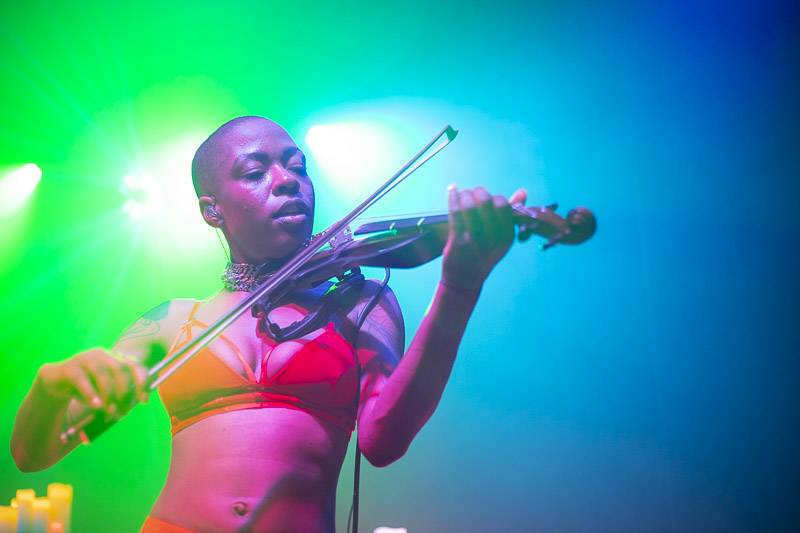
"caption": "Sudan Archives headlines the Starline Social Club during night two of the Noise Pop Music and Art Festival on Tuesday, Feb. 25, 2020.",
"description": "Sudan Archives headlines the Starline Social Club during night two of the Noise Pop Music and Art Festival on Tuesday, Feb. 25, 2020.",
"title": "Sudan Archives headlines the Starline Social Club during night two of the Noise Pop Music and Art Festival on Tuesday, Feb. 25, 2020.",
"credit": "Estefany Gonzalez",
"status": "inherit",
"isLoading": false,
"fetchFailed": false
},
"arts_13922725": {
"type": "attachments",
"id": "arts_13922725",
"meta": {
"index": "attachments_1716263798",
"site": "arts",
"id": "13922725",
"found": true
},
"parent": 13922655,
"imgSizes": {
"twentyfourteen-full-width": {
"file": "https://ww2.kqed.org/app/uploads/sites/2/2022/12/Musicians-2022-edit_COVER_final-1038x576.jpg",
"width": 1038,
"mimeType": "image/jpeg",
"height": 576
},
"thumbnail": {
"file": "https://ww2.kqed.org/app/uploads/sites/2/2022/12/Musicians-2022-edit_COVER_final-160x90.jpg",
"width": 160,
"mimeType": "image/jpeg",
"height": 90
},
"post-thumbnail": {
"file": "https://ww2.kqed.org/app/uploads/sites/2/2022/12/Musicians-2022-edit_COVER_final-672x372.jpg",
"width": 672,
"mimeType": "image/jpeg",
"height": 372
},
"kqedFullSize": {
"file": "https://ww2.kqed.org/app/uploads/sites/2/2022/12/Musicians-2022-edit_COVER_final.jpg",
"width": 1920,
"height": 1080
},
"large": {
"file": "https://ww2.kqed.org/app/uploads/sites/2/2022/12/Musicians-2022-edit_COVER_final-1020x574.jpg",
"width": 1020,
"mimeType": "image/jpeg",
"height": 574
},
"1536x1536": {
"file": "https://ww2.kqed.org/app/uploads/sites/2/2022/12/Musicians-2022-edit_COVER_final-1536x864.jpg",
"width": 1536,
"mimeType": "image/jpeg",
"height": 864
},
"medium": {
"file": "https://ww2.kqed.org/app/uploads/sites/2/2022/12/Musicians-2022-edit_COVER_final-800x450.jpg",
"width": 800,
"mimeType": "image/jpeg",
"height": 450
},
"medium_large": {
"file": "https://ww2.kqed.org/app/uploads/sites/2/2022/12/Musicians-2022-edit_COVER_final-768x432.jpg",
"width": 768,
"mimeType": "image/jpeg",
"height": 432
}
},
"publishDate": 1671069179,
"modified": 1671069212,
"caption": "Clockwise from top left: Muziki Duane Roberson, YouTube; Rich Armstrong, courtesy of the artist; Freddie Hughes, photo by William Mercer McLeod, courtesy of Chris Burn; Richard Hadlock, photo by Andrew Gilbert; Don Lewis, photo courtesy of Julie Lewis; Dave Smith, Wikimedia Commons; Marvin Holmes, photo by Cheryl Fabio; Andrew Speight, photo by Kishore Seshadri, courtesy Stanford Jazz Workshop. ",
"description": null,
"title": "Musicians-2022-edit_COVER_final",
"credit": "Collage by Sarah Hotchkiss/KQED",
"status": "inherit",
"altTag": "a photo collage featuring eight men holding guitars, saxophones and trumpets",
"isLoading": false,
"fetchFailed": false
},
"arts_13922706": {
"type": "attachments",
"id": "arts_13922706",
"meta": {
"index": "attachments_1716263798",
"site": "arts",
"id": "13922706",
"found": true
},
"parent": 13922700,
"imgSizes": {
"twentyfourteen-full-width": {
"file": "https://ww2.kqed.org/app/uploads/sites/2/2022/12/gettyimages-1150197674-96406ab03a8ac24666a24f66dfbe583f0cb227b3-s1600-c85-1-1038x576.jpg",
"width": 1038,
"mimeType": "image/jpeg",
"height": 576
},
"thumbnail": {
"file": "https://ww2.kqed.org/app/uploads/sites/2/2022/12/gettyimages-1150197674-96406ab03a8ac24666a24f66dfbe583f0cb227b3-s1600-c85-1-160x90.jpg",
"width": 160,
"mimeType": "image/jpeg",
"height": 90
},
"post-thumbnail": {
"file": "https://ww2.kqed.org/app/uploads/sites/2/2022/12/gettyimages-1150197674-96406ab03a8ac24666a24f66dfbe583f0cb227b3-s1600-c85-1-672x372.jpg",
"width": 672,
"mimeType": "image/jpeg",
"height": 372
},
"kqedFullSize": {
"file": "https://ww2.kqed.org/app/uploads/sites/2/2022/12/gettyimages-1150197674-96406ab03a8ac24666a24f66dfbe583f0cb227b3-s1600-c85-1.jpg",
"width": 1920,
"height": 1084
},
"large": {
"file": "https://ww2.kqed.org/app/uploads/sites/2/2022/12/gettyimages-1150197674-96406ab03a8ac24666a24f66dfbe583f0cb227b3-s1600-c85-1-1020x576.jpg",
"width": 1020,
"mimeType": "image/jpeg",
"height": 576
},
"1536x1536": {
"file": "https://ww2.kqed.org/app/uploads/sites/2/2022/12/gettyimages-1150197674-96406ab03a8ac24666a24f66dfbe583f0cb227b3-s1600-c85-1-1536x867.jpg",
"width": 1536,
"mimeType": "image/jpeg",
"height": 867
},
"medium": {
"file": "https://ww2.kqed.org/app/uploads/sites/2/2022/12/gettyimages-1150197674-96406ab03a8ac24666a24f66dfbe583f0cb227b3-s1600-c85-1-800x452.jpg",
"width": 800,
"mimeType": "image/jpeg",
"height": 452
},
"medium_large": {
"file": "https://ww2.kqed.org/app/uploads/sites/2/2022/12/gettyimages-1150197674-96406ab03a8ac24666a24f66dfbe583f0cb227b3-s1600-c85-1-768x434.jpg",
"width": 768,
"mimeType": "image/jpeg",
"height": 434
}
},
"publishDate": 1671063229,
"modified": 1671063345,
"caption": "Mariah Carey performs during the 2019 Billboard Music Awards at MGM Grand Garden Arena on May 1, 2019 in Las Vegas. The singer's 1994 song 'All I Want For Christmas Is You' has topped the Billboard Hot 100 for the fourth year in a row.",
"description": null,
"title": "gettyimages-1150197674-96406ab03a8ac24666a24f66dfbe583f0cb227b3-s1600-c85 (1)",
"credit": "Ethan Miller/Getty Images",
"status": "inherit",
"altTag": "Mariah Carey, a woman in a black sparkly gown, sings into a microphone in front of a purple backdrop",
"isLoading": false,
"fetchFailed": false
},
"arts_13922669": {
"type": "attachments",
"id": "arts_13922669",
"meta": {
"index": "attachments_1716263798",
"site": "arts",
"id": "13922669",
"found": true
},
"parent": 13922668,
"imgSizes": {
"twentyfourteen-full-width": {
"file": "https://ww2.kqed.org/app/uploads/sites/2/2022/12/cpl_01_wide-bd1b4b36aa212474c69c51e7c12695ec02423ed4-1038x576.jpg",
"width": 1038,
"mimeType": "image/jpeg",
"height": 576
},
"thumbnail": {
"file": "https://ww2.kqed.org/app/uploads/sites/2/2022/12/cpl_01_wide-bd1b4b36aa212474c69c51e7c12695ec02423ed4-160x90.jpg",
"width": 160,
"mimeType": "image/jpeg",
"height": 90
},
"post-thumbnail": {
"file": "https://ww2.kqed.org/app/uploads/sites/2/2022/12/cpl_01_wide-bd1b4b36aa212474c69c51e7c12695ec02423ed4-672x372.jpg",
"width": 672,
"mimeType": "image/jpeg",
"height": 372
},
"kqedFullSize": {
"file": "https://ww2.kqed.org/app/uploads/sites/2/2022/12/cpl_01_wide-bd1b4b36aa212474c69c51e7c12695ec02423ed4-scaled-e1670951907365.jpg",
"width": 1920,
"height": 1080
},
"2048x2048": {
"file": "https://ww2.kqed.org/app/uploads/sites/2/2022/12/cpl_01_wide-bd1b4b36aa212474c69c51e7c12695ec02423ed4-2048x1152.jpg",
"width": 2048,
"mimeType": "image/jpeg",
"height": 1152
},
"large": {
"file": "https://ww2.kqed.org/app/uploads/sites/2/2022/12/cpl_01_wide-bd1b4b36aa212474c69c51e7c12695ec02423ed4-1020x574.jpg",
"width": 1020,
"mimeType": "image/jpeg",
"height": 574
},
"1536x1536": {
"file": "https://ww2.kqed.org/app/uploads/sites/2/2022/12/cpl_01_wide-bd1b4b36aa212474c69c51e7c12695ec02423ed4-1536x864.jpg",
"width": 1536,
"mimeType": "image/jpeg",
"height": 864
},
"full-width": {
"file": "https://ww2.kqed.org/app/uploads/sites/2/2022/12/cpl_01_wide-bd1b4b36aa212474c69c51e7c12695ec02423ed4-1920x1080.jpg",
"width": 1920,
"mimeType": "image/jpeg",
"height": 1080
},
"medium": {
"file": "https://ww2.kqed.org/app/uploads/sites/2/2022/12/cpl_01_wide-bd1b4b36aa212474c69c51e7c12695ec02423ed4-800x450.jpg",
"width": 800,
"mimeType": "image/jpeg",
"height": 450
},
"medium_large": {
"file": "https://ww2.kqed.org/app/uploads/sites/2/2022/12/cpl_01_wide-bd1b4b36aa212474c69c51e7c12695ec02423ed4-768x432.jpg",
"width": 768,
"mimeType": "image/jpeg",
"height": 432
}
},
"publishDate": 1670951146,
"modified": 1670952072,
"caption": "With TikTok trends like “copy-paste Latinas,” the standard for what a Latinx woman could or should look like is squeezed into a very narrow set of ideals.",
"description": null,
"title": "With TikTok trends like “copy-paste Latinas,” the standard for what a Latinx woman could or should look like is squeezed into a very narrow set of ideals.",
"credit": "Charlotte Gomez for NPR",
"status": "inherit",
"altTag": "An illustration of a woman with tan skin, dark brown hair and hoop earrings on a phone screen with the hashtag, #copypastelatina. Behind the phone, the faces of four other women are obscured.",
"isLoading": false,
"fetchFailed": false
},
"arts_13922622": {
"type": "attachments",
"id": "arts_13922622",
"meta": {
"index": "attachments_1716263798",
"site": "arts",
"id": "13922622",
"found": true
},
"parent": 13922616,
"imgSizes": {
"twentyfourteen-full-width": {
"file": "https://ww2.kqed.org/app/uploads/sites/2/2022/12/TooShort.LibbySchaaf-1032x576.jpg",
"width": 1032,
"mimeType": "image/jpeg",
"height": 576
},
"thumbnail": {
"file": "https://ww2.kqed.org/app/uploads/sites/2/2022/12/TooShort.LibbySchaaf-160x90.jpg",
"width": 160,
"mimeType": "image/jpeg",
"height": 90
},
"post-thumbnail": {
"file": "https://ww2.kqed.org/app/uploads/sites/2/2022/12/TooShort.LibbySchaaf-672x372.jpg",
"width": 672,
"mimeType": "image/jpeg",
"height": 372
},
"kqedFullSize": {
"file": "https://ww2.kqed.org/app/uploads/sites/2/2022/12/TooShort.LibbySchaaf.jpg",
"width": 1032,
"height": 581
},
"large": {
"file": "https://ww2.kqed.org/app/uploads/sites/2/2022/12/TooShort.LibbySchaaf-1020x574.jpg",
"width": 1020,
"mimeType": "image/jpeg",
"height": 574
},
"medium": {
"file": "https://ww2.kqed.org/app/uploads/sites/2/2022/12/TooShort.LibbySchaaf-800x450.jpg",
"width": 800,
"mimeType": "image/jpeg",
"height": 450
},
"medium_large": {
"file": "https://ww2.kqed.org/app/uploads/sites/2/2022/12/TooShort.LibbySchaaf-768x432.jpg",
"width": 768,
"mimeType": "image/jpeg",
"height": 432
}
},
"publishDate": 1670742549,
"modified": 1670742706,
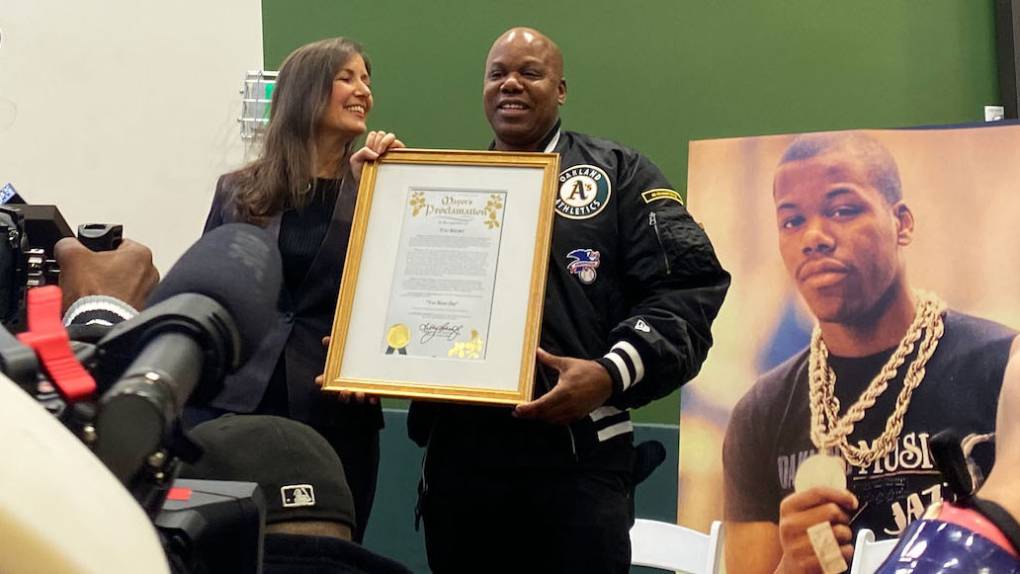
"caption": "Oakland Mayor Libby Schaaf (right) presents an official city proclamation to rapper Too $hort at Fremont High School in Oakland, Calif., on Dec. 10, 2022. The event formally renamed a portion of Foothill Boulevard to 'Too Short Way.'",
"description": null,
"title": "TooShort.LibbySchaaf",
"credit": "Kristie Song/KQED",
"status": "inherit",
"altTag": "A woman with long hair smiles at a man in an A's starter jacket, holding a framed proclamation from the city",
"isLoading": false,
"fetchFailed": false
}
},
"audioPlayerReducer": {
"postId": "stream_live",
"isPaused": true,
"isPlaying": false,
"pfsActive": false,
"pledgeModalIsOpen": true,
"playerDrawerIsOpen": false,
"liveAudioPlayStartedAt": 0,
"liveAudioPlayContext": ""
},
"authorsReducer": {
"byline_arts_13923222": {
"type": "authors",
"id": "byline_arts_13923222",
"meta": {
"override": true
},
"slug": "byline_arts_13923222",
"name": "Nate Chinen",
"isLoading": false
},
"byline_arts_13923154": {
"type": "authors",
"id": "byline_arts_13923154",
"meta": {
"override": true
},
"slug": "byline_arts_13923154",
"name": "Associated Press",
"isLoading": false
},
"byline_arts_13923059": {
"type": "authors",
"id": "byline_arts_13923059",
"meta": {
"override": true
},
"slug": "byline_arts_13923059",
"name": "Associated Press",
"isLoading": false
},
"byline_arts_13923028": {
"type": "authors",
"id": "byline_arts_13923028",
"meta": {
"override": true
},
"slug": "byline_arts_13923028",
"name": "Sheldon Pearce",
"isLoading": false
},
"byline_arts_13922700": {
"type": "authors",
"id": "byline_arts_13922700",
"meta": {
"override": true
},
"slug": "byline_arts_13922700",
"name": "Rachel Treisman",
"isLoading": false
},
"byline_arts_13922668": {
"type": "authors",
"id": "byline_arts_13922668",
"meta": {
"override": true
},
"slug": "byline_arts_13922668",
"name": "Manuela López Restrepo",
"isLoading": false
},
"shotchkiss": {
"type": "authors",
"id": "61",
"meta": {
"index": "authors_1716337520",
"id": "61",
"found": true
},
"name": "Sarah Hotchkiss",
"firstName": "Sarah",
"lastName": "Hotchkiss",
"slug": "shotchkiss",
"email": "shotchkiss@kqed.org",
"display_author_email": true,
"staff_mastheads": [
"arts"
],
"title": "Senior Editor",
"bio": "Sarah Hotchkiss is a San Francisco \u003ca href=\"http://www.sarahhotchkiss.com\">artist\u003c/a> and arts writer. In 2019, she received the Dorothea & Leo Rabkin Foundation grant for visual art journalism and in 2020 she received a Society of Professional Journalists, Northern California award for excellence in arts and culture reporting.",
"avatar": "https://secure.gravatar.com/avatar/bc662df144b3d27fd8b1b6f1c2a420d34e91e53154d411bb7ad353cc8b6cea8d?s=600&d=blank&r=g",
"twitter": null,
"bluesky": null,
"facebook": null,
"instagram": null,
"linkedin": null,
"sites": [
{
"site": "",
"roles": [
"editor"
]
},
{
"site": "arts",
"roles": [
"Contributor",
"administrator"
]
},
{
"site": "artschool",
"roles": [
"administrator"
]
},
{
"site": "news",
"roles": [
"editor"
]
},
{
"site": "pop",
"roles": [
"administrator"
]
},
{
"site": "bayareabites",
"roles": [
"editor"
]
},
{
"site": "spark",
"roles": [
"editor"
]
},
{
"site": "checkplease",
"roles": [
"editor"
]
}
],
"headData": {
"title": "Sarah Hotchkiss | KQED",
"description": "Senior Editor",
"ogImgSrc": "https://secure.gravatar.com/avatar/bc662df144b3d27fd8b1b6f1c2a420d34e91e53154d411bb7ad353cc8b6cea8d?s=600&d=blank&r=g",
"twImgSrc": "https://secure.gravatar.com/avatar/bc662df144b3d27fd8b1b6f1c2a420d34e91e53154d411bb7ad353cc8b6cea8d?s=600&d=blank&r=g"
},
"isLoading": false,
"link": "/author/shotchkiss"
},
"agilbert": {
"type": "authors",
"id": "86",
"meta": {
"index": "authors_1716337520",
"id": "86",
"found": true
},
"name": "Andrew Gilbert",
"firstName": "Andrew",
"lastName": "Gilbert",
"slug": "agilbert",
"email": "jazzscribe@aol.com",
"display_author_email": false,
"staff_mastheads": [],
"title": "KQED Contributor",
"bio": "A Los Angeles native based in the Berkeley area since 1996, Andrew Gilbert covers jazz, international music and dance for KQED's \u003ci>California Report, \u003c/i>the\u003ci> Mercury News\u003c/i>, \u003ci>San Francisco Chronicle\u003c/i>, \u003ci>Berkeleyside.com\u003c/i>, and other publications. He is available for weddings and bar and bat mitzvahs. #jazzscribe",
"avatar": "https://secure.gravatar.com/avatar/d7bcafdbefdd39e9a68f88724ca616eb4e7a5a6bff9cdfb62de652a1e1751471?s=600&d=blank&r=g",
"twitter": null,
"bluesky": null,
"facebook": null,
"instagram": null,
"linkedin": null,
"sites": [
{
"site": "arts",
"roles": [
"Contributor",
"author"
]
},
{
"site": "news",
"roles": [
"author"
]
}
],
"headData": {
"title": "Andrew Gilbert | KQED",
"description": "KQED Contributor",
"ogImgSrc": "https://secure.gravatar.com/avatar/d7bcafdbefdd39e9a68f88724ca616eb4e7a5a6bff9cdfb62de652a1e1751471?s=600&d=blank&r=g",
"twImgSrc": "https://secure.gravatar.com/avatar/d7bcafdbefdd39e9a68f88724ca616eb4e7a5a6bff9cdfb62de652a1e1751471?s=600&d=blank&r=g"
},
"isLoading": false,
"link": "/author/agilbert"
},
"gmeline": {
"type": "authors",
"id": "185",
"meta": {
"index": "authors_1716337520",
"id": "185",
"found": true
},
"name": "Gabe Meline",
"firstName": "Gabe",
"lastName": "Meline",
"slug": "gmeline",
"email": "gmeline@kqed.org",
"display_author_email": true,
"staff_mastheads": [
"arts"
],
"title": "Senior Editor, KQED Arts & Culture",
"bio": "Gabe Meline entered journalism at age 15 making photocopied zines, and has since earned awards from the Edward R. Murrow Awards, the Society for Professional Journalists, the Online Journalism Awards, the Association of Alternative Newsweeklies and the California Newspaper Publishers Association. Prior to KQED, he was the editor of the \u003cem>North Bay Bohemian\u003c/em> and a touring musician. He lives with his wife and daughter in his hometown of Santa Rosa, CA.",
"avatar": "https://secure.gravatar.com/avatar/5bebe57be0d8bc2dd318934feb47299e2d2d10cba28d09d8d7afb389a2ce2bdd?s=600&d=blank&r=g",
"twitter": null,
"bluesky": null,
"facebook": null,
"instagram": null,
"linkedin": null,
"sites": [
{
"site": "",
"roles": [
"editor"
]
},
{
"site": "arts",
"roles": [
"administrator"
]
},
{
"site": "artschool",
"roles": [
"editor"
]
},
{
"site": "news",
"roles": [
"author"
]
},
{
"site": "pop",
"roles": [
"editor"
]
},
{
"site": "bayareabites",
"roles": [
"editor"
]
},
{
"site": "food",
"roles": [
"editor"
]
},
{
"site": "forum",
"roles": [
"administrator"
]
},
{
"site": "liveblog",
"roles": [
"editor"
]
},
{
"site": "hiphop",
"roles": [
"editor"
]
}
],
"headData": {
"title": "Gabe Meline | KQED",
"description": "Senior Editor, KQED Arts & Culture",
"ogImgSrc": "https://secure.gravatar.com/avatar/5bebe57be0d8bc2dd318934feb47299e2d2d10cba28d09d8d7afb389a2ce2bdd?s=600&d=blank&r=g",
"twImgSrc": "https://secure.gravatar.com/avatar/5bebe57be0d8bc2dd318934feb47299e2d2d10cba28d09d8d7afb389a2ce2bdd?s=600&d=blank&r=g"
},
"isLoading": false,
"link": "/author/gmeline"
},
"ralexandra": {
"type": "authors",
"id": "11242",
"meta": {
"index": "authors_1716337520",
"id": "11242",
"found": true
},
"name": "Rae Alexandra",
"firstName": "Rae",
"lastName": "Alexandra",
"slug": "ralexandra",
"email": "ralexandra@kqed.org",
"display_author_email": true,
"staff_mastheads": [],
"title": "Reporter/Producer",
"bio": "Rae Alexandra is a Reporter/Producer for KQED Arts & Culture, and the creator/author of the \u003ca href=\"https://www.kqed.org/arts/program/rebel-girls-from-bay-area-history\">Rebel Girls From Bay Area History\u003c/a> and \u003ca href=\"https://www.kqed.org/bizarrebayarea\">Bizarre Bay Area\u003c/a> series. Her debut book, \u003ca href=\"https://citylights.com/politics-current-events-history/unsung-heroines35-women-who-changed/\">Unsung Heroines: 35 Women Who Changed the Bay Area\u003c/a> was published by City Lights in March 2026. In 2023, Rae was awarded an SPJ Excellence in Journalism Award for Arts & Culture. Rae was born and raised in Wales and subsequently — even after two decades in Northern California — still uses phrases that regularly baffle her coworkers.",
"avatar": "https://secure.gravatar.com/avatar/edfee8176c80cc0a382b051190f5341997df378a934a5774dcb0977732dfd401?s=600&d=blank&r=g",
"twitter": null,
"bluesky": null,
"facebook": null,
"instagram": null,
"linkedin": null,
"sites": [
{
"site": "arts",
"roles": [
"subscriber"
]
},
{
"site": "news",
"roles": [
"subscriber"
]
},
{
"site": "pop",
"roles": [
"subscriber"
]
},
{
"site": "bayareabites",
"roles": [
"subscriber"
]
},
{
"site": "science",
"roles": [
"subscriber"
]
}
],
"headData": {
"title": "Rae Alexandra | KQED",
"description": "Reporter/Producer",
"ogImgSrc": "https://secure.gravatar.com/avatar/edfee8176c80cc0a382b051190f5341997df378a934a5774dcb0977732dfd401?s=600&d=blank&r=g",
"twImgSrc": "https://secure.gravatar.com/avatar/edfee8176c80cc0a382b051190f5341997df378a934a5774dcb0977732dfd401?s=600&d=blank&r=g"
},
"isLoading": false,
"link": "/author/ralexandra"
},
"ogpenn": {
"type": "authors",
"id": "11491",
"meta": {
"index": "authors_1716337520",
"id": "11491",
"found": true
},
"name": "Pendarvis Harshaw",
"firstName": "Pendarvis",
"lastName": "Harshaw",
"slug": "ogpenn",
"email": "ogpenn@gmail.com",
"display_author_email": false,
"staff_mastheads": [
"arts"
],
"title": "Community Engagement Reporter",
"bio": "Pendarvis Harshaw is an educator, host and writer with KQED Arts.",
"avatar": "https://secure.gravatar.com/avatar/972b77ee8e3f346ae2b00622661187fbfabd059b5693bbdc1475ea7a722fd4cd?s=600&d=blank&r=g",
"twitter": null,
"bluesky": null,
"facebook": null,
"instagram": "ogpenn",
"linkedin": null,
"sites": [
{
"site": "arts",
"roles": [
"administrator"
]
},
{
"site": "news",
"roles": [
"editor"
]
},
{
"site": "bayareabites",
"roles": [
"author"
]
},
{
"site": "hiphop",
"roles": [
"editor"
]
}
],
"headData": {
"title": "Pendarvis Harshaw | KQED",
"description": "Community Engagement Reporter",
"ogImgSrc": "https://secure.gravatar.com/avatar/972b77ee8e3f346ae2b00622661187fbfabd059b5693bbdc1475ea7a722fd4cd?s=600&d=blank&r=g",
"twImgSrc": "https://secure.gravatar.com/avatar/972b77ee8e3f346ae2b00622661187fbfabd059b5693bbdc1475ea7a722fd4cd?s=600&d=blank&r=g"
},
"isLoading": false,
"link": "/author/ogpenn"
},
"mmedina": {
"type": "authors",
"id": "11528",
"meta": {
"index": "authors_1716337520",
"id": "11528",
"found": true
},
"name": "Marisol Medina-Cadena",
"firstName": "Marisol",
"lastName": "Medina-Cadena",
"slug": "mmedina",
"email": "mmedina@KQED.org",
"display_author_email": true,
"staff_mastheads": [],
"title": "Producer, Rightnowish Podcast",
"bio": "Marisol Medina-Cadena is a radio reporter and podcast producer. Before working at KQED, she produced for PBS member station, KCET, in Los Angeles. In 2017, Marisol won an Emmy Award for her work on the televised documentary, \u003cem>City Rising\u003c/em>, examining California's affordable housing crisis and the historical roots of gentrification.",
"avatar": "https://secure.gravatar.com/avatar/6c3db46a1cabb5e1fe9a365b5f4e681e?s=600&d=blank&r=g",
"twitter": "marisolreports",
"facebook": null,
"instagram": null,
"linkedin": null,
"sites": [
{
"site": "arts",
"roles": []
},
{
"site": "news",
"roles": [
"edit_others_posts"
]
}
],
"headData": {
"title": "Marisol Medina-Cadena | KQED",
"description": "Producer, Rightnowish Podcast",
"ogImgSrc": "https://secure.gravatar.com/avatar/6c3db46a1cabb5e1fe9a365b5f4e681e?s=600&d=blank&r=g",
"twImgSrc": "https://secure.gravatar.com/avatar/6c3db46a1cabb5e1fe9a365b5f4e681e?s=600&d=blank&r=g"
},
"isLoading": false,
"link": "/author/mmedina"
},
"ksong": {
"type": "authors",
"id": "11813",
"meta": {
"index": "authors_1716337520",
"id": "11813",
"found": true
},
"name": "Kristie Song",
"firstName": "Kristie",
"lastName": "Song",
"slug": "ksong",
"email": "ksong@kqed.org",
"display_author_email": false,
"staff_mastheads": [],
"title": "Editorial Intern ",
"bio": "Kristie Song is an Arts & Culture Intern at KQED. She is currently a graduate student at UC Berkeley, where she studies audio and multimedia journalism. Previously, she covered the local community for Oakland North, produced episodes for The Science of Happiness, and served as news director for KUCI, UC Irvine’s radio station. Outside of reporting, she likes drawing comics, listening to angsty rock, and practicing the guitar.",
"avatar": "https://secure.gravatar.com/avatar/c1149e78c3c44f92d4945a8ab0711af6?s=600&d=blank&r=g",
"twitter": null,
"facebook": null,
"instagram": null,
"linkedin": null,
"sites": [
{
"site": "arts",
"roles": [
"editor"
]
}
],
"headData": {
"title": "Kristie Song | KQED",
"description": "Editorial Intern ",
"ogImgSrc": "https://secure.gravatar.com/avatar/c1149e78c3c44f92d4945a8ab0711af6?s=600&d=blank&r=g",
"twImgSrc": "https://secure.gravatar.com/avatar/c1149e78c3c44f92d4945a8ab0711af6?s=600&d=blank&r=g"
},
"isLoading": false,
"link": "/author/ksong"
}
},
"pagesReducer": {
"arts_category_music": {
"type": "terms",
"id": "arts_69",
"meta": {
"index": "terms_1716263798",
"site": "arts",
"id": "69",
"score": 10.851607
},
"featImg": null,
"name": "Music",
"description": null,
"taxonomy": "category",
"headData": {
"twImgId": null,
"twTitle": null,
"ogTitle": null,
"ogImgId": null,
"twDescription": null,
"description": null,
"title": "Music Archives | KQED Arts",
"ogDescription": null
},
"ttid": 70,
"slug": "music",
"isLoading": false,
"title": "Music",
"pageMeta": {
"site": "arts",
"WpPageTemplate": "page-topic-editorial",
"currentPage": 84
},
"blocks": [
{
"blockName": "kqed/post-list",
"attrs": {
"layout": "cardArticle2",
"query": "posts/arts?category=music",
"seeMore": false,
"paginated": true,
"page": 84
}
},
{
"blockName": "kqed/ad"
}
]
}
},
"pfsSessionReducer": {},
"postsReducer": {
"stream_live": {
"type": "live",
"id": "stream_live",
"audioUrl": "https://streams.kqed.org/kqedradio",
"title": "Live Stream",
"excerpt": "Live Stream information currently unavailable.",
"link": "/radio",
"featImg": "",
"label": {
"name": "KQED Live",
"link": "/"
}
},
"stream_kqedNewscast": {
"type": "posts",
"id": "stream_kqedNewscast",
"audioUrl": "https://www.kqed.org/.stream/anon/radio/RDnews/newscast.mp3?_=1",
"title": "KQED Newscast",
"featImg": "",
"label": {
"name": "88.5 FM",
"link": "/"
}
},
"arts_13923420": {
"type": "posts",
"id": "arts_13923420",
"meta": {
"index": "posts_1716263798",
"site": "arts",
"id": "13923420",
"score": null,
"sort": [
1673131285000
]
},
"parent": 0,
"labelTerm": {},
"blocks": [],
"publishDate": 1673131285,
"format": "audio",
"title": "There Was a Punk Show on BART Friday Night",
"headTitle": "There Was a Punk Show on BART Friday Night | KQED",
"content": "\u003cp>If you live in the Bay Area, you’ve undoubtedly seen some unexpected entertainment on BART in your time. Dancers, magicians, those dudes that hang upside down from poles, drunk people. What you’ve probably \u003cem>never\u003c/em> seen is a car packed to the gills with punks there to see a two-band show.\u003c/p>\n\u003cp>That’s exactly what happened Friday night when noisy San Francisco outfits \u003ca href=\"https://www.instagram.com/falseflagsf/\" target=\"_blank\" rel=\"noopener noreferrer\">False Flag\u003c/a> and \u003ca href=\"https://www.instagram.com/surpriseprivilege/?hl=en\" target=\"_blank\" rel=\"noopener noreferrer\">Surprise Privilege\u003c/a> managed to organize a show on a blue line BART train. Having boarded at the 16th St. Mission station at 7pm, the bands rode to Dublin Pleasanton as more than 100 fans squeezed in along the way — and then, on the way back to the city, started playing.\u003c/p>\n\u003cp>Unbridled chaos ensued:\u003c/p>\n\u003cp>https://www.instagram.com/p/CnGrbg6D2JR/\u003c/p>\n\u003cp>Round of applause for the human mic stand.\u003c/p>\n\u003cp>[ad fullwidth]\u003c/p>\n\u003cp>Reached by phone the next day, band members said they were surprised at the turnout for what started as “kind of a half-joke” that “we all egged each other on to do,” according to False Flag’s bassist, Pretty. \u003c/p>\n\u003cp>“We weren’t expecting that many people to show up,” she added. “We didn’t even know if we were gonna be able to play because the train was so packed.”\u003c/p>\n\u003cp>\u003cimg loading=\"lazy\" decoding=\"async\" src=\"https://ww2.kqed.org/app/uploads/sites/2/2023/01/BART.PunkShow.jpg\" alt=\"\" width=\"600\" height=\"712\" class=\"aligncenter size-full wp-image-13923451\" srcset=\"https://cdn.kqed.org/wp-content/uploads/sites/2/2023/01/BART.PunkShow.jpg 600w, https://cdn.kqed.org/wp-content/uploads/sites/2/2023/01/BART.PunkShow-160x190.jpg 160w\" sizes=\"(max-width: 600px) 100vw, 600px\">\u003c/p>\n\u003cp>The show required a fair bit of pre-planning. On Instagram, the bands outlined a timetable of BART stops for attendees; directed them to the rear cars, away from commuters; and reminded everyone to pay their fare, stay civil and pick up after themselves.\u003c/p>\n\u003cp>“It’s not our intention to wreck the place or cause any kind of damage — this is meant to be fun,” they wrote. “Be respectful of each other and don’t let anyone get hurt.”\u003c/p>\n\u003cp>Things went awry six stations in, when the train was stalled at Fruitvale due to an obstructed door. “And BART police got on,” said Pretty, “and were just like, ‘Are you serious right now?’”\u003c/p>\n\u003cblockquote class=\"tiktok-embed\" style=\"max-width: 605px;min-width: 325px\" cite=\"https://www.tiktok.com/@loserlees/video/7185796606355279150\" data-video-id=\"7185796606355279150\">\n\u003csection>\u003ca title=\"@loserlees\" href=\"https://www.tiktok.com/@loserlees?refer=embed\" target=\"_blank\" rel=\"noopener noreferrer\">@loserlees\u003c/a> PUNK SHOW ON BART!¡ \u003ca title=\"fyp\" href=\"https://www.tiktok.com/tag/fyp?refer=embed\" target=\"_blank\" rel=\"noopener noreferrer\">#fyp\u003c/a> \u003ca title=\"fypシ\" href=\"https://www.tiktok.com/tag/fyp%E3%82%B7?refer=embed\" target=\"_blank\" rel=\"noopener noreferrer\">#fypシ\u003c/a> \u003ca title=\"punk\" href=\"https://www.tiktok.com/tag/punk?refer=embed\" target=\"_blank\" rel=\"noopener noreferrer\">#punk\u003c/a> \u003ca title=\"bayarea\" href=\"https://www.tiktok.com/tag/bayarea?refer=embed\" target=\"_blank\" rel=\"noopener noreferrer\">#bayarea\u003c/a> \u003ca title=\"sanfrancisco\" href=\"https://www.tiktok.com/tag/sanfrancisco?refer=embed\" target=\"_blank\" rel=\"noopener noreferrer\">#sanfrancisco\u003c/a> \u003ca title=\"diy\" href=\"https://www.tiktok.com/tag/diy?refer=embed\" target=\"_blank\" rel=\"noopener noreferrer\">#DIY\u003c/a> \u003ca title=\"♬ original sound - Lees\" href=\"https://www.tiktok.com/music/original-sound-7185796625409887022?refer=embed\" target=\"_blank\" rel=\"noopener noreferrer\">♬ original sound – Lees\u003c/a>\u003c/section>\n\u003c/blockquote>\n\u003cp>[tiktok]\u003c/p>\n\u003cp>As shown at the end of the above clip, the show was shut down, the cars were evacuated, and at least one reveler was escorted out of the station by authorities while crowds on the platform chanted, “Let him go! Let him go!”\u003c/p>\n\u003cp>Cody, bassist for Surprise Privilege, said the bands still managed to play six songs each, powered by a portable battery — and noted that every band member paid their BART fare.\u003c/p>\n\u003cp>[aside postid='arts_13865042']“All we want to do is raise as much money as possible for BART,” he said. “It’s all just a big publicity campaign to show the world how fine our state-of-the-art public transportation system is.”\u003c/p>\n\u003cp>BART, which \u003ca href=\"https://www.kqed.org/arts/13865042/free-speech-tone-oliver-and-barts-proposed-ban-on-busking\">rejected a 2019 proposal to ban busking on its trains\u003c/a>, did not respond to a request for comment. \u003c/p>\n\u003cp>“The main reaction from the public I’ve seen is people talking about how it must have smelled really bad on the train,” said False Flag guitarist Strong. (“Which it did,” Cody added.)\u003c/p>\n\u003cp>While it lasted, though, the on-train show looked like a damn good time, crowd surfing and all.\u003c/p>\n\u003cp>https://www.instagram.com/p/CnIRhGhSMjf/\u003c/p>\n\u003cp>For those who regret missing a historic slice of what’s known as “\u003ca href=\"https://www.kqed.org/arts/13899154/sunami-review-san-jose-drain-gulch-show\">REAL BAY SHIT\u003c/a>,” and hope for a sequel, the bands’ Instagram post afterward summed it up: “we’re never doing that again lol.”\u003c/p>\n\u003cp>How was \u003cem>your\u003c/em> Friday night?\u003c/p>\n\u003cp>\u003c/p>\n\u003cp>\u003cimg loading=\"lazy\" decoding=\"async\" class=\"aligncenter size-full wp-image-12904247\" src=\"https://ww2.kqed.org/app/uploads/sites/2/2017/03/Q.Logo_.Break_-400x39.jpg\" alt=\"\" width=\"400\" height=\"39\" srcset=\"https://cdn.kqed.org/wp-content/uploads/sites/2/2017/03/Q.Logo_.Break_-400x39.jpg 400w, https://cdn.kqed.org/wp-content/uploads/sites/2/2017/03/Q.Logo_.Break_-400x39-160x16.jpg 160w, https://cdn.kqed.org/wp-content/uploads/sites/2/2017/03/Q.Logo_.Break_-400x39-240x23.jpg 240w, https://cdn.kqed.org/wp-content/uploads/sites/2/2017/03/Q.Logo_.Break_-400x39-375x37.jpg 375w\" sizes=\"(max-width: 400px) 100vw, 400px\">\u003c/p>\n\n",
"stats": {
"hasVideo": false,
"hasChartOrMap": false,
"hasAudio": false,
"hasPolis": false,
"wordCount": 621,
"hasGoogleForm": false,
"hasGallery": false,
"hasHearkenModule": false,
"iframeSrcs": [],
"paragraphCount": 22
},
"modified": 1705005999,
"excerpt": "False Flag and Surprise Privilege played on a BART train, and chaos ensued. ",
"headData": {
"twImgId": "",
"twTitle": "",
"ogTitle": "",
"ogImgId": "",
"twDescription": "",
"description": "False Flag and Surprise Privilege played on a BART train, and chaos ensued. ",
"title": "There Was a Punk Show on BART Friday Night | KQED",
"ogDescription": "",
"schema": {
"@context": "https://schema.org",
"@type": "Article",
"headline": "There Was a Punk Show on BART Friday Night",
"datePublished": "2023-01-07T14:41:25-08:00",
"dateModified": "2024-01-11T12:46:39-08:00",
"image": "https://cdn.kqed.org/wp-content/uploads/2020/02/KQED-OG-Image@1x.png"
}
},
"guestAuthors": [],
"slug": "punk-show-on-bart",
"status": "publish",
"templateType": "standard",
"audioUrl": "https://traffic.omny.fm/d/clips/0af137ef-751e-4b19-a055-aaef00d2d578/ffca7e9f-6831-4[…]f-aaef00f5a073/5cac5967-524e-444d-a3e4-af8500072e9c/audio.mp3",
"excludeFromSiteSearch": "Include",
"featuredImageType": "standard",
"sticky": false,
"source": "2023 Bingo Card",
"articleAge": "0",
"path": "/arts/13923420/punk-show-on-bart",
"audioTrackLength": null,
"parsedContent": [
{
"type": "contentString",
"content": "\u003cdiv class=\"post-body\">\u003cp>\u003cp>If you live in the Bay Area, you’ve undoubtedly seen some unexpected entertainment on BART in your time. Dancers, magicians, those dudes that hang upside down from poles, drunk people. What you’ve probably \u003cem>never\u003c/em> seen is a car packed to the gills with punks there to see a two-band show.\u003c/p>\n\u003cp>That’s exactly what happened Friday night when noisy San Francisco outfits \u003ca href=\"https://www.instagram.com/falseflagsf/\" target=\"_blank\" rel=\"noopener noreferrer\">False Flag\u003c/a> and \u003ca href=\"https://www.instagram.com/surpriseprivilege/?hl=en\" target=\"_blank\" rel=\"noopener noreferrer\">Surprise Privilege\u003c/a> managed to organize a show on a blue line BART train. Having boarded at the 16th St. Mission station at 7pm, the bands rode to Dublin Pleasanton as more than 100 fans squeezed in along the way — and then, on the way back to the city, started playing.\u003c/p>\n\u003cp>Unbridled chaos ensued:\u003c/p>\u003c/p>\u003c/div>",
"attributes": {
"named": {},
"numeric": []
}
},
{
"type": "component",
"content": "",
"name": "instagramLink",
"attributes": {
"named": {
"instagramUrl": "https://www.instagram.com/p/CnGrbg6D2JR/"
},
"numeric": []
}
},
{
"type": "contentString",
"content": "\u003cdiv class=\"post-body\">\u003cp>\u003cp>Round of applause for the human mic stand.\u003c/p>\n\u003cp>\u003c/p>\u003c/div>",
"attributes": {
"named": {},
"numeric": []
}
},
{
"type": "component",
"content": "",
"name": "ad",
"attributes": {
"named": {
"label": "fullwidth"
},
"numeric": [
"fullwidth"
]
}
},
{
"type": "contentString",
"content": "\u003cdiv class=\"post-body\">\u003cp>\u003c/p>\n\u003cp>Reached by phone the next day, band members said they were surprised at the turnout for what started as “kind of a half-joke” that “we all egged each other on to do,” according to False Flag’s bassist, Pretty. \u003c/p>\n\u003cp>“We weren’t expecting that many people to show up,” she added. “We didn’t even know if we were gonna be able to play because the train was so packed.”\u003c/p>\n\u003cp>\u003cimg loading=\"lazy\" decoding=\"async\" src=\"https://ww2.kqed.org/app/uploads/sites/2/2023/01/BART.PunkShow.jpg\" alt=\"\" width=\"600\" height=\"712\" class=\"aligncenter size-full wp-image-13923451\" srcset=\"https://cdn.kqed.org/wp-content/uploads/sites/2/2023/01/BART.PunkShow.jpg 600w, https://cdn.kqed.org/wp-content/uploads/sites/2/2023/01/BART.PunkShow-160x190.jpg 160w\" sizes=\"(max-width: 600px) 100vw, 600px\">\u003c/p>\n\u003cp>The show required a fair bit of pre-planning. On Instagram, the bands outlined a timetable of BART stops for attendees; directed them to the rear cars, away from commuters; and reminded everyone to pay their fare, stay civil and pick up after themselves.\u003c/p>\n\u003cp>“It’s not our intention to wreck the place or cause any kind of damage — this is meant to be fun,” they wrote. “Be respectful of each other and don’t let anyone get hurt.”\u003c/p>\n\u003cp>Things went awry six stations in, when the train was stalled at Fruitvale due to an obstructed door. “And BART police got on,” said Pretty, “and were just like, ‘Are you serious right now?’”\u003c/p>\n\u003cblockquote class=\"tiktok-embed\" style=\"max-width: 605px;min-width: 325px\" cite=\"https://www.tiktok.com/@loserlees/video/7185796606355279150\" data-video-id=\"7185796606355279150\">\n\u003csection>\u003ca title=\"@loserlees\" href=\"https://www.tiktok.com/@loserlees?refer=embed\" target=\"_blank\" rel=\"noopener noreferrer\">@loserlees\u003c/a> PUNK SHOW ON BART!¡ \u003ca title=\"fyp\" href=\"https://www.tiktok.com/tag/fyp?refer=embed\" target=\"_blank\" rel=\"noopener noreferrer\">#fyp\u003c/a> \u003ca title=\"fypシ\" href=\"https://www.tiktok.com/tag/fyp%E3%82%B7?refer=embed\" target=\"_blank\" rel=\"noopener noreferrer\">#fypシ\u003c/a> \u003ca title=\"punk\" href=\"https://www.tiktok.com/tag/punk?refer=embed\" target=\"_blank\" rel=\"noopener noreferrer\">#punk\u003c/a> \u003ca title=\"bayarea\" href=\"https://www.tiktok.com/tag/bayarea?refer=embed\" target=\"_blank\" rel=\"noopener noreferrer\">#bayarea\u003c/a> \u003ca title=\"sanfrancisco\" href=\"https://www.tiktok.com/tag/sanfrancisco?refer=embed\" target=\"_blank\" rel=\"noopener noreferrer\">#sanfrancisco\u003c/a> \u003ca title=\"diy\" href=\"https://www.tiktok.com/tag/diy?refer=embed\" target=\"_blank\" rel=\"noopener noreferrer\">#DIY\u003c/a> \u003ca title=\"♬ original sound - Lees\" href=\"https://www.tiktok.com/music/original-sound-7185796625409887022?refer=embed\" target=\"_blank\" rel=\"noopener noreferrer\">♬ original sound – Lees\u003c/a>\u003c/section>\n\u003c/blockquote>\n\u003cp>\u003c/p>\u003c/div>",
"attributes": {
"named": {},
"numeric": []
}
},
{
"type": "component",
"content": "",
"name": "tiktok",
"attributes": {
"named": {
"label": ""
},
"numeric": []
}
},
{
"type": "contentString",
"content": "\u003cdiv class=\"post-body\">\u003cp>\u003c/p>\n\u003cp>As shown at the end of the above clip, the show was shut down, the cars were evacuated, and at least one reveler was escorted out of the station by authorities while crowds on the platform chanted, “Let him go! Let him go!”\u003c/p>\n\u003cp>Cody, bassist for Surprise Privilege, said the bands still managed to play six songs each, powered by a portable battery — and noted that every band member paid their BART fare.\u003c/p>\n\u003cp>\u003c/p>\u003c/div>",
"attributes": {
"named": {},
"numeric": []
}
},
{
"type": "component",
"content": "",
"name": "aside",
"attributes": {
"named": {
"postid": "arts_13865042",
"label": ""
},
"numeric": []
}
},
{
"type": "contentString",
"content": "\u003cdiv class=\"post-body\">\u003cp>“All we want to do is raise as much money as possible for BART,” he said. “It’s all just a big publicity campaign to show the world how fine our state-of-the-art public transportation system is.”\u003c/p>\n\u003cp>BART, which \u003ca href=\"https://www.kqed.org/arts/13865042/free-speech-tone-oliver-and-barts-proposed-ban-on-busking\">rejected a 2019 proposal to ban busking on its trains\u003c/a>, did not respond to a request for comment. \u003c/p>\n\u003cp>“The main reaction from the public I’ve seen is people talking about how it must have smelled really bad on the train,” said False Flag guitarist Strong. (“Which it did,” Cody added.)\u003c/p>\n\u003cp>While it lasted, though, the on-train show looked like a damn good time, crowd surfing and all.\u003c/p>\u003c/p>\u003c/div>",
"attributes": {
"named": {},
"numeric": []
}
},
{
"type": "component",
"content": "",
"name": "instagramLink",
"attributes": {
"named": {
"instagramUrl": "https://www.instagram.com/p/CnIRhGhSMjf/"
},
"numeric": []
}
},
{
"type": "contentString",
"content": "\u003cdiv class=\"post-body\">\u003cp>\u003cp>For those who regret missing a historic slice of what’s known as “\u003ca href=\"https://www.kqed.org/arts/13899154/sunami-review-san-jose-drain-gulch-show\">REAL BAY SHIT\u003c/a>,” and hope for a sequel, the bands’ Instagram post afterward summed it up: “we’re never doing that again lol.”\u003c/p>\n\u003cp>How was \u003cem>your\u003c/em> Friday night?\u003c/p>\n\u003cp>\u003c/p>\n\u003cp>\u003cimg loading=\"lazy\" decoding=\"async\" class=\"aligncenter size-full wp-image-12904247\" src=\"https://ww2.kqed.org/app/uploads/sites/2/2017/03/Q.Logo_.Break_-400x39.jpg\" alt=\"\" width=\"400\" height=\"39\" srcset=\"https://cdn.kqed.org/wp-content/uploads/sites/2/2017/03/Q.Logo_.Break_-400x39.jpg 400w, https://cdn.kqed.org/wp-content/uploads/sites/2/2017/03/Q.Logo_.Break_-400x39-160x16.jpg 160w, https://cdn.kqed.org/wp-content/uploads/sites/2/2017/03/Q.Logo_.Break_-400x39-240x23.jpg 240w, https://cdn.kqed.org/wp-content/uploads/sites/2/2017/03/Q.Logo_.Break_-400x39-375x37.jpg 375w\" sizes=\"(max-width: 400px) 100vw, 400px\">\u003c/p>\n\n\u003c/div>\u003c/p>",
"attributes": {
"named": {},
"numeric": []
}
}
],
"link": "/arts/13923420/punk-show-on-bart",
"authors": [
"185",
"11242"
],
"categories": [
"arts_1",
"arts_69",
"arts_75"
],
"tags": [
"arts_5814",
"arts_10278",
"arts_7944",
"arts_1143",
"arts_913",
"arts_1146"
],
"featImg": "arts_13923427",
"label": "source_arts_13923420"
},
"arts_13923186": {
"type": "posts",
"id": "arts_13923186",
"meta": {
"index": "posts_1716263798",
"site": "arts",
"id": "13923186",
"score": null,
"sort": [
1673002813000
]
},
"guestAuthors": [],
"slug": "best-of-musicians-to-know-nappy-nina",
"title": "Best of Musicians to Know: Nappy Nina",
"publishDate": 1673002813,
"format": "audio",
"headTitle": "Best of Musicians to Know: Nappy Nina | KQED",
"labelTerm": {},
"content": "\u003cp>\u003cspan style=\"font-weight: 400\">\u003cem>This episode was originally part of the “\u003ca href=\"https://www.kqed.org/musicrightnowish\" target=\"_blank\" rel=\"noopener noreferrer\">Rightnowish: Musicians to Know\u003c/a>” series from 2021. We’re revisiting it as a part of our 2023 kickoff series highlighting some of the best stories from our archives. \u003c/em>\u003cbr>\n\u003c/span>\u003cbr>\n\u003ca href=\"https://www.instagram.com/nappy_nina/\" target=\"_blank\" rel=\"noopener noreferrer\">Nappy Nina \u003c/a>is a lyricist with a smooth-sultry delivery that’s almost jazz-like, especially when coupled with some signature boom-bap production. In her songs, she raps about breakups, missing Oakland, the disappointing produce in Brooklyn, and navigating rough financial waters.\u003c/p>\n\u003cp>She’s gotten mentions from the \u003ca href=\"https://www.grammy.com/grammys/news/mexican-summer-continues-looking-glass-series-latest-nappy-nina-weight-release\" target=\"_blank\" rel=\"noopener noreferrer\">Grammys\u003c/a> and \u003ca href=\"https://daily.bandcamp.com/features/nappy-nina-feature\" target=\"_blank\" rel=\"noopener noreferrer\">Bandcamp\u003c/a> and she’s been working on a streak of exciting projects. For the educational organization, \u003ca href=\"https://www.flocabulary.com/\">Flocabulary\u003c/a>, Nina was commissioned to pen a rhyme that tells the story of \u003ca href=\"https://www.flocabulary.com/unit/toni-morrison/\">Toni Morrison\u003c/a>. Last time we talked in 2021, she had just released a new single, “\u003ca href=\"https://lucidhaus.bandcamp.com/album/pandemy-stimmy\" target=\"_blank\" rel=\"noopener noreferrer\">Pandemy Stimmy\u003c/a>,” which features Stas THEE Boss and she was on the verge of releasing her EP, \u003cem>Double Down\u003c/em>, in collaboration with New Jersey-based producer, \u003ca href=\"https://www.instagram.com/_jwords/\" target=\"_blank\" rel=\"noopener noreferrer\">J Words\u003c/a>.\u003c/p>\n\u003cp>Two years later Nappy Nina is about to drop more music for her fans, as her project \u003cem>Mourning Due\u003c/em> is set to debut in February.\u003c/p>\n\u003cfigure id=\"attachment_13891535\" class=\"wp-caption alignnone\" style=\"max-width: 800px\">\u003cimg loading=\"lazy\" decoding=\"async\" class=\"size-medium wp-image-13891535\" src=\"https://ww2.kqed.org/app/uploads/sites/2/2021/01/1Beat_2019_Nina-4-800x534.jpg\" alt=\"Nappy Nina looks off to her left as she poses for a photo.\" width=\"800\" height=\"534\" srcset=\"https://cdn.kqed.org/wp-content/uploads/sites/2/2021/01/1Beat_2019_Nina-4-800x534.jpg 800w, https://cdn.kqed.org/wp-content/uploads/sites/2/2021/01/1Beat_2019_Nina-4-1020x680.jpg 1020w, https://cdn.kqed.org/wp-content/uploads/sites/2/2021/01/1Beat_2019_Nina-4-160x107.jpg 160w, https://cdn.kqed.org/wp-content/uploads/sites/2/2021/01/1Beat_2019_Nina-4-768x512.jpg 768w, https://cdn.kqed.org/wp-content/uploads/sites/2/2021/01/1Beat_2019_Nina-4.jpg 1450w\" sizes=\"(max-width: 800px) 100vw, 800px\">\u003cfigcaption class=\"wp-caption-text\">Nappy Nina looks off to her left as she poses for a photo. \u003ccite>(Alexia Webster)\u003c/cite>\u003c/figcaption>\u003c/figure>\n\u003cp>This week on Rightnowish, we revisit our conversation with Nappy Nina about her disdain for the term \u003cem>femcee\u003c/em>, how her Bay Area upbringing influences her craft, and how some of my favorite songs came together.\u003c/p>\n\u003ch5 id=\"embed-code\" class=\"inconsolata\">\n\u003c!-- iframe plugin v.4.3 wordpress.org/plugins/iframe/ -->\u003cbr>\n\u003ciframe loading=\"lazy\" frameborder=\"0\" height=\"200\" scrolling=\"no\" src=\"https://playlist.megaphone.fm/?e=KQINC4437146614&light=true\" width=\"100%\" class=\"iframe-class\">\u003c/iframe>\u003cbr>\n\u003c/h5>\n\u003cp>\u003cstrong>Below are lightly edited excerpts of my conversation with Nappy Nina.\u003c/strong>\u003c/p>\n\u003cp>\u003cem>PEN: …OK, so for folks who’ve never been to East Oakland… how did it influence you? What did you see out there that made you grow into the artist that you are today?\u003c/em>\u003c/p>\n\u003cp>NINA: One of the main influences that I had growing up in East Oakland… just spending a lot of time with my pops, who’s really a community man. He has a couple of radio shows and he’s just really connected to a lot of folks in Oakland. A\u003cspan style=\"font-weight: 400\">nd I think seeing that has made me wanna carry on that tradition within my own work.\u003c/span>\u003c/p>\n\u003cp>\u003cem>PEN: Shout out to Pops. Greg Bridges deep into the jazz game. Did he put you in any jazz artists that stuck with you?\u003c/em>\u003c/p>\n\u003cp>NINA: He tried to put me on so much jazz when I was younger and I was so reluctant. [laughs] I kicked and screamed about it often, like I was in the jazz band in middle school. I play upright bass, I didn’t really appreciate it and hated it at the time. And now I’m just like, yo, why didn’t I just stick with it? That would have been ill.\u003c/p>\n\u003cp>\u003cem>PEN: I could see a middle school upright bass… like the bass is probably as big as you, right?\u003c/em>\u003c/p>\n\u003cp>NINA: Exactly. I had to carry it all around, like, it was just hella inconvenient.\u003c/p>\n\u003cp>\u003cem>PEN:… there’s this thing that you do of calling out “Mencees.”\u003c/em>\u003c/p>\n\u003cp>NINA: Yeah. (laughs)\u003c/p>\n\u003cp>\u003cem>PEN: What’s that all about?\u003c/em>\u003c/p>\n\u003cp>NINA: Man. One day I was just talking to my manager like I’m so frustrated with the “female emcee” lists… And I’ve been on this rampage for a long time. Like nobody is like, ‘Yo. So I know they’re a rapper, but they’re a man. So like just, you know, give them a break.’ There’s no qualifiers for dudes like that. And it’s f—ing ridiculous that eight out of ten times somebody wants to give me props it’s on some, “Yeah. But like she’s a ill Femcee, ya mean,”… I hate it.\u003c/p>\n\u003cp>\u003cem>PEN: …I saw something you did recently. It’s an illustrated piece where you laid down some bars in recognition of Toni Morrison, is it called Flocabulary?\u003c/em>\u003c/p>\n\u003cp>NINA: Yeah. Flocabulary. Yeah. That was dope…So Flocabulary is like a dope app and tool for teachers to teach students, like about all types of different subjects through hip hop. And they reached out to me and they had this Toni Morrison piece in mind. And so I wrote first two verses and a hook. Last I heard, the program was sold to like all of L.A. public schools. So to think that a lot of young Cali kids are learning about Toni Morrison through me… just like makes me smile to the end, I was like, wait, I get to be like the rap Bill Nye. And they were like, yeah (laughs).\u003c/p>\n\u003cp>\u003cem>PEN: … Do you use your music as a catharsis?\u003c/em>\u003c/p>\n\u003cp>NINA : Yeah, always. Always. I don’t know if it’s like the healthiest thing, but I always feel like when I’m not feeling great, then I know that I can probably write some good s–t. Definitely.\u003c/p>\n\u003cp>\u003cem>PEN: Again, you know, like I just I struggle with that. I put myself out there. You have any tips for people who are like maybe scared to release their vulnerabilities?\u003c/em>\u003c/p>\n\u003cp>NINA: I would just say that it’s all going to come out somehow… Like they may come out, you know, with somebody else are like deep in those moments when you’re by yourself, like they’re always going to find you. And for me, that’s kind of just seems like the easiest way to deal with it.\u003c/p>\n\u003cp>\u003cimg loading=\"lazy\" decoding=\"async\" class=\"aligncenter size-full wp-image-12127869\" src=\"https://ww2.kqed.org/app/uploads/sites/2/2016/09/Q.Logo_.Break_.jpg\" alt=\"\" width=\"800\" height=\"78\" srcset=\"https://cdn.kqed.org/wp-content/uploads/sites/2/2016/09/Q.Logo_.Break_.jpg 800w, https://cdn.kqed.org/wp-content/uploads/sites/2/2016/09/Q.Logo_.Break_-400x39.jpg 400w, https://cdn.kqed.org/wp-content/uploads/sites/2/2016/09/Q.Logo_.Break_-768x75.jpg 768w\" sizes=\"(max-width: 800px) 100vw, 800px\">\u003c/p>\n\u003cp>\u003cstrong>\u003cem>Rightnowish is an arts and culture podcast produced at KQED. Listen to it wherever you get your podcasts or click the play button at the top of this page and subscribe to the show on \u003ca href=\"https://www.npr.org/podcasts/721590300/rightnowish\">NPR One\u003c/a>, \u003ca href=\"https://open.spotify.com/show/7kEJuafTzTVan7B78ttz1I\">Spotify\u003c/a>, \u003ca href=\"https://podcasts.apple.com/us/podcast/rightnowish/id1482187648\">Apple Podcasts\u003c/a>, \u003ca href=\"https://tunein.com/podcasts/Arts--Culture-Podcasts/Rightnowish-p1258245/\">TuneIn\u003c/a>, \u003ca href=\"https://www.stitcher.com/podcast/kqed/rightnowish\">Stitcher\u003c/a> or wherever you get your podcasts. \u003c/em>\u003c/strong>\u003c/p>\n\u003cp>[ad fullwidth]\u003c/p>\n\u003cp>\u003c/p>\n",
"blocks": [],
"excerpt": "Nappy Nina is a dope lyricist with sultry-jazzy deliveries over boom-bap beats.",
"status": "publish",
"parent": 0,
"modified": 1726759151,
"stats": {
"hasAudio": true,
"hasVideo": false,
"hasChartOrMap": false,
"iframeSrcs": [],
"hasGoogleForm": false,
"hasGallery": false,
"hasHearkenModule": false,
"hasPolis": false,
"paragraphCount": 25,
"wordCount": 987
},
"headData": {
"title": "Best of Musicians to Know: Nappy Nina | KQED",
"description": "Nappy Nina is a dope lyricist with sultry-jazzy deliveries over boom-bap beats.",
"ogTitle": "",
"ogDescription": "",
"ogImgId": "",
"twTitle": "",
"twDescription": "",
"twImgId": "",
"schema": {
"@context": "https://schema.org",
"@type": "Article",
"headline": "Best of Musicians to Know: Nappy Nina",
"datePublished": "2023-01-06T03:00:13-08:00",
"dateModified": "2024-09-19T08:19:11-07:00",
"image": "https://cdn.kqed.org/wp-content/uploads/2020/02/KQED-OG-Image@1x.png"
}
},
"source": "Rightnowish",
"sourceUrl": "https://www.kqed.org/podcasts/rightnowish",
"audioUrl": "https://www.podtrac.com/pts/redirect.mp3/chrt.fm/track/A511B8/traffic.megaphone.fm/KQINC4437146614.mp3?updated=1672962372",
"sticky": false,
"excludeFromSiteSearch": "Include",
"articleAge": "0",
"path": "/arts/13923186/best-of-musicians-to-know-nappy-nina",
"audioTrackLength": null,
"parsedContent": [
{
"type": "contentString",
"content": "\u003cdiv class=\"post-body\">\u003cp>\u003cp>\u003cspan style=\"font-weight: 400\">\u003cem>This episode was originally part of the “\u003ca href=\"https://www.kqed.org/musicrightnowish\" target=\"_blank\" rel=\"noopener noreferrer\">Rightnowish: Musicians to Know\u003c/a>” series from 2021. We’re revisiting it as a part of our 2023 kickoff series highlighting some of the best stories from our archives. \u003c/em>\u003cbr>\n\u003c/span>\u003cbr>\n\u003ca href=\"https://www.instagram.com/nappy_nina/\" target=\"_blank\" rel=\"noopener noreferrer\">Nappy Nina \u003c/a>is a lyricist with a smooth-sultry delivery that’s almost jazz-like, especially when coupled with some signature boom-bap production. In her songs, she raps about breakups, missing Oakland, the disappointing produce in Brooklyn, and navigating rough financial waters.\u003c/p>\n\u003cp>She’s gotten mentions from the \u003ca href=\"https://www.grammy.com/grammys/news/mexican-summer-continues-looking-glass-series-latest-nappy-nina-weight-release\" target=\"_blank\" rel=\"noopener noreferrer\">Grammys\u003c/a> and \u003ca href=\"https://daily.bandcamp.com/features/nappy-nina-feature\" target=\"_blank\" rel=\"noopener noreferrer\">Bandcamp\u003c/a> and she’s been working on a streak of exciting projects. For the educational organization, \u003ca href=\"https://www.flocabulary.com/\">Flocabulary\u003c/a>, Nina was commissioned to pen a rhyme that tells the story of \u003ca href=\"https://www.flocabulary.com/unit/toni-morrison/\">Toni Morrison\u003c/a>. Last time we talked in 2021, she had just released a new single, “\u003ca href=\"https://lucidhaus.bandcamp.com/album/pandemy-stimmy\" target=\"_blank\" rel=\"noopener noreferrer\">Pandemy Stimmy\u003c/a>,” which features Stas THEE Boss and she was on the verge of releasing her EP, \u003cem>Double Down\u003c/em>, in collaboration with New Jersey-based producer, \u003ca href=\"https://www.instagram.com/_jwords/\" target=\"_blank\" rel=\"noopener noreferrer\">J Words\u003c/a>.\u003c/p>\n\u003cp>Two years later Nappy Nina is about to drop more music for her fans, as her project \u003cem>Mourning Due\u003c/em> is set to debut in February.\u003c/p>\n\u003cfigure id=\"attachment_13891535\" class=\"wp-caption alignnone\" style=\"max-width: 800px\">\u003cimg loading=\"lazy\" decoding=\"async\" class=\"size-medium wp-image-13891535\" src=\"https://ww2.kqed.org/app/uploads/sites/2/2021/01/1Beat_2019_Nina-4-800x534.jpg\" alt=\"Nappy Nina looks off to her left as she poses for a photo.\" width=\"800\" height=\"534\" srcset=\"https://cdn.kqed.org/wp-content/uploads/sites/2/2021/01/1Beat_2019_Nina-4-800x534.jpg 800w, https://cdn.kqed.org/wp-content/uploads/sites/2/2021/01/1Beat_2019_Nina-4-1020x680.jpg 1020w, https://cdn.kqed.org/wp-content/uploads/sites/2/2021/01/1Beat_2019_Nina-4-160x107.jpg 160w, https://cdn.kqed.org/wp-content/uploads/sites/2/2021/01/1Beat_2019_Nina-4-768x512.jpg 768w, https://cdn.kqed.org/wp-content/uploads/sites/2/2021/01/1Beat_2019_Nina-4.jpg 1450w\" sizes=\"(max-width: 800px) 100vw, 800px\">\u003cfigcaption class=\"wp-caption-text\">Nappy Nina looks off to her left as she poses for a photo. \u003ccite>(Alexia Webster)\u003c/cite>\u003c/figcaption>\u003c/figure>\n\u003cp>This week on Rightnowish, we revisit our conversation with Nappy Nina about her disdain for the term \u003cem>femcee\u003c/em>, how her Bay Area upbringing influences her craft, and how some of my favorite songs came together.\u003c/p>\n\u003ch5 id=\"embed-code\" class=\"inconsolata\">\n\u003c!-- iframe plugin v.4.3 wordpress.org/plugins/iframe/ -->\u003cbr>\n\u003ciframe loading=\"lazy\" frameborder=\"0\" height=\"200\" scrolling=\"no\" src=\"https://playlist.megaphone.fm/?e=KQINC4437146614&light=true\" width=\"100%\" class=\"iframe-class\">\u003c/iframe>\u003cbr>\n\u003c/h5>\n\u003cp>\u003cstrong>Below are lightly edited excerpts of my conversation with Nappy Nina.\u003c/strong>\u003c/p>\n\u003cp>\u003cem>PEN: …OK, so for folks who’ve never been to East Oakland… how did it influence you? What did you see out there that made you grow into the artist that you are today?\u003c/em>\u003c/p>\n\u003cp>NINA: One of the main influences that I had growing up in East Oakland… just spending a lot of time with my pops, who’s really a community man. He has a couple of radio shows and he’s just really connected to a lot of folks in Oakland. A\u003cspan style=\"font-weight: 400\">nd I think seeing that has made me wanna carry on that tradition within my own work.\u003c/span>\u003c/p>\n\u003cp>\u003cem>PEN: Shout out to Pops. Greg Bridges deep into the jazz game. Did he put you in any jazz artists that stuck with you?\u003c/em>\u003c/p>\n\u003cp>NINA: He tried to put me on so much jazz when I was younger and I was so reluctant. [laughs] I kicked and screamed about it often, like I was in the jazz band in middle school. I play upright bass, I didn’t really appreciate it and hated it at the time. And now I’m just like, yo, why didn’t I just stick with it? That would have been ill.\u003c/p>\n\u003cp>\u003cem>PEN: I could see a middle school upright bass… like the bass is probably as big as you, right?\u003c/em>\u003c/p>\n\u003cp>NINA: Exactly. I had to carry it all around, like, it was just hella inconvenient.\u003c/p>\n\u003cp>\u003cem>PEN:… there’s this thing that you do of calling out “Mencees.”\u003c/em>\u003c/p>\n\u003cp>NINA: Yeah. (laughs)\u003c/p>\n\u003cp>\u003cem>PEN: What’s that all about?\u003c/em>\u003c/p>\n\u003cp>NINA: Man. One day I was just talking to my manager like I’m so frustrated with the “female emcee” lists… And I’ve been on this rampage for a long time. Like nobody is like, ‘Yo. So I know they’re a rapper, but they’re a man. So like just, you know, give them a break.’ There’s no qualifiers for dudes like that. And it’s f—ing ridiculous that eight out of ten times somebody wants to give me props it’s on some, “Yeah. But like she’s a ill Femcee, ya mean,”… I hate it.\u003c/p>\n\u003cp>\u003cem>PEN: …I saw something you did recently. It’s an illustrated piece where you laid down some bars in recognition of Toni Morrison, is it called Flocabulary?\u003c/em>\u003c/p>\n\u003cp>NINA: Yeah. Flocabulary. Yeah. That was dope…So Flocabulary is like a dope app and tool for teachers to teach students, like about all types of different subjects through hip hop. And they reached out to me and they had this Toni Morrison piece in mind. And so I wrote first two verses and a hook. Last I heard, the program was sold to like all of L.A. public schools. So to think that a lot of young Cali kids are learning about Toni Morrison through me… just like makes me smile to the end, I was like, wait, I get to be like the rap Bill Nye. And they were like, yeah (laughs).\u003c/p>\n\u003cp>\u003cem>PEN: … Do you use your music as a catharsis?\u003c/em>\u003c/p>\n\u003cp>NINA : Yeah, always. Always. I don’t know if it’s like the healthiest thing, but I always feel like when I’m not feeling great, then I know that I can probably write some good s–t. Definitely.\u003c/p>\n\u003cp>\u003cem>PEN: Again, you know, like I just I struggle with that. I put myself out there. You have any tips for people who are like maybe scared to release their vulnerabilities?\u003c/em>\u003c/p>\n\u003cp>NINA: I would just say that it’s all going to come out somehow… Like they may come out, you know, with somebody else are like deep in those moments when you’re by yourself, like they’re always going to find you. And for me, that’s kind of just seems like the easiest way to deal with it.\u003c/p>\n\u003cp>\u003cimg loading=\"lazy\" decoding=\"async\" class=\"aligncenter size-full wp-image-12127869\" src=\"https://ww2.kqed.org/app/uploads/sites/2/2016/09/Q.Logo_.Break_.jpg\" alt=\"\" width=\"800\" height=\"78\" srcset=\"https://cdn.kqed.org/wp-content/uploads/sites/2/2016/09/Q.Logo_.Break_.jpg 800w, https://cdn.kqed.org/wp-content/uploads/sites/2/2016/09/Q.Logo_.Break_-400x39.jpg 400w, https://cdn.kqed.org/wp-content/uploads/sites/2/2016/09/Q.Logo_.Break_-768x75.jpg 768w\" sizes=\"(max-width: 800px) 100vw, 800px\">\u003c/p>\n\u003cp>\u003cstrong>\u003cem>Rightnowish is an arts and culture podcast produced at KQED. Listen to it wherever you get your podcasts or click the play button at the top of this page and subscribe to the show on \u003ca href=\"https://www.npr.org/podcasts/721590300/rightnowish\">NPR One\u003c/a>, \u003ca href=\"https://open.spotify.com/show/7kEJuafTzTVan7B78ttz1I\">Spotify\u003c/a>, \u003ca href=\"https://podcasts.apple.com/us/podcast/rightnowish/id1482187648\">Apple Podcasts\u003c/a>, \u003ca href=\"https://tunein.com/podcasts/Arts--Culture-Podcasts/Rightnowish-p1258245/\">TuneIn\u003c/a>, \u003ca href=\"https://www.stitcher.com/podcast/kqed/rightnowish\">Stitcher\u003c/a> or wherever you get your podcasts. \u003c/em>\u003c/strong>\u003c/p>\n\u003cp>\u003c/p>\u003c/div>",
"attributes": {
"named": {},
"numeric": []
}
},
{
"type": "component",
"content": "",
"name": "ad",
"attributes": {
"named": {
"label": "fullwidth"
},
"numeric": [
"fullwidth"
]
}
},
{
"type": "contentString",
"content": "\u003cdiv class=\"post-body\">\u003cp>\u003c/p>\n\u003cp>\u003c/p>\n\u003c/div>\u003c/p>",
"attributes": {
"named": {},
"numeric": []
}
}
],
"link": "/arts/13923186/best-of-musicians-to-know-nappy-nina",
"authors": [
"11491",
"11528"
],
"programs": [
"arts_8720"
],
"categories": [
"arts_69",
"arts_21759"
],
"tags": [
"arts_1118",
"arts_831",
"arts_18816",
"arts_18834",
"arts_1143",
"arts_6764",
"arts_6713"
],
"featImg": "arts_13891524",
"label": "source_arts_13923186"
},
"arts_13923105": {
"type": "posts",
"id": "arts_13923105",
"meta": {
"index": "posts_1716263798",
"site": "arts",
"id": "13923105",
"score": null,
"sort": [
1672865153000
]
},
"parent": 0,
"labelTerm": {},
"blocks": [],
"publishDate": 1672865153,
"format": "standard",
"title": "Oakland’s abracadabra Hops in Soapbox Derby Cars for ‘in a photo’",
"headTitle": "Oakland’s abracadabra Hops in Soapbox Derby Cars for ‘in a photo’ | KQED",
"content": "\u003cp>\u003cem>Welcome to Pass the Aux, where KQED Arts & Culture brings you our favorite new tracks by Bay Area artists. \u003ca href=\"https://www.kqed.org/arts/tag/pass-the-aux\" target=\"_blank\" rel=\"noopener noreferrer\">Check out past entries and submit a song for future coverage\u003c/a>.\u003c/em>\u003c/p>\n\u003cp>This one had me from the get-go, powerless before the combination of a groovy bass line and stop-motion animation. The jittery handmade charm that opens abracadabra’s music video for “in a photo” — the first single off their upcoming album \u003ci>shapes & colors\u003c/i> — belies the song’s bright and steady beat. There’s nothing rushed or slapdash about the way the Oakland duo of Hannah Skelton and Chris Niles work their way through this song, a reflection on the difference between idealized images and lived reality.\u003c/p>\n\u003cp>[aside postID='arts_13911741']Decked out in coveralls and ski goggles, Skelton and Niles climb into a giant pencil and its accompanying eraser (real \u003ca href=\"https://www.kqed.org/arts/13911741/soapbox-derby-photos-mclaren-park-san-francisco\">artist-designed soapbox derby cars\u003c/a> that took a star turn at last year’s SFMOMA event in McLaren Park) as Skelton sings a delightful pun in her bell-like voice: “Time flies / on a tiny plane.”\u003c/p>\n\u003cp>\u003ci>Magic School Bus\u003c/i>-style, the musicians ride their vehicles into a bowl of blue Jell-o, emerging with a full band in a kind of underwater prom-themed venue. Alternating between spoken and sung deliveries (and a nice call-and-response I’ll attribute to Niles), the song channels the Tom Tom Club and ESG in all the best ways.\u003c/p>\n\u003cp>abracadabra’s sweetness on “in a photo” is tempered by a cascading minor-key chorus, and the recurring (quite existential!) question of “Will you really ever be the photo?” It’s clear from Skelton’s delivery that you — we — shouldn’t \u003ci>want\u003c/i> to be the photo. The photo is too perfect and no fun at all.\u003c/p>\n\u003cp>Instead, “in a photo” is refreshingly tangible, with a plinky cowbell punctuating Skelton’s lyrics and grins all around. The simple, unadulterated pleasure everyone involved seems to be having is decidedly un-digital, un-smooth and unmediated.\u003c/p>\n\u003cp>If this is an anti-Instagram song, I’m here for it.\u003c/p>\n\u003cp>https://www.youtube.com/watch?v=OTmVEFfxRwM&ab_channel=abracadabra\u003c/p>\n\u003cp>\u003cimg loading=\"lazy\" decoding=\"async\" class=\"aligncenter size-full wp-image-12127869\" src=\"https://ww2.kqed.org/app/uploads/sites/2/2016/09/Q.Logo_.Break_.jpg\" alt=\"\" width=\"800\" height=\"78\" srcset=\"https://cdn.kqed.org/wp-content/uploads/sites/2/2016/09/Q.Logo_.Break_.jpg 800w, https://cdn.kqed.org/wp-content/uploads/sites/2/2016/09/Q.Logo_.Break_-400x39.jpg 400w, https://cdn.kqed.org/wp-content/uploads/sites/2/2016/09/Q.Logo_.Break_-768x75.jpg 768w\" sizes=\"(max-width: 800px) 100vw, 800px\">\u003c/p>\n\u003cp>\u003cem>abracadabra’s ‘shapes & colors’ is \u003ca href=\"https://abracadabraoakland.bandcamp.com/album/shapes-colors\">out Jan. 20\u003c/a>\u003c/em>.\u003c/p>\n\u003cp>[ad fullwidth]\u003c/p>\n\u003cp>\u003c/p>\n",
"stats": {
"hasVideo": true,
"hasChartOrMap": false,
"hasAudio": false,
"hasPolis": false,
"wordCount": 393,
"hasGoogleForm": false,
"hasGallery": false,
"hasHearkenModule": false,
"iframeSrcs": [],
"paragraphCount": 11
},
"modified": 1705006011,
"excerpt": "The first single off their new album finds Hannah Skelton and Chris Niles decked out in coveralls and goggles.",
"headData": {
"twImgId": "",
"twTitle": "",
"ogTitle": "",
"ogImgId": "",
"twDescription": "",
"description": "The first single off their new album finds Hannah Skelton and Chris Niles decked out in coveralls and goggles.",
"title": "Oakland’s abracadabra Hops in Soapbox Derby Cars for ‘in a photo’ | KQED",
"ogDescription": "",
"schema": {
"@context": "https://schema.org",
"@type": "Article",
"headline": "Oakland’s abracadabra Hops in Soapbox Derby Cars for ‘in a photo’",
"datePublished": "2023-01-04T12:45:53-08:00",
"dateModified": "2024-01-11T12:46:51-08:00",
"image": "https://cdn.kqed.org/wp-content/uploads/2020/02/KQED-OG-Image@1x.png"
}
},
"guestAuthors": [],
"slug": "oaklands-abracadabra-hops-in-soapbox-derby-cars-for-in-a-photo",
"status": "publish",
"sourceUrl": "https://www.kqed.org/passtheaux",
"templateType": "standard",
"excludeFromSiteSearch": "Include",
"featuredImageType": "standard",
"sticky": false,
"source": "Pass the Aux",
"articleAge": "0",
"path": "/arts/13923105/oaklands-abracadabra-hops-in-soapbox-derby-cars-for-in-a-photo",
"audioTrackLength": null,
"parsedContent": [
{
"type": "contentString",
"content": "\u003cdiv class=\"post-body\">\u003cp>\u003cp>\u003cem>Welcome to Pass the Aux, where KQED Arts & Culture brings you our favorite new tracks by Bay Area artists. \u003ca href=\"https://www.kqed.org/arts/tag/pass-the-aux\" target=\"_blank\" rel=\"noopener noreferrer\">Check out past entries and submit a song for future coverage\u003c/a>.\u003c/em>\u003c/p>\n\u003cp>This one had me from the get-go, powerless before the combination of a groovy bass line and stop-motion animation. The jittery handmade charm that opens abracadabra’s music video for “in a photo” — the first single off their upcoming album \u003ci>shapes & colors\u003c/i> — belies the song’s bright and steady beat. There’s nothing rushed or slapdash about the way the Oakland duo of Hannah Skelton and Chris Niles work their way through this song, a reflection on the difference between idealized images and lived reality.\u003c/p>\n\u003cp>\u003c/p>\u003c/div>",
"attributes": {
"named": {},
"numeric": []
}
},
{
"type": "component",
"content": "",
"name": "aside",
"attributes": {
"named": {
"postid": "arts_13911741",
"label": ""
},
"numeric": []
}
},
{
"type": "contentString",
"content": "\u003cdiv class=\"post-body\">\u003cp>Decked out in coveralls and ski goggles, Skelton and Niles climb into a giant pencil and its accompanying eraser (real \u003ca href=\"https://www.kqed.org/arts/13911741/soapbox-derby-photos-mclaren-park-san-francisco\">artist-designed soapbox derby cars\u003c/a> that took a star turn at last year’s SFMOMA event in McLaren Park) as Skelton sings a delightful pun in her bell-like voice: “Time flies / on a tiny plane.”\u003c/p>\n\u003cp>\u003ci>Magic School Bus\u003c/i>-style, the musicians ride their vehicles into a bowl of blue Jell-o, emerging with a full band in a kind of underwater prom-themed venue. Alternating between spoken and sung deliveries (and a nice call-and-response I’ll attribute to Niles), the song channels the Tom Tom Club and ESG in all the best ways.\u003c/p>\n\u003cp>abracadabra’s sweetness on “in a photo” is tempered by a cascading minor-key chorus, and the recurring (quite existential!) question of “Will you really ever be the photo?” It’s clear from Skelton’s delivery that you — we — shouldn’t \u003ci>want\u003c/i> to be the photo. The photo is too perfect and no fun at all.\u003c/p>\n\u003cp>Instead, “in a photo” is refreshingly tangible, with a plinky cowbell punctuating Skelton’s lyrics and grins all around. The simple, unadulterated pleasure everyone involved seems to be having is decidedly un-digital, un-smooth and unmediated.\u003c/p>\n\u003cp>If this is an anti-Instagram song, I’m here for it.\u003c/p>\u003c/p>\u003cp>\u003cspan class='utils-parseShortcode-shortcodes-__youtubeShortcode__embedYoutube'>\n \u003cspan class='utils-parseShortcode-shortcodes-__youtubeShortcode__embedYoutubeInside'>\n \u003ciframe\n loading='lazy'\n class='utils-parseShortcode-shortcodes-__youtubeShortcode__youtubePlayer'\n type='text/html'\n src='//www.youtube.com/embed/OTmVEFfxRwM'\n title='//www.youtube.com/embed/OTmVEFfxRwM'\n allowfullscreen='true'\n style='border:0;'>\u003c/iframe>\n \u003c/span>\n \u003c/span>\u003c/p>\u003cp>\u003cp>\u003cimg loading=\"lazy\" decoding=\"async\" class=\"aligncenter size-full wp-image-12127869\" src=\"https://ww2.kqed.org/app/uploads/sites/2/2016/09/Q.Logo_.Break_.jpg\" alt=\"\" width=\"800\" height=\"78\" srcset=\"https://cdn.kqed.org/wp-content/uploads/sites/2/2016/09/Q.Logo_.Break_.jpg 800w, https://cdn.kqed.org/wp-content/uploads/sites/2/2016/09/Q.Logo_.Break_-400x39.jpg 400w, https://cdn.kqed.org/wp-content/uploads/sites/2/2016/09/Q.Logo_.Break_-768x75.jpg 768w\" sizes=\"(max-width: 800px) 100vw, 800px\">\u003c/p>\n\u003cp>\u003cem>abracadabra’s ‘shapes & colors’ is \u003ca href=\"https://abracadabraoakland.bandcamp.com/album/shapes-colors\">out Jan. 20\u003c/a>\u003c/em>.\u003c/p>\n\u003cp>\u003c/p>\u003c/div>",
"attributes": {
"named": {},
"numeric": []
}
},
{
"type": "component",
"content": "",
"name": "ad",
"attributes": {
"named": {
"label": "fullwidth"
},
"numeric": [
"fullwidth"
]
}
},
{
"type": "contentString",
"content": "\u003cdiv class=\"post-body\">\u003cp>\u003c/p>\n\u003cp>\u003c/p>\n\u003c/div>\u003c/p>",
"attributes": {
"named": {},
"numeric": []
}
}
],
"link": "/arts/13923105/oaklands-abracadabra-hops-in-soapbox-derby-cars-for-in-a-photo",
"authors": [
"61"
],
"categories": [
"arts_1",
"arts_69"
],
"tags": [
"arts_10278",
"arts_21788",
"arts_1143",
"arts_13240"
],
"featImg": "arts_13923286",
"label": "source_arts_13923105"
},
"arts_13923222": {
"type": "posts",
"id": "arts_13923222",
"meta": {
"index": "posts_1716263798",
"site": "arts",
"id": "13923222",
"score": null,
"sort": [
1672775109000
]
},
"parent": 0,
"labelTerm": {
"site": "arts",
"term": 137
},
"blocks": [],
"publishDate": 1672775109,
"format": "standard",
"title": "Jason Moran’s New Album Pays Tribute to Black Jazz Pioneer James Reese Europe",
"headTitle": "Jason Moran’s New Album Pays Tribute to Black Jazz Pioneer James Reese Europe | KQED",
"content": "\u003cp>The inspiration for Jason Moran’s new album, \u003cem>From the Dancehall to the Battlefield,\u003c/em> came from a distinguished source, who passed it down like a family heirloom. Randy Weston, a fellow pianist-composer in the jazz tradition, was still performing in his mid-80s a decade or so ago, when he welcomed Moran to his home in Brooklyn with an admonishment: \u003cem>You need to know about James Reese Europe.\u003c/em> (Weston, an NEA Jazz Master,\u003ca href=\"https://www.nytimes.com/2018/09/01/obituaries/randy-weston-dead.html\"> died in 2018\u003c/a> at 92.)\u003c/p>\n\u003cp>“He literally sat me down in his apartment with his wife, Fatoumata,” Moran tells NPR. “They gave me a five-hour history lesson about James Reese Europe. And Randy Weston has a way of talking about history, and especially diasporic Black history, in relationship to the music we make here in America; he’s always trying to find these ties. He locates James Reese Europe as kind of a seminal knot-maker in the line. It’s like, ‘You’ve got to know the guy who invented the Big Knot.’ And that was really where it started for me.”\u003c/p>\n\u003cp>James Reese Europe was a fearless pioneer in African-American history: a bandleader, composer and organizer who laid the groundwork for jazz in the early 20th century. He also founded and incorporated The Clef Club — a first-of-its-kind musicians’ union, contracting agency and social organization whose resident orchestra he brought to Carnegie Hall in 1912. (The ‘\u003ca href=\"https://www.carnegiehall.org/Explore/Articles/2021/03/31/When-Jazz-Arrived-at-Carnegie-Hall\">Concert of Negro Music\u003c/a>,’ as it was billed, is often remembered today as the first jazz concert in the prestigious concert hall, though “jazz” wasn’t a word Europe ever used.)\u003c/p>\n\u003cp>[aside postid='arts_13909444']America’s engagement in World War I plunged James Reese Europe into a different theater of operations. Commissioned as a lieutenant in the 369th Infantry, known as the Harlem Hellfighters, he formed a regimental band that garnered acclaim for its originality and syncopated fire. Europe’s friend Noble Sissle served as his drum major and the lyricist on a number of gripping songs from the front, like “\u003ca href=\"https://youtu.be/YeIET9ZIkGk\">On Patrol in No Man’s Land\u003c/a>,” composed in a field hospital after a gas attack. When the war was over, the 369th Infantry returned as heroes — marching up Fifth Avenue in a victory parade, with Europe’s band providing the beat.\u003c/p>\n\u003cp>For this and other reasons, Europe was a progenitor and pacesetter for American popular music, and for African-American culture; one of his contemporaries, pianist-composer Eubie Blake, later remembered him as “the Martin Luther King of music.” Scholars and historians in our time — like Dr. Tammy Kernodle, the University Distinguished Professor of Music at Miami University in Ohio, hold analogous views. “He’s such a pivotal figure,” Dr. Kernodle tells NPR, “and his influence crosses all types of spheres — social, intellectual, musical, cultural, political — so it’s unfortunate that he has not received the kind of attention that he deserves, because there’s so much that can be gleaned from his life and his career.”\u003c/p>\n\u003cp>[ad fullwidth]\u003c/p>\n\u003cp>Moran has been doing some of that gleaning, delving into research about Europe’s story and music, and considering what he means in the greater scheme of Black life. Several years ago he put together a multimedia tribute titled \u003cem>Harlem Hellfighters: James Reese Europe and The Absence Of Ruin, \u003c/em>presenting it at festivals abroad and the Kennedy Center.\u003ca href=\"https://www.npr.org/2018/12/07/674440715/a-century-later-an-illuminated-eulogy-for-a-jazz-pioneer\"> Covering that project for NPR Music\u003c/a> in 2018, Michelle Mercer wrote: “There’s more purposeful meaning in Moran’s song adaptations than a team of the most avid musicologists could hope to find.”\u003c/p>\n\u003cp>https://www.youtube.com/watch?v=2Y_0Fhg7G3c\u003c/p>\n\u003cp>The same is now true of \u003cem>From the Dancehall to the Battlefield, \u003c/em>which Moran has\u003ca href=\"https://jasonmoran.bandcamp.com/album/from-the-dancehall-to-the-battlefield\"> released digitally\u003c/a> through his own YES Records. A brilliant and often startling listen, it’s the latest act of radical reimagining from Moran, whose previous forays into Black music history include celebrated tributes to\u003ca href=\"https://www.npr.org/2014/09/13/347664601/modern-misbehavin-jason-moran-gets-into-the-mind-of-fats-waller\"> Fats Waller\u003c/a> and\u003ca href=\"https://www.npr.org/2015/10/08/446866440/jason-moran-plays-thelonious-monks-town-hall-concert\"> Thelonious Monk\u003c/a>. At the album’s center strides The Bandwagon, his flagship trio with bassist Tarus Mateen and drummer Nasheet Waits, who bring a headlong urgency to some of the songs, like Europe’s “Castle House Rag.” Elsewhere, Moran expands the frame to include collaborators like alto saxophonist Logan Richardson, clarinetist Darryl Harper and trumpeter David Adewumi.\u003c/p>\n\u003cp>[aside postid='arts_13914579']One elegiac track, “Flee as a Bird to your Mountain,” comes linked via interpretive segue to the Albert Ayler free-jazz anthem “Ghosts,” soulfully performed by tenor saxophonist Brian Settles. In his liner notes, Moran explains that “Flee as a Bird” was “a piece the 369th Infantry band played when a soldier did not return from the battlefield. Brian represents the restless soul fighting for his last breath before the last shovel full of dirt covers his body.”\u003c/p>\n\u003cp>The album’s overture and title track, “From the Dancehall to the Battlefield,” features a voiceover by Moran, putting the facts of the case in an urgent and poetic light. He notes that as a boy in Washington, D.C., James Reese Europe studied with violinist Joseph Douglass, grandson of the abolitionist Frederick Douglass — “because Douglass innately knew that liberation not only speaks from the mind, but also from instrument.” And he muses about the implications of Europe’s syncopated beat — “because syncopation is about urgency, pushing the beat ahead to apply the anticipation of the oncoming downbeat, an outlook that is inherently futuristic.”\u003c/p>\n\u003cp>Retrofitting the notion of Afrofuturism, as Moran explains, was part of the mission for the album. It’s one reason that his voiceover concludes with a bequest: “From to the dance hall to the battlefield,” he says, “and back home to you.” It’s why he has incorporated a sing-along into many of his performances over the last several years: using his composition “For James” as a means of activating his audiences, co-implicating them in Europe’s historical narrative. I’ve witnessed this a few times, in settings as intimate as The Village Vanguard and as grand as the Newport Jazz Festival — where, as Moran pointed out from the stage, the stone ramparts and cast-iron cannons at Fort Adams brought a layer of resonance to the music.\u003c/p>\n\u003cp>[ad floatright]\u003c/p>\n\u003cp>“For James” is the natural endpoint on Moran’s new album, and he decided to splice a couple of different recordings together. One includes the singing of an audience in Germany; another features the\u003ca href=\"https://www.369experience.com/\"> 369 Experience\u003c/a>, a band made up of HBCU students, playing the music of the Harlem Hellfighters. The track’s final seconds capture Moran addressing these students —invoking Randy Weston, with the understanding that just as the torch was handed over at that moment, it awaits a new generation to keep it moving forward.\u003c/p>\n\u003cdiv class=\"fullattribution\">\u003cem>Copyright 2023 NPR. To see more, \u003ca href=\"https://www.npr.org\" target=\"_blank\" rel=\"noopener noreferrer\">visit NPR\u003c/a>.\u003cimg decoding=\"async\" src=\"https://www.google-analytics.com/__utm.gif?utmac=UA-5828686-4&utmdt=Jason+Moran%27s+new+album+pays+tribute+to+Black+jazz+pioneer+James+Reese+Europe&utme=8(APIKey)9(MDAxOTAwOTE4MDEyMTkxMDAzNjczZDljZA004)\">\u003c/em>\u003c/div>\n\n",
"stats": {
"hasVideo": true,
"hasChartOrMap": false,
"hasAudio": false,
"hasPolis": false,
"wordCount": 1196,
"hasGoogleForm": false,
"hasGallery": false,
"hasHearkenModule": false,
"iframeSrcs": [],
"paragraphCount": 13
},
"modified": 1705006017,
"excerpt": "SFJAZZ Center's former resident artistic director honors Reese Europe on ‘From the Dancehall to the Battlefield.’",
"headData": {
"twImgId": "",
"twTitle": "",
"ogTitle": "",
"ogImgId": "",
"twDescription": "",
"description": "SFJAZZ Center's former resident artistic director honors Reese Europe on ‘From the Dancehall to the Battlefield.’",
"title": "Jason Moran’s New Album Pays Tribute to Black Jazz Pioneer James Reese Europe | KQED",
"ogDescription": "",
"schema": {
"@context": "https://schema.org",
"@type": "Article",
"headline": "Jason Moran’s New Album Pays Tribute to Black Jazz Pioneer James Reese Europe",
"datePublished": "2023-01-03T11:45:09-08:00",
"dateModified": "2024-01-11T12:46:57-08:00",
"image": "https://cdn.kqed.org/wp-content/uploads/2020/02/KQED-OG-Image@1x.png"
}
},
"guestAuthors": [],
"slug": "jason-morans-new-album-pays-tribute-to-black-jazz-pioneer-james-reese-europe",
"status": "publish",
"nprApiLink": "http://api.npr.org/query?id=1146543136&apiKey=MDAxOTAwOTE4MDEyMTkxMDAzNjczZDljZA004",
"templateType": "standard",
"nprStoryDate": "Mon, 02 Jan 2023 05:01:16 -0500",
"excludeFromSiteSearch": "Include",
"nprLastModifiedDate": "Tue, 03 Jan 2023 06:19:19 -0500",
"featuredImageType": "standard",
"nprHtmlLink": "https://www.npr.org/2023/01/02/1146543136/jason-morans-new-album-pays-tribute-to-black-jazz-pioneer-james-reese?ft=nprml&f=1146543136",
"nprAudio": "https://ondemand.npr.org/anon.npr-mp3/npr/me/2023/01/20230102_me_jason_morans_new_album_pays_tribute_to_black_jazz_pioneer_james_reese.mp3?orgId=1&topicId=1104&d=318&p=3&story=1146543136&ft=nprml&f=1146543136",
"nprImageAgency": "Courtesy of Newport Jazz Festival",
"nprAudioM3u": "http://api.npr.org/m3u/11146543137-178374.m3u?orgId=1&topicId=1104&d=318&p=3&story=1146543136&ft=nprml&f=1146543136",
"nprStoryId": "1146543136",
"nprByline": "Nate Chinen",
"sticky": false,
"showOnAuthorArchivePages": "No",
"articleAge": "0",
"nprRetrievedStory": "1",
"nprPubDate": "Tue, 03 Jan 2023 06:19:00 -0500",
"path": "/arts/13923222/jason-morans-new-album-pays-tribute-to-black-jazz-pioneer-james-reese-europe",
"audioUrl": "https://ondemand.npr.org/anon.npr-mp3/npr/me/2023/01/20230102_me_jason_morans_new_album_pays_tribute_to_black_jazz_pioneer_james_reese.mp3?orgId=1&topicId=1104&d=318&p=3&story=1146543136&ft=nprml&f=1146543136",
"audioTrackLength": null,
"parsedContent": [
{
"type": "contentString",
"content": "\u003cdiv class=\"post-body\">\u003cp>\u003cp>The inspiration for Jason Moran’s new album, \u003cem>From the Dancehall to the Battlefield,\u003c/em> came from a distinguished source, who passed it down like a family heirloom. Randy Weston, a fellow pianist-composer in the jazz tradition, was still performing in his mid-80s a decade or so ago, when he welcomed Moran to his home in Brooklyn with an admonishment: \u003cem>You need to know about James Reese Europe.\u003c/em> (Weston, an NEA Jazz Master,\u003ca href=\"https://www.nytimes.com/2018/09/01/obituaries/randy-weston-dead.html\"> died in 2018\u003c/a> at 92.)\u003c/p>\n\u003cp>“He literally sat me down in his apartment with his wife, Fatoumata,” Moran tells NPR. “They gave me a five-hour history lesson about James Reese Europe. And Randy Weston has a way of talking about history, and especially diasporic Black history, in relationship to the music we make here in America; he’s always trying to find these ties. He locates James Reese Europe as kind of a seminal knot-maker in the line. It’s like, ‘You’ve got to know the guy who invented the Big Knot.’ And that was really where it started for me.”\u003c/p>\n\u003cp>James Reese Europe was a fearless pioneer in African-American history: a bandleader, composer and organizer who laid the groundwork for jazz in the early 20th century. He also founded and incorporated The Clef Club — a first-of-its-kind musicians’ union, contracting agency and social organization whose resident orchestra he brought to Carnegie Hall in 1912. (The ‘\u003ca href=\"https://www.carnegiehall.org/Explore/Articles/2021/03/31/When-Jazz-Arrived-at-Carnegie-Hall\">Concert of Negro Music\u003c/a>,’ as it was billed, is often remembered today as the first jazz concert in the prestigious concert hall, though “jazz” wasn’t a word Europe ever used.)\u003c/p>\n\u003cp>\u003c/p>\u003c/div>",
"attributes": {
"named": {},
"numeric": []
}
},
{
"type": "component",
"content": "",
"name": "aside",
"attributes": {
"named": {
"postid": "arts_13909444",
"label": ""
},
"numeric": []
}
},
{
"type": "contentString",
"content": "\u003cdiv class=\"post-body\">\u003cp>America’s engagement in World War I plunged James Reese Europe into a different theater of operations. Commissioned as a lieutenant in the 369th Infantry, known as the Harlem Hellfighters, he formed a regimental band that garnered acclaim for its originality and syncopated fire. Europe’s friend Noble Sissle served as his drum major and the lyricist on a number of gripping songs from the front, like “\u003ca href=\"https://youtu.be/YeIET9ZIkGk\">On Patrol in No Man’s Land\u003c/a>,” composed in a field hospital after a gas attack. When the war was over, the 369th Infantry returned as heroes — marching up Fifth Avenue in a victory parade, with Europe’s band providing the beat.\u003c/p>\n\u003cp>For this and other reasons, Europe was a progenitor and pacesetter for American popular music, and for African-American culture; one of his contemporaries, pianist-composer Eubie Blake, later remembered him as “the Martin Luther King of music.” Scholars and historians in our time — like Dr. Tammy Kernodle, the University Distinguished Professor of Music at Miami University in Ohio, hold analogous views. “He’s such a pivotal figure,” Dr. Kernodle tells NPR, “and his influence crosses all types of spheres — social, intellectual, musical, cultural, political — so it’s unfortunate that he has not received the kind of attention that he deserves, because there’s so much that can be gleaned from his life and his career.”\u003c/p>\n\u003cp>\u003c/p>\u003c/div>",
"attributes": {
"named": {},
"numeric": []
}
},
{
"type": "component",
"content": "",
"name": "ad",
"attributes": {
"named": {
"label": "fullwidth"
},
"numeric": [
"fullwidth"
]
}
},
{
"type": "contentString",
"content": "\u003cdiv class=\"post-body\">\u003cp>\u003c/p>\n\u003cp>Moran has been doing some of that gleaning, delving into research about Europe’s story and music, and considering what he means in the greater scheme of Black life. Several years ago he put together a multimedia tribute titled \u003cem>Harlem Hellfighters: James Reese Europe and The Absence Of Ruin, \u003c/em>presenting it at festivals abroad and the Kennedy Center.\u003ca href=\"https://www.npr.org/2018/12/07/674440715/a-century-later-an-illuminated-eulogy-for-a-jazz-pioneer\"> Covering that project for NPR Music\u003c/a> in 2018, Michelle Mercer wrote: “There’s more purposeful meaning in Moran’s song adaptations than a team of the most avid musicologists could hope to find.”\u003c/p>\u003c/p>\u003cp>\u003cspan class='utils-parseShortcode-shortcodes-__youtubeShortcode__embedYoutube'>\n \u003cspan class='utils-parseShortcode-shortcodes-__youtubeShortcode__embedYoutubeInside'>\n \u003ciframe\n loading='lazy'\n class='utils-parseShortcode-shortcodes-__youtubeShortcode__youtubePlayer'\n type='text/html'\n src='//www.youtube.com/embed/2Y_0Fhg7G3c'\n title='//www.youtube.com/embed/2Y_0Fhg7G3c'\n allowfullscreen='true'\n style='border:0;'>\u003c/iframe>\n \u003c/span>\n \u003c/span>\u003c/p>\u003cp>\u003cp>The same is now true of \u003cem>From the Dancehall to the Battlefield, \u003c/em>which Moran has\u003ca href=\"https://jasonmoran.bandcamp.com/album/from-the-dancehall-to-the-battlefield\"> released digitally\u003c/a> through his own YES Records. A brilliant and often startling listen, it’s the latest act of radical reimagining from Moran, whose previous forays into Black music history include celebrated tributes to\u003ca href=\"https://www.npr.org/2014/09/13/347664601/modern-misbehavin-jason-moran-gets-into-the-mind-of-fats-waller\"> Fats Waller\u003c/a> and\u003ca href=\"https://www.npr.org/2015/10/08/446866440/jason-moran-plays-thelonious-monks-town-hall-concert\"> Thelonious Monk\u003c/a>. At the album’s center strides The Bandwagon, his flagship trio with bassist Tarus Mateen and drummer Nasheet Waits, who bring a headlong urgency to some of the songs, like Europe’s “Castle House Rag.” Elsewhere, Moran expands the frame to include collaborators like alto saxophonist Logan Richardson, clarinetist Darryl Harper and trumpeter David Adewumi.\u003c/p>\n\u003cp>\u003c/p>\u003c/div>",
"attributes": {
"named": {},
"numeric": []
}
},
{
"type": "component",
"content": "",
"name": "aside",
"attributes": {
"named": {
"postid": "arts_13914579",
"label": ""
},
"numeric": []
}
},
{
"type": "contentString",
"content": "\u003cdiv class=\"post-body\">\u003cp>One elegiac track, “Flee as a Bird to your Mountain,” comes linked via interpretive segue to the Albert Ayler free-jazz anthem “Ghosts,” soulfully performed by tenor saxophonist Brian Settles. In his liner notes, Moran explains that “Flee as a Bird” was “a piece the 369th Infantry band played when a soldier did not return from the battlefield. Brian represents the restless soul fighting for his last breath before the last shovel full of dirt covers his body.”\u003c/p>\n\u003cp>The album’s overture and title track, “From the Dancehall to the Battlefield,” features a voiceover by Moran, putting the facts of the case in an urgent and poetic light. He notes that as a boy in Washington, D.C., James Reese Europe studied with violinist Joseph Douglass, grandson of the abolitionist Frederick Douglass — “because Douglass innately knew that liberation not only speaks from the mind, but also from instrument.” And he muses about the implications of Europe’s syncopated beat — “because syncopation is about urgency, pushing the beat ahead to apply the anticipation of the oncoming downbeat, an outlook that is inherently futuristic.”\u003c/p>\n\u003cp>Retrofitting the notion of Afrofuturism, as Moran explains, was part of the mission for the album. It’s one reason that his voiceover concludes with a bequest: “From to the dance hall to the battlefield,” he says, “and back home to you.” It’s why he has incorporated a sing-along into many of his performances over the last several years: using his composition “For James” as a means of activating his audiences, co-implicating them in Europe’s historical narrative. I’ve witnessed this a few times, in settings as intimate as The Village Vanguard and as grand as the Newport Jazz Festival — where, as Moran pointed out from the stage, the stone ramparts and cast-iron cannons at Fort Adams brought a layer of resonance to the music.\u003c/p>\n\u003cp>\u003c/p>\u003c/div>",
"attributes": {
"named": {},
"numeric": []
}
},
{
"type": "component",
"content": "",
"name": "ad",
"attributes": {
"named": {
"label": "floatright"
},
"numeric": [
"floatright"
]
}
},
{
"type": "contentString",
"content": "\u003cdiv class=\"post-body\">\u003cp>\u003c/p>\n\u003cp>“For James” is the natural endpoint on Moran’s new album, and he decided to splice a couple of different recordings together. One includes the singing of an audience in Germany; another features the\u003ca href=\"https://www.369experience.com/\"> 369 Experience\u003c/a>, a band made up of HBCU students, playing the music of the Harlem Hellfighters. The track’s final seconds capture Moran addressing these students —invoking Randy Weston, with the understanding that just as the torch was handed over at that moment, it awaits a new generation to keep it moving forward.\u003c/p>\n\u003cdiv class=\"fullattribution\">\u003cem>Copyright 2023 NPR. To see more, \u003ca href=\"https://www.npr.org\" target=\"_blank\" rel=\"noopener noreferrer\">visit NPR\u003c/a>.\u003cimg decoding=\"async\" src=\"https://www.google-analytics.com/__utm.gif?utmac=UA-5828686-4&utmdt=Jason+Moran%27s+new+album+pays+tribute+to+Black+jazz+pioneer+James+Reese+Europe&utme=8(APIKey)9(MDAxOTAwOTE4MDEyMTkxMDAzNjczZDljZA004)\">\u003c/em>\u003c/div>\n\n\u003c/div>\u003c/p>",
"attributes": {
"named": {},
"numeric": []
}
}
],
"link": "/arts/13923222/jason-morans-new-album-pays-tribute-to-black-jazz-pioneer-james-reese-europe",
"authors": [
"byline_arts_13923222"
],
"categories": [
"arts_1",
"arts_7862",
"arts_69"
],
"tags": [
"arts_4003",
"arts_1420"
],
"affiliates": [
"arts_137"
],
"featImg": "arts_13923223",
"label": "arts_137"
},
"arts_13923154": {
"type": "posts",
"id": "arts_13923154",
"meta": {
"index": "posts_1716263798",
"site": "arts",
"id": "13923154",
"score": null,
"sort": [
1672423946000
]
},
"parent": 0,
"labelTerm": {
"site": "arts"
},
"blocks": [],
"publishDate": 1672423946,
"format": "standard",
"title": "2023 Public Domain Debuts: 'Sherlock Holmes,' 'Metropolis,' Bessie Smith, Faulkner, Many More",
"headTitle": "2023 Public Domain Debuts: ‘Sherlock Holmes,’ ‘Metropolis,’ Bessie Smith, Faulkner, Many More | KQED",
"content": "\u003cp>Sherlock Holmes is finally free to the American public in 2023.\u003c/p>\n\u003cp>The \u003ca href=\"https://apnews.com/article/4c2c6715242e4965ba245d6af8d6a075\">long-running contested copyright dispute\u003c/a> over Sir Arthur Conan Doyle’s tales of a whipsmart detective will finally come to an end as the 1927 copyrights expiring Jan. 1 include Conan Doyle’s last Sherlock Holmes work.\u003c/p>\n\u003cp>Alongside the short-story collection \u003cem>The Case-Book of Sherlock Holmes\u003c/em>, books such as Virginia Woolf’s \u003cem>To The Lighthouse\u003c/em>, Ernest Hemingway’s \u003cem>Men Without Women\u003c/em>, William Faulkner’s \u003cem>Mosquitoes\u003c/em> and Agatha Christie’s \u003cem>The Big Four\u003c/em> — an Hercule Poirot mystery — will become public domain as the calendar turns to 2023.\u003c/p>\n\u003cp>Once a work enters the public domain it can legally be shared, performed, reused, repurposed or sampled without permission or cost. The works from 1927 were originally supposed to be copyrighted for 75 years, but the 1998 Copyright Term Extension Act delayed opening them up for an additional 20 years.\u003c/p>\n\u003cp>While many prominent works on the list used those extra two decades to earn their copyright holders good money, a Duke University expert says the copyright protections also applied to “all of the works whose commercial viability had long subsided.”\u003c/p>\n\u003cp>[ad fullwidth]\u003c/p>\n\u003cp>“For the vast majority—probably 99%—of works from 1927, no copyright holder financially benefited from continued copyright. Yet they remained off limits, for no good reason,” Jennifer Jenkins, director of Duke’s Center for the Study of the Public Domain, wrote in a blog post heralding “\u003ca href=\"https://web.law.duke.edu/cspd/publicdomainday/2023/#fn2text\">Public Domain Day 2023\u003c/a>.”\u003c/p>\n\u003cp>That long U.S. copyright period meant many works that would now become available have \u003ca href=\"https://apnews.com/article/silent-movies-lobby-cards-f5e267501f7de367b530f530279b28f5\">long since been lost\u003c/a>, because they were not profitable to maintain by the legal owners, but couldn’t be used by others. On the Duke list are such “lost” films like Victor Fleming’s \u003cem>The Way of All Flesh\u003c/em> and Tod Browning’s \u003cem>London After Midnight\u003c/em>.\u003c/p>\n\u003cp>1927 portended the silent film era’s end with the release of the first “talkie” — a film with dialogue in it. That was \u003cem>The Jazz Singer\u003c/em>, the historic first feature-length film with synchronized dialogue also notorious for Al Jolson’s blackface performance.\u003c/p>\n\u003cp>In addition to the Alan Crosland-directed film, other movies like \u003cem>Wings\u003c/em> — directed by William A. Wellman and the “outstanding production” winner at the very first Oscars — and Fritz Lang’s seminal science-fiction classic \u003cem>Metropolis\u003c/em> will enter the public domain.\u003c/p>\n\u003cp>Musical compositions — the music and lyrics found on sheet music, not the sound recordings — on the list include hits from Broadway musicals like “Funny Face” and jazz standards from the likes of legends like Louis Armstrong and Duke Ellington, in addition to Irving Berlin’s “Puttin’ on the Ritz” and “(I Scream You Scream, We All Scream for) Ice Cream” by Howard Johnson, Billy Moll and Robert A. King.\u003c/p>\n\u003cp>Duke’s Center for the Public Domain highlighted notable books, movies and musical compositions entering the public domain — just a fraction of the thousands due to be unleashed in 2023.\u003c/p>\n\u003ch2>Books\u003c/h2>\n\u003cp>— \u003cem>The Gangs of New York\u003c/em>, by Herbert Asbury (original publication)\u003c/p>\n\u003cp>— \u003cem>Death Comes for the Archbishop\u003c/em>, by Willa Cather\u003c/p>\n\u003cp>— \u003cem>The Big Four\u003c/em>, by Agatha Christie\u003c/p>\n\u003cp>— \u003cem>The Tower Treasure\u003c/em>, the first Hardy Boys mystery by the pseudonymous Franklin W. Dixon\u003c/p>\n\u003cp>— \u003cem>The Case-Book of Sherlock Holmes\u003c/em>, by Arthur Conan Doyle\u003c/p>\n\u003cp>— \u003cem>Copper Sun\u003c/em>, by Countee Cullen\u003c/p>\n\u003cp>— \u003cem>Mosquitoes\u003c/em>, by William Faulkner\u003c/p>\n\u003cp>— \u003cem>Men Without Women\u003c/em>, by Ernest Hemingway\u003c/p>\n\u003cp>— \u003cem>Der Steppenwolf\u003c/em>, by Herman Hesse (in German)\u003c/p>\n\u003cp>— \u003cem>Amerika\u003c/em>, by Franz Kafka (in German)\u003c/p>\n\u003cp>— \u003cem>Now We Are Six\u003c/em>, by A.A. Milne with illustrations from E.H. Shepard\u003c/p>\n\u003cp>— \u003cem>Le Temps retrouvé\u003c/em>, by Marcel Proust (in French)\u003c/p>\n\u003cp>— \u003cem>Twilight Sleep\u003c/em>, by Edith Wharton\u003c/p>\n\u003cp>— \u003cem>The Bridge of San Luis Rey\u003c/em>, by Thornton Wilder\u003c/p>\n\u003cp>— \u003cem>To The Lighthouse\u003c/em>, by Virginia Woolf\u003c/p>\n\u003ch2>Movies\u003c/h2>\n\u003cp>— \u003cem>7th Heaven\u003c/em>, directed by Frank Borzage\u003c/p>\n\u003cp>— \u003cem>The Battle of the Century\u003c/em>, a Laurel and Hardy film directed by Clyde Bruckman\u003c/p>\n\u003cp>— \u003cem>The Kid Brother\u003c/em>, directed by Ted Wilde\u003c/p>\n\u003cp>— \u003cem>The Jazz Singer\u003c/em>, directed by Alan Crosland\u003c/p>\n\u003cp>— \u003cem>The Lodger: A Story of the London Fog\u003c/em>, directed by Alfred Hitchcock\u003c/p>\n\u003cp>— \u003cem>Metropolis\u003c/em>, directed by Fritz Lang\u003c/p>\n\u003cp>— \u003cem>Sunrise\u003c/em>, directed by F.W. Murnau\u003c/p>\n\u003cp>— \u003cem>Upstream\u003c/em>, directed by John Ford\u003c/p>\n\u003cp>— \u003cem>Wings\u003c/em>, directed by William A. Wellman\u003c/p>\n\u003ch2>Musical Compositions\u003c/h2>\n\u003cp>— “Back Water Blues,” “Preaching the Blues” and “Foolish Man Blues” (Bessie Smith)\u003c/p>\n\u003cp>— “The Best Things in Life Are Free,” from the musical \u003cem>Good News\u003c/em> (George Gard “Buddy” De Sylva, Lew Brown, Ray Henderson)\u003c/p>\n\u003cp>— “Billy Goat Stomp,” “Hyena Stomp” and “Jungle Blues” (Ferdinand Joseph Morton)\u003c/p>\n\u003cp>— “Black and Tan Fantasy” and “East St. Louis Toodle-O” (Bub Miley, Duke Ellington)\u003c/p>\n\u003cp>— “Can’t Help Lovin’ Dat Man” and “Ol’ Man River,” from the musical \u003cem>Show Boat\u003c/em> (Oscar Hammerstein II, Jerome Kern)\u003c/p>\n\u003cp>— “Diane” (Erno Rapee, Lew Pollack)\u003c/p>\n\u003cp>— “Funny Face” and “’S Wonderful,” from the musical \u003cem>Funny Face\u003c/em> (Ira and George Gershwin)\u003c/p>\n\u003cp>— “(I Scream You Scream, We All Scream for) Ice Cream” (Howard Johnson, Billy Moll, Robert A. King)\u003c/p>\n\u003cp>— “Mississippi Mud” (Harry Barris, James Cavanaugh)\u003c/p>\n\u003cp>— “My Blue Heaven” (George Whiting, Walter Donaldson)\u003c/p>\n\u003cp>— “Potato Head Blues” and “Gully Low Blues” (Louis Armstrong)\u003c/p>\n\u003cp>— “Puttin’ on the Ritz” (Irving Berlin)\u003c/p>\n\u003cp>\u003c/p>\n\u003cp>— “Rusty Pail Blues,” “Sloppy Water Blues” and “Soothin’ Syrup Stomp” (Thomas Waller)\u003c/p>\n\n",
"stats": {
"hasVideo": false,
"hasChartOrMap": false,
"hasAudio": false,
"hasPolis": false,
"wordCount": 967,
"hasGoogleForm": false,
"hasGallery": false,
"hasHearkenModule": false,
"iframeSrcs": [],
"paragraphCount": 50
},
"modified": 1705006022,
"excerpt": "Thousands of books, movies and musical compositions will enter the public domain in 2023.",
"headData": {
"twImgId": "",
"twTitle": "",
"ogTitle": "",
"ogImgId": "",
"twDescription": "",
"description": "Thousands of books, movies and musical compositions will enter the public domain in 2023.",
"title": "2023 Public Domain Debuts: 'Sherlock Holmes,' 'Metropolis,' Bessie Smith, Faulkner, Many More | KQED",
"ogDescription": "",
"schema": {
"@context": "https://schema.org",
"@type": "Article",
"headline": "2023 Public Domain Debuts: 'Sherlock Holmes,' 'Metropolis,' Bessie Smith, Faulkner, Many More",
"datePublished": "2022-12-30T10:12:26-08:00",
"dateModified": "2024-01-11T12:47:02-08:00",
"image": "https://cdn.kqed.org/wp-content/uploads/2020/02/KQED-OG-Image@1x.png"
}
},
"guestAuthors": [],
"slug": "2023-public-domain-debuts-sherlock-holmes-metropolis-bessie-smith-faulkner-many-more",
"status": "publish",
"templateType": "standard",
"nprByline": "Associated Press",
"excludeFromSiteSearch": "Include",
"featuredImageType": "standard",
"sticky": false,
"showOnAuthorArchivePages": "No",
"articleAge": "0",
"path": "/arts/13923154/2023-public-domain-debuts-sherlock-holmes-metropolis-bessie-smith-faulkner-many-more",
"audioTrackLength": null,
"parsedContent": [
{
"type": "contentString",
"content": "\u003cdiv class=\"post-body\">\u003cp>\u003cp>Sherlock Holmes is finally free to the American public in 2023.\u003c/p>\n\u003cp>The \u003ca href=\"https://apnews.com/article/4c2c6715242e4965ba245d6af8d6a075\">long-running contested copyright dispute\u003c/a> over Sir Arthur Conan Doyle’s tales of a whipsmart detective will finally come to an end as the 1927 copyrights expiring Jan. 1 include Conan Doyle’s last Sherlock Holmes work.\u003c/p>\n\u003cp>Alongside the short-story collection \u003cem>The Case-Book of Sherlock Holmes\u003c/em>, books such as Virginia Woolf’s \u003cem>To The Lighthouse\u003c/em>, Ernest Hemingway’s \u003cem>Men Without Women\u003c/em>, William Faulkner’s \u003cem>Mosquitoes\u003c/em> and Agatha Christie’s \u003cem>The Big Four\u003c/em> — an Hercule Poirot mystery — will become public domain as the calendar turns to 2023.\u003c/p>\n\u003cp>Once a work enters the public domain it can legally be shared, performed, reused, repurposed or sampled without permission or cost. The works from 1927 were originally supposed to be copyrighted for 75 years, but the 1998 Copyright Term Extension Act delayed opening them up for an additional 20 years.\u003c/p>\n\u003cp>While many prominent works on the list used those extra two decades to earn their copyright holders good money, a Duke University expert says the copyright protections also applied to “all of the works whose commercial viability had long subsided.”\u003c/p>\n\u003cp>\u003c/p>\u003c/div>",
"attributes": {
"named": {},
"numeric": []
}
},
{
"type": "component",
"content": "",
"name": "ad",
"attributes": {
"named": {
"label": "fullwidth"
},
"numeric": [
"fullwidth"
]
}
},
{
"type": "contentString",
"content": "\u003cdiv class=\"post-body\">\u003cp>\u003c/p>\n\u003cp>“For the vast majority—probably 99%—of works from 1927, no copyright holder financially benefited from continued copyright. Yet they remained off limits, for no good reason,” Jennifer Jenkins, director of Duke’s Center for the Study of the Public Domain, wrote in a blog post heralding “\u003ca href=\"https://web.law.duke.edu/cspd/publicdomainday/2023/#fn2text\">Public Domain Day 2023\u003c/a>.”\u003c/p>\n\u003cp>That long U.S. copyright period meant many works that would now become available have \u003ca href=\"https://apnews.com/article/silent-movies-lobby-cards-f5e267501f7de367b530f530279b28f5\">long since been lost\u003c/a>, because they were not profitable to maintain by the legal owners, but couldn’t be used by others. On the Duke list are such “lost” films like Victor Fleming’s \u003cem>The Way of All Flesh\u003c/em> and Tod Browning’s \u003cem>London After Midnight\u003c/em>.\u003c/p>\n\u003cp>1927 portended the silent film era’s end with the release of the first “talkie” — a film with dialogue in it. That was \u003cem>The Jazz Singer\u003c/em>, the historic first feature-length film with synchronized dialogue also notorious for Al Jolson’s blackface performance.\u003c/p>\n\u003cp>In addition to the Alan Crosland-directed film, other movies like \u003cem>Wings\u003c/em> — directed by William A. Wellman and the “outstanding production” winner at the very first Oscars — and Fritz Lang’s seminal science-fiction classic \u003cem>Metropolis\u003c/em> will enter the public domain.\u003c/p>\n\u003cp>Musical compositions — the music and lyrics found on sheet music, not the sound recordings — on the list include hits from Broadway musicals like “Funny Face” and jazz standards from the likes of legends like Louis Armstrong and Duke Ellington, in addition to Irving Berlin’s “Puttin’ on the Ritz” and “(I Scream You Scream, We All Scream for) Ice Cream” by Howard Johnson, Billy Moll and Robert A. King.\u003c/p>\n\u003cp>Duke’s Center for the Public Domain highlighted notable books, movies and musical compositions entering the public domain — just a fraction of the thousands due to be unleashed in 2023.\u003c/p>\n\u003ch2>Books\u003c/h2>\n\u003cp>— \u003cem>The Gangs of New York\u003c/em>, by Herbert Asbury (original publication)\u003c/p>\n\u003cp>— \u003cem>Death Comes for the Archbishop\u003c/em>, by Willa Cather\u003c/p>\n\u003cp>— \u003cem>The Big Four\u003c/em>, by Agatha Christie\u003c/p>\n\u003cp>— \u003cem>The Tower Treasure\u003c/em>, the first Hardy Boys mystery by the pseudonymous Franklin W. Dixon\u003c/p>\n\u003cp>— \u003cem>The Case-Book of Sherlock Holmes\u003c/em>, by Arthur Conan Doyle\u003c/p>\n\u003cp>— \u003cem>Copper Sun\u003c/em>, by Countee Cullen\u003c/p>\n\u003cp>— \u003cem>Mosquitoes\u003c/em>, by William Faulkner\u003c/p>\n\u003cp>— \u003cem>Men Without Women\u003c/em>, by Ernest Hemingway\u003c/p>\n\u003cp>— \u003cem>Der Steppenwolf\u003c/em>, by Herman Hesse (in German)\u003c/p>\n\u003cp>— \u003cem>Amerika\u003c/em>, by Franz Kafka (in German)\u003c/p>\n\u003cp>— \u003cem>Now We Are Six\u003c/em>, by A.A. Milne with illustrations from E.H. Shepard\u003c/p>\n\u003cp>— \u003cem>Le Temps retrouvé\u003c/em>, by Marcel Proust (in French)\u003c/p>\n\u003cp>— \u003cem>Twilight Sleep\u003c/em>, by Edith Wharton\u003c/p>\n\u003cp>— \u003cem>The Bridge of San Luis Rey\u003c/em>, by Thornton Wilder\u003c/p>\n\u003cp>— \u003cem>To The Lighthouse\u003c/em>, by Virginia Woolf\u003c/p>\n\u003ch2>Movies\u003c/h2>\n\u003cp>— \u003cem>7th Heaven\u003c/em>, directed by Frank Borzage\u003c/p>\n\u003cp>— \u003cem>The Battle of the Century\u003c/em>, a Laurel and Hardy film directed by Clyde Bruckman\u003c/p>\n\u003cp>— \u003cem>The Kid Brother\u003c/em>, directed by Ted Wilde\u003c/p>\n\u003cp>— \u003cem>The Jazz Singer\u003c/em>, directed by Alan Crosland\u003c/p>\n\u003cp>— \u003cem>The Lodger: A Story of the London Fog\u003c/em>, directed by Alfred Hitchcock\u003c/p>\n\u003cp>— \u003cem>Metropolis\u003c/em>, directed by Fritz Lang\u003c/p>\n\u003cp>— \u003cem>Sunrise\u003c/em>, directed by F.W. Murnau\u003c/p>\n\u003cp>— \u003cem>Upstream\u003c/em>, directed by John Ford\u003c/p>\n\u003cp>— \u003cem>Wings\u003c/em>, directed by William A. Wellman\u003c/p>\n\u003ch2>Musical Compositions\u003c/h2>\n\u003cp>— “Back Water Blues,” “Preaching the Blues” and “Foolish Man Blues” (Bessie Smith)\u003c/p>\n\u003cp>— “The Best Things in Life Are Free,” from the musical \u003cem>Good News\u003c/em> (George Gard “Buddy” De Sylva, Lew Brown, Ray Henderson)\u003c/p>\n\u003cp>— “Billy Goat Stomp,” “Hyena Stomp” and “Jungle Blues” (Ferdinand Joseph Morton)\u003c/p>\n\u003cp>— “Black and Tan Fantasy” and “East St. Louis Toodle-O” (Bub Miley, Duke Ellington)\u003c/p>\n\u003cp>— “Can’t Help Lovin’ Dat Man” and “Ol’ Man River,” from the musical \u003cem>Show Boat\u003c/em> (Oscar Hammerstein II, Jerome Kern)\u003c/p>\n\u003cp>— “Diane” (Erno Rapee, Lew Pollack)\u003c/p>\n\u003cp>— “Funny Face” and “’S Wonderful,” from the musical \u003cem>Funny Face\u003c/em> (Ira and George Gershwin)\u003c/p>\n\u003cp>— “(I Scream You Scream, We All Scream for) Ice Cream” (Howard Johnson, Billy Moll, Robert A. King)\u003c/p>\n\u003cp>— “Mississippi Mud” (Harry Barris, James Cavanaugh)\u003c/p>\n\u003cp>— “My Blue Heaven” (George Whiting, Walter Donaldson)\u003c/p>\n\u003cp>— “Potato Head Blues” and “Gully Low Blues” (Louis Armstrong)\u003c/p>\n\u003cp>— “Puttin’ on the Ritz” (Irving Berlin)\u003c/p>\n\u003cp>\u003c/p>\n\u003cp>— “Rusty Pail Blues,” “Sloppy Water Blues” and “Soothin’ Syrup Stomp” (Thomas Waller)\u003c/p>\n\n\u003c/div>\u003c/p>",
"attributes": {
"named": {},
"numeric": []
}
}
],
"link": "/arts/13923154/2023-public-domain-debuts-sherlock-holmes-metropolis-bessie-smith-faulkner-many-more",
"authors": [
"byline_arts_13923154"
],
"categories": [
"arts_1",
"arts_73",
"arts_74",
"arts_69"
],
"tags": [
"arts_11374"
],
"featImg": "arts_13923156",
"label": "arts"
},
"arts_13923059": {
"type": "posts",
"id": "arts_13923059",
"meta": {
"index": "posts_1716263798",
"site": "arts",
"id": "13923059",
"score": null,
"sort": [
1672162874000
]
},
"parent": 0,
"labelTerm": {
"site": "arts"
},
"blocks": [],
"publishDate": 1672162874,
"format": "standard",
"title": "Zach Bryan Releases ‘All My Homies Hate Ticketmaster’ Album",
"headTitle": "Zach Bryan Releases ‘All My Homies Hate Ticketmaster’ Album | KQED",
"content": "\u003cp>The chorus against Ticketmaster’s contentious concert pricing practices is growing, numbering among them Zach Bryan and friends.\u003c/p>\n\u003cp>The country music artist dropped a live album, \u003cem>All My Homies Hate Ticketmaster\u003c/em>, on Sunday. With it came a statement \u003ca href=\"https://www.instagram.com/p/CmlBWZsu4Si/\">posted to social media\u003c/a> in which he decried “a massive issue with fair ticket prices to live shows lately.”\u003c/p>\n\u003cp>“I’ve decided to play a limited number of headline shows next year to which I’ve done all I can to make prices as cheap as possible and to prove to people tickets don’t have to cost $450 to see a good and honest show,” Bryan wrote, cautioning that he didn’t have control of ticket prices for festivals he’ll play.\u003c/p>\n\u003cp>[aside postID='arts_13861791']The statement doesn’t mention Ticketmaster by name except in the new album title, though he tagged the company in \u003ca href=\"https://www.instagram.com/p/CmlI4WuuMu9/\">a separate Instagram post\u003c/a> displaying the track listing. A message seeking comment from Ticketmaster was not immediately returned.\u003c/p>\n\u003cp>Ticketmaster has faced a slew of bad press and scrutiny in recent weeks, notably around the botched rollout of tickets for superstar Taylor Swift’s upcoming Eras Tour.\u003c/p>\n\u003cp>[ad fullwidth]\u003c/p>\n\u003cp>A presale event in mid-November crashed the site and left many fans without tickets; the planned general sale for the stadium tour \u003ca href=\"https://apnews.com/article/taylor-swift-ticketmaster-sale-canceled-music-concert-tour-70c8a21059174c37a06b7a8475239b06\">was subsequently scrapped\u003c/a> because the dominant ticketing giant had run out of tickets. The debacle has even led \u003ca href=\"https://apnews.com/article/josh-shapiro-business-taylor-swift-tennessee-e157badef297f7c302615b3a6080ba2a\">several state attorneys general to open investigations\u003c/a>.\u003c/p>\n\u003cp>Ticketmaster Mexico is also in hot water over a \u003ca href=\"https://apnews.com/article/entertainment-music-caribbean-concerts-adbdaa49edda251ef7c3987341c6069e\">Bad Bunny concert\u003c/a> in Mexico City where thousands were left in the cold thanks to fake tickets. Mexico’s consumer protection agency announced an investigation, but Ticketmaster Mexico denied the December concert was oversold and instead blamed false tickets bought through unofficial channels and “temporary interruptions in the ticket reading system, which unfortunately momentarily impeded recognition of legitimate tickets.”\u003c/p>\n\u003cp>Experts say the frustration over Ticketmaster’s practices \u003ca href=\"https://apnews.com/article/entertainment-business-taylor-swift-cca0dec2b454d564fa52383101725bdc\">could drive political engagement\u003c/a>, which Bryan alluded to in his statement when criticizing inaction while “huge monopolies sit there stealing money from working class people.”\u003c/p>\n\u003cp>[aside postID='arts_13921777']A songwriter “trying to make ‘relatable music for the working class man or woman’ should pride themself on fighting for the people who listen to the words they’re singing,” he added.\u003c/p>\n\u003cp>As of Monday morning, Bryan enjoyed a one-two punch atop Apple Music’s country chart: The 24-track “All My Homies Hate Ticketmaster,” a recording of his Nov. 3 show at Colorado’s Red Rocks Amphitheatre, is at No. 1, followed by \u003ca href=\"https://apnews.com/article/2022-top-albums-8e6f93ecad31b142a8d75fc46468615b\">his 2022 major label debut\u003c/a>, “American Heartbreak.”\u003c/p>\n\u003cp>\u003c/p>\n\u003cp>Bryan said he would announce a tour soon.\u003c/p>\n\n",
"stats": {
"hasVideo": false,
"hasChartOrMap": false,
"hasAudio": false,
"hasPolis": false,
"wordCount": 463,
"hasGoogleForm": false,
"hasGallery": false,
"hasHearkenModule": false,
"iframeSrcs": [],
"paragraphCount": 13
},
"modified": 1705006034,
"excerpt": "The country music star said the concert-ticket behemoth is 'stealing money from working class people.'",
"headData": {
"twImgId": "",
"twTitle": "",
"ogTitle": "",
"ogImgId": "",
"twDescription": "",
"description": "The country music star said the concert-ticket behemoth is 'stealing money from working class people.'",
"title": "Zach Bryan Releases ‘All My Homies Hate Ticketmaster’ Album | KQED",
"ogDescription": "",
"schema": {
"@context": "https://schema.org",
"@type": "Article",
"headline": "Zach Bryan Releases ‘All My Homies Hate Ticketmaster’ Album",
"datePublished": "2022-12-27T09:41:14-08:00",
"dateModified": "2024-01-11T12:47:14-08:00",
"image": "https://cdn.kqed.org/wp-content/uploads/2020/02/KQED-OG-Image@1x.png"
}
},
"guestAuthors": [],
"slug": "all-my-homies-hate-ticketmaster-zach-bryan",
"status": "publish",
"templateType": "standard",
"nprByline": "Associated Press",
"excludeFromSiteSearch": "Include",
"featuredImageType": "standard",
"sticky": false,
"showOnAuthorArchivePages": "No",
"articleAge": "0",
"path": "/arts/13923059/all-my-homies-hate-ticketmaster-zach-bryan",
"audioTrackLength": null,
"parsedContent": [
{
"type": "contentString",
"content": "\u003cdiv class=\"post-body\">\u003cp>\u003cp>The chorus against Ticketmaster’s contentious concert pricing practices is growing, numbering among them Zach Bryan and friends.\u003c/p>\n\u003cp>The country music artist dropped a live album, \u003cem>All My Homies Hate Ticketmaster\u003c/em>, on Sunday. With it came a statement \u003ca href=\"https://www.instagram.com/p/CmlBWZsu4Si/\">posted to social media\u003c/a> in which he decried “a massive issue with fair ticket prices to live shows lately.”\u003c/p>\n\u003cp>“I’ve decided to play a limited number of headline shows next year to which I’ve done all I can to make prices as cheap as possible and to prove to people tickets don’t have to cost $450 to see a good and honest show,” Bryan wrote, cautioning that he didn’t have control of ticket prices for festivals he’ll play.\u003c/p>\n\u003cp>\u003c/p>\u003c/div>",
"attributes": {
"named": {},
"numeric": []
}
},
{
"type": "component",
"content": "",
"name": "aside",
"attributes": {
"named": {
"postid": "arts_13861791",
"label": ""
},
"numeric": []
}
},
{
"type": "contentString",
"content": "\u003cdiv class=\"post-body\">\u003cp>The statement doesn’t mention Ticketmaster by name except in the new album title, though he tagged the company in \u003ca href=\"https://www.instagram.com/p/CmlI4WuuMu9/\">a separate Instagram post\u003c/a> displaying the track listing. A message seeking comment from Ticketmaster was not immediately returned.\u003c/p>\n\u003cp>Ticketmaster has faced a slew of bad press and scrutiny in recent weeks, notably around the botched rollout of tickets for superstar Taylor Swift’s upcoming Eras Tour.\u003c/p>\n\u003cp>\u003c/p>\u003c/div>",
"attributes": {
"named": {},
"numeric": []
}
},
{
"type": "component",
"content": "",
"name": "ad",
"attributes": {
"named": {
"label": "fullwidth"
},
"numeric": [
"fullwidth"
]
}
},
{
"type": "contentString",
"content": "\u003cdiv class=\"post-body\">\u003cp>\u003c/p>\n\u003cp>A presale event in mid-November crashed the site and left many fans without tickets; the planned general sale for the stadium tour \u003ca href=\"https://apnews.com/article/taylor-swift-ticketmaster-sale-canceled-music-concert-tour-70c8a21059174c37a06b7a8475239b06\">was subsequently scrapped\u003c/a> because the dominant ticketing giant had run out of tickets. The debacle has even led \u003ca href=\"https://apnews.com/article/josh-shapiro-business-taylor-swift-tennessee-e157badef297f7c302615b3a6080ba2a\">several state attorneys general to open investigations\u003c/a>.\u003c/p>\n\u003cp>Ticketmaster Mexico is also in hot water over a \u003ca href=\"https://apnews.com/article/entertainment-music-caribbean-concerts-adbdaa49edda251ef7c3987341c6069e\">Bad Bunny concert\u003c/a> in Mexico City where thousands were left in the cold thanks to fake tickets. Mexico’s consumer protection agency announced an investigation, but Ticketmaster Mexico denied the December concert was oversold and instead blamed false tickets bought through unofficial channels and “temporary interruptions in the ticket reading system, which unfortunately momentarily impeded recognition of legitimate tickets.”\u003c/p>\n\u003cp>Experts say the frustration over Ticketmaster’s practices \u003ca href=\"https://apnews.com/article/entertainment-business-taylor-swift-cca0dec2b454d564fa52383101725bdc\">could drive political engagement\u003c/a>, which Bryan alluded to in his statement when criticizing inaction while “huge monopolies sit there stealing money from working class people.”\u003c/p>\n\u003cp>\u003c/p>\u003c/div>",
"attributes": {
"named": {},
"numeric": []
}
},
{
"type": "component",
"content": "",
"name": "aside",
"attributes": {
"named": {
"postid": "arts_13921777",
"label": ""
},
"numeric": []
}
},
{
"type": "contentString",
"content": "\u003cdiv class=\"post-body\">\u003cp>A songwriter “trying to make ‘relatable music for the working class man or woman’ should pride themself on fighting for the people who listen to the words they’re singing,” he added.\u003c/p>\n\u003cp>As of Monday morning, Bryan enjoyed a one-two punch atop Apple Music’s country chart: The 24-track “All My Homies Hate Ticketmaster,” a recording of his Nov. 3 show at Colorado’s Red Rocks Amphitheatre, is at No. 1, followed by \u003ca href=\"https://apnews.com/article/2022-top-albums-8e6f93ecad31b142a8d75fc46468615b\">his 2022 major label debut\u003c/a>, “American Heartbreak.”\u003c/p>\n\u003cp>\u003c/p>\n\u003cp>Bryan said he would announce a tour soon.\u003c/p>\n\n\u003c/div>\u003c/p>",
"attributes": {
"named": {},
"numeric": []
}
}
],
"link": "/arts/13923059/all-my-homies-hate-ticketmaster-zach-bryan",
"authors": [
"byline_arts_13923059"
],
"categories": [
"arts_1",
"arts_69"
],
"tags": [
"arts_10278",
"arts_4802",
"arts_4798"
],
"featImg": "arts_13923060",
"label": "arts"
},
"arts_13923028": {
"type": "posts",
"id": "arts_13923028",
"meta": {
"index": "posts_1716263798",
"site": "arts",
"id": "13923028",
"score": null,
"sort": [
1671641669000
]
},
"parent": 0,
"labelTerm": {
"site": "arts",
"term": 137
},
"blocks": [],
"publishDate": 1671641669,
"format": "standard",
"title": "How Niche Rap Stars Quietly Conquered 2022",
"headTitle": "How Niche Rap Stars Quietly Conquered 2022 | KQED",
"content": "\u003cp>If you can’t find the emergent rap stars in 2022, you might be looking in the wrong place. A \u003ca href=\"https://www.billboard.com/pro/hip-hop-music-most-popular-genre-dominance-slipping/\">recent \u003cem>Billboard\u003c/em> feature\u003c/a> about hip-hop’s status as a market leader suggested that a generation of rap stars is aging out and few new ones are filling the void. But scan lists of the most streamed artists of the year and, between the boldface names of artists like Drake, Future, Eminem and Kendrick Lamar, you will find a few whose presence feels less inevitable. The metrics for stardom have always required specific machinery, but that machinery has been altered in the 2020s, thanks in large part to changes in streaming infrastructure. The digital paths we came to recognize in the last decade tended to aim at an eventual level-up: leveraging a base on SoundCloud into radio play, or turning a viral video into a TV spot. For some in this latest generation, that kind of signal boost is beside the point.\u003c/p>\n\u003cp>[aside postID='arts_13922511']To be fair, it is true that hip-hop is facing some critical challenges that have curbed its star power in recent years. Its lyrics have become a favorite tool of the carceral system, both stateside and abroad. An obscene number of young rap stars have been killed by gun violence and opioid abuse — though, importantly, that rise has been commensurate with record deaths in both categories nationwide over the same period, according to \u003ca href=\"https://www.nbcnews.com/news/us-news/third-straight-year-america-hits-grim-milestone-600-multiple-victim-sh-rcna58230\">The Gun Violence Archive\u003c/a> and the \u003ca href=\"https://www.cnn.com/2022/12/14/health/drug-overdose-deaths-slowing/index.html\">CDC\u003c/a>, respectively. (As usual, rap is merely reflecting the values of American culture.) Meanwhile, a few of rap’s biggest names have tanked their own careers in public lately. DaBaby talked his way into oblivion. Questions remain about Travis Scott’s culpability in the deaths of concertgoers during the Astroworld festival in 2021. His mentor Kanye West, or Ye, spent months effectively self-identifying as antisemitic, before capping the year with a note of \u003ca href=\"https://www.npr.org/2022/12/02/1140218872/ye-antisemitism-alex-jones-podcast\">praise for Hitler\u003c/a> that seemed to stun even the notorious far-right conspiracy theorist Alex Jones.\u003c/p>\n\u003cp>But beyond these complications, the idea that rap stardom at large is dwindling must come down to the model used to measure it. For most of pop history, the household name has been fashioned by a combination of radio plays and TV appearances, awards show nominations and “it” moments — signifiers that add up to an artist as a cultural force, prominent in ways that can’t be ignored. And by those standards, there are still those whose ascendancy has been presented in familiar terms. Lil Baby, Gunna and Jack Harlow, each riding a comfortable upswing, all scored hit albums and singles this year. Megan Thee Stallion remains an A-lister, her name and music at the center of discourse despite the chaos of her situation. Polo G and Playboi Carti made such dominant showings in the early COVID era, they were able to take 2022 off and still feel unavoidable. 21 Savage, coming off a long break, reaffirmed his status with Drake at his side.\u003c/p>\n\u003cp>But at the fringes of that more recognizable sphere of celebrity, a new kind of star has been hard at work: the platform-conscious niche star, whose massive fanbase only looks small when compared with total ubiquity. Hip-hop has some precedent for such figures, embodied in those regional successes who operate without much concern for crossing over. And the diminished visibility of many of these niche stars has at least a little to do with their aversion to press, or the press’s aversion to them. But if you believe there’s a meaningful distinction between what is outwardly omnipresent in culture and what is \u003cem>reaching\u003c/em> people — between what is promoted and what is actually beloved — the fringe rap star is a living test of this principle, the kind of artist whose success manifests in being actively listened to by 100 people, rather than casually heard by 1,000. \u003c/p>\n\u003cp>https://www.youtube.com/watch?v=k-PaOWxvnz0\u003c/p>\n\u003cp>[ad fullwidth]\u003c/p>\n\u003cp>In 2022, YoungBoy Never Broke Again (or \u003ca href=\"https://www.npr.org/artists/898640762/nba-youngboy\">NBA YoungBoy\u003c/a>), \u003ca href=\"https://www.npr.org/artists/783292357/rod-wave\">Rod Wave\u003c/a>, Lil Durk, Yeat and a resurgent Kodak Black stood out among a cohort of artists who are finding ways to connect with legions of listeners while the wider pop cultural apparatus mostly ignores them. Their central appeal is their music, all varying strains of melodic rap. Their success is tangible, at least by the streaming era’s murky math: Of the 13 albums \u003ca href=\"https://www.riaa.com/riaas-2022-year-end-gold-platinum-awards/\">certified by the RIAA\u003c/a> this year, Durk’s \u003cem>7220\u003c/em> was one of only five to go platinum. YoungBoy scored two of the eight gold plaques, and Rod and Kodak each nabbed one more. The stars behind these numbers have each produced their own distilled sound, and though their paths differ, their stories overlap. Through the gaps in social platforming and the increased sprawl of the streaming model (with direct-to-consumer meeting word-of-mouth), these performers took the leap, some despite significant controversy, to help define the year in rap for those who took notice.\u003c/p>\n\u003cp>NBA YoungBoy is the archetype for this phenomenon. The Baton Rouge rapper’s total streaming numbers are second to only Drake’s among all artists, and yet he is hidden. He has no radio presence. He isn’t even in the Top 20 on \u003cem>Billboard\u003c/em>‘s\u003ca href=\"https://www.billboard.com/charts/year-end/top-artists/\"> year-end artists\u003c/a> list. Nor is he one of Spotify’s Top 5 most-streamed artists in America. Where sheer numbers are concerned, his competitive edge against music’s one-percenters lies in a machinelike productivity. YoungBoy seems to have the upload button held down: He’s prolific but consistent, always active and always online, rolling out content at the algorithm’s desired pace. Musically, there is a subtle ranginess within his squawked, autotuned performances that has kept him clear of stagnancy, a contrast you can hear in his last two solo projects — the Cash Money-inspired 3\u003cem>800 Degrees\u003c/em> is belligerent and burly, whereas \u003cem>Ma’ I Got A Family\u003c/em> is more subdued and tender. It’s that duality that has helped sustain his nonstop creative march.\u003c/p>\n\u003cp>Rod Wave has picked up a reputation as rap’s resident melancholiac, so much so that he announced that his August LP, \u003cem>Beautiful Mind\u003c/em>, would be his last “\u003ca href=\"https://www.xxlmag.com/rod-wave-last-sad-album/\">sad-ass album\u003c/a>.” It might be more accurate to call his music yearning: He is certainly a bluesman, but often his songs are about pushing forward through tragedy and bearing the brunt of loss. It’s easy to understand how that approach has resonated in these pandemic years; Rod has had an album debut in the Top 2 on the \u003cem>Billboard\u003c/em> 200 every year since 2020. Unlike many other rappers in this conversation, he seems to create in isolation — his records barely have any features, and he\u003ca href=\"https://www.complex.com/music/drake-responds-rod-wave-explanation-turning-down-collaboration\"> nixed\u003c/a> a Drake collab on the grounds that he wasn’t satisfied with his own contribution to the track. His music is sympathetic and accessible, vulnerable in an almost ordinary way. It feels characteristic of the artist who makes it, cautious and homespun. \u003c/p>\n\u003cp>[pullquote]All of these fringe rappers have a sound that is supported by the ways our consumer models are currently designed. They feed into the autoplay function, absorb into the cracks around everyday life.[/pullquote]Lil Durk’s rise started out a bit more traditional. The Chicago rapper was initially swept up in the drill gold rush of the early 2010s, but his career stalled; A&Rs didn’t seem to know what to do with him, and he was released from his Def Jam deal in 2018. He has been steadily resurfacing ever since: five \u003cem>Billboard\u003c/em> Top 5 albums in four years, three of those certified platinum, including a collaboration with Lil Baby. This year, he sold out the United Center for the hometown show of his \u003cem>7220\u003c/em> tour. Similarly to Rod, Durk’s success is built on openness, but his music sets a far colder mood, hardened against the harsh realities of the violence its words brush against. As drill continues its global expansion, Durk has developed in meditative directions. He does have a bruiser mode where he cuts the autotune and reflects on the cruelty he has experienced, but his most reflective mode, the default one that earned him the nickname “The Voice,” is poignant, droning singsong. Both qualities have made him a reliable foil for rappers like Drake, Cardi B, Gucci Mane and Meek Mill.\u003c/p>\n\u003cp>Somewhere beyond the currently quantifiable lies Yeat. A former Slayworld affiliate, his music pries open rage beats (cascading electronic production often resembling 8-bit video game music) and tunnels through their vortexes, his wheezing flows opening portals to realms as vivid as \u003cem>Castlevania\u003c/em>‘s gothic horror or \u003cem>Doom\u003c/em>‘s hell-raising pandemonium. Yeat songs are soundscapes for a digital world, so it’s unsurprising that the native ecosystem for his music is TikTok, where songs can exist almost purely as trend fuel or edit glue. He has carved out a distinct niche as a meme rapper — his song “Rich Minions” prompted zealous, suit-wearing teenagers to mob screenings of a \u003cem>Despicable Me\u003c/em> prequel — and on YouTube he is a king of the fan-made AMV, or anime music video. As surreal and stupefying as his rise has been, there is something genuinely mesmerizing in the music, whose Simlish cadences really do feel equipped with the power to make memes real.\u003c/p>\n\u003cp>https://www.youtube.com/watch?v=FdzaIa9pYmg\u003c/p>\n\u003cp>If there is an exception that proves the rule, it is Kodak Black, whose ignominy often overshadows the music he makes. The Florida rapper reemerged at the top of the year from an incarceration-induced down period, and with “Super Gremlin” notched the year’s biggest YouTube hit to not have come from the \u003cem>Encanto\u003c/em> soundtrack. He is a melodic rapper’s melodic rapper: Roddy Ricch\u003ca href=\"https://www.complex.com/music/roddy-ricch-names-big-3-rappers-of-his-generation-nle-choppa-snubbed\"> dubbed\u003c/a> him one of their generation’s big three (along with YoungBoy), and Drake separately delivered his own endorsement: “You really all that for this generation and the next one if we being honest,” he\u003ca href=\"https://www.xxlmag.com/drake-kodak-black-cosign/\"> wrote\u003c/a>. Kendrick Lamar must feel similarly, since he used Kodak as a proxy on his crucible of an album, \u003cem>Mr. Morale & the Big Steppers\u003c/em>, a decision that received considerable \u003ca href=\"https://www.mic.com/culture/kendrick-lamar-kodak-black-mr-morale-big-steppers\">backlash\u003c/a>, but one that, in its own way, seems to wrestle with star power and celebrity responsibility and cult followings, with Kendrick himself longing to retreat to the periphery.\u003c/p>\n\u003cp>The notoriety that Kodak does have, or the infamy he has earned, is rooted in a buffoonery that has stretched into lawlessness. He has a long rap sheet, including a charge of first-degree criminal sexual conduct (which he \u003ca href=\"https://www.rollingstone.com/music/music-news/kodak-black-pleads-guilty-to-first-degree-assault-and-battery-in-sexual-misconduct-case-1162747/\">pled down\u003c/a> to first-degree assault and battery last year) and a firearm charge (which was \u003ca href=\"https://www.nytimes.com/2021/01/20/arts/music/trump-pardons-lil-wayne-kodak-black.html\">commuted\u003c/a> by then-President Donald Trump in 2020). And, frankly, he is incendiary and exasperating: The rapper has an extensive history of ignorant, colorist, sexist comments. All that baggage is saddling one of the most talented prospects in recent years, a rapper beloved by critics until he made himself unlovable. The same impishness that has made him a super gremlin in public seems to govern his songs; his croaked raps are charged with a mischievous energy. Kodak likely benefits most among his peers from operating on the fringes, where his nonstop antics don’t have to face the more searing scrutiny of the megawatt spotlight.\u003c/p>\n\u003cp>In that way and others, staying out of the public eye can be a PR strategy for circumventing the demands made of headliners. Talk of the ethics of streaming tends to center on the platforms, but on the user end there seems to be a disparity between the way people talk about music and the way they listen, or perhaps between those doing the talking and those doing the listening. Kodak is a streaming mainstay despite his history. YoungBoy and Rod Wave have been\u003ca href=\"https://pitchfork.com/news/nba-youngboy-pleads-guilty-to-misdemeanor-battery/\"> similarly\u003c/a>\u003ca href=\"https://www.rollingstone.com/music/music-news/rod-wave-choked-ex-domestic-battery-charge-1352058/\"> detained\u003c/a>. Even Durk isn’t \u003ca href=\"https://www.xxlmag.com/lil-durk-defends-morgan-wallen-encourages-kendrick-lamar-work-with-him/\">free\u003c/a> of \u003ca href=\"https://www.rollingstone.com/music/music-news/lil-durk-attempted-murder-charge-dropped-1234616773/\">controversy\u003c/a>. Rap has long been a business that courts provocation to build momentum, like a wrestling heel on a promo run. But the opposite can be true, too: Sometimes the best way to maintain momentum is to create as little friction as possible, to avoid controversy at all costs. Yeat often can’t even be bothered to show his face. \u003c/p>\n\u003cp>[ad floatright]\u003c/p>\n\u003cp>Still, beyond the bad behavior, there is something subtler and more fascinating at play: All of these fringe rappers have a sound that is supported by the ways our consumer models are currently designed. They feed into the autoplay function, absorb into the cracks around everyday life. Put YoungBoy or Rod Wave on shuffle and the songs can begin to bleed together. The artists are making distinctive, captivating music within their concealed little nooks, but they are using defined formulas to do so. It is the perfect balance for remaining hidden in plain sight. Their work never feels out of place on any modern rap playlist, but click away from the infinite wade of the stream and into their individual discographies, and a secret little sphere is unveiled. \u003c/p>\n\u003cdiv class=\"fullattribution\">Copyright 2022 NPR. To see more, visit https://www.npr.org.\u003cimg decoding=\"async\" src=\"https://www.google-analytics.com/__utm.gif?utmac=UA-5828686-4&utmdt=How+niche+rap+stars+quietly+conquered+2022&utme=8(APIKey)9(MDAxOTAwOTE4MDEyMTkxMDAzNjczZDljZA004)\">\u003c/div>\n\n",
"stats": {
"hasVideo": true,
"hasChartOrMap": false,
"hasAudio": false,
"hasPolis": false,
"wordCount": 2225,
"hasGoogleForm": false,
"hasGallery": false,
"hasHearkenModule": false,
"iframeSrcs": [],
"paragraphCount": 15
},
"modified": 1705006037,
"excerpt": "NBA YoungBoy, Rod Wave and a resurgent Kodak Black pulled in massive streaming numbers this year (and, at times, outran controversy) while barely registering on mainstream pop's radar.",
"headData": {
"twImgId": "",
"twTitle": "",
"ogTitle": "",
"ogImgId": "",
"twDescription": "",
"description": "NBA YoungBoy, Rod Wave and a resurgent Kodak Black pulled in massive streaming numbers this year (and, at times, outran controversy) while barely registering on mainstream pop's radar.",
"title": "How Niche Rap Stars Quietly Conquered 2022 | KQED",
"ogDescription": "",
"schema": {
"@context": "https://schema.org",
"@type": "Article",
"headline": "How Niche Rap Stars Quietly Conquered 2022",
"datePublished": "2022-12-21T08:54:29-08:00",
"dateModified": "2024-01-11T12:47:17-08:00",
"image": "https://cdn.kqed.org/wp-content/uploads/2020/02/KQED-OG-Image@1x.png"
}
},
"guestAuthors": [],
"slug": "how-niche-rap-stars-quietly-conquered-2022",
"status": "publish",
"nprApiLink": "http://api.npr.org/query?id=1134910111&apiKey=MDAxOTAwOTE4MDEyMTkxMDAzNjczZDljZA004",
"templateType": "standard",
"nprStoryDate": "Sat, 17 Dec 2022 05:00:35 -0500",
"excludeFromSiteSearch": "Include",
"nprLastModifiedDate": "Mon, 19 Dec 2022 12:40:39 -0500",
"featuredImageType": "standard",
"nprHtmlLink": "https://www.npr.org/2022/12/17/1134910111/niche-fringe-rap-stars-2022-nba-youngboy-rod-wave?ft=nprml&f=1134910111",
"nprImageAgency": "Simone Noronha for NPR",
"nprStoryId": "1134910111",
"nprByline": "Sheldon Pearce",
"sticky": false,
"showOnAuthorArchivePages": "No",
"articleAge": "0",
"nprRetrievedStory": "1",
"nprPubDate": "Mon, 19 Dec 2022 12:40:00 -0500",
"path": "/arts/13923028/how-niche-rap-stars-quietly-conquered-2022",
"audioTrackLength": null,
"parsedContent": [
{
"type": "contentString",
"content": "\u003cdiv class=\"post-body\">\u003cp>\u003cp>If you can’t find the emergent rap stars in 2022, you might be looking in the wrong place. A \u003ca href=\"https://www.billboard.com/pro/hip-hop-music-most-popular-genre-dominance-slipping/\">recent \u003cem>Billboard\u003c/em> feature\u003c/a> about hip-hop’s status as a market leader suggested that a generation of rap stars is aging out and few new ones are filling the void. But scan lists of the most streamed artists of the year and, between the boldface names of artists like Drake, Future, Eminem and Kendrick Lamar, you will find a few whose presence feels less inevitable. The metrics for stardom have always required specific machinery, but that machinery has been altered in the 2020s, thanks in large part to changes in streaming infrastructure. The digital paths we came to recognize in the last decade tended to aim at an eventual level-up: leveraging a base on SoundCloud into radio play, or turning a viral video into a TV spot. For some in this latest generation, that kind of signal boost is beside the point.\u003c/p>\n\u003cp>\u003c/p>\u003c/div>",
"attributes": {
"named": {},
"numeric": []
}
},
{
"type": "component",
"content": "",
"name": "aside",
"attributes": {
"named": {
"postid": "arts_13922511",
"label": ""
},
"numeric": []
}
},
{
"type": "contentString",
"content": "\u003cdiv class=\"post-body\">\u003cp>To be fair, it is true that hip-hop is facing some critical challenges that have curbed its star power in recent years. Its lyrics have become a favorite tool of the carceral system, both stateside and abroad. An obscene number of young rap stars have been killed by gun violence and opioid abuse — though, importantly, that rise has been commensurate with record deaths in both categories nationwide over the same period, according to \u003ca href=\"https://www.nbcnews.com/news/us-news/third-straight-year-america-hits-grim-milestone-600-multiple-victim-sh-rcna58230\">The Gun Violence Archive\u003c/a> and the \u003ca href=\"https://www.cnn.com/2022/12/14/health/drug-overdose-deaths-slowing/index.html\">CDC\u003c/a>, respectively. (As usual, rap is merely reflecting the values of American culture.) Meanwhile, a few of rap’s biggest names have tanked their own careers in public lately. DaBaby talked his way into oblivion. Questions remain about Travis Scott’s culpability in the deaths of concertgoers during the Astroworld festival in 2021. His mentor Kanye West, or Ye, spent months effectively self-identifying as antisemitic, before capping the year with a note of \u003ca href=\"https://www.npr.org/2022/12/02/1140218872/ye-antisemitism-alex-jones-podcast\">praise for Hitler\u003c/a> that seemed to stun even the notorious far-right conspiracy theorist Alex Jones.\u003c/p>\n\u003cp>But beyond these complications, the idea that rap stardom at large is dwindling must come down to the model used to measure it. For most of pop history, the household name has been fashioned by a combination of radio plays and TV appearances, awards show nominations and “it” moments — signifiers that add up to an artist as a cultural force, prominent in ways that can’t be ignored. And by those standards, there are still those whose ascendancy has been presented in familiar terms. Lil Baby, Gunna and Jack Harlow, each riding a comfortable upswing, all scored hit albums and singles this year. Megan Thee Stallion remains an A-lister, her name and music at the center of discourse despite the chaos of her situation. Polo G and Playboi Carti made such dominant showings in the early COVID era, they were able to take 2022 off and still feel unavoidable. 21 Savage, coming off a long break, reaffirmed his status with Drake at his side.\u003c/p>\n\u003cp>But at the fringes of that more recognizable sphere of celebrity, a new kind of star has been hard at work: the platform-conscious niche star, whose massive fanbase only looks small when compared with total ubiquity. Hip-hop has some precedent for such figures, embodied in those regional successes who operate without much concern for crossing over. And the diminished visibility of many of these niche stars has at least a little to do with their aversion to press, or the press’s aversion to them. But if you believe there’s a meaningful distinction between what is outwardly omnipresent in culture and what is \u003cem>reaching\u003c/em> people — between what is promoted and what is actually beloved — the fringe rap star is a living test of this principle, the kind of artist whose success manifests in being actively listened to by 100 people, rather than casually heard by 1,000. \u003c/p>\u003c/p>\u003cp>\u003cspan class='utils-parseShortcode-shortcodes-__youtubeShortcode__embedYoutube'>\n \u003cspan class='utils-parseShortcode-shortcodes-__youtubeShortcode__embedYoutubeInside'>\n \u003ciframe\n loading='lazy'\n class='utils-parseShortcode-shortcodes-__youtubeShortcode__youtubePlayer'\n type='text/html'\n src='//www.youtube.com/embed/k-PaOWxvnz0'\n title='//www.youtube.com/embed/k-PaOWxvnz0'\n allowfullscreen='true'\n style='border:0;'>\u003c/iframe>\n \u003c/span>\n \u003c/span>\u003c/p>\u003cp>\u003cp>\u003c/p>\u003c/div>",
"attributes": {
"named": {},
"numeric": []
}
},
{
"type": "component",
"content": "",
"name": "ad",
"attributes": {
"named": {
"label": "fullwidth"
},
"numeric": [
"fullwidth"
]
}
},
{
"type": "contentString",
"content": "\u003cdiv class=\"post-body\">\u003cp>\u003c/p>\n\u003cp>In 2022, YoungBoy Never Broke Again (or \u003ca href=\"https://www.npr.org/artists/898640762/nba-youngboy\">NBA YoungBoy\u003c/a>), \u003ca href=\"https://www.npr.org/artists/783292357/rod-wave\">Rod Wave\u003c/a>, Lil Durk, Yeat and a resurgent Kodak Black stood out among a cohort of artists who are finding ways to connect with legions of listeners while the wider pop cultural apparatus mostly ignores them. Their central appeal is their music, all varying strains of melodic rap. Their success is tangible, at least by the streaming era’s murky math: Of the 13 albums \u003ca href=\"https://www.riaa.com/riaas-2022-year-end-gold-platinum-awards/\">certified by the RIAA\u003c/a> this year, Durk’s \u003cem>7220\u003c/em> was one of only five to go platinum. YoungBoy scored two of the eight gold plaques, and Rod and Kodak each nabbed one more. The stars behind these numbers have each produced their own distilled sound, and though their paths differ, their stories overlap. Through the gaps in social platforming and the increased sprawl of the streaming model (with direct-to-consumer meeting word-of-mouth), these performers took the leap, some despite significant controversy, to help define the year in rap for those who took notice.\u003c/p>\n\u003cp>NBA YoungBoy is the archetype for this phenomenon. The Baton Rouge rapper’s total streaming numbers are second to only Drake’s among all artists, and yet he is hidden. He has no radio presence. He isn’t even in the Top 20 on \u003cem>Billboard\u003c/em>‘s\u003ca href=\"https://www.billboard.com/charts/year-end/top-artists/\"> year-end artists\u003c/a> list. Nor is he one of Spotify’s Top 5 most-streamed artists in America. Where sheer numbers are concerned, his competitive edge against music’s one-percenters lies in a machinelike productivity. YoungBoy seems to have the upload button held down: He’s prolific but consistent, always active and always online, rolling out content at the algorithm’s desired pace. Musically, there is a subtle ranginess within his squawked, autotuned performances that has kept him clear of stagnancy, a contrast you can hear in his last two solo projects — the Cash Money-inspired 3\u003cem>800 Degrees\u003c/em> is belligerent and burly, whereas \u003cem>Ma’ I Got A Family\u003c/em> is more subdued and tender. It’s that duality that has helped sustain his nonstop creative march.\u003c/p>\n\u003cp>Rod Wave has picked up a reputation as rap’s resident melancholiac, so much so that he announced that his August LP, \u003cem>Beautiful Mind\u003c/em>, would be his last “\u003ca href=\"https://www.xxlmag.com/rod-wave-last-sad-album/\">sad-ass album\u003c/a>.” It might be more accurate to call his music yearning: He is certainly a bluesman, but often his songs are about pushing forward through tragedy and bearing the brunt of loss. It’s easy to understand how that approach has resonated in these pandemic years; Rod has had an album debut in the Top 2 on the \u003cem>Billboard\u003c/em> 200 every year since 2020. Unlike many other rappers in this conversation, he seems to create in isolation — his records barely have any features, and he\u003ca href=\"https://www.complex.com/music/drake-responds-rod-wave-explanation-turning-down-collaboration\"> nixed\u003c/a> a Drake collab on the grounds that he wasn’t satisfied with his own contribution to the track. His music is sympathetic and accessible, vulnerable in an almost ordinary way. It feels characteristic of the artist who makes it, cautious and homespun. \u003c/p>\n\u003cp>\u003c/p>\u003c/div>",
"attributes": {
"named": {},
"numeric": []
}
},
{
"type": "component",
"content": "All of these fringe rappers have a sound that is supported by the ways our consumer models are currently designed. They feed into the autoplay function, absorb into the cracks around everyday life.",
"name": "pullquote",
"attributes": {
"named": {
"label": ""
},
"numeric": []
}
},
{
"type": "contentString",
"content": "\u003cdiv class=\"post-body\">\u003cp>Lil Durk’s rise started out a bit more traditional. The Chicago rapper was initially swept up in the drill gold rush of the early 2010s, but his career stalled; A&Rs didn’t seem to know what to do with him, and he was released from his Def Jam deal in 2018. He has been steadily resurfacing ever since: five \u003cem>Billboard\u003c/em> Top 5 albums in four years, three of those certified platinum, including a collaboration with Lil Baby. This year, he sold out the United Center for the hometown show of his \u003cem>7220\u003c/em> tour. Similarly to Rod, Durk’s success is built on openness, but his music sets a far colder mood, hardened against the harsh realities of the violence its words brush against. As drill continues its global expansion, Durk has developed in meditative directions. He does have a bruiser mode where he cuts the autotune and reflects on the cruelty he has experienced, but his most reflective mode, the default one that earned him the nickname “The Voice,” is poignant, droning singsong. Both qualities have made him a reliable foil for rappers like Drake, Cardi B, Gucci Mane and Meek Mill.\u003c/p>\n\u003cp>Somewhere beyond the currently quantifiable lies Yeat. A former Slayworld affiliate, his music pries open rage beats (cascading electronic production often resembling 8-bit video game music) and tunnels through their vortexes, his wheezing flows opening portals to realms as vivid as \u003cem>Castlevania\u003c/em>‘s gothic horror or \u003cem>Doom\u003c/em>‘s hell-raising pandemonium. Yeat songs are soundscapes for a digital world, so it’s unsurprising that the native ecosystem for his music is TikTok, where songs can exist almost purely as trend fuel or edit glue. He has carved out a distinct niche as a meme rapper — his song “Rich Minions” prompted zealous, suit-wearing teenagers to mob screenings of a \u003cem>Despicable Me\u003c/em> prequel — and on YouTube he is a king of the fan-made AMV, or anime music video. As surreal and stupefying as his rise has been, there is something genuinely mesmerizing in the music, whose Simlish cadences really do feel equipped with the power to make memes real.\u003c/p>\u003c/p>\u003cp>\u003cspan class='utils-parseShortcode-shortcodes-__youtubeShortcode__embedYoutube'>\n \u003cspan class='utils-parseShortcode-shortcodes-__youtubeShortcode__embedYoutubeInside'>\n \u003ciframe\n loading='lazy'\n class='utils-parseShortcode-shortcodes-__youtubeShortcode__youtubePlayer'\n type='text/html'\n src='//www.youtube.com/embed/FdzaIa9pYmg'\n title='//www.youtube.com/embed/FdzaIa9pYmg'\n allowfullscreen='true'\n style='border:0;'>\u003c/iframe>\n \u003c/span>\n \u003c/span>\u003c/p>\u003cp>\u003cp>If there is an exception that proves the rule, it is Kodak Black, whose ignominy often overshadows the music he makes. The Florida rapper reemerged at the top of the year from an incarceration-induced down period, and with “Super Gremlin” notched the year’s biggest YouTube hit to not have come from the \u003cem>Encanto\u003c/em> soundtrack. He is a melodic rapper’s melodic rapper: Roddy Ricch\u003ca href=\"https://www.complex.com/music/roddy-ricch-names-big-3-rappers-of-his-generation-nle-choppa-snubbed\"> dubbed\u003c/a> him one of their generation’s big three (along with YoungBoy), and Drake separately delivered his own endorsement: “You really all that for this generation and the next one if we being honest,” he\u003ca href=\"https://www.xxlmag.com/drake-kodak-black-cosign/\"> wrote\u003c/a>. Kendrick Lamar must feel similarly, since he used Kodak as a proxy on his crucible of an album, \u003cem>Mr. Morale & the Big Steppers\u003c/em>, a decision that received considerable \u003ca href=\"https://www.mic.com/culture/kendrick-lamar-kodak-black-mr-morale-big-steppers\">backlash\u003c/a>, but one that, in its own way, seems to wrestle with star power and celebrity responsibility and cult followings, with Kendrick himself longing to retreat to the periphery.\u003c/p>\n\u003cp>The notoriety that Kodak does have, or the infamy he has earned, is rooted in a buffoonery that has stretched into lawlessness. He has a long rap sheet, including a charge of first-degree criminal sexual conduct (which he \u003ca href=\"https://www.rollingstone.com/music/music-news/kodak-black-pleads-guilty-to-first-degree-assault-and-battery-in-sexual-misconduct-case-1162747/\">pled down\u003c/a> to first-degree assault and battery last year) and a firearm charge (which was \u003ca href=\"https://www.nytimes.com/2021/01/20/arts/music/trump-pardons-lil-wayne-kodak-black.html\">commuted\u003c/a> by then-President Donald Trump in 2020). And, frankly, he is incendiary and exasperating: The rapper has an extensive history of ignorant, colorist, sexist comments. All that baggage is saddling one of the most talented prospects in recent years, a rapper beloved by critics until he made himself unlovable. The same impishness that has made him a super gremlin in public seems to govern his songs; his croaked raps are charged with a mischievous energy. Kodak likely benefits most among his peers from operating on the fringes, where his nonstop antics don’t have to face the more searing scrutiny of the megawatt spotlight.\u003c/p>\n\u003cp>In that way and others, staying out of the public eye can be a PR strategy for circumventing the demands made of headliners. Talk of the ethics of streaming tends to center on the platforms, but on the user end there seems to be a disparity between the way people talk about music and the way they listen, or perhaps between those doing the talking and those doing the listening. Kodak is a streaming mainstay despite his history. YoungBoy and Rod Wave have been\u003ca href=\"https://pitchfork.com/news/nba-youngboy-pleads-guilty-to-misdemeanor-battery/\"> similarly\u003c/a>\u003ca href=\"https://www.rollingstone.com/music/music-news/rod-wave-choked-ex-domestic-battery-charge-1352058/\"> detained\u003c/a>. Even Durk isn’t \u003ca href=\"https://www.xxlmag.com/lil-durk-defends-morgan-wallen-encourages-kendrick-lamar-work-with-him/\">free\u003c/a> of \u003ca href=\"https://www.rollingstone.com/music/music-news/lil-durk-attempted-murder-charge-dropped-1234616773/\">controversy\u003c/a>. Rap has long been a business that courts provocation to build momentum, like a wrestling heel on a promo run. But the opposite can be true, too: Sometimes the best way to maintain momentum is to create as little friction as possible, to avoid controversy at all costs. Yeat often can’t even be bothered to show his face. \u003c/p>\n\u003cp>\u003c/p>\u003c/div>",
"attributes": {
"named": {},
"numeric": []
}
},
{
"type": "component",
"content": "",
"name": "ad",
"attributes": {
"named": {
"label": "floatright"
},
"numeric": [
"floatright"
]
}
},
{
"type": "contentString",
"content": "\u003cdiv class=\"post-body\">\u003cp>\u003c/p>\n\u003cp>Still, beyond the bad behavior, there is something subtler and more fascinating at play: All of these fringe rappers have a sound that is supported by the ways our consumer models are currently designed. They feed into the autoplay function, absorb into the cracks around everyday life. Put YoungBoy or Rod Wave on shuffle and the songs can begin to bleed together. The artists are making distinctive, captivating music within their concealed little nooks, but they are using defined formulas to do so. It is the perfect balance for remaining hidden in plain sight. Their work never feels out of place on any modern rap playlist, but click away from the infinite wade of the stream and into their individual discographies, and a secret little sphere is unveiled. \u003c/p>\n\u003cdiv class=\"fullattribution\">Copyright 2022 NPR. To see more, visit https://www.npr.org.\u003cimg decoding=\"async\" src=\"https://www.google-analytics.com/__utm.gif?utmac=UA-5828686-4&utmdt=How+niche+rap+stars+quietly+conquered+2022&utme=8(APIKey)9(MDAxOTAwOTE4MDEyMTkxMDAzNjczZDljZA004)\">\u003c/div>\n\n\u003c/div>\u003c/p>",
"attributes": {
"named": {},
"numeric": []
}
}
],
"link": "/arts/13923028/how-niche-rap-stars-quietly-conquered-2022",
"authors": [
"byline_arts_13923028"
],
"categories": [
"arts_1",
"arts_69"
],
"tags": [
"arts_831",
"arts_4136",
"arts_6427"
],
"affiliates": [
"arts_137"
],
"featImg": "arts_13923029",
"label": "arts_137"
},
"arts_13922825": {
"type": "posts",
"id": "arts_13922825",
"meta": {
"index": "posts_1716263798",
"site": "arts",
"id": "13922825",
"score": null,
"sort": [
1671305136000
]
},
"parent": 0,
"labelTerm": {
"site": "arts"
},
"blocks": [],
"publishDate": 1671305136,
"format": "standard",
"title": "Starline Social Club to Close at the End of the Year",
"headTitle": "Starline Social Club to Close at the End of the Year | KQED",
"content": "\u003cp>The Starline Social Club in Oakland will close at the end of 2022, according to the club’s Sam White.\u003c/p>\n\u003cp>“We are sad to announce that Starline Social Club is going up for sale and will cease current operations Jan 1st,” White \u003ca href=\"https://www.instagram.com/p/CmPseQ_PW0j/\">announced in an Instagram post\u003c/a> on Friday afternoon. “We have had an amazing run but it is time for new operators to take over the space and create something new for Oakland.”\u003c/p>\n\u003cp>The nightclub’s final event, a New Year’s Eve party headlined by local Panamanian hip-hop duo Los Rakas, is scheduled for Dec. 31. Several other shows after Jan. 1 have been rescheduled at other Bay Area venues, including Cornerstone, the Ivy Room, Cafe du Nord and the Chapel.\u003c/p>\n\u003cfigure id=\"attachment_13897242\" class=\"wp-caption aligncenter\" style=\"max-width: 800px\">\u003cimg loading=\"lazy\" decoding=\"async\" src=\"https://ww2.kqed.org/app/uploads/sites/2/2021/05/Image-from-iOS-3-800x600.jpg\" alt=\"The outside of the shuttered Starline Social Club in Oakland\" width=\"800\" height=\"600\" class=\"size-medium wp-image-13897242\" srcset=\"https://cdn.kqed.org/wp-content/uploads/sites/2/2021/05/Image-from-iOS-3-800x600.jpg 800w, https://cdn.kqed.org/wp-content/uploads/sites/2/2021/05/Image-from-iOS-3-1020x765.jpg 1020w, https://cdn.kqed.org/wp-content/uploads/sites/2/2021/05/Image-from-iOS-3-160x120.jpg 160w, https://cdn.kqed.org/wp-content/uploads/sites/2/2021/05/Image-from-iOS-3-768x576.jpg 768w, https://cdn.kqed.org/wp-content/uploads/sites/2/2021/05/Image-from-iOS-3-1536x1152.jpg 1536w, https://cdn.kqed.org/wp-content/uploads/sites/2/2021/05/Image-from-iOS-3-2048x1536.jpg 2048w, https://cdn.kqed.org/wp-content/uploads/sites/2/2021/05/Image-from-iOS-3-1920x1440.jpg 1920w\" sizes=\"(max-width: 800px) 100vw, 800px\">\u003cfigcaption class=\"wp-caption-text\">The Starline Social Club sits closed in 2021, during the pandemic. \u003ccite>(Gabe Meline/KQED)\u003c/cite>\u003c/figcaption>\u003c/figure>\n\u003cp>The Starline Social Club opened in 2015 and quickly established itself as an eclectic, unpretentious home for both local and touring artists. A former Odd Fellows hall built in 1893, it has hosted local DJ nights, art shows, and the \u003ca href=\"https://www.youtube.com/watch?v=KbtKceoVkNA\">occasional music video shoot\u003c/a> alongside national acts like \u003ca href=\"https://www.kqed.org/arts/12495357/live-review-solange-at-the-starline-social-club-oakland\">Solange\u003c/a>, PinkPantheress, Hannibal Burress and \u003ca href=\"https://www.kqed.org/arts/11794501/live-review-mitski-kills-em-softly-at-the-starline-in-oakland\">Mitski\u003c/a>.\u003c/p>\n\u003cp>Friday’s statement is not the first time the Starline has announced its closure. In late 2020, during the pandemic, the Starline’s ownership reported its plans to sell the building and the business. The 8,520-square-foot building, which includes a bar, lounge, kitchen and upstairs ballroom, \u003ca href=\"https://www.kqed.org/arts/13887215/end-of-an-era-oakland-venue-starline-social-club-is-on-the-market\">went on the market for $3.2 million\u003c/a>. \u003c/p>\n\u003cp>[aside postID='arts_13897239']Months later, however, the club announced that it would instead reopen as a worker-owned co-op — a move that appeared to be a renaissance for the venue, but that \u003ca href=\"https://www.kqed.org/arts/13897239/former-employees-call-co-op-plans-into-question-at-starline-social-club\">“blindsided” some former employees\u003c/a>, who had been laid off since March 2020. Several told KQED that the owners had not reached out to them personally, and were using their likeness to rebuild their image within the community. Others questioned the $711,514 that the club had received in Payroll Protection Program loans in 2020 and 2021.\u003c/p>\n\u003cp>In his closing announcement on Friday, White appeared to acknowledge the tumult of the past couple years.\u003c/p>\n\u003cp>“A special thanks to our incredible management team and staff who stuck together through all the twists and turns of reopening,” White wrote. “It has been an honor working with all of you. Your generosity and strength has been humbling.”\u003c/p>\n\u003cp>[ad fullwidth]\u003c/p>\n\u003cp>\u003c/p>\n",
"stats": {
"hasVideo": false,
"hasChartOrMap": false,
"hasAudio": false,
"hasPolis": false,
"wordCount": 413,
"hasGoogleForm": false,
"hasGallery": false,
"hasHearkenModule": false,
"iframeSrcs": [],
"paragraphCount": 10
},
"modified": 1705006047,
"excerpt": "The Oakland venue, home to an eclectic schedule of music, art and comedy, will close Dec. 31, according to owners. ",
"headData": {
"twImgId": "",
"twTitle": "",
"ogTitle": "",
"ogImgId": "",
"twDescription": "",
"description": "The Oakland venue, home to an eclectic schedule of music, art and comedy, will close Dec. 31, according to owners. ",
"title": "Starline Social Club to Close at the End of the Year | KQED",
"ogDescription": "",
"schema": {
"@context": "https://schema.org",
"@type": "Article",
"headline": "Starline Social Club to Close at the End of the Year",
"datePublished": "2022-12-17T11:25:36-08:00",
"dateModified": "2024-01-11T12:47:27-08:00",
"image": "https://cdn.kqed.org/wp-content/uploads/2020/02/KQED-OG-Image@1x.png"
}
},
"guestAuthors": [],
"slug": "starline-social-club-to-close-oakland-venue-closing",
"status": "publish",
"templateType": "standard",
"excludeFromSiteSearch": "Include",
"featuredImageType": "standard",
"sticky": false,
"WpOldSlug": "starline-social-club-to-close-at-the-end-of-the-year",
"articleAge": "0",
"path": "/arts/13922825/starline-social-club-to-close-oakland-venue-closing",
"audioTrackLength": null,
"parsedContent": [
{
"type": "contentString",
"content": "\u003cdiv class=\"post-body\">\u003cp>\u003cp>The Starline Social Club in Oakland will close at the end of 2022, according to the club’s Sam White.\u003c/p>\n\u003cp>“We are sad to announce that Starline Social Club is going up for sale and will cease current operations Jan 1st,” White \u003ca href=\"https://www.instagram.com/p/CmPseQ_PW0j/\">announced in an Instagram post\u003c/a> on Friday afternoon. “We have had an amazing run but it is time for new operators to take over the space and create something new for Oakland.”\u003c/p>\n\u003cp>The nightclub’s final event, a New Year’s Eve party headlined by local Panamanian hip-hop duo Los Rakas, is scheduled for Dec. 31. Several other shows after Jan. 1 have been rescheduled at other Bay Area venues, including Cornerstone, the Ivy Room, Cafe du Nord and the Chapel.\u003c/p>\n\u003cfigure id=\"attachment_13897242\" class=\"wp-caption aligncenter\" style=\"max-width: 800px\">\u003cimg loading=\"lazy\" decoding=\"async\" src=\"https://ww2.kqed.org/app/uploads/sites/2/2021/05/Image-from-iOS-3-800x600.jpg\" alt=\"The outside of the shuttered Starline Social Club in Oakland\" width=\"800\" height=\"600\" class=\"size-medium wp-image-13897242\" srcset=\"https://cdn.kqed.org/wp-content/uploads/sites/2/2021/05/Image-from-iOS-3-800x600.jpg 800w, https://cdn.kqed.org/wp-content/uploads/sites/2/2021/05/Image-from-iOS-3-1020x765.jpg 1020w, https://cdn.kqed.org/wp-content/uploads/sites/2/2021/05/Image-from-iOS-3-160x120.jpg 160w, https://cdn.kqed.org/wp-content/uploads/sites/2/2021/05/Image-from-iOS-3-768x576.jpg 768w, https://cdn.kqed.org/wp-content/uploads/sites/2/2021/05/Image-from-iOS-3-1536x1152.jpg 1536w, https://cdn.kqed.org/wp-content/uploads/sites/2/2021/05/Image-from-iOS-3-2048x1536.jpg 2048w, https://cdn.kqed.org/wp-content/uploads/sites/2/2021/05/Image-from-iOS-3-1920x1440.jpg 1920w\" sizes=\"(max-width: 800px) 100vw, 800px\">\u003cfigcaption class=\"wp-caption-text\">The Starline Social Club sits closed in 2021, during the pandemic. \u003ccite>(Gabe Meline/KQED)\u003c/cite>\u003c/figcaption>\u003c/figure>\n\u003cp>The Starline Social Club opened in 2015 and quickly established itself as an eclectic, unpretentious home for both local and touring artists. A former Odd Fellows hall built in 1893, it has hosted local DJ nights, art shows, and the \u003ca href=\"https://www.youtube.com/watch?v=KbtKceoVkNA\">occasional music video shoot\u003c/a> alongside national acts like \u003ca href=\"https://www.kqed.org/arts/12495357/live-review-solange-at-the-starline-social-club-oakland\">Solange\u003c/a>, PinkPantheress, Hannibal Burress and \u003ca href=\"https://www.kqed.org/arts/11794501/live-review-mitski-kills-em-softly-at-the-starline-in-oakland\">Mitski\u003c/a>.\u003c/p>\n\u003cp>Friday’s statement is not the first time the Starline has announced its closure. In late 2020, during the pandemic, the Starline’s ownership reported its plans to sell the building and the business. The 8,520-square-foot building, which includes a bar, lounge, kitchen and upstairs ballroom, \u003ca href=\"https://www.kqed.org/arts/13887215/end-of-an-era-oakland-venue-starline-social-club-is-on-the-market\">went on the market for $3.2 million\u003c/a>. \u003c/p>\n\u003cp>\u003c/p>\u003c/div>",
"attributes": {
"named": {},
"numeric": []
}
},
{
"type": "component",
"content": "",
"name": "aside",
"attributes": {
"named": {
"postid": "arts_13897239",
"label": ""
},
"numeric": []
}
},
{
"type": "contentString",
"content": "\u003cdiv class=\"post-body\">\u003cp>Months later, however, the club announced that it would instead reopen as a worker-owned co-op — a move that appeared to be a renaissance for the venue, but that \u003ca href=\"https://www.kqed.org/arts/13897239/former-employees-call-co-op-plans-into-question-at-starline-social-club\">“blindsided” some former employees\u003c/a>, who had been laid off since March 2020. Several told KQED that the owners had not reached out to them personally, and were using their likeness to rebuild their image within the community. Others questioned the $711,514 that the club had received in Payroll Protection Program loans in 2020 and 2021.\u003c/p>\n\u003cp>In his closing announcement on Friday, White appeared to acknowledge the tumult of the past couple years.\u003c/p>\n\u003cp>“A special thanks to our incredible management team and staff who stuck together through all the twists and turns of reopening,” White wrote. “It has been an honor working with all of you. Your generosity and strength has been humbling.”\u003c/p>\n\u003cp>\u003c/p>\u003c/div>",
"attributes": {
"named": {},
"numeric": []
}
},
{
"type": "component",
"content": "",
"name": "ad",
"attributes": {
"named": {
"label": "fullwidth"
},
"numeric": [
"fullwidth"
]
}
},
{
"type": "contentString",
"content": "\u003cdiv class=\"post-body\">\u003cp>\u003c/p>\n\u003cp>\u003c/p>\n\u003c/div>\u003c/p>",
"attributes": {
"named": {},
"numeric": []
}
}
],
"link": "/arts/13922825/starline-social-club-to-close-oakland-venue-closing",
"authors": [
"11813",
"185"
],
"categories": [
"arts_1",
"arts_968",
"arts_69",
"arts_235"
],
"tags": [
"arts_10331",
"arts_10278",
"arts_6387",
"arts_1143",
"arts_2830"
],
"featImg": "arts_13875749",
"label": "arts"
},
"arts_13922655": {
"type": "posts",
"id": "arts_13922655",
"meta": {
"index": "posts_1716263798",
"site": "arts",
"id": "13922655",
"score": null,
"sort": [
1671129349000
]
},
"parent": 0,
"labelTerm": {},
"blocks": [],
"publishDate": 1671129349,
"format": "standard",
"title": "8 Bay Area Musicians We Lost in 2022",
"headTitle": "8 Bay Area Musicians We Lost in 2022 | KQED",
"content": "\u003cp>For the Bay Area music scene, it was a year of grateful if tentative recovery. It was also marked by a steady drumbeat of loss. Here, we remember eight artists from the jazz, soul, R&B and electronic music community who died in 2022.\u003c/p>\n\u003cp>Among the more recent and raw departures was Australian-born alto saxophonist \u003cstrong>Andrew Speight\u003c/strong>, who was killed on Dec. 1 near his home in Burlingame when his Porsche was struck by north and southbound Caltrain locomotives at the Broadway Station. Known as “Hurricane” due to the gale force power of his solos, the 58-year-old Speight was a ubiquitous and often galvanizing presence on Bay Area stages. He also served as the longtime director of San Francisco State University’s jazz program and was a Stanford Jazz Workshop faculty member.\u003c/p>\n\u003cp>Word of his death sparked a torrent of social media tributes from former students and colleagues who described his vaunted musicianship and generosity. “This man gave and gave and gave,” wrote fellow saxophonist and educator Patrick Wolff. “Heart, wisdom, knowledge, eighth notes, history, mentorship, funny criticism, painful criticism, fire, late night friendship, car advice, reed advice, more eighth notes, the right chord changes, which record to get, which horn to get and probably one or three more choruses than anyone else had to give.”\u003c/p>\n\u003cp>https://www.youtube.com/watch?v=RIc7DkMcHUs\u003c/p>\n\u003cp>Speight’s slim discography meant that he didn’t receive as much national recognition as he could have, but he made an indelible impression on albums like 2006’s \u003cem>Marsalis Music Honors Series: Jimmy Cobb\u003c/em>, a project honoring the legendary drummer, produced by good friend Branford Marsalis. Speight himself co-produced 2008’s \u003cem>Tough Guys\u003c/em> by the Generations Ensemble, an all-star project that brought veteran masters Jimmy Cobb, trumpeter Marcus Belgrave, pianist Ronnie Mathews and bassist Ray Drummond to SFSU. His family will hold a series of events, including a funeral and a \u003ca href=\"https://www.facebook.com/events/1347680332636292/?ref=newsfeed\">flower-powered protest\u003c/a> at the Burlingame crash site, on Dec. 18.\u003c/p>\n\u003cp>[ad fullwidth]\u003c/p>\n\u003cp>While Speight preached and lived the bebop gospel, trumpeter and vocalist \u003cstrong>Rich Armstrong\u003c/strong> embodied jazz’s populist possibilities as a charismatic entertainer. He was the kind of player who became a centerpiece in any band he joined, providing a steady live-wire current with his musical ebullience. His sudden death at 55 on Oct. 7 inspired an outpouring of memories and tributes reflecting how widely he circulated on the Bay Area music scene.\u003c/p>\n\u003cp>Armstrong seemed to be everywhere, and every band he played with took on some of his joyous go-for-broke spirit. Those included Roberta Donnay’s Prohibition Mob Band, Lydia Pense and Cold Blood, the Blue Moon Gypsies, which he co-led, and various iterations of the Jazz Mafia collective. Jazz and funk, R&B and pop, rock and soul — Armstrong was game for anything, and had a sixth sense for adding just what any particular situation needed, like a \u003ca href=\"https://www.facebook.com/kevbasskeys/videos/514421596737730\">torrid plunger mute solo\u003c/a> with Boz Scaggs.\u003c/p>\n\u003cp>https://www.youtube.com/watch?v=zaVy6H3k5cQ\u003c/p>\n\u003cp>Oakland jazz pianist \u003cstrong>Muziki Duane Roberson\u003c/strong>’s death on Aug. 28, at the age of 76, deprives the scene of a well-traveled artist who made it a point to take younger players under his wing. A Vietnam War vet who spent 12 years as keyboard player and music director for the San Francisco Mime Troupe, Roberson was a mainstay on the Bay Area scene as a bandleader and accompanist. He mentored many younger Bay Area artists, most conspicuously through this work with the Berkeley jazz/funk/Latin/poetry group Mingus Amungus, which emerged out of Berkeley High in the mid-1990s.\u003c/p>\n\u003cp>The East Bay’s soul and R&B community also suffered numerous losses in 2022, starting Jan. 1 with Oakland guitarist, songwriter, producer, and label owner \u003cstrong>Marvin Holmes\u003c/strong>. A patriarch of Oakland funk as the leader of Marvin Holmes & The Uptights, he spread East Bay flavor around the nation with the 1969 hit “\u003ca href=\"https://www.youtube.com/watch?v=aafbcMrMtGk\">The Funky Mule, Part 1 & 2\u003c/a>.” His bands served as a proving ground for generations of Bay Area musicians, and Holmes bridged musical eras when he played on several seminal Too $hort albums in the 1980s.\u003c/p>\n\u003cp>https://www.youtube.com/watch?v=wPr0KoudDmc\u003c/p>\n\u003cp>In a one-two punch to the East Bay scene’s gut, vocalist \u003cstrong>Freddie Hughes\u003c/strong> followed Holmes in death just two weeks later on Jan. 18. The Oakland-reared soul belter’s international renown, particularly in the United Kingdom, stood in stark contrast to his relatively low profile at home. While his recording career hit an early peak with the 1968 hit “\u003ca href=\"https://www.youtube.com/watch?v=asYkS0YXyzI\">Send My Baby Back\u003c/a>,” Hughes played an essential role in shaping the sound of East Bay soul in an era defined by church-trained Black vocalists who brought the fervent pleas of gospel to secular settings. Hughes died at the age of 78 from leukemia and COVID-19 complications, according his son Derick Hughes (the former vocalist with Tower of Power and Roberta Flack).\u003c/p>\n\u003cp>With a career predating the Bay Area’s 1960s soul pioneers, reed player \u003cstrong>Richard Hadlock\u003c/strong> was one of the last figures from the trad jazz scene that flourished in the Bay Area in the years after World War II. (Thankfully, vocalist Barbara Dane is still with us). A saxophonist, publisher, journalist, historian, educator and broadcaster who long called Berkeley home, Hadlock is best known in some circles as the author of \u003cem>Jazz Masters of the 20s\u003c/em> (Da Capo), a seminal book of biographical sketches first published in 1965. He died on Feb. 2 at the age of 94.\u003c/p>\n\u003cp>https://www.youtube.com/watch?v=4qmGw74tW2Y\u003c/p>\n\u003cp>As a DJ, Hadlock introduced his \u003cem>Annals of Jazz\u003c/em> show on the San Francisco station KJAZ in 1959, followed by a nearly two-decade run at on KQED. In 1982, he brought \u003cem>Annals of Jazz\u003c/em> to Bay Area jazz station KCSM, resulting in a body of work that earned him the 2020 Marian McPartland-Willis Conover Award for Lifetime Achievement by the Jazz Journalists Association.\u003c/p>\n\u003cp>But it was as a clarinetist that he first moved to the Bay Area, when trombonist Turk Murphy hired Hadlock for his Dixieland band. Hadlock played with just about all the leading figures on the traditional jazz scene over the decades, while also teaching kindergarten in Berkeley and writing concert reviews, newspaper columns and liner notes (including a Grammy-nominated essay for a Time-Life box set on pianist Joe Sullivan).\u003c/p>\n\u003cp>https://www.youtube.com/watch?v=0gOZGw-AMxs&feature=emb_imp_woyt\u003c/p>\n\u003cp>Death also took a toll on leading figures who’ve made the Bay Area a crucial incubator of new musical technologies. Electronic music innovator \u003cstrong>Don Lewis\u003c/strong>, whose Live Electronic Orchestra system allowed him to simultaneously control multiple synthesizers and other instruments via custom keyboards, died on Nov. 6 at the age of 81. Based in Pleasanton since 1981, he worked widely across the industry, collaborating on the seminal Roland TR-808 drum machine with the company’s founder Ikutarô Kakehashi and designing sounds for the Yamaha DX7 and Hammond and ARP keyboards. In popular music, he collaborated with Michael Jackson, Quincy Jones and the Beach Boys.\u003c/p>\n\u003cp>[ad floatright]\u003c/p>\n\u003cp>San Francisco-born \u003cstrong>David Smith\u003c/strong>, who died on May 31 at the age of 72, opened up new possibilities for musicians interested in creating electronic music with the first fully programmable synthesizer, the Prophet-5. The UC Berkeley-trained engineer also spearheaded the development of MIDI, the standard protocol for synchronizing audio equipment with electronic instruments. In 2013, he and Roland founder Ikutaro Kakehashi received a Technical Grammy Award for their role in developing MIDI, a game-changing interface.\u003c/p>\n\n",
"stats": {
"hasVideo": true,
"hasChartOrMap": false,
"hasAudio": false,
"hasPolis": false,
"wordCount": 1294,
"hasGoogleForm": false,
"hasGallery": false,
"hasHearkenModule": false,
"iframeSrcs": [],
"paragraphCount": 16
},
"modified": 1705006055,
"excerpt": "In a year of tentative recovery, the local music scene also suffered loss. Here are eight artists who were integral to the community.",
"headData": {
"twImgId": "",
"twTitle": "",
"ogTitle": "",
"ogImgId": "",
"twDescription": "",
"description": "In a year of tentative recovery, the local music scene also suffered loss. Here are eight artists who were integral to the community.",
"title": "8 Bay Area Musicians We Lost in 2022 | KQED",
"ogDescription": "",
"schema": {
"@context": "https://schema.org",
"@type": "Article",
"headline": "8 Bay Area Musicians We Lost in 2022",
"datePublished": "2022-12-15T10:35:49-08:00",
"dateModified": "2024-01-11T12:47:35-08:00",
"image": "https://cdn.kqed.org/wp-content/uploads/2020/02/KQED-OG-Image@1x.png"
}
},
"guestAuthors": [],
"slug": "8-bay-area-musicians-we-lost-in-2022",
"status": "publish",
"templateType": "standard",
"excludeFromSiteSearch": "Include",
"featuredImageType": "standard",
"sticky": false,
"source": "In Memorium",
"articleAge": "0",
"path": "/arts/13922655/8-bay-area-musicians-we-lost-in-2022",
"audioTrackLength": null,
"parsedContent": [
{
"type": "contentString",
"content": "\u003cdiv class=\"post-body\">\u003cp>\u003cp>For the Bay Area music scene, it was a year of grateful if tentative recovery. It was also marked by a steady drumbeat of loss. Here, we remember eight artists from the jazz, soul, R&B and electronic music community who died in 2022.\u003c/p>\n\u003cp>Among the more recent and raw departures was Australian-born alto saxophonist \u003cstrong>Andrew Speight\u003c/strong>, who was killed on Dec. 1 near his home in Burlingame when his Porsche was struck by north and southbound Caltrain locomotives at the Broadway Station. Known as “Hurricane” due to the gale force power of his solos, the 58-year-old Speight was a ubiquitous and often galvanizing presence on Bay Area stages. He also served as the longtime director of San Francisco State University’s jazz program and was a Stanford Jazz Workshop faculty member.\u003c/p>\n\u003cp>Word of his death sparked a torrent of social media tributes from former students and colleagues who described his vaunted musicianship and generosity. “This man gave and gave and gave,” wrote fellow saxophonist and educator Patrick Wolff. “Heart, wisdom, knowledge, eighth notes, history, mentorship, funny criticism, painful criticism, fire, late night friendship, car advice, reed advice, more eighth notes, the right chord changes, which record to get, which horn to get and probably one or three more choruses than anyone else had to give.”\u003c/p>\u003c/p>\u003cp>\u003cspan class='utils-parseShortcode-shortcodes-__youtubeShortcode__embedYoutube'>\n \u003cspan class='utils-parseShortcode-shortcodes-__youtubeShortcode__embedYoutubeInside'>\n \u003ciframe\n loading='lazy'\n class='utils-parseShortcode-shortcodes-__youtubeShortcode__youtubePlayer'\n type='text/html'\n src='//www.youtube.com/embed/RIc7DkMcHUs'\n title='//www.youtube.com/embed/RIc7DkMcHUs'\n allowfullscreen='true'\n style='border:0;'>\u003c/iframe>\n \u003c/span>\n \u003c/span>\u003c/p>\u003cp>\u003cp>Speight’s slim discography meant that he didn’t receive as much national recognition as he could have, but he made an indelible impression on albums like 2006’s \u003cem>Marsalis Music Honors Series: Jimmy Cobb\u003c/em>, a project honoring the legendary drummer, produced by good friend Branford Marsalis. Speight himself co-produced 2008’s \u003cem>Tough Guys\u003c/em> by the Generations Ensemble, an all-star project that brought veteran masters Jimmy Cobb, trumpeter Marcus Belgrave, pianist Ronnie Mathews and bassist Ray Drummond to SFSU. His family will hold a series of events, including a funeral and a \u003ca href=\"https://www.facebook.com/events/1347680332636292/?ref=newsfeed\">flower-powered protest\u003c/a> at the Burlingame crash site, on Dec. 18.\u003c/p>\n\u003cp>\u003c/p>\u003c/div>",
"attributes": {
"named": {},
"numeric": []
}
},
{
"type": "component",
"content": "",
"name": "ad",
"attributes": {
"named": {
"label": "fullwidth"
},
"numeric": [
"fullwidth"
]
}
},
{
"type": "contentString",
"content": "\u003cdiv class=\"post-body\">\u003cp>\u003c/p>\n\u003cp>While Speight preached and lived the bebop gospel, trumpeter and vocalist \u003cstrong>Rich Armstrong\u003c/strong> embodied jazz’s populist possibilities as a charismatic entertainer. He was the kind of player who became a centerpiece in any band he joined, providing a steady live-wire current with his musical ebullience. His sudden death at 55 on Oct. 7 inspired an outpouring of memories and tributes reflecting how widely he circulated on the Bay Area music scene.\u003c/p>\n\u003cp>Armstrong seemed to be everywhere, and every band he played with took on some of his joyous go-for-broke spirit. Those included Roberta Donnay’s Prohibition Mob Band, Lydia Pense and Cold Blood, the Blue Moon Gypsies, which he co-led, and various iterations of the Jazz Mafia collective. Jazz and funk, R&B and pop, rock and soul — Armstrong was game for anything, and had a sixth sense for adding just what any particular situation needed, like a \u003ca href=\"https://www.facebook.com/kevbasskeys/videos/514421596737730\">torrid plunger mute solo\u003c/a> with Boz Scaggs.\u003c/p>\u003c/p>\u003cp>\u003cspan class='utils-parseShortcode-shortcodes-__youtubeShortcode__embedYoutube'>\n \u003cspan class='utils-parseShortcode-shortcodes-__youtubeShortcode__embedYoutubeInside'>\n \u003ciframe\n loading='lazy'\n class='utils-parseShortcode-shortcodes-__youtubeShortcode__youtubePlayer'\n type='text/html'\n src='//www.youtube.com/embed/zaVy6H3k5cQ'\n title='//www.youtube.com/embed/zaVy6H3k5cQ'\n allowfullscreen='true'\n style='border:0;'>\u003c/iframe>\n \u003c/span>\n \u003c/span>\u003c/p>\u003cp>\u003cp>Oakland jazz pianist \u003cstrong>Muziki Duane Roberson\u003c/strong>’s death on Aug. 28, at the age of 76, deprives the scene of a well-traveled artist who made it a point to take younger players under his wing. A Vietnam War vet who spent 12 years as keyboard player and music director for the San Francisco Mime Troupe, Roberson was a mainstay on the Bay Area scene as a bandleader and accompanist. He mentored many younger Bay Area artists, most conspicuously through this work with the Berkeley jazz/funk/Latin/poetry group Mingus Amungus, which emerged out of Berkeley High in the mid-1990s.\u003c/p>\n\u003cp>The East Bay’s soul and R&B community also suffered numerous losses in 2022, starting Jan. 1 with Oakland guitarist, songwriter, producer, and label owner \u003cstrong>Marvin Holmes\u003c/strong>. A patriarch of Oakland funk as the leader of Marvin Holmes & The Uptights, he spread East Bay flavor around the nation with the 1969 hit “\u003ca href=\"https://www.youtube.com/watch?v=aafbcMrMtGk\">The Funky Mule, Part 1 & 2\u003c/a>.” His bands served as a proving ground for generations of Bay Area musicians, and Holmes bridged musical eras when he played on several seminal Too $hort albums in the 1980s.\u003c/p>\u003c/p>\u003cp>\u003cspan class='utils-parseShortcode-shortcodes-__youtubeShortcode__embedYoutube'>\n \u003cspan class='utils-parseShortcode-shortcodes-__youtubeShortcode__embedYoutubeInside'>\n \u003ciframe\n loading='lazy'\n class='utils-parseShortcode-shortcodes-__youtubeShortcode__youtubePlayer'\n type='text/html'\n src='//www.youtube.com/embed/wPr0KoudDmc'\n title='//www.youtube.com/embed/wPr0KoudDmc'\n allowfullscreen='true'\n style='border:0;'>\u003c/iframe>\n \u003c/span>\n \u003c/span>\u003c/p>\u003cp>\u003cp>In a one-two punch to the East Bay scene’s gut, vocalist \u003cstrong>Freddie Hughes\u003c/strong> followed Holmes in death just two weeks later on Jan. 18. The Oakland-reared soul belter’s international renown, particularly in the United Kingdom, stood in stark contrast to his relatively low profile at home. While his recording career hit an early peak with the 1968 hit “\u003ca href=\"https://www.youtube.com/watch?v=asYkS0YXyzI\">Send My Baby Back\u003c/a>,” Hughes played an essential role in shaping the sound of East Bay soul in an era defined by church-trained Black vocalists who brought the fervent pleas of gospel to secular settings. Hughes died at the age of 78 from leukemia and COVID-19 complications, according his son Derick Hughes (the former vocalist with Tower of Power and Roberta Flack).\u003c/p>\n\u003cp>With a career predating the Bay Area’s 1960s soul pioneers, reed player \u003cstrong>Richard Hadlock\u003c/strong> was one of the last figures from the trad jazz scene that flourished in the Bay Area in the years after World War II. (Thankfully, vocalist Barbara Dane is still with us). A saxophonist, publisher, journalist, historian, educator and broadcaster who long called Berkeley home, Hadlock is best known in some circles as the author of \u003cem>Jazz Masters of the 20s\u003c/em> (Da Capo), a seminal book of biographical sketches first published in 1965. He died on Feb. 2 at the age of 94.\u003c/p>\u003c/p>\u003cp>\u003cspan class='utils-parseShortcode-shortcodes-__youtubeShortcode__embedYoutube'>\n \u003cspan class='utils-parseShortcode-shortcodes-__youtubeShortcode__embedYoutubeInside'>\n \u003ciframe\n loading='lazy'\n class='utils-parseShortcode-shortcodes-__youtubeShortcode__youtubePlayer'\n type='text/html'\n src='//www.youtube.com/embed/4qmGw74tW2Y'\n title='//www.youtube.com/embed/4qmGw74tW2Y'\n allowfullscreen='true'\n style='border:0;'>\u003c/iframe>\n \u003c/span>\n \u003c/span>\u003c/p>\u003cp>\u003cp>As a DJ, Hadlock introduced his \u003cem>Annals of Jazz\u003c/em> show on the San Francisco station KJAZ in 1959, followed by a nearly two-decade run at on KQED. In 1982, he brought \u003cem>Annals of Jazz\u003c/em> to Bay Area jazz station KCSM, resulting in a body of work that earned him the 2020 Marian McPartland-Willis Conover Award for Lifetime Achievement by the Jazz Journalists Association.\u003c/p>\n\u003cp>But it was as a clarinetist that he first moved to the Bay Area, when trombonist Turk Murphy hired Hadlock for his Dixieland band. Hadlock played with just about all the leading figures on the traditional jazz scene over the decades, while also teaching kindergarten in Berkeley and writing concert reviews, newspaper columns and liner notes (including a Grammy-nominated essay for a Time-Life box set on pianist Joe Sullivan).\u003c/p>\u003c/p>\u003cp>\u003cspan class='utils-parseShortcode-shortcodes-__youtubeShortcode__embedYoutube'>\n \u003cspan class='utils-parseShortcode-shortcodes-__youtubeShortcode__embedYoutubeInside'>\n \u003ciframe\n loading='lazy'\n class='utils-parseShortcode-shortcodes-__youtubeShortcode__youtubePlayer'\n type='text/html'\n src='//www.youtube.com/embed/0gOZGw-AMxs'\n title='//www.youtube.com/embed/0gOZGw-AMxs'\n allowfullscreen='true'\n style='border:0;'>\u003c/iframe>\n \u003c/span>\n \u003c/span>\u003c/p>\u003cp>\u003cp>Death also took a toll on leading figures who’ve made the Bay Area a crucial incubator of new musical technologies. Electronic music innovator \u003cstrong>Don Lewis\u003c/strong>, whose Live Electronic Orchestra system allowed him to simultaneously control multiple synthesizers and other instruments via custom keyboards, died on Nov. 6 at the age of 81. Based in Pleasanton since 1981, he worked widely across the industry, collaborating on the seminal Roland TR-808 drum machine with the company’s founder Ikutarô Kakehashi and designing sounds for the Yamaha DX7 and Hammond and ARP keyboards. In popular music, he collaborated with Michael Jackson, Quincy Jones and the Beach Boys.\u003c/p>\n\u003cp>\u003c/p>\u003c/div>",
"attributes": {
"named": {},
"numeric": []
}
},
{
"type": "component",
"content": "",
"name": "ad",
"attributes": {
"named": {
"label": "floatright"
},
"numeric": [
"floatright"
]
}
},
{
"type": "contentString",
"content": "\u003cdiv class=\"post-body\">\u003cp>\u003c/p>\n\u003cp>San Francisco-born \u003cstrong>David Smith\u003c/strong>, who died on May 31 at the age of 72, opened up new possibilities for musicians interested in creating electronic music with the first fully programmable synthesizer, the Prophet-5. The UC Berkeley-trained engineer also spearheaded the development of MIDI, the standard protocol for synchronizing audio equipment with electronic instruments. In 2013, he and Roland founder Ikutaro Kakehashi received a Technical Grammy Award for their role in developing MIDI, a game-changing interface.\u003c/p>\n\n\u003c/div>\u003c/p>",
"attributes": {
"named": {},
"numeric": []
}
}
],
"link": "/arts/13922655/8-bay-area-musicians-we-lost-in-2022",
"authors": [
"86"
],
"categories": [
"arts_1",
"arts_69",
"arts_1564"
],
"tags": [
"arts_10278",
"arts_1091"
],
"featImg": "arts_13922725",
"label": "source_arts_13922655"
},
"arts_13922700": {
"type": "posts",
"id": "arts_13922700",
"meta": {
"index": "posts_1716263798",
"site": "arts",
"id": "13922700",
"score": null,
"sort": [
1671063792000
]
},
"parent": 0,
"labelTerm": {
"site": "arts",
"term": 137
},
"blocks": [],
"publishDate": 1671063792,
"format": "standard",
"title": "Why ‘All I Want for Christmas Is You’ Tops the Charts Every Year (2022 Included)",
"headTitle": "Why ‘All I Want for Christmas Is You’ Tops the Charts Every Year (2022 Included) | KQED",
"content": "\u003cp>Mariah Carey is back on top again, with her holiday hit “All I Want for Christmas Is You” reaching the \u003ca href=\"https://www.billboard.com/charts/hot-100/\">no. 1 spot\u003c/a> on the Billboard Hot 100 songs chart this week for the fourth year in a row.\u003c/p>\n\u003cp>This makes it the \u003ca href=\"https://twitter.com/billboardcharts/status/1602379297817337857?s=20&t=7JKKyPVuXTWg778MTY7EQA\">first song in history\u003c/a> to have four separate runs at No. 1 on the chart, from 2019 to 2022.\u003c/p>\n\u003cp>[aside label=\"Related Stories\" postID=\"pop_17288,pop_14388,arts_13922351\"]The song was originally released on Carey’s 1994 Christmas album, but streaming services, technological changes and general holiday cheer have helped make it a hallmark of the Yuletide season only in recent years (to the delight of Carey fans and \u003ca href=\"https://www.wsj.com/articles/mariah-carey-all-i-want-for-christmas-song-shopping-retail-11670857012\">dismay of inundated retail workers\u003c/a> everywhere).\u003c/p>\n\u003cp>Carey broke from the mold by releasing original holiday music, since most artists at the time chose to cover Christmas standards, Gary Trust, Billboard’s senior director of charts, \u003ca href=\"https://www.npr.org/2021/12/25/1067966158/why-all-i-want-for-christmas-is-you-is-a-staple-year-after-year\">told NPR\u003c/a> last winter. And that gamble paid off (literally: \u003cem>The Economist\u003c/em> \u003ca href=\"https://www.economist.com/graphic-detail/2017/11/30/the-music-industry-should-be-dreaming-of-a-white-christmas\">reported in 2017\u003c/a> that Carey had earned over $60 million in royalties since its release).\u003c/p>\n\u003cp>“It sounds like what we’ve always traditionally thought a holiday song sounds like, with those jingle bells and just the fun, upbeat sound, but updated for the ’90s and obviously Mariah’s vocals,” Trust said. “With different lyrics, I feel like this could be a hit any time of the year.”\u003c/p>\n\u003cp>[ad fullwidth]\u003c/p>\n\u003cp>Listeners and fans have prolonged the song’s popularity not only by playing it incessantly, but by making videos and memes about it every year (Carey herself partakes, including by famously \u003ca href=\"https://twitter.com/MariahCarey/status/1587293603629617153?s=20&t=V76VNLmhgNxUD5ysu7Yv5w\">announcing the start of the holiday season\u003c/a> the moment Halloween ends).\u003c/p>\n\u003cp>Christmas has become part of Carey’s identity to millions of people, he added, comparing her to “a modern-day Santa Claus.”\u003c/p>\n\u003cp>“She makes it really personal, and it’s just that connection back-and-forth,” he said. “I think memes really work when there’s that interaction, obviously. That’s how they keep growing. So I think if she didn’t have a sense of humor, maybe we wouldn’t connect with her as much.”\u003c/p>\n\u003ch2>The song has long been popular, but started topping charts recently\u003c/h2>\n\u003cp>The contemporary carol’s rankings have also been helped by \u003ca href=\"https://slate.com/culture/2019/12/mariah-carey-christmas-number-1-billboard-hot-100.html\">changes to Billboard’s chart rules\u003c/a> — specifically governing holiday music — over the last few decades.\u003c/p>\n\u003cp>“In short, ‘All I Want for Christmas Is You’ has long been a smash waiting for the metrics to catch up,” Chris Molanphy \u003ca href=\"https://slate.com/culture/2019/12/mariah-carey-christmas-number-1-billboard-hot-100.html\">wrote for Slate in 2019\u003c/a>. “Separately this decade, Billboard rebooted its former Christmas minichart as the Holiday 100, and ever since its launch in 2011, the Holiday chart has basically been the Mariah chart.”\u003c/p>\n\u003cp>https://twitter.com/billboardcharts/status/1602363007828463643\u003c/p>\n\u003cp>The song reached the Hot 100’s top 10 for the first time in Dec. 2017 and broke into the top five the following year. Its meteoric rise continued from there, as it’s held the top spot on the holiday charts (for two to three weeks straight) every year since 2019.\u003c/p>\n\u003cp>The streak continues this year, marking the song’s ninth total week in the top spot. It expands its record for a holiday song’s most time at No. 1 (more than doubling the time that the previous leader, David Seville & The Chipmunks’ “The Chipmunk Song,” spent there in 1958 — the same year the Hot 100 launched).\u003c/p>\n\u003cp>Carey called the news “such an amazing surprise and an early Christmas gift” in a \u003ca href=\"https://twitter.com/MariahCarey/status/1602611119276843008?s=20&t=0omQTGM8ezxgmiLlmttz0A\">celebratory tweet\u003c/a>.\u003c/p>\n\u003cp>https://twitter.com/MariahCarey/status/1602611119276843008\u003c/p>\n\u003ch2>Carey holds the (contested) Christmas crown\u003c/h2>\n\u003cp>The song is ruling other Billboard charts this week too, including the U.K. Singles Chart and the Billboard Global 200.\u003c/p>\n\u003cp>Meanwhile, YouTube Music \u003ca href=\"https://twitter.com/youtubemusic/status/1602740136344981506?s=20&t=7JKKyPVuXTWg778MTY7EQA\">announced Tuesday\u003c/a> that the song is No. 1 on the Top Songs U.S. chart and No. 2 on the Top Music Videos chart. And last week it also topped \u003ca href=\"https://twitter.com/spotifycharts/status/1602304814129598469/photo/1\">the global top songs\u003c/a> on Spotify, where it hit 1 billion streams \u003ca href=\"https://www.billboard.com/music/pop/mariah-carey-all-i-want-for-christmas-is-you-1-billion-streams-1235013842/\">last December\u003c/a>.\u003c/p>\n\u003cp>This latest milestone gives Carey a slew of additional bragging rights, if you run the numbers (which Billboard did).\u003c/p>\n\u003cp>It extends her record for the longest span of an artist ranking at No. 1 on the chart to 32 years, four months and three weeks (her debut single “Vision of Love” first made its ascent in Aug. 1990).\u003c/p>\n\u003cp>And it gives her a \u003ca href=\"https://twitter.com/billboardcharts/status/1602379484606464001?s=20&t=7JKKyPVuXTWg778MTY7EQA\">record 88th week\u003c/a> at No. 1 on the Hot 100, which is more than Rihanna or the Beatles can say.\u003c/p>\n\u003cp>\u003c/p>\n\u003cp>While Carey clearly reigns supreme, just don’t call her \u003cem>the\u003c/em> Queen of Christmas. She \u003ca href=\"https://www.npr.org/2022/11/18/1137714601/mariah-carey-christmas-queen-trademark\">lost her bid to trademark that title\u003c/a> and other related terms last month, after it was challenged by a full-time Christmas singer.\u003c/p>\n\u003cdiv class=\"fullattribution\">Copyright 2022 NPR. To see more, visit https://www.npr.org.\u003cimg decoding=\"async\" src=\"https://www.google-analytics.com/__utm.gif?utmac=UA-5828686-4&utmdt=Why+%27All+I+Want+for+Christmas+Is+You%27+tops+the+charts+every+year+%282022+included%29&utme=8(APIKey)9(MDAxOTAwOTE4MDEyMTkxMDAzNjczZDljZA004)\">\u003c/div>\n\n",
"stats": {
"hasVideo": false,
"hasChartOrMap": false,
"hasAudio": false,
"hasPolis": false,
"wordCount": 830,
"hasGoogleForm": false,
"hasGallery": false,
"hasHearkenModule": false,
"iframeSrcs": [],
"paragraphCount": 21
},
"modified": 1705006056,
"excerpt": "The holiday hallmark, originally released in 1994, is the first song to ever have four separate runs at No. 1.",
"headData": {
"twImgId": "",
"twTitle": "",
"ogTitle": "",
"ogImgId": "",
"twDescription": "",
"description": "The holiday hallmark, originally released in 1994, is the first song to ever have four separate runs at No. 1.",
"title": "Why ‘All I Want for Christmas Is You’ Tops the Charts Every Year (2022 Included) | KQED",
"ogDescription": "",
"schema": {
"@context": "https://schema.org",
"@type": "Article",
"headline": "Why ‘All I Want for Christmas Is You’ Tops the Charts Every Year (2022 Included)",
"datePublished": "2022-12-14T16:23:12-08:00",
"dateModified": "2024-01-11T12:47:36-08:00",
"image": "https://cdn.kqed.org/wp-content/uploads/2020/02/KQED-OG-Image@1x.png"
}
},
"guestAuthors": [],
"slug": "why-all-i-want-for-christmas-is-you-tops-the-charts-every-year-2022-included",
"status": "publish",
"nprApiLink": "http://api.npr.org/query?id=1142704853&apiKey=MDAxOTAwOTE4MDEyMTkxMDAzNjczZDljZA004",
"nprStoryDate": "Wed, 14 Dec 2022 06:46:00 -0500",
"excludeFromSiteSearch": "Include",
"nprLastModifiedDate": "Wed, 14 Dec 2022 16:32:24 -0500",
"nprHtmlLink": "https://www.npr.org/2022/12/14/1142704853/mariah-carey-billboard-charts-all-i-want-christmas?ft=nprml&f=1142704853",
"nprAudio": "https://ondemand.npr.org/anon.npr-mp3/npr/me/2022/12/20221214_me_hr2_return.mp3?orgId=1&topicId=1106&d=23&p=3&story=1142704853&ft=nprml&f=1142704853",
"nprImageAgency": "Getty Images",
"nprAudioM3u": "http://api.npr.org/m3u/11142704854-4a93d7.m3u?orgId=1&topicId=1106&d=23&p=3&story=1142704853&ft=nprml&f=1142704853",
"nprStoryId": "1142704853",
"nprByline": "Rachel Treisman",
"sticky": false,
"nprImageCredit": "Ethan Miller",
"showOnAuthorArchivePages": "No",
"articleAge": "0",
"nprRetrievedStory": "1",
"nprPubDate": "Wed, 14 Dec 2022 16:32:00 -0500",
"path": "/arts/13922700/why-all-i-want-for-christmas-is-you-tops-the-charts-every-year-2022-included",
"audioUrl": "https://ondemand.npr.org/anon.npr-mp3/npr/me/2022/12/20221214_me_hr2_return.mp3?orgId=1&topicId=1106&d=23&p=3&story=1142704853&ft=nprml&f=1142704853",
"audioTrackLength": null,
"parsedContent": [
{
"type": "contentString",
"content": "\u003cdiv class=\"post-body\">\u003cp>\u003cp>Mariah Carey is back on top again, with her holiday hit “All I Want for Christmas Is You” reaching the \u003ca href=\"https://www.billboard.com/charts/hot-100/\">no. 1 spot\u003c/a> on the Billboard Hot 100 songs chart this week for the fourth year in a row.\u003c/p>\n\u003cp>This makes it the \u003ca href=\"https://twitter.com/billboardcharts/status/1602379297817337857?s=20&t=7JKKyPVuXTWg778MTY7EQA\">first song in history\u003c/a> to have four separate runs at No. 1 on the chart, from 2019 to 2022.\u003c/p>\n\u003cp>\u003c/p>\u003c/div>",
"attributes": {
"named": {},
"numeric": []
}
},
{
"type": "component",
"content": "",
"name": "aside",
"attributes": {
"named": {
"label": "Related Stories ",
"postid": "pop_17288,pop_14388,arts_13922351"
},
"numeric": []
}
},
{
"type": "contentString",
"content": "\u003cdiv class=\"post-body\">\u003cp>The song was originally released on Carey’s 1994 Christmas album, but streaming services, technological changes and general holiday cheer have helped make it a hallmark of the Yuletide season only in recent years (to the delight of Carey fans and \u003ca href=\"https://www.wsj.com/articles/mariah-carey-all-i-want-for-christmas-song-shopping-retail-11670857012\">dismay of inundated retail workers\u003c/a> everywhere).\u003c/p>\n\u003cp>Carey broke from the mold by releasing original holiday music, since most artists at the time chose to cover Christmas standards, Gary Trust, Billboard’s senior director of charts, \u003ca href=\"https://www.npr.org/2021/12/25/1067966158/why-all-i-want-for-christmas-is-you-is-a-staple-year-after-year\">told NPR\u003c/a> last winter. And that gamble paid off (literally: \u003cem>The Economist\u003c/em> \u003ca href=\"https://www.economist.com/graphic-detail/2017/11/30/the-music-industry-should-be-dreaming-of-a-white-christmas\">reported in 2017\u003c/a> that Carey had earned over $60 million in royalties since its release).\u003c/p>\n\u003cp>“It sounds like what we’ve always traditionally thought a holiday song sounds like, with those jingle bells and just the fun, upbeat sound, but updated for the ’90s and obviously Mariah’s vocals,” Trust said. “With different lyrics, I feel like this could be a hit any time of the year.”\u003c/p>\n\u003cp>\u003c/p>\u003c/div>",
"attributes": {
"named": {},
"numeric": []
}
},
{
"type": "component",
"content": "",
"name": "ad",
"attributes": {
"named": {
"label": "fullwidth"
},
"numeric": [
"fullwidth"
]
}
},
{
"type": "contentString",
"content": "\u003cdiv class=\"post-body\">\u003cp>\u003c/p>\n\u003cp>Listeners and fans have prolonged the song’s popularity not only by playing it incessantly, but by making videos and memes about it every year (Carey herself partakes, including by famously \u003ca href=\"https://twitter.com/MariahCarey/status/1587293603629617153?s=20&t=V76VNLmhgNxUD5ysu7Yv5w\">announcing the start of the holiday season\u003c/a> the moment Halloween ends).\u003c/p>\n\u003cp>Christmas has become part of Carey’s identity to millions of people, he added, comparing her to “a modern-day Santa Claus.”\u003c/p>\n\u003cp>“She makes it really personal, and it’s just that connection back-and-forth,” he said. “I think memes really work when there’s that interaction, obviously. That’s how they keep growing. So I think if she didn’t have a sense of humor, maybe we wouldn’t connect with her as much.”\u003c/p>\n\u003ch2>The song has long been popular, but started topping charts recently\u003c/h2>\n\u003cp>The contemporary carol’s rankings have also been helped by \u003ca href=\"https://slate.com/culture/2019/12/mariah-carey-christmas-number-1-billboard-hot-100.html\">changes to Billboard’s chart rules\u003c/a> — specifically governing holiday music — over the last few decades.\u003c/p>\n\u003cp>“In short, ‘All I Want for Christmas Is You’ has long been a smash waiting for the metrics to catch up,” Chris Molanphy \u003ca href=\"https://slate.com/culture/2019/12/mariah-carey-christmas-number-1-billboard-hot-100.html\">wrote for Slate in 2019\u003c/a>. “Separately this decade, Billboard rebooted its former Christmas minichart as the Holiday 100, and ever since its launch in 2011, the Holiday chart has basically been the Mariah chart.”\u003c/p>\u003c/p>\u003c/div>",
"attributes": {
"named": {},
"numeric": []
}
},
{
"type": "component",
"content": "",
"name": "singleTwitterStatus",
"attributes": {
"named": {
"id": "1602363007828463643"
},
"numeric": []
}
},
{
"type": "contentString",
"content": "\u003cdiv class=\"post-body\">\u003cp>\n\u003cp>The song reached the Hot 100’s top 10 for the first time in Dec. 2017 and broke into the top five the following year. Its meteoric rise continued from there, as it’s held the top spot on the holiday charts (for two to three weeks straight) every year since 2019.\u003c/p>\n\u003cp>The streak continues this year, marking the song’s ninth total week in the top spot. It expands its record for a holiday song’s most time at No. 1 (more than doubling the time that the previous leader, David Seville & The Chipmunks’ “The Chipmunk Song,” spent there in 1958 — the same year the Hot 100 launched).\u003c/p>\n\u003cp>Carey called the news “such an amazing surprise and an early Christmas gift” in a \u003ca href=\"https://twitter.com/MariahCarey/status/1602611119276843008?s=20&t=0omQTGM8ezxgmiLlmttz0A\">celebratory tweet\u003c/a>.\u003c/p>\u003c/p>\u003c/div>",
"attributes": {
"named": {},
"numeric": []
}
},
{
"type": "component",
"content": "",
"name": "singleTwitterStatus",
"attributes": {
"named": {
"id": "1602611119276843008"
},
"numeric": []
}
},
{
"type": "contentString",
"content": "\u003cdiv class=\"post-body\">\u003cp>\n\u003ch2>Carey holds the (contested) Christmas crown\u003c/h2>\n\u003cp>The song is ruling other Billboard charts this week too, including the U.K. Singles Chart and the Billboard Global 200.\u003c/p>\n\u003cp>Meanwhile, YouTube Music \u003ca href=\"https://twitter.com/youtubemusic/status/1602740136344981506?s=20&t=7JKKyPVuXTWg778MTY7EQA\">announced Tuesday\u003c/a> that the song is No. 1 on the Top Songs U.S. chart and No. 2 on the Top Music Videos chart. And last week it also topped \u003ca href=\"https://twitter.com/spotifycharts/status/1602304814129598469/photo/1\">the global top songs\u003c/a> on Spotify, where it hit 1 billion streams \u003ca href=\"https://www.billboard.com/music/pop/mariah-carey-all-i-want-for-christmas-is-you-1-billion-streams-1235013842/\">last December\u003c/a>.\u003c/p>\n\u003cp>This latest milestone gives Carey a slew of additional bragging rights, if you run the numbers (which Billboard did).\u003c/p>\n\u003cp>It extends her record for the longest span of an artist ranking at No. 1 on the chart to 32 years, four months and three weeks (her debut single “Vision of Love” first made its ascent in Aug. 1990).\u003c/p>\n\u003cp>And it gives her a \u003ca href=\"https://twitter.com/billboardcharts/status/1602379484606464001?s=20&t=7JKKyPVuXTWg778MTY7EQA\">record 88th week\u003c/a> at No. 1 on the Hot 100, which is more than Rihanna or the Beatles can say.\u003c/p>\n\u003cp>\u003c/p>\n\u003cp>While Carey clearly reigns supreme, just don’t call her \u003cem>the\u003c/em> Queen of Christmas. She \u003ca href=\"https://www.npr.org/2022/11/18/1137714601/mariah-carey-christmas-queen-trademark\">lost her bid to trademark that title\u003c/a> and other related terms last month, after it was challenged by a full-time Christmas singer.\u003c/p>\n\u003cdiv class=\"fullattribution\">Copyright 2022 NPR. To see more, visit https://www.npr.org.\u003cimg decoding=\"async\" src=\"https://www.google-analytics.com/__utm.gif?utmac=UA-5828686-4&utmdt=Why+%27All+I+Want+for+Christmas+Is+You%27+tops+the+charts+every+year+%282022+included%29&utme=8(APIKey)9(MDAxOTAwOTE4MDEyMTkxMDAzNjczZDljZA004)\">\u003c/div>\n\n\u003c/div>\u003c/p>",
"attributes": {
"named": {},
"numeric": []
}
}
],
"link": "/arts/13922700/why-all-i-want-for-christmas-is-you-tops-the-charts-every-year-2022-included",
"authors": [
"byline_arts_13922700"
],
"categories": [
"arts_1",
"arts_69",
"arts_75"
],
"tags": [
"arts_11323",
"arts_3388",
"arts_9396",
"arts_1377"
],
"affiliates": [
"arts_137"
],
"featImg": "arts_13922706",
"label": "arts_137"
},
"arts_13922668": {
"type": "posts",
"id": "arts_13922668",
"meta": {
"index": "posts_1716263798",
"site": "arts",
"id": "13922668",
"score": null,
"sort": [
1670956640000
]
},
"parent": 0,
"labelTerm": {
"site": "arts",
"term": 137
},
"blocks": [],
"publishDate": 1670956640,
"format": "standard",
"title": "How Latin Identity Became Fodder For Content",
"headTitle": "How Latin Identity Became Fodder For Content | KQED",
"content": "\u003cp>Silky, long, straight hair and lightly tanned skin. Thin, upturned noses and puffy, pouty lips.\u003c/p>\n\u003cp>That’s what a typical Latina looks like, according to the viral TikTok trend “\u003ca href=\"https://www.refinery29.com/en-us/2022/11/11169730/copy-paste-latina-tiktok-trend\">copy-paste Latinas\u003c/a>.” This Eurocentric stereotype ignores the diversity of a group composed of every race, body type and hair texture that exists. The trend erupted in popularity in November, with TikTokers volunteering themselves as models for this combination of exoticized facial features and heavy, glamorous makeup — a callback to the “spicy Latina” cliche.\u003c/p>\n\u003cp>[aside postid='arts_13919834']As one of the fastest-growing demographics in the U.S., Latinos are finally solidifying their presence in popular culture. This newfound attention has its downsides: Creators are using tired tropes to ride the wave of relevance — and some are even misrepresenting themselves as Latino for clout.\u003c/p>\n\u003cp>And although Latinidad is a cultural identity that’s uniquely difficult to define, it’s being widely appropriated as fodder for content creation. Whether it’s the popularization of aesthetics like “\u003ca href=\"https://www.tiktok.com/@amsiedad/video/7117006314991029509?is_copy_url=1&is_from_webapp=v1&q=little%20mexican%20girl%20core&t=1670019670733\">little Mexican girl-core\u003c/a>” or Bad Bunny declaring “\u003ca href=\"https://www.nytimes.com/2022/05/06/arts/music/bad-bunny-un-verano-sin-ti.html\">now everyone wants to be Latino\u003c/a>,” there’s plenty of evidence the issue is pervasive.\u003c/p>\n\u003cp>Such co-opting can start with influencers and celebrities adopting styles associated with Latinidad, like large hoop earrings, or clothes inspired by the Cholo aesthetic derived from Los Angeles Chicano culture. It’s a gateway to adopting stereotypical mannerisms, ways of speaking, and attitudes.\u003c/p>\n\u003cp>[ad fullwidth]\u003c/p>\n\u003cp>While this isn’t as brazen as cultural mimicry like \u003ca href=\"https://www.theguardian.com/fashion/2020/apr/14/blackfishing-black-is-cool-unless-youre-actually-black\">Blackfishing\u003c/a> or \u003ca href=\"https://www.huffpost.com/entry/asianfishing_l_6283c26ee4b0c2dce6557958\">Asianfishing\u003c/a>, Latino-fishing — pretending to be Latino — warps what Latin culture is and who gets to create it.\u003c/p>\n\u003ch3>Latinx identity in mainstream music\u003c/h3>\n\u003cp>If you feel you’re hearing more music in Spanish than ever before, you are. “Latin music,” a category typically associated with genres like reggaeton, dembow and bachata, has seen a surge in popularity since 2015. Revenue and streaming numbers have been climbing steadily, thanks to the commercial success of artists like Bad Bunny, J Balvin, Rauw Alejandro, Maluma and Karol G.\u003c/p>\n\u003cp>Categorizing so many musical styles under one term fails to recognize their variety, individuality and deep historical origins.\u003c/p>\n\u003cp>[aside postid='arts_13919253']“‘Latin music’ is a term that I really hate. I think that it flattens everything that we are about and allows for Latino-fishing to happen because the umbrella term of Latin music encompasses reggaeton and dembow, and it’s mostly misconstrued as [only] that,” says Venezuelan-American poet, writer and music journalist E.R. Pulgar.\u003c/p>\n\u003cp>When commercial entities market “Latin music,” they overlook genres that aren’t lucrative or well-known. Selecting a handful of sounds to represent an entire ethnicity gives an inaccurate picture of who creates “Latin music,” and who listens to it.\u003c/p>\n\u003cp>“When you take away all of that specificity and take away all of that history, you end up with a European wearing gigantic hoops on the cover of the ‘Viva Latino!’ Spotify playlist. And no one questions it,” says Pulgar.\u003c/p>\n\u003cp>They’re referring to Rosalía, a key name in any discussion of Latino-fishing. The Spanish pop star and producer has gained global success from the genre-mashing music she sings in her native tongue, blending elements of bachata, reggaeton, champeta, neoperreo and other Latin genres.\u003c/p>\n\u003cp>The end result is the widespread misconception that Rosalía is Latina. It’s a narrative she’s had plenty of assistance in creating, including her repeated nominations and wins at the Latin Grammys, and her inclusion in Latin music roundups and playlists on streaming services.\u003c/p>\n\u003cp>https://www.instagram.com/p/B0bKH8ehi3X/\u003c/p>\n\u003cp>Critics point to Rosalía’s use of these genres and aesthetics as appropriation, a stark shift away from the flamenco-inspired music that made her famous.\u003c/p>\n\u003cp>‘I don’t know how many times I’ve had to explain to people that Rosalía’s not Latina,” Pulgar says. “It still shocks me. Do you not hear the accent? I don’t know if it’s a lack of [understanding of] geography. I don’t know if it’s the very successful marketing of it all.”\u003c/p>\n\u003cp>\u003ca href=\"https://www.refinery29.com/en-us/2021/07/10583721/is-rosalia-latina\">In an essay for \u003cem>Refinery29\u003c/em>\u003c/a>, Michelle Santiago Cortés cites other celebrities who profited from ethnic and cultural ambiguity, like Enrique Iglesias and Penelope Cruz in the late 1990s.\u003c/p>\n\u003cp>[aside postid='arts_13918498']“We could argue that, in their rise to fame, these individuals took advantage of the work of oppressed people responsible for the Latin Explosion and expanded the audience for Spanish-language music. But that assumes that the music and entertainment industries value Black and brown people, which they do not,” she writes.\u003c/p>\n\u003cp>For a more recent example, take Ariana Grande, who’s been criticized for cultural appropriation like using \u003ca href=\"https://www.newsweek.com/clip-ariana-grandes-changing-accent-confuses-fans-goes-viral-tiktok-1722049\">African American Vernacular English\u003c/a> and sporting \u003ca href=\"https://www.refinery29.com/en-us/2019/01/223146/ariana-grande-fixed-misspelled-japanese-bbq-tattoo\">misinformed kanji tattoos\u003c/a>.\u003c/p>\n\u003cp>Over the years, these corporate attempts at “coolness” have been more \u003ca href=\"https://www.vogue.com/article/the-problem-with-blackfishing-jesy-nelson\">quickly rejected\u003c/a> in the mainstream cultural conversation. Now, on uncurated platforms, misunderstandings of identity have become a trend for anyone to partake in on their social media, without a savvy audience willing to call it out.\u003c/p>\n\u003ch3>The social media trickle-down\u003c/h3>\n\u003cp>The imitation or mockery of identity groups for attention has proved to be a consistent hit with social algorithms. With Latinos, this started \u003cem>within\u003c/em> the community, with videos centering on “hot Cheeto girls” appearing around 2020. The phenomenon painted Latina teenagers in public schools as loud, obnoxious and ghetto.\u003c/p>\n\u003cp>Content like this was an easy win, because creators could appeal to anyone who had witnessed this stereotype. Add in trends like “copy-paste Latinas,” and you set the stage for the promotion of stereotypes and fetishization.\u003c/p>\n\u003cblockquote class=\"tiktok-embed\" style=\"max-width: 605px;min-width: 325px\" cite=\"https://www.tiktok.com/@iluvd3ft0ness/video/7158818343850659118\" data-video-id=\"7158818343850659118\">\n\u003csection>\u003ca title=\"@iluvd3ft0ness\" href=\"https://www.tiktok.com/@iluvd3ft0ness?refer=embed\" target=\"_blank\" rel=\"noopener noreferrer\">@iluvd3ft0ness\u003c/a> they be so pretty bruh😩 \u003ca title=\"fypシ\" href=\"https://www.tiktok.com/tag/fyp%E3%82%B7?refer=embed\" target=\"_blank\" rel=\"noopener noreferrer\">#fypシ\u003c/a> \u003ca title=\"♬ My humps - MARLEY NYC\" href=\"https://www.tiktok.com/music/My-humps-6765935697976134406?refer=embed\" target=\"_blank\" rel=\"noopener noreferrer\">♬ My humps – MARLEY NYC\u003c/a>\u003c/section>\n\u003c/blockquote>\n\u003cp>[tiktok]\u003c/p>\n\u003cp>Since then, such public inside jokes have evolved. On TikTok, where videos and their respective audio tracks can be plucked for use by other users, an increasing number of viral audios have come from reggaeton songs, or are spoken in Spanish, encouraging users to lip sync or dance along.\u003c/p>\n\u003cp>The popularity of this music gave some users a different idea: Why not make content relating to the songs — like relationships, infidelity, and the well-meme’d concept of being “toxico” in relationships — even if they’re not Latino?\u003c/p>\n\u003cp>Users were especially upset with popular creator Chiara King. Though fluent in Spanish, King is from the U.K. — and made grand statements about Latinas in relationships with hashtags like “latin trend” and “toxica.”\u003c/p>\n\u003cp>In a now-deleted video, King is doing her makeup with the caption “A Latina’s mind 24/7,” while lip syncing an audio about her boyfriend maybe cheating. In the hashtags she wrote, “I’m not Latina but I relate.”\u003c/p>\n\u003cblockquote class=\"tiktok-embed\" style=\"max-width: 605px;min-width: 325px\" cite=\"https://www.tiktok.com/@chiaraking/video/7125131196299808006\" data-video-id=\"7125131196299808006\">\n\u003csection>\u003ca title=\"@chiaraking\" href=\"https://www.tiktok.com/@chiaraking?refer=embed\" target=\"_blank\" rel=\"noopener noreferrer\">@chiaraking\u003c/a> The better translated version \u003ca title=\"latintrend\" href=\"https://www.tiktok.com/tag/latintrend?refer=embed\" target=\"_blank\" rel=\"noopener noreferrer\">#latintrend\u003c/a> \u003ca title=\"toxica\" href=\"https://www.tiktok.com/tag/toxica?refer=embed\" target=\"_blank\" rel=\"noopener noreferrer\">#toxica\u003c/a> \u003ca title=\"♬ Con Una Prima Déjame Revisarte El Celular 2 - 👸🏽 Ingrid Laien 💎\" href=\"https://www.tiktok.com/music/Con-Una-Prima-D%C3%A9jame-Revisarte-El-Celular-2-7106867367401048837?refer=embed\" target=\"_blank\" rel=\"noopener noreferrer\">♬ Con Una Prima Déjame Revisarte El Celular 2 – 👸🏽 Ingrid Laien 💎\u003c/a>\u003c/section>\n\u003c/blockquote>\n\u003cp>[tiktok]\u003c/p>\n\u003cp>For graduate student and content creator Marlene Ramirez, King’s appropriation felt familiar in a very unwelcome way.\u003c/p>\n\u003cp>“[It was upsetting] to see her, as a white woman, take on these tropes and profit off of them,” she says.“She was presenting Latinas in a very toxic way. I think that was definitely very triggering for me as someone who has had to conform to certain standards of whiteness, especially in the academic and professional space,” Ramirez knows these stereotypes well, but has found them notably more pointed lately.\u003c/p>\n\u003cp>“People want to look like us, people want to copy our culture, and they reduce us to this ‘spicy’ [trope], like we’re emotionally dysregulated,” she adds.\u003c/p>\n\u003cp>[aside postid='arts_13912477']These trends impact how she’s perceived offline, too, she says.\u003c/p>\n\u003cp>“We’re very passionate, but there’s a historical context to it I feel that’s missing. I noticed it in the way that I’ve been perceived these last two years. I feel like I’ve been much more fetishized.”\u003c/p>\n\u003cp>For any cultural group, being reduced to a narrow set of misinformed characteristics is an unwelcome shift from being ignored in the cultural zeitgeist.\u003c/p>\n\u003cp>[ad floatright]\u003c/p>\n\u003cp>But for content creators vying for views before their wave of relevance has passed, identity can be merely a costume.\u003c/p>\n\u003cdiv class=\"fullattribution\">\u003cem>Copyright 2022 NPR. To see more, \u003ca href=\"https://www.npr.org\" target=\"_blank\" rel=\"noopener noreferrer\">visit NPR\u003c/a>.\u003cimg decoding=\"async\" src=\"https://www.google-analytics.com/__utm.gif?utmac=UA-5828686-4&utmdt=How+Latin+identity+became+fodder+for+content&utme=8(APIKey)9(MDAxOTAwOTE4MDEyMTkxMDAzNjczZDljZA004)\">\u003c/em>\u003c/div>\n\n",
"stats": {
"hasVideo": false,
"hasChartOrMap": false,
"hasAudio": false,
"hasPolis": false,
"wordCount": 1449,
"hasGoogleForm": false,
"hasGallery": false,
"hasHearkenModule": false,
"iframeSrcs": [],
"paragraphCount": 36
},
"modified": 1705006059,
"excerpt": "From TikTok trends to mainstream music, popular culture is embracing — and mimicking — Latinos.",
"headData": {
"twImgId": "",
"twTitle": "",
"ogTitle": "",
"ogImgId": "",
"twDescription": "",
"description": "From TikTok trends to mainstream music, popular culture is embracing — and mimicking — Latinos.",
"title": "How Latin Identity Became Fodder For Content | KQED",
"ogDescription": "",
"schema": {
"@context": "https://schema.org",
"@type": "Article",
"headline": "How Latin Identity Became Fodder For Content",
"datePublished": "2022-12-13T10:37:20-08:00",
"dateModified": "2024-01-11T12:47:39-08:00",
"image": "https://cdn.kqed.org/wp-content/uploads/2020/02/KQED-OG-Image@1x.png"
}
},
"guestAuthors": [],
"slug": "how-latin-identity-became-fodder-for-content",
"status": "publish",
"nprApiLink": "http://api.npr.org/query?id=1135893640&apiKey=MDAxOTAwOTE4MDEyMTkxMDAzNjczZDljZA004",
"templateType": "standard",
"nprStoryDate": "Sat, 10 Dec 2022 09:12:03 -0500",
"excludeFromSiteSearch": "Include",
"nprLastModifiedDate": "Sat, 10 Dec 2022 09:15:28 -0500",
"featuredImageType": "standard",
"nprHtmlLink": "https://www.npr.org/2022/12/10/1135893640/how-latin-identity-became-fodder-for-content?ft=nprml&f=1135893640",
"nprImageAgency": "Charlotte Gomez for NPR",
"nprStoryId": "1135893640",
"nprByline": "Manuela López Restrepo",
"sticky": false,
"showOnAuthorArchivePages": "No",
"nprRetrievedStory": "1",
"nprPubDate": "Sat, 10 Dec 2022 09:15:00 -0500",
"path": "/arts/13922668/how-latin-identity-became-fodder-for-content",
"audioTrackLength": null,
"parsedContent": [
{
"type": "contentString",
"content": "\u003cdiv class=\"post-body\">\u003cp>\u003cp>Silky, long, straight hair and lightly tanned skin. Thin, upturned noses and puffy, pouty lips.\u003c/p>\n\u003cp>That’s what a typical Latina looks like, according to the viral TikTok trend “\u003ca href=\"https://www.refinery29.com/en-us/2022/11/11169730/copy-paste-latina-tiktok-trend\">copy-paste Latinas\u003c/a>.” This Eurocentric stereotype ignores the diversity of a group composed of every race, body type and hair texture that exists. The trend erupted in popularity in November, with TikTokers volunteering themselves as models for this combination of exoticized facial features and heavy, glamorous makeup — a callback to the “spicy Latina” cliche.\u003c/p>\n\u003cp>\u003c/p>\u003c/div>",
"attributes": {
"named": {},
"numeric": []
}
},
{
"type": "component",
"content": "",
"name": "aside",
"attributes": {
"named": {
"postid": "arts_13919834",
"label": ""
},
"numeric": []
}
},
{
"type": "contentString",
"content": "\u003cdiv class=\"post-body\">\u003cp>As one of the fastest-growing demographics in the U.S., Latinos are finally solidifying their presence in popular culture. This newfound attention has its downsides: Creators are using tired tropes to ride the wave of relevance — and some are even misrepresenting themselves as Latino for clout.\u003c/p>\n\u003cp>And although Latinidad is a cultural identity that’s uniquely difficult to define, it’s being widely appropriated as fodder for content creation. Whether it’s the popularization of aesthetics like “\u003ca href=\"https://www.tiktok.com/@amsiedad/video/7117006314991029509?is_copy_url=1&is_from_webapp=v1&q=little%20mexican%20girl%20core&t=1670019670733\">little Mexican girl-core\u003c/a>” or Bad Bunny declaring “\u003ca href=\"https://www.nytimes.com/2022/05/06/arts/music/bad-bunny-un-verano-sin-ti.html\">now everyone wants to be Latino\u003c/a>,” there’s plenty of evidence the issue is pervasive.\u003c/p>\n\u003cp>Such co-opting can start with influencers and celebrities adopting styles associated with Latinidad, like large hoop earrings, or clothes inspired by the Cholo aesthetic derived from Los Angeles Chicano culture. It’s a gateway to adopting stereotypical mannerisms, ways of speaking, and attitudes.\u003c/p>\n\u003cp>\u003c/p>\u003c/div>",
"attributes": {
"named": {},
"numeric": []
}
},
{
"type": "component",
"content": "",
"name": "ad",
"attributes": {
"named": {
"label": "fullwidth"
},
"numeric": [
"fullwidth"
]
}
},
{
"type": "contentString",
"content": "\u003cdiv class=\"post-body\">\u003cp>\u003c/p>\n\u003cp>While this isn’t as brazen as cultural mimicry like \u003ca href=\"https://www.theguardian.com/fashion/2020/apr/14/blackfishing-black-is-cool-unless-youre-actually-black\">Blackfishing\u003c/a> or \u003ca href=\"https://www.huffpost.com/entry/asianfishing_l_6283c26ee4b0c2dce6557958\">Asianfishing\u003c/a>, Latino-fishing — pretending to be Latino — warps what Latin culture is and who gets to create it.\u003c/p>\n\u003ch3>Latinx identity in mainstream music\u003c/h3>\n\u003cp>If you feel you’re hearing more music in Spanish than ever before, you are. “Latin music,” a category typically associated with genres like reggaeton, dembow and bachata, has seen a surge in popularity since 2015. Revenue and streaming numbers have been climbing steadily, thanks to the commercial success of artists like Bad Bunny, J Balvin, Rauw Alejandro, Maluma and Karol G.\u003c/p>\n\u003cp>Categorizing so many musical styles under one term fails to recognize their variety, individuality and deep historical origins.\u003c/p>\n\u003cp>\u003c/p>\u003c/div>",
"attributes": {
"named": {},
"numeric": []
}
},
{
"type": "component",
"content": "",
"name": "aside",
"attributes": {
"named": {
"postid": "arts_13919253",
"label": ""
},
"numeric": []
}
},
{
"type": "contentString",
"content": "\u003cdiv class=\"post-body\">\u003cp>“‘Latin music’ is a term that I really hate. I think that it flattens everything that we are about and allows for Latino-fishing to happen because the umbrella term of Latin music encompasses reggaeton and dembow, and it’s mostly misconstrued as [only] that,” says Venezuelan-American poet, writer and music journalist E.R. Pulgar.\u003c/p>\n\u003cp>When commercial entities market “Latin music,” they overlook genres that aren’t lucrative or well-known. Selecting a handful of sounds to represent an entire ethnicity gives an inaccurate picture of who creates “Latin music,” and who listens to it.\u003c/p>\n\u003cp>“When you take away all of that specificity and take away all of that history, you end up with a European wearing gigantic hoops on the cover of the ‘Viva Latino!’ Spotify playlist. And no one questions it,” says Pulgar.\u003c/p>\n\u003cp>They’re referring to Rosalía, a key name in any discussion of Latino-fishing. The Spanish pop star and producer has gained global success from the genre-mashing music she sings in her native tongue, blending elements of bachata, reggaeton, champeta, neoperreo and other Latin genres.\u003c/p>\n\u003cp>The end result is the widespread misconception that Rosalía is Latina. It’s a narrative she’s had plenty of assistance in creating, including her repeated nominations and wins at the Latin Grammys, and her inclusion in Latin music roundups and playlists on streaming services.\u003c/p>\u003c/p>\u003c/div>",
"attributes": {
"named": {},
"numeric": []
}
},
{
"type": "component",
"content": "",
"name": "instagramLink",
"attributes": {
"named": {
"instagramUrl": "https://www.instagram.com/p/B0bKH8ehi3X/"
},
"numeric": []
}
},
{
"type": "contentString",
"content": "\u003cdiv class=\"post-body\">\u003cp>\u003cp>Critics point to Rosalía’s use of these genres and aesthetics as appropriation, a stark shift away from the flamenco-inspired music that made her famous.\u003c/p>\n\u003cp>‘I don’t know how many times I’ve had to explain to people that Rosalía’s not Latina,” Pulgar says. “It still shocks me. Do you not hear the accent? I don’t know if it’s a lack of [understanding of] geography. I don’t know if it’s the very successful marketing of it all.”\u003c/p>\n\u003cp>\u003ca href=\"https://www.refinery29.com/en-us/2021/07/10583721/is-rosalia-latina\">In an essay for \u003cem>Refinery29\u003c/em>\u003c/a>, Michelle Santiago Cortés cites other celebrities who profited from ethnic and cultural ambiguity, like Enrique Iglesias and Penelope Cruz in the late 1990s.\u003c/p>\n\u003cp>\u003c/p>\u003c/div>",
"attributes": {
"named": {},
"numeric": []
}
},
{
"type": "component",
"content": "",
"name": "aside",
"attributes": {
"named": {
"postid": "arts_13918498",
"label": ""
},
"numeric": []
}
},
{
"type": "contentString",
"content": "\u003cdiv class=\"post-body\">\u003cp>“We could argue that, in their rise to fame, these individuals took advantage of the work of oppressed people responsible for the Latin Explosion and expanded the audience for Spanish-language music. But that assumes that the music and entertainment industries value Black and brown people, which they do not,” she writes.\u003c/p>\n\u003cp>For a more recent example, take Ariana Grande, who’s been criticized for cultural appropriation like using \u003ca href=\"https://www.newsweek.com/clip-ariana-grandes-changing-accent-confuses-fans-goes-viral-tiktok-1722049\">African American Vernacular English\u003c/a> and sporting \u003ca href=\"https://www.refinery29.com/en-us/2019/01/223146/ariana-grande-fixed-misspelled-japanese-bbq-tattoo\">misinformed kanji tattoos\u003c/a>.\u003c/p>\n\u003cp>Over the years, these corporate attempts at “coolness” have been more \u003ca href=\"https://www.vogue.com/article/the-problem-with-blackfishing-jesy-nelson\">quickly rejected\u003c/a> in the mainstream cultural conversation. Now, on uncurated platforms, misunderstandings of identity have become a trend for anyone to partake in on their social media, without a savvy audience willing to call it out.\u003c/p>\n\u003ch3>The social media trickle-down\u003c/h3>\n\u003cp>The imitation or mockery of identity groups for attention has proved to be a consistent hit with social algorithms. With Latinos, this started \u003cem>within\u003c/em> the community, with videos centering on “hot Cheeto girls” appearing around 2020. The phenomenon painted Latina teenagers in public schools as loud, obnoxious and ghetto.\u003c/p>\n\u003cp>Content like this was an easy win, because creators could appeal to anyone who had witnessed this stereotype. Add in trends like “copy-paste Latinas,” and you set the stage for the promotion of stereotypes and fetishization.\u003c/p>\n\u003cblockquote class=\"tiktok-embed\" style=\"max-width: 605px;min-width: 325px\" cite=\"https://www.tiktok.com/@iluvd3ft0ness/video/7158818343850659118\" data-video-id=\"7158818343850659118\">\n\u003csection>\u003ca title=\"@iluvd3ft0ness\" href=\"https://www.tiktok.com/@iluvd3ft0ness?refer=embed\" target=\"_blank\" rel=\"noopener noreferrer\">@iluvd3ft0ness\u003c/a> they be so pretty bruh😩 \u003ca title=\"fypシ\" href=\"https://www.tiktok.com/tag/fyp%E3%82%B7?refer=embed\" target=\"_blank\" rel=\"noopener noreferrer\">#fypシ\u003c/a> \u003ca title=\"♬ My humps - MARLEY NYC\" href=\"https://www.tiktok.com/music/My-humps-6765935697976134406?refer=embed\" target=\"_blank\" rel=\"noopener noreferrer\">♬ My humps – MARLEY NYC\u003c/a>\u003c/section>\n\u003c/blockquote>\n\u003cp>\u003c/p>\u003c/div>",
"attributes": {
"named": {},
"numeric": []
}
},
{
"type": "component",
"content": "",
"name": "tiktok",
"attributes": {
"named": {
"label": ""
},
"numeric": []
}
},
{
"type": "contentString",
"content": "\u003cdiv class=\"post-body\">\u003cp>\u003c/p>\n\u003cp>Since then, such public inside jokes have evolved. On TikTok, where videos and their respective audio tracks can be plucked for use by other users, an increasing number of viral audios have come from reggaeton songs, or are spoken in Spanish, encouraging users to lip sync or dance along.\u003c/p>\n\u003cp>The popularity of this music gave some users a different idea: Why not make content relating to the songs — like relationships, infidelity, and the well-meme’d concept of being “toxico” in relationships — even if they’re not Latino?\u003c/p>\n\u003cp>Users were especially upset with popular creator Chiara King. Though fluent in Spanish, King is from the U.K. — and made grand statements about Latinas in relationships with hashtags like “latin trend” and “toxica.”\u003c/p>\n\u003cp>In a now-deleted video, King is doing her makeup with the caption “A Latina’s mind 24/7,” while lip syncing an audio about her boyfriend maybe cheating. In the hashtags she wrote, “I’m not Latina but I relate.”\u003c/p>\n\u003cblockquote class=\"tiktok-embed\" style=\"max-width: 605px;min-width: 325px\" cite=\"https://www.tiktok.com/@chiaraking/video/7125131196299808006\" data-video-id=\"7125131196299808006\">\n\u003csection>\u003ca title=\"@chiaraking\" href=\"https://www.tiktok.com/@chiaraking?refer=embed\" target=\"_blank\" rel=\"noopener noreferrer\">@chiaraking\u003c/a> The better translated version \u003ca title=\"latintrend\" href=\"https://www.tiktok.com/tag/latintrend?refer=embed\" target=\"_blank\" rel=\"noopener noreferrer\">#latintrend\u003c/a> \u003ca title=\"toxica\" href=\"https://www.tiktok.com/tag/toxica?refer=embed\" target=\"_blank\" rel=\"noopener noreferrer\">#toxica\u003c/a> \u003ca title=\"♬ Con Una Prima Déjame Revisarte El Celular 2 - 👸🏽 Ingrid Laien 💎\" href=\"https://www.tiktok.com/music/Con-Una-Prima-D%C3%A9jame-Revisarte-El-Celular-2-7106867367401048837?refer=embed\" target=\"_blank\" rel=\"noopener noreferrer\">♬ Con Una Prima Déjame Revisarte El Celular 2 – 👸🏽 Ingrid Laien 💎\u003c/a>\u003c/section>\n\u003c/blockquote>\n\u003cp>\u003c/p>\u003c/div>",
"attributes": {
"named": {},
"numeric": []
}
},
{
"type": "component",
"content": "",
"name": "tiktok",
"attributes": {
"named": {
"label": ""
},
"numeric": []
}
},
{
"type": "contentString",
"content": "\u003cdiv class=\"post-body\">\u003cp>\u003c/p>\n\u003cp>For graduate student and content creator Marlene Ramirez, King’s appropriation felt familiar in a very unwelcome way.\u003c/p>\n\u003cp>“[It was upsetting] to see her, as a white woman, take on these tropes and profit off of them,” she says.“She was presenting Latinas in a very toxic way. I think that was definitely very triggering for me as someone who has had to conform to certain standards of whiteness, especially in the academic and professional space,” Ramirez knows these stereotypes well, but has found them notably more pointed lately.\u003c/p>\n\u003cp>“People want to look like us, people want to copy our culture, and they reduce us to this ‘spicy’ [trope], like we’re emotionally dysregulated,” she adds.\u003c/p>\n\u003cp>\u003c/p>\u003c/div>",
"attributes": {
"named": {},
"numeric": []
}
},
{
"type": "component",
"content": "",
"name": "aside",
"attributes": {
"named": {
"postid": "arts_13912477",
"label": ""
},
"numeric": []
}
},
{
"type": "contentString",
"content": "\u003cdiv class=\"post-body\">\u003cp>These trends impact how she’s perceived offline, too, she says.\u003c/p>\n\u003cp>“We’re very passionate, but there’s a historical context to it I feel that’s missing. I noticed it in the way that I’ve been perceived these last two years. I feel like I’ve been much more fetishized.”\u003c/p>\n\u003cp>For any cultural group, being reduced to a narrow set of misinformed characteristics is an unwelcome shift from being ignored in the cultural zeitgeist.\u003c/p>\n\u003cp>\u003c/p>\u003c/div>",
"attributes": {
"named": {},
"numeric": []
}
},
{
"type": "component",
"content": "",
"name": "ad",
"attributes": {
"named": {
"label": "floatright"
},
"numeric": [
"floatright"
]
}
},
{
"type": "contentString",
"content": "\u003cdiv class=\"post-body\">\u003cp>\u003c/p>\n\u003cp>But for content creators vying for views before their wave of relevance has passed, identity can be merely a costume.\u003c/p>\n\u003cdiv class=\"fullattribution\">\u003cem>Copyright 2022 NPR. To see more, \u003ca href=\"https://www.npr.org\" target=\"_blank\" rel=\"noopener noreferrer\">visit NPR\u003c/a>.\u003cimg decoding=\"async\" src=\"https://www.google-analytics.com/__utm.gif?utmac=UA-5828686-4&utmdt=How+Latin+identity+became+fodder+for+content&utme=8(APIKey)9(MDAxOTAwOTE4MDEyMTkxMDAzNjczZDljZA004)\">\u003c/em>\u003c/div>\n\n\u003c/div>\u003c/p>",
"attributes": {
"named": {},
"numeric": []
}
}
],
"link": "/arts/13922668/how-latin-identity-became-fodder-for-content",
"authors": [
"byline_arts_13922668"
],
"categories": [
"arts_1",
"arts_69",
"arts_75"
],
"tags": [
"arts_2519",
"arts_1256",
"arts_5747",
"arts_3652",
"arts_2137",
"arts_8017"
],
"affiliates": [
"arts_137"
],
"featImg": "arts_13922669",
"label": "arts_137"
},
"arts_13922616": {
"type": "posts",
"id": "arts_13922616",
"meta": {
"index": "posts_1716263798",
"site": "arts",
"id": "13922616",
"score": null,
"sort": [
1670743337000
]
},
"parent": 0,
"labelTerm": {
"site": "arts"
},
"blocks": [],
"publishDate": 1670743337,
"format": "standard",
"title": "‘Too Short Way’ Unveiled in Star-Studded Event in Oakland",
"headTitle": "‘Too Short Way’ Unveiled in Star-Studded Event in Oakland | KQED",
"content": "\u003cp>Saturday’s unveiling of “Too $hort Way” brought together celebrities, community leaders, a marching band and Too $hort himself. But the real star of the event was the city of Oakland. \u003c/p>\n\u003cp>At 3 p.m. inside Fremont High School’s gymnasium, as the Pittsburg High School marching band \u003ca href=\"https://www.instagram.com/reel/CmAWJAljzyQ/\">performed a lively version of “Life Is Too Short,”\u003c/a> the crowd erupted in cheers as hip hop artists Sway Calloway, Ice Cube, Mistah F.A.B. and Too $hort stepped to the stage.\u003c/p>\n\u003cfigure id=\"attachment_13922619\" class=\"wp-caption aligncenter\" style=\"max-width: 800px\">\u003cimg loading=\"lazy\" decoding=\"async\" src=\"https://ww2.kqed.org/app/uploads/sites/2/2022/12/TooShort.MarchingBand-800x488.jpg\" alt=\"A marching band, dressed in black Too Short shirts, fills a gymnasium with a large Tiger mural in the background\" width=\"800\" height=\"488\" class=\"size-medium wp-image-13922619\" srcset=\"https://cdn.kqed.org/wp-content/uploads/sites/2/2022/12/TooShort.MarchingBand-800x488.jpg 800w, https://cdn.kqed.org/wp-content/uploads/sites/2/2022/12/TooShort.MarchingBand-1020x622.jpg 1020w, https://cdn.kqed.org/wp-content/uploads/sites/2/2022/12/TooShort.MarchingBand-160x98.jpg 160w, https://cdn.kqed.org/wp-content/uploads/sites/2/2022/12/TooShort.MarchingBand-768x469.jpg 768w, https://cdn.kqed.org/wp-content/uploads/sites/2/2022/12/TooShort.MarchingBand-1536x937.jpg 1536w, https://cdn.kqed.org/wp-content/uploads/sites/2/2022/12/TooShort.MarchingBand.jpg 1816w\" sizes=\"(max-width: 800px) 100vw, 800px\">\u003cfigcaption class=\"wp-caption-text\">The Pittsburg High School marching band performs a medley of Too $hort hits to commemorate the unveiling of ‘Too $hort Way’ at Fremont High School on Dec. 10, 2022. \u003ccite>(Kristie Song/KQED)\u003c/cite>\u003c/figcaption>\u003c/figure>\n\u003cp>One by one, each paid tribute to Too $hort. Sway remembered being “a kid” when he first saw Too $hort, in the back of a bus, playing his own music from a boombox. He said he was startled — he hadn’t yet witnessed someone producing and selling their own songs like $hort did.\u003c/p>\n\u003cp>When Ice Cube first met Too $hort in 1988, they were both opening acts for bigger artists, not headliners. (“Yes! I was there!” a crowd goer shouted, laughing.)\u003c/p>\n\u003cp>“He’s always giving. He’s always trying to show you how to do something, telling you about something, giving you some game,” Ice Cube continued. “So, we gonna love Too $hort. Give respect to Too $hort because he put Oakland on the map.” \u003c/p>\n\u003cfigure id=\"attachment_13922618\" class=\"wp-caption aligncenter\" style=\"max-width: 800px\">\u003cimg loading=\"lazy\" decoding=\"async\" src=\"https://ww2.kqed.org/app/uploads/sites/2/2022/12/IceCube.MistahFAB-800x450.jpg\" alt=\"Two men dressed in black stand on stage, smiling\" width=\"800\" height=\"450\" class=\"size-medium wp-image-13922618\" srcset=\"https://cdn.kqed.org/wp-content/uploads/sites/2/2022/12/IceCube.MistahFAB-800x450.jpg 800w, https://cdn.kqed.org/wp-content/uploads/sites/2/2022/12/IceCube.MistahFAB-1020x574.jpg 1020w, https://cdn.kqed.org/wp-content/uploads/sites/2/2022/12/IceCube.MistahFAB-160x90.jpg 160w, https://cdn.kqed.org/wp-content/uploads/sites/2/2022/12/IceCube.MistahFAB-768x432.jpg 768w, https://cdn.kqed.org/wp-content/uploads/sites/2/2022/12/IceCube.MistahFAB.jpg 1499w\" sizes=\"(max-width: 800px) 100vw, 800px\">\u003cfigcaption class=\"wp-caption-text\">Ice Cube and Mistah FAB on stage at Fremont High School to commemorate the unveiling of ‘Too $hort Way’ on Dec. 10, 2022. \u003ccite>(Kristie Song/KQED)\u003c/cite>\u003c/figcaption>\u003c/figure>\n\u003cp>The artists were joined by Oakland mayor Libby Schaaf and councilmember Noel Gallo, who both cited the rapper’s legacy and cultural importance while presenting their official proclamation.\u003c/p>\n\u003cp>[ad fullwidth]\u003c/p>\n\u003cp>Finally, Too $hort stepped to the microphone.\u003c/p>\n\u003cp>“First and foremost,” he began, smiling and nonchalant, “y’all are celebrating Too $hort, but I’m celebrating Oakland.” \u003c/p>\n\u003cfigure id=\"attachment_13922621\" class=\"wp-caption aligncenter\" style=\"max-width: 800px\">\u003cimg loading=\"lazy\" decoding=\"async\" src=\"https://ww2.kqed.org/app/uploads/sites/2/2022/12/TooShort.Speech-800x450.jpg\" alt=\"A man in an A's starter jacket addresses a crowd, with a green background wall\" width=\"800\" height=\"450\" class=\"size-medium wp-image-13922621\" srcset=\"https://cdn.kqed.org/wp-content/uploads/sites/2/2022/12/TooShort.Speech-800x450.jpg 800w, https://cdn.kqed.org/wp-content/uploads/sites/2/2022/12/TooShort.Speech-1020x574.jpg 1020w, https://cdn.kqed.org/wp-content/uploads/sites/2/2022/12/TooShort.Speech-160x90.jpg 160w, https://cdn.kqed.org/wp-content/uploads/sites/2/2022/12/TooShort.Speech-768x432.jpg 768w, https://cdn.kqed.org/wp-content/uploads/sites/2/2022/12/TooShort.Speech-1536x864.jpg 1536w, https://cdn.kqed.org/wp-content/uploads/sites/2/2022/12/TooShort.Speech.jpg 1806w\" sizes=\"(max-width: 800px) 100vw, 800px\">\u003cfigcaption class=\"wp-caption-text\">Too $hort addresses the crowd. \u003ccite>(Kristie Song/KQED)\u003c/cite>\u003c/figcaption>\u003c/figure>\n\u003cp>$hort talked about moving to East Oakland as a young teen, and how the city itself nourished his dreams of becoming a rapper. He’d often walk around the streets, he said, radio in hand, listening to East Coast MCs lyrically explore life in New York. He decided he wanted to do the same — but for the new home he’d grown to love.\u003c/p>\n\u003cp>“This [street renaming] is needed. Not for me to get a pat on my back, not for me to get good things said about me,” said $hort. “This is about walking down the street, dreaming. That long walk down High Street, I was dreaming.” \u003c/p>\n\u003cp>Afterward, the crowd — including \u003ca href=\"https://www.kqed.org/arts/13877570/a-tribute-to-soul-beat-tv-the-black-owned-network-of-east-oakland\" rel=\"noopener noreferrer\" target=\"_blank\">Soul Beat\u003c/a>‘s Chuck Johnson, \u003ca href=\"https://www.kqed.org/arts/13830592/sf-based-hip-hop-distributor-empire-inks-deal-with-universal-music\" rel=\"noopener noreferrer\" target=\"_blank\">EMPIRE\u003c/a>‘s Ghazi Shami, and neighborhood legends like \u003ca href=\"https://www.instagram.com/p/CmAfAMNPltT/\" rel=\"noopener noreferrer\" target=\"_blank\">Frank the Bank\u003c/a> — followed the rapper outside, flocking around the new street sign. Freshly installed, “Too $hort Way” stood against an overcast sky, wet from the constant rain.\u003c/p>\n\u003cfigure id=\"attachment_13922614\" class=\"wp-caption aligncenter\" style=\"max-width: 800px\">\u003cimg loading=\"lazy\" decoding=\"async\" src=\"https://ww2.kqed.org/app/uploads/sites/2/2022/12/too-short-way-edited-1-800x549.jpg\" alt=\"Umbrellas are hoisted below a street sign reading 'Too $hort Way'\" width=\"800\" height=\"549\" class=\"size-medium wp-image-13922614\" srcset=\"https://cdn.kqed.org/wp-content/uploads/sites/2/2022/12/too-short-way-edited-1-800x549.jpg 800w, https://cdn.kqed.org/wp-content/uploads/sites/2/2022/12/too-short-way-edited-1-1020x700.jpg 1020w, https://cdn.kqed.org/wp-content/uploads/sites/2/2022/12/too-short-way-edited-1-160x110.jpg 160w, https://cdn.kqed.org/wp-content/uploads/sites/2/2022/12/too-short-way-edited-1-768x527.jpg 768w, https://cdn.kqed.org/wp-content/uploads/sites/2/2022/12/too-short-way-edited-1-1536x1054.jpg 1536w, https://cdn.kqed.org/wp-content/uploads/sites/2/2022/12/too-short-way-edited-1.jpg 1734w\" sizes=\"(max-width: 800px) 100vw, 800px\">\u003cfigcaption class=\"wp-caption-text\">People gather at the unveiling of Too $hort Way on Dec. 10, 2022. \u003ccite>(Kristie Song/KQED)\u003c/cite>\u003c/figcaption>\u003c/figure>\n\u003cp>Another huddle formed around Too $hort as he looked up toward the sign, dressed in a starter jacket with the city’s name on its back. \u003c/p>\n\u003cp>\u003c/p>\n\u003cp>“This moment is not mine,” he reiterated. “This moment is Oakland, California.” \u003c/p>\n\n",
"stats": {
"hasVideo": false,
"hasChartOrMap": false,
"hasAudio": false,
"hasPolis": false,
"wordCount": 582,
"hasGoogleForm": false,
"hasGallery": false,
"hasHearkenModule": false,
"iframeSrcs": [],
"paragraphCount": 15
},
"modified": 1705006066,
"excerpt": "Short Dog was back in the house Saturday at Fremont High, with Ice Cube, Libby Schaaf and others.",
"headData": {
"twImgId": "",
"twTitle": "",
"ogTitle": "",
"ogImgId": "",
"twDescription": "",
"description": "Short Dog was back in the house Saturday at Fremont High, with Ice Cube, Libby Schaaf and others.",
"title": "‘Too Short Way’ Unveiled in Star-Studded Event in Oakland | KQED",
"ogDescription": "",
"schema": {
"@context": "https://schema.org",
"@type": "Article",
"headline": "‘Too Short Way’ Unveiled in Star-Studded Event in Oakland",
"datePublished": "2022-12-10T23:22:17-08:00",
"dateModified": "2024-01-11T12:47:46-08:00",
"image": "https://cdn.kqed.org/wp-content/uploads/2020/02/KQED-OG-Image@1x.png"
}
},
"guestAuthors": [],
"slug": "too-short-way-street-sign-unveiled-oakland",
"status": "publish",
"templateType": "standard",
"excludeFromSiteSearch": "Include",
"featuredImageType": "standard",
"sticky": false,
"path": "/arts/13922616/too-short-way-street-sign-unveiled-oakland",
"audioTrackLength": null,
"parsedContent": [
{
"type": "contentString",
"content": "\u003cdiv class=\"post-body\">\u003cp>\u003cp>Saturday’s unveiling of “Too $hort Way” brought together celebrities, community leaders, a marching band and Too $hort himself. But the real star of the event was the city of Oakland. \u003c/p>\n\u003cp>At 3 p.m. inside Fremont High School’s gymnasium, as the Pittsburg High School marching band \u003ca href=\"https://www.instagram.com/reel/CmAWJAljzyQ/\">performed a lively version of “Life Is Too Short,”\u003c/a> the crowd erupted in cheers as hip hop artists Sway Calloway, Ice Cube, Mistah F.A.B. and Too $hort stepped to the stage.\u003c/p>\n\u003cfigure id=\"attachment_13922619\" class=\"wp-caption aligncenter\" style=\"max-width: 800px\">\u003cimg loading=\"lazy\" decoding=\"async\" src=\"https://ww2.kqed.org/app/uploads/sites/2/2022/12/TooShort.MarchingBand-800x488.jpg\" alt=\"A marching band, dressed in black Too Short shirts, fills a gymnasium with a large Tiger mural in the background\" width=\"800\" height=\"488\" class=\"size-medium wp-image-13922619\" srcset=\"https://cdn.kqed.org/wp-content/uploads/sites/2/2022/12/TooShort.MarchingBand-800x488.jpg 800w, https://cdn.kqed.org/wp-content/uploads/sites/2/2022/12/TooShort.MarchingBand-1020x622.jpg 1020w, https://cdn.kqed.org/wp-content/uploads/sites/2/2022/12/TooShort.MarchingBand-160x98.jpg 160w, https://cdn.kqed.org/wp-content/uploads/sites/2/2022/12/TooShort.MarchingBand-768x469.jpg 768w, https://cdn.kqed.org/wp-content/uploads/sites/2/2022/12/TooShort.MarchingBand-1536x937.jpg 1536w, https://cdn.kqed.org/wp-content/uploads/sites/2/2022/12/TooShort.MarchingBand.jpg 1816w\" sizes=\"(max-width: 800px) 100vw, 800px\">\u003cfigcaption class=\"wp-caption-text\">The Pittsburg High School marching band performs a medley of Too $hort hits to commemorate the unveiling of ‘Too $hort Way’ at Fremont High School on Dec. 10, 2022. \u003ccite>(Kristie Song/KQED)\u003c/cite>\u003c/figcaption>\u003c/figure>\n\u003cp>One by one, each paid tribute to Too $hort. Sway remembered being “a kid” when he first saw Too $hort, in the back of a bus, playing his own music from a boombox. He said he was startled — he hadn’t yet witnessed someone producing and selling their own songs like $hort did.\u003c/p>\n\u003cp>When Ice Cube first met Too $hort in 1988, they were both opening acts for bigger artists, not headliners. (“Yes! I was there!” a crowd goer shouted, laughing.)\u003c/p>\n\u003cp>“He’s always giving. He’s always trying to show you how to do something, telling you about something, giving you some game,” Ice Cube continued. “So, we gonna love Too $hort. Give respect to Too $hort because he put Oakland on the map.” \u003c/p>\n\u003cfigure id=\"attachment_13922618\" class=\"wp-caption aligncenter\" style=\"max-width: 800px\">\u003cimg loading=\"lazy\" decoding=\"async\" src=\"https://ww2.kqed.org/app/uploads/sites/2/2022/12/IceCube.MistahFAB-800x450.jpg\" alt=\"Two men dressed in black stand on stage, smiling\" width=\"800\" height=\"450\" class=\"size-medium wp-image-13922618\" srcset=\"https://cdn.kqed.org/wp-content/uploads/sites/2/2022/12/IceCube.MistahFAB-800x450.jpg 800w, https://cdn.kqed.org/wp-content/uploads/sites/2/2022/12/IceCube.MistahFAB-1020x574.jpg 1020w, https://cdn.kqed.org/wp-content/uploads/sites/2/2022/12/IceCube.MistahFAB-160x90.jpg 160w, https://cdn.kqed.org/wp-content/uploads/sites/2/2022/12/IceCube.MistahFAB-768x432.jpg 768w, https://cdn.kqed.org/wp-content/uploads/sites/2/2022/12/IceCube.MistahFAB.jpg 1499w\" sizes=\"(max-width: 800px) 100vw, 800px\">\u003cfigcaption class=\"wp-caption-text\">Ice Cube and Mistah FAB on stage at Fremont High School to commemorate the unveiling of ‘Too $hort Way’ on Dec. 10, 2022. \u003ccite>(Kristie Song/KQED)\u003c/cite>\u003c/figcaption>\u003c/figure>\n\u003cp>The artists were joined by Oakland mayor Libby Schaaf and councilmember Noel Gallo, who both cited the rapper’s legacy and cultural importance while presenting their official proclamation.\u003c/p>\n\u003cp>\u003c/p>\u003c/div>",
"attributes": {
"named": {},
"numeric": []
}
},
{
"type": "component",
"content": "",
"name": "ad",
"attributes": {
"named": {
"label": "fullwidth"
},
"numeric": [
"fullwidth"
]
}
},
{
"type": "contentString",
"content": "\u003cdiv class=\"post-body\">\u003cp>\u003c/p>\n\u003cp>Finally, Too $hort stepped to the microphone.\u003c/p>\n\u003cp>“First and foremost,” he began, smiling and nonchalant, “y’all are celebrating Too $hort, but I’m celebrating Oakland.” \u003c/p>\n\u003cfigure id=\"attachment_13922621\" class=\"wp-caption aligncenter\" style=\"max-width: 800px\">\u003cimg loading=\"lazy\" decoding=\"async\" src=\"https://ww2.kqed.org/app/uploads/sites/2/2022/12/TooShort.Speech-800x450.jpg\" alt=\"A man in an A's starter jacket addresses a crowd, with a green background wall\" width=\"800\" height=\"450\" class=\"size-medium wp-image-13922621\" srcset=\"https://cdn.kqed.org/wp-content/uploads/sites/2/2022/12/TooShort.Speech-800x450.jpg 800w, https://cdn.kqed.org/wp-content/uploads/sites/2/2022/12/TooShort.Speech-1020x574.jpg 1020w, https://cdn.kqed.org/wp-content/uploads/sites/2/2022/12/TooShort.Speech-160x90.jpg 160w, https://cdn.kqed.org/wp-content/uploads/sites/2/2022/12/TooShort.Speech-768x432.jpg 768w, https://cdn.kqed.org/wp-content/uploads/sites/2/2022/12/TooShort.Speech-1536x864.jpg 1536w, https://cdn.kqed.org/wp-content/uploads/sites/2/2022/12/TooShort.Speech.jpg 1806w\" sizes=\"(max-width: 800px) 100vw, 800px\">\u003cfigcaption class=\"wp-caption-text\">Too $hort addresses the crowd. \u003ccite>(Kristie Song/KQED)\u003c/cite>\u003c/figcaption>\u003c/figure>\n\u003cp>$hort talked about moving to East Oakland as a young teen, and how the city itself nourished his dreams of becoming a rapper. He’d often walk around the streets, he said, radio in hand, listening to East Coast MCs lyrically explore life in New York. He decided he wanted to do the same — but for the new home he’d grown to love.\u003c/p>\n\u003cp>“This [street renaming] is needed. Not for me to get a pat on my back, not for me to get good things said about me,” said $hort. “This is about walking down the street, dreaming. That long walk down High Street, I was dreaming.” \u003c/p>\n\u003cp>Afterward, the crowd — including \u003ca href=\"https://www.kqed.org/arts/13877570/a-tribute-to-soul-beat-tv-the-black-owned-network-of-east-oakland\" rel=\"noopener noreferrer\" target=\"_blank\">Soul Beat\u003c/a>‘s Chuck Johnson, \u003ca href=\"https://www.kqed.org/arts/13830592/sf-based-hip-hop-distributor-empire-inks-deal-with-universal-music\" rel=\"noopener noreferrer\" target=\"_blank\">EMPIRE\u003c/a>‘s Ghazi Shami, and neighborhood legends like \u003ca href=\"https://www.instagram.com/p/CmAfAMNPltT/\" rel=\"noopener noreferrer\" target=\"_blank\">Frank the Bank\u003c/a> — followed the rapper outside, flocking around the new street sign. Freshly installed, “Too $hort Way” stood against an overcast sky, wet from the constant rain.\u003c/p>\n\u003cfigure id=\"attachment_13922614\" class=\"wp-caption aligncenter\" style=\"max-width: 800px\">\u003cimg loading=\"lazy\" decoding=\"async\" src=\"https://ww2.kqed.org/app/uploads/sites/2/2022/12/too-short-way-edited-1-800x549.jpg\" alt=\"Umbrellas are hoisted below a street sign reading 'Too $hort Way'\" width=\"800\" height=\"549\" class=\"size-medium wp-image-13922614\" srcset=\"https://cdn.kqed.org/wp-content/uploads/sites/2/2022/12/too-short-way-edited-1-800x549.jpg 800w, https://cdn.kqed.org/wp-content/uploads/sites/2/2022/12/too-short-way-edited-1-1020x700.jpg 1020w, https://cdn.kqed.org/wp-content/uploads/sites/2/2022/12/too-short-way-edited-1-160x110.jpg 160w, https://cdn.kqed.org/wp-content/uploads/sites/2/2022/12/too-short-way-edited-1-768x527.jpg 768w, https://cdn.kqed.org/wp-content/uploads/sites/2/2022/12/too-short-way-edited-1-1536x1054.jpg 1536w, https://cdn.kqed.org/wp-content/uploads/sites/2/2022/12/too-short-way-edited-1.jpg 1734w\" sizes=\"(max-width: 800px) 100vw, 800px\">\u003cfigcaption class=\"wp-caption-text\">People gather at the unveiling of Too $hort Way on Dec. 10, 2022. \u003ccite>(Kristie Song/KQED)\u003c/cite>\u003c/figcaption>\u003c/figure>\n\u003cp>Another huddle formed around Too $hort as he looked up toward the sign, dressed in a starter jacket with the city’s name on its back. \u003c/p>\n\u003cp>\u003c/p>\n\u003cp>“This moment is not mine,” he reiterated. “This moment is Oakland, California.” \u003c/p>\n\n\u003c/div>\u003c/p>",
"attributes": {
"named": {},
"numeric": []
}
}
],
"link": "/arts/13922616/too-short-way-street-sign-unveiled-oakland",
"authors": [
"11813"
],
"categories": [
"arts_1",
"arts_69"
],
"tags": [
"arts_10278",
"arts_831",
"arts_1630",
"arts_1768",
"arts_1143",
"arts_9159",
"arts_3478"
],
"featImg": "arts_13922622",
"label": "arts"
}
},
"podcastsReducer": {
"isFetching": false,
"fetchFailed": false,
"hasFetched": false,
"podcasts": {}
},
"radioProgramsReducer": {
"isFetching": false,
"fetchFailed": false,
"hasFetched": false,
"radioPrograms": {}
},
"radioSearchSegmentsReducer": {},
"programsReducer": {
"all-things-considered": {
"id": "all-things-considered",
"title": "All Things Considered",
"info": "Every weekday, \u003cem>All Things Considered\u003c/em> hosts Robert Siegel, Audie Cornish, Ari Shapiro, and Kelly McEvers present the program's trademark mix of news, interviews, commentaries, reviews, and offbeat features. Michel Martin hosts on the weekends.",
"airtime": "MON-FRI 1pm-2pm, 4:30pm-6:30pm\u003cbr />SAT-SUN 5pm-6pm",
"imageSrc": "https://cdn.kqed.org/wp-content/uploads/2024/04/All-Things-Considered-Podcast-Tile-360x360-1.jpg",
"officialWebsiteLink": "https://www.npr.org/programs/all-things-considered/",
"meta": {
"site": "news",
"source": "npr"
},
"link": "/radio/program/all-things-considered"
},
"american-suburb-podcast": {
"id": "american-suburb-podcast",
"title": "American Suburb: The Podcast",
"tagline": "The flip side of gentrification, told through one town",
"info": "Gentrification is changing cities across America, forcing people from neighborhoods they have long called home. Call them the displaced. Now those priced out of the Bay Area are looking for a better life in an unlikely place. American Suburb follows this migration to one California town along the Delta, 45 miles from San Francisco. But is this once sleepy suburb ready for them?",
"imageSrc": "https://cdn.kqed.org/wp-content/uploads/2024/04/American-Suburb-Podcast-Tile-703x703-1.jpg",
"officialWebsiteLink": "/news/series/american-suburb-podcast",
"meta": {
"site": "news",
"source": "kqed",
"order": 19
},
"link": "/news/series/american-suburb-podcast/",
"subscribe": {
"npr": "https://rpb3r.app.goo.gl/RBrW",
"apple": "https://itunes.apple.com/WebObjects/MZStore.woa/wa/viewPodcast?mt=2&id=1287748328",
"tuneIn": "https://tunein.com/radio/American-Suburb-p1086805/",
"rss": "https://ww2.kqed.org/news/series/american-suburb-podcast/feed/podcast",
"google": "https://podcasts.google.com/feed/aHR0cHM6Ly9mZWVkcy5tZWdhcGhvbmUuZm0vS1FJTkMzMDExODgxNjA5"
}
},
"baycurious": {
"id": "baycurious",
"title": "Bay Curious",
"tagline": "Exploring the Bay Area, one question at a time",
"info": "KQED’s new podcast, Bay Curious, gets to the bottom of the mysteries — both profound and peculiar — that give the Bay Area its unique identity. And we’ll do it with your help! You ask the questions. You decide what Bay Curious investigates. And you join us on the journey to find the answers.",
"imageSrc": "https://cdn.kqed.org/wp-content/uploads/2024/04/Bay-Curious-Podcast-Tile-703x703-1.jpg",
"imageAlt": "KQED Bay Curious",
"officialWebsiteLink": "/news/series/baycurious",
"meta": {
"site": "news",
"source": "kqed",
"order": 3
},
"link": "/podcasts/baycurious",
"subscribe": {
"apple": "https://podcasts.apple.com/us/podcast/bay-curious/id1172473406",
"npr": "https://www.npr.org/podcasts/500557090/bay-curious",
"rss": "https://ww2.kqed.org/news/category/bay-curious-podcast/feed/podcast",
"amazon": "https://music.amazon.com/podcasts/9a90d476-aa04-455d-9a4c-0871ed6216d4/bay-curious",
"stitcher": "https://www.stitcher.com/podcast/kqed/bay-curious",
"spotify": "https://open.spotify.com/show/6O76IdmhixfijmhTZLIJ8k"
}
},
"bbc-world-service": {
"id": "bbc-world-service",
"title": "BBC World Service",
"info": "The day's top stories from BBC News compiled twice daily in the week, once at weekends.",
"airtime": "MON-FRI 9pm-10pm, TUE-FRI 1am-2am",
"imageSrc": "https://cdn.kqed.org/wp-content/uploads/2024/04/BBC-World-Service-Podcast-Tile-360x360-1.jpg",
"officialWebsiteLink": "https://www.bbc.co.uk/sounds/play/live:bbc_world_service",
"meta": {
"site": "news",
"source": "BBC World Service"
},
"link": "/radio/program/bbc-world-service",
"subscribe": {
"apple": "https://itunes.apple.com/us/podcast/global-news-podcast/id135067274?mt=2",
"tuneIn": "https://tunein.com/radio/BBC-World-Service-p455581/",
"rss": "https://podcasts.files.bbci.co.uk/p02nq0gn.rss"
}
},
"californiareport": {
"id": "californiareport",
"title": "The California Report",
"tagline": "California, day by day",
"info": "KQED’s statewide radio news program providing daily coverage of issues, trends and public policy decisions.",
"imageSrc": "https://cdn.kqed.org/wp-content/uploads/2024/04/The-California-Report-Podcast-Tile-703x703-1.jpg",
"imageAlt": "KQED The California Report",
"officialWebsiteLink": "/californiareport",
"meta": {
"site": "news",
"source": "kqed",
"order": 8
},
"link": "/californiareport",
"subscribe": {
"apple": "https://podcasts.apple.com/us/podcast/kqeds-the-california-report/id79681292",
"amazon": "https://music.amazon.com/podcasts/26099305-72af-4542-9dde-ac1807fe36d5/kqed-s-the-california-report",
"npr": "https://www.npr.org/podcasts/432285393/the-california-report",
"stitcher": "https://www.stitcher.com/podcast/kqedfm-kqeds-the-california-report-podcast-8838",
"rss": "https://ww2.kqed.org/news/tag/tcram/feed/podcast"
}
},
"californiareportmagazine": {
"id": "californiareportmagazine",
"title": "The California Report Magazine",
"tagline": "Your state, your stories",
"info": "Every week, The California Report Magazine takes you on a road trip for the ears: to visit the places and meet the people who make California unique. The in-depth storytelling podcast from the California Report.",
"airtime": "FRI 4:30pm-5pm, 6:30pm-7pm, 11pm-11:30pm",
"imageSrc": "https://cdn.kqed.org/wp-content/uploads/2024/04/The-California-Report-Magazine-Podcast-Tile-703x703-1.jpg",
"imageAlt": "KQED The California Report Magazine",
"officialWebsiteLink": "/californiareportmagazine",
"meta": {
"site": "news",
"source": "kqed",
"order": 10
},
"link": "/californiareportmagazine",
"subscribe": {
"apple": "https://podcasts.apple.com/us/podcast/the-california-report-magazine/id1314750545",
"google": "https://podcasts.google.com/feed/aHR0cHM6Ly9mZWVkcy5tZWdhcGhvbmUuZm0vS1FJTkM3NjkwNjk1OTAz",
"npr": "https://www.npr.org/podcasts/564733126/the-california-report-magazine",
"stitcher": "https://www.stitcher.com/podcast/kqed/the-california-report-magazine",
"rss": "https://ww2.kqed.org/news/tag/tcrmag/feed/podcast"
}
},
"city-arts": {
"id": "city-arts",
"title": "City Arts & Lectures",
"info": "A one-hour radio program to hear celebrated writers, artists and thinkers address contemporary ideas and values, often discussing the creative process. Please note: tapes or transcripts are not available",
"imageSrc": "https://ww2.kqed.org/radio/wp-content/uploads/sites/50/2018/05/cityartsandlecture-300x300.jpg",
"officialWebsiteLink": "https://www.cityarts.net/",
"airtime": "SUN 1pm-2pm, TUE 10pm, WED 1am",
"meta": {
"site": "news",
"source": "City Arts & Lectures"
},
"link": "https://www.cityarts.net",
"subscribe": {
"tuneIn": "https://tunein.com/radio/City-Arts-and-Lectures-p692/",
"rss": "https://www.cityarts.net/feed/"
}
},
"closealltabs": {
"id": "closealltabs",
"title": "Close All Tabs",
"tagline": "Your irreverent guide to the trends redefining our world",
"info": "Close All Tabs breaks down how digital culture shapes our world through thoughtful insights and irreverent humor.",
"imageSrc": "https://cdn.kqed.org/wp-content/uploads/2025/02/CAT_2_Tile-scaled.jpg",
"imageAlt": "KQED Close All Tabs",
"officialWebsiteLink": "/podcasts/closealltabs",
"meta": {
"site": "news",
"source": "kqed",
"order": 1
},
"link": "/podcasts/closealltabs",
"subscribe": {
"apple": "https://podcasts.apple.com/us/podcast/close-all-tabs/id214663465",
"rss": "https://feeds.megaphone.fm/KQINC6993880386",
"amazon": "https://music.amazon.com/podcasts/92d9d4ac-67a3-4eed-b10a-fb45d45b1ef2/close-all-tabs",
"spotify": "https://open.spotify.com/show/6LAJFHnGK1pYXYzv6SIol6?si=deb0cae19813417c"
}
},
"code-switch-life-kit": {
"id": "code-switch-life-kit",
"title": "Code Switch / Life Kit",
"info": "\u003cem>Code Switch\u003c/em>, which listeners will hear in the first part of the hour, has fearless and much-needed conversations about race. Hosted by journalists of color, the show tackles the subject of race head-on, exploring how it impacts every part of society — from politics and pop culture to history, sports and more.\u003cbr />\u003cbr />\u003cem>Life Kit\u003c/em>, which will be in the second part of the hour, guides you through spaces and feelings no one prepares you for — from finances to mental health, from workplace microaggressions to imposter syndrome, from relationships to parenting. The show features experts with real world experience and shares their knowledge. Because everyone needs a little help being human.\u003cbr />\u003cbr />\u003ca href=\"https://www.npr.org/podcasts/510312/codeswitch\">\u003cem>Code Switch\u003c/em> offical site and podcast\u003c/a>\u003cbr />\u003ca href=\"https://www.npr.org/lifekit\">\u003cem>Life Kit\u003c/em> offical site and podcast\u003c/a>\u003cbr />",
"airtime": "SUN 9pm-10pm",
"imageSrc": "https://cdn.kqed.org/wp-content/uploads/2024/04/Code-Switch-Life-Kit-Podcast-Tile-360x360-1.jpg",
"meta": {
"site": "radio",
"source": "npr"
},
"link": "/radio/program/code-switch-life-kit",
"subscribe": {
"apple": "https://podcasts.apple.com/podcast/1112190608?mt=2&at=11l79Y&ct=nprdirectory",
"google": "https://podcasts.google.com/feed/aHR0cHM6Ly93d3cubnByLm9yZy9yc3MvcG9kY2FzdC5waHA_aWQ9NTEwMzEy",
"spotify": "https://open.spotify.com/show/3bExJ9JQpkwNhoHvaIIuyV",
"rss": "https://feeds.npr.org/510312/podcast.xml"
}
},
"commonwealth-club": {
"id": "commonwealth-club",
"title": "Commonwealth Club of California Podcast",
"info": "The Commonwealth Club of California is the nation's oldest and largest public affairs forum. As a non-partisan forum, The Club brings to the public airwaves diverse viewpoints on important topics. The Club's weekly radio broadcast - the oldest in the U.S., dating back to 1924 - is carried across the nation on public radio stations and is now podcasting. Our website archive features audio of our recent programs, as well as selected speeches from our long and distinguished history. This podcast feed is usually updated twice a week and is always un-edited.",
"airtime": "THU 10pm, FRI 1am",
"imageSrc": "https://cdn.kqed.org/wp-content/uploads/2024/04/Commonwealth-Club-Podcast-Tile-360x360-1.jpg",
"officialWebsiteLink": "https://www.commonwealthclub.org/podcasts",
"meta": {
"site": "news",
"source": "Commonwealth Club of California"
},
"link": "/radio/program/commonwealth-club",
"subscribe": {
"apple": "https://itunes.apple.com/us/podcast/commonwealth-club-of-california-podcast/id976334034?mt=2",
"google": "https://podcasts.google.com/feed/aHR0cDovL3d3dy5jb21tb253ZWFsdGhjbHViLm9yZy9hdWRpby9wb2RjYXN0L3dlZWtseS54bWw",
"tuneIn": "https://tunein.com/radio/Commonwealth-Club-of-California-p1060/"
}
},
"forum": {
"id": "forum",
"title": "Forum",
"tagline": "The conversation starts here",
"info": "KQED’s live call-in program discussing local, state, national and international issues, as well as in-depth interviews.",
"airtime": "MON-FRI 9am-11am, 10pm-11pm",
"imageSrc": "https://cdn.kqed.org/wp-content/uploads/2024/04/Forum-Podcast-Tile-703x703-1.jpg",
"imageAlt": "KQED Forum with Mina Kim and Alexis Madrigal",
"officialWebsiteLink": "/forum",
"meta": {
"site": "news",
"source": "kqed",
"order": 9
},
"link": "/forum",
"subscribe": {
"apple": "https://podcasts.apple.com/us/podcast/kqeds-forum/id73329719",
"google": "https://podcasts.google.com/feed/aHR0cHM6Ly9mZWVkcy5tZWdhcGhvbmUuZm0vS1FJTkM5NTU3MzgxNjMz",
"npr": "https://www.npr.org/podcasts/432307980/forum",
"stitcher": "https://www.stitcher.com/podcast/kqedfm-kqeds-forum-podcast",
"rss": "https://feeds.megaphone.fm/KQINC9557381633"
}
},
"freakonomics-radio": {
"id": "freakonomics-radio",
"title": "Freakonomics Radio",
"info": "Freakonomics Radio is a one-hour award-winning podcast and public-radio project hosted by Stephen Dubner, with co-author Steve Levitt as a regular guest. It is produced in partnership with WNYC.",
"imageSrc": "https://ww2.kqed.org/news/wp-content/uploads/sites/10/2018/05/freakonomicsRadio.png",
"officialWebsiteLink": "http://freakonomics.com/",
"airtime": "SUN 1am-2am, SAT 3pm-4pm",
"meta": {
"site": "radio",
"source": "WNYC"
},
"link": "/radio/program/freakonomics-radio",
"subscribe": {
"npr": "https://rpb3r.app.goo.gl/4s8b",
"apple": "https://itunes.apple.com/us/podcast/freakonomics-radio/id354668519",
"tuneIn": "https://tunein.com/podcasts/WNYC-Podcasts/Freakonomics-Radio-p272293/",
"rss": "https://feeds.feedburner.com/freakonomicsradio"
}
},
"fresh-air": {
"id": "fresh-air",
"title": "Fresh Air",
"info": "Hosted by Terry Gross, \u003cem>Fresh Air from WHYY\u003c/em> is the Peabody Award-winning weekday magazine of contemporary arts and issues. One of public radio's most popular programs, Fresh Air features intimate conversations with today's biggest luminaries.",
"airtime": "MON-FRI 7pm-8pm",
"imageSrc": "https://cdn.kqed.org/wp-content/uploads/2024/04/Fresh-Air-Podcast-Tile-360x360-1.jpg",
"officialWebsiteLink": "https://www.npr.org/programs/fresh-air/",
"meta": {
"site": "radio",
"source": "npr"
},
"link": "/radio/program/fresh-air",
"subscribe": {
"npr": "https://rpb3r.app.goo.gl/4s8b",
"apple": "https://itunes.apple.com/WebObjects/MZStore.woa/wa/viewPodcast?s=143441&mt=2&id=214089682&at=11l79Y&ct=nprdirectory",
"tuneIn": "https://tunein.com/radio/Fresh-Air-p17/",
"rss": "https://feeds.npr.org/381444908/podcast.xml"
}
},
"here-and-now": {
"id": "here-and-now",
"title": "Here & Now",
"info": "A live production of NPR and WBUR Boston, in collaboration with stations across the country, Here & Now reflects the fluid world of news as it's happening in the middle of the day, with timely, in-depth news, interviews and conversation. Hosted by Robin Young, Jeremy Hobson and Tonya Mosley.",
"airtime": "MON-THU 11am-12pm",
"imageSrc": "https://cdn.kqed.org/wp-content/uploads/2024/04/Here-And-Now-Podcast-Tile-360x360-1.jpg",
"officialWebsiteLink": "http://www.wbur.org/hereandnow",
"meta": {
"site": "news",
"source": "npr"
},
"link": "/radio/program/here-and-now",
"subsdcribe": {
"apple": "https://itunes.apple.com/WebObjects/MZStore.woa/wa/viewPodcast?mt=2&id=426698661",
"tuneIn": "https://tunein.com/radio/Here--Now-p211/",
"rss": "https://feeds.npr.org/510051/podcast.xml"
}
},
"hidden-brain": {
"id": "hidden-brain",
"title": "Hidden Brain",
"info": "Shankar Vedantam uses science and storytelling to reveal the unconscious patterns that drive human behavior, shape our choices and direct our relationships.",
"imageSrc": "https://ww2.kqed.org/radio/wp-content/uploads/sites/50/2018/05/hiddenbrain.jpg",
"officialWebsiteLink": "https://www.npr.org/series/423302056/hidden-brain",
"airtime": "SUN 7pm-8pm",
"meta": {
"site": "news",
"source": "NPR"
},
"link": "/radio/program/hidden-brain",
"subscribe": {
"apple": "https://itunes.apple.com/us/podcast/hidden-brain/id1028908750?mt=2",
"tuneIn": "https://tunein.com/podcasts/Science-Podcasts/Hidden-Brain-p787503/",
"rss": "https://feeds.npr.org/510308/podcast.xml"
}
},
"how-i-built-this": {
"id": "how-i-built-this",
"title": "How I Built This with Guy Raz",
"info": "Guy Raz dives into the stories behind some of the world's best known companies. How I Built This weaves a narrative journey about innovators, entrepreneurs and idealists—and the movements they built.",
"imageSrc": "https://ww2.kqed.org/news/wp-content/uploads/sites/10/2018/05/howIBuiltThis.png",
"officialWebsiteLink": "https://www.npr.org/podcasts/510313/how-i-built-this",
"airtime": "SUN 7:30pm-8pm",
"meta": {
"site": "news",
"source": "npr"
},
"link": "/radio/program/how-i-built-this",
"subscribe": {
"npr": "https://rpb3r.app.goo.gl/3zxy",
"apple": "https://itunes.apple.com/us/podcast/how-i-built-this-with-guy-raz/id1150510297?mt=2",
"tuneIn": "https://tunein.com/podcasts/Arts--Culture-Podcasts/How-I-Built-This-p910896/",
"rss": "https://feeds.npr.org/510313/podcast.xml"
}
},
"hyphenacion": {
"id": "hyphenacion",
"title": "Hyphenación",
"tagline": "Where conversation and cultura meet",
"info": "What kind of no sabo word is Hyphenación? For us, it’s about living within a hyphenation. Like being a third-gen Mexican-American from the Texas border now living that Bay Area Chicano life. Like Xorje! Each week we bring together a couple of hyphenated Latinos to talk all about personal life choices: family, careers, relationships, belonging … everything is on the table. ",
"imageSrc": "https://cdn.kqed.org/wp-content/uploads/2025/03/Hyphenacion_FinalAssets_PodcastTile.png",
"imageAlt": "KQED Hyphenación",
"officialWebsiteLink": "/podcasts/hyphenacion",
"meta": {
"site": "news",
"source": "kqed",
"order": 15
},
"link": "/podcasts/hyphenacion",
"subscribe": {
"apple": "https://podcasts.apple.com/us/podcast/hyphenaci%C3%B3n/id1191591838",
"spotify": "https://open.spotify.com/show/2p3Fifq96nw9BPcmFdIq0o?si=39209f7b25774f38",
"youtube": "https://www.youtube.com/c/kqedarts",
"amazon": "https://music.amazon.com/podcasts/6c3dd23c-93fb-4aab-97ba-1725fa6315f1/hyphenaci%C3%B3n",
"rss": "https://feeds.megaphone.fm/KQINC2275451163"
}
},
"jerrybrown": {
"id": "jerrybrown",
"title": "The Political Mind of Jerry Brown",
"tagline": "Lessons from a lifetime in politics",
"info": "The Political Mind of Jerry Brown brings listeners the wisdom of the former Governor, Mayor, and presidential candidate. Scott Shafer interviewed Brown for more than 40 hours, covering the former governor's life and half-century in the political game – and Brown has some lessons he'd like to share. ",
"imageSrc": "https://cdn.kqed.org/wp-content/uploads/2024/04/The-Political-Mind-of-Jerry-Brown-Podcast-Tile-703x703-1.jpg",
"imageAlt": "KQED The Political Mind of Jerry Brown",
"officialWebsiteLink": "/podcasts/jerrybrown",
"meta": {
"site": "news",
"source": "kqed",
"order": 18
},
"link": "/podcasts/jerrybrown",
"subscribe": {
"npr": "https://www.npr.org/podcasts/790253322/the-political-mind-of-jerry-brown",
"apple": "https://itunes.apple.com/us/podcast/id1492194549",
"rss": "https://ww2.kqed.org/news/series/jerrybrown/feed/podcast/",
"tuneIn": "http://tun.in/pjGcK",
"stitcher": "https://www.stitcher.com/podcast/kqed/the-political-mind-of-jerry-brown",
"spotify": "https://open.spotify.com/show/54C1dmuyFyKMFttY6X2j6r?si=K8SgRCoISNK6ZbjpXrX5-w",
"amazon": "https://music.amazon.com/podcasts/44420f75-3b0e-4301-ab3b-16da6b09e543/the-political-mind-of-jerry-brown"
}
},
"latino-usa": {
"id": "latino-usa",
"title": "Latino USA",
"airtime": "MON 1am-2am, SUN 6pm-7pm",
"info": "Latino USA, the radio journal of news and culture, is the only national, English-language radio program produced from a Latino perspective.",
"imageSrc": "https://ww2.kqed.org/radio/wp-content/uploads/sites/50/2018/04/latinoUsa.jpg",
"officialWebsiteLink": "http://latinousa.org/",
"meta": {
"site": "news",
"source": "npr"
},
"link": "/radio/program/latino-usa",
"subscribe": {
"npr": "https://rpb3r.app.goo.gl/xtTd",
"apple": "https://itunes.apple.com/WebObjects/MZStore.woa/wa/viewPodcast?s=143441&mt=2&id=79681317&at=11l79Y&ct=nprdirectory",
"tuneIn": "https://tunein.com/radio/Latino-USA-p621/",
"rss": "https://feeds.npr.org/510016/podcast.xml"
}
},
"marketplace": {
"id": "marketplace",
"title": "Marketplace",
"info": "Our flagship program, helmed by Kai Ryssdal, examines what the day in money delivered, through stories, conversations, newsworthy numbers and more. Updated Monday through Friday at about 3:30 p.m. PT.",
"airtime": "MON-FRI 4pm-4:30pm, MON-WED 6:30pm-7pm",
"imageSrc": "https://cdn.kqed.org/wp-content/uploads/2024/04/Marketplace-Podcast-Tile-360x360-1.jpg",
"officialWebsiteLink": "https://www.marketplace.org/",
"meta": {
"site": "news",
"source": "American Public Media"
},
"link": "/radio/program/marketplace",
"subscribe": {
"apple": "https://itunes.apple.com/WebObjects/MZStore.woa/wa/viewPodcast?s=143441&mt=2&id=201853034&at=11l79Y&ct=nprdirectory",
"tuneIn": "https://tunein.com/radio/APM-Marketplace-p88/",
"rss": "https://feeds.publicradio.org/public_feeds/marketplace-pm/rss/rss"
}
},
"masters-of-scale": {
"id": "masters-of-scale",
"title": "Masters of Scale",
"info": "Masters of Scale is an original podcast in which LinkedIn co-founder and Greylock Partner Reid Hoffman sets out to describe and prove theories that explain how great entrepreneurs take their companies from zero to a gazillion in ingenious fashion.",
"airtime": "Every other Wednesday June 12 through October 16 at 8pm (repeats Thursdays at 2am)",
"imageSrc": "https://cdn.kqed.org/wp-content/uploads/2024/04/Masters-of-Scale-Podcast-Tile-360x360-1.jpg",
"officialWebsiteLink": "https://mastersofscale.com/",
"meta": {
"site": "radio",
"source": "WaitWhat"
},
"link": "/radio/program/masters-of-scale",
"subscribe": {
"apple": "http://mastersofscale.app.link/",
"rss": "https://rss.art19.com/masters-of-scale"
}
},
"mindshift": {
"id": "mindshift",
"title": "MindShift",
"tagline": "A podcast about the future of learning and how we raise our kids",
"info": "The MindShift podcast explores the innovations in education that are shaping how kids learn. Hosts Ki Sung and Katrina Schwartz introduce listeners to educators, researchers, parents and students who are developing effective ways to improve how kids learn. We cover topics like how fed-up administrators are developing surprising tactics to deal with classroom disruptions; how listening to podcasts are helping kids develop reading skills; the consequences of overparenting; and why interdisciplinary learning can engage students on all ends of the traditional achievement spectrum. This podcast is part of the MindShift education site, a division of KQED News. KQED is an NPR/PBS member station based in San Francisco. You can also visit the MindShift website for episodes and supplemental blog posts or tweet us \u003ca href=\"https://twitter.com/MindShiftKQED\">@MindShiftKQED\u003c/a> or visit us at \u003ca href=\"/mindshift\">MindShift.KQED.org\u003c/a>",
"imageSrc": "https://cdn.kqed.org/wp-content/uploads/2024/04/Mindshift-Podcast-Tile-703x703-1.jpg",
"imageAlt": "KQED MindShift: How We Will Learn",
"officialWebsiteLink": "/mindshift/",
"meta": {
"site": "news",
"source": "kqed",
"order": 12
},
"link": "/podcasts/mindshift",
"subscribe": {
"apple": "https://podcasts.apple.com/us/podcast/mindshift-podcast/id1078765985",
"google": "https://podcasts.google.com/feed/aHR0cHM6Ly9mZWVkcy5tZWdhcGhvbmUuZm0vS1FJTkM1NzY0NjAwNDI5",
"npr": "https://www.npr.org/podcasts/464615685/mind-shift-podcast",
"stitcher": "https://www.stitcher.com/podcast/kqed/stories-teachers-share",
"spotify": "https://open.spotify.com/show/0MxSpNYZKNprFLCl7eEtyx"
}
},
"morning-edition": {
"id": "morning-edition",
"title": "Morning Edition",
"info": "\u003cem>Morning Edition\u003c/em> takes listeners around the country and the world with multi-faceted stories and commentaries every weekday. Hosts Steve Inskeep, David Greene and Rachel Martin bring you the latest breaking news and features to prepare you for the day.",
"airtime": "MON-FRI 3am-9am",
"imageSrc": "https://cdn.kqed.org/wp-content/uploads/2024/04/Morning-Edition-Podcast-Tile-360x360-1.jpg",
"officialWebsiteLink": "https://www.npr.org/programs/morning-edition/",
"meta": {
"site": "news",
"source": "npr"
},
"link": "/radio/program/morning-edition"
},
"onourwatch": {
"id": "onourwatch",
"title": "On Our Watch",
"tagline": "Deeply-reported investigative journalism",
"info": "For decades, the process for how police police themselves has been inconsistent – if not opaque. In some states, like California, these proceedings were completely hidden. After a new police transparency law unsealed scores of internal affairs files, our reporters set out to examine these cases and the shadow world of police discipline. On Our Watch brings listeners into the rooms where officers are questioned and witnesses are interrogated to find out who this system is really protecting. Is it the officers, or the public they've sworn to serve?",
"imageSrc": "https://cdn.kqed.org/wp-content/uploads/2024/04/On-Our-Watch-Podcast-Tile-703x703-1.jpg",
"imageAlt": "On Our Watch from NPR and KQED",
"officialWebsiteLink": "/podcasts/onourwatch",
"meta": {
"site": "news",
"source": "kqed",
"order": 11
},
"link": "/podcasts/onourwatch",
"subscribe": {
"apple": "https://podcasts.apple.com/podcast/id1567098962",
"google": "https://podcasts.google.com/feed/aHR0cHM6Ly9mZWVkcy5ucHIub3JnLzUxMDM2MC9wb2RjYXN0LnhtbD9zYz1nb29nbGVwb2RjYXN0cw",
"npr": "https://rpb3r.app.goo.gl/onourwatch",
"spotify": "https://open.spotify.com/show/0OLWoyizopu6tY1XiuX70x",
"tuneIn": "https://tunein.com/radio/On-Our-Watch-p1436229/",
"stitcher": "https://www.stitcher.com/show/on-our-watch",
"rss": "https://feeds.npr.org/510360/podcast.xml"
}
},
"on-the-media": {
"id": "on-the-media",
"title": "On The Media",
"info": "Our weekly podcast explores how the media 'sausage' is made, casts an incisive eye on fluctuations in the marketplace of ideas, and examines threats to the freedom of information and expression in America and abroad. For one hour a week, the show tries to lift the veil from the process of \"making media,\" especially news media, because it's through that lens that we see the world and the world sees us",
"airtime": "SUN 2pm-3pm, MON 12am-1am",
"imageSrc": "https://ww2.kqed.org/radio/wp-content/uploads/sites/50/2018/04/onTheMedia.png",
"officialWebsiteLink": "https://www.wnycstudios.org/shows/otm",
"meta": {
"site": "news",
"source": "wnyc"
},
"link": "/radio/program/on-the-media",
"subscribe": {
"apple": "https://itunes.apple.com/us/podcast/on-the-media/id73330715?mt=2",
"tuneIn": "https://tunein.com/radio/On-the-Media-p69/",
"rss": "http://feeds.wnyc.org/onthemedia"
}
},
"pbs-newshour": {
"id": "pbs-newshour",
"title": "PBS NewsHour",
"info": "Analysis, background reports and updates from the PBS NewsHour putting today's news in context.",
"airtime": "MON-FRI 3pm-4pm",
"imageSrc": "https://cdn.kqed.org/wp-content/uploads/2024/04/PBS-News-Hour-Podcast-Tile-360x360-1.jpg",
"officialWebsiteLink": "https://www.pbs.org/newshour/",
"meta": {
"site": "news",
"source": "pbs"
},
"link": "/radio/program/pbs-newshour",
"subscribe": {
"apple": "https://itunes.apple.com/us/podcast/pbs-newshour-full-show/id394432287?mt=2",
"tuneIn": "https://tunein.com/radio/PBS-NewsHour---Full-Show-p425698/",
"rss": "https://www.pbs.org/newshour/feeds/rss/podcasts/show"
}
},
"perspectives": {
"id": "perspectives",
"title": "Perspectives",
"tagline": "KQED's series of daily listener commentaries since 1991",
"info": "KQED's series of daily listener commentaries since 1991.",
"imageSrc": "https://cdn.kqed.org/wp-content/uploads/2025/01/Perspectives_Tile_Final.jpg",
"imageAlt": "KQED Perspectives",
"officialWebsiteLink": "/perspectives/",
"meta": {
"site": "radio",
"source": "kqed",
"order": 14
},
"link": "/perspectives",
"subscribe": {
"apple": "https://podcasts.apple.com/us/podcast/id73801135",
"npr": "https://www.npr.org/podcasts/432309616/perspectives",
"rss": "https://ww2.kqed.org/perspectives/category/perspectives/feed/",
"google": "https://podcasts.google.com/feed/aHR0cHM6Ly93dzIua3FlZC5vcmcvcGVyc3BlY3RpdmVzL2NhdGVnb3J5L3BlcnNwZWN0aXZlcy9mZWVkLw"
}
},
"planet-money": {
"id": "planet-money",
"title": "Planet Money",
"info": "The economy explained. Imagine you could call up a friend and say, Meet me at the bar and tell me what's going on with the economy. Now imagine that's actually a fun evening.",
"airtime": "SUN 3pm-4pm",
"imageSrc": "https://ww2.kqed.org/radio/wp-content/uploads/sites/50/2018/04/planetmoney.jpg",
"officialWebsiteLink": "https://www.npr.org/sections/money/",
"meta": {
"site": "news",
"source": "npr"
},
"link": "/radio/program/planet-money",
"subscribe": {
"npr": "https://rpb3r.app.goo.gl/M4f5",
"apple": "https://itunes.apple.com/us/podcast/planet-money/id290783428?mt=2",
"tuneIn": "https://tunein.com/podcasts/Business--Economics-Podcasts/Planet-Money-p164680/",
"rss": "https://feeds.npr.org/510289/podcast.xml"
}
},
"politicalbreakdown": {
"id": "politicalbreakdown",
"title": "Political Breakdown",
"tagline": "Politics from a personal perspective",
"info": "Political Breakdown is a new series that explores the political intersection of California and the nation. Each week hosts Scott Shafer and Marisa Lagos are joined with a new special guest to unpack politics -- with personality — and offer an insider’s glimpse at how politics happens.",
"airtime": "THU 6:30pm-7pm",
"imageSrc": "https://cdn.kqed.org/wp-content/uploads/2024/04/Political-Breakdown-2024-Podcast-Tile-703x703-1.jpg",
"imageAlt": "KQED Political Breakdown",
"officialWebsiteLink": "/podcasts/politicalbreakdown",
"meta": {
"site": "radio",
"source": "kqed",
"order": 5
},
"link": "/podcasts/politicalbreakdown",
"subscribe": {
"apple": "https://podcasts.apple.com/us/podcast/political-breakdown/id1327641087",
"amazon": "https://music.amazon.com/podcasts/e0c2d153-ad36-4c8d-901d-f1da6a724824/political-breakdown",
"npr": "https://www.npr.org/podcasts/572155894/political-breakdown",
"stitcher": "https://www.stitcher.com/podcast/kqed/political-breakdown",
"spotify": "https://open.spotify.com/show/07RVyIjIdk2WDuVehvBMoN",
"rss": "https://ww2.kqed.org/news/tag/political-breakdown/feed/podcast"
}
},
"possible": {
"id": "possible",
"title": "Possible",
"info": "Possible is hosted by entrepreneur Reid Hoffman and writer Aria Finger. Together in Possible, Hoffman and Finger lead enlightening discussions about building a brighter collective future. The show features interviews with visionary guests like Trevor Noah, Sam Altman and Janette Sadik-Khan. Possible paints an optimistic portrait of the world we can create through science, policy, business, art and our shared humanity. It asks: What if everything goes right for once? How can we get there? Each episode also includes a short fiction story generated by advanced AI GPT-4, serving as a thought-provoking springboard to speculate how humanity could leverage technology for good.",
"airtime": "SUN 2pm",
"imageSrc": "https://cdn.kqed.org/wp-content/uploads/2024/04/Possible-Podcast-Tile-360x360-1.jpg",
"officialWebsiteLink": "https://www.possible.fm/",
"meta": {
"site": "news",
"source": "Possible"
},
"link": "/radio/program/possible",
"subscribe": {
"apple": "https://podcasts.apple.com/us/podcast/possible/id1677184070",
"spotify": "https://open.spotify.com/show/730YpdUSNlMyPQwNnyjp4k"
}
},
"pri-the-world": {
"id": "pri-the-world",
"title": "PRI's The World: Latest Edition",
"info": "Each weekday, host Marco Werman and his team of producers bring you the world's most interesting stories in an hour of radio that reminds us just how small our planet really is.",
"airtime": "MON-FRI 2pm-3pm",
"imageSrc": "https://cdn.kqed.org/wp-content/uploads/2024/04/The-World-Podcast-Tile-360x360-1.jpg",
"officialWebsiteLink": "https://www.pri.org/programs/the-world",
"meta": {
"site": "news",
"source": "PRI"
},
"link": "/radio/program/pri-the-world",
"subscribe": {
"apple": "https://itunes.apple.com/us/podcast/pris-the-world-latest-edition/id278196007?mt=2",
"tuneIn": "https://tunein.com/podcasts/News--Politics-Podcasts/PRIs-The-World-p24/",
"rss": "http://feeds.feedburner.com/pri/theworld"
}
},
"radiolab": {
"id": "radiolab",
"title": "Radiolab",
"info": "A two-time Peabody Award-winner, Radiolab is an investigation told through sounds and stories, and centered around one big idea. In the Radiolab world, information sounds like music and science and culture collide. Hosted by Jad Abumrad and Robert Krulwich, the show is designed for listeners who demand skepticism, but appreciate wonder. WNYC Studios is the producer of other leading podcasts including Freakonomics Radio, Death, Sex & Money, On the Media and many more.",
"airtime": "SUN 12am-1am, SAT 2pm-3pm",
"imageSrc": "https://ww2.kqed.org/radio/wp-content/uploads/sites/50/2018/04/radiolab1400.png",
"officialWebsiteLink": "https://www.wnycstudios.org/shows/radiolab/",
"meta": {
"site": "science",
"source": "WNYC"
},
"link": "/radio/program/radiolab",
"subscribe": {
"apple": "https://itunes.apple.com/us/podcast/radiolab/id152249110?mt=2",
"tuneIn": "https://tunein.com/radio/RadioLab-p68032/",
"rss": "https://feeds.wnyc.org/radiolab"
}
},
"reveal": {
"id": "reveal",
"title": "Reveal",
"info": "Created by The Center for Investigative Reporting and PRX, Reveal is public radios first one-hour weekly radio show and podcast dedicated to investigative reporting. Credible, fact based and without a partisan agenda, Reveal combines the power and artistry of driveway moment storytelling with data-rich reporting on critically important issues. The result is stories that inform and inspire, arming our listeners with information to right injustices, hold the powerful accountable and improve lives.Reveal is hosted by Al Letson and showcases the award-winning work of CIR and newsrooms large and small across the nation. In a radio and podcast market crowded with choices, Reveal focuses on important and often surprising stories that illuminate the world for our listeners.",
"airtime": "SAT 4pm-5pm",
"imageSrc": "https://ww2.kqed.org/radio/wp-content/uploads/sites/50/2018/04/reveal300px.png",
"officialWebsiteLink": "https://www.revealnews.org/episodes/",
"meta": {
"site": "news",
"source": "npr"
},
"link": "/radio/program/reveal",
"subscribe": {
"apple": "https://itunes.apple.com/us/podcast/reveal/id886009669",
"tuneIn": "https://tunein.com/radio/Reveal-p679597/",
"rss": "http://feeds.revealradio.org/revealpodcast"
}
},
"rightnowish": {
"id": "rightnowish",
"title": "Rightnowish",
"tagline": "Art is where you find it",
"info": "Rightnowish digs into life in the Bay Area right now… ish. Journalist Pendarvis Harshaw takes us to galleries painted on the sides of liquor stores in West Oakland. We'll dance in warehouses in the Bayview, make smoothies with kids in South Berkeley, and listen to classical music in a 1984 Cutlass Supreme in Richmond. Every week, Pen talks to movers and shakers about how the Bay Area shapes what they create, and how they shape the place we call home.",
"imageSrc": "https://cdn.kqed.org/wp-content/uploads/2024/04/Rightnowish-Podcast-Tile-500x500-1.jpg",
"imageAlt": "KQED Rightnowish with Pendarvis Harshaw",
"officialWebsiteLink": "/podcasts/rightnowish",
"meta": {
"site": "arts",
"source": "kqed",
"order": 16
},
"link": "/podcasts/rightnowish",
"subscribe": {
"npr": "https://www.npr.org/podcasts/721590300/rightnowish",
"rss": "https://ww2.kqed.org/arts/programs/rightnowish/feed/podcast",
"apple": "https://podcasts.apple.com/us/podcast/rightnowish/id1482187648",
"stitcher": "https://www.stitcher.com/podcast/kqed/rightnowish",
"google": "https://podcasts.google.com/feed/aHR0cHM6Ly9mZWVkcy5tZWdhcGhvbmUuZm0vS1FJTkMxMjU5MTY3NDc4",
"spotify": "https://open.spotify.com/show/7kEJuafTzTVan7B78ttz1I"
}
},
"science-friday": {
"id": "science-friday",
"title": "Science Friday",
"info": "Science Friday is a weekly science talk show, broadcast live over public radio stations nationwide. Each week, the show focuses on science topics that are in the news and tries to bring an educated, balanced discussion to bear on the scientific issues at hand. Panels of expert guests join host Ira Flatow, a veteran science journalist, to discuss science and to take questions from listeners during the call-in portion of the program.",
"airtime": "FRI 11am-1pm",
"imageSrc": "https://cdn.kqed.org/wp-content/uploads/2024/04/Science-Friday-Podcast-Tile-360x360-1.jpg",
"officialWebsiteLink": "https://www.wnycstudios.org/shows/science-friday",
"meta": {
"site": "news",
"source": "npr"
},
"link": "/radio/program/science-friday",
"subscribe": {
"apple": "https://itunes.apple.com/WebObjects/MZStore.woa/wa/viewPodcast?s=143441&mt=2&id=73329284&at=11l79Y&ct=nprdirectory",
"tuneIn": "https://tunein.com/radio/Science-Friday-p394/",
"rss": "http://feeds.wnyc.org/science-friday"
}
},
"snap-judgment": {
"id": "snap-judgment",
"title": "Snap Judgment",
"tagline": "Real stories with killer beats",
"info": "The Snap Judgment radio show and podcast mixes real stories with killer beats to produce cinematic, dramatic radio. Snap's musical brand of storytelling dares listeners to see the world through the eyes of another. This is storytelling... with a BEAT!! Snap first aired on public radio stations nationwide in July 2010. Today, Snap Judgment airs on over 450 public radio stations and is brought to the airwaves by KQED & PRX.",
"airtime": "SAT 1pm-2pm, 9pm-10pm",
"imageSrc": "https://cdn.kqed.org/wp-content/uploads/2024/05/Snap-Judgment-Podcast-Tile-703x703-1.jpg",
"imageAlt": "KQED Snap Judgment",
"officialWebsiteLink": "https://snapjudgment.org",
"meta": {
"site": "arts",
"source": "kqed",
"order": 4
},
"link": "https://snapjudgment.org",
"subscribe": {
"apple": "https://podcasts.apple.com/us/podcast/snap-judgment/id283657561",
"npr": "https://www.npr.org/podcasts/449018144/snap-judgment",
"stitcher": "https://www.pandora.com/podcast/snap-judgment/PC:241?source=stitcher-sunset",
"spotify": "https://open.spotify.com/show/3Cct7ZWmxHNAtLgBTqjC5v",
"rss": "https://snap.feed.snapjudgment.org/"
}
},
"soldout": {
"id": "soldout",
"title": "SOLD OUT: Rethinking Housing in America",
"tagline": "A new future for housing",
"info": "Sold Out: Rethinking Housing in America",
"imageSrc": "https://cdn.kqed.org/wp-content/uploads/2024/04/Sold-Out-Podcast-Tile-703x703-1.jpg",
"imageAlt": "KQED Sold Out: Rethinking Housing in America",
"officialWebsiteLink": "/podcasts/soldout",
"meta": {
"site": "news",
"source": "kqed",
"order": 13
},
"link": "/podcasts/soldout",
"subscribe": {
"npr": "https://www.npr.org/podcasts/911586047/s-o-l-d-o-u-t-a-new-future-for-housing",
"apple": "https://podcasts.apple.com/us/podcast/introducing-sold-out-rethinking-housing-in-america/id1531354937",
"rss": "https://feeds.megaphone.fm/soldout",
"spotify": "https://open.spotify.com/show/38dTBSk2ISFoPiyYNoKn1X",
"stitcher": "https://www.stitcher.com/podcast/kqed/sold-out-rethinking-housing-in-america",
"tunein": "https://tunein.com/radio/SOLD-OUT-Rethinking-Housing-in-America-p1365871/"
}
},
"spooked": {
"id": "spooked",
"title": "Spooked",
"tagline": "True-life supernatural stories",
"info": "",
"imageSrc": "https://cdn.kqed.org/wp-content/uploads/2024/10/Spooked-Podcast-Tile-703x703-1.jpg",
"imageAlt": "KQED Spooked",
"officialWebsiteLink": "https://spookedpodcast.org/",
"meta": {
"site": "news",
"source": "kqed",
"order": 7
},
"link": "https://spookedpodcast.org/",
"subscribe": {
"apple": "https://podcasts.apple.com/us/podcast/spooked/id1279361017",
"npr": "https://www.npr.org/podcasts/549547848/snap-judgment-presents-spooked",
"spotify": "https://open.spotify.com/show/76571Rfl3m7PLJQZKQIGCT",
"rss": "https://feeds.simplecast.com/TBotaapn"
}
},
"tech-nation": {
"id": "tech-nation",
"title": "Tech Nation Radio Podcast",
"info": "Tech Nation is a weekly public radio program, hosted by Dr. Moira Gunn. Founded in 1993, it has grown from a simple interview show to a multi-faceted production, featuring conversations with noted technology and science leaders, and a weekly science and technology-related commentary.",
"airtime": "FRI 10pm",
"imageSrc": "https://cdn.kqed.org/wp-content/uploads/2024/04/Tech-Nation-Radio-Podcast-Tile-360x360-1.jpg",
"officialWebsiteLink": "http://technation.podomatic.com/",
"meta": {
"site": "science",
"source": "Tech Nation Media"
},
"link": "/radio/program/tech-nation",
"subscribe": {
"rss": "https://technation.podomatic.com/rss2.xml"
}
},
"ted-radio-hour": {
"id": "ted-radio-hour",
"title": "TED Radio Hour",
"info": "The TED Radio Hour is a journey through fascinating ideas, astonishing inventions, fresh approaches to old problems, and new ways to think and create.",
"airtime": "SUN 3pm-4pm, SAT 10pm-11pm",
"imageSrc": "https://ww2.kqed.org/radio/wp-content/uploads/sites/50/2018/04/tedRadioHour.jpg",
"officialWebsiteLink": "https://www.npr.org/programs/ted-radio-hour/?showDate=2018-06-22",
"meta": {
"site": "news",
"source": "npr"
},
"link": "/radio/program/ted-radio-hour",
"subscribe": {
"npr": "https://rpb3r.app.goo.gl/8vsS",
"apple": "https://itunes.apple.com/WebObjects/MZStore.woa/wa/viewPodcast?s=143441&mt=2&id=523121474&at=11l79Y&ct=nprdirectory",
"tuneIn": "https://tunein.com/radio/TED-Radio-Hour-p418021/",
"rss": "https://feeds.npr.org/510298/podcast.xml"
}
},
"thebay": {
"id": "thebay",
"title": "The Bay",
"tagline": "Local news to keep you rooted",
"info": "Host Devin Katayama walks you through the biggest story of the day with reporters and newsmakers.",
"imageSrc": "https://cdn.kqed.org/wp-content/uploads/2024/04/The-Bay-Podcast-Tile-703x703-1.jpg",
"imageAlt": "KQED The Bay",
"officialWebsiteLink": "/podcasts/thebay",
"meta": {
"site": "radio",
"source": "kqed",
"order": 2
},
"link": "/podcasts/thebay",
"subscribe": {
"apple": "https://podcasts.apple.com/us/podcast/the-bay/id1350043452",
"amazon": "https://music.amazon.com/podcasts/d800ea4c-7a2c-42f2-b861-edaf78a5db0b/the-bay",
"npr": "https://www.npr.org/podcasts/586725995/the-bay",
"stitcher": "https://www.stitcher.com/podcast/kqed/the-bay",
"spotify": "https://open.spotify.com/show/4BIKBKIujizLHlIlBNaAqQ",
"rss": "https://feeds.megaphone.fm/KQINC8259786327"
}
},
"thelatest": {
"id": "thelatest",
"title": "The Latest",
"tagline": "Trusted local news in real time",
"info": "",
"imageSrc": "https://cdn.kqed.org/wp-content/uploads/2025/05/The-Latest-2025-Podcast-Tile-703x703-1.jpg",
"imageAlt": "KQED The Latest",
"officialWebsiteLink": "/thelatest",
"meta": {
"site": "news",
"source": "kqed",
"order": 6
},
"link": "/thelatest",
"subscribe": {
"apple": "https://podcasts.apple.com/us/podcast/the-latest-from-kqed/id1197721799",
"npr": "https://www.npr.org/podcasts/1257949365/the-latest-from-k-q-e-d",
"spotify": "https://open.spotify.com/show/5KIIXMgM9GTi5AepwOYvIZ?si=bd3053fec7244dba",
"rss": "https://feeds.megaphone.fm/KQINC9137121918"
}
},
"theleap": {
"id": "theleap",
"title": "The Leap",
"tagline": "What if you closed your eyes, and jumped?",
"info": "Stories about people making dramatic, risky changes, told by award-winning public radio reporter Judy Campbell.",
"imageSrc": "https://cdn.kqed.org/wp-content/uploads/2024/04/The-Leap-Podcast-Tile-703x703-1.jpg",
"imageAlt": "KQED The Leap",
"officialWebsiteLink": "/podcasts/theleap",
"meta": {
"site": "news",
"source": "kqed",
"order": 17
},
"link": "/podcasts/theleap",
"subscribe": {
"apple": "https://podcasts.apple.com/us/podcast/the-leap/id1046668171",
"npr": "https://www.npr.org/podcasts/447248267/the-leap",
"stitcher": "https://www.stitcher.com/podcast/kqed/the-leap",
"spotify": "https://open.spotify.com/show/3sSlVHHzU0ytLwuGs1SD1U",
"rss": "https://ww2.kqed.org/news/programs/the-leap/feed/podcast"
}
},
"the-moth-radio-hour": {
"id": "the-moth-radio-hour",
"title": "The Moth Radio Hour",
"info": "Since its launch in 1997, The Moth has presented thousands of true stories, told live and without notes, to standing-room-only crowds worldwide. Moth storytellers stand alone, under a spotlight, with only a microphone and a roomful of strangers. The storyteller and the audience embark on a high-wire act of shared experience which is both terrifying and exhilarating. Since 2008, The Moth podcast has featured many of our favorite stories told live on Moth stages around the country. For information on all of our programs and live events, visit themoth.org.",
"airtime": "SAT 8pm-9pm and SUN 11am-12pm",
"imageSrc": "https://ww2.kqed.org/radio/wp-content/uploads/sites/50/2018/04/theMoth.jpg",
"officialWebsiteLink": "https://themoth.org/",
"meta": {
"site": "arts",
"source": "prx"
},
"link": "/radio/program/the-moth-radio-hour",
"subscribe": {
"apple": "https://itunes.apple.com/us/podcast/the-moth-podcast/id275699983?mt=2",
"tuneIn": "https://tunein.com/radio/The-Moth-p273888/",
"rss": "http://feeds.themoth.org/themothpodcast"
}
},
"the-new-yorker-radio-hour": {
"id": "the-new-yorker-radio-hour",
"title": "The New Yorker Radio Hour",
"info": "The New Yorker Radio Hour is a weekly program presented by the magazine's editor, David Remnick, and produced by WNYC Studios and The New Yorker. Each episode features a diverse mix of interviews, profiles, storytelling, and an occasional burst of humor inspired by the magazine, and shaped by its writers, artists, and editors. This isn't a radio version of a magazine, but something all its own, reflecting the rich possibilities of audio storytelling and conversation. Theme music for the show was composed and performed by Merrill Garbus of tUnE-YArDs.",
"airtime": "SAT 10am-11am",
"imageSrc": "https://cdn.kqed.org/wp-content/uploads/2024/04/The-New-Yorker-Podcast-Tile-360x360-1.jpg",
"officialWebsiteLink": "https://www.wnycstudios.org/shows/tnyradiohour",
"meta": {
"site": "arts",
"source": "WNYC"
},
"link": "/radio/program/the-new-yorker-radio-hour",
"subscribe": {
"apple": "https://itunes.apple.com/us/podcast/id1050430296",
"tuneIn": "https://tunein.com/podcasts/WNYC-Podcasts/New-Yorker-Radio-Hour-p803804/",
"rss": "https://feeds.feedburner.com/newyorkerradiohour"
}
},
"the-sam-sanders-show": {
"id": "the-sam-sanders-show",
"title": "The Sam Sanders Show",
"info": "One of public radio's most dynamic voices, Sam Sanders helped launch The NPR Politics Podcast and hosted NPR's hit show It's Been A Minute. Now, the award-winning host returns with something brand new, The Sam Sanders Show. Every week, Sam Sanders and friends dig into the culture that shapes our lives: what's driving the biggest trends, how artists really think, and even the memes you can't stop scrolling past. Sam is beloved for his way of unpacking the world and bringing you up close to fresh currents and engaging conversations. The Sam Sanders Show is smart, funny and always a good time.",
"airtime": "FRI 12-1pm AND SAT 11am-12pm",
"imageSrc": "https://cdn.kqed.org/wp-content/uploads/2025/11/The-Sam-Sanders-Show-Podcast-Tile-400x400-1.jpg",
"officialWebsiteLink": "https://www.kcrw.com/shows/the-sam-sanders-show/latest",
"meta": {
"site": "arts",
"source": "KCRW"
},
"link": "https://www.kcrw.com/shows/the-sam-sanders-show/latest",
"subscribe": {
"rss": "https://feed.cdnstream1.com/zjb/feed/download/ac/28/59/ac28594c-e1d0-4231-8728-61865cdc80e8.xml"
}
},
"the-splendid-table": {
"id": "the-splendid-table",
"title": "The Splendid Table",
"info": "\u003cem>The Splendid Table\u003c/em> hosts our nation's conversations about cooking, sustainability and food culture.",
"imageSrc": "https://cdn.kqed.org/wp-content/uploads/2024/04/The-Splendid-Table-Podcast-Tile-360x360-1.jpg",
"officialWebsiteLink": "https://www.splendidtable.org/",
"airtime": "SUN 10-11 pm",
"meta": {
"site": "radio",
"source": "npr"
},
"link": "/radio/program/the-splendid-table"
},
"this-american-life": {
"id": "this-american-life",
"title": "This American Life",
"info": "This American Life is a weekly public radio show, heard by 2.2 million people on more than 500 stations. Another 2.5 million people download the weekly podcast. It is hosted by Ira Glass, produced in collaboration with Chicago Public Media, delivered to stations by PRX The Public Radio Exchange, and has won all of the major broadcasting awards.",
"airtime": "SAT 12pm-1pm, 7pm-8pm",
"imageSrc": "https://ww2.kqed.org/radio/wp-content/uploads/sites/50/2018/04/thisAmericanLife.png",
"officialWebsiteLink": "https://www.thisamericanlife.org/",
"meta": {
"site": "news",
"source": "wbez"
},
"link": "/radio/program/this-american-life",
"subscribe": {
"apple": "https://itunes.apple.com/WebObjects/MZStore.woa/wa/viewPodcast?s=143441&mt=2&id=201671138&at=11l79Y&ct=nprdirectory",
"rss": "https://www.thisamericanlife.org/podcast/rss.xml"
}
},
"tinydeskradio": {
"id": "tinydeskradio",
"title": "Tiny Desk Radio",
"info": "We're bringing the best of Tiny Desk to the airwaves, only on public radio.",
"airtime": "SUN 8pm and SAT 9pm",
"imageSrc": "https://cdn.kqed.org/wp-content/uploads/2025/04/300x300-For-Member-Station-Logo-Tiny-Desk-Radio-@2x.png",
"officialWebsiteLink": "https://www.npr.org/series/g-s1-52030/tiny-desk-radio",
"meta": {
"site": "news",
"source": "npr"
},
"link": "/radio/program/tinydeskradio",
"subscribe": {
"rss": "https://feeds.npr.org/g-s1-52030/rss.xml"
}
},
"wait-wait-dont-tell-me": {
"id": "wait-wait-dont-tell-me",
"title": "Wait Wait... Don't Tell Me!",
"info": "Peter Sagal and Bill Kurtis host the weekly NPR News quiz show alongside some of the best and brightest news and entertainment personalities.",
"airtime": "SUN 10am-11am, SAT 11am-12pm, SAT 6pm-7pm",
"imageSrc": "https://cdn.kqed.org/wp-content/uploads/2024/04/Wait-Wait-Podcast-Tile-300x300-1.jpg",
"officialWebsiteLink": "https://www.npr.org/programs/wait-wait-dont-tell-me/",
"meta": {
"site": "news",
"source": "npr"
},
"link": "/radio/program/wait-wait-dont-tell-me",
"subscribe": {
"npr": "https://rpb3r.app.goo.gl/Xogv",
"apple": "https://itunes.apple.com/WebObjects/MZStore.woa/wa/viewPodcast?s=143441&mt=2&id=121493804&at=11l79Y&ct=nprdirectory",
"tuneIn": "https://tunein.com/radio/Wait-Wait-Dont-Tell-Me-p46/",
"rss": "https://feeds.npr.org/344098539/podcast.xml"
}
},
"weekend-edition-saturday": {
"id": "weekend-edition-saturday",
"title": "Weekend Edition Saturday",
"info": "Weekend Edition Saturday wraps up the week's news and offers a mix of analysis and features on a wide range of topics, including arts, sports, entertainment, and human interest stories. The two-hour program is hosted by NPR's Peabody Award-winning Scott Simon.",
"airtime": "SAT 5am-10am",
"imageSrc": "https://cdn.kqed.org/wp-content/uploads/2024/04/Weekend-Edition-Podcast-Tile-360x360-1.jpg",
"officialWebsiteLink": "https://www.npr.org/programs/weekend-edition-saturday/",
"meta": {
"site": "news",
"source": "npr"
},
"link": "/radio/program/weekend-edition-saturday"
},
"weekend-edition-sunday": {
"id": "weekend-edition-sunday",
"title": "Weekend Edition Sunday",
"info": "Weekend Edition Sunday features interviews with newsmakers, artists, scientists, politicians, musicians, writers, theologians and historians. The program has covered news events from Nelson Mandela's 1990 release from a South African prison to the capture of Saddam Hussein.",
"airtime": "SUN 5am-10am",
"imageSrc": "https://cdn.kqed.org/wp-content/uploads/2024/04/Weekend-Edition-Podcast-Tile-360x360-1.jpg",
"officialWebsiteLink": "https://www.npr.org/programs/weekend-edition-sunday/",
"meta": {
"site": "news",
"source": "npr"
},
"link": "/radio/program/weekend-edition-sunday"
}
},
"racesReducer": {},
"racesGenElectionReducer": {},
"racesGenElection2026Reducer": {},
"racesGenElection2026PresidentialReducer": {},
"radioSchedulesReducer": {},
"listsReducer": {
"posts/arts?category=music": {
"isFetching": false,
"latestQuery": {
"from": 996,
"size": 12
},
"vitalsOnly": false,
"totalRequested": 12,
"isLoading": false,
"isLoadingMore": true,
"total": {
"value": 4931,
"relation": "eq"
},
"items": [
"arts_13923420",
"arts_13923186",
"arts_13923105",
"arts_13923222",
"arts_13923154",
"arts_13923059",
"arts_13923028",
"arts_13922825",
"arts_13922655",
"arts_13922700",
"arts_13922668",
"arts_13922616"
],
"complete": true
}
},
"recallGuideReducer": {
"intros": {},
"policy": {},
"candidates": {}
},
"savedArticleReducer": {
"articles": [],
"status": {}
},
"newslettersReducer": {
"isFetching": false,
"fetchFailed": false,
"hasFetched": false,
"newsletters": {},
"isSubscribing": false,
"isUnsubscribing": false,
"subscribedNewsletters": {}
},
"termsReducer": {
"about": {
"name": "About",
"type": "terms",
"id": "about",
"slug": "about",
"link": "/about",
"taxonomy": "site"
},
"arts": {
"name": "Arts & Culture",
"grouping": [
"arts",
"pop",
"trulyca"
],
"description": "KQED Arts provides daily in-depth coverage of the Bay Area's music, art, film, performing arts, literature and arts news, as well as cultural commentary and criticism.",
"type": "terms",
"id": "arts",
"slug": "arts",
"link": "/arts",
"taxonomy": "site"
},
"artschool": {
"name": "Art School",
"parent": "arts",
"type": "terms",
"id": "artschool",
"slug": "artschool",
"link": "/artschool",
"taxonomy": "site"
},
"bayareabites": {
"name": "KQED food",
"grouping": [
"food",
"bayareabites",
"checkplease"
],
"parent": "food",
"type": "terms",
"id": "bayareabites",
"slug": "bayareabites",
"link": "/food",
"taxonomy": "site"
},
"bayareahiphop": {
"name": "Bay Area Hiphop",
"type": "terms",
"id": "bayareahiphop",
"slug": "bayareahiphop",
"link": "/bayareahiphop",
"taxonomy": "site"
},
"campaign21": {
"name": "Campaign 21",
"type": "terms",
"id": "campaign21",
"slug": "campaign21",
"link": "/campaign21",
"taxonomy": "site"
},
"careers": {
"name": "Careers",
"type": "terms",
"id": "careers",
"slug": "careers",
"link": "/careers",
"taxonomy": "site"
},
"checkplease": {
"name": "KQED food",
"grouping": [
"food",
"bayareabites",
"checkplease"
],
"parent": "food",
"type": "terms",
"id": "checkplease",
"slug": "checkplease",
"link": "/food",
"taxonomy": "site"
},
"education": {
"name": "Education",
"grouping": [
"education"
],
"type": "terms",
"id": "education",
"slug": "education",
"link": "/education",
"taxonomy": "site"
},
"elections": {
"name": "Elections",
"type": "terms",
"id": "elections",
"slug": "elections",
"link": "/elections",
"taxonomy": "site"
},
"events": {
"name": "Events",
"type": "terms",
"id": "events",
"slug": "events",
"link": "/events",
"taxonomy": "site"
},
"event": {
"name": "Event",
"alias": "events",
"type": "terms",
"id": "event",
"slug": "event",
"link": "/event",
"taxonomy": "site"
},
"filmschoolshorts": {
"name": "Film School Shorts",
"type": "terms",
"id": "filmschoolshorts",
"slug": "filmschoolshorts",
"link": "/filmschoolshorts",
"taxonomy": "site"
},
"food": {
"name": "KQED food",
"grouping": [
"food",
"bayareabites",
"checkplease"
],
"type": "terms",
"id": "food",
"slug": "food",
"link": "/food",
"taxonomy": "site"
},
"forum": {
"name": "Forum",
"relatedContentQuery": "posts/forum?",
"parent": "news",
"type": "terms",
"id": "forum",
"slug": "forum",
"link": "/forum",
"taxonomy": "site"
},
"futureofyou": {
"name": "Future of You",
"grouping": [
"science",
"futureofyou"
],
"parent": "science",
"type": "terms",
"id": "futureofyou",
"slug": "futureofyou",
"link": "/futureofyou",
"taxonomy": "site"
},
"jpepinheart": {
"name": "KQED food",
"relatedContentQuery": "posts/food,bayareabites,checkplease",
"parent": "food",
"type": "terms",
"id": "jpepinheart",
"slug": "jpepinheart",
"link": "/food",
"taxonomy": "site"
},
"liveblog": {
"name": "Live Blog",
"type": "terms",
"id": "liveblog",
"slug": "liveblog",
"link": "/liveblog",
"taxonomy": "site"
},
"livetv": {
"name": "Live TV",
"parent": "tv",
"type": "terms",
"id": "livetv",
"slug": "livetv",
"link": "/livetv",
"taxonomy": "site"
},
"lowdown": {
"name": "The Lowdown",
"relatedContentQuery": "posts/lowdown?",
"parent": "news",
"type": "terms",
"id": "lowdown",
"slug": "lowdown",
"link": "/lowdown",
"taxonomy": "site"
},
"mindshift": {
"name": "Mindshift",
"parent": "news",
"description": "MindShift explores the future of education by highlighting the innovative – and sometimes counterintuitive – ways educators and parents are helping all children succeed.",
"type": "terms",
"id": "mindshift",
"slug": "mindshift",
"link": "/mindshift",
"taxonomy": "site"
},
"news": {
"name": "News",
"grouping": [
"news",
"forum"
],
"type": "terms",
"id": "news",
"slug": "news",
"link": "/news",
"taxonomy": "site"
},
"newsletters": {
"name": "newsletters",
"type": "terms",
"id": "newsletters",
"slug": "newsletters",
"link": "/newsletters",
"taxonomy": "site"
},
"perspectives": {
"name": "Perspectives",
"parent": "radio",
"type": "terms",
"id": "perspectives",
"slug": "perspectives",
"link": "/perspectives",
"taxonomy": "site"
},
"podcasts": {
"name": "Podcasts",
"type": "terms",
"id": "podcasts",
"slug": "podcasts",
"link": "/podcasts",
"taxonomy": "site"
},
"pop": {
"name": "Pop",
"parent": "arts",
"type": "terms",
"id": "pop",
"slug": "pop",
"link": "/pop",
"taxonomy": "site"
},
"pressroom": {
"name": "Pressroom",
"type": "terms",
"id": "pressroom",
"slug": "pressroom",
"link": "/pressroom",
"taxonomy": "site"
},
"quest": {
"name": "Quest",
"parent": "science",
"type": "terms",
"id": "quest",
"slug": "quest",
"link": "/quest",
"taxonomy": "site"
},
"radio": {
"name": "Radio",
"grouping": [
"forum",
"perspectives"
],
"description": "Listen to KQED Public Radio – home of Forum and The California Report – on 88.5 FM in San Francisco, 89.3 FM in Sacramento, 88.3 FM in Santa Rosa and 88.1 FM in Martinez.",
"type": "terms",
"id": "radio",
"slug": "radio",
"link": "/radio",
"taxonomy": "site"
},
"root": {
"name": "KQED",
"image": "https://ww2.kqed.org/app/uploads/2020/02/KQED-OG-Image@1x.png",
"imageWidth": 1200,
"imageHeight": 630,
"headData": {
"title": "KQED | News, Radio, Podcasts, TV | Public Media for Northern California",
"description": "KQED provides public radio, television, and independent reporting on issues that matter to the Bay Area. We’re the NPR and PBS member station for Northern California."
},
"type": "terms",
"id": "root",
"slug": "root",
"link": "/root",
"taxonomy": "site"
},
"science": {
"name": "Science",
"grouping": [
"science",
"futureofyou"
],
"description": "KQED Science brings you award-winning science and environment coverage from the Bay Area and beyond.",
"type": "terms",
"id": "science",
"slug": "science",
"link": "/science",
"taxonomy": "site"
},
"stateofhealth": {
"name": "State of Health",
"parent": "science",
"type": "terms",
"id": "stateofhealth",
"slug": "stateofhealth",
"link": "/stateofhealth",
"taxonomy": "site"
},
"support": {
"name": "Support",
"type": "terms",
"id": "support",
"slug": "support",
"link": "/support",
"taxonomy": "site"
},
"thedolist": {
"name": "The Do List",
"parent": "arts",
"type": "terms",
"id": "thedolist",
"slug": "thedolist",
"link": "/thedolist",
"taxonomy": "site"
},
"trulyca": {
"name": "Truly CA",
"grouping": [
"arts",
"pop",
"trulyca"
],
"parent": "arts",
"type": "terms",
"id": "trulyca",
"slug": "trulyca",
"link": "/trulyca",
"taxonomy": "site"
},
"tv": {
"name": "TV",
"type": "terms",
"id": "tv",
"slug": "tv",
"link": "/tv",
"taxonomy": "site"
},
"voterguide": {
"name": "Voter Guide",
"parent": "elections",
"alias": "elections",
"type": "terms",
"id": "voterguide",
"slug": "voterguide",
"link": "/voterguide",
"taxonomy": "site"
},
"guiaelectoral": {
"name": "Guia Electoral",
"parent": "elections",
"alias": "elections",
"type": "terms",
"id": "guiaelectoral",
"slug": "guiaelectoral",
"link": "/guiaelectoral",
"taxonomy": "site"
},
"arts_category_music": {
"isLoading": true
},
"arts_69": {
"type": "terms",
"id": "arts_69",
"meta": {
"index": "terms_1716263798",
"site": "arts",
"id": "69",
"found": true
},
"relationships": {},
"featImg": null,
"name": "Music",
"description": null,
"taxonomy": "category",
"headData": {
"twImgId": null,
"twTitle": null,
"ogTitle": null,
"ogImgId": null,
"twDescription": null,
"description": null,
"title": "Music Archives | KQED Arts",
"ogDescription": null
},
"ttid": 70,
"slug": "music",
"isLoading": false,
"link": "/arts/category/music"
},
"source_arts_13923420": {
"type": "terms",
"id": "source_arts_13923420",
"meta": {
"override": true
},
"name": "2023 Bingo Card",
"isLoading": false
},
"source_arts_13923186": {
"type": "terms",
"id": "source_arts_13923186",
"meta": {
"override": true
},
"name": "Rightnowish",
"link": "https://www.kqed.org/podcasts/rightnowish",
"isLoading": false
},
"source_arts_13923105": {
"type": "terms",
"id": "source_arts_13923105",
"meta": {
"override": true
},
"name": "Pass the Aux",
"link": "https://www.kqed.org/passtheaux",
"isLoading": false
},
"source_arts_13922655": {
"type": "terms",
"id": "source_arts_13922655",
"meta": {
"override": true
},
"name": "In Memorium",
"isLoading": false
},
"arts_1": {
"type": "terms",
"id": "arts_1",
"meta": {
"index": "terms_1716263798",
"site": "arts",
"id": "1",
"found": true
},
"relationships": {},
"featImg": null,
"name": "Arts",
"description": null,
"taxonomy": "category",
"headData": {
"twImgId": null,
"twTitle": null,
"ogTitle": null,
"ogImgId": null,
"twDescription": null,
"description": null,
"title": "Arts Archives | KQED Arts",
"ogDescription": null
},
"ttid": 1,
"slug": "arts",
"isLoading": false,
"link": "/arts/category/arts"
},
"arts_75": {
"type": "terms",
"id": "arts_75",
"meta": {
"index": "terms_1716263798",
"site": "arts",
"id": "75",
"found": true
},
"relationships": {},
"featImg": null,
"name": "Pop Culture",
"description": null,
"taxonomy": "category",
"headData": {
"twImgId": null,
"twTitle": null,
"ogTitle": null,
"ogImgId": null,
"twDescription": null,
"description": null,
"title": "Pop Culture Archives | KQED Arts",
"ogDescription": null
},
"ttid": 76,
"slug": "popculture",
"isLoading": false,
"link": "/arts/category/popculture"
},
"arts_5814": {
"type": "terms",
"id": "arts_5814",
"meta": {
"index": "terms_1716263798",
"site": "arts",
"id": "5814",
"found": true
},
"relationships": {},
"featImg": null,
"name": "BART",
"description": null,
"taxonomy": "tag",
"headData": {
"twImgId": null,
"twTitle": null,
"ogTitle": null,
"ogImgId": null,
"twDescription": null,
"description": null,
"title": "BART Archives | KQED Arts",
"ogDescription": null
},
"ttid": 5826,
"slug": "bart",
"isLoading": false,
"link": "/arts/tag/bart"
},
"arts_10278": {
"type": "terms",
"id": "arts_10278",
"meta": {
"index": "terms_1716263798",
"site": "arts",
"id": "10278",
"found": true
},
"relationships": {},
"featImg": null,
"name": "featured-arts",
"description": null,
"taxonomy": "tag",
"headData": {
"twImgId": null,
"twTitle": null,
"ogTitle": null,
"ogImgId": null,
"twDescription": null,
"description": null,
"title": "featured-arts Archives | KQED Arts",
"ogDescription": null
},
"ttid": 10290,
"slug": "featured-arts",
"isLoading": false,
"link": "/arts/tag/featured-arts"
},
"arts_7944": {
"type": "terms",
"id": "arts_7944",
"meta": {
"index": "terms_1716263798",
"site": "arts",
"id": "7944",
"found": true
},
"relationships": {},
"featImg": null,
"name": "fruitvale",
"description": null,
"taxonomy": "tag",
"headData": {
"twImgId": null,
"twTitle": null,
"ogTitle": null,
"ogImgId": null,
"twDescription": null,
"description": null,
"title": "fruitvale Archives | KQED Arts",
"ogDescription": null
},
"ttid": 7956,
"slug": "fruitvale",
"isLoading": false,
"link": "/arts/tag/fruitvale"
},
"arts_1143": {
"type": "terms",
"id": "arts_1143",
"meta": {
"index": "terms_1716263798",
"site": "arts",
"id": "1143",
"found": true
},
"relationships": {},
"featImg": null,
"name": "Oakland",
"description": null,
"taxonomy": "tag",
"headData": {
"twImgId": null,
"twTitle": null,
"ogTitle": null,
"ogImgId": null,
"twDescription": null,
"description": null,
"title": "Oakland Archives | KQED Arts",
"ogDescription": null
},
"ttid": 692,
"slug": "oakland",
"isLoading": false,
"link": "/arts/tag/oakland"
},
"arts_913": {
"type": "terms",
"id": "arts_913",
"meta": {
"index": "terms_1716263798",
"site": "arts",
"id": "913",
"found": true
},
"relationships": {},
"featImg": null,
"name": "punk",
"description": null,
"taxonomy": "tag",
"headData": {
"twImgId": null,
"twTitle": null,
"ogTitle": null,
"ogImgId": null,
"twDescription": null,
"description": null,
"title": "punk Archives | KQED Arts",
"ogDescription": null
},
"ttid": 931,
"slug": "punk",
"isLoading": false,
"link": "/arts/tag/punk"
},
"arts_1146": {
"type": "terms",
"id": "arts_1146",
"meta": {
"index": "terms_1716263798",
"site": "arts",
"id": "1146",
"found": true
},
"relationships": {},
"featImg": null,
"name": "San Francisco",
"description": null,
"taxonomy": "tag",
"headData": {
"twImgId": null,
"twTitle": null,
"ogTitle": null,
"ogImgId": null,
"twDescription": null,
"description": null,
"title": "San Francisco Archives | KQED Arts",
"ogDescription": null
},
"ttid": 701,
"slug": "san-francisco",
"isLoading": false,
"link": "/arts/tag/san-francisco"
},
"arts_8720": {
"type": "terms",
"id": "arts_8720",
"meta": {
"index": "terms_1716263798",
"site": "arts",
"id": "8720",
"found": true
},
"relationships": {},
"featImg": null,
"name": "Rightnowish",
"description": null,
"taxonomy": "program",
"headData": {
"twImgId": null,
"twTitle": null,
"ogTitle": null,
"ogImgId": null,
"twDescription": null,
"description": null,
"title": "Rightnowish Archives | KQED Arts",
"ogDescription": null
},
"ttid": 8732,
"slug": "rightnowish",
"isLoading": false,
"link": "/arts/program/rightnowish"
},
"arts_21759": {
"type": "terms",
"id": "arts_21759",
"meta": {
"index": "terms_1716263798",
"site": "arts",
"id": "21759",
"found": true
},
"relationships": {},
"featImg": null,
"name": "Podcast",
"description": null,
"taxonomy": "category",
"headData": {
"twImgId": null,
"twTitle": null,
"ogTitle": null,
"ogImgId": null,
"twDescription": null,
"description": null,
"title": "Podcast Archives | KQED Arts",
"ogDescription": null
},
"ttid": 21771,
"slug": "podcast",
"isLoading": false,
"link": "/arts/category/podcast"
},
"arts_1118": {
"type": "terms",
"id": "arts_1118",
"meta": {
"index": "terms_1716263798",
"site": "arts",
"id": "1118",
"found": true
},
"relationships": {},
"featImg": null,
"name": "featured",
"description": null,
"taxonomy": "tag",
"headData": {
"twImgId": null,
"twTitle": null,
"ogTitle": null,
"ogImgId": null,
"twDescription": null,
"description": null,
"title": "featured Archives | KQED Arts",
"ogDescription": null
},
"ttid": 1135,
"slug": "featured",
"isLoading": false,
"link": "/arts/tag/featured"
},
"arts_831": {
"type": "terms",
"id": "arts_831",
"meta": {
"index": "terms_1716263798",
"site": "arts",
"id": "831",
"found": true
},
"relationships": {},
"featImg": null,
"name": "Hip Hop",
"description": null,
"taxonomy": "tag",
"headData": {
"twImgId": null,
"twTitle": null,
"socialTitle": "Fresh Off the Streets: Get Amped by the Bay's Hottest Hip-Hop Stories",
"ogTitle": null,
"ogImgId": null,
"twDescription": null,
"description": "Discover rising stars, hidden gems, and live events that'll keep your head nodding. Find your next favorite local hip hop artist right here.",
"metaRobotsNoIndex": "index",
"title": "Fresh Off the Streets: Get Amped by the Bay's Hottest Hip-Hop Stories",
"ogDescription": null
},
"ttid": 849,
"slug": "hip-hop",
"isLoading": false,
"link": "/arts/tag/hip-hop"
},
"arts_18816": {
"type": "terms",
"id": "arts_18816",
"meta": {
"index": "terms_1716263798",
"site": "arts",
"id": "18816",
"found": true
},
"relationships": {},
"featImg": null,
"name": "Musicians To Know",
"description": null,
"taxonomy": "tag",
"headData": {
"twImgId": null,
"twTitle": null,
"ogTitle": null,
"ogImgId": null,
"twDescription": null,
"description": null,
"title": "Musicians To Know Archives | KQED Arts",
"ogDescription": null
},
"ttid": 18828,
"slug": "musicians-to-know",
"isLoading": false,
"link": "/arts/tag/musicians-to-know"
},
"arts_18834": {
"type": "terms",
"id": "arts_18834",
"meta": {
"index": "terms_1716263798",
"site": "arts",
"id": "18834",
"found": true
},
"relationships": {},
"featImg": null,
"name": "musicianstoknow",
"description": null,
"taxonomy": "tag",
"headData": {
"twImgId": null,
"twTitle": null,
"ogTitle": null,
"ogImgId": null,
"twDescription": null,
"description": null,
"title": "musicianstoknow Archives | KQED Arts",
"ogDescription": null
},
"ttid": 18846,
"slug": "musicianstoknow",
"isLoading": false,
"link": "/arts/tag/musicianstoknow"
},
"arts_6764": {
"type": "terms",
"id": "arts_6764",
"meta": {
"index": "terms_1716263798",
"site": "arts",
"id": "6764",
"found": true
},
"relationships": {},
"featImg": "https://ww2.kqed.org/app/uploads/sites/2/2019/02/Rightnowish-Link-for-Social.jpg",
"name": "Rightnowish",
"description": "Art is where you find it. Each week, follow lifelong Oaklander, Pendarvis Harshaw, on a brief but memorable trip through the Bay Area’s creative hubs. ",
"taxonomy": "tag",
"headData": {
"twImgId": null,
"twTitle": null,
"ogTitle": null,
"ogImgId": null,
"twDescription": null,
"description": "Art is where you find it. Each week, follow lifelong Oaklander, Pendarvis Harshaw, on a brief but memorable trip through the Bay Area’s creative hubs.",
"title": "Rightnowish Archives | KQED Arts",
"ogDescription": null
},
"ttid": 6776,
"slug": "rightnowish",
"isLoading": false,
"link": "/arts/tag/rightnowish"
},
"arts_6713": {
"type": "terms",
"id": "arts_6713",
"meta": {
"index": "terms_1716263798",
"site": "arts",
"id": "6713",
"found": true
},
"relationships": {},
"featImg": null,
"name": "toni morrison",
"description": null,
"taxonomy": "tag",
"headData": {
"twImgId": null,
"twTitle": null,
"ogTitle": null,
"ogImgId": null,
"twDescription": null,
"description": null,
"title": "toni morrison Archives | KQED Arts",
"ogDescription": null
},
"ttid": 6725,
"slug": "toni-morrison",
"isLoading": false,
"link": "/arts/tag/toni-morrison"
},
"arts_21788": {
"type": "terms",
"id": "arts_21788",
"meta": {
"index": "terms_1716263798",
"site": "arts",
"id": "21788",
"found": true
},
"relationships": {},
"featImg": null,
"name": "indie rock",
"description": null,
"taxonomy": "tag",
"headData": {
"twImgId": null,
"twTitle": null,
"ogTitle": null,
"ogImgId": null,
"twDescription": null,
"description": null,
"title": "indie rock Archives | KQED Arts",
"ogDescription": null
},
"ttid": 21800,
"slug": "indie-rock",
"isLoading": false,
"link": "/arts/tag/indie-rock"
},
"arts_13240": {
"type": "terms",
"id": "arts_13240",
"meta": {
"index": "terms_1716263798",
"site": "arts",
"id": "13240",
"found": true
},
"relationships": {},
"featImg": null,
"name": "Pass the Aux",
"description": null,
"taxonomy": "tag",
"headData": {
"twImgId": null,
"twTitle": null,
"socialTitle": "Bay Area Beats: Discover New Music with KQED's Pass the Aux",
"ogTitle": null,
"ogImgId": null,
"twDescription": null,
"description": "Discover rising stars, genre-bending gems, and local legends recommended by our music experts. Tune in, crank it up, and find your next musical obsession.",
"metaRobotsNoIndex": "index",
"title": "Bay Area Beats: Discover New Music with KQED's Pass the Aux",
"ogDescription": null
},
"ttid": 13252,
"slug": "pass-the-aux",
"isLoading": false,
"link": "/arts/tag/pass-the-aux"
},
"arts_7862": {
"type": "terms",
"id": "arts_7862",
"meta": {
"index": "terms_1716263798",
"site": "arts",
"id": "7862",
"found": true
},
"relationships": {},
"featImg": null,
"name": "History",
"description": null,
"taxonomy": "category",
"headData": {
"twImgId": null,
"twTitle": null,
"ogTitle": null,
"ogImgId": null,
"twDescription": null,
"description": null,
"title": "History Archives | KQED Arts",
"ogDescription": null
},
"ttid": 7874,
"slug": "history",
"isLoading": false,
"link": "/arts/category/history"
},
"arts_4003": {
"type": "terms",
"id": "arts_4003",
"meta": {
"index": "terms_1716263798",
"site": "arts",
"id": "4003",
"found": true
},
"relationships": {},
"featImg": null,
"name": "afrofuturism",
"description": null,
"taxonomy": "tag",
"headData": {
"twImgId": null,
"twTitle": null,
"ogTitle": null,
"ogImgId": null,
"twDescription": null,
"description": null,
"title": "afrofuturism Archives | KQED Arts",
"ogDescription": null
},
"ttid": 4015,
"slug": "afrofuturism",
"isLoading": false,
"link": "/arts/tag/afrofuturism"
},
"arts_1420": {
"type": "terms",
"id": "arts_1420",
"meta": {
"index": "terms_1716263798",
"site": "arts",
"id": "1420",
"found": true
},
"relationships": {},
"featImg": null,
"name": "jazz",
"description": null,
"taxonomy": "tag",
"headData": {
"twImgId": null,
"twTitle": null,
"ogTitle": null,
"ogImgId": null,
"twDescription": null,
"description": null,
"title": "jazz Archives | KQED Arts",
"ogDescription": null
},
"ttid": 1432,
"slug": "jazz",
"isLoading": false,
"link": "/arts/tag/jazz"
},
"arts_137": {
"type": "terms",
"id": "arts_137",
"meta": {
"index": "terms_1716263798",
"site": "arts",
"id": "137",
"found": true
},
"relationships": {},
"featImg": "https://ww2.kqed.org/app/uploads/sites/2/2014/04/logo-npr-lg1.png",
"name": "NPR",
"description": null,
"taxonomy": "affiliate",
"headData": {
"twImgId": null,
"twTitle": null,
"ogTitle": null,
"ogImgId": null,
"twDescription": null,
"description": null,
"title": "NPR Archives | KQED Arts",
"ogDescription": null
},
"ttid": 138,
"slug": "npr",
"isLoading": false,
"link": "/arts/affiliate/npr"
},
"arts_73": {
"type": "terms",
"id": "arts_73",
"meta": {
"index": "terms_1716263798",
"site": "arts",
"id": "73",
"found": true
},
"relationships": {},
"featImg": null,
"name": "Books",
"description": null,
"taxonomy": "category",
"headData": {
"twImgId": null,
"twTitle": null,
"ogTitle": null,
"ogImgId": null,
"twDescription": null,
"description": null,
"title": "Books Archives | KQED Arts",
"ogDescription": null
},
"ttid": 74,
"slug": "literature",
"isLoading": false,
"link": "/arts/category/literature"
},
"arts_74": {
"type": "terms",
"id": "arts_74",
"meta": {
"index": "terms_1716263798",
"site": "arts",
"id": "74",
"found": true
},
"relationships": {},
"featImg": null,
"name": "Movies",
"description": null,
"taxonomy": "category",
"headData": {
"twImgId": null,
"twTitle": null,
"ogTitle": null,
"ogImgId": null,
"twDescription": null,
"description": null,
"title": "Movies Archives | KQED Arts",
"ogDescription": null
},
"ttid": 75,
"slug": "movies",
"isLoading": false,
"link": "/arts/category/movies"
},
"arts_11374": {
"type": "terms",
"id": "arts_11374",
"meta": {
"index": "terms_1716263798",
"site": "arts",
"id": "11374",
"found": true
},
"relationships": {},
"featImg": null,
"name": "arts-featured",
"description": null,
"taxonomy": "tag",
"headData": {
"twImgId": null,
"twTitle": null,
"ogTitle": null,
"ogImgId": null,
"twDescription": null,
"description": null,
"title": "arts-featured Archives | KQED Arts",
"ogDescription": null
},
"ttid": 11386,
"slug": "arts-featured",
"isLoading": false,
"link": "/arts/tag/arts-featured"
},
"arts_4802": {
"type": "terms",
"id": "arts_4802",
"meta": {
"index": "terms_1716263798",
"site": "arts",
"id": "4802",
"found": true
},
"relationships": {},
"featImg": null,
"name": "ticketmaster",
"description": null,
"taxonomy": "tag",
"headData": {
"twImgId": null,
"twTitle": null,
"ogTitle": null,
"ogImgId": null,
"twDescription": null,
"description": null,
"title": "ticketmaster Archives | KQED Arts",
"ogDescription": null
},
"ttid": 4814,
"slug": "ticketmaster",
"isLoading": false,
"link": "/arts/tag/ticketmaster"
},
"arts_4798": {
"type": "terms",
"id": "arts_4798",
"meta": {
"index": "terms_1716263798",
"site": "arts",
"id": "4798",
"found": true
},
"relationships": {},
"featImg": null,
"name": "tickets",
"description": null,
"taxonomy": "tag",
"headData": {
"twImgId": null,
"twTitle": null,
"ogTitle": null,
"ogImgId": null,
"twDescription": null,
"description": null,
"title": "tickets Archives | KQED Arts",
"ogDescription": null
},
"ttid": 4810,
"slug": "tickets",
"isLoading": false,
"link": "/arts/tag/tickets"
},
"arts_4136": {
"type": "terms",
"id": "arts_4136",
"meta": {
"index": "terms_1716263798",
"site": "arts",
"id": "4136",
"found": true
},
"relationships": {},
"featImg": null,
"name": "Spotify",
"description": null,
"taxonomy": "tag",
"headData": {
"twImgId": null,
"twTitle": null,
"ogTitle": null,
"ogImgId": null,
"twDescription": null,
"description": null,
"title": "Spotify Archives | KQED Arts",
"ogDescription": null
},
"ttid": 4148,
"slug": "spotify",
"isLoading": false,
"link": "/arts/tag/spotify"
},
"arts_6427": {
"type": "terms",
"id": "arts_6427",
"meta": {
"index": "terms_1716263798",
"site": "arts",
"id": "6427",
"found": true
},
"relationships": {},
"featImg": null,
"name": "streaming",
"description": null,
"taxonomy": "tag",
"headData": {
"twImgId": null,
"twTitle": null,
"ogTitle": null,
"ogImgId": null,
"twDescription": null,
"description": null,
"title": "streaming Archives | KQED Arts",
"ogDescription": null
},
"ttid": 6439,
"slug": "streaming",
"isLoading": false,
"link": "/arts/tag/streaming"
},
"arts_968": {
"type": "terms",
"id": "arts_968",
"meta": {
"index": "terms_1716263798",
"site": "arts",
"id": "968",
"found": true
},
"relationships": {},
"featImg": null,
"name": "Comedy",
"description": null,
"taxonomy": "category",
"headData": {
"twImgId": null,
"twTitle": null,
"ogTitle": null,
"ogImgId": null,
"twDescription": null,
"description": null,
"title": "Comedy Archives | KQED Arts",
"ogDescription": null
},
"ttid": 986,
"slug": "comedy",
"isLoading": false,
"link": "/arts/category/comedy"
},
"arts_235": {
"type": "terms",
"id": "arts_235",
"meta": {
"index": "terms_1716263798",
"site": "arts",
"id": "235",
"found": true
},
"relationships": {},
"featImg": null,
"name": "News",
"description": null,
"taxonomy": "category",
"headData": {
"twImgId": null,
"twTitle": null,
"ogTitle": null,
"ogImgId": null,
"twDescription": null,
"description": null,
"title": "News Archives | KQED Arts",
"ogDescription": null
},
"ttid": 236,
"slug": "news",
"isLoading": false,
"link": "/arts/category/news"
},
"arts_10331": {
"type": "terms",
"id": "arts_10331",
"meta": {
"index": "terms_1716263798",
"site": "arts",
"id": "10331",
"found": true
},
"relationships": {},
"featImg": null,
"name": "closures",
"description": null,
"taxonomy": "tag",
"headData": {
"twImgId": null,
"twTitle": null,
"ogTitle": null,
"ogImgId": null,
"twDescription": null,
"description": null,
"title": "closures Archives | KQED Arts",
"ogDescription": null
},
"ttid": 10343,
"slug": "closures",
"isLoading": false,
"link": "/arts/tag/closures"
},
"arts_6387": {
"type": "terms",
"id": "arts_6387",
"meta": {
"index": "terms_1716263798",
"site": "arts",
"id": "6387",
"found": true
},
"relationships": {},
"featImg": null,
"name": "music venues",
"description": null,
"taxonomy": "tag",
"headData": {
"twImgId": null,
"twTitle": null,
"ogTitle": null,
"ogImgId": null,
"twDescription": null,
"description": null,
"title": "music venues Archives | KQED Arts",
"ogDescription": null
},
"ttid": 6399,
"slug": "music-venues",
"isLoading": false,
"link": "/arts/tag/music-venues"
},
"arts_2830": {
"type": "terms",
"id": "arts_2830",
"meta": {
"index": "terms_1716263798",
"site": "arts",
"id": "2830",
"found": true
},
"relationships": {},
"featImg": null,
"name": "Starline Social Club",
"description": null,
"taxonomy": "tag",
"headData": {
"twImgId": null,
"twTitle": null,
"ogTitle": null,
"ogImgId": null,
"twDescription": null,
"description": null,
"title": "Starline Social Club Archives | KQED Arts",
"ogDescription": null
},
"ttid": 2842,
"slug": "starline-social-club",
"isLoading": false,
"link": "/arts/tag/starline-social-club"
},
"arts_1564": {
"type": "terms",
"id": "arts_1564",
"meta": {
"index": "terms_1716263798",
"site": "arts",
"id": "1564",
"found": true
},
"relationships": {},
"featImg": null,
"name": "Remembrance",
"description": null,
"taxonomy": "category",
"headData": {
"twImgId": null,
"twTitle": null,
"ogTitle": null,
"ogImgId": null,
"twDescription": null,
"description": null,
"title": "Remembrance Archives | KQED Arts",
"ogDescription": null
},
"ttid": 1576,
"slug": "remembrance",
"isLoading": false,
"link": "/arts/category/remembrance"
},
"arts_1091": {
"type": "terms",
"id": "arts_1091",
"meta": {
"index": "terms_1716263798",
"site": "arts",
"id": "1091",
"found": true
},
"relationships": {},
"featImg": null,
"name": "obit",
"description": null,
"taxonomy": "tag",
"headData": {
"twImgId": null,
"twTitle": null,
"ogTitle": null,
"ogImgId": null,
"twDescription": null,
"description": null,
"title": "obit Archives | KQED Arts",
"ogDescription": null
},
"ttid": 1108,
"slug": "obit",
"isLoading": false,
"link": "/arts/tag/obit"
},
"arts_11323": {
"type": "terms",
"id": "arts_11323",
"meta": {
"index": "terms_1716263798",
"site": "arts",
"id": "11323",
"found": true
},
"relationships": {},
"featImg": null,
"name": "celebrities",
"description": null,
"taxonomy": "tag",
"headData": {
"twImgId": null,
"twTitle": null,
"ogTitle": null,
"ogImgId": null,
"twDescription": null,
"description": null,
"title": "celebrities Archives | KQED Arts",
"ogDescription": null
},
"ttid": 11335,
"slug": "celebrities",
"isLoading": false,
"link": "/arts/tag/celebrities"
},
"arts_3388": {
"type": "terms",
"id": "arts_3388",
"meta": {
"index": "terms_1716263798",
"site": "arts",
"id": "3388",
"found": true
},
"relationships": {},
"featImg": null,
"name": "christmas",
"description": null,
"taxonomy": "tag",
"headData": {
"twImgId": null,
"twTitle": null,
"ogTitle": null,
"ogImgId": null,
"twDescription": null,
"description": null,
"title": "christmas Archives | KQED Arts",
"ogDescription": null
},
"ttid": 3400,
"slug": "christmas",
"isLoading": false,
"link": "/arts/tag/christmas"
},
"arts_9396": {
"type": "terms",
"id": "arts_9396",
"meta": {
"index": "terms_1716263798",
"site": "arts",
"id": "9396",
"found": true
},
"relationships": {},
"featImg": null,
"name": "christmas songs",
"description": null,
"taxonomy": "tag",
"headData": {
"twImgId": null,
"twTitle": null,
"ogTitle": null,
"ogImgId": null,
"twDescription": null,
"description": null,
"title": "christmas songs Archives | KQED Arts",
"ogDescription": null
},
"ttid": 9408,
"slug": "christmas-songs",
"isLoading": false,
"link": "/arts/tag/christmas-songs"
},
"arts_1377": {
"type": "terms",
"id": "arts_1377",
"meta": {
"index": "terms_1716263798",
"site": "arts",
"id": "1377",
"found": true
},
"relationships": {},
"featImg": null,
"name": "NPR",
"description": null,
"taxonomy": "tag",
"headData": {
"twImgId": null,
"twTitle": null,
"ogTitle": null,
"ogImgId": null,
"twDescription": null,
"description": null,
"title": "NPR Archives | KQED Arts",
"ogDescription": null
},
"ttid": 1389,
"slug": "npr",
"isLoading": false,
"link": "/arts/tag/npr"
},
"arts_2519": {
"type": "terms",
"id": "arts_2519",
"meta": {
"index": "terms_1716263798",
"site": "arts",
"id": "2519",
"found": true
},
"relationships": {},
"featImg": null,
"name": "Latin music",
"description": null,
"taxonomy": "tag",
"headData": {
"twImgId": null,
"twTitle": null,
"ogTitle": null,
"ogImgId": null,
"twDescription": null,
"description": null,
"title": "Latin music Archives | KQED Arts",
"ogDescription": null
},
"ttid": 2531,
"slug": "latin-music",
"isLoading": false,
"link": "/arts/tag/latin-music"
},
"arts_1256": {
"type": "terms",
"id": "arts_1256",
"meta": {
"index": "terms_1716263798",
"site": "arts",
"id": "1256",
"found": true
},
"relationships": {},
"featImg": null,
"name": "Latino",
"description": null,
"taxonomy": "tag",
"headData": {
"twImgId": null,
"twTitle": null,
"ogTitle": null,
"ogImgId": null,
"twDescription": null,
"description": null,
"title": "Latino Archives | KQED Arts",
"ogDescription": null
},
"ttid": 1268,
"slug": "latino",
"isLoading": false,
"link": "/arts/tag/latino"
},
"arts_5747": {
"type": "terms",
"id": "arts_5747",
"meta": {
"index": "terms_1716263798",
"site": "arts",
"id": "5747",
"found": true
},
"relationships": {},
"featImg": null,
"name": "latinx",
"description": null,
"taxonomy": "tag",
"headData": {
"twImgId": null,
"twTitle": null,
"ogTitle": null,
"ogImgId": null,
"twDescription": null,
"description": null,
"title": "latinx Archives | KQED Arts",
"ogDescription": null
},
"ttid": 5759,
"slug": "latinx",
"isLoading": false,
"link": "/arts/tag/latinx"
},
"arts_3652": {
"type": "terms",
"id": "arts_3652",
"meta": {
"index": "terms_1716263798",
"site": "arts",
"id": "3652",
"found": true
},
"relationships": {},
"featImg": null,
"name": "racism",
"description": null,
"taxonomy": "tag",
"headData": {
"twImgId": null,
"twTitle": null,
"ogTitle": null,
"ogImgId": null,
"twDescription": null,
"description": null,
"title": "racism Archives | KQED Arts",
"ogDescription": null
},
"ttid": 3664,
"slug": "racism",
"isLoading": false,
"link": "/arts/tag/racism"
},
"arts_2137": {
"type": "terms",
"id": "arts_2137",
"meta": {
"index": "terms_1716263798",
"site": "arts",
"id": "2137",
"found": true
},
"relationships": {},
"featImg": null,
"name": "social media",
"description": null,
"taxonomy": "tag",
"headData": {
"twImgId": null,
"twTitle": null,
"ogTitle": null,
"ogImgId": null,
"twDescription": null,
"description": null,
"title": "social media Archives | KQED Arts",
"ogDescription": null
},
"ttid": 2149,
"slug": "social-media",
"isLoading": false,
"link": "/arts/tag/social-media"
},
"arts_8017": {
"type": "terms",
"id": "arts_8017",
"meta": {
"index": "terms_1716263798",
"site": "arts",
"id": "8017",
"found": true
},
"relationships": {},
"featImg": null,
"name": "tiktok",
"description": null,
"taxonomy": "tag",
"headData": {
"twImgId": null,
"twTitle": null,
"ogTitle": null,
"ogImgId": null,
"twDescription": null,
"description": null,
"title": "tiktok Archives | KQED Arts",
"ogDescription": null
},
"ttid": 8029,
"slug": "tiktok",
"isLoading": false,
"link": "/arts/tag/tiktok"
},
"arts_1630": {
"type": "terms",
"id": "arts_1630",
"meta": {
"index": "terms_1716263798",
"site": "arts",
"id": "1630",
"found": true
},
"relationships": {},
"featImg": null,
"name": "Libby Schaaf",
"description": null,
"taxonomy": "tag",
"headData": {
"twImgId": null,
"twTitle": null,
"ogTitle": null,
"ogImgId": null,
"twDescription": null,
"description": null,
"title": "Libby Schaaf Archives | KQED Arts",
"ogDescription": null
},
"ttid": 1642,
"slug": "libby-schaaf",
"isLoading": false,
"link": "/arts/tag/libby-schaaf"
},
"arts_1768": {
"type": "terms",
"id": "arts_1768",
"meta": {
"index": "terms_1716263798",
"site": "arts",
"id": "1768",
"found": true
},
"relationships": {},
"featImg": null,
"name": "mistah fab",
"description": null,
"taxonomy": "tag",
"headData": {
"twImgId": null,
"twTitle": null,
"ogTitle": null,
"ogImgId": null,
"twDescription": null,
"description": null,
"title": "mistah fab Archives | KQED Arts",
"ogDescription": null
},
"ttid": 1780,
"slug": "mistah-fab",
"isLoading": false,
"link": "/arts/tag/mistah-fab"
},
"arts_9159": {
"type": "terms",
"id": "arts_9159",
"meta": {
"index": "terms_1716263798",
"site": "arts",
"id": "9159",
"found": true
},
"relationships": {},
"featImg": null,
"name": "schools",
"description": null,
"taxonomy": "tag",
"headData": {
"twImgId": null,
"twTitle": null,
"ogTitle": null,
"ogImgId": null,
"twDescription": null,
"description": null,
"title": "schools Archives | KQED Arts",
"ogDescription": null
},
"ttid": 9171,
"slug": "schools",
"isLoading": false,
"link": "/arts/tag/schools"
},
"arts_3478": {
"type": "terms",
"id": "arts_3478",
"meta": {
"index": "terms_1716263798",
"site": "arts",
"id": "3478",
"found": true
},
"relationships": {},
"featImg": null,
"name": "Too Short",
"description": null,
"taxonomy": "tag",
"headData": {
"twImgId": null,
"twTitle": null,
"ogTitle": null,
"ogImgId": null,
"twDescription": null,
"description": null,
"title": "Too Short Archives | KQED Arts",
"ogDescription": null
},
"ttid": 3490,
"slug": "too-short",
"isLoading": false,
"link": "/arts/tag/too-short"
}
},
"userPermissionsReducer": {
"wpLoggedIn": false
},
"eventsReducer": {},
"fssReducer": {},
"tvDailyScheduleReducer": {},
"tvWeeklyScheduleReducer": {},
"tvPrimetimeScheduleReducer": {},
"tvMonthlyScheduleReducer": {},
"userAccountReducer": {
"user": {
"email": null,
"emailStatus": "EMAIL_UNVALIDATED",
"loggedStatus": "LOGGED_OUT",
"loggingChecked": false,
"articles": [],
"firstName": null,
"lastName": null,
"phoneNumber": null,
"fetchingMembership": false,
"membershipError": false,
"memberships": [
{
"id": null,
"startDate": null,
"firstName": null,
"lastName": null,
"familyNumber": null,
"memberNumber": null,
"memberSince": null,
"expirationDate": null,
"pfsEligible": false,
"isSustaining": false,
"membershipLevel": "Prospect",
"membershipStatus": "Non Member",
"lastGiftDate": null,
"renewalDate": null,
"lastDonationAmount": null
}
]
},
"authModal": {
"isOpen": false,
"view": "LANDING_VIEW"
},
"error": null
},
"youthMediaReducer": {},
"checkPleaseReducer": {
"filterData": {
"region": {
"key": "Restaurant Region",
"filters": [
"Any Region"
]
},
"cuisine": {
"key": "Restaurant Cuisine",
"filters": [
"Any Cuisine"
]
}
},
"restaurantDataById": {},
"restaurantIdsSorted": [],
"error": null
},
"userAgentReducer": {
"userAgent": "Mozilla/5.0 AppleWebKit/537.36 (KHTML, like Gecko; compatible; ClaudeBot/1.0; +claudebot@anthropic.com)",
"isBot": true
},
"requestOutcomesReducer": {
"notFound": []
}
}