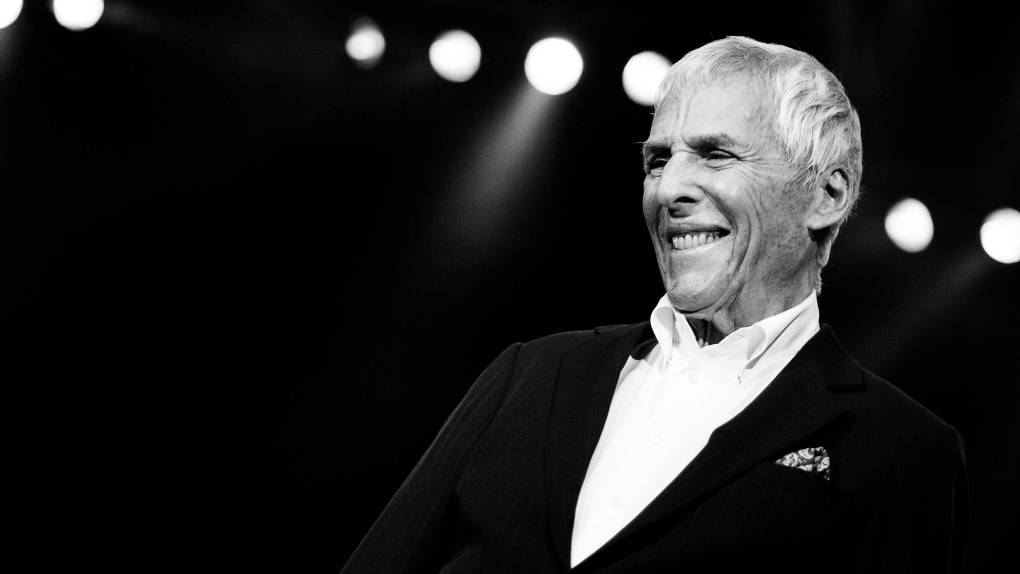
window.__IS_SSR__=true
window.__INITIAL_STATE__={
"attachmentsReducer": {
"audio_0": {
"type": "attachments",
"id": "audio_0",
"imgSizes": {
"kqedFullSize": {
"file": "https://ww2.kqed.org/news/wp-content/themes/KQED-unified/img/audio_bgs/background0.jpg"
}
}
},
"audio_1": {
"type": "attachments",
"id": "audio_1",
"imgSizes": {
"kqedFullSize": {
"file": "https://ww2.kqed.org/news/wp-content/themes/KQED-unified/img/audio_bgs/background1.jpg"
}
}
},
"audio_2": {
"type": "attachments",
"id": "audio_2",
"imgSizes": {
"kqedFullSize": {
"file": "https://ww2.kqed.org/news/wp-content/themes/KQED-unified/img/audio_bgs/background2.jpg"
}
}
},
"audio_3": {
"type": "attachments",
"id": "audio_3",
"imgSizes": {
"kqedFullSize": {
"file": "https://ww2.kqed.org/news/wp-content/themes/KQED-unified/img/audio_bgs/background3.jpg"
}
}
},
"audio_4": {
"type": "attachments",
"id": "audio_4",
"imgSizes": {
"kqedFullSize": {
"file": "https://ww2.kqed.org/news/wp-content/themes/KQED-unified/img/audio_bgs/background4.jpg"
}
}
},
"placeholder": {
"type": "attachments",
"id": "placeholder",
"imgSizes": {
"thumbnail": {
"file": "https://cdn.kqed.org/wp-content/uploads/2024/12/KQED-Default-Image-816638274-2000x1333-1-160x107.jpg",
"width": 160,
"height": 107,
"mimeType": "image/jpeg"
},
"medium": {
"file": "https://cdn.kqed.org/wp-content/uploads/2024/12/KQED-Default-Image-816638274-2000x1333-1-800x533.jpg",
"width": 800,
"height": 533,
"mimeType": "image/jpeg"
},
"medium_large": {
"file": "https://cdn.kqed.org/wp-content/uploads/2024/12/KQED-Default-Image-816638274-2000x1333-1-768x512.jpg",
"width": 768,
"height": 512,
"mimeType": "image/jpeg"
},
"large": {
"file": "https://cdn.kqed.org/wp-content/uploads/2024/12/KQED-Default-Image-816638274-2000x1333-1-1020x680.jpg",
"width": 1020,
"height": 680,
"mimeType": "image/jpeg"
},
"1536x1536": {
"file": "https://cdn.kqed.org/wp-content/uploads/2024/12/KQED-Default-Image-816638274-2000x1333-1-1536x1024.jpg",
"width": 1536,
"height": 1024,
"mimeType": "image/jpeg"
},
"fd-lrg": {
"file": "https://cdn.kqed.org/wp-content/uploads/2024/12/KQED-Default-Image-816638274-2000x1333-1-1536x1024.jpg",
"width": 1536,
"height": 1024,
"mimeType": "image/jpeg"
},
"fd-med": {
"file": "https://cdn.kqed.org/wp-content/uploads/2024/12/KQED-Default-Image-816638274-2000x1333-1-1020x680.jpg",
"width": 1020,
"height": 680,
"mimeType": "image/jpeg"
},
"fd-sm": {
"file": "https://cdn.kqed.org/wp-content/uploads/2024/12/KQED-Default-Image-816638274-2000x1333-1-800x533.jpg",
"width": 800,
"height": 533,
"mimeType": "image/jpeg"
},
"post-thumbnail": {
"file": "https://cdn.kqed.org/wp-content/uploads/2024/12/KQED-Default-Image-816638274-2000x1333-1-672x372.jpg",
"width": 672,
"height": 372,
"mimeType": "image/jpeg"
},
"twentyfourteen-full-width": {
"file": "https://cdn.kqed.org/wp-content/uploads/2024/12/KQED-Default-Image-816638274-2000x1333-1-1038x576.jpg",
"width": 1038,
"height": 576,
"mimeType": "image/jpeg"
},
"xxsmall": {
"file": "https://cdn.kqed.org/wp-content/uploads/2024/12/KQED-Default-Image-816638274-2000x1333-1-160x107.jpg",
"width": 160,
"height": 107,
"mimeType": "image/jpeg"
},
"xsmall": {
"file": "https://cdn.kqed.org/wp-content/uploads/2024/12/KQED-Default-Image-816638274-2000x1333-1-672x372.jpg",
"width": 672,
"height": 372,
"mimeType": "image/jpeg"
},
"small": {
"file": "https://cdn.kqed.org/wp-content/uploads/2024/12/KQED-Default-Image-816638274-2000x1333-1-672x372.jpg",
"width": 672,
"height": 372,
"mimeType": "image/jpeg"
},
"xlarge": {
"file": "https://cdn.kqed.org/wp-content/uploads/2024/12/KQED-Default-Image-816638274-2000x1333-1-1020x680.jpg",
"width": 1020,
"height": 680,
"mimeType": "image/jpeg"
},
"full-width": {
"file": "https://cdn.kqed.org/wp-content/uploads/2024/12/KQED-Default-Image-816638274-2000x1333-1-1920x1280.jpg",
"width": 1920,
"height": 1280,
"mimeType": "image/jpeg"
},
"guest-author-32": {
"file": "https://cdn.kqed.org/wp-content/uploads/2025/01/KQED-Default-Image-816638274-1333x1333-1-160x160.jpg",
"width": 32,
"height": 32,
"mimeType": "image/jpeg"
},
"guest-author-50": {
"file": "https://cdn.kqed.org/wp-content/uploads/2025/01/KQED-Default-Image-816638274-1333x1333-1-160x160.jpg",
"width": 50,
"height": 50,
"mimeType": "image/jpeg"
},
"guest-author-64": {
"file": "https://cdn.kqed.org/wp-content/uploads/2025/01/KQED-Default-Image-816638274-1333x1333-1-160x160.jpg",
"width": 64,
"height": 64,
"mimeType": "image/jpeg"
},
"guest-author-96": {
"file": "https://cdn.kqed.org/wp-content/uploads/2025/01/KQED-Default-Image-816638274-1333x1333-1-160x160.jpg",
"width": 96,
"height": 96,
"mimeType": "image/jpeg"
},
"guest-author-128": {
"file": "https://cdn.kqed.org/wp-content/uploads/2025/01/KQED-Default-Image-816638274-1333x1333-1-160x160.jpg",
"width": 128,
"height": 128,
"mimeType": "image/jpeg"
},
"detail": {
"file": "https://cdn.kqed.org/wp-content/uploads/2025/01/KQED-Default-Image-816638274-1333x1333-1-160x160.jpg",
"width": 160,
"height": 160,
"mimeType": "image/jpeg"
},
"kqedFullSize": {
"file": "https://cdn.kqed.org/wp-content/uploads/2024/12/KQED-Default-Image-816638274-2000x1333-1.jpg",
"width": 2000,
"height": 1333
}
}
},
"arts_13924906": {
"type": "attachments",
"id": "arts_13924906",
"meta": {
"index": "attachments_1716263798",
"site": "arts",
"id": "13924906",
"found": true
},
"parent": 13924905,
"imgSizes": {
"twentyfourteen-full-width": {
"file": "https://ww2.kqed.org/app/uploads/sites/2/2023/02/BurtBacharach-1038x576.jpg",
"width": 1038,
"mimeType": "image/jpeg",
"height": 576
},
"thumbnail": {
"file": "https://ww2.kqed.org/app/uploads/sites/2/2023/02/BurtBacharach-160x90.jpg",
"width": 160,
"mimeType": "image/jpeg",
"height": 90
},
"post-thumbnail": {
"file": "https://ww2.kqed.org/app/uploads/sites/2/2023/02/BurtBacharach-672x372.jpg",
"width": 672,
"mimeType": "image/jpeg",
"height": 372
},
"kqedFullSize": {
"file": "https://ww2.kqed.org/app/uploads/sites/2/2023/02/BurtBacharach-scaled.jpg",
"width": 2560,
"height": 1440
},
"2048x2048": {
"file": "https://ww2.kqed.org/app/uploads/sites/2/2023/02/BurtBacharach-2048x1152.jpg",
"width": 2048,
"mimeType": "image/jpeg",
"height": 1152
},
"large": {
"file": "https://ww2.kqed.org/app/uploads/sites/2/2023/02/BurtBacharach-1020x574.jpg",
"width": 1020,
"mimeType": "image/jpeg",
"height": 574
},
"1536x1536": {
"file": "https://ww2.kqed.org/app/uploads/sites/2/2023/02/BurtBacharach-1536x864.jpg",
"width": 1536,
"mimeType": "image/jpeg",
"height": 864
},
"full-width": {
"file": "https://ww2.kqed.org/app/uploads/sites/2/2023/02/BurtBacharach-1920x1080.jpg",
"width": 1920,
"mimeType": "image/jpeg",
"height": 1080
},
"medium": {
"file": "https://ww2.kqed.org/app/uploads/sites/2/2023/02/BurtBacharach-800x450.jpg",
"width": 800,
"mimeType": "image/jpeg",
"height": 450
},
"medium_large": {
"file": "https://ww2.kqed.org/app/uploads/sites/2/2023/02/BurtBacharach-768x432.jpg",
"width": 768,
"mimeType": "image/jpeg",
"height": 432
}
},
"publishDate": 1675955936,
"modified": 1675955969,
"caption": "Burt Bacharach, American pianist, composer and music producer performs live on stage at the HSBC Brasil on April 20, 2013.",
"description": null,
"title": "BurtBacharach",
"credit": "Mauricio Santana/Getty Images",
"status": "inherit",
"altTag": null,
"isLoading": false,
"fetchFailed": false
},
"arts_13924838": {
"type": "attachments",
"id": "arts_13924838",
"meta": {
"index": "attachments_1716263798",
"site": "arts",
"id": "13924838",
"found": true
},
"parent": 13924828,
"imgSizes": {
"twentyfourteen-full-width": {
"file": "https://ww2.kqed.org/app/uploads/sites/2/2023/02/aRUCKUSEDITOR-square-1024x576.jpg",
"width": 1024,
"mimeType": "image/jpeg",
"height": 576
},
"thumbnail": {
"file": "https://ww2.kqed.org/app/uploads/sites/2/2023/02/aRUCKUSEDITOR-square-160x160.jpg",
"width": 160,
"mimeType": "image/jpeg",
"height": 160
},
"post-thumbnail": {
"file": "https://ww2.kqed.org/app/uploads/sites/2/2023/02/aRUCKUSEDITOR-square-672x372.jpg",
"width": 672,
"mimeType": "image/jpeg",
"height": 372
},
"kqedFullSize": {
"file": "https://ww2.kqed.org/app/uploads/sites/2/2023/02/aRUCKUSEDITOR-square.jpg",
"width": 1024,
"height": 1024
},
"large": {
"file": "https://ww2.kqed.org/app/uploads/sites/2/2023/02/aRUCKUSEDITOR-square-1020x1020.jpg",
"width": 1020,
"mimeType": "image/jpeg",
"height": 1020
},
"medium": {
"file": "https://ww2.kqed.org/app/uploads/sites/2/2023/02/aRUCKUSEDITOR-square-800x800.jpg",
"width": 800,
"mimeType": "image/jpeg",
"height": 800
},
"medium_large": {
"file": "https://ww2.kqed.org/app/uploads/sites/2/2023/02/aRUCKUSEDITOR-square-768x768.jpg",
"width": 768,
"mimeType": "image/jpeg",
"height": 768
}
},
"publishDate": 1675810627,
"modified": 1675810686,
"caption": "Before her rap career took off, Rocky Rivera was the 22-year-old editor-in-chief of Ruckus Magazine. ",
"description": null,
"title": "aRUCKUSEDITOR-square",
"credit": "Vivian Chen",
"status": "inherit",
"altTag": null,
"isLoading": false,
"fetchFailed": false
},
"arts_13924818": {
"type": "attachments",
"id": "arts_13924818",
"meta": {
"index": "attachments_1716263798",
"site": "arts",
"id": "13924818",
"found": true
},
"parent": 13924807,
"imgSizes": {
"twentyfourteen-full-width": {
"file": "https://ww2.kqed.org/app/uploads/sites/2/2023/02/desk-1-16789e165ae734eb1eb762324d482210e6e21387-s1600-c85-1038x576.jpg",
"width": 1038,
"mimeType": "image/jpeg",
"height": 576
},
"thumbnail": {
"file": "https://ww2.kqed.org/app/uploads/sites/2/2023/02/desk-1-16789e165ae734eb1eb762324d482210e6e21387-s1600-c85-160x95.jpg",
"width": 160,
"mimeType": "image/jpeg",
"height": 95
},
"post-thumbnail": {
"file": "https://ww2.kqed.org/app/uploads/sites/2/2023/02/desk-1-16789e165ae734eb1eb762324d482210e6e21387-s1600-c85-672x372.jpg",
"width": 672,
"mimeType": "image/jpeg",
"height": 372
},
"kqedFullSize": {
"file": "https://ww2.kqed.org/app/uploads/sites/2/2023/02/desk-1-16789e165ae734eb1eb762324d482210e6e21387-s1600-c85.jpg",
"width": 1198,
"height": 714
},
"large": {
"file": "https://ww2.kqed.org/app/uploads/sites/2/2023/02/desk-1-16789e165ae734eb1eb762324d482210e6e21387-s1600-c85-1020x608.jpg",
"width": 1020,
"mimeType": "image/jpeg",
"height": 608
},
"medium": {
"file": "https://ww2.kqed.org/app/uploads/sites/2/2023/02/desk-1-16789e165ae734eb1eb762324d482210e6e21387-s1600-c85-800x477.jpg",
"width": 800,
"mimeType": "image/jpeg",
"height": 477
},
"medium_large": {
"file": "https://ww2.kqed.org/app/uploads/sites/2/2023/02/desk-1-16789e165ae734eb1eb762324d482210e6e21387-s1600-c85-768x458.jpg",
"width": 768,
"mimeType": "image/jpeg",
"height": 458
}
},
"publishDate": 1675797474,
"modified": 1675797525,
"caption": "The bric-a-brac-stacked shelves of the Tiny Desk.",
"description": null,
"title": "desk-1-16789e165ae734eb1eb762324d482210e6e21387-s1600-c85",
"credit": "NPR",
"status": "inherit",
"altTag": "a large bookshelf with books and pottery and tchotchkes",
"isLoading": false,
"fetchFailed": false
},
"arts_13924750": {
"type": "attachments",
"id": "arts_13924750",
"meta": {
"index": "attachments_1716263798",
"site": "arts",
"id": "13924750",
"found": true
},
"parent": 13924749,
"imgSizes": {
"twentyfourteen-full-width": {
"file": "https://ww2.kqed.org/app/uploads/sites/2/2023/02/gettyimages-1463293152_wide-27571b905131c015193e1e0d8a409c183d2b7821-scaled-e1675661399606-1038x576.jpg",
"width": 1038,
"mimeType": "image/jpeg",
"height": 576
},
"thumbnail": {
"file": "https://ww2.kqed.org/app/uploads/sites/2/2023/02/gettyimages-1463293152_wide-27571b905131c015193e1e0d8a409c183d2b7821-scaled-e1675661399606-160x90.jpg",
"width": 160,
"mimeType": "image/jpeg",
"height": 90
},
"post-thumbnail": {
"file": "https://ww2.kqed.org/app/uploads/sites/2/2023/02/gettyimages-1463293152_wide-27571b905131c015193e1e0d8a409c183d2b7821-scaled-e1675661399606-672x372.jpg",
"width": 672,
"mimeType": "image/jpeg",
"height": 372
},
"kqedFullSize": {
"file": "https://ww2.kqed.org/app/uploads/sites/2/2023/02/gettyimages-1463293152_wide-27571b905131c015193e1e0d8a409c183d2b7821-scaled-e1675661399606.jpg",
"width": 1920,
"height": 1080
},
"2048x2048": {
"file": "https://ww2.kqed.org/app/uploads/sites/2/2023/02/gettyimages-1463293152_wide-27571b905131c015193e1e0d8a409c183d2b7821-2048x1152.jpg",
"width": 2048,
"mimeType": "image/jpeg",
"height": 1152
},
"large": {
"file": "https://ww2.kqed.org/app/uploads/sites/2/2023/02/gettyimages-1463293152_wide-27571b905131c015193e1e0d8a409c183d2b7821-scaled-e1675661399606-1020x574.jpg",
"width": 1020,
"mimeType": "image/jpeg",
"height": 574
},
"1536x1536": {
"file": "https://ww2.kqed.org/app/uploads/sites/2/2023/02/gettyimages-1463293152_wide-27571b905131c015193e1e0d8a409c183d2b7821-scaled-e1675661399606-1536x864.jpg",
"width": 1536,
"mimeType": "image/jpeg",
"height": 864
},
"full-width": {
"file": "https://ww2.kqed.org/app/uploads/sites/2/2023/02/gettyimages-1463293152_wide-27571b905131c015193e1e0d8a409c183d2b7821-1920x1080.jpg",
"width": 1920,
"mimeType": "image/jpeg",
"height": 1080
},
"medium": {
"file": "https://ww2.kqed.org/app/uploads/sites/2/2023/02/gettyimages-1463293152_wide-27571b905131c015193e1e0d8a409c183d2b7821-scaled-e1675661399606-800x450.jpg",
"width": 800,
"mimeType": "image/jpeg",
"height": 450
},
"medium_large": {
"file": "https://ww2.kqed.org/app/uploads/sites/2/2023/02/gettyimages-1463293152_wide-27571b905131c015193e1e0d8a409c183d2b7821-scaled-e1675661399606-768x432.jpg",
"width": 768,
"mimeType": "image/jpeg",
"height": 432
}
},
"publishDate": 1675660690,
"modified": 1675661496,
"caption": "Beyoncé accepts best dance/electronic music album for ‘RENAISSANCE’ during the 65th Grammy Awards in Los Angeles Sunday. The prize gave her 32 Grammys, the most of any artist in the awards' history.",
"description": null,
"title": "Beyoncé accepts best dance/electronic music album for ‘RENAISSANCE’ during the 65th Grammy Awards in Los Angeles Sunday. The prize gave her 32 Grammys, the most of any artist in the awards' history.",
"credit": "Emma McIntyre/Getty Images for The Recording Academy",
"status": "inherit",
"altTag": "A beautiful Black woman with long wavy hair smiles broadly behind a podium microphone, award in hand.",
"isLoading": false,
"fetchFailed": false
},
"arts_13924659": {
"type": "attachments",
"id": "arts_13924659",
"meta": {
"index": "attachments_1716263798",
"site": "arts",
"id": "13924659",
"found": true
},
"parent": 13924654,
"imgSizes": {
"twentyfourteen-full-width": {
"file": "https://ww2.kqed.org/app/uploads/sites/2/2023/02/molly_tuttle2-1038x576.jpg",
"width": 1038,
"mimeType": "image/jpeg",
"height": 576
},
"thumbnail": {
"file": "https://ww2.kqed.org/app/uploads/sites/2/2023/02/molly_tuttle2-160x107.jpg",
"width": 160,
"mimeType": "image/jpeg",
"height": 107
},
"post-thumbnail": {
"file": "https://ww2.kqed.org/app/uploads/sites/2/2023/02/molly_tuttle2-672x372.jpg",
"width": 672,
"mimeType": "image/jpeg",
"height": 372
},
"kqedFullSize": {
"file": "https://ww2.kqed.org/app/uploads/sites/2/2023/02/molly_tuttle2-scaled.jpg",
"width": 2560,
"height": 1707
},
"2048x2048": {
"file": "https://ww2.kqed.org/app/uploads/sites/2/2023/02/molly_tuttle2-2048x1365.jpg",
"width": 2048,
"mimeType": "image/jpeg",
"height": 1365
},
"large": {
"file": "https://ww2.kqed.org/app/uploads/sites/2/2023/02/molly_tuttle2-1020x680.jpg",
"width": 1020,
"mimeType": "image/jpeg",
"height": 680
},
"1536x1536": {
"file": "https://ww2.kqed.org/app/uploads/sites/2/2023/02/molly_tuttle2-1536x1024.jpg",
"width": 1536,
"mimeType": "image/jpeg",
"height": 1024
},
"full-width": {
"file": "https://ww2.kqed.org/app/uploads/sites/2/2023/02/molly_tuttle2-1920x1280.jpg",
"width": 1920,
"mimeType": "image/jpeg",
"height": 1280
},
"medium": {
"file": "https://ww2.kqed.org/app/uploads/sites/2/2023/02/molly_tuttle2-800x533.jpg",
"width": 800,
"mimeType": "image/jpeg",
"height": 533
},
"medium_large": {
"file": "https://ww2.kqed.org/app/uploads/sites/2/2023/02/molly_tuttle2-768x512.jpg",
"width": 768,
"mimeType": "image/jpeg",
"height": 512
}
},
"publishDate": 1675377092,
"modified": 1675377190,
"caption": "Bluegrass musician Molly Tuttle, who was raised in Palo Alto, is nominated for two Grammys this year, including Best New Artist.",
"description": null,
"title": "tp0004c_SP_DPGate_Cover",
"credit": "Samantha Muljat",
"status": "inherit",
"altTag": "a young white woman in a colorful shirt sits in a field with a guitar, smiling",
"isLoading": false,
"fetchFailed": false
},
"arts_13924635": {
"type": "attachments",
"id": "arts_13924635",
"meta": {
"index": "attachments_1716263798",
"site": "arts",
"id": "13924635",
"found": true
},
"parent": 13924370,
"imgSizes": {
"twentyfourteen-full-width": {
"file": "https://ww2.kqed.org/app/uploads/sites/2/2023/02/DSC_0758-1038x576.jpg",
"width": 1038,
"mimeType": "image/jpeg",
"height": 576
},
"thumbnail": {
"file": "https://ww2.kqed.org/app/uploads/sites/2/2023/02/DSC_0758-160x93.jpg",
"width": 160,
"mimeType": "image/jpeg",
"height": 93
},
"post-thumbnail": {
"file": "https://ww2.kqed.org/app/uploads/sites/2/2023/02/DSC_0758-672x372.jpg",
"width": 672,
"mimeType": "image/jpeg",
"height": 372
},
"kqedFullSize": {
"file": "https://ww2.kqed.org/app/uploads/sites/2/2023/02/DSC_0758-scaled.jpg",
"width": 2560,
"height": 1486
},
"2048x2048": {
"file": "https://ww2.kqed.org/app/uploads/sites/2/2023/02/DSC_0758-2048x1189.jpg",
"width": 2048,
"mimeType": "image/jpeg",
"height": 1189
},
"large": {
"file": "https://ww2.kqed.org/app/uploads/sites/2/2023/02/DSC_0758-1020x592.jpg",
"width": 1020,
"mimeType": "image/jpeg",
"height": 592
},
"1536x1536": {
"file": "https://ww2.kqed.org/app/uploads/sites/2/2023/02/DSC_0758-1536x892.jpg",
"width": 1536,
"mimeType": "image/jpeg",
"height": 892
},
"full-width": {
"file": "https://ww2.kqed.org/app/uploads/sites/2/2023/02/DSC_0758-1920x1115.jpg",
"width": 1920,
"mimeType": "image/jpeg",
"height": 1115
},
"medium": {
"file": "https://ww2.kqed.org/app/uploads/sites/2/2023/02/DSC_0758-800x464.jpg",
"width": 800,
"mimeType": "image/jpeg",
"height": 464
},
"medium_large": {
"file": "https://ww2.kqed.org/app/uploads/sites/2/2023/02/DSC_0758-768x446.jpg",
"width": 768,
"mimeType": "image/jpeg",
"height": 446
}
},
"publishDate": 1675364191,
"modified": 1675364386,
"caption": "Bay Area sax legend John Handy, at the cusp of 90, is sharp as ever.",
"description": null,
"title": "DSC_0758",
"credit": "Andrew Gilbert",
"status": "inherit",
"altTag": "an older Black man with a gray beard dressed in a colorful red shirt and a hat smiles in an outdoor portrait with a large tree behind him",
"isLoading": false,
"fetchFailed": false
},
"arts_13924637": {
"type": "attachments",
"id": "arts_13924637",
"meta": {
"index": "attachments_1716263798",
"site": "arts",
"id": "13924637",
"found": true
},
"parent": 13924636,
"imgSizes": {
"twentyfourteen-full-width": {
"file": "https://ww2.kqed.org/app/uploads/sites/2/2023/02/gettyimages-1239556065-b5b2b3eaf1013ed0cd0b4f3ba87bd36f668cea48-scaled-e1675365004278-1038x576.jpg",
"width": 1038,
"mimeType": "image/jpeg",
"height": 576
},
"thumbnail": {
"file": "https://ww2.kqed.org/app/uploads/sites/2/2023/02/gettyimages-1239556065-b5b2b3eaf1013ed0cd0b4f3ba87bd36f668cea48-scaled-e1675365004278-160x120.jpg",
"width": 160,
"mimeType": "image/jpeg",
"height": 120
},
"post-thumbnail": {
"file": "https://ww2.kqed.org/app/uploads/sites/2/2023/02/gettyimages-1239556065-b5b2b3eaf1013ed0cd0b4f3ba87bd36f668cea48-scaled-e1675365004278-672x372.jpg",
"width": 672,
"mimeType": "image/jpeg",
"height": 372
},
"kqedFullSize": {
"file": "https://ww2.kqed.org/app/uploads/sites/2/2023/02/gettyimages-1239556065-b5b2b3eaf1013ed0cd0b4f3ba87bd36f668cea48-scaled-e1675365004278.jpg",
"width": 1920,
"height": 1440
},
"2048x2048": {
"file": "https://ww2.kqed.org/app/uploads/sites/2/2023/02/gettyimages-1239556065-b5b2b3eaf1013ed0cd0b4f3ba87bd36f668cea48-2048x1536.jpg",
"width": 2048,
"mimeType": "image/jpeg",
"height": 1536
},
"large": {
"file": "https://ww2.kqed.org/app/uploads/sites/2/2023/02/gettyimages-1239556065-b5b2b3eaf1013ed0cd0b4f3ba87bd36f668cea48-scaled-e1675365004278-1020x765.jpg",
"width": 1020,
"mimeType": "image/jpeg",
"height": 765
},
"1536x1536": {
"file": "https://ww2.kqed.org/app/uploads/sites/2/2023/02/gettyimages-1239556065-b5b2b3eaf1013ed0cd0b4f3ba87bd36f668cea48-scaled-e1675365004278-1536x1152.jpg",
"width": 1536,
"mimeType": "image/jpeg",
"height": 1152
},
"full-width": {
"file": "https://ww2.kqed.org/app/uploads/sites/2/2023/02/gettyimages-1239556065-b5b2b3eaf1013ed0cd0b4f3ba87bd36f668cea48-1920x1440.jpg",
"width": 1920,
"mimeType": "image/jpeg",
"height": 1440
},
"medium": {
"file": "https://ww2.kqed.org/app/uploads/sites/2/2023/02/gettyimages-1239556065-b5b2b3eaf1013ed0cd0b4f3ba87bd36f668cea48-scaled-e1675365004278-800x600.jpg",
"width": 800,
"mimeType": "image/jpeg",
"height": 600
},
"medium_large": {
"file": "https://ww2.kqed.org/app/uploads/sites/2/2023/02/gettyimages-1239556065-b5b2b3eaf1013ed0cd0b4f3ba87bd36f668cea48-scaled-e1675365004278-768x576.jpg",
"width": 768,
"mimeType": "image/jpeg",
"height": 576
}
},
"publishDate": 1675364397,
"modified": 1675365125,
"caption": "Beyoncé performs at the Oscars in March 2022. Her ‘Renaissance’ World Tour later this year will mark her first solo tour since 2016.",
"description": null,
"title": "Beyoncé performs at the Oscars in March 2022. Her ‘Renaissance’ World Tour later this year will mark her first solo tour since 2016.",
"credit": "ROBYN BECK/AFP via Getty Images",
"status": "inherit",
"altTag": "A beautiful Black woman wears an off the shoulder neon green gown and sings into a microphone.",
"isLoading": false,
"fetchFailed": false
},
"arts_13924128": {
"type": "attachments",
"id": "arts_13924128",
"meta": {
"index": "attachments_1716263798",
"site": "arts",
"id": "13924128",
"found": true
},
"parent": 13924126,
"imgSizes": {
"twentyfourteen-full-width": {
"file": "https://ww2.kqed.org/app/uploads/sites/2/2023/01/HipHopPreschool.SQ_-1038x576.jpg",
"width": 1038,
"mimeType": "image/jpeg",
"height": 576
},
"thumbnail": {
"file": "https://ww2.kqed.org/app/uploads/sites/2/2023/01/HipHopPreschool.SQ_-160x160.jpg",
"width": 160,
"mimeType": "image/jpeg",
"height": 160
},
"post-thumbnail": {
"file": "https://ww2.kqed.org/app/uploads/sites/2/2023/01/HipHopPreschool.SQ_-672x372.jpg",
"width": 672,
"mimeType": "image/jpeg",
"height": 372
},
"kqedFullSize": {
"file": "https://ww2.kqed.org/app/uploads/sites/2/2023/01/HipHopPreschool.SQ_.jpg",
"width": 1920,
"height": 1920
},
"large": {
"file": "https://ww2.kqed.org/app/uploads/sites/2/2023/01/HipHopPreschool.SQ_-1020x1020.jpg",
"width": 1020,
"mimeType": "image/jpeg",
"height": 1020
},
"1536x1536": {
"file": "https://ww2.kqed.org/app/uploads/sites/2/2023/01/HipHopPreschool.SQ_-1536x1536.jpg",
"width": 1536,
"mimeType": "image/jpeg",
"height": 1536
},
"medium": {
"file": "https://ww2.kqed.org/app/uploads/sites/2/2023/01/HipHopPreschool.SQ_-800x800.jpg",
"width": 800,
"mimeType": "image/jpeg",
"height": 800
},
"medium_large": {
"file": "https://ww2.kqed.org/app/uploads/sites/2/2023/01/HipHopPreschool.SQ_-768x768.jpg",
"width": 768,
"mimeType": "image/jpeg",
"height": 768
}
},
"publishDate": 1674596688,
"modified": 1674596688,
"caption": null,
"description": null,
"title": "HipHopPreschool.SQ",
"credit": null,
"status": "inherit",
"altTag": null,
"isLoading": false,
"fetchFailed": false
},
"arts_13924611": {
"type": "attachments",
"id": "arts_13924611",
"meta": {
"index": "attachments_1716263798",
"site": "arts",
"id": "13924611",
"found": true
},
"parent": 13923766,
"imgSizes": {
"thumbnail": {
"file": "https://ww2.kqed.org/app/uploads/sites/2/2023/02/RBLPosse.gif.REV_-160x90.gif",
"width": 160,
"mimeType": "image/gif",
"height": 90
},
"post-thumbnail": {
"file": "https://ww2.kqed.org/app/uploads/sites/2/2023/02/RBLPosse.gif.REV_-672x372.gif",
"width": 672,
"mimeType": "image/gif",
"height": 372
},
"kqedFullSize": {
"file": "https://ww2.kqed.org/app/uploads/sites/2/2023/02/RBLPosse.gif.REV_.gif",
"width": 800,
"height": 450
},
"medium_large": {
"file": "https://ww2.kqed.org/app/uploads/sites/2/2023/02/RBLPosse.gif.REV_-768x432.gif",
"width": 768,
"mimeType": "image/gif",
"height": 432
}
},
"publishDate": 1675297045,
"modified": 1675297081,
"caption": "RBL Posse's 'A Lesson to Be Learned,' pictured at the Harbor Road steps, then and now. On the cover (L–R): Mr. Cee (at bottom), Boobie (standing), Curtis (at center). Black C (squatting), and Lil' Mo. ",
"description": null,
"title": "RBLPosse.gif.REV",
"credit": "Beth LaBerge/KQED",
"status": "inherit",
"altTag": "An album cover, held up against grey steps, showing its photo shoot location",
"isLoading": false,
"fetchFailed": false
},
"arts_13924196": {
"type": "attachments",
"id": "arts_13924196",
"meta": {
"index": "attachments_1716263798",
"site": "arts",
"id": "13924196",
"found": true
},
"parent": 13923766,
"imgSizes": {
"thumbnail": {
"file": "https://ww2.kqed.org/app/uploads/sites/2/2023/01/RBL.Small_.GIF-160x90.gif",
"width": 160,
"mimeType": "image/gif",
"height": 90
},
"post-thumbnail": {
"file": "https://ww2.kqed.org/app/uploads/sites/2/2023/01/RBL.Small_.GIF-672x372.gif",
"width": 672,
"mimeType": "image/gif",
"height": 372
},
"kqedFullSize": {
"file": "https://ww2.kqed.org/app/uploads/sites/2/2023/01/RBL.Small_.GIF.gif",
"width": 800,
"height": 450
},
"medium_large": {
"file": "https://ww2.kqed.org/app/uploads/sites/2/2023/01/RBL.Small_.GIF-768x432.gif",
"width": 768,
"mimeType": "image/gif",
"height": 432
}
},
"publishDate": 1674678083,
"modified": 1675233174,
"caption": "RBL Posse's 'A Lesson to Be Learned,' pictured at the Harbor Road steps, then and now. On the cover (L–R): Mr. Cee (at bottom), Boobie (standing), Curtis (at center). Black C (squatting), and Lil' Mo. ",
"description": null,
"title": "RBL.Small.GIF",
"credit": "Beth LaBerge/KQED",
"status": "inherit",
"altTag": "An album cover held up against the location where it was photographed",
"isLoading": false,
"fetchFailed": false
},
"arts_13923951": {
"type": "attachments",
"id": "arts_13923951",
"meta": {
"index": "attachments_1716263798",
"site": "arts",
"id": "13923951",
"found": true
},
"parent": 13923938,
"imgSizes": {
"twentyfourteen-full-width": {
"file": "https://ww2.kqed.org/app/uploads/sites/2/2023/01/e-40.SQUARE-1038x576.jpg",
"width": 1038,
"mimeType": "image/jpeg",
"height": 576
},
"thumbnail": {
"file": "https://ww2.kqed.org/app/uploads/sites/2/2023/01/e-40.SQUARE-160x160.jpg",
"width": 160,
"mimeType": "image/jpeg",
"height": 160
},
"post-thumbnail": {
"file": "https://ww2.kqed.org/app/uploads/sites/2/2023/01/e-40.SQUARE-672x372.jpg",
"width": 672,
"mimeType": "image/jpeg",
"height": 372
},
"kqedFullSize": {
"file": "https://ww2.kqed.org/app/uploads/sites/2/2023/01/e-40.SQUARE.jpg",
"width": 1888,
"height": 1888
},
"large": {
"file": "https://ww2.kqed.org/app/uploads/sites/2/2023/01/e-40.SQUARE-1020x1020.jpg",
"width": 1020,
"mimeType": "image/jpeg",
"height": 1020
},
"1536x1536": {
"file": "https://ww2.kqed.org/app/uploads/sites/2/2023/01/e-40.SQUARE-1536x1536.jpg",
"width": 1536,
"mimeType": "image/jpeg",
"height": 1536
},
"medium": {
"file": "https://ww2.kqed.org/app/uploads/sites/2/2023/01/e-40.SQUARE-800x800.jpg",
"width": 800,
"mimeType": "image/jpeg",
"height": 800
},
"medium_large": {
"file": "https://ww2.kqed.org/app/uploads/sites/2/2023/01/e-40.SQUARE-768x768.jpg",
"width": 768,
"mimeType": "image/jpeg",
"height": 768
}
},
"publishDate": 1674275798,
"modified": 1674275842,
"caption": null,
"description": null,
"title": "e-40.SQUARE",
"credit": "Shomari Smith",
"status": "inherit",
"altTag": "an illustration of e-40 from my ghetto report card",
"isLoading": false,
"fetchFailed": false
},
"arts_13923952": {
"type": "attachments",
"id": "arts_13923952",
"meta": {
"index": "attachments_1716263798",
"site": "arts",
"id": "13923952",
"found": true
},
"parent": 13923938,
"imgSizes": {
"twentyfourteen-full-width": {
"file": "https://ww2.kqed.org/app/uploads/sites/2/2023/01/e-40.web_-1038x576.jpg",
"width": 1038,
"mimeType": "image/jpeg",
"height": 576
},
"thumbnail": {
"file": "https://ww2.kqed.org/app/uploads/sites/2/2023/01/e-40.web_-160x121.jpg",
"width": 160,
"mimeType": "image/jpeg",
"height": 121
},
"post-thumbnail": {
"file": "https://ww2.kqed.org/app/uploads/sites/2/2023/01/e-40.web_-672x372.jpg",
"width": 672,
"mimeType": "image/jpeg",
"height": 372
},
"kqedFullSize": {
"file": "https://ww2.kqed.org/app/uploads/sites/2/2023/01/e-40.web_.jpg",
"width": 1920,
"height": 1450
},
"large": {
"file": "https://ww2.kqed.org/app/uploads/sites/2/2023/01/e-40.web_-1020x770.jpg",
"width": 1020,
"mimeType": "image/jpeg",
"height": 770
},
"1536x1536": {
"file": "https://ww2.kqed.org/app/uploads/sites/2/2023/01/e-40.web_-1536x1160.jpg",
"width": 1536,
"mimeType": "image/jpeg",
"height": 1160
},
"medium": {
"file": "https://ww2.kqed.org/app/uploads/sites/2/2023/01/e-40.web_-800x604.jpg",
"width": 800,
"mimeType": "image/jpeg",
"height": 604
},
"medium_large": {
"file": "https://ww2.kqed.org/app/uploads/sites/2/2023/01/e-40.web_-768x580.jpg",
"width": 768,
"mimeType": "image/jpeg",
"height": 580
}
},
"publishDate": 1674275874,
"modified": 1675229005,
"caption": "'That's My Word' drops new stories each week throughout 2023.",
"description": null,
"title": "e-40.web",
"credit": "Illustration by Shomari Smith",
"status": "inherit",
"altTag": "An illustration of the rapper e-40, holding his glasses, based on the cover to the album 'my ghetto report card'",
"isLoading": false,
"fetchFailed": false
},
"arts_13924556": {
"type": "attachments",
"id": "arts_13924556",
"meta": {
"index": "attachments_1716263798",
"site": "arts",
"id": "13924556",
"found": true
},
"title": "MacDre.chez.featured",
"publishDate": 1675236609,
"status": "inherit",
"parent": 13924109,
"modified": 1730330549,
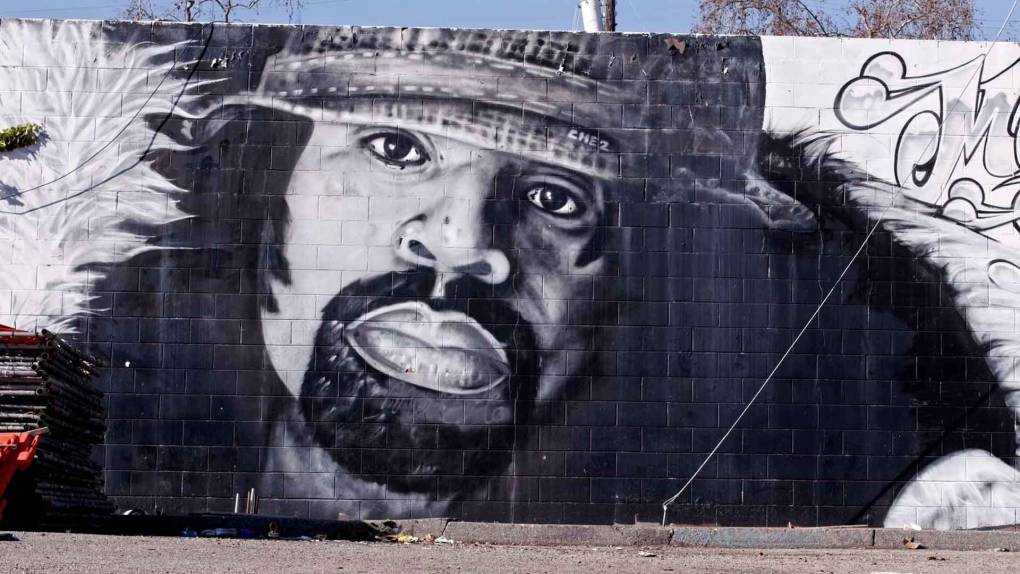
"caption": "A Mac Dre mural on Foothill Boulevard in Oakland by artist Chez.",
"credit": "Laurence Madrigal/We Were Hyphy",
"altTag": "a spraypainted mural of the rap artist mac dre",
"description": null,
"imgSizes": {
"medium": {
"file": "https://cdn.kqed.org/wp-content/uploads/sites/2/2023/01/MacDre.chez_.featured-800x450.jpg",
"width": 800,
"height": 450,
"mimeType": "image/jpeg"
},
"large": {
"file": "https://cdn.kqed.org/wp-content/uploads/sites/2/2023/01/MacDre.chez_.featured-1020x574.jpg",
"width": 1020,
"height": 574,
"mimeType": "image/jpeg"
},
"thumbnail": {
"file": "https://cdn.kqed.org/wp-content/uploads/sites/2/2023/01/MacDre.chez_.featured-160x90.jpg",
"width": 160,
"height": 90,
"mimeType": "image/jpeg"
},
"medium_large": {
"file": "https://cdn.kqed.org/wp-content/uploads/sites/2/2023/01/MacDre.chez_.featured-768x432.jpg",
"width": 768,
"height": 432,
"mimeType": "image/jpeg"
},
"1536x1536": {
"file": "https://cdn.kqed.org/wp-content/uploads/sites/2/2023/01/MacDre.chez_.featured-1536x864.jpg",
"width": 1536,
"height": 864,
"mimeType": "image/jpeg"
},
"post-thumbnail": {
"file": "https://cdn.kqed.org/wp-content/uploads/sites/2/2023/01/MacDre.chez_.featured-672x372.jpg",
"width": 672,
"height": 372,
"mimeType": "image/jpeg"
},
"twentyfourteen-full-width": {
"file": "https://cdn.kqed.org/wp-content/uploads/sites/2/2023/01/MacDre.chez_.featured-1038x576.jpg",
"width": 1038,
"height": 576,
"mimeType": "image/jpeg"
},
"kqedFullSize": {
"file": "https://cdn.kqed.org/wp-content/uploads/sites/2/2023/01/MacDre.chez_.featured.jpg",
"width": 1920,
"height": 1080
}
},
"isLoading": false,
"fetchFailed": false
},
"arts_13924169": {
"type": "attachments",
"id": "arts_13924169",
"meta": {
"index": "attachments_1716263798",
"site": "arts",
"id": "13924169",
"found": true
},
"parent": 13924167,
"imgSizes": {
"twentyfourteen-full-width": {
"file": "https://ww2.kqed.org/app/uploads/sites/2/2023/01/MacMall.SQ_-1038x576.jpg",
"width": 1038,
"mimeType": "image/jpeg",
"height": 576
},
"thumbnail": {
"file": "https://ww2.kqed.org/app/uploads/sites/2/2023/01/MacMall.SQ_-160x160.jpg",
"width": 160,
"mimeType": "image/jpeg",
"height": 160
},
"post-thumbnail": {
"file": "https://ww2.kqed.org/app/uploads/sites/2/2023/01/MacMall.SQ_-672x372.jpg",
"width": 672,
"mimeType": "image/jpeg",
"height": 372
},
"kqedFullSize": {
"file": "https://ww2.kqed.org/app/uploads/sites/2/2023/01/MacMall.SQ_.jpg",
"width": 1080,
"height": 1080
},
"large": {
"file": "https://ww2.kqed.org/app/uploads/sites/2/2023/01/MacMall.SQ_-1020x1020.jpg",
"width": 1020,
"mimeType": "image/jpeg",
"height": 1020
},
"medium": {
"file": "https://ww2.kqed.org/app/uploads/sites/2/2023/01/MacMall.SQ_-800x800.jpg",
"width": 800,
"mimeType": "image/jpeg",
"height": 800
},
"medium_large": {
"file": "https://ww2.kqed.org/app/uploads/sites/2/2023/01/MacMall.SQ_-768x768.jpg",
"width": 768,
"mimeType": "image/jpeg",
"height": 768
}
},
"publishDate": 1674624676,
"modified": 1674624721,
"caption": null,
"description": null,
"title": "MacMall.SQ",
"credit": "Young Black Brotha Records",
"status": "inherit",
"altTag": "Mac Mall, pictured on the cover of his debut album Illegal Business",
"isLoading": false,
"fetchFailed": false
}
},
"audioPlayerReducer": {
"postId": "stream_live",
"isPaused": true,
"isPlaying": false,
"pfsActive": false,
"pledgeModalIsOpen": true,
"playerDrawerIsOpen": false,
"liveAudioPlayStartedAt": 0,
"liveAudioPlayContext": ""
},
"authorsReducer": {
"byline_arts_13924905": {
"type": "authors",
"id": "byline_arts_13924905",
"meta": {
"override": true
},
"slug": "byline_arts_13924905",
"name": "Hillel Italie, Associated Press",
"isLoading": false
},
"byline_arts_13924807": {
"type": "authors",
"id": "byline_arts_13924807",
"meta": {
"override": true
},
"slug": "byline_arts_13924807",
"name": "Bobby Carter",
"isLoading": false
},
"byline_arts_13924749": {
"type": "authors",
"id": "byline_arts_13924749",
"meta": {
"override": true
},
"slug": "byline_arts_13924749",
"name": "Hazel Cills",
"isLoading": false
},
"byline_arts_13924636": {
"type": "authors",
"id": "byline_arts_13924636",
"meta": {
"override": true
},
"slug": "byline_arts_13924636",
"name": "Rachel Treisman",
"isLoading": false
},
"byline_arts_13923766": {
"type": "authors",
"id": "byline_arts_13923766",
"meta": {
"override": true
},
"slug": "byline_arts_13923766",
"name": "Black C",
"isLoading": false
},
"byline_arts_13924167": {
"type": "authors",
"id": "byline_arts_13924167",
"meta": {
"override": true
},
"slug": "byline_arts_13924167",
"name": "Mac Mall",
"isLoading": false
},
"agilbert": {
"type": "authors",
"id": "86",
"meta": {
"index": "authors_1716337520",
"id": "86",
"found": true
},
"name": "Andrew Gilbert",
"firstName": "Andrew",
"lastName": "Gilbert",
"slug": "agilbert",
"email": "jazzscribe@aol.com",
"display_author_email": false,
"staff_mastheads": [],
"title": "KQED Contributor",
"bio": "A Los Angeles native based in the Berkeley area since 1996, Andrew Gilbert covers jazz, international music and dance for KQED's \u003ci>California Report, \u003c/i>the\u003ci> Mercury News\u003c/i>, \u003ci>San Francisco Chronicle\u003c/i>, \u003ci>Berkeleyside.com\u003c/i>, and other publications. He is available for weddings and bar and bat mitzvahs. #jazzscribe",
"avatar": "https://secure.gravatar.com/avatar/d7bcafdbefdd39e9a68f88724ca616eb4e7a5a6bff9cdfb62de652a1e1751471?s=600&d=blank&r=g",
"twitter": null,
"bluesky": null,
"facebook": null,
"instagram": null,
"linkedin": null,
"sites": [
{
"site": "arts",
"roles": [
"Contributor",
"author"
]
},
{
"site": "news",
"roles": [
"author"
]
}
],
"headData": {
"title": "Andrew Gilbert | KQED",
"description": "KQED Contributor",
"ogImgSrc": "https://secure.gravatar.com/avatar/d7bcafdbefdd39e9a68f88724ca616eb4e7a5a6bff9cdfb62de652a1e1751471?s=600&d=blank&r=g",
"twImgSrc": "https://secure.gravatar.com/avatar/d7bcafdbefdd39e9a68f88724ca616eb4e7a5a6bff9cdfb62de652a1e1751471?s=600&d=blank&r=g"
},
"isLoading": false,
"link": "/author/agilbert"
},
"gmeline": {
"type": "authors",
"id": "185",
"meta": {
"index": "authors_1716337520",
"id": "185",
"found": true
},
"name": "Gabe Meline",
"firstName": "Gabe",
"lastName": "Meline",
"slug": "gmeline",
"email": "gmeline@kqed.org",
"display_author_email": true,
"staff_mastheads": [
"arts"
],
"title": "Senior Editor, KQED Arts & Culture",
"bio": "Gabe Meline entered journalism at age 15 making photocopied zines, and has since earned awards from the Edward R. Murrow Awards, the Society for Professional Journalists, the Online Journalism Awards, the Association of Alternative Newsweeklies and the California Newspaper Publishers Association. Prior to KQED, he was the editor of the \u003cem>North Bay Bohemian\u003c/em> and a touring musician. He lives with his wife and daughter in his hometown of Santa Rosa, CA.",
"avatar": "https://secure.gravatar.com/avatar/5bebe57be0d8bc2dd318934feb47299e2d2d10cba28d09d8d7afb389a2ce2bdd?s=600&d=blank&r=g",
"twitter": null,
"bluesky": null,
"facebook": null,
"instagram": null,
"linkedin": null,
"sites": [
{
"site": "",
"roles": [
"editor"
]
},
{
"site": "arts",
"roles": [
"administrator"
]
},
{
"site": "artschool",
"roles": [
"editor"
]
},
{
"site": "news",
"roles": [
"author"
]
},
{
"site": "pop",
"roles": [
"editor"
]
},
{
"site": "bayareabites",
"roles": [
"editor"
]
},
{
"site": "food",
"roles": [
"editor"
]
},
{
"site": "forum",
"roles": [
"administrator"
]
},
{
"site": "liveblog",
"roles": [
"editor"
]
},
{
"site": "hiphop",
"roles": [
"editor"
]
}
],
"headData": {
"title": "Gabe Meline | KQED",
"description": "Senior Editor, KQED Arts & Culture",
"ogImgSrc": "https://secure.gravatar.com/avatar/5bebe57be0d8bc2dd318934feb47299e2d2d10cba28d09d8d7afb389a2ce2bdd?s=600&d=blank&r=g",
"twImgSrc": "https://secure.gravatar.com/avatar/5bebe57be0d8bc2dd318934feb47299e2d2d10cba28d09d8d7afb389a2ce2bdd?s=600&d=blank&r=g"
},
"isLoading": false,
"link": "/author/gmeline"
},
"aproehl": {
"type": "authors",
"id": "11296",
"meta": {
"index": "authors_1716337520",
"id": "11296",
"found": true
},
"name": "Ariana Proehl",
"firstName": "Ariana",
"lastName": "Proehl",
"slug": "aproehl",
"email": "aproehl@KQED.org",
"display_author_email": true,
"staff_mastheads": [
"news"
],
"title": "Culture Reporter, KQED",
"bio": "Ariana Proehl is a Culture Reporter and Host.",
"avatar": "https://secure.gravatar.com/avatar/c96b24567eb5bb3a4f8bb295ed53e232?s=600&d=blank&r=g",
"twitter": "ArianaProehl",
"facebook": null,
"instagram": null,
"linkedin": null,
"sites": [
{
"site": "arts",
"roles": []
},
{
"site": "news",
"roles": []
},
{
"site": "education",
"roles": []
},
{
"site": "forum",
"roles": []
}
],
"headData": {
"title": "Ariana Proehl | KQED",
"description": "Culture Reporter, KQED",
"ogImgSrc": "https://secure.gravatar.com/avatar/c96b24567eb5bb3a4f8bb295ed53e232?s=600&d=blank&r=g",
"twImgSrc": "https://secure.gravatar.com/avatar/c96b24567eb5bb3a4f8bb295ed53e232?s=600&d=blank&r=g"
},
"isLoading": false,
"link": "/author/aproehl"
},
"nvoynovskaya": {
"type": "authors",
"id": "11387",
"meta": {
"index": "authors_1716337520",
"id": "11387",
"found": true
},
"name": "Nastia Voynovskaya",
"firstName": "Nastia",
"lastName": "Voynovskaya",
"slug": "nvoynovskaya",
"email": "nvoynovskaya@kqed.org",
"display_author_email": false,
"staff_mastheads": [
"arts"
],
"title": "Editor and reporter",
"bio": "Nastia Voynovskaya is a reporter, editor and host at KQED Arts & Culture. She's been covering the arts in the Bay Area for over a decade, with a focus on music, queer culture, labor issues and grassroots organizing. She has edited KQED story series such as Trans Bay: A History of San Francisco's Gender-Diverse Community, and co-created KQED's Bay Area hip-hop history project, That's My Word. Nastia's work has been recognized by the Society of Professional Journalists and San Francisco Press Club. She regularly appears on podcasts and radio programs, including NPR's All Songs Considered, and hosts live events where music, culture and conversation meet.",
"avatar": "https://secure.gravatar.com/avatar/5025ee460e5a85d69ca20ea6c6f2f80d7e17795c828f61ea3aecfcd924e9042e?s=600&d=blank&r=g",
"twitter": null,
"bluesky": null,
"facebook": null,
"instagram": "https://www.instagram.com/nananastia/",
"linkedin": null,
"sites": [
{
"site": "",
"roles": [
"editor"
]
},
{
"site": "arts",
"roles": [
"administrator"
]
},
{
"site": "news",
"roles": [
"editor"
]
},
{
"site": "pop",
"roles": [
"administrator"
]
},
{
"site": "bayareabites",
"roles": [
"editor"
]
},
{
"site": "podcasts",
"roles": [
"editor"
]
},
{
"site": "hiphop",
"roles": [
"editor"
]
}
],
"headData": {
"title": "Nastia Voynovskaya | KQED",
"description": "Editor and reporter",
"ogImgSrc": "https://secure.gravatar.com/avatar/5025ee460e5a85d69ca20ea6c6f2f80d7e17795c828f61ea3aecfcd924e9042e?s=600&d=blank&r=g",
"twImgSrc": "https://secure.gravatar.com/avatar/5025ee460e5a85d69ca20ea6c6f2f80d7e17795c828f61ea3aecfcd924e9042e?s=600&d=blank&r=g"
},
"isLoading": false,
"link": "/author/nvoynovskaya"
},
"ogpenn": {
"type": "authors",
"id": "11491",
"meta": {
"index": "authors_1716337520",
"id": "11491",
"found": true
},
"name": "Pendarvis Harshaw",
"firstName": "Pendarvis",
"lastName": "Harshaw",
"slug": "ogpenn",
"email": "ogpenn@gmail.com",
"display_author_email": false,
"staff_mastheads": [
"arts"
],
"title": "Community Engagement Reporter",
"bio": "Pendarvis Harshaw is an educator, host and writer with KQED Arts.",
"avatar": "https://secure.gravatar.com/avatar/972b77ee8e3f346ae2b00622661187fbfabd059b5693bbdc1475ea7a722fd4cd?s=600&d=blank&r=g",
"twitter": null,
"bluesky": null,
"facebook": null,
"instagram": "ogpenn",
"linkedin": null,
"sites": [
{
"site": "arts",
"roles": [
"administrator"
]
},
{
"site": "news",
"roles": [
"editor"
]
},
{
"site": "bayareabites",
"roles": [
"author"
]
},
{
"site": "hiphop",
"roles": [
"editor"
]
}
],
"headData": {
"title": "Pendarvis Harshaw | KQED",
"description": "Community Engagement Reporter",
"ogImgSrc": "https://secure.gravatar.com/avatar/972b77ee8e3f346ae2b00622661187fbfabd059b5693bbdc1475ea7a722fd4cd?s=600&d=blank&r=g",
"twImgSrc": "https://secure.gravatar.com/avatar/972b77ee8e3f346ae2b00622661187fbfabd059b5693bbdc1475ea7a722fd4cd?s=600&d=blank&r=g"
},
"isLoading": false,
"link": "/author/ogpenn"
},
"earnold": {
"type": "authors",
"id": "11839",
"meta": {
"index": "authors_1716337520",
"id": "11839",
"found": true
},
"name": "Eric Arnold",
"firstName": "Eric",
"lastName": "Arnold",
"slug": "earnold",
"email": "earnold@kqed.org",
"display_author_email": false,
"staff_mastheads": [],
"title": "Contributing Editor, 'That's My Word'",
"bio": "Eric Arnold has covered hip-hop locally and nationally for over 30 years. Formerly the managing editor of \u003cem>4080\u003c/em> and columnist for \u003cem>The Source\u003c/em>, he chronicled hyphy’s rise and fall, co-curated the Oakland Museum of California’s first hip-hop exhibit in 2018 and won a 2022 Northern California Emmy Award for a mini-documentary on Oakland’s Boogaloo dance culture. He is a contributing editor for \u003cem>That’s My Word\u003c/em>, KQED's series on the history of Bay Area hip-hop.",
"avatar": "https://secure.gravatar.com/avatar/ede45b04898456ad0893a2811e78b0a2?s=600&d=blank&r=g",
"twitter": null,
"facebook": null,
"instagram": null,
"linkedin": null,
"sites": [
{
"site": "arts",
"roles": [
"contributor"
]
},
{
"site": "news",
"roles": [
"contributor"
]
},
{
"site": "hiphop",
"roles": [
"contributor"
]
}
],
"headData": {
"title": "Eric Arnold | KQED",
"description": "Contributing Editor, 'That's My Word'",
"ogImgSrc": "https://secure.gravatar.com/avatar/ede45b04898456ad0893a2811e78b0a2?s=600&d=blank&r=g",
"twImgSrc": "https://secure.gravatar.com/avatar/ede45b04898456ad0893a2811e78b0a2?s=600&d=blank&r=g"
},
"isLoading": false,
"link": "/author/earnold"
},
"rockyrivera": {
"type": "authors",
"id": "11846",
"meta": {
"index": "authors_1716337520",
"id": "11846",
"found": true
},
"name": "Rocky Rivera",
"firstName": "Rocky",
"lastName": "Rivera",
"slug": "rockyrivera",
"email": "ms.rocky.rivera@gmail.com",
"display_author_email": false,
"staff_mastheads": [],
"title": "KQED Contributor",
"bio": "Rocky Rivera is a journalist, emcee, author and activist from San Francisco. She has released four albums through her label, Beatrock Music, and a ten-volume mixtape series with DJ Roza. She released her first book in 2021, entitled \u003cem>Snakeskin: Essays by Rocky Rivera\u003c/em>. Her latest album dropped in September 2024 and is called \"Long Kiss Goodnight\" with emcee/producer Otayo Dubb. She currently writes the Frisco Foodies column as a love letter to her hometown.",
"avatar": "https://secure.gravatar.com/avatar/946241ee2c59e6040607dfc75240d91b?s=600&d=blank&r=g",
"twitter": null,
"facebook": "https://m.facebook.com/rockyriveramusic",
"instagram": "https://instagram.com/rockyrivera",
"linkedin": "https://www.linkedin.com/in/krishtinedeleon/",
"sites": [
{
"site": "arts",
"roles": [
"author"
]
}
],
"headData": {
"title": "Rocky Rivera | KQED",
"description": "KQED Contributor",
"ogImgSrc": "https://secure.gravatar.com/avatar/946241ee2c59e6040607dfc75240d91b?s=600&d=blank&r=g",
"twImgSrc": "https://secure.gravatar.com/avatar/946241ee2c59e6040607dfc75240d91b?s=600&d=blank&r=g"
},
"isLoading": false,
"link": "/author/rockyrivera"
}
},
"pagesReducer": {
"arts_category_music": {
"type": "terms",
"id": "arts_69",
"meta": {
"index": "terms_1716263798",
"site": "arts",
"id": "69",
"score": 10.851565
},
"featImg": null,
"name": "Music",
"description": null,
"taxonomy": "category",
"headData": {
"twImgId": null,
"twTitle": null,
"ogTitle": null,
"ogImgId": null,
"twDescription": null,
"description": null,
"title": "Music Archives | KQED Arts",
"ogDescription": null
},
"ttid": 70,
"slug": "music",
"isLoading": false,
"title": "Music",
"pageMeta": {
"site": "arts",
"WpPageTemplate": "page-topic-editorial",
"currentPage": 82
},
"blocks": [
{
"blockName": "kqed/post-list",
"attrs": {
"layout": "cardArticle2",
"query": "posts/arts?category=music",
"seeMore": false,
"paginated": true,
"page": 82
}
},
{
"blockName": "kqed/ad"
}
]
}
},
"pfsSessionReducer": {},
"postsReducer": {
"stream_live": {
"type": "live",
"id": "stream_live",
"audioUrl": "https://streams.kqed.org/kqedradio",
"title": "Live Stream",
"excerpt": "Live Stream information currently unavailable.",
"link": "/radio",
"featImg": "",
"label": {
"name": "KQED Live",
"link": "/"
}
},
"stream_kqedNewscast": {
"type": "posts",
"id": "stream_kqedNewscast",
"audioUrl": "https://www.kqed.org/.stream/anon/radio/RDnews/newscast.mp3?_=1",
"title": "KQED Newscast",
"featImg": "",
"label": {
"name": "88.5 FM",
"link": "/"
}
},
"arts_13924905": {
"type": "posts",
"id": "arts_13924905",
"meta": {
"index": "posts_1716263798",
"site": "arts",
"id": "13924905",
"score": null,
"sort": [
1675956124000
]
},
"parent": 0,
"labelTerm": {
"site": "arts"
},
"blocks": [],
"publishDate": 1675956124,
"format": "standard",
"title": "Burt Bacharach, Legendary Composer of Pop Songs, Dies at 94",
"headTitle": "Burt Bacharach, Legendary Composer of Pop Songs, Dies at 94 | KQED",
"content": "\u003cp>Burt Bacharach, the singularly gifted and popular composer and Oscar winner who delighted millions with the quirky arrangements and unforgettable melodies of “Walk on By,” “Do You Know the Way to San Jose” and dozens of other hits, has died at 94.\u003c/p>\n\u003cp>Bacharach died Wednesday at home in Los Angeles of natural causes, publicist Tina Brausam said Thursday.\u003c/p>\n\u003cp>Over the past 70 years, only Lennon-McCartney, Carole King and a handful of others rivaled his genius for instantly catchy songs that remained performed, played and hummed long after they were written. He had a run of top 10 hits from the 1950s into the 21st century, and his music was heard everywhere from movie soundtracks and radios to home stereo systems and iPods, whether “Alfie” and “I Say a Little Prayer” or “I’ll Never Fall in Love Again” and “This Guy’s in Love with You.”\u003c/p>\n\u003cp>https://www.youtube.com/watch?v=7Ifw8JhDBvs\u003c/p>\n\u003cp>Dionne Warwick was his favorite interpreter, but Bacharach, usually in tandem with lyricist Hal David, also created prime material for Aretha Franklin, Dusty Springfield, Tom Jones and many others. Elvis Presley, the Beatles and Frank Sinatra were among the countless artists who covered his songs, with more recent performers who sung or sampled him including White Stripes, Twista and Ashanti. “Walk On By” alone was covered by everyone from Warwick and Isaac Hayes to the British punk band the Stranglers and Cyndi Lauper.\u003c/p>\n\u003cp>[ad fullwidth]\u003c/p>\n\u003cp>Bacharach was both an innovator and throwback, and his career seemed to run parallel to the rock era. He grew up on jazz and classical music and had little taste for rock when he was breaking into the business in the 1950s. His sensibility often seemed more aligned with Tin Pan Alley than with Bob Dylan, John Lennon and other writers who later emerged, but rock composers appreciated the depth of his seemingly old-fashioned sensibility.\u003c/p>\n\u003cp>“The shorthand version of him is that he’s something to do with easy listening,” Elvis Costello, who wrote the 1998 album “Painted from Memory” with Bacharach, said in a 2018 interview with The Associated Press. “It may be agreeable to listen to these songs, but there’s nothing easy about them. Try playing them. Try singing them.”\u003c/p>\n\u003cp>He triumphed in many artforms. He was an eight-time Grammy winner, a prize-winning Broadway composer for “Promises, Promises” and a three-time Oscar winner. He received two Academy Awards in 1970, for the score of “Butch Cassidy and the Sundance Kid” and for the song “Raindrops Keep Fallin’ on My Head” (shared with David). In 1982, he and his then-wife, lyricist Carole Bayer Sager, won Oscars for “Best That You Can Do,” the theme from “Arthur. His other movie soundtracks included “What’s New, Pussycat?”, “Alfie” and the 1967 James Bond spoof “Casino Royale.”\u003c/p>\n\u003cp>Bacharach was well rewarded, and well connected. He was a frequent guest at the White House, whether the president was Republican or Democrat. And in 2012, he was presented the Gershwin Prize by Barack Obama, who had sung a few seconds of “Walk on By” during a campaign appearance.\u003c/p>\n\u003cp>https://www.youtube.com/watch?v=qo8nLMCLT60\u003c/p>\n\u003cp>In his life, and in his music, he stood apart. Fellow songwriter Sammy Cahn liked to joke that the smiling, wavy-haired Bacharach was the first composer he ever knew who didn’t look like a dentist. Bacharach was a “swinger,” as they called such men in his time, whose many romances included actor Angie Dickinson, to whom he was married from 1965-80, and Sager, his wife from 1982-1991.\u003c/p>\n\u003cp>Married four times, he formed his most lasting ties to work. He was a perfectionist who took three weeks to write “Alfie” and might spend hours tweaking a single chord. Sager once observed that Bacharach’s life routines essentially stayed the same — only the wives changed.\u003c/p>\n\u003cp>It began with the melodies — strong yet interspersed with changing rhythms and surprising harmonics. He credited much of his style to his love of bebop and to his classical education, especially under the tutelage of Darius Milhaud, the famed composer. He once played a piece for piano, violin and oboe for Milhaud that contained a melody he was ashamed to have written, as 12-point atonal music was in vogue at the time. Milhaud, who liked the piece, advised the young man, “Never be afraid of the melody.”\u003c/p>\n\u003cp>“That was a great affirmation for me,” Bacharach recalled in 2004.\u003c/p>\n\u003cp>Bacharach was essentially a pop composer, but his songs became hits for country artists (Marty Robbins), rhythm and blues performers (Chuck Jackson), soul (Franklin, Luther Vandross) and synth-pop (Naked Eyes). He reached a new generation of listeners in the 1990s with the help of Costello and others. Mike Myers would recall hearing the sultry “The Look of Love” on the radio and finding fast inspiration for his “Austin Powers” retro spy comedies, in which Bacharach made cameos.\u003c/p>\n\u003cp>In the 21st century, he was still testing new ground, writing his own lyrics and recording with rapper Dr. Dre.\u003c/p>\n\u003cp>He was married to his first wife, Paula Stewart, from 1953-58, and married for a fourth time, to Jane Hansen, in 1993. He is survived by Hansen, as well as his children Oliver, Raleigh and Cristopher, Brausam said. He was preceded in death by his daughter with Dickinson, Nikki Bacharach.\u003c/p>\n\u003cp>https://www.youtube.com/watch?v=-2UpwpTAd8U\u003c/p>\n\u003cp>Bacharach knew the very heights of acclaim, but he remembered himself as a loner growing up, a short and self-conscious boy so uncomfortable with being Jewish he even taunted other Jews. His favorite book as a kid was Ernest Hemingway’s “The Sun Also Rises”; he related to the sexually impotent Jake Barnes, regarding himself as “socially impotent.”\u003c/p>\n\u003cp>He was born in Kansas City, Missouri, but soon moved to New York City. His father was a syndicated columnist, his mother a pianist who encouraged the boy to study music. Although he was more interested in sports, he practiced piano every day after school, not wanting to disappoint his mother. While still a minor, he would sneak into jazz clubs, bearing a fake ID, and hear such greats as Dizzy Gillespie and Count Basie.\u003c/p>\n\u003cp>“They were just so incredibly exciting that all of a sudden, I got into music in a way I never had before,” he recalled in the memoir “Anyone Who Had a Heart,” published in 2013. “What I heard in those clubs turned my head around.”\u003c/p>\n\u003cp>He was a poor student in high school, but managed to gain a spot at the music conservatory at McGill University in Montreal. He wrote his first song at McGill and listened for months to Mel Torme’s “The Christmas Song.” Music also may have saved Bacharach’s life. He was drafted into the Army in the late 1940s and was still on active duty during the Korean War. But officers stateside soon learned of his gifts and wanted him around. When he did go overseas, it was to Germany, where he wrote orchestrations for a recreation center on the local military base.\u003c/p>\n\u003cp>After his discharge, he returned to New York and tried to break into the music business. He had little success at first as a songwriter, but he became a popular arranger and accompanist, touring with Vic Damone, the Ames Brothers and Polly Stewart, who became his first wife. When a friend who had been touring with Marlene Dietrich was unable to make a show in Las Vegas, he asked Bacharach to step in.\u003c/p>\n\u003cp>The young musician and ageless singer quickly clicked and Bacharach traveled the world with her in the late ‘50s and early ‘60s. During each performance, she would introduce him in grand style: “I would like you to meet the man, he’s my arranger, he’s my accompanist, he’s my conductor, and I wish I could say he’s my composer. But that isn’t true. He’s everybody’s composer … Burt Bacharach!”\u003c/p>\n\u003cp>Meanwhile, he had met his ideal songwriter partner — David, as businesslike as Bacharach was mercurial, so domesticated that he would leave each night at 5 to catch the train back to his wife and children on Long Island. Working in a tiny office in Broadway’s celebrated Brill Building, they produced their first million-seller, “Magic Moments,” sung in 1958 by Perry Como. In 1962, they spotted a backup singer for the Drifters, Warwick, who had a “very special kind of grace and elegance,” Bacharach recalled.\u003c/p>\n\u003cp>The trio produced hit after hit, starting with “Don’t Make Me Over” and continuing with “Walk on By,” “I Say a Little Prayer,” “Do You Know the Way to San Jose,” “Trains and Boats and Planes,” “Anyone Who Had a Heart” and more. The songs were as complicated to record as they were easy to hear. Bacharach liked to experiment with time signatures and arrangements, such as having two pianists play on “Walk on By,” their performances just slightly out of synch to give the song “a jagged kind of feeling,” he wrote in his memoir.\u003c/p>\n\u003cp>https://www.youtube.com/watch?v=XieZAjBTkr4\u003c/p>\n\u003cp>Besides Warwick, the Bacharach-David team was producing winners for other performers. Among them: “Make It Easy on Yourself” for Jerry Butler, “What the World Needs Now Is Love” for Jackie DeShannon and “This Guy’s in Love with You” for Herb Alpert.\u003c/p>\n\u003cp>The partnership ended badly with the dismal failure of a 1973 musical remake of “Lost Horizon.” Bacharach became so depressed he isolated himself in his Del Mar vacation home and refused to work.\u003c/p>\n\u003cp>“I didn’t want to write with Hal or anybody,” he told the AP in 2004. Nor did he want to fulfill a commitment to record Warwick. She and David both sued him.\u003c/p>\n\u003cp>Bacharach and David eventually reconciled. When David died in 2012, Bacharach praised him for writing lyrics “like a miniature movie.” Meanwhile, he kept working, vowing never to retire, always believing that a good song could make a difference.\u003c/p>\n\u003cp>“Music softens the heart, makes you feel something if it’s good, brings in emotion that you might not have felt before,” he told the AP in 2018. “It’s a very powerful thing if you’re able to do to it, if you have it in your heart to do something like that.”\u003c/p>\n\u003cp> \u003c/p>\n\u003cp>[ad floatright]\u003c/p>\n\u003cp>\u003cem>The late Associated Press writer Bob Thomas was a contributor to this report from Los Angeles.\u003c/em>\u003c/p>\n\n",
"stats": {
"hasVideo": true,
"hasChartOrMap": false,
"hasAudio": false,
"hasPolis": false,
"wordCount": 1867,
"hasGoogleForm": false,
"hasGallery": false,
"hasHearkenModule": false,
"iframeSrcs": [],
"paragraphCount": 31
},
"modified": 1705005867,
"excerpt": "The man behind \"Walk on By,\" \"Do You Know the Way to San Jose\" and dozens of other hits died at his home in Los Angeles.",
"headData": {
"twImgId": "",
"twTitle": "",
"ogTitle": "",
"ogImgId": "",
"twDescription": "",
"description": "The man behind "Walk on By," "Do You Know the Way to San Jose" and dozens of other hits died at his home in Los Angeles.",
"title": "Burt Bacharach, Legendary Composer of Pop Songs, Dies at 94 | KQED",
"ogDescription": "",
"schema": {
"@context": "https://schema.org",
"@type": "Article",
"headline": "Burt Bacharach, Legendary Composer of Pop Songs, Dies at 94",
"datePublished": "2023-02-09T07:22:04-08:00",
"dateModified": "2024-01-11T12:44:27-08:00",
"image": "https://cdn.kqed.org/wp-content/uploads/2020/02/KQED-OG-Image@1x.png"
}
},
"guestAuthors": [],
"slug": "burt-bacharach-dies-at-94",
"status": "publish",
"templateType": "standard",
"nprByline": "Hillel Italie, Associated Press",
"excludeFromSiteSearch": "Include",
"featuredImageType": "standard",
"sticky": false,
"showOnAuthorArchivePages": "No",
"WpOldSlug": "burt-bacharach-legendary-composer-of-pop-songs-dies-at-94",
"articleAge": "0",
"path": "/arts/13924905/burt-bacharach-dies-at-94",
"audioTrackLength": null,
"parsedContent": [
{
"type": "contentString",
"content": "\u003cdiv class=\"post-body\">\u003cp>\u003cp>Burt Bacharach, the singularly gifted and popular composer and Oscar winner who delighted millions with the quirky arrangements and unforgettable melodies of “Walk on By,” “Do You Know the Way to San Jose” and dozens of other hits, has died at 94.\u003c/p>\n\u003cp>Bacharach died Wednesday at home in Los Angeles of natural causes, publicist Tina Brausam said Thursday.\u003c/p>\n\u003cp>Over the past 70 years, only Lennon-McCartney, Carole King and a handful of others rivaled his genius for instantly catchy songs that remained performed, played and hummed long after they were written. He had a run of top 10 hits from the 1950s into the 21st century, and his music was heard everywhere from movie soundtracks and radios to home stereo systems and iPods, whether “Alfie” and “I Say a Little Prayer” or “I’ll Never Fall in Love Again” and “This Guy’s in Love with You.”\u003c/p>\u003c/p>\u003cp>\u003cspan class='utils-parseShortcode-shortcodes-__youtubeShortcode__embedYoutube'>\n \u003cspan class='utils-parseShortcode-shortcodes-__youtubeShortcode__embedYoutubeInside'>\n \u003ciframe\n loading='lazy'\n class='utils-parseShortcode-shortcodes-__youtubeShortcode__youtubePlayer'\n type='text/html'\n src='//www.youtube.com/embed/7Ifw8JhDBvs'\n title='//www.youtube.com/embed/7Ifw8JhDBvs'\n allowfullscreen='true'\n style='border:0;'>\u003c/iframe>\n \u003c/span>\n \u003c/span>\u003c/p>\u003cp>\u003cp>Dionne Warwick was his favorite interpreter, but Bacharach, usually in tandem with lyricist Hal David, also created prime material for Aretha Franklin, Dusty Springfield, Tom Jones and many others. Elvis Presley, the Beatles and Frank Sinatra were among the countless artists who covered his songs, with more recent performers who sung or sampled him including White Stripes, Twista and Ashanti. “Walk On By” alone was covered by everyone from Warwick and Isaac Hayes to the British punk band the Stranglers and Cyndi Lauper.\u003c/p>\n\u003cp>\u003c/p>\u003c/div>",
"attributes": {
"named": {},
"numeric": []
}
},
{
"type": "component",
"content": "",
"name": "ad",
"attributes": {
"named": {
"label": "fullwidth"
},
"numeric": [
"fullwidth"
]
}
},
{
"type": "contentString",
"content": "\u003cdiv class=\"post-body\">\u003cp>\u003c/p>\n\u003cp>Bacharach was both an innovator and throwback, and his career seemed to run parallel to the rock era. He grew up on jazz and classical music and had little taste for rock when he was breaking into the business in the 1950s. His sensibility often seemed more aligned with Tin Pan Alley than with Bob Dylan, John Lennon and other writers who later emerged, but rock composers appreciated the depth of his seemingly old-fashioned sensibility.\u003c/p>\n\u003cp>“The shorthand version of him is that he’s something to do with easy listening,” Elvis Costello, who wrote the 1998 album “Painted from Memory” with Bacharach, said in a 2018 interview with The Associated Press. “It may be agreeable to listen to these songs, but there’s nothing easy about them. Try playing them. Try singing them.”\u003c/p>\n\u003cp>He triumphed in many artforms. He was an eight-time Grammy winner, a prize-winning Broadway composer for “Promises, Promises” and a three-time Oscar winner. He received two Academy Awards in 1970, for the score of “Butch Cassidy and the Sundance Kid” and for the song “Raindrops Keep Fallin’ on My Head” (shared with David). In 1982, he and his then-wife, lyricist Carole Bayer Sager, won Oscars for “Best That You Can Do,” the theme from “Arthur. His other movie soundtracks included “What’s New, Pussycat?”, “Alfie” and the 1967 James Bond spoof “Casino Royale.”\u003c/p>\n\u003cp>Bacharach was well rewarded, and well connected. He was a frequent guest at the White House, whether the president was Republican or Democrat. And in 2012, he was presented the Gershwin Prize by Barack Obama, who had sung a few seconds of “Walk on By” during a campaign appearance.\u003c/p>\u003c/p>\u003cp>\u003cspan class='utils-parseShortcode-shortcodes-__youtubeShortcode__embedYoutube'>\n \u003cspan class='utils-parseShortcode-shortcodes-__youtubeShortcode__embedYoutubeInside'>\n \u003ciframe\n loading='lazy'\n class='utils-parseShortcode-shortcodes-__youtubeShortcode__youtubePlayer'\n type='text/html'\n src='//www.youtube.com/embed/qo8nLMCLT60'\n title='//www.youtube.com/embed/qo8nLMCLT60'\n allowfullscreen='true'\n style='border:0;'>\u003c/iframe>\n \u003c/span>\n \u003c/span>\u003c/p>\u003cp>\u003cp>In his life, and in his music, he stood apart. Fellow songwriter Sammy Cahn liked to joke that the smiling, wavy-haired Bacharach was the first composer he ever knew who didn’t look like a dentist. Bacharach was a “swinger,” as they called such men in his time, whose many romances included actor Angie Dickinson, to whom he was married from 1965-80, and Sager, his wife from 1982-1991.\u003c/p>\n\u003cp>Married four times, he formed his most lasting ties to work. He was a perfectionist who took three weeks to write “Alfie” and might spend hours tweaking a single chord. Sager once observed that Bacharach’s life routines essentially stayed the same — only the wives changed.\u003c/p>\n\u003cp>It began with the melodies — strong yet interspersed with changing rhythms and surprising harmonics. He credited much of his style to his love of bebop and to his classical education, especially under the tutelage of Darius Milhaud, the famed composer. He once played a piece for piano, violin and oboe for Milhaud that contained a melody he was ashamed to have written, as 12-point atonal music was in vogue at the time. Milhaud, who liked the piece, advised the young man, “Never be afraid of the melody.”\u003c/p>\n\u003cp>“That was a great affirmation for me,” Bacharach recalled in 2004.\u003c/p>\n\u003cp>Bacharach was essentially a pop composer, but his songs became hits for country artists (Marty Robbins), rhythm and blues performers (Chuck Jackson), soul (Franklin, Luther Vandross) and synth-pop (Naked Eyes). He reached a new generation of listeners in the 1990s with the help of Costello and others. Mike Myers would recall hearing the sultry “The Look of Love” on the radio and finding fast inspiration for his “Austin Powers” retro spy comedies, in which Bacharach made cameos.\u003c/p>\n\u003cp>In the 21st century, he was still testing new ground, writing his own lyrics and recording with rapper Dr. Dre.\u003c/p>\n\u003cp>He was married to his first wife, Paula Stewart, from 1953-58, and married for a fourth time, to Jane Hansen, in 1993. He is survived by Hansen, as well as his children Oliver, Raleigh and Cristopher, Brausam said. He was preceded in death by his daughter with Dickinson, Nikki Bacharach.\u003c/p>\u003c/p>\u003cp>\u003cspan class='utils-parseShortcode-shortcodes-__youtubeShortcode__embedYoutube'>\n \u003cspan class='utils-parseShortcode-shortcodes-__youtubeShortcode__embedYoutubeInside'>\n \u003ciframe\n loading='lazy'\n class='utils-parseShortcode-shortcodes-__youtubeShortcode__youtubePlayer'\n type='text/html'\n src='//www.youtube.com/embed/-2UpwpTAd8U'\n title='//www.youtube.com/embed/-2UpwpTAd8U'\n allowfullscreen='true'\n style='border:0;'>\u003c/iframe>\n \u003c/span>\n \u003c/span>\u003c/p>\u003cp>\u003cp>Bacharach knew the very heights of acclaim, but he remembered himself as a loner growing up, a short and self-conscious boy so uncomfortable with being Jewish he even taunted other Jews. His favorite book as a kid was Ernest Hemingway’s “The Sun Also Rises”; he related to the sexually impotent Jake Barnes, regarding himself as “socially impotent.”\u003c/p>\n\u003cp>He was born in Kansas City, Missouri, but soon moved to New York City. His father was a syndicated columnist, his mother a pianist who encouraged the boy to study music. Although he was more interested in sports, he practiced piano every day after school, not wanting to disappoint his mother. While still a minor, he would sneak into jazz clubs, bearing a fake ID, and hear such greats as Dizzy Gillespie and Count Basie.\u003c/p>\n\u003cp>“They were just so incredibly exciting that all of a sudden, I got into music in a way I never had before,” he recalled in the memoir “Anyone Who Had a Heart,” published in 2013. “What I heard in those clubs turned my head around.”\u003c/p>\n\u003cp>He was a poor student in high school, but managed to gain a spot at the music conservatory at McGill University in Montreal. He wrote his first song at McGill and listened for months to Mel Torme’s “The Christmas Song.” Music also may have saved Bacharach’s life. He was drafted into the Army in the late 1940s and was still on active duty during the Korean War. But officers stateside soon learned of his gifts and wanted him around. When he did go overseas, it was to Germany, where he wrote orchestrations for a recreation center on the local military base.\u003c/p>\n\u003cp>After his discharge, he returned to New York and tried to break into the music business. He had little success at first as a songwriter, but he became a popular arranger and accompanist, touring with Vic Damone, the Ames Brothers and Polly Stewart, who became his first wife. When a friend who had been touring with Marlene Dietrich was unable to make a show in Las Vegas, he asked Bacharach to step in.\u003c/p>\n\u003cp>The young musician and ageless singer quickly clicked and Bacharach traveled the world with her in the late ‘50s and early ‘60s. During each performance, she would introduce him in grand style: “I would like you to meet the man, he’s my arranger, he’s my accompanist, he’s my conductor, and I wish I could say he’s my composer. But that isn’t true. He’s everybody’s composer … Burt Bacharach!”\u003c/p>\n\u003cp>Meanwhile, he had met his ideal songwriter partner — David, as businesslike as Bacharach was mercurial, so domesticated that he would leave each night at 5 to catch the train back to his wife and children on Long Island. Working in a tiny office in Broadway’s celebrated Brill Building, they produced their first million-seller, “Magic Moments,” sung in 1958 by Perry Como. In 1962, they spotted a backup singer for the Drifters, Warwick, who had a “very special kind of grace and elegance,” Bacharach recalled.\u003c/p>\n\u003cp>The trio produced hit after hit, starting with “Don’t Make Me Over” and continuing with “Walk on By,” “I Say a Little Prayer,” “Do You Know the Way to San Jose,” “Trains and Boats and Planes,” “Anyone Who Had a Heart” and more. The songs were as complicated to record as they were easy to hear. Bacharach liked to experiment with time signatures and arrangements, such as having two pianists play on “Walk on By,” their performances just slightly out of synch to give the song “a jagged kind of feeling,” he wrote in his memoir.\u003c/p>\u003c/p>\u003cp>\u003cspan class='utils-parseShortcode-shortcodes-__youtubeShortcode__embedYoutube'>\n \u003cspan class='utils-parseShortcode-shortcodes-__youtubeShortcode__embedYoutubeInside'>\n \u003ciframe\n loading='lazy'\n class='utils-parseShortcode-shortcodes-__youtubeShortcode__youtubePlayer'\n type='text/html'\n src='//www.youtube.com/embed/XieZAjBTkr4'\n title='//www.youtube.com/embed/XieZAjBTkr4'\n allowfullscreen='true'\n style='border:0;'>\u003c/iframe>\n \u003c/span>\n \u003c/span>\u003c/p>\u003cp>\u003cp>Besides Warwick, the Bacharach-David team was producing winners for other performers. Among them: “Make It Easy on Yourself” for Jerry Butler, “What the World Needs Now Is Love” for Jackie DeShannon and “This Guy’s in Love with You” for Herb Alpert.\u003c/p>\n\u003cp>The partnership ended badly with the dismal failure of a 1973 musical remake of “Lost Horizon.” Bacharach became so depressed he isolated himself in his Del Mar vacation home and refused to work.\u003c/p>\n\u003cp>“I didn’t want to write with Hal or anybody,” he told the AP in 2004. Nor did he want to fulfill a commitment to record Warwick. She and David both sued him.\u003c/p>\n\u003cp>Bacharach and David eventually reconciled. When David died in 2012, Bacharach praised him for writing lyrics “like a miniature movie.” Meanwhile, he kept working, vowing never to retire, always believing that a good song could make a difference.\u003c/p>\n\u003cp>“Music softens the heart, makes you feel something if it’s good, brings in emotion that you might not have felt before,” he told the AP in 2018. “It’s a very powerful thing if you’re able to do to it, if you have it in your heart to do something like that.”\u003c/p>\n\u003cp> \u003c/p>\n\u003cp>\u003c/p>\u003c/div>",
"attributes": {
"named": {},
"numeric": []
}
},
{
"type": "component",
"content": "",
"name": "ad",
"attributes": {
"named": {
"label": "floatright"
},
"numeric": [
"floatright"
]
}
},
{
"type": "contentString",
"content": "\u003cdiv class=\"post-body\">\u003cp>\u003c/p>\n\u003cp>\u003cem>The late Associated Press writer Bob Thomas was a contributor to this report from Los Angeles.\u003c/em>\u003c/p>\n\n\u003c/div>\u003c/p>",
"attributes": {
"named": {},
"numeric": []
}
}
],
"link": "/arts/13924905/burt-bacharach-dies-at-94",
"authors": [
"byline_arts_13924905"
],
"categories": [
"arts_1",
"arts_69",
"arts_235",
"arts_75",
"arts_1564"
],
"tags": [
"arts_10278",
"arts_1091"
],
"featImg": "arts_13924906",
"label": "arts"
},
"arts_13924828": {
"type": "posts",
"id": "arts_13924828",
"meta": {
"index": "posts_1716263798",
"site": "arts",
"id": "13924828",
"score": null,
"sort": [
1675875606000
]
},
"guestAuthors": [],
"slug": "rocky-rivera-ruckus-magazine-hyphy-movement-hip-hop",
"title": "How a Small, Mighty Independent Magazine Propelled the Hyphy Movement",
"publishDate": 1675875606,
"format": "aside",
"headTitle": "How a Small, Mighty Independent Magazine Propelled the Hyphy Movement | KQED",
"labelTerm": {},
"content": "\u003cfigure id=\"attachment_13924839\" class=\"wp-caption aligncenter\" style=\"max-width: 800px\">\u003cimg loading=\"lazy\" decoding=\"async\" class=\"size-medium wp-image-13924839\" src=\"https://ww2.kqed.org/app/uploads/sites/2/2023/02/aRUCKUSEDITOR-800x533.jpg\" alt=\"\" width=\"800\" height=\"533\" srcset=\"https://cdn.kqed.org/wp-content/uploads/sites/2/2023/02/aRUCKUSEDITOR-800x533.jpg 800w, https://cdn.kqed.org/wp-content/uploads/sites/2/2023/02/aRUCKUSEDITOR-1020x680.jpg 1020w, https://cdn.kqed.org/wp-content/uploads/sites/2/2023/02/aRUCKUSEDITOR-160x107.jpg 160w, https://cdn.kqed.org/wp-content/uploads/sites/2/2023/02/aRUCKUSEDITOR-768x512.jpg 768w, https://cdn.kqed.org/wp-content/uploads/sites/2/2023/02/aRUCKUSEDITOR.jpg 1536w\" sizes=\"(max-width: 800px) 100vw, 800px\">\u003cfigcaption class=\"wp-caption-text\">Before her rap career took off, Rocky Rivera was the 22-year-old editor-in-chief of ‘Ruckus Magazine.’ Here, she poses with the January/February 2006 issue featuring E-40 on the cover. \u003ccite>(Vivian Chen)\u003c/cite>\u003c/figcaption>\u003c/figure>\n\u003cp>\u003cem>\u003cstrong>Editor’s note:\u003c/strong> This story is part of \u003c/em>\u003ca href=\"https://www.kqed.org/bayareahiphop\" target=\"_blank\" rel=\"noopener\">That’s My Word\u003c/a>\u003cem>, KQED’s year-long exploration of Bay Area hip-hop history, with new content all throughout 2023.\u003c/em>\u003c/p>\n\u003cp>In 2005, Keak Da Sneak dropped “Super Hyphy,” and encapsulated an entire Bay Area movement.\u003c/p>\n\u003cp>The region’s homegrown rap style had broken into the mainstream that year, and the Oakland rapper took credit for coining its name. The music video starts with him competing at a spelling bee, defining “hyphy” for the masses. (“Me and my homies popped purple pills and went hyphy at the sideshow,” the pronouncer reads when Keak asks him to use the word in a sentence.) As Keak raps with boundless energy, bursting with pride, he stands in front of a magazine cover with his face on it. [aside postid='arts_13924109']\u003c/p>\n\u003cp>That magazine was \u003ci>Ruckus\u003c/i>, and I was its 22-year-old editor-in-chief. At the time, I was a journalism student at San Francisco State University, itching to graduate because I was already doing what I loved: interviewing my hometown heroes and breaking new artists. I knew I was on the verge of something bigger than myself, and my timing couldn’t have been more perfect. Among labels, artists and local media, there was a crescendo of efforts to take hyphy nationwide.\u003c/p>\n\u003cp>https://youtu.be/KrH-VKYY3nw\u003c/p>\n\u003cp>[ad fullwidth]\u003c/p>\n\u003cp>After a successful September/October 2005 cover story, Keak asked us to produce his music video, and references to our mag were sprinkled throughout it like little Bay Area Easter eggs.\u003c/p>\n\u003cp>\u003ci>Ruckus\u003c/i>’ “Dime of the Month,” Veronica from San Jose, was cast as the “naughty teacher” vixen. And with a cameo from Oakland’s Keyshia Cole, the hottest R&B artist to break that year, and turfing crew The Animaniakz, “Super Hyphy” became a primer on how folks in the Bay got down. It was just one example of how our magazine influenced the hyphy movement and taught the rest of the country on our lingo, our unique local customs. [pullquote size='large']Among labels, artists and local media, there was a crescendo of efforts to take hyphy nationwide.[/pullquote]\u003c/p>\n\u003cp>The mid-2000s were a time of major shifts for the Bay Area rap scene. Just months prior to the “Super Hyphy” video release, one of the Bay’s biggest rap stars, Mac Dre, was gunned down on tour in Kansas City, Missouri. His death galvanized unity between long-squabbling turfs in his hometown of Vallejo, and the rest of the Bay followed suit. Mac Dre’s famous “thizz face” and throwing up “T’s” became part of the movement’s lexicon. And even as creative energy bubbled, there was a sense of grief. A lot of us were determined to carry Mac Dre’s torch forward into an unsteady future for Bay Area hip-hop.\u003c/p>\n\u003cp>\u003cem>Ruckus\u003c/em> was embedded in the culture. Our photographer, Vivian Chen, shot the Hyphy Juice ads for Clyde Carson of The Team, and I was slanging biographies for artists’ press kits on the side. Ruckus was an incubator of talent, a staunch advocate for independent artists and a foreshadowing of how music media would be consumed in the future.\u003c/p>\n\u003cfigure id=\"attachment_13924840\" class=\"wp-caption aligncenter\" style=\"max-width: 429px\">\u003cimg loading=\"lazy\" decoding=\"async\" class=\"size-full wp-image-13924840\" src=\"https://ww2.kqed.org/app/uploads/sites/2/2023/02/aDSC_1066-vivianchen.jpg\" alt=\"\" width=\"429\" height=\"630\" srcset=\"https://cdn.kqed.org/wp-content/uploads/sites/2/2023/02/aDSC_1066-vivianchen.jpg 429w, https://cdn.kqed.org/wp-content/uploads/sites/2/2023/02/aDSC_1066-vivianchen-160x235.jpg 160w\" sizes=\"(max-width: 429px) 100vw, 429px\">\u003cfigcaption class=\"wp-caption-text\">Rocky Rivera and San Francisco rapper Cellski during a photoshoot in 2006. \u003ccite>(Vivian Chen)\u003c/cite>\u003c/figcaption>\u003c/figure>\n\u003cp>At its best, \u003ci>Ruckus Magazine\u003c/i> was a scrappy outlier in the publishing world, an independent magazine not tied to Manhattan-based record labels or media empires. Following in the footsteps of local rap publications like \u003ci>4080\u003c/i> and \u003ci>Murder Dog\u003c/i>, which both launched in the early ’90s, it understood the importance of underground artists, and of balancing the scales in a way that included regional sounds. Our stories covered Zion I, DJ Shadow and QBert, and we didn’t shy away from mobb music artists like \u003ca href=\"https://www.kqed.org/arts/13874024/five-years-after-his-death-the-jackas-collaborators-remember-his-complex-legacy\" target=\"_blank\" rel=\"noopener\">The Jacka\u003c/a>, \u003ca href=\"https://www.kqed.org/arts/13922141/cellskis-big-mafi-burgers-come-with-a-side-of-sf-rap-history\" target=\"_blank\" rel=\"noopener\">Cellski\u003c/a> and Pretty Black. We even featured mainstream artists like Damian Marley and Ghostface Killah. With two Asian Americans, William Htun and Collin Lam, as the co-founders, \u003ci>Ruckus\u003c/i> represented a diversity in the hip-hop publishing world that was rarely seen. And its shrunken size fit perfectly in your back pocket. [aside postid='arts_13924042']\u003c/p>\n\u003cp>But at its worst, \u003ci>Ruckus\u003c/i> perpetuated misogynistic portrayals of women, and barely scratched the surface of the Bay Area’s progressive politics and deep history of racial solidarity. Though I loved hip-hop, it was difficult to reconcile the sexism I witnessed and experienced as a writer with newfound visibility and power. I pushed for women to be featured on the covers of the six issues I edited in 2005 and ’06, but never succeeded. And I constantly deflected rappers who came on to me during interviews and cornered me in dark clubs.\u003c/p>\n\u003cp>I saw how other women in the scene, the ones called “groupies,” were treated as less than human. But I convinced myself that I had a loftier purpose and was different. Even though the top three positions on \u003ci>Ruckus\u003c/i>’ masthead were filled by women, that didn’t protect us from misogyny that permeated hip-hop to the core. When one of my bosses said I reminded them of Kim Osorio of \u003ci>The Source\u003c/i>, they didn’t seem to refer to her skills as an editor-in-chief. I understood the comparison to mean a pretty face, a hired gun, who served the purposes of the men in the room.\u003c/p>\n\u003cp>The idealistic euphoria of the first three issues of \u003ci>Ruckus\u003c/i> eventually transitioned into the need to keep up with the other hip-hop magazines we considered our competition. The co-founders flexed their industry plugs and put established rappers like Cam’ron and Nas on the cover, while I was still trying to prioritize local artists and women like Keyshia Cole.\u003c/p>\n\u003cfigure id=\"attachment_13924843\" class=\"wp-caption aligncenter\" style=\"max-width: 630px\">\u003cimg loading=\"lazy\" decoding=\"async\" class=\"size-full wp-image-13924843\" src=\"https://ww2.kqed.org/app/uploads/sites/2/2023/02/tooshort01-vivianchen.jpg\" alt=\"\" width=\"630\" height=\"429\" srcset=\"https://cdn.kqed.org/wp-content/uploads/sites/2/2023/02/tooshort01-vivianchen.jpg 630w, https://cdn.kqed.org/wp-content/uploads/sites/2/2023/02/tooshort01-vivianchen-160x109.jpg 160w\" sizes=\"(max-width: 630px) 100vw, 630px\">\u003cfigcaption class=\"wp-caption-text\">Back, left to right: Rocky Rivera and Too $hort. Front, right to left: ‘Ruckus’ photographer Vivian Chen and advertising salesperson Arlene Romana. \u003ccite>(Vivian Chen)\u003c/cite>\u003c/figcaption>\u003c/figure>\n\u003cp>The magazine had a “Dime of the Month” section to objectify — I mean, highlight — sexy women. I protested silently by editing everything except that segment. I felt like the sore thumb, the nail that needed to be hammered down to make way for more advertising dollars.\u003c/p>\n\u003cp>Eventually, I “quietly quit” by applying for the MTV reality competition \u003ci>I’m From Rolling Stone\u003c/i> after seeing a MySpace bulletin for auditions. With my airbrushed face on my hoodie, a clip of me interviewing Too $hort and, of course, my gold bottoms, I secured the audition, and eventually won the \u003ci>Rolling Stone\u003c/i> contributing editor position that was the show’s prize. \u003ci>Ruckus\u003c/i> folded while MTV filmed me interviewing DMX in Harlem and dancing on stage with George Clinton in Denmark.\u003c/p>\n\u003cp>Many magazines also didn’t make it in the years leading up to the 2008 recession. By the time we went from Friendster to MySpace, every major publication was on the chopping block. And with social media’s explosion in the 2010s, artists gained the power to control their narratives, and the role of independent magazines inevitably diminished. Even \u003ci>Rolling Stone\u003c/i> took a hit when its large format shrunk down to a standard size.\u003c/p>\n\u003cfigure id=\"attachment_13924844\" class=\"wp-caption aligncenter\" style=\"max-width: 800px\">\u003cimg loading=\"lazy\" decoding=\"async\" class=\"size-medium wp-image-13924844\" src=\"https://ww2.kqed.org/app/uploads/sites/2/2023/02/DSC_1830-vivianchen-800x532.jpg\" alt=\"\" width=\"800\" height=\"532\" srcset=\"https://cdn.kqed.org/wp-content/uploads/sites/2/2023/02/DSC_1830-vivianchen-800x532.jpg 800w, https://cdn.kqed.org/wp-content/uploads/sites/2/2023/02/DSC_1830-vivianchen-1020x678.jpg 1020w, https://cdn.kqed.org/wp-content/uploads/sites/2/2023/02/DSC_1830-vivianchen-160x106.jpg 160w, https://cdn.kqed.org/wp-content/uploads/sites/2/2023/02/DSC_1830-vivianchen-768x511.jpg 768w, https://cdn.kqed.org/wp-content/uploads/sites/2/2023/02/DSC_1830-vivianchen-1536x1021.jpg 1536w, https://cdn.kqed.org/wp-content/uploads/sites/2/2023/02/DSC_1830-vivianchen-2048x1362.jpg 2048w, https://cdn.kqed.org/wp-content/uploads/sites/2/2023/02/DSC_1830-vivianchen-1920x1277.jpg 1920w\" sizes=\"(max-width: 800px) 100vw, 800px\">\u003cfigcaption class=\"wp-caption-text\">Rocky Rivera and Mistah F.A.B. show off their grills in 2006. \u003ccite>(Vivian Chen)\u003c/cite>\u003c/figcaption>\u003c/figure>\n\u003cp>Hyphy never truly popped off like it could have with more industry support, and eventually it fizzled out. But in the back of my closet, I still have my airbrushed Vans and matching T-shirt with Mac Dre’s face, along with my gold bottoms and several archived copies of the little magazine that launched my journalism career. I break them out every once in a while to remember the days of hip-hop before social media, and to remind my high school-aged son where these relics came from. It’s all documented right there, in Keak’s video, and among the treasured keepsakes dear to those of us born in the analog age.\u003c/p>\n\u003cp>And me? I switched careers and became the \u003ca href=\"https://www.youtube.com/@RockyRivera415\" target=\"_blank\" rel=\"noopener\">progressive feminist rap artist known as Rocky Rivera\u003c/a>. I took every lesson I learned, every door slammed in my face and every sexist rumor about how I “got the story,” and put these experiences into verses that eviscerated my critics. In my rap career, I’ve written from a perspective that never was prioritized: my own. Though I’m grateful for the part \u003cem>Ruckus\u003c/em> and I played in Bay Area hip-hop history, writing my own story became my biggest success.\u003c/p>\n\u003cp>[ad floatright]\u003c/p>\n\u003cp>\u003cimg loading=\"lazy\" decoding=\"async\" class=\"aligncenter size-medium wp-image-11687704\" src=\"https://ww2.kqed.org/app/uploads/sites/2/2016/06/Turntable.Break_-800x60.jpg\" alt=\"\" width=\"800\" height=\"60\" srcset=\"https://cdn.kqed.org/wp-content/uploads/sites/2/2016/06/Turntable.Break_.jpg 800w, https://cdn.kqed.org/wp-content/uploads/sites/2/2016/06/Turntable.Break_-400x30.jpg 400w, https://cdn.kqed.org/wp-content/uploads/sites/2/2016/06/Turntable.Break_-768x58.jpg 768w\" sizes=\"(max-width: 800px) 100vw, 800px\">\u003c/p>\n\n",
"blocks": [],
"excerpt": "Rocky Rivera reflects on her time as the taste-making editor-in-chief of 'Ruckus' in the mid-2000s. ",
"status": "publish",
"parent": 0,
"modified": 1726791203,
"stats": {
"hasAudio": false,
"hasVideo": false,
"hasChartOrMap": false,
"iframeSrcs": [],
"hasGoogleForm": false,
"hasGallery": false,
"hasHearkenModule": false,
"hasPolis": false,
"paragraphCount": 20,
"wordCount": 1493
},
"headData": {
"title": "How a Small, Mighty Independent Magazine Propelled the Hyphy Movement | KQED",
"description": "Rocky Rivera reflects on her time as the taste-making editor-in-chief of 'Ruckus' in the mid-2000s. ",
"ogTitle": "",
"ogDescription": "",
"ogImgId": "",
"twTitle": "",
"twDescription": "",
"twImgId": "",
"schema": {
"@context": "https://schema.org",
"@type": "Article",
"headline": "How a Small, Mighty Independent Magazine Propelled the Hyphy Movement",
"datePublished": "2023-02-08T09:00:06-08:00",
"dateModified": "2024-09-19T17:13:23-07:00",
"image": "https://cdn.kqed.org/wp-content/uploads/2020/02/KQED-OG-Image@1x.png"
}
},
"source": "That's My Word",
"sourceUrl": "http://kqed.org/bayareahiphop",
"sticky": false,
"templateType": "standard",
"featuredImageType": "standard",
"excludeFromSiteSearch": "Include",
"showOnAuthorArchivePages": "No",
"articleAge": "0",
"path": "/arts/13924828/rocky-rivera-ruckus-magazine-hyphy-movement-hip-hop",
"audioTrackLength": null,
"parsedContent": [
{
"type": "contentString",
"content": "\u003cdiv class=\"post-body\">\u003cp>\u003cfigure id=\"attachment_13924839\" class=\"wp-caption aligncenter\" style=\"max-width: 800px\">\u003cimg loading=\"lazy\" decoding=\"async\" class=\"size-medium wp-image-13924839\" src=\"https://ww2.kqed.org/app/uploads/sites/2/2023/02/aRUCKUSEDITOR-800x533.jpg\" alt=\"\" width=\"800\" height=\"533\" srcset=\"https://cdn.kqed.org/wp-content/uploads/sites/2/2023/02/aRUCKUSEDITOR-800x533.jpg 800w, https://cdn.kqed.org/wp-content/uploads/sites/2/2023/02/aRUCKUSEDITOR-1020x680.jpg 1020w, https://cdn.kqed.org/wp-content/uploads/sites/2/2023/02/aRUCKUSEDITOR-160x107.jpg 160w, https://cdn.kqed.org/wp-content/uploads/sites/2/2023/02/aRUCKUSEDITOR-768x512.jpg 768w, https://cdn.kqed.org/wp-content/uploads/sites/2/2023/02/aRUCKUSEDITOR.jpg 1536w\" sizes=\"(max-width: 800px) 100vw, 800px\">\u003cfigcaption class=\"wp-caption-text\">Before her rap career took off, Rocky Rivera was the 22-year-old editor-in-chief of ‘Ruckus Magazine.’ Here, she poses with the January/February 2006 issue featuring E-40 on the cover. \u003ccite>(Vivian Chen)\u003c/cite>\u003c/figcaption>\u003c/figure>\n\u003cp>\u003cem>\u003cstrong>Editor’s note:\u003c/strong> This story is part of \u003c/em>\u003ca href=\"https://www.kqed.org/bayareahiphop\" target=\"_blank\" rel=\"noopener\">That’s My Word\u003c/a>\u003cem>, KQED’s year-long exploration of Bay Area hip-hop history, with new content all throughout 2023.\u003c/em>\u003c/p>\n\u003cp>In 2005, Keak Da Sneak dropped “Super Hyphy,” and encapsulated an entire Bay Area movement.\u003c/p>\n\u003cp>The region’s homegrown rap style had broken into the mainstream that year, and the Oakland rapper took credit for coining its name. The music video starts with him competing at a spelling bee, defining “hyphy” for the masses. (“Me and my homies popped purple pills and went hyphy at the sideshow,” the pronouncer reads when Keak asks him to use the word in a sentence.) As Keak raps with boundless energy, bursting with pride, he stands in front of a magazine cover with his face on it. \u003c/p>\u003c/div>",
"attributes": {
"named": {},
"numeric": []
}
},
{
"type": "component",
"content": "",
"name": "aside",
"attributes": {
"named": {
"postid": "arts_13924109",
"label": ""
},
"numeric": []
}
},
{
"type": "contentString",
"content": "\u003cdiv class=\"post-body\">\u003cp>\u003c/p>\n\u003cp>That magazine was \u003ci>Ruckus\u003c/i>, and I was its 22-year-old editor-in-chief. At the time, I was a journalism student at San Francisco State University, itching to graduate because I was already doing what I loved: interviewing my hometown heroes and breaking new artists. I knew I was on the verge of something bigger than myself, and my timing couldn’t have been more perfect. Among labels, artists and local media, there was a crescendo of efforts to take hyphy nationwide.\u003c/p>\u003c/p>\u003cp>\u003cspan class='utils-parseShortcode-shortcodes-__youtubeShortcode__embedYoutube'>\n \u003cspan class='utils-parseShortcode-shortcodes-__youtubeShortcode__embedYoutubeInside'>\n \u003ciframe\n loading='lazy'\n class='utils-parseShortcode-shortcodes-__youtubeShortcode__youtubePlayer'\n type='text/html'\n src='//www.youtube.com/embed/KrH-VKYY3nw'\n title='//www.youtube.com/embed/KrH-VKYY3nw'\n allowfullscreen='true'\n style='border:0;'>\u003c/iframe>\n \u003c/span>\n \u003c/span>\u003c/p>\u003cp>\u003cp>\u003c/p>\u003c/div>",
"attributes": {
"named": {},
"numeric": []
}
},
{
"type": "component",
"content": "",
"name": "ad",
"attributes": {
"named": {
"label": "fullwidth"
},
"numeric": [
"fullwidth"
]
}
},
{
"type": "contentString",
"content": "\u003cdiv class=\"post-body\">\u003cp>\u003c/p>\n\u003cp>After a successful September/October 2005 cover story, Keak asked us to produce his music video, and references to our mag were sprinkled throughout it like little Bay Area Easter eggs.\u003c/p>\n\u003cp>\u003ci>Ruckus\u003c/i>’ “Dime of the Month,” Veronica from San Jose, was cast as the “naughty teacher” vixen. And with a cameo from Oakland’s Keyshia Cole, the hottest R&B artist to break that year, and turfing crew The Animaniakz, “Super Hyphy” became a primer on how folks in the Bay got down. It was just one example of how our magazine influenced the hyphy movement and taught the rest of the country on our lingo, our unique local customs. \u003c/p>\u003c/div>",
"attributes": {
"named": {},
"numeric": []
}
},
{
"type": "component",
"content": "Among labels, artists and local media, there was a crescendo of efforts to take hyphy nationwide.",
"name": "pullquote",
"attributes": {
"named": {
"size": "large",
"label": ""
},
"numeric": []
}
},
{
"type": "contentString",
"content": "\u003cdiv class=\"post-body\">\u003cp>\u003c/p>\n\u003cp>The mid-2000s were a time of major shifts for the Bay Area rap scene. Just months prior to the “Super Hyphy” video release, one of the Bay’s biggest rap stars, Mac Dre, was gunned down on tour in Kansas City, Missouri. His death galvanized unity between long-squabbling turfs in his hometown of Vallejo, and the rest of the Bay followed suit. Mac Dre’s famous “thizz face” and throwing up “T’s” became part of the movement’s lexicon. And even as creative energy bubbled, there was a sense of grief. A lot of us were determined to carry Mac Dre’s torch forward into an unsteady future for Bay Area hip-hop.\u003c/p>\n\u003cp>\u003cem>Ruckus\u003c/em> was embedded in the culture. Our photographer, Vivian Chen, shot the Hyphy Juice ads for Clyde Carson of The Team, and I was slanging biographies for artists’ press kits on the side. Ruckus was an incubator of talent, a staunch advocate for independent artists and a foreshadowing of how music media would be consumed in the future.\u003c/p>\n\u003cfigure id=\"attachment_13924840\" class=\"wp-caption aligncenter\" style=\"max-width: 429px\">\u003cimg loading=\"lazy\" decoding=\"async\" class=\"size-full wp-image-13924840\" src=\"https://ww2.kqed.org/app/uploads/sites/2/2023/02/aDSC_1066-vivianchen.jpg\" alt=\"\" width=\"429\" height=\"630\" srcset=\"https://cdn.kqed.org/wp-content/uploads/sites/2/2023/02/aDSC_1066-vivianchen.jpg 429w, https://cdn.kqed.org/wp-content/uploads/sites/2/2023/02/aDSC_1066-vivianchen-160x235.jpg 160w\" sizes=\"(max-width: 429px) 100vw, 429px\">\u003cfigcaption class=\"wp-caption-text\">Rocky Rivera and San Francisco rapper Cellski during a photoshoot in 2006. \u003ccite>(Vivian Chen)\u003c/cite>\u003c/figcaption>\u003c/figure>\n\u003cp>At its best, \u003ci>Ruckus Magazine\u003c/i> was a scrappy outlier in the publishing world, an independent magazine not tied to Manhattan-based record labels or media empires. Following in the footsteps of local rap publications like \u003ci>4080\u003c/i> and \u003ci>Murder Dog\u003c/i>, which both launched in the early ’90s, it understood the importance of underground artists, and of balancing the scales in a way that included regional sounds. Our stories covered Zion I, DJ Shadow and QBert, and we didn’t shy away from mobb music artists like \u003ca href=\"https://www.kqed.org/arts/13874024/five-years-after-his-death-the-jackas-collaborators-remember-his-complex-legacy\" target=\"_blank\" rel=\"noopener\">The Jacka\u003c/a>, \u003ca href=\"https://www.kqed.org/arts/13922141/cellskis-big-mafi-burgers-come-with-a-side-of-sf-rap-history\" target=\"_blank\" rel=\"noopener\">Cellski\u003c/a> and Pretty Black. We even featured mainstream artists like Damian Marley and Ghostface Killah. With two Asian Americans, William Htun and Collin Lam, as the co-founders, \u003ci>Ruckus\u003c/i> represented a diversity in the hip-hop publishing world that was rarely seen. And its shrunken size fit perfectly in your back pocket. \u003c/p>\u003c/div>",
"attributes": {
"named": {},
"numeric": []
}
},
{
"type": "component",
"content": "",
"name": "aside",
"attributes": {
"named": {
"postid": "arts_13924042",
"label": ""
},
"numeric": []
}
},
{
"type": "contentString",
"content": "\u003cdiv class=\"post-body\">\u003cp>\u003c/p>\n\u003cp>But at its worst, \u003ci>Ruckus\u003c/i> perpetuated misogynistic portrayals of women, and barely scratched the surface of the Bay Area’s progressive politics and deep history of racial solidarity. Though I loved hip-hop, it was difficult to reconcile the sexism I witnessed and experienced as a writer with newfound visibility and power. I pushed for women to be featured on the covers of the six issues I edited in 2005 and ’06, but never succeeded. And I constantly deflected rappers who came on to me during interviews and cornered me in dark clubs.\u003c/p>\n\u003cp>I saw how other women in the scene, the ones called “groupies,” were treated as less than human. But I convinced myself that I had a loftier purpose and was different. Even though the top three positions on \u003ci>Ruckus\u003c/i>’ masthead were filled by women, that didn’t protect us from misogyny that permeated hip-hop to the core. When one of my bosses said I reminded them of Kim Osorio of \u003ci>The Source\u003c/i>, they didn’t seem to refer to her skills as an editor-in-chief. I understood the comparison to mean a pretty face, a hired gun, who served the purposes of the men in the room.\u003c/p>\n\u003cp>The idealistic euphoria of the first three issues of \u003ci>Ruckus\u003c/i> eventually transitioned into the need to keep up with the other hip-hop magazines we considered our competition. The co-founders flexed their industry plugs and put established rappers like Cam’ron and Nas on the cover, while I was still trying to prioritize local artists and women like Keyshia Cole.\u003c/p>\n\u003cfigure id=\"attachment_13924843\" class=\"wp-caption aligncenter\" style=\"max-width: 630px\">\u003cimg loading=\"lazy\" decoding=\"async\" class=\"size-full wp-image-13924843\" src=\"https://ww2.kqed.org/app/uploads/sites/2/2023/02/tooshort01-vivianchen.jpg\" alt=\"\" width=\"630\" height=\"429\" srcset=\"https://cdn.kqed.org/wp-content/uploads/sites/2/2023/02/tooshort01-vivianchen.jpg 630w, https://cdn.kqed.org/wp-content/uploads/sites/2/2023/02/tooshort01-vivianchen-160x109.jpg 160w\" sizes=\"(max-width: 630px) 100vw, 630px\">\u003cfigcaption class=\"wp-caption-text\">Back, left to right: Rocky Rivera and Too $hort. Front, right to left: ‘Ruckus’ photographer Vivian Chen and advertising salesperson Arlene Romana. \u003ccite>(Vivian Chen)\u003c/cite>\u003c/figcaption>\u003c/figure>\n\u003cp>The magazine had a “Dime of the Month” section to objectify — I mean, highlight — sexy women. I protested silently by editing everything except that segment. I felt like the sore thumb, the nail that needed to be hammered down to make way for more advertising dollars.\u003c/p>\n\u003cp>Eventually, I “quietly quit” by applying for the MTV reality competition \u003ci>I’m From Rolling Stone\u003c/i> after seeing a MySpace bulletin for auditions. With my airbrushed face on my hoodie, a clip of me interviewing Too $hort and, of course, my gold bottoms, I secured the audition, and eventually won the \u003ci>Rolling Stone\u003c/i> contributing editor position that was the show’s prize. \u003ci>Ruckus\u003c/i> folded while MTV filmed me interviewing DMX in Harlem and dancing on stage with George Clinton in Denmark.\u003c/p>\n\u003cp>Many magazines also didn’t make it in the years leading up to the 2008 recession. By the time we went from Friendster to MySpace, every major publication was on the chopping block. And with social media’s explosion in the 2010s, artists gained the power to control their narratives, and the role of independent magazines inevitably diminished. Even \u003ci>Rolling Stone\u003c/i> took a hit when its large format shrunk down to a standard size.\u003c/p>\n\u003cfigure id=\"attachment_13924844\" class=\"wp-caption aligncenter\" style=\"max-width: 800px\">\u003cimg loading=\"lazy\" decoding=\"async\" class=\"size-medium wp-image-13924844\" src=\"https://ww2.kqed.org/app/uploads/sites/2/2023/02/DSC_1830-vivianchen-800x532.jpg\" alt=\"\" width=\"800\" height=\"532\" srcset=\"https://cdn.kqed.org/wp-content/uploads/sites/2/2023/02/DSC_1830-vivianchen-800x532.jpg 800w, https://cdn.kqed.org/wp-content/uploads/sites/2/2023/02/DSC_1830-vivianchen-1020x678.jpg 1020w, https://cdn.kqed.org/wp-content/uploads/sites/2/2023/02/DSC_1830-vivianchen-160x106.jpg 160w, https://cdn.kqed.org/wp-content/uploads/sites/2/2023/02/DSC_1830-vivianchen-768x511.jpg 768w, https://cdn.kqed.org/wp-content/uploads/sites/2/2023/02/DSC_1830-vivianchen-1536x1021.jpg 1536w, https://cdn.kqed.org/wp-content/uploads/sites/2/2023/02/DSC_1830-vivianchen-2048x1362.jpg 2048w, https://cdn.kqed.org/wp-content/uploads/sites/2/2023/02/DSC_1830-vivianchen-1920x1277.jpg 1920w\" sizes=\"(max-width: 800px) 100vw, 800px\">\u003cfigcaption class=\"wp-caption-text\">Rocky Rivera and Mistah F.A.B. show off their grills in 2006. \u003ccite>(Vivian Chen)\u003c/cite>\u003c/figcaption>\u003c/figure>\n\u003cp>Hyphy never truly popped off like it could have with more industry support, and eventually it fizzled out. But in the back of my closet, I still have my airbrushed Vans and matching T-shirt with Mac Dre’s face, along with my gold bottoms and several archived copies of the little magazine that launched my journalism career. I break them out every once in a while to remember the days of hip-hop before social media, and to remind my high school-aged son where these relics came from. It’s all documented right there, in Keak’s video, and among the treasured keepsakes dear to those of us born in the analog age.\u003c/p>\n\u003cp>And me? I switched careers and became the \u003ca href=\"https://www.youtube.com/@RockyRivera415\" target=\"_blank\" rel=\"noopener\">progressive feminist rap artist known as Rocky Rivera\u003c/a>. I took every lesson I learned, every door slammed in my face and every sexist rumor about how I “got the story,” and put these experiences into verses that eviscerated my critics. In my rap career, I’ve written from a perspective that never was prioritized: my own. Though I’m grateful for the part \u003cem>Ruckus\u003c/em> and I played in Bay Area hip-hop history, writing my own story became my biggest success.\u003c/p>\n\u003cp>\u003c/p>\u003c/div>",
"attributes": {
"named": {},
"numeric": []
}
},
{
"type": "component",
"content": "",
"name": "ad",
"attributes": {
"named": {
"label": "floatright"
},
"numeric": [
"floatright"
]
}
},
{
"type": "contentString",
"content": "\u003cdiv class=\"post-body\">\u003cp>\u003c/p>\n\u003cp>\u003cimg loading=\"lazy\" decoding=\"async\" class=\"aligncenter size-medium wp-image-11687704\" src=\"https://ww2.kqed.org/app/uploads/sites/2/2016/06/Turntable.Break_-800x60.jpg\" alt=\"\" width=\"800\" height=\"60\" srcset=\"https://cdn.kqed.org/wp-content/uploads/sites/2/2016/06/Turntable.Break_.jpg 800w, https://cdn.kqed.org/wp-content/uploads/sites/2/2016/06/Turntable.Break_-400x30.jpg 400w, https://cdn.kqed.org/wp-content/uploads/sites/2/2016/06/Turntable.Break_-768x58.jpg 768w\" sizes=\"(max-width: 800px) 100vw, 800px\">\u003c/p>\n\n\u003c/div>\u003c/p>",
"attributes": {
"named": {},
"numeric": []
}
}
],
"link": "/arts/13924828/rocky-rivera-ruckus-magazine-hyphy-movement-hip-hop",
"authors": [
"11846"
],
"series": [
"arts_22314"
],
"categories": [
"arts_1",
"arts_69"
],
"tags": [
"arts_8505",
"arts_10278",
"arts_10422",
"arts_6975",
"arts_2173",
"arts_4219",
"arts_19347"
],
"featImg": "arts_13924838",
"label": "source_arts_13924828"
},
"arts_13924807": {
"type": "posts",
"id": "arts_13924807",
"meta": {
"index": "posts_1716263798",
"site": "arts",
"id": "13924807",
"score": null,
"sort": [
1675797768000
]
},
"guestAuthors": [],
"slug": "want-to-play-your-own-tiny-desk-concert-the-2023-contest-is-now-open-for-entries",
"title": "Want to Play Your Own Tiny Desk Concert? The 2023 Contest Is Now Open for Entries",
"publishDate": 1675797768,
"format": "standard",
"headTitle": "Want to Play Your Own Tiny Desk Concert? The 2023 Contest Is Now Open for Entries | KQED",
"labelTerm": {
"term": 137,
"site": "arts"
},
"content": "\u003cp>\u003cstrong>\u003cem>The Tiny Desk Contest, NPR Music’s annual search for the next great undiscovered artist, is back!\u003c/em>\u003c/strong>\u003c/p>\n\u003cp>First, let’s meet this year’s esteemed panel. Returning judges \u003ca href=\"https://www.npr.org/people/2100252/bob-boilen\">Bob Boilen\u003c/a> (Tiny Desk series creator and \u003cem>All Songs Considered \u003c/em>host) and \u003ca href=\"https://www.npr.org/people/302983377/bobby-carter\">Bobby Carter\u003c/a> (Tiny Desk series producer) will be joined by five new experts: The inimitable Sharon Van Etten, who performed behind the \u003ca href=\"https://youtu.be/ECVEVDES3Js\">original Tiny Desk\u003c/a> in 2010 and then \u003ca href=\"https://www.npr.org/2019/10/07/766645155/sharon-van-etten-tiny-desk-concert\">played again\u003c/a> at today’s Tiny Desk; Baby Rose, who \u003ca href=\"https://www.npr.org/2020/02/10/803620275/baby-rose-tiny-desk-concert\">graced the Desk\u003c/a> with her incredible voice in early 2020; fellow \u003ca href=\"https://www.npr.org/2020/06/22/880379461/sudan-archives-tiny-desk-concert\">Tiny Desk alum\u003c/a> Sudan Archives, a gifted singer and violinist whose sound pulls from R&B, hip-hop and experimental electronic music and, last but not least, \u003ca href=\"https://www.kexp.org/djs/albina-cabrera/\">Albina Cabrera\u003c/a> of KEXP, a champion of independent musicians and Latin American music. Each of these judges has an ear for exceptional talent, is passionate about up-and-coming artists and knows exactly what it takes to perform behind the Tiny Desk.[aside label=\"Related Stories\" postID=\"arts_10384842,arts_13860137\"]\u003c/p>\n\u003cp>Are you an unsigned artist 18 years or older? Here’s how to enter:\u003c/p>\n\u003col>\n\u003cli>Record a video of you playing one original song behind a desk.\u003c/li>\n\u003cli>Upload your video to YouTube.\u003c/li>\n\u003cli>Submit your video at \u003ca href=\"http://npr.org/tinydeskcontest\">npr.org/tinydeskcontest\u003c/a> before \u003cstrong>the Contest closes on March 13 at 11:59 p.m. ET.\u003c/strong>\u003c/li>\n\u003c/ol>\n\u003cp>The winner will play a Tiny Desk concert, be interviewed on\u003cem> All Things Considered\u003c/em> and headline our Tiny Desk Contest On The Road tour. But even if you don’t win, there are tons of ways you might benefit from entering — first, you join a supportive community of creatives from across the country. You also have a ton of opportunities to be featured by NPR Music over the next few months — we’ll be sharing standout entries on the \u003ca href=\"https://www.npr.org/series/1072544367/tiny-desk-contest\">Contest blog\u003c/a>, on NPR Music’s social channels, on YouTube as part of our annual Top Shelf series and more.\u003c/p>\n\u003cp>We’re also expanding our Tiny Desk Contest On The Road tour this summer. After this year’s winner plays their Tiny Desk concert, they’ll hit the road to play shows alongside other entrants in Los Angeles, Oakland, Houston, Chicago, Seattle, Atlanta, Philadelphia and Brooklyn.\u003c/p>\n\u003cp>[ad fullwidth]\u003c/p>\n\u003cp>\u003cem>Questions?\u003c/em> We recommend first completing this \u003ca href=\"https://tinydeskcontest.npr.org/2023-contest/rules-quiz/\">quick checklist\u003c/a> to make sure your video is eligible to win. You could also check out our \u003ca href=\"https://help.npr.org/contact/s/article?name=tiny-desk-contest-faq\">FAQs\u003c/a>, or if you’re feeling ambitious, the \u003ca href=\"https://tinydeskcontest.npr.org/2023-contest/2023-rules/\">official Contest rules\u003c/a>.\u003c/p>\n\u003cp>\u003c/p>\n\u003cp>One last, important thing to keep in mind: Your video doesn’t need to be fancy. The Tiny Desk was born as a DIY project and is a space where artists perform stripped-down sets. While some of our winners had ambitious entry videos, most filmed theirs while simply sitting at their regular old desks in their bedrooms and basements. Our judges are looking for artists with a story to tell, a new perspective to share and a singular talent. Show us what you’ve got.\u003c/p>\n\u003cdiv class=\"fullattribution\">\u003cem>Copyright 2023 NPR. To see more, \u003ca href=\"https://www.npr.org\">visit NPR\u003c/a>.\u003cimg decoding=\"async\" src=\"https://www.google-analytics.com/__utm.gif?utmac=UA-5828686-4&utmdt=Want+to+play+your+own+Tiny+Desk+concert%3F+The+2023+Contest+is+now+open+for+entries&utme=8(APIKey)9(MDAxOTAwOTE4MDEyMTkxMDAzNjczZDljZA004)\">\u003c/em>\u003c/div>\n\n",
"blocks": [],
"excerpt": "Unsigned artists can submit their original music to the Contest until March 13.",
"status": "publish",
"parent": 0,
"modified": 1726758965,
"stats": {
"hasAudio": false,
"hasVideo": false,
"hasChartOrMap": false,
"iframeSrcs": [],
"hasGoogleForm": false,
"hasGallery": false,
"hasHearkenModule": false,
"hasPolis": false,
"paragraphCount": 9,
"wordCount": 509
},
"headData": {
"title": "Want to Play Your Own Tiny Desk Concert? The 2023 Contest Is Now Open for Entries | KQED",
"description": "Unsigned artists can submit their original music to the Contest until March 13.",
"ogTitle": "",
"ogDescription": "",
"ogImgId": "",
"twTitle": "",
"twDescription": "",
"twImgId": "",
"schema": {
"@context": "https://schema.org",
"@type": "Article",
"headline": "Want to Play Your Own Tiny Desk Concert? The 2023 Contest Is Now Open for Entries",
"datePublished": "2023-02-07T11:22:48-08:00",
"dateModified": "2024-09-19T08:16:05-07:00",
"image": "https://cdn.kqed.org/wp-content/uploads/2020/02/KQED-OG-Image@1x.png"
}
},
"sticky": false,
"nprByline": "Bobby Carter",
"nprImageAgency": "NPR",
"nprStoryId": "1154827261",
"nprApiLink": "http://api.npr.org/query?id=1154827261&apiKey=MDAxOTAwOTE4MDEyMTkxMDAzNjczZDljZA004",
"nprHtmlLink": "https://www.npr.org/2023/02/07/1154827261/want-to-play-your-own-tiny-desk-concert-the-2023-contest-is-now-open-for-entries?ft=nprml&f=1154827261",
"nprRetrievedStory": "1",
"nprPubDate": "Tue, 07 Feb 2023 09:59:00 -0500",
"nprStoryDate": "Tue, 07 Feb 2023 09:59:36 -0500",
"nprLastModifiedDate": "Tue, 07 Feb 2023 09:59:36 -0500",
"templateType": "standard",
"featuredImageType": "standard",
"excludeFromSiteSearch": "Include",
"showOnAuthorArchivePages": "No",
"articleAge": "0",
"path": "/arts/13924807/want-to-play-your-own-tiny-desk-concert-the-2023-contest-is-now-open-for-entries",
"audioTrackLength": null,
"parsedContent": [
{
"type": "contentString",
"content": "\u003cdiv class=\"post-body\">\u003cp>\u003cp>\u003cstrong>\u003cem>The Tiny Desk Contest, NPR Music’s annual search for the next great undiscovered artist, is back!\u003c/em>\u003c/strong>\u003c/p>\n\u003cp>First, let’s meet this year’s esteemed panel. Returning judges \u003ca href=\"https://www.npr.org/people/2100252/bob-boilen\">Bob Boilen\u003c/a> (Tiny Desk series creator and \u003cem>All Songs Considered \u003c/em>host) and \u003ca href=\"https://www.npr.org/people/302983377/bobby-carter\">Bobby Carter\u003c/a> (Tiny Desk series producer) will be joined by five new experts: The inimitable Sharon Van Etten, who performed behind the \u003ca href=\"https://youtu.be/ECVEVDES3Js\">original Tiny Desk\u003c/a> in 2010 and then \u003ca href=\"https://www.npr.org/2019/10/07/766645155/sharon-van-etten-tiny-desk-concert\">played again\u003c/a> at today’s Tiny Desk; Baby Rose, who \u003ca href=\"https://www.npr.org/2020/02/10/803620275/baby-rose-tiny-desk-concert\">graced the Desk\u003c/a> with her incredible voice in early 2020; fellow \u003ca href=\"https://www.npr.org/2020/06/22/880379461/sudan-archives-tiny-desk-concert\">Tiny Desk alum\u003c/a> Sudan Archives, a gifted singer and violinist whose sound pulls from R&B, hip-hop and experimental electronic music and, last but not least, \u003ca href=\"https://www.kexp.org/djs/albina-cabrera/\">Albina Cabrera\u003c/a> of KEXP, a champion of independent musicians and Latin American music. Each of these judges has an ear for exceptional talent, is passionate about up-and-coming artists and knows exactly what it takes to perform behind the Tiny Desk.\u003c/p>\u003c/div>",
"attributes": {
"named": {},
"numeric": []
}
},
{
"type": "component",
"content": "",
"name": "aside",
"attributes": {
"named": {
"label": "Related Stories ",
"postid": "arts_10384842,arts_13860137"
},
"numeric": []
}
},
{
"type": "contentString",
"content": "\u003cdiv class=\"post-body\">\u003cp>\u003c/p>\n\u003cp>Are you an unsigned artist 18 years or older? Here’s how to enter:\u003c/p>\n\u003col>\n\u003cli>Record a video of you playing one original song behind a desk.\u003c/li>\n\u003cli>Upload your video to YouTube.\u003c/li>\n\u003cli>Submit your video at \u003ca href=\"http://npr.org/tinydeskcontest\">npr.org/tinydeskcontest\u003c/a> before \u003cstrong>the Contest closes on March 13 at 11:59 p.m. ET.\u003c/strong>\u003c/li>\n\u003c/ol>\n\u003cp>The winner will play a Tiny Desk concert, be interviewed on\u003cem> All Things Considered\u003c/em> and headline our Tiny Desk Contest On The Road tour. But even if you don’t win, there are tons of ways you might benefit from entering — first, you join a supportive community of creatives from across the country. You also have a ton of opportunities to be featured by NPR Music over the next few months — we’ll be sharing standout entries on the \u003ca href=\"https://www.npr.org/series/1072544367/tiny-desk-contest\">Contest blog\u003c/a>, on NPR Music’s social channels, on YouTube as part of our annual Top Shelf series and more.\u003c/p>\n\u003cp>We’re also expanding our Tiny Desk Contest On The Road tour this summer. After this year’s winner plays their Tiny Desk concert, they’ll hit the road to play shows alongside other entrants in Los Angeles, Oakland, Houston, Chicago, Seattle, Atlanta, Philadelphia and Brooklyn.\u003c/p>\n\u003cp>\u003c/p>\u003c/div>",
"attributes": {
"named": {},
"numeric": []
}
},
{
"type": "component",
"content": "",
"name": "ad",
"attributes": {
"named": {
"label": "fullwidth"
},
"numeric": [
"fullwidth"
]
}
},
{
"type": "contentString",
"content": "\u003cdiv class=\"post-body\">\u003cp>\u003c/p>\n\u003cp>\u003cem>Questions?\u003c/em> We recommend first completing this \u003ca href=\"https://tinydeskcontest.npr.org/2023-contest/rules-quiz/\">quick checklist\u003c/a> to make sure your video is eligible to win. You could also check out our \u003ca href=\"https://help.npr.org/contact/s/article?name=tiny-desk-contest-faq\">FAQs\u003c/a>, or if you’re feeling ambitious, the \u003ca href=\"https://tinydeskcontest.npr.org/2023-contest/2023-rules/\">official Contest rules\u003c/a>.\u003c/p>\n\u003cp>\u003c/p>\n\u003cp>One last, important thing to keep in mind: Your video doesn’t need to be fancy. The Tiny Desk was born as a DIY project and is a space where artists perform stripped-down sets. While some of our winners had ambitious entry videos, most filmed theirs while simply sitting at their regular old desks in their bedrooms and basements. Our judges are looking for artists with a story to tell, a new perspective to share and a singular talent. Show us what you’ve got.\u003c/p>\n\u003cdiv class=\"fullattribution\">\u003cem>Copyright 2023 NPR. To see more, \u003ca href=\"https://www.npr.org\">visit NPR\u003c/a>.\u003cimg decoding=\"async\" src=\"https://www.google-analytics.com/__utm.gif?utmac=UA-5828686-4&utmdt=Want+to+play+your+own+Tiny+Desk+concert%3F+The+2023+Contest+is+now+open+for+entries&utme=8(APIKey)9(MDAxOTAwOTE4MDEyMTkxMDAzNjczZDljZA004)\">\u003c/em>\u003c/div>\n\n\u003c/div>\u003c/p>",
"attributes": {
"named": {},
"numeric": []
}
}
],
"link": "/arts/13924807/want-to-play-your-own-tiny-desk-concert-the-2023-contest-is-now-open-for-entries",
"authors": [
"byline_arts_13924807"
],
"categories": [
"arts_1",
"arts_69"
],
"tags": [
"arts_1720",
"arts_1377"
],
"affiliates": [
"arts_137"
],
"featImg": "arts_13924818",
"label": "arts_137"
},
"arts_13924749": {
"type": "posts",
"id": "arts_13924749",
"meta": {
"index": "posts_1716263798",
"site": "arts",
"id": "13924749",
"score": null,
"sort": [
1675665840000
]
},
"parent": 0,
"labelTerm": {
"site": "arts",
"term": 137
},
"blocks": [],
"publishDate": 1675665840,
"format": "standard",
"title": "Beyoncé Sets a New Grammy Record, While Harry Styles Wins Album of the Year",
"headTitle": "Beyoncé Sets a New Grammy Record, While Harry Styles Wins Album of the Year | KQED",
"content": "\u003cdiv class=\"storyMajorUpdateDate\"> \u003cstrong>Updated February 6, 2023 at 12:53 AM ET\u003c/strong>\u003c/div>\n\u003cp>Beyoncé has now captured more Grammy awards than any other artist, thanks to a quartet of trophies for her album \u003cem>RENAISSANCE\u003c/em>. Two-thirds of the way into the evening’s live telecast, she won her fourth award of the year for a total of 32 in her career, shattering the record for the most Grammys of any artist in the prize’s 65-year history.\u003c/p>\n\u003cp>However, she failed to collect any of the evening’s biggest prizes. Instead, the Grammys divided the general categories in a typical voting split. Bonnie Raitt won the song of the year prize for “Just Like That.” Lizzo took record of the year for “About Damn Time.” Album of the year went to \u003ca href=\"https://www.npr.org/artists/531040090/harry-styles\">Harry Styles\u003c/a> for his album \u003cem>Harry’s House\u003c/em>. He also won best pop vocal album. “This is so kind,” Styles said of the album of the year award, as Beyoncé gave him a standing ovation.\u003c/p>\n\u003cp>Coming into this year’s awards, Beyoncé already owned 28 Grammys as a lead artist, though only one in the one of the awards’ general categories. She had nine nominations this year, and hit the new record just after 7 p.m. PT, when she won best electronic/dance music album. She cried upon taking the stage, saying, “I’m just trying to receive this night.” Later, she gave credit to her forebears and inspiration, adding: “I would like to thank the queer community for your love, and for inventing the genre,” referring to the house music that grounded \u003cem>RENAISSANCE\u003c/em>.\u003c/p>\n\u003cp>Faced with \u003ca href=\"https://www.npr.org/2022/01/06/1070849471/the-omicron-surge-forces-the-grammys-to-be-postponed-sundance-to-move-online\">years\u003c/a> of \u003ca href=\"https://variety.com/2022/tv/news/grammy-awards-ratings-2022-grammys-1235221012/\">declining and middling \u003c/a>viewership, the Grammys hoped to amp up the dazzle this year via this bit of history-making. What the Record Academy had clearly hoped would be an earlier, big live television moment was foiled by urban sprawl. Half an hour into the show, Beyoncé — who was reportedly late to the awards thanks to LA traffic — tied the all-time record for most Grammys won when she and a team of co-writers won best R&B song for “Cuff It.” The iconic musician and composer Nile Rogers, one of the co-writers on “Cuff It,” accepted the award for best R&B song on the team’s behalf along with another of its co-writers, The-Dream. The previous Grammy record of 31 wins was a feat set by the late Hungarian-born classical conductor Georg Solti.\u003c/p>\n\u003cp>Several of the other nine contenders for album of the year had to be satisfied with other awards. At the beginning of her acceptance speech for her win for record of the year for “About Damn Time,” Lizzo said, “Let me tell you something, Adele and I are just having a great time here.” (Adele took home took home best pop solo performance for her song “Easy on Me.”) Lizzo also paid tribute to Beyoncé, noting that she had skipped school in fifth grade to go hear the megastar perform.\u003c/p>\n\u003cp>[ad fullwidth]\u003c/p>\n\u003cp>\u003ca href=\"https://www.npr.org/artists/166009689/kendrick-lamar\">Kendrick Lamar\u003c/a> took home the Grammy for best rap album for his \u003cem>Mr. Morale & The Big Steppers\u003c/em>; during the afternoon ceremony, Lamar also picked up Grammys for best rap performance and best rap song, both for “The Heart Part 5.” “I would like to thank the culture for allowing me to evolve,” he said in an acceptance speech in which he also thanked his family and fans. “I finally found imperfection with this album.” \u003c/p>\n\u003cp>Another artist up for album of the year, Puerto Rican rapper \u003ca href=\"https://www.npr.org/artists/656561349/bad-bunny\">Bad Bunny\u003c/a>, opened the show with a colorful performance of songs from his album \u003cem>Un Verano Sin Ti\u003c/em>, weaving in and out of the seated audience alongside brass band members before making his way to a dance party on stage for a medley that captured the vibrant, infectious energy of the hit album. \u003cem>Un Verano Sin Ti\u003c/em> dominated streaming services last year and won the rapper the prize for best música urbana album. “I made this album with love and passion and when you do things with love and passion, everything is easier — life is easier,” he said in English while accepting his award.\u003c/p>\n\u003cp>In a throwback to a very particular kind of Grammy-voter favorite, the gifted young jazz vocalist \u003ca href=\"https://www.npr.org/artists/1120541975/samara-joy\">Samara Joy\u003c/a> won the award for best new artist. The 23-year-old cried through her whole acceptance speech, marveling that she won one of the Grammy’s biggest prizes “just by being myself.”\u003c/p>\n\u003cp>One of the strongest performances of the night came in the form of a star-studded, comprehensive tribute to the history of hip-hop that followed a new “Dr. Dre Global Impact award,” given to the namesake artist himself by rapper LL Cool J. Organized by Questlove, the performance brought together some of the greatest names in hip-hop to honor the genre’s 50th anniversary this year. The set chronicled the entire history of rap, featuring early pioneers like Run-DMC, Rakim, Public Enemy and Salt-N-Pepa, all the way up to current viral stars like GloRilla. \u003c/p>\n\u003cp>“We wish we could have included every single hip-hop artist from 1973 to 2023,” LL Cool J said.\u003c/p>\n\u003cp>The show’s “In Memoriam” segment, honoring musicians and industry professionals who died in the last year, featured performances by Kacey Musgraves, Migos’ Quavo and Mick Fleetwood. The night featured multiple tributes, including Stevie Wonder honoring Berry Gordy and Smokey Robinson by playing Motown hits including The Temptations’ “The Way You Do The Things You Do” and “Tears of a Clown” alongside Robinson. \u003c/p>\n\u003cp>The night was filled with a number of excellent live performances, from longtime Grammy favorites to newcomers to the stage. Brandi Carlile, who took home three awards for best Americana album, best rock performance and best rock song, returned to the Academy’s stage for a stirring rendition of “Broken Horses,” introduced to viewers by her wife and two daughters. \u003c/p>\n\u003cp>Steve Lacy, who took home his first Grammy award earlier in the evening for best progressive R&B album for \u003cem>Gemini Rights\u003c/em>, proved his TikTok hit “Bad Habit” as magnetic a live performance as it has become in viral videos, performing the funky hit in heels alongside Thundercat on bass. \u003c/p>\n\u003cp>A brand-new honor called best song for social change was given to Iranian musician Shervin Hajipour for his protest song “Baraye,” which was written in solidarity with Iran’s \u003ca href=\"https://www.npr.org/2022/10/27/1131436766/kurdish-roots-iran-protest-slogan\">“Woman, life, freedom”\u003c/a> movement, and gained worldwide fans on social media. Hajipour was unable to attend the ceremony, as \u003ca href=\"https://variety.com/2023/global/news/iran-protest-song-baraye-grammy-amnesty-jailed-activists-1235514072/\">he has been banned from leaving Iran\u003c/a> while he awaits trial; the award was presented by First Lady Jill Biden.\u003c/p>\n\u003cp>Biden also presented the award for song of the year to Bonnie Raitt, who looked shellshocked to win this year’s prize for songwriting; she had been up against other writers such as Beyoncé, Lizzo, \u003ca href=\"https://www.npr.org/artists/728755923/steve-lacy\">Steve Lacy\u003c/a>, Kendrick Lamar and Adele. “I don’t write a lot of songs,” said Raitt.\u003c/p>\n\u003cp>In another history-making moment, 2023 marked the first time that either an openly non-binary person or an openly transgender woman won a Grammy. Both glass ceilings were smashed when Sam Smith and Kim Petras were awarded best pop duo/group performance for their song “Unholy.” (Musician Wendy Carlos won three Grammys in 1970 for her album \u003cem>Switched-On Bach\u003c/em>, but she was not yet living publicly as a woman at that point.)\u003cstrong> \u003c/strong>\u003c/p>\n\u003cp>“Sam graciously wanted me to accept this award because I’m the first transgender woman to win this award,” Petras said in her speech. “I want to thank all the incredible transgender legends before me so I could be here tonight,” she added, shouting out the late trans pop artist SOPHIE in her speech, as well as Madonna and her mother for inspiration. After winning the award, the pair put on a fiery, provocative performance with Smith dressed up as a horned devil, playing off of the sinful imagery of their hit single.\u003cstrong> \u003c/strong>\u003c/p>\n\u003cp>[ad floatright]\u003c/p>\n\u003cp>At the so-called Grammy “premiere” show, or pre-telecast ceremony, the Recording Academy handed out nearly 80 awards. Among that sprawling array of prizes, actress Viola Davis \u003ca href=\"https://www.npr.org/2023/02/05/1154671624/viola-davis-egot-grammys\">became an EGOT\u003c/a> — the proud possessor of Emmy, Grammy, Oscar and Tony awards — Sunday afternoon when she won a Grammy for the audiobook version of her memoir, \u003cem>Finding Me\u003c/em>. \u003c/p>\n\u003cdiv class=\"fullattribution\">Copyright 2023 NPR. To see more, visit https://www.npr.org.\u003cimg decoding=\"async\" src=\"https://www.google-analytics.com/__utm.gif?utmac=UA-5828686-4&utmdt=Beyonc%C3%A9+sets+a+new+Grammy+record%2C+while+Harry+Styles+wins+album+of+the+year&utme=8(APIKey)9(MDAxOTAwOTE4MDEyMTkxMDAzNjczZDljZA004)\">\u003c/div>\n\n",
"stats": {
"hasVideo": false,
"hasChartOrMap": false,
"hasAudio": false,
"hasPolis": false,
"wordCount": 1479,
"hasGoogleForm": false,
"hasGallery": false,
"hasHearkenModule": false,
"iframeSrcs": [],
"paragraphCount": 20
},
"modified": 1705005879,
"excerpt": "With four new prizes tonight, the megastar has now won more Grammys than any other artist in the awards' 65-year history. But Harry Styles took home the evening's biggest prize.",
"headData": {
"twImgId": "",
"twTitle": "",
"socialTitle": "Grammys Roundup: Beyoncé, Lizzo and Harry Styles Win %%page%% %%sep%% KQED",
"ogTitle": "",
"ogImgId": "",
"twDescription": "",
"description": "With four new prizes tonight, the megastar has now won more Grammys than any other artist in the awards' 65-year history. But Harry Styles took home the evening's biggest prize.",
"title": "Grammys Roundup: Beyoncé, Lizzo and Harry Styles Win | KQED",
"ogDescription": "",
"schema": {
"@context": "https://schema.org",
"@type": "Article",
"headline": "Beyoncé Sets a New Grammy Record, While Harry Styles Wins Album of the Year",
"datePublished": "2023-02-05T22:44:00-08:00",
"dateModified": "2024-01-11T12:44:39-08:00",
"image": "https://cdn.kqed.org/wp-content/uploads/2020/02/KQED-OG-Image@1x.png"
}
},
"guestAuthors": [],
"slug": "beyonce-sets-a-new-grammy-record-while-harry-styles-wins-album-of-the-year",
"status": "publish",
"nprApiLink": "http://api.npr.org/query?id=1152837932&apiKey=MDAxOTAwOTE4MDEyMTkxMDAzNjczZDljZA004",
"templateType": "standard",
"nprStoryDate": "Sun, 05 Feb 2023 22:44:00 -0500",
"excludeFromSiteSearch": "Include",
"nprLastModifiedDate": "Mon, 06 Feb 2023 09:59:52 -0500",
"featuredImageType": "standard",
"nprHtmlLink": "https://www.npr.org/2023/02/05/1152837932/2023-grammy-awards-winners-beyonce?ft=nprml&f=1152837932",
"nprImageAgency": "Getty Images for The Recording Academy",
"nprStoryId": "1152837932",
"nprByline": "Hazel Cills",
"sticky": false,
"nprImageCredit": "Emma McIntyre",
"showOnAuthorArchivePages": "No",
"articleAge": "0",
"nprRetrievedStory": "1",
"nprPubDate": "Mon, 06 Feb 2023 09:59:00 -0500",
"path": "/arts/13924749/beyonce-sets-a-new-grammy-record-while-harry-styles-wins-album-of-the-year",
"audioTrackLength": null,
"parsedContent": [
{
"type": "contentString",
"content": "\u003cdiv class=\"post-body\">\u003cp>\u003cdiv class=\"storyMajorUpdateDate\"> \u003cstrong>Updated February 6, 2023 at 12:53 AM ET\u003c/strong>\u003c/div>\n\u003cp>Beyoncé has now captured more Grammy awards than any other artist, thanks to a quartet of trophies for her album \u003cem>RENAISSANCE\u003c/em>. Two-thirds of the way into the evening’s live telecast, she won her fourth award of the year for a total of 32 in her career, shattering the record for the most Grammys of any artist in the prize’s 65-year history.\u003c/p>\n\u003cp>However, she failed to collect any of the evening’s biggest prizes. Instead, the Grammys divided the general categories in a typical voting split. Bonnie Raitt won the song of the year prize for “Just Like That.” Lizzo took record of the year for “About Damn Time.” Album of the year went to \u003ca href=\"https://www.npr.org/artists/531040090/harry-styles\">Harry Styles\u003c/a> for his album \u003cem>Harry’s House\u003c/em>. He also won best pop vocal album. “This is so kind,” Styles said of the album of the year award, as Beyoncé gave him a standing ovation.\u003c/p>\n\u003cp>Coming into this year’s awards, Beyoncé already owned 28 Grammys as a lead artist, though only one in the one of the awards’ general categories. She had nine nominations this year, and hit the new record just after 7 p.m. PT, when she won best electronic/dance music album. She cried upon taking the stage, saying, “I’m just trying to receive this night.” Later, she gave credit to her forebears and inspiration, adding: “I would like to thank the queer community for your love, and for inventing the genre,” referring to the house music that grounded \u003cem>RENAISSANCE\u003c/em>.\u003c/p>\n\u003cp>Faced with \u003ca href=\"https://www.npr.org/2022/01/06/1070849471/the-omicron-surge-forces-the-grammys-to-be-postponed-sundance-to-move-online\">years\u003c/a> of \u003ca href=\"https://variety.com/2022/tv/news/grammy-awards-ratings-2022-grammys-1235221012/\">declining and middling \u003c/a>viewership, the Grammys hoped to amp up the dazzle this year via this bit of history-making. What the Record Academy had clearly hoped would be an earlier, big live television moment was foiled by urban sprawl. Half an hour into the show, Beyoncé — who was reportedly late to the awards thanks to LA traffic — tied the all-time record for most Grammys won when she and a team of co-writers won best R&B song for “Cuff It.” The iconic musician and composer Nile Rogers, one of the co-writers on “Cuff It,” accepted the award for best R&B song on the team’s behalf along with another of its co-writers, The-Dream. The previous Grammy record of 31 wins was a feat set by the late Hungarian-born classical conductor Georg Solti.\u003c/p>\n\u003cp>Several of the other nine contenders for album of the year had to be satisfied with other awards. At the beginning of her acceptance speech for her win for record of the year for “About Damn Time,” Lizzo said, “Let me tell you something, Adele and I are just having a great time here.” (Adele took home took home best pop solo performance for her song “Easy on Me.”) Lizzo also paid tribute to Beyoncé, noting that she had skipped school in fifth grade to go hear the megastar perform.\u003c/p>\n\u003cp>\u003c/p>\u003c/div>",
"attributes": {
"named": {},
"numeric": []
}
},
{
"type": "component",
"content": "",
"name": "ad",
"attributes": {
"named": {
"label": "fullwidth"
},
"numeric": [
"fullwidth"
]
}
},
{
"type": "contentString",
"content": "\u003cdiv class=\"post-body\">\u003cp>\u003c/p>\n\u003cp>\u003ca href=\"https://www.npr.org/artists/166009689/kendrick-lamar\">Kendrick Lamar\u003c/a> took home the Grammy for best rap album for his \u003cem>Mr. Morale & The Big Steppers\u003c/em>; during the afternoon ceremony, Lamar also picked up Grammys for best rap performance and best rap song, both for “The Heart Part 5.” “I would like to thank the culture for allowing me to evolve,” he said in an acceptance speech in which he also thanked his family and fans. “I finally found imperfection with this album.” \u003c/p>\n\u003cp>Another artist up for album of the year, Puerto Rican rapper \u003ca href=\"https://www.npr.org/artists/656561349/bad-bunny\">Bad Bunny\u003c/a>, opened the show with a colorful performance of songs from his album \u003cem>Un Verano Sin Ti\u003c/em>, weaving in and out of the seated audience alongside brass band members before making his way to a dance party on stage for a medley that captured the vibrant, infectious energy of the hit album. \u003cem>Un Verano Sin Ti\u003c/em> dominated streaming services last year and won the rapper the prize for best música urbana album. “I made this album with love and passion and when you do things with love and passion, everything is easier — life is easier,” he said in English while accepting his award.\u003c/p>\n\u003cp>In a throwback to a very particular kind of Grammy-voter favorite, the gifted young jazz vocalist \u003ca href=\"https://www.npr.org/artists/1120541975/samara-joy\">Samara Joy\u003c/a> won the award for best new artist. The 23-year-old cried through her whole acceptance speech, marveling that she won one of the Grammy’s biggest prizes “just by being myself.”\u003c/p>\n\u003cp>One of the strongest performances of the night came in the form of a star-studded, comprehensive tribute to the history of hip-hop that followed a new “Dr. Dre Global Impact award,” given to the namesake artist himself by rapper LL Cool J. Organized by Questlove, the performance brought together some of the greatest names in hip-hop to honor the genre’s 50th anniversary this year. The set chronicled the entire history of rap, featuring early pioneers like Run-DMC, Rakim, Public Enemy and Salt-N-Pepa, all the way up to current viral stars like GloRilla. \u003c/p>\n\u003cp>“We wish we could have included every single hip-hop artist from 1973 to 2023,” LL Cool J said.\u003c/p>\n\u003cp>The show’s “In Memoriam” segment, honoring musicians and industry professionals who died in the last year, featured performances by Kacey Musgraves, Migos’ Quavo and Mick Fleetwood. The night featured multiple tributes, including Stevie Wonder honoring Berry Gordy and Smokey Robinson by playing Motown hits including The Temptations’ “The Way You Do The Things You Do” and “Tears of a Clown” alongside Robinson. \u003c/p>\n\u003cp>The night was filled with a number of excellent live performances, from longtime Grammy favorites to newcomers to the stage. Brandi Carlile, who took home three awards for best Americana album, best rock performance and best rock song, returned to the Academy’s stage for a stirring rendition of “Broken Horses,” introduced to viewers by her wife and two daughters. \u003c/p>\n\u003cp>Steve Lacy, who took home his first Grammy award earlier in the evening for best progressive R&B album for \u003cem>Gemini Rights\u003c/em>, proved his TikTok hit “Bad Habit” as magnetic a live performance as it has become in viral videos, performing the funky hit in heels alongside Thundercat on bass. \u003c/p>\n\u003cp>A brand-new honor called best song for social change was given to Iranian musician Shervin Hajipour for his protest song “Baraye,” which was written in solidarity with Iran’s \u003ca href=\"https://www.npr.org/2022/10/27/1131436766/kurdish-roots-iran-protest-slogan\">“Woman, life, freedom”\u003c/a> movement, and gained worldwide fans on social media. Hajipour was unable to attend the ceremony, as \u003ca href=\"https://variety.com/2023/global/news/iran-protest-song-baraye-grammy-amnesty-jailed-activists-1235514072/\">he has been banned from leaving Iran\u003c/a> while he awaits trial; the award was presented by First Lady Jill Biden.\u003c/p>\n\u003cp>Biden also presented the award for song of the year to Bonnie Raitt, who looked shellshocked to win this year’s prize for songwriting; she had been up against other writers such as Beyoncé, Lizzo, \u003ca href=\"https://www.npr.org/artists/728755923/steve-lacy\">Steve Lacy\u003c/a>, Kendrick Lamar and Adele. “I don’t write a lot of songs,” said Raitt.\u003c/p>\n\u003cp>In another history-making moment, 2023 marked the first time that either an openly non-binary person or an openly transgender woman won a Grammy. Both glass ceilings were smashed when Sam Smith and Kim Petras were awarded best pop duo/group performance for their song “Unholy.” (Musician Wendy Carlos won three Grammys in 1970 for her album \u003cem>Switched-On Bach\u003c/em>, but she was not yet living publicly as a woman at that point.)\u003cstrong> \u003c/strong>\u003c/p>\n\u003cp>“Sam graciously wanted me to accept this award because I’m the first transgender woman to win this award,” Petras said in her speech. “I want to thank all the incredible transgender legends before me so I could be here tonight,” she added, shouting out the late trans pop artist SOPHIE in her speech, as well as Madonna and her mother for inspiration. After winning the award, the pair put on a fiery, provocative performance with Smith dressed up as a horned devil, playing off of the sinful imagery of their hit single.\u003cstrong> \u003c/strong>\u003c/p>\n\u003cp>\u003c/p>\u003c/div>",
"attributes": {
"named": {},
"numeric": []
}
},
{
"type": "component",
"content": "",
"name": "ad",
"attributes": {
"named": {
"label": "floatright"
},
"numeric": [
"floatright"
]
}
},
{
"type": "contentString",
"content": "\u003cdiv class=\"post-body\">\u003cp>\u003c/p>\n\u003cp>At the so-called Grammy “premiere” show, or pre-telecast ceremony, the Recording Academy handed out nearly 80 awards. Among that sprawling array of prizes, actress Viola Davis \u003ca href=\"https://www.npr.org/2023/02/05/1154671624/viola-davis-egot-grammys\">became an EGOT\u003c/a> — the proud possessor of Emmy, Grammy, Oscar and Tony awards — Sunday afternoon when she won a Grammy for the audiobook version of her memoir, \u003cem>Finding Me\u003c/em>. \u003c/p>\n\u003cdiv class=\"fullattribution\">Copyright 2023 NPR. To see more, visit https://www.npr.org.\u003cimg decoding=\"async\" src=\"https://www.google-analytics.com/__utm.gif?utmac=UA-5828686-4&utmdt=Beyonc%C3%A9+sets+a+new+Grammy+record%2C+while+Harry+Styles+wins+album+of+the+year&utme=8(APIKey)9(MDAxOTAwOTE4MDEyMTkxMDAzNjczZDljZA004)\">\u003c/div>\n\n\u003c/div>\u003c/p>",
"attributes": {
"named": {},
"numeric": []
}
}
],
"link": "/arts/13924749/beyonce-sets-a-new-grammy-record-while-harry-styles-wins-album-of-the-year",
"authors": [
"byline_arts_13924749"
],
"categories": [
"arts_1",
"arts_69",
"arts_75"
],
"tags": [
"arts_10589",
"arts_9943",
"arts_8417",
"arts_1686",
"arts_1501",
"arts_977",
"arts_1685",
"arts_9669",
"arts_1774",
"arts_2519",
"arts_2968"
],
"affiliates": [
"arts_137"
],
"featImg": "arts_13924750",
"label": "arts_137"
},
"arts_13924654": {
"type": "posts",
"id": "arts_13924654",
"meta": {
"index": "posts_1716263798",
"site": "arts",
"id": "13924654",
"score": null,
"sort": [
1675384617000
]
},
"guestAuthors": [],
"slug": "triple-threat-bay-area-bluegrass-musician-goes-for-grammy-gold",
"title": "‘Triple Threat’ Bay Area Bluegrass Musician Goes for Grammy Gold",
"publishDate": 1675384617,
"format": "standard",
"headTitle": "‘Triple Threat’ Bay Area Bluegrass Musician Goes for Grammy Gold | KQED",
"labelTerm": {
"site": "arts"
},
"content": "\u003cp>Singer and guitarist \u003ca href=\"https://www.mollytuttlemusic.com/\">Molly Tuttle\u003c/a> has been lighting up the bluegrass music scene with her third album, \u003cem>Crooked Tree\u003c/em> — and she’s got two Grammy nominations this year to prove it. One is for Best Bluegrass Album and one is for the coveted Best New Artist award — making her the first bluegrass artist to be nominated in the latter category.\u003c/p>\n\u003cp>“It just wasn’t on my radar of even being a possibility,” Tuttle says of the Best New Artist nomination. “So when I saw that, it just blew me away. I was kind of in disbelief for a few days.”\u003c/p>\n\u003cp>Tuttle, who grew up in Palo Alto and now lives in Nashville, is no stranger to awards, though. She’s a two-time winner of the International Bluegrass Music Association’s Guitar Player of the Year award — the first woman to win the title. In 2022, she was named Female Vocalist of the Year by the same organization.\u003c/p>\n\u003cp>https://www.youtube.com/watch?v=9zIlaJ-RroQ\u003c/p>\n\u003cp>It’s recognition that affirms what her father \u003ca href=\"https://www.jacktuttle.com/\">Jack Tuttle\u003c/a>, a Palo Alto-based bluegrass musician and music teacher, sees as her triple-threat talent.\u003c/p>\n\u003cp>“Molly can play very intricate, complex lines that are very fluid. Kind of smoother, cleaner than your typical bluegrass guitar player,” Tuttle says. “She’s got that package now of high-level guitar playing, great singer and a really good songwriter.”\u003c/p>\n\u003cp>Molly Tuttle knew by high school that she wanted music to be her path. She’d been playing at bluegrass jams since she was 11, plus festival gigs alongside her father and two brothers in the family band, The Tuttles.\u003c/p>\n\u003cp>“When I had other friends talk about colleges and what they wanted to do after graduating, it dawned on me that like, all I really want to do is play music,” Tuttle says. “And that’s what I’m doing every chance I get. Every weekend I’m trying to play shows and I get home and want to practice guitar.”\u003c/p>\n\u003cfigure id=\"attachment_13924681\" class=\"wp-caption aligncenter\" style=\"max-width: 800px\">\u003ca href=\"https://ww2.kqed.org/app/uploads/sites/2/2023/02/High-School-Cystic-Fibrosis-Fundraiser-scaled.jpeg\">\u003cimg loading=\"lazy\" decoding=\"async\" class=\"size-medium wp-image-13924681\" src=\"https://ww2.kqed.org/app/uploads/sites/2/2023/02/High-School-Cystic-Fibrosis-Fundraiser-800x539.jpeg\" alt=\"a four piece band, an older man with white hair and three kids, one girl and two young boys, all playing guitar\" width=\"800\" height=\"539\" srcset=\"https://cdn.kqed.org/wp-content/uploads/sites/2/2023/02/High-School-Cystic-Fibrosis-Fundraiser-800x539.jpeg 800w, https://cdn.kqed.org/wp-content/uploads/sites/2/2023/02/High-School-Cystic-Fibrosis-Fundraiser-1020x687.jpeg 1020w, https://cdn.kqed.org/wp-content/uploads/sites/2/2023/02/High-School-Cystic-Fibrosis-Fundraiser-160x108.jpeg 160w, https://cdn.kqed.org/wp-content/uploads/sites/2/2023/02/High-School-Cystic-Fibrosis-Fundraiser-768x517.jpeg 768w, https://cdn.kqed.org/wp-content/uploads/sites/2/2023/02/High-School-Cystic-Fibrosis-Fundraiser-1536x1034.jpeg 1536w, https://cdn.kqed.org/wp-content/uploads/sites/2/2023/02/High-School-Cystic-Fibrosis-Fundraiser-2048x1379.jpeg 2048w, https://cdn.kqed.org/wp-content/uploads/sites/2/2023/02/High-School-Cystic-Fibrosis-Fundraiser-1920x1293.jpeg 1920w\" sizes=\"(max-width: 800px) 100vw, 800px\">\u003c/a>\u003cfigcaption class=\"wp-caption-text\">Teenaged Molly Tuttle with her father, Jack Tuttle, and brothers Michael (left) and Sullivan (right) performing at a Bay Area fundraiser as their band The Tuttles. \u003ccite>(Courtesy of Jack Tuttle)\u003c/cite>\u003c/figcaption>\u003c/figure>\n\u003cp>She first honed her songwriting skills by taking classes at Foothill Community College in Los Altos Hills during her last two years of high school. She then set off to Berklee College of Music in Boston, where she studied in their Americana Roots program.\u003c/p>\n\u003cp>At the start of her career, though, Tuttle didn’t want to be pigeonholed as a bluegrass artist.\u003c/p>\n\u003cp>“I felt like I had all this other music that I loved to listen to and that I loved to write,” Tuttle says. “So my first two records were \u003ca href=\"https://www.youtube.com/watch?v=EQHecBZTx-Q\">kind of a departure\u003c/a> from the music I grew up with and that felt really natural to me.”\u003c/p>\n\u003cp>Then the pandemic hit. Between sheltering in place and the shutdown of music venues and festivals, Tuttle realized how much she missed the bluegrass community.\u003c/p>\n\u003cp>“Bluegrass music is so cool because you go to a festival and you see all your friends. And you might see people who are up on the stage and at night they’re in the campsite jamming. It’s really communal music,” Tuttle says.\u003c/p>\n\u003cp>Now, with the success of \u003ci>Crooked Tree,\u003c/i> Tuttle’s headlining some of the big festivals she grew up watching her music heroes play.\u003c/p>\n\u003cp>“I feel like I’ve reached so many of those early dreams that I had as a kid,” Tuttle reflects. “It feels really cool. Like this year we’re going to headline the \u003ca href=\"https://californiabluegrass.org/fathers_day_festival/fdf-home/\">Father’s Day Bluegrass Festival\u003c/a>, which I grew up going to in Grass Valley.”\u003c/p>\n\u003cp>https://www.youtube.com/watch?v=i7yYfC2Osl0\u003c/p>\n\u003cp>That festival inspired the song “Grass Valley” on her Grammy-nominated album. It features her father on backing vocals and came out of a yearning for togetherness during the height of the pandemic.\u003c/p>\n\u003cp>“When we were no longer able to gather, something about that triggered this kind of feeling in me. Like, I want to make these songs that people can jam on in the campsites and play with their friends,” Tuttle says. “It’s probably the most autobiographical song on the record. I just wanted to pay tribute to where it all started for me.”\u003c/p>\n\u003cp>Another song on her album also conjures memories of home, albeit bittersweet ones. Titled \u003ca href=\"https://www.youtube.com/watch?v=RyR4uMhUKkg\">“San Francisco Blues,”\u003c/a> the song laments the impacts of gentrification in the Bay Area.\u003c/p>\n\u003cp>“It’s sort of a personal song. That disconnect between, like, I go back and all my favorite spots are disappearing and the vibe seems different from when I used to go into the city as a kid,” Tuttle says.\u003c/p>\n\u003cp>It’s also a nod to people who have been pushed out of the Bay Area due to the high cost of living, something she relates to as a musician. Despite being regularly homesick for California, she says, “it definitely makes more sense to live here in Nashville, where it’s more affordable.”\u003c/p>\n\u003cp>Right now, though, those blues are taking a backseat to the pride that Molly Tuttle, her family and local fans are feeling as her star rises, including the Grammy nod.\u003c/p>\n\u003cp>“You can see the pride in all the people in the bluegrass community. She’s like the home state gal that’s making it big,” says Jack Tuttle.\u003c/p>\n\u003cp>And Molly Tuttle says she’s taking that support with her into Grammy night: “I definitely feel the Bay Area music scene rooting for me, which is cool.”\u003c/p>\n\u003cp>[ad fullwidth]\u003c/p>\n\u003cp>\u003c/p>\n",
"blocks": [],
"excerpt": "Palo Alto-raised Molly Tuttle is up for two awards including Best New Artist, making her the first bluegrass musician to be nominated in the category.",
"status": "publish",
"parent": 0,
"modified": 1726758982,
"stats": {
"hasAudio": false,
"hasVideo": true,
"hasChartOrMap": false,
"iframeSrcs": [],
"hasGoogleForm": false,
"hasGallery": false,
"hasHearkenModule": false,
"hasPolis": false,
"paragraphCount": 24,
"wordCount": 989
},
"headData": {
"title": "‘Triple Threat’ Bay Area Bluegrass Musician Goes for Grammy Gold | KQED",
"description": "Palo Alto-raised Molly Tuttle is up for two awards including Best New Artist, making her the first bluegrass musician to be nominated in the category.",
"ogTitle": "",
"ogDescription": "",
"ogImgId": "",
"twTitle": "",
"twDescription": "",
"twImgId": "",
"schema": {
"@context": "https://schema.org",
"@type": "Article",
"headline": "‘Triple Threat’ Bay Area Bluegrass Musician Goes for Grammy Gold",
"datePublished": "2023-02-02T16:36:57-08:00",
"dateModified": "2024-09-19T08:16:22-07:00",
"image": "https://cdn.kqed.org/wp-content/uploads/2020/02/KQED-OG-Image@1x.png"
}
},
"audioUrl": "https://traffic.omny.fm/d/clips/0af137ef-751e-4b19-a055-aaef00d2d578/ffca7e9f-6831-4[…]f-aaef00f5a073/9350b1ae-4eee-4fd3-ae4b-af9f013c51e8/audio.mp3",
"sticky": false,
"excludeFromSiteSearch": "Include",
"articleAge": "0",
"path": "/arts/13924654/triple-threat-bay-area-bluegrass-musician-goes-for-grammy-gold",
"audioTrackLength": null,
"parsedContent": [
{
"type": "contentString",
"content": "\u003cdiv class=\"post-body\">\u003cp>\u003cp>Singer and guitarist \u003ca href=\"https://www.mollytuttlemusic.com/\">Molly Tuttle\u003c/a> has been lighting up the bluegrass music scene with her third album, \u003cem>Crooked Tree\u003c/em> — and she’s got two Grammy nominations this year to prove it. One is for Best Bluegrass Album and one is for the coveted Best New Artist award — making her the first bluegrass artist to be nominated in the latter category.\u003c/p>\n\u003cp>“It just wasn’t on my radar of even being a possibility,” Tuttle says of the Best New Artist nomination. “So when I saw that, it just blew me away. I was kind of in disbelief for a few days.”\u003c/p>\n\u003cp>Tuttle, who grew up in Palo Alto and now lives in Nashville, is no stranger to awards, though. She’s a two-time winner of the International Bluegrass Music Association’s Guitar Player of the Year award — the first woman to win the title. In 2022, she was named Female Vocalist of the Year by the same organization.\u003c/p>\u003c/p>\u003cp>\u003cspan class='utils-parseShortcode-shortcodes-__youtubeShortcode__embedYoutube'>\n \u003cspan class='utils-parseShortcode-shortcodes-__youtubeShortcode__embedYoutubeInside'>\n \u003ciframe\n loading='lazy'\n class='utils-parseShortcode-shortcodes-__youtubeShortcode__youtubePlayer'\n type='text/html'\n src='//www.youtube.com/embed/9zIlaJ-RroQ'\n title='//www.youtube.com/embed/9zIlaJ-RroQ'\n allowfullscreen='true'\n style='border:0;'>\u003c/iframe>\n \u003c/span>\n \u003c/span>\u003c/p>\u003cp>\u003cp>It’s recognition that affirms what her father \u003ca href=\"https://www.jacktuttle.com/\">Jack Tuttle\u003c/a>, a Palo Alto-based bluegrass musician and music teacher, sees as her triple-threat talent.\u003c/p>\n\u003cp>“Molly can play very intricate, complex lines that are very fluid. Kind of smoother, cleaner than your typical bluegrass guitar player,” Tuttle says. “She’s got that package now of high-level guitar playing, great singer and a really good songwriter.”\u003c/p>\n\u003cp>Molly Tuttle knew by high school that she wanted music to be her path. She’d been playing at bluegrass jams since she was 11, plus festival gigs alongside her father and two brothers in the family band, The Tuttles.\u003c/p>\n\u003cp>“When I had other friends talk about colleges and what they wanted to do after graduating, it dawned on me that like, all I really want to do is play music,” Tuttle says. “And that’s what I’m doing every chance I get. Every weekend I’m trying to play shows and I get home and want to practice guitar.”\u003c/p>\n\u003cfigure id=\"attachment_13924681\" class=\"wp-caption aligncenter\" style=\"max-width: 800px\">\u003ca href=\"https://ww2.kqed.org/app/uploads/sites/2/2023/02/High-School-Cystic-Fibrosis-Fundraiser-scaled.jpeg\">\u003cimg loading=\"lazy\" decoding=\"async\" class=\"size-medium wp-image-13924681\" src=\"https://ww2.kqed.org/app/uploads/sites/2/2023/02/High-School-Cystic-Fibrosis-Fundraiser-800x539.jpeg\" alt=\"a four piece band, an older man with white hair and three kids, one girl and two young boys, all playing guitar\" width=\"800\" height=\"539\" srcset=\"https://cdn.kqed.org/wp-content/uploads/sites/2/2023/02/High-School-Cystic-Fibrosis-Fundraiser-800x539.jpeg 800w, https://cdn.kqed.org/wp-content/uploads/sites/2/2023/02/High-School-Cystic-Fibrosis-Fundraiser-1020x687.jpeg 1020w, https://cdn.kqed.org/wp-content/uploads/sites/2/2023/02/High-School-Cystic-Fibrosis-Fundraiser-160x108.jpeg 160w, https://cdn.kqed.org/wp-content/uploads/sites/2/2023/02/High-School-Cystic-Fibrosis-Fundraiser-768x517.jpeg 768w, https://cdn.kqed.org/wp-content/uploads/sites/2/2023/02/High-School-Cystic-Fibrosis-Fundraiser-1536x1034.jpeg 1536w, https://cdn.kqed.org/wp-content/uploads/sites/2/2023/02/High-School-Cystic-Fibrosis-Fundraiser-2048x1379.jpeg 2048w, https://cdn.kqed.org/wp-content/uploads/sites/2/2023/02/High-School-Cystic-Fibrosis-Fundraiser-1920x1293.jpeg 1920w\" sizes=\"(max-width: 800px) 100vw, 800px\">\u003c/a>\u003cfigcaption class=\"wp-caption-text\">Teenaged Molly Tuttle with her father, Jack Tuttle, and brothers Michael (left) and Sullivan (right) performing at a Bay Area fundraiser as their band The Tuttles. \u003ccite>(Courtesy of Jack Tuttle)\u003c/cite>\u003c/figcaption>\u003c/figure>\n\u003cp>She first honed her songwriting skills by taking classes at Foothill Community College in Los Altos Hills during her last two years of high school. She then set off to Berklee College of Music in Boston, where she studied in their Americana Roots program.\u003c/p>\n\u003cp>At the start of her career, though, Tuttle didn’t want to be pigeonholed as a bluegrass artist.\u003c/p>\n\u003cp>“I felt like I had all this other music that I loved to listen to and that I loved to write,” Tuttle says. “So my first two records were \u003ca href=\"https://www.youtube.com/watch?v=EQHecBZTx-Q\">kind of a departure\u003c/a> from the music I grew up with and that felt really natural to me.”\u003c/p>\n\u003cp>Then the pandemic hit. Between sheltering in place and the shutdown of music venues and festivals, Tuttle realized how much she missed the bluegrass community.\u003c/p>\n\u003cp>“Bluegrass music is so cool because you go to a festival and you see all your friends. And you might see people who are up on the stage and at night they’re in the campsite jamming. It’s really communal music,” Tuttle says.\u003c/p>\n\u003cp>Now, with the success of \u003ci>Crooked Tree,\u003c/i> Tuttle’s headlining some of the big festivals she grew up watching her music heroes play.\u003c/p>\n\u003cp>“I feel like I’ve reached so many of those early dreams that I had as a kid,” Tuttle reflects. “It feels really cool. Like this year we’re going to headline the \u003ca href=\"https://californiabluegrass.org/fathers_day_festival/fdf-home/\">Father’s Day Bluegrass Festival\u003c/a>, which I grew up going to in Grass Valley.”\u003c/p>\u003c/p>\u003cp>\u003cspan class='utils-parseShortcode-shortcodes-__youtubeShortcode__embedYoutube'>\n \u003cspan class='utils-parseShortcode-shortcodes-__youtubeShortcode__embedYoutubeInside'>\n \u003ciframe\n loading='lazy'\n class='utils-parseShortcode-shortcodes-__youtubeShortcode__youtubePlayer'\n type='text/html'\n src='//www.youtube.com/embed/i7yYfC2Osl0'\n title='//www.youtube.com/embed/i7yYfC2Osl0'\n allowfullscreen='true'\n style='border:0;'>\u003c/iframe>\n \u003c/span>\n \u003c/span>\u003c/p>\u003cp>\u003cp>That festival inspired the song “Grass Valley” on her Grammy-nominated album. It features her father on backing vocals and came out of a yearning for togetherness during the height of the pandemic.\u003c/p>\n\u003cp>“When we were no longer able to gather, something about that triggered this kind of feeling in me. Like, I want to make these songs that people can jam on in the campsites and play with their friends,” Tuttle says. “It’s probably the most autobiographical song on the record. I just wanted to pay tribute to where it all started for me.”\u003c/p>\n\u003cp>Another song on her album also conjures memories of home, albeit bittersweet ones. Titled \u003ca href=\"https://www.youtube.com/watch?v=RyR4uMhUKkg\">“San Francisco Blues,”\u003c/a> the song laments the impacts of gentrification in the Bay Area.\u003c/p>\n\u003cp>“It’s sort of a personal song. That disconnect between, like, I go back and all my favorite spots are disappearing and the vibe seems different from when I used to go into the city as a kid,” Tuttle says.\u003c/p>\n\u003cp>It’s also a nod to people who have been pushed out of the Bay Area due to the high cost of living, something she relates to as a musician. Despite being regularly homesick for California, she says, “it definitely makes more sense to live here in Nashville, where it’s more affordable.”\u003c/p>\n\u003cp>Right now, though, those blues are taking a backseat to the pride that Molly Tuttle, her family and local fans are feeling as her star rises, including the Grammy nod.\u003c/p>\n\u003cp>“You can see the pride in all the people in the bluegrass community. She’s like the home state gal that’s making it big,” says Jack Tuttle.\u003c/p>\n\u003cp>And Molly Tuttle says she’s taking that support with her into Grammy night: “I definitely feel the Bay Area music scene rooting for me, which is cool.”\u003c/p>\n\u003cp>\u003c/p>\u003c/div>",
"attributes": {
"named": {},
"numeric": []
}
},
{
"type": "component",
"content": "",
"name": "ad",
"attributes": {
"named": {
"label": "fullwidth"
},
"numeric": [
"fullwidth"
]
}
},
{
"type": "contentString",
"content": "\u003cdiv class=\"post-body\">\u003cp>\u003c/p>\n\u003cp>\u003c/p>\n\u003c/div>\u003c/p>",
"attributes": {
"named": {},
"numeric": []
}
}
],
"link": "/arts/13924654/triple-threat-bay-area-bluegrass-musician-goes-for-grammy-gold",
"authors": [
"11296"
],
"categories": [
"arts_1",
"arts_69"
],
"tags": [
"arts_2415",
"arts_1685",
"arts_19556",
"arts_1720",
"arts_1315"
],
"featImg": "arts_13924659",
"label": "arts"
},
"arts_13924370": {
"type": "posts",
"id": "arts_13924370",
"meta": {
"index": "posts_1716263798",
"site": "arts",
"id": "13924370",
"score": null,
"sort": [
1675367865000
]
},
"guestAuthors": [],
"slug": "at-90-bay-area-sax-great-john-handy-is-still-composing-his-legacy",
"title": "At 90, Bay Area Sax Great John Handy Is Still Composing His Legacy",
"publishDate": 1675367865,
"format": "standard",
"headTitle": "At 90, Bay Area Sax Great John Handy Is Still Composing His Legacy | KQED",
"labelTerm": {
"site": "arts"
},
"content": "\u003cp>John Handy doesn’t need anyone to stick up for him.\u003c/p>\n\u003cp>A boxer as a young man, he still looks fit enough on the cusp of his 90th birthday to go a few rounds. But the alto and tenor saxophonist has never been one to blow his own horn, despite a body of work that bounds from one landmark recording to another.\u003c/p>\n\u003cp>An improviser, composer, bandleader and educator, Handy is a genre-defying musician of the highest order — yet his achievements are arguably underrecognized. The National Endowment for the Arts, for example, has yet to bestow upon Handy a Jazz Masters Fellowship, the nation’s highest honor for its quintessential art form. He’s not losing any sleep over it, but as he embarks on his 10th\u003csup> \u003c/sup>decade on Feb. 3, the time seemed ripe to take stock of one of American music’s most original minds.[aside label=\"Related Stories\" postID=\"arts_13912108,arts_13884458\"]\u003c/p>\n\u003cp>Handy has spent almost his entire adult life in the Bay Area — aside from being born and raised in Dallas until the age of 15, as well as a crucial late-1950s stint in New York City, when he contributed to a series of classic modern jazz recordings. Some have chalked up Handy’s lower profile to East Coast chauvinism, and it’s true if he’d stayed in New York he’d probably get name-checked more frequently in discussions about epochal improvisers.\u003c/p>\n\u003cp>But another factor is that Handy contains multitudes. His compositional concepts and unorthodox instrumentation, his pioneering collaborations with classical Hindustani masters and his 1976 R&B hit “Hard Work” make it impossible to sum up his creative pursuits in a neat package. In other words, he’s a quintessential Bay Area artist who has never paid much heed to prevailing fashions.\u003c/p>\n\u003cp>A recent visit to the sylvan Oakland Hills house that he shares with his wife Del Handy — the former City College of San Francisco chancellor, among other leadership positions in academia — found Handy looking regal and relaxed, despite some flooding in the garage from recent rains. They’ve been hunkered down since the advent of the pandemic, and Handy hasn’t played in public for several years, though he maintains his night-owl discipline, practicing in the wee hours while sitting in bed.\u003c/p>\n\u003cfigure id=\"attachment_13924640\" class=\"wp-caption aligncenter\" style=\"max-width: 800px\">\u003ca href=\"https://ww2.kqed.org/app/uploads/sites/2/2023/02/GettyImages-1408451603.jpg\">\u003cimg loading=\"lazy\" decoding=\"async\" class=\"size-medium wp-image-13924640\" src=\"https://ww2.kqed.org/app/uploads/sites/2/2023/02/GettyImages-1408451603-800x528.jpg\" alt=\"an older Black woman in a red shirt and an older Black man in a blue shirt and white ball cap smile while sitting on a beige couch; he is holding a saxophone and has his hand affectionately on her leg\" width=\"800\" height=\"528\" srcset=\"https://cdn.kqed.org/wp-content/uploads/sites/2/2023/02/GettyImages-1408451603-800x528.jpg 800w, https://cdn.kqed.org/wp-content/uploads/sites/2/2023/02/GettyImages-1408451603-1020x673.jpg 1020w, https://cdn.kqed.org/wp-content/uploads/sites/2/2023/02/GettyImages-1408451603-160x106.jpg 160w, https://cdn.kqed.org/wp-content/uploads/sites/2/2023/02/GettyImages-1408451603-768x507.jpg 768w, https://cdn.kqed.org/wp-content/uploads/sites/2/2023/02/GettyImages-1408451603.jpg 1024w\" sizes=\"(max-width: 800px) 100vw, 800px\">\u003c/a>\u003cfigcaption class=\"wp-caption-text\">Saxophonist John Handy (right) relaxes on the couch with his wife Del Anderson Handy in their home in Oakland in 2008. \u003ccite>(Paul Chinn/The San Francisco Chronicle via Getty Images)\u003c/cite>\u003c/figcaption>\u003c/figure>\n\u003cp>A minor stroke two years ago slowed him down a bit, but he’s steady on his feet and his mind is X-Acto sharp. Recalling a cryptic conversation more than 60 years ago with Thelonious Monk, Handy described in detail the ballet of the encounter as it unfolded within the tight confines of the Five Spot, the storied Bowery jazz club where he was working with piano great Randy Weston. It started with a summons from Baroness Pannonica de Koenigswarter, Monk’s boon patron and companion.\u003c/p>\n\u003cp>“She said, ‘Monk would like to speak to you’ as I’m coming off the bandstand, so I follow him into to kitchen, and Monk was a big man, his hat is almost touching the roof, and he kept walking, never turned around,” Handy recalled. “He kind of looks up, not at me, and says, ‘You play your motherfucking ass off. You think,’ or maybe, ‘You play your motherfucking ass off, you think.’ I’m not sure which one he meant. And then he walked around me and out. I’m still scratching my head.”\u003c/p>\n\u003cp>It’s entirely possible that Monk meant both versions. The intellectually exacting Handy was playing his ass off and he knew it. It wasn’t long after the chat with Monk that Charles Mingus heard him at the Five Spot sitting in with a band led by saxophonist Frank Foster and trumpeter Thad Jones, stars of the Count Basie Orchestra. The excitable bassist and composer was so moved by Handy’s alto solo on “There Will Never Be Another You” that he ran out of the club hollering “Bird’s back! Bird’s back!” likening the saxophonist to bebop legend Charlie Parker, who’d died about three years earlier. Mingus had a gig coming up at the Five Spot in a couple weeks, and when he’d calmed down a bit he hired Handy at the bar.\u003c/p>\n\u003cfigure id=\"attachment_13924642\" class=\"wp-caption aligncenter\" style=\"max-width: 800px\">\u003ca href=\"https://ww2.kqed.org/app/uploads/sites/2/2023/02/GettyImages-166983088.jpg\">\u003cimg loading=\"lazy\" decoding=\"async\" class=\"size-medium wp-image-13924642\" src=\"https://ww2.kqed.org/app/uploads/sites/2/2023/02/GettyImages-166983088-800x544.jpg\" alt=\"a young Black man in a suit plays the saxophone in the foreground while a white man in a dark suit plays the trumpet behind him in a black and white photo from 1987\" width=\"800\" height=\"544\" srcset=\"https://cdn.kqed.org/wp-content/uploads/sites/2/2023/02/GettyImages-166983088-800x544.jpg 800w, https://cdn.kqed.org/wp-content/uploads/sites/2/2023/02/GettyImages-166983088-1020x693.jpg 1020w, https://cdn.kqed.org/wp-content/uploads/sites/2/2023/02/GettyImages-166983088-160x109.jpg 160w, https://cdn.kqed.org/wp-content/uploads/sites/2/2023/02/GettyImages-166983088-768x522.jpg 768w, https://cdn.kqed.org/wp-content/uploads/sites/2/2023/02/GettyImages-166983088.jpg 1024w\" sizes=\"(max-width: 800px) 100vw, 800px\">\u003c/a>\u003cfigcaption class=\"wp-caption-text\">John Handy (right) performs live on stage with trombone player Jimmy Knepper and the Mingus Dynasty at the BIM Huis in Amsterdam, Netherlands in June 1987. \u003ccite>(Frans Schellekens/Redferns via Getty Images)\u003c/cite>\u003c/figcaption>\u003c/figure>\n\u003cp>He didn’t stay with Mingus long, but Handy’s 1959 stint in the bassist’s roiling workshop helped change the course of American music. On the companion Columbia albums \u003cem>Mingus Ah Um\u003c/em> and \u003cem>Mingus Dynasty\u003c/em>, he rides Mingus’s febrile emotional current, Holy Roller shouting on “\u003ca href=\"https://www.youtube.com/watch?v=J0FcKOfRgvE\">Better Git It in Your Soul\u003c/a>,” mourning the departure of beloved tenor saxophonist Lester Young on “\u003ca href=\"https://www.youtube.com/watch?v=CWWO_VcdnHY\">Goodbye Pork Pie Hat\u003c/a>,” and scorning Arkansas’s segregationist governor on “\u003ca href=\"https://www.youtube.com/watch?v=48eAYnfgrAo\">Fables of Faubus\u003c/a>.” The Atlantic album \u003cem>Blues and Roots\u003c/em> was equally epochal, an earthy, thickly textured nonet project entwining Handy’s bright-toned alto with the sweat-and-sour wail of Jackie McLean’s.\u003c/p>\n\u003cp>While those albums were recognized as classics upon their release, Handy’s best work was on the lesser known United Artists album \u003cem>Jazz Portraits: Mingus in Wonderland\u003c/em>, a live session with East Bay-reared pianist Richard Wyands. After playing a set at the Five Spot, Mingus led the quintet down the street to the Nonagon Art Gallery where they tore through a four-tune 45-minute show pairing Handy’s soaring alto in tandem with the huge Texas tenor of Booker Ervin (the only other musician featured on all of Handy’s Mingus albums). Upon finishing they returned to the Five Spot to relieve Sonny Rollins, who was playing the alternating set.\u003c/p>\n\u003cp>After recording four essential albums with Mingus in one year, Handy headed back to the Bay Area, where he’d started making a name for himself in the early 1950s at the Fillmore afterhours spot Jimbo’s Bop City. There, he shared the bandstand with leading modernists like tenor saxophonists Teddy Edwards, Frank Foster and Dexter Gordon. He was delving into modal improvisation, a stark contrast to the harmonic steeplechase of bebop, at a time when few of his peers understood the concept.\u003c/p>\n\u003cp>https://www.youtube.com/watch?v=PKnaCouBBUU\u003c/p>\n\u003cp>Nearly a decade later, those ideas fully flowered in 1965 when he became a star in his own right his Columbia album \u003cem>Recorded Live at the Monterey Jazz Festival\u003c/em>, which introduced his quintet with violinist Michael White, guitarist Jerry Hahn, and the Canadian rhythm section tandem of bassist Don Thompson and drummer Terry Clarke. Interestingly, Berkeley drummer Scott Amendola first gained renown about 35 years later leading a quintet with the same unusual instrumentation.\u003c/p>\n\u003cp>Handy went on to pioneer Indo-jazz collaborations in the late 1960s via his concerts with sarod legend Ali Akbar Khan, performances that marked the teenage tabla scion Zakir Hussain’s first stage encounters with a jazz artist. Their partnership was best captured on the 1975 album \u003cem>Karuna Supreme\u003c/em>. Handy had spent time with sitar star Ravi Shankar, and he connected the classical North Indian forms with music he grew hearing while attending the Church of God In Christ as a child with his grandmother.\u003c/p>\n\u003cp>“I could relate it to the stuff I’d been exposed to in the African American church,” Handy said. “At the first rehearsal with Ali Akbar Khan he said ‘Let’s just play,’ and I just understood it. I had met Ravi Shankar. He invited me to a concert in LA and gave me a couple of lessons. I did learn something from it, but I could always play it with my background in the blues.”\u003c/p>\n\u003cp>https://www.youtube.com/watch?v=zankM-vxag4\u003c/p>\n\u003cp>There’s definitely some Texas in Handy’s tenor sound, but his career was unmistakenly shaped by Oakland, where he moved with his family at 15; he graduated from McClymonds High School. He went on to study music at San Francisco State College (now San Francisco State University), though those studies were interrupted when he was drafted near the end of the Korean War. Returning to San Francisco in 1960 after his stint in New York, he said he found that his pursuit of a degree was being sabotaged from within.\u003c/p>\n\u003cp>“I had ‘incompletes’ on my transcript that I had already completed and they never gave me the grade,” Handy said. “This particular guy said in essence ‘You’re too raw.’ I took every took every course they had to get a B.A. and I finally graduated at 30.”\u003c/p>\n\u003cp>[ad fullwidth]\u003c/p>\n\u003cp>In a bittersweet twist, Handy ended up teaching the university’s first course on jazz (a result of the 1968 Black Student Union and Third World Liberation Front strike). As a longtime member of the faculty, he nurtured several generations of Bay Area jazz musicians, and not just students. When saxophonist Hafez Modirzadeh was hired to teach at SF State, Handy became a mentor whose embrace of non-Western musical traditions helped plant seeds that are just coming into fruition at the school now. Modirzadeh talks about Handy’s innovative composing and arranging, and his unparalleled command of his horn, particularly his control in the altisimo range.\u003c/p>\n\u003cp>But more than anything, he sees Handy as part of a tradition that requires first-hand experience to absorb. “It’s something that really connects him to jazz history, to Buddy Bolden and Louis Armstrong,” Modirzadeh said. “You had to be there to see these people play. There won’t be a technical book by John Handy describing how he does what he does, that fingering and embouchure. It’s mystical, completely John Handy’s, and we’ll never know how he did it.\u003c/p>\n\u003cp>“I’ve asked him once or twice, ‘Can I come over and you show me how to do something?’ Very graciously, he’ll say, ‘I’m still working out some things that Charlie Parker did.’”\u003c/p>\n\u003cp>[ad floatright]\u003c/p>\n",
"blocks": [],
"excerpt": "From his home in Oakland, the improviser, composer, bandleader and educator looks back at his multifaceted, rule-breaking career. ",
"status": "publish",
"parent": 0,
"modified": 1726758989,
"stats": {
"hasAudio": false,
"hasVideo": true,
"hasChartOrMap": false,
"iframeSrcs": [],
"hasGoogleForm": false,
"hasGallery": false,
"hasHearkenModule": false,
"hasPolis": false,
"paragraphCount": 22,
"wordCount": 1789
},
"headData": {
"title": "At 90, Bay Area Sax Great John Handy Is Still Composing His Legacy | KQED",
"description": "From his home in Oakland, the improviser, composer, bandleader and educator looks back at his multifaceted, rule-breaking career. ",
"ogTitle": "",
"ogDescription": "",
"ogImgId": "",
"twTitle": "",
"twDescription": "",
"twImgId": "",
"schema": {
"@context": "https://schema.org",
"@type": "Article",
"headline": "At 90, Bay Area Sax Great John Handy Is Still Composing His Legacy",
"datePublished": "2023-02-02T11:57:45-08:00",
"dateModified": "2024-09-19T08:16:29-07:00",
"image": "https://cdn.kqed.org/wp-content/uploads/2020/02/KQED-OG-Image@1x.png"
}
},
"sticky": false,
"templateType": "standard",
"featuredImageType": "standard",
"excludeFromSiteSearch": "Include",
"articleAge": "0",
"path": "/arts/13924370/at-90-bay-area-sax-great-john-handy-is-still-composing-his-legacy",
"audioTrackLength": null,
"parsedContent": [
{
"type": "contentString",
"content": "\u003cdiv class=\"post-body\">\u003cp>\u003cp>John Handy doesn’t need anyone to stick up for him.\u003c/p>\n\u003cp>A boxer as a young man, he still looks fit enough on the cusp of his 90th birthday to go a few rounds. But the alto and tenor saxophonist has never been one to blow his own horn, despite a body of work that bounds from one landmark recording to another.\u003c/p>\n\u003cp>An improviser, composer, bandleader and educator, Handy is a genre-defying musician of the highest order — yet his achievements are arguably underrecognized. The National Endowment for the Arts, for example, has yet to bestow upon Handy a Jazz Masters Fellowship, the nation’s highest honor for its quintessential art form. He’s not losing any sleep over it, but as he embarks on his 10th\u003csup> \u003c/sup>decade on Feb. 3, the time seemed ripe to take stock of one of American music’s most original minds.\u003c/p>\u003c/div>",
"attributes": {
"named": {},
"numeric": []
}
},
{
"type": "component",
"content": "",
"name": "aside",
"attributes": {
"named": {
"label": "Related Stories ",
"postid": "arts_13912108,arts_13884458"
},
"numeric": []
}
},
{
"type": "contentString",
"content": "\u003cdiv class=\"post-body\">\u003cp>\u003c/p>\n\u003cp>Handy has spent almost his entire adult life in the Bay Area — aside from being born and raised in Dallas until the age of 15, as well as a crucial late-1950s stint in New York City, when he contributed to a series of classic modern jazz recordings. Some have chalked up Handy’s lower profile to East Coast chauvinism, and it’s true if he’d stayed in New York he’d probably get name-checked more frequently in discussions about epochal improvisers.\u003c/p>\n\u003cp>But another factor is that Handy contains multitudes. His compositional concepts and unorthodox instrumentation, his pioneering collaborations with classical Hindustani masters and his 1976 R&B hit “Hard Work” make it impossible to sum up his creative pursuits in a neat package. In other words, he’s a quintessential Bay Area artist who has never paid much heed to prevailing fashions.\u003c/p>\n\u003cp>A recent visit to the sylvan Oakland Hills house that he shares with his wife Del Handy — the former City College of San Francisco chancellor, among other leadership positions in academia — found Handy looking regal and relaxed, despite some flooding in the garage from recent rains. They’ve been hunkered down since the advent of the pandemic, and Handy hasn’t played in public for several years, though he maintains his night-owl discipline, practicing in the wee hours while sitting in bed.\u003c/p>\n\u003cfigure id=\"attachment_13924640\" class=\"wp-caption aligncenter\" style=\"max-width: 800px\">\u003ca href=\"https://ww2.kqed.org/app/uploads/sites/2/2023/02/GettyImages-1408451603.jpg\">\u003cimg loading=\"lazy\" decoding=\"async\" class=\"size-medium wp-image-13924640\" src=\"https://ww2.kqed.org/app/uploads/sites/2/2023/02/GettyImages-1408451603-800x528.jpg\" alt=\"an older Black woman in a red shirt and an older Black man in a blue shirt and white ball cap smile while sitting on a beige couch; he is holding a saxophone and has his hand affectionately on her leg\" width=\"800\" height=\"528\" srcset=\"https://cdn.kqed.org/wp-content/uploads/sites/2/2023/02/GettyImages-1408451603-800x528.jpg 800w, https://cdn.kqed.org/wp-content/uploads/sites/2/2023/02/GettyImages-1408451603-1020x673.jpg 1020w, https://cdn.kqed.org/wp-content/uploads/sites/2/2023/02/GettyImages-1408451603-160x106.jpg 160w, https://cdn.kqed.org/wp-content/uploads/sites/2/2023/02/GettyImages-1408451603-768x507.jpg 768w, https://cdn.kqed.org/wp-content/uploads/sites/2/2023/02/GettyImages-1408451603.jpg 1024w\" sizes=\"(max-width: 800px) 100vw, 800px\">\u003c/a>\u003cfigcaption class=\"wp-caption-text\">Saxophonist John Handy (right) relaxes on the couch with his wife Del Anderson Handy in their home in Oakland in 2008. \u003ccite>(Paul Chinn/The San Francisco Chronicle via Getty Images)\u003c/cite>\u003c/figcaption>\u003c/figure>\n\u003cp>A minor stroke two years ago slowed him down a bit, but he’s steady on his feet and his mind is X-Acto sharp. Recalling a cryptic conversation more than 60 years ago with Thelonious Monk, Handy described in detail the ballet of the encounter as it unfolded within the tight confines of the Five Spot, the storied Bowery jazz club where he was working with piano great Randy Weston. It started with a summons from Baroness Pannonica de Koenigswarter, Monk’s boon patron and companion.\u003c/p>\n\u003cp>“She said, ‘Monk would like to speak to you’ as I’m coming off the bandstand, so I follow him into to kitchen, and Monk was a big man, his hat is almost touching the roof, and he kept walking, never turned around,” Handy recalled. “He kind of looks up, not at me, and says, ‘You play your motherfucking ass off. You think,’ or maybe, ‘You play your motherfucking ass off, you think.’ I’m not sure which one he meant. And then he walked around me and out. I’m still scratching my head.”\u003c/p>\n\u003cp>It’s entirely possible that Monk meant both versions. The intellectually exacting Handy was playing his ass off and he knew it. It wasn’t long after the chat with Monk that Charles Mingus heard him at the Five Spot sitting in with a band led by saxophonist Frank Foster and trumpeter Thad Jones, stars of the Count Basie Orchestra. The excitable bassist and composer was so moved by Handy’s alto solo on “There Will Never Be Another You” that he ran out of the club hollering “Bird’s back! Bird’s back!” likening the saxophonist to bebop legend Charlie Parker, who’d died about three years earlier. Mingus had a gig coming up at the Five Spot in a couple weeks, and when he’d calmed down a bit he hired Handy at the bar.\u003c/p>\n\u003cfigure id=\"attachment_13924642\" class=\"wp-caption aligncenter\" style=\"max-width: 800px\">\u003ca href=\"https://ww2.kqed.org/app/uploads/sites/2/2023/02/GettyImages-166983088.jpg\">\u003cimg loading=\"lazy\" decoding=\"async\" class=\"size-medium wp-image-13924642\" src=\"https://ww2.kqed.org/app/uploads/sites/2/2023/02/GettyImages-166983088-800x544.jpg\" alt=\"a young Black man in a suit plays the saxophone in the foreground while a white man in a dark suit plays the trumpet behind him in a black and white photo from 1987\" width=\"800\" height=\"544\" srcset=\"https://cdn.kqed.org/wp-content/uploads/sites/2/2023/02/GettyImages-166983088-800x544.jpg 800w, https://cdn.kqed.org/wp-content/uploads/sites/2/2023/02/GettyImages-166983088-1020x693.jpg 1020w, https://cdn.kqed.org/wp-content/uploads/sites/2/2023/02/GettyImages-166983088-160x109.jpg 160w, https://cdn.kqed.org/wp-content/uploads/sites/2/2023/02/GettyImages-166983088-768x522.jpg 768w, https://cdn.kqed.org/wp-content/uploads/sites/2/2023/02/GettyImages-166983088.jpg 1024w\" sizes=\"(max-width: 800px) 100vw, 800px\">\u003c/a>\u003cfigcaption class=\"wp-caption-text\">John Handy (right) performs live on stage with trombone player Jimmy Knepper and the Mingus Dynasty at the BIM Huis in Amsterdam, Netherlands in June 1987. \u003ccite>(Frans Schellekens/Redferns via Getty Images)\u003c/cite>\u003c/figcaption>\u003c/figure>\n\u003cp>He didn’t stay with Mingus long, but Handy’s 1959 stint in the bassist’s roiling workshop helped change the course of American music. On the companion Columbia albums \u003cem>Mingus Ah Um\u003c/em> and \u003cem>Mingus Dynasty\u003c/em>, he rides Mingus’s febrile emotional current, Holy Roller shouting on “\u003ca href=\"https://www.youtube.com/watch?v=J0FcKOfRgvE\">Better Git It in Your Soul\u003c/a>,” mourning the departure of beloved tenor saxophonist Lester Young on “\u003ca href=\"https://www.youtube.com/watch?v=CWWO_VcdnHY\">Goodbye Pork Pie Hat\u003c/a>,” and scorning Arkansas’s segregationist governor on “\u003ca href=\"https://www.youtube.com/watch?v=48eAYnfgrAo\">Fables of Faubus\u003c/a>.” The Atlantic album \u003cem>Blues and Roots\u003c/em> was equally epochal, an earthy, thickly textured nonet project entwining Handy’s bright-toned alto with the sweat-and-sour wail of Jackie McLean’s.\u003c/p>\n\u003cp>While those albums were recognized as classics upon their release, Handy’s best work was on the lesser known United Artists album \u003cem>Jazz Portraits: Mingus in Wonderland\u003c/em>, a live session with East Bay-reared pianist Richard Wyands. After playing a set at the Five Spot, Mingus led the quintet down the street to the Nonagon Art Gallery where they tore through a four-tune 45-minute show pairing Handy’s soaring alto in tandem with the huge Texas tenor of Booker Ervin (the only other musician featured on all of Handy’s Mingus albums). Upon finishing they returned to the Five Spot to relieve Sonny Rollins, who was playing the alternating set.\u003c/p>\n\u003cp>After recording four essential albums with Mingus in one year, Handy headed back to the Bay Area, where he’d started making a name for himself in the early 1950s at the Fillmore afterhours spot Jimbo’s Bop City. There, he shared the bandstand with leading modernists like tenor saxophonists Teddy Edwards, Frank Foster and Dexter Gordon. He was delving into modal improvisation, a stark contrast to the harmonic steeplechase of bebop, at a time when few of his peers understood the concept.\u003c/p>\u003c/p>\u003cp>\u003cspan class='utils-parseShortcode-shortcodes-__youtubeShortcode__embedYoutube'>\n \u003cspan class='utils-parseShortcode-shortcodes-__youtubeShortcode__embedYoutubeInside'>\n \u003ciframe\n loading='lazy'\n class='utils-parseShortcode-shortcodes-__youtubeShortcode__youtubePlayer'\n type='text/html'\n src='//www.youtube.com/embed/PKnaCouBBUU'\n title='//www.youtube.com/embed/PKnaCouBBUU'\n allowfullscreen='true'\n style='border:0;'>\u003c/iframe>\n \u003c/span>\n \u003c/span>\u003c/p>\u003cp>\u003cp>Nearly a decade later, those ideas fully flowered in 1965 when he became a star in his own right his Columbia album \u003cem>Recorded Live at the Monterey Jazz Festival\u003c/em>, which introduced his quintet with violinist Michael White, guitarist Jerry Hahn, and the Canadian rhythm section tandem of bassist Don Thompson and drummer Terry Clarke. Interestingly, Berkeley drummer Scott Amendola first gained renown about 35 years later leading a quintet with the same unusual instrumentation.\u003c/p>\n\u003cp>Handy went on to pioneer Indo-jazz collaborations in the late 1960s via his concerts with sarod legend Ali Akbar Khan, performances that marked the teenage tabla scion Zakir Hussain’s first stage encounters with a jazz artist. Their partnership was best captured on the 1975 album \u003cem>Karuna Supreme\u003c/em>. Handy had spent time with sitar star Ravi Shankar, and he connected the classical North Indian forms with music he grew hearing while attending the Church of God In Christ as a child with his grandmother.\u003c/p>\n\u003cp>“I could relate it to the stuff I’d been exposed to in the African American church,” Handy said. “At the first rehearsal with Ali Akbar Khan he said ‘Let’s just play,’ and I just understood it. I had met Ravi Shankar. He invited me to a concert in LA and gave me a couple of lessons. I did learn something from it, but I could always play it with my background in the blues.”\u003c/p>\u003c/p>\u003cp>\u003cspan class='utils-parseShortcode-shortcodes-__youtubeShortcode__embedYoutube'>\n \u003cspan class='utils-parseShortcode-shortcodes-__youtubeShortcode__embedYoutubeInside'>\n \u003ciframe\n loading='lazy'\n class='utils-parseShortcode-shortcodes-__youtubeShortcode__youtubePlayer'\n type='text/html'\n src='//www.youtube.com/embed/zankM-vxag4'\n title='//www.youtube.com/embed/zankM-vxag4'\n allowfullscreen='true'\n style='border:0;'>\u003c/iframe>\n \u003c/span>\n \u003c/span>\u003c/p>\u003cp>\u003cp>There’s definitely some Texas in Handy’s tenor sound, but his career was unmistakenly shaped by Oakland, where he moved with his family at 15; he graduated from McClymonds High School. He went on to study music at San Francisco State College (now San Francisco State University), though those studies were interrupted when he was drafted near the end of the Korean War. Returning to San Francisco in 1960 after his stint in New York, he said he found that his pursuit of a degree was being sabotaged from within.\u003c/p>\n\u003cp>“I had ‘incompletes’ on my transcript that I had already completed and they never gave me the grade,” Handy said. “This particular guy said in essence ‘You’re too raw.’ I took every took every course they had to get a B.A. and I finally graduated at 30.”\u003c/p>\n\u003cp>\u003c/p>\u003c/div>",
"attributes": {
"named": {},
"numeric": []
}
},
{
"type": "component",
"content": "",
"name": "ad",
"attributes": {
"named": {
"label": "fullwidth"
},
"numeric": [
"fullwidth"
]
}
},
{
"type": "contentString",
"content": "\u003cdiv class=\"post-body\">\u003cp>\u003c/p>\n\u003cp>In a bittersweet twist, Handy ended up teaching the university’s first course on jazz (a result of the 1968 Black Student Union and Third World Liberation Front strike). As a longtime member of the faculty, he nurtured several generations of Bay Area jazz musicians, and not just students. When saxophonist Hafez Modirzadeh was hired to teach at SF State, Handy became a mentor whose embrace of non-Western musical traditions helped plant seeds that are just coming into fruition at the school now. Modirzadeh talks about Handy’s innovative composing and arranging, and his unparalleled command of his horn, particularly his control in the altisimo range.\u003c/p>\n\u003cp>But more than anything, he sees Handy as part of a tradition that requires first-hand experience to absorb. “It’s something that really connects him to jazz history, to Buddy Bolden and Louis Armstrong,” Modirzadeh said. “You had to be there to see these people play. There won’t be a technical book by John Handy describing how he does what he does, that fingering and embouchure. It’s mystical, completely John Handy’s, and we’ll never know how he did it.\u003c/p>\n\u003cp>“I’ve asked him once or twice, ‘Can I come over and you show me how to do something?’ Very graciously, he’ll say, ‘I’m still working out some things that Charlie Parker did.’”\u003c/p>\n\u003cp>\u003c/p>\u003c/div>",
"attributes": {
"named": {},
"numeric": []
}
},
{
"type": "component",
"content": "",
"name": "ad",
"attributes": {
"named": {
"label": "floatright"
},
"numeric": [
"floatright"
]
}
},
{
"type": "contentString",
"content": "\u003cdiv class=\"post-body\">\u003cp>\u003c/p>\n\u003c/div>\u003c/p>",
"attributes": {
"named": {},
"numeric": []
}
}
],
"link": "/arts/13924370/at-90-bay-area-sax-great-john-handy-is-still-composing-his-legacy",
"authors": [
"86"
],
"categories": [
"arts_1",
"arts_69"
],
"tags": [
"arts_8355",
"arts_10342",
"arts_1420",
"arts_1401"
],
"featImg": "arts_13924635",
"label": "arts"
},
"arts_13924636": {
"type": "posts",
"id": "arts_13924636",
"meta": {
"index": "posts_1716263798",
"site": "arts",
"id": "13924636",
"score": null,
"sort": [
1675365596000
]
},
"parent": 0,
"labelTerm": {
"site": "arts",
"term": 137
},
"blocks": [],
"publishDate": 1675365596,
"format": "standard",
"title": "Beyoncé’s Renaissance Tour is Ticketmaster’s Next Big Test. Fans Are Already Stressed",
"headTitle": "Beyoncé’s Renaissance Tour is Ticketmaster’s Next Big Test. Fans Are Already Stressed | KQED",
"content": "\u003cp>News of Beyoncé’s first solo tour in more than six years has her many fans celebrating — and stressing out about whether they’ll actually be able to get tickets.\u003c/p>\n\u003cp>The singer \u003ca href=\"https://tour.beyonce.com/\">announced on Wednesday\u003c/a> that she will bring her \u003ca href=\"https://www.npr.org/2023/01/18/1149719027/beyonces-grammy-nominated-renaissance-is-a-thotty-and-ethereal-work-of-art\">Grammy-nominated album\u003c/a> \u003cem>Renaissance\u003c/em> to cities across Europe and North America between May and September, opening in Stockholm and ending in New Orleans.\u003c/p>\n\u003cp>Fans have been eagerly awaiting her return to venues since \u003cem>Renaissance\u003c/em> \u003ca href=\"https://www.npr.org/2022/08/01/1114499960/revolutionary-fun-beyonce-renaissance-review-roundtable\">dropped last summer\u003c/a>, if not earlier.\u003c/p>\n\u003cp>https://www.instagram.com/p/CoHxOQhrTHX/\u003c/p>\n\u003cp>Beyoncé’s last solo tour was \u003cem>Lemonade\u003c/em>, though she performed with her husband Jay-Z on his \u003cem>On the Run Tour II\u003c/em> in 2018. She took to the stage for the first time since at the end of January, when she headlined a private show at the opening of a \u003ca href=\"https://www.bbc.com/news/newsbeat-64371662\">luxury hotel in Dubai\u003c/a>.\u003c/p>\n\u003cp>[ad fullwidth]\u003c/p>\n\u003cp>The first round of ticket sales will open to members of Beyoncé’s official fan club on Monday through Ticketmaster, which is already facing heightened scrutiny for its botched Taylor Swift presale in November.\u003c/p>\n\u003cp>[aside postid='arts_13921777']\u003ca href=\"https://www.npr.org/2023/01/24/1150942804/taylor-swift-ticketmaster-senate-hearing-live-nation\">Fans and lawmakers alike\u003c/a> say Ticketmaster’s problems run much deeper than the one concern, accusing it of being a monopoly (which its executives have denied) and calling for changes in the ticketing industry.\u003c/p>\n\u003cp>The company has apologized for the Swift presale chaos, which it blamed on outsize demand and bot attacks. Live Nation President and Chief Financial Officer Joe Berchtold told lawmakers at last month’s hearing that “we need to do better and we will do better.”\u003c/p>\n\u003cp>Many are wondering (and in some cases, doubting) whether sales will go more smoothly this time around. \u003ca href=\"https://www.npr.org/sections/therecord/2014/03/17/258155902/how-sweet-it-is-to-be-loved-by-you-the-beyhive\">The BeyHive\u003c/a>, as Beyoncé’s fandom is known, is bracing for what could be another frenzy.\u003c/p>\n\u003cp>Fans are flooding social media with their simultaneous excitement and concern about the prospect of snagging tickets to the highly anticipated tour. Some are \u003ca href=\"https://twitter.com/TheHilaryBuff/status/1620617690514866179?s=20&t=mbYp1cXIFlF7JpIHQTk9RQ\">jokingly dissing Beyoncé\u003c/a> to discourage potential buyers, others are \u003ca href=\"https://twitter.com/rgay/status/1620849849750155264?s=20&t=XZrmHKAEqUHpWGRwUOw_QQ\">poking fun at the pressure\u003c/a> Ticketmaster is facing from devotees like themselves.\u003c/p>\n\u003cp>https://twitter.com/TheHilaryBuff/status/1620617690514866179?s=20&t=mbYp1cXIFlF7JpIHQTk9RQ\u003c/p>\n\u003cp>The stakes are high: Senators slammed Ticketmaster’s market power at the hearing and have expressed interest in pursuing antitrust legislation, while the U.S. Justice Department \u003ca href=\"https://www.nytimes.com/2022/11/18/technology/live-nation-ticketmaster-investigation-taylor-swift.html\">is reported to be\u003c/a> investigating its parent company, Live Nation — which \u003ca href=\"https://www.npr.org/2022/12/06/1140968805/taylor-swift-fans-ticketmaster-lawsuit\">Swift fans are suing\u003c/a> over allegations of fraud and antitrust violations.\u003c/p>\n\u003cp>“Has Ticketmaster learned who run the world? Girls. Beyoncé. Taylor Swift. Fans. All of us are watching,” tweeted \u003ca href=\"https://twitter.com/SenBlumenthal/status/1620992854142365697?s=20&t=2rHle2XpB4DIrNL_dLcq8g\">Sen. Richard Blumenthal\u003c/a> (D-Conn.), a vocal advocate for antitrust reform and critic of the company’s behavior (and no stranger to \u003ca href=\"https://twitter.com/NBCNews/status/1617974292351778825?s=20&t=FJAOndLIl1mKja4b24XfBw\">referencing song lyrics\u003c/a>).\u003c/p>\n\u003ch3>Ticketmaster doesn’t expect to meet demand\u003c/h3>\n\u003cp>Ticketmaster and Beyoncé also appear to be bracing for overwhelming demand, trying to prioritize her biggest fans and warning that some will inevitably be disappointed.\u003c/p>\n\u003cp>[aside postid='arts_13923059']The North American leg of the Renaissance tour is using Ticketmaster’s \u003ca href=\"https://blog.ticketmaster.com/verifiedfan-faq/\">Verified Fan\u003c/a> system and starts with an exclusive sale to BeyHive members.\u003c/p>\n\u003cp>That’s presumably anyone who signs up for Beyoncé’s mailing list through her official website (though \u003ca href=\"https://www.hitc.com/en-gb/2023/02/02/beyhive-member-sign-up-page-disappears-as-beyonce-fans-seek-out-presale-tickets/\">some tweeted\u003c/a> that the signup page had disappeared from the site after the tour announcement).\u003c/p>\n\u003cp>The Verified Fan system aims to get tickets to real people and away from bots and professional resellers, by having fans register in advance for their preferred shows and vetting them individually.\u003c/p>\n\u003cp>But just because you’re verified doesn’t mean you’ll get a ticket. When demand is high, the company uses a lottery system to determine who gets an access code for the sale and who gets put on a waitlist.\u003c/p>\n\u003cp>“We expect there will be more demand than there are tickets available and a lottery-style process will determine which registered Verified Fans receive a unique access code and which are put on the waitlist,” \u003ca href=\"https://beyonce.livenation.com/\">Ticketmaster says\u003c/a> of Beyoncé’s tour.\u003c/p>\n\u003ch3>Taylor Swift’s Eras Tour wasn’t Ticketmaster’s first controversy\u003c/h3>\n\u003cp>Ticketmaster’s Renaissance tour warning has echoes in the \u003ca href=\"https://business.ticketmaster.com/business-solutions/taylor-swift-the-eras-tour-onsale-explained/\">public apology\u003c/a> its executives issued after Swift’s Eras Tour presale.\u003c/p>\n\u003cp>At the time, it said more than 3.5 million people registered as verified fans, with 1.5 million chosen to buy tickets and the other 2 million placed on the waiting list. It sold a record 2 million tickets on the first day of presale, but ended up experiencing more technical issues on the second day before canceling the general sale altogether.\u003c/p>\n\u003cp>[aside postid='arts_13861791']Swift said in a statement of her own that she had been assured multiple times the company was prepared for the demand.\u003c/p>\n\u003cp>“It’s really difficult for me to trust an outside entity with these relationships and loyalties, and excruciating for me to just watch mistakes happen with no recourse,” wrote Swift, who has been otherwise quiet about the issue (while her fans have been extremely vocal).\u003c/p>\n\u003cp>While company executives blamed bots, Ticketmaster’s critics say their issues with the company go far beyond what happened in November. Artists like Bad Bunny, BTS, Bruce Springsteen and Harry Styles have had issues with ticketing too, Sen. Amy Klobuchar, D-Minn., \u003ca href=\"https://www.npr.org/2023/01/24/1150942797/senate-panel-hearing-will-look-into-ticketmasters-dominance-in-live-entertainmen\">told \u003cem>Morning Edition\u003c/em>\u003c/a> before the hearing last month.\u003c/p>\n\u003cp>At the hearing, lawmakers from both parties, smaller entertainment company executives and a musician spoke about how the lack of competition in the ticketing industry hurts artists as well as fans. They fear that will be the case as long as Live Nation remains both the dominant concert promoter and ticket platform in the U.S.\u003c/p>\n\u003cp>Beyoncé fans “have reason to be concerned,” says Daniel Avital, chief strategy officer for CHEQ — a cybersecurity company focused on protecting businesses from bots.\u003c/p>\n\u003cp>“If a scalping attack of these proportions occurred once on Ticketmaster, it is likely to occur again,” unless more robust security measures are put in place, he told NPR via email.\u003c/p>\n\u003ch3>What to know if you’re looking for tickets\u003c/h3>\n\u003cp>Ticketmaster seems to be running things a little bit differently this time.\u003c/p>\n\u003cp>It’s divided registration into three groups of cities (though it says people can register for multiple groups). Each has its own deadline to register for presale tickets, starting Thursday night and ending Feb. 16.\u003c/p>\n\u003cp>[aside postid='arts_13841293']There are other steps fans can take to try to up their odds. Citi cardmembers can access presale tickets by registering with their credit or debit card number, and members of the Verizon Up rewards program can participate \u003ca href=\"https://www.verizon.com/featured/verizon-up/\">through its website\u003c/a>.\u003c/p>\n\u003cp>The Points Guy \u003ca href=\"https://thepointsguy.com/news/presale-tickets-beyonce-tour/\">offers tips\u003c/a> for anyone trying to snag presale tickets, including: add your eligible card to your Ticketmaster account ahead of time, sign in early and from a strong Wi-Fi network if possible and only refresh the page in very limited circumstances.\u003c/p>\n\u003cp>If you feel exhausted at the thought of strategizing, you’re not alone. Music writer Corbin Reiff put it this way \u003ca href=\"https://twitter.com/CorbinReiff/status/1620834530889449472?s=20&t=8Ag60jwMthCER99nQeGDnw\">in a tweet\u003c/a>:\u003c/p>\n\u003cp>“Hey, remember when concert tour announcements were exciting news drops instead of harbingers of an impossibly complicated and bewilderingly expensive buying process that ruins the entire experience before it ever kicks off?” he wrote, thanking Ticketmaster sarcastically.\u003c/p>\n\u003cp>https://twitter.com/CorbinReiff/status/1620834530889449472\u003c/p>\n\u003ch3>Dates and prices may change\u003c/h3>\n\u003cp>It’s not yet clear how much North American tour tickets will cost, and it’s worth remembering that Ticketmaster’s controversial “\u003ca href=\"https://www.gobankingrates.com/saving-money/entertainment/what-ticketmasters-dynamic-pricing-means-for-your-wallet/\">dynamic pricing” model\u003c/a> adjusts the price of tickets based on consumer demand.\u003c/p>\n\u003cp>The first tickets for Beyoncé’s five United Kingdom dates went on sale Thursday, and the \u003ca href=\"https://www.bbc.com/news/entertainment-arts-64496382\">BBC reports\u003c/a> that standard prices were roughly the same as the 2018 tour.\u003c/p>\n\u003cp>It said customers of the telecommunications provider O2 were the first to get access, and some reported problems with its app and website. People who did buy tickets reported paying between the equivalent of $68 to $245 for standard tickets and up to nearly $2,940 for VIP “on stage” seats.\u003c/p>\n\u003cp>[ad floatright]\u003c/p>\n\u003cp>The U.S. and Canada are next. Be sure to double check the dates and locations of tour stops, as \u003ca href=\"https://www.usatoday.com/story/entertainment/music/2023/02/01/beyonce-renaissance-tour-tickets-verified-fan-presale/11162728002/\">\u003cem>USA Today\u003c/em> reports\u003c/a> some have changed (and fans are speculating — and hoping — on Twitter that more may be added).\u003c/p>\n\u003cdiv class=\"fullattribution\">\u003cem>Copyright 2023 NPR. To see more, \u003ca href=\"https://www.npr.org\" target=\"_blank\" rel=\"noopener\">visit NPR\u003c/a>.\u003cimg decoding=\"async\" src=\"https://www.google-analytics.com/__utm.gif?utmac=UA-5828686-4&utmdt=Beyonc%C3%A9%27s+Renaissance+tour+is+Ticketmaster%27s+next+big+test.+Fans+are+already+stressed&utme=8(APIKey)9(MDAxOTAwOTE4MDEyMTkxMDAzNjczZDljZA004)\">\u003c/em>\u003c/div>\n\n",
"stats": {
"hasVideo": false,
"hasChartOrMap": false,
"hasAudio": false,
"hasPolis": false,
"wordCount": 1414,
"hasGoogleForm": false,
"hasGallery": false,
"hasHearkenModule": false,
"iframeSrcs": [],
"paragraphCount": 37
},
"modified": 1705005893,
"excerpt": "Ticketmaster is under pressure to avoid a repeat of the Taylor Swift debacle in November.",
"headData": {
"twImgId": "",
"twTitle": "",
"ogTitle": "",
"ogImgId": "",
"twDescription": "",
"description": "Ticketmaster is under pressure to avoid a repeat of the Taylor Swift debacle in November.",
"title": "Beyoncé’s Renaissance Tour is Ticketmaster’s Next Big Test. Fans Are Already Stressed | KQED",
"ogDescription": "",
"schema": {
"@context": "https://schema.org",
"@type": "Article",
"headline": "Beyoncé’s Renaissance Tour is Ticketmaster’s Next Big Test. Fans Are Already Stressed",
"datePublished": "2023-02-02T11:19:56-08:00",
"dateModified": "2024-01-11T12:44:53-08:00",
"image": "https://cdn.kqed.org/wp-content/uploads/2020/02/KQED-OG-Image@1x.png"
}
},
"guestAuthors": [],
"slug": "beyonces-renaissance-tour-is-ticketmasters-next-big-test-fans-are-already-stressed",
"status": "publish",
"nprApiLink": "http://api.npr.org/query?id=1153806365&apiKey=MDAxOTAwOTE4MDEyMTkxMDAzNjczZDljZA004",
"templateType": "standard",
"nprStoryDate": "Thu, 02 Feb 2023 13:42:45 -0500",
"excludeFromSiteSearch": "Include",
"nprLastModifiedDate": "Thu, 02 Feb 2023 13:42:45 -0500",
"featuredImageType": "standard",
"nprHtmlLink": "https://www.npr.org/2023/02/02/1153806365/beyonce-ticketmaster-renaissance-tour?ft=nprml&f=1153806365",
"nprImageAgency": "AFP via Getty Images",
"nprStoryId": "1153806365",
"nprByline": "Rachel Treisman",
"sticky": false,
"nprImageCredit": "Robyn Beck",
"showOnAuthorArchivePages": "No",
"articleAge": "0",
"nprRetrievedStory": "1",
"nprPubDate": "Thu, 02 Feb 2023 13:42:00 -0500",
"path": "/arts/13924636/beyonces-renaissance-tour-is-ticketmasters-next-big-test-fans-are-already-stressed",
"audioTrackLength": null,
"parsedContent": [
{
"type": "contentString",
"content": "\u003cdiv class=\"post-body\">\u003cp>\u003cp>News of Beyoncé’s first solo tour in more than six years has her many fans celebrating — and stressing out about whether they’ll actually be able to get tickets.\u003c/p>\n\u003cp>The singer \u003ca href=\"https://tour.beyonce.com/\">announced on Wednesday\u003c/a> that she will bring her \u003ca href=\"https://www.npr.org/2023/01/18/1149719027/beyonces-grammy-nominated-renaissance-is-a-thotty-and-ethereal-work-of-art\">Grammy-nominated album\u003c/a> \u003cem>Renaissance\u003c/em> to cities across Europe and North America between May and September, opening in Stockholm and ending in New Orleans.\u003c/p>\n\u003cp>Fans have been eagerly awaiting her return to venues since \u003cem>Renaissance\u003c/em> \u003ca href=\"https://www.npr.org/2022/08/01/1114499960/revolutionary-fun-beyonce-renaissance-review-roundtable\">dropped last summer\u003c/a>, if not earlier.\u003c/p>\u003c/p>\u003c/div>",
"attributes": {
"named": {},
"numeric": []
}
},
{
"type": "component",
"content": "",
"name": "instagramLink",
"attributes": {
"named": {
"instagramUrl": "https://www.instagram.com/p/CoHxOQhrTHX/"
},
"numeric": []
}
},
{
"type": "contentString",
"content": "\u003cdiv class=\"post-body\">\u003cp>\u003cp>Beyoncé’s last solo tour was \u003cem>Lemonade\u003c/em>, though she performed with her husband Jay-Z on his \u003cem>On the Run Tour II\u003c/em> in 2018. She took to the stage for the first time since at the end of January, when she headlined a private show at the opening of a \u003ca href=\"https://www.bbc.com/news/newsbeat-64371662\">luxury hotel in Dubai\u003c/a>.\u003c/p>\n\u003cp>\u003c/p>\u003c/div>",
"attributes": {
"named": {},
"numeric": []
}
},
{
"type": "component",
"content": "",
"name": "ad",
"attributes": {
"named": {
"label": "fullwidth"
},
"numeric": [
"fullwidth"
]
}
},
{
"type": "contentString",
"content": "\u003cdiv class=\"post-body\">\u003cp>\u003c/p>\n\u003cp>The first round of ticket sales will open to members of Beyoncé’s official fan club on Monday through Ticketmaster, which is already facing heightened scrutiny for its botched Taylor Swift presale in November.\u003c/p>\n\u003cp>\u003c/p>\u003c/div>",
"attributes": {
"named": {},
"numeric": []
}
},
{
"type": "component",
"content": "",
"name": "aside",
"attributes": {
"named": {
"postid": "arts_13921777",
"label": ""
},
"numeric": []
}
},
{
"type": "contentString",
"content": "\u003cdiv class=\"post-body\">\u003cp>\u003ca href=\"https://www.npr.org/2023/01/24/1150942804/taylor-swift-ticketmaster-senate-hearing-live-nation\">Fans and lawmakers alike\u003c/a> say Ticketmaster’s problems run much deeper than the one concern, accusing it of being a monopoly (which its executives have denied) and calling for changes in the ticketing industry.\u003c/p>\n\u003cp>The company has apologized for the Swift presale chaos, which it blamed on outsize demand and bot attacks. Live Nation President and Chief Financial Officer Joe Berchtold told lawmakers at last month’s hearing that “we need to do better and we will do better.”\u003c/p>\n\u003cp>Many are wondering (and in some cases, doubting) whether sales will go more smoothly this time around. \u003ca href=\"https://www.npr.org/sections/therecord/2014/03/17/258155902/how-sweet-it-is-to-be-loved-by-you-the-beyhive\">The BeyHive\u003c/a>, as Beyoncé’s fandom is known, is bracing for what could be another frenzy.\u003c/p>\n\u003cp>Fans are flooding social media with their simultaneous excitement and concern about the prospect of snagging tickets to the highly anticipated tour. Some are \u003ca href=\"https://twitter.com/TheHilaryBuff/status/1620617690514866179?s=20&t=mbYp1cXIFlF7JpIHQTk9RQ\">jokingly dissing Beyoncé\u003c/a> to discourage potential buyers, others are \u003ca href=\"https://twitter.com/rgay/status/1620849849750155264?s=20&t=XZrmHKAEqUHpWGRwUOw_QQ\">poking fun at the pressure\u003c/a> Ticketmaster is facing from devotees like themselves.\u003c/p>\u003c/p>\u003c/div>",
"attributes": {
"named": {},
"numeric": []
}
},
{
"type": "component",
"content": "",
"name": "singleTwitterStatus",
"attributes": {
"named": {
"id": "1620617690514866179"
},
"numeric": []
}
},
{
"type": "contentString",
"content": "\u003cdiv class=\"post-body\">\u003cp>\n\u003cp>The stakes are high: Senators slammed Ticketmaster’s market power at the hearing and have expressed interest in pursuing antitrust legislation, while the U.S. Justice Department \u003ca href=\"https://www.nytimes.com/2022/11/18/technology/live-nation-ticketmaster-investigation-taylor-swift.html\">is reported to be\u003c/a> investigating its parent company, Live Nation — which \u003ca href=\"https://www.npr.org/2022/12/06/1140968805/taylor-swift-fans-ticketmaster-lawsuit\">Swift fans are suing\u003c/a> over allegations of fraud and antitrust violations.\u003c/p>\n\u003cp>“Has Ticketmaster learned who run the world? Girls. Beyoncé. Taylor Swift. Fans. All of us are watching,” tweeted \u003ca href=\"https://twitter.com/SenBlumenthal/status/1620992854142365697?s=20&t=2rHle2XpB4DIrNL_dLcq8g\">Sen. Richard Blumenthal\u003c/a> (D-Conn.), a vocal advocate for antitrust reform and critic of the company’s behavior (and no stranger to \u003ca href=\"https://twitter.com/NBCNews/status/1617974292351778825?s=20&t=FJAOndLIl1mKja4b24XfBw\">referencing song lyrics\u003c/a>).\u003c/p>\n\u003ch3>Ticketmaster doesn’t expect to meet demand\u003c/h3>\n\u003cp>Ticketmaster and Beyoncé also appear to be bracing for overwhelming demand, trying to prioritize her biggest fans and warning that some will inevitably be disappointed.\u003c/p>\n\u003cp>\u003c/p>\u003c/div>",
"attributes": {
"named": {},
"numeric": []
}
},
{
"type": "component",
"content": "",
"name": "aside",
"attributes": {
"named": {
"postid": "arts_13923059",
"label": ""
},
"numeric": []
}
},
{
"type": "contentString",
"content": "\u003cdiv class=\"post-body\">\u003cp>The North American leg of the Renaissance tour is using Ticketmaster’s \u003ca href=\"https://blog.ticketmaster.com/verifiedfan-faq/\">Verified Fan\u003c/a> system and starts with an exclusive sale to BeyHive members.\u003c/p>\n\u003cp>That’s presumably anyone who signs up for Beyoncé’s mailing list through her official website (though \u003ca href=\"https://www.hitc.com/en-gb/2023/02/02/beyhive-member-sign-up-page-disappears-as-beyonce-fans-seek-out-presale-tickets/\">some tweeted\u003c/a> that the signup page had disappeared from the site after the tour announcement).\u003c/p>\n\u003cp>The Verified Fan system aims to get tickets to real people and away from bots and professional resellers, by having fans register in advance for their preferred shows and vetting them individually.\u003c/p>\n\u003cp>But just because you’re verified doesn’t mean you’ll get a ticket. When demand is high, the company uses a lottery system to determine who gets an access code for the sale and who gets put on a waitlist.\u003c/p>\n\u003cp>“We expect there will be more demand than there are tickets available and a lottery-style process will determine which registered Verified Fans receive a unique access code and which are put on the waitlist,” \u003ca href=\"https://beyonce.livenation.com/\">Ticketmaster says\u003c/a> of Beyoncé’s tour.\u003c/p>\n\u003ch3>Taylor Swift’s Eras Tour wasn’t Ticketmaster’s first controversy\u003c/h3>\n\u003cp>Ticketmaster’s Renaissance tour warning has echoes in the \u003ca href=\"https://business.ticketmaster.com/business-solutions/taylor-swift-the-eras-tour-onsale-explained/\">public apology\u003c/a> its executives issued after Swift’s Eras Tour presale.\u003c/p>\n\u003cp>At the time, it said more than 3.5 million people registered as verified fans, with 1.5 million chosen to buy tickets and the other 2 million placed on the waiting list. It sold a record 2 million tickets on the first day of presale, but ended up experiencing more technical issues on the second day before canceling the general sale altogether.\u003c/p>\n\u003cp>\u003c/p>\u003c/div>",
"attributes": {
"named": {},
"numeric": []
}
},
{
"type": "component",
"content": "",
"name": "aside",
"attributes": {
"named": {
"postid": "arts_13861791",
"label": ""
},
"numeric": []
}
},
{
"type": "contentString",
"content": "\u003cdiv class=\"post-body\">\u003cp>Swift said in a statement of her own that she had been assured multiple times the company was prepared for the demand.\u003c/p>\n\u003cp>“It’s really difficult for me to trust an outside entity with these relationships and loyalties, and excruciating for me to just watch mistakes happen with no recourse,” wrote Swift, who has been otherwise quiet about the issue (while her fans have been extremely vocal).\u003c/p>\n\u003cp>While company executives blamed bots, Ticketmaster’s critics say their issues with the company go far beyond what happened in November. Artists like Bad Bunny, BTS, Bruce Springsteen and Harry Styles have had issues with ticketing too, Sen. Amy Klobuchar, D-Minn., \u003ca href=\"https://www.npr.org/2023/01/24/1150942797/senate-panel-hearing-will-look-into-ticketmasters-dominance-in-live-entertainmen\">told \u003cem>Morning Edition\u003c/em>\u003c/a> before the hearing last month.\u003c/p>\n\u003cp>At the hearing, lawmakers from both parties, smaller entertainment company executives and a musician spoke about how the lack of competition in the ticketing industry hurts artists as well as fans. They fear that will be the case as long as Live Nation remains both the dominant concert promoter and ticket platform in the U.S.\u003c/p>\n\u003cp>Beyoncé fans “have reason to be concerned,” says Daniel Avital, chief strategy officer for CHEQ — a cybersecurity company focused on protecting businesses from bots.\u003c/p>\n\u003cp>“If a scalping attack of these proportions occurred once on Ticketmaster, it is likely to occur again,” unless more robust security measures are put in place, he told NPR via email.\u003c/p>\n\u003ch3>What to know if you’re looking for tickets\u003c/h3>\n\u003cp>Ticketmaster seems to be running things a little bit differently this time.\u003c/p>\n\u003cp>It’s divided registration into three groups of cities (though it says people can register for multiple groups). Each has its own deadline to register for presale tickets, starting Thursday night and ending Feb. 16.\u003c/p>\n\u003cp>\u003c/p>\u003c/div>",
"attributes": {
"named": {},
"numeric": []
}
},
{
"type": "component",
"content": "",
"name": "aside",
"attributes": {
"named": {
"postid": "arts_13841293",
"label": ""
},
"numeric": []
}
},
{
"type": "contentString",
"content": "\u003cdiv class=\"post-body\">\u003cp>There are other steps fans can take to try to up their odds. Citi cardmembers can access presale tickets by registering with their credit or debit card number, and members of the Verizon Up rewards program can participate \u003ca href=\"https://www.verizon.com/featured/verizon-up/\">through its website\u003c/a>.\u003c/p>\n\u003cp>The Points Guy \u003ca href=\"https://thepointsguy.com/news/presale-tickets-beyonce-tour/\">offers tips\u003c/a> for anyone trying to snag presale tickets, including: add your eligible card to your Ticketmaster account ahead of time, sign in early and from a strong Wi-Fi network if possible and only refresh the page in very limited circumstances.\u003c/p>\n\u003cp>If you feel exhausted at the thought of strategizing, you’re not alone. Music writer Corbin Reiff put it this way \u003ca href=\"https://twitter.com/CorbinReiff/status/1620834530889449472?s=20&t=8Ag60jwMthCER99nQeGDnw\">in a tweet\u003c/a>:\u003c/p>\n\u003cp>“Hey, remember when concert tour announcements were exciting news drops instead of harbingers of an impossibly complicated and bewilderingly expensive buying process that ruins the entire experience before it ever kicks off?” he wrote, thanking Ticketmaster sarcastically.\u003c/p>\u003c/p>\u003c/div>",
"attributes": {
"named": {},
"numeric": []
}
},
{
"type": "component",
"content": "",
"name": "singleTwitterStatus",
"attributes": {
"named": {
"id": "1620834530889449472"
},
"numeric": []
}
},
{
"type": "contentString",
"content": "\u003cdiv class=\"post-body\">\u003cp>\n\u003ch3>Dates and prices may change\u003c/h3>\n\u003cp>It’s not yet clear how much North American tour tickets will cost, and it’s worth remembering that Ticketmaster’s controversial “\u003ca href=\"https://www.gobankingrates.com/saving-money/entertainment/what-ticketmasters-dynamic-pricing-means-for-your-wallet/\">dynamic pricing” model\u003c/a> adjusts the price of tickets based on consumer demand.\u003c/p>\n\u003cp>The first tickets for Beyoncé’s five United Kingdom dates went on sale Thursday, and the \u003ca href=\"https://www.bbc.com/news/entertainment-arts-64496382\">BBC reports\u003c/a> that standard prices were roughly the same as the 2018 tour.\u003c/p>\n\u003cp>It said customers of the telecommunications provider O2 were the first to get access, and some reported problems with its app and website. People who did buy tickets reported paying between the equivalent of $68 to $245 for standard tickets and up to nearly $2,940 for VIP “on stage” seats.\u003c/p>\n\u003cp>\u003c/p>\u003c/div>",
"attributes": {
"named": {},
"numeric": []
}
},
{
"type": "component",
"content": "",
"name": "ad",
"attributes": {
"named": {
"label": "floatright"
},
"numeric": [
"floatright"
]
}
},
{
"type": "contentString",
"content": "\u003cdiv class=\"post-body\">\u003cp>\u003c/p>\n\u003cp>The U.S. and Canada are next. Be sure to double check the dates and locations of tour stops, as \u003ca href=\"https://www.usatoday.com/story/entertainment/music/2023/02/01/beyonce-renaissance-tour-tickets-verified-fan-presale/11162728002/\">\u003cem>USA Today\u003c/em> reports\u003c/a> some have changed (and fans are speculating — and hoping — on Twitter that more may be added).\u003c/p>\n\u003cdiv class=\"fullattribution\">\u003cem>Copyright 2023 NPR. To see more, \u003ca href=\"https://www.npr.org\" target=\"_blank\" rel=\"noopener\">visit NPR\u003c/a>.\u003cimg decoding=\"async\" src=\"https://www.google-analytics.com/__utm.gif?utmac=UA-5828686-4&utmdt=Beyonc%C3%A9%27s+Renaissance+tour+is+Ticketmaster%27s+next+big+test.+Fans+are+already+stressed&utme=8(APIKey)9(MDAxOTAwOTE4MDEyMTkxMDAzNjczZDljZA004)\">\u003c/em>\u003c/div>\n\n\u003c/div>\u003c/p>",
"attributes": {
"named": {},
"numeric": []
}
}
],
"link": "/arts/13924636/beyonces-renaissance-tour-is-ticketmasters-next-big-test-fans-are-already-stressed",
"authors": [
"byline_arts_13924636"
],
"categories": [
"arts_1",
"arts_69",
"arts_75"
],
"tags": [
"arts_1686",
"arts_3219",
"arts_3026",
"arts_4802"
],
"affiliates": [
"arts_137"
],
"featImg": "arts_13924637",
"label": "arts_137"
},
"arts_13924126": {
"type": "posts",
"id": "arts_13924126",
"meta": {
"index": "posts_1716263798",
"site": "arts",
"id": "13924126",
"score": null,
"sort": [
1675282142000
]
},
"guestAuthors": [],
"slug": "the-bay-area-was-hip-hop-before-there-was-hip-hop",
"title": "The Bay Area Was Hip-Hop Before There Was Hip-Hop",
"publishDate": 1675282142,
"format": "aside",
"headTitle": "The Bay Area Was Hip-Hop Before There Was Hip-Hop | KQED",
"labelTerm": {},
"content": "\u003cfigure id=\"attachment_13924127\" class=\"wp-caption aligncenter\" style=\"max-width: 800px\">\u003cimg loading=\"lazy\" decoding=\"async\" class=\"size-medium wp-image-13924127\" src=\"https://ww2.kqed.org/app/uploads/sites/2/2023/01/HipHopPreschool.16.9-800x450.jpg\" alt=\"\" width=\"800\" height=\"450\" srcset=\"https://cdn.kqed.org/wp-content/uploads/sites/2/2023/01/HipHopPreschool.16.9-800x450.jpg 800w, https://cdn.kqed.org/wp-content/uploads/sites/2/2023/01/HipHopPreschool.16.9-1020x574.jpg 1020w, https://cdn.kqed.org/wp-content/uploads/sites/2/2023/01/HipHopPreschool.16.9-160x90.jpg 160w, https://cdn.kqed.org/wp-content/uploads/sites/2/2023/01/HipHopPreschool.16.9-768x432.jpg 768w, https://cdn.kqed.org/wp-content/uploads/sites/2/2023/01/HipHopPreschool.16.9-1536x864.jpg 1536w, https://cdn.kqed.org/wp-content/uploads/sites/2/2023/01/HipHopPreschool.16.9.jpg 1920w\" sizes=\"auto, (max-width: 800px) 100vw, 800px\">\u003cfigcaption class=\"wp-caption-text\">Clockwise from upper left: Women of the Black Panther Party (BAMPFA/Pirkle Jones Foundation); the Black Resurgents (artist photo); Ntozake Shange (John Kisch Archive/Getty Images); Sun Ra in ‘Space is the Place’ (Harte Recordings); Sly Stone (CBS Records).\u003c/figcaption>\u003c/figure>\n\u003cp>\u003cb>\u003ci>Editor’s note:\u003c/i>\u003c/b>\u003ci>\u003cspan style=\"font-weight: 400\"> This story is part of\u003c/span>\u003c/i>\u003ca href=\"http://kqed.org/bayareahiphop\"> \u003cspan style=\"font-weight: 400\">That’s My Word\u003c/span>\u003c/a>\u003ci>\u003cspan style=\"font-weight: 400\">, KQED’s year-long exploration of \u003ca href=\"https://www.kqed.org/bayareahiphop\">Bay Area hip-hop\u003c/a> history, with new content dropping all throughout 2023.\u003c/span>\u003c/i>\u003c/p>\n\u003cp>\u003cem>“People in the house, this is just for you/ A little rap to make you boogaloo”\u003c/em>\u003cbr>\n—The Sugarhill Gang, 1979\u003c/p>\n\u003cp>Grandmaster Caz, the Bronx pioneer who ghostwrote the Sugarhill Gang’s groundbreaking 1979 single “\u003ca href=\"https://www.youtube.com/watch?v=rKTUAESacQM\">Rapper’s Delight\u003c/a>,” once said, “Hip-hop didn’t invent anything. Hop-hop reinvented everything.”\u003c/p>\n\u003cp>That statement rings truer than ever as we approach the 50th anniversary of Kool Herc’s first party in the Bronx, where the globally influential music and culture were born. And it especially rings true here in the Bay Area.\u003c/p>\n\u003cp>Hip-hop wasn’t fully formed in 1973. In fact, it didn’t have an official name until 1982, the year the \u003ci>Village Voice\u003c/i> published a \u003ca href=\"https://digital.library.cornell.edu/catalog/ss:16057641\">profile of Zulu Nation founder Afrika Bambaataa\u003c/a>. Before Bambaataa joined the Black Spades street gang as a teenager, he hung out at the local Black Panther Information Center, and “his political leanings were encouraged by the appearance of songs like ‘Say It Loud, I’m Black and I’m Proud’ by James Brown and ‘Stand!’ by Sly and the Family Stone,” Steven Hager wrote.\u003c/p>\n\u003cp>[ad fullwidth]\u003c/p>\n\u003cp>In other words, two of the three cultural influences cited in one of the earliest known print references to hip-hop are from the Bay Area. Oh word? Say that then.\u003c/p>\n\u003cp>No one would dispute that hip-hop emerged from the Bronx, or that James Brown was one of its godfathers. But the impact the Bay Area had on hip-hop’s early sound, aesthetic and ideology is less widely recognized. A thorough exploration of the Bay’s cultural and political movements of the 1960s and ’70s strongly suggests the Bay was hip-hop before there was hip-hop.\u003c/p>\n\u003cfigure id=\"attachment_13924550\" class=\"wp-caption aligncenter\" style=\"max-width: 800px\">\u003cimg loading=\"lazy\" decoding=\"async\" class=\"size-medium wp-image-13924550\" src=\"https://ww2.kqed.org/app/uploads/sites/2/2023/01/HueyNewton.SlyStone.ShomariSmith-800x426.jpg\" alt=\"illustrations of huey newton and sly stone\" width=\"800\" height=\"426\" srcset=\"https://cdn.kqed.org/wp-content/uploads/sites/2/2023/01/HueyNewton.SlyStone.ShomariSmith-800x426.jpg 800w, https://cdn.kqed.org/wp-content/uploads/sites/2/2023/01/HueyNewton.SlyStone.ShomariSmith-1020x543.jpg 1020w, https://cdn.kqed.org/wp-content/uploads/sites/2/2023/01/HueyNewton.SlyStone.ShomariSmith-160x85.jpg 160w, https://cdn.kqed.org/wp-content/uploads/sites/2/2023/01/HueyNewton.SlyStone.ShomariSmith-768x409.jpg 768w, https://cdn.kqed.org/wp-content/uploads/sites/2/2023/01/HueyNewton.SlyStone.ShomariSmith-1536x818.jpg 1536w, https://cdn.kqed.org/wp-content/uploads/sites/2/2023/01/HueyNewton.SlyStone.ShomariSmith.jpg 1920w\" sizes=\"auto, (max-width: 800px) 100vw, 800px\">\u003cfigcaption class=\"wp-caption-text\">In the Bay Area, both Huey Newton and Sly Stone (L–R) helped sow the seeds of what would later be referred to as hip-hop. \u003ccite>(Illustrations by Shomari Smith)\u003c/cite>\u003c/figcaption>\u003c/figure>\n\u003cp>Consider this: Before he became a funk superstar, Sly Stone was a fast-talking radio personality whose \u003ca href=\"https://soundcloud.com/djstef415/sly-stone-on-ksol-1967\">on-air patter\u003c/a>, laden with hep phrases, took the form of rapping before rap music. When it came to dance, the Bay Area had boogaloo, robotting and strutting, whose innovative moves preceded b-boying by almost 10 years. (There’s even evidence of breakdancing crews at local talent shows prior to nationwide releases of \u003cem>Breakin’\u003c/em> and \u003cem>Beat Street\u003c/em>.)\u003c/p>\n\u003cp>The \u003ca href=\"https://en.wikipedia.org/wiki/Wall_of_Respect\">community mural movement\u003c/a>, which parallels the \u003ca href=\"https://blogs.cuit.columbia.edu/ijt2106/moment-of-departure/the-emergence-of-modern-graffiti/\">modern graffiti movement\u003c/a>, took root in the Bay before wildstyle frescoes appeared on New York subway trains. The Bay Area’s \u003ca href=\"https://legionsofboom.com/\">Filipino American mobile DJ scene\u003c/a> dates back to garage parties in the 1970s in South San Francisco and Daly City.\u003c/p>\n\u003cp>Consider also that the iconography of hip-hop was shaped by Bay Area activists, as well as street-level archetypes of badmen and tricksters whose legend became \u003ca href=\"https://www.youtube.com/watch?v=CsXK4_D6ByA\">urban folklore\u003c/a>. A key reason the Bay Area became an early adopter of hip-hop was because its culture not only anticipated its arrival, but contributed to its essence during its developmental stages.\u003c/p>\n\u003cfigure id=\"attachment_13924289\" class=\"wp-caption aligncenter\" style=\"max-width: 615px\">\u003cimg loading=\"lazy\" decoding=\"async\" class=\"size-full wp-image-13924289\" src=\"https://ww2.kqed.org/app/uploads/sites/2/2023/01/BPP2.png\" alt=\"\" width=\"615\" height=\"829\" srcset=\"https://cdn.kqed.org/wp-content/uploads/sites/2/2023/01/BPP2.png 615w, https://cdn.kqed.org/wp-content/uploads/sites/2/2023/01/BPP2-160x216.png 160w\" sizes=\"auto, (max-width: 615px) 100vw, 615px\">\u003cfigcaption class=\"wp-caption-text\">A 1971 flyer for a Black Panther Party rally calling for Bobby Seale, Ericka Huggins, Angela Davis and Ruchell Magee to be freed from prison. \u003ccite>(Courtesy of Black Panther Party Alumni Legacy Network)\u003c/cite>\u003c/figcaption>\u003c/figure>\n\u003ch2>The Black Panthers lay hip-hop’s ideological foundation\u003c/h2>\n\u003cp>Hip-hop began as an underground artform created by inner city youth with few resources, who were dynamic in how they expressed their style and identity. Much of its ideology and political viewpoints were shaped by the Black Panthers, who were founded in Oakland in 1966 and grew to 38 national chapters within two years.\u003c/p>\n\u003cp>The Black Panthers had a distinct influence on people like dancer Will “Mr. Penguin” Randolph, an early practitioner of boogaloo and co-founder of the dance crew the \u003ca href=\"https://www.blackresurgents.com/\">Black Resurgents.\u003c/a> Randolph, who grew up in East Oakland, remembers how the Panthers used culture to engage young people and push their revolutionary message.\u003c/p>\n\u003cp>“They had all these rallies with Elaine Brown and different people, and the Black Resurgents were the unofficial official dance group,” Randolph says. “And they would use us to draw the adults in to talk about the city’s plight politically. It was just phenomenal.” [aside postid='arts_13923938']\u003c/p>\n\u003cp>\u003ca href=\"https://www.kqed.org/arts/13851531/a-brief-history-of-the-lumpen-the-black-panthers-revolutionary-funk-band\" target=\"_blank\" rel=\"noopener\">The Lumpen\u003c/a>, a Black Panther-affiliated touring funk band, spread the party’s message around the country. It’s no coincidence that groups like the Chi-Lites, the O’Jays and the Isley Brothers began to reference Panther talking points on songs like “\u003ca href=\"https://youtu.be/qEwMaeN2x-c\" target=\"_blank\" rel=\"noopener\">Give More Power to the People\u003c/a>,” “\u003ca href=\"https://youtu.be/uebYua_vdPc\" target=\"_blank\" rel=\"noopener\">Give the People What They Want\u003c/a>” and “\u003ca href=\"https://youtu.be/8QZvoOqUkqw\" target=\"_blank\" rel=\"noopener\">Fight the Power\u003c/a>.”\u003c/p>\n\u003cp>“You have to consider that the Black Panther ideology was steeped in, as are most cultural ideas, in the music of the day,” Randolph says. “The grittiness of the blue collar town of Oakland, and the rise of the ideology of the Black Panther Party, and the rise of the funk music of the town all came together.”\u003c/p>\n\u003cp>In the hip-hop era, children of Black Panthers like Tupac Shakur and Digital Underground’s Money B — known as “Panther cubs” — would be the ones to carry the Panthers’ vision for Black liberation forward. There’s no “\u003ca href=\"https://youtu.be/zfuF2jOeUx8\" target=\"_blank\" rel=\"noopener\">Rebel of the Underground\u003c/a>,” an early agitprop Tupac song, without the Black Panthers. No “Break the Grip of Shame,” the classic 1990 single by San Francisco rapper Paris, either.\u003c/p>\n\u003cp>https://youtu.be/HJ96GPtnH70\u003c/p>\n\u003cp>Hip-hop activism’s cornerstone issues, police reform and the prison-industrial complex, contain obvious through-lines back to the Black Panthers. In 1966, the Panthers’ manifesto, the Ten-Point Program, stated, “We Want An Immediate End to Police Brutality and the Murder of Black People,” followed by a call for “all Black People (to) be released from the many jails and prisons.”\u003c/p>\n\u003cp>N.W.A’s “Fuck Tha Police” seemed outrageous in 1989, but became prescient three years later, when LAPD officers were caught on video beating Rodney King. Political rappers like Public Enemy and KRS-One often harbored strong anti-police views, which were shared by such less-likely sources as New York’s L.L. Cool J and Houston’s UGK, on down to Vallejo’s The Mac.\u003c/p>\n\u003cp>Before the NYPD killing of Amadou Diallo inspired the Hip Hop for Respect project in 2000, the 1995 death of Aaron Williams in SFPD custody led to hip-hop activist organization Third Eye Movement protesting the SF Police Commission, and later resisting California’s Juvenile Crime initiative, Prop. 21. In 2009, Mistah F.A.B., Boots Riley and other local hip-hop artists took part in \u003ca href=\"https://www.kqed.org/arts/13847704/after-oscar-grant-oakland-artists-inspired-a-new-generation-of-activists\" target=\"_blank\" rel=\"noopener\">protests against Oscar Grant’s killing\u003c/a> by BART police.\u003c/p>\n\u003cp>More recently, the 2016 \u003ca href=\"https://www.kqed.org/arts/11537324/equiptos-hunger-strike-the-importance-of-art-in-social-change\" target=\"_blank\" rel=\"noopener\">Frisco Five\u003c/a> hunger strike, spearheaded by rapper Equipto, resulted in SFPD reform. In 2020, \u003ca href=\"https://www.kqed.org/arts/13881529/photos-black-lives-matter-murals-call-for-justice-on-oaklands-walls\" target=\"_blank\" rel=\"noopener\">graffiti artists and muralists took to the Oakland streets\u003c/a> in response to George Floyd’s murder.\u003c/p>\n\u003cp>Over the past decade, activists have rallied around the Black Lives Matter movement, and it’s no coincidence that the phrase was first coined by Black Lives Matter cofounder Alicia Garza, in Oakland, the home of the Panthers.\u003c/p>\n\u003cfigure id=\"attachment_12159957\" class=\"wp-caption aligncenter\" style=\"max-width: 398px\">\u003cimg loading=\"lazy\" decoding=\"async\" class=\"size-medium wp-image-12159957\" src=\"https://ww2.kqed.org/app/uploads/sites/2/2016/10/H95.18.802-398x600.jpg\" alt=\"Lonnie Wilson, untitled (Black Panthers at Alameda County Courthouse), July 14, 1968. Gelatin silver photograph, 14 x 9.5 in. The Oakland Tribune Collection, the Oakland Museum of California, Gift of ANG Newspapers\" width=\"398\" height=\"600\" srcset=\"https://cdn.kqed.org/wp-content/uploads/sites/2/2016/10/H95.18.802-398x600.jpg 398w, https://cdn.kqed.org/wp-content/uploads/sites/2/2016/10/H95.18.802-400x602.jpg 400w, https://cdn.kqed.org/wp-content/uploads/sites/2/2016/10/H95.18.802-768x1156.jpg 768w, https://cdn.kqed.org/wp-content/uploads/sites/2/2016/10/H95.18.802-784x1180.jpg 784w, https://cdn.kqed.org/wp-content/uploads/sites/2/2016/10/H95.18.802-1180x1777.jpg 1180w, https://cdn.kqed.org/wp-content/uploads/sites/2/2016/10/H95.18.802-960x1446.jpg 960w, https://cdn.kqed.org/wp-content/uploads/sites/2/2016/10/H95.18.802.jpg 1793w\" sizes=\"auto, (max-width: 398px) 100vw, 398px\">\u003cfigcaption class=\"wp-caption-text\">Lonnie Wilson, untitled (Black Panthers at Alameda County Courthouse), July 14, 1968. Gelatin silver photograph, 14 x 9.5 in. The Oakland Tribune Collection, the Oakland Museum of California, Gift of ANG Newspapers. \u003ccite>(Courtesy of the Oakland Museum of California)\u003c/cite>\u003c/figcaption>\u003c/figure>\n\u003ch2>Before conscious rap, funk brought the message\u003c/h2>\n\u003cp>In the Bay Area, funk music was inextricably linked to the revolutionary movements of the 1960s. Beyond the Black Panthers were the Brown Berets, the Third World Liberation Front and the anti-Vietnam War movement, all animating young people to fight against an oppressive social order. One artist that emerged from this climate and eventually became one of hip-hop’s major influences was Sly Stone. A Vallejo-raised champion of multiculturalism and progressive social values, Sly transformed Black music during the ’60s and ’70s.\u003c/p>\n\u003cp>\u003c!-- iframe plugin v.4.3 wordpress.org/plugins/iframe/ -->\u003cbr>\n\u003ciframe style=\"border-radius:12px\" src=\"https://open.spotify.com/embed/playlist/6QO0SJgNdiPaDRpwHMPySi?utm_source=generator\" width=\"100%\" height=\"352\" frameborder=\"0\" allowfullscreen allow=\"autoplay; clipboard-write; encrypted-media; fullscreen; picture-in-picture\" loading=\"lazy\" scrolling=\"yes\" class=\"iframe-class\">\u003c/iframe>\u003c/p>\n\u003cp>Sly’s records often contained social commentary that mixed the personal with the political. “Stand!” is an anthem of self-determination positing that freedom is attainable “at least in your mind if you want to be”; Sly released similarly-themed songs like “\u003ca href=\"https://youtu.be/l8sz_7TPWE0\" target=\"_blank\" rel=\"noopener\">You Can Make It If You Try\u003c/a>,” “\u003ca href=\"https://youtu.be/HMQQcniF2Bg\" target=\"_blank\" rel=\"noopener\">Underdog\u003c/a>” and “\u003ca href=\"https://youtu.be/Ruq2HJGs31g\" target=\"_blank\" rel=\"noopener\">Skin I’m In\u003c/a>.”\u003c/p>\n\u003cp>In addition to his contributions to hip-hop’s lexicon — Sly and the Family Stone’s album \u003ci>Fresh\u003c/i> predates hip-hop’s popularizing of the term by at least a decade — there’s the music itself, which has become part of hip-hop’s genetic code. According to online sample databases, Sly and The Family Stone’s music has been sampled an astounding 967 times — up there with James Brown and the Meters.\u003c/p>\n\u003cp>Greg Errico’s drums on “\u003ca href=\"https://youtu.be/42YGprrAOj0\" target=\"_blank\" rel=\"noopener\">Sing A Simple Song\u003c/a>” alone have resurfaced in gangsta, alternative and even international rap songs, including Digital Underground’s “\u003ca href=\"https://youtu.be/PBsjggc5jHM\" target=\"_blank\" rel=\"noopener\">The Humpty Dance\u003c/a>,” Tupac’s “\u003ca href=\"https://youtu.be/skg0w8DpEe4\" target=\"_blank\" rel=\"noopener\">Temptations\u003c/a>,” Public Enemy’s “\u003ca href=\"https://youtu.be/mmo3HFa2vjg\" target=\"_blank\" rel=\"noopener\">Fight the Power\u003c/a>,” KRS-One’s “\u003ca href=\"https://youtu.be/9ZrAYxWPN6c\" target=\"_blank\" rel=\"noopener\">Sound of Da Police\u003c/a>,” A Tribe Called Quest’s “\u003ca href=\"https://youtu.be/cxN4nKk2cfk\" target=\"_blank\" rel=\"noopener\">Jazz\u003c/a>” and countless others.\u003c/p>\n\u003cp>Family Stone bassist and Oakland native Larry Graham’s slap-bass technique, prominently displayed on 1968’s “\u003ca href=\"https://youtu.be/N5BP2KlPD4U\" target=\"_blank\" rel=\"noopener\">Thank You (Falettinme Be Mice Elf Again)\u003c/a>,” became a defining characteristic of funk, later used by musicians like Bootsy Collins as well as Chic’s Bernard Edwards, whose “Good Times” bassline would later drive “Rapper’s Delight.” [pullquote size='large']No one would dispute that hip-hop emerged from the Bronx, or that James Brown was one of its godfathers. But the impact the Bay Area had on hip-hop’s early sound, aesthetic and ideology is less widely recognized.[/pullquote]\u003c/p>\n\u003cp>Sly also created a template for the artist-producer and independent label entrepreneur. He produced other artists for his short-lived Stone Flower label, often playing every musical instrument. His production of Little Sister’s “Somebody’s Watching You” became the first Top 40 hit to use electronic drums — a staple of nearly all hip-hop production.\u003c/p>\n\u003cp>“I feel like particularly with Sly, [he’s] part of the whole kind of mashup of the streets and the church,” says Lateef Daumont, a Panther cub best known as hip-hop artist Lateef the Truthspeaker of the Quannum collective. “They just had all of the things that would be blueprints for hip-hop later on — even business-wise, in a lot of ways.”\u003c/p>\n\u003cp>“Sly was the integrationist,” says author and educator Cecil Brown, a Berkeley resident during the ’70s who taught at Merritt College’s former campus on Grove Street (now Martin Luther King Jr. Way) in Oakland. “Also, Sly had an element of militancy in him, too, that was \u003cem>not\u003c/em> flower power, you know? It was like, ‘We got something that is going to make us feel better, and that belongs to us.’”\u003c/p>\n\u003cfigure id=\"attachment_13898274\" class=\"wp-caption aligncenter\" style=\"max-width: 800px\">\u003cimg loading=\"lazy\" decoding=\"async\" class=\"size-medium wp-image-13898274\" src=\"https://ww2.kqed.org/app/uploads/sites/2/2021/06/0SUMMER_OF_SOUL_-_Sly_Stone._Courtesy_of_Mass_Distraction_Media_1-800x450.jpg\" alt=\"\" width=\"800\" height=\"450\" srcset=\"https://cdn.kqed.org/wp-content/uploads/sites/2/2021/06/0SUMMER_OF_SOUL_-_Sly_Stone._Courtesy_of_Mass_Distraction_Media_1-800x450.jpg 800w, https://cdn.kqed.org/wp-content/uploads/sites/2/2021/06/0SUMMER_OF_SOUL_-_Sly_Stone._Courtesy_of_Mass_Distraction_Media_1-1020x574.jpg 1020w, https://cdn.kqed.org/wp-content/uploads/sites/2/2021/06/0SUMMER_OF_SOUL_-_Sly_Stone._Courtesy_of_Mass_Distraction_Media_1-160x90.jpg 160w, https://cdn.kqed.org/wp-content/uploads/sites/2/2021/06/0SUMMER_OF_SOUL_-_Sly_Stone._Courtesy_of_Mass_Distraction_Media_1-768x432.jpg 768w, https://cdn.kqed.org/wp-content/uploads/sites/2/2021/06/0SUMMER_OF_SOUL_-_Sly_Stone._Courtesy_of_Mass_Distraction_Media_1-1536x864.jpg 1536w, https://cdn.kqed.org/wp-content/uploads/sites/2/2021/06/0SUMMER_OF_SOUL_-_Sly_Stone._Courtesy_of_Mass_Distraction_Media_1-2048x1152.jpg 2048w, https://cdn.kqed.org/wp-content/uploads/sites/2/2021/06/0SUMMER_OF_SOUL_-_Sly_Stone._Courtesy_of_Mass_Distraction_Media_1-1920x1080.jpg 1920w\" sizes=\"auto, (max-width: 800px) 100vw, 800px\">\u003cfigcaption class=\"wp-caption-text\">Sly Stone in a still from Questlove’s new film ‘Summer of Soul.’ \u003ccite>(Courtesy of Mass Distraction Media)\u003c/cite>\u003c/figcaption>\u003c/figure>\n\u003cp>Remarkably, Stone was able to cross over to the pop charts while maintaining an unapologetically Black identity. In a \u003ca href=\"https://www.youtube.com/watch?v=zDOyaGvOyPk\">1974 clip from \u003ci>The Mike Douglas Show\u003c/i>\u003c/a>, Sly is asked if his young, white middle-class fans know what he’s singing about. “Yeah, they know,” he says. Hip-hop exemplifies the same paradigm: It appeals to white youth precisely because it offers entry into a different cultural space, with its own reference points and vernacular.\u003c/p>\n\u003cp>Just as The Coup’s Boots Riley performed his song “\u003ca href=\"https://youtu.be/_2bkG0wwdXc\" target=\"_blank\" rel=\"noopener\">Underdogs\u003c/a>” during the Occupy Oakland demonstrations of 2011, Sly occasionally performed at Black Panther rallies while living in Oakland. His ear-to-the-street perspective, containing equal parts optimism and cynicism, is evidenced by the No. 1 album \u003ci>There’s A Riot Goin’ On\u003c/i>, released in 1971. As cultural critic Okla Jones wrote on the occasion of the album’s 50th anniversary, “America was a nation in transition, feeling the effects of the previous decade. The shadow of Dr. King’s assassination loomed over the Black community, and the Vietnam War divided an entire country. What Sly and the Family Stone’s fifth album did was give a voice to a new generation yearning to be heard.”\u003c/p>\n\u003cp>This dynamic — young people speaking their minds and determining their own identities through cultural expression — not only defined the early ’70s but connected the funk era to the rap era. Once you depart from the New York-centric breakbeat aesthetic, funk becomes \u003cem>the\u003c/em> defining element of hip-hop’s sound, particularly in the Southern United States and parts of the Midwest, and especially in the Bay Area.\u003c/p>\n\u003cfigure id=\"attachment_13851562\" class=\"wp-caption aligncenter\" style=\"max-width: 800px\">\u003cimg loading=\"lazy\" decoding=\"async\" class=\"size-medium wp-image-13851562\" src=\"https://ww2.kqed.org/app/uploads/sites/2/2019/02/lumpen_stage-800x523.jpg\" alt=\"The Lumpen performed between 1970 and 1972; afterwards, Black Panther Party leadership assigned its members to other roles within the organization.\" width=\"800\" height=\"523\" srcset=\"https://cdn.kqed.org/wp-content/uploads/sites/2/2019/02/lumpen_stage.jpg 800w, https://cdn.kqed.org/wp-content/uploads/sites/2/2019/02/lumpen_stage-160x105.jpg 160w, https://cdn.kqed.org/wp-content/uploads/sites/2/2019/02/lumpen_stage-768x502.jpg 768w\" sizes=\"auto, (max-width: 800px) 100vw, 800px\">\u003cfigcaption class=\"wp-caption-text\">The Black Panther funk band The Lumpen performed between 1970 and 1972; afterwards, party leadership assigned its members to other roles within the organization. \u003ccite>(Courtesy of itsabouttime.com)\u003c/cite>\u003c/figcaption>\u003c/figure>\n\u003ch2>Before breaking, the Bay had boogaloo\u003c/h2>\n\u003cp>The dance style known as Oakland boogaloo began in the 1960s with R&B and soul as its soundtrack, but the emergence of funk raised the bar for creative expression. “The thumping of the bass and the snapping of the snare drum and the thumping of the bass drum, you started to see people doing this free-form movement, with a hit and with body contortions,” says Will Randolph, whose group the Black Resurgents once performed during a 1977 Parliament concert at the Oakland Coliseum Arena, where they emerged from the iconic mothership in front of more than 10,000 fans.\u003c/p>\n\u003cp>“When you talk about hip-hop dance, primarily people think of breaking and popping,” Randolph says. “When you talk about street dance on a nationwide level prior to hip-hop dance coming out of primarily New York, you have this whole West Coast sea of dance and street dance. The Bay Area in particular is really the debut for hip-hop.”\u003c/p>\n\u003cp>https://youtu.be/IUdS6kxw2aI\u003c/p>\n\u003cp>From the mid-1960s to the early ’70s, years before hip-hop had a name, Oakland groups like the Black Resurgents, One Plus One, the Black Messengers and Pirate and the Easy Walkers perfected moves that would become part of the hip-hop dance vernacular.\u003c/p>\n\u003cp>“What I’m saying is that boogaloo, robotting, and strutting dance styles predate hip-hop as a culture, as a name, and even hip-hop dance as an artform,” says Randolph. (In 1990’s “\u003ca href=\"https://www.youtube.com/watch?v=QDApdzFa3OI\">U Make Me Want Some\u003c/a>,” Mac Dre’s mentor and namesake The Mac even raps: “You can do the boogaloo / Like they used to do in 1972.”)\u003c/p>\n\u003cp>As boogaloo branched off into Richmond robotting and San Francisco strutting in the mid-1970s to become the predominant form of urban youth culture in the Bay Area, dancers adopted the sartorial flamboyance associated with pimps, incorporating top hats, canes and pointy-toed shoes into their aesthetic. White gloves created a mesmerizing effect under blacklight during performances in dark halls.\u003c/p>\n\u003cp>Fueled by talent show competitions, which brought local fame and popularity, the artform continued to develop into the early ’80s. Synchronized group routines, costumes, and stage props all became part of the mix. Most routines developed for competitions were performed just once. Some groups practiced in secret so no one could steal their moves. (The Black Resurgents were an exception; they were known to practice in front of an open window, often drawing crowds from their neighborhood.)\u003c/p>\n\u003cp>Coded signals between dancers would indicate they were participants in the same culture and ready to battle at a moment’s notice, such as popping one’s collar — which later became a signature hallmark of Bay Area hip-hop expression. Being known as a boogaloo, strutter or robotter also conferred social status, and could give practitioners a ghetto pass through hostile territory or nullify threats of violence altogether.\u003c/p>\n\u003cp>As boogaloo spread in the latter half of the ’70s to San Jose, Sacramento, Fresno and Los Angeles, a move originally known as “The Oakland Hit” became the “pop,” and blended with the locking style indigenous to Southern California. Pop-locking was born.\u003c/p>\n\u003cfigure id=\"attachment_13924302\" class=\"wp-caption aligncenter\" style=\"max-width: 800px\">\u003cimg loading=\"lazy\" decoding=\"async\" class=\"size-medium wp-image-13924302\" src=\"https://ww2.kqed.org/app/uploads/sites/2/2023/01/n5cCK1s8-800x609.jpg\" alt=\"\" width=\"800\" height=\"609\" srcset=\"https://cdn.kqed.org/wp-content/uploads/sites/2/2023/01/n5cCK1s8-800x609.jpg 800w, https://cdn.kqed.org/wp-content/uploads/sites/2/2023/01/n5cCK1s8-160x122.jpg 160w, https://cdn.kqed.org/wp-content/uploads/sites/2/2023/01/n5cCK1s8-768x584.jpg 768w, https://cdn.kqed.org/wp-content/uploads/sites/2/2023/01/n5cCK1s8.jpg 924w\" sizes=\"auto, (max-width: 800px) 100vw, 800px\">\u003cfigcaption class=\"wp-caption-text\">The Black Resurgents on ‘The Jay Payton Show,’ July 18, 1976. \u003ccite>(Courtesy AAMLO)\u003c/cite>\u003c/figcaption>\u003c/figure>\n\u003cp>But the Bay Area’s contributions didn’t make the history books. In 1979, the Electric Boogaloos \u003ca href=\"https://www.youtube.com/watch?v=rkejPbx9zSI\">appeared on \u003ci>Soul Train\u003c/i>\u003c/a> and were erroneously announced as the originators of boogaloo by host Don Cornelius. Boogaloo also spread to New York through Bay Area dancers like Jerry Rentie, who served active military duty there, but wasn’t recognized as a distinct style by New York rappers like Run-DMC, who said “let the poppers pop and the breakers break” on 1984’s “Rock Box.”\u003c/p>\n\u003cp>The Northern California origins of popping became further obscured when breakdancing arrived on the West Coast in the early ’80s, and boogaloo, strutting, robotting, popping and breaking were all subsumed into the amalgamation of hip-hop dance. In “\u003ca href=\"https://youtu.be/HshF2AOx4VM\" target=\"_blank\" rel=\"noopener\">West Coast Pop Lock\u003c/a>,” a 1982 hit for Ronnie Hudson that most know as the hook of Tupac’s “California Love,” Hudson shouts out Los Angeles, Watts and Compton — with no mention of Oakland at all.\u003c/p>\n\u003ch2>Pimp culture becomes pop culture\u003c/h2>\n\u003cp>Another key influence on hip-hop was Richard Pryor, who moved to Berkeley in 1969 and soaked up the city’s counterculture vibe. Pryor performed locally at venues like Laney College, and, similar to Tupac, key parts of his development came from the Bay Area before he moved to L.A. and became a superstar.\u003c/p>\n\u003cp>Pryor has been sampled in rap more than 400 times, which speaks to his street-level Black cultural perspective that placed more emphasis on barbershops, juke joints and strip clubs than churches and schools. And it was Pryor’s involvement in a 1973 movie, filmed in Oakland, that would cement his relationship to Bay Area hip-hop.\u003c/p>\n\u003cfigure id=\"attachment_13924297\" class=\"wp-caption aligncenter\" style=\"max-width: 800px\">\u003cimg loading=\"lazy\" decoding=\"async\" class=\"size-medium wp-image-13924297\" src=\"https://ww2.kqed.org/app/uploads/sites/2/2023/01/GettyImages-1137109661-800x1217.jpg\" alt=\"\" width=\"800\" height=\"1217\" srcset=\"https://cdn.kqed.org/wp-content/uploads/sites/2/2023/01/GettyImages-1137109661-800x1217.jpg 800w, https://cdn.kqed.org/wp-content/uploads/sites/2/2023/01/GettyImages-1137109661-1020x1551.jpg 1020w, https://cdn.kqed.org/wp-content/uploads/sites/2/2023/01/GettyImages-1137109661-160x243.jpg 160w, https://cdn.kqed.org/wp-content/uploads/sites/2/2023/01/GettyImages-1137109661-768x1168.jpg 768w, https://cdn.kqed.org/wp-content/uploads/sites/2/2023/01/GettyImages-1137109661-1010x1536.jpg 1010w, https://cdn.kqed.org/wp-content/uploads/sites/2/2023/01/GettyImages-1137109661-1347x2048.jpg 1347w, https://cdn.kqed.org/wp-content/uploads/sites/2/2023/01/GettyImages-1137109661-1920x2920.jpg 1920w, https://cdn.kqed.org/wp-content/uploads/sites/2/2023/01/GettyImages-1137109661-scaled.jpg 1683w\" sizes=\"auto, (max-width: 800px) 100vw, 800px\">\u003cfigcaption class=\"wp-caption-text\">The Mack, US poster, top from left: Max Julien, Richard Pryor, from a 1977 re-release of the film. \u003ccite>(Photo by LMPC via Getty Images)\u003c/cite>\u003c/figcaption>\u003c/figure>\n\u003cp>\u003ci>The Mack\u003c/i> is ostensibly a cautionary tale about the rise and fall of a pimp named Goldie (Max Julien), yet it glorified the illegal sex trade and the flamboyant pimp lifestyle. The movie’s lead was based directly on the notorious Oakland pimp and drug dealer Frank Ward, and infamously featured several real-life pimps and sex workers, in exchange for cameo roles for Ward and his brothers.\u003c/p>\n\u003cp>In \u003cem>The Mack\u003c/em>, Pryor played Slim, Goldie’s partner. Another character, Fat Man, coincidentally had the same initials as infamous Oakland drug kingpin Felix Mitchell. With Goldie’s brother Olinga as a Panther-esque Black nationalist, the film’s subtext hints at the real-life tension between the Black Panthers and Oakland’s gangster underworld. It’s a dynamic that foreshadowed the divisions between conscious and gangsta rap, and predated the way Tupac and many Bay Area rappers mixed elements of both.\u003c/p>\n\u003cp>When Melvin Van Peebles’ directorial debut \u003ci>Sweet Sweetback’s Baadasssss Song\u003c/i> was released in 1971, Panther leaders used their widely circulated newspaper to encourage Party members to see the film, which also featured the all-Black East Bay Dragons motorcycle club. “No distributors were supporting it,” says the Lumpen’s Dr. Saturu Ned, who worked in the Party’s newspaper office before he became a musician. “Because of the Black Panther Party, millions of people went to see the movie.”\u003c/p>\n\u003cp>\u003ci>Sweet Sweetback\u003c/i> birthed the so-called blaxploitation films of this era, championing a gritty view of street life with an undercurrent of anti-authoritarianism. The genre became a key reference point for hip-hop, along with the Panthers’ messages of Black power and resistance. [aside postid='arts_13923766']\u003c/p>\n\u003ch2>Hip-hop’s inspiration from the criminal underworld\u003c/h2>\n\u003cp>Without a doubt, one of hip-hop’s overarching themes has been the criminal underworld and the archetype of the pimp/player/hustler as hero and ghetto superstar. This, too, has significant ties to the Bay Area, and especially Oakland, which counts among its rap classics MC Pooh’s \u003ci>Life of a Criminal\u003c/i> and Too Short’s \u003ci>Born to Mack\u003c/i>.\u003c/p>\n\u003cp>In the Bay Area, a systemic devastation of Black neighborhoods created a formula for poverty. Blue-collar industrial jobs left after World War II, and the “urban renewal” of the ’60s and ’70s demolished homes and businesses in San Francisco as well as Oakland. For some, the underground economy became an appealing means of upward mobility.\u003c/p>\n\u003cp>Felix Mitchell operated out of the San Antonio Villa, a.k.a. 6-9 Ville, in East Oakland, which became the headquarters for the “69 Mob,” a criminal organization that established a nationwide heroin distribution network and employed young children as lookouts. The housing project’s notoriety extended well beyond Mitchell’s death in 1986: in 1992, the rapper Seagram released the single “The Ville,” which references “the M.O.B.” — an acronym for My Other Brother, the “official” name of Mitchell’s gang.\u003c/p>\n\u003cp>In the ’70s, the Black Panthers operated a school and community center just a few blocks from 6-9 Ville. This led to conflict over control of the neighborhood. Ned recalls that intakes at the community center for heroin overdoses were common, while the Black Resurgents’ Randolph, who lived nearby on Sunnyside and 82nd Avenue, remembers gun battles sometimes erupting between the two factions.\u003c/p>\n\u003cp>In the post-Felix Mitchell crack cocaine era, rapping about pimping, drug dealing, drive-by shootings and sideshows all became part of Oakland’s hip-hop lexicon — see Dru Down and the Luniz’ “Ice Cream Man,” Richie Rich’s “Sideshow” and “Half Thang,” or Dru Down’s “Pimp of the Year,” which stayed on the Billboard charts for 24 weeks and would often evoke boisterous sing-alongs when played in local clubs.\u003c/p>\n\u003cp>https://youtu.be/qnVtwzaw6lM\u003c/p>\n\u003cp>Mitchell himself had reportedly popularized drive-by shootings, becoming one of the inspirations for the Nino Brown character in the 1991 movie \u003ci>New Jack City\u003c/i>, which featured a hip-hop soundtrack.. And Mitchell’s rival, Milton “Mickey Mo” Moore, financed the first rap record to come out of the Bay Area: Motorcycle Mike’s “Super Rat.”\u003c/p>\n\u003cp>So while Philadelphia’s Schooly-D and L.A.’s Ice-T are often credited as the first gangsta rap artists, the genre has been heavily influenced by Bay Area criminal icons like Moore, Ward, Mitchell and San Francisco’s Fillmore Slim. Just like the Panthers predated conscious rap and progressive politics, the Bay basically been gangsta for years.\u003c/p>\n\u003ch2>Afrofuturism is at the heart of hip-hop’s imagination\u003c/h2>\n\u003cp>Not all hip-hop artists follow a street playbook. Nearly as influential as \u003ci>The Mack\u003c/i> was Sun Ra’s 1974 cult classic \u003ci>Space is the Place\u003c/i>, filmed at locations in Oakland, including the current Merritt College campus. Its origins date back to a 1971 \u003ca href=\"https://www.openculture.com/2014/07/full-lecture-and-reading-list-from-sun-ras-1971-uc-berkeley-course.html\">lecture course\u003c/a> given by Sun Ra at UC Berkeley, titled “The Black Man in the Cosmos.” The film’s convoluted plot depicts Ra as a time-traveling jazz musician who engages in a game of tarot with an “overseer” to decide the fate of the Black race. Ra eventually wins the contest thanks to his use of sound vibrations during a free jazz concert, boards a spaceship joined by young African Americans he’s recruited from Oakland, and travels to a better world.\u003c/p>\n\u003cp>Afrofuturistic themes in \u003ci>Space is the Place\u003c/i> not only preceded Parliament’s \u003ci>Clones of Dr. Funkenstein\u003c/i> and \u003ci>Mothership Connection\u003c/i> albums, but established a cultural precedent for those themes to be revisited by hip-hop, first in the electro-funk era, and subsequently through abstract, esoteric, spiritually and conceptually minded rappers and producers. In the Bay Area, Hieroglyphics’ Del the Funky Homosapien would imagine dystopian futures worthy of anime treatments; Blackalicious’ work would contain themes of technology as a means of liberation; and Zion I’s lyrics would reach towards spiritual enlightenment.\u003c/p>\n\u003cfigure id=\"attachment_13924298\" class=\"wp-caption aligncenter\" style=\"max-width: 800px\">\u003cimg loading=\"lazy\" decoding=\"async\" class=\"size-medium wp-image-13924298\" src=\"https://ww2.kqed.org/app/uploads/sites/2/2023/01/GettyImages-486166770-800x516.jpg\" alt=\"\" width=\"800\" height=\"516\" srcset=\"https://cdn.kqed.org/wp-content/uploads/sites/2/2023/01/GettyImages-486166770-800x516.jpg 800w, https://cdn.kqed.org/wp-content/uploads/sites/2/2023/01/GettyImages-486166770-1020x657.jpg 1020w, https://cdn.kqed.org/wp-content/uploads/sites/2/2023/01/GettyImages-486166770-160x103.jpg 160w, https://cdn.kqed.org/wp-content/uploads/sites/2/2023/01/GettyImages-486166770-768x495.jpg 768w, https://cdn.kqed.org/wp-content/uploads/sites/2/2023/01/GettyImages-486166770.jpg 1024w\" sizes=\"auto, (max-width: 800px) 100vw, 800px\">\u003cfigcaption class=\"wp-caption-text\">Sun Ra and his Sun Ra Archestra perform with a steel sculpture on September 23, 1978, at Hill Auditorium in Ann Arbor, Michigan. \u003ccite>(Leni Sinclair/Getty Images)\u003c/cite>\u003c/figcaption>\u003c/figure>\n\u003cp>Sun Ra was part of the Black Arts Movement (BAM) of the 1960s, which began in Harlem but was grounded in the Bay Area. Influential author, writer and BAM co-founder Amiri Bakara moved from New York in 1962 to teach at San Francisco State University; in 1964, he worked with a young graphic designer named Emory Douglas on set design for a play in San Francisco. Three years later, Douglas met Bobby Seale and Huey Newton at the Black Door, a Black-operated theater known for presenting avant-garde productions, and became the Black Panther’s minister of culture.\u003c/p>\n\u003cp>Douglas’ revolutionary illustrations were featured in the Panther newspaper, and went on to influence politically-minded graffiti artists and muralists worldwide, including in San Francisco’s famed Clarion Alley. The Coup’s logo, depicting a mother carrying a child in a sling while holding a rifle, is a \u003ca href=\"http://american-studies-uea.blogspot.com/2021/05/the-art-of-emory-douglas-and-asali.html\">direct descendant of Douglas’ work\u003c/a>. And during the late ’80s, a flourishing of political graffiti around the anti-apartheid movement crested into bold statements against police brutality and Christopher Columbus by Bay Area aerosol legends Mike Dream, Spie and the TDK collective in the early ’90s.\u003c/p>\n\u003cp>Baraka later became a founding board member of Oakland’s Eastside Arts Alliance, whose annual Malcolm X Jazz Arts Festival in San Antonio Park has featured hip-hop freestyle rhyme and dance cyphers, live painting in honor of Mike Dream, tributes to boogaloo, and performances by The Coup and the Last Poets’ Umar Bin Hassan. Meanwhile, Baraka’s daughter Dominique DiPrima would become the KRON-TV host of the popular Bay Area hip-hop show \u003cem>Home Turf\u003c/em>. [aside postid='arts_13906176']\u003c/p>\n\u003ch2>Spoken word, feminism\u003c/h2>\n\u003cp>From the Black Arts Movement lineage comes a local emphasis on spoken word poetry and alternative theater. This legacy of artistic expression ultimately connects pioneering poet/playwright Ntozake Shange to the hip-hop inspired Oakland poet Chinaka Hodge, and to the field of hip-hop theater explored by Marc Bamuthi Joseph in the Bay.\u003c/p>\n\u003cp>In her 1976 choreopoem \u003cem>for colored girls who’ve considered suicide/when the rainbow is enuf\u003c/em>, first performed at a lesbian bar on Solano Avenue in Albany, Shange foreshadowed women in hip-hop’s existential struggle with sexuality, self-affirmation and self-love while dealing with misogyny, toxic relationships and Black female identity. In “No More Love Poems pt 1,” Shange’s Lady in Orange describes “being left screaming in a street full of lunatics whispering slut, \u003cem>beeitch\u003c/em>…” — pronouncing the word with the same drawn-out intonation as Too Short would a decade later.\u003c/p>\n\u003cfigure id=\"attachment_13924299\" class=\"wp-caption aligncenter\" style=\"max-width: 801px\">\u003cimg loading=\"lazy\" decoding=\"async\" class=\"size-full wp-image-13924299\" src=\"https://ww2.kqed.org/app/uploads/sites/2/2023/01/801px-Ntozake_Shange_Reid_Lecture_Women_Issues_Luncheon_Womens_Center_November_1978_Crisco_edit.jpg\" alt=\"\" width=\"801\" height=\"1023\" srcset=\"https://cdn.kqed.org/wp-content/uploads/sites/2/2023/01/801px-Ntozake_Shange_Reid_Lecture_Women_Issues_Luncheon_Womens_Center_November_1978_Crisco_edit.jpg 801w, https://cdn.kqed.org/wp-content/uploads/sites/2/2023/01/801px-Ntozake_Shange_Reid_Lecture_Women_Issues_Luncheon_Womens_Center_November_1978_Crisco_edit-160x204.jpg 160w, https://cdn.kqed.org/wp-content/uploads/sites/2/2023/01/801px-Ntozake_Shange_Reid_Lecture_Women_Issues_Luncheon_Womens_Center_November_1978_Crisco_edit-768x981.jpg 768w\" sizes=\"auto, (max-width: 801px) 100vw, 801px\">\u003cfigcaption class=\"wp-caption-text\">Ntozake Shange in 1978. \u003ccite>(Barnard College/Wikimedia Commons)\u003c/cite>\u003c/figcaption>\u003c/figure>\n\u003cp>These same themes are present to some degree in the music of Bay Area women in funk — a list that includes Little Sister, Sugar Pie DeSanto, the Brides of Funkenstein, and Betty Davis (who recorded her first two albums in San Francisco with Bay Area musicians). The Pointer Sisters, the Oakland group whose career began with the self-affirming hit “\u003ca href=\"https://youtu.be/F2U1OUxXSMM\" target=\"_blank\" rel=\"noopener\">Yes We Can Can\u003c/a>,” would later be referenced by Ice Cube, the Treacherous Three and Salt-n-Pepa.\u003c/p>\n\u003cp>As SF State professor and cultural anthropologist Dawn-Elissa Fischer points out, the tradition extends even further back. “Some of the ideas that Angela Davis and Patricia Collins write about in terms of the impact of blues women — when we talk about the Panthers, we want to remember, while there are obvious ties, there’s this longer tradition of posting, boasting and rapping in the work of blues women in the Bay Area and elsewhere.” The same ideas and themes of the blues era, she says, were magnified and amplified during the funk era, and again in the hip-hop era.\u003c/p>\n\u003cp>Fischer, a contributor to \u003cem>The Smithsonian Anthology of Hip-Hop and Rap\u003c/em> and an advisor on KQED’s \u003ci>That’s My Word\u003c/i>, regularly studies funk music as well as contemporary rap in her work, connecting dots between generational movements. She maintains the funky divas of the 1970s provided not only an artistic blueprint for rappers like the Conscious Daughters to talk about gender, sexuality and reproductive rights, but an aesthetic influence as well. Local emcee Coco Peila, she says, is an example of both, along with Mystic, Suga-T and Ryan Nicole.\u003c/p>\n\u003cp>In looking critically at the intersection of funk, boogaloo, and the Black Panthers, Fischer says, “There was a lot of labor, gender and sexuality components of all of these movements, and specifically various forms of Black power. And \u003ca href=\"https://www.kqed.org/news/11858928/west-oakland-mural-honors-women-of-black-panther-party\" target=\"_blank\" rel=\"noopener\">Black women are a critical part of this paradigm\u003c/a>.”\u003c/p>\n\u003cp>The legacy of these movements is not only part of hip-hop history and American history, but Bay Area history specifically. What made these movements so significant and generational in their influence was their intersectional longevity. Funk, boogaloo, and social movements all spoke to each other throughout their existence. That dialogue has become a longer discussion with the advent of hip-hop, which, as it’s evolved, has carried along with it the aesthetics of past movements \u003cspan style=\"font-weight: 400\">—\u003c/span> be they Afros and boots, Black Power salutes, or tick-tocking robot moves over bass grooves.\u003c/p>\n\u003cp>[ad floatright]\u003c/p>\n\u003cp>\u003cimg loading=\"lazy\" decoding=\"async\" class=\"aligncenter size-medium wp-image-11687704\" src=\"https://ww2.kqed.org/app/uploads/sites/2/2016/06/Turntable.Break_-800x60.jpg\" alt=\"\" width=\"800\" height=\"60\" srcset=\"https://cdn.kqed.org/wp-content/uploads/sites/2/2016/06/Turntable.Break_.jpg 800w, https://cdn.kqed.org/wp-content/uploads/sites/2/2016/06/Turntable.Break_-400x30.jpg 400w, https://cdn.kqed.org/wp-content/uploads/sites/2/2016/06/Turntable.Break_-768x58.jpg 768w\" sizes=\"auto, (max-width: 800px) 100vw, 800px\">\u003c/p>\n\n",
"blocks": [],
"excerpt": "In the ’60s and ’70s, the Black Panthers, boogaloo dancers and Sly Stone anticipated the arrival of hip-hop.",
"status": "publish",
"parent": 0,
"modified": 1759872897,
"stats": {
"hasAudio": false,
"hasVideo": false,
"hasChartOrMap": false,
"iframeSrcs": [],
"hasGoogleForm": false,
"hasGallery": false,
"hasHearkenModule": false,
"hasPolis": false,
"paragraphCount": 71,
"wordCount": 5145
},
"headData": {
"title": "The Bay Area Was Hip-Hop Before There Was Hip-Hop | KQED",
"description": "In the ’60s and ’70s, the Black Panthers, boogaloo dancers and Sly Stone anticipated the arrival of hip-hop.",
"ogTitle": "",
"ogDescription": "",
"ogImgId": "",
"twTitle": "",
"twDescription": "",
"twImgId": "",
"schema": {
"@context": "https://schema.org",
"@type": "Article",
"headline": "The Bay Area Was Hip-Hop Before There Was Hip-Hop",
"datePublished": "2023-02-01T12:09:02-08:00",
"dateModified": "2025-10-07T14:34:57-07:00",
"image": "https://cdn.kqed.org/wp-content/uploads/2020/02/KQED-OG-Image@1x.png"
}
},
"primaryCategory": {
"termId": 1,
"slug": "arts",
"name": "Arts"
},
"source": "That's My Word",
"sourceUrl": "http://kqed.org/bayareahiphop",
"sticky": false,
"templateType": "standard",
"featuredImageType": "standard",
"excludeFromSiteSearch": "Include",
"articleAge": "0",
"path": "/arts/13924126/the-bay-area-was-hip-hop-before-there-was-hip-hop",
"audioTrackLength": null,
"parsedContent": [
{
"type": "contentString",
"content": "\u003cdiv class=\"post-body\">\u003cp>\u003cfigure id=\"attachment_13924127\" class=\"wp-caption aligncenter\" style=\"max-width: 800px\">\u003cimg loading=\"lazy\" decoding=\"async\" class=\"size-medium wp-image-13924127\" src=\"https://ww2.kqed.org/app/uploads/sites/2/2023/01/HipHopPreschool.16.9-800x450.jpg\" alt=\"\" width=\"800\" height=\"450\" srcset=\"https://cdn.kqed.org/wp-content/uploads/sites/2/2023/01/HipHopPreschool.16.9-800x450.jpg 800w, https://cdn.kqed.org/wp-content/uploads/sites/2/2023/01/HipHopPreschool.16.9-1020x574.jpg 1020w, https://cdn.kqed.org/wp-content/uploads/sites/2/2023/01/HipHopPreschool.16.9-160x90.jpg 160w, https://cdn.kqed.org/wp-content/uploads/sites/2/2023/01/HipHopPreschool.16.9-768x432.jpg 768w, https://cdn.kqed.org/wp-content/uploads/sites/2/2023/01/HipHopPreschool.16.9-1536x864.jpg 1536w, https://cdn.kqed.org/wp-content/uploads/sites/2/2023/01/HipHopPreschool.16.9.jpg 1920w\" sizes=\"auto, (max-width: 800px) 100vw, 800px\">\u003cfigcaption class=\"wp-caption-text\">Clockwise from upper left: Women of the Black Panther Party (BAMPFA/Pirkle Jones Foundation); the Black Resurgents (artist photo); Ntozake Shange (John Kisch Archive/Getty Images); Sun Ra in ‘Space is the Place’ (Harte Recordings); Sly Stone (CBS Records).\u003c/figcaption>\u003c/figure>\n\u003cp>\u003cb>\u003ci>Editor’s note:\u003c/i>\u003c/b>\u003ci>\u003cspan style=\"font-weight: 400\"> This story is part of\u003c/span>\u003c/i>\u003ca href=\"http://kqed.org/bayareahiphop\"> \u003cspan style=\"font-weight: 400\">That’s My Word\u003c/span>\u003c/a>\u003ci>\u003cspan style=\"font-weight: 400\">, KQED’s year-long exploration of \u003ca href=\"https://www.kqed.org/bayareahiphop\">Bay Area hip-hop\u003c/a> history, with new content dropping all throughout 2023.\u003c/span>\u003c/i>\u003c/p>\n\u003cp>\u003cem>“People in the house, this is just for you/ A little rap to make you boogaloo”\u003c/em>\u003cbr>\n—The Sugarhill Gang, 1979\u003c/p>\n\u003cp>Grandmaster Caz, the Bronx pioneer who ghostwrote the Sugarhill Gang’s groundbreaking 1979 single “\u003ca href=\"https://www.youtube.com/watch?v=rKTUAESacQM\">Rapper’s Delight\u003c/a>,” once said, “Hip-hop didn’t invent anything. Hop-hop reinvented everything.”\u003c/p>\n\u003cp>That statement rings truer than ever as we approach the 50th anniversary of Kool Herc’s first party in the Bronx, where the globally influential music and culture were born. And it especially rings true here in the Bay Area.\u003c/p>\n\u003cp>Hip-hop wasn’t fully formed in 1973. In fact, it didn’t have an official name until 1982, the year the \u003ci>Village Voice\u003c/i> published a \u003ca href=\"https://digital.library.cornell.edu/catalog/ss:16057641\">profile of Zulu Nation founder Afrika Bambaataa\u003c/a>. Before Bambaataa joined the Black Spades street gang as a teenager, he hung out at the local Black Panther Information Center, and “his political leanings were encouraged by the appearance of songs like ‘Say It Loud, I’m Black and I’m Proud’ by James Brown and ‘Stand!’ by Sly and the Family Stone,” Steven Hager wrote.\u003c/p>\n\u003cp>\u003c/p>\u003c/div>",
"attributes": {
"named": {},
"numeric": []
}
},
{
"type": "component",
"content": "",
"name": "ad",
"attributes": {
"named": {
"label": "fullwidth"
},
"numeric": [
"fullwidth"
]
}
},
{
"type": "contentString",
"content": "\u003cdiv class=\"post-body\">\u003cp>\u003c/p>\n\u003cp>In other words, two of the three cultural influences cited in one of the earliest known print references to hip-hop are from the Bay Area. Oh word? Say that then.\u003c/p>\n\u003cp>No one would dispute that hip-hop emerged from the Bronx, or that James Brown was one of its godfathers. But the impact the Bay Area had on hip-hop’s early sound, aesthetic and ideology is less widely recognized. A thorough exploration of the Bay’s cultural and political movements of the 1960s and ’70s strongly suggests the Bay was hip-hop before there was hip-hop.\u003c/p>\n\u003cfigure id=\"attachment_13924550\" class=\"wp-caption aligncenter\" style=\"max-width: 800px\">\u003cimg loading=\"lazy\" decoding=\"async\" class=\"size-medium wp-image-13924550\" src=\"https://ww2.kqed.org/app/uploads/sites/2/2023/01/HueyNewton.SlyStone.ShomariSmith-800x426.jpg\" alt=\"illustrations of huey newton and sly stone\" width=\"800\" height=\"426\" srcset=\"https://cdn.kqed.org/wp-content/uploads/sites/2/2023/01/HueyNewton.SlyStone.ShomariSmith-800x426.jpg 800w, https://cdn.kqed.org/wp-content/uploads/sites/2/2023/01/HueyNewton.SlyStone.ShomariSmith-1020x543.jpg 1020w, https://cdn.kqed.org/wp-content/uploads/sites/2/2023/01/HueyNewton.SlyStone.ShomariSmith-160x85.jpg 160w, https://cdn.kqed.org/wp-content/uploads/sites/2/2023/01/HueyNewton.SlyStone.ShomariSmith-768x409.jpg 768w, https://cdn.kqed.org/wp-content/uploads/sites/2/2023/01/HueyNewton.SlyStone.ShomariSmith-1536x818.jpg 1536w, https://cdn.kqed.org/wp-content/uploads/sites/2/2023/01/HueyNewton.SlyStone.ShomariSmith.jpg 1920w\" sizes=\"auto, (max-width: 800px) 100vw, 800px\">\u003cfigcaption class=\"wp-caption-text\">In the Bay Area, both Huey Newton and Sly Stone (L–R) helped sow the seeds of what would later be referred to as hip-hop. \u003ccite>(Illustrations by Shomari Smith)\u003c/cite>\u003c/figcaption>\u003c/figure>\n\u003cp>Consider this: Before he became a funk superstar, Sly Stone was a fast-talking radio personality whose \u003ca href=\"https://soundcloud.com/djstef415/sly-stone-on-ksol-1967\">on-air patter\u003c/a>, laden with hep phrases, took the form of rapping before rap music. When it came to dance, the Bay Area had boogaloo, robotting and strutting, whose innovative moves preceded b-boying by almost 10 years. (There’s even evidence of breakdancing crews at local talent shows prior to nationwide releases of \u003cem>Breakin’\u003c/em> and \u003cem>Beat Street\u003c/em>.)\u003c/p>\n\u003cp>The \u003ca href=\"https://en.wikipedia.org/wiki/Wall_of_Respect\">community mural movement\u003c/a>, which parallels the \u003ca href=\"https://blogs.cuit.columbia.edu/ijt2106/moment-of-departure/the-emergence-of-modern-graffiti/\">modern graffiti movement\u003c/a>, took root in the Bay before wildstyle frescoes appeared on New York subway trains. The Bay Area’s \u003ca href=\"https://legionsofboom.com/\">Filipino American mobile DJ scene\u003c/a> dates back to garage parties in the 1970s in South San Francisco and Daly City.\u003c/p>\n\u003cp>Consider also that the iconography of hip-hop was shaped by Bay Area activists, as well as street-level archetypes of badmen and tricksters whose legend became \u003ca href=\"https://www.youtube.com/watch?v=CsXK4_D6ByA\">urban folklore\u003c/a>. A key reason the Bay Area became an early adopter of hip-hop was because its culture not only anticipated its arrival, but contributed to its essence during its developmental stages.\u003c/p>\n\u003cfigure id=\"attachment_13924289\" class=\"wp-caption aligncenter\" style=\"max-width: 615px\">\u003cimg loading=\"lazy\" decoding=\"async\" class=\"size-full wp-image-13924289\" src=\"https://ww2.kqed.org/app/uploads/sites/2/2023/01/BPP2.png\" alt=\"\" width=\"615\" height=\"829\" srcset=\"https://cdn.kqed.org/wp-content/uploads/sites/2/2023/01/BPP2.png 615w, https://cdn.kqed.org/wp-content/uploads/sites/2/2023/01/BPP2-160x216.png 160w\" sizes=\"auto, (max-width: 615px) 100vw, 615px\">\u003cfigcaption class=\"wp-caption-text\">A 1971 flyer for a Black Panther Party rally calling for Bobby Seale, Ericka Huggins, Angela Davis and Ruchell Magee to be freed from prison. \u003ccite>(Courtesy of Black Panther Party Alumni Legacy Network)\u003c/cite>\u003c/figcaption>\u003c/figure>\n\u003ch2>The Black Panthers lay hip-hop’s ideological foundation\u003c/h2>\n\u003cp>Hip-hop began as an underground artform created by inner city youth with few resources, who were dynamic in how they expressed their style and identity. Much of its ideology and political viewpoints were shaped by the Black Panthers, who were founded in Oakland in 1966 and grew to 38 national chapters within two years.\u003c/p>\n\u003cp>The Black Panthers had a distinct influence on people like dancer Will “Mr. Penguin” Randolph, an early practitioner of boogaloo and co-founder of the dance crew the \u003ca href=\"https://www.blackresurgents.com/\">Black Resurgents.\u003c/a> Randolph, who grew up in East Oakland, remembers how the Panthers used culture to engage young people and push their revolutionary message.\u003c/p>\n\u003cp>“They had all these rallies with Elaine Brown and different people, and the Black Resurgents were the unofficial official dance group,” Randolph says. “And they would use us to draw the adults in to talk about the city’s plight politically. It was just phenomenal.” \u003c/p>\u003c/div>",
"attributes": {
"named": {},
"numeric": []
}
},
{
"type": "component",
"content": "",
"name": "aside",
"attributes": {
"named": {
"postid": "arts_13923938",
"label": ""
},
"numeric": []
}
},
{
"type": "contentString",
"content": "\u003cdiv class=\"post-body\">\u003cp>\u003c/p>\n\u003cp>\u003ca href=\"https://www.kqed.org/arts/13851531/a-brief-history-of-the-lumpen-the-black-panthers-revolutionary-funk-band\" target=\"_blank\" rel=\"noopener\">The Lumpen\u003c/a>, a Black Panther-affiliated touring funk band, spread the party’s message around the country. It’s no coincidence that groups like the Chi-Lites, the O’Jays and the Isley Brothers began to reference Panther talking points on songs like “\u003ca href=\"https://youtu.be/qEwMaeN2x-c\" target=\"_blank\" rel=\"noopener\">Give More Power to the People\u003c/a>,” “\u003ca href=\"https://youtu.be/uebYua_vdPc\" target=\"_blank\" rel=\"noopener\">Give the People What They Want\u003c/a>” and “\u003ca href=\"https://youtu.be/8QZvoOqUkqw\" target=\"_blank\" rel=\"noopener\">Fight the Power\u003c/a>.”\u003c/p>\n\u003cp>“You have to consider that the Black Panther ideology was steeped in, as are most cultural ideas, in the music of the day,” Randolph says. “The grittiness of the blue collar town of Oakland, and the rise of the ideology of the Black Panther Party, and the rise of the funk music of the town all came together.”\u003c/p>\n\u003cp>In the hip-hop era, children of Black Panthers like Tupac Shakur and Digital Underground’s Money B — known as “Panther cubs” — would be the ones to carry the Panthers’ vision for Black liberation forward. There’s no “\u003ca href=\"https://youtu.be/zfuF2jOeUx8\" target=\"_blank\" rel=\"noopener\">Rebel of the Underground\u003c/a>,” an early agitprop Tupac song, without the Black Panthers. No “Break the Grip of Shame,” the classic 1990 single by San Francisco rapper Paris, either.\u003c/p>\u003c/p>\u003cp>\u003cspan class='utils-parseShortcode-shortcodes-__youtubeShortcode__embedYoutube'>\n \u003cspan class='utils-parseShortcode-shortcodes-__youtubeShortcode__embedYoutubeInside'>\n \u003ciframe\n loading='lazy'\n class='utils-parseShortcode-shortcodes-__youtubeShortcode__youtubePlayer'\n type='text/html'\n src='//www.youtube.com/embed/HJ96GPtnH70'\n title='//www.youtube.com/embed/HJ96GPtnH70'\n allowfullscreen='true'\n style='border:0;'>\u003c/iframe>\n \u003c/span>\n \u003c/span>\u003c/p>\u003cp>\u003cp>Hip-hop activism’s cornerstone issues, police reform and the prison-industrial complex, contain obvious through-lines back to the Black Panthers. In 1966, the Panthers’ manifesto, the Ten-Point Program, stated, “We Want An Immediate End to Police Brutality and the Murder of Black People,” followed by a call for “all Black People (to) be released from the many jails and prisons.”\u003c/p>\n\u003cp>N.W.A’s “Fuck Tha Police” seemed outrageous in 1989, but became prescient three years later, when LAPD officers were caught on video beating Rodney King. Political rappers like Public Enemy and KRS-One often harbored strong anti-police views, which were shared by such less-likely sources as New York’s L.L. Cool J and Houston’s UGK, on down to Vallejo’s The Mac.\u003c/p>\n\u003cp>Before the NYPD killing of Amadou Diallo inspired the Hip Hop for Respect project in 2000, the 1995 death of Aaron Williams in SFPD custody led to hip-hop activist organization Third Eye Movement protesting the SF Police Commission, and later resisting California’s Juvenile Crime initiative, Prop. 21. In 2009, Mistah F.A.B., Boots Riley and other local hip-hop artists took part in \u003ca href=\"https://www.kqed.org/arts/13847704/after-oscar-grant-oakland-artists-inspired-a-new-generation-of-activists\" target=\"_blank\" rel=\"noopener\">protests against Oscar Grant’s killing\u003c/a> by BART police.\u003c/p>\n\u003cp>More recently, the 2016 \u003ca href=\"https://www.kqed.org/arts/11537324/equiptos-hunger-strike-the-importance-of-art-in-social-change\" target=\"_blank\" rel=\"noopener\">Frisco Five\u003c/a> hunger strike, spearheaded by rapper Equipto, resulted in SFPD reform. In 2020, \u003ca href=\"https://www.kqed.org/arts/13881529/photos-black-lives-matter-murals-call-for-justice-on-oaklands-walls\" target=\"_blank\" rel=\"noopener\">graffiti artists and muralists took to the Oakland streets\u003c/a> in response to George Floyd’s murder.\u003c/p>\n\u003cp>Over the past decade, activists have rallied around the Black Lives Matter movement, and it’s no coincidence that the phrase was first coined by Black Lives Matter cofounder Alicia Garza, in Oakland, the home of the Panthers.\u003c/p>\n\u003cfigure id=\"attachment_12159957\" class=\"wp-caption aligncenter\" style=\"max-width: 398px\">\u003cimg loading=\"lazy\" decoding=\"async\" class=\"size-medium wp-image-12159957\" src=\"https://ww2.kqed.org/app/uploads/sites/2/2016/10/H95.18.802-398x600.jpg\" alt=\"Lonnie Wilson, untitled (Black Panthers at Alameda County Courthouse), July 14, 1968. Gelatin silver photograph, 14 x 9.5 in. The Oakland Tribune Collection, the Oakland Museum of California, Gift of ANG Newspapers\" width=\"398\" height=\"600\" srcset=\"https://cdn.kqed.org/wp-content/uploads/sites/2/2016/10/H95.18.802-398x600.jpg 398w, https://cdn.kqed.org/wp-content/uploads/sites/2/2016/10/H95.18.802-400x602.jpg 400w, https://cdn.kqed.org/wp-content/uploads/sites/2/2016/10/H95.18.802-768x1156.jpg 768w, https://cdn.kqed.org/wp-content/uploads/sites/2/2016/10/H95.18.802-784x1180.jpg 784w, https://cdn.kqed.org/wp-content/uploads/sites/2/2016/10/H95.18.802-1180x1777.jpg 1180w, https://cdn.kqed.org/wp-content/uploads/sites/2/2016/10/H95.18.802-960x1446.jpg 960w, https://cdn.kqed.org/wp-content/uploads/sites/2/2016/10/H95.18.802.jpg 1793w\" sizes=\"auto, (max-width: 398px) 100vw, 398px\">\u003cfigcaption class=\"wp-caption-text\">Lonnie Wilson, untitled (Black Panthers at Alameda County Courthouse), July 14, 1968. Gelatin silver photograph, 14 x 9.5 in. The Oakland Tribune Collection, the Oakland Museum of California, Gift of ANG Newspapers. \u003ccite>(Courtesy of the Oakland Museum of California)\u003c/cite>\u003c/figcaption>\u003c/figure>\n\u003ch2>Before conscious rap, funk brought the message\u003c/h2>\n\u003cp>In the Bay Area, funk music was inextricably linked to the revolutionary movements of the 1960s. Beyond the Black Panthers were the Brown Berets, the Third World Liberation Front and the anti-Vietnam War movement, all animating young people to fight against an oppressive social order. One artist that emerged from this climate and eventually became one of hip-hop’s major influences was Sly Stone. A Vallejo-raised champion of multiculturalism and progressive social values, Sly transformed Black music during the ’60s and ’70s.\u003c/p>\n\u003cp>\u003c!-- iframe plugin v.4.3 wordpress.org/plugins/iframe/ -->\u003cbr>\n\u003ciframe style=\"border-radius:12px\" src=\"https://open.spotify.com/embed/playlist/6QO0SJgNdiPaDRpwHMPySi?utm_source=generator\" width=\"100%\" height=\"352\" frameborder=\"0\" allowfullscreen allow=\"autoplay; clipboard-write; encrypted-media; fullscreen; picture-in-picture\" loading=\"lazy\" scrolling=\"yes\" class=\"iframe-class\">\u003c/iframe>\u003c/p>\n\u003cp>Sly’s records often contained social commentary that mixed the personal with the political. “Stand!” is an anthem of self-determination positing that freedom is attainable “at least in your mind if you want to be”; Sly released similarly-themed songs like “\u003ca href=\"https://youtu.be/l8sz_7TPWE0\" target=\"_blank\" rel=\"noopener\">You Can Make It If You Try\u003c/a>,” “\u003ca href=\"https://youtu.be/HMQQcniF2Bg\" target=\"_blank\" rel=\"noopener\">Underdog\u003c/a>” and “\u003ca href=\"https://youtu.be/Ruq2HJGs31g\" target=\"_blank\" rel=\"noopener\">Skin I’m In\u003c/a>.”\u003c/p>\n\u003cp>In addition to his contributions to hip-hop’s lexicon — Sly and the Family Stone’s album \u003ci>Fresh\u003c/i> predates hip-hop’s popularizing of the term by at least a decade — there’s the music itself, which has become part of hip-hop’s genetic code. According to online sample databases, Sly and The Family Stone’s music has been sampled an astounding 967 times — up there with James Brown and the Meters.\u003c/p>\n\u003cp>Greg Errico’s drums on “\u003ca href=\"https://youtu.be/42YGprrAOj0\" target=\"_blank\" rel=\"noopener\">Sing A Simple Song\u003c/a>” alone have resurfaced in gangsta, alternative and even international rap songs, including Digital Underground’s “\u003ca href=\"https://youtu.be/PBsjggc5jHM\" target=\"_blank\" rel=\"noopener\">The Humpty Dance\u003c/a>,” Tupac’s “\u003ca href=\"https://youtu.be/skg0w8DpEe4\" target=\"_blank\" rel=\"noopener\">Temptations\u003c/a>,” Public Enemy’s “\u003ca href=\"https://youtu.be/mmo3HFa2vjg\" target=\"_blank\" rel=\"noopener\">Fight the Power\u003c/a>,” KRS-One’s “\u003ca href=\"https://youtu.be/9ZrAYxWPN6c\" target=\"_blank\" rel=\"noopener\">Sound of Da Police\u003c/a>,” A Tribe Called Quest’s “\u003ca href=\"https://youtu.be/cxN4nKk2cfk\" target=\"_blank\" rel=\"noopener\">Jazz\u003c/a>” and countless others.\u003c/p>\n\u003cp>Family Stone bassist and Oakland native Larry Graham’s slap-bass technique, prominently displayed on 1968’s “\u003ca href=\"https://youtu.be/N5BP2KlPD4U\" target=\"_blank\" rel=\"noopener\">Thank You (Falettinme Be Mice Elf Again)\u003c/a>,” became a defining characteristic of funk, later used by musicians like Bootsy Collins as well as Chic’s Bernard Edwards, whose “Good Times” bassline would later drive “Rapper’s Delight.” \u003c/p>\u003c/div>",
"attributes": {
"named": {},
"numeric": []
}
},
{
"type": "component",
"content": "No one would dispute that hip-hop emerged from the Bronx, or that James Brown was one of its godfathers. But the impact the Bay Area had on hip-hop’s early sound, aesthetic and ideology is less widely recognized.",
"name": "pullquote",
"attributes": {
"named": {
"size": "large",
"label": ""
},
"numeric": []
}
},
{
"type": "contentString",
"content": "\u003cdiv class=\"post-body\">\u003cp>\u003c/p>\n\u003cp>Sly also created a template for the artist-producer and independent label entrepreneur. He produced other artists for his short-lived Stone Flower label, often playing every musical instrument. His production of Little Sister’s “Somebody’s Watching You” became the first Top 40 hit to use electronic drums — a staple of nearly all hip-hop production.\u003c/p>\n\u003cp>“I feel like particularly with Sly, [he’s] part of the whole kind of mashup of the streets and the church,” says Lateef Daumont, a Panther cub best known as hip-hop artist Lateef the Truthspeaker of the Quannum collective. “They just had all of the things that would be blueprints for hip-hop later on — even business-wise, in a lot of ways.”\u003c/p>\n\u003cp>“Sly was the integrationist,” says author and educator Cecil Brown, a Berkeley resident during the ’70s who taught at Merritt College’s former campus on Grove Street (now Martin Luther King Jr. Way) in Oakland. “Also, Sly had an element of militancy in him, too, that was \u003cem>not\u003c/em> flower power, you know? It was like, ‘We got something that is going to make us feel better, and that belongs to us.’”\u003c/p>\n\u003cfigure id=\"attachment_13898274\" class=\"wp-caption aligncenter\" style=\"max-width: 800px\">\u003cimg loading=\"lazy\" decoding=\"async\" class=\"size-medium wp-image-13898274\" src=\"https://ww2.kqed.org/app/uploads/sites/2/2021/06/0SUMMER_OF_SOUL_-_Sly_Stone._Courtesy_of_Mass_Distraction_Media_1-800x450.jpg\" alt=\"\" width=\"800\" height=\"450\" srcset=\"https://cdn.kqed.org/wp-content/uploads/sites/2/2021/06/0SUMMER_OF_SOUL_-_Sly_Stone._Courtesy_of_Mass_Distraction_Media_1-800x450.jpg 800w, https://cdn.kqed.org/wp-content/uploads/sites/2/2021/06/0SUMMER_OF_SOUL_-_Sly_Stone._Courtesy_of_Mass_Distraction_Media_1-1020x574.jpg 1020w, https://cdn.kqed.org/wp-content/uploads/sites/2/2021/06/0SUMMER_OF_SOUL_-_Sly_Stone._Courtesy_of_Mass_Distraction_Media_1-160x90.jpg 160w, https://cdn.kqed.org/wp-content/uploads/sites/2/2021/06/0SUMMER_OF_SOUL_-_Sly_Stone._Courtesy_of_Mass_Distraction_Media_1-768x432.jpg 768w, https://cdn.kqed.org/wp-content/uploads/sites/2/2021/06/0SUMMER_OF_SOUL_-_Sly_Stone._Courtesy_of_Mass_Distraction_Media_1-1536x864.jpg 1536w, https://cdn.kqed.org/wp-content/uploads/sites/2/2021/06/0SUMMER_OF_SOUL_-_Sly_Stone._Courtesy_of_Mass_Distraction_Media_1-2048x1152.jpg 2048w, https://cdn.kqed.org/wp-content/uploads/sites/2/2021/06/0SUMMER_OF_SOUL_-_Sly_Stone._Courtesy_of_Mass_Distraction_Media_1-1920x1080.jpg 1920w\" sizes=\"auto, (max-width: 800px) 100vw, 800px\">\u003cfigcaption class=\"wp-caption-text\">Sly Stone in a still from Questlove’s new film ‘Summer of Soul.’ \u003ccite>(Courtesy of Mass Distraction Media)\u003c/cite>\u003c/figcaption>\u003c/figure>\n\u003cp>Remarkably, Stone was able to cross over to the pop charts while maintaining an unapologetically Black identity. In a \u003ca href=\"https://www.youtube.com/watch?v=zDOyaGvOyPk\">1974 clip from \u003ci>The Mike Douglas Show\u003c/i>\u003c/a>, Sly is asked if his young, white middle-class fans know what he’s singing about. “Yeah, they know,” he says. Hip-hop exemplifies the same paradigm: It appeals to white youth precisely because it offers entry into a different cultural space, with its own reference points and vernacular.\u003c/p>\n\u003cp>Just as The Coup’s Boots Riley performed his song “\u003ca href=\"https://youtu.be/_2bkG0wwdXc\" target=\"_blank\" rel=\"noopener\">Underdogs\u003c/a>” during the Occupy Oakland demonstrations of 2011, Sly occasionally performed at Black Panther rallies while living in Oakland. His ear-to-the-street perspective, containing equal parts optimism and cynicism, is evidenced by the No. 1 album \u003ci>There’s A Riot Goin’ On\u003c/i>, released in 1971. As cultural critic Okla Jones wrote on the occasion of the album’s 50th anniversary, “America was a nation in transition, feeling the effects of the previous decade. The shadow of Dr. King’s assassination loomed over the Black community, and the Vietnam War divided an entire country. What Sly and the Family Stone’s fifth album did was give a voice to a new generation yearning to be heard.”\u003c/p>\n\u003cp>This dynamic — young people speaking their minds and determining their own identities through cultural expression — not only defined the early ’70s but connected the funk era to the rap era. Once you depart from the New York-centric breakbeat aesthetic, funk becomes \u003cem>the\u003c/em> defining element of hip-hop’s sound, particularly in the Southern United States and parts of the Midwest, and especially in the Bay Area.\u003c/p>\n\u003cfigure id=\"attachment_13851562\" class=\"wp-caption aligncenter\" style=\"max-width: 800px\">\u003cimg loading=\"lazy\" decoding=\"async\" class=\"size-medium wp-image-13851562\" src=\"https://ww2.kqed.org/app/uploads/sites/2/2019/02/lumpen_stage-800x523.jpg\" alt=\"The Lumpen performed between 1970 and 1972; afterwards, Black Panther Party leadership assigned its members to other roles within the organization.\" width=\"800\" height=\"523\" srcset=\"https://cdn.kqed.org/wp-content/uploads/sites/2/2019/02/lumpen_stage.jpg 800w, https://cdn.kqed.org/wp-content/uploads/sites/2/2019/02/lumpen_stage-160x105.jpg 160w, https://cdn.kqed.org/wp-content/uploads/sites/2/2019/02/lumpen_stage-768x502.jpg 768w\" sizes=\"auto, (max-width: 800px) 100vw, 800px\">\u003cfigcaption class=\"wp-caption-text\">The Black Panther funk band The Lumpen performed between 1970 and 1972; afterwards, party leadership assigned its members to other roles within the organization. \u003ccite>(Courtesy of itsabouttime.com)\u003c/cite>\u003c/figcaption>\u003c/figure>\n\u003ch2>Before breaking, the Bay had boogaloo\u003c/h2>\n\u003cp>The dance style known as Oakland boogaloo began in the 1960s with R&B and soul as its soundtrack, but the emergence of funk raised the bar for creative expression. “The thumping of the bass and the snapping of the snare drum and the thumping of the bass drum, you started to see people doing this free-form movement, with a hit and with body contortions,” says Will Randolph, whose group the Black Resurgents once performed during a 1977 Parliament concert at the Oakland Coliseum Arena, where they emerged from the iconic mothership in front of more than 10,000 fans.\u003c/p>\n\u003cp>“When you talk about hip-hop dance, primarily people think of breaking and popping,” Randolph says. “When you talk about street dance on a nationwide level prior to hip-hop dance coming out of primarily New York, you have this whole West Coast sea of dance and street dance. The Bay Area in particular is really the debut for hip-hop.”\u003c/p>\u003c/p>\u003cp>\u003cspan class='utils-parseShortcode-shortcodes-__youtubeShortcode__embedYoutube'>\n \u003cspan class='utils-parseShortcode-shortcodes-__youtubeShortcode__embedYoutubeInside'>\n \u003ciframe\n loading='lazy'\n class='utils-parseShortcode-shortcodes-__youtubeShortcode__youtubePlayer'\n type='text/html'\n src='//www.youtube.com/embed/IUdS6kxw2aI'\n title='//www.youtube.com/embed/IUdS6kxw2aI'\n allowfullscreen='true'\n style='border:0;'>\u003c/iframe>\n \u003c/span>\n \u003c/span>\u003c/p>\u003cp>\u003cp>From the mid-1960s to the early ’70s, years before hip-hop had a name, Oakland groups like the Black Resurgents, One Plus One, the Black Messengers and Pirate and the Easy Walkers perfected moves that would become part of the hip-hop dance vernacular.\u003c/p>\n\u003cp>“What I’m saying is that boogaloo, robotting, and strutting dance styles predate hip-hop as a culture, as a name, and even hip-hop dance as an artform,” says Randolph. (In 1990’s “\u003ca href=\"https://www.youtube.com/watch?v=QDApdzFa3OI\">U Make Me Want Some\u003c/a>,” Mac Dre’s mentor and namesake The Mac even raps: “You can do the boogaloo / Like they used to do in 1972.”)\u003c/p>\n\u003cp>As boogaloo branched off into Richmond robotting and San Francisco strutting in the mid-1970s to become the predominant form of urban youth culture in the Bay Area, dancers adopted the sartorial flamboyance associated with pimps, incorporating top hats, canes and pointy-toed shoes into their aesthetic. White gloves created a mesmerizing effect under blacklight during performances in dark halls.\u003c/p>\n\u003cp>Fueled by talent show competitions, which brought local fame and popularity, the artform continued to develop into the early ’80s. Synchronized group routines, costumes, and stage props all became part of the mix. Most routines developed for competitions were performed just once. Some groups practiced in secret so no one could steal their moves. (The Black Resurgents were an exception; they were known to practice in front of an open window, often drawing crowds from their neighborhood.)\u003c/p>\n\u003cp>Coded signals between dancers would indicate they were participants in the same culture and ready to battle at a moment’s notice, such as popping one’s collar — which later became a signature hallmark of Bay Area hip-hop expression. Being known as a boogaloo, strutter or robotter also conferred social status, and could give practitioners a ghetto pass through hostile territory or nullify threats of violence altogether.\u003c/p>\n\u003cp>As boogaloo spread in the latter half of the ’70s to San Jose, Sacramento, Fresno and Los Angeles, a move originally known as “The Oakland Hit” became the “pop,” and blended with the locking style indigenous to Southern California. Pop-locking was born.\u003c/p>\n\u003cfigure id=\"attachment_13924302\" class=\"wp-caption aligncenter\" style=\"max-width: 800px\">\u003cimg loading=\"lazy\" decoding=\"async\" class=\"size-medium wp-image-13924302\" src=\"https://ww2.kqed.org/app/uploads/sites/2/2023/01/n5cCK1s8-800x609.jpg\" alt=\"\" width=\"800\" height=\"609\" srcset=\"https://cdn.kqed.org/wp-content/uploads/sites/2/2023/01/n5cCK1s8-800x609.jpg 800w, https://cdn.kqed.org/wp-content/uploads/sites/2/2023/01/n5cCK1s8-160x122.jpg 160w, https://cdn.kqed.org/wp-content/uploads/sites/2/2023/01/n5cCK1s8-768x584.jpg 768w, https://cdn.kqed.org/wp-content/uploads/sites/2/2023/01/n5cCK1s8.jpg 924w\" sizes=\"auto, (max-width: 800px) 100vw, 800px\">\u003cfigcaption class=\"wp-caption-text\">The Black Resurgents on ‘The Jay Payton Show,’ July 18, 1976. \u003ccite>(Courtesy AAMLO)\u003c/cite>\u003c/figcaption>\u003c/figure>\n\u003cp>But the Bay Area’s contributions didn’t make the history books. In 1979, the Electric Boogaloos \u003ca href=\"https://www.youtube.com/watch?v=rkejPbx9zSI\">appeared on \u003ci>Soul Train\u003c/i>\u003c/a> and were erroneously announced as the originators of boogaloo by host Don Cornelius. Boogaloo also spread to New York through Bay Area dancers like Jerry Rentie, who served active military duty there, but wasn’t recognized as a distinct style by New York rappers like Run-DMC, who said “let the poppers pop and the breakers break” on 1984’s “Rock Box.”\u003c/p>\n\u003cp>The Northern California origins of popping became further obscured when breakdancing arrived on the West Coast in the early ’80s, and boogaloo, strutting, robotting, popping and breaking were all subsumed into the amalgamation of hip-hop dance. In “\u003ca href=\"https://youtu.be/HshF2AOx4VM\" target=\"_blank\" rel=\"noopener\">West Coast Pop Lock\u003c/a>,” a 1982 hit for Ronnie Hudson that most know as the hook of Tupac’s “California Love,” Hudson shouts out Los Angeles, Watts and Compton — with no mention of Oakland at all.\u003c/p>\n\u003ch2>Pimp culture becomes pop culture\u003c/h2>\n\u003cp>Another key influence on hip-hop was Richard Pryor, who moved to Berkeley in 1969 and soaked up the city’s counterculture vibe. Pryor performed locally at venues like Laney College, and, similar to Tupac, key parts of his development came from the Bay Area before he moved to L.A. and became a superstar.\u003c/p>\n\u003cp>Pryor has been sampled in rap more than 400 times, which speaks to his street-level Black cultural perspective that placed more emphasis on barbershops, juke joints and strip clubs than churches and schools. And it was Pryor’s involvement in a 1973 movie, filmed in Oakland, that would cement his relationship to Bay Area hip-hop.\u003c/p>\n\u003cfigure id=\"attachment_13924297\" class=\"wp-caption aligncenter\" style=\"max-width: 800px\">\u003cimg loading=\"lazy\" decoding=\"async\" class=\"size-medium wp-image-13924297\" src=\"https://ww2.kqed.org/app/uploads/sites/2/2023/01/GettyImages-1137109661-800x1217.jpg\" alt=\"\" width=\"800\" height=\"1217\" srcset=\"https://cdn.kqed.org/wp-content/uploads/sites/2/2023/01/GettyImages-1137109661-800x1217.jpg 800w, https://cdn.kqed.org/wp-content/uploads/sites/2/2023/01/GettyImages-1137109661-1020x1551.jpg 1020w, https://cdn.kqed.org/wp-content/uploads/sites/2/2023/01/GettyImages-1137109661-160x243.jpg 160w, https://cdn.kqed.org/wp-content/uploads/sites/2/2023/01/GettyImages-1137109661-768x1168.jpg 768w, https://cdn.kqed.org/wp-content/uploads/sites/2/2023/01/GettyImages-1137109661-1010x1536.jpg 1010w, https://cdn.kqed.org/wp-content/uploads/sites/2/2023/01/GettyImages-1137109661-1347x2048.jpg 1347w, https://cdn.kqed.org/wp-content/uploads/sites/2/2023/01/GettyImages-1137109661-1920x2920.jpg 1920w, https://cdn.kqed.org/wp-content/uploads/sites/2/2023/01/GettyImages-1137109661-scaled.jpg 1683w\" sizes=\"auto, (max-width: 800px) 100vw, 800px\">\u003cfigcaption class=\"wp-caption-text\">The Mack, US poster, top from left: Max Julien, Richard Pryor, from a 1977 re-release of the film. \u003ccite>(Photo by LMPC via Getty Images)\u003c/cite>\u003c/figcaption>\u003c/figure>\n\u003cp>\u003ci>The Mack\u003c/i> is ostensibly a cautionary tale about the rise and fall of a pimp named Goldie (Max Julien), yet it glorified the illegal sex trade and the flamboyant pimp lifestyle. The movie’s lead was based directly on the notorious Oakland pimp and drug dealer Frank Ward, and infamously featured several real-life pimps and sex workers, in exchange for cameo roles for Ward and his brothers.\u003c/p>\n\u003cp>In \u003cem>The Mack\u003c/em>, Pryor played Slim, Goldie’s partner. Another character, Fat Man, coincidentally had the same initials as infamous Oakland drug kingpin Felix Mitchell. With Goldie’s brother Olinga as a Panther-esque Black nationalist, the film’s subtext hints at the real-life tension between the Black Panthers and Oakland’s gangster underworld. It’s a dynamic that foreshadowed the divisions between conscious and gangsta rap, and predated the way Tupac and many Bay Area rappers mixed elements of both.\u003c/p>\n\u003cp>When Melvin Van Peebles’ directorial debut \u003ci>Sweet Sweetback’s Baadasssss Song\u003c/i> was released in 1971, Panther leaders used their widely circulated newspaper to encourage Party members to see the film, which also featured the all-Black East Bay Dragons motorcycle club. “No distributors were supporting it,” says the Lumpen’s Dr. Saturu Ned, who worked in the Party’s newspaper office before he became a musician. “Because of the Black Panther Party, millions of people went to see the movie.”\u003c/p>\n\u003cp>\u003ci>Sweet Sweetback\u003c/i> birthed the so-called blaxploitation films of this era, championing a gritty view of street life with an undercurrent of anti-authoritarianism. The genre became a key reference point for hip-hop, along with the Panthers’ messages of Black power and resistance. \u003c/p>\u003c/div>",
"attributes": {
"named": {},
"numeric": []
}
},
{
"type": "component",
"content": "",
"name": "aside",
"attributes": {
"named": {
"postid": "arts_13923766",
"label": ""
},
"numeric": []
}
},
{
"type": "contentString",
"content": "\u003cdiv class=\"post-body\">\u003cp>\u003c/p>\n\u003ch2>Hip-hop’s inspiration from the criminal underworld\u003c/h2>\n\u003cp>Without a doubt, one of hip-hop’s overarching themes has been the criminal underworld and the archetype of the pimp/player/hustler as hero and ghetto superstar. This, too, has significant ties to the Bay Area, and especially Oakland, which counts among its rap classics MC Pooh’s \u003ci>Life of a Criminal\u003c/i> and Too Short’s \u003ci>Born to Mack\u003c/i>.\u003c/p>\n\u003cp>In the Bay Area, a systemic devastation of Black neighborhoods created a formula for poverty. Blue-collar industrial jobs left after World War II, and the “urban renewal” of the ’60s and ’70s demolished homes and businesses in San Francisco as well as Oakland. For some, the underground economy became an appealing means of upward mobility.\u003c/p>\n\u003cp>Felix Mitchell operated out of the San Antonio Villa, a.k.a. 6-9 Ville, in East Oakland, which became the headquarters for the “69 Mob,” a criminal organization that established a nationwide heroin distribution network and employed young children as lookouts. The housing project’s notoriety extended well beyond Mitchell’s death in 1986: in 1992, the rapper Seagram released the single “The Ville,” which references “the M.O.B.” — an acronym for My Other Brother, the “official” name of Mitchell’s gang.\u003c/p>\n\u003cp>In the ’70s, the Black Panthers operated a school and community center just a few blocks from 6-9 Ville. This led to conflict over control of the neighborhood. Ned recalls that intakes at the community center for heroin overdoses were common, while the Black Resurgents’ Randolph, who lived nearby on Sunnyside and 82nd Avenue, remembers gun battles sometimes erupting between the two factions.\u003c/p>\n\u003cp>In the post-Felix Mitchell crack cocaine era, rapping about pimping, drug dealing, drive-by shootings and sideshows all became part of Oakland’s hip-hop lexicon — see Dru Down and the Luniz’ “Ice Cream Man,” Richie Rich’s “Sideshow” and “Half Thang,” or Dru Down’s “Pimp of the Year,” which stayed on the Billboard charts for 24 weeks and would often evoke boisterous sing-alongs when played in local clubs.\u003c/p>\u003c/p>\u003cp>\u003cspan class='utils-parseShortcode-shortcodes-__youtubeShortcode__embedYoutube'>\n \u003cspan class='utils-parseShortcode-shortcodes-__youtubeShortcode__embedYoutubeInside'>\n \u003ciframe\n loading='lazy'\n class='utils-parseShortcode-shortcodes-__youtubeShortcode__youtubePlayer'\n type='text/html'\n src='//www.youtube.com/embed/qnVtwzaw6lM'\n title='//www.youtube.com/embed/qnVtwzaw6lM'\n allowfullscreen='true'\n style='border:0;'>\u003c/iframe>\n \u003c/span>\n \u003c/span>\u003c/p>\u003cp>\u003cp>Mitchell himself had reportedly popularized drive-by shootings, becoming one of the inspirations for the Nino Brown character in the 1991 movie \u003ci>New Jack City\u003c/i>, which featured a hip-hop soundtrack.. And Mitchell’s rival, Milton “Mickey Mo” Moore, financed the first rap record to come out of the Bay Area: Motorcycle Mike’s “Super Rat.”\u003c/p>\n\u003cp>So while Philadelphia’s Schooly-D and L.A.’s Ice-T are often credited as the first gangsta rap artists, the genre has been heavily influenced by Bay Area criminal icons like Moore, Ward, Mitchell and San Francisco’s Fillmore Slim. Just like the Panthers predated conscious rap and progressive politics, the Bay basically been gangsta for years.\u003c/p>\n\u003ch2>Afrofuturism is at the heart of hip-hop’s imagination\u003c/h2>\n\u003cp>Not all hip-hop artists follow a street playbook. Nearly as influential as \u003ci>The Mack\u003c/i> was Sun Ra’s 1974 cult classic \u003ci>Space is the Place\u003c/i>, filmed at locations in Oakland, including the current Merritt College campus. Its origins date back to a 1971 \u003ca href=\"https://www.openculture.com/2014/07/full-lecture-and-reading-list-from-sun-ras-1971-uc-berkeley-course.html\">lecture course\u003c/a> given by Sun Ra at UC Berkeley, titled “The Black Man in the Cosmos.” The film’s convoluted plot depicts Ra as a time-traveling jazz musician who engages in a game of tarot with an “overseer” to decide the fate of the Black race. Ra eventually wins the contest thanks to his use of sound vibrations during a free jazz concert, boards a spaceship joined by young African Americans he’s recruited from Oakland, and travels to a better world.\u003c/p>\n\u003cp>Afrofuturistic themes in \u003ci>Space is the Place\u003c/i> not only preceded Parliament’s \u003ci>Clones of Dr. Funkenstein\u003c/i> and \u003ci>Mothership Connection\u003c/i> albums, but established a cultural precedent for those themes to be revisited by hip-hop, first in the electro-funk era, and subsequently through abstract, esoteric, spiritually and conceptually minded rappers and producers. In the Bay Area, Hieroglyphics’ Del the Funky Homosapien would imagine dystopian futures worthy of anime treatments; Blackalicious’ work would contain themes of technology as a means of liberation; and Zion I’s lyrics would reach towards spiritual enlightenment.\u003c/p>\n\u003cfigure id=\"attachment_13924298\" class=\"wp-caption aligncenter\" style=\"max-width: 800px\">\u003cimg loading=\"lazy\" decoding=\"async\" class=\"size-medium wp-image-13924298\" src=\"https://ww2.kqed.org/app/uploads/sites/2/2023/01/GettyImages-486166770-800x516.jpg\" alt=\"\" width=\"800\" height=\"516\" srcset=\"https://cdn.kqed.org/wp-content/uploads/sites/2/2023/01/GettyImages-486166770-800x516.jpg 800w, https://cdn.kqed.org/wp-content/uploads/sites/2/2023/01/GettyImages-486166770-1020x657.jpg 1020w, https://cdn.kqed.org/wp-content/uploads/sites/2/2023/01/GettyImages-486166770-160x103.jpg 160w, https://cdn.kqed.org/wp-content/uploads/sites/2/2023/01/GettyImages-486166770-768x495.jpg 768w, https://cdn.kqed.org/wp-content/uploads/sites/2/2023/01/GettyImages-486166770.jpg 1024w\" sizes=\"auto, (max-width: 800px) 100vw, 800px\">\u003cfigcaption class=\"wp-caption-text\">Sun Ra and his Sun Ra Archestra perform with a steel sculpture on September 23, 1978, at Hill Auditorium in Ann Arbor, Michigan. \u003ccite>(Leni Sinclair/Getty Images)\u003c/cite>\u003c/figcaption>\u003c/figure>\n\u003cp>Sun Ra was part of the Black Arts Movement (BAM) of the 1960s, which began in Harlem but was grounded in the Bay Area. Influential author, writer and BAM co-founder Amiri Bakara moved from New York in 1962 to teach at San Francisco State University; in 1964, he worked with a young graphic designer named Emory Douglas on set design for a play in San Francisco. Three years later, Douglas met Bobby Seale and Huey Newton at the Black Door, a Black-operated theater known for presenting avant-garde productions, and became the Black Panther’s minister of culture.\u003c/p>\n\u003cp>Douglas’ revolutionary illustrations were featured in the Panther newspaper, and went on to influence politically-minded graffiti artists and muralists worldwide, including in San Francisco’s famed Clarion Alley. The Coup’s logo, depicting a mother carrying a child in a sling while holding a rifle, is a \u003ca href=\"http://american-studies-uea.blogspot.com/2021/05/the-art-of-emory-douglas-and-asali.html\">direct descendant of Douglas’ work\u003c/a>. And during the late ’80s, a flourishing of political graffiti around the anti-apartheid movement crested into bold statements against police brutality and Christopher Columbus by Bay Area aerosol legends Mike Dream, Spie and the TDK collective in the early ’90s.\u003c/p>\n\u003cp>Baraka later became a founding board member of Oakland’s Eastside Arts Alliance, whose annual Malcolm X Jazz Arts Festival in San Antonio Park has featured hip-hop freestyle rhyme and dance cyphers, live painting in honor of Mike Dream, tributes to boogaloo, and performances by The Coup and the Last Poets’ Umar Bin Hassan. Meanwhile, Baraka’s daughter Dominique DiPrima would become the KRON-TV host of the popular Bay Area hip-hop show \u003cem>Home Turf\u003c/em>. \u003c/p>\u003c/div>",
"attributes": {
"named": {},
"numeric": []
}
},
{
"type": "component",
"content": "",
"name": "aside",
"attributes": {
"named": {
"postid": "arts_13906176",
"label": ""
},
"numeric": []
}
},
{
"type": "contentString",
"content": "\u003cdiv class=\"post-body\">\u003cp>\u003c/p>\n\u003ch2>Spoken word, feminism\u003c/h2>\n\u003cp>From the Black Arts Movement lineage comes a local emphasis on spoken word poetry and alternative theater. This legacy of artistic expression ultimately connects pioneering poet/playwright Ntozake Shange to the hip-hop inspired Oakland poet Chinaka Hodge, and to the field of hip-hop theater explored by Marc Bamuthi Joseph in the Bay.\u003c/p>\n\u003cp>In her 1976 choreopoem \u003cem>for colored girls who’ve considered suicide/when the rainbow is enuf\u003c/em>, first performed at a lesbian bar on Solano Avenue in Albany, Shange foreshadowed women in hip-hop’s existential struggle with sexuality, self-affirmation and self-love while dealing with misogyny, toxic relationships and Black female identity. In “No More Love Poems pt 1,” Shange’s Lady in Orange describes “being left screaming in a street full of lunatics whispering slut, \u003cem>beeitch\u003c/em>…” — pronouncing the word with the same drawn-out intonation as Too Short would a decade later.\u003c/p>\n\u003cfigure id=\"attachment_13924299\" class=\"wp-caption aligncenter\" style=\"max-width: 801px\">\u003cimg loading=\"lazy\" decoding=\"async\" class=\"size-full wp-image-13924299\" src=\"https://ww2.kqed.org/app/uploads/sites/2/2023/01/801px-Ntozake_Shange_Reid_Lecture_Women_Issues_Luncheon_Womens_Center_November_1978_Crisco_edit.jpg\" alt=\"\" width=\"801\" height=\"1023\" srcset=\"https://cdn.kqed.org/wp-content/uploads/sites/2/2023/01/801px-Ntozake_Shange_Reid_Lecture_Women_Issues_Luncheon_Womens_Center_November_1978_Crisco_edit.jpg 801w, https://cdn.kqed.org/wp-content/uploads/sites/2/2023/01/801px-Ntozake_Shange_Reid_Lecture_Women_Issues_Luncheon_Womens_Center_November_1978_Crisco_edit-160x204.jpg 160w, https://cdn.kqed.org/wp-content/uploads/sites/2/2023/01/801px-Ntozake_Shange_Reid_Lecture_Women_Issues_Luncheon_Womens_Center_November_1978_Crisco_edit-768x981.jpg 768w\" sizes=\"auto, (max-width: 801px) 100vw, 801px\">\u003cfigcaption class=\"wp-caption-text\">Ntozake Shange in 1978. \u003ccite>(Barnard College/Wikimedia Commons)\u003c/cite>\u003c/figcaption>\u003c/figure>\n\u003cp>These same themes are present to some degree in the music of Bay Area women in funk — a list that includes Little Sister, Sugar Pie DeSanto, the Brides of Funkenstein, and Betty Davis (who recorded her first two albums in San Francisco with Bay Area musicians). The Pointer Sisters, the Oakland group whose career began with the self-affirming hit “\u003ca href=\"https://youtu.be/F2U1OUxXSMM\" target=\"_blank\" rel=\"noopener\">Yes We Can Can\u003c/a>,” would later be referenced by Ice Cube, the Treacherous Three and Salt-n-Pepa.\u003c/p>\n\u003cp>As SF State professor and cultural anthropologist Dawn-Elissa Fischer points out, the tradition extends even further back. “Some of the ideas that Angela Davis and Patricia Collins write about in terms of the impact of blues women — when we talk about the Panthers, we want to remember, while there are obvious ties, there’s this longer tradition of posting, boasting and rapping in the work of blues women in the Bay Area and elsewhere.” The same ideas and themes of the blues era, she says, were magnified and amplified during the funk era, and again in the hip-hop era.\u003c/p>\n\u003cp>Fischer, a contributor to \u003cem>The Smithsonian Anthology of Hip-Hop and Rap\u003c/em> and an advisor on KQED’s \u003ci>That’s My Word\u003c/i>, regularly studies funk music as well as contemporary rap in her work, connecting dots between generational movements. She maintains the funky divas of the 1970s provided not only an artistic blueprint for rappers like the Conscious Daughters to talk about gender, sexuality and reproductive rights, but an aesthetic influence as well. Local emcee Coco Peila, she says, is an example of both, along with Mystic, Suga-T and Ryan Nicole.\u003c/p>\n\u003cp>In looking critically at the intersection of funk, boogaloo, and the Black Panthers, Fischer says, “There was a lot of labor, gender and sexuality components of all of these movements, and specifically various forms of Black power. And \u003ca href=\"https://www.kqed.org/news/11858928/west-oakland-mural-honors-women-of-black-panther-party\" target=\"_blank\" rel=\"noopener\">Black women are a critical part of this paradigm\u003c/a>.”\u003c/p>\n\u003cp>The legacy of these movements is not only part of hip-hop history and American history, but Bay Area history specifically. What made these movements so significant and generational in their influence was their intersectional longevity. Funk, boogaloo, and social movements all spoke to each other throughout their existence. That dialogue has become a longer discussion with the advent of hip-hop, which, as it’s evolved, has carried along with it the aesthetics of past movements \u003cspan style=\"font-weight: 400\">—\u003c/span> be they Afros and boots, Black Power salutes, or tick-tocking robot moves over bass grooves.\u003c/p>\n\u003cp>\u003c/p>\u003c/div>",
"attributes": {
"named": {},
"numeric": []
}
},
{
"type": "component",
"content": "",
"name": "ad",
"attributes": {
"named": {
"label": "floatright"
},
"numeric": [
"floatright"
]
}
},
{
"type": "contentString",
"content": "\u003cdiv class=\"post-body\">\u003cp>\u003c/p>\n\u003cp>\u003cimg loading=\"lazy\" decoding=\"async\" class=\"aligncenter size-medium wp-image-11687704\" src=\"https://ww2.kqed.org/app/uploads/sites/2/2016/06/Turntable.Break_-800x60.jpg\" alt=\"\" width=\"800\" height=\"60\" srcset=\"https://cdn.kqed.org/wp-content/uploads/sites/2/2016/06/Turntable.Break_.jpg 800w, https://cdn.kqed.org/wp-content/uploads/sites/2/2016/06/Turntable.Break_-400x30.jpg 400w, https://cdn.kqed.org/wp-content/uploads/sites/2/2016/06/Turntable.Break_-768x58.jpg 768w\" sizes=\"auto, (max-width: 800px) 100vw, 800px\">\u003c/p>\n\n\u003c/div>\u003c/p>",
"attributes": {
"named": {},
"numeric": []
}
}
],
"link": "/arts/13924126/the-bay-area-was-hip-hop-before-there-was-hip-hop",
"authors": [
"11839"
],
"series": [
"arts_22314"
],
"categories": [
"arts_1",
"arts_966",
"arts_76",
"arts_7862",
"arts_74",
"arts_69",
"arts_75",
"arts_967",
"arts_990",
"arts_70"
],
"tags": [
"arts_1346",
"arts_879",
"arts_14230",
"arts_10278",
"arts_10422",
"arts_831",
"arts_1420",
"arts_19579",
"arts_4730",
"arts_19347",
"arts_4269"
],
"featImg": "arts_13924128",
"label": "source_arts_13924126"
},
"arts_13923766": {
"type": "posts",
"id": "arts_13923766",
"meta": {
"index": "posts_1716263798",
"site": "arts",
"id": "13923766",
"score": null,
"sort": [
1675282131000
]
},
"guestAuthors": [],
"slug": "rbl-posse-a-lesson-to-be-learned-album-cover",
"title": "'It's Bittersweet': The Story Behind RBL Posse’s ‘A Lesson to Be Learned’ Cover Photo",
"publishDate": 1675282131,
"format": "standard",
"headTitle": "‘It’s Bittersweet’: The Story Behind RBL Posse’s ‘A Lesson to Be Learned’ Cover Photo | KQED",
"labelTerm": {},
"content": "\u003cp>\u003cb>\u003ci>Editor’s note: \u003c/i>\u003c/b>\u003ci>This story is part of \u003c/i>\u003ca href=\"http://kqed.org/bayareahiphop\">That’s My Word\u003c/a>\u003ci>, KQED’s year-long exploration of Bay Area hip-hop history, with new content dropping all throughout 2023.\u003c/i>\u003c/p>\n\u003cp>\u003cem>RBL Posse’s debut album \u003c/em>A Lesson to Be Learned\u003cem> is a Bay Area classic that sold over 220,000 copies and put Hunters Point on the map. Here, RBL Posse’s \u003ca href=\"https://www.instagram.com/blackc/?hl=en\">Black C\u003c/a>, a.k.a. Christian Mathews, recalls the neighborhood circumstances surrounding the album’s iconic cover photo.\u003c/em>\u003c/p>\n\u003cp>\u003cem>\u003cstrong>Location\u003c/strong>: Harbor and Northridge Roads, Hunters Point, San Francisco\u003cbr>\n\u003cstrong>As told to\u003c/strong>: Gabe Meline \u003c/em>\u003c/p>\n\u003cp>[dropcap]T[/dropcap]he day we shot the cover for \u003cem>Lesson to be Learned\u003c/em>, we were just trying to represent our neighborhood.\u003c/p>\n\u003cp>Back then, an album cover was more about the eye candy — you pick it up and you see a bunch of guys on it, spray paint on the wall, stuff like that, and it makes you curious. I was really influenced by N.W.A. and the Geto Boys, so even though it was only me and Mr. Cee rapping in RBL, I gathered up a couple of my friends from the neighborhood to be in the picture. This is back when you had, like, \u003ca href=\"https://i.discogs.com/o1OhlCJWFiJN08RD3rFLuohEgsk6weI76QpEQ1CT39o/rs:fit/g:sm/q:90/h:600/w:597/czM6Ly9kaXNjb2dz/LWRhdGFiYXNlLWlt/YWdlcy9SLTEyMzM3/NTgtMTIwMjU2MTgz/NC5qcGVn.jpeg\">posse photos\u003c/a>. It attracted attention. People was like, “Oh, that’s a \u003cem>crew\u003c/em> — where they from?”\u003c/p>\n\u003cp>[ad fullwidth]\u003c/p>\n\u003cp>I told them dudes to go put on they RBL jackets, ’cause we all had RBL jackets made at Serramonte shopping mall. And we just had one of those little wind-up Kodak cameras, the kind you buy from Walgreens. My little brother Acie Matthews took the picture. He wasn’t a professional. He was just the only one out there with us.\u003c/p>\n\u003cp>\u003cimg loading=\"lazy\" decoding=\"async\" class=\"aligncenter size-full wp-image-13923773\" src=\"https://ww2.kqed.org/app/uploads/sites/2/2023/01/RBL.Lesson.cover_.jpg\" alt=\"\" width=\"400\" height=\"400\" srcset=\"https://cdn.kqed.org/wp-content/uploads/sites/2/2023/01/RBL.Lesson.cover_.jpg 600w, https://cdn.kqed.org/wp-content/uploads/sites/2/2023/01/RBL.Lesson.cover_-160x160.jpg 160w\" sizes=\"(max-width: 400px) 100vw, 400px\">\u003c/p>\n\u003cp>We tried a few different things that day. We had a song called “More Like an Orgy,” where I talk about rollin’ four deep in a mail Jeep, so we actually did a photo with the mail Jeep. We did a photo on top of the building by the Harbor Road sign. I wish I still had those photos.\u003c/p>\n\u003cp>And then we took a couple photos there in the basketball court, because not only did it have a lot of our names on the walls with spraypaint, but it was an area where we all gathered. We were doing barbecues there, shooting dice, hanging out, playing hunches. It was just a staple in our neighborhood. [pullquote citation='Black C' size='large' align='right']‘I look at that picture and get happy, and then at times I’m sad about the whole thing. I have dudes behind me in the picture who really didn’t have my back. It’s bittersweet.’[/pullquote]\u003c/p>\n\u003cp>The picture we actually used, sitting up on the stairs at the basketball court, that one just stood out to me. It had that grimy look and represented us, you know, it just represented our neighborhood. Anybody that’s seen that picture, especially from Hunters Point, knew exactly where that was that. They knew that was our road.\u003c/p>\n\u003cfigure id=\"attachment_13923776\" class=\"wp-caption aligncenter\" style=\"max-width: 800px\">\u003cimg loading=\"lazy\" decoding=\"async\" class=\"size-medium wp-image-13923776\" src=\"https://ww2.kqed.org/app/uploads/sites/2/2023/01/RBL.Concert.HuntersPoint-800x526.jpg\" alt=\"\" width=\"800\" height=\"526\" srcset=\"https://cdn.kqed.org/wp-content/uploads/sites/2/2023/01/RBL.Concert.HuntersPoint-800x526.jpg 800w, https://cdn.kqed.org/wp-content/uploads/sites/2/2023/01/RBL.Concert.HuntersPoint-1020x671.jpg 1020w, https://cdn.kqed.org/wp-content/uploads/sites/2/2023/01/RBL.Concert.HuntersPoint-160x105.jpg 160w, https://cdn.kqed.org/wp-content/uploads/sites/2/2023/01/RBL.Concert.HuntersPoint-768x505.jpg 768w, https://cdn.kqed.org/wp-content/uploads/sites/2/2023/01/RBL.Concert.HuntersPoint.jpg 1200w\" sizes=\"(max-width: 800px) 100vw, 800px\">\u003cfigcaption class=\"wp-caption-text\">RBL Posse perform at the basketball court on Harbor Road, where the cover photo for ‘A Lesson to Be Learned’ was taken. \u003ccite>(Courtesy Black C)\u003c/cite>\u003c/figcaption>\u003c/figure>\n\u003cp>We did so many things at the basketball court. I got shot and lost my eye close by there. We learned how to fight there. Learned how to play basketball. Our first concert we ever did in the neighborhood was done there. Back when we was hustling, that’s where everybody was at, from the OGs down to the youngsters.\u003c/p>\n\u003cp>At the time, I was living at 27 Harbor Road, the next building over. Before I even got outside and started hustling, I used to run to the candy house across the street, down them stairs across from the basketball court. I was doing store runs down to Surfside Liquors — that’s Bob’s store — or going to the candy house for the OGs that was around there hustlin’.\u003c/p>\n\u003cp>https://www.youtube.com/watch?v=nhRJnuCrAoM\u003c/p>\n\u003cp>Looking at that photo now, it’s happy and it’s sad. I think about the day we took it, how we was all together, and havin’ fun. We was just happy about RBL. We had no idea it was going to take off like it did. The song “Don’t Give Me No Bammer Weed” — I knew that was hot because of what it did locally for us. I knew we had a hit on our hands. Everybody was excited, everybody had RBL jackets, and the whole neighborhood then, it was unity.\u003c/p>\n\u003cp>But then also when I look at that photo, that same album caused a divide. It brought jealousy to the dudes within the camp. The guy that’s standin’ up behind Mr. Cee — Boobie, me and him fell apart, and it split the turf in half, and that kind of caused the demise of Mr. Cee, him getting killed. I look at that picture and get happy, and then at times I’m sad about the whole thing. I have dudes behind me in the picture who really didn’t have my back. It’s bittersweet.\u003c/p>\n\u003cfigure id=\"attachment_13924411\" class=\"wp-caption aligncenter\" style=\"max-width: 800px\">\u003cimg loading=\"lazy\" decoding=\"async\" class=\"size-medium wp-image-13924411\" src=\"https://ww2.kqed.org/app/uploads/sites/2/2023/01/RBL.BlackC.66.Skylark-800x535.jpg\" alt=\"A man in black leans out the drivers-side window of a vintage teal-blue car with buildings in the background\" width=\"800\" height=\"535\" srcset=\"https://cdn.kqed.org/wp-content/uploads/sites/2/2023/01/RBL.BlackC.66.Skylark-800x535.jpg 800w, https://cdn.kqed.org/wp-content/uploads/sites/2/2023/01/RBL.BlackC.66.Skylark-1020x682.jpg 1020w, https://cdn.kqed.org/wp-content/uploads/sites/2/2023/01/RBL.BlackC.66.Skylark-160x107.jpg 160w, https://cdn.kqed.org/wp-content/uploads/sites/2/2023/01/RBL.BlackC.66.Skylark-768x513.jpg 768w, https://cdn.kqed.org/wp-content/uploads/sites/2/2023/01/RBL.BlackC.66.Skylark-1536x1027.jpg 1536w, https://cdn.kqed.org/wp-content/uploads/sites/2/2023/01/RBL.BlackC.66.Skylark-2048x1369.jpg 2048w, https://cdn.kqed.org/wp-content/uploads/sites/2/2023/01/RBL.BlackC.66.Skylark-1920x1284.jpg 1920w\" sizes=\"(max-width: 800px) 100vw, 800px\">\u003cfigcaption class=\"wp-caption-text\">RBL Posse’s Black C in his 1966 Skylark on Harbor Road in Hunters Point, circa 1990s. \u003ccite>(Courtesy Black C)\u003c/cite>\u003c/figcaption>\u003c/figure>\n\u003cp>Standing on the right-hand side, that’s Lil’ Mo, I still deal with him. Rest in peace to his sister, my kid’s mom — Lil’ Mo’s her brother. And that’s me in front of him with a beanie hat on.\u003c/p>\n\u003cp>And then in the middle you have Curtis. He’s dead now. He was one of the guys that I didn’t get along with later on. He switched up on them after we left and became a snitch, worked for the state or something. But he ended up getting killed some years back in Oakland.\u003c/p>\n\u003cp>And then you have Mr. Cee to the left of him, at the bottom. Rest in peace, Mr. Cee, that was my partner.\u003c/p>\n\u003cp>The one at the top above Mr. Cee, that’s Boobie. He just got out from doing 19 years. The whole thing with Boobie and them, when the turf split up, they became Big Block and they kind of went against us, and the whole stuff happened. The feds came in, took them to jail, and Curtis told on Boobie and a few other people.\u003c/p>\n\u003cp>Me and Boobie talked a couple months ago. We’re going to let bygones be bygones, and at least be cordial moving forward. So we good.\u003c/p>\n\u003cp>And the graffiti in the back. We had all our names spraypainted at the basketball court, and little phrases and sayings we used. We had R.I.P. Chucky, our boy who had passed away. Behind me on the cover you can see an R.I.P. for Tone — that’s our boy Tone that got killed by the Vallejo PD.\u003c/p>\n\u003cfigure id=\"attachment_13923778\" class=\"wp-caption aligncenter\" style=\"max-width: 800px\">\u003cimg loading=\"lazy\" decoding=\"async\" class=\"size-medium wp-image-13923778\" src=\"https://ww2.kqed.org/app/uploads/sites/2/2023/01/BlackC.Herm_-800x690.png\" alt=\"Two young men sit on graffiti-covered steps, looking into the camera\" width=\"800\" height=\"690\" srcset=\"https://cdn.kqed.org/wp-content/uploads/sites/2/2023/01/BlackC.Herm_-800x690.png 800w, https://cdn.kqed.org/wp-content/uploads/sites/2/2023/01/BlackC.Herm_-1020x880.png 1020w, https://cdn.kqed.org/wp-content/uploads/sites/2/2023/01/BlackC.Herm_-160x138.png 160w, https://cdn.kqed.org/wp-content/uploads/sites/2/2023/01/BlackC.Herm_-768x662.png 768w, https://cdn.kqed.org/wp-content/uploads/sites/2/2023/01/BlackC.Herm_.png 1310w\" sizes=\"(max-width: 800px) 100vw, 800px\">\u003cfigcaption class=\"wp-caption-text\">Black C on the basketball court steps with Herm Lewis (L–R), whose spoken-word intro on ‘A Lesson to Be Learned’ begins: “To survive the difficulties of these ghetto circumstances, we must motivate and respect each other, because the system is causing considerable damage to the Black man.” \u003ccite>(Courtesy Black C)\u003c/cite>\u003c/figcaption>\u003c/figure>\n\u003cp>I’m 50 now. And that’s why \u003ca href=\"https://rblposse.bigcartel.com/product/black-c-a-part-of-survival-from-the-block-to-the-booth-book\" target=\"_blank\" rel=\"noopener\">I put it all in my book\u003c/a>. I talk about everything, from the block to the booth. From being outside, losing my eye, and being part of the Sunnydale-Fillmore turf wars, to me being part of the truce, and bringing Sunnydale and Fillmore together. And then the fallout of my neighborhood, how it all happened. The fallout with our our label, In-a-Minute Records, who we signed to at the time.\u003c/p>\n\u003cp>[aside postid='arts_13924126']And even now, today, the fans still come out to see us. Even though they know we lost two members. We lost Mr. Cee, and we lost Hitman later on.\u003c/p>\n\u003cp>I pressed forward and kept doing music, and thank God I didn’t have any problems. I’m still here to tell the story, you know?\u003c/p>\n\u003cp>[ad floatright]\u003c/p>\n\u003cp>\u003cimg loading=\"lazy\" decoding=\"async\" class=\"aligncenter size-medium wp-image-11687704\" src=\"https://ww2.kqed.org/app/uploads/sites/2/2016/06/Turntable.Break_-800x60.jpg\" alt=\"\" width=\"800\" height=\"60\" srcset=\"https://cdn.kqed.org/wp-content/uploads/sites/2/2016/06/Turntable.Break_.jpg 800w, https://cdn.kqed.org/wp-content/uploads/sites/2/2016/06/Turntable.Break_-400x30.jpg 400w, https://cdn.kqed.org/wp-content/uploads/sites/2/2016/06/Turntable.Break_-768x58.jpg 768w\" sizes=\"(max-width: 800px) 100vw, 800px\">\u003c/p>\n\n",
"blocks": [],
"excerpt": "RBL Posse's Black C recalls the album's photo shoot — and how its success fractured Hunters Point.",
"status": "publish",
"parent": 0,
"modified": 1726791208,
"stats": {
"hasAudio": false,
"hasVideo": true,
"hasChartOrMap": false,
"iframeSrcs": [],
"hasGoogleForm": false,
"hasGallery": false,
"hasHearkenModule": false,
"hasPolis": false,
"paragraphCount": 26,
"wordCount": 1405
},
"headData": {
"title": "'It's Bittersweet': The Story Behind RBL Posse’s ‘A Lesson to Be Learned’ Cover Photo | KQED",
"description": "RBL Posse's Black C tells the story behind the photo, and how the album's success fractured Hunters Point.",
"ogTitle": "The Story Behind RBL Posse’s ‘A Lesson to Be Learned’ Cover Photo",
"ogDescription": "RBL Posse's Black C recalls the album's photo shoot — and how its success fractured Hunters Point.",
"ogImgId": "arts_13924196",
"twTitle": "The Story Behind RBL Posse’s ‘A Lesson to Be Learned’ Cover Photo",
"twDescription": "RBL Posse's Black C recalls the album's photo shoot — and how its success fractured Hunters Point.",
"twImgId": "arts_13924196",
"socialDescription": "RBL Posse's Black C tells the story behind the photo, and how the album's success fractured Hunters Point.",
"schema": {
"@context": "https://schema.org",
"@type": "Article",
"headline": "'It's Bittersweet': The Story Behind RBL Posse’s ‘A Lesson to Be Learned’ Cover Photo",
"datePublished": "2023-02-01T12:08:51-08:00",
"dateModified": "2024-09-19T17:13:28-07:00",
"image": "https://cdn.kqed.org/wp-content/uploads/2020/02/KQED-OG-Image@1x.png"
}
},
"source": "That's My Word",
"sourceUrl": "https://www.kqed.org/bayareahiphop",
"sticky": false,
"nprByline": "Black C",
"templateType": "standard",
"featuredImageType": "standard",
"excludeFromSiteSearch": "Include",
"showOnAuthorArchivePages": "No",
"articleAge": "0",
"path": "/arts/13923766/rbl-posse-a-lesson-to-be-learned-album-cover",
"audioTrackLength": null,
"parsedContent": [
{
"type": "contentString",
"content": "\u003cdiv class=\"post-body\">\u003cp>\u003cp>\u003cb>\u003ci>Editor’s note: \u003c/i>\u003c/b>\u003ci>This story is part of \u003c/i>\u003ca href=\"http://kqed.org/bayareahiphop\">That’s My Word\u003c/a>\u003ci>, KQED’s year-long exploration of Bay Area hip-hop history, with new content dropping all throughout 2023.\u003c/i>\u003c/p>\n\u003cp>\u003cem>RBL Posse’s debut album \u003c/em>A Lesson to Be Learned\u003cem> is a Bay Area classic that sold over 220,000 copies and put Hunters Point on the map. Here, RBL Posse’s \u003ca href=\"https://www.instagram.com/blackc/?hl=en\">Black C\u003c/a>, a.k.a. Christian Mathews, recalls the neighborhood circumstances surrounding the album’s iconic cover photo.\u003c/em>\u003c/p>\n\u003cp>\u003cem>\u003cstrong>Location\u003c/strong>: Harbor and Northridge Roads, Hunters Point, San Francisco\u003cbr>\n\u003cstrong>As told to\u003c/strong>: Gabe Meline \u003c/em>\u003c/p>\n\u003cp>\u003c/p>\u003cp>\u003cspan class=\"utils-parseShortcode-shortcodes-__dropcapShortcode__dropcap\">T\u003c/span>\u003c/p>\u003cp>he day we shot the cover for \u003cem>Lesson to be Learned\u003c/em>, we were just trying to represent our neighborhood.\u003c/p>\n\u003cp>Back then, an album cover was more about the eye candy — you pick it up and you see a bunch of guys on it, spray paint on the wall, stuff like that, and it makes you curious. I was really influenced by N.W.A. and the Geto Boys, so even though it was only me and Mr. Cee rapping in RBL, I gathered up a couple of my friends from the neighborhood to be in the picture. This is back when you had, like, \u003ca href=\"https://i.discogs.com/o1OhlCJWFiJN08RD3rFLuohEgsk6weI76QpEQ1CT39o/rs:fit/g:sm/q:90/h:600/w:597/czM6Ly9kaXNjb2dz/LWRhdGFiYXNlLWlt/YWdlcy9SLTEyMzM3/NTgtMTIwMjU2MTgz/NC5qcGVn.jpeg\">posse photos\u003c/a>. It attracted attention. People was like, “Oh, that’s a \u003cem>crew\u003c/em> — where they from?”\u003c/p>\n\u003cp>\u003c/p>\u003c/div>",
"attributes": {
"named": {},
"numeric": []
}
},
{
"type": "component",
"content": "",
"name": "ad",
"attributes": {
"named": {
"label": "fullwidth"
},
"numeric": [
"fullwidth"
]
}
},
{
"type": "contentString",
"content": "\u003cdiv class=\"post-body\">\u003cp>\u003c/p>\n\u003cp>I told them dudes to go put on they RBL jackets, ’cause we all had RBL jackets made at Serramonte shopping mall. And we just had one of those little wind-up Kodak cameras, the kind you buy from Walgreens. My little brother Acie Matthews took the picture. He wasn’t a professional. He was just the only one out there with us.\u003c/p>\n\u003cp>\u003cimg loading=\"lazy\" decoding=\"async\" class=\"aligncenter size-full wp-image-13923773\" src=\"https://ww2.kqed.org/app/uploads/sites/2/2023/01/RBL.Lesson.cover_.jpg\" alt=\"\" width=\"400\" height=\"400\" srcset=\"https://cdn.kqed.org/wp-content/uploads/sites/2/2023/01/RBL.Lesson.cover_.jpg 600w, https://cdn.kqed.org/wp-content/uploads/sites/2/2023/01/RBL.Lesson.cover_-160x160.jpg 160w\" sizes=\"(max-width: 400px) 100vw, 400px\">\u003c/p>\n\u003cp>We tried a few different things that day. We had a song called “More Like an Orgy,” where I talk about rollin’ four deep in a mail Jeep, so we actually did a photo with the mail Jeep. We did a photo on top of the building by the Harbor Road sign. I wish I still had those photos.\u003c/p>\n\u003cp>And then we took a couple photos there in the basketball court, because not only did it have a lot of our names on the walls with spraypaint, but it was an area where we all gathered. We were doing barbecues there, shooting dice, hanging out, playing hunches. It was just a staple in our neighborhood. \u003c/p>\u003c/div>",
"attributes": {
"named": {},
"numeric": []
}
},
{
"type": "component",
"content": "‘I look at that picture and get happy, and then at times I’m sad about the whole thing. I have dudes behind me in the picture who really didn’t have my back. It’s bittersweet.’",
"name": "pullquote",
"attributes": {
"named": {
"citation": "Black C",
"size": "large",
"align": "right",
"label": ""
},
"numeric": []
}
},
{
"type": "contentString",
"content": "\u003cdiv class=\"post-body\">\u003cp>\u003c/p>\n\u003cp>The picture we actually used, sitting up on the stairs at the basketball court, that one just stood out to me. It had that grimy look and represented us, you know, it just represented our neighborhood. Anybody that’s seen that picture, especially from Hunters Point, knew exactly where that was that. They knew that was our road.\u003c/p>\n\u003cfigure id=\"attachment_13923776\" class=\"wp-caption aligncenter\" style=\"max-width: 800px\">\u003cimg loading=\"lazy\" decoding=\"async\" class=\"size-medium wp-image-13923776\" src=\"https://ww2.kqed.org/app/uploads/sites/2/2023/01/RBL.Concert.HuntersPoint-800x526.jpg\" alt=\"\" width=\"800\" height=\"526\" srcset=\"https://cdn.kqed.org/wp-content/uploads/sites/2/2023/01/RBL.Concert.HuntersPoint-800x526.jpg 800w, https://cdn.kqed.org/wp-content/uploads/sites/2/2023/01/RBL.Concert.HuntersPoint-1020x671.jpg 1020w, https://cdn.kqed.org/wp-content/uploads/sites/2/2023/01/RBL.Concert.HuntersPoint-160x105.jpg 160w, https://cdn.kqed.org/wp-content/uploads/sites/2/2023/01/RBL.Concert.HuntersPoint-768x505.jpg 768w, https://cdn.kqed.org/wp-content/uploads/sites/2/2023/01/RBL.Concert.HuntersPoint.jpg 1200w\" sizes=\"(max-width: 800px) 100vw, 800px\">\u003cfigcaption class=\"wp-caption-text\">RBL Posse perform at the basketball court on Harbor Road, where the cover photo for ‘A Lesson to Be Learned’ was taken. \u003ccite>(Courtesy Black C)\u003c/cite>\u003c/figcaption>\u003c/figure>\n\u003cp>We did so many things at the basketball court. I got shot and lost my eye close by there. We learned how to fight there. Learned how to play basketball. Our first concert we ever did in the neighborhood was done there. Back when we was hustling, that’s where everybody was at, from the OGs down to the youngsters.\u003c/p>\n\u003cp>At the time, I was living at 27 Harbor Road, the next building over. Before I even got outside and started hustling, I used to run to the candy house across the street, down them stairs across from the basketball court. I was doing store runs down to Surfside Liquors — that’s Bob’s store — or going to the candy house for the OGs that was around there hustlin’.\u003c/p>\u003c/p>\u003cp>\u003cspan class='utils-parseShortcode-shortcodes-__youtubeShortcode__embedYoutube'>\n \u003cspan class='utils-parseShortcode-shortcodes-__youtubeShortcode__embedYoutubeInside'>\n \u003ciframe\n loading='lazy'\n class='utils-parseShortcode-shortcodes-__youtubeShortcode__youtubePlayer'\n type='text/html'\n src='//www.youtube.com/embed/nhRJnuCrAoM'\n title='//www.youtube.com/embed/nhRJnuCrAoM'\n allowfullscreen='true'\n style='border:0;'>\u003c/iframe>\n \u003c/span>\n \u003c/span>\u003c/p>\u003cp>\u003cp>Looking at that photo now, it’s happy and it’s sad. I think about the day we took it, how we was all together, and havin’ fun. We was just happy about RBL. We had no idea it was going to take off like it did. The song “Don’t Give Me No Bammer Weed” — I knew that was hot because of what it did locally for us. I knew we had a hit on our hands. Everybody was excited, everybody had RBL jackets, and the whole neighborhood then, it was unity.\u003c/p>\n\u003cp>But then also when I look at that photo, that same album caused a divide. It brought jealousy to the dudes within the camp. The guy that’s standin’ up behind Mr. Cee — Boobie, me and him fell apart, and it split the turf in half, and that kind of caused the demise of Mr. Cee, him getting killed. I look at that picture and get happy, and then at times I’m sad about the whole thing. I have dudes behind me in the picture who really didn’t have my back. It’s bittersweet.\u003c/p>\n\u003cfigure id=\"attachment_13924411\" class=\"wp-caption aligncenter\" style=\"max-width: 800px\">\u003cimg loading=\"lazy\" decoding=\"async\" class=\"size-medium wp-image-13924411\" src=\"https://ww2.kqed.org/app/uploads/sites/2/2023/01/RBL.BlackC.66.Skylark-800x535.jpg\" alt=\"A man in black leans out the drivers-side window of a vintage teal-blue car with buildings in the background\" width=\"800\" height=\"535\" srcset=\"https://cdn.kqed.org/wp-content/uploads/sites/2/2023/01/RBL.BlackC.66.Skylark-800x535.jpg 800w, https://cdn.kqed.org/wp-content/uploads/sites/2/2023/01/RBL.BlackC.66.Skylark-1020x682.jpg 1020w, https://cdn.kqed.org/wp-content/uploads/sites/2/2023/01/RBL.BlackC.66.Skylark-160x107.jpg 160w, https://cdn.kqed.org/wp-content/uploads/sites/2/2023/01/RBL.BlackC.66.Skylark-768x513.jpg 768w, https://cdn.kqed.org/wp-content/uploads/sites/2/2023/01/RBL.BlackC.66.Skylark-1536x1027.jpg 1536w, https://cdn.kqed.org/wp-content/uploads/sites/2/2023/01/RBL.BlackC.66.Skylark-2048x1369.jpg 2048w, https://cdn.kqed.org/wp-content/uploads/sites/2/2023/01/RBL.BlackC.66.Skylark-1920x1284.jpg 1920w\" sizes=\"(max-width: 800px) 100vw, 800px\">\u003cfigcaption class=\"wp-caption-text\">RBL Posse’s Black C in his 1966 Skylark on Harbor Road in Hunters Point, circa 1990s. \u003ccite>(Courtesy Black C)\u003c/cite>\u003c/figcaption>\u003c/figure>\n\u003cp>Standing on the right-hand side, that’s Lil’ Mo, I still deal with him. Rest in peace to his sister, my kid’s mom — Lil’ Mo’s her brother. And that’s me in front of him with a beanie hat on.\u003c/p>\n\u003cp>And then in the middle you have Curtis. He’s dead now. He was one of the guys that I didn’t get along with later on. He switched up on them after we left and became a snitch, worked for the state or something. But he ended up getting killed some years back in Oakland.\u003c/p>\n\u003cp>And then you have Mr. Cee to the left of him, at the bottom. Rest in peace, Mr. Cee, that was my partner.\u003c/p>\n\u003cp>The one at the top above Mr. Cee, that’s Boobie. He just got out from doing 19 years. The whole thing with Boobie and them, when the turf split up, they became Big Block and they kind of went against us, and the whole stuff happened. The feds came in, took them to jail, and Curtis told on Boobie and a few other people.\u003c/p>\n\u003cp>Me and Boobie talked a couple months ago. We’re going to let bygones be bygones, and at least be cordial moving forward. So we good.\u003c/p>\n\u003cp>And the graffiti in the back. We had all our names spraypainted at the basketball court, and little phrases and sayings we used. We had R.I.P. Chucky, our boy who had passed away. Behind me on the cover you can see an R.I.P. for Tone — that’s our boy Tone that got killed by the Vallejo PD.\u003c/p>\n\u003cfigure id=\"attachment_13923778\" class=\"wp-caption aligncenter\" style=\"max-width: 800px\">\u003cimg loading=\"lazy\" decoding=\"async\" class=\"size-medium wp-image-13923778\" src=\"https://ww2.kqed.org/app/uploads/sites/2/2023/01/BlackC.Herm_-800x690.png\" alt=\"Two young men sit on graffiti-covered steps, looking into the camera\" width=\"800\" height=\"690\" srcset=\"https://cdn.kqed.org/wp-content/uploads/sites/2/2023/01/BlackC.Herm_-800x690.png 800w, https://cdn.kqed.org/wp-content/uploads/sites/2/2023/01/BlackC.Herm_-1020x880.png 1020w, https://cdn.kqed.org/wp-content/uploads/sites/2/2023/01/BlackC.Herm_-160x138.png 160w, https://cdn.kqed.org/wp-content/uploads/sites/2/2023/01/BlackC.Herm_-768x662.png 768w, https://cdn.kqed.org/wp-content/uploads/sites/2/2023/01/BlackC.Herm_.png 1310w\" sizes=\"(max-width: 800px) 100vw, 800px\">\u003cfigcaption class=\"wp-caption-text\">Black C on the basketball court steps with Herm Lewis (L–R), whose spoken-word intro on ‘A Lesson to Be Learned’ begins: “To survive the difficulties of these ghetto circumstances, we must motivate and respect each other, because the system is causing considerable damage to the Black man.” \u003ccite>(Courtesy Black C)\u003c/cite>\u003c/figcaption>\u003c/figure>\n\u003cp>I’m 50 now. And that’s why \u003ca href=\"https://rblposse.bigcartel.com/product/black-c-a-part-of-survival-from-the-block-to-the-booth-book\" target=\"_blank\" rel=\"noopener\">I put it all in my book\u003c/a>. I talk about everything, from the block to the booth. From being outside, losing my eye, and being part of the Sunnydale-Fillmore turf wars, to me being part of the truce, and bringing Sunnydale and Fillmore together. And then the fallout of my neighborhood, how it all happened. The fallout with our our label, In-a-Minute Records, who we signed to at the time.\u003c/p>\n\u003cp>\u003c/p>\u003c/div>",
"attributes": {
"named": {},
"numeric": []
}
},
{
"type": "component",
"content": "",
"name": "aside",
"attributes": {
"named": {
"postid": "arts_13924126",
"label": ""
},
"numeric": []
}
},
{
"type": "contentString",
"content": "\u003cdiv class=\"post-body\">\u003cp>And even now, today, the fans still come out to see us. Even though they know we lost two members. We lost Mr. Cee, and we lost Hitman later on.\u003c/p>\n\u003cp>I pressed forward and kept doing music, and thank God I didn’t have any problems. I’m still here to tell the story, you know?\u003c/p>\n\u003cp>\u003c/p>\u003c/div>",
"attributes": {
"named": {},
"numeric": []
}
},
{
"type": "component",
"content": "",
"name": "ad",
"attributes": {
"named": {
"label": "floatright"
},
"numeric": [
"floatright"
]
}
},
{
"type": "contentString",
"content": "\u003cdiv class=\"post-body\">\u003cp>\u003c/p>\n\u003cp>\u003cimg loading=\"lazy\" decoding=\"async\" class=\"aligncenter size-medium wp-image-11687704\" src=\"https://ww2.kqed.org/app/uploads/sites/2/2016/06/Turntable.Break_-800x60.jpg\" alt=\"\" width=\"800\" height=\"60\" srcset=\"https://cdn.kqed.org/wp-content/uploads/sites/2/2016/06/Turntable.Break_.jpg 800w, https://cdn.kqed.org/wp-content/uploads/sites/2/2016/06/Turntable.Break_-400x30.jpg 400w, https://cdn.kqed.org/wp-content/uploads/sites/2/2016/06/Turntable.Break_-768x58.jpg 768w\" sizes=\"(max-width: 800px) 100vw, 800px\">\u003c/p>\n\n\u003c/div>\u003c/p>",
"attributes": {
"named": {},
"numeric": []
}
}
],
"link": "/arts/13923766/rbl-posse-a-lesson-to-be-learned-album-cover",
"authors": [
"byline_arts_13923766"
],
"series": [
"arts_22314"
],
"categories": [
"arts_1",
"arts_69",
"arts_70"
],
"tags": [
"arts_8505",
"arts_1806",
"arts_831",
"arts_4017",
"arts_4355",
"arts_19347"
],
"featImg": "arts_13924611",
"label": "source_arts_13923766"
},
"arts_13923938": {
"type": "posts",
"id": "arts_13923938",
"meta": {
"index": "posts_1716263798",
"site": "arts",
"id": "13923938",
"score": null,
"sort": [
1675282024000
]
},
"guestAuthors": [],
"slug": "thats-my-word-intro",
"title": "Why We’re Spending a Year Covering Bay Area Hip-Hop History",
"publishDate": 1675282024,
"format": "aside",
"headTitle": "Why We’re Spending a Year Covering Bay Area Hip-Hop History | KQED",
"labelTerm": {},
"content": "\u003cfigure id=\"attachment_13923952\" class=\"wp-caption aligncenter\" style=\"max-width: 800px\">\u003cimg loading=\"lazy\" decoding=\"async\" class=\"size-medium wp-image-13923952\" src=\"https://ww2.kqed.org/app/uploads/sites/2/2023/01/e-40.web_-800x604.jpg\" alt=\"An illustration of the rapper e-40, holding his glasses, based on the cover to the album 'my ghetto report card'\" width=\"800\" height=\"604\" srcset=\"https://cdn.kqed.org/wp-content/uploads/sites/2/2023/01/e-40.web_-800x604.jpg 800w, https://cdn.kqed.org/wp-content/uploads/sites/2/2023/01/e-40.web_-1020x770.jpg 1020w, https://cdn.kqed.org/wp-content/uploads/sites/2/2023/01/e-40.web_-160x121.jpg 160w, https://cdn.kqed.org/wp-content/uploads/sites/2/2023/01/e-40.web_-768x580.jpg 768w, https://cdn.kqed.org/wp-content/uploads/sites/2/2023/01/e-40.web_-1536x1160.jpg 1536w, https://cdn.kqed.org/wp-content/uploads/sites/2/2023/01/e-40.web_.jpg 1920w\" sizes=\"(max-width: 800px) 100vw, 800px\">\u003cfigcaption class=\"wp-caption-text\">‘That’s My Word’ drops new stories each week throughout 2023. \u003ccite>(Illustration by Shomari Smith)\u003c/cite>\u003c/figcaption>\u003c/figure>\n\u003cp>There is nothing in the world like Bay Area hip-hop.\u003c/p>\n\u003cp>Our hip-hop is multicultural, flamboyant, political, diverse, high-energy. It’s staunchly independent and doesn’t ask for approval. It’s the product of pimps and hustlers just as much as activists and intellectuals. In the Bay — \u003cem>rewind that Mac Dre song\u003c/em> — we dance a little different. [aside postID='arts_13924126']\u003c/p>\n\u003cp>It’s no secret that hip-hop in the Bay has been overlooked. But something else has happened. The rest of the country, befuddled but fascinated, has hijacked our production, slang and dance styles as their own. Our DJs have inspired the world; our graffiti artists too. Spend a little time in hip-hop, and you’ll quickly notice just how much the Bay has influenced without recognition.\u003c/p>\n\u003cp>As the year 2023 marks what’s widely accepted as the 50th anniversary of the birth of hip-hop, it’s time to give the Bay its shine. That’s why we’re spending the whole year telling the story of this culture, piece by piece.\u003c/p>\n\u003cfigure id=\"attachment_13924235\" class=\"wp-caption aligncenter\" style=\"max-width: 800px\">\u003cimg loading=\"lazy\" decoding=\"async\" src=\"https://ww2.kqed.org/app/uploads/sites/2/2023/01/NoahHaytin.FourPortraits.2-800x295.jpg\" alt=\"\" width=\"800\" height=\"295\" class=\"size-medium wp-image-13924235\" srcset=\"https://cdn.kqed.org/wp-content/uploads/sites/2/2023/01/NoahHaytin.FourPortraits.2-800x295.jpg 800w, https://cdn.kqed.org/wp-content/uploads/sites/2/2023/01/NoahHaytin.FourPortraits.2-1020x376.jpg 1020w, https://cdn.kqed.org/wp-content/uploads/sites/2/2023/01/NoahHaytin.FourPortraits.2-160x59.jpg 160w, https://cdn.kqed.org/wp-content/uploads/sites/2/2023/01/NoahHaytin.FourPortraits.2-768x283.jpg 768w, https://cdn.kqed.org/wp-content/uploads/sites/2/2023/01/NoahHaytin.FourPortraits.2-1536x566.jpg 1536w, https://cdn.kqed.org/wp-content/uploads/sites/2/2023/01/NoahHaytin.FourPortraits.2.jpg 1920w\" sizes=\"(max-width: 800px) 100vw, 800px\">\u003cfigcaption class=\"wp-caption-text\">Sly Stone, E_40, Mistah F.A.B. and Kamaiyah. \u003ccite>(Illustration by Noah Haytin/NOH8TIN )\u003c/cite>\u003c/figcaption>\u003c/figure>\n\u003cp>We’ll give you inside stories of hit records and deep cuts. We’ll break down how our innovative social, political and cultural movements contributed to hip-hop’s DNA. We’ll also go well beyond the music, and show how artists like Boots Riley and Tupac Shakur forced direct action for police accountability; how trailblazing women like Pam the Funkstress and the Conscious Daughters pushed hip-hop forward; and how Too Short, E-40, JT the Bigga Figga, Hieroglyphics and other entrepreneurs created the blueprint for independent artists.\u003c/p>\n\u003cp>Through regular feature stories, interviews, playlists, photo galleries, podcast episodes and live events throughout 2023, we’re here to backcue the record and make sure the Bay gets its due. [aside postid='arts_13923978']\u003c/p>\n\u003cp>We’ve also embarked on an ambitious endeavor, one that’s collaborative by design: a searchable, filterable \u003ca href=\"http://kqed.org/bayareahiphop/timeline\">timeline of important moments in Bay Area hip-hop history\u003c/a>. It’s already over 200 entries long, and we’ll be adding to it as the year goes on for future generations to explore.\u003c/p>\n\u003cp>No single person can tell the entire story of Bay Area hip-hop. It’s too huge, too variegated. That’s why we’re working with contributors — journalists, visual artists, rappers, academics, turntablists — to capture as much of this history before it dissipates. We’re also working with an advisory panel consisting of \u003ca href=\"https://jeffchang.net/\" target=\"_blank\" rel=\"noopener\">Jeff Chang\u003c/a>, \u003ca href=\"https://www.daveyd.com/\" target=\"_blank\" rel=\"noopener\">Davey D Cook\u003c/a> and \u003ca href=\"https://anthropology.sfsu.edu/people/dawn-elissa-fischer\" target=\"_blank\" rel=\"noopener\">Dawn-Elissa Fischer\u003c/a>, all three of whom live and breathe hip-hop history. [aside postid='arts_13924042']\u003c/p>\n\u003cp>But importantly, we want to hear from you. Tap in and talk to us \u003ca href=\"http://www.kqed.org/bayareahiphop/about\">here\u003c/a>. Fact-check us when needed. Tell us what you’ve seen and where you’ve been. The permanent record needs you.\u003c/p>\n\u003cp>If you’re alive in 2023, you’ve been affected by hip-hop. For decades, it’s transformed not just music but art, politics, education and culture. So this series isn’t just for the old heads — it’s for young fans wanting to connect to the lineage; for those eager to learn about the Bay Area’s social, political and cultural history; for any of the millions across the globe whose life soundtrack spans the music of Mac Dre, The Jacka, Blackalicious, Keak Da Sneak, Kamaiyah, Digital Underground, DJ Shadow, MC Hammer, The Coup, Mystic, I.M.P., Saafir, Mistah F.A.B., the Invisibl Skratch Piklz and… you know what? If we listed everyone, we’d be here ’til infinity. [aside postid='arts_13924170']\u003c/p>\n\u003cp>Hip-hop history is so much more than New York, L.A. and Atlanta. For the foreseeable future here in the Bay, it’s all eyez on us.\u003c/p>\n\u003cp>\u003cem>— Gabe Meline, Eric Arnold, Nastia Voynovskaya and Pendarvis Harshaw \u003c/em>\u003cbr>\n[ad fullwidth]\u003c/p>\n\u003cp>\u003c/p>\n",
"blocks": [],
"excerpt": "Welcome to ‘That’s My Word,’ a series on the influential, underrecognized history of Bay Area hip-hop.\r\n",
"status": "publish",
"parent": 0,
"modified": 1726790283,
"stats": {
"hasAudio": false,
"hasVideo": false,
"hasChartOrMap": false,
"iframeSrcs": [],
"hasGoogleForm": false,
"hasGallery": false,
"hasHearkenModule": false,
"hasPolis": false,
"paragraphCount": 13,
"wordCount": 696
},
"headData": {
"title": "Why We’re Spending a Year Covering Bay Area Hip-Hop History | KQED",
"description": "Welcome to ‘That’s My Word,’ a series on the influential, underrecognized history of Bay Area hip-hop.",
"ogTitle": "Why We’re Spending a Year Covering Bay Area Hip-Hop History",
"ogDescription": "Welcome to ‘That’s My Word,’ a series on the influential, underrecognized history of Bay Area hip-hop.",
"ogImgId": "arts_13923952",
"twTitle": "Why We’re Spending a Year Covering Bay Area Hip-Hop History",
"twDescription": "Welcome to ‘That’s My Word,’ a series on the influential, underrecognized history of Bay Area hip-hop.",
"twImgId": "arts_13923952",
"socialDescription": "Welcome to ‘That’s My Word,’ a series on the influential, underrecognized history of Bay Area hip-hop.",
"schema": {
"@context": "https://schema.org",
"@type": "Article",
"headline": "Why We’re Spending a Year Covering Bay Area Hip-Hop History",
"datePublished": "2023-02-01T12:07:04-08:00",
"dateModified": "2024-09-19T16:58:03-07:00",
"image": "https://cdn.kqed.org/wp-content/uploads/2020/02/KQED-OG-Image@1x.png"
}
},
"source": "That's My Word",
"sourceUrl": "/bayareahiphop",
"sticky": false,
"templateType": "standard",
"featuredImageType": "standard",
"excludeFromSiteSearch": "Include",
"articleAge": "0",
"path": "/arts/13923938/thats-my-word-intro",
"audioTrackLength": null,
"parsedContent": [
{
"type": "contentString",
"content": "\u003cdiv class=\"post-body\">\u003cp>\u003cfigure id=\"attachment_13923952\" class=\"wp-caption aligncenter\" style=\"max-width: 800px\">\u003cimg loading=\"lazy\" decoding=\"async\" class=\"size-medium wp-image-13923952\" src=\"https://ww2.kqed.org/app/uploads/sites/2/2023/01/e-40.web_-800x604.jpg\" alt=\"An illustration of the rapper e-40, holding his glasses, based on the cover to the album 'my ghetto report card'\" width=\"800\" height=\"604\" srcset=\"https://cdn.kqed.org/wp-content/uploads/sites/2/2023/01/e-40.web_-800x604.jpg 800w, https://cdn.kqed.org/wp-content/uploads/sites/2/2023/01/e-40.web_-1020x770.jpg 1020w, https://cdn.kqed.org/wp-content/uploads/sites/2/2023/01/e-40.web_-160x121.jpg 160w, https://cdn.kqed.org/wp-content/uploads/sites/2/2023/01/e-40.web_-768x580.jpg 768w, https://cdn.kqed.org/wp-content/uploads/sites/2/2023/01/e-40.web_-1536x1160.jpg 1536w, https://cdn.kqed.org/wp-content/uploads/sites/2/2023/01/e-40.web_.jpg 1920w\" sizes=\"(max-width: 800px) 100vw, 800px\">\u003cfigcaption class=\"wp-caption-text\">‘That’s My Word’ drops new stories each week throughout 2023. \u003ccite>(Illustration by Shomari Smith)\u003c/cite>\u003c/figcaption>\u003c/figure>\n\u003cp>There is nothing in the world like Bay Area hip-hop.\u003c/p>\n\u003cp>Our hip-hop is multicultural, flamboyant, political, diverse, high-energy. It’s staunchly independent and doesn’t ask for approval. It’s the product of pimps and hustlers just as much as activists and intellectuals. In the Bay — \u003cem>rewind that Mac Dre song\u003c/em> — we dance a little different. \u003c/p>\u003c/div>",
"attributes": {
"named": {},
"numeric": []
}
},
{
"type": "component",
"content": "",
"name": "aside",
"attributes": {
"named": {
"postid": "arts_13924126",
"label": ""
},
"numeric": []
}
},
{
"type": "contentString",
"content": "\u003cdiv class=\"post-body\">\u003cp>\u003c/p>\n\u003cp>It’s no secret that hip-hop in the Bay has been overlooked. But something else has happened. The rest of the country, befuddled but fascinated, has hijacked our production, slang and dance styles as their own. Our DJs have inspired the world; our graffiti artists too. Spend a little time in hip-hop, and you’ll quickly notice just how much the Bay has influenced without recognition.\u003c/p>\n\u003cp>As the year 2023 marks what’s widely accepted as the 50th anniversary of the birth of hip-hop, it’s time to give the Bay its shine. That’s why we’re spending the whole year telling the story of this culture, piece by piece.\u003c/p>\n\u003cfigure id=\"attachment_13924235\" class=\"wp-caption aligncenter\" style=\"max-width: 800px\">\u003cimg loading=\"lazy\" decoding=\"async\" src=\"https://ww2.kqed.org/app/uploads/sites/2/2023/01/NoahHaytin.FourPortraits.2-800x295.jpg\" alt=\"\" width=\"800\" height=\"295\" class=\"size-medium wp-image-13924235\" srcset=\"https://cdn.kqed.org/wp-content/uploads/sites/2/2023/01/NoahHaytin.FourPortraits.2-800x295.jpg 800w, https://cdn.kqed.org/wp-content/uploads/sites/2/2023/01/NoahHaytin.FourPortraits.2-1020x376.jpg 1020w, https://cdn.kqed.org/wp-content/uploads/sites/2/2023/01/NoahHaytin.FourPortraits.2-160x59.jpg 160w, https://cdn.kqed.org/wp-content/uploads/sites/2/2023/01/NoahHaytin.FourPortraits.2-768x283.jpg 768w, https://cdn.kqed.org/wp-content/uploads/sites/2/2023/01/NoahHaytin.FourPortraits.2-1536x566.jpg 1536w, https://cdn.kqed.org/wp-content/uploads/sites/2/2023/01/NoahHaytin.FourPortraits.2.jpg 1920w\" sizes=\"(max-width: 800px) 100vw, 800px\">\u003cfigcaption class=\"wp-caption-text\">Sly Stone, E_40, Mistah F.A.B. and Kamaiyah. \u003ccite>(Illustration by Noah Haytin/NOH8TIN )\u003c/cite>\u003c/figcaption>\u003c/figure>\n\u003cp>We’ll give you inside stories of hit records and deep cuts. We’ll break down how our innovative social, political and cultural movements contributed to hip-hop’s DNA. We’ll also go well beyond the music, and show how artists like Boots Riley and Tupac Shakur forced direct action for police accountability; how trailblazing women like Pam the Funkstress and the Conscious Daughters pushed hip-hop forward; and how Too Short, E-40, JT the Bigga Figga, Hieroglyphics and other entrepreneurs created the blueprint for independent artists.\u003c/p>\n\u003cp>Through regular feature stories, interviews, playlists, photo galleries, podcast episodes and live events throughout 2023, we’re here to backcue the record and make sure the Bay gets its due. \u003c/p>\u003c/div>",
"attributes": {
"named": {},
"numeric": []
}
},
{
"type": "component",
"content": "",
"name": "aside",
"attributes": {
"named": {
"postid": "arts_13923978",
"label": ""
},
"numeric": []
}
},
{
"type": "contentString",
"content": "\u003cdiv class=\"post-body\">\u003cp>\u003c/p>\n\u003cp>We’ve also embarked on an ambitious endeavor, one that’s collaborative by design: a searchable, filterable \u003ca href=\"http://kqed.org/bayareahiphop/timeline\">timeline of important moments in Bay Area hip-hop history\u003c/a>. It’s already over 200 entries long, and we’ll be adding to it as the year goes on for future generations to explore.\u003c/p>\n\u003cp>No single person can tell the entire story of Bay Area hip-hop. It’s too huge, too variegated. That’s why we’re working with contributors — journalists, visual artists, rappers, academics, turntablists — to capture as much of this history before it dissipates. We’re also working with an advisory panel consisting of \u003ca href=\"https://jeffchang.net/\" target=\"_blank\" rel=\"noopener\">Jeff Chang\u003c/a>, \u003ca href=\"https://www.daveyd.com/\" target=\"_blank\" rel=\"noopener\">Davey D Cook\u003c/a> and \u003ca href=\"https://anthropology.sfsu.edu/people/dawn-elissa-fischer\" target=\"_blank\" rel=\"noopener\">Dawn-Elissa Fischer\u003c/a>, all three of whom live and breathe hip-hop history. \u003c/p>\u003c/div>",
"attributes": {
"named": {},
"numeric": []
}
},
{
"type": "component",
"content": "",
"name": "aside",
"attributes": {
"named": {
"postid": "arts_13924042",
"label": ""
},
"numeric": []
}
},
{
"type": "contentString",
"content": "\u003cdiv class=\"post-body\">\u003cp>\u003c/p>\n\u003cp>But importantly, we want to hear from you. Tap in and talk to us \u003ca href=\"http://www.kqed.org/bayareahiphop/about\">here\u003c/a>. Fact-check us when needed. Tell us what you’ve seen and where you’ve been. The permanent record needs you.\u003c/p>\n\u003cp>If you’re alive in 2023, you’ve been affected by hip-hop. For decades, it’s transformed not just music but art, politics, education and culture. So this series isn’t just for the old heads — it’s for young fans wanting to connect to the lineage; for those eager to learn about the Bay Area’s social, political and cultural history; for any of the millions across the globe whose life soundtrack spans the music of Mac Dre, The Jacka, Blackalicious, Keak Da Sneak, Kamaiyah, Digital Underground, DJ Shadow, MC Hammer, The Coup, Mystic, I.M.P., Saafir, Mistah F.A.B., the Invisibl Skratch Piklz and… you know what? If we listed everyone, we’d be here ’til infinity. \u003c/p>\u003c/div>",
"attributes": {
"named": {},
"numeric": []
}
},
{
"type": "component",
"content": "",
"name": "aside",
"attributes": {
"named": {
"postid": "arts_13924170",
"label": ""
},
"numeric": []
}
},
{
"type": "contentString",
"content": "\u003cdiv class=\"post-body\">\u003cp>\u003c/p>\n\u003cp>Hip-hop history is so much more than New York, L.A. and Atlanta. For the foreseeable future here in the Bay, it’s all eyez on us.\u003c/p>\n\u003cp>\u003cem>— Gabe Meline, Eric Arnold, Nastia Voynovskaya and Pendarvis Harshaw \u003c/em>\u003cbr>\n\u003c/p>\u003c/div>",
"attributes": {
"named": {},
"numeric": []
}
},
{
"type": "component",
"content": "",
"name": "ad",
"attributes": {
"named": {
"label": "fullwidth"
},
"numeric": [
"fullwidth"
]
}
},
{
"type": "contentString",
"content": "\u003cdiv class=\"post-body\">\u003cp>\u003c/p>\n\u003cp>\u003c/p>\n\u003c/div>\u003c/p>",
"attributes": {
"named": {},
"numeric": []
}
}
],
"link": "/arts/13923938/thats-my-word-intro",
"authors": [
"185",
"11491",
"11387",
"11839"
],
"series": [
"arts_22314"
],
"categories": [
"arts_1",
"arts_966",
"arts_76",
"arts_7862",
"arts_69",
"arts_75",
"arts_70"
],
"tags": [
"arts_8505",
"arts_10342",
"arts_831",
"arts_19346"
],
"featImg": "arts_13923951",
"label": "source_arts_13923938"
},
"arts_13924109": {
"type": "posts",
"id": "arts_13924109",
"meta": {
"index": "posts_1716263798",
"site": "arts",
"id": "13924109",
"score": null,
"sort": [
1675281895000
]
},
"guestAuthors": [],
"slug": "stream-we-were-hyphy-documentary",
"title": "Watch: ‘We Were Hyphy’ Celebrates the Bay’s Innovative 2000s Rap Subculture",
"publishDate": 1675281895,
"format": "video",
"headTitle": "Watch: ‘We Were Hyphy’ Celebrates the Bay’s Innovative 2000s Rap Subculture | KQED",
"labelTerm": {},
"content": "\u003cp>\u003cb>\u003ci>Editor’s note:\u003c/i>\u003c/b>\u003ci>\u003cspan style=\"font-weight: 400\"> This story is part of\u003c/span>\u003c/i>\u003ca href=\"http://kqed.org/bayareahiphop\"> \u003cspan style=\"font-weight: 400\">That’s My Word\u003c/span>\u003c/a>\u003ci>\u003cspan style=\"font-weight: 400\">, KQED’s year-long exploration of Bay Area hip-hop history, with new content dropping all throughout 2023.\u003c/span>\u003c/i>\u003c/p>\n\u003cp>The hyphy movement looms large in the Bay Area. Its trunk-rattling beats, high-energy dance moves and flamboyant fashion still sit at the core of local culture over a decade since its peak in the mid-2000s. But there’s a lot more to hyphy than going dumb. For a generation that came up in the aftermath of the crack epidemic and mass incarceration, the subculture’s wild expressions of joy also made room for catharsis, protest and liberation.\u003c/p>\n\u003cp>Laurence Madrigal’s feature documentary \u003ca href=\"https://www.wewerehyphy.com/\" target=\"_blank\" rel=\"noopener\">\u003ci>We Were Hyphy\u003c/i>\u003c/a> puts the movement in this larger social context. The director enlisted an expert team of executive producers: “I Gott Grapes” hitmaker \u003ca href=\"https://www.instagram.com/ceo_nump_beastmobile/\" target=\"_blank\" rel=\"noopener\">Nump\u003c/a>, Thizz Nation photographer \u003ca href=\"https://www.instagram.com/isawdray/\" target=\"_blank\" rel=\"noopener\">D-Ray\u003c/a>, \u003ca href=\"https://www.thizzler.com/\" target=\"_blank\" rel=\"noopener\">Thizzler\u003c/a> founder Matt Werner and \u003ca href=\"https://www.imdb.com/title/tt7242142/\" target=\"_blank\" rel=\"noopener\">\u003ci>Blindspotting\u003c/i>\u003c/a>’s Rafael Casal, all of whom except Werner appear as commentators in the film. [aside postid='arts_13924042']\u003c/p>\n\u003cp>\u003ci>We Were Hyphy\u003c/i> celebrates big hits like E-40’s “Tell Me When To Go,” but it doesn’t miss the deep cuts. We hear from artists like Mistah F.A.B. and Keak Da Sneak — the latter of whom introduced the word “hyphy” to the masses — as well as the turf dancers, independent label bosses and sideshow drivers at the heart of the grassroots subculture. Interviews with Sacramento State University’s Dr. Andrea Moore and \u003ca href=\"https://www.kqed.org/podcasts/rightnowish\" target=\"_blank\" rel=\"noopener\">KQED’s Pendarvis Harshaw\u003c/a> take the narrative a layer deeper, showing how creative innovation thrived in spite of oppressive circumstances. And testimonies from big-name artists raised on the hyphy movement, including G-Eazy and Kamaiyah, create a throughline to its enduring influence.\u003c/p>\n\u003cp>\u003ci>We Were Hyphy\u003c/i> is not the first hyphy film. In the 2000s, while the movement was ongoing, Mac Dre’s \u003ci>Treal TV\u003c/i> and the sideshow doc \u003ci>Go Dumb USA\u003c/i> captured the good times. Madrigal was a teenager in Antioch in those days, when hyphy made its way from inner cities to the suburbs, and onto the radio and MTV. Now, with the gift of hindsight, he and his collaborators evolve the conversation.\u003c/p>\n\u003cp>[ad fullwidth]\u003c/p>\n\u003cp>After making its premiere at Cinequest Film & Creativity Festival in San Jose in 2022, \u003ci>We Were Hyphy\u003c/i> is now available for streaming on KQED and the PBS app. It will also \u003ca href=\"https://www.kqed.org/tv/schedules/weekly?date=2023-02-05&channel=KQED-HD\" target=\"_blank\" rel=\"noopener\">broadcast on PBS stations\u003c/a> nationwide (Feb. 5 at 9 p.m. on KQED PLUS, and Feb. 7 at 9 p.m. for KQED Channel 9). As you watch it, don’t be surprised if you find yourself dancing in your seat one minute and wiping a tear the next. [aside postid='arts_13900205']\u003c/p>\n\u003cp>As Madrigal says, “Let’s just be wowed about how this community of people made something so beautiful out of nothing. It’s the classic story, [similar to] the birth of hip-hop.”\u003c/p>\n\u003cp>\u003c/p>\n\u003cp>\u003cimg loading=\"lazy\" decoding=\"async\" class=\"aligncenter size-medium wp-image-11687704\" src=\"https://ww2.kqed.org/app/uploads/sites/2/2016/06/Turntable.Break_-800x60.jpg\" alt=\"\" width=\"800\" height=\"60\" srcset=\"https://cdn.kqed.org/wp-content/uploads/sites/2/2016/06/Turntable.Break_.jpg 800w, https://cdn.kqed.org/wp-content/uploads/sites/2/2016/06/Turntable.Break_-400x30.jpg 400w, https://cdn.kqed.org/wp-content/uploads/sites/2/2016/06/Turntable.Break_-768x58.jpg 768w\" sizes=\"(max-width: 800px) 100vw, 800px\">\u003c/p>\n\n",
"blocks": [],
"excerpt": "The documentary, streaming on KQED, goes beyond stunna shades and sideshows to tell hyphy's deeper story.",
"status": "publish",
"parent": 0,
"modified": 1726791210,
"stats": {
"hasAudio": false,
"hasVideo": false,
"hasChartOrMap": false,
"iframeSrcs": [],
"hasGoogleForm": false,
"hasGallery": false,
"hasHearkenModule": false,
"hasPolis": false,
"paragraphCount": 10,
"wordCount": 503
},
"headData": {
"title": "Watch: ‘We Were Hyphy’ Celebrates the Bay’s Innovative 2000s Rap Subculture | KQED",
"description": "The documentary, streaming on KQED, goes beyond stunna shades and sideshows to tell hyphy's deeper story.",
"ogTitle": "",
"ogDescription": "",
"ogImgId": "",
"twTitle": "",
"twDescription": "",
"twImgId": "",
"schema": {
"@context": "https://schema.org",
"@type": "Article",
"headline": "Watch: ‘We Were Hyphy’ Celebrates the Bay’s Innovative 2000s Rap Subculture",
"datePublished": "2023-02-01T12:04:55-08:00",
"dateModified": "2024-09-19T17:13:30-07:00",
"image": "https://cdn.kqed.org/wp-content/uploads/2020/02/KQED-OG-Image@1x.png"
}
},
"pbsMediaId": "3076673253",
"source": "That's My Word",
"sourceUrl": "http://kqed.org/bayareahiphop",
"sticky": false,
"templateType": "standard",
"featuredImageType": "standard",
"excludeFromSiteSearch": "Include",
"articleAge": "0",
"path": "/arts/13924109/stream-we-were-hyphy-documentary",
"audioTrackLength": null,
"parsedContent": [
{
"type": "contentString",
"content": "\u003cdiv class=\"post-body\">\u003cp>\u003cp>\u003cb>\u003ci>Editor’s note:\u003c/i>\u003c/b>\u003ci>\u003cspan style=\"font-weight: 400\"> This story is part of\u003c/span>\u003c/i>\u003ca href=\"http://kqed.org/bayareahiphop\"> \u003cspan style=\"font-weight: 400\">That’s My Word\u003c/span>\u003c/a>\u003ci>\u003cspan style=\"font-weight: 400\">, KQED’s year-long exploration of Bay Area hip-hop history, with new content dropping all throughout 2023.\u003c/span>\u003c/i>\u003c/p>\n\u003cp>The hyphy movement looms large in the Bay Area. Its trunk-rattling beats, high-energy dance moves and flamboyant fashion still sit at the core of local culture over a decade since its peak in the mid-2000s. But there’s a lot more to hyphy than going dumb. For a generation that came up in the aftermath of the crack epidemic and mass incarceration, the subculture’s wild expressions of joy also made room for catharsis, protest and liberation.\u003c/p>\n\u003cp>Laurence Madrigal’s feature documentary \u003ca href=\"https://www.wewerehyphy.com/\" target=\"_blank\" rel=\"noopener\">\u003ci>We Were Hyphy\u003c/i>\u003c/a> puts the movement in this larger social context. The director enlisted an expert team of executive producers: “I Gott Grapes” hitmaker \u003ca href=\"https://www.instagram.com/ceo_nump_beastmobile/\" target=\"_blank\" rel=\"noopener\">Nump\u003c/a>, Thizz Nation photographer \u003ca href=\"https://www.instagram.com/isawdray/\" target=\"_blank\" rel=\"noopener\">D-Ray\u003c/a>, \u003ca href=\"https://www.thizzler.com/\" target=\"_blank\" rel=\"noopener\">Thizzler\u003c/a> founder Matt Werner and \u003ca href=\"https://www.imdb.com/title/tt7242142/\" target=\"_blank\" rel=\"noopener\">\u003ci>Blindspotting\u003c/i>\u003c/a>’s Rafael Casal, all of whom except Werner appear as commentators in the film. \u003c/p>\u003c/div>",
"attributes": {
"named": {},
"numeric": []
}
},
{
"type": "component",
"content": "",
"name": "aside",
"attributes": {
"named": {
"postid": "arts_13924042",
"label": ""
},
"numeric": []
}
},
{
"type": "contentString",
"content": "\u003cdiv class=\"post-body\">\u003cp>\u003c/p>\n\u003cp>\u003ci>We Were Hyphy\u003c/i> celebrates big hits like E-40’s “Tell Me When To Go,” but it doesn’t miss the deep cuts. We hear from artists like Mistah F.A.B. and Keak Da Sneak — the latter of whom introduced the word “hyphy” to the masses — as well as the turf dancers, independent label bosses and sideshow drivers at the heart of the grassroots subculture. Interviews with Sacramento State University’s Dr. Andrea Moore and \u003ca href=\"https://www.kqed.org/podcasts/rightnowish\" target=\"_blank\" rel=\"noopener\">KQED’s Pendarvis Harshaw\u003c/a> take the narrative a layer deeper, showing how creative innovation thrived in spite of oppressive circumstances. And testimonies from big-name artists raised on the hyphy movement, including G-Eazy and Kamaiyah, create a throughline to its enduring influence.\u003c/p>\n\u003cp>\u003ci>We Were Hyphy\u003c/i> is not the first hyphy film. In the 2000s, while the movement was ongoing, Mac Dre’s \u003ci>Treal TV\u003c/i> and the sideshow doc \u003ci>Go Dumb USA\u003c/i> captured the good times. Madrigal was a teenager in Antioch in those days, when hyphy made its way from inner cities to the suburbs, and onto the radio and MTV. Now, with the gift of hindsight, he and his collaborators evolve the conversation.\u003c/p>\n\u003cp>\u003c/p>\u003c/div>",
"attributes": {
"named": {},
"numeric": []
}
},
{
"type": "component",
"content": "",
"name": "ad",
"attributes": {
"named": {
"label": "fullwidth"
},
"numeric": [
"fullwidth"
]
}
},
{
"type": "contentString",
"content": "\u003cdiv class=\"post-body\">\u003cp>\u003c/p>\n\u003cp>After making its premiere at Cinequest Film & Creativity Festival in San Jose in 2022, \u003ci>We Were Hyphy\u003c/i> is now available for streaming on KQED and the PBS app. It will also \u003ca href=\"https://www.kqed.org/tv/schedules/weekly?date=2023-02-05&channel=KQED-HD\" target=\"_blank\" rel=\"noopener\">broadcast on PBS stations\u003c/a> nationwide (Feb. 5 at 9 p.m. on KQED PLUS, and Feb. 7 at 9 p.m. for KQED Channel 9). As you watch it, don’t be surprised if you find yourself dancing in your seat one minute and wiping a tear the next. \u003c/p>\u003c/div>",
"attributes": {
"named": {},
"numeric": []
}
},
{
"type": "component",
"content": "",
"name": "aside",
"attributes": {
"named": {
"postid": "arts_13900205",
"label": ""
},
"numeric": []
}
},
{
"type": "contentString",
"content": "\u003cdiv class=\"post-body\">\u003cp>\u003c/p>\n\u003cp>As Madrigal says, “Let’s just be wowed about how this community of people made something so beautiful out of nothing. It’s the classic story, [similar to] the birth of hip-hop.”\u003c/p>\n\u003cp>\u003c/p>\n\u003cp>\u003cimg loading=\"lazy\" decoding=\"async\" class=\"aligncenter size-medium wp-image-11687704\" src=\"https://ww2.kqed.org/app/uploads/sites/2/2016/06/Turntable.Break_-800x60.jpg\" alt=\"\" width=\"800\" height=\"60\" srcset=\"https://cdn.kqed.org/wp-content/uploads/sites/2/2016/06/Turntable.Break_.jpg 800w, https://cdn.kqed.org/wp-content/uploads/sites/2/2016/06/Turntable.Break_-400x30.jpg 400w, https://cdn.kqed.org/wp-content/uploads/sites/2/2016/06/Turntable.Break_-768x58.jpg 768w\" sizes=\"(max-width: 800px) 100vw, 800px\">\u003c/p>\n\n\u003c/div>\u003c/p>",
"attributes": {
"named": {},
"numeric": []
}
}
],
"link": "/arts/13924109/stream-we-were-hyphy-documentary",
"authors": [
"11387"
],
"series": [
"arts_22314"
],
"categories": [
"arts_1",
"arts_69"
],
"tags": [
"arts_19561",
"arts_831",
"arts_6975",
"arts_4814",
"arts_19347"
],
"featImg": "arts_13924556",
"label": "source_arts_13924109"
},
"arts_13924167": {
"type": "posts",
"id": "arts_13924167",
"meta": {
"index": "posts_1716263798",
"site": "arts",
"id": "13924167",
"score": null,
"sort": [
1675281760000
]
},
"guestAuthors": [],
"slug": "mac-mall-illegal-business-my-opinion-excerpt",
"title": "How I Made a Bay Area Classic at Age 15",
"publishDate": 1675281760,
"format": "standard",
"headTitle": "How I Made a Bay Area Classic at Age 15 | KQED",
"labelTerm": {},
"content": "\u003cp>\u003cem>\u003cstrong>Editor’s note:\u003c/strong> This story is part of \u003c/em>\u003ca href=\"http://kqed.org/bayareahiphop\">That’s My Word\u003c/a>\u003cem>, KQED’s year-long exploration of Bay Area hip-hop history, with new content dropping all throughout 2023.\u003c/em>\u003c/p>\n\u003cp>\u003cem>In this edited excerpt from his book \u003c/em>My Opinion\u003cem> (\u003ca href=\"https://www.amazon.com/My-Opinion-Mac-Mall/dp/0692456570/\">available here\u003c/a>), Vallejo legend Mac Mall recalls signing his first record deal and recording his classic debut album, \u003c/em>Illegal Business\u003cem>, at age 15.\u003c/em>\u003c/p>\n\u003cp>[dropcap]W[/dropcap]hen I heard that \u003ca href=\"https://www.discogs.com/artist/184149-Khayree\" target=\"_blank\" rel=\"noopener\">Khayree\u003c/a> wanted to holla at me about signing to a new label he was starting called Young Black Brotha Records, I had mixed emotions. On one hand, I was superjuiced, ’cause in my opinion, Khayree was and is a genius. His music is how the Crestside streets sound. I knew that if we hooked up, I would become a part of a legacy, but on the other hand, I was havin’ a run of some real buzzard luck. It seemed like nothing was going my way. I would get close enough to touch my goal, and the rug would get snatched from under me. A part of me thought this time would be no different.\u003c/p>\n\u003cp>Khayree was like a myth to me then. I never saw him hangin’ out; I just heard and felt the passion in his music. He definitely had his finger on the pulse of the Country Club and the whole Bay with the records he made for Strictly Business.\u003c/p>\n\u003cp>One of the things that eased my mind was Ceese telling me that it was real business. A Crestside OG and local DJ, Ceese was family; my mother used to babysit him way back when. He was always straight up and honest, so to me, his word was his bond. I got Khayree’s number from Ceese, went directly home, and called him. We talked two or three times, but they were only short conversations, because Khayree was as busy as a dope dealer on the first. Between his campaigning to free Mac Dre, who had been railroaded by the feds, and Ray Luv, who was signed to Strictly Business and dropped the Bay Area classic “\u003ca href=\"https://youtu.be/IVS-j8mGvqU\" target=\"_blank\" rel=\"noopener\">Get Ya Money On\u003c/a>,” Khayree didn’t have much time to chat on the phone. He told me he would come to the Crest to chop it up with me face to face and would probably bring some tracks, so I had to be ready to spit.\u003c/p>\n\u003cp>[ad fullwidth]\u003c/p>\n\u003cp>When the day arrived, a few cuddies and I were posted up in front of my house on Mark Avenue. Khayree pulled up in his dark blue BMW. We knew it was him, ’cause not too many cars like that came through the turf. My crew knew Khayree was in the ‘hood to talk business with me, so they left me there in front of my house. My first impression of Khayree was that he was taller than he looked on the record covers and TV, and he wasn’t mean muggin’; he was actually smiling. So I put my best cold-as-the-North-Pole face on and gave him some dap, and then he ran down his plans on how he was creating Young Black Brotha (YBB) Records. He really didn’t have to sell me on the idea, though, ’cause I was a jump, skip, and a hop from a cell block or a pine box, so I felt I had nothing to lose.\u003c/p>\n\u003cp>Khayree had heard me rap on the four-track demo tape Mac Dre had produced for me, but I guess he wanted to hear me flow live to find out if my skills were actual and factual. I think this is where the man upstairs who controls all game stepped in, ’cause the first piece of music he played for me was knockin’, and I must say, the rap I spit felt tailor made for the beat. The track and rap ended up being the title track to what would become my debut record \u003cem>Illegal Business\u003c/em>. After I spit a few raps to a couple different beats, I guess Khayree was convinced, so we agreed we would make Young Black Brotha Records a reality. The next step, though, would be a hard one. We would have to persuade my parents to let their 15-year-old son get involved with strangers in a business they knew little, if anything, about.\u003c/p>\n\u003cp>[aside label='From the Book' link1='https://www.amazon.com/My-Opinion-Mac-Mall/dp/0692456570/,My Opinion (133 pages; $20)' hero='https://ww2.kqed.org/app/uploads/sites/2/2023/01/MacMall.MyOpinion.jpg']My relationship with my pops wasn’t too cool at this time. We barely even spoke, so I felt he would be against it or wouldn’t care. My mom was under a lot of stress ’cause of the funk between me and my pops, and all she heard about the music business were horror stories of people getting strung out on drugs or dying broke because the record company robbed them. Plus, with the way I was livin’ at that time, she could have thought only the worst.\u003c/p>\n\u003cp>Ceese set up a meeting at my house with him, Khayree, my parents, and me to discuss my future in the record industry. You should have seen us: Ceese and Khayree were sitting on the couch looking like they just stepped out of a rap video, and my folks and I were on the other side of the couch looking like we just stepped out of an episode of \u003cem>Good Times\u003c/em>.\u003c/p>\n\u003cp>My parents asked the usual questions like how this would affect me in school, who would look out for me and make sure I wouldn’t fall victim to drugs, and what was up with the contract (who got what, how much, and when). Since I was a minor, a parent would have to sign along with me. For that reason, I was worried; if my pops told my mom not to sign out of spite, maybe mom wouldn’t sign just to keep things cool between them. If that went down, I was right back where I started: the bottom of the bottom.\u003c/p>\n\u003cp>After Khayree finished his presentation, Ceese assured my parents that he would look out for me as best as he could, acting as DJ/mentor. Like I said, Ceese was family. After Ceese and Khayree bounced, my parents let me know that they thought I shouldn’t risk my future on a dream and that I should concentrate on school. Then they informed me that if I disobeyed them and chose a music career, I would be doing so alone and without their support.\u003c/p>\n\u003cp>When they told me that, it really fucked me up. I mean, this was one of the biggest decisions in my life, and not having them have my back felt like they disowned me anyway. My mind was made up — matter of fact, it was a no-brainer.\u003c/p>\n\u003cp>My mom and pops wanted me to focus on school, but Hogan High School, which I was attending then, was just the minor leagues of the Crest against the rest of Vallejo funk. There, I focused only on fighting with the enemy and smoking weed with the cuddies, and getting a name for myself was more important than studying or homework. My parents didn’t want me to risk my future on a dream, but my life was at risk every day I woke up and went outside. I felt the music industry couldn’t be worse than growing up in the ‘hood.\u003c/p>\n\u003cp>Pops had washed his hands of the situation, so I was able to convince my mother to sign the contract. I had to promise her that I would finish school and stay out of trouble. I gave her my word, we both signed, and it was official: Mac Mall was the first artist signed to Young Black Brotha.\u003c/p>\n\u003cp>https://youtu.be/g8Bfxiq5Cos\u003c/p>\n\u003ch2>Writing Up a Storm for ‘Illegal Business’\u003c/h2>\n\u003cp>So Khayree started giving me tracks, and we began putting together what would become my first record, \u003cem>Illegal Business\u003c/em>. Leila Steinberg, who managed Ray and had managed Tupac before he got with Digital Underground, agreed to be my manager. With Dre in the feds, Ray took on a big cuddie role, letting me come along with him and perform at clubs and concerts. I felt like things were starting to happen — until Ray Luv caught a bullshit case and had to go to San Quentin for a ninety-day op.\u003c/p>\n\u003cp>Leila spent a lot of time trying to make sure he didn’t get washed in the legal system and catch some serious time. Khayree was still shooting me tracks for the records, and I was writing up a storm. In the Crestside, the streets were on fire; it was like cats stopped grinding and started robbing banks. Every neighborhood d-boy switched his pitch up and became a modern-day Jesse James. Cuddies were runnin’ up in every bank and credit union around. Some licks were so sweet, cats hit the same spot twice. This was the time some key members of my crew went down, mostly for robbery charges.\u003c/p>\n\u003cp>At first, the turf took the fed as a joke, but soon nobody would be laughin’. The ‘hood lost some real soldiers to the funk, which was getting deeper by the day. With all this shit jumpin’ off around me, it definitely influenced my rhymes.\u003c/p>\n\u003cp>My family had decided to take a vacation to Detroit that summer to go see my grandmother, Juanita Rocker. Juanita was a strong, strict, smart woman. She invested in real estate and owned property throughout Detroit. I spent a lot of summers in Motown helping repair houses and doing other business. I couldn’t see it then, but now I appreciate the knowledge I received while I was out there. [aside postid='arts_13923766' hero='https://ww2.kqed.org/app/uploads/sites/2/2023/01/RBL.Small_.GIF.gif']\u003c/p>\n\u003cp>But this summer in particular, I wasn’t trying to go out there. I had some Khayree beats to write to, the cuddies from the Strictly Ses (which we changed our name to) and I were putting it down in the town. I was right there in the middle of it. I wasn’t trying to miss any of the action. But after my mom made me go, the trip was actually cool. I got a chance to step back from my reality and put together some real raw material for my CD.\u003c/p>\n\u003cp>When I got back to the Crest, it was on. Khayree had the game plan made and was ready to execute. He decided we were gonna call the record \u003cem>Illegal Business\u003c/em>, since that was one of the first and tightest songs we made. We were gonna do a savage record cover, where I would be lookin’ like I was plotting a heist. When I heard that, I was with it, but the next thing he said threw me off. He told me he wanted to add another L to my name, ’cause he didn’t think people would get Mall from Mal. At first I didn’t want to do it, but trick it! I was getting in the game, so that’s all that mattered.\u003c/p>\n\u003cp>When I started my sophomore year at Hogan High, I was hyphy — I mean, I was experiencing stuff no teenager or most adults get a chance to. My mom made me promise that if I rapped, I would have to keep my grades up, so I did just enough to keep her off my back. When people started seeing that what I was doing was profitable, school became an obstacle for them. I would have fools tell me that I would be making more money than the principal, so I should concentrate on my flows instead of school. It sounded cool, but I made a promise to my mother to finish school, and that was what I was gonna do. I’m not gonna say that I was an angel or anything. I would cut class to do songs — even at lunch time — anything I had to do to make it happen.\u003c/p>\n\u003cp>https://www.youtube.com/watch?v=VYUNInmYtlI\u003c/p>\n\u003cp>When I finished the record, I knew it was good, but I really didn’t know what we had our hands on. I gave tapes to some cuddies, but I didn’t know how people outside the turf would take to it. Because of Ray Luv’s single “Get Ya Money On,” KMEL, the rap station in the Bay, gave us some love. I remember when I first heard my song “\u003ca href=\"https://youtu.be/CUm-vin3gR0\" target=\"_blank\" rel=\"noopener\">I Gots 2 Have It\u003c/a>” on the radio. A DJ named Theo Mizuhara, the most popular DJ at the time, played it. I was on Mark Avenue with the cuddie from the crew, just smoking blunts and drinking forties, when a cuddie of mine told me they were playin’ my song. I tell ya, I had an out-of-body experience. I couldn’t believe that was me on the radio for the whole Bay to hear. The cuddies were so juiced that we hopped in the cars and rolled all around the turf, dancing and yelling, telling everybody who would listen that I was on the radio.\u003c/p>\n\u003cp>When we dropped the record that summer, I could feel something was about to happen. We had a strong street buzz, and slowly but surely, the record picked up momentum. It was a great time for Bay Area music then.\u003c/p>\n\u003cp>There was JT & the Get Low Playaz, Dre Dog, Cougnut, and RBL getting down in Frisco; Dru Down, The Luniz, 3X Krazy, and Richie Rich out in Oakland; Lil Ric in Richmond; and Brotha Lynch and C-Bo out in Sac. Man, I tell you, it was a good time to be a rapper.\u003c/p>\n\u003cp>\u003c!-- iframe plugin v.4.3 wordpress.org/plugins/iframe/ -->\u003cbr>\n\u003ciframe style=\"border-radius:12px\" src=\"https://open.spotify.com/embed/playlist/0qR8qB6JbTVhK2HDodBv4b?utm_source=generator\" width=\"100%\" height=\"352\" frameborder=\"0\" allowfullscreen allow=\"autoplay; clipboard-write; encrypted-media; fullscreen; picture-in-picture\" loading=\"lazy\" scrolling=\"yes\" class=\"iframe-class\">\u003c/iframe>\u003c/p>\n\u003ch2>Hooking Up With Tupac, One of the Hardest to Ever Live\u003c/h2>\n\u003cp>With Mac Dre in the feds, E-40 became the king of Vallejo rap. If 40 was the king of Vallejo rap, then I was the prince. A lot of people don’t know this, but 40 and I are cousins, with our roots goin’ back to Louisiana. Actually, when I was younger, my mother and aunt wanted me to hook up with 40 and put out a record, since we were family. We chopped it up, but nothing ever came of it.\u003c/p>\n\u003cp>It was at E-40’s “Practice Lookin’ Hard” video that I met one of the hardest niggas to ever live: Tupac Amaru Shakur.\u003c/p>\n\u003cfigure id=\"attachment_13924484\" class=\"wp-caption aligncenter\" style=\"max-width: 640px\">\u003cimg loading=\"lazy\" decoding=\"async\" class=\"size-large wp-image-13924484\" src=\"https://ww2.kqed.org/app/uploads/sites/2/2023/01/Tupac.MacMall..RayLuv-1020x1224.jpg\" alt=\"Three young men, two of them sitting on car hoods, on a city street\" width=\"640\" height=\"768\" srcset=\"https://cdn.kqed.org/wp-content/uploads/sites/2/2023/01/Tupac.MacMall..RayLuv-1020x1224.jpg 1020w, https://cdn.kqed.org/wp-content/uploads/sites/2/2023/01/Tupac.MacMall..RayLuv-800x960.jpg 800w, https://cdn.kqed.org/wp-content/uploads/sites/2/2023/01/Tupac.MacMall..RayLuv-160x192.jpg 160w, https://cdn.kqed.org/wp-content/uploads/sites/2/2023/01/Tupac.MacMall..RayLuv-768x922.jpg 768w, https://cdn.kqed.org/wp-content/uploads/sites/2/2023/01/Tupac.MacMall..RayLuv.jpg 1240w\" sizes=\"(max-width: 640px) 100vw, 640px\">\u003cfigcaption class=\"wp-caption-text\">(L–R) Tupac Shakur, Mac Mall and Ray Luv on the set of Mac Mall’s music video, “Ghetto Theme,” directed by Tupac. \u003ccite>(Courtesy Mac Mall / 'My Opinion')\u003c/cite>\u003c/figcaption>\u003c/figure>\n\u003cp>My cousin Shanda had brought me to the video; it was cool, even though I don’t think I got in one scene. The thing that made it worth being there was when Pac showed up for his cameo. Pac was there with Mopreme, Stretch, Big Syke, and a couple of his folks from the Bay. He looked like success; at the time, he was on his way to becoming the biggest rap star alive, and the best thing about it was that he was from the Bay.\u003c/p>\n\u003cp>I remember back in the day when Pac ran with the Jungle, a turf in Marin. Mac Dre did a show out there, and our ‘hoods had funk. We basically had to fight and shoot our way out of the projects, but that was then, and this was now. I can’t front, I was starstruck. I always related to Tupac, not only ’cause he was from the Bay but because I felt that when he rapped, he spoke for every young Black man in America — shit, the world! He represented how far you could take it if you worked hard and kept it real. Pac was at the video chillin’ just like a regular person, only difference was that everybody was jockin’ him. I remember he was smoking some chocolate ty he had brought back from New York.\u003c/p>\n\u003cp>My cousin Shanda, who was talking shit as usual, had made a remark about his weed, and that’s when I took my chance to introduce myself. I walked up to him and said, “What’s up, Pac? My name is Mac Mall.” Then I gave him some dap.\u003c/p>\n\u003cp>When he heard my name, his eyes got big. Now, anybody who knew Pac knew how hyper he could get about shit. He was like, “You Mac Mall from Young Black Brotha? I love your shit, dog! Me and all my niggas is slammin’ that shit right now! I know your manager, Leila. I’m gonna call you up; we got to do something!”\u003c/p>\n\u003cp>When I heard this coming out of the mouth of one of my rap idols and the biggest rapper in the game, I felt validated and honored. I finally felt like I was on the right track. Shit, if the best said I was good, then I had to be doing something right!\u003c/p>\n\u003cp>When he told me “we had to do something,” I really didn’t trip; in the rap game, when somebody tells you that, it’s kind of like somebody in Hollywood telling you, “Hey, I’ll call you, and we’ll do lunch.”\u003c/p>\n\u003cp>https://youtu.be/EL3N3D5B0CA\u003c/p>\n\u003cp>But Tupac wasn’t Hollywood. He called Leila, whom he hadn’t spoken to in a while, and the next time he was in the Bay, he came through the YBB studio to check out our operation and do some tracks with me and Khayree. We had already shot the video for “Sic Wit Dis” a few months prior, and it was during this visit that Tupac told us that he wanted to direct a video for a song on my record called “Ghetto Theme.” I was floored! I couldn’t believe he would take time out of his busy schedule to direct and be in a video for little ol’ me. Tupac will forever be a friend in my eyes for that.\u003c/p>\n\u003cp>Even now, I think about how God brought Pac into my life. I mean Tupac was large; he didn’t even have to talk to me, let alone take me under his wing. I don’t know why God did it, but I’m happy he did. Here I was in the 11th grade with a CD in stores, doing shows around the country, starting to see a little paper, and having the biggest rapper as a big cuddie! It felt good; life was sweet!\u003c/p>\n\u003cp>But you can’t have the sweet without the bitter. The bitter came in the form of hate; it seemed like the better I did, the more some people hated on me. It didn’t bother me, ’cause I had my crew, but when some of them dudes started to hate, it really cut me deep. I had to come face to face with the fact that everybody wasn’t going to see my dream the way I saw it. It hurt that rap came between us, but this was bigger than me. This was destiny. I had to handle my business. Pac and I got close, and even though he was fighting cases, doing movies, and making music, I was still able to call him and ask him for advice or just to chop it up. [aside postid='arts_13924170' hero='https://ww2.kqed.org/app/uploads/sites/2/2023/01/Saafir.Battle.72dpi.jpg']\u003c/p>\n\u003cp>I remember when Pac wanted to take me to the Soul Train Awards that year. Since I was young, he decided he’d call my mom and ask her personally for permission rather than having his people do it. He couldn’t have called at a worse time, ’cause I wasn’t doing well in school. When he asked her, she straight-up told him no. I almost fainted. I had to explain to her that this was a once-in-a-lifetime opportunity, and I had to get out there. Luckily I was able to get my grades together and go.\u003c/p>\n\u003cp>Man, going to Hollywood for the Soul Train Awards with Tupac was major! It also was the first time Ray Luv and Tupac had spoken since the Strictly Dope days. Strictly Dope was a group Pac and Ray started back in the day. Pac left the group to join Digital Underground, so he and Ray weren’t on good terms. Once we hooked up with Pac, though, he and Ray went into a back room, chopped it up, and squashed whatever problem they had. When we got to the awards, I saw how the big dogs do it. It was superstars everywhere. Pac let me sit in the front next to him, while Ray and Thug Life had other seats in the back. Man, I was literally sitting next to Madonna, and Jamie Foxx, Dr. Dre, and Snoop were by us.\u003c/p>\n\u003cp>People I watched on TV were right in front of my face — not to mention, I was with the biggest rapper/ actor in the game. “Man, if the cuddies could see me now,” I thought.\u003c/p>\n\u003cp>[ad floatright]\u003c/p>\n\u003cp>\u003cimg loading=\"lazy\" decoding=\"async\" class=\"aligncenter size-full wp-image-11687704\" src=\"https://ww2.kqed.org/app/uploads/sites/2/2016/06/Turntable.Break_.jpg\" alt=\"\" width=\"800\" height=\"60\" srcset=\"https://cdn.kqed.org/wp-content/uploads/sites/2/2016/06/Turntable.Break_.jpg 800w, https://cdn.kqed.org/wp-content/uploads/sites/2/2016/06/Turntable.Break_-400x30.jpg 400w, https://cdn.kqed.org/wp-content/uploads/sites/2/2016/06/Turntable.Break_-768x58.jpg 768w\" sizes=\"(max-width: 800px) 100vw, 800px\">\u003c/p>\n\n",
"blocks": [],
"excerpt": "As mobb music exploded in the early '90s, Mac Mall balanced school and 'Illegal Business.'",
"status": "publish",
"parent": 0,
"modified": 1726791228,
"stats": {
"hasAudio": false,
"hasVideo": true,
"hasChartOrMap": false,
"iframeSrcs": [],
"hasGoogleForm": false,
"hasGallery": false,
"hasHearkenModule": false,
"hasPolis": false,
"paragraphCount": 42,
"wordCount": 3656
},
"headData": {
"title": "Mac Mall: How I Made a Bay Area Rap Classic at Age 15 | KQED",
"description": "As mobb music exploded in the early '90s, Mac Mall balanced school and 'Illegal Business.'",
"ogTitle": "How I Made a Bay Area Rap Classic at Age 15",
"ogDescription": "Mac Mall writes about balancing school and 'Illegal Business' as mobb music exploded in the early '90s.",
"ogImgId": "arts_13924169",
"twTitle": "How I Made a Bay Area Rap Classic at Age 15",
"twDescription": "Mac Mall writes about balancing school and 'Illegal Business' as mobb music exploded in the early '90s.",
"twImgId": "arts_13924169",
"socialTitle": "Mac Mall: How I Made a Bay Area Rap Classic at Age 15 %%page%% %%sep%% KQED",
"socialDescription": "As mobb music exploded in the early '90s, Mac Mall balanced school and 'Illegal Business.'",
"schema": {
"@context": "https://schema.org",
"@type": "Article",
"headline": "How I Made a Bay Area Classic at Age 15",
"datePublished": "2023-02-01T12:02:40-08:00",
"dateModified": "2024-09-19T17:13:48-07:00",
"image": "https://cdn.kqed.org/wp-content/uploads/2020/02/KQED-OG-Image@1x.png"
}
},
"source": "That's My Word",
"sourceUrl": "http://www.kqed.org/bayareahiphop",
"sticky": false,
"nprByline": "Mac Mall",
"templateType": "standard",
"featuredImageType": "standard",
"excludeFromSiteSearch": "Include",
"showOnAuthorArchivePages": "No",
"articleAge": "0",
"path": "/arts/13924167/mac-mall-illegal-business-my-opinion-excerpt",
"audioTrackLength": null,
"parsedContent": [
{
"type": "contentString",
"content": "\u003cdiv class=\"post-body\">\u003cp>\u003cp>\u003cem>\u003cstrong>Editor’s note:\u003c/strong> This story is part of \u003c/em>\u003ca href=\"http://kqed.org/bayareahiphop\">That’s My Word\u003c/a>\u003cem>, KQED’s year-long exploration of Bay Area hip-hop history, with new content dropping all throughout 2023.\u003c/em>\u003c/p>\n\u003cp>\u003cem>In this edited excerpt from his book \u003c/em>My Opinion\u003cem> (\u003ca href=\"https://www.amazon.com/My-Opinion-Mac-Mall/dp/0692456570/\">available here\u003c/a>), Vallejo legend Mac Mall recalls signing his first record deal and recording his classic debut album, \u003c/em>Illegal Business\u003cem>, at age 15.\u003c/em>\u003c/p>\n\u003cp>\u003c/p>\u003cp>\u003cspan class=\"utils-parseShortcode-shortcodes-__dropcapShortcode__dropcap\">W\u003c/span>\u003c/p>\u003cp>hen I heard that \u003ca href=\"https://www.discogs.com/artist/184149-Khayree\" target=\"_blank\" rel=\"noopener\">Khayree\u003c/a> wanted to holla at me about signing to a new label he was starting called Young Black Brotha Records, I had mixed emotions. On one hand, I was superjuiced, ’cause in my opinion, Khayree was and is a genius. His music is how the Crestside streets sound. I knew that if we hooked up, I would become a part of a legacy, but on the other hand, I was havin’ a run of some real buzzard luck. It seemed like nothing was going my way. I would get close enough to touch my goal, and the rug would get snatched from under me. A part of me thought this time would be no different.\u003c/p>\n\u003cp>Khayree was like a myth to me then. I never saw him hangin’ out; I just heard and felt the passion in his music. He definitely had his finger on the pulse of the Country Club and the whole Bay with the records he made for Strictly Business.\u003c/p>\n\u003cp>One of the things that eased my mind was Ceese telling me that it was real business. A Crestside OG and local DJ, Ceese was family; my mother used to babysit him way back when. He was always straight up and honest, so to me, his word was his bond. I got Khayree’s number from Ceese, went directly home, and called him. We talked two or three times, but they were only short conversations, because Khayree was as busy as a dope dealer on the first. Between his campaigning to free Mac Dre, who had been railroaded by the feds, and Ray Luv, who was signed to Strictly Business and dropped the Bay Area classic “\u003ca href=\"https://youtu.be/IVS-j8mGvqU\" target=\"_blank\" rel=\"noopener\">Get Ya Money On\u003c/a>,” Khayree didn’t have much time to chat on the phone. He told me he would come to the Crest to chop it up with me face to face and would probably bring some tracks, so I had to be ready to spit.\u003c/p>\n\u003cp>\u003c/p>\u003c/div>",
"attributes": {
"named": {},
"numeric": []
}
},
{
"type": "component",
"content": "",
"name": "ad",
"attributes": {
"named": {
"label": "fullwidth"
},
"numeric": [
"fullwidth"
]
}
},
{
"type": "contentString",
"content": "\u003cdiv class=\"post-body\">\u003cp>\u003c/p>\n\u003cp>When the day arrived, a few cuddies and I were posted up in front of my house on Mark Avenue. Khayree pulled up in his dark blue BMW. We knew it was him, ’cause not too many cars like that came through the turf. My crew knew Khayree was in the ‘hood to talk business with me, so they left me there in front of my house. My first impression of Khayree was that he was taller than he looked on the record covers and TV, and he wasn’t mean muggin’; he was actually smiling. So I put my best cold-as-the-North-Pole face on and gave him some dap, and then he ran down his plans on how he was creating Young Black Brotha (YBB) Records. He really didn’t have to sell me on the idea, though, ’cause I was a jump, skip, and a hop from a cell block or a pine box, so I felt I had nothing to lose.\u003c/p>\n\u003cp>Khayree had heard me rap on the four-track demo tape Mac Dre had produced for me, but I guess he wanted to hear me flow live to find out if my skills were actual and factual. I think this is where the man upstairs who controls all game stepped in, ’cause the first piece of music he played for me was knockin’, and I must say, the rap I spit felt tailor made for the beat. The track and rap ended up being the title track to what would become my debut record \u003cem>Illegal Business\u003c/em>. After I spit a few raps to a couple different beats, I guess Khayree was convinced, so we agreed we would make Young Black Brotha Records a reality. The next step, though, would be a hard one. We would have to persuade my parents to let their 15-year-old son get involved with strangers in a business they knew little, if anything, about.\u003c/p>\n\u003cp>\u003c/p>\u003c/div>",
"attributes": {
"named": {},
"numeric": []
}
},
{
"type": "component",
"content": "",
"name": "aside",
"attributes": {
"named": {
"label": "From the Book ",
"link1": "https://www.amazon.com/My-Opinion-Mac-Mall/dp/0692456570/,My Opinion (133 pages; $20)",
"hero": "https://ww2.kqed.org/app/uploads/sites/2/2023/01/MacMall.MyOpinion.jpg"
},
"numeric": []
}
},
{
"type": "contentString",
"content": "\u003cdiv class=\"post-body\">\u003cp>My relationship with my pops wasn’t too cool at this time. We barely even spoke, so I felt he would be against it or wouldn’t care. My mom was under a lot of stress ’cause of the funk between me and my pops, and all she heard about the music business were horror stories of people getting strung out on drugs or dying broke because the record company robbed them. Plus, with the way I was livin’ at that time, she could have thought only the worst.\u003c/p>\n\u003cp>Ceese set up a meeting at my house with him, Khayree, my parents, and me to discuss my future in the record industry. You should have seen us: Ceese and Khayree were sitting on the couch looking like they just stepped out of a rap video, and my folks and I were on the other side of the couch looking like we just stepped out of an episode of \u003cem>Good Times\u003c/em>.\u003c/p>\n\u003cp>My parents asked the usual questions like how this would affect me in school, who would look out for me and make sure I wouldn’t fall victim to drugs, and what was up with the contract (who got what, how much, and when). Since I was a minor, a parent would have to sign along with me. For that reason, I was worried; if my pops told my mom not to sign out of spite, maybe mom wouldn’t sign just to keep things cool between them. If that went down, I was right back where I started: the bottom of the bottom.\u003c/p>\n\u003cp>After Khayree finished his presentation, Ceese assured my parents that he would look out for me as best as he could, acting as DJ/mentor. Like I said, Ceese was family. After Ceese and Khayree bounced, my parents let me know that they thought I shouldn’t risk my future on a dream and that I should concentrate on school. Then they informed me that if I disobeyed them and chose a music career, I would be doing so alone and without their support.\u003c/p>\n\u003cp>When they told me that, it really fucked me up. I mean, this was one of the biggest decisions in my life, and not having them have my back felt like they disowned me anyway. My mind was made up — matter of fact, it was a no-brainer.\u003c/p>\n\u003cp>My mom and pops wanted me to focus on school, but Hogan High School, which I was attending then, was just the minor leagues of the Crest against the rest of Vallejo funk. There, I focused only on fighting with the enemy and smoking weed with the cuddies, and getting a name for myself was more important than studying or homework. My parents didn’t want me to risk my future on a dream, but my life was at risk every day I woke up and went outside. I felt the music industry couldn’t be worse than growing up in the ‘hood.\u003c/p>\n\u003cp>Pops had washed his hands of the situation, so I was able to convince my mother to sign the contract. I had to promise her that I would finish school and stay out of trouble. I gave her my word, we both signed, and it was official: Mac Mall was the first artist signed to Young Black Brotha.\u003c/p>\u003c/p>\u003cp>\u003cspan class='utils-parseShortcode-shortcodes-__youtubeShortcode__embedYoutube'>\n \u003cspan class='utils-parseShortcode-shortcodes-__youtubeShortcode__embedYoutubeInside'>\n \u003ciframe\n loading='lazy'\n class='utils-parseShortcode-shortcodes-__youtubeShortcode__youtubePlayer'\n type='text/html'\n src='//www.youtube.com/embed/g8Bfxiq5Cos'\n title='//www.youtube.com/embed/g8Bfxiq5Cos'\n allowfullscreen='true'\n style='border:0;'>\u003c/iframe>\n \u003c/span>\n \u003c/span>\u003c/p>\u003cp>\u003ch2>Writing Up a Storm for ‘Illegal Business’\u003c/h2>\n\u003cp>So Khayree started giving me tracks, and we began putting together what would become my first record, \u003cem>Illegal Business\u003c/em>. Leila Steinberg, who managed Ray and had managed Tupac before he got with Digital Underground, agreed to be my manager. With Dre in the feds, Ray took on a big cuddie role, letting me come along with him and perform at clubs and concerts. I felt like things were starting to happen — until Ray Luv caught a bullshit case and had to go to San Quentin for a ninety-day op.\u003c/p>\n\u003cp>Leila spent a lot of time trying to make sure he didn’t get washed in the legal system and catch some serious time. Khayree was still shooting me tracks for the records, and I was writing up a storm. In the Crestside, the streets were on fire; it was like cats stopped grinding and started robbing banks. Every neighborhood d-boy switched his pitch up and became a modern-day Jesse James. Cuddies were runnin’ up in every bank and credit union around. Some licks were so sweet, cats hit the same spot twice. This was the time some key members of my crew went down, mostly for robbery charges.\u003c/p>\n\u003cp>At first, the turf took the fed as a joke, but soon nobody would be laughin’. The ‘hood lost some real soldiers to the funk, which was getting deeper by the day. With all this shit jumpin’ off around me, it definitely influenced my rhymes.\u003c/p>\n\u003cp>My family had decided to take a vacation to Detroit that summer to go see my grandmother, Juanita Rocker. Juanita was a strong, strict, smart woman. She invested in real estate and owned property throughout Detroit. I spent a lot of summers in Motown helping repair houses and doing other business. I couldn’t see it then, but now I appreciate the knowledge I received while I was out there. \u003c/p>\u003c/div>",
"attributes": {
"named": {},
"numeric": []
}
},
{
"type": "component",
"content": "",
"name": "aside",
"attributes": {
"named": {
"postid": "arts_13923766",
"hero": "https://ww2.kqed.org/app/uploads/sites/2/2023/01/RBL.Small_.GIF.gif",
"label": ""
},
"numeric": []
}
},
{
"type": "contentString",
"content": "\u003cdiv class=\"post-body\">\u003cp>\u003c/p>\n\u003cp>But this summer in particular, I wasn’t trying to go out there. I had some Khayree beats to write to, the cuddies from the Strictly Ses (which we changed our name to) and I were putting it down in the town. I was right there in the middle of it. I wasn’t trying to miss any of the action. But after my mom made me go, the trip was actually cool. I got a chance to step back from my reality and put together some real raw material for my CD.\u003c/p>\n\u003cp>When I got back to the Crest, it was on. Khayree had the game plan made and was ready to execute. He decided we were gonna call the record \u003cem>Illegal Business\u003c/em>, since that was one of the first and tightest songs we made. We were gonna do a savage record cover, where I would be lookin’ like I was plotting a heist. When I heard that, I was with it, but the next thing he said threw me off. He told me he wanted to add another L to my name, ’cause he didn’t think people would get Mall from Mal. At first I didn’t want to do it, but trick it! I was getting in the game, so that’s all that mattered.\u003c/p>\n\u003cp>When I started my sophomore year at Hogan High, I was hyphy — I mean, I was experiencing stuff no teenager or most adults get a chance to. My mom made me promise that if I rapped, I would have to keep my grades up, so I did just enough to keep her off my back. When people started seeing that what I was doing was profitable, school became an obstacle for them. I would have fools tell me that I would be making more money than the principal, so I should concentrate on my flows instead of school. It sounded cool, but I made a promise to my mother to finish school, and that was what I was gonna do. I’m not gonna say that I was an angel or anything. I would cut class to do songs — even at lunch time — anything I had to do to make it happen.\u003c/p>\u003c/p>\u003cp>\u003cspan class='utils-parseShortcode-shortcodes-__youtubeShortcode__embedYoutube'>\n \u003cspan class='utils-parseShortcode-shortcodes-__youtubeShortcode__embedYoutubeInside'>\n \u003ciframe\n loading='lazy'\n class='utils-parseShortcode-shortcodes-__youtubeShortcode__youtubePlayer'\n type='text/html'\n src='//www.youtube.com/embed/VYUNInmYtlI'\n title='//www.youtube.com/embed/VYUNInmYtlI'\n allowfullscreen='true'\n style='border:0;'>\u003c/iframe>\n \u003c/span>\n \u003c/span>\u003c/p>\u003cp>\u003cp>When I finished the record, I knew it was good, but I really didn’t know what we had our hands on. I gave tapes to some cuddies, but I didn’t know how people outside the turf would take to it. Because of Ray Luv’s single “Get Ya Money On,” KMEL, the rap station in the Bay, gave us some love. I remember when I first heard my song “\u003ca href=\"https://youtu.be/CUm-vin3gR0\" target=\"_blank\" rel=\"noopener\">I Gots 2 Have It\u003c/a>” on the radio. A DJ named Theo Mizuhara, the most popular DJ at the time, played it. I was on Mark Avenue with the cuddie from the crew, just smoking blunts and drinking forties, when a cuddie of mine told me they were playin’ my song. I tell ya, I had an out-of-body experience. I couldn’t believe that was me on the radio for the whole Bay to hear. The cuddies were so juiced that we hopped in the cars and rolled all around the turf, dancing and yelling, telling everybody who would listen that I was on the radio.\u003c/p>\n\u003cp>When we dropped the record that summer, I could feel something was about to happen. We had a strong street buzz, and slowly but surely, the record picked up momentum. It was a great time for Bay Area music then.\u003c/p>\n\u003cp>There was JT & the Get Low Playaz, Dre Dog, Cougnut, and RBL getting down in Frisco; Dru Down, The Luniz, 3X Krazy, and Richie Rich out in Oakland; Lil Ric in Richmond; and Brotha Lynch and C-Bo out in Sac. Man, I tell you, it was a good time to be a rapper.\u003c/p>\n\u003cp>\u003c!-- iframe plugin v.4.3 wordpress.org/plugins/iframe/ -->\u003cbr>\n\u003ciframe style=\"border-radius:12px\" src=\"https://open.spotify.com/embed/playlist/0qR8qB6JbTVhK2HDodBv4b?utm_source=generator\" width=\"100%\" height=\"352\" frameborder=\"0\" allowfullscreen allow=\"autoplay; clipboard-write; encrypted-media; fullscreen; picture-in-picture\" loading=\"lazy\" scrolling=\"yes\" class=\"iframe-class\">\u003c/iframe>\u003c/p>\n\u003ch2>Hooking Up With Tupac, One of the Hardest to Ever Live\u003c/h2>\n\u003cp>With Mac Dre in the feds, E-40 became the king of Vallejo rap. If 40 was the king of Vallejo rap, then I was the prince. A lot of people don’t know this, but 40 and I are cousins, with our roots goin’ back to Louisiana. Actually, when I was younger, my mother and aunt wanted me to hook up with 40 and put out a record, since we were family. We chopped it up, but nothing ever came of it.\u003c/p>\n\u003cp>It was at E-40’s “Practice Lookin’ Hard” video that I met one of the hardest niggas to ever live: Tupac Amaru Shakur.\u003c/p>\n\u003cfigure id=\"attachment_13924484\" class=\"wp-caption aligncenter\" style=\"max-width: 640px\">\u003cimg loading=\"lazy\" decoding=\"async\" class=\"size-large wp-image-13924484\" src=\"https://ww2.kqed.org/app/uploads/sites/2/2023/01/Tupac.MacMall..RayLuv-1020x1224.jpg\" alt=\"Three young men, two of them sitting on car hoods, on a city street\" width=\"640\" height=\"768\" srcset=\"https://cdn.kqed.org/wp-content/uploads/sites/2/2023/01/Tupac.MacMall..RayLuv-1020x1224.jpg 1020w, https://cdn.kqed.org/wp-content/uploads/sites/2/2023/01/Tupac.MacMall..RayLuv-800x960.jpg 800w, https://cdn.kqed.org/wp-content/uploads/sites/2/2023/01/Tupac.MacMall..RayLuv-160x192.jpg 160w, https://cdn.kqed.org/wp-content/uploads/sites/2/2023/01/Tupac.MacMall..RayLuv-768x922.jpg 768w, https://cdn.kqed.org/wp-content/uploads/sites/2/2023/01/Tupac.MacMall..RayLuv.jpg 1240w\" sizes=\"(max-width: 640px) 100vw, 640px\">\u003cfigcaption class=\"wp-caption-text\">(L–R) Tupac Shakur, Mac Mall and Ray Luv on the set of Mac Mall’s music video, “Ghetto Theme,” directed by Tupac. \u003ccite>(Courtesy Mac Mall / 'My Opinion')\u003c/cite>\u003c/figcaption>\u003c/figure>\n\u003cp>My cousin Shanda had brought me to the video; it was cool, even though I don’t think I got in one scene. The thing that made it worth being there was when Pac showed up for his cameo. Pac was there with Mopreme, Stretch, Big Syke, and a couple of his folks from the Bay. He looked like success; at the time, he was on his way to becoming the biggest rap star alive, and the best thing about it was that he was from the Bay.\u003c/p>\n\u003cp>I remember back in the day when Pac ran with the Jungle, a turf in Marin. Mac Dre did a show out there, and our ‘hoods had funk. We basically had to fight and shoot our way out of the projects, but that was then, and this was now. I can’t front, I was starstruck. I always related to Tupac, not only ’cause he was from the Bay but because I felt that when he rapped, he spoke for every young Black man in America — shit, the world! He represented how far you could take it if you worked hard and kept it real. Pac was at the video chillin’ just like a regular person, only difference was that everybody was jockin’ him. I remember he was smoking some chocolate ty he had brought back from New York.\u003c/p>\n\u003cp>My cousin Shanda, who was talking shit as usual, had made a remark about his weed, and that’s when I took my chance to introduce myself. I walked up to him and said, “What’s up, Pac? My name is Mac Mall.” Then I gave him some dap.\u003c/p>\n\u003cp>When he heard my name, his eyes got big. Now, anybody who knew Pac knew how hyper he could get about shit. He was like, “You Mac Mall from Young Black Brotha? I love your shit, dog! Me and all my niggas is slammin’ that shit right now! I know your manager, Leila. I’m gonna call you up; we got to do something!”\u003c/p>\n\u003cp>When I heard this coming out of the mouth of one of my rap idols and the biggest rapper in the game, I felt validated and honored. I finally felt like I was on the right track. Shit, if the best said I was good, then I had to be doing something right!\u003c/p>\n\u003cp>When he told me “we had to do something,” I really didn’t trip; in the rap game, when somebody tells you that, it’s kind of like somebody in Hollywood telling you, “Hey, I’ll call you, and we’ll do lunch.”\u003c/p>\u003c/p>\u003cp>\u003cspan class='utils-parseShortcode-shortcodes-__youtubeShortcode__embedYoutube'>\n \u003cspan class='utils-parseShortcode-shortcodes-__youtubeShortcode__embedYoutubeInside'>\n \u003ciframe\n loading='lazy'\n class='utils-parseShortcode-shortcodes-__youtubeShortcode__youtubePlayer'\n type='text/html'\n src='//www.youtube.com/embed/EL3N3D5B0CA'\n title='//www.youtube.com/embed/EL3N3D5B0CA'\n allowfullscreen='true'\n style='border:0;'>\u003c/iframe>\n \u003c/span>\n \u003c/span>\u003c/p>\u003cp>\u003cp>But Tupac wasn’t Hollywood. He called Leila, whom he hadn’t spoken to in a while, and the next time he was in the Bay, he came through the YBB studio to check out our operation and do some tracks with me and Khayree. We had already shot the video for “Sic Wit Dis” a few months prior, and it was during this visit that Tupac told us that he wanted to direct a video for a song on my record called “Ghetto Theme.” I was floored! I couldn’t believe he would take time out of his busy schedule to direct and be in a video for little ol’ me. Tupac will forever be a friend in my eyes for that.\u003c/p>\n\u003cp>Even now, I think about how God brought Pac into my life. I mean Tupac was large; he didn’t even have to talk to me, let alone take me under his wing. I don’t know why God did it, but I’m happy he did. Here I was in the 11th grade with a CD in stores, doing shows around the country, starting to see a little paper, and having the biggest rapper as a big cuddie! It felt good; life was sweet!\u003c/p>\n\u003cp>But you can’t have the sweet without the bitter. The bitter came in the form of hate; it seemed like the better I did, the more some people hated on me. It didn’t bother me, ’cause I had my crew, but when some of them dudes started to hate, it really cut me deep. I had to come face to face with the fact that everybody wasn’t going to see my dream the way I saw it. It hurt that rap came between us, but this was bigger than me. This was destiny. I had to handle my business. Pac and I got close, and even though he was fighting cases, doing movies, and making music, I was still able to call him and ask him for advice or just to chop it up. \u003c/p>\u003c/div>",
"attributes": {
"named": {},
"numeric": []
}
},
{
"type": "component",
"content": "",
"name": "aside",
"attributes": {
"named": {
"postid": "arts_13924170",
"hero": "https://ww2.kqed.org/app/uploads/sites/2/2023/01/Saafir.Battle.72dpi.jpg",
"label": ""
},
"numeric": []
}
},
{
"type": "contentString",
"content": "\u003cdiv class=\"post-body\">\u003cp>\u003c/p>\n\u003cp>I remember when Pac wanted to take me to the Soul Train Awards that year. Since I was young, he decided he’d call my mom and ask her personally for permission rather than having his people do it. He couldn’t have called at a worse time, ’cause I wasn’t doing well in school. When he asked her, she straight-up told him no. I almost fainted. I had to explain to her that this was a once-in-a-lifetime opportunity, and I had to get out there. Luckily I was able to get my grades together and go.\u003c/p>\n\u003cp>Man, going to Hollywood for the Soul Train Awards with Tupac was major! It also was the first time Ray Luv and Tupac had spoken since the Strictly Dope days. Strictly Dope was a group Pac and Ray started back in the day. Pac left the group to join Digital Underground, so he and Ray weren’t on good terms. Once we hooked up with Pac, though, he and Ray went into a back room, chopped it up, and squashed whatever problem they had. When we got to the awards, I saw how the big dogs do it. It was superstars everywhere. Pac let me sit in the front next to him, while Ray and Thug Life had other seats in the back. Man, I was literally sitting next to Madonna, and Jamie Foxx, Dr. Dre, and Snoop were by us.\u003c/p>\n\u003cp>People I watched on TV were right in front of my face — not to mention, I was with the biggest rapper/ actor in the game. “Man, if the cuddies could see me now,” I thought.\u003c/p>\n\u003cp>\u003c/p>\u003c/div>",
"attributes": {
"named": {},
"numeric": []
}
},
{
"type": "component",
"content": "",
"name": "ad",
"attributes": {
"named": {
"label": "floatright"
},
"numeric": [
"floatright"
]
}
},
{
"type": "contentString",
"content": "\u003cdiv class=\"post-body\">\u003cp>\u003c/p>\n\u003cp>\u003cimg loading=\"lazy\" decoding=\"async\" class=\"aligncenter size-full wp-image-11687704\" src=\"https://ww2.kqed.org/app/uploads/sites/2/2016/06/Turntable.Break_.jpg\" alt=\"\" width=\"800\" height=\"60\" srcset=\"https://cdn.kqed.org/wp-content/uploads/sites/2/2016/06/Turntable.Break_.jpg 800w, https://cdn.kqed.org/wp-content/uploads/sites/2/2016/06/Turntable.Break_-400x30.jpg 400w, https://cdn.kqed.org/wp-content/uploads/sites/2/2016/06/Turntable.Break_-768x58.jpg 768w\" sizes=\"(max-width: 800px) 100vw, 800px\">\u003c/p>\n\n\u003c/div>\u003c/p>",
"attributes": {
"named": {},
"numeric": []
}
}
],
"link": "/arts/13924167/mac-mall-illegal-business-my-opinion-excerpt",
"authors": [
"byline_arts_13924167"
],
"series": [
"arts_22314"
],
"categories": [
"arts_1",
"arts_73",
"arts_69"
],
"tags": [
"arts_831",
"arts_19565",
"arts_17464",
"arts_19496",
"arts_19347",
"arts_4269",
"arts_3800"
],
"featImg": "arts_13924169",
"label": "source_arts_13924167"
}
},
"podcastsReducer": {
"isFetching": false,
"fetchFailed": false,
"hasFetched": false,
"podcasts": {}
},
"radioProgramsReducer": {
"isFetching": false,
"fetchFailed": false,
"hasFetched": false,
"radioPrograms": {}
},
"radioSearchSegmentsReducer": {},
"programsReducer": {
"all-things-considered": {
"id": "all-things-considered",
"title": "All Things Considered",
"info": "Every weekday, \u003cem>All Things Considered\u003c/em> hosts Robert Siegel, Audie Cornish, Ari Shapiro, and Kelly McEvers present the program's trademark mix of news, interviews, commentaries, reviews, and offbeat features. Michel Martin hosts on the weekends.",
"airtime": "MON-FRI 1pm-2pm, 4:30pm-6:30pm\u003cbr />SAT-SUN 5pm-6pm",
"imageSrc": "https://cdn.kqed.org/wp-content/uploads/2024/04/All-Things-Considered-Podcast-Tile-360x360-1.jpg",
"officialWebsiteLink": "https://www.npr.org/programs/all-things-considered/",
"meta": {
"site": "news",
"source": "npr"
},
"link": "/radio/program/all-things-considered"
},
"american-suburb-podcast": {
"id": "american-suburb-podcast",
"title": "American Suburb: The Podcast",
"tagline": "The flip side of gentrification, told through one town",
"info": "Gentrification is changing cities across America, forcing people from neighborhoods they have long called home. Call them the displaced. Now those priced out of the Bay Area are looking for a better life in an unlikely place. American Suburb follows this migration to one California town along the Delta, 45 miles from San Francisco. But is this once sleepy suburb ready for them?",
"imageSrc": "https://cdn.kqed.org/wp-content/uploads/2024/04/American-Suburb-Podcast-Tile-703x703-1.jpg",
"officialWebsiteLink": "/news/series/american-suburb-podcast",
"meta": {
"site": "news",
"source": "kqed",
"order": 19
},
"link": "/news/series/american-suburb-podcast/",
"subscribe": {
"npr": "https://rpb3r.app.goo.gl/RBrW",
"apple": "https://itunes.apple.com/WebObjects/MZStore.woa/wa/viewPodcast?mt=2&id=1287748328",
"tuneIn": "https://tunein.com/radio/American-Suburb-p1086805/",
"rss": "https://ww2.kqed.org/news/series/american-suburb-podcast/feed/podcast",
"google": "https://podcasts.google.com/feed/aHR0cHM6Ly9mZWVkcy5tZWdhcGhvbmUuZm0vS1FJTkMzMDExODgxNjA5"
}
},
"baycurious": {
"id": "baycurious",
"title": "Bay Curious",
"tagline": "Exploring the Bay Area, one question at a time",
"info": "KQED’s new podcast, Bay Curious, gets to the bottom of the mysteries — both profound and peculiar — that give the Bay Area its unique identity. And we’ll do it with your help! You ask the questions. You decide what Bay Curious investigates. And you join us on the journey to find the answers.",
"imageSrc": "https://cdn.kqed.org/wp-content/uploads/2024/04/Bay-Curious-Podcast-Tile-703x703-1.jpg",
"imageAlt": "KQED Bay Curious",
"officialWebsiteLink": "/news/series/baycurious",
"meta": {
"site": "news",
"source": "kqed",
"order": 3
},
"link": "/podcasts/baycurious",
"subscribe": {
"apple": "https://podcasts.apple.com/us/podcast/bay-curious/id1172473406",
"npr": "https://www.npr.org/podcasts/500557090/bay-curious",
"rss": "https://ww2.kqed.org/news/category/bay-curious-podcast/feed/podcast",
"amazon": "https://music.amazon.com/podcasts/9a90d476-aa04-455d-9a4c-0871ed6216d4/bay-curious",
"stitcher": "https://www.stitcher.com/podcast/kqed/bay-curious",
"spotify": "https://open.spotify.com/show/6O76IdmhixfijmhTZLIJ8k"
}
},
"bbc-world-service": {
"id": "bbc-world-service",
"title": "BBC World Service",
"info": "The day's top stories from BBC News compiled twice daily in the week, once at weekends.",
"airtime": "MON-FRI 9pm-10pm, TUE-FRI 1am-2am",
"imageSrc": "https://cdn.kqed.org/wp-content/uploads/2024/04/BBC-World-Service-Podcast-Tile-360x360-1.jpg",
"officialWebsiteLink": "https://www.bbc.co.uk/sounds/play/live:bbc_world_service",
"meta": {
"site": "news",
"source": "BBC World Service"
},
"link": "/radio/program/bbc-world-service",
"subscribe": {
"apple": "https://itunes.apple.com/us/podcast/global-news-podcast/id135067274?mt=2",
"tuneIn": "https://tunein.com/radio/BBC-World-Service-p455581/",
"rss": "https://podcasts.files.bbci.co.uk/p02nq0gn.rss"
}
},
"californiareport": {
"id": "californiareport",
"title": "The California Report",
"tagline": "California, day by day",
"info": "KQED’s statewide radio news program providing daily coverage of issues, trends and public policy decisions.",
"imageSrc": "https://cdn.kqed.org/wp-content/uploads/2024/04/The-California-Report-Podcast-Tile-703x703-1.jpg",
"imageAlt": "KQED The California Report",
"officialWebsiteLink": "/californiareport",
"meta": {
"site": "news",
"source": "kqed",
"order": 8
},
"link": "/californiareport",
"subscribe": {
"apple": "https://podcasts.apple.com/us/podcast/kqeds-the-california-report/id79681292",
"amazon": "https://music.amazon.com/podcasts/26099305-72af-4542-9dde-ac1807fe36d5/kqed-s-the-california-report",
"npr": "https://www.npr.org/podcasts/432285393/the-california-report",
"stitcher": "https://www.stitcher.com/podcast/kqedfm-kqeds-the-california-report-podcast-8838",
"rss": "https://ww2.kqed.org/news/tag/tcram/feed/podcast"
}
},
"californiareportmagazine": {
"id": "californiareportmagazine",
"title": "The California Report Magazine",
"tagline": "Your state, your stories",
"info": "Every week, The California Report Magazine takes you on a road trip for the ears: to visit the places and meet the people who make California unique. The in-depth storytelling podcast from the California Report.",
"airtime": "FRI 4:30pm-5pm, 6:30pm-7pm, 11pm-11:30pm",
"imageSrc": "https://cdn.kqed.org/wp-content/uploads/2024/04/The-California-Report-Magazine-Podcast-Tile-703x703-1.jpg",
"imageAlt": "KQED The California Report Magazine",
"officialWebsiteLink": "/californiareportmagazine",
"meta": {
"site": "news",
"source": "kqed",
"order": 10
},
"link": "/californiareportmagazine",
"subscribe": {
"apple": "https://podcasts.apple.com/us/podcast/the-california-report-magazine/id1314750545",
"google": "https://podcasts.google.com/feed/aHR0cHM6Ly9mZWVkcy5tZWdhcGhvbmUuZm0vS1FJTkM3NjkwNjk1OTAz",
"npr": "https://www.npr.org/podcasts/564733126/the-california-report-magazine",
"stitcher": "https://www.stitcher.com/podcast/kqed/the-california-report-magazine",
"rss": "https://ww2.kqed.org/news/tag/tcrmag/feed/podcast"
}
},
"city-arts": {
"id": "city-arts",
"title": "City Arts & Lectures",
"info": "A one-hour radio program to hear celebrated writers, artists and thinkers address contemporary ideas and values, often discussing the creative process. Please note: tapes or transcripts are not available",
"imageSrc": "https://ww2.kqed.org/radio/wp-content/uploads/sites/50/2018/05/cityartsandlecture-300x300.jpg",
"officialWebsiteLink": "https://www.cityarts.net/",
"airtime": "SUN 1pm-2pm, TUE 10pm, WED 1am",
"meta": {
"site": "news",
"source": "City Arts & Lectures"
},
"link": "https://www.cityarts.net",
"subscribe": {
"tuneIn": "https://tunein.com/radio/City-Arts-and-Lectures-p692/",
"rss": "https://www.cityarts.net/feed/"
}
},
"closealltabs": {
"id": "closealltabs",
"title": "Close All Tabs",
"tagline": "Your irreverent guide to the trends redefining our world",
"info": "Close All Tabs breaks down how digital culture shapes our world through thoughtful insights and irreverent humor.",
"imageSrc": "https://cdn.kqed.org/wp-content/uploads/2025/02/CAT_2_Tile-scaled.jpg",
"imageAlt": "KQED Close All Tabs",
"officialWebsiteLink": "/podcasts/closealltabs",
"meta": {
"site": "news",
"source": "kqed",
"order": 1
},
"link": "/podcasts/closealltabs",
"subscribe": {
"apple": "https://podcasts.apple.com/us/podcast/close-all-tabs/id214663465",
"rss": "https://feeds.megaphone.fm/KQINC6993880386",
"amazon": "https://music.amazon.com/podcasts/92d9d4ac-67a3-4eed-b10a-fb45d45b1ef2/close-all-tabs",
"spotify": "https://open.spotify.com/show/6LAJFHnGK1pYXYzv6SIol6?si=deb0cae19813417c"
}
},
"code-switch-life-kit": {
"id": "code-switch-life-kit",
"title": "Code Switch / Life Kit",
"info": "\u003cem>Code Switch\u003c/em>, which listeners will hear in the first part of the hour, has fearless and much-needed conversations about race. Hosted by journalists of color, the show tackles the subject of race head-on, exploring how it impacts every part of society — from politics and pop culture to history, sports and more.\u003cbr />\u003cbr />\u003cem>Life Kit\u003c/em>, which will be in the second part of the hour, guides you through spaces and feelings no one prepares you for — from finances to mental health, from workplace microaggressions to imposter syndrome, from relationships to parenting. The show features experts with real world experience and shares their knowledge. Because everyone needs a little help being human.\u003cbr />\u003cbr />\u003ca href=\"https://www.npr.org/podcasts/510312/codeswitch\">\u003cem>Code Switch\u003c/em> offical site and podcast\u003c/a>\u003cbr />\u003ca href=\"https://www.npr.org/lifekit\">\u003cem>Life Kit\u003c/em> offical site and podcast\u003c/a>\u003cbr />",
"airtime": "SUN 9pm-10pm",
"imageSrc": "https://cdn.kqed.org/wp-content/uploads/2024/04/Code-Switch-Life-Kit-Podcast-Tile-360x360-1.jpg",
"meta": {
"site": "radio",
"source": "npr"
},
"link": "/radio/program/code-switch-life-kit",
"subscribe": {
"apple": "https://podcasts.apple.com/podcast/1112190608?mt=2&at=11l79Y&ct=nprdirectory",
"google": "https://podcasts.google.com/feed/aHR0cHM6Ly93d3cubnByLm9yZy9yc3MvcG9kY2FzdC5waHA_aWQ9NTEwMzEy",
"spotify": "https://open.spotify.com/show/3bExJ9JQpkwNhoHvaIIuyV",
"rss": "https://feeds.npr.org/510312/podcast.xml"
}
},
"commonwealth-club": {
"id": "commonwealth-club",
"title": "Commonwealth Club of California Podcast",
"info": "The Commonwealth Club of California is the nation's oldest and largest public affairs forum. As a non-partisan forum, The Club brings to the public airwaves diverse viewpoints on important topics. The Club's weekly radio broadcast - the oldest in the U.S., dating back to 1924 - is carried across the nation on public radio stations and is now podcasting. Our website archive features audio of our recent programs, as well as selected speeches from our long and distinguished history. This podcast feed is usually updated twice a week and is always un-edited.",
"airtime": "THU 10pm, FRI 1am",
"imageSrc": "https://cdn.kqed.org/wp-content/uploads/2024/04/Commonwealth-Club-Podcast-Tile-360x360-1.jpg",
"officialWebsiteLink": "https://www.commonwealthclub.org/podcasts",
"meta": {
"site": "news",
"source": "Commonwealth Club of California"
},
"link": "/radio/program/commonwealth-club",
"subscribe": {
"apple": "https://itunes.apple.com/us/podcast/commonwealth-club-of-california-podcast/id976334034?mt=2",
"google": "https://podcasts.google.com/feed/aHR0cDovL3d3dy5jb21tb253ZWFsdGhjbHViLm9yZy9hdWRpby9wb2RjYXN0L3dlZWtseS54bWw",
"tuneIn": "https://tunein.com/radio/Commonwealth-Club-of-California-p1060/"
}
},
"forum": {
"id": "forum",
"title": "Forum",
"tagline": "The conversation starts here",
"info": "KQED’s live call-in program discussing local, state, national and international issues, as well as in-depth interviews.",
"airtime": "MON-FRI 9am-11am, 10pm-11pm",
"imageSrc": "https://cdn.kqed.org/wp-content/uploads/2024/04/Forum-Podcast-Tile-703x703-1.jpg",
"imageAlt": "KQED Forum with Mina Kim and Alexis Madrigal",
"officialWebsiteLink": "/forum",
"meta": {
"site": "news",
"source": "kqed",
"order": 9
},
"link": "/forum",
"subscribe": {
"apple": "https://podcasts.apple.com/us/podcast/kqeds-forum/id73329719",
"google": "https://podcasts.google.com/feed/aHR0cHM6Ly9mZWVkcy5tZWdhcGhvbmUuZm0vS1FJTkM5NTU3MzgxNjMz",
"npr": "https://www.npr.org/podcasts/432307980/forum",
"stitcher": "https://www.stitcher.com/podcast/kqedfm-kqeds-forum-podcast",
"rss": "https://feeds.megaphone.fm/KQINC9557381633"
}
},
"freakonomics-radio": {
"id": "freakonomics-radio",
"title": "Freakonomics Radio",
"info": "Freakonomics Radio is a one-hour award-winning podcast and public-radio project hosted by Stephen Dubner, with co-author Steve Levitt as a regular guest. It is produced in partnership with WNYC.",
"imageSrc": "https://ww2.kqed.org/news/wp-content/uploads/sites/10/2018/05/freakonomicsRadio.png",
"officialWebsiteLink": "http://freakonomics.com/",
"airtime": "SUN 1am-2am, SAT 3pm-4pm",
"meta": {
"site": "radio",
"source": "WNYC"
},
"link": "/radio/program/freakonomics-radio",
"subscribe": {
"npr": "https://rpb3r.app.goo.gl/4s8b",
"apple": "https://itunes.apple.com/us/podcast/freakonomics-radio/id354668519",
"tuneIn": "https://tunein.com/podcasts/WNYC-Podcasts/Freakonomics-Radio-p272293/",
"rss": "https://feeds.feedburner.com/freakonomicsradio"
}
},
"fresh-air": {
"id": "fresh-air",
"title": "Fresh Air",
"info": "Hosted by Terry Gross, \u003cem>Fresh Air from WHYY\u003c/em> is the Peabody Award-winning weekday magazine of contemporary arts and issues. One of public radio's most popular programs, Fresh Air features intimate conversations with today's biggest luminaries.",
"airtime": "MON-FRI 7pm-8pm",
"imageSrc": "https://cdn.kqed.org/wp-content/uploads/2024/04/Fresh-Air-Podcast-Tile-360x360-1.jpg",
"officialWebsiteLink": "https://www.npr.org/programs/fresh-air/",
"meta": {
"site": "radio",
"source": "npr"
},
"link": "/radio/program/fresh-air",
"subscribe": {
"npr": "https://rpb3r.app.goo.gl/4s8b",
"apple": "https://itunes.apple.com/WebObjects/MZStore.woa/wa/viewPodcast?s=143441&mt=2&id=214089682&at=11l79Y&ct=nprdirectory",
"tuneIn": "https://tunein.com/radio/Fresh-Air-p17/",
"rss": "https://feeds.npr.org/381444908/podcast.xml"
}
},
"here-and-now": {
"id": "here-and-now",
"title": "Here & Now",
"info": "A live production of NPR and WBUR Boston, in collaboration with stations across the country, Here & Now reflects the fluid world of news as it's happening in the middle of the day, with timely, in-depth news, interviews and conversation. Hosted by Robin Young, Jeremy Hobson and Tonya Mosley.",
"airtime": "MON-THU 11am-12pm",
"imageSrc": "https://cdn.kqed.org/wp-content/uploads/2024/04/Here-And-Now-Podcast-Tile-360x360-1.jpg",
"officialWebsiteLink": "http://www.wbur.org/hereandnow",
"meta": {
"site": "news",
"source": "npr"
},
"link": "/radio/program/here-and-now",
"subsdcribe": {
"apple": "https://itunes.apple.com/WebObjects/MZStore.woa/wa/viewPodcast?mt=2&id=426698661",
"tuneIn": "https://tunein.com/radio/Here--Now-p211/",
"rss": "https://feeds.npr.org/510051/podcast.xml"
}
},
"hidden-brain": {
"id": "hidden-brain",
"title": "Hidden Brain",
"info": "Shankar Vedantam uses science and storytelling to reveal the unconscious patterns that drive human behavior, shape our choices and direct our relationships.",
"imageSrc": "https://ww2.kqed.org/radio/wp-content/uploads/sites/50/2018/05/hiddenbrain.jpg",
"officialWebsiteLink": "https://www.npr.org/series/423302056/hidden-brain",
"airtime": "SUN 7pm-8pm",
"meta": {
"site": "news",
"source": "NPR"
},
"link": "/radio/program/hidden-brain",
"subscribe": {
"apple": "https://itunes.apple.com/us/podcast/hidden-brain/id1028908750?mt=2",
"tuneIn": "https://tunein.com/podcasts/Science-Podcasts/Hidden-Brain-p787503/",
"rss": "https://feeds.npr.org/510308/podcast.xml"
}
},
"how-i-built-this": {
"id": "how-i-built-this",
"title": "How I Built This with Guy Raz",
"info": "Guy Raz dives into the stories behind some of the world's best known companies. How I Built This weaves a narrative journey about innovators, entrepreneurs and idealists—and the movements they built.",
"imageSrc": "https://ww2.kqed.org/news/wp-content/uploads/sites/10/2018/05/howIBuiltThis.png",
"officialWebsiteLink": "https://www.npr.org/podcasts/510313/how-i-built-this",
"airtime": "SUN 7:30pm-8pm",
"meta": {
"site": "news",
"source": "npr"
},
"link": "/radio/program/how-i-built-this",
"subscribe": {
"npr": "https://rpb3r.app.goo.gl/3zxy",
"apple": "https://itunes.apple.com/us/podcast/how-i-built-this-with-guy-raz/id1150510297?mt=2",
"tuneIn": "https://tunein.com/podcasts/Arts--Culture-Podcasts/How-I-Built-This-p910896/",
"rss": "https://feeds.npr.org/510313/podcast.xml"
}
},
"hyphenacion": {
"id": "hyphenacion",
"title": "Hyphenación",
"tagline": "Where conversation and cultura meet",
"info": "What kind of no sabo word is Hyphenación? For us, it’s about living within a hyphenation. Like being a third-gen Mexican-American from the Texas border now living that Bay Area Chicano life. Like Xorje! Each week we bring together a couple of hyphenated Latinos to talk all about personal life choices: family, careers, relationships, belonging … everything is on the table. ",
"imageSrc": "https://cdn.kqed.org/wp-content/uploads/2025/03/Hyphenacion_FinalAssets_PodcastTile.png",
"imageAlt": "KQED Hyphenación",
"officialWebsiteLink": "/podcasts/hyphenacion",
"meta": {
"site": "news",
"source": "kqed",
"order": 15
},
"link": "/podcasts/hyphenacion",
"subscribe": {
"apple": "https://podcasts.apple.com/us/podcast/hyphenaci%C3%B3n/id1191591838",
"spotify": "https://open.spotify.com/show/2p3Fifq96nw9BPcmFdIq0o?si=39209f7b25774f38",
"youtube": "https://www.youtube.com/c/kqedarts",
"amazon": "https://music.amazon.com/podcasts/6c3dd23c-93fb-4aab-97ba-1725fa6315f1/hyphenaci%C3%B3n",
"rss": "https://feeds.megaphone.fm/KQINC2275451163"
}
},
"jerrybrown": {
"id": "jerrybrown",
"title": "The Political Mind of Jerry Brown",
"tagline": "Lessons from a lifetime in politics",
"info": "The Political Mind of Jerry Brown brings listeners the wisdom of the former Governor, Mayor, and presidential candidate. Scott Shafer interviewed Brown for more than 40 hours, covering the former governor's life and half-century in the political game – and Brown has some lessons he'd like to share. ",
"imageSrc": "https://cdn.kqed.org/wp-content/uploads/2024/04/The-Political-Mind-of-Jerry-Brown-Podcast-Tile-703x703-1.jpg",
"imageAlt": "KQED The Political Mind of Jerry Brown",
"officialWebsiteLink": "/podcasts/jerrybrown",
"meta": {
"site": "news",
"source": "kqed",
"order": 18
},
"link": "/podcasts/jerrybrown",
"subscribe": {
"npr": "https://www.npr.org/podcasts/790253322/the-political-mind-of-jerry-brown",
"apple": "https://itunes.apple.com/us/podcast/id1492194549",
"rss": "https://ww2.kqed.org/news/series/jerrybrown/feed/podcast/",
"tuneIn": "http://tun.in/pjGcK",
"stitcher": "https://www.stitcher.com/podcast/kqed/the-political-mind-of-jerry-brown",
"spotify": "https://open.spotify.com/show/54C1dmuyFyKMFttY6X2j6r?si=K8SgRCoISNK6ZbjpXrX5-w",
"amazon": "https://music.amazon.com/podcasts/44420f75-3b0e-4301-ab3b-16da6b09e543/the-political-mind-of-jerry-brown"
}
},
"latino-usa": {
"id": "latino-usa",
"title": "Latino USA",
"airtime": "MON 1am-2am, SUN 6pm-7pm",
"info": "Latino USA, the radio journal of news and culture, is the only national, English-language radio program produced from a Latino perspective.",
"imageSrc": "https://ww2.kqed.org/radio/wp-content/uploads/sites/50/2018/04/latinoUsa.jpg",
"officialWebsiteLink": "http://latinousa.org/",
"meta": {
"site": "news",
"source": "npr"
},
"link": "/radio/program/latino-usa",
"subscribe": {
"npr": "https://rpb3r.app.goo.gl/xtTd",
"apple": "https://itunes.apple.com/WebObjects/MZStore.woa/wa/viewPodcast?s=143441&mt=2&id=79681317&at=11l79Y&ct=nprdirectory",
"tuneIn": "https://tunein.com/radio/Latino-USA-p621/",
"rss": "https://feeds.npr.org/510016/podcast.xml"
}
},
"marketplace": {
"id": "marketplace",
"title": "Marketplace",
"info": "Our flagship program, helmed by Kai Ryssdal, examines what the day in money delivered, through stories, conversations, newsworthy numbers and more. Updated Monday through Friday at about 3:30 p.m. PT.",
"airtime": "MON-FRI 4pm-4:30pm, MON-WED 6:30pm-7pm",
"imageSrc": "https://cdn.kqed.org/wp-content/uploads/2024/04/Marketplace-Podcast-Tile-360x360-1.jpg",
"officialWebsiteLink": "https://www.marketplace.org/",
"meta": {
"site": "news",
"source": "American Public Media"
},
"link": "/radio/program/marketplace",
"subscribe": {
"apple": "https://itunes.apple.com/WebObjects/MZStore.woa/wa/viewPodcast?s=143441&mt=2&id=201853034&at=11l79Y&ct=nprdirectory",
"tuneIn": "https://tunein.com/radio/APM-Marketplace-p88/",
"rss": "https://feeds.publicradio.org/public_feeds/marketplace-pm/rss/rss"
}
},
"masters-of-scale": {
"id": "masters-of-scale",
"title": "Masters of Scale",
"info": "Masters of Scale is an original podcast in which LinkedIn co-founder and Greylock Partner Reid Hoffman sets out to describe and prove theories that explain how great entrepreneurs take their companies from zero to a gazillion in ingenious fashion.",
"airtime": "Every other Wednesday June 12 through October 16 at 8pm (repeats Thursdays at 2am)",
"imageSrc": "https://cdn.kqed.org/wp-content/uploads/2024/04/Masters-of-Scale-Podcast-Tile-360x360-1.jpg",
"officialWebsiteLink": "https://mastersofscale.com/",
"meta": {
"site": "radio",
"source": "WaitWhat"
},
"link": "/radio/program/masters-of-scale",
"subscribe": {
"apple": "http://mastersofscale.app.link/",
"rss": "https://rss.art19.com/masters-of-scale"
}
},
"mindshift": {
"id": "mindshift",
"title": "MindShift",
"tagline": "A podcast about the future of learning and how we raise our kids",
"info": "The MindShift podcast explores the innovations in education that are shaping how kids learn. Hosts Ki Sung and Katrina Schwartz introduce listeners to educators, researchers, parents and students who are developing effective ways to improve how kids learn. We cover topics like how fed-up administrators are developing surprising tactics to deal with classroom disruptions; how listening to podcasts are helping kids develop reading skills; the consequences of overparenting; and why interdisciplinary learning can engage students on all ends of the traditional achievement spectrum. This podcast is part of the MindShift education site, a division of KQED News. KQED is an NPR/PBS member station based in San Francisco. You can also visit the MindShift website for episodes and supplemental blog posts or tweet us \u003ca href=\"https://twitter.com/MindShiftKQED\">@MindShiftKQED\u003c/a> or visit us at \u003ca href=\"/mindshift\">MindShift.KQED.org\u003c/a>",
"imageSrc": "https://cdn.kqed.org/wp-content/uploads/2024/04/Mindshift-Podcast-Tile-703x703-1.jpg",
"imageAlt": "KQED MindShift: How We Will Learn",
"officialWebsiteLink": "/mindshift/",
"meta": {
"site": "news",
"source": "kqed",
"order": 12
},
"link": "/podcasts/mindshift",
"subscribe": {
"apple": "https://podcasts.apple.com/us/podcast/mindshift-podcast/id1078765985",
"google": "https://podcasts.google.com/feed/aHR0cHM6Ly9mZWVkcy5tZWdhcGhvbmUuZm0vS1FJTkM1NzY0NjAwNDI5",
"npr": "https://www.npr.org/podcasts/464615685/mind-shift-podcast",
"stitcher": "https://www.stitcher.com/podcast/kqed/stories-teachers-share",
"spotify": "https://open.spotify.com/show/0MxSpNYZKNprFLCl7eEtyx"
}
},
"morning-edition": {
"id": "morning-edition",
"title": "Morning Edition",
"info": "\u003cem>Morning Edition\u003c/em> takes listeners around the country and the world with multi-faceted stories and commentaries every weekday. Hosts Steve Inskeep, David Greene and Rachel Martin bring you the latest breaking news and features to prepare you for the day.",
"airtime": "MON-FRI 3am-9am",
"imageSrc": "https://cdn.kqed.org/wp-content/uploads/2024/04/Morning-Edition-Podcast-Tile-360x360-1.jpg",
"officialWebsiteLink": "https://www.npr.org/programs/morning-edition/",
"meta": {
"site": "news",
"source": "npr"
},
"link": "/radio/program/morning-edition"
},
"onourwatch": {
"id": "onourwatch",
"title": "On Our Watch",
"tagline": "Deeply-reported investigative journalism",
"info": "For decades, the process for how police police themselves has been inconsistent – if not opaque. In some states, like California, these proceedings were completely hidden. After a new police transparency law unsealed scores of internal affairs files, our reporters set out to examine these cases and the shadow world of police discipline. On Our Watch brings listeners into the rooms where officers are questioned and witnesses are interrogated to find out who this system is really protecting. Is it the officers, or the public they've sworn to serve?",
"imageSrc": "https://cdn.kqed.org/wp-content/uploads/2024/04/On-Our-Watch-Podcast-Tile-703x703-1.jpg",
"imageAlt": "On Our Watch from NPR and KQED",
"officialWebsiteLink": "/podcasts/onourwatch",
"meta": {
"site": "news",
"source": "kqed",
"order": 11
},
"link": "/podcasts/onourwatch",
"subscribe": {
"apple": "https://podcasts.apple.com/podcast/id1567098962",
"google": "https://podcasts.google.com/feed/aHR0cHM6Ly9mZWVkcy5ucHIub3JnLzUxMDM2MC9wb2RjYXN0LnhtbD9zYz1nb29nbGVwb2RjYXN0cw",
"npr": "https://rpb3r.app.goo.gl/onourwatch",
"spotify": "https://open.spotify.com/show/0OLWoyizopu6tY1XiuX70x",
"tuneIn": "https://tunein.com/radio/On-Our-Watch-p1436229/",
"stitcher": "https://www.stitcher.com/show/on-our-watch",
"rss": "https://feeds.npr.org/510360/podcast.xml"
}
},
"on-the-media": {
"id": "on-the-media",
"title": "On The Media",
"info": "Our weekly podcast explores how the media 'sausage' is made, casts an incisive eye on fluctuations in the marketplace of ideas, and examines threats to the freedom of information and expression in America and abroad. For one hour a week, the show tries to lift the veil from the process of \"making media,\" especially news media, because it's through that lens that we see the world and the world sees us",
"airtime": "SUN 2pm-3pm, MON 12am-1am",
"imageSrc": "https://ww2.kqed.org/radio/wp-content/uploads/sites/50/2018/04/onTheMedia.png",
"officialWebsiteLink": "https://www.wnycstudios.org/shows/otm",
"meta": {
"site": "news",
"source": "wnyc"
},
"link": "/radio/program/on-the-media",
"subscribe": {
"apple": "https://itunes.apple.com/us/podcast/on-the-media/id73330715?mt=2",
"tuneIn": "https://tunein.com/radio/On-the-Media-p69/",
"rss": "http://feeds.wnyc.org/onthemedia"
}
},
"pbs-newshour": {
"id": "pbs-newshour",
"title": "PBS NewsHour",
"info": "Analysis, background reports and updates from the PBS NewsHour putting today's news in context.",
"airtime": "MON-FRI 3pm-4pm",
"imageSrc": "https://cdn.kqed.org/wp-content/uploads/2024/04/PBS-News-Hour-Podcast-Tile-360x360-1.jpg",
"officialWebsiteLink": "https://www.pbs.org/newshour/",
"meta": {
"site": "news",
"source": "pbs"
},
"link": "/radio/program/pbs-newshour",
"subscribe": {
"apple": "https://itunes.apple.com/us/podcast/pbs-newshour-full-show/id394432287?mt=2",
"tuneIn": "https://tunein.com/radio/PBS-NewsHour---Full-Show-p425698/",
"rss": "https://www.pbs.org/newshour/feeds/rss/podcasts/show"
}
},
"perspectives": {
"id": "perspectives",
"title": "Perspectives",
"tagline": "KQED's series of daily listener commentaries since 1991",
"info": "KQED's series of daily listener commentaries since 1991.",
"imageSrc": "https://cdn.kqed.org/wp-content/uploads/2025/01/Perspectives_Tile_Final.jpg",
"imageAlt": "KQED Perspectives",
"officialWebsiteLink": "/perspectives/",
"meta": {
"site": "radio",
"source": "kqed",
"order": 14
},
"link": "/perspectives",
"subscribe": {
"apple": "https://podcasts.apple.com/us/podcast/id73801135",
"npr": "https://www.npr.org/podcasts/432309616/perspectives",
"rss": "https://ww2.kqed.org/perspectives/category/perspectives/feed/",
"google": "https://podcasts.google.com/feed/aHR0cHM6Ly93dzIua3FlZC5vcmcvcGVyc3BlY3RpdmVzL2NhdGVnb3J5L3BlcnNwZWN0aXZlcy9mZWVkLw"
}
},
"planet-money": {
"id": "planet-money",
"title": "Planet Money",
"info": "The economy explained. Imagine you could call up a friend and say, Meet me at the bar and tell me what's going on with the economy. Now imagine that's actually a fun evening.",
"airtime": "SUN 3pm-4pm",
"imageSrc": "https://ww2.kqed.org/radio/wp-content/uploads/sites/50/2018/04/planetmoney.jpg",
"officialWebsiteLink": "https://www.npr.org/sections/money/",
"meta": {
"site": "news",
"source": "npr"
},
"link": "/radio/program/planet-money",
"subscribe": {
"npr": "https://rpb3r.app.goo.gl/M4f5",
"apple": "https://itunes.apple.com/us/podcast/planet-money/id290783428?mt=2",
"tuneIn": "https://tunein.com/podcasts/Business--Economics-Podcasts/Planet-Money-p164680/",
"rss": "https://feeds.npr.org/510289/podcast.xml"
}
},
"politicalbreakdown": {
"id": "politicalbreakdown",
"title": "Political Breakdown",
"tagline": "Politics from a personal perspective",
"info": "Political Breakdown is a new series that explores the political intersection of California and the nation. Each week hosts Scott Shafer and Marisa Lagos are joined with a new special guest to unpack politics -- with personality — and offer an insider’s glimpse at how politics happens.",
"airtime": "THU 6:30pm-7pm",
"imageSrc": "https://cdn.kqed.org/wp-content/uploads/2024/04/Political-Breakdown-2024-Podcast-Tile-703x703-1.jpg",
"imageAlt": "KQED Political Breakdown",
"officialWebsiteLink": "/podcasts/politicalbreakdown",
"meta": {
"site": "radio",
"source": "kqed",
"order": 5
},
"link": "/podcasts/politicalbreakdown",
"subscribe": {
"apple": "https://podcasts.apple.com/us/podcast/political-breakdown/id1327641087",
"amazon": "https://music.amazon.com/podcasts/e0c2d153-ad36-4c8d-901d-f1da6a724824/political-breakdown",
"npr": "https://www.npr.org/podcasts/572155894/political-breakdown",
"stitcher": "https://www.stitcher.com/podcast/kqed/political-breakdown",
"spotify": "https://open.spotify.com/show/07RVyIjIdk2WDuVehvBMoN",
"rss": "https://ww2.kqed.org/news/tag/political-breakdown/feed/podcast"
}
},
"possible": {
"id": "possible",
"title": "Possible",
"info": "Possible is hosted by entrepreneur Reid Hoffman and writer Aria Finger. Together in Possible, Hoffman and Finger lead enlightening discussions about building a brighter collective future. The show features interviews with visionary guests like Trevor Noah, Sam Altman and Janette Sadik-Khan. Possible paints an optimistic portrait of the world we can create through science, policy, business, art and our shared humanity. It asks: What if everything goes right for once? How can we get there? Each episode also includes a short fiction story generated by advanced AI GPT-4, serving as a thought-provoking springboard to speculate how humanity could leverage technology for good.",
"airtime": "SUN 2pm",
"imageSrc": "https://cdn.kqed.org/wp-content/uploads/2024/04/Possible-Podcast-Tile-360x360-1.jpg",
"officialWebsiteLink": "https://www.possible.fm/",
"meta": {
"site": "news",
"source": "Possible"
},
"link": "/radio/program/possible",
"subscribe": {
"apple": "https://podcasts.apple.com/us/podcast/possible/id1677184070",
"spotify": "https://open.spotify.com/show/730YpdUSNlMyPQwNnyjp4k"
}
},
"pri-the-world": {
"id": "pri-the-world",
"title": "PRI's The World: Latest Edition",
"info": "Each weekday, host Marco Werman and his team of producers bring you the world's most interesting stories in an hour of radio that reminds us just how small our planet really is.",
"airtime": "MON-FRI 2pm-3pm",
"imageSrc": "https://cdn.kqed.org/wp-content/uploads/2024/04/The-World-Podcast-Tile-360x360-1.jpg",
"officialWebsiteLink": "https://www.pri.org/programs/the-world",
"meta": {
"site": "news",
"source": "PRI"
},
"link": "/radio/program/pri-the-world",
"subscribe": {
"apple": "https://itunes.apple.com/us/podcast/pris-the-world-latest-edition/id278196007?mt=2",
"tuneIn": "https://tunein.com/podcasts/News--Politics-Podcasts/PRIs-The-World-p24/",
"rss": "http://feeds.feedburner.com/pri/theworld"
}
},
"radiolab": {
"id": "radiolab",
"title": "Radiolab",
"info": "A two-time Peabody Award-winner, Radiolab is an investigation told through sounds and stories, and centered around one big idea. In the Radiolab world, information sounds like music and science and culture collide. Hosted by Jad Abumrad and Robert Krulwich, the show is designed for listeners who demand skepticism, but appreciate wonder. WNYC Studios is the producer of other leading podcasts including Freakonomics Radio, Death, Sex & Money, On the Media and many more.",
"airtime": "SUN 12am-1am, SAT 2pm-3pm",
"imageSrc": "https://ww2.kqed.org/radio/wp-content/uploads/sites/50/2018/04/radiolab1400.png",
"officialWebsiteLink": "https://www.wnycstudios.org/shows/radiolab/",
"meta": {
"site": "science",
"source": "WNYC"
},
"link": "/radio/program/radiolab",
"subscribe": {
"apple": "https://itunes.apple.com/us/podcast/radiolab/id152249110?mt=2",
"tuneIn": "https://tunein.com/radio/RadioLab-p68032/",
"rss": "https://feeds.wnyc.org/radiolab"
}
},
"reveal": {
"id": "reveal",
"title": "Reveal",
"info": "Created by The Center for Investigative Reporting and PRX, Reveal is public radios first one-hour weekly radio show and podcast dedicated to investigative reporting. Credible, fact based and without a partisan agenda, Reveal combines the power and artistry of driveway moment storytelling with data-rich reporting on critically important issues. The result is stories that inform and inspire, arming our listeners with information to right injustices, hold the powerful accountable and improve lives.Reveal is hosted by Al Letson and showcases the award-winning work of CIR and newsrooms large and small across the nation. In a radio and podcast market crowded with choices, Reveal focuses on important and often surprising stories that illuminate the world for our listeners.",
"airtime": "SAT 4pm-5pm",
"imageSrc": "https://ww2.kqed.org/radio/wp-content/uploads/sites/50/2018/04/reveal300px.png",
"officialWebsiteLink": "https://www.revealnews.org/episodes/",
"meta": {
"site": "news",
"source": "npr"
},
"link": "/radio/program/reveal",
"subscribe": {
"apple": "https://itunes.apple.com/us/podcast/reveal/id886009669",
"tuneIn": "https://tunein.com/radio/Reveal-p679597/",
"rss": "http://feeds.revealradio.org/revealpodcast"
}
},
"rightnowish": {
"id": "rightnowish",
"title": "Rightnowish",
"tagline": "Art is where you find it",
"info": "Rightnowish digs into life in the Bay Area right now… ish. Journalist Pendarvis Harshaw takes us to galleries painted on the sides of liquor stores in West Oakland. We'll dance in warehouses in the Bayview, make smoothies with kids in South Berkeley, and listen to classical music in a 1984 Cutlass Supreme in Richmond. Every week, Pen talks to movers and shakers about how the Bay Area shapes what they create, and how they shape the place we call home.",
"imageSrc": "https://cdn.kqed.org/wp-content/uploads/2024/04/Rightnowish-Podcast-Tile-500x500-1.jpg",
"imageAlt": "KQED Rightnowish with Pendarvis Harshaw",
"officialWebsiteLink": "/podcasts/rightnowish",
"meta": {
"site": "arts",
"source": "kqed",
"order": 16
},
"link": "/podcasts/rightnowish",
"subscribe": {
"npr": "https://www.npr.org/podcasts/721590300/rightnowish",
"rss": "https://ww2.kqed.org/arts/programs/rightnowish/feed/podcast",
"apple": "https://podcasts.apple.com/us/podcast/rightnowish/id1482187648",
"stitcher": "https://www.stitcher.com/podcast/kqed/rightnowish",
"google": "https://podcasts.google.com/feed/aHR0cHM6Ly9mZWVkcy5tZWdhcGhvbmUuZm0vS1FJTkMxMjU5MTY3NDc4",
"spotify": "https://open.spotify.com/show/7kEJuafTzTVan7B78ttz1I"
}
},
"science-friday": {
"id": "science-friday",
"title": "Science Friday",
"info": "Science Friday is a weekly science talk show, broadcast live over public radio stations nationwide. Each week, the show focuses on science topics that are in the news and tries to bring an educated, balanced discussion to bear on the scientific issues at hand. Panels of expert guests join host Ira Flatow, a veteran science journalist, to discuss science and to take questions from listeners during the call-in portion of the program.",
"airtime": "FRI 11am-1pm",
"imageSrc": "https://cdn.kqed.org/wp-content/uploads/2024/04/Science-Friday-Podcast-Tile-360x360-1.jpg",
"officialWebsiteLink": "https://www.wnycstudios.org/shows/science-friday",
"meta": {
"site": "news",
"source": "npr"
},
"link": "/radio/program/science-friday",
"subscribe": {
"apple": "https://itunes.apple.com/WebObjects/MZStore.woa/wa/viewPodcast?s=143441&mt=2&id=73329284&at=11l79Y&ct=nprdirectory",
"tuneIn": "https://tunein.com/radio/Science-Friday-p394/",
"rss": "http://feeds.wnyc.org/science-friday"
}
},
"snap-judgment": {
"id": "snap-judgment",
"title": "Snap Judgment",
"tagline": "Real stories with killer beats",
"info": "The Snap Judgment radio show and podcast mixes real stories with killer beats to produce cinematic, dramatic radio. Snap's musical brand of storytelling dares listeners to see the world through the eyes of another. This is storytelling... with a BEAT!! Snap first aired on public radio stations nationwide in July 2010. Today, Snap Judgment airs on over 450 public radio stations and is brought to the airwaves by KQED & PRX.",
"airtime": "SAT 1pm-2pm, 9pm-10pm",
"imageSrc": "https://cdn.kqed.org/wp-content/uploads/2024/05/Snap-Judgment-Podcast-Tile-703x703-1.jpg",
"imageAlt": "KQED Snap Judgment",
"officialWebsiteLink": "https://snapjudgment.org",
"meta": {
"site": "arts",
"source": "kqed",
"order": 4
},
"link": "https://snapjudgment.org",
"subscribe": {
"apple": "https://podcasts.apple.com/us/podcast/snap-judgment/id283657561",
"npr": "https://www.npr.org/podcasts/449018144/snap-judgment",
"stitcher": "https://www.pandora.com/podcast/snap-judgment/PC:241?source=stitcher-sunset",
"spotify": "https://open.spotify.com/show/3Cct7ZWmxHNAtLgBTqjC5v",
"rss": "https://snap.feed.snapjudgment.org/"
}
},
"soldout": {
"id": "soldout",
"title": "SOLD OUT: Rethinking Housing in America",
"tagline": "A new future for housing",
"info": "Sold Out: Rethinking Housing in America",
"imageSrc": "https://cdn.kqed.org/wp-content/uploads/2024/04/Sold-Out-Podcast-Tile-703x703-1.jpg",
"imageAlt": "KQED Sold Out: Rethinking Housing in America",
"officialWebsiteLink": "/podcasts/soldout",
"meta": {
"site": "news",
"source": "kqed",
"order": 13
},
"link": "/podcasts/soldout",
"subscribe": {
"npr": "https://www.npr.org/podcasts/911586047/s-o-l-d-o-u-t-a-new-future-for-housing",
"apple": "https://podcasts.apple.com/us/podcast/introducing-sold-out-rethinking-housing-in-america/id1531354937",
"rss": "https://feeds.megaphone.fm/soldout",
"spotify": "https://open.spotify.com/show/38dTBSk2ISFoPiyYNoKn1X",
"stitcher": "https://www.stitcher.com/podcast/kqed/sold-out-rethinking-housing-in-america",
"tunein": "https://tunein.com/radio/SOLD-OUT-Rethinking-Housing-in-America-p1365871/"
}
},
"spooked": {
"id": "spooked",
"title": "Spooked",
"tagline": "True-life supernatural stories",
"info": "",
"imageSrc": "https://cdn.kqed.org/wp-content/uploads/2024/10/Spooked-Podcast-Tile-703x703-1.jpg",
"imageAlt": "KQED Spooked",
"officialWebsiteLink": "https://spookedpodcast.org/",
"meta": {
"site": "news",
"source": "kqed",
"order": 7
},
"link": "https://spookedpodcast.org/",
"subscribe": {
"apple": "https://podcasts.apple.com/us/podcast/spooked/id1279361017",
"npr": "https://www.npr.org/podcasts/549547848/snap-judgment-presents-spooked",
"spotify": "https://open.spotify.com/show/76571Rfl3m7PLJQZKQIGCT",
"rss": "https://feeds.simplecast.com/TBotaapn"
}
},
"tech-nation": {
"id": "tech-nation",
"title": "Tech Nation Radio Podcast",
"info": "Tech Nation is a weekly public radio program, hosted by Dr. Moira Gunn. Founded in 1993, it has grown from a simple interview show to a multi-faceted production, featuring conversations with noted technology and science leaders, and a weekly science and technology-related commentary.",
"airtime": "FRI 10pm",
"imageSrc": "https://cdn.kqed.org/wp-content/uploads/2024/04/Tech-Nation-Radio-Podcast-Tile-360x360-1.jpg",
"officialWebsiteLink": "http://technation.podomatic.com/",
"meta": {
"site": "science",
"source": "Tech Nation Media"
},
"link": "/radio/program/tech-nation",
"subscribe": {
"rss": "https://technation.podomatic.com/rss2.xml"
}
},
"ted-radio-hour": {
"id": "ted-radio-hour",
"title": "TED Radio Hour",
"info": "The TED Radio Hour is a journey through fascinating ideas, astonishing inventions, fresh approaches to old problems, and new ways to think and create.",
"airtime": "SUN 3pm-4pm, SAT 10pm-11pm",
"imageSrc": "https://ww2.kqed.org/radio/wp-content/uploads/sites/50/2018/04/tedRadioHour.jpg",
"officialWebsiteLink": "https://www.npr.org/programs/ted-radio-hour/?showDate=2018-06-22",
"meta": {
"site": "news",
"source": "npr"
},
"link": "/radio/program/ted-radio-hour",
"subscribe": {
"npr": "https://rpb3r.app.goo.gl/8vsS",
"apple": "https://itunes.apple.com/WebObjects/MZStore.woa/wa/viewPodcast?s=143441&mt=2&id=523121474&at=11l79Y&ct=nprdirectory",
"tuneIn": "https://tunein.com/radio/TED-Radio-Hour-p418021/",
"rss": "https://feeds.npr.org/510298/podcast.xml"
}
},
"thebay": {
"id": "thebay",
"title": "The Bay",
"tagline": "Local news to keep you rooted",
"info": "Host Devin Katayama walks you through the biggest story of the day with reporters and newsmakers.",
"imageSrc": "https://cdn.kqed.org/wp-content/uploads/2024/04/The-Bay-Podcast-Tile-703x703-1.jpg",
"imageAlt": "KQED The Bay",
"officialWebsiteLink": "/podcasts/thebay",
"meta": {
"site": "radio",
"source": "kqed",
"order": 2
},
"link": "/podcasts/thebay",
"subscribe": {
"apple": "https://podcasts.apple.com/us/podcast/the-bay/id1350043452",
"amazon": "https://music.amazon.com/podcasts/d800ea4c-7a2c-42f2-b861-edaf78a5db0b/the-bay",
"npr": "https://www.npr.org/podcasts/586725995/the-bay",
"stitcher": "https://www.stitcher.com/podcast/kqed/the-bay",
"spotify": "https://open.spotify.com/show/4BIKBKIujizLHlIlBNaAqQ",
"rss": "https://feeds.megaphone.fm/KQINC8259786327"
}
},
"thelatest": {
"id": "thelatest",
"title": "The Latest",
"tagline": "Trusted local news in real time",
"info": "",
"imageSrc": "https://cdn.kqed.org/wp-content/uploads/2025/05/The-Latest-2025-Podcast-Tile-703x703-1.jpg",
"imageAlt": "KQED The Latest",
"officialWebsiteLink": "/thelatest",
"meta": {
"site": "news",
"source": "kqed",
"order": 6
},
"link": "/thelatest",
"subscribe": {
"apple": "https://podcasts.apple.com/us/podcast/the-latest-from-kqed/id1197721799",
"npr": "https://www.npr.org/podcasts/1257949365/the-latest-from-k-q-e-d",
"spotify": "https://open.spotify.com/show/5KIIXMgM9GTi5AepwOYvIZ?si=bd3053fec7244dba",
"rss": "https://feeds.megaphone.fm/KQINC9137121918"
}
},
"theleap": {
"id": "theleap",
"title": "The Leap",
"tagline": "What if you closed your eyes, and jumped?",
"info": "Stories about people making dramatic, risky changes, told by award-winning public radio reporter Judy Campbell.",
"imageSrc": "https://cdn.kqed.org/wp-content/uploads/2024/04/The-Leap-Podcast-Tile-703x703-1.jpg",
"imageAlt": "KQED The Leap",
"officialWebsiteLink": "/podcasts/theleap",
"meta": {
"site": "news",
"source": "kqed",
"order": 17
},
"link": "/podcasts/theleap",
"subscribe": {
"apple": "https://podcasts.apple.com/us/podcast/the-leap/id1046668171",
"npr": "https://www.npr.org/podcasts/447248267/the-leap",
"stitcher": "https://www.stitcher.com/podcast/kqed/the-leap",
"spotify": "https://open.spotify.com/show/3sSlVHHzU0ytLwuGs1SD1U",
"rss": "https://ww2.kqed.org/news/programs/the-leap/feed/podcast"
}
},
"the-moth-radio-hour": {
"id": "the-moth-radio-hour",
"title": "The Moth Radio Hour",
"info": "Since its launch in 1997, The Moth has presented thousands of true stories, told live and without notes, to standing-room-only crowds worldwide. Moth storytellers stand alone, under a spotlight, with only a microphone and a roomful of strangers. The storyteller and the audience embark on a high-wire act of shared experience which is both terrifying and exhilarating. Since 2008, The Moth podcast has featured many of our favorite stories told live on Moth stages around the country. For information on all of our programs and live events, visit themoth.org.",
"airtime": "SAT 8pm-9pm and SUN 11am-12pm",
"imageSrc": "https://ww2.kqed.org/radio/wp-content/uploads/sites/50/2018/04/theMoth.jpg",
"officialWebsiteLink": "https://themoth.org/",
"meta": {
"site": "arts",
"source": "prx"
},
"link": "/radio/program/the-moth-radio-hour",
"subscribe": {
"apple": "https://itunes.apple.com/us/podcast/the-moth-podcast/id275699983?mt=2",
"tuneIn": "https://tunein.com/radio/The-Moth-p273888/",
"rss": "http://feeds.themoth.org/themothpodcast"
}
},
"the-new-yorker-radio-hour": {
"id": "the-new-yorker-radio-hour",
"title": "The New Yorker Radio Hour",
"info": "The New Yorker Radio Hour is a weekly program presented by the magazine's editor, David Remnick, and produced by WNYC Studios and The New Yorker. Each episode features a diverse mix of interviews, profiles, storytelling, and an occasional burst of humor inspired by the magazine, and shaped by its writers, artists, and editors. This isn't a radio version of a magazine, but something all its own, reflecting the rich possibilities of audio storytelling and conversation. Theme music for the show was composed and performed by Merrill Garbus of tUnE-YArDs.",
"airtime": "SAT 10am-11am",
"imageSrc": "https://cdn.kqed.org/wp-content/uploads/2024/04/The-New-Yorker-Podcast-Tile-360x360-1.jpg",
"officialWebsiteLink": "https://www.wnycstudios.org/shows/tnyradiohour",
"meta": {
"site": "arts",
"source": "WNYC"
},
"link": "/radio/program/the-new-yorker-radio-hour",
"subscribe": {
"apple": "https://itunes.apple.com/us/podcast/id1050430296",
"tuneIn": "https://tunein.com/podcasts/WNYC-Podcasts/New-Yorker-Radio-Hour-p803804/",
"rss": "https://feeds.feedburner.com/newyorkerradiohour"
}
},
"the-sam-sanders-show": {
"id": "the-sam-sanders-show",
"title": "The Sam Sanders Show",
"info": "One of public radio's most dynamic voices, Sam Sanders helped launch The NPR Politics Podcast and hosted NPR's hit show It's Been A Minute. Now, the award-winning host returns with something brand new, The Sam Sanders Show. Every week, Sam Sanders and friends dig into the culture that shapes our lives: what's driving the biggest trends, how artists really think, and even the memes you can't stop scrolling past. Sam is beloved for his way of unpacking the world and bringing you up close to fresh currents and engaging conversations. The Sam Sanders Show is smart, funny and always a good time.",
"airtime": "FRI 12-1pm AND SAT 11am-12pm",
"imageSrc": "https://cdn.kqed.org/wp-content/uploads/2025/11/The-Sam-Sanders-Show-Podcast-Tile-400x400-1.jpg",
"officialWebsiteLink": "https://www.kcrw.com/shows/the-sam-sanders-show/latest",
"meta": {
"site": "arts",
"source": "KCRW"
},
"link": "https://www.kcrw.com/shows/the-sam-sanders-show/latest",
"subscribe": {
"rss": "https://feed.cdnstream1.com/zjb/feed/download/ac/28/59/ac28594c-e1d0-4231-8728-61865cdc80e8.xml"
}
},
"the-splendid-table": {
"id": "the-splendid-table",
"title": "The Splendid Table",
"info": "\u003cem>The Splendid Table\u003c/em> hosts our nation's conversations about cooking, sustainability and food culture.",
"imageSrc": "https://cdn.kqed.org/wp-content/uploads/2024/04/The-Splendid-Table-Podcast-Tile-360x360-1.jpg",
"officialWebsiteLink": "https://www.splendidtable.org/",
"airtime": "SUN 10-11 pm",
"meta": {
"site": "radio",
"source": "npr"
},
"link": "/radio/program/the-splendid-table"
},
"this-american-life": {
"id": "this-american-life",
"title": "This American Life",
"info": "This American Life is a weekly public radio show, heard by 2.2 million people on more than 500 stations. Another 2.5 million people download the weekly podcast. It is hosted by Ira Glass, produced in collaboration with Chicago Public Media, delivered to stations by PRX The Public Radio Exchange, and has won all of the major broadcasting awards.",
"airtime": "SAT 12pm-1pm, 7pm-8pm",
"imageSrc": "https://ww2.kqed.org/radio/wp-content/uploads/sites/50/2018/04/thisAmericanLife.png",
"officialWebsiteLink": "https://www.thisamericanlife.org/",
"meta": {
"site": "news",
"source": "wbez"
},
"link": "/radio/program/this-american-life",
"subscribe": {
"apple": "https://itunes.apple.com/WebObjects/MZStore.woa/wa/viewPodcast?s=143441&mt=2&id=201671138&at=11l79Y&ct=nprdirectory",
"rss": "https://www.thisamericanlife.org/podcast/rss.xml"
}
},
"tinydeskradio": {
"id": "tinydeskradio",
"title": "Tiny Desk Radio",
"info": "We're bringing the best of Tiny Desk to the airwaves, only on public radio.",
"airtime": "SUN 8pm and SAT 9pm",
"imageSrc": "https://cdn.kqed.org/wp-content/uploads/2025/04/300x300-For-Member-Station-Logo-Tiny-Desk-Radio-@2x.png",
"officialWebsiteLink": "https://www.npr.org/series/g-s1-52030/tiny-desk-radio",
"meta": {
"site": "news",
"source": "npr"
},
"link": "/radio/program/tinydeskradio",
"subscribe": {
"rss": "https://feeds.npr.org/g-s1-52030/rss.xml"
}
},
"wait-wait-dont-tell-me": {
"id": "wait-wait-dont-tell-me",
"title": "Wait Wait... Don't Tell Me!",
"info": "Peter Sagal and Bill Kurtis host the weekly NPR News quiz show alongside some of the best and brightest news and entertainment personalities.",
"airtime": "SUN 10am-11am, SAT 11am-12pm, SAT 6pm-7pm",
"imageSrc": "https://cdn.kqed.org/wp-content/uploads/2024/04/Wait-Wait-Podcast-Tile-300x300-1.jpg",
"officialWebsiteLink": "https://www.npr.org/programs/wait-wait-dont-tell-me/",
"meta": {
"site": "news",
"source": "npr"
},
"link": "/radio/program/wait-wait-dont-tell-me",
"subscribe": {
"npr": "https://rpb3r.app.goo.gl/Xogv",
"apple": "https://itunes.apple.com/WebObjects/MZStore.woa/wa/viewPodcast?s=143441&mt=2&id=121493804&at=11l79Y&ct=nprdirectory",
"tuneIn": "https://tunein.com/radio/Wait-Wait-Dont-Tell-Me-p46/",
"rss": "https://feeds.npr.org/344098539/podcast.xml"
}
},
"weekend-edition-saturday": {
"id": "weekend-edition-saturday",
"title": "Weekend Edition Saturday",
"info": "Weekend Edition Saturday wraps up the week's news and offers a mix of analysis and features on a wide range of topics, including arts, sports, entertainment, and human interest stories. The two-hour program is hosted by NPR's Peabody Award-winning Scott Simon.",
"airtime": "SAT 5am-10am",
"imageSrc": "https://cdn.kqed.org/wp-content/uploads/2024/04/Weekend-Edition-Podcast-Tile-360x360-1.jpg",
"officialWebsiteLink": "https://www.npr.org/programs/weekend-edition-saturday/",
"meta": {
"site": "news",
"source": "npr"
},
"link": "/radio/program/weekend-edition-saturday"
},
"weekend-edition-sunday": {
"id": "weekend-edition-sunday",
"title": "Weekend Edition Sunday",
"info": "Weekend Edition Sunday features interviews with newsmakers, artists, scientists, politicians, musicians, writers, theologians and historians. The program has covered news events from Nelson Mandela's 1990 release from a South African prison to the capture of Saddam Hussein.",
"airtime": "SUN 5am-10am",
"imageSrc": "https://cdn.kqed.org/wp-content/uploads/2024/04/Weekend-Edition-Podcast-Tile-360x360-1.jpg",
"officialWebsiteLink": "https://www.npr.org/programs/weekend-edition-sunday/",
"meta": {
"site": "news",
"source": "npr"
},
"link": "/radio/program/weekend-edition-sunday"
}
},
"racesReducer": {},
"racesGenElectionReducer": {},
"racesGenElection2026Reducer": {},
"racesGenElection2026PresidentialReducer": {},
"radioSchedulesReducer": {},
"listsReducer": {
"posts/arts?category=music": {
"isFetching": false,
"latestQuery": {
"from": 972,
"size": 12
},
"vitalsOnly": false,
"totalRequested": 12,
"isLoading": false,
"isLoadingMore": true,
"total": {
"value": 4931,
"relation": "eq"
},
"items": [
"arts_13924905",
"arts_13924828",
"arts_13924807",
"arts_13924749",
"arts_13924654",
"arts_13924370",
"arts_13924636",
"arts_13924126",
"arts_13923766",
"arts_13923938",
"arts_13924109",
"arts_13924167"
],
"complete": true
}
},
"recallGuideReducer": {
"intros": {},
"policy": {},
"candidates": {}
},
"savedArticleReducer": {
"articles": [],
"status": {}
},
"newslettersReducer": {
"isFetching": false,
"fetchFailed": false,
"hasFetched": false,
"newsletters": {},
"isSubscribing": false,
"isUnsubscribing": false,
"subscribedNewsletters": {}
},
"termsReducer": {
"about": {
"name": "About",
"type": "terms",
"id": "about",
"slug": "about",
"link": "/about",
"taxonomy": "site"
},
"arts": {
"name": "Arts & Culture",
"grouping": [
"arts",
"pop",
"trulyca"
],
"description": "KQED Arts provides daily in-depth coverage of the Bay Area's music, art, film, performing arts, literature and arts news, as well as cultural commentary and criticism.",
"type": "terms",
"id": "arts",
"slug": "arts",
"link": "/arts",
"taxonomy": "site"
},
"artschool": {
"name": "Art School",
"parent": "arts",
"type": "terms",
"id": "artschool",
"slug": "artschool",
"link": "/artschool",
"taxonomy": "site"
},
"bayareabites": {
"name": "KQED food",
"grouping": [
"food",
"bayareabites",
"checkplease"
],
"parent": "food",
"type": "terms",
"id": "bayareabites",
"slug": "bayareabites",
"link": "/food",
"taxonomy": "site"
},
"bayareahiphop": {
"name": "Bay Area Hiphop",
"type": "terms",
"id": "bayareahiphop",
"slug": "bayareahiphop",
"link": "/bayareahiphop",
"taxonomy": "site"
},
"campaign21": {
"name": "Campaign 21",
"type": "terms",
"id": "campaign21",
"slug": "campaign21",
"link": "/campaign21",
"taxonomy": "site"
},
"careers": {
"name": "Careers",
"type": "terms",
"id": "careers",
"slug": "careers",
"link": "/careers",
"taxonomy": "site"
},
"checkplease": {
"name": "KQED food",
"grouping": [
"food",
"bayareabites",
"checkplease"
],
"parent": "food",
"type": "terms",
"id": "checkplease",
"slug": "checkplease",
"link": "/food",
"taxonomy": "site"
},
"education": {
"name": "Education",
"grouping": [
"education"
],
"type": "terms",
"id": "education",
"slug": "education",
"link": "/education",
"taxonomy": "site"
},
"elections": {
"name": "Elections",
"type": "terms",
"id": "elections",
"slug": "elections",
"link": "/elections",
"taxonomy": "site"
},
"events": {
"name": "Events",
"type": "terms",
"id": "events",
"slug": "events",
"link": "/events",
"taxonomy": "site"
},
"event": {
"name": "Event",
"alias": "events",
"type": "terms",
"id": "event",
"slug": "event",
"link": "/event",
"taxonomy": "site"
},
"filmschoolshorts": {
"name": "Film School Shorts",
"type": "terms",
"id": "filmschoolshorts",
"slug": "filmschoolshorts",
"link": "/filmschoolshorts",
"taxonomy": "site"
},
"food": {
"name": "KQED food",
"grouping": [
"food",
"bayareabites",
"checkplease"
],
"type": "terms",
"id": "food",
"slug": "food",
"link": "/food",
"taxonomy": "site"
},
"forum": {
"name": "Forum",
"relatedContentQuery": "posts/forum?",
"parent": "news",
"type": "terms",
"id": "forum",
"slug": "forum",
"link": "/forum",
"taxonomy": "site"
},
"futureofyou": {
"name": "Future of You",
"grouping": [
"science",
"futureofyou"
],
"parent": "science",
"type": "terms",
"id": "futureofyou",
"slug": "futureofyou",
"link": "/futureofyou",
"taxonomy": "site"
},
"jpepinheart": {
"name": "KQED food",
"relatedContentQuery": "posts/food,bayareabites,checkplease",
"parent": "food",
"type": "terms",
"id": "jpepinheart",
"slug": "jpepinheart",
"link": "/food",
"taxonomy": "site"
},
"liveblog": {
"name": "Live Blog",
"type": "terms",
"id": "liveblog",
"slug": "liveblog",
"link": "/liveblog",
"taxonomy": "site"
},
"livetv": {
"name": "Live TV",
"parent": "tv",
"type": "terms",
"id": "livetv",
"slug": "livetv",
"link": "/livetv",
"taxonomy": "site"
},
"lowdown": {
"name": "The Lowdown",
"relatedContentQuery": "posts/lowdown?",
"parent": "news",
"type": "terms",
"id": "lowdown",
"slug": "lowdown",
"link": "/lowdown",
"taxonomy": "site"
},
"mindshift": {
"name": "Mindshift",
"parent": "news",
"description": "MindShift explores the future of education by highlighting the innovative – and sometimes counterintuitive – ways educators and parents are helping all children succeed.",
"type": "terms",
"id": "mindshift",
"slug": "mindshift",
"link": "/mindshift",
"taxonomy": "site"
},
"news": {
"name": "News",
"grouping": [
"news",
"forum"
],
"type": "terms",
"id": "news",
"slug": "news",
"link": "/news",
"taxonomy": "site"
},
"newsletters": {
"name": "newsletters",
"type": "terms",
"id": "newsletters",
"slug": "newsletters",
"link": "/newsletters",
"taxonomy": "site"
},
"perspectives": {
"name": "Perspectives",
"parent": "radio",
"type": "terms",
"id": "perspectives",
"slug": "perspectives",
"link": "/perspectives",
"taxonomy": "site"
},
"podcasts": {
"name": "Podcasts",
"type": "terms",
"id": "podcasts",
"slug": "podcasts",
"link": "/podcasts",
"taxonomy": "site"
},
"pop": {
"name": "Pop",
"parent": "arts",
"type": "terms",
"id": "pop",
"slug": "pop",
"link": "/pop",
"taxonomy": "site"
},
"pressroom": {
"name": "Pressroom",
"type": "terms",
"id": "pressroom",
"slug": "pressroom",
"link": "/pressroom",
"taxonomy": "site"
},
"quest": {
"name": "Quest",
"parent": "science",
"type": "terms",
"id": "quest",
"slug": "quest",
"link": "/quest",
"taxonomy": "site"
},
"radio": {
"name": "Radio",
"grouping": [
"forum",
"perspectives"
],
"description": "Listen to KQED Public Radio – home of Forum and The California Report – on 88.5 FM in San Francisco, 89.3 FM in Sacramento, 88.3 FM in Santa Rosa and 88.1 FM in Martinez.",
"type": "terms",
"id": "radio",
"slug": "radio",
"link": "/radio",
"taxonomy": "site"
},
"root": {
"name": "KQED",
"image": "https://ww2.kqed.org/app/uploads/2020/02/KQED-OG-Image@1x.png",
"imageWidth": 1200,
"imageHeight": 630,
"headData": {
"title": "KQED | News, Radio, Podcasts, TV | Public Media for Northern California",
"description": "KQED provides public radio, television, and independent reporting on issues that matter to the Bay Area. We’re the NPR and PBS member station for Northern California."
},
"type": "terms",
"id": "root",
"slug": "root",
"link": "/root",
"taxonomy": "site"
},
"science": {
"name": "Science",
"grouping": [
"science",
"futureofyou"
],
"description": "KQED Science brings you award-winning science and environment coverage from the Bay Area and beyond.",
"type": "terms",
"id": "science",
"slug": "science",
"link": "/science",
"taxonomy": "site"
},
"stateofhealth": {
"name": "State of Health",
"parent": "science",
"type": "terms",
"id": "stateofhealth",
"slug": "stateofhealth",
"link": "/stateofhealth",
"taxonomy": "site"
},
"support": {
"name": "Support",
"type": "terms",
"id": "support",
"slug": "support",
"link": "/support",
"taxonomy": "site"
},
"thedolist": {
"name": "The Do List",
"parent": "arts",
"type": "terms",
"id": "thedolist",
"slug": "thedolist",
"link": "/thedolist",
"taxonomy": "site"
},
"trulyca": {
"name": "Truly CA",
"grouping": [
"arts",
"pop",
"trulyca"
],
"parent": "arts",
"type": "terms",
"id": "trulyca",
"slug": "trulyca",
"link": "/trulyca",
"taxonomy": "site"
},
"tv": {
"name": "TV",
"type": "terms",
"id": "tv",
"slug": "tv",
"link": "/tv",
"taxonomy": "site"
},
"voterguide": {
"name": "Voter Guide",
"parent": "elections",
"alias": "elections",
"type": "terms",
"id": "voterguide",
"slug": "voterguide",
"link": "/voterguide",
"taxonomy": "site"
},
"guiaelectoral": {
"name": "Guia Electoral",
"parent": "elections",
"alias": "elections",
"type": "terms",
"id": "guiaelectoral",
"slug": "guiaelectoral",
"link": "/guiaelectoral",
"taxonomy": "site"
},
"arts_category_music": {
"isLoading": true
},
"arts_69": {
"type": "terms",
"id": "arts_69",
"meta": {
"index": "terms_1716263798",
"site": "arts",
"id": "69",
"found": true
},
"relationships": {},
"featImg": null,
"name": "Music",
"description": null,
"taxonomy": "category",
"headData": {
"twImgId": null,
"twTitle": null,
"ogTitle": null,
"ogImgId": null,
"twDescription": null,
"description": null,
"title": "Music Archives | KQED Arts",
"ogDescription": null
},
"ttid": 70,
"slug": "music",
"isLoading": false,
"link": "/arts/category/music"
},
"source_arts_13924828": {
"type": "terms",
"id": "source_arts_13924828",
"meta": {
"override": true
},
"name": "That's My Word",
"link": "http://kqed.org/bayareahiphop",
"isLoading": false
},
"source_arts_13924126": {
"type": "terms",
"id": "source_arts_13924126",
"meta": {
"override": true
},
"name": "That's My Word",
"link": "http://kqed.org/bayareahiphop",
"isLoading": false
},
"source_arts_13923766": {
"type": "terms",
"id": "source_arts_13923766",
"meta": {
"override": true
},
"name": "That's My Word",
"link": "https://www.kqed.org/bayareahiphop",
"isLoading": false
},
"source_arts_13923938": {
"type": "terms",
"id": "source_arts_13923938",
"meta": {
"override": true
},
"name": "That's My Word",
"link": "/bayareahiphop",
"isLoading": false
},
"source_arts_13924109": {
"type": "terms",
"id": "source_arts_13924109",
"meta": {
"override": true
},
"name": "That's My Word",
"link": "http://kqed.org/bayareahiphop",
"isLoading": false
},
"source_arts_13924167": {
"type": "terms",
"id": "source_arts_13924167",
"meta": {
"override": true
},
"name": "That's My Word",
"link": "http://www.kqed.org/bayareahiphop",
"isLoading": false
},
"arts_1": {
"type": "terms",
"id": "arts_1",
"meta": {
"index": "terms_1716263798",
"site": "arts",
"id": "1",
"found": true
},
"relationships": {},
"featImg": null,
"name": "Arts",
"description": null,
"taxonomy": "category",
"headData": {
"twImgId": null,
"twTitle": null,
"ogTitle": null,
"ogImgId": null,
"twDescription": null,
"description": null,
"title": "Arts Archives | KQED Arts",
"ogDescription": null
},
"ttid": 1,
"slug": "arts",
"isLoading": false,
"link": "/arts/category/arts"
},
"arts_235": {
"type": "terms",
"id": "arts_235",
"meta": {
"index": "terms_1716263798",
"site": "arts",
"id": "235",
"found": true
},
"relationships": {},
"featImg": null,
"name": "News",
"description": null,
"taxonomy": "category",
"headData": {
"twImgId": null,
"twTitle": null,
"ogTitle": null,
"ogImgId": null,
"twDescription": null,
"description": null,
"title": "News Archives | KQED Arts",
"ogDescription": null
},
"ttid": 236,
"slug": "news",
"isLoading": false,
"link": "/arts/category/news"
},
"arts_75": {
"type": "terms",
"id": "arts_75",
"meta": {
"index": "terms_1716263798",
"site": "arts",
"id": "75",
"found": true
},
"relationships": {},
"featImg": null,
"name": "Pop Culture",
"description": null,
"taxonomy": "category",
"headData": {
"twImgId": null,
"twTitle": null,
"ogTitle": null,
"ogImgId": null,
"twDescription": null,
"description": null,
"title": "Pop Culture Archives | KQED Arts",
"ogDescription": null
},
"ttid": 76,
"slug": "popculture",
"isLoading": false,
"link": "/arts/category/popculture"
},
"arts_1564": {
"type": "terms",
"id": "arts_1564",
"meta": {
"index": "terms_1716263798",
"site": "arts",
"id": "1564",
"found": true
},
"relationships": {},
"featImg": null,
"name": "Remembrance",
"description": null,
"taxonomy": "category",
"headData": {
"twImgId": null,
"twTitle": null,
"ogTitle": null,
"ogImgId": null,
"twDescription": null,
"description": null,
"title": "Remembrance Archives | KQED Arts",
"ogDescription": null
},
"ttid": 1576,
"slug": "remembrance",
"isLoading": false,
"link": "/arts/category/remembrance"
},
"arts_10278": {
"type": "terms",
"id": "arts_10278",
"meta": {
"index": "terms_1716263798",
"site": "arts",
"id": "10278",
"found": true
},
"relationships": {},
"featImg": null,
"name": "featured-arts",
"description": null,
"taxonomy": "tag",
"headData": {
"twImgId": null,
"twTitle": null,
"ogTitle": null,
"ogImgId": null,
"twDescription": null,
"description": null,
"title": "featured-arts Archives | KQED Arts",
"ogDescription": null
},
"ttid": 10290,
"slug": "featured-arts",
"isLoading": false,
"link": "/arts/tag/featured-arts"
},
"arts_1091": {
"type": "terms",
"id": "arts_1091",
"meta": {
"index": "terms_1716263798",
"site": "arts",
"id": "1091",
"found": true
},
"relationships": {},
"featImg": null,
"name": "obit",
"description": null,
"taxonomy": "tag",
"headData": {
"twImgId": null,
"twTitle": null,
"ogTitle": null,
"ogImgId": null,
"twDescription": null,
"description": null,
"title": "obit Archives | KQED Arts",
"ogDescription": null
},
"ttid": 1108,
"slug": "obit",
"isLoading": false,
"link": "/arts/tag/obit"
},
"arts_22314": {
"type": "terms",
"id": "arts_22314",
"meta": {
"index": "terms_1716263798",
"site": "arts",
"id": "22314",
"found": true
},
"relationships": {},
"name": "That’s My Word",
"slug": "thats-my-word",
"taxonomy": "series",
"description": null,
"featImg": null,
"headData": {
"title": "That’s My Word | KQED Arts",
"description": null,
"ogTitle": null,
"ogDescription": null,
"ogImgId": null,
"twTitle": null,
"twDescription": null,
"twImgId": null
},
"ttid": 22326,
"isLoading": false,
"link": "/arts/series/thats-my-word"
},
"arts_8505": {
"type": "terms",
"id": "arts_8505",
"meta": {
"index": "terms_1716263798",
"site": "arts",
"id": "8505",
"found": true
},
"relationships": {},
"featImg": null,
"name": "bay area hip-hop",
"description": null,
"taxonomy": "tag",
"headData": {
"twImgId": null,
"twTitle": null,
"ogTitle": null,
"ogImgId": null,
"twDescription": null,
"description": null,
"title": "bay area hip-hop Archives | KQED Arts",
"ogDescription": null
},
"ttid": 8517,
"slug": "bay-area-hip-hop",
"isLoading": false,
"link": "/arts/tag/bay-area-hip-hop"
},
"arts_10422": {
"type": "terms",
"id": "arts_10422",
"meta": {
"index": "terms_1716263798",
"site": "arts",
"id": "10422",
"found": true
},
"relationships": {},
"featImg": null,
"name": "featured-news",
"description": null,
"taxonomy": "tag",
"headData": {
"twImgId": null,
"twTitle": null,
"ogTitle": null,
"ogImgId": null,
"twDescription": null,
"description": null,
"title": "featured-news Archives | KQED Arts",
"ogDescription": null
},
"ttid": 10434,
"slug": "featured-news",
"isLoading": false,
"link": "/arts/tag/featured-news"
},
"arts_6975": {
"type": "terms",
"id": "arts_6975",
"meta": {
"index": "terms_1716263798",
"site": "arts",
"id": "6975",
"found": true
},
"relationships": {},
"featImg": null,
"name": "Hyphy",
"description": null,
"taxonomy": "tag",
"headData": {
"twImgId": null,
"twTitle": null,
"ogTitle": null,
"ogImgId": null,
"twDescription": null,
"description": null,
"title": "Hyphy Archives | KQED Arts",
"ogDescription": null
},
"ttid": 6987,
"slug": "hyphy",
"isLoading": false,
"link": "/arts/tag/hyphy"
},
"arts_2173": {
"type": "terms",
"id": "arts_2173",
"meta": {
"index": "terms_1716263798",
"site": "arts",
"id": "2173",
"found": true
},
"relationships": {},
"featImg": null,
"name": "keak da sneak",
"description": null,
"taxonomy": "tag",
"headData": {
"twImgId": null,
"twTitle": null,
"ogTitle": null,
"ogImgId": null,
"twDescription": null,
"description": null,
"title": "keak da sneak Archives | KQED Arts",
"ogDescription": null
},
"ttid": 2185,
"slug": "keak-da-sneak",
"isLoading": false,
"link": "/arts/tag/keak-da-sneak"
},
"arts_4219": {
"type": "terms",
"id": "arts_4219",
"meta": {
"index": "terms_1716263798",
"site": "arts",
"id": "4219",
"found": true
},
"relationships": {},
"featImg": null,
"name": "rocky rivera",
"description": null,
"taxonomy": "tag",
"headData": {
"twImgId": null,
"twTitle": null,
"ogTitle": null,
"ogImgId": null,
"twDescription": null,
"description": null,
"title": "rocky rivera Archives | KQED Arts",
"ogDescription": null
},
"ttid": 4231,
"slug": "rocky-rivera",
"isLoading": false,
"link": "/arts/tag/rocky-rivera"
},
"arts_19347": {
"type": "terms",
"id": "arts_19347",
"meta": {
"index": "terms_1716263798",
"site": "arts",
"id": "19347",
"found": true
},
"relationships": {},
"featImg": null,
"name": "tmw-latest",
"description": null,
"taxonomy": "tag",
"headData": {
"twImgId": null,
"twTitle": null,
"ogTitle": null,
"ogImgId": null,
"twDescription": null,
"description": null,
"title": "tmw-latest Archives | KQED Arts",
"ogDescription": null
},
"ttid": 19359,
"slug": "tmw-latest",
"isLoading": false,
"link": "/arts/tag/tmw-latest"
},
"arts_1720": {
"type": "terms",
"id": "arts_1720",
"meta": {
"index": "terms_1716263798",
"site": "arts",
"id": "1720",
"found": true
},
"relationships": {},
"featImg": null,
"name": "local music",
"description": null,
"taxonomy": "tag",
"headData": {
"twImgId": null,
"twTitle": null,
"ogTitle": null,
"ogImgId": null,
"twDescription": null,
"description": null,
"title": "local music Archives | KQED Arts",
"ogDescription": null
},
"ttid": 1732,
"slug": "local-music",
"isLoading": false,
"link": "/arts/tag/local-music"
},
"arts_1377": {
"type": "terms",
"id": "arts_1377",
"meta": {
"index": "terms_1716263798",
"site": "arts",
"id": "1377",
"found": true
},
"relationships": {},
"featImg": null,
"name": "NPR",
"description": null,
"taxonomy": "tag",
"headData": {
"twImgId": null,
"twTitle": null,
"ogTitle": null,
"ogImgId": null,
"twDescription": null,
"description": null,
"title": "NPR Archives | KQED Arts",
"ogDescription": null
},
"ttid": 1389,
"slug": "npr",
"isLoading": false,
"link": "/arts/tag/npr"
},
"arts_137": {
"type": "terms",
"id": "arts_137",
"meta": {
"index": "terms_1716263798",
"site": "arts",
"id": "137",
"found": true
},
"relationships": {},
"featImg": "https://ww2.kqed.org/app/uploads/sites/2/2014/04/logo-npr-lg1.png",
"name": "NPR",
"description": null,
"taxonomy": "affiliate",
"headData": {
"twImgId": null,
"twTitle": null,
"ogTitle": null,
"ogImgId": null,
"twDescription": null,
"description": null,
"title": "NPR Archives | KQED Arts",
"ogDescription": null
},
"ttid": 138,
"slug": "npr",
"isLoading": false,
"link": "/arts/affiliate/npr"
},
"arts_10589": {
"type": "terms",
"id": "arts_10589",
"meta": {
"index": "terms_1716263798",
"site": "arts",
"id": "10589",
"found": true
},
"relationships": {},
"featImg": null,
"name": "&Music",
"description": null,
"taxonomy": "tag",
"headData": {
"twImgId": null,
"twTitle": null,
"ogTitle": null,
"ogImgId": null,
"twDescription": null,
"description": null,
"title": "&Music Archives | KQED Arts",
"ogDescription": null
},
"ttid": 10601,
"slug": "music",
"isLoading": false,
"link": "/arts/tag/music"
},
"arts_9943": {
"type": "terms",
"id": "arts_9943",
"meta": {
"index": "terms_1716263798",
"site": "arts",
"id": "9943",
"found": true
},
"relationships": {},
"featImg": null,
"name": "Awards",
"description": null,
"taxonomy": "tag",
"headData": {
"twImgId": null,
"twTitle": null,
"ogTitle": null,
"ogImgId": null,
"twDescription": null,
"description": null,
"title": "Awards Archives | KQED Arts",
"ogDescription": null
},
"ttid": 9955,
"slug": "awards",
"isLoading": false,
"link": "/arts/tag/awards"
},
"arts_8417": {
"type": "terms",
"id": "arts_8417",
"meta": {
"index": "terms_1716263798",
"site": "arts",
"id": "8417",
"found": true
},
"relationships": {},
"featImg": null,
"name": "awards shows",
"description": null,
"taxonomy": "tag",
"headData": {
"twImgId": null,
"twTitle": null,
"ogTitle": null,
"ogImgId": null,
"twDescription": null,
"description": null,
"title": "awards shows Archives | KQED Arts",
"ogDescription": null
},
"ttid": 8429,
"slug": "awards-shows",
"isLoading": false,
"link": "/arts/tag/awards-shows"
},
"arts_1686": {
"type": "terms",
"id": "arts_1686",
"meta": {
"index": "terms_1716263798",
"site": "arts",
"id": "1686",
"found": true
},
"relationships": {},
"featImg": null,
"name": "beyonce",
"description": null,
"taxonomy": "tag",
"headData": {
"twImgId": null,
"twTitle": null,
"ogTitle": null,
"ogImgId": null,
"twDescription": null,
"description": null,
"title": "beyonce Archives | KQED Arts",
"ogDescription": null
},
"ttid": 1698,
"slug": "beyonce",
"isLoading": false,
"link": "/arts/tag/beyonce"
},
"arts_1501": {
"type": "terms",
"id": "arts_1501",
"meta": {
"index": "terms_1716263798",
"site": "arts",
"id": "1501",
"found": true
},
"relationships": {},
"featImg": null,
"name": "electronic music",
"description": null,
"taxonomy": "tag",
"headData": {
"twImgId": null,
"twTitle": null,
"ogTitle": null,
"ogImgId": null,
"twDescription": null,
"description": null,
"title": "electronic music Archives | KQED Arts",
"ogDescription": null
},
"ttid": 1513,
"slug": "electronic-music",
"isLoading": false,
"link": "/arts/tag/electronic-music"
},
"arts_977": {
"type": "terms",
"id": "arts_977",
"meta": {
"index": "terms_1716263798",
"site": "arts",
"id": "977",
"found": true
},
"relationships": {},
"name": "Film",
"slug": "film",
"taxonomy": "tag",
"description": null,
"featImg": null,
"headData": {
"title": "Film Archives | KQED Arts",
"description": null,
"ogTitle": null,
"ogDescription": null,
"ogImgId": null,
"twTitle": null,
"twDescription": null,
"twImgId": null
},
"ttid": 995,
"isLoading": false,
"link": "/arts/tag/film"
},
"arts_1685": {
"type": "terms",
"id": "arts_1685",
"meta": {
"index": "terms_1716263798",
"site": "arts",
"id": "1685",
"found": true
},
"relationships": {},
"featImg": null,
"name": "grammys",
"description": null,
"taxonomy": "tag",
"headData": {
"twImgId": null,
"twTitle": null,
"ogTitle": null,
"ogImgId": null,
"twDescription": null,
"description": null,
"title": "grammys Archives | KQED Arts",
"ogDescription": null
},
"ttid": 1697,
"slug": "grammys",
"isLoading": false,
"link": "/arts/tag/grammys"
},
"arts_9669": {
"type": "terms",
"id": "arts_9669",
"meta": {
"index": "terms_1716263798",
"site": "arts",
"id": "9669",
"found": true
},
"relationships": {},
"featImg": null,
"name": "Harry Styles",
"description": null,
"taxonomy": "tag",
"headData": {
"twImgId": null,
"twTitle": null,
"ogTitle": null,
"ogImgId": null,
"twDescription": null,
"description": null,
"title": "Harry Styles Archives | KQED Arts",
"ogDescription": null
},
"ttid": 9681,
"slug": "harry-styles",
"isLoading": false,
"link": "/arts/tag/harry-styles"
},
"arts_1774": {
"type": "terms",
"id": "arts_1774",
"meta": {
"index": "terms_1716263798",
"site": "arts",
"id": "1774",
"found": true
},
"relationships": {},
"featImg": null,
"name": "kendrick lamar",
"description": null,
"taxonomy": "tag",
"headData": {
"twImgId": null,
"twTitle": null,
"ogTitle": null,
"ogImgId": null,
"twDescription": null,
"description": null,
"title": "kendrick lamar Archives | KQED Arts",
"ogDescription": null
},
"ttid": 1786,
"slug": "kendrick-lamar",
"isLoading": false,
"link": "/arts/tag/kendrick-lamar"
},
"arts_2519": {
"type": "terms",
"id": "arts_2519",
"meta": {
"index": "terms_1716263798",
"site": "arts",
"id": "2519",
"found": true
},
"relationships": {},
"featImg": null,
"name": "Latin music",
"description": null,
"taxonomy": "tag",
"headData": {
"twImgId": null,
"twTitle": null,
"ogTitle": null,
"ogImgId": null,
"twDescription": null,
"description": null,
"title": "Latin music Archives | KQED Arts",
"ogDescription": null
},
"ttid": 2531,
"slug": "latin-music",
"isLoading": false,
"link": "/arts/tag/latin-music"
},
"arts_2968": {
"type": "terms",
"id": "arts_2968",
"meta": {
"index": "terms_1716263798",
"site": "arts",
"id": "2968",
"found": true
},
"relationships": {},
"featImg": null,
"name": "Lizzo",
"description": null,
"taxonomy": "tag",
"headData": {
"twImgId": null,
"twTitle": null,
"ogTitle": null,
"ogImgId": null,
"twDescription": null,
"description": null,
"title": "Lizzo Archives | KQED Arts",
"ogDescription": null
},
"ttid": 2980,
"slug": "lizzo",
"isLoading": false,
"link": "/arts/tag/lizzo"
},
"arts_2415": {
"type": "terms",
"id": "arts_2415",
"meta": {
"index": "terms_1716263798",
"site": "arts",
"id": "2415",
"found": true
},
"relationships": {},
"featImg": null,
"name": "folk music",
"description": null,
"taxonomy": "tag",
"headData": {
"twImgId": null,
"twTitle": null,
"ogTitle": null,
"ogImgId": null,
"twDescription": null,
"description": null,
"title": "folk music Archives | KQED Arts",
"ogDescription": null
},
"ttid": 2427,
"slug": "folk-music",
"isLoading": false,
"link": "/arts/tag/folk-music"
},
"arts_19556": {
"type": "terms",
"id": "arts_19556",
"meta": {
"index": "terms_1716263798",
"site": "arts",
"id": "19556",
"found": true
},
"relationships": {},
"featImg": null,
"name": "grammys 2023",
"description": null,
"taxonomy": "tag",
"headData": {
"twImgId": null,
"twTitle": null,
"ogTitle": null,
"ogImgId": null,
"twDescription": null,
"description": null,
"title": "grammys 2023 Archives | KQED Arts",
"ogDescription": null
},
"ttid": 19568,
"slug": "grammys-2023",
"isLoading": false,
"link": "/arts/tag/grammys-2023"
},
"arts_1315": {
"type": "terms",
"id": "arts_1315",
"meta": {
"index": "terms_1716263798",
"site": "arts",
"id": "1315",
"found": true
},
"relationships": {},
"featImg": null,
"name": "Palo Alto",
"description": null,
"taxonomy": "tag",
"headData": {
"twImgId": null,
"twTitle": null,
"ogTitle": null,
"ogImgId": null,
"twDescription": null,
"description": null,
"title": "Palo Alto Archives | KQED Arts",
"ogDescription": null
},
"ttid": 1327,
"slug": "palo-alto",
"isLoading": false,
"link": "/arts/tag/palo-alto"
},
"arts_8355": {
"type": "terms",
"id": "arts_8355",
"meta": {
"index": "terms_1716263798",
"site": "arts",
"id": "8355",
"found": true
},
"relationships": {},
"featImg": null,
"name": "bay area jazz",
"description": null,
"taxonomy": "tag",
"headData": {
"twImgId": null,
"twTitle": null,
"ogTitle": null,
"ogImgId": null,
"twDescription": null,
"description": null,
"title": "bay area jazz Archives | KQED Arts",
"ogDescription": null
},
"ttid": 8367,
"slug": "bay-area-jazz",
"isLoading": false,
"link": "/arts/tag/bay-area-jazz"
},
"arts_10342": {
"type": "terms",
"id": "arts_10342",
"meta": {
"index": "terms_1716263798",
"site": "arts",
"id": "10342",
"found": true
},
"relationships": {},
"featImg": null,
"name": "editorspick",
"description": null,
"taxonomy": "tag",
"headData": {
"twImgId": null,
"twTitle": null,
"ogTitle": null,
"ogImgId": null,
"twDescription": null,
"description": null,
"title": "editorspick Archives | KQED Arts",
"ogDescription": null
},
"ttid": 10354,
"slug": "editorspick",
"isLoading": false,
"link": "/arts/tag/editorspick"
},
"arts_1420": {
"type": "terms",
"id": "arts_1420",
"meta": {
"index": "terms_1716263798",
"site": "arts",
"id": "1420",
"found": true
},
"relationships": {},
"featImg": null,
"name": "jazz",
"description": null,
"taxonomy": "tag",
"headData": {
"twImgId": null,
"twTitle": null,
"ogTitle": null,
"ogImgId": null,
"twDescription": null,
"description": null,
"title": "jazz Archives | KQED Arts",
"ogDescription": null
},
"ttid": 1432,
"slug": "jazz",
"isLoading": false,
"link": "/arts/tag/jazz"
},
"arts_1401": {
"type": "terms",
"id": "arts_1401",
"meta": {
"index": "terms_1716263798",
"site": "arts",
"id": "1401",
"found": true
},
"relationships": {},
"featImg": null,
"name": "profile",
"description": null,
"taxonomy": "tag",
"headData": {
"twImgId": null,
"twTitle": null,
"ogTitle": null,
"ogImgId": null,
"twDescription": null,
"description": null,
"title": "profile Archives | KQED Arts",
"ogDescription": null
},
"ttid": 1413,
"slug": "profile",
"isLoading": false,
"link": "/arts/tag/profile"
},
"arts_3219": {
"type": "terms",
"id": "arts_3219",
"meta": {
"index": "terms_1716263798",
"site": "arts",
"id": "3219",
"found": true
},
"relationships": {},
"featImg": null,
"name": "Live Nation",
"description": null,
"taxonomy": "tag",
"headData": {
"twImgId": null,
"twTitle": null,
"ogTitle": null,
"ogImgId": null,
"twDescription": null,
"description": null,
"title": "Live Nation Archives | KQED Arts",
"ogDescription": null
},
"ttid": 3231,
"slug": "live-nation",
"isLoading": false,
"link": "/arts/tag/live-nation"
},
"arts_3026": {
"type": "terms",
"id": "arts_3026",
"meta": {
"index": "terms_1716263798",
"site": "arts",
"id": "3026",
"found": true
},
"relationships": {},
"featImg": null,
"name": "Taylor Swift",
"description": null,
"taxonomy": "tag",
"headData": {
"twImgId": null,
"twTitle": null,
"ogTitle": null,
"ogImgId": null,
"twDescription": null,
"description": null,
"title": "Taylor Swift Archives | KQED Arts",
"ogDescription": null
},
"ttid": 3038,
"slug": "taylor-swift",
"isLoading": false,
"link": "/arts/tag/taylor-swift"
},
"arts_4802": {
"type": "terms",
"id": "arts_4802",
"meta": {
"index": "terms_1716263798",
"site": "arts",
"id": "4802",
"found": true
},
"relationships": {},
"featImg": null,
"name": "ticketmaster",
"description": null,
"taxonomy": "tag",
"headData": {
"twImgId": null,
"twTitle": null,
"ogTitle": null,
"ogImgId": null,
"twDescription": null,
"description": null,
"title": "ticketmaster Archives | KQED Arts",
"ogDescription": null
},
"ttid": 4814,
"slug": "ticketmaster",
"isLoading": false,
"link": "/arts/tag/ticketmaster"
},
"arts_966": {
"type": "terms",
"id": "arts_966",
"meta": {
"index": "terms_1716263798",
"site": "arts",
"id": "966",
"found": true
},
"relationships": {},
"featImg": null,
"name": "Dance",
"description": null,
"taxonomy": "category",
"headData": {
"twImgId": null,
"twTitle": null,
"ogTitle": null,
"ogImgId": null,
"twDescription": null,
"description": null,
"title": "Dance Archives | KQED Arts",
"ogDescription": null
},
"ttid": 984,
"slug": "dance",
"isLoading": false,
"link": "/arts/category/dance"
},
"arts_76": {
"type": "terms",
"id": "arts_76",
"meta": {
"index": "terms_1716263798",
"site": "arts",
"id": "76",
"found": true
},
"relationships": {},
"featImg": null,
"name": "Fashion/Design",
"description": null,
"taxonomy": "category",
"headData": {
"twImgId": null,
"twTitle": null,
"ogTitle": null,
"ogImgId": null,
"twDescription": null,
"description": null,
"title": "Fashion/Design Archives | KQED Arts",
"ogDescription": null
},
"ttid": 77,
"slug": "design",
"isLoading": false,
"link": "/arts/category/design"
},
"arts_7862": {
"type": "terms",
"id": "arts_7862",
"meta": {
"index": "terms_1716263798",
"site": "arts",
"id": "7862",
"found": true
},
"relationships": {},
"featImg": null,
"name": "History",
"description": null,
"taxonomy": "category",
"headData": {
"twImgId": null,
"twTitle": null,
"ogTitle": null,
"ogImgId": null,
"twDescription": null,
"description": null,
"title": "History Archives | KQED Arts",
"ogDescription": null
},
"ttid": 7874,
"slug": "history",
"isLoading": false,
"link": "/arts/category/history"
},
"arts_74": {
"type": "terms",
"id": "arts_74",
"meta": {
"index": "terms_1716263798",
"site": "arts",
"id": "74",
"found": true
},
"relationships": {},
"featImg": null,
"name": "Movies",
"description": null,
"taxonomy": "category",
"headData": {
"twImgId": null,
"twTitle": null,
"ogTitle": null,
"ogImgId": null,
"twDescription": null,
"description": null,
"title": "Movies Archives | KQED Arts",
"ogDescription": null
},
"ttid": 75,
"slug": "movies",
"isLoading": false,
"link": "/arts/category/movies"
},
"arts_967": {
"type": "terms",
"id": "arts_967",
"meta": {
"index": "terms_1716263798",
"site": "arts",
"id": "967",
"found": true
},
"relationships": {},
"featImg": null,
"name": "Theater",
"description": null,
"taxonomy": "category",
"headData": {
"twImgId": null,
"twTitle": null,
"ogTitle": null,
"ogImgId": null,
"twDescription": null,
"description": null,
"title": "Theater Archives | KQED Arts",
"ogDescription": null
},
"ttid": 985,
"slug": "theater",
"isLoading": false,
"link": "/arts/category/theater"
},
"arts_990": {
"type": "terms",
"id": "arts_990",
"meta": {
"index": "terms_1716263798",
"site": "arts",
"id": "990",
"found": true
},
"relationships": {},
"featImg": null,
"name": "TV",
"description": null,
"taxonomy": "category",
"headData": {
"twImgId": null,
"twTitle": null,
"ogTitle": null,
"ogImgId": null,
"twDescription": null,
"description": null,
"title": "TV Archives | KQED Arts",
"ogDescription": null
},
"ttid": 1008,
"slug": "tv",
"isLoading": false,
"link": "/arts/category/tv"
},
"arts_70": {
"type": "terms",
"id": "arts_70",
"meta": {
"index": "terms_1716263798",
"site": "arts",
"id": "70",
"found": true
},
"relationships": {},
"featImg": null,
"name": "Visual Arts",
"description": null,
"taxonomy": "category",
"headData": {
"twImgId": null,
"twTitle": null,
"ogTitle": null,
"ogImgId": null,
"twDescription": null,
"description": null,
"title": "Visual Arts Archives | KQED Arts",
"ogDescription": null
},
"ttid": 71,
"slug": "visualarts",
"isLoading": false,
"link": "/arts/category/visualarts"
},
"arts_1346": {
"type": "terms",
"id": "arts_1346",
"meta": {
"index": "terms_1716263798",
"site": "arts",
"id": "1346",
"found": true
},
"relationships": {},
"featImg": null,
"name": "Black Panthers",
"description": null,
"taxonomy": "tag",
"headData": {
"twImgId": null,
"twTitle": null,
"ogTitle": null,
"ogImgId": null,
"twDescription": null,
"description": null,
"title": "Black Panthers Archives | KQED Arts",
"ogDescription": null
},
"ttid": 1358,
"slug": "black-panthers",
"isLoading": false,
"link": "/arts/tag/black-panthers"
},
"arts_879": {
"type": "terms",
"id": "arts_879",
"meta": {
"index": "terms_1716263798",
"site": "arts",
"id": "879",
"found": true
},
"relationships": {},
"featImg": null,
"name": "dance",
"description": "Covering dance events in the Bay Area and more.",
"taxonomy": "tag",
"headData": {
"twImgId": null,
"twTitle": null,
"ogTitle": null,
"ogImgId": null,
"twDescription": null,
"description": "Covering dance events in the Bay Area and more.",
"title": "dance Archives | KQED Arts",
"ogDescription": null
},
"ttid": 897,
"slug": "dance",
"isLoading": false,
"link": "/arts/tag/dance"
},
"arts_14230": {
"type": "terms",
"id": "arts_14230",
"meta": {
"index": "terms_1716263798",
"site": "arts",
"id": "14230",
"found": true
},
"relationships": {},
"featImg": null,
"name": "digital underground",
"description": null,
"taxonomy": "tag",
"headData": {
"twImgId": null,
"twTitle": null,
"ogTitle": null,
"ogImgId": null,
"twDescription": null,
"description": null,
"title": "digital underground Archives | KQED Arts",
"ogDescription": null
},
"ttid": 14242,
"slug": "digital-underground",
"isLoading": false,
"link": "/arts/tag/digital-underground"
},
"arts_831": {
"type": "terms",
"id": "arts_831",
"meta": {
"index": "terms_1716263798",
"site": "arts",
"id": "831",
"found": true
},
"relationships": {},
"featImg": null,
"name": "Hip Hop",
"description": null,
"taxonomy": "tag",
"headData": {
"twImgId": null,
"twTitle": null,
"socialTitle": "Fresh Off the Streets: Get Amped by the Bay's Hottest Hip-Hop Stories",
"ogTitle": null,
"ogImgId": null,
"twDescription": null,
"description": "Discover rising stars, hidden gems, and live events that'll keep your head nodding. Find your next favorite local hip hop artist right here.",
"metaRobotsNoIndex": "index",
"title": "Fresh Off the Streets: Get Amped by the Bay's Hottest Hip-Hop Stories",
"ogDescription": null
},
"ttid": 849,
"slug": "hip-hop",
"isLoading": false,
"link": "/arts/tag/hip-hop"
},
"arts_19579": {
"type": "terms",
"id": "arts_19579",
"meta": {
"index": "terms_1716263798",
"site": "arts",
"id": "19579",
"found": true
},
"relationships": {},
"featImg": null,
"name": "pimp culture",
"description": null,
"taxonomy": "tag",
"headData": {
"twImgId": null,
"twTitle": null,
"ogTitle": null,
"ogImgId": null,
"twDescription": null,
"description": null,
"title": "pimp culture Archives | KQED Arts",
"ogDescription": null
},
"ttid": 19591,
"slug": "pimp-culture",
"isLoading": false,
"link": "/arts/tag/pimp-culture"
},
"arts_4730": {
"type": "terms",
"id": "arts_4730",
"meta": {
"index": "terms_1716263798",
"site": "arts",
"id": "4730",
"found": true
},
"relationships": {},
"featImg": null,
"name": "police",
"description": null,
"taxonomy": "tag",
"headData": {
"twImgId": null,
"twTitle": null,
"ogTitle": null,
"ogImgId": null,
"twDescription": null,
"description": null,
"title": "police Archives | KQED Arts",
"ogDescription": null
},
"ttid": 4742,
"slug": "police",
"isLoading": false,
"link": "/arts/tag/police"
},
"arts_4269": {
"type": "terms",
"id": "arts_4269",
"meta": {
"index": "terms_1716263798",
"site": "arts",
"id": "4269",
"found": true
},
"relationships": {},
"featImg": null,
"name": "tupac shakur",
"description": null,
"taxonomy": "tag",
"headData": {
"twImgId": null,
"twTitle": null,
"ogTitle": null,
"ogImgId": null,
"twDescription": null,
"description": null,
"title": "tupac shakur Archives | KQED Arts",
"ogDescription": null
},
"ttid": 4281,
"slug": "tupac-shakur",
"isLoading": false,
"link": "/arts/tag/tupac-shakur"
},
"arts_1806": {
"type": "terms",
"id": "arts_1806",
"meta": {
"index": "terms_1716263798",
"site": "arts",
"id": "1806",
"found": true
},
"relationships": {},
"featImg": null,
"name": "fillmore",
"description": null,
"taxonomy": "tag",
"headData": {
"twImgId": null,
"twTitle": null,
"ogTitle": null,
"ogImgId": null,
"twDescription": null,
"description": null,
"title": "fillmore Archives | KQED Arts",
"ogDescription": null
},
"ttid": 1818,
"slug": "fillmore",
"isLoading": false,
"link": "/arts/tag/fillmore"
},
"arts_4017": {
"type": "terms",
"id": "arts_4017",
"meta": {
"index": "terms_1716263798",
"site": "arts",
"id": "4017",
"found": true
},
"relationships": {},
"featImg": null,
"name": "hunters point",
"description": null,
"taxonomy": "tag",
"headData": {
"twImgId": null,
"twTitle": null,
"ogTitle": null,
"ogImgId": null,
"twDescription": null,
"description": null,
"title": "hunters point Archives | KQED Arts",
"ogDescription": null
},
"ttid": 4029,
"slug": "hunters-point",
"isLoading": false,
"link": "/arts/tag/hunters-point"
},
"arts_4355": {
"type": "terms",
"id": "arts_4355",
"meta": {
"index": "terms_1716263798",
"site": "arts",
"id": "4355",
"found": true
},
"relationships": {},
"featImg": null,
"name": "rbl posse",
"description": null,
"taxonomy": "tag",
"headData": {
"twImgId": null,
"twTitle": null,
"ogTitle": null,
"ogImgId": null,
"twDescription": null,
"description": null,
"title": "rbl posse Archives | KQED Arts",
"ogDescription": null
},
"ttid": 4367,
"slug": "rbl-posse",
"isLoading": false,
"link": "/arts/tag/rbl-posse"
},
"arts_19346": {
"type": "terms",
"id": "arts_19346",
"meta": {
"index": "terms_1716263798",
"site": "arts",
"id": "19346",
"found": true
},
"relationships": {},
"featImg": null,
"name": "tmw-featured",
"description": null,
"taxonomy": "tag",
"headData": {
"twImgId": null,
"twTitle": null,
"ogTitle": null,
"ogImgId": null,
"twDescription": null,
"description": null,
"title": "tmw-featured Archives | KQED Arts",
"ogDescription": null
},
"ttid": 19358,
"slug": "tmw-featured",
"isLoading": false,
"link": "/arts/tag/tmw-featured"
},
"arts_19561": {
"type": "terms",
"id": "arts_19561",
"meta": {
"index": "terms_1716263798",
"site": "arts",
"id": "19561",
"found": true
},
"relationships": {},
"featImg": null,
"name": "D-Ray",
"description": null,
"taxonomy": "tag",
"headData": {
"twImgId": null,
"twTitle": null,
"ogTitle": null,
"ogImgId": null,
"twDescription": null,
"description": null,
"title": "D-Ray Archives | KQED Arts",
"ogDescription": null
},
"ttid": 19573,
"slug": "d-ray",
"isLoading": false,
"link": "/arts/tag/d-ray"
},
"arts_4814": {
"type": "terms",
"id": "arts_4814",
"meta": {
"index": "terms_1716263798",
"site": "arts",
"id": "4814",
"found": true
},
"relationships": {},
"featImg": null,
"name": "pendarvis harshaw",
"description": null,
"taxonomy": "tag",
"headData": {
"twImgId": null,
"twTitle": null,
"ogTitle": null,
"ogImgId": null,
"twDescription": null,
"description": null,
"title": "pendarvis harshaw Archives | KQED Arts",
"ogDescription": null
},
"ttid": 4826,
"slug": "pendarvis-harshaw",
"isLoading": false,
"link": "/arts/tag/pendarvis-harshaw"
},
"arts_73": {
"type": "terms",
"id": "arts_73",
"meta": {
"index": "terms_1716263798",
"site": "arts",
"id": "73",
"found": true
},
"relationships": {},
"featImg": null,
"name": "Books",
"description": null,
"taxonomy": "category",
"headData": {
"twImgId": null,
"twTitle": null,
"ogTitle": null,
"ogImgId": null,
"twDescription": null,
"description": null,
"title": "Books Archives | KQED Arts",
"ogDescription": null
},
"ttid": 74,
"slug": "literature",
"isLoading": false,
"link": "/arts/category/literature"
},
"arts_19565": {
"type": "terms",
"id": "arts_19565",
"meta": {
"index": "terms_1716263798",
"site": "arts",
"id": "19565",
"found": true
},
"relationships": {},
"featImg": null,
"name": "leila steinberg",
"description": null,
"taxonomy": "tag",
"headData": {
"twImgId": null,
"twTitle": null,
"ogTitle": null,
"ogImgId": null,
"twDescription": null,
"description": null,
"title": "leila steinberg Archives | KQED Arts",
"ogDescription": null
},
"ttid": 19577,
"slug": "leila-steinberg",
"isLoading": false,
"link": "/arts/tag/leila-steinberg"
},
"arts_17464": {
"type": "terms",
"id": "arts_17464",
"meta": {
"index": "terms_1716263798",
"site": "arts",
"id": "17464",
"found": true
},
"relationships": {},
"featImg": null,
"name": "Mac Dre",
"description": null,
"taxonomy": "tag",
"headData": {
"twImgId": null,
"twTitle": null,
"ogTitle": null,
"ogImgId": null,
"twDescription": null,
"description": null,
"title": "Mac Dre Archives | KQED Arts",
"ogDescription": null
},
"ttid": 17476,
"slug": "mac-dre",
"isLoading": false,
"link": "/arts/tag/mac-dre"
},
"arts_19496": {
"type": "terms",
"id": "arts_19496",
"meta": {
"index": "terms_1716263798",
"site": "arts",
"id": "19496",
"found": true
},
"relationships": {},
"featImg": null,
"name": "mac mall",
"description": null,
"taxonomy": "tag",
"headData": {
"twImgId": null,
"twTitle": null,
"ogTitle": null,
"ogImgId": null,
"twDescription": null,
"description": null,
"title": "mac mall Archives | KQED Arts",
"ogDescription": null
},
"ttid": 19508,
"slug": "mac-mall",
"isLoading": false,
"link": "/arts/tag/mac-mall"
},
"arts_3800": {
"type": "terms",
"id": "arts_3800",
"meta": {
"index": "terms_1716263798",
"site": "arts",
"id": "3800",
"found": true
},
"relationships": {},
"featImg": null,
"name": "vallejo",
"description": null,
"taxonomy": "tag",
"headData": {
"twImgId": null,
"twTitle": null,
"ogTitle": null,
"ogImgId": null,
"twDescription": null,
"description": null,
"title": "vallejo Archives | KQED Arts",
"ogDescription": null
},
"ttid": 3812,
"slug": "vallejo",
"isLoading": false,
"link": "/arts/tag/vallejo"
}
},
"userPermissionsReducer": {
"wpLoggedIn": false
},
"eventsReducer": {},
"fssReducer": {},
"tvDailyScheduleReducer": {},
"tvWeeklyScheduleReducer": {},
"tvPrimetimeScheduleReducer": {},
"tvMonthlyScheduleReducer": {},
"userAccountReducer": {
"user": {
"email": null,
"emailStatus": "EMAIL_UNVALIDATED",
"loggedStatus": "LOGGED_OUT",
"loggingChecked": false,
"articles": [],
"firstName": null,
"lastName": null,
"phoneNumber": null,
"fetchingMembership": false,
"membershipError": false,
"memberships": [
{
"id": null,
"startDate": null,
"firstName": null,
"lastName": null,
"familyNumber": null,
"memberNumber": null,
"memberSince": null,
"expirationDate": null,
"pfsEligible": false,
"isSustaining": false,
"membershipLevel": "Prospect",
"membershipStatus": "Non Member",
"lastGiftDate": null,
"renewalDate": null,
"lastDonationAmount": null
}
]
},
"authModal": {
"isOpen": false,
"view": "LANDING_VIEW"
},
"error": null
},
"youthMediaReducer": {},
"checkPleaseReducer": {
"filterData": {
"region": {
"key": "Restaurant Region",
"filters": [
"Any Region"
]
},
"cuisine": {
"key": "Restaurant Cuisine",
"filters": [
"Any Cuisine"
]
}
},
"restaurantDataById": {},
"restaurantIdsSorted": [],
"error": null
},
"userAgentReducer": {
"userAgent": "Mozilla/5.0 AppleWebKit/537.36 (KHTML, like Gecko; compatible; ClaudeBot/1.0; +claudebot@anthropic.com)",
"isBot": true
},
"requestOutcomesReducer": {
"notFound": []
}
}