window.__IS_SSR__=true
window.__INITIAL_STATE__={
"attachmentsReducer": {
"audio_0": {
"type": "attachments",
"id": "audio_0",
"imgSizes": {
"kqedFullSize": {
"file": "https://ww2.kqed.org/news/wp-content/themes/KQED-unified/img/audio_bgs/background0.jpg"
}
}
},
"audio_1": {
"type": "attachments",
"id": "audio_1",
"imgSizes": {
"kqedFullSize": {
"file": "https://ww2.kqed.org/news/wp-content/themes/KQED-unified/img/audio_bgs/background1.jpg"
}
}
},
"audio_2": {
"type": "attachments",
"id": "audio_2",
"imgSizes": {
"kqedFullSize": {
"file": "https://ww2.kqed.org/news/wp-content/themes/KQED-unified/img/audio_bgs/background2.jpg"
}
}
},
"audio_3": {
"type": "attachments",
"id": "audio_3",
"imgSizes": {
"kqedFullSize": {
"file": "https://ww2.kqed.org/news/wp-content/themes/KQED-unified/img/audio_bgs/background3.jpg"
}
}
},
"audio_4": {
"type": "attachments",
"id": "audio_4",
"imgSizes": {
"kqedFullSize": {
"file": "https://ww2.kqed.org/news/wp-content/themes/KQED-unified/img/audio_bgs/background4.jpg"
}
}
},
"placeholder": {
"type": "attachments",
"id": "placeholder",
"imgSizes": {
"thumbnail": {
"file": "https://cdn.kqed.org/wp-content/uploads/2024/12/KQED-Default-Image-816638274-2000x1333-1-160x107.jpg",
"width": 160,
"height": 107,
"mimeType": "image/jpeg"
},
"medium": {
"file": "https://cdn.kqed.org/wp-content/uploads/2024/12/KQED-Default-Image-816638274-2000x1333-1-800x533.jpg",
"width": 800,
"height": 533,
"mimeType": "image/jpeg"
},
"medium_large": {
"file": "https://cdn.kqed.org/wp-content/uploads/2024/12/KQED-Default-Image-816638274-2000x1333-1-768x512.jpg",
"width": 768,
"height": 512,
"mimeType": "image/jpeg"
},
"large": {
"file": "https://cdn.kqed.org/wp-content/uploads/2024/12/KQED-Default-Image-816638274-2000x1333-1-1020x680.jpg",
"width": 1020,
"height": 680,
"mimeType": "image/jpeg"
},
"1536x1536": {
"file": "https://cdn.kqed.org/wp-content/uploads/2024/12/KQED-Default-Image-816638274-2000x1333-1-1536x1024.jpg",
"width": 1536,
"height": 1024,
"mimeType": "image/jpeg"
},
"fd-lrg": {
"file": "https://cdn.kqed.org/wp-content/uploads/2024/12/KQED-Default-Image-816638274-2000x1333-1-1536x1024.jpg",
"width": 1536,
"height": 1024,
"mimeType": "image/jpeg"
},
"fd-med": {
"file": "https://cdn.kqed.org/wp-content/uploads/2024/12/KQED-Default-Image-816638274-2000x1333-1-1020x680.jpg",
"width": 1020,
"height": 680,
"mimeType": "image/jpeg"
},
"fd-sm": {
"file": "https://cdn.kqed.org/wp-content/uploads/2024/12/KQED-Default-Image-816638274-2000x1333-1-800x533.jpg",
"width": 800,
"height": 533,
"mimeType": "image/jpeg"
},
"post-thumbnail": {
"file": "https://cdn.kqed.org/wp-content/uploads/2024/12/KQED-Default-Image-816638274-2000x1333-1-672x372.jpg",
"width": 672,
"height": 372,
"mimeType": "image/jpeg"
},
"twentyfourteen-full-width": {
"file": "https://cdn.kqed.org/wp-content/uploads/2024/12/KQED-Default-Image-816638274-2000x1333-1-1038x576.jpg",
"width": 1038,
"height": 576,
"mimeType": "image/jpeg"
},
"xxsmall": {
"file": "https://cdn.kqed.org/wp-content/uploads/2024/12/KQED-Default-Image-816638274-2000x1333-1-160x107.jpg",
"width": 160,
"height": 107,
"mimeType": "image/jpeg"
},
"xsmall": {
"file": "https://cdn.kqed.org/wp-content/uploads/2024/12/KQED-Default-Image-816638274-2000x1333-1-672x372.jpg",
"width": 672,
"height": 372,
"mimeType": "image/jpeg"
},
"small": {
"file": "https://cdn.kqed.org/wp-content/uploads/2024/12/KQED-Default-Image-816638274-2000x1333-1-672x372.jpg",
"width": 672,
"height": 372,
"mimeType": "image/jpeg"
},
"xlarge": {
"file": "https://cdn.kqed.org/wp-content/uploads/2024/12/KQED-Default-Image-816638274-2000x1333-1-1020x680.jpg",
"width": 1020,
"height": 680,
"mimeType": "image/jpeg"
},
"full-width": {
"file": "https://cdn.kqed.org/wp-content/uploads/2024/12/KQED-Default-Image-816638274-2000x1333-1-1920x1280.jpg",
"width": 1920,
"height": 1280,
"mimeType": "image/jpeg"
},
"guest-author-32": {
"file": "https://cdn.kqed.org/wp-content/uploads/2025/01/KQED-Default-Image-816638274-1333x1333-1-160x160.jpg",
"width": 32,
"height": 32,
"mimeType": "image/jpeg"
},
"guest-author-50": {
"file": "https://cdn.kqed.org/wp-content/uploads/2025/01/KQED-Default-Image-816638274-1333x1333-1-160x160.jpg",
"width": 50,
"height": 50,
"mimeType": "image/jpeg"
},
"guest-author-64": {
"file": "https://cdn.kqed.org/wp-content/uploads/2025/01/KQED-Default-Image-816638274-1333x1333-1-160x160.jpg",
"width": 64,
"height": 64,
"mimeType": "image/jpeg"
},
"guest-author-96": {
"file": "https://cdn.kqed.org/wp-content/uploads/2025/01/KQED-Default-Image-816638274-1333x1333-1-160x160.jpg",
"width": 96,
"height": 96,
"mimeType": "image/jpeg"
},
"guest-author-128": {
"file": "https://cdn.kqed.org/wp-content/uploads/2025/01/KQED-Default-Image-816638274-1333x1333-1-160x160.jpg",
"width": 128,
"height": 128,
"mimeType": "image/jpeg"
},
"detail": {
"file": "https://cdn.kqed.org/wp-content/uploads/2025/01/KQED-Default-Image-816638274-1333x1333-1-160x160.jpg",
"width": 160,
"height": 160,
"mimeType": "image/jpeg"
},
"kqedFullSize": {
"file": "https://cdn.kqed.org/wp-content/uploads/2024/12/KQED-Default-Image-816638274-2000x1333-1.jpg",
"width": 2000,
"height": 1333
}
}
},
"arts_11488478": {
"type": "attachments",
"id": "arts_11488478",
"meta": {
"index": "attachments_1716263798",
"site": "arts",
"id": "11488478",
"found": true
},
"parent": 11485496,
"imgSizes": {
"twentyfourteen-full-width": {
"file": "https://ww2.kqed.org/app/uploads/sites/2/2016/04/Spitznagel.MAIN_-1038x576.jpg",
"width": 1038,
"mimeType": "image/jpeg",
"height": 576
},
"thumbnail": {
"file": "https://ww2.kqed.org/app/uploads/sites/2/2016/04/Spitznagel.MAIN_-400x225.jpg",
"width": 400,
"mimeType": "image/jpeg",
"height": 225
},
"fd-sm": {
"file": "https://ww2.kqed.org/app/uploads/sites/2/2016/04/Spitznagel.MAIN_-960x540.jpg",
"width": 960,
"mimeType": "image/jpeg",
"height": 540
},
"post-thumbnail": {
"file": "https://ww2.kqed.org/app/uploads/sites/2/2016/04/Spitznagel.MAIN_-672x372.jpg",
"width": 672,
"mimeType": "image/jpeg",
"height": 372
},
"kqedFullSize": {
"file": "https://ww2.kqed.org/app/uploads/sites/2/2016/04/Spitznagel.MAIN_.jpg",
"width": 1920,
"height": 1080
},
"large": {
"file": "https://ww2.kqed.org/app/uploads/sites/2/2016/04/Spitznagel.MAIN_-1180x664.jpg",
"width": 1180,
"mimeType": "image/jpeg",
"height": 664
},
"guest-author-96": {
"file": "https://ww2.kqed.org/app/uploads/sites/2/2016/04/Spitznagel.MAIN_-96x96.jpg",
"width": 96,
"mimeType": "image/jpeg",
"height": 96
},
"medium": {
"file": "https://ww2.kqed.org/app/uploads/sites/2/2016/04/Spitznagel.MAIN_-800x450.jpg",
"width": 800,
"mimeType": "image/jpeg",
"height": 450
},
"guest-author-64": {
"file": "https://ww2.kqed.org/app/uploads/sites/2/2016/04/Spitznagel.MAIN_-64x64.jpg",
"width": 64,
"mimeType": "image/jpeg",
"height": 64
},
"guest-author-32": {
"file": "https://ww2.kqed.org/app/uploads/sites/2/2016/04/Spitznagel.MAIN_-32x32.jpg",
"width": 32,
"mimeType": "image/jpeg",
"height": 32
},
"fd-lrg": {
"file": "https://ww2.kqed.org/app/uploads/sites/2/2016/04/Spitznagel.MAIN_-1920x1080.jpg",
"width": 1920,
"mimeType": "image/jpeg",
"height": 1080
},
"fd-med": {
"file": "https://ww2.kqed.org/app/uploads/sites/2/2016/04/Spitznagel.MAIN_-1180x664.jpg",
"width": 1180,
"mimeType": "image/jpeg",
"height": 664
},
"detail": {
"file": "https://ww2.kqed.org/app/uploads/sites/2/2016/04/Spitznagel.MAIN_-75x75.jpg",
"width": 75,
"mimeType": "image/jpeg",
"height": 75
},
"medium_large": {
"file": "https://ww2.kqed.org/app/uploads/sites/2/2016/04/Spitznagel.MAIN_-768x432.jpg",
"width": 768,
"mimeType": "image/jpeg",
"height": 432
},
"guest-author-128": {
"file": "https://ww2.kqed.org/app/uploads/sites/2/2016/04/Spitznagel.MAIN_-128x128.jpg",
"width": 128,
"mimeType": "image/jpeg",
"height": 128
}
},
"publishDate": 1460506612,
"modified": 1460509113,
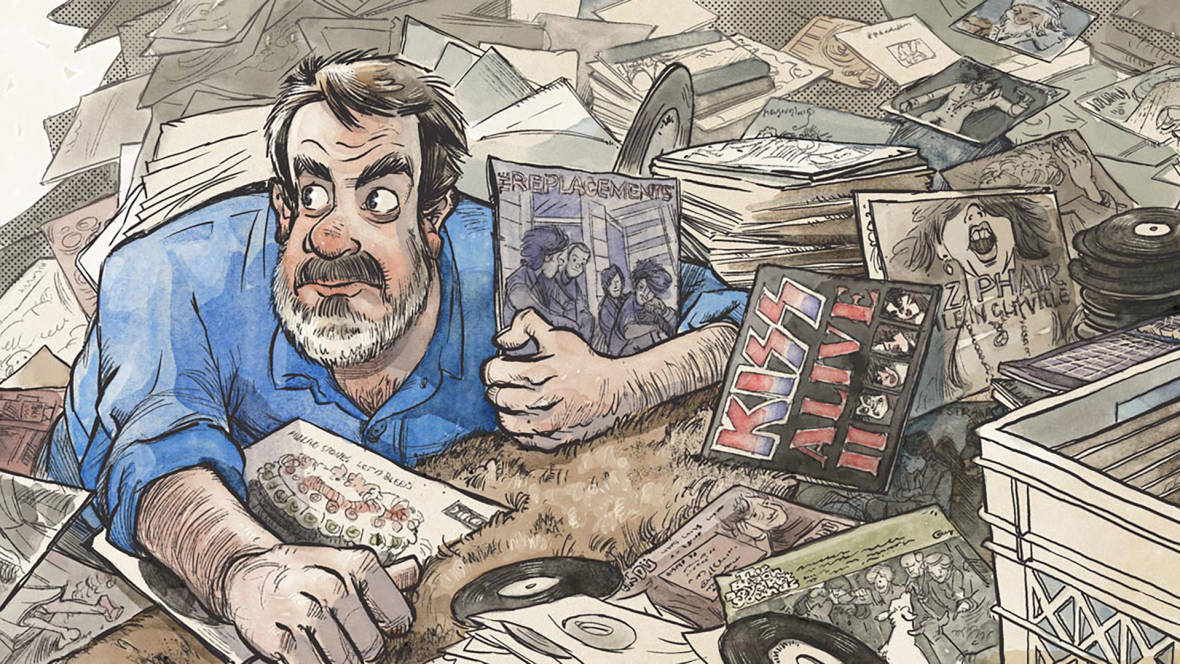
"caption": "Eric Spitznagel's newest book finds him searching for the records he used to own -- the exact same copies, in fact. ",
"description": "Eric Spitznagel's newest book finds him searching for the records he used to own -- the exact same copies, in fact. ",
"title": "Spitznagel.MAIN",
"credit": "Illustration via \u003ca href=\"http://recordsneverdie.com/\">recordsneverdie.com\u003c/a>",
"status": "inherit",
"isLoading": false,
"fetchFailed": false
},
"arts_11473415": {
"type": "attachments",
"id": "arts_11473415",
"meta": {
"index": "attachments_1716263798",
"site": "arts",
"id": "11473415",
"found": true
},
"parent": 11473414,
"imgSizes": {
"twentyfourteen-full-width": {
"file": "https://ww2.kqed.org/app/uploads/sites/2/2016/04/berlin-e1460060786125-1038x576.jpg",
"width": 1038,
"mimeType": "image/jpeg",
"height": 576
},
"thumbnail": {
"file": "https://ww2.kqed.org/app/uploads/sites/2/2016/04/berlin-e1460060786125-400x280.jpg",
"width": 400,
"mimeType": "image/jpeg",
"height": 280
},
"fd-sm": {
"file": "https://ww2.kqed.org/app/uploads/sites/2/2016/04/berlin-e1460060786125-960x671.jpg",
"width": 960,
"mimeType": "image/jpeg",
"height": 671
},
"post-thumbnail": {
"file": "https://ww2.kqed.org/app/uploads/sites/2/2016/04/berlin-e1460060786125-672x372.jpg",
"width": 672,
"mimeType": "image/jpeg",
"height": 372
},
"kqedFullSize": {
"file": "https://ww2.kqed.org/app/uploads/sites/2/2016/04/berlin-e1460060786125.jpg",
"width": 1800,
"height": 1258
},
"large": {
"file": "https://ww2.kqed.org/app/uploads/sites/2/2016/04/berlin-e1460060786125-1180x825.jpg",
"width": 1180,
"mimeType": "image/jpeg",
"height": 825
},
"guest-author-96": {
"file": "https://ww2.kqed.org/app/uploads/sites/2/2016/04/berlin-e1460060786125-96x96.jpg",
"width": 96,
"mimeType": "image/jpeg",
"height": 96
},
"medium": {
"file": "https://ww2.kqed.org/app/uploads/sites/2/2016/04/berlin-e1460060786125-800x559.jpg",
"width": 800,
"mimeType": "image/jpeg",
"height": 559
},
"guest-author-64": {
"file": "https://ww2.kqed.org/app/uploads/sites/2/2016/04/berlin-e1460060786125-64x64.jpg",
"width": 64,
"mimeType": "image/jpeg",
"height": 64
},
"guest-author-32": {
"file": "https://ww2.kqed.org/app/uploads/sites/2/2016/04/berlin-e1460060786125-32x32.jpg",
"width": 32,
"mimeType": "image/jpeg",
"height": 32
},
"fd-med": {
"file": "https://ww2.kqed.org/app/uploads/sites/2/2016/04/berlin-e1460060786125-1180x825.jpg",
"width": 1180,
"mimeType": "image/jpeg",
"height": 825
},
"detail": {
"file": "https://ww2.kqed.org/app/uploads/sites/2/2016/04/berlin-e1460060786125-75x75.jpg",
"width": 75,
"mimeType": "image/jpeg",
"height": 75
},
"medium_large": {
"file": "https://ww2.kqed.org/app/uploads/sites/2/2016/04/berlin-e1460060786125-768x537.jpg",
"width": 768,
"mimeType": "image/jpeg",
"height": 537
},
"guest-author-128": {
"file": "https://ww2.kqed.org/app/uploads/sites/2/2016/04/berlin-e1460060786125-128x128.jpg",
"width": 128,
"mimeType": "image/jpeg",
"height": 128
}
},
"publishDate": 1460060750,
"modified": 1460060868,
"caption": "Marjan Safa in Thrillpeddlers’ ‘The Untamed Stage: Weimar Berlin Kabarett’\n ",
"description": "Marjan Safa in Thrillpeddlers’ ‘The Untamed Stage: Weimar Berlin Kabarett’",
"title": "berlin",
"credit": "Photo: www.davidallenstudio.com",
"status": "inherit",
"isLoading": false,
"fetchFailed": false
},
"arts_11487948": {
"type": "attachments",
"id": "arts_11487948",
"meta": {
"index": "attachments_1716263798",
"site": "arts",
"id": "11487948",
"found": true
},
"parent": 11487947,
"imgSizes": {
"twentyfourteen-full-width": {
"file": "https://ww2.kqed.org/app/uploads/sites/2/2016/04/tonyconrad-d2ac0150c9870ad0f9a70da3aa19c0e8d49b1f10-e1460490500914-1038x576.jpg",
"width": 1038,
"mimeType": "image/jpeg",
"height": 576
},
"thumbnail": {
"file": "https://ww2.kqed.org/app/uploads/sites/2/2016/04/tonyconrad-d2ac0150c9870ad0f9a70da3aa19c0e8d49b1f10-e1460490500914-400x225.jpg",
"width": 400,
"mimeType": "image/jpeg",
"height": 225
},
"fd-sm": {
"file": "https://ww2.kqed.org/app/uploads/sites/2/2016/04/tonyconrad-d2ac0150c9870ad0f9a70da3aa19c0e8d49b1f10-e1460490500914-960x540.jpg",
"width": 960,
"mimeType": "image/jpeg",
"height": 540
},
"post-thumbnail": {
"file": "https://ww2.kqed.org/app/uploads/sites/2/2016/04/tonyconrad-d2ac0150c9870ad0f9a70da3aa19c0e8d49b1f10-e1460490500914-672x372.jpg",
"width": 672,
"mimeType": "image/jpeg",
"height": 372
},
"kqedFullSize": {
"file": "https://ww2.kqed.org/app/uploads/sites/2/2016/04/tonyconrad-d2ac0150c9870ad0f9a70da3aa19c0e8d49b1f10-e1460490500914.jpg",
"width": 1270,
"height": 714
},
"large": {
"file": "https://ww2.kqed.org/app/uploads/sites/2/2016/04/tonyconrad-d2ac0150c9870ad0f9a70da3aa19c0e8d49b1f10-e1460490500914-1180x663.jpg",
"width": 1180,
"mimeType": "image/jpeg",
"height": 663
},
"guest-author-96": {
"file": "https://ww2.kqed.org/app/uploads/sites/2/2016/04/tonyconrad-d2ac0150c9870ad0f9a70da3aa19c0e8d49b1f10-e1460490500914-96x96.jpg",
"width": 96,
"mimeType": "image/jpeg",
"height": 96
},
"medium": {
"file": "https://ww2.kqed.org/app/uploads/sites/2/2016/04/tonyconrad-d2ac0150c9870ad0f9a70da3aa19c0e8d49b1f10-e1460490500914-800x450.jpg",
"width": 800,
"mimeType": "image/jpeg",
"height": 450
},
"guest-author-64": {
"file": "https://ww2.kqed.org/app/uploads/sites/2/2016/04/tonyconrad-d2ac0150c9870ad0f9a70da3aa19c0e8d49b1f10-e1460490500914-64x64.jpg",
"width": 64,
"mimeType": "image/jpeg",
"height": 64
},
"guest-author-32": {
"file": "https://ww2.kqed.org/app/uploads/sites/2/2016/04/tonyconrad-d2ac0150c9870ad0f9a70da3aa19c0e8d49b1f10-e1460490500914-32x32.jpg",
"width": 32,
"mimeType": "image/jpeg",
"height": 32
},
"fd-med": {
"file": "https://ww2.kqed.org/app/uploads/sites/2/2016/04/tonyconrad-d2ac0150c9870ad0f9a70da3aa19c0e8d49b1f10-e1460490500914-1180x663.jpg",
"width": 1180,
"mimeType": "image/jpeg",
"height": 663
},
"detail": {
"file": "https://ww2.kqed.org/app/uploads/sites/2/2016/04/tonyconrad-d2ac0150c9870ad0f9a70da3aa19c0e8d49b1f10-e1460490500914-75x75.jpg",
"width": 75,
"mimeType": "image/jpeg",
"height": 75
},
"medium_large": {
"file": "https://ww2.kqed.org/app/uploads/sites/2/2016/04/tonyconrad-d2ac0150c9870ad0f9a70da3aa19c0e8d49b1f10-e1460490500914-768x432.jpg",
"width": 768,
"mimeType": "image/jpeg",
"height": 432
},
"guest-author-128": {
"file": "https://ww2.kqed.org/app/uploads/sites/2/2016/04/tonyconrad-d2ac0150c9870ad0f9a70da3aa19c0e8d49b1f10-e1460490500914-128x128.jpg",
"width": 128,
"mimeType": "image/jpeg",
"height": 128
}
},
"publishDate": 1460489784,
"modified": 1460490530,
"caption": "Tony Conrad had been a SUNY-Buffalo professor since 1976, but beyond his academic duties, he was open and free giving of his knowledge and wisdom.",
"description": "Tony Conrad had been a SUNY-Buffalo professor since 1976, but beyond his academic duties, he was open and free giving of his knowledge and wisdom.",
"title": "Tony Conrad had been a SUNY-Buffalo professor since 1976, but beyond his academic duties, he was open and free giving of his knowledge and wisdom.",
"credit": "Photo: Bettina Herzner/Courtesy of the artist",
"status": "inherit",
"isLoading": false,
"fetchFailed": false
},
"arts_11487829": {
"type": "attachments",
"id": "arts_11487829",
"meta": {
"index": "attachments_1716263798",
"site": "arts",
"id": "11487829",
"found": true
},
"parent": 11487708,
"imgSizes": {
"thumbnail": {
"file": "https://ww2.kqed.org/app/uploads/sites/2/2016/04/Garrison-KeillorCROP-400x225.jpg",
"width": 400,
"mimeType": "image/jpeg",
"height": 225
},
"post-thumbnail": {
"file": "https://ww2.kqed.org/app/uploads/sites/2/2016/04/Garrison-KeillorCROP-672x372.jpg",
"width": 672,
"mimeType": "image/jpeg",
"height": 372
},
"kqedFullSize": {
"file": "https://ww2.kqed.org/app/uploads/sites/2/2016/04/Garrison-KeillorCROP.jpg",
"width": 800,
"height": 450
},
"guest-author-96": {
"file": "https://ww2.kqed.org/app/uploads/sites/2/2016/04/Garrison-KeillorCROP-96x96.jpg",
"width": 96,
"mimeType": "image/jpeg",
"height": 96
},
"medium": {
"file": "https://ww2.kqed.org/app/uploads/sites/2/2016/04/Garrison-KeillorCROP-800x450.jpg",
"width": 800,
"mimeType": "image/jpeg",
"height": 450
},
"guest-author-64": {
"file": "https://ww2.kqed.org/app/uploads/sites/2/2016/04/Garrison-KeillorCROP-64x64.jpg",
"width": 64,
"mimeType": "image/jpeg",
"height": 64
},
"detail": {
"file": "https://ww2.kqed.org/app/uploads/sites/2/2016/04/Garrison-KeillorCROP-75x75.jpg",
"width": 75,
"mimeType": "image/jpeg",
"height": 75
},
"guest-author-32": {
"file": "https://ww2.kqed.org/app/uploads/sites/2/2016/04/Garrison-KeillorCROP-32x32.jpg",
"width": 32,
"mimeType": "image/jpeg",
"height": 32
},
"medium_large": {
"file": "https://ww2.kqed.org/app/uploads/sites/2/2016/04/Garrison-KeillorCROP-768x432.jpg",
"width": 768,
"mimeType": "image/jpeg",
"height": 432
},
"guest-author-128": {
"file": "https://ww2.kqed.org/app/uploads/sites/2/2016/04/Garrison-KeillorCROP-128x128.jpg",
"width": 128,
"mimeType": "image/jpeg",
"height": 128
}
},
"publishDate": 1460487428,
"modified": 1511978507,
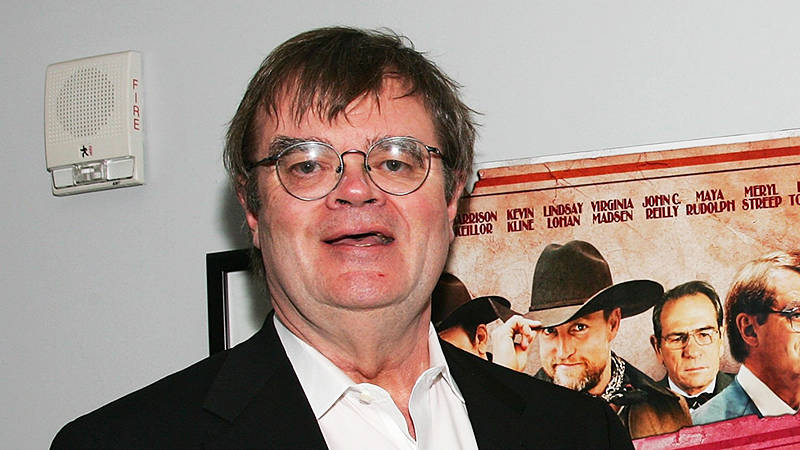
"caption": "Radio host and actor Garrison Keillor at the 2006 premiere of 'A Prairie Home Companion' in New York City. ",
"description": "Radio host and actor Garrison Keillor at the 2006 premiere of 'A Prairie Home Companion' in New York City. ",
"title": "Picturehouse Presents \"A Prairie Home Companion\" - Arrivals",
"credit": "Evan Agostini/Getty Images",
"status": "inherit",
"isLoading": false,
"fetchFailed": false
},
"arts_11484702": {
"type": "attachments",
"id": "arts_11484702",
"meta": {
"index": "attachments_1716263798",
"site": "arts",
"id": "11484702",
"found": true
},
"parent": 11484576,
"imgSizes": {
"thumbnail": {
"file": "https://ww2.kqed.org/app/uploads/sites/2/2016/04/TrapKaraoke.MAIN_-400x225.jpg",
"width": 400,
"mimeType": "image/jpeg",
"height": 225
},
"post-thumbnail": {
"file": "https://ww2.kqed.org/app/uploads/sites/2/2016/04/TrapKaraoke.MAIN_-672x372.jpg",
"width": 672,
"mimeType": "image/jpeg",
"height": 372
},
"kqedFullSize": {
"file": "https://ww2.kqed.org/app/uploads/sites/2/2016/04/TrapKaraoke.MAIN_.jpg",
"width": 884,
"height": 497
},
"guest-author-96": {
"file": "https://ww2.kqed.org/app/uploads/sites/2/2016/04/TrapKaraoke.MAIN_-96x96.jpg",
"width": 96,
"mimeType": "image/jpeg",
"height": 96
},
"medium": {
"file": "https://ww2.kqed.org/app/uploads/sites/2/2016/04/TrapKaraoke.MAIN_-800x450.jpg",
"width": 800,
"mimeType": "image/jpeg",
"height": 450
},
"guest-author-64": {
"file": "https://ww2.kqed.org/app/uploads/sites/2/2016/04/TrapKaraoke.MAIN_-64x64.jpg",
"width": 64,
"mimeType": "image/jpeg",
"height": 64
},
"detail": {
"file": "https://ww2.kqed.org/app/uploads/sites/2/2016/04/TrapKaraoke.MAIN_-75x75.jpg",
"width": 75,
"mimeType": "image/jpeg",
"height": 75
},
"guest-author-32": {
"file": "https://ww2.kqed.org/app/uploads/sites/2/2016/04/TrapKaraoke.MAIN_-32x32.jpg",
"width": 32,
"mimeType": "image/jpeg",
"height": 32
},
"medium_large": {
"file": "https://ww2.kqed.org/app/uploads/sites/2/2016/04/TrapKaraoke.MAIN_-768x432.jpg",
"width": 768,
"mimeType": "image/jpeg",
"height": 432
},
"guest-author-128": {
"file": "https://ww2.kqed.org/app/uploads/sites/2/2016/04/TrapKaraoke.MAIN_-128x128.jpg",
"width": 128,
"mimeType": "image/jpeg",
"height": 128
}
},
"publishDate": 1460395873,
"modified": 1460402196,
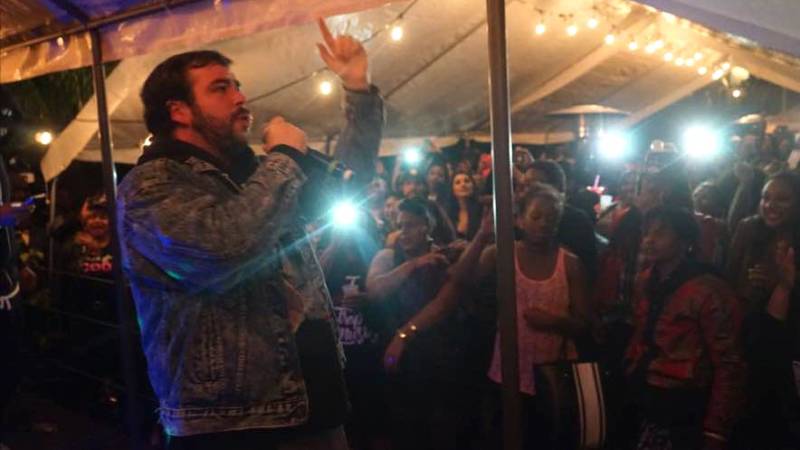
"caption": "A Trap Karaoke participant named Matthew, from Walnut Creek, performs U.G.K.'s \"International Player's Anthem\" in Oakland on April 9, 2016.",
"description": "A Trap Karaoke participant named Matthew, from Walnut Creek, performs U.G.K.'s \"International Player's Anthem\" in Oakland on April 9, 2016.",
"title": "TrapKaraoke.MAIN",
"credit": "Photo: Pendarvis Harshaw",
"status": "inherit",
"isLoading": false,
"fetchFailed": false
},
"arts_11470582": {
"type": "attachments",
"id": "arts_11470582",
"meta": {
"index": "attachments_1716263798",
"site": "arts",
"id": "11470582",
"found": true
},
"parent": 11470573,
"imgSizes": {
"twentyfourteen-full-width": {
"file": "https://cdn.kqed.org/wp-content/uploads/sites/2/2016/04/Spitboy.Gilman.JohnLyons-1-1038x576.jpg",
"width": 1038,
"mimeType": "image/jpeg",
"height": 576
},
"thumbnail": {
"file": "https://cdn.kqed.org/wp-content/uploads/sites/2/2016/04/Spitboy.Gilman.JohnLyons-1-400x254.jpg",
"width": 400,
"mimeType": "image/jpeg",
"height": 254
},
"fd-sm": {
"file": "https://cdn.kqed.org/wp-content/uploads/sites/2/2016/04/Spitboy.Gilman.JohnLyons-1-960x610.jpg",
"width": 960,
"mimeType": "image/jpeg",
"height": 610
},
"post-thumbnail": {
"file": "https://cdn.kqed.org/wp-content/uploads/sites/2/2016/04/Spitboy.Gilman.JohnLyons-1-672x372.jpg",
"width": 672,
"mimeType": "image/jpeg",
"height": 372
},
"kqedFullSize": {
"file": "https://cdn.kqed.org/wp-content/uploads/sites/2/2016/04/Spitboy.Gilman.JohnLyons-1-e1459978670238.jpg",
"width": 1080,
"height": 686
},
"large": {
"file": "https://cdn.kqed.org/wp-content/uploads/sites/2/2016/04/Spitboy.Gilman.JohnLyons-1-1180x750.jpg",
"width": 1180,
"mimeType": "image/jpeg",
"height": 750
},
"guest-author-96": {
"file": "https://cdn.kqed.org/wp-content/uploads/sites/2/2016/04/Spitboy.Gilman.JohnLyons-1-96x96.jpg",
"width": 96,
"mimeType": "image/jpeg",
"height": 96
},
"medium": {
"file": "https://cdn.kqed.org/wp-content/uploads/sites/2/2016/04/Spitboy.Gilman.JohnLyons-1-800x508.jpg",
"width": 800,
"mimeType": "image/jpeg",
"height": 508
},
"guest-author-64": {
"file": "https://cdn.kqed.org/wp-content/uploads/sites/2/2016/04/Spitboy.Gilman.JohnLyons-1-64x64.jpg",
"width": 64,
"mimeType": "image/jpeg",
"height": 64
},
"guest-author-32": {
"file": "https://cdn.kqed.org/wp-content/uploads/sites/2/2016/04/Spitboy.Gilman.JohnLyons-1-32x32.jpg",
"width": 32,
"mimeType": "image/jpeg",
"height": 32
},
"fd-lrg": {
"file": "https://cdn.kqed.org/wp-content/uploads/sites/2/2016/04/Spitboy.Gilman.JohnLyons-1-1920x1220.jpg",
"width": 1920,
"mimeType": "image/jpeg",
"height": 1220
},
"fd-med": {
"file": "https://cdn.kqed.org/wp-content/uploads/sites/2/2016/04/Spitboy.Gilman.JohnLyons-1-1180x750.jpg",
"width": 1180,
"mimeType": "image/jpeg",
"height": 750
},
"detail": {
"file": "https://cdn.kqed.org/wp-content/uploads/sites/2/2016/04/Spitboy.Gilman.JohnLyons-1-75x75.jpg",
"width": 75,
"mimeType": "image/jpeg",
"height": 75
},
"medium_large": {
"file": "https://cdn.kqed.org/wp-content/uploads/sites/2/2016/04/Spitboy.Gilman.JohnLyons-1-768x488.jpg",
"width": 768,
"mimeType": "image/jpeg",
"height": 488
},
"guest-author-128": {
"file": "https://cdn.kqed.org/wp-content/uploads/sites/2/2016/04/Spitboy.Gilman.JohnLyons-1-128x128.jpg",
"width": 128,
"mimeType": "image/jpeg",
"height": 128
}
},
"publishDate": 1459978654,
"modified": 1702492402,
"caption": null,
"description": null,
"title": "Spitboy.Gilman.JohnLyons-1",
"credit": "John Lyons",
"status": "inherit",
"altTag": null,
"isLoading": false,
"fetchFailed": false
},
"arts_11476860": {
"type": "attachments",
"id": "arts_11476860",
"meta": {
"index": "attachments_1716263798",
"site": "arts",
"id": "11476860",
"found": true
},
"parent": 11476735,
"imgSizes": {
"thumbnail": {
"file": "https://ww2.kqed.org/app/uploads/sites/2/2016/04/Bruce-SpringsteenCROP-400x225.jpg",
"width": 400,
"mimeType": "image/jpeg",
"height": 225
},
"post-thumbnail": {
"file": "https://ww2.kqed.org/app/uploads/sites/2/2016/04/Bruce-SpringsteenCROP-672x372.jpg",
"width": 672,
"mimeType": "image/jpeg",
"height": 372
},
"kqedFullSize": {
"file": "https://ww2.kqed.org/app/uploads/sites/2/2016/04/Bruce-SpringsteenCROP.jpg",
"width": 800,
"height": 450
},
"guest-author-96": {
"file": "https://ww2.kqed.org/app/uploads/sites/2/2016/04/Bruce-SpringsteenCROP-96x96.jpg",
"width": 96,
"mimeType": "image/jpeg",
"height": 96
},
"medium": {
"file": "https://ww2.kqed.org/app/uploads/sites/2/2016/04/Bruce-SpringsteenCROP-800x450.jpg",
"width": 800,
"mimeType": "image/jpeg",
"height": 450
},
"guest-author-64": {
"file": "https://ww2.kqed.org/app/uploads/sites/2/2016/04/Bruce-SpringsteenCROP-64x64.jpg",
"width": 64,
"mimeType": "image/jpeg",
"height": 64
},
"detail": {
"file": "https://ww2.kqed.org/app/uploads/sites/2/2016/04/Bruce-SpringsteenCROP-75x75.jpg",
"width": 75,
"mimeType": "image/jpeg",
"height": 75
},
"guest-author-32": {
"file": "https://ww2.kqed.org/app/uploads/sites/2/2016/04/Bruce-SpringsteenCROP-32x32.jpg",
"width": 32,
"mimeType": "image/jpeg",
"height": 32
},
"medium_large": {
"file": "https://ww2.kqed.org/app/uploads/sites/2/2016/04/Bruce-SpringsteenCROP-768x432.jpg",
"width": 768,
"mimeType": "image/jpeg",
"height": 432
},
"guest-author-128": {
"file": "https://ww2.kqed.org/app/uploads/sites/2/2016/04/Bruce-SpringsteenCROP-128x128.jpg",
"width": 128,
"mimeType": "image/jpeg",
"height": 128
}
},
"publishDate": 1460162271,
"modified": 1460162346,
"caption": "Bruce Springsteen performs onstage at Madison Square Garden on March 28, 2016 in New York City. ",
"description": "Bruce Springsteen performs onstage at Madison Square Garden on March 28, 2016 in New York City. ",
"title": "Bruce Springsteen In Concert - New York, New York",
"credit": "Photo: Jamie McCarthy/Getty Images",
"status": "inherit",
"isLoading": false,
"fetchFailed": false
},
"news_10924271": {
"type": "attachments",
"id": "news_10924271",
"meta": {
"index": "attachments_1716263798",
"site": "news",
"id": "10924271",
"found": true
},
"parent": 10924139,
"imgSizes": {
"twentyfourteen-full-width": {
"file": "https://ww2.kqed.org/app/uploads/sites/10/2016/04/MerleHaggard-1038x576.jpg",
"width": 1038,
"mimeType": "image/jpeg",
"height": 576
},
"thumbnail": {
"file": "https://ww2.kqed.org/app/uploads/sites/10/2016/04/MerleHaggard-400x273.jpg",
"width": 400,
"mimeType": "image/jpeg",
"height": 273
},
"fd-sm": {
"file": "https://ww2.kqed.org/app/uploads/sites/10/2016/04/MerleHaggard-960x656.jpg",
"width": 960,
"mimeType": "image/jpeg",
"height": 656
},
"post-thumbnail": {
"file": "https://ww2.kqed.org/app/uploads/sites/10/2016/04/MerleHaggard-672x372.jpg",
"width": 672,
"mimeType": "image/jpeg",
"height": 372
},
"kqedFullSize": {
"file": "https://ww2.kqed.org/app/uploads/sites/10/2016/04/MerleHaggard.jpg",
"width": 1920,
"height": 1312
},
"large": {
"file": "https://ww2.kqed.org/app/uploads/sites/10/2016/04/MerleHaggard-1920x1312.jpg",
"width": 1920,
"mimeType": "image/jpeg",
"height": 1312
},
"guest-author-96": {
"file": "https://ww2.kqed.org/app/uploads/sites/10/2016/04/MerleHaggard-96x96.jpg",
"width": 96,
"mimeType": "image/jpeg",
"height": 96
},
"medium": {
"file": "https://ww2.kqed.org/app/uploads/sites/10/2016/04/MerleHaggard-800x547.jpg",
"width": 800,
"mimeType": "image/jpeg",
"height": 547
},
"guest-author-64": {
"file": "https://ww2.kqed.org/app/uploads/sites/10/2016/04/MerleHaggard-64x64.jpg",
"width": 64,
"mimeType": "image/jpeg",
"height": 64
},
"guest-author-32": {
"file": "https://ww2.kqed.org/app/uploads/sites/10/2016/04/MerleHaggard-32x32.jpg",
"width": 32,
"mimeType": "image/jpeg",
"height": 32
},
"jmtc-small-thumb": {
"file": "https://ww2.kqed.org/app/uploads/sites/10/2016/04/MerleHaggard-280x150.jpg",
"width": 280,
"mimeType": "image/jpeg",
"height": 150
},
"fd-lrg": {
"file": "https://ww2.kqed.org/app/uploads/sites/10/2016/04/MerleHaggard-1920x1312.jpg",
"width": 1920,
"mimeType": "image/jpeg",
"height": 1312
},
"fd-med": {
"file": "https://ww2.kqed.org/app/uploads/sites/10/2016/04/MerleHaggard-1180x806.jpg",
"width": 1180,
"mimeType": "image/jpeg",
"height": 806
},
"detail": {
"file": "https://ww2.kqed.org/app/uploads/sites/10/2016/04/MerleHaggard-75x75.jpg",
"width": 75,
"mimeType": "image/jpeg",
"height": 75
},
"guest-author-128": {
"file": "https://ww2.kqed.org/app/uploads/sites/10/2016/04/MerleHaggard-128x128.jpg",
"width": 128,
"mimeType": "image/jpeg",
"height": 128
}
},
"publishDate": 1460164532,
"modified": 1460164583,
"caption": "Merle Haggard performs in 2015.",
"description": "Merle Haggard performs in 2015.",
"title": "MerleHaggard",
"credit": "Frazer Harrison/Getty Images",
"status": "inherit",
"isLoading": false,
"fetchFailed": false
},
"arts_11475708": {
"type": "attachments",
"id": "arts_11475708",
"meta": {
"index": "attachments_1716263798",
"site": "arts",
"id": "11475708",
"found": true
},
"parent": 11474034,
"imgSizes": {
"twentyfourteen-full-width": {
"file": "https://ww2.kqed.org/app/uploads/sites/2/2016/04/19-1038x576.jpg",
"width": 1038,
"mimeType": "image/jpeg",
"height": 576
},
"thumbnail": {
"file": "https://ww2.kqed.org/app/uploads/sites/2/2016/04/19-400x225.jpg",
"width": 400,
"mimeType": "image/jpeg",
"height": 225
},
"fd-sm": {
"file": "https://ww2.kqed.org/app/uploads/sites/2/2016/04/19-960x540.jpg",
"width": 960,
"mimeType": "image/jpeg",
"height": 540
},
"post-thumbnail": {
"file": "https://ww2.kqed.org/app/uploads/sites/2/2016/04/19-672x372.jpg",
"width": 672,
"mimeType": "image/jpeg",
"height": 372
},
"kqedFullSize": {
"file": "https://ww2.kqed.org/app/uploads/sites/2/2016/04/19.jpg",
"width": 1920,
"height": 1080
},
"large": {
"file": "https://ww2.kqed.org/app/uploads/sites/2/2016/04/19-1180x664.jpg",
"width": 1180,
"mimeType": "image/jpeg",
"height": 664
},
"guest-author-96": {
"file": "https://ww2.kqed.org/app/uploads/sites/2/2016/04/19-96x96.jpg",
"width": 96,
"mimeType": "image/jpeg",
"height": 96
},
"medium": {
"file": "https://ww2.kqed.org/app/uploads/sites/2/2016/04/19-800x450.jpg",
"width": 800,
"mimeType": "image/jpeg",
"height": 450
},
"guest-author-64": {
"file": "https://ww2.kqed.org/app/uploads/sites/2/2016/04/19-64x64.jpg",
"width": 64,
"mimeType": "image/jpeg",
"height": 64
},
"guest-author-32": {
"file": "https://ww2.kqed.org/app/uploads/sites/2/2016/04/19-32x32.jpg",
"width": 32,
"mimeType": "image/jpeg",
"height": 32
},
"fd-lrg": {
"file": "https://ww2.kqed.org/app/uploads/sites/2/2016/04/19-1920x1080.jpg",
"width": 1920,
"mimeType": "image/jpeg",
"height": 1080
},
"fd-med": {
"file": "https://ww2.kqed.org/app/uploads/sites/2/2016/04/19-1180x664.jpg",
"width": 1180,
"mimeType": "image/jpeg",
"height": 664
},
"detail": {
"file": "https://ww2.kqed.org/app/uploads/sites/2/2016/04/19-75x75.jpg",
"width": 75,
"mimeType": "image/jpeg",
"height": 75
},
"medium_large": {
"file": "https://ww2.kqed.org/app/uploads/sites/2/2016/04/19-768x432.jpg",
"width": 768,
"mimeType": "image/jpeg",
"height": 432
},
"guest-author-128": {
"file": "https://ww2.kqed.org/app/uploads/sites/2/2016/04/19-128x128.jpg",
"width": 128,
"mimeType": "image/jpeg",
"height": 128
}
},
"publishDate": 1460130491,
"modified": 1460130548,
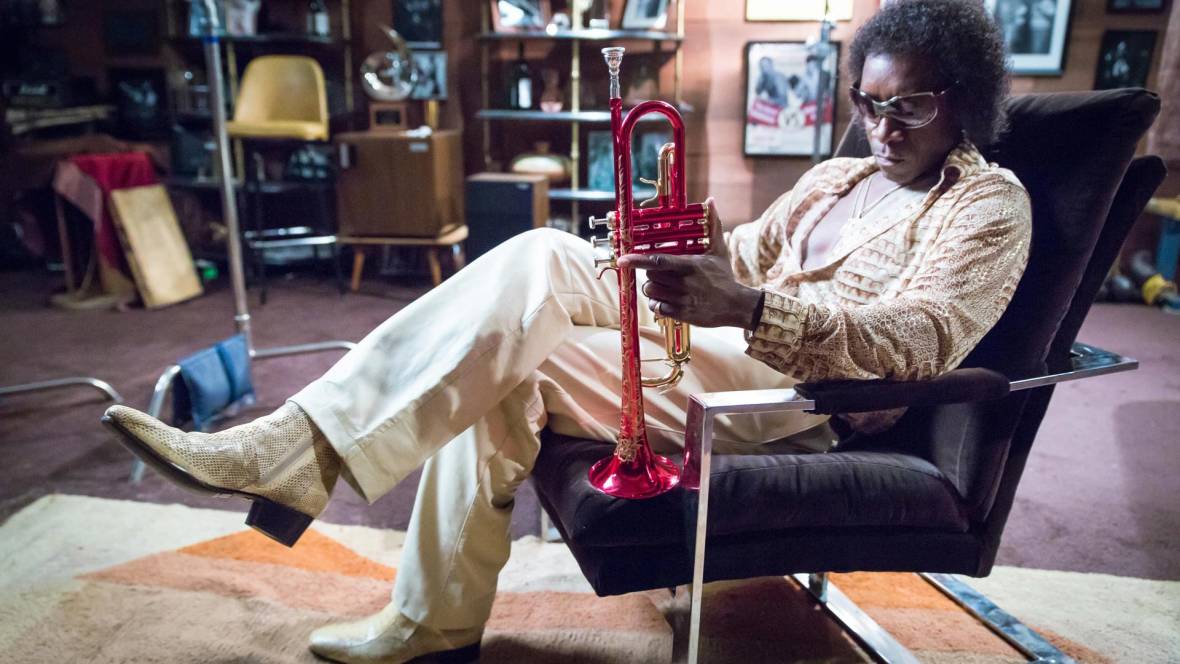
"caption": "Don Cheadle as Miles Davis.",
"description": "Don Cheadle as Miles Davis.",
"title": "19",
"credit": "Photo: Brian Douglas/Sony Pictures Classics",
"status": "inherit",
"isLoading": false,
"fetchFailed": false
},
"pop_22023": {
"type": "attachments",
"id": "pop_22023",
"meta": {
"index": "attachments_1716263798",
"site": "pop",
"id": "22023",
"found": true
},
"parent": 21956,
"imgSizes": {
"twentyfourteen-full-width": {
"file": "https://ww2.kqed.org/app/uploads/sites/12/2016/04/Andrew-WK-1038x576.jpeg",
"width": 1038,
"mimeType": "image/jpeg",
"height": 576
},
"thumbnail": {
"file": "https://ww2.kqed.org/app/uploads/sites/12/2016/04/Andrew-WK-400x200.jpeg",
"width": 400,
"mimeType": "image/jpeg",
"height": 200
},
"fd-sm": {
"file": "https://ww2.kqed.org/app/uploads/sites/12/2016/04/Andrew-WK-960x480.jpeg",
"width": 960,
"mimeType": "image/jpeg",
"height": 480
},
"post-thumbnail": {
"file": "https://ww2.kqed.org/app/uploads/sites/12/2016/04/Andrew-WK-672x372.jpeg",
"width": 672,
"mimeType": "image/jpeg",
"height": 372
},
"kqedFullSize": {
"file": "https://ww2.kqed.org/app/uploads/sites/12/2016/04/Andrew-WK.jpeg",
"width": 1399,
"height": 700
},
"guest-author-96": {
"file": "https://ww2.kqed.org/app/uploads/sites/12/2016/04/Andrew-WK-96x96.jpeg",
"width": 96,
"mimeType": "image/jpeg",
"height": 96
},
"medium": {
"file": "https://ww2.kqed.org/app/uploads/sites/12/2016/04/Andrew-WK-800x400.jpeg",
"width": 800,
"mimeType": "image/jpeg",
"height": 400
},
"guest-author-64": {
"file": "https://ww2.kqed.org/app/uploads/sites/12/2016/04/Andrew-WK-64x64.jpeg",
"width": 64,
"mimeType": "image/jpeg",
"height": 64
},
"guest-author-32": {
"file": "https://ww2.kqed.org/app/uploads/sites/12/2016/04/Andrew-WK-32x32.jpeg",
"width": 32,
"mimeType": "image/jpeg",
"height": 32
},
"fd-med": {
"file": "https://ww2.kqed.org/app/uploads/sites/12/2016/04/Andrew-WK-1180x590.jpeg",
"width": 1180,
"mimeType": "image/jpeg",
"height": 590
},
"detail": {
"file": "https://ww2.kqed.org/app/uploads/sites/12/2016/04/Andrew-WK-75x75.jpeg",
"width": 75,
"mimeType": "image/jpeg",
"height": 75
},
"medium_large": {
"file": "https://ww2.kqed.org/app/uploads/sites/12/2016/04/Andrew-WK-768x384.jpeg",
"width": 768,
"mimeType": "image/jpeg",
"height": 384
},
"guest-author-128": {
"file": "https://ww2.kqed.org/app/uploads/sites/12/2016/04/Andrew-WK-128x128.jpeg",
"width": 128,
"mimeType": "image/jpeg",
"height": 128
}
},
"publishDate": 1460076439,
"modified": 1460076460,
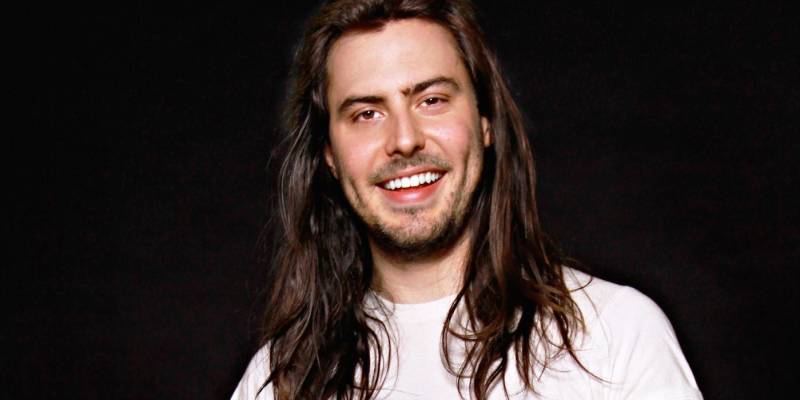
"caption": "Andrew W.K. wants your vote. ",
"description": null,
"title": "Andrew-WK",
"credit": null,
"status": "inherit",
"isLoading": false,
"fetchFailed": false
},
"arts_10582942": {
"type": "attachments",
"id": "arts_10582942",
"meta": {
"index": "attachments_1716263798",
"site": "arts",
"id": "10582942",
"found": true
},
"parent": 10576807,
"imgSizes": {
"twentyfourteen-full-width": {
"file": "https://ww2.kqed.org/app/uploads/sites/2/2015/04/ResidentsCover-1038x576.jpg",
"width": 1038,
"mimeType": "image/jpeg",
"height": 576
},
"thumbnail": {
"file": "https://ww2.kqed.org/app/uploads/sites/2/2015/04/ResidentsCover-400x225.jpg",
"width": 400,
"mimeType": "image/jpeg",
"height": 225
},
"fd-sm": {
"file": "https://ww2.kqed.org/app/uploads/sites/2/2015/04/ResidentsCover-960x540.jpg",
"width": 960,
"mimeType": "image/jpeg",
"height": 540
},
"post-thumbnail": {
"file": "https://ww2.kqed.org/app/uploads/sites/2/2015/04/ResidentsCover-672x372.jpg",
"width": 672,
"mimeType": "image/jpeg",
"height": 372
},
"kqedFullSize": {
"file": "https://ww2.kqed.org/app/uploads/sites/2/2015/04/ResidentsCover.jpg",
"width": 1152,
"height": 648
},
"guest-author-96": {
"file": "https://ww2.kqed.org/app/uploads/sites/2/2015/04/ResidentsCover-96x96.jpg",
"width": 96,
"mimeType": "image/jpeg",
"height": 96
},
"medium": {
"file": "https://ww2.kqed.org/app/uploads/sites/2/2015/04/ResidentsCover-800x450.jpg",
"width": 800,
"mimeType": "image/jpeg",
"height": 450
},
"guest-author-64": {
"file": "https://ww2.kqed.org/app/uploads/sites/2/2015/04/ResidentsCover-64x64.jpg",
"width": 64,
"mimeType": "image/jpeg",
"height": 64
},
"detail": {
"file": "https://ww2.kqed.org/app/uploads/sites/2/2015/04/ResidentsCover-75x75.jpg",
"width": 75,
"mimeType": "image/jpeg",
"height": 75
},
"guest-author-32": {
"file": "https://ww2.kqed.org/app/uploads/sites/2/2015/04/ResidentsCover-32x32.jpg",
"width": 32,
"mimeType": "image/jpeg",
"height": 32
},
"guest-author-128": {
"file": "https://ww2.kqed.org/app/uploads/sites/2/2015/04/ResidentsCover-128x128.jpg",
"width": 128,
"mimeType": "image/jpeg",
"height": 128
}
},
"publishDate": 1429723926,
"modified": 1429724663,
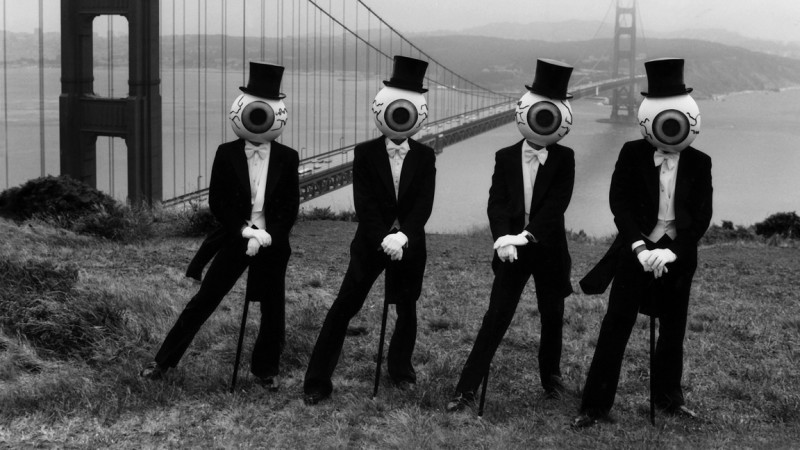
"caption": "A scene from Don Hardy's \u003ci>Theory of Obscurity: a film about the Residents\u003c/i>. (Courtesy of the San Francisco International Film Festival)",
"description": null,
"title": "ResidentsCover",
"credit": null,
"status": "inherit",
"isLoading": false,
"fetchFailed": false
},
"arts_11473296": {
"type": "attachments",
"id": "arts_11473296",
"meta": {
"index": "attachments_1716263798",
"site": "arts",
"id": "11473296",
"found": true
},
"parent": 11473038,
"imgSizes": {
"twentyfourteen-full-width": {
"file": "https://ww2.kqed.org/app/uploads/sites/2/2016/04/Los-RakasCROPUSE-1038x576.jpg",
"width": 1038,
"mimeType": "image/jpeg",
"height": 576
},
"thumbnail": {
"file": "https://ww2.kqed.org/app/uploads/sites/2/2016/04/Los-RakasCROPUSE-400x225.jpg",
"width": 400,
"mimeType": "image/jpeg",
"height": 225
},
"fd-sm": {
"file": "https://ww2.kqed.org/app/uploads/sites/2/2016/04/Los-RakasCROPUSE-960x540.jpg",
"width": 960,
"mimeType": "image/jpeg",
"height": 540
},
"post-thumbnail": {
"file": "https://ww2.kqed.org/app/uploads/sites/2/2016/04/Los-RakasCROPUSE-672x372.jpg",
"width": 672,
"mimeType": "image/jpeg",
"height": 372
},
"kqedFullSize": {
"file": "https://ww2.kqed.org/app/uploads/sites/2/2016/04/Los-RakasCROPUSE.jpg",
"width": 1499,
"height": 843
},
"large": {
"file": "https://ww2.kqed.org/app/uploads/sites/2/2016/04/Los-RakasCROPUSE-1180x664.jpg",
"width": 1180,
"mimeType": "image/jpeg",
"height": 664
},
"guest-author-96": {
"file": "https://ww2.kqed.org/app/uploads/sites/2/2016/04/Los-RakasCROPUSE-96x96.jpg",
"width": 96,
"mimeType": "image/jpeg",
"height": 96
},
"medium": {
"file": "https://ww2.kqed.org/app/uploads/sites/2/2016/04/Los-RakasCROPUSE-800x450.jpg",
"width": 800,
"mimeType": "image/jpeg",
"height": 450
},
"guest-author-64": {
"file": "https://ww2.kqed.org/app/uploads/sites/2/2016/04/Los-RakasCROPUSE-64x64.jpg",
"width": 64,
"mimeType": "image/jpeg",
"height": 64
},
"guest-author-32": {
"file": "https://ww2.kqed.org/app/uploads/sites/2/2016/04/Los-RakasCROPUSE-32x32.jpg",
"width": 32,
"mimeType": "image/jpeg",
"height": 32
},
"fd-med": {
"file": "https://ww2.kqed.org/app/uploads/sites/2/2016/04/Los-RakasCROPUSE-1180x664.jpg",
"width": 1180,
"mimeType": "image/jpeg",
"height": 664
},
"detail": {
"file": "https://ww2.kqed.org/app/uploads/sites/2/2016/04/Los-RakasCROPUSE-75x75.jpg",
"width": 75,
"mimeType": "image/jpeg",
"height": 75
},
"medium_large": {
"file": "https://ww2.kqed.org/app/uploads/sites/2/2016/04/Los-RakasCROPUSE-768x432.jpg",
"width": 768,
"mimeType": "image/jpeg",
"height": 432
},
"guest-author-128": {
"file": "https://ww2.kqed.org/app/uploads/sites/2/2016/04/Los-RakasCROPUSE-128x128.jpg",
"width": 128,
"mimeType": "image/jpeg",
"height": 128
}
},
"publishDate": 1460059247,
"modified": 1460059290,
"caption": "Oakland's Los Rakas",
"description": "Oakland's Los Rakas",
"title": "Los RakasCROPUSE",
"credit": "Photo: Courtesy of Los Rakas",
"status": "inherit",
"isLoading": false,
"fetchFailed": false
}
},
"audioPlayerReducer": {
"postId": "stream_live",
"isPaused": true,
"isPlaying": false,
"pfsActive": false,
"pledgeModalIsOpen": true,
"playerDrawerIsOpen": false,
"liveAudioPlayStartedAt": 0,
"liveAudioPlayContext": ""
},
"authorsReducer": {
"byline_arts_11487947": {
"type": "authors",
"id": "byline_arts_11487947",
"meta": {
"override": true
},
"slug": "byline_arts_11487947",
"name": "Lars Gotrich",
"isLoading": false
},
"byline_arts_11487708": {
"type": "authors",
"id": "byline_arts_11487708",
"meta": {
"override": true
},
"slug": "byline_arts_11487708",
"name": "Jeff Baenen, Associated Press",
"isLoading": false
},
"byline_arts_11476735": {
"type": "authors",
"id": "byline_arts_11476735",
"meta": {
"override": true
},
"slug": "byline_arts_11476735",
"name": "Laura Wagner",
"isLoading": false
},
"cmusiker": {
"type": "authors",
"id": "32",
"meta": {
"index": "authors_1716337520",
"id": "32",
"found": true
},
"name": "Cy Musiker",
"firstName": "Cy",
"lastName": "Musiker",
"slug": "cmusiker",
"email": "cmusiker@kqed.org",
"display_author_email": false,
"staff_mastheads": [],
"title": "KQED Contributor",
"bio": "Cy Musiker is a former co-host of The Do List and a former reporter covering the arts for KQED News and The California Report. He loves live performance, especially great theater, jazz, roots music, anything by Mahler. Cy has an MJ from UC Berkeley's School of Journalism, and got his BA from Hampshire College. His work has been recognized by the Society for Professional Journalists with their Sigma Delta Chi Award for Public Service in Journalism. When he can, Cy likes to swim in Tomales Bay, run with his dog in the East Bay Hills, and hike the Sierra.",
"avatar": "https://secure.gravatar.com/avatar/05eaba5c5696ce8f062e4ea2df428a43?s=600&d=blank&r=g",
"twitter": null,
"facebook": null,
"instagram": null,
"linkedin": null,
"sites": [
{
"site": "arts",
"roles": [
"Contributor",
"subscriber"
]
},
{
"site": "news",
"roles": [
"author"
]
},
{
"site": "bayareabites",
"roles": [
"contributor"
]
}
],
"headData": {
"title": "Cy Musiker | KQED",
"description": "KQED Contributor",
"ogImgSrc": "https://secure.gravatar.com/avatar/05eaba5c5696ce8f062e4ea2df428a43?s=600&d=blank&r=g",
"twImgSrc": "https://secure.gravatar.com/avatar/05eaba5c5696ce8f062e4ea2df428a43?s=600&d=blank&r=g"
},
"isLoading": false,
"link": "/author/cmusiker"
},
"kjones": {
"type": "authors",
"id": "93",
"meta": {
"index": "authors_1716337520",
"id": "93",
"found": true
},
"name": "Kevin L. Jones",
"firstName": "Kevin",
"lastName": "Jones",
"slug": "kjones",
"email": "kjones@kqed.org",
"display_author_email": false,
"staff_mastheads": [],
"title": null,
"bio": null,
"avatar": "https://secure.gravatar.com/avatar/12c65b5633ed39d0a59bb7f497eff645?s=600&d=blank&r=g",
"twitter": null,
"facebook": null,
"instagram": null,
"linkedin": null,
"sites": [
{
"site": "arts",
"roles": [
"subscriber"
]
},
{
"site": "styleguide",
"roles": [
"contributor"
]
},
{
"site": "artschool",
"roles": [
"subscriber"
]
},
{
"site": "news",
"roles": [
"subscriber"
]
},
{
"site": "pop",
"roles": [
"subscriber"
]
}
],
"headData": {
"title": "Kevin L. Jones | KQED",
"description": null,
"ogImgSrc": "https://secure.gravatar.com/avatar/12c65b5633ed39d0a59bb7f497eff645?s=600&d=blank&r=g",
"twImgSrc": "https://secure.gravatar.com/avatar/12c65b5633ed39d0a59bb7f497eff645?s=600&d=blank&r=g"
},
"isLoading": false,
"link": "/author/kjones"
},
"gmeline": {
"type": "authors",
"id": "185",
"meta": {
"index": "authors_1716337520",
"id": "185",
"found": true
},
"name": "Gabe Meline",
"firstName": "Gabe",
"lastName": "Meline",
"slug": "gmeline",
"email": "gmeline@kqed.org",
"display_author_email": true,
"staff_mastheads": [
"arts"
],
"title": "Senior Editor, KQED Arts & Culture",
"bio": "Gabe Meline entered journalism at age 15 making photocopied zines, and has since earned awards from the Edward R. Murrow Awards, the Society for Professional Journalists, the Online Journalism Awards, the Association of Alternative Newsweeklies and the California Newspaper Publishers Association. Prior to KQED, he was the editor of the \u003cem>North Bay Bohemian\u003c/em> and a touring musician. He lives with his wife and daughter in his hometown of Santa Rosa, CA.",
"avatar": "https://secure.gravatar.com/avatar/5bebe57be0d8bc2dd318934feb47299e2d2d10cba28d09d8d7afb389a2ce2bdd?s=600&d=blank&r=g",
"twitter": null,
"bluesky": null,
"facebook": null,
"instagram": null,
"linkedin": null,
"sites": [
{
"site": "",
"roles": [
"editor"
]
},
{
"site": "arts",
"roles": [
"administrator"
]
},
{
"site": "artschool",
"roles": [
"editor"
]
},
{
"site": "news",
"roles": [
"author"
]
},
{
"site": "pop",
"roles": [
"editor"
]
},
{
"site": "bayareabites",
"roles": [
"editor"
]
},
{
"site": "food",
"roles": [
"editor"
]
},
{
"site": "forum",
"roles": [
"administrator"
]
},
{
"site": "liveblog",
"roles": [
"editor"
]
},
{
"site": "hiphop",
"roles": [
"editor"
]
}
],
"headData": {
"title": "Gabe Meline | KQED",
"description": "Senior Editor, KQED Arts & Culture",
"ogImgSrc": "https://secure.gravatar.com/avatar/5bebe57be0d8bc2dd318934feb47299e2d2d10cba28d09d8d7afb389a2ce2bdd?s=600&d=blank&r=g",
"twImgSrc": "https://secure.gravatar.com/avatar/5bebe57be0d8bc2dd318934feb47299e2d2d10cba28d09d8d7afb389a2ce2bdd?s=600&d=blank&r=g"
},
"isLoading": false,
"link": "/author/gmeline"
},
"sasha-khokha": {
"type": "authors",
"id": "254",
"meta": {
"index": "authors_1716337520",
"id": "254",
"found": true
},
"name": "Sasha Khokha",
"firstName": "Sasha",
"lastName": "Khokha",
"slug": "sasha-khokha",
"email": "skhokha@kqed.org",
"display_author_email": true,
"staff_mastheads": [
"news"
],
"title": "Host, The California Report Magazine",
"bio": "Sasha Khokha is the host of \u003cem>The California Report's \u003c/em> weekly magazine program, which takes listeners on sound-rich excursions to meet the people that make the Golden State unique -- through audio documentaries and long-form stories. As \u003cem>The California Report's\u003c/em> Central Valley Bureau Chief based in Fresno for nearly a dozen years, Sasha brought the lives and concerns of rural Californians to listeners around the state. Her reporting helped expose the hidden price immigrant women janitors and farmworkers may pay to keep their jobs: sexual assault at work. It inspired two new California laws to protect them from sexual harassment. She was a key member of the reporting team for the Frontline film \u003cem>Rape on the Night Shift, \u003c/em>which was nominated for two national Emmys. Sasha has also won a national Edward R. Murrow and a national PRNDI award for investigative reporting, as well as multiple prizes from the Society for Professional Journalists. Sasha is a proud alum of the UC Berkeley Graduate School of Journalism and Brown University and a member of the South Asian Journalists Association.",
"avatar": "https://secure.gravatar.com/avatar/e4b5e1541aaeea2aa356aa1fb2a68950?s=600&d=blank&r=g",
"twitter": "KQEDSashaKhokha",
"facebook": null,
"instagram": null,
"linkedin": null,
"sites": [
{
"site": "news",
"roles": [
"editor"
]
},
{
"site": "stateofhealth",
"roles": [
"author"
]
},
{
"site": "science",
"roles": [
"author"
]
},
{
"site": "quest",
"roles": [
"subscriber"
]
}
],
"headData": {
"title": "Sasha Khokha | KQED",
"description": "Host, The California Report Magazine",
"ogImgSrc": "https://secure.gravatar.com/avatar/e4b5e1541aaeea2aa356aa1fb2a68950?s=600&d=blank&r=g",
"twImgSrc": "https://secure.gravatar.com/avatar/e4b5e1541aaeea2aa356aa1fb2a68950?s=600&d=blank&r=g"
},
"isLoading": false,
"link": "/author/sasha-khokha"
},
"lclark": {
"type": "authors",
"id": "3224",
"meta": {
"index": "authors_1716337520",
"id": "3224",
"found": true
},
"name": "Leilani Clark",
"firstName": "Leilani",
"lastName": "Clark",
"slug": "lclark",
"email": "clark.leil@gmail.com",
"display_author_email": false,
"staff_mastheads": [],
"title": null,
"bio": "Leilani Clark writes about books for KQED Arts. Her writing has been published at Mother Jones, The Guardian, Civil Eats, Time Magazine, Food & Wine, Edible Marin & Wine Country, and The Rumpus. She is the editor of Made Local magazine in Sonoma County. Find her on Twitter \u003ca href=\"https://twitter.com/leilclark\">@leilclark\u003c/a>.",
"avatar": "https://secure.gravatar.com/avatar/7f691fdc52ed2e3f4cf164d1f4ec0889?s=600&d=blank&r=g",
"twitter": null,
"facebook": null,
"instagram": null,
"linkedin": null,
"sites": [
{
"site": "arts",
"roles": [
"contributor"
]
},
{
"site": "bayareabites",
"roles": [
"contributor"
]
},
{
"site": "food",
"roles": [
"contributor"
]
}
],
"headData": {
"title": "Leilani Clark | KQED",
"description": null,
"ogImgSrc": "https://secure.gravatar.com/avatar/7f691fdc52ed2e3f4cf164d1f4ec0889?s=600&d=blank&r=g",
"twImgSrc": "https://secure.gravatar.com/avatar/7f691fdc52ed2e3f4cf164d1f4ec0889?s=600&d=blank&r=g"
},
"isLoading": false,
"link": "/author/lclark"
},
"shelbypope": {
"type": "authors",
"id": "5566",
"meta": {
"index": "authors_1716337520",
"id": "5566",
"found": true
},
"name": "Shelby Pope",
"firstName": "Shelby",
"lastName": "Pope",
"slug": "shelbypope",
"email": "shelbylpope@gmail.com",
"display_author_email": false,
"staff_mastheads": [],
"title": "KQED Contributor",
"bio": "Shelby Pope is a freelance writer living and eating her way through the East Bay. She’s written about food, art and science for publications including the Smithsonian, Lucky Peach, and the Washington Post's pet blog. When she’s not taste testing sourdough bread to find the Bay Area’s best loaf, you can find her on Twitter \u003ca href=\"https://twitter.com/shelbylpope\">@shelbylpope\u003c/a> or at \u003ca href=\"https://shelbypope.com/\">shelbypope.com\u003c/a>",
"avatar": "https://secure.gravatar.com/avatar/df74e904399e45720e48e36c6e1ae7a90c32216eb2c9c82f3b2e1a9641b507d3?s=600&d=blank&r=g",
"twitter": "shelbylpope",
"bluesky": null,
"facebook": null,
"instagram": null,
"linkedin": null,
"sites": [
{
"site": "arts",
"roles": [
"subscriber"
]
},
{
"site": "food",
"roles": [
"subscriber"
]
}
],
"headData": {
"title": "Shelby Pope | KQED",
"description": "KQED Contributor",
"ogImgSrc": "https://secure.gravatar.com/avatar/df74e904399e45720e48e36c6e1ae7a90c32216eb2c9c82f3b2e1a9641b507d3?s=600&d=blank&r=g",
"twImgSrc": "https://secure.gravatar.com/avatar/df74e904399e45720e48e36c6e1ae7a90c32216eb2c9c82f3b2e1a9641b507d3?s=600&d=blank&r=g"
},
"isLoading": false,
"link": "/author/shelbypope"
},
"esilvers": {
"type": "authors",
"id": "7237",
"meta": {
"index": "authors_1716337520",
"id": "7237",
"found": true
},
"name": "Emma Silvers",
"firstName": "Emma",
"lastName": "Silvers",
"slug": "esilvers",
"email": "esilvers@kqed.org",
"display_author_email": false,
"staff_mastheads": [],
"title": "KQED Contributor",
"bio": "Emma Silvers is an editor at KQED Arts and a former digital producer at KQED News. Born and raised in the Bay Area, she has previously been an arts and entertainment editor at the \u003cem>San Francisco Chronicle\u003c/em>, \u003cem>SF Weekly\u003c/em> and the \u003cem>San Francisco Bay Guardian.\u003c/em> \u003ca href=\"https://www.emmasilvers.com\">Her work\u003c/a> has also appeared in \u003cem>Rolling Stone\u003c/em>, Pitchfork and \u003cem>Mother Jones\u003c/em>. In 2017 she was the recipient of the Society of Professional Journalists-Northern California's award for arts and culture reporting. In 1993 she \u003ca href=\"https://www.kqed.org/pop/16759/wait-what-my-coworker-was-a-voice-over-hyperventilator-for-jurassic-park\">hyperventilated in \u003cem>Jurassic Park\u003c/em>\u003c/a>.",
"avatar": "https://secure.gravatar.com/avatar/247beada39b88ea5759db1f51dba05cf?s=600&d=blank&r=g",
"twitter": "emmaruthless",
"facebook": null,
"instagram": null,
"linkedin": null,
"sites": [
{
"site": "arts",
"roles": [
"editor"
]
},
{
"site": "news",
"roles": [
"editor"
]
},
{
"site": "pop",
"roles": [
"contributor"
]
},
{
"site": "bayareabites",
"roles": [
"editor"
]
},
{
"site": "food",
"roles": [
"contributor"
]
},
{
"site": "liveblog",
"roles": [
"editor"
]
}
],
"headData": {
"title": "Emma Silvers | KQED",
"description": "KQED Contributor",
"ogImgSrc": "https://secure.gravatar.com/avatar/247beada39b88ea5759db1f51dba05cf?s=600&d=blank&r=g",
"twImgSrc": "https://secure.gravatar.com/avatar/247beada39b88ea5759db1f51dba05cf?s=600&d=blank&r=g"
},
"isLoading": false,
"link": "/author/esilvers"
},
"cveltman": {
"type": "authors",
"id": "8608",
"meta": {
"index": "authors_1716337520",
"id": "8608",
"found": true
},
"name": "Chloe Veltman",
"firstName": "Chloe",
"lastName": "Veltman",
"slug": "cveltman",
"email": "cveltman@kqed.org",
"display_author_email": true,
"staff_mastheads": [],
"title": "Arts and Culture Reporter",
"bio": "Chloe Veltman is a former arts and culture reporter for KQED. Prior to joining the organization, she launched and led the arts bureau at Colorado Public Radio, served as the Bay Area's culture columnist for the New York Times, and was the founder, host and executive producer of VoiceBox, a national award-winning weekly podcast/radio show and live events series all about the human voice. Chloe is the recipient of numerous prizes, grants and fellowships including a Webby Award for her work on interactive storytelling, both the John S Knight Journalism Fellowship and Humanities Center Fellowship at Stanford University, the Sundance Arts Writing Fellowship and a Library of Congress Research Fellowship. She is the author of the book \"On Acting\" and has appeared as a guest lecturer at Yale University and the San Francisco Conservatory of Music among other institutions. She holds a BA in english literature from King's College, Cambridge, and a Masters in Dramaturgy from the Central School of Speech and Drama/Harvard Institute for Advanced Theater Training.\r\n\u003ca href=\"https://www.chloeveltman.com\">www.chloeveltman.com\u003c/a>",
"avatar": "https://secure.gravatar.com/avatar/55403394b00a1ddab683952c2eb2cf85?s=600&d=blank&r=g",
"twitter": "chloeveltman",
"facebook": null,
"instagram": null,
"linkedin": null,
"sites": [
{
"site": "arts",
"roles": []
},
{
"site": "news",
"roles": [
"author"
]
},
{
"site": "pop",
"roles": [
"editor"
]
},
{
"site": "science",
"roles": []
}
],
"headData": {
"title": "Chloe Veltman | KQED",
"description": "Arts and Culture Reporter",
"ogImgSrc": "https://secure.gravatar.com/avatar/55403394b00a1ddab683952c2eb2cf85?s=600&d=blank&r=g",
"twImgSrc": "https://secure.gravatar.com/avatar/55403394b00a1ddab683952c2eb2cf85?s=600&d=blank&r=g"
},
"isLoading": false,
"link": "/author/cveltman"
}
},
"pagesReducer": {
"arts_category_music": {
"type": "terms",
"id": "arts_69",
"meta": {
"index": "terms_1716263798",
"site": "arts",
"id": "69",
"score": 10.851607
},
"featImg": null,
"name": "Music",
"description": null,
"taxonomy": "category",
"headData": {
"twImgId": null,
"twTitle": null,
"ogTitle": null,
"ogImgId": null,
"twDescription": null,
"description": null,
"title": "Music Archives | KQED Arts",
"ogDescription": null
},
"ttid": 70,
"slug": "music",
"isLoading": false,
"title": "Music",
"pageMeta": {
"site": "arts",
"WpPageTemplate": "page-topic-editorial",
"currentPage": 296
},
"blocks": [
{
"blockName": "kqed/post-list",
"attrs": {
"layout": "cardArticle2",
"query": "posts/arts?category=music",
"seeMore": false,
"paginated": true,
"page": 296
}
},
{
"blockName": "kqed/ad"
}
]
}
},
"pfsSessionReducer": {},
"postsReducer": {
"stream_live": {
"type": "live",
"id": "stream_live",
"audioUrl": "https://streams.kqed.org/kqedradio",
"title": "Live Stream",
"excerpt": "Live Stream information currently unavailable.",
"link": "/radio",
"featImg": "",
"label": {
"name": "KQED Live",
"link": "/"
}
},
"stream_kqedNewscast": {
"type": "posts",
"id": "stream_kqedNewscast",
"audioUrl": "https://www.kqed.org/.stream/anon/radio/RDnews/newscast.mp3?_=1",
"title": "KQED Newscast",
"featImg": "",
"label": {
"name": "88.5 FM",
"link": "/"
}
},
"arts_11485496": {
"type": "posts",
"id": "arts_11485496",
"meta": {
"index": "posts_1716263798",
"site": "arts",
"id": "11485496",
"score": null,
"sort": [
1460592027000
]
},
"parent": 0,
"labelTerm": {
"site": "arts"
},
"blocks": [],
"publishDate": 1460592027,
"format": "image",
"title": "Old Vinyl, New Memories in Eric Spitznagel's 'Old Records Never Die'",
"headTitle": "Old Vinyl, New Memories in Eric Spitznagel’s ‘Old Records Never Die’ | KQED",
"content": "\u003cp>I noticed it immediately from across the cluttered, musty-smelling room: a \u003ca href=\"http://jaysonelliot.com/blog/2010/10/23/phonemate-unboxing/\" target=\"_blank\" rel=\"noopener\">Phone-Mate IQ-2845\u003c/a> answering machine.\u003c/p>\n\u003cp>I was at an estate sale in my hometown at a former bed & breakfast that’d gotten terrible reviews on Yelp — like, scary-terrible reviews, specifically of the B&B’s nosy and cantankerous owner. The owner had died, and I’d come to the estate sale to gawk at the insides of a house I’d read countless stories about solely based on customers’ bitter, angry reviews. But when I saw the Phone-Mate, I knew I’d have to buy it, no matter the price. We’re talking a circa-1985 answering machine with two cassettes inside, a technology utterly obsolete. Even if it turned out to be $50? Sold.\u003c/p>\n\u003cfigure id=\"attachment_11488463\" class=\"wp-caption alignright\" style=\"max-width: 600px\">\u003cimg loading=\"lazy\" decoding=\"async\" src=\"http://ww2.kqed.org/arts/wp-content/uploads/sites/2/2016/04/PhoneMate.jpg\" alt=\"The Phone-Mate IQ-2845 answering machine.\" width=\"600\" height=\"800\" class=\"size-full wp-image-11488463\" srcset=\"https://cdn.kqed.org/wp-content/uploads/sites/2/2016/04/PhoneMate.jpg 600w, https://cdn.kqed.org/wp-content/uploads/sites/2/2016/04/PhoneMate-400x533.jpg 400w, https://cdn.kqed.org/wp-content/uploads/sites/2/2016/04/PhoneMate-450x600.jpg 450w\" sizes=\"(max-width: 600px) 100vw, 600px\">\u003cfigcaption class=\"wp-caption-text\">The Phone-Mate IQ-2845 answering machine.\u003c/figcaption>\u003c/figure>\n\u003cp>It was, after all, my family’s answering machine when I was growing up. \u003c/p>\n\u003cp>Not the same \u003cem>exact\u003c/em> answering machine, of course. It couldn’t be. I wouldn’t plug it in and hear my mom’s voice saying she’d be home late from running errands; the babysitter I not-so-secretly had a crush on calling about sitting Friday night; my friend Brandon asking how our dirtbike ramp was coming.\u003c/p>\n\u003cp>Or… would I? A little voice inside my mind whispered: \u003cem>it’s possible, right?\u003c/em>\u003c/p>\n\u003cp>[ad fullwidth]\u003c/p>\n\u003cp>Eric Spitznagel’s new book, \u003cem>\u003ca href=\"http://recordsneverdie.com/\" target=\"_blank\" rel=\"noopener\">Old Records Never Die\u003c/a>\u003c/em>, is a nonfiction memoir of Spitznagel’s quest, at age 45 and with a wife and son, to find and recapture the records he’d sold off in the mid- to late-’90s. Not just the same titles, mind you, and not just the same pressing of each — he tries to find the \u003cem>same exact copies\u003c/em> of records that he’d once owned.\u003c/p>\n\u003cp>The Bon Jovi record with his girlfriend’s number written on the cover. The Kiss record with a message from his brother scrawled inside the “K” in “Kiss.” The Replacements record that always skipped in the same spot, and every time he’s heard a pristine copy since, he’s missed the skip.\u003c/p>\n\u003cp>Spitznagel wants the skip back. But that’s not all he wants back. \u003c/p>\n\u003cfigure id=\"attachment_11488464\" class=\"wp-caption alignright\" style=\"max-width: 640px\">\u003cimg loading=\"lazy\" decoding=\"async\" src=\"http://ww2.kqed.org/arts/wp-content/uploads/sites/2/2016/04/OldRecordsCover-784x1180.jpg\" alt=\"'Old Records Never Die,' by Eric Spitznagel.\" width=\"640\" height=\"963\" class=\"size-large wp-image-11488464\" srcset=\"https://cdn.kqed.org/wp-content/uploads/sites/2/2016/04/OldRecordsCover-784x1180.jpg 784w, https://cdn.kqed.org/wp-content/uploads/sites/2/2016/04/OldRecordsCover-400x602.jpg 400w, https://cdn.kqed.org/wp-content/uploads/sites/2/2016/04/OldRecordsCover-398x600.jpg 398w, https://cdn.kqed.org/wp-content/uploads/sites/2/2016/04/OldRecordsCover-768x1157.jpg 768w, https://cdn.kqed.org/wp-content/uploads/sites/2/2016/04/OldRecordsCover-1180x1777.jpg 1180w, https://cdn.kqed.org/wp-content/uploads/sites/2/2016/04/OldRecordsCover-960x1446.jpg 960w, https://cdn.kqed.org/wp-content/uploads/sites/2/2016/04/OldRecordsCover.jpg 1275w\" sizes=\"(max-width: 640px) 100vw, 640px\">\u003cfigcaption class=\"wp-caption-text\">‘Old Records Never Die,’ by Eric Spitznagel. \u003ccite>(Image: Penguin Books)\u003c/cite>\u003c/figcaption>\u003c/figure>\n\u003cp>\u003cem>Old Records Never Die\u003c/em> starts somewhat plain, rehashing the familiar scripture of the vinyl collector, the same platitudes for records that you’ve heard before. Music should be tactile. Imperfections have personality. The digital experience is cold. Past this cursory introduction, we learn about Spitznagel’s stupidity in selling off his vinyl collection, his yearning to reclaim certain specific copies, and how his determination to find them is crystallized while talking with the Roots’ drummer Questlove. (Spitznagel, a magazine writer now working at \u003cem>Men’s Health\u003c/em>, has interviewed everyone from Merle Haggard to Ke$ha.)\u003c/p>\n\u003cp>From there, readers’ ability to connect with the book may hinge on one’s appetite for sentimentalism, as well as one’s personal connection to and/or obsession over the details of records by the Replacements, Hüsker Dü, the Rolling Stones and more.\u003c/p>\n\u003cp>Spitznagel’s adolescence doesn’t align exactly with mine; I believe we’re 5-7 years apart. But most of the music in \u003cem>Old Records Never Die\u003c/em> is timeless anyway, and the way certain records lead him down endless tributaries of memories is a theme that resonates universally.\u003c/p>\n\u003cfigure id=\"attachment_11488466\" class=\"wp-caption alignright\" style=\"max-width: 640px\">\u003cimg loading=\"lazy\" decoding=\"async\" src=\"http://ww2.kqed.org/arts/wp-content/uploads/sites/2/2016/04/replacements-740x1180.jpg\" alt=\"The Replacements, 'Let it Be' cassette.\" width=\"640\" height=\"1021\" class=\"size-large wp-image-11488466\" srcset=\"https://cdn.kqed.org/wp-content/uploads/sites/2/2016/04/replacements-740x1180.jpg 740w, https://cdn.kqed.org/wp-content/uploads/sites/2/2016/04/replacements-400x638.jpg 400w, https://cdn.kqed.org/wp-content/uploads/sites/2/2016/04/replacements-376x600.jpg 376w, https://cdn.kqed.org/wp-content/uploads/sites/2/2016/04/replacements.jpg 747w\" sizes=\"(max-width: 640px) 100vw, 640px\">\u003cfigcaption class=\"wp-caption-text\">The Replacements, ‘Let it Be’ cassette.\u003c/figcaption>\u003c/figure>\n\u003cp>For example, reading his reasons for wanting to hold his exact same teenage copy of the Replacements’ \u003cem>Let it Be\u003c/em> immediately brought back every memory I personally have of the album. I remember the cassette tape I owned of \u003cem>Let it Be\u003c/em> when I was 18, the brown Volvo where I played \u003cem>Let it Be\u003c/em> and only \u003cem>Let it Be\u003c/em> on repeat for an entire summer, the phrase “We Don’t Wanna Know” that I spraypainted on my bass amp in homage to “Seen Your Video,” the riff I shamelessly stole from “Favorite Thing” for my band’s first album, the night I flipped my brown Volvo on the freeway driving back from a show doing 70mph because I fell asleep at the wheel, the fact that \u003cem>Let it Be\u003c/em> was still playing on the cassette deck when the car came to a stop in the median, and the very beautiful, mutual way that my girlfriend of 1½ years and I broke up, with no malice or bitterness, the very next day after the crash.\u003c/p>\n\u003cp>Spitznagel’s search for his old records has its ups and downs, but even when he’s wildly unsuccessful (testing the patience of his wife, making foolish expensive purchases, chasing down rabbit holes in vain), he starts inching closer to a core understanding about adolescence and the ways we recall it.\u003c/p>\n\u003cp>Here, about halfway through the book, is when \u003cem>Old Records Never Die\u003c/em> really kicks in. When Spitznagel visits his old college frat basement, writes about his father’s obsession with Willie Nelson’s “Always on My Mind” or reconnects with his first girlfriend \u003cem>High Fidelity\u003c/em>-style, it becomes less about the records and more about life itself. A beautiful passage involving Journey’s “Don’t Stop Believin’” even has the unfathomable ability to pull the reader out of the convoluted sap of the overplayed song and into misty-eyed heartache over love and the passage of time. Really. I’m not kidding.\u003c/p>\n\u003cfigure id=\"attachment_11488467\" class=\"wp-caption alignright\" style=\"max-width: 450px\">\u003cimg loading=\"lazy\" decoding=\"async\" src=\"http://ww2.kqed.org/arts/wp-content/uploads/sites/2/2016/04/Spitznagel.jpg\" alt=\"'Old Records Never Die' author Eric Spitznagel.\" width=\"450\" height=\"370\" class=\"size-full wp-image-11488467\" srcset=\"https://cdn.kqed.org/wp-content/uploads/sites/2/2016/04/Spitznagel.jpg 450w, https://cdn.kqed.org/wp-content/uploads/sites/2/2016/04/Spitznagel-400x329.jpg 400w\" sizes=\"(max-width: 450px) 100vw, 450px\">\u003cfigcaption class=\"wp-caption-text\">‘Old Records Never Die’ author Eric Spitznagel. \u003ccite>(Photo courtesy Penguin Books)\u003c/cite>\u003c/figcaption>\u003c/figure>\n\u003cp>At times, the details and timing of these scenes seem too perfect, and it’s apparent that Spitznagel engages in a dose of creative nonfiction. (Is anyone who grew up in the Midwest in the ’80s really unable, like Spitznagel in the book, to immediately recall the title of the Prince song that’s about a beret? No.) But while stricter writers will allow the truth to get in the way of a good story, Spitznagel knows that a good story can sometimes lead to a greater truth. After accepting that aspect of \u003cem>Old Records Never Die\u003c/em>, the book’s conclusion — an unexpected variation of “you can’t go home again” — is wholly satisfying.\u003c/p>\n\u003cp>I wish I could say the same for the estate sale’s Phone-Mate IQ-2845 answering machine, which, as it turned out, only cost me $3. I brought it home and plugged it in. The series of clicks and buzzes and clacks that followed sounded like an Aphex Twin 12″, and it soon became apparent that the outgoing message cassette was thrashed. I tried and tried to fix it, but nothing worked.\u003c/p>\n\u003cp>But do you remember that girlfriend? The one from the day after the car crash, with the Replacements’ \u003cem>Let it Be\u003c/em> playing? The one from the mutual breakup? We didn’t stay broken up forever. I was sure she’d thought my answering machine escapade insane (not quite as insane as Spitznagel’s, granted), but I texted her today about it:\u003c/p>\n\u003cp>[ad floatright]\u003c/p>\n\u003cp>\u003cimg loading=\"lazy\" decoding=\"async\" src=\"http://ww2.kqed.org/arts/wp-content/uploads/sites/2/2016/04/Text.jpg\" alt=\"Text\" width=\"750\" height=\"1334\" class=\"aligncenter size-full wp-image-11486141\" srcset=\"https://cdn.kqed.org/wp-content/uploads/sites/2/2016/04/Text.jpg 750w, https://cdn.kqed.org/wp-content/uploads/sites/2/2016/04/Text-400x711.jpg 400w, https://cdn.kqed.org/wp-content/uploads/sites/2/2016/04/Text-337x600.jpg 337w, https://cdn.kqed.org/wp-content/uploads/sites/2/2016/04/Text-663x1180.jpg 663w\" sizes=\"(max-width: 750px) 100vw, 750px\">\u003c/p>\n\n",
"stats": {
"hasVideo": false,
"hasChartOrMap": false,
"hasAudio": false,
"hasPolis": false,
"wordCount": 1241,
"hasGoogleForm": false,
"hasGallery": false,
"hasHearkenModule": false,
"iframeSrcs": [],
"paragraphCount": 20
},
"modified": 1705044590,
"excerpt": "The world's craziest record-collecting quest blossoms into a soliloquy on adolescent memories in Eric Spitznagel's latest book.",
"headData": {
"twImgId": "",
"twTitle": "",
"ogTitle": "",
"ogImgId": "",
"twDescription": "",
"description": "The world's craziest record-collecting quest blossoms into a soliloquy on adolescent memories in Eric Spitznagel's latest book.",
"title": "Old Vinyl, New Memories in Eric Spitznagel's 'Old Records Never Die' | KQED",
"ogDescription": "",
"schema": {
"@context": "https://schema.org",
"@type": "Article",
"headline": "Old Vinyl, New Memories in Eric Spitznagel's 'Old Records Never Die'",
"datePublished": "2016-04-13T17:00:27-07:00",
"dateModified": "2024-01-11T23:29:50-08:00",
"image": "https://cdn.kqed.org/wp-content/uploads/2020/02/KQED-OG-Image@1x.png"
}
},
"guestAuthors": [],
"slug": "old-vinyl-new-memories-in-eric-spitznagels-old-records-never-die",
"status": "publish",
"sticky": false,
"path": "/arts/11485496/old-vinyl-new-memories-in-eric-spitznagels-old-records-never-die",
"audioTrackLength": null,
"parsedContent": [
{
"type": "contentString",
"content": "\u003cdiv class=\"post-body\">\u003cp>\u003cp>I noticed it immediately from across the cluttered, musty-smelling room: a \u003ca href=\"http://jaysonelliot.com/blog/2010/10/23/phonemate-unboxing/\" target=\"_blank\" rel=\"noopener\">Phone-Mate IQ-2845\u003c/a> answering machine.\u003c/p>\n\u003cp>I was at an estate sale in my hometown at a former bed & breakfast that’d gotten terrible reviews on Yelp — like, scary-terrible reviews, specifically of the B&B’s nosy and cantankerous owner. The owner had died, and I’d come to the estate sale to gawk at the insides of a house I’d read countless stories about solely based on customers’ bitter, angry reviews. But when I saw the Phone-Mate, I knew I’d have to buy it, no matter the price. We’re talking a circa-1985 answering machine with two cassettes inside, a technology utterly obsolete. Even if it turned out to be $50? Sold.\u003c/p>\n\u003cfigure id=\"attachment_11488463\" class=\"wp-caption alignright\" style=\"max-width: 600px\">\u003cimg loading=\"lazy\" decoding=\"async\" src=\"http://ww2.kqed.org/arts/wp-content/uploads/sites/2/2016/04/PhoneMate.jpg\" alt=\"The Phone-Mate IQ-2845 answering machine.\" width=\"600\" height=\"800\" class=\"size-full wp-image-11488463\" srcset=\"https://cdn.kqed.org/wp-content/uploads/sites/2/2016/04/PhoneMate.jpg 600w, https://cdn.kqed.org/wp-content/uploads/sites/2/2016/04/PhoneMate-400x533.jpg 400w, https://cdn.kqed.org/wp-content/uploads/sites/2/2016/04/PhoneMate-450x600.jpg 450w\" sizes=\"(max-width: 600px) 100vw, 600px\">\u003cfigcaption class=\"wp-caption-text\">The Phone-Mate IQ-2845 answering machine.\u003c/figcaption>\u003c/figure>\n\u003cp>It was, after all, my family’s answering machine when I was growing up. \u003c/p>\n\u003cp>Not the same \u003cem>exact\u003c/em> answering machine, of course. It couldn’t be. I wouldn’t plug it in and hear my mom’s voice saying she’d be home late from running errands; the babysitter I not-so-secretly had a crush on calling about sitting Friday night; my friend Brandon asking how our dirtbike ramp was coming.\u003c/p>\n\u003cp>Or… would I? A little voice inside my mind whispered: \u003cem>it’s possible, right?\u003c/em>\u003c/p>\n\u003cp>\u003c/p>\u003c/div>",
"attributes": {
"named": {},
"numeric": []
}
},
{
"type": "component",
"content": "",
"name": "ad",
"attributes": {
"named": {
"label": "fullwidth"
},
"numeric": [
"fullwidth"
]
}
},
{
"type": "contentString",
"content": "\u003cdiv class=\"post-body\">\u003cp>\u003c/p>\n\u003cp>Eric Spitznagel’s new book, \u003cem>\u003ca href=\"http://recordsneverdie.com/\" target=\"_blank\" rel=\"noopener\">Old Records Never Die\u003c/a>\u003c/em>, is a nonfiction memoir of Spitznagel’s quest, at age 45 and with a wife and son, to find and recapture the records he’d sold off in the mid- to late-’90s. Not just the same titles, mind you, and not just the same pressing of each — he tries to find the \u003cem>same exact copies\u003c/em> of records that he’d once owned.\u003c/p>\n\u003cp>The Bon Jovi record with his girlfriend’s number written on the cover. The Kiss record with a message from his brother scrawled inside the “K” in “Kiss.” The Replacements record that always skipped in the same spot, and every time he’s heard a pristine copy since, he’s missed the skip.\u003c/p>\n\u003cp>Spitznagel wants the skip back. But that’s not all he wants back. \u003c/p>\n\u003cfigure id=\"attachment_11488464\" class=\"wp-caption alignright\" style=\"max-width: 640px\">\u003cimg loading=\"lazy\" decoding=\"async\" src=\"http://ww2.kqed.org/arts/wp-content/uploads/sites/2/2016/04/OldRecordsCover-784x1180.jpg\" alt=\"'Old Records Never Die,' by Eric Spitznagel.\" width=\"640\" height=\"963\" class=\"size-large wp-image-11488464\" srcset=\"https://cdn.kqed.org/wp-content/uploads/sites/2/2016/04/OldRecordsCover-784x1180.jpg 784w, https://cdn.kqed.org/wp-content/uploads/sites/2/2016/04/OldRecordsCover-400x602.jpg 400w, https://cdn.kqed.org/wp-content/uploads/sites/2/2016/04/OldRecordsCover-398x600.jpg 398w, https://cdn.kqed.org/wp-content/uploads/sites/2/2016/04/OldRecordsCover-768x1157.jpg 768w, https://cdn.kqed.org/wp-content/uploads/sites/2/2016/04/OldRecordsCover-1180x1777.jpg 1180w, https://cdn.kqed.org/wp-content/uploads/sites/2/2016/04/OldRecordsCover-960x1446.jpg 960w, https://cdn.kqed.org/wp-content/uploads/sites/2/2016/04/OldRecordsCover.jpg 1275w\" sizes=\"(max-width: 640px) 100vw, 640px\">\u003cfigcaption class=\"wp-caption-text\">‘Old Records Never Die,’ by Eric Spitznagel. \u003ccite>(Image: Penguin Books)\u003c/cite>\u003c/figcaption>\u003c/figure>\n\u003cp>\u003cem>Old Records Never Die\u003c/em> starts somewhat plain, rehashing the familiar scripture of the vinyl collector, the same platitudes for records that you’ve heard before. Music should be tactile. Imperfections have personality. The digital experience is cold. Past this cursory introduction, we learn about Spitznagel’s stupidity in selling off his vinyl collection, his yearning to reclaim certain specific copies, and how his determination to find them is crystallized while talking with the Roots’ drummer Questlove. (Spitznagel, a magazine writer now working at \u003cem>Men’s Health\u003c/em>, has interviewed everyone from Merle Haggard to Ke$ha.)\u003c/p>\n\u003cp>From there, readers’ ability to connect with the book may hinge on one’s appetite for sentimentalism, as well as one’s personal connection to and/or obsession over the details of records by the Replacements, Hüsker Dü, the Rolling Stones and more.\u003c/p>\n\u003cp>Spitznagel’s adolescence doesn’t align exactly with mine; I believe we’re 5-7 years apart. But most of the music in \u003cem>Old Records Never Die\u003c/em> is timeless anyway, and the way certain records lead him down endless tributaries of memories is a theme that resonates universally.\u003c/p>\n\u003cfigure id=\"attachment_11488466\" class=\"wp-caption alignright\" style=\"max-width: 640px\">\u003cimg loading=\"lazy\" decoding=\"async\" src=\"http://ww2.kqed.org/arts/wp-content/uploads/sites/2/2016/04/replacements-740x1180.jpg\" alt=\"The Replacements, 'Let it Be' cassette.\" width=\"640\" height=\"1021\" class=\"size-large wp-image-11488466\" srcset=\"https://cdn.kqed.org/wp-content/uploads/sites/2/2016/04/replacements-740x1180.jpg 740w, https://cdn.kqed.org/wp-content/uploads/sites/2/2016/04/replacements-400x638.jpg 400w, https://cdn.kqed.org/wp-content/uploads/sites/2/2016/04/replacements-376x600.jpg 376w, https://cdn.kqed.org/wp-content/uploads/sites/2/2016/04/replacements.jpg 747w\" sizes=\"(max-width: 640px) 100vw, 640px\">\u003cfigcaption class=\"wp-caption-text\">The Replacements, ‘Let it Be’ cassette.\u003c/figcaption>\u003c/figure>\n\u003cp>For example, reading his reasons for wanting to hold his exact same teenage copy of the Replacements’ \u003cem>Let it Be\u003c/em> immediately brought back every memory I personally have of the album. I remember the cassette tape I owned of \u003cem>Let it Be\u003c/em> when I was 18, the brown Volvo where I played \u003cem>Let it Be\u003c/em> and only \u003cem>Let it Be\u003c/em> on repeat for an entire summer, the phrase “We Don’t Wanna Know” that I spraypainted on my bass amp in homage to “Seen Your Video,” the riff I shamelessly stole from “Favorite Thing” for my band’s first album, the night I flipped my brown Volvo on the freeway driving back from a show doing 70mph because I fell asleep at the wheel, the fact that \u003cem>Let it Be\u003c/em> was still playing on the cassette deck when the car came to a stop in the median, and the very beautiful, mutual way that my girlfriend of 1½ years and I broke up, with no malice or bitterness, the very next day after the crash.\u003c/p>\n\u003cp>Spitznagel’s search for his old records has its ups and downs, but even when he’s wildly unsuccessful (testing the patience of his wife, making foolish expensive purchases, chasing down rabbit holes in vain), he starts inching closer to a core understanding about adolescence and the ways we recall it.\u003c/p>\n\u003cp>Here, about halfway through the book, is when \u003cem>Old Records Never Die\u003c/em> really kicks in. When Spitznagel visits his old college frat basement, writes about his father’s obsession with Willie Nelson’s “Always on My Mind” or reconnects with his first girlfriend \u003cem>High Fidelity\u003c/em>-style, it becomes less about the records and more about life itself. A beautiful passage involving Journey’s “Don’t Stop Believin’” even has the unfathomable ability to pull the reader out of the convoluted sap of the overplayed song and into misty-eyed heartache over love and the passage of time. Really. I’m not kidding.\u003c/p>\n\u003cfigure id=\"attachment_11488467\" class=\"wp-caption alignright\" style=\"max-width: 450px\">\u003cimg loading=\"lazy\" decoding=\"async\" src=\"http://ww2.kqed.org/arts/wp-content/uploads/sites/2/2016/04/Spitznagel.jpg\" alt=\"'Old Records Never Die' author Eric Spitznagel.\" width=\"450\" height=\"370\" class=\"size-full wp-image-11488467\" srcset=\"https://cdn.kqed.org/wp-content/uploads/sites/2/2016/04/Spitznagel.jpg 450w, https://cdn.kqed.org/wp-content/uploads/sites/2/2016/04/Spitznagel-400x329.jpg 400w\" sizes=\"(max-width: 450px) 100vw, 450px\">\u003cfigcaption class=\"wp-caption-text\">‘Old Records Never Die’ author Eric Spitznagel. \u003ccite>(Photo courtesy Penguin Books)\u003c/cite>\u003c/figcaption>\u003c/figure>\n\u003cp>At times, the details and timing of these scenes seem too perfect, and it’s apparent that Spitznagel engages in a dose of creative nonfiction. (Is anyone who grew up in the Midwest in the ’80s really unable, like Spitznagel in the book, to immediately recall the title of the Prince song that’s about a beret? No.) But while stricter writers will allow the truth to get in the way of a good story, Spitznagel knows that a good story can sometimes lead to a greater truth. After accepting that aspect of \u003cem>Old Records Never Die\u003c/em>, the book’s conclusion — an unexpected variation of “you can’t go home again” — is wholly satisfying.\u003c/p>\n\u003cp>I wish I could say the same for the estate sale’s Phone-Mate IQ-2845 answering machine, which, as it turned out, only cost me $3. I brought it home and plugged it in. The series of clicks and buzzes and clacks that followed sounded like an Aphex Twin 12″, and it soon became apparent that the outgoing message cassette was thrashed. I tried and tried to fix it, but nothing worked.\u003c/p>\n\u003cp>But do you remember that girlfriend? The one from the day after the car crash, with the Replacements’ \u003cem>Let it Be\u003c/em> playing? The one from the mutual breakup? We didn’t stay broken up forever. I was sure she’d thought my answering machine escapade insane (not quite as insane as Spitznagel’s, granted), but I texted her today about it:\u003c/p>\n\u003cp>\u003c/p>\u003c/div>",
"attributes": {
"named": {},
"numeric": []
}
},
{
"type": "component",
"content": "",
"name": "ad",
"attributes": {
"named": {
"label": "floatright"
},
"numeric": [
"floatright"
]
}
},
{
"type": "contentString",
"content": "\u003cdiv class=\"post-body\">\u003cp>\u003c/p>\n\u003cp>\u003cimg loading=\"lazy\" decoding=\"async\" src=\"http://ww2.kqed.org/arts/wp-content/uploads/sites/2/2016/04/Text.jpg\" alt=\"Text\" width=\"750\" height=\"1334\" class=\"aligncenter size-full wp-image-11486141\" srcset=\"https://cdn.kqed.org/wp-content/uploads/sites/2/2016/04/Text.jpg 750w, https://cdn.kqed.org/wp-content/uploads/sites/2/2016/04/Text-400x711.jpg 400w, https://cdn.kqed.org/wp-content/uploads/sites/2/2016/04/Text-337x600.jpg 337w, https://cdn.kqed.org/wp-content/uploads/sites/2/2016/04/Text-663x1180.jpg 663w\" sizes=\"(max-width: 750px) 100vw, 750px\">\u003c/p>\n\n\u003c/div>\u003c/p>",
"attributes": {
"named": {},
"numeric": []
}
}
],
"link": "/arts/11485496/old-vinyl-new-memories-in-eric-spitznagels-old-records-never-die",
"authors": [
"185"
],
"categories": [
"arts_73",
"arts_69"
],
"tags": [
"arts_1118",
"arts_596",
"arts_769"
],
"featImg": "arts_11488478",
"label": "arts"
},
"arts_11473414": {
"type": "posts",
"id": "arts_11473414",
"meta": {
"index": "posts_1716263798",
"site": "arts",
"id": "11473414",
"score": null,
"sort": [
1460559642000
]
},
"guestAuthors": [],
"slug": "bay-area-performance-picks-that-go-beyond-the-completely-obvious",
"title": "Bay Area Performance Picks that go Beyond the Completely Obvious",
"publishDate": 1460559642,
"format": "standard",
"headTitle": "Bay Area Performance Picks that go Beyond the Completely Obvious | KQED",
"labelTerm": {
"term": 140,
"site": "arts"
},
"content": "\u003cp>\u003cem>So you’ve gotten tickets to shows by all the heavy-hitters — the San Francisco Ballet, the American Conservatory Theater, the San Francisco Opera, the Berkeley Repertory Theatre and the Broadway tour presenter SHN. Your date is impressed. \u003c/em>\u003c/p>\n\u003cp>\u003cem>Now, here’s how to make him or her admire your cultural with-it-ness even more: go experience something that’s a little — or a lot — off-center. Below are some local performance gems to feed your arts-going habit in the coming weeks.\u003c/em>\u003c/p>\n\u003cp>\u003cstrong>Now through Saturday, Apr. 30: \u003ca href=\"https://www.youtube.com/watch?v=RrJpLjq6XNE\" target=\"_blank\" rel=\"noopener\">\u003cem>Colossal\u003c/em> \u003c/a>at SF Playhouse, San Francisco\u003c/strong>\u003cbr>\nAn arresting, intensely physical drama by Andrew Hinderaker which tells the story of an athletic young man who turns his back on a promising ballet career to pursue his true passion — pro football — only to land shortly thereafter in a wheelchair after taking a fall during a game. Featuring a strong cast of buff, male actors and fluid direction from John Tracy, \u003cem>Colossal\u003c/em> epitomizes the feisty, high quality theater produced by SF Playhouse. Read \u003ca href=\"http://ww2.kqed.org/arts/2016/03/23/sf-playhouses-winning-football-drama-colossal-scores-a-touchdown/\" target=\"_blank\" rel=\"noopener\">KQED’s review\u003c/a> here. And watch SF Playhouse’s preview below.\u003c/p>\n\u003cp>\u003ciframe loading=\"lazy\" title=\"Colossal at San Francisco Playhouse\" width=\"640\" height=\"360\" src=\"https://www.youtube.com/embed/c85NCK7D-Lg?feature=oembed\" frameborder=\"0\" allow=\"accelerometer; autoplay; clipboard-write; encrypted-media; gyroscope; picture-in-picture; web-share\" referrerpolicy=\"strict-origin-when-cross-origin\" allowfullscreen>\u003c/iframe>\u003c/p>\n\u003cp>\u003cstrong>Now through Sunday, May 15: Shotgun Players’ \u003ca href=\"https://shotgunplayers.org/Online/hamlet\" target=\"_blank\" rel=\"noopener\">\u003cem>Hamlet\u003c/em> \u003c/a>at Ashby Stage, Berkeley\u003cbr>\n\u003c/strong>This unusual production of Shakespeare’s most famous tragedy directed by one of the Bay Area’s hottest directors, Mark Jackson, takes the line “the play’s the thing” as its starting point for an exploration of the myriad different ways the drama can be staged. Right before each performance, cast members draw lots out of Yorick’s skull to decide which role they’ll be playing that night. They have five minutes to prepare, then it’s lights down. This two-hour version of \u003cem>Hamlet\u003c/em> artfully edited by Jackson features six supremely talented actors and is expected to continue to run in repertory for an entire after its initial run as part of Shotgun Players’ 25th anniversary celebrations. The company is selling special ticket packages to encourage audiences to experience three different casting combinations.\u003c/p>\n\u003caside class=\"aligncenter\">[vimeo 161870536 w=640h=360]\u003c/aside>\n\u003cp>\u003cstrong>Saturday, Apr. 14 – Saturday, Jun. 11: Thrillpeddlers’ \u003cem>\u003ca href=\"http://thrillpeddlers.com/\" target=\"_blank\" rel=\"noopener\">The Untamed Stage: Weimar Berlin Kabarett\u003c/a>\u003c/em> at The Hypnodrome, San Francisco\u003c/strong>\u003cbr>\nThis sexy-scrappy musical by Scrumbly Koldewyn, founding member of The Cockettes (a famed San Francisco underground theater troupe of the 1960s and ’70s), takes its name from “The Untamed Stage,” a Berlin hot spot founded in 1921. Through vaudeville skits and songs, the show features some of the Bay Area’s most captivating drag artists and touches on such universal subjects as belonging, fascism, and “a cow that becomes increasingly self-aware and might change the course of history.” And if you’ve never been to The Hypnodrome before, this is an experience not to be missed, as the theater — home to SF’s \u003cem>grand guignol\u003c/em> theater company Thrillpeddlers — is one of the city’s hidden treasures.\u003c/p>\n\u003cp>[ad fullwidth]\u003c/p>\n\u003cp>\u003ciframe loading=\"lazy\" title=\"THRILLPEDDLERS : The Untamed Stage\" width=\"640\" height=\"360\" src=\"https://www.youtube.com/embed/XSq6mIEgEZ0?feature=oembed\" frameborder=\"0\" allow=\"accelerometer; autoplay; clipboard-write; encrypted-media; gyroscope; picture-in-picture; web-share\" referrerpolicy=\"strict-origin-when-cross-origin\" allowfullscreen>\u003c/iframe>\u003c/p>\n\u003cp>\u003cstrong>Saturday, Apr. 14 – Saturday, Apr. 30: \u003ca href=\"http://cubacaribe.org/festival12/\" target=\"_blank\" rel=\"noopener\">CubaCaribe Festival\u003c/a> at Dance Mission Theater and Brava Theater in San Francisco, and Laney College Theater, Oakland\u003c/strong>\u003cbr>\nNow in its 12th year, this vivid annual celebration of Caribbean performing arts turns its attention to Cuba, a country immersed in dance and music. Over three weekends, “Cuba On My Mind” explores the massive influence of Cuban culture on the rest of the world. The opening weekend at Dance Mission Theater features a mixed program, including Aguas Dance Company and Ballet Folklorico Odduara. Week two shifts to Laney College in Oakland with performances focused on more contemporary dance styles by the likes of Alayo Dance Company and Nicole Klaymoon’s Embodiment Project. The festival returns to San Francisco at the end of the month with a show that demonstrates the spread of Cuban ideas throughout the world, featuring Brazilian capoeira from Abada Capoeira SF, Mexican dance by Los Lupeños de San Jose, and other virtuostic groups. Here’s a video featuring Alayo Dance Company from a previous CubaCaribe Festival:\u003c/p>\n\u003cp>\u003ciframe loading=\"lazy\" title=\"Alayo Dance Company/ Ramon Ramos Alayo- Selected Work\" width=\"640\" height=\"360\" src=\"https://www.youtube.com/embed/Iw3n7g0Ffjc?feature=oembed\" frameborder=\"0\" allow=\"accelerometer; autoplay; clipboard-write; encrypted-media; gyroscope; picture-in-picture; web-share\" referrerpolicy=\"strict-origin-when-cross-origin\" allowfullscreen>\u003c/iframe>\u003c/p>\n\u003cp>\u003cstrong>Wednesday, Apr. 20 – Wednesday, Jul. 20: David Gerard’s \u003cem>\u003ca href=\"https://www.eventbrite.com/e/david-gerard-an-evening-of-magic-and-mindreading-tickets-19957760198?aff=pfcal\" target=\"_blank\" rel=\"noopener\">Game Night: An Evening of Magic and Mindreading\u003c/a>\u003c/em> at PianoFight, San Francisco\u003c/strong>\u003cbr>\nPianoFight is one of the core offbeat performance hubs in downtown San Francisco, an exciting and relatively new spot to grab a drink and dinner, and check out a variety of off-beat performances, like plays by underground theater companies, burlesque shows and standup comedy. Clever clogs mentalist David Gerard, who regularly sells out the venue, is back with a new show created specially for PianoFight. \u003cem>Game Night\u003c/em> fuses mindreading with magic. The artist has chops on both fronts. Last year, for instance, Gerard baffled and delighted audiences by swallowing needles and thread and regurgitating threaded needles. Watch Gerard in action here:\u003c/p>\n\u003cp>\u003ciframe loading=\"lazy\" title=\"David Gerard Live\" width=\"640\" height=\"360\" src=\"https://www.youtube.com/embed/z8rctJo1DAU?feature=oembed\" frameborder=\"0\" allow=\"accelerometer; autoplay; clipboard-write; encrypted-media; gyroscope; picture-in-picture; web-share\" referrerpolicy=\"strict-origin-when-cross-origin\" allowfullscreen>\u003c/iframe>\u003c/p>\n\u003cp>\u003cstrong>Now through Sunday, Apr. 24: Ubuntu Theater Project presents \u003cem>\u003ca href=\"http://www.ubuntutheaterproject.com/our-season/\" target=\"_blank\" rel=\"noopener\">The Grapes of Wrath\u003c/a>\u003c/em> at Oakland City Church, Oakland\u003c/strong>\u003cbr>\nUbuntu Theater does something that’s hard to do: the small, ever-inventive company manages to produce socially conscious theater without thumping people over the head with a didactic message. The current season, presciently titled “Threatened Homes,” offers a broad and deep perspective on the idea of displacement, encompassing everything from a take on Shakespeare’s \u003cem>Othello\u003c/em> that focuses on the title character’s conversion from Islam to Christianity, to \u003cem>Más\u003c/em>, a docudrama by Milta Ortiz about the Chicano community in Tucson, Arizona. Up next, the company’s take on Frank Galati’s adaptation of John Steinbeck’s famous 1939 novel about an impoverished Oklahoma family’s arduous journey to California. If Ubuntu’s memorable recent staging of Clifford Odets’ classic workers’ rights drama, \u003cem>Waiting for Lefty\u003c/em>, set in a disused Oakland auto repair shop is anything to go by, this new production is very much worth checking out. Watch the directors of the company talk about \u003cem>Lefty\u003c/em> and other things here:\u003c/p>\n\u003cp>\u003ciframe loading=\"lazy\" title=\"2015 Festival - Keep The Buzz Brewing!\" width=\"640\" height=\"480\" src=\"https://www.youtube.com/embed/1zQqf4VXt_k?feature=oembed\" frameborder=\"0\" allow=\"accelerometer; autoplay; clipboard-write; encrypted-media; gyroscope; picture-in-picture; web-share\" referrerpolicy=\"strict-origin-when-cross-origin\" allowfullscreen>\u003c/iframe>\u003c/p>\n\u003cp>\u003cstrong>Thursday, May 5 – Sunday, May 8: Cal Performances presents \u003cem>\u003ca href=\"http://calperformances.org/performances/2015-16/theater/edgar-oliver-helen-edgar.php\" target=\"_blank\" rel=\"noopener\">Helen & Edgar\u003c/a>\u003c/em> at Zellerbach Playhouse, Berkeley\u003c/strong>\u003cbr>\nNew York City poet, playwright and ranconteur Edgar Oliver heads to Berkeley to share his brilliantly whacko story about growing up in Savannah, Georgia, with his sister Helen and their spectacularly eccentric mother. Oliver is a veteran performer with \u003cem>\u003ca href=\"http://themoth.org/\" target=\"_blank\" rel=\"noopener\">The Moth\u003c/a>\u003c/em>. The Peabody Award-winning radio series and live storytelling project helped to incubate this one man show which \u003cem>The New York Times\u003c/em> describes as “utterly absorbing and unexpectedly moving.” Watch Oliver tell one of his childhood inspired monologues:\u003c/p>\n\u003cp>\u003ciframe loading=\"lazy\" title=\"The Moth Presents Edgar Oliver: Apron Strings of Savannah\" width=\"640\" height=\"480\" src=\"https://www.youtube.com/embed/GNJWHwTUvwU?feature=oembed\" frameborder=\"0\" allow=\"accelerometer; autoplay; clipboard-write; encrypted-media; gyroscope; picture-in-picture; web-share\" referrerpolicy=\"strict-origin-when-cross-origin\" allowfullscreen>\u003c/iframe>\u003c/p>\n\u003cp>\u003cstrong>Saturday, Apr. 23: Stanford Live presents AXIS Dance Company’s \u003ca href=\"https://live.stanford.edu/calendar/april-2016/axis-dance-company\" target=\"_blank\" rel=\"noopener\">\u003cem>To Go Again\u003c/em> \u003c/a>at the Bing Concert Hall, Stanford\u003c/strong>\u003cbr>\nThe great Bay Area-based choreographer \u003ca href=\"http://joegoode.org/\" target=\"_blank\" rel=\"noopener\">Joe Goode\u003c/a> teams up with one of the country’s seminal contemporary dance companies, AXIS, based in Oakland, to present a new work around the theme of war veterans returning home from the front lines. Like the soldiers portrayed in \u003cem>To Go Again\u003c/em>, AXIS dancers know what it means to confront challenges because many of them have physical disabilities and move on stage in their wheelchairs. The piece is part of Stanford Live’s series exploring war, return and recovery. Goode’s is the final work on a bill that also includes \u003cem>Dix Minutes Plus Tard (Ten Minutes Later)\u003c/em> by Sonya Delwaide and Marc Brew’s \u003cem>Divide\u003c/em>. Watch members of AXIS perform on the hit TV show \u003cem>So You Think You Can Dance\u003c/em>:\u003c/p>\n\u003cp>\u003ciframe loading=\"lazy\" title=\"AXIS Dance on SYTYCD 2012- Changing Dance and Disability with Duets and Wheelchairs\" width=\"640\" height=\"360\" src=\"https://www.youtube.com/embed/S7L7obgfb18?feature=oembed\" frameborder=\"0\" allow=\"accelerometer; autoplay; clipboard-write; encrypted-media; gyroscope; picture-in-picture; web-share\" referrerpolicy=\"strict-origin-when-cross-origin\" allowfullscreen>\u003c/iframe>\u003c/p>\n\u003cp>\u003cstrong>Thursday, Apr. 14 – Sunday, May. 8: Howard Brenton’s \u003ca href=\"http://www.marintheatre.org/productions/anne-boleyn\" target=\"_blank\" rel=\"noopener\">Anne Boleyn\u003c/a> at Marin Theatre Company, Mill Valley\u003c/strong>\u003cbr>\nFrom \u003cem>The Other Boleyn Girl\u003c/em> to \u003cem>Wolf Hall\u003c/em>, audiences in this country can’t get enough of the period in English history when women in high places lost their heads and men vied over the size of their cod pieces and ruffs. Marin Theatre Company’s west coast premiere of a 2010 play by Howard Brenton draws us in with the former: The drama begins with the arrival of the ghost of King Henry VIII’s late wife, Anne Boleyn, lugging her severed proboscis in a blood-stained bag. Brenton’s revisionist history casts Henry VIII’s devoutly protestant second wife as an active player in the affairs of the state rather than merely a sorry victim. Watch the cast rehearse the show at Grace Cathedral:\u003c/p>\n\u003cp>\u003ciframe loading=\"lazy\" title=\"Marin Theatre Company's “Anne Boleyn” rehearsal at Grace Cathedral\" width=\"640\" height=\"360\" src=\"https://www.youtube.com/embed/lxCA-k7TGGQ?feature=oembed\" frameborder=\"0\" allow=\"accelerometer; autoplay; clipboard-write; encrypted-media; gyroscope; picture-in-picture; web-share\" referrerpolicy=\"strict-origin-when-cross-origin\" allowfullscreen>\u003c/iframe>\u003c/p>\n\u003cp>\u003cstrong>Friday, Apr. 29 – Sunday, May 1: Opera Parallele presents Peter Maxwell Davies’ \u003cem>\u003ca href=\"https://operaparallele.org/the-lighthouse/\" target=\"_blank\" rel=\"noopener\">The Lighthouse\u003c/a>\u003c/em> at Z Space, San Francisco\u003c/strong>\u003cbr>\nOpera Parallele is one of the most innovative contemporary opera companies around, producing edgy work like the recent jazz opera, \u003cem>Champion\u003c/em>, based on the tragic life of the gay heavyweight prizefighter Emile Griffith. The company’s latest offering is a ghost story of a chamber opera inspired by real-life events about the mysterious disappearance of three fisherman stationed at a remote lighthouse off the coast of Scotland. Composer Peter Maxwell Davies’ rhythmic musical score calls for three virtuostic male singers (in this case, Robert Orth, David Cushing and Thomas Glenn) and 12 musicians playing some instruments not typically employed in opera productions like the banjo, guitar and an out-of-tune piano. Check out the preview here:\u003c/p>\n\u003cp>\u003ciframe loading=\"lazy\" title=\"The Lighthouse - Trailer\" width=\"640\" height=\"360\" src=\"https://www.youtube.com/embed/gU0dMmUvkv0?feature=oembed\" frameborder=\"0\" allow=\"accelerometer; autoplay; clipboard-write; encrypted-media; gyroscope; picture-in-picture; web-share\" referrerpolicy=\"strict-origin-when-cross-origin\" allowfullscreen>\u003c/iframe>\u003c/p>\n\u003cp>\u003cstrong>Thursday, May 5 – Sunday, May 8: Liss Fain Dance presents \u003cem>\u003ca href=\"http://www.ybca.org/liss-fain-dance-tacit-consent\" target=\"_blank\" rel=\"noopener\">Tacit Consent\u003c/a>\u003c/em> at Yerba Buena Center for the Arts, San Francisco\u003c/strong>\u003cbr>\nThe Yerba Buena Center for the Arts has a new mission, emblazoned on billboards around the city — “The Center for the Art of Doing Something About It.” In addition to following through on this aim with civics programming that asked artists and other thinkers to go deep into the most pressing social and political issues of our day, YBCA extends this mission into its collaborations with arts organizations. Such is the case with Liss Fain Dance, which presents an immersive world-premiere sound, video and performance art installation about surveillance and ambiguity. You experience the piece by wondering through four different rooms of the set. Get a taste of the company’s approach here:\u003c/p>\n\u003cp>https://www.youtube.com/watch?v=RrJpLjq6XNE\u003c/p>\n\u003cp>[ad floatright]\u003c/p>\n\u003cp> \u003c/p>\n\n",
"blocks": [],
"excerpt": "Our senior arts editor recommends a 1920s Berlin-style cabaret show, a drama about football, a Caribbean dance festival and more to feed your arts habit in April and May.",
"status": "publish",
"parent": 0,
"modified": 1726771021,
"stats": {
"hasAudio": false,
"hasVideo": true,
"hasChartOrMap": false,
"iframeSrcs": [],
"hasGoogleForm": false,
"hasGallery": false,
"hasHearkenModule": false,
"hasPolis": false,
"paragraphCount": 24,
"wordCount": 1708
},
"headData": {
"title": "Bay Area Performance Picks that go Beyond the Completely Obvious | KQED",
"description": "Our senior arts editor recommends a 1920s Berlin-style cabaret show, a drama about football, a Caribbean dance festival and more to feed your arts habit in April and May.",
"ogTitle": "",
"ogDescription": "",
"ogImgId": "",
"twTitle": "",
"twDescription": "",
"twImgId": "",
"schema": {
"@context": "https://schema.org",
"@type": "Article",
"headline": "Bay Area Performance Picks that go Beyond the Completely Obvious",
"datePublished": "2016-04-13T08:00:42-07:00",
"dateModified": "2024-09-19T11:37:01-07:00",
"image": "https://cdn.kqed.org/wp-content/uploads/2020/02/KQED-OG-Image@1x.png"
}
},
"sticky": false,
"nprStoryId": "478726012",
"path": "/arts/11473414/bay-area-performance-picks-that-go-beyond-the-completely-obvious",
"audioTrackLength": null,
"parsedContent": [
{
"type": "contentString",
"content": "\u003cdiv class=\"post-body\">\u003cp>\u003cp>\u003cem>So you’ve gotten tickets to shows by all the heavy-hitters — the San Francisco Ballet, the American Conservatory Theater, the San Francisco Opera, the Berkeley Repertory Theatre and the Broadway tour presenter SHN. Your date is impressed. \u003c/em>\u003c/p>\n\u003cp>\u003cem>Now, here’s how to make him or her admire your cultural with-it-ness even more: go experience something that’s a little — or a lot — off-center. Below are some local performance gems to feed your arts-going habit in the coming weeks.\u003c/em>\u003c/p>\n\u003cp>\u003cstrong>Now through Saturday, Apr. 30: \u003ca href=\"https://www.youtube.com/watch?v=RrJpLjq6XNE\" target=\"_blank\" rel=\"noopener\">\u003cem>Colossal\u003c/em> \u003c/a>at SF Playhouse, San Francisco\u003c/strong>\u003cbr>\nAn arresting, intensely physical drama by Andrew Hinderaker which tells the story of an athletic young man who turns his back on a promising ballet career to pursue his true passion — pro football — only to land shortly thereafter in a wheelchair after taking a fall during a game. Featuring a strong cast of buff, male actors and fluid direction from John Tracy, \u003cem>Colossal\u003c/em> epitomizes the feisty, high quality theater produced by SF Playhouse. Read \u003ca href=\"http://ww2.kqed.org/arts/2016/03/23/sf-playhouses-winning-football-drama-colossal-scores-a-touchdown/\" target=\"_blank\" rel=\"noopener\">KQED’s review\u003c/a> here. And watch SF Playhouse’s preview below.\u003c/p>\n\u003cp>\u003ciframe loading=\"lazy\" title=\"Colossal at San Francisco Playhouse\" width=\"640\" height=\"360\" src=\"https://www.youtube.com/embed/c85NCK7D-Lg?feature=oembed\" frameborder=\"0\" allow=\"accelerometer; autoplay; clipboard-write; encrypted-media; gyroscope; picture-in-picture; web-share\" referrerpolicy=\"strict-origin-when-cross-origin\" allowfullscreen>\u003c/iframe>\u003c/p>\n\u003cp>\u003cstrong>Now through Sunday, May 15: Shotgun Players’ \u003ca href=\"https://shotgunplayers.org/Online/hamlet\" target=\"_blank\" rel=\"noopener\">\u003cem>Hamlet\u003c/em> \u003c/a>at Ashby Stage, Berkeley\u003cbr>\n\u003c/strong>This unusual production of Shakespeare’s most famous tragedy directed by one of the Bay Area’s hottest directors, Mark Jackson, takes the line “the play’s the thing” as its starting point for an exploration of the myriad different ways the drama can be staged. Right before each performance, cast members draw lots out of Yorick’s skull to decide which role they’ll be playing that night. They have five minutes to prepare, then it’s lights down. This two-hour version of \u003cem>Hamlet\u003c/em> artfully edited by Jackson features six supremely talented actors and is expected to continue to run in repertory for an entire after its initial run as part of Shotgun Players’ 25th anniversary celebrations. The company is selling special ticket packages to encourage audiences to experience three different casting combinations.\u003c/p>\n\u003caside class=\"aligncenter\">\u003c/p>\u003c/div>",
"attributes": {
"named": {},
"numeric": []
}
},
{
"type": "component",
"content": "",
"name": "vimeo",
"attributes": {
"named": {
"w": "640h=360",
"label": "161870536"
},
"numeric": [
"161870536"
]
}
},
{
"type": "contentString",
"content": "\u003cdiv class=\"post-body\">\u003cp>\u003c/aside>\n\u003cp>\u003cstrong>Saturday, Apr. 14 – Saturday, Jun. 11: Thrillpeddlers’ \u003cem>\u003ca href=\"http://thrillpeddlers.com/\" target=\"_blank\" rel=\"noopener\">The Untamed Stage: Weimar Berlin Kabarett\u003c/a>\u003c/em> at The Hypnodrome, San Francisco\u003c/strong>\u003cbr>\nThis sexy-scrappy musical by Scrumbly Koldewyn, founding member of The Cockettes (a famed San Francisco underground theater troupe of the 1960s and ’70s), takes its name from “The Untamed Stage,” a Berlin hot spot founded in 1921. Through vaudeville skits and songs, the show features some of the Bay Area’s most captivating drag artists and touches on such universal subjects as belonging, fascism, and “a cow that becomes increasingly self-aware and might change the course of history.” And if you’ve never been to The Hypnodrome before, this is an experience not to be missed, as the theater — home to SF’s \u003cem>grand guignol\u003c/em> theater company Thrillpeddlers — is one of the city’s hidden treasures.\u003c/p>\n\u003cp>\u003c/p>\u003c/div>",
"attributes": {
"named": {},
"numeric": []
}
},
{
"type": "component",
"content": "",
"name": "ad",
"attributes": {
"named": {
"label": "fullwidth"
},
"numeric": [
"fullwidth"
]
}
},
{
"type": "contentString",
"content": "\u003cdiv class=\"post-body\">\u003cp>\u003c/p>\n\u003cp>\u003ciframe loading=\"lazy\" title=\"THRILLPEDDLERS : The Untamed Stage\" width=\"640\" height=\"360\" src=\"https://www.youtube.com/embed/XSq6mIEgEZ0?feature=oembed\" frameborder=\"0\" allow=\"accelerometer; autoplay; clipboard-write; encrypted-media; gyroscope; picture-in-picture; web-share\" referrerpolicy=\"strict-origin-when-cross-origin\" allowfullscreen>\u003c/iframe>\u003c/p>\n\u003cp>\u003cstrong>Saturday, Apr. 14 – Saturday, Apr. 30: \u003ca href=\"http://cubacaribe.org/festival12/\" target=\"_blank\" rel=\"noopener\">CubaCaribe Festival\u003c/a> at Dance Mission Theater and Brava Theater in San Francisco, and Laney College Theater, Oakland\u003c/strong>\u003cbr>\nNow in its 12th year, this vivid annual celebration of Caribbean performing arts turns its attention to Cuba, a country immersed in dance and music. Over three weekends, “Cuba On My Mind” explores the massive influence of Cuban culture on the rest of the world. The opening weekend at Dance Mission Theater features a mixed program, including Aguas Dance Company and Ballet Folklorico Odduara. Week two shifts to Laney College in Oakland with performances focused on more contemporary dance styles by the likes of Alayo Dance Company and Nicole Klaymoon’s Embodiment Project. The festival returns to San Francisco at the end of the month with a show that demonstrates the spread of Cuban ideas throughout the world, featuring Brazilian capoeira from Abada Capoeira SF, Mexican dance by Los Lupeños de San Jose, and other virtuostic groups. Here’s a video featuring Alayo Dance Company from a previous CubaCaribe Festival:\u003c/p>\n\u003cp>\u003ciframe loading=\"lazy\" title=\"Alayo Dance Company/ Ramon Ramos Alayo- Selected Work\" width=\"640\" height=\"360\" src=\"https://www.youtube.com/embed/Iw3n7g0Ffjc?feature=oembed\" frameborder=\"0\" allow=\"accelerometer; autoplay; clipboard-write; encrypted-media; gyroscope; picture-in-picture; web-share\" referrerpolicy=\"strict-origin-when-cross-origin\" allowfullscreen>\u003c/iframe>\u003c/p>\n\u003cp>\u003cstrong>Wednesday, Apr. 20 – Wednesday, Jul. 20: David Gerard’s \u003cem>\u003ca href=\"https://www.eventbrite.com/e/david-gerard-an-evening-of-magic-and-mindreading-tickets-19957760198?aff=pfcal\" target=\"_blank\" rel=\"noopener\">Game Night: An Evening of Magic and Mindreading\u003c/a>\u003c/em> at PianoFight, San Francisco\u003c/strong>\u003cbr>\nPianoFight is one of the core offbeat performance hubs in downtown San Francisco, an exciting and relatively new spot to grab a drink and dinner, and check out a variety of off-beat performances, like plays by underground theater companies, burlesque shows and standup comedy. Clever clogs mentalist David Gerard, who regularly sells out the venue, is back with a new show created specially for PianoFight. \u003cem>Game Night\u003c/em> fuses mindreading with magic. The artist has chops on both fronts. Last year, for instance, Gerard baffled and delighted audiences by swallowing needles and thread and regurgitating threaded needles. Watch Gerard in action here:\u003c/p>\n\u003cp>\u003ciframe loading=\"lazy\" title=\"David Gerard Live\" width=\"640\" height=\"360\" src=\"https://www.youtube.com/embed/z8rctJo1DAU?feature=oembed\" frameborder=\"0\" allow=\"accelerometer; autoplay; clipboard-write; encrypted-media; gyroscope; picture-in-picture; web-share\" referrerpolicy=\"strict-origin-when-cross-origin\" allowfullscreen>\u003c/iframe>\u003c/p>\n\u003cp>\u003cstrong>Now through Sunday, Apr. 24: Ubuntu Theater Project presents \u003cem>\u003ca href=\"http://www.ubuntutheaterproject.com/our-season/\" target=\"_blank\" rel=\"noopener\">The Grapes of Wrath\u003c/a>\u003c/em> at Oakland City Church, Oakland\u003c/strong>\u003cbr>\nUbuntu Theater does something that’s hard to do: the small, ever-inventive company manages to produce socially conscious theater without thumping people over the head with a didactic message. The current season, presciently titled “Threatened Homes,” offers a broad and deep perspective on the idea of displacement, encompassing everything from a take on Shakespeare’s \u003cem>Othello\u003c/em> that focuses on the title character’s conversion from Islam to Christianity, to \u003cem>Más\u003c/em>, a docudrama by Milta Ortiz about the Chicano community in Tucson, Arizona. Up next, the company’s take on Frank Galati’s adaptation of John Steinbeck’s famous 1939 novel about an impoverished Oklahoma family’s arduous journey to California. If Ubuntu’s memorable recent staging of Clifford Odets’ classic workers’ rights drama, \u003cem>Waiting for Lefty\u003c/em>, set in a disused Oakland auto repair shop is anything to go by, this new production is very much worth checking out. Watch the directors of the company talk about \u003cem>Lefty\u003c/em> and other things here:\u003c/p>\n\u003cp>\u003ciframe loading=\"lazy\" title=\"2015 Festival - Keep The Buzz Brewing!\" width=\"640\" height=\"480\" src=\"https://www.youtube.com/embed/1zQqf4VXt_k?feature=oembed\" frameborder=\"0\" allow=\"accelerometer; autoplay; clipboard-write; encrypted-media; gyroscope; picture-in-picture; web-share\" referrerpolicy=\"strict-origin-when-cross-origin\" allowfullscreen>\u003c/iframe>\u003c/p>\n\u003cp>\u003cstrong>Thursday, May 5 – Sunday, May 8: Cal Performances presents \u003cem>\u003ca href=\"http://calperformances.org/performances/2015-16/theater/edgar-oliver-helen-edgar.php\" target=\"_blank\" rel=\"noopener\">Helen & Edgar\u003c/a>\u003c/em> at Zellerbach Playhouse, Berkeley\u003c/strong>\u003cbr>\nNew York City poet, playwright and ranconteur Edgar Oliver heads to Berkeley to share his brilliantly whacko story about growing up in Savannah, Georgia, with his sister Helen and their spectacularly eccentric mother. Oliver is a veteran performer with \u003cem>\u003ca href=\"http://themoth.org/\" target=\"_blank\" rel=\"noopener\">The Moth\u003c/a>\u003c/em>. The Peabody Award-winning radio series and live storytelling project helped to incubate this one man show which \u003cem>The New York Times\u003c/em> describes as “utterly absorbing and unexpectedly moving.” Watch Oliver tell one of his childhood inspired monologues:\u003c/p>\n\u003cp>\u003ciframe loading=\"lazy\" title=\"The Moth Presents Edgar Oliver: Apron Strings of Savannah\" width=\"640\" height=\"480\" src=\"https://www.youtube.com/embed/GNJWHwTUvwU?feature=oembed\" frameborder=\"0\" allow=\"accelerometer; autoplay; clipboard-write; encrypted-media; gyroscope; picture-in-picture; web-share\" referrerpolicy=\"strict-origin-when-cross-origin\" allowfullscreen>\u003c/iframe>\u003c/p>\n\u003cp>\u003cstrong>Saturday, Apr. 23: Stanford Live presents AXIS Dance Company’s \u003ca href=\"https://live.stanford.edu/calendar/april-2016/axis-dance-company\" target=\"_blank\" rel=\"noopener\">\u003cem>To Go Again\u003c/em> \u003c/a>at the Bing Concert Hall, Stanford\u003c/strong>\u003cbr>\nThe great Bay Area-based choreographer \u003ca href=\"http://joegoode.org/\" target=\"_blank\" rel=\"noopener\">Joe Goode\u003c/a> teams up with one of the country’s seminal contemporary dance companies, AXIS, based in Oakland, to present a new work around the theme of war veterans returning home from the front lines. Like the soldiers portrayed in \u003cem>To Go Again\u003c/em>, AXIS dancers know what it means to confront challenges because many of them have physical disabilities and move on stage in their wheelchairs. The piece is part of Stanford Live’s series exploring war, return and recovery. Goode’s is the final work on a bill that also includes \u003cem>Dix Minutes Plus Tard (Ten Minutes Later)\u003c/em> by Sonya Delwaide and Marc Brew’s \u003cem>Divide\u003c/em>. Watch members of AXIS perform on the hit TV show \u003cem>So You Think You Can Dance\u003c/em>:\u003c/p>\n\u003cp>\u003ciframe loading=\"lazy\" title=\"AXIS Dance on SYTYCD 2012- Changing Dance and Disability with Duets and Wheelchairs\" width=\"640\" height=\"360\" src=\"https://www.youtube.com/embed/S7L7obgfb18?feature=oembed\" frameborder=\"0\" allow=\"accelerometer; autoplay; clipboard-write; encrypted-media; gyroscope; picture-in-picture; web-share\" referrerpolicy=\"strict-origin-when-cross-origin\" allowfullscreen>\u003c/iframe>\u003c/p>\n\u003cp>\u003cstrong>Thursday, Apr. 14 – Sunday, May. 8: Howard Brenton’s \u003ca href=\"http://www.marintheatre.org/productions/anne-boleyn\" target=\"_blank\" rel=\"noopener\">Anne Boleyn\u003c/a> at Marin Theatre Company, Mill Valley\u003c/strong>\u003cbr>\nFrom \u003cem>The Other Boleyn Girl\u003c/em> to \u003cem>Wolf Hall\u003c/em>, audiences in this country can’t get enough of the period in English history when women in high places lost their heads and men vied over the size of their cod pieces and ruffs. Marin Theatre Company’s west coast premiere of a 2010 play by Howard Brenton draws us in with the former: The drama begins with the arrival of the ghost of King Henry VIII’s late wife, Anne Boleyn, lugging her severed proboscis in a blood-stained bag. Brenton’s revisionist history casts Henry VIII’s devoutly protestant second wife as an active player in the affairs of the state rather than merely a sorry victim. Watch the cast rehearse the show at Grace Cathedral:\u003c/p>\n\u003cp>\u003ciframe loading=\"lazy\" title=\"Marin Theatre Company's “Anne Boleyn” rehearsal at Grace Cathedral\" width=\"640\" height=\"360\" src=\"https://www.youtube.com/embed/lxCA-k7TGGQ?feature=oembed\" frameborder=\"0\" allow=\"accelerometer; autoplay; clipboard-write; encrypted-media; gyroscope; picture-in-picture; web-share\" referrerpolicy=\"strict-origin-when-cross-origin\" allowfullscreen>\u003c/iframe>\u003c/p>\n\u003cp>\u003cstrong>Friday, Apr. 29 – Sunday, May 1: Opera Parallele presents Peter Maxwell Davies’ \u003cem>\u003ca href=\"https://operaparallele.org/the-lighthouse/\" target=\"_blank\" rel=\"noopener\">The Lighthouse\u003c/a>\u003c/em> at Z Space, San Francisco\u003c/strong>\u003cbr>\nOpera Parallele is one of the most innovative contemporary opera companies around, producing edgy work like the recent jazz opera, \u003cem>Champion\u003c/em>, based on the tragic life of the gay heavyweight prizefighter Emile Griffith. The company’s latest offering is a ghost story of a chamber opera inspired by real-life events about the mysterious disappearance of three fisherman stationed at a remote lighthouse off the coast of Scotland. Composer Peter Maxwell Davies’ rhythmic musical score calls for three virtuostic male singers (in this case, Robert Orth, David Cushing and Thomas Glenn) and 12 musicians playing some instruments not typically employed in opera productions like the banjo, guitar and an out-of-tune piano. Check out the preview here:\u003c/p>\n\u003cp>\u003ciframe loading=\"lazy\" title=\"The Lighthouse - Trailer\" width=\"640\" height=\"360\" src=\"https://www.youtube.com/embed/gU0dMmUvkv0?feature=oembed\" frameborder=\"0\" allow=\"accelerometer; autoplay; clipboard-write; encrypted-media; gyroscope; picture-in-picture; web-share\" referrerpolicy=\"strict-origin-when-cross-origin\" allowfullscreen>\u003c/iframe>\u003c/p>\n\u003cp>\u003cstrong>Thursday, May 5 – Sunday, May 8: Liss Fain Dance presents \u003cem>\u003ca href=\"http://www.ybca.org/liss-fain-dance-tacit-consent\" target=\"_blank\" rel=\"noopener\">Tacit Consent\u003c/a>\u003c/em> at Yerba Buena Center for the Arts, San Francisco\u003c/strong>\u003cbr>\nThe Yerba Buena Center for the Arts has a new mission, emblazoned on billboards around the city — “The Center for the Art of Doing Something About It.” In addition to following through on this aim with civics programming that asked artists and other thinkers to go deep into the most pressing social and political issues of our day, YBCA extends this mission into its collaborations with arts organizations. Such is the case with Liss Fain Dance, which presents an immersive world-premiere sound, video and performance art installation about surveillance and ambiguity. You experience the piece by wondering through four different rooms of the set. Get a taste of the company’s approach here:\u003c/p>\u003c/p>\u003cp>\u003cspan class='utils-parseShortcode-shortcodes-__youtubeShortcode__embedYoutube'>\n \u003cspan class='utils-parseShortcode-shortcodes-__youtubeShortcode__embedYoutubeInside'>\n \u003ciframe\n loading='lazy'\n class='utils-parseShortcode-shortcodes-__youtubeShortcode__youtubePlayer'\n type='text/html'\n src='//www.youtube.com/embed/RrJpLjq6XNE'\n title='//www.youtube.com/embed/RrJpLjq6XNE'\n allowfullscreen='true'\n style='border:0;'>\u003c/iframe>\n \u003c/span>\n \u003c/span>\u003c/p>\u003cp>\u003cp>\u003c/p>\u003c/div>",
"attributes": {
"named": {},
"numeric": []
}
},
{
"type": "component",
"content": "",
"name": "ad",
"attributes": {
"named": {
"label": "floatright"
},
"numeric": [
"floatright"
]
}
},
{
"type": "contentString",
"content": "\u003cdiv class=\"post-body\">\u003cp>\u003c/p>\n\u003cp> \u003c/p>\n\n\u003c/div>\u003c/p>",
"attributes": {
"named": {},
"numeric": []
}
}
],
"link": "/arts/11473414/bay-area-performance-picks-that-go-beyond-the-completely-obvious",
"authors": [
"8608"
],
"programs": [
"arts_140"
],
"categories": [
"arts_1",
"arts_968",
"arts_966",
"arts_69",
"arts_967"
],
"tags": [
"arts_1118",
"arts_1006",
"arts_596"
],
"featImg": "arts_11473415",
"label": "arts_140"
},
"arts_11487947": {
"type": "posts",
"id": "arts_11487947",
"meta": {
"index": "posts_1716263798",
"site": "arts",
"id": "11487947",
"score": null,
"sort": [
1460490763000
]
},
"parent": 0,
"labelTerm": {
"site": "arts",
"term": 137
},
"blocks": [],
"publishDate": 1460490763,
"format": "standard",
"title": "'You Couldn't Help But Be The Student': Remembering Tony Conrad",
"headTitle": "‘You Couldn’t Help But Be The Student’: Remembering Tony Conrad | KQED",
"content": "\u003cp>Tony Conrad’s violin was a suture on the soul. Using those droning strings, he conjured bracing and beautiful hues between colors, between notes, between worlds. The experimental musician, composer and filmmaker who was a key component of the ’60s Lower Manhattan art scene — and who never really stopped innovating — died Saturday of pneumonia at the age of 76.\u003c/p>\n\u003cp>Conrad’s influence and discography goes wide. Playing alongside La Monte Young, \u003ca href=\"http://www.npr.org/artists/17090462/john-cale\" target=\"_blank\" rel=\"noopener\">John Cale\u003c/a>, Angus MacLise and Marian Zazeela in the Theatre of Eternal Music (a.k.a. The Dream Syndicate), he introduced drone music to Western audiences. In the mid-’60s, Conrad and Cale were recruited to back a short-lived band called The Primitives featuring a young \u003ca href=\"http://www.npr.org/artists/15286579/lou-reed\" target=\"_blank\" rel=\"noopener\">Lou Reed\u003c/a> — Conrad left, but the remaining members would start \u003ca href=\"http://www.npr.org/artists/100863084/the-velvet-underground\" target=\"_blank\" rel=\"noopener\">The Velvet Underground\u003c/a>. His 1973 album \u003cem>Outside The Dream Syndicate\u003c/em>, recorded with the German band Faust, became a benchmark of minimalism, thudding with motorik rhythm and lost in Conrad’s kaleidoscopic violin. From the ’90s onward, his recorded works grew exponentially, including collaborations with the likes of Charlemagne Palestine, \u003ca href=\"http://www.npr.org/artists/121639212/jim-o-rourke\" target=\"_blank\" rel=\"noopener\">Jim O’Rourke\u003c/a>, MV Carbon, Genesis Breyer P-Orridge and David Grubbs, among others.\u003c/p>\n\u003cp>https://www.youtube.com/watch?v=FGMnDcwoXns\u003c/p>\n\u003cp>Over the weekend, while many praised Conrad’s musical innovation and inspiration, those who knew him intimately, spoke of his natural gift to teach. Since 1976, he had been a faculty member at SUNY-Buffalo, where he taught media studies — writer Brandon Stosuy has a \u003ca href=\"http://pitchfork.com/thepitch/1094-remembering-my-friend-tony-conrad-and-his-eternal-music/\" target=\"_blank\" rel=\"noopener\">touching essay\u003c/a> on his time as a student there that’s worth reading. But Conrad was also open beyond his academic duties, freely sharing his knowledge and wisdom. Even in the briefest of moments, Conrad could turn an offhand comment into a meditation. Before a gig at the now-shuttered Brooklyn space New York Paris London West Nile, clarinetist and composer \u003ca href=\"http://www.npr.org/artists/464329445/jeremiah-cymerman\">Jeremiah Cymerman\u003c/a> told Conrad he could barely play a note on the bass clarinet. Tony’s response was, “You only need one note, as long it’s the right note.”\u003c/p>\n\u003cp>“For somebody of his stature, he had no airs,” guitarist \u003ca href=\"http://www.npr.org/artists/341656889/chris-forsyth\" target=\"_blank\" rel=\"noopener\">Chris Forsyth\u003c/a> says of his time taking a workshop with Tony Conrad.\u003c/p>\n\u003cp>[ad fullwidth]\u003c/p>\n\u003cp>Forsyth is one of six musicians and composers with whom I talked about Conrad’s role as a teacher — not only a professor, but also a guide onstage and in practice rooms, often with people generations removed. “I think that he genuinely wanted to be around people who were not jaded,” says David Grubbs, “and that generally meant younger people.” Conrad built a community on which he not only imparted history and insight but that he also supported by constantly attending shows and improvising with its new breed of experimentalists. Grubbs, C. Spencer Yeh, Jennifer Walshe, Chris Forsyth, \u003ca href=\"http://www.npr.org/artists/95052631/mercury-rev\" target=\"_blank\" rel=\"noopener\">Mercury Rev\u003c/a>‘s Sean “Grasshopper” Mackowiak and Ben Vida (Bird Show, Town and Country) all share their stories, which showcase Conrad’s gently challenging methods. And in his own undefinable way, it also turns out that Tony Conrad was a helluva cut-up.\u003c/p>\n\u003chr>\n\u003ch3>David Grubbs\u003c/h3>\n\u003cp>\u003cem>Grubbs met Conrad in 1994, as a member of the band Gastr Del Sol with Jim O’Rourke, and not long after found himself in Chicago, recording \u003ca href=\"https://www.youtube.com/watch?v=virk_cjfBt8\" target=\"_blank\" rel=\"noopener\">Slapping Pythagoras\u003c/a>\u003c/em>\u003cem>. Afterwards, the two remained colleagues and friends.\u003c/em>\u003c/p>\n\u003cp>My first encounter with him was in the studio at Steve Albini’s house, there were six guitar players and it was already a little bit like a classroom situation. You know, we were all in a row with our guitars horizontally in front of us — and Tony. The first thing that he said was, “Okay, who has the loudest ground hum from your guitar?” And somebody had a guitar with a single-coil pickup and Tony said, “Okay, turn the amp up to 10, and okay that’s a 60-cycle hum, and we’re going to use that as the root tone and we’re all going to tune on whole-number fraction intervals related to that.” So it was already like being in a class, or taking a workshop from Tony the second that you started playing music with him.\u003c/p>\n\u003cp>He was really one of the most Socratic and radically egalitarian people I’ve ever met, but he was just so f****** brilliant that he couldn’t help but be the teacher, or you couldn’t help but be the student. And it was always delivered with this incredible humor. Without fail, one of the consistently most hilarious people that you could ever hope to meet. You know, you’d just bust a gut laughing around him. If that’s one of his qualities as a teacher, then that’s an incredible quality to bring to that kind of pedagogical situation.\u003c/p>\n\u003cp>And also, let’s go ahead and say it, he was the most brilliant, the smartest. I have a kid in grade school and people are very concerned like, “Who’s the smartest?” As an adult, I never ever think things like, “Who’s smarter than whom?” except maybe with reference to Tony, where I’m like, obviously, he was head and shoulders so much smarter than everybody around him. But he never seemed to hold it against people. [Laughs.] Everybody was dumber than he was.\u003c/p>\n\u003chr>\n\u003ch3>C. Spencer Yeh\u003c/h3>\n\u003cp>\u003cem>The Brooklyn-based musician would cross paths Conrad while touring through Buffalo, and would release an \u003ca href=\"http://www.picadisk.com/pica013.html\" target=\"_blank\" rel=\"noopener\">excellent album\u003c/a> with him in 2010. \u003c/em>\u003c/p>\n\u003cp>I knew Tony first as a distant legend, then as an astounding presence and curious personality, and finally as a friend, a fellow artist in the present. When I say “fellow artist,” I mean less about how I perceive my work next to his, but rather as a compliment to how he was – that he didn’t go the route of hiding himself away, rarefying himself, halting his achievement and living in the past. I don’t know how else to put it other than he was always “present.” He was one of the few idols of mine that I wanted to work and hang out with, and to talk to.\u003c/p>\n\u003cp>https://www.youtube.com/watch?v=Jt7A5vW_LEg\u003c/p>\n\u003cp>I first got to know Tony’s work while in school in Chicago in the ’90s, both in film/video through class with my professor Tom Gunning, and in music/sound (the college radio station WNUR, being a spectator in the scene at the time through working with the record label, Skin Graft, and being around people like David Grubbs and Jim O’Rourke). From there, touring and crossing paths with Tony, getting to know him and starting to work with him (both collaboratively as well as being in performances of his works), then by moving to New York, living in the same neighborhood, checking out the same shows or art events. He’d been there all along in my own development of whatever it is I’m trying to do, and my developing relationship with Tony was an evolving life lesson on how to be an artist – how to “be” an artist, as in to “be” in the world, and whatever thing you had done doesn’t put you above (or below) others, and that you don’t have to isolate yourself from the present to be taken seriously and deeply. Learning that being an artist extends beyond the objects or sounds or light you make – that it’s how you think, how you carry yourself, how you “be” in the world.\u003c/p>\n\u003cp>There were two ways he could explain things. One was the “Tony” way, just a dazzle of theories and knowledge, provocation. Then, there was the way we are when we are all just trying to get by – warm and grounded. I thought I would be able to see Tony around NYC forever, to rely on the next time I get to see that smile and hear that chuckle, or the storm of frustrated curses when his mishmash of electronics would start feeding back.\u003c/p>\n\u003chr>\n\u003ch3>Jennifer Walshe\u003c/h3>\n\u003cp>\u003cem>The Irish vocalist, composer and improviser Jennifer Walshe met Conrad at the Electric Eclectics festival in 2008. Though she is now based in London, the two would meet weekly in each other’s New York apartments to jam on whatever instruments were available. They were set to mix their duo album in May. \u003c/em>\u003c/p>\n\u003cp>The one thing that I felt with Tony was that anything was up for grabs. You could just do whatever the hell you wanted and as long as you were focused, and as long as you were in it, that was good. He said to me, “I think you should use text. I don’t understand why there’s this disconnect.” When I say text, I mean the text is completely linked with what the voice is doing. It’s not slam poetry or something like that. It’s just weird stories or weird snippets of text. He wrote this text that about a tiny puppy s****** on the street. He was like, “This is where we should begin!” I was like, “This is insane.” But it made me push, and it made me think about why I never used text in improvisation before.\u003c/p>\n\u003cp>\u003ciframe loading=\"lazy\" src=\"http://www.npr.org/player/embed/473926469/473930952\" width=\"100%\" height=\"290\" frameborder=\"0\" scrolling=\"no\" title=\"NPR embedded audio player\">\u003c/iframe>\u003c/p>\n\u003cp>When we started playing together, he was 69. I would say, “I can’t believe I’m playing with this 69-year-old guy and I feel more liberated than I do when I play with a 23-year-old noise kid.” David [Grubbs] knew him in the ’90s when he would have been in his 50s, but I only got to know Tony in his very late 60s and his 70s. What I saw was somebody who could tell me, “Here are the most important artistic moments in my life where I realized this is absolute s***. I want to develop the next 5-10 years.” He could have easily said, “I’m the drone guy,” and lived out the rest of his life. That’s somebody who’s always learning and that’s going to be with me forever.\u003c/p>\n\u003cp>He wrote me a reference and I’m now a reader (which is the U.K. equivalent of a professor) at Brunel University in London. He would give me teaching advise, which he claimed he got from an in-flight magazine. [Laughs.] He said, “What you do is you ask them a question and you pretend to write something down. And nobody will answer. And you just keep pretending that you’re writing something down until it becomes agonizing. Then one of them will eventually talk.” he said, “That’s what I read in an in-flight magazine.” [Laughs.]\u003c/p>\n\u003chr>\n\u003ch3>Chris Forsyth\u003c/h3>\n\u003cp>\u003cem>The Philadelphia-based guitarist has been releasing records with the Solar Motel Band since 2013, but around 2007, at the tail end of his time with the Brooklyn experimental rockers Peeesseye, Forsyth took a month-long workshop with Conrad who bashed the \u003ca href=\"https://en.wikipedia.org/wiki/Pythagorean_tuning\" target=\"_blank\" rel=\"noopener\">Pythagorean influence\u003c/a> on Western music and opened Forsyth’s ears and eyes.\u003c/em>\u003c/p>\n\u003cp>He held a workshop every Sunday afternoon with maybe 30 people at each one — it was mostly experimental-music and noise people. In other words, not people who were virtuosos or trained — a lot of aesthetically ambitious but technically primitive players. He was teaching music theory to them. I felt like, looking around the room, I maybe had a little bit more grounding in that stuff than others, but my grounding in it was ultra conventional — it was the stuff that Tony was taking apart. Like, [Television guitarist] Richard Lloyd held Pythagoras in very high esteem. Tony Conrad did not. It was about undermining the authority of this figure that dominated Western music theory.\u003c/p>\n\u003cp>https://www.youtube.com/watch?v=HveVIhfO8Rs\u003c/p>\n\u003cp>I wouldn’t want to be responsible for giving an explanation the way he broke down the flaws in Pythagorean musical theory, but he talked about it as the original sin of Western civilization. He said that when we stepped away from the natural ratios — because it was more convenient to have all the notes equally tempered — that’s when things started to really go wrong. This really appealed to me as someone who has issues with authority.\u003c/p>\n\u003cp>But he also tied it into this whole outlook on one’s place in the world and in our culture. He made it really present because it was about taking down the hierarchies exist that run our world and run our lives. He talked about music as the foundation of civilization. Because of the way that music is set up, it instills all these kinds of values, which dominate our culture today. It was empowering. It was a lens through which you could understand these complex systems both in music, which can be really arcane and mathematical, but he also put it into this real world context. He was an enthusiastic, authentic teacher — he was so invested in what we was telling everybody.\u003c/p>\n\u003chr>\n\u003ch3>Sean “Grasshopper” Mackowiak\u003c/h3>\n\u003cp>\u003cem>In autumn 1984, Mackowiak, a founding member of the band Mercury Rev, went to SUNY-Buffalo, but quickly became disillusioned with his mathematics and engineering major. Not long after he started auditing Tony Conrad’s class, he switched to media studies and spent the next four years with him.\u003c/em>\u003c/p>\n\u003cp>His brilliance and curiosity were infectious. He was a natural raconteur, telling stories, seamlessly connecting the history of classical music, avant-garde music, film, pop culture, video, performance art, cultural studies, mathematics, psychology, philosophy, alchemy, etc. in ways I had never imagined. The class was called “Electronic Image Analysis,” but we would talk about Fluxus, The Situationists, the music of Harry Partch, the films of Harry Smith, anything and everything. All very enlightening stuff! There was no Internet then, you couldn’t Google this stuff — he had it all in his head and shared it with us. He had encyclopedic knowledge of arts, culture, history, science, and alchemy from pre-Greek civilization to the present.\u003c/p>\n\u003cp>One of the first assignments he had the class do was to pick a film or piece of music that we personally strongly disliked, and write about it in a very positive way. Then the next week, we were to do the opposite, pick something we liked and totally trash it. That was an amazing exercise in opening the mind up to questioning: “What is high-brow? What is low-brow? What is good art and what is bad art?” One starts to realize that those questions are all somewhat subjective to the time and cultural circumstantial moment. The distinctions between Folk Art/Folk Music and the “Classics” were erased. Tony took Robert Creeley’s statement that “Form is never more than an extension of content” and flipped it to “Content is never more than an extension of form.”\u003c/p>\n\u003cp>https://www.youtube.com/watch?v=ZJbqnztjkbs\u003c/p>\n\u003cp>He told me to be wary of being labeled. Be wary of being in a “movement.” He said that whenever he was labeled something — a “minimalist” or “structural filmmaker” — he usually abandoned what he was doing and wiped the slate clean.\u003c/p>\n\u003cp>I sat next to him at a lecture that \u003ca href=\"http://www.npr.org/artists/91576532/john-cage\" target=\"_blank\" rel=\"noopener\">John Cage\u003c/a> was giving in Buffalo at Hallwalls and he fell asleep during it. I don’t know if he was faking it or really asleep, but it was perfect! His day to day life was like a giant performance art piece.\u003c/p>\n\u003chr>\n\u003ch3>Ben Vida\u003c/h3>\n\u003cp>\u003cem>Tony Conrad and Vida’s old band Town and Country toured together in 2004. Conrad showed Vida that art transcended medium.\u003c/em>\u003c/p>\n\u003cp>My first memory has to do with going to see Tony present some of his films. This was perhaps 1997. It was at a venue in Chicago called the Lunar Cabaret. In the audience, if memory serves, was Jim O’Rourke, David Grubbs, John Corbett and only a few others. Tony presented the films almost as a performance. His presence and storytelling was as illuminating as the work itself. So much humor, intelligence and generous energy — and always mischievous. For me it was a formative moment where I started to understand the porousness between artistic processes. That, in the right hands, mediums were mutable and that performance could be a more more expansive practice.\u003c/p>\n\u003cp>When I was back in school getting my MFA, Tony came in as a guest instructor. He stirred s*** up so effortlessly and with such intelligence. He brought a point of view that was, at once, in touch with the old avant-garde but also completely present and contemporary. I remember him saying to a group of students something like, “It’s okay if I don’t like your work. I shouldn’t like it. We are from different generations.” I took this to mean that the work of a young artist today shouldn’t sit easily with an older artist — you’re supposed to be pushing beyond what has come before, and in that, there should be distortions and disconnects. It shouldn’t be easy.\u003c/p>\n\u003cp>As my own practice has continued to evolve, and I find myself oscillating between the music and art worlds, Tony’s writing and lectures and music and art continue to inform how I see and listen and think about things. I don’t think he ever stopped experimenting. And I don’t think he ever stopped pushing. \u003c/p>\n\u003cp>[ad floatright]\u003c/p>\n\u003cp>https://www.youtube.com/watch?v=-CQBe2mNW60\u003c/p>\n\u003cdiv class=\"fullattribution\">Copyright 2016 NPR. To see more, visit http://www.npr.org/.\u003cimg decoding=\"async\" src=\"http://www.google-analytics.com/__utm.gif?utmac=UA-5828686-4&utmdt=%27You+Couldn%27t+Help+But+Be+The+Student%27%3A+Remembering+Tony+Conrad&utme=8(APIKey)9(MDAxOTAwOTE4MDEyMTkxMDAzNjczZDljZA004)\">\u003c/div>\n\n",
"stats": {
"hasVideo": true,
"hasChartOrMap": false,
"hasAudio": false,
"hasPolis": false,
"wordCount": 3038,
"hasGoogleForm": false,
"hasGallery": false,
"hasHearkenModule": false,
"iframeSrcs": [],
"paragraphCount": 33
},
"modified": 1705044603,
"excerpt": "David Grubbs, C. Spencer Yeh, Jennifer Walshe, Chris Forsyth and others pay tribute to the experimental composer and to his natural gifts as a mentor.",
"headData": {
"twImgId": "",
"twTitle": "",
"ogTitle": "",
"ogImgId": "",
"twDescription": "",
"description": "David Grubbs, C. Spencer Yeh, Jennifer Walshe, Chris Forsyth and others pay tribute to the experimental composer and to his natural gifts as a mentor.",
"title": "'You Couldn't Help But Be The Student': Remembering Tony Conrad | KQED",
"ogDescription": "",
"schema": {
"@context": "https://schema.org",
"@type": "Article",
"headline": "'You Couldn't Help But Be The Student': Remembering Tony Conrad",
"datePublished": "2016-04-12T12:52:43-07:00",
"dateModified": "2024-01-11T23:30:03-08:00",
"image": "https://cdn.kqed.org/wp-content/uploads/2020/02/KQED-OG-Image@1x.png"
}
},
"guestAuthors": [],
"slug": "you-couldnt-help-but-be-the-student-remembering-tony-conrad",
"status": "publish",
"nprApiLink": "http://api.npr.org/query?id=473926469&apiKey=MDAxOTAwOTE4MDEyMTkxMDAzNjczZDljZA004",
"nprByline": "Lars Gotrich",
"nprStoryDate": "Tue, 12 Apr 2016 14:16:00 -0400",
"nprLastModifiedDate": "Tue, 12 Apr 2016 14:52:28 -0400",
"sticky": false,
"nprHtmlLink": "http://www.npr.org/sections/therecord/2016/04/12/473926469/you-couldnt-help-but-be-the-student-remembering-tony-conrad?ft=nprml&f=473926469",
"nprImageAgency": "Courtesy of the artist",
"nprImageCredit": "Bettina Herzner",
"nprStoryId": "473926469",
"nprRetrievedStory": "1",
"nprPubDate": "Tue, 12 Apr 2016 14:52:00 -0400",
"path": "/arts/11487947/you-couldnt-help-but-be-the-student-remembering-tony-conrad",
"audioTrackLength": null,
"parsedContent": [
{
"type": "contentString",
"content": "\u003cdiv class=\"post-body\">\u003cp>\u003cp>Tony Conrad’s violin was a suture on the soul. Using those droning strings, he conjured bracing and beautiful hues between colors, between notes, between worlds. The experimental musician, composer and filmmaker who was a key component of the ’60s Lower Manhattan art scene — and who never really stopped innovating — died Saturday of pneumonia at the age of 76.\u003c/p>\n\u003cp>Conrad’s influence and discography goes wide. Playing alongside La Monte Young, \u003ca href=\"http://www.npr.org/artists/17090462/john-cale\" target=\"_blank\" rel=\"noopener\">John Cale\u003c/a>, Angus MacLise and Marian Zazeela in the Theatre of Eternal Music (a.k.a. The Dream Syndicate), he introduced drone music to Western audiences. In the mid-’60s, Conrad and Cale were recruited to back a short-lived band called The Primitives featuring a young \u003ca href=\"http://www.npr.org/artists/15286579/lou-reed\" target=\"_blank\" rel=\"noopener\">Lou Reed\u003c/a> — Conrad left, but the remaining members would start \u003ca href=\"http://www.npr.org/artists/100863084/the-velvet-underground\" target=\"_blank\" rel=\"noopener\">The Velvet Underground\u003c/a>. His 1973 album \u003cem>Outside The Dream Syndicate\u003c/em>, recorded with the German band Faust, became a benchmark of minimalism, thudding with motorik rhythm and lost in Conrad’s kaleidoscopic violin. From the ’90s onward, his recorded works grew exponentially, including collaborations with the likes of Charlemagne Palestine, \u003ca href=\"http://www.npr.org/artists/121639212/jim-o-rourke\" target=\"_blank\" rel=\"noopener\">Jim O’Rourke\u003c/a>, MV Carbon, Genesis Breyer P-Orridge and David Grubbs, among others.\u003c/p>\u003c/p>\u003cp>\u003cspan class='utils-parseShortcode-shortcodes-__youtubeShortcode__embedYoutube'>\n \u003cspan class='utils-parseShortcode-shortcodes-__youtubeShortcode__embedYoutubeInside'>\n \u003ciframe\n loading='lazy'\n class='utils-parseShortcode-shortcodes-__youtubeShortcode__youtubePlayer'\n type='text/html'\n src='//www.youtube.com/embed/FGMnDcwoXns'\n title='//www.youtube.com/embed/FGMnDcwoXns'\n allowfullscreen='true'\n style='border:0;'>\u003c/iframe>\n \u003c/span>\n \u003c/span>\u003c/p>\u003cp>\u003cp>Over the weekend, while many praised Conrad’s musical innovation and inspiration, those who knew him intimately, spoke of his natural gift to teach. Since 1976, he had been a faculty member at SUNY-Buffalo, where he taught media studies — writer Brandon Stosuy has a \u003ca href=\"http://pitchfork.com/thepitch/1094-remembering-my-friend-tony-conrad-and-his-eternal-music/\" target=\"_blank\" rel=\"noopener\">touching essay\u003c/a> on his time as a student there that’s worth reading. But Conrad was also open beyond his academic duties, freely sharing his knowledge and wisdom. Even in the briefest of moments, Conrad could turn an offhand comment into a meditation. Before a gig at the now-shuttered Brooklyn space New York Paris London West Nile, clarinetist and composer \u003ca href=\"http://www.npr.org/artists/464329445/jeremiah-cymerman\">Jeremiah Cymerman\u003c/a> told Conrad he could barely play a note on the bass clarinet. Tony’s response was, “You only need one note, as long it’s the right note.”\u003c/p>\n\u003cp>“For somebody of his stature, he had no airs,” guitarist \u003ca href=\"http://www.npr.org/artists/341656889/chris-forsyth\" target=\"_blank\" rel=\"noopener\">Chris Forsyth\u003c/a> says of his time taking a workshop with Tony Conrad.\u003c/p>\n\u003cp>\u003c/p>\u003c/div>",
"attributes": {
"named": {},
"numeric": []
}
},
{
"type": "component",
"content": "",
"name": "ad",
"attributes": {
"named": {
"label": "fullwidth"
},
"numeric": [
"fullwidth"
]
}
},
{
"type": "contentString",
"content": "\u003cdiv class=\"post-body\">\u003cp>\u003c/p>\n\u003cp>Forsyth is one of six musicians and composers with whom I talked about Conrad’s role as a teacher — not only a professor, but also a guide onstage and in practice rooms, often with people generations removed. “I think that he genuinely wanted to be around people who were not jaded,” says David Grubbs, “and that generally meant younger people.” Conrad built a community on which he not only imparted history and insight but that he also supported by constantly attending shows and improvising with its new breed of experimentalists. Grubbs, C. Spencer Yeh, Jennifer Walshe, Chris Forsyth, \u003ca href=\"http://www.npr.org/artists/95052631/mercury-rev\" target=\"_blank\" rel=\"noopener\">Mercury Rev\u003c/a>‘s Sean “Grasshopper” Mackowiak and Ben Vida (Bird Show, Town and Country) all share their stories, which showcase Conrad’s gently challenging methods. And in his own undefinable way, it also turns out that Tony Conrad was a helluva cut-up.\u003c/p>\n\u003chr>\n\u003ch3>David Grubbs\u003c/h3>\n\u003cp>\u003cem>Grubbs met Conrad in 1994, as a member of the band Gastr Del Sol with Jim O’Rourke, and not long after found himself in Chicago, recording \u003ca href=\"https://www.youtube.com/watch?v=virk_cjfBt8\" target=\"_blank\" rel=\"noopener\">Slapping Pythagoras\u003c/a>\u003c/em>\u003cem>. Afterwards, the two remained colleagues and friends.\u003c/em>\u003c/p>\n\u003cp>My first encounter with him was in the studio at Steve Albini’s house, there were six guitar players and it was already a little bit like a classroom situation. You know, we were all in a row with our guitars horizontally in front of us — and Tony. The first thing that he said was, “Okay, who has the loudest ground hum from your guitar?” And somebody had a guitar with a single-coil pickup and Tony said, “Okay, turn the amp up to 10, and okay that’s a 60-cycle hum, and we’re going to use that as the root tone and we’re all going to tune on whole-number fraction intervals related to that.” So it was already like being in a class, or taking a workshop from Tony the second that you started playing music with him.\u003c/p>\n\u003cp>He was really one of the most Socratic and radically egalitarian people I’ve ever met, but he was just so f****** brilliant that he couldn’t help but be the teacher, or you couldn’t help but be the student. And it was always delivered with this incredible humor. Without fail, one of the consistently most hilarious people that you could ever hope to meet. You know, you’d just bust a gut laughing around him. If that’s one of his qualities as a teacher, then that’s an incredible quality to bring to that kind of pedagogical situation.\u003c/p>\n\u003cp>And also, let’s go ahead and say it, he was the most brilliant, the smartest. I have a kid in grade school and people are very concerned like, “Who’s the smartest?” As an adult, I never ever think things like, “Who’s smarter than whom?” except maybe with reference to Tony, where I’m like, obviously, he was head and shoulders so much smarter than everybody around him. But he never seemed to hold it against people. [Laughs.] Everybody was dumber than he was.\u003c/p>\n\u003chr>\n\u003ch3>C. Spencer Yeh\u003c/h3>\n\u003cp>\u003cem>The Brooklyn-based musician would cross paths Conrad while touring through Buffalo, and would release an \u003ca href=\"http://www.picadisk.com/pica013.html\" target=\"_blank\" rel=\"noopener\">excellent album\u003c/a> with him in 2010. \u003c/em>\u003c/p>\n\u003cp>I knew Tony first as a distant legend, then as an astounding presence and curious personality, and finally as a friend, a fellow artist in the present. When I say “fellow artist,” I mean less about how I perceive my work next to his, but rather as a compliment to how he was – that he didn’t go the route of hiding himself away, rarefying himself, halting his achievement and living in the past. I don’t know how else to put it other than he was always “present.” He was one of the few idols of mine that I wanted to work and hang out with, and to talk to.\u003c/p>\u003c/p>\u003cp>\u003cspan class='utils-parseShortcode-shortcodes-__youtubeShortcode__embedYoutube'>\n \u003cspan class='utils-parseShortcode-shortcodes-__youtubeShortcode__embedYoutubeInside'>\n \u003ciframe\n loading='lazy'\n class='utils-parseShortcode-shortcodes-__youtubeShortcode__youtubePlayer'\n type='text/html'\n src='//www.youtube.com/embed/Jt7A5vW_LEg'\n title='//www.youtube.com/embed/Jt7A5vW_LEg'\n allowfullscreen='true'\n style='border:0;'>\u003c/iframe>\n \u003c/span>\n \u003c/span>\u003c/p>\u003cp>\u003cp>I first got to know Tony’s work while in school in Chicago in the ’90s, both in film/video through class with my professor Tom Gunning, and in music/sound (the college radio station WNUR, being a spectator in the scene at the time through working with the record label, Skin Graft, and being around people like David Grubbs and Jim O’Rourke). From there, touring and crossing paths with Tony, getting to know him and starting to work with him (both collaboratively as well as being in performances of his works), then by moving to New York, living in the same neighborhood, checking out the same shows or art events. He’d been there all along in my own development of whatever it is I’m trying to do, and my developing relationship with Tony was an evolving life lesson on how to be an artist – how to “be” an artist, as in to “be” in the world, and whatever thing you had done doesn’t put you above (or below) others, and that you don’t have to isolate yourself from the present to be taken seriously and deeply. Learning that being an artist extends beyond the objects or sounds or light you make – that it’s how you think, how you carry yourself, how you “be” in the world.\u003c/p>\n\u003cp>There were two ways he could explain things. One was the “Tony” way, just a dazzle of theories and knowledge, provocation. Then, there was the way we are when we are all just trying to get by – warm and grounded. I thought I would be able to see Tony around NYC forever, to rely on the next time I get to see that smile and hear that chuckle, or the storm of frustrated curses when his mishmash of electronics would start feeding back.\u003c/p>\n\u003chr>\n\u003ch3>Jennifer Walshe\u003c/h3>\n\u003cp>\u003cem>The Irish vocalist, composer and improviser Jennifer Walshe met Conrad at the Electric Eclectics festival in 2008. Though she is now based in London, the two would meet weekly in each other’s New York apartments to jam on whatever instruments were available. They were set to mix their duo album in May. \u003c/em>\u003c/p>\n\u003cp>The one thing that I felt with Tony was that anything was up for grabs. You could just do whatever the hell you wanted and as long as you were focused, and as long as you were in it, that was good. He said to me, “I think you should use text. I don’t understand why there’s this disconnect.” When I say text, I mean the text is completely linked with what the voice is doing. It’s not slam poetry or something like that. It’s just weird stories or weird snippets of text. He wrote this text that about a tiny puppy s****** on the street. He was like, “This is where we should begin!” I was like, “This is insane.” But it made me push, and it made me think about why I never used text in improvisation before.\u003c/p>\n\u003cp>\u003ciframe loading=\"lazy\" src=\"http://www.npr.org/player/embed/473926469/473930952\" width=\"100%\" height=\"290\" frameborder=\"0\" scrolling=\"no\" title=\"NPR embedded audio player\">\u003c/iframe>\u003c/p>\n\u003cp>When we started playing together, he was 69. I would say, “I can’t believe I’m playing with this 69-year-old guy and I feel more liberated than I do when I play with a 23-year-old noise kid.” David [Grubbs] knew him in the ’90s when he would have been in his 50s, but I only got to know Tony in his very late 60s and his 70s. What I saw was somebody who could tell me, “Here are the most important artistic moments in my life where I realized this is absolute s***. I want to develop the next 5-10 years.” He could have easily said, “I’m the drone guy,” and lived out the rest of his life. That’s somebody who’s always learning and that’s going to be with me forever.\u003c/p>\n\u003cp>He wrote me a reference and I’m now a reader (which is the U.K. equivalent of a professor) at Brunel University in London. He would give me teaching advise, which he claimed he got from an in-flight magazine. [Laughs.] He said, “What you do is you ask them a question and you pretend to write something down. And nobody will answer. And you just keep pretending that you’re writing something down until it becomes agonizing. Then one of them will eventually talk.” he said, “That’s what I read in an in-flight magazine.” [Laughs.]\u003c/p>\n\u003chr>\n\u003ch3>Chris Forsyth\u003c/h3>\n\u003cp>\u003cem>The Philadelphia-based guitarist has been releasing records with the Solar Motel Band since 2013, but around 2007, at the tail end of his time with the Brooklyn experimental rockers Peeesseye, Forsyth took a month-long workshop with Conrad who bashed the \u003ca href=\"https://en.wikipedia.org/wiki/Pythagorean_tuning\" target=\"_blank\" rel=\"noopener\">Pythagorean influence\u003c/a> on Western music and opened Forsyth’s ears and eyes.\u003c/em>\u003c/p>\n\u003cp>He held a workshop every Sunday afternoon with maybe 30 people at each one — it was mostly experimental-music and noise people. In other words, not people who were virtuosos or trained — a lot of aesthetically ambitious but technically primitive players. He was teaching music theory to them. I felt like, looking around the room, I maybe had a little bit more grounding in that stuff than others, but my grounding in it was ultra conventional — it was the stuff that Tony was taking apart. Like, [Television guitarist] Richard Lloyd held Pythagoras in very high esteem. Tony Conrad did not. It was about undermining the authority of this figure that dominated Western music theory.\u003c/p>\u003c/p>\u003cp>\u003cspan class='utils-parseShortcode-shortcodes-__youtubeShortcode__embedYoutube'>\n \u003cspan class='utils-parseShortcode-shortcodes-__youtubeShortcode__embedYoutubeInside'>\n \u003ciframe\n loading='lazy'\n class='utils-parseShortcode-shortcodes-__youtubeShortcode__youtubePlayer'\n type='text/html'\n src='//www.youtube.com/embed/HveVIhfO8Rs'\n title='//www.youtube.com/embed/HveVIhfO8Rs'\n allowfullscreen='true'\n style='border:0;'>\u003c/iframe>\n \u003c/span>\n \u003c/span>\u003c/p>\u003cp>\u003cp>I wouldn’t want to be responsible for giving an explanation the way he broke down the flaws in Pythagorean musical theory, but he talked about it as the original sin of Western civilization. He said that when we stepped away from the natural ratios — because it was more convenient to have all the notes equally tempered — that’s when things started to really go wrong. This really appealed to me as someone who has issues with authority.\u003c/p>\n\u003cp>But he also tied it into this whole outlook on one’s place in the world and in our culture. He made it really present because it was about taking down the hierarchies exist that run our world and run our lives. He talked about music as the foundation of civilization. Because of the way that music is set up, it instills all these kinds of values, which dominate our culture today. It was empowering. It was a lens through which you could understand these complex systems both in music, which can be really arcane and mathematical, but he also put it into this real world context. He was an enthusiastic, authentic teacher — he was so invested in what we was telling everybody.\u003c/p>\n\u003chr>\n\u003ch3>Sean “Grasshopper” Mackowiak\u003c/h3>\n\u003cp>\u003cem>In autumn 1984, Mackowiak, a founding member of the band Mercury Rev, went to SUNY-Buffalo, but quickly became disillusioned with his mathematics and engineering major. Not long after he started auditing Tony Conrad’s class, he switched to media studies and spent the next four years with him.\u003c/em>\u003c/p>\n\u003cp>His brilliance and curiosity were infectious. He was a natural raconteur, telling stories, seamlessly connecting the history of classical music, avant-garde music, film, pop culture, video, performance art, cultural studies, mathematics, psychology, philosophy, alchemy, etc. in ways I had never imagined. The class was called “Electronic Image Analysis,” but we would talk about Fluxus, The Situationists, the music of Harry Partch, the films of Harry Smith, anything and everything. All very enlightening stuff! There was no Internet then, you couldn’t Google this stuff — he had it all in his head and shared it with us. He had encyclopedic knowledge of arts, culture, history, science, and alchemy from pre-Greek civilization to the present.\u003c/p>\n\u003cp>One of the first assignments he had the class do was to pick a film or piece of music that we personally strongly disliked, and write about it in a very positive way. Then the next week, we were to do the opposite, pick something we liked and totally trash it. That was an amazing exercise in opening the mind up to questioning: “What is high-brow? What is low-brow? What is good art and what is bad art?” One starts to realize that those questions are all somewhat subjective to the time and cultural circumstantial moment. The distinctions between Folk Art/Folk Music and the “Classics” were erased. Tony took Robert Creeley’s statement that “Form is never more than an extension of content” and flipped it to “Content is never more than an extension of form.”\u003c/p>\u003c/p>\u003cp>\u003cspan class='utils-parseShortcode-shortcodes-__youtubeShortcode__embedYoutube'>\n \u003cspan class='utils-parseShortcode-shortcodes-__youtubeShortcode__embedYoutubeInside'>\n \u003ciframe\n loading='lazy'\n class='utils-parseShortcode-shortcodes-__youtubeShortcode__youtubePlayer'\n type='text/html'\n src='//www.youtube.com/embed/ZJbqnztjkbs'\n title='//www.youtube.com/embed/ZJbqnztjkbs'\n allowfullscreen='true'\n style='border:0;'>\u003c/iframe>\n \u003c/span>\n \u003c/span>\u003c/p>\u003cp>\u003cp>He told me to be wary of being labeled. Be wary of being in a “movement.” He said that whenever he was labeled something — a “minimalist” or “structural filmmaker” — he usually abandoned what he was doing and wiped the slate clean.\u003c/p>\n\u003cp>I sat next to him at a lecture that \u003ca href=\"http://www.npr.org/artists/91576532/john-cage\" target=\"_blank\" rel=\"noopener\">John Cage\u003c/a> was giving in Buffalo at Hallwalls and he fell asleep during it. I don’t know if he was faking it or really asleep, but it was perfect! His day to day life was like a giant performance art piece.\u003c/p>\n\u003chr>\n\u003ch3>Ben Vida\u003c/h3>\n\u003cp>\u003cem>Tony Conrad and Vida’s old band Town and Country toured together in 2004. Conrad showed Vida that art transcended medium.\u003c/em>\u003c/p>\n\u003cp>My first memory has to do with going to see Tony present some of his films. This was perhaps 1997. It was at a venue in Chicago called the Lunar Cabaret. In the audience, if memory serves, was Jim O’Rourke, David Grubbs, John Corbett and only a few others. Tony presented the films almost as a performance. His presence and storytelling was as illuminating as the work itself. So much humor, intelligence and generous energy — and always mischievous. For me it was a formative moment where I started to understand the porousness between artistic processes. That, in the right hands, mediums were mutable and that performance could be a more more expansive practice.\u003c/p>\n\u003cp>When I was back in school getting my MFA, Tony came in as a guest instructor. He stirred s*** up so effortlessly and with such intelligence. He brought a point of view that was, at once, in touch with the old avant-garde but also completely present and contemporary. I remember him saying to a group of students something like, “It’s okay if I don’t like your work. I shouldn’t like it. We are from different generations.” I took this to mean that the work of a young artist today shouldn’t sit easily with an older artist — you’re supposed to be pushing beyond what has come before, and in that, there should be distortions and disconnects. It shouldn’t be easy.\u003c/p>\n\u003cp>As my own practice has continued to evolve, and I find myself oscillating between the music and art worlds, Tony’s writing and lectures and music and art continue to inform how I see and listen and think about things. I don’t think he ever stopped experimenting. And I don’t think he ever stopped pushing. \u003c/p>\n\u003cp>\u003c/p>\u003c/div>",
"attributes": {
"named": {},
"numeric": []
}
},
{
"type": "component",
"content": "",
"name": "ad",
"attributes": {
"named": {
"label": "floatright"
},
"numeric": [
"floatright"
]
}
},
{
"type": "contentString",
"content": "\u003cdiv class=\"post-body\">\u003cp>\u003c/p>\u003c/p>\u003cp>\u003cspan class='utils-parseShortcode-shortcodes-__youtubeShortcode__embedYoutube'>\n \u003cspan class='utils-parseShortcode-shortcodes-__youtubeShortcode__embedYoutubeInside'>\n \u003ciframe\n loading='lazy'\n class='utils-parseShortcode-shortcodes-__youtubeShortcode__youtubePlayer'\n type='text/html'\n src='//www.youtube.com/embed/-CQBe2mNW60'\n title='//www.youtube.com/embed/-CQBe2mNW60'\n allowfullscreen='true'\n style='border:0;'>\u003c/iframe>\n \u003c/span>\n \u003c/span>\u003c/p>\u003cp>\u003cdiv class=\"fullattribution\">Copyright 2016 NPR. To see more, visit http://www.npr.org/.\u003cimg decoding=\"async\" src=\"http://www.google-analytics.com/__utm.gif?utmac=UA-5828686-4&utmdt=%27You+Couldn%27t+Help+But+Be+The+Student%27%3A+Remembering+Tony+Conrad&utme=8(APIKey)9(MDAxOTAwOTE4MDEyMTkxMDAzNjczZDljZA004)\">\u003c/div>\n\n\u003c/div>\u003c/p>",
"attributes": {
"named": {},
"numeric": []
}
}
],
"link": "/arts/11487947/you-couldnt-help-but-be-the-student-remembering-tony-conrad",
"authors": [
"byline_arts_11487947"
],
"categories": [
"arts_69",
"arts_235"
],
"tags": [
"arts_596",
"arts_1079"
],
"affiliates": [
"arts_137"
],
"featImg": "arts_11487948",
"label": "arts_137"
},
"arts_11487708": {
"type": "posts",
"id": "arts_11487708",
"meta": {
"index": "posts_1716263798",
"site": "arts",
"id": "11487708",
"score": null,
"sort": [
1460488095000
]
},
"guestAuthors": [],
"slug": "goodbye-lake-wobegon-prairie-home-is-getting-a-new-host",
"title": "Goodbye, Lake Wobegon: 'Prairie Home' is Getting a New Host",
"publishDate": 1460488095,
"format": "standard",
"headTitle": "Goodbye, Lake Wobegon: ‘Prairie Home’ is Getting a New Host | KQED",
"labelTerm": {
"site": "arts"
},
"content": "\u003cp>No more Guy Noir, Private Eye. No more tales of Dusty and Lefty, the luckless cowboys. And no more weekly “News From Lake Wobegon,” the imaginary Minnesota town famous for strong women, good-looking men and above-average children.\u003c/p>\n\u003cp>Those signature comedy sketches will vanish from the airwaves when humorist and best-selling author Garrison Keillor retires as host of his popular public radio show, \u003cem>A Prairie Home Companion\u003c/em>, this summer. After Keillor, whose sonorous voice and witty writing entertained millions of listeners for four decades, steps down, mandolin ace Chris Thile of the bands Punch Brothers and Nickel Creek will step in as the first full-time replacement host in October.\u003c/p>\n\u003cp>“I thought that the show should press the restart and not try to replicate what it has evolved into,” Keillor explained, “but go back to the beginning and revive itself as a music show with comedy add-ons.”\u003c/p>\n\u003cp>Some things won’t change, Keillor and Thile say. The show’s name will remain \u003cem>A Prairie Home Companion\u003c/em> (for now), its home base will stay at the 1,000-seat, elegantly restored Fitzgerald Theater in downtown St. Paul, and the live show will keep its two-hour Saturday evening time slot. Keillor says he will remain as executive producer and “a remote, benevolent gray eminence who phones in his thoughts every so often.”\u003c/p>\n\u003cp>“Garrison created a template that I think is immortal,” an effervescent Thile said during a recent interview on the Fitzgerald stage. “It doesn’t feel like any kind of constraint. It’s like a license. I feel like I have my license to go and make some good radio.”\u003c/p>\n\u003cp>[ad fullwidth]\u003c/p>\n\u003cp>But if the shows Thile guest-hosted in January and February are any indication, listeners can expect a hipper batch of musical performers. Singer-songwriter Ben Folds, alt-country singer Brandi Carlile, multi-instrumentalist and whistler Andrew Bird and Paul Simon — perhaps the biggest musical name to ever perform on “Prairie Home” — were among the guests. Thile just had to pick up the phone and see if Simon was available.\u003c/p>\n\u003cp>Keillor praises Thile’s musical connections as well as his respect for old-time bluegrass music.\u003c/p>\n\u003cp>“It seems to me if anybody was meant to host and produce a musical variety show that has real intensity and integrity, it’s him,” Keillor said in a telephone interview.\u003c/p>\n\u003cp>At 35, Thile is three years older than when Keillor, now 73, started the show in 1974. The sandy-haired singer gushes when talking about succeeding Keillor.\u003c/p>\n\u003cp>“The prospect of getting to make things for people on a weekly basis … is beyond compare. It’s what I love to do,” said Thile, who began listening to “Prairie Home” as a boy. Thile was 15 when he made his first appearance on the show in 1996 and has made a dozen or more visits since then.\u003c/p>\n\u003cp>Instead of Keillor’s weekly monologue about Norwegian bachelor farmers and other residents of his fictional hometown of Lake Wobegon, Thile plans to write a new song every week that may take into account who is on the show. “Prairie Home” pianist and composer Richard Dworsky will remain, and Thile plans to bring back regular performers Tim Russell, Sue Scott and sound-effects guy Fred Newman but perhaps pair them with guest actors or comedians.\u003c/p>\n\u003cp>“Prairie Home” undoubtedly will lose its Minnesota worldview with Anoka native Keillor gone. Thile was born in San Diego, grew up in Idyllwild in the San Jacinto mountains of Southern California and has lived in Kentucky; Nashville, Tennessee; San Francisco and New York. He now lives in Portland, Oregon, with his wife, actress Claire Coffee of the TV show \u003cem>Grimm\u003c/em>, and their young son. Thile plans to stay in Portland, where \u003cem>Grimm\u003c/em> is filmed, and commute for “Prairie Home.”\u003c/p>\n\u003cp>Thile said the new “Prairie Home” will reflect “the increasingly diffuse experience that most people have.”\u003c/p>\n\u003cp>Keillor will tape his final “Prairie Home” on July 1 at the Hollywood Bowl for broadcast the following day in its regular time slot. Thile makes his debut as replacement host Oct. 15 at the Fitzgerald. A 13-show season is planned at first, about half a normal 26-show run.\u003c/p>\n\u003cp>A big part of the show’s revenue comes from stations that pay to carry it. Bill Thomas, director of radio for Prairie Public Broadcasting in North Dakota, said he plans to sign up for the new season to give Thile a chance.\u003c/p>\n\u003cp>“I suspect a lot of people will say they don’t like it, it’s not Garrison Keillor,” Thomas said. “Of course it won’t be. We’ll just have to see.”\u003c/p>\n\u003cp>Both Thile and Keillor say public radio stations need to rally around the new show. “Prairie Home” has a weekly audience of more than 3.5 million listeners on 700 public radio stations in the U.S. When Keillor originally tried to retire in 1987, a substitute show, \u003cem>Good Evening\u003c/em>, hosted by Noah Adams of public radio’s \u003cem>All Things Considered\u003c/em>, lasted just a year.\u003c/p>\n\u003cp>“I think (“Prairie Home”) needs to be handed off to somebody and not just go into rerun purgatory,” Keillor said. “I really think this guy (Thile) brings something to public radio that public radio needs.”\u003c/p>\n\u003cp>___\u003c/p>\n\u003cp>\u003c/p>\n\u003cp>Copyright 2016 The Associated Press. All rights reserved. \u003c/p>\n\n",
"blocks": [],
"excerpt": "The show's longtime host will be replaced by musician Chris Thile of the Punch Brothers.",
"status": "publish",
"parent": 0,
"modified": 1726771028,
"stats": {
"hasAudio": false,
"hasVideo": false,
"hasChartOrMap": false,
"iframeSrcs": [],
"hasGoogleForm": false,
"hasGallery": false,
"hasHearkenModule": false,
"hasPolis": false,
"paragraphCount": 22,
"wordCount": 943
},
"headData": {
"title": "Goodbye, Lake Wobegon: 'Prairie Home' is Getting a New Host | KQED",
"description": "The show's longtime host will be replaced by musician Chris Thile of the Punch Brothers.",
"ogTitle": "",
"ogDescription": "",
"ogImgId": "",
"twTitle": "",
"twDescription": "",
"twImgId": "",
"schema": {
"@context": "https://schema.org",
"@type": "Article",
"headline": "Goodbye, Lake Wobegon: 'Prairie Home' is Getting a New Host",
"datePublished": "2016-04-12T12:08:15-07:00",
"dateModified": "2024-09-19T11:37:08-07:00",
"image": "https://cdn.kqed.org/wp-content/uploads/2020/02/KQED-OG-Image@1x.png"
}
},
"sticky": false,
"nprByline": "Jeff Baenen, Associated Press",
"path": "/arts/11487708/goodbye-lake-wobegon-prairie-home-is-getting-a-new-host",
"audioTrackLength": null,
"parsedContent": [
{
"type": "contentString",
"content": "\u003cdiv class=\"post-body\">\u003cp>\u003cp>No more Guy Noir, Private Eye. No more tales of Dusty and Lefty, the luckless cowboys. And no more weekly “News From Lake Wobegon,” the imaginary Minnesota town famous for strong women, good-looking men and above-average children.\u003c/p>\n\u003cp>Those signature comedy sketches will vanish from the airwaves when humorist and best-selling author Garrison Keillor retires as host of his popular public radio show, \u003cem>A Prairie Home Companion\u003c/em>, this summer. After Keillor, whose sonorous voice and witty writing entertained millions of listeners for four decades, steps down, mandolin ace Chris Thile of the bands Punch Brothers and Nickel Creek will step in as the first full-time replacement host in October.\u003c/p>\n\u003cp>“I thought that the show should press the restart and not try to replicate what it has evolved into,” Keillor explained, “but go back to the beginning and revive itself as a music show with comedy add-ons.”\u003c/p>\n\u003cp>Some things won’t change, Keillor and Thile say. The show’s name will remain \u003cem>A Prairie Home Companion\u003c/em> (for now), its home base will stay at the 1,000-seat, elegantly restored Fitzgerald Theater in downtown St. Paul, and the live show will keep its two-hour Saturday evening time slot. Keillor says he will remain as executive producer and “a remote, benevolent gray eminence who phones in his thoughts every so often.”\u003c/p>\n\u003cp>“Garrison created a template that I think is immortal,” an effervescent Thile said during a recent interview on the Fitzgerald stage. “It doesn’t feel like any kind of constraint. It’s like a license. I feel like I have my license to go and make some good radio.”\u003c/p>\n\u003cp>\u003c/p>\u003c/div>",
"attributes": {
"named": {},
"numeric": []
}
},
{
"type": "component",
"content": "",
"name": "ad",
"attributes": {
"named": {
"label": "fullwidth"
},
"numeric": [
"fullwidth"
]
}
},
{
"type": "contentString",
"content": "\u003cdiv class=\"post-body\">\u003cp>\u003c/p>\n\u003cp>But if the shows Thile guest-hosted in January and February are any indication, listeners can expect a hipper batch of musical performers. Singer-songwriter Ben Folds, alt-country singer Brandi Carlile, multi-instrumentalist and whistler Andrew Bird and Paul Simon — perhaps the biggest musical name to ever perform on “Prairie Home” — were among the guests. Thile just had to pick up the phone and see if Simon was available.\u003c/p>\n\u003cp>Keillor praises Thile’s musical connections as well as his respect for old-time bluegrass music.\u003c/p>\n\u003cp>“It seems to me if anybody was meant to host and produce a musical variety show that has real intensity and integrity, it’s him,” Keillor said in a telephone interview.\u003c/p>\n\u003cp>At 35, Thile is three years older than when Keillor, now 73, started the show in 1974. The sandy-haired singer gushes when talking about succeeding Keillor.\u003c/p>\n\u003cp>“The prospect of getting to make things for people on a weekly basis … is beyond compare. It’s what I love to do,” said Thile, who began listening to “Prairie Home” as a boy. Thile was 15 when he made his first appearance on the show in 1996 and has made a dozen or more visits since then.\u003c/p>\n\u003cp>Instead of Keillor’s weekly monologue about Norwegian bachelor farmers and other residents of his fictional hometown of Lake Wobegon, Thile plans to write a new song every week that may take into account who is on the show. “Prairie Home” pianist and composer Richard Dworsky will remain, and Thile plans to bring back regular performers Tim Russell, Sue Scott and sound-effects guy Fred Newman but perhaps pair them with guest actors or comedians.\u003c/p>\n\u003cp>“Prairie Home” undoubtedly will lose its Minnesota worldview with Anoka native Keillor gone. Thile was born in San Diego, grew up in Idyllwild in the San Jacinto mountains of Southern California and has lived in Kentucky; Nashville, Tennessee; San Francisco and New York. He now lives in Portland, Oregon, with his wife, actress Claire Coffee of the TV show \u003cem>Grimm\u003c/em>, and their young son. Thile plans to stay in Portland, where \u003cem>Grimm\u003c/em> is filmed, and commute for “Prairie Home.”\u003c/p>\n\u003cp>Thile said the new “Prairie Home” will reflect “the increasingly diffuse experience that most people have.”\u003c/p>\n\u003cp>Keillor will tape his final “Prairie Home” on July 1 at the Hollywood Bowl for broadcast the following day in its regular time slot. Thile makes his debut as replacement host Oct. 15 at the Fitzgerald. A 13-show season is planned at first, about half a normal 26-show run.\u003c/p>\n\u003cp>A big part of the show’s revenue comes from stations that pay to carry it. Bill Thomas, director of radio for Prairie Public Broadcasting in North Dakota, said he plans to sign up for the new season to give Thile a chance.\u003c/p>\n\u003cp>“I suspect a lot of people will say they don’t like it, it’s not Garrison Keillor,” Thomas said. “Of course it won’t be. We’ll just have to see.”\u003c/p>\n\u003cp>Both Thile and Keillor say public radio stations need to rally around the new show. “Prairie Home” has a weekly audience of more than 3.5 million listeners on 700 public radio stations in the U.S. When Keillor originally tried to retire in 1987, a substitute show, \u003cem>Good Evening\u003c/em>, hosted by Noah Adams of public radio’s \u003cem>All Things Considered\u003c/em>, lasted just a year.\u003c/p>\n\u003cp>“I think (“Prairie Home”) needs to be handed off to somebody and not just go into rerun purgatory,” Keillor said. “I really think this guy (Thile) brings something to public radio that public radio needs.”\u003c/p>\n\u003cp>___\u003c/p>\n\u003cp>\u003c/p>\n\u003cp>Copyright 2016 The Associated Press. All rights reserved. \u003c/p>\n\n\u003c/div>\u003c/p>",
"attributes": {
"named": {},
"numeric": []
}
}
],
"link": "/arts/11487708/goodbye-lake-wobegon-prairie-home-is-getting-a-new-host",
"authors": [
"byline_arts_11487708"
],
"categories": [
"arts_968",
"arts_69",
"arts_235",
"arts_967"
],
"tags": [
"arts_746",
"arts_596"
],
"featImg": "arts_11487829",
"label": "arts"
},
"arts_11484576": {
"type": "posts",
"id": "arts_11484576",
"meta": {
"index": "posts_1716263798",
"site": "arts",
"id": "11484576",
"score": null,
"sort": [
1460401222000
]
},
"guestAuthors": [],
"slug": "trap-karaoke-turns-hip-hop-dreams-into-reality-in-west-oakland",
"title": "Trap Karaoke Turns Hip-Hop Dreams Into Reality in West Oakland",
"publishDate": 1460401222,
"format": "standard",
"headTitle": "Trap Karaoke Turns Hip-Hop Dreams Into Reality in West Oakland | KQED",
"labelTerm": {
"site": "arts"
},
"content": "\u003cp>\u003ca href=\"http://ww2.kqed.org/arts/series/participate/\" target=\"_blank\" rel=\"attachment wp-att-11316580 noopener\">\u003cimg loading=\"lazy\" decoding=\"async\" class=\"alignright size-full wp-image-11316580\" src=\"http://ww2.kqed.org/arts/wp-content/uploads/sites/2/2016/02/pARTicipate-button-400x400.jpg\" alt=\"pARTicipate-button-400x400\" width=\"300\" height=\"300\" srcset=\"https://cdn.kqed.org/wp-content/uploads/sites/2/2016/02/pARTicipate-button-400x400.jpg 400w, https://cdn.kqed.org/wp-content/uploads/sites/2/2016/02/pARTicipate-button-400x400-32x32.jpg 32w, https://cdn.kqed.org/wp-content/uploads/sites/2/2016/02/pARTicipate-button-400x400-64x64.jpg 64w, https://cdn.kqed.org/wp-content/uploads/sites/2/2016/02/pARTicipate-button-400x400-96x96.jpg 96w, https://cdn.kqed.org/wp-content/uploads/sites/2/2016/02/pARTicipate-button-400x400-128x128.jpg 128w, https://cdn.kqed.org/wp-content/uploads/sites/2/2016/02/pARTicipate-button-400x400-75x75.jpg 75w\" sizes=\"(max-width: 300px) 100vw, 300px\">\u003c/a>On Saturday night in a West Oakland backyard, LowKey, an East Coast event promoter, laid down the rules. “If they’re wack, you can boo them off stage.” The crowd murmured. “This ain’t the Grammys,” he said sternly. And then the karaoke — trap karaoke, to be precise — began.\u003c/p>\n\u003cp>Trap Karaoke began late last year after Jason Mowatt, a music festival organizer, envisioned an event where fans could connect and sing along to their favorite thundering, bass-heavy party music: rap, R&B, hip-hop and trap. He and his co-organizers came up with a format, and launched a touring series of parties in cities like New York, Chicago, and LA (where the rapper Wale dropped by at a recent show). Imagine the myth-making of your neighborhood bar’s karaoke night with the energetic community of Korean-style karaoke but featuring recent turn-up hits and hip-hop classics, and you’ve got the idea.\u003c/p>\n\u003cp>https://www.instagram.com/p/BEBpLAFTMRR/\u003c/p>\n\u003cp>At \u003ca href=\"http://regularsonly.com\" target=\"_blank\" rel=\"noopener\">#RegularsOnly\u003c/a>, a relaxed backyard, the venue’s informality set the loose tone of the night. After the first few brave singers, it became clear that people were taking the host’s warning to heart. “Two! I need two people!” LowKey called, desperate, over the opening lines of Young Dro’s “FDB.” But the crowd seemed content to shriek along together rather than put one person on the small wooden stage.\u003c/p>\n\u003cp>As the night went on, it became both less trap and less karaoke — the most popular tracks were old-school bangers (Lauryn Hill’s “Ex-Factor”; U.G.K.’s “International Player’s Anthem”) and Bay Area hits like Too Short’s “Blow the Whistle.” (“Sorry, I don’t listen to Future,” a woman grumbled to her friend, calling the Atlanta rapper “the music I hear my kids play.”) Everyone sang along, everyone danced, but for a time, nobody wanted to leave the boisterous party in the crowd to go onstage and actually sing.\u003c/p>\n\u003cp>[ad fullwidth]\u003c/p>\n\u003cp>https://www.instagram.com/p/BEAtP_Atvv_/\u003c/p>\n\u003cp>Not that anyone seemed to mind. Throughout the night, the atmosphere was joyfully chaotic. Twice, the music stopped and the DJs — LowKey and Leon “Dnas” Sykes — firmly ordered that the tent’s poles were \u003cem>not\u003c/em> to be used as stripper poles. Some of the 300 audience members braved the rain and spread out from under the tent, standing on raised vegetable garden beds to get a better look at the stage. A heat lamp gently shook from the force of the crowd’s dancing. During a raucous sing along to Rihanna’s current No. 1 hit “Work” — where the DJs turned off the music and let the crowd flawlessly complete Drake’s verse — it almost toppled completely.\u003c/p>\n\u003cp>Confidence eventually bolstered, people started returning to the stage. The performers were all solid with charismatic stage presence (and the DJs merciful with well-timed fade outs once it became clear that really, no one knows the second verse in Rich Homie Quan’s “Flex”), and witnessing fans who’d once perhaps dreamed of becoming rap stars finally touching a piece of the prize was infectious and joyful.\u003c/p>\n\u003cp>https://www.instagram.com/p/BEBm3u3zMaR/\u003c/p>\n\u003cp>Take one of the last performances of the night: an electrifying version of E-40’s “Tell Me When To Go” by an Oakland native, who confidently spit every word, her hair flying as she bounced around the stage.\u003c/p>\n\u003cp>“I felt like I was in Miami for a sec,” someone nearby said dreamily of the singer’s more athletic dance moves. But her performance, much like the night itself, was in fact pure Oakland: spirited, slightly lawless, low-key yet exuberant.\u003c/p>\n\u003cp>https://www.instagram.com/p/BEA3XjbrVAt/\u003c/p>\n\u003cp>\u003c/p>\n\u003cp>\u003cem>Tour details and more footage from Trap Karaoke parties can be found \u003ca href=\"http://trapkaraoke.com/\" target=\"_blank\" rel=\"noopener\">here\u003c/a>.\u003c/em>\u003c/p>\n\n",
"blocks": [],
"excerpt": "Move over, \"Don't Stop Believin'\": In a packed Oakland backyard, Trap Karaoke got fans #LitAF to sing their favorite rap, R&B, hip-hop and trap songs.",
"status": "publish",
"parent": 0,
"modified": 1726701257,
"stats": {
"hasAudio": false,
"hasVideo": false,
"hasChartOrMap": false,
"iframeSrcs": [],
"hasGoogleForm": false,
"hasGallery": false,
"hasHearkenModule": false,
"hasPolis": false,
"paragraphCount": 11,
"wordCount": 684
},
"headData": {
"title": "Trap Karaoke Turns Hip-Hop Dreams Into Reality in West Oakland | KQED",
"description": "Move over, "Don't Stop Believin'": In a packed Oakland backyard, Trap Karaoke got fans #LitAF to sing their favorite rap, R&B, hip-hop and trap songs.",
"ogTitle": "",
"ogDescription": "",
"ogImgId": "",
"twTitle": "",
"twDescription": "",
"twImgId": "",
"schema": {
"@context": "https://schema.org",
"@type": "Article",
"headline": "Trap Karaoke Turns Hip-Hop Dreams Into Reality in West Oakland",
"datePublished": "2016-04-11T12:00:22-07:00",
"dateModified": "2024-09-18T16:14:17-07:00",
"image": "https://cdn.kqed.org/wp-content/uploads/2020/02/KQED-OG-Image@1x.png"
}
},
"sticky": false,
"excludeFromSiteSearch": "Include",
"articleAge": "0",
"path": "/arts/11484576/trap-karaoke-turns-hip-hop-dreams-into-reality-in-west-oakland",
"audioTrackLength": null,
"parsedContent": [
{
"type": "contentString",
"content": "\u003cdiv class=\"post-body\">\u003cp>\u003cp>\u003ca href=\"http://ww2.kqed.org/arts/series/participate/\" target=\"_blank\" rel=\"attachment wp-att-11316580 noopener\">\u003cimg loading=\"lazy\" decoding=\"async\" class=\"alignright size-full wp-image-11316580\" src=\"http://ww2.kqed.org/arts/wp-content/uploads/sites/2/2016/02/pARTicipate-button-400x400.jpg\" alt=\"pARTicipate-button-400x400\" width=\"300\" height=\"300\" srcset=\"https://cdn.kqed.org/wp-content/uploads/sites/2/2016/02/pARTicipate-button-400x400.jpg 400w, https://cdn.kqed.org/wp-content/uploads/sites/2/2016/02/pARTicipate-button-400x400-32x32.jpg 32w, https://cdn.kqed.org/wp-content/uploads/sites/2/2016/02/pARTicipate-button-400x400-64x64.jpg 64w, https://cdn.kqed.org/wp-content/uploads/sites/2/2016/02/pARTicipate-button-400x400-96x96.jpg 96w, https://cdn.kqed.org/wp-content/uploads/sites/2/2016/02/pARTicipate-button-400x400-128x128.jpg 128w, https://cdn.kqed.org/wp-content/uploads/sites/2/2016/02/pARTicipate-button-400x400-75x75.jpg 75w\" sizes=\"(max-width: 300px) 100vw, 300px\">\u003c/a>On Saturday night in a West Oakland backyard, LowKey, an East Coast event promoter, laid down the rules. “If they’re wack, you can boo them off stage.” The crowd murmured. “This ain’t the Grammys,” he said sternly. And then the karaoke — trap karaoke, to be precise — began.\u003c/p>\n\u003cp>Trap Karaoke began late last year after Jason Mowatt, a music festival organizer, envisioned an event where fans could connect and sing along to their favorite thundering, bass-heavy party music: rap, R&B, hip-hop and trap. He and his co-organizers came up with a format, and launched a touring series of parties in cities like New York, Chicago, and LA (where the rapper Wale dropped by at a recent show). Imagine the myth-making of your neighborhood bar’s karaoke night with the energetic community of Korean-style karaoke but featuring recent turn-up hits and hip-hop classics, and you’ve got the idea.\u003c/p>\u003c/p>\u003c/div>",
"attributes": {
"named": {},
"numeric": []
}
},
{
"type": "component",
"content": "",
"name": "instagramLink",
"attributes": {
"named": {
"instagramUrl": "https://www.instagram.com/p/BEBpLAFTMRR/"
},
"numeric": []
}
},
{
"type": "contentString",
"content": "\u003cdiv class=\"post-body\">\u003cp>\u003cp>At \u003ca href=\"http://regularsonly.com\" target=\"_blank\" rel=\"noopener\">#RegularsOnly\u003c/a>, a relaxed backyard, the venue’s informality set the loose tone of the night. After the first few brave singers, it became clear that people were taking the host’s warning to heart. “Two! I need two people!” LowKey called, desperate, over the opening lines of Young Dro’s “FDB.” But the crowd seemed content to shriek along together rather than put one person on the small wooden stage.\u003c/p>\n\u003cp>As the night went on, it became both less trap and less karaoke — the most popular tracks were old-school bangers (Lauryn Hill’s “Ex-Factor”; U.G.K.’s “International Player’s Anthem”) and Bay Area hits like Too Short’s “Blow the Whistle.” (“Sorry, I don’t listen to Future,” a woman grumbled to her friend, calling the Atlanta rapper “the music I hear my kids play.”) Everyone sang along, everyone danced, but for a time, nobody wanted to leave the boisterous party in the crowd to go onstage and actually sing.\u003c/p>\n\u003cp>\u003c/p>\u003c/div>",
"attributes": {
"named": {},
"numeric": []
}
},
{
"type": "component",
"content": "",
"name": "ad",
"attributes": {
"named": {
"label": "fullwidth"
},
"numeric": [
"fullwidth"
]
}
},
{
"type": "contentString",
"content": "\u003cdiv class=\"post-body\">\u003cp>\u003c/p>\u003c/p>\u003c/div>",
"attributes": {
"named": {},
"numeric": []
}
},
{
"type": "component",
"content": "",
"name": "instagramLink",
"attributes": {
"named": {
"instagramUrl": "https://www.instagram.com/p/BEAtP_Atvv_/"
},
"numeric": []
}
},
{
"type": "contentString",
"content": "\u003cdiv class=\"post-body\">\u003cp>\u003cp>Not that anyone seemed to mind. Throughout the night, the atmosphere was joyfully chaotic. Twice, the music stopped and the DJs — LowKey and Leon “Dnas” Sykes — firmly ordered that the tent’s poles were \u003cem>not\u003c/em> to be used as stripper poles. Some of the 300 audience members braved the rain and spread out from under the tent, standing on raised vegetable garden beds to get a better look at the stage. A heat lamp gently shook from the force of the crowd’s dancing. During a raucous sing along to Rihanna’s current No. 1 hit “Work” — where the DJs turned off the music and let the crowd flawlessly complete Drake’s verse — it almost toppled completely.\u003c/p>\n\u003cp>Confidence eventually bolstered, people started returning to the stage. The performers were all solid with charismatic stage presence (and the DJs merciful with well-timed fade outs once it became clear that really, no one knows the second verse in Rich Homie Quan’s “Flex”), and witnessing fans who’d once perhaps dreamed of becoming rap stars finally touching a piece of the prize was infectious and joyful.\u003c/p>\u003c/p>\u003c/div>",
"attributes": {
"named": {},
"numeric": []
}
},
{
"type": "component",
"content": "",
"name": "instagramLink",
"attributes": {
"named": {
"instagramUrl": "https://www.instagram.com/p/BEBm3u3zMaR/"
},
"numeric": []
}
},
{
"type": "contentString",
"content": "\u003cdiv class=\"post-body\">\u003cp>\u003cp>Take one of the last performances of the night: an electrifying version of E-40’s “Tell Me When To Go” by an Oakland native, who confidently spit every word, her hair flying as she bounced around the stage.\u003c/p>\n\u003cp>“I felt like I was in Miami for a sec,” someone nearby said dreamily of the singer’s more athletic dance moves. But her performance, much like the night itself, was in fact pure Oakland: spirited, slightly lawless, low-key yet exuberant.\u003c/p>\u003c/p>\u003c/div>",
"attributes": {
"named": {},
"numeric": []
}
},
{
"type": "component",
"content": "",
"name": "instagramLink",
"attributes": {
"named": {
"instagramUrl": "https://www.instagram.com/p/BEA3XjbrVAt/"
},
"numeric": []
}
},
{
"type": "contentString",
"content": "\u003cdiv class=\"post-body\">\u003cp>\u003cp>\u003c/p>\n\u003cp>\u003cem>Tour details and more footage from Trap Karaoke parties can be found \u003ca href=\"http://trapkaraoke.com/\" target=\"_blank\" rel=\"noopener\">here\u003c/a>.\u003c/em>\u003c/p>\n\n\u003c/div>\u003c/p>",
"attributes": {
"named": {},
"numeric": []
}
}
],
"link": "/arts/11484576/trap-karaoke-turns-hip-hop-dreams-into-reality-in-west-oakland",
"authors": [
"5566"
],
"categories": [
"arts_69"
],
"tags": [
"arts_1310",
"arts_1118",
"arts_596",
"arts_769"
],
"featImg": "arts_11484702",
"label": "arts"
},
"arts_11470573": {
"type": "posts",
"id": "arts_11470573",
"meta": {
"index": "posts_1716263798",
"site": "arts",
"id": "11470573",
"score": null,
"sort": [
1460300405000
]
},
"guestAuthors": [],
"slug": "the-struggles-and-victories-of-a-chicana-woman-in-a-hardcore-band",
"title": "The Struggles and Victories of a Xicana Woman in a Hardcore Band",
"publishDate": 1460300405,
"format": "standard",
"headTitle": "The Struggles and Victories of a Xicana Woman in a Hardcore Band | KQED",
"labelTerm": {
"site": "arts"
},
"content": "\u003cp>I first saw the East Bay feminist hardcore band Spitboy in 1993. I remember the moment the four women, the only ones on a packed bill, took the stage at the Phoenix Theater in Petaluma. Wearing ripped shorts, combat boots, Converse and worn tank tops, they were tough, intimidating, and mind-blowing with a driving, abrasive sound I’d never heard women produce before. Sure, I loved punk rock. But I’d never seen it done like this. Spitboy’s lead singer Adrienne sang about gender oppression, sexual violence, and the mismeasure of women in American society like a no-holds barred assault. It was exhilarating, hardcore, and life-affirming; I loved every second.\u003c/p>\n\u003cp>I idolized Spitboy from that day, adding them to a stable of bands that would inform my experience as a young feminist woman fronting an (almost) all-girl band a few years later.\u003c/p>\n\u003cp>\u003cimg loading=\"lazy\" decoding=\"async\" class=\" wp-image-11470578 alignleft\" src=\"http://ww2.kqed.org/arts/wp-content/uploads/sites/2/2016/04/Spitboy.jpg\" alt=\"Spitboy\" width=\"319\" height=\"201\" srcset=\"https://cdn.kqed.org/wp-content/uploads/sites/2/2016/04/Spitboy.jpg 515w, https://cdn.kqed.org/wp-content/uploads/sites/2/2016/04/Spitboy-400x252.jpg 400w\" sizes=\"(max-width: 319px) 100vw, 319px\">\u003c/p>\n\u003cp>In her new book, \u003cem>\u003ca href=\"http://www.pmpress.org/content/article.php/MichelleCruzGonzales\">The Spitboy Rule: Tales of a Xicana in a Female Punk Band\u003c/a> \u003c/em>(PM Press\u003cem>)\u003c/em> Michelle Cruz Gonzales writes about being a “Spitwoman” in those heady days. Gonzales — known back then as “Todd” — was the drummer in Spitboy and one of the band’s founding members. She still makes her home in Oakland, where she lives with her family.\u003c/p>\n\u003cp>The book, based on a zine of the same name, doesn’t function as a straightforward narrative. Rather, the collection of essays jumps around in time and consciousness, anchored by Gonzales’ reflections on the varied experiences of being a young, working-class Chicana woman in a well-known touring band at a time when women in punk rock were rare.\u003c/p>\n\u003cp>[ad fullwidth]\u003c/p>\n\u003cp>\u003cimg loading=\"lazy\" decoding=\"async\" class=\"size-full wp-image-11473162 aligncenter\" src=\"http://ww2.kqed.org/arts/wp-content/uploads/sites/2/2016/04/51EyR-zhyIL._SX322_BO1204203200_.jpg\" alt=\"51EyR-zhyIL._SX322_BO1,204,203,200_\" width=\"324\" height=\"499\">\u003c/p>\n\u003cp>As such, it’s an engrossing account of a particular period in music history. A historical moment when, as \u003ca href=\"http://mimithinguyen.com/home.html\">Mimi Thi Ngyuyen \u003c/a>writes in the preface, “some consciousness about women in music broke through, briefly.” (Read anything by \u003ca href=\"http://web.archive.org/web/20040213181138/http://www.punkplanet.com/archives/00000004.html\">Jessica Hopper\u003c/a> for more on this.) Gonzales writes about her journey from Tuolomne, a “dysfunctional, limiting, broken” town in California’s Gold Rush country, to San Francisco, hellbent on playing music like her heroes the Clash — first with Bitch Fight, and later with Spitboy and Instant Girl. It isn’t an easy journey, and it’s exacerbated by class shame, a neglected Chicana identity, and sexist and abusive vitriol lobbed at Spitboy during live performances.\u003c/p>\n\u003cp>“As aggressively unapologetic women in a (still) bro-dominant scene, Spitboy shouldered both misogynist hostility and the burden of representation,” writes Gonzales, after relaying a story of one particularly disgusting comment from a male audience member.\u003c/p>\n\u003cp>\u003cimg loading=\"lazy\" decoding=\"async\" class=\"wp-image-11470583 alignleft\" src=\"http://ww2.kqed.org/arts/wp-content/uploads/sites/2/2016/04/Spitboy-recto.jpg\" alt=\"Spitboy recto\" width=\"244\" height=\"237\" srcset=\"https://cdn.kqed.org/wp-content/uploads/sites/2/2016/04/Spitboy-recto.jpg 1064w, https://cdn.kqed.org/wp-content/uploads/sites/2/2016/04/Spitboy-recto-400x389.jpg 400w, https://cdn.kqed.org/wp-content/uploads/sites/2/2016/04/Spitboy-recto-617x600.jpg 617w, https://cdn.kqed.org/wp-content/uploads/sites/2/2016/04/Spitboy-recto-768x746.jpg 768w, https://cdn.kqed.org/wp-content/uploads/sites/2/2016/04/Spitboy-recto-960x933.jpg 960w, https://cdn.kqed.org/wp-content/uploads/sites/2/2016/04/Spitboy-recto-32x32.jpg 32w\" sizes=\"(max-width: 244px) 100vw, 244px\">What’s most refreshing about \u003cem>The Spitboy Rule\u003c/em> is Gonzales’ ability to closely examine the class and race issues woven through the mid-’90s Bay Area punk scene. Yes, she found community, friendship, and unfettered artistic expression with the band. But, as she writes, she always felt like an outsider; the only woman of color amidst all white women. The only band member who didn’t come from a fairly comfortable middle-class background.\u003c/p>\n\u003cp>These cultural differences come to the forefront after the band stops to visit Gonzales’ grandmother in East Los Angeles. It’s a stop she later regrets:\u003c/p>\n\u003cblockquote>\u003cp>Stopping had not been a good idea at all. We should have stayed on the I-5. I should not have suggested we veer off into the second-largest Mexican city in the world. I had made everyone uncomfortable, and now I was outside my body, seeing my adored Grandma and her shabby East L.A. home, which I’d always found tidy and comforting, her knick-knacks — which they probably called \u003cem>tchotchkes\u003c/em> — and all her family photos of Mexicans, and now myself through different eyes, and I didn’t like it one bit.\u003c/p>\u003c/blockquote>\n\u003cp>Most working-class kids have experienced similar moments — even within the punk scene, where lots of middle class kids went to hide — the feeling of shabbiness, of not quite fitting in, which is disconcerting when you’re with a peer group that professes to accept pretty much everything except Republicans and SUVs. In truth, the punk scene suffered from elitism, mansplaining, and race/class privilege as much as any other cultural movement.\u003c/p>\n\u003cp>[youtube https://www.youtube.com/watch?v=ETMdTT-5n-E&w=420&h=315]\u003c/p>\n\u003cp>Gonzales writes honestly about being Chicana in an overwhelmingly white punk scene. “I didn’t often make references to being Mexican, a Xicana, in a mostly white band in a mostly white punk scene. It was just easier to try to blend in with my short hair, my tattoo, and my punk uniform.” She dates white guys (including \u003cem>Cometbus\u003c/em> editor Aaron Elliott) and struggles towards an acceptance of her identity, first through learning Spanish, and later as an ethnic studies minor at Mills College.\u003c/p>\n\u003cp>There are victorious moments as well. Gonzales writes of the thrill of touring Europe with Citizen Fish, traveling to Japan for the first time where one rabid fan cried upon meeting her, and playing in New Zealand to enthusiastic crowds. All experiences she couldn’t have imagined as a young, isolated punk in Tuolumne, listening to the Clash and dreaming of England. Later, she meets \u003ca href=\"https://en.wikipedia.org/wiki/Los_Crudos\">Los Crudos\u003c/a>, a Latino hardcore band out of Chicago that sings in Spanish and proudly displays their cultural heritage. “I began to feel more comfortable with my multiple identities,” she writes, “Spitboy drummer, feminist, Xicana.”\u003c/p>\n\u003cp>Gonzales is now in her mid-forties; Spitboy played that show at the Phoenix Theater almost 25 years ago. The stories and observations in \u003cem>The Spitboy Rule\u003c/em> benefit from years of reflection, schooling, and life lived. This would have been a much different book if Gonzales had written it 20 years ago. It is a privilege to grow older, to have the chance to reflect on the formative struggles and building of consciousness that happens when we are young. And, for Spitboy fans like me, the true thrill comes from getting the inside story on the four radical women who took that stage in 1993 and blew us all away.\u003c/p>\n\u003cp> \u003c/p>\n\u003cp>\u003c/p>\n\u003cp>\u003cem>Michelle Cruz Gonzales appears on Wednesday, April 27, at Pegasus Books on Shattuck Ave. in Berkeley. \u003ca href=\"http://www.pegasusbookstore.com/michelle_gonzales\" target=\"_blank\" rel=\"noopener\">Details here\u003c/a>.\u003c/em>\u003c/p>\n\n",
"blocks": [],
"excerpt": "In 'The Spitboy Rule,' Michele Cruz Gonzales recalls the obstacles of being a Latina hardcore drummer in a white-male-dominated scene.",
"status": "publish",
"parent": 0,
"modified": 1726700479,
"stats": {
"hasAudio": false,
"hasVideo": true,
"hasChartOrMap": false,
"iframeSrcs": [],
"hasGoogleForm": false,
"hasGallery": false,
"hasHearkenModule": false,
"hasPolis": false,
"paragraphCount": 19,
"wordCount": 1061
},
"headData": {
"title": "The Struggles and Victories of a Xicana Woman in a Hardcore Band | KQED",
"description": "In 'The Spitboy Rule,' Michele Cruz Gonzales recalls the obstacles of being a Latina hardcore drummer in a white-male-dominated scene.",
"ogTitle": "",
"ogDescription": "",
"ogImgId": "",
"twTitle": "",
"twDescription": "",
"twImgId": "",
"schema": {
"@context": "https://schema.org",
"@type": "Article",
"headline": "The Struggles and Victories of a Xicana Woman in a Hardcore Band",
"datePublished": "2016-04-10T08:00:05-07:00",
"dateModified": "2024-09-18T16:01:19-07:00",
"image": "https://cdn.kqed.org/wp-content/uploads/2020/02/KQED-OG-Image@1x.png"
}
},
"sticky": false,
"path": "/arts/11470573/the-struggles-and-victories-of-a-chicana-woman-in-a-hardcore-band",
"audioTrackLength": null,
"parsedContent": [
{
"type": "contentString",
"content": "\u003cdiv class=\"post-body\">\u003cp>\u003cp>I first saw the East Bay feminist hardcore band Spitboy in 1993. I remember the moment the four women, the only ones on a packed bill, took the stage at the Phoenix Theater in Petaluma. Wearing ripped shorts, combat boots, Converse and worn tank tops, they were tough, intimidating, and mind-blowing with a driving, abrasive sound I’d never heard women produce before. Sure, I loved punk rock. But I’d never seen it done like this. Spitboy’s lead singer Adrienne sang about gender oppression, sexual violence, and the mismeasure of women in American society like a no-holds barred assault. It was exhilarating, hardcore, and life-affirming; I loved every second.\u003c/p>\n\u003cp>I idolized Spitboy from that day, adding them to a stable of bands that would inform my experience as a young feminist woman fronting an (almost) all-girl band a few years later.\u003c/p>\n\u003cp>\u003cimg loading=\"lazy\" decoding=\"async\" class=\" wp-image-11470578 alignleft\" src=\"http://ww2.kqed.org/arts/wp-content/uploads/sites/2/2016/04/Spitboy.jpg\" alt=\"Spitboy\" width=\"319\" height=\"201\" srcset=\"https://cdn.kqed.org/wp-content/uploads/sites/2/2016/04/Spitboy.jpg 515w, https://cdn.kqed.org/wp-content/uploads/sites/2/2016/04/Spitboy-400x252.jpg 400w\" sizes=\"(max-width: 319px) 100vw, 319px\">\u003c/p>\n\u003cp>In her new book, \u003cem>\u003ca href=\"http://www.pmpress.org/content/article.php/MichelleCruzGonzales\">The Spitboy Rule: Tales of a Xicana in a Female Punk Band\u003c/a> \u003c/em>(PM Press\u003cem>)\u003c/em> Michelle Cruz Gonzales writes about being a “Spitwoman” in those heady days. Gonzales — known back then as “Todd” — was the drummer in Spitboy and one of the band’s founding members. She still makes her home in Oakland, where she lives with her family.\u003c/p>\n\u003cp>The book, based on a zine of the same name, doesn’t function as a straightforward narrative. Rather, the collection of essays jumps around in time and consciousness, anchored by Gonzales’ reflections on the varied experiences of being a young, working-class Chicana woman in a well-known touring band at a time when women in punk rock were rare.\u003c/p>\n\u003cp>\u003c/p>\u003c/div>",
"attributes": {
"named": {},
"numeric": []
}
},
{
"type": "component",
"content": "",
"name": "ad",
"attributes": {
"named": {
"label": "fullwidth"
},
"numeric": [
"fullwidth"
]
}
},
{
"type": "contentString",
"content": "\u003cdiv class=\"post-body\">\u003cp>\u003c/p>\n\u003cp>\u003cimg loading=\"lazy\" decoding=\"async\" class=\"size-full wp-image-11473162 aligncenter\" src=\"http://ww2.kqed.org/arts/wp-content/uploads/sites/2/2016/04/51EyR-zhyIL._SX322_BO1204203200_.jpg\" alt=\"51EyR-zhyIL._SX322_BO1,204,203,200_\" width=\"324\" height=\"499\">\u003c/p>\n\u003cp>As such, it’s an engrossing account of a particular period in music history. A historical moment when, as \u003ca href=\"http://mimithinguyen.com/home.html\">Mimi Thi Ngyuyen \u003c/a>writes in the preface, “some consciousness about women in music broke through, briefly.” (Read anything by \u003ca href=\"http://web.archive.org/web/20040213181138/http://www.punkplanet.com/archives/00000004.html\">Jessica Hopper\u003c/a> for more on this.) Gonzales writes about her journey from Tuolomne, a “dysfunctional, limiting, broken” town in California’s Gold Rush country, to San Francisco, hellbent on playing music like her heroes the Clash — first with Bitch Fight, and later with Spitboy and Instant Girl. It isn’t an easy journey, and it’s exacerbated by class shame, a neglected Chicana identity, and sexist and abusive vitriol lobbed at Spitboy during live performances.\u003c/p>\n\u003cp>“As aggressively unapologetic women in a (still) bro-dominant scene, Spitboy shouldered both misogynist hostility and the burden of representation,” writes Gonzales, after relaying a story of one particularly disgusting comment from a male audience member.\u003c/p>\n\u003cp>\u003cimg loading=\"lazy\" decoding=\"async\" class=\"wp-image-11470583 alignleft\" src=\"http://ww2.kqed.org/arts/wp-content/uploads/sites/2/2016/04/Spitboy-recto.jpg\" alt=\"Spitboy recto\" width=\"244\" height=\"237\" srcset=\"https://cdn.kqed.org/wp-content/uploads/sites/2/2016/04/Spitboy-recto.jpg 1064w, https://cdn.kqed.org/wp-content/uploads/sites/2/2016/04/Spitboy-recto-400x389.jpg 400w, https://cdn.kqed.org/wp-content/uploads/sites/2/2016/04/Spitboy-recto-617x600.jpg 617w, https://cdn.kqed.org/wp-content/uploads/sites/2/2016/04/Spitboy-recto-768x746.jpg 768w, https://cdn.kqed.org/wp-content/uploads/sites/2/2016/04/Spitboy-recto-960x933.jpg 960w, https://cdn.kqed.org/wp-content/uploads/sites/2/2016/04/Spitboy-recto-32x32.jpg 32w\" sizes=\"(max-width: 244px) 100vw, 244px\">What’s most refreshing about \u003cem>The Spitboy Rule\u003c/em> is Gonzales’ ability to closely examine the class and race issues woven through the mid-’90s Bay Area punk scene. Yes, she found community, friendship, and unfettered artistic expression with the band. But, as she writes, she always felt like an outsider; the only woman of color amidst all white women. The only band member who didn’t come from a fairly comfortable middle-class background.\u003c/p>\n\u003cp>These cultural differences come to the forefront after the band stops to visit Gonzales’ grandmother in East Los Angeles. It’s a stop she later regrets:\u003c/p>\n\u003cblockquote>\u003cp>Stopping had not been a good idea at all. We should have stayed on the I-5. I should not have suggested we veer off into the second-largest Mexican city in the world. I had made everyone uncomfortable, and now I was outside my body, seeing my adored Grandma and her shabby East L.A. home, which I’d always found tidy and comforting, her knick-knacks — which they probably called \u003cem>tchotchkes\u003c/em> — and all her family photos of Mexicans, and now myself through different eyes, and I didn’t like it one bit.\u003c/p>\u003c/blockquote>\n\u003cp>Most working-class kids have experienced similar moments — even within the punk scene, where lots of middle class kids went to hide — the feeling of shabbiness, of not quite fitting in, which is disconcerting when you’re with a peer group that professes to accept pretty much everything except Republicans and SUVs. In truth, the punk scene suffered from elitism, mansplaining, and race/class privilege as much as any other cultural movement.\u003c/p>\n\u003cp>\u003c/p>\u003cp>\u003cspan class='utils-parseShortcode-shortcodes-__youtubeShortcode__embedYoutube'>\n \u003cspan class='utils-parseShortcode-shortcodes-__youtubeShortcode__embedYoutubeInside'>\n \u003ciframe\n loading='lazy'\n class='utils-parseShortcode-shortcodes-__youtubeShortcode__youtubePlayer'\n type='text/html'\n src='//www.youtube.com/embed/ETMdTT-5n-E'\n title='//www.youtube.com/embed/ETMdTT-5n-E'\n allowfullscreen='true'\n style='border:0;'>\u003c/iframe>\n \u003c/span>\n \u003c/span>\u003c/p>\u003cp>\u003c/p>\n\u003cp>Gonzales writes honestly about being Chicana in an overwhelmingly white punk scene. “I didn’t often make references to being Mexican, a Xicana, in a mostly white band in a mostly white punk scene. It was just easier to try to blend in with my short hair, my tattoo, and my punk uniform.” She dates white guys (including \u003cem>Cometbus\u003c/em> editor Aaron Elliott) and struggles towards an acceptance of her identity, first through learning Spanish, and later as an ethnic studies minor at Mills College.\u003c/p>\n\u003cp>There are victorious moments as well. Gonzales writes of the thrill of touring Europe with Citizen Fish, traveling to Japan for the first time where one rabid fan cried upon meeting her, and playing in New Zealand to enthusiastic crowds. All experiences she couldn’t have imagined as a young, isolated punk in Tuolumne, listening to the Clash and dreaming of England. Later, she meets \u003ca href=\"https://en.wikipedia.org/wiki/Los_Crudos\">Los Crudos\u003c/a>, a Latino hardcore band out of Chicago that sings in Spanish and proudly displays their cultural heritage. “I began to feel more comfortable with my multiple identities,” she writes, “Spitboy drummer, feminist, Xicana.”\u003c/p>\n\u003cp>Gonzales is now in her mid-forties; Spitboy played that show at the Phoenix Theater almost 25 years ago. The stories and observations in \u003cem>The Spitboy Rule\u003c/em> benefit from years of reflection, schooling, and life lived. This would have been a much different book if Gonzales had written it 20 years ago. It is a privilege to grow older, to have the chance to reflect on the formative struggles and building of consciousness that happens when we are young. And, for Spitboy fans like me, the true thrill comes from getting the inside story on the four radical women who took that stage in 1993 and blew us all away.\u003c/p>\n\u003cp> \u003c/p>\n\u003cp>\u003c/p>\n\u003cp>\u003cem>Michelle Cruz Gonzales appears on Wednesday, April 27, at Pegasus Books on Shattuck Ave. in Berkeley. \u003ca href=\"http://www.pegasusbookstore.com/michelle_gonzales\" target=\"_blank\" rel=\"noopener\">Details here\u003c/a>.\u003c/em>\u003c/p>\n\n\u003c/div>\u003c/p>",
"attributes": {
"named": {},
"numeric": []
}
}
],
"link": "/arts/11470573/the-struggles-and-victories-of-a-chicana-woman-in-a-hardcore-band",
"authors": [
"3224"
],
"categories": [
"arts_73",
"arts_69"
],
"tags": [
"arts_1118",
"arts_596"
],
"featImg": "arts_11470582",
"label": "arts"
},
"arts_11476735": {
"type": "posts",
"id": "arts_11476735",
"meta": {
"index": "posts_1716263798",
"site": "arts",
"id": "11476735",
"score": null,
"sort": [
1460162356000
]
},
"parent": 0,
"labelTerm": {
"site": "arts",
"term": 137
},
"blocks": [],
"publishDate": 1460162356,
"format": "standard",
"title": "Bruce Springsteen Cancels Show in North Carolina to Protest 'Bathroom Bill'",
"headTitle": "Bruce Springsteen Cancels Show in North Carolina to Protest ‘Bathroom Bill’ | KQED",
"content": "\u003cp>Bruce Springsteen has canceled his show scheduled for Sunday in North Carolina as a show of “solidarity” with the people and businesses protesting the state’s recently passed HB2 law, which requires that transgender people only use bathrooms that correspond with their sex at birth.\u003c/p>\n\u003cp>“Right now, there are many groups, businesses, and individuals in North Carolina working to oppose and overcome these negative developments,” the musician said in a \u003ca href=\"http://brucespringsteen.net/\" target=\"_blank\" rel=\"noopener\">statement\u003c/a>. “Taking all of this into account, I feel that this is a time for me and the band to show solidarity for those freedom fighters.”\u003c/p>\n\u003cp>https://twitter.com/springsteen/status/718524059559010309\u003c/p>\n\u003cp>The law, passed in March in a special session by the state’s Legislature and signed by Gov. Pat McCrory, also blocks “local governments from passing anti-discrimination rules to grant protections to gay and transgender people,” \u003ca href=\"http://www.npr.org/sections/thetwo-way/2016/03/24/471700323/north-carolina-passes-law-blocking-measures-to-protect-lgbt-people\" target=\"_blank\" rel=\"noopener\">as we reported\u003c/a>.\u003c/p>\n\u003cp>https://twitter.com/springsteen/status/718554551930982400\u003c/p>\n\u003cp>[ad fullwidth]\u003c/p>\n\u003cp>The Boss explained his reasoning in the statement:\u003c/p>\n\u003cblockquote>\n\u003cp>“As you, my fans, know I’m scheduled to play in Greensboro, North Carolina this Sunday. As we also know, North Carolina has just passed HB2, which the media are referring to as the ‘bathroom’ law. HB2 — known officially as the Public Facilities Privacy and Security Act — dictates which bathrooms transgender people are permitted to use. Just as important, the law also attacks the rights of LGBT citizens to sue when their human rights are violated in the workplace.”\u003c/p>\n\u003c/blockquote>\n\u003cp>Springsteen also said, “No other group of North Carolinians faces such a burden. To my mind, it’s an attempt by people who cannot stand the progress our country has made in recognizing the human rights of all of our citizens to overturn that progress.”\u003c/p>\n\u003cp>\u003c/p>\n\u003cp>He concluded by saying:\u003c/p>\n\u003cblockquote>\n\u003cp>“As a result, and with deepest apologies to our dedicated fans in Greensboro, we have canceled our show scheduled for Sunday, April 10th. Some things are more important than a rock show and this fight against prejudice and bigotry — which is happening as I write — is one of them. It is the strongest means I have for raising my voice in opposition to those who continue to push us backwards instead of forwards.”\u003c/p>\n\u003c/blockquote>\n\u003cdiv class=\"fullattribution\">Copyright 2016 NPR. To see more, visit http://www.npr.org/.\u003cimg decoding=\"async\" src=\"http://www.google-analytics.com/__utm.gif?utmac=UA-5828686-4&utmdt=Bruce+Springsteen+Cancels+Show+in+North+Carolina+To+Protest+%27Bathroom+Bill%27&utme=8(APIKey)9(MDAxOTAwOTE4MDEyMTkxMDAzNjczZDljZA004)\">\u003c/div>\n\n",
"stats": {
"hasVideo": false,
"hasChartOrMap": false,
"hasAudio": false,
"hasPolis": false,
"wordCount": 394,
"hasGoogleForm": false,
"hasGallery": false,
"hasHearkenModule": false,
"iframeSrcs": [],
"paragraphCount": 10
},
"modified": 1705044627,
"excerpt": "The Boss is standing with opponents of the law that says transgender people must only use bathrooms that correspond with their sex at birth. The musician says he is supporting \"freedom fighters.\"",
"headData": {
"twImgId": "",
"twTitle": "",
"ogTitle": "",
"ogImgId": "",
"twDescription": "",
"description": "The Boss is standing with opponents of the law that says transgender people must only use bathrooms that correspond with their sex at birth. The musician says he is supporting "freedom fighters."",
"title": "Bruce Springsteen Cancels Show in North Carolina to Protest 'Bathroom Bill' | KQED",
"ogDescription": "",
"schema": {
"@context": "https://schema.org",
"@type": "Article",
"headline": "Bruce Springsteen Cancels Show in North Carolina to Protest 'Bathroom Bill'",
"datePublished": "2016-04-08T17:39:16-07:00",
"dateModified": "2024-01-11T23:30:27-08:00",
"image": "https://cdn.kqed.org/wp-content/uploads/2020/02/KQED-OG-Image@1x.png"
}
},
"guestAuthors": [],
"slug": "bruce-springsteen-cancels-show-in-north-carolina-to-protest-bathroom-bill",
"status": "publish",
"nprApiLink": "http://api.npr.org/query?id=473566753&apiKey=MDAxOTAwOTE4MDEyMTkxMDAzNjczZDljZA004",
"nprByline": "Laura Wagner",
"nprStoryDate": "Fri, 08 Apr 2016 17:37:00 -0400",
"nprLastModifiedDate": "Fri, 08 Apr 2016 18:23:30 -0400",
"sticky": false,
"nprHtmlLink": "http://www.npr.org/sections/thetwo-way/2016/04/08/473566753/bruce-springsteen-cancels-show-in-north-carolina-to-protest-bathroom-bill?ft=nprml&f=473566753",
"nprStoryId": "473566753",
"nprRetrievedStory": "1",
"nprPubDate": "Fri, 08 Apr 2016 18:23:00 -0400",
"path": "/arts/11476735/bruce-springsteen-cancels-show-in-north-carolina-to-protest-bathroom-bill",
"audioTrackLength": null,
"parsedContent": [
{
"type": "contentString",
"content": "\u003cdiv class=\"post-body\">\u003cp>\u003cp>Bruce Springsteen has canceled his show scheduled for Sunday in North Carolina as a show of “solidarity” with the people and businesses protesting the state’s recently passed HB2 law, which requires that transgender people only use bathrooms that correspond with their sex at birth.\u003c/p>\n\u003cp>“Right now, there are many groups, businesses, and individuals in North Carolina working to oppose and overcome these negative developments,” the musician said in a \u003ca href=\"http://brucespringsteen.net/\" target=\"_blank\" rel=\"noopener\">statement\u003c/a>. “Taking all of this into account, I feel that this is a time for me and the band to show solidarity for those freedom fighters.”\u003c/p>\u003c/p>\u003c/div>",
"attributes": {
"named": {},
"numeric": []
}
},
{
"type": "component",
"content": "",
"name": "singleTwitterStatus",
"attributes": {
"named": {
"id": "718524059559010309"
},
"numeric": []
}
},
{
"type": "contentString",
"content": "\u003cdiv class=\"post-body\">\u003cp>\n\u003cp>The law, passed in March in a special session by the state’s Legislature and signed by Gov. Pat McCrory, also blocks “local governments from passing anti-discrimination rules to grant protections to gay and transgender people,” \u003ca href=\"http://www.npr.org/sections/thetwo-way/2016/03/24/471700323/north-carolina-passes-law-blocking-measures-to-protect-lgbt-people\" target=\"_blank\" rel=\"noopener\">as we reported\u003c/a>.\u003c/p>\u003c/p>\u003c/div>",
"attributes": {
"named": {},
"numeric": []
}
},
{
"type": "component",
"content": "",
"name": "singleTwitterStatus",
"attributes": {
"named": {
"id": "718554551930982400"
},
"numeric": []
}
},
{
"type": "contentString",
"content": "\u003cdiv class=\"post-body\">\u003cp>\n\u003cp>\u003c/p>\u003c/div>",
"attributes": {
"named": {},
"numeric": []
}
},
{
"type": "component",
"content": "",
"name": "ad",
"attributes": {
"named": {
"label": "fullwidth"
},
"numeric": [
"fullwidth"
]
}
},
{
"type": "contentString",
"content": "\u003cdiv class=\"post-body\">\u003cp>\u003c/p>\n\u003cp>The Boss explained his reasoning in the statement:\u003c/p>\n\u003cblockquote>\n\u003cp>“As you, my fans, know I’m scheduled to play in Greensboro, North Carolina this Sunday. As we also know, North Carolina has just passed HB2, which the media are referring to as the ‘bathroom’ law. HB2 — known officially as the Public Facilities Privacy and Security Act — dictates which bathrooms transgender people are permitted to use. Just as important, the law also attacks the rights of LGBT citizens to sue when their human rights are violated in the workplace.”\u003c/p>\n\u003c/blockquote>\n\u003cp>Springsteen also said, “No other group of North Carolinians faces such a burden. To my mind, it’s an attempt by people who cannot stand the progress our country has made in recognizing the human rights of all of our citizens to overturn that progress.”\u003c/p>\n\u003cp>\u003c/p>\n\u003cp>He concluded by saying:\u003c/p>\n\u003cblockquote>\n\u003cp>“As a result, and with deepest apologies to our dedicated fans in Greensboro, we have canceled our show scheduled for Sunday, April 10th. Some things are more important than a rock show and this fight against prejudice and bigotry — which is happening as I write — is one of them. It is the strongest means I have for raising my voice in opposition to those who continue to push us backwards instead of forwards.”\u003c/p>\n\u003c/blockquote>\n\u003cdiv class=\"fullattribution\">Copyright 2016 NPR. To see more, visit http://www.npr.org/.\u003cimg decoding=\"async\" src=\"http://www.google-analytics.com/__utm.gif?utmac=UA-5828686-4&utmdt=Bruce+Springsteen+Cancels+Show+in+North+Carolina+To+Protest+%27Bathroom+Bill%27&utme=8(APIKey)9(MDAxOTAwOTE4MDEyMTkxMDAzNjczZDljZA004)\">\u003c/div>\n\n\u003c/div>\u003c/p>",
"attributes": {
"named": {},
"numeric": []
}
}
],
"link": "/arts/11476735/bruce-springsteen-cancels-show-in-north-carolina-to-protest-bathroom-bill",
"authors": [
"byline_arts_11476735"
],
"categories": [
"arts_69",
"arts_235"
],
"tags": [
"arts_10589",
"arts_596"
],
"affiliates": [
"arts_137"
],
"featImg": "arts_11476860",
"label": "arts_137"
},
"news_10924139": {
"type": "posts",
"id": "news_10924139",
"meta": {
"index": "posts_1716263798",
"site": "news",
"id": "10924139",
"score": null,
"sort": [
1460185523000
]
},
"parent": 0,
"labelTerm": {
"site": "news",
"term": 72
},
"blocks": [],
"publishDate": 1460185523,
"format": "standard",
"disqusTitle": "Memories of Growing Up With Merle Haggard",
"title": "Memories of Growing Up With Merle Haggard",
"headTitle": "The California Report | KQED News",
"content": "\u003cp>\u003ca href=\"http://www.geraldhaslam.com/\">Gerald Haslam\u003c/a> met Merle Haggard in elementary school. They both grew up in the tiny Kern County town of Oildale, which was mostly settled by Dust Bowl migrants.\u003c/p>\n\u003cp>“By the time we got to fourth or fifth grade, he was just one of those kids who seemed to be a little bit different, a little more assertive, a little more creative,\" recalls Haslam. \"Sort of an adventurer. A Huckleberry Finn type.”\u003c/p>\n\u003cp>Haslam has authored some 20 books about California, including \"\u003ca href=\"http://www.ucpress.edu/book.php?isbn=9780520275058\">Working Man Blues: Country Music in California.\u003c/a>\" I asked him to share some of his childhood memories of Haggard, who died April 6, on his 79th birthday.\u003c/p>\n\u003cp>[soundcloud url=\"https://api.soundcloud.com/tracks/258067386\" params=\"color=ff5500&auto_play=false&hide_related=false&show_comments=true&show_user=true&show_reposts=false\" width=\"100%\" height=\"166\" iframe=\"true\" /]\u003c/p>\n\u003cp>Because their school was funded by oil companies, Haslam says, they were offered music and art classes, unlike kids at other nearby public schools. But Haslam says Merle Haggard never really stood out as a kid who was a particularly good singer or musician at school. By sixth grade, though, Haslam remembers Haggard playing a borrowed guitar.\u003c/p>\n\u003cp>[ad fullwidth]\u003c/p>\n\u003cp>“The neighborhood we lived in was full of people from the Southwest, and it was not uncommon for people to have guitars and fiddles. And on long summer evenings, no air-conditioning, of course, people would sit out on their porches and play music and sing,” Haslam recalls. “He was one of the young fellows who could do that kind of thing.\"\u003c/p>\n\u003caside class=\"pullquote alignright\">'He was a real free thinker. A song like ‘Okie from Muskogee’ might make someone think he was a reactionary. Quite the opposite.'\u003c/aside>\n\u003cp>Haggard grew up in a converted boxcar, which Gerald Haslam later raised money to help \u003ca href=\"http://www.sacbee.com/opinion/california-forum/article29919502.html\">preserve as a historical site.\u003c/a>\u003c/p>\n\u003cp>“It was actually one of the nicer houses in the neighborhood,” explained Haslam, who grew up four blocks away. “His dad was a carpenter for the railroad, and somehow Mr. Haggard obtained the boxcar, and he converted it. He did a very nice job.”\u003c/p>\n\u003cp>When Haslam and other friends of Haggard's arranged to move the boxcar to a museum last year, they found a family still living in it, explains Haslam. “It stood up after all these years.”\u003c/p>\n\u003cp>I ask Haslam what he thinks some of Merle Haggard’s fans might find most surprising about the man who released more than three dozen hit songs over a long and illustrious career.\u003c/p>\n\u003cp>[contextly_sidebar id=\"HK1NkkFmlN5jqSmBr6YAsjWkD8MWpd08\"]\u003c/p>\n\u003cp>“People who know him only through his commercial successes don’t understand what an open-minded man he was,\" says Haslam. \"He was a real free thinker. A song like 'Okie from Muskogee' might make someone think he was a reactionary. Quite the opposite. He and I could talk about politics. I’m on the left, and we would be right on the money with one another.\"\u003c/p>\n\u003cp>Haggard, in fact, was vehemently against the Iraq War, a sentiment he put to music with his song “America First.”\u003c/p>\n\u003cp>\u003cem>\"Why don’t we liberate these United States. We’re the ones who need it the worst\u003c/em>,” he crooned. \u003cem>“Let’s get out of Iraq, get back on track, and rebuild America first…”\u003c/em>\u003c/p>\n\u003cfigure id=\"attachment_10924191\" class=\"wp-caption aligncenter\" style=\"max-width: 800px\">\u003cimg src=\"http://ww2.kqed.org/news/wp-content/uploads/sites/10/2016/04/Merle-Haggard-accepts-his-Honorary-Doctorate-800x600.jpg\" alt='Merle Haggard accepts his honorary doctorate at Cal State Bakersfield in 2013. His childhood friend, author Gerald Haslam, watched him accept the honor of becoming \"Dr. Haggard.\" ' width=\"800\" height=\"600\" class=\"size-medium wp-image-10924191\" srcset=\"https://ww2.kqed.org/app/uploads/sites/10/2016/04/Merle-Haggard-accepts-his-Honorary-Doctorate-800x600.jpg 800w, https://ww2.kqed.org/app/uploads/sites/10/2016/04/Merle-Haggard-accepts-his-Honorary-Doctorate-400x300.jpg 400w, https://ww2.kqed.org/app/uploads/sites/10/2016/04/Merle-Haggard-accepts-his-Honorary-Doctorate-1920x1440.jpg 1920w, https://ww2.kqed.org/app/uploads/sites/10/2016/04/Merle-Haggard-accepts-his-Honorary-Doctorate-1180x885.jpg 1180w, https://ww2.kqed.org/app/uploads/sites/10/2016/04/Merle-Haggard-accepts-his-Honorary-Doctorate-960x720.jpg 960w, https://ww2.kqed.org/app/uploads/sites/10/2016/04/Merle-Haggard-accepts-his-Honorary-Doctorate.jpg 2048w\" sizes=\"(max-width: 800px) 100vw, 800px\">\u003cfigcaption class=\"wp-caption-text\">Merle Haggard accepts his honorary doctorate at Cal State Bakersfield in 2013. His childhood friend, author Gerald Haslam, watched him accept the honor of becoming \"Dr. Haggard.\" \u003ccite>(Alice Daniel/KQED)\u003c/cite>\u003c/figcaption>\u003c/figure>\n\u003cp>“He was also open-minded musically, so it shouldn’t have been surprising,” says Haslam. “He would perform Dixieland, or Norteño, or just plain West Coast jazz, along with more conventional forms of country music.”\u003c/p>\n\u003cp>But for all Haggard's creativity and originality, Haslam laments that he didn’t have more of an impact on how people look at the Central Valley.\u003c/p>\n\u003cp>“Unfortunately, I think there are still people who think of the valley as being something between uncivilized and primitive,\" he says. \"Merle is a good example of the open-mindedness and sophistication that’s possible, and that manifests itself there. He also illustrates the complexity of politics and philosophy. He wasn’t just a left-winger or a right-winger.\u003c/p>\n\u003cp>\u003c/p>\n\u003cp>“I hope more people will understand that he wasn’t just a country singer, he was a singer. He wasn’t just a country songwriter, he was a songwriter. His musicality came to us at a very high level indeed.”\u003c/p>\n\n",
"disqusIdentifier": "10924139 http://ww2.kqed.org/news/?p=10924139",
"disqusUrl": "https://ww2.kqed.org/news/2016/04/09/memories-of-growing-up-with-merle-haggard/",
"stats": {
"hasVideo": false,
"hasChartOrMap": false,
"hasAudio": false,
"hasPolis": false,
"wordCount": 781,
"hasGoogleForm": false,
"hasGallery": false,
"hasHearkenModule": false,
"iframeSrcs": [],
"paragraphCount": 20
},
"modified": 1460168028,
"excerpt": "'People who know him only through his commercial successes don’t understand what an open-minded man he was. He was a real free thinker.'",
"headData": {
"twImgId": "",
"twTitle": "",
"ogTitle": "",
"ogImgId": "",
"twDescription": "",
"description": "'People who know him only through his commercial successes don’t understand what an open-minded man he was. He was a real free thinker.'",
"title": "Memories of Growing Up With Merle Haggard | KQED",
"ogDescription": "",
"schema": {
"@context": "https://schema.org",
"@type": "NewsArticle",
"headline": "Memories of Growing Up With Merle Haggard",
"datePublished": "2016-04-09T00:05:23-07:00",
"dateModified": "2016-04-08T19:13:48-07:00",
"image": "https://cdn.kqed.org/wp-content/uploads/2020/02/KQED-OG-Image@1x.png",
"isAccessibleForFree": "True",
"publisher": {
"@type": "NewsMediaOrganization",
"@id": "https://www.kqed.org/#organization",
"name": "KQED",
"logo": "https://cdn.kqed.org/wp-content/uploads/2020/02/KQED-OG-Image@1x.png",
"url": "https://www.kqed.org",
"sameAs": [
"https://www.facebook.com/KQED",
"https://twitter.com/KQED",
"https://www.instagram.com/kqed/",
"https://www.tiktok.com/@kqedofficial",
"https://www.linkedin.com/company/kqed",
"https://www.youtube.com/channel/UCeC0IOo7i1P_61zVUWbJ4nw"
]
}
}
},
"guestAuthors": [],
"slug": "memories-of-growing-up-with-merle-haggard",
"status": "publish",
"path": "/news/10924139/memories-of-growing-up-with-merle-haggard",
"audioTrackLength": null,
"parsedContent": [
{
"type": "contentString",
"content": "\u003cdiv class=\"post-body\">\u003cp>\u003cp>\u003ca href=\"http://www.geraldhaslam.com/\">Gerald Haslam\u003c/a> met Merle Haggard in elementary school. They both grew up in the tiny Kern County town of Oildale, which was mostly settled by Dust Bowl migrants.\u003c/p>\n\u003cp>“By the time we got to fourth or fifth grade, he was just one of those kids who seemed to be a little bit different, a little more assertive, a little more creative,\" recalls Haslam. \"Sort of an adventurer. A Huckleberry Finn type.”\u003c/p>\n\u003cp>Haslam has authored some 20 books about California, including \"\u003ca href=\"http://www.ucpress.edu/book.php?isbn=9780520275058\">Working Man Blues: Country Music in California.\u003c/a>\" I asked him to share some of his childhood memories of Haggard, who died April 6, on his 79th birthday.\u003c/p>\n\u003cp>\u003c/p>\u003cp>\u003cdiv class='utils-parseShortcode-shortcodes-__shortcodes__shortcodeWrapper'>\n \u003ciframe width='100%' height='166'\n scrolling='no' frameborder='no'\n src='https://w.soundcloud.com/player/?url=https://api.soundcloud.com/tracks/258067386&visual=true&color=ff5500&auto_play=false&hide_related=false&show_comments=true&show_user=true&show_reposts=false'\n title='https://api.soundcloud.com/tracks/258067386'>\n \u003c/iframe>\n \u003c/div>\u003c/p>\u003cp>\u003c/p>\n\u003cp>Because their school was funded by oil companies, Haslam says, they were offered music and art classes, unlike kids at other nearby public schools. But Haslam says Merle Haggard never really stood out as a kid who was a particularly good singer or musician at school. By sixth grade, though, Haslam remembers Haggard playing a borrowed guitar.\u003c/p>\n\u003cp>\u003c/p>\u003c/div>",
"attributes": {
"named": {},
"numeric": []
}
},
{
"type": "component",
"content": "",
"name": "ad",
"attributes": {
"named": {
"label": "fullwidth"
},
"numeric": [
"fullwidth"
]
}
},
{
"type": "contentString",
"content": "\u003cdiv class=\"post-body\">\u003cp>\u003c/p>\n\u003cp>“The neighborhood we lived in was full of people from the Southwest, and it was not uncommon for people to have guitars and fiddles. And on long summer evenings, no air-conditioning, of course, people would sit out on their porches and play music and sing,” Haslam recalls. “He was one of the young fellows who could do that kind of thing.\"\u003c/p>\n\u003caside class=\"pullquote alignright\">'He was a real free thinker. A song like ‘Okie from Muskogee’ might make someone think he was a reactionary. Quite the opposite.'\u003c/aside>\n\u003cp>Haggard grew up in a converted boxcar, which Gerald Haslam later raised money to help \u003ca href=\"http://www.sacbee.com/opinion/california-forum/article29919502.html\">preserve as a historical site.\u003c/a>\u003c/p>\n\u003cp>“It was actually one of the nicer houses in the neighborhood,” explained Haslam, who grew up four blocks away. “His dad was a carpenter for the railroad, and somehow Mr. Haggard obtained the boxcar, and he converted it. He did a very nice job.”\u003c/p>\n\u003cp>When Haslam and other friends of Haggard's arranged to move the boxcar to a museum last year, they found a family still living in it, explains Haslam. “It stood up after all these years.”\u003c/p>\n\u003cp>I ask Haslam what he thinks some of Merle Haggard’s fans might find most surprising about the man who released more than three dozen hit songs over a long and illustrious career.\u003c/p>\n\u003cp>\u003c/p>\u003cp>\u003c/p>\u003cp>\u003c/p>\n\u003cp>“People who know him only through his commercial successes don’t understand what an open-minded man he was,\" says Haslam. \"He was a real free thinker. A song like 'Okie from Muskogee' might make someone think he was a reactionary. Quite the opposite. He and I could talk about politics. I’m on the left, and we would be right on the money with one another.\"\u003c/p>\n\u003cp>Haggard, in fact, was vehemently against the Iraq War, a sentiment he put to music with his song “America First.”\u003c/p>\n\u003cp>\u003cem>\"Why don’t we liberate these United States. We’re the ones who need it the worst\u003c/em>,” he crooned. \u003cem>“Let’s get out of Iraq, get back on track, and rebuild America first…”\u003c/em>\u003c/p>\n\u003cfigure id=\"attachment_10924191\" class=\"wp-caption aligncenter\" style=\"max-width: 800px\">\u003cimg src=\"http://ww2.kqed.org/news/wp-content/uploads/sites/10/2016/04/Merle-Haggard-accepts-his-Honorary-Doctorate-800x600.jpg\" alt='Merle Haggard accepts his honorary doctorate at Cal State Bakersfield in 2013. His childhood friend, author Gerald Haslam, watched him accept the honor of becoming \"Dr. Haggard.\" ' width=\"800\" height=\"600\" class=\"size-medium wp-image-10924191\" srcset=\"https://ww2.kqed.org/app/uploads/sites/10/2016/04/Merle-Haggard-accepts-his-Honorary-Doctorate-800x600.jpg 800w, https://ww2.kqed.org/app/uploads/sites/10/2016/04/Merle-Haggard-accepts-his-Honorary-Doctorate-400x300.jpg 400w, https://ww2.kqed.org/app/uploads/sites/10/2016/04/Merle-Haggard-accepts-his-Honorary-Doctorate-1920x1440.jpg 1920w, https://ww2.kqed.org/app/uploads/sites/10/2016/04/Merle-Haggard-accepts-his-Honorary-Doctorate-1180x885.jpg 1180w, https://ww2.kqed.org/app/uploads/sites/10/2016/04/Merle-Haggard-accepts-his-Honorary-Doctorate-960x720.jpg 960w, https://ww2.kqed.org/app/uploads/sites/10/2016/04/Merle-Haggard-accepts-his-Honorary-Doctorate.jpg 2048w\" sizes=\"(max-width: 800px) 100vw, 800px\">\u003cfigcaption class=\"wp-caption-text\">Merle Haggard accepts his honorary doctorate at Cal State Bakersfield in 2013. His childhood friend, author Gerald Haslam, watched him accept the honor of becoming \"Dr. Haggard.\" \u003ccite>(Alice Daniel/KQED)\u003c/cite>\u003c/figcaption>\u003c/figure>\n\u003cp>“He was also open-minded musically, so it shouldn’t have been surprising,” says Haslam. “He would perform Dixieland, or Norteño, or just plain West Coast jazz, along with more conventional forms of country music.”\u003c/p>\n\u003cp>But for all Haggard's creativity and originality, Haslam laments that he didn’t have more of an impact on how people look at the Central Valley.\u003c/p>\n\u003cp>“Unfortunately, I think there are still people who think of the valley as being something between uncivilized and primitive,\" he says. \"Merle is a good example of the open-mindedness and sophistication that’s possible, and that manifests itself there. He also illustrates the complexity of politics and philosophy. He wasn’t just a left-winger or a right-winger.\u003c/p>\n\u003cp>\u003c/p>\n\u003cp>“I hope more people will understand that he wasn’t just a country singer, he was a singer. He wasn’t just a country songwriter, he was a songwriter. His musicality came to us at a very high level indeed.”\u003c/p>\n\n\u003c/div>\u003c/p>",
"attributes": {
"named": {},
"numeric": []
}
}
],
"link": "/news/10924139/memories-of-growing-up-with-merle-haggard",
"authors": [
"254"
],
"programs": [
"news_72"
],
"categories": [
"news_223",
"news_8"
],
"tags": [
"news_1425",
"news_17286"
],
"featImg": "news_10924271",
"label": "news_72"
},
"arts_11474034": {
"type": "posts",
"id": "arts_11474034",
"meta": {
"index": "posts_1716263798",
"site": "arts",
"id": "11474034",
"score": null,
"sort": [
1460133042000
]
},
"parent": 0,
"labelTerm": {
"site": "arts"
},
"blocks": [],
"publishDate": 1460133042,
"format": "image",
"title": "Don Cheadle on Composing Film Like Jazz in 'Miles Ahead'",
"headTitle": "Don Cheadle on Composing Film Like Jazz in ‘Miles Ahead’ | KQED",
"content": "\u003cp>Don Cheadle tells me he wanted to make a movie that \u003cem>felt\u003c/em> like Miles Davis, and indeed, there’s a brief five-second moment in his new film, \u003cem>Miles Ahead\u003c/em>, that’s the perfect combination of the man’s attitude and artistry.\u003c/p>\n\u003cp>Miles Davis has just pointed a gun at a younger musician, angrily threatening his life. He’s walking away, and partially as an afterthought to their argument and partially as if it’s the most important thing in the world, he spits out the last word:\u003c/p>\n\u003cfigure id=\"attachment_11475713\" class=\"wp-caption alignright\" style=\"max-width: 640px\">\u003cimg loading=\"lazy\" decoding=\"async\" src=\"http://ww2.kqed.org/arts/wp-content/uploads/sites/2/2016/04/9-1180x787.jpg\" alt=\"Don Cheadle as Miles Davis in a scene at Columbia Records, from 'Miles Ahead.'\" width=\"640\" height=\"427\" class=\"size-large wp-image-11475713\" srcset=\"https://cdn.kqed.org/wp-content/uploads/sites/2/2016/04/9-1180x787.jpg 1180w, https://cdn.kqed.org/wp-content/uploads/sites/2/2016/04/9-400x267.jpg 400w, https://cdn.kqed.org/wp-content/uploads/sites/2/2016/04/9-800x533.jpg 800w, https://cdn.kqed.org/wp-content/uploads/sites/2/2016/04/9-768x512.jpg 768w, https://cdn.kqed.org/wp-content/uploads/sites/2/2016/04/9.jpg 1920w, https://cdn.kqed.org/wp-content/uploads/sites/2/2016/04/9-960x640.jpg 960w\" sizes=\"(max-width: 640px) 100vw, 640px\">\u003cfigcaption class=\"wp-caption-text\">Don Cheadle as Miles Davis in a scene at Columbia Records, from ‘Miles Ahead.’ \u003ccite>(Photo: Brian Douglas/Sony Pictures Classics)\u003c/cite>\u003c/figcaption>\u003c/figure>\n\u003cp>\u003cem>“…and stop playing E-flat over D-minor ninth, rookie.”\u003c/em>\u003c/p>\n\u003cp>Directed an co-written by Cheadle, who also stars as the famed jazz trumpeter, \u003cem>Miles Ahead\u003c/em> deals with a particularly messy period in the life of jazz titan Miles Davis — an era in which he locked himself away from the world inside his house, blasted on cocaine, paranoid of everyone and not recording or performing.\u003c/p>\n\u003cp>The semi-fictional plot involves a \u003cem>Rolling Stone\u003c/em> freelancer (Ewan McGregor), who arrives on Davis’ doorstep to write a “comeback story” and instead swiftly receives a punch in the face. He soon gets involved in helping Davis a) score cocaine from a young white fan who likes to have sex to his music and b) recover valuable analog tapes of the musician’s recent recordings — tapes worth a $20,000 advance from his label, Columbia Records.\u003c/p>\n\u003cfigure id=\"attachment_11475712\" class=\"wp-caption alignright\" style=\"max-width: 640px\">\u003cimg loading=\"lazy\" decoding=\"async\" src=\"http://ww2.kqed.org/arts/wp-content/uploads/sites/2/2016/04/2-1104x1180.jpg\" alt=\"Don Cheadle as Miles Davis.\" width=\"640\" height=\"684\" class=\"size-large wp-image-11475712\" srcset=\"https://cdn.kqed.org/wp-content/uploads/sites/2/2016/04/2-1104x1180.jpg 1104w, https://cdn.kqed.org/wp-content/uploads/sites/2/2016/04/2-400x428.jpg 400w, https://cdn.kqed.org/wp-content/uploads/sites/2/2016/04/2-561x600.jpg 561w, https://cdn.kqed.org/wp-content/uploads/sites/2/2016/04/2-768x821.jpg 768w, https://cdn.kqed.org/wp-content/uploads/sites/2/2016/04/2-1180x1262.jpg 1180w, https://cdn.kqed.org/wp-content/uploads/sites/2/2016/04/2-960x1026.jpg 960w, https://cdn.kqed.org/wp-content/uploads/sites/2/2016/04/2.jpg 1200w\" sizes=\"(max-width: 640px) 100vw, 640px\">\u003cfigcaption class=\"wp-caption-text\">Don Cheadle as Miles Davis. \u003ccite>(Photo: Brian Douglas/Sony Pictures Classics)\u003c/cite>\u003c/figcaption>\u003c/figure>\n\u003cp>Though \u003cem>Miles Ahead\u003c/em> is a thrill ride filled with action-packed escapades, as well as unflinching flashbacks of Davis’ physical abuse toward his long-lost wife and muse Frances Taylor (Emayatzy Corinealdi), audiences are left fully aware of Miles’ around-the-clock obsession with music and creativity.\u003c/p>\n\u003cp>[ad fullwidth]\u003c/p>\n\u003cp>Fans of Davis’ music won’t be disappointed — there’s his \u003cem>Kind of Blue\u003c/em> band with Bill Evans at a club; his second quintet with Herbie Hancock and Wayne Shorter rehearsing in Miles’ basement; and, in a scene showing Davis-as-composer, a recording session with arranger Gil Evans, with Davis overseeing every note of the large-band score.\u003c/p>\n\u003cp>I recently spoke with Cheadle on the phone about making \u003cem>Miles Ahead\u003c/em>, about public misconceptions of Davis, and which of Davis’ songs he’s currently listening to.\u003c/p>\n\u003cp>\u003cem>Note: interview has been edited for length and clarity.\u003c/em>\u003c/p>\n\u003cp> \u003c/p>\n\u003cfigure id=\"attachment_11475714\" class=\"wp-caption alignright\" style=\"max-width: 640px\">\u003cimg loading=\"lazy\" decoding=\"async\" src=\"http://ww2.kqed.org/arts/wp-content/uploads/sites/2/2016/04/24-1180x787.jpg\" alt=\"Don Cheadle as Miles Davis, listening to reel-to-reel tapes and trying to regain his muse, from 'Miles Ahead.'\" width=\"640\" height=\"427\" class=\"size-large wp-image-11475714\" srcset=\"https://cdn.kqed.org/wp-content/uploads/sites/2/2016/04/24-1180x787.jpg 1180w, https://cdn.kqed.org/wp-content/uploads/sites/2/2016/04/24-400x267.jpg 400w, https://cdn.kqed.org/wp-content/uploads/sites/2/2016/04/24-800x533.jpg 800w, https://cdn.kqed.org/wp-content/uploads/sites/2/2016/04/24-768x512.jpg 768w, https://cdn.kqed.org/wp-content/uploads/sites/2/2016/04/24.jpg 1920w, https://cdn.kqed.org/wp-content/uploads/sites/2/2016/04/24-960x640.jpg 960w\" sizes=\"(max-width: 640px) 100vw, 640px\">\u003cfigcaption class=\"wp-caption-text\">Don Cheadle as Miles Davis, listening to reel-to-reel tapes and trying to regain his muse, from ‘Miles Ahead.’ \u003ccite>(Photo: Brian Douglas/Sony Pictures Classics)\u003c/cite>\u003c/figcaption>\u003c/figure>\n\u003cp>\u003cstrong>My first question is why you’ve chosen a period when Miles wasn’t making music. I was worried, before I saw the film, that it would be more sensationalistic about his cocaine use and paranoia, and not contain enough of his artistry. But I was glad to see so much of his music in the film. Was that important to you, to get his art in the film?\u003c/strong>\u003c/p>\n\u003cp>Well, that’s mostly what I wanted the film to be about. I believe that’s what Miles was about. Rather than doing something that would be checking off the boxes of the highlights of his life — and doing something that would give short shrift to each of those, and feel more like the Cliff’s Notes of his life — I just wanted to do something that \u003cem>felt\u003c/em> like Miles Davis, and approach the film and my medium in the same way that I feel like he approached his medium. \u003c/p>\n\u003cp>We looked at films like \u003cem>Toto the Hero\u003c/em>, \u003cem>Run Lola Run\u003c/em>, movies that were constructed to have a lot of energy and forward momentum. Thematically, for us, we wanted to create something that, at the same time as the narrative, would serve the story of Miles himself coming out of this period, and trying to create momentum to spit himself out of this period of time when he was just laying fallow. We wanted it all to feel like that: his pursuit, the movie’s pursuit, all of it to be the same thing.\u003c/p>\n\u003cfigure id=\"attachment_11475715\" class=\"wp-caption alignright\" style=\"max-width: 640px\">\u003cimg loading=\"lazy\" decoding=\"async\" src=\"http://ww2.kqed.org/arts/wp-content/uploads/sites/2/2016/04/12-1180x787.jpg\" alt=\"Emayatzy Corinealdi as Frances Taylor, Miles Davis' wife, who suffers his abusive side in 'Miles Ahead.'\" width=\"640\" height=\"427\" class=\"size-large wp-image-11475715\" srcset=\"https://cdn.kqed.org/wp-content/uploads/sites/2/2016/04/12-1180x787.jpg 1180w, https://cdn.kqed.org/wp-content/uploads/sites/2/2016/04/12-400x267.jpg 400w, https://cdn.kqed.org/wp-content/uploads/sites/2/2016/04/12-800x533.jpg 800w, https://cdn.kqed.org/wp-content/uploads/sites/2/2016/04/12-768x512.jpg 768w, https://cdn.kqed.org/wp-content/uploads/sites/2/2016/04/12.jpg 1920w, https://cdn.kqed.org/wp-content/uploads/sites/2/2016/04/12-960x640.jpg 960w\" sizes=\"(max-width: 640px) 100vw, 640px\">\u003cfigcaption class=\"wp-caption-text\">Emayatzy Corinealdi as Frances Taylor, Miles Davis’ wife, who suffers his abusive side in ‘Miles Ahead.’ \u003ccite>(Photo: Brian Douglas/Sony Pictures Classics)\u003c/cite>\u003c/figcaption>\u003c/figure>\n\u003cp>\u003cstrong>There’s an unpredictable unfolding of Miles’ personality in the movie, like a jazz solo. You never know what he’s going to do next: he could be violently abusive, both verbally and physically, or he could be a caring musical mentor, even to his enemies. If it was about music, Miles was fully invested.\u003c/strong>\u003c/p>\n\u003cp>Yeah. The scenes in there — at the Columbia recording session, just seeing him in his full bloom of his mastery, and the way that he worked with other musicians, and his generosity are the counterpoints to some of the things that you see that, even for Miles, were regrettable and hard to take. There was something on the other side of all of that tumult and drama.\u003c/p>\n\u003cp>\u003cstrong>I have to ask about the great climactic scene in the boxing ring. Not to spoil it too much for those who haven’t seen the film, but it’s at the peak of his delusions, when all these things begin haunting him. What were your challenges there?\u003c/strong>\u003c/p>\n\u003cp>It was insane. Where we shot it was in an abandoned monastery in Cincinnati, very beautiful but very old. Some areas probably not up to code. We had 250 extras, and we put this ring in the center. And right outside of that area were about nine bars. The night that we shot it was the everyone-in-the-streets bar-hop night. Just getting to and from the set from the base camp, which was two miles away, took an hour. Thank God it was near the end, because that one almost broke everything.\u003c/p>\n\u003cfigure id=\"attachment_11475710\" class=\"wp-caption alignright\" style=\"max-width: 640px\">\u003cimg loading=\"lazy\" decoding=\"async\" src=\"http://ww2.kqed.org/arts/wp-content/uploads/sites/2/2016/04/1-787x1180.jpg\" alt=\"Don Cheadle as Miles Davis in the late 1950s, from 'Miles Ahead.'\" width=\"640\" height=\"960\" class=\"size-large wp-image-11475710\" srcset=\"https://cdn.kqed.org/wp-content/uploads/sites/2/2016/04/1-787x1180.jpg 787w, https://cdn.kqed.org/wp-content/uploads/sites/2/2016/04/1-400x600.jpg 400w, https://cdn.kqed.org/wp-content/uploads/sites/2/2016/04/1-768x1152.jpg 768w, https://cdn.kqed.org/wp-content/uploads/sites/2/2016/04/1-1180x1770.jpg 1180w, https://cdn.kqed.org/wp-content/uploads/sites/2/2016/04/1-960x1440.jpg 960w, https://cdn.kqed.org/wp-content/uploads/sites/2/2016/04/1.jpg 1280w\" sizes=\"(max-width: 640px) 100vw, 640px\">\u003cfigcaption class=\"wp-caption-text\">Don Cheadle as Miles Davis in the late 1950s, from ‘Miles Ahead.’ \u003ccite>(Photo: Brian Douglas/Sony Pictures Classics)\u003c/cite>\u003c/figcaption>\u003c/figure>\n\u003cp>\u003cstrong>Another theme in this film is public perception. You’ve said it’s about “who gets to define who you are.” You had to deal with that in making this film, working with Miles’ family on this, particularly his nephew. What sort of movie did they want?\u003c/strong>\u003c/p>\n\u003cp>I think they weren’t sure, necessarily. Not coming from a cinematic background, they just knew that they wanted their father treated in a way, or their uncle treated in a way, that spoke to him and honored his legacy. \u003c/p>\n\u003cp>My thought was that this has to feel like a composition, and have music, and an attitude that can go anywhere, and be very material. And all building towards something very pointed, which is a new music, a new way to talk about it, a new way that he can come out of this period of time.\u003c/p>\n\u003cp>Now, that can be somewhat esoteric, and a little nonspecific, and not as easily understood as going, “Miles was nine, he did this, and at 12, he did this, and 15, this” — things that, like I said, have been done before. It just took a script, and it took us redoubling what it was that we wanted to do, which was do something \u003cem>as\u003c/em> Miles, as opposed to trying to be instructional about Miles. There are books that do it better. There’s documentaries that do it. There’s magazine articles. This needed to be a movie that was engaging, and entertaining, and took you on a ride.\u003c/p>\n\u003cp>\u003cstrong>Speaking of public perception, you’ve done a lot of press for this film, and talked to a lot of people about Miles Davis. What would you say is the biggest public misconception about Miles Davis?\u003c/strong>\u003c/p>\n\u003cp>There are some people who can’t get past a lot of his behavior, because they’re upset by the things that he did in the past. That’s something that’s everyone’s right to react, to respond to those things in the way that they will. The movie doesn’t try to defend that. The movie doesn’t try to \u003cem>excuse\u003c/em> that. To me, just in his history, it allows it to be what it was, and it is not dissimilar to a lot of artists that we could name, that lived in that way, and had those experiences.\u003c/p>\n\u003cfigure id=\"attachment_11475709\" class=\"wp-caption alignright\" style=\"max-width: 640px\">\u003cimg loading=\"lazy\" decoding=\"async\" src=\"http://ww2.kqed.org/arts/wp-content/uploads/sites/2/2016/04/3-1180x787.jpg\" alt=\"Don Cheadle as Miles Davis.\" width=\"640\" height=\"427\" class=\"size-large wp-image-11475709\" srcset=\"https://cdn.kqed.org/wp-content/uploads/sites/2/2016/04/3-1180x787.jpg 1180w, https://cdn.kqed.org/wp-content/uploads/sites/2/2016/04/3-400x267.jpg 400w, https://cdn.kqed.org/wp-content/uploads/sites/2/2016/04/3-800x533.jpg 800w, https://cdn.kqed.org/wp-content/uploads/sites/2/2016/04/3-768x512.jpg 768w, https://cdn.kqed.org/wp-content/uploads/sites/2/2016/04/3-1920x1280.jpg 1920w, https://cdn.kqed.org/wp-content/uploads/sites/2/2016/04/3-960x640.jpg 960w\" sizes=\"(max-width: 640px) 100vw, 640px\">\u003cfigcaption class=\"wp-caption-text\">Don Cheadle as Miles Davis. \u003ccite>(Photo: Brian Douglas/Sony Pictures Classics)\u003c/cite>\u003c/figcaption>\u003c/figure>\n\u003cp>But there’s not a lot of misconceptions that I get about Miles. I think a lot of people don’t really know that much about him. I used to take a poll, and walk down the street, and ask people “Miles Davis, what do you know?” People would say, “Oh, jazz.” I’d go, “Okay, that’s kind of it, but not totally. What instrument did he play?” A lot of answers would drop off right there. The ones that even did know would say, “Oh, he pokes his cheeks out, right?” I’m like, “Nope. That’s Dizzy Gillepsie.” It turned out that not a lot of people in the general public even knew much about him at all.\u003c/p>\n\u003cp>\u003cstrong>A recurring thing on the film that I noticed was that when people meet Miles Davis, they always say, “It’s an honor.” That’s a phrase you hear over and over in the movie. And oftentimes these are the same people who are trying to take advantage of him or screw him over. Tell me about the decision to include that phrase as a repeating thing.\u003c/strong>\u003c/p>\n\u003cp>There’s a lot of quotes. In jazz, often you quote something, say, “\u003ca href=\"https://www.youtube.com/watch?v=fBq87dbKyHQ\" target=\"_blank\" rel=\"noopener\">Someday My Prince Will Come\u003c/a>,” or a phrase from it, when you’re playing another song. It’s sort of an homage to the person who played it before you, and it’s something that puts the old into the new, and keeps revitalizing it. We looked for places like that — with phrases, with gestures, and then production design with paintings, props. \u003c/p>\n\u003cp>We didn’t use number generators and dates to tell you where you were, the city you were in, what month it was. We took all of that out and just kind of approached it in a way that — for us, compositionally, anyway — was modal. It was just this and that, now and then. That’s all it is. This note is the major. It’s the minor. It’s the same way that “\u003ca href=\"https://www.youtube.com/watch?v=ylXk1LBvIqU\" target=\"_blank\" rel=\"noopener\">So What\u003c/a>” was constructed.\u003c/p>\n\u003cfigure id=\"attachment_11475716\" class=\"wp-caption alignright\" style=\"max-width: 640px\">\u003cimg loading=\"lazy\" decoding=\"async\" src=\"http://ww2.kqed.org/arts/wp-content/uploads/sites/2/2016/04/7-1180x787.jpg\" alt=\"(L-R): Script Supervisor Belle Francisco and Director/Actor Don Cheadle on the set of 'Miles Ahead.'\" width=\"640\" height=\"427\" class=\"size-large wp-image-11475716\" srcset=\"https://cdn.kqed.org/wp-content/uploads/sites/2/2016/04/7-1180x787.jpg 1180w, https://cdn.kqed.org/wp-content/uploads/sites/2/2016/04/7-400x267.jpg 400w, https://cdn.kqed.org/wp-content/uploads/sites/2/2016/04/7-800x533.jpg 800w, https://cdn.kqed.org/wp-content/uploads/sites/2/2016/04/7-768x512.jpg 768w, https://cdn.kqed.org/wp-content/uploads/sites/2/2016/04/7.jpg 1920w, https://cdn.kqed.org/wp-content/uploads/sites/2/2016/04/7-960x640.jpg 960w\" sizes=\"(max-width: 640px) 100vw, 640px\">\u003cfigcaption class=\"wp-caption-text\">(L-R): Script Supervisor Belle Francisco and Director/Actor Don Cheadle on the set of ‘Miles Ahead.’ \u003ccite>(Photo: Brian Douglas/Sony Pictures Classics)\u003c/cite>\u003c/figcaption>\u003c/figure>\n\u003cp>\u003cstrong>The accepted narrative about Miles during this period in the film is that he was paranoid and thought that everyone was out to get him. But everyone kind of \u003cem>was\u003c/em> out to get him, weren’t they?\u003c/strong>\u003c/p>\n\u003cp>That’s the thing, right? Just because you’re paranoid doesn’t mean you’re wrong.\u003c/p>\n\u003cp>\u003cstrong>Last question for you: what’s your go-to album of Miles’ right now? If you were put on his music, which album would you pick today and why?\u003c/strong>\u003c/p>\n\u003cp>Yeah. It is a today thing, too. It is a today thing. Today, what I listened to this morning, was “\u003ca href=\"https://www.youtube.com/watch?v=YRiwDuzadl0\" target=\"_blank\" rel=\"noopener\">Circle\u003c/a>,” and then “\u003ca href=\"https://www.youtube.com/watch?v=62p-CXrYmf4&nohtml5=False\" target=\"_blank\" rel=\"noopener\">Footprints\u003c/a>” off of \u003cem>Miles Smiles\u003c/em>. \u003c/p>\n\u003cp>There are so many that, as you say, are go-to. There are so many that I have a strong feeling for, and can’t sit sit still when they’re on. They just totally permeate me and affect me. \u003c/p>\n\u003cp> \u003c/p>\n\u003cp>[ad floatright]\u003c/p>\n\u003cp>\u003cem>‘Miles Ahead’ opens Friday, April 8, at Embarcadero Center Cinema and Sundance Kabuki Cinema in San Francisco.\u003c/em>\u003c/p>\n\n",
"stats": {
"hasVideo": false,
"hasChartOrMap": false,
"hasAudio": false,
"hasPolis": false,
"wordCount": 2040,
"hasGoogleForm": false,
"hasGallery": false,
"hasHearkenModule": false,
"iframeSrcs": [],
"paragraphCount": 34
},
"modified": 1705044632,
"excerpt": "As 'Miles Ahead' opens in theaters, the acclaimed filmmaker and actor talks about making a film \"that \u003cem>felt\u003c/em> like Miles Davis.\"",
"headData": {
"twImgId": "",
"twTitle": "",
"ogTitle": "",
"ogImgId": "",
"twDescription": "",
"description": "As 'Miles Ahead' opens in theaters, the acclaimed filmmaker and actor talks about making a film "that felt like Miles Davis."",
"title": "Don Cheadle on Composing Film Like Jazz in 'Miles Ahead' | KQED",
"ogDescription": "",
"schema": {
"@context": "https://schema.org",
"@type": "Article",
"headline": "Don Cheadle on Composing Film Like Jazz in 'Miles Ahead'",
"datePublished": "2016-04-08T09:30:42-07:00",
"dateModified": "2024-01-11T23:30:32-08:00",
"image": "https://cdn.kqed.org/wp-content/uploads/2020/02/KQED-OG-Image@1x.png"
}
},
"guestAuthors": [],
"slug": "don-cheadle-talks-miles-ahead",
"status": "publish",
"sticky": false,
"WpOldSlug": "don-cheadle-talks-miles-ahead-and-doing-miles-davis-life-justice",
"path": "/arts/11474034/don-cheadle-talks-miles-ahead",
"audioTrackLength": null,
"parsedContent": [
{
"type": "contentString",
"content": "\u003cdiv class=\"post-body\">\u003cp>\u003cp>Don Cheadle tells me he wanted to make a movie that \u003cem>felt\u003c/em> like Miles Davis, and indeed, there’s a brief five-second moment in his new film, \u003cem>Miles Ahead\u003c/em>, that’s the perfect combination of the man’s attitude and artistry.\u003c/p>\n\u003cp>Miles Davis has just pointed a gun at a younger musician, angrily threatening his life. He’s walking away, and partially as an afterthought to their argument and partially as if it’s the most important thing in the world, he spits out the last word:\u003c/p>\n\u003cfigure id=\"attachment_11475713\" class=\"wp-caption alignright\" style=\"max-width: 640px\">\u003cimg loading=\"lazy\" decoding=\"async\" src=\"http://ww2.kqed.org/arts/wp-content/uploads/sites/2/2016/04/9-1180x787.jpg\" alt=\"Don Cheadle as Miles Davis in a scene at Columbia Records, from 'Miles Ahead.'\" width=\"640\" height=\"427\" class=\"size-large wp-image-11475713\" srcset=\"https://cdn.kqed.org/wp-content/uploads/sites/2/2016/04/9-1180x787.jpg 1180w, https://cdn.kqed.org/wp-content/uploads/sites/2/2016/04/9-400x267.jpg 400w, https://cdn.kqed.org/wp-content/uploads/sites/2/2016/04/9-800x533.jpg 800w, https://cdn.kqed.org/wp-content/uploads/sites/2/2016/04/9-768x512.jpg 768w, https://cdn.kqed.org/wp-content/uploads/sites/2/2016/04/9.jpg 1920w, https://cdn.kqed.org/wp-content/uploads/sites/2/2016/04/9-960x640.jpg 960w\" sizes=\"(max-width: 640px) 100vw, 640px\">\u003cfigcaption class=\"wp-caption-text\">Don Cheadle as Miles Davis in a scene at Columbia Records, from ‘Miles Ahead.’ \u003ccite>(Photo: Brian Douglas/Sony Pictures Classics)\u003c/cite>\u003c/figcaption>\u003c/figure>\n\u003cp>\u003cem>“…and stop playing E-flat over D-minor ninth, rookie.”\u003c/em>\u003c/p>\n\u003cp>Directed an co-written by Cheadle, who also stars as the famed jazz trumpeter, \u003cem>Miles Ahead\u003c/em> deals with a particularly messy period in the life of jazz titan Miles Davis — an era in which he locked himself away from the world inside his house, blasted on cocaine, paranoid of everyone and not recording or performing.\u003c/p>\n\u003cp>The semi-fictional plot involves a \u003cem>Rolling Stone\u003c/em> freelancer (Ewan McGregor), who arrives on Davis’ doorstep to write a “comeback story” and instead swiftly receives a punch in the face. He soon gets involved in helping Davis a) score cocaine from a young white fan who likes to have sex to his music and b) recover valuable analog tapes of the musician’s recent recordings — tapes worth a $20,000 advance from his label, Columbia Records.\u003c/p>\n\u003cfigure id=\"attachment_11475712\" class=\"wp-caption alignright\" style=\"max-width: 640px\">\u003cimg loading=\"lazy\" decoding=\"async\" src=\"http://ww2.kqed.org/arts/wp-content/uploads/sites/2/2016/04/2-1104x1180.jpg\" alt=\"Don Cheadle as Miles Davis.\" width=\"640\" height=\"684\" class=\"size-large wp-image-11475712\" srcset=\"https://cdn.kqed.org/wp-content/uploads/sites/2/2016/04/2-1104x1180.jpg 1104w, https://cdn.kqed.org/wp-content/uploads/sites/2/2016/04/2-400x428.jpg 400w, https://cdn.kqed.org/wp-content/uploads/sites/2/2016/04/2-561x600.jpg 561w, https://cdn.kqed.org/wp-content/uploads/sites/2/2016/04/2-768x821.jpg 768w, https://cdn.kqed.org/wp-content/uploads/sites/2/2016/04/2-1180x1262.jpg 1180w, https://cdn.kqed.org/wp-content/uploads/sites/2/2016/04/2-960x1026.jpg 960w, https://cdn.kqed.org/wp-content/uploads/sites/2/2016/04/2.jpg 1200w\" sizes=\"(max-width: 640px) 100vw, 640px\">\u003cfigcaption class=\"wp-caption-text\">Don Cheadle as Miles Davis. \u003ccite>(Photo: Brian Douglas/Sony Pictures Classics)\u003c/cite>\u003c/figcaption>\u003c/figure>\n\u003cp>Though \u003cem>Miles Ahead\u003c/em> is a thrill ride filled with action-packed escapades, as well as unflinching flashbacks of Davis’ physical abuse toward his long-lost wife and muse Frances Taylor (Emayatzy Corinealdi), audiences are left fully aware of Miles’ around-the-clock obsession with music and creativity.\u003c/p>\n\u003cp>\u003c/p>\u003c/div>",
"attributes": {
"named": {},
"numeric": []
}
},
{
"type": "component",
"content": "",
"name": "ad",
"attributes": {
"named": {
"label": "fullwidth"
},
"numeric": [
"fullwidth"
]
}
},
{
"type": "contentString",
"content": "\u003cdiv class=\"post-body\">\u003cp>\u003c/p>\n\u003cp>Fans of Davis’ music won’t be disappointed — there’s his \u003cem>Kind of Blue\u003c/em> band with Bill Evans at a club; his second quintet with Herbie Hancock and Wayne Shorter rehearsing in Miles’ basement; and, in a scene showing Davis-as-composer, a recording session with arranger Gil Evans, with Davis overseeing every note of the large-band score.\u003c/p>\n\u003cp>I recently spoke with Cheadle on the phone about making \u003cem>Miles Ahead\u003c/em>, about public misconceptions of Davis, and which of Davis’ songs he’s currently listening to.\u003c/p>\n\u003cp>\u003cem>Note: interview has been edited for length and clarity.\u003c/em>\u003c/p>\n\u003cp> \u003c/p>\n\u003cfigure id=\"attachment_11475714\" class=\"wp-caption alignright\" style=\"max-width: 640px\">\u003cimg loading=\"lazy\" decoding=\"async\" src=\"http://ww2.kqed.org/arts/wp-content/uploads/sites/2/2016/04/24-1180x787.jpg\" alt=\"Don Cheadle as Miles Davis, listening to reel-to-reel tapes and trying to regain his muse, from 'Miles Ahead.'\" width=\"640\" height=\"427\" class=\"size-large wp-image-11475714\" srcset=\"https://cdn.kqed.org/wp-content/uploads/sites/2/2016/04/24-1180x787.jpg 1180w, https://cdn.kqed.org/wp-content/uploads/sites/2/2016/04/24-400x267.jpg 400w, https://cdn.kqed.org/wp-content/uploads/sites/2/2016/04/24-800x533.jpg 800w, https://cdn.kqed.org/wp-content/uploads/sites/2/2016/04/24-768x512.jpg 768w, https://cdn.kqed.org/wp-content/uploads/sites/2/2016/04/24.jpg 1920w, https://cdn.kqed.org/wp-content/uploads/sites/2/2016/04/24-960x640.jpg 960w\" sizes=\"(max-width: 640px) 100vw, 640px\">\u003cfigcaption class=\"wp-caption-text\">Don Cheadle as Miles Davis, listening to reel-to-reel tapes and trying to regain his muse, from ‘Miles Ahead.’ \u003ccite>(Photo: Brian Douglas/Sony Pictures Classics)\u003c/cite>\u003c/figcaption>\u003c/figure>\n\u003cp>\u003cstrong>My first question is why you’ve chosen a period when Miles wasn’t making music. I was worried, before I saw the film, that it would be more sensationalistic about his cocaine use and paranoia, and not contain enough of his artistry. But I was glad to see so much of his music in the film. Was that important to you, to get his art in the film?\u003c/strong>\u003c/p>\n\u003cp>Well, that’s mostly what I wanted the film to be about. I believe that’s what Miles was about. Rather than doing something that would be checking off the boxes of the highlights of his life — and doing something that would give short shrift to each of those, and feel more like the Cliff’s Notes of his life — I just wanted to do something that \u003cem>felt\u003c/em> like Miles Davis, and approach the film and my medium in the same way that I feel like he approached his medium. \u003c/p>\n\u003cp>We looked at films like \u003cem>Toto the Hero\u003c/em>, \u003cem>Run Lola Run\u003c/em>, movies that were constructed to have a lot of energy and forward momentum. Thematically, for us, we wanted to create something that, at the same time as the narrative, would serve the story of Miles himself coming out of this period, and trying to create momentum to spit himself out of this period of time when he was just laying fallow. We wanted it all to feel like that: his pursuit, the movie’s pursuit, all of it to be the same thing.\u003c/p>\n\u003cfigure id=\"attachment_11475715\" class=\"wp-caption alignright\" style=\"max-width: 640px\">\u003cimg loading=\"lazy\" decoding=\"async\" src=\"http://ww2.kqed.org/arts/wp-content/uploads/sites/2/2016/04/12-1180x787.jpg\" alt=\"Emayatzy Corinealdi as Frances Taylor, Miles Davis' wife, who suffers his abusive side in 'Miles Ahead.'\" width=\"640\" height=\"427\" class=\"size-large wp-image-11475715\" srcset=\"https://cdn.kqed.org/wp-content/uploads/sites/2/2016/04/12-1180x787.jpg 1180w, https://cdn.kqed.org/wp-content/uploads/sites/2/2016/04/12-400x267.jpg 400w, https://cdn.kqed.org/wp-content/uploads/sites/2/2016/04/12-800x533.jpg 800w, https://cdn.kqed.org/wp-content/uploads/sites/2/2016/04/12-768x512.jpg 768w, https://cdn.kqed.org/wp-content/uploads/sites/2/2016/04/12.jpg 1920w, https://cdn.kqed.org/wp-content/uploads/sites/2/2016/04/12-960x640.jpg 960w\" sizes=\"(max-width: 640px) 100vw, 640px\">\u003cfigcaption class=\"wp-caption-text\">Emayatzy Corinealdi as Frances Taylor, Miles Davis’ wife, who suffers his abusive side in ‘Miles Ahead.’ \u003ccite>(Photo: Brian Douglas/Sony Pictures Classics)\u003c/cite>\u003c/figcaption>\u003c/figure>\n\u003cp>\u003cstrong>There’s an unpredictable unfolding of Miles’ personality in the movie, like a jazz solo. You never know what he’s going to do next: he could be violently abusive, both verbally and physically, or he could be a caring musical mentor, even to his enemies. If it was about music, Miles was fully invested.\u003c/strong>\u003c/p>\n\u003cp>Yeah. The scenes in there — at the Columbia recording session, just seeing him in his full bloom of his mastery, and the way that he worked with other musicians, and his generosity are the counterpoints to some of the things that you see that, even for Miles, were regrettable and hard to take. There was something on the other side of all of that tumult and drama.\u003c/p>\n\u003cp>\u003cstrong>I have to ask about the great climactic scene in the boxing ring. Not to spoil it too much for those who haven’t seen the film, but it’s at the peak of his delusions, when all these things begin haunting him. What were your challenges there?\u003c/strong>\u003c/p>\n\u003cp>It was insane. Where we shot it was in an abandoned monastery in Cincinnati, very beautiful but very old. Some areas probably not up to code. We had 250 extras, and we put this ring in the center. And right outside of that area were about nine bars. The night that we shot it was the everyone-in-the-streets bar-hop night. Just getting to and from the set from the base camp, which was two miles away, took an hour. Thank God it was near the end, because that one almost broke everything.\u003c/p>\n\u003cfigure id=\"attachment_11475710\" class=\"wp-caption alignright\" style=\"max-width: 640px\">\u003cimg loading=\"lazy\" decoding=\"async\" src=\"http://ww2.kqed.org/arts/wp-content/uploads/sites/2/2016/04/1-787x1180.jpg\" alt=\"Don Cheadle as Miles Davis in the late 1950s, from 'Miles Ahead.'\" width=\"640\" height=\"960\" class=\"size-large wp-image-11475710\" srcset=\"https://cdn.kqed.org/wp-content/uploads/sites/2/2016/04/1-787x1180.jpg 787w, https://cdn.kqed.org/wp-content/uploads/sites/2/2016/04/1-400x600.jpg 400w, https://cdn.kqed.org/wp-content/uploads/sites/2/2016/04/1-768x1152.jpg 768w, https://cdn.kqed.org/wp-content/uploads/sites/2/2016/04/1-1180x1770.jpg 1180w, https://cdn.kqed.org/wp-content/uploads/sites/2/2016/04/1-960x1440.jpg 960w, https://cdn.kqed.org/wp-content/uploads/sites/2/2016/04/1.jpg 1280w\" sizes=\"(max-width: 640px) 100vw, 640px\">\u003cfigcaption class=\"wp-caption-text\">Don Cheadle as Miles Davis in the late 1950s, from ‘Miles Ahead.’ \u003ccite>(Photo: Brian Douglas/Sony Pictures Classics)\u003c/cite>\u003c/figcaption>\u003c/figure>\n\u003cp>\u003cstrong>Another theme in this film is public perception. You’ve said it’s about “who gets to define who you are.” You had to deal with that in making this film, working with Miles’ family on this, particularly his nephew. What sort of movie did they want?\u003c/strong>\u003c/p>\n\u003cp>I think they weren’t sure, necessarily. Not coming from a cinematic background, they just knew that they wanted their father treated in a way, or their uncle treated in a way, that spoke to him and honored his legacy. \u003c/p>\n\u003cp>My thought was that this has to feel like a composition, and have music, and an attitude that can go anywhere, and be very material. And all building towards something very pointed, which is a new music, a new way to talk about it, a new way that he can come out of this period of time.\u003c/p>\n\u003cp>Now, that can be somewhat esoteric, and a little nonspecific, and not as easily understood as going, “Miles was nine, he did this, and at 12, he did this, and 15, this” — things that, like I said, have been done before. It just took a script, and it took us redoubling what it was that we wanted to do, which was do something \u003cem>as\u003c/em> Miles, as opposed to trying to be instructional about Miles. There are books that do it better. There’s documentaries that do it. There’s magazine articles. This needed to be a movie that was engaging, and entertaining, and took you on a ride.\u003c/p>\n\u003cp>\u003cstrong>Speaking of public perception, you’ve done a lot of press for this film, and talked to a lot of people about Miles Davis. What would you say is the biggest public misconception about Miles Davis?\u003c/strong>\u003c/p>\n\u003cp>There are some people who can’t get past a lot of his behavior, because they’re upset by the things that he did in the past. That’s something that’s everyone’s right to react, to respond to those things in the way that they will. The movie doesn’t try to defend that. The movie doesn’t try to \u003cem>excuse\u003c/em> that. To me, just in his history, it allows it to be what it was, and it is not dissimilar to a lot of artists that we could name, that lived in that way, and had those experiences.\u003c/p>\n\u003cfigure id=\"attachment_11475709\" class=\"wp-caption alignright\" style=\"max-width: 640px\">\u003cimg loading=\"lazy\" decoding=\"async\" src=\"http://ww2.kqed.org/arts/wp-content/uploads/sites/2/2016/04/3-1180x787.jpg\" alt=\"Don Cheadle as Miles Davis.\" width=\"640\" height=\"427\" class=\"size-large wp-image-11475709\" srcset=\"https://cdn.kqed.org/wp-content/uploads/sites/2/2016/04/3-1180x787.jpg 1180w, https://cdn.kqed.org/wp-content/uploads/sites/2/2016/04/3-400x267.jpg 400w, https://cdn.kqed.org/wp-content/uploads/sites/2/2016/04/3-800x533.jpg 800w, https://cdn.kqed.org/wp-content/uploads/sites/2/2016/04/3-768x512.jpg 768w, https://cdn.kqed.org/wp-content/uploads/sites/2/2016/04/3-1920x1280.jpg 1920w, https://cdn.kqed.org/wp-content/uploads/sites/2/2016/04/3-960x640.jpg 960w\" sizes=\"(max-width: 640px) 100vw, 640px\">\u003cfigcaption class=\"wp-caption-text\">Don Cheadle as Miles Davis. \u003ccite>(Photo: Brian Douglas/Sony Pictures Classics)\u003c/cite>\u003c/figcaption>\u003c/figure>\n\u003cp>But there’s not a lot of misconceptions that I get about Miles. I think a lot of people don’t really know that much about him. I used to take a poll, and walk down the street, and ask people “Miles Davis, what do you know?” People would say, “Oh, jazz.” I’d go, “Okay, that’s kind of it, but not totally. What instrument did he play?” A lot of answers would drop off right there. The ones that even did know would say, “Oh, he pokes his cheeks out, right?” I’m like, “Nope. That’s Dizzy Gillepsie.” It turned out that not a lot of people in the general public even knew much about him at all.\u003c/p>\n\u003cp>\u003cstrong>A recurring thing on the film that I noticed was that when people meet Miles Davis, they always say, “It’s an honor.” That’s a phrase you hear over and over in the movie. And oftentimes these are the same people who are trying to take advantage of him or screw him over. Tell me about the decision to include that phrase as a repeating thing.\u003c/strong>\u003c/p>\n\u003cp>There’s a lot of quotes. In jazz, often you quote something, say, “\u003ca href=\"https://www.youtube.com/watch?v=fBq87dbKyHQ\" target=\"_blank\" rel=\"noopener\">Someday My Prince Will Come\u003c/a>,” or a phrase from it, when you’re playing another song. It’s sort of an homage to the person who played it before you, and it’s something that puts the old into the new, and keeps revitalizing it. We looked for places like that — with phrases, with gestures, and then production design with paintings, props. \u003c/p>\n\u003cp>We didn’t use number generators and dates to tell you where you were, the city you were in, what month it was. We took all of that out and just kind of approached it in a way that — for us, compositionally, anyway — was modal. It was just this and that, now and then. That’s all it is. This note is the major. It’s the minor. It’s the same way that “\u003ca href=\"https://www.youtube.com/watch?v=ylXk1LBvIqU\" target=\"_blank\" rel=\"noopener\">So What\u003c/a>” was constructed.\u003c/p>\n\u003cfigure id=\"attachment_11475716\" class=\"wp-caption alignright\" style=\"max-width: 640px\">\u003cimg loading=\"lazy\" decoding=\"async\" src=\"http://ww2.kqed.org/arts/wp-content/uploads/sites/2/2016/04/7-1180x787.jpg\" alt=\"(L-R): Script Supervisor Belle Francisco and Director/Actor Don Cheadle on the set of 'Miles Ahead.'\" width=\"640\" height=\"427\" class=\"size-large wp-image-11475716\" srcset=\"https://cdn.kqed.org/wp-content/uploads/sites/2/2016/04/7-1180x787.jpg 1180w, https://cdn.kqed.org/wp-content/uploads/sites/2/2016/04/7-400x267.jpg 400w, https://cdn.kqed.org/wp-content/uploads/sites/2/2016/04/7-800x533.jpg 800w, https://cdn.kqed.org/wp-content/uploads/sites/2/2016/04/7-768x512.jpg 768w, https://cdn.kqed.org/wp-content/uploads/sites/2/2016/04/7.jpg 1920w, https://cdn.kqed.org/wp-content/uploads/sites/2/2016/04/7-960x640.jpg 960w\" sizes=\"(max-width: 640px) 100vw, 640px\">\u003cfigcaption class=\"wp-caption-text\">(L-R): Script Supervisor Belle Francisco and Director/Actor Don Cheadle on the set of ‘Miles Ahead.’ \u003ccite>(Photo: Brian Douglas/Sony Pictures Classics)\u003c/cite>\u003c/figcaption>\u003c/figure>\n\u003cp>\u003cstrong>The accepted narrative about Miles during this period in the film is that he was paranoid and thought that everyone was out to get him. But everyone kind of \u003cem>was\u003c/em> out to get him, weren’t they?\u003c/strong>\u003c/p>\n\u003cp>That’s the thing, right? Just because you’re paranoid doesn’t mean you’re wrong.\u003c/p>\n\u003cp>\u003cstrong>Last question for you: what’s your go-to album of Miles’ right now? If you were put on his music, which album would you pick today and why?\u003c/strong>\u003c/p>\n\u003cp>Yeah. It is a today thing, too. It is a today thing. Today, what I listened to this morning, was “\u003ca href=\"https://www.youtube.com/watch?v=YRiwDuzadl0\" target=\"_blank\" rel=\"noopener\">Circle\u003c/a>,” and then “\u003ca href=\"https://www.youtube.com/watch?v=62p-CXrYmf4&nohtml5=False\" target=\"_blank\" rel=\"noopener\">Footprints\u003c/a>” off of \u003cem>Miles Smiles\u003c/em>. \u003c/p>\n\u003cp>There are so many that, as you say, are go-to. There are so many that I have a strong feeling for, and can’t sit sit still when they’re on. They just totally permeate me and affect me. \u003c/p>\n\u003cp> \u003c/p>\n\u003cp>\u003c/p>\u003c/div>",
"attributes": {
"named": {},
"numeric": []
}
},
{
"type": "component",
"content": "",
"name": "ad",
"attributes": {
"named": {
"label": "floatright"
},
"numeric": [
"floatright"
]
}
},
{
"type": "contentString",
"content": "\u003cdiv class=\"post-body\">\u003cp>\u003c/p>\n\u003cp>\u003cem>‘Miles Ahead’ opens Friday, April 8, at Embarcadero Center Cinema and Sundance Kabuki Cinema in San Francisco.\u003c/em>\u003c/p>\n\n\u003c/div>\u003c/p>",
"attributes": {
"named": {},
"numeric": []
}
}
],
"link": "/arts/11474034/don-cheadle-talks-miles-ahead",
"authors": [
"185"
],
"categories": [
"arts_74",
"arts_69"
],
"tags": [
"arts_1118",
"arts_596",
"arts_989"
],
"featImg": "arts_11475708",
"label": "arts"
},
"pop_21956": {
"type": "posts",
"id": "pop_21956",
"meta": {
"index": "posts_1716263798",
"site": "pop",
"id": "21956",
"score": null,
"sort": [
1460127653000
]
},
"parent": 0,
"labelTerm": {
"site": "pop"
},
"blocks": [],
"publishDate": 1460127653,
"format": "standard",
"disqusTitle": "Dark Horse Presidential Candidate Andrew W.K. Launches 'The Party Party'",
"title": "Dark Horse Presidential Candidate Andrew W.K. Launches 'The Party Party'",
"headTitle": "KQED Pop | KQED Arts",
"content": "\u003cp>Still on the fence about Hill vs. Bernie? Love Trump's stance on immigration, but Ted Cruz's hairline speaks more directly to your heart and soul?\u003c/p>\n\u003cp>Well don't look now, but there's a new kid in town, and it's none other than the Mayor of Partyville himself: rocker-turned-motivational speaker-and-\u003ca href=\"http://www.villagevoice.com/topic/ask-andrew-wk-6365558\" target=\"_blank\">advice-columnist\u003c/a> Andrew W.K.\u003c/p>\n\u003cp>https://www.youtube.com/watch?v=bERtaqXtBpI\u003c/p>\n\u003cp>The famous human (who is still best known for his 2001 single \"Party Hard,\" off the album \u003cem>I Get Wet) \u003c/em>rolled out a new website this week to go with an all-new political party he insists is 100 percent real.\u003c/p>\n\u003cp>\u003ca href=\"http://www.thepartyparty.us/\" target=\"_blank\">The Party Party\u003c/a>, according to a screed on its website, aims to be \"an all-inclusive alternative to the two-party model.\" To wit:\u003c/p>\n\u003cblockquote>\u003cp>The Party Party is simple in its mission: To free the American people from the dysfunction that is our two party system. At best, partisan politics has created an insurmountable divide that has separated the people into two categories of Democrat and Republican. The Party Party aims to provide an alternative to the divisive labeling of our current system. Most people have become too caught up in the bickering of our news cycles to realize that we ultimately desire the exact same things: reliable access to education, healthcare, and a sense of social equality.\u003c/p>\n\u003cp>If enough people are willing to liberate themselves from choosing left or right, a third voice can emerge with a much more powerful message. A message that will open the eyes of our representatives and help them see that this “Us versus Them” mentality has kept our country from providing its people with a REAL sense of freedom. If we open our hearts and approach the problems we face with an open mind, real change can be achieved. We hope you will join us on this journey.\u003c/p>\u003c/blockquote>\n\u003cp>The Party Purveyor gave a similarly\u003ca href=\"http://www.rollingstone.com/politics/news/andrew-w-k-on-getting-his-party-party-on-the-2016-ballot-20160407\" target=\"_blank\"> vague interview to Rolling Stone\u003c/a> as well. When asked for his platform, he stated, \"The only thing that I want to achieve at this point — the total vision for this adventure — is a sense of uplifting optimism, trying to see beyond anything that pushes us apart, tears us apart, and not necessarily discourage one another from engaging in argument and debate or fighting for your particular points of view, but to somehow foster a mindset and a state of being that allows all of that to happen and to still feel some type of camaraderie.\"\u003c/p>\n\u003cp>[ad fullwidth]\u003c/p>\n\u003cp>So basically, good vibes and not fighting and stuff. Personally, I'm not particularly moved by these words to affiliate myself with the Party Party, especially without concrete details on a platform.\u003c/p>\n\u003cp>Then again, when the likely GOP nominee's entire plan is \"Make America Great Again,\" maybe it's open season? And vague positivity is certainly preferable to publicly espousing, you know, hatred and divisiveness.\u003c/p>\n\u003cfigure id=\"attachment_22021\" class=\"wp-caption aligncenter\" style=\"max-width: 796px\">\u003cimg class=\"size-full wp-image-22021\" src=\"http://ww2.kqed.org/pop/wp-content/uploads/sites/12/2016/04/63d57a65ab9a2a435762f03964fe651f.png\" alt=\"Someone get me this party wall clock for my birthday please. It's June 1st.\" width=\"796\" height=\"512\" srcset=\"https://ww2.kqed.org/app/uploads/sites/12/2016/04/63d57a65ab9a2a435762f03964fe651f.png 796w, https://ww2.kqed.org/app/uploads/sites/12/2016/04/63d57a65ab9a2a435762f03964fe651f-400x257.png 400w, https://ww2.kqed.org/app/uploads/sites/12/2016/04/63d57a65ab9a2a435762f03964fe651f-768x494.png 768w\" sizes=\"(max-width: 796px) 100vw, 796px\">\u003cfigcaption class=\"wp-caption-text\">Someone get me this party wall clock for my birthday please. It's June 1st.\u003c/figcaption>\u003c/figure>\n\u003cp>Also, compared to those of both the Republican and Democratic frontrunners, it should be said that Andrew W.K.'s online \u003ca href=\"http://www.andrewwk.com/store#!/Party-Gear/c/271402/inview=product58361084&offset=0&sort=normal\" target=\"_blank\">merchandise store\u003c/a> has already won my vote.\u003c/p>\n\u003cp>Regardless of your political leanings: Think for yourselves, my fellow Americans. And when it's time to party, I think we can all agree that one should always party hard.\u003c/p>\n\u003cp>https://www.youtube.com/watch?v=WccfbPQNMbg\u003c/p>\n\u003cp>\u003c/p>\n\u003cp> \u003c/p>\n\n",
"disqusIdentifier": "21956 http://ww2.kqed.org/pop/?p=21956",
"disqusUrl": "https://ww2.kqed.org/pop/2016/04/08/dark-horse-presidential-candidate-andrew-w-k-launches-the-party-party/",
"stats": {
"hasVideo": true,
"hasChartOrMap": false,
"hasAudio": false,
"hasPolis": false,
"wordCount": 576,
"hasGoogleForm": false,
"hasGallery": false,
"hasHearkenModule": false,
"iframeSrcs": [],
"paragraphCount": 13
},
"modified": 1460240842,
"excerpt": "The \"Party Hard\" musician has long been committed to the act of partying. Why not make it a political party as well?",
"headData": {
"twImgId": "",
"twTitle": "",
"ogTitle": "",
"ogImgId": "",
"twDescription": "",
"description": "The "Party Hard" musician has long been committed to the act of partying. Why not make it a political party as well?",
"title": "Dark Horse Presidential Candidate Andrew W.K. Launches 'The Party Party' | KQED",
"ogDescription": "",
"schema": {
"@context": "https://schema.org",
"@type": "Article",
"headline": "Dark Horse Presidential Candidate Andrew W.K. Launches 'The Party Party'",
"datePublished": "2016-04-08T08:00:53-07:00",
"dateModified": "2016-04-09T15:27:22-07:00",
"image": "https://cdn.kqed.org/wp-content/uploads/2020/02/KQED-OG-Image@1x.png"
}
},
"guestAuthors": [],
"slug": "dark-horse-presidential-candidate-andrew-w-k-launches-the-party-party",
"status": "publish",
"path": "/pop/21956/dark-horse-presidential-candidate-andrew-w-k-launches-the-party-party",
"audioTrackLength": null,
"parsedContent": [
{
"type": "contentString",
"content": "\u003cdiv class=\"post-body\">\u003cp>\u003cp>Still on the fence about Hill vs. Bernie? Love Trump's stance on immigration, but Ted Cruz's hairline speaks more directly to your heart and soul?\u003c/p>\n\u003cp>Well don't look now, but there's a new kid in town, and it's none other than the Mayor of Partyville himself: rocker-turned-motivational speaker-and-\u003ca href=\"http://www.villagevoice.com/topic/ask-andrew-wk-6365558\" target=\"_blank\">advice-columnist\u003c/a> Andrew W.K.\u003c/p>\u003c/p>\u003cp>\u003cspan class='utils-parseShortcode-shortcodes-__youtubeShortcode__embedYoutube'>\n \u003cspan class='utils-parseShortcode-shortcodes-__youtubeShortcode__embedYoutubeInside'>\n \u003ciframe\n loading='lazy'\n class='utils-parseShortcode-shortcodes-__youtubeShortcode__youtubePlayer'\n type='text/html'\n src='//www.youtube.com/embed/bERtaqXtBpI'\n title='//www.youtube.com/embed/bERtaqXtBpI'\n allowfullscreen='true'\n style='border:0;'>\u003c/iframe>\n \u003c/span>\n \u003c/span>\u003c/p>\u003cp>\u003cp>The famous human (who is still best known for his 2001 single \"Party Hard,\" off the album \u003cem>I Get Wet) \u003c/em>rolled out a new website this week to go with an all-new political party he insists is 100 percent real.\u003c/p>\n\u003cp>\u003ca href=\"http://www.thepartyparty.us/\" target=\"_blank\">The Party Party\u003c/a>, according to a screed on its website, aims to be \"an all-inclusive alternative to the two-party model.\" To wit:\u003c/p>\n\u003cblockquote>\u003cp>The Party Party is simple in its mission: To free the American people from the dysfunction that is our two party system. At best, partisan politics has created an insurmountable divide that has separated the people into two categories of Democrat and Republican. The Party Party aims to provide an alternative to the divisive labeling of our current system. Most people have become too caught up in the bickering of our news cycles to realize that we ultimately desire the exact same things: reliable access to education, healthcare, and a sense of social equality.\u003c/p>\n\u003cp>If enough people are willing to liberate themselves from choosing left or right, a third voice can emerge with a much more powerful message. A message that will open the eyes of our representatives and help them see that this “Us versus Them” mentality has kept our country from providing its people with a REAL sense of freedom. If we open our hearts and approach the problems we face with an open mind, real change can be achieved. We hope you will join us on this journey.\u003c/p>\u003c/blockquote>\n\u003cp>The Party Purveyor gave a similarly\u003ca href=\"http://www.rollingstone.com/politics/news/andrew-w-k-on-getting-his-party-party-on-the-2016-ballot-20160407\" target=\"_blank\"> vague interview to Rolling Stone\u003c/a> as well. When asked for his platform, he stated, \"The only thing that I want to achieve at this point — the total vision for this adventure — is a sense of uplifting optimism, trying to see beyond anything that pushes us apart, tears us apart, and not necessarily discourage one another from engaging in argument and debate or fighting for your particular points of view, but to somehow foster a mindset and a state of being that allows all of that to happen and to still feel some type of camaraderie.\"\u003c/p>\n\u003cp>\u003c/p>\u003c/div>",
"attributes": {
"named": {},
"numeric": []
}
},
{
"type": "component",
"content": "",
"name": "ad",
"attributes": {
"named": {
"label": "fullwidth"
},
"numeric": [
"fullwidth"
]
}
},
{
"type": "contentString",
"content": "\u003cdiv class=\"post-body\">\u003cp>\u003c/p>\n\u003cp>So basically, good vibes and not fighting and stuff. Personally, I'm not particularly moved by these words to affiliate myself with the Party Party, especially without concrete details on a platform.\u003c/p>\n\u003cp>Then again, when the likely GOP nominee's entire plan is \"Make America Great Again,\" maybe it's open season? And vague positivity is certainly preferable to publicly espousing, you know, hatred and divisiveness.\u003c/p>\n\u003cfigure id=\"attachment_22021\" class=\"wp-caption aligncenter\" style=\"max-width: 796px\">\u003cimg class=\"size-full wp-image-22021\" src=\"http://ww2.kqed.org/pop/wp-content/uploads/sites/12/2016/04/63d57a65ab9a2a435762f03964fe651f.png\" alt=\"Someone get me this party wall clock for my birthday please. It's June 1st.\" width=\"796\" height=\"512\" srcset=\"https://ww2.kqed.org/app/uploads/sites/12/2016/04/63d57a65ab9a2a435762f03964fe651f.png 796w, https://ww2.kqed.org/app/uploads/sites/12/2016/04/63d57a65ab9a2a435762f03964fe651f-400x257.png 400w, https://ww2.kqed.org/app/uploads/sites/12/2016/04/63d57a65ab9a2a435762f03964fe651f-768x494.png 768w\" sizes=\"(max-width: 796px) 100vw, 796px\">\u003cfigcaption class=\"wp-caption-text\">Someone get me this party wall clock for my birthday please. It's June 1st.\u003c/figcaption>\u003c/figure>\n\u003cp>Also, compared to those of both the Republican and Democratic frontrunners, it should be said that Andrew W.K.'s online \u003ca href=\"http://www.andrewwk.com/store#!/Party-Gear/c/271402/inview=product58361084&offset=0&sort=normal\" target=\"_blank\">merchandise store\u003c/a> has already won my vote.\u003c/p>\n\u003cp>Regardless of your political leanings: Think for yourselves, my fellow Americans. And when it's time to party, I think we can all agree that one should always party hard.\u003c/p>\u003c/p>\u003cp>\u003cspan class='utils-parseShortcode-shortcodes-__youtubeShortcode__embedYoutube'>\n \u003cspan class='utils-parseShortcode-shortcodes-__youtubeShortcode__embedYoutubeInside'>\n \u003ciframe\n loading='lazy'\n class='utils-parseShortcode-shortcodes-__youtubeShortcode__youtubePlayer'\n type='text/html'\n src='//www.youtube.com/embed/WccfbPQNMbg'\n title='//www.youtube.com/embed/WccfbPQNMbg'\n allowfullscreen='true'\n style='border:0;'>\u003c/iframe>\n \u003c/span>\n \u003c/span>\u003c/p>\u003cp>\u003cp>\u003c/p>\n\u003cp> \u003c/p>\n\n\u003c/div>\u003c/p>",
"attributes": {
"named": {},
"numeric": []
}
}
],
"link": "/pop/21956/dark-horse-presidential-candidate-andrew-w-k-launches-the-party-party",
"authors": [
"7237"
],
"categories": [
"pop_1041"
],
"featImg": "pop_22023",
"label": "pop"
},
"arts_11473782": {
"type": "posts",
"id": "arts_11473782",
"meta": {
"index": "posts_1716263798",
"site": "arts",
"id": "11473782",
"score": null,
"sort": [
1460080369000
]
},
"guestAuthors": [],
"slug": "cy-and-davids-picks-the-racial-politics-of-sugar-a-magic-dragon-and-the-residents-return",
"title": "Cy and David's Picks: The Racial Politics of Sugar, a Magic Dragon, and The Residents Return",
"publishDate": 1460080369,
"format": "standard",
"headTitle": "Cy and David’s Picks: The Racial Politics of Sugar, a Magic Dragon, and The Residents Return | KQED",
"labelTerm": {
"term": 140,
"site": "arts"
},
"content": "\u003caside class=\"aligncenter\">\n\u003ch4>KQED’s Cy Musiker and David Wiegand share their picks for great events around the Bay Area this week.\u003c/h4>\n\u003cp>http://www.kqed.org/.stream/anon/radio/thedolist/2016/04/TDL20160408.mp3\u003cbr>\n\u003c/p>\u003c/aside>\n\u003cp>https://www.youtube.com/watch?v=V1MOH_o7_fE&nohtml5=False\u003c/p>\n\u003cp>\u003cstrong>April 8 & 9:\u003c/strong> Both David and I are a little embarassed to say we both love John Van der Putt, a London born comic and magician, who was a finalist on America’s Got Talent in 2015. His thing is that he wears a really dopey dragon suit, and works under the name Piff the Magic Dragon, with a sidekick — a chihuahua in a matching dragon costume. That’s the embarrassing part. But he has a dry wit and does mind-boggling closeup magic as good as anything Ricky Jay — \u003ca href=\"http://www.pbs.org/wnet/americanmasters/ricky-jay-about-deceptive-practice/3577/\" target=\"_blank\" rel=\"noopener\">an American Master\u003c/a> — has done . It’s also worth checking out his early routines in the British troupe \u003ca href=\"https://vimeo.com/14915804\" target=\"_blank\" rel=\"noopener\">standnotamazed.\u003c/a>\u003c/p>\n\u003cfigure id=\"attachment_11473904\" class=\"wp-caption aligncenter\" style=\"max-width: 387px\">\u003cimg loading=\"lazy\" decoding=\"async\" class=\"size-full wp-image-11473904\" src=\"http://ww2.kqed.org/arts/wp-content/uploads/sites/2/2016/04/db50ce_7614ed8677274151a59968deaffb4676-e1460076647368.png\" alt=\"Ensemble Alcatraz\" width=\"387\" height=\"300\">\u003cfigcaption class=\"wp-caption-text\">Ensemble Alcatraz \u003ccite>(Photo: Courtesy of Ensemble Alcatraz)\u003c/cite>\u003c/figcaption>\u003c/figure>\n\u003cp>\u003cstrong>April 9:\u003c/strong> Ensemble Alcatraz is reuniting. This quintet of medieval music specialists named for the San Francisco Bay Island and the albatross of Iberian folklore was born in the early ’80s, and helped make the Bay Area a center for scholarship in early music. Oh, and they play and sing beautifully. This concert will draw on two sources from the medieval Iberian peninsula: \u003cem>The Cantigas de Santa Maria of Alfonso El Sabio\u003c/em> and \u003cem>The Cantigas de Amigo\u003c/em>. They’re basically folk songs from the troubadour traditions of Iberia about an erotic relationship with the divine, among other things. Harpist Cheryl Ann Fulton says the acoustics are exceptional at the space used for the always wonderful \u003ca href=\"http://liveatmissionblue.com/\" target=\"_blank\" rel=\"noopener\">Live at Mission Blue Series \u003c/a>in Brisbane. Details \u003ca href=\"http://liveatmissionblue.com/alcatraz/\" target=\"_blank\" rel=\"noopener\">here.\u003c/a>\u003c/p>\n\u003caside class=\"aligncenter\">\n\u003cp>[vimeo 109534009 w=640&h=360]\u003c/p>\n\u003c/aside>\n\u003cp>\u003cstrong>April 14-23:\u003c/strong> Benoît Charest wrote the “gypsy jazz” score for the \u003cem>Triplets of Belleville\u003c/em>, a French animated film that was a pretty big hit back in 2003 — as much for the music as the wacky story, about an elderly woman rescuing her Tour de France riding grandson from the French Mafia. Now Charest will lead what he calls Le Terrible Orchestre de Belleville in a performance of the music at the SF Opera Lab with live sound effects as the film plays. A bicycle wheel apparently plays an important role in the music, so all you Bay Area bicycle commuters should make time for the show. Details \u003ca href=\"http://sfopera.com/sfoperalab/season-one/triplets/#!\" target=\"_blank\" rel=\"noopener\">here.\u003c/a>\u003c/p>\n\u003cfigure id=\"attachment_11473908\" class=\"wp-caption aligncenter\" style=\"max-width: 377px\">\u003cimg loading=\"lazy\" decoding=\"async\" class=\" wp-image-11473908\" src=\"http://ww2.kqed.org/arts/wp-content/uploads/sites/2/2016/04/The-anti-Saccharrites.jpg\" alt=\"The Anti-Saccharrites by James Gillray\" width=\"377\" height=\"285\">\u003cfigcaption class=\"wp-caption-text\">The Anti-Saccharrites by James Gillray \u003ccite>(Photo: Courtesy The Cantor Museum)\u003c/cite>\u003c/figcaption>\u003c/figure>\n\u003cp>\u003cstrong>Continuing through August 15:\u003c/strong> \u003cem>Blood in the Sugar Bowl\u003c/em> is a show at the Cantor Museum about the about the racial politics of sugar in the 17th and 18th centuries. Sugar cane fields in the Caribbean were worked by slaves; a part of the rum, sugar and slave trade that built the New England economy. Graduate students at Stanford put this show together with materials from the Cantor’s collection, including drawings, paintings, and sugar bowls that may never look quite as elegant once you read the story of how the sugar got there. Details for this free show at the Cantor on the Stanford Univ. campus are \u003ca href=\"https://museum.stanford.edu/view/exhibition_sched_new.html\" target=\"_blank\" rel=\"noopener\">here.\u003c/a>\u003c/p>\n\u003cp>[ad fullwidth]\u003c/p>\n\u003cp>https://www.youtube.com/watch?v=youCXyaSlNQ\u003c/p>\n\u003cp>\u003c/p>\n\u003cp>\u003cstrong>April 10:\u003c/strong> \u003cem>Shadowland\u003c/em> is the third installment in a rock-opera trilogy of sorts, by\u003ca href=\"https://www.facebook.com/TheOfficialResidents/\" target=\"_blank\" rel=\"noopener\"> the Residents\u003c/a>, that trio of anonymous avant-garde performers who defy all categories. This final installment of the \u003cem>Randy, Chuck & Bob Trilogy\u003c/em> is about birth and reincarnation, but over its 40 years together The Residents and their music have always defied labels easy or complex. A screening of a documentary about The Residents, \u003cem>The Theory of Obscurity,\u003c/em> precedes the concert at the Regency Ballroom in San Francisco, which you’ll details on \u003ca href=\"http://www.theregencyballroom.com/events/detail/306214\" target=\"_blank\" rel=\"noopener\">here.\u003c/a>\u003c/p>\n\n",
"blocks": [],
"excerpt": "A pithy magician who dresses like a dragon, an art show about the dark side of sugar and an animated film score make up this week's Do List.",
"status": "publish",
"parent": 0,
"modified": 1726788102,
"stats": {
"hasAudio": true,
"hasVideo": true,
"hasChartOrMap": false,
"iframeSrcs": [],
"hasGoogleForm": false,
"hasGallery": false,
"hasHearkenModule": false,
"hasPolis": false,
"paragraphCount": 8,
"wordCount": 654
},
"headData": {
"title": "Cy and David's Picks: The Racial Politics of Sugar, a Magic Dragon, and The Residents Return | KQED",
"description": "A pithy magician who dresses like a dragon, an art show about the dark side of sugar and an animated film score make up this week's Do List.",
"ogTitle": "",
"ogDescription": "",
"ogImgId": "",
"twTitle": "",
"twDescription": "",
"twImgId": "",
"schema": {
"@context": "https://schema.org",
"@type": "Article",
"headline": "Cy and David's Picks: The Racial Politics of Sugar, a Magic Dragon, and The Residents Return",
"datePublished": "2016-04-07T18:52:49-07:00",
"dateModified": "2024-09-19T16:21:42-07:00",
"image": "https://cdn.kqed.org/wp-content/uploads/2020/02/KQED-OG-Image@1x.png"
}
},
"sticky": false,
"path": "/arts/11473782/cy-and-davids-picks-the-racial-politics-of-sugar-a-magic-dragon-and-the-residents-return",
"audioUrl": "http://www.kqed.org/.stream/anon/radio/thedolist/2016/04/TDL20160408.mp3",
"audioDuration": null,
"audioTrackLength": null,
"parsedContent": [
{
"type": "contentString",
"content": "\u003cdiv class=\"post-body\">\u003cp>\u003caside class=\"aligncenter\">\n\u003ch4>KQED’s Cy Musiker and David Wiegand share their picks for great events around the Bay Area this week.\u003c/h4>\n\u003cp>http://www.kqed.org/.stream/anon/radio/thedolist/2016/04/TDL20160408.mp3\u003cbr>\n\u003c/p>\u003c/aside>\u003c/p>\u003cp>\u003cspan class='utils-parseShortcode-shortcodes-__youtubeShortcode__embedYoutube'>\n \u003cspan class='utils-parseShortcode-shortcodes-__youtubeShortcode__embedYoutubeInside'>\n \u003ciframe\n loading='lazy'\n class='utils-parseShortcode-shortcodes-__youtubeShortcode__youtubePlayer'\n type='text/html'\n src='//www.youtube.com/embed/V1MOH_o7_fE'\n title='//www.youtube.com/embed/V1MOH_o7_fE'\n allowfullscreen='true'\n style='border:0;'>\u003c/iframe>\n \u003c/span>\n \u003c/span>\u003c/p>\u003cp>\u003cp>\u003cstrong>April 8 & 9:\u003c/strong> Both David and I are a little embarassed to say we both love John Van der Putt, a London born comic and magician, who was a finalist on America’s Got Talent in 2015. His thing is that he wears a really dopey dragon suit, and works under the name Piff the Magic Dragon, with a sidekick — a chihuahua in a matching dragon costume. That’s the embarrassing part. But he has a dry wit and does mind-boggling closeup magic as good as anything Ricky Jay — \u003ca href=\"http://www.pbs.org/wnet/americanmasters/ricky-jay-about-deceptive-practice/3577/\" target=\"_blank\" rel=\"noopener\">an American Master\u003c/a> — has done . It’s also worth checking out his early routines in the British troupe \u003ca href=\"https://vimeo.com/14915804\" target=\"_blank\" rel=\"noopener\">standnotamazed.\u003c/a>\u003c/p>\n\u003cfigure id=\"attachment_11473904\" class=\"wp-caption aligncenter\" style=\"max-width: 387px\">\u003cimg loading=\"lazy\" decoding=\"async\" class=\"size-full wp-image-11473904\" src=\"http://ww2.kqed.org/arts/wp-content/uploads/sites/2/2016/04/db50ce_7614ed8677274151a59968deaffb4676-e1460076647368.png\" alt=\"Ensemble Alcatraz\" width=\"387\" height=\"300\">\u003cfigcaption class=\"wp-caption-text\">Ensemble Alcatraz \u003ccite>(Photo: Courtesy of Ensemble Alcatraz)\u003c/cite>\u003c/figcaption>\u003c/figure>\n\u003cp>\u003cstrong>April 9:\u003c/strong> Ensemble Alcatraz is reuniting. This quintet of medieval music specialists named for the San Francisco Bay Island and the albatross of Iberian folklore was born in the early ’80s, and helped make the Bay Area a center for scholarship in early music. Oh, and they play and sing beautifully. This concert will draw on two sources from the medieval Iberian peninsula: \u003cem>The Cantigas de Santa Maria of Alfonso El Sabio\u003c/em> and \u003cem>The Cantigas de Amigo\u003c/em>. They’re basically folk songs from the troubadour traditions of Iberia about an erotic relationship with the divine, among other things. Harpist Cheryl Ann Fulton says the acoustics are exceptional at the space used for the always wonderful \u003ca href=\"http://liveatmissionblue.com/\" target=\"_blank\" rel=\"noopener\">Live at Mission Blue Series \u003c/a>in Brisbane. Details \u003ca href=\"http://liveatmissionblue.com/alcatraz/\" target=\"_blank\" rel=\"noopener\">here.\u003c/a>\u003c/p>\n\u003caside class=\"aligncenter\">\n\u003cp>\u003c/p>\u003c/div>",
"attributes": {
"named": {},
"numeric": []
}
},
{
"type": "component",
"content": "",
"name": "vimeo",
"attributes": {
"named": {
"w": "640&h=360",
"label": "109534009"
},
"numeric": [
"109534009"
]
}
},
{
"type": "contentString",
"content": "\u003cdiv class=\"post-body\">\u003cp>\u003c/p>\n\u003c/aside>\n\u003cp>\u003cstrong>April 14-23:\u003c/strong> Benoît Charest wrote the “gypsy jazz” score for the \u003cem>Triplets of Belleville\u003c/em>, a French animated film that was a pretty big hit back in 2003 — as much for the music as the wacky story, about an elderly woman rescuing her Tour de France riding grandson from the French Mafia. Now Charest will lead what he calls Le Terrible Orchestre de Belleville in a performance of the music at the SF Opera Lab with live sound effects as the film plays. A bicycle wheel apparently plays an important role in the music, so all you Bay Area bicycle commuters should make time for the show. Details \u003ca href=\"http://sfopera.com/sfoperalab/season-one/triplets/#!\" target=\"_blank\" rel=\"noopener\">here.\u003c/a>\u003c/p>\n\u003cfigure id=\"attachment_11473908\" class=\"wp-caption aligncenter\" style=\"max-width: 377px\">\u003cimg loading=\"lazy\" decoding=\"async\" class=\" wp-image-11473908\" src=\"http://ww2.kqed.org/arts/wp-content/uploads/sites/2/2016/04/The-anti-Saccharrites.jpg\" alt=\"The Anti-Saccharrites by James Gillray\" width=\"377\" height=\"285\">\u003cfigcaption class=\"wp-caption-text\">The Anti-Saccharrites by James Gillray \u003ccite>(Photo: Courtesy The Cantor Museum)\u003c/cite>\u003c/figcaption>\u003c/figure>\n\u003cp>\u003cstrong>Continuing through August 15:\u003c/strong> \u003cem>Blood in the Sugar Bowl\u003c/em> is a show at the Cantor Museum about the about the racial politics of sugar in the 17th and 18th centuries. Sugar cane fields in the Caribbean were worked by slaves; a part of the rum, sugar and slave trade that built the New England economy. Graduate students at Stanford put this show together with materials from the Cantor’s collection, including drawings, paintings, and sugar bowls that may never look quite as elegant once you read the story of how the sugar got there. Details for this free show at the Cantor on the Stanford Univ. campus are \u003ca href=\"https://museum.stanford.edu/view/exhibition_sched_new.html\" target=\"_blank\" rel=\"noopener\">here.\u003c/a>\u003c/p>\n\u003cp>\u003c/p>\u003c/div>",
"attributes": {
"named": {},
"numeric": []
}
},
{
"type": "component",
"content": "",
"name": "ad",
"attributes": {
"named": {
"label": "fullwidth"
},
"numeric": [
"fullwidth"
]
}
},
{
"type": "contentString",
"content": "\u003cdiv class=\"post-body\">\u003cp>\u003c/p>\u003c/p>\u003cp>\u003cspan class='utils-parseShortcode-shortcodes-__youtubeShortcode__embedYoutube'>\n \u003cspan class='utils-parseShortcode-shortcodes-__youtubeShortcode__embedYoutubeInside'>\n \u003ciframe\n loading='lazy'\n class='utils-parseShortcode-shortcodes-__youtubeShortcode__youtubePlayer'\n type='text/html'\n src='//www.youtube.com/embed/youCXyaSlNQ'\n title='//www.youtube.com/embed/youCXyaSlNQ'\n allowfullscreen='true'\n style='border:0;'>\u003c/iframe>\n \u003c/span>\n \u003c/span>\u003c/p>\u003cp>\u003cp>\u003c/p>\n\u003cp>\u003cstrong>April 10:\u003c/strong> \u003cem>Shadowland\u003c/em> is the third installment in a rock-opera trilogy of sorts, by\u003ca href=\"https://www.facebook.com/TheOfficialResidents/\" target=\"_blank\" rel=\"noopener\"> the Residents\u003c/a>, that trio of anonymous avant-garde performers who defy all categories. This final installment of the \u003cem>Randy, Chuck & Bob Trilogy\u003c/em> is about birth and reincarnation, but over its 40 years together The Residents and their music have always defied labels easy or complex. A screening of a documentary about The Residents, \u003cem>The Theory of Obscurity,\u003c/em> precedes the concert at the Regency Ballroom in San Francisco, which you’ll details on \u003ca href=\"http://www.theregencyballroom.com/events/detail/306214\" target=\"_blank\" rel=\"noopener\">here.\u003c/a>\u003c/p>\n\n\u003c/div>\u003c/p>",
"attributes": {
"named": {},
"numeric": []
}
}
],
"link": "/arts/11473782/cy-and-davids-picks-the-racial-politics-of-sugar-a-magic-dragon-and-the-residents-return",
"authors": [
"32"
],
"programs": [
"arts_140"
],
"categories": [
"arts_968",
"arts_69",
"arts_75",
"arts_70"
],
"tags": [
"arts_1118",
"arts_596",
"arts_1334",
"arts_626"
],
"featImg": "arts_10582942",
"label": "arts_140"
},
"arts_11473038": {
"type": "posts",
"id": "arts_11473038",
"meta": {
"index": "posts_1716263798",
"site": "arts",
"id": "11473038",
"score": null,
"sort": [
1460065736000
]
},
"guestAuthors": [],
"slug": "los-rakas-panamanian-hip-hop-duo-from-oakland-to-play-white-house",
"title": "Los Rakas, Panamanian Hip-Hop Duo from Oakland, to Play White House",
"publishDate": 1460065736,
"format": "standard",
"headTitle": "Los Rakas, Panamanian Hip-Hop Duo from Oakland, to Play White House | KQED",
"labelTerm": {
"site": "arts"
},
"content": "\u003cp>Oakland’s \u003ca href=\"http://losrakas.com/\" target=\"_blank\" rel=\"noopener\">Los Rakas\u003c/a> will be bringing their brand of bilingual hip-hop to the White House later this month as featured performers at a first-of-its-kind summit being hosted by the Obamas.\u003c/p>\n\u003cp>The \u003ca href=\"https://www.brioxy.com/summit\" target=\"_blank\" rel=\"noopener\">Brioxy White House Summit for Innovators of Color,\u003c/a> which will “convene 100 of the country’s top innovators of color in their 20’s and 30’s working to build opportunity for young people of color” is scheduled for Saturday, April 30. And though the full lineup has not been announced yet, the agenda includes discussions about the Black Girl Magic, #BlackLivesMatters, the innovation economy and more.\u003c/p>\n\u003cp>Formed in mid-2000s “in youth centers of Oakland” by two cousins who go by Raka Rich and Raka Dun, the duo had their first hit in 2006 with “Bounce.” The two described the song as being “PanaBay,” a sound they devised that relies heavily on their Panamanian roots — both have lived there at one point or another in their lives. (Their band name comes for a Panamanian slur, “Rakataka,” which translates to someone from a poor upbringing or “hood rat,” according to the \u003ca href=\"http://www.urbandictionary.com/define.php?term=rakataka\" target=\"_blank\" rel=\"noopener\">Urban Dictionary\u003c/a>.)\u003c/p>\n\u003cp>Since then, they have continued to incorporate other genres in their brand of hip hop, such as Reggaeton, Reggae and even New Wave; in 2014, they worked with ’80s Pop rockers Blondie on a track called “I Screwed Up.”\u003c/p>\n\u003cp>The band announced earlier this week they expect to release a self-titled album this year. The album would be the duo’s sixth release and it is unclear whether it will be self-released or put out by a label.\u003c/p>\n\u003cp>[ad fullwidth]\u003c/p>\n\u003cp>\u003ci>Watch the video for Los Rakas’ new single, “Raka Party,” below:\u003c/i>\u003c/p>\n\u003cp>\u003c/p>\n\u003cp>https://www.youtube.com/watch?v=LgtCiuJpDz0\u003c/p>\n\n",
"blocks": [],
"excerpt": "The up-and-coming rappers will bring their \"PanaBay\" sound to the White House at the end of this month",
"status": "publish",
"parent": 0,
"modified": 1726710009,
"stats": {
"hasAudio": false,
"hasVideo": true,
"hasChartOrMap": false,
"iframeSrcs": [],
"hasGoogleForm": false,
"hasGallery": false,
"hasHearkenModule": false,
"hasPolis": false,
"paragraphCount": 8,
"wordCount": 313
},
"headData": {
"title": "Los Rakas, Panamanian Hip-Hop Duo from Oakland, to Play White House | KQED",
"description": "The up-and-coming rappers will bring their "PanaBay" sound to the White House at the end of this month",
"ogTitle": "",
"ogDescription": "",
"ogImgId": "",
"twTitle": "",
"twDescription": "",
"twImgId": "",
"schema": {
"@context": "https://schema.org",
"@type": "Article",
"headline": "Los Rakas, Panamanian Hip-Hop Duo from Oakland, to Play White House",
"datePublished": "2016-04-07T14:48:56-07:00",
"dateModified": "2024-09-18T18:40:09-07:00",
"image": "https://cdn.kqed.org/wp-content/uploads/2020/02/KQED-OG-Image@1x.png"
}
},
"sticky": false,
"path": "/arts/11473038/los-rakas-panamanian-hip-hop-duo-from-oakland-to-play-white-house",
"audioTrackLength": null,
"parsedContent": [
{
"type": "contentString",
"content": "\u003cdiv class=\"post-body\">\u003cp>\u003cp>Oakland’s \u003ca href=\"http://losrakas.com/\" target=\"_blank\" rel=\"noopener\">Los Rakas\u003c/a> will be bringing their brand of bilingual hip-hop to the White House later this month as featured performers at a first-of-its-kind summit being hosted by the Obamas.\u003c/p>\n\u003cp>The \u003ca href=\"https://www.brioxy.com/summit\" target=\"_blank\" rel=\"noopener\">Brioxy White House Summit for Innovators of Color,\u003c/a> which will “convene 100 of the country’s top innovators of color in their 20’s and 30’s working to build opportunity for young people of color” is scheduled for Saturday, April 30. And though the full lineup has not been announced yet, the agenda includes discussions about the Black Girl Magic, #BlackLivesMatters, the innovation economy and more.\u003c/p>\n\u003cp>Formed in mid-2000s “in youth centers of Oakland” by two cousins who go by Raka Rich and Raka Dun, the duo had their first hit in 2006 with “Bounce.” The two described the song as being “PanaBay,” a sound they devised that relies heavily on their Panamanian roots — both have lived there at one point or another in their lives. (Their band name comes for a Panamanian slur, “Rakataka,” which translates to someone from a poor upbringing or “hood rat,” according to the \u003ca href=\"http://www.urbandictionary.com/define.php?term=rakataka\" target=\"_blank\" rel=\"noopener\">Urban Dictionary\u003c/a>.)\u003c/p>\n\u003cp>Since then, they have continued to incorporate other genres in their brand of hip hop, such as Reggaeton, Reggae and even New Wave; in 2014, they worked with ’80s Pop rockers Blondie on a track called “I Screwed Up.”\u003c/p>\n\u003cp>The band announced earlier this week they expect to release a self-titled album this year. The album would be the duo’s sixth release and it is unclear whether it will be self-released or put out by a label.\u003c/p>\n\u003cp>\u003c/p>\u003c/div>",
"attributes": {
"named": {},
"numeric": []
}
},
{
"type": "component",
"content": "",
"name": "ad",
"attributes": {
"named": {
"label": "fullwidth"
},
"numeric": [
"fullwidth"
]
}
},
{
"type": "contentString",
"content": "\u003cdiv class=\"post-body\">\u003cp>\u003c/p>\n\u003cp>\u003ci>Watch the video for Los Rakas’ new single, “Raka Party,” below:\u003c/i>\u003c/p>\n\u003cp>\u003c/p>\u003c/p>\u003cp>\u003cspan class='utils-parseShortcode-shortcodes-__youtubeShortcode__embedYoutube'>\n \u003cspan class='utils-parseShortcode-shortcodes-__youtubeShortcode__embedYoutubeInside'>\n \u003ciframe\n loading='lazy'\n class='utils-parseShortcode-shortcodes-__youtubeShortcode__youtubePlayer'\n type='text/html'\n src='//www.youtube.com/embed/LgtCiuJpDz0'\n title='//www.youtube.com/embed/LgtCiuJpDz0'\n allowfullscreen='true'\n style='border:0;'>\u003c/iframe>\n \u003c/span>\n \u003c/span>\u003c/p>\u003cp>\n\u003c/div>\u003c/p>",
"attributes": {
"named": {},
"numeric": []
}
}
],
"link": "/arts/11473038/los-rakas-panamanian-hip-hop-duo-from-oakland-to-play-white-house",
"authors": [
"93"
],
"categories": [
"arts_69",
"arts_235"
],
"tags": [
"arts_1254",
"arts_746",
"arts_596"
],
"featImg": "arts_11473296",
"label": "arts"
}
},
"podcastsReducer": {
"isFetching": false,
"fetchFailed": false,
"hasFetched": false,
"podcasts": {}
},
"radioProgramsReducer": {
"isFetching": false,
"fetchFailed": false,
"hasFetched": false,
"radioPrograms": {}
},
"radioSearchSegmentsReducer": {},
"programsReducer": {
"all-things-considered": {
"id": "all-things-considered",
"title": "All Things Considered",
"info": "Every weekday, \u003cem>All Things Considered\u003c/em> hosts Robert Siegel, Audie Cornish, Ari Shapiro, and Kelly McEvers present the program's trademark mix of news, interviews, commentaries, reviews, and offbeat features. Michel Martin hosts on the weekends.",
"airtime": "MON-FRI 1pm-2pm, 4:30pm-6:30pm\u003cbr />SAT-SUN 5pm-6pm",
"imageSrc": "https://cdn.kqed.org/wp-content/uploads/2024/04/All-Things-Considered-Podcast-Tile-360x360-1.jpg",
"officialWebsiteLink": "https://www.npr.org/programs/all-things-considered/",
"meta": {
"site": "news",
"source": "npr"
},
"link": "/radio/program/all-things-considered"
},
"american-suburb-podcast": {
"id": "american-suburb-podcast",
"title": "American Suburb: The Podcast",
"tagline": "The flip side of gentrification, told through one town",
"info": "Gentrification is changing cities across America, forcing people from neighborhoods they have long called home. Call them the displaced. Now those priced out of the Bay Area are looking for a better life in an unlikely place. American Suburb follows this migration to one California town along the Delta, 45 miles from San Francisco. But is this once sleepy suburb ready for them?",
"imageSrc": "https://cdn.kqed.org/wp-content/uploads/2024/04/American-Suburb-Podcast-Tile-703x703-1.jpg",
"officialWebsiteLink": "/news/series/american-suburb-podcast",
"meta": {
"site": "news",
"source": "kqed",
"order": 19
},
"link": "/news/series/american-suburb-podcast/",
"subscribe": {
"npr": "https://rpb3r.app.goo.gl/RBrW",
"apple": "https://itunes.apple.com/WebObjects/MZStore.woa/wa/viewPodcast?mt=2&id=1287748328",
"tuneIn": "https://tunein.com/radio/American-Suburb-p1086805/",
"rss": "https://ww2.kqed.org/news/series/american-suburb-podcast/feed/podcast",
"google": "https://podcasts.google.com/feed/aHR0cHM6Ly9mZWVkcy5tZWdhcGhvbmUuZm0vS1FJTkMzMDExODgxNjA5"
}
},
"baycurious": {
"id": "baycurious",
"title": "Bay Curious",
"tagline": "Exploring the Bay Area, one question at a time",
"info": "KQED’s new podcast, Bay Curious, gets to the bottom of the mysteries — both profound and peculiar — that give the Bay Area its unique identity. And we’ll do it with your help! You ask the questions. You decide what Bay Curious investigates. And you join us on the journey to find the answers.",
"imageSrc": "https://cdn.kqed.org/wp-content/uploads/2024/04/Bay-Curious-Podcast-Tile-703x703-1.jpg",
"imageAlt": "KQED Bay Curious",
"officialWebsiteLink": "/news/series/baycurious",
"meta": {
"site": "news",
"source": "kqed",
"order": 3
},
"link": "/podcasts/baycurious",
"subscribe": {
"apple": "https://podcasts.apple.com/us/podcast/bay-curious/id1172473406",
"npr": "https://www.npr.org/podcasts/500557090/bay-curious",
"rss": "https://ww2.kqed.org/news/category/bay-curious-podcast/feed/podcast",
"amazon": "https://music.amazon.com/podcasts/9a90d476-aa04-455d-9a4c-0871ed6216d4/bay-curious",
"stitcher": "https://www.stitcher.com/podcast/kqed/bay-curious",
"spotify": "https://open.spotify.com/show/6O76IdmhixfijmhTZLIJ8k"
}
},
"bbc-world-service": {
"id": "bbc-world-service",
"title": "BBC World Service",
"info": "The day's top stories from BBC News compiled twice daily in the week, once at weekends.",
"airtime": "MON-FRI 9pm-10pm, TUE-FRI 1am-2am",
"imageSrc": "https://cdn.kqed.org/wp-content/uploads/2024/04/BBC-World-Service-Podcast-Tile-360x360-1.jpg",
"officialWebsiteLink": "https://www.bbc.co.uk/sounds/play/live:bbc_world_service",
"meta": {
"site": "news",
"source": "BBC World Service"
},
"link": "/radio/program/bbc-world-service",
"subscribe": {
"apple": "https://itunes.apple.com/us/podcast/global-news-podcast/id135067274?mt=2",
"tuneIn": "https://tunein.com/radio/BBC-World-Service-p455581/",
"rss": "https://podcasts.files.bbci.co.uk/p02nq0gn.rss"
}
},
"californiareport": {
"id": "californiareport",
"title": "The California Report",
"tagline": "California, day by day",
"info": "KQED’s statewide radio news program providing daily coverage of issues, trends and public policy decisions.",
"imageSrc": "https://cdn.kqed.org/wp-content/uploads/2024/04/The-California-Report-Podcast-Tile-703x703-1.jpg",
"imageAlt": "KQED The California Report",
"officialWebsiteLink": "/californiareport",
"meta": {
"site": "news",
"source": "kqed",
"order": 8
},
"link": "/californiareport",
"subscribe": {
"apple": "https://podcasts.apple.com/us/podcast/kqeds-the-california-report/id79681292",
"amazon": "https://music.amazon.com/podcasts/26099305-72af-4542-9dde-ac1807fe36d5/kqed-s-the-california-report",
"npr": "https://www.npr.org/podcasts/432285393/the-california-report",
"stitcher": "https://www.stitcher.com/podcast/kqedfm-kqeds-the-california-report-podcast-8838",
"rss": "https://ww2.kqed.org/news/tag/tcram/feed/podcast"
}
},
"californiareportmagazine": {
"id": "californiareportmagazine",
"title": "The California Report Magazine",
"tagline": "Your state, your stories",
"info": "Every week, The California Report Magazine takes you on a road trip for the ears: to visit the places and meet the people who make California unique. The in-depth storytelling podcast from the California Report.",
"airtime": "FRI 4:30pm-5pm, 6:30pm-7pm, 11pm-11:30pm",
"imageSrc": "https://cdn.kqed.org/wp-content/uploads/2024/04/The-California-Report-Magazine-Podcast-Tile-703x703-1.jpg",
"imageAlt": "KQED The California Report Magazine",
"officialWebsiteLink": "/californiareportmagazine",
"meta": {
"site": "news",
"source": "kqed",
"order": 10
},
"link": "/californiareportmagazine",
"subscribe": {
"apple": "https://podcasts.apple.com/us/podcast/the-california-report-magazine/id1314750545",
"google": "https://podcasts.google.com/feed/aHR0cHM6Ly9mZWVkcy5tZWdhcGhvbmUuZm0vS1FJTkM3NjkwNjk1OTAz",
"npr": "https://www.npr.org/podcasts/564733126/the-california-report-magazine",
"stitcher": "https://www.stitcher.com/podcast/kqed/the-california-report-magazine",
"rss": "https://ww2.kqed.org/news/tag/tcrmag/feed/podcast"
}
},
"city-arts": {
"id": "city-arts",
"title": "City Arts & Lectures",
"info": "A one-hour radio program to hear celebrated writers, artists and thinkers address contemporary ideas and values, often discussing the creative process. Please note: tapes or transcripts are not available",
"imageSrc": "https://ww2.kqed.org/radio/wp-content/uploads/sites/50/2018/05/cityartsandlecture-300x300.jpg",
"officialWebsiteLink": "https://www.cityarts.net/",
"airtime": "SUN 1pm-2pm, TUE 10pm, WED 1am",
"meta": {
"site": "news",
"source": "City Arts & Lectures"
},
"link": "https://www.cityarts.net",
"subscribe": {
"tuneIn": "https://tunein.com/radio/City-Arts-and-Lectures-p692/",
"rss": "https://www.cityarts.net/feed/"
}
},
"closealltabs": {
"id": "closealltabs",
"title": "Close All Tabs",
"tagline": "Your irreverent guide to the trends redefining our world",
"info": "Close All Tabs breaks down how digital culture shapes our world through thoughtful insights and irreverent humor.",
"imageSrc": "https://cdn.kqed.org/wp-content/uploads/2025/02/CAT_2_Tile-scaled.jpg",
"imageAlt": "KQED Close All Tabs",
"officialWebsiteLink": "/podcasts/closealltabs",
"meta": {
"site": "news",
"source": "kqed",
"order": 1
},
"link": "/podcasts/closealltabs",
"subscribe": {
"apple": "https://podcasts.apple.com/us/podcast/close-all-tabs/id214663465",
"rss": "https://feeds.megaphone.fm/KQINC6993880386",
"amazon": "https://music.amazon.com/podcasts/92d9d4ac-67a3-4eed-b10a-fb45d45b1ef2/close-all-tabs",
"spotify": "https://open.spotify.com/show/6LAJFHnGK1pYXYzv6SIol6?si=deb0cae19813417c"
}
},
"code-switch-life-kit": {
"id": "code-switch-life-kit",
"title": "Code Switch / Life Kit",
"info": "\u003cem>Code Switch\u003c/em>, which listeners will hear in the first part of the hour, has fearless and much-needed conversations about race. Hosted by journalists of color, the show tackles the subject of race head-on, exploring how it impacts every part of society — from politics and pop culture to history, sports and more.\u003cbr />\u003cbr />\u003cem>Life Kit\u003c/em>, which will be in the second part of the hour, guides you through spaces and feelings no one prepares you for — from finances to mental health, from workplace microaggressions to imposter syndrome, from relationships to parenting. The show features experts with real world experience and shares their knowledge. Because everyone needs a little help being human.\u003cbr />\u003cbr />\u003ca href=\"https://www.npr.org/podcasts/510312/codeswitch\">\u003cem>Code Switch\u003c/em> offical site and podcast\u003c/a>\u003cbr />\u003ca href=\"https://www.npr.org/lifekit\">\u003cem>Life Kit\u003c/em> offical site and podcast\u003c/a>\u003cbr />",
"airtime": "SUN 9pm-10pm",
"imageSrc": "https://cdn.kqed.org/wp-content/uploads/2024/04/Code-Switch-Life-Kit-Podcast-Tile-360x360-1.jpg",
"meta": {
"site": "radio",
"source": "npr"
},
"link": "/radio/program/code-switch-life-kit",
"subscribe": {
"apple": "https://podcasts.apple.com/podcast/1112190608?mt=2&at=11l79Y&ct=nprdirectory",
"google": "https://podcasts.google.com/feed/aHR0cHM6Ly93d3cubnByLm9yZy9yc3MvcG9kY2FzdC5waHA_aWQ9NTEwMzEy",
"spotify": "https://open.spotify.com/show/3bExJ9JQpkwNhoHvaIIuyV",
"rss": "https://feeds.npr.org/510312/podcast.xml"
}
},
"commonwealth-club": {
"id": "commonwealth-club",
"title": "Commonwealth Club of California Podcast",
"info": "The Commonwealth Club of California is the nation's oldest and largest public affairs forum. As a non-partisan forum, The Club brings to the public airwaves diverse viewpoints on important topics. The Club's weekly radio broadcast - the oldest in the U.S., dating back to 1924 - is carried across the nation on public radio stations and is now podcasting. Our website archive features audio of our recent programs, as well as selected speeches from our long and distinguished history. This podcast feed is usually updated twice a week and is always un-edited.",
"airtime": "THU 10pm, FRI 1am",
"imageSrc": "https://cdn.kqed.org/wp-content/uploads/2024/04/Commonwealth-Club-Podcast-Tile-360x360-1.jpg",
"officialWebsiteLink": "https://www.commonwealthclub.org/podcasts",
"meta": {
"site": "news",
"source": "Commonwealth Club of California"
},
"link": "/radio/program/commonwealth-club",
"subscribe": {
"apple": "https://itunes.apple.com/us/podcast/commonwealth-club-of-california-podcast/id976334034?mt=2",
"google": "https://podcasts.google.com/feed/aHR0cDovL3d3dy5jb21tb253ZWFsdGhjbHViLm9yZy9hdWRpby9wb2RjYXN0L3dlZWtseS54bWw",
"tuneIn": "https://tunein.com/radio/Commonwealth-Club-of-California-p1060/"
}
},
"forum": {
"id": "forum",
"title": "Forum",
"tagline": "The conversation starts here",
"info": "KQED’s live call-in program discussing local, state, national and international issues, as well as in-depth interviews.",
"airtime": "MON-FRI 9am-11am, 10pm-11pm",
"imageSrc": "https://cdn.kqed.org/wp-content/uploads/2024/04/Forum-Podcast-Tile-703x703-1.jpg",
"imageAlt": "KQED Forum with Mina Kim and Alexis Madrigal",
"officialWebsiteLink": "/forum",
"meta": {
"site": "news",
"source": "kqed",
"order": 9
},
"link": "/forum",
"subscribe": {
"apple": "https://podcasts.apple.com/us/podcast/kqeds-forum/id73329719",
"google": "https://podcasts.google.com/feed/aHR0cHM6Ly9mZWVkcy5tZWdhcGhvbmUuZm0vS1FJTkM5NTU3MzgxNjMz",
"npr": "https://www.npr.org/podcasts/432307980/forum",
"stitcher": "https://www.stitcher.com/podcast/kqedfm-kqeds-forum-podcast",
"rss": "https://feeds.megaphone.fm/KQINC9557381633"
}
},
"freakonomics-radio": {
"id": "freakonomics-radio",
"title": "Freakonomics Radio",
"info": "Freakonomics Radio is a one-hour award-winning podcast and public-radio project hosted by Stephen Dubner, with co-author Steve Levitt as a regular guest. It is produced in partnership with WNYC.",
"imageSrc": "https://ww2.kqed.org/news/wp-content/uploads/sites/10/2018/05/freakonomicsRadio.png",
"officialWebsiteLink": "http://freakonomics.com/",
"airtime": "SUN 1am-2am, SAT 3pm-4pm",
"meta": {
"site": "radio",
"source": "WNYC"
},
"link": "/radio/program/freakonomics-radio",
"subscribe": {
"npr": "https://rpb3r.app.goo.gl/4s8b",
"apple": "https://itunes.apple.com/us/podcast/freakonomics-radio/id354668519",
"tuneIn": "https://tunein.com/podcasts/WNYC-Podcasts/Freakonomics-Radio-p272293/",
"rss": "https://feeds.feedburner.com/freakonomicsradio"
}
},
"fresh-air": {
"id": "fresh-air",
"title": "Fresh Air",
"info": "Hosted by Terry Gross, \u003cem>Fresh Air from WHYY\u003c/em> is the Peabody Award-winning weekday magazine of contemporary arts and issues. One of public radio's most popular programs, Fresh Air features intimate conversations with today's biggest luminaries.",
"airtime": "MON-FRI 7pm-8pm",
"imageSrc": "https://cdn.kqed.org/wp-content/uploads/2024/04/Fresh-Air-Podcast-Tile-360x360-1.jpg",
"officialWebsiteLink": "https://www.npr.org/programs/fresh-air/",
"meta": {
"site": "radio",
"source": "npr"
},
"link": "/radio/program/fresh-air",
"subscribe": {
"npr": "https://rpb3r.app.goo.gl/4s8b",
"apple": "https://itunes.apple.com/WebObjects/MZStore.woa/wa/viewPodcast?s=143441&mt=2&id=214089682&at=11l79Y&ct=nprdirectory",
"tuneIn": "https://tunein.com/radio/Fresh-Air-p17/",
"rss": "https://feeds.npr.org/381444908/podcast.xml"
}
},
"here-and-now": {
"id": "here-and-now",
"title": "Here & Now",
"info": "A live production of NPR and WBUR Boston, in collaboration with stations across the country, Here & Now reflects the fluid world of news as it's happening in the middle of the day, with timely, in-depth news, interviews and conversation. Hosted by Robin Young, Jeremy Hobson and Tonya Mosley.",
"airtime": "MON-THU 11am-12pm",
"imageSrc": "https://cdn.kqed.org/wp-content/uploads/2024/04/Here-And-Now-Podcast-Tile-360x360-1.jpg",
"officialWebsiteLink": "http://www.wbur.org/hereandnow",
"meta": {
"site": "news",
"source": "npr"
},
"link": "/radio/program/here-and-now",
"subsdcribe": {
"apple": "https://itunes.apple.com/WebObjects/MZStore.woa/wa/viewPodcast?mt=2&id=426698661",
"tuneIn": "https://tunein.com/radio/Here--Now-p211/",
"rss": "https://feeds.npr.org/510051/podcast.xml"
}
},
"hidden-brain": {
"id": "hidden-brain",
"title": "Hidden Brain",
"info": "Shankar Vedantam uses science and storytelling to reveal the unconscious patterns that drive human behavior, shape our choices and direct our relationships.",
"imageSrc": "https://ww2.kqed.org/radio/wp-content/uploads/sites/50/2018/05/hiddenbrain.jpg",
"officialWebsiteLink": "https://www.npr.org/series/423302056/hidden-brain",
"airtime": "SUN 7pm-8pm",
"meta": {
"site": "news",
"source": "NPR"
},
"link": "/radio/program/hidden-brain",
"subscribe": {
"apple": "https://itunes.apple.com/us/podcast/hidden-brain/id1028908750?mt=2",
"tuneIn": "https://tunein.com/podcasts/Science-Podcasts/Hidden-Brain-p787503/",
"rss": "https://feeds.npr.org/510308/podcast.xml"
}
},
"how-i-built-this": {
"id": "how-i-built-this",
"title": "How I Built This with Guy Raz",
"info": "Guy Raz dives into the stories behind some of the world's best known companies. How I Built This weaves a narrative journey about innovators, entrepreneurs and idealists—and the movements they built.",
"imageSrc": "https://ww2.kqed.org/news/wp-content/uploads/sites/10/2018/05/howIBuiltThis.png",
"officialWebsiteLink": "https://www.npr.org/podcasts/510313/how-i-built-this",
"airtime": "SUN 7:30pm-8pm",
"meta": {
"site": "news",
"source": "npr"
},
"link": "/radio/program/how-i-built-this",
"subscribe": {
"npr": "https://rpb3r.app.goo.gl/3zxy",
"apple": "https://itunes.apple.com/us/podcast/how-i-built-this-with-guy-raz/id1150510297?mt=2",
"tuneIn": "https://tunein.com/podcasts/Arts--Culture-Podcasts/How-I-Built-This-p910896/",
"rss": "https://feeds.npr.org/510313/podcast.xml"
}
},
"hyphenacion": {
"id": "hyphenacion",
"title": "Hyphenación",
"tagline": "Where conversation and cultura meet",
"info": "What kind of no sabo word is Hyphenación? For us, it’s about living within a hyphenation. Like being a third-gen Mexican-American from the Texas border now living that Bay Area Chicano life. Like Xorje! Each week we bring together a couple of hyphenated Latinos to talk all about personal life choices: family, careers, relationships, belonging … everything is on the table. ",
"imageSrc": "https://cdn.kqed.org/wp-content/uploads/2025/03/Hyphenacion_FinalAssets_PodcastTile.png",
"imageAlt": "KQED Hyphenación",
"officialWebsiteLink": "/podcasts/hyphenacion",
"meta": {
"site": "news",
"source": "kqed",
"order": 15
},
"link": "/podcasts/hyphenacion",
"subscribe": {
"apple": "https://podcasts.apple.com/us/podcast/hyphenaci%C3%B3n/id1191591838",
"spotify": "https://open.spotify.com/show/2p3Fifq96nw9BPcmFdIq0o?si=39209f7b25774f38",
"youtube": "https://www.youtube.com/c/kqedarts",
"amazon": "https://music.amazon.com/podcasts/6c3dd23c-93fb-4aab-97ba-1725fa6315f1/hyphenaci%C3%B3n",
"rss": "https://feeds.megaphone.fm/KQINC2275451163"
}
},
"jerrybrown": {
"id": "jerrybrown",
"title": "The Political Mind of Jerry Brown",
"tagline": "Lessons from a lifetime in politics",
"info": "The Political Mind of Jerry Brown brings listeners the wisdom of the former Governor, Mayor, and presidential candidate. Scott Shafer interviewed Brown for more than 40 hours, covering the former governor's life and half-century in the political game – and Brown has some lessons he'd like to share. ",
"imageSrc": "https://cdn.kqed.org/wp-content/uploads/2024/04/The-Political-Mind-of-Jerry-Brown-Podcast-Tile-703x703-1.jpg",
"imageAlt": "KQED The Political Mind of Jerry Brown",
"officialWebsiteLink": "/podcasts/jerrybrown",
"meta": {
"site": "news",
"source": "kqed",
"order": 18
},
"link": "/podcasts/jerrybrown",
"subscribe": {
"npr": "https://www.npr.org/podcasts/790253322/the-political-mind-of-jerry-brown",
"apple": "https://itunes.apple.com/us/podcast/id1492194549",
"rss": "https://ww2.kqed.org/news/series/jerrybrown/feed/podcast/",
"tuneIn": "http://tun.in/pjGcK",
"stitcher": "https://www.stitcher.com/podcast/kqed/the-political-mind-of-jerry-brown",
"spotify": "https://open.spotify.com/show/54C1dmuyFyKMFttY6X2j6r?si=K8SgRCoISNK6ZbjpXrX5-w",
"amazon": "https://music.amazon.com/podcasts/44420f75-3b0e-4301-ab3b-16da6b09e543/the-political-mind-of-jerry-brown"
}
},
"latino-usa": {
"id": "latino-usa",
"title": "Latino USA",
"airtime": "MON 1am-2am, SUN 6pm-7pm",
"info": "Latino USA, the radio journal of news and culture, is the only national, English-language radio program produced from a Latino perspective.",
"imageSrc": "https://ww2.kqed.org/radio/wp-content/uploads/sites/50/2018/04/latinoUsa.jpg",
"officialWebsiteLink": "http://latinousa.org/",
"meta": {
"site": "news",
"source": "npr"
},
"link": "/radio/program/latino-usa",
"subscribe": {
"npr": "https://rpb3r.app.goo.gl/xtTd",
"apple": "https://itunes.apple.com/WebObjects/MZStore.woa/wa/viewPodcast?s=143441&mt=2&id=79681317&at=11l79Y&ct=nprdirectory",
"tuneIn": "https://tunein.com/radio/Latino-USA-p621/",
"rss": "https://feeds.npr.org/510016/podcast.xml"
}
},
"marketplace": {
"id": "marketplace",
"title": "Marketplace",
"info": "Our flagship program, helmed by Kai Ryssdal, examines what the day in money delivered, through stories, conversations, newsworthy numbers and more. Updated Monday through Friday at about 3:30 p.m. PT.",
"airtime": "MON-FRI 4pm-4:30pm, MON-WED 6:30pm-7pm",
"imageSrc": "https://cdn.kqed.org/wp-content/uploads/2024/04/Marketplace-Podcast-Tile-360x360-1.jpg",
"officialWebsiteLink": "https://www.marketplace.org/",
"meta": {
"site": "news",
"source": "American Public Media"
},
"link": "/radio/program/marketplace",
"subscribe": {
"apple": "https://itunes.apple.com/WebObjects/MZStore.woa/wa/viewPodcast?s=143441&mt=2&id=201853034&at=11l79Y&ct=nprdirectory",
"tuneIn": "https://tunein.com/radio/APM-Marketplace-p88/",
"rss": "https://feeds.publicradio.org/public_feeds/marketplace-pm/rss/rss"
}
},
"masters-of-scale": {
"id": "masters-of-scale",
"title": "Masters of Scale",
"info": "Masters of Scale is an original podcast in which LinkedIn co-founder and Greylock Partner Reid Hoffman sets out to describe and prove theories that explain how great entrepreneurs take their companies from zero to a gazillion in ingenious fashion.",
"airtime": "Every other Wednesday June 12 through October 16 at 8pm (repeats Thursdays at 2am)",
"imageSrc": "https://cdn.kqed.org/wp-content/uploads/2024/04/Masters-of-Scale-Podcast-Tile-360x360-1.jpg",
"officialWebsiteLink": "https://mastersofscale.com/",
"meta": {
"site": "radio",
"source": "WaitWhat"
},
"link": "/radio/program/masters-of-scale",
"subscribe": {
"apple": "http://mastersofscale.app.link/",
"rss": "https://rss.art19.com/masters-of-scale"
}
},
"mindshift": {
"id": "mindshift",
"title": "MindShift",
"tagline": "A podcast about the future of learning and how we raise our kids",
"info": "The MindShift podcast explores the innovations in education that are shaping how kids learn. Hosts Ki Sung and Katrina Schwartz introduce listeners to educators, researchers, parents and students who are developing effective ways to improve how kids learn. We cover topics like how fed-up administrators are developing surprising tactics to deal with classroom disruptions; how listening to podcasts are helping kids develop reading skills; the consequences of overparenting; and why interdisciplinary learning can engage students on all ends of the traditional achievement spectrum. This podcast is part of the MindShift education site, a division of KQED News. KQED is an NPR/PBS member station based in San Francisco. You can also visit the MindShift website for episodes and supplemental blog posts or tweet us \u003ca href=\"https://twitter.com/MindShiftKQED\">@MindShiftKQED\u003c/a> or visit us at \u003ca href=\"/mindshift\">MindShift.KQED.org\u003c/a>",
"imageSrc": "https://cdn.kqed.org/wp-content/uploads/2024/04/Mindshift-Podcast-Tile-703x703-1.jpg",
"imageAlt": "KQED MindShift: How We Will Learn",
"officialWebsiteLink": "/mindshift/",
"meta": {
"site": "news",
"source": "kqed",
"order": 12
},
"link": "/podcasts/mindshift",
"subscribe": {
"apple": "https://podcasts.apple.com/us/podcast/mindshift-podcast/id1078765985",
"google": "https://podcasts.google.com/feed/aHR0cHM6Ly9mZWVkcy5tZWdhcGhvbmUuZm0vS1FJTkM1NzY0NjAwNDI5",
"npr": "https://www.npr.org/podcasts/464615685/mind-shift-podcast",
"stitcher": "https://www.stitcher.com/podcast/kqed/stories-teachers-share",
"spotify": "https://open.spotify.com/show/0MxSpNYZKNprFLCl7eEtyx"
}
},
"morning-edition": {
"id": "morning-edition",
"title": "Morning Edition",
"info": "\u003cem>Morning Edition\u003c/em> takes listeners around the country and the world with multi-faceted stories and commentaries every weekday. Hosts Steve Inskeep, David Greene and Rachel Martin bring you the latest breaking news and features to prepare you for the day.",
"airtime": "MON-FRI 3am-9am",
"imageSrc": "https://cdn.kqed.org/wp-content/uploads/2024/04/Morning-Edition-Podcast-Tile-360x360-1.jpg",
"officialWebsiteLink": "https://www.npr.org/programs/morning-edition/",
"meta": {
"site": "news",
"source": "npr"
},
"link": "/radio/program/morning-edition"
},
"onourwatch": {
"id": "onourwatch",
"title": "On Our Watch",
"tagline": "Deeply-reported investigative journalism",
"info": "For decades, the process for how police police themselves has been inconsistent – if not opaque. In some states, like California, these proceedings were completely hidden. After a new police transparency law unsealed scores of internal affairs files, our reporters set out to examine these cases and the shadow world of police discipline. On Our Watch brings listeners into the rooms where officers are questioned and witnesses are interrogated to find out who this system is really protecting. Is it the officers, or the public they've sworn to serve?",
"imageSrc": "https://cdn.kqed.org/wp-content/uploads/2024/04/On-Our-Watch-Podcast-Tile-703x703-1.jpg",
"imageAlt": "On Our Watch from NPR and KQED",
"officialWebsiteLink": "/podcasts/onourwatch",
"meta": {
"site": "news",
"source": "kqed",
"order": 11
},
"link": "/podcasts/onourwatch",
"subscribe": {
"apple": "https://podcasts.apple.com/podcast/id1567098962",
"google": "https://podcasts.google.com/feed/aHR0cHM6Ly9mZWVkcy5ucHIub3JnLzUxMDM2MC9wb2RjYXN0LnhtbD9zYz1nb29nbGVwb2RjYXN0cw",
"npr": "https://rpb3r.app.goo.gl/onourwatch",
"spotify": "https://open.spotify.com/show/0OLWoyizopu6tY1XiuX70x",
"tuneIn": "https://tunein.com/radio/On-Our-Watch-p1436229/",
"stitcher": "https://www.stitcher.com/show/on-our-watch",
"rss": "https://feeds.npr.org/510360/podcast.xml"
}
},
"on-the-media": {
"id": "on-the-media",
"title": "On The Media",
"info": "Our weekly podcast explores how the media 'sausage' is made, casts an incisive eye on fluctuations in the marketplace of ideas, and examines threats to the freedom of information and expression in America and abroad. For one hour a week, the show tries to lift the veil from the process of \"making media,\" especially news media, because it's through that lens that we see the world and the world sees us",
"airtime": "SUN 2pm-3pm, MON 12am-1am",
"imageSrc": "https://ww2.kqed.org/radio/wp-content/uploads/sites/50/2018/04/onTheMedia.png",
"officialWebsiteLink": "https://www.wnycstudios.org/shows/otm",
"meta": {
"site": "news",
"source": "wnyc"
},
"link": "/radio/program/on-the-media",
"subscribe": {
"apple": "https://itunes.apple.com/us/podcast/on-the-media/id73330715?mt=2",
"tuneIn": "https://tunein.com/radio/On-the-Media-p69/",
"rss": "http://feeds.wnyc.org/onthemedia"
}
},
"pbs-newshour": {
"id": "pbs-newshour",
"title": "PBS NewsHour",
"info": "Analysis, background reports and updates from the PBS NewsHour putting today's news in context.",
"airtime": "MON-FRI 3pm-4pm",
"imageSrc": "https://cdn.kqed.org/wp-content/uploads/2024/04/PBS-News-Hour-Podcast-Tile-360x360-1.jpg",
"officialWebsiteLink": "https://www.pbs.org/newshour/",
"meta": {
"site": "news",
"source": "pbs"
},
"link": "/radio/program/pbs-newshour",
"subscribe": {
"apple": "https://itunes.apple.com/us/podcast/pbs-newshour-full-show/id394432287?mt=2",
"tuneIn": "https://tunein.com/radio/PBS-NewsHour---Full-Show-p425698/",
"rss": "https://www.pbs.org/newshour/feeds/rss/podcasts/show"
}
},
"perspectives": {
"id": "perspectives",
"title": "Perspectives",
"tagline": "KQED's series of daily listener commentaries since 1991",
"info": "KQED's series of daily listener commentaries since 1991.",
"imageSrc": "https://cdn.kqed.org/wp-content/uploads/2025/01/Perspectives_Tile_Final.jpg",
"imageAlt": "KQED Perspectives",
"officialWebsiteLink": "/perspectives/",
"meta": {
"site": "radio",
"source": "kqed",
"order": 14
},
"link": "/perspectives",
"subscribe": {
"apple": "https://podcasts.apple.com/us/podcast/id73801135",
"npr": "https://www.npr.org/podcasts/432309616/perspectives",
"rss": "https://ww2.kqed.org/perspectives/category/perspectives/feed/",
"google": "https://podcasts.google.com/feed/aHR0cHM6Ly93dzIua3FlZC5vcmcvcGVyc3BlY3RpdmVzL2NhdGVnb3J5L3BlcnNwZWN0aXZlcy9mZWVkLw"
}
},
"planet-money": {
"id": "planet-money",
"title": "Planet Money",
"info": "The economy explained. Imagine you could call up a friend and say, Meet me at the bar and tell me what's going on with the economy. Now imagine that's actually a fun evening.",
"airtime": "SUN 3pm-4pm",
"imageSrc": "https://ww2.kqed.org/radio/wp-content/uploads/sites/50/2018/04/planetmoney.jpg",
"officialWebsiteLink": "https://www.npr.org/sections/money/",
"meta": {
"site": "news",
"source": "npr"
},
"link": "/radio/program/planet-money",
"subscribe": {
"npr": "https://rpb3r.app.goo.gl/M4f5",
"apple": "https://itunes.apple.com/us/podcast/planet-money/id290783428?mt=2",
"tuneIn": "https://tunein.com/podcasts/Business--Economics-Podcasts/Planet-Money-p164680/",
"rss": "https://feeds.npr.org/510289/podcast.xml"
}
},
"politicalbreakdown": {
"id": "politicalbreakdown",
"title": "Political Breakdown",
"tagline": "Politics from a personal perspective",
"info": "Political Breakdown is a new series that explores the political intersection of California and the nation. Each week hosts Scott Shafer and Marisa Lagos are joined with a new special guest to unpack politics -- with personality — and offer an insider’s glimpse at how politics happens.",
"airtime": "THU 6:30pm-7pm",
"imageSrc": "https://cdn.kqed.org/wp-content/uploads/2024/04/Political-Breakdown-2024-Podcast-Tile-703x703-1.jpg",
"imageAlt": "KQED Political Breakdown",
"officialWebsiteLink": "/podcasts/politicalbreakdown",
"meta": {
"site": "radio",
"source": "kqed",
"order": 5
},
"link": "/podcasts/politicalbreakdown",
"subscribe": {
"apple": "https://podcasts.apple.com/us/podcast/political-breakdown/id1327641087",
"amazon": "https://music.amazon.com/podcasts/e0c2d153-ad36-4c8d-901d-f1da6a724824/political-breakdown",
"npr": "https://www.npr.org/podcasts/572155894/political-breakdown",
"stitcher": "https://www.stitcher.com/podcast/kqed/political-breakdown",
"spotify": "https://open.spotify.com/show/07RVyIjIdk2WDuVehvBMoN",
"rss": "https://ww2.kqed.org/news/tag/political-breakdown/feed/podcast"
}
},
"possible": {
"id": "possible",
"title": "Possible",
"info": "Possible is hosted by entrepreneur Reid Hoffman and writer Aria Finger. Together in Possible, Hoffman and Finger lead enlightening discussions about building a brighter collective future. The show features interviews with visionary guests like Trevor Noah, Sam Altman and Janette Sadik-Khan. Possible paints an optimistic portrait of the world we can create through science, policy, business, art and our shared humanity. It asks: What if everything goes right for once? How can we get there? Each episode also includes a short fiction story generated by advanced AI GPT-4, serving as a thought-provoking springboard to speculate how humanity could leverage technology for good.",
"airtime": "SUN 2pm",
"imageSrc": "https://cdn.kqed.org/wp-content/uploads/2024/04/Possible-Podcast-Tile-360x360-1.jpg",
"officialWebsiteLink": "https://www.possible.fm/",
"meta": {
"site": "news",
"source": "Possible"
},
"link": "/radio/program/possible",
"subscribe": {
"apple": "https://podcasts.apple.com/us/podcast/possible/id1677184070",
"spotify": "https://open.spotify.com/show/730YpdUSNlMyPQwNnyjp4k"
}
},
"pri-the-world": {
"id": "pri-the-world",
"title": "PRI's The World: Latest Edition",
"info": "Each weekday, host Marco Werman and his team of producers bring you the world's most interesting stories in an hour of radio that reminds us just how small our planet really is.",
"airtime": "MON-FRI 2pm-3pm",
"imageSrc": "https://cdn.kqed.org/wp-content/uploads/2024/04/The-World-Podcast-Tile-360x360-1.jpg",
"officialWebsiteLink": "https://www.pri.org/programs/the-world",
"meta": {
"site": "news",
"source": "PRI"
},
"link": "/radio/program/pri-the-world",
"subscribe": {
"apple": "https://itunes.apple.com/us/podcast/pris-the-world-latest-edition/id278196007?mt=2",
"tuneIn": "https://tunein.com/podcasts/News--Politics-Podcasts/PRIs-The-World-p24/",
"rss": "http://feeds.feedburner.com/pri/theworld"
}
},
"radiolab": {
"id": "radiolab",
"title": "Radiolab",
"info": "A two-time Peabody Award-winner, Radiolab is an investigation told through sounds and stories, and centered around one big idea. In the Radiolab world, information sounds like music and science and culture collide. Hosted by Jad Abumrad and Robert Krulwich, the show is designed for listeners who demand skepticism, but appreciate wonder. WNYC Studios is the producer of other leading podcasts including Freakonomics Radio, Death, Sex & Money, On the Media and many more.",
"airtime": "SUN 12am-1am, SAT 2pm-3pm",
"imageSrc": "https://ww2.kqed.org/radio/wp-content/uploads/sites/50/2018/04/radiolab1400.png",
"officialWebsiteLink": "https://www.wnycstudios.org/shows/radiolab/",
"meta": {
"site": "science",
"source": "WNYC"
},
"link": "/radio/program/radiolab",
"subscribe": {
"apple": "https://itunes.apple.com/us/podcast/radiolab/id152249110?mt=2",
"tuneIn": "https://tunein.com/radio/RadioLab-p68032/",
"rss": "https://feeds.wnyc.org/radiolab"
}
},
"reveal": {
"id": "reveal",
"title": "Reveal",
"info": "Created by The Center for Investigative Reporting and PRX, Reveal is public radios first one-hour weekly radio show and podcast dedicated to investigative reporting. Credible, fact based and without a partisan agenda, Reveal combines the power and artistry of driveway moment storytelling with data-rich reporting on critically important issues. The result is stories that inform and inspire, arming our listeners with information to right injustices, hold the powerful accountable and improve lives.Reveal is hosted by Al Letson and showcases the award-winning work of CIR and newsrooms large and small across the nation. In a radio and podcast market crowded with choices, Reveal focuses on important and often surprising stories that illuminate the world for our listeners.",
"airtime": "SAT 4pm-5pm",
"imageSrc": "https://ww2.kqed.org/radio/wp-content/uploads/sites/50/2018/04/reveal300px.png",
"officialWebsiteLink": "https://www.revealnews.org/episodes/",
"meta": {
"site": "news",
"source": "npr"
},
"link": "/radio/program/reveal",
"subscribe": {
"apple": "https://itunes.apple.com/us/podcast/reveal/id886009669",
"tuneIn": "https://tunein.com/radio/Reveal-p679597/",
"rss": "http://feeds.revealradio.org/revealpodcast"
}
},
"rightnowish": {
"id": "rightnowish",
"title": "Rightnowish",
"tagline": "Art is where you find it",
"info": "Rightnowish digs into life in the Bay Area right now… ish. Journalist Pendarvis Harshaw takes us to galleries painted on the sides of liquor stores in West Oakland. We'll dance in warehouses in the Bayview, make smoothies with kids in South Berkeley, and listen to classical music in a 1984 Cutlass Supreme in Richmond. Every week, Pen talks to movers and shakers about how the Bay Area shapes what they create, and how they shape the place we call home.",
"imageSrc": "https://cdn.kqed.org/wp-content/uploads/2024/04/Rightnowish-Podcast-Tile-500x500-1.jpg",
"imageAlt": "KQED Rightnowish with Pendarvis Harshaw",
"officialWebsiteLink": "/podcasts/rightnowish",
"meta": {
"site": "arts",
"source": "kqed",
"order": 16
},
"link": "/podcasts/rightnowish",
"subscribe": {
"npr": "https://www.npr.org/podcasts/721590300/rightnowish",
"rss": "https://ww2.kqed.org/arts/programs/rightnowish/feed/podcast",
"apple": "https://podcasts.apple.com/us/podcast/rightnowish/id1482187648",
"stitcher": "https://www.stitcher.com/podcast/kqed/rightnowish",
"google": "https://podcasts.google.com/feed/aHR0cHM6Ly9mZWVkcy5tZWdhcGhvbmUuZm0vS1FJTkMxMjU5MTY3NDc4",
"spotify": "https://open.spotify.com/show/7kEJuafTzTVan7B78ttz1I"
}
},
"science-friday": {
"id": "science-friday",
"title": "Science Friday",
"info": "Science Friday is a weekly science talk show, broadcast live over public radio stations nationwide. Each week, the show focuses on science topics that are in the news and tries to bring an educated, balanced discussion to bear on the scientific issues at hand. Panels of expert guests join host Ira Flatow, a veteran science journalist, to discuss science and to take questions from listeners during the call-in portion of the program.",
"airtime": "FRI 11am-1pm",
"imageSrc": "https://cdn.kqed.org/wp-content/uploads/2024/04/Science-Friday-Podcast-Tile-360x360-1.jpg",
"officialWebsiteLink": "https://www.wnycstudios.org/shows/science-friday",
"meta": {
"site": "news",
"source": "npr"
},
"link": "/radio/program/science-friday",
"subscribe": {
"apple": "https://itunes.apple.com/WebObjects/MZStore.woa/wa/viewPodcast?s=143441&mt=2&id=73329284&at=11l79Y&ct=nprdirectory",
"tuneIn": "https://tunein.com/radio/Science-Friday-p394/",
"rss": "http://feeds.wnyc.org/science-friday"
}
},
"snap-judgment": {
"id": "snap-judgment",
"title": "Snap Judgment",
"tagline": "Real stories with killer beats",
"info": "The Snap Judgment radio show and podcast mixes real stories with killer beats to produce cinematic, dramatic radio. Snap's musical brand of storytelling dares listeners to see the world through the eyes of another. This is storytelling... with a BEAT!! Snap first aired on public radio stations nationwide in July 2010. Today, Snap Judgment airs on over 450 public radio stations and is brought to the airwaves by KQED & PRX.",
"airtime": "SAT 1pm-2pm, 9pm-10pm",
"imageSrc": "https://cdn.kqed.org/wp-content/uploads/2024/05/Snap-Judgment-Podcast-Tile-703x703-1.jpg",
"imageAlt": "KQED Snap Judgment",
"officialWebsiteLink": "https://snapjudgment.org",
"meta": {
"site": "arts",
"source": "kqed",
"order": 4
},
"link": "https://snapjudgment.org",
"subscribe": {
"apple": "https://podcasts.apple.com/us/podcast/snap-judgment/id283657561",
"npr": "https://www.npr.org/podcasts/449018144/snap-judgment",
"stitcher": "https://www.pandora.com/podcast/snap-judgment/PC:241?source=stitcher-sunset",
"spotify": "https://open.spotify.com/show/3Cct7ZWmxHNAtLgBTqjC5v",
"rss": "https://snap.feed.snapjudgment.org/"
}
},
"soldout": {
"id": "soldout",
"title": "SOLD OUT: Rethinking Housing in America",
"tagline": "A new future for housing",
"info": "Sold Out: Rethinking Housing in America",
"imageSrc": "https://cdn.kqed.org/wp-content/uploads/2024/04/Sold-Out-Podcast-Tile-703x703-1.jpg",
"imageAlt": "KQED Sold Out: Rethinking Housing in America",
"officialWebsiteLink": "/podcasts/soldout",
"meta": {
"site": "news",
"source": "kqed",
"order": 13
},
"link": "/podcasts/soldout",
"subscribe": {
"npr": "https://www.npr.org/podcasts/911586047/s-o-l-d-o-u-t-a-new-future-for-housing",
"apple": "https://podcasts.apple.com/us/podcast/introducing-sold-out-rethinking-housing-in-america/id1531354937",
"rss": "https://feeds.megaphone.fm/soldout",
"spotify": "https://open.spotify.com/show/38dTBSk2ISFoPiyYNoKn1X",
"stitcher": "https://www.stitcher.com/podcast/kqed/sold-out-rethinking-housing-in-america",
"tunein": "https://tunein.com/radio/SOLD-OUT-Rethinking-Housing-in-America-p1365871/"
}
},
"spooked": {
"id": "spooked",
"title": "Spooked",
"tagline": "True-life supernatural stories",
"info": "",
"imageSrc": "https://cdn.kqed.org/wp-content/uploads/2024/10/Spooked-Podcast-Tile-703x703-1.jpg",
"imageAlt": "KQED Spooked",
"officialWebsiteLink": "https://spookedpodcast.org/",
"meta": {
"site": "news",
"source": "kqed",
"order": 7
},
"link": "https://spookedpodcast.org/",
"subscribe": {
"apple": "https://podcasts.apple.com/us/podcast/spooked/id1279361017",
"npr": "https://www.npr.org/podcasts/549547848/snap-judgment-presents-spooked",
"spotify": "https://open.spotify.com/show/76571Rfl3m7PLJQZKQIGCT",
"rss": "https://feeds.simplecast.com/TBotaapn"
}
},
"tech-nation": {
"id": "tech-nation",
"title": "Tech Nation Radio Podcast",
"info": "Tech Nation is a weekly public radio program, hosted by Dr. Moira Gunn. Founded in 1993, it has grown from a simple interview show to a multi-faceted production, featuring conversations with noted technology and science leaders, and a weekly science and technology-related commentary.",
"airtime": "FRI 10pm",
"imageSrc": "https://cdn.kqed.org/wp-content/uploads/2024/04/Tech-Nation-Radio-Podcast-Tile-360x360-1.jpg",
"officialWebsiteLink": "http://technation.podomatic.com/",
"meta": {
"site": "science",
"source": "Tech Nation Media"
},
"link": "/radio/program/tech-nation",
"subscribe": {
"rss": "https://technation.podomatic.com/rss2.xml"
}
},
"ted-radio-hour": {
"id": "ted-radio-hour",
"title": "TED Radio Hour",
"info": "The TED Radio Hour is a journey through fascinating ideas, astonishing inventions, fresh approaches to old problems, and new ways to think and create.",
"airtime": "SUN 3pm-4pm, SAT 10pm-11pm",
"imageSrc": "https://ww2.kqed.org/radio/wp-content/uploads/sites/50/2018/04/tedRadioHour.jpg",
"officialWebsiteLink": "https://www.npr.org/programs/ted-radio-hour/?showDate=2018-06-22",
"meta": {
"site": "news",
"source": "npr"
},
"link": "/radio/program/ted-radio-hour",
"subscribe": {
"npr": "https://rpb3r.app.goo.gl/8vsS",
"apple": "https://itunes.apple.com/WebObjects/MZStore.woa/wa/viewPodcast?s=143441&mt=2&id=523121474&at=11l79Y&ct=nprdirectory",
"tuneIn": "https://tunein.com/radio/TED-Radio-Hour-p418021/",
"rss": "https://feeds.npr.org/510298/podcast.xml"
}
},
"thebay": {
"id": "thebay",
"title": "The Bay",
"tagline": "Local news to keep you rooted",
"info": "Host Devin Katayama walks you through the biggest story of the day with reporters and newsmakers.",
"imageSrc": "https://cdn.kqed.org/wp-content/uploads/2024/04/The-Bay-Podcast-Tile-703x703-1.jpg",
"imageAlt": "KQED The Bay",
"officialWebsiteLink": "/podcasts/thebay",
"meta": {
"site": "radio",
"source": "kqed",
"order": 2
},
"link": "/podcasts/thebay",
"subscribe": {
"apple": "https://podcasts.apple.com/us/podcast/the-bay/id1350043452",
"amazon": "https://music.amazon.com/podcasts/d800ea4c-7a2c-42f2-b861-edaf78a5db0b/the-bay",
"npr": "https://www.npr.org/podcasts/586725995/the-bay",
"stitcher": "https://www.stitcher.com/podcast/kqed/the-bay",
"spotify": "https://open.spotify.com/show/4BIKBKIujizLHlIlBNaAqQ",
"rss": "https://feeds.megaphone.fm/KQINC8259786327"
}
},
"thelatest": {
"id": "thelatest",
"title": "The Latest",
"tagline": "Trusted local news in real time",
"info": "",
"imageSrc": "https://cdn.kqed.org/wp-content/uploads/2025/05/The-Latest-2025-Podcast-Tile-703x703-1.jpg",
"imageAlt": "KQED The Latest",
"officialWebsiteLink": "/thelatest",
"meta": {
"site": "news",
"source": "kqed",
"order": 6
},
"link": "/thelatest",
"subscribe": {
"apple": "https://podcasts.apple.com/us/podcast/the-latest-from-kqed/id1197721799",
"npr": "https://www.npr.org/podcasts/1257949365/the-latest-from-k-q-e-d",
"spotify": "https://open.spotify.com/show/5KIIXMgM9GTi5AepwOYvIZ?si=bd3053fec7244dba",
"rss": "https://feeds.megaphone.fm/KQINC9137121918"
}
},
"theleap": {
"id": "theleap",
"title": "The Leap",
"tagline": "What if you closed your eyes, and jumped?",
"info": "Stories about people making dramatic, risky changes, told by award-winning public radio reporter Judy Campbell.",
"imageSrc": "https://cdn.kqed.org/wp-content/uploads/2024/04/The-Leap-Podcast-Tile-703x703-1.jpg",
"imageAlt": "KQED The Leap",
"officialWebsiteLink": "/podcasts/theleap",
"meta": {
"site": "news",
"source": "kqed",
"order": 17
},
"link": "/podcasts/theleap",
"subscribe": {
"apple": "https://podcasts.apple.com/us/podcast/the-leap/id1046668171",
"npr": "https://www.npr.org/podcasts/447248267/the-leap",
"stitcher": "https://www.stitcher.com/podcast/kqed/the-leap",
"spotify": "https://open.spotify.com/show/3sSlVHHzU0ytLwuGs1SD1U",
"rss": "https://ww2.kqed.org/news/programs/the-leap/feed/podcast"
}
},
"the-moth-radio-hour": {
"id": "the-moth-radio-hour",
"title": "The Moth Radio Hour",
"info": "Since its launch in 1997, The Moth has presented thousands of true stories, told live and without notes, to standing-room-only crowds worldwide. Moth storytellers stand alone, under a spotlight, with only a microphone and a roomful of strangers. The storyteller and the audience embark on a high-wire act of shared experience which is both terrifying and exhilarating. Since 2008, The Moth podcast has featured many of our favorite stories told live on Moth stages around the country. For information on all of our programs and live events, visit themoth.org.",
"airtime": "SAT 8pm-9pm and SUN 11am-12pm",
"imageSrc": "https://ww2.kqed.org/radio/wp-content/uploads/sites/50/2018/04/theMoth.jpg",
"officialWebsiteLink": "https://themoth.org/",
"meta": {
"site": "arts",
"source": "prx"
},
"link": "/radio/program/the-moth-radio-hour",
"subscribe": {
"apple": "https://itunes.apple.com/us/podcast/the-moth-podcast/id275699983?mt=2",
"tuneIn": "https://tunein.com/radio/The-Moth-p273888/",
"rss": "http://feeds.themoth.org/themothpodcast"
}
},
"the-new-yorker-radio-hour": {
"id": "the-new-yorker-radio-hour",
"title": "The New Yorker Radio Hour",
"info": "The New Yorker Radio Hour is a weekly program presented by the magazine's editor, David Remnick, and produced by WNYC Studios and The New Yorker. Each episode features a diverse mix of interviews, profiles, storytelling, and an occasional burst of humor inspired by the magazine, and shaped by its writers, artists, and editors. This isn't a radio version of a magazine, but something all its own, reflecting the rich possibilities of audio storytelling and conversation. Theme music for the show was composed and performed by Merrill Garbus of tUnE-YArDs.",
"airtime": "SAT 10am-11am",
"imageSrc": "https://cdn.kqed.org/wp-content/uploads/2024/04/The-New-Yorker-Podcast-Tile-360x360-1.jpg",
"officialWebsiteLink": "https://www.wnycstudios.org/shows/tnyradiohour",
"meta": {
"site": "arts",
"source": "WNYC"
},
"link": "/radio/program/the-new-yorker-radio-hour",
"subscribe": {
"apple": "https://itunes.apple.com/us/podcast/id1050430296",
"tuneIn": "https://tunein.com/podcasts/WNYC-Podcasts/New-Yorker-Radio-Hour-p803804/",
"rss": "https://feeds.feedburner.com/newyorkerradiohour"
}
},
"the-sam-sanders-show": {
"id": "the-sam-sanders-show",
"title": "The Sam Sanders Show",
"info": "One of public radio's most dynamic voices, Sam Sanders helped launch The NPR Politics Podcast and hosted NPR's hit show It's Been A Minute. Now, the award-winning host returns with something brand new, The Sam Sanders Show. Every week, Sam Sanders and friends dig into the culture that shapes our lives: what's driving the biggest trends, how artists really think, and even the memes you can't stop scrolling past. Sam is beloved for his way of unpacking the world and bringing you up close to fresh currents and engaging conversations. The Sam Sanders Show is smart, funny and always a good time.",
"airtime": "FRI 12-1pm AND SAT 11am-12pm",
"imageSrc": "https://cdn.kqed.org/wp-content/uploads/2025/11/The-Sam-Sanders-Show-Podcast-Tile-400x400-1.jpg",
"officialWebsiteLink": "https://www.kcrw.com/shows/the-sam-sanders-show/latest",
"meta": {
"site": "arts",
"source": "KCRW"
},
"link": "https://www.kcrw.com/shows/the-sam-sanders-show/latest",
"subscribe": {
"rss": "https://feed.cdnstream1.com/zjb/feed/download/ac/28/59/ac28594c-e1d0-4231-8728-61865cdc80e8.xml"
}
},
"the-splendid-table": {
"id": "the-splendid-table",
"title": "The Splendid Table",
"info": "\u003cem>The Splendid Table\u003c/em> hosts our nation's conversations about cooking, sustainability and food culture.",
"imageSrc": "https://cdn.kqed.org/wp-content/uploads/2024/04/The-Splendid-Table-Podcast-Tile-360x360-1.jpg",
"officialWebsiteLink": "https://www.splendidtable.org/",
"airtime": "SUN 10-11 pm",
"meta": {
"site": "radio",
"source": "npr"
},
"link": "/radio/program/the-splendid-table"
},
"this-american-life": {
"id": "this-american-life",
"title": "This American Life",
"info": "This American Life is a weekly public radio show, heard by 2.2 million people on more than 500 stations. Another 2.5 million people download the weekly podcast. It is hosted by Ira Glass, produced in collaboration with Chicago Public Media, delivered to stations by PRX The Public Radio Exchange, and has won all of the major broadcasting awards.",
"airtime": "SAT 12pm-1pm, 7pm-8pm",
"imageSrc": "https://ww2.kqed.org/radio/wp-content/uploads/sites/50/2018/04/thisAmericanLife.png",
"officialWebsiteLink": "https://www.thisamericanlife.org/",
"meta": {
"site": "news",
"source": "wbez"
},
"link": "/radio/program/this-american-life",
"subscribe": {
"apple": "https://itunes.apple.com/WebObjects/MZStore.woa/wa/viewPodcast?s=143441&mt=2&id=201671138&at=11l79Y&ct=nprdirectory",
"rss": "https://www.thisamericanlife.org/podcast/rss.xml"
}
},
"tinydeskradio": {
"id": "tinydeskradio",
"title": "Tiny Desk Radio",
"info": "We're bringing the best of Tiny Desk to the airwaves, only on public radio.",
"airtime": "SUN 8pm and SAT 9pm",
"imageSrc": "https://cdn.kqed.org/wp-content/uploads/2025/04/300x300-For-Member-Station-Logo-Tiny-Desk-Radio-@2x.png",
"officialWebsiteLink": "https://www.npr.org/series/g-s1-52030/tiny-desk-radio",
"meta": {
"site": "news",
"source": "npr"
},
"link": "/radio/program/tinydeskradio",
"subscribe": {
"rss": "https://feeds.npr.org/g-s1-52030/rss.xml"
}
},
"wait-wait-dont-tell-me": {
"id": "wait-wait-dont-tell-me",
"title": "Wait Wait... Don't Tell Me!",
"info": "Peter Sagal and Bill Kurtis host the weekly NPR News quiz show alongside some of the best and brightest news and entertainment personalities.",
"airtime": "SUN 10am-11am, SAT 11am-12pm, SAT 6pm-7pm",
"imageSrc": "https://cdn.kqed.org/wp-content/uploads/2024/04/Wait-Wait-Podcast-Tile-300x300-1.jpg",
"officialWebsiteLink": "https://www.npr.org/programs/wait-wait-dont-tell-me/",
"meta": {
"site": "news",
"source": "npr"
},
"link": "/radio/program/wait-wait-dont-tell-me",
"subscribe": {
"npr": "https://rpb3r.app.goo.gl/Xogv",
"apple": "https://itunes.apple.com/WebObjects/MZStore.woa/wa/viewPodcast?s=143441&mt=2&id=121493804&at=11l79Y&ct=nprdirectory",
"tuneIn": "https://tunein.com/radio/Wait-Wait-Dont-Tell-Me-p46/",
"rss": "https://feeds.npr.org/344098539/podcast.xml"
}
},
"weekend-edition-saturday": {
"id": "weekend-edition-saturday",
"title": "Weekend Edition Saturday",
"info": "Weekend Edition Saturday wraps up the week's news and offers a mix of analysis and features on a wide range of topics, including arts, sports, entertainment, and human interest stories. The two-hour program is hosted by NPR's Peabody Award-winning Scott Simon.",
"airtime": "SAT 5am-10am",
"imageSrc": "https://cdn.kqed.org/wp-content/uploads/2024/04/Weekend-Edition-Podcast-Tile-360x360-1.jpg",
"officialWebsiteLink": "https://www.npr.org/programs/weekend-edition-saturday/",
"meta": {
"site": "news",
"source": "npr"
},
"link": "/radio/program/weekend-edition-saturday"
},
"weekend-edition-sunday": {
"id": "weekend-edition-sunday",
"title": "Weekend Edition Sunday",
"info": "Weekend Edition Sunday features interviews with newsmakers, artists, scientists, politicians, musicians, writers, theologians and historians. The program has covered news events from Nelson Mandela's 1990 release from a South African prison to the capture of Saddam Hussein.",
"airtime": "SUN 5am-10am",
"imageSrc": "https://cdn.kqed.org/wp-content/uploads/2024/04/Weekend-Edition-Podcast-Tile-360x360-1.jpg",
"officialWebsiteLink": "https://www.npr.org/programs/weekend-edition-sunday/",
"meta": {
"site": "news",
"source": "npr"
},
"link": "/radio/program/weekend-edition-sunday"
}
},
"racesReducer": {},
"racesGenElectionReducer": {},
"racesGenElection2026Reducer": {},
"racesGenElection2026PresidentialReducer": {},
"radioSchedulesReducer": {},
"listsReducer": {
"posts/arts?category=music": {
"isFetching": false,
"latestQuery": {
"from": 3540,
"size": 12
},
"vitalsOnly": false,
"totalRequested": 12,
"isLoading": false,
"isLoadingMore": true,
"total": {
"value": 4932,
"relation": "eq"
},
"items": [
"arts_11485496",
"arts_11473414",
"arts_11487947",
"arts_11487708",
"arts_11484576",
"arts_11470573",
"arts_11476735",
"news_10924139",
"arts_11474034",
"pop_21956",
"arts_11473782",
"arts_11473038"
],
"complete": true
}
},
"recallGuideReducer": {
"intros": {},
"policy": {},
"candidates": {}
},
"savedArticleReducer": {
"articles": [],
"status": {}
},
"newslettersReducer": {
"isFetching": false,
"fetchFailed": false,
"hasFetched": false,
"newsletters": {},
"isSubscribing": false,
"isUnsubscribing": false,
"subscribedNewsletters": {}
},
"termsReducer": {
"about": {
"name": "About",
"type": "terms",
"id": "about",
"slug": "about",
"link": "/about",
"taxonomy": "site"
},
"arts": {
"name": "Arts & Culture",
"grouping": [
"arts",
"pop",
"trulyca"
],
"description": "KQED Arts provides daily in-depth coverage of the Bay Area's music, art, film, performing arts, literature and arts news, as well as cultural commentary and criticism.",
"type": "terms",
"id": "arts",
"slug": "arts",
"link": "/arts",
"taxonomy": "site"
},
"artschool": {
"name": "Art School",
"parent": "arts",
"type": "terms",
"id": "artschool",
"slug": "artschool",
"link": "/artschool",
"taxonomy": "site"
},
"bayareabites": {
"name": "KQED food",
"grouping": [
"food",
"bayareabites",
"checkplease"
],
"parent": "food",
"type": "terms",
"id": "bayareabites",
"slug": "bayareabites",
"link": "/food",
"taxonomy": "site"
},
"bayareahiphop": {
"name": "Bay Area Hiphop",
"type": "terms",
"id": "bayareahiphop",
"slug": "bayareahiphop",
"link": "/bayareahiphop",
"taxonomy": "site"
},
"campaign21": {
"name": "Campaign 21",
"type": "terms",
"id": "campaign21",
"slug": "campaign21",
"link": "/campaign21",
"taxonomy": "site"
},
"careers": {
"name": "Careers",
"type": "terms",
"id": "careers",
"slug": "careers",
"link": "/careers",
"taxonomy": "site"
},
"checkplease": {
"name": "KQED food",
"grouping": [
"food",
"bayareabites",
"checkplease"
],
"parent": "food",
"type": "terms",
"id": "checkplease",
"slug": "checkplease",
"link": "/food",
"taxonomy": "site"
},
"education": {
"name": "Education",
"grouping": [
"education"
],
"type": "terms",
"id": "education",
"slug": "education",
"link": "/education",
"taxonomy": "site"
},
"elections": {
"name": "Elections",
"type": "terms",
"id": "elections",
"slug": "elections",
"link": "/elections",
"taxonomy": "site"
},
"events": {
"name": "Events",
"type": "terms",
"id": "events",
"slug": "events",
"link": "/events",
"taxonomy": "site"
},
"event": {
"name": "Event",
"alias": "events",
"type": "terms",
"id": "event",
"slug": "event",
"link": "/event",
"taxonomy": "site"
},
"filmschoolshorts": {
"name": "Film School Shorts",
"type": "terms",
"id": "filmschoolshorts",
"slug": "filmschoolshorts",
"link": "/filmschoolshorts",
"taxonomy": "site"
},
"food": {
"name": "KQED food",
"grouping": [
"food",
"bayareabites",
"checkplease"
],
"type": "terms",
"id": "food",
"slug": "food",
"link": "/food",
"taxonomy": "site"
},
"forum": {
"name": "Forum",
"relatedContentQuery": "posts/forum?",
"parent": "news",
"type": "terms",
"id": "forum",
"slug": "forum",
"link": "/forum",
"taxonomy": "site"
},
"futureofyou": {
"name": "Future of You",
"grouping": [
"science",
"futureofyou"
],
"parent": "science",
"type": "terms",
"id": "futureofyou",
"slug": "futureofyou",
"link": "/futureofyou",
"taxonomy": "site"
},
"jpepinheart": {
"name": "KQED food",
"relatedContentQuery": "posts/food,bayareabites,checkplease",
"parent": "food",
"type": "terms",
"id": "jpepinheart",
"slug": "jpepinheart",
"link": "/food",
"taxonomy": "site"
},
"liveblog": {
"name": "Live Blog",
"type": "terms",
"id": "liveblog",
"slug": "liveblog",
"link": "/liveblog",
"taxonomy": "site"
},
"livetv": {
"name": "Live TV",
"parent": "tv",
"type": "terms",
"id": "livetv",
"slug": "livetv",
"link": "/livetv",
"taxonomy": "site"
},
"lowdown": {
"name": "The Lowdown",
"relatedContentQuery": "posts/lowdown?",
"parent": "news",
"type": "terms",
"id": "lowdown",
"slug": "lowdown",
"link": "/lowdown",
"taxonomy": "site"
},
"mindshift": {
"name": "Mindshift",
"parent": "news",
"description": "MindShift explores the future of education by highlighting the innovative – and sometimes counterintuitive – ways educators and parents are helping all children succeed.",
"type": "terms",
"id": "mindshift",
"slug": "mindshift",
"link": "/mindshift",
"taxonomy": "site"
},
"news": {
"name": "News",
"grouping": [
"news",
"forum"
],
"type": "terms",
"id": "news",
"slug": "news",
"link": "/news",
"taxonomy": "site"
},
"newsletters": {
"name": "newsletters",
"type": "terms",
"id": "newsletters",
"slug": "newsletters",
"link": "/newsletters",
"taxonomy": "site"
},
"perspectives": {
"name": "Perspectives",
"parent": "radio",
"type": "terms",
"id": "perspectives",
"slug": "perspectives",
"link": "/perspectives",
"taxonomy": "site"
},
"podcasts": {
"name": "Podcasts",
"type": "terms",
"id": "podcasts",
"slug": "podcasts",
"link": "/podcasts",
"taxonomy": "site"
},
"pop": {
"name": "Pop",
"parent": "arts",
"type": "terms",
"id": "pop",
"slug": "pop",
"link": "/pop",
"taxonomy": "site"
},
"pressroom": {
"name": "Pressroom",
"type": "terms",
"id": "pressroom",
"slug": "pressroom",
"link": "/pressroom",
"taxonomy": "site"
},
"quest": {
"name": "Quest",
"parent": "science",
"type": "terms",
"id": "quest",
"slug": "quest",
"link": "/quest",
"taxonomy": "site"
},
"radio": {
"name": "Radio",
"grouping": [
"forum",
"perspectives"
],
"description": "Listen to KQED Public Radio – home of Forum and The California Report – on 88.5 FM in San Francisco, 89.3 FM in Sacramento, 88.3 FM in Santa Rosa and 88.1 FM in Martinez.",
"type": "terms",
"id": "radio",
"slug": "radio",
"link": "/radio",
"taxonomy": "site"
},
"root": {
"name": "KQED",
"image": "https://ww2.kqed.org/app/uploads/2020/02/KQED-OG-Image@1x.png",
"imageWidth": 1200,
"imageHeight": 630,
"headData": {
"title": "KQED | News, Radio, Podcasts, TV | Public Media for Northern California",
"description": "KQED provides public radio, television, and independent reporting on issues that matter to the Bay Area. We’re the NPR and PBS member station for Northern California."
},
"type": "terms",
"id": "root",
"slug": "root",
"link": "/root",
"taxonomy": "site"
},
"science": {
"name": "Science",
"grouping": [
"science",
"futureofyou"
],
"description": "KQED Science brings you award-winning science and environment coverage from the Bay Area and beyond.",
"type": "terms",
"id": "science",
"slug": "science",
"link": "/science",
"taxonomy": "site"
},
"stateofhealth": {
"name": "State of Health",
"parent": "science",
"type": "terms",
"id": "stateofhealth",
"slug": "stateofhealth",
"link": "/stateofhealth",
"taxonomy": "site"
},
"support": {
"name": "Support",
"type": "terms",
"id": "support",
"slug": "support",
"link": "/support",
"taxonomy": "site"
},
"thedolist": {
"name": "The Do List",
"parent": "arts",
"type": "terms",
"id": "thedolist",
"slug": "thedolist",
"link": "/thedolist",
"taxonomy": "site"
},
"trulyca": {
"name": "Truly CA",
"grouping": [
"arts",
"pop",
"trulyca"
],
"parent": "arts",
"type": "terms",
"id": "trulyca",
"slug": "trulyca",
"link": "/trulyca",
"taxonomy": "site"
},
"tv": {
"name": "TV",
"type": "terms",
"id": "tv",
"slug": "tv",
"link": "/tv",
"taxonomy": "site"
},
"voterguide": {
"name": "Voter Guide",
"parent": "elections",
"alias": "elections",
"type": "terms",
"id": "voterguide",
"slug": "voterguide",
"link": "/voterguide",
"taxonomy": "site"
},
"guiaelectoral": {
"name": "Guia Electoral",
"parent": "elections",
"alias": "elections",
"type": "terms",
"id": "guiaelectoral",
"slug": "guiaelectoral",
"link": "/guiaelectoral",
"taxonomy": "site"
},
"arts_category_music": {
"isLoading": true
},
"arts_69": {
"type": "terms",
"id": "arts_69",
"meta": {
"index": "terms_1716263798",
"site": "arts",
"id": "69",
"found": true
},
"relationships": {},
"featImg": null,
"name": "Music",
"description": null,
"taxonomy": "category",
"headData": {
"twImgId": null,
"twTitle": null,
"ogTitle": null,
"ogImgId": null,
"twDescription": null,
"description": null,
"title": "Music Archives | KQED Arts",
"ogDescription": null
},
"ttid": 70,
"slug": "music",
"isLoading": false,
"link": "/arts/category/music"
},
"arts_73": {
"type": "terms",
"id": "arts_73",
"meta": {
"index": "terms_1716263798",
"site": "arts",
"id": "73",
"found": true
},
"relationships": {},
"featImg": null,
"name": "Books",
"description": null,
"taxonomy": "category",
"headData": {
"twImgId": null,
"twTitle": null,
"ogTitle": null,
"ogImgId": null,
"twDescription": null,
"description": null,
"title": "Books Archives | KQED Arts",
"ogDescription": null
},
"ttid": 74,
"slug": "literature",
"isLoading": false,
"link": "/arts/category/literature"
},
"arts_1118": {
"type": "terms",
"id": "arts_1118",
"meta": {
"index": "terms_1716263798",
"site": "arts",
"id": "1118",
"found": true
},
"relationships": {},
"featImg": null,
"name": "featured",
"description": null,
"taxonomy": "tag",
"headData": {
"twImgId": null,
"twTitle": null,
"ogTitle": null,
"ogImgId": null,
"twDescription": null,
"description": null,
"title": "featured Archives | KQED Arts",
"ogDescription": null
},
"ttid": 1135,
"slug": "featured",
"isLoading": false,
"link": "/arts/tag/featured"
},
"arts_596": {
"type": "terms",
"id": "arts_596",
"meta": {
"index": "terms_1716263798",
"site": "arts",
"id": "596",
"found": true
},
"relationships": {},
"featImg": null,
"name": "ntv",
"description": null,
"taxonomy": "tag",
"headData": {
"twImgId": null,
"twTitle": null,
"ogTitle": null,
"ogImgId": null,
"twDescription": null,
"description": null,
"title": "ntv Archives | KQED Arts",
"ogDescription": null
},
"ttid": 602,
"slug": "ntv",
"isLoading": false,
"link": "/arts/tag/ntv"
},
"arts_769": {
"type": "terms",
"id": "arts_769",
"meta": {
"index": "terms_1716263798",
"site": "arts",
"id": "769",
"found": true
},
"relationships": {},
"featImg": null,
"name": "review",
"description": null,
"taxonomy": "tag",
"headData": {
"twImgId": null,
"twTitle": null,
"ogTitle": null,
"ogImgId": null,
"twDescription": null,
"description": null,
"title": "review Archives | KQED Arts",
"ogDescription": null
},
"ttid": 787,
"slug": "review",
"isLoading": false,
"link": "/arts/tag/review"
},
"arts_140": {
"type": "terms",
"id": "arts_140",
"meta": {
"index": "terms_1716263798",
"site": "arts",
"id": "140",
"found": true
},
"relationships": {},
"name": "The Do List",
"slug": "the-do-list",
"taxonomy": "program",
"description": null,
"featImg": "https://cdn.kqed.org/wp-content/uploads/sites/2/2015/11/The-Do-LIst-logo-2014-horizontal-015.png",
"headData": {
"title": "The Do List Archives | KQED Arts",
"description": null,
"ogTitle": null,
"ogDescription": null,
"ogImgId": null,
"twTitle": null,
"twDescription": null,
"twImgId": null
},
"ttid": 141,
"isLoading": false,
"link": "/arts/program/the-do-list"
},
"arts_1": {
"type": "terms",
"id": "arts_1",
"meta": {
"index": "terms_1716263798",
"site": "arts",
"id": "1",
"found": true
},
"relationships": {},
"featImg": null,
"name": "Arts",
"description": null,
"taxonomy": "category",
"headData": {
"twImgId": null,
"twTitle": null,
"ogTitle": null,
"ogImgId": null,
"twDescription": null,
"description": null,
"title": "Arts Archives | KQED Arts",
"ogDescription": null
},
"ttid": 1,
"slug": "arts",
"isLoading": false,
"link": "/arts/category/arts"
},
"arts_968": {
"type": "terms",
"id": "arts_968",
"meta": {
"index": "terms_1716263798",
"site": "arts",
"id": "968",
"found": true
},
"relationships": {},
"featImg": null,
"name": "Comedy",
"description": null,
"taxonomy": "category",
"headData": {
"twImgId": null,
"twTitle": null,
"ogTitle": null,
"ogImgId": null,
"twDescription": null,
"description": null,
"title": "Comedy Archives | KQED Arts",
"ogDescription": null
},
"ttid": 986,
"slug": "comedy",
"isLoading": false,
"link": "/arts/category/comedy"
},
"arts_966": {
"type": "terms",
"id": "arts_966",
"meta": {
"index": "terms_1716263798",
"site": "arts",
"id": "966",
"found": true
},
"relationships": {},
"featImg": null,
"name": "Dance",
"description": null,
"taxonomy": "category",
"headData": {
"twImgId": null,
"twTitle": null,
"ogTitle": null,
"ogImgId": null,
"twDescription": null,
"description": null,
"title": "Dance Archives | KQED Arts",
"ogDescription": null
},
"ttid": 984,
"slug": "dance",
"isLoading": false,
"link": "/arts/category/dance"
},
"arts_967": {
"type": "terms",
"id": "arts_967",
"meta": {
"index": "terms_1716263798",
"site": "arts",
"id": "967",
"found": true
},
"relationships": {},
"featImg": null,
"name": "Theater",
"description": null,
"taxonomy": "category",
"headData": {
"twImgId": null,
"twTitle": null,
"ogTitle": null,
"ogImgId": null,
"twDescription": null,
"description": null,
"title": "Theater Archives | KQED Arts",
"ogDescription": null
},
"ttid": 985,
"slug": "theater",
"isLoading": false,
"link": "/arts/category/theater"
},
"arts_1006": {
"type": "terms",
"id": "arts_1006",
"meta": {
"index": "terms_1716263798",
"site": "arts",
"id": "1006",
"found": true
},
"relationships": {},
"featImg": null,
"name": "guide",
"description": null,
"taxonomy": "tag",
"headData": {
"twImgId": null,
"twTitle": null,
"ogTitle": null,
"ogImgId": null,
"twDescription": null,
"description": null,
"title": "guide Archives | KQED Arts",
"ogDescription": null
},
"ttid": 1023,
"slug": "guide",
"isLoading": false,
"link": "/arts/tag/guide"
},
"arts_235": {
"type": "terms",
"id": "arts_235",
"meta": {
"index": "terms_1716263798",
"site": "arts",
"id": "235",
"found": true
},
"relationships": {},
"featImg": null,
"name": "News",
"description": null,
"taxonomy": "category",
"headData": {
"twImgId": null,
"twTitle": null,
"ogTitle": null,
"ogImgId": null,
"twDescription": null,
"description": null,
"title": "News Archives | KQED Arts",
"ogDescription": null
},
"ttid": 236,
"slug": "news",
"isLoading": false,
"link": "/arts/category/news"
},
"arts_1079": {
"type": "terms",
"id": "arts_1079",
"meta": {
"index": "terms_1716263798",
"site": "arts",
"id": "1079",
"found": true
},
"relationships": {},
"featImg": null,
"name": "rememberance",
"description": null,
"taxonomy": "tag",
"headData": {
"twImgId": null,
"twTitle": null,
"ogTitle": null,
"ogImgId": null,
"twDescription": null,
"description": null,
"title": "rememberance Archives | KQED Arts",
"ogDescription": null
},
"ttid": 1096,
"slug": "rememberance",
"isLoading": false,
"link": "/arts/tag/rememberance"
},
"arts_137": {
"type": "terms",
"id": "arts_137",
"meta": {
"index": "terms_1716263798",
"site": "arts",
"id": "137",
"found": true
},
"relationships": {},
"featImg": "https://ww2.kqed.org/app/uploads/sites/2/2014/04/logo-npr-lg1.png",
"name": "NPR",
"description": null,
"taxonomy": "affiliate",
"headData": {
"twImgId": null,
"twTitle": null,
"ogTitle": null,
"ogImgId": null,
"twDescription": null,
"description": null,
"title": "NPR Archives | KQED Arts",
"ogDescription": null
},
"ttid": 138,
"slug": "npr",
"isLoading": false,
"link": "/arts/affiliate/npr"
},
"arts_746": {
"type": "terms",
"id": "arts_746",
"meta": {
"index": "terms_1716263798",
"site": "arts",
"id": "746",
"found": true
},
"relationships": {},
"featImg": null,
"name": "news",
"description": null,
"taxonomy": "tag",
"headData": {
"twImgId": null,
"twTitle": null,
"ogTitle": null,
"ogImgId": null,
"twDescription": null,
"description": null,
"title": "news Archives | KQED Arts",
"ogDescription": null
},
"ttid": 764,
"slug": "news-2",
"isLoading": false,
"link": "/arts/tag/news-2"
},
"arts_1310": {
"type": "terms",
"id": "arts_1310",
"meta": {
"index": "terms_1716263798",
"site": "arts",
"id": "1310",
"found": true
},
"relationships": {},
"featImg": null,
"name": "Art in the Open",
"description": null,
"taxonomy": "tag",
"headData": {
"twImgId": null,
"twTitle": null,
"ogTitle": null,
"ogImgId": null,
"twDescription": null,
"description": null,
"title": "Art in the Open Archives | KQED Arts",
"ogDescription": null
},
"ttid": 1322,
"slug": "art-in-the-open",
"isLoading": false,
"link": "/arts/tag/art-in-the-open"
},
"arts_10589": {
"type": "terms",
"id": "arts_10589",
"meta": {
"index": "terms_1716263798",
"site": "arts",
"id": "10589",
"found": true
},
"relationships": {},
"featImg": null,
"name": "&Music",
"description": null,
"taxonomy": "tag",
"headData": {
"twImgId": null,
"twTitle": null,
"ogTitle": null,
"ogImgId": null,
"twDescription": null,
"description": null,
"title": "&Music Archives | KQED Arts",
"ogDescription": null
},
"ttid": 10601,
"slug": "music",
"isLoading": false,
"link": "/arts/tag/music"
},
"news_72": {
"type": "terms",
"id": "news_72",
"meta": {
"index": "terms_1716263798",
"site": "news",
"id": "72",
"found": true
},
"relationships": {},
"featImg": "https://ww2.kqed.org/app/uploads/sites/10/2014/10/TCR-2-Logo-Web-Banners-03.png",
"name": "The California Report",
"description": null,
"taxonomy": "program",
"headData": {
"twImgId": null,
"twTitle": null,
"ogTitle": null,
"ogImgId": null,
"twDescription": null,
"description": null,
"title": "The California Report Archives | KQED News",
"ogDescription": null
},
"ttid": 6969,
"slug": "the-california-report",
"isLoading": false,
"link": "/news/program/the-california-report"
},
"news_223": {
"type": "terms",
"id": "news_223",
"meta": {
"index": "terms_1716263798",
"site": "news",
"id": "223",
"found": true
},
"relationships": {},
"featImg": null,
"name": "Arts and Culture",
"description": null,
"taxonomy": "category",
"headData": {
"twImgId": null,
"twTitle": null,
"ogTitle": null,
"ogImgId": null,
"twDescription": null,
"description": null,
"title": "Arts and Culture Archives | KQED News",
"ogDescription": null
},
"ttid": 231,
"slug": "arts-and-culture",
"isLoading": false,
"link": "/news/category/arts-and-culture"
},
"news_8": {
"type": "terms",
"id": "news_8",
"meta": {
"index": "terms_1716263798",
"site": "news",
"id": "8",
"found": true
},
"relationships": {},
"featImg": null,
"name": "News",
"description": null,
"taxonomy": "category",
"headData": {
"twImgId": null,
"twTitle": null,
"ogTitle": null,
"ogImgId": null,
"twDescription": null,
"description": null,
"title": "News Archives | KQED News",
"ogDescription": null
},
"ttid": 8,
"slug": "news",
"isLoading": false,
"link": "/news/category/news"
},
"news_1425": {
"type": "terms",
"id": "news_1425",
"meta": {
"index": "terms_1716263798",
"site": "news",
"id": "1425",
"found": true
},
"relationships": {},
"featImg": null,
"name": "music",
"description": null,
"taxonomy": "tag",
"headData": {
"twImgId": null,
"twTitle": null,
"ogTitle": null,
"ogImgId": null,
"twDescription": null,
"description": null,
"title": "music Archives | KQED News",
"ogDescription": null
},
"ttid": 1437,
"slug": "music",
"isLoading": false,
"link": "/news/tag/music"
},
"news_17286": {
"type": "terms",
"id": "news_17286",
"meta": {
"index": "terms_1716263798",
"site": "news",
"id": "17286",
"found": true
},
"relationships": {},
"featImg": null,
"name": "tcr",
"description": null,
"taxonomy": "tag",
"headData": {
"twImgId": null,
"twTitle": null,
"ogTitle": null,
"ogImgId": null,
"twDescription": null,
"description": null,
"title": "tcr Archives | KQED News",
"ogDescription": null
},
"ttid": 17318,
"slug": "tcr",
"isLoading": false,
"link": "/news/tag/tcr"
},
"arts_74": {
"type": "terms",
"id": "arts_74",
"meta": {
"index": "terms_1716263798",
"site": "arts",
"id": "74",
"found": true
},
"relationships": {},
"featImg": null,
"name": "Movies",
"description": null,
"taxonomy": "category",
"headData": {
"twImgId": null,
"twTitle": null,
"ogTitle": null,
"ogImgId": null,
"twDescription": null,
"description": null,
"title": "Movies Archives | KQED Arts",
"ogDescription": null
},
"ttid": 75,
"slug": "movies",
"isLoading": false,
"link": "/arts/category/movies"
},
"arts_989": {
"type": "terms",
"id": "arts_989",
"meta": {
"index": "terms_1716263798",
"site": "arts",
"id": "989",
"found": true
},
"relationships": {},
"featImg": null,
"name": "Q&A",
"description": null,
"taxonomy": "tag",
"headData": {
"twImgId": null,
"twTitle": null,
"ogTitle": null,
"ogImgId": null,
"twDescription": null,
"description": null,
"title": "Q&A Archives | KQED Arts",
"ogDescription": null
},
"ttid": 1007,
"slug": "qa",
"isLoading": false,
"link": "/arts/tag/qa"
},
"pop_1041": {
"type": "terms",
"id": "pop_1041",
"meta": {
"index": "terms_1716263798",
"site": "pop",
"id": "1041",
"found": true
},
"relationships": {},
"featImg": null,
"name": "Zeitgeist",
"description": null,
"taxonomy": "category",
"headData": {
"twImgId": null,
"twTitle": null,
"ogTitle": null,
"ogImgId": null,
"twDescription": null,
"description": null,
"title": "Zeitgeist Archives | KQED Arts",
"ogDescription": null
},
"ttid": 1042,
"slug": "zeitgeist",
"isLoading": false,
"link": "/pop/category/zeitgeist"
},
"arts_75": {
"type": "terms",
"id": "arts_75",
"meta": {
"index": "terms_1716263798",
"site": "arts",
"id": "75",
"found": true
},
"relationships": {},
"featImg": null,
"name": "Pop Culture",
"description": null,
"taxonomy": "category",
"headData": {
"twImgId": null,
"twTitle": null,
"ogTitle": null,
"ogImgId": null,
"twDescription": null,
"description": null,
"title": "Pop Culture Archives | KQED Arts",
"ogDescription": null
},
"ttid": 76,
"slug": "popculture",
"isLoading": false,
"link": "/arts/category/popculture"
},
"arts_70": {
"type": "terms",
"id": "arts_70",
"meta": {
"index": "terms_1716263798",
"site": "arts",
"id": "70",
"found": true
},
"relationships": {},
"featImg": null,
"name": "Visual Arts",
"description": null,
"taxonomy": "category",
"headData": {
"twImgId": null,
"twTitle": null,
"ogTitle": null,
"ogImgId": null,
"twDescription": null,
"description": null,
"title": "Visual Arts Archives | KQED Arts",
"ogDescription": null
},
"ttid": 71,
"slug": "visualarts",
"isLoading": false,
"link": "/arts/category/visualarts"
},
"arts_1334": {
"type": "terms",
"id": "arts_1334",
"meta": {
"index": "terms_1716263798",
"site": "arts",
"id": "1334",
"found": true
},
"relationships": {},
"featImg": null,
"name": "the do list",
"description": null,
"taxonomy": "tag",
"headData": {
"twImgId": null,
"twTitle": null,
"ogTitle": null,
"ogImgId": null,
"twDescription": null,
"description": null,
"title": "the do list Archives | KQED Arts",
"ogDescription": null
},
"ttid": 1346,
"slug": "the-do-list",
"isLoading": false,
"link": "/arts/tag/the-do-list"
},
"arts_626": {
"type": "terms",
"id": "arts_626",
"meta": {
"index": "terms_1716263798",
"site": "arts",
"id": "626",
"found": true
},
"relationships": {},
"featImg": null,
"name": "the-do-list-featured",
"description": null,
"taxonomy": "tag",
"headData": {
"twImgId": null,
"twTitle": null,
"ogTitle": null,
"ogImgId": null,
"twDescription": null,
"description": null,
"title": "the-do-list-featured Archives | KQED Arts",
"ogDescription": null
},
"ttid": 634,
"slug": "the-do-list-featured",
"isLoading": false,
"link": "/arts/tag/the-do-list-featured"
},
"arts_1254": {
"type": "terms",
"id": "arts_1254",
"meta": {
"index": "terms_1716263798",
"site": "arts",
"id": "1254",
"found": true
},
"relationships": {},
"featImg": null,
"name": "exclude",
"description": null,
"taxonomy": "tag",
"headData": {
"twImgId": null,
"twTitle": null,
"ogTitle": null,
"ogImgId": null,
"twDescription": null,
"description": null,
"title": "exclude Archives | KQED Arts",
"ogDescription": null
},
"ttid": 1266,
"slug": "exclude",
"isLoading": false,
"link": "/arts/tag/exclude"
}
},
"userPermissionsReducer": {
"wpLoggedIn": false
},
"eventsReducer": {},
"fssReducer": {},
"tvDailyScheduleReducer": {},
"tvWeeklyScheduleReducer": {},
"tvPrimetimeScheduleReducer": {},
"tvMonthlyScheduleReducer": {},
"userAccountReducer": {
"user": {
"email": null,
"emailStatus": "EMAIL_UNVALIDATED",
"loggedStatus": "LOGGED_OUT",
"loggingChecked": false,
"articles": [],
"firstName": null,
"lastName": null,
"phoneNumber": null,
"fetchingMembership": false,
"membershipError": false,
"memberships": [
{
"id": null,
"startDate": null,
"firstName": null,
"lastName": null,
"familyNumber": null,
"memberNumber": null,
"memberSince": null,
"expirationDate": null,
"pfsEligible": false,
"isSustaining": false,
"membershipLevel": "Prospect",
"membershipStatus": "Non Member",
"lastGiftDate": null,
"renewalDate": null,
"lastDonationAmount": null
}
]
},
"authModal": {
"isOpen": false,
"view": "LANDING_VIEW"
},
"error": null
},
"youthMediaReducer": {},
"checkPleaseReducer": {
"filterData": {
"region": {
"key": "Restaurant Region",
"filters": [
"Any Region"
]
},
"cuisine": {
"key": "Restaurant Cuisine",
"filters": [
"Any Cuisine"
]
}
},
"restaurantDataById": {},
"restaurantIdsSorted": [],
"error": null
},
"userAgentReducer": {
"userAgent": "Mozilla/5.0 AppleWebKit/537.36 (KHTML, like Gecko; compatible; ClaudeBot/1.0; +claudebot@anthropic.com)",
"isBot": true
},
"requestOutcomesReducer": {
"notFound": []
}
}