window.__IS_SSR__=true
window.__INITIAL_STATE__={
"attachmentsReducer": {
"audio_0": {
"type": "attachments",
"id": "audio_0",
"imgSizes": {
"kqedFullSize": {
"file": "https://ww2.kqed.org/news/wp-content/themes/KQED-unified/img/audio_bgs/background0.jpg"
}
}
},
"audio_1": {
"type": "attachments",
"id": "audio_1",
"imgSizes": {
"kqedFullSize": {
"file": "https://ww2.kqed.org/news/wp-content/themes/KQED-unified/img/audio_bgs/background1.jpg"
}
}
},
"audio_2": {
"type": "attachments",
"id": "audio_2",
"imgSizes": {
"kqedFullSize": {
"file": "https://ww2.kqed.org/news/wp-content/themes/KQED-unified/img/audio_bgs/background2.jpg"
}
}
},
"audio_3": {
"type": "attachments",
"id": "audio_3",
"imgSizes": {
"kqedFullSize": {
"file": "https://ww2.kqed.org/news/wp-content/themes/KQED-unified/img/audio_bgs/background3.jpg"
}
}
},
"audio_4": {
"type": "attachments",
"id": "audio_4",
"imgSizes": {
"kqedFullSize": {
"file": "https://ww2.kqed.org/news/wp-content/themes/KQED-unified/img/audio_bgs/background4.jpg"
}
}
},
"placeholder": {
"type": "attachments",
"id": "placeholder",
"imgSizes": {
"thumbnail": {
"file": "https://cdn.kqed.org/wp-content/uploads/2024/12/KQED-Default-Image-816638274-2000x1333-1-160x107.jpg",
"width": 160,
"height": 107,
"mimeType": "image/jpeg"
},
"medium": {
"file": "https://cdn.kqed.org/wp-content/uploads/2024/12/KQED-Default-Image-816638274-2000x1333-1-800x533.jpg",
"width": 800,
"height": 533,
"mimeType": "image/jpeg"
},
"medium_large": {
"file": "https://cdn.kqed.org/wp-content/uploads/2024/12/KQED-Default-Image-816638274-2000x1333-1-768x512.jpg",
"width": 768,
"height": 512,
"mimeType": "image/jpeg"
},
"large": {
"file": "https://cdn.kqed.org/wp-content/uploads/2024/12/KQED-Default-Image-816638274-2000x1333-1-1020x680.jpg",
"width": 1020,
"height": 680,
"mimeType": "image/jpeg"
},
"1536x1536": {
"file": "https://cdn.kqed.org/wp-content/uploads/2024/12/KQED-Default-Image-816638274-2000x1333-1-1536x1024.jpg",
"width": 1536,
"height": 1024,
"mimeType": "image/jpeg"
},
"fd-lrg": {
"file": "https://cdn.kqed.org/wp-content/uploads/2024/12/KQED-Default-Image-816638274-2000x1333-1-1536x1024.jpg",
"width": 1536,
"height": 1024,
"mimeType": "image/jpeg"
},
"fd-med": {
"file": "https://cdn.kqed.org/wp-content/uploads/2024/12/KQED-Default-Image-816638274-2000x1333-1-1020x680.jpg",
"width": 1020,
"height": 680,
"mimeType": "image/jpeg"
},
"fd-sm": {
"file": "https://cdn.kqed.org/wp-content/uploads/2024/12/KQED-Default-Image-816638274-2000x1333-1-800x533.jpg",
"width": 800,
"height": 533,
"mimeType": "image/jpeg"
},
"post-thumbnail": {
"file": "https://cdn.kqed.org/wp-content/uploads/2024/12/KQED-Default-Image-816638274-2000x1333-1-672x372.jpg",
"width": 672,
"height": 372,
"mimeType": "image/jpeg"
},
"twentyfourteen-full-width": {
"file": "https://cdn.kqed.org/wp-content/uploads/2024/12/KQED-Default-Image-816638274-2000x1333-1-1038x576.jpg",
"width": 1038,
"height": 576,
"mimeType": "image/jpeg"
},
"xxsmall": {
"file": "https://cdn.kqed.org/wp-content/uploads/2024/12/KQED-Default-Image-816638274-2000x1333-1-160x107.jpg",
"width": 160,
"height": 107,
"mimeType": "image/jpeg"
},
"xsmall": {
"file": "https://cdn.kqed.org/wp-content/uploads/2024/12/KQED-Default-Image-816638274-2000x1333-1-672x372.jpg",
"width": 672,
"height": 372,
"mimeType": "image/jpeg"
},
"small": {
"file": "https://cdn.kqed.org/wp-content/uploads/2024/12/KQED-Default-Image-816638274-2000x1333-1-672x372.jpg",
"width": 672,
"height": 372,
"mimeType": "image/jpeg"
},
"xlarge": {
"file": "https://cdn.kqed.org/wp-content/uploads/2024/12/KQED-Default-Image-816638274-2000x1333-1-1020x680.jpg",
"width": 1020,
"height": 680,
"mimeType": "image/jpeg"
},
"full-width": {
"file": "https://cdn.kqed.org/wp-content/uploads/2024/12/KQED-Default-Image-816638274-2000x1333-1-1920x1280.jpg",
"width": 1920,
"height": 1280,
"mimeType": "image/jpeg"
},
"guest-author-32": {
"file": "https://cdn.kqed.org/wp-content/uploads/2025/01/KQED-Default-Image-816638274-1333x1333-1-160x160.jpg",
"width": 32,
"height": 32,
"mimeType": "image/jpeg"
},
"guest-author-50": {
"file": "https://cdn.kqed.org/wp-content/uploads/2025/01/KQED-Default-Image-816638274-1333x1333-1-160x160.jpg",
"width": 50,
"height": 50,
"mimeType": "image/jpeg"
},
"guest-author-64": {
"file": "https://cdn.kqed.org/wp-content/uploads/2025/01/KQED-Default-Image-816638274-1333x1333-1-160x160.jpg",
"width": 64,
"height": 64,
"mimeType": "image/jpeg"
},
"guest-author-96": {
"file": "https://cdn.kqed.org/wp-content/uploads/2025/01/KQED-Default-Image-816638274-1333x1333-1-160x160.jpg",
"width": 96,
"height": 96,
"mimeType": "image/jpeg"
},
"guest-author-128": {
"file": "https://cdn.kqed.org/wp-content/uploads/2025/01/KQED-Default-Image-816638274-1333x1333-1-160x160.jpg",
"width": 128,
"height": 128,
"mimeType": "image/jpeg"
},
"detail": {
"file": "https://cdn.kqed.org/wp-content/uploads/2025/01/KQED-Default-Image-816638274-1333x1333-1-160x160.jpg",
"width": 160,
"height": 160,
"mimeType": "image/jpeg"
},
"kqedFullSize": {
"file": "https://cdn.kqed.org/wp-content/uploads/2024/12/KQED-Default-Image-816638274-2000x1333-1.jpg",
"width": 2000,
"height": 1333
}
}
},
"arts_11509658": {
"type": "attachments",
"id": "arts_11509658",
"meta": {
"index": "attachments_1716263798",
"site": "arts",
"id": "11509658",
"found": true
},
"parent": 11509648,
"imgSizes": {
"thumbnail": {
"file": "https://ww2.kqed.org/app/uploads/sites/2/2016/04/wafflehouse_custom-320fb7e878cb7e482e6eb43a70a117b3cebf4340-s800-c85-400x266.jpg",
"width": 400,
"mimeType": "image/jpeg",
"height": 266
},
"post-thumbnail": {
"file": "https://ww2.kqed.org/app/uploads/sites/2/2016/04/wafflehouse_custom-320fb7e878cb7e482e6eb43a70a117b3cebf4340-s800-c85-672x372.jpg",
"width": 672,
"mimeType": "image/jpeg",
"height": 372
},
"kqedFullSize": {
"file": "https://ww2.kqed.org/app/uploads/sites/2/2016/04/wafflehouse_custom-320fb7e878cb7e482e6eb43a70a117b3cebf4340-s800-c85.jpg",
"width": 800,
"height": 532
},
"guest-author-96": {
"file": "https://ww2.kqed.org/app/uploads/sites/2/2016/04/wafflehouse_custom-320fb7e878cb7e482e6eb43a70a117b3cebf4340-s800-c85-96x96.jpg",
"width": 96,
"mimeType": "image/jpeg",
"height": 96
},
"medium": {
"file": "https://ww2.kqed.org/app/uploads/sites/2/2016/04/wafflehouse_custom-320fb7e878cb7e482e6eb43a70a117b3cebf4340-s800-c85-800x532.jpg",
"width": 800,
"mimeType": "image/jpeg",
"height": 532
},
"guest-author-64": {
"file": "https://ww2.kqed.org/app/uploads/sites/2/2016/04/wafflehouse_custom-320fb7e878cb7e482e6eb43a70a117b3cebf4340-s800-c85-64x64.jpg",
"width": 64,
"mimeType": "image/jpeg",
"height": 64
},
"detail": {
"file": "https://ww2.kqed.org/app/uploads/sites/2/2016/04/wafflehouse_custom-320fb7e878cb7e482e6eb43a70a117b3cebf4340-s800-c85-75x75.jpg",
"width": 75,
"mimeType": "image/jpeg",
"height": 75
},
"guest-author-32": {
"file": "https://ww2.kqed.org/app/uploads/sites/2/2016/04/wafflehouse_custom-320fb7e878cb7e482e6eb43a70a117b3cebf4340-s800-c85-32x32.jpg",
"width": 32,
"mimeType": "image/jpeg",
"height": 32
},
"medium_large": {
"file": "https://ww2.kqed.org/app/uploads/sites/2/2016/04/wafflehouse_custom-320fb7e878cb7e482e6eb43a70a117b3cebf4340-s800-c85-768x511.jpg",
"width": 768,
"mimeType": "image/jpeg",
"height": 511
},
"guest-author-128": {
"file": "https://ww2.kqed.org/app/uploads/sites/2/2016/04/wafflehouse_custom-320fb7e878cb7e482e6eb43a70a117b3cebf4340-s800-c85-128x128.jpg",
"width": 128,
"mimeType": "image/jpeg",
"height": 128
}
},
"publishDate": 1461131886,
"modified": 1461131936,
"caption": "Waffle House's jukebox songs are as much a part of the experience as \"scattered, smothered and covered\" hashbrowns.",
"description": "Waffle House's jukebox songs are as much a part of the experience as \"scattered, smothered and covered\" hashbrowns.",
"title": "wafflehouse_custom-320fb7e878cb7e482e6eb43a70a117b3cebf4340-s800-c85",
"credit": "Photo: rpavich/Flickr",
"status": "inherit",
"isLoading": false,
"fetchFailed": false
},
"arts_11508953": {
"type": "attachments",
"id": "arts_11508953",
"meta": {
"index": "attachments_1716263798",
"site": "arts",
"id": "11508953",
"found": true
},
"parent": 11508950,
"imgSizes": {
"thumbnail": {
"file": "https://ww2.kqed.org/app/uploads/sites/2/2016/04/asawa-e1461111694536-400x271.jpg",
"width": 400,
"mimeType": "image/jpeg",
"height": 271
},
"kqedFullSize": {
"file": "https://ww2.kqed.org/app/uploads/sites/2/2016/04/asawa-e1461111694536.jpg",
"width": 448,
"height": 304
},
"guest-author-96": {
"file": "https://ww2.kqed.org/app/uploads/sites/2/2016/04/asawa-e1461111694536-96x96.jpg",
"width": 96,
"mimeType": "image/jpeg",
"height": 96
},
"guest-author-64": {
"file": "https://ww2.kqed.org/app/uploads/sites/2/2016/04/asawa-e1461111694536-64x64.jpg",
"width": 64,
"mimeType": "image/jpeg",
"height": 64
},
"detail": {
"file": "https://ww2.kqed.org/app/uploads/sites/2/2016/04/asawa-e1461111694536-75x75.jpg",
"width": 75,
"mimeType": "image/jpeg",
"height": 75
},
"guest-author-32": {
"file": "https://ww2.kqed.org/app/uploads/sites/2/2016/04/asawa-e1461111694536-32x32.jpg",
"width": 32,
"mimeType": "image/jpeg",
"height": 32
},
"guest-author-128": {
"file": "https://ww2.kqed.org/app/uploads/sites/2/2016/04/asawa-e1461111694536-128x128.jpg",
"width": 128,
"mimeType": "image/jpeg",
"height": 128
}
},
"publishDate": 1461111601,
"modified": 1461111669,
"caption": "Countertenor Brian Asawa as Baba the Turk in Benjamin Britten’s The Rake’s Progress.’\n",
"description": "Countertenor Brian Asawa as Baba the Turk in Benjamin Britten’s The Rake’s Progress.’",
"title": "asawa",
"credit": "Photo: Courtesy of San Francisco Opera",
"status": "inherit",
"isLoading": false,
"fetchFailed": false
},
"arts_11508821": {
"type": "attachments",
"id": "arts_11508821",
"meta": {
"index": "attachments_1716263798",
"site": "arts",
"id": "11508821",
"found": true
},
"parent": 11508581,
"imgSizes": {
"thumbnail": {
"file": "https://ww2.kqed.org/app/uploads/sites/2/2016/04/BillyJoeShaver.MAIN_-400x225.jpg",
"width": 400,
"mimeType": "image/jpeg",
"height": 225
},
"post-thumbnail": {
"file": "https://ww2.kqed.org/app/uploads/sites/2/2016/04/BillyJoeShaver.MAIN_-672x372.jpg",
"width": 672,
"mimeType": "image/jpeg",
"height": 372
},
"kqedFullSize": {
"file": "https://ww2.kqed.org/app/uploads/sites/2/2016/04/BillyJoeShaver.MAIN_.jpg",
"width": 831,
"height": 467
},
"guest-author-96": {
"file": "https://ww2.kqed.org/app/uploads/sites/2/2016/04/BillyJoeShaver.MAIN_-96x96.jpg",
"width": 96,
"mimeType": "image/jpeg",
"height": 96
},
"medium": {
"file": "https://ww2.kqed.org/app/uploads/sites/2/2016/04/BillyJoeShaver.MAIN_-800x450.jpg",
"width": 800,
"mimeType": "image/jpeg",
"height": 450
},
"guest-author-64": {
"file": "https://ww2.kqed.org/app/uploads/sites/2/2016/04/BillyJoeShaver.MAIN_-64x64.jpg",
"width": 64,
"mimeType": "image/jpeg",
"height": 64
},
"detail": {
"file": "https://ww2.kqed.org/app/uploads/sites/2/2016/04/BillyJoeShaver.MAIN_-75x75.jpg",
"width": 75,
"mimeType": "image/jpeg",
"height": 75
},
"guest-author-32": {
"file": "https://ww2.kqed.org/app/uploads/sites/2/2016/04/BillyJoeShaver.MAIN_-32x32.jpg",
"width": 32,
"mimeType": "image/jpeg",
"height": 32
},
"medium_large": {
"file": "https://ww2.kqed.org/app/uploads/sites/2/2016/04/BillyJoeShaver.MAIN_-768x432.jpg",
"width": 768,
"mimeType": "image/jpeg",
"height": 432
},
"guest-author-128": {
"file": "https://ww2.kqed.org/app/uploads/sites/2/2016/04/BillyJoeShaver.MAIN_-128x128.jpg",
"width": 128,
"mimeType": "image/jpeg",
"height": 128
}
},
"publishDate": 1461106131,
"modified": 1461106165,
"caption": "Billy Joe Shaver.",
"description": "Billy Joe Shaver.",
"title": "BillyJoeShaver.MAIN",
"credit": "Photo: Lightning Rod Records",
"status": "inherit",
"isLoading": false,
"fetchFailed": false
},
"arts_11496623": {
"type": "attachments",
"id": "arts_11496623",
"meta": {
"index": "attachments_1716263798",
"site": "arts",
"id": "11496623",
"found": true
},
"parent": 11496620,
"imgSizes": {
"thumbnail": {
"file": "https://ww2.kqed.org/app/uploads/sites/2/2016/04/LINES-Ballet-Yujin-Kim-400x204.jpg",
"width": 400,
"mimeType": "image/jpeg",
"height": 204
},
"post-thumbnail": {
"file": "https://ww2.kqed.org/app/uploads/sites/2/2016/04/LINES-Ballet-Yujin-Kim-672x372.jpg",
"width": 672,
"mimeType": "image/jpeg",
"height": 372
},
"kqedFullSize": {
"file": "https://ww2.kqed.org/app/uploads/sites/2/2016/04/LINES-Ballet-Yujin-Kim.jpg",
"width": 800,
"height": 408
},
"guest-author-96": {
"file": "https://ww2.kqed.org/app/uploads/sites/2/2016/04/LINES-Ballet-Yujin-Kim-96x96.jpg",
"width": 96,
"mimeType": "image/jpeg",
"height": 96
},
"medium": {
"file": "https://ww2.kqed.org/app/uploads/sites/2/2016/04/LINES-Ballet-Yujin-Kim-800x408.jpg",
"width": 800,
"mimeType": "image/jpeg",
"height": 408
},
"guest-author-64": {
"file": "https://ww2.kqed.org/app/uploads/sites/2/2016/04/LINES-Ballet-Yujin-Kim-64x64.jpg",
"width": 64,
"mimeType": "image/jpeg",
"height": 64
},
"detail": {
"file": "https://ww2.kqed.org/app/uploads/sites/2/2016/04/LINES-Ballet-Yujin-Kim-75x75.jpg",
"width": 75,
"mimeType": "image/jpeg",
"height": 75
},
"guest-author-32": {
"file": "https://ww2.kqed.org/app/uploads/sites/2/2016/04/LINES-Ballet-Yujin-Kim-32x32.jpg",
"width": 32,
"mimeType": "image/jpeg",
"height": 32
},
"medium_large": {
"file": "https://ww2.kqed.org/app/uploads/sites/2/2016/04/LINES-Ballet-Yujin-Kim-768x392.jpg",
"width": 768,
"mimeType": "image/jpeg",
"height": 392
},
"guest-author-128": {
"file": "https://ww2.kqed.org/app/uploads/sites/2/2016/04/LINES-Ballet-Yujin-Kim-128x128.jpg",
"width": 128,
"mimeType": "image/jpeg",
"height": 128
}
},
"publishDate": 1460744134,
"modified": 1460744144,
"caption": "LINES Ballet dancer Yujin Kim, photo by RJ Muna",
"description": null,
"title": "LINES Ballet Yujin Kim",
"credit": null,
"status": "inherit",
"isLoading": false,
"fetchFailed": false
},
"arts_11505744": {
"type": "attachments",
"id": "arts_11505744",
"meta": {
"index": "attachments_1716263798",
"site": "arts",
"id": "11505744",
"found": true
},
"parent": 11497245,
"imgSizes": {
"thumbnail": {
"file": "https://ww2.kqed.org/app/uploads/sites/2/2016/04/Chessa-400x225.jpg",
"width": 400,
"mimeType": "image/jpeg",
"height": 225
},
"fd-sm": {
"file": "https://ww2.kqed.org/app/uploads/sites/2/2016/04/Chessa-960x539.jpg",
"width": 960,
"mimeType": "image/jpeg",
"height": 539
},
"post-thumbnail": {
"file": "https://ww2.kqed.org/app/uploads/sites/2/2016/04/Chessa-672x372.jpg",
"width": 672,
"mimeType": "image/jpeg",
"height": 372
},
"kqedFullSize": {
"file": "https://ww2.kqed.org/app/uploads/sites/2/2016/04/Chessa.jpg",
"width": 970,
"height": 545
},
"guest-author-96": {
"file": "https://ww2.kqed.org/app/uploads/sites/2/2016/04/Chessa-96x96.jpg",
"width": 96,
"mimeType": "image/jpeg",
"height": 96
},
"medium": {
"file": "https://ww2.kqed.org/app/uploads/sites/2/2016/04/Chessa-800x449.jpg",
"width": 800,
"mimeType": "image/jpeg",
"height": 449
},
"guest-author-64": {
"file": "https://ww2.kqed.org/app/uploads/sites/2/2016/04/Chessa-64x64.jpg",
"width": 64,
"mimeType": "image/jpeg",
"height": 64
},
"detail": {
"file": "https://ww2.kqed.org/app/uploads/sites/2/2016/04/Chessa-75x75.jpg",
"width": 75,
"mimeType": "image/jpeg",
"height": 75
},
"guest-author-32": {
"file": "https://ww2.kqed.org/app/uploads/sites/2/2016/04/Chessa-32x32.jpg",
"width": 32,
"mimeType": "image/jpeg",
"height": 32
},
"medium_large": {
"file": "https://ww2.kqed.org/app/uploads/sites/2/2016/04/Chessa-768x432.jpg",
"width": 768,
"mimeType": "image/jpeg",
"height": 432
},
"guest-author-128": {
"file": "https://ww2.kqed.org/app/uploads/sites/2/2016/04/Chessa-128x128.jpg",
"width": 128,
"mimeType": "image/jpeg",
"height": 128
}
},
"publishDate": 1461017070,
"modified": 1461017102,
"caption": "Luciano Chessa is the subject of an upcoming retrospective at YBCA.",
"description": "Luciano Chessa is the subject of an upcoming retrospective at YBCA.",
"title": "Chessa",
"credit": "Photo: Jamie Lyons",
"status": "inherit",
"isLoading": false,
"fetchFailed": false
},
"arts_11319695": {
"type": "attachments",
"id": "arts_11319695",
"meta": {
"index": "attachments_1716263798",
"site": "arts",
"id": "11319695",
"found": true
},
"parent": 11319452,
"imgSizes": {
"twentyfourteen-full-width": {
"file": "https://ww2.kqed.org/app/uploads/sites/2/2016/02/KanyeWest.MAIN_-1038x576.jpg",
"width": 1038,
"mimeType": "image/jpeg",
"height": 576
},
"thumbnail": {
"file": "https://ww2.kqed.org/app/uploads/sites/2/2016/02/KanyeWest.MAIN_-400x225.jpg",
"width": 400,
"mimeType": "image/jpeg",
"height": 225
},
"fd-sm": {
"file": "https://ww2.kqed.org/app/uploads/sites/2/2016/02/KanyeWest.MAIN_-960x540.jpg",
"width": 960,
"mimeType": "image/jpeg",
"height": 540
},
"post-thumbnail": {
"file": "https://ww2.kqed.org/app/uploads/sites/2/2016/02/KanyeWest.MAIN_-672x372.jpg",
"width": 672,
"mimeType": "image/jpeg",
"height": 372
},
"kqedFullSize": {
"file": "https://ww2.kqed.org/app/uploads/sites/2/2016/02/KanyeWest.MAIN_.jpg",
"width": 1920,
"height": 1080
},
"large": {
"file": "https://ww2.kqed.org/app/uploads/sites/2/2016/02/KanyeWest.MAIN_-1180x664.jpg",
"width": 1180,
"mimeType": "image/jpeg",
"height": 664
},
"guest-author-96": {
"file": "https://ww2.kqed.org/app/uploads/sites/2/2016/02/KanyeWest.MAIN_-96x96.jpg",
"width": 96,
"mimeType": "image/jpeg",
"height": 96
},
"medium": {
"file": "https://ww2.kqed.org/app/uploads/sites/2/2016/02/KanyeWest.MAIN_-800x450.jpg",
"width": 800,
"mimeType": "image/jpeg",
"height": 450
},
"guest-author-64": {
"file": "https://ww2.kqed.org/app/uploads/sites/2/2016/02/KanyeWest.MAIN_-64x64.jpg",
"width": 64,
"mimeType": "image/jpeg",
"height": 64
},
"guest-author-32": {
"file": "https://ww2.kqed.org/app/uploads/sites/2/2016/02/KanyeWest.MAIN_-32x32.jpg",
"width": 32,
"mimeType": "image/jpeg",
"height": 32
},
"fd-lrg": {
"file": "https://ww2.kqed.org/app/uploads/sites/2/2016/02/KanyeWest.MAIN_-1920x1080.jpg",
"width": 1920,
"mimeType": "image/jpeg",
"height": 1080
},
"fd-med": {
"file": "https://ww2.kqed.org/app/uploads/sites/2/2016/02/KanyeWest.MAIN_-1180x664.jpg",
"width": 1180,
"mimeType": "image/jpeg",
"height": 664
},
"detail": {
"file": "https://ww2.kqed.org/app/uploads/sites/2/2016/02/KanyeWest.MAIN_-75x75.jpg",
"width": 75,
"mimeType": "image/jpeg",
"height": 75
},
"medium_large": {
"file": "https://ww2.kqed.org/app/uploads/sites/2/2016/02/KanyeWest.MAIN_-768x432.jpg",
"width": 768,
"mimeType": "image/jpeg",
"height": 432
},
"guest-author-128": {
"file": "https://ww2.kqed.org/app/uploads/sites/2/2016/02/KanyeWest.MAIN_-128x128.jpg",
"width": 128,
"mimeType": "image/jpeg",
"height": 128
}
},
"publishDate": 1455240274,
"modified": 1461007212,
"caption": "Kanye West at 'Yeezy Season 3' at Madison Square Garden, Feb. 11, 2016. ",
"description": "Kanye West at 'Yeezy Season 3' at Madison Square Garden, Feb. 11, 2016. ",
"title": "KanyeWest.MAIN",
"credit": "Photo: Dimitrios Kambouris/Getty Images",
"status": "inherit",
"isLoading": false,
"fetchFailed": false
},
"arts_11505354": {
"type": "attachments",
"id": "arts_11505354",
"meta": {
"index": "attachments_1716263798",
"site": "arts",
"id": "11505354",
"found": true
},
"parent": 11491049,
"imgSizes": {
"thumbnail": {
"file": "https://ww2.kqed.org/app/uploads/sites/2/2016/04/GrahamImpersonator.MAIN_-400x225.jpg",
"width": 400,
"mimeType": "image/jpeg",
"height": 225
},
"post-thumbnail": {
"file": "https://ww2.kqed.org/app/uploads/sites/2/2016/04/GrahamImpersonator.MAIN_-672x372.jpg",
"width": 672,
"mimeType": "image/jpeg",
"height": 372
},
"kqedFullSize": {
"file": "https://ww2.kqed.org/app/uploads/sites/2/2016/04/GrahamImpersonator.MAIN_.jpg",
"width": 875,
"height": 492
},
"guest-author-96": {
"file": "https://ww2.kqed.org/app/uploads/sites/2/2016/04/GrahamImpersonator.MAIN_-96x96.jpg",
"width": 96,
"mimeType": "image/jpeg",
"height": 96
},
"medium": {
"file": "https://ww2.kqed.org/app/uploads/sites/2/2016/04/GrahamImpersonator.MAIN_-800x450.jpg",
"width": 800,
"mimeType": "image/jpeg",
"height": 450
},
"guest-author-64": {
"file": "https://ww2.kqed.org/app/uploads/sites/2/2016/04/GrahamImpersonator.MAIN_-64x64.jpg",
"width": 64,
"mimeType": "image/jpeg",
"height": 64
},
"detail": {
"file": "https://ww2.kqed.org/app/uploads/sites/2/2016/04/GrahamImpersonator.MAIN_-75x75.jpg",
"width": 75,
"mimeType": "image/jpeg",
"height": 75
},
"guest-author-32": {
"file": "https://ww2.kqed.org/app/uploads/sites/2/2016/04/GrahamImpersonator.MAIN_-32x32.jpg",
"width": 32,
"mimeType": "image/jpeg",
"height": 32
},
"medium_large": {
"file": "https://ww2.kqed.org/app/uploads/sites/2/2016/04/GrahamImpersonator.MAIN_-768x432.jpg",
"width": 768,
"mimeType": "image/jpeg",
"height": 432
},
"guest-author-128": {
"file": "https://ww2.kqed.org/app/uploads/sites/2/2016/04/GrahamImpersonator.MAIN_-128x128.jpg",
"width": 128,
"mimeType": "image/jpeg",
"height": 128
}
},
"publishDate": 1461005437,
"modified": 1461005552,
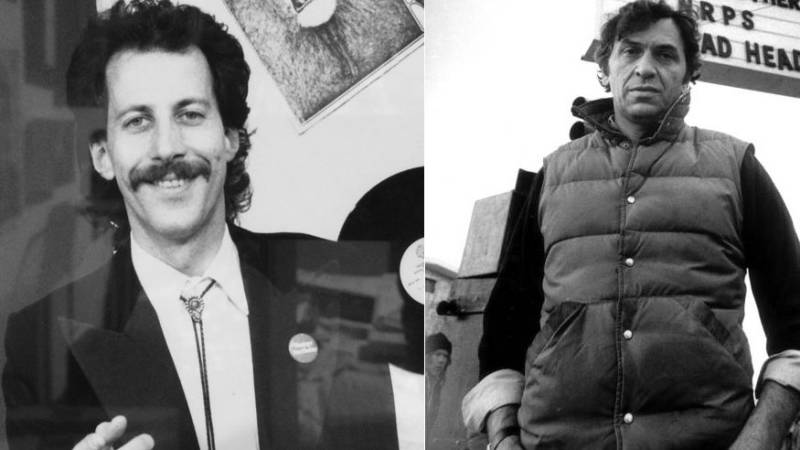
"caption": "David Gross, left, routinely impersonated Bill Graham (at right) on KRQR-FM.",
"description": "David Gross, left, routinely impersonated Bill Graham (at right) on KRQR-FM.",
"title": "GrahamImpersonator.MAIN",
"credit": "Photo courtesy David Gross (L); Michael Zagaris (R)",
"status": "inherit",
"isLoading": false,
"fetchFailed": false
},
"arts_11503677": {
"type": "attachments",
"id": "arts_11503677",
"meta": {
"index": "attachments_1716263798",
"site": "arts",
"id": "11503677",
"found": true
},
"parent": 11482173,
"imgSizes": {
"twentyfourteen-full-width": {
"file": "https://ww2.kqed.org/app/uploads/sites/2/2016/04/DeepSeaDiver.MAIN_-1038x576.jpg",
"width": 1038,
"mimeType": "image/jpeg",
"height": 576
},
"thumbnail": {
"file": "https://ww2.kqed.org/app/uploads/sites/2/2016/04/DeepSeaDiver.MAIN_-400x225.jpg",
"width": 400,
"mimeType": "image/jpeg",
"height": 225
},
"fd-sm": {
"file": "https://ww2.kqed.org/app/uploads/sites/2/2016/04/DeepSeaDiver.MAIN_-960x540.jpg",
"width": 960,
"mimeType": "image/jpeg",
"height": 540
},
"post-thumbnail": {
"file": "https://ww2.kqed.org/app/uploads/sites/2/2016/04/DeepSeaDiver.MAIN_-672x372.jpg",
"width": 672,
"mimeType": "image/jpeg",
"height": 372
},
"kqedFullSize": {
"file": "https://ww2.kqed.org/app/uploads/sites/2/2016/04/DeepSeaDiver.MAIN_.jpg",
"width": 1625,
"height": 914
},
"large": {
"file": "https://ww2.kqed.org/app/uploads/sites/2/2016/04/DeepSeaDiver.MAIN_-1180x664.jpg",
"width": 1180,
"mimeType": "image/jpeg",
"height": 664
},
"guest-author-96": {
"file": "https://ww2.kqed.org/app/uploads/sites/2/2016/04/DeepSeaDiver.MAIN_-96x96.jpg",
"width": 96,
"mimeType": "image/jpeg",
"height": 96
},
"medium": {
"file": "https://ww2.kqed.org/app/uploads/sites/2/2016/04/DeepSeaDiver.MAIN_-800x450.jpg",
"width": 800,
"mimeType": "image/jpeg",
"height": 450
},
"guest-author-64": {
"file": "https://ww2.kqed.org/app/uploads/sites/2/2016/04/DeepSeaDiver.MAIN_-64x64.jpg",
"width": 64,
"mimeType": "image/jpeg",
"height": 64
},
"guest-author-32": {
"file": "https://ww2.kqed.org/app/uploads/sites/2/2016/04/DeepSeaDiver.MAIN_-32x32.jpg",
"width": 32,
"mimeType": "image/jpeg",
"height": 32
},
"fd-med": {
"file": "https://ww2.kqed.org/app/uploads/sites/2/2016/04/DeepSeaDiver.MAIN_-1180x664.jpg",
"width": 1180,
"mimeType": "image/jpeg",
"height": 664
},
"detail": {
"file": "https://ww2.kqed.org/app/uploads/sites/2/2016/04/DeepSeaDiver.MAIN_-75x75.jpg",
"width": 75,
"mimeType": "image/jpeg",
"height": 75
},
"medium_large": {
"file": "https://ww2.kqed.org/app/uploads/sites/2/2016/04/DeepSeaDiver.MAIN_-768x432.jpg",
"width": 768,
"mimeType": "image/jpeg",
"height": 432
},
"guest-author-128": {
"file": "https://ww2.kqed.org/app/uploads/sites/2/2016/04/DeepSeaDiver.MAIN_-128x128.jpg",
"width": 128,
"mimeType": "image/jpeg",
"height": 128
}
},
"publishDate": 1460956259,
"modified": 1460956343,
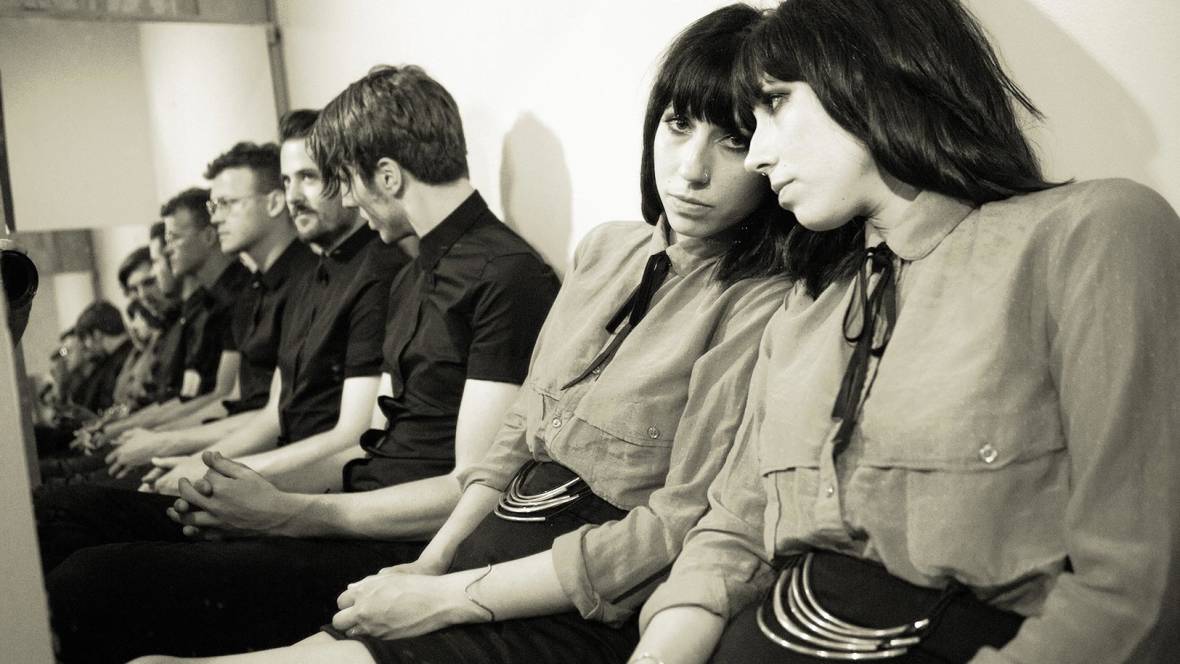
"caption": "Deep Sea Diver.",
"description": "Deep Sea Diver.",
"title": "DeepSeaDiver.MAIN",
"credit": "Photo: Matt Wignall",
"status": "inherit",
"isLoading": false,
"fetchFailed": false
},
"pop_22480": {
"type": "attachments",
"id": "pop_22480",
"meta": {
"index": "attachments_1716263798",
"site": "pop",
"id": "22480",
"found": true
},
"parent": 22477,
"imgSizes": {
"twentyfourteen-full-width": {
"file": "https://ww2.kqed.org/app/uploads/sites/12/2016/04/800px-Tax_The_Rich-_mural_by_Megan_Wilson_on_Clarion_Alley_San_Francisco-800x576.jpg",
"width": 800,
"mimeType": "image/jpeg",
"height": 576
},
"thumbnail": {
"file": "https://ww2.kqed.org/app/uploads/sites/12/2016/04/800px-Tax_The_Rich-_mural_by_Megan_Wilson_on_Clarion_Alley_San_Francisco-e1460746719283-400x244.jpg",
"width": 400,
"mimeType": "image/jpeg",
"height": 244
},
"post-thumbnail": {
"file": "https://ww2.kqed.org/app/uploads/sites/12/2016/04/800px-Tax_The_Rich-_mural_by_Megan_Wilson_on_Clarion_Alley_San_Francisco-e1460746719283-672x372.jpg",
"width": 672,
"mimeType": "image/jpeg",
"height": 372
},
"kqedFullSize": {
"file": "https://ww2.kqed.org/app/uploads/sites/12/2016/04/800px-Tax_The_Rich-_mural_by_Megan_Wilson_on_Clarion_Alley_San_Francisco-e1460746719283.jpg",
"width": 800,
"height": 488
},
"guest-author-96": {
"file": "https://ww2.kqed.org/app/uploads/sites/12/2016/04/800px-Tax_The_Rich-_mural_by_Megan_Wilson_on_Clarion_Alley_San_Francisco-e1460746719283-96x96.jpg",
"width": 96,
"mimeType": "image/jpeg",
"height": 96
},
"medium": {
"file": "https://ww2.kqed.org/app/uploads/sites/12/2016/04/800px-Tax_The_Rich-_mural_by_Megan_Wilson_on_Clarion_Alley_San_Francisco-e1460746719283-800x488.jpg",
"width": 800,
"mimeType": "image/jpeg",
"height": 488
},
"guest-author-64": {
"file": "https://ww2.kqed.org/app/uploads/sites/12/2016/04/800px-Tax_The_Rich-_mural_by_Megan_Wilson_on_Clarion_Alley_San_Francisco-e1460746719283-64x64.jpg",
"width": 64,
"mimeType": "image/jpeg",
"height": 64
},
"detail": {
"file": "https://ww2.kqed.org/app/uploads/sites/12/2016/04/800px-Tax_The_Rich-_mural_by_Megan_Wilson_on_Clarion_Alley_San_Francisco-e1460746719283-75x75.jpg",
"width": 75,
"mimeType": "image/jpeg",
"height": 75
},
"guest-author-32": {
"file": "https://ww2.kqed.org/app/uploads/sites/12/2016/04/800px-Tax_The_Rich-_mural_by_Megan_Wilson_on_Clarion_Alley_San_Francisco-e1460746719283-32x32.jpg",
"width": 32,
"mimeType": "image/jpeg",
"height": 32
},
"medium_large": {
"file": "https://ww2.kqed.org/app/uploads/sites/12/2016/04/800px-Tax_The_Rich-_mural_by_Megan_Wilson_on_Clarion_Alley_San_Francisco-e1460746719283-768x468.jpg",
"width": 768,
"mimeType": "image/jpeg",
"height": 468
},
"guest-author-128": {
"file": "https://ww2.kqed.org/app/uploads/sites/12/2016/04/800px-Tax_The_Rich-_mural_by_Megan_Wilson_on_Clarion_Alley_San_Francisco-e1460746719283-128x128.jpg",
"width": 128,
"mimeType": "image/jpeg",
"height": 128
}
},
"publishDate": 1460746629,
"modified": 1460746755,
"caption": "A mural by Megan Wilson, on Clarion Alley in SF. ",
"description": "A mural by Megan Wilson, on Clarion Alley in SF. ",
"title": "800px--Tax_The_Rich-_mural_by_Megan_Wilson_on_Clarion_Alley_San_Francisco",
"credit": "Wikimedia Commons",
"status": "inherit",
"isLoading": false,
"fetchFailed": false
},
"arts_11494797": {
"type": "attachments",
"id": "arts_11494797",
"meta": {
"index": "attachments_1716263798",
"site": "arts",
"id": "11494797",
"found": true
},
"parent": 11494671,
"imgSizes": {
"twentyfourteen-full-width": {
"file": "https://ww2.kqed.org/app/uploads/sites/2/2016/04/RS19152_12896366_10156679837495207_1080592260_o-qut-800x576.jpg",
"width": 800,
"mimeType": "image/jpeg",
"height": 576
},
"thumbnail": {
"file": "https://ww2.kqed.org/app/uploads/sites/2/2016/04/RS19152_12896366_10156679837495207_1080592260_o-qut-400x301.jpg",
"width": 400,
"mimeType": "image/jpeg",
"height": 301
},
"post-thumbnail": {
"file": "https://ww2.kqed.org/app/uploads/sites/2/2016/04/RS19152_12896366_10156679837495207_1080592260_o-qut-672x372.jpg",
"width": 672,
"mimeType": "image/jpeg",
"height": 372
},
"kqedFullSize": {
"file": "https://ww2.kqed.org/app/uploads/sites/2/2016/04/RS19152_12896366_10156679837495207_1080592260_o-qut.jpg",
"width": 800,
"height": 602
},
"guest-author-96": {
"file": "https://ww2.kqed.org/app/uploads/sites/2/2016/04/RS19152_12896366_10156679837495207_1080592260_o-qut-96x96.jpg",
"width": 96,
"mimeType": "image/jpeg",
"height": 96
},
"medium": {
"file": "https://ww2.kqed.org/app/uploads/sites/2/2016/04/RS19152_12896366_10156679837495207_1080592260_o-qut-797x600.jpg",
"width": 797,
"mimeType": "image/jpeg",
"height": 600
},
"guest-author-64": {
"file": "https://ww2.kqed.org/app/uploads/sites/2/2016/04/RS19152_12896366_10156679837495207_1080592260_o-qut-64x64.jpg",
"width": 64,
"mimeType": "image/jpeg",
"height": 64
},
"detail": {
"file": "https://ww2.kqed.org/app/uploads/sites/2/2016/04/RS19152_12896366_10156679837495207_1080592260_o-qut-75x75.jpg",
"width": 75,
"mimeType": "image/jpeg",
"height": 75
},
"guest-author-32": {
"file": "https://ww2.kqed.org/app/uploads/sites/2/2016/04/RS19152_12896366_10156679837495207_1080592260_o-qut-32x32.jpg",
"width": 32,
"mimeType": "image/jpeg",
"height": 32
},
"medium_large": {
"file": "https://ww2.kqed.org/app/uploads/sites/2/2016/04/RS19152_12896366_10156679837495207_1080592260_o-qut-768x578.jpg",
"width": 768,
"mimeType": "image/jpeg",
"height": 578
},
"guest-author-128": {
"file": "https://ww2.kqed.org/app/uploads/sites/2/2016/04/RS19152_12896366_10156679837495207_1080592260_o-qut-128x128.jpg",
"width": 128,
"mimeType": "image/jpeg",
"height": 128
}
},
"publishDate": 1460688985,
"modified": 1460692766,
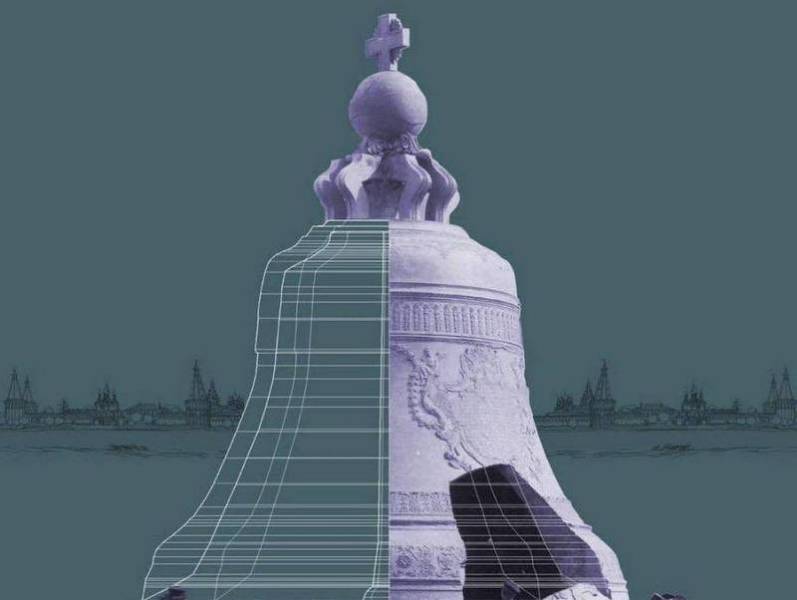
"caption": "The \"Tsar Bell\" was one of the largest bells ever cast. But it broke. What would it sound like? That's a provocative question for scientists.",
"description": "The \"Tsar Bell\" was one of the largest bells ever cast. But it broke. What would it sound like? That's a provocative question for scientists.",
"title": "RS19152_12896366_10156679837495207_1080592260_o-qut",
"credit": "Photo: Courtesy of Olya Dubatova",
"status": "inherit",
"isLoading": false,
"fetchFailed": false
},
"arts_11494265": {
"type": "attachments",
"id": "arts_11494265",
"meta": {
"index": "attachments_1716263798",
"site": "arts",
"id": "11494265",
"found": true
},
"parent": 11494264,
"imgSizes": {
"twentyfourteen-full-width": {
"file": "https://ww2.kqed.org/app/uploads/sites/2/2016/04/gettyimages-507992160_wide-e38496e32260ec3d0193976d98ea73ead30880b2-1038x576.jpg",
"width": 1038,
"mimeType": "image/jpeg",
"height": 576
},
"thumbnail": {
"file": "https://ww2.kqed.org/app/uploads/sites/2/2016/04/gettyimages-507992160_wide-e38496e32260ec3d0193976d98ea73ead30880b2-400x225.jpg",
"width": 400,
"mimeType": "image/jpeg",
"height": 225
},
"fd-sm": {
"file": "https://ww2.kqed.org/app/uploads/sites/2/2016/04/gettyimages-507992160_wide-e38496e32260ec3d0193976d98ea73ead30880b2-960x540.jpg",
"width": 960,
"mimeType": "image/jpeg",
"height": 540
},
"post-thumbnail": {
"file": "https://ww2.kqed.org/app/uploads/sites/2/2016/04/gettyimages-507992160_wide-e38496e32260ec3d0193976d98ea73ead30880b2-672x372.jpg",
"width": 672,
"mimeType": "image/jpeg",
"height": 372
},
"kqedFullSize": {
"file": "https://ww2.kqed.org/app/uploads/sites/2/2016/04/gettyimages-507992160_wide-e38496e32260ec3d0193976d98ea73ead30880b2.jpg",
"width": 3595,
"height": 2022
},
"large": {
"file": "https://ww2.kqed.org/app/uploads/sites/2/2016/04/gettyimages-507992160_wide-e38496e32260ec3d0193976d98ea73ead30880b2-1180x664.jpg",
"width": 1180,
"mimeType": "image/jpeg",
"height": 664
},
"guest-author-96": {
"file": "https://ww2.kqed.org/app/uploads/sites/2/2016/04/gettyimages-507992160_wide-e38496e32260ec3d0193976d98ea73ead30880b2-96x96.jpg",
"width": 96,
"mimeType": "image/jpeg",
"height": 96
},
"medium": {
"file": "https://ww2.kqed.org/app/uploads/sites/2/2016/04/gettyimages-507992160_wide-e38496e32260ec3d0193976d98ea73ead30880b2-800x450.jpg",
"width": 800,
"mimeType": "image/jpeg",
"height": 450
},
"guest-author-64": {
"file": "https://ww2.kqed.org/app/uploads/sites/2/2016/04/gettyimages-507992160_wide-e38496e32260ec3d0193976d98ea73ead30880b2-64x64.jpg",
"width": 64,
"mimeType": "image/jpeg",
"height": 64
},
"guest-author-32": {
"file": "https://ww2.kqed.org/app/uploads/sites/2/2016/04/gettyimages-507992160_wide-e38496e32260ec3d0193976d98ea73ead30880b2-32x32.jpg",
"width": 32,
"mimeType": "image/jpeg",
"height": 32
},
"fd-lrg": {
"file": "https://ww2.kqed.org/app/uploads/sites/2/2016/04/gettyimages-507992160_wide-e38496e32260ec3d0193976d98ea73ead30880b2-1920x1080.jpg",
"width": 1920,
"mimeType": "image/jpeg",
"height": 1080
},
"fd-med": {
"file": "https://ww2.kqed.org/app/uploads/sites/2/2016/04/gettyimages-507992160_wide-e38496e32260ec3d0193976d98ea73ead30880b2-1180x664.jpg",
"width": 1180,
"mimeType": "image/jpeg",
"height": 664
},
"detail": {
"file": "https://ww2.kqed.org/app/uploads/sites/2/2016/04/gettyimages-507992160_wide-e38496e32260ec3d0193976d98ea73ead30880b2-75x75.jpg",
"width": 75,
"mimeType": "image/jpeg",
"height": 75
},
"medium_large": {
"file": "https://ww2.kqed.org/app/uploads/sites/2/2016/04/gettyimages-507992160_wide-e38496e32260ec3d0193976d98ea73ead30880b2-768x432.jpg",
"width": 768,
"mimeType": "image/jpeg",
"height": 432
},
"guest-author-128": {
"file": "https://ww2.kqed.org/app/uploads/sites/2/2016/04/gettyimages-507992160_wide-e38496e32260ec3d0193976d98ea73ead30880b2-128x128.jpg",
"width": 128,
"mimeType": "image/jpeg",
"height": 128
}
},
"publishDate": 1460673729,
"modified": 1460676191,
"caption": "Civil rights leaders, including Dr. Martin Luther King, Jr., sing \"We Shall Overcome\" at the conclusion of the Selma to Montgomery civil rights march in 1965.",
"description": "Civil rights leaders, including Dr. Martin Luther King, Jr., sing \"We Shall Overcome\" at the conclusion of the Selma to Montgomery civil rights march in 1965.",
"title": "Civil rights leaders, including Dr. Martin Luther King, Jr., sing \"We Shall Overcome\" at the conclusion of the Selma to Montgomery civil rights march in 1965.",
"credit": "Photo: Stephen F. Somerstein/Getty Images",
"status": "inherit",
"isLoading": false,
"fetchFailed": false
},
"arts_11491303": {
"type": "attachments",
"id": "arts_11491303",
"meta": {
"index": "attachments_1716263798",
"site": "arts",
"id": "11491303",
"found": true
},
"parent": 11491048,
"imgSizes": {
"thumbnail": {
"file": "https://ww2.kqed.org/app/uploads/sites/2/2016/04/Jack-Hammer-400x210.jpg",
"width": 400,
"mimeType": "image/jpeg",
"height": 210
},
"post-thumbnail": {
"file": "https://ww2.kqed.org/app/uploads/sites/2/2016/04/Jack-Hammer-672x372.jpg",
"width": 672,
"mimeType": "image/jpeg",
"height": 372
},
"kqedFullSize": {
"file": "https://ww2.kqed.org/app/uploads/sites/2/2016/04/Jack-Hammer.jpg",
"width": 800,
"height": 419
},
"guest-author-96": {
"file": "https://ww2.kqed.org/app/uploads/sites/2/2016/04/Jack-Hammer-96x96.jpg",
"width": 96,
"mimeType": "image/jpeg",
"height": 96
},
"medium": {
"file": "https://ww2.kqed.org/app/uploads/sites/2/2016/04/Jack-Hammer-800x419.jpg",
"width": 800,
"mimeType": "image/jpeg",
"height": 419
},
"guest-author-64": {
"file": "https://ww2.kqed.org/app/uploads/sites/2/2016/04/Jack-Hammer-64x64.jpg",
"width": 64,
"mimeType": "image/jpeg",
"height": 64
},
"detail": {
"file": "https://ww2.kqed.org/app/uploads/sites/2/2016/04/Jack-Hammer-75x75.jpg",
"width": 75,
"mimeType": "image/jpeg",
"height": 75
},
"guest-author-32": {
"file": "https://ww2.kqed.org/app/uploads/sites/2/2016/04/Jack-Hammer-32x32.jpg",
"width": 32,
"mimeType": "image/jpeg",
"height": 32
},
"medium_large": {
"file": "https://ww2.kqed.org/app/uploads/sites/2/2016/04/Jack-Hammer-768x402.jpg",
"width": 768,
"mimeType": "image/jpeg",
"height": 402
},
"guest-author-128": {
"file": "https://ww2.kqed.org/app/uploads/sites/2/2016/04/Jack-Hammer-128x128.jpg",
"width": 128,
"mimeType": "image/jpeg",
"height": 128
}
},
"publishDate": 1460587051,
"modified": 1460587411,
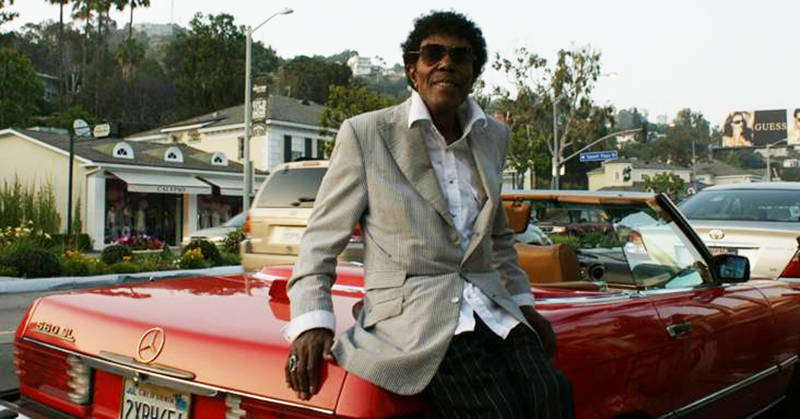
"caption": "Earl Solomon Burroughs AKA Jack Hammer in Hollywood",
"description": "Earl Solomon Burroughs AKA Jack Hammer in Hollywood",
"title": "Jack Hammer",
"credit": "Photo: Courtesy of Facebook",
"status": "inherit",
"isLoading": false,
"fetchFailed": false
}
},
"audioPlayerReducer": {
"postId": "stream_live",
"isPaused": true,
"isPlaying": false,
"pfsActive": false,
"pledgeModalIsOpen": true,
"playerDrawerIsOpen": false,
"liveAudioPlayStartedAt": 0,
"liveAudioPlayContext": ""
},
"authorsReducer": {
"byline_arts_11505351": {
"type": "authors",
"id": "byline_arts_11505351",
"meta": {
"override": true
},
"slug": "byline_arts_11505351",
"name": "Anthony McCartney, Associated Press",
"isLoading": false
},
"byline_arts_11494264": {
"type": "authors",
"id": "byline_arts_11494264",
"meta": {
"override": true
},
"slug": "byline_arts_11494264",
"name": "Elizabeth Blair",
"isLoading": false
},
"agilbert": {
"type": "authors",
"id": "86",
"meta": {
"index": "authors_1716337520",
"id": "86",
"found": true
},
"name": "Andrew Gilbert",
"firstName": "Andrew",
"lastName": "Gilbert",
"slug": "agilbert",
"email": "jazzscribe@aol.com",
"display_author_email": false,
"staff_mastheads": [],
"title": "KQED Contributor",
"bio": "A Los Angeles native based in the Berkeley area since 1996, Andrew Gilbert covers jazz, international music and dance for KQED's \u003ci>California Report, \u003c/i>the\u003ci> Mercury News\u003c/i>, \u003ci>San Francisco Chronicle\u003c/i>, \u003ci>Berkeleyside.com\u003c/i>, and other publications. He is available for weddings and bar and bat mitzvahs. #jazzscribe",
"avatar": "https://secure.gravatar.com/avatar/d7bcafdbefdd39e9a68f88724ca616eb4e7a5a6bff9cdfb62de652a1e1751471?s=600&d=blank&r=g",
"twitter": null,
"bluesky": null,
"facebook": null,
"instagram": null,
"linkedin": null,
"sites": [
{
"site": "arts",
"roles": [
"Contributor",
"author"
]
},
{
"site": "news",
"roles": [
"author"
]
}
],
"headData": {
"title": "Andrew Gilbert | KQED",
"description": "KQED Contributor",
"ogImgSrc": "https://secure.gravatar.com/avatar/d7bcafdbefdd39e9a68f88724ca616eb4e7a5a6bff9cdfb62de652a1e1751471?s=600&d=blank&r=g",
"twImgSrc": "https://secure.gravatar.com/avatar/d7bcafdbefdd39e9a68f88724ca616eb4e7a5a6bff9cdfb62de652a1e1751471?s=600&d=blank&r=g"
},
"isLoading": false,
"link": "/author/agilbert"
},
"kjones": {
"type": "authors",
"id": "93",
"meta": {
"index": "authors_1716337520",
"id": "93",
"found": true
},
"name": "Kevin L. Jones",
"firstName": "Kevin",
"lastName": "Jones",
"slug": "kjones",
"email": "kjones@kqed.org",
"display_author_email": false,
"staff_mastheads": [],
"title": null,
"bio": null,
"avatar": "https://secure.gravatar.com/avatar/12c65b5633ed39d0a59bb7f497eff645?s=600&d=blank&r=g",
"twitter": null,
"facebook": null,
"instagram": null,
"linkedin": null,
"sites": [
{
"site": "arts",
"roles": [
"subscriber"
]
},
{
"site": "styleguide",
"roles": [
"contributor"
]
},
{
"site": "artschool",
"roles": [
"subscriber"
]
},
{
"site": "news",
"roles": [
"subscriber"
]
},
{
"site": "pop",
"roles": [
"subscriber"
]
}
],
"headData": {
"title": "Kevin L. Jones | KQED",
"description": null,
"ogImgSrc": "https://secure.gravatar.com/avatar/12c65b5633ed39d0a59bb7f497eff645?s=600&d=blank&r=g",
"twImgSrc": "https://secure.gravatar.com/avatar/12c65b5633ed39d0a59bb7f497eff645?s=600&d=blank&r=g"
},
"isLoading": false,
"link": "/author/kjones"
},
"gmeline": {
"type": "authors",
"id": "185",
"meta": {
"index": "authors_1716337520",
"id": "185",
"found": true
},
"name": "Gabe Meline",
"firstName": "Gabe",
"lastName": "Meline",
"slug": "gmeline",
"email": "gmeline@kqed.org",
"display_author_email": true,
"staff_mastheads": [
"arts"
],
"title": "Senior Editor, KQED Arts & Culture",
"bio": "Gabe Meline entered journalism at age 15 making photocopied zines, and has since earned awards from the Edward R. Murrow Awards, the Society for Professional Journalists, the Online Journalism Awards, the Association of Alternative Newsweeklies and the California Newspaper Publishers Association. Prior to KQED, he was the editor of the \u003cem>North Bay Bohemian\u003c/em> and a touring musician. He lives with his wife and daughter in his hometown of Santa Rosa, CA.",
"avatar": "https://secure.gravatar.com/avatar/5bebe57be0d8bc2dd318934feb47299e2d2d10cba28d09d8d7afb389a2ce2bdd?s=600&d=blank&r=g",
"twitter": null,
"bluesky": null,
"facebook": null,
"instagram": null,
"linkedin": null,
"sites": [
{
"site": "",
"roles": [
"editor"
]
},
{
"site": "arts",
"roles": [
"administrator"
]
},
{
"site": "artschool",
"roles": [
"editor"
]
},
{
"site": "news",
"roles": [
"author"
]
},
{
"site": "pop",
"roles": [
"editor"
]
},
{
"site": "bayareabites",
"roles": [
"editor"
]
},
{
"site": "food",
"roles": [
"editor"
]
},
{
"site": "forum",
"roles": [
"administrator"
]
},
{
"site": "liveblog",
"roles": [
"editor"
]
},
{
"site": "hiphop",
"roles": [
"editor"
]
}
],
"headData": {
"title": "Gabe Meline | KQED",
"description": "Senior Editor, KQED Arts & Culture",
"ogImgSrc": "https://secure.gravatar.com/avatar/5bebe57be0d8bc2dd318934feb47299e2d2d10cba28d09d8d7afb389a2ce2bdd?s=600&d=blank&r=g",
"twImgSrc": "https://secure.gravatar.com/avatar/5bebe57be0d8bc2dd318934feb47299e2d2d10cba28d09d8d7afb389a2ce2bdd?s=600&d=blank&r=g"
},
"isLoading": false,
"link": "/author/gmeline"
},
"rachael-myrow": {
"type": "authors",
"id": "251",
"meta": {
"index": "authors_1716337520",
"id": "251",
"found": true
},
"name": "Rachael Myrow",
"firstName": "Rachael",
"lastName": "Myrow",
"slug": "rachael-myrow",
"email": "rmyrow@kqed.org",
"display_author_email": true,
"staff_mastheads": [
"news"
],
"title": "Senior Editor of KQED's Silicon Valley News Desk",
"bio": "• I write and edit stories about how Silicon Valley power and policies shape everyday life in California. I’m also passionate about making Bay Area history and culture more accessible to a broad public. • I’ve been a journalist for most of my life, starting in high school with The Franklin Press in Los Angeles, where I grew up. While earning my first degree in English at UC Berkeley, I got my start in public radio at KALX-FM. After completing a second degree in journalism at Cal, I landed my first professional job at Marketplace, then moved on to KPCC (now LAist), and then KQED, where I hosted The California Report for more than seven years. • My reporting has appeared on NPR, The World, WBUR’s \u003ci>Here & Now\u003c/i>, and the BBC. I also guest host for KQED’s \u003ci>Forum\u003c/i>, as well as the Commonwealth Club in San Francisco. • I speak periodically on media, democracy and technology issues, and do voiceover work for documentaries and educational video projects. • Outside of the studio, you'll find me hiking Bay Area trails and whipping up Insta-ready meals in my kitchen. • I do not accept gifts, money, or favors from anyone connected to my reporting, I don't pay people for information, and I do not support or donate to political causes. • I strive to treat the people I report on with fairness, honesty, and respect. I also recognize there are often multiple sides to a story and work to verify information through multiple sources and documentation. If I get something wrong, I correct it.",
"avatar": "https://secure.gravatar.com/avatar/3ed8a3c5f26025e4a805ba634cda8cd764906b97438a6d9ce216b044e340da4e?s=600&d=blank&r=g",
"twitter": "rachaelmyrow",
"bluesky": null,
"facebook": null,
"instagram": null,
"linkedin": "https://www.linkedin.com/in/rachaelmyrow/",
"sites": [
{
"site": "arts",
"roles": [
"administrator"
]
},
{
"site": "news",
"roles": [
"edit_others_posts",
"editor"
]
},
{
"site": "futureofyou",
"roles": [
"editor"
]
},
{
"site": "bayareabites",
"roles": [
"editor"
]
},
{
"site": "stateofhealth",
"roles": [
"editor"
]
},
{
"site": "science",
"roles": [
"editor"
]
},
{
"site": "food",
"roles": [
"editor"
]
},
{
"site": "forum",
"roles": [
"editor"
]
},
{
"site": "liveblog",
"roles": [
"author"
]
}
],
"headData": {
"title": "Rachael Myrow | KQED",
"description": "Senior Editor of KQED's Silicon Valley News Desk",
"ogImgSrc": "https://secure.gravatar.com/avatar/3ed8a3c5f26025e4a805ba634cda8cd764906b97438a6d9ce216b044e340da4e?s=600&d=blank&r=g",
"twImgSrc": "https://secure.gravatar.com/avatar/3ed8a3c5f26025e4a805ba634cda8cd764906b97438a6d9ce216b044e340da4e?s=600&d=blank&r=g"
},
"isLoading": false,
"link": "/author/rachael-myrow"
},
"mlevenson": {
"type": "authors",
"id": "6624",
"meta": {
"index": "authors_1716337520",
"id": "6624",
"found": true
},
"name": "Max Savage Levenson",
"firstName": "Max",
"lastName": "Savage Levenson",
"slug": "mlevenson",
"email": "m.savagelevenson@gmail.com",
"display_author_email": false,
"staff_mastheads": [],
"title": null,
"bio": null,
"avatar": "https://secure.gravatar.com/avatar/e7f998073c1ba6fec822d9f7dcd8c272?s=600&d=blank&r=g",
"twitter": null,
"facebook": null,
"instagram": null,
"linkedin": null,
"sites": [
{
"site": "arts",
"roles": [
"contributor"
]
},
{
"site": "news",
"roles": [
"author"
]
}
],
"headData": {
"title": "Max Savage Levenson | KQED",
"description": null,
"ogImgSrc": "https://secure.gravatar.com/avatar/e7f998073c1ba6fec822d9f7dcd8c272?s=600&d=blank&r=g",
"twImgSrc": "https://secure.gravatar.com/avatar/e7f998073c1ba6fec822d9f7dcd8c272?s=600&d=blank&r=g"
},
"isLoading": false,
"link": "/author/mlevenson"
},
"esilvers": {
"type": "authors",
"id": "7237",
"meta": {
"index": "authors_1716337520",
"id": "7237",
"found": true
},
"name": "Emma Silvers",
"firstName": "Emma",
"lastName": "Silvers",
"slug": "esilvers",
"email": "esilvers@kqed.org",
"display_author_email": false,
"staff_mastheads": [],
"title": "KQED Contributor",
"bio": "Emma Silvers is an editor at KQED Arts and a former digital producer at KQED News. Born and raised in the Bay Area, she has previously been an arts and entertainment editor at the \u003cem>San Francisco Chronicle\u003c/em>, \u003cem>SF Weekly\u003c/em> and the \u003cem>San Francisco Bay Guardian.\u003c/em> \u003ca href=\"https://www.emmasilvers.com\">Her work\u003c/a> has also appeared in \u003cem>Rolling Stone\u003c/em>, Pitchfork and \u003cem>Mother Jones\u003c/em>. In 2017 she was the recipient of the Society of Professional Journalists-Northern California's award for arts and culture reporting. In 1993 she \u003ca href=\"https://www.kqed.org/pop/16759/wait-what-my-coworker-was-a-voice-over-hyperventilator-for-jurassic-park\">hyperventilated in \u003cem>Jurassic Park\u003c/em>\u003c/a>.",
"avatar": "https://secure.gravatar.com/avatar/247beada39b88ea5759db1f51dba05cf?s=600&d=blank&r=g",
"twitter": "emmaruthless",
"facebook": null,
"instagram": null,
"linkedin": null,
"sites": [
{
"site": "arts",
"roles": [
"editor"
]
},
{
"site": "news",
"roles": [
"editor"
]
},
{
"site": "pop",
"roles": [
"contributor"
]
},
{
"site": "bayareabites",
"roles": [
"editor"
]
},
{
"site": "food",
"roles": [
"contributor"
]
},
{
"site": "liveblog",
"roles": [
"editor"
]
}
],
"headData": {
"title": "Emma Silvers | KQED",
"description": "KQED Contributor",
"ogImgSrc": "https://secure.gravatar.com/avatar/247beada39b88ea5759db1f51dba05cf?s=600&d=blank&r=g",
"twImgSrc": "https://secure.gravatar.com/avatar/247beada39b88ea5759db1f51dba05cf?s=600&d=blank&r=g"
},
"isLoading": false,
"link": "/author/esilvers"
},
"cveltman": {
"type": "authors",
"id": "8608",
"meta": {
"index": "authors_1716337520",
"id": "8608",
"found": true
},
"name": "Chloe Veltman",
"firstName": "Chloe",
"lastName": "Veltman",
"slug": "cveltman",
"email": "cveltman@kqed.org",
"display_author_email": true,
"staff_mastheads": [],
"title": "Arts and Culture Reporter",
"bio": "Chloe Veltman is a former arts and culture reporter for KQED. Prior to joining the organization, she launched and led the arts bureau at Colorado Public Radio, served as the Bay Area's culture columnist for the New York Times, and was the founder, host and executive producer of VoiceBox, a national award-winning weekly podcast/radio show and live events series all about the human voice. Chloe is the recipient of numerous prizes, grants and fellowships including a Webby Award for her work on interactive storytelling, both the John S Knight Journalism Fellowship and Humanities Center Fellowship at Stanford University, the Sundance Arts Writing Fellowship and a Library of Congress Research Fellowship. She is the author of the book \"On Acting\" and has appeared as a guest lecturer at Yale University and the San Francisco Conservatory of Music among other institutions. She holds a BA in english literature from King's College, Cambridge, and a Masters in Dramaturgy from the Central School of Speech and Drama/Harvard Institute for Advanced Theater Training.\r\n\u003ca href=\"https://www.chloeveltman.com\">www.chloeveltman.com\u003c/a>",
"avatar": "https://secure.gravatar.com/avatar/55403394b00a1ddab683952c2eb2cf85?s=600&d=blank&r=g",
"twitter": "chloeveltman",
"facebook": null,
"instagram": null,
"linkedin": null,
"sites": [
{
"site": "arts",
"roles": []
},
{
"site": "news",
"roles": [
"author"
]
},
{
"site": "pop",
"roles": [
"editor"
]
},
{
"site": "science",
"roles": []
}
],
"headData": {
"title": "Chloe Veltman | KQED",
"description": "Arts and Culture Reporter",
"ogImgSrc": "https://secure.gravatar.com/avatar/55403394b00a1ddab683952c2eb2cf85?s=600&d=blank&r=g",
"twImgSrc": "https://secure.gravatar.com/avatar/55403394b00a1ddab683952c2eb2cf85?s=600&d=blank&r=g"
},
"isLoading": false,
"link": "/author/cveltman"
}
},
"pagesReducer": {
"arts_category_music": {
"type": "terms",
"id": "arts_69",
"meta": {
"index": "terms_1716263798",
"site": "arts",
"id": "69",
"score": 10.851607
},
"featImg": null,
"name": "Music",
"description": null,
"taxonomy": "category",
"headData": {
"twImgId": null,
"twTitle": null,
"ogTitle": null,
"ogImgId": null,
"twDescription": null,
"description": null,
"title": "Music Archives | KQED Arts",
"ogDescription": null
},
"ttid": 70,
"slug": "music",
"isLoading": false,
"title": "Music",
"pageMeta": {
"site": "arts",
"WpPageTemplate": "page-topic-editorial",
"currentPage": 295
},
"blocks": [
{
"blockName": "kqed/post-list",
"attrs": {
"layout": "cardArticle2",
"query": "posts/arts?category=music",
"seeMore": false,
"paginated": true,
"page": 295
}
},
{
"blockName": "kqed/ad"
}
]
}
},
"pfsSessionReducer": {},
"postsReducer": {
"stream_live": {
"type": "live",
"id": "stream_live",
"audioUrl": "https://streams.kqed.org/kqedradio",
"title": "Live Stream",
"excerpt": "Live Stream information currently unavailable.",
"link": "/radio",
"featImg": "",
"label": {
"name": "KQED Live",
"link": "/"
}
},
"stream_kqedNewscast": {
"type": "posts",
"id": "stream_kqedNewscast",
"audioUrl": "https://www.kqed.org/.stream/anon/radio/RDnews/newscast.mp3?_=1",
"title": "KQED Newscast",
"featImg": "",
"label": {
"name": "88.5 FM",
"link": "/"
}
},
"arts_11509648": {
"type": "posts",
"id": "arts_11509648",
"meta": {
"index": "posts_1716263798",
"site": "arts",
"id": "11509648",
"score": null,
"sort": [
1461132494000
]
},
"parent": 0,
"labelTerm": {
"site": "arts"
},
"blocks": [],
"publishDate": 1461132494,
"format": "standard",
"title": "In Honor of Colbert and Sturgill: The Top 3 Waffle House Jukebox Songs",
"headTitle": "In Honor of Colbert and Sturgill: The Top 3 Waffle House Jukebox Songs | KQED",
"content": "\u003cp>Let me first declare my credentials on the subject of Waffle House jukebox songs. I have, on my arm, a prominent Waffle House tattoo. I did, after obtaining said tattoo, write to Waffle House headquarters in Atlanta, GA, asking how to purchase the Waffle House 45s from Waffle House jukeboxes in Waffle Houses across the land. I included a photo of my tattoo. I heard no response.\u003c/p>\n\u003cfigure id=\"attachment_11509659\" class=\"wp-caption aligncenter\" style=\"max-width: 1100px\">\u003cimg loading=\"lazy\" decoding=\"async\" src=\"http://ww2.kqed.org/arts/wp-content/uploads/sites/2/2016/04/WF.tattoo.jpg\" alt=\"Sure, it could use some touching up.\" width=\"1100\" height=\"436\" class=\"size-full wp-image-11509659\" srcset=\"https://cdn.kqed.org/wp-content/uploads/sites/2/2016/04/WF.tattoo.jpg 1100w, https://cdn.kqed.org/wp-content/uploads/sites/2/2016/04/WF.tattoo-400x159.jpg 400w, https://cdn.kqed.org/wp-content/uploads/sites/2/2016/04/WF.tattoo-800x317.jpg 800w, https://cdn.kqed.org/wp-content/uploads/sites/2/2016/04/WF.tattoo-768x304.jpg 768w, https://cdn.kqed.org/wp-content/uploads/sites/2/2016/04/WF.tattoo-960x381.jpg 960w\" sizes=\"(max-width: 1100px) 100vw, 1100px\">\u003cfigcaption class=\"wp-caption-text\">Sure, it could use some touching up.\u003c/figcaption>\u003c/figure>\n\u003cp>Undaunted, I sought online the songs I knew from my travels through the deep south. “Special Lady at the Waffle House,” “Waffle House Family,” and the great mathematical triumph, “877,739 Ways to Eat a Hamburger at Waffle House.” After 15 years of searching, I finally found a seller on eBay who’d bought a Waffle House jukebox at auction and was willing to sell the 45s to me. He even threw in my favorite, “877,739 Ways to Eat a Hamburger at Waffle House,” for free, with a note: “Merry Christmas early.” (Thanks, \u003ca href=\"http://www.ebay.ph/usr/jukebox5964\" target=\"_blank\" rel=\"noopener\">jukebox5964\u003c/a>!)\u003c/p>\n\u003cp>So it was with great excitement that my Waffle House-tattooed self watched Stephen Colbert and Sturgill Simpson premiere a \u003ca href=\"https://www.youtube.com/watch?v=yHe_1lOJYN0\" target=\"_blank\" rel=\"noopener\">new Waffle House-themed song\u003c/a> tonight. “No Shoes, No Shirt, No Knuckleheads” hits on all Waffle House jukebox cylinders: a portrait in song of the welcoming culture at Waffle House, a description or two lifted directly from the menu (“scattered, smothered, covered”), and a gratuitous reference to that “big yellow sign.” Witness the glory below:\u003c/p>\n\u003cp>https://www.youtube.com/watch?v=yHe_1lOJYN0\u003c/p>\n\u003cp>Now, I know what you’re thinking: \u003cem>where can I find the other Waffle House jukebox songs?\u003c/em> Well, if you’re lucky, you might find them on the secondhand market. \u003ca href=\"https://www.discogs.com/Various-Waffle-House-Jukebox-Favorites-Vol-1/release/5655362\" target=\"_blank\" rel=\"noopener\">\u003cem>Waffle House Jukebox Favorites Vol. 1\u003c/em>\u003c/a> and \u003ca href=\"https://www.amazon.com/gp/product/B005FTRAWW?ie=UTF8&*Version*=1&*entries*=0\" target=\"_blank\" rel=\"noopener\">\u003cem>Waffle House Favorites Vol. 2\u003c/em>\u003c/a> sometimes turn up for sale on CD. As for the original vinyl 45s? Well, jukebox5964 is out of ’em, and I ain’t sellin’. But here are some of my favorites:\u003c/p>\n\u003ch3>‘877,739 Ways to Eat a Hamburger’\u003c/h3>\n\u003cp>An animated talking blues with a contagiously catchy female three-part harmony and Merle Haggard-esque pickin’ guitar riff, this song tells the story of a man who “learned a lot of combinations” while asking his waitress about every single way one can eat a hamburger at Waffle House. (In the end, he chooses to eat it plain, because country music is always about the simple stuff.)\u003c/p>\n\u003cp>[ad fullwidth]\u003c/p>\n\u003cp>[soundcloud url=”https://api.soundcloud.com/tracks/188986538″ params=”auto_play=false&hide_related=false&show_comments=true&show_user=true&show_reposts=false&visual=true” width=”100%” height=”450″ iframe=”true” /]\u003c/p>\n\u003ch3>‘Special Lady at the Waffle House’\u003c/h3>\n\u003cp>Note at the beginning of this ballad the reference to the “big yellow sign,” indeed, the very one tattooed on my arm. Witness also the customer’s amazement at the waitress “callin’ all those orders out.” Basically this combines \u003cem>Nighthawks at the Diner\u003c/em>-era Tom Waits with Waylon Jennings’ baritone, with very detailed lyrics about the process of ordering food at a diner. Bonus: if you play this song at a Waffle House, every waitress will hate you.\u003c/p>\n\u003cp>https://www.youtube.com/watch?v=fCfNB_qfl9Y\u003c/p>\n\u003ch3>‘Waffle House Family’\u003c/h3>\n\u003cp>Who needs Flavor Flav as a yes-man when you’ve got a) the guy who enthusiastically repeats each line in the verse here and b) the happy choir that repeats each line in the chorus? Here, Mary Welch Rogers gives it her all in welcoming weary visitors to join the the Waffle House, where you’re “always welcome at home.” Especially if it’s 3am.\u003c/p>\n\u003cp>https://www.youtube.com/watch?v=lYQUB5Wb_FM\u003c/p>\n\u003cp>\u003c/p>\n\u003cp>Thanks, Waffle House, for the musical glory of your jukebox songs. \u003ca href=\"http://www.billboard.com/articles/news/956245/kid-rock-ordered-to-pay-40k-in-damages-for-waffle-house-fight\" target=\"_blank\" rel=\"noopener\">Kid Rock would surely agree\u003c/a>.\u003c/p>\n\n",
"stats": {
"hasVideo": true,
"hasChartOrMap": false,
"hasAudio": false,
"hasPolis": false,
"wordCount": 668,
"hasGoogleForm": false,
"hasGallery": false,
"hasHearkenModule": false,
"iframeSrcs": [],
"paragraphCount": 11
},
"modified": 1705044536,
"excerpt": "Waffle House's jukebox songs are as much a part of the Southern experience as \"scattered, smothered and covered\" hashbrowns.",
"headData": {
"twImgId": "",
"twTitle": "",
"ogTitle": "",
"ogImgId": "",
"twDescription": "",
"description": "Waffle House's jukebox songs are as much a part of the Southern experience as "scattered, smothered and covered" hashbrowns.",
"title": "In Honor of Colbert and Sturgill: The Top 3 Waffle House Jukebox Songs | KQED",
"ogDescription": "",
"schema": {
"@context": "https://schema.org",
"@type": "Article",
"headline": "In Honor of Colbert and Sturgill: The Top 3 Waffle House Jukebox Songs",
"datePublished": "2016-04-19T23:08:14-07:00",
"dateModified": "2024-01-11T23:28:56-08:00",
"image": "https://cdn.kqed.org/wp-content/uploads/2020/02/KQED-OG-Image@1x.png"
}
},
"guestAuthors": [],
"slug": "in-honor-of-colbert-and-sturgill-the-top-3-waffle-house-jukebox-songs",
"status": "publish",
"sticky": false,
"path": "/arts/11509648/in-honor-of-colbert-and-sturgill-the-top-3-waffle-house-jukebox-songs",
"audioTrackLength": null,
"parsedContent": [
{
"type": "contentString",
"content": "\u003cdiv class=\"post-body\">\u003cp>\u003cp>Let me first declare my credentials on the subject of Waffle House jukebox songs. I have, on my arm, a prominent Waffle House tattoo. I did, after obtaining said tattoo, write to Waffle House headquarters in Atlanta, GA, asking how to purchase the Waffle House 45s from Waffle House jukeboxes in Waffle Houses across the land. I included a photo of my tattoo. I heard no response.\u003c/p>\n\u003cfigure id=\"attachment_11509659\" class=\"wp-caption aligncenter\" style=\"max-width: 1100px\">\u003cimg loading=\"lazy\" decoding=\"async\" src=\"http://ww2.kqed.org/arts/wp-content/uploads/sites/2/2016/04/WF.tattoo.jpg\" alt=\"Sure, it could use some touching up.\" width=\"1100\" height=\"436\" class=\"size-full wp-image-11509659\" srcset=\"https://cdn.kqed.org/wp-content/uploads/sites/2/2016/04/WF.tattoo.jpg 1100w, https://cdn.kqed.org/wp-content/uploads/sites/2/2016/04/WF.tattoo-400x159.jpg 400w, https://cdn.kqed.org/wp-content/uploads/sites/2/2016/04/WF.tattoo-800x317.jpg 800w, https://cdn.kqed.org/wp-content/uploads/sites/2/2016/04/WF.tattoo-768x304.jpg 768w, https://cdn.kqed.org/wp-content/uploads/sites/2/2016/04/WF.tattoo-960x381.jpg 960w\" sizes=\"(max-width: 1100px) 100vw, 1100px\">\u003cfigcaption class=\"wp-caption-text\">Sure, it could use some touching up.\u003c/figcaption>\u003c/figure>\n\u003cp>Undaunted, I sought online the songs I knew from my travels through the deep south. “Special Lady at the Waffle House,” “Waffle House Family,” and the great mathematical triumph, “877,739 Ways to Eat a Hamburger at Waffle House.” After 15 years of searching, I finally found a seller on eBay who’d bought a Waffle House jukebox at auction and was willing to sell the 45s to me. He even threw in my favorite, “877,739 Ways to Eat a Hamburger at Waffle House,” for free, with a note: “Merry Christmas early.” (Thanks, \u003ca href=\"http://www.ebay.ph/usr/jukebox5964\" target=\"_blank\" rel=\"noopener\">jukebox5964\u003c/a>!)\u003c/p>\n\u003cp>So it was with great excitement that my Waffle House-tattooed self watched Stephen Colbert and Sturgill Simpson premiere a \u003ca href=\"https://www.youtube.com/watch?v=yHe_1lOJYN0\" target=\"_blank\" rel=\"noopener\">new Waffle House-themed song\u003c/a> tonight. “No Shoes, No Shirt, No Knuckleheads” hits on all Waffle House jukebox cylinders: a portrait in song of the welcoming culture at Waffle House, a description or two lifted directly from the menu (“scattered, smothered, covered”), and a gratuitous reference to that “big yellow sign.” Witness the glory below:\u003c/p>\u003c/p>\u003cp>\u003cspan class='utils-parseShortcode-shortcodes-__youtubeShortcode__embedYoutube'>\n \u003cspan class='utils-parseShortcode-shortcodes-__youtubeShortcode__embedYoutubeInside'>\n \u003ciframe\n loading='lazy'\n class='utils-parseShortcode-shortcodes-__youtubeShortcode__youtubePlayer'\n type='text/html'\n src='//www.youtube.com/embed/yHe_1lOJYN0'\n title='//www.youtube.com/embed/yHe_1lOJYN0'\n allowfullscreen='true'\n style='border:0;'>\u003c/iframe>\n \u003c/span>\n \u003c/span>\u003c/p>\u003cp>\u003cp>Now, I know what you’re thinking: \u003cem>where can I find the other Waffle House jukebox songs?\u003c/em> Well, if you’re lucky, you might find them on the secondhand market. \u003ca href=\"https://www.discogs.com/Various-Waffle-House-Jukebox-Favorites-Vol-1/release/5655362\" target=\"_blank\" rel=\"noopener\">\u003cem>Waffle House Jukebox Favorites Vol. 1\u003c/em>\u003c/a> and \u003ca href=\"https://www.amazon.com/gp/product/B005FTRAWW?ie=UTF8&*Version*=1&*entries*=0\" target=\"_blank\" rel=\"noopener\">\u003cem>Waffle House Favorites Vol. 2\u003c/em>\u003c/a> sometimes turn up for sale on CD. As for the original vinyl 45s? Well, jukebox5964 is out of ’em, and I ain’t sellin’. But here are some of my favorites:\u003c/p>\n\u003ch3>‘877,739 Ways to Eat a Hamburger’\u003c/h3>\n\u003cp>An animated talking blues with a contagiously catchy female three-part harmony and Merle Haggard-esque pickin’ guitar riff, this song tells the story of a man who “learned a lot of combinations” while asking his waitress about every single way one can eat a hamburger at Waffle House. (In the end, he chooses to eat it plain, because country music is always about the simple stuff.)\u003c/p>\n\u003cp>\u003c/p>\u003c/div>",
"attributes": {
"named": {},
"numeric": []
}
},
{
"type": "component",
"content": "",
"name": "ad",
"attributes": {
"named": {
"label": "fullwidth"
},
"numeric": [
"fullwidth"
]
}
},
{
"type": "contentString",
"content": "\u003cdiv class=\"post-body\">\u003cp>\u003c/p>\n\u003cp>\u003c/p>\u003cp>\u003cdiv class='utils-parseShortcode-shortcodes-__shortcodes__shortcodeWrapper'>\n \u003ciframe width='”100%”' height='”450″'\n scrolling='no' frameborder='no'\n src='https://w.soundcloud.com/player/?url=”https://api.soundcloud.com/tracks/188986538″&visual=true&”auto_play=false&hide_related=false&show_comments=true&show_user=true&show_reposts=false&visual=true”'\n title='”https://api.soundcloud.com/tracks/188986538″'>\n \u003c/iframe>\n \u003c/div>\u003c/p>\u003cp>\u003c/p>\n\u003ch3>‘Special Lady at the Waffle House’\u003c/h3>\n\u003cp>Note at the beginning of this ballad the reference to the “big yellow sign,” indeed, the very one tattooed on my arm. Witness also the customer’s amazement at the waitress “callin’ all those orders out.” Basically this combines \u003cem>Nighthawks at the Diner\u003c/em>-era Tom Waits with Waylon Jennings’ baritone, with very detailed lyrics about the process of ordering food at a diner. Bonus: if you play this song at a Waffle House, every waitress will hate you.\u003c/p>\u003c/p>\u003cp>\u003cspan class='utils-parseShortcode-shortcodes-__youtubeShortcode__embedYoutube'>\n \u003cspan class='utils-parseShortcode-shortcodes-__youtubeShortcode__embedYoutubeInside'>\n \u003ciframe\n loading='lazy'\n class='utils-parseShortcode-shortcodes-__youtubeShortcode__youtubePlayer'\n type='text/html'\n src='//www.youtube.com/embed/fCfNB_qfl9Y'\n title='//www.youtube.com/embed/fCfNB_qfl9Y'\n allowfullscreen='true'\n style='border:0;'>\u003c/iframe>\n \u003c/span>\n \u003c/span>\u003c/p>\u003cp>\u003ch3>‘Waffle House Family’\u003c/h3>\n\u003cp>Who needs Flavor Flav as a yes-man when you’ve got a) the guy who enthusiastically repeats each line in the verse here and b) the happy choir that repeats each line in the chorus? Here, Mary Welch Rogers gives it her all in welcoming weary visitors to join the the Waffle House, where you’re “always welcome at home.” Especially if it’s 3am.\u003c/p>\u003c/p>\u003cp>\u003cspan class='utils-parseShortcode-shortcodes-__youtubeShortcode__embedYoutube'>\n \u003cspan class='utils-parseShortcode-shortcodes-__youtubeShortcode__embedYoutubeInside'>\n \u003ciframe\n loading='lazy'\n class='utils-parseShortcode-shortcodes-__youtubeShortcode__youtubePlayer'\n type='text/html'\n src='//www.youtube.com/embed/lYQUB5Wb_FM'\n title='//www.youtube.com/embed/lYQUB5Wb_FM'\n allowfullscreen='true'\n style='border:0;'>\u003c/iframe>\n \u003c/span>\n \u003c/span>\u003c/p>\u003cp>\u003cp>\u003c/p>\n\u003cp>Thanks, Waffle House, for the musical glory of your jukebox songs. \u003ca href=\"http://www.billboard.com/articles/news/956245/kid-rock-ordered-to-pay-40k-in-damages-for-waffle-house-fight\" target=\"_blank\" rel=\"noopener\">Kid Rock would surely agree\u003c/a>.\u003c/p>\n\n\u003c/div>\u003c/p>",
"attributes": {
"named": {},
"numeric": []
}
}
],
"link": "/arts/11509648/in-honor-of-colbert-and-sturgill-the-top-3-waffle-house-jukebox-songs",
"authors": [
"185"
],
"categories": [
"arts_69"
],
"tags": [
"arts_1118",
"arts_596"
],
"featImg": "arts_11509658",
"label": "arts"
},
"arts_11508950": {
"type": "posts",
"id": "arts_11508950",
"meta": {
"index": "posts_1716263798",
"site": "arts",
"id": "11508950",
"score": null,
"sort": [
1461112238000
]
},
"guestAuthors": [],
"slug": "famed-opera-singer-brian-asawa-dead-at-49",
"title": "Famed Opera Singer Brian Asawa Dead at 49",
"publishDate": 1461112238,
"format": "standard",
"headTitle": "Famed Opera Singer Brian Asawa Dead at 49 | KQED",
"labelTerm": {
"site": "arts"
},
"content": "\u003cp>\u003cem>Story updated Wednesday, Apr. 20: Please scroll to end for update.\u003c/em>\u003c/p>\n\u003cp>Japanese-American opera singer Brian Asawa died Monday at Holy Cross Hospital in Mission Hills, CA after battling a long illness. He was 49.\u003c/p>\n\u003cp>Asawa, a graduate of \u003ca href=\"http://sfopera.com/\" target=\"_blank\" rel=\"noopener\">San Francisco Opera\u003c/a>’s Merola and Adler training programs who was well known to Bay Area audiences for his roles in productions of Benjamin Britten’s \u003cem>A Midsummer Night’s Dream\u003c/em> and Igor Stravinsky’s \u003cem>The Rake’s Progress\u003c/em> among others, possessed an unusual voice: he was a countertenor — a singer who performs very high in the male vocal range.\u003c/p>\n\u003cp>Brian Asawa joined the Merola program in 1991 and continued on with the company the following year as an Adler Fellow. Both of these opportunities came at a time when few countertenors gained entry into high-profile training programs. (The more usual male voices are tenors, baritones and basses.)\u003c/p>\n\u003cp>In 1992, Asawa gained critical attention for his role with the San Francisco Opera as Oberon, King of the Fairies in \u003cem>A Midsummer Night’s Dream\u003c/em>. He went on to perform various roles at opera houses around the world, including the Metropolitan Opera, the Paris Opera and Covent Garden. “Asawa was an electric performer, his fearless performing style supported by a voice of arresting beauty and expressivity,” were words the classical music magazine \u003cem>Opera News\u003c/em> once used to describe the singer in his prime. Asawa’s final performance on the War Memorial Opera House stage was in the 2000-01 season in Handel’s \u003cem>Semele\u003c/em>.\u003c/p>\n\u003cp>[ad fullwidth]\u003c/p>\n\u003cp>“San Francisco Opera mourns the passing of Brian Asawa, a very talented and highly skilled countertenor,” said San Francisco Opera’s outgoing General Director David Gockley in a statement issued to staff and subsequently obtained by KQED. “He was a remarkable artist who commanded the stage with his beautiful voice and theatrical presence.”\u003c/p>\n\u003cp>Story update: The Merola Opera Program has set up a fund in Asawa’s memory to support the opera stars of the future. The \u003ca href=\"http://merola.org/home\" target=\"_blank\" rel=\"noopener\">Brian Asawa Memorial Fund\u003c/a> will benefit incoming Merola opera program students, especially countertenors.\u003c/p>\n\u003cp>\u003c/p>\n\u003cp>“Brian Asawa was in the vanguard of the countertenor resurgence which continues to this day,” said Jean Kellogg, executive director of the Merola program. “He will be greatly missed in the opera world, and by all of us at Merola in particular.”\u003c/p>\n\n",
"blocks": [],
"excerpt": "The graduate of San Francisco Opera’s Merola and Adler training programs became well known to local, national and international audiences over the years",
"status": "publish",
"parent": 0,
"modified": 1726709949,
"stats": {
"hasAudio": false,
"hasVideo": false,
"hasChartOrMap": false,
"iframeSrcs": [],
"hasGoogleForm": false,
"hasGallery": false,
"hasHearkenModule": false,
"hasPolis": false,
"paragraphCount": 10,
"wordCount": 422
},
"headData": {
"title": "Famed Opera Singer Brian Asawa Dead at 49 | KQED",
"description": "The graduate of San Francisco Opera’s Merola and Adler training programs became well known to local, national and international audiences over the years",
"ogTitle": "",
"ogDescription": "",
"ogImgId": "",
"twTitle": "",
"twDescription": "",
"twImgId": "",
"schema": {
"@context": "https://schema.org",
"@type": "Article",
"headline": "Famed Opera Singer Brian Asawa Dead at 49",
"datePublished": "2016-04-19T17:30:38-07:00",
"dateModified": "2024-09-18T18:39:09-07:00",
"image": "https://cdn.kqed.org/wp-content/uploads/2020/02/KQED-OG-Image@1x.png"
}
},
"sticky": false,
"path": "/arts/11508950/famed-opera-singer-brian-asawa-dead-at-49",
"audioTrackLength": null,
"parsedContent": [
{
"type": "contentString",
"content": "\u003cdiv class=\"post-body\">\u003cp>\u003cp>\u003cem>Story updated Wednesday, Apr. 20: Please scroll to end for update.\u003c/em>\u003c/p>\n\u003cp>Japanese-American opera singer Brian Asawa died Monday at Holy Cross Hospital in Mission Hills, CA after battling a long illness. He was 49.\u003c/p>\n\u003cp>Asawa, a graduate of \u003ca href=\"http://sfopera.com/\" target=\"_blank\" rel=\"noopener\">San Francisco Opera\u003c/a>’s Merola and Adler training programs who was well known to Bay Area audiences for his roles in productions of Benjamin Britten’s \u003cem>A Midsummer Night’s Dream\u003c/em> and Igor Stravinsky’s \u003cem>The Rake’s Progress\u003c/em> among others, possessed an unusual voice: he was a countertenor — a singer who performs very high in the male vocal range.\u003c/p>\n\u003cp>Brian Asawa joined the Merola program in 1991 and continued on with the company the following year as an Adler Fellow. Both of these opportunities came at a time when few countertenors gained entry into high-profile training programs. (The more usual male voices are tenors, baritones and basses.)\u003c/p>\n\u003cp>In 1992, Asawa gained critical attention for his role with the San Francisco Opera as Oberon, King of the Fairies in \u003cem>A Midsummer Night’s Dream\u003c/em>. He went on to perform various roles at opera houses around the world, including the Metropolitan Opera, the Paris Opera and Covent Garden. “Asawa was an electric performer, his fearless performing style supported by a voice of arresting beauty and expressivity,” were words the classical music magazine \u003cem>Opera News\u003c/em> once used to describe the singer in his prime. Asawa’s final performance on the War Memorial Opera House stage was in the 2000-01 season in Handel’s \u003cem>Semele\u003c/em>.\u003c/p>\n\u003cp>\u003c/p>\u003c/div>",
"attributes": {
"named": {},
"numeric": []
}
},
{
"type": "component",
"content": "",
"name": "ad",
"attributes": {
"named": {
"label": "fullwidth"
},
"numeric": [
"fullwidth"
]
}
},
{
"type": "contentString",
"content": "\u003cdiv class=\"post-body\">\u003cp>\u003c/p>\n\u003cp>“San Francisco Opera mourns the passing of Brian Asawa, a very talented and highly skilled countertenor,” said San Francisco Opera’s outgoing General Director David Gockley in a statement issued to staff and subsequently obtained by KQED. “He was a remarkable artist who commanded the stage with his beautiful voice and theatrical presence.”\u003c/p>\n\u003cp>Story update: The Merola Opera Program has set up a fund in Asawa’s memory to support the opera stars of the future. The \u003ca href=\"http://merola.org/home\" target=\"_blank\" rel=\"noopener\">Brian Asawa Memorial Fund\u003c/a> will benefit incoming Merola opera program students, especially countertenors.\u003c/p>\n\u003cp>\u003c/p>\n\u003cp>“Brian Asawa was in the vanguard of the countertenor resurgence which continues to this day,” said Jean Kellogg, executive director of the Merola program. “He will be greatly missed in the opera world, and by all of us at Merola in particular.”\u003c/p>\n\n\u003c/div>\u003c/p>",
"attributes": {
"named": {},
"numeric": []
}
}
],
"link": "/arts/11508950/famed-opera-singer-brian-asawa-dead-at-49",
"authors": [
"8608"
],
"categories": [
"arts_69",
"arts_235"
],
"tags": [
"arts_1254",
"arts_596",
"arts_1091"
],
"featImg": "arts_11508953",
"label": "arts"
},
"arts_11508581": {
"type": "posts",
"id": "arts_11508581",
"meta": {
"index": "posts_1716263798",
"site": "arts",
"id": "11508581",
"score": null,
"sort": [
1461106373000
]
},
"guestAuthors": [],
"slug": "outlaw-country-isnt-dead-it-just-sawed-its-fingers-off-is-all",
"title": "Outlaw Country Isn't Dead—It Just Sawed Its Fingers Off, Is All",
"publishDate": 1461106373,
"format": "standard",
"headTitle": "Outlaw Country Isn’t Dead—It Just Sawed Its Fingers Off, Is All | KQED",
"labelTerm": {
"site": "arts"
},
"content": "\u003cp>In the wake of Merle Haggard’s death last month, you might have read presumptive platitudes like “\u003ca href=\"https://www.facebook.com/wbrf981/posts/10153466947562401\" target=\"_blank\" rel=\"noopener\">the last of the country outlaws is gone\u003c/a>” or “\u003ca href=\"http://www.clarionledger.com/story/news/2016/04/06/marty-stuart-merle-haggard-last-kings/82708582/\" target=\"_blank\" rel=\"noopener\">country music has lost the final king from the old group of kings\u003c/a>.”\u003c/p>\n\u003cp>This, of course, is hogwash. As long as Billy Joe Shaver walks the Earth, outlaw country is alive and well.\u003c/p>\n\u003cp>Shaver, who plays Apr. 27 at Sweetwater Music Hall in Mill Valley, is the guy who wrote \u003cem>Honky Tonk Heroes\u003c/em> for Waylon Jennings. Not just the title track, but practically the whole album — the one that defined “outlaw country.”\u003c/p>\n\u003cp>https://www.youtube.com/watch?v=jLfkBBr-px0\u003c/p>\n\u003cp>Here’s a guy who sawed off two fingers of his right hand when he was 21 and kept playing guitar. Who got divorced twice and married three times, all to the same woman. Who once had a heart attack on stage. Who lost his son to a heroin overdose and swiftly threatened to find his drug dealer and kill him. Who, even in his late 60s, outside a bar in Texas, got in an argument and shot another man in the face. \u003c/p>\n\u003cp>[ad fullwidth]\u003c/p>\n\u003cp>Live and on stage, Shaver can sing about drinking and guns and motorcycles one minute, and break your heart the next with a tender ballad like “I’m Just an Old Lump of Coal (But I’m Gonna Be a Diamond Someday).” He’s full of incredible stories that he tells between songs, and his recent album \u003cem>Long in the Tooth\u003c/em> is among his best — a reflective album with a whole lotta fire beneath it. \u003c/p>\n\u003cp>https://www.youtube.com/watch?v=DOwulwrBB-k\u003c/p>\n\u003cp>\u003c/p>\n\u003cp>And while Merle Haggard wasn’t actually the “last of the country greats,” Shaver is nonetheless part of a sadly dying breed. All the more reason to catch him live when he plays Wednesday, April 27, at Sweetwater Music Hall in Mill Valley. \u003ca href=\"http://www.sweetwatermusichall.com/event/1119261-billy-joe-shaver-mill-valley/\" target=\"_blank\" rel=\"noopener\">Details here\u003c/a>.\u003c/p>\n\n",
"blocks": [],
"excerpt": "As long as Billy Joe Shaver walks the Earth, outlaw country is alive and well.",
"status": "publish",
"parent": 0,
"modified": 1726704265,
"stats": {
"hasAudio": false,
"hasVideo": true,
"hasChartOrMap": false,
"iframeSrcs": [],
"hasGoogleForm": false,
"hasGallery": false,
"hasHearkenModule": false,
"hasPolis": false,
"paragraphCount": 8,
"wordCount": 337
},
"headData": {
"title": "Outlaw Country Isn't Dead—It Just Sawed Its Fingers Off, Is All | KQED",
"description": "As long as Billy Joe Shaver walks the Earth, outlaw country is alive and well.",
"ogTitle": "",
"ogDescription": "",
"ogImgId": "",
"twTitle": "",
"twDescription": "",
"twImgId": "",
"schema": {
"@context": "https://schema.org",
"@type": "Article",
"headline": "Outlaw Country Isn't Dead—It Just Sawed Its Fingers Off, Is All",
"datePublished": "2016-04-19T15:52:53-07:00",
"dateModified": "2024-09-18T17:04:25-07:00",
"image": "https://cdn.kqed.org/wp-content/uploads/2020/02/KQED-OG-Image@1x.png"
}
},
"sticky": false,
"path": "/arts/11508581/outlaw-country-isnt-dead-it-just-sawed-its-fingers-off-is-all",
"audioTrackLength": null,
"parsedContent": [
{
"type": "contentString",
"content": "\u003cdiv class=\"post-body\">\u003cp>\u003cp>In the wake of Merle Haggard’s death last month, you might have read presumptive platitudes like “\u003ca href=\"https://www.facebook.com/wbrf981/posts/10153466947562401\" target=\"_blank\" rel=\"noopener\">the last of the country outlaws is gone\u003c/a>” or “\u003ca href=\"http://www.clarionledger.com/story/news/2016/04/06/marty-stuart-merle-haggard-last-kings/82708582/\" target=\"_blank\" rel=\"noopener\">country music has lost the final king from the old group of kings\u003c/a>.”\u003c/p>\n\u003cp>This, of course, is hogwash. As long as Billy Joe Shaver walks the Earth, outlaw country is alive and well.\u003c/p>\n\u003cp>Shaver, who plays Apr. 27 at Sweetwater Music Hall in Mill Valley, is the guy who wrote \u003cem>Honky Tonk Heroes\u003c/em> for Waylon Jennings. Not just the title track, but practically the whole album — the one that defined “outlaw country.”\u003c/p>\u003c/p>\u003cp>\u003cspan class='utils-parseShortcode-shortcodes-__youtubeShortcode__embedYoutube'>\n \u003cspan class='utils-parseShortcode-shortcodes-__youtubeShortcode__embedYoutubeInside'>\n \u003ciframe\n loading='lazy'\n class='utils-parseShortcode-shortcodes-__youtubeShortcode__youtubePlayer'\n type='text/html'\n src='//www.youtube.com/embed/jLfkBBr-px0'\n title='//www.youtube.com/embed/jLfkBBr-px0'\n allowfullscreen='true'\n style='border:0;'>\u003c/iframe>\n \u003c/span>\n \u003c/span>\u003c/p>\u003cp>\u003cp>Here’s a guy who sawed off two fingers of his right hand when he was 21 and kept playing guitar. Who got divorced twice and married three times, all to the same woman. Who once had a heart attack on stage. Who lost his son to a heroin overdose and swiftly threatened to find his drug dealer and kill him. Who, even in his late 60s, outside a bar in Texas, got in an argument and shot another man in the face. \u003c/p>\n\u003cp>\u003c/p>\u003c/div>",
"attributes": {
"named": {},
"numeric": []
}
},
{
"type": "component",
"content": "",
"name": "ad",
"attributes": {
"named": {
"label": "fullwidth"
},
"numeric": [
"fullwidth"
]
}
},
{
"type": "contentString",
"content": "\u003cdiv class=\"post-body\">\u003cp>\u003c/p>\n\u003cp>Live and on stage, Shaver can sing about drinking and guns and motorcycles one minute, and break your heart the next with a tender ballad like “I’m Just an Old Lump of Coal (But I’m Gonna Be a Diamond Someday).” He’s full of incredible stories that he tells between songs, and his recent album \u003cem>Long in the Tooth\u003c/em> is among his best — a reflective album with a whole lotta fire beneath it. \u003c/p>\u003c/p>\u003cp>\u003cspan class='utils-parseShortcode-shortcodes-__youtubeShortcode__embedYoutube'>\n \u003cspan class='utils-parseShortcode-shortcodes-__youtubeShortcode__embedYoutubeInside'>\n \u003ciframe\n loading='lazy'\n class='utils-parseShortcode-shortcodes-__youtubeShortcode__youtubePlayer'\n type='text/html'\n src='//www.youtube.com/embed/DOwulwrBB-k'\n title='//www.youtube.com/embed/DOwulwrBB-k'\n allowfullscreen='true'\n style='border:0;'>\u003c/iframe>\n \u003c/span>\n \u003c/span>\u003c/p>\u003cp>\u003cp>\u003c/p>\n\u003cp>And while Merle Haggard wasn’t actually the “last of the country greats,” Shaver is nonetheless part of a sadly dying breed. All the more reason to catch him live when he plays Wednesday, April 27, at Sweetwater Music Hall in Mill Valley. \u003ca href=\"http://www.sweetwatermusichall.com/event/1119261-billy-joe-shaver-mill-valley/\" target=\"_blank\" rel=\"noopener\">Details here\u003c/a>.\u003c/p>\n\n\u003c/div>\u003c/p>",
"attributes": {
"named": {},
"numeric": []
}
}
],
"link": "/arts/11508581/outlaw-country-isnt-dead-it-just-sawed-its-fingers-off-is-all",
"authors": [
"185"
],
"categories": [
"arts_69"
],
"tags": [
"arts_596"
],
"featImg": "arts_11508821",
"label": "arts"
},
"arts_11496620": {
"type": "posts",
"id": "arts_11496620",
"meta": {
"index": "posts_1716263798",
"site": "arts",
"id": "11496620",
"score": null,
"sort": [
1461078006000
]
},
"guestAuthors": [],
"slug": "music-movement-and-all-that-jazz-charles-lloyd-meets-alonzo-king",
"title": "Music, Movement and All That Jazz: Charles Lloyd Meets Alonzo King",
"publishDate": 1461078006,
"format": "standard",
"headTitle": "Music, Movement and All That Jazz: Charles Lloyd Meets Alonzo King | KQED",
"labelTerm": {
"site": "arts"
},
"content": "\u003cp>Decades before \u003ca href=\"https://www.linesballet.org/company/alonzo-king/\">Alonzo King\u003c/a> had an inkling of his future as an internationally celebrated choreographer, he discovered the transformative power of music. Growing up in Columbus, Ohio, King served as an altar boy in St. Cyprian’s Parish, where the choir’s Gregorian chants left the communicants “drunk with devotion,” King recalls. “There was an alchemy there in the room.”\u003c/p>\n\u003cp>Since founding his San Francisco company LINES Ballet in 1984, King has made it a central mission to capture the fusion of live music and movement by collaborating with an array of extraordinary sonic explorers. Last fall, powerhouse vocalist \u003ca href=\"http://lisafischermusic.com\">Lisa Fischer\u003c/a> (a central subject of the Academy Award-winning documentary \u003cem>20 Feet From Stardom\u003c/em>) performed with LINES on “The Propelled Heart,” joining a glittering roster of King’s far-flung musical muses that over time have included tabla maestro \u003ca href=\"https://www.youtube.com/watch?v=Krm0kkZTMC4\">Zakir Hussain\u003c/a>, oud master Hamza El Din, tenor saxophone titan Pharoah Sanders, Grateful Dead percussionist Mickey Hart and Baka artists from the Central African Republic.\u003c/p>\n\u003cp>The world premiere of King’s latest choreographic sojourn takes place at \u003ca href=\"http://tickets.ybca.org/single/PSDetail.aspx?psn=21144\">Yerba Buena Center for the Arts\u003c/a>, running April 21–30, when the company performs with pianist \u003ca href=\"http://www.jasonmoran.com\">Jason Moran\u003c/a> and tenor saxophonist/flutist \u003ca href=\"http://www.charleslloyd.com\">Charles Lloyd\u003c/a>. For the first week of the run (April 21–24) the duo delivers their original music live on stage, while the second week (April 27–30) features their recorded score.\u003c/p>\n\u003cfigure id=\"attachment_11496625\" class=\"wp-caption alignnone\" style=\"max-width: 800px\">\u003cimg loading=\"lazy\" decoding=\"async\" class=\"size-medium wp-image-11496625\" src=\"http://ww2.kqed.org/arts/wp-content/uploads/sites/2/2016/04/Moran-and-Lloyd-image-800x504.jpg\" alt=\"Charles Lloyd performs with pianist Jason Moran in Munich in early 2013. Photo by Dorothy Darr. \" width=\"800\" height=\"504\" srcset=\"https://cdn.kqed.org/wp-content/uploads/sites/2/2016/04/Moran-and-Lloyd-image-800x504.jpg 800w, https://cdn.kqed.org/wp-content/uploads/sites/2/2016/04/Moran-and-Lloyd-image-400x252.jpg 400w, https://cdn.kqed.org/wp-content/uploads/sites/2/2016/04/Moran-and-Lloyd-image-768x484.jpg 768w, https://cdn.kqed.org/wp-content/uploads/sites/2/2016/04/Moran-and-Lloyd-image-960x605.jpg 960w, https://cdn.kqed.org/wp-content/uploads/sites/2/2016/04/Moran-and-Lloyd-image.jpg 1120w\" sizes=\"(max-width: 800px) 100vw, 800px\">\u003cfigcaption class=\"wp-caption-text\">Charles Lloyd performs with pianist Jason Moran in Munich in early 2013. Photo by Dorothy Darr.\u003c/figcaption>\u003c/figure>\n\u003cp>A recipient of a 2010 MacArthur “Genius” Fellowship, Moran first collaborated with King on 2009’s “\u003ca href=\"https://www.youtube.com/watch?v=Y8LyHBerW6s\">Refraction\u003c/a>,” the pianist’s maiden voyage composing for dance. He connected with LINES through his wife, the vocalist, composer and actress \u003ca href=\"http://www.aliciahallmoran.com\">Alicia Hall Moran\u003c/a>, and found that King’s ability to create visual analogies for rhythmic forms provided insight into his own creative process.\u003c/p>\n\u003cp>“I was working on music for my ‘blues’ recording, \u003cem>Same Mother\u003c/em>, and Alicia read that Alonzo was also investigating the blues through contemporary ballet,” writes Moran, 41, via email. “I was overwhelmed during the performance. The company was superb and the music was divine. One score was by Pharaoh Sanders, and the other by Zakir Hussain. Alonzo was able to see and hear the common language in the music, driven by rhythm and spirituality.”\u003c/p>\n\u003cp>[ad fullwidth]\u003c/p>\n\u003cp>The new ballet, “Sand,” is a 10-part evening-length work created for the company’s 12 dancers, inspired by the duo’s contrasting but complimentary sensibilities. At 78, Lloyd is one of jazz’s most celebrated saxophonists, an NEA Jazz Master who has been a major force since replacing Eric Dolphy in drummer Chico Hamilton’s popular chamber jazz quintet of the early 1960s. He put his blues-steeped Memphis upbringing to use touring and recording with Cannonball Adderley in the mid 1960s, and attained rock-star status when his 1967 album \u003cem>Forest Flower: Charles Lloyd at Monterey\u003c/em> (Atlantic) became a massive hit. (His quartet with pianist Keith Jarrett, bassist Cecil McBee and drummer Jack DeJohnette had by that time already connected with young audiences at the Fillmore, where promoter Bill Graham’s adventurous booking often paired jazz acts with popular rock bands.)\u003c/p>\n\u003cp>Moran joined Lloyd’s quartet about a decade ago, bringing a spiky intensity and earthy lyricism to the saxophonist’s music. While Moran still considers Lloyd a mentor, the duo’s latest album is a striking co-led project, \u003cem>Hagar’s Song\u003c/em> (ECM). King was drawn to the protean nature of their musical conversation, “this amazing wizardry and power and ability to turn the corner and bring out a new shape, a new texture that’s different from where they were,” he says.\u003c/p>\n\u003cp>“You never know who will lead, who will follow, or who will be quiet,” King continues. “They allow room to develop the conversation, and there’s great love and respect between them. As starkly different as they seem, there’s a baseline of harmony, balance and peace that reoccurs, so in a way it’s like the gravity of the ocean. The ocean is huge and immense, and even when there’s a storm and the surface is thrashed with waves, the ocean itself is still calm underneath with a weight and profundity.”\u003c/p>\n\u003cp>Moran traces his interest in exploring the confluence of jazz and movement to his formative years on the New York scene, and experiences like witnessing a performance by panther-like pianist Cecil Taylor with Japanese dancer Min Takata. As a resident artistic director for the opening seasons of the SFJAZZ Center, he presented a series of concerts that put dance and movement in the foreground — from his Fats Waller dance party to his collaboration providing live accompaniment to skateboarders navigating a miniramp erected in front of the stage.\u003c/p>\n\u003cp>“Jazz has always been about the movement, the relationship to the body,” Moran emphasizes. “The rhythms shake the room, thus shaking the world. Skateboarders, on the other hand, create extremely graceful ways of interacting with stationary objects. It’s magical, and as a former skater, I look for that grace on the piano… It’s an ongoing process, and as my body ages, I’m aware of how I feel music in the body, and my relationship to the piano continues to shift.”\u003c/p>\n\u003cp> \u003c/p>\n\u003cp>\u003c/p>\n\u003cp>\u003cem>Alonzo King’s LINES Ballet, with the music of Charles Lloyd and Jason Moran, appears at the Yerba Buena Center for the Arts in a series of eight performances running April 21–30. \u003ca href=\"http://tickets.ybca.org/single/PSDetail.aspx?psn=21144\" target=\"_blank\" rel=\"noopener\">Details here\u003c/a>.\u003c/em>\u003c/p>\n\n",
"blocks": [],
"excerpt": "Famed choreographer Alonzo King discusses his partnership with jazz titans Charles Lloyd and Jason Moran, premiering this week at the Yerba Buena Center for the Arts.",
"status": "publish",
"parent": 0,
"modified": 1726704270,
"stats": {
"hasAudio": false,
"hasVideo": false,
"hasChartOrMap": false,
"iframeSrcs": [],
"hasGoogleForm": false,
"hasGallery": false,
"hasHearkenModule": false,
"hasPolis": false,
"paragraphCount": 13,
"wordCount": 970
},
"headData": {
"title": "Music, Movement and All That Jazz: Charles Lloyd Meets Alonzo King | KQED",
"description": "Famed choreographer Alonzo King discusses his partnership with jazz titans Charles Lloyd and Jason Moran, premiering this week at the Yerba Buena Center for the Arts.",
"ogTitle": "",
"ogDescription": "",
"ogImgId": "",
"twTitle": "",
"twDescription": "",
"twImgId": "",
"schema": {
"@context": "https://schema.org",
"@type": "Article",
"headline": "Music, Movement and All That Jazz: Charles Lloyd Meets Alonzo King",
"datePublished": "2016-04-19T08:00:06-07:00",
"dateModified": "2024-09-18T17:04:30-07:00",
"image": "https://cdn.kqed.org/wp-content/uploads/2020/02/KQED-OG-Image@1x.png"
}
},
"sticky": false,
"path": "/arts/11496620/music-movement-and-all-that-jazz-charles-lloyd-meets-alonzo-king",
"audioTrackLength": null,
"parsedContent": [
{
"type": "contentString",
"content": "\u003cdiv class=\"post-body\">\u003cp>\u003cp>Decades before \u003ca href=\"https://www.linesballet.org/company/alonzo-king/\">Alonzo King\u003c/a> had an inkling of his future as an internationally celebrated choreographer, he discovered the transformative power of music. Growing up in Columbus, Ohio, King served as an altar boy in St. Cyprian’s Parish, where the choir’s Gregorian chants left the communicants “drunk with devotion,” King recalls. “There was an alchemy there in the room.”\u003c/p>\n\u003cp>Since founding his San Francisco company LINES Ballet in 1984, King has made it a central mission to capture the fusion of live music and movement by collaborating with an array of extraordinary sonic explorers. Last fall, powerhouse vocalist \u003ca href=\"http://lisafischermusic.com\">Lisa Fischer\u003c/a> (a central subject of the Academy Award-winning documentary \u003cem>20 Feet From Stardom\u003c/em>) performed with LINES on “The Propelled Heart,” joining a glittering roster of King’s far-flung musical muses that over time have included tabla maestro \u003ca href=\"https://www.youtube.com/watch?v=Krm0kkZTMC4\">Zakir Hussain\u003c/a>, oud master Hamza El Din, tenor saxophone titan Pharoah Sanders, Grateful Dead percussionist Mickey Hart and Baka artists from the Central African Republic.\u003c/p>\n\u003cp>The world premiere of King’s latest choreographic sojourn takes place at \u003ca href=\"http://tickets.ybca.org/single/PSDetail.aspx?psn=21144\">Yerba Buena Center for the Arts\u003c/a>, running April 21–30, when the company performs with pianist \u003ca href=\"http://www.jasonmoran.com\">Jason Moran\u003c/a> and tenor saxophonist/flutist \u003ca href=\"http://www.charleslloyd.com\">Charles Lloyd\u003c/a>. For the first week of the run (April 21–24) the duo delivers their original music live on stage, while the second week (April 27–30) features their recorded score.\u003c/p>\n\u003cfigure id=\"attachment_11496625\" class=\"wp-caption alignnone\" style=\"max-width: 800px\">\u003cimg loading=\"lazy\" decoding=\"async\" class=\"size-medium wp-image-11496625\" src=\"http://ww2.kqed.org/arts/wp-content/uploads/sites/2/2016/04/Moran-and-Lloyd-image-800x504.jpg\" alt=\"Charles Lloyd performs with pianist Jason Moran in Munich in early 2013. Photo by Dorothy Darr. \" width=\"800\" height=\"504\" srcset=\"https://cdn.kqed.org/wp-content/uploads/sites/2/2016/04/Moran-and-Lloyd-image-800x504.jpg 800w, https://cdn.kqed.org/wp-content/uploads/sites/2/2016/04/Moran-and-Lloyd-image-400x252.jpg 400w, https://cdn.kqed.org/wp-content/uploads/sites/2/2016/04/Moran-and-Lloyd-image-768x484.jpg 768w, https://cdn.kqed.org/wp-content/uploads/sites/2/2016/04/Moran-and-Lloyd-image-960x605.jpg 960w, https://cdn.kqed.org/wp-content/uploads/sites/2/2016/04/Moran-and-Lloyd-image.jpg 1120w\" sizes=\"(max-width: 800px) 100vw, 800px\">\u003cfigcaption class=\"wp-caption-text\">Charles Lloyd performs with pianist Jason Moran in Munich in early 2013. Photo by Dorothy Darr.\u003c/figcaption>\u003c/figure>\n\u003cp>A recipient of a 2010 MacArthur “Genius” Fellowship, Moran first collaborated with King on 2009’s “\u003ca href=\"https://www.youtube.com/watch?v=Y8LyHBerW6s\">Refraction\u003c/a>,” the pianist’s maiden voyage composing for dance. He connected with LINES through his wife, the vocalist, composer and actress \u003ca href=\"http://www.aliciahallmoran.com\">Alicia Hall Moran\u003c/a>, and found that King’s ability to create visual analogies for rhythmic forms provided insight into his own creative process.\u003c/p>\n\u003cp>“I was working on music for my ‘blues’ recording, \u003cem>Same Mother\u003c/em>, and Alicia read that Alonzo was also investigating the blues through contemporary ballet,” writes Moran, 41, via email. “I was overwhelmed during the performance. The company was superb and the music was divine. One score was by Pharaoh Sanders, and the other by Zakir Hussain. Alonzo was able to see and hear the common language in the music, driven by rhythm and spirituality.”\u003c/p>\n\u003cp>\u003c/p>\u003c/div>",
"attributes": {
"named": {},
"numeric": []
}
},
{
"type": "component",
"content": "",
"name": "ad",
"attributes": {
"named": {
"label": "fullwidth"
},
"numeric": [
"fullwidth"
]
}
},
{
"type": "contentString",
"content": "\u003cdiv class=\"post-body\">\u003cp>\u003c/p>\n\u003cp>The new ballet, “Sand,” is a 10-part evening-length work created for the company’s 12 dancers, inspired by the duo’s contrasting but complimentary sensibilities. At 78, Lloyd is one of jazz’s most celebrated saxophonists, an NEA Jazz Master who has been a major force since replacing Eric Dolphy in drummer Chico Hamilton’s popular chamber jazz quintet of the early 1960s. He put his blues-steeped Memphis upbringing to use touring and recording with Cannonball Adderley in the mid 1960s, and attained rock-star status when his 1967 album \u003cem>Forest Flower: Charles Lloyd at Monterey\u003c/em> (Atlantic) became a massive hit. (His quartet with pianist Keith Jarrett, bassist Cecil McBee and drummer Jack DeJohnette had by that time already connected with young audiences at the Fillmore, where promoter Bill Graham’s adventurous booking often paired jazz acts with popular rock bands.)\u003c/p>\n\u003cp>Moran joined Lloyd’s quartet about a decade ago, bringing a spiky intensity and earthy lyricism to the saxophonist’s music. While Moran still considers Lloyd a mentor, the duo’s latest album is a striking co-led project, \u003cem>Hagar’s Song\u003c/em> (ECM). King was drawn to the protean nature of their musical conversation, “this amazing wizardry and power and ability to turn the corner and bring out a new shape, a new texture that’s different from where they were,” he says.\u003c/p>\n\u003cp>“You never know who will lead, who will follow, or who will be quiet,” King continues. “They allow room to develop the conversation, and there’s great love and respect between them. As starkly different as they seem, there’s a baseline of harmony, balance and peace that reoccurs, so in a way it’s like the gravity of the ocean. The ocean is huge and immense, and even when there’s a storm and the surface is thrashed with waves, the ocean itself is still calm underneath with a weight and profundity.”\u003c/p>\n\u003cp>Moran traces his interest in exploring the confluence of jazz and movement to his formative years on the New York scene, and experiences like witnessing a performance by panther-like pianist Cecil Taylor with Japanese dancer Min Takata. As a resident artistic director for the opening seasons of the SFJAZZ Center, he presented a series of concerts that put dance and movement in the foreground — from his Fats Waller dance party to his collaboration providing live accompaniment to skateboarders navigating a miniramp erected in front of the stage.\u003c/p>\n\u003cp>“Jazz has always been about the movement, the relationship to the body,” Moran emphasizes. “The rhythms shake the room, thus shaking the world. Skateboarders, on the other hand, create extremely graceful ways of interacting with stationary objects. It’s magical, and as a former skater, I look for that grace on the piano… It’s an ongoing process, and as my body ages, I’m aware of how I feel music in the body, and my relationship to the piano continues to shift.”\u003c/p>\n\u003cp> \u003c/p>\n\u003cp>\u003c/p>\n\u003cp>\u003cem>Alonzo King’s LINES Ballet, with the music of Charles Lloyd and Jason Moran, appears at the Yerba Buena Center for the Arts in a series of eight performances running April 21–30. \u003ca href=\"http://tickets.ybca.org/single/PSDetail.aspx?psn=21144\" target=\"_blank\" rel=\"noopener\">Details here\u003c/a>.\u003c/em>\u003c/p>\n\n\u003c/div>\u003c/p>",
"attributes": {
"named": {},
"numeric": []
}
}
],
"link": "/arts/11496620/music-movement-and-all-that-jazz-charles-lloyd-meets-alonzo-king",
"authors": [
"86"
],
"categories": [
"arts_69"
],
"tags": [
"arts_1118",
"arts_596"
],
"featImg": "arts_11496623",
"label": "arts"
},
"arts_11497245": {
"type": "posts",
"id": "arts_11497245",
"meta": {
"index": "posts_1716263798",
"site": "arts",
"id": "11497245",
"score": null,
"sort": [
1461016916000
]
},
"guestAuthors": [],
"slug": "if-you-build-it-they-will-play-experimental-instrument-makers-shine",
"title": "If You Build It, They Will Play: Experimental Instrument Makers Shine",
"publishDate": 1461016916,
"format": "standard",
"headTitle": "If You Build It, They Will Play: Experimental Instrument Makers Shine | KQED",
"labelTerm": {
"site": "arts"
},
"content": "\u003cp>What would it sound like if every \u003ca href=\"http://makerfaire.com\">Maker Faire\u003c/a> turned into a jam session, with music designed for bands of newly minted instruments? If you live in the Bay Area, you’re in the right place to discover the answer. California-based players and composers have been in the instrument-building and altering vanguard since Harry Partch started exploring \u003ca href=\"https://en.wikipedia.org/wiki/Just_intonation\" target=\"_blank\" rel=\"noopener\">just intonation\u003c/a> in the 1920s, and two upcoming events feature some of the most inventive performers on the contemporary scene.\u003c/p>\n\u003cp>On April 21, the \u003ca href=\"http://bampfa.org\">Berkeley Art Museum/Pacific Film Archive\u003c/a> presents \u003ca href=\"http://www.bampfa.berkeley.edu/event/full-invent\">“Full: Invent”\u003c/a> with \u003ca href=\"http://www.isproductions.com/joel/\">Joel Davel\u003c/a> on Marimba Lumina and \u003ca href=\"http://www.dresherensemble.org\">Paul Dresher\u003c/a> on the 14-foot single-string Quadrachord. (The triple bill also features \u003ca href=\"http://edwardschocker.com\">Edward Schocker\u003c/a> on his updated version of the glass harmonica and multi-instrumentalist \u003ca href=\"http://www.laurainserra.com\">Laura Inserra\u003c/a>, who specializes on the \u003ca href=\"https://en.wikipedia.org/wiki/Hang_%28instrument%29\" target=\"_blank\" rel=\"noopener\">hang\u003c/a>, a Swiss-built metal percussion instrument that resembles Hollywood’s notion of a UFO, circa 1955.)\u003c/p>\n\u003cp>https://www.youtube.com/watch?v=RRzMolxjjXI\u003c/p>\n\u003cp>Together in the aptly named Invented Instrument Duo, Dresher and Davel’s collaboration represents two distinct (and overlapping) approaches to creating new instruments. Dresher started as a guitarist and became intrigued by the physics of long strings. Working with \u003ca href=\"https://en.wikipedia.org/wiki/Daniel_Schmidt\">Daniel Schmidt\u003c/a>, he built the Quadrachord, which has become a primary compositional vehicle.\u003c/p>\n\u003cp>“Composers are always looking for new sounds and new ways to create sound,” Dresher says. “But even if you find something new, you have to make music from it that operates on time-honored criteria. A cool sound won’t hold up for a concert. You need to create a more elaborate musical statement that hopefully makes sense with a formal development and shape.”\u003c/p>\n\u003cfigure id=\"attachment_11497250\" class=\"wp-caption alignright\" style=\"max-width: 400px\">\u003cimg loading=\"lazy\" decoding=\"async\" class=\"size-medium wp-image-11497250\" src=\"http://ww2.kqed.org/arts/wp-content/uploads/sites/2/2016/04/joel_CRW_1871-400x600.jpg\" alt=\"Joel Davel, getting happy on the Marimba Lumina.\" width=\"400\" height=\"600\" srcset=\"https://cdn.kqed.org/wp-content/uploads/sites/2/2016/04/joel_CRW_1871-400x600.jpg 400w, https://cdn.kqed.org/wp-content/uploads/sites/2/2016/04/joel_CRW_1871-768x1152.jpg 768w, https://cdn.kqed.org/wp-content/uploads/sites/2/2016/04/joel_CRW_1871-787x1180.jpg 787w, https://cdn.kqed.org/wp-content/uploads/sites/2/2016/04/joel_CRW_1871-1920x2880.jpg 1920w, https://cdn.kqed.org/wp-content/uploads/sites/2/2016/04/joel_CRW_1871-1180x1770.jpg 1180w, https://cdn.kqed.org/wp-content/uploads/sites/2/2016/04/joel_CRW_1871-960x1440.jpg 960w\" sizes=\"(max-width: 400px) 100vw, 400px\">\u003cfigcaption class=\"wp-caption-text\">Joel Davel, getting happy on the Marimba Lumina.\u003c/figcaption>\u003c/figure>\n\u003cp>The BAM/PFA program also features Dresher’s most extensive performance yet on the Hurdy Grande, a recent creation with Schmidt that employs a hand-cranked mechanical wheel driving a bow, like a hurdy gurdy with nine-foot strings. “I knew from the Quadrachord, when strings get long, a different physics of sound [becomes] possible,” Dresher says. “I had to discover new playing techniques. It sounds like a bowed string instrument, but it does many things that bowed string instruments can’t do.”\u003c/p>\n\u003cp>[ad fullwidth]\u003c/p>\n\u003cp>If Dresher is a garage workshopper, Davel comes from the realm of digital technology. A conservatory-trained percussionist, he’s spent the past two decades working closely with electronic instrument pioneer Don Buchla, who earned a degree in physics from UC Berkeley in 1960 and went on to collaborate with avant-garde composers Morton Subotnick and Ramon Sender. While his East Coast contemporary Robert Moog tends to get credit for inventing the synthesizer, Buchla simultaneously came up with his own ingenious electronic interface with touch-sensitive plates, which are key components in the programmable Marimba Lumina.\u003c/p>\n\u003cp>“Don designed the electronics and I designed the circuit board,” Davel says. “I still build them myself. It’s a great position to be in. A lot of people who know how to do this kind of work don’t have the resources or time to translate that into compositions; a lot are stuck in universities too. Paul and I can tour for a month, so we get out there and refine the techniques we use.”\u003c/p>\n\u003cfigure id=\"attachment_11505740\" class=\"wp-caption alignright\" style=\"max-width: 640px\">\u003cimg loading=\"lazy\" decoding=\"async\" src=\"http://ww2.kqed.org/arts/wp-content/uploads/sites/2/2016/04/Dresher.MAIN_.IanUmeda-1180x664.jpg\" alt=\"Paul Dresher and Joel Davel at the Hurdy Grande, one of Dresher's invented instruments.\" width=\"640\" height=\"360\" class=\"size-large wp-image-11505740\" srcset=\"https://cdn.kqed.org/wp-content/uploads/sites/2/2016/04/Dresher.MAIN_.IanUmeda-1180x664.jpg 1180w, https://cdn.kqed.org/wp-content/uploads/sites/2/2016/04/Dresher.MAIN_.IanUmeda-400x225.jpg 400w, https://cdn.kqed.org/wp-content/uploads/sites/2/2016/04/Dresher.MAIN_.IanUmeda-800x450.jpg 800w, https://cdn.kqed.org/wp-content/uploads/sites/2/2016/04/Dresher.MAIN_.IanUmeda-768x432.jpg 768w, https://cdn.kqed.org/wp-content/uploads/sites/2/2016/04/Dresher.MAIN_.IanUmeda.jpg 1920w, https://cdn.kqed.org/wp-content/uploads/sites/2/2016/04/Dresher.MAIN_.IanUmeda-960x540.jpg 960w\" sizes=\"(max-width: 640px) 100vw, 640px\">\u003cfigcaption class=\"wp-caption-text\">Paul Dresher and Joel Davel at the Hurdy Grande, one of Dresher’s invented instruments. \u003ccite>(Photo: Ian Umeda)\u003c/cite>\u003c/figcaption>\u003c/figure>\n\u003cp>While not explicitly devoted to new instruments, the Yerba Buena Center for the Arts’ “\u003ca href=\"http://www.ybca.org/new-frequencies-fest-2016\">New Frequencies Fest: Sound (In) Art\u003c/a>” features several artists whose music is inextricably linked to creating new musical tools. Running from April 28–30, the festival kicks off Thursday with \u003ca href=\"http://www.pamelaz.com\">Pamela Z\u003c/a>’s “Memory Trace,” a powerful multimedia work by the San Francisco vocalist/electronics wizard. Friday’s program includes Berkeley cellist \u003ca href=\"http://www.theresawong.org\">Theresa Wong\u003c/a> playing her wrenching suite “The Unlearning” (inspired by the Berkeley Art Museum’s exhibition of Goya’s “Disasters of War” etchings), followed by Edward Schocker and the Crossing Ensemble’s “The Crossing,” an immersive composition that explores dynamic contrasts using contemporary practices and ancient Korean music.\u003c/p>\n\u003cp>The festival closes April 30 with a self-curated retrospective by dauntingly prolific Italian-born composer \u003ca href=\"https://en.wikipedia.org/wiki/Luciano_Chessa\">Luciano Chessa\u003c/a>. The conductor and pianist is known for his work on musical saw, the single-string Vietnamese dan bau, and his reconstruction of the groundbreaking hand-cranked mechanical instruments created by early 20th-century Futurist composer \u003ca href=\"https://en.wikipedia.org/wiki/Luigi_Russolo\">Luigi Russolo\u003c/a>. Chessa’s program includes his latest composition “Blind Date” for the guitar ensemble Mobius Trio, and features works spanning three decades in collaboration with 64 artists, including pianist Sarah Cahill, D. Mark Wilson’s Saint Columba Gospel Choir with soprano Laurel Duncan-Anderson, percussionist Andrew Meyerson, Maya Barsacq’s Cadenza Orchestra, and the chamber groups the Living Earth Show and Friction String Quartet.\u003c/p>\n\u003cfigure id=\"attachment_11505745\" class=\"wp-caption alignright\" style=\"max-width: 204px\">\u003cimg loading=\"lazy\" decoding=\"async\" src=\"http://ww2.kqed.org/arts/wp-content/uploads/sites/2/2016/04/image_gallery.jpg\" alt=\"Luciano Chessa.\" width=\"204\" height=\"196\" class=\"size-full wp-image-11505745\" srcset=\"https://cdn.kqed.org/wp-content/uploads/sites/2/2016/04/image_gallery.jpg 204w, https://cdn.kqed.org/wp-content/uploads/sites/2/2016/04/image_gallery-32x32.jpg 32w\" sizes=\"(max-width: 204px) 100vw, 204px\">\u003cfigcaption class=\"wp-caption-text\">Luciano Chessa.\u003c/figcaption>\u003c/figure>\n\u003cp>Chessa was drawn to the Bay Area by its rich experimental lineage, and in fact teaches a class on the history of invented instruments in contemporary music at the San Francisco Conservatory of Music, “where we look at pioneers like Harry Partch, \u003ca href=\"http://musicmavericks.publicradio.org/features/interview_harrison.html\">Lou Harrison\u003c/a>, and \u003ca href=\"https://www.buchla.com\">Don Buchla\u003c/a>, and the final project is that students create their own instruments,” he says.\u003c/p>\n\u003cp>“It’s definitely something I feel a part of,” Chessa says of the Bay Area’s history with creating new instruments. “I met Lou Harrison right after I moved to California in 1997, and of course he was a pioneer who studied Partch’s just intonation. In some ways I banked on California when I was offered the chance to reconstruct Russolo’s instruments. I could have done that in Italy, but I ended up doing it here, where I can just pick up the phone and call \u003ca href=\"https://en.wikipedia.org/wiki/Bart_Hopkin\">Bart Hopkin\u003c/a>,” referring to the renowned instrument builder in Point Reyes who published and edited the periodical \u003cem>\u003ca href=\"https://en.wikipedia.org/wiki/Experimental_Musical_Instruments_%28magazine%29\" target=\"_blank\" rel=\"noopener\">Experimental Musical Instruments\u003c/a>\u003c/em>.\u003c/p>\n\u003cp>For Chessa, Dresher, Davel and dozens of other new-instrument pioneers, the Bay Area is and long has been fertile ground breeding new sounds.\u003c/p>\n\u003cp>\u003c/p>\n\u003cp> \u003cbr>\n\u003cem>\u003cbr>\n‘Full: Invent’ takes place April 21 at BAM/PFA; \u003ca href=\"http://www.bampfa.berkeley.edu/event/full-invent\" target=\"_blank\" rel=\"noopener\">details here\u003c/a>. The 2016 New Frequencies Fest runs April 28–30 at YBCA; \u003ca href=\"http://www.ybca.org/new-frequencies-fest-2016\" target=\"_blank\" rel=\"noopener\">details here\u003c/a>.\u003c/em>\u003c/p>\n\n",
"blocks": [],
"excerpt": "Two fearless concerts in April feature the latest inventors and players in the Bay Area's rich history of experimental instrument-making.",
"status": "publish",
"parent": 0,
"modified": 1726704275,
"stats": {
"hasAudio": false,
"hasVideo": true,
"hasChartOrMap": false,
"iframeSrcs": [],
"hasGoogleForm": false,
"hasGallery": false,
"hasHearkenModule": false,
"hasPolis": false,
"paragraphCount": 14,
"wordCount": 1066
},
"headData": {
"title": "If You Build It, They Will Play: Experimental Instrument Makers Shine | KQED",
"description": "Two fearless concerts in April feature the latest inventors and players in the Bay Area's rich history of experimental instrument-making.",
"ogTitle": "",
"ogDescription": "",
"ogImgId": "",
"twTitle": "",
"twDescription": "",
"twImgId": "",
"schema": {
"@context": "https://schema.org",
"@type": "Article",
"headline": "If You Build It, They Will Play: Experimental Instrument Makers Shine",
"datePublished": "2016-04-18T15:01:56-07:00",
"dateModified": "2024-09-18T17:04:35-07:00",
"image": "https://cdn.kqed.org/wp-content/uploads/2020/02/KQED-OG-Image@1x.png"
}
},
"sticky": false,
"path": "/arts/11497245/if-you-build-it-they-will-play-experimental-instrument-makers-shine",
"audioTrackLength": null,
"parsedContent": [
{
"type": "contentString",
"content": "\u003cdiv class=\"post-body\">\u003cp>\u003cp>What would it sound like if every \u003ca href=\"http://makerfaire.com\">Maker Faire\u003c/a> turned into a jam session, with music designed for bands of newly minted instruments? If you live in the Bay Area, you’re in the right place to discover the answer. California-based players and composers have been in the instrument-building and altering vanguard since Harry Partch started exploring \u003ca href=\"https://en.wikipedia.org/wiki/Just_intonation\" target=\"_blank\" rel=\"noopener\">just intonation\u003c/a> in the 1920s, and two upcoming events feature some of the most inventive performers on the contemporary scene.\u003c/p>\n\u003cp>On April 21, the \u003ca href=\"http://bampfa.org\">Berkeley Art Museum/Pacific Film Archive\u003c/a> presents \u003ca href=\"http://www.bampfa.berkeley.edu/event/full-invent\">“Full: Invent”\u003c/a> with \u003ca href=\"http://www.isproductions.com/joel/\">Joel Davel\u003c/a> on Marimba Lumina and \u003ca href=\"http://www.dresherensemble.org\">Paul Dresher\u003c/a> on the 14-foot single-string Quadrachord. (The triple bill also features \u003ca href=\"http://edwardschocker.com\">Edward Schocker\u003c/a> on his updated version of the glass harmonica and multi-instrumentalist \u003ca href=\"http://www.laurainserra.com\">Laura Inserra\u003c/a>, who specializes on the \u003ca href=\"https://en.wikipedia.org/wiki/Hang_%28instrument%29\" target=\"_blank\" rel=\"noopener\">hang\u003c/a>, a Swiss-built metal percussion instrument that resembles Hollywood’s notion of a UFO, circa 1955.)\u003c/p>\u003c/p>\u003cp>\u003cspan class='utils-parseShortcode-shortcodes-__youtubeShortcode__embedYoutube'>\n \u003cspan class='utils-parseShortcode-shortcodes-__youtubeShortcode__embedYoutubeInside'>\n \u003ciframe\n loading='lazy'\n class='utils-parseShortcode-shortcodes-__youtubeShortcode__youtubePlayer'\n type='text/html'\n src='//www.youtube.com/embed/RRzMolxjjXI'\n title='//www.youtube.com/embed/RRzMolxjjXI'\n allowfullscreen='true'\n style='border:0;'>\u003c/iframe>\n \u003c/span>\n \u003c/span>\u003c/p>\u003cp>\u003cp>Together in the aptly named Invented Instrument Duo, Dresher and Davel’s collaboration represents two distinct (and overlapping) approaches to creating new instruments. Dresher started as a guitarist and became intrigued by the physics of long strings. Working with \u003ca href=\"https://en.wikipedia.org/wiki/Daniel_Schmidt\">Daniel Schmidt\u003c/a>, he built the Quadrachord, which has become a primary compositional vehicle.\u003c/p>\n\u003cp>“Composers are always looking for new sounds and new ways to create sound,” Dresher says. “But even if you find something new, you have to make music from it that operates on time-honored criteria. A cool sound won’t hold up for a concert. You need to create a more elaborate musical statement that hopefully makes sense with a formal development and shape.”\u003c/p>\n\u003cfigure id=\"attachment_11497250\" class=\"wp-caption alignright\" style=\"max-width: 400px\">\u003cimg loading=\"lazy\" decoding=\"async\" class=\"size-medium wp-image-11497250\" src=\"http://ww2.kqed.org/arts/wp-content/uploads/sites/2/2016/04/joel_CRW_1871-400x600.jpg\" alt=\"Joel Davel, getting happy on the Marimba Lumina.\" width=\"400\" height=\"600\" srcset=\"https://cdn.kqed.org/wp-content/uploads/sites/2/2016/04/joel_CRW_1871-400x600.jpg 400w, https://cdn.kqed.org/wp-content/uploads/sites/2/2016/04/joel_CRW_1871-768x1152.jpg 768w, https://cdn.kqed.org/wp-content/uploads/sites/2/2016/04/joel_CRW_1871-787x1180.jpg 787w, https://cdn.kqed.org/wp-content/uploads/sites/2/2016/04/joel_CRW_1871-1920x2880.jpg 1920w, https://cdn.kqed.org/wp-content/uploads/sites/2/2016/04/joel_CRW_1871-1180x1770.jpg 1180w, https://cdn.kqed.org/wp-content/uploads/sites/2/2016/04/joel_CRW_1871-960x1440.jpg 960w\" sizes=\"(max-width: 400px) 100vw, 400px\">\u003cfigcaption class=\"wp-caption-text\">Joel Davel, getting happy on the Marimba Lumina.\u003c/figcaption>\u003c/figure>\n\u003cp>The BAM/PFA program also features Dresher’s most extensive performance yet on the Hurdy Grande, a recent creation with Schmidt that employs a hand-cranked mechanical wheel driving a bow, like a hurdy gurdy with nine-foot strings. “I knew from the Quadrachord, when strings get long, a different physics of sound [becomes] possible,” Dresher says. “I had to discover new playing techniques. It sounds like a bowed string instrument, but it does many things that bowed string instruments can’t do.”\u003c/p>\n\u003cp>\u003c/p>\u003c/div>",
"attributes": {
"named": {},
"numeric": []
}
},
{
"type": "component",
"content": "",
"name": "ad",
"attributes": {
"named": {
"label": "fullwidth"
},
"numeric": [
"fullwidth"
]
}
},
{
"type": "contentString",
"content": "\u003cdiv class=\"post-body\">\u003cp>\u003c/p>\n\u003cp>If Dresher is a garage workshopper, Davel comes from the realm of digital technology. A conservatory-trained percussionist, he’s spent the past two decades working closely with electronic instrument pioneer Don Buchla, who earned a degree in physics from UC Berkeley in 1960 and went on to collaborate with avant-garde composers Morton Subotnick and Ramon Sender. While his East Coast contemporary Robert Moog tends to get credit for inventing the synthesizer, Buchla simultaneously came up with his own ingenious electronic interface with touch-sensitive plates, which are key components in the programmable Marimba Lumina.\u003c/p>\n\u003cp>“Don designed the electronics and I designed the circuit board,” Davel says. “I still build them myself. It’s a great position to be in. A lot of people who know how to do this kind of work don’t have the resources or time to translate that into compositions; a lot are stuck in universities too. Paul and I can tour for a month, so we get out there and refine the techniques we use.”\u003c/p>\n\u003cfigure id=\"attachment_11505740\" class=\"wp-caption alignright\" style=\"max-width: 640px\">\u003cimg loading=\"lazy\" decoding=\"async\" src=\"http://ww2.kqed.org/arts/wp-content/uploads/sites/2/2016/04/Dresher.MAIN_.IanUmeda-1180x664.jpg\" alt=\"Paul Dresher and Joel Davel at the Hurdy Grande, one of Dresher's invented instruments.\" width=\"640\" height=\"360\" class=\"size-large wp-image-11505740\" srcset=\"https://cdn.kqed.org/wp-content/uploads/sites/2/2016/04/Dresher.MAIN_.IanUmeda-1180x664.jpg 1180w, https://cdn.kqed.org/wp-content/uploads/sites/2/2016/04/Dresher.MAIN_.IanUmeda-400x225.jpg 400w, https://cdn.kqed.org/wp-content/uploads/sites/2/2016/04/Dresher.MAIN_.IanUmeda-800x450.jpg 800w, https://cdn.kqed.org/wp-content/uploads/sites/2/2016/04/Dresher.MAIN_.IanUmeda-768x432.jpg 768w, https://cdn.kqed.org/wp-content/uploads/sites/2/2016/04/Dresher.MAIN_.IanUmeda.jpg 1920w, https://cdn.kqed.org/wp-content/uploads/sites/2/2016/04/Dresher.MAIN_.IanUmeda-960x540.jpg 960w\" sizes=\"(max-width: 640px) 100vw, 640px\">\u003cfigcaption class=\"wp-caption-text\">Paul Dresher and Joel Davel at the Hurdy Grande, one of Dresher’s invented instruments. \u003ccite>(Photo: Ian Umeda)\u003c/cite>\u003c/figcaption>\u003c/figure>\n\u003cp>While not explicitly devoted to new instruments, the Yerba Buena Center for the Arts’ “\u003ca href=\"http://www.ybca.org/new-frequencies-fest-2016\">New Frequencies Fest: Sound (In) Art\u003c/a>” features several artists whose music is inextricably linked to creating new musical tools. Running from April 28–30, the festival kicks off Thursday with \u003ca href=\"http://www.pamelaz.com\">Pamela Z\u003c/a>’s “Memory Trace,” a powerful multimedia work by the San Francisco vocalist/electronics wizard. Friday’s program includes Berkeley cellist \u003ca href=\"http://www.theresawong.org\">Theresa Wong\u003c/a> playing her wrenching suite “The Unlearning” (inspired by the Berkeley Art Museum’s exhibition of Goya’s “Disasters of War” etchings), followed by Edward Schocker and the Crossing Ensemble’s “The Crossing,” an immersive composition that explores dynamic contrasts using contemporary practices and ancient Korean music.\u003c/p>\n\u003cp>The festival closes April 30 with a self-curated retrospective by dauntingly prolific Italian-born composer \u003ca href=\"https://en.wikipedia.org/wiki/Luciano_Chessa\">Luciano Chessa\u003c/a>. The conductor and pianist is known for his work on musical saw, the single-string Vietnamese dan bau, and his reconstruction of the groundbreaking hand-cranked mechanical instruments created by early 20th-century Futurist composer \u003ca href=\"https://en.wikipedia.org/wiki/Luigi_Russolo\">Luigi Russolo\u003c/a>. Chessa’s program includes his latest composition “Blind Date” for the guitar ensemble Mobius Trio, and features works spanning three decades in collaboration with 64 artists, including pianist Sarah Cahill, D. Mark Wilson’s Saint Columba Gospel Choir with soprano Laurel Duncan-Anderson, percussionist Andrew Meyerson, Maya Barsacq’s Cadenza Orchestra, and the chamber groups the Living Earth Show and Friction String Quartet.\u003c/p>\n\u003cfigure id=\"attachment_11505745\" class=\"wp-caption alignright\" style=\"max-width: 204px\">\u003cimg loading=\"lazy\" decoding=\"async\" src=\"http://ww2.kqed.org/arts/wp-content/uploads/sites/2/2016/04/image_gallery.jpg\" alt=\"Luciano Chessa.\" width=\"204\" height=\"196\" class=\"size-full wp-image-11505745\" srcset=\"https://cdn.kqed.org/wp-content/uploads/sites/2/2016/04/image_gallery.jpg 204w, https://cdn.kqed.org/wp-content/uploads/sites/2/2016/04/image_gallery-32x32.jpg 32w\" sizes=\"(max-width: 204px) 100vw, 204px\">\u003cfigcaption class=\"wp-caption-text\">Luciano Chessa.\u003c/figcaption>\u003c/figure>\n\u003cp>Chessa was drawn to the Bay Area by its rich experimental lineage, and in fact teaches a class on the history of invented instruments in contemporary music at the San Francisco Conservatory of Music, “where we look at pioneers like Harry Partch, \u003ca href=\"http://musicmavericks.publicradio.org/features/interview_harrison.html\">Lou Harrison\u003c/a>, and \u003ca href=\"https://www.buchla.com\">Don Buchla\u003c/a>, and the final project is that students create their own instruments,” he says.\u003c/p>\n\u003cp>“It’s definitely something I feel a part of,” Chessa says of the Bay Area’s history with creating new instruments. “I met Lou Harrison right after I moved to California in 1997, and of course he was a pioneer who studied Partch’s just intonation. In some ways I banked on California when I was offered the chance to reconstruct Russolo’s instruments. I could have done that in Italy, but I ended up doing it here, where I can just pick up the phone and call \u003ca href=\"https://en.wikipedia.org/wiki/Bart_Hopkin\">Bart Hopkin\u003c/a>,” referring to the renowned instrument builder in Point Reyes who published and edited the periodical \u003cem>\u003ca href=\"https://en.wikipedia.org/wiki/Experimental_Musical_Instruments_%28magazine%29\" target=\"_blank\" rel=\"noopener\">Experimental Musical Instruments\u003c/a>\u003c/em>.\u003c/p>\n\u003cp>For Chessa, Dresher, Davel and dozens of other new-instrument pioneers, the Bay Area is and long has been fertile ground breeding new sounds.\u003c/p>\n\u003cp>\u003c/p>\n\u003cp> \u003cbr>\n\u003cem>\u003cbr>\n‘Full: Invent’ takes place April 21 at BAM/PFA; \u003ca href=\"http://www.bampfa.berkeley.edu/event/full-invent\" target=\"_blank\" rel=\"noopener\">details here\u003c/a>. The 2016 New Frequencies Fest runs April 28–30 at YBCA; \u003ca href=\"http://www.ybca.org/new-frequencies-fest-2016\" target=\"_blank\" rel=\"noopener\">details here\u003c/a>.\u003c/em>\u003c/p>\n\n\u003c/div>\u003c/p>",
"attributes": {
"named": {},
"numeric": []
}
}
],
"link": "/arts/11497245/if-you-build-it-they-will-play-experimental-instrument-makers-shine",
"authors": [
"86"
],
"categories": [
"arts_69"
],
"tags": [
"arts_1118",
"arts_596"
],
"featImg": "arts_11505744",
"label": "arts"
},
"arts_11505351": {
"type": "posts",
"id": "arts_11505351",
"meta": {
"index": "posts_1716263798",
"site": "arts",
"id": "11505351",
"score": null,
"sort": [
1461007322000
]
},
"guestAuthors": [],
"slug": "man-sues-kanye-west-tidal-over-availability-of-new-album",
"title": "Man Sues Kanye West, Tidal, Over Availability of New Album",
"publishDate": 1461007322,
"format": "standard",
"headTitle": "Man Sues Kanye West, Tidal, Over Availability of New Album | KQED",
"labelTerm": {
"site": "arts"
},
"content": "\u003cp>A Kanye West fan on Monday sued the rapper and the streaming service Tidal claiming they duped users into subscriptions based on the promise of being the exclusive outlet for West’s latest album.\u003c/p>\n\u003cp>The proposed class action lawsuit filed in U.S. District Court in San Francisco by Justin Baker-Rhett contends West fraudulently promised fans that his album, \u003cem>The Life of Pablo\u003c/em>, would only be available on Tidal. The site charges users at least $9.99 a month, but West’s album has since been released for free on Apple Music and Spotify.\u003c/p>\n\u003cp>Millions of people flocked to Tidal in February because of West’s new album and the rapper’s promise of exclusivity, giving the struggling site a boost and also a trove of user information, the lawsuit states. Baker-Rhett is asking a judge to order Tidal to delete information collected on users who signed up for West’s album.\u003c/p>\n\u003cp>“Mr. West’s promise of exclusivity also had a grave impact on consumer privacy,” the lawsuit states, noting that users’ credit card information, music preferences and other personal information have been collected.\u003c/p>\n\u003cp>The lawsuit contends the value of new subscribers and their personal information could be as much as $84 million for Tidal.\u003c/p>\n\u003cp>[ad fullwidth]\u003c/p>\n\u003cp>Email messages sent to Tidal and West seeking comment were not immediately returned.\u003c/p>\n\u003cp>The lawsuit includes references to Twitter postings by West, including one from the rapper’s account that proclaimed, “My album will never never be on Apple. And it will never be for sale… You can only get it on Tidal.”\u003c/p>\n\u003cp>While the album isn’t for sale through many traditional outlets, West has sold it on his website. West is one of Tidal’s “owner-artists” who has a stake in the company.\u003c/p>\n\u003cp>“We fully support the right of artists to express themselves freely and creatively, however creative freedom is not a license to mislead the public,” Baker-Rhett’s attorney Jay Edelson wrote in a statement. “We believe that we will be able to prove to a jury that Mr. West and Tidal tricked millions of people into subscribing to their services and that they will ultimately be held accountable for what they did.”\u003c/p>\n\u003cp>The lawsuit also lists a company owned by rapper Jay Z, who controls Tidal and enlisted top musicians including West to promote the service, as a defendant. An email sent to Jay Z’s publicist on Monday was not immediately returned.\u003c/p>\n\u003cp>Releasing \u003cem>The Life of Pablo\u003c/em> on Tidal gave it an additional 2 million subscribers, the lawsuit states. The company has said the album was streamed more than 250 million times within the first 10 days of its release.\u003c/p>\n\u003cp>Tidal launched in October 2014 but was given a splashy debut at a March 2015 event in New York attended by Jay Z, Rihanna, Madonna, West and other top artists. Since then, it has struggled to gain subscribers.\u003c/p>\n\u003cp>Tidal recently threatened legal action against the Scandinavian company Apsiro, which sold Tidal to the business controlled by Jay Z, stating Apsiro overinflated its subscriber figures.\u003c/p>\n\u003cp>___\u003c/p>\n\u003cp>\u003c/p>\n\u003cp>Copyright 2016 The Associated Press. All rights reserved.\u003c/p>\n\n",
"blocks": [],
"excerpt": "Promised to only be streamed on Tidal, West's album is also on Apple Music and Spotify",
"status": "publish",
"parent": 0,
"modified": 1726709967,
"stats": {
"hasAudio": false,
"hasVideo": false,
"hasChartOrMap": false,
"iframeSrcs": [],
"hasGoogleForm": false,
"hasGallery": false,
"hasHearkenModule": false,
"hasPolis": false,
"paragraphCount": 17,
"wordCount": 542
},
"headData": {
"title": "Man Sues Kanye West, Tidal, Over Availability of New Album | KQED",
"description": "Promised to only be streamed on Tidal, West's album is also on Apple Music and Spotify",
"ogTitle": "",
"ogDescription": "",
"ogImgId": "",
"twTitle": "",
"twDescription": "",
"twImgId": "",
"schema": {
"@context": "https://schema.org",
"@type": "Article",
"headline": "Man Sues Kanye West, Tidal, Over Availability of New Album",
"datePublished": "2016-04-18T12:22:02-07:00",
"dateModified": "2024-09-18T18:39:27-07:00",
"image": "https://cdn.kqed.org/wp-content/uploads/2020/02/KQED-OG-Image@1x.png"
}
},
"sticky": false,
"nprByline": "Anthony McCartney, Associated Press",
"path": "/arts/11505351/man-sues-kanye-west-tidal-over-availability-of-new-album",
"audioTrackLength": null,
"parsedContent": [
{
"type": "contentString",
"content": "\u003cdiv class=\"post-body\">\u003cp>\u003cp>A Kanye West fan on Monday sued the rapper and the streaming service Tidal claiming they duped users into subscriptions based on the promise of being the exclusive outlet for West’s latest album.\u003c/p>\n\u003cp>The proposed class action lawsuit filed in U.S. District Court in San Francisco by Justin Baker-Rhett contends West fraudulently promised fans that his album, \u003cem>The Life of Pablo\u003c/em>, would only be available on Tidal. The site charges users at least $9.99 a month, but West’s album has since been released for free on Apple Music and Spotify.\u003c/p>\n\u003cp>Millions of people flocked to Tidal in February because of West’s new album and the rapper’s promise of exclusivity, giving the struggling site a boost and also a trove of user information, the lawsuit states. Baker-Rhett is asking a judge to order Tidal to delete information collected on users who signed up for West’s album.\u003c/p>\n\u003cp>“Mr. West’s promise of exclusivity also had a grave impact on consumer privacy,” the lawsuit states, noting that users’ credit card information, music preferences and other personal information have been collected.\u003c/p>\n\u003cp>The lawsuit contends the value of new subscribers and their personal information could be as much as $84 million for Tidal.\u003c/p>\n\u003cp>\u003c/p>\u003c/div>",
"attributes": {
"named": {},
"numeric": []
}
},
{
"type": "component",
"content": "",
"name": "ad",
"attributes": {
"named": {
"label": "fullwidth"
},
"numeric": [
"fullwidth"
]
}
},
{
"type": "contentString",
"content": "\u003cdiv class=\"post-body\">\u003cp>\u003c/p>\n\u003cp>Email messages sent to Tidal and West seeking comment were not immediately returned.\u003c/p>\n\u003cp>The lawsuit includes references to Twitter postings by West, including one from the rapper’s account that proclaimed, “My album will never never be on Apple. And it will never be for sale… You can only get it on Tidal.”\u003c/p>\n\u003cp>While the album isn’t for sale through many traditional outlets, West has sold it on his website. West is one of Tidal’s “owner-artists” who has a stake in the company.\u003c/p>\n\u003cp>“We fully support the right of artists to express themselves freely and creatively, however creative freedom is not a license to mislead the public,” Baker-Rhett’s attorney Jay Edelson wrote in a statement. “We believe that we will be able to prove to a jury that Mr. West and Tidal tricked millions of people into subscribing to their services and that they will ultimately be held accountable for what they did.”\u003c/p>\n\u003cp>The lawsuit also lists a company owned by rapper Jay Z, who controls Tidal and enlisted top musicians including West to promote the service, as a defendant. An email sent to Jay Z’s publicist on Monday was not immediately returned.\u003c/p>\n\u003cp>Releasing \u003cem>The Life of Pablo\u003c/em> on Tidal gave it an additional 2 million subscribers, the lawsuit states. The company has said the album was streamed more than 250 million times within the first 10 days of its release.\u003c/p>\n\u003cp>Tidal launched in October 2014 but was given a splashy debut at a March 2015 event in New York attended by Jay Z, Rihanna, Madonna, West and other top artists. Since then, it has struggled to gain subscribers.\u003c/p>\n\u003cp>Tidal recently threatened legal action against the Scandinavian company Apsiro, which sold Tidal to the business controlled by Jay Z, stating Apsiro overinflated its subscriber figures.\u003c/p>\n\u003cp>___\u003c/p>\n\u003cp>\u003c/p>\n\u003cp>Copyright 2016 The Associated Press. All rights reserved.\u003c/p>\n\n\u003c/div>\u003c/p>",
"attributes": {
"named": {},
"numeric": []
}
}
],
"link": "/arts/11505351/man-sues-kanye-west-tidal-over-availability-of-new-album",
"authors": [
"byline_arts_11505351"
],
"categories": [
"arts_69",
"arts_235"
],
"tags": [
"arts_746",
"arts_596"
],
"featImg": "arts_11319695",
"label": "arts"
},
"arts_11491049": {
"type": "posts",
"id": "arts_11491049",
"meta": {
"index": "posts_1716263798",
"site": "arts",
"id": "11491049",
"score": null,
"sort": [
1461006050000
]
},
"parent": 0,
"labelTerm": {
"site": "arts"
},
"blocks": [],
"publishDate": 1461006050,
"format": "standard",
"title": "Listen to Vintage Clips of Hilarious Bill Graham Impersonator, \"Fillmore Bill\"",
"headTitle": "Listen to Vintage Clips of Hilarious Bill Graham Impersonator, “Fillmore Bill” | KQED",
"content": "\u003cp>San Francisco rock promoter Bill Graham was never one to mince words. As he says in the documentary \u003cem>Fillmore: The Last Days\u003c/em>: “I can be the biggest putz in the world, and yell a lot. But I ain’t dishonest. And I will always tell you how I feel.”\u003c/p>\n\u003cp>Personalities like Graham tend to attract satirists, and sure enough, in 1990, a Graham impersonator arrived on the radio waves here in San Francisco. “Fillmore Bill” was a weekly regular on the morning show at KRQR, “The Rocker,” poking laser-sharp holes into Graham’s penchant for \u003ca href=\"http://www.homesweetjerome.net/bill-graham-at-fillmore-west/bill-graham-intimidation-as-a-negotiating-tactic/\" target=\"_blank\" rel=\"noopener\">slang-ridden tirades\u003c/a> in his unmistakable East Coast monotone. \u003c/p>\n\u003cp>Stories about “Fillmore Bill” have circulated for the past 25 years, but no clips of the routine have existed online — until now. After writing \u003ca href=\"http://ww2.kqed.org/arts/2016/03/16/bill-graham-the-personality-no-museum-could-possibly-contain/\" target=\"_blank\" rel=\"noopener\">a review\u003c/a> of the Contemporary Jewish Museum’s current exhibit \u003cem>Bill Graham and the Rock & Roll Revolution\u003c/em>, and wishing the show contained more of Graham’s famous prickly personality, a strange thing happened: I got a Facebook message from “Fillmore Bill” himself.\u003c/p>\n\u003cp>As it turns out, “Fillmore Bill” was the brainchild of David Gross, a radio DJ who I’ve known personally for years. He agreed to digitize his old tapes of the KRQR routine, which is why you can now hear “Fillmore Bill” negotiating with a pizza delivery guy 26 years after it originally aired:\u003c/p>\n\u003cp>[soundcloud url=”https://api.soundcloud.com/tracks/258746163″ params=”auto_play=false&hide_related=false&show_comments=true&show_user=true&show_reposts=false&visual=true” width=”100%” height=”450″ iframe=”true” /]\u003c/p>\n\u003cp>As a diehard Grateful Dead fan, Gross heard Graham’s voice long before he ever knew what he looked like. Graham’s introductions on Dead recordings were well-known in the tape-trader circuit, and one particularly heated rant to an audience member climbing the scaffolding during a New Year’s Eve show at Winterland was amusing enough for Gross to whip up an impression. \u003c/p>\n\u003cp>[ad fullwidth]\u003c/p>\n\u003cp>Years later, Gross did the impression at a house party, where KRQR morning DJ Paul “Lobster” Wells suggested he bring it on the show. Soon Gross was satirizing Bill Graham every week in a segment called the “Bitch & Moan Monday,” doing send-ups of Graham’s more megalomaniacal side. A segment about Graham trying to take control of the chaos at Woodstock is, in fact, eerily close to actual events:\u003c/p>\n\u003cp>[soundcloud url=”https://api.soundcloud.com/tracks/258743961″ params=”auto_play=false&hide_related=false&show_comments=true&show_user=true&show_reposts=false&visual=true” width=”100%” height=”450″ iframe=”true” /]\u003c/p>\n\u003cp>The character of “Fillmore Bill” became well-known, and Gross recalls doing it at comedy clubs and, once, at SF Comedy Day in Golden Gate Park, “in front of I don’t know how many bazillions of people,” he says. “I came out with my clipboard, and did a Bill Graham introduction — a lot of people thought it was the real Bill Graham.”\u003c/p>\n\u003cp>It was only a matter of time before the real Bill Graham and “Fillmore Bill” met, and sure enough, Wells had Bill Graham in the studio one Friday when Gross called in. The resulting exchange is pure gold, with Graham at one point telling Gross, “Can I make a suggestion? Don’t press your luck.” After the call, Graham even had to concede that the impression is accurate:\u003c/p>\n\u003cp>[soundcloud url=”https://api.soundcloud.com/tracks/258717936″ params=”auto_play=false&hide_related=false&show_comments=true&show_user=true&show_reposts=false&visual=true” width=”100%” height=”450″ iframe=”true” /]\u003c/p>\n\u003cp>So, did Gross ever meet Bill Graham in person? Shortly after their exchange on the radio, Gross recalls, he did approach Graham at a show to introduce himself.\u003c/p>\n\u003cp>“I was backstage at a Dead concert at the Greek Theater in Berkeley,” Gross says. “There I was, standing there, and Bill Graham was standing next to me. I said, ‘Hey, remember me? I’m the guy who impersonated you on the radio.’ He just looked at me, sized me up, and the lower lip came down, like Silvio on \u003cem>The Sopranos\u003c/em>. And he said, ‘OK.’ That was it.”\u003c/p>\n\u003cp>Gross is quick to clarify that though Graham had his enemies, his impersonation was a tribute and not a takedown. “I have nothing but respect and love for Bill Graham,” he says. “He and the Grateful Dead are the reasons I moved out to San Francisco 36 years ago. The environment he created, the shows he did, and everything he’s done for music in the Bay Area.”\u003c/p>\n\u003cp>[soundcloud url=”https://api.soundcloud.com/tracks/258745088″ params=”auto_play=false&hide_related=false&show_comments=true&show_user=true&show_reposts=false&visual=true” width=”100%” height=”450″ iframe=”true” /]\u003c/p>\n\u003cp>\u003cem>David Gross, known on-air as Big Dave, hosts “Rockabilly Roadhouse” and “Saturday Night Album Trax” on \u003ca href=\"http://www.krsh.com/index.php\" target=\"_blank\" rel=\"noopener\">KRSH-FM\u003c/a> in Santa Rosa. Paul “Lobster” Wells hosts “Lobster’s Sunday Brunch” on \u003ca href=\"http://www.977theriver.com/\" target=\"_blank\" rel=\"noopener\">KVRV-FM\u003c/a> in Santa Rosa. Gross retired the Bill Graham impersonation after Graham’s death in 1991.\u003c/em>\u003c/p>\n\u003cp>\u003c/p>\n\u003cp>\u003cem>‘Bill Graham and the Rock & Roll Revolution’ is on display at the Contemporary Jewish Museum through July 5. \u003ca href=\"http://www.thecjm.org/\" target=\"_blank\" rel=\"noopener\">Details here\u003c/a>.\u003cbr>\n\u003c/em>\u003c/p>\n\n",
"stats": {
"hasVideo": false,
"hasChartOrMap": false,
"hasAudio": false,
"hasPolis": false,
"wordCount": 964,
"hasGoogleForm": false,
"hasGallery": false,
"hasHearkenModule": false,
"iframeSrcs": [],
"paragraphCount": 19
},
"modified": 1705044555,
"excerpt": "While the Contemporary Jewish Museum hosts a retrospective of the famous rock promoter, hear archival clips of \"Fillmore Bill,\" a Bill Graham impersonator who appeared regularly on KRQR-FM.",
"headData": {
"twImgId": "",
"twTitle": "",
"ogTitle": "",
"ogImgId": "",
"twDescription": "",
"description": "While the Contemporary Jewish Museum hosts a retrospective of the famous rock promoter, hear archival clips of "Fillmore Bill," a Bill Graham impersonator who appeared regularly on KRQR-FM.",
"title": "Listen to Vintage Clips of Hilarious Bill Graham Impersonator, \"Fillmore Bill\" | KQED",
"ogDescription": "",
"schema": {
"@context": "https://schema.org",
"@type": "Article",
"headline": "Listen to Vintage Clips of Hilarious Bill Graham Impersonator, \"Fillmore Bill\"",
"datePublished": "2016-04-18T12:00:50-07:00",
"dateModified": "2024-01-11T23:29:15-08:00",
"image": "https://cdn.kqed.org/wp-content/uploads/2020/02/KQED-OG-Image@1x.png"
}
},
"guestAuthors": [],
"slug": "bill-graham-impersonator-fillmore-bill",
"status": "publish",
"sticky": false,
"path": "/arts/11491049/bill-graham-impersonator-fillmore-bill",
"audioTrackLength": null,
"parsedContent": [
{
"type": "contentString",
"content": "\u003cdiv class=\"post-body\">\u003cp>\u003cp>San Francisco rock promoter Bill Graham was never one to mince words. As he says in the documentary \u003cem>Fillmore: The Last Days\u003c/em>: “I can be the biggest putz in the world, and yell a lot. But I ain’t dishonest. And I will always tell you how I feel.”\u003c/p>\n\u003cp>Personalities like Graham tend to attract satirists, and sure enough, in 1990, a Graham impersonator arrived on the radio waves here in San Francisco. “Fillmore Bill” was a weekly regular on the morning show at KRQR, “The Rocker,” poking laser-sharp holes into Graham’s penchant for \u003ca href=\"http://www.homesweetjerome.net/bill-graham-at-fillmore-west/bill-graham-intimidation-as-a-negotiating-tactic/\" target=\"_blank\" rel=\"noopener\">slang-ridden tirades\u003c/a> in his unmistakable East Coast monotone. \u003c/p>\n\u003cp>Stories about “Fillmore Bill” have circulated for the past 25 years, but no clips of the routine have existed online — until now. After writing \u003ca href=\"http://ww2.kqed.org/arts/2016/03/16/bill-graham-the-personality-no-museum-could-possibly-contain/\" target=\"_blank\" rel=\"noopener\">a review\u003c/a> of the Contemporary Jewish Museum’s current exhibit \u003cem>Bill Graham and the Rock & Roll Revolution\u003c/em>, and wishing the show contained more of Graham’s famous prickly personality, a strange thing happened: I got a Facebook message from “Fillmore Bill” himself.\u003c/p>\n\u003cp>As it turns out, “Fillmore Bill” was the brainchild of David Gross, a radio DJ who I’ve known personally for years. He agreed to digitize his old tapes of the KRQR routine, which is why you can now hear “Fillmore Bill” negotiating with a pizza delivery guy 26 years after it originally aired:\u003c/p>\n\u003cp>\u003c/p>\u003cp>\u003cdiv class='utils-parseShortcode-shortcodes-__shortcodes__shortcodeWrapper'>\n \u003ciframe width='”100%”' height='”450″'\n scrolling='no' frameborder='no'\n src='https://w.soundcloud.com/player/?url=”https://api.soundcloud.com/tracks/258746163″&visual=true&”auto_play=false&hide_related=false&show_comments=true&show_user=true&show_reposts=false&visual=true”'\n title='”https://api.soundcloud.com/tracks/258746163″'>\n \u003c/iframe>\n \u003c/div>\u003c/p>\u003cp>\u003c/p>\n\u003cp>As a diehard Grateful Dead fan, Gross heard Graham’s voice long before he ever knew what he looked like. Graham’s introductions on Dead recordings were well-known in the tape-trader circuit, and one particularly heated rant to an audience member climbing the scaffolding during a New Year’s Eve show at Winterland was amusing enough for Gross to whip up an impression. \u003c/p>\n\u003cp>\u003c/p>\u003c/div>",
"attributes": {
"named": {},
"numeric": []
}
},
{
"type": "component",
"content": "",
"name": "ad",
"attributes": {
"named": {
"label": "fullwidth"
},
"numeric": [
"fullwidth"
]
}
},
{
"type": "contentString",
"content": "\u003cdiv class=\"post-body\">\u003cp>\u003c/p>\n\u003cp>Years later, Gross did the impression at a house party, where KRQR morning DJ Paul “Lobster” Wells suggested he bring it on the show. Soon Gross was satirizing Bill Graham every week in a segment called the “Bitch & Moan Monday,” doing send-ups of Graham’s more megalomaniacal side. A segment about Graham trying to take control of the chaos at Woodstock is, in fact, eerily close to actual events:\u003c/p>\n\u003cp>\u003c/p>\u003cp>\u003cdiv class='utils-parseShortcode-shortcodes-__shortcodes__shortcodeWrapper'>\n \u003ciframe width='”100%”' height='”450″'\n scrolling='no' frameborder='no'\n src='https://w.soundcloud.com/player/?url=”https://api.soundcloud.com/tracks/258743961″&visual=true&”auto_play=false&hide_related=false&show_comments=true&show_user=true&show_reposts=false&visual=true”'\n title='”https://api.soundcloud.com/tracks/258743961″'>\n \u003c/iframe>\n \u003c/div>\u003c/p>\u003cp>\u003c/p>\n\u003cp>The character of “Fillmore Bill” became well-known, and Gross recalls doing it at comedy clubs and, once, at SF Comedy Day in Golden Gate Park, “in front of I don’t know how many bazillions of people,” he says. “I came out with my clipboard, and did a Bill Graham introduction — a lot of people thought it was the real Bill Graham.”\u003c/p>\n\u003cp>It was only a matter of time before the real Bill Graham and “Fillmore Bill” met, and sure enough, Wells had Bill Graham in the studio one Friday when Gross called in. The resulting exchange is pure gold, with Graham at one point telling Gross, “Can I make a suggestion? Don’t press your luck.” After the call, Graham even had to concede that the impression is accurate:\u003c/p>\n\u003cp>\u003c/p>\u003cp>\u003cdiv class='utils-parseShortcode-shortcodes-__shortcodes__shortcodeWrapper'>\n \u003ciframe width='”100%”' height='”450″'\n scrolling='no' frameborder='no'\n src='https://w.soundcloud.com/player/?url=”https://api.soundcloud.com/tracks/258717936″&visual=true&”auto_play=false&hide_related=false&show_comments=true&show_user=true&show_reposts=false&visual=true”'\n title='”https://api.soundcloud.com/tracks/258717936″'>\n \u003c/iframe>\n \u003c/div>\u003c/p>\u003cp>\u003c/p>\n\u003cp>So, did Gross ever meet Bill Graham in person? Shortly after their exchange on the radio, Gross recalls, he did approach Graham at a show to introduce himself.\u003c/p>\n\u003cp>“I was backstage at a Dead concert at the Greek Theater in Berkeley,” Gross says. “There I was, standing there, and Bill Graham was standing next to me. I said, ‘Hey, remember me? I’m the guy who impersonated you on the radio.’ He just looked at me, sized me up, and the lower lip came down, like Silvio on \u003cem>The Sopranos\u003c/em>. And he said, ‘OK.’ That was it.”\u003c/p>\n\u003cp>Gross is quick to clarify that though Graham had his enemies, his impersonation was a tribute and not a takedown. “I have nothing but respect and love for Bill Graham,” he says. “He and the Grateful Dead are the reasons I moved out to San Francisco 36 years ago. The environment he created, the shows he did, and everything he’s done for music in the Bay Area.”\u003c/p>\n\u003cp>\u003c/p>\u003cp>\u003cdiv class='utils-parseShortcode-shortcodes-__shortcodes__shortcodeWrapper'>\n \u003ciframe width='”100%”' height='”450″'\n scrolling='no' frameborder='no'\n src='https://w.soundcloud.com/player/?url=”https://api.soundcloud.com/tracks/258745088″&visual=true&”auto_play=false&hide_related=false&show_comments=true&show_user=true&show_reposts=false&visual=true”'\n title='”https://api.soundcloud.com/tracks/258745088″'>\n \u003c/iframe>\n \u003c/div>\u003c/p>\u003cp>\u003c/p>\n\u003cp>\u003cem>David Gross, known on-air as Big Dave, hosts “Rockabilly Roadhouse” and “Saturday Night Album Trax” on \u003ca href=\"http://www.krsh.com/index.php\" target=\"_blank\" rel=\"noopener\">KRSH-FM\u003c/a> in Santa Rosa. Paul “Lobster” Wells hosts “Lobster’s Sunday Brunch” on \u003ca href=\"http://www.977theriver.com/\" target=\"_blank\" rel=\"noopener\">KVRV-FM\u003c/a> in Santa Rosa. Gross retired the Bill Graham impersonation after Graham’s death in 1991.\u003c/em>\u003c/p>\n\u003cp>\u003c/p>\n\u003cp>\u003cem>‘Bill Graham and the Rock & Roll Revolution’ is on display at the Contemporary Jewish Museum through July 5. \u003ca href=\"http://www.thecjm.org/\" target=\"_blank\" rel=\"noopener\">Details here\u003c/a>.\u003cbr>\n\u003c/em>\u003c/p>\n\n\u003c/div>\u003c/p>",
"attributes": {
"named": {},
"numeric": []
}
}
],
"link": "/arts/11491049/bill-graham-impersonator-fillmore-bill",
"authors": [
"185"
],
"categories": [
"arts_968",
"arts_69"
],
"tags": [
"arts_1118",
"arts_596"
],
"featImg": "arts_11505354",
"label": "arts"
},
"arts_11482173": {
"type": "posts",
"id": "arts_11482173",
"meta": {
"index": "posts_1716263798",
"site": "arts",
"id": "11482173",
"score": null,
"sort": [
1460991652000
]
},
"guestAuthors": [],
"slug": "listen-in-deep-sea-diver-it-takes-a-moment",
"title": "Listen In: Deep Sea Diver, 'It Takes a Moment'",
"publishDate": 1460991652,
"format": "audio",
"headTitle": "Listen In: Deep Sea Diver, ‘It Takes a Moment’ | KQED",
"labelTerm": {
"site": "arts"
},
"content": "\u003cp>“Sometimes all it takes is a guitar tone… to get me very locked in a song and wanting to be creative. And I found that tone — we wanted it to sound like a T-Rex was being strangled.”\u003c/p>\n\u003cp>\u003cem>— Jessica Dobson, Deep Sea Diver\u003c/em>\u003c/p>\n\u003cp>[soundcloud url=”https://api.soundcloud.com/tracks/259624603″ params=”auto_play=false&hide_related=false&show_comments=true&show_user=true&show_reposts=false&visual=true” width=”100%” height=”450″ iframe=”true” /]\u003c/p>\n\u003cp>Deep Sea Diver’s new album, \u003cem>Secrets\u003c/em>, is full of songs that mange to sound both elaborately crafted and effortless. While the Seattle outfit’s arrangements are immaculate, combining subtle keyboard figures and complex drum patterns with Dobson’s gorgeous guitar tones, they never sound fussed-over. They sound weightless.\u003c/p>\n\u003cdiv class=\"callout alignright\">\n\u003cp>\u003cimg decoding=\"async\" class=\"alignleft\" src=\"http://ww2.kqed.org/arts/wp-content/uploads/sites/2/2016/03/LISTENIN.LOGO_.300x300.jpg\" alt=\"\">\u003c/p>\n\u003ch3>\u003ca href=\"https://itunes.apple.com/us/podcast/listen-in/id1068590108?mt=2\">Subscribe in iTunes!\u003c/a>\u003c/h3>\n\u003cp>Don’t miss an episode of ‘Listen In’!\u003c/p>\n\u003cp>Also available via \u003ca href=\"https://ww2.kqed.org/arts/programs/listen-in/feed/\">RSS\u003c/a>.\u003c/p>\n\u003c/div>\n\u003cp>Listen in as Dobson — former touring guitarist for the Shins, Beck and the Yeah Yeah Yeahs — and the rest of her band share the story behind “It Takes a Moment,” a song that alternately gnashes its teeth and glows like a California sunset, in this episode of the podcast recorded in the band’s van outside of San Francisco’s Rickshaw Stop.\u003c/p>\n\u003cp>[ad fullwidth]\u003c/p>\n\u003cp>Additional songs heard in this episode:\u003cbr>\n\u003cstrong>David Bowie\u003c/strong> — “Scary Monsters (and Super Creeps)”\u003c/p>\n\u003cp> \u003c/p>\n\u003cp>\u003cem>Deep Sea Diver perform Wednesday, May 4, at the Independent in San Francisco; \u003ca href=\"https://www.ticketfly.com/purchase/event/1117537?brand=anotherplanet&came_from=CFC_ANOTHERPLANET_web&q=ac3e176b-cfcd-4263-a180-95c4f9a3ab9b&p=8bf98569-9994-45ca-995c-8f964898a92a&ts=1460955649&c=ticketfly&e=0010a&rt=Safetynet&h=ebcbac6d9a789bd47629e3d12214775e\" target=\"_blank\" rel=\"noopener\">details here\u003c/a>.\u003c/em>\u003c/p>\n\u003cp>\u003cem>Subscribe to ‘Listen In’ on iTunes \u003ca href=\"https://itunes.apple.com/us/podcast/listen-in/id1068590108\" target=\"_blank\" rel=\"noopener\">here\u003c/a>.\u003c/em>\u003c/p>\n\u003cp>\u003c/p>\n\u003cp>\u003cem>Follow KQED Arts on Soundcloud \u003ca href=\"https://soundcloud.com/kqed-arts\" target=\"_blank\" rel=\"noopener\">here\u003c/a>.\u003c/em>\u003c/p>\n\n",
"blocks": [],
"excerpt": "The members of Seattle indie band Deep Sea Diver discuss their recent song \"It Takes a Moment\" for 'Listen In' host Max Savage Levenson.",
"status": "publish",
"parent": 0,
"modified": 1726704810,
"stats": {
"hasAudio": false,
"hasVideo": false,
"hasChartOrMap": false,
"iframeSrcs": [],
"hasGoogleForm": false,
"hasGallery": false,
"hasHearkenModule": false,
"hasPolis": false,
"paragraphCount": 14,
"wordCount": 284
},
"headData": {
"title": "Listen In: Deep Sea Diver, 'It Takes a Moment' | KQED",
"description": "The members of Seattle indie band Deep Sea Diver discuss their recent song "It Takes a Moment" for 'Listen In' host Max Savage Levenson.",
"ogTitle": "",
"ogDescription": "",
"ogImgId": "",
"twTitle": "",
"twDescription": "",
"twImgId": "",
"schema": {
"@context": "https://schema.org",
"@type": "Article",
"headline": "Listen In: Deep Sea Diver, 'It Takes a Moment'",
"datePublished": "2016-04-18T08:00:52-07:00",
"dateModified": "2024-09-18T17:13:30-07:00",
"image": "https://cdn.kqed.org/wp-content/uploads/2020/02/KQED-OG-Image@1x.png"
}
},
"sticky": false,
"path": "/arts/11482173/listen-in-deep-sea-diver-it-takes-a-moment",
"audioTrackLength": null,
"parsedContent": [
{
"type": "contentString",
"content": "\u003cdiv class=\"post-body\">\u003cp>\u003cp>“Sometimes all it takes is a guitar tone… to get me very locked in a song and wanting to be creative. And I found that tone — we wanted it to sound like a T-Rex was being strangled.”\u003c/p>\n\u003cp>\u003cem>— Jessica Dobson, Deep Sea Diver\u003c/em>\u003c/p>\n\u003cp>\u003c/p>\u003cp>\u003cdiv class='utils-parseShortcode-shortcodes-__shortcodes__shortcodeWrapper'>\n \u003ciframe width='”100%”' height='”450″'\n scrolling='no' frameborder='no'\n src='https://w.soundcloud.com/player/?url=”https://api.soundcloud.com/tracks/259624603″&visual=true&”auto_play=false&hide_related=false&show_comments=true&show_user=true&show_reposts=false&visual=true”'\n title='”https://api.soundcloud.com/tracks/259624603″'>\n \u003c/iframe>\n \u003c/div>\u003c/p>\u003cp>\u003c/p>\n\u003cp>Deep Sea Diver’s new album, \u003cem>Secrets\u003c/em>, is full of songs that mange to sound both elaborately crafted and effortless. While the Seattle outfit’s arrangements are immaculate, combining subtle keyboard figures and complex drum patterns with Dobson’s gorgeous guitar tones, they never sound fussed-over. They sound weightless.\u003c/p>\n\u003cdiv class=\"callout alignright\">\n\u003cp>\u003cimg decoding=\"async\" class=\"alignleft\" src=\"http://ww2.kqed.org/arts/wp-content/uploads/sites/2/2016/03/LISTENIN.LOGO_.300x300.jpg\" alt=\"\">\u003c/p>\n\u003ch3>\u003ca href=\"https://itunes.apple.com/us/podcast/listen-in/id1068590108?mt=2\">Subscribe in iTunes!\u003c/a>\u003c/h3>\n\u003cp>Don’t miss an episode of ‘Listen In’!\u003c/p>\n\u003cp>Also available via \u003ca href=\"https://ww2.kqed.org/arts/programs/listen-in/feed/\">RSS\u003c/a>.\u003c/p>\n\u003c/div>\n\u003cp>Listen in as Dobson — former touring guitarist for the Shins, Beck and the Yeah Yeah Yeahs — and the rest of her band share the story behind “It Takes a Moment,” a song that alternately gnashes its teeth and glows like a California sunset, in this episode of the podcast recorded in the band’s van outside of San Francisco’s Rickshaw Stop.\u003c/p>\n\u003cp>\u003c/p>\u003c/div>",
"attributes": {
"named": {},
"numeric": []
}
},
{
"type": "component",
"content": "",
"name": "ad",
"attributes": {
"named": {
"label": "fullwidth"
},
"numeric": [
"fullwidth"
]
}
},
{
"type": "contentString",
"content": "\u003cdiv class=\"post-body\">\u003cp>\u003c/p>\n\u003cp>Additional songs heard in this episode:\u003cbr>\n\u003cstrong>David Bowie\u003c/strong> — “Scary Monsters (and Super Creeps)”\u003c/p>\n\u003cp> \u003c/p>\n\u003cp>\u003cem>Deep Sea Diver perform Wednesday, May 4, at the Independent in San Francisco; \u003ca href=\"https://www.ticketfly.com/purchase/event/1117537?brand=anotherplanet&came_from=CFC_ANOTHERPLANET_web&q=ac3e176b-cfcd-4263-a180-95c4f9a3ab9b&p=8bf98569-9994-45ca-995c-8f964898a92a&ts=1460955649&c=ticketfly&e=0010a&rt=Safetynet&h=ebcbac6d9a789bd47629e3d12214775e\" target=\"_blank\" rel=\"noopener\">details here\u003c/a>.\u003c/em>\u003c/p>\n\u003cp>\u003cem>Subscribe to ‘Listen In’ on iTunes \u003ca href=\"https://itunes.apple.com/us/podcast/listen-in/id1068590108\" target=\"_blank\" rel=\"noopener\">here\u003c/a>.\u003c/em>\u003c/p>\n\u003cp>\u003c/p>\n\u003cp>\u003cem>Follow KQED Arts on Soundcloud \u003ca href=\"https://soundcloud.com/kqed-arts\" target=\"_blank\" rel=\"noopener\">here\u003c/a>.\u003c/em>\u003c/p>\n\n\u003c/div>\u003c/p>",
"attributes": {
"named": {},
"numeric": []
}
}
],
"link": "/arts/11482173/listen-in-deep-sea-diver-it-takes-a-moment",
"authors": [
"6624"
],
"categories": [
"arts_69"
],
"tags": [
"arts_1118",
"arts_1207",
"arts_596"
],
"featImg": "arts_11503677",
"label": "arts"
},
"pop_22477": {
"type": "posts",
"id": "pop_22477",
"meta": {
"index": "posts_1716263798",
"site": "pop",
"id": "22477",
"score": null,
"sort": [
1460746949000
]
},
"parent": 0,
"labelTerm": {
"site": "pop"
},
"blocks": [],
"publishDate": 1460746949,
"format": "standard",
"disqusTitle": "10 Songs To Get You Through Tax Day",
"title": "10 Songs To Get You Through Tax Day",
"headTitle": "KQED Pop | KQED Arts",
"content": "\u003cp>It's Friday, April 15, and across these great United States, that loud thump you're hearing is the sound of hard-working Americans' foreheads hitting their desks in the universal sign for \"\u003cem>Goddammit, THIS AGAIN.\" \u003c/em>\u003c/p>\n\u003cp>If you're one of those virtuous people who filed their forms weeks or even months ago, congratulations. How lovely for you. Pat yourself on the back. Now get outta here.\u003c/p>\n\u003cp>I'm talking to my people: the dawdlers, the heel-draggers, the last-minute panickers. The good news is that, because of a Washington, D.C. holiday called \u003ca href=\"http://www.cbsnews.com/news/why-the-2016-personal-tax-deadline-was-moved-to-april-18/\" target=\"_blank\">Emancipation Day\u003c/a>, the Internal Revenue Service is actually \u003cem>closed\u003c/em> on April 15, so your taxes aren't due until next Monday, April 18. We love you, Emancipation Day. We'd never heard of you before, but we love you.\u003c/p>\n\u003cp>With this in mind -- the fact that you have the entire, glorious weekend to sift through insurance forms and bank statements and scrutinize thousands of tiny numbered boxes and ponder questions like \"Could my income from my last job technically be considered wages earned as an inmate?\" while you could be taking a beautiful hike outside or belting Whitney Houston at karaoke or sharing a meal with your loved ones -- here are a handful of tax- and empty bank account-themed tunes to keep you company as you toil.\u003c/p>\n\u003cp>Pro tip: You can't claim cats as dependents. I checked.\u003c/p>\n\u003cp>[ad fullwidth]\u003c/p>\n\u003cp>https://play.spotify.com/user/esilvers/playlist/2hJinOxCAPs2hBgJiHeaLc\u003c/p>\n\u003cp>And if these haven't exactly lifted your spirits: This beautifully stupid cover of Snoop Dogg's \"Sensual Seduction\" -- featuring a pre-\u003cem>Key and Peele\u003c/em> Keegan-Michael Key on \u003cem>Mad TV -- \u003c/em>oughta do the trick.\u003c/p>\n\u003cp>https://www.youtube.com/watch?v=gVi7GOGOF3s\u003c/p>\n\u003cp>Otherwise? Can't help ya. But onward and upward. Maybe this is year we'll learn to save some receipts.\u003c/p>\n\u003cp>\u003c/p>\n\u003cp> \u003c/p>\n\n",
"disqusIdentifier": "22477 http://ww2.kqed.org/pop/?p=22477",
"disqusUrl": "https://ww2.kqed.org/pop/2016/04/15/10-songs-to-get-you-through-tax-day/",
"stats": {
"hasVideo": true,
"hasChartOrMap": false,
"hasAudio": false,
"hasPolis": false,
"wordCount": 315,
"hasGoogleForm": false,
"hasGallery": false,
"hasHearkenModule": false,
"iframeSrcs": [],
"paragraphCount": 9
},
"modified": 1460748981,
"excerpt": "Tax man taking all your dough? Here's a playlist that commiserates with you. ",
"headData": {
"twImgId": "",
"twTitle": "",
"ogTitle": "",
"ogImgId": "",
"twDescription": "",
"description": "Tax man taking all your dough? Here's a playlist that commiserates with you. ",
"title": "10 Songs To Get You Through Tax Day | KQED",
"ogDescription": "",
"schema": {
"@context": "https://schema.org",
"@type": "Article",
"headline": "10 Songs To Get You Through Tax Day",
"datePublished": "2016-04-15T12:02:29-07:00",
"dateModified": "2016-04-15T12:36:21-07:00",
"image": "https://cdn.kqed.org/wp-content/uploads/2020/02/KQED-OG-Image@1x.png"
}
},
"guestAuthors": [],
"slug": "10-songs-to-get-you-through-tax-day",
"status": "publish",
"path": "/pop/22477/10-songs-to-get-you-through-tax-day",
"audioTrackLength": null,
"parsedContent": [
{
"type": "contentString",
"content": "\u003cdiv class=\"post-body\">\u003cp>\u003cp>It's Friday, April 15, and across these great United States, that loud thump you're hearing is the sound of hard-working Americans' foreheads hitting their desks in the universal sign for \"\u003cem>Goddammit, THIS AGAIN.\" \u003c/em>\u003c/p>\n\u003cp>If you're one of those virtuous people who filed their forms weeks or even months ago, congratulations. How lovely for you. Pat yourself on the back. Now get outta here.\u003c/p>\n\u003cp>I'm talking to my people: the dawdlers, the heel-draggers, the last-minute panickers. The good news is that, because of a Washington, D.C. holiday called \u003ca href=\"http://www.cbsnews.com/news/why-the-2016-personal-tax-deadline-was-moved-to-april-18/\" target=\"_blank\">Emancipation Day\u003c/a>, the Internal Revenue Service is actually \u003cem>closed\u003c/em> on April 15, so your taxes aren't due until next Monday, April 18. We love you, Emancipation Day. We'd never heard of you before, but we love you.\u003c/p>\n\u003cp>With this in mind -- the fact that you have the entire, glorious weekend to sift through insurance forms and bank statements and scrutinize thousands of tiny numbered boxes and ponder questions like \"Could my income from my last job technically be considered wages earned as an inmate?\" while you could be taking a beautiful hike outside or belting Whitney Houston at karaoke or sharing a meal with your loved ones -- here are a handful of tax- and empty bank account-themed tunes to keep you company as you toil.\u003c/p>\n\u003cp>Pro tip: You can't claim cats as dependents. I checked.\u003c/p>\n\u003cp>\u003c/p>\u003c/div>",
"attributes": {
"named": {},
"numeric": []
}
},
{
"type": "component",
"content": "",
"name": "ad",
"attributes": {
"named": {
"label": "fullwidth"
},
"numeric": [
"fullwidth"
]
}
},
{
"type": "contentString",
"content": "\u003cdiv class=\"post-body\">\u003cp>\u003c/p>\n\u003cp>https://play.spotify.com/user/esilvers/playlist/2hJinOxCAPs2hBgJiHeaLc\u003c/p>\n\u003cp>And if these haven't exactly lifted your spirits: This beautifully stupid cover of Snoop Dogg's \"Sensual Seduction\" -- featuring a pre-\u003cem>Key and Peele\u003c/em> Keegan-Michael Key on \u003cem>Mad TV -- \u003c/em>oughta do the trick.\u003c/p>\u003c/p>\u003cp>\u003cspan class='utils-parseShortcode-shortcodes-__youtubeShortcode__embedYoutube'>\n \u003cspan class='utils-parseShortcode-shortcodes-__youtubeShortcode__embedYoutubeInside'>\n \u003ciframe\n loading='lazy'\n class='utils-parseShortcode-shortcodes-__youtubeShortcode__youtubePlayer'\n type='text/html'\n src='//www.youtube.com/embed/gVi7GOGOF3s'\n title='//www.youtube.com/embed/gVi7GOGOF3s'\n allowfullscreen='true'\n style='border:0;'>\u003c/iframe>\n \u003c/span>\n \u003c/span>\u003c/p>\u003cp>\u003cp>Otherwise? Can't help ya. But onward and upward. Maybe this is year we'll learn to save some receipts.\u003c/p>\n\u003cp>\u003c/p>\n\u003cp> \u003c/p>\n\n\u003c/div>\u003c/p>",
"attributes": {
"named": {},
"numeric": []
}
}
],
"link": "/pop/22477/10-songs-to-get-you-through-tax-day",
"authors": [
"7237"
],
"categories": [
"pop_4",
"pop_1536",
"pop_1041"
],
"tags": [
"pop_1051",
"pop_2843"
],
"featImg": "pop_22480",
"label": "pop"
},
"arts_11494671": {
"type": "posts",
"id": "arts_11494671",
"meta": {
"index": "posts_1716263798",
"site": "arts",
"id": "11494671",
"score": null,
"sort": [
1460735050000
]
},
"guestAuthors": [],
"slug": "what-does-a-200-ton-bell-sound-like",
"title": "What Does a 200-Ton Bell Sound Like?",
"publishDate": 1460735050,
"format": "standard",
"headTitle": "What Does a 200-Ton Bell Sound Like? | KQED",
"labelTerm": {
"site": "arts"
},
"content": "\u003cp>What does a 200-ton bell sound like? It’s an academic question, as the only accessible bell of that size broke beyond repair shortly after manufacture in 1732 in Russia.\u003c/p>\n\u003cp>The Tsar Bell captured the imagination of a \u003ca href=\"http://www.tsarbell.com/\" target=\"_blank\" rel=\"noopener\">team of researchers\u003c/a> at UC Berkeley and Stanford, and they’ve come up with a computer simulation they’re going to blast from Berkeley’s Sather Tower today.\u003c/p>\n\u003cfigure id=\"attachment_11494919\" class=\"wp-caption alignright\" style=\"max-width: 259px\">\u003cimg loading=\"lazy\" decoding=\"async\" class=\"wp-image-11494919 size-full\" src=\"http://ww2.kqed.org/arts/wp-content/uploads/sites/2/2016/04/IMG_1344.jpg\" alt=\"That bell won't ring.\" width=\"259\" height=\"195\">\u003cfigcaption class=\"wp-caption-text\">That bell won’t ring. \u003ccite>(Photo: Courtesy of Olya Dubatova)\u003c/cite>\u003c/figcaption>\u003c/figure>\n\u003cp>Originally commissioned by Empress Anna Ivanovna, niece of Peter the Great, the Tsar Bell never actually rang. A major fire broke out in the Kremlin before the bell’s debut, and when guards threw cold water on the bell to save it, a huge slab broke off, putting a quick end to the Tsar Bell’s career before it began. The bell is still on display at the Kremlin, where tourists marvel and wonder: what would something that size have sounded like?\u003c/p>\n\u003cp>\u003cstrong>Anyone’s guess\u003c/strong>\u003c/p>\n\u003cp>One of the scientists tackling that question is Professor \u003ca href=\"http://chrischafe.net/\" target=\"_blank\" rel=\"noopener\">Chris Chafe\u003c/a>, who heads the \u003ca href=\"https://ccrma.stanford.edu/\" target=\"_blank\" rel=\"noopener\">Center for Computer Research in Music and Acoustics\u003c/a> at Stanford. “First off, it’s a difficult problem, because you don’t have any ground truth,” Chafe says. “We don’t know what it sounded like. So in a sense, we’re creating a fantasy, but we’re doing it as accurately as possible.”\u003c/p>\n\u003cp>[ad fullwidth]\u003c/p>\n\u003cp>This is the result, so far.\u003c/p>\n\u003cp>[soundcloud url=”https://api.soundcloud.com/tracks/259143399″ params=”color=ff5500&auto_play=false&hide_related=false&show_comments=true&show_user=true&show_reposts=false” width=”100%” height=’166′ iframe=”true” /]\u003c/p>\n\u003cp>Just to be clear: this is not the sound of the actual Tsar Bell. It’s a digital simulation of what the bell might have sounded like.\u003c/p>\n\u003cp>\u003cstrong>Adventures in sound\u003c/strong>\u003c/p>\n\u003cp>Chafe and a group of like-minded scientists, musicians and artists have been playing with sound for several years now. In 2013, they riffed on climate change with a project called \u003ca href=\"http://maldivespavilion.com/blog/maldives-pavilion-artists/greg-niemeyer-in-collaboration-with-chris-chafe-and-perrin-meyer/\" target=\"_blank\" rel=\"noopener\">Polar Tide\u003c/a>, performed at the Venice Biennale. The sound art installation involved computer simulations of bells that dropped in tone as an imaginary water level around them rose. In 2014, the team created software that allowed members of the public to \u003ca href=\"https://vimeo.com/116580641\" target=\"_blank\" rel=\"noopener\">dictate the sounds\u003c/a> coming out of Hoover Tower Carillon at Stanford.\u003c/p>\n\u003cp>The scientists in the group began their exploration of the Tsar Bell by playing with small pieces of metal and then small bells. “We’re using techniques which come from mechanical and civil engineering,” Chafe says. “You design computer models of large things and you stress them, or you bang on them and you see how they vibrate.” Hit a bell and it vibrates in the air. These “deformations” create sound.\u003c/p>\n\u003cp>[youtube https://www.youtube.com/watch?v=i1I4cam6aIg]\u003c/p>\n\u003cp>The “sound” is a set of partial frequencies. “So we have a list of the potential frequencies that this big, old bell would have produced had it ever been rung intact,” Chafe says. “We take that list and then we use a computer synthesis program to then recreate that sound that was found in the analysis, but do it in real time as a computer music instrument.”\u003c/p>\n\u003cp>Eventually, Chafe and his colleagues drew a model of the Tsar Bell on the computer, and subjected it to conjectural analysis. Chafe says the team got advice from an expert in bell acoustics. The expert thought the team was employing way too many partial tones in the simulation. “So we weeded those out,” Chafe says. “In fact, we went from almost 1,000 partial frequencies down to 61 in this version.”\u003c/p>\n\u003cp>\u003cstrong>An emotionally evocative exercise\u003c/strong>\u003c/p>\n\u003cp>\u003ca href=\"https://olyadubatova.me/\" target=\"_blank\" rel=\"noopener\">Olya Dubatova\u003c/a> is the only Russian-born member on the team — and an artist. “It was incredibly powerful and moving for me,” Dubatova says, noting church bells have long held great symbolic value in Russian culture.\u003c/p>\n\u003cp>Dubatova recalls a \u003ca href=\"https://www.youtube.com/watch?v=RwCJoEJFW5g&feature=youtu.be&t=1h23m45s\" target=\"_blank\" rel=\"noopener\">climatic scene\u003c/a> in Andrei Tarkofsky’s masterpiece film \u003cem>Andrei Rublev\u003c/em>. In 16th century Russia, a young boy convinces the authorities he has the know-how to cast a giant bronze bell. Once it’s completed, the moment of truth arrives. In front of a doubtful crowd, including a group of sophisticates from Renaissance Italy, the young Russian proves himself, and by extension, his country. “The sound of the bell was the most important sound before the Soviet Union,” Dubatova says. “People really want to go back to tradition and restore that legacy.”\u003cem> \u003c/em>\u003c/p>\n\u003cp>\u003cstrong>The moment of truth for the Tsar Bell simulation\u003c/strong>\u003c/p>\n\u003cp>Team member \u003ca href=\"http://art.berkeley.edu/people/greg-niemeyer/\" target=\"_blank\" rel=\"noopener\">Greg Niemeyer\u003c/a>, director of the Berkeley Center for New Media, supervised the stereo system installation at Sather Tower ahead of the concerts. What kind of sound system can handle these deep, subsonic tones without distortion? A purpose-built set of 12 speakers from the Berkeley acoustics company \u003ca href=\"http://www.meyersound.com/\" target=\"_blank\" rel=\"noopener\">Meyer Sound\u003c/a>. “These are very big waves,” Niemeyer says. “These are very long waves. They need to pushed hard to sound good.”\u003c/p>\n\u003cp>Niemeyer expects people to be able to hear the “bell” throughout Berkeley. “We hope that it’s going to be an experience that takes people places where they don’t often go,” he says.\u003c/p>\n\u003cp>[soundcloud url=”https://api.soundcloud.com/tracks/260222963″ params=”color=ff5500&auto_play=false&hide_related=false&show_comments=true&show_user=true&show_reposts=false” width=”100%” height=’166′ iframe=”true” /]\u003c/p>\n\u003cp>In addition, the team members have come up with music inspired by their interaction with the Tsar Bell. Chafe is one of the three composers. The other two are \u003ca href=\"http://www.djspooky.com/\" target=\"_blank\" rel=\"noopener\">DJ Spooky\u003c/a> and \u003ca href=\"http://fortbragg1.wix.com/jeff-davis\" target=\"_blank\" rel=\"noopener\">Jeff Davis\u003c/a>, Cal’s chief bell ringer, or “carillonist.”\u003c/p>\n\u003cp>Chafe’s composition, \u003ci>June’s Ring,\u003c/i> follows in the same vein as a piece he did for ships horns performed in the harbor of St. John’s, Newfoundland. “These are big ships, and that’s a big harbor,” Chafe says. “It’s a different piece depending on where you are in the city. If you’re close to a big ice breaker on one end of the port, and far from a little tug boat, you hear one concert, and vice versa.\u003c/p>\n\u003cp>What’s next for the team? The Liberty Bell? Or, if size is the driver, the scientists and artists involved in this work could look for Burma’s \u003ca href=\"http://www.bbc.com/news/world-asia-28832296\" target=\"_blank\" rel=\"noopener\">Dhammazedi Bell\u003c/a>, said to be bigger than 300 tons. The 15th century monster is believed to be lying somewhere underwater in the Bago River.\u003c/p>\n\u003cp>[ad floatright]\u003c/p>\n\u003cp>\u003cstrong>The Tsar Bell Carillon concert plays Friday, Apr. 15 and Saturday, Apr. 16 at noon and 7:45pm. There’s also a panel discussion, \u003cem>\u003ca href=\"http://calday.berkeley.edu/detail.php?eventID=4048\" target=\"_blank\" rel=\"noopener\">Recasting the Tsar Bell\u003c/a>\u003c/em>, Saturday, Apr. 16, at \u003c/strong>\u003cstrong>10am at \u003c/strong>\u003cstrong>310 Jacobs Hall on the UC Berkeley campus.\u003c/strong>\u003c/p>\n\n",
"blocks": [],
"excerpt": "Scientists at Stanford and UC Berkeley are using software to imagine the ring of Russia's famous Tsar Bell, broken in the 18th century before it ever rang.",
"status": "publish",
"parent": 0,
"modified": 1726771200,
"stats": {
"hasAudio": false,
"hasVideo": true,
"hasChartOrMap": false,
"iframeSrcs": [],
"hasGoogleForm": false,
"hasGallery": false,
"hasHearkenModule": false,
"hasPolis": false,
"paragraphCount": 27,
"wordCount": 1240
},
"headData": {
"title": "What Does a 200-Ton Bell Sound Like? | KQED",
"description": "Scientists at Stanford and UC Berkeley are using software to imagine the ring of Russia's famous Tsar Bell, broken in the 18th century before it ever rang.",
"ogTitle": "",
"ogDescription": "",
"ogImgId": "",
"twTitle": "",
"twDescription": "",
"twImgId": "",
"schema": {
"@context": "https://schema.org",
"@type": "Article",
"headline": "What Does a 200-Ton Bell Sound Like?",
"datePublished": "2016-04-15T08:44:10-07:00",
"dateModified": "2024-09-19T11:40:00-07:00",
"image": "https://cdn.kqed.org/wp-content/uploads/2020/02/KQED-OG-Image@1x.png"
}
},
"sticky": false,
"path": "/arts/11494671/what-does-a-200-ton-bell-sound-like",
"audioTrackLength": null,
"parsedContent": [
{
"type": "contentString",
"content": "\u003cdiv class=\"post-body\">\u003cp>\u003cp>What does a 200-ton bell sound like? It’s an academic question, as the only accessible bell of that size broke beyond repair shortly after manufacture in 1732 in Russia.\u003c/p>\n\u003cp>The Tsar Bell captured the imagination of a \u003ca href=\"http://www.tsarbell.com/\" target=\"_blank\" rel=\"noopener\">team of researchers\u003c/a> at UC Berkeley and Stanford, and they’ve come up with a computer simulation they’re going to blast from Berkeley’s Sather Tower today.\u003c/p>\n\u003cfigure id=\"attachment_11494919\" class=\"wp-caption alignright\" style=\"max-width: 259px\">\u003cimg loading=\"lazy\" decoding=\"async\" class=\"wp-image-11494919 size-full\" src=\"http://ww2.kqed.org/arts/wp-content/uploads/sites/2/2016/04/IMG_1344.jpg\" alt=\"That bell won't ring.\" width=\"259\" height=\"195\">\u003cfigcaption class=\"wp-caption-text\">That bell won’t ring. \u003ccite>(Photo: Courtesy of Olya Dubatova)\u003c/cite>\u003c/figcaption>\u003c/figure>\n\u003cp>Originally commissioned by Empress Anna Ivanovna, niece of Peter the Great, the Tsar Bell never actually rang. A major fire broke out in the Kremlin before the bell’s debut, and when guards threw cold water on the bell to save it, a huge slab broke off, putting a quick end to the Tsar Bell’s career before it began. The bell is still on display at the Kremlin, where tourists marvel and wonder: what would something that size have sounded like?\u003c/p>\n\u003cp>\u003cstrong>Anyone’s guess\u003c/strong>\u003c/p>\n\u003cp>One of the scientists tackling that question is Professor \u003ca href=\"http://chrischafe.net/\" target=\"_blank\" rel=\"noopener\">Chris Chafe\u003c/a>, who heads the \u003ca href=\"https://ccrma.stanford.edu/\" target=\"_blank\" rel=\"noopener\">Center for Computer Research in Music and Acoustics\u003c/a> at Stanford. “First off, it’s a difficult problem, because you don’t have any ground truth,” Chafe says. “We don’t know what it sounded like. So in a sense, we’re creating a fantasy, but we’re doing it as accurately as possible.”\u003c/p>\n\u003cp>\u003c/p>\u003c/div>",
"attributes": {
"named": {},
"numeric": []
}
},
{
"type": "component",
"content": "",
"name": "ad",
"attributes": {
"named": {
"label": "fullwidth"
},
"numeric": [
"fullwidth"
]
}
},
{
"type": "contentString",
"content": "\u003cdiv class=\"post-body\">\u003cp>\u003c/p>\n\u003cp>This is the result, so far.\u003c/p>\n\u003cp>\u003c/p>\u003cp>\u003cdiv class='utils-parseShortcode-shortcodes-__shortcodes__shortcodeWrapper'>\n \u003ciframe width='”100%”' height='’166′'\n scrolling='no' frameborder='no'\n src='https://w.soundcloud.com/player/?url=”https://api.soundcloud.com/tracks/259143399″&visual=true&”color=ff5500&auto_play=false&hide_related=false&show_comments=true&show_user=true&show_reposts=false”'\n title='”https://api.soundcloud.com/tracks/259143399″'>\n \u003c/iframe>\n \u003c/div>\u003c/p>\u003cp>\u003c/p>\n\u003cp>Just to be clear: this is not the sound of the actual Tsar Bell. It’s a digital simulation of what the bell might have sounded like.\u003c/p>\n\u003cp>\u003cstrong>Adventures in sound\u003c/strong>\u003c/p>\n\u003cp>Chafe and a group of like-minded scientists, musicians and artists have been playing with sound for several years now. In 2013, they riffed on climate change with a project called \u003ca href=\"http://maldivespavilion.com/blog/maldives-pavilion-artists/greg-niemeyer-in-collaboration-with-chris-chafe-and-perrin-meyer/\" target=\"_blank\" rel=\"noopener\">Polar Tide\u003c/a>, performed at the Venice Biennale. The sound art installation involved computer simulations of bells that dropped in tone as an imaginary water level around them rose. In 2014, the team created software that allowed members of the public to \u003ca href=\"https://vimeo.com/116580641\" target=\"_blank\" rel=\"noopener\">dictate the sounds\u003c/a> coming out of Hoover Tower Carillon at Stanford.\u003c/p>\n\u003cp>The scientists in the group began their exploration of the Tsar Bell by playing with small pieces of metal and then small bells. “We’re using techniques which come from mechanical and civil engineering,” Chafe says. “You design computer models of large things and you stress them, or you bang on them and you see how they vibrate.” Hit a bell and it vibrates in the air. These “deformations” create sound.\u003c/p>\n\u003cp>\u003c/p>\u003cp>\u003cspan class='utils-parseShortcode-shortcodes-__youtubeShortcode__embedYoutube'>\n \u003cspan class='utils-parseShortcode-shortcodes-__youtubeShortcode__embedYoutubeInside'>\n \u003ciframe\n loading='lazy'\n class='utils-parseShortcode-shortcodes-__youtubeShortcode__youtubePlayer'\n type='text/html'\n src='//www.youtube.com/embed/i1I4cam6aIg'\n title='//www.youtube.com/embed/i1I4cam6aIg'\n allowfullscreen='true'\n style='border:0;'>\u003c/iframe>\n \u003c/span>\n \u003c/span>\u003c/p>\u003cp>\u003c/p>\n\u003cp>The “sound” is a set of partial frequencies. “So we have a list of the potential frequencies that this big, old bell would have produced had it ever been rung intact,” Chafe says. “We take that list and then we use a computer synthesis program to then recreate that sound that was found in the analysis, but do it in real time as a computer music instrument.”\u003c/p>\n\u003cp>Eventually, Chafe and his colleagues drew a model of the Tsar Bell on the computer, and subjected it to conjectural analysis. Chafe says the team got advice from an expert in bell acoustics. The expert thought the team was employing way too many partial tones in the simulation. “So we weeded those out,” Chafe says. “In fact, we went from almost 1,000 partial frequencies down to 61 in this version.”\u003c/p>\n\u003cp>\u003cstrong>An emotionally evocative exercise\u003c/strong>\u003c/p>\n\u003cp>\u003ca href=\"https://olyadubatova.me/\" target=\"_blank\" rel=\"noopener\">Olya Dubatova\u003c/a> is the only Russian-born member on the team — and an artist. “It was incredibly powerful and moving for me,” Dubatova says, noting church bells have long held great symbolic value in Russian culture.\u003c/p>\n\u003cp>Dubatova recalls a \u003ca href=\"https://www.youtube.com/watch?v=RwCJoEJFW5g&feature=youtu.be&t=1h23m45s\" target=\"_blank\" rel=\"noopener\">climatic scene\u003c/a> in Andrei Tarkofsky’s masterpiece film \u003cem>Andrei Rublev\u003c/em>. In 16th century Russia, a young boy convinces the authorities he has the know-how to cast a giant bronze bell. Once it’s completed, the moment of truth arrives. In front of a doubtful crowd, including a group of sophisticates from Renaissance Italy, the young Russian proves himself, and by extension, his country. “The sound of the bell was the most important sound before the Soviet Union,” Dubatova says. “People really want to go back to tradition and restore that legacy.”\u003cem> \u003c/em>\u003c/p>\n\u003cp>\u003cstrong>The moment of truth for the Tsar Bell simulation\u003c/strong>\u003c/p>\n\u003cp>Team member \u003ca href=\"http://art.berkeley.edu/people/greg-niemeyer/\" target=\"_blank\" rel=\"noopener\">Greg Niemeyer\u003c/a>, director of the Berkeley Center for New Media, supervised the stereo system installation at Sather Tower ahead of the concerts. What kind of sound system can handle these deep, subsonic tones without distortion? A purpose-built set of 12 speakers from the Berkeley acoustics company \u003ca href=\"http://www.meyersound.com/\" target=\"_blank\" rel=\"noopener\">Meyer Sound\u003c/a>. “These are very big waves,” Niemeyer says. “These are very long waves. They need to pushed hard to sound good.”\u003c/p>\n\u003cp>Niemeyer expects people to be able to hear the “bell” throughout Berkeley. “We hope that it’s going to be an experience that takes people places where they don’t often go,” he says.\u003c/p>\n\u003cp>\u003c/p>\u003cp>\u003cdiv class='utils-parseShortcode-shortcodes-__shortcodes__shortcodeWrapper'>\n \u003ciframe width='”100%”' height='’166′'\n scrolling='no' frameborder='no'\n src='https://w.soundcloud.com/player/?url=”https://api.soundcloud.com/tracks/260222963″&visual=true&”color=ff5500&auto_play=false&hide_related=false&show_comments=true&show_user=true&show_reposts=false”'\n title='”https://api.soundcloud.com/tracks/260222963″'>\n \u003c/iframe>\n \u003c/div>\u003c/p>\u003cp>\u003c/p>\n\u003cp>In addition, the team members have come up with music inspired by their interaction with the Tsar Bell. Chafe is one of the three composers. The other two are \u003ca href=\"http://www.djspooky.com/\" target=\"_blank\" rel=\"noopener\">DJ Spooky\u003c/a> and \u003ca href=\"http://fortbragg1.wix.com/jeff-davis\" target=\"_blank\" rel=\"noopener\">Jeff Davis\u003c/a>, Cal’s chief bell ringer, or “carillonist.”\u003c/p>\n\u003cp>Chafe’s composition, \u003ci>June’s Ring,\u003c/i> follows in the same vein as a piece he did for ships horns performed in the harbor of St. John’s, Newfoundland. “These are big ships, and that’s a big harbor,” Chafe says. “It’s a different piece depending on where you are in the city. If you’re close to a big ice breaker on one end of the port, and far from a little tug boat, you hear one concert, and vice versa.\u003c/p>\n\u003cp>What’s next for the team? The Liberty Bell? Or, if size is the driver, the scientists and artists involved in this work could look for Burma’s \u003ca href=\"http://www.bbc.com/news/world-asia-28832296\" target=\"_blank\" rel=\"noopener\">Dhammazedi Bell\u003c/a>, said to be bigger than 300 tons. The 15th century monster is believed to be lying somewhere underwater in the Bago River.\u003c/p>\n\u003cp>\u003c/p>\u003c/div>",
"attributes": {
"named": {},
"numeric": []
}
},
{
"type": "component",
"content": "",
"name": "ad",
"attributes": {
"named": {
"label": "floatright"
},
"numeric": [
"floatright"
]
}
},
{
"type": "contentString",
"content": "\u003cdiv class=\"post-body\">\u003cp>\u003c/p>\n\u003cp>\u003cstrong>The Tsar Bell Carillon concert plays Friday, Apr. 15 and Saturday, Apr. 16 at noon and 7:45pm. There’s also a panel discussion, \u003cem>\u003ca href=\"http://calday.berkeley.edu/detail.php?eventID=4048\" target=\"_blank\" rel=\"noopener\">Recasting the Tsar Bell\u003c/a>\u003c/em>, Saturday, Apr. 16, at \u003c/strong>\u003cstrong>10am at \u003c/strong>\u003cstrong>310 Jacobs Hall on the UC Berkeley campus.\u003c/strong>\u003c/p>\n\n\u003c/div>\u003c/p>",
"attributes": {
"named": {},
"numeric": []
}
}
],
"link": "/arts/11494671/what-does-a-200-ton-bell-sound-like",
"authors": [
"251"
],
"categories": [
"arts_69",
"arts_235"
],
"tags": [
"arts_1037",
"arts_1119",
"arts_1118",
"arts_596",
"arts_973"
],
"featImg": "arts_11494797",
"label": "arts"
},
"arts_11494264": {
"type": "posts",
"id": "arts_11494264",
"meta": {
"index": "posts_1716263798",
"site": "arts",
"id": "11494264",
"score": null,
"sort": [
1460675440000
]
},
"parent": 0,
"labelTerm": {
"site": "arts",
"term": 137
},
"blocks": [],
"publishDate": 1460675440,
"format": "standard",
"title": "Who Owns 'We Shall Overcome'? All of Us, a Lawsuit Claims",
"headTitle": "Who Owns ‘We Shall Overcome’? All of Us, a Lawsuit Claims | KQED",
"content": "\u003cp>\u003ciframe loading=\"lazy\" src=\"http://www.npr.org/player/embed/474120870/474120871\" width=\"100%\" height=\"290\" frameborder=\"0\" scrolling=\"no\" title=\"NPR embedded audio player\">\u003c/iframe>\u003c/p>\n\u003cp>One of the most iconic songs of the civil rights movement is now the subject of a lawsuit.\u003c/p>\n\u003cp>The same law firm that recently \u003ca href=\"http://www.npr.org/sections/thetwo-way/2015/09/22/442694777/happy-birthday-to-us-all-judge-rules-tune-is-public-domain\" target=\"_blank\" rel=\"noopener\">succeeded in releasing\u003c/a> “Happy Birthday” from copyright rules is now hoping to do the same for “We Shall Overcome.” Filed Tuesday in New York federal court, \u003ca href=\"http://www.whafh.com/case/we-shall-overcome-foundation-v-the-richmond-organization-inc/\" target=\"_blank\" rel=\"noopener\">the suit\u003c/a> claims the song belongs in the public domain, and seeks a return of “unlawful licensing fees” from the publishers.\u003c/p>\n\u003cp>The lawsuit was filed on behalf of the \u003ca href=\"http://weshallovercomefoundation.org/\" target=\"_blank\" rel=\"noopener\">We Shall Overcome Foundation\u003c/a>, a non-profit lead by Isaias Gamboa. A few years ago, Gamboa wrote a book about the history of the song. Now, he’s working on a documentary based on his research. When he contacted the song’s publishers, “they actually prevented me from using the song in the film, which I wasn’t expecting,” he says.\u003c/p>\n\u003cp>Knowing the song’s origins, Gamboa says he couldn’t understand why “We Shall Overcome” would be copyrighted in the first place. “It was always a derivative work,” he says, “and was based on a spiritual from back in the day, as they say.”\u003c/p>\n\u003cp>[ad fullwidth]\u003c/p>\n\u003cp>The song’s roots run deep. Slaves sang “I’ll Overcome” in the fields; striking workers sang “we will overcome” on the picket lines. It was an African-American spiritual. So how did the version we know today get copyrighted at all?\u003c/p>\n\u003cp>A little more history: In the 1940s, African-American tobacco workers sang a version of the song on the picket lines in South Carolina. They introduced the song at the Highlander Folk Center in Tennessee, a meeting place for black and white labor activists. Highlander’s music director, Zilphia Horton, introduced the song to \u003ca href=\"http://www.npr.org/artists/15869924/pete-seeger\" target=\"_blank\" rel=\"noopener\">Pete Seeger\u003c/a>, who helped turn it into an international protest anthem.\u003c/p>\n\u003cp>In the early 1960s, Ludlow Music registered “We Shall Overcome” as an “unpublished derivative work.” The plaintiff claims this copyright only covers some new verses and an arrangement, not the original melody and lyrics.\u003c/p>\n\u003cp>Ludlow’s copyright names four people, including Zilphia Horton and Pete Seeger. In a 1993 book, Seeger said he and the others only signed the copyright to protect its legacy. “In the early ’60s our publishers said to us, ‘If you don’t copyright this now, some Hollywood types will have a version out next year — like, ‘come on baby, we shall overcome tonight,'” Seeger wrote.\u003c/p>\n\u003cp>The defendants in the case, The Richmond Organization and Ludlow Music, declined to be interviewed. In a statement to NPR, they write the lawsuit “goes too far and attempts to nullify the contribution of these authors which brought into being the iconic song we know today.”\u003c/p>\n\u003cp>\u003c/p>\n\u003cp>The publishers also write that “100% of the writers’ royalties generated by ‘We Shall Overcome’ have gone to the ‘We Shall Overcome Fund’ operating in affiliation with the Highlander Folk School in Monteagle, Tennessee, supporting the Fund’s mission to nurture grassroots efforts within African American communities to use art and activism against injustice.” \u003c/p>\n\u003cdiv class=\"fullattribution\">Copyright 2016 NPR. To see more, visit http://www.npr.org/.\u003cimg decoding=\"async\" src=\"http://www.google-analytics.com/__utm.gif?utmac=UA-5828686-4&utmdt=Who+Owns+%27We+Shall+Overcome%27%3F+All+Of+Us%2C+A+Lawsuit+Claims&utme=8(APIKey)9(MDAxOTAwOTE4MDEyMTkxMDAzNjczZDljZA004)\">\u003c/div>\n\n",
"stats": {
"hasVideo": false,
"hasChartOrMap": false,
"hasAudio": false,
"hasPolis": false,
"wordCount": 552,
"hasGoogleForm": false,
"hasGallery": false,
"hasHearkenModule": false,
"iframeSrcs": [],
"paragraphCount": 13
},
"modified": 1705044576,
"excerpt": "The same law firm that recently succeeded in releasing \"Happy Birthday\" from copyright rules is now hoping to do the same for the civil rights anthem.",
"headData": {
"twImgId": "",
"twTitle": "",
"ogTitle": "",
"ogImgId": "",
"twDescription": "",
"description": "The same law firm that recently succeeded in releasing "Happy Birthday" from copyright rules is now hoping to do the same for the civil rights anthem.",
"title": "Who Owns 'We Shall Overcome'? All of Us, a Lawsuit Claims | KQED",
"ogDescription": "",
"schema": {
"@context": "https://schema.org",
"@type": "Article",
"headline": "Who Owns 'We Shall Overcome'? All of Us, a Lawsuit Claims",
"datePublished": "2016-04-14T16:10:40-07:00",
"dateModified": "2024-01-11T23:29:36-08:00",
"image": "https://cdn.kqed.org/wp-content/uploads/2020/02/KQED-OG-Image@1x.png"
}
},
"guestAuthors": [],
"slug": "who-owns-we-shall-overcome-all-of-us-a-lawsuit-claims",
"status": "publish",
"nprApiLink": "http://api.npr.org/query?id=474120870&apiKey=MDAxOTAwOTE4MDEyMTkxMDAzNjczZDljZA004",
"nprStoryDate": "Wed, 13 Apr 2016 16:28:00 -0400",
"nprLastModifiedDate": "Thu, 14 Apr 2016 17:11:26 -0400",
"nprHtmlLink": "http://www.npr.org/2016/04/13/474120870/we-shall-overcome-foundation-wages-copyright-war-over-civil-rights-anthem?ft=nprml&f=474120870",
"nprAudio": "http://pd.npr.org/anon.npr-mp3/npr/atc/2016/04/20160413_atc_we_shall_overcome_foundation_wages_copyright_war_over_civil_rights_anthem.mp3?orgId=1&topicId=1070&d=161&p=2&story=474120870&t=progseg&e=474073190&seg=3&ft=nprml&f=474120870",
"nprImageAgency": "Getty Images",
"nprAudioM3u": "http://api.npr.org/m3u/1474120871-97f113.m3u?orgId=1&topicId=1070&d=161&p=2&story=474120870&t=progseg&e=474073190&seg=3&ft=nprml&f=474120870",
"nprStoryId": "474120870",
"nprByline": "Elizabeth Blair",
"sticky": false,
"nprImageCredit": "Stephen F. Somerstein",
"nprRetrievedStory": "1",
"nprPubDate": "Thu, 14 Apr 2016 17:11:00 -0400",
"path": "/arts/11494264/who-owns-we-shall-overcome-all-of-us-a-lawsuit-claims",
"audioUrl": "http://pd.npr.org/anon.npr-mp3/npr/atc/2016/04/20160413_atc_we_shall_overcome_foundation_wages_copyright_war_over_civil_rights_anthem.mp3?orgId=1&topicId=1070&d=161&p=2&story=474120870&t=progseg&e=474073190&seg=3&ft=nprml&f=474120870",
"audioTrackLength": null,
"parsedContent": [
{
"type": "contentString",
"content": "\u003cdiv class=\"post-body\">\u003cp>\u003cp>\u003ciframe loading=\"lazy\" src=\"http://www.npr.org/player/embed/474120870/474120871\" width=\"100%\" height=\"290\" frameborder=\"0\" scrolling=\"no\" title=\"NPR embedded audio player\">\u003c/iframe>\u003c/p>\n\u003cp>One of the most iconic songs of the civil rights movement is now the subject of a lawsuit.\u003c/p>\n\u003cp>The same law firm that recently \u003ca href=\"http://www.npr.org/sections/thetwo-way/2015/09/22/442694777/happy-birthday-to-us-all-judge-rules-tune-is-public-domain\" target=\"_blank\" rel=\"noopener\">succeeded in releasing\u003c/a> “Happy Birthday” from copyright rules is now hoping to do the same for “We Shall Overcome.” Filed Tuesday in New York federal court, \u003ca href=\"http://www.whafh.com/case/we-shall-overcome-foundation-v-the-richmond-organization-inc/\" target=\"_blank\" rel=\"noopener\">the suit\u003c/a> claims the song belongs in the public domain, and seeks a return of “unlawful licensing fees” from the publishers.\u003c/p>\n\u003cp>The lawsuit was filed on behalf of the \u003ca href=\"http://weshallovercomefoundation.org/\" target=\"_blank\" rel=\"noopener\">We Shall Overcome Foundation\u003c/a>, a non-profit lead by Isaias Gamboa. A few years ago, Gamboa wrote a book about the history of the song. Now, he’s working on a documentary based on his research. When he contacted the song’s publishers, “they actually prevented me from using the song in the film, which I wasn’t expecting,” he says.\u003c/p>\n\u003cp>Knowing the song’s origins, Gamboa says he couldn’t understand why “We Shall Overcome” would be copyrighted in the first place. “It was always a derivative work,” he says, “and was based on a spiritual from back in the day, as they say.”\u003c/p>\n\u003cp>\u003c/p>\u003c/div>",
"attributes": {
"named": {},
"numeric": []
}
},
{
"type": "component",
"content": "",
"name": "ad",
"attributes": {
"named": {
"label": "fullwidth"
},
"numeric": [
"fullwidth"
]
}
},
{
"type": "contentString",
"content": "\u003cdiv class=\"post-body\">\u003cp>\u003c/p>\n\u003cp>The song’s roots run deep. Slaves sang “I’ll Overcome” in the fields; striking workers sang “we will overcome” on the picket lines. It was an African-American spiritual. So how did the version we know today get copyrighted at all?\u003c/p>\n\u003cp>A little more history: In the 1940s, African-American tobacco workers sang a version of the song on the picket lines in South Carolina. They introduced the song at the Highlander Folk Center in Tennessee, a meeting place for black and white labor activists. Highlander’s music director, Zilphia Horton, introduced the song to \u003ca href=\"http://www.npr.org/artists/15869924/pete-seeger\" target=\"_blank\" rel=\"noopener\">Pete Seeger\u003c/a>, who helped turn it into an international protest anthem.\u003c/p>\n\u003cp>In the early 1960s, Ludlow Music registered “We Shall Overcome” as an “unpublished derivative work.” The plaintiff claims this copyright only covers some new verses and an arrangement, not the original melody and lyrics.\u003c/p>\n\u003cp>Ludlow’s copyright names four people, including Zilphia Horton and Pete Seeger. In a 1993 book, Seeger said he and the others only signed the copyright to protect its legacy. “In the early ’60s our publishers said to us, ‘If you don’t copyright this now, some Hollywood types will have a version out next year — like, ‘come on baby, we shall overcome tonight,'” Seeger wrote.\u003c/p>\n\u003cp>The defendants in the case, The Richmond Organization and Ludlow Music, declined to be interviewed. In a statement to NPR, they write the lawsuit “goes too far and attempts to nullify the contribution of these authors which brought into being the iconic song we know today.”\u003c/p>\n\u003cp>\u003c/p>\n\u003cp>The publishers also write that “100% of the writers’ royalties generated by ‘We Shall Overcome’ have gone to the ‘We Shall Overcome Fund’ operating in affiliation with the Highlander Folk School in Monteagle, Tennessee, supporting the Fund’s mission to nurture grassroots efforts within African American communities to use art and activism against injustice.” \u003c/p>\n\u003cdiv class=\"fullattribution\">Copyright 2016 NPR. To see more, visit http://www.npr.org/.\u003cimg decoding=\"async\" src=\"http://www.google-analytics.com/__utm.gif?utmac=UA-5828686-4&utmdt=Who+Owns+%27We+Shall+Overcome%27%3F+All+Of+Us%2C+A+Lawsuit+Claims&utme=8(APIKey)9(MDAxOTAwOTE4MDEyMTkxMDAzNjczZDljZA004)\">\u003c/div>\n\n\u003c/div>\u003c/p>",
"attributes": {
"named": {},
"numeric": []
}
}
],
"link": "/arts/11494264/who-owns-we-shall-overcome-all-of-us-a-lawsuit-claims",
"authors": [
"byline_arts_11494264"
],
"categories": [
"arts_69",
"arts_235"
],
"tags": [
"arts_1254",
"arts_1119",
"arts_596"
],
"affiliates": [
"arts_137"
],
"featImg": "arts_11494265",
"label": "arts_137"
},
"arts_11491048": {
"type": "posts",
"id": "arts_11491048",
"meta": {
"index": "posts_1716263798",
"site": "arts",
"id": "11491048",
"score": null,
"sort": [
1460598180000
]
},
"guestAuthors": [],
"slug": "jack-hammer-who-co-wrote-great-balls-of-fire-dead-at-90",
"title": "Jack Hammer, Who Co-Wrote 'Great Balls of Fire,' Dead at 90",
"publishDate": 1460598180,
"format": "standard",
"headTitle": "Jack Hammer, Who Co-Wrote ‘Great Balls of Fire,’ Dead at 90 | KQED",
"labelTerm": {
"site": "arts"
},
"content": "\u003cp>Earl Solomon Burroughs, more widely known as the singer “Jack Hammer” and the co-writer of the hit song “Great Balls of Fire,” died this week of heart failure in his hometown of Oakland. He was 90.\u003c/p>\n\u003cp>The news was made public on \u003ca href=\"https://www.facebook.com/Jack-Hammer-293255480689900/\" target=\"_blank\" rel=\"noopener\">his Facebook page\u003c/a>, which Burroughs was posting on until January of this year. His family posted the news:\u003c/p>\n\u003cp>https://www.facebook.com/permalink.php?story_fbid=1275749309107174&id=293255480689900\u003c/p>\n\u003cp>Born in 1925 in Georgia, Burroughs moved to Oakland as a child, where he grew up until he moved to New York in the 1950s. It was in the Big Apple where he started his music career as a master of ceremonies at the Baby Grand Theatre. \u003c/p>\n\u003cp>Burroughs began writing songs around that time, including “Fujiyama Mama,” which later became a hit in Japan for Wanda Jackson, the Queen of Rockabilly. He \u003ca href=\"http://www.rockabilly.nl/references/messages/jack_hammer.htm\" target=\"_blank\" rel=\"noopener\">would write almost 150 songs \u003c/a>throughout his career.\u003c/p>\n\u003cfigure id=\"attachment_11491678\" class=\"wp-caption alignright\" style=\"max-width: 600px\">\u003cimg loading=\"lazy\" decoding=\"async\" src=\"http://ww2.kqed.org/arts/wp-content/uploads/sites/2/2016/04/Kissin-Twist-600x600.jpg\" alt=\"Cover of Burroughs' single "Kissin' Twist"\" width=\"600\" height=\"600\" class=\"size-medium wp-image-11491678\" srcset=\"https://cdn.kqed.org/wp-content/uploads/sites/2/2016/04/Kissin-Twist.jpg 600w, https://cdn.kqed.org/wp-content/uploads/sites/2/2016/04/Kissin-Twist-400x400.jpg 400w, https://cdn.kqed.org/wp-content/uploads/sites/2/2016/04/Kissin-Twist-32x32.jpg 32w, https://cdn.kqed.org/wp-content/uploads/sites/2/2016/04/Kissin-Twist-64x64.jpg 64w, https://cdn.kqed.org/wp-content/uploads/sites/2/2016/04/Kissin-Twist-96x96.jpg 96w, https://cdn.kqed.org/wp-content/uploads/sites/2/2016/04/Kissin-Twist-128x128.jpg 128w, https://cdn.kqed.org/wp-content/uploads/sites/2/2016/04/Kissin-Twist-75x75.jpg 75w\" sizes=\"(max-width: 600px) 100vw, 600px\">\u003cfigcaption class=\"wp-caption-text\">Cover of Burroughs’ single “Kissin’ Twist”\u003c/figcaption>\u003c/figure>\n\u003cp>The version of “Great Balls of Fire” that was recorded by Jerry Lee Lewis and is one of the greatest selling singles of all time — it sold a million copies within 10 days — is reportedly not \u003ca href=\"http://www.soul-source.co.uk/articles/soul-artists-sad-news/jack-hammer-rip-r3323/\" target=\"_blank\" rel=\"noopener\">the song that Burroughs wrote\u003c/a>. He showed the song to songwriter Peter Case who liked the title but not the music, so Case asked hit songwriter Otis Blackwell to write a new version but give half of the credit and royalties to Burroughs. Case also included the song in the 1957 movie \u003ci>Jamboree,\u003c/i> which was about a new craze called Rock ‘n’ Roll. The song title was also used for the 1989 biopic about Lewis that starred Dennis Quaid.\u003c/p>\n\u003cp>[ad fullwidth]\u003c/p>\n\u003cp>After recording a Beat Poetry-influenced album in 1960, Burroughs moved to Europe, where he would record a bunch of songs based on Chubby Checker’s “The Twist,” the most popular being “The Kissin’ Twist.” Burroughs would later be dubbed “The Twistin’ King” of Europe. \u003c/p>\n\u003cp>Burroughs would move back to the United States in the ’80s and at one point he reportedly was to play Jimi Hendrix in a biopic about the guitar hero’s life. His health began to fail in 2010 and in 2014, a blog post stated that a lawyer Burroughs hired \u003ca href=\"https://kagedmedia.wordpress.com/2014/04/01/a-tribute-to-jack-hammer-his-family/\" target=\"_blank\" rel=\"noopener\">depleted him of all his income\u003c/a>.\u003c/p>\n\u003cp>A press release from his grandson Lance McGee states that Burroughs will be buried in a private funeral in Oakland. He is survived by children, grandchildren, great-grandchildren and even great-great-grandchildren. \u003c/p>\n\u003cp>\u003ci>Watch Jack Hammer perform with Hammond organ virtuoso Cherry Wainer in 1966. (The gun twirling is worth it alone):\u003c/i>\u003c/p>\n\u003cp>\u003c/p>\n\u003cp>https://www.youtube.com/watch?v=CmNqww2nDrA\u003c/p>\n\n",
"blocks": [],
"excerpt": "The Oakland native had a music career of his own but was more successful in Europe, where he was dubbed the Twistin' King",
"status": "publish",
"parent": 0,
"modified": 1726709978,
"stats": {
"hasAudio": false,
"hasVideo": true,
"hasChartOrMap": false,
"iframeSrcs": [],
"hasGoogleForm": false,
"hasGallery": false,
"hasHearkenModule": false,
"hasPolis": false,
"paragraphCount": 11,
"wordCount": 462
},
"headData": {
"title": "Jack Hammer, Who Co-Wrote 'Great Balls of Fire,' Dead at 90 | KQED",
"description": "The Oakland native had a music career of his own but was more successful in Europe, where he was dubbed the Twistin' King",
"ogTitle": "",
"ogDescription": "",
"ogImgId": "",
"twTitle": "",
"twDescription": "",
"twImgId": "",
"schema": {
"@context": "https://schema.org",
"@type": "Article",
"headline": "Jack Hammer, Who Co-Wrote 'Great Balls of Fire,' Dead at 90",
"datePublished": "2016-04-13T18:43:00-07:00",
"dateModified": "2024-09-18T18:39:38-07:00",
"image": "https://cdn.kqed.org/wp-content/uploads/2020/02/KQED-OG-Image@1x.png"
}
},
"sticky": false,
"path": "/arts/11491048/jack-hammer-who-co-wrote-great-balls-of-fire-dead-at-90",
"audioTrackLength": null,
"parsedContent": [
{
"type": "contentString",
"content": "\u003cdiv class=\"post-body\">\u003cp>\u003cp>Earl Solomon Burroughs, more widely known as the singer “Jack Hammer” and the co-writer of the hit song “Great Balls of Fire,” died this week of heart failure in his hometown of Oakland. He was 90.\u003c/p>\n\u003cp>The news was made public on \u003ca href=\"https://www.facebook.com/Jack-Hammer-293255480689900/\" target=\"_blank\" rel=\"noopener\">his Facebook page\u003c/a>, which Burroughs was posting on until January of this year. His family posted the news:\u003c/p>\n\u003cp>https://www.facebook.com/permalink.php?story_fbid=1275749309107174&id=293255480689900\u003c/p>\n\u003cp>Born in 1925 in Georgia, Burroughs moved to Oakland as a child, where he grew up until he moved to New York in the 1950s. It was in the Big Apple where he started his music career as a master of ceremonies at the Baby Grand Theatre. \u003c/p>\n\u003cp>Burroughs began writing songs around that time, including “Fujiyama Mama,” which later became a hit in Japan for Wanda Jackson, the Queen of Rockabilly. He \u003ca href=\"http://www.rockabilly.nl/references/messages/jack_hammer.htm\" target=\"_blank\" rel=\"noopener\">would write almost 150 songs \u003c/a>throughout his career.\u003c/p>\n\u003cfigure id=\"attachment_11491678\" class=\"wp-caption alignright\" style=\"max-width: 600px\">\u003cimg loading=\"lazy\" decoding=\"async\" src=\"http://ww2.kqed.org/arts/wp-content/uploads/sites/2/2016/04/Kissin-Twist-600x600.jpg\" alt=\"Cover of Burroughs' single "Kissin' Twist"\" width=\"600\" height=\"600\" class=\"size-medium wp-image-11491678\" srcset=\"https://cdn.kqed.org/wp-content/uploads/sites/2/2016/04/Kissin-Twist.jpg 600w, https://cdn.kqed.org/wp-content/uploads/sites/2/2016/04/Kissin-Twist-400x400.jpg 400w, https://cdn.kqed.org/wp-content/uploads/sites/2/2016/04/Kissin-Twist-32x32.jpg 32w, https://cdn.kqed.org/wp-content/uploads/sites/2/2016/04/Kissin-Twist-64x64.jpg 64w, https://cdn.kqed.org/wp-content/uploads/sites/2/2016/04/Kissin-Twist-96x96.jpg 96w, https://cdn.kqed.org/wp-content/uploads/sites/2/2016/04/Kissin-Twist-128x128.jpg 128w, https://cdn.kqed.org/wp-content/uploads/sites/2/2016/04/Kissin-Twist-75x75.jpg 75w\" sizes=\"(max-width: 600px) 100vw, 600px\">\u003cfigcaption class=\"wp-caption-text\">Cover of Burroughs’ single “Kissin’ Twist”\u003c/figcaption>\u003c/figure>\n\u003cp>The version of “Great Balls of Fire” that was recorded by Jerry Lee Lewis and is one of the greatest selling singles of all time — it sold a million copies within 10 days — is reportedly not \u003ca href=\"http://www.soul-source.co.uk/articles/soul-artists-sad-news/jack-hammer-rip-r3323/\" target=\"_blank\" rel=\"noopener\">the song that Burroughs wrote\u003c/a>. He showed the song to songwriter Peter Case who liked the title but not the music, so Case asked hit songwriter Otis Blackwell to write a new version but give half of the credit and royalties to Burroughs. Case also included the song in the 1957 movie \u003ci>Jamboree,\u003c/i> which was about a new craze called Rock ‘n’ Roll. The song title was also used for the 1989 biopic about Lewis that starred Dennis Quaid.\u003c/p>\n\u003cp>\u003c/p>\u003c/div>",
"attributes": {
"named": {},
"numeric": []
}
},
{
"type": "component",
"content": "",
"name": "ad",
"attributes": {
"named": {
"label": "fullwidth"
},
"numeric": [
"fullwidth"
]
}
},
{
"type": "contentString",
"content": "\u003cdiv class=\"post-body\">\u003cp>\u003c/p>\n\u003cp>After recording a Beat Poetry-influenced album in 1960, Burroughs moved to Europe, where he would record a bunch of songs based on Chubby Checker’s “The Twist,” the most popular being “The Kissin’ Twist.” Burroughs would later be dubbed “The Twistin’ King” of Europe. \u003c/p>\n\u003cp>Burroughs would move back to the United States in the ’80s and at one point he reportedly was to play Jimi Hendrix in a biopic about the guitar hero’s life. His health began to fail in 2010 and in 2014, a blog post stated that a lawyer Burroughs hired \u003ca href=\"https://kagedmedia.wordpress.com/2014/04/01/a-tribute-to-jack-hammer-his-family/\" target=\"_blank\" rel=\"noopener\">depleted him of all his income\u003c/a>.\u003c/p>\n\u003cp>A press release from his grandson Lance McGee states that Burroughs will be buried in a private funeral in Oakland. He is survived by children, grandchildren, great-grandchildren and even great-great-grandchildren. \u003c/p>\n\u003cp>\u003ci>Watch Jack Hammer perform with Hammond organ virtuoso Cherry Wainer in 1966. (The gun twirling is worth it alone):\u003c/i>\u003c/p>\n\u003cp>\u003c/p>\u003c/p>\u003cp>\u003cspan class='utils-parseShortcode-shortcodes-__youtubeShortcode__embedYoutube'>\n \u003cspan class='utils-parseShortcode-shortcodes-__youtubeShortcode__embedYoutubeInside'>\n \u003ciframe\n loading='lazy'\n class='utils-parseShortcode-shortcodes-__youtubeShortcode__youtubePlayer'\n type='text/html'\n src='//www.youtube.com/embed/CmNqww2nDrA'\n title='//www.youtube.com/embed/CmNqww2nDrA'\n allowfullscreen='true'\n style='border:0;'>\u003c/iframe>\n \u003c/span>\n \u003c/span>\u003c/p>\u003cp>\n\u003c/div>\u003c/p>",
"attributes": {
"named": {},
"numeric": []
}
}
],
"link": "/arts/11491048/jack-hammer-who-co-wrote-great-balls-of-fire-dead-at-90",
"authors": [
"93"
],
"categories": [
"arts_69",
"arts_235"
],
"tags": [
"arts_1254",
"arts_596",
"arts_1091"
],
"featImg": "arts_11491303",
"label": "arts"
}
},
"podcastsReducer": {
"isFetching": false,
"fetchFailed": false,
"hasFetched": false,
"podcasts": {}
},
"radioProgramsReducer": {
"isFetching": false,
"fetchFailed": false,
"hasFetched": false,
"radioPrograms": {}
},
"radioSearchSegmentsReducer": {},
"programsReducer": {
"all-things-considered": {
"id": "all-things-considered",
"title": "All Things Considered",
"info": "Every weekday, \u003cem>All Things Considered\u003c/em> hosts Robert Siegel, Audie Cornish, Ari Shapiro, and Kelly McEvers present the program's trademark mix of news, interviews, commentaries, reviews, and offbeat features. Michel Martin hosts on the weekends.",
"airtime": "MON-FRI 1pm-2pm, 4:30pm-6:30pm\u003cbr />SAT-SUN 5pm-6pm",
"imageSrc": "https://cdn.kqed.org/wp-content/uploads/2024/04/All-Things-Considered-Podcast-Tile-360x360-1.jpg",
"officialWebsiteLink": "https://www.npr.org/programs/all-things-considered/",
"meta": {
"site": "news",
"source": "npr"
},
"link": "/radio/program/all-things-considered"
},
"american-suburb-podcast": {
"id": "american-suburb-podcast",
"title": "American Suburb: The Podcast",
"tagline": "The flip side of gentrification, told through one town",
"info": "Gentrification is changing cities across America, forcing people from neighborhoods they have long called home. Call them the displaced. Now those priced out of the Bay Area are looking for a better life in an unlikely place. American Suburb follows this migration to one California town along the Delta, 45 miles from San Francisco. But is this once sleepy suburb ready for them?",
"imageSrc": "https://cdn.kqed.org/wp-content/uploads/2024/04/American-Suburb-Podcast-Tile-703x703-1.jpg",
"officialWebsiteLink": "/news/series/american-suburb-podcast",
"meta": {
"site": "news",
"source": "kqed",
"order": 19
},
"link": "/news/series/american-suburb-podcast/",
"subscribe": {
"npr": "https://rpb3r.app.goo.gl/RBrW",
"apple": "https://itunes.apple.com/WebObjects/MZStore.woa/wa/viewPodcast?mt=2&id=1287748328",
"tuneIn": "https://tunein.com/radio/American-Suburb-p1086805/",
"rss": "https://ww2.kqed.org/news/series/american-suburb-podcast/feed/podcast",
"google": "https://podcasts.google.com/feed/aHR0cHM6Ly9mZWVkcy5tZWdhcGhvbmUuZm0vS1FJTkMzMDExODgxNjA5"
}
},
"baycurious": {
"id": "baycurious",
"title": "Bay Curious",
"tagline": "Exploring the Bay Area, one question at a time",
"info": "KQED’s new podcast, Bay Curious, gets to the bottom of the mysteries — both profound and peculiar — that give the Bay Area its unique identity. And we’ll do it with your help! You ask the questions. You decide what Bay Curious investigates. And you join us on the journey to find the answers.",
"imageSrc": "https://cdn.kqed.org/wp-content/uploads/2024/04/Bay-Curious-Podcast-Tile-703x703-1.jpg",
"imageAlt": "KQED Bay Curious",
"officialWebsiteLink": "/news/series/baycurious",
"meta": {
"site": "news",
"source": "kqed",
"order": 3
},
"link": "/podcasts/baycurious",
"subscribe": {
"apple": "https://podcasts.apple.com/us/podcast/bay-curious/id1172473406",
"npr": "https://www.npr.org/podcasts/500557090/bay-curious",
"rss": "https://ww2.kqed.org/news/category/bay-curious-podcast/feed/podcast",
"amazon": "https://music.amazon.com/podcasts/9a90d476-aa04-455d-9a4c-0871ed6216d4/bay-curious",
"stitcher": "https://www.stitcher.com/podcast/kqed/bay-curious",
"spotify": "https://open.spotify.com/show/6O76IdmhixfijmhTZLIJ8k"
}
},
"bbc-world-service": {
"id": "bbc-world-service",
"title": "BBC World Service",
"info": "The day's top stories from BBC News compiled twice daily in the week, once at weekends.",
"airtime": "MON-FRI 9pm-10pm, TUE-FRI 1am-2am",
"imageSrc": "https://cdn.kqed.org/wp-content/uploads/2024/04/BBC-World-Service-Podcast-Tile-360x360-1.jpg",
"officialWebsiteLink": "https://www.bbc.co.uk/sounds/play/live:bbc_world_service",
"meta": {
"site": "news",
"source": "BBC World Service"
},
"link": "/radio/program/bbc-world-service",
"subscribe": {
"apple": "https://itunes.apple.com/us/podcast/global-news-podcast/id135067274?mt=2",
"tuneIn": "https://tunein.com/radio/BBC-World-Service-p455581/",
"rss": "https://podcasts.files.bbci.co.uk/p02nq0gn.rss"
}
},
"californiareport": {
"id": "californiareport",
"title": "The California Report",
"tagline": "California, day by day",
"info": "KQED’s statewide radio news program providing daily coverage of issues, trends and public policy decisions.",
"imageSrc": "https://cdn.kqed.org/wp-content/uploads/2024/04/The-California-Report-Podcast-Tile-703x703-1.jpg",
"imageAlt": "KQED The California Report",
"officialWebsiteLink": "/californiareport",
"meta": {
"site": "news",
"source": "kqed",
"order": 8
},
"link": "/californiareport",
"subscribe": {
"apple": "https://podcasts.apple.com/us/podcast/kqeds-the-california-report/id79681292",
"amazon": "https://music.amazon.com/podcasts/26099305-72af-4542-9dde-ac1807fe36d5/kqed-s-the-california-report",
"npr": "https://www.npr.org/podcasts/432285393/the-california-report",
"stitcher": "https://www.stitcher.com/podcast/kqedfm-kqeds-the-california-report-podcast-8838",
"rss": "https://ww2.kqed.org/news/tag/tcram/feed/podcast"
}
},
"californiareportmagazine": {
"id": "californiareportmagazine",
"title": "The California Report Magazine",
"tagline": "Your state, your stories",
"info": "Every week, The California Report Magazine takes you on a road trip for the ears: to visit the places and meet the people who make California unique. The in-depth storytelling podcast from the California Report.",
"airtime": "FRI 4:30pm-5pm, 6:30pm-7pm, 11pm-11:30pm",
"imageSrc": "https://cdn.kqed.org/wp-content/uploads/2024/04/The-California-Report-Magazine-Podcast-Tile-703x703-1.jpg",
"imageAlt": "KQED The California Report Magazine",
"officialWebsiteLink": "/californiareportmagazine",
"meta": {
"site": "news",
"source": "kqed",
"order": 10
},
"link": "/californiareportmagazine",
"subscribe": {
"apple": "https://podcasts.apple.com/us/podcast/the-california-report-magazine/id1314750545",
"google": "https://podcasts.google.com/feed/aHR0cHM6Ly9mZWVkcy5tZWdhcGhvbmUuZm0vS1FJTkM3NjkwNjk1OTAz",
"npr": "https://www.npr.org/podcasts/564733126/the-california-report-magazine",
"stitcher": "https://www.stitcher.com/podcast/kqed/the-california-report-magazine",
"rss": "https://ww2.kqed.org/news/tag/tcrmag/feed/podcast"
}
},
"city-arts": {
"id": "city-arts",
"title": "City Arts & Lectures",
"info": "A one-hour radio program to hear celebrated writers, artists and thinkers address contemporary ideas and values, often discussing the creative process. Please note: tapes or transcripts are not available",
"imageSrc": "https://ww2.kqed.org/radio/wp-content/uploads/sites/50/2018/05/cityartsandlecture-300x300.jpg",
"officialWebsiteLink": "https://www.cityarts.net/",
"airtime": "SUN 1pm-2pm, TUE 10pm, WED 1am",
"meta": {
"site": "news",
"source": "City Arts & Lectures"
},
"link": "https://www.cityarts.net",
"subscribe": {
"tuneIn": "https://tunein.com/radio/City-Arts-and-Lectures-p692/",
"rss": "https://www.cityarts.net/feed/"
}
},
"closealltabs": {
"id": "closealltabs",
"title": "Close All Tabs",
"tagline": "Your irreverent guide to the trends redefining our world",
"info": "Close All Tabs breaks down how digital culture shapes our world through thoughtful insights and irreverent humor.",
"imageSrc": "https://cdn.kqed.org/wp-content/uploads/2025/02/CAT_2_Tile-scaled.jpg",
"imageAlt": "KQED Close All Tabs",
"officialWebsiteLink": "/podcasts/closealltabs",
"meta": {
"site": "news",
"source": "kqed",
"order": 1
},
"link": "/podcasts/closealltabs",
"subscribe": {
"apple": "https://podcasts.apple.com/us/podcast/close-all-tabs/id214663465",
"rss": "https://feeds.megaphone.fm/KQINC6993880386",
"amazon": "https://music.amazon.com/podcasts/92d9d4ac-67a3-4eed-b10a-fb45d45b1ef2/close-all-tabs",
"spotify": "https://open.spotify.com/show/6LAJFHnGK1pYXYzv6SIol6?si=deb0cae19813417c"
}
},
"code-switch-life-kit": {
"id": "code-switch-life-kit",
"title": "Code Switch / Life Kit",
"info": "\u003cem>Code Switch\u003c/em>, which listeners will hear in the first part of the hour, has fearless and much-needed conversations about race. Hosted by journalists of color, the show tackles the subject of race head-on, exploring how it impacts every part of society — from politics and pop culture to history, sports and more.\u003cbr />\u003cbr />\u003cem>Life Kit\u003c/em>, which will be in the second part of the hour, guides you through spaces and feelings no one prepares you for — from finances to mental health, from workplace microaggressions to imposter syndrome, from relationships to parenting. The show features experts with real world experience and shares their knowledge. Because everyone needs a little help being human.\u003cbr />\u003cbr />\u003ca href=\"https://www.npr.org/podcasts/510312/codeswitch\">\u003cem>Code Switch\u003c/em> offical site and podcast\u003c/a>\u003cbr />\u003ca href=\"https://www.npr.org/lifekit\">\u003cem>Life Kit\u003c/em> offical site and podcast\u003c/a>\u003cbr />",
"airtime": "SUN 9pm-10pm",
"imageSrc": "https://cdn.kqed.org/wp-content/uploads/2024/04/Code-Switch-Life-Kit-Podcast-Tile-360x360-1.jpg",
"meta": {
"site": "radio",
"source": "npr"
},
"link": "/radio/program/code-switch-life-kit",
"subscribe": {
"apple": "https://podcasts.apple.com/podcast/1112190608?mt=2&at=11l79Y&ct=nprdirectory",
"google": "https://podcasts.google.com/feed/aHR0cHM6Ly93d3cubnByLm9yZy9yc3MvcG9kY2FzdC5waHA_aWQ9NTEwMzEy",
"spotify": "https://open.spotify.com/show/3bExJ9JQpkwNhoHvaIIuyV",
"rss": "https://feeds.npr.org/510312/podcast.xml"
}
},
"commonwealth-club": {
"id": "commonwealth-club",
"title": "Commonwealth Club of California Podcast",
"info": "The Commonwealth Club of California is the nation's oldest and largest public affairs forum. As a non-partisan forum, The Club brings to the public airwaves diverse viewpoints on important topics. The Club's weekly radio broadcast - the oldest in the U.S., dating back to 1924 - is carried across the nation on public radio stations and is now podcasting. Our website archive features audio of our recent programs, as well as selected speeches from our long and distinguished history. This podcast feed is usually updated twice a week and is always un-edited.",
"airtime": "THU 10pm, FRI 1am",
"imageSrc": "https://cdn.kqed.org/wp-content/uploads/2024/04/Commonwealth-Club-Podcast-Tile-360x360-1.jpg",
"officialWebsiteLink": "https://www.commonwealthclub.org/podcasts",
"meta": {
"site": "news",
"source": "Commonwealth Club of California"
},
"link": "/radio/program/commonwealth-club",
"subscribe": {
"apple": "https://itunes.apple.com/us/podcast/commonwealth-club-of-california-podcast/id976334034?mt=2",
"google": "https://podcasts.google.com/feed/aHR0cDovL3d3dy5jb21tb253ZWFsdGhjbHViLm9yZy9hdWRpby9wb2RjYXN0L3dlZWtseS54bWw",
"tuneIn": "https://tunein.com/radio/Commonwealth-Club-of-California-p1060/"
}
},
"forum": {
"id": "forum",
"title": "Forum",
"tagline": "The conversation starts here",
"info": "KQED’s live call-in program discussing local, state, national and international issues, as well as in-depth interviews.",
"airtime": "MON-FRI 9am-11am, 10pm-11pm",
"imageSrc": "https://cdn.kqed.org/wp-content/uploads/2024/04/Forum-Podcast-Tile-703x703-1.jpg",
"imageAlt": "KQED Forum with Mina Kim and Alexis Madrigal",
"officialWebsiteLink": "/forum",
"meta": {
"site": "news",
"source": "kqed",
"order": 9
},
"link": "/forum",
"subscribe": {
"apple": "https://podcasts.apple.com/us/podcast/kqeds-forum/id73329719",
"google": "https://podcasts.google.com/feed/aHR0cHM6Ly9mZWVkcy5tZWdhcGhvbmUuZm0vS1FJTkM5NTU3MzgxNjMz",
"npr": "https://www.npr.org/podcasts/432307980/forum",
"stitcher": "https://www.stitcher.com/podcast/kqedfm-kqeds-forum-podcast",
"rss": "https://feeds.megaphone.fm/KQINC9557381633"
}
},
"freakonomics-radio": {
"id": "freakonomics-radio",
"title": "Freakonomics Radio",
"info": "Freakonomics Radio is a one-hour award-winning podcast and public-radio project hosted by Stephen Dubner, with co-author Steve Levitt as a regular guest. It is produced in partnership with WNYC.",
"imageSrc": "https://ww2.kqed.org/news/wp-content/uploads/sites/10/2018/05/freakonomicsRadio.png",
"officialWebsiteLink": "http://freakonomics.com/",
"airtime": "SUN 1am-2am, SAT 3pm-4pm",
"meta": {
"site": "radio",
"source": "WNYC"
},
"link": "/radio/program/freakonomics-radio",
"subscribe": {
"npr": "https://rpb3r.app.goo.gl/4s8b",
"apple": "https://itunes.apple.com/us/podcast/freakonomics-radio/id354668519",
"tuneIn": "https://tunein.com/podcasts/WNYC-Podcasts/Freakonomics-Radio-p272293/",
"rss": "https://feeds.feedburner.com/freakonomicsradio"
}
},
"fresh-air": {
"id": "fresh-air",
"title": "Fresh Air",
"info": "Hosted by Terry Gross, \u003cem>Fresh Air from WHYY\u003c/em> is the Peabody Award-winning weekday magazine of contemporary arts and issues. One of public radio's most popular programs, Fresh Air features intimate conversations with today's biggest luminaries.",
"airtime": "MON-FRI 7pm-8pm",
"imageSrc": "https://cdn.kqed.org/wp-content/uploads/2024/04/Fresh-Air-Podcast-Tile-360x360-1.jpg",
"officialWebsiteLink": "https://www.npr.org/programs/fresh-air/",
"meta": {
"site": "radio",
"source": "npr"
},
"link": "/radio/program/fresh-air",
"subscribe": {
"npr": "https://rpb3r.app.goo.gl/4s8b",
"apple": "https://itunes.apple.com/WebObjects/MZStore.woa/wa/viewPodcast?s=143441&mt=2&id=214089682&at=11l79Y&ct=nprdirectory",
"tuneIn": "https://tunein.com/radio/Fresh-Air-p17/",
"rss": "https://feeds.npr.org/381444908/podcast.xml"
}
},
"here-and-now": {
"id": "here-and-now",
"title": "Here & Now",
"info": "A live production of NPR and WBUR Boston, in collaboration with stations across the country, Here & Now reflects the fluid world of news as it's happening in the middle of the day, with timely, in-depth news, interviews and conversation. Hosted by Robin Young, Jeremy Hobson and Tonya Mosley.",
"airtime": "MON-THU 11am-12pm",
"imageSrc": "https://cdn.kqed.org/wp-content/uploads/2024/04/Here-And-Now-Podcast-Tile-360x360-1.jpg",
"officialWebsiteLink": "http://www.wbur.org/hereandnow",
"meta": {
"site": "news",
"source": "npr"
},
"link": "/radio/program/here-and-now",
"subsdcribe": {
"apple": "https://itunes.apple.com/WebObjects/MZStore.woa/wa/viewPodcast?mt=2&id=426698661",
"tuneIn": "https://tunein.com/radio/Here--Now-p211/",
"rss": "https://feeds.npr.org/510051/podcast.xml"
}
},
"hidden-brain": {
"id": "hidden-brain",
"title": "Hidden Brain",
"info": "Shankar Vedantam uses science and storytelling to reveal the unconscious patterns that drive human behavior, shape our choices and direct our relationships.",
"imageSrc": "https://ww2.kqed.org/radio/wp-content/uploads/sites/50/2018/05/hiddenbrain.jpg",
"officialWebsiteLink": "https://www.npr.org/series/423302056/hidden-brain",
"airtime": "SUN 7pm-8pm",
"meta": {
"site": "news",
"source": "NPR"
},
"link": "/radio/program/hidden-brain",
"subscribe": {
"apple": "https://itunes.apple.com/us/podcast/hidden-brain/id1028908750?mt=2",
"tuneIn": "https://tunein.com/podcasts/Science-Podcasts/Hidden-Brain-p787503/",
"rss": "https://feeds.npr.org/510308/podcast.xml"
}
},
"how-i-built-this": {
"id": "how-i-built-this",
"title": "How I Built This with Guy Raz",
"info": "Guy Raz dives into the stories behind some of the world's best known companies. How I Built This weaves a narrative journey about innovators, entrepreneurs and idealists—and the movements they built.",
"imageSrc": "https://ww2.kqed.org/news/wp-content/uploads/sites/10/2018/05/howIBuiltThis.png",
"officialWebsiteLink": "https://www.npr.org/podcasts/510313/how-i-built-this",
"airtime": "SUN 7:30pm-8pm",
"meta": {
"site": "news",
"source": "npr"
},
"link": "/radio/program/how-i-built-this",
"subscribe": {
"npr": "https://rpb3r.app.goo.gl/3zxy",
"apple": "https://itunes.apple.com/us/podcast/how-i-built-this-with-guy-raz/id1150510297?mt=2",
"tuneIn": "https://tunein.com/podcasts/Arts--Culture-Podcasts/How-I-Built-This-p910896/",
"rss": "https://feeds.npr.org/510313/podcast.xml"
}
},
"hyphenacion": {
"id": "hyphenacion",
"title": "Hyphenación",
"tagline": "Where conversation and cultura meet",
"info": "What kind of no sabo word is Hyphenación? For us, it’s about living within a hyphenation. Like being a third-gen Mexican-American from the Texas border now living that Bay Area Chicano life. Like Xorje! Each week we bring together a couple of hyphenated Latinos to talk all about personal life choices: family, careers, relationships, belonging … everything is on the table. ",
"imageSrc": "https://cdn.kqed.org/wp-content/uploads/2025/03/Hyphenacion_FinalAssets_PodcastTile.png",
"imageAlt": "KQED Hyphenación",
"officialWebsiteLink": "/podcasts/hyphenacion",
"meta": {
"site": "news",
"source": "kqed",
"order": 15
},
"link": "/podcasts/hyphenacion",
"subscribe": {
"apple": "https://podcasts.apple.com/us/podcast/hyphenaci%C3%B3n/id1191591838",
"spotify": "https://open.spotify.com/show/2p3Fifq96nw9BPcmFdIq0o?si=39209f7b25774f38",
"youtube": "https://www.youtube.com/c/kqedarts",
"amazon": "https://music.amazon.com/podcasts/6c3dd23c-93fb-4aab-97ba-1725fa6315f1/hyphenaci%C3%B3n",
"rss": "https://feeds.megaphone.fm/KQINC2275451163"
}
},
"jerrybrown": {
"id": "jerrybrown",
"title": "The Political Mind of Jerry Brown",
"tagline": "Lessons from a lifetime in politics",
"info": "The Political Mind of Jerry Brown brings listeners the wisdom of the former Governor, Mayor, and presidential candidate. Scott Shafer interviewed Brown for more than 40 hours, covering the former governor's life and half-century in the political game – and Brown has some lessons he'd like to share. ",
"imageSrc": "https://cdn.kqed.org/wp-content/uploads/2024/04/The-Political-Mind-of-Jerry-Brown-Podcast-Tile-703x703-1.jpg",
"imageAlt": "KQED The Political Mind of Jerry Brown",
"officialWebsiteLink": "/podcasts/jerrybrown",
"meta": {
"site": "news",
"source": "kqed",
"order": 18
},
"link": "/podcasts/jerrybrown",
"subscribe": {
"npr": "https://www.npr.org/podcasts/790253322/the-political-mind-of-jerry-brown",
"apple": "https://itunes.apple.com/us/podcast/id1492194549",
"rss": "https://ww2.kqed.org/news/series/jerrybrown/feed/podcast/",
"tuneIn": "http://tun.in/pjGcK",
"stitcher": "https://www.stitcher.com/podcast/kqed/the-political-mind-of-jerry-brown",
"spotify": "https://open.spotify.com/show/54C1dmuyFyKMFttY6X2j6r?si=K8SgRCoISNK6ZbjpXrX5-w",
"amazon": "https://music.amazon.com/podcasts/44420f75-3b0e-4301-ab3b-16da6b09e543/the-political-mind-of-jerry-brown"
}
},
"latino-usa": {
"id": "latino-usa",
"title": "Latino USA",
"airtime": "MON 1am-2am, SUN 6pm-7pm",
"info": "Latino USA, the radio journal of news and culture, is the only national, English-language radio program produced from a Latino perspective.",
"imageSrc": "https://ww2.kqed.org/radio/wp-content/uploads/sites/50/2018/04/latinoUsa.jpg",
"officialWebsiteLink": "http://latinousa.org/",
"meta": {
"site": "news",
"source": "npr"
},
"link": "/radio/program/latino-usa",
"subscribe": {
"npr": "https://rpb3r.app.goo.gl/xtTd",
"apple": "https://itunes.apple.com/WebObjects/MZStore.woa/wa/viewPodcast?s=143441&mt=2&id=79681317&at=11l79Y&ct=nprdirectory",
"tuneIn": "https://tunein.com/radio/Latino-USA-p621/",
"rss": "https://feeds.npr.org/510016/podcast.xml"
}
},
"marketplace": {
"id": "marketplace",
"title": "Marketplace",
"info": "Our flagship program, helmed by Kai Ryssdal, examines what the day in money delivered, through stories, conversations, newsworthy numbers and more. Updated Monday through Friday at about 3:30 p.m. PT.",
"airtime": "MON-FRI 4pm-4:30pm, MON-WED 6:30pm-7pm",
"imageSrc": "https://cdn.kqed.org/wp-content/uploads/2024/04/Marketplace-Podcast-Tile-360x360-1.jpg",
"officialWebsiteLink": "https://www.marketplace.org/",
"meta": {
"site": "news",
"source": "American Public Media"
},
"link": "/radio/program/marketplace",
"subscribe": {
"apple": "https://itunes.apple.com/WebObjects/MZStore.woa/wa/viewPodcast?s=143441&mt=2&id=201853034&at=11l79Y&ct=nprdirectory",
"tuneIn": "https://tunein.com/radio/APM-Marketplace-p88/",
"rss": "https://feeds.publicradio.org/public_feeds/marketplace-pm/rss/rss"
}
},
"masters-of-scale": {
"id": "masters-of-scale",
"title": "Masters of Scale",
"info": "Masters of Scale is an original podcast in which LinkedIn co-founder and Greylock Partner Reid Hoffman sets out to describe and prove theories that explain how great entrepreneurs take their companies from zero to a gazillion in ingenious fashion.",
"airtime": "Every other Wednesday June 12 through October 16 at 8pm (repeats Thursdays at 2am)",
"imageSrc": "https://cdn.kqed.org/wp-content/uploads/2024/04/Masters-of-Scale-Podcast-Tile-360x360-1.jpg",
"officialWebsiteLink": "https://mastersofscale.com/",
"meta": {
"site": "radio",
"source": "WaitWhat"
},
"link": "/radio/program/masters-of-scale",
"subscribe": {
"apple": "http://mastersofscale.app.link/",
"rss": "https://rss.art19.com/masters-of-scale"
}
},
"mindshift": {
"id": "mindshift",
"title": "MindShift",
"tagline": "A podcast about the future of learning and how we raise our kids",
"info": "The MindShift podcast explores the innovations in education that are shaping how kids learn. Hosts Ki Sung and Katrina Schwartz introduce listeners to educators, researchers, parents and students who are developing effective ways to improve how kids learn. We cover topics like how fed-up administrators are developing surprising tactics to deal with classroom disruptions; how listening to podcasts are helping kids develop reading skills; the consequences of overparenting; and why interdisciplinary learning can engage students on all ends of the traditional achievement spectrum. This podcast is part of the MindShift education site, a division of KQED News. KQED is an NPR/PBS member station based in San Francisco. You can also visit the MindShift website for episodes and supplemental blog posts or tweet us \u003ca href=\"https://twitter.com/MindShiftKQED\">@MindShiftKQED\u003c/a> or visit us at \u003ca href=\"/mindshift\">MindShift.KQED.org\u003c/a>",
"imageSrc": "https://cdn.kqed.org/wp-content/uploads/2024/04/Mindshift-Podcast-Tile-703x703-1.jpg",
"imageAlt": "KQED MindShift: How We Will Learn",
"officialWebsiteLink": "/mindshift/",
"meta": {
"site": "news",
"source": "kqed",
"order": 12
},
"link": "/podcasts/mindshift",
"subscribe": {
"apple": "https://podcasts.apple.com/us/podcast/mindshift-podcast/id1078765985",
"google": "https://podcasts.google.com/feed/aHR0cHM6Ly9mZWVkcy5tZWdhcGhvbmUuZm0vS1FJTkM1NzY0NjAwNDI5",
"npr": "https://www.npr.org/podcasts/464615685/mind-shift-podcast",
"stitcher": "https://www.stitcher.com/podcast/kqed/stories-teachers-share",
"spotify": "https://open.spotify.com/show/0MxSpNYZKNprFLCl7eEtyx"
}
},
"morning-edition": {
"id": "morning-edition",
"title": "Morning Edition",
"info": "\u003cem>Morning Edition\u003c/em> takes listeners around the country and the world with multi-faceted stories and commentaries every weekday. Hosts Steve Inskeep, David Greene and Rachel Martin bring you the latest breaking news and features to prepare you for the day.",
"airtime": "MON-FRI 3am-9am",
"imageSrc": "https://cdn.kqed.org/wp-content/uploads/2024/04/Morning-Edition-Podcast-Tile-360x360-1.jpg",
"officialWebsiteLink": "https://www.npr.org/programs/morning-edition/",
"meta": {
"site": "news",
"source": "npr"
},
"link": "/radio/program/morning-edition"
},
"onourwatch": {
"id": "onourwatch",
"title": "On Our Watch",
"tagline": "Deeply-reported investigative journalism",
"info": "For decades, the process for how police police themselves has been inconsistent – if not opaque. In some states, like California, these proceedings were completely hidden. After a new police transparency law unsealed scores of internal affairs files, our reporters set out to examine these cases and the shadow world of police discipline. On Our Watch brings listeners into the rooms where officers are questioned and witnesses are interrogated to find out who this system is really protecting. Is it the officers, or the public they've sworn to serve?",
"imageSrc": "https://cdn.kqed.org/wp-content/uploads/2024/04/On-Our-Watch-Podcast-Tile-703x703-1.jpg",
"imageAlt": "On Our Watch from NPR and KQED",
"officialWebsiteLink": "/podcasts/onourwatch",
"meta": {
"site": "news",
"source": "kqed",
"order": 11
},
"link": "/podcasts/onourwatch",
"subscribe": {
"apple": "https://podcasts.apple.com/podcast/id1567098962",
"google": "https://podcasts.google.com/feed/aHR0cHM6Ly9mZWVkcy5ucHIub3JnLzUxMDM2MC9wb2RjYXN0LnhtbD9zYz1nb29nbGVwb2RjYXN0cw",
"npr": "https://rpb3r.app.goo.gl/onourwatch",
"spotify": "https://open.spotify.com/show/0OLWoyizopu6tY1XiuX70x",
"tuneIn": "https://tunein.com/radio/On-Our-Watch-p1436229/",
"stitcher": "https://www.stitcher.com/show/on-our-watch",
"rss": "https://feeds.npr.org/510360/podcast.xml"
}
},
"on-the-media": {
"id": "on-the-media",
"title": "On The Media",
"info": "Our weekly podcast explores how the media 'sausage' is made, casts an incisive eye on fluctuations in the marketplace of ideas, and examines threats to the freedom of information and expression in America and abroad. For one hour a week, the show tries to lift the veil from the process of \"making media,\" especially news media, because it's through that lens that we see the world and the world sees us",
"airtime": "SUN 2pm-3pm, MON 12am-1am",
"imageSrc": "https://ww2.kqed.org/radio/wp-content/uploads/sites/50/2018/04/onTheMedia.png",
"officialWebsiteLink": "https://www.wnycstudios.org/shows/otm",
"meta": {
"site": "news",
"source": "wnyc"
},
"link": "/radio/program/on-the-media",
"subscribe": {
"apple": "https://itunes.apple.com/us/podcast/on-the-media/id73330715?mt=2",
"tuneIn": "https://tunein.com/radio/On-the-Media-p69/",
"rss": "http://feeds.wnyc.org/onthemedia"
}
},
"pbs-newshour": {
"id": "pbs-newshour",
"title": "PBS NewsHour",
"info": "Analysis, background reports and updates from the PBS NewsHour putting today's news in context.",
"airtime": "MON-FRI 3pm-4pm",
"imageSrc": "https://cdn.kqed.org/wp-content/uploads/2024/04/PBS-News-Hour-Podcast-Tile-360x360-1.jpg",
"officialWebsiteLink": "https://www.pbs.org/newshour/",
"meta": {
"site": "news",
"source": "pbs"
},
"link": "/radio/program/pbs-newshour",
"subscribe": {
"apple": "https://itunes.apple.com/us/podcast/pbs-newshour-full-show/id394432287?mt=2",
"tuneIn": "https://tunein.com/radio/PBS-NewsHour---Full-Show-p425698/",
"rss": "https://www.pbs.org/newshour/feeds/rss/podcasts/show"
}
},
"perspectives": {
"id": "perspectives",
"title": "Perspectives",
"tagline": "KQED's series of daily listener commentaries since 1991",
"info": "KQED's series of daily listener commentaries since 1991.",
"imageSrc": "https://cdn.kqed.org/wp-content/uploads/2025/01/Perspectives_Tile_Final.jpg",
"imageAlt": "KQED Perspectives",
"officialWebsiteLink": "/perspectives/",
"meta": {
"site": "radio",
"source": "kqed",
"order": 14
},
"link": "/perspectives",
"subscribe": {
"apple": "https://podcasts.apple.com/us/podcast/id73801135",
"npr": "https://www.npr.org/podcasts/432309616/perspectives",
"rss": "https://ww2.kqed.org/perspectives/category/perspectives/feed/",
"google": "https://podcasts.google.com/feed/aHR0cHM6Ly93dzIua3FlZC5vcmcvcGVyc3BlY3RpdmVzL2NhdGVnb3J5L3BlcnNwZWN0aXZlcy9mZWVkLw"
}
},
"planet-money": {
"id": "planet-money",
"title": "Planet Money",
"info": "The economy explained. Imagine you could call up a friend and say, Meet me at the bar and tell me what's going on with the economy. Now imagine that's actually a fun evening.",
"airtime": "SUN 3pm-4pm",
"imageSrc": "https://ww2.kqed.org/radio/wp-content/uploads/sites/50/2018/04/planetmoney.jpg",
"officialWebsiteLink": "https://www.npr.org/sections/money/",
"meta": {
"site": "news",
"source": "npr"
},
"link": "/radio/program/planet-money",
"subscribe": {
"npr": "https://rpb3r.app.goo.gl/M4f5",
"apple": "https://itunes.apple.com/us/podcast/planet-money/id290783428?mt=2",
"tuneIn": "https://tunein.com/podcasts/Business--Economics-Podcasts/Planet-Money-p164680/",
"rss": "https://feeds.npr.org/510289/podcast.xml"
}
},
"politicalbreakdown": {
"id": "politicalbreakdown",
"title": "Political Breakdown",
"tagline": "Politics from a personal perspective",
"info": "Political Breakdown is a new series that explores the political intersection of California and the nation. Each week hosts Scott Shafer and Marisa Lagos are joined with a new special guest to unpack politics -- with personality — and offer an insider’s glimpse at how politics happens.",
"airtime": "THU 6:30pm-7pm",
"imageSrc": "https://cdn.kqed.org/wp-content/uploads/2024/04/Political-Breakdown-2024-Podcast-Tile-703x703-1.jpg",
"imageAlt": "KQED Political Breakdown",
"officialWebsiteLink": "/podcasts/politicalbreakdown",
"meta": {
"site": "radio",
"source": "kqed",
"order": 5
},
"link": "/podcasts/politicalbreakdown",
"subscribe": {
"apple": "https://podcasts.apple.com/us/podcast/political-breakdown/id1327641087",
"amazon": "https://music.amazon.com/podcasts/e0c2d153-ad36-4c8d-901d-f1da6a724824/political-breakdown",
"npr": "https://www.npr.org/podcasts/572155894/political-breakdown",
"stitcher": "https://www.stitcher.com/podcast/kqed/political-breakdown",
"spotify": "https://open.spotify.com/show/07RVyIjIdk2WDuVehvBMoN",
"rss": "https://ww2.kqed.org/news/tag/political-breakdown/feed/podcast"
}
},
"possible": {
"id": "possible",
"title": "Possible",
"info": "Possible is hosted by entrepreneur Reid Hoffman and writer Aria Finger. Together in Possible, Hoffman and Finger lead enlightening discussions about building a brighter collective future. The show features interviews with visionary guests like Trevor Noah, Sam Altman and Janette Sadik-Khan. Possible paints an optimistic portrait of the world we can create through science, policy, business, art and our shared humanity. It asks: What if everything goes right for once? How can we get there? Each episode also includes a short fiction story generated by advanced AI GPT-4, serving as a thought-provoking springboard to speculate how humanity could leverage technology for good.",
"airtime": "SUN 2pm",
"imageSrc": "https://cdn.kqed.org/wp-content/uploads/2024/04/Possible-Podcast-Tile-360x360-1.jpg",
"officialWebsiteLink": "https://www.possible.fm/",
"meta": {
"site": "news",
"source": "Possible"
},
"link": "/radio/program/possible",
"subscribe": {
"apple": "https://podcasts.apple.com/us/podcast/possible/id1677184070",
"spotify": "https://open.spotify.com/show/730YpdUSNlMyPQwNnyjp4k"
}
},
"pri-the-world": {
"id": "pri-the-world",
"title": "PRI's The World: Latest Edition",
"info": "Each weekday, host Marco Werman and his team of producers bring you the world's most interesting stories in an hour of radio that reminds us just how small our planet really is.",
"airtime": "MON-FRI 2pm-3pm",
"imageSrc": "https://cdn.kqed.org/wp-content/uploads/2024/04/The-World-Podcast-Tile-360x360-1.jpg",
"officialWebsiteLink": "https://www.pri.org/programs/the-world",
"meta": {
"site": "news",
"source": "PRI"
},
"link": "/radio/program/pri-the-world",
"subscribe": {
"apple": "https://itunes.apple.com/us/podcast/pris-the-world-latest-edition/id278196007?mt=2",
"tuneIn": "https://tunein.com/podcasts/News--Politics-Podcasts/PRIs-The-World-p24/",
"rss": "http://feeds.feedburner.com/pri/theworld"
}
},
"radiolab": {
"id": "radiolab",
"title": "Radiolab",
"info": "A two-time Peabody Award-winner, Radiolab is an investigation told through sounds and stories, and centered around one big idea. In the Radiolab world, information sounds like music and science and culture collide. Hosted by Jad Abumrad and Robert Krulwich, the show is designed for listeners who demand skepticism, but appreciate wonder. WNYC Studios is the producer of other leading podcasts including Freakonomics Radio, Death, Sex & Money, On the Media and many more.",
"airtime": "SUN 12am-1am, SAT 2pm-3pm",
"imageSrc": "https://ww2.kqed.org/radio/wp-content/uploads/sites/50/2018/04/radiolab1400.png",
"officialWebsiteLink": "https://www.wnycstudios.org/shows/radiolab/",
"meta": {
"site": "science",
"source": "WNYC"
},
"link": "/radio/program/radiolab",
"subscribe": {
"apple": "https://itunes.apple.com/us/podcast/radiolab/id152249110?mt=2",
"tuneIn": "https://tunein.com/radio/RadioLab-p68032/",
"rss": "https://feeds.wnyc.org/radiolab"
}
},
"reveal": {
"id": "reveal",
"title": "Reveal",
"info": "Created by The Center for Investigative Reporting and PRX, Reveal is public radios first one-hour weekly radio show and podcast dedicated to investigative reporting. Credible, fact based and without a partisan agenda, Reveal combines the power and artistry of driveway moment storytelling with data-rich reporting on critically important issues. The result is stories that inform and inspire, arming our listeners with information to right injustices, hold the powerful accountable and improve lives.Reveal is hosted by Al Letson and showcases the award-winning work of CIR and newsrooms large and small across the nation. In a radio and podcast market crowded with choices, Reveal focuses on important and often surprising stories that illuminate the world for our listeners.",
"airtime": "SAT 4pm-5pm",
"imageSrc": "https://ww2.kqed.org/radio/wp-content/uploads/sites/50/2018/04/reveal300px.png",
"officialWebsiteLink": "https://www.revealnews.org/episodes/",
"meta": {
"site": "news",
"source": "npr"
},
"link": "/radio/program/reveal",
"subscribe": {
"apple": "https://itunes.apple.com/us/podcast/reveal/id886009669",
"tuneIn": "https://tunein.com/radio/Reveal-p679597/",
"rss": "http://feeds.revealradio.org/revealpodcast"
}
},
"rightnowish": {
"id": "rightnowish",
"title": "Rightnowish",
"tagline": "Art is where you find it",
"info": "Rightnowish digs into life in the Bay Area right now… ish. Journalist Pendarvis Harshaw takes us to galleries painted on the sides of liquor stores in West Oakland. We'll dance in warehouses in the Bayview, make smoothies with kids in South Berkeley, and listen to classical music in a 1984 Cutlass Supreme in Richmond. Every week, Pen talks to movers and shakers about how the Bay Area shapes what they create, and how they shape the place we call home.",
"imageSrc": "https://cdn.kqed.org/wp-content/uploads/2024/04/Rightnowish-Podcast-Tile-500x500-1.jpg",
"imageAlt": "KQED Rightnowish with Pendarvis Harshaw",
"officialWebsiteLink": "/podcasts/rightnowish",
"meta": {
"site": "arts",
"source": "kqed",
"order": 16
},
"link": "/podcasts/rightnowish",
"subscribe": {
"npr": "https://www.npr.org/podcasts/721590300/rightnowish",
"rss": "https://ww2.kqed.org/arts/programs/rightnowish/feed/podcast",
"apple": "https://podcasts.apple.com/us/podcast/rightnowish/id1482187648",
"stitcher": "https://www.stitcher.com/podcast/kqed/rightnowish",
"google": "https://podcasts.google.com/feed/aHR0cHM6Ly9mZWVkcy5tZWdhcGhvbmUuZm0vS1FJTkMxMjU5MTY3NDc4",
"spotify": "https://open.spotify.com/show/7kEJuafTzTVan7B78ttz1I"
}
},
"science-friday": {
"id": "science-friday",
"title": "Science Friday",
"info": "Science Friday is a weekly science talk show, broadcast live over public radio stations nationwide. Each week, the show focuses on science topics that are in the news and tries to bring an educated, balanced discussion to bear on the scientific issues at hand. Panels of expert guests join host Ira Flatow, a veteran science journalist, to discuss science and to take questions from listeners during the call-in portion of the program.",
"airtime": "FRI 11am-1pm",
"imageSrc": "https://cdn.kqed.org/wp-content/uploads/2024/04/Science-Friday-Podcast-Tile-360x360-1.jpg",
"officialWebsiteLink": "https://www.wnycstudios.org/shows/science-friday",
"meta": {
"site": "news",
"source": "npr"
},
"link": "/radio/program/science-friday",
"subscribe": {
"apple": "https://itunes.apple.com/WebObjects/MZStore.woa/wa/viewPodcast?s=143441&mt=2&id=73329284&at=11l79Y&ct=nprdirectory",
"tuneIn": "https://tunein.com/radio/Science-Friday-p394/",
"rss": "http://feeds.wnyc.org/science-friday"
}
},
"snap-judgment": {
"id": "snap-judgment",
"title": "Snap Judgment",
"tagline": "Real stories with killer beats",
"info": "The Snap Judgment radio show and podcast mixes real stories with killer beats to produce cinematic, dramatic radio. Snap's musical brand of storytelling dares listeners to see the world through the eyes of another. This is storytelling... with a BEAT!! Snap first aired on public radio stations nationwide in July 2010. Today, Snap Judgment airs on over 450 public radio stations and is brought to the airwaves by KQED & PRX.",
"airtime": "SAT 1pm-2pm, 9pm-10pm",
"imageSrc": "https://cdn.kqed.org/wp-content/uploads/2024/05/Snap-Judgment-Podcast-Tile-703x703-1.jpg",
"imageAlt": "KQED Snap Judgment",
"officialWebsiteLink": "https://snapjudgment.org",
"meta": {
"site": "arts",
"source": "kqed",
"order": 4
},
"link": "https://snapjudgment.org",
"subscribe": {
"apple": "https://podcasts.apple.com/us/podcast/snap-judgment/id283657561",
"npr": "https://www.npr.org/podcasts/449018144/snap-judgment",
"stitcher": "https://www.pandora.com/podcast/snap-judgment/PC:241?source=stitcher-sunset",
"spotify": "https://open.spotify.com/show/3Cct7ZWmxHNAtLgBTqjC5v",
"rss": "https://snap.feed.snapjudgment.org/"
}
},
"soldout": {
"id": "soldout",
"title": "SOLD OUT: Rethinking Housing in America",
"tagline": "A new future for housing",
"info": "Sold Out: Rethinking Housing in America",
"imageSrc": "https://cdn.kqed.org/wp-content/uploads/2024/04/Sold-Out-Podcast-Tile-703x703-1.jpg",
"imageAlt": "KQED Sold Out: Rethinking Housing in America",
"officialWebsiteLink": "/podcasts/soldout",
"meta": {
"site": "news",
"source": "kqed",
"order": 13
},
"link": "/podcasts/soldout",
"subscribe": {
"npr": "https://www.npr.org/podcasts/911586047/s-o-l-d-o-u-t-a-new-future-for-housing",
"apple": "https://podcasts.apple.com/us/podcast/introducing-sold-out-rethinking-housing-in-america/id1531354937",
"rss": "https://feeds.megaphone.fm/soldout",
"spotify": "https://open.spotify.com/show/38dTBSk2ISFoPiyYNoKn1X",
"stitcher": "https://www.stitcher.com/podcast/kqed/sold-out-rethinking-housing-in-america",
"tunein": "https://tunein.com/radio/SOLD-OUT-Rethinking-Housing-in-America-p1365871/"
}
},
"spooked": {
"id": "spooked",
"title": "Spooked",
"tagline": "True-life supernatural stories",
"info": "",
"imageSrc": "https://cdn.kqed.org/wp-content/uploads/2024/10/Spooked-Podcast-Tile-703x703-1.jpg",
"imageAlt": "KQED Spooked",
"officialWebsiteLink": "https://spookedpodcast.org/",
"meta": {
"site": "news",
"source": "kqed",
"order": 7
},
"link": "https://spookedpodcast.org/",
"subscribe": {
"apple": "https://podcasts.apple.com/us/podcast/spooked/id1279361017",
"npr": "https://www.npr.org/podcasts/549547848/snap-judgment-presents-spooked",
"spotify": "https://open.spotify.com/show/76571Rfl3m7PLJQZKQIGCT",
"rss": "https://feeds.simplecast.com/TBotaapn"
}
},
"tech-nation": {
"id": "tech-nation",
"title": "Tech Nation Radio Podcast",
"info": "Tech Nation is a weekly public radio program, hosted by Dr. Moira Gunn. Founded in 1993, it has grown from a simple interview show to a multi-faceted production, featuring conversations with noted technology and science leaders, and a weekly science and technology-related commentary.",
"airtime": "FRI 10pm",
"imageSrc": "https://cdn.kqed.org/wp-content/uploads/2024/04/Tech-Nation-Radio-Podcast-Tile-360x360-1.jpg",
"officialWebsiteLink": "http://technation.podomatic.com/",
"meta": {
"site": "science",
"source": "Tech Nation Media"
},
"link": "/radio/program/tech-nation",
"subscribe": {
"rss": "https://technation.podomatic.com/rss2.xml"
}
},
"ted-radio-hour": {
"id": "ted-radio-hour",
"title": "TED Radio Hour",
"info": "The TED Radio Hour is a journey through fascinating ideas, astonishing inventions, fresh approaches to old problems, and new ways to think and create.",
"airtime": "SUN 3pm-4pm, SAT 10pm-11pm",
"imageSrc": "https://ww2.kqed.org/radio/wp-content/uploads/sites/50/2018/04/tedRadioHour.jpg",
"officialWebsiteLink": "https://www.npr.org/programs/ted-radio-hour/?showDate=2018-06-22",
"meta": {
"site": "news",
"source": "npr"
},
"link": "/radio/program/ted-radio-hour",
"subscribe": {
"npr": "https://rpb3r.app.goo.gl/8vsS",
"apple": "https://itunes.apple.com/WebObjects/MZStore.woa/wa/viewPodcast?s=143441&mt=2&id=523121474&at=11l79Y&ct=nprdirectory",
"tuneIn": "https://tunein.com/radio/TED-Radio-Hour-p418021/",
"rss": "https://feeds.npr.org/510298/podcast.xml"
}
},
"thebay": {
"id": "thebay",
"title": "The Bay",
"tagline": "Local news to keep you rooted",
"info": "Host Devin Katayama walks you through the biggest story of the day with reporters and newsmakers.",
"imageSrc": "https://cdn.kqed.org/wp-content/uploads/2024/04/The-Bay-Podcast-Tile-703x703-1.jpg",
"imageAlt": "KQED The Bay",
"officialWebsiteLink": "/podcasts/thebay",
"meta": {
"site": "radio",
"source": "kqed",
"order": 2
},
"link": "/podcasts/thebay",
"subscribe": {
"apple": "https://podcasts.apple.com/us/podcast/the-bay/id1350043452",
"amazon": "https://music.amazon.com/podcasts/d800ea4c-7a2c-42f2-b861-edaf78a5db0b/the-bay",
"npr": "https://www.npr.org/podcasts/586725995/the-bay",
"stitcher": "https://www.stitcher.com/podcast/kqed/the-bay",
"spotify": "https://open.spotify.com/show/4BIKBKIujizLHlIlBNaAqQ",
"rss": "https://feeds.megaphone.fm/KQINC8259786327"
}
},
"thelatest": {
"id": "thelatest",
"title": "The Latest",
"tagline": "Trusted local news in real time",
"info": "",
"imageSrc": "https://cdn.kqed.org/wp-content/uploads/2025/05/The-Latest-2025-Podcast-Tile-703x703-1.jpg",
"imageAlt": "KQED The Latest",
"officialWebsiteLink": "/thelatest",
"meta": {
"site": "news",
"source": "kqed",
"order": 6
},
"link": "/thelatest",
"subscribe": {
"apple": "https://podcasts.apple.com/us/podcast/the-latest-from-kqed/id1197721799",
"npr": "https://www.npr.org/podcasts/1257949365/the-latest-from-k-q-e-d",
"spotify": "https://open.spotify.com/show/5KIIXMgM9GTi5AepwOYvIZ?si=bd3053fec7244dba",
"rss": "https://feeds.megaphone.fm/KQINC9137121918"
}
},
"theleap": {
"id": "theleap",
"title": "The Leap",
"tagline": "What if you closed your eyes, and jumped?",
"info": "Stories about people making dramatic, risky changes, told by award-winning public radio reporter Judy Campbell.",
"imageSrc": "https://cdn.kqed.org/wp-content/uploads/2024/04/The-Leap-Podcast-Tile-703x703-1.jpg",
"imageAlt": "KQED The Leap",
"officialWebsiteLink": "/podcasts/theleap",
"meta": {
"site": "news",
"source": "kqed",
"order": 17
},
"link": "/podcasts/theleap",
"subscribe": {
"apple": "https://podcasts.apple.com/us/podcast/the-leap/id1046668171",
"npr": "https://www.npr.org/podcasts/447248267/the-leap",
"stitcher": "https://www.stitcher.com/podcast/kqed/the-leap",
"spotify": "https://open.spotify.com/show/3sSlVHHzU0ytLwuGs1SD1U",
"rss": "https://ww2.kqed.org/news/programs/the-leap/feed/podcast"
}
},
"the-moth-radio-hour": {
"id": "the-moth-radio-hour",
"title": "The Moth Radio Hour",
"info": "Since its launch in 1997, The Moth has presented thousands of true stories, told live and without notes, to standing-room-only crowds worldwide. Moth storytellers stand alone, under a spotlight, with only a microphone and a roomful of strangers. The storyteller and the audience embark on a high-wire act of shared experience which is both terrifying and exhilarating. Since 2008, The Moth podcast has featured many of our favorite stories told live on Moth stages around the country. For information on all of our programs and live events, visit themoth.org.",
"airtime": "SAT 8pm-9pm and SUN 11am-12pm",
"imageSrc": "https://ww2.kqed.org/radio/wp-content/uploads/sites/50/2018/04/theMoth.jpg",
"officialWebsiteLink": "https://themoth.org/",
"meta": {
"site": "arts",
"source": "prx"
},
"link": "/radio/program/the-moth-radio-hour",
"subscribe": {
"apple": "https://itunes.apple.com/us/podcast/the-moth-podcast/id275699983?mt=2",
"tuneIn": "https://tunein.com/radio/The-Moth-p273888/",
"rss": "http://feeds.themoth.org/themothpodcast"
}
},
"the-new-yorker-radio-hour": {
"id": "the-new-yorker-radio-hour",
"title": "The New Yorker Radio Hour",
"info": "The New Yorker Radio Hour is a weekly program presented by the magazine's editor, David Remnick, and produced by WNYC Studios and The New Yorker. Each episode features a diverse mix of interviews, profiles, storytelling, and an occasional burst of humor inspired by the magazine, and shaped by its writers, artists, and editors. This isn't a radio version of a magazine, but something all its own, reflecting the rich possibilities of audio storytelling and conversation. Theme music for the show was composed and performed by Merrill Garbus of tUnE-YArDs.",
"airtime": "SAT 10am-11am",
"imageSrc": "https://cdn.kqed.org/wp-content/uploads/2024/04/The-New-Yorker-Podcast-Tile-360x360-1.jpg",
"officialWebsiteLink": "https://www.wnycstudios.org/shows/tnyradiohour",
"meta": {
"site": "arts",
"source": "WNYC"
},
"link": "/radio/program/the-new-yorker-radio-hour",
"subscribe": {
"apple": "https://itunes.apple.com/us/podcast/id1050430296",
"tuneIn": "https://tunein.com/podcasts/WNYC-Podcasts/New-Yorker-Radio-Hour-p803804/",
"rss": "https://feeds.feedburner.com/newyorkerradiohour"
}
},
"the-sam-sanders-show": {
"id": "the-sam-sanders-show",
"title": "The Sam Sanders Show",
"info": "One of public radio's most dynamic voices, Sam Sanders helped launch The NPR Politics Podcast and hosted NPR's hit show It's Been A Minute. Now, the award-winning host returns with something brand new, The Sam Sanders Show. Every week, Sam Sanders and friends dig into the culture that shapes our lives: what's driving the biggest trends, how artists really think, and even the memes you can't stop scrolling past. Sam is beloved for his way of unpacking the world and bringing you up close to fresh currents and engaging conversations. The Sam Sanders Show is smart, funny and always a good time.",
"airtime": "FRI 12-1pm AND SAT 11am-12pm",
"imageSrc": "https://cdn.kqed.org/wp-content/uploads/2025/11/The-Sam-Sanders-Show-Podcast-Tile-400x400-1.jpg",
"officialWebsiteLink": "https://www.kcrw.com/shows/the-sam-sanders-show/latest",
"meta": {
"site": "arts",
"source": "KCRW"
},
"link": "https://www.kcrw.com/shows/the-sam-sanders-show/latest",
"subscribe": {
"rss": "https://feed.cdnstream1.com/zjb/feed/download/ac/28/59/ac28594c-e1d0-4231-8728-61865cdc80e8.xml"
}
},
"the-splendid-table": {
"id": "the-splendid-table",
"title": "The Splendid Table",
"info": "\u003cem>The Splendid Table\u003c/em> hosts our nation's conversations about cooking, sustainability and food culture.",
"imageSrc": "https://cdn.kqed.org/wp-content/uploads/2024/04/The-Splendid-Table-Podcast-Tile-360x360-1.jpg",
"officialWebsiteLink": "https://www.splendidtable.org/",
"airtime": "SUN 10-11 pm",
"meta": {
"site": "radio",
"source": "npr"
},
"link": "/radio/program/the-splendid-table"
},
"this-american-life": {
"id": "this-american-life",
"title": "This American Life",
"info": "This American Life is a weekly public radio show, heard by 2.2 million people on more than 500 stations. Another 2.5 million people download the weekly podcast. It is hosted by Ira Glass, produced in collaboration with Chicago Public Media, delivered to stations by PRX The Public Radio Exchange, and has won all of the major broadcasting awards.",
"airtime": "SAT 12pm-1pm, 7pm-8pm",
"imageSrc": "https://ww2.kqed.org/radio/wp-content/uploads/sites/50/2018/04/thisAmericanLife.png",
"officialWebsiteLink": "https://www.thisamericanlife.org/",
"meta": {
"site": "news",
"source": "wbez"
},
"link": "/radio/program/this-american-life",
"subscribe": {
"apple": "https://itunes.apple.com/WebObjects/MZStore.woa/wa/viewPodcast?s=143441&mt=2&id=201671138&at=11l79Y&ct=nprdirectory",
"rss": "https://www.thisamericanlife.org/podcast/rss.xml"
}
},
"tinydeskradio": {
"id": "tinydeskradio",
"title": "Tiny Desk Radio",
"info": "We're bringing the best of Tiny Desk to the airwaves, only on public radio.",
"airtime": "SUN 8pm and SAT 9pm",
"imageSrc": "https://cdn.kqed.org/wp-content/uploads/2025/04/300x300-For-Member-Station-Logo-Tiny-Desk-Radio-@2x.png",
"officialWebsiteLink": "https://www.npr.org/series/g-s1-52030/tiny-desk-radio",
"meta": {
"site": "news",
"source": "npr"
},
"link": "/radio/program/tinydeskradio",
"subscribe": {
"rss": "https://feeds.npr.org/g-s1-52030/rss.xml"
}
},
"wait-wait-dont-tell-me": {
"id": "wait-wait-dont-tell-me",
"title": "Wait Wait... Don't Tell Me!",
"info": "Peter Sagal and Bill Kurtis host the weekly NPR News quiz show alongside some of the best and brightest news and entertainment personalities.",
"airtime": "SUN 10am-11am, SAT 11am-12pm, SAT 6pm-7pm",
"imageSrc": "https://cdn.kqed.org/wp-content/uploads/2024/04/Wait-Wait-Podcast-Tile-300x300-1.jpg",
"officialWebsiteLink": "https://www.npr.org/programs/wait-wait-dont-tell-me/",
"meta": {
"site": "news",
"source": "npr"
},
"link": "/radio/program/wait-wait-dont-tell-me",
"subscribe": {
"npr": "https://rpb3r.app.goo.gl/Xogv",
"apple": "https://itunes.apple.com/WebObjects/MZStore.woa/wa/viewPodcast?s=143441&mt=2&id=121493804&at=11l79Y&ct=nprdirectory",
"tuneIn": "https://tunein.com/radio/Wait-Wait-Dont-Tell-Me-p46/",
"rss": "https://feeds.npr.org/344098539/podcast.xml"
}
},
"weekend-edition-saturday": {
"id": "weekend-edition-saturday",
"title": "Weekend Edition Saturday",
"info": "Weekend Edition Saturday wraps up the week's news and offers a mix of analysis and features on a wide range of topics, including arts, sports, entertainment, and human interest stories. The two-hour program is hosted by NPR's Peabody Award-winning Scott Simon.",
"airtime": "SAT 5am-10am",
"imageSrc": "https://cdn.kqed.org/wp-content/uploads/2024/04/Weekend-Edition-Podcast-Tile-360x360-1.jpg",
"officialWebsiteLink": "https://www.npr.org/programs/weekend-edition-saturday/",
"meta": {
"site": "news",
"source": "npr"
},
"link": "/radio/program/weekend-edition-saturday"
},
"weekend-edition-sunday": {
"id": "weekend-edition-sunday",
"title": "Weekend Edition Sunday",
"info": "Weekend Edition Sunday features interviews with newsmakers, artists, scientists, politicians, musicians, writers, theologians and historians. The program has covered news events from Nelson Mandela's 1990 release from a South African prison to the capture of Saddam Hussein.",
"airtime": "SUN 5am-10am",
"imageSrc": "https://cdn.kqed.org/wp-content/uploads/2024/04/Weekend-Edition-Podcast-Tile-360x360-1.jpg",
"officialWebsiteLink": "https://www.npr.org/programs/weekend-edition-sunday/",
"meta": {
"site": "news",
"source": "npr"
},
"link": "/radio/program/weekend-edition-sunday"
}
},
"racesReducer": {},
"racesGenElectionReducer": {},
"racesGenElection2026Reducer": {},
"racesGenElection2026PresidentialReducer": {},
"radioSchedulesReducer": {},
"listsReducer": {
"posts/arts?category=music": {
"isFetching": false,
"latestQuery": {
"from": 3528,
"size": 12
},
"vitalsOnly": false,
"totalRequested": 12,
"isLoading": false,
"isLoadingMore": true,
"total": {
"value": 4932,
"relation": "eq"
},
"items": [
"arts_11509648",
"arts_11508950",
"arts_11508581",
"arts_11496620",
"arts_11497245",
"arts_11505351",
"arts_11491049",
"arts_11482173",
"pop_22477",
"arts_11494671",
"arts_11494264",
"arts_11491048"
],
"complete": true
}
},
"recallGuideReducer": {
"intros": {},
"policy": {},
"candidates": {}
},
"savedArticleReducer": {
"articles": [],
"status": {}
},
"newslettersReducer": {
"isFetching": false,
"fetchFailed": false,
"hasFetched": false,
"newsletters": {},
"isSubscribing": false,
"isUnsubscribing": false,
"subscribedNewsletters": {}
},
"termsReducer": {
"about": {
"name": "About",
"type": "terms",
"id": "about",
"slug": "about",
"link": "/about",
"taxonomy": "site"
},
"arts": {
"name": "Arts & Culture",
"grouping": [
"arts",
"pop",
"trulyca"
],
"description": "KQED Arts provides daily in-depth coverage of the Bay Area's music, art, film, performing arts, literature and arts news, as well as cultural commentary and criticism.",
"type": "terms",
"id": "arts",
"slug": "arts",
"link": "/arts",
"taxonomy": "site"
},
"artschool": {
"name": "Art School",
"parent": "arts",
"type": "terms",
"id": "artschool",
"slug": "artschool",
"link": "/artschool",
"taxonomy": "site"
},
"bayareabites": {
"name": "KQED food",
"grouping": [
"food",
"bayareabites",
"checkplease"
],
"parent": "food",
"type": "terms",
"id": "bayareabites",
"slug": "bayareabites",
"link": "/food",
"taxonomy": "site"
},
"bayareahiphop": {
"name": "Bay Area Hiphop",
"type": "terms",
"id": "bayareahiphop",
"slug": "bayareahiphop",
"link": "/bayareahiphop",
"taxonomy": "site"
},
"campaign21": {
"name": "Campaign 21",
"type": "terms",
"id": "campaign21",
"slug": "campaign21",
"link": "/campaign21",
"taxonomy": "site"
},
"careers": {
"name": "Careers",
"type": "terms",
"id": "careers",
"slug": "careers",
"link": "/careers",
"taxonomy": "site"
},
"checkplease": {
"name": "KQED food",
"grouping": [
"food",
"bayareabites",
"checkplease"
],
"parent": "food",
"type": "terms",
"id": "checkplease",
"slug": "checkplease",
"link": "/food",
"taxonomy": "site"
},
"education": {
"name": "Education",
"grouping": [
"education"
],
"type": "terms",
"id": "education",
"slug": "education",
"link": "/education",
"taxonomy": "site"
},
"elections": {
"name": "Elections",
"type": "terms",
"id": "elections",
"slug": "elections",
"link": "/elections",
"taxonomy": "site"
},
"events": {
"name": "Events",
"type": "terms",
"id": "events",
"slug": "events",
"link": "/events",
"taxonomy": "site"
},
"event": {
"name": "Event",
"alias": "events",
"type": "terms",
"id": "event",
"slug": "event",
"link": "/event",
"taxonomy": "site"
},
"filmschoolshorts": {
"name": "Film School Shorts",
"type": "terms",
"id": "filmschoolshorts",
"slug": "filmschoolshorts",
"link": "/filmschoolshorts",
"taxonomy": "site"
},
"food": {
"name": "KQED food",
"grouping": [
"food",
"bayareabites",
"checkplease"
],
"type": "terms",
"id": "food",
"slug": "food",
"link": "/food",
"taxonomy": "site"
},
"forum": {
"name": "Forum",
"relatedContentQuery": "posts/forum?",
"parent": "news",
"type": "terms",
"id": "forum",
"slug": "forum",
"link": "/forum",
"taxonomy": "site"
},
"futureofyou": {
"name": "Future of You",
"grouping": [
"science",
"futureofyou"
],
"parent": "science",
"type": "terms",
"id": "futureofyou",
"slug": "futureofyou",
"link": "/futureofyou",
"taxonomy": "site"
},
"jpepinheart": {
"name": "KQED food",
"relatedContentQuery": "posts/food,bayareabites,checkplease",
"parent": "food",
"type": "terms",
"id": "jpepinheart",
"slug": "jpepinheart",
"link": "/food",
"taxonomy": "site"
},
"liveblog": {
"name": "Live Blog",
"type": "terms",
"id": "liveblog",
"slug": "liveblog",
"link": "/liveblog",
"taxonomy": "site"
},
"livetv": {
"name": "Live TV",
"parent": "tv",
"type": "terms",
"id": "livetv",
"slug": "livetv",
"link": "/livetv",
"taxonomy": "site"
},
"lowdown": {
"name": "The Lowdown",
"relatedContentQuery": "posts/lowdown?",
"parent": "news",
"type": "terms",
"id": "lowdown",
"slug": "lowdown",
"link": "/lowdown",
"taxonomy": "site"
},
"mindshift": {
"name": "Mindshift",
"parent": "news",
"description": "MindShift explores the future of education by highlighting the innovative – and sometimes counterintuitive – ways educators and parents are helping all children succeed.",
"type": "terms",
"id": "mindshift",
"slug": "mindshift",
"link": "/mindshift",
"taxonomy": "site"
},
"news": {
"name": "News",
"grouping": [
"news",
"forum"
],
"type": "terms",
"id": "news",
"slug": "news",
"link": "/news",
"taxonomy": "site"
},
"newsletters": {
"name": "newsletters",
"type": "terms",
"id": "newsletters",
"slug": "newsletters",
"link": "/newsletters",
"taxonomy": "site"
},
"perspectives": {
"name": "Perspectives",
"parent": "radio",
"type": "terms",
"id": "perspectives",
"slug": "perspectives",
"link": "/perspectives",
"taxonomy": "site"
},
"podcasts": {
"name": "Podcasts",
"type": "terms",
"id": "podcasts",
"slug": "podcasts",
"link": "/podcasts",
"taxonomy": "site"
},
"pop": {
"name": "Pop",
"parent": "arts",
"type": "terms",
"id": "pop",
"slug": "pop",
"link": "/pop",
"taxonomy": "site"
},
"pressroom": {
"name": "Pressroom",
"type": "terms",
"id": "pressroom",
"slug": "pressroom",
"link": "/pressroom",
"taxonomy": "site"
},
"quest": {
"name": "Quest",
"parent": "science",
"type": "terms",
"id": "quest",
"slug": "quest",
"link": "/quest",
"taxonomy": "site"
},
"radio": {
"name": "Radio",
"grouping": [
"forum",
"perspectives"
],
"description": "Listen to KQED Public Radio – home of Forum and The California Report – on 88.5 FM in San Francisco, 89.3 FM in Sacramento, 88.3 FM in Santa Rosa and 88.1 FM in Martinez.",
"type": "terms",
"id": "radio",
"slug": "radio",
"link": "/radio",
"taxonomy": "site"
},
"root": {
"name": "KQED",
"image": "https://ww2.kqed.org/app/uploads/2020/02/KQED-OG-Image@1x.png",
"imageWidth": 1200,
"imageHeight": 630,
"headData": {
"title": "KQED | News, Radio, Podcasts, TV | Public Media for Northern California",
"description": "KQED provides public radio, television, and independent reporting on issues that matter to the Bay Area. We’re the NPR and PBS member station for Northern California."
},
"type": "terms",
"id": "root",
"slug": "root",
"link": "/root",
"taxonomy": "site"
},
"science": {
"name": "Science",
"grouping": [
"science",
"futureofyou"
],
"description": "KQED Science brings you award-winning science and environment coverage from the Bay Area and beyond.",
"type": "terms",
"id": "science",
"slug": "science",
"link": "/science",
"taxonomy": "site"
},
"stateofhealth": {
"name": "State of Health",
"parent": "science",
"type": "terms",
"id": "stateofhealth",
"slug": "stateofhealth",
"link": "/stateofhealth",
"taxonomy": "site"
},
"support": {
"name": "Support",
"type": "terms",
"id": "support",
"slug": "support",
"link": "/support",
"taxonomy": "site"
},
"thedolist": {
"name": "The Do List",
"parent": "arts",
"type": "terms",
"id": "thedolist",
"slug": "thedolist",
"link": "/thedolist",
"taxonomy": "site"
},
"trulyca": {
"name": "Truly CA",
"grouping": [
"arts",
"pop",
"trulyca"
],
"parent": "arts",
"type": "terms",
"id": "trulyca",
"slug": "trulyca",
"link": "/trulyca",
"taxonomy": "site"
},
"tv": {
"name": "TV",
"type": "terms",
"id": "tv",
"slug": "tv",
"link": "/tv",
"taxonomy": "site"
},
"voterguide": {
"name": "Voter Guide",
"parent": "elections",
"alias": "elections",
"type": "terms",
"id": "voterguide",
"slug": "voterguide",
"link": "/voterguide",
"taxonomy": "site"
},
"guiaelectoral": {
"name": "Guia Electoral",
"parent": "elections",
"alias": "elections",
"type": "terms",
"id": "guiaelectoral",
"slug": "guiaelectoral",
"link": "/guiaelectoral",
"taxonomy": "site"
},
"arts_category_music": {
"isLoading": true
},
"arts_69": {
"type": "terms",
"id": "arts_69",
"meta": {
"index": "terms_1716263798",
"site": "arts",
"id": "69",
"found": true
},
"relationships": {},
"featImg": null,
"name": "Music",
"description": null,
"taxonomy": "category",
"headData": {
"twImgId": null,
"twTitle": null,
"ogTitle": null,
"ogImgId": null,
"twDescription": null,
"description": null,
"title": "Music Archives | KQED Arts",
"ogDescription": null
},
"ttid": 70,
"slug": "music",
"isLoading": false,
"link": "/arts/category/music"
},
"arts_1118": {
"type": "terms",
"id": "arts_1118",
"meta": {
"index": "terms_1716263798",
"site": "arts",
"id": "1118",
"found": true
},
"relationships": {},
"featImg": null,
"name": "featured",
"description": null,
"taxonomy": "tag",
"headData": {
"twImgId": null,
"twTitle": null,
"ogTitle": null,
"ogImgId": null,
"twDescription": null,
"description": null,
"title": "featured Archives | KQED Arts",
"ogDescription": null
},
"ttid": 1135,
"slug": "featured",
"isLoading": false,
"link": "/arts/tag/featured"
},
"arts_596": {
"type": "terms",
"id": "arts_596",
"meta": {
"index": "terms_1716263798",
"site": "arts",
"id": "596",
"found": true
},
"relationships": {},
"featImg": null,
"name": "ntv",
"description": null,
"taxonomy": "tag",
"headData": {
"twImgId": null,
"twTitle": null,
"ogTitle": null,
"ogImgId": null,
"twDescription": null,
"description": null,
"title": "ntv Archives | KQED Arts",
"ogDescription": null
},
"ttid": 602,
"slug": "ntv",
"isLoading": false,
"link": "/arts/tag/ntv"
},
"arts_235": {
"type": "terms",
"id": "arts_235",
"meta": {
"index": "terms_1716263798",
"site": "arts",
"id": "235",
"found": true
},
"relationships": {},
"featImg": null,
"name": "News",
"description": null,
"taxonomy": "category",
"headData": {
"twImgId": null,
"twTitle": null,
"ogTitle": null,
"ogImgId": null,
"twDescription": null,
"description": null,
"title": "News Archives | KQED Arts",
"ogDescription": null
},
"ttid": 236,
"slug": "news",
"isLoading": false,
"link": "/arts/category/news"
},
"arts_1254": {
"type": "terms",
"id": "arts_1254",
"meta": {
"index": "terms_1716263798",
"site": "arts",
"id": "1254",
"found": true
},
"relationships": {},
"featImg": null,
"name": "exclude",
"description": null,
"taxonomy": "tag",
"headData": {
"twImgId": null,
"twTitle": null,
"ogTitle": null,
"ogImgId": null,
"twDescription": null,
"description": null,
"title": "exclude Archives | KQED Arts",
"ogDescription": null
},
"ttid": 1266,
"slug": "exclude",
"isLoading": false,
"link": "/arts/tag/exclude"
},
"arts_1091": {
"type": "terms",
"id": "arts_1091",
"meta": {
"index": "terms_1716263798",
"site": "arts",
"id": "1091",
"found": true
},
"relationships": {},
"featImg": null,
"name": "obit",
"description": null,
"taxonomy": "tag",
"headData": {
"twImgId": null,
"twTitle": null,
"ogTitle": null,
"ogImgId": null,
"twDescription": null,
"description": null,
"title": "obit Archives | KQED Arts",
"ogDescription": null
},
"ttid": 1108,
"slug": "obit",
"isLoading": false,
"link": "/arts/tag/obit"
},
"arts_746": {
"type": "terms",
"id": "arts_746",
"meta": {
"index": "terms_1716263798",
"site": "arts",
"id": "746",
"found": true
},
"relationships": {},
"featImg": null,
"name": "news",
"description": null,
"taxonomy": "tag",
"headData": {
"twImgId": null,
"twTitle": null,
"ogTitle": null,
"ogImgId": null,
"twDescription": null,
"description": null,
"title": "news Archives | KQED Arts",
"ogDescription": null
},
"ttid": 764,
"slug": "news-2",
"isLoading": false,
"link": "/arts/tag/news-2"
},
"arts_968": {
"type": "terms",
"id": "arts_968",
"meta": {
"index": "terms_1716263798",
"site": "arts",
"id": "968",
"found": true
},
"relationships": {},
"featImg": null,
"name": "Comedy",
"description": null,
"taxonomy": "category",
"headData": {
"twImgId": null,
"twTitle": null,
"ogTitle": null,
"ogImgId": null,
"twDescription": null,
"description": null,
"title": "Comedy Archives | KQED Arts",
"ogDescription": null
},
"ttid": 986,
"slug": "comedy",
"isLoading": false,
"link": "/arts/category/comedy"
},
"arts_1207": {
"type": "terms",
"id": "arts_1207",
"meta": {
"index": "terms_1716263798",
"site": "arts",
"id": "1207",
"found": true
},
"relationships": {},
"featImg": null,
"name": "listen in",
"description": null,
"taxonomy": "tag",
"headData": {
"twImgId": null,
"twTitle": null,
"ogTitle": null,
"ogImgId": null,
"twDescription": null,
"description": null,
"title": "listen in Archives | KQED Arts",
"ogDescription": null
},
"ttid": 1219,
"slug": "listen-in",
"isLoading": false,
"link": "/arts/tag/listen-in"
},
"pop_4": {
"type": "terms",
"id": "pop_4",
"meta": {
"index": "terms_1716263798",
"site": "pop",
"id": "4",
"found": true
},
"relationships": {},
"featImg": null,
"name": "Music",
"description": null,
"taxonomy": "category",
"headData": {
"twImgId": null,
"twTitle": null,
"ogTitle": null,
"ogImgId": null,
"twDescription": null,
"description": null,
"title": "Music Archives | KQED Arts",
"ogDescription": null
},
"ttid": 4,
"slug": "music",
"isLoading": false,
"link": "/pop/category/music"
},
"pop_1536": {
"type": "terms",
"id": "pop_1536",
"meta": {
"index": "terms_1716263798",
"site": "pop",
"id": "1536",
"found": true
},
"relationships": {},
"featImg": null,
"name": "News",
"description": null,
"taxonomy": "category",
"headData": {
"twImgId": null,
"twTitle": null,
"ogTitle": null,
"ogImgId": null,
"twDescription": null,
"description": null,
"title": "News Archives | KQED Arts",
"ogDescription": null
},
"ttid": 1539,
"slug": "news-2",
"isLoading": false,
"link": "/pop/category/news-2"
},
"pop_1041": {
"type": "terms",
"id": "pop_1041",
"meta": {
"index": "terms_1716263798",
"site": "pop",
"id": "1041",
"found": true
},
"relationships": {},
"featImg": null,
"name": "Zeitgeist",
"description": null,
"taxonomy": "category",
"headData": {
"twImgId": null,
"twTitle": null,
"ogTitle": null,
"ogImgId": null,
"twDescription": null,
"description": null,
"title": "Zeitgeist Archives | KQED Arts",
"ogDescription": null
},
"ttid": 1042,
"slug": "zeitgeist",
"isLoading": false,
"link": "/pop/category/zeitgeist"
},
"pop_1051": {
"type": "terms",
"id": "pop_1051",
"meta": {
"index": "terms_1716263798",
"site": "pop",
"id": "1051",
"found": true
},
"relationships": {},
"featImg": null,
"name": "money",
"description": null,
"taxonomy": "tag",
"headData": {
"twImgId": null,
"twTitle": null,
"ogTitle": null,
"ogImgId": null,
"twDescription": null,
"description": null,
"title": "money Archives | KQED Arts",
"ogDescription": null
},
"ttid": 1052,
"slug": "money",
"isLoading": false,
"link": "/pop/tag/money"
},
"pop_2843": {
"type": "terms",
"id": "pop_2843",
"meta": {
"index": "terms_1716263798",
"site": "pop",
"id": "2843",
"found": true
},
"relationships": {},
"featImg": null,
"name": "taxes",
"description": null,
"taxonomy": "tag",
"headData": {
"twImgId": null,
"twTitle": null,
"ogTitle": null,
"ogImgId": null,
"twDescription": null,
"description": null,
"title": "taxes Archives | KQED Arts",
"ogDescription": null
},
"ttid": 2843,
"slug": "taxes",
"isLoading": false,
"link": "/pop/tag/taxes"
},
"arts_1037": {
"type": "terms",
"id": "arts_1037",
"meta": {
"index": "terms_1716263798",
"site": "arts",
"id": "1037",
"found": true
},
"relationships": {},
"featImg": null,
"name": "audio",
"description": null,
"taxonomy": "tag",
"headData": {
"twImgId": null,
"twTitle": null,
"ogTitle": null,
"ogImgId": null,
"twDescription": null,
"description": null,
"title": "audio Archives | KQED Arts",
"ogDescription": null
},
"ttid": 1054,
"slug": "audio",
"isLoading": false,
"link": "/arts/tag/audio"
},
"arts_1119": {
"type": "terms",
"id": "arts_1119",
"meta": {
"index": "terms_1716263798",
"site": "arts",
"id": "1119",
"found": true
},
"relationships": {},
"featImg": null,
"name": "feature",
"description": null,
"taxonomy": "tag",
"headData": {
"twImgId": null,
"twTitle": null,
"ogTitle": null,
"ogImgId": null,
"twDescription": null,
"description": null,
"title": "feature Archives | KQED Arts",
"ogDescription": null
},
"ttid": 1136,
"slug": "feature",
"isLoading": false,
"link": "/arts/tag/feature"
},
"arts_973": {
"type": "terms",
"id": "arts_973",
"meta": {
"index": "terms_1716263798",
"site": "arts",
"id": "973",
"found": true
},
"relationships": {},
"featImg": null,
"name": "science",
"description": null,
"taxonomy": "tag",
"headData": {
"twImgId": null,
"twTitle": null,
"ogTitle": null,
"ogImgId": null,
"twDescription": null,
"description": null,
"title": "science Archives | KQED Arts",
"ogDescription": null
},
"ttid": 991,
"slug": "science",
"isLoading": false,
"link": "/arts/tag/science"
},
"arts_137": {
"type": "terms",
"id": "arts_137",
"meta": {
"index": "terms_1716263798",
"site": "arts",
"id": "137",
"found": true
},
"relationships": {},
"featImg": "https://ww2.kqed.org/app/uploads/sites/2/2014/04/logo-npr-lg1.png",
"name": "NPR",
"description": null,
"taxonomy": "affiliate",
"headData": {
"twImgId": null,
"twTitle": null,
"ogTitle": null,
"ogImgId": null,
"twDescription": null,
"description": null,
"title": "NPR Archives | KQED Arts",
"ogDescription": null
},
"ttid": 138,
"slug": "npr",
"isLoading": false,
"link": "/arts/affiliate/npr"
}
},
"userPermissionsReducer": {
"wpLoggedIn": false
},
"eventsReducer": {},
"fssReducer": {},
"tvDailyScheduleReducer": {},
"tvWeeklyScheduleReducer": {},
"tvPrimetimeScheduleReducer": {},
"tvMonthlyScheduleReducer": {},
"userAccountReducer": {
"user": {
"email": null,
"emailStatus": "EMAIL_UNVALIDATED",
"loggedStatus": "LOGGED_OUT",
"loggingChecked": false,
"articles": [],
"firstName": null,
"lastName": null,
"phoneNumber": null,
"fetchingMembership": false,
"membershipError": false,
"memberships": [
{
"id": null,
"startDate": null,
"firstName": null,
"lastName": null,
"familyNumber": null,
"memberNumber": null,
"memberSince": null,
"expirationDate": null,
"pfsEligible": false,
"isSustaining": false,
"membershipLevel": "Prospect",
"membershipStatus": "Non Member",
"lastGiftDate": null,
"renewalDate": null,
"lastDonationAmount": null
}
]
},
"authModal": {
"isOpen": false,
"view": "LANDING_VIEW"
},
"error": null
},
"youthMediaReducer": {},
"checkPleaseReducer": {
"filterData": {
"region": {
"key": "Restaurant Region",
"filters": [
"Any Region"
]
},
"cuisine": {
"key": "Restaurant Cuisine",
"filters": [
"Any Cuisine"
]
}
},
"restaurantDataById": {},
"restaurantIdsSorted": [],
"error": null
},
"userAgentReducer": {
"userAgent": "Mozilla/5.0 AppleWebKit/537.36 (KHTML, like Gecko; compatible; ClaudeBot/1.0; +claudebot@anthropic.com)",
"isBot": true
},
"requestOutcomesReducer": {
"notFound": []
}
}