window.__IS_SSR__=true
window.__INITIAL_STATE__={
"attachmentsReducer": {
"audio_0": {
"type": "attachments",
"id": "audio_0",
"imgSizes": {
"kqedFullSize": {
"file": "https://ww2.kqed.org/news/wp-content/themes/KQED-unified/img/audio_bgs/background0.jpg"
}
}
},
"audio_1": {
"type": "attachments",
"id": "audio_1",
"imgSizes": {
"kqedFullSize": {
"file": "https://ww2.kqed.org/news/wp-content/themes/KQED-unified/img/audio_bgs/background1.jpg"
}
}
},
"audio_2": {
"type": "attachments",
"id": "audio_2",
"imgSizes": {
"kqedFullSize": {
"file": "https://ww2.kqed.org/news/wp-content/themes/KQED-unified/img/audio_bgs/background2.jpg"
}
}
},
"audio_3": {
"type": "attachments",
"id": "audio_3",
"imgSizes": {
"kqedFullSize": {
"file": "https://ww2.kqed.org/news/wp-content/themes/KQED-unified/img/audio_bgs/background3.jpg"
}
}
},
"audio_4": {
"type": "attachments",
"id": "audio_4",
"imgSizes": {
"kqedFullSize": {
"file": "https://ww2.kqed.org/news/wp-content/themes/KQED-unified/img/audio_bgs/background4.jpg"
}
}
},
"placeholder": {
"type": "attachments",
"id": "placeholder",
"imgSizes": {
"thumbnail": {
"file": "https://cdn.kqed.org/wp-content/uploads/2024/12/KQED-Default-Image-816638274-2000x1333-1-160x107.jpg",
"width": 160,
"height": 107,
"mimeType": "image/jpeg"
},
"medium": {
"file": "https://cdn.kqed.org/wp-content/uploads/2024/12/KQED-Default-Image-816638274-2000x1333-1-800x533.jpg",
"width": 800,
"height": 533,
"mimeType": "image/jpeg"
},
"medium_large": {
"file": "https://cdn.kqed.org/wp-content/uploads/2024/12/KQED-Default-Image-816638274-2000x1333-1-768x512.jpg",
"width": 768,
"height": 512,
"mimeType": "image/jpeg"
},
"large": {
"file": "https://cdn.kqed.org/wp-content/uploads/2024/12/KQED-Default-Image-816638274-2000x1333-1-1020x680.jpg",
"width": 1020,
"height": 680,
"mimeType": "image/jpeg"
},
"1536x1536": {
"file": "https://cdn.kqed.org/wp-content/uploads/2024/12/KQED-Default-Image-816638274-2000x1333-1-1536x1024.jpg",
"width": 1536,
"height": 1024,
"mimeType": "image/jpeg"
},
"fd-lrg": {
"file": "https://cdn.kqed.org/wp-content/uploads/2024/12/KQED-Default-Image-816638274-2000x1333-1-1536x1024.jpg",
"width": 1536,
"height": 1024,
"mimeType": "image/jpeg"
},
"fd-med": {
"file": "https://cdn.kqed.org/wp-content/uploads/2024/12/KQED-Default-Image-816638274-2000x1333-1-1020x680.jpg",
"width": 1020,
"height": 680,
"mimeType": "image/jpeg"
},
"fd-sm": {
"file": "https://cdn.kqed.org/wp-content/uploads/2024/12/KQED-Default-Image-816638274-2000x1333-1-800x533.jpg",
"width": 800,
"height": 533,
"mimeType": "image/jpeg"
},
"post-thumbnail": {
"file": "https://cdn.kqed.org/wp-content/uploads/2024/12/KQED-Default-Image-816638274-2000x1333-1-672x372.jpg",
"width": 672,
"height": 372,
"mimeType": "image/jpeg"
},
"twentyfourteen-full-width": {
"file": "https://cdn.kqed.org/wp-content/uploads/2024/12/KQED-Default-Image-816638274-2000x1333-1-1038x576.jpg",
"width": 1038,
"height": 576,
"mimeType": "image/jpeg"
},
"xxsmall": {
"file": "https://cdn.kqed.org/wp-content/uploads/2024/12/KQED-Default-Image-816638274-2000x1333-1-160x107.jpg",
"width": 160,
"height": 107,
"mimeType": "image/jpeg"
},
"xsmall": {
"file": "https://cdn.kqed.org/wp-content/uploads/2024/12/KQED-Default-Image-816638274-2000x1333-1-672x372.jpg",
"width": 672,
"height": 372,
"mimeType": "image/jpeg"
},
"small": {
"file": "https://cdn.kqed.org/wp-content/uploads/2024/12/KQED-Default-Image-816638274-2000x1333-1-672x372.jpg",
"width": 672,
"height": 372,
"mimeType": "image/jpeg"
},
"xlarge": {
"file": "https://cdn.kqed.org/wp-content/uploads/2024/12/KQED-Default-Image-816638274-2000x1333-1-1020x680.jpg",
"width": 1020,
"height": 680,
"mimeType": "image/jpeg"
},
"full-width": {
"file": "https://cdn.kqed.org/wp-content/uploads/2024/12/KQED-Default-Image-816638274-2000x1333-1-1920x1280.jpg",
"width": 1920,
"height": 1280,
"mimeType": "image/jpeg"
},
"guest-author-32": {
"file": "https://cdn.kqed.org/wp-content/uploads/2025/01/KQED-Default-Image-816638274-1333x1333-1-160x160.jpg",
"width": 32,
"height": 32,
"mimeType": "image/jpeg"
},
"guest-author-50": {
"file": "https://cdn.kqed.org/wp-content/uploads/2025/01/KQED-Default-Image-816638274-1333x1333-1-160x160.jpg",
"width": 50,
"height": 50,
"mimeType": "image/jpeg"
},
"guest-author-64": {
"file": "https://cdn.kqed.org/wp-content/uploads/2025/01/KQED-Default-Image-816638274-1333x1333-1-160x160.jpg",
"width": 64,
"height": 64,
"mimeType": "image/jpeg"
},
"guest-author-96": {
"file": "https://cdn.kqed.org/wp-content/uploads/2025/01/KQED-Default-Image-816638274-1333x1333-1-160x160.jpg",
"width": 96,
"height": 96,
"mimeType": "image/jpeg"
},
"guest-author-128": {
"file": "https://cdn.kqed.org/wp-content/uploads/2025/01/KQED-Default-Image-816638274-1333x1333-1-160x160.jpg",
"width": 128,
"height": 128,
"mimeType": "image/jpeg"
},
"detail": {
"file": "https://cdn.kqed.org/wp-content/uploads/2025/01/KQED-Default-Image-816638274-1333x1333-1-160x160.jpg",
"width": 160,
"height": 160,
"mimeType": "image/jpeg"
},
"kqedFullSize": {
"file": "https://cdn.kqed.org/wp-content/uploads/2024/12/KQED-Default-Image-816638274-2000x1333-1.jpg",
"width": 2000,
"height": 1333
}
}
},
"arts_13908067": {
"type": "attachments",
"id": "arts_13908067",
"meta": {
"index": "attachments_1716263798",
"site": "arts",
"id": "13908067",
"found": true
},
"parent": 13908066,
"imgSizes": {
"twentyfourteen-full-width": {
"file": "https://ww2.kqed.org/app/uploads/sites/2/2022/01/wordle3_wide-6c41f5b06757c4ff0a8a4a1c8f86fd24aa4f7e33-1-1038x576.jpg",
"width": 1038,
"mimeType": "image/jpeg",
"height": 576
},
"thumbnail": {
"file": "https://ww2.kqed.org/app/uploads/sites/2/2022/01/wordle3_wide-6c41f5b06757c4ff0a8a4a1c8f86fd24aa4f7e33-1-160x90.jpg",
"width": 160,
"mimeType": "image/jpeg",
"height": 90
},
"post-thumbnail": {
"file": "https://ww2.kqed.org/app/uploads/sites/2/2022/01/wordle3_wide-6c41f5b06757c4ff0a8a4a1c8f86fd24aa4f7e33-1-672x372.jpg",
"width": 672,
"mimeType": "image/jpeg",
"height": 372
},
"kqedFullSize": {
"file": "https://ww2.kqed.org/app/uploads/sites/2/2022/01/wordle3_wide-6c41f5b06757c4ff0a8a4a1c8f86fd24aa4f7e33-1-scaled-e1642014935129.jpg",
"width": 1920,
"height": 1080
},
"2048x2048": {
"file": "https://ww2.kqed.org/app/uploads/sites/2/2022/01/wordle3_wide-6c41f5b06757c4ff0a8a4a1c8f86fd24aa4f7e33-1-2048x1152.jpg",
"width": 2048,
"mimeType": "image/jpeg",
"height": 1152
},
"large": {
"file": "https://ww2.kqed.org/app/uploads/sites/2/2022/01/wordle3_wide-6c41f5b06757c4ff0a8a4a1c8f86fd24aa4f7e33-1-1020x574.jpg",
"width": 1020,
"mimeType": "image/jpeg",
"height": 574
},
"1536x1536": {
"file": "https://ww2.kqed.org/app/uploads/sites/2/2022/01/wordle3_wide-6c41f5b06757c4ff0a8a4a1c8f86fd24aa4f7e33-1-1536x864.jpg",
"width": 1536,
"mimeType": "image/jpeg",
"height": 864
},
"full-width": {
"file": "https://ww2.kqed.org/app/uploads/sites/2/2022/01/wordle3_wide-6c41f5b06757c4ff0a8a4a1c8f86fd24aa4f7e33-1-1920x1080.jpg",
"width": 1920,
"mimeType": "image/jpeg",
"height": 1080
},
"medium": {
"file": "https://ww2.kqed.org/app/uploads/sites/2/2022/01/wordle3_wide-6c41f5b06757c4ff0a8a4a1c8f86fd24aa4f7e33-1-800x450.jpg",
"width": 800,
"mimeType": "image/jpeg",
"height": 450
},
"medium_large": {
"file": "https://ww2.kqed.org/app/uploads/sites/2/2022/01/wordle3_wide-6c41f5b06757c4ff0a8a4a1c8f86fd24aa4f7e33-1-768x432.jpg",
"width": 768,
"mimeType": "image/jpeg",
"height": 432
}
},
"publishDate": 1642014284,
"modified": 1642015005,
"caption": "In Wordle, you have six guesses to figure out the five-letter word. There's only one word per day, for everyone.",
"description": null,
"title": "In Wordle, you have six guesses to figure out the five-letter word.",
"credit": "James Doubek/NPR",
"status": "inherit",
"altTag": "A cell phone lies on a wooden table. The screen shows a game of Wordle at play.",
"isLoading": false,
"fetchFailed": false
},
"arts_13907988": {
"type": "attachments",
"id": "arts_13907988",
"meta": {
"index": "attachments_1716263798",
"site": "arts",
"id": "13907988",
"found": true
},
"parent": 13907987,
"imgSizes": {
"twentyfourteen-full-width": {
"file": "https://ww2.kqed.org/app/uploads/sites/2/2022/01/maya-angelou-quarter-a671b915eeb278f66fade00531704a95ec6f2bb6-1038x576.jpg",
"width": 1038,
"mimeType": "image/jpeg",
"height": 576
},
"thumbnail": {
"file": "https://ww2.kqed.org/app/uploads/sites/2/2022/01/maya-angelou-quarter-a671b915eeb278f66fade00531704a95ec6f2bb6-160x120.jpg",
"width": 160,
"mimeType": "image/jpeg",
"height": 120
},
"post-thumbnail": {
"file": "https://ww2.kqed.org/app/uploads/sites/2/2022/01/maya-angelou-quarter-a671b915eeb278f66fade00531704a95ec6f2bb6-672x372.jpg",
"width": 672,
"mimeType": "image/jpeg",
"height": 372
},
"kqedFullSize": {
"file": "https://ww2.kqed.org/app/uploads/sites/2/2022/01/maya-angelou-quarter-a671b915eeb278f66fade00531704a95ec6f2bb6-e1641937629366.jpg",
"width": 1920,
"height": 1440
},
"large": {
"file": "https://ww2.kqed.org/app/uploads/sites/2/2022/01/maya-angelou-quarter-a671b915eeb278f66fade00531704a95ec6f2bb6-1020x765.jpg",
"width": 1020,
"mimeType": "image/jpeg",
"height": 765
},
"1536x1536": {
"file": "https://ww2.kqed.org/app/uploads/sites/2/2022/01/maya-angelou-quarter-a671b915eeb278f66fade00531704a95ec6f2bb6-1536x1152.jpg",
"width": 1536,
"mimeType": "image/jpeg",
"height": 1152
},
"full-width": {
"file": "https://ww2.kqed.org/app/uploads/sites/2/2022/01/maya-angelou-quarter-a671b915eeb278f66fade00531704a95ec6f2bb6-1920x1440.jpg",
"width": 1920,
"mimeType": "image/jpeg",
"height": 1440
},
"medium": {
"file": "https://ww2.kqed.org/app/uploads/sites/2/2022/01/maya-angelou-quarter-a671b915eeb278f66fade00531704a95ec6f2bb6-800x600.jpg",
"width": 800,
"mimeType": "image/jpeg",
"height": 600
},
"medium_large": {
"file": "https://ww2.kqed.org/app/uploads/sites/2/2022/01/maya-angelou-quarter-a671b915eeb278f66fade00531704a95ec6f2bb6-768x576.jpg",
"width": 768,
"mimeType": "image/jpeg",
"height": 576
}
},
"publishDate": 1641933858,
"modified": 1641937686,
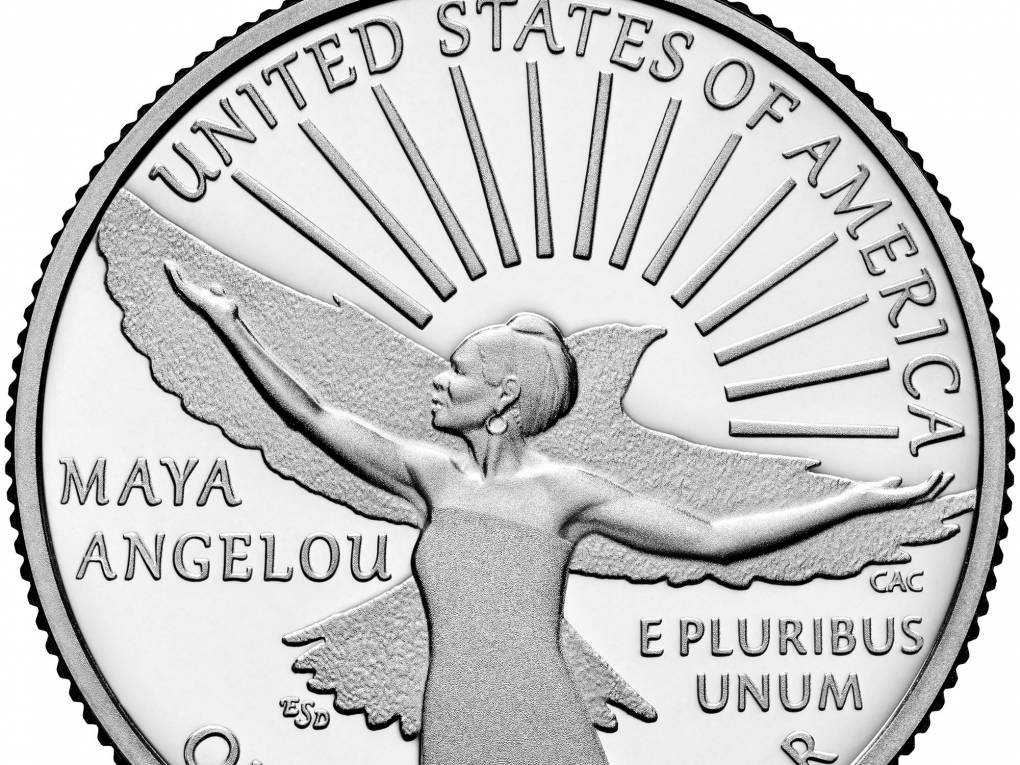
"caption": "The Maya Angelou quarter is the first in the American Women Quarters Program, which will feature other prominent women in U.S. history. The other quarters in the series will begin rolling out later this year and through 2025, according to the U.S. Mint.",
"description": null,
"title": "The Maya Angelou quarter is the first in the American Women Quarters Program, which will feature other prominent women in U.S. history. The other quarters in the series will begin rolling out later this year and through 2025, according to the U.S. Mint.",
"credit": "Burwell and Burwell Photography/United States Mint image",
"status": "inherit",
"altTag": null,
"isLoading": false,
"fetchFailed": false
},
"arts_13907948": {
"type": "attachments",
"id": "arts_13907948",
"meta": {
"index": "attachments_1716263798",
"site": "arts",
"id": "13907948",
"found": true
},
"parent": 13907947,
"imgSizes": {
"thumbnail": {
"file": "https://ww2.kqed.org/app/uploads/sites/2/2022/01/gettyimages-1235883023_wide-3fd0d340dcf49aac82b22128b768f2c49d7fab5a-160x90.jpg",
"width": 160,
"mimeType": "image/jpeg",
"height": 90
},
"post-thumbnail": {
"file": "https://ww2.kqed.org/app/uploads/sites/2/2022/01/gettyimages-1235883023_wide-3fd0d340dcf49aac82b22128b768f2c49d7fab5a-672x372.jpg",
"width": 672,
"mimeType": "image/jpeg",
"height": 372
},
"kqedFullSize": {
"file": "https://ww2.kqed.org/app/uploads/sites/2/2022/01/gettyimages-1235883023_wide-3fd0d340dcf49aac82b22128b768f2c49d7fab5a.jpg",
"width": 1024,
"height": 576
},
"large": {
"file": "https://ww2.kqed.org/app/uploads/sites/2/2022/01/gettyimages-1235883023_wide-3fd0d340dcf49aac82b22128b768f2c49d7fab5a-1020x574.jpg",
"width": 1020,
"mimeType": "image/jpeg",
"height": 574
},
"medium": {
"file": "https://ww2.kqed.org/app/uploads/sites/2/2022/01/gettyimages-1235883023_wide-3fd0d340dcf49aac82b22128b768f2c49d7fab5a-800x450.jpg",
"width": 800,
"mimeType": "image/jpeg",
"height": 450
},
"medium_large": {
"file": "https://ww2.kqed.org/app/uploads/sites/2/2022/01/gettyimages-1235883023_wide-3fd0d340dcf49aac82b22128b768f2c49d7fab5a-768x432.jpg",
"width": 768,
"mimeType": "image/jpeg",
"height": 432
}
},
"publishDate": 1641875737,
"modified": 1641876422,
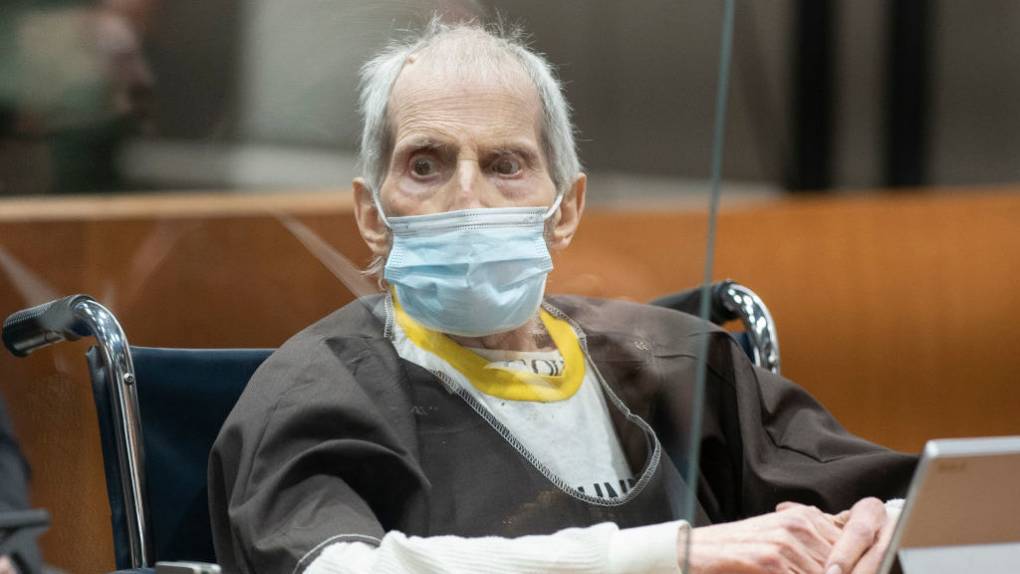
"caption": "Robert Durst being sentenced on Oct. 14, 2021, in LA. Durst was sentenced to life without the possibility of parole for the 2000 murder of Susan Berman.",
"description": null,
"title": "Robert Durst being sentenced on Oct. 14, 2021, in LA. Durst was sentenced to life without the possibility of parole for the 2000 murder of Susan Berman.",
"credit": "Myung J. Chun-Pool/Getty Images",
"status": "inherit",
"altTag": "An elderly man with grey hair that's thin on top, sits wearing a surgical mask in court, looking disheveled.",
"isLoading": false,
"fetchFailed": false
},
"arts_13907940": {
"type": "attachments",
"id": "arts_13907940",
"meta": {
"index": "attachments_1716263798",
"site": "arts",
"id": "13907940",
"found": true
},
"parent": 13907939,
"imgSizes": {
"twentyfourteen-full-width": {
"file": "https://ww2.kqed.org/app/uploads/sites/2/2022/01/euphoria-zendaya-1-be6e7efb358af718d4d9db530d664135b73cbde1-1038x576.jpe",
"width": 1038,
"mimeType": "image/jpeg",
"height": 576
},
"thumbnail": {
"file": "https://ww2.kqed.org/app/uploads/sites/2/2022/01/euphoria-zendaya-1-be6e7efb358af718d4d9db530d664135b73cbde1-160x120.jpe",
"width": 160,
"mimeType": "image/jpeg",
"height": 120
},
"post-thumbnail": {
"file": "https://ww2.kqed.org/app/uploads/sites/2/2022/01/euphoria-zendaya-1-be6e7efb358af718d4d9db530d664135b73cbde1-672x372.jpe",
"width": 672,
"mimeType": "image/jpeg",
"height": 372
},
"kqedFullSize": {
"file": "https://ww2.kqed.org/app/uploads/sites/2/2022/01/euphoria-zendaya-1-be6e7efb358af718d4d9db530d664135b73cbde1.jpe",
"width": 1332,
"height": 999
},
"large": {
"file": "https://ww2.kqed.org/app/uploads/sites/2/2022/01/euphoria-zendaya-1-be6e7efb358af718d4d9db530d664135b73cbde1-1020x765.jpe",
"width": 1020,
"mimeType": "image/jpeg",
"height": 765
},
"medium": {
"file": "https://ww2.kqed.org/app/uploads/sites/2/2022/01/euphoria-zendaya-1-be6e7efb358af718d4d9db530d664135b73cbde1-800x600.jpe",
"width": 800,
"mimeType": "image/jpeg",
"height": 600
},
"medium_large": {
"file": "https://ww2.kqed.org/app/uploads/sites/2/2022/01/euphoria-zendaya-1-be6e7efb358af718d4d9db530d664135b73cbde1-768x576.jpe",
"width": 768,
"mimeType": "image/jpeg",
"height": 576
}
},
"publishDate": 1641874036,
"modified": 1641874252,
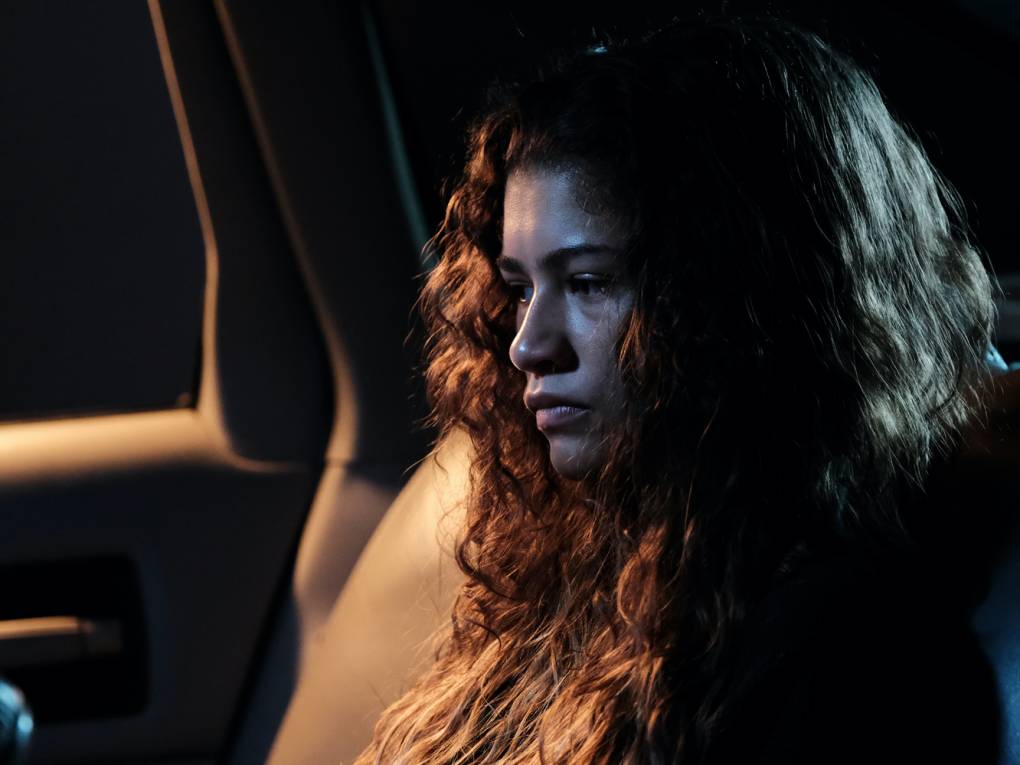
"caption": "Zendaya plays Rue Bennett, a teenager struggling with substance use disorder, in HBO's 'Euphoria.'",
"description": null,
"title": "Zendaya plays Rue Bennett, a teenager struggling with substance use disorder, in HBO's 'Euphoria.'",
"credit": "Eddy Chen/HBO",
"status": "inherit",
"altTag": "A young woman sits in the back of a car, looking stunned and numb. It is dark outside.",
"isLoading": false,
"fetchFailed": false
},
"arts_13907909": {
"type": "attachments",
"id": "arts_13907909",
"meta": {
"index": "attachments_1716263798",
"site": "arts",
"id": "13907909",
"found": true
},
"parent": 13907908,
"imgSizes": {
"twentyfourteen-full-width": {
"file": "https://ww2.kqed.org/app/uploads/sites/2/2022/01/gettyimages-1315271000-1ff923566aa0cbbfb6cd633a601012676c614399-1038x576.jpg",
"width": 1038,
"mimeType": "image/jpeg",
"height": 576
},
"thumbnail": {
"file": "https://ww2.kqed.org/app/uploads/sites/2/2022/01/gettyimages-1315271000-1ff923566aa0cbbfb6cd633a601012676c614399-160x120.jpg",
"width": 160,
"mimeType": "image/jpeg",
"height": 120
},
"post-thumbnail": {
"file": "https://ww2.kqed.org/app/uploads/sites/2/2022/01/gettyimages-1315271000-1ff923566aa0cbbfb6cd633a601012676c614399-672x372.jpg",
"width": 672,
"mimeType": "image/jpeg",
"height": 372
},
"kqedFullSize": {
"file": "https://ww2.kqed.org/app/uploads/sites/2/2022/01/gettyimages-1315271000-1ff923566aa0cbbfb6cd633a601012676c614399-scaled-e1641852276985.jpg",
"width": 1920,
"height": 1440
},
"2048x2048": {
"file": "https://ww2.kqed.org/app/uploads/sites/2/2022/01/gettyimages-1315271000-1ff923566aa0cbbfb6cd633a601012676c614399-2048x1536.jpg",
"width": 2048,
"mimeType": "image/jpeg",
"height": 1536
},
"large": {
"file": "https://ww2.kqed.org/app/uploads/sites/2/2022/01/gettyimages-1315271000-1ff923566aa0cbbfb6cd633a601012676c614399-1020x765.jpg",
"width": 1020,
"mimeType": "image/jpeg",
"height": 765
},
"1536x1536": {
"file": "https://ww2.kqed.org/app/uploads/sites/2/2022/01/gettyimages-1315271000-1ff923566aa0cbbfb6cd633a601012676c614399-1536x1152.jpg",
"width": 1536,
"mimeType": "image/jpeg",
"height": 1152
},
"full-width": {
"file": "https://ww2.kqed.org/app/uploads/sites/2/2022/01/gettyimages-1315271000-1ff923566aa0cbbfb6cd633a601012676c614399-1920x1440.jpg",
"width": 1920,
"mimeType": "image/jpeg",
"height": 1440
},
"medium": {
"file": "https://ww2.kqed.org/app/uploads/sites/2/2022/01/gettyimages-1315271000-1ff923566aa0cbbfb6cd633a601012676c614399-800x600.jpg",
"width": 800,
"mimeType": "image/jpeg",
"height": 600
},
"medium_large": {
"file": "https://ww2.kqed.org/app/uploads/sites/2/2022/01/gettyimages-1315271000-1ff923566aa0cbbfb6cd633a601012676c614399-768x576.jpg",
"width": 768,
"mimeType": "image/jpeg",
"height": 576
}
},
"publishDate": 1641851804,
"modified": 1641852465,
"caption": "Michaela Jaé Rodriguez attends the FX 'Pose' Season 3 premiere in New York, April 2021.",
"description": null,
"title": "Michaela Jaé Rodriguez attends the FX 'Pose' Season 3 premiere in New York, April 2021.",
"credit": "Jamie McCarthy/Getty Images",
"status": "inherit",
"altTag": "Rodriguez strikes a pose on the red carpet, wearing a peach colored corset and long gloves. Her long dark hair falls in waves over her shoulders.",
"isLoading": false,
"fetchFailed": false
},
"arts_13907777": {
"type": "attachments",
"id": "arts_13907777",
"meta": {
"index": "attachments_1716263798",
"site": "arts",
"id": "13907777",
"found": true
},
"parent": 13907776,
"imgSizes": {
"twentyfourteen-full-width": {
"file": "https://ww2.kqed.org/app/uploads/sites/2/2022/01/gettyimages-1237525461-05af93f58bcfc14458e4579a1a181423cc83e5b2-1038x576.jpg",
"width": 1038,
"mimeType": "image/jpeg",
"height": 576
},
"thumbnail": {
"file": "https://ww2.kqed.org/app/uploads/sites/2/2022/01/gettyimages-1237525461-05af93f58bcfc14458e4579a1a181423cc83e5b2-160x120.jpg",
"width": 160,
"mimeType": "image/jpeg",
"height": 120
},
"post-thumbnail": {
"file": "https://ww2.kqed.org/app/uploads/sites/2/2022/01/gettyimages-1237525461-05af93f58bcfc14458e4579a1a181423cc83e5b2-672x372.jpg",
"width": 672,
"mimeType": "image/jpeg",
"height": 372
},
"kqedFullSize": {
"file": "https://ww2.kqed.org/app/uploads/sites/2/2022/01/gettyimages-1237525461-05af93f58bcfc14458e4579a1a181423cc83e5b2-scaled-e1641496338205.jpg",
"width": 1920,
"height": 1440
},
"2048x2048": {
"file": "https://ww2.kqed.org/app/uploads/sites/2/2022/01/gettyimages-1237525461-05af93f58bcfc14458e4579a1a181423cc83e5b2-2048x1536.jpg",
"width": 2048,
"mimeType": "image/jpeg",
"height": 1536
},
"large": {
"file": "https://ww2.kqed.org/app/uploads/sites/2/2022/01/gettyimages-1237525461-05af93f58bcfc14458e4579a1a181423cc83e5b2-1020x765.jpg",
"width": 1020,
"mimeType": "image/jpeg",
"height": 765
},
"1536x1536": {
"file": "https://ww2.kqed.org/app/uploads/sites/2/2022/01/gettyimages-1237525461-05af93f58bcfc14458e4579a1a181423cc83e5b2-1536x1152.jpg",
"width": 1536,
"mimeType": "image/jpeg",
"height": 1152
},
"full-width": {
"file": "https://ww2.kqed.org/app/uploads/sites/2/2022/01/gettyimages-1237525461-05af93f58bcfc14458e4579a1a181423cc83e5b2-1920x1440.jpg",
"width": 1920,
"mimeType": "image/jpeg",
"height": 1440
},
"medium": {
"file": "https://ww2.kqed.org/app/uploads/sites/2/2022/01/gettyimages-1237525461-05af93f58bcfc14458e4579a1a181423cc83e5b2-800x600.jpg",
"width": 800,
"mimeType": "image/jpeg",
"height": 600
},
"medium_large": {
"file": "https://ww2.kqed.org/app/uploads/sites/2/2022/01/gettyimages-1237525461-05af93f58bcfc14458e4579a1a181423cc83e5b2-768x576.jpg",
"width": 768,
"mimeType": "image/jpeg",
"height": 576
}
},
"publishDate": 1641494686,
"modified": 1641496464,
"caption": "Elizabeth Holmes and partner Billy Evans walk outside the federal court in San Jose, California on January 3, 2022. She was found guilty of four counts of tricking investors into pouring money into what she claimed was a revolutionary testing system.",
"description": null,
"title": "Elizabeth Holmes and partner Billy Evans walk outside the federal court in San Jose, California on January 3, 2022. She was found guilty of four counts of tricking investors into pouring money into what she claimed was a revolutionary testing system.",
"credit": "NICK OTTO/AFP via Getty Images",
"status": "inherit",
"altTag": null,
"isLoading": false,
"fetchFailed": false
},
"arts_13907754": {
"type": "attachments",
"id": "arts_13907754",
"meta": {
"index": "attachments_1716263798",
"site": "arts",
"id": "13907754",
"found": true
},
"parent": 13907753,
"imgSizes": {
"twentyfourteen-full-width": {
"file": "https://ww2.kqed.org/app/uploads/sites/2/2022/01/2022-01-03-b3f3c5bd95371cdb007b61063214233acba87b2c-1038x576.jpg",
"width": 1038,
"mimeType": "image/jpeg",
"height": 576
},
"thumbnail": {
"file": "https://ww2.kqed.org/app/uploads/sites/2/2022/01/2022-01-03-b3f3c5bd95371cdb007b61063214233acba87b2c-160x120.jpg",
"width": 160,
"mimeType": "image/jpeg",
"height": 120
},
"post-thumbnail": {
"file": "https://ww2.kqed.org/app/uploads/sites/2/2022/01/2022-01-03-b3f3c5bd95371cdb007b61063214233acba87b2c-672x372.jpg",
"width": 672,
"mimeType": "image/jpeg",
"height": 372
},
"kqedFullSize": {
"file": "https://ww2.kqed.org/app/uploads/sites/2/2022/01/2022-01-03-b3f3c5bd95371cdb007b61063214233acba87b2c-e1641410015875.jpg",
"width": 1920,
"height": 1440
},
"2048x2048": {
"file": "https://ww2.kqed.org/app/uploads/sites/2/2022/01/2022-01-03-b3f3c5bd95371cdb007b61063214233acba87b2c-2048x1536.jpg",
"width": 2048,
"mimeType": "image/jpeg",
"height": 1536
},
"large": {
"file": "https://ww2.kqed.org/app/uploads/sites/2/2022/01/2022-01-03-b3f3c5bd95371cdb007b61063214233acba87b2c-1020x765.jpg",
"width": 1020,
"mimeType": "image/jpeg",
"height": 765
},
"1536x1536": {
"file": "https://ww2.kqed.org/app/uploads/sites/2/2022/01/2022-01-03-b3f3c5bd95371cdb007b61063214233acba87b2c-1536x1152.jpg",
"width": 1536,
"mimeType": "image/jpeg",
"height": 1152
},
"full-width": {
"file": "https://ww2.kqed.org/app/uploads/sites/2/2022/01/2022-01-03-b3f3c5bd95371cdb007b61063214233acba87b2c-1920x1440.jpg",
"width": 1920,
"mimeType": "image/jpeg",
"height": 1440
},
"medium": {
"file": "https://ww2.kqed.org/app/uploads/sites/2/2022/01/2022-01-03-b3f3c5bd95371cdb007b61063214233acba87b2c-800x600.jpg",
"width": 800,
"mimeType": "image/jpeg",
"height": 600
},
"medium_large": {
"file": "https://ww2.kqed.org/app/uploads/sites/2/2022/01/2022-01-03-b3f3c5bd95371cdb007b61063214233acba87b2c-768x576.jpg",
"width": 768,
"mimeType": "image/jpeg",
"height": 576
}
},
"publishDate": 1641408995,
"modified": 1641410063,
"caption": "Temura Morrison plays the title bounty hunter in 'The Book of Boba Fett.'",
"description": null,
"title": "Temura Morrison plays the title bounty hunter in 'The Book of Boba Fett.'",
"credit": null,
"status": "inherit",
"altTag": "A close up of Boba Fett wearing his iconic green and red helmet.",
"isLoading": false,
"fetchFailed": false
},
"arts_13907738": {
"type": "attachments",
"id": "arts_13907738",
"meta": {
"index": "attachments_1716263798",
"site": "arts",
"id": "13907738",
"found": true
},
"parent": 13907737,
"imgSizes": {
"twentyfourteen-full-width": {
"file": "https://ww2.kqed.org/app/uploads/sites/2/2022/01/ap_862432864149-4d5ff9168210d99b12e590df1e831eafe0ab626f-1038x576.jpg",
"width": 1038,
"mimeType": "image/jpeg",
"height": 576
},
"thumbnail": {
"file": "https://ww2.kqed.org/app/uploads/sites/2/2022/01/ap_862432864149-4d5ff9168210d99b12e590df1e831eafe0ab626f-160x120.jpg",
"width": 160,
"mimeType": "image/jpeg",
"height": 120
},
"post-thumbnail": {
"file": "https://ww2.kqed.org/app/uploads/sites/2/2022/01/ap_862432864149-4d5ff9168210d99b12e590df1e831eafe0ab626f-672x372.jpg",
"width": 672,
"mimeType": "image/jpeg",
"height": 372
},
"kqedFullSize": {
"file": "https://ww2.kqed.org/app/uploads/sites/2/2022/01/ap_862432864149-4d5ff9168210d99b12e590df1e831eafe0ab626f-scaled-e1641407616460.jpg",
"width": 1920,
"height": 1440
},
"2048x2048": {
"file": "https://ww2.kqed.org/app/uploads/sites/2/2022/01/ap_862432864149-4d5ff9168210d99b12e590df1e831eafe0ab626f-2048x1536.jpg",
"width": 2048,
"mimeType": "image/jpeg",
"height": 1536
},
"large": {
"file": "https://ww2.kqed.org/app/uploads/sites/2/2022/01/ap_862432864149-4d5ff9168210d99b12e590df1e831eafe0ab626f-1020x765.jpg",
"width": 1020,
"mimeType": "image/jpeg",
"height": 765
},
"1536x1536": {
"file": "https://ww2.kqed.org/app/uploads/sites/2/2022/01/ap_862432864149-4d5ff9168210d99b12e590df1e831eafe0ab626f-1536x1152.jpg",
"width": 1536,
"mimeType": "image/jpeg",
"height": 1152
},
"full-width": {
"file": "https://ww2.kqed.org/app/uploads/sites/2/2022/01/ap_862432864149-4d5ff9168210d99b12e590df1e831eafe0ab626f-1920x1440.jpg",
"width": 1920,
"mimeType": "image/jpeg",
"height": 1440
},
"medium": {
"file": "https://ww2.kqed.org/app/uploads/sites/2/2022/01/ap_862432864149-4d5ff9168210d99b12e590df1e831eafe0ab626f-800x600.jpg",
"width": 800,
"mimeType": "image/jpeg",
"height": 600
},
"medium_large": {
"file": "https://ww2.kqed.org/app/uploads/sites/2/2022/01/ap_862432864149-4d5ff9168210d99b12e590df1e831eafe0ab626f-768x576.jpg",
"width": 768,
"mimeType": "image/jpeg",
"height": 576
}
},
"publishDate": 1641406677,
"modified": 1641407763,
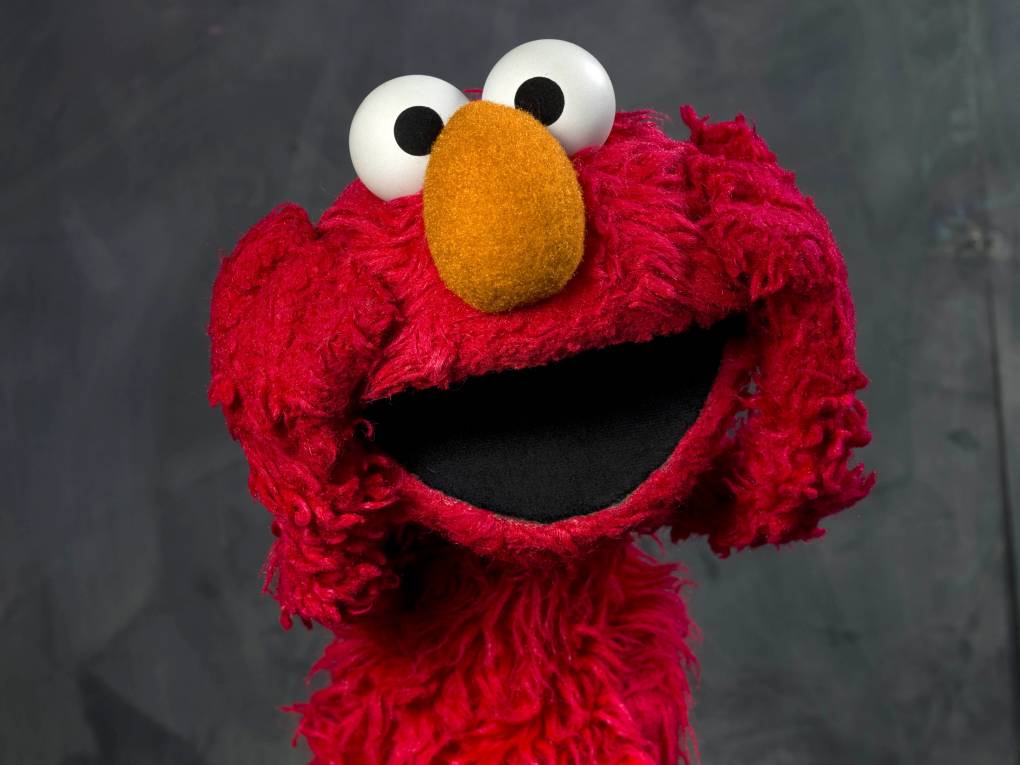
"caption": "Elmo from 'Sesame Street' directly after Rocco landed on his last damn nerve. Probably.",
"description": null,
"title": "Elmo from 'Sesame Street' directly after Rocco landed on his last damn nerve. Probably.",
"credit": "Victoria Will/AP",
"status": "inherit",
"altTag": "Elmo, the fuzzy red 'Sesame Street' puppet, poses with his mouth open and his hands holding either side of his face.",
"isLoading": false,
"fetchFailed": false
},
"arts_13907683": {
"type": "attachments",
"id": "arts_13907683",
"meta": {
"index": "attachments_1716263798",
"site": "arts",
"id": "13907683",
"found": true
},
"parent": 13907681,
"imgSizes": {
"twentyfourteen-full-width": {
"file": "https://ww2.kqed.org/app/uploads/sites/2/2022/01/gettyimages-74413529-35cfcf03d2a4d7d50fec1e31a79f13287b1d5b94-1038x576.jpg",
"width": 1038,
"mimeType": "image/jpeg",
"height": 576
},
"thumbnail": {
"file": "https://ww2.kqed.org/app/uploads/sites/2/2022/01/gettyimages-74413529-35cfcf03d2a4d7d50fec1e31a79f13287b1d5b94-160x120.jpg",
"width": 160,
"mimeType": "image/jpeg",
"height": 120
},
"post-thumbnail": {
"file": "https://ww2.kqed.org/app/uploads/sites/2/2022/01/gettyimages-74413529-35cfcf03d2a4d7d50fec1e31a79f13287b1d5b94-672x372.jpg",
"width": 672,
"mimeType": "image/jpeg",
"height": 372
},
"kqedFullSize": {
"file": "https://ww2.kqed.org/app/uploads/sites/2/2022/01/gettyimages-74413529-35cfcf03d2a4d7d50fec1e31a79f13287b1d5b94-scaled-e1641327749728.jpg",
"width": 1920,
"height": 1440
},
"2048x2048": {
"file": "https://ww2.kqed.org/app/uploads/sites/2/2022/01/gettyimages-74413529-35cfcf03d2a4d7d50fec1e31a79f13287b1d5b94-2048x1536.jpg",
"width": 2048,
"mimeType": "image/jpeg",
"height": 1536
},
"large": {
"file": "https://ww2.kqed.org/app/uploads/sites/2/2022/01/gettyimages-74413529-35cfcf03d2a4d7d50fec1e31a79f13287b1d5b94-1020x765.jpg",
"width": 1020,
"mimeType": "image/jpeg",
"height": 765
},
"1536x1536": {
"file": "https://ww2.kqed.org/app/uploads/sites/2/2022/01/gettyimages-74413529-35cfcf03d2a4d7d50fec1e31a79f13287b1d5b94-1536x1152.jpg",
"width": 1536,
"mimeType": "image/jpeg",
"height": 1152
},
"full-width": {
"file": "https://ww2.kqed.org/app/uploads/sites/2/2022/01/gettyimages-74413529-35cfcf03d2a4d7d50fec1e31a79f13287b1d5b94-1920x1440.jpg",
"width": 1920,
"mimeType": "image/jpeg",
"height": 1440
},
"medium": {
"file": "https://ww2.kqed.org/app/uploads/sites/2/2022/01/gettyimages-74413529-35cfcf03d2a4d7d50fec1e31a79f13287b1d5b94-800x600.jpg",
"width": 800,
"mimeType": "image/jpeg",
"height": 600
},
"medium_large": {
"file": "https://ww2.kqed.org/app/uploads/sites/2/2022/01/gettyimages-74413529-35cfcf03d2a4d7d50fec1e31a79f13287b1d5b94-768x576.jpg",
"width": 768,
"mimeType": "image/jpeg",
"height": 576
}
},
"publishDate": 1641327248,
"modified": 1641327784,
"caption": "Musician David Bowie speaks onstage while accepting the Webby Lifetime Achievement award at the 11th Annual Webby Awards in 2007.",
"description": null,
"title": "Musician David Bowie speaks onstage while accepting the Webby Lifetime Achievement award at the 11th Annual Webby Awards in 2007.",
"credit": "Bryan Bedder/Getty Images",
"status": "inherit",
"altTag": null,
"isLoading": false,
"fetchFailed": false
},
"arts_13907634": {
"type": "attachments",
"id": "arts_13907634",
"meta": {
"index": "attachments_1716263798",
"site": "arts",
"id": "13907634",
"found": true
},
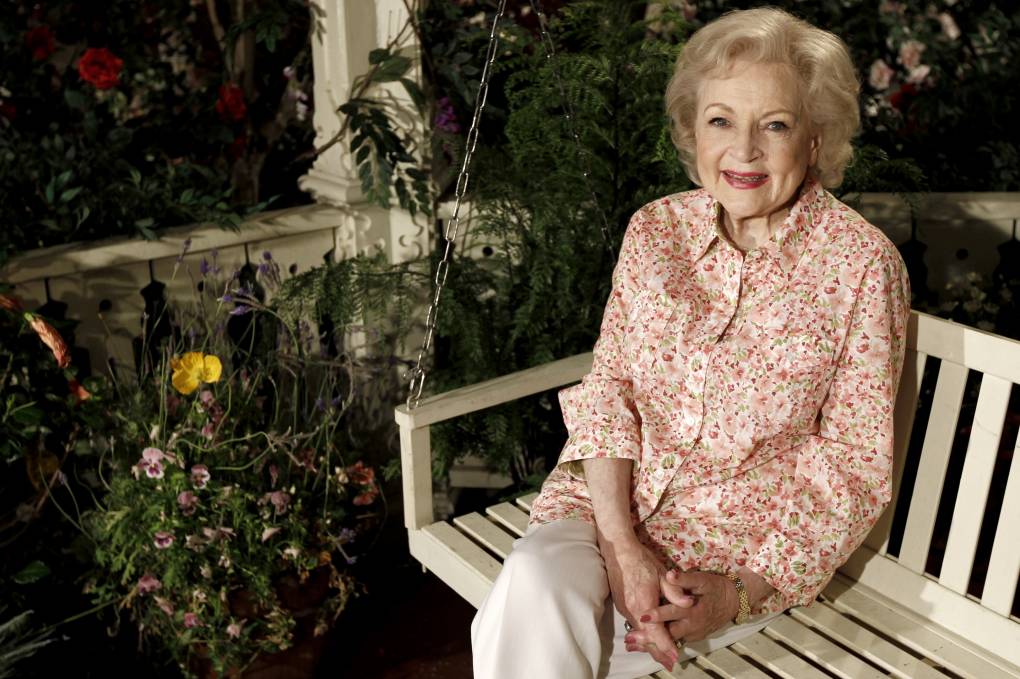
"title": "Betty White poses for a portrait on the set of the television show 'Hot in Cleveland' in 2010.",
"publishDate": 1640988190,
"status": "inherit",
"parent": 13907623,
"modified": 1731954427,
"caption": "Betty White poses for a portrait on the set of the television show 'Hot in Cleveland' in 2010.",
"credit": null,
"altTag": "Betty White smiles, sitting on a white porch swing next to garden flowers.",
"description": null,
"imgSizes": {
"medium": {
"file": "https://cdn.kqed.org/wp-content/uploads/sites/2/2021/12/ap100609084171_slide-4820b58021cccc421edce27c3c0a4ec9ca569631-1-800x533.jpg",
"width": 800,
"height": 533,
"mimeType": "image/jpeg"
},
"large": {
"file": "https://cdn.kqed.org/wp-content/uploads/sites/2/2021/12/ap100609084171_slide-4820b58021cccc421edce27c3c0a4ec9ca569631-1-1020x679.jpg",
"width": 1020,
"height": 679,
"mimeType": "image/jpeg"
},
"thumbnail": {
"file": "https://cdn.kqed.org/wp-content/uploads/sites/2/2021/12/ap100609084171_slide-4820b58021cccc421edce27c3c0a4ec9ca569631-1-160x107.jpg",
"width": 160,
"height": 107,
"mimeType": "image/jpeg"
},
"medium_large": {
"file": "https://cdn.kqed.org/wp-content/uploads/sites/2/2021/12/ap100609084171_slide-4820b58021cccc421edce27c3c0a4ec9ca569631-1-768x511.jpg",
"width": 768,
"height": 511,
"mimeType": "image/jpeg"
},
"1536x1536": {
"file": "https://cdn.kqed.org/wp-content/uploads/sites/2/2021/12/ap100609084171_slide-4820b58021cccc421edce27c3c0a4ec9ca569631-1-1536x1023.jpg",
"width": 1536,
"height": 1023,
"mimeType": "image/jpeg"
},
"2048x2048": {
"file": "https://cdn.kqed.org/wp-content/uploads/sites/2/2021/12/ap100609084171_slide-4820b58021cccc421edce27c3c0a4ec9ca569631-1-2048x1364.jpg",
"width": 2048,
"height": 1364,
"mimeType": "image/jpeg"
},
"post-thumbnail": {
"file": "https://cdn.kqed.org/wp-content/uploads/sites/2/2021/12/ap100609084171_slide-4820b58021cccc421edce27c3c0a4ec9ca569631-1-672x372.jpg",
"width": 672,
"height": 372,
"mimeType": "image/jpeg"
},
"twentyfourteen-full-width": {
"file": "https://cdn.kqed.org/wp-content/uploads/sites/2/2021/12/ap100609084171_slide-4820b58021cccc421edce27c3c0a4ec9ca569631-1-1038x576.jpg",
"width": 1038,
"height": 576,
"mimeType": "image/jpeg"
},
"full-width": {
"file": "https://cdn.kqed.org/wp-content/uploads/sites/2/2021/12/ap100609084171_slide-4820b58021cccc421edce27c3c0a4ec9ca569631-1-1920x1279.jpg",
"width": 1920,
"height": 1279,
"mimeType": "image/jpeg"
},
"kqedFullSize": {
"file": "https://cdn.kqed.org/wp-content/uploads/sites/2/2021/12/ap100609084171_slide-4820b58021cccc421edce27c3c0a4ec9ca569631-1-scaled-e1640988326353.jpg",
"width": 1920,
"height": 1279
}
},
"isLoading": false,
"fetchFailed": false
},
"arts_13907613": {
"type": "attachments",
"id": "arts_13907613",
"meta": {
"index": "attachments_1716263798",
"site": "arts",
"id": "13907613",
"found": true
},
"parent": 13907612,
"imgSizes": {
"twentyfourteen-full-width": {
"file": "https://ww2.kqed.org/app/uploads/sites/2/2021/12/50-wonderful_wide-1645b5fb809cd2765fd308bf7bbae30074110dff-1038x576.jpg",
"width": 1038,
"mimeType": "image/jpeg",
"height": 576
},
"thumbnail": {
"file": "https://ww2.kqed.org/app/uploads/sites/2/2021/12/50-wonderful_wide-1645b5fb809cd2765fd308bf7bbae30074110dff-160x90.jpg",
"width": 160,
"mimeType": "image/jpeg",
"height": 90
},
"post-thumbnail": {
"file": "https://ww2.kqed.org/app/uploads/sites/2/2021/12/50-wonderful_wide-1645b5fb809cd2765fd308bf7bbae30074110dff-672x372.jpg",
"width": 672,
"mimeType": "image/jpeg",
"height": 372
},
"kqedFullSize": {
"file": "https://ww2.kqed.org/app/uploads/sites/2/2021/12/50-wonderful_wide-1645b5fb809cd2765fd308bf7bbae30074110dff-scaled.jpg",
"width": 2560,
"height": 1440
},
"2048x2048": {
"file": "https://ww2.kqed.org/app/uploads/sites/2/2021/12/50-wonderful_wide-1645b5fb809cd2765fd308bf7bbae30074110dff-2048x1152.jpg",
"width": 2048,
"mimeType": "image/jpeg",
"height": 1152
},
"large": {
"file": "https://ww2.kqed.org/app/uploads/sites/2/2021/12/50-wonderful_wide-1645b5fb809cd2765fd308bf7bbae30074110dff-1020x574.jpg",
"width": 1020,
"mimeType": "image/jpeg",
"height": 574
},
"1536x1536": {
"file": "https://ww2.kqed.org/app/uploads/sites/2/2021/12/50-wonderful_wide-1645b5fb809cd2765fd308bf7bbae30074110dff-1536x864.jpg",
"width": 1536,
"mimeType": "image/jpeg",
"height": 864
},
"full-width": {
"file": "https://ww2.kqed.org/app/uploads/sites/2/2021/12/50-wonderful_wide-1645b5fb809cd2765fd308bf7bbae30074110dff-1920x1080.jpg",
"width": 1920,
"mimeType": "image/jpeg",
"height": 1080
},
"medium": {
"file": "https://ww2.kqed.org/app/uploads/sites/2/2021/12/50-wonderful_wide-1645b5fb809cd2765fd308bf7bbae30074110dff-800x450.jpg",
"width": 800,
"mimeType": "image/jpeg",
"height": 450
},
"medium_large": {
"file": "https://ww2.kqed.org/app/uploads/sites/2/2021/12/50-wonderful_wide-1645b5fb809cd2765fd308bf7bbae30074110dff-768x432.jpg",
"width": 768,
"mimeType": "image/jpeg",
"height": 432
}
},
"publishDate": 1640900462,
"modified": 1640903247,
"caption": "Stills from L-R: ‘CODA,’ ‘The Morning Show,’ ‘Summer of Soul,’ ‘Starstruck,’ ‘Plan B,’ the Olympics, ‘Ted Lasso,’ and ‘Spencer.’",
"description": null,
"title": "Stills from (L-R): CODA, The Morning Show, Summer of Soul, Starstruck, Plan B, the Olympics, Ted Lasso, and Spencer.",
"credit": "Apple TV+; Drew Angerer/Getty Images; Apple TV+; Searchlight Pictures; Mark Johnson/HBO Max; Brett Roedel/Hulu; Patrick Smith/Getty Images; Apple TV+; Pablo Larraín/Neon",
"status": "inherit",
"altTag": null,
"isLoading": false,
"fetchFailed": false
},
"arts_13907550": {
"type": "attachments",
"id": "arts_13907550",
"meta": {
"index": "attachments_1716263798",
"site": "arts",
"id": "13907550",
"found": true
},
"parent": 13907549,
"imgSizes": {
"twentyfourteen-full-width": {
"file": "https://ww2.kqed.org/app/uploads/sites/2/2021/12/ap051003010074_wide-4e4eaa739da214b5fb5ab3bea62f6d349019b461-1038x576.jpg",
"width": 1038,
"mimeType": "image/jpeg",
"height": 576
},
"thumbnail": {
"file": "https://ww2.kqed.org/app/uploads/sites/2/2021/12/ap051003010074_wide-4e4eaa739da214b5fb5ab3bea62f6d349019b461-160x90.jpg",
"width": 160,
"mimeType": "image/jpeg",
"height": 90
},
"post-thumbnail": {
"file": "https://ww2.kqed.org/app/uploads/sites/2/2021/12/ap051003010074_wide-4e4eaa739da214b5fb5ab3bea62f6d349019b461-672x372.jpg",
"width": 672,
"mimeType": "image/jpeg",
"height": 372
},
"kqedFullSize": {
"file": "https://ww2.kqed.org/app/uploads/sites/2/2021/12/ap051003010074_wide-4e4eaa739da214b5fb5ab3bea62f6d349019b461-scaled.jpg",
"width": 2560,
"height": 1440
},
"2048x2048": {
"file": "https://ww2.kqed.org/app/uploads/sites/2/2021/12/ap051003010074_wide-4e4eaa739da214b5fb5ab3bea62f6d349019b461-2048x1152.jpg",
"width": 2048,
"mimeType": "image/jpeg",
"height": 1152
},
"large": {
"file": "https://ww2.kqed.org/app/uploads/sites/2/2021/12/ap051003010074_wide-4e4eaa739da214b5fb5ab3bea62f6d349019b461-1020x574.jpg",
"width": 1020,
"mimeType": "image/jpeg",
"height": 574
},
"1536x1536": {
"file": "https://ww2.kqed.org/app/uploads/sites/2/2021/12/ap051003010074_wide-4e4eaa739da214b5fb5ab3bea62f6d349019b461-1536x864.jpg",
"width": 1536,
"mimeType": "image/jpeg",
"height": 864
},
"full-width": {
"file": "https://ww2.kqed.org/app/uploads/sites/2/2021/12/ap051003010074_wide-4e4eaa739da214b5fb5ab3bea62f6d349019b461-1920x1080.jpg",
"width": 1920,
"mimeType": "image/jpeg",
"height": 1080
},
"medium": {
"file": "https://ww2.kqed.org/app/uploads/sites/2/2021/12/ap051003010074_wide-4e4eaa739da214b5fb5ab3bea62f6d349019b461-800x450.jpg",
"width": 800,
"mimeType": "image/jpeg",
"height": 450
},
"medium_large": {
"file": "https://ww2.kqed.org/app/uploads/sites/2/2021/12/ap051003010074_wide-4e4eaa739da214b5fb5ab3bea62f6d349019b461-768x432.jpg",
"width": 768,
"mimeType": "image/jpeg",
"height": 432
}
},
"publishDate": 1640280636,
"modified": 1640281319,
"caption": "Author Joan Didion sits in front of a photo of herself holding her daughter, Quintana Roo Dunne, and another photo of her daughter's wedding. Didion wrote about her daughter’s death at age 39 in 'Blue Nights.'",
"description": null,
"title": "Author Joan Didion sits in front of a photo of herself holding her daughter, Quintana Roo Dunne, and another photo of her daughter's wedding. Didion wrote about her daughter's death at age 39 in Blue Nights.",
"credit": "Kathy Willens/AP",
"status": "inherit",
"altTag": "Older woman in white collared shirt",
"isLoading": false,
"fetchFailed": false
}
},
"audioPlayerReducer": {
"postId": "stream_live",
"isPaused": true,
"isPlaying": false,
"pfsActive": false,
"pledgeModalIsOpen": true,
"playerDrawerIsOpen": false,
"liveAudioPlayStartedAt": 0,
"liveAudioPlayContext": ""
},
"authorsReducer": {
"byline_arts_13908066": {
"type": "authors",
"id": "byline_arts_13908066",
"meta": {
"override": true
},
"slug": "byline_arts_13908066",
"name": "Marc Rivers",
"isLoading": false
},
"byline_arts_13907987": {
"type": "authors",
"id": "byline_arts_13907987",
"meta": {
"override": true
},
"slug": "byline_arts_13907987",
"name": "Jonathan Franklin",
"isLoading": false
},
"byline_arts_13907947": {
"type": "authors",
"id": "byline_arts_13907947",
"meta": {
"override": true
},
"slug": "byline_arts_13907947",
"name": "The Associated Press",
"isLoading": false
},
"byline_arts_13907939": {
"type": "authors",
"id": "byline_arts_13907939",
"meta": {
"override": true
},
"slug": "byline_arts_13907939",
"name": "Eric Deggans",
"isLoading": false
},
"byline_arts_13907908": {
"type": "authors",
"id": "byline_arts_13907908",
"meta": {
"override": true
},
"slug": "byline_arts_13907908",
"name": "Rachel Treisman",
"isLoading": false
},
"byline_arts_13907776": {
"type": "authors",
"id": "byline_arts_13907776",
"meta": {
"override": true
},
"slug": "byline_arts_13907776",
"name": "Linda Holmes",
"isLoading": false
},
"byline_arts_13907753": {
"type": "authors",
"id": "byline_arts_13907753",
"meta": {
"override": true
},
"slug": "byline_arts_13907753",
"name": "David Bianculli",
"isLoading": false
},
"byline_arts_13907737": {
"type": "authors",
"id": "byline_arts_13907737",
"meta": {
"override": true
},
"slug": "byline_arts_13907737",
"name": "Elizabeth Blair",
"isLoading": false
},
"byline_arts_13907681": {
"type": "authors",
"id": "byline_arts_13907681",
"meta": {
"override": true
},
"slug": "byline_arts_13907681",
"name": "Neda Ulaby",
"isLoading": false
},
"byline_arts_13907623": {
"type": "authors",
"id": "byline_arts_13907623",
"meta": {
"override": true
},
"slug": "byline_arts_13907623",
"name": "Kyle Norris",
"isLoading": false
},
"byline_arts_13907612": {
"type": "authors",
"id": "byline_arts_13907612",
"meta": {
"override": true
},
"slug": "byline_arts_13907612",
"name": "Linda Holmes",
"isLoading": false
},
"byline_arts_13907549": {
"type": "authors",
"id": "byline_arts_13907549",
"meta": {
"override": true
},
"slug": "byline_arts_13907549",
"name": "Susan Stamberg",
"isLoading": false
}
},
"pagesReducer": {
"arts_affiliate_npr": {
"type": "terms",
"id": "arts_137",
"meta": {
"index": "terms_1716263798",
"site": "arts",
"id": "137",
"score": 14.257713
},
"featImg": "https://ww2.kqed.org/app/uploads/sites/2/2014/04/logo-npr-lg1.png",
"name": "NPR",
"description": null,
"taxonomy": "affiliate",
"headData": {
"twImgId": null,
"twTitle": null,
"ogTitle": null,
"ogImgId": null,
"twDescription": null,
"description": null,
"title": "NPR Archives | KQED Arts",
"ogDescription": null
},
"ttid": 138,
"slug": "npr",
"isLoading": false,
"title": "NPR",
"pageMeta": {
"site": "arts",
"WpPageTemplate": "page-topic-editorial",
"currentPage": 66
},
"blocks": [
{
"blockName": "kqed/post-list",
"attrs": {
"layout": "cardArticle2",
"query": "posts/arts?affiliate=npr",
"seeMore": false,
"paginated": true,
"page": 66
}
},
{
"blockName": "kqed/ad"
}
]
}
},
"pfsSessionReducer": {},
"postsReducer": {
"stream_live": {
"type": "live",
"id": "stream_live",
"audioUrl": "https://streams.kqed.org/kqedradio",
"title": "Live Stream",
"excerpt": "Live Stream information currently unavailable.",
"link": "/radio",
"featImg": "",
"label": {
"name": "KQED Live",
"link": "/"
}
},
"stream_kqedNewscast": {
"type": "posts",
"id": "stream_kqedNewscast",
"audioUrl": "https://www.kqed.org/.stream/anon/radio/RDnews/newscast.mp3?_=1",
"title": "KQED Newscast",
"featImg": "",
"label": {
"name": "88.5 FM",
"link": "/"
}
},
"arts_13908066": {
"type": "posts",
"id": "arts_13908066",
"meta": {
"index": "posts_1716263798",
"site": "arts",
"id": "13908066",
"score": null,
"sort": [
1642015063000
]
},
"parent": 0,
"labelTerm": {
"site": "arts",
"term": 137
},
"blocks": [],
"publishDate": 1642015063,
"format": "standard",
"title": "Here's What's Behind the Wordle C-R-A-Z-E",
"headTitle": "Here’s What’s Behind the Wordle C-R-A-Z-E | KQED",
"content": "\u003cp>A simple word game is the newest social media and pop culture phenomenon: \u003ca href=\"https://www.powerlanguage.co.uk/wordle/\" target=\"_blank\" rel=\"noopener noreferrer\">Wordle\u003c/a>.\u003c/p>\n\u003cp>The task is to guess a five-letter word. You have six tries. After each guess, the tiles change colors to show which letters are not in the word (gray), which letters are in the word but in the wrong position (yellow) and which ones are correctly in the word and in the right position (green).\u003c/p>\n\u003cp>Some people can win in a few minutes. For some of us, it takes … longer.\u003c/p>\n\u003cp>https://twitter.com/bessbell/status/1481117887280529410\u003c/p>\n\u003cp>Once you finish, you can post on Twitter how many guesses it took without spoiling the challenge for others. It’s the same word every day for everyone, and you can play only once a day.\u003c/p>\n\u003cp>[ad fullwidth]\u003c/p>\n\u003cp>The free game was created by software engineer Josh Wardle of New York City, who made Wordle—a riff on his name—originally for his partner, Palak Shah, who is a fan of word games. Shah also helped with some of the development.\u003c/p>\n\u003cp>The \u003ca href=\"https://www.powerlanguage.co.uk/wordle/\" target=\"_blank\" rel=\"noopener noreferrer\">website\u003c/a> really started picking up steam in October, and as of Monday it has more than 2.7 million players, Wardle told NPR’s \u003cem>Morning Edition\u003c/em>. And Wardle did it without ads or gimmicks. You don’t have to sign up with your email or give personal information to play.\u003c/p>\n\u003cp>[aside postid='arts_13879872']“Making Wordle I specifically rejected a bunch of the things you’re supposed to do for a mobile game,” Wardle told NPR. He deliberately didn’t include push notifications, allow users to play endlessly or build in other tools commonly used today to pull users into playing apps for as long as possible.\u003c/p>\n\u003cp>Wardle said the rejection of those engagement tricks might have fueled the game’s popularity after all—”where the rejection of some of those things has actually attracted people to the game because it feels quite innocent and it just wants you to have fun with it.”\u003c/p>\n\u003cp>However, the rapid attention can be overwhelming.\u003c/p>\n\u003cp>“It going viral doesn’t feel great to be honest. I feel a sense of responsibility for the players,” he told \u003ca href=\"https://www.theguardian.com/games/2022/jan/11/wordle-creator-overwhelmed-by-global-success-of-hit-puzzle\" target=\"_blank\" rel=\"noopener noreferrer\">\u003cem>The Guardian\u003c/em>.\u003c/a> “I feel I really owe it to them to keep things running and make sure everything’s working correctly.”\u003c/p>\n\u003cp>But Wardle said he has especially enjoyed stories of how the game has helped people keep connected.\u003c/p>\n\u003cp>“They’ll have a family chat group where they share their Wordle results with one another,” Wardle told NPR. “And especially during COVID, it being a way for people to connect with friends and family that they couldn’t otherwise see, and it just provides this really easy way to touch base with others.”\u003c/p>\n\u003cp>https://twitter.com/traceyfanclub/status/1479935207562092545\u003c/p>\n\u003ch3>Strategy: vowels or consonants?\u003c/h3>\n\u003cp>Facebook fan groups have now cropped up, while numerous articles and \u003ca href=\"https://twitter.com/SpookyBiscuits/status/1479140761786531843?s=20\" target=\"_blank\" rel=\"noopener noreferrer\">players offer\u003c/a> their own strategy tips.\u003c/p>\n\u003cp>Using as many vowels as possible in the first guess is one tactic—”adieu” offers four of them. Another method is to try using as many common consonants as possible with a word like “snort.”\u003c/p>\n\u003cp>[aside postid='pop_10178']The game uses common five-letter words as its answers, Wardle told the \u003cem>Times\u003c/em>, and he took out the possibility of very obscure words no one would ever guess.\u003c/p>\n\u003cp>There’s also a “hard mode,” where any yellow or green letter has to be used in subsequent guesses.\u003c/p>\n\u003cp>If you guess the word within six tries, the game gives you the option of sharing your prowess on social media. The numbers in the tweet displayed here, as this reporter eventually discovered, mean it was game No. 203 and I guessed the correct answer in three of six attempts:\u003c/p>\n\u003cp>https://twitter.com/JamesDoubek/status/1479884609982803977\u003c/p>\n\u003cp>The simplicity, popularity and scarcity of the game—with only one chance to play a day—has offered \u003ca href=\"https://www.theverge.com/tldr/2022/1/11/22877996/wordle-spoofs-alternatives-letterle-sweardle-queerdle\" target=\"_blank\" rel=\"noopener noreferrer\">copycats plenty of opportunity\u003c/a> to develop their own versions, including with the ability to \u003ca href=\"https://www.wordleunlimited.com/\" target=\"_blank\" rel=\"noopener noreferrer\">play unlimited games\u003c/a>.\u003c/p>\n\u003cp>Of course, you can also take some time once you’re finished and try out the \u003ca href=\"https://www.npr.org/series/4473090/sunday-puzzle\" target=\"_blank\" rel=\"noopener noreferrer\">NPR puzzle instead\u003c/a>.\u003c/p>\n\u003chr>\n\u003cp>\u003c/p>\n\u003cp>\u003cem>NPR’s Nell Clark contributed to this report. \u003c/em>\u003c/p>\n\u003cdiv class=\"fullattribution\">\u003cem>Copyright 2022 NPR. To see more, \u003ca href=\"https://www.npr.org\" target=\"_blank\" rel=\"noopener noreferrer\">visit NPR\u003c/a>.\u003cimg decoding=\"async\" src=\"https://www.google-analytics.com/__utm.gif?utmac=UA-5828686-4&utmdt=Here%27s+what%27s+behind+the+Wordle+c-r-a-z-e&utme=8(APIKey)9(MDAxOTAwOTE4MDEyMTkxMDAzNjczZDljZA004)\">\u003c/em>\u003c/div>\n\n",
"stats": {
"hasVideo": false,
"hasChartOrMap": false,
"hasAudio": false,
"hasPolis": false,
"wordCount": 723,
"hasGoogleForm": false,
"hasGallery": false,
"hasHearkenModule": false,
"iframeSrcs": [],
"paragraphCount": 22
},
"modified": 1705007321,
"excerpt": "It's a simple game to guess a five-letter word. And people on social media are freaking out over it.",
"headData": {
"twImgId": "",
"twTitle": "",
"ogTitle": "",
"ogImgId": "",
"twDescription": "",
"description": "It's a simple game to guess a five-letter word. And people on social media are freaking out over it.",
"title": "Here's What's Behind the Wordle C-R-A-Z-E | KQED",
"ogDescription": "",
"schema": {
"@context": "https://schema.org",
"@type": "Article",
"headline": "Here's What's Behind the Wordle C-R-A-Z-E",
"datePublished": "2022-01-12T11:17:43-08:00",
"dateModified": "2024-01-11T13:08:41-08:00",
"image": "https://cdn.kqed.org/wp-content/uploads/2020/02/KQED-OG-Image@1x.png"
}
},
"guestAuthors": [],
"slug": "heres-whats-behind-the-wordle-c-r-a-z-e",
"status": "publish",
"nprApiLink": "http://api.npr.org/query?id=1071840091&apiKey=MDAxOTAwOTE4MDEyMTkxMDAzNjczZDljZA004",
"templateType": "standard",
"nprStoryDate": "Wed, 12 Jan 2022 07:42:44 -0500",
"excludeFromSiteSearch": "Include",
"nprLastModifiedDate": "Wed, 12 Jan 2022 12:40:37 -0500",
"featuredImageType": "standard",
"nprHtmlLink": "https://www.npr.org/2022/01/12/1071840091/wordle-word-game-tips?ft=nprml&f=1071840091",
"nprImageAgency": "NPR",
"nprStoryId": "1071840091",
"nprByline": "Marc Rivers",
"sticky": false,
"nprImageCredit": "James Doubek",
"showOnAuthorArchivePages": "No",
"nprRetrievedStory": "1",
"nprPubDate": "Wed, 12 Jan 2022 12:40:00 -0500",
"path": "/arts/13908066/heres-whats-behind-the-wordle-c-r-a-z-e",
"audioTrackLength": null,
"parsedContent": [
{
"type": "contentString",
"content": "\u003cdiv class=\"post-body\">\u003cp>\u003cp>A simple word game is the newest social media and pop culture phenomenon: \u003ca href=\"https://www.powerlanguage.co.uk/wordle/\" target=\"_blank\" rel=\"noopener noreferrer\">Wordle\u003c/a>.\u003c/p>\n\u003cp>The task is to guess a five-letter word. You have six tries. After each guess, the tiles change colors to show which letters are not in the word (gray), which letters are in the word but in the wrong position (yellow) and which ones are correctly in the word and in the right position (green).\u003c/p>\n\u003cp>Some people can win in a few minutes. For some of us, it takes … longer.\u003c/p>\u003c/p>\u003c/div>",
"attributes": {
"named": {},
"numeric": []
}
},
{
"type": "component",
"content": "",
"name": "singleTwitterStatus",
"attributes": {
"named": {
"id": "1481117887280529410"
},
"numeric": []
}
},
{
"type": "contentString",
"content": "\u003cdiv class=\"post-body\">\u003cp>\n\u003cp>Once you finish, you can post on Twitter how many guesses it took without spoiling the challenge for others. It’s the same word every day for everyone, and you can play only once a day.\u003c/p>\n\u003cp>\u003c/p>\u003c/div>",
"attributes": {
"named": {},
"numeric": []
}
},
{
"type": "component",
"content": "",
"name": "ad",
"attributes": {
"named": {
"label": "fullwidth"
},
"numeric": [
"fullwidth"
]
}
},
{
"type": "contentString",
"content": "\u003cdiv class=\"post-body\">\u003cp>\u003c/p>\n\u003cp>The free game was created by software engineer Josh Wardle of New York City, who made Wordle—a riff on his name—originally for his partner, Palak Shah, who is a fan of word games. Shah also helped with some of the development.\u003c/p>\n\u003cp>The \u003ca href=\"https://www.powerlanguage.co.uk/wordle/\" target=\"_blank\" rel=\"noopener noreferrer\">website\u003c/a> really started picking up steam in October, and as of Monday it has more than 2.7 million players, Wardle told NPR’s \u003cem>Morning Edition\u003c/em>. And Wardle did it without ads or gimmicks. You don’t have to sign up with your email or give personal information to play.\u003c/p>\n\u003cp>\u003c/p>\u003c/div>",
"attributes": {
"named": {},
"numeric": []
}
},
{
"type": "component",
"content": "",
"name": "aside",
"attributes": {
"named": {
"postid": "arts_13879872",
"label": ""
},
"numeric": []
}
},
{
"type": "contentString",
"content": "\u003cdiv class=\"post-body\">\u003cp>“Making Wordle I specifically rejected a bunch of the things you’re supposed to do for a mobile game,” Wardle told NPR. He deliberately didn’t include push notifications, allow users to play endlessly or build in other tools commonly used today to pull users into playing apps for as long as possible.\u003c/p>\n\u003cp>Wardle said the rejection of those engagement tricks might have fueled the game’s popularity after all—”where the rejection of some of those things has actually attracted people to the game because it feels quite innocent and it just wants you to have fun with it.”\u003c/p>\n\u003cp>However, the rapid attention can be overwhelming.\u003c/p>\n\u003cp>“It going viral doesn’t feel great to be honest. I feel a sense of responsibility for the players,” he told \u003ca href=\"https://www.theguardian.com/games/2022/jan/11/wordle-creator-overwhelmed-by-global-success-of-hit-puzzle\" target=\"_blank\" rel=\"noopener noreferrer\">\u003cem>The Guardian\u003c/em>.\u003c/a> “I feel I really owe it to them to keep things running and make sure everything’s working correctly.”\u003c/p>\n\u003cp>But Wardle said he has especially enjoyed stories of how the game has helped people keep connected.\u003c/p>\n\u003cp>“They’ll have a family chat group where they share their Wordle results with one another,” Wardle told NPR. “And especially during COVID, it being a way for people to connect with friends and family that they couldn’t otherwise see, and it just provides this really easy way to touch base with others.”\u003c/p>\u003c/p>\u003c/div>",
"attributes": {
"named": {},
"numeric": []
}
},
{
"type": "component",
"content": "",
"name": "singleTwitterStatus",
"attributes": {
"named": {
"id": "1479935207562092545"
},
"numeric": []
}
},
{
"type": "contentString",
"content": "\u003cdiv class=\"post-body\">\u003cp>\n\u003ch3>Strategy: vowels or consonants?\u003c/h3>\n\u003cp>Facebook fan groups have now cropped up, while numerous articles and \u003ca href=\"https://twitter.com/SpookyBiscuits/status/1479140761786531843?s=20\" target=\"_blank\" rel=\"noopener noreferrer\">players offer\u003c/a> their own strategy tips.\u003c/p>\n\u003cp>Using as many vowels as possible in the first guess is one tactic—”adieu” offers four of them. Another method is to try using as many common consonants as possible with a word like “snort.”\u003c/p>\n\u003cp>\u003c/p>\u003c/div>",
"attributes": {
"named": {},
"numeric": []
}
},
{
"type": "component",
"content": "",
"name": "aside",
"attributes": {
"named": {
"postid": "pop_10178",
"label": ""
},
"numeric": []
}
},
{
"type": "contentString",
"content": "\u003cdiv class=\"post-body\">\u003cp>The game uses common five-letter words as its answers, Wardle told the \u003cem>Times\u003c/em>, and he took out the possibility of very obscure words no one would ever guess.\u003c/p>\n\u003cp>There’s also a “hard mode,” where any yellow or green letter has to be used in subsequent guesses.\u003c/p>\n\u003cp>If you guess the word within six tries, the game gives you the option of sharing your prowess on social media. The numbers in the tweet displayed here, as this reporter eventually discovered, mean it was game No. 203 and I guessed the correct answer in three of six attempts:\u003c/p>\u003c/p>\u003c/div>",
"attributes": {
"named": {},
"numeric": []
}
},
{
"type": "component",
"content": "",
"name": "singleTwitterStatus",
"attributes": {
"named": {
"id": "1479884609982803977"
},
"numeric": []
}
},
{
"type": "contentString",
"content": "\u003cdiv class=\"post-body\">\u003cp>\n\u003cp>The simplicity, popularity and scarcity of the game—with only one chance to play a day—has offered \u003ca href=\"https://www.theverge.com/tldr/2022/1/11/22877996/wordle-spoofs-alternatives-letterle-sweardle-queerdle\" target=\"_blank\" rel=\"noopener noreferrer\">copycats plenty of opportunity\u003c/a> to develop their own versions, including with the ability to \u003ca href=\"https://www.wordleunlimited.com/\" target=\"_blank\" rel=\"noopener noreferrer\">play unlimited games\u003c/a>.\u003c/p>\n\u003cp>Of course, you can also take some time once you’re finished and try out the \u003ca href=\"https://www.npr.org/series/4473090/sunday-puzzle\" target=\"_blank\" rel=\"noopener noreferrer\">NPR puzzle instead\u003c/a>.\u003c/p>\n\u003chr>\n\u003cp>\u003c/p>\n\u003cp>\u003cem>NPR’s Nell Clark contributed to this report. \u003c/em>\u003c/p>\n\u003cdiv class=\"fullattribution\">\u003cem>Copyright 2022 NPR. To see more, \u003ca href=\"https://www.npr.org\" target=\"_blank\" rel=\"noopener noreferrer\">visit NPR\u003c/a>.\u003cimg decoding=\"async\" src=\"https://www.google-analytics.com/__utm.gif?utmac=UA-5828686-4&utmdt=Here%27s+what%27s+behind+the+Wordle+c-r-a-z-e&utme=8(APIKey)9(MDAxOTAwOTE4MDEyMTkxMDAzNjczZDljZA004)\">\u003c/em>\u003c/div>\n\n\u003c/div>\u003c/p>",
"attributes": {
"named": {},
"numeric": []
}
}
],
"link": "/arts/13908066/heres-whats-behind-the-wordle-c-r-a-z-e",
"authors": [
"byline_arts_13908066"
],
"categories": [
"arts_1",
"arts_75"
],
"tags": [
"arts_11005",
"arts_1553"
],
"affiliates": [
"arts_137"
],
"featImg": "arts_13908067",
"label": "arts_137"
},
"arts_13907987": {
"type": "posts",
"id": "arts_13907987",
"meta": {
"index": "posts_1716263798",
"site": "arts",
"id": "13907987",
"score": null,
"sort": [
1641934758000
]
},
"guestAuthors": [],
"slug": "maya-angelou-is-the-first-black-woman-to-be-featured-on-a-u-s-quarter",
"title": "Maya Angelou is the First Black Woman to be Featured on a U.S. Quarter",
"publishDate": 1641934758,
"format": "standard",
"headTitle": "Maya Angelou is the First Black Woman to be Featured on a U.S. Quarter | KQED",
"labelTerm": {
"term": 137,
"site": "arts"
},
"content": "\u003cp>A new quarter featuring legendary poet and civil rights activist \u003ca href=\"https://www.npr.org/sections/thetwo-way/2014/06/09/320290733/book-news-maya-angelou-remembered-as-having-the-voice-of-god\" target=\"_blank\" rel=\"noopener noreferrer\">Maya Angelou\u003c/a> and other trailblazing American women officially started shipping to banks on Monday, the U.S. Mint \u003ca href=\"https://www.usmint.gov/news/press-releases/united-states-mint-begins-shipping-first-american-women-quarters-program-coins\" target=\"_blank\" rel=\"noopener noreferrer\">announced. \u003c/a>Angelou is the first Black woman to appear on the quarter.\u003c/p>\n\u003cp>The Maya Angelou design is the first quarter in the “American Women Quarters Program,” a four-year program that will include coins featuring prominent women in U.S. history.\u003c/p>\n\u003cp>The other honorees include astronaut Sally Ride; actress Anna May Wong; suffragist and politician Nina Otero-Warren; and Wilma Mankiller, the first female principal chief of the Cherokee Nation. The coins featuring the other honorees will be shipped out this year through 2025, according to the Mint.\u003c/p>\n\u003cp>Angelou, who died in 2014 at the age of 86, held many distinctions. She received a Presidential Medal of Freedom from former President Barack Obama and won the Literarian Award (an honorary National Book Award). In 1992, she became the first Black woman (and second-ever poet) to write and present a poem at a presidential inauguration, in 1992. She also held more than 30 honorary degrees and published more than 30 bestselling works.\u003c/p>\n\u003cp>[aside postID=news_10431582,arts_13875319]Angelou’s connections to the Bay Area are vast, having moved to the city at the age of 12. When she was 16, Angelou became San Francisco’s first Black female streetcar conductor. In her mid-20s, she performed calypso and blues at the Purple Onion in North Beach. Later, in 1968, she wrote and produced \u003ca href=\"https://www.kqed.org/news/10431582/from-the-archive-maya-angelou-hosts-1968-series-blacks-blues-black\" target=\"_blank\" rel=\"noopener noreferrer\">a 10-part series for KQED titled “Blacks, Blues, Black!”\u003c/a> In 1973, she moved briefly to Sonoma County.\u003c/p>\n\u003cp>[ad fullwidth]\u003c/p>\n\u003cp>“Each 2022 quarter is designed to reflect the breadth and depth of accomplishments being celebrated throughout this historic coin program. Maya Angelou, featured on the reverse of this first coin in the series, used words to inspire and uplift,” Mint Deputy Director Ventris C. Gibson said in a \u003ca href=\"https://www.usmint.gov/news/press-releases/united-states-mint-begins-shipping-first-american-women-quarters-program-coins\" target=\"_blank\" rel=\"noopener noreferrer\">statement\u003c/a>.\u003c/p>\n\u003cp>The Angelou quarter shows the writer and poet on the “tails” side of the coin, with her arms uplifted. Behind her are a bird and the rising sun. The Mint says those images are “inspired by her poetry and symbolic of the way she lived.”\u003c/p>\n\u003cp>The “heads” side features a portrait of George Washington by a female sculptor that was first recommended to the Mint back in 1932. At the time, it selected a design by John Flanagan to portray Washington.\u003c/p>\n\u003cp>Treasury Secretary Janet Yellen celebrated the new coins, praising how far America has “progressed as a society.”\u003c/p>\n\u003cp>“I’m very proud that these coins celebrate the contributions of some of America’s most remarkable women, including Maya Angelou,” Yellen said in a separate \u003ca href=\"https://home.treasury.gov/news/press-releases/jy0554\" target=\"_blank\" rel=\"noopener noreferrer\">statement\u003c/a>.\u003c/p>\n\u003cp>Several lawmakers, such as California Democrat Rep. Barbara Lee and\u003ca href=\"https://twitter.com/SenCortezMasto/status/1480621493499355144?s=20\" target=\"_blank\" rel=\"noopener noreferrer\"> Senator Catherine Cortez Masto of Nevada\u003c/a>, applauded the release of the new coin on Monday.\u003c/p>\n\u003cp>“The phenomenal women who shaped American history have gone unrecognized for too long—especially women of color,” Lee said in a \u003ca href=\"https://twitter.com/RepBarbaraLee/status/1480601346562797579?s=20\" target=\"_blank\" rel=\"noopener noreferrer\">tweet\u003c/a>. “Proud to have led this bill to honor their legacies.”\u003c/p>\n\u003cp>\u003c/p>\n\u003cp>Lee was influential in introducing the \u003ca href=\"https://www.congress.gov/bill/116th-congress/house-bill/1923\" target=\"_blank\" rel=\"noopener noreferrer\">Circulating Collectible Coin Redesign Act of 2020\u003c/a>; the act passed in Jan. 2021 and essentially paved the way for the design of the new commemoration coins.\u003c/p>\n\u003cdiv class=\"fullattribution\">\u003cem>This story includes reporting from KQED’s Gabe Meline. Copyright 2022 NPR. To see more, visit \u003ca href=\"https://www.npr.org\" target=\"_blank\" rel=\"noopener noreferrer\">NPR\u003c/a>.\u003cimg decoding=\"async\" src=\"https://www.google-analytics.com/__utm.gif?utmac=UA-5828686-4&utmdt=The+poet+Maya+Angelou+is+the+first+Black+woman+to+be+featured+on+a+U.S.+quarter&utme=8(APIKey)9(MDAxOTAwOTE4MDEyMTkxMDAzNjczZDljZA004)\">\u003c/em>\u003c/div>\n\n",
"blocks": [],
"excerpt": "The Maya Angelou design is the first quarter in the \"American Women Quarters Program\"—a four-year program featuring prominent women in U.S. history. ",
"status": "publish",
"parent": 0,
"modified": 1726759712,
"stats": {
"hasAudio": false,
"hasVideo": false,
"hasChartOrMap": false,
"iframeSrcs": [],
"hasGoogleForm": false,
"hasGallery": false,
"hasHearkenModule": false,
"hasPolis": false,
"paragraphCount": 15,
"wordCount": 576
},
"headData": {
"title": "Maya Angelou is the First Black Woman to be Featured on a U.S. Quarter | KQED",
"description": "The Maya Angelou design is the first quarter in the "American Women Quarters Program"—a four-year program featuring prominent women in U.S. history. ",
"ogTitle": "",
"ogDescription": "",
"ogImgId": "",
"twTitle": "",
"twDescription": "",
"twImgId": "",
"schema": {
"@context": "https://schema.org",
"@type": "Article",
"headline": "Maya Angelou is the First Black Woman to be Featured on a U.S. Quarter",
"datePublished": "2022-01-11T12:59:18-08:00",
"dateModified": "2024-09-19T08:28:32-07:00",
"image": "https://cdn.kqed.org/wp-content/uploads/2020/02/KQED-OG-Image@1x.png"
}
},
"sticky": false,
"nprImageCredit": "Burwell and Burwell Photography",
"nprByline": "Jonathan Franklin",
"nprImageAgency": "United States Mint image",
"nprStoryId": "1071965134",
"nprApiLink": "http://api.npr.org/query?id=1071965134&apiKey=MDAxOTAwOTE4MDEyMTkxMDAzNjczZDljZA004",
"nprHtmlLink": "https://www.npr.org/2022/01/10/1071965134/maya-angelou-quarter-mint-shipped-first-black-woman?ft=nprml&f=1071965134",
"nprRetrievedStory": "1",
"nprPubDate": "Mon, 10 Jan 2022 21:35:00 -0500",
"nprStoryDate": "Mon, 10 Jan 2022 21:35:37 -0500",
"nprLastModifiedDate": "Mon, 10 Jan 2022 21:36:02 -0500",
"templateType": "standard",
"featuredImageType": "standard",
"excludeFromSiteSearch": "Include",
"showOnAuthorArchivePages": "No",
"path": "/arts/13907987/maya-angelou-is-the-first-black-woman-to-be-featured-on-a-u-s-quarter",
"audioTrackLength": null,
"parsedContent": [
{
"type": "contentString",
"content": "\u003cdiv class=\"post-body\">\u003cp>\u003cp>A new quarter featuring legendary poet and civil rights activist \u003ca href=\"https://www.npr.org/sections/thetwo-way/2014/06/09/320290733/book-news-maya-angelou-remembered-as-having-the-voice-of-god\" target=\"_blank\" rel=\"noopener noreferrer\">Maya Angelou\u003c/a> and other trailblazing American women officially started shipping to banks on Monday, the U.S. Mint \u003ca href=\"https://www.usmint.gov/news/press-releases/united-states-mint-begins-shipping-first-american-women-quarters-program-coins\" target=\"_blank\" rel=\"noopener noreferrer\">announced. \u003c/a>Angelou is the first Black woman to appear on the quarter.\u003c/p>\n\u003cp>The Maya Angelou design is the first quarter in the “American Women Quarters Program,” a four-year program that will include coins featuring prominent women in U.S. history.\u003c/p>\n\u003cp>The other honorees include astronaut Sally Ride; actress Anna May Wong; suffragist and politician Nina Otero-Warren; and Wilma Mankiller, the first female principal chief of the Cherokee Nation. The coins featuring the other honorees will be shipped out this year through 2025, according to the Mint.\u003c/p>\n\u003cp>Angelou, who died in 2014 at the age of 86, held many distinctions. She received a Presidential Medal of Freedom from former President Barack Obama and won the Literarian Award (an honorary National Book Award). In 1992, she became the first Black woman (and second-ever poet) to write and present a poem at a presidential inauguration, in 1992. She also held more than 30 honorary degrees and published more than 30 bestselling works.\u003c/p>\n\u003cp>\u003c/p>\u003c/div>",
"attributes": {
"named": {},
"numeric": []
}
},
{
"type": "component",
"content": "",
"name": "aside",
"attributes": {
"named": {
"postid": "news_10431582,arts_13875319",
"label": ""
},
"numeric": []
}
},
{
"type": "contentString",
"content": "\u003cdiv class=\"post-body\">\u003cp>Angelou’s connections to the Bay Area are vast, having moved to the city at the age of 12. When she was 16, Angelou became San Francisco’s first Black female streetcar conductor. In her mid-20s, she performed calypso and blues at the Purple Onion in North Beach. Later, in 1968, she wrote and produced \u003ca href=\"https://www.kqed.org/news/10431582/from-the-archive-maya-angelou-hosts-1968-series-blacks-blues-black\" target=\"_blank\" rel=\"noopener noreferrer\">a 10-part series for KQED titled “Blacks, Blues, Black!”\u003c/a> In 1973, she moved briefly to Sonoma County.\u003c/p>\n\u003cp>\u003c/p>\u003c/div>",
"attributes": {
"named": {},
"numeric": []
}
},
{
"type": "component",
"content": "",
"name": "ad",
"attributes": {
"named": {
"label": "fullwidth"
},
"numeric": [
"fullwidth"
]
}
},
{
"type": "contentString",
"content": "\u003cdiv class=\"post-body\">\u003cp>\u003c/p>\n\u003cp>“Each 2022 quarter is designed to reflect the breadth and depth of accomplishments being celebrated throughout this historic coin program. Maya Angelou, featured on the reverse of this first coin in the series, used words to inspire and uplift,” Mint Deputy Director Ventris C. Gibson said in a \u003ca href=\"https://www.usmint.gov/news/press-releases/united-states-mint-begins-shipping-first-american-women-quarters-program-coins\" target=\"_blank\" rel=\"noopener noreferrer\">statement\u003c/a>.\u003c/p>\n\u003cp>The Angelou quarter shows the writer and poet on the “tails” side of the coin, with her arms uplifted. Behind her are a bird and the rising sun. The Mint says those images are “inspired by her poetry and symbolic of the way she lived.”\u003c/p>\n\u003cp>The “heads” side features a portrait of George Washington by a female sculptor that was first recommended to the Mint back in 1932. At the time, it selected a design by John Flanagan to portray Washington.\u003c/p>\n\u003cp>Treasury Secretary Janet Yellen celebrated the new coins, praising how far America has “progressed as a society.”\u003c/p>\n\u003cp>“I’m very proud that these coins celebrate the contributions of some of America’s most remarkable women, including Maya Angelou,” Yellen said in a separate \u003ca href=\"https://home.treasury.gov/news/press-releases/jy0554\" target=\"_blank\" rel=\"noopener noreferrer\">statement\u003c/a>.\u003c/p>\n\u003cp>Several lawmakers, such as California Democrat Rep. Barbara Lee and\u003ca href=\"https://twitter.com/SenCortezMasto/status/1480621493499355144?s=20\" target=\"_blank\" rel=\"noopener noreferrer\"> Senator Catherine Cortez Masto of Nevada\u003c/a>, applauded the release of the new coin on Monday.\u003c/p>\n\u003cp>“The phenomenal women who shaped American history have gone unrecognized for too long—especially women of color,” Lee said in a \u003ca href=\"https://twitter.com/RepBarbaraLee/status/1480601346562797579?s=20\" target=\"_blank\" rel=\"noopener noreferrer\">tweet\u003c/a>. “Proud to have led this bill to honor their legacies.”\u003c/p>\n\u003cp>\u003c/p>\n\u003cp>Lee was influential in introducing the \u003ca href=\"https://www.congress.gov/bill/116th-congress/house-bill/1923\" target=\"_blank\" rel=\"noopener noreferrer\">Circulating Collectible Coin Redesign Act of 2020\u003c/a>; the act passed in Jan. 2021 and essentially paved the way for the design of the new commemoration coins.\u003c/p>\n\u003cdiv class=\"fullattribution\">\u003cem>This story includes reporting from KQED’s Gabe Meline. Copyright 2022 NPR. To see more, visit \u003ca href=\"https://www.npr.org\" target=\"_blank\" rel=\"noopener noreferrer\">NPR\u003c/a>.\u003cimg decoding=\"async\" src=\"https://www.google-analytics.com/__utm.gif?utmac=UA-5828686-4&utmdt=The+poet+Maya+Angelou+is+the+first+Black+woman+to+be+featured+on+a+U.S.+quarter&utme=8(APIKey)9(MDAxOTAwOTE4MDEyMTkxMDAzNjczZDljZA004)\">\u003c/em>\u003c/div>\n\n\u003c/div>\u003c/p>",
"attributes": {
"named": {},
"numeric": []
}
}
],
"link": "/arts/13907987/maya-angelou-is-the-first-black-woman-to-be-featured-on-a-u-s-quarter",
"authors": [
"byline_arts_13907987"
],
"categories": [
"arts_1",
"arts_235"
],
"tags": [
"arts_1680"
],
"affiliates": [
"arts_137"
],
"featImg": "arts_13907988",
"label": "arts_137"
},
"arts_13907947": {
"type": "posts",
"id": "arts_13907947",
"meta": {
"index": "posts_1716263798",
"site": "arts",
"id": "13907947",
"score": null,
"sort": [
1641877429000
]
},
"parent": 0,
"labelTerm": {
"site": "arts",
"term": 137
},
"blocks": [],
"publishDate": 1641877429,
"format": "standard",
"title": "Robert Durst, Real Estate Heir, Dies in Prison at 78",
"headTitle": "Robert Durst, Real Estate Heir, Dies in Prison at 78 | KQED",
"content": "\u003cp>LOS ANGELES — Robert Durst, the wealthy New York real estate heir and failed fugitive who was dogged for decades with suspicion in the disappearance and deaths of those around him before he was convicted of killing his best friend and sentenced to life in prison, has died. He was 78.\u003c/p>\n\u003cp>Durst died in a state prison hospital facility in Stockton, his attorney Chip Lewis said. He said it was from natural causes due to a number of health issues.\u003c/p>\n\u003cp>[aside postid='arts_12300484']Durst was convicted in September of shooting Susan Berman at point-blank range in 2000 at her Los Angeles home. He was sentenced to life Oct. 14. Two days later, \u003ca href=\"https://www.npr.org/2021/10/16/1046786931/robert-durst-covid-19\" target=\"_blank\" rel=\"noopener noreferrer\">he was hospitalized with COVID-19\u003c/a>, his trial attorney Dick DeGuerin said.\u003c/p>\n\u003cp>Durst had long been suspected of killing his wife, Kathie, who went missing in 1982 and has been declared legally dead. He was finally \u003ca href=\"https://www.npr.org/2021/11/01/1051278966/robert-durst-indicted-1982-murder-wife-kathie\" target=\"_blank\" rel=\"noopener noreferrer\">indicted in November for second-degree murder in her death\u003c/a>.\u003c/p>\n\u003ch3>The twists of the cases against him\u003c/h3>\n\u003cp>Prosecutors in Los Angeles presented evidence Durst silenced Berman because she helped him cover up Kathie’s killing and was about to talk to investigators. They also argued he killed a Texas man who discovered his identity when he was living secretly in Galveston after Berman’s killing. Durst was acquitted of murder in that case in 2003, after testifying he shot him in self-defense.\u003c/p>\n\u003cp>[ad fullwidth]\u003c/p>\n\u003cp>Durst discussed the cases and made several damning statements including a stunning confession during an unguarded moment in \u003ca href=\"https://www.npr.org/2021/09/17/1038465926/robert-durst-convicted-of-murder-in-best-friends-killing\" target=\"_blank\" rel=\"noopener noreferrer\">the six-part HBO documentary series \u003cem>The Jinx: The Life and Deaths of Robert Durst.\u003c/em>\u003c/a>\u003c/p>\n\u003cp>https://www.youtube.com/watch?v=8ZabDYB7ijM\u003c/p>\n\u003cp>The show made his name known to a new generation and brought renewed scrutiny and suspicion from authorities. He was arrested in Berman’s killing the night before the final episode, which closed with him mumbling to himself in a bathroom while still wearing a hot mic saying: “You’re caught! What the hell did I do? Killed them all, of course.”\u003c/p>\n\u003cp>The quotes were later revealed to have been manipulated for dramatic effect but the production—done with Durst’s cooperation against the advice from his lawyer and friends—dredged up new evidence including an envelope that connected Durst to the scene of Berman’s killing as well as incriminating statements he made.\u003c/p>\n\u003cp>Police had received a note directing them to Berman’s home with only the word “CADAVER” written in block letters.\u003c/p>\n\u003cp>In interviews given between 2010 and 2015, Durst told the makers of the \u003cem>The Jinx\u003c/em> that he didn’t write the note, but whoever did had killed her.\u003c/p>\n\u003cp>“You’re writing a note to the police that only the killer could have written,” Durst said.\u003c/p>\n\u003cp>His defense lawyers conceded in the run-up to trial that Durst had written the note, and prosecutors said it amounted to a confession.\u003c/p>\n\u003ch3>How the trial unfolded\u003c/h3>\n\u003cp>Clips from \u003cem>The Jinx\u003c/em>, and from the 2010 movie \u003cem>All Good Things\u003c/em> in which Ryan Gosling played a fictionalized version of Durst, had starring roles at trial.\u003c/p>\n\u003cp>https://www.youtube.com/watch?v=6rTd81E226U\u003c/p>\n\u003cp>As did Durst himself. His attorneys again took the risk of putting him on the stand for what turned out to be about three weeks of testimony. It didn’t work as it had in Texas.\u003c/p>\n\u003cp>Under devastating cross-examination by prosecutor John Lewin, Durst admitted he lied under oath in the past and would do it again to get out of trouble.\u003c/p>\n\u003cp>“‘Did you kill Susan Berman?’ is strictly a hypothetical,” Durst said from the stand. “I did not kill Susan Berman. But if I had, I would lie about it.”\u003c/p>\n\u003cp>The jury promptly returned a guilty verdict.\u003c/p>\n\u003cp>It long appeared he would avoid any such convictions.\u003c/p>\n\u003cp>Durst went on the run in late 2000 after New York authorities reopened an investigation into his wife’s disappearance, renting a modest apartment in Galveston and disguising himself as a mute woman.\u003c/p>\n\u003cp>In 2001, the body parts of a neighbor, Morris Black, began washing up in Galveston Bay.\u003c/p>\n\u003cp>[aside postid='pop_97139']Arrested in the killing, Durst jumped bail. He was arrested for shoplifting a sandwich six weeks later in Bethlehem, Pennsylvania, where he had gone to college. Police found $37,000 cash and two handguns in his car.\u003c/p>\n\u003cp>He would testify that Black had pulled a gun on him and died when the weapon went off during a struggle. He told jurors in detail how he bought tools and dismembered and disposed of Black’s body. He was acquitted of murder. He pleaded guilty to violating his bail, and to evidence tampering for the dismemberment. He served three years in prison.\u003c/p>\n\u003ch3>Durst’s health issues\u003c/h3>\n\u003cp>Durst had bladder cancer and his health deteriorated during the Berman trial. He was escorted into court in a wheelchair wearing prison attire each day because his attorneys said he was unable to change into a suit. But the judge declined further delays after a 14-month pause during the coronavirus pandemic.\u003c/p>\n\u003cp>DeGuerin said Durst was “very, very sick” at his sentencing hearing and it was the worst he looked in the 20 years he spent representing him.\u003c/p>\n\u003cp>Durst entered the courtroom with wide-eyed vacant stare. Near the end of the hearing after Berman’s loved ones told the judge how her death upended their lives, Durst coughed hard and then appeared to struggle to breathe. His chest heaved and he pulled his mask down below his mouth and began to gulp for air.\u003c/p>\n\u003ch3>The heir’s upbringing\u003c/h3>\n\u003cp>The son of real estate magnate Seymour Durst, Robert Durst was born April 12, 1943, and grew up in Scarsdale, New York. He would later say that at age 7, he witnessed his mother’s death in a fall from their home.\u003c/p>\n\u003cp>[aside postid='pop_109009']He graduated with an economics degree in 1965 from Lehigh University, where he played lacrosse. He entered a doctoral program at the University of California, Los Angeles, where he met Berman, but dropped out and returned to New York in 1969.\u003c/p>\n\u003cp>He became a developer in the family business, but his father passed him over to make his younger brother, and rival, Douglas the head of the Durst Organization in 1992.\u003c/p>\n\u003cp>In 1971, Robert Durst met Kathie McCormack, and the two married on his 30th birthday in 1973.\u003c/p>\n\u003cp>In January 1982, his wife was a student in her final year at medical school when she disappeared. She had shown up unexpectedly at a friend’s dinner party in Newtown, Connecticut, then left after a call from her husband to return to their home in South Salem, New York.\u003c/p>\n\u003cp>Robert Durst told police he last saw her when he put her on a train to stay at their apartment in Manhattan because she had classes the next day.\u003c/p>\n\u003cp>He would divorce her eight years later, claiming spousal abandonment, and in 2017, at her family’s request, she was declared legally dead.\u003c/p>\n\u003cp>Robert Durst is survived by his second wife Debrah Charatan, whom he married in 2000. He had no children.\u003c/p>\n\u003cp>Under California law, a conviction is vacated if a defendant dies while the case is under appeal, said Laurie Levenson, a law professor at Loyola Law School.\u003c/p>\n\u003cp>[ad floatright]\u003c/p>\n\u003cp>Lewis said an appeal was filed for Durst.\u003c/p>\n\u003cdiv class=\"fullattribution\">\u003cem>Copyright 2022 NPR. To see more, \u003ca href=\"https://www.npr.org\" target=\"_blank\" rel=\"noopener noreferrer\">visit NPR\u003c/a>.\u003cimg decoding=\"async\" src=\"https://www.google-analytics.com/__utm.gif?utmac=UA-5828686-4&utmdt=Robert+Durst%2C+real+estate+heir%2C+dies+in+prison+at+78&utme=8(APIKey)9(MDAxOTAwOTE4MDEyMTkxMDAzNjczZDljZA004)\">\u003c/em>\u003c/div>\n\n",
"stats": {
"hasVideo": true,
"hasChartOrMap": false,
"hasAudio": false,
"hasPolis": false,
"wordCount": 1251,
"hasGoogleForm": false,
"hasGallery": false,
"hasHearkenModule": false,
"iframeSrcs": [],
"paragraphCount": 37
},
"modified": 1705007331,
"excerpt": "Durst was sentenced to life in prison for killing Susan Berman just four months ago.",
"headData": {
"twImgId": "",
"twTitle": "",
"ogTitle": "",
"ogImgId": "",
"twDescription": "",
"description": "Durst was sentenced to life in prison for killing Susan Berman just four months ago.",
"title": "Robert Durst, Real Estate Heir, Dies in Prison at 78 | KQED",
"ogDescription": "",
"schema": {
"@context": "https://schema.org",
"@type": "Article",
"headline": "Robert Durst, Real Estate Heir, Dies in Prison at 78",
"datePublished": "2022-01-10T21:03:49-08:00",
"dateModified": "2024-01-11T13:08:51-08:00",
"image": "https://cdn.kqed.org/wp-content/uploads/2020/02/KQED-OG-Image@1x.png"
}
},
"guestAuthors": [],
"slug": "robert-durst-real-estate-heir-dies-in-prison-at-78",
"status": "publish",
"nprApiLink": "http://api.npr.org/query?id=1071863707&apiKey=MDAxOTAwOTE4MDEyMTkxMDAzNjczZDljZA004",
"templateType": "standard",
"nprStoryDate": "Mon, 10 Jan 2022 14:40:12 -0500",
"excludeFromSiteSearch": "Include",
"nprLastModifiedDate": "Mon, 10 Jan 2022 14:40:42 -0500",
"featuredImageType": "standard",
"nprHtmlLink": "https://www.npr.org/2022/01/10/1071863707/robert-durst-real-estate-heir-dies-in-prison-at-78?ft=nprml&f=1071863707",
"nprImageAgency": "Getty Images",
"nprStoryId": "1071863707",
"nprByline": "The Associated Press",
"sticky": false,
"nprImageCredit": "Myung J. Chun/Pool",
"showOnAuthorArchivePages": "No",
"nprRetrievedStory": "1",
"nprPubDate": "Mon, 10 Jan 2022 14:40:00 -0500",
"path": "/arts/13907947/robert-durst-real-estate-heir-dies-in-prison-at-78",
"audioTrackLength": null,
"parsedContent": [
{
"type": "contentString",
"content": "\u003cdiv class=\"post-body\">\u003cp>\u003cp>LOS ANGELES — Robert Durst, the wealthy New York real estate heir and failed fugitive who was dogged for decades with suspicion in the disappearance and deaths of those around him before he was convicted of killing his best friend and sentenced to life in prison, has died. He was 78.\u003c/p>\n\u003cp>Durst died in a state prison hospital facility in Stockton, his attorney Chip Lewis said. He said it was from natural causes due to a number of health issues.\u003c/p>\n\u003cp>\u003c/p>\u003c/div>",
"attributes": {
"named": {},
"numeric": []
}
},
{
"type": "component",
"content": "",
"name": "aside",
"attributes": {
"named": {
"postid": "arts_12300484",
"label": ""
},
"numeric": []
}
},
{
"type": "contentString",
"content": "\u003cdiv class=\"post-body\">\u003cp>Durst was convicted in September of shooting Susan Berman at point-blank range in 2000 at her Los Angeles home. He was sentenced to life Oct. 14. Two days later, \u003ca href=\"https://www.npr.org/2021/10/16/1046786931/robert-durst-covid-19\" target=\"_blank\" rel=\"noopener noreferrer\">he was hospitalized with COVID-19\u003c/a>, his trial attorney Dick DeGuerin said.\u003c/p>\n\u003cp>Durst had long been suspected of killing his wife, Kathie, who went missing in 1982 and has been declared legally dead. He was finally \u003ca href=\"https://www.npr.org/2021/11/01/1051278966/robert-durst-indicted-1982-murder-wife-kathie\" target=\"_blank\" rel=\"noopener noreferrer\">indicted in November for second-degree murder in her death\u003c/a>.\u003c/p>\n\u003ch3>The twists of the cases against him\u003c/h3>\n\u003cp>Prosecutors in Los Angeles presented evidence Durst silenced Berman because she helped him cover up Kathie’s killing and was about to talk to investigators. They also argued he killed a Texas man who discovered his identity when he was living secretly in Galveston after Berman’s killing. Durst was acquitted of murder in that case in 2003, after testifying he shot him in self-defense.\u003c/p>\n\u003cp>\u003c/p>\u003c/div>",
"attributes": {
"named": {},
"numeric": []
}
},
{
"type": "component",
"content": "",
"name": "ad",
"attributes": {
"named": {
"label": "fullwidth"
},
"numeric": [
"fullwidth"
]
}
},
{
"type": "contentString",
"content": "\u003cdiv class=\"post-body\">\u003cp>\u003c/p>\n\u003cp>Durst discussed the cases and made several damning statements including a stunning confession during an unguarded moment in \u003ca href=\"https://www.npr.org/2021/09/17/1038465926/robert-durst-convicted-of-murder-in-best-friends-killing\" target=\"_blank\" rel=\"noopener noreferrer\">the six-part HBO documentary series \u003cem>The Jinx: The Life and Deaths of Robert Durst.\u003c/em>\u003c/a>\u003c/p>\u003c/p>\u003cp>\u003cspan class='utils-parseShortcode-shortcodes-__youtubeShortcode__embedYoutube'>\n \u003cspan class='utils-parseShortcode-shortcodes-__youtubeShortcode__embedYoutubeInside'>\n \u003ciframe\n loading='lazy'\n class='utils-parseShortcode-shortcodes-__youtubeShortcode__youtubePlayer'\n type='text/html'\n src='//www.youtube.com/embed/8ZabDYB7ijM'\n title='//www.youtube.com/embed/8ZabDYB7ijM'\n allowfullscreen='true'\n style='border:0;'>\u003c/iframe>\n \u003c/span>\n \u003c/span>\u003c/p>\u003cp>\u003cp>The show made his name known to a new generation and brought renewed scrutiny and suspicion from authorities. He was arrested in Berman’s killing the night before the final episode, which closed with him mumbling to himself in a bathroom while still wearing a hot mic saying: “You’re caught! What the hell did I do? Killed them all, of course.”\u003c/p>\n\u003cp>The quotes were later revealed to have been manipulated for dramatic effect but the production—done with Durst’s cooperation against the advice from his lawyer and friends—dredged up new evidence including an envelope that connected Durst to the scene of Berman’s killing as well as incriminating statements he made.\u003c/p>\n\u003cp>Police had received a note directing them to Berman’s home with only the word “CADAVER” written in block letters.\u003c/p>\n\u003cp>In interviews given between 2010 and 2015, Durst told the makers of the \u003cem>The Jinx\u003c/em> that he didn’t write the note, but whoever did had killed her.\u003c/p>\n\u003cp>“You’re writing a note to the police that only the killer could have written,” Durst said.\u003c/p>\n\u003cp>His defense lawyers conceded in the run-up to trial that Durst had written the note, and prosecutors said it amounted to a confession.\u003c/p>\n\u003ch3>How the trial unfolded\u003c/h3>\n\u003cp>Clips from \u003cem>The Jinx\u003c/em>, and from the 2010 movie \u003cem>All Good Things\u003c/em> in which Ryan Gosling played a fictionalized version of Durst, had starring roles at trial.\u003c/p>\u003c/p>\u003cp>\u003cspan class='utils-parseShortcode-shortcodes-__youtubeShortcode__embedYoutube'>\n \u003cspan class='utils-parseShortcode-shortcodes-__youtubeShortcode__embedYoutubeInside'>\n \u003ciframe\n loading='lazy'\n class='utils-parseShortcode-shortcodes-__youtubeShortcode__youtubePlayer'\n type='text/html'\n src='//www.youtube.com/embed/6rTd81E226U'\n title='//www.youtube.com/embed/6rTd81E226U'\n allowfullscreen='true'\n style='border:0;'>\u003c/iframe>\n \u003c/span>\n \u003c/span>\u003c/p>\u003cp>\u003cp>As did Durst himself. His attorneys again took the risk of putting him on the stand for what turned out to be about three weeks of testimony. It didn’t work as it had in Texas.\u003c/p>\n\u003cp>Under devastating cross-examination by prosecutor John Lewin, Durst admitted he lied under oath in the past and would do it again to get out of trouble.\u003c/p>\n\u003cp>“‘Did you kill Susan Berman?’ is strictly a hypothetical,” Durst said from the stand. “I did not kill Susan Berman. But if I had, I would lie about it.”\u003c/p>\n\u003cp>The jury promptly returned a guilty verdict.\u003c/p>\n\u003cp>It long appeared he would avoid any such convictions.\u003c/p>\n\u003cp>Durst went on the run in late 2000 after New York authorities reopened an investigation into his wife’s disappearance, renting a modest apartment in Galveston and disguising himself as a mute woman.\u003c/p>\n\u003cp>In 2001, the body parts of a neighbor, Morris Black, began washing up in Galveston Bay.\u003c/p>\n\u003cp>\u003c/p>\u003c/div>",
"attributes": {
"named": {},
"numeric": []
}
},
{
"type": "component",
"content": "",
"name": "aside",
"attributes": {
"named": {
"postid": "pop_97139",
"label": ""
},
"numeric": []
}
},
{
"type": "contentString",
"content": "\u003cdiv class=\"post-body\">\u003cp>Arrested in the killing, Durst jumped bail. He was arrested for shoplifting a sandwich six weeks later in Bethlehem, Pennsylvania, where he had gone to college. Police found $37,000 cash and two handguns in his car.\u003c/p>\n\u003cp>He would testify that Black had pulled a gun on him and died when the weapon went off during a struggle. He told jurors in detail how he bought tools and dismembered and disposed of Black’s body. He was acquitted of murder. He pleaded guilty to violating his bail, and to evidence tampering for the dismemberment. He served three years in prison.\u003c/p>\n\u003ch3>Durst’s health issues\u003c/h3>\n\u003cp>Durst had bladder cancer and his health deteriorated during the Berman trial. He was escorted into court in a wheelchair wearing prison attire each day because his attorneys said he was unable to change into a suit. But the judge declined further delays after a 14-month pause during the coronavirus pandemic.\u003c/p>\n\u003cp>DeGuerin said Durst was “very, very sick” at his sentencing hearing and it was the worst he looked in the 20 years he spent representing him.\u003c/p>\n\u003cp>Durst entered the courtroom with wide-eyed vacant stare. Near the end of the hearing after Berman’s loved ones told the judge how her death upended their lives, Durst coughed hard and then appeared to struggle to breathe. His chest heaved and he pulled his mask down below his mouth and began to gulp for air.\u003c/p>\n\u003ch3>The heir’s upbringing\u003c/h3>\n\u003cp>The son of real estate magnate Seymour Durst, Robert Durst was born April 12, 1943, and grew up in Scarsdale, New York. He would later say that at age 7, he witnessed his mother’s death in a fall from their home.\u003c/p>\n\u003cp>\u003c/p>\u003c/div>",
"attributes": {
"named": {},
"numeric": []
}
},
{
"type": "component",
"content": "",
"name": "aside",
"attributes": {
"named": {
"postid": "pop_109009",
"label": ""
},
"numeric": []
}
},
{
"type": "contentString",
"content": "\u003cdiv class=\"post-body\">\u003cp>He graduated with an economics degree in 1965 from Lehigh University, where he played lacrosse. He entered a doctoral program at the University of California, Los Angeles, where he met Berman, but dropped out and returned to New York in 1969.\u003c/p>\n\u003cp>He became a developer in the family business, but his father passed him over to make his younger brother, and rival, Douglas the head of the Durst Organization in 1992.\u003c/p>\n\u003cp>In 1971, Robert Durst met Kathie McCormack, and the two married on his 30th birthday in 1973.\u003c/p>\n\u003cp>In January 1982, his wife was a student in her final year at medical school when she disappeared. She had shown up unexpectedly at a friend’s dinner party in Newtown, Connecticut, then left after a call from her husband to return to their home in South Salem, New York.\u003c/p>\n\u003cp>Robert Durst told police he last saw her when he put her on a train to stay at their apartment in Manhattan because she had classes the next day.\u003c/p>\n\u003cp>He would divorce her eight years later, claiming spousal abandonment, and in 2017, at her family’s request, she was declared legally dead.\u003c/p>\n\u003cp>Robert Durst is survived by his second wife Debrah Charatan, whom he married in 2000. He had no children.\u003c/p>\n\u003cp>Under California law, a conviction is vacated if a defendant dies while the case is under appeal, said Laurie Levenson, a law professor at Loyola Law School.\u003c/p>\n\u003cp>\u003c/p>\u003c/div>",
"attributes": {
"named": {},
"numeric": []
}
},
{
"type": "component",
"content": "",
"name": "ad",
"attributes": {
"named": {
"label": "floatright"
},
"numeric": [
"floatright"
]
}
},
{
"type": "contentString",
"content": "\u003cdiv class=\"post-body\">\u003cp>\u003c/p>\n\u003cp>Lewis said an appeal was filed for Durst.\u003c/p>\n\u003cdiv class=\"fullattribution\">\u003cem>Copyright 2022 NPR. To see more, \u003ca href=\"https://www.npr.org\" target=\"_blank\" rel=\"noopener noreferrer\">visit NPR\u003c/a>.\u003cimg decoding=\"async\" src=\"https://www.google-analytics.com/__utm.gif?utmac=UA-5828686-4&utmdt=Robert+Durst%2C+real+estate+heir%2C+dies+in+prison+at+78&utme=8(APIKey)9(MDAxOTAwOTE4MDEyMTkxMDAzNjczZDljZA004)\">\u003c/em>\u003c/div>\n\n\u003c/div>\u003c/p>",
"attributes": {
"named": {},
"numeric": []
}
}
],
"link": "/arts/13907947/robert-durst-real-estate-heir-dies-in-prison-at-78",
"authors": [
"byline_arts_13907947"
],
"categories": [
"arts_1",
"arts_235"
],
"tags": [
"arts_746",
"arts_8366"
],
"affiliates": [
"arts_137"
],
"featImg": "arts_13907948",
"label": "arts_137"
},
"arts_13907939": {
"type": "posts",
"id": "arts_13907939",
"meta": {
"index": "posts_1716263798",
"site": "arts",
"id": "13907939",
"score": null,
"sort": [
1641874893000
]
},
"parent": 0,
"labelTerm": {
"site": "arts",
"term": 137
},
"blocks": [],
"publishDate": 1641874893,
"format": "standard",
"title": "HBO's 'Euphoria' is More Than a Parent's Worst Nightmare. It's a Creative Triumph",
"headTitle": "HBO’s ‘Euphoria’ is More Than a Parent’s Worst Nightmare. It’s a Creative Triumph | KQED",
"content": "\u003cp>Let’s be honest: \u003cem>Euphoria\u003c/em> is a parent’s worst nightmare.\u003c/p>\n\u003cp>Centered on a group of high school-age friends—each with their own problems handling an excess of drugs, drink and sex—HBO’s drama has drawn some fans for its unbridled party scenes and horrified some grownups with its lineup of young characters who always seem to make the worst choices.\u003c/p>\n\u003cp>But creator/executive producer Sam Levinson has built a storytelling style that transcends the titillation of its surface-level story, finding new ways to stitch together the tales of characters seemingly trapped in a web of tragedies and missteps.\u003c/p>\n\u003cp>https://www.youtube.com/watch?v=JdwZwrs8Qt0\u003c/p>\n\u003ch3>An ensemble story focused on pain\u003c/h3>\n\u003cp>That daring, creative vision only deepens now, as the show’s long-delayed second season takes flight on HBO—a pause only slightly alleviated by two special episodes dropped since the first season debuted in mid-2019. Though star Zendaya gets most of the attention playing Rue Bennett, a teen struggling with substance use disorder, the second season’s episodes are truly an ensemble affair—opening with the harrowing backstory of Rue’s drug dealing friend, Fezco, played by a laconic Angus Cloud.\u003c/p>\n\u003cp>[ad fullwidth]\u003c/p>\n\u003cp>An explosive series of flashbacks announces the start of the second season, depicting how Fezco’s grandmother, a ruthless drug dealer herself, took over raising him after shooting his father in the hips at the back of a seedy strip club. (Yes, the guy’s, um, \u003cem>excited\u003c/em> private parts were shown; another way \u003cem>Euphoria\u003c/em> shakes up expectations is by showing male nudity in ways even other explicit series do not.)\u003c/p>\n\u003cp>[aside postid='pop_95643']Much of this episode feels inspired by director Martin Scorsese’s style in crime epics like \u003cem>Goodfellas—\u003c/em>perhaps because of the liberal use of classic rock hits, sweeping camera angles, quick cuts, gangster activities or the appearance of \u003cem>Sopranos\u003c/em> co-star Kathrine Narducci as Fezco’s hardcore, gun-toting grandmother.\u003c/p>\n\u003cp>But as the ginger-haired drug dealer’s story reaches the modern day—and we see Fezco negotiating a tense drug deal with suppliers who demand he and his friends strip naked to prove they aren’t informants—Levinson’s ability to make audiences feel what the characters are experiencing is masterful and discomfiting, all at once.\u003c/p>\n\u003cp>The characters bring a tangle of storylines to the second season. Rue is trying desperately to convince most of her family and friends that she is sober, though she most certainly isn’t. Chief among those she’s lying to is young, transgender girl Jules Vaughn (played by Hunter Schafer); the two had planned to run away together at the end of last season until Rue balked. In the second season, they are trying to build a romantic relationship, but Rue’s barely-hidden addictions are an unspoken impediment.\u003c/p>\n\u003cfigure id=\"attachment_13907941\" class=\"wp-caption aligncenter\" style=\"max-width: 800px\">\u003cimg loading=\"lazy\" decoding=\"async\" class=\"wp-image-13907941 size-medium\" src=\"https://ww2.kqed.org/app/uploads/sites/2/2022/01/euphoria-jules-2f627f4a809df1317ded5cbaf62ed3fa5f28fc80-800x600.jpe\" alt=\"A girl with sharp facial features, blonde hair framing her face, leans forward with her chin resting on her hand, jaw clenched.\" width=\"800\" height=\"600\" srcset=\"https://cdn.kqed.org/wp-content/uploads/sites/2/2022/01/euphoria-jules-2f627f4a809df1317ded5cbaf62ed3fa5f28fc80-800x600.jpe 800w, https://cdn.kqed.org/wp-content/uploads/sites/2/2022/01/euphoria-jules-2f627f4a809df1317ded5cbaf62ed3fa5f28fc80-1020x765.jpe 1020w, https://cdn.kqed.org/wp-content/uploads/sites/2/2022/01/euphoria-jules-2f627f4a809df1317ded5cbaf62ed3fa5f28fc80-160x120.jpe 160w, https://cdn.kqed.org/wp-content/uploads/sites/2/2022/01/euphoria-jules-2f627f4a809df1317ded5cbaf62ed3fa5f28fc80-768x576.jpe 768w, https://cdn.kqed.org/wp-content/uploads/sites/2/2022/01/euphoria-jules-2f627f4a809df1317ded5cbaf62ed3fa5f28fc80.jpe 1439w\" sizes=\"(max-width: 800px) 100vw, 800px\">\u003cfigcaption class=\"wp-caption-text\">Hunter Schafer plays Jules on HBO’s ‘Euphoria.’ \u003ccite>(HBO)\u003c/cite>\u003c/figcaption>\u003c/figure>\n\u003cp>Meanwhile, Jacob Elordi’s toxic football star Nate is caught between on-again, off-again girlfriend Maddy Perez (Alexa Demie) and troubled blonde knockout Cassie Howard (Sydney Sweeney). Turns out, Nate’s terrible behavior is fueled by anger against his philandering dad Cal, played by \u003cem>Grey’s Anatomy\u003c/em> alum Eric Dane. And Cal’s story as a tortured man struggling with his sexuality is given a breathtaking backstory in this season’s third episode that will make you rethink a character depicted as a towering jerk.\u003c/p>\n\u003cp>These stories and several more are told with a gutsy, explicit flair, forcing the viewer to face the brutal reality of each character’s pain, along with their poignant emotions. In particular, Rue’s struggle to deal with her desire to get high—culminating in a tour de force story focused on her character in episode five—gets at the debilitating reality of addiction in a way few other shows match.\u003c/p>\n\u003ch3>Depictions which bring a warning\u003c/h3>\n\u003cp>Watching this can be so unsettling that Zendaya issued a warning on social media before the show’s return Sunday, noting that \u003cem>Euphoria \u003c/em>is for mature audiences and “deals with subject matter that can be triggering and difficult to watch.”\u003c/p>\n\u003cp>https://twitter.com/Zendaya/status/1480318350169235456\u003c/p>\n\u003cp>It’s tempting to turn these stories and characters into parables about the issues bedeviling Generation Z. And scolds like the Parents’ Television Council \u003ca href=\"https://www.parentstv.org/press-releases/ptc-warns-parents-about-return-of-hbos-teen-themed-euphoria\" target=\"_blank\" rel=\"noopener noreferrer\">warn about the show’s explicit content\u003c/a> without noting it’s a series aimed at adults about youthful characters behaving terribly, showing the often-debilitating consequences they pay for the awful decisions they make.\u003c/p>\n\u003cp>[aside postid='arts_13891785']But Levinson’s work in this second season makes the case that viewers are watching the lives of a coterie of very specific people mired in their own dysfunction and damage, each self-medicating in different ways, toward an almost universally tragic and emotional result.\u003c/p>\n\u003cp>\u003c/p>\n\u003cp>That \u003cem>Euphoria\u003c/em> somehow manages to make you keep caring about often-unlikeable folks on such brutal and dark journeys, is a testament to the uniquely creative voice distilled in each episode. It is thrilling, daring, disquieting and compelling—a triumph at a time when truly unique storytelling remains unsettlingly rare.\u003c/p>\n\u003cdiv class=\"fullattribution\">\u003cem>Copyright 2022 NPR. To see more, \u003ca href=\"https://www.npr.org\" target=\"_blank\" rel=\"noopener noreferrer\">visit NPR\u003c/a>.\u003cimg decoding=\"async\" src=\"https://www.google-analytics.com/__utm.gif?utmac=UA-5828686-4&utmdt=HBO%27s+%27Euphoria%27+is+more+than+a+parent%27s+worst+nightmare.+It%27s+a+creative+triumph&utme=8(APIKey)9(MDAxOTAwOTE4MDEyMTkxMDAzNjczZDljZA004)\">\u003c/em>\u003c/div>\n\n",
"stats": {
"hasVideo": true,
"hasChartOrMap": false,
"hasAudio": false,
"hasPolis": false,
"wordCount": 894,
"hasGoogleForm": false,
"hasGallery": false,
"hasHearkenModule": false,
"iframeSrcs": [],
"paragraphCount": 16
},
"modified": 1705007333,
"excerpt": "\u003cem>Euphoria's \u003c/em>storytelling transcends the explicit themes its characters face. ",
"headData": {
"twImgId": "",
"twTitle": "",
"ogTitle": "",
"ogImgId": "",
"twDescription": "",
"description": "Euphoria's storytelling transcends the explicit themes its characters face. ",
"title": "HBO's 'Euphoria' is More Than a Parent's Worst Nightmare. It's a Creative Triumph | KQED",
"ogDescription": "",
"schema": {
"@context": "https://schema.org",
"@type": "Article",
"headline": "HBO's 'Euphoria' is More Than a Parent's Worst Nightmare. It's a Creative Triumph",
"datePublished": "2022-01-10T20:21:33-08:00",
"dateModified": "2024-01-11T13:08:53-08:00",
"image": "https://cdn.kqed.org/wp-content/uploads/2020/02/KQED-OG-Image@1x.png"
}
},
"guestAuthors": [],
"slug": "hbos-euphoria-is-more-than-a-parents-worst-nightmare-its-a-creative-triumph",
"status": "publish",
"nprApiLink": "http://api.npr.org/query?id=1071852125&apiKey=MDAxOTAwOTE4MDEyMTkxMDAzNjczZDljZA004",
"templateType": "standard",
"nprStoryDate": "Mon, 10 Jan 2022 17:10:29 -0500",
"excludeFromSiteSearch": "Include",
"nprLastModifiedDate": "Mon, 10 Jan 2022 17:10:29 -0500",
"featuredImageType": "standard",
"nprHtmlLink": "https://www.npr.org/2022/01/10/1071852125/hbo-euphoria-zendaya-review?ft=nprml&f=1071852125",
"nprImageAgency": "HBO",
"nprStoryId": "1071852125",
"nprByline": "Eric Deggans",
"sticky": false,
"nprImageCredit": "Eddy Chen ",
"showOnAuthorArchivePages": "No",
"nprRetrievedStory": "1",
"nprPubDate": "Mon, 10 Jan 2022 17:10:00 -0500",
"path": "/arts/13907939/hbos-euphoria-is-more-than-a-parents-worst-nightmare-its-a-creative-triumph",
"audioTrackLength": null,
"parsedContent": [
{
"type": "contentString",
"content": "\u003cdiv class=\"post-body\">\u003cp>\u003cp>Let’s be honest: \u003cem>Euphoria\u003c/em> is a parent’s worst nightmare.\u003c/p>\n\u003cp>Centered on a group of high school-age friends—each with their own problems handling an excess of drugs, drink and sex—HBO’s drama has drawn some fans for its unbridled party scenes and horrified some grownups with its lineup of young characters who always seem to make the worst choices.\u003c/p>\n\u003cp>But creator/executive producer Sam Levinson has built a storytelling style that transcends the titillation of its surface-level story, finding new ways to stitch together the tales of characters seemingly trapped in a web of tragedies and missteps.\u003c/p>\u003c/p>\u003cp>\u003cspan class='utils-parseShortcode-shortcodes-__youtubeShortcode__embedYoutube'>\n \u003cspan class='utils-parseShortcode-shortcodes-__youtubeShortcode__embedYoutubeInside'>\n \u003ciframe\n loading='lazy'\n class='utils-parseShortcode-shortcodes-__youtubeShortcode__youtubePlayer'\n type='text/html'\n src='//www.youtube.com/embed/JdwZwrs8Qt0'\n title='//www.youtube.com/embed/JdwZwrs8Qt0'\n allowfullscreen='true'\n style='border:0;'>\u003c/iframe>\n \u003c/span>\n \u003c/span>\u003c/p>\u003cp>\u003ch3>An ensemble story focused on pain\u003c/h3>\n\u003cp>That daring, creative vision only deepens now, as the show’s long-delayed second season takes flight on HBO—a pause only slightly alleviated by two special episodes dropped since the first season debuted in mid-2019. Though star Zendaya gets most of the attention playing Rue Bennett, a teen struggling with substance use disorder, the second season’s episodes are truly an ensemble affair—opening with the harrowing backstory of Rue’s drug dealing friend, Fezco, played by a laconic Angus Cloud.\u003c/p>\n\u003cp>\u003c/p>\u003c/div>",
"attributes": {
"named": {},
"numeric": []
}
},
{
"type": "component",
"content": "",
"name": "ad",
"attributes": {
"named": {
"label": "fullwidth"
},
"numeric": [
"fullwidth"
]
}
},
{
"type": "contentString",
"content": "\u003cdiv class=\"post-body\">\u003cp>\u003c/p>\n\u003cp>An explosive series of flashbacks announces the start of the second season, depicting how Fezco’s grandmother, a ruthless drug dealer herself, took over raising him after shooting his father in the hips at the back of a seedy strip club. (Yes, the guy’s, um, \u003cem>excited\u003c/em> private parts were shown; another way \u003cem>Euphoria\u003c/em> shakes up expectations is by showing male nudity in ways even other explicit series do not.)\u003c/p>\n\u003cp>\u003c/p>\u003c/div>",
"attributes": {
"named": {},
"numeric": []
}
},
{
"type": "component",
"content": "",
"name": "aside",
"attributes": {
"named": {
"postid": "pop_95643",
"label": ""
},
"numeric": []
}
},
{
"type": "contentString",
"content": "\u003cdiv class=\"post-body\">\u003cp>Much of this episode feels inspired by director Martin Scorsese’s style in crime epics like \u003cem>Goodfellas—\u003c/em>perhaps because of the liberal use of classic rock hits, sweeping camera angles, quick cuts, gangster activities or the appearance of \u003cem>Sopranos\u003c/em> co-star Kathrine Narducci as Fezco’s hardcore, gun-toting grandmother.\u003c/p>\n\u003cp>But as the ginger-haired drug dealer’s story reaches the modern day—and we see Fezco negotiating a tense drug deal with suppliers who demand he and his friends strip naked to prove they aren’t informants—Levinson’s ability to make audiences feel what the characters are experiencing is masterful and discomfiting, all at once.\u003c/p>\n\u003cp>The characters bring a tangle of storylines to the second season. Rue is trying desperately to convince most of her family and friends that she is sober, though she most certainly isn’t. Chief among those she’s lying to is young, transgender girl Jules Vaughn (played by Hunter Schafer); the two had planned to run away together at the end of last season until Rue balked. In the second season, they are trying to build a romantic relationship, but Rue’s barely-hidden addictions are an unspoken impediment.\u003c/p>\n\u003cfigure id=\"attachment_13907941\" class=\"wp-caption aligncenter\" style=\"max-width: 800px\">\u003cimg loading=\"lazy\" decoding=\"async\" class=\"wp-image-13907941 size-medium\" src=\"https://ww2.kqed.org/app/uploads/sites/2/2022/01/euphoria-jules-2f627f4a809df1317ded5cbaf62ed3fa5f28fc80-800x600.jpe\" alt=\"A girl with sharp facial features, blonde hair framing her face, leans forward with her chin resting on her hand, jaw clenched.\" width=\"800\" height=\"600\" srcset=\"https://cdn.kqed.org/wp-content/uploads/sites/2/2022/01/euphoria-jules-2f627f4a809df1317ded5cbaf62ed3fa5f28fc80-800x600.jpe 800w, https://cdn.kqed.org/wp-content/uploads/sites/2/2022/01/euphoria-jules-2f627f4a809df1317ded5cbaf62ed3fa5f28fc80-1020x765.jpe 1020w, https://cdn.kqed.org/wp-content/uploads/sites/2/2022/01/euphoria-jules-2f627f4a809df1317ded5cbaf62ed3fa5f28fc80-160x120.jpe 160w, https://cdn.kqed.org/wp-content/uploads/sites/2/2022/01/euphoria-jules-2f627f4a809df1317ded5cbaf62ed3fa5f28fc80-768x576.jpe 768w, https://cdn.kqed.org/wp-content/uploads/sites/2/2022/01/euphoria-jules-2f627f4a809df1317ded5cbaf62ed3fa5f28fc80.jpe 1439w\" sizes=\"(max-width: 800px) 100vw, 800px\">\u003cfigcaption class=\"wp-caption-text\">Hunter Schafer plays Jules on HBO’s ‘Euphoria.’ \u003ccite>(HBO)\u003c/cite>\u003c/figcaption>\u003c/figure>\n\u003cp>Meanwhile, Jacob Elordi’s toxic football star Nate is caught between on-again, off-again girlfriend Maddy Perez (Alexa Demie) and troubled blonde knockout Cassie Howard (Sydney Sweeney). Turns out, Nate’s terrible behavior is fueled by anger against his philandering dad Cal, played by \u003cem>Grey’s Anatomy\u003c/em> alum Eric Dane. And Cal’s story as a tortured man struggling with his sexuality is given a breathtaking backstory in this season’s third episode that will make you rethink a character depicted as a towering jerk.\u003c/p>\n\u003cp>These stories and several more are told with a gutsy, explicit flair, forcing the viewer to face the brutal reality of each character’s pain, along with their poignant emotions. In particular, Rue’s struggle to deal with her desire to get high—culminating in a tour de force story focused on her character in episode five—gets at the debilitating reality of addiction in a way few other shows match.\u003c/p>\n\u003ch3>Depictions which bring a warning\u003c/h3>\n\u003cp>Watching this can be so unsettling that Zendaya issued a warning on social media before the show’s return Sunday, noting that \u003cem>Euphoria \u003c/em>is for mature audiences and “deals with subject matter that can be triggering and difficult to watch.”\u003c/p>\u003c/p>\u003c/div>",
"attributes": {
"named": {},
"numeric": []
}
},
{
"type": "component",
"content": "",
"name": "singleTwitterStatus",
"attributes": {
"named": {
"id": "1480318350169235456"
},
"numeric": []
}
},
{
"type": "contentString",
"content": "\u003cdiv class=\"post-body\">\u003cp>\n\u003cp>It’s tempting to turn these stories and characters into parables about the issues bedeviling Generation Z. And scolds like the Parents’ Television Council \u003ca href=\"https://www.parentstv.org/press-releases/ptc-warns-parents-about-return-of-hbos-teen-themed-euphoria\" target=\"_blank\" rel=\"noopener noreferrer\">warn about the show’s explicit content\u003c/a> without noting it’s a series aimed at adults about youthful characters behaving terribly, showing the often-debilitating consequences they pay for the awful decisions they make.\u003c/p>\n\u003cp>\u003c/p>\u003c/div>",
"attributes": {
"named": {},
"numeric": []
}
},
{
"type": "component",
"content": "",
"name": "aside",
"attributes": {
"named": {
"postid": "arts_13891785",
"label": ""
},
"numeric": []
}
},
{
"type": "contentString",
"content": "\u003cdiv class=\"post-body\">\u003cp>But Levinson’s work in this second season makes the case that viewers are watching the lives of a coterie of very specific people mired in their own dysfunction and damage, each self-medicating in different ways, toward an almost universally tragic and emotional result.\u003c/p>\n\u003cp>\u003c/p>\n\u003cp>That \u003cem>Euphoria\u003c/em> somehow manages to make you keep caring about often-unlikeable folks on such brutal and dark journeys, is a testament to the uniquely creative voice distilled in each episode. It is thrilling, daring, disquieting and compelling—a triumph at a time when truly unique storytelling remains unsettlingly rare.\u003c/p>\n\u003cdiv class=\"fullattribution\">\u003cem>Copyright 2022 NPR. To see more, \u003ca href=\"https://www.npr.org\" target=\"_blank\" rel=\"noopener noreferrer\">visit NPR\u003c/a>.\u003cimg decoding=\"async\" src=\"https://www.google-analytics.com/__utm.gif?utmac=UA-5828686-4&utmdt=HBO%27s+%27Euphoria%27+is+more+than+a+parent%27s+worst+nightmare.+It%27s+a+creative+triumph&utme=8(APIKey)9(MDAxOTAwOTE4MDEyMTkxMDAzNjczZDljZA004)\">\u003c/em>\u003c/div>\n\n\u003c/div>\u003c/p>",
"attributes": {
"named": {},
"numeric": []
}
}
],
"link": "/arts/13907939/hbos-euphoria-is-more-than-a-parents-worst-nightmare-its-a-creative-triumph",
"authors": [
"byline_arts_13907939"
],
"categories": [
"arts_1",
"arts_75",
"arts_990"
],
"tags": [
"arts_11323",
"arts_12226",
"arts_12735",
"arts_8350"
],
"affiliates": [
"arts_137"
],
"featImg": "arts_13907940",
"label": "arts_137"
},
"arts_13907908": {
"type": "posts",
"id": "arts_13907908",
"meta": {
"index": "posts_1716263798",
"site": "arts",
"id": "13907908",
"score": null,
"sort": [
1641852652000
]
},
"parent": 0,
"labelTerm": {
"site": "arts",
"term": 137
},
"blocks": [],
"publishDate": 1641852652,
"format": "standard",
"title": "Michaela Jaé Rodriguez From 'Pose' is the 1st Trans Actress to Win a Golden Globe",
"headTitle": "Michaela Jaé Rodriguez From ‘Pose’ is the 1st Trans Actress to Win a Golden Globe | KQED",
"content": "\u003cp>The Golden Globes were \u003ca href=\"https://www.npr.org/live-updates/morning-edition-2022-01-10#the-golden-globes-tarnished-by-scandal-were-awarded-privately-this-year\" target=\"_blank\" rel=\"noopener noreferrer\">handed out in a private ceremony this year\u003c/a>, after a series of scandals rocked the Hollywood Foreign Press Association and tarnished the award show’s reputation.\u003c/p>\n\u003cp>Sunday night’s low-key ceremony did have one standout moment, however: \u003cem>Pose\u003c/em>‘s Michaela Jaé Rodriguez \u003ca href=\"https://www.goldenglobes.com/winners-nominees\" target=\"_blank\" rel=\"noopener noreferrer\">took home the award\u003c/a> for best television actress in a drama series, making history as the first transgender actress to win a Golden Globe.\u003c/p>\n\u003cp>While there were no televised announcements or acceptance speeches, Rodriguez gave an emotional speech on Instagram Live in which she thanked those who worked on the show and spoke of paving the way for others.\u003c/p>\n\u003cp>https://twitter.com/PopCrave/status/1480389921810444293\u003c/p>\n\u003cp>“This is for the LGBTQAI, Black, Latina, Asian, the many multi beautiful colors of the rainbow around the freaking world. This not just for me, this is for y’all,” she said. “There are going to be so many young individuals—young, talented thriving individuals—that are going to be able to trail in and storm in through the door. This is for y’all.”\u003c/p>\n\u003cp>[ad fullwidth]\u003c/p>\n\u003cp>https://www.instagram.com/p/CYiNziOLrV0\u003c/p>\n\u003cp>\u003cem>Pose\u003c/em>, which \u003ca href=\"https://www.npr.org/2021/06/01/1002067477/saying-goodbye-to-the-groundbreaking-pose\" target=\"_blank\" rel=\"noopener noreferrer\">wrapped up its third and final season\u003c/a> in June, tells the story of trans and queer people of color and the underground ballroom culture they cultivated in New York City in the 1980s and 1990s.\u003c/p>\n\u003cp>The groundbreaking show became “a hit for its bold depiction of joy and trauma of LGBTQ life amidst the backdrop of the AIDS crisis,” as NPR’s \u003ca href=\"https://www.npr.org/2021/06/01/1002067477/saying-goodbye-to-the-groundbreaking-pose\" target=\"_blank\" rel=\"noopener noreferrer\">\u003cem>Pop Culture Happy Hour\u003c/em>\u003c/a> put it. And it made TV history with the largest cast of transgender actors in series regular roles, \u003ca href=\"https://www.fxnetworks.com/shows/pose\" target=\"_blank\" rel=\"noopener noreferrer\">according to FX\u003c/a>.\u003c/p>\n\u003cp>[aside postid='arts_13834307']Rodriguez played Blanca Evangelista, an HIV-positive ball competitor who left her ballroom “house” to start a new one from scratch. The nurturing house mother was at the center of the series, which has been hailed by critics but historically snubbed at awards shows. For instance, Rodriguez’s Golden Globe was also \u003cem>Pose\u003c/em>‘s first.\u003c/p>\n\u003cp>Since its start in 2018, \u003cem>Pose\u003c/em> has \u003ca href=\"https://www.emmys.com/shows/pose\" target=\"_blank\" rel=\"noopener noreferrer\">received 20 Emmy nominations\u003c/a> and four awards. In 2019, Billy Porter became the first openly gay Black man to\u003ca href=\"https://www.rollingstone.com/tv/tv-news/emmys-2019-billy-porter-wins-pose-888589/\" target=\"_blank\" rel=\"noopener noreferrer\"> win the best actor Emmy\u003c/a> for his role in the show.\u003c/p>\n\u003cp>\u003cem>Pose\u003c/em> cast members and fans have been vocal about the show’s lack of recognition. In 2020, stars \u003ca href=\"https://www.today.com/popculture/pose-stars-speak-out-against-emmy-snubs-black-trans-actors-t188130\" target=\"_blank\" rel=\"noopener noreferrer\">Indya Moore and Angelica Ross spoke out against the Emmys\u003c/a> for overlooking the show’s Black transgender cast in its list of nominees.\u003c/p>\n\u003cp>“Something abt trans ppl not being honored on a show abt trans ppl who created a culture to honor ourselves bc the world doesn’t,” Moore tweeted from their since-deleted account.\u003c/p>\n\u003cp>“I want you to know from the jump that these tears are not about an award or a nomination,” Ross said on Instagram at the time. “Ultimately, I need y’all to understand that I’m so tired—those of you who know me know I’m not just working on screen or behind screen but I’m working around the clock to get our society to value trans lives and Black trans lives.”\u003c/p>\n\u003cp>In a 2020 \u003ca href=\"https://www.emmys.com/news/member-news/in-my-opinion/mj-rodriguez\" target=\"_blank\" rel=\"noopener noreferrer\">opinion piece\u003c/a> for the Television Academy, Rodriguez wrote about the career challenges she faced as an Afro-Latina and called for more representation of Black and Latino communities behind and in front of the cameras, urging the Academy to give marginalized groups a seat at the table and recognize their hard work, art and talent.\u003c/p>\n\u003cp>Rodriguez made history last summer when she became the \u003ca href=\"https://www.npr.org/2021/07/14/1015863360/nonbinary-gender-neutral-emmy-awards-oscars-tonys-mj-rodriguez-asia-kate-dillon\" target=\"_blank\" rel=\"noopener noreferrer\">first openly transgender performer\u003c/a> to be nominated for a lead acting Emmy in a full-length series, an award she ultimately did not win.\u003c/p>\n\u003cp>In a \u003ca href=\"https://www.npr.org/2018/06/17/620280106/you-just-serve-as-much-as-you-can-mj-rodriguez-on-ball-culture-and-pose\" target=\"_blank\" rel=\"noopener noreferrer\">2018 interview with NPR\u003c/a>, Rodriguez described her character as “this rambunctious, very, very nurturing, compassionate, a little bit hardheaded, but ambitious spirit.” She spoke about the parts of Blanca’s experience that bore similarities to her own, like being ostracized from their community but choosing to move forward and lift others up.\u003c/p>\n\u003cp>“There were moments where I was called many derogatory names. I’ve gotten into a couple of fights. People have jumped me,” Rodriguez said. “You know, I’ve had a lot of things that have happened to me, but I look past those things now and now I’m moving forward and I always believe that the experiences that you go through are what make you stronger and what help you push forward through life.”\u003c/p>\n\u003cp>[aside postid='pop_104269']She also reflected on the importance of representation and resilience—and the work that still needs to be done—in an episode of \u003ca href=\"https://www.npr.org/2021/04/22/989925909/mj-rodriguez-on-pose-and-perseverance\" target=\"_blank\" rel=\"noopener noreferrer\">\u003cem>It’s Been A Minute With Sam Sanders\u003c/em>\u003c/a> last year, as the series came to a close. (Some have already criticized the symbolism of Rodriguez’s historic win coming during a year without a televised ceremony.)\u003c/p>\n\u003cp>Sunday’s quiet ceremony had several other big winners, \u003ca href=\"https://www.goldenglobes.com/winners-nominees\" target=\"_blank\" rel=\"noopener noreferrer\">which you can see here\u003c/a>.\u003c/p>\n\u003cp>On the silver screen: Steven Spielberg’s \u003cem>West Side Story\u003c/em> won best motion picture musical or comedy, with actors Rachel Zegler and Ariana DeBose taking home awards too. Jane Campion’s \u003cem>The Power of the Dog\u003c/em> won best motion picture drama, and she won for best director.\u003c/p>\n\u003cp>Television’s victors included \u003cem>Succession\u003c/em>, \u003cem>Hacks\u003c/em> and \u003cem>The Underground Railroad.\u003c/em>\u003c/p>\n\u003chr>\n\u003cp>\u003c/p>\n\u003cp>This story originally appeared in the \u003cem>Morning Edition\u003c/em> live blog.\u003c/p>\n\u003cdiv class=\"fullattribution\">\u003cem>Copyright 2022 NPR. To see more, \u003ca href=\"https://www.npr.org\" target=\"_blank\" rel=\"noopener noreferrer\">visit NPR\u003c/a>.\u003cimg decoding=\"async\" src=\"https://www.google-analytics.com/__utm.gif?utmac=UA-5828686-4&utmdt=Michaela+Ja%C3%A9+Rodriguez+from+%27Pose%27+is+the+1st+trans+actress+to+win+a+Golden+Globe&utme=8(APIKey)9(MDAxOTAwOTE4MDEyMTkxMDAzNjczZDljZA004)\">\u003c/em>\u003c/div>\n\n",
"stats": {
"hasVideo": false,
"hasChartOrMap": false,
"hasAudio": false,
"hasPolis": false,
"wordCount": 938,
"hasGoogleForm": false,
"hasGallery": false,
"hasHearkenModule": false,
"iframeSrcs": [],
"paragraphCount": 22
},
"modified": 1705007336,
"excerpt": "In an acceptance speech on Instagram Live, Rodriguez shouted out the worldwide LGBTQ+ community. \"This is for ya'll,\" she said.",
"headData": {
"twImgId": "",
"twTitle": "",
"ogTitle": "",
"ogImgId": "",
"twDescription": "",
"description": "In an acceptance speech on Instagram Live, Rodriguez shouted out the worldwide LGBTQ+ community. "This is for ya'll," she said.",
"title": "Michaela Jaé Rodriguez From 'Pose' is the 1st Trans Actress to Win a Golden Globe | KQED",
"ogDescription": "",
"schema": {
"@context": "https://schema.org",
"@type": "Article",
"headline": "Michaela Jaé Rodriguez From 'Pose' is the 1st Trans Actress to Win a Golden Globe",
"datePublished": "2022-01-10T14:10:52-08:00",
"dateModified": "2024-01-11T13:08:56-08:00",
"image": "https://cdn.kqed.org/wp-content/uploads/2020/02/KQED-OG-Image@1x.png"
}
},
"guestAuthors": [],
"slug": "michaela-jae-rodriguez-from-pose-is-the-1st-trans-actress-to-win-a-golden-globe",
"status": "publish",
"nprApiLink": "http://api.npr.org/query?id=1071828269&apiKey=MDAxOTAwOTE4MDEyMTkxMDAzNjczZDljZA004",
"templateType": "standard",
"nprStoryDate": "Mon, 10 Jan 2022 12:20:44 -0500",
"excludeFromSiteSearch": "Include",
"nprLastModifiedDate": "Mon, 10 Jan 2022 12:21:37 -0500",
"featuredImageType": "standard",
"nprHtmlLink": "https://www.npr.org/2022/01/10/1071828269/michaela-jae-rodriguez-golden-globes-pose?ft=nprml&f=1071828269",
"nprImageAgency": "Getty Images",
"nprStoryId": "1071828269",
"nprByline": "Rachel Treisman",
"sticky": false,
"nprImageCredit": "Jamie McCarthy",
"showOnAuthorArchivePages": "No",
"nprRetrievedStory": "1",
"nprPubDate": "Mon, 10 Jan 2022 12:20:00 -0500",
"path": "/arts/13907908/michaela-jae-rodriguez-from-pose-is-the-1st-trans-actress-to-win-a-golden-globe",
"audioTrackLength": null,
"parsedContent": [
{
"type": "contentString",
"content": "\u003cdiv class=\"post-body\">\u003cp>\u003cp>The Golden Globes were \u003ca href=\"https://www.npr.org/live-updates/morning-edition-2022-01-10#the-golden-globes-tarnished-by-scandal-were-awarded-privately-this-year\" target=\"_blank\" rel=\"noopener noreferrer\">handed out in a private ceremony this year\u003c/a>, after a series of scandals rocked the Hollywood Foreign Press Association and tarnished the award show’s reputation.\u003c/p>\n\u003cp>Sunday night’s low-key ceremony did have one standout moment, however: \u003cem>Pose\u003c/em>‘s Michaela Jaé Rodriguez \u003ca href=\"https://www.goldenglobes.com/winners-nominees\" target=\"_blank\" rel=\"noopener noreferrer\">took home the award\u003c/a> for best television actress in a drama series, making history as the first transgender actress to win a Golden Globe.\u003c/p>\n\u003cp>While there were no televised announcements or acceptance speeches, Rodriguez gave an emotional speech on Instagram Live in which she thanked those who worked on the show and spoke of paving the way for others.\u003c/p>\u003c/p>\u003c/div>",
"attributes": {
"named": {},
"numeric": []
}
},
{
"type": "component",
"content": "",
"name": "singleTwitterStatus",
"attributes": {
"named": {
"id": "1480389921810444293"
},
"numeric": []
}
},
{
"type": "contentString",
"content": "\u003cdiv class=\"post-body\">\u003cp>\n\u003cp>“This is for the LGBTQAI, Black, Latina, Asian, the many multi beautiful colors of the rainbow around the freaking world. This not just for me, this is for y’all,” she said. “There are going to be so many young individuals—young, talented thriving individuals—that are going to be able to trail in and storm in through the door. This is for y’all.”\u003c/p>\n\u003cp>\u003c/p>\u003c/div>",
"attributes": {
"named": {},
"numeric": []
}
},
{
"type": "component",
"content": "",
"name": "ad",
"attributes": {
"named": {
"label": "fullwidth"
},
"numeric": [
"fullwidth"
]
}
},
{
"type": "contentString",
"content": "\u003cdiv class=\"post-body\">\u003cp>\u003c/p>\u003c/p>\u003c/div>",
"attributes": {
"named": {},
"numeric": []
}
},
{
"type": "component",
"content": "",
"name": "instagramLink",
"attributes": {
"named": {
"instagramUrl": "https://www.instagram.com/p/CYiNziOLrV0"
},
"numeric": []
}
},
{
"type": "contentString",
"content": "\u003cdiv class=\"post-body\">\u003cp>\u003cp>\u003cem>Pose\u003c/em>, which \u003ca href=\"https://www.npr.org/2021/06/01/1002067477/saying-goodbye-to-the-groundbreaking-pose\" target=\"_blank\" rel=\"noopener noreferrer\">wrapped up its third and final season\u003c/a> in June, tells the story of trans and queer people of color and the underground ballroom culture they cultivated in New York City in the 1980s and 1990s.\u003c/p>\n\u003cp>The groundbreaking show became “a hit for its bold depiction of joy and trauma of LGBTQ life amidst the backdrop of the AIDS crisis,” as NPR’s \u003ca href=\"https://www.npr.org/2021/06/01/1002067477/saying-goodbye-to-the-groundbreaking-pose\" target=\"_blank\" rel=\"noopener noreferrer\">\u003cem>Pop Culture Happy Hour\u003c/em>\u003c/a> put it. And it made TV history with the largest cast of transgender actors in series regular roles, \u003ca href=\"https://www.fxnetworks.com/shows/pose\" target=\"_blank\" rel=\"noopener noreferrer\">according to FX\u003c/a>.\u003c/p>\n\u003cp>\u003c/p>\u003c/div>",
"attributes": {
"named": {},
"numeric": []
}
},
{
"type": "component",
"content": "",
"name": "aside",
"attributes": {
"named": {
"postid": "arts_13834307",
"label": ""
},
"numeric": []
}
},
{
"type": "contentString",
"content": "\u003cdiv class=\"post-body\">\u003cp>Rodriguez played Blanca Evangelista, an HIV-positive ball competitor who left her ballroom “house” to start a new one from scratch. The nurturing house mother was at the center of the series, which has been hailed by critics but historically snubbed at awards shows. For instance, Rodriguez’s Golden Globe was also \u003cem>Pose\u003c/em>‘s first.\u003c/p>\n\u003cp>Since its start in 2018, \u003cem>Pose\u003c/em> has \u003ca href=\"https://www.emmys.com/shows/pose\" target=\"_blank\" rel=\"noopener noreferrer\">received 20 Emmy nominations\u003c/a> and four awards. In 2019, Billy Porter became the first openly gay Black man to\u003ca href=\"https://www.rollingstone.com/tv/tv-news/emmys-2019-billy-porter-wins-pose-888589/\" target=\"_blank\" rel=\"noopener noreferrer\"> win the best actor Emmy\u003c/a> for his role in the show.\u003c/p>\n\u003cp>\u003cem>Pose\u003c/em> cast members and fans have been vocal about the show’s lack of recognition. In 2020, stars \u003ca href=\"https://www.today.com/popculture/pose-stars-speak-out-against-emmy-snubs-black-trans-actors-t188130\" target=\"_blank\" rel=\"noopener noreferrer\">Indya Moore and Angelica Ross spoke out against the Emmys\u003c/a> for overlooking the show’s Black transgender cast in its list of nominees.\u003c/p>\n\u003cp>“Something abt trans ppl not being honored on a show abt trans ppl who created a culture to honor ourselves bc the world doesn’t,” Moore tweeted from their since-deleted account.\u003c/p>\n\u003cp>“I want you to know from the jump that these tears are not about an award or a nomination,” Ross said on Instagram at the time. “Ultimately, I need y’all to understand that I’m so tired—those of you who know me know I’m not just working on screen or behind screen but I’m working around the clock to get our society to value trans lives and Black trans lives.”\u003c/p>\n\u003cp>In a 2020 \u003ca href=\"https://www.emmys.com/news/member-news/in-my-opinion/mj-rodriguez\" target=\"_blank\" rel=\"noopener noreferrer\">opinion piece\u003c/a> for the Television Academy, Rodriguez wrote about the career challenges she faced as an Afro-Latina and called for more representation of Black and Latino communities behind and in front of the cameras, urging the Academy to give marginalized groups a seat at the table and recognize their hard work, art and talent.\u003c/p>\n\u003cp>Rodriguez made history last summer when she became the \u003ca href=\"https://www.npr.org/2021/07/14/1015863360/nonbinary-gender-neutral-emmy-awards-oscars-tonys-mj-rodriguez-asia-kate-dillon\" target=\"_blank\" rel=\"noopener noreferrer\">first openly transgender performer\u003c/a> to be nominated for a lead acting Emmy in a full-length series, an award she ultimately did not win.\u003c/p>\n\u003cp>In a \u003ca href=\"https://www.npr.org/2018/06/17/620280106/you-just-serve-as-much-as-you-can-mj-rodriguez-on-ball-culture-and-pose\" target=\"_blank\" rel=\"noopener noreferrer\">2018 interview with NPR\u003c/a>, Rodriguez described her character as “this rambunctious, very, very nurturing, compassionate, a little bit hardheaded, but ambitious spirit.” She spoke about the parts of Blanca’s experience that bore similarities to her own, like being ostracized from their community but choosing to move forward and lift others up.\u003c/p>\n\u003cp>“There were moments where I was called many derogatory names. I’ve gotten into a couple of fights. People have jumped me,” Rodriguez said. “You know, I’ve had a lot of things that have happened to me, but I look past those things now and now I’m moving forward and I always believe that the experiences that you go through are what make you stronger and what help you push forward through life.”\u003c/p>\n\u003cp>\u003c/p>\u003c/div>",
"attributes": {
"named": {},
"numeric": []
}
},
{
"type": "component",
"content": "",
"name": "aside",
"attributes": {
"named": {
"postid": "pop_104269",
"label": ""
},
"numeric": []
}
},
{
"type": "contentString",
"content": "\u003cdiv class=\"post-body\">\u003cp>She also reflected on the importance of representation and resilience—and the work that still needs to be done—in an episode of \u003ca href=\"https://www.npr.org/2021/04/22/989925909/mj-rodriguez-on-pose-and-perseverance\" target=\"_blank\" rel=\"noopener noreferrer\">\u003cem>It’s Been A Minute With Sam Sanders\u003c/em>\u003c/a> last year, as the series came to a close. (Some have already criticized the symbolism of Rodriguez’s historic win coming during a year without a televised ceremony.)\u003c/p>\n\u003cp>Sunday’s quiet ceremony had several other big winners, \u003ca href=\"https://www.goldenglobes.com/winners-nominees\" target=\"_blank\" rel=\"noopener noreferrer\">which you can see here\u003c/a>.\u003c/p>\n\u003cp>On the silver screen: Steven Spielberg’s \u003cem>West Side Story\u003c/em> won best motion picture musical or comedy, with actors Rachel Zegler and Ariana DeBose taking home awards too. Jane Campion’s \u003cem>The Power of the Dog\u003c/em> won best motion picture drama, and she won for best director.\u003c/p>\n\u003cp>Television’s victors included \u003cem>Succession\u003c/em>, \u003cem>Hacks\u003c/em> and \u003cem>The Underground Railroad.\u003c/em>\u003c/p>\n\u003chr>\n\u003cp>\u003c/p>\n\u003cp>This story originally appeared in the \u003cem>Morning Edition\u003c/em> live blog.\u003c/p>\n\u003cdiv class=\"fullattribution\">\u003cem>Copyright 2022 NPR. To see more, \u003ca href=\"https://www.npr.org\" target=\"_blank\" rel=\"noopener noreferrer\">visit NPR\u003c/a>.\u003cimg decoding=\"async\" src=\"https://www.google-analytics.com/__utm.gif?utmac=UA-5828686-4&utmdt=Michaela+Ja%C3%A9+Rodriguez+from+%27Pose%27+is+the+1st+trans+actress+to+win+a+Golden+Globe&utme=8(APIKey)9(MDAxOTAwOTE4MDEyMTkxMDAzNjczZDljZA004)\">\u003c/em>\u003c/div>\n\n\u003c/div>\u003c/p>",
"attributes": {
"named": {},
"numeric": []
}
}
],
"link": "/arts/13907908/michaela-jae-rodriguez-from-pose-is-the-1st-trans-actress-to-win-a-golden-globe",
"authors": [
"byline_arts_13907908"
],
"categories": [
"arts_1",
"arts_990"
],
"tags": [
"arts_8237",
"arts_6174",
"arts_3226"
],
"affiliates": [
"arts_137"
],
"featImg": "arts_13907909",
"label": "arts_137"
},
"arts_13907776": {
"type": "posts",
"id": "arts_13907776",
"meta": {
"index": "posts_1716263798",
"site": "arts",
"id": "13907776",
"score": null,
"sort": [
1641497723000
]
},
"parent": 0,
"labelTerm": {
"site": "arts",
"term": 137
},
"blocks": [],
"publishDate": 1641497723,
"format": "standard",
"title": "Elizabeth Holmes, Convicted of Fraud, is More Fascinating Than Ever",
"headTitle": "Elizabeth Holmes, Convicted of Fraud, is More Fascinating Than Ever | KQED",
"content": "\u003cp>Perhaps it’s only right for a story about a convicted criminal to start with a confession.\u003c/p>\n\u003cp>The following is a partial list of the media I have consumed on the topic of Elizabeth Holmes (no relation), recently convicted of four fraud-related charges for lying to investors in her company, Theranos.\u003c/p>\n\u003cul>\n\u003cli>The John Carreyrou book \u003ca href=\"https://www.goodreads.com/book/show/37976541-bad-blood\" target=\"_blank\" rel=\"noopener noreferrer\">\u003cem>Bad Blood: Secrets and Lies in a Silicon Valley Startup\u003c/em>\u003c/a>\u003c/li>\n\u003cli>The John Carreyrou podcast \u003ca href=\"https://www.threeuncannyfour.com/show/bad-blood/\" target=\"_blank\" rel=\"noopener noreferrer\">\u003cem>Bad Blood: The Final Chapter\u003c/em>\u003c/a>\u003c/li>\n\u003cli>The ABC podcast \u003ca href=\"https://abcnews.go.com/Business/nightline-documentary-podcast-dropout-story-elizabeth-holmes-theranos/story?id=60365362\" target=\"_blank\" rel=\"noopener noreferrer\">\u003cem>The Dropout\u003c/em>\u003c/a>\u003c/li>\n\u003cli>The Alex Gibney documentary \u003ca href=\"https://www.imdb.com/title/tt8488126/?ref_=nv_sr_srsg_0\" target=\"_blank\" rel=\"noopener noreferrer\">\u003cem>The Inventor: Out for Blood in Silicon Valley\u003c/em>\u003c/a>\u003c/li>\n\u003c/ul>\n\u003cp>I have listened to the Carreyrou book on audio — twice. I have watched the Gibney documentary, I believe, three times. If Theranos Fever is a disease, I am the patient who kept going back and putting my mouth directly on the water fountain, no matter how many times they tell me to stop, making myself sick all over again.\u003c/p>\n\u003ch3>The draw of the scam\u003c/h3>\n\u003cp>[aside postid='arts_13148571']Part of this, I admit, is rooted in a more general weakness for stories about brazen grabs for other people’s money, particularly people who have a lot of it. People who have enough money that they buy \u003cem>Magic Beans: The Painting\u003c/em>, \u003cem>Magic Beans: The Stock\u003c/em>, \u003cem>Magic Beans: The Experience\u003c/em>. There were two documentaries in 2019 about the ill-fated Fyre Festival, and I watched both. I would have watched three. (Who am I kidding? I would have watched ten. That iconic and possibly apocryphal \u003ca href=\"https://www.vice.com/en/article/mb8va8/the-full-story-of-the-legendary-fyre-festival-cheese-sandwich\" target=\"_blank\" rel=\"noopener noreferrer\">cheese sandwich\u003c/a>!) I love \u003cem>Sour Grapes\u003c/em>, about rich types who paid small fortunes for counterfeit wine, and \u003cem>Made You Look: A True Story About Fake Art\u003c/em>, about a massive bamboozle involving paintings.\u003c/p>\n\u003cp>As it related to investors, Theranos has always been, for me, a bit like \u003cem>Magic Beans: The Startup\u003c/em>: something rich people invested in because other rich people were doing it and said they should do it too. And when the magic evaporated, well, all those rich people were \u003cem>furious\u003c/em>. If you take this comparison to its logical conclusion, here’s the question: Was Elizabeth Holmes the seller, or was she, in fact, the beans? Did she make the shiny object, or was she herself the shiny object?\u003c/p>\n\u003cp>[ad fullwidth]\u003c/p>\n\u003cp>If you have thus far avoided Theranos Fever, some basics: Holmes was a young Stanford dropout who wanted to be the Steve Jobs of biotech. (When she was still in college, she had this idea that you could put a patch on your arm that would detect your medical problem \u003cem>and \u003c/em>administer your medications through your skin. When I try to envision this, it’s always on George Jetson.) She carried her Jobs-iness through her adoption of a black-turtleneck uniform, her hiring of people who came from Apple, and her apparent conviction that a slick-looking interface was the lever you pulled to make money come out.\u003c/p>\n\u003cp>Later, she began to follow her dream of making a machine that could run hundreds of medical tests on a couple of drops of blood from pricking your finger. She raised a fortune from investors, got on the \u003ca href=\"https://fortune.com/2014/06/12/theranos-blood-holmes/\" target=\"_blank\" rel=\"noopener noreferrer\">cover of \u003cem>Fortune\u003c/em>\u003c/a>, hobnobbed with political and financial mucky-mucks of many stripes, was hailed as the rare woman to break through the very male world of Silicon Valley startup founders, and then \u003ca href=\"https://www.npr.org/2022/01/03/1063973490/elizabeth-holmes-trial-verdict-guilty-theranos\" target=\"_blank\" rel=\"noopener noreferrer\">saw it all go to pieces\u003c/a> when it turned out that the machines didn’t work the way she hoped and she, according to the charges on which she was just convicted, didn’t tell her investors the truth.\u003c/p>\n\u003cp>https://www.youtube.com/watch?v=wtDaP18OGfw\u003c/p>\n\u003cp>Elizabeth Holmes belongs to a robust cohort of startup founders who have seen their reputations tank. (WeWork’s ousted Adam Neumann \u003ca href=\"https://www.cnbc.com/2021/11/09/ousted-wework-ceo-adam-neumann-47-billion-valuation-went-to-his-head.html\" target=\"_blank\" rel=\"noopener noreferrer\">saying a $47 billion valuation\u003c/a> might just have warped his perspective is \u003cem>amazing\u003c/em>.) But there’s something about the brazenness with which she operated that makes her mesmerizing to me. You can keep your high-level financial maneuvers and your sophisticated document manipulations: according to Carreyrou’s reporting and some of the \u003ca href=\"https://arstechnica.com/tech-policy/2021/10/theranos-devices-ran-demo-apps-that-blocked-error-messages-during-investor-pitches/\" target=\"_blank\" rel=\"noopener noreferrer\">trial testimony\u003c/a>, Theranos got around demands for demonstrations of its machines with painfully obvious dodges—moves about as complicated as making beeping noises with your mouth to make a toddler think you’re a robot.\u003c/p>\n\u003ch3>Self-made, indeed\u003c/h3>\n\u003cp>I keep asking myself: How did \u003cem>any \u003c/em>of this work? On \u003cem>anybody\u003c/em>? How did she have two former Secretaries of State on her board (Henry Kissinger and George Schultz), both over 90 years old, and wiggle around the doubts about her motives that one would think decades of experience in diplomacy would instill? How did a company like Walgreens, which undoubtedly wouldn’t change the length of the tail on the “W” logo without being certain that they understood every last possible consequence, \u003ca href=\"https://www.washingtonpost.com/technology/2021/10/13/theranos-walgreens-holmes/\" target=\"_blank\" rel=\"noopener noreferrer\">spend $140 million\u003c/a> on a doomed deal with Theranos?\u003c/p>\n\u003cp>Maybe it was her capacity for invention after all—not invention of the machine, but invention of herself.\u003c/p>\n\u003cp>[aside postid='science_1978159']Consider this: Elizabeth Holmes was touted at one point as the \u003ca href=\"https://www.forbes.com/profile/elizabeth-holmes/?sh=3ceea43147a7\" target=\"_blank\" rel=\"noopener noreferrer\">youngest-ever woman self-made billionaire\u003c/a>, but \u003cem>Forbes\u003c/em> revised her net worth from billions to zero in a single year. And it wasn’t because she gave all that money away or spent it on candy and magazines. It just no longer existed.\u003c/p>\n\u003cp>It’s almost charming, the \u003cem>verve \u003c/em>of this particular kind of operator, right? Imagine I walked up to you with my hand held behind my back, and I told you I had a unicorn horn of potentially unlimited value. Imagine I offered you a one percent interest in my unicorn horn, which you have not seen yet, for $10,000. And imagine you believed me. You paid me the money.\u003c/p>\n\u003cp>On the one hand, I only have $10,000. But on the other, I own a unicorn horn that has been valued by the market at one million dollars. \u003cem>I am a self-made millionaire.\u003c/em> You may have never even seen the unicorn horn, but I have the proof of its worth. Your belief in me has defined me! \u003cem>How impressive\u003c/em>, someone might say when walking past me, \u003cem>that yesterday she was broke, and today, she is a self-made millionaire! \u003c/em>\u003c/p>\n\u003cp>In this example, I do not actually have a unicorn horn, of course. And I don’t have a million dollars. But I have a \u003cem>story\u003c/em>. And Elizabeth Holmes did not have operational technology that could do hundreds of tests on a finger prick’s worth of blood, and she did not have billions of dollars. But she had a story.\u003c/p>\n\u003cfigure id=\"attachment_13907778\" class=\"wp-caption aligncenter\" style=\"max-width: 800px\">\u003cimg loading=\"lazy\" decoding=\"async\" class=\"size-medium wp-image-13907778\" src=\"https://ww2.kqed.org/app/uploads/sites/2/2022/01/ap968958996355-24d4e67337d532b606ad114fb8e04bd720aa7480-800x600.jpg\" alt=\"Elizabeth Holmes, in her trademark black turtleneck, blonde hair pulled back into a messy ponytail, leans forward to listen to someone.\" width=\"800\" height=\"600\" srcset=\"https://cdn.kqed.org/wp-content/uploads/sites/2/2022/01/ap968958996355-24d4e67337d532b606ad114fb8e04bd720aa7480-800x600.jpg 800w, https://cdn.kqed.org/wp-content/uploads/sites/2/2022/01/ap968958996355-24d4e67337d532b606ad114fb8e04bd720aa7480-1020x765.jpg 1020w, https://cdn.kqed.org/wp-content/uploads/sites/2/2022/01/ap968958996355-24d4e67337d532b606ad114fb8e04bd720aa7480-160x120.jpg 160w, https://cdn.kqed.org/wp-content/uploads/sites/2/2022/01/ap968958996355-24d4e67337d532b606ad114fb8e04bd720aa7480-768x576.jpg 768w, https://cdn.kqed.org/wp-content/uploads/sites/2/2022/01/ap968958996355-24d4e67337d532b606ad114fb8e04bd720aa7480-1536x1152.jpg 1536w, https://cdn.kqed.org/wp-content/uploads/sites/2/2022/01/ap968958996355-24d4e67337d532b606ad114fb8e04bd720aa7480-2048x1536.jpg 2048w, https://cdn.kqed.org/wp-content/uploads/sites/2/2022/01/ap968958996355-24d4e67337d532b606ad114fb8e04bd720aa7480-1920x1440.jpg 1920w\" sizes=\"(max-width: 800px) 100vw, 800px\">\u003cfigcaption class=\"wp-caption-text\">Elizabeth Holmes speaks at the Fortune Global Forum in San Francisco in 2015. \u003ccite>(Jeff Chiu/AP)\u003c/cite>\u003c/figcaption>\u003c/figure>\n\u003ch3>Underestimate her at your peril\u003c/h3>\n\u003cp>We come, inevitably, to this: Most of the purveyors of magic beans who have become cultural (and sometimes criminal) legends have been men. Plenty of people before me have spent considerable time since Holmes came to power analyzing the complicated gender dynamics around her rise and fall. We know sexism is rampant in tech, in Silicon Valley, in press coverage, in everything. No one gets the chance to opt out of all relevant context. She’s sometimes argued that the treatment of her has been sexist compared to the treatment of other similarly sketchy startup founders, and it probably has been at times. Why wouldn’t it be? How couldn’t it be?\u003c/p>\n\u003cp>[aside postid='news_11900856']But the gender dynamics in the Theranos story pull in multiple directions. Skepticism—lack of faith in one’s work and ability—can be the result of bias. But maybe in this case, the many powerful men pulled into her orbit as investors or board members or public allies—or, in some cases, credulous journalists—were \u003cem>less \u003c/em>skeptical of her than they might have been if she weren’t a young woman. Maybe they just didn’t have their antennae up. When you see the way men like George Schultz acted around her, it doesn’t seem patronizing as much as just \u003cem>paternal\u003c/em>. Introducing her in 2015, \u003ca href=\"https://www.youtube.com/watch?v=CB5_68CIt_k&ab_channel=StanfordInstituteforEconomicPolicyResearch%28SIEPR%29\" target=\"_blank\" rel=\"noopener noreferrer\">Schultz said\u003c/a> his first thought when he met her was that she seemed like a friend of his granddaughter’s. He claimed that he quickly realized he’d underestimated her, and he began to rave about her accomplishments. But did he \u003cem>really\u003c/em> understand the ways he’d underestimated her?\u003c/p>\n\u003cp>What if the most important sexist misapprehension of Elizabeth Holmes was that some of her backers believed young women to be less driven, less capable, and therefore less dangerous to take at their word than young men? What if they underestimated not just her abilities, but also her ruthlessness? What if she keenly understood sexism and used it to her advantage? And what if, given the way Silicon Valley works, the way tech works, the way big money works, a woman less willing to exploit sexism would not have stood a chance?\u003c/p>\n\u003cp>Vanessa Friedman \u003ca href=\"https://www.nytimes.com/2021/12/17/style/elizabeth-holmes-trial-makeover.html\" target=\"_blank\" rel=\"noopener noreferrer\">wrote in the \u003cem>New York Times\u003c/em>\u003c/a> recently about Holmes’ image makeover before and at her trial. She described it as a transformation “from black-clad genius to besuited milquetoast.” Whatever the purpose of that change was, it’s hard to deny that the Elizabeth Holmes of her trial was a very different one from the Elizabeth you will see in any footage that was taken during the highest highs of her publicity swings. As the aforementioned Theranos enthusiast I am, I almost didn’t recognize her the first time I saw her during her trial. Different hair, different makeup, different clothes, different bearing, the abandonment of \u003cem>every \u003c/em>element of her Theranos-era style. (Except, of course, her deep voice, which I have considered mostly a distraction—if she artificially started speaking in a lower voice at some point because people didn’t take her seriously, that’s a modest and understandable manipulation.)\u003c/p>\n\u003cfigure id=\"attachment_13907781\" class=\"wp-caption aligncenter\" style=\"max-width: 800px\">\u003cimg loading=\"lazy\" decoding=\"async\" class=\"size-medium wp-image-13907781\" src=\"https://ww2.kqed.org/app/uploads/sites/2/2022/01/GettyImages-1237525059-800x533.jpg\" alt=\"\" width=\"800\" height=\"533\" srcset=\"https://cdn.kqed.org/wp-content/uploads/sites/2/2022/01/GettyImages-1237525059-800x533.jpg 800w, https://cdn.kqed.org/wp-content/uploads/sites/2/2022/01/GettyImages-1237525059-1020x680.jpg 1020w, https://cdn.kqed.org/wp-content/uploads/sites/2/2022/01/GettyImages-1237525059-160x107.jpg 160w, https://cdn.kqed.org/wp-content/uploads/sites/2/2022/01/GettyImages-1237525059-768x512.jpg 768w, https://cdn.kqed.org/wp-content/uploads/sites/2/2022/01/GettyImages-1237525059-1536x1024.jpg 1536w, https://cdn.kqed.org/wp-content/uploads/sites/2/2022/01/GettyImages-1237525059-2048x1366.jpg 2048w, https://cdn.kqed.org/wp-content/uploads/sites/2/2022/01/GettyImages-1237525059-1920x1280.jpg 1920w\" sizes=\"(max-width: 800px) 100vw, 800px\">\u003cfigcaption class=\"wp-caption-text\">Elizabeth Holmes (2nd L) walks with her partner Billy Evans (L), her mother Noel Holmes and a lawyer as they leave the Robert F. Peckham Federal Building on January 3, 2022 in San Jose. \u003ccite>(David Odisho/Getty Images)\u003c/cite>\u003c/figcaption>\u003c/figure>\n\u003cp>This question also got a lot more prickly when Holmes testified about sexual and emotional abuse she said she suffered at the hands of Sunny Balwani, her significantly older former boyfriend and her number-two at Theranos. Raising the issue of intimate partner abuse in the context of this trial, to suggest Balwani was really the driver of the bad acts at Theranos, was \u003cem>really\u003c/em> complicated to navigate, only partly because so much of what had been reported about Elizabeth Holmes had focused on how forceful she was, how in charge.\u003c/p>\n\u003ch3>More to come\u003c/h3>\n\u003cp>Pop culture is not through with Elizabeth Holmes. Apple has a movie coming (perhaps not the connection to Apple that Holmes dreamed of) in which Jennifer Lawrence will play her. Adam McKay (\u003cem>The Big Short\u003c/em>) is directing, so it’s probably not going to be a particularly \u003cem>flattering \u003c/em>portrait. \u003ca href=\"https://www.theverge.com/2021/12/15/22838297/hulu-amanda-seyfried-elizabeth-holmes-theranos\" target=\"_blank\" rel=\"noopener noreferrer\">Hulu has a limited series\u003c/a> coming much sooner, in March, in which Holmes is played by Amanda Seyfried. There were two podcasts, at least one big book, a big documentary … it only makes sense that there will be two high-profile fictional Elizabeths as well.\u003c/p>\n\u003cp>I know myself. I will watch both.\u003c/p>\n\u003cp>[ad floatright]\u003c/p>\n\u003cp>https://twitter.com/U_pasana/status/1479157325797552128\u003c/p>\n\u003cdiv class=\"fullattribution\">\u003cem>Copyright 2022 NPR. To see more, \u003ca href=\"https://www.npr.org\" target=\"_blank\" rel=\"noopener noreferrer\">visit NPR\u003c/a>.\u003cimg decoding=\"async\" src=\"https://www.google-analytics.com/__utm.gif?utmac=UA-5828686-4&utmdt=Elizabeth+Holmes%2C+convicted+of+fraud%2C+is+our+latest+seller+of+false+hope+&utme=8(APIKey)9(MDAxOTAwOTE4MDEyMTkxMDAzNjczZDljZA004)\">\u003c/em>\u003c/div>\n\n",
"stats": {
"hasVideo": true,
"hasChartOrMap": false,
"hasAudio": false,
"hasPolis": false,
"wordCount": 1913,
"hasGoogleForm": false,
"hasGallery": false,
"hasHearkenModule": false,
"iframeSrcs": [],
"paragraphCount": 23
},
"modified": 1705007347,
"excerpt": "It's possible that Holmes recognized—and then relied on—sexist notions in tech to keep the sham going for as long as she did.",
"headData": {
"twImgId": "",
"twTitle": "",
"ogTitle": "",
"ogImgId": "",
"twDescription": "",
"description": "It's possible that Holmes recognized—and then relied on—sexist notions in tech to keep the sham going for as long as she did.",
"title": "Elizabeth Holmes, Convicted of Fraud, is More Fascinating Than Ever | KQED",
"ogDescription": "",
"schema": {
"@context": "https://schema.org",
"@type": "Article",
"headline": "Elizabeth Holmes, Convicted of Fraud, is More Fascinating Than Ever",
"datePublished": "2022-01-06T11:35:23-08:00",
"dateModified": "2024-01-11T13:09:07-08:00",
"image": "https://cdn.kqed.org/wp-content/uploads/2020/02/KQED-OG-Image@1x.png"
}
},
"guestAuthors": [],
"slug": "elizabeth-holmes-convicted-of-fraud-is-more-fascinating-than-ever",
"status": "publish",
"nprApiLink": "http://api.npr.org/query?id=1070525046&apiKey=MDAxOTAwOTE4MDEyMTkxMDAzNjczZDljZA004",
"templateType": "standard",
"nprStoryDate": "Thu, 06 Jan 2022 09:27:01 -0500",
"excludeFromSiteSearch": "Include",
"nprLastModifiedDate": "Thu, 06 Jan 2022 09:28:03 -0500",
"featuredImageType": "standard",
"nprHtmlLink": "https://www.npr.org/2022/01/06/1070525046/elizabeth-holmes-theranos-trial-fraud?ft=nprml&f=1070525046",
"nprImageAgency": "AFP via Getty Images",
"nprStoryId": "1070525046",
"nprByline": "Linda Holmes",
"sticky": false,
"nprImageCredit": "Nick Otto",
"showOnAuthorArchivePages": "No",
"articleAge": "0",
"nprRetrievedStory": "1",
"nprPubDate": "Thu, 06 Jan 2022 09:27:00 -0500",
"path": "/arts/13907776/elizabeth-holmes-convicted-of-fraud-is-more-fascinating-than-ever",
"audioTrackLength": null,
"parsedContent": [
{
"type": "contentString",
"content": "\u003cdiv class=\"post-body\">\u003cp>\u003cp>Perhaps it’s only right for a story about a convicted criminal to start with a confession.\u003c/p>\n\u003cp>The following is a partial list of the media I have consumed on the topic of Elizabeth Holmes (no relation), recently convicted of four fraud-related charges for lying to investors in her company, Theranos.\u003c/p>\n\u003cul>\n\u003cli>The John Carreyrou book \u003ca href=\"https://www.goodreads.com/book/show/37976541-bad-blood\" target=\"_blank\" rel=\"noopener noreferrer\">\u003cem>Bad Blood: Secrets and Lies in a Silicon Valley Startup\u003c/em>\u003c/a>\u003c/li>\n\u003cli>The John Carreyrou podcast \u003ca href=\"https://www.threeuncannyfour.com/show/bad-blood/\" target=\"_blank\" rel=\"noopener noreferrer\">\u003cem>Bad Blood: The Final Chapter\u003c/em>\u003c/a>\u003c/li>\n\u003cli>The ABC podcast \u003ca href=\"https://abcnews.go.com/Business/nightline-documentary-podcast-dropout-story-elizabeth-holmes-theranos/story?id=60365362\" target=\"_blank\" rel=\"noopener noreferrer\">\u003cem>The Dropout\u003c/em>\u003c/a>\u003c/li>\n\u003cli>The Alex Gibney documentary \u003ca href=\"https://www.imdb.com/title/tt8488126/?ref_=nv_sr_srsg_0\" target=\"_blank\" rel=\"noopener noreferrer\">\u003cem>The Inventor: Out for Blood in Silicon Valley\u003c/em>\u003c/a>\u003c/li>\n\u003c/ul>\n\u003cp>I have listened to the Carreyrou book on audio — twice. I have watched the Gibney documentary, I believe, three times. If Theranos Fever is a disease, I am the patient who kept going back and putting my mouth directly on the water fountain, no matter how many times they tell me to stop, making myself sick all over again.\u003c/p>\n\u003ch3>The draw of the scam\u003c/h3>\n\u003cp>\u003c/p>\u003c/div>",
"attributes": {
"named": {},
"numeric": []
}
},
{
"type": "component",
"content": "",
"name": "aside",
"attributes": {
"named": {
"postid": "arts_13148571",
"label": ""
},
"numeric": []
}
},
{
"type": "contentString",
"content": "\u003cdiv class=\"post-body\">\u003cp>Part of this, I admit, is rooted in a more general weakness for stories about brazen grabs for other people’s money, particularly people who have a lot of it. People who have enough money that they buy \u003cem>Magic Beans: The Painting\u003c/em>, \u003cem>Magic Beans: The Stock\u003c/em>, \u003cem>Magic Beans: The Experience\u003c/em>. There were two documentaries in 2019 about the ill-fated Fyre Festival, and I watched both. I would have watched three. (Who am I kidding? I would have watched ten. That iconic and possibly apocryphal \u003ca href=\"https://www.vice.com/en/article/mb8va8/the-full-story-of-the-legendary-fyre-festival-cheese-sandwich\" target=\"_blank\" rel=\"noopener noreferrer\">cheese sandwich\u003c/a>!) I love \u003cem>Sour Grapes\u003c/em>, about rich types who paid small fortunes for counterfeit wine, and \u003cem>Made You Look: A True Story About Fake Art\u003c/em>, about a massive bamboozle involving paintings.\u003c/p>\n\u003cp>As it related to investors, Theranos has always been, for me, a bit like \u003cem>Magic Beans: The Startup\u003c/em>: something rich people invested in because other rich people were doing it and said they should do it too. And when the magic evaporated, well, all those rich people were \u003cem>furious\u003c/em>. If you take this comparison to its logical conclusion, here’s the question: Was Elizabeth Holmes the seller, or was she, in fact, the beans? Did she make the shiny object, or was she herself the shiny object?\u003c/p>\n\u003cp>\u003c/p>\u003c/div>",
"attributes": {
"named": {},
"numeric": []
}
},
{
"type": "component",
"content": "",
"name": "ad",
"attributes": {
"named": {
"label": "fullwidth"
},
"numeric": [
"fullwidth"
]
}
},
{
"type": "contentString",
"content": "\u003cdiv class=\"post-body\">\u003cp>\u003c/p>\n\u003cp>If you have thus far avoided Theranos Fever, some basics: Holmes was a young Stanford dropout who wanted to be the Steve Jobs of biotech. (When she was still in college, she had this idea that you could put a patch on your arm that would detect your medical problem \u003cem>and \u003c/em>administer your medications through your skin. When I try to envision this, it’s always on George Jetson.) She carried her Jobs-iness through her adoption of a black-turtleneck uniform, her hiring of people who came from Apple, and her apparent conviction that a slick-looking interface was the lever you pulled to make money come out.\u003c/p>\n\u003cp>Later, she began to follow her dream of making a machine that could run hundreds of medical tests on a couple of drops of blood from pricking your finger. She raised a fortune from investors, got on the \u003ca href=\"https://fortune.com/2014/06/12/theranos-blood-holmes/\" target=\"_blank\" rel=\"noopener noreferrer\">cover of \u003cem>Fortune\u003c/em>\u003c/a>, hobnobbed with political and financial mucky-mucks of many stripes, was hailed as the rare woman to break through the very male world of Silicon Valley startup founders, and then \u003ca href=\"https://www.npr.org/2022/01/03/1063973490/elizabeth-holmes-trial-verdict-guilty-theranos\" target=\"_blank\" rel=\"noopener noreferrer\">saw it all go to pieces\u003c/a> when it turned out that the machines didn’t work the way she hoped and she, according to the charges on which she was just convicted, didn’t tell her investors the truth.\u003c/p>\u003c/p>\u003cp>\u003cspan class='utils-parseShortcode-shortcodes-__youtubeShortcode__embedYoutube'>\n \u003cspan class='utils-parseShortcode-shortcodes-__youtubeShortcode__embedYoutubeInside'>\n \u003ciframe\n loading='lazy'\n class='utils-parseShortcode-shortcodes-__youtubeShortcode__youtubePlayer'\n type='text/html'\n src='//www.youtube.com/embed/wtDaP18OGfw'\n title='//www.youtube.com/embed/wtDaP18OGfw'\n allowfullscreen='true'\n style='border:0;'>\u003c/iframe>\n \u003c/span>\n \u003c/span>\u003c/p>\u003cp>\u003cp>Elizabeth Holmes belongs to a robust cohort of startup founders who have seen their reputations tank. (WeWork’s ousted Adam Neumann \u003ca href=\"https://www.cnbc.com/2021/11/09/ousted-wework-ceo-adam-neumann-47-billion-valuation-went-to-his-head.html\" target=\"_blank\" rel=\"noopener noreferrer\">saying a $47 billion valuation\u003c/a> might just have warped his perspective is \u003cem>amazing\u003c/em>.) But there’s something about the brazenness with which she operated that makes her mesmerizing to me. You can keep your high-level financial maneuvers and your sophisticated document manipulations: according to Carreyrou’s reporting and some of the \u003ca href=\"https://arstechnica.com/tech-policy/2021/10/theranos-devices-ran-demo-apps-that-blocked-error-messages-during-investor-pitches/\" target=\"_blank\" rel=\"noopener noreferrer\">trial testimony\u003c/a>, Theranos got around demands for demonstrations of its machines with painfully obvious dodges—moves about as complicated as making beeping noises with your mouth to make a toddler think you’re a robot.\u003c/p>\n\u003ch3>Self-made, indeed\u003c/h3>\n\u003cp>I keep asking myself: How did \u003cem>any \u003c/em>of this work? On \u003cem>anybody\u003c/em>? How did she have two former Secretaries of State on her board (Henry Kissinger and George Schultz), both over 90 years old, and wiggle around the doubts about her motives that one would think decades of experience in diplomacy would instill? How did a company like Walgreens, which undoubtedly wouldn’t change the length of the tail on the “W” logo without being certain that they understood every last possible consequence, \u003ca href=\"https://www.washingtonpost.com/technology/2021/10/13/theranos-walgreens-holmes/\" target=\"_blank\" rel=\"noopener noreferrer\">spend $140 million\u003c/a> on a doomed deal with Theranos?\u003c/p>\n\u003cp>Maybe it was her capacity for invention after all—not invention of the machine, but invention of herself.\u003c/p>\n\u003cp>\u003c/p>\u003c/div>",
"attributes": {
"named": {},
"numeric": []
}
},
{
"type": "component",
"content": "",
"name": "aside",
"attributes": {
"named": {
"postid": "science_1978159",
"label": ""
},
"numeric": []
}
},
{
"type": "contentString",
"content": "\u003cdiv class=\"post-body\">\u003cp>Consider this: Elizabeth Holmes was touted at one point as the \u003ca href=\"https://www.forbes.com/profile/elizabeth-holmes/?sh=3ceea43147a7\" target=\"_blank\" rel=\"noopener noreferrer\">youngest-ever woman self-made billionaire\u003c/a>, but \u003cem>Forbes\u003c/em> revised her net worth from billions to zero in a single year. And it wasn’t because she gave all that money away or spent it on candy and magazines. It just no longer existed.\u003c/p>\n\u003cp>It’s almost charming, the \u003cem>verve \u003c/em>of this particular kind of operator, right? Imagine I walked up to you with my hand held behind my back, and I told you I had a unicorn horn of potentially unlimited value. Imagine I offered you a one percent interest in my unicorn horn, which you have not seen yet, for $10,000. And imagine you believed me. You paid me the money.\u003c/p>\n\u003cp>On the one hand, I only have $10,000. But on the other, I own a unicorn horn that has been valued by the market at one million dollars. \u003cem>I am a self-made millionaire.\u003c/em> You may have never even seen the unicorn horn, but I have the proof of its worth. Your belief in me has defined me! \u003cem>How impressive\u003c/em>, someone might say when walking past me, \u003cem>that yesterday she was broke, and today, she is a self-made millionaire! \u003c/em>\u003c/p>\n\u003cp>In this example, I do not actually have a unicorn horn, of course. And I don’t have a million dollars. But I have a \u003cem>story\u003c/em>. And Elizabeth Holmes did not have operational technology that could do hundreds of tests on a finger prick’s worth of blood, and she did not have billions of dollars. But she had a story.\u003c/p>\n\u003cfigure id=\"attachment_13907778\" class=\"wp-caption aligncenter\" style=\"max-width: 800px\">\u003cimg loading=\"lazy\" decoding=\"async\" class=\"size-medium wp-image-13907778\" src=\"https://ww2.kqed.org/app/uploads/sites/2/2022/01/ap968958996355-24d4e67337d532b606ad114fb8e04bd720aa7480-800x600.jpg\" alt=\"Elizabeth Holmes, in her trademark black turtleneck, blonde hair pulled back into a messy ponytail, leans forward to listen to someone.\" width=\"800\" height=\"600\" srcset=\"https://cdn.kqed.org/wp-content/uploads/sites/2/2022/01/ap968958996355-24d4e67337d532b606ad114fb8e04bd720aa7480-800x600.jpg 800w, https://cdn.kqed.org/wp-content/uploads/sites/2/2022/01/ap968958996355-24d4e67337d532b606ad114fb8e04bd720aa7480-1020x765.jpg 1020w, https://cdn.kqed.org/wp-content/uploads/sites/2/2022/01/ap968958996355-24d4e67337d532b606ad114fb8e04bd720aa7480-160x120.jpg 160w, https://cdn.kqed.org/wp-content/uploads/sites/2/2022/01/ap968958996355-24d4e67337d532b606ad114fb8e04bd720aa7480-768x576.jpg 768w, https://cdn.kqed.org/wp-content/uploads/sites/2/2022/01/ap968958996355-24d4e67337d532b606ad114fb8e04bd720aa7480-1536x1152.jpg 1536w, https://cdn.kqed.org/wp-content/uploads/sites/2/2022/01/ap968958996355-24d4e67337d532b606ad114fb8e04bd720aa7480-2048x1536.jpg 2048w, https://cdn.kqed.org/wp-content/uploads/sites/2/2022/01/ap968958996355-24d4e67337d532b606ad114fb8e04bd720aa7480-1920x1440.jpg 1920w\" sizes=\"(max-width: 800px) 100vw, 800px\">\u003cfigcaption class=\"wp-caption-text\">Elizabeth Holmes speaks at the Fortune Global Forum in San Francisco in 2015. \u003ccite>(Jeff Chiu/AP)\u003c/cite>\u003c/figcaption>\u003c/figure>\n\u003ch3>Underestimate her at your peril\u003c/h3>\n\u003cp>We come, inevitably, to this: Most of the purveyors of magic beans who have become cultural (and sometimes criminal) legends have been men. Plenty of people before me have spent considerable time since Holmes came to power analyzing the complicated gender dynamics around her rise and fall. We know sexism is rampant in tech, in Silicon Valley, in press coverage, in everything. No one gets the chance to opt out of all relevant context. She’s sometimes argued that the treatment of her has been sexist compared to the treatment of other similarly sketchy startup founders, and it probably has been at times. Why wouldn’t it be? How couldn’t it be?\u003c/p>\n\u003cp>\u003c/p>\u003c/div>",
"attributes": {
"named": {},
"numeric": []
}
},
{
"type": "component",
"content": "",
"name": "aside",
"attributes": {
"named": {
"postid": "news_11900856",
"label": ""
},
"numeric": []
}
},
{
"type": "contentString",
"content": "\u003cdiv class=\"post-body\">\u003cp>But the gender dynamics in the Theranos story pull in multiple directions. Skepticism—lack of faith in one’s work and ability—can be the result of bias. But maybe in this case, the many powerful men pulled into her orbit as investors or board members or public allies—or, in some cases, credulous journalists—were \u003cem>less \u003c/em>skeptical of her than they might have been if she weren’t a young woman. Maybe they just didn’t have their antennae up. When you see the way men like George Schultz acted around her, it doesn’t seem patronizing as much as just \u003cem>paternal\u003c/em>. Introducing her in 2015, \u003ca href=\"https://www.youtube.com/watch?v=CB5_68CIt_k&ab_channel=StanfordInstituteforEconomicPolicyResearch%28SIEPR%29\" target=\"_blank\" rel=\"noopener noreferrer\">Schultz said\u003c/a> his first thought when he met her was that she seemed like a friend of his granddaughter’s. He claimed that he quickly realized he’d underestimated her, and he began to rave about her accomplishments. But did he \u003cem>really\u003c/em> understand the ways he’d underestimated her?\u003c/p>\n\u003cp>What if the most important sexist misapprehension of Elizabeth Holmes was that some of her backers believed young women to be less driven, less capable, and therefore less dangerous to take at their word than young men? What if they underestimated not just her abilities, but also her ruthlessness? What if she keenly understood sexism and used it to her advantage? And what if, given the way Silicon Valley works, the way tech works, the way big money works, a woman less willing to exploit sexism would not have stood a chance?\u003c/p>\n\u003cp>Vanessa Friedman \u003ca href=\"https://www.nytimes.com/2021/12/17/style/elizabeth-holmes-trial-makeover.html\" target=\"_blank\" rel=\"noopener noreferrer\">wrote in the \u003cem>New York Times\u003c/em>\u003c/a> recently about Holmes’ image makeover before and at her trial. She described it as a transformation “from black-clad genius to besuited milquetoast.” Whatever the purpose of that change was, it’s hard to deny that the Elizabeth Holmes of her trial was a very different one from the Elizabeth you will see in any footage that was taken during the highest highs of her publicity swings. As the aforementioned Theranos enthusiast I am, I almost didn’t recognize her the first time I saw her during her trial. Different hair, different makeup, different clothes, different bearing, the abandonment of \u003cem>every \u003c/em>element of her Theranos-era style. (Except, of course, her deep voice, which I have considered mostly a distraction—if she artificially started speaking in a lower voice at some point because people didn’t take her seriously, that’s a modest and understandable manipulation.)\u003c/p>\n\u003cfigure id=\"attachment_13907781\" class=\"wp-caption aligncenter\" style=\"max-width: 800px\">\u003cimg loading=\"lazy\" decoding=\"async\" class=\"size-medium wp-image-13907781\" src=\"https://ww2.kqed.org/app/uploads/sites/2/2022/01/GettyImages-1237525059-800x533.jpg\" alt=\"\" width=\"800\" height=\"533\" srcset=\"https://cdn.kqed.org/wp-content/uploads/sites/2/2022/01/GettyImages-1237525059-800x533.jpg 800w, https://cdn.kqed.org/wp-content/uploads/sites/2/2022/01/GettyImages-1237525059-1020x680.jpg 1020w, https://cdn.kqed.org/wp-content/uploads/sites/2/2022/01/GettyImages-1237525059-160x107.jpg 160w, https://cdn.kqed.org/wp-content/uploads/sites/2/2022/01/GettyImages-1237525059-768x512.jpg 768w, https://cdn.kqed.org/wp-content/uploads/sites/2/2022/01/GettyImages-1237525059-1536x1024.jpg 1536w, https://cdn.kqed.org/wp-content/uploads/sites/2/2022/01/GettyImages-1237525059-2048x1366.jpg 2048w, https://cdn.kqed.org/wp-content/uploads/sites/2/2022/01/GettyImages-1237525059-1920x1280.jpg 1920w\" sizes=\"(max-width: 800px) 100vw, 800px\">\u003cfigcaption class=\"wp-caption-text\">Elizabeth Holmes (2nd L) walks with her partner Billy Evans (L), her mother Noel Holmes and a lawyer as they leave the Robert F. Peckham Federal Building on January 3, 2022 in San Jose. \u003ccite>(David Odisho/Getty Images)\u003c/cite>\u003c/figcaption>\u003c/figure>\n\u003cp>This question also got a lot more prickly when Holmes testified about sexual and emotional abuse she said she suffered at the hands of Sunny Balwani, her significantly older former boyfriend and her number-two at Theranos. Raising the issue of intimate partner abuse in the context of this trial, to suggest Balwani was really the driver of the bad acts at Theranos, was \u003cem>really\u003c/em> complicated to navigate, only partly because so much of what had been reported about Elizabeth Holmes had focused on how forceful she was, how in charge.\u003c/p>\n\u003ch3>More to come\u003c/h3>\n\u003cp>Pop culture is not through with Elizabeth Holmes. Apple has a movie coming (perhaps not the connection to Apple that Holmes dreamed of) in which Jennifer Lawrence will play her. Adam McKay (\u003cem>The Big Short\u003c/em>) is directing, so it’s probably not going to be a particularly \u003cem>flattering \u003c/em>portrait. \u003ca href=\"https://www.theverge.com/2021/12/15/22838297/hulu-amanda-seyfried-elizabeth-holmes-theranos\" target=\"_blank\" rel=\"noopener noreferrer\">Hulu has a limited series\u003c/a> coming much sooner, in March, in which Holmes is played by Amanda Seyfried. There were two podcasts, at least one big book, a big documentary … it only makes sense that there will be two high-profile fictional Elizabeths as well.\u003c/p>\n\u003cp>I know myself. I will watch both.\u003c/p>\n\u003cp>\u003c/p>\u003c/div>",
"attributes": {
"named": {},
"numeric": []
}
},
{
"type": "component",
"content": "",
"name": "ad",
"attributes": {
"named": {
"label": "floatright"
},
"numeric": [
"floatright"
]
}
},
{
"type": "contentString",
"content": "\u003cdiv class=\"post-body\">\u003cp>\u003c/p>\u003c/p>\u003c/div>",
"attributes": {
"named": {},
"numeric": []
}
},
{
"type": "component",
"content": "",
"name": "singleTwitterStatus",
"attributes": {
"named": {
"id": "1479157325797552128"
},
"numeric": []
}
},
{
"type": "contentString",
"content": "\u003cdiv class=\"post-body\">\u003cp>\n\u003cdiv class=\"fullattribution\">\u003cem>Copyright 2022 NPR. To see more, \u003ca href=\"https://www.npr.org\" target=\"_blank\" rel=\"noopener noreferrer\">visit NPR\u003c/a>.\u003cimg decoding=\"async\" src=\"https://www.google-analytics.com/__utm.gif?utmac=UA-5828686-4&utmdt=Elizabeth+Holmes%2C+convicted+of+fraud%2C+is+our+latest+seller+of+false+hope+&utme=8(APIKey)9(MDAxOTAwOTE4MDEyMTkxMDAzNjczZDljZA004)\">\u003c/em>\u003c/div>\n\n\u003c/div>\u003c/p>",
"attributes": {
"named": {},
"numeric": []
}
}
],
"link": "/arts/13907776/elizabeth-holmes-convicted-of-fraud-is-more-fascinating-than-ever",
"authors": [
"byline_arts_13907776"
],
"categories": [
"arts_1",
"arts_2303",
"arts_75"
],
"tags": [
"arts_2767",
"arts_977",
"arts_5234",
"arts_3001",
"arts_1935"
],
"affiliates": [
"arts_137"
],
"featImg": "arts_13907777",
"label": "arts_137"
},
"arts_13907753": {
"type": "posts",
"id": "arts_13907753",
"meta": {
"index": "posts_1716263798",
"site": "arts",
"id": "13907753",
"score": null,
"sort": [
1641417347000
]
},
"parent": 0,
"labelTerm": {
"site": "arts",
"term": 137
},
"blocks": [],
"publishDate": 1641417347,
"format": "standard",
"title": "'The Book of Boba Fett' Adds an Impressive Chapter to the 'Star Wars' Saga",
"headTitle": "‘The Book of Boba Fett’ Adds an Impressive Chapter to the ‘Star Wars’ Saga | KQED",
"content": "\u003cp>In one of the final episodes of the brilliant AMC drama series \u003ca href=\"https://www.npr.org/2011/10/10/141078543/breaking-bad-horror-leave-viewers-wanting-more\" target=\"_blank\" rel=\"noopener noreferrer\">\u003cem>Breaking Bad\u003c/em>\u003c/a>\u003cem>, \u003c/em>a supporting character named Saul Goodman, a shifty lawyer played by \u003ca href=\"https://www.npr.org/2013/08/06/209222363/bob-odenkirk-brings-some-laughs-to-breaking-bad\" target=\"_blank\" rel=\"noopener noreferrer\">Bob Odenkirk\u003c/a>, reveals his secret plan for survival. He’ll adopt a new identity, and, in the best case, if things work out, manage a Cinnabon in Omaha. And that’s exactly what happened, at the start of an equally wonderful spinoff series, \u003ca href=\"https://www.npr.org/2015/02/04/383785664/better-call-saul-the-prequel-to-breaking-bad-is-as-good-as-the-first\" target=\"_blank\" rel=\"noopener noreferrer\">\u003cem>Better Call Saul\u003c/em>\u003c/a>\u003cem>, \u003c/em>which took this peripheral character and made him the star of his own show.\u003c/p>\n\u003cp>[aside postid='pop_12821']That’s what Jon Favreau, the creator of \u003cem>The Book of Boba Fett\u003c/em>, is doing with this new Disney+ fantasy series. Favreau directed the first \u003cem>Iron Man \u003c/em>movie, the one that established the modern Marvel superhero universe. He also created \u003ca href=\"https://www.npr.org/2020/10/30/929505050/return-of-the-mandalorian-and-baby-yoda\" target=\"_blank\" rel=\"noopener noreferrer\">\u003cem>The Mandalorian\u003c/em>\u003c/a>\u003cem>, \u003c/em>so he’s already worked that same magic for the \u003ca href=\"https://www.npr.org/tags/126926701/star-wars\" target=\"_blank\" rel=\"noopener noreferrer\">\u003cem>Star Wars\u003c/em>\u003c/a> universe as well. And with his new \u003cem>Boba Fett\u003c/em> spinoff, he does it again, impressively.\u003c/p>\n\u003cp>You can get way, way deep into the weeds describing and dissecting this \u003cem>Star Wars \u003c/em>stuff—after all, there’s close to 50 years of onscreen history—but I’ll try not to. All you need to know, really, is that Boba Fett is a bounty hunter who first showed up in \u003cem>The Empire Strikes Back, \u003c/em>and appeared to die in the next film, \u003cem>Return of the Jedi. \u003c/em>Decades later, in a series of\u003cem> Star Wars\u003c/em> movie prequels, Boba Fett’s father was introduced, played by Temuera Morrison.\u003c/p>\n\u003cp>On TV, Morrison now plays the role of the son, Boba Fett—first in \u003cem>The Mandalorian, \u003c/em>and also in this new series. In \u003cem>The Mandalorian\u003c/em>, Boba and his fellow bounty hunter, Fennec, helped rescue Baby Yoda from its evil captors—and reappeared, in a teaser clip at the end of last season, to kill another \u003cem>Star Wars \u003c/em>villain, a descendant of Jabba the Hut. I know, that seems pretty deep into the weeds already, but stay with me. These are the building blocks for \u003cem>The Book of Boba Fett.\u003c/em>\u003c/p>\n\u003cp>https://www.youtube.com/watch?v=rOJ1cw6mohw\u003c/p>\n\u003cp>[ad fullwidth]\u003c/p>\n\u003cp>The premiere episode was the only one shown to critics, but it’s a good one. It’s written by Favreau, and is one of three episodes directed by Robert Rodriguez, who’s really comfortable with action, humor and special effects. \u003cem>The Book of Boba Fett\u003c/em> is loaded with all three. It explains, in flashbacks, how Boba escaped death long ago—and also picks up the current story line, with Boba and Fennec trying to rule the city after killing its ruthless dictator.\u003c/p>\n\u003cp>Boba hopes to establish a more benevolent rule—but his partner Fennec has other ideas. She’s played by Ming-Na Wen, who played one martial-arts expert in the ABC series \u003cem>Marvel’s Agents of S.H.I.E.L.D.\u003c/em>, and portrays an even tougher character here.\u003c/p>\n\u003cp>[aside postid='pop_83529']The biggest name in \u003cem>The Book of Boba Fett,\u003c/em> so far, is guest star Jennifer Beals, who makes a small appearance in the premiere episode. But it’s the story, and the way it’s told, that really propels the series. The first 10 minutes contain no dialogue, which is a bold move, but it works. The characters are well-defined, the action is exciting and the special effects are as good as in any S\u003cem>tar Wars \u003c/em>movie. When Boba Fett squares off against a giant, six-limbed lizard creature, that battle scene is better than anything in any \u003ca href=\"https://www.npr.org/2021/03/29/982277005/godzilla-vs-kong-is-a-flawed-monster-movie-mashup\" target=\"_blank\" rel=\"noopener noreferrer\">\u003cem>Godzilla \u003c/em>\u003c/a>movie, old or new.\u003c/p>\n\u003cp>\u003c/p>\n\u003cp>The music by \u003ca href=\"https://www.npr.org/2019/02/23/697124438/how-ludwig-g-ransson-helped-orchestrate-americas-conversation-on-race-in-2018\" target=\"_blank\" rel=\"noopener noreferrer\">Ludwig Göransson\u003c/a>, who also provides music for \u003cem>The Mandalorian,\u003c/em> is majestically weird—an odd cross between a \u003ca href=\"https://www.npr.org/artists/15003640/john-williams-composer\" target=\"_blank\" rel=\"noopener noreferrer\">John Williams\u003c/a> score and a spaghetti Western. Many of the same writers and directors from \u003cem>The Mandalorian\u003c/em> also are doing double duty for \u003cem>The Book of Boba Fett—\u003c/em>and in my book, that means this latest \u003cem>Star Wars\u003c/em> chapter is in really good hands.\u003c/p>\n\u003cdiv class=\"fullattribution\">\u003cem>Copyright 2022 Fresh Air. To see more, visit \u003ca href=\"http://www.npr.org/programs/fresh-air/\" target=\"_blank\" rel=\"noopener noreferrer\">Fresh Air\u003c/a>.\u003cimg decoding=\"async\" src=\"https://www.google-analytics.com/__utm.gif?utmac=UA-5828686-4&utmdt=%27The+Book+of+Boba+Fett%27+adds+an+impressive+chapter+to+the+%27Star+Wars%27+saga&utme=8(APIKey)9(MDAxOTAwOTE4MDEyMTkxMDAzNjczZDljZA004)\">\u003c/em>\u003c/div>\n\n",
"stats": {
"hasVideo": true,
"hasChartOrMap": false,
"hasAudio": false,
"hasPolis": false,
"wordCount": 680,
"hasGoogleForm": false,
"hasGallery": false,
"hasHearkenModule": false,
"iframeSrcs": [],
"paragraphCount": 10
},
"modified": 1705007348,
"excerpt": "Picking up where 'The Mandalorian' left off, this new fantasy series features well-defined characters and exciting action.",
"headData": {
"twImgId": "",
"twTitle": "",
"ogTitle": "",
"ogImgId": "",
"twDescription": "",
"description": "Picking up where 'The Mandalorian' left off, this new fantasy series features well-defined characters and exciting action.",
"title": "'The Book of Boba Fett' Adds an Impressive Chapter to the 'Star Wars' Saga | KQED",
"ogDescription": "",
"schema": {
"@context": "https://schema.org",
"@type": "Article",
"headline": "'The Book of Boba Fett' Adds an Impressive Chapter to the 'Star Wars' Saga",
"datePublished": "2022-01-05T13:15:47-08:00",
"dateModified": "2024-01-11T13:09:08-08:00",
"image": "https://cdn.kqed.org/wp-content/uploads/2020/02/KQED-OG-Image@1x.png"
}
},
"guestAuthors": [],
"slug": "the-book-of-boba-fett-adds-an-impressive-chapter-to-the-star-wars-saga",
"status": "publish",
"nprApiLink": "http://api.npr.org/query?id=1069855604&apiKey=MDAxOTAwOTE4MDEyMTkxMDAzNjczZDljZA004",
"templateType": "standard",
"nprStoryDate": "Mon, 03 Jan 2022 13:49:55 -0500",
"excludeFromSiteSearch": "Include",
"nprLastModifiedDate": "Mon, 03 Jan 2022 13:50:13 -0500",
"featuredImageType": "standard",
"nprHtmlLink": "https://www.npr.org/2022/01/03/1069855604/book-of-boba-fett-star-wars-review?ft=nprml&f=1069855604",
"nprAudio": "https://ondemand.npr.org/anon.npr-mp3/npr/fa/2022/01/20220103_fa_02.mp3?orgId=427869011&topicId=1163&d=434&p=13&story=1069855604&ft=nprml&f=1069855604",
"nprImageAgency": "Disney+",
"nprAudioM3u": "http://api.npr.org/m3u/11069955478-9a3891.m3u?orgId=427869011&topicId=1163&d=434&p=13&story=1069855604&ft=nprml&f=1069855604",
"nprStoryId": "1069855604",
"nprByline": "David Bianculli",
"sticky": false,
"showOnAuthorArchivePages": "No",
"nprRetrievedStory": "1",
"nprPubDate": "Mon, 03 Jan 2022 13:50:00 -0500",
"path": "/arts/13907753/the-book-of-boba-fett-adds-an-impressive-chapter-to-the-star-wars-saga",
"audioUrl": "https://ondemand.npr.org/anon.npr-mp3/npr/fa/2022/01/20220103_fa_02.mp3?orgId=427869011&topicId=1163&d=434&p=13&story=1069855604&ft=nprml&f=1069855604",
"audioTrackLength": null,
"parsedContent": [
{
"type": "contentString",
"content": "\u003cdiv class=\"post-body\">\u003cp>\u003cp>In one of the final episodes of the brilliant AMC drama series \u003ca href=\"https://www.npr.org/2011/10/10/141078543/breaking-bad-horror-leave-viewers-wanting-more\" target=\"_blank\" rel=\"noopener noreferrer\">\u003cem>Breaking Bad\u003c/em>\u003c/a>\u003cem>, \u003c/em>a supporting character named Saul Goodman, a shifty lawyer played by \u003ca href=\"https://www.npr.org/2013/08/06/209222363/bob-odenkirk-brings-some-laughs-to-breaking-bad\" target=\"_blank\" rel=\"noopener noreferrer\">Bob Odenkirk\u003c/a>, reveals his secret plan for survival. He’ll adopt a new identity, and, in the best case, if things work out, manage a Cinnabon in Omaha. And that’s exactly what happened, at the start of an equally wonderful spinoff series, \u003ca href=\"https://www.npr.org/2015/02/04/383785664/better-call-saul-the-prequel-to-breaking-bad-is-as-good-as-the-first\" target=\"_blank\" rel=\"noopener noreferrer\">\u003cem>Better Call Saul\u003c/em>\u003c/a>\u003cem>, \u003c/em>which took this peripheral character and made him the star of his own show.\u003c/p>\n\u003cp>\u003c/p>\u003c/div>",
"attributes": {
"named": {},
"numeric": []
}
},
{
"type": "component",
"content": "",
"name": "aside",
"attributes": {
"named": {
"postid": "pop_12821",
"label": ""
},
"numeric": []
}
},
{
"type": "contentString",
"content": "\u003cdiv class=\"post-body\">\u003cp>That’s what Jon Favreau, the creator of \u003cem>The Book of Boba Fett\u003c/em>, is doing with this new Disney+ fantasy series. Favreau directed the first \u003cem>Iron Man \u003c/em>movie, the one that established the modern Marvel superhero universe. He also created \u003ca href=\"https://www.npr.org/2020/10/30/929505050/return-of-the-mandalorian-and-baby-yoda\" target=\"_blank\" rel=\"noopener noreferrer\">\u003cem>The Mandalorian\u003c/em>\u003c/a>\u003cem>, \u003c/em>so he’s already worked that same magic for the \u003ca href=\"https://www.npr.org/tags/126926701/star-wars\" target=\"_blank\" rel=\"noopener noreferrer\">\u003cem>Star Wars\u003c/em>\u003c/a> universe as well. And with his new \u003cem>Boba Fett\u003c/em> spinoff, he does it again, impressively.\u003c/p>\n\u003cp>You can get way, way deep into the weeds describing and dissecting this \u003cem>Star Wars \u003c/em>stuff—after all, there’s close to 50 years of onscreen history—but I’ll try not to. All you need to know, really, is that Boba Fett is a bounty hunter who first showed up in \u003cem>The Empire Strikes Back, \u003c/em>and appeared to die in the next film, \u003cem>Return of the Jedi. \u003c/em>Decades later, in a series of\u003cem> Star Wars\u003c/em> movie prequels, Boba Fett’s father was introduced, played by Temuera Morrison.\u003c/p>\n\u003cp>On TV, Morrison now plays the role of the son, Boba Fett—first in \u003cem>The Mandalorian, \u003c/em>and also in this new series. In \u003cem>The Mandalorian\u003c/em>, Boba and his fellow bounty hunter, Fennec, helped rescue Baby Yoda from its evil captors—and reappeared, in a teaser clip at the end of last season, to kill another \u003cem>Star Wars \u003c/em>villain, a descendant of Jabba the Hut. I know, that seems pretty deep into the weeds already, but stay with me. These are the building blocks for \u003cem>The Book of Boba Fett.\u003c/em>\u003c/p>\u003c/p>\u003cp>\u003cspan class='utils-parseShortcode-shortcodes-__youtubeShortcode__embedYoutube'>\n \u003cspan class='utils-parseShortcode-shortcodes-__youtubeShortcode__embedYoutubeInside'>\n \u003ciframe\n loading='lazy'\n class='utils-parseShortcode-shortcodes-__youtubeShortcode__youtubePlayer'\n type='text/html'\n src='//www.youtube.com/embed/rOJ1cw6mohw'\n title='//www.youtube.com/embed/rOJ1cw6mohw'\n allowfullscreen='true'\n style='border:0;'>\u003c/iframe>\n \u003c/span>\n \u003c/span>\u003c/p>\u003cp>\u003cp>\u003c/p>\u003c/div>",
"attributes": {
"named": {},
"numeric": []
}
},
{
"type": "component",
"content": "",
"name": "ad",
"attributes": {
"named": {
"label": "fullwidth"
},
"numeric": [
"fullwidth"
]
}
},
{
"type": "contentString",
"content": "\u003cdiv class=\"post-body\">\u003cp>\u003c/p>\n\u003cp>The premiere episode was the only one shown to critics, but it’s a good one. It’s written by Favreau, and is one of three episodes directed by Robert Rodriguez, who’s really comfortable with action, humor and special effects. \u003cem>The Book of Boba Fett\u003c/em> is loaded with all three. It explains, in flashbacks, how Boba escaped death long ago—and also picks up the current story line, with Boba and Fennec trying to rule the city after killing its ruthless dictator.\u003c/p>\n\u003cp>Boba hopes to establish a more benevolent rule—but his partner Fennec has other ideas. She’s played by Ming-Na Wen, who played one martial-arts expert in the ABC series \u003cem>Marvel’s Agents of S.H.I.E.L.D.\u003c/em>, and portrays an even tougher character here.\u003c/p>\n\u003cp>\u003c/p>\u003c/div>",
"attributes": {
"named": {},
"numeric": []
}
},
{
"type": "component",
"content": "",
"name": "aside",
"attributes": {
"named": {
"postid": "pop_83529",
"label": ""
},
"numeric": []
}
},
{
"type": "contentString",
"content": "\u003cdiv class=\"post-body\">\u003cp>The biggest name in \u003cem>The Book of Boba Fett,\u003c/em> so far, is guest star Jennifer Beals, who makes a small appearance in the premiere episode. But it’s the story, and the way it’s told, that really propels the series. The first 10 minutes contain no dialogue, which is a bold move, but it works. The characters are well-defined, the action is exciting and the special effects are as good as in any S\u003cem>tar Wars \u003c/em>movie. When Boba Fett squares off against a giant, six-limbed lizard creature, that battle scene is better than anything in any \u003ca href=\"https://www.npr.org/2021/03/29/982277005/godzilla-vs-kong-is-a-flawed-monster-movie-mashup\" target=\"_blank\" rel=\"noopener noreferrer\">\u003cem>Godzilla \u003c/em>\u003c/a>movie, old or new.\u003c/p>\n\u003cp>\u003c/p>\n\u003cp>The music by \u003ca href=\"https://www.npr.org/2019/02/23/697124438/how-ludwig-g-ransson-helped-orchestrate-americas-conversation-on-race-in-2018\" target=\"_blank\" rel=\"noopener noreferrer\">Ludwig Göransson\u003c/a>, who also provides music for \u003cem>The Mandalorian,\u003c/em> is majestically weird—an odd cross between a \u003ca href=\"https://www.npr.org/artists/15003640/john-williams-composer\" target=\"_blank\" rel=\"noopener noreferrer\">John Williams\u003c/a> score and a spaghetti Western. Many of the same writers and directors from \u003cem>The Mandalorian\u003c/em> also are doing double duty for \u003cem>The Book of Boba Fett—\u003c/em>and in my book, that means this latest \u003cem>Star Wars\u003c/em> chapter is in really good hands.\u003c/p>\n\u003cdiv class=\"fullattribution\">\u003cem>Copyright 2022 Fresh Air. To see more, visit \u003ca href=\"http://www.npr.org/programs/fresh-air/\" target=\"_blank\" rel=\"noopener noreferrer\">Fresh Air\u003c/a>.\u003cimg decoding=\"async\" src=\"https://www.google-analytics.com/__utm.gif?utmac=UA-5828686-4&utmdt=%27The+Book+of+Boba+Fett%27+adds+an+impressive+chapter+to+the+%27Star+Wars%27+saga&utme=8(APIKey)9(MDAxOTAwOTE4MDEyMTkxMDAzNjczZDljZA004)\">\u003c/em>\u003c/div>\n\n\u003c/div>\u003c/p>",
"attributes": {
"named": {},
"numeric": []
}
}
],
"link": "/arts/13907753/the-book-of-boba-fett-adds-an-impressive-chapter-to-the-star-wars-saga",
"authors": [
"byline_arts_13907753"
],
"categories": [
"arts_1",
"arts_74",
"arts_75",
"arts_990"
],
"tags": [
"arts_3114",
"arts_3241",
"arts_5422"
],
"affiliates": [
"arts_137"
],
"featImg": "arts_13907754",
"label": "arts_137"
},
"arts_13907737": {
"type": "posts",
"id": "arts_13907737",
"meta": {
"index": "posts_1716263798",
"site": "arts",
"id": "13907737",
"score": null,
"sort": [
1641407852000
]
},
"parent": 0,
"labelTerm": {
"site": "arts",
"term": 137
},
"blocks": [],
"publishDate": 1641407852,
"format": "standard",
"title": "We Are All Elmo: The Puppet's Very Relatable Feud With a Rock Just Went Viral",
"headTitle": "We Are All Elmo: The Puppet’s Very Relatable Feud With a Rock Just Went Viral | KQED",
"content": "\u003cp>Elmo losing his last nerve feels so good right now. With omicron raging and the prospect of more mass shutdowns, the beloved Muppet yelling about his pal Zoe’s pet rock—”Rocco’s just a rock!”—is downright cathartic. Thank you to Twitter user @wumbooty for sharing this video clip, which is now trending. We too have tears in our eyes from laughing.\u003c/p>\n\u003cp>https://twitter.com/wumbooty/status/1478193742075023365\u003c/p>\n\u003cp>To Sesame Workshop, this is Episode 4077 from May 3, 2004, titled “Elmo feels he’s treated unfairly by Rocco” and written by Christine Ferraro. But to us, this episode could be called “We are Elmo.”\u003c/p>\n\u003cp>This \u003cem>Sesame Street \u003c/em>episode is, of course, some kind of lesson in sharing and waiting your turn. Zoe asks if she can join Elmo’s playdate with their friend Gabi, and brings along her rock friend, Rocco. When Elmo wants to say the alphabet, Zoe says Rocco wants to jump. They compromise. When Elmo wants to go next on the tire swing, Zoe says no; it’s Rocco’s turn. But when Zoe won’t let Elmo take Rocco’s oatmeal cookie (because, hey, rocks can’t eat), Elmo can’t take it anymore. “Rocco’s a rock, Zoe. Rocco won’t know the difference.”\u003c/p>\n\u003cp>https://twitter.com/formermerc/status/1478421750669053958\u003c/p>\n\u003cp>[ad fullwidth]\u003c/p>\n\u003cp>As of this writing, @wumbooty’s Tweet has over 112,000 likes and counting. “Elmo ended him when he said ‘Rocco shouldn’t talk with his mouth full’ at the end of this segment,” \u003ca href=\"https://twitter.com/Sil3nt_H/status/1478409116762529798?s=20\" target=\"_blank\" rel=\"noopener noreferrer\">tweets\u003c/a> Helio Carrasco. “Elmo vs Rocco has been one of my favorite battles while watching SS with my kid.” User @KoolKat \u003ca href=\"https://twitter.com/Sil3nt_H/status/1478409116762529798?s=20\" target=\"_blank\" rel=\"noopener noreferrer\">wonders\u003c/a>: “Was Elmo always like this?” And \u003ca href=\"https://twitter.com/@ShariAnnSG\" target=\"_blank\" rel=\"noopener noreferrer\">@ShariAnnSG\u003c/a>, speaking our minds: “Idk if I should’ve found this thread as funny as I did!!”\u003c/p>\n\u003cp>https://twitter.com/jonnyjukeboxx/status/1478417205956165633\u003c/p>\n\u003cp>\u003c/p>\n\u003cp>How about we split the difference and say: We’re all pretty fed up with everything right now, and Elmo is the perfect red vessel for our frustrations.\u003c/p>\n\u003cdiv class=\"fullattribution\">\u003cem>Copyright 2022 NPR. To see more, \u003ca href=\"https://www.npr.org\" target=\"_blank\" rel=\"noopener noreferrer\">visit NPR\u003c/a>.\u003cimg decoding=\"async\" src=\"https://www.google-analytics.com/__utm.gif?utmac=UA-5828686-4&utmdt=What%27s+making+us+smile%3F+That+time+Elmo+lost+his+cool+over+Rocco&utme=8(APIKey)9(MDAxOTAwOTE4MDEyMTkxMDAzNjczZDljZA004)\">\u003c/em>\u003c/div>\n\n",
"stats": {
"hasVideo": false,
"hasChartOrMap": false,
"hasAudio": false,
"hasPolis": false,
"wordCount": 375,
"hasGoogleForm": false,
"hasGallery": false,
"hasHearkenModule": false,
"iframeSrcs": [],
"paragraphCount": 7
},
"modified": 1705007352,
"excerpt": "We're all pretty fed up with everything right now, and Elmo is the perfect red vessel for our frustrations. ",
"headData": {
"twImgId": "",
"twTitle": "",
"ogTitle": "",
"ogImgId": "",
"twDescription": "",
"description": "We're all pretty fed up with everything right now, and Elmo is the perfect red vessel for our frustrations. ",
"title": "We Are All Elmo: The Puppet's Very Relatable Feud With a Rock Just Went Viral | KQED",
"ogDescription": "",
"schema": {
"@context": "https://schema.org",
"@type": "Article",
"headline": "We Are All Elmo: The Puppet's Very Relatable Feud With a Rock Just Went Viral",
"datePublished": "2022-01-05T10:37:32-08:00",
"dateModified": "2024-01-11T13:09:12-08:00",
"image": "https://cdn.kqed.org/wp-content/uploads/2020/02/KQED-OG-Image@1x.png"
}
},
"guestAuthors": [],
"slug": "we-are-all-elmo-the-puppets-very-relatable-feud-with-a-rock-just-went-viral",
"status": "publish",
"nprApiLink": "http://api.npr.org/query?id=1070308372&apiKey=MDAxOTAwOTE4MDEyMTkxMDAzNjczZDljZA004",
"templateType": "standard",
"nprStoryDate": "Tue, 04 Jan 2022 18:22:25 -0500",
"excludeFromSiteSearch": "Include",
"nprLastModifiedDate": "Tue, 04 Jan 2022 19:39:13 -0500",
"featuredImageType": "standard",
"nprHtmlLink": "https://www.npr.org/2022/01/04/1070308372/elmo-sesame-street-rocco?ft=nprml&f=1070308372",
"nprImageAgency": "AP",
"nprStoryId": "1070308372",
"nprByline": "Elizabeth Blair",
"sticky": false,
"nprImageCredit": "Victoria Will",
"showOnAuthorArchivePages": "No",
"nprRetrievedStory": "1",
"nprPubDate": "Tue, 04 Jan 2022 19:39:00 -0500",
"path": "/arts/13907737/we-are-all-elmo-the-puppets-very-relatable-feud-with-a-rock-just-went-viral",
"audioTrackLength": null,
"parsedContent": [
{
"type": "contentString",
"content": "\u003cdiv class=\"post-body\">\u003cp>\u003cp>Elmo losing his last nerve feels so good right now. With omicron raging and the prospect of more mass shutdowns, the beloved Muppet yelling about his pal Zoe’s pet rock—”Rocco’s just a rock!”—is downright cathartic. Thank you to Twitter user @wumbooty for sharing this video clip, which is now trending. We too have tears in our eyes from laughing.\u003c/p>\u003c/p>\u003c/div>",
"attributes": {
"named": {},
"numeric": []
}
},
{
"type": "component",
"content": "",
"name": "singleTwitterStatus",
"attributes": {
"named": {
"id": "1478193742075023365"
},
"numeric": []
}
},
{
"type": "contentString",
"content": "\u003cdiv class=\"post-body\">\u003cp>\n\u003cp>To Sesame Workshop, this is Episode 4077 from May 3, 2004, titled “Elmo feels he’s treated unfairly by Rocco” and written by Christine Ferraro. But to us, this episode could be called “We are Elmo.”\u003c/p>\n\u003cp>This \u003cem>Sesame Street \u003c/em>episode is, of course, some kind of lesson in sharing and waiting your turn. Zoe asks if she can join Elmo’s playdate with their friend Gabi, and brings along her rock friend, Rocco. When Elmo wants to say the alphabet, Zoe says Rocco wants to jump. They compromise. When Elmo wants to go next on the tire swing, Zoe says no; it’s Rocco’s turn. But when Zoe won’t let Elmo take Rocco’s oatmeal cookie (because, hey, rocks can’t eat), Elmo can’t take it anymore. “Rocco’s a rock, Zoe. Rocco won’t know the difference.”\u003c/p>\u003c/p>\u003c/div>",
"attributes": {
"named": {},
"numeric": []
}
},
{
"type": "component",
"content": "",
"name": "singleTwitterStatus",
"attributes": {
"named": {
"id": "1478421750669053958"
},
"numeric": []
}
},
{
"type": "contentString",
"content": "\u003cdiv class=\"post-body\">\u003cp>\n\u003cp>\u003c/p>\u003c/div>",
"attributes": {
"named": {},
"numeric": []
}
},
{
"type": "component",
"content": "",
"name": "ad",
"attributes": {
"named": {
"label": "fullwidth"
},
"numeric": [
"fullwidth"
]
}
},
{
"type": "contentString",
"content": "\u003cdiv class=\"post-body\">\u003cp>\u003c/p>\n\u003cp>As of this writing, @wumbooty’s Tweet has over 112,000 likes and counting. “Elmo ended him when he said ‘Rocco shouldn’t talk with his mouth full’ at the end of this segment,” \u003ca href=\"https://twitter.com/Sil3nt_H/status/1478409116762529798?s=20\" target=\"_blank\" rel=\"noopener noreferrer\">tweets\u003c/a> Helio Carrasco. “Elmo vs Rocco has been one of my favorite battles while watching SS with my kid.” User @KoolKat \u003ca href=\"https://twitter.com/Sil3nt_H/status/1478409116762529798?s=20\" target=\"_blank\" rel=\"noopener noreferrer\">wonders\u003c/a>: “Was Elmo always like this?” And \u003ca href=\"https://twitter.com/@ShariAnnSG\" target=\"_blank\" rel=\"noopener noreferrer\">@ShariAnnSG\u003c/a>, speaking our minds: “Idk if I should’ve found this thread as funny as I did!!”\u003c/p>\u003c/p>\u003c/div>",
"attributes": {
"named": {},
"numeric": []
}
},
{
"type": "component",
"content": "",
"name": "singleTwitterStatus",
"attributes": {
"named": {
"id": "1478417205956165633"
},
"numeric": []
}
},
{
"type": "contentString",
"content": "\u003cdiv class=\"post-body\">\u003cp>\n\u003cp>\u003c/p>\n\u003cp>How about we split the difference and say: We’re all pretty fed up with everything right now, and Elmo is the perfect red vessel for our frustrations.\u003c/p>\n\u003cdiv class=\"fullattribution\">\u003cem>Copyright 2022 NPR. To see more, \u003ca href=\"https://www.npr.org\" target=\"_blank\" rel=\"noopener noreferrer\">visit NPR\u003c/a>.\u003cimg decoding=\"async\" src=\"https://www.google-analytics.com/__utm.gif?utmac=UA-5828686-4&utmdt=What%27s+making+us+smile%3F+That+time+Elmo+lost+his+cool+over+Rocco&utme=8(APIKey)9(MDAxOTAwOTE4MDEyMTkxMDAzNjczZDljZA004)\">\u003c/em>\u003c/div>\n\n\u003c/div>\u003c/p>",
"attributes": {
"named": {},
"numeric": []
}
}
],
"link": "/arts/13907737/we-are-all-elmo-the-puppets-very-relatable-feud-with-a-rock-just-went-viral",
"authors": [
"byline_arts_13907737"
],
"categories": [
"arts_1",
"arts_75",
"arts_990"
],
"tags": [
"arts_1191"
],
"affiliates": [
"arts_137"
],
"featImg": "arts_13907738",
"label": "arts_137"
},
"arts_13907681": {
"type": "posts",
"id": "arts_13907681",
"meta": {
"index": "posts_1716263798",
"site": "arts",
"id": "13907681",
"score": null,
"sort": [
1641328189000
]
},
"parent": 0,
"labelTerm": {
"site": "arts",
"term": 137
},
"blocks": [],
"publishDate": 1641328189,
"format": "standard",
"title": "There's a Growing Constellation of Stars Selling Off Back Catalogs for Galactic Sums",
"headTitle": "There’s a Growing Constellation of Stars Selling Off Back Catalogs for Galactic Sums | KQED",
"content": "\u003cp>Cue “Changes.”\u003c/p>\n\u003cp>Warner Chappell Music has bought the publishing rights to David Bowie’s catalog of songs for what may be more than $250 million, according to some reports. The musician died almost exactly five years ago, on Jan. 10, 2016, after a diagnosis of liver cancer.\u003c/p>\n\u003cp>“This fantastic pact with the David Bowie estate opens up a universe of opportunities to take his extraordinary music into dynamic new places,” enthused WCM’s co-chair and COO, Carianne Marshall \u003ca href=\"https://www.wmg.com/news/warner-chappell-acquires-david-bowie-music-publishing-catalog-36046\" target=\"_blank\" rel=\"noopener noreferrer\">in a statement\u003c/a>. “This isn’t merely a catalog, but a living, breathing collection of timeless songs that are as powerful and resonant today as they were when they were first written.”\u003c/p>\n\u003cp>[aside postid='arts_13898899']The announcement follows a string of similar ones over the past two years; Bruce Springsteen, Paul Simon, Bob Dylan, Stevie Nicks and Neil Young are just some of the stars who have recently sold off substantial rights to their music.\u003c/p>\n\u003cp>(It should be noted: There are huge differences between royalties for songwriting and performance. Some of these deals are just for publishing, as with the Bowie deal; others also include the original recordings, known as masters.)\u003c/p>\n\u003cp>[ad fullwidth]\u003c/p>\n\u003cp>Springsteen sold his entire back catalog—including songwriting and recordings—to Sony Music Group, according to a \u003ca href=\"https://www.sonymusic.com/sonymusic/smg-announces-acquisition-of-bruce-springsteens-music/\" target=\"_blank\" rel=\"noopener noreferrer\">Dec. 16 announcement\u003c/a>. Industry reports placed the purchase at north of $500 million.\u003c/p>\n\u003cp>Even before the official announcement of the purchase in May, Sony Music Group’s chairman, Rob Stringer, told investors he’s spent about $1.5 billion just on music acquisitions since the beginning of the year.\u003c/p>\n\u003cp>“Including rights to some of the most iconic artists of all time, such as Paul Simon,” he gloated.\u003c/p>\n\u003cfigure id=\"attachment_13907684\" class=\"wp-caption aligncenter\" style=\"max-width: 800px\">\u003cimg loading=\"lazy\" decoding=\"async\" class=\"size-medium wp-image-13907684\" src=\"https://ww2.kqed.org/app/uploads/sites/2/2022/01/gettyimages-1352185071_slide-d75ec374d0205a842bd02f672bca8400d540b918-800x533.jpg\" alt=\"\" width=\"800\" height=\"533\" srcset=\"https://cdn.kqed.org/wp-content/uploads/sites/2/2022/01/gettyimages-1352185071_slide-d75ec374d0205a842bd02f672bca8400d540b918-800x533.jpg 800w, https://cdn.kqed.org/wp-content/uploads/sites/2/2022/01/gettyimages-1352185071_slide-d75ec374d0205a842bd02f672bca8400d540b918-1020x680.jpg 1020w, https://cdn.kqed.org/wp-content/uploads/sites/2/2022/01/gettyimages-1352185071_slide-d75ec374d0205a842bd02f672bca8400d540b918-160x107.jpg 160w, https://cdn.kqed.org/wp-content/uploads/sites/2/2022/01/gettyimages-1352185071_slide-d75ec374d0205a842bd02f672bca8400d540b918-768x512.jpg 768w, https://cdn.kqed.org/wp-content/uploads/sites/2/2022/01/gettyimages-1352185071_slide-d75ec374d0205a842bd02f672bca8400d540b918-1536x1024.jpg 1536w, https://cdn.kqed.org/wp-content/uploads/sites/2/2022/01/gettyimages-1352185071_slide-d75ec374d0205a842bd02f672bca8400d540b918-2048x1365.jpg 2048w, https://cdn.kqed.org/wp-content/uploads/sites/2/2022/01/gettyimages-1352185071_slide-d75ec374d0205a842bd02f672bca8400d540b918-1920x1280.jpg 1920w\" sizes=\"(max-width: 800px) 100vw, 800px\">\u003cfigcaption class=\"wp-caption-text\">Bruce Springsteen onstage in New York, November 2021. \u003ccite>(Jamie McCarthy/Getty Images for SUFH)\u003c/cite>\u003c/figcaption>\u003c/figure>\n\u003cp>\u003ca href=\"https://people.miami.edu/profile/selton@miami.edu\" target=\"_blank\" rel=\"noopener noreferrer\">Serona Elton\u003c/a> used to work with the major labels. Now she’s a professor and associate dean at the \u003ca href=\"https://www.frost.miami.edu/\" target=\"_blank\" rel=\"noopener noreferrer\">University of Miami Frost School of Music\u003c/a>. She compares being a celebrity musician with a catalog of hits to owning property someplace like Austin, Texas. “It’s scorching hot,” she exclaims. “Hot, hot, hot!”\u003c/p>\n\u003cp>“All of a sudden the market is crazy and everyone’s paying ridiculous sums of money,” she says. “And people worry it’s a bubble. Maybe it’s the right time to sell.”\u003c/p>\n\u003cp>But we’re talking about huge musicians who are not exactly starving artists, and famously careful about creative control. Why sell off so much of their precious back catalogs?\u003c/p>\n\u003cp>“The pandemic is part of it,” explains \u003ca href=\"http://www.tatianacirisano.com/\" target=\"_blank\" rel=\"noopener noreferrer\">Tatiana Cirisano\u003c/a>, a music analyst at \u003ca href=\"https://www.midiaresearch.com/\" target=\"_blank\" rel=\"noopener noreferrer\">MIDiA Research\u003c/a>. “Touring has been stalled for some time. It could be stalled again. ”\u003c/p>\n\u003cp>[aside postid='arts_12168401']Even Springsteen took a hit when it came to revenues from live performances and touring last year. And, Cirisano points out, these musicians’ accountants know very well that capital gains taxes may change unfavorably for people holding such assets. Moreover—to be blunt—many of these musicians are senior citizens. They’re planning their estates.\u003c/p>\n\u003cp>When \u003ca href=\"https://www.universalmusic.com/universal-music-publishing-group-acquires-bob-dylans-entire-catalog-of-songs/\" target=\"_blank\" rel=\"noopener noreferrer\">Bob Dylan sold his entire songwriting catalog\u003c/a> to Universal Music Publishing Group last year, it included music he’d written more than 50 years ago. So he’s taking a lump sum now, rather than counting on royalties from whenever “Mr. Tambourine Man” goes viral on whatever platform might be most popular in a few decades. Even younger artists like Shakira and Calvin Harris recently sold parts of their back catalogs because corporations are paying so much for them.\u003c/p>\n\u003cp>Rob Stringer of Sony Music Group told investors this spring not to worry about the price of these acquisitions. Stocks go up and down, but lucrative music rights feel safer, he noted, due to Spotify, Apple and other streaming and subscription services.\u003c/p>\n\u003cp>“The number of users of paid music streaming services went up by almost 100 million in 2020 to 443 million globally, ” he explained. “Many research analysts are projecting this figure to well exceed one billion by 2030. In the music publishing market, streaming is driving similar sustained growth. The publishing industry achieved its seventh straight year of consecutive expansion, rising 5.2 percent in 2020,” he continued.\u003c/p>\n\u003cp>\u003c/p>\n\u003cp>Synergy is also the name of the game here; when Sony buys up Springsteen’s music, they can use it more easily in movies and TV made by Sony studios. Other artists on Sony labels can sample or cover his songs, and whenever a Bruce Springsteen biopic comes out, you can bet a Sony movie studio will make it.\u003c/p>\n\u003cdiv class=\"fullattribution\">\u003cem>Copyright 2022 NPR. To see more, \u003ca href=\"https://www.npr.org\" target=\"_blank\" rel=\"noopener noreferrer\">visit NPR\u003c/a>.\u003cimg decoding=\"async\" src=\"https://www.google-analytics.com/__utm.gif?utmac=UA-5828686-4&utmdt=David+Bowie+joins+constellation+of+stars+selling+off+back+catalogs+for+galactic+sums&utme=8(APIKey)9(MDAxOTAwOTE4MDEyMTkxMDAzNjczZDljZA004)\">\u003c/em>\u003c/div>\n\n",
"stats": {
"hasVideo": false,
"hasChartOrMap": false,
"hasAudio": false,
"hasPolis": false,
"wordCount": 792,
"hasGoogleForm": false,
"hasGallery": false,
"hasHearkenModule": false,
"iframeSrcs": [],
"paragraphCount": 19
},
"modified": 1705007356,
"excerpt": "David Bowie, Bruce Springsteen and Stevie Nicks recently sold off their back catalogs. Why forgo creative control?",
"headData": {
"twImgId": "",
"twTitle": "",
"ogTitle": "",
"ogImgId": "",
"twDescription": "",
"description": "David Bowie, Bruce Springsteen and Stevie Nicks recently sold off their back catalogs. Why forgo creative control?",
"title": "There's a Growing Constellation of Stars Selling Off Back Catalogs for Galactic Sums | KQED",
"ogDescription": "",
"schema": {
"@context": "https://schema.org",
"@type": "Article",
"headline": "There's a Growing Constellation of Stars Selling Off Back Catalogs for Galactic Sums",
"datePublished": "2022-01-04T12:29:49-08:00",
"dateModified": "2024-01-11T13:09:16-08:00",
"image": "https://cdn.kqed.org/wp-content/uploads/2020/02/KQED-OG-Image@1x.png"
}
},
"guestAuthors": [],
"slug": "david-bowie-joins-constellation-of-stars-selling-off-back-catalogs-for-galactic-sums",
"status": "publish",
"nprApiLink": "http://api.npr.org/query?id=1066388302&apiKey=MDAxOTAwOTE4MDEyMTkxMDAzNjczZDljZA004",
"templateType": "standard",
"nprStoryDate": "Tue, 04 Jan 2022 11:23:34 -0500",
"excludeFromSiteSearch": "Include",
"nprLastModifiedDate": "Tue, 04 Jan 2022 11:39:59 -0500",
"featuredImageType": "standard",
"nprHtmlLink": "https://www.npr.org/2022/01/04/1066388302/bruce-springsteen-neil-young-songs-music-catalogs?ft=nprml&f=1066388302",
"nprImageAgency": "Getty Images",
"nprStoryId": "1066388302",
"nprByline": "Neda Ulaby",
"sticky": false,
"nprImageCredit": "Bryan Bedder",
"showOnAuthorArchivePages": "No",
"nprRetrievedStory": "1",
"nprPubDate": "Tue, 04 Jan 2022 11:39:00 -0500",
"path": "/arts/13907681/david-bowie-joins-constellation-of-stars-selling-off-back-catalogs-for-galactic-sums",
"audioTrackLength": null,
"parsedContent": [
{
"type": "contentString",
"content": "\u003cdiv class=\"post-body\">\u003cp>\u003cp>Cue “Changes.”\u003c/p>\n\u003cp>Warner Chappell Music has bought the publishing rights to David Bowie’s catalog of songs for what may be more than $250 million, according to some reports. The musician died almost exactly five years ago, on Jan. 10, 2016, after a diagnosis of liver cancer.\u003c/p>\n\u003cp>“This fantastic pact with the David Bowie estate opens up a universe of opportunities to take his extraordinary music into dynamic new places,” enthused WCM’s co-chair and COO, Carianne Marshall \u003ca href=\"https://www.wmg.com/news/warner-chappell-acquires-david-bowie-music-publishing-catalog-36046\" target=\"_blank\" rel=\"noopener noreferrer\">in a statement\u003c/a>. “This isn’t merely a catalog, but a living, breathing collection of timeless songs that are as powerful and resonant today as they were when they were first written.”\u003c/p>\n\u003cp>\u003c/p>\u003c/div>",
"attributes": {
"named": {},
"numeric": []
}
},
{
"type": "component",
"content": "",
"name": "aside",
"attributes": {
"named": {
"postid": "arts_13898899",
"label": ""
},
"numeric": []
}
},
{
"type": "contentString",
"content": "\u003cdiv class=\"post-body\">\u003cp>The announcement follows a string of similar ones over the past two years; Bruce Springsteen, Paul Simon, Bob Dylan, Stevie Nicks and Neil Young are just some of the stars who have recently sold off substantial rights to their music.\u003c/p>\n\u003cp>(It should be noted: There are huge differences between royalties for songwriting and performance. Some of these deals are just for publishing, as with the Bowie deal; others also include the original recordings, known as masters.)\u003c/p>\n\u003cp>\u003c/p>\u003c/div>",
"attributes": {
"named": {},
"numeric": []
}
},
{
"type": "component",
"content": "",
"name": "ad",
"attributes": {
"named": {
"label": "fullwidth"
},
"numeric": [
"fullwidth"
]
}
},
{
"type": "contentString",
"content": "\u003cdiv class=\"post-body\">\u003cp>\u003c/p>\n\u003cp>Springsteen sold his entire back catalog—including songwriting and recordings—to Sony Music Group, according to a \u003ca href=\"https://www.sonymusic.com/sonymusic/smg-announces-acquisition-of-bruce-springsteens-music/\" target=\"_blank\" rel=\"noopener noreferrer\">Dec. 16 announcement\u003c/a>. Industry reports placed the purchase at north of $500 million.\u003c/p>\n\u003cp>Even before the official announcement of the purchase in May, Sony Music Group’s chairman, Rob Stringer, told investors he’s spent about $1.5 billion just on music acquisitions since the beginning of the year.\u003c/p>\n\u003cp>“Including rights to some of the most iconic artists of all time, such as Paul Simon,” he gloated.\u003c/p>\n\u003cfigure id=\"attachment_13907684\" class=\"wp-caption aligncenter\" style=\"max-width: 800px\">\u003cimg loading=\"lazy\" decoding=\"async\" class=\"size-medium wp-image-13907684\" src=\"https://ww2.kqed.org/app/uploads/sites/2/2022/01/gettyimages-1352185071_slide-d75ec374d0205a842bd02f672bca8400d540b918-800x533.jpg\" alt=\"\" width=\"800\" height=\"533\" srcset=\"https://cdn.kqed.org/wp-content/uploads/sites/2/2022/01/gettyimages-1352185071_slide-d75ec374d0205a842bd02f672bca8400d540b918-800x533.jpg 800w, https://cdn.kqed.org/wp-content/uploads/sites/2/2022/01/gettyimages-1352185071_slide-d75ec374d0205a842bd02f672bca8400d540b918-1020x680.jpg 1020w, https://cdn.kqed.org/wp-content/uploads/sites/2/2022/01/gettyimages-1352185071_slide-d75ec374d0205a842bd02f672bca8400d540b918-160x107.jpg 160w, https://cdn.kqed.org/wp-content/uploads/sites/2/2022/01/gettyimages-1352185071_slide-d75ec374d0205a842bd02f672bca8400d540b918-768x512.jpg 768w, https://cdn.kqed.org/wp-content/uploads/sites/2/2022/01/gettyimages-1352185071_slide-d75ec374d0205a842bd02f672bca8400d540b918-1536x1024.jpg 1536w, https://cdn.kqed.org/wp-content/uploads/sites/2/2022/01/gettyimages-1352185071_slide-d75ec374d0205a842bd02f672bca8400d540b918-2048x1365.jpg 2048w, https://cdn.kqed.org/wp-content/uploads/sites/2/2022/01/gettyimages-1352185071_slide-d75ec374d0205a842bd02f672bca8400d540b918-1920x1280.jpg 1920w\" sizes=\"(max-width: 800px) 100vw, 800px\">\u003cfigcaption class=\"wp-caption-text\">Bruce Springsteen onstage in New York, November 2021. \u003ccite>(Jamie McCarthy/Getty Images for SUFH)\u003c/cite>\u003c/figcaption>\u003c/figure>\n\u003cp>\u003ca href=\"https://people.miami.edu/profile/selton@miami.edu\" target=\"_blank\" rel=\"noopener noreferrer\">Serona Elton\u003c/a> used to work with the major labels. Now she’s a professor and associate dean at the \u003ca href=\"https://www.frost.miami.edu/\" target=\"_blank\" rel=\"noopener noreferrer\">University of Miami Frost School of Music\u003c/a>. She compares being a celebrity musician with a catalog of hits to owning property someplace like Austin, Texas. “It’s scorching hot,” she exclaims. “Hot, hot, hot!”\u003c/p>\n\u003cp>“All of a sudden the market is crazy and everyone’s paying ridiculous sums of money,” she says. “And people worry it’s a bubble. Maybe it’s the right time to sell.”\u003c/p>\n\u003cp>But we’re talking about huge musicians who are not exactly starving artists, and famously careful about creative control. Why sell off so much of their precious back catalogs?\u003c/p>\n\u003cp>“The pandemic is part of it,” explains \u003ca href=\"http://www.tatianacirisano.com/\" target=\"_blank\" rel=\"noopener noreferrer\">Tatiana Cirisano\u003c/a>, a music analyst at \u003ca href=\"https://www.midiaresearch.com/\" target=\"_blank\" rel=\"noopener noreferrer\">MIDiA Research\u003c/a>. “Touring has been stalled for some time. It could be stalled again. ”\u003c/p>\n\u003cp>\u003c/p>\u003c/div>",
"attributes": {
"named": {},
"numeric": []
}
},
{
"type": "component",
"content": "",
"name": "aside",
"attributes": {
"named": {
"postid": "arts_12168401",
"label": ""
},
"numeric": []
}
},
{
"type": "contentString",
"content": "\u003cdiv class=\"post-body\">\u003cp>Even Springsteen took a hit when it came to revenues from live performances and touring last year. And, Cirisano points out, these musicians’ accountants know very well that capital gains taxes may change unfavorably for people holding such assets. Moreover—to be blunt—many of these musicians are senior citizens. They’re planning their estates.\u003c/p>\n\u003cp>When \u003ca href=\"https://www.universalmusic.com/universal-music-publishing-group-acquires-bob-dylans-entire-catalog-of-songs/\" target=\"_blank\" rel=\"noopener noreferrer\">Bob Dylan sold his entire songwriting catalog\u003c/a> to Universal Music Publishing Group last year, it included music he’d written more than 50 years ago. So he’s taking a lump sum now, rather than counting on royalties from whenever “Mr. Tambourine Man” goes viral on whatever platform might be most popular in a few decades. Even younger artists like Shakira and Calvin Harris recently sold parts of their back catalogs because corporations are paying so much for them.\u003c/p>\n\u003cp>Rob Stringer of Sony Music Group told investors this spring not to worry about the price of these acquisitions. Stocks go up and down, but lucrative music rights feel safer, he noted, due to Spotify, Apple and other streaming and subscription services.\u003c/p>\n\u003cp>“The number of users of paid music streaming services went up by almost 100 million in 2020 to 443 million globally, ” he explained. “Many research analysts are projecting this figure to well exceed one billion by 2030. In the music publishing market, streaming is driving similar sustained growth. The publishing industry achieved its seventh straight year of consecutive expansion, rising 5.2 percent in 2020,” he continued.\u003c/p>\n\u003cp>\u003c/p>\n\u003cp>Synergy is also the name of the game here; when Sony buys up Springsteen’s music, they can use it more easily in movies and TV made by Sony studios. Other artists on Sony labels can sample or cover his songs, and whenever a Bruce Springsteen biopic comes out, you can bet a Sony movie studio will make it.\u003c/p>\n\u003cdiv class=\"fullattribution\">\u003cem>Copyright 2022 NPR. To see more, \u003ca href=\"https://www.npr.org\" target=\"_blank\" rel=\"noopener noreferrer\">visit NPR\u003c/a>.\u003cimg decoding=\"async\" src=\"https://www.google-analytics.com/__utm.gif?utmac=UA-5828686-4&utmdt=David+Bowie+joins+constellation+of+stars+selling+off+back+catalogs+for+galactic+sums&utme=8(APIKey)9(MDAxOTAwOTE4MDEyMTkxMDAzNjczZDljZA004)\">\u003c/em>\u003c/div>\n\n\u003c/div>\u003c/p>",
"attributes": {
"named": {},
"numeric": []
}
}
],
"link": "/arts/13907681/david-bowie-joins-constellation-of-stars-selling-off-back-catalogs-for-galactic-sums",
"authors": [
"byline_arts_13907681"
],
"categories": [
"arts_1",
"arts_69",
"arts_75"
],
"tags": [
"arts_1537",
"arts_1341",
"arts_905"
],
"affiliates": [
"arts_137"
],
"featImg": "arts_13907683",
"label": "arts_137"
},
"arts_13907623": {
"type": "posts",
"id": "arts_13907623",
"meta": {
"index": "posts_1716263798",
"site": "arts",
"id": "13907623",
"score": null,
"sort": [
1640988391000
]
},
"parent": 0,
"labelTerm": {
"site": "arts",
"term": 137
},
"blocks": [],
"publishDate": 1640988391,
"format": "standard",
"title": "Betty White, a Beloved Icon and Actress Since the Beginning of TV, Has Died at Age 99",
"headTitle": "Betty White, a Beloved Icon and Actress Since the Beginning of TV, Has Died at Age 99 | KQED",
"content": "\u003cp>Betty White was on TV since \u003ca href=\"https://www.npr.org/2014/11/02/360425512/betty-white-the-golden-girl-from-the-golden-days-of-television\" target=\"_blank\" rel=\"noopener noreferrer\">the beginning of TV\u003c/a>. And in an industry where it’s often about being young and hot, White got more popular the older she got. White’s agent, Jeff Witjas, first confirmed the death of the widely beloved actress to \u003ca href=\"https://people.com/tv/betty-white-the-golden-girls-and-hot-in-cleveland-star-dead-at-99/\" target=\"_blank\" rel=\"noopener noreferrer\">\u003cem>People\u003c/em>\u003c/a> magazine on Friday.\u003c/p>\n\u003cp>White was best known for two characters: The first was Sue Ann Nivens from the \u003cem>Mary Tyler Moore Show\u003c/em>. White called the character “your sickeningly sweet neighborhood nymphomaniac.” And then there was the naïve Rose Nylund on \u003cem>The Golden Girls\u003c/em>, whose greatest disappointment was losing her hometown’s Butter Queen pageant due to “churn tampering.”\u003c/p>\n\u003cp>White often played characters that seemed innocent on the surface. But underneath, there was something mischievous, even sexual going on. Hosting \u003cem>Saturday Night Live\u003c/em>, she dropped double entendres during a spoof of NPR called “Delicious Dish,” joking that “my muffin hasn’t had a cherry since 1939.”\u003c/p>\n\u003cp>https://www.youtube.com/watch?v=F_tVJ2rHHSA\u003c/p>\n\u003cp>White was like a maiden aunt who loved to cut loose and say something outrageous, says Barry Monush. He’s a researcher at the Paley Center for Media. “I mean, that’s the type of relative, everybody loves relatives like that, the aunt who comes over and speaks her mind, you know, and yet is sweet at the same time.”\u003c/p>\n\u003cp>[ad fullwidth]\u003c/p>\n\u003cp>And White had been a part of the family—so to speak—for a long time. She was born January 17, 1922, into a family that loved outdoor activities like camping and hiking. Her parents also loved animals, and White was passionate about animal advocacy work throughout her life.\u003c/p>\n\u003cp>As a young woman she got involved with local theater, radio, and eventually the brand new medium of television, co-hosting a live variety show in LA in the late 40s—for five hours a day. In the 1950s White helped create a sitcom called \u003cem>Life with Elizabeth\u003c/em>; she was the star and the producer. And all through her career, she had a constant side-gig as “the first lady of game shows.”\u003c/p>\n\u003cp>“I love games and I love game shows,” she once said. “I think it’s good mental exercise. I think it keeps everybody kind of alert and kind of on his toes.”\u003c/p>\n\u003cp>She was charming, funny, and a good improviser on shows like \u003cem>What’s My Line\u003c/em>, \u003cem>Password\u003c/em>, \u003cem>The Match Game\u003c/em>, and \u003cem>Pyramid\u003c/em>. She even found love on the game show circuit, marrying the host of \u003cem>Password\u003c/em>, Allen Ludden.\u003c/p>\n\u003cp>Getting older was good for White’s career. She got her role on \u003cem>The Mary Tyler Moore Show\u003c/em> at age 51. From 63 to 70 she was one of the Golden Girls. And she never stopped after that, doing TV shows, sitcoms, movies, commercials, and live celebrity appearances.\u003c/p>\n\u003cp>Towards the end of her life you could say she cashed in big on another role—the role of Betty White. She was in her late 80s when she did a commercial for Snickers during the 2010 Super Bowl. In it, White is playing some rough and tumble football with the guys. She’s a mess on the field; she misses a throw and makes a rude remark about her opponent’s girlfriend.\u003c/p>\n\u003cp>https://www.youtube.com/watch?v=3MbXGDKFC4A\u003c/p>\n\u003cp>That commercial launched her most recent success, and it showed that people of all ages seemed to be wild about White. In fact, she got the gig hosting \u003cem>Saturday Night Live\u003c/em> because of her younger fans, who launched a Facebook campaign to get her on the show.\u003c/p>\n\u003cp>Barry Monush says White had a certain coolness factor. “There’s just something about her where people are on her side. And they love that she’s in there kicking it at 90 years old.”\u003c/p>\n\u003cp>But that long career did have a down side. She’d been a widow since her husband’s death in 1981. And she outlived many of the people she knew and loved; in 2010, she choked up during an interview for \u003cem>Inside the Actors Studio\u003c/em> when the conversation turned to the three other Golden Girls, who have all died. “You lop three members of your family off and you just… you never get over it,” she said.\u003c/p>\n\u003cp>Despite that sadness, White almost always kept things funny and upbeat. In a memoir, White wrote that humor is all about rhythm. And she had outstanding timing—in her individual performances, and with her entire career.\u003c/p>\n\u003cp>That helped her roll with the punches throughout the decades, and made her popular and well-loved from her 20s to her 90s.\u003c/p>\n\u003cp>\u003c/p>\n\u003cp>https://www.youtube.com/watch?v=cHEcaz-L7LA\u003c/p>\n\u003cdiv class=\"fullattribution\">\u003cem>Copyright 2021 NPR. To see more, \u003ca href=\"https://www.npr.org\" target=\"_blank\" rel=\"noopener noreferrer\">visit NPR\u003c/a>.\u003cimg decoding=\"async\" src=\"https://www.google-analytics.com/__utm.gif?utmac=UA-5828686-4&utmdt=Betty+White%2C+a+beloved+icon+and+actress+since+the+beginning+of+TV%2C+has+died+at+age+99&utme=8(APIKey)9(MDAxOTAwOTE4MDEyMTkxMDAzNjczZDljZA004)\">\u003c/em>\u003c/div>\n\n",
"stats": {
"hasVideo": true,
"hasChartOrMap": false,
"hasAudio": false,
"hasPolis": false,
"wordCount": 817,
"hasGoogleForm": false,
"hasGallery": false,
"hasHearkenModule": false,
"iframeSrcs": [],
"paragraphCount": 17
},
"modified": 1705007360,
"excerpt": "TV favors the young, but Betty White only got more famous—and more beloved—as she got older.",
"headData": {
"twImgId": "",
"twTitle": "",
"ogTitle": "",
"ogImgId": "",
"twDescription": "",
"description": "TV favors the young, but Betty White only got more famous—and more beloved—as she got older.",
"title": "Betty White, a Beloved Icon and Actress Since the Beginning of TV, Has Died at Age 99 | KQED",
"ogDescription": "",
"schema": {
"@context": "https://schema.org",
"@type": "Article",
"headline": "Betty White, a Beloved Icon and Actress Since the Beginning of TV, Has Died at Age 99",
"datePublished": "2021-12-31T14:06:31-08:00",
"dateModified": "2024-01-11T13:09:20-08:00",
"image": "https://cdn.kqed.org/wp-content/uploads/2020/02/KQED-OG-Image@1x.png"
}
},
"guestAuthors": [],
"slug": "betty-white-a-beloved-icon-and-actress-since-the-beginning-of-tv-has-died-at-age-99",
"status": "publish",
"nprApiLink": "http://api.npr.org/query?id=202965627&apiKey=MDAxOTAwOTE4MDEyMTkxMDAzNjczZDljZA004",
"templateType": "standard",
"nprStoryDate": "Fri, 31 Dec 2021 15:09:00 -0500",
"excludeFromSiteSearch": "Include",
"nprLastModifiedDate": "Fri, 31 Dec 2021 16:44:01 -0500",
"featuredImageType": "standard",
"nprHtmlLink": "https://www.npr.org/2021/12/31/202965627/betty-white-death?ft=nprml&f=202965627",
"nprAudio": "https://ondemand.npr.org/anon.npr-mp3/npr/atc/2021/12/20211231_atc_betty_white_a_beloved_icon_and_actress_since_the_beginning_of_tv_has_died_at_age_99.mp3?orgId=1&topicId=1062&d=329&p=2&story=202965627&ft=nprml&f=202965627",
"nprImageAgency": "AP",
"nprAudioM3u": "http://api.npr.org/m3u/11069539042-a50ecf.m3u?orgId=1&topicId=1062&d=329&p=2&story=202965627&ft=nprml&f=202965627",
"nprStoryId": "202965627",
"nprByline": "Kyle Norris",
"sticky": false,
"nprImageCredit": "Matt Sayles",
"showOnAuthorArchivePages": "No",
"nprRetrievedStory": "1",
"nprPubDate": "Fri, 31 Dec 2021 16:43:00 -0500",
"path": "/arts/13907623/betty-white-a-beloved-icon-and-actress-since-the-beginning-of-tv-has-died-at-age-99",
"audioUrl": "https://ondemand.npr.org/anon.npr-mp3/npr/atc/2021/12/20211231_atc_betty_white_a_beloved_icon_and_actress_since_the_beginning_of_tv_has_died_at_age_99.mp3?orgId=1&topicId=1062&d=329&p=2&story=202965627&ft=nprml&f=202965627",
"audioTrackLength": null,
"parsedContent": [
{
"type": "contentString",
"content": "\u003cdiv class=\"post-body\">\u003cp>\u003cp>Betty White was on TV since \u003ca href=\"https://www.npr.org/2014/11/02/360425512/betty-white-the-golden-girl-from-the-golden-days-of-television\" target=\"_blank\" rel=\"noopener noreferrer\">the beginning of TV\u003c/a>. And in an industry where it’s often about being young and hot, White got more popular the older she got. White’s agent, Jeff Witjas, first confirmed the death of the widely beloved actress to \u003ca href=\"https://people.com/tv/betty-white-the-golden-girls-and-hot-in-cleveland-star-dead-at-99/\" target=\"_blank\" rel=\"noopener noreferrer\">\u003cem>People\u003c/em>\u003c/a> magazine on Friday.\u003c/p>\n\u003cp>White was best known for two characters: The first was Sue Ann Nivens from the \u003cem>Mary Tyler Moore Show\u003c/em>. White called the character “your sickeningly sweet neighborhood nymphomaniac.” And then there was the naïve Rose Nylund on \u003cem>The Golden Girls\u003c/em>, whose greatest disappointment was losing her hometown’s Butter Queen pageant due to “churn tampering.”\u003c/p>\n\u003cp>White often played characters that seemed innocent on the surface. But underneath, there was something mischievous, even sexual going on. Hosting \u003cem>Saturday Night Live\u003c/em>, she dropped double entendres during a spoof of NPR called “Delicious Dish,” joking that “my muffin hasn’t had a cherry since 1939.”\u003c/p>\u003c/p>\u003cp>\u003cspan class='utils-parseShortcode-shortcodes-__youtubeShortcode__embedYoutube'>\n \u003cspan class='utils-parseShortcode-shortcodes-__youtubeShortcode__embedYoutubeInside'>\n \u003ciframe\n loading='lazy'\n class='utils-parseShortcode-shortcodes-__youtubeShortcode__youtubePlayer'\n type='text/html'\n src='//www.youtube.com/embed/F_tVJ2rHHSA'\n title='//www.youtube.com/embed/F_tVJ2rHHSA'\n allowfullscreen='true'\n style='border:0;'>\u003c/iframe>\n \u003c/span>\n \u003c/span>\u003c/p>\u003cp>\u003cp>White was like a maiden aunt who loved to cut loose and say something outrageous, says Barry Monush. He’s a researcher at the Paley Center for Media. “I mean, that’s the type of relative, everybody loves relatives like that, the aunt who comes over and speaks her mind, you know, and yet is sweet at the same time.”\u003c/p>\n\u003cp>\u003c/p>\u003c/div>",
"attributes": {
"named": {},
"numeric": []
}
},
{
"type": "component",
"content": "",
"name": "ad",
"attributes": {
"named": {
"label": "fullwidth"
},
"numeric": [
"fullwidth"
]
}
},
{
"type": "contentString",
"content": "\u003cdiv class=\"post-body\">\u003cp>\u003c/p>\n\u003cp>And White had been a part of the family—so to speak—for a long time. She was born January 17, 1922, into a family that loved outdoor activities like camping and hiking. Her parents also loved animals, and White was passionate about animal advocacy work throughout her life.\u003c/p>\n\u003cp>As a young woman she got involved with local theater, radio, and eventually the brand new medium of television, co-hosting a live variety show in LA in the late 40s—for five hours a day. In the 1950s White helped create a sitcom called \u003cem>Life with Elizabeth\u003c/em>; she was the star and the producer. And all through her career, she had a constant side-gig as “the first lady of game shows.”\u003c/p>\n\u003cp>“I love games and I love game shows,” she once said. “I think it’s good mental exercise. I think it keeps everybody kind of alert and kind of on his toes.”\u003c/p>\n\u003cp>She was charming, funny, and a good improviser on shows like \u003cem>What’s My Line\u003c/em>, \u003cem>Password\u003c/em>, \u003cem>The Match Game\u003c/em>, and \u003cem>Pyramid\u003c/em>. She even found love on the game show circuit, marrying the host of \u003cem>Password\u003c/em>, Allen Ludden.\u003c/p>\n\u003cp>Getting older was good for White’s career. She got her role on \u003cem>The Mary Tyler Moore Show\u003c/em> at age 51. From 63 to 70 she was one of the Golden Girls. And she never stopped after that, doing TV shows, sitcoms, movies, commercials, and live celebrity appearances.\u003c/p>\n\u003cp>Towards the end of her life you could say she cashed in big on another role—the role of Betty White. She was in her late 80s when she did a commercial for Snickers during the 2010 Super Bowl. In it, White is playing some rough and tumble football with the guys. She’s a mess on the field; she misses a throw and makes a rude remark about her opponent’s girlfriend.\u003c/p>\u003c/p>\u003cp>\u003cspan class='utils-parseShortcode-shortcodes-__youtubeShortcode__embedYoutube'>\n \u003cspan class='utils-parseShortcode-shortcodes-__youtubeShortcode__embedYoutubeInside'>\n \u003ciframe\n loading='lazy'\n class='utils-parseShortcode-shortcodes-__youtubeShortcode__youtubePlayer'\n type='text/html'\n src='//www.youtube.com/embed/3MbXGDKFC4A'\n title='//www.youtube.com/embed/3MbXGDKFC4A'\n allowfullscreen='true'\n style='border:0;'>\u003c/iframe>\n \u003c/span>\n \u003c/span>\u003c/p>\u003cp>\u003cp>That commercial launched her most recent success, and it showed that people of all ages seemed to be wild about White. In fact, she got the gig hosting \u003cem>Saturday Night Live\u003c/em> because of her younger fans, who launched a Facebook campaign to get her on the show.\u003c/p>\n\u003cp>Barry Monush says White had a certain coolness factor. “There’s just something about her where people are on her side. And they love that she’s in there kicking it at 90 years old.”\u003c/p>\n\u003cp>But that long career did have a down side. She’d been a widow since her husband’s death in 1981. And she outlived many of the people she knew and loved; in 2010, she choked up during an interview for \u003cem>Inside the Actors Studio\u003c/em> when the conversation turned to the three other Golden Girls, who have all died. “You lop three members of your family off and you just… you never get over it,” she said.\u003c/p>\n\u003cp>Despite that sadness, White almost always kept things funny and upbeat. In a memoir, White wrote that humor is all about rhythm. And she had outstanding timing—in her individual performances, and with her entire career.\u003c/p>\n\u003cp>That helped her roll with the punches throughout the decades, and made her popular and well-loved from her 20s to her 90s.\u003c/p>\n\u003cp>\u003c/p>\u003c/p>\u003cp>\u003cspan class='utils-parseShortcode-shortcodes-__youtubeShortcode__embedYoutube'>\n \u003cspan class='utils-parseShortcode-shortcodes-__youtubeShortcode__embedYoutubeInside'>\n \u003ciframe\n loading='lazy'\n class='utils-parseShortcode-shortcodes-__youtubeShortcode__youtubePlayer'\n type='text/html'\n src='//www.youtube.com/embed/cHEcaz-L7LA'\n title='//www.youtube.com/embed/cHEcaz-L7LA'\n allowfullscreen='true'\n style='border:0;'>\u003c/iframe>\n \u003c/span>\n \u003c/span>\u003c/p>\u003cp>\u003cdiv class=\"fullattribution\">\u003cem>Copyright 2021 NPR. To see more, \u003ca href=\"https://www.npr.org\" target=\"_blank\" rel=\"noopener noreferrer\">visit NPR\u003c/a>.\u003cimg decoding=\"async\" src=\"https://www.google-analytics.com/__utm.gif?utmac=UA-5828686-4&utmdt=Betty+White%2C+a+beloved+icon+and+actress+since+the+beginning+of+TV%2C+has+died+at+age+99&utme=8(APIKey)9(MDAxOTAwOTE4MDEyMTkxMDAzNjczZDljZA004)\">\u003c/em>\u003c/div>\n\n\u003c/div>\u003c/p>",
"attributes": {
"named": {},
"numeric": []
}
}
],
"link": "/arts/13907623/betty-white-a-beloved-icon-and-actress-since-the-beginning-of-tv-has-died-at-age-99",
"authors": [
"byline_arts_13907623"
],
"categories": [
"arts_1",
"arts_74",
"arts_235",
"arts_1564",
"arts_990"
],
"tags": [
"arts_746"
],
"affiliates": [
"arts_137"
],
"featImg": "arts_13907634",
"label": "arts_137"
},
"arts_13907612": {
"type": "posts",
"id": "arts_13907612",
"meta": {
"index": "posts_1716263798",
"site": "arts",
"id": "13907612",
"score": null,
"sort": [
1640904302000
]
},
"parent": 0,
"labelTerm": {
"site": "arts",
"term": 137
},
"blocks": [],
"publishDate": 1640904302,
"format": "standard",
"title": "50 Wonderful Things From 2021: The Great Cultural Moments We’ll Remember",
"headTitle": "50 Wonderful Things From 2021: The Great Cultural Moments We’ll Remember | KQED",
"content": "\u003cp>I’ve been making 50 Wonderful Things lists since 2010. These are lists of big and small things, important and fleeting things, things that stuck with me and things I almost forgot until I looked back on the year. Both last year and this year, it has been challenging to put together a list like this, because the world in general and the art world in particular still struggle with the effects of the pandemic and all manner of resulting, cascading challenges. \u003c/p>\n\u003cp>But it seemed more important than ever to remind myself that however I felt in 2021, other people’s creativity—whether profound or profoundly silly—kept me company, lifted me up, taught and changed me. So here are 50 Wonderful Things (and, as always, these are pop-culture things only) from 2021.\u003c/p>\n\u003cp>[aside tag='2021-recapped' label='2021 Recapped']1. Troy Kotsur’s performance as the father in the charming \u003ca href=\"https://www.npr.org/2021/08/13/1027033602/coda-will-yank-shamelessly-on-your-heartstrings-but-its-very-good-at-it\" target=\"_blank\" rel=\"noopener noreferrer\">film festival favorite\u003c/a> \u003cem>CODA\u003c/em>is a funny, warm, fresh presentation of a loving parent who is flawed, devoted and mischievous. And, not for nothing, it presents him as still having a great sex life with his wife, played by the also wonderful Marlee Matlin.\u003c/p>\n\u003cp>2. The \u003ca href=\"https://www.npr.org/2021/01/13/956017123/need-a-break-the-pets-and-vets-of-all-creatures-great-and-small-might-hit-the-sp\" target=\"_blank\" rel=\"noopener noreferrer\">purely calming pleasures\u003c/a> of the PBS update of \u003cem>All Creatures Great And Small\u003c/em> were a moment of deep exhalation at a time in January when everything was cold and isolated and I was hanging on by a thread. \u003c/p>\n\u003cp>3. Very few people got to see the pilot of a series called \u003cem>These Days\u003c/em>, in which William Jackson Harper and Marianne Rendón played a pandemic pair flirting over Zoom. But I saw it at Sundance, and I am here to tell you that while it seems not to have gone anywhere, before Harper was blowing minds with his performance as a sexy romantic comedy lead in \u003cem>Love Life\u003c/em> on HBO Max, he was just divine in this little experimental project that I didn’t forget all year. \u003c/p>\n\u003cp>[ad fullwidth]\u003c/p>\n\u003cp>[aside postID='arts_13899714']4. \u003cem>\u003ca href=\"https://www.kqed.org/arts/13899714/summer-of-soul-celebrates-a-1969-black-cultural-festival-eclipsed-by-woodstock\" rel=\"noopener noreferrer\" target=\"_blank\">Summer of Soul\u003c/a>\u003c/em> is easy to love and admire just for its richness as a historical document and for the opportunity to watch so many brilliant performers work. But something about its particular mix of performers across generations and genres made it even more than that—it’s a piece about the nature of art and community. \u003c/p>\n\u003cp>5. I could not imagine a successful film adaptation of \u003ca href=\"https://www.npr.org/2021/01/22/959305116/in-of-itself-is-a-study-of-identity-and-magic\" target=\"_blank\" rel=\"noopener noreferrer\">Derek DelGaudio’s magic-storytelling-interactive theater piece \u003cem>In & Of Itself\u003c/em>\u003c/a>. But the adaptation that aired on Hulu is beautiful and makes the points that the show makes, even if it has to come at them in a different way. \u003c/p>\n\u003cp>6. I watched a \u003cem>ton\u003c/em> of Rachael Ray this year. So much. (So very much.) And I found her at all times to be easy to follow, friendly, great company, and—not for nothing—awfully good at explaining how to make simple but satisfying food.\u003c/p>\n\u003cp>7. My friend Alan Sepinwall came up with a swell idea for a podcast: \u003cem>Too Long; Didn’t Watch\u003c/em>. In it, he sits down with various actors who have never seen a particular show and has them watch only the very first and very last episodes of the series. If I could only recommend one episode, it would be the \u003ca href=\"https://podcasts.apple.com/us/podcast/paul-scheer-watches-dexter/id1547322974?i=1000512226328\" target=\"_blank\" rel=\"noopener noreferrer\">first-season finale\u003c/a>, in which Paul Scheer watches the first and last episodes of \u003cem>Dexter\u003c/em>. \u003c/p>\n\u003cp>8. A keeper from almost the precise moment of transition from last year to this year: a (seemingly) (allegedly) very drunk Andy Cohen \u003ca href=\"https://twitter.com/lindaholmes/status/1345009723809161218?s=20\" target=\"_blank\" rel=\"noopener noreferrer\">ripping a strip off Mayor Bill de Blasio\u003c/a> on New Year’s Eve on CNN was one of my true highlights. \u003c/p>\n\u003cp>9. Danielle Henderson’s memoir \u003cem>The Ugly Cry\u003c/em> is one that I expected to love, because I know Danielle a bit, enough to know she is smart and funny and very wise. But still, the book surprised me with its blend of profound love (especially for her grandmother, maybe the most indelible and unforgettable character I met in a book all year) and deep pain and belly laughs. \u003c/p>\n\u003cp>10. I had a deeply complicated relationship with the Apple TV+ drama \u003cem>The Morning Show\u003c/em>. Much of its second season was messy and weird and very strangely written. But! In the first few minutes of \u003ca href=\"https://www.npr.org/2021/11/05/1051579864/morning-show-recap-season-2-episode-8-after-a-crash-a-lot-of-questions\" target=\"_blank\" rel=\"noopener noreferrer\">the eighth episode\u003c/a>, it delightfully displayed the show it tries to be and sometimes is: strange and darkly funny, full of bad people presented as the comic weirdos they are. \u003c/p>\n\u003cp>11. This year, NPR endeavored to fix the problem of a very specific listener: Leo, who thought \u003cem>All Things Considered\u003c/em> needed \u003ca href=\"https://www.npr.org/2021/02/09/965953078/8-year-old-calls-out-npr-for-lack-of-dinosaur-stories\" target=\"_blank\" rel=\"noopener noreferrer\">more dinosaurs\u003c/a>.\u003c/p>\n\u003cp>12. The movie \u003cem>Together Together\u003c/em>, starring Ed Helms and Patti Harrison as an aspiring single dad and the surrogate he hires, got a lot of things right. But one of its most refreshing qualities is its focus on how the setting and enforcing of boundaries can, perhaps counterintuitively, be a critical part of becoming and remaining close to people. \u003c/p>\n\u003cp>[aside postID='arts_13891309']13. Like most television that’s genuinely ambitious, \u003cem>WandaVision\u003c/em> didn’t manage to do everything right. But in exploring the way that television, as a form, could be \u003ca href=\"https://www.npr.org/2021/03/05/973989043/wandavision-wraps-a-season-that-was-never-what-it-seemed\" target=\"_blank\" rel=\"noopener noreferrer\">satirized and played with as a way to talk about trauma\u003c/a> and its aftereffects, it continued the ongoing experimentation with what a superhero show can be.\u003c/p>\n\u003cp>14. I’ve said it before and I’ll say it again: The weird moments from the televised ceremony were the only reasons to keep the Golden Globes around. So let us all pause to appreciate Jane Fonda yelling, “Happy birthday, Tommy Tune!”\u003c/p>\n\u003cp>15. It’s been interesting to watch the very different reactions to the fourth season of \u003cem>The Handmaid’s Tale\u003c/em>, particularly given the widespread critical sense that the show has lost steam steadily over its run. For me, while I have often found \u003cem>Handmaid’s\u003c/em> flawed and frustrating, the catharsis of the eighth episode of the season, called “Testimony,” was a moment I would not have missed. \u003c/p>\n\u003cp>16. A \u003ca href=\"https://twitter.com/tropical_toxic/status/1385698382589698048?s=20\" target=\"_blank\" rel=\"noopener noreferrer\">thread on Twitter\u003c/a> started by someone who said he gave his illustration students an assignment to design a post-COVID \u003cem>New Yorker\u003c/em> cover resulted in a bunch of beautiful drawings being widely shared. Some of them will really stick with you. \u003c/p>\n\u003cp>17. \u003cem>Great Performances\u003c/em> on PBS aired a version of \u003cem>Romeo and Juliet\u003c/em> that \u003ca href=\"https://www.npr.org/2021/04/23/989790371/a-pandemic-romeo-juliet-finds-a-new-language-of-love-and-loss\" target=\"_blank\" rel=\"noopener noreferrer\">dove deeply into physical theaters themselves\u003c/a>, using their physical spaces to make the story about both the young and tragic lovers and the isolation of being separated from art. \u003c/p>\n\u003cp>18. Every year, I like to look back on one thing that made me remember why Twitter is occasionally not a giant mess. This year, it was \u003ca href=\"https://twitter.com/lindaholmes/status/1381798593439395848?s=20\" target=\"_blank\" rel=\"noopener noreferrer\">a tweet\u003c/a> in which I noted that there’s a good actor I always think is an older Anthony Michael Hall who is not an older Anthony Michael Hall, and it turns out … I was not alone. (His name is Terry Serpico. Thank you for your service, sir.)\u003c/p>\n\u003cp>19. I \u003ca href=\"https://www.npr.org/2021/05/30/1001577416/mare-of-easttown-your-finale-questions-answered\" target=\"_blank\" rel=\"noopener noreferrer\">admired many things\u003c/a> about the HBO series \u003cem>Mare of Easttown\u003c/em>, but the performance of veteran character actor Julianne Nicholson as Mare’s friend Lori—complete with a spookily good accent—was perhaps the most heartening. \u003c/p>\n\u003cp>20. The TCM podcast \u003cem>The Plot Thickens\u003c/em> brought in writer Julie Salamon to create an audio adaptation of \u003ca href=\"https://www.npr.org/2014/05/12/311841677/the-comb-the-thrill-and-the-flop\" target=\"_blank\" rel=\"noopener noreferrer\">her wonderful 1992 Hollywood history book\u003c/a> \u003cem>The Devil’s Candy\u003c/em>, which is about the tumultuous production process behind the famously disastrous film adaptation of \u003cem>The Bonfire Of The Vanities\u003c/em>. Salamon revisited her old interviews, her old interview tapes, and a movie that people don’t talk about very much anymore. But the story feels timeless, and many of its lessons about celebrity, art and commerce are as true now as they were 30 years ago. \u003c/p>\n\u003cp>21. The Netflix animated film \u003cem>The Mitchells vs. The Machines\u003c/em> contains my favorite movie sequence ever located inside a mall. \u003c/p>\n\u003cp>22. I discovered Ryan Ken this year, and they made some of the \u003ca href=\"https://twitter.com/Ryan_Ken_Acts/status/1408077548639211529?s=20\" target=\"_blank\" rel=\"noopener noreferrer\">funniest, sharpest, most poignant and sometimes pointed comedy\u003c/a> I saw. \u003c/p>\n\u003cp>https://youtu.be/Bx8RKOSLIyI\u003c/p>\n\u003cp>23. Lin-Manuel Miranda took some criticism that was well deserved this year (and he agreed) for the colorism that infused the casting of \u003cem>In the Heights\u003c/em>. But he also proved a couple of different times that despite his flaws, he takes seriously the obligation to try to be an ambassador for Broadway, and especially musicals. This was evident in his \u003ca href=\"https://www.youtube.com/watch?v=Bx8RKOSLIyI&ab_channel=TheTonightShowStarringJimmyFallon\" target=\"_blank\" rel=\"noopener noreferrer\">appearance on Jimmy Fallon\u003c/a> to promote Broadway reopenings, and in the “Sunday” number he staged for \u003cem>Tick Tick … Boom!\u003c/em>, and in the Times Square gathering he helped organize to remember Stephen Sondheim. \u003c/p>\n\u003cp>24. When Bo Burnham released the Netflix special \u003cem>Inside\u003c/em> in late spring of this garbage year, \u003ca href=\"https://www.npr.org/2021/06/04/1002491153/bo-burnhams-inside-is-a-musical-fantasy-about-terrible-realities\" target=\"_blank\" rel=\"noopener noreferrer\">my immediate reaction to it\u003c/a> was only partly that it was brilliant, that it was funny and weird and wildly creative. Mostly, I felt the familiarity that this, \u003cem>this\u003c/em>, was a painful and specific vision of how isolation had felt to me, as a person who lived alone and spent a lot of time trying to find ways to be creative. It was like watching a dark fairy tale about my own brain, and while I’m not sure I want to rewatch it very often (these are not \u003cem>fun\u003c/em> things about isolation), it gave me a way to explain the effects of all this to myself. \u003c/p>\n\u003cp>25. It is \u003cem>very\u003c/em> difficult to pick out the moment I most loved in the second season of \u003cem>Ted Lasso\u003c/em> (I am not among the people who was ever disappointed in it). If I had to choose one indelible element, it would be Sarah Niles as Dr. Sharon Fieldstone. But if I had to choose the tiniest moment that made the biggest impression, I am going with the disappointed little “mmm” noise that Coach Beard (Brendan Hunt) makes in the “Rainbow” episode about four and a half minutes in. I watched it over and over, and it never stopped making me laugh out loud. “I believe in communism!” Ted says. Beard’s eyes widen in curiosity and maybe even excitement. Then, Ted adds, “Romcommunism, that is.” A bummed-out Beard grumbles and wrinkles his nose in distaste. \u003c/p>\n\u003cp>26. The Netflix series \u003cem>Maid\u003c/em>, starring Margaret Qualley as a young single mom trying to survive via a tattered social safety net, was one of the few high-profile projects I saw on TV this year that tried to reckon with the traps we set for poor people: can’t get housing without a job, can’t get a job without a place to live, can’t keep a job without a car, can’t afford a car without more money than the job pays. The performances are top-notch, but the series, based on Stephanie Land’s book, also has a lot to say about how even for a relatively fortunate poor person—an able-bodied, conventionally attractive, cisgender white woman—our systems are designed to inflict misery—and to prevent escape. \u003c/p>\n\u003cp>27. In the great divide of \u003cem>The White Lotus\u003c/em>, I was mostly in favor of its acidic take on the people you’ll run into at many hotels, let alone fancy resorts. And one thing I found the most widespread agreement about is that Natasha Rothwell’s performance as Belinda was revelatory and beautiful. Along with her long history on other shows like \u003cem>Insecure\u003c/em>, it should lead to much, much more from her. \u003c/p>\n\u003cp>28. John Moe relocated his essential mental-health podcast \u003cem>Depresh Mode\u003c/em> to the network Maximum Fun this year. No episode made more of an impression than \u003ca href=\"https://podcasts.apple.com/us/podcast/joel-kim-booster-is-in-a-pit/id1557803544?i=1000527854951\" target=\"_blank\" rel=\"noopener noreferrer\">his conversation with the brilliant comic and writer Joel Kim Booster\u003c/a>. Booster’s willingness to talk about his depression while he was feeling it very acutely, rather than waiting until he felt a lot better and a lot more hopeful, was a service to everyone who feels alone when darkness descends. \u003c/p>\n\u003cp>29. The FX series \u003cem>Reservation Dogs\u003c/em> set its second episode at the Indian Health Service clinic, where the four lead characters have very different experiences inside and outside. Not only is it a look at a system rarely shown on television, it’s a very, very funny episode featuring standout guest performances from Jana Schmieding (also wonderful on this year’s \u003cem>Rutherford Falls\u003c/em>) as the receptionist and Bobby Lee as Dr. Kang. A just about perfect episode from beginning to end. \u003c/p>\n\u003cfigure id=\"attachment_13907614\" class=\"wp-caption aligncenter\" style=\"max-width: 2560px\">\u003cimg loading=\"lazy\" decoding=\"async\" src=\"https://ww2.kqed.org/app/uploads/sites/2/2021/12/ap21213483743369-79bd9dbed094b1f1ed716d94de106c0aee3d4085-scaled.jpg\" alt=\"Two runners hold their countries' flags and run on track.\" width=\"2560\" height=\"1920\" class=\"size-full wp-image-13907614\" srcset=\"https://cdn.kqed.org/wp-content/uploads/sites/2/2021/12/ap21213483743369-79bd9dbed094b1f1ed716d94de106c0aee3d4085-scaled.jpg 2560w, https://cdn.kqed.org/wp-content/uploads/sites/2/2021/12/ap21213483743369-79bd9dbed094b1f1ed716d94de106c0aee3d4085-800x600.jpg 800w, https://cdn.kqed.org/wp-content/uploads/sites/2/2021/12/ap21213483743369-79bd9dbed094b1f1ed716d94de106c0aee3d4085-1020x765.jpg 1020w, https://cdn.kqed.org/wp-content/uploads/sites/2/2021/12/ap21213483743369-79bd9dbed094b1f1ed716d94de106c0aee3d4085-160x120.jpg 160w, https://cdn.kqed.org/wp-content/uploads/sites/2/2021/12/ap21213483743369-79bd9dbed094b1f1ed716d94de106c0aee3d4085-768x576.jpg 768w, https://cdn.kqed.org/wp-content/uploads/sites/2/2021/12/ap21213483743369-79bd9dbed094b1f1ed716d94de106c0aee3d4085-1536x1152.jpg 1536w, https://cdn.kqed.org/wp-content/uploads/sites/2/2021/12/ap21213483743369-79bd9dbed094b1f1ed716d94de106c0aee3d4085-2048x1536.jpg 2048w, https://cdn.kqed.org/wp-content/uploads/sites/2/2021/12/ap21213483743369-79bd9dbed094b1f1ed716d94de106c0aee3d4085-1920x1440.jpg 1920w\" sizes=\"(max-width: 2560px) 100vw, 2560px\">\u003cfigcaption class=\"wp-caption-text\">Gold medalists Mutaz Barshim, left, of Qatar, and Gianmarco Tamberi, of Italy, who tied Barshim for gold, celebrate on the track after the final of the men’s high jump at the 2020 Summer Olympics, Sunday, Aug. 1, 2021, in Tokyo, Japan. \u003ccite>(Christian Petersen/Pool Photo via AP)\u003c/cite>\u003c/figcaption>\u003c/figure>\n\u003cp>30. The Olympic Games are such a messed-up system in many ways that it can be hard to let yourself enjoy them. But this summer, when Gianmarco Tamberi of Italy and Mutaz Barshim of Qatar—high-jump athletes who are also friends—decided to share the gold medal rather than have a jump-off, and when \u003ca href=\"https://www.youtube.com/watch?v=8pzFZqUVjb4&ab_channel=Olympics\" target=\"_blank\" rel=\"noopener noreferrer\">they celebrated\u003c/a> with one of the best hugs of the year, it almost felt like the whole thing had some merit after all. \u003c/p>\n\u003cp>31. Brittany Luse and Eric Eddings are kind enough to join us on Pop Culture Happy Hour on occasion. But this year, what mattered most was the return of their podcast \u003ca href=\"https://podcasts.apple.com/us/podcast/for-colored-nerds/id957205646\" target=\"_blank\" rel=\"noopener noreferrer\">\u003cem>For Colored Nerds\u003c/em>\u003c/a>, which is where we first got to know them. Nothing—\u003cem>nothing\u003c/em>—is quite like a passion project made and controlled by the people whose passion it represents.\u003c/p>\n\u003cp>https://youtu.be/Y6gFoIHdOn0\u003c/p>\n\u003cp>32. I watched a lot of YouTube series this year, and a lot of cooking stuff. But maybe my favorite was “Mystery Menu with Sohla and Ham,” in which Sohla El-Waylly and her husband Ham took a mystery ingredient and made a whole menu out of it. \u003ca href=\"https://www.youtube.com/watch?v=Y6gFoIHdOn0&ab_channel=NYTCooking\" target=\"_blank\" rel=\"noopener noreferrer\">It’s a hoot\u003c/a>.\u003c/p>\n\u003cp>33. Drew Magary’s book \u003cem>The Night the Lights Went Out\u003c/em> is a memoir about his difficult recovery from a brain injury. While it’s not uncommon for journalists like Magary to try to apply journalistic techniques to their own lives, the oral history he creates of the night he collapsed at a \u003cem>Deadspin\u003c/em> function and was rushed to the hospital is a riveting, weird, frightening story of a time when he himself was mostly out of commission and is reliant on others to fill in what happened. \u003c/p>\n\u003cp>34. There was a lot of terrific acting in \u003cem>Hacks\u003c/em>, but no performer left a bigger impression on me than Carl Clemons-Hopkins as Marcus, second in command to Deborah Vance (the brilliant Jean Smart). In the show, Marcus bore a lot of Deborah’s lousy behavior, and Clemons-Hopkins brought that complex relationship to life with an often understated but unforgettable performance.\u003c/p>\n\u003cp>35. From time to time, a Twitter feed arrives that the world has gone without for too long. This year, it was SNL Hosts Introducing The Musical Guest, one that does nothing except … well, put up \u003ca href=\"https://twitter.com/snlhostsintro\" target=\"_blank\" rel=\"noopener noreferrer\">clips of hosts on \u003ci>Saturday Night Live\u003c/i> introducing the musical guest\u003c/a>. It might seem like small potatoes, and it is, but occasionally you get to see how the hosts manage to introduce bands they’d clearly never heard of until they hosted. You also get combinations of host and band that perfectly capture a particular moment in time. \u003cem>Melrose Place\u003c/em>’s \u003ca href=\"https://twitter.com/snlhostsintro/status/1446309096483799046?s=20\" target=\"_blank\" rel=\"noopener noreferrer\">Laura Leighton saying “Rancid!”\u003c/a> is somehow my favorite.\u003c/p>\n\u003cp>36. Not everybody is a TikTok person, and not everybody needs to be a TikTok person. But I do sometimes find it a fascinating place to dip into and then quickly dip back out of. A few very different accounts I appreciated this year: \u003ca href=\"https://www.tiktok.com/@hi.this.is.tatum?lang=en\" target=\"_blank\" rel=\"noopener noreferrer\">Tatum\u003c/a>, a dog who gets a little help from his mom and dad in expressing his feelings; \u003ca href=\"https://www.tiktok.com/@dutchdeccc?lang=en\" target=\"_blank\" rel=\"noopener noreferrer\">Dutch\u003c/a>, a New Yorker who tells stories about his day and sometimes serves up some pretty serious truths about the world as he sees it; and \u003ca href=\"https://www.tiktok.com/@annrussell03?lang=en\" target=\"_blank\" rel=\"noopener noreferrer\">Ann Russell\u003c/a>, who specializes in cleaning tips and economic and racial justice. \u003c/p>\n\u003cp>37. Antoine Wilson’s book \u003cem>Mouth to Mouth\u003c/em>, which \u003ca href=\"https://antoinewilson.com/wotwhat/mouth-to-mouth/\" target=\"_blank\" rel=\"noopener noreferrer\">comes out \u003c/a>January 11, unfolds as an encounter in an airport lounge between two men who once knew each other, one of whom decides to pass the time telling the long story of how he came to have the life he has. Psychologically complex and suspenseful until the literal last sentence, it uses every word of its 200 or so pages to the fullest.\u003c/p>\n\u003cp>38. The \u003cem>Slate\u003c/em> podcast \u003cem>Slow Burn\u003c/em> has been consistently excellent over its six seasons, with perhaps a higher batting average than any similarly made show (outside of public radio, \u003cem>of course\u003c/em>). But this year, host \u003ca href=\"https://slate.com/podcasts/slow-burn/s6/the-la-riots\" target=\"_blank\" rel=\"noopener noreferrer\">Joel Anderson tackled the 1992 L.A. uprisings\u003c/a> following the verdicts in the police beating of Rodney King. It’s a vital look at a city gradually seeing decades and decades of simmering problems explode at once, and while the story has been covered a lot, it’s rarely been done better. \u003c/p>\n\u003cp>39. Kelsey McKinney’s novel \u003cem>God Spare The Girls\u003c/em>, about two sisters whose father is a popular and charismatic preacher, is highly readable and absorbing. But it also does something that’s all too rare in contemporary fiction both on the page and on screen: it considers in a serious way what it means to \u003ca href=\"https://www.kelseymckinney.com/book\" target=\"_blank\" rel=\"noopener noreferrer\">have faith and to love God\u003c/a>, in a way that’s respectful and accessible to both people who go to church and people who don’t. \u003c/p>\n\u003cp>40. Laura Lippman’s \u003cem>Dream Girl\u003c/em> is only one of the novels this year that explored the relationship between writers and the fiction they create. But it’s also a \u003ca href=\"http://www.lauralippman.net/dream-girl\" target=\"_blank\" rel=\"noopener noreferrer\">twisty, claustrophobic, quite funny mystery\u003c/a> for people who enjoy a story in which it’s entirely unclear who can be trusted. \u003c/p>\n\u003cp>41. \u003ca href=\"https://thisiscriminal.com/episode-178-the-experiment-requires-that-you-continue-12-3-2021/\" target=\"_blank\" rel=\"noopener noreferrer\">An episode\u003c/a> of the podcast \u003cem>Criminal \u003c/em> took a fresh look at the famous Milgram experiments, which are often cited as proof that people will unthinkingly obey authority, even when they know they are harming others. Based on \u003ca href=\"https://thenewpress.com/books/behind-shock-machine\" target=\"_blank\" rel=\"noopener noreferrer\">a book by Gina Perry\u003c/a>, the episode was a great example of questioning the history we think we know, no matter how famous and handy it may be. \u003c/p>\n\u003cp>42. The third season of HBO’s \u003cem>Succession\u003c/em> appeared at times to be reshuffling its cast of the hateful and rich while only incrementally changing the trajectory of the story. But just when it appeared that it was a tale of slow decline and the curdling of family relationships, the \u003ca href=\"https://www.npr.org/2021/12/12/1063561827/succession-recap-season-3-finale\" target=\"_blank\" rel=\"noopener noreferrer\">last half-hour of the season\u003c/a>—like the final acts of the two seasons before—fundamentally changed the dynamics going forward in a bunch of crucial ways. It’s hard to find new ways to praise one of the best shows and best casts on television, but over and over, they keep earning their spot at or near the top of a lot of our lists. \u003c/p>\n\u003cp>43. It’s hard to justify, at this point, another fictional take on Princess Diana. But in Pablo Larraín’s \u003cem>Spencer\u003c/em>, Diana—played masterfully by Kristen Stewart—gets not just another version of her story but a different atmosphere. Unlike most staid and soapy versions of her life, this one is \u003ca href=\"https://www.npr.org/2021/11/03/1051108440/princess-diana-movie-spencer-kristen-stewart\">really a horror movie\u003c/a>, complete with spooky hallways, visions, and looming figures who barely speak. Replanting a well-known princess into a new genre did something that might have seemed impossible: It said something new about one of our most familiar public figures. \u003c/p>\n\u003cp>44. Jane Campion’s \u003cem>The Power Of The Dog\u003c/em> is a western, it’s a story about domestic abuse, and it’s tense and frightening. Campion’s mastery of dread, in collaboration with her leads (Benedict Cumberbatch, Kirsten Dunst, Jesse Plemons and Kodi Smit-McPhee), makes the film as much about the mind’s eye and its hunger to anticipate the result of evident menace as it is about the plot elements themselves. \u003c/p>\n\u003cp>45. The movie \u003cem>Plan B\u003c/em> is a \u003ca href=\"https://www.npr.org/2021/05/28/1000975656/plan-b-is-a-winning-comedy-with-some-painful-truths\" target=\"_blank\" rel=\"noopener noreferrer\">raunchy teenage friendship comedy\u003c/a> about two girls named Sunny and Lupe who go on an adventure. But the nature of the adventure—Sunny needs a morning-after pill after a birth-control mishap and the pharmacist in her hometown refuses to give her one—gives it an added layer of tension. In a year in which reproductive health care was so much a part of public conversations, it’s an achievement that this film is smart and insightful, funny and endearing, honest and painful. And on top of that, it has one of the most satisfying—and, in retrospect, one of the simplest—endings of the year. \u003c/p>\n\u003cfigure id=\"attachment_13907615\" class=\"wp-caption aligncenter\" style=\"max-width: 2560px\">\u003cimg loading=\"lazy\" decoding=\"async\" src=\"https://ww2.kqed.org/app/uploads/sites/2/2021/12/mm_01867_bw_r-38a34ccfb502f9336270e5ab89a77a685f2e1793-scaled.jpg\" alt=\"Black and white image of a boy holding audio recording equipment.\" width=\"2560\" height=\"1920\" class=\"size-full wp-image-13907615\" srcset=\"https://cdn.kqed.org/wp-content/uploads/sites/2/2021/12/mm_01867_bw_r-38a34ccfb502f9336270e5ab89a77a685f2e1793-scaled.jpg 2560w, https://cdn.kqed.org/wp-content/uploads/sites/2/2021/12/mm_01867_bw_r-38a34ccfb502f9336270e5ab89a77a685f2e1793-800x600.jpg 800w, https://cdn.kqed.org/wp-content/uploads/sites/2/2021/12/mm_01867_bw_r-38a34ccfb502f9336270e5ab89a77a685f2e1793-1020x765.jpg 1020w, https://cdn.kqed.org/wp-content/uploads/sites/2/2021/12/mm_01867_bw_r-38a34ccfb502f9336270e5ab89a77a685f2e1793-160x120.jpg 160w, https://cdn.kqed.org/wp-content/uploads/sites/2/2021/12/mm_01867_bw_r-38a34ccfb502f9336270e5ab89a77a685f2e1793-768x576.jpg 768w, https://cdn.kqed.org/wp-content/uploads/sites/2/2021/12/mm_01867_bw_r-38a34ccfb502f9336270e5ab89a77a685f2e1793-1536x1152.jpg 1536w, https://cdn.kqed.org/wp-content/uploads/sites/2/2021/12/mm_01867_bw_r-38a34ccfb502f9336270e5ab89a77a685f2e1793-2048x1536.jpg 2048w, https://cdn.kqed.org/wp-content/uploads/sites/2/2021/12/mm_01867_bw_r-38a34ccfb502f9336270e5ab89a77a685f2e1793-1920x1440.jpg 1920w\" sizes=\"(max-width: 2560px) 100vw, 2560px\">\u003cfigcaption class=\"wp-caption-text\">Woody Norman as Jesse in ‘C’mon C’mon.’ \u003ccite>(Courtesy of Julieta Cervantes / A24)\u003c/cite>\u003c/figcaption>\u003c/figure>\n\u003cp>46. Okay, this is a niche pick. But can I just acknowledge for a moment how refreshing it was, in Mike Mills’ \u003cem>C’mon C’mon\u003c/em>, to see an accurate depiction of audio journalism? Audio people everywhere have lamented the cinematic visions of creators supposedly making podcasts who would in reality be collecting garbled and unlistenable tape because they don’t know how to hold a microphone. Here, perhaps in part because Mills hired actual \u003cem>Radiolab\u003c/em> correspondent Molly Webster to play Joaquin Phoenix’s co-worker, you will see the uncomfortable and weirdly intimate process of sticking microphones in people’s faces, which may not always make neat-looking film, but which is an integral part of what podcasting actually looks like. (And they gather ambient sound!)\u003c/p>\n\u003cp>47. Not everything about the very experimental AMC show \u003cem>Kevin Can Go F*** Himself \u003c/em> worked. But the concept—the wife on a corny dumpy-guy/hot-wife sitcom is seen both on that show and in separate dramatic scenes that show her misery and isolation—was, like \u003cem>WandaVision\u003c/em>, part of an exciting moment in which TV showed some willingness not only to experiment with traditional forms but to comment on them. \u003cem>Kevin\u003c/em> didn’t always succeed, but in its best moments, it looked at the idea of the “lovable bad husband” with the skepticism it deserved. \u003c/p>\n\u003cp>48. Thank goodness romantic-comedy limited series are getting some traction. The second season of \u003cem>Love Life\u003c/em> (starring William Jackson Harper) and the \u003ca href=\"https://www.npr.org/2021/07/06/1013430144/starstruck-follows-a-meet-cute-with-fame\" target=\"_blank\" rel=\"noopener noreferrer\">first season\u003c/a> of \u003cem>Starstruck\u003c/em> (starring Rose Matafeo) both aired on HBO Max this year. And it turns out that the moderately-sized season is actually a very good format for following a love story from beginning to … well, not to end, but to one of the many places of rest where relationships find themselves along the way. \u003c/p>\n\u003cp>49. The HBO Max sci-fi series \u003cem>Made For Love\u003c/em> sometimes seemed to have bitten off a little more than it could chew, as we followed Cristin Milioti’s Hazel through the \u003ca href=\"https://www.npr.org/2021/04/13/986809740/does-made-for-love-earn-our-affection\" target=\"_blank\" rel=\"noopener noreferrer\">nightmarish experience of being surveilled\u003c/a> by her husband from inside her head. But Milioti is an outstanding, sympathetic, inventive and skilled lead. And, as she did in \u003cem>Palm Springs\u003c/em> early in the pandemic in 2020, she helped ground a tricky premise in real feeling. \u003c/p>\n\u003cp>50. \u003cem>The Lost Daughter>\u003c/em>, directed by Maggie Gyllenhaal in her feature debut, is not an easy movie to watch. But the film, based on a book by Elena Ferrante, has a respect for silence, for leaving space in which characters are simply observing the world around them, that make it feel almost like a trance.\u003c/p>\n\u003cp>[ad floatright]\u003c/p>\n\u003cp>\u003ci>Copyright 2021 \u003ca href=\"https://www.npr.org\" rel=\"noopener noreferrer\" target=\"_blank\">NPR\u003c/a>.\u003c/i>\u003c/p>\n\n",
"stats": {
"hasVideo": false,
"hasChartOrMap": false,
"hasAudio": false,
"hasPolis": false,
"wordCount": 3969,
"hasGoogleForm": false,
"hasGallery": false,
"hasHearkenModule": false,
"iframeSrcs": [],
"paragraphCount": 55
},
"modified": 1705007361,
"excerpt": "A pop culture critic’s highlights include ‘Ted Lasso,’ a TikTok dog, a twisty mystery and some great performances. ",
"headData": {
"twImgId": "",
"twTitle": "",
"ogTitle": "",
"ogImgId": "",
"twDescription": "",
"description": "A pop culture critic’s highlights include ‘Ted Lasso,’ a TikTok dog, a twisty mystery and some great performances. ",
"title": "50 Wonderful Things From 2021: The Great Cultural Moments We’ll Remember | KQED",
"ogDescription": "",
"schema": {
"@context": "https://schema.org",
"@type": "Article",
"headline": "50 Wonderful Things From 2021: The Great Cultural Moments We’ll Remember",
"datePublished": "2021-12-30T14:45:02-08:00",
"dateModified": "2024-01-11T13:09:21-08:00",
"image": "https://cdn.kqed.org/wp-content/uploads/2020/02/KQED-OG-Image@1x.png"
}
},
"guestAuthors": [],
"slug": "50-wonderful-things-from-2021-the-great-cultural-moments-well-remember",
"status": "publish",
"nprApiLink": "http://api.npr.org/query?id=1068256220&apiKey=MDAxOTAwOTE4MDEyMTkxMDAzNjczZDljZA004",
"templateType": "standard",
"nprStoryDate": "Thu, 30 Dec 2021 06:01:02 -0500",
"excludeFromSiteSearch": "Include",
"nprLastModifiedDate": "Thu, 30 Dec 2021 09:37:20 -0500",
"featuredImageType": "standard",
"nprHtmlLink": "https://www.npr.org/2021/12/30/1068256220/pop-culture-highlights-2021-movies-tv-twitter?ft=nprml&f=1068256220",
"nprImageAgency": "Apple TV+; Drew Angerer/Getty Images; Apple TV+; Searchlight Pictures; Mark Johnson/HBO Max; Brett Roedel/Hulu; Patrick Smith/Getty Images; Apple TV+; Pablo Larraín/Neon ",
"nprStoryId": "1068256220",
"nprByline": "Linda Holmes",
"sticky": false,
"showOnAuthorArchivePages": "No",
"nprRetrievedStory": "1",
"nprPubDate": "Thu, 30 Dec 2021 09:37:00 -0500",
"path": "/arts/13907612/50-wonderful-things-from-2021-the-great-cultural-moments-well-remember",
"audioTrackLength": null,
"parsedContent": [
{
"type": "contentString",
"content": "\u003cdiv class=\"post-body\">\u003cp>\u003cp>I’ve been making 50 Wonderful Things lists since 2010. These are lists of big and small things, important and fleeting things, things that stuck with me and things I almost forgot until I looked back on the year. Both last year and this year, it has been challenging to put together a list like this, because the world in general and the art world in particular still struggle with the effects of the pandemic and all manner of resulting, cascading challenges. \u003c/p>\n\u003cp>But it seemed more important than ever to remind myself that however I felt in 2021, other people’s creativity—whether profound or profoundly silly—kept me company, lifted me up, taught and changed me. So here are 50 Wonderful Things (and, as always, these are pop-culture things only) from 2021.\u003c/p>\n\u003cp>\u003c/p>\u003c/div>",
"attributes": {
"named": {},
"numeric": []
}
},
{
"type": "component",
"content": "",
"name": "aside",
"attributes": {
"named": {
"tag": "2021-recapped",
"label": "2021 Recapped "
},
"numeric": []
}
},
{
"type": "contentString",
"content": "\u003cdiv class=\"post-body\">\u003cp>1. Troy Kotsur’s performance as the father in the charming \u003ca href=\"https://www.npr.org/2021/08/13/1027033602/coda-will-yank-shamelessly-on-your-heartstrings-but-its-very-good-at-it\" target=\"_blank\" rel=\"noopener noreferrer\">film festival favorite\u003c/a> \u003cem>CODA\u003c/em>is a funny, warm, fresh presentation of a loving parent who is flawed, devoted and mischievous. And, not for nothing, it presents him as still having a great sex life with his wife, played by the also wonderful Marlee Matlin.\u003c/p>\n\u003cp>2. The \u003ca href=\"https://www.npr.org/2021/01/13/956017123/need-a-break-the-pets-and-vets-of-all-creatures-great-and-small-might-hit-the-sp\" target=\"_blank\" rel=\"noopener noreferrer\">purely calming pleasures\u003c/a> of the PBS update of \u003cem>All Creatures Great And Small\u003c/em> were a moment of deep exhalation at a time in January when everything was cold and isolated and I was hanging on by a thread. \u003c/p>\n\u003cp>3. Very few people got to see the pilot of a series called \u003cem>These Days\u003c/em>, in which William Jackson Harper and Marianne Rendón played a pandemic pair flirting over Zoom. But I saw it at Sundance, and I am here to tell you that while it seems not to have gone anywhere, before Harper was blowing minds with his performance as a sexy romantic comedy lead in \u003cem>Love Life\u003c/em> on HBO Max, he was just divine in this little experimental project that I didn’t forget all year. \u003c/p>\n\u003cp>\u003c/p>\u003c/div>",
"attributes": {
"named": {},
"numeric": []
}
},
{
"type": "component",
"content": "",
"name": "ad",
"attributes": {
"named": {
"label": "fullwidth"
},
"numeric": [
"fullwidth"
]
}
},
{
"type": "contentString",
"content": "\u003cdiv class=\"post-body\">\u003cp>\u003c/p>\n\u003cp>\u003c/p>\u003c/div>",
"attributes": {
"named": {},
"numeric": []
}
},
{
"type": "component",
"content": "",
"name": "aside",
"attributes": {
"named": {
"postid": "arts_13899714",
"label": ""
},
"numeric": []
}
},
{
"type": "contentString",
"content": "\u003cdiv class=\"post-body\">\u003cp>4. \u003cem>\u003ca href=\"https://www.kqed.org/arts/13899714/summer-of-soul-celebrates-a-1969-black-cultural-festival-eclipsed-by-woodstock\" rel=\"noopener noreferrer\" target=\"_blank\">Summer of Soul\u003c/a>\u003c/em> is easy to love and admire just for its richness as a historical document and for the opportunity to watch so many brilliant performers work. But something about its particular mix of performers across generations and genres made it even more than that—it’s a piece about the nature of art and community. \u003c/p>\n\u003cp>5. I could not imagine a successful film adaptation of \u003ca href=\"https://www.npr.org/2021/01/22/959305116/in-of-itself-is-a-study-of-identity-and-magic\" target=\"_blank\" rel=\"noopener noreferrer\">Derek DelGaudio’s magic-storytelling-interactive theater piece \u003cem>In & Of Itself\u003c/em>\u003c/a>. But the adaptation that aired on Hulu is beautiful and makes the points that the show makes, even if it has to come at them in a different way. \u003c/p>\n\u003cp>6. I watched a \u003cem>ton\u003c/em> of Rachael Ray this year. So much. (So very much.) And I found her at all times to be easy to follow, friendly, great company, and—not for nothing—awfully good at explaining how to make simple but satisfying food.\u003c/p>\n\u003cp>7. My friend Alan Sepinwall came up with a swell idea for a podcast: \u003cem>Too Long; Didn’t Watch\u003c/em>. In it, he sits down with various actors who have never seen a particular show and has them watch only the very first and very last episodes of the series. If I could only recommend one episode, it would be the \u003ca href=\"https://podcasts.apple.com/us/podcast/paul-scheer-watches-dexter/id1547322974?i=1000512226328\" target=\"_blank\" rel=\"noopener noreferrer\">first-season finale\u003c/a>, in which Paul Scheer watches the first and last episodes of \u003cem>Dexter\u003c/em>. \u003c/p>\n\u003cp>8. A keeper from almost the precise moment of transition from last year to this year: a (seemingly) (allegedly) very drunk Andy Cohen \u003ca href=\"https://twitter.com/lindaholmes/status/1345009723809161218?s=20\" target=\"_blank\" rel=\"noopener noreferrer\">ripping a strip off Mayor Bill de Blasio\u003c/a> on New Year’s Eve on CNN was one of my true highlights. \u003c/p>\n\u003cp>9. Danielle Henderson’s memoir \u003cem>The Ugly Cry\u003c/em> is one that I expected to love, because I know Danielle a bit, enough to know she is smart and funny and very wise. But still, the book surprised me with its blend of profound love (especially for her grandmother, maybe the most indelible and unforgettable character I met in a book all year) and deep pain and belly laughs. \u003c/p>\n\u003cp>10. I had a deeply complicated relationship with the Apple TV+ drama \u003cem>The Morning Show\u003c/em>. Much of its second season was messy and weird and very strangely written. But! In the first few minutes of \u003ca href=\"https://www.npr.org/2021/11/05/1051579864/morning-show-recap-season-2-episode-8-after-a-crash-a-lot-of-questions\" target=\"_blank\" rel=\"noopener noreferrer\">the eighth episode\u003c/a>, it delightfully displayed the show it tries to be and sometimes is: strange and darkly funny, full of bad people presented as the comic weirdos they are. \u003c/p>\n\u003cp>11. This year, NPR endeavored to fix the problem of a very specific listener: Leo, who thought \u003cem>All Things Considered\u003c/em> needed \u003ca href=\"https://www.npr.org/2021/02/09/965953078/8-year-old-calls-out-npr-for-lack-of-dinosaur-stories\" target=\"_blank\" rel=\"noopener noreferrer\">more dinosaurs\u003c/a>.\u003c/p>\n\u003cp>12. The movie \u003cem>Together Together\u003c/em>, starring Ed Helms and Patti Harrison as an aspiring single dad and the surrogate he hires, got a lot of things right. But one of its most refreshing qualities is its focus on how the setting and enforcing of boundaries can, perhaps counterintuitively, be a critical part of becoming and remaining close to people. \u003c/p>\n\u003cp>\u003c/p>\u003c/div>",
"attributes": {
"named": {},
"numeric": []
}
},
{
"type": "component",
"content": "",
"name": "aside",
"attributes": {
"named": {
"postid": "arts_13891309",
"label": ""
},
"numeric": []
}
},
{
"type": "contentString",
"content": "\u003cdiv class=\"post-body\">\u003cp>13. Like most television that’s genuinely ambitious, \u003cem>WandaVision\u003c/em> didn’t manage to do everything right. But in exploring the way that television, as a form, could be \u003ca href=\"https://www.npr.org/2021/03/05/973989043/wandavision-wraps-a-season-that-was-never-what-it-seemed\" target=\"_blank\" rel=\"noopener noreferrer\">satirized and played with as a way to talk about trauma\u003c/a> and its aftereffects, it continued the ongoing experimentation with what a superhero show can be.\u003c/p>\n\u003cp>14. I’ve said it before and I’ll say it again: The weird moments from the televised ceremony were the only reasons to keep the Golden Globes around. So let us all pause to appreciate Jane Fonda yelling, “Happy birthday, Tommy Tune!”\u003c/p>\n\u003cp>15. It’s been interesting to watch the very different reactions to the fourth season of \u003cem>The Handmaid’s Tale\u003c/em>, particularly given the widespread critical sense that the show has lost steam steadily over its run. For me, while I have often found \u003cem>Handmaid’s\u003c/em> flawed and frustrating, the catharsis of the eighth episode of the season, called “Testimony,” was a moment I would not have missed. \u003c/p>\n\u003cp>16. A \u003ca href=\"https://twitter.com/tropical_toxic/status/1385698382589698048?s=20\" target=\"_blank\" rel=\"noopener noreferrer\">thread on Twitter\u003c/a> started by someone who said he gave his illustration students an assignment to design a post-COVID \u003cem>New Yorker\u003c/em> cover resulted in a bunch of beautiful drawings being widely shared. Some of them will really stick with you. \u003c/p>\n\u003cp>17. \u003cem>Great Performances\u003c/em> on PBS aired a version of \u003cem>Romeo and Juliet\u003c/em> that \u003ca href=\"https://www.npr.org/2021/04/23/989790371/a-pandemic-romeo-juliet-finds-a-new-language-of-love-and-loss\" target=\"_blank\" rel=\"noopener noreferrer\">dove deeply into physical theaters themselves\u003c/a>, using their physical spaces to make the story about both the young and tragic lovers and the isolation of being separated from art. \u003c/p>\n\u003cp>18. Every year, I like to look back on one thing that made me remember why Twitter is occasionally not a giant mess. This year, it was \u003ca href=\"https://twitter.com/lindaholmes/status/1381798593439395848?s=20\" target=\"_blank\" rel=\"noopener noreferrer\">a tweet\u003c/a> in which I noted that there’s a good actor I always think is an older Anthony Michael Hall who is not an older Anthony Michael Hall, and it turns out … I was not alone. (His name is Terry Serpico. Thank you for your service, sir.)\u003c/p>\n\u003cp>19. I \u003ca href=\"https://www.npr.org/2021/05/30/1001577416/mare-of-easttown-your-finale-questions-answered\" target=\"_blank\" rel=\"noopener noreferrer\">admired many things\u003c/a> about the HBO series \u003cem>Mare of Easttown\u003c/em>, but the performance of veteran character actor Julianne Nicholson as Mare’s friend Lori—complete with a spookily good accent—was perhaps the most heartening. \u003c/p>\n\u003cp>20. The TCM podcast \u003cem>The Plot Thickens\u003c/em> brought in writer Julie Salamon to create an audio adaptation of \u003ca href=\"https://www.npr.org/2014/05/12/311841677/the-comb-the-thrill-and-the-flop\" target=\"_blank\" rel=\"noopener noreferrer\">her wonderful 1992 Hollywood history book\u003c/a> \u003cem>The Devil’s Candy\u003c/em>, which is about the tumultuous production process behind the famously disastrous film adaptation of \u003cem>The Bonfire Of The Vanities\u003c/em>. Salamon revisited her old interviews, her old interview tapes, and a movie that people don’t talk about very much anymore. But the story feels timeless, and many of its lessons about celebrity, art and commerce are as true now as they were 30 years ago. \u003c/p>\n\u003cp>21. The Netflix animated film \u003cem>The Mitchells vs. The Machines\u003c/em> contains my favorite movie sequence ever located inside a mall. \u003c/p>\n\u003cp>22. I discovered Ryan Ken this year, and they made some of the \u003ca href=\"https://twitter.com/Ryan_Ken_Acts/status/1408077548639211529?s=20\" target=\"_blank\" rel=\"noopener noreferrer\">funniest, sharpest, most poignant and sometimes pointed comedy\u003c/a> I saw. \u003c/p>\u003c/p>\u003cp>\u003cspan class='utils-parseShortcode-shortcodes-__youtubeShortcode__embedYoutube'>\n \u003cspan class='utils-parseShortcode-shortcodes-__youtubeShortcode__embedYoutubeInside'>\n \u003ciframe\n loading='lazy'\n class='utils-parseShortcode-shortcodes-__youtubeShortcode__youtubePlayer'\n type='text/html'\n src='//www.youtube.com/embed/Bx8RKOSLIyI'\n title='//www.youtube.com/embed/Bx8RKOSLIyI'\n allowfullscreen='true'\n style='border:0;'>\u003c/iframe>\n \u003c/span>\n \u003c/span>\u003c/p>\u003cp>\u003cp>23. Lin-Manuel Miranda took some criticism that was well deserved this year (and he agreed) for the colorism that infused the casting of \u003cem>In the Heights\u003c/em>. But he also proved a couple of different times that despite his flaws, he takes seriously the obligation to try to be an ambassador for Broadway, and especially musicals. This was evident in his \u003ca href=\"https://www.youtube.com/watch?v=Bx8RKOSLIyI&ab_channel=TheTonightShowStarringJimmyFallon\" target=\"_blank\" rel=\"noopener noreferrer\">appearance on Jimmy Fallon\u003c/a> to promote Broadway reopenings, and in the “Sunday” number he staged for \u003cem>Tick Tick … Boom!\u003c/em>, and in the Times Square gathering he helped organize to remember Stephen Sondheim. \u003c/p>\n\u003cp>24. When Bo Burnham released the Netflix special \u003cem>Inside\u003c/em> in late spring of this garbage year, \u003ca href=\"https://www.npr.org/2021/06/04/1002491153/bo-burnhams-inside-is-a-musical-fantasy-about-terrible-realities\" target=\"_blank\" rel=\"noopener noreferrer\">my immediate reaction to it\u003c/a> was only partly that it was brilliant, that it was funny and weird and wildly creative. Mostly, I felt the familiarity that this, \u003cem>this\u003c/em>, was a painful and specific vision of how isolation had felt to me, as a person who lived alone and spent a lot of time trying to find ways to be creative. It was like watching a dark fairy tale about my own brain, and while I’m not sure I want to rewatch it very often (these are not \u003cem>fun\u003c/em> things about isolation), it gave me a way to explain the effects of all this to myself. \u003c/p>\n\u003cp>25. It is \u003cem>very\u003c/em> difficult to pick out the moment I most loved in the second season of \u003cem>Ted Lasso\u003c/em> (I am not among the people who was ever disappointed in it). If I had to choose one indelible element, it would be Sarah Niles as Dr. Sharon Fieldstone. But if I had to choose the tiniest moment that made the biggest impression, I am going with the disappointed little “mmm” noise that Coach Beard (Brendan Hunt) makes in the “Rainbow” episode about four and a half minutes in. I watched it over and over, and it never stopped making me laugh out loud. “I believe in communism!” Ted says. Beard’s eyes widen in curiosity and maybe even excitement. Then, Ted adds, “Romcommunism, that is.” A bummed-out Beard grumbles and wrinkles his nose in distaste. \u003c/p>\n\u003cp>26. The Netflix series \u003cem>Maid\u003c/em>, starring Margaret Qualley as a young single mom trying to survive via a tattered social safety net, was one of the few high-profile projects I saw on TV this year that tried to reckon with the traps we set for poor people: can’t get housing without a job, can’t get a job without a place to live, can’t keep a job without a car, can’t afford a car without more money than the job pays. The performances are top-notch, but the series, based on Stephanie Land’s book, also has a lot to say about how even for a relatively fortunate poor person—an able-bodied, conventionally attractive, cisgender white woman—our systems are designed to inflict misery—and to prevent escape. \u003c/p>\n\u003cp>27. In the great divide of \u003cem>The White Lotus\u003c/em>, I was mostly in favor of its acidic take on the people you’ll run into at many hotels, let alone fancy resorts. And one thing I found the most widespread agreement about is that Natasha Rothwell’s performance as Belinda was revelatory and beautiful. Along with her long history on other shows like \u003cem>Insecure\u003c/em>, it should lead to much, much more from her. \u003c/p>\n\u003cp>28. John Moe relocated his essential mental-health podcast \u003cem>Depresh Mode\u003c/em> to the network Maximum Fun this year. No episode made more of an impression than \u003ca href=\"https://podcasts.apple.com/us/podcast/joel-kim-booster-is-in-a-pit/id1557803544?i=1000527854951\" target=\"_blank\" rel=\"noopener noreferrer\">his conversation with the brilliant comic and writer Joel Kim Booster\u003c/a>. Booster’s willingness to talk about his depression while he was feeling it very acutely, rather than waiting until he felt a lot better and a lot more hopeful, was a service to everyone who feels alone when darkness descends. \u003c/p>\n\u003cp>29. The FX series \u003cem>Reservation Dogs\u003c/em> set its second episode at the Indian Health Service clinic, where the four lead characters have very different experiences inside and outside. Not only is it a look at a system rarely shown on television, it’s a very, very funny episode featuring standout guest performances from Jana Schmieding (also wonderful on this year’s \u003cem>Rutherford Falls\u003c/em>) as the receptionist and Bobby Lee as Dr. Kang. A just about perfect episode from beginning to end. \u003c/p>\n\u003cfigure id=\"attachment_13907614\" class=\"wp-caption aligncenter\" style=\"max-width: 2560px\">\u003cimg loading=\"lazy\" decoding=\"async\" src=\"https://ww2.kqed.org/app/uploads/sites/2/2021/12/ap21213483743369-79bd9dbed094b1f1ed716d94de106c0aee3d4085-scaled.jpg\" alt=\"Two runners hold their countries' flags and run on track.\" width=\"2560\" height=\"1920\" class=\"size-full wp-image-13907614\" srcset=\"https://cdn.kqed.org/wp-content/uploads/sites/2/2021/12/ap21213483743369-79bd9dbed094b1f1ed716d94de106c0aee3d4085-scaled.jpg 2560w, https://cdn.kqed.org/wp-content/uploads/sites/2/2021/12/ap21213483743369-79bd9dbed094b1f1ed716d94de106c0aee3d4085-800x600.jpg 800w, https://cdn.kqed.org/wp-content/uploads/sites/2/2021/12/ap21213483743369-79bd9dbed094b1f1ed716d94de106c0aee3d4085-1020x765.jpg 1020w, https://cdn.kqed.org/wp-content/uploads/sites/2/2021/12/ap21213483743369-79bd9dbed094b1f1ed716d94de106c0aee3d4085-160x120.jpg 160w, https://cdn.kqed.org/wp-content/uploads/sites/2/2021/12/ap21213483743369-79bd9dbed094b1f1ed716d94de106c0aee3d4085-768x576.jpg 768w, https://cdn.kqed.org/wp-content/uploads/sites/2/2021/12/ap21213483743369-79bd9dbed094b1f1ed716d94de106c0aee3d4085-1536x1152.jpg 1536w, https://cdn.kqed.org/wp-content/uploads/sites/2/2021/12/ap21213483743369-79bd9dbed094b1f1ed716d94de106c0aee3d4085-2048x1536.jpg 2048w, https://cdn.kqed.org/wp-content/uploads/sites/2/2021/12/ap21213483743369-79bd9dbed094b1f1ed716d94de106c0aee3d4085-1920x1440.jpg 1920w\" sizes=\"(max-width: 2560px) 100vw, 2560px\">\u003cfigcaption class=\"wp-caption-text\">Gold medalists Mutaz Barshim, left, of Qatar, and Gianmarco Tamberi, of Italy, who tied Barshim for gold, celebrate on the track after the final of the men’s high jump at the 2020 Summer Olympics, Sunday, Aug. 1, 2021, in Tokyo, Japan. \u003ccite>(Christian Petersen/Pool Photo via AP)\u003c/cite>\u003c/figcaption>\u003c/figure>\n\u003cp>30. The Olympic Games are such a messed-up system in many ways that it can be hard to let yourself enjoy them. But this summer, when Gianmarco Tamberi of Italy and Mutaz Barshim of Qatar—high-jump athletes who are also friends—decided to share the gold medal rather than have a jump-off, and when \u003ca href=\"https://www.youtube.com/watch?v=8pzFZqUVjb4&ab_channel=Olympics\" target=\"_blank\" rel=\"noopener noreferrer\">they celebrated\u003c/a> with one of the best hugs of the year, it almost felt like the whole thing had some merit after all. \u003c/p>\n\u003cp>31. Brittany Luse and Eric Eddings are kind enough to join us on Pop Culture Happy Hour on occasion. But this year, what mattered most was the return of their podcast \u003ca href=\"https://podcasts.apple.com/us/podcast/for-colored-nerds/id957205646\" target=\"_blank\" rel=\"noopener noreferrer\">\u003cem>For Colored Nerds\u003c/em>\u003c/a>, which is where we first got to know them. Nothing—\u003cem>nothing\u003c/em>—is quite like a passion project made and controlled by the people whose passion it represents.\u003c/p>\u003c/p>\u003cp>\u003cspan class='utils-parseShortcode-shortcodes-__youtubeShortcode__embedYoutube'>\n \u003cspan class='utils-parseShortcode-shortcodes-__youtubeShortcode__embedYoutubeInside'>\n \u003ciframe\n loading='lazy'\n class='utils-parseShortcode-shortcodes-__youtubeShortcode__youtubePlayer'\n type='text/html'\n src='//www.youtube.com/embed/Y6gFoIHdOn0'\n title='//www.youtube.com/embed/Y6gFoIHdOn0'\n allowfullscreen='true'\n style='border:0;'>\u003c/iframe>\n \u003c/span>\n \u003c/span>\u003c/p>\u003cp>\u003cp>32. I watched a lot of YouTube series this year, and a lot of cooking stuff. But maybe my favorite was “Mystery Menu with Sohla and Ham,” in which Sohla El-Waylly and her husband Ham took a mystery ingredient and made a whole menu out of it. \u003ca href=\"https://www.youtube.com/watch?v=Y6gFoIHdOn0&ab_channel=NYTCooking\" target=\"_blank\" rel=\"noopener noreferrer\">It’s a hoot\u003c/a>.\u003c/p>\n\u003cp>33. Drew Magary’s book \u003cem>The Night the Lights Went Out\u003c/em> is a memoir about his difficult recovery from a brain injury. While it’s not uncommon for journalists like Magary to try to apply journalistic techniques to their own lives, the oral history he creates of the night he collapsed at a \u003cem>Deadspin\u003c/em> function and was rushed to the hospital is a riveting, weird, frightening story of a time when he himself was mostly out of commission and is reliant on others to fill in what happened. \u003c/p>\n\u003cp>34. There was a lot of terrific acting in \u003cem>Hacks\u003c/em>, but no performer left a bigger impression on me than Carl Clemons-Hopkins as Marcus, second in command to Deborah Vance (the brilliant Jean Smart). In the show, Marcus bore a lot of Deborah’s lousy behavior, and Clemons-Hopkins brought that complex relationship to life with an often understated but unforgettable performance.\u003c/p>\n\u003cp>35. From time to time, a Twitter feed arrives that the world has gone without for too long. This year, it was SNL Hosts Introducing The Musical Guest, one that does nothing except … well, put up \u003ca href=\"https://twitter.com/snlhostsintro\" target=\"_blank\" rel=\"noopener noreferrer\">clips of hosts on \u003ci>Saturday Night Live\u003c/i> introducing the musical guest\u003c/a>. It might seem like small potatoes, and it is, but occasionally you get to see how the hosts manage to introduce bands they’d clearly never heard of until they hosted. You also get combinations of host and band that perfectly capture a particular moment in time. \u003cem>Melrose Place\u003c/em>’s \u003ca href=\"https://twitter.com/snlhostsintro/status/1446309096483799046?s=20\" target=\"_blank\" rel=\"noopener noreferrer\">Laura Leighton saying “Rancid!”\u003c/a> is somehow my favorite.\u003c/p>\n\u003cp>36. Not everybody is a TikTok person, and not everybody needs to be a TikTok person. But I do sometimes find it a fascinating place to dip into and then quickly dip back out of. A few very different accounts I appreciated this year: \u003ca href=\"https://www.tiktok.com/@hi.this.is.tatum?lang=en\" target=\"_blank\" rel=\"noopener noreferrer\">Tatum\u003c/a>, a dog who gets a little help from his mom and dad in expressing his feelings; \u003ca href=\"https://www.tiktok.com/@dutchdeccc?lang=en\" target=\"_blank\" rel=\"noopener noreferrer\">Dutch\u003c/a>, a New Yorker who tells stories about his day and sometimes serves up some pretty serious truths about the world as he sees it; and \u003ca href=\"https://www.tiktok.com/@annrussell03?lang=en\" target=\"_blank\" rel=\"noopener noreferrer\">Ann Russell\u003c/a>, who specializes in cleaning tips and economic and racial justice. \u003c/p>\n\u003cp>37. Antoine Wilson’s book \u003cem>Mouth to Mouth\u003c/em>, which \u003ca href=\"https://antoinewilson.com/wotwhat/mouth-to-mouth/\" target=\"_blank\" rel=\"noopener noreferrer\">comes out \u003c/a>January 11, unfolds as an encounter in an airport lounge between two men who once knew each other, one of whom decides to pass the time telling the long story of how he came to have the life he has. Psychologically complex and suspenseful until the literal last sentence, it uses every word of its 200 or so pages to the fullest.\u003c/p>\n\u003cp>38. The \u003cem>Slate\u003c/em> podcast \u003cem>Slow Burn\u003c/em> has been consistently excellent over its six seasons, with perhaps a higher batting average than any similarly made show (outside of public radio, \u003cem>of course\u003c/em>). But this year, host \u003ca href=\"https://slate.com/podcasts/slow-burn/s6/the-la-riots\" target=\"_blank\" rel=\"noopener noreferrer\">Joel Anderson tackled the 1992 L.A. uprisings\u003c/a> following the verdicts in the police beating of Rodney King. It’s a vital look at a city gradually seeing decades and decades of simmering problems explode at once, and while the story has been covered a lot, it’s rarely been done better. \u003c/p>\n\u003cp>39. Kelsey McKinney’s novel \u003cem>God Spare The Girls\u003c/em>, about two sisters whose father is a popular and charismatic preacher, is highly readable and absorbing. But it also does something that’s all too rare in contemporary fiction both on the page and on screen: it considers in a serious way what it means to \u003ca href=\"https://www.kelseymckinney.com/book\" target=\"_blank\" rel=\"noopener noreferrer\">have faith and to love God\u003c/a>, in a way that’s respectful and accessible to both people who go to church and people who don’t. \u003c/p>\n\u003cp>40. Laura Lippman’s \u003cem>Dream Girl\u003c/em> is only one of the novels this year that explored the relationship between writers and the fiction they create. But it’s also a \u003ca href=\"http://www.lauralippman.net/dream-girl\" target=\"_blank\" rel=\"noopener noreferrer\">twisty, claustrophobic, quite funny mystery\u003c/a> for people who enjoy a story in which it’s entirely unclear who can be trusted. \u003c/p>\n\u003cp>41. \u003ca href=\"https://thisiscriminal.com/episode-178-the-experiment-requires-that-you-continue-12-3-2021/\" target=\"_blank\" rel=\"noopener noreferrer\">An episode\u003c/a> of the podcast \u003cem>Criminal \u003c/em> took a fresh look at the famous Milgram experiments, which are often cited as proof that people will unthinkingly obey authority, even when they know they are harming others. Based on \u003ca href=\"https://thenewpress.com/books/behind-shock-machine\" target=\"_blank\" rel=\"noopener noreferrer\">a book by Gina Perry\u003c/a>, the episode was a great example of questioning the history we think we know, no matter how famous and handy it may be. \u003c/p>\n\u003cp>42. The third season of HBO’s \u003cem>Succession\u003c/em> appeared at times to be reshuffling its cast of the hateful and rich while only incrementally changing the trajectory of the story. But just when it appeared that it was a tale of slow decline and the curdling of family relationships, the \u003ca href=\"https://www.npr.org/2021/12/12/1063561827/succession-recap-season-3-finale\" target=\"_blank\" rel=\"noopener noreferrer\">last half-hour of the season\u003c/a>—like the final acts of the two seasons before—fundamentally changed the dynamics going forward in a bunch of crucial ways. It’s hard to find new ways to praise one of the best shows and best casts on television, but over and over, they keep earning their spot at or near the top of a lot of our lists. \u003c/p>\n\u003cp>43. It’s hard to justify, at this point, another fictional take on Princess Diana. But in Pablo Larraín’s \u003cem>Spencer\u003c/em>, Diana—played masterfully by Kristen Stewart—gets not just another version of her story but a different atmosphere. Unlike most staid and soapy versions of her life, this one is \u003ca href=\"https://www.npr.org/2021/11/03/1051108440/princess-diana-movie-spencer-kristen-stewart\">really a horror movie\u003c/a>, complete with spooky hallways, visions, and looming figures who barely speak. Replanting a well-known princess into a new genre did something that might have seemed impossible: It said something new about one of our most familiar public figures. \u003c/p>\n\u003cp>44. Jane Campion’s \u003cem>The Power Of The Dog\u003c/em> is a western, it’s a story about domestic abuse, and it’s tense and frightening. Campion’s mastery of dread, in collaboration with her leads (Benedict Cumberbatch, Kirsten Dunst, Jesse Plemons and Kodi Smit-McPhee), makes the film as much about the mind’s eye and its hunger to anticipate the result of evident menace as it is about the plot elements themselves. \u003c/p>\n\u003cp>45. The movie \u003cem>Plan B\u003c/em> is a \u003ca href=\"https://www.npr.org/2021/05/28/1000975656/plan-b-is-a-winning-comedy-with-some-painful-truths\" target=\"_blank\" rel=\"noopener noreferrer\">raunchy teenage friendship comedy\u003c/a> about two girls named Sunny and Lupe who go on an adventure. But the nature of the adventure—Sunny needs a morning-after pill after a birth-control mishap and the pharmacist in her hometown refuses to give her one—gives it an added layer of tension. In a year in which reproductive health care was so much a part of public conversations, it’s an achievement that this film is smart and insightful, funny and endearing, honest and painful. And on top of that, it has one of the most satisfying—and, in retrospect, one of the simplest—endings of the year. \u003c/p>\n\u003cfigure id=\"attachment_13907615\" class=\"wp-caption aligncenter\" style=\"max-width: 2560px\">\u003cimg loading=\"lazy\" decoding=\"async\" src=\"https://ww2.kqed.org/app/uploads/sites/2/2021/12/mm_01867_bw_r-38a34ccfb502f9336270e5ab89a77a685f2e1793-scaled.jpg\" alt=\"Black and white image of a boy holding audio recording equipment.\" width=\"2560\" height=\"1920\" class=\"size-full wp-image-13907615\" srcset=\"https://cdn.kqed.org/wp-content/uploads/sites/2/2021/12/mm_01867_bw_r-38a34ccfb502f9336270e5ab89a77a685f2e1793-scaled.jpg 2560w, https://cdn.kqed.org/wp-content/uploads/sites/2/2021/12/mm_01867_bw_r-38a34ccfb502f9336270e5ab89a77a685f2e1793-800x600.jpg 800w, https://cdn.kqed.org/wp-content/uploads/sites/2/2021/12/mm_01867_bw_r-38a34ccfb502f9336270e5ab89a77a685f2e1793-1020x765.jpg 1020w, https://cdn.kqed.org/wp-content/uploads/sites/2/2021/12/mm_01867_bw_r-38a34ccfb502f9336270e5ab89a77a685f2e1793-160x120.jpg 160w, https://cdn.kqed.org/wp-content/uploads/sites/2/2021/12/mm_01867_bw_r-38a34ccfb502f9336270e5ab89a77a685f2e1793-768x576.jpg 768w, https://cdn.kqed.org/wp-content/uploads/sites/2/2021/12/mm_01867_bw_r-38a34ccfb502f9336270e5ab89a77a685f2e1793-1536x1152.jpg 1536w, https://cdn.kqed.org/wp-content/uploads/sites/2/2021/12/mm_01867_bw_r-38a34ccfb502f9336270e5ab89a77a685f2e1793-2048x1536.jpg 2048w, https://cdn.kqed.org/wp-content/uploads/sites/2/2021/12/mm_01867_bw_r-38a34ccfb502f9336270e5ab89a77a685f2e1793-1920x1440.jpg 1920w\" sizes=\"(max-width: 2560px) 100vw, 2560px\">\u003cfigcaption class=\"wp-caption-text\">Woody Norman as Jesse in ‘C’mon C’mon.’ \u003ccite>(Courtesy of Julieta Cervantes / A24)\u003c/cite>\u003c/figcaption>\u003c/figure>\n\u003cp>46. Okay, this is a niche pick. But can I just acknowledge for a moment how refreshing it was, in Mike Mills’ \u003cem>C’mon C’mon\u003c/em>, to see an accurate depiction of audio journalism? Audio people everywhere have lamented the cinematic visions of creators supposedly making podcasts who would in reality be collecting garbled and unlistenable tape because they don’t know how to hold a microphone. Here, perhaps in part because Mills hired actual \u003cem>Radiolab\u003c/em> correspondent Molly Webster to play Joaquin Phoenix’s co-worker, you will see the uncomfortable and weirdly intimate process of sticking microphones in people’s faces, which may not always make neat-looking film, but which is an integral part of what podcasting actually looks like. (And they gather ambient sound!)\u003c/p>\n\u003cp>47. Not everything about the very experimental AMC show \u003cem>Kevin Can Go F*** Himself \u003c/em> worked. But the concept—the wife on a corny dumpy-guy/hot-wife sitcom is seen both on that show and in separate dramatic scenes that show her misery and isolation—was, like \u003cem>WandaVision\u003c/em>, part of an exciting moment in which TV showed some willingness not only to experiment with traditional forms but to comment on them. \u003cem>Kevin\u003c/em> didn’t always succeed, but in its best moments, it looked at the idea of the “lovable bad husband” with the skepticism it deserved. \u003c/p>\n\u003cp>48. Thank goodness romantic-comedy limited series are getting some traction. The second season of \u003cem>Love Life\u003c/em> (starring William Jackson Harper) and the \u003ca href=\"https://www.npr.org/2021/07/06/1013430144/starstruck-follows-a-meet-cute-with-fame\" target=\"_blank\" rel=\"noopener noreferrer\">first season\u003c/a> of \u003cem>Starstruck\u003c/em> (starring Rose Matafeo) both aired on HBO Max this year. And it turns out that the moderately-sized season is actually a very good format for following a love story from beginning to … well, not to end, but to one of the many places of rest where relationships find themselves along the way. \u003c/p>\n\u003cp>49. The HBO Max sci-fi series \u003cem>Made For Love\u003c/em> sometimes seemed to have bitten off a little more than it could chew, as we followed Cristin Milioti’s Hazel through the \u003ca href=\"https://www.npr.org/2021/04/13/986809740/does-made-for-love-earn-our-affection\" target=\"_blank\" rel=\"noopener noreferrer\">nightmarish experience of being surveilled\u003c/a> by her husband from inside her head. But Milioti is an outstanding, sympathetic, inventive and skilled lead. And, as she did in \u003cem>Palm Springs\u003c/em> early in the pandemic in 2020, she helped ground a tricky premise in real feeling. \u003c/p>\n\u003cp>50. \u003cem>The Lost Daughter>\u003c/em>, directed by Maggie Gyllenhaal in her feature debut, is not an easy movie to watch. But the film, based on a book by Elena Ferrante, has a respect for silence, for leaving space in which characters are simply observing the world around them, that make it feel almost like a trance.\u003c/p>\n\u003cp>\u003c/p>\u003c/div>",
"attributes": {
"named": {},
"numeric": []
}
},
{
"type": "component",
"content": "",
"name": "ad",
"attributes": {
"named": {
"label": "floatright"
},
"numeric": [
"floatright"
]
}
},
{
"type": "contentString",
"content": "\u003cdiv class=\"post-body\">\u003cp>\u003c/p>\n\u003cp>\u003ci>Copyright 2021 \u003ca href=\"https://www.npr.org\" rel=\"noopener noreferrer\" target=\"_blank\">NPR\u003c/a>.\u003c/i>\u003c/p>\n\n\u003c/div>\u003c/p>",
"attributes": {
"named": {},
"numeric": []
}
}
],
"link": "/arts/13907612/50-wonderful-things-from-2021-the-great-cultural-moments-well-remember",
"authors": [
"byline_arts_13907612"
],
"categories": [
"arts_1"
],
"tags": [
"arts_10278"
],
"affiliates": [
"arts_137"
],
"featImg": "arts_13907613",
"label": "arts_137"
},
"arts_13907549": {
"type": "posts",
"id": "arts_13907549",
"meta": {
"index": "posts_1716263798",
"site": "arts",
"id": "13907549",
"score": null,
"sort": [
1640281706000
]
},
"parent": 0,
"labelTerm": {
"site": "arts",
"term": 137
},
"blocks": [],
"publishDate": 1640281706,
"format": "standard",
"title": "Writer Joan Didion, Whose ‘Electric Anxiety’ Inspired a Generation, has Died at 87",
"headTitle": "Writer Joan Didion, Whose ‘Electric Anxiety’ Inspired a Generation, has Died at 87 | KQED",
"content": "\u003cp>American novelist, journalist and essayist Joan Didion died on Thursday at her home in New York the age of 87 from Parkinson’s Disease, according to Knopf publicist Paul Bogaards. The best-selling writer began describing her home state, California, for magazines in the 1960s and broadened her subjects over the decades in nonfiction, fiction and films.\u003c/p>\n\u003cp>Didion spoke about the act of writing more astutely than pretty much anybody else. “I write entirely to find out what is on my mind; what I’m thinking,” she said.\u003c/p>\n\u003cp>[aside postID='arts_13901803']The writing itself was a path to understanding and clarification. Her definition of a writer was “a person whose most absorbed and passionate hours are spent arranging words on pieces of paper.” She said that in a 1976 speech at her alma mater, the University of California, Berkeley. By then, Didion had published \u003cem>Slouching Towards Bethlehem\u003c/em>, a collection of reportage about life in the chaos of 1960s America. She’d also published two novels: \u003cem>Play It as It Lays\u003c/em>, which could have been subtitled “Lost in Las Vegas and Most Other Places,” and \u003cem>Run River\u003c/em>, her first novel. Here’s an excerpt from the latter:\u003c/p>\n\u003cblockquote>\u003cp>“There was a sense that to close one’s eyes on a Valley town was to risk opening them a moment later on dry fields, the sun bleaching out the last traces of habitation, a flowered straw hat, a neon advertisement which had blinked a moment before from a wall no longer visible: \u003cem>More Yield from Every Acre with Seeds from Northrup-King.\u003c/em>\u003c/p>\n\u003cp>“It was a great comfort, watching the towns come and go through the tinted window of the Greyhound bus. The heat drained the distinctions from things—marriage and divorce and new curtains and overdrafts at the bank, all the same—and Lily could not at the moment imagine any preoccupation strong enough to withstand the summer.”\u003c/p>\u003c/blockquote>\n\u003cp>That excerpt, from 1963, is the essence of Didion’s writing style: terse, polished, elegant and piercing. Reviewer John Leonard \u003ca href=\"http://www.nybooks.com/articles/archives/2005/oct/20/the-black-album/\" target=\"_blank\" rel=\"noopener noreferrer\">said\u003c/a> her sentences were like “icepick laser beams.”\u003c/p>\n\u003cp>Novelist and nonfiction writer Francine Prose says it’s a style—and a voice—that Didion pioneered in the ’60s. “It’s hard to remember how important it was to see evidence of real female intelligence on the page,” Prose says. “She put a certain kind of voice—Western, female, anxious—on the page that hadn’t been there before.”\u003c/p>\n\u003ch2>Writing With ‘Electric Anxiety’\u003c/h2>\n\u003cp>Prose has a list of all the places and subjects Didion dealt with in her writing lifetime. It includes California, New York, Hawaii, El Salvador, Las Vegas, Miami, John Wayne, Patty Hearst, Vietnam, the Central Park jogger, the Black Panthers, presidential elections, Newt Gingrich, Doris Lessing, feminism, hippies, films, books and journalism.\u003c/p>\n\u003cp>[ad fullwidth]\u003c/p>\n\u003cp>[aside postID='arts_13891888']But there’s also death. She wrote about her husband’s 2003 death in \u003ca href=\"http://www.npr.org/books/titles/138331636/the-year-of-magical-thinking\" target=\"_blank\" rel=\"noopener noreferrer\">\u003ci>The Year of Magical Thinking\u003c/i>\u003c/a>, and when their daughter, Quintana, died two years later, Didion struggled with that subject in \u003ca href=\"http://www.npr.org/books/titles/141691807/blue-nights\" target=\"_blank\" rel=\"noopener noreferrer\">\u003ci>Blue Nights\u003c/i>\u003c/a>. Behind all those topics and places was the writer’s steady, astute, mournful, anxious voice.\u003c/p>\n\u003cp>“It’s just thrumming with anxiety,” Prose says. “Every sentence has a kind of electric anxiety and it’s partly what makes you pay such close attention. I mean, you’re just waiting for something to explode and then it doesn’t and you keep reading.”\u003c/p>\n\u003cp>Meanwhile, Didion kept writing with her nervous pen. It was itself an act of bravery.\u003c/p>\n\u003cp>“Everything makes her anxious,” Prose says. “And yet she goes to [El] Salvador; she goes to Miami; she goes to Las Vegas; she travels all around California; she visits the Panthers; she visits the hippies. It’s anxiety and it’s at the same time transcending the anxiety, which pretty much describes what it takes for any of us to get through the day.”\u003c/p>\n\u003cp>Didion recognized that the physical and psychological landscapes she described were desolate. “I am more attracted to the underside of the tapestry,” she said. “I tend to always look for the wrong side, the bleak side. I mean, I have since I was a child.”\u003c/p>\n\u003cp>She once said, “We tell ourselves stories in order to live,” and the ones she told were dark truths. “I’m rather a slow study and I came late to the apprehension that there was a void at the center of experience.”\u003c/p>\n\u003cfigure id=\"attachment_13907552\" class=\"wp-caption aligncenter\" style=\"max-width: 2560px\">\u003cimg loading=\"lazy\" decoding=\"async\" src=\"https://ww2.kqed.org/app/uploads/sites/2/2021/12/ap771201012_slide-c98017a70bb274a4dfaa71a72681c065dde79b67-scaled.jpg\" alt=\"Black and white photo of woman and man smiling\" width=\"2560\" height=\"1707\" class=\"size-full wp-image-13907552\" srcset=\"https://cdn.kqed.org/wp-content/uploads/sites/2/2021/12/ap771201012_slide-c98017a70bb274a4dfaa71a72681c065dde79b67-scaled.jpg 2560w, https://cdn.kqed.org/wp-content/uploads/sites/2/2021/12/ap771201012_slide-c98017a70bb274a4dfaa71a72681c065dde79b67-800x533.jpg 800w, https://cdn.kqed.org/wp-content/uploads/sites/2/2021/12/ap771201012_slide-c98017a70bb274a4dfaa71a72681c065dde79b67-1020x680.jpg 1020w, https://cdn.kqed.org/wp-content/uploads/sites/2/2021/12/ap771201012_slide-c98017a70bb274a4dfaa71a72681c065dde79b67-160x107.jpg 160w, https://cdn.kqed.org/wp-content/uploads/sites/2/2021/12/ap771201012_slide-c98017a70bb274a4dfaa71a72681c065dde79b67-768x512.jpg 768w, https://cdn.kqed.org/wp-content/uploads/sites/2/2021/12/ap771201012_slide-c98017a70bb274a4dfaa71a72681c065dde79b67-1536x1024.jpg 1536w, https://cdn.kqed.org/wp-content/uploads/sites/2/2021/12/ap771201012_slide-c98017a70bb274a4dfaa71a72681c065dde79b67-2048x1365.jpg 2048w, https://cdn.kqed.org/wp-content/uploads/sites/2/2021/12/ap771201012_slide-c98017a70bb274a4dfaa71a72681c065dde79b67-1920x1280.jpg 1920w\" sizes=\"(max-width: 2560px) 100vw, 2560px\">\u003cfigcaption class=\"wp-caption-text\">Didion and her husband, John Gregory Dunne, pictured here in California in 1977, wrote screenplays together before moving to New York in the ’80s. \u003ccite>(AP)\u003c/cite>\u003c/figcaption>\u003c/figure>\n\u003ch2>An Unlikely Member Of The Hollywood Establishment\u003c/h2>\n\u003cp>Before moving to New York City in the 1980s, Didion and her husband, John Gregory Dunne, spent years in Los Angeles. There, they wrote screenplays together: \u003cem>The Panic in Needle Park\u003c/em>, the Barbra Streisand remake of \u003cem>A Star is Born\u003c/em>, \u003cem>Up Close & Personal\u003c/em> with Robert Redford and Michelle Pfeiffer.\u003c/p>\n\u003cp>As screenwriters, as well as novelists and journalists, Didion and Dunne were part of the Hollywood establishment. But Prose says you never feel the movie star-ness of Southern California in Didion’s writing—especially not in her personal essays.\u003c/p>\n\u003cp>“You \u003cem>do\u003c/em> feel that neurotic presence,” she says. “The person struggling to meet the deadline; the person with the migraine; the person who can barely get out of bed in the morning; the person for whom writing is a kind of torment; the person for whom just the California light is almost too much to bear.”\u003c/p>\n\u003cp>It all sounds so “down,” but until the last years Didion denied any personal fragility assumed by her readers. In real life, she was small, thin, pale and un-California-looking. But in 1977 she said her physical size was deceptive: “I’m very healthy. I eat a lot. I don’t cry a lot.”\u003c/p>\n\u003cp>And she \u003cem>wrote\u003c/em> a lot. In her fiction, she relied on images that she said came into her mind. Then Didion the writer had to figure out what was going on in them. “If you lie low enough and stay quiet enough,” she said, “and if you don’t talk to very many people and you keep your central nervous system from shorting out, these pictures come to you. And then you try to find out what they mean.”\u003c/p>\n\u003cp>A generation of journalists were influenced by those explorations, and a generation of fiction and memoir readers were drawn in and enlightened. Didion, a chronicler of cultural truths and fictions, observed her world intensely. She provided clarity. \u003c/p>\n\u003cp>[ad floatright]\u003c/p>\n\u003cp>\u003ci>Copyright 2021 \u003ca href=\"https://www.npr.org\" rel=\"noopener noreferrer\" target=\"_blank\">NPR\u003c/a>.\u003c/i>\u003c/p>\n\n",
"stats": {
"hasVideo": false,
"hasChartOrMap": false,
"hasAudio": false,
"hasPolis": false,
"wordCount": 1158,
"hasGoogleForm": false,
"hasGallery": false,
"hasHearkenModule": false,
"iframeSrcs": [],
"paragraphCount": 23
},
"modified": 1705007367,
"excerpt": "When Didion started writing in 1960s, she put a certain kind of voice on the page—neurotic, female—that hadn’t been there before. ",
"headData": {
"twImgId": "",
"twTitle": "",
"ogTitle": "",
"ogImgId": "",
"twDescription": "",
"description": "When Didion started writing in 1960s, she put a certain kind of voice on the page—neurotic, female—that hadn’t been there before. ",
"title": "Writer Joan Didion, Whose ‘Electric Anxiety’ Inspired a Generation, has Died at 87 | KQED",
"ogDescription": "",
"schema": {
"@context": "https://schema.org",
"@type": "Article",
"headline": "Writer Joan Didion, Whose ‘Electric Anxiety’ Inspired a Generation, has Died at 87",
"datePublished": "2021-12-23T09:48:26-08:00",
"dateModified": "2024-01-11T13:09:27-08:00",
"image": "https://cdn.kqed.org/wp-content/uploads/2020/02/KQED-OG-Image@1x.png"
}
},
"guestAuthors": [],
"slug": "writer-joan-didion-obituary",
"status": "publish",
"nprApiLink": "http://api.npr.org/query?id=375431790&apiKey=MDAxOTAwOTE4MDEyMTkxMDAzNjczZDljZA004",
"templateType": "standard",
"nprStoryDate": "Thu, 23 Dec 2021 12:23:41 -0500",
"excludeFromSiteSearch": "Include",
"nprLastModifiedDate": "Thu, 23 Dec 2021 12:29:49 -0500",
"featuredImageType": "standard",
"nprHtmlLink": "https://www.npr.org/2021/12/23/375431790/joan-didion-obituary?ft=nprml&f=375431790",
"nprImageAgency": "AP",
"nprStoryId": "375431790",
"nprByline": "Susan Stamberg",
"sticky": false,
"nprImageCredit": "Kathy Willens",
"showOnAuthorArchivePages": "No",
"nprRetrievedStory": "1",
"nprPubDate": "Thu, 23 Dec 2021 12:29:00 -0500",
"path": "/arts/13907549/writer-joan-didion-obituary",
"audioTrackLength": null,
"parsedContent": [
{
"type": "contentString",
"content": "\u003cdiv class=\"post-body\">\u003cp>\u003cp>American novelist, journalist and essayist Joan Didion died on Thursday at her home in New York the age of 87 from Parkinson’s Disease, according to Knopf publicist Paul Bogaards. The best-selling writer began describing her home state, California, for magazines in the 1960s and broadened her subjects over the decades in nonfiction, fiction and films.\u003c/p>\n\u003cp>Didion spoke about the act of writing more astutely than pretty much anybody else. “I write entirely to find out what is on my mind; what I’m thinking,” she said.\u003c/p>\n\u003cp>\u003c/p>\u003c/div>",
"attributes": {
"named": {},
"numeric": []
}
},
{
"type": "component",
"content": "",
"name": "aside",
"attributes": {
"named": {
"postid": "arts_13901803",
"label": ""
},
"numeric": []
}
},
{
"type": "contentString",
"content": "\u003cdiv class=\"post-body\">\u003cp>The writing itself was a path to understanding and clarification. Her definition of a writer was “a person whose most absorbed and passionate hours are spent arranging words on pieces of paper.” She said that in a 1976 speech at her alma mater, the University of California, Berkeley. By then, Didion had published \u003cem>Slouching Towards Bethlehem\u003c/em>, a collection of reportage about life in the chaos of 1960s America. She’d also published two novels: \u003cem>Play It as It Lays\u003c/em>, which could have been subtitled “Lost in Las Vegas and Most Other Places,” and \u003cem>Run River\u003c/em>, her first novel. Here’s an excerpt from the latter:\u003c/p>\n\u003cblockquote>\u003cp>“There was a sense that to close one’s eyes on a Valley town was to risk opening them a moment later on dry fields, the sun bleaching out the last traces of habitation, a flowered straw hat, a neon advertisement which had blinked a moment before from a wall no longer visible: \u003cem>More Yield from Every Acre with Seeds from Northrup-King.\u003c/em>\u003c/p>\n\u003cp>“It was a great comfort, watching the towns come and go through the tinted window of the Greyhound bus. The heat drained the distinctions from things—marriage and divorce and new curtains and overdrafts at the bank, all the same—and Lily could not at the moment imagine any preoccupation strong enough to withstand the summer.”\u003c/p>\u003c/blockquote>\n\u003cp>That excerpt, from 1963, is the essence of Didion’s writing style: terse, polished, elegant and piercing. Reviewer John Leonard \u003ca href=\"http://www.nybooks.com/articles/archives/2005/oct/20/the-black-album/\" target=\"_blank\" rel=\"noopener noreferrer\">said\u003c/a> her sentences were like “icepick laser beams.”\u003c/p>\n\u003cp>Novelist and nonfiction writer Francine Prose says it’s a style—and a voice—that Didion pioneered in the ’60s. “It’s hard to remember how important it was to see evidence of real female intelligence on the page,” Prose says. “She put a certain kind of voice—Western, female, anxious—on the page that hadn’t been there before.”\u003c/p>\n\u003ch2>Writing With ‘Electric Anxiety’\u003c/h2>\n\u003cp>Prose has a list of all the places and subjects Didion dealt with in her writing lifetime. It includes California, New York, Hawaii, El Salvador, Las Vegas, Miami, John Wayne, Patty Hearst, Vietnam, the Central Park jogger, the Black Panthers, presidential elections, Newt Gingrich, Doris Lessing, feminism, hippies, films, books and journalism.\u003c/p>\n\u003cp>\u003c/p>\u003c/div>",
"attributes": {
"named": {},
"numeric": []
}
},
{
"type": "component",
"content": "",
"name": "ad",
"attributes": {
"named": {
"label": "fullwidth"
},
"numeric": [
"fullwidth"
]
}
},
{
"type": "contentString",
"content": "\u003cdiv class=\"post-body\">\u003cp>\u003c/p>\n\u003cp>\u003c/p>\u003c/div>",
"attributes": {
"named": {},
"numeric": []
}
},
{
"type": "component",
"content": "",
"name": "aside",
"attributes": {
"named": {
"postid": "arts_13891888",
"label": ""
},
"numeric": []
}
},
{
"type": "contentString",
"content": "\u003cdiv class=\"post-body\">\u003cp>But there’s also death. She wrote about her husband’s 2003 death in \u003ca href=\"http://www.npr.org/books/titles/138331636/the-year-of-magical-thinking\" target=\"_blank\" rel=\"noopener noreferrer\">\u003ci>The Year of Magical Thinking\u003c/i>\u003c/a>, and when their daughter, Quintana, died two years later, Didion struggled with that subject in \u003ca href=\"http://www.npr.org/books/titles/141691807/blue-nights\" target=\"_blank\" rel=\"noopener noreferrer\">\u003ci>Blue Nights\u003c/i>\u003c/a>. Behind all those topics and places was the writer’s steady, astute, mournful, anxious voice.\u003c/p>\n\u003cp>“It’s just thrumming with anxiety,” Prose says. “Every sentence has a kind of electric anxiety and it’s partly what makes you pay such close attention. I mean, you’re just waiting for something to explode and then it doesn’t and you keep reading.”\u003c/p>\n\u003cp>Meanwhile, Didion kept writing with her nervous pen. It was itself an act of bravery.\u003c/p>\n\u003cp>“Everything makes her anxious,” Prose says. “And yet she goes to [El] Salvador; she goes to Miami; she goes to Las Vegas; she travels all around California; she visits the Panthers; she visits the hippies. It’s anxiety and it’s at the same time transcending the anxiety, which pretty much describes what it takes for any of us to get through the day.”\u003c/p>\n\u003cp>Didion recognized that the physical and psychological landscapes she described were desolate. “I am more attracted to the underside of the tapestry,” she said. “I tend to always look for the wrong side, the bleak side. I mean, I have since I was a child.”\u003c/p>\n\u003cp>She once said, “We tell ourselves stories in order to live,” and the ones she told were dark truths. “I’m rather a slow study and I came late to the apprehension that there was a void at the center of experience.”\u003c/p>\n\u003cfigure id=\"attachment_13907552\" class=\"wp-caption aligncenter\" style=\"max-width: 2560px\">\u003cimg loading=\"lazy\" decoding=\"async\" src=\"https://ww2.kqed.org/app/uploads/sites/2/2021/12/ap771201012_slide-c98017a70bb274a4dfaa71a72681c065dde79b67-scaled.jpg\" alt=\"Black and white photo of woman and man smiling\" width=\"2560\" height=\"1707\" class=\"size-full wp-image-13907552\" srcset=\"https://cdn.kqed.org/wp-content/uploads/sites/2/2021/12/ap771201012_slide-c98017a70bb274a4dfaa71a72681c065dde79b67-scaled.jpg 2560w, https://cdn.kqed.org/wp-content/uploads/sites/2/2021/12/ap771201012_slide-c98017a70bb274a4dfaa71a72681c065dde79b67-800x533.jpg 800w, https://cdn.kqed.org/wp-content/uploads/sites/2/2021/12/ap771201012_slide-c98017a70bb274a4dfaa71a72681c065dde79b67-1020x680.jpg 1020w, https://cdn.kqed.org/wp-content/uploads/sites/2/2021/12/ap771201012_slide-c98017a70bb274a4dfaa71a72681c065dde79b67-160x107.jpg 160w, https://cdn.kqed.org/wp-content/uploads/sites/2/2021/12/ap771201012_slide-c98017a70bb274a4dfaa71a72681c065dde79b67-768x512.jpg 768w, https://cdn.kqed.org/wp-content/uploads/sites/2/2021/12/ap771201012_slide-c98017a70bb274a4dfaa71a72681c065dde79b67-1536x1024.jpg 1536w, https://cdn.kqed.org/wp-content/uploads/sites/2/2021/12/ap771201012_slide-c98017a70bb274a4dfaa71a72681c065dde79b67-2048x1365.jpg 2048w, https://cdn.kqed.org/wp-content/uploads/sites/2/2021/12/ap771201012_slide-c98017a70bb274a4dfaa71a72681c065dde79b67-1920x1280.jpg 1920w\" sizes=\"(max-width: 2560px) 100vw, 2560px\">\u003cfigcaption class=\"wp-caption-text\">Didion and her husband, John Gregory Dunne, pictured here in California in 1977, wrote screenplays together before moving to New York in the ’80s. \u003ccite>(AP)\u003c/cite>\u003c/figcaption>\u003c/figure>\n\u003ch2>An Unlikely Member Of The Hollywood Establishment\u003c/h2>\n\u003cp>Before moving to New York City in the 1980s, Didion and her husband, John Gregory Dunne, spent years in Los Angeles. There, they wrote screenplays together: \u003cem>The Panic in Needle Park\u003c/em>, the Barbra Streisand remake of \u003cem>A Star is Born\u003c/em>, \u003cem>Up Close & Personal\u003c/em> with Robert Redford and Michelle Pfeiffer.\u003c/p>\n\u003cp>As screenwriters, as well as novelists and journalists, Didion and Dunne were part of the Hollywood establishment. But Prose says you never feel the movie star-ness of Southern California in Didion’s writing—especially not in her personal essays.\u003c/p>\n\u003cp>“You \u003cem>do\u003c/em> feel that neurotic presence,” she says. “The person struggling to meet the deadline; the person with the migraine; the person who can barely get out of bed in the morning; the person for whom writing is a kind of torment; the person for whom just the California light is almost too much to bear.”\u003c/p>\n\u003cp>It all sounds so “down,” but until the last years Didion denied any personal fragility assumed by her readers. In real life, she was small, thin, pale and un-California-looking. But in 1977 she said her physical size was deceptive: “I’m very healthy. I eat a lot. I don’t cry a lot.”\u003c/p>\n\u003cp>And she \u003cem>wrote\u003c/em> a lot. In her fiction, she relied on images that she said came into her mind. Then Didion the writer had to figure out what was going on in them. “If you lie low enough and stay quiet enough,” she said, “and if you don’t talk to very many people and you keep your central nervous system from shorting out, these pictures come to you. And then you try to find out what they mean.”\u003c/p>\n\u003cp>A generation of journalists were influenced by those explorations, and a generation of fiction and memoir readers were drawn in and enlightened. Didion, a chronicler of cultural truths and fictions, observed her world intensely. She provided clarity. \u003c/p>\n\u003cp>\u003c/p>\u003c/div>",
"attributes": {
"named": {},
"numeric": []
}
},
{
"type": "component",
"content": "",
"name": "ad",
"attributes": {
"named": {
"label": "floatright"
},
"numeric": [
"floatright"
]
}
},
{
"type": "contentString",
"content": "\u003cdiv class=\"post-body\">\u003cp>\u003c/p>\n\u003cp>\u003ci>Copyright 2021 \u003ca href=\"https://www.npr.org\" rel=\"noopener noreferrer\" target=\"_blank\">NPR\u003c/a>.\u003c/i>\u003c/p>\n\n\u003c/div>\u003c/p>",
"attributes": {
"named": {},
"numeric": []
}
}
],
"link": "/arts/13907549/writer-joan-didion-obituary",
"authors": [
"byline_arts_13907549"
],
"categories": [
"arts_1",
"arts_235"
],
"tags": [
"arts_928",
"arts_1091"
],
"affiliates": [
"arts_137"
],
"featImg": "arts_13907550",
"label": "arts_137"
}
},
"podcastsReducer": {
"isFetching": false,
"fetchFailed": false,
"hasFetched": false,
"podcasts": {}
},
"radioProgramsReducer": {
"isFetching": false,
"fetchFailed": false,
"hasFetched": false,
"radioPrograms": {}
},
"radioSearchSegmentsReducer": {},
"programsReducer": {
"all-things-considered": {
"id": "all-things-considered",
"title": "All Things Considered",
"info": "Every weekday, \u003cem>All Things Considered\u003c/em> hosts Robert Siegel, Audie Cornish, Ari Shapiro, and Kelly McEvers present the program's trademark mix of news, interviews, commentaries, reviews, and offbeat features. Michel Martin hosts on the weekends.",
"airtime": "MON-FRI 1pm-2pm, 4:30pm-6:30pm\u003cbr />SAT-SUN 5pm-6pm",
"imageSrc": "https://cdn.kqed.org/wp-content/uploads/2024/04/All-Things-Considered-Podcast-Tile-360x360-1.jpg",
"officialWebsiteLink": "https://www.npr.org/programs/all-things-considered/",
"meta": {
"site": "news",
"source": "npr"
},
"link": "/radio/program/all-things-considered"
},
"american-suburb-podcast": {
"id": "american-suburb-podcast",
"title": "American Suburb: The Podcast",
"tagline": "The flip side of gentrification, told through one town",
"info": "Gentrification is changing cities across America, forcing people from neighborhoods they have long called home. Call them the displaced. Now those priced out of the Bay Area are looking for a better life in an unlikely place. American Suburb follows this migration to one California town along the Delta, 45 miles from San Francisco. But is this once sleepy suburb ready for them?",
"imageSrc": "https://cdn.kqed.org/wp-content/uploads/2024/04/American-Suburb-Podcast-Tile-703x703-1.jpg",
"officialWebsiteLink": "/news/series/american-suburb-podcast",
"meta": {
"site": "news",
"source": "kqed",
"order": 19
},
"link": "/news/series/american-suburb-podcast/",
"subscribe": {
"npr": "https://rpb3r.app.goo.gl/RBrW",
"apple": "https://itunes.apple.com/WebObjects/MZStore.woa/wa/viewPodcast?mt=2&id=1287748328",
"tuneIn": "https://tunein.com/radio/American-Suburb-p1086805/",
"rss": "https://ww2.kqed.org/news/series/american-suburb-podcast/feed/podcast",
"google": "https://podcasts.google.com/feed/aHR0cHM6Ly9mZWVkcy5tZWdhcGhvbmUuZm0vS1FJTkMzMDExODgxNjA5"
}
},
"baycurious": {
"id": "baycurious",
"title": "Bay Curious",
"tagline": "Exploring the Bay Area, one question at a time",
"info": "KQED’s new podcast, Bay Curious, gets to the bottom of the mysteries — both profound and peculiar — that give the Bay Area its unique identity. And we’ll do it with your help! You ask the questions. You decide what Bay Curious investigates. And you join us on the journey to find the answers.",
"imageSrc": "https://cdn.kqed.org/wp-content/uploads/2024/04/Bay-Curious-Podcast-Tile-703x703-1.jpg",
"imageAlt": "KQED Bay Curious",
"officialWebsiteLink": "/news/series/baycurious",
"meta": {
"site": "news",
"source": "kqed",
"order": 3
},
"link": "/podcasts/baycurious",
"subscribe": {
"apple": "https://podcasts.apple.com/us/podcast/bay-curious/id1172473406",
"npr": "https://www.npr.org/podcasts/500557090/bay-curious",
"rss": "https://ww2.kqed.org/news/category/bay-curious-podcast/feed/podcast",
"amazon": "https://music.amazon.com/podcasts/9a90d476-aa04-455d-9a4c-0871ed6216d4/bay-curious",
"stitcher": "https://www.stitcher.com/podcast/kqed/bay-curious",
"spotify": "https://open.spotify.com/show/6O76IdmhixfijmhTZLIJ8k"
}
},
"bbc-world-service": {
"id": "bbc-world-service",
"title": "BBC World Service",
"info": "The day's top stories from BBC News compiled twice daily in the week, once at weekends.",
"airtime": "MON-FRI 9pm-10pm, TUE-FRI 1am-2am",
"imageSrc": "https://cdn.kqed.org/wp-content/uploads/2024/04/BBC-World-Service-Podcast-Tile-360x360-1.jpg",
"officialWebsiteLink": "https://www.bbc.co.uk/sounds/play/live:bbc_world_service",
"meta": {
"site": "news",
"source": "BBC World Service"
},
"link": "/radio/program/bbc-world-service",
"subscribe": {
"apple": "https://itunes.apple.com/us/podcast/global-news-podcast/id135067274?mt=2",
"tuneIn": "https://tunein.com/radio/BBC-World-Service-p455581/",
"rss": "https://podcasts.files.bbci.co.uk/p02nq0gn.rss"
}
},
"californiareport": {
"id": "californiareport",
"title": "The California Report",
"tagline": "California, day by day",
"info": "KQED’s statewide radio news program providing daily coverage of issues, trends and public policy decisions.",
"imageSrc": "https://cdn.kqed.org/wp-content/uploads/2024/04/The-California-Report-Podcast-Tile-703x703-1.jpg",
"imageAlt": "KQED The California Report",
"officialWebsiteLink": "/californiareport",
"meta": {
"site": "news",
"source": "kqed",
"order": 8
},
"link": "/californiareport",
"subscribe": {
"apple": "https://podcasts.apple.com/us/podcast/kqeds-the-california-report/id79681292",
"amazon": "https://music.amazon.com/podcasts/26099305-72af-4542-9dde-ac1807fe36d5/kqed-s-the-california-report",
"npr": "https://www.npr.org/podcasts/432285393/the-california-report",
"stitcher": "https://www.stitcher.com/podcast/kqedfm-kqeds-the-california-report-podcast-8838",
"rss": "https://ww2.kqed.org/news/tag/tcram/feed/podcast"
}
},
"californiareportmagazine": {
"id": "californiareportmagazine",
"title": "The California Report Magazine",
"tagline": "Your state, your stories",
"info": "Every week, The California Report Magazine takes you on a road trip for the ears: to visit the places and meet the people who make California unique. The in-depth storytelling podcast from the California Report.",
"airtime": "FRI 4:30pm-5pm, 6:30pm-7pm, 11pm-11:30pm",
"imageSrc": "https://cdn.kqed.org/wp-content/uploads/2024/04/The-California-Report-Magazine-Podcast-Tile-703x703-1.jpg",
"imageAlt": "KQED The California Report Magazine",
"officialWebsiteLink": "/californiareportmagazine",
"meta": {
"site": "news",
"source": "kqed",
"order": 10
},
"link": "/californiareportmagazine",
"subscribe": {
"apple": "https://podcasts.apple.com/us/podcast/the-california-report-magazine/id1314750545",
"google": "https://podcasts.google.com/feed/aHR0cHM6Ly9mZWVkcy5tZWdhcGhvbmUuZm0vS1FJTkM3NjkwNjk1OTAz",
"npr": "https://www.npr.org/podcasts/564733126/the-california-report-magazine",
"stitcher": "https://www.stitcher.com/podcast/kqed/the-california-report-magazine",
"rss": "https://ww2.kqed.org/news/tag/tcrmag/feed/podcast"
}
},
"city-arts": {
"id": "city-arts",
"title": "City Arts & Lectures",
"info": "A one-hour radio program to hear celebrated writers, artists and thinkers address contemporary ideas and values, often discussing the creative process. Please note: tapes or transcripts are not available",
"imageSrc": "https://ww2.kqed.org/radio/wp-content/uploads/sites/50/2018/05/cityartsandlecture-300x300.jpg",
"officialWebsiteLink": "https://www.cityarts.net/",
"airtime": "SUN 1pm-2pm, TUE 10pm, WED 1am",
"meta": {
"site": "news",
"source": "City Arts & Lectures"
},
"link": "https://www.cityarts.net",
"subscribe": {
"tuneIn": "https://tunein.com/radio/City-Arts-and-Lectures-p692/",
"rss": "https://www.cityarts.net/feed/"
}
},
"closealltabs": {
"id": "closealltabs",
"title": "Close All Tabs",
"tagline": "Your irreverent guide to the trends redefining our world",
"info": "Close All Tabs breaks down how digital culture shapes our world through thoughtful insights and irreverent humor.",
"imageSrc": "https://cdn.kqed.org/wp-content/uploads/2025/02/CAT_2_Tile-scaled.jpg",
"imageAlt": "KQED Close All Tabs",
"officialWebsiteLink": "/podcasts/closealltabs",
"meta": {
"site": "news",
"source": "kqed",
"order": 1
},
"link": "/podcasts/closealltabs",
"subscribe": {
"apple": "https://podcasts.apple.com/us/podcast/close-all-tabs/id214663465",
"rss": "https://feeds.megaphone.fm/KQINC6993880386",
"amazon": "https://music.amazon.com/podcasts/92d9d4ac-67a3-4eed-b10a-fb45d45b1ef2/close-all-tabs",
"spotify": "https://open.spotify.com/show/6LAJFHnGK1pYXYzv6SIol6?si=deb0cae19813417c"
}
},
"code-switch-life-kit": {
"id": "code-switch-life-kit",
"title": "Code Switch / Life Kit",
"info": "\u003cem>Code Switch\u003c/em>, which listeners will hear in the first part of the hour, has fearless and much-needed conversations about race. Hosted by journalists of color, the show tackles the subject of race head-on, exploring how it impacts every part of society — from politics and pop culture to history, sports and more.\u003cbr />\u003cbr />\u003cem>Life Kit\u003c/em>, which will be in the second part of the hour, guides you through spaces and feelings no one prepares you for — from finances to mental health, from workplace microaggressions to imposter syndrome, from relationships to parenting. The show features experts with real world experience and shares their knowledge. Because everyone needs a little help being human.\u003cbr />\u003cbr />\u003ca href=\"https://www.npr.org/podcasts/510312/codeswitch\">\u003cem>Code Switch\u003c/em> offical site and podcast\u003c/a>\u003cbr />\u003ca href=\"https://www.npr.org/lifekit\">\u003cem>Life Kit\u003c/em> offical site and podcast\u003c/a>\u003cbr />",
"airtime": "SUN 9pm-10pm",
"imageSrc": "https://cdn.kqed.org/wp-content/uploads/2024/04/Code-Switch-Life-Kit-Podcast-Tile-360x360-1.jpg",
"meta": {
"site": "radio",
"source": "npr"
},
"link": "/radio/program/code-switch-life-kit",
"subscribe": {
"apple": "https://podcasts.apple.com/podcast/1112190608?mt=2&at=11l79Y&ct=nprdirectory",
"google": "https://podcasts.google.com/feed/aHR0cHM6Ly93d3cubnByLm9yZy9yc3MvcG9kY2FzdC5waHA_aWQ9NTEwMzEy",
"spotify": "https://open.spotify.com/show/3bExJ9JQpkwNhoHvaIIuyV",
"rss": "https://feeds.npr.org/510312/podcast.xml"
}
},
"commonwealth-club": {
"id": "commonwealth-club",
"title": "Commonwealth Club of California Podcast",
"info": "The Commonwealth Club of California is the nation's oldest and largest public affairs forum. As a non-partisan forum, The Club brings to the public airwaves diverse viewpoints on important topics. The Club's weekly radio broadcast - the oldest in the U.S., dating back to 1924 - is carried across the nation on public radio stations and is now podcasting. Our website archive features audio of our recent programs, as well as selected speeches from our long and distinguished history. This podcast feed is usually updated twice a week and is always un-edited.",
"airtime": "THU 10pm, FRI 1am",
"imageSrc": "https://cdn.kqed.org/wp-content/uploads/2024/04/Commonwealth-Club-Podcast-Tile-360x360-1.jpg",
"officialWebsiteLink": "https://www.commonwealthclub.org/podcasts",
"meta": {
"site": "news",
"source": "Commonwealth Club of California"
},
"link": "/radio/program/commonwealth-club",
"subscribe": {
"apple": "https://itunes.apple.com/us/podcast/commonwealth-club-of-california-podcast/id976334034?mt=2",
"google": "https://podcasts.google.com/feed/aHR0cDovL3d3dy5jb21tb253ZWFsdGhjbHViLm9yZy9hdWRpby9wb2RjYXN0L3dlZWtseS54bWw",
"tuneIn": "https://tunein.com/radio/Commonwealth-Club-of-California-p1060/"
}
},
"forum": {
"id": "forum",
"title": "Forum",
"tagline": "The conversation starts here",
"info": "KQED’s live call-in program discussing local, state, national and international issues, as well as in-depth interviews.",
"airtime": "MON-FRI 9am-11am, 10pm-11pm",
"imageSrc": "https://cdn.kqed.org/wp-content/uploads/2024/04/Forum-Podcast-Tile-703x703-1.jpg",
"imageAlt": "KQED Forum with Mina Kim and Alexis Madrigal",
"officialWebsiteLink": "/forum",
"meta": {
"site": "news",
"source": "kqed",
"order": 9
},
"link": "/forum",
"subscribe": {
"apple": "https://podcasts.apple.com/us/podcast/kqeds-forum/id73329719",
"google": "https://podcasts.google.com/feed/aHR0cHM6Ly9mZWVkcy5tZWdhcGhvbmUuZm0vS1FJTkM5NTU3MzgxNjMz",
"npr": "https://www.npr.org/podcasts/432307980/forum",
"stitcher": "https://www.stitcher.com/podcast/kqedfm-kqeds-forum-podcast",
"rss": "https://feeds.megaphone.fm/KQINC9557381633"
}
},
"freakonomics-radio": {
"id": "freakonomics-radio",
"title": "Freakonomics Radio",
"info": "Freakonomics Radio is a one-hour award-winning podcast and public-radio project hosted by Stephen Dubner, with co-author Steve Levitt as a regular guest. It is produced in partnership with WNYC.",
"imageSrc": "https://ww2.kqed.org/news/wp-content/uploads/sites/10/2018/05/freakonomicsRadio.png",
"officialWebsiteLink": "http://freakonomics.com/",
"airtime": "SUN 1am-2am, SAT 3pm-4pm",
"meta": {
"site": "radio",
"source": "WNYC"
},
"link": "/radio/program/freakonomics-radio",
"subscribe": {
"npr": "https://rpb3r.app.goo.gl/4s8b",
"apple": "https://itunes.apple.com/us/podcast/freakonomics-radio/id354668519",
"tuneIn": "https://tunein.com/podcasts/WNYC-Podcasts/Freakonomics-Radio-p272293/",
"rss": "https://feeds.feedburner.com/freakonomicsradio"
}
},
"fresh-air": {
"id": "fresh-air",
"title": "Fresh Air",
"info": "Hosted by Terry Gross, \u003cem>Fresh Air from WHYY\u003c/em> is the Peabody Award-winning weekday magazine of contemporary arts and issues. One of public radio's most popular programs, Fresh Air features intimate conversations with today's biggest luminaries.",
"airtime": "MON-FRI 7pm-8pm",
"imageSrc": "https://cdn.kqed.org/wp-content/uploads/2024/04/Fresh-Air-Podcast-Tile-360x360-1.jpg",
"officialWebsiteLink": "https://www.npr.org/programs/fresh-air/",
"meta": {
"site": "radio",
"source": "npr"
},
"link": "/radio/program/fresh-air",
"subscribe": {
"npr": "https://rpb3r.app.goo.gl/4s8b",
"apple": "https://itunes.apple.com/WebObjects/MZStore.woa/wa/viewPodcast?s=143441&mt=2&id=214089682&at=11l79Y&ct=nprdirectory",
"tuneIn": "https://tunein.com/radio/Fresh-Air-p17/",
"rss": "https://feeds.npr.org/381444908/podcast.xml"
}
},
"here-and-now": {
"id": "here-and-now",
"title": "Here & Now",
"info": "A live production of NPR and WBUR Boston, in collaboration with stations across the country, Here & Now reflects the fluid world of news as it's happening in the middle of the day, with timely, in-depth news, interviews and conversation. Hosted by Robin Young, Jeremy Hobson and Tonya Mosley.",
"airtime": "MON-THU 11am-12pm",
"imageSrc": "https://cdn.kqed.org/wp-content/uploads/2024/04/Here-And-Now-Podcast-Tile-360x360-1.jpg",
"officialWebsiteLink": "http://www.wbur.org/hereandnow",
"meta": {
"site": "news",
"source": "npr"
},
"link": "/radio/program/here-and-now",
"subsdcribe": {
"apple": "https://itunes.apple.com/WebObjects/MZStore.woa/wa/viewPodcast?mt=2&id=426698661",
"tuneIn": "https://tunein.com/radio/Here--Now-p211/",
"rss": "https://feeds.npr.org/510051/podcast.xml"
}
},
"hidden-brain": {
"id": "hidden-brain",
"title": "Hidden Brain",
"info": "Shankar Vedantam uses science and storytelling to reveal the unconscious patterns that drive human behavior, shape our choices and direct our relationships.",
"imageSrc": "https://ww2.kqed.org/radio/wp-content/uploads/sites/50/2018/05/hiddenbrain.jpg",
"officialWebsiteLink": "https://www.npr.org/series/423302056/hidden-brain",
"airtime": "SUN 7pm-8pm",
"meta": {
"site": "news",
"source": "NPR"
},
"link": "/radio/program/hidden-brain",
"subscribe": {
"apple": "https://itunes.apple.com/us/podcast/hidden-brain/id1028908750?mt=2",
"tuneIn": "https://tunein.com/podcasts/Science-Podcasts/Hidden-Brain-p787503/",
"rss": "https://feeds.npr.org/510308/podcast.xml"
}
},
"how-i-built-this": {
"id": "how-i-built-this",
"title": "How I Built This with Guy Raz",
"info": "Guy Raz dives into the stories behind some of the world's best known companies. How I Built This weaves a narrative journey about innovators, entrepreneurs and idealists—and the movements they built.",
"imageSrc": "https://ww2.kqed.org/news/wp-content/uploads/sites/10/2018/05/howIBuiltThis.png",
"officialWebsiteLink": "https://www.npr.org/podcasts/510313/how-i-built-this",
"airtime": "SUN 7:30pm-8pm",
"meta": {
"site": "news",
"source": "npr"
},
"link": "/radio/program/how-i-built-this",
"subscribe": {
"npr": "https://rpb3r.app.goo.gl/3zxy",
"apple": "https://itunes.apple.com/us/podcast/how-i-built-this-with-guy-raz/id1150510297?mt=2",
"tuneIn": "https://tunein.com/podcasts/Arts--Culture-Podcasts/How-I-Built-This-p910896/",
"rss": "https://feeds.npr.org/510313/podcast.xml"
}
},
"hyphenacion": {
"id": "hyphenacion",
"title": "Hyphenación",
"tagline": "Where conversation and cultura meet",
"info": "What kind of no sabo word is Hyphenación? For us, it’s about living within a hyphenation. Like being a third-gen Mexican-American from the Texas border now living that Bay Area Chicano life. Like Xorje! Each week we bring together a couple of hyphenated Latinos to talk all about personal life choices: family, careers, relationships, belonging … everything is on the table. ",
"imageSrc": "https://cdn.kqed.org/wp-content/uploads/2025/03/Hyphenacion_FinalAssets_PodcastTile.png",
"imageAlt": "KQED Hyphenación",
"officialWebsiteLink": "/podcasts/hyphenacion",
"meta": {
"site": "news",
"source": "kqed",
"order": 15
},
"link": "/podcasts/hyphenacion",
"subscribe": {
"apple": "https://podcasts.apple.com/us/podcast/hyphenaci%C3%B3n/id1191591838",
"spotify": "https://open.spotify.com/show/2p3Fifq96nw9BPcmFdIq0o?si=39209f7b25774f38",
"youtube": "https://www.youtube.com/c/kqedarts",
"amazon": "https://music.amazon.com/podcasts/6c3dd23c-93fb-4aab-97ba-1725fa6315f1/hyphenaci%C3%B3n",
"rss": "https://feeds.megaphone.fm/KQINC2275451163"
}
},
"jerrybrown": {
"id": "jerrybrown",
"title": "The Political Mind of Jerry Brown",
"tagline": "Lessons from a lifetime in politics",
"info": "The Political Mind of Jerry Brown brings listeners the wisdom of the former Governor, Mayor, and presidential candidate. Scott Shafer interviewed Brown for more than 40 hours, covering the former governor's life and half-century in the political game – and Brown has some lessons he'd like to share. ",
"imageSrc": "https://cdn.kqed.org/wp-content/uploads/2024/04/The-Political-Mind-of-Jerry-Brown-Podcast-Tile-703x703-1.jpg",
"imageAlt": "KQED The Political Mind of Jerry Brown",
"officialWebsiteLink": "/podcasts/jerrybrown",
"meta": {
"site": "news",
"source": "kqed",
"order": 18
},
"link": "/podcasts/jerrybrown",
"subscribe": {
"npr": "https://www.npr.org/podcasts/790253322/the-political-mind-of-jerry-brown",
"apple": "https://itunes.apple.com/us/podcast/id1492194549",
"rss": "https://ww2.kqed.org/news/series/jerrybrown/feed/podcast/",
"tuneIn": "http://tun.in/pjGcK",
"stitcher": "https://www.stitcher.com/podcast/kqed/the-political-mind-of-jerry-brown",
"spotify": "https://open.spotify.com/show/54C1dmuyFyKMFttY6X2j6r?si=K8SgRCoISNK6ZbjpXrX5-w",
"amazon": "https://music.amazon.com/podcasts/44420f75-3b0e-4301-ab3b-16da6b09e543/the-political-mind-of-jerry-brown"
}
},
"latino-usa": {
"id": "latino-usa",
"title": "Latino USA",
"airtime": "MON 1am-2am, SUN 6pm-7pm",
"info": "Latino USA, the radio journal of news and culture, is the only national, English-language radio program produced from a Latino perspective.",
"imageSrc": "https://ww2.kqed.org/radio/wp-content/uploads/sites/50/2018/04/latinoUsa.jpg",
"officialWebsiteLink": "http://latinousa.org/",
"meta": {
"site": "news",
"source": "npr"
},
"link": "/radio/program/latino-usa",
"subscribe": {
"npr": "https://rpb3r.app.goo.gl/xtTd",
"apple": "https://itunes.apple.com/WebObjects/MZStore.woa/wa/viewPodcast?s=143441&mt=2&id=79681317&at=11l79Y&ct=nprdirectory",
"tuneIn": "https://tunein.com/radio/Latino-USA-p621/",
"rss": "https://feeds.npr.org/510016/podcast.xml"
}
},
"marketplace": {
"id": "marketplace",
"title": "Marketplace",
"info": "Our flagship program, helmed by Kai Ryssdal, examines what the day in money delivered, through stories, conversations, newsworthy numbers and more. Updated Monday through Friday at about 3:30 p.m. PT.",
"airtime": "MON-FRI 4pm-4:30pm, MON-WED 6:30pm-7pm",
"imageSrc": "https://cdn.kqed.org/wp-content/uploads/2024/04/Marketplace-Podcast-Tile-360x360-1.jpg",
"officialWebsiteLink": "https://www.marketplace.org/",
"meta": {
"site": "news",
"source": "American Public Media"
},
"link": "/radio/program/marketplace",
"subscribe": {
"apple": "https://itunes.apple.com/WebObjects/MZStore.woa/wa/viewPodcast?s=143441&mt=2&id=201853034&at=11l79Y&ct=nprdirectory",
"tuneIn": "https://tunein.com/radio/APM-Marketplace-p88/",
"rss": "https://feeds.publicradio.org/public_feeds/marketplace-pm/rss/rss"
}
},
"masters-of-scale": {
"id": "masters-of-scale",
"title": "Masters of Scale",
"info": "Masters of Scale is an original podcast in which LinkedIn co-founder and Greylock Partner Reid Hoffman sets out to describe and prove theories that explain how great entrepreneurs take their companies from zero to a gazillion in ingenious fashion.",
"airtime": "Every other Wednesday June 12 through October 16 at 8pm (repeats Thursdays at 2am)",
"imageSrc": "https://cdn.kqed.org/wp-content/uploads/2024/04/Masters-of-Scale-Podcast-Tile-360x360-1.jpg",
"officialWebsiteLink": "https://mastersofscale.com/",
"meta": {
"site": "radio",
"source": "WaitWhat"
},
"link": "/radio/program/masters-of-scale",
"subscribe": {
"apple": "http://mastersofscale.app.link/",
"rss": "https://rss.art19.com/masters-of-scale"
}
},
"mindshift": {
"id": "mindshift",
"title": "MindShift",
"tagline": "A podcast about the future of learning and how we raise our kids",
"info": "The MindShift podcast explores the innovations in education that are shaping how kids learn. Hosts Ki Sung and Katrina Schwartz introduce listeners to educators, researchers, parents and students who are developing effective ways to improve how kids learn. We cover topics like how fed-up administrators are developing surprising tactics to deal with classroom disruptions; how listening to podcasts are helping kids develop reading skills; the consequences of overparenting; and why interdisciplinary learning can engage students on all ends of the traditional achievement spectrum. This podcast is part of the MindShift education site, a division of KQED News. KQED is an NPR/PBS member station based in San Francisco. You can also visit the MindShift website for episodes and supplemental blog posts or tweet us \u003ca href=\"https://twitter.com/MindShiftKQED\">@MindShiftKQED\u003c/a> or visit us at \u003ca href=\"/mindshift\">MindShift.KQED.org\u003c/a>",
"imageSrc": "https://cdn.kqed.org/wp-content/uploads/2024/04/Mindshift-Podcast-Tile-703x703-1.jpg",
"imageAlt": "KQED MindShift: How We Will Learn",
"officialWebsiteLink": "/mindshift/",
"meta": {
"site": "news",
"source": "kqed",
"order": 12
},
"link": "/podcasts/mindshift",
"subscribe": {
"apple": "https://podcasts.apple.com/us/podcast/mindshift-podcast/id1078765985",
"google": "https://podcasts.google.com/feed/aHR0cHM6Ly9mZWVkcy5tZWdhcGhvbmUuZm0vS1FJTkM1NzY0NjAwNDI5",
"npr": "https://www.npr.org/podcasts/464615685/mind-shift-podcast",
"stitcher": "https://www.stitcher.com/podcast/kqed/stories-teachers-share",
"spotify": "https://open.spotify.com/show/0MxSpNYZKNprFLCl7eEtyx"
}
},
"morning-edition": {
"id": "morning-edition",
"title": "Morning Edition",
"info": "\u003cem>Morning Edition\u003c/em> takes listeners around the country and the world with multi-faceted stories and commentaries every weekday. Hosts Steve Inskeep, David Greene and Rachel Martin bring you the latest breaking news and features to prepare you for the day.",
"airtime": "MON-FRI 3am-9am",
"imageSrc": "https://cdn.kqed.org/wp-content/uploads/2024/04/Morning-Edition-Podcast-Tile-360x360-1.jpg",
"officialWebsiteLink": "https://www.npr.org/programs/morning-edition/",
"meta": {
"site": "news",
"source": "npr"
},
"link": "/radio/program/morning-edition"
},
"onourwatch": {
"id": "onourwatch",
"title": "On Our Watch",
"tagline": "Deeply-reported investigative journalism",
"info": "For decades, the process for how police police themselves has been inconsistent – if not opaque. In some states, like California, these proceedings were completely hidden. After a new police transparency law unsealed scores of internal affairs files, our reporters set out to examine these cases and the shadow world of police discipline. On Our Watch brings listeners into the rooms where officers are questioned and witnesses are interrogated to find out who this system is really protecting. Is it the officers, or the public they've sworn to serve?",
"imageSrc": "https://cdn.kqed.org/wp-content/uploads/2024/04/On-Our-Watch-Podcast-Tile-703x703-1.jpg",
"imageAlt": "On Our Watch from NPR and KQED",
"officialWebsiteLink": "/podcasts/onourwatch",
"meta": {
"site": "news",
"source": "kqed",
"order": 11
},
"link": "/podcasts/onourwatch",
"subscribe": {
"apple": "https://podcasts.apple.com/podcast/id1567098962",
"google": "https://podcasts.google.com/feed/aHR0cHM6Ly9mZWVkcy5ucHIub3JnLzUxMDM2MC9wb2RjYXN0LnhtbD9zYz1nb29nbGVwb2RjYXN0cw",
"npr": "https://rpb3r.app.goo.gl/onourwatch",
"spotify": "https://open.spotify.com/show/0OLWoyizopu6tY1XiuX70x",
"tuneIn": "https://tunein.com/radio/On-Our-Watch-p1436229/",
"stitcher": "https://www.stitcher.com/show/on-our-watch",
"rss": "https://feeds.npr.org/510360/podcast.xml"
}
},
"on-the-media": {
"id": "on-the-media",
"title": "On The Media",
"info": "Our weekly podcast explores how the media 'sausage' is made, casts an incisive eye on fluctuations in the marketplace of ideas, and examines threats to the freedom of information and expression in America and abroad. For one hour a week, the show tries to lift the veil from the process of \"making media,\" especially news media, because it's through that lens that we see the world and the world sees us",
"airtime": "SUN 2pm-3pm, MON 12am-1am",
"imageSrc": "https://ww2.kqed.org/radio/wp-content/uploads/sites/50/2018/04/onTheMedia.png",
"officialWebsiteLink": "https://www.wnycstudios.org/shows/otm",
"meta": {
"site": "news",
"source": "wnyc"
},
"link": "/radio/program/on-the-media",
"subscribe": {
"apple": "https://itunes.apple.com/us/podcast/on-the-media/id73330715?mt=2",
"tuneIn": "https://tunein.com/radio/On-the-Media-p69/",
"rss": "http://feeds.wnyc.org/onthemedia"
}
},
"pbs-newshour": {
"id": "pbs-newshour",
"title": "PBS NewsHour",
"info": "Analysis, background reports and updates from the PBS NewsHour putting today's news in context.",
"airtime": "MON-FRI 3pm-4pm",
"imageSrc": "https://cdn.kqed.org/wp-content/uploads/2024/04/PBS-News-Hour-Podcast-Tile-360x360-1.jpg",
"officialWebsiteLink": "https://www.pbs.org/newshour/",
"meta": {
"site": "news",
"source": "pbs"
},
"link": "/radio/program/pbs-newshour",
"subscribe": {
"apple": "https://itunes.apple.com/us/podcast/pbs-newshour-full-show/id394432287?mt=2",
"tuneIn": "https://tunein.com/radio/PBS-NewsHour---Full-Show-p425698/",
"rss": "https://www.pbs.org/newshour/feeds/rss/podcasts/show"
}
},
"perspectives": {
"id": "perspectives",
"title": "Perspectives",
"tagline": "KQED's series of daily listener commentaries since 1991",
"info": "KQED's series of daily listener commentaries since 1991.",
"imageSrc": "https://cdn.kqed.org/wp-content/uploads/2025/01/Perspectives_Tile_Final.jpg",
"imageAlt": "KQED Perspectives",
"officialWebsiteLink": "/perspectives/",
"meta": {
"site": "radio",
"source": "kqed",
"order": 14
},
"link": "/perspectives",
"subscribe": {
"apple": "https://podcasts.apple.com/us/podcast/id73801135",
"npr": "https://www.npr.org/podcasts/432309616/perspectives",
"rss": "https://ww2.kqed.org/perspectives/category/perspectives/feed/",
"google": "https://podcasts.google.com/feed/aHR0cHM6Ly93dzIua3FlZC5vcmcvcGVyc3BlY3RpdmVzL2NhdGVnb3J5L3BlcnNwZWN0aXZlcy9mZWVkLw"
}
},
"planet-money": {
"id": "planet-money",
"title": "Planet Money",
"info": "The economy explained. Imagine you could call up a friend and say, Meet me at the bar and tell me what's going on with the economy. Now imagine that's actually a fun evening.",
"airtime": "SUN 3pm-4pm",
"imageSrc": "https://ww2.kqed.org/radio/wp-content/uploads/sites/50/2018/04/planetmoney.jpg",
"officialWebsiteLink": "https://www.npr.org/sections/money/",
"meta": {
"site": "news",
"source": "npr"
},
"link": "/radio/program/planet-money",
"subscribe": {
"npr": "https://rpb3r.app.goo.gl/M4f5",
"apple": "https://itunes.apple.com/us/podcast/planet-money/id290783428?mt=2",
"tuneIn": "https://tunein.com/podcasts/Business--Economics-Podcasts/Planet-Money-p164680/",
"rss": "https://feeds.npr.org/510289/podcast.xml"
}
},
"politicalbreakdown": {
"id": "politicalbreakdown",
"title": "Political Breakdown",
"tagline": "Politics from a personal perspective",
"info": "Political Breakdown is a new series that explores the political intersection of California and the nation. Each week hosts Scott Shafer and Marisa Lagos are joined with a new special guest to unpack politics -- with personality — and offer an insider’s glimpse at how politics happens.",
"airtime": "THU 6:30pm-7pm",
"imageSrc": "https://cdn.kqed.org/wp-content/uploads/2024/04/Political-Breakdown-2024-Podcast-Tile-703x703-1.jpg",
"imageAlt": "KQED Political Breakdown",
"officialWebsiteLink": "/podcasts/politicalbreakdown",
"meta": {
"site": "radio",
"source": "kqed",
"order": 5
},
"link": "/podcasts/politicalbreakdown",
"subscribe": {
"apple": "https://podcasts.apple.com/us/podcast/political-breakdown/id1327641087",
"amazon": "https://music.amazon.com/podcasts/e0c2d153-ad36-4c8d-901d-f1da6a724824/political-breakdown",
"npr": "https://www.npr.org/podcasts/572155894/political-breakdown",
"stitcher": "https://www.stitcher.com/podcast/kqed/political-breakdown",
"spotify": "https://open.spotify.com/show/07RVyIjIdk2WDuVehvBMoN",
"rss": "https://ww2.kqed.org/news/tag/political-breakdown/feed/podcast"
}
},
"possible": {
"id": "possible",
"title": "Possible",
"info": "Possible is hosted by entrepreneur Reid Hoffman and writer Aria Finger. Together in Possible, Hoffman and Finger lead enlightening discussions about building a brighter collective future. The show features interviews with visionary guests like Trevor Noah, Sam Altman and Janette Sadik-Khan. Possible paints an optimistic portrait of the world we can create through science, policy, business, art and our shared humanity. It asks: What if everything goes right for once? How can we get there? Each episode also includes a short fiction story generated by advanced AI GPT-4, serving as a thought-provoking springboard to speculate how humanity could leverage technology for good.",
"airtime": "SUN 2pm",
"imageSrc": "https://cdn.kqed.org/wp-content/uploads/2024/04/Possible-Podcast-Tile-360x360-1.jpg",
"officialWebsiteLink": "https://www.possible.fm/",
"meta": {
"site": "news",
"source": "Possible"
},
"link": "/radio/program/possible",
"subscribe": {
"apple": "https://podcasts.apple.com/us/podcast/possible/id1677184070",
"spotify": "https://open.spotify.com/show/730YpdUSNlMyPQwNnyjp4k"
}
},
"pri-the-world": {
"id": "pri-the-world",
"title": "PRI's The World: Latest Edition",
"info": "Each weekday, host Marco Werman and his team of producers bring you the world's most interesting stories in an hour of radio that reminds us just how small our planet really is.",
"airtime": "MON-FRI 2pm-3pm",
"imageSrc": "https://cdn.kqed.org/wp-content/uploads/2024/04/The-World-Podcast-Tile-360x360-1.jpg",
"officialWebsiteLink": "https://www.pri.org/programs/the-world",
"meta": {
"site": "news",
"source": "PRI"
},
"link": "/radio/program/pri-the-world",
"subscribe": {
"apple": "https://itunes.apple.com/us/podcast/pris-the-world-latest-edition/id278196007?mt=2",
"tuneIn": "https://tunein.com/podcasts/News--Politics-Podcasts/PRIs-The-World-p24/",
"rss": "http://feeds.feedburner.com/pri/theworld"
}
},
"radiolab": {
"id": "radiolab",
"title": "Radiolab",
"info": "A two-time Peabody Award-winner, Radiolab is an investigation told through sounds and stories, and centered around one big idea. In the Radiolab world, information sounds like music and science and culture collide. Hosted by Jad Abumrad and Robert Krulwich, the show is designed for listeners who demand skepticism, but appreciate wonder. WNYC Studios is the producer of other leading podcasts including Freakonomics Radio, Death, Sex & Money, On the Media and many more.",
"airtime": "SUN 12am-1am, SAT 2pm-3pm",
"imageSrc": "https://ww2.kqed.org/radio/wp-content/uploads/sites/50/2018/04/radiolab1400.png",
"officialWebsiteLink": "https://www.wnycstudios.org/shows/radiolab/",
"meta": {
"site": "science",
"source": "WNYC"
},
"link": "/radio/program/radiolab",
"subscribe": {
"apple": "https://itunes.apple.com/us/podcast/radiolab/id152249110?mt=2",
"tuneIn": "https://tunein.com/radio/RadioLab-p68032/",
"rss": "https://feeds.wnyc.org/radiolab"
}
},
"reveal": {
"id": "reveal",
"title": "Reveal",
"info": "Created by The Center for Investigative Reporting and PRX, Reveal is public radios first one-hour weekly radio show and podcast dedicated to investigative reporting. Credible, fact based and without a partisan agenda, Reveal combines the power and artistry of driveway moment storytelling with data-rich reporting on critically important issues. The result is stories that inform and inspire, arming our listeners with information to right injustices, hold the powerful accountable and improve lives.Reveal is hosted by Al Letson and showcases the award-winning work of CIR and newsrooms large and small across the nation. In a radio and podcast market crowded with choices, Reveal focuses on important and often surprising stories that illuminate the world for our listeners.",
"airtime": "SAT 4pm-5pm",
"imageSrc": "https://ww2.kqed.org/radio/wp-content/uploads/sites/50/2018/04/reveal300px.png",
"officialWebsiteLink": "https://www.revealnews.org/episodes/",
"meta": {
"site": "news",
"source": "npr"
},
"link": "/radio/program/reveal",
"subscribe": {
"apple": "https://itunes.apple.com/us/podcast/reveal/id886009669",
"tuneIn": "https://tunein.com/radio/Reveal-p679597/",
"rss": "http://feeds.revealradio.org/revealpodcast"
}
},
"rightnowish": {
"id": "rightnowish",
"title": "Rightnowish",
"tagline": "Art is where you find it",
"info": "Rightnowish digs into life in the Bay Area right now… ish. Journalist Pendarvis Harshaw takes us to galleries painted on the sides of liquor stores in West Oakland. We'll dance in warehouses in the Bayview, make smoothies with kids in South Berkeley, and listen to classical music in a 1984 Cutlass Supreme in Richmond. Every week, Pen talks to movers and shakers about how the Bay Area shapes what they create, and how they shape the place we call home.",
"imageSrc": "https://cdn.kqed.org/wp-content/uploads/2024/04/Rightnowish-Podcast-Tile-500x500-1.jpg",
"imageAlt": "KQED Rightnowish with Pendarvis Harshaw",
"officialWebsiteLink": "/podcasts/rightnowish",
"meta": {
"site": "arts",
"source": "kqed",
"order": 16
},
"link": "/podcasts/rightnowish",
"subscribe": {
"npr": "https://www.npr.org/podcasts/721590300/rightnowish",
"rss": "https://ww2.kqed.org/arts/programs/rightnowish/feed/podcast",
"apple": "https://podcasts.apple.com/us/podcast/rightnowish/id1482187648",
"stitcher": "https://www.stitcher.com/podcast/kqed/rightnowish",
"google": "https://podcasts.google.com/feed/aHR0cHM6Ly9mZWVkcy5tZWdhcGhvbmUuZm0vS1FJTkMxMjU5MTY3NDc4",
"spotify": "https://open.spotify.com/show/7kEJuafTzTVan7B78ttz1I"
}
},
"science-friday": {
"id": "science-friday",
"title": "Science Friday",
"info": "Science Friday is a weekly science talk show, broadcast live over public radio stations nationwide. Each week, the show focuses on science topics that are in the news and tries to bring an educated, balanced discussion to bear on the scientific issues at hand. Panels of expert guests join host Ira Flatow, a veteran science journalist, to discuss science and to take questions from listeners during the call-in portion of the program.",
"airtime": "FRI 11am-1pm",
"imageSrc": "https://cdn.kqed.org/wp-content/uploads/2024/04/Science-Friday-Podcast-Tile-360x360-1.jpg",
"officialWebsiteLink": "https://www.wnycstudios.org/shows/science-friday",
"meta": {
"site": "news",
"source": "npr"
},
"link": "/radio/program/science-friday",
"subscribe": {
"apple": "https://itunes.apple.com/WebObjects/MZStore.woa/wa/viewPodcast?s=143441&mt=2&id=73329284&at=11l79Y&ct=nprdirectory",
"tuneIn": "https://tunein.com/radio/Science-Friday-p394/",
"rss": "http://feeds.wnyc.org/science-friday"
}
},
"snap-judgment": {
"id": "snap-judgment",
"title": "Snap Judgment",
"tagline": "Real stories with killer beats",
"info": "The Snap Judgment radio show and podcast mixes real stories with killer beats to produce cinematic, dramatic radio. Snap's musical brand of storytelling dares listeners to see the world through the eyes of another. This is storytelling... with a BEAT!! Snap first aired on public radio stations nationwide in July 2010. Today, Snap Judgment airs on over 450 public radio stations and is brought to the airwaves by KQED & PRX.",
"airtime": "SAT 1pm-2pm, 9pm-10pm",
"imageSrc": "https://cdn.kqed.org/wp-content/uploads/2024/05/Snap-Judgment-Podcast-Tile-703x703-1.jpg",
"imageAlt": "KQED Snap Judgment",
"officialWebsiteLink": "https://snapjudgment.org",
"meta": {
"site": "arts",
"source": "kqed",
"order": 4
},
"link": "https://snapjudgment.org",
"subscribe": {
"apple": "https://podcasts.apple.com/us/podcast/snap-judgment/id283657561",
"npr": "https://www.npr.org/podcasts/449018144/snap-judgment",
"stitcher": "https://www.pandora.com/podcast/snap-judgment/PC:241?source=stitcher-sunset",
"spotify": "https://open.spotify.com/show/3Cct7ZWmxHNAtLgBTqjC5v",
"rss": "https://snap.feed.snapjudgment.org/"
}
},
"soldout": {
"id": "soldout",
"title": "SOLD OUT: Rethinking Housing in America",
"tagline": "A new future for housing",
"info": "Sold Out: Rethinking Housing in America",
"imageSrc": "https://cdn.kqed.org/wp-content/uploads/2024/04/Sold-Out-Podcast-Tile-703x703-1.jpg",
"imageAlt": "KQED Sold Out: Rethinking Housing in America",
"officialWebsiteLink": "/podcasts/soldout",
"meta": {
"site": "news",
"source": "kqed",
"order": 13
},
"link": "/podcasts/soldout",
"subscribe": {
"npr": "https://www.npr.org/podcasts/911586047/s-o-l-d-o-u-t-a-new-future-for-housing",
"apple": "https://podcasts.apple.com/us/podcast/introducing-sold-out-rethinking-housing-in-america/id1531354937",
"rss": "https://feeds.megaphone.fm/soldout",
"spotify": "https://open.spotify.com/show/38dTBSk2ISFoPiyYNoKn1X",
"stitcher": "https://www.stitcher.com/podcast/kqed/sold-out-rethinking-housing-in-america",
"tunein": "https://tunein.com/radio/SOLD-OUT-Rethinking-Housing-in-America-p1365871/"
}
},
"spooked": {
"id": "spooked",
"title": "Spooked",
"tagline": "True-life supernatural stories",
"info": "",
"imageSrc": "https://cdn.kqed.org/wp-content/uploads/2024/10/Spooked-Podcast-Tile-703x703-1.jpg",
"imageAlt": "KQED Spooked",
"officialWebsiteLink": "https://spookedpodcast.org/",
"meta": {
"site": "news",
"source": "kqed",
"order": 7
},
"link": "https://spookedpodcast.org/",
"subscribe": {
"apple": "https://podcasts.apple.com/us/podcast/spooked/id1279361017",
"npr": "https://www.npr.org/podcasts/549547848/snap-judgment-presents-spooked",
"spotify": "https://open.spotify.com/show/76571Rfl3m7PLJQZKQIGCT",
"rss": "https://feeds.simplecast.com/TBotaapn"
}
},
"tech-nation": {
"id": "tech-nation",
"title": "Tech Nation Radio Podcast",
"info": "Tech Nation is a weekly public radio program, hosted by Dr. Moira Gunn. Founded in 1993, it has grown from a simple interview show to a multi-faceted production, featuring conversations with noted technology and science leaders, and a weekly science and technology-related commentary.",
"airtime": "FRI 10pm",
"imageSrc": "https://cdn.kqed.org/wp-content/uploads/2024/04/Tech-Nation-Radio-Podcast-Tile-360x360-1.jpg",
"officialWebsiteLink": "http://technation.podomatic.com/",
"meta": {
"site": "science",
"source": "Tech Nation Media"
},
"link": "/radio/program/tech-nation",
"subscribe": {
"rss": "https://technation.podomatic.com/rss2.xml"
}
},
"ted-radio-hour": {
"id": "ted-radio-hour",
"title": "TED Radio Hour",
"info": "The TED Radio Hour is a journey through fascinating ideas, astonishing inventions, fresh approaches to old problems, and new ways to think and create.",
"airtime": "SUN 3pm-4pm, SAT 10pm-11pm",
"imageSrc": "https://ww2.kqed.org/radio/wp-content/uploads/sites/50/2018/04/tedRadioHour.jpg",
"officialWebsiteLink": "https://www.npr.org/programs/ted-radio-hour/?showDate=2018-06-22",
"meta": {
"site": "news",
"source": "npr"
},
"link": "/radio/program/ted-radio-hour",
"subscribe": {
"npr": "https://rpb3r.app.goo.gl/8vsS",
"apple": "https://itunes.apple.com/WebObjects/MZStore.woa/wa/viewPodcast?s=143441&mt=2&id=523121474&at=11l79Y&ct=nprdirectory",
"tuneIn": "https://tunein.com/radio/TED-Radio-Hour-p418021/",
"rss": "https://feeds.npr.org/510298/podcast.xml"
}
},
"thebay": {
"id": "thebay",
"title": "The Bay",
"tagline": "Local news to keep you rooted",
"info": "Host Devin Katayama walks you through the biggest story of the day with reporters and newsmakers.",
"imageSrc": "https://cdn.kqed.org/wp-content/uploads/2024/04/The-Bay-Podcast-Tile-703x703-1.jpg",
"imageAlt": "KQED The Bay",
"officialWebsiteLink": "/podcasts/thebay",
"meta": {
"site": "radio",
"source": "kqed",
"order": 2
},
"link": "/podcasts/thebay",
"subscribe": {
"apple": "https://podcasts.apple.com/us/podcast/the-bay/id1350043452",
"amazon": "https://music.amazon.com/podcasts/d800ea4c-7a2c-42f2-b861-edaf78a5db0b/the-bay",
"npr": "https://www.npr.org/podcasts/586725995/the-bay",
"stitcher": "https://www.stitcher.com/podcast/kqed/the-bay",
"spotify": "https://open.spotify.com/show/4BIKBKIujizLHlIlBNaAqQ",
"rss": "https://feeds.megaphone.fm/KQINC8259786327"
}
},
"thelatest": {
"id": "thelatest",
"title": "The Latest",
"tagline": "Trusted local news in real time",
"info": "",
"imageSrc": "https://cdn.kqed.org/wp-content/uploads/2025/05/The-Latest-2025-Podcast-Tile-703x703-1.jpg",
"imageAlt": "KQED The Latest",
"officialWebsiteLink": "/thelatest",
"meta": {
"site": "news",
"source": "kqed",
"order": 6
},
"link": "/thelatest",
"subscribe": {
"apple": "https://podcasts.apple.com/us/podcast/the-latest-from-kqed/id1197721799",
"npr": "https://www.npr.org/podcasts/1257949365/the-latest-from-k-q-e-d",
"spotify": "https://open.spotify.com/show/5KIIXMgM9GTi5AepwOYvIZ?si=bd3053fec7244dba",
"rss": "https://feeds.megaphone.fm/KQINC9137121918"
}
},
"theleap": {
"id": "theleap",
"title": "The Leap",
"tagline": "What if you closed your eyes, and jumped?",
"info": "Stories about people making dramatic, risky changes, told by award-winning public radio reporter Judy Campbell.",
"imageSrc": "https://cdn.kqed.org/wp-content/uploads/2024/04/The-Leap-Podcast-Tile-703x703-1.jpg",
"imageAlt": "KQED The Leap",
"officialWebsiteLink": "/podcasts/theleap",
"meta": {
"site": "news",
"source": "kqed",
"order": 17
},
"link": "/podcasts/theleap",
"subscribe": {
"apple": "https://podcasts.apple.com/us/podcast/the-leap/id1046668171",
"npr": "https://www.npr.org/podcasts/447248267/the-leap",
"stitcher": "https://www.stitcher.com/podcast/kqed/the-leap",
"spotify": "https://open.spotify.com/show/3sSlVHHzU0ytLwuGs1SD1U",
"rss": "https://ww2.kqed.org/news/programs/the-leap/feed/podcast"
}
},
"the-moth-radio-hour": {
"id": "the-moth-radio-hour",
"title": "The Moth Radio Hour",
"info": "Since its launch in 1997, The Moth has presented thousands of true stories, told live and without notes, to standing-room-only crowds worldwide. Moth storytellers stand alone, under a spotlight, with only a microphone and a roomful of strangers. The storyteller and the audience embark on a high-wire act of shared experience which is both terrifying and exhilarating. Since 2008, The Moth podcast has featured many of our favorite stories told live on Moth stages around the country. For information on all of our programs and live events, visit themoth.org.",
"airtime": "SAT 8pm-9pm and SUN 11am-12pm",
"imageSrc": "https://ww2.kqed.org/radio/wp-content/uploads/sites/50/2018/04/theMoth.jpg",
"officialWebsiteLink": "https://themoth.org/",
"meta": {
"site": "arts",
"source": "prx"
},
"link": "/radio/program/the-moth-radio-hour",
"subscribe": {
"apple": "https://itunes.apple.com/us/podcast/the-moth-podcast/id275699983?mt=2",
"tuneIn": "https://tunein.com/radio/The-Moth-p273888/",
"rss": "http://feeds.themoth.org/themothpodcast"
}
},
"the-new-yorker-radio-hour": {
"id": "the-new-yorker-radio-hour",
"title": "The New Yorker Radio Hour",
"info": "The New Yorker Radio Hour is a weekly program presented by the magazine's editor, David Remnick, and produced by WNYC Studios and The New Yorker. Each episode features a diverse mix of interviews, profiles, storytelling, and an occasional burst of humor inspired by the magazine, and shaped by its writers, artists, and editors. This isn't a radio version of a magazine, but something all its own, reflecting the rich possibilities of audio storytelling and conversation. Theme music for the show was composed and performed by Merrill Garbus of tUnE-YArDs.",
"airtime": "SAT 10am-11am",
"imageSrc": "https://cdn.kqed.org/wp-content/uploads/2024/04/The-New-Yorker-Podcast-Tile-360x360-1.jpg",
"officialWebsiteLink": "https://www.wnycstudios.org/shows/tnyradiohour",
"meta": {
"site": "arts",
"source": "WNYC"
},
"link": "/radio/program/the-new-yorker-radio-hour",
"subscribe": {
"apple": "https://itunes.apple.com/us/podcast/id1050430296",
"tuneIn": "https://tunein.com/podcasts/WNYC-Podcasts/New-Yorker-Radio-Hour-p803804/",
"rss": "https://feeds.feedburner.com/newyorkerradiohour"
}
},
"the-sam-sanders-show": {
"id": "the-sam-sanders-show",
"title": "The Sam Sanders Show",
"info": "One of public radio's most dynamic voices, Sam Sanders helped launch The NPR Politics Podcast and hosted NPR's hit show It's Been A Minute. Now, the award-winning host returns with something brand new, The Sam Sanders Show. Every week, Sam Sanders and friends dig into the culture that shapes our lives: what's driving the biggest trends, how artists really think, and even the memes you can't stop scrolling past. Sam is beloved for his way of unpacking the world and bringing you up close to fresh currents and engaging conversations. The Sam Sanders Show is smart, funny and always a good time.",
"airtime": "FRI 12-1pm AND SAT 11am-12pm",
"imageSrc": "https://cdn.kqed.org/wp-content/uploads/2025/11/The-Sam-Sanders-Show-Podcast-Tile-400x400-1.jpg",
"officialWebsiteLink": "https://www.kcrw.com/shows/the-sam-sanders-show/latest",
"meta": {
"site": "arts",
"source": "KCRW"
},
"link": "https://www.kcrw.com/shows/the-sam-sanders-show/latest",
"subscribe": {
"rss": "https://feed.cdnstream1.com/zjb/feed/download/ac/28/59/ac28594c-e1d0-4231-8728-61865cdc80e8.xml"
}
},
"the-splendid-table": {
"id": "the-splendid-table",
"title": "The Splendid Table",
"info": "\u003cem>The Splendid Table\u003c/em> hosts our nation's conversations about cooking, sustainability and food culture.",
"imageSrc": "https://cdn.kqed.org/wp-content/uploads/2024/04/The-Splendid-Table-Podcast-Tile-360x360-1.jpg",
"officialWebsiteLink": "https://www.splendidtable.org/",
"airtime": "SUN 10-11 pm",
"meta": {
"site": "radio",
"source": "npr"
},
"link": "/radio/program/the-splendid-table"
},
"this-american-life": {
"id": "this-american-life",
"title": "This American Life",
"info": "This American Life is a weekly public radio show, heard by 2.2 million people on more than 500 stations. Another 2.5 million people download the weekly podcast. It is hosted by Ira Glass, produced in collaboration with Chicago Public Media, delivered to stations by PRX The Public Radio Exchange, and has won all of the major broadcasting awards.",
"airtime": "SAT 12pm-1pm, 7pm-8pm",
"imageSrc": "https://ww2.kqed.org/radio/wp-content/uploads/sites/50/2018/04/thisAmericanLife.png",
"officialWebsiteLink": "https://www.thisamericanlife.org/",
"meta": {
"site": "news",
"source": "wbez"
},
"link": "/radio/program/this-american-life",
"subscribe": {
"apple": "https://itunes.apple.com/WebObjects/MZStore.woa/wa/viewPodcast?s=143441&mt=2&id=201671138&at=11l79Y&ct=nprdirectory",
"rss": "https://www.thisamericanlife.org/podcast/rss.xml"
}
},
"tinydeskradio": {
"id": "tinydeskradio",
"title": "Tiny Desk Radio",
"info": "We're bringing the best of Tiny Desk to the airwaves, only on public radio.",
"airtime": "SUN 8pm and SAT 9pm",
"imageSrc": "https://cdn.kqed.org/wp-content/uploads/2025/04/300x300-For-Member-Station-Logo-Tiny-Desk-Radio-@2x.png",
"officialWebsiteLink": "https://www.npr.org/series/g-s1-52030/tiny-desk-radio",
"meta": {
"site": "news",
"source": "npr"
},
"link": "/radio/program/tinydeskradio",
"subscribe": {
"rss": "https://feeds.npr.org/g-s1-52030/rss.xml"
}
},
"wait-wait-dont-tell-me": {
"id": "wait-wait-dont-tell-me",
"title": "Wait Wait... Don't Tell Me!",
"info": "Peter Sagal and Bill Kurtis host the weekly NPR News quiz show alongside some of the best and brightest news and entertainment personalities.",
"airtime": "SUN 10am-11am, SAT 11am-12pm, SAT 6pm-7pm",
"imageSrc": "https://cdn.kqed.org/wp-content/uploads/2024/04/Wait-Wait-Podcast-Tile-300x300-1.jpg",
"officialWebsiteLink": "https://www.npr.org/programs/wait-wait-dont-tell-me/",
"meta": {
"site": "news",
"source": "npr"
},
"link": "/radio/program/wait-wait-dont-tell-me",
"subscribe": {
"npr": "https://rpb3r.app.goo.gl/Xogv",
"apple": "https://itunes.apple.com/WebObjects/MZStore.woa/wa/viewPodcast?s=143441&mt=2&id=121493804&at=11l79Y&ct=nprdirectory",
"tuneIn": "https://tunein.com/radio/Wait-Wait-Dont-Tell-Me-p46/",
"rss": "https://feeds.npr.org/344098539/podcast.xml"
}
},
"weekend-edition-saturday": {
"id": "weekend-edition-saturday",
"title": "Weekend Edition Saturday",
"info": "Weekend Edition Saturday wraps up the week's news and offers a mix of analysis and features on a wide range of topics, including arts, sports, entertainment, and human interest stories. The two-hour program is hosted by NPR's Peabody Award-winning Scott Simon.",
"airtime": "SAT 5am-10am",
"imageSrc": "https://cdn.kqed.org/wp-content/uploads/2024/04/Weekend-Edition-Podcast-Tile-360x360-1.jpg",
"officialWebsiteLink": "https://www.npr.org/programs/weekend-edition-saturday/",
"meta": {
"site": "news",
"source": "npr"
},
"link": "/radio/program/weekend-edition-saturday"
},
"weekend-edition-sunday": {
"id": "weekend-edition-sunday",
"title": "Weekend Edition Sunday",
"info": "Weekend Edition Sunday features interviews with newsmakers, artists, scientists, politicians, musicians, writers, theologians and historians. The program has covered news events from Nelson Mandela's 1990 release from a South African prison to the capture of Saddam Hussein.",
"airtime": "SUN 5am-10am",
"imageSrc": "https://cdn.kqed.org/wp-content/uploads/2024/04/Weekend-Edition-Podcast-Tile-360x360-1.jpg",
"officialWebsiteLink": "https://www.npr.org/programs/weekend-edition-sunday/",
"meta": {
"site": "news",
"source": "npr"
},
"link": "/radio/program/weekend-edition-sunday"
}
},
"racesReducer": {},
"racesGenElectionReducer": {},
"racesGenElection2026Reducer": {},
"racesGenElection2026PresidentialReducer": {},
"radioSchedulesReducer": {},
"listsReducer": {
"posts/arts?affiliate=npr": {
"isFetching": false,
"latestQuery": {
"from": 780,
"size": 12
},
"vitalsOnly": false,
"totalRequested": 12,
"isLoading": false,
"isLoadingMore": true,
"total": {
"value": 2513,
"relation": "eq"
},
"items": [
"arts_13908066",
"arts_13907987",
"arts_13907947",
"arts_13907939",
"arts_13907908",
"arts_13907776",
"arts_13907753",
"arts_13907737",
"arts_13907681",
"arts_13907623",
"arts_13907612",
"arts_13907549"
],
"complete": true
}
},
"recallGuideReducer": {
"intros": {},
"policy": {},
"candidates": {}
},
"savedArticleReducer": {
"articles": [],
"status": {}
},
"newslettersReducer": {
"isFetching": false,
"fetchFailed": false,
"hasFetched": false,
"newsletters": {},
"isSubscribing": false,
"isUnsubscribing": false,
"subscribedNewsletters": {}
},
"termsReducer": {
"about": {
"name": "About",
"type": "terms",
"id": "about",
"slug": "about",
"link": "/about",
"taxonomy": "site"
},
"arts": {
"name": "Arts & Culture",
"grouping": [
"arts",
"pop",
"trulyca"
],
"description": "KQED Arts provides daily in-depth coverage of the Bay Area's music, art, film, performing arts, literature and arts news, as well as cultural commentary and criticism.",
"type": "terms",
"id": "arts",
"slug": "arts",
"link": "/arts",
"taxonomy": "site"
},
"artschool": {
"name": "Art School",
"parent": "arts",
"type": "terms",
"id": "artschool",
"slug": "artschool",
"link": "/artschool",
"taxonomy": "site"
},
"bayareabites": {
"name": "KQED food",
"grouping": [
"food",
"bayareabites",
"checkplease"
],
"parent": "food",
"type": "terms",
"id": "bayareabites",
"slug": "bayareabites",
"link": "/food",
"taxonomy": "site"
},
"bayareahiphop": {
"name": "Bay Area Hiphop",
"type": "terms",
"id": "bayareahiphop",
"slug": "bayareahiphop",
"link": "/bayareahiphop",
"taxonomy": "site"
},
"campaign21": {
"name": "Campaign 21",
"type": "terms",
"id": "campaign21",
"slug": "campaign21",
"link": "/campaign21",
"taxonomy": "site"
},
"careers": {
"name": "Careers",
"type": "terms",
"id": "careers",
"slug": "careers",
"link": "/careers",
"taxonomy": "site"
},
"checkplease": {
"name": "KQED food",
"grouping": [
"food",
"bayareabites",
"checkplease"
],
"parent": "food",
"type": "terms",
"id": "checkplease",
"slug": "checkplease",
"link": "/food",
"taxonomy": "site"
},
"education": {
"name": "Education",
"grouping": [
"education"
],
"type": "terms",
"id": "education",
"slug": "education",
"link": "/education",
"taxonomy": "site"
},
"elections": {
"name": "Elections",
"type": "terms",
"id": "elections",
"slug": "elections",
"link": "/elections",
"taxonomy": "site"
},
"events": {
"name": "Events",
"type": "terms",
"id": "events",
"slug": "events",
"link": "/events",
"taxonomy": "site"
},
"event": {
"name": "Event",
"alias": "events",
"type": "terms",
"id": "event",
"slug": "event",
"link": "/event",
"taxonomy": "site"
},
"filmschoolshorts": {
"name": "Film School Shorts",
"type": "terms",
"id": "filmschoolshorts",
"slug": "filmschoolshorts",
"link": "/filmschoolshorts",
"taxonomy": "site"
},
"food": {
"name": "KQED food",
"grouping": [
"food",
"bayareabites",
"checkplease"
],
"type": "terms",
"id": "food",
"slug": "food",
"link": "/food",
"taxonomy": "site"
},
"forum": {
"name": "Forum",
"relatedContentQuery": "posts/forum?",
"parent": "news",
"type": "terms",
"id": "forum",
"slug": "forum",
"link": "/forum",
"taxonomy": "site"
},
"futureofyou": {
"name": "Future of You",
"grouping": [
"science",
"futureofyou"
],
"parent": "science",
"type": "terms",
"id": "futureofyou",
"slug": "futureofyou",
"link": "/futureofyou",
"taxonomy": "site"
},
"jpepinheart": {
"name": "KQED food",
"relatedContentQuery": "posts/food,bayareabites,checkplease",
"parent": "food",
"type": "terms",
"id": "jpepinheart",
"slug": "jpepinheart",
"link": "/food",
"taxonomy": "site"
},
"liveblog": {
"name": "Live Blog",
"type": "terms",
"id": "liveblog",
"slug": "liveblog",
"link": "/liveblog",
"taxonomy": "site"
},
"livetv": {
"name": "Live TV",
"parent": "tv",
"type": "terms",
"id": "livetv",
"slug": "livetv",
"link": "/livetv",
"taxonomy": "site"
},
"lowdown": {
"name": "The Lowdown",
"relatedContentQuery": "posts/lowdown?",
"parent": "news",
"type": "terms",
"id": "lowdown",
"slug": "lowdown",
"link": "/lowdown",
"taxonomy": "site"
},
"mindshift": {
"name": "Mindshift",
"parent": "news",
"description": "MindShift explores the future of education by highlighting the innovative – and sometimes counterintuitive – ways educators and parents are helping all children succeed.",
"type": "terms",
"id": "mindshift",
"slug": "mindshift",
"link": "/mindshift",
"taxonomy": "site"
},
"news": {
"name": "News",
"grouping": [
"news",
"forum"
],
"type": "terms",
"id": "news",
"slug": "news",
"link": "/news",
"taxonomy": "site"
},
"newsletters": {
"name": "newsletters",
"type": "terms",
"id": "newsletters",
"slug": "newsletters",
"link": "/newsletters",
"taxonomy": "site"
},
"perspectives": {
"name": "Perspectives",
"parent": "radio",
"type": "terms",
"id": "perspectives",
"slug": "perspectives",
"link": "/perspectives",
"taxonomy": "site"
},
"podcasts": {
"name": "Podcasts",
"type": "terms",
"id": "podcasts",
"slug": "podcasts",
"link": "/podcasts",
"taxonomy": "site"
},
"pop": {
"name": "Pop",
"parent": "arts",
"type": "terms",
"id": "pop",
"slug": "pop",
"link": "/pop",
"taxonomy": "site"
},
"pressroom": {
"name": "Pressroom",
"type": "terms",
"id": "pressroom",
"slug": "pressroom",
"link": "/pressroom",
"taxonomy": "site"
},
"quest": {
"name": "Quest",
"parent": "science",
"type": "terms",
"id": "quest",
"slug": "quest",
"link": "/quest",
"taxonomy": "site"
},
"radio": {
"name": "Radio",
"grouping": [
"forum",
"perspectives"
],
"description": "Listen to KQED Public Radio – home of Forum and The California Report – on 88.5 FM in San Francisco, 89.3 FM in Sacramento, 88.3 FM in Santa Rosa and 88.1 FM in Martinez.",
"type": "terms",
"id": "radio",
"slug": "radio",
"link": "/radio",
"taxonomy": "site"
},
"root": {
"name": "KQED",
"image": "https://ww2.kqed.org/app/uploads/2020/02/KQED-OG-Image@1x.png",
"imageWidth": 1200,
"imageHeight": 630,
"headData": {
"title": "KQED | News, Radio, Podcasts, TV | Public Media for Northern California",
"description": "KQED provides public radio, television, and independent reporting on issues that matter to the Bay Area. We’re the NPR and PBS member station for Northern California."
},
"type": "terms",
"id": "root",
"slug": "root",
"link": "/root",
"taxonomy": "site"
},
"science": {
"name": "Science",
"grouping": [
"science",
"futureofyou"
],
"description": "KQED Science brings you award-winning science and environment coverage from the Bay Area and beyond.",
"type": "terms",
"id": "science",
"slug": "science",
"link": "/science",
"taxonomy": "site"
},
"stateofhealth": {
"name": "State of Health",
"parent": "science",
"type": "terms",
"id": "stateofhealth",
"slug": "stateofhealth",
"link": "/stateofhealth",
"taxonomy": "site"
},
"support": {
"name": "Support",
"type": "terms",
"id": "support",
"slug": "support",
"link": "/support",
"taxonomy": "site"
},
"thedolist": {
"name": "The Do List",
"parent": "arts",
"type": "terms",
"id": "thedolist",
"slug": "thedolist",
"link": "/thedolist",
"taxonomy": "site"
},
"trulyca": {
"name": "Truly CA",
"grouping": [
"arts",
"pop",
"trulyca"
],
"parent": "arts",
"type": "terms",
"id": "trulyca",
"slug": "trulyca",
"link": "/trulyca",
"taxonomy": "site"
},
"tv": {
"name": "TV",
"type": "terms",
"id": "tv",
"slug": "tv",
"link": "/tv",
"taxonomy": "site"
},
"voterguide": {
"name": "Voter Guide",
"parent": "elections",
"alias": "elections",
"type": "terms",
"id": "voterguide",
"slug": "voterguide",
"link": "/voterguide",
"taxonomy": "site"
},
"guiaelectoral": {
"name": "Guia Electoral",
"parent": "elections",
"alias": "elections",
"type": "terms",
"id": "guiaelectoral",
"slug": "guiaelectoral",
"link": "/guiaelectoral",
"taxonomy": "site"
},
"arts_affiliate_npr": {
"isLoading": true
},
"arts_137": {
"type": "terms",
"id": "arts_137",
"meta": {
"index": "terms_1716263798",
"site": "arts",
"id": "137",
"found": true
},
"relationships": {},
"featImg": "https://ww2.kqed.org/app/uploads/sites/2/2014/04/logo-npr-lg1.png",
"name": "NPR",
"description": null,
"taxonomy": "affiliate",
"headData": {
"twImgId": null,
"twTitle": null,
"ogTitle": null,
"ogImgId": null,
"twDescription": null,
"description": null,
"title": "NPR Archives | KQED Arts",
"ogDescription": null
},
"ttid": 138,
"slug": "npr",
"isLoading": false,
"link": "/arts/affiliate/npr"
},
"arts_1": {
"type": "terms",
"id": "arts_1",
"meta": {
"index": "terms_1716263798",
"site": "arts",
"id": "1",
"found": true
},
"relationships": {},
"featImg": null,
"name": "Arts",
"description": null,
"taxonomy": "category",
"headData": {
"twImgId": null,
"twTitle": null,
"ogTitle": null,
"ogImgId": null,
"twDescription": null,
"description": null,
"title": "Arts Archives | KQED Arts",
"ogDescription": null
},
"ttid": 1,
"slug": "arts",
"isLoading": false,
"link": "/arts/category/arts"
},
"arts_75": {
"type": "terms",
"id": "arts_75",
"meta": {
"index": "terms_1716263798",
"site": "arts",
"id": "75",
"found": true
},
"relationships": {},
"featImg": null,
"name": "Pop Culture",
"description": null,
"taxonomy": "category",
"headData": {
"twImgId": null,
"twTitle": null,
"ogTitle": null,
"ogImgId": null,
"twDescription": null,
"description": null,
"title": "Pop Culture Archives | KQED Arts",
"ogDescription": null
},
"ttid": 76,
"slug": "popculture",
"isLoading": false,
"link": "/arts/category/popculture"
},
"arts_11005": {
"type": "terms",
"id": "arts_11005",
"meta": {
"index": "terms_1716263798",
"site": "arts",
"id": "11005",
"found": true
},
"relationships": {},
"featImg": null,
"name": "puzzles",
"description": null,
"taxonomy": "tag",
"headData": {
"twImgId": null,
"twTitle": null,
"ogTitle": null,
"ogImgId": null,
"twDescription": null,
"description": null,
"title": "puzzles Archives | KQED Arts",
"ogDescription": null
},
"ttid": 11017,
"slug": "puzzles",
"isLoading": false,
"link": "/arts/tag/puzzles"
},
"arts_1553": {
"type": "terms",
"id": "arts_1553",
"meta": {
"index": "terms_1716263798",
"site": "arts",
"id": "1553",
"found": true
},
"relationships": {},
"featImg": null,
"name": "twitter",
"description": null,
"taxonomy": "tag",
"headData": {
"twImgId": null,
"twTitle": null,
"ogTitle": null,
"ogImgId": null,
"twDescription": null,
"description": null,
"title": "twitter Archives | KQED Arts",
"ogDescription": null
},
"ttid": 1565,
"slug": "twitter",
"isLoading": false,
"link": "/arts/tag/twitter"
},
"arts_235": {
"type": "terms",
"id": "arts_235",
"meta": {
"index": "terms_1716263798",
"site": "arts",
"id": "235",
"found": true
},
"relationships": {},
"featImg": null,
"name": "News",
"description": null,
"taxonomy": "category",
"headData": {
"twImgId": null,
"twTitle": null,
"ogTitle": null,
"ogImgId": null,
"twDescription": null,
"description": null,
"title": "News Archives | KQED Arts",
"ogDescription": null
},
"ttid": 236,
"slug": "news",
"isLoading": false,
"link": "/arts/category/news"
},
"arts_1680": {
"type": "terms",
"id": "arts_1680",
"meta": {
"index": "terms_1716263798",
"site": "arts",
"id": "1680",
"found": true
},
"relationships": {},
"featImg": null,
"name": "Maya Angelou",
"description": null,
"taxonomy": "tag",
"headData": {
"twImgId": null,
"twTitle": null,
"ogTitle": null,
"ogImgId": null,
"twDescription": null,
"description": null,
"title": "Maya Angelou Archives | KQED Arts",
"ogDescription": null
},
"ttid": 1692,
"slug": "maya-angelou",
"isLoading": false,
"link": "/arts/tag/maya-angelou"
},
"arts_746": {
"type": "terms",
"id": "arts_746",
"meta": {
"index": "terms_1716263798",
"site": "arts",
"id": "746",
"found": true
},
"relationships": {},
"featImg": null,
"name": "news",
"description": null,
"taxonomy": "tag",
"headData": {
"twImgId": null,
"twTitle": null,
"ogTitle": null,
"ogImgId": null,
"twDescription": null,
"description": null,
"title": "news Archives | KQED Arts",
"ogDescription": null
},
"ttid": 764,
"slug": "news-2",
"isLoading": false,
"link": "/arts/tag/news-2"
},
"arts_8366": {
"type": "terms",
"id": "arts_8366",
"meta": {
"index": "terms_1716263798",
"site": "arts",
"id": "8366",
"found": true
},
"relationships": {},
"featImg": null,
"name": "true crime",
"description": null,
"taxonomy": "tag",
"headData": {
"twImgId": null,
"twTitle": null,
"ogTitle": null,
"ogImgId": null,
"twDescription": null,
"description": null,
"title": "true crime Archives | KQED Arts",
"ogDescription": null
},
"ttid": 8378,
"slug": "true-crime",
"isLoading": false,
"link": "/arts/tag/true-crime"
},
"arts_990": {
"type": "terms",
"id": "arts_990",
"meta": {
"index": "terms_1716263798",
"site": "arts",
"id": "990",
"found": true
},
"relationships": {},
"featImg": null,
"name": "TV",
"description": null,
"taxonomy": "category",
"headData": {
"twImgId": null,
"twTitle": null,
"ogTitle": null,
"ogImgId": null,
"twDescription": null,
"description": null,
"title": "TV Archives | KQED Arts",
"ogDescription": null
},
"ttid": 1008,
"slug": "tv",
"isLoading": false,
"link": "/arts/category/tv"
},
"arts_11323": {
"type": "terms",
"id": "arts_11323",
"meta": {
"index": "terms_1716263798",
"site": "arts",
"id": "11323",
"found": true
},
"relationships": {},
"featImg": null,
"name": "celebrities",
"description": null,
"taxonomy": "tag",
"headData": {
"twImgId": null,
"twTitle": null,
"ogTitle": null,
"ogImgId": null,
"twDescription": null,
"description": null,
"title": "celebrities Archives | KQED Arts",
"ogDescription": null
},
"ttid": 11335,
"slug": "celebrities",
"isLoading": false,
"link": "/arts/tag/celebrities"
},
"arts_12226": {
"type": "terms",
"id": "arts_12226",
"meta": {
"index": "terms_1716263798",
"site": "arts",
"id": "12226",
"found": true
},
"relationships": {},
"featImg": null,
"name": "Euphoria",
"description": null,
"taxonomy": "tag",
"headData": {
"twImgId": null,
"twTitle": null,
"ogTitle": null,
"ogImgId": null,
"twDescription": null,
"description": null,
"title": "Euphoria Archives | KQED Arts",
"ogDescription": null
},
"ttid": 12238,
"slug": "euphoria",
"isLoading": false,
"link": "/arts/tag/euphoria"
},
"arts_12735": {
"type": "terms",
"id": "arts_12735",
"meta": {
"index": "terms_1716263798",
"site": "arts",
"id": "12735",
"found": true
},
"relationships": {},
"featImg": null,
"name": "Gen Z",
"description": null,
"taxonomy": "tag",
"headData": {
"twImgId": null,
"twTitle": null,
"ogTitle": null,
"ogImgId": null,
"twDescription": null,
"description": null,
"title": "Gen Z Archives | KQED Arts",
"ogDescription": null
},
"ttid": 12747,
"slug": "gen-z",
"isLoading": false,
"link": "/arts/tag/gen-z"
},
"arts_8350": {
"type": "terms",
"id": "arts_8350",
"meta": {
"index": "terms_1716263798",
"site": "arts",
"id": "8350",
"found": true
},
"relationships": {},
"featImg": null,
"name": "HBO",
"description": null,
"taxonomy": "tag",
"headData": {
"twImgId": null,
"twTitle": null,
"ogTitle": null,
"ogImgId": null,
"twDescription": null,
"description": null,
"title": "HBO Archives | KQED Arts",
"ogDescription": null
},
"ttid": 8362,
"slug": "hbo",
"isLoading": false,
"link": "/arts/tag/hbo"
},
"arts_8237": {
"type": "terms",
"id": "arts_8237",
"meta": {
"index": "terms_1716263798",
"site": "arts",
"id": "8237",
"found": true
},
"relationships": {},
"featImg": null,
"name": "FX",
"description": null,
"taxonomy": "tag",
"headData": {
"twImgId": null,
"twTitle": null,
"ogTitle": null,
"ogImgId": null,
"twDescription": null,
"description": null,
"title": "FX Archives | KQED Arts",
"ogDescription": null
},
"ttid": 8249,
"slug": "fx",
"isLoading": false,
"link": "/arts/tag/fx"
},
"arts_6174": {
"type": "terms",
"id": "arts_6174",
"meta": {
"index": "terms_1716263798",
"site": "arts",
"id": "6174",
"found": true
},
"relationships": {},
"featImg": null,
"name": "golden globes",
"description": null,
"taxonomy": "tag",
"headData": {
"twImgId": null,
"twTitle": null,
"ogTitle": null,
"ogImgId": null,
"twDescription": null,
"description": null,
"title": "golden globes Archives | KQED Arts",
"ogDescription": null
},
"ttid": 6186,
"slug": "golden-globes",
"isLoading": false,
"link": "/arts/tag/golden-globes"
},
"arts_3226": {
"type": "terms",
"id": "arts_3226",
"meta": {
"index": "terms_1716263798",
"site": "arts",
"id": "3226",
"found": true
},
"relationships": {},
"name": "LGBTQ+",
"slug": "lgbtq",
"taxonomy": "tag",
"description": null,
"featImg": null,
"headData": {
"title": "LGBTQ+ | KQED Arts",
"description": null,
"ogTitle": null,
"ogDescription": null,
"ogImgId": null,
"twTitle": null,
"twDescription": null,
"twImgId": null
},
"ttid": 3238,
"isLoading": false,
"link": "/arts/tag/lgbtq"
},
"arts_2303": {
"type": "terms",
"id": "arts_2303",
"meta": {
"index": "terms_1716263798",
"site": "arts",
"id": "2303",
"found": true
},
"relationships": {},
"featImg": null,
"name": "Commentary",
"description": null,
"taxonomy": "category",
"headData": {
"twImgId": null,
"twTitle": null,
"ogTitle": null,
"ogImgId": null,
"twDescription": null,
"description": null,
"title": "Commentary Archives | KQED Arts",
"ogDescription": null
},
"ttid": 2315,
"slug": "commentary",
"isLoading": false,
"link": "/arts/category/commentary"
},
"arts_2767": {
"type": "terms",
"id": "arts_2767",
"meta": {
"index": "terms_1716263798",
"site": "arts",
"id": "2767",
"found": true
},
"relationships": {},
"featImg": null,
"name": "commentary",
"description": null,
"taxonomy": "tag",
"headData": {
"twImgId": null,
"twTitle": null,
"ogTitle": null,
"ogImgId": null,
"twDescription": null,
"description": null,
"title": "commentary Archives | KQED Arts",
"ogDescription": null
},
"ttid": 2779,
"slug": "commentary",
"isLoading": false,
"link": "/arts/tag/commentary"
},
"arts_977": {
"type": "terms",
"id": "arts_977",
"meta": {
"index": "terms_1716263798",
"site": "arts",
"id": "977",
"found": true
},
"relationships": {},
"name": "Film",
"slug": "film",
"taxonomy": "tag",
"description": null,
"featImg": null,
"headData": {
"title": "Film Archives | KQED Arts",
"description": null,
"ogTitle": null,
"ogDescription": null,
"ogImgId": null,
"twTitle": null,
"twDescription": null,
"twImgId": null
},
"ttid": 995,
"isLoading": false,
"link": "/arts/tag/film"
},
"arts_5234": {
"type": "terms",
"id": "arts_5234",
"meta": {
"index": "terms_1716263798",
"site": "arts",
"id": "5234",
"found": true
},
"relationships": {},
"featImg": null,
"name": "Hulu",
"description": null,
"taxonomy": "tag",
"headData": {
"twImgId": null,
"twTitle": null,
"ogTitle": null,
"ogImgId": null,
"twDescription": null,
"description": null,
"title": "Hulu Archives | KQED Arts",
"ogDescription": null
},
"ttid": 5246,
"slug": "hulu",
"isLoading": false,
"link": "/arts/tag/hulu"
},
"arts_3001": {
"type": "terms",
"id": "arts_3001",
"meta": {
"index": "terms_1716263798",
"site": "arts",
"id": "3001",
"found": true
},
"relationships": {},
"featImg": null,
"name": "silicon valley",
"description": null,
"taxonomy": "tag",
"headData": {
"twImgId": null,
"twTitle": null,
"ogTitle": null,
"ogImgId": null,
"twDescription": null,
"description": null,
"title": "silicon valley Archives | KQED Arts",
"ogDescription": null
},
"ttid": 3013,
"slug": "silicon-valley",
"isLoading": false,
"link": "/arts/tag/silicon-valley"
},
"arts_1935": {
"type": "terms",
"id": "arts_1935",
"meta": {
"index": "terms_1716263798",
"site": "arts",
"id": "1935",
"found": true
},
"relationships": {},
"featImg": null,
"name": "tech",
"description": null,
"taxonomy": "tag",
"headData": {
"twImgId": null,
"twTitle": null,
"ogTitle": null,
"ogImgId": null,
"twDescription": null,
"description": null,
"title": "tech Archives | KQED Arts",
"ogDescription": null
},
"ttid": 1947,
"slug": "tech",
"isLoading": false,
"link": "/arts/tag/tech"
},
"arts_74": {
"type": "terms",
"id": "arts_74",
"meta": {
"index": "terms_1716263798",
"site": "arts",
"id": "74",
"found": true
},
"relationships": {},
"featImg": null,
"name": "Movies",
"description": null,
"taxonomy": "category",
"headData": {
"twImgId": null,
"twTitle": null,
"ogTitle": null,
"ogImgId": null,
"twDescription": null,
"description": null,
"title": "Movies Archives | KQED Arts",
"ogDescription": null
},
"ttid": 75,
"slug": "movies",
"isLoading": false,
"link": "/arts/category/movies"
},
"arts_3114": {
"type": "terms",
"id": "arts_3114",
"meta": {
"index": "terms_1716263798",
"site": "arts",
"id": "3114",
"found": true
},
"relationships": {},
"featImg": null,
"name": "Disney",
"description": null,
"taxonomy": "tag",
"headData": {
"twImgId": null,
"twTitle": null,
"ogTitle": null,
"ogImgId": null,
"twDescription": null,
"description": null,
"title": "Disney Archives | KQED Arts",
"ogDescription": null
},
"ttid": 3126,
"slug": "disney",
"isLoading": false,
"link": "/arts/tag/disney"
},
"arts_3241": {
"type": "terms",
"id": "arts_3241",
"meta": {
"index": "terms_1716263798",
"site": "arts",
"id": "3241",
"found": true
},
"relationships": {},
"featImg": null,
"name": "Star Wars",
"description": null,
"taxonomy": "tag",
"headData": {
"twImgId": null,
"twTitle": null,
"ogTitle": null,
"ogImgId": null,
"twDescription": null,
"description": null,
"title": "Star Wars Archives | KQED Arts",
"ogDescription": null
},
"ttid": 3253,
"slug": "star-wars",
"isLoading": false,
"link": "/arts/tag/star-wars"
},
"arts_5422": {
"type": "terms",
"id": "arts_5422",
"meta": {
"index": "terms_1716263798",
"site": "arts",
"id": "5422",
"found": true
},
"relationships": {},
"featImg": null,
"name": "television",
"description": null,
"taxonomy": "tag",
"headData": {
"twImgId": null,
"twTitle": null,
"ogTitle": null,
"ogImgId": null,
"twDescription": null,
"description": null,
"title": "television Archives | KQED Arts",
"ogDescription": null
},
"ttid": 5434,
"slug": "television",
"isLoading": false,
"link": "/arts/tag/television"
},
"arts_1191": {
"type": "terms",
"id": "arts_1191",
"meta": {
"index": "terms_1716263798",
"site": "arts",
"id": "1191",
"found": true
},
"relationships": {},
"featImg": null,
"name": "Sesame Street",
"description": null,
"taxonomy": "tag",
"headData": {
"twImgId": null,
"twTitle": null,
"socialTitle": "Sesame Street in the Bay: Fun & Learning for the Bay's Little Ones",
"ogTitle": null,
"ogImgId": null,
"twDescription": null,
"description": "Learn with Elmo, Grover & friends in sunny San Francisco! KQED shares Sesame Street's Bay Area adventures, songs, and educational resources.",
"metaRobotsNoIndex": "index",
"title": "Sesame Street in the Bay: Fun & Learning for the Bay's Little Ones",
"ogDescription": null
},
"ttid": 1203,
"slug": "sesame-street",
"isLoading": false,
"link": "/arts/tag/sesame-street"
},
"arts_69": {
"type": "terms",
"id": "arts_69",
"meta": {
"index": "terms_1716263798",
"site": "arts",
"id": "69",
"found": true
},
"relationships": {},
"featImg": null,
"name": "Music",
"description": null,
"taxonomy": "category",
"headData": {
"twImgId": null,
"twTitle": null,
"ogTitle": null,
"ogImgId": null,
"twDescription": null,
"description": null,
"title": "Music Archives | KQED Arts",
"ogDescription": null
},
"ttid": 70,
"slug": "music",
"isLoading": false,
"link": "/arts/category/music"
},
"arts_1537": {
"type": "terms",
"id": "arts_1537",
"meta": {
"index": "terms_1716263798",
"site": "arts",
"id": "1537",
"found": true
},
"relationships": {},
"featImg": null,
"name": "Bob Dylan",
"description": null,
"taxonomy": "tag",
"headData": {
"twImgId": null,
"twTitle": null,
"ogTitle": null,
"ogImgId": null,
"twDescription": null,
"description": null,
"title": "Bob Dylan Archives | KQED Arts",
"ogDescription": null
},
"ttid": 1549,
"slug": "bob-dylan",
"isLoading": false,
"link": "/arts/tag/bob-dylan"
},
"arts_1341": {
"type": "terms",
"id": "arts_1341",
"meta": {
"index": "terms_1716263798",
"site": "arts",
"id": "1341",
"found": true
},
"relationships": {},
"featImg": null,
"name": "David Bowie",
"description": null,
"taxonomy": "tag",
"headData": {
"twImgId": null,
"twTitle": null,
"ogTitle": null,
"ogImgId": null,
"twDescription": null,
"description": null,
"title": "David Bowie Archives | KQED Arts",
"ogDescription": null
},
"ttid": 1353,
"slug": "david-bowie",
"isLoading": false,
"link": "/arts/tag/david-bowie"
},
"arts_905": {
"type": "terms",
"id": "arts_905",
"meta": {
"index": "terms_1716263798",
"site": "arts",
"id": "905",
"found": true
},
"relationships": {},
"featImg": null,
"name": "rock",
"description": null,
"taxonomy": "tag",
"headData": {
"twImgId": null,
"twTitle": null,
"ogTitle": null,
"ogImgId": null,
"twDescription": null,
"description": null,
"title": "rock Archives | KQED Arts",
"ogDescription": null
},
"ttid": 923,
"slug": "rock",
"isLoading": false,
"link": "/arts/tag/rock"
},
"arts_1564": {
"type": "terms",
"id": "arts_1564",
"meta": {
"index": "terms_1716263798",
"site": "arts",
"id": "1564",
"found": true
},
"relationships": {},
"featImg": null,
"name": "Remembrance",
"description": null,
"taxonomy": "category",
"headData": {
"twImgId": null,
"twTitle": null,
"ogTitle": null,
"ogImgId": null,
"twDescription": null,
"description": null,
"title": "Remembrance Archives | KQED Arts",
"ogDescription": null
},
"ttid": 1576,
"slug": "remembrance",
"isLoading": false,
"link": "/arts/category/remembrance"
},
"arts_10278": {
"type": "terms",
"id": "arts_10278",
"meta": {
"index": "terms_1716263798",
"site": "arts",
"id": "10278",
"found": true
},
"relationships": {},
"featImg": null,
"name": "featured-arts",
"description": null,
"taxonomy": "tag",
"headData": {
"twImgId": null,
"twTitle": null,
"ogTitle": null,
"ogImgId": null,
"twDescription": null,
"description": null,
"title": "featured-arts Archives | KQED Arts",
"ogDescription": null
},
"ttid": 10290,
"slug": "featured-arts",
"isLoading": false,
"link": "/arts/tag/featured-arts"
},
"arts_928": {
"type": "terms",
"id": "arts_928",
"meta": {
"index": "terms_1716263798",
"site": "arts",
"id": "928",
"found": true
},
"relationships": {},
"featImg": null,
"name": "books",
"description": null,
"taxonomy": "tag",
"headData": {
"twImgId": null,
"twTitle": null,
"ogTitle": null,
"ogImgId": null,
"twDescription": null,
"description": null,
"title": "books Archives | KQED Arts",
"ogDescription": null
},
"ttid": 946,
"slug": "books",
"isLoading": false,
"link": "/arts/tag/books"
},
"arts_1091": {
"type": "terms",
"id": "arts_1091",
"meta": {
"index": "terms_1716263798",
"site": "arts",
"id": "1091",
"found": true
},
"relationships": {},
"featImg": null,
"name": "obit",
"description": null,
"taxonomy": "tag",
"headData": {
"twImgId": null,
"twTitle": null,
"ogTitle": null,
"ogImgId": null,
"twDescription": null,
"description": null,
"title": "obit Archives | KQED Arts",
"ogDescription": null
},
"ttid": 1108,
"slug": "obit",
"isLoading": false,
"link": "/arts/tag/obit"
}
},
"userPermissionsReducer": {
"wpLoggedIn": false
},
"eventsReducer": {},
"fssReducer": {},
"tvDailyScheduleReducer": {},
"tvWeeklyScheduleReducer": {},
"tvPrimetimeScheduleReducer": {},
"tvMonthlyScheduleReducer": {},
"userAccountReducer": {
"user": {
"email": null,
"emailStatus": "EMAIL_UNVALIDATED",
"loggedStatus": "LOGGED_OUT",
"loggingChecked": false,
"articles": [],
"firstName": null,
"lastName": null,
"phoneNumber": null,
"fetchingMembership": false,
"membershipError": false,
"memberships": [
{
"id": null,
"startDate": null,
"firstName": null,
"lastName": null,
"familyNumber": null,
"memberNumber": null,
"memberSince": null,
"expirationDate": null,
"pfsEligible": false,
"isSustaining": false,
"membershipLevel": "Prospect",
"membershipStatus": "Non Member",
"lastGiftDate": null,
"renewalDate": null,
"lastDonationAmount": null
}
]
},
"authModal": {
"isOpen": false,
"view": "LANDING_VIEW"
},
"error": null
},
"youthMediaReducer": {},
"checkPleaseReducer": {
"filterData": {
"region": {
"key": "Restaurant Region",
"filters": [
"Any Region"
]
},
"cuisine": {
"key": "Restaurant Cuisine",
"filters": [
"Any Cuisine"
]
}
},
"restaurantDataById": {},
"restaurantIdsSorted": [],
"error": null
},
"userAgentReducer": {
"userAgent": "Mozilla/5.0 AppleWebKit/537.36 (KHTML, like Gecko; compatible; ClaudeBot/1.0; +claudebot@anthropic.com)",
"isBot": true
},
"requestOutcomesReducer": {
"notFound": []
}
}