window.__IS_SSR__=true
window.__INITIAL_STATE__={
"attachmentsReducer": {
"audio_0": {
"type": "attachments",
"id": "audio_0",
"imgSizes": {
"kqedFullSize": {
"file": "https://ww2.kqed.org/news/wp-content/themes/KQED-unified/img/audio_bgs/background0.jpg"
}
}
},
"audio_1": {
"type": "attachments",
"id": "audio_1",
"imgSizes": {
"kqedFullSize": {
"file": "https://ww2.kqed.org/news/wp-content/themes/KQED-unified/img/audio_bgs/background1.jpg"
}
}
},
"audio_2": {
"type": "attachments",
"id": "audio_2",
"imgSizes": {
"kqedFullSize": {
"file": "https://ww2.kqed.org/news/wp-content/themes/KQED-unified/img/audio_bgs/background2.jpg"
}
}
},
"audio_3": {
"type": "attachments",
"id": "audio_3",
"imgSizes": {
"kqedFullSize": {
"file": "https://ww2.kqed.org/news/wp-content/themes/KQED-unified/img/audio_bgs/background3.jpg"
}
}
},
"audio_4": {
"type": "attachments",
"id": "audio_4",
"imgSizes": {
"kqedFullSize": {
"file": "https://ww2.kqed.org/news/wp-content/themes/KQED-unified/img/audio_bgs/background4.jpg"
}
}
},
"placeholder": {
"type": "attachments",
"id": "placeholder",
"imgSizes": {
"thumbnail": {
"file": "https://cdn.kqed.org/wp-content/uploads/2024/12/KQED-Default-Image-816638274-2000x1333-1-160x107.jpg",
"width": 160,
"height": 107,
"mimeType": "image/jpeg"
},
"medium": {
"file": "https://cdn.kqed.org/wp-content/uploads/2024/12/KQED-Default-Image-816638274-2000x1333-1-800x533.jpg",
"width": 800,
"height": 533,
"mimeType": "image/jpeg"
},
"medium_large": {
"file": "https://cdn.kqed.org/wp-content/uploads/2024/12/KQED-Default-Image-816638274-2000x1333-1-768x512.jpg",
"width": 768,
"height": 512,
"mimeType": "image/jpeg"
},
"large": {
"file": "https://cdn.kqed.org/wp-content/uploads/2024/12/KQED-Default-Image-816638274-2000x1333-1-1020x680.jpg",
"width": 1020,
"height": 680,
"mimeType": "image/jpeg"
},
"1536x1536": {
"file": "https://cdn.kqed.org/wp-content/uploads/2024/12/KQED-Default-Image-816638274-2000x1333-1-1536x1024.jpg",
"width": 1536,
"height": 1024,
"mimeType": "image/jpeg"
},
"fd-lrg": {
"file": "https://cdn.kqed.org/wp-content/uploads/2024/12/KQED-Default-Image-816638274-2000x1333-1-1536x1024.jpg",
"width": 1536,
"height": 1024,
"mimeType": "image/jpeg"
},
"fd-med": {
"file": "https://cdn.kqed.org/wp-content/uploads/2024/12/KQED-Default-Image-816638274-2000x1333-1-1020x680.jpg",
"width": 1020,
"height": 680,
"mimeType": "image/jpeg"
},
"fd-sm": {
"file": "https://cdn.kqed.org/wp-content/uploads/2024/12/KQED-Default-Image-816638274-2000x1333-1-800x533.jpg",
"width": 800,
"height": 533,
"mimeType": "image/jpeg"
},
"post-thumbnail": {
"file": "https://cdn.kqed.org/wp-content/uploads/2024/12/KQED-Default-Image-816638274-2000x1333-1-672x372.jpg",
"width": 672,
"height": 372,
"mimeType": "image/jpeg"
},
"twentyfourteen-full-width": {
"file": "https://cdn.kqed.org/wp-content/uploads/2024/12/KQED-Default-Image-816638274-2000x1333-1-1038x576.jpg",
"width": 1038,
"height": 576,
"mimeType": "image/jpeg"
},
"xxsmall": {
"file": "https://cdn.kqed.org/wp-content/uploads/2024/12/KQED-Default-Image-816638274-2000x1333-1-160x107.jpg",
"width": 160,
"height": 107,
"mimeType": "image/jpeg"
},
"xsmall": {
"file": "https://cdn.kqed.org/wp-content/uploads/2024/12/KQED-Default-Image-816638274-2000x1333-1-672x372.jpg",
"width": 672,
"height": 372,
"mimeType": "image/jpeg"
},
"small": {
"file": "https://cdn.kqed.org/wp-content/uploads/2024/12/KQED-Default-Image-816638274-2000x1333-1-672x372.jpg",
"width": 672,
"height": 372,
"mimeType": "image/jpeg"
},
"xlarge": {
"file": "https://cdn.kqed.org/wp-content/uploads/2024/12/KQED-Default-Image-816638274-2000x1333-1-1020x680.jpg",
"width": 1020,
"height": 680,
"mimeType": "image/jpeg"
},
"full-width": {
"file": "https://cdn.kqed.org/wp-content/uploads/2024/12/KQED-Default-Image-816638274-2000x1333-1-1920x1280.jpg",
"width": 1920,
"height": 1280,
"mimeType": "image/jpeg"
},
"guest-author-32": {
"file": "https://cdn.kqed.org/wp-content/uploads/2025/01/KQED-Default-Image-816638274-1333x1333-1-160x160.jpg",
"width": 32,
"height": 32,
"mimeType": "image/jpeg"
},
"guest-author-50": {
"file": "https://cdn.kqed.org/wp-content/uploads/2025/01/KQED-Default-Image-816638274-1333x1333-1-160x160.jpg",
"width": 50,
"height": 50,
"mimeType": "image/jpeg"
},
"guest-author-64": {
"file": "https://cdn.kqed.org/wp-content/uploads/2025/01/KQED-Default-Image-816638274-1333x1333-1-160x160.jpg",
"width": 64,
"height": 64,
"mimeType": "image/jpeg"
},
"guest-author-96": {
"file": "https://cdn.kqed.org/wp-content/uploads/2025/01/KQED-Default-Image-816638274-1333x1333-1-160x160.jpg",
"width": 96,
"height": 96,
"mimeType": "image/jpeg"
},
"guest-author-128": {
"file": "https://cdn.kqed.org/wp-content/uploads/2025/01/KQED-Default-Image-816638274-1333x1333-1-160x160.jpg",
"width": 128,
"height": 128,
"mimeType": "image/jpeg"
},
"detail": {
"file": "https://cdn.kqed.org/wp-content/uploads/2025/01/KQED-Default-Image-816638274-1333x1333-1-160x160.jpg",
"width": 160,
"height": 160,
"mimeType": "image/jpeg"
},
"kqedFullSize": {
"file": "https://cdn.kqed.org/wp-content/uploads/2024/12/KQED-Default-Image-816638274-2000x1333-1.jpg",
"width": 2000,
"height": 1333
}
}
},
"arts_13907515": {
"type": "attachments",
"id": "arts_13907515",
"meta": {
"index": "attachments_1716263798",
"site": "arts",
"id": "13907515",
"found": true
},
"parent": 13907504,
"imgSizes": {
"twentyfourteen-full-width": {
"file": "https://ww2.kqed.org/app/uploads/sites/2/2021/12/matrix_lead_art-0bd4a67cd0c764f86f4b4eb5718576114be5e5d3-s1600-c85-1038x576.png",
"width": 1038,
"mimeType": "image/png",
"height": 576
},
"thumbnail": {
"file": "https://ww2.kqed.org/app/uploads/sites/2/2021/12/matrix_lead_art-0bd4a67cd0c764f86f4b4eb5718576114be5e5d3-s1600-c85-160x120.png",
"width": 160,
"mimeType": "image/png",
"height": 120
},
"post-thumbnail": {
"file": "https://ww2.kqed.org/app/uploads/sites/2/2021/12/matrix_lead_art-0bd4a67cd0c764f86f4b4eb5718576114be5e5d3-s1600-c85-672x372.png",
"width": 672,
"mimeType": "image/png",
"height": 372
},
"kqedFullSize": {
"file": "https://ww2.kqed.org/app/uploads/sites/2/2021/12/matrix_lead_art-0bd4a67cd0c764f86f4b4eb5718576114be5e5d3-s1600-c85.png",
"width": 1920,
"height": 1439
},
"large": {
"file": "https://ww2.kqed.org/app/uploads/sites/2/2021/12/matrix_lead_art-0bd4a67cd0c764f86f4b4eb5718576114be5e5d3-s1600-c85-1020x764.png",
"width": 1020,
"mimeType": "image/png",
"height": 764
},
"1536x1536": {
"file": "https://ww2.kqed.org/app/uploads/sites/2/2021/12/matrix_lead_art-0bd4a67cd0c764f86f4b4eb5718576114be5e5d3-s1600-c85-1536x1151.png",
"width": 1536,
"mimeType": "image/png",
"height": 1151
},
"medium": {
"file": "https://ww2.kqed.org/app/uploads/sites/2/2021/12/matrix_lead_art-0bd4a67cd0c764f86f4b4eb5718576114be5e5d3-s1600-c85-800x600.png",
"width": 800,
"mimeType": "image/png",
"height": 600
},
"medium_large": {
"file": "https://ww2.kqed.org/app/uploads/sites/2/2021/12/matrix_lead_art-0bd4a67cd0c764f86f4b4eb5718576114be5e5d3-s1600-c85-768x576.png",
"width": 768,
"mimeType": "image/png",
"height": 576
}
},
"publishDate": 1640197398,
"modified": 1640199280,
"caption": null,
"description": null,
"title": "Illustration showing a person gazing into a glowing green Matrix. Their reflection smiles lovingly back.",
"credit": "Connie Hanzhang Jin/NPR",
"status": "inherit",
"altTag": "Illustration showing a person gazing into a glowing green Matrix. Their reflection smiles lovingly back.",
"isLoading": false,
"fetchFailed": false
},
"arts_13907388": {
"type": "attachments",
"id": "arts_13907388",
"meta": {
"index": "attachments_1716263798",
"site": "arts",
"id": "13907388",
"found": true
},
"parent": 13907371,
"imgSizes": {
"twentyfourteen-full-width": {
"file": "https://ww2.kqed.org/app/uploads/sites/2/2021/12/gettyimages-1319519403_custom-63531e72c27086fab2c5c6b8f99fdc58d6751371-1020x1021-1-1038x576.png",
"width": 1038,
"mimeType": "image/png",
"height": 576
},
"thumbnail": {
"file": "https://ww2.kqed.org/app/uploads/sites/2/2021/12/gettyimages-1319519403_custom-63531e72c27086fab2c5c6b8f99fdc58d6751371-1020x1021-1-160x160.png",
"width": 160,
"mimeType": "image/png",
"height": 160
},
"post-thumbnail": {
"file": "https://ww2.kqed.org/app/uploads/sites/2/2021/12/gettyimages-1319519403_custom-63531e72c27086fab2c5c6b8f99fdc58d6751371-1020x1021-1-672x372.png",
"width": 672,
"mimeType": "image/png",
"height": 372
},
"kqedFullSize": {
"file": "https://ww2.kqed.org/app/uploads/sites/2/2021/12/gettyimages-1319519403_custom-63531e72c27086fab2c5c6b8f99fdc58d6751371-1020x1021-1.png",
"width": 1079,
"height": 1080
},
"large": {
"file": "https://ww2.kqed.org/app/uploads/sites/2/2021/12/gettyimages-1319519403_custom-63531e72c27086fab2c5c6b8f99fdc58d6751371-1020x1021-1-1020x1021.png",
"width": 1020,
"mimeType": "image/png",
"height": 1021
},
"medium": {
"file": "https://ww2.kqed.org/app/uploads/sites/2/2021/12/gettyimages-1319519403_custom-63531e72c27086fab2c5c6b8f99fdc58d6751371-1020x1021-1-800x801.png",
"width": 800,
"mimeType": "image/png",
"height": 801
},
"medium_large": {
"file": "https://ww2.kqed.org/app/uploads/sites/2/2021/12/gettyimages-1319519403_custom-63531e72c27086fab2c5c6b8f99fdc58d6751371-1020x1021-1-768x769.png",
"width": 768,
"mimeType": "image/png",
"height": 769
}
},
"publishDate": 1639601193,
"modified": 1639601221,
"caption": null,
"description": null,
"title": null,
"credit": null,
"status": "inherit",
"altTag": "bell hooks",
"isLoading": false,
"fetchFailed": false
},
"arts_13907236": {
"type": "attachments",
"id": "arts_13907236",
"meta": {
"index": "attachments_1716263798",
"site": "arts",
"id": "13907236",
"found": true
},
"parent": 13907235,
"imgSizes": {
"twentyfourteen-full-width": {
"file": "https://ww2.kqed.org/app/uploads/sites/2/2021/12/gettyimages-77259320_wide-69819be7a0d778bd18c1c5de191e547e81a0a627-1038x576.jpg",
"width": 1038,
"mimeType": "image/jpeg",
"height": 576
},
"thumbnail": {
"file": "https://ww2.kqed.org/app/uploads/sites/2/2021/12/gettyimages-77259320_wide-69819be7a0d778bd18c1c5de191e547e81a0a627-160x90.jpg",
"width": 160,
"mimeType": "image/jpeg",
"height": 90
},
"post-thumbnail": {
"file": "https://ww2.kqed.org/app/uploads/sites/2/2021/12/gettyimages-77259320_wide-69819be7a0d778bd18c1c5de191e547e81a0a627-672x372.jpg",
"width": 672,
"mimeType": "image/jpeg",
"height": 372
},
"kqedFullSize": {
"file": "https://ww2.kqed.org/app/uploads/sites/2/2021/12/gettyimages-77259320_wide-69819be7a0d778bd18c1c5de191e547e81a0a627-scaled-e1639172772647.jpg",
"width": 1920,
"height": 1080
},
"2048x2048": {
"file": "https://ww2.kqed.org/app/uploads/sites/2/2021/12/gettyimages-77259320_wide-69819be7a0d778bd18c1c5de191e547e81a0a627-2048x1152.jpg",
"width": 2048,
"mimeType": "image/jpeg",
"height": 1152
},
"large": {
"file": "https://ww2.kqed.org/app/uploads/sites/2/2021/12/gettyimages-77259320_wide-69819be7a0d778bd18c1c5de191e547e81a0a627-1020x574.jpg",
"width": 1020,
"mimeType": "image/jpeg",
"height": 574
},
"1536x1536": {
"file": "https://ww2.kqed.org/app/uploads/sites/2/2021/12/gettyimages-77259320_wide-69819be7a0d778bd18c1c5de191e547e81a0a627-1536x864.jpg",
"width": 1536,
"mimeType": "image/jpeg",
"height": 864
},
"full-width": {
"file": "https://ww2.kqed.org/app/uploads/sites/2/2021/12/gettyimages-77259320_wide-69819be7a0d778bd18c1c5de191e547e81a0a627-1920x1080.jpg",
"width": 1920,
"mimeType": "image/jpeg",
"height": 1080
},
"medium": {
"file": "https://ww2.kqed.org/app/uploads/sites/2/2021/12/gettyimages-77259320_wide-69819be7a0d778bd18c1c5de191e547e81a0a627-800x450.jpg",
"width": 800,
"mimeType": "image/jpeg",
"height": 450
},
"medium_large": {
"file": "https://ww2.kqed.org/app/uploads/sites/2/2021/12/gettyimages-77259320_wide-69819be7a0d778bd18c1c5de191e547e81a0a627-768x432.jpg",
"width": 768,
"mimeType": "image/jpeg",
"height": 432
}
},
"publishDate": 1639172430,
"modified": 1639172795,
"caption": "Nesmith with his bandmates Davy Jones, Mickey Dolenz and Peter Tork, photographed in Los Angeles in 1967.",
"description": "Nesmith with his bandmates Davy Jones, Mickey Dolenz and Peter Tork, photographed in Los Angeles in 196",
"title": "Nesmith with his bandmates Davy Jones, Mickey Dolenz and Peter Tork, photographed in Los Angeles in 1967.",
"credit": null,
"status": "inherit",
"altTag": null,
"isLoading": false,
"fetchFailed": false
},
"arts_13907125": {
"type": "attachments",
"id": "arts_13907125",
"meta": {
"index": "attachments_1716263798",
"site": "arts",
"id": "13907125",
"found": true
},
"parent": 13907124,
"imgSizes": {
"twentyfourteen-full-width": {
"file": "https://ww2.kqed.org/app/uploads/sites/2/2021/12/west-side-story-epk-df-20702_r_crop-9d951f7a8c5653614682ebcd8257255dfc707dca-1038x576.jpg",
"width": 1038,
"mimeType": "image/jpeg",
"height": 576
},
"thumbnail": {
"file": "https://ww2.kqed.org/app/uploads/sites/2/2021/12/west-side-story-epk-df-20702_r_crop-9d951f7a8c5653614682ebcd8257255dfc707dca-160x120.jpg",
"width": 160,
"mimeType": "image/jpeg",
"height": 120
},
"post-thumbnail": {
"file": "https://ww2.kqed.org/app/uploads/sites/2/2021/12/west-side-story-epk-df-20702_r_crop-9d951f7a8c5653614682ebcd8257255dfc707dca-672x372.jpg",
"width": 672,
"mimeType": "image/jpeg",
"height": 372
},
"kqedFullSize": {
"file": "https://ww2.kqed.org/app/uploads/sites/2/2021/12/west-side-story-epk-df-20702_r_crop-9d951f7a8c5653614682ebcd8257255dfc707dca.jpg",
"width": 1600,
"height": 1200
},
"large": {
"file": "https://ww2.kqed.org/app/uploads/sites/2/2021/12/west-side-story-epk-df-20702_r_crop-9d951f7a8c5653614682ebcd8257255dfc707dca-1020x765.jpg",
"width": 1020,
"mimeType": "image/jpeg",
"height": 765
},
"1536x1536": {
"file": "https://ww2.kqed.org/app/uploads/sites/2/2021/12/west-side-story-epk-df-20702_r_crop-9d951f7a8c5653614682ebcd8257255dfc707dca-1536x1152.jpg",
"width": 1536,
"mimeType": "image/jpeg",
"height": 1152
},
"medium": {
"file": "https://ww2.kqed.org/app/uploads/sites/2/2021/12/west-side-story-epk-df-20702_r_crop-9d951f7a8c5653614682ebcd8257255dfc707dca-800x600.jpg",
"width": 800,
"mimeType": "image/jpeg",
"height": 600
},
"medium_large": {
"file": "https://ww2.kqed.org/app/uploads/sites/2/2021/12/west-side-story-epk-df-20702_r_crop-9d951f7a8c5653614682ebcd8257255dfc707dca-768x576.jpg",
"width": 768,
"mimeType": "image/jpeg",
"height": 576
}
},
"publishDate": 1639083250,
"modified": 1639084218,
"caption": "Ariana DeBose (center) is Anita in 'West Side Story.'",
"description": null,
"title": "Ariana DeBose (center) is Anita in 'West Side Story.'",
"credit": null,
"status": "inherit",
"altTag": "Three women in red, yellow and orange dresses dance expressively on the street outside a bodega.",
"isLoading": false,
"fetchFailed": false
},
"arts_13906969": {
"type": "attachments",
"id": "arts_13906969",
"meta": {
"index": "attachments_1716263798",
"site": "arts",
"id": "13906969",
"found": true
},
"parent": 13906968,
"imgSizes": {
"twentyfourteen-full-width": {
"file": "https://ww2.kqed.org/app/uploads/sites/2/2021/12/screen-shot-2021-11-19-at-12.04.59-pm_wide-777a44add5f03bcf8eb3c3617ec8218b53f3d2cb-1038x576.jpg",
"width": 1038,
"mimeType": "image/jpeg",
"height": 576
},
"thumbnail": {
"file": "https://ww2.kqed.org/app/uploads/sites/2/2021/12/screen-shot-2021-11-19-at-12.04.59-pm_wide-777a44add5f03bcf8eb3c3617ec8218b53f3d2cb-160x90.jpg",
"width": 160,
"mimeType": "image/jpeg",
"height": 90
},
"post-thumbnail": {
"file": "https://ww2.kqed.org/app/uploads/sites/2/2021/12/screen-shot-2021-11-19-at-12.04.59-pm_wide-777a44add5f03bcf8eb3c3617ec8218b53f3d2cb-672x372.jpg",
"width": 672,
"mimeType": "image/jpeg",
"height": 372
},
"kqedFullSize": {
"file": "https://ww2.kqed.org/app/uploads/sites/2/2021/12/screen-shot-2021-11-19-at-12.04.59-pm_wide-777a44add5f03bcf8eb3c3617ec8218b53f3d2cb.jpg",
"width": 1197,
"height": 673
},
"large": {
"file": "https://ww2.kqed.org/app/uploads/sites/2/2021/12/screen-shot-2021-11-19-at-12.04.59-pm_wide-777a44add5f03bcf8eb3c3617ec8218b53f3d2cb-1020x573.jpg",
"width": 1020,
"mimeType": "image/jpeg",
"height": 573
},
"medium": {
"file": "https://ww2.kqed.org/app/uploads/sites/2/2021/12/screen-shot-2021-11-19-at-12.04.59-pm_wide-777a44add5f03bcf8eb3c3617ec8218b53f3d2cb-800x450.jpg",
"width": 800,
"mimeType": "image/jpeg",
"height": 450
},
"medium_large": {
"file": "https://ww2.kqed.org/app/uploads/sites/2/2021/12/screen-shot-2021-11-19-at-12.04.59-pm_wide-777a44add5f03bcf8eb3c3617ec8218b53f3d2cb-768x432.jpg",
"width": 768,
"mimeType": "image/jpeg",
"height": 432
}
},
"publishDate": 1638911059,
"modified": 1638911981,
"caption": null,
"description": null,
"title": "Misaki (Tôko Miura) is the personal driver to a grieving actor (Hidetoshi Nishijima) in 'Drive My Car.'",
"credit": "Festival de Cannes",
"status": "inherit",
"altTag": "A young woman with a blank expression sits behind the wheel of a car. Her male passenger in the back gazes out of the window.",
"isLoading": false,
"fetchFailed": false
},
"arts_13906872": {
"type": "attachments",
"id": "arts_13906872",
"meta": {
"index": "attachments_1716263798",
"site": "arts",
"id": "13906872",
"found": true
},
"parent": 13906871,
"imgSizes": {
"twentyfourteen-full-width": {
"file": "https://ww2.kqed.org/app/uploads/sites/2/2021/12/2021-12-02-1-_wide-7297a3eb726c50b5648ab1b538f9a76036734f95-1038x576.jpg",
"width": 1038,
"mimeType": "image/jpeg",
"height": 576
},
"thumbnail": {
"file": "https://ww2.kqed.org/app/uploads/sites/2/2021/12/2021-12-02-1-_wide-7297a3eb726c50b5648ab1b538f9a76036734f95-160x90.jpg",
"width": 160,
"mimeType": "image/jpeg",
"height": 90
},
"post-thumbnail": {
"file": "https://ww2.kqed.org/app/uploads/sites/2/2021/12/2021-12-02-1-_wide-7297a3eb726c50b5648ab1b538f9a76036734f95-672x372.jpg",
"width": 672,
"mimeType": "image/jpeg",
"height": 372
},
"kqedFullSize": {
"file": "https://ww2.kqed.org/app/uploads/sites/2/2021/12/2021-12-02-1-_wide-7297a3eb726c50b5648ab1b538f9a76036734f95.jpg",
"width": 1903,
"height": 1070
},
"large": {
"file": "https://ww2.kqed.org/app/uploads/sites/2/2021/12/2021-12-02-1-_wide-7297a3eb726c50b5648ab1b538f9a76036734f95-1020x574.jpg",
"width": 1020,
"mimeType": "image/jpeg",
"height": 574
},
"1536x1536": {
"file": "https://ww2.kqed.org/app/uploads/sites/2/2021/12/2021-12-02-1-_wide-7297a3eb726c50b5648ab1b538f9a76036734f95-1536x864.jpg",
"width": 1536,
"mimeType": "image/jpeg",
"height": 864
},
"medium": {
"file": "https://ww2.kqed.org/app/uploads/sites/2/2021/12/2021-12-02-1-_wide-7297a3eb726c50b5648ab1b538f9a76036734f95-800x450.jpg",
"width": 800,
"mimeType": "image/jpeg",
"height": 450
},
"medium_large": {
"file": "https://ww2.kqed.org/app/uploads/sites/2/2021/12/2021-12-02-1-_wide-7297a3eb726c50b5648ab1b538f9a76036734f95-768x432.jpg",
"width": 768,
"mimeType": "image/jpeg",
"height": 432
}
},
"publishDate": 1638815863,
"modified": 1638816194,
"caption": "Kieran Culkin says the cursing on 'Succession' has affected his speech: \"The F-word just slides out of me.\"",
"description": null,
"title": "Kieran Culkin says the cursing on 'Succession' has affected his speech: \"The F-word just slides out of me.\"",
"credit": "Macall B. Polay/HBO",
"status": "inherit",
"altTag": "Kieran Culkin sits on a grey couch in character as Roman Roy. He is wearing a grey suit and white shirt with no tie.",
"isLoading": false,
"fetchFailed": false
},
"arts_13906803": {
"type": "attachments",
"id": "arts_13906803",
"meta": {
"index": "attachments_1716263798",
"site": "arts",
"id": "13906803",
"found": true
},
"parent": 13906802,
"imgSizes": {
"twentyfourteen-full-width": {
"file": "https://ww2.kqed.org/app/uploads/sites/2/2021/12/authors-with-teacher-shannon-potts-e20530656434db606b8b49f8c64f7c3e8b43c15d-1038x576.jpg",
"width": 1038,
"mimeType": "image/jpeg",
"height": 576
},
"thumbnail": {
"file": "https://ww2.kqed.org/app/uploads/sites/2/2021/12/authors-with-teacher-shannon-potts-e20530656434db606b8b49f8c64f7c3e8b43c15d-160x120.jpg",
"width": 160,
"mimeType": "image/jpeg",
"height": 120
},
"post-thumbnail": {
"file": "https://ww2.kqed.org/app/uploads/sites/2/2021/12/authors-with-teacher-shannon-potts-e20530656434db606b8b49f8c64f7c3e8b43c15d-672x372.jpg",
"width": 672,
"mimeType": "image/jpeg",
"height": 372
},
"kqedFullSize": {
"file": "https://ww2.kqed.org/app/uploads/sites/2/2021/12/authors-with-teacher-shannon-potts-e20530656434db606b8b49f8c64f7c3e8b43c15d-scaled-e1638562664331.jpg",
"width": 1920,
"height": 1440
},
"2048x2048": {
"file": "https://ww2.kqed.org/app/uploads/sites/2/2021/12/authors-with-teacher-shannon-potts-e20530656434db606b8b49f8c64f7c3e8b43c15d-2048x1536.jpg",
"width": 2048,
"mimeType": "image/jpeg",
"height": 1536
},
"large": {
"file": "https://ww2.kqed.org/app/uploads/sites/2/2021/12/authors-with-teacher-shannon-potts-e20530656434db606b8b49f8c64f7c3e8b43c15d-1020x765.jpg",
"width": 1020,
"mimeType": "image/jpeg",
"height": 765
},
"1536x1536": {
"file": "https://ww2.kqed.org/app/uploads/sites/2/2021/12/authors-with-teacher-shannon-potts-e20530656434db606b8b49f8c64f7c3e8b43c15d-1536x1152.jpg",
"width": 1536,
"mimeType": "image/jpeg",
"height": 1152
},
"full-width": {
"file": "https://ww2.kqed.org/app/uploads/sites/2/2021/12/authors-with-teacher-shannon-potts-e20530656434db606b8b49f8c64f7c3e8b43c15d-1920x1440.jpg",
"width": 1920,
"mimeType": "image/jpeg",
"height": 1440
},
"medium": {
"file": "https://ww2.kqed.org/app/uploads/sites/2/2021/12/authors-with-teacher-shannon-potts-e20530656434db606b8b49f8c64f7c3e8b43c15d-800x600.jpg",
"width": 800,
"mimeType": "image/jpeg",
"height": 600
},
"medium_large": {
"file": "https://ww2.kqed.org/app/uploads/sites/2/2021/12/authors-with-teacher-shannon-potts-e20530656434db606b8b49f8c64f7c3e8b43c15d-768x576.jpg",
"width": 768,
"mimeType": "image/jpeg",
"height": 576
}
},
"publishDate": 1638561235,
"modified": 1638562708,
"caption": "Three of the student authors of 'Who Is Florence Price?' (left to right: Sebastián Núñez, Hazel Peebles and Sophia Shao), joined by their English teacher, Shannon Potts.",
"description": null,
"title": "Three of the student authors of 'Who Is Florence Price?' (left to right: Sebastián Núñez, Hazel Peebles and Sophia Shao), joined by their English teacher, Shannon Potts.",
"credit": "Courtesy of Special Music School",
"status": "inherit",
"altTag": null,
"isLoading": false,
"fetchFailed": false
},
"arts_13906797": {
"type": "attachments",
"id": "arts_13906797",
"meta": {
"index": "attachments_1716263798",
"site": "arts",
"id": "13906797",
"found": true
},
"parent": 13906796,
"imgSizes": {
"twentyfourteen-full-width": {
"file": "https://ww2.kqed.org/app/uploads/sites/2/2021/12/alec-baldwin-abc-news-1_wide-ff8b900cdacaf9ec9b04cc471006992debb4c34e-1038x576.jpe",
"width": 1038,
"mimeType": "image/jpeg",
"height": 576
},
"thumbnail": {
"file": "https://ww2.kqed.org/app/uploads/sites/2/2021/12/alec-baldwin-abc-news-1_wide-ff8b900cdacaf9ec9b04cc471006992debb4c34e-160x90.jpe",
"width": 160,
"mimeType": "image/jpeg",
"height": 90
},
"post-thumbnail": {
"file": "https://ww2.kqed.org/app/uploads/sites/2/2021/12/alec-baldwin-abc-news-1_wide-ff8b900cdacaf9ec9b04cc471006992debb4c34e-672x372.jpe",
"width": 672,
"mimeType": "image/jpeg",
"height": 372
},
"kqedFullSize": {
"file": "https://ww2.kqed.org/app/uploads/sites/2/2021/12/alec-baldwin-abc-news-1_wide-ff8b900cdacaf9ec9b04cc471006992debb4c34e.jpe",
"width": 1226,
"height": 689
},
"large": {
"file": "https://ww2.kqed.org/app/uploads/sites/2/2021/12/alec-baldwin-abc-news-1_wide-ff8b900cdacaf9ec9b04cc471006992debb4c34e-1020x573.jpe",
"width": 1020,
"mimeType": "image/jpeg",
"height": 573
},
"medium": {
"file": "https://ww2.kqed.org/app/uploads/sites/2/2021/12/alec-baldwin-abc-news-1_wide-ff8b900cdacaf9ec9b04cc471006992debb4c34e-800x450.jpe",
"width": 800,
"mimeType": "image/jpeg",
"height": 450
},
"medium_large": {
"file": "https://ww2.kqed.org/app/uploads/sites/2/2021/12/alec-baldwin-abc-news-1_wide-ff8b900cdacaf9ec9b04cc471006992debb4c34e-768x432.jpe",
"width": 768,
"mimeType": "image/jpeg",
"height": 432
}
},
"publishDate": 1638560024,
"modified": 1638560840,
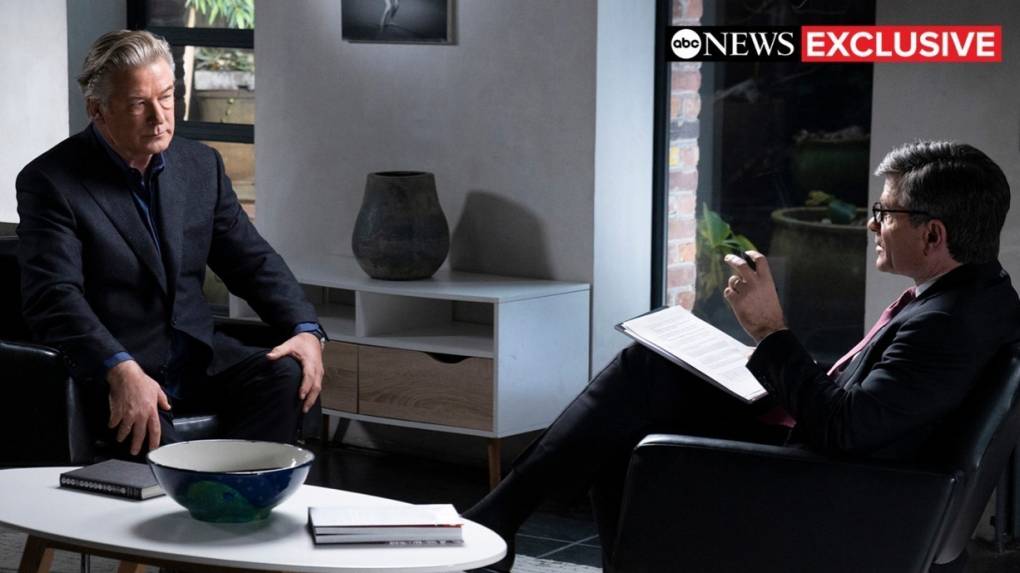
"caption": "Alec Baldwin and anchor George Stephanopoulos talk during the ABC News special 'Alec Baldwin Unscripted.'",
"description": null,
"title": "Alec Baldwin and anchor George Stephanopoulos talk during the ABC News special 'Alec Baldwin Unscripted.'",
"credit": "Jeffrey Neira/ABC News",
"status": "inherit",
"altTag": null,
"isLoading": false,
"fetchFailed": false
},
"arts_13906716": {
"type": "attachments",
"id": "arts_13906716",
"meta": {
"index": "attachments_1716263798",
"site": "arts",
"id": "13906716",
"found": true
},
"parent": 13906713,
"imgSizes": {
"twentyfourteen-full-width": {
"file": "https://ww2.kqed.org/app/uploads/sites/2/2021/12/home-alone-airbnb-01-exterior-credit-sarah-crowley-356844a7e42bbe5d720e0cd77c4aaeb8b5edc6aa-1038x576.jpg",
"width": 1038,
"mimeType": "image/jpeg",
"height": 576
},
"thumbnail": {
"file": "https://ww2.kqed.org/app/uploads/sites/2/2021/12/home-alone-airbnb-01-exterior-credit-sarah-crowley-356844a7e42bbe5d720e0cd77c4aaeb8b5edc6aa-160x120.jpg",
"width": 160,
"mimeType": "image/jpeg",
"height": 120
},
"post-thumbnail": {
"file": "https://ww2.kqed.org/app/uploads/sites/2/2021/12/home-alone-airbnb-01-exterior-credit-sarah-crowley-356844a7e42bbe5d720e0cd77c4aaeb8b5edc6aa-672x372.jpg",
"width": 672,
"mimeType": "image/jpeg",
"height": 372
},
"kqedFullSize": {
"file": "https://ww2.kqed.org/app/uploads/sites/2/2021/12/home-alone-airbnb-01-exterior-credit-sarah-crowley-356844a7e42bbe5d720e0cd77c4aaeb8b5edc6aa-scaled-e1638472268581.jpg",
"width": 1920,
"height": 1440
},
"2048x2048": {
"file": "https://ww2.kqed.org/app/uploads/sites/2/2021/12/home-alone-airbnb-01-exterior-credit-sarah-crowley-356844a7e42bbe5d720e0cd77c4aaeb8b5edc6aa-2048x1536.jpg",
"width": 2048,
"mimeType": "image/jpeg",
"height": 1536
},
"large": {
"file": "https://ww2.kqed.org/app/uploads/sites/2/2021/12/home-alone-airbnb-01-exterior-credit-sarah-crowley-356844a7e42bbe5d720e0cd77c4aaeb8b5edc6aa-1020x765.jpg",
"width": 1020,
"mimeType": "image/jpeg",
"height": 765
},
"1536x1536": {
"file": "https://ww2.kqed.org/app/uploads/sites/2/2021/12/home-alone-airbnb-01-exterior-credit-sarah-crowley-356844a7e42bbe5d720e0cd77c4aaeb8b5edc6aa-1536x1152.jpg",
"width": 1536,
"mimeType": "image/jpeg",
"height": 1152
},
"full-width": {
"file": "https://ww2.kqed.org/app/uploads/sites/2/2021/12/home-alone-airbnb-01-exterior-credit-sarah-crowley-356844a7e42bbe5d720e0cd77c4aaeb8b5edc6aa-1920x1440.jpg",
"width": 1920,
"mimeType": "image/jpeg",
"height": 1440
},
"medium": {
"file": "https://ww2.kqed.org/app/uploads/sites/2/2021/12/home-alone-airbnb-01-exterior-credit-sarah-crowley-356844a7e42bbe5d720e0cd77c4aaeb8b5edc6aa-800x600.jpg",
"width": 800,
"mimeType": "image/jpeg",
"height": 600
},
"medium_large": {
"file": "https://ww2.kqed.org/app/uploads/sites/2/2021/12/home-alone-airbnb-01-exterior-credit-sarah-crowley-356844a7e42bbe5d720e0cd77c4aaeb8b5edc6aa-768x576.jpg",
"width": 768,
"mimeType": "image/jpeg",
"height": 576
}
},
"publishDate": 1638471431,
"modified": 1638472293,
"caption": "The 'Home Alone' house in Winnetka, Ill. will be available to rent through Airbnb for one night later this month. The $25 stay will also include junk food, booby traps, a film screening and other holiday hijinks.",
"description": null,
"title": "The 'Home Alone' house in Winnetka, Ill. will be available to rent through Airbnb for one night later this month. The $25 stay will also include junk food, booby traps, a film screening and other holiday hijinks.",
"credit": null,
"status": "inherit",
"altTag": "The facade of the huge family home featured in 1990 movie, 'Home Alone,' as seen at night.",
"isLoading": false,
"fetchFailed": false
},
"arts_13906644": {
"type": "attachments",
"id": "arts_13906644",
"meta": {
"index": "attachments_1716263798",
"site": "arts",
"id": "13906644",
"found": true
},
"parent": 13906637,
"imgSizes": {
"twentyfourteen-full-width": {
"file": "https://ww2.kqed.org/app/uploads/sites/2/2021/11/GettyImages-88673361-1038x576.jpg",
"width": 1038,
"mimeType": "image/jpeg",
"height": 576
},
"thumbnail": {
"file": "https://ww2.kqed.org/app/uploads/sites/2/2021/11/GettyImages-88673361-160x109.jpg",
"width": 160,
"mimeType": "image/jpeg",
"height": 109
},
"post-thumbnail": {
"file": "https://ww2.kqed.org/app/uploads/sites/2/2021/11/GettyImages-88673361-672x372.jpg",
"width": 672,
"mimeType": "image/jpeg",
"height": 372
},
"kqedFullSize": {
"file": "https://ww2.kqed.org/app/uploads/sites/2/2021/11/GettyImages-88673361-scaled-e1638307059816.jpg",
"width": 1920,
"height": 1309
},
"2048x2048": {
"file": "https://ww2.kqed.org/app/uploads/sites/2/2021/11/GettyImages-88673361-2048x1396.jpg",
"width": 2048,
"mimeType": "image/jpeg",
"height": 1396
},
"large": {
"file": "https://ww2.kqed.org/app/uploads/sites/2/2021/11/GettyImages-88673361-1020x695.jpg",
"width": 1020,
"mimeType": "image/jpeg",
"height": 695
},
"1536x1536": {
"file": "https://ww2.kqed.org/app/uploads/sites/2/2021/11/GettyImages-88673361-1536x1047.jpg",
"width": 1536,
"mimeType": "image/jpeg",
"height": 1047
},
"full-width": {
"file": "https://ww2.kqed.org/app/uploads/sites/2/2021/11/GettyImages-88673361-1920x1309.jpg",
"width": 1920,
"mimeType": "image/jpeg",
"height": 1309
},
"medium": {
"file": "https://ww2.kqed.org/app/uploads/sites/2/2021/11/GettyImages-88673361-800x545.jpg",
"width": 800,
"mimeType": "image/jpeg",
"height": 545
},
"medium_large": {
"file": "https://ww2.kqed.org/app/uploads/sites/2/2021/11/GettyImages-88673361-768x524.jpg",
"width": 768,
"mimeType": "image/jpeg",
"height": 524
}
},
"publishDate": 1638306977,
"modified": 1638307173,
"caption": "Jodi Picoult attends the premiere of 'My Sister's Keeper' in New York, 2009.",
"description": null,
"title": "Jodi Picoult attends the premiere of 'My Sister's Keeper' in New York, 2009.",
"credit": "Stephen Lovekin/Getty Images",
"status": "inherit",
"altTag": "A white woman with bare shoulders and long strawberry blond wavy hair, offers a closed-mouth smile for cameras. She wears a pearl necklace and matching earrings.",
"isLoading": false,
"fetchFailed": false
},
"arts_13906580": {
"type": "attachments",
"id": "arts_13906580",
"meta": {
"index": "attachments_1716263798",
"site": "arts",
"id": "13906580",
"found": true
},
"parent": 13906579,
"imgSizes": {
"twentyfourteen-full-width": {
"file": "https://ww2.kqed.org/app/uploads/sites/2/2021/11/2021-11-29-49ce1b1664d53e5f1441f04969f8b0ed6c8b9d7a-1038x576.jpg",
"width": 1038,
"mimeType": "image/jpeg",
"height": 576
},
"thumbnail": {
"file": "https://ww2.kqed.org/app/uploads/sites/2/2021/11/2021-11-29-49ce1b1664d53e5f1441f04969f8b0ed6c8b9d7a-160x120.jpg",
"width": 160,
"mimeType": "image/jpeg",
"height": 120
},
"post-thumbnail": {
"file": "https://ww2.kqed.org/app/uploads/sites/2/2021/11/2021-11-29-49ce1b1664d53e5f1441f04969f8b0ed6c8b9d7a-672x372.jpg",
"width": 672,
"mimeType": "image/jpeg",
"height": 372
},
"kqedFullSize": {
"file": "https://ww2.kqed.org/app/uploads/sites/2/2021/11/2021-11-29-49ce1b1664d53e5f1441f04969f8b0ed6c8b9d7a-scaled-e1638214426984.jpg",
"width": 1920,
"height": 1440
},
"2048x2048": {
"file": "https://ww2.kqed.org/app/uploads/sites/2/2021/11/2021-11-29-49ce1b1664d53e5f1441f04969f8b0ed6c8b9d7a-2048x1536.jpg",
"width": 2048,
"mimeType": "image/jpeg",
"height": 1536
},
"large": {
"file": "https://ww2.kqed.org/app/uploads/sites/2/2021/11/2021-11-29-49ce1b1664d53e5f1441f04969f8b0ed6c8b9d7a-1020x765.jpg",
"width": 1020,
"mimeType": "image/jpeg",
"height": 765
},
"1536x1536": {
"file": "https://ww2.kqed.org/app/uploads/sites/2/2021/11/2021-11-29-49ce1b1664d53e5f1441f04969f8b0ed6c8b9d7a-1536x1152.jpg",
"width": 1536,
"mimeType": "image/jpeg",
"height": 1152
},
"full-width": {
"file": "https://ww2.kqed.org/app/uploads/sites/2/2021/11/2021-11-29-49ce1b1664d53e5f1441f04969f8b0ed6c8b9d7a-1920x1440.jpg",
"width": 1920,
"mimeType": "image/jpeg",
"height": 1440
},
"medium": {
"file": "https://ww2.kqed.org/app/uploads/sites/2/2021/11/2021-11-29-49ce1b1664d53e5f1441f04969f8b0ed6c8b9d7a-800x600.jpg",
"width": 800,
"mimeType": "image/jpeg",
"height": 600
},
"medium_large": {
"file": "https://ww2.kqed.org/app/uploads/sites/2/2021/11/2021-11-29-49ce1b1664d53e5f1441f04969f8b0ed6c8b9d7a-768x576.jpg",
"width": 768,
"mimeType": "image/jpeg",
"height": 576
}
},
"publishDate": 1638212958,
"modified": 1638214562,
"caption": "'The Beatles: Get Back' concludes with the band's legendary 1969 rooftop concert.",
"description": null,
"title": "'The Beatles: Get Back' concludes with the band's legendary 1969 rooftop concert.",
"credit": "Courtesy Apple Corps Ltd. / Disney +",
"status": "inherit",
"altTag": "The Beatles perform on a rooftop next to chimney stacks, while Yoko Ono and a crowd of conservatively dressed men look on.",
"isLoading": false,
"fetchFailed": false
},
"arts_13906500": {
"type": "attachments",
"id": "arts_13906500",
"meta": {
"index": "attachments_1716263798",
"site": "arts",
"id": "13906500",
"found": true
},
"parent": 13906499,
"imgSizes": {
"twentyfourteen-full-width": {
"file": "https://ww2.kqed.org/app/uploads/sites/2/2021/11/cs-louise-erdich-5b3065627e75180eb728cbcfdd634b3d21f04fb7-1038x576.jpg",
"width": 1038,
"mimeType": "image/jpeg",
"height": 576
},
"thumbnail": {
"file": "https://ww2.kqed.org/app/uploads/sites/2/2021/11/cs-louise-erdich-5b3065627e75180eb728cbcfdd634b3d21f04fb7-160x120.jpg",
"width": 160,
"mimeType": "image/jpeg",
"height": 120
},
"post-thumbnail": {
"file": "https://ww2.kqed.org/app/uploads/sites/2/2021/11/cs-louise-erdich-5b3065627e75180eb728cbcfdd634b3d21f04fb7-672x372.jpg",
"width": 672,
"mimeType": "image/jpeg",
"height": 372
},
"kqedFullSize": {
"file": "https://ww2.kqed.org/app/uploads/sites/2/2021/11/cs-louise-erdich-5b3065627e75180eb728cbcfdd634b3d21f04fb7-scaled-e1637779437445.jpg",
"width": 1920,
"height": 1440
},
"2048x2048": {
"file": "https://ww2.kqed.org/app/uploads/sites/2/2021/11/cs-louise-erdich-5b3065627e75180eb728cbcfdd634b3d21f04fb7-2048x1536.jpg",
"width": 2048,
"mimeType": "image/jpeg",
"height": 1536
},
"large": {
"file": "https://ww2.kqed.org/app/uploads/sites/2/2021/11/cs-louise-erdich-5b3065627e75180eb728cbcfdd634b3d21f04fb7-1020x765.jpg",
"width": 1020,
"mimeType": "image/jpeg",
"height": 765
},
"1536x1536": {
"file": "https://ww2.kqed.org/app/uploads/sites/2/2021/11/cs-louise-erdich-5b3065627e75180eb728cbcfdd634b3d21f04fb7-1536x1152.jpg",
"width": 1536,
"mimeType": "image/jpeg",
"height": 1152
},
"full-width": {
"file": "https://ww2.kqed.org/app/uploads/sites/2/2021/11/cs-louise-erdich-5b3065627e75180eb728cbcfdd634b3d21f04fb7-1920x1440.jpg",
"width": 1920,
"mimeType": "image/jpeg",
"height": 1440
},
"medium": {
"file": "https://ww2.kqed.org/app/uploads/sites/2/2021/11/cs-louise-erdich-5b3065627e75180eb728cbcfdd634b3d21f04fb7-800x600.jpg",
"width": 800,
"mimeType": "image/jpeg",
"height": 600
},
"medium_large": {
"file": "https://ww2.kqed.org/app/uploads/sites/2/2021/11/cs-louise-erdich-5b3065627e75180eb728cbcfdd634b3d21f04fb7-768x576.jpg",
"width": 768,
"mimeType": "image/jpeg",
"height": 576
}
},
"publishDate": 1637778866,
"modified": 1637779500,
"caption": "Author Louise Erdrich next to the cover of her new book, 'The Sentence.'",
"description": null,
"title": "Author Louise Erdrich next to the cover of her new book, 'The Sentence.'",
"credit": null,
"status": "inherit",
"altTag": "A woman with long dark hair and spectacles faces the camera, resting her chin on her right hand.",
"isLoading": false,
"fetchFailed": false
}
},
"audioPlayerReducer": {
"postId": "stream_live",
"isPaused": true,
"isPlaying": false,
"pfsActive": false,
"pledgeModalIsOpen": true,
"playerDrawerIsOpen": false,
"liveAudioPlayStartedAt": 0,
"liveAudioPlayContext": ""
},
"authorsReducer": {
"byline_arts_13907504": {
"type": "authors",
"id": "byline_arts_13907504",
"meta": {
"override": true
},
"slug": "byline_arts_13907504",
"name": "Connie Hanzhang Jin",
"isLoading": false
},
"byline_arts_13907371": {
"type": "authors",
"id": "byline_arts_13907371",
"meta": {
"override": true
},
"slug": "byline_arts_13907371",
"name": "Anastasia Tsioulcas",
"isLoading": false
},
"byline_arts_13907235": {
"type": "authors",
"id": "byline_arts_13907235",
"meta": {
"override": true
},
"slug": "byline_arts_13907235",
"name": "Elizabeth Blair",
"isLoading": false
},
"byline_arts_13907124": {
"type": "authors",
"id": "byline_arts_13907124",
"meta": {
"override": true
},
"slug": "byline_arts_13907124",
"name": "Justin Chang",
"isLoading": false
},
"byline_arts_13906968": {
"type": "authors",
"id": "byline_arts_13906968",
"meta": {
"override": true
},
"slug": "byline_arts_13906968",
"name": "Justin Chang",
"isLoading": false
},
"byline_arts_13906871": {
"type": "authors",
"id": "byline_arts_13906871",
"meta": {
"override": true
},
"slug": "byline_arts_13906871",
"name": "Terry Gross",
"isLoading": false
},
"byline_arts_13906802": {
"type": "authors",
"id": "byline_arts_13906802",
"meta": {
"override": true
},
"slug": "byline_arts_13906802",
"name": "Anastasia Tsioulcas",
"isLoading": false
},
"byline_arts_13906796": {
"type": "authors",
"id": "byline_arts_13906796",
"meta": {
"override": true
},
"slug": "byline_arts_13906796",
"name": "Eric Deggans",
"isLoading": false
},
"byline_arts_13906637": {
"type": "authors",
"id": "byline_arts_13906637",
"meta": {
"override": true
},
"slug": "byline_arts_13906637",
"name": "Melissa Gray",
"isLoading": false
},
"byline_arts_13906579": {
"type": "authors",
"id": "byline_arts_13906579",
"meta": {
"override": true
},
"slug": "byline_arts_13906579",
"name": "David Bianculli",
"isLoading": false
},
"byline_arts_13906499": {
"type": "authors",
"id": "byline_arts_13906499",
"meta": {
"override": true
},
"slug": "byline_arts_13906499",
"name": "Sam Yellowhorse Kesler",
"isLoading": false
},
"kqedarts": {
"type": "authors",
"id": "92",
"meta": {
"index": "authors_1716337520",
"id": "92",
"found": true
},
"name": "KQED Arts",
"firstName": "KQED",
"lastName": "Arts",
"slug": "kqedarts",
"email": "arts@kqed.org",
"display_author_email": false,
"staff_mastheads": [],
"title": "KQED Staff",
"bio": null,
"avatar": "https://secure.gravatar.com/avatar/321c9ebfeb7736f9e55366a6d3399ab0?s=600&d=blank&r=g",
"twitter": null,
"facebook": null,
"instagram": "https://www.instagram.com/kqed_arts/",
"linkedin": null,
"sites": [
{
"site": "arts",
"roles": [
"contributor"
]
},
{
"site": "pop",
"roles": [
"contributor"
]
},
{
"site": "science",
"roles": [
"author"
]
},
{
"site": "food",
"roles": [
"contributor"
]
}
],
"headData": {
"title": "KQED Arts | KQED",
"description": "KQED Staff",
"ogImgSrc": "https://secure.gravatar.com/avatar/321c9ebfeb7736f9e55366a6d3399ab0?s=600&d=blank&r=g",
"twImgSrc": "https://secure.gravatar.com/avatar/321c9ebfeb7736f9e55366a6d3399ab0?s=600&d=blank&r=g"
},
"isLoading": false,
"link": "/author/kqedarts"
}
},
"pagesReducer": {
"arts_affiliate_npr": {
"type": "terms",
"id": "arts_137",
"meta": {
"index": "terms_1716263798",
"site": "arts",
"id": "137",
"score": 14.257713
},
"featImg": "https://ww2.kqed.org/app/uploads/sites/2/2014/04/logo-npr-lg1.png",
"name": "NPR",
"description": null,
"taxonomy": "affiliate",
"headData": {
"twImgId": null,
"twTitle": null,
"ogTitle": null,
"ogImgId": null,
"twDescription": null,
"description": null,
"title": "NPR Archives | KQED Arts",
"ogDescription": null
},
"ttid": 138,
"slug": "npr",
"isLoading": false,
"title": "NPR",
"pageMeta": {
"site": "arts",
"WpPageTemplate": "page-topic-editorial",
"currentPage": 67
},
"blocks": [
{
"blockName": "kqed/post-list",
"attrs": {
"layout": "cardArticle2",
"query": "posts/arts?affiliate=npr",
"seeMore": false,
"paginated": true,
"page": 67
}
},
{
"blockName": "kqed/ad"
}
]
}
},
"pfsSessionReducer": {},
"postsReducer": {
"stream_live": {
"type": "live",
"id": "stream_live",
"audioUrl": "https://streams.kqed.org/kqedradio",
"title": "Live Stream",
"excerpt": "Live Stream information currently unavailable.",
"link": "/radio",
"featImg": "",
"label": {
"name": "KQED Live",
"link": "/"
}
},
"stream_kqedNewscast": {
"type": "posts",
"id": "stream_kqedNewscast",
"audioUrl": "https://www.kqed.org/.stream/anon/radio/RDnews/newscast.mp3?_=1",
"title": "KQED Newscast",
"featImg": "",
"label": {
"name": "88.5 FM",
"link": "/"
}
},
"arts_13907504": {
"type": "posts",
"id": "arts_13907504",
"meta": {
"index": "posts_1716263798",
"site": "arts",
"id": "13907504",
"score": null,
"sort": [
1640199739000
]
},
"parent": 0,
"labelTerm": {
"site": "arts",
"term": 137
},
"blocks": [],
"publishDate": 1640199739,
"format": "standard",
"title": "‘I, Too, Was Living a Double Life’: Why Trans Fans Connect to ‘The Matrix’",
"headTitle": "‘I, Too, Was Living a Double Life’: Why Trans Fans Connect to ‘The Matrix’ | KQED",
"content": "\u003cp>Erin Reed was 13 when she watched \u003cem>The Matrix\u003c/em> for the first time.\u003c/p>\n\u003cp>In the mornings, she would log into internet chat rooms with a feminine screen name and talk to her online friends. Then she would return to school and her real life, where everyone knew her as male.\u003c/p>\n\u003cp>“There’s a quote in the original \u003cem>Matrix\u003c/em> movie where basically Agent Smith sits down and says, ‘Mr. Anderson, it seems that you’ve been living two lives,’” Reed explains, referencing a scene where the protagonist’s hacker persona Neo is uncovered. “I remember that line stuck with me as a teenager because I, too, was living a double life.”\u003c/p>\n\u003cp>At the time, Reed was just beginning to understand that she was transgender. When she got back from school, the first thing she would do was run to her computer, where she was allowed to be herself again. This was back when you had to compete with a landline to load a web page, and her mom eventually bought a separate phone line because she was online so often.\u003c/p>\n\u003cp>\u003cem>The Matrix\u003c/em> follows computer hacker Neo, who discovers the shocking truth that the life he knows is really a complex computer simulation designed by intelligent machines to enslave humanity. He has always questioned his reality, but now he must choose whether or not to embrace his role in humanity’s battle to destroy the illusion.\u003c/p>\n\u003cp>[ad fullwidth]\u003c/p>\n\u003cp>In the approximately two decades following the release of the first movie in 1999, \u003cem>The Matrix\u003c/em> has endured in pop culture for its portrayal of internet culture, philosophical themes, revolutionary special effects, and slick leather-clad fashion–just to name a few. A highly anticipated and unexpected fourth sequel, \u003cem>The Matrix Resurrections\u003c/em>, is now out in theaters and streaming on \u003ca href=\"https://play.hbomax.com/page/urn:hbo:page:GYbD1_wnm3mDCwgEAAAPM:type:feature\" rel=\"noopener noreferrer\" target=\"_blank\">HBO Max\u003c/a>.\u003c/p>\n\u003cp>But beyond its legacy in pop culture, \u003cem>The Matrix\u003c/em> has long held a special place in the hearts of many trans people for the way it so perfectly encapsulates many essential facets of their identities.\u003c/p>\n\u003ch2>Why ‘The Matrix’ resonates with trans people\u003c/h2>\n\u003cp>\u003cem>The Matrix\u003c/em> was written and directed by Lana and Lilly Wachowski, two trans women who, at the time of movie’s release, were not publicly out. Ever since both sisters came out to the public in the 2010s, people have \u003ca href=\"https://birthmoviesdeath.com/2017/04/10/the-matrix-and-dysphoria-blues\" target=\"_blank\" rel=\"noopener noreferrer\">long\u003c/a> \u003ca href=\"https://www.themarysue.com/decoding-the-transgender-matrix-the-matrix-as-a-transgender-coming-out-story/\" target=\"_blank\" rel=\"noopener noreferrer\">speculated\u003c/a> \u003ca href=\"https://ellienottifa.medium.com/lon-why-the-matrix-and-its-meaning-matter-to-transgender-politics-today-39d75b2ee7d4\" target=\"_blank\" rel=\"noopener noreferrer\">about\u003c/a> the trans themes in \u003cem>The Matrix\u003c/em>.\u003c/p>\n\u003cp>[aside postID='arts_13906221,arts_13870056,arts_13872364']\u003c/p>\n\u003cp>But it wasn’t until very recently that one of the Wachowskis publicly confirmed their guesses.\u003c/p>\n\u003cp>“I’m glad that people are talking about the movies, \u003cem>The Matrix\u003c/em> movies, with a trans narrative,” said Lilly Wachowski in an \u003ca href=\"https://www.youtube.com/watch?v=adXm2sDzGkQ\" target=\"_blank\" rel=\"noopener noreferrer\">interview\u003c/a> with Netflix last year.\u003c/p>\n\u003cp>“I’m glad that it has gotten out that, you know, that was the original intention, but the world wasn’t quite ready–the corporate world wasn’t ready for it.”\u003c/p>\n\u003cp>She added that she didn’t know how present her transness was in her mind as they were writing the movie, but that much of the desire for transformation in the films stemmed from her closeted point of view at the time.\u003c/p>\n\u003cp>But long before this was confirmed, many of their trans fans were latching onto the movie anyways.\u003c/p>\n\u003cp>A couple of the more overt parallels have garnered attention over the years. For example, Neo is offered a choice between a red and blue pill. The red pill will open his eyes to the truth that he is living in a simulation. The blue pill will allow him to continue in ignorance. The red pill that Neo ends up taking is similar to what estrogen pills, used for hormone replacement therapy, looked like in the \u003ca href=\"https://twitter.com/NetflixFilm/status/1291442930717097985\" target=\"_blank\" rel=\"noopener noreferrer\">90s\u003c/a>.\u003c/p>\n\u003cp>Another example: \u003ca href=\"https://www.youtube.com/watch?time_continue=137&v=adXm2sDzGkQ&feature=emb_title\" target=\"_blank\" rel=\"noopener noreferrer\">the Wachowskis wanted the character Switch\u003c/a> to present as male in the real world while presenting as female in the Matrix, as an explicit nod to the idea of transness in an online world. In an \u003ca href=\"https://ew.com/movies/the-matrix-resurrections-keanu-reeves-carrie-anne-moss-cover-story/\" target=\"_blank\" rel=\"noopener noreferrer\">interview\u003c/a> with \u003cem>Entertainment Weekly\u003c/em>, Keanu Reeves, who played Neo in the movies, recalled an early draft of the script that was later changed. “I think the studio wasn’t ready for that,” he said. The character ended up presenting as a woman in both dimensions.\u003c/p>\n\u003cp>But crucially, it’s the spirit of self-actualization that resonates so strongly with many trans people–the existence of a true identity beyond your physical form, an ideal self that you can seize control of via the internet from an uncaring system.\u003c/p>\n\u003cp>Nowadays, the internet is inextricably meshed with our lives to a degree where we might take its self-discovery possibilities for granted. Log on and one can pick from a glut of increasingly specific identity tests, or find a community of like-minded people for any niche interest.\u003c/p>\n\u003cp>When \u003cem>The Matrix\u003c/em> came out in 1999, the internet was only starting to resemble the force for self-discovery that it is today. It wasn’t until the \u003ca href=\"https://www.pewresearch.org/internet/chart/broadband-vs-dial-up-adoption-over-time/\" target=\"_blank\" rel=\"noopener noreferrer\">late 2000s\u003c/a> that the majority of American households had access to a broadband connection. Many of the people turning to the internet in that early era were people like Erin, who couldn’t find the answers they wanted anywhere else.\u003c/p>\n\u003cfigure id=\"attachment_13907507\" class=\"wp-caption aligncenter\" style=\"max-width: 2560px\">\u003cimg loading=\"lazy\" decoding=\"async\" src=\"https://ww2.kqed.org/app/uploads/sites/2/2021/12/gettyimages-590691556-f01a5534216df01b1ecbae107974ea08fd42e729-2-scaled.jpg\" alt=\"Sci-fi film still with woman looking down at man in chair.\" width=\"2560\" height=\"1920\" class=\"size-full wp-image-13907507\" srcset=\"https://cdn.kqed.org/wp-content/uploads/sites/2/2021/12/gettyimages-590691556-f01a5534216df01b1ecbae107974ea08fd42e729-2-scaled.jpg 2560w, https://cdn.kqed.org/wp-content/uploads/sites/2/2021/12/gettyimages-590691556-f01a5534216df01b1ecbae107974ea08fd42e729-2-800x600.jpg 800w, https://cdn.kqed.org/wp-content/uploads/sites/2/2021/12/gettyimages-590691556-f01a5534216df01b1ecbae107974ea08fd42e729-2-1020x765.jpg 1020w, https://cdn.kqed.org/wp-content/uploads/sites/2/2021/12/gettyimages-590691556-f01a5534216df01b1ecbae107974ea08fd42e729-2-160x120.jpg 160w, https://cdn.kqed.org/wp-content/uploads/sites/2/2021/12/gettyimages-590691556-f01a5534216df01b1ecbae107974ea08fd42e729-2-768x576.jpg 768w, https://cdn.kqed.org/wp-content/uploads/sites/2/2021/12/gettyimages-590691556-f01a5534216df01b1ecbae107974ea08fd42e729-2-1536x1152.jpg 1536w, https://cdn.kqed.org/wp-content/uploads/sites/2/2021/12/gettyimages-590691556-f01a5534216df01b1ecbae107974ea08fd42e729-2-2048x1536.jpg 2048w, https://cdn.kqed.org/wp-content/uploads/sites/2/2021/12/gettyimages-590691556-f01a5534216df01b1ecbae107974ea08fd42e729-2-1920x1440.jpg 1920w\" sizes=\"(max-width: 2560px) 100vw, 2560px\">\u003cfigcaption class=\"wp-caption-text\">Carrie-Anne Moss and Keanu Reeves in ‘The Matrix.’ \u003ccite>(Photo by Ronald Siemoneit; Sygma via Getty Images)\u003c/cite>\u003c/figcaption>\u003c/figure>\n\u003cp>She remembers finding message boards targeted towards trans people, offering early glimpses into gender-affirming medical care.\u003c/p>\n\u003cp>“There was no way that I was ever going to learn about that from my parents or from school or from any resources that would have ever been given to me,” she recalls. “But on the internet, it was like this is possible, and nothing could stop me from knowing it was possible. That knowledge in and of itself was enough for me to be like, yes, this is what I want. I want this in the future. One day I’m going to have it.”\u003c/p>\n\u003cp>Many trans people in that generation turned to the internet for those reasons. Erin often hears stories of other trans people today who went through very similar journeys as teenagers, even frequenting the same sites that she visited.\u003c/p>\n\u003cp>Even for some folks who didn’t realize they were transgender at the time, the movie stuck with them for reasons they couldn’t fully explain.\u003c/p>\n\u003cp>Calista Termini watched \u003cem>The Matrix\u003c/em> when it was first released in theaters. In the years since, it’s one of the few movies she’s rewatched over a dozen times.\u003c/p>\n\u003cp>Termini recalls the story sticking with her after she left the movie theater. “I was lying there in bed, thinking to myself: this is exactly how I feel,” she says. “I feel like there is something wrong with the world and I don’t know what it is, but I feel this way and I’ve always felt this way.”\u003c/p>\n\u003cp>There’s a famous quote from Morpheus, Neo’s mentor in the movie. “What you know you can’t explain, but you feel it,” he says as he introduces the idea of the Matrix to Neo. “You’ve felt it your entire life, that there’s something wrong with the world. You don’t know what it is, but it’s there, like a splinter in your mind, driving you mad.”\u003c/p>\n\u003cp>When she first watched \u003cem>The Matrix\u003c/em>, Termini didn’t know she was trans. But she credits the movie as one of the influences that provoked her to search for answers about why she felt so out of place in the world, eventually leading to the realization that she was trans.\u003c/p>\n\u003cp>That feeling, of knowing something is out of place in the world, can be a common one for trans folks. Often, the feelings of discomfort can come from the way other people perceive them or knowing that their body doesn’t align with their gender–a form of gender dysphoria.\u003c/p>\n\u003cp>“If you are a trans person, there is sort of this idea that you are living in a muffling cocoon that is keeping you from seeing the reality of yourself,” Emily VanDerWerff, the critic at large for Vox, tells NPR. VanDerWerff wrote an \u003ca href=\"https://www.vox.com/culture/2019/3/30/18286436/the-matrix-wachowskis-trans-experience-redpill\" target=\"_blank\" rel=\"noopener noreferrer\">article\u003c/a> about the trans themes in \u003cem>The Matrix\u003c/em> in 2019. Like Termini, she cites the movie as one of the rare films that she has rewatched over 20 times.\u003c/p>\n\u003cp>“And that cocoon, to some degree, is the idea of fixed gender identity, which is one that society is very like built atop. And to be trans, you have to sort of assail that idea. And in the process of doing so, you may question other things about reality, including whether you live in a computer simulation, which is robots using humans as a way to power their existence.”\u003c/p>\n\u003cfigure id=\"attachment_13907509\" class=\"wp-caption aligncenter\" style=\"max-width: 2560px\">\u003cimg loading=\"lazy\" decoding=\"async\" src=\"https://ww2.kqed.org/app/uploads/sites/2/2021/12/gettyimages-583900608-7686935a0878ba49736b5dfb5a8bf661d0f08ca1-2-scaled.jpg\" alt=\"Still from sci-fi film of two men flying at each other in fight scene.\" width=\"2560\" height=\"1920\" class=\"size-full wp-image-13907509\" srcset=\"https://cdn.kqed.org/wp-content/uploads/sites/2/2021/12/gettyimages-583900608-7686935a0878ba49736b5dfb5a8bf661d0f08ca1-2-scaled.jpg 2560w, https://cdn.kqed.org/wp-content/uploads/sites/2/2021/12/gettyimages-583900608-7686935a0878ba49736b5dfb5a8bf661d0f08ca1-2-800x600.jpg 800w, https://cdn.kqed.org/wp-content/uploads/sites/2/2021/12/gettyimages-583900608-7686935a0878ba49736b5dfb5a8bf661d0f08ca1-2-1020x765.jpg 1020w, https://cdn.kqed.org/wp-content/uploads/sites/2/2021/12/gettyimages-583900608-7686935a0878ba49736b5dfb5a8bf661d0f08ca1-2-160x120.jpg 160w, https://cdn.kqed.org/wp-content/uploads/sites/2/2021/12/gettyimages-583900608-7686935a0878ba49736b5dfb5a8bf661d0f08ca1-2-768x576.jpg 768w, https://cdn.kqed.org/wp-content/uploads/sites/2/2021/12/gettyimages-583900608-7686935a0878ba49736b5dfb5a8bf661d0f08ca1-2-1536x1152.jpg 1536w, https://cdn.kqed.org/wp-content/uploads/sites/2/2021/12/gettyimages-583900608-7686935a0878ba49736b5dfb5a8bf661d0f08ca1-2-2048x1536.jpg 2048w, https://cdn.kqed.org/wp-content/uploads/sites/2/2021/12/gettyimages-583900608-7686935a0878ba49736b5dfb5a8bf661d0f08ca1-2-1920x1440.jpg 1920w\" sizes=\"(max-width: 2560px) 100vw, 2560px\">\u003cfigcaption class=\"wp-caption-text\">Keanu Reeves and Hugo Weaving face each other in a scene from ‘The Matrix.’ \u003ccite>(Photo by Ronald Siemoneit; Sygma via Getty Images)\u003c/cite>\u003c/figcaption>\u003c/figure>\n\u003ch2>The universality of ‘The Matrix’\u003c/h2>\n\u003cp>In many ways, this struggle of self-actualization against a dominant system is a universal one.\u003c/p>\n\u003cp>Though the concept of “redpilling” has been co-opted by groups who are often virulently opposed to trans identity, the fluidity of \u003cem>The Matrix\u003c/em>’s central themes is arguably one of its strengths.\u003c/p>\n\u003cp>VanDerWerff agrees. “It does weirdly speak to this movie’s cultural ubiquity, to this movie’s ability to speak to all sorts of people in a similar way but to different ends, that I think often marks the most important and greatest movies ever made.”\u003c/p>\n\u003cp>Some trans people, especially those in the early stages of questioning their gender, can have trouble putting words to their experiences. These experiences can also be difficult to understand for people who have never questioned their gender. But \u003cem>The Matrix\u003c/em> can provide a common shorthand to bridge either gap.\u003c/p>\n\u003cp>Despite the term being co-opted, an example of this can be the red pill metaphor. Termini remembers a moment in her life where she had to finally accept her own trans identity, and equates that to her “red pill moment.”\u003c/p>\n\u003cp>Take the red pill, and you take the first steps toward living a more authentic existence, but at the potential end cost of upending your current life–potentially facing \u003ca href=\"https://www.npr.org/2021/09/09/1035457004/the-pervasiveness-of-transgender-health-care-discrimination\" target=\"_blank\" rel=\"noopener noreferrer\">obstacles to accessing gender-affirming medical care\u003c/a>, disproportionately higher rates of \u003ca href=\"https://www.npr.org/2018/09/01/641571680/transgender-killings-spur-calls-for-police-reform\" target=\"_blank\" rel=\"noopener noreferrer\">homicide\u003c/a>, systemic \u003ca href=\"https://www.npr.org/2017/11/21/565327959/poll-majority-of-lgbtq-americans-report-harassment-violence-based-on-identity\" target=\"_blank\" rel=\"noopener noreferrer\">discrimination\u003c/a> and \u003ca href=\"https://www.npr.org/2021/05/26/1000589842/americans-strongly-support-trans-rights-in-some-cases\" target=\"_blank\" rel=\"noopener noreferrer\">cultural prejudice\u003c/a>. Take the blue pill, and live in the relative safety of the establishment–but is that comfort worth the isolation of suppressing who you are?\u003c/p>\n\u003cp>That’s a hard choice that many trans people still have to make when choosing to accept their identity.\u003c/p>\n\u003cp>VanDerWerff concurs, adding that it can be a difficult process to talk about, but \u003cem>The Matrix\u003c/em> can give us language to describe it.\u003c/p>\n\u003cp>And that shorthand can be important in terms of conveying the trans experience to outsiders.\u003c/p>\n\u003cp>Zoe Wendler, an associate professor at Ferris State University, agrees. “One of the cool things about \u003cem>The Matrix\u003c/em> and the way it talks about this trans allegory is that it does connect with cisgender people so extensively,” Wendler said.\u003c/p>\n\u003cp>Wendler first saw \u003cem>The Matrix\u003c/em> as a young teenager, shortly after it was released on DVD. She could never get the idea of the splinter, of something being wrong with the world, out of her head afterwards. Her appreciation for the film has evolved since then, especially since coming out and transitioning in recent years. She recalls a recent watch party with a bunch of other trans friends, where they excitedly screamed over the obvious parallels in the movies.\u003c/p>\n\u003cp>“I think it’s a really healthy thing, both for trans people and cis people, because it helps break down this idea that there’s this incredible division between what makes a person trans or cis, because there isn’t.”\u003c/p>\n\u003ch2>Trans themes and representation in ‘The Matrix’\u003c/h2>\n\u003cp>The nuance here is that \u003cem>The Matrix\u003c/em> is so beloved by many trans people not because it’s solely a trans allegory, but also because the movie is so many other things–a critique of capitalism, a philosophical meditation on identity and an expertly crafted science fiction action movie. Though the trans themes are undeniable, they do not make up the entire backbone of the movie.\u003c/p>\n\u003cp>In essence, it’s a great story that also happens to be about being trans, which is the kind of nuanced trans representation that is still rare in mainstream media today.\u003c/p>\n\u003cp>Even now, over 20 years after its release, \u003cem>The Matrix\u003c/em> remains arguably the biggest piece of media ever made by trans creators. While more movies are starting to include trans characters and stories, many of them focus on or even define their trans characters by extreme tragedy or hardship. Others lean on offensive stereotypes.\u003c/p>\n\u003cp>That is, if they include trans characters at all–a \u003ca href=\"https://www.glaad.org/sites/default/files/GLAAD%20-%202021%20STUDIO%20RESPONSIBILITY%20INDEX.pdf\" target=\"_blank\" rel=\"noopener noreferrer\">2020 GLAAD study\u003c/a> reported that no film from a major studio included trans or non-binary characters that year, for the fourth year in a row.\u003c/p>\n\u003cp>Many \u003cem>Matrix\u003c/em> fans wish the film franchise would break this pattern.\u003c/p>\n\u003cp>“It would mean the world,” says Karen R. Karen first saw \u003cem>The Matrix\u003c/em> with friends, some time after it had come out. She had already known she was trans, but she was and is still closeted to the majority of her friends and family, so she couldn’t admit to them the fantasy of wanting to be woken up from her own Matrix.\u003c/p>\n\u003cp>“The stuff I want to read, the movies I want to see, are movies like the original Matrix, that can speak to our experience, but don’t fetishize our suffering or our hardships,” Wendler adds.\u003c/p>\n\u003cp>Wendler, who came out publicly this year and started teaching while presenting as a woman, described her transition as a time of “overflowing joy,” despite any obstacles along the way.\u003c/p>\n\u003cp>“We struggle, we grow, but we don’t do this because it hurts. We do this because it makes us really, really, really happy.”\u003c/p>\n\u003cp>[ad floatright]\u003c/p>\n\u003cp>\u003cem>NPR’s Victoria Whitley-Berry contributed to this piece. Copyright 2021 \u003ca href=\"https://www.npr.org\" target=\"_blank\" rel=\"noopener noreferrer\">NPR\u003c/a>.\u003c/em>\u003c/p>\n\n",
"stats": {
"hasVideo": false,
"hasChartOrMap": false,
"hasAudio": false,
"hasPolis": false,
"wordCount": 2409,
"hasGoogleForm": false,
"hasGallery": false,
"hasHearkenModule": false,
"iframeSrcs": [],
"paragraphCount": 54
},
"modified": 1705007372,
"excerpt": "Long before Lilly and Lana Wachowski confirmed they’d written a trans allegory, fans absorbed its themes of self-actualization. ",
"headData": {
"twImgId": "",
"twTitle": "",
"ogTitle": "",
"ogImgId": "",
"twDescription": "",
"description": "Long before Lilly and Lana Wachowski confirmed they’d written a trans allegory, fans absorbed its themes of self-actualization. ",
"title": "‘I, Too, Was Living a Double Life’: Why Trans Fans Connect to ‘The Matrix’ | KQED",
"ogDescription": "",
"schema": {
"@context": "https://schema.org",
"@type": "Article",
"headline": "‘I, Too, Was Living a Double Life’: Why Trans Fans Connect to ‘The Matrix’",
"datePublished": "2021-12-22T11:02:19-08:00",
"dateModified": "2024-01-11T13:09:32-08:00",
"image": "https://cdn.kqed.org/wp-content/uploads/2020/02/KQED-OG-Image@1x.png"
}
},
"guestAuthors": [],
"slug": "trans-fans-the-matrix-lilly-lana-wachowski",
"status": "publish",
"nprApiLink": "http://api.npr.org/query?id=1066554369&apiKey=MDAxOTAwOTE4MDEyMTkxMDAzNjczZDljZA004",
"templateType": "standard",
"nprStoryDate": "Wed, 22 Dec 2021 07:00:36 -0500",
"excludeFromSiteSearch": "Include",
"nprLastModifiedDate": "Wed, 22 Dec 2021 11:48:07 -0500",
"featuredImageType": "standard",
"nprHtmlLink": "https://www.npr.org/2021/12/22/1066554369/the-matrix-original-trans-fans-resurrections?ft=nprml&f=1066554369",
"nprImageAgency": "Connie Hanzhang Jin/NPR",
"nprStoryId": "1066554369",
"nprByline": "Connie Hanzhang Jin",
"sticky": false,
"showOnAuthorArchivePages": "No",
"WpOldSlug": "i-too-was-living-a-double-life-why-trans-fans-connect-to-the-matrix",
"nprRetrievedStory": "1",
"nprPubDate": "Wed, 22 Dec 2021 11:48:00 -0500",
"path": "/arts/13907504/trans-fans-the-matrix-lilly-lana-wachowski",
"audioTrackLength": null,
"parsedContent": [
{
"type": "contentString",
"content": "\u003cdiv class=\"post-body\">\u003cp>\u003cp>Erin Reed was 13 when she watched \u003cem>The Matrix\u003c/em> for the first time.\u003c/p>\n\u003cp>In the mornings, she would log into internet chat rooms with a feminine screen name and talk to her online friends. Then she would return to school and her real life, where everyone knew her as male.\u003c/p>\n\u003cp>“There’s a quote in the original \u003cem>Matrix\u003c/em> movie where basically Agent Smith sits down and says, ‘Mr. Anderson, it seems that you’ve been living two lives,’” Reed explains, referencing a scene where the protagonist’s hacker persona Neo is uncovered. “I remember that line stuck with me as a teenager because I, too, was living a double life.”\u003c/p>\n\u003cp>At the time, Reed was just beginning to understand that she was transgender. When she got back from school, the first thing she would do was run to her computer, where she was allowed to be herself again. This was back when you had to compete with a landline to load a web page, and her mom eventually bought a separate phone line because she was online so often.\u003c/p>\n\u003cp>\u003cem>The Matrix\u003c/em> follows computer hacker Neo, who discovers the shocking truth that the life he knows is really a complex computer simulation designed by intelligent machines to enslave humanity. He has always questioned his reality, but now he must choose whether or not to embrace his role in humanity’s battle to destroy the illusion.\u003c/p>\n\u003cp>\u003c/p>\u003c/div>",
"attributes": {
"named": {},
"numeric": []
}
},
{
"type": "component",
"content": "",
"name": "ad",
"attributes": {
"named": {
"label": "fullwidth"
},
"numeric": [
"fullwidth"
]
}
},
{
"type": "contentString",
"content": "\u003cdiv class=\"post-body\">\u003cp>\u003c/p>\n\u003cp>In the approximately two decades following the release of the first movie in 1999, \u003cem>The Matrix\u003c/em> has endured in pop culture for its portrayal of internet culture, philosophical themes, revolutionary special effects, and slick leather-clad fashion–just to name a few. A highly anticipated and unexpected fourth sequel, \u003cem>The Matrix Resurrections\u003c/em>, is now out in theaters and streaming on \u003ca href=\"https://play.hbomax.com/page/urn:hbo:page:GYbD1_wnm3mDCwgEAAAPM:type:feature\" rel=\"noopener noreferrer\" target=\"_blank\">HBO Max\u003c/a>.\u003c/p>\n\u003cp>But beyond its legacy in pop culture, \u003cem>The Matrix\u003c/em> has long held a special place in the hearts of many trans people for the way it so perfectly encapsulates many essential facets of their identities.\u003c/p>\n\u003ch2>Why ‘The Matrix’ resonates with trans people\u003c/h2>\n\u003cp>\u003cem>The Matrix\u003c/em> was written and directed by Lana and Lilly Wachowski, two trans women who, at the time of movie’s release, were not publicly out. Ever since both sisters came out to the public in the 2010s, people have \u003ca href=\"https://birthmoviesdeath.com/2017/04/10/the-matrix-and-dysphoria-blues\" target=\"_blank\" rel=\"noopener noreferrer\">long\u003c/a> \u003ca href=\"https://www.themarysue.com/decoding-the-transgender-matrix-the-matrix-as-a-transgender-coming-out-story/\" target=\"_blank\" rel=\"noopener noreferrer\">speculated\u003c/a> \u003ca href=\"https://ellienottifa.medium.com/lon-why-the-matrix-and-its-meaning-matter-to-transgender-politics-today-39d75b2ee7d4\" target=\"_blank\" rel=\"noopener noreferrer\">about\u003c/a> the trans themes in \u003cem>The Matrix\u003c/em>.\u003c/p>\n\u003cp>\u003c/p>\u003c/div>",
"attributes": {
"named": {},
"numeric": []
}
},
{
"type": "component",
"content": "",
"name": "aside",
"attributes": {
"named": {
"postid": "arts_13906221,arts_13870056,arts_13872364",
"label": ""
},
"numeric": []
}
},
{
"type": "contentString",
"content": "\u003cdiv class=\"post-body\">\u003cp>\u003c/p>\n\u003cp>But it wasn’t until very recently that one of the Wachowskis publicly confirmed their guesses.\u003c/p>\n\u003cp>“I’m glad that people are talking about the movies, \u003cem>The Matrix\u003c/em> movies, with a trans narrative,” said Lilly Wachowski in an \u003ca href=\"https://www.youtube.com/watch?v=adXm2sDzGkQ\" target=\"_blank\" rel=\"noopener noreferrer\">interview\u003c/a> with Netflix last year.\u003c/p>\n\u003cp>“I’m glad that it has gotten out that, you know, that was the original intention, but the world wasn’t quite ready–the corporate world wasn’t ready for it.”\u003c/p>\n\u003cp>She added that she didn’t know how present her transness was in her mind as they were writing the movie, but that much of the desire for transformation in the films stemmed from her closeted point of view at the time.\u003c/p>\n\u003cp>But long before this was confirmed, many of their trans fans were latching onto the movie anyways.\u003c/p>\n\u003cp>A couple of the more overt parallels have garnered attention over the years. For example, Neo is offered a choice between a red and blue pill. The red pill will open his eyes to the truth that he is living in a simulation. The blue pill will allow him to continue in ignorance. The red pill that Neo ends up taking is similar to what estrogen pills, used for hormone replacement therapy, looked like in the \u003ca href=\"https://twitter.com/NetflixFilm/status/1291442930717097985\" target=\"_blank\" rel=\"noopener noreferrer\">90s\u003c/a>.\u003c/p>\n\u003cp>Another example: \u003ca href=\"https://www.youtube.com/watch?time_continue=137&v=adXm2sDzGkQ&feature=emb_title\" target=\"_blank\" rel=\"noopener noreferrer\">the Wachowskis wanted the character Switch\u003c/a> to present as male in the real world while presenting as female in the Matrix, as an explicit nod to the idea of transness in an online world. In an \u003ca href=\"https://ew.com/movies/the-matrix-resurrections-keanu-reeves-carrie-anne-moss-cover-story/\" target=\"_blank\" rel=\"noopener noreferrer\">interview\u003c/a> with \u003cem>Entertainment Weekly\u003c/em>, Keanu Reeves, who played Neo in the movies, recalled an early draft of the script that was later changed. “I think the studio wasn’t ready for that,” he said. The character ended up presenting as a woman in both dimensions.\u003c/p>\n\u003cp>But crucially, it’s the spirit of self-actualization that resonates so strongly with many trans people–the existence of a true identity beyond your physical form, an ideal self that you can seize control of via the internet from an uncaring system.\u003c/p>\n\u003cp>Nowadays, the internet is inextricably meshed with our lives to a degree where we might take its self-discovery possibilities for granted. Log on and one can pick from a glut of increasingly specific identity tests, or find a community of like-minded people for any niche interest.\u003c/p>\n\u003cp>When \u003cem>The Matrix\u003c/em> came out in 1999, the internet was only starting to resemble the force for self-discovery that it is today. It wasn’t until the \u003ca href=\"https://www.pewresearch.org/internet/chart/broadband-vs-dial-up-adoption-over-time/\" target=\"_blank\" rel=\"noopener noreferrer\">late 2000s\u003c/a> that the majority of American households had access to a broadband connection. Many of the people turning to the internet in that early era were people like Erin, who couldn’t find the answers they wanted anywhere else.\u003c/p>\n\u003cfigure id=\"attachment_13907507\" class=\"wp-caption aligncenter\" style=\"max-width: 2560px\">\u003cimg loading=\"lazy\" decoding=\"async\" src=\"https://ww2.kqed.org/app/uploads/sites/2/2021/12/gettyimages-590691556-f01a5534216df01b1ecbae107974ea08fd42e729-2-scaled.jpg\" alt=\"Sci-fi film still with woman looking down at man in chair.\" width=\"2560\" height=\"1920\" class=\"size-full wp-image-13907507\" srcset=\"https://cdn.kqed.org/wp-content/uploads/sites/2/2021/12/gettyimages-590691556-f01a5534216df01b1ecbae107974ea08fd42e729-2-scaled.jpg 2560w, https://cdn.kqed.org/wp-content/uploads/sites/2/2021/12/gettyimages-590691556-f01a5534216df01b1ecbae107974ea08fd42e729-2-800x600.jpg 800w, https://cdn.kqed.org/wp-content/uploads/sites/2/2021/12/gettyimages-590691556-f01a5534216df01b1ecbae107974ea08fd42e729-2-1020x765.jpg 1020w, https://cdn.kqed.org/wp-content/uploads/sites/2/2021/12/gettyimages-590691556-f01a5534216df01b1ecbae107974ea08fd42e729-2-160x120.jpg 160w, https://cdn.kqed.org/wp-content/uploads/sites/2/2021/12/gettyimages-590691556-f01a5534216df01b1ecbae107974ea08fd42e729-2-768x576.jpg 768w, https://cdn.kqed.org/wp-content/uploads/sites/2/2021/12/gettyimages-590691556-f01a5534216df01b1ecbae107974ea08fd42e729-2-1536x1152.jpg 1536w, https://cdn.kqed.org/wp-content/uploads/sites/2/2021/12/gettyimages-590691556-f01a5534216df01b1ecbae107974ea08fd42e729-2-2048x1536.jpg 2048w, https://cdn.kqed.org/wp-content/uploads/sites/2/2021/12/gettyimages-590691556-f01a5534216df01b1ecbae107974ea08fd42e729-2-1920x1440.jpg 1920w\" sizes=\"(max-width: 2560px) 100vw, 2560px\">\u003cfigcaption class=\"wp-caption-text\">Carrie-Anne Moss and Keanu Reeves in ‘The Matrix.’ \u003ccite>(Photo by Ronald Siemoneit; Sygma via Getty Images)\u003c/cite>\u003c/figcaption>\u003c/figure>\n\u003cp>She remembers finding message boards targeted towards trans people, offering early glimpses into gender-affirming medical care.\u003c/p>\n\u003cp>“There was no way that I was ever going to learn about that from my parents or from school or from any resources that would have ever been given to me,” she recalls. “But on the internet, it was like this is possible, and nothing could stop me from knowing it was possible. That knowledge in and of itself was enough for me to be like, yes, this is what I want. I want this in the future. One day I’m going to have it.”\u003c/p>\n\u003cp>Many trans people in that generation turned to the internet for those reasons. Erin often hears stories of other trans people today who went through very similar journeys as teenagers, even frequenting the same sites that she visited.\u003c/p>\n\u003cp>Even for some folks who didn’t realize they were transgender at the time, the movie stuck with them for reasons they couldn’t fully explain.\u003c/p>\n\u003cp>Calista Termini watched \u003cem>The Matrix\u003c/em> when it was first released in theaters. In the years since, it’s one of the few movies she’s rewatched over a dozen times.\u003c/p>\n\u003cp>Termini recalls the story sticking with her after she left the movie theater. “I was lying there in bed, thinking to myself: this is exactly how I feel,” she says. “I feel like there is something wrong with the world and I don’t know what it is, but I feel this way and I’ve always felt this way.”\u003c/p>\n\u003cp>There’s a famous quote from Morpheus, Neo’s mentor in the movie. “What you know you can’t explain, but you feel it,” he says as he introduces the idea of the Matrix to Neo. “You’ve felt it your entire life, that there’s something wrong with the world. You don’t know what it is, but it’s there, like a splinter in your mind, driving you mad.”\u003c/p>\n\u003cp>When she first watched \u003cem>The Matrix\u003c/em>, Termini didn’t know she was trans. But she credits the movie as one of the influences that provoked her to search for answers about why she felt so out of place in the world, eventually leading to the realization that she was trans.\u003c/p>\n\u003cp>That feeling, of knowing something is out of place in the world, can be a common one for trans folks. Often, the feelings of discomfort can come from the way other people perceive them or knowing that their body doesn’t align with their gender–a form of gender dysphoria.\u003c/p>\n\u003cp>“If you are a trans person, there is sort of this idea that you are living in a muffling cocoon that is keeping you from seeing the reality of yourself,” Emily VanDerWerff, the critic at large for Vox, tells NPR. VanDerWerff wrote an \u003ca href=\"https://www.vox.com/culture/2019/3/30/18286436/the-matrix-wachowskis-trans-experience-redpill\" target=\"_blank\" rel=\"noopener noreferrer\">article\u003c/a> about the trans themes in \u003cem>The Matrix\u003c/em> in 2019. Like Termini, she cites the movie as one of the rare films that she has rewatched over 20 times.\u003c/p>\n\u003cp>“And that cocoon, to some degree, is the idea of fixed gender identity, which is one that society is very like built atop. And to be trans, you have to sort of assail that idea. And in the process of doing so, you may question other things about reality, including whether you live in a computer simulation, which is robots using humans as a way to power their existence.”\u003c/p>\n\u003cfigure id=\"attachment_13907509\" class=\"wp-caption aligncenter\" style=\"max-width: 2560px\">\u003cimg loading=\"lazy\" decoding=\"async\" src=\"https://ww2.kqed.org/app/uploads/sites/2/2021/12/gettyimages-583900608-7686935a0878ba49736b5dfb5a8bf661d0f08ca1-2-scaled.jpg\" alt=\"Still from sci-fi film of two men flying at each other in fight scene.\" width=\"2560\" height=\"1920\" class=\"size-full wp-image-13907509\" srcset=\"https://cdn.kqed.org/wp-content/uploads/sites/2/2021/12/gettyimages-583900608-7686935a0878ba49736b5dfb5a8bf661d0f08ca1-2-scaled.jpg 2560w, https://cdn.kqed.org/wp-content/uploads/sites/2/2021/12/gettyimages-583900608-7686935a0878ba49736b5dfb5a8bf661d0f08ca1-2-800x600.jpg 800w, https://cdn.kqed.org/wp-content/uploads/sites/2/2021/12/gettyimages-583900608-7686935a0878ba49736b5dfb5a8bf661d0f08ca1-2-1020x765.jpg 1020w, https://cdn.kqed.org/wp-content/uploads/sites/2/2021/12/gettyimages-583900608-7686935a0878ba49736b5dfb5a8bf661d0f08ca1-2-160x120.jpg 160w, https://cdn.kqed.org/wp-content/uploads/sites/2/2021/12/gettyimages-583900608-7686935a0878ba49736b5dfb5a8bf661d0f08ca1-2-768x576.jpg 768w, https://cdn.kqed.org/wp-content/uploads/sites/2/2021/12/gettyimages-583900608-7686935a0878ba49736b5dfb5a8bf661d0f08ca1-2-1536x1152.jpg 1536w, https://cdn.kqed.org/wp-content/uploads/sites/2/2021/12/gettyimages-583900608-7686935a0878ba49736b5dfb5a8bf661d0f08ca1-2-2048x1536.jpg 2048w, https://cdn.kqed.org/wp-content/uploads/sites/2/2021/12/gettyimages-583900608-7686935a0878ba49736b5dfb5a8bf661d0f08ca1-2-1920x1440.jpg 1920w\" sizes=\"(max-width: 2560px) 100vw, 2560px\">\u003cfigcaption class=\"wp-caption-text\">Keanu Reeves and Hugo Weaving face each other in a scene from ‘The Matrix.’ \u003ccite>(Photo by Ronald Siemoneit; Sygma via Getty Images)\u003c/cite>\u003c/figcaption>\u003c/figure>\n\u003ch2>The universality of ‘The Matrix’\u003c/h2>\n\u003cp>In many ways, this struggle of self-actualization against a dominant system is a universal one.\u003c/p>\n\u003cp>Though the concept of “redpilling” has been co-opted by groups who are often virulently opposed to trans identity, the fluidity of \u003cem>The Matrix\u003c/em>’s central themes is arguably one of its strengths.\u003c/p>\n\u003cp>VanDerWerff agrees. “It does weirdly speak to this movie’s cultural ubiquity, to this movie’s ability to speak to all sorts of people in a similar way but to different ends, that I think often marks the most important and greatest movies ever made.”\u003c/p>\n\u003cp>Some trans people, especially those in the early stages of questioning their gender, can have trouble putting words to their experiences. These experiences can also be difficult to understand for people who have never questioned their gender. But \u003cem>The Matrix\u003c/em> can provide a common shorthand to bridge either gap.\u003c/p>\n\u003cp>Despite the term being co-opted, an example of this can be the red pill metaphor. Termini remembers a moment in her life where she had to finally accept her own trans identity, and equates that to her “red pill moment.”\u003c/p>\n\u003cp>Take the red pill, and you take the first steps toward living a more authentic existence, but at the potential end cost of upending your current life–potentially facing \u003ca href=\"https://www.npr.org/2021/09/09/1035457004/the-pervasiveness-of-transgender-health-care-discrimination\" target=\"_blank\" rel=\"noopener noreferrer\">obstacles to accessing gender-affirming medical care\u003c/a>, disproportionately higher rates of \u003ca href=\"https://www.npr.org/2018/09/01/641571680/transgender-killings-spur-calls-for-police-reform\" target=\"_blank\" rel=\"noopener noreferrer\">homicide\u003c/a>, systemic \u003ca href=\"https://www.npr.org/2017/11/21/565327959/poll-majority-of-lgbtq-americans-report-harassment-violence-based-on-identity\" target=\"_blank\" rel=\"noopener noreferrer\">discrimination\u003c/a> and \u003ca href=\"https://www.npr.org/2021/05/26/1000589842/americans-strongly-support-trans-rights-in-some-cases\" target=\"_blank\" rel=\"noopener noreferrer\">cultural prejudice\u003c/a>. Take the blue pill, and live in the relative safety of the establishment–but is that comfort worth the isolation of suppressing who you are?\u003c/p>\n\u003cp>That’s a hard choice that many trans people still have to make when choosing to accept their identity.\u003c/p>\n\u003cp>VanDerWerff concurs, adding that it can be a difficult process to talk about, but \u003cem>The Matrix\u003c/em> can give us language to describe it.\u003c/p>\n\u003cp>And that shorthand can be important in terms of conveying the trans experience to outsiders.\u003c/p>\n\u003cp>Zoe Wendler, an associate professor at Ferris State University, agrees. “One of the cool things about \u003cem>The Matrix\u003c/em> and the way it talks about this trans allegory is that it does connect with cisgender people so extensively,” Wendler said.\u003c/p>\n\u003cp>Wendler first saw \u003cem>The Matrix\u003c/em> as a young teenager, shortly after it was released on DVD. She could never get the idea of the splinter, of something being wrong with the world, out of her head afterwards. Her appreciation for the film has evolved since then, especially since coming out and transitioning in recent years. She recalls a recent watch party with a bunch of other trans friends, where they excitedly screamed over the obvious parallels in the movies.\u003c/p>\n\u003cp>“I think it’s a really healthy thing, both for trans people and cis people, because it helps break down this idea that there’s this incredible division between what makes a person trans or cis, because there isn’t.”\u003c/p>\n\u003ch2>Trans themes and representation in ‘The Matrix’\u003c/h2>\n\u003cp>The nuance here is that \u003cem>The Matrix\u003c/em> is so beloved by many trans people not because it’s solely a trans allegory, but also because the movie is so many other things–a critique of capitalism, a philosophical meditation on identity and an expertly crafted science fiction action movie. Though the trans themes are undeniable, they do not make up the entire backbone of the movie.\u003c/p>\n\u003cp>In essence, it’s a great story that also happens to be about being trans, which is the kind of nuanced trans representation that is still rare in mainstream media today.\u003c/p>\n\u003cp>Even now, over 20 years after its release, \u003cem>The Matrix\u003c/em> remains arguably the biggest piece of media ever made by trans creators. While more movies are starting to include trans characters and stories, many of them focus on or even define their trans characters by extreme tragedy or hardship. Others lean on offensive stereotypes.\u003c/p>\n\u003cp>That is, if they include trans characters at all–a \u003ca href=\"https://www.glaad.org/sites/default/files/GLAAD%20-%202021%20STUDIO%20RESPONSIBILITY%20INDEX.pdf\" target=\"_blank\" rel=\"noopener noreferrer\">2020 GLAAD study\u003c/a> reported that no film from a major studio included trans or non-binary characters that year, for the fourth year in a row.\u003c/p>\n\u003cp>Many \u003cem>Matrix\u003c/em> fans wish the film franchise would break this pattern.\u003c/p>\n\u003cp>“It would mean the world,” says Karen R. Karen first saw \u003cem>The Matrix\u003c/em> with friends, some time after it had come out. She had already known she was trans, but she was and is still closeted to the majority of her friends and family, so she couldn’t admit to them the fantasy of wanting to be woken up from her own Matrix.\u003c/p>\n\u003cp>“The stuff I want to read, the movies I want to see, are movies like the original Matrix, that can speak to our experience, but don’t fetishize our suffering or our hardships,” Wendler adds.\u003c/p>\n\u003cp>Wendler, who came out publicly this year and started teaching while presenting as a woman, described her transition as a time of “overflowing joy,” despite any obstacles along the way.\u003c/p>\n\u003cp>“We struggle, we grow, but we don’t do this because it hurts. We do this because it makes us really, really, really happy.”\u003c/p>\n\u003cp>\u003c/p>\u003c/div>",
"attributes": {
"named": {},
"numeric": []
}
},
{
"type": "component",
"content": "",
"name": "ad",
"attributes": {
"named": {
"label": "floatright"
},
"numeric": [
"floatright"
]
}
},
{
"type": "contentString",
"content": "\u003cdiv class=\"post-body\">\u003cp>\u003c/p>\n\u003cp>\u003cem>NPR’s Victoria Whitley-Berry contributed to this piece. Copyright 2021 \u003ca href=\"https://www.npr.org\" target=\"_blank\" rel=\"noopener noreferrer\">NPR\u003c/a>.\u003c/em>\u003c/p>\n\n\u003c/div>\u003c/p>",
"attributes": {
"named": {},
"numeric": []
}
}
],
"link": "/arts/13907504/trans-fans-the-matrix-lilly-lana-wachowski",
"authors": [
"byline_arts_13907504"
],
"categories": [
"arts_1"
],
"tags": [
"arts_11323",
"arts_10278",
"arts_977"
],
"affiliates": [
"arts_137"
],
"featImg": "arts_13907515",
"label": "arts_137"
},
"arts_13907371": {
"type": "posts",
"id": "arts_13907371",
"meta": {
"index": "posts_1716263798",
"site": "arts",
"id": "13907371",
"score": null,
"sort": [
1639599251000
]
},
"parent": 0,
"labelTerm": {
"site": "arts",
"term": 137
},
"blocks": [],
"publishDate": 1639599251,
"format": "standard",
"title": "Prolific Feminist Author, Critic and Activist bell hooks Has Died at 69",
"headTitle": "Prolific Feminist Author, Critic and Activist bell hooks Has Died at 69 | KQED",
"content": "\u003cp>The author, poet, feminist, cultural critic, and professor bell hooks died Wednesday at age 69. Her death was first \u003ca href=\"https://twitter.com/Enter_Ebony/status/1471153931027980291?s=20\" target=\"_blank\" rel=\"noopener noreferrer\">announced\u003c/a> by her niece, Ebony Motley, who said that she had died at home surrounded by family and friends. No cause of death was reported, but Berea College in Kentucky, where hooks had taught since 2004, said in a \u003ca href=\"https://www.berea.edu/news/statement-on-the-death-of-bell-hooks/\" target=\"_blank\" rel=\"noopener noreferrer\">press release\u003c/a> that she had suffered from an extended illness.\u003c/p>\n\u003cp>https://twitter.com/Enter_Ebony/status/1471153931027980291?s=20\u003c/p>\n\u003cp>hooks, who preferred to spell her name with no capital letters as a way of de-emphasizing her individual identity, was born Gloria Jean Watkins as the fourth of seven children in Hopkinsville, Kentucky, on Sept. 25, 1952. Her pen name was a tribute to her maternal great-grandmother, Bell Blair Hooks.\u003c/p>\n\u003cp>She attended segregated schools in her native Christian County, Kentucky, before earning her undergraduate degree at Stanford University in California, a master’s degree in English at the University of Wisconsin and a doctorate in literature at the University of California at Santa Cruz.\u003c/p>\n\u003cp>She taught at Stanford University, Yale University, Oberlin College in Ohio and The City College of New York before returning to Kentucky to teach at Berea College, which now houses the \u003ca href=\"https://www.berea.edu/bhc/about/\">bell hooks Institute\u003c/a>.\u003c/p>\n\u003cp>[ad fullwidth]\u003c/p>\n\u003cp>[aside postID='arts_13877670']The author of more than three dozen wide-ranging books, hooks published her first title, the poetry collection \u003cem>And There We Wept\u003c/em>, in 1978. Her influential book \u003cem>Ain’t I a Woman? Black Women and Feminism\u003c/em> followed in 1981. Three years later, her \u003cem>Feminist Theory: From Margin to Center\u003c/em> explored and criticized the feminist movement’s propensity to center and privilege white women’s experiences.\u003c/p>\n\u003cp>Frequently, hooks’ work addressed the deep intersections of race, gender, class, sexuality and geographic place. She wrote about her native Appalachia, and growing up there as a Black girl, in the critical-essay collection \u003cem>belonging: a culture of place\u003c/em>, and in the poetry collection \u003cem>Appalachian Elegy: Poetry and Place\u003c/em>.\u003c/p>\n\u003cp>In a 2000 interview with \u003cem>All Things Considered\u003c/em>, hooks \u003ca href=\"https://www.npr.org/2000/03/19/1071796/all-about-love\" target=\"_blank\" rel=\"noopener noreferrer\">spoke\u003c/a> about the life-changing power of love—that is, the act of loving, and how love is far broader than romantic sentiment. “I’m talking about a love that is transformative, that challenges us in both our private and our civic lives,” she said. “I’m so moved often when I think of the civil rights movement, because I see it as a great movement for social justice that was rooted in love and that politicized the notion of love, that said: Real love will change you.”\u003c/p>\n\u003cp>She went on:\u003c/p>\n\u003cblockquote>\u003cp>“Everywhere I go, people want to feel more connected. They want to feel more connected to their neighbors. They want to feel more connected to the world. And when we learn that through love we can have that connection, we can see the stranger as ourselves. And I think that it would be absolutely fantastic to have that sense of ‘Let’s return to kind of a utopian focus on love, not unlike the sort of hippie focus on love.’ Because I always say to people, you know, the 60s’ focus on love had its stupid sentimental dimensions, but then it had these life-transforming dimensions. When I think of the love of justice that led three young people, two Jews and one African-American Christian, to go to the South and fight for justice and give their lives, Goodman, Chaney and Schwerner. I think that’s a quality of love that’s awesome … I tell this to young people, you know, that we can love in a deep and profound way that transforms the political world in which we live in.”\u003c/p>\u003c/blockquote>\n\u003cp>\u003c/p>\n\u003cp>\u003cem>Additional reporting contributed by Steve Smith. Copyright 2021 \u003ca href=\"https://www.npr.org\" target=\"_blank\" rel=\"noopener noreferrer\">NPR\u003c/a>.\u003c/em>\u003c/p>\n\n",
"stats": {
"hasVideo": false,
"hasChartOrMap": false,
"hasAudio": false,
"hasPolis": false,
"wordCount": 637,
"hasGoogleForm": false,
"hasGallery": false,
"hasHearkenModule": false,
"iframeSrcs": [],
"paragraphCount": 12
},
"modified": 1705007381,
"excerpt": "The influential author and professor, who wrote more than three dozen wide-ranging books, died Wednesday.",
"headData": {
"twImgId": "",
"twTitle": "",
"ogTitle": "",
"ogImgId": "",
"twDescription": "",
"description": "The influential author and professor, who wrote more than three dozen wide-ranging books, died Wednesday.",
"title": "Prolific Feminist Author, Critic and Activist bell hooks Has Died at 69 | KQED",
"ogDescription": "",
"schema": {
"@context": "https://schema.org",
"@type": "Article",
"headline": "Prolific Feminist Author, Critic and Activist bell hooks Has Died at 69",
"datePublished": "2021-12-15T12:14:11-08:00",
"dateModified": "2024-01-11T13:09:41-08:00",
"image": "https://cdn.kqed.org/wp-content/uploads/2020/02/KQED-OG-Image@1x.png"
}
},
"guestAuthors": [],
"slug": "bell-hooks-obituary-feminist-author-activist",
"status": "publish",
"nprApiLink": "http://api.npr.org/query?id=1064509418&apiKey=MDAxOTAwOTE4MDEyMTkxMDAzNjczZDljZA004",
"templateType": "standard",
"nprStoryDate": "Wed, 15 Dec 2021 14:16:09 -0500",
"excludeFromSiteSearch": "Include",
"nprLastModifiedDate": "Wed, 15 Dec 2021 14:55:17 -0500",
"featuredImageType": "standard",
"nprHtmlLink": "https://www.npr.org/2021/12/15/1064509418/bell-hooks-feminist-author-critic-activist-died?ft=nprml&f=1064509418",
"nprImageAgency": "Getty Images",
"nprStoryId": "1064509418",
"nprByline": "Anastasia Tsioulcas",
"sticky": false,
"nprImageCredit": "Karjean Levine",
"showOnAuthorArchivePages": "No",
"WpOldSlug": "prolific-feminist-author-critic-and-activist-bell-hooks-has-died-at-69",
"nprRetrievedStory": "1",
"nprPubDate": "Wed, 15 Dec 2021 14:55:00 -0500",
"path": "/arts/13907371/bell-hooks-obituary-feminist-author-activist",
"audioTrackLength": null,
"parsedContent": [
{
"type": "contentString",
"content": "\u003cdiv class=\"post-body\">\u003cp>\u003cp>The author, poet, feminist, cultural critic, and professor bell hooks died Wednesday at age 69. Her death was first \u003ca href=\"https://twitter.com/Enter_Ebony/status/1471153931027980291?s=20\" target=\"_blank\" rel=\"noopener noreferrer\">announced\u003c/a> by her niece, Ebony Motley, who said that she had died at home surrounded by family and friends. No cause of death was reported, but Berea College in Kentucky, where hooks had taught since 2004, said in a \u003ca href=\"https://www.berea.edu/news/statement-on-the-death-of-bell-hooks/\" target=\"_blank\" rel=\"noopener noreferrer\">press release\u003c/a> that she had suffered from an extended illness.\u003c/p>\u003c/p>\u003c/div>",
"attributes": {
"named": {},
"numeric": []
}
},
{
"type": "component",
"content": "",
"name": "singleTwitterStatus",
"attributes": {
"named": {
"id": "1471153931027980291"
},
"numeric": []
}
},
{
"type": "contentString",
"content": "\u003cdiv class=\"post-body\">\u003cp>\n\u003cp>hooks, who preferred to spell her name with no capital letters as a way of de-emphasizing her individual identity, was born Gloria Jean Watkins as the fourth of seven children in Hopkinsville, Kentucky, on Sept. 25, 1952. Her pen name was a tribute to her maternal great-grandmother, Bell Blair Hooks.\u003c/p>\n\u003cp>She attended segregated schools in her native Christian County, Kentucky, before earning her undergraduate degree at Stanford University in California, a master’s degree in English at the University of Wisconsin and a doctorate in literature at the University of California at Santa Cruz.\u003c/p>\n\u003cp>She taught at Stanford University, Yale University, Oberlin College in Ohio and The City College of New York before returning to Kentucky to teach at Berea College, which now houses the \u003ca href=\"https://www.berea.edu/bhc/about/\">bell hooks Institute\u003c/a>.\u003c/p>\n\u003cp>\u003c/p>\u003c/div>",
"attributes": {
"named": {},
"numeric": []
}
},
{
"type": "component",
"content": "",
"name": "ad",
"attributes": {
"named": {
"label": "fullwidth"
},
"numeric": [
"fullwidth"
]
}
},
{
"type": "contentString",
"content": "\u003cdiv class=\"post-body\">\u003cp>\u003c/p>\n\u003cp>\u003c/p>\u003c/div>",
"attributes": {
"named": {},
"numeric": []
}
},
{
"type": "component",
"content": "",
"name": "aside",
"attributes": {
"named": {
"postid": "arts_13877670",
"label": ""
},
"numeric": []
}
},
{
"type": "contentString",
"content": "\u003cdiv class=\"post-body\">\u003cp>The author of more than three dozen wide-ranging books, hooks published her first title, the poetry collection \u003cem>And There We Wept\u003c/em>, in 1978. Her influential book \u003cem>Ain’t I a Woman? Black Women and Feminism\u003c/em> followed in 1981. Three years later, her \u003cem>Feminist Theory: From Margin to Center\u003c/em> explored and criticized the feminist movement’s propensity to center and privilege white women’s experiences.\u003c/p>\n\u003cp>Frequently, hooks’ work addressed the deep intersections of race, gender, class, sexuality and geographic place. She wrote about her native Appalachia, and growing up there as a Black girl, in the critical-essay collection \u003cem>belonging: a culture of place\u003c/em>, and in the poetry collection \u003cem>Appalachian Elegy: Poetry and Place\u003c/em>.\u003c/p>\n\u003cp>In a 2000 interview with \u003cem>All Things Considered\u003c/em>, hooks \u003ca href=\"https://www.npr.org/2000/03/19/1071796/all-about-love\" target=\"_blank\" rel=\"noopener noreferrer\">spoke\u003c/a> about the life-changing power of love—that is, the act of loving, and how love is far broader than romantic sentiment. “I’m talking about a love that is transformative, that challenges us in both our private and our civic lives,” she said. “I’m so moved often when I think of the civil rights movement, because I see it as a great movement for social justice that was rooted in love and that politicized the notion of love, that said: Real love will change you.”\u003c/p>\n\u003cp>She went on:\u003c/p>\n\u003cblockquote>\u003cp>“Everywhere I go, people want to feel more connected. They want to feel more connected to their neighbors. They want to feel more connected to the world. And when we learn that through love we can have that connection, we can see the stranger as ourselves. And I think that it would be absolutely fantastic to have that sense of ‘Let’s return to kind of a utopian focus on love, not unlike the sort of hippie focus on love.’ Because I always say to people, you know, the 60s’ focus on love had its stupid sentimental dimensions, but then it had these life-transforming dimensions. When I think of the love of justice that led three young people, two Jews and one African-American Christian, to go to the South and fight for justice and give their lives, Goodman, Chaney and Schwerner. I think that’s a quality of love that’s awesome … I tell this to young people, you know, that we can love in a deep and profound way that transforms the political world in which we live in.”\u003c/p>\u003c/blockquote>\n\u003cp>\u003c/p>\n\u003cp>\u003cem>Additional reporting contributed by Steve Smith. Copyright 2021 \u003ca href=\"https://www.npr.org\" target=\"_blank\" rel=\"noopener noreferrer\">NPR\u003c/a>.\u003c/em>\u003c/p>\n\n\u003c/div>\u003c/p>",
"attributes": {
"named": {},
"numeric": []
}
}
],
"link": "/arts/13907371/bell-hooks-obituary-feminist-author-activist",
"authors": [
"byline_arts_13907371"
],
"categories": [
"arts_1"
],
"tags": [
"arts_1962",
"arts_1091"
],
"affiliates": [
"arts_137"
],
"featImg": "arts_13907388",
"label": "arts_137"
},
"arts_13907235": {
"type": "posts",
"id": "arts_13907235",
"meta": {
"index": "posts_1716263798",
"site": "arts",
"id": "13907235",
"score": null,
"sort": [
1639172832000
]
},
"parent": 0,
"labelTerm": {
"site": "arts",
"term": 137
},
"blocks": [],
"publishDate": 1639172832,
"format": "standard",
"title": "Michael Nesmith—Considerably More than a Monkee—Dies at 78",
"headTitle": "Michael Nesmith—Considerably More than a Monkee—Dies at 78 | KQED",
"content": "\u003cp>Musician and producer \u003ca href=\"https://www.npr.org/artists/15167272/michael-nesmith\" target=\"_blank\" rel=\"noopener noreferrer\">Michael Nesmith\u003c/a> has died. He rose to fame initially as a member of \u003ca href=\"https://www.npr.org/artists/15398067/the-monkees\" target=\"_blank\" rel=\"noopener noreferrer\">The Monkees\u003c/a>, but went on to have a long and influential career in music, television and movie production. Nesmith died of heart failure on Friday at his home in Carmel Valley, Calif. He was 78.\u003c/p>\n\u003cp>“With Infinite Love we announce that Michael Nesmith has passed away this morning in his home, surrounded by family, peacefully and of natural causes,” his family writes in a statement posted on Nesmith’s \u003ca href=\"https://www.videoranch3d.com/\" target=\"_blank\" rel=\"noopener noreferrer\">website\u003c/a>. “We ask that you respect our privacy at this time and we thank you for the love and light that all of you have shown him and us.”\u003c/p>\n\u003cp>Along with his bandmate, Micky Dolenz, Nesmith recently completed a Monkees’ farewell tour. “I’m heartbroken,” Dolenz said, in a statement provided by a spokesperson. “I’ve lost a dear friend and partner. I’m so grateful that we could spend the last couple of months together doing what we loved best—singing, laughing, and doing shtick. I’ll miss it all so much. Especially the shtick.”\u003c/p>\n\u003cp>https://www.youtube.com/watch?v=5xzUNldsmmM\u003c/p>\n\u003cp>Nesmith was born in Houston, Tex., in 1942. His parents divorced when he was only four, and his mother Bette supported the family with her wages as a secretary: a job that led her to \u003ca href=\"https://news.google.com/newspapers?id=wHshAAAAIBAJ&sjid=S4oFAAAAIBAJ&pg=4613,3284045&dq=bette+nesmith+graham&hl=en\" target=\"_blank\" rel=\"noopener noreferrer\">invent the correction fluid Liquid Paper\u003c/a>, to deal with mistakes caused by early electric typewriters.\u003c/p>\n\u003cp>[ad fullwidth]\u003c/p>\n\u003cp>Nesmith started writing and performing music after a stint in the Air Force, recording under the name “Michael Blessing” and finding some success as a songwriter for acts such as \u003ca href=\"https://www.newyorker.com/culture/culture-desk/different-drum-the-power-of-linda-ronstadts-voice\" target=\"_blank\" rel=\"noopener noreferrer\">Linda Ronstadt\u003c/a> and the \u003ca href=\"https://www.rollingstone.com/music/news/the-monkees-our-life-in-15-songs-w435214/mary-mary-1967-w435250\" target=\"_blank\" rel=\"noopener noreferrer\">Paul Butterfield Blues Band\u003c/a> (who recorded “Mary, Mary” before the Monkees made it a hit). In late 1965, a friend from the Los Angeles music scene pointed him to a magazine ad seeking “four insane boys” to play in a Beatles-inspired band on a new TV show.\u003c/p>\n\u003cp>\u003cem>The Monkees\u003c/em> is mostly remembered today as a show about a band that didn’t play their own instruments—but it was genuinely ahead of its time, jam-packed with avant-garde film techniques (\u003cem>The Monkees\u003c/em> never met a fourth wall it wouldn’t break) and musical “romps” that are the direct ancestors of today’s music videos. \u003ca href=\"http://articles.latimes.com/1992-02-07/entertainment/ca-1573_1_music-video-clips\" target=\"_blank\" rel=\"noopener noreferrer\">Nesmith himself later helped develop the format\u003c/a> that eventually morphed into into MTV.\u003c/p>\n\u003cp>A talented singer and multi-instrumentalist, Nesmith was the only one of his bandmates who had prior recording experience. If you watched \u003cem>The Monkees\u003c/em>, you probably heard his songs—including “Mary, Mary,” “You Just May Be the One” and “What Am I Doing Hangin’ Round”—without even realizing they were his. Nesmith clashed repeatedly with music publisher Don Kirshner over creative control of the band, once even \u003ca href=\"http://www.latimes.com/local/obituaries/la-me-don-kirshner-20110119-story.html\" target=\"_blank\" rel=\"noopener noreferrer\">putting his fist through a wall\u003c/a>. He won; Kirshner was fired, and went on to work with another fictional band called The Archies (who, as cartoons, were considerably less likely to argue with him).\u003c/p>\n\u003cp>https://www.youtube.com/watch?v=AMNize7s8nc\u003c/p>\n\u003cp>In 1969, as The Monkees phenomenon was fizzling out, Nesmith formed his own act, Mike Nesmith and the First National Band, which made three albums and had a \u003ca href=\"https://www.billboard.com/music/michael-nesmith-the-first-national-band\" target=\"_blank\" rel=\"noopener noreferrer\">modest chart hit\u003c/a> with “Joanne” in 1970. While Nesmith never matched his Monkees-era musical successes—and other musicians were reluctant to accept him because of his association with the Pre-Fab Four—his pedal-steel-soaked First National records are regarded today as pioneering cuts of country-rock.\u003c/p>\n\u003cp>As the ’70s went along, Nesmith turned more towards production, founding the Pacific Arts Corporation to manage his music and television projects, including, in 1979, a show called \u003cem>PopClips\u003c/em>, which combined music videos with commentary from a “veejay,” which later became one of the models for MTV.\u003c/p>\n\u003cp>A few years later, he won the first video of the year Grammy for \u003ca href=\"https://www.youtube.com/playlist?list=PLU_ycxo-Q7PspWqZCya2VD0mQbXMuO-sA\" target=\"_blank\" rel=\"noopener noreferrer\">\u003cem>Elephant Parts\u003c/em>\u003c/a>\u003cem>,\u003c/em> a TV special with a similar format: music videos, parody commercials and comedy sketches. (Fun fact: the beloved Canadian band The Tragically Hip took their name from one of the sketches in \u003cem>Elephant Parts\u003c/em>). Another notable Pacific Arts production was the cult hit \u003ca href=\"https://www.imdb.com/title/tt0087995/?ref_=fn_al_tt_1\" target=\"_blank\" rel=\"noopener noreferrer\">\u003cem>Repo Man\u003c/em>\u003c/a>, which starred Emilio Estevez as a young punk and Harry Dean Stanton as a repo man in pursuit of a 1964 Chevy Malibu with a possibly-alien secret in its trunk.\u003c/p>\n\u003cp>Pacific Arts became a pioneer in the field of home video, before a legal dispute with PBS forced Nesmith to shut it down in the early 1990s; there was a blizzard of suits and countersuits over the home video rights to properties like \u003cem>Masterpiece Theater\u003c/em> and Ken Burns’ \u003cem>The Civil War\u003c/em>, and a jury sided with Nesmith, awarding him more than $40 million in damages. “It’s like finding your grandmother stealing your stereo,” \u003ca href=\"http://news.bbc.co.uk/2/hi/entertainment/271357.stm\" target=\"_blank\" rel=\"noopener noreferrer\">he told the BBC at the time\u003c/a>. “You’re happy to get your stereo back, but it’s sad to find out your grandmother is a thief.”\u003c/p>\n\u003cp>Nesmith continued to record and perform—even, occasionally, showing up onstage with The Monkees, after a 20th-anniversary revival (itself sparked by a marathon run of the band’s show on MTV) catapulted them back into the public consciousness. Always the most reserved and hard-to-find of the four, he was dogged for years by rumors that he didn’t get along with his bandmates, or that he wanted to distance himself from the whole phenomenon.\u003c/p>\n\u003cp>\u003c/p>\n\u003cp>But as the band approached its 40th anniversary, Nesmith began to open up. “The Monkees reside in my life like a little nugget, a gem I enjoy,” he told \u003cem>Uncut\u003c/em> magazine in 2016. “The struggles, the victories are long gone. What has continued has been the remnant light of it.”\u003c/p>\n\u003cdiv class=\"fullattribution\">\u003cem>Copyright 2021 NPR. To see more, \u003ca href=\"https://www.npr.org\" target=\"_blank\" rel=\"noopener noreferrer\">visit NPR\u003c/a>.\u003cimg decoding=\"async\" src=\"https://www.google-analytics.com/__utm.gif?utmac=UA-5828686-4&utmdt=Michael+Nesmith+%E2%80%94+considerably+more+than+a+Monkee+%E2%80%94+dies+at+78&utme=8(APIKey)9(MDAxOTAwOTE4MDEyMTkxMDAzNjczZDljZA004)\">\u003c/em>\u003c/div>\n\n",
"stats": {
"hasVideo": true,
"hasChartOrMap": false,
"hasAudio": false,
"hasPolis": false,
"wordCount": 1011,
"hasGoogleForm": false,
"hasGallery": false,
"hasHearkenModule": false,
"iframeSrcs": [],
"paragraphCount": 15
},
"modified": 1705007394,
"excerpt": "Nesmith rose to fame as one of the Pre-Fab Four—but he also helped invent the format that became MTV, and produced cult movies.",
"headData": {
"twImgId": "",
"twTitle": "",
"ogTitle": "",
"ogImgId": "",
"twDescription": "",
"description": "Nesmith rose to fame as one of the Pre-Fab Four—but he also helped invent the format that became MTV, and produced cult movies.",
"title": "Michael Nesmith—Considerably More than a Monkee—Dies at 78 | KQED",
"ogDescription": "",
"schema": {
"@context": "https://schema.org",
"@type": "Article",
"headline": "Michael Nesmith—Considerably More than a Monkee—Dies at 78",
"datePublished": "2021-12-10T13:47:12-08:00",
"dateModified": "2024-01-11T13:09:54-08:00",
"image": "https://cdn.kqed.org/wp-content/uploads/2020/02/KQED-OG-Image@1x.png"
}
},
"guestAuthors": [],
"slug": "michael-nesmith-considerably-more-than-a-monkee-dies-at-78",
"status": "publish",
"nprApiLink": "http://api.npr.org/query?id=622582336&apiKey=MDAxOTAwOTE4MDEyMTkxMDAzNjczZDljZA004",
"templateType": "standard",
"nprStoryDate": "Fri, 10 Dec 2021 14:02:36 -0500",
"excludeFromSiteSearch": "Include",
"nprLastModifiedDate": "Fri, 10 Dec 2021 14:04:22 -0500",
"featuredImageType": "standard",
"nprHtmlLink": "https://www.npr.org/2021/12/10/622582336/mike-nesmith-obituary?ft=nprml&f=622582336",
"nprImageAgency": "Getty Images",
"nprStoryId": "622582336",
"nprByline": "Elizabeth Blair",
"sticky": false,
"nprImageCredit": "Michael Ochs Archives",
"showOnAuthorArchivePages": "No",
"nprRetrievedStory": "1",
"nprPubDate": "Fri, 10 Dec 2021 14:04:00 -0500",
"path": "/arts/13907235/michael-nesmith-considerably-more-than-a-monkee-dies-at-78",
"audioTrackLength": null,
"parsedContent": [
{
"type": "contentString",
"content": "\u003cdiv class=\"post-body\">\u003cp>\u003cp>Musician and producer \u003ca href=\"https://www.npr.org/artists/15167272/michael-nesmith\" target=\"_blank\" rel=\"noopener noreferrer\">Michael Nesmith\u003c/a> has died. He rose to fame initially as a member of \u003ca href=\"https://www.npr.org/artists/15398067/the-monkees\" target=\"_blank\" rel=\"noopener noreferrer\">The Monkees\u003c/a>, but went on to have a long and influential career in music, television and movie production. Nesmith died of heart failure on Friday at his home in Carmel Valley, Calif. He was 78.\u003c/p>\n\u003cp>“With Infinite Love we announce that Michael Nesmith has passed away this morning in his home, surrounded by family, peacefully and of natural causes,” his family writes in a statement posted on Nesmith’s \u003ca href=\"https://www.videoranch3d.com/\" target=\"_blank\" rel=\"noopener noreferrer\">website\u003c/a>. “We ask that you respect our privacy at this time and we thank you for the love and light that all of you have shown him and us.”\u003c/p>\n\u003cp>Along with his bandmate, Micky Dolenz, Nesmith recently completed a Monkees’ farewell tour. “I’m heartbroken,” Dolenz said, in a statement provided by a spokesperson. “I’ve lost a dear friend and partner. I’m so grateful that we could spend the last couple of months together doing what we loved best—singing, laughing, and doing shtick. I’ll miss it all so much. Especially the shtick.”\u003c/p>\u003c/p>\u003cp>\u003cspan class='utils-parseShortcode-shortcodes-__youtubeShortcode__embedYoutube'>\n \u003cspan class='utils-parseShortcode-shortcodes-__youtubeShortcode__embedYoutubeInside'>\n \u003ciframe\n loading='lazy'\n class='utils-parseShortcode-shortcodes-__youtubeShortcode__youtubePlayer'\n type='text/html'\n src='//www.youtube.com/embed/5xzUNldsmmM'\n title='//www.youtube.com/embed/5xzUNldsmmM'\n allowfullscreen='true'\n style='border:0;'>\u003c/iframe>\n \u003c/span>\n \u003c/span>\u003c/p>\u003cp>\u003cp>Nesmith was born in Houston, Tex., in 1942. His parents divorced when he was only four, and his mother Bette supported the family with her wages as a secretary: a job that led her to \u003ca href=\"https://news.google.com/newspapers?id=wHshAAAAIBAJ&sjid=S4oFAAAAIBAJ&pg=4613,3284045&dq=bette+nesmith+graham&hl=en\" target=\"_blank\" rel=\"noopener noreferrer\">invent the correction fluid Liquid Paper\u003c/a>, to deal with mistakes caused by early electric typewriters.\u003c/p>\n\u003cp>\u003c/p>\u003c/div>",
"attributes": {
"named": {},
"numeric": []
}
},
{
"type": "component",
"content": "",
"name": "ad",
"attributes": {
"named": {
"label": "fullwidth"
},
"numeric": [
"fullwidth"
]
}
},
{
"type": "contentString",
"content": "\u003cdiv class=\"post-body\">\u003cp>\u003c/p>\n\u003cp>Nesmith started writing and performing music after a stint in the Air Force, recording under the name “Michael Blessing” and finding some success as a songwriter for acts such as \u003ca href=\"https://www.newyorker.com/culture/culture-desk/different-drum-the-power-of-linda-ronstadts-voice\" target=\"_blank\" rel=\"noopener noreferrer\">Linda Ronstadt\u003c/a> and the \u003ca href=\"https://www.rollingstone.com/music/news/the-monkees-our-life-in-15-songs-w435214/mary-mary-1967-w435250\" target=\"_blank\" rel=\"noopener noreferrer\">Paul Butterfield Blues Band\u003c/a> (who recorded “Mary, Mary” before the Monkees made it a hit). In late 1965, a friend from the Los Angeles music scene pointed him to a magazine ad seeking “four insane boys” to play in a Beatles-inspired band on a new TV show.\u003c/p>\n\u003cp>\u003cem>The Monkees\u003c/em> is mostly remembered today as a show about a band that didn’t play their own instruments—but it was genuinely ahead of its time, jam-packed with avant-garde film techniques (\u003cem>The Monkees\u003c/em> never met a fourth wall it wouldn’t break) and musical “romps” that are the direct ancestors of today’s music videos. \u003ca href=\"http://articles.latimes.com/1992-02-07/entertainment/ca-1573_1_music-video-clips\" target=\"_blank\" rel=\"noopener noreferrer\">Nesmith himself later helped develop the format\u003c/a> that eventually morphed into into MTV.\u003c/p>\n\u003cp>A talented singer and multi-instrumentalist, Nesmith was the only one of his bandmates who had prior recording experience. If you watched \u003cem>The Monkees\u003c/em>, you probably heard his songs—including “Mary, Mary,” “You Just May Be the One” and “What Am I Doing Hangin’ Round”—without even realizing they were his. Nesmith clashed repeatedly with music publisher Don Kirshner over creative control of the band, once even \u003ca href=\"http://www.latimes.com/local/obituaries/la-me-don-kirshner-20110119-story.html\" target=\"_blank\" rel=\"noopener noreferrer\">putting his fist through a wall\u003c/a>. He won; Kirshner was fired, and went on to work with another fictional band called The Archies (who, as cartoons, were considerably less likely to argue with him).\u003c/p>\u003c/p>\u003cp>\u003cspan class='utils-parseShortcode-shortcodes-__youtubeShortcode__embedYoutube'>\n \u003cspan class='utils-parseShortcode-shortcodes-__youtubeShortcode__embedYoutubeInside'>\n \u003ciframe\n loading='lazy'\n class='utils-parseShortcode-shortcodes-__youtubeShortcode__youtubePlayer'\n type='text/html'\n src='//www.youtube.com/embed/AMNize7s8nc'\n title='//www.youtube.com/embed/AMNize7s8nc'\n allowfullscreen='true'\n style='border:0;'>\u003c/iframe>\n \u003c/span>\n \u003c/span>\u003c/p>\u003cp>\u003cp>In 1969, as The Monkees phenomenon was fizzling out, Nesmith formed his own act, Mike Nesmith and the First National Band, which made three albums and had a \u003ca href=\"https://www.billboard.com/music/michael-nesmith-the-first-national-band\" target=\"_blank\" rel=\"noopener noreferrer\">modest chart hit\u003c/a> with “Joanne” in 1970. While Nesmith never matched his Monkees-era musical successes—and other musicians were reluctant to accept him because of his association with the Pre-Fab Four—his pedal-steel-soaked First National records are regarded today as pioneering cuts of country-rock.\u003c/p>\n\u003cp>As the ’70s went along, Nesmith turned more towards production, founding the Pacific Arts Corporation to manage his music and television projects, including, in 1979, a show called \u003cem>PopClips\u003c/em>, which combined music videos with commentary from a “veejay,” which later became one of the models for MTV.\u003c/p>\n\u003cp>A few years later, he won the first video of the year Grammy for \u003ca href=\"https://www.youtube.com/playlist?list=PLU_ycxo-Q7PspWqZCya2VD0mQbXMuO-sA\" target=\"_blank\" rel=\"noopener noreferrer\">\u003cem>Elephant Parts\u003c/em>\u003c/a>\u003cem>,\u003c/em> a TV special with a similar format: music videos, parody commercials and comedy sketches. (Fun fact: the beloved Canadian band The Tragically Hip took their name from one of the sketches in \u003cem>Elephant Parts\u003c/em>). Another notable Pacific Arts production was the cult hit \u003ca href=\"https://www.imdb.com/title/tt0087995/?ref_=fn_al_tt_1\" target=\"_blank\" rel=\"noopener noreferrer\">\u003cem>Repo Man\u003c/em>\u003c/a>, which starred Emilio Estevez as a young punk and Harry Dean Stanton as a repo man in pursuit of a 1964 Chevy Malibu with a possibly-alien secret in its trunk.\u003c/p>\n\u003cp>Pacific Arts became a pioneer in the field of home video, before a legal dispute with PBS forced Nesmith to shut it down in the early 1990s; there was a blizzard of suits and countersuits over the home video rights to properties like \u003cem>Masterpiece Theater\u003c/em> and Ken Burns’ \u003cem>The Civil War\u003c/em>, and a jury sided with Nesmith, awarding him more than $40 million in damages. “It’s like finding your grandmother stealing your stereo,” \u003ca href=\"http://news.bbc.co.uk/2/hi/entertainment/271357.stm\" target=\"_blank\" rel=\"noopener noreferrer\">he told the BBC at the time\u003c/a>. “You’re happy to get your stereo back, but it’s sad to find out your grandmother is a thief.”\u003c/p>\n\u003cp>Nesmith continued to record and perform—even, occasionally, showing up onstage with The Monkees, after a 20th-anniversary revival (itself sparked by a marathon run of the band’s show on MTV) catapulted them back into the public consciousness. Always the most reserved and hard-to-find of the four, he was dogged for years by rumors that he didn’t get along with his bandmates, or that he wanted to distance himself from the whole phenomenon.\u003c/p>\n\u003cp>\u003c/p>\n\u003cp>But as the band approached its 40th anniversary, Nesmith began to open up. “The Monkees reside in my life like a little nugget, a gem I enjoy,” he told \u003cem>Uncut\u003c/em> magazine in 2016. “The struggles, the victories are long gone. What has continued has been the remnant light of it.”\u003c/p>\n\u003cdiv class=\"fullattribution\">\u003cem>Copyright 2021 NPR. To see more, \u003ca href=\"https://www.npr.org\" target=\"_blank\" rel=\"noopener noreferrer\">visit NPR\u003c/a>.\u003cimg decoding=\"async\" src=\"https://www.google-analytics.com/__utm.gif?utmac=UA-5828686-4&utmdt=Michael+Nesmith+%E2%80%94+considerably+more+than+a+Monkee+%E2%80%94+dies+at+78&utme=8(APIKey)9(MDAxOTAwOTE4MDEyMTkxMDAzNjczZDljZA004)\">\u003c/em>\u003c/div>\n\n\u003c/div>\u003c/p>",
"attributes": {
"named": {},
"numeric": []
}
}
],
"link": "/arts/13907235/michael-nesmith-considerably-more-than-a-monkee-dies-at-78",
"authors": [
"byline_arts_13907235"
],
"categories": [
"arts_1",
"arts_69",
"arts_235",
"arts_1564"
],
"tags": [
"arts_746"
],
"affiliates": [
"arts_137"
],
"featImg": "arts_13907236",
"label": "arts_137"
},
"arts_13907124": {
"type": "posts",
"id": "arts_13907124",
"meta": {
"index": "posts_1716263798",
"site": "arts",
"id": "13907124",
"score": null,
"sort": [
1639084709000
]
},
"parent": 0,
"labelTerm": {
"site": "arts",
"term": 137
},
"blocks": [],
"publishDate": 1639084709,
"format": "standard",
"title": "Steven Spielberg's 'West Side Story' Will Make You Believe in Movies Again",
"headTitle": "Steven Spielberg’s ‘West Side Story’ Will Make You Believe in Movies Again | KQED",
"content": "\u003cp>A lot of us had our doubts when we heard that \u003ca href=\"https://www.npr.org/tags/456833620/steven-spielberg\" target=\"_blank\" rel=\"noopener noreferrer\">Steven Spielberg \u003c/a>would be directing a new version of \u003cem>West Side Story\u003c/em>, and not just because of Hollywood remake fatigue. In the decades since it first appeared on Broadway in 1957, the \u003cem>Romeo and Juliet\u003c/em>-inspired story of two warring New York street gangs has generated more than its share of criticism, especially over the writing and the casting of its Puerto Rican characters. Even the beloved 1961 movie inspires groans now for having cast Natalie Wood in the lead role of María, and for forcing \u003ca href=\"https://www.npr.org/2021/06/07/1003905260/rita-moreno-on-west-side-story-and-becoming-the-role-model-she-needed\" target=\"_blank\" rel=\"noopener noreferrer\">Rita Moreno\u003c/a>, the only Puerto Rican in the cast, to wear dark brown makeup as Anita.\u003c/p>\n\u003cp>Sixty years later, Moreno is an executive producer on Spielberg’s \u003cem>West Side Story\u003c/em>. She also gives a poignant performance in the new role of Valentina, the widow of Doc, the drugstore owner. By her presence, Moreno teaches us how to approach this movie, as both an affectionate tribute and a gentle corrective.\u003c/p>\n\u003cp>[aside postid='arts_13898635']Spielberg and his regular screenwriter of late, the playwright \u003ca href=\"https://www.npr.org/2013/02/15/172007880/kushners-lincoln-is-strange-but-also-savvy\" target=\"_blank\" rel=\"noopener noreferrer\">Tony Kushner\u003c/a>, give us a tougher, grimier vision of the Upper West Side in the 1950s. We see the working-class neighborhood of San Juan Hill, home to mostly Black and Latino residents, being demolished to make way for new developments like Lincoln Center. There’s a heightened sense of hostility between the Puerto Rican gang known as the Sharks and their white rivals, the Jets, and their rumbles are startlingly violent.\u003c/p>\n\u003cp>Adding to the realism is the fact that the Sharks are played by actors of Latino descent. They include David Alvarez as Bernardo, the brash leader of the Sharks, and Ariana DeBose as his girlfriend, Anita. Both actors are superb, as is Rachel Zegler, making a fine screen debut as Bernardo’s little sister, María.\u003c/p>\n\u003cp>The story hasn’t changed: María falls into an ill-fated romance with Tony, a former member of the Jets, played by Ansel Elgort. Early in the film, the two meet surreptitiously on María’s fire escape, singing “Tonight,” one of the many classic \u003ca href=\"https://www.npr.org/sections/deceptivecadence/2018/08/24/641208843/the-complex-life-of-leonard-bernstein-a-once-in-a-century-talent\" target=\"_blank\" rel=\"noopener noreferrer\">Leonard Bernstein\u003c/a>–\u003ca href=\"https://www.npr.org/artists/15871266/stephen-sondheim\" target=\"_blank\" rel=\"noopener noreferrer\">Stephen Sondheim\u003c/a> songs gloriously revived in the movie.\u003c/p>\n\u003cp>[ad fullwidth]\u003c/p>\n\u003cp>https://www.youtube.com/watch?v=A5GJLwWiYSg\u003c/p>\n\u003cp>What’s remarkable about this and the other numbers is how brilliantly Spielberg directs them. \u003cem>West Side Story\u003c/em> is the first musical he’s ever made, but it’s no surprise that he’s a natural at it: Few other American filmmakers have a more instinctive sense of rhythm and visual flow, or more direct access to your emotions.\u003c/p>\n\u003cp>Spielberg stages the numbers like an old-school Hollywood classicist, with none of the overly jumpy editing that might distract from the dancing. When the Jets and the Sharks meet up at a school dance, their clashing tempers and bodies pull you in with an almost physical force. And when Anita and Bernardo sing “America,” their rousing song about the pleasures and perils of assimilation, the scene builds from a domestic squabble to a joyous party in the streets, which Spielberg shoots in a vibrant whirl of color and movement.\u003c/p>\n\u003cp>The Tony-winning choreographer Justin Peck wrings some clever variations on Jerome Robbins’ original dance moves, whether it’s the Jets wreaking havoc in a police station house during their big comic-relief number, “Gee, Officer Krupke,” or Tony and his friends tossing around a pistol during a tense performance of the song “Cool.”\u003c/p>\n\u003cp>[aside postid='pop_13021']Speaking of Tony’s friends: As Riff, the leader of the Jets, Mike Faist gives one of the movie’s standout performances. The weak link in the cast is Elgort: He can sing and dance, but there’s an emotional flatness to his acting that doesn’t quite gel with the much livelier Zegler.\u003c/p>\n\u003cp>Spielberg can’t solve everything that’s creaky and dated about \u003cem>West Side Story\u003c/em> as a text. But he knows that the show still has something resonant to say about racism and violence in any era, including ours. The reason the movie works so well stems, I think, from a curious paradox: This \u003cem>West Side Story\u003c/em> may be grittier and more realistic than the original movie, but it also feels more thrillingly old-fashioned than anything a Hollywood studio has released in ages.\u003c/p>\n\u003cp>\u003c/p>\n\u003cp>By the end, I wasn’t moved so much by Tony and María’s sweet, somewhat drippy romance or the fatalistic drama between the Jets and the Sharks. I was moved by Spielberg’s conviction, his sheer faith in the transporting power of movies. For two-and-a-half hours, he makes you a believer again.\u003c/p>\n\u003cdiv class=\"fullattribution\">\u003cem>Copyright 2021 Fresh Air. To see more, visit \u003ca href=\"http://www.npr.org/programs/fresh-air/\" target=\"_blank\" rel=\"noopener noreferrer\">Fresh Air\u003c/a>.\u003cimg decoding=\"async\" src=\"https://www.google-analytics.com/__utm.gif?utmac=UA-5828686-4&utmdt=Steven+Spielberg%27s+%27West+Side+Story%27+will+make+you+believe+in+movies+again&utme=8(APIKey)9(MDAxOTAwOTE4MDEyMTkxMDAzNjczZDljZA004)\">\u003c/em>\u003c/div>\n\n",
"stats": {
"hasVideo": true,
"hasChartOrMap": false,
"hasAudio": false,
"hasPolis": false,
"wordCount": 816,
"hasGoogleForm": false,
"hasGallery": false,
"hasHearkenModule": false,
"iframeSrcs": [],
"paragraphCount": 13
},
"modified": 1705007404,
"excerpt": "Few other American filmmakers have a more instinctive sense of rhythm and visual flow, or more direct access to your emotions.",
"headData": {
"twImgId": "",
"twTitle": "",
"ogTitle": "",
"ogImgId": "",
"twDescription": "",
"description": "Few other American filmmakers have a more instinctive sense of rhythm and visual flow, or more direct access to your emotions.",
"title": "Steven Spielberg's 'West Side Story' Will Make You Believe in Movies Again | KQED",
"ogDescription": "",
"schema": {
"@context": "https://schema.org",
"@type": "Article",
"headline": "Steven Spielberg's 'West Side Story' Will Make You Believe in Movies Again",
"datePublished": "2021-12-09T13:18:29-08:00",
"dateModified": "2024-01-11T13:10:04-08:00",
"image": "https://cdn.kqed.org/wp-content/uploads/2020/02/KQED-OG-Image@1x.png"
}
},
"guestAuthors": [],
"slug": "steven-spielbergs-west-side-story-will-make-you-believe-in-movies-again",
"status": "publish",
"nprApiLink": "http://api.npr.org/query?id=1062380664&apiKey=MDAxOTAwOTE4MDEyMTkxMDAzNjczZDljZA004",
"templateType": "standard",
"nprStoryDate": "Thu, 09 Dec 2021 07:00:30 -0500",
"excludeFromSiteSearch": "Include",
"nprLastModifiedDate": "Thu, 09 Dec 2021 07:00:30 -0500",
"featuredImageType": "standard",
"nprHtmlLink": "https://www.npr.org/2021/12/09/1062380664/steven-spielbergs-west-side-story-review?ft=nprml&f=1062380664",
"nprImageAgency": "20th Century Studios",
"nprStoryId": "1062380664",
"nprByline": "Justin Chang",
"sticky": false,
"showOnAuthorArchivePages": "No",
"nprRetrievedStory": "1",
"nprPubDate": "Thu, 09 Dec 2021 07:00:00 -0500",
"path": "/arts/13907124/steven-spielbergs-west-side-story-will-make-you-believe-in-movies-again",
"audioTrackLength": null,
"parsedContent": [
{
"type": "contentString",
"content": "\u003cdiv class=\"post-body\">\u003cp>\u003cp>A lot of us had our doubts when we heard that \u003ca href=\"https://www.npr.org/tags/456833620/steven-spielberg\" target=\"_blank\" rel=\"noopener noreferrer\">Steven Spielberg \u003c/a>would be directing a new version of \u003cem>West Side Story\u003c/em>, and not just because of Hollywood remake fatigue. In the decades since it first appeared on Broadway in 1957, the \u003cem>Romeo and Juliet\u003c/em>-inspired story of two warring New York street gangs has generated more than its share of criticism, especially over the writing and the casting of its Puerto Rican characters. Even the beloved 1961 movie inspires groans now for having cast Natalie Wood in the lead role of María, and for forcing \u003ca href=\"https://www.npr.org/2021/06/07/1003905260/rita-moreno-on-west-side-story-and-becoming-the-role-model-she-needed\" target=\"_blank\" rel=\"noopener noreferrer\">Rita Moreno\u003c/a>, the only Puerto Rican in the cast, to wear dark brown makeup as Anita.\u003c/p>\n\u003cp>Sixty years later, Moreno is an executive producer on Spielberg’s \u003cem>West Side Story\u003c/em>. She also gives a poignant performance in the new role of Valentina, the widow of Doc, the drugstore owner. By her presence, Moreno teaches us how to approach this movie, as both an affectionate tribute and a gentle corrective.\u003c/p>\n\u003cp>\u003c/p>\u003c/div>",
"attributes": {
"named": {},
"numeric": []
}
},
{
"type": "component",
"content": "",
"name": "aside",
"attributes": {
"named": {
"postid": "arts_13898635",
"label": ""
},
"numeric": []
}
},
{
"type": "contentString",
"content": "\u003cdiv class=\"post-body\">\u003cp>Spielberg and his regular screenwriter of late, the playwright \u003ca href=\"https://www.npr.org/2013/02/15/172007880/kushners-lincoln-is-strange-but-also-savvy\" target=\"_blank\" rel=\"noopener noreferrer\">Tony Kushner\u003c/a>, give us a tougher, grimier vision of the Upper West Side in the 1950s. We see the working-class neighborhood of San Juan Hill, home to mostly Black and Latino residents, being demolished to make way for new developments like Lincoln Center. There’s a heightened sense of hostility between the Puerto Rican gang known as the Sharks and their white rivals, the Jets, and their rumbles are startlingly violent.\u003c/p>\n\u003cp>Adding to the realism is the fact that the Sharks are played by actors of Latino descent. They include David Alvarez as Bernardo, the brash leader of the Sharks, and Ariana DeBose as his girlfriend, Anita. Both actors are superb, as is Rachel Zegler, making a fine screen debut as Bernardo’s little sister, María.\u003c/p>\n\u003cp>The story hasn’t changed: María falls into an ill-fated romance with Tony, a former member of the Jets, played by Ansel Elgort. Early in the film, the two meet surreptitiously on María’s fire escape, singing “Tonight,” one of the many classic \u003ca href=\"https://www.npr.org/sections/deceptivecadence/2018/08/24/641208843/the-complex-life-of-leonard-bernstein-a-once-in-a-century-talent\" target=\"_blank\" rel=\"noopener noreferrer\">Leonard Bernstein\u003c/a>–\u003ca href=\"https://www.npr.org/artists/15871266/stephen-sondheim\" target=\"_blank\" rel=\"noopener noreferrer\">Stephen Sondheim\u003c/a> songs gloriously revived in the movie.\u003c/p>\n\u003cp>\u003c/p>\u003c/div>",
"attributes": {
"named": {},
"numeric": []
}
},
{
"type": "component",
"content": "",
"name": "ad",
"attributes": {
"named": {
"label": "fullwidth"
},
"numeric": [
"fullwidth"
]
}
},
{
"type": "contentString",
"content": "\u003cdiv class=\"post-body\">\u003cp>\u003c/p>\u003c/p>\u003cp>\u003cspan class='utils-parseShortcode-shortcodes-__youtubeShortcode__embedYoutube'>\n \u003cspan class='utils-parseShortcode-shortcodes-__youtubeShortcode__embedYoutubeInside'>\n \u003ciframe\n loading='lazy'\n class='utils-parseShortcode-shortcodes-__youtubeShortcode__youtubePlayer'\n type='text/html'\n src='//www.youtube.com/embed/A5GJLwWiYSg'\n title='//www.youtube.com/embed/A5GJLwWiYSg'\n allowfullscreen='true'\n style='border:0;'>\u003c/iframe>\n \u003c/span>\n \u003c/span>\u003c/p>\u003cp>\u003cp>What’s remarkable about this and the other numbers is how brilliantly Spielberg directs them. \u003cem>West Side Story\u003c/em> is the first musical he’s ever made, but it’s no surprise that he’s a natural at it: Few other American filmmakers have a more instinctive sense of rhythm and visual flow, or more direct access to your emotions.\u003c/p>\n\u003cp>Spielberg stages the numbers like an old-school Hollywood classicist, with none of the overly jumpy editing that might distract from the dancing. When the Jets and the Sharks meet up at a school dance, their clashing tempers and bodies pull you in with an almost physical force. And when Anita and Bernardo sing “America,” their rousing song about the pleasures and perils of assimilation, the scene builds from a domestic squabble to a joyous party in the streets, which Spielberg shoots in a vibrant whirl of color and movement.\u003c/p>\n\u003cp>The Tony-winning choreographer Justin Peck wrings some clever variations on Jerome Robbins’ original dance moves, whether it’s the Jets wreaking havoc in a police station house during their big comic-relief number, “Gee, Officer Krupke,” or Tony and his friends tossing around a pistol during a tense performance of the song “Cool.”\u003c/p>\n\u003cp>\u003c/p>\u003c/div>",
"attributes": {
"named": {},
"numeric": []
}
},
{
"type": "component",
"content": "",
"name": "aside",
"attributes": {
"named": {
"postid": "pop_13021",
"label": ""
},
"numeric": []
}
},
{
"type": "contentString",
"content": "\u003cdiv class=\"post-body\">\u003cp>Speaking of Tony’s friends: As Riff, the leader of the Jets, Mike Faist gives one of the movie’s standout performances. The weak link in the cast is Elgort: He can sing and dance, but there’s an emotional flatness to his acting that doesn’t quite gel with the much livelier Zegler.\u003c/p>\n\u003cp>Spielberg can’t solve everything that’s creaky and dated about \u003cem>West Side Story\u003c/em> as a text. But he knows that the show still has something resonant to say about racism and violence in any era, including ours. The reason the movie works so well stems, I think, from a curious paradox: This \u003cem>West Side Story\u003c/em> may be grittier and more realistic than the original movie, but it also feels more thrillingly old-fashioned than anything a Hollywood studio has released in ages.\u003c/p>\n\u003cp>\u003c/p>\n\u003cp>By the end, I wasn’t moved so much by Tony and María’s sweet, somewhat drippy romance or the fatalistic drama between the Jets and the Sharks. I was moved by Spielberg’s conviction, his sheer faith in the transporting power of movies. For two-and-a-half hours, he makes you a believer again.\u003c/p>\n\u003cdiv class=\"fullattribution\">\u003cem>Copyright 2021 Fresh Air. To see more, visit \u003ca href=\"http://www.npr.org/programs/fresh-air/\" target=\"_blank\" rel=\"noopener noreferrer\">Fresh Air\u003c/a>.\u003cimg decoding=\"async\" src=\"https://www.google-analytics.com/__utm.gif?utmac=UA-5828686-4&utmdt=Steven+Spielberg%27s+%27West+Side+Story%27+will+make+you+believe+in+movies+again&utme=8(APIKey)9(MDAxOTAwOTE4MDEyMTkxMDAzNjczZDljZA004)\">\u003c/em>\u003c/div>\n\n\u003c/div>\u003c/p>",
"attributes": {
"named": {},
"numeric": []
}
}
],
"link": "/arts/13907124/steven-spielbergs-west-side-story-will-make-you-believe-in-movies-again",
"authors": [
"byline_arts_13907124"
],
"categories": [
"arts_1",
"arts_74",
"arts_75"
],
"tags": [
"arts_977",
"arts_13825",
"arts_5422",
"arts_1928"
],
"affiliates": [
"arts_137"
],
"featImg": "arts_13907125",
"label": "arts_137"
},
"arts_13906968": {
"type": "posts",
"id": "arts_13906968",
"meta": {
"index": "posts_1716263798",
"site": "arts",
"id": "13906968",
"score": null,
"sort": [
1638912567000
]
},
"parent": 0,
"labelTerm": {
"site": "arts",
"term": 137
},
"blocks": [],
"publishDate": 1638912567,
"format": "standard",
"title": "'Drive My Car' May Be the Most Absorbing Ride You Take All Year",
"headTitle": "‘Drive My Car’ May Be the Most Absorbing Ride You Take All Year | KQED",
"content": "\u003cp>Don’t be scared off by the epic running time of\u003cem> Drive My Car\u003c/em>; it may run just shy of three hours, but it flies by like a dream. The director Ryûsuke Hamaguchi has adapted and significantly expanded a 2014 short story by \u003ca href=\"https://www.npr.org/2021/04/06/984447978/haruki-murakami-ive-had-all-sorts-of-strange-experiences-in-my-life\" target=\"_blank\" rel=\"noopener noreferrer\">Haruki Murakami\u003c/a>, but nothing about it feels belabored or drawn out. There’s more going on in any five minutes of \u003cem>Drive My Car\u003c/em> than in some movies in their entirety. It’s an intricately structured drama about love and loss, and the ways in which art can and can’t compensate for some of life’s disappointments. I’ll be surprised if I see a more absorbing movie this year, or a better one.\u003c/p>\n\u003cp>[aside postid='arts_13905751']The story follows a middle-aged Tokyo stage actor named Kafuku, superbly played by Hidetoshi Nishijima. He’s a calm, mild-mannered guy who’s been married for two decades to a screenwriter named Oto. We get a sense of their mutual devotion when we see Kafuku driving around in his bright red Saab, rehearsing his lines by listening to audio tapes that Oto has painstakingly recorded for him.\u003c/p>\n\u003cp>But their relationship is more complicated than it appears. Years ago, Kafuku and Oto experienced an agonizing loss that has led her to find solace—and perhaps something more—in relationships with other men. Kafuku has deep compassion for his wife, which doesn’t make her betrayal any less painful. And then another tragedy strikes when Oto dies suddenly.\u003c/p>\n\u003cp>https://www.youtube.com/watch?v=6BPKPb_RTwI\u003c/p>\n\u003cp>If that sounds like a lot, \u003cem>Drive My Car\u003c/em> is just warming up. Two years later, as he tries to move on with his life, Kafuku accepts an arts residency at a theater festival in Hiroshima, where he will direct an experimental production of \u003ca href=\"https://www.npr.org/templates/story/story.php?storyId=17614112\" target=\"_blank\" rel=\"noopener noreferrer\">Chekhov\u003c/a>‘s \u003cem>Uncle Vanya. \u003c/em>\u003c/p>\n\u003cp>[ad fullwidth]\u003c/p>\n\u003cp>But when he gets there, he learns that, per safety regulations, the festival has assigned him a personal driver: a quiet 20-something woman named Misaki, played by Tôko Miura. Kafuku is at first reluctant to hand over the keys to his car, but Misaki turns out to be an excellent driver. She maintains a respectful silence during their rides while Kafuku goes over the play by listening to Oto’s cassette tapes.\u003c/p>\n\u003cp>It may not surprise you to learn that Kafuku and Misaki become friends, or that Misaki turns out to be guarding some sad secrets of her own. But nothing about \u003cem>Drive My Car\u003c/em> feels obvious. Both Nishijima and Miura give revelatory performances as two people who are in no hurry to reveal themselves—to each other, or to the audience.\u003c/p>\n\u003cp>While their characters’ relationship is the heart of the movie, it’s only one part of it. There have been countless films about the porous boundaries between life and art, but offhand I can’t remember too many that so rigorously dramatized the life of an artist. Hamaguchi immerses us in Kafuku’s audition, casting and rehearsal process, which is especially fascinating because this \u003cem>Uncle Vanya \u003c/em>is a multi-lingual production. It may sound challenging for a bunch of actors to connect onstage while performing in a mix of Japanese, Mandarin, Korean and Korean sign language. Then again, Hamaguchi seems to suggest, how much do people speaking the same language really understand each other?\u003c/p>\n\u003cp>[aside postid='arts_13906308']Things get even juicier when Kafuku casts a popular young actor named Takatsuki, who Kafuku knows had an affair with his wife. But characteristically, Hamaguchi sets up a potentially melodramatic situation, only to take a less predictable route. The two men have a couple of tense but polite conversations, revealing the contrast between the impulsive, hot-headed Takatsuki and the cooler, more measured Kafuku. He’s resentful of this young man, but also intrigued: He’s trying to learn something about his wife that he couldn’t figure out on his own.\u003c/p>\n\u003cp>\u003c/p>\n\u003cp>Ryûsuke Hamaguchi has been one of the most exciting new talents in world cinema for a few years now. In movies like \u003cem>Wheel of Fortune and Fantasy\u003c/em>, which came out earlier this year, he pulls us deep into the mysteries and ambiguities of his characters’ relationships. The emotionally overwhelming \u003cem>Drive My Car\u003c/em> brings him to a new level of mastery. Its sensibility is a wonderful marriage of the two authors that shaped it: It has Murakami’s feel for loneliness and alienation and Chekhov’s compassion for human frailty. It’s a rare filmmaker who can take a theatrical stage or the inside of a car—and turn them both into spaces of profound human connection.\u003c/p>\n\u003cdiv class=\"fullattribution\">\u003cem>Copyright 2021 Fresh Air. To see more, visit \u003ca href=\"http://www.npr.org/programs/fresh-air/\" target=\"_blank\" rel=\"noopener noreferrer\">Fresh Air\u003c/a>.\u003cimg decoding=\"async\" src=\"https://www.google-analytics.com/__utm.gif?utmac=UA-5828686-4&utmdt=%27Drive+My+Car%27+may+be+the+most+absorbing+ride+you+take+all+year&utme=8(APIKey)9(MDAxOTAwOTE4MDEyMTkxMDAzNjczZDljZA004)\">\u003c/em>\u003c/div>\n\n",
"stats": {
"hasVideo": true,
"hasChartOrMap": false,
"hasAudio": false,
"hasPolis": false,
"wordCount": 806,
"hasGoogleForm": false,
"hasGallery": false,
"hasHearkenModule": false,
"iframeSrcs": [],
"paragraphCount": 11
},
"modified": 1705007412,
"excerpt": "'Drive My Car' is an intricately structured drama about love, loss and a middle-aged widower and his young chauffeur.",
"headData": {
"twImgId": "",
"twTitle": "",
"ogTitle": "",
"ogImgId": "",
"twDescription": "",
"description": "'Drive My Car' is an intricately structured drama about love, loss and a middle-aged widower and his young chauffeur.",
"title": "'Drive My Car' May Be the Most Absorbing Ride You Take All Year | KQED",
"ogDescription": "",
"schema": {
"@context": "https://schema.org",
"@type": "Article",
"headline": "'Drive My Car' May Be the Most Absorbing Ride You Take All Year",
"datePublished": "2021-12-07T13:29:27-08:00",
"dateModified": "2024-01-11T13:10:12-08:00",
"image": "https://cdn.kqed.org/wp-content/uploads/2020/02/KQED-OG-Image@1x.png"
}
},
"guestAuthors": [],
"slug": "drive-my-car-may-be-the-most-absorbing-ride-you-take-all-year",
"status": "publish",
"nprApiLink": "http://api.npr.org/query?id=1061188442&apiKey=MDAxOTAwOTE4MDEyMTkxMDAzNjczZDljZA004",
"templateType": "standard",
"nprStoryDate": "Tue, 07 Dec 2021 08:44:00 -0500",
"excludeFromSiteSearch": "Include",
"nprLastModifiedDate": "Tue, 07 Dec 2021 14:27:46 -0500",
"featuredImageType": "standard",
"nprHtmlLink": "https://www.npr.org/2021/12/07/1061188442/drive-my-car-review?ft=nprml&f=1061188442",
"nprAudio": "https://ondemand.npr.org/anon.npr-mp3/npr/fa/2021/12/20211207_fa_02.mp3?orgId=427869011&topicId=4467349&d=425&p=13&story=1061188442&ft=nprml&f=1061188442",
"nprImageAgency": "Festival de Cannes",
"nprAudioM3u": "http://api.npr.org/m3u/11062132049-c21ff2.m3u?orgId=427869011&topicId=4467349&d=425&p=13&story=1061188442&ft=nprml&f=1061188442",
"nprStoryId": "1061188442",
"nprByline": "Justin Chang",
"sticky": false,
"showOnAuthorArchivePages": "No",
"nprRetrievedStory": "1",
"nprPubDate": "Tue, 07 Dec 2021 14:27:00 -0500",
"path": "/arts/13906968/drive-my-car-may-be-the-most-absorbing-ride-you-take-all-year",
"audioUrl": "https://ondemand.npr.org/anon.npr-mp3/npr/fa/2021/12/20211207_fa_02.mp3?orgId=427869011&topicId=4467349&d=425&p=13&story=1061188442&ft=nprml&f=1061188442",
"audioTrackLength": null,
"parsedContent": [
{
"type": "contentString",
"content": "\u003cdiv class=\"post-body\">\u003cp>\u003cp>Don’t be scared off by the epic running time of\u003cem> Drive My Car\u003c/em>; it may run just shy of three hours, but it flies by like a dream. The director Ryûsuke Hamaguchi has adapted and significantly expanded a 2014 short story by \u003ca href=\"https://www.npr.org/2021/04/06/984447978/haruki-murakami-ive-had-all-sorts-of-strange-experiences-in-my-life\" target=\"_blank\" rel=\"noopener noreferrer\">Haruki Murakami\u003c/a>, but nothing about it feels belabored or drawn out. There’s more going on in any five minutes of \u003cem>Drive My Car\u003c/em> than in some movies in their entirety. It’s an intricately structured drama about love and loss, and the ways in which art can and can’t compensate for some of life’s disappointments. I’ll be surprised if I see a more absorbing movie this year, or a better one.\u003c/p>\n\u003cp>\u003c/p>\u003c/div>",
"attributes": {
"named": {},
"numeric": []
}
},
{
"type": "component",
"content": "",
"name": "aside",
"attributes": {
"named": {
"postid": "arts_13905751",
"label": ""
},
"numeric": []
}
},
{
"type": "contentString",
"content": "\u003cdiv class=\"post-body\">\u003cp>The story follows a middle-aged Tokyo stage actor named Kafuku, superbly played by Hidetoshi Nishijima. He’s a calm, mild-mannered guy who’s been married for two decades to a screenwriter named Oto. We get a sense of their mutual devotion when we see Kafuku driving around in his bright red Saab, rehearsing his lines by listening to audio tapes that Oto has painstakingly recorded for him.\u003c/p>\n\u003cp>But their relationship is more complicated than it appears. Years ago, Kafuku and Oto experienced an agonizing loss that has led her to find solace—and perhaps something more—in relationships with other men. Kafuku has deep compassion for his wife, which doesn’t make her betrayal any less painful. And then another tragedy strikes when Oto dies suddenly.\u003c/p>\u003c/p>\u003cp>\u003cspan class='utils-parseShortcode-shortcodes-__youtubeShortcode__embedYoutube'>\n \u003cspan class='utils-parseShortcode-shortcodes-__youtubeShortcode__embedYoutubeInside'>\n \u003ciframe\n loading='lazy'\n class='utils-parseShortcode-shortcodes-__youtubeShortcode__youtubePlayer'\n type='text/html'\n src='//www.youtube.com/embed/6BPKPb_RTwI'\n title='//www.youtube.com/embed/6BPKPb_RTwI'\n allowfullscreen='true'\n style='border:0;'>\u003c/iframe>\n \u003c/span>\n \u003c/span>\u003c/p>\u003cp>\u003cp>If that sounds like a lot, \u003cem>Drive My Car\u003c/em> is just warming up. Two years later, as he tries to move on with his life, Kafuku accepts an arts residency at a theater festival in Hiroshima, where he will direct an experimental production of \u003ca href=\"https://www.npr.org/templates/story/story.php?storyId=17614112\" target=\"_blank\" rel=\"noopener noreferrer\">Chekhov\u003c/a>‘s \u003cem>Uncle Vanya. \u003c/em>\u003c/p>\n\u003cp>\u003c/p>\u003c/div>",
"attributes": {
"named": {},
"numeric": []
}
},
{
"type": "component",
"content": "",
"name": "ad",
"attributes": {
"named": {
"label": "fullwidth"
},
"numeric": [
"fullwidth"
]
}
},
{
"type": "contentString",
"content": "\u003cdiv class=\"post-body\">\u003cp>\u003c/p>\n\u003cp>But when he gets there, he learns that, per safety regulations, the festival has assigned him a personal driver: a quiet 20-something woman named Misaki, played by Tôko Miura. Kafuku is at first reluctant to hand over the keys to his car, but Misaki turns out to be an excellent driver. She maintains a respectful silence during their rides while Kafuku goes over the play by listening to Oto’s cassette tapes.\u003c/p>\n\u003cp>It may not surprise you to learn that Kafuku and Misaki become friends, or that Misaki turns out to be guarding some sad secrets of her own. But nothing about \u003cem>Drive My Car\u003c/em> feels obvious. Both Nishijima and Miura give revelatory performances as two people who are in no hurry to reveal themselves—to each other, or to the audience.\u003c/p>\n\u003cp>While their characters’ relationship is the heart of the movie, it’s only one part of it. There have been countless films about the porous boundaries between life and art, but offhand I can’t remember too many that so rigorously dramatized the life of an artist. Hamaguchi immerses us in Kafuku’s audition, casting and rehearsal process, which is especially fascinating because this \u003cem>Uncle Vanya \u003c/em>is a multi-lingual production. It may sound challenging for a bunch of actors to connect onstage while performing in a mix of Japanese, Mandarin, Korean and Korean sign language. Then again, Hamaguchi seems to suggest, how much do people speaking the same language really understand each other?\u003c/p>\n\u003cp>\u003c/p>\u003c/div>",
"attributes": {
"named": {},
"numeric": []
}
},
{
"type": "component",
"content": "",
"name": "aside",
"attributes": {
"named": {
"postid": "arts_13906308",
"label": ""
},
"numeric": []
}
},
{
"type": "contentString",
"content": "\u003cdiv class=\"post-body\">\u003cp>Things get even juicier when Kafuku casts a popular young actor named Takatsuki, who Kafuku knows had an affair with his wife. But characteristically, Hamaguchi sets up a potentially melodramatic situation, only to take a less predictable route. The two men have a couple of tense but polite conversations, revealing the contrast between the impulsive, hot-headed Takatsuki and the cooler, more measured Kafuku. He’s resentful of this young man, but also intrigued: He’s trying to learn something about his wife that he couldn’t figure out on his own.\u003c/p>\n\u003cp>\u003c/p>\n\u003cp>Ryûsuke Hamaguchi has been one of the most exciting new talents in world cinema for a few years now. In movies like \u003cem>Wheel of Fortune and Fantasy\u003c/em>, which came out earlier this year, he pulls us deep into the mysteries and ambiguities of his characters’ relationships. The emotionally overwhelming \u003cem>Drive My Car\u003c/em> brings him to a new level of mastery. Its sensibility is a wonderful marriage of the two authors that shaped it: It has Murakami’s feel for loneliness and alienation and Chekhov’s compassion for human frailty. It’s a rare filmmaker who can take a theatrical stage or the inside of a car—and turn them both into spaces of profound human connection.\u003c/p>\n\u003cdiv class=\"fullattribution\">\u003cem>Copyright 2021 Fresh Air. To see more, visit \u003ca href=\"http://www.npr.org/programs/fresh-air/\" target=\"_blank\" rel=\"noopener noreferrer\">Fresh Air\u003c/a>.\u003cimg decoding=\"async\" src=\"https://www.google-analytics.com/__utm.gif?utmac=UA-5828686-4&utmdt=%27Drive+My+Car%27+may+be+the+most+absorbing+ride+you+take+all+year&utme=8(APIKey)9(MDAxOTAwOTE4MDEyMTkxMDAzNjczZDljZA004)\">\u003c/em>\u003c/div>\n\n\u003c/div>\u003c/p>",
"attributes": {
"named": {},
"numeric": []
}
}
],
"link": "/arts/13906968/drive-my-car-may-be-the-most-absorbing-ride-you-take-all-year",
"authors": [
"byline_arts_13906968"
],
"categories": [
"arts_1",
"arts_74"
],
"tags": [
"arts_977"
],
"affiliates": [
"arts_137"
],
"featImg": "arts_13906969",
"label": "arts_137"
},
"arts_13906871": {
"type": "posts",
"id": "arts_13906871",
"meta": {
"index": "posts_1716263798",
"site": "arts",
"id": "13906871",
"score": null,
"sort": [
1638817118000
]
},
"parent": 0,
"labelTerm": {
"site": "arts",
"term": 137
},
"blocks": [],
"publishDate": 1638817118,
"format": "standard",
"title": "Kieran Culkin is Having Fun With 'Succession'—and He Hopes You Are Too",
"headTitle": "Kieran Culkin is Having Fun With ‘Succession’—and He Hopes You Are Too | KQED",
"content": "\u003cp>\u003ca href=\"https://www.npr.org/series/1045640636/succession-recaps\" target=\"_blank\" rel=\"noopener noreferrer\">\u003cem>Succession \u003c/em>\u003c/a>co\u003cem>–\u003c/em>star Kieran Culkin has grown up on screen. His first gig (when he was 6) was in a commercial, followed by a small part in the 1990 film \u003cem>Home Alone\u003c/em>, which his brother, Macaulay, starred in. But it was only recently, nearly 30 years into his acting career, that something clicked.\u003c/p>\n\u003cp>“I can’t remember if it was Season 1 or 2 [of \u003cem>Succession\u003c/em>], but I remember coming home from work one day and telling my wife, ‘It’s going really well. … I think I know what I want to do with my life. I think I want to be an actor,'” he says.\u003c/p>\n\u003cp>[aside postid='arts_13903591']HBO’s \u003cem>Succession \u003c/em>is a comedy disguised as a drama about corporate power and greed. Culkin’s character, Roman Roy, is one of three self-involved adult siblings vying to take over Waystar Royco, the family-run media conglomerate, after their elderly father retires or dies. Roman, the youngest brother, is known for his slimy sense of humor and casual zingers.\u003c/p>\n\u003cp>“Everything is dancing on a line,” Culkin says of his character. “This guy grew up never having to suffer consequences, and so he doesn’t really know what that means to suffer consequences.”\u003c/p>\n\u003cp>With previous projects, Culkin wasn’t so invested in audience reception. He’d finish a film or play and move onto the next thing. But with \u003cem>Succession\u003c/em>, it’s different.\u003c/p>\n\u003cp>[ad fullwidth]\u003c/p>\n\u003cp>“I kind of hope people like the show I’m on because I’m having such a good time doing it, so I want to keep doing it,” he says.\u003c/p>\n\u003cp>https://www.youtube.com/watch?v=iuDpjl-gJ9A\u003c/p>\n\u003chr>\n\u003ch3>Interview highlights\u003c/h3>\n\u003cp>\u003cstrong>On feeling ambivalent about being an actor \u003c/strong>\u003c/p>\n\u003cp>I’ve been doing it since I was a kid, and I don’t think when you’re 6, 7 years old and you say, “Hey, mom, dad, I want to be an actor” that you’re actually really making a decision for your future. You’re just a kid. So I felt like I’d just been doing it since I was a kid and never actually made the choice to do it. And I think around the age 18, 19, 20, I found that suddenly I had a career that I never decided I wanted, and didn’t really like that. So I kind of tried to stay out of the limelight as much as possible while I figured out what I want to do with my life and, in the meantime, \u003cem>I’ll just do this acting thing as long as I like it and as long as I find a project that I like.\u003c/em> I didn’t necessarily pursue the acting career or success or anything like that. I just enjoy doing work from time to time.\u003c/p>\n\u003cp>\u003cstrong>On working with such a talented ensemble cast in \u003c/strong>\u003cem>\u003cstrong>Succession\u003c/strong>\u003c/em>\u003cstrong>, especially Brian Cox, who plays patriarch Logan Roy \u003c/strong>\u003c/p>\n\u003cp>It just sort of rubs off on you. … Just being in a scene with someone like Brian, there’s a lot less work for me to have to do. … Brian is a force to be reckoned with as a person, so he just brings so much that there isn’t much effort I have to put forward. That’s also really interesting on the show. I agree there’s a lot of extremely talented actors on the show, and a lot of them just work very, very differently and you get to see people’s different approaches and how they can all make it work. … There’s elements of the real [actors] in the character, so it gets blurred a bit. Brian has Logan-y in moments, but for the most part, he’s just a wonderful guy and Logan is obviously not. But you see these little things going, “Is that Logan or is Brian just hungry? Can someone get him a sandwich? He’s about to snap at you.”\u003c/p>\n\u003cp>\u003cstrong>On how all the cursing in the show has affected his real speech \u003c/strong>\u003c/p>\n\u003cp>I would say the F-word just slides out of me. I mean, I think in general, that’s always been a sort of natural word for me. But since doing the show, it’s every sentence, more or less. I’m trying to be careful now because my two-year-old daughter actually has become a mimic. So that one’s been tough. She hasn’t said it yet.\u003c/p>\n\u003cp>\u003cimg loading=\"lazy\" decoding=\"async\" class=\"size-medium wp-image-13906873 aligncenter\" src=\"https://ww2.kqed.org/app/uploads/sites/2/2021/12/2021-12-06-d08ffa0d10b0b4e87e222b7fd448ded7c3b41e06-800x600.jpg\" alt=\"\" width=\"800\" height=\"600\" srcset=\"https://cdn.kqed.org/wp-content/uploads/sites/2/2021/12/2021-12-06-d08ffa0d10b0b4e87e222b7fd448ded7c3b41e06-800x600.jpg 800w, https://cdn.kqed.org/wp-content/uploads/sites/2/2021/12/2021-12-06-d08ffa0d10b0b4e87e222b7fd448ded7c3b41e06-1020x765.jpg 1020w, https://cdn.kqed.org/wp-content/uploads/sites/2/2021/12/2021-12-06-d08ffa0d10b0b4e87e222b7fd448ded7c3b41e06-160x120.jpg 160w, https://cdn.kqed.org/wp-content/uploads/sites/2/2021/12/2021-12-06-d08ffa0d10b0b4e87e222b7fd448ded7c3b41e06-768x576.jpg 768w, https://cdn.kqed.org/wp-content/uploads/sites/2/2021/12/2021-12-06-d08ffa0d10b0b4e87e222b7fd448ded7c3b41e06-1536x1151.jpg 1536w, https://cdn.kqed.org/wp-content/uploads/sites/2/2021/12/2021-12-06-d08ffa0d10b0b4e87e222b7fd448ded7c3b41e06.jpg 1705w\" sizes=\"(max-width: 800px) 100vw, 800px\">\u003c/p>\n\u003cp>\u003cstrong>On witnessing child stardom via his brother, and how toxic fame is \u003c/strong>\u003c/p>\n\u003cp>It was pretty nuts. And I think what people sometimes fail to remember, too, is that he was a kid. He didn’t really choose that. It’s something that happened to him. And I think when you’re a kid, you obviously don’t have the tools to handle something like that. So I think it might have been pretty tough. …\u003c/p>\n\u003cp>[aside postid='arts_13894392']For me, I got to sort of experience it secondhand as a child. So to me, I always have known this is not something one would want to pursue. It’s not a very nice thing, fame. No anonymity, it’s terrible. I have friends that are very famous. They can’t walk down the street without several people stopping them. Forget trying to board a plane. It’s ridiculous. They can’t go out to a restaurant with friends because people are going to come to the table saying, “Oh, I never do this,” or “Sorry to interrupt.” …\u003c/p>\n\u003cp>Some people probably enjoy it, and they probably have been able to figure out life with it. But I think for the most part, it comes to people and they go, “Oh, I’ve made a horrible mistake,” and now they have to manage it. That’s the way I look at it. Any reasonable person would not, could not, look at fame and go, “I want that!”\u003c/p>\n\u003cp>\u003cstrong>On rejection in the industry \u003c/strong>\u003c/p>\n\u003cp>I never and still don’t pay attention to that. Maybe it’s just because I’ve been doing it for a long time. I never looked at it as losing a part. … I’m just not right for it or I am. If the job doesn’t happen, great. If it happens, great. And that’s sort of always the way it’s been. I do kind of remember my father teaching me, like, in an audition, “You work really hard for the audition and the moment you leave that room, you forget about it because it’s not your job. You let it go. If it comes back to you, then great, and you get to do the work again, but you don’t think about that stuff.”\u003c/p>\n\u003cp>\u003cstrong>On being surprised by how much he loves parenthood \u003c/strong>\u003c/p>\n\u003cp>It was never something I considered until we did it. Now it is quite actually the greatest—way better than I could have imagined! It doesn’t matter how hard it gets. Like with anything else, you have a job that’s too difficult or a relationship that’s too hard, you just end it. It’s like, done, move on. [With parenthood] it doesn’t matter how hard it gets. It’s always fulfilling and always wonderful. And I’m only two years into it. So who knows, but it’s the greatest thing, way better than I could have imagined.\u003c/p>\n\u003cp>\u003cstrong>On his ability to memorize lines very quickly \u003c/strong>\u003c/p>\n\u003cp>That is something that I can credit towards my childhood acting, because I memorize lines extremely fast. It’s almost like a parlor trick. … I can look at a speech like once or twice, and I can repeat it back pretty quickly. …\u003c/p>\n\u003cp>[aside postid='arts_13868208']I also don’t like running lines, which I know a lot of actors like to do. … I actually don’t like saying the words. I don’t say them out loud when I’m working on them the night before or the day of. I don’t like saying it until I’m in the room saying it. And there was one day … it was a big scene with a big group of us and [Brian Cox] yelled, “We’re running lines!” And then he started in the scene and everybody’s doing it. It came to my part and he looked at me and I said, “Well, I haven’t actually looked at the scene yet.” So I grabbed the sides and I just sort of read it once and then we were called to set and we came in and we just shot it. And he goes, “When did you learn those lines? Just now?” I went, “Oh yeah, just now.” And he went, “Goddamn it!!” And he got so mad because he had to work the night before and try to learn the lines and I looked at it twice and I knew it.\u003c/p>\n\u003cp>[ad floatright]\u003c/p>\n\u003cp>\u003cem>Heidi Saman and Thea Chaloner produced and edited this interview for broadcast. Bridget Bentz, Molly Seavy-Nesper and Natalie Escobar adapted it for the Web.\u003c/em>\u003c/p>\n\u003cdiv class=\"fullattribution\">\u003cem>Copyright 2021 Fresh Air. To see more, visit \u003ca href=\"http://www.npr.org/programs/fresh-air/\" target=\"_blank\" rel=\"noopener noreferrer\">Fresh Air\u003c/a>.\u003cimg decoding=\"async\" src=\"https://www.google-analytics.com/__utm.gif?utmac=UA-5828686-4&utmdt=Kieran+Culkin+is+having+fun+with+%27Succession%27+%E2%80%94+and+he+hopes+you+are+too&utme=8(APIKey)9(MDAxOTAwOTE4MDEyMTkxMDAzNjczZDljZA004)\">\u003c/em>\u003c/div>\n\n",
"stats": {
"hasVideo": true,
"hasChartOrMap": false,
"hasAudio": false,
"hasPolis": false,
"wordCount": 1629,
"hasGoogleForm": false,
"hasGallery": false,
"hasHearkenModule": false,
"iframeSrcs": [],
"paragraphCount": 27
},
"modified": 1705007422,
"excerpt": "\"This guy grew up never having to suffer consequences,\" Culkin says of Roman Roy, \"so he doesn't really know what that means.\"",
"headData": {
"twImgId": "",
"twTitle": "",
"ogTitle": "",
"ogImgId": "",
"twDescription": "",
"description": ""This guy grew up never having to suffer consequences," Culkin says of Roman Roy, "so he doesn't really know what that means."",
"title": "Kieran Culkin is Having Fun With 'Succession'—and He Hopes You Are Too | KQED",
"ogDescription": "",
"schema": {
"@context": "https://schema.org",
"@type": "Article",
"headline": "Kieran Culkin is Having Fun With 'Succession'—and He Hopes You Are Too",
"datePublished": "2021-12-06T10:58:38-08:00",
"dateModified": "2024-01-11T13:10:22-08:00",
"image": "https://cdn.kqed.org/wp-content/uploads/2020/02/KQED-OG-Image@1x.png"
}
},
"guestAuthors": [],
"slug": "kieran-culkin-is-having-fun-with-succession-and-he-hopes-you-are-too",
"status": "publish",
"nprApiLink": "http://api.npr.org/query?id=1061232763&apiKey=MDAxOTAwOTE4MDEyMTkxMDAzNjczZDljZA004",
"templateType": "standard",
"nprStoryDate": "Mon, 06 Dec 2021 13:05:10 -0500",
"excludeFromSiteSearch": "Include",
"nprLastModifiedDate": "Mon, 06 Dec 2021 13:05:10 -0500",
"featuredImageType": "standard",
"nprHtmlLink": "https://www.npr.org/2021/12/06/1061232763/succession-actor-kieran-culkin?ft=nprml&f=1061232763",
"nprImageAgency": "HBO",
"nprStoryId": "1061232763",
"nprByline": "Terry Gross",
"sticky": false,
"nprImageCredit": "Macall B. Polay",
"showOnAuthorArchivePages": "No",
"nprRetrievedStory": "1",
"nprPubDate": "Mon, 06 Dec 2021 13:05:00 -0500",
"path": "/arts/13906871/kieran-culkin-is-having-fun-with-succession-and-he-hopes-you-are-too",
"audioTrackLength": null,
"parsedContent": [
{
"type": "contentString",
"content": "\u003cdiv class=\"post-body\">\u003cp>\u003cp>\u003ca href=\"https://www.npr.org/series/1045640636/succession-recaps\" target=\"_blank\" rel=\"noopener noreferrer\">\u003cem>Succession \u003c/em>\u003c/a>co\u003cem>–\u003c/em>star Kieran Culkin has grown up on screen. His first gig (when he was 6) was in a commercial, followed by a small part in the 1990 film \u003cem>Home Alone\u003c/em>, which his brother, Macaulay, starred in. But it was only recently, nearly 30 years into his acting career, that something clicked.\u003c/p>\n\u003cp>“I can’t remember if it was Season 1 or 2 [of \u003cem>Succession\u003c/em>], but I remember coming home from work one day and telling my wife, ‘It’s going really well. … I think I know what I want to do with my life. I think I want to be an actor,'” he says.\u003c/p>\n\u003cp>\u003c/p>\u003c/div>",
"attributes": {
"named": {},
"numeric": []
}
},
{
"type": "component",
"content": "",
"name": "aside",
"attributes": {
"named": {
"postid": "arts_13903591",
"label": ""
},
"numeric": []
}
},
{
"type": "contentString",
"content": "\u003cdiv class=\"post-body\">\u003cp>HBO’s \u003cem>Succession \u003c/em>is a comedy disguised as a drama about corporate power and greed. Culkin’s character, Roman Roy, is one of three self-involved adult siblings vying to take over Waystar Royco, the family-run media conglomerate, after their elderly father retires or dies. Roman, the youngest brother, is known for his slimy sense of humor and casual zingers.\u003c/p>\n\u003cp>“Everything is dancing on a line,” Culkin says of his character. “This guy grew up never having to suffer consequences, and so he doesn’t really know what that means to suffer consequences.”\u003c/p>\n\u003cp>With previous projects, Culkin wasn’t so invested in audience reception. He’d finish a film or play and move onto the next thing. But with \u003cem>Succession\u003c/em>, it’s different.\u003c/p>\n\u003cp>\u003c/p>\u003c/div>",
"attributes": {
"named": {},
"numeric": []
}
},
{
"type": "component",
"content": "",
"name": "ad",
"attributes": {
"named": {
"label": "fullwidth"
},
"numeric": [
"fullwidth"
]
}
},
{
"type": "contentString",
"content": "\u003cdiv class=\"post-body\">\u003cp>\u003c/p>\n\u003cp>“I kind of hope people like the show I’m on because I’m having such a good time doing it, so I want to keep doing it,” he says.\u003c/p>\u003c/p>\u003cp>\u003cspan class='utils-parseShortcode-shortcodes-__youtubeShortcode__embedYoutube'>\n \u003cspan class='utils-parseShortcode-shortcodes-__youtubeShortcode__embedYoutubeInside'>\n \u003ciframe\n loading='lazy'\n class='utils-parseShortcode-shortcodes-__youtubeShortcode__youtubePlayer'\n type='text/html'\n src='//www.youtube.com/embed/iuDpjl-gJ9A'\n title='//www.youtube.com/embed/iuDpjl-gJ9A'\n allowfullscreen='true'\n style='border:0;'>\u003c/iframe>\n \u003c/span>\n \u003c/span>\u003c/p>\u003cp>\u003chr>\n\u003ch3>Interview highlights\u003c/h3>\n\u003cp>\u003cstrong>On feeling ambivalent about being an actor \u003c/strong>\u003c/p>\n\u003cp>I’ve been doing it since I was a kid, and I don’t think when you’re 6, 7 years old and you say, “Hey, mom, dad, I want to be an actor” that you’re actually really making a decision for your future. You’re just a kid. So I felt like I’d just been doing it since I was a kid and never actually made the choice to do it. And I think around the age 18, 19, 20, I found that suddenly I had a career that I never decided I wanted, and didn’t really like that. So I kind of tried to stay out of the limelight as much as possible while I figured out what I want to do with my life and, in the meantime, \u003cem>I’ll just do this acting thing as long as I like it and as long as I find a project that I like.\u003c/em> I didn’t necessarily pursue the acting career or success or anything like that. I just enjoy doing work from time to time.\u003c/p>\n\u003cp>\u003cstrong>On working with such a talented ensemble cast in \u003c/strong>\u003cem>\u003cstrong>Succession\u003c/strong>\u003c/em>\u003cstrong>, especially Brian Cox, who plays patriarch Logan Roy \u003c/strong>\u003c/p>\n\u003cp>It just sort of rubs off on you. … Just being in a scene with someone like Brian, there’s a lot less work for me to have to do. … Brian is a force to be reckoned with as a person, so he just brings so much that there isn’t much effort I have to put forward. That’s also really interesting on the show. I agree there’s a lot of extremely talented actors on the show, and a lot of them just work very, very differently and you get to see people’s different approaches and how they can all make it work. … There’s elements of the real [actors] in the character, so it gets blurred a bit. Brian has Logan-y in moments, but for the most part, he’s just a wonderful guy and Logan is obviously not. But you see these little things going, “Is that Logan or is Brian just hungry? Can someone get him a sandwich? He’s about to snap at you.”\u003c/p>\n\u003cp>\u003cstrong>On how all the cursing in the show has affected his real speech \u003c/strong>\u003c/p>\n\u003cp>I would say the F-word just slides out of me. I mean, I think in general, that’s always been a sort of natural word for me. But since doing the show, it’s every sentence, more or less. I’m trying to be careful now because my two-year-old daughter actually has become a mimic. So that one’s been tough. She hasn’t said it yet.\u003c/p>\n\u003cp>\u003cimg loading=\"lazy\" decoding=\"async\" class=\"size-medium wp-image-13906873 aligncenter\" src=\"https://ww2.kqed.org/app/uploads/sites/2/2021/12/2021-12-06-d08ffa0d10b0b4e87e222b7fd448ded7c3b41e06-800x600.jpg\" alt=\"\" width=\"800\" height=\"600\" srcset=\"https://cdn.kqed.org/wp-content/uploads/sites/2/2021/12/2021-12-06-d08ffa0d10b0b4e87e222b7fd448ded7c3b41e06-800x600.jpg 800w, https://cdn.kqed.org/wp-content/uploads/sites/2/2021/12/2021-12-06-d08ffa0d10b0b4e87e222b7fd448ded7c3b41e06-1020x765.jpg 1020w, https://cdn.kqed.org/wp-content/uploads/sites/2/2021/12/2021-12-06-d08ffa0d10b0b4e87e222b7fd448ded7c3b41e06-160x120.jpg 160w, https://cdn.kqed.org/wp-content/uploads/sites/2/2021/12/2021-12-06-d08ffa0d10b0b4e87e222b7fd448ded7c3b41e06-768x576.jpg 768w, https://cdn.kqed.org/wp-content/uploads/sites/2/2021/12/2021-12-06-d08ffa0d10b0b4e87e222b7fd448ded7c3b41e06-1536x1151.jpg 1536w, https://cdn.kqed.org/wp-content/uploads/sites/2/2021/12/2021-12-06-d08ffa0d10b0b4e87e222b7fd448ded7c3b41e06.jpg 1705w\" sizes=\"(max-width: 800px) 100vw, 800px\">\u003c/p>\n\u003cp>\u003cstrong>On witnessing child stardom via his brother, and how toxic fame is \u003c/strong>\u003c/p>\n\u003cp>It was pretty nuts. And I think what people sometimes fail to remember, too, is that he was a kid. He didn’t really choose that. It’s something that happened to him. And I think when you’re a kid, you obviously don’t have the tools to handle something like that. So I think it might have been pretty tough. …\u003c/p>\n\u003cp>\u003c/p>\u003c/div>",
"attributes": {
"named": {},
"numeric": []
}
},
{
"type": "component",
"content": "",
"name": "aside",
"attributes": {
"named": {
"postid": "arts_13894392",
"label": ""
},
"numeric": []
}
},
{
"type": "contentString",
"content": "\u003cdiv class=\"post-body\">\u003cp>For me, I got to sort of experience it secondhand as a child. So to me, I always have known this is not something one would want to pursue. It’s not a very nice thing, fame. No anonymity, it’s terrible. I have friends that are very famous. They can’t walk down the street without several people stopping them. Forget trying to board a plane. It’s ridiculous. They can’t go out to a restaurant with friends because people are going to come to the table saying, “Oh, I never do this,” or “Sorry to interrupt.” …\u003c/p>\n\u003cp>Some people probably enjoy it, and they probably have been able to figure out life with it. But I think for the most part, it comes to people and they go, “Oh, I’ve made a horrible mistake,” and now they have to manage it. That’s the way I look at it. Any reasonable person would not, could not, look at fame and go, “I want that!”\u003c/p>\n\u003cp>\u003cstrong>On rejection in the industry \u003c/strong>\u003c/p>\n\u003cp>I never and still don’t pay attention to that. Maybe it’s just because I’ve been doing it for a long time. I never looked at it as losing a part. … I’m just not right for it or I am. If the job doesn’t happen, great. If it happens, great. And that’s sort of always the way it’s been. I do kind of remember my father teaching me, like, in an audition, “You work really hard for the audition and the moment you leave that room, you forget about it because it’s not your job. You let it go. If it comes back to you, then great, and you get to do the work again, but you don’t think about that stuff.”\u003c/p>\n\u003cp>\u003cstrong>On being surprised by how much he loves parenthood \u003c/strong>\u003c/p>\n\u003cp>It was never something I considered until we did it. Now it is quite actually the greatest—way better than I could have imagined! It doesn’t matter how hard it gets. Like with anything else, you have a job that’s too difficult or a relationship that’s too hard, you just end it. It’s like, done, move on. [With parenthood] it doesn’t matter how hard it gets. It’s always fulfilling and always wonderful. And I’m only two years into it. So who knows, but it’s the greatest thing, way better than I could have imagined.\u003c/p>\n\u003cp>\u003cstrong>On his ability to memorize lines very quickly \u003c/strong>\u003c/p>\n\u003cp>That is something that I can credit towards my childhood acting, because I memorize lines extremely fast. It’s almost like a parlor trick. … I can look at a speech like once or twice, and I can repeat it back pretty quickly. …\u003c/p>\n\u003cp>\u003c/p>\u003c/div>",
"attributes": {
"named": {},
"numeric": []
}
},
{
"type": "component",
"content": "",
"name": "aside",
"attributes": {
"named": {
"postid": "arts_13868208",
"label": ""
},
"numeric": []
}
},
{
"type": "contentString",
"content": "\u003cdiv class=\"post-body\">\u003cp>I also don’t like running lines, which I know a lot of actors like to do. … I actually don’t like saying the words. I don’t say them out loud when I’m working on them the night before or the day of. I don’t like saying it until I’m in the room saying it. And there was one day … it was a big scene with a big group of us and [Brian Cox] yelled, “We’re running lines!” And then he started in the scene and everybody’s doing it. It came to my part and he looked at me and I said, “Well, I haven’t actually looked at the scene yet.” So I grabbed the sides and I just sort of read it once and then we were called to set and we came in and we just shot it. And he goes, “When did you learn those lines? Just now?” I went, “Oh yeah, just now.” And he went, “Goddamn it!!” And he got so mad because he had to work the night before and try to learn the lines and I looked at it twice and I knew it.\u003c/p>\n\u003cp>\u003c/p>\u003c/div>",
"attributes": {
"named": {},
"numeric": []
}
},
{
"type": "component",
"content": "",
"name": "ad",
"attributes": {
"named": {
"label": "floatright"
},
"numeric": [
"floatright"
]
}
},
{
"type": "contentString",
"content": "\u003cdiv class=\"post-body\">\u003cp>\u003c/p>\n\u003cp>\u003cem>Heidi Saman and Thea Chaloner produced and edited this interview for broadcast. Bridget Bentz, Molly Seavy-Nesper and Natalie Escobar adapted it for the Web.\u003c/em>\u003c/p>\n\u003cdiv class=\"fullattribution\">\u003cem>Copyright 2021 Fresh Air. To see more, visit \u003ca href=\"http://www.npr.org/programs/fresh-air/\" target=\"_blank\" rel=\"noopener noreferrer\">Fresh Air\u003c/a>.\u003cimg decoding=\"async\" src=\"https://www.google-analytics.com/__utm.gif?utmac=UA-5828686-4&utmdt=Kieran+Culkin+is+having+fun+with+%27Succession%27+%E2%80%94+and+he+hopes+you+are+too&utme=8(APIKey)9(MDAxOTAwOTE4MDEyMTkxMDAzNjczZDljZA004)\">\u003c/em>\u003c/div>\n\n\u003c/div>\u003c/p>",
"attributes": {
"named": {},
"numeric": []
}
}
],
"link": "/arts/13906871/kieran-culkin-is-having-fun-with-succession-and-he-hopes-you-are-too",
"authors": [
"byline_arts_13906871"
],
"categories": [
"arts_1",
"arts_990"
],
"tags": [
"arts_11323",
"arts_8350",
"arts_8904"
],
"affiliates": [
"arts_137"
],
"featImg": "arts_13906872",
"label": "arts_137"
},
"arts_13906802": {
"type": "posts",
"id": "arts_13906802",
"meta": {
"index": "posts_1716263798",
"site": "arts",
"id": "13906802",
"score": null,
"sort": [
1638638947000
]
},
"parent": 0,
"labelTerm": {
"site": "arts",
"term": 137
},
"blocks": [],
"publishDate": 1638638947,
"format": "standard",
"title": "These Kids Have Written the History of an Overlooked Black Female Composer",
"headTitle": "These Kids Have Written the History of an Overlooked Black Female Composer | KQED",
"content": "\u003cp>For decades, it was almost impossible to hear a piece of music written by \u003ca href=\"https://www.wisemusicclassical.com/composer/4938/Florence-Price/\" target=\"_blank\" rel=\"noopener noreferrer\">Florence Price\u003c/a>. Price was a Black, female composer who died in 1953. But a group of New York City middle school students had the opportunity to quite literally write Florence Price’s history. Their book, titled \u003ca href=\"https://www.kaufmanmusiccenter.org/mch/event/florence-price-book-launch-concert/\" target=\"_blank\" rel=\"noopener noreferrer\">\u003cem>Who Is Florence Price?\u003c/em>\u003c/a>, is now out and available in stores.\u003c/p>\n\u003cfigure id=\"attachment_13906807\" class=\"wp-caption aligncenter\" style=\"max-width: 800px\">\u003cimg loading=\"lazy\" decoding=\"async\" class=\"size-medium wp-image-13906807\" src=\"https://ww2.kqed.org/app/uploads/sites/2/2021/12/Screen-Shot-2021-12-03-at-12.04.27-PM-800x1084.png\" alt=\"Book cover featuring an illustration of a Black woman wearing a green dress playing the piano.\" width=\"800\" height=\"1084\" srcset=\"https://cdn.kqed.org/wp-content/uploads/sites/2/2021/12/Screen-Shot-2021-12-03-at-12.04.27-PM-800x1084.png 800w, https://cdn.kqed.org/wp-content/uploads/sites/2/2021/12/Screen-Shot-2021-12-03-at-12.04.27-PM-160x217.png 160w, https://cdn.kqed.org/wp-content/uploads/sites/2/2021/12/Screen-Shot-2021-12-03-at-12.04.27-PM-768x1041.png 768w, https://cdn.kqed.org/wp-content/uploads/sites/2/2021/12/Screen-Shot-2021-12-03-at-12.04.27-PM.png 986w\" sizes=\"(max-width: 800px) 100vw, 800px\">\u003cfigcaption class=\"wp-caption-text\">‘Who Is Florence Price?,’ by students of the Special Music School at Kaufman Music Center, New York..\u003c/figcaption>\u003c/figure>\n\u003cp>The kids attend \u003ca href=\"https://www.kaufmanmusiccenter.org/sms/\" target=\"_blank\" rel=\"noopener noreferrer\">Special Music School\u003c/a>, a K-12 public school in Manhattan that teaches high-level music instruction alongside academics. Shannon Potts is an English teacher there.\u003c/p>\n\u003cp>“Our children are musicians, so whether or not we intentionally draw it together, they bring music into the classroom every day in the most delightful ways,” Potts says. “So if you’re talking about themes and poetry, immediately a child will qualify it with the way that a theme repeats in music.”\u003c/p>\n\u003cp>Potts assigned her sixth, seventh and eighth grade students to study Florence Price—a composer born in Little Rock, Arkansas in 1887. She was the first Black woman to have her music played by a major American orchestra: the Chicago Symphony Orchestra performed her Symphony No. 1 in 1933 and her Piano Concerto in One Movement the next year. In 1939, at her \u003ca href=\"https://www.npr.org/2019/08/30/748757267/lift-every-voice-marian-anderson-florence-b-price-and-the-sound-of-black-sisterh\" target=\"_blank\" rel=\"noopener noreferrer\">famed Lincoln Memorial concert\u003c/a>, the contralto Marian Anderson included Price’s arrangement of the spiritual “My Soul is Anchored in the Lord.”\u003c/p>\n\u003cp>Despite Price’s talent and drive, most classical music performers and gatekeepers put her aside, and her work failed to gain traction with the large, almost exclusively white institutions that could have catapulted her to mainstream renown. As she herself wrote in a letter to famed conductor Serge Koussevitzky, “I have two handicaps—those of sex and race.” She was not wrong.\u003c/p>\n\u003cp>[ad fullwidth]\u003c/p>\n\u003cp>https://www.youtube.com/watch?v=5t5nMxqxTO4\u003c/p>\n\u003cp>Recently, though, there’s been a blossoming of interest in Price’s work. A recording of her symphonies by the Philadelphia Orchestra was just \u003ca href=\"https://www.grammy.com/grammys/news/2022-grammys-complete-winners-nominees-nominations-list\" target=\"_blank\" rel=\"noopener noreferrer\">nominated\u003c/a> for a Grammy. In the months ahead, \u003ca href=\"https://www.sfsymphony.org/Buy-Tickets/2021-22/MORGAN-CONDUCTS-PRICE-3\" target=\"_blank\" rel=\"noopener noreferrer\">her music will be performed by the San Francisco Symphony\u003c/a>, the Atlanta Symphony Orchestra and the Chicago Symphony Orchestra.\u003c/p>\n\u003cp>When the students began researching Price, however, they realized that although there were a \u003ca href=\"https://www.newyorker.com/magazine/2018/02/05/the-rediscovery-of-florence-price\" target=\"_blank\" rel=\"noopener noreferrer\">few materials\u003c/a> written about her life for grown-ups, there was nothing aimed at kids.\u003c/p>\n\u003cp>That gave Potts had an idea: She would have her students write and illustrate their own book about Florence Price, and about how her music was rediscovered. As the kids’ book begins:\u003c/p>\n\u003cblockquote>\u003cp>“In 2009, a couple bought an old house outside of Chicago. In the attic, they found boxes filled with yellowed sheets of music. Every piece was written by the same woman, Florence Price. ‘Who is Florence Price?’ they wondered…\u003c/p>\n\u003cp>Florence’s mind was filled with music, but she had a big question. She was a girl and her skin was a different color than so many of the composers she knew about. Could she grow up to be a famous composer, too? When Florence was only 11, her first piece was published. Was it possible that Florence’s music could change things?”\u003c/p>\u003c/blockquote>\n\u003cp>Special Music School is a partnership between the New York City Board of Education and a performing arts center called the \u003ca href=\"https://www.kaufmanmusiccenter.org/\" target=\"_blank\" rel=\"noopener noreferrer\">Kaufman Music Center\u003c/a>, whose executive director is Kate Sheeran. Sheeran was extremely enthusiastic about the students’ work.\u003c/p>\n\u003cp>“This beautiful book emerged that they wrote together, 45 of them together,” Sheeran recalls. “I found out about it when they brought it down to my office, and I was just floored.”\u003c/p>\n\u003cp>Sheeran was so impressed that she ordered a small, self-published print run of their work. She sent it around to various people in the classical music community—including Robert Thompson, the president of \u003ca href=\"https://www.wisemusicclassical.com/composer/4938/Florence-Price/\" target=\"_blank\" rel=\"noopener noreferrer\">G. Schirmer, the company that publishes Florence Price’s music\u003c/a>.\u003c/p>\n\u003cp>[aside postID='arts_13881675,arts_13892514,arts_13874853']“I think it’s one of the few moments in my job where I had to cancel the next meeting and I was just kind of filled with tears,” Thompson recalls. “It was just an incredibly beautiful moment.” Thompson agreed to publish the book; all royalties will go to Kaufman Music Center, which is a non-profit organization.\u003c/p>\n\u003cp>\u003ca href=\"https://www.youtube.com/watch?v=2iYxGHhCuqg\" target=\"_blank\" rel=\"noopener noreferrer\">Rebecca Beato\u003c/a> is a 14-year-old violinist from Queens. She was also one of the lead illustrators of \u003cem>Who Is Florence Price?\u003c/em> and she says that Price has been a personal inspiration. “Her music has been out there, performed by major orchestras,” Beato says, “and she’s a woman of color, which even now—it’s like difficult to get your music shown to the world.”\u003c/p>\n\u003cp>Writing the book was a process of discovery, says \u003ca href=\"https://www.youtube.com/watch?v=dlUudUD2Vkk\" target=\"_blank\" rel=\"noopener noreferrer\">Cobie Buckmire\u003c/a>, a 13-year-old pianist from Brooklyn. “I didn’t even know who she was before I started this,” he notes. “All the other famous composers are white men like Mozart, Beethoven, Bach.”\u003c/p>\n\u003cp>Hazel Peebles, a 13-year-old violist from Harlem, says that you can hear Price’s personal history in her music. “It really is beautiful,” Peebles observes. “She worked in some of her history, some of her Black background into the music. I really just love that and appreciate that.”\u003c/p>\n\u003cp>What the students learned in creating this book goes far beyond music, Kate Sheeran says. “They’re also seeing that they can have a voice in shaping who writes history and who tells stories,” she says, “and that we don’t have to just accept the way music is presented to us or the way music history is presented to us—that they too can shape that. And that, to me, is the most exciting thing.”\u003c/p>\n\u003cp>https://www.youtube.com/watch?v=pSmTa8hvd5U&t=1s\u003c/p>\n\u003cp>“We talk about representation in literature all the time,” Potts observes. “For kids to be able to become authors and activists in a way, to disrupt the story of the way that classical music is being told. They no longer, as a diverse population, become victims of a largely white society. They control the narrative. They can rewrite it. And this project, in the way it’s been received, really shows them that when they speak up, the world is ready to hear them.”\u003c/p>\n\u003cp>[ad floatright]\u003c/p>\n\u003cp>Potts says that the very last lines of her students’ book have already come true, thanks to their hard work and creativity. “Today, Florence’s music can be heard all around the world just like she dreamed of when she was young,” Potts reads. “If someone asks, ‘Who is Florence Price?’, you can tell them.”\u003c/p>\n\u003cdiv class=\"fullattribution\">\u003cem>Copyright 2021 NPR. To see more, \u003ca href=\"https://www.npr.org\" target=\"_blank\" rel=\"noopener noreferrer\">visit NPR\u003c/a>.\u003cimg decoding=\"async\" src=\"https://www.google-analytics.com/__utm.gif?utmac=UA-5828686-4&utmdt=These+NYC+kids+have+written+the+history+of+an+overlooked+Black+female+composer&utme=8(APIKey)9(MDAxOTAwOTE4MDEyMTkxMDAzNjczZDljZA004)\">\u003c/em>\u003c/div>\n\n",
"stats": {
"hasVideo": true,
"hasChartOrMap": false,
"hasAudio": false,
"hasPolis": false,
"wordCount": 1176,
"hasGoogleForm": false,
"hasGallery": false,
"hasHearkenModule": false,
"iframeSrcs": [],
"paragraphCount": 22
},
"modified": 1705007424,
"excerpt": "Florence Price, born in Little Rock in 1887, was a brilliant composer who was marginalized because of her race and gender. ",
"headData": {
"twImgId": "",
"twTitle": "",
"ogTitle": "",
"ogImgId": "",
"twDescription": "",
"description": "Florence Price, born in Little Rock in 1887, was a brilliant composer who was marginalized because of her race and gender. ",
"title": "These Kids Have Written the History of an Overlooked Black Female Composer | KQED",
"ogDescription": "",
"schema": {
"@context": "https://schema.org",
"@type": "Article",
"headline": "These Kids Have Written the History of an Overlooked Black Female Composer",
"datePublished": "2021-12-04T09:29:07-08:00",
"dateModified": "2024-01-11T13:10:24-08:00",
"image": "https://cdn.kqed.org/wp-content/uploads/2020/02/KQED-OG-Image@1x.png"
}
},
"guestAuthors": [],
"slug": "these-kids-have-written-the-history-of-an-overlooked-black-female-composer",
"status": "publish",
"nprApiLink": "http://api.npr.org/query?id=1060468024&apiKey=MDAxOTAwOTE4MDEyMTkxMDAzNjczZDljZA004",
"templateType": "standard",
"nprStoryDate": "Thu, 02 Dec 2021 11:39:55 -0500",
"excludeFromSiteSearch": "Include",
"nprLastModifiedDate": "Fri, 03 Dec 2021 11:56:49 -0500",
"featuredImageType": "standard",
"nprHtmlLink": "https://www.npr.org/2021/12/02/1060468024/these-nyc-kids-have-written-the-history-of-an-overlooked-black-female-composer?ft=nprml&f=1060468024",
"nprImageAgency": "Courtesy of Special Music School",
"nprStoryId": "1060468024",
"nprByline": "Anastasia Tsioulcas",
"sticky": false,
"showOnAuthorArchivePages": "No",
"nprRetrievedStory": "1",
"nprPubDate": "Fri, 03 Dec 2021 11:56:00 -0500",
"path": "/arts/13906802/these-kids-have-written-the-history-of-an-overlooked-black-female-composer",
"audioTrackLength": null,
"parsedContent": [
{
"type": "contentString",
"content": "\u003cdiv class=\"post-body\">\u003cp>\u003cp>For decades, it was almost impossible to hear a piece of music written by \u003ca href=\"https://www.wisemusicclassical.com/composer/4938/Florence-Price/\" target=\"_blank\" rel=\"noopener noreferrer\">Florence Price\u003c/a>. Price was a Black, female composer who died in 1953. But a group of New York City middle school students had the opportunity to quite literally write Florence Price’s history. Their book, titled \u003ca href=\"https://www.kaufmanmusiccenter.org/mch/event/florence-price-book-launch-concert/\" target=\"_blank\" rel=\"noopener noreferrer\">\u003cem>Who Is Florence Price?\u003c/em>\u003c/a>, is now out and available in stores.\u003c/p>\n\u003cfigure id=\"attachment_13906807\" class=\"wp-caption aligncenter\" style=\"max-width: 800px\">\u003cimg loading=\"lazy\" decoding=\"async\" class=\"size-medium wp-image-13906807\" src=\"https://ww2.kqed.org/app/uploads/sites/2/2021/12/Screen-Shot-2021-12-03-at-12.04.27-PM-800x1084.png\" alt=\"Book cover featuring an illustration of a Black woman wearing a green dress playing the piano.\" width=\"800\" height=\"1084\" srcset=\"https://cdn.kqed.org/wp-content/uploads/sites/2/2021/12/Screen-Shot-2021-12-03-at-12.04.27-PM-800x1084.png 800w, https://cdn.kqed.org/wp-content/uploads/sites/2/2021/12/Screen-Shot-2021-12-03-at-12.04.27-PM-160x217.png 160w, https://cdn.kqed.org/wp-content/uploads/sites/2/2021/12/Screen-Shot-2021-12-03-at-12.04.27-PM-768x1041.png 768w, https://cdn.kqed.org/wp-content/uploads/sites/2/2021/12/Screen-Shot-2021-12-03-at-12.04.27-PM.png 986w\" sizes=\"(max-width: 800px) 100vw, 800px\">\u003cfigcaption class=\"wp-caption-text\">‘Who Is Florence Price?,’ by students of the Special Music School at Kaufman Music Center, New York..\u003c/figcaption>\u003c/figure>\n\u003cp>The kids attend \u003ca href=\"https://www.kaufmanmusiccenter.org/sms/\" target=\"_blank\" rel=\"noopener noreferrer\">Special Music School\u003c/a>, a K-12 public school in Manhattan that teaches high-level music instruction alongside academics. Shannon Potts is an English teacher there.\u003c/p>\n\u003cp>“Our children are musicians, so whether or not we intentionally draw it together, they bring music into the classroom every day in the most delightful ways,” Potts says. “So if you’re talking about themes and poetry, immediately a child will qualify it with the way that a theme repeats in music.”\u003c/p>\n\u003cp>Potts assigned her sixth, seventh and eighth grade students to study Florence Price—a composer born in Little Rock, Arkansas in 1887. She was the first Black woman to have her music played by a major American orchestra: the Chicago Symphony Orchestra performed her Symphony No. 1 in 1933 and her Piano Concerto in One Movement the next year. In 1939, at her \u003ca href=\"https://www.npr.org/2019/08/30/748757267/lift-every-voice-marian-anderson-florence-b-price-and-the-sound-of-black-sisterh\" target=\"_blank\" rel=\"noopener noreferrer\">famed Lincoln Memorial concert\u003c/a>, the contralto Marian Anderson included Price’s arrangement of the spiritual “My Soul is Anchored in the Lord.”\u003c/p>\n\u003cp>Despite Price’s talent and drive, most classical music performers and gatekeepers put her aside, and her work failed to gain traction with the large, almost exclusively white institutions that could have catapulted her to mainstream renown. As she herself wrote in a letter to famed conductor Serge Koussevitzky, “I have two handicaps—those of sex and race.” She was not wrong.\u003c/p>\n\u003cp>\u003c/p>\u003c/div>",
"attributes": {
"named": {},
"numeric": []
}
},
{
"type": "component",
"content": "",
"name": "ad",
"attributes": {
"named": {
"label": "fullwidth"
},
"numeric": [
"fullwidth"
]
}
},
{
"type": "contentString",
"content": "\u003cdiv class=\"post-body\">\u003cp>\u003c/p>\u003c/p>\u003cp>\u003cspan class='utils-parseShortcode-shortcodes-__youtubeShortcode__embedYoutube'>\n \u003cspan class='utils-parseShortcode-shortcodes-__youtubeShortcode__embedYoutubeInside'>\n \u003ciframe\n loading='lazy'\n class='utils-parseShortcode-shortcodes-__youtubeShortcode__youtubePlayer'\n type='text/html'\n src='//www.youtube.com/embed/5t5nMxqxTO4'\n title='//www.youtube.com/embed/5t5nMxqxTO4'\n allowfullscreen='true'\n style='border:0;'>\u003c/iframe>\n \u003c/span>\n \u003c/span>\u003c/p>\u003cp>\u003cp>Recently, though, there’s been a blossoming of interest in Price’s work. A recording of her symphonies by the Philadelphia Orchestra was just \u003ca href=\"https://www.grammy.com/grammys/news/2022-grammys-complete-winners-nominees-nominations-list\" target=\"_blank\" rel=\"noopener noreferrer\">nominated\u003c/a> for a Grammy. In the months ahead, \u003ca href=\"https://www.sfsymphony.org/Buy-Tickets/2021-22/MORGAN-CONDUCTS-PRICE-3\" target=\"_blank\" rel=\"noopener noreferrer\">her music will be performed by the San Francisco Symphony\u003c/a>, the Atlanta Symphony Orchestra and the Chicago Symphony Orchestra.\u003c/p>\n\u003cp>When the students began researching Price, however, they realized that although there were a \u003ca href=\"https://www.newyorker.com/magazine/2018/02/05/the-rediscovery-of-florence-price\" target=\"_blank\" rel=\"noopener noreferrer\">few materials\u003c/a> written about her life for grown-ups, there was nothing aimed at kids.\u003c/p>\n\u003cp>That gave Potts had an idea: She would have her students write and illustrate their own book about Florence Price, and about how her music was rediscovered. As the kids’ book begins:\u003c/p>\n\u003cblockquote>\u003cp>“In 2009, a couple bought an old house outside of Chicago. In the attic, they found boxes filled with yellowed sheets of music. Every piece was written by the same woman, Florence Price. ‘Who is Florence Price?’ they wondered…\u003c/p>\n\u003cp>Florence’s mind was filled with music, but she had a big question. She was a girl and her skin was a different color than so many of the composers she knew about. Could she grow up to be a famous composer, too? When Florence was only 11, her first piece was published. Was it possible that Florence’s music could change things?”\u003c/p>\u003c/blockquote>\n\u003cp>Special Music School is a partnership between the New York City Board of Education and a performing arts center called the \u003ca href=\"https://www.kaufmanmusiccenter.org/\" target=\"_blank\" rel=\"noopener noreferrer\">Kaufman Music Center\u003c/a>, whose executive director is Kate Sheeran. Sheeran was extremely enthusiastic about the students’ work.\u003c/p>\n\u003cp>“This beautiful book emerged that they wrote together, 45 of them together,” Sheeran recalls. “I found out about it when they brought it down to my office, and I was just floored.”\u003c/p>\n\u003cp>Sheeran was so impressed that she ordered a small, self-published print run of their work. She sent it around to various people in the classical music community—including Robert Thompson, the president of \u003ca href=\"https://www.wisemusicclassical.com/composer/4938/Florence-Price/\" target=\"_blank\" rel=\"noopener noreferrer\">G. Schirmer, the company that publishes Florence Price’s music\u003c/a>.\u003c/p>\n\u003cp>\u003c/p>\u003c/div>",
"attributes": {
"named": {},
"numeric": []
}
},
{
"type": "component",
"content": "",
"name": "aside",
"attributes": {
"named": {
"postid": "arts_13881675,arts_13892514,arts_13874853",
"label": ""
},
"numeric": []
}
},
{
"type": "contentString",
"content": "\u003cdiv class=\"post-body\">\u003cp>“I think it’s one of the few moments in my job where I had to cancel the next meeting and I was just kind of filled with tears,” Thompson recalls. “It was just an incredibly beautiful moment.” Thompson agreed to publish the book; all royalties will go to Kaufman Music Center, which is a non-profit organization.\u003c/p>\n\u003cp>\u003ca href=\"https://www.youtube.com/watch?v=2iYxGHhCuqg\" target=\"_blank\" rel=\"noopener noreferrer\">Rebecca Beato\u003c/a> is a 14-year-old violinist from Queens. She was also one of the lead illustrators of \u003cem>Who Is Florence Price?\u003c/em> and she says that Price has been a personal inspiration. “Her music has been out there, performed by major orchestras,” Beato says, “and she’s a woman of color, which even now—it’s like difficult to get your music shown to the world.”\u003c/p>\n\u003cp>Writing the book was a process of discovery, says \u003ca href=\"https://www.youtube.com/watch?v=dlUudUD2Vkk\" target=\"_blank\" rel=\"noopener noreferrer\">Cobie Buckmire\u003c/a>, a 13-year-old pianist from Brooklyn. “I didn’t even know who she was before I started this,” he notes. “All the other famous composers are white men like Mozart, Beethoven, Bach.”\u003c/p>\n\u003cp>Hazel Peebles, a 13-year-old violist from Harlem, says that you can hear Price’s personal history in her music. “It really is beautiful,” Peebles observes. “She worked in some of her history, some of her Black background into the music. I really just love that and appreciate that.”\u003c/p>\n\u003cp>What the students learned in creating this book goes far beyond music, Kate Sheeran says. “They’re also seeing that they can have a voice in shaping who writes history and who tells stories,” she says, “and that we don’t have to just accept the way music is presented to us or the way music history is presented to us—that they too can shape that. And that, to me, is the most exciting thing.”\u003c/p>\u003c/p>\u003cp>\u003cspan class='utils-parseShortcode-shortcodes-__youtubeShortcode__embedYoutube'>\n \u003cspan class='utils-parseShortcode-shortcodes-__youtubeShortcode__embedYoutubeInside'>\n \u003ciframe\n loading='lazy'\n class='utils-parseShortcode-shortcodes-__youtubeShortcode__youtubePlayer'\n type='text/html'\n src='//www.youtube.com/embed/pSmTa8hvd5U'\n title='//www.youtube.com/embed/pSmTa8hvd5U'\n allowfullscreen='true'\n style='border:0;'>\u003c/iframe>\n \u003c/span>\n \u003c/span>\u003c/p>\u003cp>\u003cp>“We talk about representation in literature all the time,” Potts observes. “For kids to be able to become authors and activists in a way, to disrupt the story of the way that classical music is being told. They no longer, as a diverse population, become victims of a largely white society. They control the narrative. They can rewrite it. And this project, in the way it’s been received, really shows them that when they speak up, the world is ready to hear them.”\u003c/p>\n\u003cp>\u003c/p>\u003c/div>",
"attributes": {
"named": {},
"numeric": []
}
},
{
"type": "component",
"content": "",
"name": "ad",
"attributes": {
"named": {
"label": "floatright"
},
"numeric": [
"floatright"
]
}
},
{
"type": "contentString",
"content": "\u003cdiv class=\"post-body\">\u003cp>\u003c/p>\n\u003cp>Potts says that the very last lines of her students’ book have already come true, thanks to their hard work and creativity. “Today, Florence’s music can be heard all around the world just like she dreamed of when she was young,” Potts reads. “If someone asks, ‘Who is Florence Price?’, you can tell them.”\u003c/p>\n\u003cdiv class=\"fullattribution\">\u003cem>Copyright 2021 NPR. To see more, \u003ca href=\"https://www.npr.org\" target=\"_blank\" rel=\"noopener noreferrer\">visit NPR\u003c/a>.\u003cimg decoding=\"async\" src=\"https://www.google-analytics.com/__utm.gif?utmac=UA-5828686-4&utmdt=These+NYC+kids+have+written+the+history+of+an+overlooked+Black+female+composer&utme=8(APIKey)9(MDAxOTAwOTE4MDEyMTkxMDAzNjczZDljZA004)\">\u003c/em>\u003c/div>\n\n\u003c/div>\u003c/p>",
"attributes": {
"named": {},
"numeric": []
}
}
],
"link": "/arts/13906802/these-kids-have-written-the-history-of-an-overlooked-black-female-composer",
"authors": [
"byline_arts_13906802"
],
"categories": [
"arts_1",
"arts_7862",
"arts_69"
],
"tags": [
"arts_15393",
"arts_1312",
"arts_7131",
"arts_1367"
],
"affiliates": [
"arts_137"
],
"featImg": "arts_13906803",
"label": "arts_137"
},
"arts_13906796": {
"type": "posts",
"id": "arts_13906796",
"meta": {
"index": "posts_1716263798",
"site": "arts",
"id": "13906796",
"score": null,
"sort": [
1638560875000
]
},
"parent": 0,
"labelTerm": {
"site": "arts",
"term": 137
},
"blocks": [],
"publishDate": 1638560875,
"format": "standard",
"title": "Alec Baldwin Says He's Confident He's Not at Fault in 'Rust' Shooting",
"headTitle": "Alec Baldwin Says He’s Confident He’s Not at Fault in ‘Rust’ Shooting | KQED",
"content": "\u003cp>Police haven’t even issued a final report about the shooting accident which took the life of cinematographer Halyna Hutchins on the set on the western film \u003cem>Rust. \u003c/em>But star Alec Baldwin—who held the gun which fired the deadly bullet—went on national TV Thursday to answer probing questions about a tragedy that has attracted loads of national attention.\u003c/p>\n\u003cp>It’s not something a big-name celebrity at the heart of a gigantic public controversy usually attempts. But after his measured, prime-time interview with ABC anchor George Stephanopoulos—where the actor broke down in tears several times while describing aspects of the tragedy—Baldwin emerged as a man who pushed back on criticism and told his story, without raising any new, damaging questions.\u003c/p>\n\u003cp>[aside postid='arts_13905217']\u003cem>Alec Baldwin Unscripted\u003c/em> featured an hourlong report on the accident, including a lengthy interview with the actor. He expressed remorse and regret for the incident, but remained confident he wouldn’t be charged with a crime and was not at fault.\u003c/p>\n\u003cp>“Someone is responsible for what happened, and I can’t say who that is,” Baldwin told Stephanopoulos in the interview, which was recorded in advance. “But I know it’s not me.”\u003c/p>\n\u003cp>Hutchins was killed when a Colt .45 revolver Baldwin was holding unexpectedly fired a bullet, striking her and the film’s director Joel Souza, who was injured in the shoulder. Baldwin told Stephanopoulos that he was following Hutchins’ instructions while aiming the gun, as the cinematographer was looking at a monitor, trying to figure out the best position for filming a scene.\u003c/p>\n\u003cp>[ad fullwidth]\u003c/p>\n\u003cp>The actor said they were running through a “marking rehearsal,” which involved him adjusting the gun’s position several times. Baldwin said he pulled back the gun’s hammer, cocking it, but insisted he never pulled the trigger.\u003c/p>\n\u003cp>“I cock the gun. I go, ‘Can you see that? Can you see that? Can you see that?'” he added. “And then I let go of the hammer of the gun, and the gun goes off.”\u003c/p>\n\u003cp>https://www.youtube.com/watch?v=Eu8jODyHmlk\u003c/p>\n\u003ch3>Why is he speaking out now?\u003c/h3>\n\u003cp>Baldwin told Stephanopoulos he was talking now—even though he is named in two civil lawsuits already and police have not issued a final report to the district attorney—to combat “a number of misconceptions” about what happened.\u003c/p>\n\u003cp>“I feel like I really can’t wait for that process to end,” the actor said. “I wanted to … say that I would go to any lengths to undo what happened.”\u003c/p>\n\u003cp>During the interview, Baldwin—who was also a producer on the film—made several important points about the circumstances of the incident, which also seemed focused on limiting his perceived culpability:\u003c/p>\n\u003cp>• He stressed he was a “purely creative producer,” who focused only on casting and the script, not who was hired in technical jobs or why.\u003c/p>\n\u003cp>• He said he hadn’t been told of any safety concerns on the film’s set before the accident.\u003c/p>\n\u003cp>• Some Hollywood professionals, including star actor George Clooney, have said \u003ca href=\"https://www.yahoo.com/entertainment/george-clooney-comments-rust-shooting-alec-baldwin-halyna-hutchins-set-safety-222146936.html?guccounter=1&guce_referrer=aHR0cHM6Ly93d3cuZ29vZ2xlLmNvbS8&guce_referrer_sig=AQAAAG1mHVPuSfdQtGYu7e063H1AShJVU43jWkj9qES72fy8cgKrkm6O595FH2PKjZAllTsS9gew0xChkRLwUvdOWO5a-FT2XW_GSR2yIwpdDnrhvZjf2c6zYMu_-keQDnJUCOJdq3u1D69tmQkAsrTt89rWl7KHinc42NholHq_6Y78\" target=\"_blank\" rel=\"noopener noreferrer\">they always personally check firearms \u003c/a>they are using to make sure they are safe. But Baldwin insisted his practice over 40 years of acting was to trust the professionals hired to oversee the props, including guns\u003cstrong>. \u003c/strong>When Stephanopoulos asked him directly, “What is the actor’s responsibility?” Baldwin replied, “To do what the prop/armorer tells him to do.”\u003c/p>\n\u003cp>• He said assistant director Dave Halls handed him the prop weapon, telling him it was a “cold gun,” meaning it wasn’t dangerous. Speaking about Hutchins, Baldwin noted, “she and I had this thing in common; we both thought [the gun] was empty … and it wasn’t.”\u003c/p>\n\u003cp>• While carefully declining to name anyone specifically who might be responsible, Baldwin swatted away a theory advanced by an attorney for Hannah Gutierrez Reed, who served as the film’s armorer and key prop assistant, that the bullet could have wound up in his gun as an act of intentional sabotage.\u003c/p>\n\u003cp>(Attorneys for both Gutierrez Reed and Halls, contacted by NPR after the special aired, say they have no new comments to add in the wake of Baldwin’s statements.)\u003c/p>\n\u003cp>• He teared up while talking about how well-regarded Hutchins was by her colleagues—and how her young son will grow up without a mother—but Baldwin also said he feels no guilt. Because, the actor said, he is not responsible for what happened.\u003c/p>\n\u003cp>“There’s only one question to be resolved … only one,” Baldwin said. “That is: Where did the live round come from?”\u003c/p>\n\u003ch3>Well-prepared and on-message\u003c/h3>\n\u003cp>Last night’s report also featured interviews with other sources, including an arms vendor who said he provided guns and dummy rounds to the production. But Thursday’s report was centered on the interview with Baldwin, featuring lots of promotional ads for a longer, two-hour program next week on ABC’s newsmagazine \u003cem>20/20\u003c/em> about the accident.\u003c/p>\n\u003cp>Stephanopoulos, who told viewers of \u003cem>Good Morning America\u003c/em> on Thursday that he had known Baldwin for years, asked substantive questions, but wasn’t overbearing. Baldwin seemed well-prepared and on message, speaking in a forum that had journalistic credibility, but wouldn’t be too bruising. The program itself occasionally had the feel of a highly produced \u003cem>Dateline NBC\u003c/em> episode, with ominous music swirling in crucial moments.\u003c/p>\n\u003cp>[aside postid='arts_13906102']While insisting he didn’t want to sound like a victim, Baldwin did note that he’s struggled with the public criticism sparked by the accident, marveling that former president \u003ca href=\"https://www.insider.com/trump-claims-alec-baldwin-shot-rust-crew-members-on-purpose-2021-11\" target=\"_blank\" rel=\"noopener noreferrer\">Donald Trump weighed in to accuse him of purposefully shooting Hutchins\u003c/a>, calling it “surreal.” Saying the accident was the worst thing that ever happened in his life, the actor added that he dreams about the shooting “constantly” and isn’t sleeping.\u003c/p>\n\u003cp>But when Stephanopoulos asked if his acting career was over, Baldwin said he wasn’t sure, adding he’s scheduled to start production on a new film in January.\u003c/p>\n\u003cp>It is tough to know how much this interview contributed to public understanding of the accident, beyond fortifying Baldwin’s contention that he is not substantially at fault.\u003c/p>\n\u003cp>[ad floatright]\u003c/p>\n\u003cp>But it should serve as a master class on how a celebrity can get their story ahead of a damaging public controversy, even as lawsuits are flying and a police investigation is ongoing.\u003c/p>\n\u003cdiv class=\"fullattribution\">\u003cem>Copyright 2021 NPR. To see more, \u003c/em>\u003ca href=\"https://www.npr.org/\" target=\"_blank\" rel=\"noopener noreferrer\">\u003cem>visit NPR.\u003cimg decoding=\"async\" src=\"https://www.google-analytics.com/__utm.gif?utmac=UA-5828686-4&utmdt=Alec+Baldwin+says+he%27s+confident+he%27s+not+at+fault+in+%27Rust%27+shooting&utme=8(APIKey)9(MDAxOTAwOTE4MDEyMTkxMDAzNjczZDljZA004)\">\u003c/em>\u003c/a>\u003c/div>\n\n",
"stats": {
"hasVideo": true,
"hasChartOrMap": false,
"hasAudio": false,
"hasPolis": false,
"wordCount": 1143,
"hasGoogleForm": false,
"hasGallery": false,
"hasHearkenModule": false,
"iframeSrcs": [],
"paragraphCount": 26
},
"modified": 1705007426,
"excerpt": "In an hour-long interview Thursday night, Baldwin got his story out ahead of public controversy, even as lawsuits are flying.",
"headData": {
"twImgId": "",
"twTitle": "",
"ogTitle": "",
"ogImgId": "",
"twDescription": "",
"description": "In an hour-long interview Thursday night, Baldwin got his story out ahead of public controversy, even as lawsuits are flying.",
"title": "Alec Baldwin Says He's Confident He's Not at Fault in 'Rust' Shooting | KQED",
"ogDescription": "",
"schema": {
"@context": "https://schema.org",
"@type": "Article",
"headline": "Alec Baldwin Says He's Confident He's Not at Fault in 'Rust' Shooting",
"datePublished": "2021-12-03T11:47:55-08:00",
"dateModified": "2024-01-11T13:10:26-08:00",
"image": "https://cdn.kqed.org/wp-content/uploads/2020/02/KQED-OG-Image@1x.png"
}
},
"guestAuthors": [],
"slug": "alec-baldwin-says-hes-confident-hes-not-at-fault-in-rust-shooting",
"status": "publish",
"nprApiLink": "http://api.npr.org/query?id=1061135807&apiKey=MDAxOTAwOTE4MDEyMTkxMDAzNjczZDljZA004",
"templateType": "standard",
"nprStoryDate": "Fri, 03 Dec 2021 13:13:47 -0500",
"excludeFromSiteSearch": "Include",
"nprLastModifiedDate": "Fri, 03 Dec 2021 13:14:51 -0500",
"featuredImageType": "standard",
"nprHtmlLink": "https://www.npr.org/2021/12/03/1061135807/alec-baldwin-says-hes-confident-hes-not-at-fault-in-rust-shooting?ft=nprml&f=1061135807",
"nprAudio": "https://ondemand.npr.org/anon.npr-mp3/npr/me/2021/12/20211203_me_alec_baldwin_participates_in_first_tv_interview_since_fatal_shooting_on_rust_set.mp3?orgId=1&topicId=1138&d=197&story=1061135807&ft=nprml&f=1061135807",
"nprImageAgency": "ABC News",
"nprAudioM3u": "http://api.npr.org/m3u/11061264179-26dfbf.m3u?orgId=1&topicId=1138&d=197&story=1061135807&ft=nprml&f=1061135807",
"nprStoryId": "1061135807",
"nprByline": "Eric Deggans",
"sticky": false,
"nprImageCredit": "Jeffrey Neira",
"showOnAuthorArchivePages": "No",
"nprRetrievedStory": "1",
"nprPubDate": "Fri, 03 Dec 2021 13:13:00 -0500",
"path": "/arts/13906796/alec-baldwin-says-hes-confident-hes-not-at-fault-in-rust-shooting",
"audioUrl": "https://ondemand.npr.org/anon.npr-mp3/npr/me/2021/12/20211203_me_alec_baldwin_participates_in_first_tv_interview_since_fatal_shooting_on_rust_set.mp3?orgId=1&topicId=1138&d=197&story=1061135807&ft=nprml&f=1061135807",
"audioTrackLength": null,
"parsedContent": [
{
"type": "contentString",
"content": "\u003cdiv class=\"post-body\">\u003cp>\u003cp>Police haven’t even issued a final report about the shooting accident which took the life of cinematographer Halyna Hutchins on the set on the western film \u003cem>Rust. \u003c/em>But star Alec Baldwin—who held the gun which fired the deadly bullet—went on national TV Thursday to answer probing questions about a tragedy that has attracted loads of national attention.\u003c/p>\n\u003cp>It’s not something a big-name celebrity at the heart of a gigantic public controversy usually attempts. But after his measured, prime-time interview with ABC anchor George Stephanopoulos—where the actor broke down in tears several times while describing aspects of the tragedy—Baldwin emerged as a man who pushed back on criticism and told his story, without raising any new, damaging questions.\u003c/p>\n\u003cp>\u003c/p>\u003c/div>",
"attributes": {
"named": {},
"numeric": []
}
},
{
"type": "component",
"content": "",
"name": "aside",
"attributes": {
"named": {
"postid": "arts_13905217",
"label": ""
},
"numeric": []
}
},
{
"type": "contentString",
"content": "\u003cdiv class=\"post-body\">\u003cp>\u003cem>Alec Baldwin Unscripted\u003c/em> featured an hourlong report on the accident, including a lengthy interview with the actor. He expressed remorse and regret for the incident, but remained confident he wouldn’t be charged with a crime and was not at fault.\u003c/p>\n\u003cp>“Someone is responsible for what happened, and I can’t say who that is,” Baldwin told Stephanopoulos in the interview, which was recorded in advance. “But I know it’s not me.”\u003c/p>\n\u003cp>Hutchins was killed when a Colt .45 revolver Baldwin was holding unexpectedly fired a bullet, striking her and the film’s director Joel Souza, who was injured in the shoulder. Baldwin told Stephanopoulos that he was following Hutchins’ instructions while aiming the gun, as the cinematographer was looking at a monitor, trying to figure out the best position for filming a scene.\u003c/p>\n\u003cp>\u003c/p>\u003c/div>",
"attributes": {
"named": {},
"numeric": []
}
},
{
"type": "component",
"content": "",
"name": "ad",
"attributes": {
"named": {
"label": "fullwidth"
},
"numeric": [
"fullwidth"
]
}
},
{
"type": "contentString",
"content": "\u003cdiv class=\"post-body\">\u003cp>\u003c/p>\n\u003cp>The actor said they were running through a “marking rehearsal,” which involved him adjusting the gun’s position several times. Baldwin said he pulled back the gun’s hammer, cocking it, but insisted he never pulled the trigger.\u003c/p>\n\u003cp>“I cock the gun. I go, ‘Can you see that? Can you see that? Can you see that?'” he added. “And then I let go of the hammer of the gun, and the gun goes off.”\u003c/p>\u003c/p>\u003cp>\u003cspan class='utils-parseShortcode-shortcodes-__youtubeShortcode__embedYoutube'>\n \u003cspan class='utils-parseShortcode-shortcodes-__youtubeShortcode__embedYoutubeInside'>\n \u003ciframe\n loading='lazy'\n class='utils-parseShortcode-shortcodes-__youtubeShortcode__youtubePlayer'\n type='text/html'\n src='//www.youtube.com/embed/Eu8jODyHmlk'\n title='//www.youtube.com/embed/Eu8jODyHmlk'\n allowfullscreen='true'\n style='border:0;'>\u003c/iframe>\n \u003c/span>\n \u003c/span>\u003c/p>\u003cp>\u003ch3>Why is he speaking out now?\u003c/h3>\n\u003cp>Baldwin told Stephanopoulos he was talking now—even though he is named in two civil lawsuits already and police have not issued a final report to the district attorney—to combat “a number of misconceptions” about what happened.\u003c/p>\n\u003cp>“I feel like I really can’t wait for that process to end,” the actor said. “I wanted to … say that I would go to any lengths to undo what happened.”\u003c/p>\n\u003cp>During the interview, Baldwin—who was also a producer on the film—made several important points about the circumstances of the incident, which also seemed focused on limiting his perceived culpability:\u003c/p>\n\u003cp>• He stressed he was a “purely creative producer,” who focused only on casting and the script, not who was hired in technical jobs or why.\u003c/p>\n\u003cp>• He said he hadn’t been told of any safety concerns on the film’s set before the accident.\u003c/p>\n\u003cp>• Some Hollywood professionals, including star actor George Clooney, have said \u003ca href=\"https://www.yahoo.com/entertainment/george-clooney-comments-rust-shooting-alec-baldwin-halyna-hutchins-set-safety-222146936.html?guccounter=1&guce_referrer=aHR0cHM6Ly93d3cuZ29vZ2xlLmNvbS8&guce_referrer_sig=AQAAAG1mHVPuSfdQtGYu7e063H1AShJVU43jWkj9qES72fy8cgKrkm6O595FH2PKjZAllTsS9gew0xChkRLwUvdOWO5a-FT2XW_GSR2yIwpdDnrhvZjf2c6zYMu_-keQDnJUCOJdq3u1D69tmQkAsrTt89rWl7KHinc42NholHq_6Y78\" target=\"_blank\" rel=\"noopener noreferrer\">they always personally check firearms \u003c/a>they are using to make sure they are safe. But Baldwin insisted his practice over 40 years of acting was to trust the professionals hired to oversee the props, including guns\u003cstrong>. \u003c/strong>When Stephanopoulos asked him directly, “What is the actor’s responsibility?” Baldwin replied, “To do what the prop/armorer tells him to do.”\u003c/p>\n\u003cp>• He said assistant director Dave Halls handed him the prop weapon, telling him it was a “cold gun,” meaning it wasn’t dangerous. Speaking about Hutchins, Baldwin noted, “she and I had this thing in common; we both thought [the gun] was empty … and it wasn’t.”\u003c/p>\n\u003cp>• While carefully declining to name anyone specifically who might be responsible, Baldwin swatted away a theory advanced by an attorney for Hannah Gutierrez Reed, who served as the film’s armorer and key prop assistant, that the bullet could have wound up in his gun as an act of intentional sabotage.\u003c/p>\n\u003cp>(Attorneys for both Gutierrez Reed and Halls, contacted by NPR after the special aired, say they have no new comments to add in the wake of Baldwin’s statements.)\u003c/p>\n\u003cp>• He teared up while talking about how well-regarded Hutchins was by her colleagues—and how her young son will grow up without a mother—but Baldwin also said he feels no guilt. Because, the actor said, he is not responsible for what happened.\u003c/p>\n\u003cp>“There’s only one question to be resolved … only one,” Baldwin said. “That is: Where did the live round come from?”\u003c/p>\n\u003ch3>Well-prepared and on-message\u003c/h3>\n\u003cp>Last night’s report also featured interviews with other sources, including an arms vendor who said he provided guns and dummy rounds to the production. But Thursday’s report was centered on the interview with Baldwin, featuring lots of promotional ads for a longer, two-hour program next week on ABC’s newsmagazine \u003cem>20/20\u003c/em> about the accident.\u003c/p>\n\u003cp>Stephanopoulos, who told viewers of \u003cem>Good Morning America\u003c/em> on Thursday that he had known Baldwin for years, asked substantive questions, but wasn’t overbearing. Baldwin seemed well-prepared and on message, speaking in a forum that had journalistic credibility, but wouldn’t be too bruising. The program itself occasionally had the feel of a highly produced \u003cem>Dateline NBC\u003c/em> episode, with ominous music swirling in crucial moments.\u003c/p>\n\u003cp>\u003c/p>\u003c/div>",
"attributes": {
"named": {},
"numeric": []
}
},
{
"type": "component",
"content": "",
"name": "aside",
"attributes": {
"named": {
"postid": "arts_13906102",
"label": ""
},
"numeric": []
}
},
{
"type": "contentString",
"content": "\u003cdiv class=\"post-body\">\u003cp>While insisting he didn’t want to sound like a victim, Baldwin did note that he’s struggled with the public criticism sparked by the accident, marveling that former president \u003ca href=\"https://www.insider.com/trump-claims-alec-baldwin-shot-rust-crew-members-on-purpose-2021-11\" target=\"_blank\" rel=\"noopener noreferrer\">Donald Trump weighed in to accuse him of purposefully shooting Hutchins\u003c/a>, calling it “surreal.” Saying the accident was the worst thing that ever happened in his life, the actor added that he dreams about the shooting “constantly” and isn’t sleeping.\u003c/p>\n\u003cp>But when Stephanopoulos asked if his acting career was over, Baldwin said he wasn’t sure, adding he’s scheduled to start production on a new film in January.\u003c/p>\n\u003cp>It is tough to know how much this interview contributed to public understanding of the accident, beyond fortifying Baldwin’s contention that he is not substantially at fault.\u003c/p>\n\u003cp>\u003c/p>\u003c/div>",
"attributes": {
"named": {},
"numeric": []
}
},
{
"type": "component",
"content": "",
"name": "ad",
"attributes": {
"named": {
"label": "floatright"
},
"numeric": [
"floatright"
]
}
},
{
"type": "contentString",
"content": "\u003cdiv class=\"post-body\">\u003cp>\u003c/p>\n\u003cp>But it should serve as a master class on how a celebrity can get their story ahead of a damaging public controversy, even as lawsuits are flying and a police investigation is ongoing.\u003c/p>\n\u003cdiv class=\"fullattribution\">\u003cem>Copyright 2021 NPR. To see more, \u003c/em>\u003ca href=\"https://www.npr.org/\" target=\"_blank\" rel=\"noopener noreferrer\">\u003cem>visit NPR.\u003cimg decoding=\"async\" src=\"https://www.google-analytics.com/__utm.gif?utmac=UA-5828686-4&utmdt=Alec+Baldwin+says+he%27s+confident+he%27s+not+at+fault+in+%27Rust%27+shooting&utme=8(APIKey)9(MDAxOTAwOTE4MDEyMTkxMDAzNjczZDljZA004)\">\u003c/em>\u003c/a>\u003c/div>\n\n\u003c/div>\u003c/p>",
"attributes": {
"named": {},
"numeric": []
}
}
],
"link": "/arts/13906796/alec-baldwin-says-hes-confident-hes-not-at-fault-in-rust-shooting",
"authors": [
"byline_arts_13906796"
],
"categories": [
"arts_1",
"arts_74",
"arts_75",
"arts_990"
],
"tags": [
"arts_8482",
"arts_11323",
"arts_977"
],
"affiliates": [
"arts_137"
],
"featImg": "arts_13906797",
"label": "arts_137"
},
"arts_13906713": {
"type": "posts",
"id": "arts_13906713",
"meta": {
"index": "posts_1716263798",
"site": "arts",
"id": "13906713",
"score": null,
"sort": [
1638472620000
]
},
"parent": 0,
"labelTerm": {
"site": "arts",
"term": 137
},
"blocks": [],
"publishDate": 1638472620,
"format": "standard",
"title": "The 'Home Alone' House Could Be Yours for a Night",
"headTitle": "The ‘Home Alone’ House Could Be Yours for a Night | KQED",
"content": "\u003cp>Calling all fans of Christmas movie classics: The iconic house from the 1990 film \u003cem>Home Alone \u003c/em>will be available to rent on Airbnb for one night only this holiday season.\u003c/p>\n\u003cp>Up to four lucky mischief makers will be able to stay in the McCallister family’s house on the night of Dec. 12 for just $25, the \u003ca href=\"https://news.airbnb.com/a-holiday-wish-come-true-the-real-life-home-alone-house-is-now-bookable/\" target=\"_blank\" rel=\"noopener noreferrer\">rental company announced\u003c/a> on Wednesday. Renters can request to \u003ca href=\"https://www.airbnb.com/rooms/53274539?source_impression_id=p3_1638455535_V0sTAi8NhPr4Bike\" target=\"_blank\" rel=\"noopener noreferrer\">book the suburban Chicago property\u003c/a> beginning Dec. 7 at 1 p.m. CT.\u003c/p>\n\u003cp>[aside postid='pop_10304']That’s thanks to elder brother Buzz, aka actor Devin Ratray, who is hosting the stay—even though he and his family (everyone except the pet tarantula, this time) will be out of town on their annual holiday trip.\u003c/p>\n\u003cp>“You may not remember me as particularly accommodating,” ‘Buzz’ said in a statement. “But I’ve grown up, and I’d be happy to share my family home—my pizza, even—with you this holiday season. Just try not to let my tarantula, Axl, loose this time.”\u003c/p>\n\u003cp>It is not clear who owns the house, or how exactly it made its way to Airbnb. The family who owned the property at the time of filming sold it to the current owners in 2012 for $1.5 million, according to the \u003cem>\u003ca href=\"https://www.chicagotribune.com/real-estate/ct-biz-home-alone-house-may5-photogallery.html\" target=\"_blank\" rel=\"noopener noreferrer\">Chicago Tribune\u003c/a>\u003c/em>.\u003c/p>\n\u003cp>[ad fullwidth]\u003c/p>\n\u003cp>https://www.instagram.com/p/CW8O1u2FLXB/\u003c/p>\n\u003cp>While the house is certainly the main attraction, it’s not the only advertised perk of the overnight stay (no Kevin included though, sorry).\u003c/p>\n\u003cp>\u003ca href=\"https://people.com/travel/home-alone-airbnb-devin-ratray-hosting-exclusive/\" target=\"_blank\" rel=\"noopener noreferrer\">Ratray told \u003cem>People\u003c/em> that anything fans could possibly remember from the first movie will be available\u003c/a>—short of paint cans in the face. He said he hopes it will be snowing like it was in the film, and is excited about giving fans the opportunity to experience the house for themselves.\u003c/p>\n\u003cp>[aside postid='pop_10603']“You’ve seen the movie so many times, you’ve seen the Christmas tree in the front room, you’ve seen the staircase, people running up and down, you’ve seen the kitchen where Buzz lovingly barfed up all the cheese pizza. Now you get to walk through that,” he said, adding that the mess has long since been cleaned up.\u003c/p>\n\u003cp>Airbnb says it will welcome its guests with a “cozy holiday scene” including twinkling lights and a Christmas tree, as well as a meet-and-greet with a real tarantula, a LEGO set to take home and “all of the ’90s favorites their hearts desire,” from Chicago pizza to a candlelit dinner of microwavable mac and cheese.\u003c/p>\n\u003cp>It also promises booby traps (“but don’t worry—you’ll be setting them, not sidestepping them!”) and “surprisingly searing splashes of aftershave and ample opportunity to scream into the mirror.”\u003c/p>\n\u003cp>https://www.youtube.com/watch?v=jEDaVHmw7r4\u003c/p>\n\u003cp>“This holiday season, we’re playing by my little bro’s rules, so feel free to eat junk food, watch rubbish on TV, borrow my dad’s aftershave and choose your own adventure with a legendary battle plan as a guide,” Buzz writes in the property listing. “Just stay out of my room, okay?”\u003c/p>\n\u003cp>Guests will wrap up their night of hijinks with a screening of the franchise’s latest installment, \u003cem>Home Sweet Home Alone\u003c/em>. The \u003ca href=\"https://www.imdb.com/title/tt11012066/\" target=\"_blank\" rel=\"noopener noreferrer\">new film\u003c/a>, out now on Disney+, follows a married couple trying to steal an heirloom from a resourceful kiddo whose family left him behind on a holiday trip to Japan.\u003c/p>\n\u003cp>And, like the best presents, this gift also gives: Airbnb says it will make a one-time donation to Chicago’s \u003ca href=\"https://larabida.org/\" target=\"_blank\" rel=\"noopener noreferrer\">La Rabida Children’s Hospital\u003c/a>, though does not specify the dollar amount.\u003c/p>\n\u003cp>[aside postid='pop_97685']The listing describes the 2 bedroom, 1.5 bathroom house as being tucked away on a picturesque street in the Chicago suburb of Winnetka, and calls the neighborhood a friendly one “despite past encounters with crooks and folklore about Old Man Marley.”\u003c/p>\n\u003cp>Airbnb adds that guests are responsible for their own travel to and from Chicago, and those hoping to reserve the home must adhere to local COVID-19 guidelines and company safety practices.\u003c/p>\n\u003cp>It’s also monitoring local infection rates and mandates as the omicron variant spreads, and says it will offer guests a $1,000 travel credit if the stay ultimately has to be cancelled.\u003c/p>\n\u003cp>Here’s hoping these lucky renters will be able to safely get—and stay—home alone after all.\u003c/p>\n\u003chr>\n\u003cp>\u003c/p>\n\u003cp>This story originally appeared on \u003ca href=\"https://www.npr.org/live-updates/morning-edition-2021-12-02#the-home-alone-house-could-be-yours-for-one-night-only\" target=\"_blank\" rel=\"noopener noreferrer\">the \u003cem>Morning Edition\u003c/em> live blog\u003c/a>.\u003c/p>\n\u003cdiv class=\"fullattribution\">\u003cem>Copyright 2021 NPR. To see more, \u003ca href=\"https://www.npr.org\" target=\"_blank\" rel=\"noopener noreferrer\">visit NPR\u003c/a>.\u003cimg decoding=\"async\" src=\"https://www.google-analytics.com/__utm.gif?utmac=UA-5828686-4&utmdt=The+%27Home+Alone%27+house+could+be+yours+for+a+night+&utme=8(APIKey)9(MDAxOTAwOTE4MDEyMTkxMDAzNjczZDljZA004)\">\u003c/em>\u003c/div>\n\n",
"stats": {
"hasVideo": true,
"hasChartOrMap": false,
"hasAudio": false,
"hasPolis": false,
"wordCount": 789,
"hasGoogleForm": false,
"hasGallery": false,
"hasHearkenModule": false,
"iframeSrcs": [],
"paragraphCount": 20
},
"modified": 1705007432,
"excerpt": "The home will be available to rent on Airbnb later this month. \"Just stay out of my room,\" says host Buzz McCallister.",
"headData": {
"twImgId": "",
"twTitle": "",
"ogTitle": "",
"ogImgId": "",
"twDescription": "",
"description": "The home will be available to rent on Airbnb later this month. "Just stay out of my room," says host Buzz McCallister.",
"title": "The 'Home Alone' House Could Be Yours for a Night | KQED",
"ogDescription": "",
"schema": {
"@context": "https://schema.org",
"@type": "Article",
"headline": "The 'Home Alone' House Could Be Yours for a Night",
"datePublished": "2021-12-02T11:17:00-08:00",
"dateModified": "2024-01-11T13:10:32-08:00",
"image": "https://cdn.kqed.org/wp-content/uploads/2020/02/KQED-OG-Image@1x.png"
}
},
"guestAuthors": [],
"slug": "the-home-alone-house-could-be-yours-for-a-night",
"status": "publish",
"nprApiLink": "http://api.npr.org/query?id=1060923424&apiKey=MDAxOTAwOTE4MDEyMTkxMDAzNjczZDljZA004",
"templateType": "standard",
"nprStoryDate": "Thu, 02 Dec 2021 13:52:32 -0500",
"excludeFromSiteSearch": "Include",
"nprLastModifiedDate": "Thu, 02 Dec 2021 13:52:32 -0500",
"featuredImageType": "standard",
"nprHtmlLink": "https://www.npr.org/2021/12/02/1060923424/home-alone-house-airbnb-rental?ft=nprml&f=1060923424",
"nprImageAgency": "Airbnb",
"nprStoryId": "1060923424",
"sticky": false,
"nprImageCredit": "Sarah Crowley",
"nprRetrievedStory": "1",
"nprPubDate": "Thu, 02 Dec 2021 13:52:00 -0500",
"path": "/arts/13906713/the-home-alone-house-could-be-yours-for-a-night",
"audioTrackLength": null,
"parsedContent": [
{
"type": "contentString",
"content": "\u003cdiv class=\"post-body\">\u003cp>\u003cp>Calling all fans of Christmas movie classics: The iconic house from the 1990 film \u003cem>Home Alone \u003c/em>will be available to rent on Airbnb for one night only this holiday season.\u003c/p>\n\u003cp>Up to four lucky mischief makers will be able to stay in the McCallister family’s house on the night of Dec. 12 for just $25, the \u003ca href=\"https://news.airbnb.com/a-holiday-wish-come-true-the-real-life-home-alone-house-is-now-bookable/\" target=\"_blank\" rel=\"noopener noreferrer\">rental company announced\u003c/a> on Wednesday. Renters can request to \u003ca href=\"https://www.airbnb.com/rooms/53274539?source_impression_id=p3_1638455535_V0sTAi8NhPr4Bike\" target=\"_blank\" rel=\"noopener noreferrer\">book the suburban Chicago property\u003c/a> beginning Dec. 7 at 1 p.m. CT.\u003c/p>\n\u003cp>\u003c/p>\u003c/div>",
"attributes": {
"named": {},
"numeric": []
}
},
{
"type": "component",
"content": "",
"name": "aside",
"attributes": {
"named": {
"postid": "pop_10304",
"label": ""
},
"numeric": []
}
},
{
"type": "contentString",
"content": "\u003cdiv class=\"post-body\">\u003cp>That’s thanks to elder brother Buzz, aka actor Devin Ratray, who is hosting the stay—even though he and his family (everyone except the pet tarantula, this time) will be out of town on their annual holiday trip.\u003c/p>\n\u003cp>“You may not remember me as particularly accommodating,” ‘Buzz’ said in a statement. “But I’ve grown up, and I’d be happy to share my family home—my pizza, even—with you this holiday season. Just try not to let my tarantula, Axl, loose this time.”\u003c/p>\n\u003cp>It is not clear who owns the house, or how exactly it made its way to Airbnb. The family who owned the property at the time of filming sold it to the current owners in 2012 for $1.5 million, according to the \u003cem>\u003ca href=\"https://www.chicagotribune.com/real-estate/ct-biz-home-alone-house-may5-photogallery.html\" target=\"_blank\" rel=\"noopener noreferrer\">Chicago Tribune\u003c/a>\u003c/em>.\u003c/p>\n\u003cp>\u003c/p>\u003c/div>",
"attributes": {
"named": {},
"numeric": []
}
},
{
"type": "component",
"content": "",
"name": "ad",
"attributes": {
"named": {
"label": "fullwidth"
},
"numeric": [
"fullwidth"
]
}
},
{
"type": "contentString",
"content": "\u003cdiv class=\"post-body\">\u003cp>\u003c/p>\u003c/p>\u003c/div>",
"attributes": {
"named": {},
"numeric": []
}
},
{
"type": "component",
"content": "",
"name": "instagramLink",
"attributes": {
"named": {
"instagramUrl": "https://www.instagram.com/p/CW8O1u2FLXB/"
},
"numeric": []
}
},
{
"type": "contentString",
"content": "\u003cdiv class=\"post-body\">\u003cp>\u003cp>While the house is certainly the main attraction, it’s not the only advertised perk of the overnight stay (no Kevin included though, sorry).\u003c/p>\n\u003cp>\u003ca href=\"https://people.com/travel/home-alone-airbnb-devin-ratray-hosting-exclusive/\" target=\"_blank\" rel=\"noopener noreferrer\">Ratray told \u003cem>People\u003c/em> that anything fans could possibly remember from the first movie will be available\u003c/a>—short of paint cans in the face. He said he hopes it will be snowing like it was in the film, and is excited about giving fans the opportunity to experience the house for themselves.\u003c/p>\n\u003cp>\u003c/p>\u003c/div>",
"attributes": {
"named": {},
"numeric": []
}
},
{
"type": "component",
"content": "",
"name": "aside",
"attributes": {
"named": {
"postid": "pop_10603",
"label": ""
},
"numeric": []
}
},
{
"type": "contentString",
"content": "\u003cdiv class=\"post-body\">\u003cp>“You’ve seen the movie so many times, you’ve seen the Christmas tree in the front room, you’ve seen the staircase, people running up and down, you’ve seen the kitchen where Buzz lovingly barfed up all the cheese pizza. Now you get to walk through that,” he said, adding that the mess has long since been cleaned up.\u003c/p>\n\u003cp>Airbnb says it will welcome its guests with a “cozy holiday scene” including twinkling lights and a Christmas tree, as well as a meet-and-greet with a real tarantula, a LEGO set to take home and “all of the ’90s favorites their hearts desire,” from Chicago pizza to a candlelit dinner of microwavable mac and cheese.\u003c/p>\n\u003cp>It also promises booby traps (“but don’t worry—you’ll be setting them, not sidestepping them!”) and “surprisingly searing splashes of aftershave and ample opportunity to scream into the mirror.”\u003c/p>\u003c/p>\u003cp>\u003cspan class='utils-parseShortcode-shortcodes-__youtubeShortcode__embedYoutube'>\n \u003cspan class='utils-parseShortcode-shortcodes-__youtubeShortcode__embedYoutubeInside'>\n \u003ciframe\n loading='lazy'\n class='utils-parseShortcode-shortcodes-__youtubeShortcode__youtubePlayer'\n type='text/html'\n src='//www.youtube.com/embed/jEDaVHmw7r4'\n title='//www.youtube.com/embed/jEDaVHmw7r4'\n allowfullscreen='true'\n style='border:0;'>\u003c/iframe>\n \u003c/span>\n \u003c/span>\u003c/p>\u003cp>\u003cp>“This holiday season, we’re playing by my little bro’s rules, so feel free to eat junk food, watch rubbish on TV, borrow my dad’s aftershave and choose your own adventure with a legendary battle plan as a guide,” Buzz writes in the property listing. “Just stay out of my room, okay?”\u003c/p>\n\u003cp>Guests will wrap up their night of hijinks with a screening of the franchise’s latest installment, \u003cem>Home Sweet Home Alone\u003c/em>. The \u003ca href=\"https://www.imdb.com/title/tt11012066/\" target=\"_blank\" rel=\"noopener noreferrer\">new film\u003c/a>, out now on Disney+, follows a married couple trying to steal an heirloom from a resourceful kiddo whose family left him behind on a holiday trip to Japan.\u003c/p>\n\u003cp>And, like the best presents, this gift also gives: Airbnb says it will make a one-time donation to Chicago’s \u003ca href=\"https://larabida.org/\" target=\"_blank\" rel=\"noopener noreferrer\">La Rabida Children’s Hospital\u003c/a>, though does not specify the dollar amount.\u003c/p>\n\u003cp>\u003c/p>\u003c/div>",
"attributes": {
"named": {},
"numeric": []
}
},
{
"type": "component",
"content": "",
"name": "aside",
"attributes": {
"named": {
"postid": "pop_97685",
"label": ""
},
"numeric": []
}
},
{
"type": "contentString",
"content": "\u003cdiv class=\"post-body\">\u003cp>The listing describes the 2 bedroom, 1.5 bathroom house as being tucked away on a picturesque street in the Chicago suburb of Winnetka, and calls the neighborhood a friendly one “despite past encounters with crooks and folklore about Old Man Marley.”\u003c/p>\n\u003cp>Airbnb adds that guests are responsible for their own travel to and from Chicago, and those hoping to reserve the home must adhere to local COVID-19 guidelines and company safety practices.\u003c/p>\n\u003cp>It’s also monitoring local infection rates and mandates as the omicron variant spreads, and says it will offer guests a $1,000 travel credit if the stay ultimately has to be cancelled.\u003c/p>\n\u003cp>Here’s hoping these lucky renters will be able to safely get—and stay—home alone after all.\u003c/p>\n\u003chr>\n\u003cp>\u003c/p>\n\u003cp>This story originally appeared on \u003ca href=\"https://www.npr.org/live-updates/morning-edition-2021-12-02#the-home-alone-house-could-be-yours-for-one-night-only\" target=\"_blank\" rel=\"noopener noreferrer\">the \u003cem>Morning Edition\u003c/em> live blog\u003c/a>.\u003c/p>\n\u003cdiv class=\"fullattribution\">\u003cem>Copyright 2021 NPR. To see more, \u003ca href=\"https://www.npr.org\" target=\"_blank\" rel=\"noopener noreferrer\">visit NPR\u003c/a>.\u003cimg decoding=\"async\" src=\"https://www.google-analytics.com/__utm.gif?utmac=UA-5828686-4&utmdt=The+%27Home+Alone%27+house+could+be+yours+for+a+night+&utme=8(APIKey)9(MDAxOTAwOTE4MDEyMTkxMDAzNjczZDljZA004)\">\u003c/em>\u003c/div>\n\n\u003c/div>\u003c/p>",
"attributes": {
"named": {},
"numeric": []
}
}
],
"link": "/arts/13906713/the-home-alone-house-could-be-yours-for-a-night",
"authors": [
"92"
],
"categories": [
"arts_1",
"arts_74",
"arts_75"
],
"tags": [
"arts_3388",
"arts_977",
"arts_3247"
],
"affiliates": [
"arts_137"
],
"featImg": "arts_13906716",
"label": "arts_137"
},
"arts_13906637": {
"type": "posts",
"id": "arts_13906637",
"meta": {
"index": "posts_1716263798",
"site": "arts",
"id": "13906637",
"score": null,
"sort": [
1638307259000
]
},
"parent": 0,
"labelTerm": {
"site": "arts",
"term": 137
},
"blocks": [],
"publishDate": 1638307259,
"format": "standard",
"title": "Author Jodi Picoult Novelizes the Pandemic in New Book 'Wish You Were Here'",
"headTitle": "Author Jodi Picoult Novelizes the Pandemic in New Book ‘Wish You Were Here’ | KQED",
"content": "\u003cp>Author Jodi Picoult says she couldn’t wrap her head around how she might tell the story of the pandemic—to both memorialize it and make sense of it.\u003c/p>\n\u003cp>That was until she heard the true story of a Japanese tourist that ended up stranded in Machu Picchu due to the COVID-19 outbreak. Instead of going back home to Japan, the tourist, named Jesse Katayama, wound up staying in the gateway community of Aguas Calientes for months until the government offered Katayama special permission to see the historical site.\u003c/p>\n\u003cp>[aside postid='arts_13904253']“I thought, ‘Oh, I’ve never been to Machu Picchu. I can’t write about that,’ and I’m not going in 2020,” Picoult \u003ca href=\"https://www.npr.org/2021/11/27/1059490283/famed-author-jodi-picoult-novelizes-the-pandemic-in-new-book-wish-you-were-here\" target=\"_blank\" rel=\"noopener noreferrer\">told Scott Simon\u003c/a> on \u003cem>Weekend Edition\u003c/em>. “But I have been to the Galápagos. We took our kids there many years ago, and it’s everyone’s bucket list destination. And I thought, surely somebody got stuck there.”\u003c/p>\n\u003cp>Picoult did find someone. There was a young Scottish man trapped in the Galápagos. She tracked him down and did an interview with him and the families he stayed with. From there, she began to craft her story.\u003c/p>\n\u003cp>In Picoult’s 26st novel \u003cem>Wish You Were Here\u003c/em>, released Tuesday—with rights already sold to Netflix—she centers on Diana O’Toole, who is on the verge of 30, an associate specialist at Sotheby’s and about to fly off to the Galápagos with her boyfriend, Finn, who’s a surgical resident. Everything is going according to plan for Diana.\u003c/p>\n\u003cp>[ad fullwidth]\u003c/p>\n\u003cp>Then March 13, 2020 happens. The pandemic.\u003c/p>\n\u003cp>Finn is told by his boss, as Picoult notes, “You are not allowed to leave the hospital. And he says to his girlfriend, ‘Look, this vacation is paid for. You should go.'”\u003c/p>\n\u003cp>And so Diana does. But upon arrival, she is told the island will shut down for two weeks. Her accommodations are voided, and she has to find a way to get by on an island that does not have stable Wi-Fi or good cell service.\u003c/p>\n\u003cp>She’s all alone on the island where Charles Darwin’s theory of evolution by natural selection was formed. Picoult said being there “it’s like a beautiful metaphor.”\u003c/p>\n\u003cp>\u003cimg loading=\"lazy\" decoding=\"async\" class=\"size-medium wp-image-13906638 aligncenter\" src=\"https://ww2.kqed.org/app/uploads/sites/2/2021/11/jodi_custom-7732d613bd55bf3a2ae520b03867da8bd4e8a636-800x1247.jpg\" alt=\"\" width=\"800\" height=\"1247\" srcset=\"https://cdn.kqed.org/wp-content/uploads/sites/2/2021/11/jodi_custom-7732d613bd55bf3a2ae520b03867da8bd4e8a636-800x1247.jpg 800w, https://cdn.kqed.org/wp-content/uploads/sites/2/2021/11/jodi_custom-7732d613bd55bf3a2ae520b03867da8bd4e8a636-1020x1589.jpg 1020w, https://cdn.kqed.org/wp-content/uploads/sites/2/2021/11/jodi_custom-7732d613bd55bf3a2ae520b03867da8bd4e8a636-160x249.jpg 160w, https://cdn.kqed.org/wp-content/uploads/sites/2/2021/11/jodi_custom-7732d613bd55bf3a2ae520b03867da8bd4e8a636-768x1197.jpg 768w, https://cdn.kqed.org/wp-content/uploads/sites/2/2021/11/jodi_custom-7732d613bd55bf3a2ae520b03867da8bd4e8a636-986x1536.jpg 986w, https://cdn.kqed.org/wp-content/uploads/sites/2/2021/11/jodi_custom-7732d613bd55bf3a2ae520b03867da8bd4e8a636-1314x2048.jpg 1314w, https://cdn.kqed.org/wp-content/uploads/sites/2/2021/11/jodi_custom-7732d613bd55bf3a2ae520b03867da8bd4e8a636.jpg 1643w\" sizes=\"(max-width: 800px) 100vw, 800px\">\u003c/p>\n\u003cp>Diana begins re-evaluating her life—her relationships, choices and herself—wondering when she returns back home, would she have evolved into another person?\u003c/p>\n\u003cp>“Diana really learns to re-evaluate the goals she had and the life she wanted and begins to ask herself, ‘Why did I want those things in the first place?’—which I think is an experience that many of us had,” Picoult said. “The pandemic was such a strange time because we were all so isolated, but we were all feeling the same things. You know, we just weren’t connecting about it.”\u003c/p>\n\u003cp>In the Galápagos, Diana learns a lot, not just about herself, but also her job and art, working with impressionist paintings.\u003c/p>\n\u003cp>[aside postid='arts_13906189']“I kept thinking a lot about impressionism, and I kept thinking about how if you see a Monet painting from 6 inches away, it’s a lot of blobs of pretty color,” Picoult said. “But if you step back a few feet, you go, ‘Oh, it’s a cathedral; oh, it’s water lilies’—because you have perspective. And we are just now beginning to get perspective on what 2020 was.”\u003c/p>\n\u003cp>As for Picoult, she said she learned a lot too, noting how she’s a “control freak.” And like a lot of us, she said she learned that it’s OK to grieve for the things you’ve lost.\u003c/p>\n\u003cp>But she also pointed to the idea that maybe some of us found new measures of success.\u003c/p>\n\u003cp>“Maybe it’s not getting a degree or a promotion or a slot on a bestseller list,” she said. “Maybe instead it is having your health and knowing your family’s healthy, having a roof over your head, being able to hold the hand of someone who’s dying,” she said. “You know, and suddenly, I think having all these new senses of what our priorities are, that’s what I’m really interested in. Maybe we will be better and stronger in the future because of it.”\u003c/p>\n\u003cp>\u003c/p>\n\u003cp>\u003cem>NPR’s Ian Stewart\u003c/em> \u003cem>produced Scott Simon’s interview with Jodi Picoult for NPR’s Weekend Edition. Kroc Fellow Mia Estrada adapted it for the web.\u003c/em>\u003c/p>\n\u003cdiv class=\"fullattribution\">\u003cem>Copyright 2021 NPR. To see more, visit \u003ca href=\"https://www.npr.org\" target=\"_blank\" rel=\"noopener noreferrer\">NPR\u003c/a>.\u003cimg decoding=\"async\" src=\"https://www.google-analytics.com/__utm.gif?utmac=UA-5828686-4&utmdt=Famed+author+Jodi+Picoult+novelizes+the+pandemic+in+new+book+%27Wish+You+Were+Here%27&utme=8(APIKey)9(MDAxOTAwOTE4MDEyMTkxMDAzNjczZDljZA004)\">\u003c/em>\u003c/div>\n\n",
"stats": {
"hasVideo": false,
"hasChartOrMap": false,
"hasAudio": false,
"hasPolis": false,
"wordCount": 813,
"hasGoogleForm": false,
"hasGallery": false,
"hasHearkenModule": false,
"iframeSrcs": [],
"paragraphCount": 20
},
"modified": 1705007440,
"excerpt": "Picoult's pandemic-inspired story about a character stranded in the Galápagos Islands, offers perspective on events in 2020.",
"headData": {
"twImgId": "",
"twTitle": "",
"ogTitle": "",
"ogImgId": "",
"twDescription": "Picoult's pandemic-inspired story about a character stranded in the Galápagos Islands, offers perspective on events in 2020.",
"description": "Interview: Jodi Picoult on 'Wish You Were Here', her COVID-19-inspired novel",
"socialDescription": "Interview: Jodi Picoult on 'Wish You Were Here', her COVID-19-inspired novel",
"title": "Author Jodi Picoult Novelizes the Pandemic in New Book 'Wish You Were Here' | KQED",
"ogDescription": "Picoult's pandemic-inspired story about a character stranded in the Galápagos Islands, offers perspective on events in 2020.",
"schema": {
"@context": "https://schema.org",
"@type": "Article",
"headline": "Author Jodi Picoult Novelizes the Pandemic in New Book 'Wish You Were Here'",
"datePublished": "2021-11-30T13:20:59-08:00",
"dateModified": "2024-01-11T13:10:40-08:00",
"image": "https://cdn.kqed.org/wp-content/uploads/2020/02/KQED-OG-Image@1x.png"
}
},
"guestAuthors": [],
"slug": "jodi-picoult-covid-novel-pandemic-book-wish-you-were-here",
"status": "publish",
"nprApiLink": "http://api.npr.org/query?id=1060015365&apiKey=MDAxOTAwOTE4MDEyMTkxMDAzNjczZDljZA004",
"templateType": "standard",
"nprStoryDate": "Tue, 30 Nov 2021 11:50:00 -0500",
"excludeFromSiteSearch": "Include",
"nprLastModifiedDate": "Tue, 30 Nov 2021 13:36:15 -0500",
"featuredImageType": "standard",
"nprHtmlLink": "https://www.npr.org/2021/11/30/1060015365/famed-author-jodi-picoult-novelizes-the-pandemic-in-new-book-wish-you-were-here?ft=nprml&f=1060015365",
"nprAudio": "https://ondemand.npr.org/anon.npr-mp3/npr/wesat/2021/11/20211127_wesat_book_-_wish_you_were_here.mp3?orgId=1&topicId=1032&d=372&story=1060015365&ft=nprml&f=1060015365",
"nprImageAgency": "Ballantine Books ",
"nprAudioM3u": "http://api.npr.org/m3u/11060023300-3dd63f.m3u?orgId=1&topicId=1032&d=372&story=1060015365&ft=nprml&f=1060015365",
"nprStoryId": "1060015365",
"nprByline": "Melissa Gray",
"sticky": false,
"showOnAuthorArchivePages": "No",
"nprRetrievedStory": "1",
"nprPubDate": "Tue, 30 Nov 2021 13:36:00 -0500",
"path": "/arts/13906637/jodi-picoult-covid-novel-pandemic-book-wish-you-were-here",
"audioUrl": "https://ondemand.npr.org/anon.npr-mp3/npr/wesat/2021/11/20211127_wesat_book_-_wish_you_were_here.mp3?orgId=1&topicId=1032&d=372&story=1060015365&ft=nprml&f=1060015365",
"audioTrackLength": null,
"parsedContent": [
{
"type": "contentString",
"content": "\u003cdiv class=\"post-body\">\u003cp>\u003cp>Author Jodi Picoult says she couldn’t wrap her head around how she might tell the story of the pandemic—to both memorialize it and make sense of it.\u003c/p>\n\u003cp>That was until she heard the true story of a Japanese tourist that ended up stranded in Machu Picchu due to the COVID-19 outbreak. Instead of going back home to Japan, the tourist, named Jesse Katayama, wound up staying in the gateway community of Aguas Calientes for months until the government offered Katayama special permission to see the historical site.\u003c/p>\n\u003cp>\u003c/p>\u003c/div>",
"attributes": {
"named": {},
"numeric": []
}
},
{
"type": "component",
"content": "",
"name": "aside",
"attributes": {
"named": {
"postid": "arts_13904253",
"label": ""
},
"numeric": []
}
},
{
"type": "contentString",
"content": "\u003cdiv class=\"post-body\">\u003cp>“I thought, ‘Oh, I’ve never been to Machu Picchu. I can’t write about that,’ and I’m not going in 2020,” Picoult \u003ca href=\"https://www.npr.org/2021/11/27/1059490283/famed-author-jodi-picoult-novelizes-the-pandemic-in-new-book-wish-you-were-here\" target=\"_blank\" rel=\"noopener noreferrer\">told Scott Simon\u003c/a> on \u003cem>Weekend Edition\u003c/em>. “But I have been to the Galápagos. We took our kids there many years ago, and it’s everyone’s bucket list destination. And I thought, surely somebody got stuck there.”\u003c/p>\n\u003cp>Picoult did find someone. There was a young Scottish man trapped in the Galápagos. She tracked him down and did an interview with him and the families he stayed with. From there, she began to craft her story.\u003c/p>\n\u003cp>In Picoult’s 26st novel \u003cem>Wish You Were Here\u003c/em>, released Tuesday—with rights already sold to Netflix—she centers on Diana O’Toole, who is on the verge of 30, an associate specialist at Sotheby’s and about to fly off to the Galápagos with her boyfriend, Finn, who’s a surgical resident. Everything is going according to plan for Diana.\u003c/p>\n\u003cp>\u003c/p>\u003c/div>",
"attributes": {
"named": {},
"numeric": []
}
},
{
"type": "component",
"content": "",
"name": "ad",
"attributes": {
"named": {
"label": "fullwidth"
},
"numeric": [
"fullwidth"
]
}
},
{
"type": "contentString",
"content": "\u003cdiv class=\"post-body\">\u003cp>\u003c/p>\n\u003cp>Then March 13, 2020 happens. The pandemic.\u003c/p>\n\u003cp>Finn is told by his boss, as Picoult notes, “You are not allowed to leave the hospital. And he says to his girlfriend, ‘Look, this vacation is paid for. You should go.'”\u003c/p>\n\u003cp>And so Diana does. But upon arrival, she is told the island will shut down for two weeks. Her accommodations are voided, and she has to find a way to get by on an island that does not have stable Wi-Fi or good cell service.\u003c/p>\n\u003cp>She’s all alone on the island where Charles Darwin’s theory of evolution by natural selection was formed. Picoult said being there “it’s like a beautiful metaphor.”\u003c/p>\n\u003cp>\u003cimg loading=\"lazy\" decoding=\"async\" class=\"size-medium wp-image-13906638 aligncenter\" src=\"https://ww2.kqed.org/app/uploads/sites/2/2021/11/jodi_custom-7732d613bd55bf3a2ae520b03867da8bd4e8a636-800x1247.jpg\" alt=\"\" width=\"800\" height=\"1247\" srcset=\"https://cdn.kqed.org/wp-content/uploads/sites/2/2021/11/jodi_custom-7732d613bd55bf3a2ae520b03867da8bd4e8a636-800x1247.jpg 800w, https://cdn.kqed.org/wp-content/uploads/sites/2/2021/11/jodi_custom-7732d613bd55bf3a2ae520b03867da8bd4e8a636-1020x1589.jpg 1020w, https://cdn.kqed.org/wp-content/uploads/sites/2/2021/11/jodi_custom-7732d613bd55bf3a2ae520b03867da8bd4e8a636-160x249.jpg 160w, https://cdn.kqed.org/wp-content/uploads/sites/2/2021/11/jodi_custom-7732d613bd55bf3a2ae520b03867da8bd4e8a636-768x1197.jpg 768w, https://cdn.kqed.org/wp-content/uploads/sites/2/2021/11/jodi_custom-7732d613bd55bf3a2ae520b03867da8bd4e8a636-986x1536.jpg 986w, https://cdn.kqed.org/wp-content/uploads/sites/2/2021/11/jodi_custom-7732d613bd55bf3a2ae520b03867da8bd4e8a636-1314x2048.jpg 1314w, https://cdn.kqed.org/wp-content/uploads/sites/2/2021/11/jodi_custom-7732d613bd55bf3a2ae520b03867da8bd4e8a636.jpg 1643w\" sizes=\"(max-width: 800px) 100vw, 800px\">\u003c/p>\n\u003cp>Diana begins re-evaluating her life—her relationships, choices and herself—wondering when she returns back home, would she have evolved into another person?\u003c/p>\n\u003cp>“Diana really learns to re-evaluate the goals she had and the life she wanted and begins to ask herself, ‘Why did I want those things in the first place?’—which I think is an experience that many of us had,” Picoult said. “The pandemic was such a strange time because we were all so isolated, but we were all feeling the same things. You know, we just weren’t connecting about it.”\u003c/p>\n\u003cp>In the Galápagos, Diana learns a lot, not just about herself, but also her job and art, working with impressionist paintings.\u003c/p>\n\u003cp>\u003c/p>\u003c/div>",
"attributes": {
"named": {},
"numeric": []
}
},
{
"type": "component",
"content": "",
"name": "aside",
"attributes": {
"named": {
"postid": "arts_13906189",
"label": ""
},
"numeric": []
}
},
{
"type": "contentString",
"content": "\u003cdiv class=\"post-body\">\u003cp>“I kept thinking a lot about impressionism, and I kept thinking about how if you see a Monet painting from 6 inches away, it’s a lot of blobs of pretty color,” Picoult said. “But if you step back a few feet, you go, ‘Oh, it’s a cathedral; oh, it’s water lilies’—because you have perspective. And we are just now beginning to get perspective on what 2020 was.”\u003c/p>\n\u003cp>As for Picoult, she said she learned a lot too, noting how she’s a “control freak.” And like a lot of us, she said she learned that it’s OK to grieve for the things you’ve lost.\u003c/p>\n\u003cp>But she also pointed to the idea that maybe some of us found new measures of success.\u003c/p>\n\u003cp>“Maybe it’s not getting a degree or a promotion or a slot on a bestseller list,” she said. “Maybe instead it is having your health and knowing your family’s healthy, having a roof over your head, being able to hold the hand of someone who’s dying,” she said. “You know, and suddenly, I think having all these new senses of what our priorities are, that’s what I’m really interested in. Maybe we will be better and stronger in the future because of it.”\u003c/p>\n\u003cp>\u003c/p>\n\u003cp>\u003cem>NPR’s Ian Stewart\u003c/em> \u003cem>produced Scott Simon’s interview with Jodi Picoult for NPR’s Weekend Edition. Kroc Fellow Mia Estrada adapted it for the web.\u003c/em>\u003c/p>\n\u003cdiv class=\"fullattribution\">\u003cem>Copyright 2021 NPR. To see more, visit \u003ca href=\"https://www.npr.org\" target=\"_blank\" rel=\"noopener noreferrer\">NPR\u003c/a>.\u003cimg decoding=\"async\" src=\"https://www.google-analytics.com/__utm.gif?utmac=UA-5828686-4&utmdt=Famed+author+Jodi+Picoult+novelizes+the+pandemic+in+new+book+%27Wish+You+Were+Here%27&utme=8(APIKey)9(MDAxOTAwOTE4MDEyMTkxMDAzNjczZDljZA004)\">\u003c/em>\u003c/div>\n\n\u003c/div>\u003c/p>",
"attributes": {
"named": {},
"numeric": []
}
}
],
"link": "/arts/13906637/jodi-picoult-covid-novel-pandemic-book-wish-you-were-here",
"authors": [
"byline_arts_13906637"
],
"categories": [
"arts_1",
"arts_73"
],
"tags": [
"arts_10126",
"arts_10127",
"arts_3324",
"arts_10416"
],
"affiliates": [
"arts_137"
],
"featImg": "arts_13906644",
"label": "arts_137"
},
"arts_13906579": {
"type": "posts",
"id": "arts_13906579",
"meta": {
"index": "posts_1716263798",
"site": "arts",
"id": "13906579",
"score": null,
"sort": [
1638214989000
]
},
"parent": 0,
"labelTerm": {
"site": "arts",
"term": 137
},
"blocks": [],
"publishDate": 1638214989,
"format": "standard",
"title": "The Long and Winding Beatles Docuseries Will Enchant Die-Hard and Casual Fans",
"headTitle": "The Long and Winding Beatles Docuseries Will Enchant Die-Hard and Casual Fans | KQED",
"content": "\u003cp>As I see it, there are two very different audiences for \u003cem>Get Back, \u003c/em>\u003ca href=\"https://www.npr.org/2019/01/30/689961544/peter-jackson-to-direct-documentary-on-the-beatles-recording-let-it-be\" target=\"_blank\" rel=\"noopener noreferrer\">Peter Jackson\u003c/a>‘s new documentary about \u003ca href=\"https://www.npr.org/artists/15229570/the-beatles\" target=\"_blank\" rel=\"noopener noreferrer\">The Beatles\u003c/a>‘ \u003cem>Let It Be \u003c/em>sessions. There are the most rabid fans, who will watch it and recognize instantly the stuff they’ve never heard or seen before. And for them—well, for us, because I’m part of that group—this Disney+ docuseries is a true treasure. For everyone else, the first part of \u003cem>The Beatles: Get Back \u003c/em>may be slow going.\u003c/p>\n\u003cp>[aside postid='arts_13890087']What you’re basically doing is watching John Lennon, Paul McCartney, George Harrison and Ringo Starr rehearse, revise and procrastinate. They debate a lot about where to stage their planned concert and even what songs to include. At one point, they decide to revisit a lot of compositions they wrote and abandoned much earlier in their careers, in case they could use some to pad out the set list. One such song, “One After 909,” makes the cut, and ends up being one of the album’s high-energy highlights. Another number with a blatant country flavor, “Because I Know You Love Me So,” surfaces for the first time here, with Paul dismissing it as soon as they finish performing it.\u003c/p>\n\u003cp>There are joys even in this early stretch, because you get to see the original \u003cem>Let It Be \u003c/em>documentary, directed by Michael Lindsay-Hogg, take shape. At first, The Beatles and the film crew assemble on a cavernous movie soundstage to rehearse, and on Day 1, Lindsay-Hogg actually approaches the Beatles and asks them to play more quietly so that he can record their conversations.\u003c/p>\n\u003cp>As tensions rise during early rehearsals, the cameras captures everything, including the moment when George responds to a casual call for a lunch break by telling his fellow Beatles, just as casually, that he’s taking a break from the band—effective immediately. He ends up gone for days.\u003c/p>\n\u003cp>https://www.youtube.com/watch?v=Auta2lagtw4\u003c/p>\n\u003cp>[ad fullwidth]\u003c/p>\n\u003cp>The tension behind that temporary breakup is the drama that dominated the original \u003cem>Let It Be\u003c/em> film, but it’s only one of three major elements in Jackson’s expanded three-part docuseries. Part one, the first day of the TV series, is about the breakup. Part two is about the reconciliation—and the energy infusion that comes when the group moves to a smaller and friendlier rehearsal space, and when keyboard player \u003ca href=\"https://www.npr.org/2011/01/20/133085213/billy-preston-the-fifth-beatle-reborn\" target=\"_blank\" rel=\"noopener noreferrer\">Billy Preston \u003c/a>drops by and instantly is invited to sit in on the sessions. And the focus of part three is the complete concert, which The Beatles finally decide to hold as an impromptu event on the roof of their own building.\u003c/p>\n\u003cp>[aside postid='arts_10742450']The \u003ca href=\"https://www.npr.org/sections/allsongs/2019/01/30/688814122/remembering-the-beatles-rooftop-gig-50-years-later-with-someone-who-was-there\" target=\"_blank\" rel=\"noopener noreferrer\">rooftop concert\u003c/a> here, with much more music and material than in the original \u003cem>Let It Be \u003c/em>movie, is the part that should excite and enchant even the most casual Beatles fans. The concert is amazing—and so is the group’s joyful reaction listening to the playback immediately afterward. It’s a great end to this particular story, but not to the story of The Beatles. Earlier, this documentary shows them rehearsing not only songs for the \u003cem>Let It Be \u003c/em>album, but for three of their respective upcoming solo albums. They also rehearse lots of songs that would end up on \u003ca href=\"https://www.npr.org/2012/10/21/163096246/the-trail-abbey-road-blazed-still-glows\" target=\"_blank\" rel=\"noopener noreferrer\">\u003cem>Abbey Road\u003c/em>\u003c/a>\u003cem>, \u003c/em>which they would begin recording immediately after that rooftop concert. And to me, watching and hearing songs like Harrison’s “Something” take shape, with input from Lennon, is priceless.\u003c/p>\n\u003cp>\u003c/p>\n\u003cp>So my final verdict on \u003cem>The Beatles: Get Back\u003c/em> documentary is this: Even if you don’t know much about The Beatles, or don’t care much about them, you should watch the final third of this new TV show—then, after you’re persuaded of their brilliance and are hooked, then work your way backward. But if you know and love the group enough to get excited by learning about their creative process, and by witnessing it in real time, this new documentary is made for you. And for me.\u003c/p>\n\u003cdiv class=\"fullattribution\">\u003cem>Copyright 2021 Fresh Air. To see more, visit \u003ca href=\"http://www.npr.org/programs/fresh-air/\" target=\"_blank\" rel=\"noopener noreferrer\">Fresh Air\u003c/a>.\u003cimg decoding=\"async\" src=\"https://www.google-analytics.com/__utm.gif?utmac=UA-5828686-4&utmdt=The+long+and+winding+Beatles+docuseries+will+enchant+die-hard+and+casual+fans+&utme=8(APIKey)9(MDAxOTAwOTE4MDEyMTkxMDAzNjczZDljZA004)\">\u003c/em>\u003c/div>\n\n",
"stats": {
"hasVideo": true,
"hasChartOrMap": false,
"hasAudio": false,
"hasPolis": false,
"wordCount": 709,
"hasGoogleForm": false,
"hasGallery": false,
"hasHearkenModule": false,
"iframeSrcs": [],
"paragraphCount": 9
},
"modified": 1705007443,
"excerpt": "Peter Jackson's wondrous 'Get Back' offers an inside look at the band's creative process, as well as fresh live footage. ",
"headData": {
"twImgId": "",
"twTitle": "",
"ogTitle": "",
"ogImgId": "",
"twDescription": "",
"description": "Peter Jackson's wondrous 'Get Back' offers an inside look at the band's creative process, as well as fresh live footage. ",
"title": "The Long and Winding Beatles Docuseries Will Enchant Die-Hard and Casual Fans | KQED",
"ogDescription": "",
"schema": {
"@context": "https://schema.org",
"@type": "Article",
"headline": "The Long and Winding Beatles Docuseries Will Enchant Die-Hard and Casual Fans",
"datePublished": "2021-11-29T11:43:09-08:00",
"dateModified": "2024-01-11T13:10:43-08:00",
"image": "https://cdn.kqed.org/wp-content/uploads/2020/02/KQED-OG-Image@1x.png"
}
},
"guestAuthors": [],
"slug": "the-long-and-winding-beatles-docuseries-will-enchant-die-hard-and-casual-fans",
"status": "publish",
"nprApiLink": "http://api.npr.org/query?id=1059727840&apiKey=MDAxOTAwOTE4MDEyMTkxMDAzNjczZDljZA004",
"templateType": "standard",
"nprStoryDate": "Mon, 29 Nov 2021 13:34:19 -0500",
"excludeFromSiteSearch": "Include",
"nprLastModifiedDate": "Mon, 29 Nov 2021 13:41:21 -0500",
"featuredImageType": "standard",
"nprHtmlLink": "https://www.npr.org/2021/11/29/1059727840/the-beatles-get-back-review?ft=nprml&f=1059727840",
"nprAudio": "https://ondemand.npr.org/anon.npr-mp3/npr/fa/2021/11/20211129_fa_02.mp3?orgId=427869011&topicId=1163&d=500&p=13&story=1059727840&ft=nprml&f=1059727840",
"nprImageAgency": "Courtesy Apple Corps Ltd. / Disney +",
"nprAudioM3u": "http://api.npr.org/m3u/11059809830-36e94f.m3u?orgId=427869011&topicId=1163&d=500&p=13&story=1059727840&ft=nprml&f=1059727840",
"nprStoryId": "1059727840",
"nprByline": "David Bianculli",
"sticky": false,
"showOnAuthorArchivePages": "No",
"nprRetrievedStory": "1",
"nprPubDate": "Mon, 29 Nov 2021 13:44:00 -0500",
"path": "/arts/13906579/the-long-and-winding-beatles-docuseries-will-enchant-die-hard-and-casual-fans",
"audioUrl": "https://ondemand.npr.org/anon.npr-mp3/npr/fa/2021/11/20211129_fa_02.mp3?orgId=427869011&topicId=1163&d=500&p=13&story=1059727840&ft=nprml&f=1059727840",
"audioTrackLength": null,
"parsedContent": [
{
"type": "contentString",
"content": "\u003cdiv class=\"post-body\">\u003cp>\u003cp>As I see it, there are two very different audiences for \u003cem>Get Back, \u003c/em>\u003ca href=\"https://www.npr.org/2019/01/30/689961544/peter-jackson-to-direct-documentary-on-the-beatles-recording-let-it-be\" target=\"_blank\" rel=\"noopener noreferrer\">Peter Jackson\u003c/a>‘s new documentary about \u003ca href=\"https://www.npr.org/artists/15229570/the-beatles\" target=\"_blank\" rel=\"noopener noreferrer\">The Beatles\u003c/a>‘ \u003cem>Let It Be \u003c/em>sessions. There are the most rabid fans, who will watch it and recognize instantly the stuff they’ve never heard or seen before. And for them—well, for us, because I’m part of that group—this Disney+ docuseries is a true treasure. For everyone else, the first part of \u003cem>The Beatles: Get Back \u003c/em>may be slow going.\u003c/p>\n\u003cp>\u003c/p>\u003c/div>",
"attributes": {
"named": {},
"numeric": []
}
},
{
"type": "component",
"content": "",
"name": "aside",
"attributes": {
"named": {
"postid": "arts_13890087",
"label": ""
},
"numeric": []
}
},
{
"type": "contentString",
"content": "\u003cdiv class=\"post-body\">\u003cp>What you’re basically doing is watching John Lennon, Paul McCartney, George Harrison and Ringo Starr rehearse, revise and procrastinate. They debate a lot about where to stage their planned concert and even what songs to include. At one point, they decide to revisit a lot of compositions they wrote and abandoned much earlier in their careers, in case they could use some to pad out the set list. One such song, “One After 909,” makes the cut, and ends up being one of the album’s high-energy highlights. Another number with a blatant country flavor, “Because I Know You Love Me So,” surfaces for the first time here, with Paul dismissing it as soon as they finish performing it.\u003c/p>\n\u003cp>There are joys even in this early stretch, because you get to see the original \u003cem>Let It Be \u003c/em>documentary, directed by Michael Lindsay-Hogg, take shape. At first, The Beatles and the film crew assemble on a cavernous movie soundstage to rehearse, and on Day 1, Lindsay-Hogg actually approaches the Beatles and asks them to play more quietly so that he can record their conversations.\u003c/p>\n\u003cp>As tensions rise during early rehearsals, the cameras captures everything, including the moment when George responds to a casual call for a lunch break by telling his fellow Beatles, just as casually, that he’s taking a break from the band—effective immediately. He ends up gone for days.\u003c/p>\u003c/p>\u003cp>\u003cspan class='utils-parseShortcode-shortcodes-__youtubeShortcode__embedYoutube'>\n \u003cspan class='utils-parseShortcode-shortcodes-__youtubeShortcode__embedYoutubeInside'>\n \u003ciframe\n loading='lazy'\n class='utils-parseShortcode-shortcodes-__youtubeShortcode__youtubePlayer'\n type='text/html'\n src='//www.youtube.com/embed/Auta2lagtw4'\n title='//www.youtube.com/embed/Auta2lagtw4'\n allowfullscreen='true'\n style='border:0;'>\u003c/iframe>\n \u003c/span>\n \u003c/span>\u003c/p>\u003cp>\u003cp>\u003c/p>\u003c/div>",
"attributes": {
"named": {},
"numeric": []
}
},
{
"type": "component",
"content": "",
"name": "ad",
"attributes": {
"named": {
"label": "fullwidth"
},
"numeric": [
"fullwidth"
]
}
},
{
"type": "contentString",
"content": "\u003cdiv class=\"post-body\">\u003cp>\u003c/p>\n\u003cp>The tension behind that temporary breakup is the drama that dominated the original \u003cem>Let It Be\u003c/em> film, but it’s only one of three major elements in Jackson’s expanded three-part docuseries. Part one, the first day of the TV series, is about the breakup. Part two is about the reconciliation—and the energy infusion that comes when the group moves to a smaller and friendlier rehearsal space, and when keyboard player \u003ca href=\"https://www.npr.org/2011/01/20/133085213/billy-preston-the-fifth-beatle-reborn\" target=\"_blank\" rel=\"noopener noreferrer\">Billy Preston \u003c/a>drops by and instantly is invited to sit in on the sessions. And the focus of part three is the complete concert, which The Beatles finally decide to hold as an impromptu event on the roof of their own building.\u003c/p>\n\u003cp>\u003c/p>\u003c/div>",
"attributes": {
"named": {},
"numeric": []
}
},
{
"type": "component",
"content": "",
"name": "aside",
"attributes": {
"named": {
"postid": "arts_10742450",
"label": ""
},
"numeric": []
}
},
{
"type": "contentString",
"content": "\u003cdiv class=\"post-body\">\u003cp>The \u003ca href=\"https://www.npr.org/sections/allsongs/2019/01/30/688814122/remembering-the-beatles-rooftop-gig-50-years-later-with-someone-who-was-there\" target=\"_blank\" rel=\"noopener noreferrer\">rooftop concert\u003c/a> here, with much more music and material than in the original \u003cem>Let It Be \u003c/em>movie, is the part that should excite and enchant even the most casual Beatles fans. The concert is amazing—and so is the group’s joyful reaction listening to the playback immediately afterward. It’s a great end to this particular story, but not to the story of The Beatles. Earlier, this documentary shows them rehearsing not only songs for the \u003cem>Let It Be \u003c/em>album, but for three of their respective upcoming solo albums. They also rehearse lots of songs that would end up on \u003ca href=\"https://www.npr.org/2012/10/21/163096246/the-trail-abbey-road-blazed-still-glows\" target=\"_blank\" rel=\"noopener noreferrer\">\u003cem>Abbey Road\u003c/em>\u003c/a>\u003cem>, \u003c/em>which they would begin recording immediately after that rooftop concert. And to me, watching and hearing songs like Harrison’s “Something” take shape, with input from Lennon, is priceless.\u003c/p>\n\u003cp>\u003c/p>\n\u003cp>So my final verdict on \u003cem>The Beatles: Get Back\u003c/em> documentary is this: Even if you don’t know much about The Beatles, or don’t care much about them, you should watch the final third of this new TV show—then, after you’re persuaded of their brilliance and are hooked, then work your way backward. But if you know and love the group enough to get excited by learning about their creative process, and by witnessing it in real time, this new documentary is made for you. And for me.\u003c/p>\n\u003cdiv class=\"fullattribution\">\u003cem>Copyright 2021 Fresh Air. To see more, visit \u003ca href=\"http://www.npr.org/programs/fresh-air/\" target=\"_blank\" rel=\"noopener noreferrer\">Fresh Air\u003c/a>.\u003cimg decoding=\"async\" src=\"https://www.google-analytics.com/__utm.gif?utmac=UA-5828686-4&utmdt=The+long+and+winding+Beatles+docuseries+will+enchant+die-hard+and+casual+fans+&utme=8(APIKey)9(MDAxOTAwOTE4MDEyMTkxMDAzNjczZDljZA004)\">\u003c/em>\u003c/div>\n\n\u003c/div>\u003c/p>",
"attributes": {
"named": {},
"numeric": []
}
}
],
"link": "/arts/13906579/the-long-and-winding-beatles-docuseries-will-enchant-die-hard-and-casual-fans",
"authors": [
"byline_arts_13906579"
],
"categories": [
"arts_1",
"arts_69",
"arts_75",
"arts_990"
],
"tags": [
"arts_8530",
"arts_3114",
"arts_13672"
],
"affiliates": [
"arts_137"
],
"featImg": "arts_13906580",
"label": "arts_137"
},
"arts_13906499": {
"type": "posts",
"id": "arts_13906499",
"meta": {
"index": "posts_1716263798",
"site": "arts",
"id": "13906499",
"score": null,
"sort": [
1637779754000
]
},
"parent": 0,
"labelTerm": {
"site": "arts",
"term": 137
},
"blocks": [],
"publishDate": 1637779754,
"format": "standard",
"title": "White Ghosts Haunt Native Americans in Louise Erdrich's 'The Sentence'",
"headTitle": "White Ghosts Haunt Native Americans in Louise Erdrich’s ‘The Sentence’ | KQED",
"content": "\u003cp>Louise Erdrich’s new novel \u003cem>The Sentence\u003c/em> is not your average ghost story. Ghosts are often thought to be malicious phantoms that torment the living, or maybe (if you’re lucky) the spirit of a loved one watching over you. But in \u003cem>The Sentence, \u003c/em>which came out earlier this month, Erdrich posits that maybe ghosts are just as human as they were in life—at times greedy, other times sympathetic, but all-in-all, complex.\u003c/p>\n\u003cp>[aside postid='arts_13882943']Flora is all of those things. She’s a ghost that haunts Tookie, the story’s protagonist. In life, Flora was dubbed by the employees at the Minneapolis bookstore where Tookie works as their “most annoying favorite customer.” She’s what Erdrich calls an \u003cem>Indigenophilopath—\u003c/em>someone with such a deep fascination with Native Americans that she adopts their identity as her own. Erdrich told me that this inversion of the \u003ca href=\"https://filmschoolrejects.com/indian-burial-ground-trope/\" target=\"_blank\" rel=\"noopener noreferrer\">Indian burial ground trope\u003c/a> reflects the realities of American colonialism: “We’re haunted by the spirits of settlers, by the spirits of government officials, by a history that includes extermination policies explicitly aimed at your nation, my nation, all nations. These are white ghosts.”\u003c/p>\n\u003cp>We spoke about her new novel, why she wanted to turn the horror trope on its head, and why Erdrich herself is a character in her own novel. Our conversation has been edited and condensed for clarity.\u003c/p>\n\u003chr>\n\u003cp>\u003cstrong>The bookstore in \u003c/strong>\u003cem>\u003cstrong>The Sentence\u003c/strong>\u003c/em>\u003cstrong> is haunted by a woman who you describe as their “most annoying customer.” What about her is so annoying to the employees of the store?\u003c/strong>\u003c/p>\n\u003cp>This is a bookstore with an emphasis on Native American literature, politics, history, memoir, everything, right? Also jewelry and beautiful baskets, all the things that I wanted to have there in order to make it a focus for people who came to learn more, or for Native people, especially, to find favorite writers. Our most-annoying-favorite-customer comes partly because she loves books, but also because she is an imbiber of all things Indigenous. I mean, she is what people term a \u003cem>wannabe.\u003c/em> She’s someone who is not Native, but has a kind of desperation to be Indigenous.\u003c/p>\n\u003cp>[ad fullwidth]\u003c/p>\n\u003cp>I’ve been thinking about this, and I thought, “What would you call a person who is like this?\u003cem>“\u003c/em> And I came up with a word that has some Latin in it, an \u003cem>Indigenophilopath\u003c/em>. Because it includes love, but also a certain pathology. What happens is she decides to find every clue she can to prove her indigeneity, and then operate as though she always was this person. And so that’s the thing that Tookie finds difficult.\u003c/p>\n\u003cp>\u003cstrong>In your own words, how would you describe Tookie?\u003c/strong>\u003c/p>\n\u003cp>The first word that comes to my mind, and it doesn’t make any sense to me either, is a \u003cem>seraph\u003c/em>. I describe her as someone who has landed here in order to toughen up the people around her. Angels can be of varying differences and dimensions, and she’s here as a kind of blazing human being. Someone who has a great sense of the absurd. She cuts through a lot of pain. And she emerges with a sensibility that values what she has in life, which is a comfort. A comfort in her relationship with Pollux, who is her husband, and a love of what gives her the most pleasure in life, and that’s books.\u003c/p>\n\u003cp>\u003cstrong>This book takes place from November 2019 to November 2020, which contains so much—the pandemic, the protests after the killing of George Floyd, plus it was an election year. Tell me about writing a book that takes place in the very recent past.\u003c/strong>\u003c/p>\n\u003cp>It had to be that Tookie was telling it and that she was the right narrator, for me. She, from the beginning, had this relationship with a tribal cop who arrested her, and that becomes so loaded during this time. So during May 2020, she and her husband have to deal with something that they’ve never uncovered between them.\u003c/p>\n\u003cp>[aside postid='arts_13882337']And that’s what happened, I think, to so many people during that time. It’s like the structures of society were uncovered as though they were covered with sand and the sand blew off in one tremendous month, beginning with those nine minutes.\u003c/p>\n\u003cp>It wasn’t just that. Obviously, there had been police killings and police beatings happening since the beginning of the state of Minnesota. She and Pollux go back to thinking about the Dakota War and how this incredibly murderous time in Minnesota history is still there, somehow, in the attitudes and in the pain that becomes uncovered in times like this.\u003c/p>\n\u003cp>\u003cstrong>Tookie works at a bookstore that’s similar to the one that you own, and she knows you—you’re a character in the book. Could you tell me about setting the book in your world, but not from your perspective?\u003c/strong>\u003c/p>\n\u003cp>I didn’t expect to do this exactly the way it happened. Of course, none of us really do. When a writer starts, I think we start writing because we don’t know what’s going to happen. But I wanted to write a ghost story. And I tried to do it in 2014. I wanted to set it in the bookstore because I felt like that’s a kind of haunted space, by definition. It’s a collection of many consciousnesses enclosed in what Tookie calls this “collection of words between cardboard covers.” But it’s really the contents of a person’s consciousness alive or dead. There are many, many thoughts, many dimensions in a bookstore. I thought it was haunted to begin with, and I thought I would really give it an extra haunting by providing a ghost.\u003c/p>\n\u003cp>\u003cstrong>It’s sort of an inversion of the Indian burial ground trope. Native people are haunted by a white ghost, as opposed to the way it is often, you know, with white people haunted by Native ghosts. So I’m wondering why you wanted to play off of that kind of plotline?\u003c/strong>\u003c/p>\n\u003cp>[ad floatright]\u003c/p>\n\u003cp>All of these things, as Tookie says, neatly package white unease with our country’s genocidal and slave-owning and dispossessing origins, right? So, to me, it’s revelatory. It’s something that tells a lot about the consciousness of people who will make the explanation for hauntings, the Indian graveyard trope, right? But in this book, it’s the opposite, because I think that speaks much more clearly to the fact of Native life. We’re haunted by the spirits of settlers, by the spirits of government officials, by a history that includes extermination policies explicitly aimed at your nation, my nation, all nations. These are white ghosts. These are ghosts that have been there from the very first moment a pilgrim fell off the rock and sat down at the Thanksgiving table that wasn’t.\u003c/p>\n\u003cdiv class=\"fullattribution\">\u003cem>Copyright 2021 NPR. To see more, \u003ca href=\"https://www.npr.org\" target=\"_blank\" rel=\"noopener noreferrer\">visit NPR\u003c/a>.\u003cimg decoding=\"async\" src=\"https://www.google-analytics.com/__utm.gif?utmac=UA-5828686-4&utmdt=The+white+ghosts+haunting+Native+Americans+in+%27The+Sentence%27&utme=8(APIKey)9(MDAxOTAwOTE4MDEyMTkxMDAzNjczZDljZA004)\">\u003c/em>\u003c/div>\n\n",
"stats": {
"hasVideo": false,
"hasChartOrMap": false,
"hasAudio": false,
"hasPolis": false,
"wordCount": 1206,
"hasGoogleForm": false,
"hasGallery": false,
"hasHearkenModule": false,
"iframeSrcs": [],
"paragraphCount": 18
},
"modified": 1705007451,
"excerpt": "Louise Erdrich's novel, set in a Native-run bookstore, turns the trope of the haunted Indian burial ground on its head.",
"headData": {
"twImgId": "",
"twTitle": "",
"ogTitle": "",
"ogImgId": "",
"twDescription": "",
"description": "Louise Erdrich's novel, set in a Native-run bookstore, turns the trope of the haunted Indian burial ground on its head.",
"title": "White Ghosts Haunt Native Americans in Louise Erdrich's 'The Sentence' | KQED",
"ogDescription": "",
"schema": {
"@context": "https://schema.org",
"@type": "Article",
"headline": "White Ghosts Haunt Native Americans in Louise Erdrich's 'The Sentence'",
"datePublished": "2021-11-24T10:49:14-08:00",
"dateModified": "2024-01-11T13:10:51-08:00",
"image": "https://cdn.kqed.org/wp-content/uploads/2020/02/KQED-OG-Image@1x.png"
}
},
"guestAuthors": [],
"slug": "white-ghosts-haunt-native-americans-in-louise-erdrichs-the-sentence",
"status": "publish",
"nprApiLink": "http://api.npr.org/query?id=256592468&apiKey=MDAxOTAwOTE4MDEyMTkxMDAzNjczZDljZA004",
"templateType": "standard",
"nprStoryDate": "Tue, 23 Nov 2021 06:00:52 -0500",
"excludeFromSiteSearch": "Include",
"nprLastModifiedDate": "Tue, 23 Nov 2021 06:00:52 -0500",
"featuredImageType": "standard",
"nprHtmlLink": "https://www.npr.org/sections/codeswitch/2021/11/23/256592468/the-white-ghosts-haunting-native-americans-in-the-sentence?ft=nprml&f=256592468",
"nprImageAgency": "LA Johnson",
"nprStoryId": "256592468",
"nprByline": "Sam Yellowhorse Kesler",
"sticky": false,
"showOnAuthorArchivePages": "No",
"nprRetrievedStory": "1",
"nprPubDate": "Tue, 23 Nov 2021 06:00:00 -0500",
"path": "/arts/13906499/white-ghosts-haunt-native-americans-in-louise-erdrichs-the-sentence",
"audioTrackLength": null,
"parsedContent": [
{
"type": "contentString",
"content": "\u003cdiv class=\"post-body\">\u003cp>\u003cp>Louise Erdrich’s new novel \u003cem>The Sentence\u003c/em> is not your average ghost story. Ghosts are often thought to be malicious phantoms that torment the living, or maybe (if you’re lucky) the spirit of a loved one watching over you. But in \u003cem>The Sentence, \u003c/em>which came out earlier this month, Erdrich posits that maybe ghosts are just as human as they were in life—at times greedy, other times sympathetic, but all-in-all, complex.\u003c/p>\n\u003cp>\u003c/p>\u003c/div>",
"attributes": {
"named": {},
"numeric": []
}
},
{
"type": "component",
"content": "",
"name": "aside",
"attributes": {
"named": {
"postid": "arts_13882943",
"label": ""
},
"numeric": []
}
},
{
"type": "contentString",
"content": "\u003cdiv class=\"post-body\">\u003cp>Flora is all of those things. She’s a ghost that haunts Tookie, the story’s protagonist. In life, Flora was dubbed by the employees at the Minneapolis bookstore where Tookie works as their “most annoying favorite customer.” She’s what Erdrich calls an \u003cem>Indigenophilopath—\u003c/em>someone with such a deep fascination with Native Americans that she adopts their identity as her own. Erdrich told me that this inversion of the \u003ca href=\"https://filmschoolrejects.com/indian-burial-ground-trope/\" target=\"_blank\" rel=\"noopener noreferrer\">Indian burial ground trope\u003c/a> reflects the realities of American colonialism: “We’re haunted by the spirits of settlers, by the spirits of government officials, by a history that includes extermination policies explicitly aimed at your nation, my nation, all nations. These are white ghosts.”\u003c/p>\n\u003cp>We spoke about her new novel, why she wanted to turn the horror trope on its head, and why Erdrich herself is a character in her own novel. Our conversation has been edited and condensed for clarity.\u003c/p>\n\u003chr>\n\u003cp>\u003cstrong>The bookstore in \u003c/strong>\u003cem>\u003cstrong>The Sentence\u003c/strong>\u003c/em>\u003cstrong> is haunted by a woman who you describe as their “most annoying customer.” What about her is so annoying to the employees of the store?\u003c/strong>\u003c/p>\n\u003cp>This is a bookstore with an emphasis on Native American literature, politics, history, memoir, everything, right? Also jewelry and beautiful baskets, all the things that I wanted to have there in order to make it a focus for people who came to learn more, or for Native people, especially, to find favorite writers. Our most-annoying-favorite-customer comes partly because she loves books, but also because she is an imbiber of all things Indigenous. I mean, she is what people term a \u003cem>wannabe.\u003c/em> She’s someone who is not Native, but has a kind of desperation to be Indigenous.\u003c/p>\n\u003cp>\u003c/p>\u003c/div>",
"attributes": {
"named": {},
"numeric": []
}
},
{
"type": "component",
"content": "",
"name": "ad",
"attributes": {
"named": {
"label": "fullwidth"
},
"numeric": [
"fullwidth"
]
}
},
{
"type": "contentString",
"content": "\u003cdiv class=\"post-body\">\u003cp>\u003c/p>\n\u003cp>I’ve been thinking about this, and I thought, “What would you call a person who is like this?\u003cem>“\u003c/em> And I came up with a word that has some Latin in it, an \u003cem>Indigenophilopath\u003c/em>. Because it includes love, but also a certain pathology. What happens is she decides to find every clue she can to prove her indigeneity, and then operate as though she always was this person. And so that’s the thing that Tookie finds difficult.\u003c/p>\n\u003cp>\u003cstrong>In your own words, how would you describe Tookie?\u003c/strong>\u003c/p>\n\u003cp>The first word that comes to my mind, and it doesn’t make any sense to me either, is a \u003cem>seraph\u003c/em>. I describe her as someone who has landed here in order to toughen up the people around her. Angels can be of varying differences and dimensions, and she’s here as a kind of blazing human being. Someone who has a great sense of the absurd. She cuts through a lot of pain. And she emerges with a sensibility that values what she has in life, which is a comfort. A comfort in her relationship with Pollux, who is her husband, and a love of what gives her the most pleasure in life, and that’s books.\u003c/p>\n\u003cp>\u003cstrong>This book takes place from November 2019 to November 2020, which contains so much—the pandemic, the protests after the killing of George Floyd, plus it was an election year. Tell me about writing a book that takes place in the very recent past.\u003c/strong>\u003c/p>\n\u003cp>It had to be that Tookie was telling it and that she was the right narrator, for me. She, from the beginning, had this relationship with a tribal cop who arrested her, and that becomes so loaded during this time. So during May 2020, she and her husband have to deal with something that they’ve never uncovered between them.\u003c/p>\n\u003cp>\u003c/p>\u003c/div>",
"attributes": {
"named": {},
"numeric": []
}
},
{
"type": "component",
"content": "",
"name": "aside",
"attributes": {
"named": {
"postid": "arts_13882337",
"label": ""
},
"numeric": []
}
},
{
"type": "contentString",
"content": "\u003cdiv class=\"post-body\">\u003cp>And that’s what happened, I think, to so many people during that time. It’s like the structures of society were uncovered as though they were covered with sand and the sand blew off in one tremendous month, beginning with those nine minutes.\u003c/p>\n\u003cp>It wasn’t just that. Obviously, there had been police killings and police beatings happening since the beginning of the state of Minnesota. She and Pollux go back to thinking about the Dakota War and how this incredibly murderous time in Minnesota history is still there, somehow, in the attitudes and in the pain that becomes uncovered in times like this.\u003c/p>\n\u003cp>\u003cstrong>Tookie works at a bookstore that’s similar to the one that you own, and she knows you—you’re a character in the book. Could you tell me about setting the book in your world, but not from your perspective?\u003c/strong>\u003c/p>\n\u003cp>I didn’t expect to do this exactly the way it happened. Of course, none of us really do. When a writer starts, I think we start writing because we don’t know what’s going to happen. But I wanted to write a ghost story. And I tried to do it in 2014. I wanted to set it in the bookstore because I felt like that’s a kind of haunted space, by definition. It’s a collection of many consciousnesses enclosed in what Tookie calls this “collection of words between cardboard covers.” But it’s really the contents of a person’s consciousness alive or dead. There are many, many thoughts, many dimensions in a bookstore. I thought it was haunted to begin with, and I thought I would really give it an extra haunting by providing a ghost.\u003c/p>\n\u003cp>\u003cstrong>It’s sort of an inversion of the Indian burial ground trope. Native people are haunted by a white ghost, as opposed to the way it is often, you know, with white people haunted by Native ghosts. So I’m wondering why you wanted to play off of that kind of plotline?\u003c/strong>\u003c/p>\n\u003cp>\u003c/p>\u003c/div>",
"attributes": {
"named": {},
"numeric": []
}
},
{
"type": "component",
"content": "",
"name": "ad",
"attributes": {
"named": {
"label": "floatright"
},
"numeric": [
"floatright"
]
}
},
{
"type": "contentString",
"content": "\u003cdiv class=\"post-body\">\u003cp>\u003c/p>\n\u003cp>All of these things, as Tookie says, neatly package white unease with our country’s genocidal and slave-owning and dispossessing origins, right? So, to me, it’s revelatory. It’s something that tells a lot about the consciousness of people who will make the explanation for hauntings, the Indian graveyard trope, right? But in this book, it’s the opposite, because I think that speaks much more clearly to the fact of Native life. We’re haunted by the spirits of settlers, by the spirits of government officials, by a history that includes extermination policies explicitly aimed at your nation, my nation, all nations. These are white ghosts. These are ghosts that have been there from the very first moment a pilgrim fell off the rock and sat down at the Thanksgiving table that wasn’t.\u003c/p>\n\u003cdiv class=\"fullattribution\">\u003cem>Copyright 2021 NPR. To see more, \u003ca href=\"https://www.npr.org\" target=\"_blank\" rel=\"noopener noreferrer\">visit NPR\u003c/a>.\u003cimg decoding=\"async\" src=\"https://www.google-analytics.com/__utm.gif?utmac=UA-5828686-4&utmdt=The+white+ghosts+haunting+Native+Americans+in+%27The+Sentence%27&utme=8(APIKey)9(MDAxOTAwOTE4MDEyMTkxMDAzNjczZDljZA004)\">\u003c/em>\u003c/div>\n\n\u003c/div>\u003c/p>",
"attributes": {
"named": {},
"numeric": []
}
}
],
"link": "/arts/13906499/white-ghosts-haunt-native-americans-in-louise-erdrichs-the-sentence",
"authors": [
"byline_arts_13906499"
],
"categories": [
"arts_1",
"arts_73"
],
"tags": [
"arts_7005",
"arts_3178"
],
"affiliates": [
"arts_137"
],
"featImg": "arts_13906500",
"label": "arts_137"
}
},
"podcastsReducer": {
"isFetching": false,
"fetchFailed": false,
"hasFetched": false,
"podcasts": {}
},
"radioProgramsReducer": {
"isFetching": false,
"fetchFailed": false,
"hasFetched": false,
"radioPrograms": {}
},
"radioSearchSegmentsReducer": {},
"programsReducer": {
"all-things-considered": {
"id": "all-things-considered",
"title": "All Things Considered",
"info": "Every weekday, \u003cem>All Things Considered\u003c/em> hosts Robert Siegel, Audie Cornish, Ari Shapiro, and Kelly McEvers present the program's trademark mix of news, interviews, commentaries, reviews, and offbeat features. Michel Martin hosts on the weekends.",
"airtime": "MON-FRI 1pm-2pm, 4:30pm-6:30pm\u003cbr />SAT-SUN 5pm-6pm",
"imageSrc": "https://cdn.kqed.org/wp-content/uploads/2024/04/All-Things-Considered-Podcast-Tile-360x360-1.jpg",
"officialWebsiteLink": "https://www.npr.org/programs/all-things-considered/",
"meta": {
"site": "news",
"source": "npr"
},
"link": "/radio/program/all-things-considered"
},
"american-suburb-podcast": {
"id": "american-suburb-podcast",
"title": "American Suburb: The Podcast",
"tagline": "The flip side of gentrification, told through one town",
"info": "Gentrification is changing cities across America, forcing people from neighborhoods they have long called home. Call them the displaced. Now those priced out of the Bay Area are looking for a better life in an unlikely place. American Suburb follows this migration to one California town along the Delta, 45 miles from San Francisco. But is this once sleepy suburb ready for them?",
"imageSrc": "https://cdn.kqed.org/wp-content/uploads/2024/04/American-Suburb-Podcast-Tile-703x703-1.jpg",
"officialWebsiteLink": "/news/series/american-suburb-podcast",
"meta": {
"site": "news",
"source": "kqed",
"order": 19
},
"link": "/news/series/american-suburb-podcast/",
"subscribe": {
"npr": "https://rpb3r.app.goo.gl/RBrW",
"apple": "https://itunes.apple.com/WebObjects/MZStore.woa/wa/viewPodcast?mt=2&id=1287748328",
"tuneIn": "https://tunein.com/radio/American-Suburb-p1086805/",
"rss": "https://ww2.kqed.org/news/series/american-suburb-podcast/feed/podcast",
"google": "https://podcasts.google.com/feed/aHR0cHM6Ly9mZWVkcy5tZWdhcGhvbmUuZm0vS1FJTkMzMDExODgxNjA5"
}
},
"baycurious": {
"id": "baycurious",
"title": "Bay Curious",
"tagline": "Exploring the Bay Area, one question at a time",
"info": "KQED’s new podcast, Bay Curious, gets to the bottom of the mysteries — both profound and peculiar — that give the Bay Area its unique identity. And we’ll do it with your help! You ask the questions. You decide what Bay Curious investigates. And you join us on the journey to find the answers.",
"imageSrc": "https://cdn.kqed.org/wp-content/uploads/2024/04/Bay-Curious-Podcast-Tile-703x703-1.jpg",
"imageAlt": "KQED Bay Curious",
"officialWebsiteLink": "/news/series/baycurious",
"meta": {
"site": "news",
"source": "kqed",
"order": 3
},
"link": "/podcasts/baycurious",
"subscribe": {
"apple": "https://podcasts.apple.com/us/podcast/bay-curious/id1172473406",
"npr": "https://www.npr.org/podcasts/500557090/bay-curious",
"rss": "https://ww2.kqed.org/news/category/bay-curious-podcast/feed/podcast",
"amazon": "https://music.amazon.com/podcasts/9a90d476-aa04-455d-9a4c-0871ed6216d4/bay-curious",
"stitcher": "https://www.stitcher.com/podcast/kqed/bay-curious",
"spotify": "https://open.spotify.com/show/6O76IdmhixfijmhTZLIJ8k"
}
},
"bbc-world-service": {
"id": "bbc-world-service",
"title": "BBC World Service",
"info": "The day's top stories from BBC News compiled twice daily in the week, once at weekends.",
"airtime": "MON-FRI 9pm-10pm, TUE-FRI 1am-2am",
"imageSrc": "https://cdn.kqed.org/wp-content/uploads/2024/04/BBC-World-Service-Podcast-Tile-360x360-1.jpg",
"officialWebsiteLink": "https://www.bbc.co.uk/sounds/play/live:bbc_world_service",
"meta": {
"site": "news",
"source": "BBC World Service"
},
"link": "/radio/program/bbc-world-service",
"subscribe": {
"apple": "https://itunes.apple.com/us/podcast/global-news-podcast/id135067274?mt=2",
"tuneIn": "https://tunein.com/radio/BBC-World-Service-p455581/",
"rss": "https://podcasts.files.bbci.co.uk/p02nq0gn.rss"
}
},
"californiareport": {
"id": "californiareport",
"title": "The California Report",
"tagline": "California, day by day",
"info": "KQED’s statewide radio news program providing daily coverage of issues, trends and public policy decisions.",
"imageSrc": "https://cdn.kqed.org/wp-content/uploads/2024/04/The-California-Report-Podcast-Tile-703x703-1.jpg",
"imageAlt": "KQED The California Report",
"officialWebsiteLink": "/californiareport",
"meta": {
"site": "news",
"source": "kqed",
"order": 8
},
"link": "/californiareport",
"subscribe": {
"apple": "https://podcasts.apple.com/us/podcast/kqeds-the-california-report/id79681292",
"amazon": "https://music.amazon.com/podcasts/26099305-72af-4542-9dde-ac1807fe36d5/kqed-s-the-california-report",
"npr": "https://www.npr.org/podcasts/432285393/the-california-report",
"stitcher": "https://www.stitcher.com/podcast/kqedfm-kqeds-the-california-report-podcast-8838",
"rss": "https://ww2.kqed.org/news/tag/tcram/feed/podcast"
}
},
"californiareportmagazine": {
"id": "californiareportmagazine",
"title": "The California Report Magazine",
"tagline": "Your state, your stories",
"info": "Every week, The California Report Magazine takes you on a road trip for the ears: to visit the places and meet the people who make California unique. The in-depth storytelling podcast from the California Report.",
"airtime": "FRI 4:30pm-5pm, 6:30pm-7pm, 11pm-11:30pm",
"imageSrc": "https://cdn.kqed.org/wp-content/uploads/2024/04/The-California-Report-Magazine-Podcast-Tile-703x703-1.jpg",
"imageAlt": "KQED The California Report Magazine",
"officialWebsiteLink": "/californiareportmagazine",
"meta": {
"site": "news",
"source": "kqed",
"order": 10
},
"link": "/californiareportmagazine",
"subscribe": {
"apple": "https://podcasts.apple.com/us/podcast/the-california-report-magazine/id1314750545",
"google": "https://podcasts.google.com/feed/aHR0cHM6Ly9mZWVkcy5tZWdhcGhvbmUuZm0vS1FJTkM3NjkwNjk1OTAz",
"npr": "https://www.npr.org/podcasts/564733126/the-california-report-magazine",
"stitcher": "https://www.stitcher.com/podcast/kqed/the-california-report-magazine",
"rss": "https://ww2.kqed.org/news/tag/tcrmag/feed/podcast"
}
},
"city-arts": {
"id": "city-arts",
"title": "City Arts & Lectures",
"info": "A one-hour radio program to hear celebrated writers, artists and thinkers address contemporary ideas and values, often discussing the creative process. Please note: tapes or transcripts are not available",
"imageSrc": "https://ww2.kqed.org/radio/wp-content/uploads/sites/50/2018/05/cityartsandlecture-300x300.jpg",
"officialWebsiteLink": "https://www.cityarts.net/",
"airtime": "SUN 1pm-2pm, TUE 10pm, WED 1am",
"meta": {
"site": "news",
"source": "City Arts & Lectures"
},
"link": "https://www.cityarts.net",
"subscribe": {
"tuneIn": "https://tunein.com/radio/City-Arts-and-Lectures-p692/",
"rss": "https://www.cityarts.net/feed/"
}
},
"closealltabs": {
"id": "closealltabs",
"title": "Close All Tabs",
"tagline": "Your irreverent guide to the trends redefining our world",
"info": "Close All Tabs breaks down how digital culture shapes our world through thoughtful insights and irreverent humor.",
"imageSrc": "https://cdn.kqed.org/wp-content/uploads/2025/02/CAT_2_Tile-scaled.jpg",
"imageAlt": "KQED Close All Tabs",
"officialWebsiteLink": "/podcasts/closealltabs",
"meta": {
"site": "news",
"source": "kqed",
"order": 1
},
"link": "/podcasts/closealltabs",
"subscribe": {
"apple": "https://podcasts.apple.com/us/podcast/close-all-tabs/id214663465",
"rss": "https://feeds.megaphone.fm/KQINC6993880386",
"amazon": "https://music.amazon.com/podcasts/92d9d4ac-67a3-4eed-b10a-fb45d45b1ef2/close-all-tabs",
"spotify": "https://open.spotify.com/show/6LAJFHnGK1pYXYzv6SIol6?si=deb0cae19813417c"
}
},
"code-switch-life-kit": {
"id": "code-switch-life-kit",
"title": "Code Switch / Life Kit",
"info": "\u003cem>Code Switch\u003c/em>, which listeners will hear in the first part of the hour, has fearless and much-needed conversations about race. Hosted by journalists of color, the show tackles the subject of race head-on, exploring how it impacts every part of society — from politics and pop culture to history, sports and more.\u003cbr />\u003cbr />\u003cem>Life Kit\u003c/em>, which will be in the second part of the hour, guides you through spaces and feelings no one prepares you for — from finances to mental health, from workplace microaggressions to imposter syndrome, from relationships to parenting. The show features experts with real world experience and shares their knowledge. Because everyone needs a little help being human.\u003cbr />\u003cbr />\u003ca href=\"https://www.npr.org/podcasts/510312/codeswitch\">\u003cem>Code Switch\u003c/em> offical site and podcast\u003c/a>\u003cbr />\u003ca href=\"https://www.npr.org/lifekit\">\u003cem>Life Kit\u003c/em> offical site and podcast\u003c/a>\u003cbr />",
"airtime": "SUN 9pm-10pm",
"imageSrc": "https://cdn.kqed.org/wp-content/uploads/2024/04/Code-Switch-Life-Kit-Podcast-Tile-360x360-1.jpg",
"meta": {
"site": "radio",
"source": "npr"
},
"link": "/radio/program/code-switch-life-kit",
"subscribe": {
"apple": "https://podcasts.apple.com/podcast/1112190608?mt=2&at=11l79Y&ct=nprdirectory",
"google": "https://podcasts.google.com/feed/aHR0cHM6Ly93d3cubnByLm9yZy9yc3MvcG9kY2FzdC5waHA_aWQ9NTEwMzEy",
"spotify": "https://open.spotify.com/show/3bExJ9JQpkwNhoHvaIIuyV",
"rss": "https://feeds.npr.org/510312/podcast.xml"
}
},
"commonwealth-club": {
"id": "commonwealth-club",
"title": "Commonwealth Club of California Podcast",
"info": "The Commonwealth Club of California is the nation's oldest and largest public affairs forum. As a non-partisan forum, The Club brings to the public airwaves diverse viewpoints on important topics. The Club's weekly radio broadcast - the oldest in the U.S., dating back to 1924 - is carried across the nation on public radio stations and is now podcasting. Our website archive features audio of our recent programs, as well as selected speeches from our long and distinguished history. This podcast feed is usually updated twice a week and is always un-edited.",
"airtime": "THU 10pm, FRI 1am",
"imageSrc": "https://cdn.kqed.org/wp-content/uploads/2024/04/Commonwealth-Club-Podcast-Tile-360x360-1.jpg",
"officialWebsiteLink": "https://www.commonwealthclub.org/podcasts",
"meta": {
"site": "news",
"source": "Commonwealth Club of California"
},
"link": "/radio/program/commonwealth-club",
"subscribe": {
"apple": "https://itunes.apple.com/us/podcast/commonwealth-club-of-california-podcast/id976334034?mt=2",
"google": "https://podcasts.google.com/feed/aHR0cDovL3d3dy5jb21tb253ZWFsdGhjbHViLm9yZy9hdWRpby9wb2RjYXN0L3dlZWtseS54bWw",
"tuneIn": "https://tunein.com/radio/Commonwealth-Club-of-California-p1060/"
}
},
"forum": {
"id": "forum",
"title": "Forum",
"tagline": "The conversation starts here",
"info": "KQED’s live call-in program discussing local, state, national and international issues, as well as in-depth interviews.",
"airtime": "MON-FRI 9am-11am, 10pm-11pm",
"imageSrc": "https://cdn.kqed.org/wp-content/uploads/2024/04/Forum-Podcast-Tile-703x703-1.jpg",
"imageAlt": "KQED Forum with Mina Kim and Alexis Madrigal",
"officialWebsiteLink": "/forum",
"meta": {
"site": "news",
"source": "kqed",
"order": 9
},
"link": "/forum",
"subscribe": {
"apple": "https://podcasts.apple.com/us/podcast/kqeds-forum/id73329719",
"google": "https://podcasts.google.com/feed/aHR0cHM6Ly9mZWVkcy5tZWdhcGhvbmUuZm0vS1FJTkM5NTU3MzgxNjMz",
"npr": "https://www.npr.org/podcasts/432307980/forum",
"stitcher": "https://www.stitcher.com/podcast/kqedfm-kqeds-forum-podcast",
"rss": "https://feeds.megaphone.fm/KQINC9557381633"
}
},
"freakonomics-radio": {
"id": "freakonomics-radio",
"title": "Freakonomics Radio",
"info": "Freakonomics Radio is a one-hour award-winning podcast and public-radio project hosted by Stephen Dubner, with co-author Steve Levitt as a regular guest. It is produced in partnership with WNYC.",
"imageSrc": "https://ww2.kqed.org/news/wp-content/uploads/sites/10/2018/05/freakonomicsRadio.png",
"officialWebsiteLink": "http://freakonomics.com/",
"airtime": "SUN 1am-2am, SAT 3pm-4pm",
"meta": {
"site": "radio",
"source": "WNYC"
},
"link": "/radio/program/freakonomics-radio",
"subscribe": {
"npr": "https://rpb3r.app.goo.gl/4s8b",
"apple": "https://itunes.apple.com/us/podcast/freakonomics-radio/id354668519",
"tuneIn": "https://tunein.com/podcasts/WNYC-Podcasts/Freakonomics-Radio-p272293/",
"rss": "https://feeds.feedburner.com/freakonomicsradio"
}
},
"fresh-air": {
"id": "fresh-air",
"title": "Fresh Air",
"info": "Hosted by Terry Gross, \u003cem>Fresh Air from WHYY\u003c/em> is the Peabody Award-winning weekday magazine of contemporary arts and issues. One of public radio's most popular programs, Fresh Air features intimate conversations with today's biggest luminaries.",
"airtime": "MON-FRI 7pm-8pm",
"imageSrc": "https://cdn.kqed.org/wp-content/uploads/2024/04/Fresh-Air-Podcast-Tile-360x360-1.jpg",
"officialWebsiteLink": "https://www.npr.org/programs/fresh-air/",
"meta": {
"site": "radio",
"source": "npr"
},
"link": "/radio/program/fresh-air",
"subscribe": {
"npr": "https://rpb3r.app.goo.gl/4s8b",
"apple": "https://itunes.apple.com/WebObjects/MZStore.woa/wa/viewPodcast?s=143441&mt=2&id=214089682&at=11l79Y&ct=nprdirectory",
"tuneIn": "https://tunein.com/radio/Fresh-Air-p17/",
"rss": "https://feeds.npr.org/381444908/podcast.xml"
}
},
"here-and-now": {
"id": "here-and-now",
"title": "Here & Now",
"info": "A live production of NPR and WBUR Boston, in collaboration with stations across the country, Here & Now reflects the fluid world of news as it's happening in the middle of the day, with timely, in-depth news, interviews and conversation. Hosted by Robin Young, Jeremy Hobson and Tonya Mosley.",
"airtime": "MON-THU 11am-12pm",
"imageSrc": "https://cdn.kqed.org/wp-content/uploads/2024/04/Here-And-Now-Podcast-Tile-360x360-1.jpg",
"officialWebsiteLink": "http://www.wbur.org/hereandnow",
"meta": {
"site": "news",
"source": "npr"
},
"link": "/radio/program/here-and-now",
"subsdcribe": {
"apple": "https://itunes.apple.com/WebObjects/MZStore.woa/wa/viewPodcast?mt=2&id=426698661",
"tuneIn": "https://tunein.com/radio/Here--Now-p211/",
"rss": "https://feeds.npr.org/510051/podcast.xml"
}
},
"hidden-brain": {
"id": "hidden-brain",
"title": "Hidden Brain",
"info": "Shankar Vedantam uses science and storytelling to reveal the unconscious patterns that drive human behavior, shape our choices and direct our relationships.",
"imageSrc": "https://ww2.kqed.org/radio/wp-content/uploads/sites/50/2018/05/hiddenbrain.jpg",
"officialWebsiteLink": "https://www.npr.org/series/423302056/hidden-brain",
"airtime": "SUN 7pm-8pm",
"meta": {
"site": "news",
"source": "NPR"
},
"link": "/radio/program/hidden-brain",
"subscribe": {
"apple": "https://itunes.apple.com/us/podcast/hidden-brain/id1028908750?mt=2",
"tuneIn": "https://tunein.com/podcasts/Science-Podcasts/Hidden-Brain-p787503/",
"rss": "https://feeds.npr.org/510308/podcast.xml"
}
},
"how-i-built-this": {
"id": "how-i-built-this",
"title": "How I Built This with Guy Raz",
"info": "Guy Raz dives into the stories behind some of the world's best known companies. How I Built This weaves a narrative journey about innovators, entrepreneurs and idealists—and the movements they built.",
"imageSrc": "https://ww2.kqed.org/news/wp-content/uploads/sites/10/2018/05/howIBuiltThis.png",
"officialWebsiteLink": "https://www.npr.org/podcasts/510313/how-i-built-this",
"airtime": "SUN 7:30pm-8pm",
"meta": {
"site": "news",
"source": "npr"
},
"link": "/radio/program/how-i-built-this",
"subscribe": {
"npr": "https://rpb3r.app.goo.gl/3zxy",
"apple": "https://itunes.apple.com/us/podcast/how-i-built-this-with-guy-raz/id1150510297?mt=2",
"tuneIn": "https://tunein.com/podcasts/Arts--Culture-Podcasts/How-I-Built-This-p910896/",
"rss": "https://feeds.npr.org/510313/podcast.xml"
}
},
"hyphenacion": {
"id": "hyphenacion",
"title": "Hyphenación",
"tagline": "Where conversation and cultura meet",
"info": "What kind of no sabo word is Hyphenación? For us, it’s about living within a hyphenation. Like being a third-gen Mexican-American from the Texas border now living that Bay Area Chicano life. Like Xorje! Each week we bring together a couple of hyphenated Latinos to talk all about personal life choices: family, careers, relationships, belonging … everything is on the table. ",
"imageSrc": "https://cdn.kqed.org/wp-content/uploads/2025/03/Hyphenacion_FinalAssets_PodcastTile.png",
"imageAlt": "KQED Hyphenación",
"officialWebsiteLink": "/podcasts/hyphenacion",
"meta": {
"site": "news",
"source": "kqed",
"order": 15
},
"link": "/podcasts/hyphenacion",
"subscribe": {
"apple": "https://podcasts.apple.com/us/podcast/hyphenaci%C3%B3n/id1191591838",
"spotify": "https://open.spotify.com/show/2p3Fifq96nw9BPcmFdIq0o?si=39209f7b25774f38",
"youtube": "https://www.youtube.com/c/kqedarts",
"amazon": "https://music.amazon.com/podcasts/6c3dd23c-93fb-4aab-97ba-1725fa6315f1/hyphenaci%C3%B3n",
"rss": "https://feeds.megaphone.fm/KQINC2275451163"
}
},
"jerrybrown": {
"id": "jerrybrown",
"title": "The Political Mind of Jerry Brown",
"tagline": "Lessons from a lifetime in politics",
"info": "The Political Mind of Jerry Brown brings listeners the wisdom of the former Governor, Mayor, and presidential candidate. Scott Shafer interviewed Brown for more than 40 hours, covering the former governor's life and half-century in the political game – and Brown has some lessons he'd like to share. ",
"imageSrc": "https://cdn.kqed.org/wp-content/uploads/2024/04/The-Political-Mind-of-Jerry-Brown-Podcast-Tile-703x703-1.jpg",
"imageAlt": "KQED The Political Mind of Jerry Brown",
"officialWebsiteLink": "/podcasts/jerrybrown",
"meta": {
"site": "news",
"source": "kqed",
"order": 18
},
"link": "/podcasts/jerrybrown",
"subscribe": {
"npr": "https://www.npr.org/podcasts/790253322/the-political-mind-of-jerry-brown",
"apple": "https://itunes.apple.com/us/podcast/id1492194549",
"rss": "https://ww2.kqed.org/news/series/jerrybrown/feed/podcast/",
"tuneIn": "http://tun.in/pjGcK",
"stitcher": "https://www.stitcher.com/podcast/kqed/the-political-mind-of-jerry-brown",
"spotify": "https://open.spotify.com/show/54C1dmuyFyKMFttY6X2j6r?si=K8SgRCoISNK6ZbjpXrX5-w",
"amazon": "https://music.amazon.com/podcasts/44420f75-3b0e-4301-ab3b-16da6b09e543/the-political-mind-of-jerry-brown"
}
},
"latino-usa": {
"id": "latino-usa",
"title": "Latino USA",
"airtime": "MON 1am-2am, SUN 6pm-7pm",
"info": "Latino USA, the radio journal of news and culture, is the only national, English-language radio program produced from a Latino perspective.",
"imageSrc": "https://ww2.kqed.org/radio/wp-content/uploads/sites/50/2018/04/latinoUsa.jpg",
"officialWebsiteLink": "http://latinousa.org/",
"meta": {
"site": "news",
"source": "npr"
},
"link": "/radio/program/latino-usa",
"subscribe": {
"npr": "https://rpb3r.app.goo.gl/xtTd",
"apple": "https://itunes.apple.com/WebObjects/MZStore.woa/wa/viewPodcast?s=143441&mt=2&id=79681317&at=11l79Y&ct=nprdirectory",
"tuneIn": "https://tunein.com/radio/Latino-USA-p621/",
"rss": "https://feeds.npr.org/510016/podcast.xml"
}
},
"marketplace": {
"id": "marketplace",
"title": "Marketplace",
"info": "Our flagship program, helmed by Kai Ryssdal, examines what the day in money delivered, through stories, conversations, newsworthy numbers and more. Updated Monday through Friday at about 3:30 p.m. PT.",
"airtime": "MON-FRI 4pm-4:30pm, MON-WED 6:30pm-7pm",
"imageSrc": "https://cdn.kqed.org/wp-content/uploads/2024/04/Marketplace-Podcast-Tile-360x360-1.jpg",
"officialWebsiteLink": "https://www.marketplace.org/",
"meta": {
"site": "news",
"source": "American Public Media"
},
"link": "/radio/program/marketplace",
"subscribe": {
"apple": "https://itunes.apple.com/WebObjects/MZStore.woa/wa/viewPodcast?s=143441&mt=2&id=201853034&at=11l79Y&ct=nprdirectory",
"tuneIn": "https://tunein.com/radio/APM-Marketplace-p88/",
"rss": "https://feeds.publicradio.org/public_feeds/marketplace-pm/rss/rss"
}
},
"masters-of-scale": {
"id": "masters-of-scale",
"title": "Masters of Scale",
"info": "Masters of Scale is an original podcast in which LinkedIn co-founder and Greylock Partner Reid Hoffman sets out to describe and prove theories that explain how great entrepreneurs take their companies from zero to a gazillion in ingenious fashion.",
"airtime": "Every other Wednesday June 12 through October 16 at 8pm (repeats Thursdays at 2am)",
"imageSrc": "https://cdn.kqed.org/wp-content/uploads/2024/04/Masters-of-Scale-Podcast-Tile-360x360-1.jpg",
"officialWebsiteLink": "https://mastersofscale.com/",
"meta": {
"site": "radio",
"source": "WaitWhat"
},
"link": "/radio/program/masters-of-scale",
"subscribe": {
"apple": "http://mastersofscale.app.link/",
"rss": "https://rss.art19.com/masters-of-scale"
}
},
"mindshift": {
"id": "mindshift",
"title": "MindShift",
"tagline": "A podcast about the future of learning and how we raise our kids",
"info": "The MindShift podcast explores the innovations in education that are shaping how kids learn. Hosts Ki Sung and Katrina Schwartz introduce listeners to educators, researchers, parents and students who are developing effective ways to improve how kids learn. We cover topics like how fed-up administrators are developing surprising tactics to deal with classroom disruptions; how listening to podcasts are helping kids develop reading skills; the consequences of overparenting; and why interdisciplinary learning can engage students on all ends of the traditional achievement spectrum. This podcast is part of the MindShift education site, a division of KQED News. KQED is an NPR/PBS member station based in San Francisco. You can also visit the MindShift website for episodes and supplemental blog posts or tweet us \u003ca href=\"https://twitter.com/MindShiftKQED\">@MindShiftKQED\u003c/a> or visit us at \u003ca href=\"/mindshift\">MindShift.KQED.org\u003c/a>",
"imageSrc": "https://cdn.kqed.org/wp-content/uploads/2024/04/Mindshift-Podcast-Tile-703x703-1.jpg",
"imageAlt": "KQED MindShift: How We Will Learn",
"officialWebsiteLink": "/mindshift/",
"meta": {
"site": "news",
"source": "kqed",
"order": 12
},
"link": "/podcasts/mindshift",
"subscribe": {
"apple": "https://podcasts.apple.com/us/podcast/mindshift-podcast/id1078765985",
"google": "https://podcasts.google.com/feed/aHR0cHM6Ly9mZWVkcy5tZWdhcGhvbmUuZm0vS1FJTkM1NzY0NjAwNDI5",
"npr": "https://www.npr.org/podcasts/464615685/mind-shift-podcast",
"stitcher": "https://www.stitcher.com/podcast/kqed/stories-teachers-share",
"spotify": "https://open.spotify.com/show/0MxSpNYZKNprFLCl7eEtyx"
}
},
"morning-edition": {
"id": "morning-edition",
"title": "Morning Edition",
"info": "\u003cem>Morning Edition\u003c/em> takes listeners around the country and the world with multi-faceted stories and commentaries every weekday. Hosts Steve Inskeep, David Greene and Rachel Martin bring you the latest breaking news and features to prepare you for the day.",
"airtime": "MON-FRI 3am-9am",
"imageSrc": "https://cdn.kqed.org/wp-content/uploads/2024/04/Morning-Edition-Podcast-Tile-360x360-1.jpg",
"officialWebsiteLink": "https://www.npr.org/programs/morning-edition/",
"meta": {
"site": "news",
"source": "npr"
},
"link": "/radio/program/morning-edition"
},
"onourwatch": {
"id": "onourwatch",
"title": "On Our Watch",
"tagline": "Deeply-reported investigative journalism",
"info": "For decades, the process for how police police themselves has been inconsistent – if not opaque. In some states, like California, these proceedings were completely hidden. After a new police transparency law unsealed scores of internal affairs files, our reporters set out to examine these cases and the shadow world of police discipline. On Our Watch brings listeners into the rooms where officers are questioned and witnesses are interrogated to find out who this system is really protecting. Is it the officers, or the public they've sworn to serve?",
"imageSrc": "https://cdn.kqed.org/wp-content/uploads/2024/04/On-Our-Watch-Podcast-Tile-703x703-1.jpg",
"imageAlt": "On Our Watch from NPR and KQED",
"officialWebsiteLink": "/podcasts/onourwatch",
"meta": {
"site": "news",
"source": "kqed",
"order": 11
},
"link": "/podcasts/onourwatch",
"subscribe": {
"apple": "https://podcasts.apple.com/podcast/id1567098962",
"google": "https://podcasts.google.com/feed/aHR0cHM6Ly9mZWVkcy5ucHIub3JnLzUxMDM2MC9wb2RjYXN0LnhtbD9zYz1nb29nbGVwb2RjYXN0cw",
"npr": "https://rpb3r.app.goo.gl/onourwatch",
"spotify": "https://open.spotify.com/show/0OLWoyizopu6tY1XiuX70x",
"tuneIn": "https://tunein.com/radio/On-Our-Watch-p1436229/",
"stitcher": "https://www.stitcher.com/show/on-our-watch",
"rss": "https://feeds.npr.org/510360/podcast.xml"
}
},
"on-the-media": {
"id": "on-the-media",
"title": "On The Media",
"info": "Our weekly podcast explores how the media 'sausage' is made, casts an incisive eye on fluctuations in the marketplace of ideas, and examines threats to the freedom of information and expression in America and abroad. For one hour a week, the show tries to lift the veil from the process of \"making media,\" especially news media, because it's through that lens that we see the world and the world sees us",
"airtime": "SUN 2pm-3pm, MON 12am-1am",
"imageSrc": "https://ww2.kqed.org/radio/wp-content/uploads/sites/50/2018/04/onTheMedia.png",
"officialWebsiteLink": "https://www.wnycstudios.org/shows/otm",
"meta": {
"site": "news",
"source": "wnyc"
},
"link": "/radio/program/on-the-media",
"subscribe": {
"apple": "https://itunes.apple.com/us/podcast/on-the-media/id73330715?mt=2",
"tuneIn": "https://tunein.com/radio/On-the-Media-p69/",
"rss": "http://feeds.wnyc.org/onthemedia"
}
},
"pbs-newshour": {
"id": "pbs-newshour",
"title": "PBS NewsHour",
"info": "Analysis, background reports and updates from the PBS NewsHour putting today's news in context.",
"airtime": "MON-FRI 3pm-4pm",
"imageSrc": "https://cdn.kqed.org/wp-content/uploads/2024/04/PBS-News-Hour-Podcast-Tile-360x360-1.jpg",
"officialWebsiteLink": "https://www.pbs.org/newshour/",
"meta": {
"site": "news",
"source": "pbs"
},
"link": "/radio/program/pbs-newshour",
"subscribe": {
"apple": "https://itunes.apple.com/us/podcast/pbs-newshour-full-show/id394432287?mt=2",
"tuneIn": "https://tunein.com/radio/PBS-NewsHour---Full-Show-p425698/",
"rss": "https://www.pbs.org/newshour/feeds/rss/podcasts/show"
}
},
"perspectives": {
"id": "perspectives",
"title": "Perspectives",
"tagline": "KQED's series of daily listener commentaries since 1991",
"info": "KQED's series of daily listener commentaries since 1991.",
"imageSrc": "https://cdn.kqed.org/wp-content/uploads/2025/01/Perspectives_Tile_Final.jpg",
"imageAlt": "KQED Perspectives",
"officialWebsiteLink": "/perspectives/",
"meta": {
"site": "radio",
"source": "kqed",
"order": 14
},
"link": "/perspectives",
"subscribe": {
"apple": "https://podcasts.apple.com/us/podcast/id73801135",
"npr": "https://www.npr.org/podcasts/432309616/perspectives",
"rss": "https://ww2.kqed.org/perspectives/category/perspectives/feed/",
"google": "https://podcasts.google.com/feed/aHR0cHM6Ly93dzIua3FlZC5vcmcvcGVyc3BlY3RpdmVzL2NhdGVnb3J5L3BlcnNwZWN0aXZlcy9mZWVkLw"
}
},
"planet-money": {
"id": "planet-money",
"title": "Planet Money",
"info": "The economy explained. Imagine you could call up a friend and say, Meet me at the bar and tell me what's going on with the economy. Now imagine that's actually a fun evening.",
"airtime": "SUN 3pm-4pm",
"imageSrc": "https://ww2.kqed.org/radio/wp-content/uploads/sites/50/2018/04/planetmoney.jpg",
"officialWebsiteLink": "https://www.npr.org/sections/money/",
"meta": {
"site": "news",
"source": "npr"
},
"link": "/radio/program/planet-money",
"subscribe": {
"npr": "https://rpb3r.app.goo.gl/M4f5",
"apple": "https://itunes.apple.com/us/podcast/planet-money/id290783428?mt=2",
"tuneIn": "https://tunein.com/podcasts/Business--Economics-Podcasts/Planet-Money-p164680/",
"rss": "https://feeds.npr.org/510289/podcast.xml"
}
},
"politicalbreakdown": {
"id": "politicalbreakdown",
"title": "Political Breakdown",
"tagline": "Politics from a personal perspective",
"info": "Political Breakdown is a new series that explores the political intersection of California and the nation. Each week hosts Scott Shafer and Marisa Lagos are joined with a new special guest to unpack politics -- with personality — and offer an insider’s glimpse at how politics happens.",
"airtime": "THU 6:30pm-7pm",
"imageSrc": "https://cdn.kqed.org/wp-content/uploads/2024/04/Political-Breakdown-2024-Podcast-Tile-703x703-1.jpg",
"imageAlt": "KQED Political Breakdown",
"officialWebsiteLink": "/podcasts/politicalbreakdown",
"meta": {
"site": "radio",
"source": "kqed",
"order": 5
},
"link": "/podcasts/politicalbreakdown",
"subscribe": {
"apple": "https://podcasts.apple.com/us/podcast/political-breakdown/id1327641087",
"amazon": "https://music.amazon.com/podcasts/e0c2d153-ad36-4c8d-901d-f1da6a724824/political-breakdown",
"npr": "https://www.npr.org/podcasts/572155894/political-breakdown",
"stitcher": "https://www.stitcher.com/podcast/kqed/political-breakdown",
"spotify": "https://open.spotify.com/show/07RVyIjIdk2WDuVehvBMoN",
"rss": "https://ww2.kqed.org/news/tag/political-breakdown/feed/podcast"
}
},
"possible": {
"id": "possible",
"title": "Possible",
"info": "Possible is hosted by entrepreneur Reid Hoffman and writer Aria Finger. Together in Possible, Hoffman and Finger lead enlightening discussions about building a brighter collective future. The show features interviews with visionary guests like Trevor Noah, Sam Altman and Janette Sadik-Khan. Possible paints an optimistic portrait of the world we can create through science, policy, business, art and our shared humanity. It asks: What if everything goes right for once? How can we get there? Each episode also includes a short fiction story generated by advanced AI GPT-4, serving as a thought-provoking springboard to speculate how humanity could leverage technology for good.",
"airtime": "SUN 2pm",
"imageSrc": "https://cdn.kqed.org/wp-content/uploads/2024/04/Possible-Podcast-Tile-360x360-1.jpg",
"officialWebsiteLink": "https://www.possible.fm/",
"meta": {
"site": "news",
"source": "Possible"
},
"link": "/radio/program/possible",
"subscribe": {
"apple": "https://podcasts.apple.com/us/podcast/possible/id1677184070",
"spotify": "https://open.spotify.com/show/730YpdUSNlMyPQwNnyjp4k"
}
},
"pri-the-world": {
"id": "pri-the-world",
"title": "PRI's The World: Latest Edition",
"info": "Each weekday, host Marco Werman and his team of producers bring you the world's most interesting stories in an hour of radio that reminds us just how small our planet really is.",
"airtime": "MON-FRI 2pm-3pm",
"imageSrc": "https://cdn.kqed.org/wp-content/uploads/2024/04/The-World-Podcast-Tile-360x360-1.jpg",
"officialWebsiteLink": "https://www.pri.org/programs/the-world",
"meta": {
"site": "news",
"source": "PRI"
},
"link": "/radio/program/pri-the-world",
"subscribe": {
"apple": "https://itunes.apple.com/us/podcast/pris-the-world-latest-edition/id278196007?mt=2",
"tuneIn": "https://tunein.com/podcasts/News--Politics-Podcasts/PRIs-The-World-p24/",
"rss": "http://feeds.feedburner.com/pri/theworld"
}
},
"radiolab": {
"id": "radiolab",
"title": "Radiolab",
"info": "A two-time Peabody Award-winner, Radiolab is an investigation told through sounds and stories, and centered around one big idea. In the Radiolab world, information sounds like music and science and culture collide. Hosted by Jad Abumrad and Robert Krulwich, the show is designed for listeners who demand skepticism, but appreciate wonder. WNYC Studios is the producer of other leading podcasts including Freakonomics Radio, Death, Sex & Money, On the Media and many more.",
"airtime": "SUN 12am-1am, SAT 2pm-3pm",
"imageSrc": "https://ww2.kqed.org/radio/wp-content/uploads/sites/50/2018/04/radiolab1400.png",
"officialWebsiteLink": "https://www.wnycstudios.org/shows/radiolab/",
"meta": {
"site": "science",
"source": "WNYC"
},
"link": "/radio/program/radiolab",
"subscribe": {
"apple": "https://itunes.apple.com/us/podcast/radiolab/id152249110?mt=2",
"tuneIn": "https://tunein.com/radio/RadioLab-p68032/",
"rss": "https://feeds.wnyc.org/radiolab"
}
},
"reveal": {
"id": "reveal",
"title": "Reveal",
"info": "Created by The Center for Investigative Reporting and PRX, Reveal is public radios first one-hour weekly radio show and podcast dedicated to investigative reporting. Credible, fact based and without a partisan agenda, Reveal combines the power and artistry of driveway moment storytelling with data-rich reporting on critically important issues. The result is stories that inform and inspire, arming our listeners with information to right injustices, hold the powerful accountable and improve lives.Reveal is hosted by Al Letson and showcases the award-winning work of CIR and newsrooms large and small across the nation. In a radio and podcast market crowded with choices, Reveal focuses on important and often surprising stories that illuminate the world for our listeners.",
"airtime": "SAT 4pm-5pm",
"imageSrc": "https://ww2.kqed.org/radio/wp-content/uploads/sites/50/2018/04/reveal300px.png",
"officialWebsiteLink": "https://www.revealnews.org/episodes/",
"meta": {
"site": "news",
"source": "npr"
},
"link": "/radio/program/reveal",
"subscribe": {
"apple": "https://itunes.apple.com/us/podcast/reveal/id886009669",
"tuneIn": "https://tunein.com/radio/Reveal-p679597/",
"rss": "http://feeds.revealradio.org/revealpodcast"
}
},
"rightnowish": {
"id": "rightnowish",
"title": "Rightnowish",
"tagline": "Art is where you find it",
"info": "Rightnowish digs into life in the Bay Area right now… ish. Journalist Pendarvis Harshaw takes us to galleries painted on the sides of liquor stores in West Oakland. We'll dance in warehouses in the Bayview, make smoothies with kids in South Berkeley, and listen to classical music in a 1984 Cutlass Supreme in Richmond. Every week, Pen talks to movers and shakers about how the Bay Area shapes what they create, and how they shape the place we call home.",
"imageSrc": "https://cdn.kqed.org/wp-content/uploads/2024/04/Rightnowish-Podcast-Tile-500x500-1.jpg",
"imageAlt": "KQED Rightnowish with Pendarvis Harshaw",
"officialWebsiteLink": "/podcasts/rightnowish",
"meta": {
"site": "arts",
"source": "kqed",
"order": 16
},
"link": "/podcasts/rightnowish",
"subscribe": {
"npr": "https://www.npr.org/podcasts/721590300/rightnowish",
"rss": "https://ww2.kqed.org/arts/programs/rightnowish/feed/podcast",
"apple": "https://podcasts.apple.com/us/podcast/rightnowish/id1482187648",
"stitcher": "https://www.stitcher.com/podcast/kqed/rightnowish",
"google": "https://podcasts.google.com/feed/aHR0cHM6Ly9mZWVkcy5tZWdhcGhvbmUuZm0vS1FJTkMxMjU5MTY3NDc4",
"spotify": "https://open.spotify.com/show/7kEJuafTzTVan7B78ttz1I"
}
},
"science-friday": {
"id": "science-friday",
"title": "Science Friday",
"info": "Science Friday is a weekly science talk show, broadcast live over public radio stations nationwide. Each week, the show focuses on science topics that are in the news and tries to bring an educated, balanced discussion to bear on the scientific issues at hand. Panels of expert guests join host Ira Flatow, a veteran science journalist, to discuss science and to take questions from listeners during the call-in portion of the program.",
"airtime": "FRI 11am-1pm",
"imageSrc": "https://cdn.kqed.org/wp-content/uploads/2024/04/Science-Friday-Podcast-Tile-360x360-1.jpg",
"officialWebsiteLink": "https://www.wnycstudios.org/shows/science-friday",
"meta": {
"site": "news",
"source": "npr"
},
"link": "/radio/program/science-friday",
"subscribe": {
"apple": "https://itunes.apple.com/WebObjects/MZStore.woa/wa/viewPodcast?s=143441&mt=2&id=73329284&at=11l79Y&ct=nprdirectory",
"tuneIn": "https://tunein.com/radio/Science-Friday-p394/",
"rss": "http://feeds.wnyc.org/science-friday"
}
},
"snap-judgment": {
"id": "snap-judgment",
"title": "Snap Judgment",
"tagline": "Real stories with killer beats",
"info": "The Snap Judgment radio show and podcast mixes real stories with killer beats to produce cinematic, dramatic radio. Snap's musical brand of storytelling dares listeners to see the world through the eyes of another. This is storytelling... with a BEAT!! Snap first aired on public radio stations nationwide in July 2010. Today, Snap Judgment airs on over 450 public radio stations and is brought to the airwaves by KQED & PRX.",
"airtime": "SAT 1pm-2pm, 9pm-10pm",
"imageSrc": "https://cdn.kqed.org/wp-content/uploads/2024/05/Snap-Judgment-Podcast-Tile-703x703-1.jpg",
"imageAlt": "KQED Snap Judgment",
"officialWebsiteLink": "https://snapjudgment.org",
"meta": {
"site": "arts",
"source": "kqed",
"order": 4
},
"link": "https://snapjudgment.org",
"subscribe": {
"apple": "https://podcasts.apple.com/us/podcast/snap-judgment/id283657561",
"npr": "https://www.npr.org/podcasts/449018144/snap-judgment",
"stitcher": "https://www.pandora.com/podcast/snap-judgment/PC:241?source=stitcher-sunset",
"spotify": "https://open.spotify.com/show/3Cct7ZWmxHNAtLgBTqjC5v",
"rss": "https://snap.feed.snapjudgment.org/"
}
},
"soldout": {
"id": "soldout",
"title": "SOLD OUT: Rethinking Housing in America",
"tagline": "A new future for housing",
"info": "Sold Out: Rethinking Housing in America",
"imageSrc": "https://cdn.kqed.org/wp-content/uploads/2024/04/Sold-Out-Podcast-Tile-703x703-1.jpg",
"imageAlt": "KQED Sold Out: Rethinking Housing in America",
"officialWebsiteLink": "/podcasts/soldout",
"meta": {
"site": "news",
"source": "kqed",
"order": 13
},
"link": "/podcasts/soldout",
"subscribe": {
"npr": "https://www.npr.org/podcasts/911586047/s-o-l-d-o-u-t-a-new-future-for-housing",
"apple": "https://podcasts.apple.com/us/podcast/introducing-sold-out-rethinking-housing-in-america/id1531354937",
"rss": "https://feeds.megaphone.fm/soldout",
"spotify": "https://open.spotify.com/show/38dTBSk2ISFoPiyYNoKn1X",
"stitcher": "https://www.stitcher.com/podcast/kqed/sold-out-rethinking-housing-in-america",
"tunein": "https://tunein.com/radio/SOLD-OUT-Rethinking-Housing-in-America-p1365871/"
}
},
"spooked": {
"id": "spooked",
"title": "Spooked",
"tagline": "True-life supernatural stories",
"info": "",
"imageSrc": "https://cdn.kqed.org/wp-content/uploads/2024/10/Spooked-Podcast-Tile-703x703-1.jpg",
"imageAlt": "KQED Spooked",
"officialWebsiteLink": "https://spookedpodcast.org/",
"meta": {
"site": "news",
"source": "kqed",
"order": 7
},
"link": "https://spookedpodcast.org/",
"subscribe": {
"apple": "https://podcasts.apple.com/us/podcast/spooked/id1279361017",
"npr": "https://www.npr.org/podcasts/549547848/snap-judgment-presents-spooked",
"spotify": "https://open.spotify.com/show/76571Rfl3m7PLJQZKQIGCT",
"rss": "https://feeds.simplecast.com/TBotaapn"
}
},
"tech-nation": {
"id": "tech-nation",
"title": "Tech Nation Radio Podcast",
"info": "Tech Nation is a weekly public radio program, hosted by Dr. Moira Gunn. Founded in 1993, it has grown from a simple interview show to a multi-faceted production, featuring conversations with noted technology and science leaders, and a weekly science and technology-related commentary.",
"airtime": "FRI 10pm",
"imageSrc": "https://cdn.kqed.org/wp-content/uploads/2024/04/Tech-Nation-Radio-Podcast-Tile-360x360-1.jpg",
"officialWebsiteLink": "http://technation.podomatic.com/",
"meta": {
"site": "science",
"source": "Tech Nation Media"
},
"link": "/radio/program/tech-nation",
"subscribe": {
"rss": "https://technation.podomatic.com/rss2.xml"
}
},
"ted-radio-hour": {
"id": "ted-radio-hour",
"title": "TED Radio Hour",
"info": "The TED Radio Hour is a journey through fascinating ideas, astonishing inventions, fresh approaches to old problems, and new ways to think and create.",
"airtime": "SUN 3pm-4pm, SAT 10pm-11pm",
"imageSrc": "https://ww2.kqed.org/radio/wp-content/uploads/sites/50/2018/04/tedRadioHour.jpg",
"officialWebsiteLink": "https://www.npr.org/programs/ted-radio-hour/?showDate=2018-06-22",
"meta": {
"site": "news",
"source": "npr"
},
"link": "/radio/program/ted-radio-hour",
"subscribe": {
"npr": "https://rpb3r.app.goo.gl/8vsS",
"apple": "https://itunes.apple.com/WebObjects/MZStore.woa/wa/viewPodcast?s=143441&mt=2&id=523121474&at=11l79Y&ct=nprdirectory",
"tuneIn": "https://tunein.com/radio/TED-Radio-Hour-p418021/",
"rss": "https://feeds.npr.org/510298/podcast.xml"
}
},
"thebay": {
"id": "thebay",
"title": "The Bay",
"tagline": "Local news to keep you rooted",
"info": "Host Devin Katayama walks you through the biggest story of the day with reporters and newsmakers.",
"imageSrc": "https://cdn.kqed.org/wp-content/uploads/2024/04/The-Bay-Podcast-Tile-703x703-1.jpg",
"imageAlt": "KQED The Bay",
"officialWebsiteLink": "/podcasts/thebay",
"meta": {
"site": "radio",
"source": "kqed",
"order": 2
},
"link": "/podcasts/thebay",
"subscribe": {
"apple": "https://podcasts.apple.com/us/podcast/the-bay/id1350043452",
"amazon": "https://music.amazon.com/podcasts/d800ea4c-7a2c-42f2-b861-edaf78a5db0b/the-bay",
"npr": "https://www.npr.org/podcasts/586725995/the-bay",
"stitcher": "https://www.stitcher.com/podcast/kqed/the-bay",
"spotify": "https://open.spotify.com/show/4BIKBKIujizLHlIlBNaAqQ",
"rss": "https://feeds.megaphone.fm/KQINC8259786327"
}
},
"thelatest": {
"id": "thelatest",
"title": "The Latest",
"tagline": "Trusted local news in real time",
"info": "",
"imageSrc": "https://cdn.kqed.org/wp-content/uploads/2025/05/The-Latest-2025-Podcast-Tile-703x703-1.jpg",
"imageAlt": "KQED The Latest",
"officialWebsiteLink": "/thelatest",
"meta": {
"site": "news",
"source": "kqed",
"order": 6
},
"link": "/thelatest",
"subscribe": {
"apple": "https://podcasts.apple.com/us/podcast/the-latest-from-kqed/id1197721799",
"npr": "https://www.npr.org/podcasts/1257949365/the-latest-from-k-q-e-d",
"spotify": "https://open.spotify.com/show/5KIIXMgM9GTi5AepwOYvIZ?si=bd3053fec7244dba",
"rss": "https://feeds.megaphone.fm/KQINC9137121918"
}
},
"theleap": {
"id": "theleap",
"title": "The Leap",
"tagline": "What if you closed your eyes, and jumped?",
"info": "Stories about people making dramatic, risky changes, told by award-winning public radio reporter Judy Campbell.",
"imageSrc": "https://cdn.kqed.org/wp-content/uploads/2024/04/The-Leap-Podcast-Tile-703x703-1.jpg",
"imageAlt": "KQED The Leap",
"officialWebsiteLink": "/podcasts/theleap",
"meta": {
"site": "news",
"source": "kqed",
"order": 17
},
"link": "/podcasts/theleap",
"subscribe": {
"apple": "https://podcasts.apple.com/us/podcast/the-leap/id1046668171",
"npr": "https://www.npr.org/podcasts/447248267/the-leap",
"stitcher": "https://www.stitcher.com/podcast/kqed/the-leap",
"spotify": "https://open.spotify.com/show/3sSlVHHzU0ytLwuGs1SD1U",
"rss": "https://ww2.kqed.org/news/programs/the-leap/feed/podcast"
}
},
"the-moth-radio-hour": {
"id": "the-moth-radio-hour",
"title": "The Moth Radio Hour",
"info": "Since its launch in 1997, The Moth has presented thousands of true stories, told live and without notes, to standing-room-only crowds worldwide. Moth storytellers stand alone, under a spotlight, with only a microphone and a roomful of strangers. The storyteller and the audience embark on a high-wire act of shared experience which is both terrifying and exhilarating. Since 2008, The Moth podcast has featured many of our favorite stories told live on Moth stages around the country. For information on all of our programs and live events, visit themoth.org.",
"airtime": "SAT 8pm-9pm and SUN 11am-12pm",
"imageSrc": "https://ww2.kqed.org/radio/wp-content/uploads/sites/50/2018/04/theMoth.jpg",
"officialWebsiteLink": "https://themoth.org/",
"meta": {
"site": "arts",
"source": "prx"
},
"link": "/radio/program/the-moth-radio-hour",
"subscribe": {
"apple": "https://itunes.apple.com/us/podcast/the-moth-podcast/id275699983?mt=2",
"tuneIn": "https://tunein.com/radio/The-Moth-p273888/",
"rss": "http://feeds.themoth.org/themothpodcast"
}
},
"the-new-yorker-radio-hour": {
"id": "the-new-yorker-radio-hour",
"title": "The New Yorker Radio Hour",
"info": "The New Yorker Radio Hour is a weekly program presented by the magazine's editor, David Remnick, and produced by WNYC Studios and The New Yorker. Each episode features a diverse mix of interviews, profiles, storytelling, and an occasional burst of humor inspired by the magazine, and shaped by its writers, artists, and editors. This isn't a radio version of a magazine, but something all its own, reflecting the rich possibilities of audio storytelling and conversation. Theme music for the show was composed and performed by Merrill Garbus of tUnE-YArDs.",
"airtime": "SAT 10am-11am",
"imageSrc": "https://cdn.kqed.org/wp-content/uploads/2024/04/The-New-Yorker-Podcast-Tile-360x360-1.jpg",
"officialWebsiteLink": "https://www.wnycstudios.org/shows/tnyradiohour",
"meta": {
"site": "arts",
"source": "WNYC"
},
"link": "/radio/program/the-new-yorker-radio-hour",
"subscribe": {
"apple": "https://itunes.apple.com/us/podcast/id1050430296",
"tuneIn": "https://tunein.com/podcasts/WNYC-Podcasts/New-Yorker-Radio-Hour-p803804/",
"rss": "https://feeds.feedburner.com/newyorkerradiohour"
}
},
"the-sam-sanders-show": {
"id": "the-sam-sanders-show",
"title": "The Sam Sanders Show",
"info": "One of public radio's most dynamic voices, Sam Sanders helped launch The NPR Politics Podcast and hosted NPR's hit show It's Been A Minute. Now, the award-winning host returns with something brand new, The Sam Sanders Show. Every week, Sam Sanders and friends dig into the culture that shapes our lives: what's driving the biggest trends, how artists really think, and even the memes you can't stop scrolling past. Sam is beloved for his way of unpacking the world and bringing you up close to fresh currents and engaging conversations. The Sam Sanders Show is smart, funny and always a good time.",
"airtime": "FRI 12-1pm AND SAT 11am-12pm",
"imageSrc": "https://cdn.kqed.org/wp-content/uploads/2025/11/The-Sam-Sanders-Show-Podcast-Tile-400x400-1.jpg",
"officialWebsiteLink": "https://www.kcrw.com/shows/the-sam-sanders-show/latest",
"meta": {
"site": "arts",
"source": "KCRW"
},
"link": "https://www.kcrw.com/shows/the-sam-sanders-show/latest",
"subscribe": {
"rss": "https://feed.cdnstream1.com/zjb/feed/download/ac/28/59/ac28594c-e1d0-4231-8728-61865cdc80e8.xml"
}
},
"the-splendid-table": {
"id": "the-splendid-table",
"title": "The Splendid Table",
"info": "\u003cem>The Splendid Table\u003c/em> hosts our nation's conversations about cooking, sustainability and food culture.",
"imageSrc": "https://cdn.kqed.org/wp-content/uploads/2024/04/The-Splendid-Table-Podcast-Tile-360x360-1.jpg",
"officialWebsiteLink": "https://www.splendidtable.org/",
"airtime": "SUN 10-11 pm",
"meta": {
"site": "radio",
"source": "npr"
},
"link": "/radio/program/the-splendid-table"
},
"this-american-life": {
"id": "this-american-life",
"title": "This American Life",
"info": "This American Life is a weekly public radio show, heard by 2.2 million people on more than 500 stations. Another 2.5 million people download the weekly podcast. It is hosted by Ira Glass, produced in collaboration with Chicago Public Media, delivered to stations by PRX The Public Radio Exchange, and has won all of the major broadcasting awards.",
"airtime": "SAT 12pm-1pm, 7pm-8pm",
"imageSrc": "https://ww2.kqed.org/radio/wp-content/uploads/sites/50/2018/04/thisAmericanLife.png",
"officialWebsiteLink": "https://www.thisamericanlife.org/",
"meta": {
"site": "news",
"source": "wbez"
},
"link": "/radio/program/this-american-life",
"subscribe": {
"apple": "https://itunes.apple.com/WebObjects/MZStore.woa/wa/viewPodcast?s=143441&mt=2&id=201671138&at=11l79Y&ct=nprdirectory",
"rss": "https://www.thisamericanlife.org/podcast/rss.xml"
}
},
"tinydeskradio": {
"id": "tinydeskradio",
"title": "Tiny Desk Radio",
"info": "We're bringing the best of Tiny Desk to the airwaves, only on public radio.",
"airtime": "SUN 8pm and SAT 9pm",
"imageSrc": "https://cdn.kqed.org/wp-content/uploads/2025/04/300x300-For-Member-Station-Logo-Tiny-Desk-Radio-@2x.png",
"officialWebsiteLink": "https://www.npr.org/series/g-s1-52030/tiny-desk-radio",
"meta": {
"site": "news",
"source": "npr"
},
"link": "/radio/program/tinydeskradio",
"subscribe": {
"rss": "https://feeds.npr.org/g-s1-52030/rss.xml"
}
},
"wait-wait-dont-tell-me": {
"id": "wait-wait-dont-tell-me",
"title": "Wait Wait... Don't Tell Me!",
"info": "Peter Sagal and Bill Kurtis host the weekly NPR News quiz show alongside some of the best and brightest news and entertainment personalities.",
"airtime": "SUN 10am-11am, SAT 11am-12pm, SAT 6pm-7pm",
"imageSrc": "https://cdn.kqed.org/wp-content/uploads/2024/04/Wait-Wait-Podcast-Tile-300x300-1.jpg",
"officialWebsiteLink": "https://www.npr.org/programs/wait-wait-dont-tell-me/",
"meta": {
"site": "news",
"source": "npr"
},
"link": "/radio/program/wait-wait-dont-tell-me",
"subscribe": {
"npr": "https://rpb3r.app.goo.gl/Xogv",
"apple": "https://itunes.apple.com/WebObjects/MZStore.woa/wa/viewPodcast?s=143441&mt=2&id=121493804&at=11l79Y&ct=nprdirectory",
"tuneIn": "https://tunein.com/radio/Wait-Wait-Dont-Tell-Me-p46/",
"rss": "https://feeds.npr.org/344098539/podcast.xml"
}
},
"weekend-edition-saturday": {
"id": "weekend-edition-saturday",
"title": "Weekend Edition Saturday",
"info": "Weekend Edition Saturday wraps up the week's news and offers a mix of analysis and features on a wide range of topics, including arts, sports, entertainment, and human interest stories. The two-hour program is hosted by NPR's Peabody Award-winning Scott Simon.",
"airtime": "SAT 5am-10am",
"imageSrc": "https://cdn.kqed.org/wp-content/uploads/2024/04/Weekend-Edition-Podcast-Tile-360x360-1.jpg",
"officialWebsiteLink": "https://www.npr.org/programs/weekend-edition-saturday/",
"meta": {
"site": "news",
"source": "npr"
},
"link": "/radio/program/weekend-edition-saturday"
},
"weekend-edition-sunday": {
"id": "weekend-edition-sunday",
"title": "Weekend Edition Sunday",
"info": "Weekend Edition Sunday features interviews with newsmakers, artists, scientists, politicians, musicians, writers, theologians and historians. The program has covered news events from Nelson Mandela's 1990 release from a South African prison to the capture of Saddam Hussein.",
"airtime": "SUN 5am-10am",
"imageSrc": "https://cdn.kqed.org/wp-content/uploads/2024/04/Weekend-Edition-Podcast-Tile-360x360-1.jpg",
"officialWebsiteLink": "https://www.npr.org/programs/weekend-edition-sunday/",
"meta": {
"site": "news",
"source": "npr"
},
"link": "/radio/program/weekend-edition-sunday"
}
},
"racesReducer": {},
"racesGenElectionReducer": {},
"racesGenElection2026Reducer": {},
"racesGenElection2026PresidentialReducer": {},
"radioSchedulesReducer": {},
"listsReducer": {
"posts/arts?affiliate=npr": {
"isFetching": false,
"latestQuery": {
"from": 792,
"size": 12
},
"vitalsOnly": false,
"totalRequested": 12,
"isLoading": false,
"isLoadingMore": true,
"total": {
"value": 2513,
"relation": "eq"
},
"items": [
"arts_13907504",
"arts_13907371",
"arts_13907235",
"arts_13907124",
"arts_13906968",
"arts_13906871",
"arts_13906802",
"arts_13906796",
"arts_13906713",
"arts_13906637",
"arts_13906579",
"arts_13906499"
],
"complete": true
}
},
"recallGuideReducer": {
"intros": {},
"policy": {},
"candidates": {}
},
"savedArticleReducer": {
"articles": [],
"status": {}
},
"newslettersReducer": {
"isFetching": false,
"fetchFailed": false,
"hasFetched": false,
"newsletters": {},
"isSubscribing": false,
"isUnsubscribing": false,
"subscribedNewsletters": {}
},
"termsReducer": {
"about": {
"name": "About",
"type": "terms",
"id": "about",
"slug": "about",
"link": "/about",
"taxonomy": "site"
},
"arts": {
"name": "Arts & Culture",
"grouping": [
"arts",
"pop",
"trulyca"
],
"description": "KQED Arts provides daily in-depth coverage of the Bay Area's music, art, film, performing arts, literature and arts news, as well as cultural commentary and criticism.",
"type": "terms",
"id": "arts",
"slug": "arts",
"link": "/arts",
"taxonomy": "site"
},
"artschool": {
"name": "Art School",
"parent": "arts",
"type": "terms",
"id": "artschool",
"slug": "artschool",
"link": "/artschool",
"taxonomy": "site"
},
"bayareabites": {
"name": "KQED food",
"grouping": [
"food",
"bayareabites",
"checkplease"
],
"parent": "food",
"type": "terms",
"id": "bayareabites",
"slug": "bayareabites",
"link": "/food",
"taxonomy": "site"
},
"bayareahiphop": {
"name": "Bay Area Hiphop",
"type": "terms",
"id": "bayareahiphop",
"slug": "bayareahiphop",
"link": "/bayareahiphop",
"taxonomy": "site"
},
"campaign21": {
"name": "Campaign 21",
"type": "terms",
"id": "campaign21",
"slug": "campaign21",
"link": "/campaign21",
"taxonomy": "site"
},
"careers": {
"name": "Careers",
"type": "terms",
"id": "careers",
"slug": "careers",
"link": "/careers",
"taxonomy": "site"
},
"checkplease": {
"name": "KQED food",
"grouping": [
"food",
"bayareabites",
"checkplease"
],
"parent": "food",
"type": "terms",
"id": "checkplease",
"slug": "checkplease",
"link": "/food",
"taxonomy": "site"
},
"education": {
"name": "Education",
"grouping": [
"education"
],
"type": "terms",
"id": "education",
"slug": "education",
"link": "/education",
"taxonomy": "site"
},
"elections": {
"name": "Elections",
"type": "terms",
"id": "elections",
"slug": "elections",
"link": "/elections",
"taxonomy": "site"
},
"events": {
"name": "Events",
"type": "terms",
"id": "events",
"slug": "events",
"link": "/events",
"taxonomy": "site"
},
"event": {
"name": "Event",
"alias": "events",
"type": "terms",
"id": "event",
"slug": "event",
"link": "/event",
"taxonomy": "site"
},
"filmschoolshorts": {
"name": "Film School Shorts",
"type": "terms",
"id": "filmschoolshorts",
"slug": "filmschoolshorts",
"link": "/filmschoolshorts",
"taxonomy": "site"
},
"food": {
"name": "KQED food",
"grouping": [
"food",
"bayareabites",
"checkplease"
],
"type": "terms",
"id": "food",
"slug": "food",
"link": "/food",
"taxonomy": "site"
},
"forum": {
"name": "Forum",
"relatedContentQuery": "posts/forum?",
"parent": "news",
"type": "terms",
"id": "forum",
"slug": "forum",
"link": "/forum",
"taxonomy": "site"
},
"futureofyou": {
"name": "Future of You",
"grouping": [
"science",
"futureofyou"
],
"parent": "science",
"type": "terms",
"id": "futureofyou",
"slug": "futureofyou",
"link": "/futureofyou",
"taxonomy": "site"
},
"jpepinheart": {
"name": "KQED food",
"relatedContentQuery": "posts/food,bayareabites,checkplease",
"parent": "food",
"type": "terms",
"id": "jpepinheart",
"slug": "jpepinheart",
"link": "/food",
"taxonomy": "site"
},
"liveblog": {
"name": "Live Blog",
"type": "terms",
"id": "liveblog",
"slug": "liveblog",
"link": "/liveblog",
"taxonomy": "site"
},
"livetv": {
"name": "Live TV",
"parent": "tv",
"type": "terms",
"id": "livetv",
"slug": "livetv",
"link": "/livetv",
"taxonomy": "site"
},
"lowdown": {
"name": "The Lowdown",
"relatedContentQuery": "posts/lowdown?",
"parent": "news",
"type": "terms",
"id": "lowdown",
"slug": "lowdown",
"link": "/lowdown",
"taxonomy": "site"
},
"mindshift": {
"name": "Mindshift",
"parent": "news",
"description": "MindShift explores the future of education by highlighting the innovative – and sometimes counterintuitive – ways educators and parents are helping all children succeed.",
"type": "terms",
"id": "mindshift",
"slug": "mindshift",
"link": "/mindshift",
"taxonomy": "site"
},
"news": {
"name": "News",
"grouping": [
"news",
"forum"
],
"type": "terms",
"id": "news",
"slug": "news",
"link": "/news",
"taxonomy": "site"
},
"newsletters": {
"name": "newsletters",
"type": "terms",
"id": "newsletters",
"slug": "newsletters",
"link": "/newsletters",
"taxonomy": "site"
},
"perspectives": {
"name": "Perspectives",
"parent": "radio",
"type": "terms",
"id": "perspectives",
"slug": "perspectives",
"link": "/perspectives",
"taxonomy": "site"
},
"podcasts": {
"name": "Podcasts",
"type": "terms",
"id": "podcasts",
"slug": "podcasts",
"link": "/podcasts",
"taxonomy": "site"
},
"pop": {
"name": "Pop",
"parent": "arts",
"type": "terms",
"id": "pop",
"slug": "pop",
"link": "/pop",
"taxonomy": "site"
},
"pressroom": {
"name": "Pressroom",
"type": "terms",
"id": "pressroom",
"slug": "pressroom",
"link": "/pressroom",
"taxonomy": "site"
},
"quest": {
"name": "Quest",
"parent": "science",
"type": "terms",
"id": "quest",
"slug": "quest",
"link": "/quest",
"taxonomy": "site"
},
"radio": {
"name": "Radio",
"grouping": [
"forum",
"perspectives"
],
"description": "Listen to KQED Public Radio – home of Forum and The California Report – on 88.5 FM in San Francisco, 89.3 FM in Sacramento, 88.3 FM in Santa Rosa and 88.1 FM in Martinez.",
"type": "terms",
"id": "radio",
"slug": "radio",
"link": "/radio",
"taxonomy": "site"
},
"root": {
"name": "KQED",
"image": "https://ww2.kqed.org/app/uploads/2020/02/KQED-OG-Image@1x.png",
"imageWidth": 1200,
"imageHeight": 630,
"headData": {
"title": "KQED | News, Radio, Podcasts, TV | Public Media for Northern California",
"description": "KQED provides public radio, television, and independent reporting on issues that matter to the Bay Area. We’re the NPR and PBS member station for Northern California."
},
"type": "terms",
"id": "root",
"slug": "root",
"link": "/root",
"taxonomy": "site"
},
"science": {
"name": "Science",
"grouping": [
"science",
"futureofyou"
],
"description": "KQED Science brings you award-winning science and environment coverage from the Bay Area and beyond.",
"type": "terms",
"id": "science",
"slug": "science",
"link": "/science",
"taxonomy": "site"
},
"stateofhealth": {
"name": "State of Health",
"parent": "science",
"type": "terms",
"id": "stateofhealth",
"slug": "stateofhealth",
"link": "/stateofhealth",
"taxonomy": "site"
},
"support": {
"name": "Support",
"type": "terms",
"id": "support",
"slug": "support",
"link": "/support",
"taxonomy": "site"
},
"thedolist": {
"name": "The Do List",
"parent": "arts",
"type": "terms",
"id": "thedolist",
"slug": "thedolist",
"link": "/thedolist",
"taxonomy": "site"
},
"trulyca": {
"name": "Truly CA",
"grouping": [
"arts",
"pop",
"trulyca"
],
"parent": "arts",
"type": "terms",
"id": "trulyca",
"slug": "trulyca",
"link": "/trulyca",
"taxonomy": "site"
},
"tv": {
"name": "TV",
"type": "terms",
"id": "tv",
"slug": "tv",
"link": "/tv",
"taxonomy": "site"
},
"voterguide": {
"name": "Voter Guide",
"parent": "elections",
"alias": "elections",
"type": "terms",
"id": "voterguide",
"slug": "voterguide",
"link": "/voterguide",
"taxonomy": "site"
},
"guiaelectoral": {
"name": "Guia Electoral",
"parent": "elections",
"alias": "elections",
"type": "terms",
"id": "guiaelectoral",
"slug": "guiaelectoral",
"link": "/guiaelectoral",
"taxonomy": "site"
},
"arts_affiliate_npr": {
"isLoading": true
},
"arts_137": {
"type": "terms",
"id": "arts_137",
"meta": {
"index": "terms_1716263798",
"site": "arts",
"id": "137",
"found": true
},
"relationships": {},
"featImg": "https://ww2.kqed.org/app/uploads/sites/2/2014/04/logo-npr-lg1.png",
"name": "NPR",
"description": null,
"taxonomy": "affiliate",
"headData": {
"twImgId": null,
"twTitle": null,
"ogTitle": null,
"ogImgId": null,
"twDescription": null,
"description": null,
"title": "NPR Archives | KQED Arts",
"ogDescription": null
},
"ttid": 138,
"slug": "npr",
"isLoading": false,
"link": "/arts/affiliate/npr"
},
"arts_1": {
"type": "terms",
"id": "arts_1",
"meta": {
"index": "terms_1716263798",
"site": "arts",
"id": "1",
"found": true
},
"relationships": {},
"featImg": null,
"name": "Arts",
"description": null,
"taxonomy": "category",
"headData": {
"twImgId": null,
"twTitle": null,
"ogTitle": null,
"ogImgId": null,
"twDescription": null,
"description": null,
"title": "Arts Archives | KQED Arts",
"ogDescription": null
},
"ttid": 1,
"slug": "arts",
"isLoading": false,
"link": "/arts/category/arts"
},
"arts_11323": {
"type": "terms",
"id": "arts_11323",
"meta": {
"index": "terms_1716263798",
"site": "arts",
"id": "11323",
"found": true
},
"relationships": {},
"featImg": null,
"name": "celebrities",
"description": null,
"taxonomy": "tag",
"headData": {
"twImgId": null,
"twTitle": null,
"ogTitle": null,
"ogImgId": null,
"twDescription": null,
"description": null,
"title": "celebrities Archives | KQED Arts",
"ogDescription": null
},
"ttid": 11335,
"slug": "celebrities",
"isLoading": false,
"link": "/arts/tag/celebrities"
},
"arts_10278": {
"type": "terms",
"id": "arts_10278",
"meta": {
"index": "terms_1716263798",
"site": "arts",
"id": "10278",
"found": true
},
"relationships": {},
"featImg": null,
"name": "featured-arts",
"description": null,
"taxonomy": "tag",
"headData": {
"twImgId": null,
"twTitle": null,
"ogTitle": null,
"ogImgId": null,
"twDescription": null,
"description": null,
"title": "featured-arts Archives | KQED Arts",
"ogDescription": null
},
"ttid": 10290,
"slug": "featured-arts",
"isLoading": false,
"link": "/arts/tag/featured-arts"
},
"arts_977": {
"type": "terms",
"id": "arts_977",
"meta": {
"index": "terms_1716263798",
"site": "arts",
"id": "977",
"found": true
},
"relationships": {},
"name": "Film",
"slug": "film",
"taxonomy": "tag",
"description": null,
"featImg": null,
"headData": {
"title": "Film Archives | KQED Arts",
"description": null,
"ogTitle": null,
"ogDescription": null,
"ogImgId": null,
"twTitle": null,
"twDescription": null,
"twImgId": null
},
"ttid": 995,
"isLoading": false,
"link": "/arts/tag/film"
},
"arts_1962": {
"type": "terms",
"id": "arts_1962",
"meta": {
"index": "terms_1716263798",
"site": "arts",
"id": "1962",
"found": true
},
"relationships": {},
"featImg": null,
"name": "feminism",
"description": null,
"taxonomy": "tag",
"headData": {
"twImgId": null,
"twTitle": null,
"ogTitle": null,
"ogImgId": null,
"twDescription": null,
"description": null,
"title": "feminism Archives | KQED Arts",
"ogDescription": null
},
"ttid": 1974,
"slug": "feminism",
"isLoading": false,
"link": "/arts/tag/feminism"
},
"arts_1091": {
"type": "terms",
"id": "arts_1091",
"meta": {
"index": "terms_1716263798",
"site": "arts",
"id": "1091",
"found": true
},
"relationships": {},
"featImg": null,
"name": "obit",
"description": null,
"taxonomy": "tag",
"headData": {
"twImgId": null,
"twTitle": null,
"ogTitle": null,
"ogImgId": null,
"twDescription": null,
"description": null,
"title": "obit Archives | KQED Arts",
"ogDescription": null
},
"ttid": 1108,
"slug": "obit",
"isLoading": false,
"link": "/arts/tag/obit"
},
"arts_69": {
"type": "terms",
"id": "arts_69",
"meta": {
"index": "terms_1716263798",
"site": "arts",
"id": "69",
"found": true
},
"relationships": {},
"featImg": null,
"name": "Music",
"description": null,
"taxonomy": "category",
"headData": {
"twImgId": null,
"twTitle": null,
"ogTitle": null,
"ogImgId": null,
"twDescription": null,
"description": null,
"title": "Music Archives | KQED Arts",
"ogDescription": null
},
"ttid": 70,
"slug": "music",
"isLoading": false,
"link": "/arts/category/music"
},
"arts_235": {
"type": "terms",
"id": "arts_235",
"meta": {
"index": "terms_1716263798",
"site": "arts",
"id": "235",
"found": true
},
"relationships": {},
"featImg": null,
"name": "News",
"description": null,
"taxonomy": "category",
"headData": {
"twImgId": null,
"twTitle": null,
"ogTitle": null,
"ogImgId": null,
"twDescription": null,
"description": null,
"title": "News Archives | KQED Arts",
"ogDescription": null
},
"ttid": 236,
"slug": "news",
"isLoading": false,
"link": "/arts/category/news"
},
"arts_1564": {
"type": "terms",
"id": "arts_1564",
"meta": {
"index": "terms_1716263798",
"site": "arts",
"id": "1564",
"found": true
},
"relationships": {},
"featImg": null,
"name": "Remembrance",
"description": null,
"taxonomy": "category",
"headData": {
"twImgId": null,
"twTitle": null,
"ogTitle": null,
"ogImgId": null,
"twDescription": null,
"description": null,
"title": "Remembrance Archives | KQED Arts",
"ogDescription": null
},
"ttid": 1576,
"slug": "remembrance",
"isLoading": false,
"link": "/arts/category/remembrance"
},
"arts_746": {
"type": "terms",
"id": "arts_746",
"meta": {
"index": "terms_1716263798",
"site": "arts",
"id": "746",
"found": true
},
"relationships": {},
"featImg": null,
"name": "news",
"description": null,
"taxonomy": "tag",
"headData": {
"twImgId": null,
"twTitle": null,
"ogTitle": null,
"ogImgId": null,
"twDescription": null,
"description": null,
"title": "news Archives | KQED Arts",
"ogDescription": null
},
"ttid": 764,
"slug": "news-2",
"isLoading": false,
"link": "/arts/tag/news-2"
},
"arts_74": {
"type": "terms",
"id": "arts_74",
"meta": {
"index": "terms_1716263798",
"site": "arts",
"id": "74",
"found": true
},
"relationships": {},
"featImg": null,
"name": "Movies",
"description": null,
"taxonomy": "category",
"headData": {
"twImgId": null,
"twTitle": null,
"ogTitle": null,
"ogImgId": null,
"twDescription": null,
"description": null,
"title": "Movies Archives | KQED Arts",
"ogDescription": null
},
"ttid": 75,
"slug": "movies",
"isLoading": false,
"link": "/arts/category/movies"
},
"arts_75": {
"type": "terms",
"id": "arts_75",
"meta": {
"index": "terms_1716263798",
"site": "arts",
"id": "75",
"found": true
},
"relationships": {},
"featImg": null,
"name": "Pop Culture",
"description": null,
"taxonomy": "category",
"headData": {
"twImgId": null,
"twTitle": null,
"ogTitle": null,
"ogImgId": null,
"twDescription": null,
"description": null,
"title": "Pop Culture Archives | KQED Arts",
"ogDescription": null
},
"ttid": 76,
"slug": "popculture",
"isLoading": false,
"link": "/arts/category/popculture"
},
"arts_13825": {
"type": "terms",
"id": "arts_13825",
"meta": {
"index": "terms_1716263798",
"site": "arts",
"id": "13825",
"found": true
},
"relationships": {},
"featImg": null,
"name": "musicals",
"description": null,
"taxonomy": "tag",
"headData": {
"twImgId": null,
"twTitle": null,
"ogTitle": null,
"ogImgId": null,
"twDescription": null,
"description": null,
"title": "musicals Archives | KQED Arts",
"ogDescription": null
},
"ttid": 13837,
"slug": "musicals",
"isLoading": false,
"link": "/arts/tag/musicals"
},
"arts_5422": {
"type": "terms",
"id": "arts_5422",
"meta": {
"index": "terms_1716263798",
"site": "arts",
"id": "5422",
"found": true
},
"relationships": {},
"featImg": null,
"name": "television",
"description": null,
"taxonomy": "tag",
"headData": {
"twImgId": null,
"twTitle": null,
"ogTitle": null,
"ogImgId": null,
"twDescription": null,
"description": null,
"title": "television Archives | KQED Arts",
"ogDescription": null
},
"ttid": 5434,
"slug": "television",
"isLoading": false,
"link": "/arts/tag/television"
},
"arts_1928": {
"type": "terms",
"id": "arts_1928",
"meta": {
"index": "terms_1716263798",
"site": "arts",
"id": "1928",
"found": true
},
"relationships": {},
"featImg": null,
"name": "tony kushner",
"description": null,
"taxonomy": "tag",
"headData": {
"twImgId": null,
"twTitle": null,
"ogTitle": null,
"ogImgId": null,
"twDescription": null,
"description": null,
"title": "tony kushner Archives | KQED Arts",
"ogDescription": null
},
"ttid": 1940,
"slug": "tony-kushner",
"isLoading": false,
"link": "/arts/tag/tony-kushner"
},
"arts_990": {
"type": "terms",
"id": "arts_990",
"meta": {
"index": "terms_1716263798",
"site": "arts",
"id": "990",
"found": true
},
"relationships": {},
"featImg": null,
"name": "TV",
"description": null,
"taxonomy": "category",
"headData": {
"twImgId": null,
"twTitle": null,
"ogTitle": null,
"ogImgId": null,
"twDescription": null,
"description": null,
"title": "TV Archives | KQED Arts",
"ogDescription": null
},
"ttid": 1008,
"slug": "tv",
"isLoading": false,
"link": "/arts/category/tv"
},
"arts_8350": {
"type": "terms",
"id": "arts_8350",
"meta": {
"index": "terms_1716263798",
"site": "arts",
"id": "8350",
"found": true
},
"relationships": {},
"featImg": null,
"name": "HBO",
"description": null,
"taxonomy": "tag",
"headData": {
"twImgId": null,
"twTitle": null,
"ogTitle": null,
"ogImgId": null,
"twDescription": null,
"description": null,
"title": "HBO Archives | KQED Arts",
"ogDescription": null
},
"ttid": 8362,
"slug": "hbo",
"isLoading": false,
"link": "/arts/tag/hbo"
},
"arts_8904": {
"type": "terms",
"id": "arts_8904",
"meta": {
"index": "terms_1716263798",
"site": "arts",
"id": "8904",
"found": true
},
"relationships": {},
"featImg": null,
"name": "Succession",
"description": null,
"taxonomy": "tag",
"headData": {
"twImgId": null,
"twTitle": null,
"ogTitle": null,
"ogImgId": null,
"twDescription": null,
"description": null,
"title": "Succession Archives | KQED Arts",
"ogDescription": null
},
"ttid": 8916,
"slug": "succession",
"isLoading": false,
"link": "/arts/tag/succession"
},
"arts_7862": {
"type": "terms",
"id": "arts_7862",
"meta": {
"index": "terms_1716263798",
"site": "arts",
"id": "7862",
"found": true
},
"relationships": {},
"featImg": null,
"name": "History",
"description": null,
"taxonomy": "category",
"headData": {
"twImgId": null,
"twTitle": null,
"ogTitle": null,
"ogImgId": null,
"twDescription": null,
"description": null,
"title": "History Archives | KQED Arts",
"ogDescription": null
},
"ttid": 7874,
"slug": "history",
"isLoading": false,
"link": "/arts/category/history"
},
"arts_15393": {
"type": "terms",
"id": "arts_15393",
"meta": {
"index": "terms_1716263798",
"site": "arts",
"id": "15393",
"found": true
},
"relationships": {},
"featImg": null,
"name": "classical",
"description": null,
"taxonomy": "tag",
"headData": {
"twImgId": null,
"twTitle": null,
"ogTitle": null,
"ogImgId": null,
"twDescription": null,
"description": null,
"title": "classical Archives | KQED Arts",
"ogDescription": null
},
"ttid": 15405,
"slug": "classical",
"isLoading": false,
"link": "/arts/tag/classical"
},
"arts_1312": {
"type": "terms",
"id": "arts_1312",
"meta": {
"index": "terms_1716263798",
"site": "arts",
"id": "1312",
"found": true
},
"relationships": {},
"featImg": null,
"name": "classical music",
"description": null,
"taxonomy": "tag",
"headData": {
"twImgId": null,
"twTitle": null,
"socialTitle": "From Symphony Hall to Hidden Gems: Bay Area's Classical Music Stories",
"ogTitle": null,
"ogImgId": null,
"twDescription": null,
"description": "Immerse yourself in the Bay Area's rich classical music world! KQED brings you news, educational resources, and event listings.",
"metaRobotsNoIndex": "index",
"title": "From Symphony Hall to Hidden Gems: Bay Area's Classical Music Stories",
"ogDescription": null
},
"ttid": 1324,
"slug": "classical-music",
"isLoading": false,
"link": "/arts/tag/classical-music"
},
"arts_7131": {
"type": "terms",
"id": "arts_7131",
"meta": {
"index": "terms_1716263798",
"site": "arts",
"id": "7131",
"found": true
},
"relationships": {},
"featImg": null,
"name": "new york",
"description": null,
"taxonomy": "tag",
"headData": {
"twImgId": null,
"twTitle": null,
"ogTitle": null,
"ogImgId": null,
"twDescription": null,
"description": null,
"title": "new york Archives | KQED Arts",
"ogDescription": null
},
"ttid": 7143,
"slug": "new-york",
"isLoading": false,
"link": "/arts/tag/new-york"
},
"arts_1367": {
"type": "terms",
"id": "arts_1367",
"meta": {
"index": "terms_1716263798",
"site": "arts",
"id": "1367",
"found": true
},
"relationships": {},
"featImg": null,
"name": "San Francisco Symphony",
"description": null,
"taxonomy": "tag",
"headData": {
"twImgId": null,
"twTitle": null,
"ogTitle": null,
"ogImgId": null,
"twDescription": null,
"description": null,
"title": "San Francisco Symphony Archives | KQED Arts",
"ogDescription": null
},
"ttid": 1379,
"slug": "san-francisco-symphony",
"isLoading": false,
"link": "/arts/tag/san-francisco-symphony"
},
"arts_8482": {
"type": "terms",
"id": "arts_8482",
"meta": {
"index": "terms_1716263798",
"site": "arts",
"id": "8482",
"found": true
},
"relationships": {},
"featImg": null,
"name": "ABC",
"description": null,
"taxonomy": "tag",
"headData": {
"twImgId": null,
"twTitle": null,
"ogTitle": null,
"ogImgId": null,
"twDescription": null,
"description": null,
"title": "ABC Archives | KQED Arts",
"ogDescription": null
},
"ttid": 8494,
"slug": "abc",
"isLoading": false,
"link": "/arts/tag/abc"
},
"arts_3388": {
"type": "terms",
"id": "arts_3388",
"meta": {
"index": "terms_1716263798",
"site": "arts",
"id": "3388",
"found": true
},
"relationships": {},
"featImg": null,
"name": "christmas",
"description": null,
"taxonomy": "tag",
"headData": {
"twImgId": null,
"twTitle": null,
"ogTitle": null,
"ogImgId": null,
"twDescription": null,
"description": null,
"title": "christmas Archives | KQED Arts",
"ogDescription": null
},
"ttid": 3400,
"slug": "christmas",
"isLoading": false,
"link": "/arts/tag/christmas"
},
"arts_3247": {
"type": "terms",
"id": "arts_3247",
"meta": {
"index": "terms_1716263798",
"site": "arts",
"id": "3247",
"found": true
},
"relationships": {},
"featImg": null,
"name": "holidays",
"description": null,
"taxonomy": "tag",
"headData": {
"twImgId": null,
"twTitle": null,
"ogTitle": null,
"ogImgId": null,
"twDescription": null,
"description": null,
"title": "holidays Archives | KQED Arts",
"ogDescription": null
},
"ttid": 3259,
"slug": "holidays",
"isLoading": false,
"link": "/arts/tag/holidays"
},
"arts_73": {
"type": "terms",
"id": "arts_73",
"meta": {
"index": "terms_1716263798",
"site": "arts",
"id": "73",
"found": true
},
"relationships": {},
"featImg": null,
"name": "Books",
"description": null,
"taxonomy": "category",
"headData": {
"twImgId": null,
"twTitle": null,
"ogTitle": null,
"ogImgId": null,
"twDescription": null,
"description": null,
"title": "Books Archives | KQED Arts",
"ogDescription": null
},
"ttid": 74,
"slug": "literature",
"isLoading": false,
"link": "/arts/category/literature"
},
"arts_10126": {
"type": "terms",
"id": "arts_10126",
"meta": {
"index": "terms_1716263798",
"site": "arts",
"id": "10126",
"found": true
},
"relationships": {},
"featImg": null,
"name": "coronavirus",
"description": null,
"taxonomy": "tag",
"headData": {
"twImgId": null,
"twTitle": null,
"ogTitle": null,
"ogImgId": null,
"twDescription": null,
"description": null,
"title": "coronavirus Archives | KQED Arts",
"ogDescription": null
},
"ttid": 10138,
"slug": "coronavirus",
"isLoading": false,
"link": "/arts/tag/coronavirus"
},
"arts_10127": {
"type": "terms",
"id": "arts_10127",
"meta": {
"index": "terms_1716263798",
"site": "arts",
"id": "10127",
"found": true
},
"relationships": {},
"featImg": null,
"name": "covid-19",
"description": null,
"taxonomy": "tag",
"headData": {
"twImgId": null,
"twTitle": null,
"ogTitle": null,
"ogImgId": null,
"twDescription": null,
"description": null,
"title": "covid-19 Archives | KQED Arts",
"ogDescription": null
},
"ttid": 10139,
"slug": "covid-19",
"isLoading": false,
"link": "/arts/tag/covid-19"
},
"arts_3324": {
"type": "terms",
"id": "arts_3324",
"meta": {
"index": "terms_1716263798",
"site": "arts",
"id": "3324",
"found": true
},
"relationships": {},
"featImg": null,
"name": "Netflix",
"description": null,
"taxonomy": "tag",
"headData": {
"twImgId": null,
"twTitle": null,
"ogTitle": null,
"ogImgId": null,
"twDescription": null,
"description": null,
"title": "Netflix Archives | KQED Arts",
"ogDescription": null
},
"ttid": 3336,
"slug": "netflix",
"isLoading": false,
"link": "/arts/tag/netflix"
},
"arts_10416": {
"type": "terms",
"id": "arts_10416",
"meta": {
"index": "terms_1716263798",
"site": "arts",
"id": "10416",
"found": true
},
"relationships": {},
"featImg": null,
"name": "shelter in place",
"description": null,
"taxonomy": "tag",
"headData": {
"twImgId": null,
"twTitle": null,
"ogTitle": null,
"ogImgId": null,
"twDescription": null,
"description": null,
"title": "shelter in place Archives | KQED Arts",
"ogDescription": null
},
"ttid": 10428,
"slug": "shelter-in-place",
"isLoading": false,
"link": "/arts/tag/shelter-in-place"
},
"arts_8530": {
"type": "terms",
"id": "arts_8530",
"meta": {
"index": "terms_1716263798",
"site": "arts",
"id": "8530",
"found": true
},
"relationships": {},
"featImg": null,
"name": "1970s",
"description": null,
"taxonomy": "tag",
"headData": {
"twImgId": null,
"twTitle": null,
"ogTitle": null,
"ogImgId": null,
"twDescription": null,
"description": null,
"title": "1970s Archives | KQED Arts",
"ogDescription": null
},
"ttid": 8542,
"slug": "1970s",
"isLoading": false,
"link": "/arts/tag/1970s"
},
"arts_3114": {
"type": "terms",
"id": "arts_3114",
"meta": {
"index": "terms_1716263798",
"site": "arts",
"id": "3114",
"found": true
},
"relationships": {},
"featImg": null,
"name": "Disney",
"description": null,
"taxonomy": "tag",
"headData": {
"twImgId": null,
"twTitle": null,
"ogTitle": null,
"ogImgId": null,
"twDescription": null,
"description": null,
"title": "Disney Archives | KQED Arts",
"ogDescription": null
},
"ttid": 3126,
"slug": "disney",
"isLoading": false,
"link": "/arts/tag/disney"
},
"arts_13672": {
"type": "terms",
"id": "arts_13672",
"meta": {
"index": "terms_1716263798",
"site": "arts",
"id": "13672",
"found": true
},
"relationships": {},
"name": "Documentaries",
"slug": "documentaries",
"taxonomy": "tag",
"description": null,
"featImg": null,
"headData": {
"title": "Documentaries | KQED Arts",
"description": null,
"ogTitle": null,
"ogDescription": null,
"ogImgId": null,
"twTitle": null,
"twDescription": null,
"twImgId": null
},
"ttid": 13684,
"isLoading": false,
"link": "/arts/tag/documentaries"
},
"arts_7005": {
"type": "terms",
"id": "arts_7005",
"meta": {
"index": "terms_1716263798",
"site": "arts",
"id": "7005",
"found": true
},
"relationships": {},
"featImg": null,
"name": "Indigenous",
"description": null,
"taxonomy": "tag",
"headData": {
"twImgId": null,
"twTitle": null,
"ogTitle": null,
"ogImgId": null,
"twDescription": null,
"description": null,
"title": "Indigenous Archives | KQED Arts",
"ogDescription": null
},
"ttid": 7017,
"slug": "indigenous",
"isLoading": false,
"link": "/arts/tag/indigenous"
},
"arts_3178": {
"type": "terms",
"id": "arts_3178",
"meta": {
"index": "terms_1716263798",
"site": "arts",
"id": "3178",
"found": true
},
"relationships": {},
"featImg": null,
"name": "native american",
"description": null,
"taxonomy": "tag",
"headData": {
"twImgId": null,
"twTitle": null,
"ogTitle": null,
"ogImgId": null,
"twDescription": null,
"description": null,
"title": "native american Archives | KQED Arts",
"ogDescription": null
},
"ttid": 3190,
"slug": "native-american",
"isLoading": false,
"link": "/arts/tag/native-american"
}
},
"userPermissionsReducer": {
"wpLoggedIn": false
},
"eventsReducer": {},
"fssReducer": {},
"tvDailyScheduleReducer": {},
"tvWeeklyScheduleReducer": {},
"tvPrimetimeScheduleReducer": {},
"tvMonthlyScheduleReducer": {},
"userAccountReducer": {
"user": {
"email": null,
"emailStatus": "EMAIL_UNVALIDATED",
"loggedStatus": "LOGGED_OUT",
"loggingChecked": false,
"articles": [],
"firstName": null,
"lastName": null,
"phoneNumber": null,
"fetchingMembership": false,
"membershipError": false,
"memberships": [
{
"id": null,
"startDate": null,
"firstName": null,
"lastName": null,
"familyNumber": null,
"memberNumber": null,
"memberSince": null,
"expirationDate": null,
"pfsEligible": false,
"isSustaining": false,
"membershipLevel": "Prospect",
"membershipStatus": "Non Member",
"lastGiftDate": null,
"renewalDate": null,
"lastDonationAmount": null
}
]
},
"authModal": {
"isOpen": false,
"view": "LANDING_VIEW"
},
"error": null
},
"youthMediaReducer": {},
"checkPleaseReducer": {
"filterData": {
"region": {
"key": "Restaurant Region",
"filters": [
"Any Region"
]
},
"cuisine": {
"key": "Restaurant Cuisine",
"filters": [
"Any Cuisine"
]
}
},
"restaurantDataById": {},
"restaurantIdsSorted": [],
"error": null
},
"userAgentReducer": {
"userAgent": "Mozilla/5.0 AppleWebKit/537.36 (KHTML, like Gecko; compatible; ClaudeBot/1.0; +claudebot@anthropic.com)",
"isBot": true
},
"requestOutcomesReducer": {
"notFound": []
}
}