window.__IS_SSR__=true
window.__INITIAL_STATE__={
"attachmentsReducer": {
"audio_0": {
"type": "attachments",
"id": "audio_0",
"imgSizes": {
"kqedFullSize": {
"file": "https://ww2.kqed.org/news/wp-content/themes/KQED-unified/img/audio_bgs/background0.jpg"
}
}
},
"audio_1": {
"type": "attachments",
"id": "audio_1",
"imgSizes": {
"kqedFullSize": {
"file": "https://ww2.kqed.org/news/wp-content/themes/KQED-unified/img/audio_bgs/background1.jpg"
}
}
},
"audio_2": {
"type": "attachments",
"id": "audio_2",
"imgSizes": {
"kqedFullSize": {
"file": "https://ww2.kqed.org/news/wp-content/themes/KQED-unified/img/audio_bgs/background2.jpg"
}
}
},
"audio_3": {
"type": "attachments",
"id": "audio_3",
"imgSizes": {
"kqedFullSize": {
"file": "https://ww2.kqed.org/news/wp-content/themes/KQED-unified/img/audio_bgs/background3.jpg"
}
}
},
"audio_4": {
"type": "attachments",
"id": "audio_4",
"imgSizes": {
"kqedFullSize": {
"file": "https://ww2.kqed.org/news/wp-content/themes/KQED-unified/img/audio_bgs/background4.jpg"
}
}
},
"placeholder": {
"type": "attachments",
"id": "placeholder",
"imgSizes": {
"thumbnail": {
"file": "https://cdn.kqed.org/wp-content/uploads/2024/12/KQED-Default-Image-816638274-2000x1333-1-160x107.jpg",
"width": 160,
"height": 107,
"mimeType": "image/jpeg"
},
"medium": {
"file": "https://cdn.kqed.org/wp-content/uploads/2024/12/KQED-Default-Image-816638274-2000x1333-1-800x533.jpg",
"width": 800,
"height": 533,
"mimeType": "image/jpeg"
},
"medium_large": {
"file": "https://cdn.kqed.org/wp-content/uploads/2024/12/KQED-Default-Image-816638274-2000x1333-1-768x512.jpg",
"width": 768,
"height": 512,
"mimeType": "image/jpeg"
},
"large": {
"file": "https://cdn.kqed.org/wp-content/uploads/2024/12/KQED-Default-Image-816638274-2000x1333-1-1020x680.jpg",
"width": 1020,
"height": 680,
"mimeType": "image/jpeg"
},
"1536x1536": {
"file": "https://cdn.kqed.org/wp-content/uploads/2024/12/KQED-Default-Image-816638274-2000x1333-1-1536x1024.jpg",
"width": 1536,
"height": 1024,
"mimeType": "image/jpeg"
},
"fd-lrg": {
"file": "https://cdn.kqed.org/wp-content/uploads/2024/12/KQED-Default-Image-816638274-2000x1333-1-1536x1024.jpg",
"width": 1536,
"height": 1024,
"mimeType": "image/jpeg"
},
"fd-med": {
"file": "https://cdn.kqed.org/wp-content/uploads/2024/12/KQED-Default-Image-816638274-2000x1333-1-1020x680.jpg",
"width": 1020,
"height": 680,
"mimeType": "image/jpeg"
},
"fd-sm": {
"file": "https://cdn.kqed.org/wp-content/uploads/2024/12/KQED-Default-Image-816638274-2000x1333-1-800x533.jpg",
"width": 800,
"height": 533,
"mimeType": "image/jpeg"
},
"post-thumbnail": {
"file": "https://cdn.kqed.org/wp-content/uploads/2024/12/KQED-Default-Image-816638274-2000x1333-1-672x372.jpg",
"width": 672,
"height": 372,
"mimeType": "image/jpeg"
},
"twentyfourteen-full-width": {
"file": "https://cdn.kqed.org/wp-content/uploads/2024/12/KQED-Default-Image-816638274-2000x1333-1-1038x576.jpg",
"width": 1038,
"height": 576,
"mimeType": "image/jpeg"
},
"xxsmall": {
"file": "https://cdn.kqed.org/wp-content/uploads/2024/12/KQED-Default-Image-816638274-2000x1333-1-160x107.jpg",
"width": 160,
"height": 107,
"mimeType": "image/jpeg"
},
"xsmall": {
"file": "https://cdn.kqed.org/wp-content/uploads/2024/12/KQED-Default-Image-816638274-2000x1333-1-672x372.jpg",
"width": 672,
"height": 372,
"mimeType": "image/jpeg"
},
"small": {
"file": "https://cdn.kqed.org/wp-content/uploads/2024/12/KQED-Default-Image-816638274-2000x1333-1-672x372.jpg",
"width": 672,
"height": 372,
"mimeType": "image/jpeg"
},
"xlarge": {
"file": "https://cdn.kqed.org/wp-content/uploads/2024/12/KQED-Default-Image-816638274-2000x1333-1-1020x680.jpg",
"width": 1020,
"height": 680,
"mimeType": "image/jpeg"
},
"full-width": {
"file": "https://cdn.kqed.org/wp-content/uploads/2024/12/KQED-Default-Image-816638274-2000x1333-1-1920x1280.jpg",
"width": 1920,
"height": 1280,
"mimeType": "image/jpeg"
},
"guest-author-32": {
"file": "https://cdn.kqed.org/wp-content/uploads/2025/01/KQED-Default-Image-816638274-1333x1333-1-160x160.jpg",
"width": 32,
"height": 32,
"mimeType": "image/jpeg"
},
"guest-author-50": {
"file": "https://cdn.kqed.org/wp-content/uploads/2025/01/KQED-Default-Image-816638274-1333x1333-1-160x160.jpg",
"width": 50,
"height": 50,
"mimeType": "image/jpeg"
},
"guest-author-64": {
"file": "https://cdn.kqed.org/wp-content/uploads/2025/01/KQED-Default-Image-816638274-1333x1333-1-160x160.jpg",
"width": 64,
"height": 64,
"mimeType": "image/jpeg"
},
"guest-author-96": {
"file": "https://cdn.kqed.org/wp-content/uploads/2025/01/KQED-Default-Image-816638274-1333x1333-1-160x160.jpg",
"width": 96,
"height": 96,
"mimeType": "image/jpeg"
},
"guest-author-128": {
"file": "https://cdn.kqed.org/wp-content/uploads/2025/01/KQED-Default-Image-816638274-1333x1333-1-160x160.jpg",
"width": 128,
"height": 128,
"mimeType": "image/jpeg"
},
"detail": {
"file": "https://cdn.kqed.org/wp-content/uploads/2025/01/KQED-Default-Image-816638274-1333x1333-1-160x160.jpg",
"width": 160,
"height": 160,
"mimeType": "image/jpeg"
},
"kqedFullSize": {
"file": "https://cdn.kqed.org/wp-content/uploads/2024/12/KQED-Default-Image-816638274-2000x1333-1.jpg",
"width": 2000,
"height": 1333
}
}
},
"science_1963944": {
"type": "attachments",
"id": "science_1963944",
"meta": {
"index": "attachments_1716263798",
"site": "science",
"id": "1963944",
"found": true
},
"parent": 1963939,
"imgSizes": {
"twentyfourteen-full-width": {
"file": "https://ww2.kqed.org/app/uploads/sites/35/2020/05/GettyImages-1218838377-1-1038x576.jpg",
"width": 1038,
"mimeType": "image/jpeg",
"height": 576
},
"thumbnail": {
"file": "https://ww2.kqed.org/app/uploads/sites/35/2020/05/GettyImages-1218838377-1-160x105.jpg",
"width": 160,
"mimeType": "image/jpeg",
"height": 105
},
"post-thumbnail": {
"file": "https://ww2.kqed.org/app/uploads/sites/35/2020/05/GettyImages-1218838377-1-672x372.jpg",
"width": 672,
"mimeType": "image/jpeg",
"height": 372
},
"kqedFullSize": {
"file": "https://ww2.kqed.org/app/uploads/sites/35/2020/05/GettyImages-1218838377-1.jpg",
"width": 1900,
"height": 1242
},
"large": {
"file": "https://ww2.kqed.org/app/uploads/sites/35/2020/05/GettyImages-1218838377-1-1020x667.jpg",
"width": 1020,
"mimeType": "image/jpeg",
"height": 667
},
"medium": {
"file": "https://ww2.kqed.org/app/uploads/sites/35/2020/05/GettyImages-1218838377-1-800x523.jpg",
"width": 800,
"mimeType": "image/jpeg",
"height": 523
},
"medium_large": {
"file": "https://ww2.kqed.org/app/uploads/sites/35/2020/05/GettyImages-1218838377-1-768x502.jpg",
"width": 768,
"mimeType": "image/jpeg",
"height": 502
}
},
"publishDate": 1589076578,
"modified": 1589076607,
"caption": "HAYWARD, CALIFORNIA - APRIL 14: Adrina Rodriguez (L) talks with a nurse through a window as she visits her father who is a patient at the Gateway Care and Rehabilitation Center that has tested negative for COVID-19 on April 14, 2020 in Hayward, California.",
"description": "HAYWARD, CALIFORNIA - APRIL 14: Adrina Rodriguez (L) talks with a nurse through a window as she visits her father who is a patient at the Gateway Care and Rehabilitation Center that has tested negative for COVID-19 on April 14, 2020 in Hayward, California.",
"title": "GettyImages-1218838377 (1)",
"credit": "Photo by Justin Sullivan/Getty Images",
"status": "inherit",
"isLoading": false,
"fetchFailed": false
},
"science_1963919": {
"type": "attachments",
"id": "science_1963919",
"meta": {
"index": "attachments_1716263798",
"site": "science",
"id": "1963919",
"found": true
},
"parent": 1963908,
"imgSizes": {
"twentyfourteen-full-width": {
"file": "https://ww2.kqed.org/app/uploads/sites/35/2020/05/STAT-featured-1038x576.jpg",
"width": 1038,
"mimeType": "image/jpeg",
"height": 576
},
"thumbnail": {
"file": "https://ww2.kqed.org/app/uploads/sites/35/2020/05/STAT-featured-160x107.jpg",
"width": 160,
"mimeType": "image/jpeg",
"height": 107
},
"post-thumbnail": {
"file": "https://ww2.kqed.org/app/uploads/sites/35/2020/05/STAT-featured-672x372.jpg",
"width": 672,
"mimeType": "image/jpeg",
"height": 372
},
"kqedFullSize": {
"file": "https://ww2.kqed.org/app/uploads/sites/35/2020/05/STAT-featured.jpg",
"width": 1920,
"height": 1286
},
"large": {
"file": "https://ww2.kqed.org/app/uploads/sites/35/2020/05/STAT-featured-1020x683.jpg",
"width": 1020,
"mimeType": "image/jpeg",
"height": 683
},
"full-width": {
"file": "https://ww2.kqed.org/app/uploads/sites/35/2020/05/STAT-featured-1920x1286.jpg",
"width": 1920,
"mimeType": "image/jpeg",
"height": 1286
},
"medium": {
"file": "https://ww2.kqed.org/app/uploads/sites/35/2020/05/STAT-featured-800x536.jpg",
"width": 800,
"mimeType": "image/jpeg",
"height": 536
},
"medium_large": {
"file": "https://ww2.kqed.org/app/uploads/sites/35/2020/05/STAT-featured-768x514.jpg",
"width": 768,
"mimeType": "image/jpeg",
"height": 514
}
},
"publishDate": 1588981764,
"modified": 1588981910,
"caption": "Dr. Sharon Mitchell speaks to Monica Bailey, an adult film actress, at the Adult Industry Medical Health Care Foundation clinic in Sherman Oaks, 2004. Bailey came to the AIM clinic for her monthly HIV test. Mitchell used to work in the adult entertainment industry before receiving her doctorate in human sexuality and founding the clinic. ",
"description": null,
"title": "Adult Entertainment Industry Still Undergoing HIV Testing",
"credit": "J. Emilio Flores/Getty Images",
"status": "inherit",
"isLoading": false,
"fetchFailed": false
},
"science_1963900": {
"type": "attachments",
"id": "science_1963900",
"meta": {
"index": "attachments_1716263798",
"site": "science",
"id": "1963900",
"found": true
},
"parent": 1963899,
"imgSizes": {
"twentyfourteen-full-width": {
"file": "https://ww2.kqed.org/app/uploads/sites/35/2020/05/49864489591_907e709108_k_custom-ea25b11dc306dd7b44dae8520eb4c139e2883418-1038x576.jpg",
"width": 1038,
"mimeType": "image/jpeg",
"height": 576
},
"thumbnail": {
"file": "https://ww2.kqed.org/app/uploads/sites/35/2020/05/49864489591_907e709108_k_custom-ea25b11dc306dd7b44dae8520eb4c139e2883418-160x137.jpg",
"width": 160,
"mimeType": "image/jpeg",
"height": 137
},
"post-thumbnail": {
"file": "https://ww2.kqed.org/app/uploads/sites/35/2020/05/49864489591_907e709108_k_custom-ea25b11dc306dd7b44dae8520eb4c139e2883418-672x372.jpg",
"width": 672,
"mimeType": "image/jpeg",
"height": 372
},
"kqedFullSize": {
"file": "https://ww2.kqed.org/app/uploads/sites/35/2020/05/49864489591_907e709108_k_custom-ea25b11dc306dd7b44dae8520eb4c139e2883418.jpg",
"width": 2048,
"height": 1748
},
"large": {
"file": "https://ww2.kqed.org/app/uploads/sites/35/2020/05/49864489591_907e709108_k_custom-ea25b11dc306dd7b44dae8520eb4c139e2883418-1020x871.jpg",
"width": 1020,
"mimeType": "image/jpeg",
"height": 871
},
"full-width": {
"file": "https://ww2.kqed.org/app/uploads/sites/35/2020/05/49864489591_907e709108_k_custom-ea25b11dc306dd7b44dae8520eb4c139e2883418-1920x1639.jpg",
"width": 1920,
"mimeType": "image/jpeg",
"height": 1639
},
"medium": {
"file": "https://ww2.kqed.org/app/uploads/sites/35/2020/05/49864489591_907e709108_k_custom-ea25b11dc306dd7b44dae8520eb4c139e2883418-800x683.jpg",
"width": 800,
"mimeType": "image/jpeg",
"height": 683
},
"medium_large": {
"file": "https://ww2.kqed.org/app/uploads/sites/35/2020/05/49864489591_907e709108_k_custom-ea25b11dc306dd7b44dae8520eb4c139e2883418-768x656.jpg",
"width": 768,
"mimeType": "image/jpeg",
"height": 656
}
},
"publishDate": 1588977276,
"modified": 1588977276,
"caption": null,
"description": "This image made by a scanning electron micrograph shows SARS-COV-2 virus particles (colorized pink) from a patient sample. There are various studies looking at changes to the virus genome — and the possible impact on how the virus affects humans.",
"title": "This image made by a scanning electron micrograph shows SARS-COV-2 virus particles (colorized pink) from a patient sample. There are various studies looking at changes to the virus genome — and the possible impact on how the virus affects humans.",
"credit": null,
"status": "inherit",
"isLoading": false,
"fetchFailed": false
},
"science_1962947": {
"type": "attachments",
"id": "science_1962947",
"meta": {
"index": "attachments_1716263798",
"site": "science",
"id": "1962947",
"found": true
},
"parent": 1962935,
"imgSizes": {
"twentyfourteen-full-width": {
"file": "https://ww2.kqed.org/app/uploads/sites/35/2020/04/PIA23624_hutton_selfie-small-1-1038x576.jpg",
"width": 1038,
"mimeType": "image/jpeg",
"height": 576
},
"thumbnail": {
"file": "https://ww2.kqed.org/app/uploads/sites/35/2020/04/PIA23624_hutton_selfie-small-1-160x90.jpg",
"width": 160,
"mimeType": "image/jpeg",
"height": 90
},
"post-thumbnail": {
"file": "https://ww2.kqed.org/app/uploads/sites/35/2020/04/PIA23624_hutton_selfie-small-1-672x372.jpg",
"width": 672,
"mimeType": "image/jpeg",
"height": 372
},
"kqedFullSize": {
"file": "https://ww2.kqed.org/app/uploads/sites/35/2020/04/PIA23624_hutton_selfie-small-1.jpg",
"width": 1920,
"height": 1078
},
"large": {
"file": "https://ww2.kqed.org/app/uploads/sites/35/2020/04/PIA23624_hutton_selfie-small-1-1020x573.jpg",
"width": 1020,
"mimeType": "image/jpeg",
"height": 573
},
"full-width": {
"file": "https://ww2.kqed.org/app/uploads/sites/35/2020/04/PIA23624_hutton_selfie-small-1-1920x1078.jpg",
"width": 1920,
"mimeType": "image/jpeg",
"height": 1078
},
"medium": {
"file": "https://ww2.kqed.org/app/uploads/sites/35/2020/04/PIA23624_hutton_selfie-small-1-800x449.jpg",
"width": 800,
"mimeType": "image/jpeg",
"height": 449
},
"medium_large": {
"file": "https://ww2.kqed.org/app/uploads/sites/35/2020/04/PIA23624_hutton_selfie-small-1-768x431.jpg",
"width": 768,
"mimeType": "image/jpeg",
"height": 431
}
},
"publishDate": 1587750984,
"modified": 1587751192,
"caption": "\"Selfie\" taken by NASA's Mars rover Curiosity before continuing its drive up the slopes of Mount Sharp. Meanwhile, Curiosity's operators on Earth are all working remotely from home, giving a new meaning to the phrase. ",
"description": null,
"title": "PIA23624_hutton_selfie-small",
"credit": "NASA/JPL-Caltech",
"status": "inherit",
"isLoading": false,
"fetchFailed": false
},
"science_1963759": {
"type": "attachments",
"id": "science_1963759",
"meta": {
"index": "attachments_1716263798",
"site": "science",
"id": "1963759",
"found": true
},
"parent": 1963753,
"imgSizes": {
"twentyfourteen-full-width": {
"file": "https://ww2.kqed.org/app/uploads/sites/35/2020/05/RS43110_GettyImages-2039142-qut-1038x576.jpg",
"width": 1038,
"mimeType": "image/jpeg",
"height": 576
},
"thumbnail": {
"file": "https://ww2.kqed.org/app/uploads/sites/35/2020/05/RS43110_GettyImages-2039142-qut-160x107.jpg",
"width": 160,
"mimeType": "image/jpeg",
"height": 107
},
"post-thumbnail": {
"file": "https://ww2.kqed.org/app/uploads/sites/35/2020/05/RS43110_GettyImages-2039142-qut-672x372.jpg",
"width": 672,
"mimeType": "image/jpeg",
"height": 372
},
"kqedFullSize": {
"file": "https://ww2.kqed.org/app/uploads/sites/35/2020/05/RS43110_GettyImages-2039142-qut.jpg",
"width": 1920,
"height": 1283
},
"large": {
"file": "https://ww2.kqed.org/app/uploads/sites/35/2020/05/RS43110_GettyImages-2039142-qut-1020x682.jpg",
"width": 1020,
"mimeType": "image/jpeg",
"height": 682
},
"full-width": {
"file": "https://ww2.kqed.org/app/uploads/sites/35/2020/05/RS43110_GettyImages-2039142-qut-1920x1283.jpg",
"width": 1920,
"mimeType": "image/jpeg",
"height": 1283
},
"medium": {
"file": "https://ww2.kqed.org/app/uploads/sites/35/2020/05/RS43110_GettyImages-2039142-qut-800x535.jpg",
"width": 800,
"mimeType": "image/jpeg",
"height": 535
},
"medium_large": {
"file": "https://ww2.kqed.org/app/uploads/sites/35/2020/05/RS43110_GettyImages-2039142-qut-768x513.jpg",
"width": 768,
"mimeType": "image/jpeg",
"height": 513
}
},
"publishDate": 1588885699,
"modified": 1588885746,
"caption": "Towers holding power lines are seen in San Francisco, California.",
"description": null,
"title": "California Faces Continued Energy Woes",
"credit": "Justin Sullivan/Getty Images",
"status": "inherit",
"isLoading": false,
"fetchFailed": false
},
"science_1961843": {
"type": "attachments",
"id": "science_1961843",
"meta": {
"index": "attachments_1716263798",
"site": "science",
"id": "1961843",
"found": true
},
"parent": 1961488,
"imgSizes": {
"twentyfourteen-full-width": {
"file": "https://ww2.kqed.org/app/uploads/sites/35/2020/04/San-Francisco-Bay-Area-Traffic-coronavirus-1038x576.jpg",
"width": 1038,
"mimeType": "image/jpeg",
"height": 576
},
"thumbnail": {
"file": "https://ww2.kqed.org/app/uploads/sites/35/2020/04/San-Francisco-Bay-Area-Traffic-coronavirus-160x107.jpg",
"width": 160,
"mimeType": "image/jpeg",
"height": 107
},
"post-thumbnail": {
"file": "https://ww2.kqed.org/app/uploads/sites/35/2020/04/San-Francisco-Bay-Area-Traffic-coronavirus-672x372.jpg",
"width": 672,
"mimeType": "image/jpeg",
"height": 372
},
"kqedFullSize": {
"file": "https://ww2.kqed.org/app/uploads/sites/35/2020/04/San-Francisco-Bay-Area-Traffic-coronavirus.jpg",
"width": 1920,
"height": 1280
},
"large": {
"file": "https://ww2.kqed.org/app/uploads/sites/35/2020/04/San-Francisco-Bay-Area-Traffic-coronavirus-1020x680.jpg",
"width": 1020,
"mimeType": "image/jpeg",
"height": 680
},
"full-width": {
"file": "https://ww2.kqed.org/app/uploads/sites/35/2020/04/San-Francisco-Bay-Area-Traffic-coronavirus-1920x1280.jpg",
"width": 1920,
"mimeType": "image/jpeg",
"height": 1280
},
"medium": {
"file": "https://ww2.kqed.org/app/uploads/sites/35/2020/04/San-Francisco-Bay-Area-Traffic-coronavirus-800x533.jpg",
"width": 800,
"mimeType": "image/jpeg",
"height": 533
},
"medium_large": {
"file": "https://ww2.kqed.org/app/uploads/sites/35/2020/04/San-Francisco-Bay-Area-Traffic-coronavirus-768x512.jpg",
"width": 768,
"mimeType": "image/jpeg",
"height": 512
}
},
"publishDate": 1586802604,
"modified": 1588886091,
"caption": "Midday on Highway 101 in San Francisco on March 20 saw extremely light traffic.",
"description": null,
"title": "Coronavirus Pandemic Causes Climate Of Anxiety And Changing Routines In America",
"credit": "Justin Sullivan/Getty Images",
"status": "inherit",
"isLoading": false,
"fetchFailed": false
},
"science_1963709": {
"type": "attachments",
"id": "science_1963709",
"meta": {
"index": "attachments_1716263798",
"site": "science",
"id": "1963709",
"found": true
},
"parent": 1963700,
"imgSizes": {
"twentyfourteen-full-width": {
"file": "https://ww2.kqed.org/app/uploads/sites/35/2020/05/RS43028_GettyImages-1221374375-qut-1038x576.jpg",
"width": 1038,
"mimeType": "image/jpeg",
"height": 576
},
"thumbnail": {
"file": "https://ww2.kqed.org/app/uploads/sites/35/2020/05/RS43028_GettyImages-1221374375-qut-160x107.jpg",
"width": 160,
"mimeType": "image/jpeg",
"height": 107
},
"post-thumbnail": {
"file": "https://ww2.kqed.org/app/uploads/sites/35/2020/05/RS43028_GettyImages-1221374375-qut-672x372.jpg",
"width": 672,
"mimeType": "image/jpeg",
"height": 372
},
"kqedFullSize": {
"file": "https://ww2.kqed.org/app/uploads/sites/35/2020/05/RS43028_GettyImages-1221374375-qut.jpg",
"width": 1920,
"height": 1280
},
"large": {
"file": "https://ww2.kqed.org/app/uploads/sites/35/2020/05/RS43028_GettyImages-1221374375-qut-1020x680.jpg",
"width": 1020,
"mimeType": "image/jpeg",
"height": 680
},
"full-width": {
"file": "https://ww2.kqed.org/app/uploads/sites/35/2020/05/RS43028_GettyImages-1221374375-qut-1920x1280.jpg",
"width": 1920,
"mimeType": "image/jpeg",
"height": 1280
},
"medium": {
"file": "https://ww2.kqed.org/app/uploads/sites/35/2020/05/RS43028_GettyImages-1221374375-qut-800x533.jpg",
"width": 800,
"mimeType": "image/jpeg",
"height": 533
},
"medium_large": {
"file": "https://ww2.kqed.org/app/uploads/sites/35/2020/05/RS43028_GettyImages-1221374375-qut-768x512.jpg",
"width": 768,
"mimeType": "image/jpeg",
"height": 512
}
},
"publishDate": 1588786270,
"modified": 1588786697,
"caption": "A shipment of 10 million protective face masks and other protective medical gear that had arrived on an cargo plane from China at Leipzig/Halle Airport during the novel coronavirus crisis on April 27, 2020. ",
"description": null,
"title": "Protective Masks Shipment Arrives From China During The Coronavirus Crisis",
"credit": "Jens Schlueter/Getty Images",
"status": "inherit",
"isLoading": false,
"fetchFailed": false
},
"science_1963676": {
"type": "attachments",
"id": "science_1963676",
"meta": {
"index": "attachments_1716263798",
"site": "science",
"id": "1963676",
"found": true
},
"parent": 1963667,
"imgSizes": {
"twentyfourteen-full-width": {
"file": "https://ww2.kqed.org/app/uploads/sites/35/2020/05/food-delivery-boxes_1-1038x576.jpg",
"width": 1038,
"mimeType": "image/jpeg",
"height": 576
},
"thumbnail": {
"file": "https://ww2.kqed.org/app/uploads/sites/35/2020/05/food-delivery-boxes_1-160x120.jpg",
"width": 160,
"mimeType": "image/jpeg",
"height": 120
},
"post-thumbnail": {
"file": "https://ww2.kqed.org/app/uploads/sites/35/2020/05/food-delivery-boxes_1-672x372.jpg",
"width": 672,
"mimeType": "image/jpeg",
"height": 372
},
"kqedFullSize": {
"file": "https://ww2.kqed.org/app/uploads/sites/35/2020/05/food-delivery-boxes_1-e1588745125216.jpg",
"width": 2565,
"height": 1924
},
"large": {
"file": "https://ww2.kqed.org/app/uploads/sites/35/2020/05/food-delivery-boxes_1-1020x765.jpg",
"width": 1020,
"mimeType": "image/jpeg",
"height": 765
},
"full-width": {
"file": "https://ww2.kqed.org/app/uploads/sites/35/2020/05/food-delivery-boxes_1-1920x1440.jpg",
"width": 1920,
"mimeType": "image/jpeg",
"height": 1440
},
"medium": {
"file": "https://ww2.kqed.org/app/uploads/sites/35/2020/05/food-delivery-boxes_1-800x600.jpg",
"width": 800,
"mimeType": "image/jpeg",
"height": 600
},
"medium_large": {
"file": "https://ww2.kqed.org/app/uploads/sites/35/2020/05/food-delivery-boxes_1-768x576.jpg",
"width": 768,
"mimeType": "image/jpeg",
"height": 576
}
},
"publishDate": 1588745089,
"modified": 1588745316,
"caption": "Great Plates Delivered aims to feed seniors in need during the coronavirus pandemic and help restaurants at the same time. ",
"description": "Great Plates Delivered aims to feed seniors in need during the coronavirus pandemic and help restaurants at the same time. ",
"title": "Great Plates Delivered aims to feed seniors in need during the coronavirus pandemic and help restaurants at the same time.",
"credit": "Polly Stryker/KQED ",
"status": "inherit",
"isLoading": false,
"fetchFailed": false
},
"science_1960004": {
"type": "attachments",
"id": "science_1960004",
"meta": {
"index": "attachments_1716263798",
"site": "science",
"id": "1960004",
"found": true
},
"parent": 1960000,
"imgSizes": {
"twentyfourteen-full-width": {
"file": "https://ww2.kqed.org/app/uploads/sites/35/2020/03/RS42258_GettyImages-1212056096-qut-1038x576.jpg",
"width": 1038,
"mimeType": "image/jpeg",
"height": 576
},
"thumbnail": {
"file": "https://ww2.kqed.org/app/uploads/sites/35/2020/03/RS42258_GettyImages-1212056096-qut-160x103.jpg",
"width": 160,
"mimeType": "image/jpeg",
"height": 103
},
"post-thumbnail": {
"file": "https://ww2.kqed.org/app/uploads/sites/35/2020/03/RS42258_GettyImages-1212056096-qut-672x372.jpg",
"width": 672,
"mimeType": "image/jpeg",
"height": 372
},
"kqedFullSize": {
"file": "https://ww2.kqed.org/app/uploads/sites/35/2020/03/RS42258_GettyImages-1212056096-qut.jpg",
"width": 1920,
"height": 1235
},
"large": {
"file": "https://ww2.kqed.org/app/uploads/sites/35/2020/03/RS42258_GettyImages-1212056096-qut-1020x656.jpg",
"width": 1020,
"mimeType": "image/jpeg",
"height": 656
},
"full-width": {
"file": "https://ww2.kqed.org/app/uploads/sites/35/2020/03/RS42258_GettyImages-1212056096-qut-1920x1235.jpg",
"width": 1920,
"mimeType": "image/jpeg",
"height": 1235
},
"medium": {
"file": "https://ww2.kqed.org/app/uploads/sites/35/2020/03/RS42258_GettyImages-1212056096-qut-800x515.jpg",
"width": 800,
"mimeType": "image/jpeg",
"height": 515
},
"medium_large": {
"file": "https://ww2.kqed.org/app/uploads/sites/35/2020/03/RS42258_GettyImages-1212056096-qut-768x494.jpg",
"width": 768,
"mimeType": "image/jpeg",
"height": 494
}
},
"publishDate": 1585078580,
"modified": 1592595792,
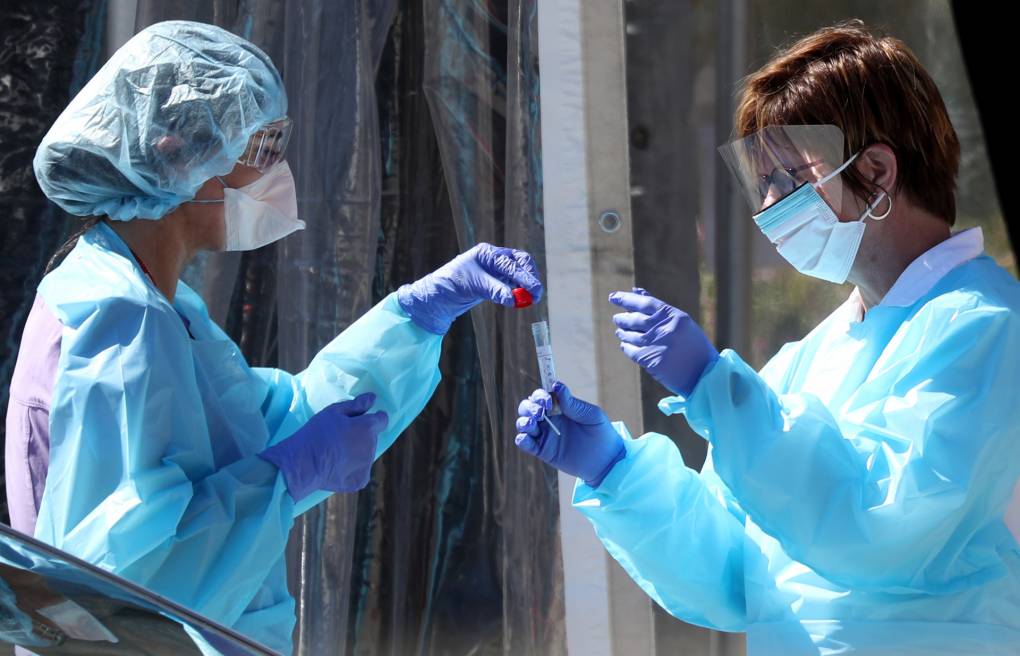
"caption": "Medical personnel secure a sample from a person at a drive-thru COVID-19 testing station at a Kaiser Permanente facility on March 12, 2020, in San Francisco, California.",
"description": null,
"title": "Kaiser Permanente Opens Drive-Thru Coronavirus Testing Station In San Francisco",
"credit": "Justin Sullivan/Getty Images",
"status": "inherit",
"isLoading": false,
"fetchFailed": false
},
"science_1963592": {
"type": "attachments",
"id": "science_1963592",
"meta": {
"index": "attachments_1716263798",
"site": "science",
"id": "1963592",
"found": true
},
"parent": 1963588,
"imgSizes": {
"twentyfourteen-full-width": {
"file": "https://ww2.kqed.org/app/uploads/sites/35/2020/05/Scenario-Top-1600x900-1038x576.jpg",
"width": 1038,
"mimeType": "image/jpeg",
"height": 576
},
"thumbnail": {
"file": "https://ww2.kqed.org/app/uploads/sites/35/2020/05/Scenario-Top-1600x900-160x90.jpg",
"width": 160,
"mimeType": "image/jpeg",
"height": 90
},
"post-thumbnail": {
"file": "https://ww2.kqed.org/app/uploads/sites/35/2020/05/Scenario-Top-1600x900-672x372.jpg",
"width": 672,
"mimeType": "image/jpeg",
"height": 372
},
"kqedFullSize": {
"file": "https://ww2.kqed.org/app/uploads/sites/35/2020/05/Scenario-Top-1600x900.jpg",
"width": 1600,
"height": 900
},
"large": {
"file": "https://ww2.kqed.org/app/uploads/sites/35/2020/05/Scenario-Top-1600x900-1020x574.jpg",
"width": 1020,
"mimeType": "image/jpeg",
"height": 574
},
"medium": {
"file": "https://ww2.kqed.org/app/uploads/sites/35/2020/05/Scenario-Top-1600x900-800x450.jpg",
"width": 800,
"mimeType": "image/jpeg",
"height": 450
},
"medium_large": {
"file": "https://ww2.kqed.org/app/uploads/sites/35/2020/05/Scenario-Top-1600x900-768x432.jpg",
"width": 768,
"mimeType": "image/jpeg",
"height": 432
}
},
"publishDate": 1588698292,
"modified": 1588698302,
"caption": null,
"description": null,
"title": "Scenario-Top-1600x900",
"credit": "HYACINTH EMPINADO/STAT",
"status": "inherit",
"isLoading": false,
"fetchFailed": false
},
"science_1963348": {
"type": "attachments",
"id": "science_1963348",
"meta": {
"index": "attachments_1716263798",
"site": "science",
"id": "1963348",
"found": true
},
"parent": 1963200,
"imgSizes": {
"twentyfourteen-full-width": {
"file": "https://ww2.kqed.org/app/uploads/sites/35/2020/04/YT_Thumb_711_ALT2-1038x576.jpg",
"width": 1038,
"mimeType": "image/jpeg",
"height": 576
},
"thumbnail": {
"file": "https://ww2.kqed.org/app/uploads/sites/35/2020/04/YT_Thumb_711_ALT2-160x90.jpg",
"width": 160,
"mimeType": "image/jpeg",
"height": 90
},
"post-thumbnail": {
"file": "https://ww2.kqed.org/app/uploads/sites/35/2020/04/YT_Thumb_711_ALT2-672x372.jpg",
"width": 672,
"mimeType": "image/jpeg",
"height": 372
},
"kqedFullSize": {
"file": "https://ww2.kqed.org/app/uploads/sites/35/2020/04/YT_Thumb_711_ALT2.jpg",
"width": 3841,
"height": 2161
},
"large": {
"file": "https://ww2.kqed.org/app/uploads/sites/35/2020/04/YT_Thumb_711_ALT2-1020x574.jpg",
"width": 1020,
"mimeType": "image/jpeg",
"height": 574
},
"full-width": {
"file": "https://ww2.kqed.org/app/uploads/sites/35/2020/04/YT_Thumb_711_ALT2-1920x1080.jpg",
"width": 1920,
"mimeType": "image/jpeg",
"height": 1080
},
"medium": {
"file": "https://ww2.kqed.org/app/uploads/sites/35/2020/04/YT_Thumb_711_ALT2-800x450.jpg",
"width": 800,
"mimeType": "image/jpeg",
"height": 450
},
"medium_large": {
"file": "https://ww2.kqed.org/app/uploads/sites/35/2020/04/YT_Thumb_711_ALT2-768x432.jpg",
"width": 768,
"mimeType": "image/jpeg",
"height": 432
}
},
"publishDate": 1588284707,
"modified": 1588284739,
"caption": "The coronavirus",
"description": "The coronavirus",
"title": "YT_Thumb_711_ALT2",
"credit": "Teodros Hailye/KQED",
"status": "inherit",
"isLoading": false,
"fetchFailed": false
},
"science_1958151": {
"type": "attachments",
"id": "science_1958151",
"meta": {
"index": "attachments_1716263798",
"site": "science",
"id": "1958151",
"found": true
},
"parent": 1957877,
"imgSizes": {
"twentyfourteen-full-width": {
"file": "https://ww2.kqed.org/app/uploads/sites/35/2020/03/RS41867_005_KQED_LondonBreed_CoronavirusPressConference_03052020_6099-qut-1038x576.jpg",
"width": 1038,
"mimeType": "image/jpeg",
"height": 576
},
"thumbnail": {
"file": "https://ww2.kqed.org/app/uploads/sites/35/2020/03/RS41867_005_KQED_LondonBreed_CoronavirusPressConference_03052020_6099-qut-160x107.jpg",
"width": 160,
"mimeType": "image/jpeg",
"height": 107
},
"post-thumbnail": {
"file": "https://ww2.kqed.org/app/uploads/sites/35/2020/03/RS41867_005_KQED_LondonBreed_CoronavirusPressConference_03052020_6099-qut-672x372.jpg",
"width": 672,
"mimeType": "image/jpeg",
"height": 372
},
"kqedFullSize": {
"file": "https://ww2.kqed.org/app/uploads/sites/35/2020/03/RS41867_005_KQED_LondonBreed_CoronavirusPressConference_03052020_6099-qut.jpg",
"width": 1920,
"height": 1280
},
"large": {
"file": "https://ww2.kqed.org/app/uploads/sites/35/2020/03/RS41867_005_KQED_LondonBreed_CoronavirusPressConference_03052020_6099-qut-1020x680.jpg",
"width": 1020,
"mimeType": "image/jpeg",
"height": 680
},
"full-width": {
"file": "https://ww2.kqed.org/app/uploads/sites/35/2020/03/RS41867_005_KQED_LondonBreed_CoronavirusPressConference_03052020_6099-qut-1920x1280.jpg",
"width": 1920,
"mimeType": "image/jpeg",
"height": 1280
},
"medium": {
"file": "https://ww2.kqed.org/app/uploads/sites/35/2020/03/RS41867_005_KQED_LondonBreed_CoronavirusPressConference_03052020_6099-qut-800x533.jpg",
"width": 800,
"mimeType": "image/jpeg",
"height": 533
},
"medium_large": {
"file": "https://ww2.kqed.org/app/uploads/sites/35/2020/03/RS41867_005_KQED_LondonBreed_CoronavirusPressConference_03052020_6099-qut-768x512.jpg",
"width": 768,
"mimeType": "image/jpeg",
"height": 512
}
},
"publishDate": 1583447806,
"modified": 1583447882,
"caption": "Mayor London Breed speaks at a press conference at City Hall about the first two confirmed novel coronaviruses (COVID-19) cases in San Francisco on Thursday, Mar. 5, 2020.",
"description": null,
"title": "RS41867_005_KQED_LondonBreed_CoronavirusPressConference_03052020_6099-qut",
"credit": "Beth LaBerge/KQED",
"status": "inherit",
"isLoading": false,
"fetchFailed": false
}
},
"audioPlayerReducer": {
"postId": "stream_live",
"isPaused": true,
"isPlaying": false,
"pfsActive": false,
"pledgeModalIsOpen": true,
"playerDrawerIsOpen": false,
"liveAudioPlayStartedAt": 0,
"liveAudioPlayContext": ""
},
"authorsReducer": {
"byline_science_1963908": {
"type": "authors",
"id": "byline_science_1963908",
"meta": {
"override": true
},
"slug": "byline_science_1963908",
"name": "Usha Lee McFarling, STAT",
"isLoading": false
},
"byline_science_1963899": {
"type": "authors",
"id": "byline_science_1963899",
"meta": {
"override": true
},
"slug": "byline_science_1963899",
"name": "Pien Huang, NPR",
"isLoading": false
},
"byline_science_1963700": {
"type": "authors",
"id": "byline_science_1963700",
"meta": {
"override": true
},
"slug": "byline_science_1963700",
"name": "Laurel Rosenhall \u003cbr />CalMatters\u003cbr>",
"isLoading": false
},
"byline_science_1963588": {
"type": "authors",
"id": "byline_science_1963588",
"meta": {
"override": true
},
"slug": "byline_science_1963588",
"name": "Sharon Begley \u003cbr />STAT\u003cbr>",
"isLoading": false
},
"jennyoh": {
"type": "authors",
"id": "2100",
"meta": {
"index": "authors_1716337520",
"id": "2100",
"found": true
},
"name": "Jenny Oh",
"firstName": "Jenny",
"lastName": "Oh",
"slug": "jennyoh",
"email": "joh@kqed.org",
"display_author_email": false,
"staff_mastheads": [],
"title": "Audience Engagement Producer, Deep Look",
"bio": "Jenny is an Emmy Award-winning producer and is currently the Audience Engagement Producer for KQED Science's \u003cem>Deep Look\u003c/em> online video series. She was also a long-time contributor to Bay Area Bites, KQED's popular food blog. Jenny graduated with honors from New York University’s Tisch School of the Arts Film and Television program and has worked for WNET/PBS, The Learning Channel, Sundance Channel, HBO and the University of California.",
"avatar": "https://secure.gravatar.com/avatar/7ddda0ed657e46dbe66083f569967752?s=600&d=mm&r=g",
"twitter": null,
"facebook": null,
"instagram": null,
"linkedin": null,
"sites": [
{
"site": "arts",
"roles": []
},
{
"site": "pop",
"roles": []
},
{
"site": "about",
"roles": []
},
{
"site": "bayareabites",
"roles": []
},
{
"site": "science",
"roles": []
},
{
"site": "education",
"roles": []
},
{
"site": "quest",
"roles": []
},
{
"site": "food",
"roles": []
}
],
"headData": {
"title": "Jenny Oh | KQED",
"description": "Audience Engagement Producer, Deep Look",
"ogImgSrc": "https://secure.gravatar.com/avatar/7ddda0ed657e46dbe66083f569967752?s=600&d=mm&r=g",
"twImgSrc": "https://secure.gravatar.com/avatar/7ddda0ed657e46dbe66083f569967752?s=600&d=mm&r=g"
},
"isLoading": false,
"link": "/author/jennyoh"
},
"ben-burress": {
"type": "authors",
"id": "6180",
"meta": {
"index": "authors_1716337520",
"id": "6180",
"found": true
},
"name": "Ben Burress",
"firstName": "Ben",
"lastName": "Burress",
"slug": "ben-burress",
"email": "bburress@chabotspace.org",
"display_author_email": false,
"staff_mastheads": [],
"title": null,
"bio": "\u003cstrong>Benjamin Burress\u003c/strong> has been a staff astronomer at Chabot Space & Science Center since July 1999. He graduated from Sonoma State University in 1985 with a bachelor’s degree in physics (and minor in astronomy), after which he signed on for a two-year stint in the Peace Corps, where he taught physics and mathematics in the African nation of Cameroon. From 1989-96 he served on the crew of NASA’s Kuiper Airborne Observatory at Ames Research Center in Mountain View, CA. From 1996-99, he was Head Observer at the Naval Prototype Optical Interferometer program at Lowell Observatory in Flagstaff, AZ.\r\n\r\nRead his \u003ca href=\"http://science.kqed.org/quest/author/ben-burress/\">previous contributions\u003c/a> to \u003ca href=\"http://science.kqed.org/quest/\">QUEST\u003c/a>, a project dedicated to exploring the Science of Sustainability.",
"avatar": "https://secure.gravatar.com/avatar/8263bffa345b7e4923a0b8b9f0f6a161?s=600&d=blank&r=g",
"twitter": null,
"facebook": null,
"instagram": null,
"linkedin": null,
"sites": [
{
"site": "science",
"roles": [
"editor"
]
},
{
"site": "quest",
"roles": [
"subscriber"
]
}
],
"headData": {
"title": "Ben Burress | KQED",
"description": null,
"ogImgSrc": "https://secure.gravatar.com/avatar/8263bffa345b7e4923a0b8b9f0f6a161?s=600&d=blank&r=g",
"twImgSrc": "https://secure.gravatar.com/avatar/8263bffa345b7e4923a0b8b9f0f6a161?s=600&d=blank&r=g"
},
"isLoading": false,
"link": "/author/ben-burress"
},
"lklivans": {
"type": "authors",
"id": "8648",
"meta": {
"index": "authors_1716337520",
"id": "8648",
"found": true
},
"name": "Laura Klivans",
"firstName": "Laura",
"lastName": "Klivans",
"slug": "lklivans",
"email": "lklivans@kqed.org",
"display_author_email": true,
"staff_mastheads": [
"news",
"science"
],
"title": "Reporter",
"bio": "Laura Klivans is an award-winning science reporter for KQED News, where she covers climate change with an eye on both groundbreaking progress and gaps in action. She is the former host of KQED's blockbuster video series about tiny, amazing animals, \u003cem>Deep Look\u003c/em>. Her work reaches national audiences through NPR, \u003cem>Here & Now, \u003c/em>PRI, and other major outlets. \r\n\r\nLaura’s won five Northern California Area Emmy Awards for Deep Look and First Place in the Greater Bay Area Journalism Awards for a podcast exploring how one Oakland neighborhood teamed up to reduce planet-heating pollution.\r\n\r\nBeyond her reporting, she hosts and moderates events. In the past, she taught audio storytelling at the UC Berkeley Graduate School of Journalism, led international education programs, worked with immigrants and refugees along the Thai-Burmese border, taught high schoolers sex ed, and was an actress. \r\n\r\nShe's a former UC Berkeley Human Rights Fellow, USC Center for Health Journalism's California Fellow and Coro Fellow in Public Affairs. Laura has a master’s in journalism from UC Berkeley, a master’s in education from Harvard, and an undergraduate degree from Northwestern University.\r\n\r\nShe loves trying to riddle the meaning out of vanity license plates.",
"avatar": "https://secure.gravatar.com/avatar/2d2ecd1550a494cc10ad4a503406965585902124739e775a9b3817eebf1d88be?s=600&d=blank&r=g",
"twitter": "lauraklivans",
"bluesky": null,
"facebook": null,
"instagram": null,
"linkedin": null,
"sites": [
{
"site": "news",
"roles": [
"editor"
]
},
{
"site": "stateofhealth",
"roles": [
"contributor",
"editor"
]
},
{
"site": "science",
"roles": [
"editor"
]
},
{
"site": "forum",
"roles": [
"editor"
]
}
],
"headData": {
"title": "Laura Klivans | KQED",
"description": "Reporter",
"ogImgSrc": "https://secure.gravatar.com/avatar/2d2ecd1550a494cc10ad4a503406965585902124739e775a9b3817eebf1d88be?s=600&d=blank&r=g",
"twImgSrc": "https://secure.gravatar.com/avatar/2d2ecd1550a494cc10ad4a503406965585902124739e775a9b3817eebf1d88be?s=600&d=blank&r=g"
},
"isLoading": false,
"link": "/author/lklivans"
},
"mpeterson": {
"type": "authors",
"id": "11223",
"meta": {
"index": "authors_1716337520",
"id": "11223",
"found": true
},
"name": "Molly Peterson",
"firstName": "Molly",
"lastName": "Peterson",
"slug": "mpeterson",
"email": "mpeterson@kqed.org",
"display_author_email": false,
"staff_mastheads": [],
"title": null,
"bio": "Molly Peterson reports for KQED science and news on climate change, catastrophe and risk. Previously she was environment correspondent at Southern California Public Radio. Her work has also appeared at The New York Times, The Guardian, on NPR, at High Country News, on Code Switch, and other national outlets. She has been honored with awards from Public Radio News Directors Incorporated, Investigative Reporters and Editors, the Society for Professional Journalists, the Los Angeles Press Club, and RTNDA Edward R. Murrow awards, among others.",
"avatar": "https://secure.gravatar.com/avatar/7908e2807131f776cc8165c649530b05?s=600&d=blank&r=g",
"twitter": "Mollydacious",
"facebook": null,
"instagram": "https://www.instagram.com/radiomolly/",
"linkedin": null,
"sites": [
{
"site": "news",
"roles": [
"subscriber"
]
},
{
"site": "futureofyou",
"roles": [
"editor"
]
},
{
"site": "science",
"roles": [
"editor"
]
}
],
"headData": {
"title": "Molly Peterson | KQED",
"description": null,
"ogImgSrc": "https://secure.gravatar.com/avatar/7908e2807131f776cc8165c649530b05?s=600&d=blank&r=g",
"twImgSrc": "https://secure.gravatar.com/avatar/7908e2807131f776cc8165c649530b05?s=600&d=blank&r=g"
},
"isLoading": false,
"link": "/author/mpeterson"
},
"parcuni": {
"type": "authors",
"id": "11368",
"meta": {
"index": "authors_1716337520",
"id": "11368",
"found": true
},
"name": "Peter Arcuni",
"firstName": "Peter",
"lastName": "Arcuni",
"slug": "parcuni",
"email": "parcuni@KQED.org",
"display_author_email": false,
"staff_mastheads": [
"science"
],
"title": "Reporter",
"bio": "Peter reports radio and online stories for \u003cem>KQED Science\u003c/em>. His work has also appeared on the \u003cem>The California Report\u003c/em> morning show and \u003cem>KQED News\u003c/em>. His production credits include \u003cem>The California Report, The California Report Magazine\u003c/em> and KQED's local news podcast \u003cem>The Bay\u003c/em>. Other credits include NPR's \u003cem>All Things Considered\u003c/em>, WNYC's \u003cem>Science Friday\u003c/em>, WBUR's \u003cem>Here & Now\u003c/em>, WIRED and SFGate. Peter graduated from Brown University and earned a master's degree in journalism from Stanford. He's covered everything from homelessness to wildfires, health, the environment, arts and Thanksgiving in San Quentin prison. In other lives, he played rock n roll music and studied neuroscience. You can email him at: parcuni@kqed.org",
"avatar": "https://secure.gravatar.com/avatar/d5032f6f27199d478af34ad2e1d98732?s=600&d=blank&r=g",
"twitter": "peterarcuni",
"facebook": null,
"instagram": null,
"linkedin": null,
"sites": [
{
"site": "news",
"roles": [
"editor"
]
},
{
"site": "science",
"roles": [
"editor"
]
}
],
"headData": {
"title": "Peter Arcuni | KQED",
"description": "Reporter",
"ogImgSrc": "https://secure.gravatar.com/avatar/d5032f6f27199d478af34ad2e1d98732?s=600&d=blank&r=g",
"twImgSrc": "https://secure.gravatar.com/avatar/d5032f6f27199d478af34ad2e1d98732?s=600&d=blank&r=g"
},
"isLoading": false,
"link": "/author/parcuni"
},
"kevinstark": {
"type": "authors",
"id": "11608",
"meta": {
"index": "authors_1716337520",
"id": "11608",
"found": true
},
"name": "Kevin Stark",
"firstName": "Kevin",
"lastName": "Stark",
"slug": "kevinstark",
"email": "kstark@kqed.org",
"display_author_email": true,
"staff_mastheads": [
"science"
],
"title": "Senior Editor",
"bio": "Kevin is a senior editor for KQED Science, managing the station's health and climate desks. His journalism career began in the Pacific Northwest, and he later became a lead reporter for the San Francisco Public Press. His work has appeared in Pacific Standard magazine, the Energy News Network, the Center for Investigative Reporting's Reveal and WBEZ in Chicago. Kevin joined KQED in 2019, and has covered issues related to energy, wildfire, climate change and the environment.",
"avatar": "https://secure.gravatar.com/avatar/365aaa4b597d3a8374f67504ff0facd323d7906e8eb4be0a7efd2427408e802c?s=600&d=blank&r=g",
"twitter": "starkkev",
"bluesky": null,
"facebook": null,
"instagram": null,
"linkedin": null,
"sites": [
{
"site": "",
"roles": [
"editor"
]
},
{
"site": "news",
"roles": [
"editor"
]
},
{
"site": "science",
"roles": [
"administrator"
]
}
],
"headData": {
"title": "Kevin Stark | KQED",
"description": "Senior Editor",
"ogImgSrc": "https://secure.gravatar.com/avatar/365aaa4b597d3a8374f67504ff0facd323d7906e8eb4be0a7efd2427408e802c?s=600&d=blank&r=g",
"twImgSrc": "https://secure.gravatar.com/avatar/365aaa4b597d3a8374f67504ff0facd323d7906e8eb4be0a7efd2427408e802c?s=600&d=blank&r=g"
},
"isLoading": false,
"link": "/author/kevinstark"
}
},
"pagesReducer": {
"science_tag_coronavirus": {
"type": "terms",
"id": "science_4329",
"meta": {
"index": "terms_1716263798",
"site": "science",
"id": "4329",
"score": 8.457257
},
"featImg": null,
"name": "Coronavirus",
"description": null,
"taxonomy": "tag",
"headData": {
"twImgId": null,
"twTitle": null,
"ogTitle": null,
"ogImgId": null,
"twDescription": null,
"description": null,
"title": "Coronavirus Archives | KQED Science",
"ogDescription": null
},
"ttid": 4329,
"slug": "coronavirus",
"isLoading": false,
"title": "Coronavirus",
"pageMeta": {
"site": "science",
"WpPageTemplate": "page-topic-editorial",
"currentPage": 14
},
"blocks": [
{
"blockName": "kqed/post-list",
"attrs": {
"layout": "cardArticle2",
"query": "posts/science?tag=coronavirus",
"seeMore": false,
"paginated": true,
"page": 14
}
},
{
"blockName": "kqed/ad"
}
]
}
},
"pfsSessionReducer": {},
"postsReducer": {
"stream_live": {
"type": "live",
"id": "stream_live",
"audioUrl": "https://streams.kqed.org/kqedradio",
"title": "Live Stream",
"excerpt": "Live Stream information currently unavailable.",
"link": "/radio",
"featImg": "",
"label": {
"name": "KQED Live",
"link": "/"
}
},
"stream_kqedNewscast": {
"type": "posts",
"id": "stream_kqedNewscast",
"audioUrl": "https://www.kqed.org/.stream/anon/radio/RDnews/newscast.mp3?_=1",
"title": "KQED Newscast",
"featImg": "",
"label": {
"name": "88.5 FM",
"link": "/"
}
},
"science_1963939": {
"type": "posts",
"id": "science_1963939",
"meta": {
"index": "posts_1716263798",
"site": "science",
"id": "1963939",
"score": null,
"sort": [
1589118607000
]
},
"parent": 0,
"labelTerm": {
"site": "science"
},
"blocks": [],
"publishDate": 1589118607,
"format": "standard",
"title": "California Assisted Living, Nursing Homes Want Immunity from Legal Claims",
"headTitle": "California Assisted Living, Nursing Homes Want Immunity from Legal Claims | KQED",
"content": "\u003cp>Groups representing hospitals and long term care homes have asked Gov. Gavin Newsom for broad immunity against legal claims from residents in their care who suffer any injury or death during the COVID-19 pandemic.\u003c/p>\n\u003cp>The reason? Those groups say the pandemic has stretched staffing thin and made medical resources scarce, unprecedented circumstances that demand immunity from legal action.\u003c/p>\n\u003cp>An April 9 letter signed by the California Medical Association, the California Association of Health Plans, the California Hospital Association, the California Assisted Living Association, LeadingAge California, and the California Association of Health Facilities requested an executive order they said was imperative to help the care providers they represent save lives.[pullquote size=\"medium\" align=\"right\" citation=\"Jessica Lehman, director of Senior and Disability Action\"]“Often, staff are forced to work at multiple jobs and multiple facilities, and they themselves are more at risk of contracting the virus and spreading it.”[/pullquote]\u003c/p>\n\u003cp>Nearly half of reported deaths in California blamed on coronavirus have been residents of assisted living and nursing homes. In recent weeks, the state has begun releasing limited information about current coronavirus cases and cumulative deaths in facilities regulated by the California Department of Public Health and the California Department of Social Services.\u003c/p>\n\u003cp>California has some existing protections for physicians and health care providers in times of emergency. The new language proposed by industry trade groups is written broadly, to relieve facilities from the threat of civil and criminal suits, as well as administrative sanctions, for injury, death, and loss stemming from caretaking services during the pandemic.\u003c/p>\n\u003cp>[ad fullwidth]\u003c/p>\n\u003cp>“Skilled nursing facilities have been on the front lines of fighting the COVID-19 pandemic and have suffered from a lack of access to testing and personal protective equipment, diminished nurse staffing and inconsistent directives from county, state and federal agencies,” said Deborah Pacyna, a spokeswoman for the California Association of Healthcare Facilities. “We are seeking baseline protection from the expected surge in litigation that will inevitably engage in the second-guessing of caregivers seeking to do their best under impossible circumstances.”\u003c/p>\n\u003cp>Advocates for older and disabled residents of care facilities, including Senior and Disability Action, California Advocates for Nursing Home Reform, and the Consumer Advocates for RCFE Reform have all objected to the request.\u003cbr>\n[documentcloud url=”https://www.documentcloud.org/documents/6886420-Liability-Protection-Coalition-Letter.html” responsive=true text=false]\u003c/p>\n\u003cp>\u003cem>Read the April 9 letter to Gov. Gavin Newsom, above. \u003c/em>\u003c/p>\n\u003cp>Pat McGinnis, CANHR’s executive director, points out that the state has waived minimum staffing requirements and halted visits to care facilities from regulators, local public advocates, and family members. “We’ve suspended most of the rights for residents, and now the industry wants to suspend their right to sue for elder abuse,” McGinnis said.\u003c/p>\n\u003cp>Advocates also argue that because long term care facilities in California are overwhelmingly operated for-profit, corporate entities compromise care.\u003c/p>\n\u003cp>“They are typically understaffed,” said Jessica Lehman, the director of Senior and Disability Action. “Often, staff are forced to work at multiple jobs and multiple facilities, and they themselves are more at risk of contracting the virus and spreading it.”\u003c/p>\n\u003cp>The governor has not said whether or how he will act on the industry request. Similar arguments have persuaded sixteen other states to offer facilities some level of immunity for actions in care facilities during declared emergencies related to coronavirus, either through executive order or legislation.\u003c/p>\n\u003cp>\u003c/p>\n\u003cp>At the federal level, Congressman Kevin McCarthy, a Republican from Bakersfield, has supported Missouri Senator Mitch McConnell’s call for liability as an essential part of any future COVID-19 relief package. Speaker of the House Nancy Pelosi has said Democrats are “disinclined” to support that call.\u003c/p>\n\n",
"stats": {
"hasVideo": false,
"hasChartOrMap": false,
"hasAudio": false,
"hasPolis": false,
"wordCount": 629,
"hasGoogleForm": false,
"hasGallery": false,
"hasHearkenModule": false,
"iframeSrcs": [],
"paragraphCount": 15
},
"modified": 1704847453,
"excerpt": "Groups representing hospitals and long term care homes have asked Gov. Gavin Newsom for broad immunity against legal claims from residents in their care against any injury or death, arguing that the COVID-19 pandemic has caused staffing shortages and made medical resources scarce.",
"headData": {
"twImgId": "",
"twTitle": "",
"ogTitle": "",
"ogImgId": "",
"twDescription": "",
"description": "Groups representing hospitals and long term care homes have asked Gov. Gavin Newsom for broad immunity against legal claims from residents in their care against any injury or death, arguing that the COVID-19 pandemic has caused staffing shortages and made medical resources scarce.",
"title": "California Assisted Living, Nursing Homes Want Immunity from Legal Claims | KQED",
"ogDescription": "",
"schema": {
"@context": "https://schema.org",
"@type": "Article",
"headline": "California Assisted Living, Nursing Homes Want Immunity from Legal Claims",
"datePublished": "2020-05-10T06:50:07-07:00",
"dateModified": "2024-01-09T16:44:13-08:00",
"image": "https://cdn.kqed.org/wp-content/uploads/2020/02/KQED-OG-Image@1x.png"
}
},
"guestAuthors": [],
"slug": "california-assisted-living-nursing-home-caregivers-want-immunity-from-legal-claims",
"status": "publish",
"sticky": false,
"path": "/science/1963939/california-assisted-living-nursing-home-caregivers-want-immunity-from-legal-claims",
"audioTrackLength": null,
"parsedContent": [
{
"type": "contentString",
"content": "\u003cdiv class=\"post-body\">\u003cp>\u003cp>Groups representing hospitals and long term care homes have asked Gov. Gavin Newsom for broad immunity against legal claims from residents in their care who suffer any injury or death during the COVID-19 pandemic.\u003c/p>\n\u003cp>The reason? Those groups say the pandemic has stretched staffing thin and made medical resources scarce, unprecedented circumstances that demand immunity from legal action.\u003c/p>\n\u003cp>An April 9 letter signed by the California Medical Association, the California Association of Health Plans, the California Hospital Association, the California Assisted Living Association, LeadingAge California, and the California Association of Health Facilities requested an executive order they said was imperative to help the care providers they represent save lives.\u003c/p>\u003c/div>",
"attributes": {
"named": {},
"numeric": []
}
},
{
"type": "component",
"content": "“Often, staff are forced to work at multiple jobs and multiple facilities, and they themselves are more at risk of contracting the virus and spreading it.”",
"name": "pullquote",
"attributes": {
"named": {
"size": "medium",
"align": "right",
"citation": "Jessica Lehman, director of Senior and Disability Action",
"label": ""
},
"numeric": []
}
},
{
"type": "contentString",
"content": "\u003cdiv class=\"post-body\">\u003cp>\u003c/p>\n\u003cp>Nearly half of reported deaths in California blamed on coronavirus have been residents of assisted living and nursing homes. In recent weeks, the state has begun releasing limited information about current coronavirus cases and cumulative deaths in facilities regulated by the California Department of Public Health and the California Department of Social Services.\u003c/p>\n\u003cp>California has some existing protections for physicians and health care providers in times of emergency. The new language proposed by industry trade groups is written broadly, to relieve facilities from the threat of civil and criminal suits, as well as administrative sanctions, for injury, death, and loss stemming from caretaking services during the pandemic.\u003c/p>\n\u003cp>\u003c/p>\u003c/div>",
"attributes": {
"named": {},
"numeric": []
}
},
{
"type": "component",
"content": "",
"name": "ad",
"attributes": {
"named": {
"label": "fullwidth"
},
"numeric": [
"fullwidth"
]
}
},
{
"type": "contentString",
"content": "\u003cdiv class=\"post-body\">\u003cp>\u003c/p>\n\u003cp>“Skilled nursing facilities have been on the front lines of fighting the COVID-19 pandemic and have suffered from a lack of access to testing and personal protective equipment, diminished nurse staffing and inconsistent directives from county, state and federal agencies,” said Deborah Pacyna, a spokeswoman for the California Association of Healthcare Facilities. “We are seeking baseline protection from the expected surge in litigation that will inevitably engage in the second-guessing of caregivers seeking to do their best under impossible circumstances.”\u003c/p>\n\u003cp>Advocates for older and disabled residents of care facilities, including Senior and Disability Action, California Advocates for Nursing Home Reform, and the Consumer Advocates for RCFE Reform have all objected to the request.\u003cbr>\n\u003c/p>\u003c/div>",
"attributes": {
"named": {},
"numeric": []
}
},
{
"type": "component",
"content": "",
"name": "documentcloud",
"attributes": {
"named": {
"url": "”https://www.documentcloud.org/documents/6886420-Liability-Protection-Coalition-Letter.html”",
"responsive": "true",
"text": "false",
"label": ""
},
"numeric": []
}
},
{
"type": "contentString",
"content": "\u003cdiv class=\"post-body\">\u003cp>\u003c/p>\n\u003cp>\u003cem>Read the April 9 letter to Gov. Gavin Newsom, above. \u003c/em>\u003c/p>\n\u003cp>Pat McGinnis, CANHR’s executive director, points out that the state has waived minimum staffing requirements and halted visits to care facilities from regulators, local public advocates, and family members. “We’ve suspended most of the rights for residents, and now the industry wants to suspend their right to sue for elder abuse,” McGinnis said.\u003c/p>\n\u003cp>Advocates also argue that because long term care facilities in California are overwhelmingly operated for-profit, corporate entities compromise care.\u003c/p>\n\u003cp>“They are typically understaffed,” said Jessica Lehman, the director of Senior and Disability Action. “Often, staff are forced to work at multiple jobs and multiple facilities, and they themselves are more at risk of contracting the virus and spreading it.”\u003c/p>\n\u003cp>The governor has not said whether or how he will act on the industry request. Similar arguments have persuaded sixteen other states to offer facilities some level of immunity for actions in care facilities during declared emergencies related to coronavirus, either through executive order or legislation.\u003c/p>\n\u003cp>\u003c/p>\n\u003cp>At the federal level, Congressman Kevin McCarthy, a Republican from Bakersfield, has supported Missouri Senator Mitch McConnell’s call for liability as an essential part of any future COVID-19 relief package. Speaker of the House Nancy Pelosi has said Democrats are “disinclined” to support that call.\u003c/p>\n\n\u003c/div>\u003c/p>",
"attributes": {
"named": {},
"numeric": []
}
}
],
"link": "/science/1963939/california-assisted-living-nursing-home-caregivers-want-immunity-from-legal-claims",
"authors": [
"11223"
],
"categories": [
"science_39",
"science_40",
"science_4450"
],
"tags": [
"science_4329",
"science_4368",
"science_4417",
"science_4008",
"science_4404",
"science_309"
],
"featImg": "science_1963944",
"label": "science"
},
"science_1963908": {
"type": "posts",
"id": "science_1963908",
"meta": {
"index": "posts_1716263798",
"site": "science",
"id": "1963908",
"score": null,
"sort": [
1588989648000
]
},
"parent": 0,
"labelTerm": {},
"blocks": [],
"publishDate": 1588989648,
"format": "standard",
"title": "The Porn Industry Has A Lot of Safety Tips for the COVID-19 Era",
"headTitle": "The Porn Industry Has A Lot of Safety Tips for the COVID-19 Era | KQED",
"content": "\u003cp>As states and employers furiously develop plans to safely reopen workplaces in the midst of the coronavirus pandemic, they’re grappling with what seems like an endless list of questions: where to test, who to test, and how often to test for the virus? Further complicating matters are issues of workers’ privacy, geography, politics, science, and cost. It’s a difficult mandate. But there is one place to look for guidance — the adult film industry.\u003c/p>\n\u003cp>[pullquote size='medium' citation='Dr. Ashish Jha, Harvard University Global Health Institute']‘What the adult film industry has produced has worked, and really could be the kind of tool we need. People can’t get distracted because it’s from a business they don’t approve of.’[/pullquote]Since the late 1990s, when an outbreak of HIV infections threatened to shutter the multibillion-dollar industry, the mainstream porn community has implemented procedures that require all performers to be tested for HIV and a host of other sexually transmitted infections every 14 days before they can be cleared to work. Any HIV-positive test leads to an immediate shutdown of all U.S. sets, followed by detailed contact tracing before sets can reopen. While not perfect, those in the industry say the nationwide PASS program works to protect thousands of performers, ensures safer workplaces, and curtails the spread of disease.\u003c/p>\n\u003cp>“I don’t think I could be in this industry without it. That would be insane. Bareback sex with strangers 20 times a month? It would be like the most dangerous job in the world,” said Lance Hart, a gay and straight adult film performer and independent pornographer in Las Vegas who runs the production companies Sweet Femdom and Man Up Films.\u003c/p>\n\u003cp>In the 20 years it has been in place, PASS has met, and overcome, many of the same challenges that any large-scale coronavirus testing program might encounter, from issues of keeping databases of private medical information secure, preventing the forging of test results, dealing with false positive results, and educating workers about the need for repeated testing to keep workplaces safe. Those devising strategies to reopen workplaces and the larger economy during the coronavirus pandemic say their plans would involve, at their core, processes of rigorous testing, isolation, and contact tracing similar to those used in the adult film industry.\u003c/p>\n\u003cp>[ad fullwidth]\u003c/p>\n\u003cp>“In many ways, what they are doing is a model for what we are trying to do with Covid,” said Ashish Jha, a physician who directs Harvard University’s Global Health Institute and has been calling for widespread national testing to contain the coronavirus. “The adult film industry teaches us that as a proof of concept, this can work. We just have to scale it up.”\u003c/p>\n\u003cp>Jha said he could envision a program similar to PASS where Covid-19 test results are put into a secure database that could be checked to verify whether people had recently tested negative for the virus. “You could imagine TSA verifying someone had tested negative before they were allowed on a flight,” he said. “Testing is particularly important for areas that are high risk, like airplanes or meatpacking plants.”\u003c/p>\n\u003cfigure id=\"attachment_1963924\" class=\"wp-caption alignright\" style=\"max-width: 724px\">\u003ca href=\"https://ww2.kqed.org/app/uploads/sites/35/2020/05/adult-film-inline2.jpg\">\u003cimg loading=\"lazy\" decoding=\"async\" class=\"size-full wp-image-1963924\" src=\"https://ww2.kqed.org/app/uploads/sites/35/2020/05/adult-film-inline2.jpg\" alt=\"\" width=\"724\" height=\"1024\" srcset=\"https://cdn.kqed.org/wp-content/uploads/sites/35/2020/05/adult-film-inline2.jpg 724w, https://cdn.kqed.org/wp-content/uploads/sites/35/2020/05/adult-film-inline2-160x226.jpg 160w\" sizes=\"(max-width: 724px) 100vw, 724px\">\u003c/a>\u003cfigcaption class=\"wp-caption-text\">LAS VEGAS, NV – JANUARY 23: Adult film actress Lotus Lain attends the 2016 Adult Video News Awards at the Hard Rock Hotel & Casino on January 23, 2016 in Las Vegas, Nevada. (Photo by Ethan Miller/Getty Images)\u003c/figcaption>\u003c/figure>\n\u003cp>While it did not cite the adult film industry, a “National Covid-19 Testing Action Plan” released by the Rockefeller Foundation last month included the creation of an “infection database” that could be accessed by employers, schools, TSA, and those scanning tickets for entry into sports or music venues.\u003c/p>\n\u003cp>“What the adult film industry has produced has worked, and really could be the kind of tool we need,” Jha said. “People can’t get distracted because it’s from a business they don’t approve of.”\u003c/p>\n\u003cp>Mike Stabile, communications director for the Free Speech Coalition, the adult entertainment trade association that runs PASS, said the adult film industry understands “better than most the discussion that has to happen for businesses to reopen.”\u003c/p>\n\u003cp>Yet for all of that expertise, it would be hard to imagine the Trump administration, or state politicians, reaching out to the porn industry for guidance. Stabile said that while he has not been contacted by any government officials, he would have plenty of advice to share. “It’s going to be an ongoing process. It’s not going to be a binary open or shut,” he said. “But it’s not as heavy a lift as people think. This is something that’s doable.”\u003c/p>\n\u003cp>Stabile, who is closely following coronavirus news, feels most people are unaware of the need for repeat testing that is standard in his industry. “When you look at the world at large, there’s an idea you’ll be tested once and then go back to work, but with coronavirus, it’s not that simple. We’re looking at a series of regular tests until this gets under control,” he said.\u003c/p>\n\u003cp>[pullquote size='medium' citation='Elizabeth “Betz” Halloran, Center for Inference and Dynamics of Infectious Diseases']‘We can’t sit around for 18 months waiting for a vaccine. We have to find a way out without pharmaceuticals, and that’s repeat testing, taking people out of circulation, and then contact tracing, so it’s an interesting analogy.’[/pullquote]Repeat testing will be necessary for the coronavirus, too, because — like with HIV — there is so much asymptomatic spread of the coronavirus, said Elizabeth “Betz” Halloran, a professor of biostatistics at the University of Washington who directs the Center for Inference and Dynamics of Infectious Diseases at the Fred Hutchinson Cancer Research Center in Seattle.\u003c/p>\n\u003cp>“You’ll have to keep testing, maybe every 10 days. We need simpler tests that people can just do at home,” said Halloran, who envisions a low-cost “10-pack” of tests for home use.\u003c/p>\n\u003cp>“We can’t sit around for 18 months waiting for a vaccine. We have to find a way out without pharmaceuticals, and that’s repeat testing, taking people out of circulation, and then contact tracing, so it’s an interesting analogy,” said Halloran, who is working with colleagues to model a plan where the disease could be kept at levels that would not exceed health care capacity and that would require quarantining less than 10% of people.\u003c/p>\n\u003cp>Performers say they have a lot to teach the rest of the post-Covid-19 world. “We’re already used to working in an environment of risk. That’s something the rest of the normal world is just learning to do,” said Lotus Lain, a bisexual adult film actress who works with Stabile’s group as an advocate for other performers.\u003c/p>\n\u003cp>Lain said the porn sets she works on are extremely clean and precautions are taken to limit infectious-disease risk. “All of the things people are looking for right now — gloves, masks, alcohol wipes — we have all those things on sets. It’s standard operating procedure,” she said. “I hope other industries look to our industry not just to learn, but to credit us as well.”\u003c/p>\n\u003cfigure id=\"attachment_1963929\" class=\"wp-caption alignleft\" style=\"max-width: 1135px\">\u003ca href=\"https://ww2.kqed.org/app/uploads/sites/35/2020/05/Adult-film-inline3.jpg\">\u003cimg loading=\"lazy\" decoding=\"async\" class=\"size-full wp-image-1963929\" src=\"https://ww2.kqed.org/app/uploads/sites/35/2020/05/Adult-film-inline3.jpg\" alt=\"Lance Hart, an adult film performer who also runs two production companies poses in a white shirt, pink tie, and white furry coat at the 2019 XBiz Awards in Los Angeles.\" width=\"1135\" height=\"902\" srcset=\"https://cdn.kqed.org/wp-content/uploads/sites/35/2020/05/Adult-film-inline3.jpg 1135w, https://cdn.kqed.org/wp-content/uploads/sites/35/2020/05/Adult-film-inline3-160x127.jpg 160w, https://cdn.kqed.org/wp-content/uploads/sites/35/2020/05/Adult-film-inline3-800x636.jpg 800w, https://cdn.kqed.org/wp-content/uploads/sites/35/2020/05/Adult-film-inline3-768x610.jpg 768w, https://cdn.kqed.org/wp-content/uploads/sites/35/2020/05/Adult-film-inline3-1020x811.jpg 1020w\" sizes=\"(max-width: 1135px) 100vw, 1135px\">\u003c/a>\u003cfigcaption class=\"wp-caption-text\">Lance Hart, an adult film performer who also runs two production companies, attends the 2019 XBIZ Awards in Los Angeles. \u003ccite>(Jesse Grant/Getty Images for XBIZ Awards)\u003c/cite>\u003c/figcaption>\u003c/figure>\n\u003cp>AIDS experts say the testing program within the adult film industry provides insight into how we might build national testing programs to safeguard workplaces, but also helps illustrate the many challenges that lie ahead, in part because the coronavirus has proved so contagious.\u003c/p>\n\u003cp>“HIV is our prior pandemic. Surely we can learn from that,” said Robert Gallo, the virologist who co-discovered HIV and now directs the Institute of Human Virology at the University of Maryland School of Medicine. But Gallo said preventing the spread of HIV in the film industry is a far more tractable problem than reining in the novel coronavirus.\u003c/p>\n\u003cp>“You have to deal with every virus differently,” said Gallo, who in 2011 co-founded the Global Virus Network, a consortium working to prevent and eradicate viral disease. HIV, he said, was difficult to contain because symptoms don’t occur for years, but it was also harder to transmit. “This virus is viciously infectious,” he said. “It’s as infectious as anything I’ve ever heard of.” One key to containment, he added, would be to take time now, before widespread testing begins, to ensure tests are highly accurate and avoid the false positive results caused by cross reactions with other common coronaviruses.\u003c/p>\n\u003cp>Pamina Gorbach, a professor of infectious disease epidemiology at UCLA’s Fielding School of Public Health, has studied the spread of sexually transmitted diseases in the adult film industry. She says the testing program is a step in the right direction to protect the health of performers, but thinks there is room for improvement.\u003c/p>\n\u003cp>[pullquote size='medium' citation='Mike Stabile, Free Speech Coalition']‘We’re asking questions like whether directors and camera people can shoot with N95 masks on. We are actively trying to figure out how to make sets safe, and that means coronavirus as well as HIV.’[/pullquote]Gorbach’s 2017 study of 360 adult film workers showed 24% of performers were infected with either chlamydia or gonorrhea. One-third of those infections were found in the throat or rectum, she said, undetectable by the urine tests the industry uses to screen for sexually transmitted infections and serving as reservoirs for ongoing transmission. The findings show that testing protocols need to be carefully thought through, she said. (Chlamydia and gonorrhea, for example, can be transmitted within the 14-day repeat testing window that was chosen because it works to prevent HIV transmission.)\u003c/p>\n\u003cp>Her study also found more than 20% of film workers were self-treating without medical advice when they had symptoms, hoping to shorten the time they might miss work. Gorbach said she feared the same thing could happen with Covid-19, with people misusing or overusing inappropriate treatments in an attempt to cure themselves or mask symptoms so they won’t miss work. (Porn performers don’t get paid when they can’t get to sets, just like other workers without paid sick leave.)\u003c/p>\n\u003cp>Gorbach said she did see clear lessons that coronavirus testing programs could take from the film industry, including thinking about how to address people who “float,” or work at multiple locations that have vastly different standards for screening or protection. “People in nursing homes float, just like the adult film industry. They float, they work at multiple places with different rules and standards,” she said. “If one place they work screens for infection and one doesn’t, they can take the infection from one place to another.”\u003c/p>\n\u003cp>The film industry deals with this through frequent testing, and Stabile said most performers won’t work with untested partners. While the testing program is voluntary, Stabile said clear test results are a requirement on most mainstream sets.\u003c/p>\n\u003cp>Who would pay for tests is also an issue. In the film industry, performers generally pay the roughly $150 testing fee to be cleared to work. Public health officials argue that workers, especially low-wage workers, should not bear the brunt of coronavirus-testing costs. “In public health, we try to reduce barriers to prevent the spread of disease, especially economic barriers,” said Angela Bazzi, an assistant professor of community health sciences at Boston University School of Public Health who has studied the health of sex workers in Mexico, Kenya, Ghana, and Boston. “If we place this burden on individuals, that’s worrisome.”\u003c/p>\n\u003cp>The geography of testing is also a concern; when permits and condoms were required on film sets in Los Angeles, many producers moved filming to less restrictive locations. Employers might do the same, experts said, to avoid coronavirus testing programs they deem costly or onerous.\u003c/p>\n\u003cp>Bazzi said it was fascinating to think about what could be learned from a program that increased safety for actors in the adult film industry. “It’s informative,” she said. “They’ve clearly gone through a decision-making process.” But she added that coronavirus testing would likely be far trickier for practical reasons. Adult film testing started more than a decade after the HIV outbreak, and only after years of research to improve HIV tests. Coronavirus tests are still a work in progress.\u003c/p>\n\u003cp>“In HIV, we saw this progression of tests that took decades, and there are still new tests being developed,” Bazzi said. “With coronavirus, there are still a lot of unknowns with testing.”\u003c/p>\n\u003cp>Politics will also likely play a role in coronavirus testing programs, if the film industry is an indicator. The testing program continually comes under fire from the AIDS Healthcare Foundation, whose leaders think testing does not do enough to prevent on-set HIV transmission and that condoms should be required. Another issue has been a simmering argument over whether HIV-positive performers who have such low levels of the virus that they cannot transmit it should be allowed to participate in filming. For now, any HIV-positive result, regardless of viral titre, disqualifies a performer from being cleared to film in the PASS program.\u003c/p>\n\u003cp>Now, fears about sexually transmitted infections have faded into the background as those in the film industry grapple with the coronavirus. Performers can obtain the tests they need to be cleared to work because medical clinics remain open, but Stabile said few were participating, mainly because production is on hold due to the coronavirus. (People can still shoot solo videos, or videos with people they are quarantining with.)\u003c/p>\n\u003cp>Like many industries, Stabile’s group is trying to determine when and how it could safely resume work. Like workers across the country, those in the film industry are feeling the economic pain of loss of work — although those who run subscription porn sites say their business is booming during quarantine. “My revenue is through the roof,” said Hart, who, while at home with his wife and four cats, is raising money for makeup artists, production assistants, and other set workers who are struggling.\u003c/p>\n\u003cp>A Free Speech Coalition task force is meeting twice a week by Zoom, grappling with questions like whether they can incorporate Covid-19 in their testing protocols and how to protect camera operators, makeup artists, and other on-set employees that did not require testing before. “We’re asking questions like whether directors and camera people can shoot with N95 masks on,” Stabile said. “We are actively trying to figure out how to make sets safe, and that means coronavirus as well as HIV.”\u003c/p>\n\u003cp>[ad floatright]\u003c/p>\n",
"stats": {
"hasVideo": false,
"hasChartOrMap": false,
"hasAudio": false,
"hasPolis": false,
"wordCount": 2565,
"hasGoogleForm": false,
"hasGallery": false,
"hasHearkenModule": false,
"iframeSrcs": [],
"paragraphCount": 34
},
"modified": 1704847456,
"excerpt": "The adult film industry uses testing and contact tracing to safeguard performers from HIV. The industry has dealt with privacy issues, false positives, and education.",
"headData": {
"twImgId": "",
"twTitle": "",
"ogTitle": "",
"ogImgId": "",
"twDescription": "",
"description": "The adult film industry uses testing and contact tracing to safeguard performers from HIV. The industry has dealt with privacy issues, false positives, and education.",
"title": "The Porn Industry Has A Lot of Safety Tips for the COVID-19 Era | KQED",
"ogDescription": "",
"schema": {
"@context": "https://schema.org",
"@type": "Article",
"headline": "The Porn Industry Has A Lot of Safety Tips for the COVID-19 Era",
"datePublished": "2020-05-08T19:00:48-07:00",
"dateModified": "2024-01-09T16:44:16-08:00",
"image": "https://cdn.kqed.org/wp-content/uploads/2020/02/KQED-OG-Image@1x.png"
}
},
"guestAuthors": [],
"slug": "the-porn-industry-has-a-lot-of-safety-tips-for-the-covid-19-era",
"status": "publish",
"nprByline": "Usha Lee McFarling, STAT",
"sticky": false,
"source": "STAT",
"path": "/science/1963908/the-porn-industry-has-a-lot-of-safety-tips-for-the-covid-19-era",
"audioTrackLength": null,
"parsedContent": [
{
"type": "contentString",
"content": "\u003cdiv class=\"post-body\">\u003cp>\u003cp>As states and employers furiously develop plans to safely reopen workplaces in the midst of the coronavirus pandemic, they’re grappling with what seems like an endless list of questions: where to test, who to test, and how often to test for the virus? Further complicating matters are issues of workers’ privacy, geography, politics, science, and cost. It’s a difficult mandate. But there is one place to look for guidance — the adult film industry.\u003c/p>\n\u003cp>\u003c/p>\u003c/div>",
"attributes": {
"named": {},
"numeric": []
}
},
{
"type": "component",
"content": "‘What the adult film industry has produced has worked, and really could be the kind of tool we need. People can’t get distracted because it’s from a business they don’t approve of.’",
"name": "pullquote",
"attributes": {
"named": {
"size": "medium",
"citation": "Dr. Ashish Jha, Harvard University Global Health Institute",
"label": ""
},
"numeric": []
}
},
{
"type": "contentString",
"content": "\u003cdiv class=\"post-body\">\u003cp>Since the late 1990s, when an outbreak of HIV infections threatened to shutter the multibillion-dollar industry, the mainstream porn community has implemented procedures that require all performers to be tested for HIV and a host of other sexually transmitted infections every 14 days before they can be cleared to work. Any HIV-positive test leads to an immediate shutdown of all U.S. sets, followed by detailed contact tracing before sets can reopen. While not perfect, those in the industry say the nationwide PASS program works to protect thousands of performers, ensures safer workplaces, and curtails the spread of disease.\u003c/p>\n\u003cp>“I don’t think I could be in this industry without it. That would be insane. Bareback sex with strangers 20 times a month? It would be like the most dangerous job in the world,” said Lance Hart, a gay and straight adult film performer and independent pornographer in Las Vegas who runs the production companies Sweet Femdom and Man Up Films.\u003c/p>\n\u003cp>In the 20 years it has been in place, PASS has met, and overcome, many of the same challenges that any large-scale coronavirus testing program might encounter, from issues of keeping databases of private medical information secure, preventing the forging of test results, dealing with false positive results, and educating workers about the need for repeated testing to keep workplaces safe. Those devising strategies to reopen workplaces and the larger economy during the coronavirus pandemic say their plans would involve, at their core, processes of rigorous testing, isolation, and contact tracing similar to those used in the adult film industry.\u003c/p>\n\u003cp>\u003c/p>\u003c/div>",
"attributes": {
"named": {},
"numeric": []
}
},
{
"type": "component",
"content": "",
"name": "ad",
"attributes": {
"named": {
"label": "fullwidth"
},
"numeric": [
"fullwidth"
]
}
},
{
"type": "contentString",
"content": "\u003cdiv class=\"post-body\">\u003cp>\u003c/p>\n\u003cp>“In many ways, what they are doing is a model for what we are trying to do with Covid,” said Ashish Jha, a physician who directs Harvard University’s Global Health Institute and has been calling for widespread national testing to contain the coronavirus. “The adult film industry teaches us that as a proof of concept, this can work. We just have to scale it up.”\u003c/p>\n\u003cp>Jha said he could envision a program similar to PASS where Covid-19 test results are put into a secure database that could be checked to verify whether people had recently tested negative for the virus. “You could imagine TSA verifying someone had tested negative before they were allowed on a flight,” he said. “Testing is particularly important for areas that are high risk, like airplanes or meatpacking plants.”\u003c/p>\n\u003cfigure id=\"attachment_1963924\" class=\"wp-caption alignright\" style=\"max-width: 724px\">\u003ca href=\"https://ww2.kqed.org/app/uploads/sites/35/2020/05/adult-film-inline2.jpg\">\u003cimg loading=\"lazy\" decoding=\"async\" class=\"size-full wp-image-1963924\" src=\"https://ww2.kqed.org/app/uploads/sites/35/2020/05/adult-film-inline2.jpg\" alt=\"\" width=\"724\" height=\"1024\" srcset=\"https://cdn.kqed.org/wp-content/uploads/sites/35/2020/05/adult-film-inline2.jpg 724w, https://cdn.kqed.org/wp-content/uploads/sites/35/2020/05/adult-film-inline2-160x226.jpg 160w\" sizes=\"(max-width: 724px) 100vw, 724px\">\u003c/a>\u003cfigcaption class=\"wp-caption-text\">LAS VEGAS, NV – JANUARY 23: Adult film actress Lotus Lain attends the 2016 Adult Video News Awards at the Hard Rock Hotel & Casino on January 23, 2016 in Las Vegas, Nevada. (Photo by Ethan Miller/Getty Images)\u003c/figcaption>\u003c/figure>\n\u003cp>While it did not cite the adult film industry, a “National Covid-19 Testing Action Plan” released by the Rockefeller Foundation last month included the creation of an “infection database” that could be accessed by employers, schools, TSA, and those scanning tickets for entry into sports or music venues.\u003c/p>\n\u003cp>“What the adult film industry has produced has worked, and really could be the kind of tool we need,” Jha said. “People can’t get distracted because it’s from a business they don’t approve of.”\u003c/p>\n\u003cp>Mike Stabile, communications director for the Free Speech Coalition, the adult entertainment trade association that runs PASS, said the adult film industry understands “better than most the discussion that has to happen for businesses to reopen.”\u003c/p>\n\u003cp>Yet for all of that expertise, it would be hard to imagine the Trump administration, or state politicians, reaching out to the porn industry for guidance. Stabile said that while he has not been contacted by any government officials, he would have plenty of advice to share. “It’s going to be an ongoing process. It’s not going to be a binary open or shut,” he said. “But it’s not as heavy a lift as people think. This is something that’s doable.”\u003c/p>\n\u003cp>Stabile, who is closely following coronavirus news, feels most people are unaware of the need for repeat testing that is standard in his industry. “When you look at the world at large, there’s an idea you’ll be tested once and then go back to work, but with coronavirus, it’s not that simple. We’re looking at a series of regular tests until this gets under control,” he said.\u003c/p>\n\u003cp>\u003c/p>\u003c/div>",
"attributes": {
"named": {},
"numeric": []
}
},
{
"type": "component",
"content": "‘We can’t sit around for 18 months waiting for a vaccine. We have to find a way out without pharmaceuticals, and that’s repeat testing, taking people out of circulation, and then contact tracing, so it’s an interesting analogy.’",
"name": "pullquote",
"attributes": {
"named": {
"size": "medium",
"citation": "Elizabeth “Betz” Halloran, Center for Inference and Dynamics of Infectious Diseases",
"label": ""
},
"numeric": []
}
},
{
"type": "contentString",
"content": "\u003cdiv class=\"post-body\">\u003cp>Repeat testing will be necessary for the coronavirus, too, because — like with HIV — there is so much asymptomatic spread of the coronavirus, said Elizabeth “Betz” Halloran, a professor of biostatistics at the University of Washington who directs the Center for Inference and Dynamics of Infectious Diseases at the Fred Hutchinson Cancer Research Center in Seattle.\u003c/p>\n\u003cp>“You’ll have to keep testing, maybe every 10 days. We need simpler tests that people can just do at home,” said Halloran, who envisions a low-cost “10-pack” of tests for home use.\u003c/p>\n\u003cp>“We can’t sit around for 18 months waiting for a vaccine. We have to find a way out without pharmaceuticals, and that’s repeat testing, taking people out of circulation, and then contact tracing, so it’s an interesting analogy,” said Halloran, who is working with colleagues to model a plan where the disease could be kept at levels that would not exceed health care capacity and that would require quarantining less than 10% of people.\u003c/p>\n\u003cp>Performers say they have a lot to teach the rest of the post-Covid-19 world. “We’re already used to working in an environment of risk. That’s something the rest of the normal world is just learning to do,” said Lotus Lain, a bisexual adult film actress who works with Stabile’s group as an advocate for other performers.\u003c/p>\n\u003cp>Lain said the porn sets she works on are extremely clean and precautions are taken to limit infectious-disease risk. “All of the things people are looking for right now — gloves, masks, alcohol wipes — we have all those things on sets. It’s standard operating procedure,” she said. “I hope other industries look to our industry not just to learn, but to credit us as well.”\u003c/p>\n\u003cfigure id=\"attachment_1963929\" class=\"wp-caption alignleft\" style=\"max-width: 1135px\">\u003ca href=\"https://ww2.kqed.org/app/uploads/sites/35/2020/05/Adult-film-inline3.jpg\">\u003cimg loading=\"lazy\" decoding=\"async\" class=\"size-full wp-image-1963929\" src=\"https://ww2.kqed.org/app/uploads/sites/35/2020/05/Adult-film-inline3.jpg\" alt=\"Lance Hart, an adult film performer who also runs two production companies poses in a white shirt, pink tie, and white furry coat at the 2019 XBiz Awards in Los Angeles.\" width=\"1135\" height=\"902\" srcset=\"https://cdn.kqed.org/wp-content/uploads/sites/35/2020/05/Adult-film-inline3.jpg 1135w, https://cdn.kqed.org/wp-content/uploads/sites/35/2020/05/Adult-film-inline3-160x127.jpg 160w, https://cdn.kqed.org/wp-content/uploads/sites/35/2020/05/Adult-film-inline3-800x636.jpg 800w, https://cdn.kqed.org/wp-content/uploads/sites/35/2020/05/Adult-film-inline3-768x610.jpg 768w, https://cdn.kqed.org/wp-content/uploads/sites/35/2020/05/Adult-film-inline3-1020x811.jpg 1020w\" sizes=\"(max-width: 1135px) 100vw, 1135px\">\u003c/a>\u003cfigcaption class=\"wp-caption-text\">Lance Hart, an adult film performer who also runs two production companies, attends the 2019 XBIZ Awards in Los Angeles. \u003ccite>(Jesse Grant/Getty Images for XBIZ Awards)\u003c/cite>\u003c/figcaption>\u003c/figure>\n\u003cp>AIDS experts say the testing program within the adult film industry provides insight into how we might build national testing programs to safeguard workplaces, but also helps illustrate the many challenges that lie ahead, in part because the coronavirus has proved so contagious.\u003c/p>\n\u003cp>“HIV is our prior pandemic. Surely we can learn from that,” said Robert Gallo, the virologist who co-discovered HIV and now directs the Institute of Human Virology at the University of Maryland School of Medicine. But Gallo said preventing the spread of HIV in the film industry is a far more tractable problem than reining in the novel coronavirus.\u003c/p>\n\u003cp>“You have to deal with every virus differently,” said Gallo, who in 2011 co-founded the Global Virus Network, a consortium working to prevent and eradicate viral disease. HIV, he said, was difficult to contain because symptoms don’t occur for years, but it was also harder to transmit. “This virus is viciously infectious,” he said. “It’s as infectious as anything I’ve ever heard of.” One key to containment, he added, would be to take time now, before widespread testing begins, to ensure tests are highly accurate and avoid the false positive results caused by cross reactions with other common coronaviruses.\u003c/p>\n\u003cp>Pamina Gorbach, a professor of infectious disease epidemiology at UCLA’s Fielding School of Public Health, has studied the spread of sexually transmitted diseases in the adult film industry. She says the testing program is a step in the right direction to protect the health of performers, but thinks there is room for improvement.\u003c/p>\n\u003cp>\u003c/p>\u003c/div>",
"attributes": {
"named": {},
"numeric": []
}
},
{
"type": "component",
"content": "‘We’re asking questions like whether directors and camera people can shoot with N95 masks on. We are actively trying to figure out how to make sets safe, and that means coronavirus as well as HIV.’",
"name": "pullquote",
"attributes": {
"named": {
"size": "medium",
"citation": "Mike Stabile, Free Speech Coalition",
"label": ""
},
"numeric": []
}
},
{
"type": "contentString",
"content": "\u003cdiv class=\"post-body\">\u003cp>Gorbach’s 2017 study of 360 adult film workers showed 24% of performers were infected with either chlamydia or gonorrhea. One-third of those infections were found in the throat or rectum, she said, undetectable by the urine tests the industry uses to screen for sexually transmitted infections and serving as reservoirs for ongoing transmission. The findings show that testing protocols need to be carefully thought through, she said. (Chlamydia and gonorrhea, for example, can be transmitted within the 14-day repeat testing window that was chosen because it works to prevent HIV transmission.)\u003c/p>\n\u003cp>Her study also found more than 20% of film workers were self-treating without medical advice when they had symptoms, hoping to shorten the time they might miss work. Gorbach said she feared the same thing could happen with Covid-19, with people misusing or overusing inappropriate treatments in an attempt to cure themselves or mask symptoms so they won’t miss work. (Porn performers don’t get paid when they can’t get to sets, just like other workers without paid sick leave.)\u003c/p>\n\u003cp>Gorbach said she did see clear lessons that coronavirus testing programs could take from the film industry, including thinking about how to address people who “float,” or work at multiple locations that have vastly different standards for screening or protection. “People in nursing homes float, just like the adult film industry. They float, they work at multiple places with different rules and standards,” she said. “If one place they work screens for infection and one doesn’t, they can take the infection from one place to another.”\u003c/p>\n\u003cp>The film industry deals with this through frequent testing, and Stabile said most performers won’t work with untested partners. While the testing program is voluntary, Stabile said clear test results are a requirement on most mainstream sets.\u003c/p>\n\u003cp>Who would pay for tests is also an issue. In the film industry, performers generally pay the roughly $150 testing fee to be cleared to work. Public health officials argue that workers, especially low-wage workers, should not bear the brunt of coronavirus-testing costs. “In public health, we try to reduce barriers to prevent the spread of disease, especially economic barriers,” said Angela Bazzi, an assistant professor of community health sciences at Boston University School of Public Health who has studied the health of sex workers in Mexico, Kenya, Ghana, and Boston. “If we place this burden on individuals, that’s worrisome.”\u003c/p>\n\u003cp>The geography of testing is also a concern; when permits and condoms were required on film sets in Los Angeles, many producers moved filming to less restrictive locations. Employers might do the same, experts said, to avoid coronavirus testing programs they deem costly or onerous.\u003c/p>\n\u003cp>Bazzi said it was fascinating to think about what could be learned from a program that increased safety for actors in the adult film industry. “It’s informative,” she said. “They’ve clearly gone through a decision-making process.” But she added that coronavirus testing would likely be far trickier for practical reasons. Adult film testing started more than a decade after the HIV outbreak, and only after years of research to improve HIV tests. Coronavirus tests are still a work in progress.\u003c/p>\n\u003cp>“In HIV, we saw this progression of tests that took decades, and there are still new tests being developed,” Bazzi said. “With coronavirus, there are still a lot of unknowns with testing.”\u003c/p>\n\u003cp>Politics will also likely play a role in coronavirus testing programs, if the film industry is an indicator. The testing program continually comes under fire from the AIDS Healthcare Foundation, whose leaders think testing does not do enough to prevent on-set HIV transmission and that condoms should be required. Another issue has been a simmering argument over whether HIV-positive performers who have such low levels of the virus that they cannot transmit it should be allowed to participate in filming. For now, any HIV-positive result, regardless of viral titre, disqualifies a performer from being cleared to film in the PASS program.\u003c/p>\n\u003cp>Now, fears about sexually transmitted infections have faded into the background as those in the film industry grapple with the coronavirus. Performers can obtain the tests they need to be cleared to work because medical clinics remain open, but Stabile said few were participating, mainly because production is on hold due to the coronavirus. (People can still shoot solo videos, or videos with people they are quarantining with.)\u003c/p>\n\u003cp>Like many industries, Stabile’s group is trying to determine when and how it could safely resume work. Like workers across the country, those in the film industry are feeling the economic pain of loss of work — although those who run subscription porn sites say their business is booming during quarantine. “My revenue is through the roof,” said Hart, who, while at home with his wife and four cats, is raising money for makeup artists, production assistants, and other set workers who are struggling.\u003c/p>\n\u003cp>A Free Speech Coalition task force is meeting twice a week by Zoom, grappling with questions like whether they can incorporate Covid-19 in their testing protocols and how to protect camera operators, makeup artists, and other on-set employees that did not require testing before. “We’re asking questions like whether directors and camera people can shoot with N95 masks on,” Stabile said. “We are actively trying to figure out how to make sets safe, and that means coronavirus as well as HIV.”\u003c/p>\n\u003cp>\u003c/p>\u003c/div>",
"attributes": {
"named": {},
"numeric": []
}
},
{
"type": "component",
"content": "",
"name": "ad",
"attributes": {
"named": {
"label": "floatright"
},
"numeric": [
"floatright"
]
}
},
{
"type": "contentString",
"content": "\u003cdiv class=\"post-body\">\u003cp>\u003c/p>\n\u003c/div>\u003c/p>",
"attributes": {
"named": {},
"numeric": []
}
}
],
"link": "/science/1963908/the-porn-industry-has-a-lot-of-safety-tips-for-the-covid-19-era",
"authors": [
"byline_science_1963908"
],
"categories": [
"science_3890",
"science_40",
"science_4450"
],
"tags": [
"science_4329"
],
"featImg": "science_1963919",
"label": "source_science_1963908"
},
"science_1963899": {
"type": "posts",
"id": "science_1963899",
"meta": {
"index": "posts_1716263798",
"site": "science",
"id": "1963899",
"score": null,
"sort": [
1588978843000
]
},
"parent": 0,
"labelTerm": {},
"blocks": [],
"publishDate": 1588978843,
"format": "standard",
"title": "The Coronavirus Is Mutating. That's Normal. Does That Mean It's More Dangerous?",
"headTitle": "The Coronavirus Is Mutating. That’s Normal. Does That Mean It’s More Dangerous? | KQED",
"content": "\u003cp>This week, the question of mutation has been front and center in coverage of the coronavirus — from controversial claims about changes that make the virus more contagious to reassurances that any mutations are not yet consequential.\u003c/p>\n\u003cp>Here are some of the questions being raised — and what the specialists can (and can’t yet) say to answer them.\u003c/p>\n\u003cp>\u003cstrong>Is the coronavirus mutating?\u003c/strong>\u003c/p>\n\u003cp>Researchers say the coronavirus is \u003ca href=\"https://www.npr.org/sections/goatsandsoda/2020/03/25/820998549/the-coronavirus-is-mutating-but-that-may-not-be-a-problem-for-humans\">making small changes\u003c/a> to itself as they would expect it to — at a relatively predictable and steady rate of around one to two changes per month.\u003c/p>\n\u003cp>“Viruses mutate naturally as part of their life cycle,” says Ewan Harrison, scientific project manager for the\u003ca href=\"https://www.cam.ac.uk/research/news/cambridge-to-spearhead-ps20million-alliance-to-map-spread-of-covid-19-coronavirus\"> COVID-19 Genomics UK Consortium\u003c/a>. The coronavirus is no different.\u003c/p>\n\u003cp>[ad fullwidth]\u003c/p>\n\u003cp>When a virus infects a person, it enters their cells and makes copies of itself, which then circulate through the body or are transmitted — respiratory droplets is one method — to other humans.\u003c/p>\n\u003cp>Inevitably, viruses “make mistakes in their genomes” as they copy themselves, Harrison says. Those changes can accumulate and carry over to future copies of the virus. Mutations are akin to typos in text — most typos are nonevents, but some can change the meaning of a word or sentence. Likewise, many mutations will be dead ends with no effect on people who are infected. But some of these mutations in a virus may change how quickly it infects people and replicates, or what kind of damage it does to cells.\u003c/p>\n\u003cp>These small, cumulative changes are useful to researchers, because they act as identification cards that help trace the pathway of the virus through groups of people over time. For instance, in a \u003ca href=\"https://jvi.asm.org/content/early/2020/04/30/JVI.00711-20\">surveillance study\u003c/a> on the Arizona State University campus, researchers found that the people who were showing up sick in mid-March with the coronavirus had different versions of the virus from each other. Comparing the virus genomes helped them figure out that the spike in mid-March cases probably didn’t signify an outbreak on campus; the cases had had likely caught this version of the virus elsewhere, perhaps when they traveled for spring break, and brought it back. So tracking virus genomes is valuable in tracing how and where the virus is spreading.\u003c/p>\n\u003cp>\u003cstrong>Is the coronavirus becoming more transmissible?\u003c/strong>\u003c/p>\n\u003cp>Twitter lit up this week when a \u003ca href=\"https://www.biorxiv.org/content/10.1101/2020.04.29.069054v1\">draft research paper\u003c/a> posted to the preprint server bioRxiv got picked up by the media. The paper suggests in the title that their analysis of coronavirus mutations “reveals the emergence of a more transmissible form of SARS-CoV-2.”\u003c/p>\n\u003cp>The study was conducted by researchers at Los Alamos National Laboratory, The University of Sheffield and Duke. They analyzed publicly available genome sequences from around the world posted on \u003ca href=\"https://www.gisaid.org/\">GISAID\u003c/a>, a global research platform that has amassed over 16,000 coronavirus sequences to date.\u003c/p>\n\u003cp>The researchers found that a version of the virus, which was first detected in Europe in early February, appears to have become the most common strain in the U.S., Australia, parts of Africa — basically, anywhere it spread. The study authors hypothesize that a mutation in this virus strain, which changes one amino acid in the part of the coronavirus that finds and binds to cells, could cause the virus to spread more easily.\u003c/p>\n\u003cp>“I think that it is an important observation,” says \u003ca href=\"https://www.mailman.columbia.edu/research/center-infection-and-immunity/angela-rasmussen-phd\">Angela Rasmussen\u003c/a>, a virologist at Columbia Mailman School of Public Health, “We have seen in other virus epidemics, such as the Ebola epidemic, that there are these mutations that seem to persist and become the dominant form of the virus.”\u003c/p>\n\u003cp>However, Rasmussen says, there’s no clear evidence that the mutation referenced in the paper does anything to change how the virus spreads.\u003c/p>\n\u003cp>Other factors could also account for why the virus from Europe is dominant, says \u003ca href=\"https://vet.uga.edu/person/justin-bahl/\">Justin Bahl\u003c/a>, a computational biologist at University of Georgia. It could possibly be explained by the so-called “founder effect,” where the European version spread rapidly across international borders and established itself as the dominant strain because countries were slow to lock down.\u003c/p>\n\u003cp>To prove whether the mutation identified in the paper causes the virus to spread more easily, researchers want to see experimental evidence: for instance, a study where both strains are tested in live cells, to see if the mutated virus replicates faster. If those results show such signs, they’ll want to see if one virus spreads more readily in lab animals.\u003c/p>\n\u003cp>\u003cstrong>Is the coronavirus mutating to become less harmful?\u003c/strong>\u003c/p>\n\u003cp>Another study, published in \u003ca href=\"https://jvi.asm.org/content/early/2020/04/30/JVI.00711-20\">Journal of Virology\u003c/a>, identified one patient in Arizona who was carrying a version of the virus with a chunk of it missing. The deletion was sizable — 81 nucleotides long, out of the 30,000 or so that make up the coronavirus’ genome sequence (in case you’re wondering, a nucleotide is a molecule that forms the building block of a DNA or RNA strand and is too tiny to be seen under most microscopes). It was also found in a location on the genome which, on the classic SARS virus, helped the virus fight the immune system, according to study co-author \u003ca href=\"https://sols.asu.edu/efrem-lim\">Efrem Lim\u003c/a>, a virologist at Arizona State University.\u003c/p>\n\u003cp>The researchers hypothesize that the deletion “may potentially reduce virus fitness” — a claim Lim says they’re now testing in labs.\u003c/p>\n\u003cp>The paper is based on just one virus genome, out of the 16,000 that have been sequenced and shared, which makes it difficult to generalize to the larger group of circulating versions of the novel coronavirus. “We actually have no idea whether [a virus with this deletion] is transmissible or not,” Bahl says. “We don’t know whether it was just a one-off event or whether these variants are transmitting and becoming more frequent in the population [of people getting coronavirus].”\u003c/p>\n\u003cp>More evidence is needed to see if Lim’s hypothesis holds — and it will emerge as research continues.\u003c/p>\n\u003cp>\u003cstrong>Do the mutations we’re seeing affect the development of treatments and vaccines?\u003c/strong>\u003c/p>\n\u003cp>Not yet. “We’re getting the mutations that we’re kind of expecting here,” says \u003ca href=\"https://microbiology.utmb.edu/faculty/vineet-d-menachery-phd\">Vineet Menachery\u003c/a>, a virologist at the University of Texas Medical Branch, so the research process already accounts for these changes.\u003c/p>\n\u003cp>Menachery says the European mutation tracked in the Los Alamos paper is adjacent to, but not directly on, the receptor binding domain, which is a specific part area on the virus’ protein shell that initiates first contact in attaching to human cells. “If these mutations were there, there’d be a little bit more worry about antibody-based approaches and vaccine approaches,” he says, because the shifts might make it harder for antibodies to recognize the virus. But the mutations are not directly on the receptor binding domain, so researchers aren’t too worried about those specific changes.\u003c/p>\n\u003cp>Vaccines are also developed to target multiple sites on a virus, so it’s unlikely that a few random mutations to the virus can knock out their power completely, Rasmussen says.\u003c/p>\n\u003cp>Versions of the virus that are drug- or vaccine-resistant may crop up once therapies are in use, says Lim. If a particular strain is obliterated by drugs or vaccines, then any viruses that survive will be the ones not affected by those treatments and could go on to infect others. But for now, there’s no pressure on the virus to change in a way that would help it evade measures that haven’t been introduced.\u003c/p>\n\u003cp>\u003cstrong>Why are scientists sharing unproven theories?\u003c/strong>\u003c/p>\n\u003cp>The main scientific purpose of sharing these papers early and often is to alert other researchers to interesting theories and call attention to potentially meaningful mutations, Lim says.\u003c/p>\n\u003cp>“It helps us prioritize what mutations should be studied in the lab, because there are so many mutations out there,” Lim says. By sharing leads and data-backed theories, scientists are highlighting specific mutations that may be affecting the behavior of the virus, in a sea of all the small changes the virus makes.\u003c/p>\n\u003cp>[ad floatright]\u003c/p>\n\u003cp>So it helps researchers to know that scientists at Los Alamos Lab think that a particular change in the genome is worth additional study, or that a deletion in the virus has been found once and could be found again. The answers may not be definitive, but it feeds the global brain trust of researchers who are all working to understand the coronavirus better and help defeat it.\u003c/p>\n\u003cdiv class=\"fullattribution\">Copyright 2020 NPR. To see more, visit https://www.npr.org.\u003cimg decoding=\"async\" src=\"https://www.google-analytics.com/__utm.gif?utmac=UA-5828686-4&utmdt=The+Coronavirus+Is+Mutating.+That%27s+Normal.+Does+That+Mean+It%27s+More+Dangerous%3F&utme=8(APIKey)9(MDAxOTAwOTE4MDEyMTkxMDAzNjczZDljZA004)\">\u003c/div>\n\n",
"stats": {
"hasVideo": false,
"hasChartOrMap": false,
"hasAudio": false,
"hasPolis": false,
"wordCount": 1448,
"hasGoogleForm": false,
"hasGallery": false,
"hasHearkenModule": false,
"iframeSrcs": [],
"paragraphCount": 32
},
"modified": 1704847458,
"excerpt": "There are various studies looking at changes to the virus genome — and the possible impact on humans. Here's what we know (and don't know yet) about mutations.",
"headData": {
"twImgId": "",
"twTitle": "",
"ogTitle": "",
"ogImgId": "",
"twDescription": "",
"description": "There are various studies looking at changes to the virus genome — and the possible impact on humans. Here's what we know (and don't know yet) about mutations.",
"title": "The Coronavirus Is Mutating. That's Normal. Does That Mean It's More Dangerous? | KQED",
"ogDescription": "",
"schema": {
"@context": "https://schema.org",
"@type": "Article",
"headline": "The Coronavirus Is Mutating. That's Normal. Does That Mean It's More Dangerous?",
"datePublished": "2020-05-08T16:00:43-07:00",
"dateModified": "2024-01-09T16:44:18-08:00",
"image": "https://cdn.kqed.org/wp-content/uploads/2020/02/KQED-OG-Image@1x.png"
}
},
"guestAuthors": [],
"slug": "the-coronavirus-is-mutating-thats-normal-does-that-mean-its-more-dangerous",
"status": "publish",
"nprApiLink": "http://api.npr.org/query?id=852081139&apiKey=MDAxOTAwOTE4MDEyMTkxMDAzNjczZDljZA004",
"nprByline": "Pien Huang, NPR",
"nprStoryDate": "Fri, 08 May 2020 11:00:08 -0400",
"nprLastModifiedDate": "Fri, 08 May 2020 14:16:42 -0400",
"sticky": false,
"nprHtmlLink": "https://www.npr.org/sections/goatsandsoda/2020/05/08/852081139/the-coronavirus-is-mutating-thats-normal-does-that-mean-it-s-more-dangerous?ft=nprml&f=852081139",
"nprImageAgency": "NIAID/NIH",
"source": "NPR",
"nprStoryId": "852081139",
"nprRetrievedStory": "1",
"nprPubDate": "Fri, 08 May 2020 14:16:00 -0400",
"path": "/science/1963899/the-coronavirus-is-mutating-thats-normal-does-that-mean-its-more-dangerous",
"audioTrackLength": null,
"parsedContent": [
{
"type": "contentString",
"content": "\u003cdiv class=\"post-body\">\u003cp>\u003cp>This week, the question of mutation has been front and center in coverage of the coronavirus — from controversial claims about changes that make the virus more contagious to reassurances that any mutations are not yet consequential.\u003c/p>\n\u003cp>Here are some of the questions being raised — and what the specialists can (and can’t yet) say to answer them.\u003c/p>\n\u003cp>\u003cstrong>Is the coronavirus mutating?\u003c/strong>\u003c/p>\n\u003cp>Researchers say the coronavirus is \u003ca href=\"https://www.npr.org/sections/goatsandsoda/2020/03/25/820998549/the-coronavirus-is-mutating-but-that-may-not-be-a-problem-for-humans\">making small changes\u003c/a> to itself as they would expect it to — at a relatively predictable and steady rate of around one to two changes per month.\u003c/p>\n\u003cp>“Viruses mutate naturally as part of their life cycle,” says Ewan Harrison, scientific project manager for the\u003ca href=\"https://www.cam.ac.uk/research/news/cambridge-to-spearhead-ps20million-alliance-to-map-spread-of-covid-19-coronavirus\"> COVID-19 Genomics UK Consortium\u003c/a>. The coronavirus is no different.\u003c/p>\n\u003cp>\u003c/p>\u003c/div>",
"attributes": {
"named": {},
"numeric": []
}
},
{
"type": "component",
"content": "",
"name": "ad",
"attributes": {
"named": {
"label": "fullwidth"
},
"numeric": [
"fullwidth"
]
}
},
{
"type": "contentString",
"content": "\u003cdiv class=\"post-body\">\u003cp>\u003c/p>\n\u003cp>When a virus infects a person, it enters their cells and makes copies of itself, which then circulate through the body or are transmitted — respiratory droplets is one method — to other humans.\u003c/p>\n\u003cp>Inevitably, viruses “make mistakes in their genomes” as they copy themselves, Harrison says. Those changes can accumulate and carry over to future copies of the virus. Mutations are akin to typos in text — most typos are nonevents, but some can change the meaning of a word or sentence. Likewise, many mutations will be dead ends with no effect on people who are infected. But some of these mutations in a virus may change how quickly it infects people and replicates, or what kind of damage it does to cells.\u003c/p>\n\u003cp>These small, cumulative changes are useful to researchers, because they act as identification cards that help trace the pathway of the virus through groups of people over time. For instance, in a \u003ca href=\"https://jvi.asm.org/content/early/2020/04/30/JVI.00711-20\">surveillance study\u003c/a> on the Arizona State University campus, researchers found that the people who were showing up sick in mid-March with the coronavirus had different versions of the virus from each other. Comparing the virus genomes helped them figure out that the spike in mid-March cases probably didn’t signify an outbreak on campus; the cases had had likely caught this version of the virus elsewhere, perhaps when they traveled for spring break, and brought it back. So tracking virus genomes is valuable in tracing how and where the virus is spreading.\u003c/p>\n\u003cp>\u003cstrong>Is the coronavirus becoming more transmissible?\u003c/strong>\u003c/p>\n\u003cp>Twitter lit up this week when a \u003ca href=\"https://www.biorxiv.org/content/10.1101/2020.04.29.069054v1\">draft research paper\u003c/a> posted to the preprint server bioRxiv got picked up by the media. The paper suggests in the title that their analysis of coronavirus mutations “reveals the emergence of a more transmissible form of SARS-CoV-2.”\u003c/p>\n\u003cp>The study was conducted by researchers at Los Alamos National Laboratory, The University of Sheffield and Duke. They analyzed publicly available genome sequences from around the world posted on \u003ca href=\"https://www.gisaid.org/\">GISAID\u003c/a>, a global research platform that has amassed over 16,000 coronavirus sequences to date.\u003c/p>\n\u003cp>The researchers found that a version of the virus, which was first detected in Europe in early February, appears to have become the most common strain in the U.S., Australia, parts of Africa — basically, anywhere it spread. The study authors hypothesize that a mutation in this virus strain, which changes one amino acid in the part of the coronavirus that finds and binds to cells, could cause the virus to spread more easily.\u003c/p>\n\u003cp>“I think that it is an important observation,” says \u003ca href=\"https://www.mailman.columbia.edu/research/center-infection-and-immunity/angela-rasmussen-phd\">Angela Rasmussen\u003c/a>, a virologist at Columbia Mailman School of Public Health, “We have seen in other virus epidemics, such as the Ebola epidemic, that there are these mutations that seem to persist and become the dominant form of the virus.”\u003c/p>\n\u003cp>However, Rasmussen says, there’s no clear evidence that the mutation referenced in the paper does anything to change how the virus spreads.\u003c/p>\n\u003cp>Other factors could also account for why the virus from Europe is dominant, says \u003ca href=\"https://vet.uga.edu/person/justin-bahl/\">Justin Bahl\u003c/a>, a computational biologist at University of Georgia. It could possibly be explained by the so-called “founder effect,” where the European version spread rapidly across international borders and established itself as the dominant strain because countries were slow to lock down.\u003c/p>\n\u003cp>To prove whether the mutation identified in the paper causes the virus to spread more easily, researchers want to see experimental evidence: for instance, a study where both strains are tested in live cells, to see if the mutated virus replicates faster. If those results show such signs, they’ll want to see if one virus spreads more readily in lab animals.\u003c/p>\n\u003cp>\u003cstrong>Is the coronavirus mutating to become less harmful?\u003c/strong>\u003c/p>\n\u003cp>Another study, published in \u003ca href=\"https://jvi.asm.org/content/early/2020/04/30/JVI.00711-20\">Journal of Virology\u003c/a>, identified one patient in Arizona who was carrying a version of the virus with a chunk of it missing. The deletion was sizable — 81 nucleotides long, out of the 30,000 or so that make up the coronavirus’ genome sequence (in case you’re wondering, a nucleotide is a molecule that forms the building block of a DNA or RNA strand and is too tiny to be seen under most microscopes). It was also found in a location on the genome which, on the classic SARS virus, helped the virus fight the immune system, according to study co-author \u003ca href=\"https://sols.asu.edu/efrem-lim\">Efrem Lim\u003c/a>, a virologist at Arizona State University.\u003c/p>\n\u003cp>The researchers hypothesize that the deletion “may potentially reduce virus fitness” — a claim Lim says they’re now testing in labs.\u003c/p>\n\u003cp>The paper is based on just one virus genome, out of the 16,000 that have been sequenced and shared, which makes it difficult to generalize to the larger group of circulating versions of the novel coronavirus. “We actually have no idea whether [a virus with this deletion] is transmissible or not,” Bahl says. “We don’t know whether it was just a one-off event or whether these variants are transmitting and becoming more frequent in the population [of people getting coronavirus].”\u003c/p>\n\u003cp>More evidence is needed to see if Lim’s hypothesis holds — and it will emerge as research continues.\u003c/p>\n\u003cp>\u003cstrong>Do the mutations we’re seeing affect the development of treatments and vaccines?\u003c/strong>\u003c/p>\n\u003cp>Not yet. “We’re getting the mutations that we’re kind of expecting here,” says \u003ca href=\"https://microbiology.utmb.edu/faculty/vineet-d-menachery-phd\">Vineet Menachery\u003c/a>, a virologist at the University of Texas Medical Branch, so the research process already accounts for these changes.\u003c/p>\n\u003cp>Menachery says the European mutation tracked in the Los Alamos paper is adjacent to, but not directly on, the receptor binding domain, which is a specific part area on the virus’ protein shell that initiates first contact in attaching to human cells. “If these mutations were there, there’d be a little bit more worry about antibody-based approaches and vaccine approaches,” he says, because the shifts might make it harder for antibodies to recognize the virus. But the mutations are not directly on the receptor binding domain, so researchers aren’t too worried about those specific changes.\u003c/p>\n\u003cp>Vaccines are also developed to target multiple sites on a virus, so it’s unlikely that a few random mutations to the virus can knock out their power completely, Rasmussen says.\u003c/p>\n\u003cp>Versions of the virus that are drug- or vaccine-resistant may crop up once therapies are in use, says Lim. If a particular strain is obliterated by drugs or vaccines, then any viruses that survive will be the ones not affected by those treatments and could go on to infect others. But for now, there’s no pressure on the virus to change in a way that would help it evade measures that haven’t been introduced.\u003c/p>\n\u003cp>\u003cstrong>Why are scientists sharing unproven theories?\u003c/strong>\u003c/p>\n\u003cp>The main scientific purpose of sharing these papers early and often is to alert other researchers to interesting theories and call attention to potentially meaningful mutations, Lim says.\u003c/p>\n\u003cp>“It helps us prioritize what mutations should be studied in the lab, because there are so many mutations out there,” Lim says. By sharing leads and data-backed theories, scientists are highlighting specific mutations that may be affecting the behavior of the virus, in a sea of all the small changes the virus makes.\u003c/p>\n\u003cp>\u003c/p>\u003c/div>",
"attributes": {
"named": {},
"numeric": []
}
},
{
"type": "component",
"content": "",
"name": "ad",
"attributes": {
"named": {
"label": "floatright"
},
"numeric": [
"floatright"
]
}
},
{
"type": "contentString",
"content": "\u003cdiv class=\"post-body\">\u003cp>\u003c/p>\n\u003cp>So it helps researchers to know that scientists at Los Alamos Lab think that a particular change in the genome is worth additional study, or that a deletion in the virus has been found once and could be found again. The answers may not be definitive, but it feeds the global brain trust of researchers who are all working to understand the coronavirus better and help defeat it.\u003c/p>\n\u003cdiv class=\"fullattribution\">Copyright 2020 NPR. To see more, visit https://www.npr.org.\u003cimg decoding=\"async\" src=\"https://www.google-analytics.com/__utm.gif?utmac=UA-5828686-4&utmdt=The+Coronavirus+Is+Mutating.+That%27s+Normal.+Does+That+Mean+It%27s+More+Dangerous%3F&utme=8(APIKey)9(MDAxOTAwOTE4MDEyMTkxMDAzNjczZDljZA004)\">\u003c/div>\n\n\u003c/div>\u003c/p>",
"attributes": {
"named": {},
"numeric": []
}
}
],
"link": "/science/1963899/the-coronavirus-is-mutating-thats-normal-does-that-mean-its-more-dangerous",
"authors": [
"byline_science_1963899"
],
"categories": [
"science_3890",
"science_40",
"science_4450"
],
"tags": [
"science_4329"
],
"featImg": "science_1963900",
"label": "source_science_1963899"
},
"science_1962935": {
"type": "posts",
"id": "science_1962935",
"meta": {
"index": "posts_1716263798",
"site": "science",
"id": "1962935",
"score": null,
"sort": [
1588956926000
]
},
"parent": 0,
"labelTerm": {},
"blocks": [],
"publishDate": 1588956926,
"format": "standard",
"title": "NASA Scientists Now Have to Explore Mars From Their Own Homes",
"headTitle": "NASA Scientists Now Have to Explore Mars From Their Own Homes | KQED",
"content": "\u003cp>On Mars, nothing has changed for the rover Curiosity because of the coronavirus pandemic. It continues its \u003ca href=\"https://www.jpl.nasa.gov/news/news.php?feature=7400\">exploration up the slopes of Mount Sharp\u003c/a>.\u003c/p>\n\u003cp>Curiosity drives where it’s told, \u003ca href=\"https://www.jpl.nasa.gov/news/news.php?feature=7617\">stopping to take a picture\u003c/a> or extend its robotic arm to drill into a rock. Under no shelter-at-home order, it’s business as usual for the rover.\u003c/p>\n\u003cp>Meanwhile, back on Earth, the room where Curiosity’s route is normally planned — by a team of scientists and engineers — stands empty.\u003c/p>\n\u003cp>\u003cstrong>Skeleton Crew, Ghost Staff\u003c/strong>\u003c/p>\n\u003cp>Due to the shelter-in-place and social distancing directives, the normally bustling 117-acre campus of the \u003ca href=\"https://www.jpl.nasa.gov/about/\">Jet Propulsion Laboratory\u003c/a> near Pasadena, California, where Curiosity is operated from, has become something of a ghost town.\u003c/p>\n\u003cp>[ad fullwidth]\u003c/p>\n\u003cp>\u003cspan style=\"font-weight: 400;\">The usual population of over 5,000 employees has been reduced to a skeleton crew of only a couple hundred performing essential functions that cannot be done remotely. Those who must come to the lab are all practicing social distancing, proper sanitization and wear personal protective equipment, or PPE.\u003c/span>\u003c/p>\n\u003cp>Most of JPL’s mission operators and other personnel, including the Curiosity rover team, are adapting to doing their jobs remotely from home. So, how does interplanetary exploration work from home —where cats walk across keyboards, kids attend school by Zoom and the dog needs to be walked?\u003c/p>\n\u003cp>\u003cstrong>Exploring Another World— From Home\u003c/strong>\u003c/p>\n\u003cfigure id=\"attachment_1962943\" class=\"wp-caption aligncenter\" style=\"max-width: 744px\">\u003cimg loading=\"lazy\" decoding=\"async\" class=\"size-full wp-image-1962943\" src=\"https://ww2.kqed.org/app/uploads/sites/35/2020/04/3dglasses-curiosity-nasa.jpg\" alt=\"\" width=\"744\" height=\"712\" srcset=\"https://cdn.kqed.org/wp-content/uploads/sites/35/2020/04/3dglasses-curiosity-nasa.jpg 744w, https://cdn.kqed.org/wp-content/uploads/sites/35/2020/04/3dglasses-curiosity-nasa-160x153.jpg 160w\" sizes=\"(max-width: 744px) 100vw, 744px\">\u003cfigcaption class=\"wp-caption-text\">Curiosity rover driver Keri Bean studies the terrain around the rover using red-blue 3D glasses, an adaptation to operating Curiosity from home without access to higher-tech equipment. \u003ccite>(NASA/JPL-Caltech)\u003c/cite>\u003c/figcaption>\u003c/figure>\n\u003cp>As the novel coronavirus began to hit countries around the globe, the Curiosity team predicted the need to carry on with \u003ca href=\"https://www.jpl.nasa.gov/news/news.php?feature=7638&utm_source=iContact&utm_medium=email&utm_campaign=nasajpl&utm_content=daily20200414-1\">rover operations remotely\u003c/a>, and outfitted home offices for video conferencing. The team had to make sure it could stay in close contact to analyze data and imagery from the rover to map its surroundings in detail and plot its movement.\u003c/p>\n\u003cp>They had to adapt, and got creative. Without the high graphics computing and special equipment at JPL, at-home rover operators are using old theater-style 3D glasses to study the terrain and plan Curiosity’s work.\u003c/p>\n\u003cp>\u003cspan style=\"font-weight: 400;\">One such maneuver took place on March 20, when operators commanded Curiosity’s drill to bore into a block of sandstone at a site dubbed “Edinburgh” to extract a rock sample for analysis. Not only was the \u003ca href=\"https://mars.nasa.gov/msl/mission-updates/8633/sols-2713-2714-check-your-work/\">operation a success\u003c/a>, it was also the first time the drill had been used to dig into rock since 2018, when a technical problem forced engineers to devise a new method of drilling. \u003c/span>\u003c/p>\n\u003cp>Curiosity is \u003ca href=\"https://mars.nasa.gov/msl/mission-updates/8655/sols-2742-2743-driving-again/\">on the move again\u003c/a>, after a \u003ca href=\"https://mars.nasa.gov/msl/mission-updates/8653/sols-2740-2741-making-the-most-of-this-stop/\">pit stop to diagnose\u003c/a> an issue with its \u003ca href=\"https://mars.nasa.gov/msl/spacecraft/instruments/mahli/\">Mars Hand Lens Imager\u003c/a> instrument. No time was wasted: The team directed Curiosity to collect images of the surrounding terrain and atmospheric data while it waited.\u003c/p>\n\u003cp>\u003cstrong>Impacts on Other Missions\u003c/strong>\u003c/p>\n\u003cp>In addition to Curiosity on Mars, JPL currently manages 20 different missions. All of them are impacted by the pandemic.\u003c/p>\n\u003cfigure id=\"attachment_1962942\" class=\"wp-caption alignright\" style=\"max-width: 800px\">\u003cimg loading=\"lazy\" decoding=\"async\" class=\"wp-image-1962942 size-medium\" src=\"https://ww2.kqed.org/app/uploads/sites/35/2020/04/EuropaClipper-AC-NASAJPLCALTECH-800x704.jpg\" alt=\"\" width=\"800\" height=\"704\" srcset=\"https://cdn.kqed.org/wp-content/uploads/sites/35/2020/04/EuropaClipper-AC-NASAJPLCALTECH-800x704.jpg 800w, https://cdn.kqed.org/wp-content/uploads/sites/35/2020/04/EuropaClipper-AC-NASAJPLCALTECH-160x141.jpg 160w, https://cdn.kqed.org/wp-content/uploads/sites/35/2020/04/EuropaClipper-AC-NASAJPLCALTECH-768x676.jpg 768w, https://cdn.kqed.org/wp-content/uploads/sites/35/2020/04/EuropaClipper-AC-NASAJPLCALTECH-1020x898.jpg 1020w, https://cdn.kqed.org/wp-content/uploads/sites/35/2020/04/EuropaClipper-AC-NASAJPLCALTECH.jpg 1200w\" sizes=\"(max-width: 800px) 100vw, 800px\">\u003cfigcaption class=\"wp-caption-text\">Artist concept of the Europa Clipper spacecraft making a flyby of Jupiter’s icy, ocean-harboring moon, Europa. \u003ccite>(NASA/JPL-Caltech)\u003c/cite>\u003c/figcaption>\u003c/figure>\n\u003cp>One of these is \u003ca href=\"https://www.jpl.nasa.gov/missions/europa-clipper/\">Europa Clipper\u003c/a>, a mission to send a spacecraft to Jupiter to investigate the ocean beneath the icy crust of the moon Europa. The Clipper team now works almost completely from home.\u003c/p>\n\u003cp>“The Europa Clipper team was already partly remote, since Clipper is a partnership between \u003ca href=\"https://www.jhuapl.edu/PressRelease/190702\">APL\u003c/a> and JPL,” said Krys Blackwood, senior lead human centered designer at JPL. “So, we adapted to working from home fairly rapidly. Luckily, the leadership of the mission is incredibly supportive, working to accommodate people’s unique home and family situations. I find myself looking forward to all those moments when someone’s kids or pets pop into a video conference. Rather than letting it disrupt us, we roll with it and support each other.”\u003c/p>\n\u003cp>Another critical program at JPL is running NASA’s \u003ca href=\"https://deepspace.jpl.nasa.gov/about/functions/\">Deep Space Network\u003c/a>, or DSN. That’s the global array of large radio dishes that keeps mission operators in contact with robotic missions across the solar system — including the veteran \u003ca href=\"https://www.jpl.nasa.gov/news/news.php?feature=7587\">Voyager\u003c/a> probes that are now traveling through interstellar space.\u003c/p>\n\u003cfigure id=\"attachment_1962939\" class=\"wp-caption aligncenter\" style=\"max-width: 800px\">\u003cimg loading=\"lazy\" decoding=\"async\" class=\"size-medium wp-image-1962939\" src=\"https://ww2.kqed.org/app/uploads/sites/35/2020/04/JPLFlightControl-BBurress-800x600.jpg\" alt=\"\" width=\"800\" height=\"600\" srcset=\"https://cdn.kqed.org/wp-content/uploads/sites/35/2020/04/JPLFlightControl-BBurress-800x600.jpg 800w, https://cdn.kqed.org/wp-content/uploads/sites/35/2020/04/JPLFlightControl-BBurress-160x120.jpg 160w, https://cdn.kqed.org/wp-content/uploads/sites/35/2020/04/JPLFlightControl-BBurress-768x576.jpg 768w, https://cdn.kqed.org/wp-content/uploads/sites/35/2020/04/JPLFlightControl-BBurress-1020x765.jpg 1020w, https://cdn.kqed.org/wp-content/uploads/sites/35/2020/04/JPLFlightControl-BBurress.jpg 1440w\" sizes=\"(max-width: 800px) 100vw, 800px\">\u003cfigcaption class=\"wp-caption-text\">Mission Control at the Jet Propulsion Laboratory, nexus of NASA’s Deep Space Network for communicating with robotic missions across the solar system. \u003ccite>(Ben Burress)\u003c/cite>\u003c/figcaption>\u003c/figure>\n\u003cp>“Our research for Deep Space Network operations is definitely impacted,” said Blackwood of her \u003ca href=\"https://hi.jpl.nasa.gov/\">Human Centered Design Group\u003c/a> team, “as we mostly need to be face-to-face in order to measure and evaluate operational practices. So, we’re having to get creative about tools and methods, while trying not to impact operations at all — because no matter what, the DSN needs to keep receiving data.”\u003c/p>\n\u003cp>\u003cspan style=\"font-weight: 400;\">The Human Centered Design Group is also responsible for developing and programming the 3D terrain mapping system used by the Curiosity rover team. \u003c/span>\u003c/p>\n\u003cp>\u003cstrong>To Boldly Zoom\u003c/strong>\u003c/p>\n\u003cp>\u003cspan style=\"font-weight: 400;\">Imagine the starship Enterprise traveling through interstellar space, exploring strange new worlds — and the Bridge is largely empty. All the crew, from captain to science officer to navigator, is cloistered away working from their personal quarters. The communications officer, also isolated, keeps everyone in touch via Zoom. \u003c/span>\u003c/p>\n\u003cp>\u003c/p>\n\u003cp>\u003cspan style=\"font-weight: 400;\">For JPL, it’s something like that.\u003c/span>\u003c/p>\n\n",
"stats": {
"hasVideo": false,
"hasChartOrMap": false,
"hasAudio": false,
"hasPolis": false,
"wordCount": 887,
"hasGoogleForm": false,
"hasGallery": false,
"hasHearkenModule": false,
"iframeSrcs": [],
"paragraphCount": 24
},
"modified": 1704847460,
"excerpt": "The coronavirus pandemic has turned the Jet Propulsion Laboratory near Pasadena into a space-age ghost town, but the show must go on. ",
"headData": {
"twImgId": "",
"twTitle": "",
"ogTitle": "",
"ogImgId": "",
"twDescription": "",
"description": "The coronavirus pandemic has turned the Jet Propulsion Laboratory near Pasadena into a space-age ghost town, but the show must go on. ",
"title": "NASA Scientists Now Have to Explore Mars From Their Own Homes | KQED",
"ogDescription": "",
"schema": {
"@context": "https://schema.org",
"@type": "Article",
"headline": "NASA Scientists Now Have to Explore Mars From Their Own Homes",
"datePublished": "2020-05-08T09:55:26-07:00",
"dateModified": "2024-01-09T16:44:20-08:00",
"image": "https://cdn.kqed.org/wp-content/uploads/2020/02/KQED-OG-Image@1x.png"
}
},
"guestAuthors": [],
"slug": "nasa-scientists-now-have-to-explore-mars-and-europa-from-their-own-homes",
"status": "publish",
"sticky": false,
"source": "Astronomy",
"path": "/science/1962935/nasa-scientists-now-have-to-explore-mars-and-europa-from-their-own-homes",
"audioTrackLength": null,
"parsedContent": [
{
"type": "contentString",
"content": "\u003cdiv class=\"post-body\">\u003cp>\u003cp>On Mars, nothing has changed for the rover Curiosity because of the coronavirus pandemic. It continues its \u003ca href=\"https://www.jpl.nasa.gov/news/news.php?feature=7400\">exploration up the slopes of Mount Sharp\u003c/a>.\u003c/p>\n\u003cp>Curiosity drives where it’s told, \u003ca href=\"https://www.jpl.nasa.gov/news/news.php?feature=7617\">stopping to take a picture\u003c/a> or extend its robotic arm to drill into a rock. Under no shelter-at-home order, it’s business as usual for the rover.\u003c/p>\n\u003cp>Meanwhile, back on Earth, the room where Curiosity’s route is normally planned — by a team of scientists and engineers — stands empty.\u003c/p>\n\u003cp>\u003cstrong>Skeleton Crew, Ghost Staff\u003c/strong>\u003c/p>\n\u003cp>Due to the shelter-in-place and social distancing directives, the normally bustling 117-acre campus of the \u003ca href=\"https://www.jpl.nasa.gov/about/\">Jet Propulsion Laboratory\u003c/a> near Pasadena, California, where Curiosity is operated from, has become something of a ghost town.\u003c/p>\n\u003cp>\u003c/p>\u003c/div>",
"attributes": {
"named": {},
"numeric": []
}
},
{
"type": "component",
"content": "",
"name": "ad",
"attributes": {
"named": {
"label": "fullwidth"
},
"numeric": [
"fullwidth"
]
}
},
{
"type": "contentString",
"content": "\u003cdiv class=\"post-body\">\u003cp>\u003c/p>\n\u003cp>\u003cspan style=\"font-weight: 400;\">The usual population of over 5,000 employees has been reduced to a skeleton crew of only a couple hundred performing essential functions that cannot be done remotely. Those who must come to the lab are all practicing social distancing, proper sanitization and wear personal protective equipment, or PPE.\u003c/span>\u003c/p>\n\u003cp>Most of JPL’s mission operators and other personnel, including the Curiosity rover team, are adapting to doing their jobs remotely from home. So, how does interplanetary exploration work from home —where cats walk across keyboards, kids attend school by Zoom and the dog needs to be walked?\u003c/p>\n\u003cp>\u003cstrong>Exploring Another World— From Home\u003c/strong>\u003c/p>\n\u003cfigure id=\"attachment_1962943\" class=\"wp-caption aligncenter\" style=\"max-width: 744px\">\u003cimg loading=\"lazy\" decoding=\"async\" class=\"size-full wp-image-1962943\" src=\"https://ww2.kqed.org/app/uploads/sites/35/2020/04/3dglasses-curiosity-nasa.jpg\" alt=\"\" width=\"744\" height=\"712\" srcset=\"https://cdn.kqed.org/wp-content/uploads/sites/35/2020/04/3dglasses-curiosity-nasa.jpg 744w, https://cdn.kqed.org/wp-content/uploads/sites/35/2020/04/3dglasses-curiosity-nasa-160x153.jpg 160w\" sizes=\"(max-width: 744px) 100vw, 744px\">\u003cfigcaption class=\"wp-caption-text\">Curiosity rover driver Keri Bean studies the terrain around the rover using red-blue 3D glasses, an adaptation to operating Curiosity from home without access to higher-tech equipment. \u003ccite>(NASA/JPL-Caltech)\u003c/cite>\u003c/figcaption>\u003c/figure>\n\u003cp>As the novel coronavirus began to hit countries around the globe, the Curiosity team predicted the need to carry on with \u003ca href=\"https://www.jpl.nasa.gov/news/news.php?feature=7638&utm_source=iContact&utm_medium=email&utm_campaign=nasajpl&utm_content=daily20200414-1\">rover operations remotely\u003c/a>, and outfitted home offices for video conferencing. The team had to make sure it could stay in close contact to analyze data and imagery from the rover to map its surroundings in detail and plot its movement.\u003c/p>\n\u003cp>They had to adapt, and got creative. Without the high graphics computing and special equipment at JPL, at-home rover operators are using old theater-style 3D glasses to study the terrain and plan Curiosity’s work.\u003c/p>\n\u003cp>\u003cspan style=\"font-weight: 400;\">One such maneuver took place on March 20, when operators commanded Curiosity’s drill to bore into a block of sandstone at a site dubbed “Edinburgh” to extract a rock sample for analysis. Not only was the \u003ca href=\"https://mars.nasa.gov/msl/mission-updates/8633/sols-2713-2714-check-your-work/\">operation a success\u003c/a>, it was also the first time the drill had been used to dig into rock since 2018, when a technical problem forced engineers to devise a new method of drilling. \u003c/span>\u003c/p>\n\u003cp>Curiosity is \u003ca href=\"https://mars.nasa.gov/msl/mission-updates/8655/sols-2742-2743-driving-again/\">on the move again\u003c/a>, after a \u003ca href=\"https://mars.nasa.gov/msl/mission-updates/8653/sols-2740-2741-making-the-most-of-this-stop/\">pit stop to diagnose\u003c/a> an issue with its \u003ca href=\"https://mars.nasa.gov/msl/spacecraft/instruments/mahli/\">Mars Hand Lens Imager\u003c/a> instrument. No time was wasted: The team directed Curiosity to collect images of the surrounding terrain and atmospheric data while it waited.\u003c/p>\n\u003cp>\u003cstrong>Impacts on Other Missions\u003c/strong>\u003c/p>\n\u003cp>In addition to Curiosity on Mars, JPL currently manages 20 different missions. All of them are impacted by the pandemic.\u003c/p>\n\u003cfigure id=\"attachment_1962942\" class=\"wp-caption alignright\" style=\"max-width: 800px\">\u003cimg loading=\"lazy\" decoding=\"async\" class=\"wp-image-1962942 size-medium\" src=\"https://ww2.kqed.org/app/uploads/sites/35/2020/04/EuropaClipper-AC-NASAJPLCALTECH-800x704.jpg\" alt=\"\" width=\"800\" height=\"704\" srcset=\"https://cdn.kqed.org/wp-content/uploads/sites/35/2020/04/EuropaClipper-AC-NASAJPLCALTECH-800x704.jpg 800w, https://cdn.kqed.org/wp-content/uploads/sites/35/2020/04/EuropaClipper-AC-NASAJPLCALTECH-160x141.jpg 160w, https://cdn.kqed.org/wp-content/uploads/sites/35/2020/04/EuropaClipper-AC-NASAJPLCALTECH-768x676.jpg 768w, https://cdn.kqed.org/wp-content/uploads/sites/35/2020/04/EuropaClipper-AC-NASAJPLCALTECH-1020x898.jpg 1020w, https://cdn.kqed.org/wp-content/uploads/sites/35/2020/04/EuropaClipper-AC-NASAJPLCALTECH.jpg 1200w\" sizes=\"(max-width: 800px) 100vw, 800px\">\u003cfigcaption class=\"wp-caption-text\">Artist concept of the Europa Clipper spacecraft making a flyby of Jupiter’s icy, ocean-harboring moon, Europa. \u003ccite>(NASA/JPL-Caltech)\u003c/cite>\u003c/figcaption>\u003c/figure>\n\u003cp>One of these is \u003ca href=\"https://www.jpl.nasa.gov/missions/europa-clipper/\">Europa Clipper\u003c/a>, a mission to send a spacecraft to Jupiter to investigate the ocean beneath the icy crust of the moon Europa. The Clipper team now works almost completely from home.\u003c/p>\n\u003cp>“The Europa Clipper team was already partly remote, since Clipper is a partnership between \u003ca href=\"https://www.jhuapl.edu/PressRelease/190702\">APL\u003c/a> and JPL,” said Krys Blackwood, senior lead human centered designer at JPL. “So, we adapted to working from home fairly rapidly. Luckily, the leadership of the mission is incredibly supportive, working to accommodate people’s unique home and family situations. I find myself looking forward to all those moments when someone’s kids or pets pop into a video conference. Rather than letting it disrupt us, we roll with it and support each other.”\u003c/p>\n\u003cp>Another critical program at JPL is running NASA’s \u003ca href=\"https://deepspace.jpl.nasa.gov/about/functions/\">Deep Space Network\u003c/a>, or DSN. That’s the global array of large radio dishes that keeps mission operators in contact with robotic missions across the solar system — including the veteran \u003ca href=\"https://www.jpl.nasa.gov/news/news.php?feature=7587\">Voyager\u003c/a> probes that are now traveling through interstellar space.\u003c/p>\n\u003cfigure id=\"attachment_1962939\" class=\"wp-caption aligncenter\" style=\"max-width: 800px\">\u003cimg loading=\"lazy\" decoding=\"async\" class=\"size-medium wp-image-1962939\" src=\"https://ww2.kqed.org/app/uploads/sites/35/2020/04/JPLFlightControl-BBurress-800x600.jpg\" alt=\"\" width=\"800\" height=\"600\" srcset=\"https://cdn.kqed.org/wp-content/uploads/sites/35/2020/04/JPLFlightControl-BBurress-800x600.jpg 800w, https://cdn.kqed.org/wp-content/uploads/sites/35/2020/04/JPLFlightControl-BBurress-160x120.jpg 160w, https://cdn.kqed.org/wp-content/uploads/sites/35/2020/04/JPLFlightControl-BBurress-768x576.jpg 768w, https://cdn.kqed.org/wp-content/uploads/sites/35/2020/04/JPLFlightControl-BBurress-1020x765.jpg 1020w, https://cdn.kqed.org/wp-content/uploads/sites/35/2020/04/JPLFlightControl-BBurress.jpg 1440w\" sizes=\"(max-width: 800px) 100vw, 800px\">\u003cfigcaption class=\"wp-caption-text\">Mission Control at the Jet Propulsion Laboratory, nexus of NASA’s Deep Space Network for communicating with robotic missions across the solar system. \u003ccite>(Ben Burress)\u003c/cite>\u003c/figcaption>\u003c/figure>\n\u003cp>“Our research for Deep Space Network operations is definitely impacted,” said Blackwood of her \u003ca href=\"https://hi.jpl.nasa.gov/\">Human Centered Design Group\u003c/a> team, “as we mostly need to be face-to-face in order to measure and evaluate operational practices. So, we’re having to get creative about tools and methods, while trying not to impact operations at all — because no matter what, the DSN needs to keep receiving data.”\u003c/p>\n\u003cp>\u003cspan style=\"font-weight: 400;\">The Human Centered Design Group is also responsible for developing and programming the 3D terrain mapping system used by the Curiosity rover team. \u003c/span>\u003c/p>\n\u003cp>\u003cstrong>To Boldly Zoom\u003c/strong>\u003c/p>\n\u003cp>\u003cspan style=\"font-weight: 400;\">Imagine the starship Enterprise traveling through interstellar space, exploring strange new worlds — and the Bridge is largely empty. All the crew, from captain to science officer to navigator, is cloistered away working from their personal quarters. The communications officer, also isolated, keeps everyone in touch via Zoom. \u003c/span>\u003c/p>\n\u003cp>\u003c/p>\n\u003cp>\u003cspan style=\"font-weight: 400;\">For JPL, it’s something like that.\u003c/span>\u003c/p>\n\n\u003c/div>\u003c/p>",
"attributes": {
"named": {},
"numeric": []
}
}
],
"link": "/science/1962935/nasa-scientists-now-have-to-explore-mars-and-europa-from-their-own-homes",
"authors": [
"6180"
],
"categories": [
"science_28",
"science_40",
"science_4450"
],
"tags": [
"science_4329",
"science_330",
"science_4414",
"science_5188",
"science_5175"
],
"featImg": "science_1962947",
"label": "source_science_1962935"
},
"science_1963753": {
"type": "posts",
"id": "science_1963753",
"meta": {
"index": "posts_1716263798",
"site": "science",
"id": "1963753",
"score": null,
"sort": [
1588891266000
]
},
"parent": 0,
"labelTerm": {},
"blocks": [],
"publishDate": 1588891266,
"format": "standard",
"title": "Using More Power at Home Means Higher Bills. Here Are Financial Programs That Can Help",
"headTitle": "Using More Power at Home Means Higher Bills. Here Are Financial Programs That Can Help | KQED",
"content": "\u003cp class=\"p1\">For coming up on two months, Northern Californians have been at home working on computers, watching TV, charging devices and doing all manner of things that require electricity.\u003c/p>\n\u003cp>In March and April, residential electricity usage skyrocketed between 15% and 20% compared to the same period last year, \u003ca href=\"https://www.cpuc.ca.gov/covid/\" target=\"_blank\" rel=\"noopener noreferrer\">\u003cspan class=\"s1\">according\u003c/span>\u003c/a> to the California Public Utilities Commission.\u003c/p>\n\u003cp>Energy bills on all that power come due in May, and for many Californians, it may not be pretty, especially compared to April’s bill.\u003c/p>\n\u003cp class=\"p1\">Last month, across Northern California, PG&E and other utility customers received a break on their statements. For many, it was one of the smallest bills of the year, the result of warmer weather and the state’s issuing of an approximately $35 climate credit to most ratepayers.\u003c/p>\n\u003cp class=\"p1\">Even though the bills have been smaller, power providers say people are falling behind on their payments, and the impact of a constricting economy combined with the anticipated higher electricity costs could make things worse.\u003c/p>\n\u003cp>[ad fullwidth]\u003c/p>\n\u003cp class=\"p1\">Nick Chaset, CEO of East Bay Community Energy, a community choice aggregator based in Oakland that’s an alternative to PG&E,\u003cspan class=\"Apple-converted-space\"> \u003c/span>says customers are already falling behind on payments.\u003c/p>\n\u003cp class=\"p1\">“It’s because of those compounding effects that we’re seeing customers delay or be unable to pay their bill,” he said. “We are just at the beginning. There are some customers who are never going to be able to catch up.”\u003c/p>\n\u003cp>Will Reisman, press secretary for the San Francisco Public Utilities Commission, which manages CleanPowerSF, another aggregator, says it has also seen customers falling behind.\u003c/p>\n\u003cp>“It is still a little early, but on average we’ve seen a 6% increase in balances more than 30 days overdue as compared to the pre-COVID average,” he said in an email.\u003c/p>\n\u003cp class=\"p1\">Deanna Contreras, a spokesperson for PG&E, wouldn’t confirm that people have been late in paying their bills. But she said in an email, “We understand many of our customers are facing severe economic challenges because of the crisis,”\u003c/p>\n\u003cp class=\"p1\">\u003cb>Options for Relief\u003c/b>\u003c/p>\n\u003cp class=\"p1\">During a normal year, many Northern California customers would receive a second \u003ca href=\"https://www.cpuc.ca.gov/climatecredit/\" target=\"_blank\" rel=\"noopener noreferrer\">\u003cspan class=\"s1\">California Climate Credit \u003c/span>\u003c/a>in October.\u003c/p>\n\u003cp>Recognizing the hardship Californians are facing, the CPUC directed the state’s big utilities to distribute the credit early — most people in Northern California will receive a credit of $17.87 in May and $17.86 in June.\u003c/p>\n\u003cp>The credit represents ratepayers’ share of payments from California’s cap-and-trade auction, which earns revenue for the state by requiring power plants and other industrial groups that emit greenhouse gases to buy carbon pollution permits.\u003c/p>\n\u003cp class=\"p3\">\u003cb>Save On Your Power Bill Right Now \u003c/b>\u003c/p>\n\u003cp class=\"p3\">Here are some programs available to help people who are having trouble paying their power bill:\u003c/p>\n\u003cul class=\"ul1\">\n\u003cli style=\"list-style-type: none;\">\n\u003cul class=\"ul1\">\n\u003cli class=\"li6\">People who have recently lost their job, or those that are receiving unemployment benefits, can reduce their power and gas bills by 20% by enrolling in the California Alternate Rates for Energy (CARE) Program \u003ca href=\"https://www.pge.com/en_US/residential/save-energy-money/help-paying-your-bill/longer-term-assistance/care/care.page?WT.mc_id=Vanity_care\" target=\"_blank\" rel=\"noopener noreferrer\">\u003cspan class=\"s1\">here\u003c/span>\u003c/a>.\u003c/li>\n\u003cli class=\"li6\">Families of three or more people who are facing similar economic hardship can apply for a monthly discount on their power bill of 18% through the Family Electric Rate Assistance (FERA) Program \u003ca href=\"https://www.pge.com/en_US/residential/save-energy-money/help-paying-your-bill/longer-term-assistance/care/care.page?WT.mc_id=Vanity_care\">\u003cspan class=\"s1\">here\u003c/span>\u003c/a>.\u003c/li>\n\u003cli class=\"li6\"> People who make within 200% above the federal poverty guideline can apply for a $300 energy credit with the Relief for Energy Assistance through Community Help (REACH) program (a family of four would qualify if its annual income is less than $51,500 — look at the CARE chart \u003ca href=\"https://www.pge.com/en_US/residential/save-energy-money/help-paying-your-bill/longer-term-assistance/care/care.page?WT.mc_id=Vanity_care\">\u003cspan class=\"s1\">here\u003c/span>\u003c/a> for a full breakdown and check these \u003ca href=\"https://www.pge.com/en_US/residential/save-energy-money/help-paying-your-bill/one-time-assistance/reach/reach-criteria-and-guidelines.page\">\u003cspan class=\"s1\">guidelines\u003c/span>\u003c/a> to see if you might qualify).\u003c/li>\n\u003cli class=\"li6\">If you or someone in your home uses respirators or other life support equipment, you can get additional electricity and gas for no extra cost by signing up for the Medical Baseline Program \u003ca href=\"https://www.pge.com/en_US/residential/save-energy-money/help-paying-your-bill/longer-term-assistance/medical-condition-related/medical-baseline-allowance/medical-baseline-allowance.page?WT.mc_id=Vanity_medicalbaseline\">\u003cspan class=\"s1\">here\u003c/span>\u003c/a>. PG&E will also send an extra notice to people enrolled in this program before a power shutoff to prevent lines from touching off a wildfire, what it calls a Public Safety Power Shutoff.\u003c/li>\n\u003c/ul>\n\u003c/li>\n\u003c/ul>\n\u003cp>\u003cb>What Kind of Relief are Some Bay Area Power Providers Offering?\u003c/b>\u003c/p>\n\u003cp>\u003cb>PG&E:\u003c/b> The utility says it has suspended service disconnections for people who can’t pay their bills and is offering flexible payment plans. Read more on that program \u003ca href=\"https://www.pge.com/en_US/about-pge/company-information/protective-protocols/covid19-protections.page?WT.mc_id=Vanity_covid19consumerprotections#financialAssistance\" target=\"_blank\" rel=\"noopener noreferrer\">\u003cspan class=\"s1\">here\u003c/span>\u003c/a>.\u003c/p>\n\u003cp>\u003cb>CleanPowerSF: \u003c/b>Customers won’t be unenrolled from the program if they cannot make payments, and CleanPowerSF is offering flexible payment plans — you can find more information on their services \u003ca href=\"https://www.cleanpowersf.org/covid-19\" target=\"_blank\" rel=\"noopener noreferrer\">\u003cspan class=\"s1\">here.\u003c/span>\u003c/a>\u003c/p>\n\u003cp>\u003cb>Marin Clean Energy: \u003c/b>The North Bay choice aggregator has indefinitely suspended collections for people who can’t pay their bill and pulled together cost-saving resources \u003ca href=\"https://www.mcecleanenergy.org/news/energy-affordability-covid-19/\" target=\"_blank\" rel=\"noopener noreferrer\">\u003cspan class=\"s1\">here\u003c/span>\u003c/a>. \u003cb>\u003c/b>\u003c/p>\n\u003cp>\u003cstrong>East Bay Community Energy:\u003c/strong> EBCE suspended collections, and customers won’t be dropped from the program for nonpayment. Details on their COVID-19 Response \u003ca href=\"https://ebce.org/covid/\" target=\"_blank\" rel=\"noopener noreferrer\">\u003cspan class=\"s1\">here\u003c/span>\u003c/a>.\u003c/p>\n\u003cp>\u003cb>Monterey Bay Community Power: \u003c/b>MBCP is deferring 50% of electricity charges for May and June. More on what they are doing \u003ca href=\"https://www.mbcommunitypower.org/covid-response/\" target=\"_blank\" rel=\"noopener noreferrer\">\u003cspan class=\"s1\">here\u003c/span>\u003c/a>.\u003c/p>\n\u003cp>\u003cb>Redwood Coast Energy Authority: \u003c/b>RCEA compiled a checklist of energy efficiency measures, which you can find \u003ca href=\"https://redwoodenergy.org/covid-19/\" target=\"_blank\" rel=\"noopener noreferrer\">\u003cspan class=\"s1\">here\u003c/span>\u003c/a>.\u003c/p>\n\u003cp>\u003cb>Silicon Valley Clean Energy: \u003c/b>SVCE \u003ca href=\"https://www.svcleanenergy.org/covid-19/\" target=\"_blank\" rel=\"noopener noreferrer\">\u003cspan class=\"s1\">announced\u003c/span>\u003c/a> a commitment of $10 million in direct financial support for its lower-income customers and to pay for job training for electricians, plumbers and mechanical workers who have been impacted by the shutdown orders.\u003c/p>\n\u003cp>\u003c/p>\n\u003cp>\u003cb>Valley Clean Energy: \u003c/b>VCE released a COVID-19 statement, which you can find \u003ca href=\"https://valleycleanenergy.org/news/vces-response-to-covid-19/\" target=\"_blank\" rel=\"noopener noreferrer\">\u003cspan class=\"s1\">here\u003c/span>\u003c/a>.\u003c/p>\n\n",
"stats": {
"hasVideo": false,
"hasChartOrMap": false,
"hasAudio": false,
"hasPolis": false,
"wordCount": 900,
"hasGoogleForm": false,
"hasGallery": false,
"hasHearkenModule": false,
"iframeSrcs": [],
"paragraphCount": 17
},
"modified": 1704847464,
"excerpt": "Power providers say people are falling behind on their payments. ",
"headData": {
"twImgId": "",
"twTitle": "",
"ogTitle": "",
"ogImgId": "",
"twDescription": "",
"description": "Power providers say people are falling behind on their payments. ",
"title": "Using More Power at Home Means Higher Bills. Here Are Financial Programs That Can Help | KQED",
"ogDescription": "",
"schema": {
"@context": "https://schema.org",
"@type": "Article",
"headline": "Using More Power at Home Means Higher Bills. Here Are Financial Programs That Can Help",
"datePublished": "2020-05-07T15:41:06-07:00",
"dateModified": "2024-01-09T16:44:24-08:00",
"image": "https://cdn.kqed.org/wp-content/uploads/2020/02/KQED-OG-Image@1x.png"
}
},
"guestAuthors": [],
"slug": "using-more-power-at-home-means-higher-bills-here-are-financial-programs-that-can-help",
"status": "publish",
"sticky": false,
"source": "Coronavirus",
"path": "/science/1963753/using-more-power-at-home-means-higher-bills-here-are-financial-programs-that-can-help",
"audioTrackLength": null,
"parsedContent": [
{
"type": "contentString",
"content": "\u003cdiv class=\"post-body\">\u003cp>\u003cp class=\"p1\">For coming up on two months, Northern Californians have been at home working on computers, watching TV, charging devices and doing all manner of things that require electricity.\u003c/p>\n\u003cp>In March and April, residential electricity usage skyrocketed between 15% and 20% compared to the same period last year, \u003ca href=\"https://www.cpuc.ca.gov/covid/\" target=\"_blank\" rel=\"noopener noreferrer\">\u003cspan class=\"s1\">according\u003c/span>\u003c/a> to the California Public Utilities Commission.\u003c/p>\n\u003cp>Energy bills on all that power come due in May, and for many Californians, it may not be pretty, especially compared to April’s bill.\u003c/p>\n\u003cp class=\"p1\">Last month, across Northern California, PG&E and other utility customers received a break on their statements. For many, it was one of the smallest bills of the year, the result of warmer weather and the state’s issuing of an approximately $35 climate credit to most ratepayers.\u003c/p>\n\u003cp class=\"p1\">Even though the bills have been smaller, power providers say people are falling behind on their payments, and the impact of a constricting economy combined with the anticipated higher electricity costs could make things worse.\u003c/p>\n\u003cp>\u003c/p>\u003c/div>",
"attributes": {
"named": {},
"numeric": []
}
},
{
"type": "component",
"content": "",
"name": "ad",
"attributes": {
"named": {
"label": "fullwidth"
},
"numeric": [
"fullwidth"
]
}
},
{
"type": "contentString",
"content": "\u003cdiv class=\"post-body\">\u003cp>\u003c/p>\n\u003cp class=\"p1\">Nick Chaset, CEO of East Bay Community Energy, a community choice aggregator based in Oakland that’s an alternative to PG&E,\u003cspan class=\"Apple-converted-space\"> \u003c/span>says customers are already falling behind on payments.\u003c/p>\n\u003cp class=\"p1\">“It’s because of those compounding effects that we’re seeing customers delay or be unable to pay their bill,” he said. “We are just at the beginning. There are some customers who are never going to be able to catch up.”\u003c/p>\n\u003cp>Will Reisman, press secretary for the San Francisco Public Utilities Commission, which manages CleanPowerSF, another aggregator, says it has also seen customers falling behind.\u003c/p>\n\u003cp>“It is still a little early, but on average we’ve seen a 6% increase in balances more than 30 days overdue as compared to the pre-COVID average,” he said in an email.\u003c/p>\n\u003cp class=\"p1\">Deanna Contreras, a spokesperson for PG&E, wouldn’t confirm that people have been late in paying their bills. But she said in an email, “We understand many of our customers are facing severe economic challenges because of the crisis,”\u003c/p>\n\u003cp class=\"p1\">\u003cb>Options for Relief\u003c/b>\u003c/p>\n\u003cp class=\"p1\">During a normal year, many Northern California customers would receive a second \u003ca href=\"https://www.cpuc.ca.gov/climatecredit/\" target=\"_blank\" rel=\"noopener noreferrer\">\u003cspan class=\"s1\">California Climate Credit \u003c/span>\u003c/a>in October.\u003c/p>\n\u003cp>Recognizing the hardship Californians are facing, the CPUC directed the state’s big utilities to distribute the credit early — most people in Northern California will receive a credit of $17.87 in May and $17.86 in June.\u003c/p>\n\u003cp>The credit represents ratepayers’ share of payments from California’s cap-and-trade auction, which earns revenue for the state by requiring power plants and other industrial groups that emit greenhouse gases to buy carbon pollution permits.\u003c/p>\n\u003cp class=\"p3\">\u003cb>Save On Your Power Bill Right Now \u003c/b>\u003c/p>\n\u003cp class=\"p3\">Here are some programs available to help people who are having trouble paying their power bill:\u003c/p>\n\u003cul class=\"ul1\">\n\u003cli style=\"list-style-type: none;\">\n\u003cul class=\"ul1\">\n\u003cli class=\"li6\">People who have recently lost their job, or those that are receiving unemployment benefits, can reduce their power and gas bills by 20% by enrolling in the California Alternate Rates for Energy (CARE) Program \u003ca href=\"https://www.pge.com/en_US/residential/save-energy-money/help-paying-your-bill/longer-term-assistance/care/care.page?WT.mc_id=Vanity_care\" target=\"_blank\" rel=\"noopener noreferrer\">\u003cspan class=\"s1\">here\u003c/span>\u003c/a>.\u003c/li>\n\u003cli class=\"li6\">Families of three or more people who are facing similar economic hardship can apply for a monthly discount on their power bill of 18% through the Family Electric Rate Assistance (FERA) Program \u003ca href=\"https://www.pge.com/en_US/residential/save-energy-money/help-paying-your-bill/longer-term-assistance/care/care.page?WT.mc_id=Vanity_care\">\u003cspan class=\"s1\">here\u003c/span>\u003c/a>.\u003c/li>\n\u003cli class=\"li6\"> People who make within 200% above the federal poverty guideline can apply for a $300 energy credit with the Relief for Energy Assistance through Community Help (REACH) program (a family of four would qualify if its annual income is less than $51,500 — look at the CARE chart \u003ca href=\"https://www.pge.com/en_US/residential/save-energy-money/help-paying-your-bill/longer-term-assistance/care/care.page?WT.mc_id=Vanity_care\">\u003cspan class=\"s1\">here\u003c/span>\u003c/a> for a full breakdown and check these \u003ca href=\"https://www.pge.com/en_US/residential/save-energy-money/help-paying-your-bill/one-time-assistance/reach/reach-criteria-and-guidelines.page\">\u003cspan class=\"s1\">guidelines\u003c/span>\u003c/a> to see if you might qualify).\u003c/li>\n\u003cli class=\"li6\">If you or someone in your home uses respirators or other life support equipment, you can get additional electricity and gas for no extra cost by signing up for the Medical Baseline Program \u003ca href=\"https://www.pge.com/en_US/residential/save-energy-money/help-paying-your-bill/longer-term-assistance/medical-condition-related/medical-baseline-allowance/medical-baseline-allowance.page?WT.mc_id=Vanity_medicalbaseline\">\u003cspan class=\"s1\">here\u003c/span>\u003c/a>. PG&E will also send an extra notice to people enrolled in this program before a power shutoff to prevent lines from touching off a wildfire, what it calls a Public Safety Power Shutoff.\u003c/li>\n\u003c/ul>\n\u003c/li>\n\u003c/ul>\n\u003cp>\u003cb>What Kind of Relief are Some Bay Area Power Providers Offering?\u003c/b>\u003c/p>\n\u003cp>\u003cb>PG&E:\u003c/b> The utility says it has suspended service disconnections for people who can’t pay their bills and is offering flexible payment plans. Read more on that program \u003ca href=\"https://www.pge.com/en_US/about-pge/company-information/protective-protocols/covid19-protections.page?WT.mc_id=Vanity_covid19consumerprotections#financialAssistance\" target=\"_blank\" rel=\"noopener noreferrer\">\u003cspan class=\"s1\">here\u003c/span>\u003c/a>.\u003c/p>\n\u003cp>\u003cb>CleanPowerSF: \u003c/b>Customers won’t be unenrolled from the program if they cannot make payments, and CleanPowerSF is offering flexible payment plans — you can find more information on their services \u003ca href=\"https://www.cleanpowersf.org/covid-19\" target=\"_blank\" rel=\"noopener noreferrer\">\u003cspan class=\"s1\">here.\u003c/span>\u003c/a>\u003c/p>\n\u003cp>\u003cb>Marin Clean Energy: \u003c/b>The North Bay choice aggregator has indefinitely suspended collections for people who can’t pay their bill and pulled together cost-saving resources \u003ca href=\"https://www.mcecleanenergy.org/news/energy-affordability-covid-19/\" target=\"_blank\" rel=\"noopener noreferrer\">\u003cspan class=\"s1\">here\u003c/span>\u003c/a>. \u003cb>\u003c/b>\u003c/p>\n\u003cp>\u003cstrong>East Bay Community Energy:\u003c/strong> EBCE suspended collections, and customers won’t be dropped from the program for nonpayment. Details on their COVID-19 Response \u003ca href=\"https://ebce.org/covid/\" target=\"_blank\" rel=\"noopener noreferrer\">\u003cspan class=\"s1\">here\u003c/span>\u003c/a>.\u003c/p>\n\u003cp>\u003cb>Monterey Bay Community Power: \u003c/b>MBCP is deferring 50% of electricity charges for May and June. More on what they are doing \u003ca href=\"https://www.mbcommunitypower.org/covid-response/\" target=\"_blank\" rel=\"noopener noreferrer\">\u003cspan class=\"s1\">here\u003c/span>\u003c/a>.\u003c/p>\n\u003cp>\u003cb>Redwood Coast Energy Authority: \u003c/b>RCEA compiled a checklist of energy efficiency measures, which you can find \u003ca href=\"https://redwoodenergy.org/covid-19/\" target=\"_blank\" rel=\"noopener noreferrer\">\u003cspan class=\"s1\">here\u003c/span>\u003c/a>.\u003c/p>\n\u003cp>\u003cb>Silicon Valley Clean Energy: \u003c/b>SVCE \u003ca href=\"https://www.svcleanenergy.org/covid-19/\" target=\"_blank\" rel=\"noopener noreferrer\">\u003cspan class=\"s1\">announced\u003c/span>\u003c/a> a commitment of $10 million in direct financial support for its lower-income customers and to pay for job training for electricians, plumbers and mechanical workers who have been impacted by the shutdown orders.\u003c/p>\n\u003cp>\u003c/p>\n\u003cp>\u003cb>Valley Clean Energy: \u003c/b>VCE released a COVID-19 statement, which you can find \u003ca href=\"https://valleycleanenergy.org/news/vces-response-to-covid-19/\" target=\"_blank\" rel=\"noopener noreferrer\">\u003cspan class=\"s1\">here\u003c/span>\u003c/a>.\u003c/p>\n\n\u003c/div>\u003c/p>",
"attributes": {
"named": {},
"numeric": []
}
}
],
"link": "/science/1963753/using-more-power-at-home-means-higher-bills-here-are-financial-programs-that-can-help",
"authors": [
"11608"
],
"categories": [
"science_33",
"science_40",
"science_4450"
],
"tags": [
"science_4329",
"science_134"
],
"featImg": "science_1963759",
"label": "source_science_1963753"
},
"science_1963716": {
"type": "posts",
"id": "science_1963716",
"meta": {
"index": "posts_1716263798",
"site": "science",
"id": "1963716",
"score": null,
"sort": [
1588884016000
]
},
"guestAuthors": [],
"slug": "coronavirus-forces-huge-number-of-californians-off-road-as-tele-everything-becomes-new-climate-option",
"title": "Coronavirus Forces Huge Number of Californians Off Road, as Tele-Everything Becomes New Climate Option",
"publishDate": 1588884016,
"format": "standard",
"headTitle": "Coronavirus Forces Huge Number of Californians Off Road, as Tele-Everything Becomes New Climate Option | KQED",
"labelTerm": {},
"content": "\u003ch4>\u003cem>California’s stay-at-home order has provided a window into a world in which cars are off the road and California’s climate goals are more attainable. But how can the state retain some of these gains once the pandemic ends?\u003c/em>\u003c/h4>\n\u003cp>\u003c/p>\n\u003cp>\u003cspan style=\"font-size: 4.6875em; float: left; line-height: 0.733em; padding: 0.05em 0.1em 0 0; font-family: times, serif, georgia;\">L\u003c/span>ike many people, Hannah Gordon has been working from home, courtesy of the coronavirus.\u003c/p>\n\u003cp class=\"p1\">Some things haven’t changed all that much. She can access the same project management software from her duplex, and she uses Google’s video conferencing service to attend meetings.\u003c/p>\n\u003cp class=\"p1\">But there is one big difference: the lack of a commute.\u003c/p>\n\u003cp class=\"p1\">Gordon, 28, doesn’t miss it at all.\u003c/p>\n\u003cp class=\"p1\">Before the pandemic, she trekked every day from the East Bay to her office in the Dogpatch neighborhood of San Francisco.\u003c/p>\n\u003cp>[pullquote citation='Kate Gordon, director Governor’s Office of Planning and Research']“I think a lot of people go immediately to: ‘Oh, if we just had only electric cars, and everything would be fine. But what we’ve found in looking at the models is that you actually really do have to reduce the amount that people have to travel…”[/pullquote]Taking public transit ate up about an hour-and-a-half each way, including either a drive to the Rockridge BART station, where she had to pay for parking, or a long walk home alone, in the dark. So she started driving to the city instead. Traffic can be grueling and unpredictable, and she left early to give herself time.\u003c/p>\n\u003cp class=\"p1\">“For however long we’re going to be doing this, it is one thing I am grateful for,” Gordon said, about working from home.\u003c/p>\n\u003cp class=\"p1\">Another positive development: Because she’s not driving, you can subtract the carbon emissions she would have been adding to the already catastrophic global total.\u003c/p>\n\u003cp class=\"p1\">\u003cstrong>A Major Driving Decline\u003c/strong>\u003c/p>\n\u003cp class=\"p1\">California’s statewide stay-at-home order to slow the spread of the coronavirus is providing Californians with a window into a world in which the majority of cars are off the road. Environmentally, it’s been a boon.\u003c/p>\n\u003cp>Researchers at the UC Davis Road Ecology Center \u003ca href=\"https://roadecology.ucdavis.edu/files/content/projects/COVID_CHIPs_Impacts_updated_430.pdf\">\u003cspan class=\"s1\">found\u003c/span>\u003c/a> that after a statewide stay-at-home order in March and mid-April, the total vehicle miles traveled in the state declined by 75%, with a corresponding reduction in planet-warming gases and smog.\u003c/p>\n\u003cp>Across the U.S., the researchers \u003ca href=\"https://www.kqed.org/coronavirusliveupdates/news/11815709/reduced-travel-causing-big-drop-in-greenhouse-gas-emissions-study-shows\" target=\"_blank\" rel=\"noopener noreferrer\">\u003cspan class=\"s1\">found\u003c/span>\u003c/a> a 71% drop in car travel,\u003cspan class=\"Apple-converted-space\"> \u003c/span>which they estimate could amount to a 4% decrease in total greenhouse gas emissions for the country this year.\u003c/p>\n\u003cp class=\"p1\">Vehicle miles are considered by policymakers a key indicator of more than just how much people are driving, but also health and air quality.\u003c/p>\n\u003cp class=\"p1\">“That’s a great benefit,” said Fraser Shilling, co-director of the Road Ecology Center, about the plummeting time on the road. “Now, if it all rebounds, if we keep driving the way we used to, we’ll have had one good year, and then it’ll go back to what it was before.”\u003c/p>\n\u003cfigure id=\"attachment_1963717\" class=\"wp-caption alignright\" style=\"max-width: 500px\">\u003cimg loading=\"lazy\" decoding=\"async\" class=\"wp-image-1963717 size-full\" src=\"https://ww2.kqed.org/app/uploads/sites/35/2020/05/2020CO2Peak_Monthly_en_title_lg-e1588809409138.jpg\" alt=\"\" width=\"500\" height=\"281\">\u003cfigcaption class=\"wp-caption-text\">Climate Central\u003c/figcaption>\u003c/figure>\n\u003cp class=\"p1\">That would not solve anything. While emissions have dropped during the pandemic, they \u003ca href=\"https://medialibrary.climatecentral.org/resources/co2-and-the-climate-curve\" target=\"_blank\" rel=\"noopener noreferrer\">still added\u003c/a> to the overall concentration of carbon in the atmosphere.\u003c/p>\n\u003cp class=\"p1\">Shilling said the lessons to take out of the pandemic need to be applied to the climate crisis, including the reduction in driving.\u003c/p>\n\u003cp class=\"p1\">“I think we’re going to learn a lot during this intervening period. How do we telecommute? How do we arrange our work at home? Our shopping trips? All of our travel in a different way.”\u003c/p>\n\u003cp class=\"p1\">He likened mitigating the COVID-19 pandemic to reducing the harm from climate change in that they are both a “survival goal.”\u003c/p>\n\u003cp>[ad fullwidth]\u003c/p>\n\u003cp class=\"p1\">\u003cstrong>Global CO2 Drop\u003c/strong>\u003c/p>\n\u003cp class=\"p1\">The International Energy Agency \u003ca href=\"https://www.iea.org/reports/global-energy-review-2020/global-energy-and-co2-emissions-in-2020\" target=\"_blank\" rel=\"noopener noreferrer\">\u003cspan class=\"s1\">forecasts\u003c/span>\u003c/a> a whopping 8% global reduction in greenhouse gas emissions in 2020 compared to 2019, which would be an unprecedented drop since measurements have been taken.\u003c/p>\n\u003cp class=\"p1\">The rapid decline is “set to be almost twice as large as all previous declines since the end of World War II combined,” the agency wrote.\u003cspan class=\"Apple-converted-space\"> \u003c/span>\u003c/p>\n\u003cp>[pullquote citation='Fraser Shilling, co-director UC Davis Road Ecology Center ']‘That’s a great benefit. Now, if it all rebounds, if we keep driving the way we used to, we’ll have had one good year, and then it’ll go back to what it was before.’[/pullquote]The reduction in carbon emissions has put the world on an early track to meet a \u003ca href=\"https://unfccc.int/news/cut-global-emissions-by-76-percent-every-year-for-next-decade-to-meet-15degc-paris-target-un-report\" target=\"_blank\" rel=\"noopener noreferrer\">\u003cspan class=\"s1\">target\u003c/span>\u003c/a> outlined in the Paris climate agreement, which was designed to avoid a \u003ca href=\"https://www.ipcc.ch/sr15/\" target=\"_blank\" rel=\"noopener noreferrer\">1.5 C rise in global warming\u003c/a> and even more severe environmental consequences. In November, the United Nations said emissions had to drop at least 7.6% per year through 2030 if the world was to have a chance of meeting the goal.\u003c/p>\n\u003cp class=\"p1\">The burning of fossil fuels for heat and energy is the \u003ca href=\"https://www.c2es.org/content/international-emissions/\" target=\"_blank\" rel=\"noopener noreferrer\">\u003cspan class=\"s1\">main\u003c/span>\u003c/a> source of carbon dioxide, and the steep drop in demand for energy due to whole economies shutting down is the primary factor behind reduced emissions during the pandemic.\u003c/p>\n\u003cp class=\"p1\">Less impactful on a global basis is the sharp decline in driving and flying.\u003c/p>\n\u003cp>In California, however, the reduction in driving has a bigger impact because the state already requires its investor-owned utilities to use renewable energy, a mandate that led to a \u003ca href=\"https://apnews.com/942b5a251fac413a84fc4eb93a67c46c/California-meets-greenhouse-gas-reduction-goal-years-early\" target=\"_blank\" rel=\"noopener noreferrer\">\u003cspan class=\"s1\">reduction of its\u003c/span>\u003c/a> carbon emissions below the 1990 level two years ahead of schedule.\u003c/p>\n\u003cp class=\"p1\">California’s energy efficiency \u003ca href=\"https://www.energy.ca.gov/programs-and-topics/programs/building-energy-efficiency-standards/2019-building-energy-efficiency\" target=\"_blank\" rel=\"noopener noreferrer\">\u003cspan class=\"s1\">standards\u003c/span>\u003c/a> are among the strongest in the country, and its landmark cap-and-trade program requires companies to pay for the right to emit greenhouse gases while lowering the overall limits on emissions over time.\u003c/p>\n\u003cp class=\"p1\">\u003cstrong>An Intractable Problem\u003c/strong>\u003c/p>\n\u003cp class=\"p1\">Reducing the amount of time Californians have to spend driving is the state’s climate white whale.\u003c/p>\n\u003cp class=\"p1\">For three decades, California has tried and failed to significantly reduce transportation emissions with policies that require cleaner gasoline; promote public transit and dense urban development; restrict tailpipe pollution; and incentivize the use of electric vehicles. Transportation-related emissions still haven’t peaked, and they’re the leading source of greenhouse gases in the state.\u003c/p>\n\u003cp class=\"p1\">Mary Nichols, the state’s top air regulator, \u003ca href=\"https://www.reuters.com/article/us-usa-climatechange-california-insight-idUSKCN1PQ4MJ\" target=\"_blank\" rel=\"noopener noreferrer\">\u003cspan class=\"s1\">admitted\u003c/span>\u003c/a> the state’s failure on transportation emissions to Reuters last year. “The strategies that we’ve used up until now just haven’t been effective,” she said.\u003c/p>\n\u003cp>The seemingly intractable problem of vehicle emissions stems in part from decades-old urban planning decisions that allowed Los Angeles and other communities to build sprawling suburbs of single-family homes, one reason that so many workers are now forced to grin-and-bear hourslong commutes.\u003cspan class=\"Apple-converted-space\"> \u003c/span>\u003c/p>\n\u003cp>Before the pandemic, the state was falling behind on meeting its 2030 target of reducing carbon emissions by 40% from 1990 levels, according to a \u003ca href=\"https://www.kqed.org/science/1948712/your-suv-is-really-messing-with-the-states-climate-plans\" target=\"_blank\" rel=\"noopener noreferrer\">\u003cspan class=\"s1\">study\u003c/span>\u003c/a> by Beacon Economics commissioned by Next 10, a nonpartisan, nonprofit organization that works on economic and environmental issues.\u003c/p>\n\u003cp class=\"p1\">A key problem: more Californians driving more miles in less fuel-efficient trucks and SUVs.\u003c/p>\n\u003cp class=\"p1\">The UC Davis Road Ecology Center report found that the shutdown order has, at least temporarily, put the state on track to reach this target.\u003c/p>\n\u003cp>\u003cstrong>Tele-Everything\u003c/strong>\u003c/p>\n\u003cp class=\"p1\">During this stay-at-home period, it’s not just workers in offices and other places of business who have been subtracted from streets and highways.\u003c/p>\n\u003cp>Visits to medical offices are \u003ca href=\"https://www.kqed.org/science/1963133/telehealth-is-having-a-huge-moment-during-coronavirus-crisis\" target=\"_blank\" rel=\"noopener noreferrer\">\u003cspan class=\"s1\">way down\u003c/span>\u003c/a> as patients and doctors have been forced to make massive use of telehealth tools for diagnoses. Since schools are closed, no one is taking their car to drop off their kids, instead relying on whatever distance learning capability their districts are offering.\u003c/p>\n\u003cp class=\"p1\">Academic conferences have moved online, too, which some organizers\u003ca href=\"https://www.sciencemag.org/careers/2020/04/covid-19-forces-conferences-online-scientists-discover-upsides-virtual-format?utm_campaign=news_daily_2020-04-28&et_rid=566128243&et_cid=3306149\" target=\"_blank\" rel=\"noopener noreferrer\">\u003cspan class=\"s1\"> say \u003c/span>\u003c/a>could become the new normal as virtual meetings present an opportunity to reach a wider audience while reducing the carbon footprint of an event.\u003c/p>\n\u003cp class=\"p1\">Kate Gordon, director of the Governor’s Office of Planning and Research, says this mass, unintentional experiment in staying home has highlighted an argument climate advocates should pay attention to.\u003c/p>\n\u003cp>“For a long time, we have been saying, we need to think about broadband and telework as opportunities to reduce vehicle miles traveled,” she said. “And that connection has not been as clear in the mind of a lot of climate policy people.”\u003c/p>\n\u003cp class=\"p1\">Traditionally, Gordon says, it’s electrification that has been the solution of choice for decarbonizing the transportation sector.\u003c/p>\n\u003cp class=\"p1\">“I think a lot of people go immediately to: ‘Oh, if we just had only electric cars, and everything would be fine,’” she said. “But what we’ve found in looking at the models is that you actually really do have to reduce the amount that people have to travel around the state because it has all these other associated emissions impacts, as well as being high polluting.”\u003c/p>\n\u003cp class=\"p1\">Across the country, internet usage surged when states began ordering people to stay at home. Network providers reported a rise in usage of 20-35% in the end of March and early April, according to the Federal Communications Commission.\u003cspan class=\"Apple-converted-space\"> \u003c/span>Much of the spike stems from increased demand in suburban, exurban and residential areas during daytime hours, likely from people who can log in and work from home.\u003c/p>\n\u003cp class=\"p1\">Gordon says California can support telecommuting by increasing broadband access and making nuts-and-bolts administrative changes that allow people to attend parole hearings, visit the DMV or perform other government functions online.\u003c/p>\n\u003cp class=\"p1\">When the economy opens up again, she thinks, the state can sustain some of the emission reductions by investing in systems that promote telecommuting, teleconferencing, teletrips … basically, tele-everything.\u003c/p>\n\u003cp class=\"p1\">“The more options people have to not do their long commutes, the better for air quality and the better for our overall emissions profile,” she said. “Universal fast internet access is part of what makes teleworking even possible.”\u003c/p>\n\u003cp class=\"p1\">\u003cstrong>Digital Divide\u003c/strong>\u003c/p>\n\u003cp class=\"p1\">One roadblock to a tele-everything California is that it suffers from a vast digital divide, with high-speed internet access available in many of the state’s bustling urban centers, but not in remote areas in Northern California, the Central Valley and Inland Empire.\u003ca href=\"https://ww2.kqed.org/app/uploads/sites/35/2020/05/CA_BB_Fixed_Downstream_Consumer_2019.jpg\">\u003cimg loading=\"lazy\" decoding=\"async\" class=\"alignright wp-image-1963721\" src=\"https://ww2.kqed.org/app/uploads/sites/35/2020/05/CA_BB_Fixed_Downstream_Consumer_2019.jpg\" alt=\"\" width=\"372\" height=\"482\" srcset=\"https://cdn.kqed.org/wp-content/uploads/sites/35/2020/05/CA_BB_Fixed_Downstream_Consumer_2019.jpg 1275w, https://cdn.kqed.org/wp-content/uploads/sites/35/2020/05/CA_BB_Fixed_Downstream_Consumer_2019-160x207.jpg 160w, https://cdn.kqed.org/wp-content/uploads/sites/35/2020/05/CA_BB_Fixed_Downstream_Consumer_2019-800x1035.jpg 800w, https://cdn.kqed.org/wp-content/uploads/sites/35/2020/05/CA_BB_Fixed_Downstream_Consumer_2019-768x994.jpg 768w, https://cdn.kqed.org/wp-content/uploads/sites/35/2020/05/CA_BB_Fixed_Downstream_Consumer_2019-1020x1320.jpg 1020w\" sizes=\"(max-width: 372px) 100vw, 372px\">\u003c/a>\u003c/p>\n\u003cp>Before the pandemic, people who could telecommute tended to be \u003ca href=\"https://www.brookings.edu/blog/up-front/2020/04/06/telecommuting-will-likely-continue-long-after-the-pandemic/\" target=\"_blank\" rel=\"noopener noreferrer\">\u003cspan class=\"s1\">white-collar workers with higher incomes\u003c/span>\u003c/a>, and that has held true during the pandemic, according to a Brookings Institute \u003ca href=\"https://www.brookings.edu/blog/up-front/2020/04/06/telecommuting-will-likely-continue-long-after-the-pandemic/\" target=\"_blank\" rel=\"noopener noreferrer\">\u003cspan class=\"s1\">report\u003c/span>\u003c/a>.\u003c/p>\n\u003cp class=\"p1\">Nowhere is that divide felt more acutely than in the schools. For example, Oakland has been offering online classes for weeks, but many students there still \u003ca href=\"https://sanfrancisco.cbslocal.com/2020/04/28/oakland-parents-teachers-call-on-mayor-district-to-guarantee-internet-access-for-all-students/\" target=\"_blank\" rel=\"noopener noreferrer\">\u003cspan class=\"s1\">lack access\u003c/span>\u003c/a> to the internet.\u003c/p>\n\u003cp class=\"p1\">\u003cstrong>Businesses Adapt\u003c/strong>\u003c/p>\n\u003cp class=\"p1\">During the shutdown, businesses have found new ways to keep the economic train lurching forward, says Rufus Jeffris, senior vice president of communications for the \u003ca href=\"https://www.bayareacouncil.org/\" target=\"_blank\" rel=\"noopener noreferrer\">\u003cspan class=\"s1\">Bay Area Council\u003c/span>\u003c/a>, an advocacy group that has long pushed for policies to reduce solo commuters on roads and freeways.\u003c/p>\n\u003cp class=\"p1\">Those who have fast internet setups have been able to adapt to working from home, leaning on an \u003ca href=\"https://apnews.com/950cccc45ddddb919b3eaa629a3e6688\" target=\"_blank\" rel=\"noopener noreferrer\">\u003cspan class=\"s1\">ever-growing\u003c/span>\u003c/a> roster of video conferencing applications like Zoom, which has seen its stock price soar during the pandemic, from $68.72 a share on Jan. 2 to a peak\u003cspan class=\"Apple-converted-space\"> \u003c/span>of $181.50 on April 24.\u003c/p>\n\u003cp>He said although it will be “interesting to see whether this cements work-from-home practices more broadly,” he doesn’t think telecommuting can substitute for the office.\u003c/p>\n\u003cp class=\"p1\">“Business and the economy are taking a big hit right now,” he said. “We have to figure out how to save lives, but also save livelihoods. Businesses want to follow the public health and science behind this, but business leaders are eager to get to work and start figuring out safe ways to reopen as soon as possible.”\u003c/p>\n\u003cp class=\"p1\">Sunrun, a leading residential solar company, is one business that has been able to change its work protocols to stay operational.\u003c/p>\n\u003cp class=\"p1\">Getting a solar unit onto a customer’s house usually\u003cspan class=\"Apple-converted-space\"> \u003c/span>begins with an employee scouting a home to site solar panels. Now, it’s the customers who are snapping their own photos with smartphones, sending them in to the company in an effort to limit human contact, says Anne Hoskins, Sunrun’s chief policy officer.\u003c/p>\n\u003cp>Instead of submitting permitting documents to planning departments in person, company representatives send them electronically.\u003c/p>\n\u003cp>“We even went a step further with some of the permitting offices and said, ‘We think you could do the inspection remotely. We can do it by camera and with you on the other side.’ And some offices agreed to that, as well.”\u003c/p>\n\u003cp class=\"p1\">Hoskins thinks this remote work could speed up the process and improve government permitting even after the stay-at-home orders are lifted.\u003c/p>\n\u003cp class=\"p1\">\u003cstrong>What Happens After State Order Lifted?\u003c/strong>\u003c/p>\n\u003cp class=\"p1\">Which experiments in telecommuting will be maintained on a widespread basis after people eventually go back to some semblance of their pre-pandemic lives remains to be seen.\u003c/p>\n\u003cp class=\"p1\">In the back of the mind of UC Davis’ Shilling is a “nascent irritation” that California is “going to reverse path and take us right back to the place we were before and not learn these lessons,” he said.\u003c/p>\n\u003cp>He says his colleagues express this cynicism when he talks about the\u003cbr>\n“optimistic projection” that the state can use this moment to change driving behavior.\u003c/p>\n\u003cp>“They say: ‘Oh, no, we’re just going to go back to what we were doing before,’” Shilling said.\u003c/p>\n\u003cp class=\"p1\">But this is too fatalistic, he says.\u003c/p>\n\u003cp>“It’s kind of like running along the edge of a cliff,” he said. “Because that’s essentially what we’re doing as a species and as a society. And if you just have this idea, I’m going to fall off the cliff and die, then you may increase your chances of doing that.\u003c/p>\n\u003cp class=\"p1\">“But if you are more optimistic and say: ‘I’m not going to fall, I’m going to try really hard to not fall off the cliff, then maybe you’re more likely to succeed. To me, being optimistic is a better survival strategy.’”\u003c/p>\n\u003cp class=\"p1\">\n\u003c/p>\u003cp>[ad floatright]\u003c/p>\n",
"blocks": [],
"excerpt": "California’s stay-at-home order has provided a window into a world in which cars are off the road and the state's climate goals are more attainable. But how can the state retain some of these gains once the pandemic ends?",
"status": "publish",
"parent": 0,
"modified": 1725575946,
"stats": {
"hasAudio": false,
"hasVideo": false,
"hasChartOrMap": false,
"iframeSrcs": [],
"hasGoogleForm": false,
"hasGallery": false,
"hasHearkenModule": false,
"hasPolis": false,
"paragraphCount": 21,
"wordCount": 2385
},
"headData": {
"title": "Coronavirus Forces Huge Number of Californians Off Road, as Tele-Everything Becomes New Climate Option | KQED",
"description": "California’s stay-at-home order has provided a window into a world in which cars are off the road and the state's climate goals are more attainable. But how can the state retain some of these gains once the pandemic ends?",
"ogTitle": "",
"ogDescription": "",
"ogImgId": "",
"twTitle": "",
"twDescription": "",
"twImgId": "",
"schema": {
"@context": "https://schema.org",
"@type": "Article",
"headline": "Coronavirus Forces Huge Number of Californians Off Road, as Tele-Everything Becomes New Climate Option",
"datePublished": "2020-05-07T13:40:16-07:00",
"dateModified": "2024-09-05T15:39:06-07:00",
"image": "https://cdn.kqed.org/wp-content/uploads/2020/02/KQED-OG-Image@1x.png"
}
},
"source": "Climate",
"sticky": false,
"path": "/science/1963716/coronavirus-forces-huge-number-of-californians-off-road-as-tele-everything-becomes-new-climate-option",
"audioTrackLength": null,
"parsedContent": [
{
"type": "contentString",
"content": "\u003cdiv class=\"post-body\">\u003cp>\u003ch4>\u003cem>California’s stay-at-home order has provided a window into a world in which cars are off the road and California’s climate goals are more attainable. But how can the state retain some of these gains once the pandemic ends?\u003c/em>\u003c/h4>\n\u003cp>\u003c/p>\n\u003cp>\u003cspan style=\"font-size: 4.6875em; float: left; line-height: 0.733em; padding: 0.05em 0.1em 0 0; font-family: times, serif, georgia;\">L\u003c/span>ike many people, Hannah Gordon has been working from home, courtesy of the coronavirus.\u003c/p>\n\u003cp class=\"p1\">Some things haven’t changed all that much. She can access the same project management software from her duplex, and she uses Google’s video conferencing service to attend meetings.\u003c/p>\n\u003cp class=\"p1\">But there is one big difference: the lack of a commute.\u003c/p>\n\u003cp class=\"p1\">Gordon, 28, doesn’t miss it at all.\u003c/p>\n\u003cp class=\"p1\">Before the pandemic, she trekked every day from the East Bay to her office in the Dogpatch neighborhood of San Francisco.\u003c/p>\n\u003cp>\u003c/p>\u003c/div>",
"attributes": {
"named": {},
"numeric": []
}
},
{
"type": "component",
"content": "“I think a lot of people go immediately to: ‘Oh, if we just had only electric cars, and everything would be fine. But what we’ve found in looking at the models is that you actually really do have to reduce the amount that people have to travel…”",
"name": "pullquote",
"attributes": {
"named": {
"citation": "Kate Gordon, director Governor’s Office of Planning and Research",
"label": ""
},
"numeric": []
}
},
{
"type": "contentString",
"content": "\u003cdiv class=\"post-body\">\u003cp>Taking public transit ate up about an hour-and-a-half each way, including either a drive to the Rockridge BART station, where she had to pay for parking, or a long walk home alone, in the dark. So she started driving to the city instead. Traffic can be grueling and unpredictable, and she left early to give herself time.\u003c/p>\n\u003cp class=\"p1\">“For however long we’re going to be doing this, it is one thing I am grateful for,” Gordon said, about working from home.\u003c/p>\n\u003cp class=\"p1\">Another positive development: Because she’s not driving, you can subtract the carbon emissions she would have been adding to the already catastrophic global total.\u003c/p>\n\u003cp class=\"p1\">\u003cstrong>A Major Driving Decline\u003c/strong>\u003c/p>\n\u003cp class=\"p1\">California’s statewide stay-at-home order to slow the spread of the coronavirus is providing Californians with a window into a world in which the majority of cars are off the road. Environmentally, it’s been a boon.\u003c/p>\n\u003cp>Researchers at the UC Davis Road Ecology Center \u003ca href=\"https://roadecology.ucdavis.edu/files/content/projects/COVID_CHIPs_Impacts_updated_430.pdf\">\u003cspan class=\"s1\">found\u003c/span>\u003c/a> that after a statewide stay-at-home order in March and mid-April, the total vehicle miles traveled in the state declined by 75%, with a corresponding reduction in planet-warming gases and smog.\u003c/p>\n\u003cp>Across the U.S., the researchers \u003ca href=\"https://www.kqed.org/coronavirusliveupdates/news/11815709/reduced-travel-causing-big-drop-in-greenhouse-gas-emissions-study-shows\" target=\"_blank\" rel=\"noopener noreferrer\">\u003cspan class=\"s1\">found\u003c/span>\u003c/a> a 71% drop in car travel,\u003cspan class=\"Apple-converted-space\"> \u003c/span>which they estimate could amount to a 4% decrease in total greenhouse gas emissions for the country this year.\u003c/p>\n\u003cp class=\"p1\">Vehicle miles are considered by policymakers a key indicator of more than just how much people are driving, but also health and air quality.\u003c/p>\n\u003cp class=\"p1\">“That’s a great benefit,” said Fraser Shilling, co-director of the Road Ecology Center, about the plummeting time on the road. “Now, if it all rebounds, if we keep driving the way we used to, we’ll have had one good year, and then it’ll go back to what it was before.”\u003c/p>\n\u003cfigure id=\"attachment_1963717\" class=\"wp-caption alignright\" style=\"max-width: 500px\">\u003cimg loading=\"lazy\" decoding=\"async\" class=\"wp-image-1963717 size-full\" src=\"https://ww2.kqed.org/app/uploads/sites/35/2020/05/2020CO2Peak_Monthly_en_title_lg-e1588809409138.jpg\" alt=\"\" width=\"500\" height=\"281\">\u003cfigcaption class=\"wp-caption-text\">Climate Central\u003c/figcaption>\u003c/figure>\n\u003cp class=\"p1\">That would not solve anything. While emissions have dropped during the pandemic, they \u003ca href=\"https://medialibrary.climatecentral.org/resources/co2-and-the-climate-curve\" target=\"_blank\" rel=\"noopener noreferrer\">still added\u003c/a> to the overall concentration of carbon in the atmosphere.\u003c/p>\n\u003cp class=\"p1\">Shilling said the lessons to take out of the pandemic need to be applied to the climate crisis, including the reduction in driving.\u003c/p>\n\u003cp class=\"p1\">“I think we’re going to learn a lot during this intervening period. How do we telecommute? How do we arrange our work at home? Our shopping trips? All of our travel in a different way.”\u003c/p>\n\u003cp class=\"p1\">He likened mitigating the COVID-19 pandemic to reducing the harm from climate change in that they are both a “survival goal.”\u003c/p>\n\u003cp>\u003c/p>\u003c/div>",
"attributes": {
"named": {},
"numeric": []
}
},
{
"type": "component",
"content": "",
"name": "ad",
"attributes": {
"named": {
"label": "fullwidth"
},
"numeric": [
"fullwidth"
]
}
},
{
"type": "contentString",
"content": "\u003cdiv class=\"post-body\">\u003cp>\u003c/p>\n\u003cp class=\"p1\">\u003cstrong>Global CO2 Drop\u003c/strong>\u003c/p>\n\u003cp class=\"p1\">The International Energy Agency \u003ca href=\"https://www.iea.org/reports/global-energy-review-2020/global-energy-and-co2-emissions-in-2020\" target=\"_blank\" rel=\"noopener noreferrer\">\u003cspan class=\"s1\">forecasts\u003c/span>\u003c/a> a whopping 8% global reduction in greenhouse gas emissions in 2020 compared to 2019, which would be an unprecedented drop since measurements have been taken.\u003c/p>\n\u003cp class=\"p1\">The rapid decline is “set to be almost twice as large as all previous declines since the end of World War II combined,” the agency wrote.\u003cspan class=\"Apple-converted-space\"> \u003c/span>\u003c/p>\n\u003cp>\u003c/p>\u003c/div>",
"attributes": {
"named": {},
"numeric": []
}
},
{
"type": "component",
"content": "‘That’s a great benefit. Now, if it all rebounds, if we keep driving the way we used to, we’ll have had one good year, and then it’ll go back to what it was before.’",
"name": "pullquote",
"attributes": {
"named": {
"citation": "Fraser Shilling, co-director UC Davis Road Ecology Center ",
"label": ""
},
"numeric": []
}
},
{
"type": "contentString",
"content": "\u003cdiv class=\"post-body\">\u003cp>The reduction in carbon emissions has put the world on an early track to meet a \u003ca href=\"https://unfccc.int/news/cut-global-emissions-by-76-percent-every-year-for-next-decade-to-meet-15degc-paris-target-un-report\" target=\"_blank\" rel=\"noopener noreferrer\">\u003cspan class=\"s1\">target\u003c/span>\u003c/a> outlined in the Paris climate agreement, which was designed to avoid a \u003ca href=\"https://www.ipcc.ch/sr15/\" target=\"_blank\" rel=\"noopener noreferrer\">1.5 C rise in global warming\u003c/a> and even more severe environmental consequences. In November, the United Nations said emissions had to drop at least 7.6% per year through 2030 if the world was to have a chance of meeting the goal.\u003c/p>\n\u003cp class=\"p1\">The burning of fossil fuels for heat and energy is the \u003ca href=\"https://www.c2es.org/content/international-emissions/\" target=\"_blank\" rel=\"noopener noreferrer\">\u003cspan class=\"s1\">main\u003c/span>\u003c/a> source of carbon dioxide, and the steep drop in demand for energy due to whole economies shutting down is the primary factor behind reduced emissions during the pandemic.\u003c/p>\n\u003cp class=\"p1\">Less impactful on a global basis is the sharp decline in driving and flying.\u003c/p>\n\u003cp>In California, however, the reduction in driving has a bigger impact because the state already requires its investor-owned utilities to use renewable energy, a mandate that led to a \u003ca href=\"https://apnews.com/942b5a251fac413a84fc4eb93a67c46c/California-meets-greenhouse-gas-reduction-goal-years-early\" target=\"_blank\" rel=\"noopener noreferrer\">\u003cspan class=\"s1\">reduction of its\u003c/span>\u003c/a> carbon emissions below the 1990 level two years ahead of schedule.\u003c/p>\n\u003cp class=\"p1\">California’s energy efficiency \u003ca href=\"https://www.energy.ca.gov/programs-and-topics/programs/building-energy-efficiency-standards/2019-building-energy-efficiency\" target=\"_blank\" rel=\"noopener noreferrer\">\u003cspan class=\"s1\">standards\u003c/span>\u003c/a> are among the strongest in the country, and its landmark cap-and-trade program requires companies to pay for the right to emit greenhouse gases while lowering the overall limits on emissions over time.\u003c/p>\n\u003cp class=\"p1\">\u003cstrong>An Intractable Problem\u003c/strong>\u003c/p>\n\u003cp class=\"p1\">Reducing the amount of time Californians have to spend driving is the state’s climate white whale.\u003c/p>\n\u003cp class=\"p1\">For three decades, California has tried and failed to significantly reduce transportation emissions with policies that require cleaner gasoline; promote public transit and dense urban development; restrict tailpipe pollution; and incentivize the use of electric vehicles. Transportation-related emissions still haven’t peaked, and they’re the leading source of greenhouse gases in the state.\u003c/p>\n\u003cp class=\"p1\">Mary Nichols, the state’s top air regulator, \u003ca href=\"https://www.reuters.com/article/us-usa-climatechange-california-insight-idUSKCN1PQ4MJ\" target=\"_blank\" rel=\"noopener noreferrer\">\u003cspan class=\"s1\">admitted\u003c/span>\u003c/a> the state’s failure on transportation emissions to Reuters last year. “The strategies that we’ve used up until now just haven’t been effective,” she said.\u003c/p>\n\u003cp>The seemingly intractable problem of vehicle emissions stems in part from decades-old urban planning decisions that allowed Los Angeles and other communities to build sprawling suburbs of single-family homes, one reason that so many workers are now forced to grin-and-bear hourslong commutes.\u003cspan class=\"Apple-converted-space\"> \u003c/span>\u003c/p>\n\u003cp>Before the pandemic, the state was falling behind on meeting its 2030 target of reducing carbon emissions by 40% from 1990 levels, according to a \u003ca href=\"https://www.kqed.org/science/1948712/your-suv-is-really-messing-with-the-states-climate-plans\" target=\"_blank\" rel=\"noopener noreferrer\">\u003cspan class=\"s1\">study\u003c/span>\u003c/a> by Beacon Economics commissioned by Next 10, a nonpartisan, nonprofit organization that works on economic and environmental issues.\u003c/p>\n\u003cp class=\"p1\">A key problem: more Californians driving more miles in less fuel-efficient trucks and SUVs.\u003c/p>\n\u003cp class=\"p1\">The UC Davis Road Ecology Center report found that the shutdown order has, at least temporarily, put the state on track to reach this target.\u003c/p>\n\u003cp>\u003cstrong>Tele-Everything\u003c/strong>\u003c/p>\n\u003cp class=\"p1\">During this stay-at-home period, it’s not just workers in offices and other places of business who have been subtracted from streets and highways.\u003c/p>\n\u003cp>Visits to medical offices are \u003ca href=\"https://www.kqed.org/science/1963133/telehealth-is-having-a-huge-moment-during-coronavirus-crisis\" target=\"_blank\" rel=\"noopener noreferrer\">\u003cspan class=\"s1\">way down\u003c/span>\u003c/a> as patients and doctors have been forced to make massive use of telehealth tools for diagnoses. Since schools are closed, no one is taking their car to drop off their kids, instead relying on whatever distance learning capability their districts are offering.\u003c/p>\n\u003cp class=\"p1\">Academic conferences have moved online, too, which some organizers\u003ca href=\"https://www.sciencemag.org/careers/2020/04/covid-19-forces-conferences-online-scientists-discover-upsides-virtual-format?utm_campaign=news_daily_2020-04-28&et_rid=566128243&et_cid=3306149\" target=\"_blank\" rel=\"noopener noreferrer\">\u003cspan class=\"s1\"> say \u003c/span>\u003c/a>could become the new normal as virtual meetings present an opportunity to reach a wider audience while reducing the carbon footprint of an event.\u003c/p>\n\u003cp class=\"p1\">Kate Gordon, director of the Governor’s Office of Planning and Research, says this mass, unintentional experiment in staying home has highlighted an argument climate advocates should pay attention to.\u003c/p>\n\u003cp>“For a long time, we have been saying, we need to think about broadband and telework as opportunities to reduce vehicle miles traveled,” she said. “And that connection has not been as clear in the mind of a lot of climate policy people.”\u003c/p>\n\u003cp class=\"p1\">Traditionally, Gordon says, it’s electrification that has been the solution of choice for decarbonizing the transportation sector.\u003c/p>\n\u003cp class=\"p1\">“I think a lot of people go immediately to: ‘Oh, if we just had only electric cars, and everything would be fine,’” she said. “But what we’ve found in looking at the models is that you actually really do have to reduce the amount that people have to travel around the state because it has all these other associated emissions impacts, as well as being high polluting.”\u003c/p>\n\u003cp class=\"p1\">Across the country, internet usage surged when states began ordering people to stay at home. Network providers reported a rise in usage of 20-35% in the end of March and early April, according to the Federal Communications Commission.\u003cspan class=\"Apple-converted-space\"> \u003c/span>Much of the spike stems from increased demand in suburban, exurban and residential areas during daytime hours, likely from people who can log in and work from home.\u003c/p>\n\u003cp class=\"p1\">Gordon says California can support telecommuting by increasing broadband access and making nuts-and-bolts administrative changes that allow people to attend parole hearings, visit the DMV or perform other government functions online.\u003c/p>\n\u003cp class=\"p1\">When the economy opens up again, she thinks, the state can sustain some of the emission reductions by investing in systems that promote telecommuting, teleconferencing, teletrips … basically, tele-everything.\u003c/p>\n\u003cp class=\"p1\">“The more options people have to not do their long commutes, the better for air quality and the better for our overall emissions profile,” she said. “Universal fast internet access is part of what makes teleworking even possible.”\u003c/p>\n\u003cp class=\"p1\">\u003cstrong>Digital Divide\u003c/strong>\u003c/p>\n\u003cp class=\"p1\">One roadblock to a tele-everything California is that it suffers from a vast digital divide, with high-speed internet access available in many of the state’s bustling urban centers, but not in remote areas in Northern California, the Central Valley and Inland Empire.\u003ca href=\"https://ww2.kqed.org/app/uploads/sites/35/2020/05/CA_BB_Fixed_Downstream_Consumer_2019.jpg\">\u003cimg loading=\"lazy\" decoding=\"async\" class=\"alignright wp-image-1963721\" src=\"https://ww2.kqed.org/app/uploads/sites/35/2020/05/CA_BB_Fixed_Downstream_Consumer_2019.jpg\" alt=\"\" width=\"372\" height=\"482\" srcset=\"https://cdn.kqed.org/wp-content/uploads/sites/35/2020/05/CA_BB_Fixed_Downstream_Consumer_2019.jpg 1275w, https://cdn.kqed.org/wp-content/uploads/sites/35/2020/05/CA_BB_Fixed_Downstream_Consumer_2019-160x207.jpg 160w, https://cdn.kqed.org/wp-content/uploads/sites/35/2020/05/CA_BB_Fixed_Downstream_Consumer_2019-800x1035.jpg 800w, https://cdn.kqed.org/wp-content/uploads/sites/35/2020/05/CA_BB_Fixed_Downstream_Consumer_2019-768x994.jpg 768w, https://cdn.kqed.org/wp-content/uploads/sites/35/2020/05/CA_BB_Fixed_Downstream_Consumer_2019-1020x1320.jpg 1020w\" sizes=\"(max-width: 372px) 100vw, 372px\">\u003c/a>\u003c/p>\n\u003cp>Before the pandemic, people who could telecommute tended to be \u003ca href=\"https://www.brookings.edu/blog/up-front/2020/04/06/telecommuting-will-likely-continue-long-after-the-pandemic/\" target=\"_blank\" rel=\"noopener noreferrer\">\u003cspan class=\"s1\">white-collar workers with higher incomes\u003c/span>\u003c/a>, and that has held true during the pandemic, according to a Brookings Institute \u003ca href=\"https://www.brookings.edu/blog/up-front/2020/04/06/telecommuting-will-likely-continue-long-after-the-pandemic/\" target=\"_blank\" rel=\"noopener noreferrer\">\u003cspan class=\"s1\">report\u003c/span>\u003c/a>.\u003c/p>\n\u003cp class=\"p1\">Nowhere is that divide felt more acutely than in the schools. For example, Oakland has been offering online classes for weeks, but many students there still \u003ca href=\"https://sanfrancisco.cbslocal.com/2020/04/28/oakland-parents-teachers-call-on-mayor-district-to-guarantee-internet-access-for-all-students/\" target=\"_blank\" rel=\"noopener noreferrer\">\u003cspan class=\"s1\">lack access\u003c/span>\u003c/a> to the internet.\u003c/p>\n\u003cp class=\"p1\">\u003cstrong>Businesses Adapt\u003c/strong>\u003c/p>\n\u003cp class=\"p1\">During the shutdown, businesses have found new ways to keep the economic train lurching forward, says Rufus Jeffris, senior vice president of communications for the \u003ca href=\"https://www.bayareacouncil.org/\" target=\"_blank\" rel=\"noopener noreferrer\">\u003cspan class=\"s1\">Bay Area Council\u003c/span>\u003c/a>, an advocacy group that has long pushed for policies to reduce solo commuters on roads and freeways.\u003c/p>\n\u003cp class=\"p1\">Those who have fast internet setups have been able to adapt to working from home, leaning on an \u003ca href=\"https://apnews.com/950cccc45ddddb919b3eaa629a3e6688\" target=\"_blank\" rel=\"noopener noreferrer\">\u003cspan class=\"s1\">ever-growing\u003c/span>\u003c/a> roster of video conferencing applications like Zoom, which has seen its stock price soar during the pandemic, from $68.72 a share on Jan. 2 to a peak\u003cspan class=\"Apple-converted-space\"> \u003c/span>of $181.50 on April 24.\u003c/p>\n\u003cp>He said although it will be “interesting to see whether this cements work-from-home practices more broadly,” he doesn’t think telecommuting can substitute for the office.\u003c/p>\n\u003cp class=\"p1\">“Business and the economy are taking a big hit right now,” he said. “We have to figure out how to save lives, but also save livelihoods. Businesses want to follow the public health and science behind this, but business leaders are eager to get to work and start figuring out safe ways to reopen as soon as possible.”\u003c/p>\n\u003cp class=\"p1\">Sunrun, a leading residential solar company, is one business that has been able to change its work protocols to stay operational.\u003c/p>\n\u003cp class=\"p1\">Getting a solar unit onto a customer’s house usually\u003cspan class=\"Apple-converted-space\"> \u003c/span>begins with an employee scouting a home to site solar panels. Now, it’s the customers who are snapping their own photos with smartphones, sending them in to the company in an effort to limit human contact, says Anne Hoskins, Sunrun’s chief policy officer.\u003c/p>\n\u003cp>Instead of submitting permitting documents to planning departments in person, company representatives send them electronically.\u003c/p>\n\u003cp>“We even went a step further with some of the permitting offices and said, ‘We think you could do the inspection remotely. We can do it by camera and with you on the other side.’ And some offices agreed to that, as well.”\u003c/p>\n\u003cp class=\"p1\">Hoskins thinks this remote work could speed up the process and improve government permitting even after the stay-at-home orders are lifted.\u003c/p>\n\u003cp class=\"p1\">\u003cstrong>What Happens After State Order Lifted?\u003c/strong>\u003c/p>\n\u003cp class=\"p1\">Which experiments in telecommuting will be maintained on a widespread basis after people eventually go back to some semblance of their pre-pandemic lives remains to be seen.\u003c/p>\n\u003cp class=\"p1\">In the back of the mind of UC Davis’ Shilling is a “nascent irritation” that California is “going to reverse path and take us right back to the place we were before and not learn these lessons,” he said.\u003c/p>\n\u003cp>He says his colleagues express this cynicism when he talks about the\u003cbr>\n“optimistic projection” that the state can use this moment to change driving behavior.\u003c/p>\n\u003cp>“They say: ‘Oh, no, we’re just going to go back to what we were doing before,’” Shilling said.\u003c/p>\n\u003cp class=\"p1\">But this is too fatalistic, he says.\u003c/p>\n\u003cp>“It’s kind of like running along the edge of a cliff,” he said. “Because that’s essentially what we’re doing as a species and as a society. And if you just have this idea, I’m going to fall off the cliff and die, then you may increase your chances of doing that.\u003c/p>\n\u003cp class=\"p1\">“But if you are more optimistic and say: ‘I’m not going to fall, I’m going to try really hard to not fall off the cliff, then maybe you’re more likely to succeed. To me, being optimistic is a better survival strategy.’”\u003c/p>\n\u003cp class=\"p1\">\n\u003c/p>\u003cp>\u003c/p>\u003c/div>",
"attributes": {
"named": {},
"numeric": []
}
},
{
"type": "component",
"content": "",
"name": "ad",
"attributes": {
"named": {
"label": "floatright"
},
"numeric": [
"floatright"
]
}
},
{
"type": "contentString",
"content": "\u003cdiv class=\"post-body\">\u003cp>\u003c/p>\n\u003c/div>\u003c/p>",
"attributes": {
"named": {},
"numeric": []
}
}
],
"link": "/science/1963716/coronavirus-forces-huge-number-of-californians-off-road-as-tele-everything-becomes-new-climate-option",
"authors": [
"11608"
],
"categories": [
"science_31",
"science_35",
"science_39",
"science_40"
],
"tags": [
"science_2455",
"science_194",
"science_4329",
"science_4414",
"science_5181"
],
"featImg": "science_1961843",
"label": "source_science_1963716"
},
"science_1963700": {
"type": "posts",
"id": "science_1963700",
"meta": {
"index": "posts_1716263798",
"site": "science",
"id": "1963700",
"score": null,
"sort": [
1588787203000
]
},
"parent": 0,
"labelTerm": {},
"blocks": [],
"publishDate": 1588787203,
"format": "standard",
"title": "California Wired $456.9 Million to a Fledgling Company to Pay for Masks. Within Hours the Deal Was Dead",
"headTitle": "California Wired $456.9 Million to a Fledgling Company to Pay for Masks. Within Hours the Deal Was Dead | KQED",
"content": "\u003cp>On March 26, as the coronavirus pandemic was mounting and governors across America scrambled to secure medical supplies, the state of California wired almost a half-billion dollars to a company that had been in business for just three days.\u003c/p>\n\u003cp>The recipient: Blue Flame Medical LLC, a Delaware-based company headed by two Republican operatives who jumped into the medical supply business on March 23. The pair — Mike Gula from Washington, D.C., and John Thomas of Southern California — had vowed, \u003ca href=\"https://blueflamemedical.health/about-us/\" target=\"_blank\" rel=\"noopener noreferrer\">in their words\u003c/a>, to help “fight COVID-19 with the industry’s broadest product selection from hundreds of suppliers.”\u003c/p>\n\u003cp>Within hours of the enormous wire transfer, the deal was dead and California was clawing its money back — $456.9 million, nearly half of what the Legislature had allocated for the state’s pandemic response. The payment to Blue Flame and cancellation of the deal six hours later were revealed in copies of checks, wire transfer receipts and emails obtained by CalMatters through a public records request.\u003c/p>\n\u003cp>It’s unclear why California decided to make such a large purchase for 100 million face masks from a new and untested company. Days ago, Maryland canceled its own order with Blue Flame and asked the state attorney general to investigate the company for its failure so far to deliver the supplies. And California Democratic Rep. Katie Porter also has raised questions about the company’s credibility.\u003c/p>\n\u003cp>Blue Flame’s attorney, Ethan Bearman of Los Angeles, said today he had no information about the California situation but criticized Maryland’s actions. He described it as “beyond comprehension” that Maryland is disputing the contract and said the company “fully intends” to honor it.\u003c/p>\n\u003cp>[ad fullwidth]\u003c/p>\n\u003cp>The Washington Post \u003ca href=\"https://www.washingtonpost.com/politics/justice-department-investigates-blue-flame-medical-after-claims-it-failed-to-provide-masks-ventilators-to-maryland-california/2020/05/06/e30b5224-8fa1-11ea-9e23-6914ee410a5f_story.html\" target=\"_blank\" rel=\"noopener noreferrer\">reports\u003c/a> that the U.S. Justice Department has opened a criminal investigation into Blue Flame Medical. The Post’s anonymous sources said the inquiry is focused on the firm’s troubled contracts with California and Maryland, and that Blue Flame’s attorney declined comment on the federal probe.\u003c/p>\n\u003cp>California’s broken deal provides a look at the chaotic marketplace of medical supply procurement and the dollars at stake in the crisis that has killed nearly 70,000 Americans.\u003c/p>\n\u003cp>The federal government left it up to states to purchase the masks, gloves and other gear that can protect workers from contracting COVID-19. That spike in demand — combined with a global shortage of supplies — created a cottage industry of new suppliers and brokers. Now the \u003ca href=\"https://www.fbi.gov/news/pressrel/press-releases/fbi-warns-of-advance-fee-and-bec-schemes-related-to-procurement-of-ppe-and-other-supplies-during-covid-19-pandemic\">FBI is warning states\u003c/a> about “rapidly emerging fraud trends” in the procurement of medical supplies governments are desperately seeking to combat the pandemic.\u003c/p>\n\u003cp>After the Blue Flame purchase fizzled, Gov. Gavin Newsom announced \u003ca href=\"https://calmatters.org/health/coronavirus/2020/04/california-coronavirus-mask-shortage-solution-deal-newsom/\" target=\"_blank\" rel=\"noopener noreferrer\">reaching a deal to buy nearly $1 billion worth of face masks\u003c/a> from a Chinese company called BYD. The \u003ca href=\"https://www.latimes.com/california/story/2020-04-29/coronavirus-masks-arrival-california-gavin-newsom-byd\" target=\"_blank\" rel=\"noopener noreferrer\">masks have begun to arrive\u003c/a> in California but Newsom has refused to release that contract or any details, arguing that doing so could imperil delivery of the supplies in the fragile and unpredictable marketplace.\u003c/p>\n\u003cp>“It’s been a Wild, Wild West of PPE sales and offers,” said Thomas Tighe, president of Direct Relief, a nonprofit aid agency that sends supplies including personal protective equipment (PPE) to disaster sites.\u003c/p>\n\u003cp>“The pricing and some of the conduct is scary.”\u003c/p>\n\u003cp>Tighe doesn’t have any experience with Blue Flame Medical, the company at the center of California’s mysteriously canceled deal. But he said he’s seen the normally low-key business of masks and gloves become a hotbed of confusion and competition as new actors dive into the fray.\u003c/p>\n\u003cp>“A strong desire to protect our health workers does lend itself to being exploited for financial gain by folks who are out to make money,” Tighe said.\u003c/p>\n\u003cp>Blue Flame’s president has described the venture as an altruistic effort to help the United States deal with the pandemic by tapping into connections he and his business partner established through politics.\u003c/p>\n\u003cp>“We realized that I actually had some very good relationships with quite a few PPE manufacturers, all over the world,” John Thomas said April 15 on \u003ca href=\"https://podcasts.apple.com/us/podcast/johns-back-and-obama-backs-biden/id1181070008?i=1000471570720\" target=\"_blank\" rel=\"noopener noreferrer\">his “Thomas Guide” podcast\u003c/a>.\u003c/p>\n\u003cp>“So we quickly put together an organization called Blue Flame. And we, I believe, are now one of the largest, if not the largest, supplier of COVID-19 supplies.”\u003c/p>\n\u003cp>Thomas, a political strategist, and Gula, a political fundraiser, drew attention in Washington, D.C., as soon as they launched. “Republican fundraiser looks to cash in on coronavirus,” read the headline on a March 27 \u003ca href=\"https://www.politico.com/news/2020/03/27/republican-fundraiser-company-coronavirus-152184\" target=\"_blank\" rel=\"noopener noreferrer\">Politico article\u003c/a>, which said Gula was leaving politics to devote himself to the new business. Thomas \u003ca href=\"https://www.nytimes.com/2020/03/28/us/politics/coronavirus-money-lobbyists.html?searchResultPosition=5\" target=\"_blank\" rel=\"noopener noreferrer\">told The New York Times\u003c/a> that their political connections helped them find suppliers and customers, but that they formed the company to help people, not to get rich.\u003c/p>\n\u003cp>Before launching Blue Flame, the pair worked together earlier this year on the campaign of Republican Don Sedgwick, who was seeking the Orange County congressional seat held by Porter. Sedgwick lost in the March primary.\u003c/p>\n\u003cp>Now Porter is raising concerns about Blue Flame and asking the federal government to ensure that such companies are charging fair prices. Blue Flame’s founders have no experience providing medical supplies, and the company may amount to “a costly and burdensome middleman from which states and localities must now purchase supplies,” Porter wrote in an \u003ca href=\"https://calmatters.org/wp-content/uploads/sites/2/2020/05/Letter-to-HHS-OIG-re_-Blue-Flame-4.8.20-1.pdf\" target=\"_blank\" rel=\"noopener noreferrer\">April 8 letter\u003c/a> to the inspector general of the U.S. Department of Health and Human Services.\u003c/p>\n\u003cp>“Due to the life or death nature of the nationwide PPE shortage, we are concerned Blue Flame is indicative of a potentially growing trend,” Porter wrote.\u003c/p>\n\u003cp>Porter declined an interview request from CalMatters. Blue Flame’s Thomas \u003ca href=\"https://www.ocregister.com/2020/04/25/the-frenzy-to-get-protection-equipment-gives-rise-to-new-brokers-questions-and-possible-waste/\" target=\"_blank\" rel=\"noopener noreferrer\">told the Orange County Register\u003c/a> that her letter is “absolutely absurd” and dismissed Porter’s criticism as a politically motivated attack against the advisers of her former campaign rival.\u003c/p>\n\u003cp>On his podcast, Thomas said his company is trying to help states avoid fraud in their quest for medical supplies.\u003c/p>\n\u003cp>“There’s a lot of bad actors right now going on in this marketplace — fraudulent inventory, price gouging, all these horrendous things, which is the last thing you should be doing in a crisis,” Thomas said. “And it’s the exact opposite of what our company Blue Flame was started to do.”\u003c/p>\n\u003cp>The state of Maryland \u003ca href=\"https://www.wsj.com/articles/maryland-cancels-big-coronavirus-mask-order-11588447348?emailToken=9fab9dfea748430705d40ddd8943ebd4cKDzxNLlYkfwxFvrQvdEU/edDCJOzh1xM1DjfD/Ex9RS3StnsVadmGTrxmnXbO4XD8VEnZ5g+iGiTxZmtdm3qyEr5n9ZOoDL0GhgIX2NuC4%3D&reflink=article_copyURL_share\" target=\"_blank\" rel=\"noopener noreferrer\">canceled its $12.5 million order\u003c/a> with Blue Flame on Saturday — and asked the state attorney general to investigate — because the company did not deliver the face masks and ventilators the state ordered on April 1.\u003c/p>\n\u003cp>“Unfortunately, despite numerous requests for information and order status, Blue Flame Medical has yet to deliver any items under this order, or provide any pertinent data as to a pending shipment,” Maryland’s director of procurement wrote in \u003ca href=\"https://www.washingtonpost.com/context/maryland-s-april-30-letter-to-blue-flame/01b73123-90e7-4127-85b7-2c34eddd4b1e/?itid=lk_inline_manual_8\" target=\"_blank\" rel=\"noopener noreferrer\">a letter\u003c/a> to the company obtained by the Washington Post.\u003c/p>\n\u003cp>Maryland had ordered 1.5 million N95 masks and 110 ventilators, according to a \u003ca href=\"https://www.washingtonpost.com/context/maryland-s-blue-flame-purchase-order/7307808b-a0c3-4ee0-8726-d966ba6ccdc7/?itid=lk_inline_manual_24\" target=\"_blank\" rel=\"noopener noreferrer\">purchase order\u003c/a> The Washington Post posted, and paid Blue Flame nearly $6.3 million upfront.\u003c/p>\n\u003cp>California’s order was a lot bigger — and so was its upfront payment. The state ordered 100 million N95 masks from Blue Flame, and its $456.9 million payment amounted to a 75% deposit on the total bill, said Andre Rivera, a deputy director at the state Treasurer’s Office.\u003c/p>\n\u003cp>Emails show a frenzy of activity as state employees hammered out the details involved in wiring the funds to Blue Flame’s bank in Virginia. At 8:23 a.m. on March 26, a manager at the Treasurer’s Office emailed another bank involved in the transaction:\u003c/p>\n\u003cp>“Hi Ana, I released a large wire transfer to Chain Bridge Bank just now. Can you please check on it and ensure it is completed quickly?” Natalie Gonzalez wrote.\u003c/p>\n\u003cp>She then informed her colleagues in state government that the money had been wired. An attorney in the Controller’s Office replied at 9:11 a.m.: “A big thank you to all involved in getting these payments out the door. It is very much appreciated.”\u003c/p>\n\u003cp>The bank manager emailed Gonzalez at 1:20 p.m. and said the wire transfer was completed. At 2:03 p.m., an official at the Department of General Services announced that the deal was off.\u003c/p>\n\u003cp>“After a very eventful morning with the Blue Flame purchase, we are no longer moving forward with this vendor,” deputy director Andrew Sturmfels wrote in an email.\u003c/p>\n\u003cp>“Please provide my team… with whatever info and paperwork we need to submit in order to walk back the warrants and null the wire transfer request.”\u003c/p>\n\u003cp>In a subsequent email Sturmfels wrote that the “wire transfer was processed on (the State Treasurer’s) end but not completed. Funds are with (State Treasurer’s Office).”\u003c/p>\n\u003cp>Rivera confirmed in an interview with CalMatters that California’s state treasurer got the money back. “The wire was returned exactly the same day when it was canceled,” he said.\u003c/p>\n\u003cp>But he referred questions about why California placed the order with Blue Flame and why the deal fell apart to the Department of General Services, which has not responded to multiple interview requests.\u003c/p>\n\u003cp>California lawmakers \u003ca href=\"https://calmatters.org/health/coronavirus/2020/03/california-coronavirus-emergency-response-1-billion-dollar-bill/\" target=\"_blank\" rel=\"noopener noreferrer\">allotted $1.1 billion for the state’s pandemic response\u003c/a> when they passed a sweeping emergency measure in mid-March. Newsom’s administration has also dipped into a state disaster relief fund, and has said it expects the total cost of managing the crisis\u003ca href=\"https://www.latimes.com/california/story/2020-04-10/california-coronavirus-efforts-7-billion-cost-gavin-newsom\" target=\"_blank\" rel=\"noopener noreferrer\"> to reach $7 billion\u003c/a>.\u003c/p>\n\u003cp>While the state has cut many deals with private companies in response to the coronavirus, few of them — other than the \u003ca href=\"https://calmatters.org/health/coronavirus/2020/04/california-coronavirus-face-masks-gavin-newsom-byd/\" target=\"_blank\" rel=\"noopener noreferrer\">$1 billion contract with BYD\u003c/a> for face masks — come close to the sum it sent Blue Flame. Most arrangements are for under $20 million, according to a review of contracts the state released under a public records request. The state agreed to pay three companies between $2 million and $4 million each to refurbish or supply ventilators. It leased an arena in Sacramento for use as a temporary hospital at a cost of up to $3 million, and leased a hospital near San Francisco for $17.5 million. It’s paying a life sciences company up to $13.1 million to test Californians for COVID-19.\u003c/p>\n\u003cp>Masks, though, will play a critical role in getting California back to some semblance of normalcy as businesses are gradually allowed to open after nearly two months of being closed by public health orders.\u003c/p>\n\u003cp>“The PPE side of this is so foundational in our ability to open up,” Newsom said Tuesday during a visit to a small business in Sacramento.\u003c/p>\n\u003cp>“We’re very pleased in this state to have had substantial success in the last week in procurement of tens of millions of new masks that are now coming in, almost on a weekly basis.”\u003c/p>\n\u003cp>So far, the state has prioritized delivering them to health care workers, first responders and nursing homes, Newsom said, but will soon also distribute them to grocery, transit and retail workers.\u003c/p>\n\u003cp>“As these product lines begin to open up and we have more of this product, we will start getting it out to the front line.”\u003c/p>\n\u003cp>[ad floatright]\u003c/p>\n\u003cp>\u003cem>\u003ca href=\"http://calmatters.org/\" target=\"_blank\" rel=\"noopener noreferrer\">CalMatters.org\u003c/a> is a nonprofit, nonpartisan media venture explaining California policies and politics.\u003c/em>\u003c/p>\n\n",
"stats": {
"hasVideo": false,
"hasChartOrMap": false,
"hasAudio": false,
"hasPolis": false,
"wordCount": 1968,
"hasGoogleForm": false,
"hasGallery": false,
"hasHearkenModule": false,
"iframeSrcs": [],
"paragraphCount": 46
},
"modified": 1704847469,
"excerpt": "California's massive deal with a novice medical supplier falls apart. ",
"headData": {
"twImgId": "",
"twTitle": "",
"ogTitle": "",
"ogImgId": "",
"twDescription": "",
"description": "California's massive deal with a novice medical supplier falls apart. ",
"title": "California Wired $456.9 Million to a Fledgling Company to Pay for Masks. Within Hours the Deal Was Dead | KQED",
"ogDescription": "",
"schema": {
"@context": "https://schema.org",
"@type": "Article",
"headline": "California Wired $456.9 Million to a Fledgling Company to Pay for Masks. Within Hours the Deal Was Dead",
"datePublished": "2020-05-06T10:46:43-07:00",
"dateModified": "2024-01-09T16:44:29-08:00",
"image": "https://cdn.kqed.org/wp-content/uploads/2020/02/KQED-OG-Image@1x.png"
}
},
"guestAuthors": [],
"slug": "california-wired-456-9-million-to-a-fledgling-company-to-pay-for-masks-within-hours-the-deal-was-dead",
"status": "publish",
"nprByline": "Laurel Rosenhall \u003cbr />CalMatters\u003cbr>",
"sticky": false,
"source": "CalMatters",
"path": "/science/1963700/california-wired-456-9-million-to-a-fledgling-company-to-pay-for-masks-within-hours-the-deal-was-dead",
"audioTrackLength": null,
"parsedContent": [
{
"type": "contentString",
"content": "\u003cdiv class=\"post-body\">\u003cp>\u003cp>On March 26, as the coronavirus pandemic was mounting and governors across America scrambled to secure medical supplies, the state of California wired almost a half-billion dollars to a company that had been in business for just three days.\u003c/p>\n\u003cp>The recipient: Blue Flame Medical LLC, a Delaware-based company headed by two Republican operatives who jumped into the medical supply business on March 23. The pair — Mike Gula from Washington, D.C., and John Thomas of Southern California — had vowed, \u003ca href=\"https://blueflamemedical.health/about-us/\" target=\"_blank\" rel=\"noopener noreferrer\">in their words\u003c/a>, to help “fight COVID-19 with the industry’s broadest product selection from hundreds of suppliers.”\u003c/p>\n\u003cp>Within hours of the enormous wire transfer, the deal was dead and California was clawing its money back — $456.9 million, nearly half of what the Legislature had allocated for the state’s pandemic response. The payment to Blue Flame and cancellation of the deal six hours later were revealed in copies of checks, wire transfer receipts and emails obtained by CalMatters through a public records request.\u003c/p>\n\u003cp>It’s unclear why California decided to make such a large purchase for 100 million face masks from a new and untested company. Days ago, Maryland canceled its own order with Blue Flame and asked the state attorney general to investigate the company for its failure so far to deliver the supplies. And California Democratic Rep. Katie Porter also has raised questions about the company’s credibility.\u003c/p>\n\u003cp>Blue Flame’s attorney, Ethan Bearman of Los Angeles, said today he had no information about the California situation but criticized Maryland’s actions. He described it as “beyond comprehension” that Maryland is disputing the contract and said the company “fully intends” to honor it.\u003c/p>\n\u003cp>\u003c/p>\u003c/div>",
"attributes": {
"named": {},
"numeric": []
}
},
{
"type": "component",
"content": "",
"name": "ad",
"attributes": {
"named": {
"label": "fullwidth"
},
"numeric": [
"fullwidth"
]
}
},
{
"type": "contentString",
"content": "\u003cdiv class=\"post-body\">\u003cp>\u003c/p>\n\u003cp>The Washington Post \u003ca href=\"https://www.washingtonpost.com/politics/justice-department-investigates-blue-flame-medical-after-claims-it-failed-to-provide-masks-ventilators-to-maryland-california/2020/05/06/e30b5224-8fa1-11ea-9e23-6914ee410a5f_story.html\" target=\"_blank\" rel=\"noopener noreferrer\">reports\u003c/a> that the U.S. Justice Department has opened a criminal investigation into Blue Flame Medical. The Post’s anonymous sources said the inquiry is focused on the firm’s troubled contracts with California and Maryland, and that Blue Flame’s attorney declined comment on the federal probe.\u003c/p>\n\u003cp>California’s broken deal provides a look at the chaotic marketplace of medical supply procurement and the dollars at stake in the crisis that has killed nearly 70,000 Americans.\u003c/p>\n\u003cp>The federal government left it up to states to purchase the masks, gloves and other gear that can protect workers from contracting COVID-19. That spike in demand — combined with a global shortage of supplies — created a cottage industry of new suppliers and brokers. Now the \u003ca href=\"https://www.fbi.gov/news/pressrel/press-releases/fbi-warns-of-advance-fee-and-bec-schemes-related-to-procurement-of-ppe-and-other-supplies-during-covid-19-pandemic\">FBI is warning states\u003c/a> about “rapidly emerging fraud trends” in the procurement of medical supplies governments are desperately seeking to combat the pandemic.\u003c/p>\n\u003cp>After the Blue Flame purchase fizzled, Gov. Gavin Newsom announced \u003ca href=\"https://calmatters.org/health/coronavirus/2020/04/california-coronavirus-mask-shortage-solution-deal-newsom/\" target=\"_blank\" rel=\"noopener noreferrer\">reaching a deal to buy nearly $1 billion worth of face masks\u003c/a> from a Chinese company called BYD. The \u003ca href=\"https://www.latimes.com/california/story/2020-04-29/coronavirus-masks-arrival-california-gavin-newsom-byd\" target=\"_blank\" rel=\"noopener noreferrer\">masks have begun to arrive\u003c/a> in California but Newsom has refused to release that contract or any details, arguing that doing so could imperil delivery of the supplies in the fragile and unpredictable marketplace.\u003c/p>\n\u003cp>“It’s been a Wild, Wild West of PPE sales and offers,” said Thomas Tighe, president of Direct Relief, a nonprofit aid agency that sends supplies including personal protective equipment (PPE) to disaster sites.\u003c/p>\n\u003cp>“The pricing and some of the conduct is scary.”\u003c/p>\n\u003cp>Tighe doesn’t have any experience with Blue Flame Medical, the company at the center of California’s mysteriously canceled deal. But he said he’s seen the normally low-key business of masks and gloves become a hotbed of confusion and competition as new actors dive into the fray.\u003c/p>\n\u003cp>“A strong desire to protect our health workers does lend itself to being exploited for financial gain by folks who are out to make money,” Tighe said.\u003c/p>\n\u003cp>Blue Flame’s president has described the venture as an altruistic effort to help the United States deal with the pandemic by tapping into connections he and his business partner established through politics.\u003c/p>\n\u003cp>“We realized that I actually had some very good relationships with quite a few PPE manufacturers, all over the world,” John Thomas said April 15 on \u003ca href=\"https://podcasts.apple.com/us/podcast/johns-back-and-obama-backs-biden/id1181070008?i=1000471570720\" target=\"_blank\" rel=\"noopener noreferrer\">his “Thomas Guide” podcast\u003c/a>.\u003c/p>\n\u003cp>“So we quickly put together an organization called Blue Flame. And we, I believe, are now one of the largest, if not the largest, supplier of COVID-19 supplies.”\u003c/p>\n\u003cp>Thomas, a political strategist, and Gula, a political fundraiser, drew attention in Washington, D.C., as soon as they launched. “Republican fundraiser looks to cash in on coronavirus,” read the headline on a March 27 \u003ca href=\"https://www.politico.com/news/2020/03/27/republican-fundraiser-company-coronavirus-152184\" target=\"_blank\" rel=\"noopener noreferrer\">Politico article\u003c/a>, which said Gula was leaving politics to devote himself to the new business. Thomas \u003ca href=\"https://www.nytimes.com/2020/03/28/us/politics/coronavirus-money-lobbyists.html?searchResultPosition=5\" target=\"_blank\" rel=\"noopener noreferrer\">told The New York Times\u003c/a> that their political connections helped them find suppliers and customers, but that they formed the company to help people, not to get rich.\u003c/p>\n\u003cp>Before launching Blue Flame, the pair worked together earlier this year on the campaign of Republican Don Sedgwick, who was seeking the Orange County congressional seat held by Porter. Sedgwick lost in the March primary.\u003c/p>\n\u003cp>Now Porter is raising concerns about Blue Flame and asking the federal government to ensure that such companies are charging fair prices. Blue Flame’s founders have no experience providing medical supplies, and the company may amount to “a costly and burdensome middleman from which states and localities must now purchase supplies,” Porter wrote in an \u003ca href=\"https://calmatters.org/wp-content/uploads/sites/2/2020/05/Letter-to-HHS-OIG-re_-Blue-Flame-4.8.20-1.pdf\" target=\"_blank\" rel=\"noopener noreferrer\">April 8 letter\u003c/a> to the inspector general of the U.S. Department of Health and Human Services.\u003c/p>\n\u003cp>“Due to the life or death nature of the nationwide PPE shortage, we are concerned Blue Flame is indicative of a potentially growing trend,” Porter wrote.\u003c/p>\n\u003cp>Porter declined an interview request from CalMatters. Blue Flame’s Thomas \u003ca href=\"https://www.ocregister.com/2020/04/25/the-frenzy-to-get-protection-equipment-gives-rise-to-new-brokers-questions-and-possible-waste/\" target=\"_blank\" rel=\"noopener noreferrer\">told the Orange County Register\u003c/a> that her letter is “absolutely absurd” and dismissed Porter’s criticism as a politically motivated attack against the advisers of her former campaign rival.\u003c/p>\n\u003cp>On his podcast, Thomas said his company is trying to help states avoid fraud in their quest for medical supplies.\u003c/p>\n\u003cp>“There’s a lot of bad actors right now going on in this marketplace — fraudulent inventory, price gouging, all these horrendous things, which is the last thing you should be doing in a crisis,” Thomas said. “And it’s the exact opposite of what our company Blue Flame was started to do.”\u003c/p>\n\u003cp>The state of Maryland \u003ca href=\"https://www.wsj.com/articles/maryland-cancels-big-coronavirus-mask-order-11588447348?emailToken=9fab9dfea748430705d40ddd8943ebd4cKDzxNLlYkfwxFvrQvdEU/edDCJOzh1xM1DjfD/Ex9RS3StnsVadmGTrxmnXbO4XD8VEnZ5g+iGiTxZmtdm3qyEr5n9ZOoDL0GhgIX2NuC4%3D&reflink=article_copyURL_share\" target=\"_blank\" rel=\"noopener noreferrer\">canceled its $12.5 million order\u003c/a> with Blue Flame on Saturday — and asked the state attorney general to investigate — because the company did not deliver the face masks and ventilators the state ordered on April 1.\u003c/p>\n\u003cp>“Unfortunately, despite numerous requests for information and order status, Blue Flame Medical has yet to deliver any items under this order, or provide any pertinent data as to a pending shipment,” Maryland’s director of procurement wrote in \u003ca href=\"https://www.washingtonpost.com/context/maryland-s-april-30-letter-to-blue-flame/01b73123-90e7-4127-85b7-2c34eddd4b1e/?itid=lk_inline_manual_8\" target=\"_blank\" rel=\"noopener noreferrer\">a letter\u003c/a> to the company obtained by the Washington Post.\u003c/p>\n\u003cp>Maryland had ordered 1.5 million N95 masks and 110 ventilators, according to a \u003ca href=\"https://www.washingtonpost.com/context/maryland-s-blue-flame-purchase-order/7307808b-a0c3-4ee0-8726-d966ba6ccdc7/?itid=lk_inline_manual_24\" target=\"_blank\" rel=\"noopener noreferrer\">purchase order\u003c/a> The Washington Post posted, and paid Blue Flame nearly $6.3 million upfront.\u003c/p>\n\u003cp>California’s order was a lot bigger — and so was its upfront payment. The state ordered 100 million N95 masks from Blue Flame, and its $456.9 million payment amounted to a 75% deposit on the total bill, said Andre Rivera, a deputy director at the state Treasurer’s Office.\u003c/p>\n\u003cp>Emails show a frenzy of activity as state employees hammered out the details involved in wiring the funds to Blue Flame’s bank in Virginia. At 8:23 a.m. on March 26, a manager at the Treasurer’s Office emailed another bank involved in the transaction:\u003c/p>\n\u003cp>“Hi Ana, I released a large wire transfer to Chain Bridge Bank just now. Can you please check on it and ensure it is completed quickly?” Natalie Gonzalez wrote.\u003c/p>\n\u003cp>She then informed her colleagues in state government that the money had been wired. An attorney in the Controller’s Office replied at 9:11 a.m.: “A big thank you to all involved in getting these payments out the door. It is very much appreciated.”\u003c/p>\n\u003cp>The bank manager emailed Gonzalez at 1:20 p.m. and said the wire transfer was completed. At 2:03 p.m., an official at the Department of General Services announced that the deal was off.\u003c/p>\n\u003cp>“After a very eventful morning with the Blue Flame purchase, we are no longer moving forward with this vendor,” deputy director Andrew Sturmfels wrote in an email.\u003c/p>\n\u003cp>“Please provide my team… with whatever info and paperwork we need to submit in order to walk back the warrants and null the wire transfer request.”\u003c/p>\n\u003cp>In a subsequent email Sturmfels wrote that the “wire transfer was processed on (the State Treasurer’s) end but not completed. Funds are with (State Treasurer’s Office).”\u003c/p>\n\u003cp>Rivera confirmed in an interview with CalMatters that California’s state treasurer got the money back. “The wire was returned exactly the same day when it was canceled,” he said.\u003c/p>\n\u003cp>But he referred questions about why California placed the order with Blue Flame and why the deal fell apart to the Department of General Services, which has not responded to multiple interview requests.\u003c/p>\n\u003cp>California lawmakers \u003ca href=\"https://calmatters.org/health/coronavirus/2020/03/california-coronavirus-emergency-response-1-billion-dollar-bill/\" target=\"_blank\" rel=\"noopener noreferrer\">allotted $1.1 billion for the state’s pandemic response\u003c/a> when they passed a sweeping emergency measure in mid-March. Newsom’s administration has also dipped into a state disaster relief fund, and has said it expects the total cost of managing the crisis\u003ca href=\"https://www.latimes.com/california/story/2020-04-10/california-coronavirus-efforts-7-billion-cost-gavin-newsom\" target=\"_blank\" rel=\"noopener noreferrer\"> to reach $7 billion\u003c/a>.\u003c/p>\n\u003cp>While the state has cut many deals with private companies in response to the coronavirus, few of them — other than the \u003ca href=\"https://calmatters.org/health/coronavirus/2020/04/california-coronavirus-face-masks-gavin-newsom-byd/\" target=\"_blank\" rel=\"noopener noreferrer\">$1 billion contract with BYD\u003c/a> for face masks — come close to the sum it sent Blue Flame. Most arrangements are for under $20 million, according to a review of contracts the state released under a public records request. The state agreed to pay three companies between $2 million and $4 million each to refurbish or supply ventilators. It leased an arena in Sacramento for use as a temporary hospital at a cost of up to $3 million, and leased a hospital near San Francisco for $17.5 million. It’s paying a life sciences company up to $13.1 million to test Californians for COVID-19.\u003c/p>\n\u003cp>Masks, though, will play a critical role in getting California back to some semblance of normalcy as businesses are gradually allowed to open after nearly two months of being closed by public health orders.\u003c/p>\n\u003cp>“The PPE side of this is so foundational in our ability to open up,” Newsom said Tuesday during a visit to a small business in Sacramento.\u003c/p>\n\u003cp>“We’re very pleased in this state to have had substantial success in the last week in procurement of tens of millions of new masks that are now coming in, almost on a weekly basis.”\u003c/p>\n\u003cp>So far, the state has prioritized delivering them to health care workers, first responders and nursing homes, Newsom said, but will soon also distribute them to grocery, transit and retail workers.\u003c/p>\n\u003cp>“As these product lines begin to open up and we have more of this product, we will start getting it out to the front line.”\u003c/p>\n\u003cp>\u003c/p>\u003c/div>",
"attributes": {
"named": {},
"numeric": []
}
},
{
"type": "component",
"content": "",
"name": "ad",
"attributes": {
"named": {
"label": "floatright"
},
"numeric": [
"floatright"
]
}
},
{
"type": "contentString",
"content": "\u003cdiv class=\"post-body\">\u003cp>\u003c/p>\n\u003cp>\u003cem>\u003ca href=\"http://calmatters.org/\" target=\"_blank\" rel=\"noopener noreferrer\">CalMatters.org\u003c/a> is a nonprofit, nonpartisan media venture explaining California policies and politics.\u003c/em>\u003c/p>\n\n\u003c/div>\u003c/p>",
"attributes": {
"named": {},
"numeric": []
}
}
],
"link": "/science/1963700/california-wired-456-9-million-to-a-fledgling-company-to-pay-for-masks-within-hours-the-deal-was-dead",
"authors": [
"byline_science_1963700"
],
"categories": [
"science_39",
"science_40",
"science_4450"
],
"tags": [
"science_4329",
"science_5181"
],
"featImg": "science_1963709",
"label": "source_science_1963700"
},
"science_1963667": {
"type": "posts",
"id": "science_1963667",
"meta": {
"index": "posts_1716263798",
"site": "science",
"id": "1963667",
"score": null,
"sort": [
1588745603000
]
},
"parent": 0,
"labelTerm": {},
"blocks": [],
"publishDate": 1588745603,
"format": "standard",
"title": "California Aims to Deliver Food to Seniors During Coronavirus Pandemic",
"headTitle": "California Aims to Deliver Food to Seniors During Coronavirus Pandemic | KQED",
"content": "\u003cp>A state-led plan to deliver food to seniors sheltering from the pandemic is getting off the ground, but slowly, and not everywhere.\u003c/p>\n\u003cp>Gov. Gavin Newsom \u003ca href=\"https://covid19.ca.gov/restaurants-deliver-home-meals-for-seniors/\">announced Great Plates Delivered\u003c/a> with two goals: feed seniors who must stay at home to minimize the risk of coronavirus, and stoke business for restaurants starved of patrons.\u003c/p>\n\u003cp>\u003cem>Click \u003ca href=\"https://covid19.ca.gov/restaurants-deliver-home-meals-for-seniors/\">here\u003c/a> for more about the Bay Area communities participating in the program.\u003c/em>\u003c/p>\n\u003cp>“This partnership will allow for the ability for restaurants to start rehiring people or keep people currently employed,” Newsom said, at an April 24 press briefing.\u003c/p>\n\u003cp>The program relies largely on money from the Federal Emergency Management Agency to pay restaurants, and on counties and cities to recruit participants.\u003c/p>\n\u003cp>[ad fullwidth]\u003c/p>\n\u003cp>But Newsom’s announcement took some local officials by surprise.\u003c/p>\n\u003cp>“Literally within 10 minutes, our hotline started ringing pretty much off the hook,” said Lisa Mancini, director of San Mateo County’s Aging and Adult Services.\u003c/p>\n\u003cp>Still, she says the county welcomed the opportunity: “We know the need is out there,” she says.\u003c/p>\n\u003cp>Her team is now working toward a goal of bringing about a thousand seniors three restaurant meals a day, and Mancini says restaurants eager for customers are signing up.\u003c/p>\n\u003cp>“So if there’s any way to get this to work, we want to put our full force behind it,” she says.\u003c/p>\n\u003cp>But rural and small counties have expressed skepticism of the program, its initially short timeline — FEMA originally said money had to be spent by May 10 — and the potential for red tape. Solano County Emergency Services Manager Don Ryan told supervisors at the county’s most recent \u003ca href=\"https://solano.granicus.com/MediaPlayer.php?view_id=8&clip_id=1829\" target=\"_blank\" rel=\"noopener noreferrer\">meeting \u003c/a>Tuesday that Solano, like “lots of counties, almost 30 counties,” is opting out “because the restrictions are so complicated.”\u003c/p>\n\u003cp>Ryan says he’s worried about the money.\u003c/p>\n\u003cp>“If we do it wrong, we’re not reimbursed,” he said. “If we do it right, a lot of people are not even going to be eligible for it.”\u003c/p>\n\u003cp>San Mateo County is one of just six counties, and a handful of cities, listed on the state’s website as participating.\u003c/p>\n\u003cp> \u003c/p>\n\u003ch3>How to Participate in Great Plates Delivered\u003c/h3>\n\u003cp>\u003cstrong>Who’s Eligible for Great Plates?\u003c/strong>\u003c/p>\n\u003cp>According to the state’s \u003ca href=\"https://covid19.ca.gov/img/wp/great-plates-delivered-participants-faqs.pdf\">FAQ: \u003c/a>\u003c/p>\n\u003cul>\n\u003cli>Low-income seniors over 65 (seniors whose income is less than 6 times the federal poverty limit, or about $75,000)\u003c/li>\n\u003cli>Californians 60 to 64, who have health conditions that raise their risk for the virus, who have been exposed to the virus, or who have tested positive for COVID-19\u003c/li>\n\u003cli>For both of these categories, seniors must live alone or with one other person who also qualifies for the program; participants must confirm they can’t prepare meals on their own\u003c/li>\n\u003cli>Seniors already receiving meals from a federally funded program like CalFRESH or Meals on Wheels are ineligible\u003c/li>\n\u003c/ul>\n\u003cp>Even with these limitations, more than a million seniors statewide are likely to qualify.\u003c/p>\n\u003cp>\u003cstrong>In what cities and counties can seniors sign up for Great Plates Delivered?\u003c/strong>\u003c/p>\n\u003cul>\n\u003cli>San Mateo County: call 1-800-675-8437\u003c/li>\n\u003cli>San Jose and other cities in Santa Clara County: call 408-350-3200– Option 1\u003c/li>\n\u003cli>Contra Costa County: call 800-510-2020\u003c/li>\n\u003cli>Seaside in Santa Cruz County: call 831-899-6809 or 831-899-6821 (Santa Cruz County has sought businesses to participate, but hasn’t announced a formal program)\u003c/li>\n\u003c/ul>\n\u003cp>\u003cstrong>Who’s paying for this?\u003c/strong>\u003c/p>\n\u003cul>\n\u003cli>The Federal Emergency Management Agency is picking up 75% of the cost.\u003c/li>\n\u003cli>The State of California pays for 75% of the remaining quarter of the tab.\u003c/li>\n\u003cli>Local communities pick up the remaining 6 cents on the dollar, but get to keep the sales tax from the transactions.\u003c/li>\n\u003c/ul>\n\u003cp>\u003c/p>\n\u003cp>\u003cstrong>What do restaurants get for participating?\u003c/strong>\u003c/p>\n\u003cul>\n\u003cli>$16 for breakfast\u003c/li>\n\u003cli>$17 for lunch\u003c/li>\n\u003cli>$27 for dinner\u003c/li>\n\u003cli>$5 for “incidental expenses.”\u003c/li>\n\u003c/ul>\n\n",
"stats": {
"hasVideo": false,
"hasChartOrMap": false,
"hasAudio": false,
"hasPolis": false,
"wordCount": 656,
"hasGoogleForm": false,
"hasGallery": false,
"hasHearkenModule": false,
"iframeSrcs": [],
"paragraphCount": 22
},
"modified": 1704847472,
"excerpt": "Gov. Gavin Newsom announced Great Plates Delivered with two goals: feed seniors who must stay at home to minimize the risk of coronavirus, and stoke business for restaurants starved of patrons.",
"headData": {
"twImgId": "",
"twTitle": "",
"ogTitle": "",
"ogImgId": "",
"twDescription": "",
"description": "Gov. Gavin Newsom announced Great Plates Delivered with two goals: feed seniors who must stay at home to minimize the risk of coronavirus, and stoke business for restaurants starved of patrons.",
"title": "California Aims to Deliver Food to Seniors During Coronavirus Pandemic | KQED",
"ogDescription": "",
"schema": {
"@context": "https://schema.org",
"@type": "Article",
"headline": "California Aims to Deliver Food to Seniors During Coronavirus Pandemic",
"datePublished": "2020-05-05T23:13:23-07:00",
"dateModified": "2024-01-09T16:44:32-08:00",
"image": "https://cdn.kqed.org/wp-content/uploads/2020/02/KQED-OG-Image@1x.png"
}
},
"guestAuthors": [],
"slug": "great-plates-aims-to-deliver-food-to-seniors-during-coronavirus-pandemic",
"status": "publish",
"sticky": false,
"source": "Coronavirus",
"path": "/science/1963667/great-plates-aims-to-deliver-food-to-seniors-during-coronavirus-pandemic",
"audioTrackLength": null,
"parsedContent": [
{
"type": "contentString",
"content": "\u003cdiv class=\"post-body\">\u003cp>\u003cp>A state-led plan to deliver food to seniors sheltering from the pandemic is getting off the ground, but slowly, and not everywhere.\u003c/p>\n\u003cp>Gov. Gavin Newsom \u003ca href=\"https://covid19.ca.gov/restaurants-deliver-home-meals-for-seniors/\">announced Great Plates Delivered\u003c/a> with two goals: feed seniors who must stay at home to minimize the risk of coronavirus, and stoke business for restaurants starved of patrons.\u003c/p>\n\u003cp>\u003cem>Click \u003ca href=\"https://covid19.ca.gov/restaurants-deliver-home-meals-for-seniors/\">here\u003c/a> for more about the Bay Area communities participating in the program.\u003c/em>\u003c/p>\n\u003cp>“This partnership will allow for the ability for restaurants to start rehiring people or keep people currently employed,” Newsom said, at an April 24 press briefing.\u003c/p>\n\u003cp>The program relies largely on money from the Federal Emergency Management Agency to pay restaurants, and on counties and cities to recruit participants.\u003c/p>\n\u003cp>\u003c/p>\u003c/div>",
"attributes": {
"named": {},
"numeric": []
}
},
{
"type": "component",
"content": "",
"name": "ad",
"attributes": {
"named": {
"label": "fullwidth"
},
"numeric": [
"fullwidth"
]
}
},
{
"type": "contentString",
"content": "\u003cdiv class=\"post-body\">\u003cp>\u003c/p>\n\u003cp>But Newsom’s announcement took some local officials by surprise.\u003c/p>\n\u003cp>“Literally within 10 minutes, our hotline started ringing pretty much off the hook,” said Lisa Mancini, director of San Mateo County’s Aging and Adult Services.\u003c/p>\n\u003cp>Still, she says the county welcomed the opportunity: “We know the need is out there,” she says.\u003c/p>\n\u003cp>Her team is now working toward a goal of bringing about a thousand seniors three restaurant meals a day, and Mancini says restaurants eager for customers are signing up.\u003c/p>\n\u003cp>“So if there’s any way to get this to work, we want to put our full force behind it,” she says.\u003c/p>\n\u003cp>But rural and small counties have expressed skepticism of the program, its initially short timeline — FEMA originally said money had to be spent by May 10 — and the potential for red tape. Solano County Emergency Services Manager Don Ryan told supervisors at the county’s most recent \u003ca href=\"https://solano.granicus.com/MediaPlayer.php?view_id=8&clip_id=1829\" target=\"_blank\" rel=\"noopener noreferrer\">meeting \u003c/a>Tuesday that Solano, like “lots of counties, almost 30 counties,” is opting out “because the restrictions are so complicated.”\u003c/p>\n\u003cp>Ryan says he’s worried about the money.\u003c/p>\n\u003cp>“If we do it wrong, we’re not reimbursed,” he said. “If we do it right, a lot of people are not even going to be eligible for it.”\u003c/p>\n\u003cp>San Mateo County is one of just six counties, and a handful of cities, listed on the state’s website as participating.\u003c/p>\n\u003cp> \u003c/p>\n\u003ch3>How to Participate in Great Plates Delivered\u003c/h3>\n\u003cp>\u003cstrong>Who’s Eligible for Great Plates?\u003c/strong>\u003c/p>\n\u003cp>According to the state’s \u003ca href=\"https://covid19.ca.gov/img/wp/great-plates-delivered-participants-faqs.pdf\">FAQ: \u003c/a>\u003c/p>\n\u003cul>\n\u003cli>Low-income seniors over 65 (seniors whose income is less than 6 times the federal poverty limit, or about $75,000)\u003c/li>\n\u003cli>Californians 60 to 64, who have health conditions that raise their risk for the virus, who have been exposed to the virus, or who have tested positive for COVID-19\u003c/li>\n\u003cli>For both of these categories, seniors must live alone or with one other person who also qualifies for the program; participants must confirm they can’t prepare meals on their own\u003c/li>\n\u003cli>Seniors already receiving meals from a federally funded program like CalFRESH or Meals on Wheels are ineligible\u003c/li>\n\u003c/ul>\n\u003cp>Even with these limitations, more than a million seniors statewide are likely to qualify.\u003c/p>\n\u003cp>\u003cstrong>In what cities and counties can seniors sign up for Great Plates Delivered?\u003c/strong>\u003c/p>\n\u003cul>\n\u003cli>San Mateo County: call 1-800-675-8437\u003c/li>\n\u003cli>San Jose and other cities in Santa Clara County: call 408-350-3200– Option 1\u003c/li>\n\u003cli>Contra Costa County: call 800-510-2020\u003c/li>\n\u003cli>Seaside in Santa Cruz County: call 831-899-6809 or 831-899-6821 (Santa Cruz County has sought businesses to participate, but hasn’t announced a formal program)\u003c/li>\n\u003c/ul>\n\u003cp>\u003cstrong>Who’s paying for this?\u003c/strong>\u003c/p>\n\u003cul>\n\u003cli>The Federal Emergency Management Agency is picking up 75% of the cost.\u003c/li>\n\u003cli>The State of California pays for 75% of the remaining quarter of the tab.\u003c/li>\n\u003cli>Local communities pick up the remaining 6 cents on the dollar, but get to keep the sales tax from the transactions.\u003c/li>\n\u003c/ul>\n\u003cp>\u003c/p>\n\u003cp>\u003cstrong>What do restaurants get for participating?\u003c/strong>\u003c/p>\n\u003cul>\n\u003cli>$16 for breakfast\u003c/li>\n\u003cli>$17 for lunch\u003c/li>\n\u003cli>$27 for dinner\u003c/li>\n\u003cli>$5 for “incidental expenses.”\u003c/li>\n\u003c/ul>\n\n\u003c/div>\u003c/p>",
"attributes": {
"named": {},
"numeric": []
}
}
],
"link": "/science/1963667/great-plates-aims-to-deliver-food-to-seniors-during-coronavirus-pandemic",
"authors": [
"11223"
],
"categories": [
"science_36",
"science_39",
"science_4450"
],
"tags": [
"science_4329",
"science_4368"
],
"featImg": "science_1963676",
"label": "source_science_1963667"
},
"science_1963641": {
"type": "posts",
"id": "science_1963641",
"meta": {
"index": "posts_1716263798",
"site": "science",
"id": "1963641",
"score": null,
"sort": [
1588728471000
]
},
"parent": 0,
"labelTerm": {
"site": "science"
},
"blocks": [],
"publishDate": 1588728471,
"format": "aside",
"title": "Can Blood Plasma From Recovered Patients Help Treat COVID-19? UCSF Is Testing It Out",
"headTitle": "Can Blood Plasma From Recovered Patients Help Treat COVID-19? UCSF Is Testing It Out | KQED",
"content": "\u003cp>Scientists hope antibodies from the blood of recently recovered patients can help fight off COVID-19 in others.\u003c/p>\n\u003cp>Under the FDA’s \u003ca href=\"https://www.fda.gov/vaccines-blood-biologics/investigational-new-drug-ind-or-device-exemption-ide-process-cber/recommendations-investigational-covid-19-convalescent-plasma\" target=\"_blank\" rel=\"noopener noreferrer\">expanded access authorization\u003c/a>, doctors at UCSF have begun treating some of their sickest COVID-19 patients with blood plasma donated from people who have recovered from the virus.\u003c/p>\n\u003cp>“If you know somebody recovered and was successful, they’re probably going to have the good antibodies in them, which we call neutralizing antibodies,” said Dr. Peter Chin-Hong, an infectious disease specialist at UCSF.\u003c/p>\n\u003cp>Chin-Hong says the science behind plasma infusions has been around for decades and that doctors have been using \u003ca href=\"https://www.mayoclinic.org/diseases-conditions/coronavirus/expert-answers/convalescent-plasma/faq-20484383\" target=\"_blank\" rel=\"noopener noreferrer\">convalescent plasma\u003c/a>, as it’s called, to treat disease since the time of polio.\u003c/p>\n\u003cp>“We don’t really know if it works in COVID-19 just because it works in other infectious diseases, but there is a lot of plausibility,” Chin-Hong said.\u003c/p>\n\u003cp>[ad fullwidth]\u003c/p>\n\u003cp>The five UCSF patients recently given plasma, Chin-Hong says, are on the whole “doing fine,” without any adverse effects. However, clinical trials will be needed to determine if convalescent plasma infusions can effectively treat COVID-19.\u003c/p>\n\u003cp>UCSF plans to launch a controlled clinical study with hospitalized COVID-19 patients in the coming weeks.\u003c/p>\n\u003cp>Chin-Hong says if plasma proves effective at fighting off the virus, it could eventually be used as a preventive treatment to boost immunity in health care workers.\u003c/p>\n\u003cp>It is also potentially easier to produce than other treatments, he says.\u003c/p>\n\u003cp>\u003c/p>\n\u003cp>“This is one of the things that I have the most excitement about. You don’t need a big drug company, you don’t need to spend billions. It’s something that your body makes naturally,” Chin-Hong said.\u003c/p>\n\n",
"stats": {
"hasVideo": false,
"hasChartOrMap": false,
"hasAudio": false,
"hasPolis": false,
"wordCount": 297,
"hasGoogleForm": false,
"hasGallery": false,
"hasHearkenModule": false,
"iframeSrcs": [],
"paragraphCount": 12
},
"modified": 1704847475,
"excerpt": "Under the FDA's expanded access authorization, doctors at UCSF have begun treating some of their sickest COVID-19 patients with blood plasma donated from people who have recovered from the virus.",
"headData": {
"twImgId": "",
"twTitle": "",
"ogTitle": "",
"ogImgId": "",
"twDescription": "",
"description": "Under the FDA's expanded access authorization, doctors at UCSF have begun treating some of their sickest COVID-19 patients with blood plasma donated from people who have recovered from the virus.",
"title": "Can Blood Plasma From Recovered Patients Help Treat COVID-19? UCSF Is Testing It Out | KQED",
"ogDescription": "",
"schema": {
"@context": "https://schema.org",
"@type": "Article",
"headline": "Can Blood Plasma From Recovered Patients Help Treat COVID-19? UCSF Is Testing It Out",
"datePublished": "2020-05-05T18:27:51-07:00",
"dateModified": "2024-01-09T16:44:35-08:00",
"image": "https://cdn.kqed.org/wp-content/uploads/2020/02/KQED-OG-Image@1x.png"
}
},
"guestAuthors": [],
"slug": "can-blood-from-recovered-patients-help-treat-covid-19-ucsf-is-testing-it-out",
"status": "publish",
"justInHeadline": "UCSF doctors are using plasma to treat sickest COVID-19 patients",
"sticky": false,
"path": "/science/1963641/can-blood-from-recovered-patients-help-treat-covid-19-ucsf-is-testing-it-out",
"audioTrackLength": null,
"parsedContent": [
{
"type": "contentString",
"content": "\u003cdiv class=\"post-body\">\u003cp>\u003cp>Scientists hope antibodies from the blood of recently recovered patients can help fight off COVID-19 in others.\u003c/p>\n\u003cp>Under the FDA’s \u003ca href=\"https://www.fda.gov/vaccines-blood-biologics/investigational-new-drug-ind-or-device-exemption-ide-process-cber/recommendations-investigational-covid-19-convalescent-plasma\" target=\"_blank\" rel=\"noopener noreferrer\">expanded access authorization\u003c/a>, doctors at UCSF have begun treating some of their sickest COVID-19 patients with blood plasma donated from people who have recovered from the virus.\u003c/p>\n\u003cp>“If you know somebody recovered and was successful, they’re probably going to have the good antibodies in them, which we call neutralizing antibodies,” said Dr. Peter Chin-Hong, an infectious disease specialist at UCSF.\u003c/p>\n\u003cp>Chin-Hong says the science behind plasma infusions has been around for decades and that doctors have been using \u003ca href=\"https://www.mayoclinic.org/diseases-conditions/coronavirus/expert-answers/convalescent-plasma/faq-20484383\" target=\"_blank\" rel=\"noopener noreferrer\">convalescent plasma\u003c/a>, as it’s called, to treat disease since the time of polio.\u003c/p>\n\u003cp>“We don’t really know if it works in COVID-19 just because it works in other infectious diseases, but there is a lot of plausibility,” Chin-Hong said.\u003c/p>\n\u003cp>\u003c/p>\u003c/div>",
"attributes": {
"named": {},
"numeric": []
}
},
{
"type": "component",
"content": "",
"name": "ad",
"attributes": {
"named": {
"label": "fullwidth"
},
"numeric": [
"fullwidth"
]
}
},
{
"type": "contentString",
"content": "\u003cdiv class=\"post-body\">\u003cp>\u003c/p>\n\u003cp>The five UCSF patients recently given plasma, Chin-Hong says, are on the whole “doing fine,” without any adverse effects. However, clinical trials will be needed to determine if convalescent plasma infusions can effectively treat COVID-19.\u003c/p>\n\u003cp>UCSF plans to launch a controlled clinical study with hospitalized COVID-19 patients in the coming weeks.\u003c/p>\n\u003cp>Chin-Hong says if plasma proves effective at fighting off the virus, it could eventually be used as a preventive treatment to boost immunity in health care workers.\u003c/p>\n\u003cp>It is also potentially easier to produce than other treatments, he says.\u003c/p>\n\u003cp>\u003c/p>\n\u003cp>“This is one of the things that I have the most excitement about. You don’t need a big drug company, you don’t need to spend billions. It’s something that your body makes naturally,” Chin-Hong said.\u003c/p>\n\n\u003c/div>\u003c/p>",
"attributes": {
"named": {},
"numeric": []
}
}
],
"link": "/science/1963641/can-blood-from-recovered-patients-help-treat-covid-19-ucsf-is-testing-it-out",
"authors": [
"11368"
],
"categories": [
"science_39",
"science_3890",
"science_4450"
],
"tags": [
"science_4329",
"science_5181"
],
"featImg": "science_1960004",
"label": "science"
},
"science_1963588": {
"type": "posts",
"id": "science_1963588",
"meta": {
"index": "posts_1716263798",
"site": "science",
"id": "1963588",
"score": null,
"sort": [
1588701125000
]
},
"parent": 0,
"labelTerm": {},
"blocks": [],
"publishDate": 1588701125,
"format": "standard",
"title": "Three Potential Futures for the Coronavirus and Us",
"headTitle": "Three Potential Futures for the Coronavirus and Us | KQED",
"content": "\u003cp>\u003cspan class=\"big-cap-wrap\">\u003cspan class=\"big-cap\">A\u003c/span>\u003c/span>s epidemiologists attempt to scope out what \u003ca href=\"https://www.statnews.com/tag/coronavirus/\">COVID-19\u003c/a> has in store for the U.S. this summer and beyond, they see several potential futures, differing by how often and how severely the no-longer-new coronavirus continues to wallop humankind. But while these scenarios diverge on key details\u003cstrong> —\u003c/strong> how much transmission will decrease over the summer, for instance, and how many people have already been infected (and possibly acquired immunity) — they almost unanimously foresee a world that, even when the current outbreak temporarily abates, looks and feels nothing like the world of just three months ago.\u003c/p>\n\u003cp>It is a world where, even in Western countries, wearing a face mask is no more unusual than carrying a cellphone. A world where even at small social gatherings a friend’s occasional cough feels threatening, where workplaces have the feel of hot zones, and where taking public transit is not as much environmentally correct as personally dangerous.\u003c/p>\n\u003cp>“October 2020,” said emerging diseases expert Amesh Adalja of the Johns Hopkins University Center for Health Security, “won’t look nothing like October 2019.”\u003c/p>\n\u003cp>And neither will October 2021, according to an \u003ca href=\"https://www.cidrap.umn.edu/sites/default/files/public/downloads/cidrap-covid19-viewpoint-part1_0.pdf\" target=\"_blank\" rel=\"noopener noreferrer\">analysis\u003c/a> released on Thursday by epidemiologist Michael Osterholm of the University of Minnesota and his colleagues. They envision three possible futures, depicted as seascapes, their waves of different heights and widths approaching the unseen and unsuspecting beachcombers on a placid shore.\u003c/p>\n\u003cp>In one future, a monster wave hit in early 2020 (the current outbreak of millions of cases and a \u003ca href=\"https://covid19-projections.com/#view-projections\" target=\"_blank\" rel=\"noopener noreferrer\">projected\u003c/a> hundreds of thousands of deaths globally by August 1). It is followed by alternating mini-waves of much smaller outbreaks every few months with only a few (but never zero) cases in between.\u003c/p>\n\u003cp>[ad fullwidth]\u003c/p>\n\u003cp>In the second scenario, the current monster wave is followed later this year by one twice as fierce and even longer-lasting, as the outbreak rebounds after a summer when a significant drop in the number of cases and deaths led officials and individuals to let down their guard, relax physical distancing more than was safe, and fail to heed (or even detect) the early warning signs that a new outbreak was gathering force. After this doubly disastrous second wave, the sea is almost calm, marred only by an occasional wave of cases that number barely one-fifth of what the fall and spring of 2020 saw.\u003c/p>\n\u003cp>In the third possible future, the current wave creates a new normal, with COVID-19 outbreaks of nearly equal size and, in most cases, duration through the end of 2022. At that point, the best-case scenario is that an effective vaccine has arrived; if not, then the world experiences COVID-19 until at least half of the population has been infected, with or without becoming ill.\u003c/p>\n\u003cp>What all three scenarios agree on is this: There is virtually no chance COVID-19 will end when the world bids good riddance to a calamitous 2020. The reason is the same as why the disease has taken such a toll its first time through: No one had immunity to the new coronavirus.\u003c/p>\n\u003cp>“This pandemic is not going to settle down until there is sufficient population immunity,” slightly above 50%, epidemiologist Gabriel Leung of the University of Hong Kong told a New York Academy of Sciences briefing.\u003c/p>\n\u003cp>Since the world “is far from that level of immunity,” said Osterholm (he estimates that no more than 5% of the world population is immune to the new coronavirus as a result of surviving their infection), “this virus is going to keep finding people. It’s going to keep spreading through the population.” And that, he said, “means we’re in for a long haul.”\u003c/p>\n\u003cp>The uncertainty over what the long haul will look like — a staggering third scenario or a much less brutal first — reflects the host of unknowns surrounding an outbreak unparalleled in modern history. Scientists are still racing to understand everything from the basic biology of the virus (how much do warm temperatures and high humidity reduce transmission? how many people were infected, and if they have immunity, how long does it last?) to the impact of mitigation strategies (does closing K-12 schools help enough to justify the cost to children’s education?). The answers will affect which future comes to pass.\u003c/p>\n\u003cp>Perhaps the greatest unknown involves human and social values. To put it bluntly, how many deaths can a particular country, city, or community tolerate? “Reducing infections to zero is not possible, and would come at too high a cost,” Leung said.\u003c/p>\n\u003cp>Different countries will decide what “too high” means; Sweden, for instance, has imposed only modest physical distancing steps, such as banning large gatherings, but its schools, restaurants, stores, and workplaces have remained open. It has fewer cases per 1 million people than Spain, Italy, the U.S., France, the U.K., and other countries that adopted stricter measures.\u003c/p>\n\u003cp>When STAT last asked experts \u003ca href=\"https://www.statnews.com/2020/02/04/two-scenarios-if-new-coronavirus-isnt-contained/\" target=\"_blank\" rel=\"noopener noreferrer\">what might happen\u003c/a> if the new coronavirus were not contained, three months ago, Wuhan, China \u003cstrong>— \u003c/strong>the origin of the pandemic \u003cstrong>—\u003c/strong> had been on lockdown only a week. The world had just passed 10,000 cases. The U.S. had \u003ca href=\"https://www.nejm.org/doi/full/10.1056/NEJMoa2001191\" target=\"_blank\" rel=\"noopener noreferrer\">one\u003c/a> (a man returning to Washington state after visiting family in Wuhan). Its first documented \u003ca href=\"https://globalbiodefense.com/headlines/first-case-of-possible-community-transmission-of-covid-19-reported-in-u-s/\" target=\"_blank\" rel=\"noopener noreferrer\">case\u003c/a> of community transmission was still three weeks away. Yet there was a consensus that the outbreak would not be contained.\u003c/p>\n\u003cp>Instead, the experts told us, while the new coronavirus might settle down and simply cause colds like the other four human coronaviruses already in circulation, it was more likely to return year after year like seasonal flu, causing illnesses much more serious than sniffles.\u003c/p>\n\u003cp>Now, more than 1 million U.S. cases and 64,000 deaths later, here are three possible futures that leading epidemiologists think the Northern Hemisphere could see. In each, the small wave in early 2020 represents China’s COVID-19 outbreak, which peaked in late January and February but was mostly gone by March (the dip). The next, much larger crest represents the pandemic outside of China, especially in Europe and the U.S. Each scenario runs through 2022, when there’s a reasonable chance a vaccine will have arrived and there will have been enough of it produced to inoculate hundreds of millions of people.\u003c/p>\n\u003cfigure id=\"attachment_1963591\" class=\"wp-caption alignnone\" style=\"max-width: 1600px\">\u003cimg loading=\"lazy\" decoding=\"async\" class=\"size-full wp-image-1963591\" src=\"https://ww2.kqed.org/app/uploads/sites/35/2020/05/Scenario-1-New-1600x900.jpg\" alt=\"\" width=\"1600\" height=\"900\" srcset=\"https://cdn.kqed.org/wp-content/uploads/sites/35/2020/05/Scenario-1-New-1600x900.jpg 1600w, https://cdn.kqed.org/wp-content/uploads/sites/35/2020/05/Scenario-1-New-1600x900-160x90.jpg 160w, https://cdn.kqed.org/wp-content/uploads/sites/35/2020/05/Scenario-1-New-1600x900-800x450.jpg 800w, https://cdn.kqed.org/wp-content/uploads/sites/35/2020/05/Scenario-1-New-1600x900-768x432.jpg 768w, https://cdn.kqed.org/wp-content/uploads/sites/35/2020/05/Scenario-1-New-1600x900-1020x574.jpg 1020w\" sizes=\"(max-width: 1600px) 100vw, 1600px\">\u003cfigcaption class=\"wp-caption-text\">SOURCE: MICHAEL OSTERHOLM/UNIVERSITY OF MINNESOTAx \u003ccite>(HYACINTH EMPINADO/STAT)\u003c/cite>\u003c/figcaption>\u003c/figure>\n\u003cp>\u003cstrong>Scenario One: Small Waves as Far as the Eye Can See\u003c/strong>\u003c/p>\n\u003cp>In this future, the current peak in COVID-19 cases is followed over the next two years by crest and dip, crest and dip. The crests will be less than half the size of this spring’s outbreak, with some of the highest numbers coinciding with flu season next fall and troughs this summer and next. There will likely be regional variation due to factors including random outbreaks, the bad luck of having super-spreaders, and too little testing and contact tracing to extinguish new outbreaks before they explode.\u003c/p>\n\u003cp>The crest-and-dip possibility reflects an emerging consensus that this coronavirus has some seasonality but will not be eliminated by hot, humid weather.\u003c/p>\n\u003cp>“The consensus among scientists is that climate is unlikely to substantially suppress COVID-19 on its own during the summer of 2020 because we will still have a population that is almost completely susceptible to the virus,” biologist Marta Shocket of the University of California, Los Angeles, told reporters. As a result, any seasonal reduction “won’t have as big of an effect.”\u003c/p>\n\u003cp>That’s because of how the virus is transmitted. Heat and humidity can kill virus on surfaces, said Adalja, “but in the summer, there will still be plenty of people who can transmit it person-to-person,” by sneezing, coughing, and \u003ca href=\"https://www.statnews.com/2020/04/15/simply-speaking-could-transmit-coronavirus-new-study-suggests/\" target=\"_blank\" rel=\"noopener noreferrer\">even speaking\u003c/a>.\u003c/p>\n\u003cp>How many people? “It is our estimate that there is maybe a 20% reduction in transmissibility in the summer,” said epidemiologist Marc Lipsitch of Harvard T.H. Chan School of Public Health, who helped develop the scenarios. “If it’s similar to the other [four] human coronaviruses,” which cause common colds, “that’s not enough to stop it, just to slow it down,” he told JAMA Live.\u003c/p>\n\u003cp>Osterholm’s summertime mini-wave shows more than a 20% reduction in cases, however, reflecting what experts predict will be one of the pandemic’s long-lasting legacies: Governors can open up bars and beaches all they want, but large indoor gatherings will still likely be off-limits, and many people will continue to practice voluntary social distancing.\u003c/p>\n\u003cp>“Even without mandates for social distancing, people will be doing it anyway,” Adalja said. “It’s been built into our lives.” As a result, he said, “spectator sports and rock concerts probably won’t be part of the equation. I suspect certain malls will close; they were already dying, so [people’s reluctance to be close to others] is likely to be their death knell.”\u003c/p>\n\u003cp>Measures that retailers, employers, and others are readying for when they re-open, from staggering work shifts to erecting partitions between cubicles to sending home any employee who runs even a slight fever, the new normal will lock in some of the physical distancing that has kept the worst forecasts for COVID-19’s first wave from coming true. For many, donning a face mask before meeting friends at a park or going to the gym will become as natural as pocketing their cellphone. At restaurants, patrons will likely have their temperatures taken before being seated and servers will wear a mask and gloves, Gov. Gavin Newsom of California predicted last month.\u003c/p>\n\u003cp>And when local outbreaks occur anyway, those measures will become stricter, even if only through voluntary measures. Many workers, frightened by a local flare-up, will telecommute if they can. People will again shun public transit, even taxis and ride apps. They will postpone scheduled surgeries and doctor visits, especially as telemedicine takes hold.\u003c/p>\n\u003cp>“If you can speak to a doctor on the phone instead of getting in your car, driving through traffic, and traveling to the surgery … well, who wouldn’t want that?,” said futurist Patricia Lustig, CEO of the consulting firm LASA Insight.\u003c/p>\n\u003cp>And then the outbreak will dissipate again, thanks to such measures. Many people will take that as a signal that it is safe to let down their guard. Social distancing will be less strict. The next wave will hit … over and over until so many people have been infected, or a vaccine succeeds, to produce herd immunity.\u003c/p>\n\u003cp>Said Osterholm, “I keep telling people, the outbreak will not end with this one wave.”\u003c/p>\n\u003cfigure id=\"attachment_1963589\" class=\"wp-caption alignnone\" style=\"max-width: 1600px\">\u003cimg loading=\"lazy\" decoding=\"async\" class=\"size-full wp-image-1963589\" src=\"https://ww2.kqed.org/app/uploads/sites/35/2020/05/Scenario-2-1600x900.jpg\" alt=\"\" width=\"1600\" height=\"900\" srcset=\"https://cdn.kqed.org/wp-content/uploads/sites/35/2020/05/Scenario-2-1600x900.jpg 1600w, https://cdn.kqed.org/wp-content/uploads/sites/35/2020/05/Scenario-2-1600x900-160x90.jpg 160w, https://cdn.kqed.org/wp-content/uploads/sites/35/2020/05/Scenario-2-1600x900-800x450.jpg 800w, https://cdn.kqed.org/wp-content/uploads/sites/35/2020/05/Scenario-2-1600x900-768x432.jpg 768w, https://cdn.kqed.org/wp-content/uploads/sites/35/2020/05/Scenario-2-1600x900-1020x574.jpg 1020w\" sizes=\"(max-width: 1600px) 100vw, 1600px\">\u003cfigcaption class=\"wp-caption-text\">SOURCE: MICHAEL OSTERHOLM/UNIVERSITY OF MINNESOTA \u003ccite>(YACINTH EMPINADO/STAT)\u003c/cite>\u003c/figcaption>\u003c/figure>\n\u003cp>\u003cstrong>Scenario Two: History Redux\u003c/strong>\u003c/p>\n\u003cp>March 1918 brought the first, moderate wave of the Spanish flu. Cases fell over that summer, but six months later, in the fall, the epidemic exploded. That was followed by smaller peaks in early 1919. And then the pandemic ended. The influenza pandemics of 1957 and 1958, and 2009’s swine flu, followed a similar pattern.\u003c/p>\n\u003cp>In this scenario, rather than reappearing throughout the year as the crests and troughs of the first scenario, COVID-19 would return with more ferocity in the late summer and fall and then dissipate, settling into a small but near-constant number of cases. “You would have what we call a case cliff,” Osterholm said.\u003c/p>\n\u003cp>The precipitous, and lasting, fall-off would have two causes. First, so many people would be infected in the moderate first wave (now) and the gargantuan second wave (peaking around October) that the population might approach herd immunity. Second, the second wave, Osterholm said, “would absolutely take the health system down.”\u003c/p>\n\u003cp>Avoiding that was the whole point of efforts to \u003ca href=\"https://www.statnews.com/2020/03/11/flattening-curve-coronavirus/\" target=\"_blank\" rel=\"noopener noreferrer\">“flatten the curve”\u003c/a> in the U.S. beginning in March, and they largely succeeded. But even if hospitals and others use the summer lull to load up on personal protective equipment, ventilators, and other needs, and to otherwise prepare for a full-blown return of COVD-19 in the autumn and winter, it would likely not be enough.\u003c/p>\n\u003cp>“If we also had a bad flu season, it would be really difficult for hospitals to cope,” Hopkins’ Adalja said.\u003c/p>\n\u003cp>An imminent or actual crash of the health care system, similar to what northern Italy experienced in March, would force national, state, and local officials to impose mitigation measures even stricter than those of the last six weeks, which — as happened in China from late January to early March — would mostly snuff out COVID-19.\u003c/p>\n\u003cp>Because the new coronavirus would continue to circulate, like the four other human coronaviruses, there would still be low-level transmission. But cases would be so few they would hardly count as “outbreaks;” instead, COVID-19 would be with us at a fairly low level, perhaps thousands of cases at any one time.\u003c/p>\n\u003cfigure id=\"attachment_1963590\" class=\"wp-caption alignnone\" style=\"max-width: 1600px\">\u003cimg loading=\"lazy\" decoding=\"async\" class=\"size-full wp-image-1963590\" src=\"https://ww2.kqed.org/app/uploads/sites/35/2020/05/Scenario-3-New-1600x900.jpg\" alt=\"\" width=\"1600\" height=\"900\" srcset=\"https://cdn.kqed.org/wp-content/uploads/sites/35/2020/05/Scenario-3-New-1600x900.jpg 1600w, https://cdn.kqed.org/wp-content/uploads/sites/35/2020/05/Scenario-3-New-1600x900-160x90.jpg 160w, https://cdn.kqed.org/wp-content/uploads/sites/35/2020/05/Scenario-3-New-1600x900-800x450.jpg 800w, https://cdn.kqed.org/wp-content/uploads/sites/35/2020/05/Scenario-3-New-1600x900-768x432.jpg 768w, https://cdn.kqed.org/wp-content/uploads/sites/35/2020/05/Scenario-3-New-1600x900-1020x574.jpg 1020w\" sizes=\"(max-width: 1600px) 100vw, 1600px\">\u003cfigcaption class=\"wp-caption-text\">SOURCE: MICHAEL OSTERHOLM/UNIVERSITY OF MINNESOTA \u003ccite>(YACINTH EMPINADO/STAT)\u003c/cite>\u003c/figcaption>\u003c/figure>\n\u003cp>\u003cstrong>Scenario Three: The Worst Groundhog Day\u003c/strong>\u003c/p>\n\u003cp>If everything breaks wrong, “we just keep having outbreaks in this city or that city and we keep trying to smother them,” Osterholm said, who calls this the “slow burn” scenario.\u003c/p>\n\u003cp>The waves keep coming because the size of the outbreaks that follow the current one are smaller than in the monster-wave second scenario. It therefore takes longer for population immunity to build up. Local outbreaks occur, worse in some places than others due to, among things, different capacity to conduct widespread, regular testing and contact-tracing.\u003c/p>\n\u003cp>No past influenza pandemic has ever followed this pattern. There are two reasons COVID-19 might, however.\u003c/p>\n\u003cp>One is biological: Coronaviruses, as shown by the four endemic ones, are frighteningly adept at continuing to circulate and never disappearing (the SARS coronavirus in the early 2000s was an exception).\u003c/p>\n\u003cp>The other is sociological: There are real questions about society’s capacity to withstand another economic shutdown, let alone repeated ones. In the future, those policies, at least in some cities and states, may well be less stringent, and therefore less effective at controlling outbreaks, than those imposed this spring. That’s why future outbreaks in this scenario keep coming, with durations and case loads comparable to the current one.\u003c/p>\n\u003cp>Do the endless waves mean that social distancing will have to be reimposed over and over, forcing the repeated closures of businesses that just reopened and the laying off of employees whose jobs keep being eliminated? Although it’s hard to remember, the stay-at-home orders, business shutdowns, and other mitigation measures were all in service of flattening the curve: slowing the spread of COVID-19 enough to keep the number of patients needing hospitalization, intensive care, or a ventilator no greater than the health system’s capacity. Flattening the curve did not mean zero cases and deaths, or even a few thousand.\u003c/p>\n\u003cp>If that remains the goal for future COVID-19 waves, then mitigation might not be as severe, as a growing number of epidemiologists recognize: Having seen how disastrously short of supplies and capacity they were, many hospitals will use the summer lull “to manage capacity better and make adjustments to be better able to absorb a surge of cases,” Adalja said. “Hopefully, it won’t be a calamity every time.”\u003c/p>\n\u003cp>Ironically, that may increase somewhat people’s tolerance for high numbers of illnesses, especially if the arrival of effective treatments means the return of COVID-19 is less lethal than it was initially.\u003c/p>\n\u003cp>Society must referee what Leung calls “a three-way tug of war” among a trio of competing needs: to keep cases and deaths low, to preserve jobs and economic activity, and to preserve people’s emotional well-being. “It’s a battle between what we need to do for public health and what we need to do for the economy and for social and emotional well-being,” he said. If the public health part of the tug-of-war weakens, then the waves will keep on coming through the end of 2022.\u003c/p>\n\u003cp>And which scenario is most likely? Osterholm isn’t sure. “This virus is on its own time schedule,” he said. “But we will have some tough months ahead.”\u003c/p>\n\u003cp>[ad floatright]\u003c/p>\n\u003cp>\u003cem>This \u003ca href=\"https://www.statnews.com/2020/05/01/three-potential-futures-for-covid-19/\" target=\"_blank\" rel=\"noopener noreferrer\">story\u003c/a> was originally published by STAT, an online publication of Boston Globe Media that covers health, medicine, and scientific discovery.\u003c/em>\u003c/p>\n\n",
"stats": {
"hasVideo": false,
"hasChartOrMap": false,
"hasAudio": false,
"hasPolis": false,
"wordCount": 2814,
"hasGoogleForm": false,
"hasGallery": false,
"hasHearkenModule": false,
"iframeSrcs": [],
"paragraphCount": 51
},
"modified": 1704847480,
"excerpt": "Epidemiologists foresee a future world that looks very different from the one that existed going into the pandemic. ",
"headData": {
"twImgId": "",
"twTitle": "",
"ogTitle": "",
"ogImgId": "",
"twDescription": "",
"description": "Epidemiologists foresee a future world that looks very different from the one that existed going into the pandemic. ",
"title": "Three Potential Futures for the Coronavirus and Us | KQED",
"ogDescription": "",
"schema": {
"@context": "https://schema.org",
"@type": "Article",
"headline": "Three Potential Futures for the Coronavirus and Us",
"datePublished": "2020-05-05T10:52:05-07:00",
"dateModified": "2024-01-09T16:44:40-08:00",
"image": "https://cdn.kqed.org/wp-content/uploads/2020/02/KQED-OG-Image@1x.png"
}
},
"guestAuthors": [],
"slug": "three-potential-futures-for-the-coronavirus-and-us",
"status": "publish",
"nprByline": "Sharon Begley \u003cbr />STAT\u003cbr>",
"sticky": false,
"source": "STAT",
"path": "/science/1963588/three-potential-futures-for-the-coronavirus-and-us",
"audioTrackLength": null,
"parsedContent": [
{
"type": "contentString",
"content": "\u003cdiv class=\"post-body\">\u003cp>\u003cp>\u003cspan class=\"big-cap-wrap\">\u003cspan class=\"big-cap\">A\u003c/span>\u003c/span>s epidemiologists attempt to scope out what \u003ca href=\"https://www.statnews.com/tag/coronavirus/\">COVID-19\u003c/a> has in store for the U.S. this summer and beyond, they see several potential futures, differing by how often and how severely the no-longer-new coronavirus continues to wallop humankind. But while these scenarios diverge on key details\u003cstrong> —\u003c/strong> how much transmission will decrease over the summer, for instance, and how many people have already been infected (and possibly acquired immunity) — they almost unanimously foresee a world that, even when the current outbreak temporarily abates, looks and feels nothing like the world of just three months ago.\u003c/p>\n\u003cp>It is a world where, even in Western countries, wearing a face mask is no more unusual than carrying a cellphone. A world where even at small social gatherings a friend’s occasional cough feels threatening, where workplaces have the feel of hot zones, and where taking public transit is not as much environmentally correct as personally dangerous.\u003c/p>\n\u003cp>“October 2020,” said emerging diseases expert Amesh Adalja of the Johns Hopkins University Center for Health Security, “won’t look nothing like October 2019.”\u003c/p>\n\u003cp>And neither will October 2021, according to an \u003ca href=\"https://www.cidrap.umn.edu/sites/default/files/public/downloads/cidrap-covid19-viewpoint-part1_0.pdf\" target=\"_blank\" rel=\"noopener noreferrer\">analysis\u003c/a> released on Thursday by epidemiologist Michael Osterholm of the University of Minnesota and his colleagues. They envision three possible futures, depicted as seascapes, their waves of different heights and widths approaching the unseen and unsuspecting beachcombers on a placid shore.\u003c/p>\n\u003cp>In one future, a monster wave hit in early 2020 (the current outbreak of millions of cases and a \u003ca href=\"https://covid19-projections.com/#view-projections\" target=\"_blank\" rel=\"noopener noreferrer\">projected\u003c/a> hundreds of thousands of deaths globally by August 1). It is followed by alternating mini-waves of much smaller outbreaks every few months with only a few (but never zero) cases in between.\u003c/p>\n\u003cp>\u003c/p>\u003c/div>",
"attributes": {
"named": {},
"numeric": []
}
},
{
"type": "component",
"content": "",
"name": "ad",
"attributes": {
"named": {
"label": "fullwidth"
},
"numeric": [
"fullwidth"
]
}
},
{
"type": "contentString",
"content": "\u003cdiv class=\"post-body\">\u003cp>\u003c/p>\n\u003cp>In the second scenario, the current monster wave is followed later this year by one twice as fierce and even longer-lasting, as the outbreak rebounds after a summer when a significant drop in the number of cases and deaths led officials and individuals to let down their guard, relax physical distancing more than was safe, and fail to heed (or even detect) the early warning signs that a new outbreak was gathering force. After this doubly disastrous second wave, the sea is almost calm, marred only by an occasional wave of cases that number barely one-fifth of what the fall and spring of 2020 saw.\u003c/p>\n\u003cp>In the third possible future, the current wave creates a new normal, with COVID-19 outbreaks of nearly equal size and, in most cases, duration through the end of 2022. At that point, the best-case scenario is that an effective vaccine has arrived; if not, then the world experiences COVID-19 until at least half of the population has been infected, with or without becoming ill.\u003c/p>\n\u003cp>What all three scenarios agree on is this: There is virtually no chance COVID-19 will end when the world bids good riddance to a calamitous 2020. The reason is the same as why the disease has taken such a toll its first time through: No one had immunity to the new coronavirus.\u003c/p>\n\u003cp>“This pandemic is not going to settle down until there is sufficient population immunity,” slightly above 50%, epidemiologist Gabriel Leung of the University of Hong Kong told a New York Academy of Sciences briefing.\u003c/p>\n\u003cp>Since the world “is far from that level of immunity,” said Osterholm (he estimates that no more than 5% of the world population is immune to the new coronavirus as a result of surviving their infection), “this virus is going to keep finding people. It’s going to keep spreading through the population.” And that, he said, “means we’re in for a long haul.”\u003c/p>\n\u003cp>The uncertainty over what the long haul will look like — a staggering third scenario or a much less brutal first — reflects the host of unknowns surrounding an outbreak unparalleled in modern history. Scientists are still racing to understand everything from the basic biology of the virus (how much do warm temperatures and high humidity reduce transmission? how many people were infected, and if they have immunity, how long does it last?) to the impact of mitigation strategies (does closing K-12 schools help enough to justify the cost to children’s education?). The answers will affect which future comes to pass.\u003c/p>\n\u003cp>Perhaps the greatest unknown involves human and social values. To put it bluntly, how many deaths can a particular country, city, or community tolerate? “Reducing infections to zero is not possible, and would come at too high a cost,” Leung said.\u003c/p>\n\u003cp>Different countries will decide what “too high” means; Sweden, for instance, has imposed only modest physical distancing steps, such as banning large gatherings, but its schools, restaurants, stores, and workplaces have remained open. It has fewer cases per 1 million people than Spain, Italy, the U.S., France, the U.K., and other countries that adopted stricter measures.\u003c/p>\n\u003cp>When STAT last asked experts \u003ca href=\"https://www.statnews.com/2020/02/04/two-scenarios-if-new-coronavirus-isnt-contained/\" target=\"_blank\" rel=\"noopener noreferrer\">what might happen\u003c/a> if the new coronavirus were not contained, three months ago, Wuhan, China \u003cstrong>— \u003c/strong>the origin of the pandemic \u003cstrong>—\u003c/strong> had been on lockdown only a week. The world had just passed 10,000 cases. The U.S. had \u003ca href=\"https://www.nejm.org/doi/full/10.1056/NEJMoa2001191\" target=\"_blank\" rel=\"noopener noreferrer\">one\u003c/a> (a man returning to Washington state after visiting family in Wuhan). Its first documented \u003ca href=\"https://globalbiodefense.com/headlines/first-case-of-possible-community-transmission-of-covid-19-reported-in-u-s/\" target=\"_blank\" rel=\"noopener noreferrer\">case\u003c/a> of community transmission was still three weeks away. Yet there was a consensus that the outbreak would not be contained.\u003c/p>\n\u003cp>Instead, the experts told us, while the new coronavirus might settle down and simply cause colds like the other four human coronaviruses already in circulation, it was more likely to return year after year like seasonal flu, causing illnesses much more serious than sniffles.\u003c/p>\n\u003cp>Now, more than 1 million U.S. cases and 64,000 deaths later, here are three possible futures that leading epidemiologists think the Northern Hemisphere could see. In each, the small wave in early 2020 represents China’s COVID-19 outbreak, which peaked in late January and February but was mostly gone by March (the dip). The next, much larger crest represents the pandemic outside of China, especially in Europe and the U.S. Each scenario runs through 2022, when there’s a reasonable chance a vaccine will have arrived and there will have been enough of it produced to inoculate hundreds of millions of people.\u003c/p>\n\u003cfigure id=\"attachment_1963591\" class=\"wp-caption alignnone\" style=\"max-width: 1600px\">\u003cimg loading=\"lazy\" decoding=\"async\" class=\"size-full wp-image-1963591\" src=\"https://ww2.kqed.org/app/uploads/sites/35/2020/05/Scenario-1-New-1600x900.jpg\" alt=\"\" width=\"1600\" height=\"900\" srcset=\"https://cdn.kqed.org/wp-content/uploads/sites/35/2020/05/Scenario-1-New-1600x900.jpg 1600w, https://cdn.kqed.org/wp-content/uploads/sites/35/2020/05/Scenario-1-New-1600x900-160x90.jpg 160w, https://cdn.kqed.org/wp-content/uploads/sites/35/2020/05/Scenario-1-New-1600x900-800x450.jpg 800w, https://cdn.kqed.org/wp-content/uploads/sites/35/2020/05/Scenario-1-New-1600x900-768x432.jpg 768w, https://cdn.kqed.org/wp-content/uploads/sites/35/2020/05/Scenario-1-New-1600x900-1020x574.jpg 1020w\" sizes=\"(max-width: 1600px) 100vw, 1600px\">\u003cfigcaption class=\"wp-caption-text\">SOURCE: MICHAEL OSTERHOLM/UNIVERSITY OF MINNESOTAx \u003ccite>(HYACINTH EMPINADO/STAT)\u003c/cite>\u003c/figcaption>\u003c/figure>\n\u003cp>\u003cstrong>Scenario One: Small Waves as Far as the Eye Can See\u003c/strong>\u003c/p>\n\u003cp>In this future, the current peak in COVID-19 cases is followed over the next two years by crest and dip, crest and dip. The crests will be less than half the size of this spring’s outbreak, with some of the highest numbers coinciding with flu season next fall and troughs this summer and next. There will likely be regional variation due to factors including random outbreaks, the bad luck of having super-spreaders, and too little testing and contact tracing to extinguish new outbreaks before they explode.\u003c/p>\n\u003cp>The crest-and-dip possibility reflects an emerging consensus that this coronavirus has some seasonality but will not be eliminated by hot, humid weather.\u003c/p>\n\u003cp>“The consensus among scientists is that climate is unlikely to substantially suppress COVID-19 on its own during the summer of 2020 because we will still have a population that is almost completely susceptible to the virus,” biologist Marta Shocket of the University of California, Los Angeles, told reporters. As a result, any seasonal reduction “won’t have as big of an effect.”\u003c/p>\n\u003cp>That’s because of how the virus is transmitted. Heat and humidity can kill virus on surfaces, said Adalja, “but in the summer, there will still be plenty of people who can transmit it person-to-person,” by sneezing, coughing, and \u003ca href=\"https://www.statnews.com/2020/04/15/simply-speaking-could-transmit-coronavirus-new-study-suggests/\" target=\"_blank\" rel=\"noopener noreferrer\">even speaking\u003c/a>.\u003c/p>\n\u003cp>How many people? “It is our estimate that there is maybe a 20% reduction in transmissibility in the summer,” said epidemiologist Marc Lipsitch of Harvard T.H. Chan School of Public Health, who helped develop the scenarios. “If it’s similar to the other [four] human coronaviruses,” which cause common colds, “that’s not enough to stop it, just to slow it down,” he told JAMA Live.\u003c/p>\n\u003cp>Osterholm’s summertime mini-wave shows more than a 20% reduction in cases, however, reflecting what experts predict will be one of the pandemic’s long-lasting legacies: Governors can open up bars and beaches all they want, but large indoor gatherings will still likely be off-limits, and many people will continue to practice voluntary social distancing.\u003c/p>\n\u003cp>“Even without mandates for social distancing, people will be doing it anyway,” Adalja said. “It’s been built into our lives.” As a result, he said, “spectator sports and rock concerts probably won’t be part of the equation. I suspect certain malls will close; they were already dying, so [people’s reluctance to be close to others] is likely to be their death knell.”\u003c/p>\n\u003cp>Measures that retailers, employers, and others are readying for when they re-open, from staggering work shifts to erecting partitions between cubicles to sending home any employee who runs even a slight fever, the new normal will lock in some of the physical distancing that has kept the worst forecasts for COVID-19’s first wave from coming true. For many, donning a face mask before meeting friends at a park or going to the gym will become as natural as pocketing their cellphone. At restaurants, patrons will likely have their temperatures taken before being seated and servers will wear a mask and gloves, Gov. Gavin Newsom of California predicted last month.\u003c/p>\n\u003cp>And when local outbreaks occur anyway, those measures will become stricter, even if only through voluntary measures. Many workers, frightened by a local flare-up, will telecommute if they can. People will again shun public transit, even taxis and ride apps. They will postpone scheduled surgeries and doctor visits, especially as telemedicine takes hold.\u003c/p>\n\u003cp>“If you can speak to a doctor on the phone instead of getting in your car, driving through traffic, and traveling to the surgery … well, who wouldn’t want that?,” said futurist Patricia Lustig, CEO of the consulting firm LASA Insight.\u003c/p>\n\u003cp>And then the outbreak will dissipate again, thanks to such measures. Many people will take that as a signal that it is safe to let down their guard. Social distancing will be less strict. The next wave will hit … over and over until so many people have been infected, or a vaccine succeeds, to produce herd immunity.\u003c/p>\n\u003cp>Said Osterholm, “I keep telling people, the outbreak will not end with this one wave.”\u003c/p>\n\u003cfigure id=\"attachment_1963589\" class=\"wp-caption alignnone\" style=\"max-width: 1600px\">\u003cimg loading=\"lazy\" decoding=\"async\" class=\"size-full wp-image-1963589\" src=\"https://ww2.kqed.org/app/uploads/sites/35/2020/05/Scenario-2-1600x900.jpg\" alt=\"\" width=\"1600\" height=\"900\" srcset=\"https://cdn.kqed.org/wp-content/uploads/sites/35/2020/05/Scenario-2-1600x900.jpg 1600w, https://cdn.kqed.org/wp-content/uploads/sites/35/2020/05/Scenario-2-1600x900-160x90.jpg 160w, https://cdn.kqed.org/wp-content/uploads/sites/35/2020/05/Scenario-2-1600x900-800x450.jpg 800w, https://cdn.kqed.org/wp-content/uploads/sites/35/2020/05/Scenario-2-1600x900-768x432.jpg 768w, https://cdn.kqed.org/wp-content/uploads/sites/35/2020/05/Scenario-2-1600x900-1020x574.jpg 1020w\" sizes=\"(max-width: 1600px) 100vw, 1600px\">\u003cfigcaption class=\"wp-caption-text\">SOURCE: MICHAEL OSTERHOLM/UNIVERSITY OF MINNESOTA \u003ccite>(YACINTH EMPINADO/STAT)\u003c/cite>\u003c/figcaption>\u003c/figure>\n\u003cp>\u003cstrong>Scenario Two: History Redux\u003c/strong>\u003c/p>\n\u003cp>March 1918 brought the first, moderate wave of the Spanish flu. Cases fell over that summer, but six months later, in the fall, the epidemic exploded. That was followed by smaller peaks in early 1919. And then the pandemic ended. The influenza pandemics of 1957 and 1958, and 2009’s swine flu, followed a similar pattern.\u003c/p>\n\u003cp>In this scenario, rather than reappearing throughout the year as the crests and troughs of the first scenario, COVID-19 would return with more ferocity in the late summer and fall and then dissipate, settling into a small but near-constant number of cases. “You would have what we call a case cliff,” Osterholm said.\u003c/p>\n\u003cp>The precipitous, and lasting, fall-off would have two causes. First, so many people would be infected in the moderate first wave (now) and the gargantuan second wave (peaking around October) that the population might approach herd immunity. Second, the second wave, Osterholm said, “would absolutely take the health system down.”\u003c/p>\n\u003cp>Avoiding that was the whole point of efforts to \u003ca href=\"https://www.statnews.com/2020/03/11/flattening-curve-coronavirus/\" target=\"_blank\" rel=\"noopener noreferrer\">“flatten the curve”\u003c/a> in the U.S. beginning in March, and they largely succeeded. But even if hospitals and others use the summer lull to load up on personal protective equipment, ventilators, and other needs, and to otherwise prepare for a full-blown return of COVD-19 in the autumn and winter, it would likely not be enough.\u003c/p>\n\u003cp>“If we also had a bad flu season, it would be really difficult for hospitals to cope,” Hopkins’ Adalja said.\u003c/p>\n\u003cp>An imminent or actual crash of the health care system, similar to what northern Italy experienced in March, would force national, state, and local officials to impose mitigation measures even stricter than those of the last six weeks, which — as happened in China from late January to early March — would mostly snuff out COVID-19.\u003c/p>\n\u003cp>Because the new coronavirus would continue to circulate, like the four other human coronaviruses, there would still be low-level transmission. But cases would be so few they would hardly count as “outbreaks;” instead, COVID-19 would be with us at a fairly low level, perhaps thousands of cases at any one time.\u003c/p>\n\u003cfigure id=\"attachment_1963590\" class=\"wp-caption alignnone\" style=\"max-width: 1600px\">\u003cimg loading=\"lazy\" decoding=\"async\" class=\"size-full wp-image-1963590\" src=\"https://ww2.kqed.org/app/uploads/sites/35/2020/05/Scenario-3-New-1600x900.jpg\" alt=\"\" width=\"1600\" height=\"900\" srcset=\"https://cdn.kqed.org/wp-content/uploads/sites/35/2020/05/Scenario-3-New-1600x900.jpg 1600w, https://cdn.kqed.org/wp-content/uploads/sites/35/2020/05/Scenario-3-New-1600x900-160x90.jpg 160w, https://cdn.kqed.org/wp-content/uploads/sites/35/2020/05/Scenario-3-New-1600x900-800x450.jpg 800w, https://cdn.kqed.org/wp-content/uploads/sites/35/2020/05/Scenario-3-New-1600x900-768x432.jpg 768w, https://cdn.kqed.org/wp-content/uploads/sites/35/2020/05/Scenario-3-New-1600x900-1020x574.jpg 1020w\" sizes=\"(max-width: 1600px) 100vw, 1600px\">\u003cfigcaption class=\"wp-caption-text\">SOURCE: MICHAEL OSTERHOLM/UNIVERSITY OF MINNESOTA \u003ccite>(YACINTH EMPINADO/STAT)\u003c/cite>\u003c/figcaption>\u003c/figure>\n\u003cp>\u003cstrong>Scenario Three: The Worst Groundhog Day\u003c/strong>\u003c/p>\n\u003cp>If everything breaks wrong, “we just keep having outbreaks in this city or that city and we keep trying to smother them,” Osterholm said, who calls this the “slow burn” scenario.\u003c/p>\n\u003cp>The waves keep coming because the size of the outbreaks that follow the current one are smaller than in the monster-wave second scenario. It therefore takes longer for population immunity to build up. Local outbreaks occur, worse in some places than others due to, among things, different capacity to conduct widespread, regular testing and contact-tracing.\u003c/p>\n\u003cp>No past influenza pandemic has ever followed this pattern. There are two reasons COVID-19 might, however.\u003c/p>\n\u003cp>One is biological: Coronaviruses, as shown by the four endemic ones, are frighteningly adept at continuing to circulate and never disappearing (the SARS coronavirus in the early 2000s was an exception).\u003c/p>\n\u003cp>The other is sociological: There are real questions about society’s capacity to withstand another economic shutdown, let alone repeated ones. In the future, those policies, at least in some cities and states, may well be less stringent, and therefore less effective at controlling outbreaks, than those imposed this spring. That’s why future outbreaks in this scenario keep coming, with durations and case loads comparable to the current one.\u003c/p>\n\u003cp>Do the endless waves mean that social distancing will have to be reimposed over and over, forcing the repeated closures of businesses that just reopened and the laying off of employees whose jobs keep being eliminated? Although it’s hard to remember, the stay-at-home orders, business shutdowns, and other mitigation measures were all in service of flattening the curve: slowing the spread of COVID-19 enough to keep the number of patients needing hospitalization, intensive care, or a ventilator no greater than the health system’s capacity. Flattening the curve did not mean zero cases and deaths, or even a few thousand.\u003c/p>\n\u003cp>If that remains the goal for future COVID-19 waves, then mitigation might not be as severe, as a growing number of epidemiologists recognize: Having seen how disastrously short of supplies and capacity they were, many hospitals will use the summer lull “to manage capacity better and make adjustments to be better able to absorb a surge of cases,” Adalja said. “Hopefully, it won’t be a calamity every time.”\u003c/p>\n\u003cp>Ironically, that may increase somewhat people’s tolerance for high numbers of illnesses, especially if the arrival of effective treatments means the return of COVID-19 is less lethal than it was initially.\u003c/p>\n\u003cp>Society must referee what Leung calls “a three-way tug of war” among a trio of competing needs: to keep cases and deaths low, to preserve jobs and economic activity, and to preserve people’s emotional well-being. “It’s a battle between what we need to do for public health and what we need to do for the economy and for social and emotional well-being,” he said. If the public health part of the tug-of-war weakens, then the waves will keep on coming through the end of 2022.\u003c/p>\n\u003cp>And which scenario is most likely? Osterholm isn’t sure. “This virus is on its own time schedule,” he said. “But we will have some tough months ahead.”\u003c/p>\n\u003cp>\u003c/p>\u003c/div>",
"attributes": {
"named": {},
"numeric": []
}
},
{
"type": "component",
"content": "",
"name": "ad",
"attributes": {
"named": {
"label": "floatright"
},
"numeric": [
"floatright"
]
}
},
{
"type": "contentString",
"content": "\u003cdiv class=\"post-body\">\u003cp>\u003c/p>\n\u003cp>\u003cem>This \u003ca href=\"https://www.statnews.com/2020/05/01/three-potential-futures-for-covid-19/\" target=\"_blank\" rel=\"noopener noreferrer\">story\u003c/a> was originally published by STAT, an online publication of Boston Globe Media that covers health, medicine, and scientific discovery.\u003c/em>\u003c/p>\n\n\u003c/div>\u003c/p>",
"attributes": {
"named": {},
"numeric": []
}
}
],
"link": "/science/1963588/three-potential-futures-for-the-coronavirus-and-us",
"authors": [
"byline_science_1963588"
],
"categories": [
"science_39",
"science_40",
"science_4450"
],
"tags": [
"science_4329",
"science_4414",
"science_5181"
],
"featImg": "science_1963592",
"label": "source_science_1963588"
},
"science_1963200": {
"type": "posts",
"id": "science_1963200",
"meta": {
"index": "posts_1716263798",
"site": "science",
"id": "1963200",
"score": null,
"sort": [
1588683643000
]
},
"guestAuthors": [],
"slug": "how-covid-19-attacks-your-lungs",
"title": "How the Coronavirus Attacks Your Lungs",
"publishDate": 1588683643,
"format": "video",
"headTitle": "How the Coronavirus Attacks Your Lungs | KQED",
"labelTerm": {
"term": 1935,
"site": "science"
},
"content": "\u003cp>[dl_subscribe][aside postID='science_1963442,science_1962726,arts_13876619,science_1962524,news_11811205,arts_13877094,science_1962970' label='COVID-19 resources for Deep Look Fans']The coronavirus has had an enormous impact on our lives: how we work, communicate and congregate. At this point, we’re familiar with \u003ca href=\"https://www.who.int/news-room/q-a-detail/q-a-coronaviruses\">how to protect ourselves from the virus\u003c/a> – and the disease it causes, COVID-19 – \u003ca href=\"https://www.cdc.gov/healthyschools/bam/child-development/how-to-wash-hands.htm\">by washing our hands thoroughly\u003c/a>, \u003ca href=\"https://www.who.int/news-room/q-a-detail/q-a-on-covid-19-and-masks\">wearing masks\u003c/a> and \u003ca href=\"https://youtu.be/86kywRzPIpk?feature=shared\">social distancing\u003c/a>.\u003c/p>\n\u003cdiv id=\"dlresources\">\u003c/div>\n\u003cp>Most people who get the virus are \u003ca href=\"https://www.cdc.gov/coronavirus/2019-ncov/cases-updates/summary.html\">mildly sick and will recover at home\u003c/a>. For others, the virus can be severe, even fatal.\u003c/p>\n\u003cp>One significant way the virus attacks is deep in our lungs. Here’s how.\u003c/p>\n\u003cp>Viruses are simply genetic material wrapped in a layer of protein and fat. They exist in a gray zone between life and death: They’re active inside a living thing, powerless out in the open, yet rise again in another host.\u003c/p>\n\u003cp>“Outside the cell, the virus is basically waiting to attach to another cell,” said \u003ca href=\"https://gladstone.org/people/melanie-ott\">Dr. Melanie Ott\u003c/a>, virologist at the \u003ca href=\"https://gladstone.org/\">Gladstone Institutes\u003c/a> in San Francisco.\u003c/p>\n\u003cfigure id=\"attachment_1963341\" class=\"wp-caption alignleft\" style=\"max-width: 590px\">\u003cimg loading=\"lazy\" decoding=\"async\" class=\"size-full wp-image-1963341\" src=\"https://ww2.kqed.org/app/uploads/sites/35/2020/04/DL711_virus_label.gif\" alt=\"coronavirus\" width=\"590\" height=\"332\">\u003cfigcaption class=\"wp-caption-text\">Multiple virions of the coronavirus (SARS-CoV-2), which causes the COVID-19 disease. \u003ccite>(Teodros Hailye/KQED)\u003c/cite>\u003c/figcaption>\u003c/figure>\n\u003cp>“The purpose of a virus is to persist,” Ott said. Viruses do this by infecting human cells and using them for the virus’ own purposes, basically making their host into a “little mini virus-producing machine,” Ott said. From there, new virus particles spread.\u003c/p>\n\u003cp>[ad fullwidth]\u003c/p>\n\u003cp>Ott said the coronavirus has found a particularly good home in humans because the virus can cause less severe symptoms in many people, sometimes even being spread by people who are unaware they are carrying it.\u003c/p>\n\u003cfigure id=\"attachment_1963338\" class=\"wp-caption alignright\" style=\"max-width: 590px\">\u003cimg loading=\"lazy\" decoding=\"async\" class=\"size-full wp-image-1963338\" src=\"https://ww2.kqed.org/app/uploads/sites/35/2020/04/DL711_breeathing.gif\" alt=\"respiratory system\" width=\"590\" height=\"332\">\u003cfigcaption class=\"wp-caption-text\">The coronavirus (SARS-CoV-2) can infect an individual’s entire respiratory system. \u003ccite>(Josh Cassidy/KQED and Teodros Hailye/KQED )\u003c/cite>\u003c/figcaption>\u003c/figure>\n\u003cp>“It’s actually one step ahead of us, in the way that it spreads relatively undetected in some people,” she said. That allows this virus to “multiply and persist much longer than other deadly viruses.”\u003c/p>\n\u003cp>An individual virus particle, called a virion, is invisible to the naked eye. It would take roughly 1,000 coronavirus particles to span the width of a human hair.\u003c/p>\n\u003cp>The virus spreads on moisture droplets through the air or on surfaces, eventually finding its way inside our bodies – typically through the \u003ca href=\"https://www.cdc.gov/coronavirus/2019-ncov/prevent-getting-sick/prevention-H.pdf\">eyes, nose and mouth\u003c/a>.\u003c/p>\n\u003cp>Inside the body, the coronavirus attacks the cells in the back of the infected person’s nose, replicating and spreading downward, and infecting healthy cells along the way.\u003c/p>\n\u003cp>Some viruses, like those that cause the common cold, infect upper airways, including the nose and throat. Others can cause viral pneumonia that usually infects smaller areas of just one lung.\u003c/p>\n\u003cp>The coronavirus packs a vicious double punch: It can infect the entire respiratory system, all the way down to millions of tiny air sacs in the lungs called alveoli.\u003c/p>\n\u003cfigure id=\"attachment_1963342\" class=\"wp-caption alignright\" style=\"max-width: 590px\">\u003cimg loading=\"lazy\" decoding=\"async\" class=\"size-full wp-image-1963342\" src=\"https://ww2.kqed.org/app/uploads/sites/35/2020/04/DL711_alveoli_2.gif\" alt=\"\" width=\"590\" height=\"332\">\u003cfigcaption class=\"wp-caption-text\">An example of alveoli, a cluster of tiny air sacs located in the lungs that help humans breathe. \u003ccite>(Teodros Hailye/KQED)\u003c/cite>\u003c/figcaption>\u003c/figure>\n\u003cp>“There aren’t a lot of respiratory viruses that go both upper and lower, and this is one of them,” said \u003ca href=\"https://health.ucdavis.edu/team/internalmedicine/1563/michael-schivo---internal-medicine---pulmonary-and-critical-care-sacramento\">Dr. Michael Schivo\u003c/a>, a pulmonologist at \u003ca href=\"https://health.ucdavis.edu/welcome/index.html\">UC Davis Health\u003c/a>. “Number one, [the coronavirus] can make us sicker. And number two, it can cause low oxygen. Those are probably the two biggest problems with it.”\u003c/p>\n\u003cp>Alveoli make up 99% of the surface area of the lung.\u003c/p>\n\u003cp>“The airways are equal to a tennis racket laid on the doubles tennis court,” said \u003ca href=\"https://medicine.ucsf.edu/people/michael-matthay\">Dr. Michael Matthay\u003c/a>, a professor of medicine at \u003ca href=\"https://www.ucsf.edu/\">UCSF\u003c/a>. “The rest of the tennis court are the alveoli.”\u003c/p>\n\u003cfigure id=\"attachment_1963344\" class=\"wp-caption alignleft\" style=\"max-width: 590px\">\u003cimg loading=\"lazy\" decoding=\"async\" class=\"size-full wp-image-1963344\" src=\"https://ww2.kqed.org/app/uploads/sites/35/2020/04/DL711_macrophage_2.gif\" alt=\"macrophage\" width=\"590\" height=\"332\">\u003cfigcaption class=\"wp-caption-text\">A macrophage, an immune cell located inside of an alveolus, attacks a particle of the coronavirus. \u003ccite>(Teodros Hailye/KQED)\u003c/cite>\u003c/figcaption>\u003c/figure>\n\u003cp>The alveoli literally keep people alive by bringing oxygen into the bloodstream and excreting carbon dioxide.\u003c/p>\n\u003cp>But the coronavirus disrupts this process.\u003c/p>\n\u003cp>When the virus particles enter the alveoli, they continue to replicate, injuring the lungs.\u003c/p>\n\u003cp>Inside the alveoli are immune cells called macrophages, which act as sentinels for the lungs. They’re “waiting to fight off the cigarette smoke, or pollution or anything else,” Matthay said.\u003c/p>\n\u003cfigure id=\"attachment_1963343\" class=\"wp-caption alignright\" style=\"max-width: 590px\">\u003cimg loading=\"lazy\" decoding=\"async\" class=\"size-full wp-image-1963343\" src=\"https://ww2.kqed.org/app/uploads/sites/35/2020/04/DL711_neutrophils_2.gif\" alt=\"neutrophils\" width=\"590\" height=\"332\">\u003cfigcaption class=\"wp-caption-text\">Multiple neutrophils and a macrophage, immune cells located inside of an alveolus, attack the coronavirus inside of an alveolus. \u003ccite>(Teodros Hailye/KQED)\u003c/cite>\u003c/figcaption>\u003c/figure>\n\u003cp>These macrophages attack the virus, a battle that the immune system sometimes wins.\u003c/p>\n\u003cp>“They’re what we call the first responders,” Schivo said. “They recognize danger, and they try to get rid of it.”\u003c/p>\n\u003cp>If our body needs more help, it recruits more immune cells, called neutrophils. Sometimes, however, during the battle, the immune system goes haywire. It throws relentless resources at this unrecognizable virus, and that can wreak more havoc than repair. This immune system overreaction is called a cytokine storm.\u003c/p>\n\u003cp>This two-pronged attack – from the virus and from our immune system’s explosive response – makes the coronavirus so deadly.\u003c/p>\n\u003cfigure id=\"attachment_1963340\" class=\"wp-caption alignleft\" style=\"max-width: 590px\">\u003cimg loading=\"lazy\" decoding=\"async\" class=\"size-full wp-image-1963340\" src=\"https://ww2.kqed.org/app/uploads/sites/35/2020/04/DL711_unhealthy_alveolus.gif\" alt=\"unhealthy alveolus\" width=\"590\" height=\"332\">\u003cfigcaption class=\"wp-caption-text\">Fluid enters an infected alveolus, the tiny air sac that helps humans breathe, from the capillary. \u003ccite>(Teodros Hailye/KQED)\u003c/cite>\u003c/figcaption>\u003c/figure>\n\u003cp>In the worst-case scenario, the walls of the alveoli begin to break down.\u003c/p>\n\u003cp>Fluid rushes from the blood vessels into the alveoli, filling them up and blocking the exchange of gases. When this happens, we can’t excrete enough carbon dioxide, nor absorb enough oxygen. It becomes much more difficult to breathe.\u003c/p>\n\u003cp>These lung injuries can lead to acute respiratory distress syndrome (ARDS), a condition when fluid fills many alveoli on both sides of the lungs. ARDS is what most people with COVID-19 die from.\u003c/p>\n\u003cp>“When someone develops ARDS and if it’s severe, their mortality is 40%,” Schivo said.\u003c/p>\n\u003cp>[aside label='For Educators: Discussion and Viewing Guide for this episode' link1='https://learn.kqed.org/discussions/68,Engage your students in an NGSS-aligned discussion about this video on KQED Learn.' hero='https://ww2.kqed.org/app/uploads/sites/35/2020/05/KL340students_illustration.png' ]\u003c/p>\n\u003cp>To ultimately beat this coronavirus, humanity will need a very effective antiviral medication or, better yet, immunity through a vaccine.\u003c/p>\n\u003cp>While the impact from this pandemic has been devastating, we can learn from it, scientists say, so we can stay a step ahead of the next one.\u003c/p>\n\u003cfigure id=\"attachment_1963345\" class=\"wp-caption alignright\" style=\"max-width: 590px\">\u003cimg loading=\"lazy\" decoding=\"async\" class=\"size-full wp-image-1963345\" src=\"https://ww2.kqed.org/app/uploads/sites/35/2020/04/DL711_lung_damage_2.gif\" alt=\"lung damage\" width=\"590\" height=\"332\">\u003cfigcaption class=\"wp-caption-text\">The yellow clusters represent lung damage inflicted by the disease COVID-19. \u003ccite>(Teodros Hailye/KQED)\u003c/cite>\u003c/figcaption>\u003c/figure>\n\u003cp>“There’s no reason to think we can’t generate a vaccine,” said \u003ca href=\"https://www.faculty.uci.edu/profile.cfm?faculty_id=2705\">Luis P. Villarreal\u003c/a>, professor emeritus at the School of Biological Sciences at \u003ca href=\"https://uci.edu/\">UC Irvine\u003c/a>. “Then it will be controlled just like measles was and it can be eradicated if you choose to really implement it on a large scale. It would be difficult, but it could be eradicated.”\u003c/p>\n\u003cp>[ad floatright]\u003c/p>\n\u003cp>\u003cem>Reporting contributed by Gabriela Quirós, Deep Look coordinating producer, and Annie Roth, Deep Look intern.\u003c/em>\u003c/p>\n\n",
"blocks": [],
"excerpt": "The new coronavirus packs a devastating punch. It penetrates deep into our lungs, causing our immune cells to go haywire and damage tiny air sacs –– the alveoli – where oxygen normally flows into your blood. ",
"status": "publish",
"parent": 0,
"modified": 1738909246,
"stats": {
"hasAudio": false,
"hasVideo": false,
"hasChartOrMap": false,
"iframeSrcs": [],
"hasGoogleForm": false,
"hasGallery": false,
"hasHearkenModule": false,
"hasPolis": false,
"paragraphCount": 35,
"wordCount": 1153
},
"headData": {
"title": "How the Coronavirus Attacks Your Lungs | KQED",
"description": "The new coronavirus packs a devastating punch. It penetrates deep into our lungs, causing our immune cells to go haywire and damage tiny air sacs –– the alveoli – where oxygen normally flows into our blood.",
"ogTitle": "",
"ogDescription": "",
"ogImgId": "",
"twTitle": "",
"twDescription": "",
"twImgId": "",
"socialDescription": "The new coronavirus packs a devastating punch. It penetrates deep into our lungs, causing our immune cells to go haywire and damage tiny air sacs –– the alveoli – where oxygen normally flows into our blood.",
"schema": {
"@context": "https://schema.org",
"@type": "Article",
"headline": "How the Coronavirus Attacks Your Lungs",
"datePublished": "2020-05-05T06:00:43-07:00",
"dateModified": "2025-02-06T22:20:46-08:00",
"image": "https://cdn.kqed.org/wp-content/uploads/2020/02/KQED-OG-Image@1x.png"
}
},
"videoEmbed": "https://youtu.be/aWw_6NyKTVw",
"pbsMediaId": "3042154483",
"sticky": false,
"excludeFromSiteSearch": "Include",
"articleAge": "0",
"path": "/science/1963200/how-covid-19-attacks-your-lungs",
"audioTrackLength": null,
"parsedContent": [
{
"type": "contentString",
"content": "\u003cdiv class=\"post-body\">\u003cp>\u003cp>\u003c/p>\u003c/div>",
"attributes": {
"named": {},
"numeric": []
}
},
{
"type": "component",
"content": "",
"name": "dl_subscribe",
"attributes": {
"named": {
"label": ""
},
"numeric": []
}
},
{
"type": "contentString",
"content": "\u003cdiv class=\"post-body\">\u003cp>\u003c/p>\u003c/div>",
"attributes": {
"named": {},
"numeric": []
}
},
{
"type": "component",
"content": "",
"name": "aside",
"attributes": {
"named": {
"postid": "science_1963442,science_1962726,arts_13876619,science_1962524,news_11811205,arts_13877094,science_1962970",
"label": "COVID-19 resources for Deep Look Fans "
},
"numeric": []
}
},
{
"type": "contentString",
"content": "\u003cdiv class=\"post-body\">\u003cp>The coronavirus has had an enormous impact on our lives: how we work, communicate and congregate. At this point, we’re familiar with \u003ca href=\"https://www.who.int/news-room/q-a-detail/q-a-coronaviruses\">how to protect ourselves from the virus\u003c/a> – and the disease it causes, COVID-19 – \u003ca href=\"https://www.cdc.gov/healthyschools/bam/child-development/how-to-wash-hands.htm\">by washing our hands thoroughly\u003c/a>, \u003ca href=\"https://www.who.int/news-room/q-a-detail/q-a-on-covid-19-and-masks\">wearing masks\u003c/a> and \u003ca href=\"https://youtu.be/86kywRzPIpk?feature=shared\">social distancing\u003c/a>.\u003c/p>\n\u003cdiv id=\"dlresources\">\u003c/div>\n\u003cp>Most people who get the virus are \u003ca href=\"https://www.cdc.gov/coronavirus/2019-ncov/cases-updates/summary.html\">mildly sick and will recover at home\u003c/a>. For others, the virus can be severe, even fatal.\u003c/p>\n\u003cp>One significant way the virus attacks is deep in our lungs. Here’s how.\u003c/p>\n\u003cp>Viruses are simply genetic material wrapped in a layer of protein and fat. They exist in a gray zone between life and death: They’re active inside a living thing, powerless out in the open, yet rise again in another host.\u003c/p>\n\u003cp>“Outside the cell, the virus is basically waiting to attach to another cell,” said \u003ca href=\"https://gladstone.org/people/melanie-ott\">Dr. Melanie Ott\u003c/a>, virologist at the \u003ca href=\"https://gladstone.org/\">Gladstone Institutes\u003c/a> in San Francisco.\u003c/p>\n\u003cfigure id=\"attachment_1963341\" class=\"wp-caption alignleft\" style=\"max-width: 590px\">\u003cimg loading=\"lazy\" decoding=\"async\" class=\"size-full wp-image-1963341\" src=\"https://ww2.kqed.org/app/uploads/sites/35/2020/04/DL711_virus_label.gif\" alt=\"coronavirus\" width=\"590\" height=\"332\">\u003cfigcaption class=\"wp-caption-text\">Multiple virions of the coronavirus (SARS-CoV-2), which causes the COVID-19 disease. \u003ccite>(Teodros Hailye/KQED)\u003c/cite>\u003c/figcaption>\u003c/figure>\n\u003cp>“The purpose of a virus is to persist,” Ott said. Viruses do this by infecting human cells and using them for the virus’ own purposes, basically making their host into a “little mini virus-producing machine,” Ott said. From there, new virus particles spread.\u003c/p>\n\u003cp>\u003c/p>\u003c/div>",
"attributes": {
"named": {},
"numeric": []
}
},
{
"type": "component",
"content": "",
"name": "ad",
"attributes": {
"named": {
"label": "fullwidth"
},
"numeric": [
"fullwidth"
]
}
},
{
"type": "contentString",
"content": "\u003cdiv class=\"post-body\">\u003cp>\u003c/p>\n\u003cp>Ott said the coronavirus has found a particularly good home in humans because the virus can cause less severe symptoms in many people, sometimes even being spread by people who are unaware they are carrying it.\u003c/p>\n\u003cfigure id=\"attachment_1963338\" class=\"wp-caption alignright\" style=\"max-width: 590px\">\u003cimg loading=\"lazy\" decoding=\"async\" class=\"size-full wp-image-1963338\" src=\"https://ww2.kqed.org/app/uploads/sites/35/2020/04/DL711_breeathing.gif\" alt=\"respiratory system\" width=\"590\" height=\"332\">\u003cfigcaption class=\"wp-caption-text\">The coronavirus (SARS-CoV-2) can infect an individual’s entire respiratory system. \u003ccite>(Josh Cassidy/KQED and Teodros Hailye/KQED )\u003c/cite>\u003c/figcaption>\u003c/figure>\n\u003cp>“It’s actually one step ahead of us, in the way that it spreads relatively undetected in some people,” she said. That allows this virus to “multiply and persist much longer than other deadly viruses.”\u003c/p>\n\u003cp>An individual virus particle, called a virion, is invisible to the naked eye. It would take roughly 1,000 coronavirus particles to span the width of a human hair.\u003c/p>\n\u003cp>The virus spreads on moisture droplets through the air or on surfaces, eventually finding its way inside our bodies – typically through the \u003ca href=\"https://www.cdc.gov/coronavirus/2019-ncov/prevent-getting-sick/prevention-H.pdf\">eyes, nose and mouth\u003c/a>.\u003c/p>\n\u003cp>Inside the body, the coronavirus attacks the cells in the back of the infected person’s nose, replicating and spreading downward, and infecting healthy cells along the way.\u003c/p>\n\u003cp>Some viruses, like those that cause the common cold, infect upper airways, including the nose and throat. Others can cause viral pneumonia that usually infects smaller areas of just one lung.\u003c/p>\n\u003cp>The coronavirus packs a vicious double punch: It can infect the entire respiratory system, all the way down to millions of tiny air sacs in the lungs called alveoli.\u003c/p>\n\u003cfigure id=\"attachment_1963342\" class=\"wp-caption alignright\" style=\"max-width: 590px\">\u003cimg loading=\"lazy\" decoding=\"async\" class=\"size-full wp-image-1963342\" src=\"https://ww2.kqed.org/app/uploads/sites/35/2020/04/DL711_alveoli_2.gif\" alt=\"\" width=\"590\" height=\"332\">\u003cfigcaption class=\"wp-caption-text\">An example of alveoli, a cluster of tiny air sacs located in the lungs that help humans breathe. \u003ccite>(Teodros Hailye/KQED)\u003c/cite>\u003c/figcaption>\u003c/figure>\n\u003cp>“There aren’t a lot of respiratory viruses that go both upper and lower, and this is one of them,” said \u003ca href=\"https://health.ucdavis.edu/team/internalmedicine/1563/michael-schivo---internal-medicine---pulmonary-and-critical-care-sacramento\">Dr. Michael Schivo\u003c/a>, a pulmonologist at \u003ca href=\"https://health.ucdavis.edu/welcome/index.html\">UC Davis Health\u003c/a>. “Number one, [the coronavirus] can make us sicker. And number two, it can cause low oxygen. Those are probably the two biggest problems with it.”\u003c/p>\n\u003cp>Alveoli make up 99% of the surface area of the lung.\u003c/p>\n\u003cp>“The airways are equal to a tennis racket laid on the doubles tennis court,” said \u003ca href=\"https://medicine.ucsf.edu/people/michael-matthay\">Dr. Michael Matthay\u003c/a>, a professor of medicine at \u003ca href=\"https://www.ucsf.edu/\">UCSF\u003c/a>. “The rest of the tennis court are the alveoli.”\u003c/p>\n\u003cfigure id=\"attachment_1963344\" class=\"wp-caption alignleft\" style=\"max-width: 590px\">\u003cimg loading=\"lazy\" decoding=\"async\" class=\"size-full wp-image-1963344\" src=\"https://ww2.kqed.org/app/uploads/sites/35/2020/04/DL711_macrophage_2.gif\" alt=\"macrophage\" width=\"590\" height=\"332\">\u003cfigcaption class=\"wp-caption-text\">A macrophage, an immune cell located inside of an alveolus, attacks a particle of the coronavirus. \u003ccite>(Teodros Hailye/KQED)\u003c/cite>\u003c/figcaption>\u003c/figure>\n\u003cp>The alveoli literally keep people alive by bringing oxygen into the bloodstream and excreting carbon dioxide.\u003c/p>\n\u003cp>But the coronavirus disrupts this process.\u003c/p>\n\u003cp>When the virus particles enter the alveoli, they continue to replicate, injuring the lungs.\u003c/p>\n\u003cp>Inside the alveoli are immune cells called macrophages, which act as sentinels for the lungs. They’re “waiting to fight off the cigarette smoke, or pollution or anything else,” Matthay said.\u003c/p>\n\u003cfigure id=\"attachment_1963343\" class=\"wp-caption alignright\" style=\"max-width: 590px\">\u003cimg loading=\"lazy\" decoding=\"async\" class=\"size-full wp-image-1963343\" src=\"https://ww2.kqed.org/app/uploads/sites/35/2020/04/DL711_neutrophils_2.gif\" alt=\"neutrophils\" width=\"590\" height=\"332\">\u003cfigcaption class=\"wp-caption-text\">Multiple neutrophils and a macrophage, immune cells located inside of an alveolus, attack the coronavirus inside of an alveolus. \u003ccite>(Teodros Hailye/KQED)\u003c/cite>\u003c/figcaption>\u003c/figure>\n\u003cp>These macrophages attack the virus, a battle that the immune system sometimes wins.\u003c/p>\n\u003cp>“They’re what we call the first responders,” Schivo said. “They recognize danger, and they try to get rid of it.”\u003c/p>\n\u003cp>If our body needs more help, it recruits more immune cells, called neutrophils. Sometimes, however, during the battle, the immune system goes haywire. It throws relentless resources at this unrecognizable virus, and that can wreak more havoc than repair. This immune system overreaction is called a cytokine storm.\u003c/p>\n\u003cp>This two-pronged attack – from the virus and from our immune system’s explosive response – makes the coronavirus so deadly.\u003c/p>\n\u003cfigure id=\"attachment_1963340\" class=\"wp-caption alignleft\" style=\"max-width: 590px\">\u003cimg loading=\"lazy\" decoding=\"async\" class=\"size-full wp-image-1963340\" src=\"https://ww2.kqed.org/app/uploads/sites/35/2020/04/DL711_unhealthy_alveolus.gif\" alt=\"unhealthy alveolus\" width=\"590\" height=\"332\">\u003cfigcaption class=\"wp-caption-text\">Fluid enters an infected alveolus, the tiny air sac that helps humans breathe, from the capillary. \u003ccite>(Teodros Hailye/KQED)\u003c/cite>\u003c/figcaption>\u003c/figure>\n\u003cp>In the worst-case scenario, the walls of the alveoli begin to break down.\u003c/p>\n\u003cp>Fluid rushes from the blood vessels into the alveoli, filling them up and blocking the exchange of gases. When this happens, we can’t excrete enough carbon dioxide, nor absorb enough oxygen. It becomes much more difficult to breathe.\u003c/p>\n\u003cp>These lung injuries can lead to acute respiratory distress syndrome (ARDS), a condition when fluid fills many alveoli on both sides of the lungs. ARDS is what most people with COVID-19 die from.\u003c/p>\n\u003cp>“When someone develops ARDS and if it’s severe, their mortality is 40%,” Schivo said.\u003c/p>\n\u003cp>\u003c/p>\u003c/div>",
"attributes": {
"named": {},
"numeric": []
}
},
{
"type": "component",
"content": "",
"name": "aside",
"attributes": {
"named": {
"label": "For Educators: Discussion and Viewing Guide for this episode ",
"link1": "https://learn.kqed.org/discussions/68,Engage your students in an NGSS-aligned discussion about this video on KQED Learn.",
"hero": "https://ww2.kqed.org/app/uploads/sites/35/2020/05/KL340students_illustration.png"
},
"numeric": []
}
},
{
"type": "contentString",
"content": "\u003cdiv class=\"post-body\">\u003cp>\u003c/p>\n\u003cp>To ultimately beat this coronavirus, humanity will need a very effective antiviral medication or, better yet, immunity through a vaccine.\u003c/p>\n\u003cp>While the impact from this pandemic has been devastating, we can learn from it, scientists say, so we can stay a step ahead of the next one.\u003c/p>\n\u003cfigure id=\"attachment_1963345\" class=\"wp-caption alignright\" style=\"max-width: 590px\">\u003cimg loading=\"lazy\" decoding=\"async\" class=\"size-full wp-image-1963345\" src=\"https://ww2.kqed.org/app/uploads/sites/35/2020/04/DL711_lung_damage_2.gif\" alt=\"lung damage\" width=\"590\" height=\"332\">\u003cfigcaption class=\"wp-caption-text\">The yellow clusters represent lung damage inflicted by the disease COVID-19. \u003ccite>(Teodros Hailye/KQED)\u003c/cite>\u003c/figcaption>\u003c/figure>\n\u003cp>“There’s no reason to think we can’t generate a vaccine,” said \u003ca href=\"https://www.faculty.uci.edu/profile.cfm?faculty_id=2705\">Luis P. Villarreal\u003c/a>, professor emeritus at the School of Biological Sciences at \u003ca href=\"https://uci.edu/\">UC Irvine\u003c/a>. “Then it will be controlled just like measles was and it can be eradicated if you choose to really implement it on a large scale. It would be difficult, but it could be eradicated.”\u003c/p>\n\u003cp>\u003c/p>\u003c/div>",
"attributes": {
"named": {},
"numeric": []
}
},
{
"type": "component",
"content": "",
"name": "ad",
"attributes": {
"named": {
"label": "floatright"
},
"numeric": [
"floatright"
]
}
},
{
"type": "contentString",
"content": "\u003cdiv class=\"post-body\">\u003cp>\u003c/p>\n\u003cp>\u003cem>Reporting contributed by Gabriela Quirós, Deep Look coordinating producer, and Annie Roth, Deep Look intern.\u003c/em>\u003c/p>\n\n\u003c/div>\u003c/p>",
"attributes": {
"named": {},
"numeric": []
}
}
],
"link": "/science/1963200/how-covid-19-attacks-your-lungs",
"authors": [
"2100",
"8648"
],
"series": [
"science_1935"
],
"categories": [
"science_30",
"science_39",
"science_40",
"science_4450",
"science_86"
],
"tags": [
"science_4329",
"science_4368",
"science_664",
"science_1520",
"science_2926"
],
"featImg": "science_1963348",
"label": "science_1935"
},
"science_1963536": {
"type": "posts",
"id": "science_1963536",
"meta": {
"index": "posts_1716263798",
"site": "science",
"id": "1963536",
"score": null,
"sort": [
1588646899000
]
},
"parent": 0,
"labelTerm": {},
"blocks": [],
"publishDate": 1588646899,
"format": "aside",
"title": "Free Testing for All Essential Workers in SF; Breed Threatens to Close Dolores Park, Reinstate Street-Sweeping Tickets",
"headTitle": "Free Testing for All Essential Workers in SF; Breed Threatens to Close Dolores Park, Reinstate Street-Sweeping Tickets | KQED",
"content": "\u003cp>https://www.youtube.com/watch?v=uXlr_23qyzg&feature=emb_logo\u003c/p>\n\u003cp>San Francisco is in a mad dash to expand testing, as it begins to ease restrictions put in place to slow the spread of the coronavirus.\u003c/p>\n\u003cp>The city’s revised stay at home \u003ca href=\"https://sf.gov/news/san-francisco-and-bay-area-extend-stay-home-order-through-end-may\" target=\"_blank\" rel=\"noopener noreferrer\">\u003cspan class=\"s1\">order\u003c/span>\u003c/a>—announced on April 29—took effect Monday and will be in place through the last day of May.\u003c/p>\n\u003cp>Mayor London Breed said during \u003ca href=\"http://youtube.com/sfgtv\" target=\"_blank\" rel=\"noopener noreferrer\">\u003cspan class=\"s1\">a coronavirus briefing\u003c/span>\u003c/a> Monday that all healthcare workers, bus drivers, police officers, and other San Francisco workers deemed essential can now get a free coronavirus test.\u003c/p>\n\u003cp>“If you are an essential worker and you exhibit symptoms or you don’t exhibit symptoms, you still are able to get tested,” she said. “And usually the results of those tests, we get back anywhere between 24 and 72 hours.”\u003c/p>\n\u003cp>[ad fullwidth]\u003c/p>\n\u003cp class=\"p1\">Before, free tests were available to essential employees but only if they felt sick with symptoms of COVID-19.\u003c/p>\n\u003cp>Breed called the new step “significant” and “a game changer.”\u003c/p>\n\u003cp class=\"p1\">“The ability to expand testing capacities is so important as we start to look at opening more businesses and reopening our city,” she said. “And having the ability to get people tested is so critical to that success.”\u003c/p>\n\u003cp class=\"p1\">Testing is available at Zuckerberg San Francisco General Hospital, the Castro-Mission Health Center, the Southeast Health Center in the Bayview neighborhood and the Maxine Hall Health Center in the Western Addition.\u003c/p>\n\u003cp>San Francisco is also administering tests at two \u003ca href=\"https://sf.gov/get-tested-covid-19-citytestsf\" target=\"_blank\" rel=\"noopener noreferrer\">city-run sites\u003c/a> located at 600 7th St. in the SOMA neighborhood, and at Pier 30-32 along the Embarcadero.\u003c/p>\n\u003cp class=\"p1\">Breed said workers who want to sign up for a test at one of the city \u003ca href=\"https://sf.gov/get-tested-covid-19-citytestsf\">\u003cspan class=\"s1\">sites\u003c/span>\u003c/a> can call 311. She asked people not to show up without calling.\u003c/p>\n\u003cp class=\"p1\">\u003cstrong>SF Considers Closing Dolores Park, Issuing Tickets for Street Sweeping\u003c/strong>\u003c/p>\n\u003cp class=\"p1\">Breed issued a couple of warnings to San Franciscans who are not complying with the city’s guidance.\u003c/p>\n\u003cp class=\"p1\">Last weekend, Breed said, many people were not maintaining physical distance at Dolores Park, the popular, beer-and-sun-soaked grassy knoll located in the Mission District.\u003c/p>\n\u003cp class=\"p1\">“Dolores Park continues to be a real challenge because we know that on nice days, that is the place to be for so many folks,” she said.\u003c/p>\n\u003cp>She said park officials will watch activity there in the next couple of days to assess whether people are following public health guidelines to keep six feet of distance unless they live under one roof, and to \u003ca href=\"https://sfgsa.org/sites/default/files/Document/OrderNo.C19-12RequiringFaceCovering.pdf\" target=\"_blank\" rel=\"noopener noreferrer\">wear face masks \u003c/a>appropriately.\u003c/p>\n\u003cp>“We’re all adults here,” Breed said, “and there is no reason that we should have to send in any of our law enforcement or anyone to tell people what they should be already doing.”\u003cspan class=\"Apple-converted-space\"> \u003c/span>\u003c/p>\n\u003cp>If the city sees that people’s behavior has not changed, Breed said, she will close the park.\u003c/p>\n\u003cp>“I want to be clear, this is the last thing I want to do,” she said. “We know that people need fresh air, they want to be out, but if we continue to see that behavior become problematic at Dolores Park, it will not longer be available. So I’m asking everyone to be cooperative.”\u003c/p>\n\u003cp>She also told San Franciscans that, unless they are ill, they must move their cars for street cleaning.\u003c/p>\n\u003cp>The San Francisco Municipal Transportation Agency stopped issuing street-sweeping citations last month after people were ordered to stay in their homes, but Breed said the city will be monitoring the situation this week to evaluate whether to change that.\u003c/p>\n\u003cp class=\"p1\">“There are a lot of able-bodied people who are able to get up and move your car,” Breed said. “And the problem that we’re having right now, a lot of folks are not doing that.”\u003c/p>\n\u003cp class=\"p1\">Breed said the city could begin issuing citations again next week.\u003c/p>\n\u003cp>\u003cstrong>San Francisco to Start COVID-19 Testing at Laguna Honda Hospital\u003c/strong>\u003c/p>\n\u003cp>Breed also spoke about an effort to expand the testing of people who are living in nursing homes and other congregate settings.\u003c/p>\n\u003cp class=\"p1\">Last week, the city \u003ca href=\"https://www.kqed.org/coronavirusliveupdates/science/1963400/san-francisco-to-require-covid-19-tests-for-workers-and-residents-at-nursing-homes\" target=\"_blank\" rel=\"noopener noreferrer\">\u003cspan class=\"s1\">announced \u003c/span>\u003c/a>that it would require coronavirus tests for people living and working at nursing homes.\u003c/p>\n\u003cp class=\"p1\">Breed said the city will begin testing all residents and staff at Laguna Honda Hospital this week.\u003c/p>\n\u003cp>\u003c/p>\n\u003cp class=\"p1\">“It’s important that everyone ensures the safety of not just the workers who work at these skilled nursing facilities,” she said, “but the patients as well, who are amongst what we know are some of the most vulnerable when it comes to COVID-19.”\u003c/p>\n\n",
"stats": {
"hasVideo": true,
"hasChartOrMap": false,
"hasAudio": false,
"hasPolis": false,
"wordCount": 784,
"hasGoogleForm": false,
"hasGallery": false,
"hasHearkenModule": false,
"iframeSrcs": [],
"paragraphCount": 16
},
"modified": 1704847484,
"excerpt": "All workers who are deemed essential in San Francisco can now get free coronavirus tests, even if they don't feel sick. ",
"headData": {
"twImgId": "",
"twTitle": "",
"ogTitle": "",
"ogImgId": "",
"twDescription": "",
"description": "All workers who are deemed essential in San Francisco can now get free coronavirus tests, even if they don't feel sick. ",
"title": "Free Testing for All Essential Workers in SF; Breed Threatens to Close Dolores Park, Reinstate Street-Sweeping Tickets | KQED",
"ogDescription": "",
"schema": {
"@context": "https://schema.org",
"@type": "Article",
"headline": "Free Testing for All Essential Workers in SF; Breed Threatens to Close Dolores Park, Reinstate Street-Sweeping Tickets",
"datePublished": "2020-05-04T19:48:19-07:00",
"dateModified": "2024-01-09T16:44:44-08:00",
"image": "https://cdn.kqed.org/wp-content/uploads/2020/02/KQED-OG-Image@1x.png"
}
},
"guestAuthors": [],
"slug": "free-testing-for-all-essential-workers-in-sf-breed-threatens-to-close-dolores-park-reinstate-street-sweeping-tickets",
"status": "publish",
"sticky": false,
"source": "Coronavirus",
"path": "/science/1963536/free-testing-for-all-essential-workers-in-sf-breed-threatens-to-close-dolores-park-reinstate-street-sweeping-tickets",
"audioTrackLength": null,
"parsedContent": [
{
"type": "contentString",
"content": "\u003cdiv class=\"post-body\">\u003cp>\u003c/p>\u003cp>\u003cspan class='utils-parseShortcode-shortcodes-__youtubeShortcode__embedYoutube'>\n \u003cspan class='utils-parseShortcode-shortcodes-__youtubeShortcode__embedYoutubeInside'>\n \u003ciframe\n loading='lazy'\n class='utils-parseShortcode-shortcodes-__youtubeShortcode__youtubePlayer'\n type='text/html'\n src='//www.youtube.com/embed/uXlr_23qyzg'\n title='//www.youtube.com/embed/uXlr_23qyzg'\n allowfullscreen='true'\n style='border:0;'>\u003c/iframe>\n \u003c/span>\n \u003c/span>\u003c/p>\u003cp>\u003cp>San Francisco is in a mad dash to expand testing, as it begins to ease restrictions put in place to slow the spread of the coronavirus.\u003c/p>\n\u003cp>The city’s revised stay at home \u003ca href=\"https://sf.gov/news/san-francisco-and-bay-area-extend-stay-home-order-through-end-may\" target=\"_blank\" rel=\"noopener noreferrer\">\u003cspan class=\"s1\">order\u003c/span>\u003c/a>—announced on April 29—took effect Monday and will be in place through the last day of May.\u003c/p>\n\u003cp>Mayor London Breed said during \u003ca href=\"http://youtube.com/sfgtv\" target=\"_blank\" rel=\"noopener noreferrer\">\u003cspan class=\"s1\">a coronavirus briefing\u003c/span>\u003c/a> Monday that all healthcare workers, bus drivers, police officers, and other San Francisco workers deemed essential can now get a free coronavirus test.\u003c/p>\n\u003cp>“If you are an essential worker and you exhibit symptoms or you don’t exhibit symptoms, you still are able to get tested,” she said. “And usually the results of those tests, we get back anywhere between 24 and 72 hours.”\u003c/p>\n\u003cp>\u003c/p>\u003c/div>",
"attributes": {
"named": {},
"numeric": []
}
},
{
"type": "component",
"content": "",
"name": "ad",
"attributes": {
"named": {
"label": "fullwidth"
},
"numeric": [
"fullwidth"
]
}
},
{
"type": "contentString",
"content": "\u003cdiv class=\"post-body\">\u003cp>\u003c/p>\n\u003cp class=\"p1\">Before, free tests were available to essential employees but only if they felt sick with symptoms of COVID-19.\u003c/p>\n\u003cp>Breed called the new step “significant” and “a game changer.”\u003c/p>\n\u003cp class=\"p1\">“The ability to expand testing capacities is so important as we start to look at opening more businesses and reopening our city,” she said. “And having the ability to get people tested is so critical to that success.”\u003c/p>\n\u003cp class=\"p1\">Testing is available at Zuckerberg San Francisco General Hospital, the Castro-Mission Health Center, the Southeast Health Center in the Bayview neighborhood and the Maxine Hall Health Center in the Western Addition.\u003c/p>\n\u003cp>San Francisco is also administering tests at two \u003ca href=\"https://sf.gov/get-tested-covid-19-citytestsf\" target=\"_blank\" rel=\"noopener noreferrer\">city-run sites\u003c/a> located at 600 7th St. in the SOMA neighborhood, and at Pier 30-32 along the Embarcadero.\u003c/p>\n\u003cp class=\"p1\">Breed said workers who want to sign up for a test at one of the city \u003ca href=\"https://sf.gov/get-tested-covid-19-citytestsf\">\u003cspan class=\"s1\">sites\u003c/span>\u003c/a> can call 311. She asked people not to show up without calling.\u003c/p>\n\u003cp class=\"p1\">\u003cstrong>SF Considers Closing Dolores Park, Issuing Tickets for Street Sweeping\u003c/strong>\u003c/p>\n\u003cp class=\"p1\">Breed issued a couple of warnings to San Franciscans who are not complying with the city’s guidance.\u003c/p>\n\u003cp class=\"p1\">Last weekend, Breed said, many people were not maintaining physical distance at Dolores Park, the popular, beer-and-sun-soaked grassy knoll located in the Mission District.\u003c/p>\n\u003cp class=\"p1\">“Dolores Park continues to be a real challenge because we know that on nice days, that is the place to be for so many folks,” she said.\u003c/p>\n\u003cp>She said park officials will watch activity there in the next couple of days to assess whether people are following public health guidelines to keep six feet of distance unless they live under one roof, and to \u003ca href=\"https://sfgsa.org/sites/default/files/Document/OrderNo.C19-12RequiringFaceCovering.pdf\" target=\"_blank\" rel=\"noopener noreferrer\">wear face masks \u003c/a>appropriately.\u003c/p>\n\u003cp>“We’re all adults here,” Breed said, “and there is no reason that we should have to send in any of our law enforcement or anyone to tell people what they should be already doing.”\u003cspan class=\"Apple-converted-space\"> \u003c/span>\u003c/p>\n\u003cp>If the city sees that people’s behavior has not changed, Breed said, she will close the park.\u003c/p>\n\u003cp>“I want to be clear, this is the last thing I want to do,” she said. “We know that people need fresh air, they want to be out, but if we continue to see that behavior become problematic at Dolores Park, it will not longer be available. So I’m asking everyone to be cooperative.”\u003c/p>\n\u003cp>She also told San Franciscans that, unless they are ill, they must move their cars for street cleaning.\u003c/p>\n\u003cp>The San Francisco Municipal Transportation Agency stopped issuing street-sweeping citations last month after people were ordered to stay in their homes, but Breed said the city will be monitoring the situation this week to evaluate whether to change that.\u003c/p>\n\u003cp class=\"p1\">“There are a lot of able-bodied people who are able to get up and move your car,” Breed said. “And the problem that we’re having right now, a lot of folks are not doing that.”\u003c/p>\n\u003cp class=\"p1\">Breed said the city could begin issuing citations again next week.\u003c/p>\n\u003cp>\u003cstrong>San Francisco to Start COVID-19 Testing at Laguna Honda Hospital\u003c/strong>\u003c/p>\n\u003cp>Breed also spoke about an effort to expand the testing of people who are living in nursing homes and other congregate settings.\u003c/p>\n\u003cp class=\"p1\">Last week, the city \u003ca href=\"https://www.kqed.org/coronavirusliveupdates/science/1963400/san-francisco-to-require-covid-19-tests-for-workers-and-residents-at-nursing-homes\" target=\"_blank\" rel=\"noopener noreferrer\">\u003cspan class=\"s1\">announced \u003c/span>\u003c/a>that it would require coronavirus tests for people living and working at nursing homes.\u003c/p>\n\u003cp class=\"p1\">Breed said the city will begin testing all residents and staff at Laguna Honda Hospital this week.\u003c/p>\n\u003cp>\u003c/p>\n\u003cp class=\"p1\">“It’s important that everyone ensures the safety of not just the workers who work at these skilled nursing facilities,” she said, “but the patients as well, who are amongst what we know are some of the most vulnerable when it comes to COVID-19.”\u003c/p>\n\n\u003c/div>\u003c/p>",
"attributes": {
"named": {},
"numeric": []
}
}
],
"link": "/science/1963536/free-testing-for-all-essential-workers-in-sf-breed-threatens-to-close-dolores-park-reinstate-street-sweeping-tickets",
"authors": [
"11608"
],
"categories": [
"science_39",
"science_40",
"science_4450"
],
"tags": [
"science_4329",
"science_4414",
"science_5181"
],
"featImg": "science_1958151",
"label": "source_science_1963536"
}
},
"podcastsReducer": {
"isFetching": false,
"fetchFailed": false,
"hasFetched": false,
"podcasts": {}
},
"radioProgramsReducer": {
"isFetching": false,
"fetchFailed": false,
"hasFetched": false,
"radioPrograms": {}
},
"radioSearchSegmentsReducer": {},
"programsReducer": {
"all-things-considered": {
"id": "all-things-considered",
"title": "All Things Considered",
"info": "Every weekday, \u003cem>All Things Considered\u003c/em> hosts Robert Siegel, Audie Cornish, Ari Shapiro, and Kelly McEvers present the program's trademark mix of news, interviews, commentaries, reviews, and offbeat features. Michel Martin hosts on the weekends.",
"airtime": "MON-FRI 1pm-2pm, 4:30pm-6:30pm\u003cbr />SAT-SUN 5pm-6pm",
"imageSrc": "https://cdn.kqed.org/wp-content/uploads/2024/04/All-Things-Considered-Podcast-Tile-360x360-1.jpg",
"officialWebsiteLink": "https://www.npr.org/programs/all-things-considered/",
"meta": {
"site": "news",
"source": "npr"
},
"link": "/radio/program/all-things-considered"
},
"american-suburb-podcast": {
"id": "american-suburb-podcast",
"title": "American Suburb: The Podcast",
"tagline": "The flip side of gentrification, told through one town",
"info": "Gentrification is changing cities across America, forcing people from neighborhoods they have long called home. Call them the displaced. Now those priced out of the Bay Area are looking for a better life in an unlikely place. American Suburb follows this migration to one California town along the Delta, 45 miles from San Francisco. But is this once sleepy suburb ready for them?",
"imageSrc": "https://cdn.kqed.org/wp-content/uploads/2024/04/American-Suburb-Podcast-Tile-703x703-1.jpg",
"officialWebsiteLink": "/news/series/american-suburb-podcast",
"meta": {
"site": "news",
"source": "kqed",
"order": 19
},
"link": "/news/series/american-suburb-podcast/",
"subscribe": {
"npr": "https://rpb3r.app.goo.gl/RBrW",
"apple": "https://itunes.apple.com/WebObjects/MZStore.woa/wa/viewPodcast?mt=2&id=1287748328",
"tuneIn": "https://tunein.com/radio/American-Suburb-p1086805/",
"rss": "https://ww2.kqed.org/news/series/american-suburb-podcast/feed/podcast",
"google": "https://podcasts.google.com/feed/aHR0cHM6Ly9mZWVkcy5tZWdhcGhvbmUuZm0vS1FJTkMzMDExODgxNjA5"
}
},
"baycurious": {
"id": "baycurious",
"title": "Bay Curious",
"tagline": "Exploring the Bay Area, one question at a time",
"info": "KQED’s new podcast, Bay Curious, gets to the bottom of the mysteries — both profound and peculiar — that give the Bay Area its unique identity. And we’ll do it with your help! You ask the questions. You decide what Bay Curious investigates. And you join us on the journey to find the answers.",
"imageSrc": "https://cdn.kqed.org/wp-content/uploads/2024/04/Bay-Curious-Podcast-Tile-703x703-1.jpg",
"imageAlt": "KQED Bay Curious",
"officialWebsiteLink": "/news/series/baycurious",
"meta": {
"site": "news",
"source": "kqed",
"order": 3
},
"link": "/podcasts/baycurious",
"subscribe": {
"apple": "https://podcasts.apple.com/us/podcast/bay-curious/id1172473406",
"npr": "https://www.npr.org/podcasts/500557090/bay-curious",
"rss": "https://ww2.kqed.org/news/category/bay-curious-podcast/feed/podcast",
"amazon": "https://music.amazon.com/podcasts/9a90d476-aa04-455d-9a4c-0871ed6216d4/bay-curious",
"stitcher": "https://www.stitcher.com/podcast/kqed/bay-curious",
"spotify": "https://open.spotify.com/show/6O76IdmhixfijmhTZLIJ8k"
}
},
"bbc-world-service": {
"id": "bbc-world-service",
"title": "BBC World Service",
"info": "The day's top stories from BBC News compiled twice daily in the week, once at weekends.",
"airtime": "MON-FRI 9pm-10pm, TUE-FRI 1am-2am",
"imageSrc": "https://cdn.kqed.org/wp-content/uploads/2024/04/BBC-World-Service-Podcast-Tile-360x360-1.jpg",
"officialWebsiteLink": "https://www.bbc.co.uk/sounds/play/live:bbc_world_service",
"meta": {
"site": "news",
"source": "BBC World Service"
},
"link": "/radio/program/bbc-world-service",
"subscribe": {
"apple": "https://itunes.apple.com/us/podcast/global-news-podcast/id135067274?mt=2",
"tuneIn": "https://tunein.com/radio/BBC-World-Service-p455581/",
"rss": "https://podcasts.files.bbci.co.uk/p02nq0gn.rss"
}
},
"californiareport": {
"id": "californiareport",
"title": "The California Report",
"tagline": "California, day by day",
"info": "KQED’s statewide radio news program providing daily coverage of issues, trends and public policy decisions.",
"imageSrc": "https://cdn.kqed.org/wp-content/uploads/2024/04/The-California-Report-Podcast-Tile-703x703-1.jpg",
"imageAlt": "KQED The California Report",
"officialWebsiteLink": "/californiareport",
"meta": {
"site": "news",
"source": "kqed",
"order": 8
},
"link": "/californiareport",
"subscribe": {
"apple": "https://podcasts.apple.com/us/podcast/kqeds-the-california-report/id79681292",
"amazon": "https://music.amazon.com/podcasts/26099305-72af-4542-9dde-ac1807fe36d5/kqed-s-the-california-report",
"npr": "https://www.npr.org/podcasts/432285393/the-california-report",
"stitcher": "https://www.stitcher.com/podcast/kqedfm-kqeds-the-california-report-podcast-8838",
"rss": "https://ww2.kqed.org/news/tag/tcram/feed/podcast"
}
},
"californiareportmagazine": {
"id": "californiareportmagazine",
"title": "The California Report Magazine",
"tagline": "Your state, your stories",
"info": "Every week, The California Report Magazine takes you on a road trip for the ears: to visit the places and meet the people who make California unique. The in-depth storytelling podcast from the California Report.",
"airtime": "FRI 4:30pm-5pm, 6:30pm-7pm, 11pm-11:30pm",
"imageSrc": "https://cdn.kqed.org/wp-content/uploads/2024/04/The-California-Report-Magazine-Podcast-Tile-703x703-1.jpg",
"imageAlt": "KQED The California Report Magazine",
"officialWebsiteLink": "/californiareportmagazine",
"meta": {
"site": "news",
"source": "kqed",
"order": 10
},
"link": "/californiareportmagazine",
"subscribe": {
"apple": "https://podcasts.apple.com/us/podcast/the-california-report-magazine/id1314750545",
"google": "https://podcasts.google.com/feed/aHR0cHM6Ly9mZWVkcy5tZWdhcGhvbmUuZm0vS1FJTkM3NjkwNjk1OTAz",
"npr": "https://www.npr.org/podcasts/564733126/the-california-report-magazine",
"stitcher": "https://www.stitcher.com/podcast/kqed/the-california-report-magazine",
"rss": "https://ww2.kqed.org/news/tag/tcrmag/feed/podcast"
}
},
"city-arts": {
"id": "city-arts",
"title": "City Arts & Lectures",
"info": "A one-hour radio program to hear celebrated writers, artists and thinkers address contemporary ideas and values, often discussing the creative process. Please note: tapes or transcripts are not available",
"imageSrc": "https://ww2.kqed.org/radio/wp-content/uploads/sites/50/2018/05/cityartsandlecture-300x300.jpg",
"officialWebsiteLink": "https://www.cityarts.net/",
"airtime": "SUN 1pm-2pm, TUE 10pm, WED 1am",
"meta": {
"site": "news",
"source": "City Arts & Lectures"
},
"link": "https://www.cityarts.net",
"subscribe": {
"tuneIn": "https://tunein.com/radio/City-Arts-and-Lectures-p692/",
"rss": "https://www.cityarts.net/feed/"
}
},
"closealltabs": {
"id": "closealltabs",
"title": "Close All Tabs",
"tagline": "Your irreverent guide to the trends redefining our world",
"info": "Close All Tabs breaks down how digital culture shapes our world through thoughtful insights and irreverent humor.",
"imageSrc": "https://cdn.kqed.org/wp-content/uploads/2025/02/CAT_2_Tile-scaled.jpg",
"imageAlt": "KQED Close All Tabs",
"officialWebsiteLink": "/podcasts/closealltabs",
"meta": {
"site": "news",
"source": "kqed",
"order": 1
},
"link": "/podcasts/closealltabs",
"subscribe": {
"apple": "https://podcasts.apple.com/us/podcast/close-all-tabs/id214663465",
"rss": "https://feeds.megaphone.fm/KQINC6993880386",
"amazon": "https://music.amazon.com/podcasts/92d9d4ac-67a3-4eed-b10a-fb45d45b1ef2/close-all-tabs",
"spotify": "https://open.spotify.com/show/6LAJFHnGK1pYXYzv6SIol6?si=deb0cae19813417c"
}
},
"code-switch-life-kit": {
"id": "code-switch-life-kit",
"title": "Code Switch / Life Kit",
"info": "\u003cem>Code Switch\u003c/em>, which listeners will hear in the first part of the hour, has fearless and much-needed conversations about race. Hosted by journalists of color, the show tackles the subject of race head-on, exploring how it impacts every part of society — from politics and pop culture to history, sports and more.\u003cbr />\u003cbr />\u003cem>Life Kit\u003c/em>, which will be in the second part of the hour, guides you through spaces and feelings no one prepares you for — from finances to mental health, from workplace microaggressions to imposter syndrome, from relationships to parenting. The show features experts with real world experience and shares their knowledge. Because everyone needs a little help being human.\u003cbr />\u003cbr />\u003ca href=\"https://www.npr.org/podcasts/510312/codeswitch\">\u003cem>Code Switch\u003c/em> offical site and podcast\u003c/a>\u003cbr />\u003ca href=\"https://www.npr.org/lifekit\">\u003cem>Life Kit\u003c/em> offical site and podcast\u003c/a>\u003cbr />",
"airtime": "SUN 9pm-10pm",
"imageSrc": "https://cdn.kqed.org/wp-content/uploads/2024/04/Code-Switch-Life-Kit-Podcast-Tile-360x360-1.jpg",
"meta": {
"site": "radio",
"source": "npr"
},
"link": "/radio/program/code-switch-life-kit",
"subscribe": {
"apple": "https://podcasts.apple.com/podcast/1112190608?mt=2&at=11l79Y&ct=nprdirectory",
"google": "https://podcasts.google.com/feed/aHR0cHM6Ly93d3cubnByLm9yZy9yc3MvcG9kY2FzdC5waHA_aWQ9NTEwMzEy",
"spotify": "https://open.spotify.com/show/3bExJ9JQpkwNhoHvaIIuyV",
"rss": "https://feeds.npr.org/510312/podcast.xml"
}
},
"commonwealth-club": {
"id": "commonwealth-club",
"title": "Commonwealth Club of California Podcast",
"info": "The Commonwealth Club of California is the nation's oldest and largest public affairs forum. As a non-partisan forum, The Club brings to the public airwaves diverse viewpoints on important topics. The Club's weekly radio broadcast - the oldest in the U.S., dating back to 1924 - is carried across the nation on public radio stations and is now podcasting. Our website archive features audio of our recent programs, as well as selected speeches from our long and distinguished history. This podcast feed is usually updated twice a week and is always un-edited.",
"airtime": "THU 10pm, FRI 1am",
"imageSrc": "https://cdn.kqed.org/wp-content/uploads/2024/04/Commonwealth-Club-Podcast-Tile-360x360-1.jpg",
"officialWebsiteLink": "https://www.commonwealthclub.org/podcasts",
"meta": {
"site": "news",
"source": "Commonwealth Club of California"
},
"link": "/radio/program/commonwealth-club",
"subscribe": {
"apple": "https://itunes.apple.com/us/podcast/commonwealth-club-of-california-podcast/id976334034?mt=2",
"google": "https://podcasts.google.com/feed/aHR0cDovL3d3dy5jb21tb253ZWFsdGhjbHViLm9yZy9hdWRpby9wb2RjYXN0L3dlZWtseS54bWw",
"tuneIn": "https://tunein.com/radio/Commonwealth-Club-of-California-p1060/"
}
},
"forum": {
"id": "forum",
"title": "Forum",
"tagline": "The conversation starts here",
"info": "KQED’s live call-in program discussing local, state, national and international issues, as well as in-depth interviews.",
"airtime": "MON-FRI 9am-11am, 10pm-11pm",
"imageSrc": "https://cdn.kqed.org/wp-content/uploads/2024/04/Forum-Podcast-Tile-703x703-1.jpg",
"imageAlt": "KQED Forum with Mina Kim and Alexis Madrigal",
"officialWebsiteLink": "/forum",
"meta": {
"site": "news",
"source": "kqed",
"order": 9
},
"link": "/forum",
"subscribe": {
"apple": "https://podcasts.apple.com/us/podcast/kqeds-forum/id73329719",
"google": "https://podcasts.google.com/feed/aHR0cHM6Ly9mZWVkcy5tZWdhcGhvbmUuZm0vS1FJTkM5NTU3MzgxNjMz",
"npr": "https://www.npr.org/podcasts/432307980/forum",
"stitcher": "https://www.stitcher.com/podcast/kqedfm-kqeds-forum-podcast",
"rss": "https://feeds.megaphone.fm/KQINC9557381633"
}
},
"freakonomics-radio": {
"id": "freakonomics-radio",
"title": "Freakonomics Radio",
"info": "Freakonomics Radio is a one-hour award-winning podcast and public-radio project hosted by Stephen Dubner, with co-author Steve Levitt as a regular guest. It is produced in partnership with WNYC.",
"imageSrc": "https://ww2.kqed.org/news/wp-content/uploads/sites/10/2018/05/freakonomicsRadio.png",
"officialWebsiteLink": "http://freakonomics.com/",
"airtime": "SUN 1am-2am, SAT 3pm-4pm",
"meta": {
"site": "radio",
"source": "WNYC"
},
"link": "/radio/program/freakonomics-radio",
"subscribe": {
"npr": "https://rpb3r.app.goo.gl/4s8b",
"apple": "https://itunes.apple.com/us/podcast/freakonomics-radio/id354668519",
"tuneIn": "https://tunein.com/podcasts/WNYC-Podcasts/Freakonomics-Radio-p272293/",
"rss": "https://feeds.feedburner.com/freakonomicsradio"
}
},
"fresh-air": {
"id": "fresh-air",
"title": "Fresh Air",
"info": "Hosted by Terry Gross, \u003cem>Fresh Air from WHYY\u003c/em> is the Peabody Award-winning weekday magazine of contemporary arts and issues. One of public radio's most popular programs, Fresh Air features intimate conversations with today's biggest luminaries.",
"airtime": "MON-FRI 7pm-8pm",
"imageSrc": "https://cdn.kqed.org/wp-content/uploads/2024/04/Fresh-Air-Podcast-Tile-360x360-1.jpg",
"officialWebsiteLink": "https://www.npr.org/programs/fresh-air/",
"meta": {
"site": "radio",
"source": "npr"
},
"link": "/radio/program/fresh-air",
"subscribe": {
"npr": "https://rpb3r.app.goo.gl/4s8b",
"apple": "https://itunes.apple.com/WebObjects/MZStore.woa/wa/viewPodcast?s=143441&mt=2&id=214089682&at=11l79Y&ct=nprdirectory",
"tuneIn": "https://tunein.com/radio/Fresh-Air-p17/",
"rss": "https://feeds.npr.org/381444908/podcast.xml"
}
},
"here-and-now": {
"id": "here-and-now",
"title": "Here & Now",
"info": "A live production of NPR and WBUR Boston, in collaboration with stations across the country, Here & Now reflects the fluid world of news as it's happening in the middle of the day, with timely, in-depth news, interviews and conversation. Hosted by Robin Young, Jeremy Hobson and Tonya Mosley.",
"airtime": "MON-THU 11am-12pm",
"imageSrc": "https://cdn.kqed.org/wp-content/uploads/2024/04/Here-And-Now-Podcast-Tile-360x360-1.jpg",
"officialWebsiteLink": "http://www.wbur.org/hereandnow",
"meta": {
"site": "news",
"source": "npr"
},
"link": "/radio/program/here-and-now",
"subsdcribe": {
"apple": "https://itunes.apple.com/WebObjects/MZStore.woa/wa/viewPodcast?mt=2&id=426698661",
"tuneIn": "https://tunein.com/radio/Here--Now-p211/",
"rss": "https://feeds.npr.org/510051/podcast.xml"
}
},
"hidden-brain": {
"id": "hidden-brain",
"title": "Hidden Brain",
"info": "Shankar Vedantam uses science and storytelling to reveal the unconscious patterns that drive human behavior, shape our choices and direct our relationships.",
"imageSrc": "https://ww2.kqed.org/radio/wp-content/uploads/sites/50/2018/05/hiddenbrain.jpg",
"officialWebsiteLink": "https://www.npr.org/series/423302056/hidden-brain",
"airtime": "SUN 7pm-8pm",
"meta": {
"site": "news",
"source": "NPR"
},
"link": "/radio/program/hidden-brain",
"subscribe": {
"apple": "https://itunes.apple.com/us/podcast/hidden-brain/id1028908750?mt=2",
"tuneIn": "https://tunein.com/podcasts/Science-Podcasts/Hidden-Brain-p787503/",
"rss": "https://feeds.npr.org/510308/podcast.xml"
}
},
"how-i-built-this": {
"id": "how-i-built-this",
"title": "How I Built This with Guy Raz",
"info": "Guy Raz dives into the stories behind some of the world's best known companies. How I Built This weaves a narrative journey about innovators, entrepreneurs and idealists—and the movements they built.",
"imageSrc": "https://ww2.kqed.org/news/wp-content/uploads/sites/10/2018/05/howIBuiltThis.png",
"officialWebsiteLink": "https://www.npr.org/podcasts/510313/how-i-built-this",
"airtime": "SUN 7:30pm-8pm",
"meta": {
"site": "news",
"source": "npr"
},
"link": "/radio/program/how-i-built-this",
"subscribe": {
"npr": "https://rpb3r.app.goo.gl/3zxy",
"apple": "https://itunes.apple.com/us/podcast/how-i-built-this-with-guy-raz/id1150510297?mt=2",
"tuneIn": "https://tunein.com/podcasts/Arts--Culture-Podcasts/How-I-Built-This-p910896/",
"rss": "https://feeds.npr.org/510313/podcast.xml"
}
},
"hyphenacion": {
"id": "hyphenacion",
"title": "Hyphenación",
"tagline": "Where conversation and cultura meet",
"info": "What kind of no sabo word is Hyphenación? For us, it’s about living within a hyphenation. Like being a third-gen Mexican-American from the Texas border now living that Bay Area Chicano life. Like Xorje! Each week we bring together a couple of hyphenated Latinos to talk all about personal life choices: family, careers, relationships, belonging … everything is on the table. ",
"imageSrc": "https://cdn.kqed.org/wp-content/uploads/2025/03/Hyphenacion_FinalAssets_PodcastTile.png",
"imageAlt": "KQED Hyphenación",
"officialWebsiteLink": "/podcasts/hyphenacion",
"meta": {
"site": "news",
"source": "kqed",
"order": 15
},
"link": "/podcasts/hyphenacion",
"subscribe": {
"apple": "https://podcasts.apple.com/us/podcast/hyphenaci%C3%B3n/id1191591838",
"spotify": "https://open.spotify.com/show/2p3Fifq96nw9BPcmFdIq0o?si=39209f7b25774f38",
"youtube": "https://www.youtube.com/c/kqedarts",
"amazon": "https://music.amazon.com/podcasts/6c3dd23c-93fb-4aab-97ba-1725fa6315f1/hyphenaci%C3%B3n",
"rss": "https://feeds.megaphone.fm/KQINC2275451163"
}
},
"jerrybrown": {
"id": "jerrybrown",
"title": "The Political Mind of Jerry Brown",
"tagline": "Lessons from a lifetime in politics",
"info": "The Political Mind of Jerry Brown brings listeners the wisdom of the former Governor, Mayor, and presidential candidate. Scott Shafer interviewed Brown for more than 40 hours, covering the former governor's life and half-century in the political game – and Brown has some lessons he'd like to share. ",
"imageSrc": "https://cdn.kqed.org/wp-content/uploads/2024/04/The-Political-Mind-of-Jerry-Brown-Podcast-Tile-703x703-1.jpg",
"imageAlt": "KQED The Political Mind of Jerry Brown",
"officialWebsiteLink": "/podcasts/jerrybrown",
"meta": {
"site": "news",
"source": "kqed",
"order": 18
},
"link": "/podcasts/jerrybrown",
"subscribe": {
"npr": "https://www.npr.org/podcasts/790253322/the-political-mind-of-jerry-brown",
"apple": "https://itunes.apple.com/us/podcast/id1492194549",
"rss": "https://ww2.kqed.org/news/series/jerrybrown/feed/podcast/",
"tuneIn": "http://tun.in/pjGcK",
"stitcher": "https://www.stitcher.com/podcast/kqed/the-political-mind-of-jerry-brown",
"spotify": "https://open.spotify.com/show/54C1dmuyFyKMFttY6X2j6r?si=K8SgRCoISNK6ZbjpXrX5-w",
"amazon": "https://music.amazon.com/podcasts/44420f75-3b0e-4301-ab3b-16da6b09e543/the-political-mind-of-jerry-brown"
}
},
"latino-usa": {
"id": "latino-usa",
"title": "Latino USA",
"airtime": "MON 1am-2am, SUN 6pm-7pm",
"info": "Latino USA, the radio journal of news and culture, is the only national, English-language radio program produced from a Latino perspective.",
"imageSrc": "https://ww2.kqed.org/radio/wp-content/uploads/sites/50/2018/04/latinoUsa.jpg",
"officialWebsiteLink": "http://latinousa.org/",
"meta": {
"site": "news",
"source": "npr"
},
"link": "/radio/program/latino-usa",
"subscribe": {
"npr": "https://rpb3r.app.goo.gl/xtTd",
"apple": "https://itunes.apple.com/WebObjects/MZStore.woa/wa/viewPodcast?s=143441&mt=2&id=79681317&at=11l79Y&ct=nprdirectory",
"tuneIn": "https://tunein.com/radio/Latino-USA-p621/",
"rss": "https://feeds.npr.org/510016/podcast.xml"
}
},
"marketplace": {
"id": "marketplace",
"title": "Marketplace",
"info": "Our flagship program, helmed by Kai Ryssdal, examines what the day in money delivered, through stories, conversations, newsworthy numbers and more. Updated Monday through Friday at about 3:30 p.m. PT.",
"airtime": "MON-FRI 4pm-4:30pm, MON-WED 6:30pm-7pm",
"imageSrc": "https://cdn.kqed.org/wp-content/uploads/2024/04/Marketplace-Podcast-Tile-360x360-1.jpg",
"officialWebsiteLink": "https://www.marketplace.org/",
"meta": {
"site": "news",
"source": "American Public Media"
},
"link": "/radio/program/marketplace",
"subscribe": {
"apple": "https://itunes.apple.com/WebObjects/MZStore.woa/wa/viewPodcast?s=143441&mt=2&id=201853034&at=11l79Y&ct=nprdirectory",
"tuneIn": "https://tunein.com/radio/APM-Marketplace-p88/",
"rss": "https://feeds.publicradio.org/public_feeds/marketplace-pm/rss/rss"
}
},
"masters-of-scale": {
"id": "masters-of-scale",
"title": "Masters of Scale",
"info": "Masters of Scale is an original podcast in which LinkedIn co-founder and Greylock Partner Reid Hoffman sets out to describe and prove theories that explain how great entrepreneurs take their companies from zero to a gazillion in ingenious fashion.",
"airtime": "Every other Wednesday June 12 through October 16 at 8pm (repeats Thursdays at 2am)",
"imageSrc": "https://cdn.kqed.org/wp-content/uploads/2024/04/Masters-of-Scale-Podcast-Tile-360x360-1.jpg",
"officialWebsiteLink": "https://mastersofscale.com/",
"meta": {
"site": "radio",
"source": "WaitWhat"
},
"link": "/radio/program/masters-of-scale",
"subscribe": {
"apple": "http://mastersofscale.app.link/",
"rss": "https://rss.art19.com/masters-of-scale"
}
},
"mindshift": {
"id": "mindshift",
"title": "MindShift",
"tagline": "A podcast about the future of learning and how we raise our kids",
"info": "The MindShift podcast explores the innovations in education that are shaping how kids learn. Hosts Ki Sung and Katrina Schwartz introduce listeners to educators, researchers, parents and students who are developing effective ways to improve how kids learn. We cover topics like how fed-up administrators are developing surprising tactics to deal with classroom disruptions; how listening to podcasts are helping kids develop reading skills; the consequences of overparenting; and why interdisciplinary learning can engage students on all ends of the traditional achievement spectrum. This podcast is part of the MindShift education site, a division of KQED News. KQED is an NPR/PBS member station based in San Francisco. You can also visit the MindShift website for episodes and supplemental blog posts or tweet us \u003ca href=\"https://twitter.com/MindShiftKQED\">@MindShiftKQED\u003c/a> or visit us at \u003ca href=\"/mindshift\">MindShift.KQED.org\u003c/a>",
"imageSrc": "https://cdn.kqed.org/wp-content/uploads/2024/04/Mindshift-Podcast-Tile-703x703-1.jpg",
"imageAlt": "KQED MindShift: How We Will Learn",
"officialWebsiteLink": "/mindshift/",
"meta": {
"site": "news",
"source": "kqed",
"order": 12
},
"link": "/podcasts/mindshift",
"subscribe": {
"apple": "https://podcasts.apple.com/us/podcast/mindshift-podcast/id1078765985",
"google": "https://podcasts.google.com/feed/aHR0cHM6Ly9mZWVkcy5tZWdhcGhvbmUuZm0vS1FJTkM1NzY0NjAwNDI5",
"npr": "https://www.npr.org/podcasts/464615685/mind-shift-podcast",
"stitcher": "https://www.stitcher.com/podcast/kqed/stories-teachers-share",
"spotify": "https://open.spotify.com/show/0MxSpNYZKNprFLCl7eEtyx"
}
},
"morning-edition": {
"id": "morning-edition",
"title": "Morning Edition",
"info": "\u003cem>Morning Edition\u003c/em> takes listeners around the country and the world with multi-faceted stories and commentaries every weekday. Hosts Steve Inskeep, David Greene and Rachel Martin bring you the latest breaking news and features to prepare you for the day.",
"airtime": "MON-FRI 3am-9am",
"imageSrc": "https://cdn.kqed.org/wp-content/uploads/2024/04/Morning-Edition-Podcast-Tile-360x360-1.jpg",
"officialWebsiteLink": "https://www.npr.org/programs/morning-edition/",
"meta": {
"site": "news",
"source": "npr"
},
"link": "/radio/program/morning-edition"
},
"onourwatch": {
"id": "onourwatch",
"title": "On Our Watch",
"tagline": "Deeply-reported investigative journalism",
"info": "For decades, the process for how police police themselves has been inconsistent – if not opaque. In some states, like California, these proceedings were completely hidden. After a new police transparency law unsealed scores of internal affairs files, our reporters set out to examine these cases and the shadow world of police discipline. On Our Watch brings listeners into the rooms where officers are questioned and witnesses are interrogated to find out who this system is really protecting. Is it the officers, or the public they've sworn to serve?",
"imageSrc": "https://cdn.kqed.org/wp-content/uploads/2024/04/On-Our-Watch-Podcast-Tile-703x703-1.jpg",
"imageAlt": "On Our Watch from NPR and KQED",
"officialWebsiteLink": "/podcasts/onourwatch",
"meta": {
"site": "news",
"source": "kqed",
"order": 11
},
"link": "/podcasts/onourwatch",
"subscribe": {
"apple": "https://podcasts.apple.com/podcast/id1567098962",
"google": "https://podcasts.google.com/feed/aHR0cHM6Ly9mZWVkcy5ucHIub3JnLzUxMDM2MC9wb2RjYXN0LnhtbD9zYz1nb29nbGVwb2RjYXN0cw",
"npr": "https://rpb3r.app.goo.gl/onourwatch",
"spotify": "https://open.spotify.com/show/0OLWoyizopu6tY1XiuX70x",
"tuneIn": "https://tunein.com/radio/On-Our-Watch-p1436229/",
"stitcher": "https://www.stitcher.com/show/on-our-watch",
"rss": "https://feeds.npr.org/510360/podcast.xml"
}
},
"on-the-media": {
"id": "on-the-media",
"title": "On The Media",
"info": "Our weekly podcast explores how the media 'sausage' is made, casts an incisive eye on fluctuations in the marketplace of ideas, and examines threats to the freedom of information and expression in America and abroad. For one hour a week, the show tries to lift the veil from the process of \"making media,\" especially news media, because it's through that lens that we see the world and the world sees us",
"airtime": "SUN 2pm-3pm, MON 12am-1am",
"imageSrc": "https://ww2.kqed.org/radio/wp-content/uploads/sites/50/2018/04/onTheMedia.png",
"officialWebsiteLink": "https://www.wnycstudios.org/shows/otm",
"meta": {
"site": "news",
"source": "wnyc"
},
"link": "/radio/program/on-the-media",
"subscribe": {
"apple": "https://itunes.apple.com/us/podcast/on-the-media/id73330715?mt=2",
"tuneIn": "https://tunein.com/radio/On-the-Media-p69/",
"rss": "http://feeds.wnyc.org/onthemedia"
}
},
"pbs-newshour": {
"id": "pbs-newshour",
"title": "PBS NewsHour",
"info": "Analysis, background reports and updates from the PBS NewsHour putting today's news in context.",
"airtime": "MON-FRI 3pm-4pm",
"imageSrc": "https://cdn.kqed.org/wp-content/uploads/2024/04/PBS-News-Hour-Podcast-Tile-360x360-1.jpg",
"officialWebsiteLink": "https://www.pbs.org/newshour/",
"meta": {
"site": "news",
"source": "pbs"
},
"link": "/radio/program/pbs-newshour",
"subscribe": {
"apple": "https://itunes.apple.com/us/podcast/pbs-newshour-full-show/id394432287?mt=2",
"tuneIn": "https://tunein.com/radio/PBS-NewsHour---Full-Show-p425698/",
"rss": "https://www.pbs.org/newshour/feeds/rss/podcasts/show"
}
},
"perspectives": {
"id": "perspectives",
"title": "Perspectives",
"tagline": "KQED's series of daily listener commentaries since 1991",
"info": "KQED's series of daily listener commentaries since 1991.",
"imageSrc": "https://cdn.kqed.org/wp-content/uploads/2025/01/Perspectives_Tile_Final.jpg",
"imageAlt": "KQED Perspectives",
"officialWebsiteLink": "/perspectives/",
"meta": {
"site": "radio",
"source": "kqed",
"order": 14
},
"link": "/perspectives",
"subscribe": {
"apple": "https://podcasts.apple.com/us/podcast/id73801135",
"npr": "https://www.npr.org/podcasts/432309616/perspectives",
"rss": "https://ww2.kqed.org/perspectives/category/perspectives/feed/",
"google": "https://podcasts.google.com/feed/aHR0cHM6Ly93dzIua3FlZC5vcmcvcGVyc3BlY3RpdmVzL2NhdGVnb3J5L3BlcnNwZWN0aXZlcy9mZWVkLw"
}
},
"planet-money": {
"id": "planet-money",
"title": "Planet Money",
"info": "The economy explained. Imagine you could call up a friend and say, Meet me at the bar and tell me what's going on with the economy. Now imagine that's actually a fun evening.",
"airtime": "SUN 3pm-4pm",
"imageSrc": "https://ww2.kqed.org/radio/wp-content/uploads/sites/50/2018/04/planetmoney.jpg",
"officialWebsiteLink": "https://www.npr.org/sections/money/",
"meta": {
"site": "news",
"source": "npr"
},
"link": "/radio/program/planet-money",
"subscribe": {
"npr": "https://rpb3r.app.goo.gl/M4f5",
"apple": "https://itunes.apple.com/us/podcast/planet-money/id290783428?mt=2",
"tuneIn": "https://tunein.com/podcasts/Business--Economics-Podcasts/Planet-Money-p164680/",
"rss": "https://feeds.npr.org/510289/podcast.xml"
}
},
"politicalbreakdown": {
"id": "politicalbreakdown",
"title": "Political Breakdown",
"tagline": "Politics from a personal perspective",
"info": "Political Breakdown is a new series that explores the political intersection of California and the nation. Each week hosts Scott Shafer and Marisa Lagos are joined with a new special guest to unpack politics -- with personality — and offer an insider’s glimpse at how politics happens.",
"airtime": "THU 6:30pm-7pm",
"imageSrc": "https://cdn.kqed.org/wp-content/uploads/2024/04/Political-Breakdown-2024-Podcast-Tile-703x703-1.jpg",
"imageAlt": "KQED Political Breakdown",
"officialWebsiteLink": "/podcasts/politicalbreakdown",
"meta": {
"site": "radio",
"source": "kqed",
"order": 5
},
"link": "/podcasts/politicalbreakdown",
"subscribe": {
"apple": "https://podcasts.apple.com/us/podcast/political-breakdown/id1327641087",
"amazon": "https://music.amazon.com/podcasts/e0c2d153-ad36-4c8d-901d-f1da6a724824/political-breakdown",
"npr": "https://www.npr.org/podcasts/572155894/political-breakdown",
"stitcher": "https://www.stitcher.com/podcast/kqed/political-breakdown",
"spotify": "https://open.spotify.com/show/07RVyIjIdk2WDuVehvBMoN",
"rss": "https://ww2.kqed.org/news/tag/political-breakdown/feed/podcast"
}
},
"possible": {
"id": "possible",
"title": "Possible",
"info": "Possible is hosted by entrepreneur Reid Hoffman and writer Aria Finger. Together in Possible, Hoffman and Finger lead enlightening discussions about building a brighter collective future. The show features interviews with visionary guests like Trevor Noah, Sam Altman and Janette Sadik-Khan. Possible paints an optimistic portrait of the world we can create through science, policy, business, art and our shared humanity. It asks: What if everything goes right for once? How can we get there? Each episode also includes a short fiction story generated by advanced AI GPT-4, serving as a thought-provoking springboard to speculate how humanity could leverage technology for good.",
"airtime": "SUN 2pm",
"imageSrc": "https://cdn.kqed.org/wp-content/uploads/2024/04/Possible-Podcast-Tile-360x360-1.jpg",
"officialWebsiteLink": "https://www.possible.fm/",
"meta": {
"site": "news",
"source": "Possible"
},
"link": "/radio/program/possible",
"subscribe": {
"apple": "https://podcasts.apple.com/us/podcast/possible/id1677184070",
"spotify": "https://open.spotify.com/show/730YpdUSNlMyPQwNnyjp4k"
}
},
"pri-the-world": {
"id": "pri-the-world",
"title": "PRI's The World: Latest Edition",
"info": "Each weekday, host Marco Werman and his team of producers bring you the world's most interesting stories in an hour of radio that reminds us just how small our planet really is.",
"airtime": "MON-FRI 2pm-3pm",
"imageSrc": "https://cdn.kqed.org/wp-content/uploads/2024/04/The-World-Podcast-Tile-360x360-1.jpg",
"officialWebsiteLink": "https://www.pri.org/programs/the-world",
"meta": {
"site": "news",
"source": "PRI"
},
"link": "/radio/program/pri-the-world",
"subscribe": {
"apple": "https://itunes.apple.com/us/podcast/pris-the-world-latest-edition/id278196007?mt=2",
"tuneIn": "https://tunein.com/podcasts/News--Politics-Podcasts/PRIs-The-World-p24/",
"rss": "http://feeds.feedburner.com/pri/theworld"
}
},
"radiolab": {
"id": "radiolab",
"title": "Radiolab",
"info": "A two-time Peabody Award-winner, Radiolab is an investigation told through sounds and stories, and centered around one big idea. In the Radiolab world, information sounds like music and science and culture collide. Hosted by Jad Abumrad and Robert Krulwich, the show is designed for listeners who demand skepticism, but appreciate wonder. WNYC Studios is the producer of other leading podcasts including Freakonomics Radio, Death, Sex & Money, On the Media and many more.",
"airtime": "SUN 12am-1am, SAT 2pm-3pm",
"imageSrc": "https://ww2.kqed.org/radio/wp-content/uploads/sites/50/2018/04/radiolab1400.png",
"officialWebsiteLink": "https://www.wnycstudios.org/shows/radiolab/",
"meta": {
"site": "science",
"source": "WNYC"
},
"link": "/radio/program/radiolab",
"subscribe": {
"apple": "https://itunes.apple.com/us/podcast/radiolab/id152249110?mt=2",
"tuneIn": "https://tunein.com/radio/RadioLab-p68032/",
"rss": "https://feeds.wnyc.org/radiolab"
}
},
"reveal": {
"id": "reveal",
"title": "Reveal",
"info": "Created by The Center for Investigative Reporting and PRX, Reveal is public radios first one-hour weekly radio show and podcast dedicated to investigative reporting. Credible, fact based and without a partisan agenda, Reveal combines the power and artistry of driveway moment storytelling with data-rich reporting on critically important issues. The result is stories that inform and inspire, arming our listeners with information to right injustices, hold the powerful accountable and improve lives.Reveal is hosted by Al Letson and showcases the award-winning work of CIR and newsrooms large and small across the nation. In a radio and podcast market crowded with choices, Reveal focuses on important and often surprising stories that illuminate the world for our listeners.",
"airtime": "SAT 4pm-5pm",
"imageSrc": "https://ww2.kqed.org/radio/wp-content/uploads/sites/50/2018/04/reveal300px.png",
"officialWebsiteLink": "https://www.revealnews.org/episodes/",
"meta": {
"site": "news",
"source": "npr"
},
"link": "/radio/program/reveal",
"subscribe": {
"apple": "https://itunes.apple.com/us/podcast/reveal/id886009669",
"tuneIn": "https://tunein.com/radio/Reveal-p679597/",
"rss": "http://feeds.revealradio.org/revealpodcast"
}
},
"rightnowish": {
"id": "rightnowish",
"title": "Rightnowish",
"tagline": "Art is where you find it",
"info": "Rightnowish digs into life in the Bay Area right now… ish. Journalist Pendarvis Harshaw takes us to galleries painted on the sides of liquor stores in West Oakland. We'll dance in warehouses in the Bayview, make smoothies with kids in South Berkeley, and listen to classical music in a 1984 Cutlass Supreme in Richmond. Every week, Pen talks to movers and shakers about how the Bay Area shapes what they create, and how they shape the place we call home.",
"imageSrc": "https://cdn.kqed.org/wp-content/uploads/2024/04/Rightnowish-Podcast-Tile-500x500-1.jpg",
"imageAlt": "KQED Rightnowish with Pendarvis Harshaw",
"officialWebsiteLink": "/podcasts/rightnowish",
"meta": {
"site": "arts",
"source": "kqed",
"order": 16
},
"link": "/podcasts/rightnowish",
"subscribe": {
"npr": "https://www.npr.org/podcasts/721590300/rightnowish",
"rss": "https://ww2.kqed.org/arts/programs/rightnowish/feed/podcast",
"apple": "https://podcasts.apple.com/us/podcast/rightnowish/id1482187648",
"stitcher": "https://www.stitcher.com/podcast/kqed/rightnowish",
"google": "https://podcasts.google.com/feed/aHR0cHM6Ly9mZWVkcy5tZWdhcGhvbmUuZm0vS1FJTkMxMjU5MTY3NDc4",
"spotify": "https://open.spotify.com/show/7kEJuafTzTVan7B78ttz1I"
}
},
"science-friday": {
"id": "science-friday",
"title": "Science Friday",
"info": "Science Friday is a weekly science talk show, broadcast live over public radio stations nationwide. Each week, the show focuses on science topics that are in the news and tries to bring an educated, balanced discussion to bear on the scientific issues at hand. Panels of expert guests join host Ira Flatow, a veteran science journalist, to discuss science and to take questions from listeners during the call-in portion of the program.",
"airtime": "FRI 11am-1pm",
"imageSrc": "https://cdn.kqed.org/wp-content/uploads/2024/04/Science-Friday-Podcast-Tile-360x360-1.jpg",
"officialWebsiteLink": "https://www.wnycstudios.org/shows/science-friday",
"meta": {
"site": "news",
"source": "npr"
},
"link": "/radio/program/science-friday",
"subscribe": {
"apple": "https://itunes.apple.com/WebObjects/MZStore.woa/wa/viewPodcast?s=143441&mt=2&id=73329284&at=11l79Y&ct=nprdirectory",
"tuneIn": "https://tunein.com/radio/Science-Friday-p394/",
"rss": "http://feeds.wnyc.org/science-friday"
}
},
"snap-judgment": {
"id": "snap-judgment",
"title": "Snap Judgment",
"tagline": "Real stories with killer beats",
"info": "The Snap Judgment radio show and podcast mixes real stories with killer beats to produce cinematic, dramatic radio. Snap's musical brand of storytelling dares listeners to see the world through the eyes of another. This is storytelling... with a BEAT!! Snap first aired on public radio stations nationwide in July 2010. Today, Snap Judgment airs on over 450 public radio stations and is brought to the airwaves by KQED & PRX.",
"airtime": "SAT 1pm-2pm, 9pm-10pm",
"imageSrc": "https://cdn.kqed.org/wp-content/uploads/2024/05/Snap-Judgment-Podcast-Tile-703x703-1.jpg",
"imageAlt": "KQED Snap Judgment",
"officialWebsiteLink": "https://snapjudgment.org",
"meta": {
"site": "arts",
"source": "kqed",
"order": 4
},
"link": "https://snapjudgment.org",
"subscribe": {
"apple": "https://podcasts.apple.com/us/podcast/snap-judgment/id283657561",
"npr": "https://www.npr.org/podcasts/449018144/snap-judgment",
"stitcher": "https://www.pandora.com/podcast/snap-judgment/PC:241?source=stitcher-sunset",
"spotify": "https://open.spotify.com/show/3Cct7ZWmxHNAtLgBTqjC5v",
"rss": "https://snap.feed.snapjudgment.org/"
}
},
"soldout": {
"id": "soldout",
"title": "SOLD OUT: Rethinking Housing in America",
"tagline": "A new future for housing",
"info": "Sold Out: Rethinking Housing in America",
"imageSrc": "https://cdn.kqed.org/wp-content/uploads/2024/04/Sold-Out-Podcast-Tile-703x703-1.jpg",
"imageAlt": "KQED Sold Out: Rethinking Housing in America",
"officialWebsiteLink": "/podcasts/soldout",
"meta": {
"site": "news",
"source": "kqed",
"order": 13
},
"link": "/podcasts/soldout",
"subscribe": {
"npr": "https://www.npr.org/podcasts/911586047/s-o-l-d-o-u-t-a-new-future-for-housing",
"apple": "https://podcasts.apple.com/us/podcast/introducing-sold-out-rethinking-housing-in-america/id1531354937",
"rss": "https://feeds.megaphone.fm/soldout",
"spotify": "https://open.spotify.com/show/38dTBSk2ISFoPiyYNoKn1X",
"stitcher": "https://www.stitcher.com/podcast/kqed/sold-out-rethinking-housing-in-america",
"tunein": "https://tunein.com/radio/SOLD-OUT-Rethinking-Housing-in-America-p1365871/"
}
},
"spooked": {
"id": "spooked",
"title": "Spooked",
"tagline": "True-life supernatural stories",
"info": "",
"imageSrc": "https://cdn.kqed.org/wp-content/uploads/2024/10/Spooked-Podcast-Tile-703x703-1.jpg",
"imageAlt": "KQED Spooked",
"officialWebsiteLink": "https://spookedpodcast.org/",
"meta": {
"site": "news",
"source": "kqed",
"order": 7
},
"link": "https://spookedpodcast.org/",
"subscribe": {
"apple": "https://podcasts.apple.com/us/podcast/spooked/id1279361017",
"npr": "https://www.npr.org/podcasts/549547848/snap-judgment-presents-spooked",
"spotify": "https://open.spotify.com/show/76571Rfl3m7PLJQZKQIGCT",
"rss": "https://feeds.simplecast.com/TBotaapn"
}
},
"tech-nation": {
"id": "tech-nation",
"title": "Tech Nation Radio Podcast",
"info": "Tech Nation is a weekly public radio program, hosted by Dr. Moira Gunn. Founded in 1993, it has grown from a simple interview show to a multi-faceted production, featuring conversations with noted technology and science leaders, and a weekly science and technology-related commentary.",
"airtime": "FRI 10pm",
"imageSrc": "https://cdn.kqed.org/wp-content/uploads/2024/04/Tech-Nation-Radio-Podcast-Tile-360x360-1.jpg",
"officialWebsiteLink": "http://technation.podomatic.com/",
"meta": {
"site": "science",
"source": "Tech Nation Media"
},
"link": "/radio/program/tech-nation",
"subscribe": {
"rss": "https://technation.podomatic.com/rss2.xml"
}
},
"ted-radio-hour": {
"id": "ted-radio-hour",
"title": "TED Radio Hour",
"info": "The TED Radio Hour is a journey through fascinating ideas, astonishing inventions, fresh approaches to old problems, and new ways to think and create.",
"airtime": "SUN 3pm-4pm, SAT 10pm-11pm",
"imageSrc": "https://ww2.kqed.org/radio/wp-content/uploads/sites/50/2018/04/tedRadioHour.jpg",
"officialWebsiteLink": "https://www.npr.org/programs/ted-radio-hour/?showDate=2018-06-22",
"meta": {
"site": "news",
"source": "npr"
},
"link": "/radio/program/ted-radio-hour",
"subscribe": {
"npr": "https://rpb3r.app.goo.gl/8vsS",
"apple": "https://itunes.apple.com/WebObjects/MZStore.woa/wa/viewPodcast?s=143441&mt=2&id=523121474&at=11l79Y&ct=nprdirectory",
"tuneIn": "https://tunein.com/radio/TED-Radio-Hour-p418021/",
"rss": "https://feeds.npr.org/510298/podcast.xml"
}
},
"thebay": {
"id": "thebay",
"title": "The Bay",
"tagline": "Local news to keep you rooted",
"info": "Host Devin Katayama walks you through the biggest story of the day with reporters and newsmakers.",
"imageSrc": "https://cdn.kqed.org/wp-content/uploads/2024/04/The-Bay-Podcast-Tile-703x703-1.jpg",
"imageAlt": "KQED The Bay",
"officialWebsiteLink": "/podcasts/thebay",
"meta": {
"site": "radio",
"source": "kqed",
"order": 2
},
"link": "/podcasts/thebay",
"subscribe": {
"apple": "https://podcasts.apple.com/us/podcast/the-bay/id1350043452",
"amazon": "https://music.amazon.com/podcasts/d800ea4c-7a2c-42f2-b861-edaf78a5db0b/the-bay",
"npr": "https://www.npr.org/podcasts/586725995/the-bay",
"stitcher": "https://www.stitcher.com/podcast/kqed/the-bay",
"spotify": "https://open.spotify.com/show/4BIKBKIujizLHlIlBNaAqQ",
"rss": "https://feeds.megaphone.fm/KQINC8259786327"
}
},
"thelatest": {
"id": "thelatest",
"title": "The Latest",
"tagline": "Trusted local news in real time",
"info": "",
"imageSrc": "https://cdn.kqed.org/wp-content/uploads/2025/05/The-Latest-2025-Podcast-Tile-703x703-1.jpg",
"imageAlt": "KQED The Latest",
"officialWebsiteLink": "/thelatest",
"meta": {
"site": "news",
"source": "kqed",
"order": 6
},
"link": "/thelatest",
"subscribe": {
"apple": "https://podcasts.apple.com/us/podcast/the-latest-from-kqed/id1197721799",
"npr": "https://www.npr.org/podcasts/1257949365/the-latest-from-k-q-e-d",
"spotify": "https://open.spotify.com/show/5KIIXMgM9GTi5AepwOYvIZ?si=bd3053fec7244dba",
"rss": "https://feeds.megaphone.fm/KQINC9137121918"
}
},
"theleap": {
"id": "theleap",
"title": "The Leap",
"tagline": "What if you closed your eyes, and jumped?",
"info": "Stories about people making dramatic, risky changes, told by award-winning public radio reporter Judy Campbell.",
"imageSrc": "https://cdn.kqed.org/wp-content/uploads/2024/04/The-Leap-Podcast-Tile-703x703-1.jpg",
"imageAlt": "KQED The Leap",
"officialWebsiteLink": "/podcasts/theleap",
"meta": {
"site": "news",
"source": "kqed",
"order": 17
},
"link": "/podcasts/theleap",
"subscribe": {
"apple": "https://podcasts.apple.com/us/podcast/the-leap/id1046668171",
"npr": "https://www.npr.org/podcasts/447248267/the-leap",
"stitcher": "https://www.stitcher.com/podcast/kqed/the-leap",
"spotify": "https://open.spotify.com/show/3sSlVHHzU0ytLwuGs1SD1U",
"rss": "https://ww2.kqed.org/news/programs/the-leap/feed/podcast"
}
},
"the-moth-radio-hour": {
"id": "the-moth-radio-hour",
"title": "The Moth Radio Hour",
"info": "Since its launch in 1997, The Moth has presented thousands of true stories, told live and without notes, to standing-room-only crowds worldwide. Moth storytellers stand alone, under a spotlight, with only a microphone and a roomful of strangers. The storyteller and the audience embark on a high-wire act of shared experience which is both terrifying and exhilarating. Since 2008, The Moth podcast has featured many of our favorite stories told live on Moth stages around the country. For information on all of our programs and live events, visit themoth.org.",
"airtime": "SAT 8pm-9pm and SUN 11am-12pm",
"imageSrc": "https://ww2.kqed.org/radio/wp-content/uploads/sites/50/2018/04/theMoth.jpg",
"officialWebsiteLink": "https://themoth.org/",
"meta": {
"site": "arts",
"source": "prx"
},
"link": "/radio/program/the-moth-radio-hour",
"subscribe": {
"apple": "https://itunes.apple.com/us/podcast/the-moth-podcast/id275699983?mt=2",
"tuneIn": "https://tunein.com/radio/The-Moth-p273888/",
"rss": "http://feeds.themoth.org/themothpodcast"
}
},
"the-new-yorker-radio-hour": {
"id": "the-new-yorker-radio-hour",
"title": "The New Yorker Radio Hour",
"info": "The New Yorker Radio Hour is a weekly program presented by the magazine's editor, David Remnick, and produced by WNYC Studios and The New Yorker. Each episode features a diverse mix of interviews, profiles, storytelling, and an occasional burst of humor inspired by the magazine, and shaped by its writers, artists, and editors. This isn't a radio version of a magazine, but something all its own, reflecting the rich possibilities of audio storytelling and conversation. Theme music for the show was composed and performed by Merrill Garbus of tUnE-YArDs.",
"airtime": "SAT 10am-11am",
"imageSrc": "https://cdn.kqed.org/wp-content/uploads/2024/04/The-New-Yorker-Podcast-Tile-360x360-1.jpg",
"officialWebsiteLink": "https://www.wnycstudios.org/shows/tnyradiohour",
"meta": {
"site": "arts",
"source": "WNYC"
},
"link": "/radio/program/the-new-yorker-radio-hour",
"subscribe": {
"apple": "https://itunes.apple.com/us/podcast/id1050430296",
"tuneIn": "https://tunein.com/podcasts/WNYC-Podcasts/New-Yorker-Radio-Hour-p803804/",
"rss": "https://feeds.feedburner.com/newyorkerradiohour"
}
},
"the-sam-sanders-show": {
"id": "the-sam-sanders-show",
"title": "The Sam Sanders Show",
"info": "One of public radio's most dynamic voices, Sam Sanders helped launch The NPR Politics Podcast and hosted NPR's hit show It's Been A Minute. Now, the award-winning host returns with something brand new, The Sam Sanders Show. Every week, Sam Sanders and friends dig into the culture that shapes our lives: what's driving the biggest trends, how artists really think, and even the memes you can't stop scrolling past. Sam is beloved for his way of unpacking the world and bringing you up close to fresh currents and engaging conversations. The Sam Sanders Show is smart, funny and always a good time.",
"airtime": "FRI 12-1pm AND SAT 11am-12pm",
"imageSrc": "https://cdn.kqed.org/wp-content/uploads/2025/11/The-Sam-Sanders-Show-Podcast-Tile-400x400-1.jpg",
"officialWebsiteLink": "https://www.kcrw.com/shows/the-sam-sanders-show/latest",
"meta": {
"site": "arts",
"source": "KCRW"
},
"link": "https://www.kcrw.com/shows/the-sam-sanders-show/latest",
"subscribe": {
"rss": "https://feed.cdnstream1.com/zjb/feed/download/ac/28/59/ac28594c-e1d0-4231-8728-61865cdc80e8.xml"
}
},
"the-splendid-table": {
"id": "the-splendid-table",
"title": "The Splendid Table",
"info": "\u003cem>The Splendid Table\u003c/em> hosts our nation's conversations about cooking, sustainability and food culture.",
"imageSrc": "https://cdn.kqed.org/wp-content/uploads/2024/04/The-Splendid-Table-Podcast-Tile-360x360-1.jpg",
"officialWebsiteLink": "https://www.splendidtable.org/",
"airtime": "SUN 10-11 pm",
"meta": {
"site": "radio",
"source": "npr"
},
"link": "/radio/program/the-splendid-table"
},
"this-american-life": {
"id": "this-american-life",
"title": "This American Life",
"info": "This American Life is a weekly public radio show, heard by 2.2 million people on more than 500 stations. Another 2.5 million people download the weekly podcast. It is hosted by Ira Glass, produced in collaboration with Chicago Public Media, delivered to stations by PRX The Public Radio Exchange, and has won all of the major broadcasting awards.",
"airtime": "SAT 12pm-1pm, 7pm-8pm",
"imageSrc": "https://ww2.kqed.org/radio/wp-content/uploads/sites/50/2018/04/thisAmericanLife.png",
"officialWebsiteLink": "https://www.thisamericanlife.org/",
"meta": {
"site": "news",
"source": "wbez"
},
"link": "/radio/program/this-american-life",
"subscribe": {
"apple": "https://itunes.apple.com/WebObjects/MZStore.woa/wa/viewPodcast?s=143441&mt=2&id=201671138&at=11l79Y&ct=nprdirectory",
"rss": "https://www.thisamericanlife.org/podcast/rss.xml"
}
},
"tinydeskradio": {
"id": "tinydeskradio",
"title": "Tiny Desk Radio",
"info": "We're bringing the best of Tiny Desk to the airwaves, only on public radio.",
"airtime": "SUN 8pm and SAT 9pm",
"imageSrc": "https://cdn.kqed.org/wp-content/uploads/2025/04/300x300-For-Member-Station-Logo-Tiny-Desk-Radio-@2x.png",
"officialWebsiteLink": "https://www.npr.org/series/g-s1-52030/tiny-desk-radio",
"meta": {
"site": "news",
"source": "npr"
},
"link": "/radio/program/tinydeskradio",
"subscribe": {
"rss": "https://feeds.npr.org/g-s1-52030/rss.xml"
}
},
"wait-wait-dont-tell-me": {
"id": "wait-wait-dont-tell-me",
"title": "Wait Wait... Don't Tell Me!",
"info": "Peter Sagal and Bill Kurtis host the weekly NPR News quiz show alongside some of the best and brightest news and entertainment personalities.",
"airtime": "SUN 10am-11am, SAT 11am-12pm, SAT 6pm-7pm",
"imageSrc": "https://cdn.kqed.org/wp-content/uploads/2024/04/Wait-Wait-Podcast-Tile-300x300-1.jpg",
"officialWebsiteLink": "https://www.npr.org/programs/wait-wait-dont-tell-me/",
"meta": {
"site": "news",
"source": "npr"
},
"link": "/radio/program/wait-wait-dont-tell-me",
"subscribe": {
"npr": "https://rpb3r.app.goo.gl/Xogv",
"apple": "https://itunes.apple.com/WebObjects/MZStore.woa/wa/viewPodcast?s=143441&mt=2&id=121493804&at=11l79Y&ct=nprdirectory",
"tuneIn": "https://tunein.com/radio/Wait-Wait-Dont-Tell-Me-p46/",
"rss": "https://feeds.npr.org/344098539/podcast.xml"
}
},
"weekend-edition-saturday": {
"id": "weekend-edition-saturday",
"title": "Weekend Edition Saturday",
"info": "Weekend Edition Saturday wraps up the week's news and offers a mix of analysis and features on a wide range of topics, including arts, sports, entertainment, and human interest stories. The two-hour program is hosted by NPR's Peabody Award-winning Scott Simon.",
"airtime": "SAT 5am-10am",
"imageSrc": "https://cdn.kqed.org/wp-content/uploads/2024/04/Weekend-Edition-Podcast-Tile-360x360-1.jpg",
"officialWebsiteLink": "https://www.npr.org/programs/weekend-edition-saturday/",
"meta": {
"site": "news",
"source": "npr"
},
"link": "/radio/program/weekend-edition-saturday"
},
"weekend-edition-sunday": {
"id": "weekend-edition-sunday",
"title": "Weekend Edition Sunday",
"info": "Weekend Edition Sunday features interviews with newsmakers, artists, scientists, politicians, musicians, writers, theologians and historians. The program has covered news events from Nelson Mandela's 1990 release from a South African prison to the capture of Saddam Hussein.",
"airtime": "SUN 5am-10am",
"imageSrc": "https://cdn.kqed.org/wp-content/uploads/2024/04/Weekend-Edition-Podcast-Tile-360x360-1.jpg",
"officialWebsiteLink": "https://www.npr.org/programs/weekend-edition-sunday/",
"meta": {
"site": "news",
"source": "npr"
},
"link": "/radio/program/weekend-edition-sunday"
}
},
"racesReducer": {},
"racesGenElectionReducer": {},
"racesGenElection2026Reducer": {},
"radioSchedulesReducer": {},
"listsReducer": {
"posts/science?tag=coronavirus": {
"isFetching": false,
"latestQuery": {
"from": 156,
"size": 12
},
"vitalsOnly": false,
"totalRequested": 12,
"isLoading": false,
"isLoadingMore": true,
"total": {
"value": 277,
"relation": "eq"
},
"items": [
"science_1963939",
"science_1963908",
"science_1963899",
"science_1962935",
"science_1963753",
"science_1963716",
"science_1963700",
"science_1963667",
"science_1963641",
"science_1963588",
"science_1963200",
"science_1963536"
],
"complete": true
}
},
"recallGuideReducer": {
"intros": {},
"policy": {},
"candidates": {}
},
"savedArticleReducer": {
"articles": [],
"status": {}
},
"newslettersReducer": {
"isFetching": false,
"fetchFailed": false,
"hasFetched": false,
"newsletters": {},
"isSubscribing": false,
"isUnsubscribing": false,
"subscribedNewsletters": {}
},
"termsReducer": {
"about": {
"name": "About",
"type": "terms",
"id": "about",
"slug": "about",
"link": "/about",
"taxonomy": "site"
},
"arts": {
"name": "Arts & Culture",
"grouping": [
"arts",
"pop",
"trulyca"
],
"description": "KQED Arts provides daily in-depth coverage of the Bay Area's music, art, film, performing arts, literature and arts news, as well as cultural commentary and criticism.",
"type": "terms",
"id": "arts",
"slug": "arts",
"link": "/arts",
"taxonomy": "site"
},
"artschool": {
"name": "Art School",
"parent": "arts",
"type": "terms",
"id": "artschool",
"slug": "artschool",
"link": "/artschool",
"taxonomy": "site"
},
"bayareabites": {
"name": "KQED food",
"grouping": [
"food",
"bayareabites",
"checkplease"
],
"parent": "food",
"type": "terms",
"id": "bayareabites",
"slug": "bayareabites",
"link": "/food",
"taxonomy": "site"
},
"bayareahiphop": {
"name": "Bay Area Hiphop",
"type": "terms",
"id": "bayareahiphop",
"slug": "bayareahiphop",
"link": "/bayareahiphop",
"taxonomy": "site"
},
"campaign21": {
"name": "Campaign 21",
"type": "terms",
"id": "campaign21",
"slug": "campaign21",
"link": "/campaign21",
"taxonomy": "site"
},
"careers": {
"name": "Careers",
"type": "terms",
"id": "careers",
"slug": "careers",
"link": "/careers",
"taxonomy": "site"
},
"checkplease": {
"name": "KQED food",
"grouping": [
"food",
"bayareabites",
"checkplease"
],
"parent": "food",
"type": "terms",
"id": "checkplease",
"slug": "checkplease",
"link": "/food",
"taxonomy": "site"
},
"education": {
"name": "Education",
"grouping": [
"education"
],
"type": "terms",
"id": "education",
"slug": "education",
"link": "/education",
"taxonomy": "site"
},
"elections": {
"name": "Elections",
"type": "terms",
"id": "elections",
"slug": "elections",
"link": "/elections",
"taxonomy": "site"
},
"events": {
"name": "Events",
"type": "terms",
"id": "events",
"slug": "events",
"link": "/events",
"taxonomy": "site"
},
"event": {
"name": "Event",
"alias": "events",
"type": "terms",
"id": "event",
"slug": "event",
"link": "/event",
"taxonomy": "site"
},
"filmschoolshorts": {
"name": "Film School Shorts",
"type": "terms",
"id": "filmschoolshorts",
"slug": "filmschoolshorts",
"link": "/filmschoolshorts",
"taxonomy": "site"
},
"food": {
"name": "KQED food",
"grouping": [
"food",
"bayareabites",
"checkplease"
],
"type": "terms",
"id": "food",
"slug": "food",
"link": "/food",
"taxonomy": "site"
},
"forum": {
"name": "Forum",
"relatedContentQuery": "posts/forum?",
"parent": "news",
"type": "terms",
"id": "forum",
"slug": "forum",
"link": "/forum",
"taxonomy": "site"
},
"futureofyou": {
"name": "Future of You",
"grouping": [
"science",
"futureofyou"
],
"parent": "science",
"type": "terms",
"id": "futureofyou",
"slug": "futureofyou",
"link": "/futureofyou",
"taxonomy": "site"
},
"jpepinheart": {
"name": "KQED food",
"relatedContentQuery": "posts/food,bayareabites,checkplease",
"parent": "food",
"type": "terms",
"id": "jpepinheart",
"slug": "jpepinheart",
"link": "/food",
"taxonomy": "site"
},
"liveblog": {
"name": "Live Blog",
"type": "terms",
"id": "liveblog",
"slug": "liveblog",
"link": "/liveblog",
"taxonomy": "site"
},
"livetv": {
"name": "Live TV",
"parent": "tv",
"type": "terms",
"id": "livetv",
"slug": "livetv",
"link": "/livetv",
"taxonomy": "site"
},
"lowdown": {
"name": "The Lowdown",
"relatedContentQuery": "posts/lowdown?",
"parent": "news",
"type": "terms",
"id": "lowdown",
"slug": "lowdown",
"link": "/lowdown",
"taxonomy": "site"
},
"mindshift": {
"name": "Mindshift",
"parent": "news",
"description": "MindShift explores the future of education by highlighting the innovative – and sometimes counterintuitive – ways educators and parents are helping all children succeed.",
"type": "terms",
"id": "mindshift",
"slug": "mindshift",
"link": "/mindshift",
"taxonomy": "site"
},
"news": {
"name": "News",
"grouping": [
"news",
"forum"
],
"type": "terms",
"id": "news",
"slug": "news",
"link": "/news",
"taxonomy": "site"
},
"newsletters": {
"name": "newsletters",
"type": "terms",
"id": "newsletters",
"slug": "newsletters",
"link": "/newsletters",
"taxonomy": "site"
},
"perspectives": {
"name": "Perspectives",
"parent": "radio",
"type": "terms",
"id": "perspectives",
"slug": "perspectives",
"link": "/perspectives",
"taxonomy": "site"
},
"podcasts": {
"name": "Podcasts",
"type": "terms",
"id": "podcasts",
"slug": "podcasts",
"link": "/podcasts",
"taxonomy": "site"
},
"pop": {
"name": "Pop",
"parent": "arts",
"type": "terms",
"id": "pop",
"slug": "pop",
"link": "/pop",
"taxonomy": "site"
},
"pressroom": {
"name": "Pressroom",
"type": "terms",
"id": "pressroom",
"slug": "pressroom",
"link": "/pressroom",
"taxonomy": "site"
},
"quest": {
"name": "Quest",
"parent": "science",
"type": "terms",
"id": "quest",
"slug": "quest",
"link": "/quest",
"taxonomy": "site"
},
"radio": {
"name": "Radio",
"grouping": [
"forum",
"perspectives"
],
"description": "Listen to KQED Public Radio – home of Forum and The California Report – on 88.5 FM in San Francisco, 89.3 FM in Sacramento, 88.3 FM in Santa Rosa and 88.1 FM in Martinez.",
"type": "terms",
"id": "radio",
"slug": "radio",
"link": "/radio",
"taxonomy": "site"
},
"root": {
"name": "KQED",
"image": "https://ww2.kqed.org/app/uploads/2020/02/KQED-OG-Image@1x.png",
"imageWidth": 1200,
"imageHeight": 630,
"headData": {
"title": "KQED | News, Radio, Podcasts, TV | Public Media for Northern California",
"description": "KQED provides public radio, television, and independent reporting on issues that matter to the Bay Area. We’re the NPR and PBS member station for Northern California."
},
"type": "terms",
"id": "root",
"slug": "root",
"link": "/root",
"taxonomy": "site"
},
"science": {
"name": "Science",
"grouping": [
"science",
"futureofyou"
],
"description": "KQED Science brings you award-winning science and environment coverage from the Bay Area and beyond.",
"type": "terms",
"id": "science",
"slug": "science",
"link": "/science",
"taxonomy": "site"
},
"stateofhealth": {
"name": "State of Health",
"parent": "science",
"type": "terms",
"id": "stateofhealth",
"slug": "stateofhealth",
"link": "/stateofhealth",
"taxonomy": "site"
},
"support": {
"name": "Support",
"type": "terms",
"id": "support",
"slug": "support",
"link": "/support",
"taxonomy": "site"
},
"thedolist": {
"name": "The Do List",
"parent": "arts",
"type": "terms",
"id": "thedolist",
"slug": "thedolist",
"link": "/thedolist",
"taxonomy": "site"
},
"trulyca": {
"name": "Truly CA",
"grouping": [
"arts",
"pop",
"trulyca"
],
"parent": "arts",
"type": "terms",
"id": "trulyca",
"slug": "trulyca",
"link": "/trulyca",
"taxonomy": "site"
},
"tv": {
"name": "TV",
"type": "terms",
"id": "tv",
"slug": "tv",
"link": "/tv",
"taxonomy": "site"
},
"voterguide": {
"name": "Voter Guide",
"parent": "elections",
"alias": "elections",
"type": "terms",
"id": "voterguide",
"slug": "voterguide",
"link": "/voterguide",
"taxonomy": "site"
},
"guiaelectoral": {
"name": "Guia Electoral",
"parent": "elections",
"alias": "elections",
"type": "terms",
"id": "guiaelectoral",
"slug": "guiaelectoral",
"link": "/guiaelectoral",
"taxonomy": "site"
},
"science_tag_coronavirus": {
"isLoading": true
},
"science_4329": {
"type": "terms",
"id": "science_4329",
"meta": {
"index": "terms_1716263798",
"site": "science",
"id": "4329",
"found": true
},
"relationships": {},
"featImg": null,
"name": "Coronavirus",
"description": null,
"taxonomy": "tag",
"headData": {
"twImgId": null,
"twTitle": null,
"ogTitle": null,
"ogImgId": null,
"twDescription": null,
"description": null,
"title": "Coronavirus Archives | KQED Science",
"ogDescription": null
},
"ttid": 4329,
"slug": "coronavirus",
"isLoading": false,
"link": "/science/tag/coronavirus"
},
"source_science_1963908": {
"type": "terms",
"id": "source_science_1963908",
"meta": {
"override": true
},
"name": "STAT",
"isLoading": false
},
"source_science_1963899": {
"type": "terms",
"id": "source_science_1963899",
"meta": {
"override": true
},
"name": "NPR",
"isLoading": false
},
"source_science_1962935": {
"type": "terms",
"id": "source_science_1962935",
"meta": {
"override": true
},
"name": "Astronomy",
"isLoading": false
},
"source_science_1963753": {
"type": "terms",
"id": "source_science_1963753",
"meta": {
"override": true
},
"name": "Coronavirus",
"isLoading": false
},
"source_science_1963716": {
"type": "terms",
"id": "source_science_1963716",
"meta": {
"override": true
},
"name": "Climate",
"isLoading": false
},
"source_science_1963700": {
"type": "terms",
"id": "source_science_1963700",
"meta": {
"override": true
},
"name": "CalMatters",
"isLoading": false
},
"source_science_1963667": {
"type": "terms",
"id": "source_science_1963667",
"meta": {
"override": true
},
"name": "Coronavirus",
"isLoading": false
},
"source_science_1963588": {
"type": "terms",
"id": "source_science_1963588",
"meta": {
"override": true
},
"name": "STAT",
"isLoading": false
},
"source_science_1963536": {
"type": "terms",
"id": "source_science_1963536",
"meta": {
"override": true
},
"name": "Coronavirus",
"isLoading": false
},
"science_39": {
"type": "terms",
"id": "science_39",
"meta": {
"index": "terms_1716263798",
"site": "science",
"id": "39",
"found": true
},
"relationships": {},
"featImg": null,
"name": "Health",
"description": null,
"taxonomy": "category",
"headData": {
"twImgId": null,
"twTitle": null,
"ogTitle": null,
"ogImgId": null,
"twDescription": null,
"description": null,
"title": "Health Archives | KQED Science",
"ogDescription": null
},
"ttid": 41,
"slug": "health",
"isLoading": false,
"link": "/science/category/health"
},
"science_40": {
"type": "terms",
"id": "science_40",
"meta": {
"index": "terms_1716263798",
"site": "science",
"id": "40",
"found": true
},
"relationships": {},
"featImg": null,
"name": "News",
"description": null,
"taxonomy": "category",
"headData": {
"twImgId": null,
"twTitle": null,
"ogTitle": null,
"ogImgId": null,
"twDescription": null,
"description": null,
"title": "News Archives | KQED Science",
"ogDescription": null
},
"ttid": 42,
"slug": "news",
"isLoading": false,
"link": "/science/category/news"
},
"science_4450": {
"type": "terms",
"id": "science_4450",
"meta": {
"index": "terms_1716263798",
"site": "science",
"id": "4450",
"found": true
},
"relationships": {},
"featImg": null,
"name": "Science",
"description": null,
"taxonomy": "category",
"headData": {
"twImgId": null,
"twTitle": null,
"ogTitle": null,
"ogImgId": null,
"twDescription": null,
"description": null,
"title": "Science Archives | KQED Science",
"ogDescription": null
},
"ttid": 4450,
"slug": "science",
"isLoading": false,
"link": "/science/category/science"
},
"science_4368": {
"type": "terms",
"id": "science_4368",
"meta": {
"index": "terms_1716263798",
"site": "science",
"id": "4368",
"found": true
},
"relationships": {},
"featImg": null,
"name": "COVID-19",
"description": null,
"taxonomy": "tag",
"headData": {
"twImgId": null,
"twTitle": null,
"ogTitle": null,
"ogImgId": null,
"twDescription": null,
"description": null,
"title": "COVID-19 Archives | KQED Science",
"ogDescription": null
},
"ttid": 4368,
"slug": "covid-19",
"isLoading": false,
"link": "/science/tag/covid-19"
},
"science_4417": {
"type": "terms",
"id": "science_4417",
"meta": {
"index": "terms_1716263798",
"site": "science",
"id": "4417",
"found": true
},
"relationships": {},
"featImg": null,
"name": "featured-news",
"description": null,
"taxonomy": "tag",
"headData": {
"twImgId": null,
"twTitle": null,
"ogTitle": null,
"ogImgId": null,
"twDescription": null,
"description": null,
"title": "featured-news Archives | KQED Science",
"ogDescription": null
},
"ttid": 4417,
"slug": "featured-news",
"isLoading": false,
"link": "/science/tag/featured-news"
},
"science_4008": {
"type": "terms",
"id": "science_4008",
"meta": {
"index": "terms_1716263798",
"site": "science",
"id": "4008",
"found": true
},
"relationships": {},
"featImg": null,
"name": "Gov. Gavin Newsom",
"description": null,
"taxonomy": "tag",
"headData": {
"twImgId": null,
"twTitle": null,
"ogTitle": null,
"ogImgId": null,
"twDescription": null,
"description": null,
"title": "Gov. Gavin Newsom Archives | KQED Science",
"ogDescription": null
},
"ttid": 4008,
"slug": "gov-gavin-newsom",
"isLoading": false,
"link": "/science/tag/gov-gavin-newsom"
},
"science_4404": {
"type": "terms",
"id": "science_4404",
"meta": {
"index": "terms_1716263798",
"site": "science",
"id": "4404",
"found": true
},
"relationships": {},
"featImg": null,
"name": "nursing homes",
"description": null,
"taxonomy": "tag",
"headData": {
"twImgId": null,
"twTitle": null,
"ogTitle": null,
"ogImgId": null,
"twDescription": null,
"description": null,
"title": "nursing homes Archives | KQED Science",
"ogDescription": null
},
"ttid": 4404,
"slug": "nursing-homes",
"isLoading": false,
"link": "/science/tag/nursing-homes"
},
"science_309": {
"type": "terms",
"id": "science_309",
"meta": {
"index": "terms_1716263798",
"site": "science",
"id": "309",
"found": true
},
"relationships": {},
"featImg": null,
"name": "science",
"description": null,
"taxonomy": "tag",
"headData": {
"twImgId": null,
"twTitle": null,
"ogTitle": null,
"ogImgId": null,
"twDescription": null,
"description": null,
"title": "science Archives | KQED Science",
"ogDescription": null
},
"ttid": 314,
"slug": "science",
"isLoading": false,
"link": "/science/tag/science"
},
"science_3890": {
"type": "terms",
"id": "science_3890",
"meta": {
"index": "terms_1716263798",
"site": "science",
"id": "3890",
"found": true
},
"relationships": {},
"featImg": null,
"name": "Medical Science",
"description": null,
"taxonomy": "category",
"headData": {
"twImgId": null,
"twTitle": null,
"ogTitle": null,
"ogImgId": null,
"twDescription": null,
"description": null,
"title": "Medical Science Archives | KQED Science",
"ogDescription": null
},
"ttid": 3890,
"slug": "medical-science",
"isLoading": false,
"link": "/science/category/medical-science"
},
"science_28": {
"type": "terms",
"id": "science_28",
"meta": {
"index": "terms_1716263798",
"site": "science",
"id": "28",
"found": true
},
"relationships": {},
"featImg": null,
"name": "Astronomy",
"description": "Explore the universe with KQED Science! Dive into the latest astronomy news, discover celestial events, and unravel the mysteries of outer space.",
"taxonomy": "category",
"headData": {
"twImgId": null,
"twTitle": null,
"ogTitle": null,
"ogImgId": null,
"twDescription": null,
"description": "Explore the universe with KQED Science! Dive into the latest astronomy news, discover celestial events, and unravel the mysteries of outer space.",
"title": "Astronomy Articles | KQED Science",
"ogDescription": null
},
"ttid": 30,
"slug": "astronomy",
"isLoading": false,
"link": "/science/category/astronomy"
},
"science_330": {
"type": "terms",
"id": "science_330",
"meta": {
"index": "terms_1716263798",
"site": "science",
"id": "330",
"found": true
},
"relationships": {},
"featImg": null,
"name": "curiosity",
"description": null,
"taxonomy": "tag",
"headData": {
"twImgId": null,
"twTitle": null,
"ogTitle": null,
"ogImgId": null,
"twDescription": null,
"description": null,
"title": "curiosity Archives | KQED Science",
"ogDescription": null
},
"ttid": 336,
"slug": "curiosity",
"isLoading": false,
"link": "/science/tag/curiosity"
},
"science_4414": {
"type": "terms",
"id": "science_4414",
"meta": {
"index": "terms_1716263798",
"site": "science",
"id": "4414",
"found": true
},
"relationships": {},
"featImg": null,
"name": "featured-science",
"description": null,
"taxonomy": "tag",
"headData": {
"twImgId": null,
"twTitle": null,
"ogTitle": null,
"ogImgId": null,
"twDescription": null,
"description": null,
"title": "featured-science Archives | KQED Science",
"ogDescription": null
},
"ttid": 4414,
"slug": "featured-science",
"isLoading": false,
"link": "/science/tag/featured-science"
},
"science_5188": {
"type": "terms",
"id": "science_5188",
"meta": {
"index": "terms_1716263798",
"site": "science",
"id": "5188",
"found": true
},
"relationships": {},
"featImg": null,
"name": "JPL",
"description": null,
"taxonomy": "tag",
"headData": {
"twImgId": null,
"twTitle": null,
"ogTitle": null,
"ogImgId": null,
"twDescription": null,
"description": null,
"title": "JPL Archives | KQED Science",
"ogDescription": null
},
"ttid": 5188,
"slug": "jpl",
"isLoading": false,
"link": "/science/tag/jpl"
},
"science_5175": {
"type": "terms",
"id": "science_5175",
"meta": {
"index": "terms_1716263798",
"site": "science",
"id": "5175",
"found": true
},
"relationships": {},
"featImg": null,
"name": "NASA",
"description": null,
"taxonomy": "tag",
"headData": {
"twImgId": null,
"twTitle": null,
"ogTitle": null,
"ogImgId": null,
"twDescription": null,
"description": null,
"title": "NASA Archives | KQED Science",
"ogDescription": null
},
"ttid": 5175,
"slug": "nasa",
"isLoading": false,
"link": "/science/tag/nasa"
},
"science_33": {
"type": "terms",
"id": "science_33",
"meta": {
"index": "terms_1716263798",
"site": "science",
"id": "33",
"found": true
},
"relationships": {},
"featImg": null,
"name": "Energy",
"description": null,
"taxonomy": "category",
"headData": {
"twImgId": null,
"twTitle": null,
"ogTitle": null,
"ogImgId": null,
"twDescription": null,
"description": null,
"title": "Energy Archives | KQED Science",
"ogDescription": null
},
"ttid": 35,
"slug": "energy",
"isLoading": false,
"link": "/science/category/energy"
},
"science_134": {
"type": "terms",
"id": "science_134",
"meta": {
"index": "terms_1716263798",
"site": "science",
"id": "134",
"found": true
},
"relationships": {},
"featImg": null,
"name": "energy",
"description": null,
"taxonomy": "tag",
"headData": {
"twImgId": null,
"twTitle": null,
"ogTitle": null,
"ogImgId": null,
"twDescription": null,
"description": null,
"title": "energy Archives | KQED Science",
"ogDescription": null
},
"ttid": 138,
"slug": "energy-2",
"isLoading": false,
"link": "/science/tag/energy-2"
},
"science_31": {
"type": "terms",
"id": "science_31",
"meta": {
"index": "terms_1716263798",
"site": "science",
"id": "31",
"found": true
},
"relationships": {},
"featImg": null,
"name": "Climate",
"description": null,
"taxonomy": "category",
"headData": {
"twImgId": null,
"twTitle": null,
"ogTitle": null,
"ogImgId": null,
"twDescription": null,
"description": null,
"title": "Climate Archives | KQED Science",
"ogDescription": null
},
"ttid": 33,
"slug": "climate",
"isLoading": false,
"link": "/science/category/climate"
},
"science_35": {
"type": "terms",
"id": "science_35",
"meta": {
"index": "terms_1716263798",
"site": "science",
"id": "35",
"found": true
},
"relationships": {},
"featImg": null,
"name": "Environment",
"description": null,
"taxonomy": "category",
"headData": {
"twImgId": null,
"twTitle": null,
"ogTitle": null,
"ogImgId": null,
"twDescription": null,
"description": null,
"title": "Environment Archives | KQED Science",
"ogDescription": null
},
"ttid": 37,
"slug": "environment",
"isLoading": false,
"link": "/science/category/environment"
},
"science_2455": {
"type": "terms",
"id": "science_2455",
"meta": {
"index": "terms_1716263798",
"site": "science",
"id": "2455",
"found": true
},
"relationships": {},
"featImg": null,
"name": "California climate",
"description": null,
"taxonomy": "tag",
"headData": {
"twImgId": null,
"twTitle": null,
"ogTitle": null,
"ogImgId": null,
"twDescription": null,
"description": null,
"title": "California climate Archives | KQED Science",
"ogDescription": null
},
"ttid": 2467,
"slug": "california-climate",
"isLoading": false,
"link": "/science/tag/california-climate"
},
"science_194": {
"type": "terms",
"id": "science_194",
"meta": {
"index": "terms_1716263798",
"site": "science",
"id": "194",
"found": true
},
"relationships": {},
"featImg": null,
"name": "climate change",
"description": null,
"taxonomy": "tag",
"headData": {
"twImgId": null,
"twTitle": null,
"ogTitle": null,
"ogImgId": null,
"twDescription": null,
"description": null,
"title": "climate change Archives | KQED Science",
"ogDescription": null
},
"ttid": 198,
"slug": "climate-change",
"isLoading": false,
"link": "/science/tag/climate-change"
},
"science_5181": {
"type": "terms",
"id": "science_5181",
"meta": {
"index": "terms_1716263798",
"site": "science",
"id": "5181",
"found": true
},
"relationships": {},
"featImg": null,
"name": "health",
"description": null,
"taxonomy": "tag",
"headData": {
"twImgId": null,
"twTitle": null,
"ogTitle": null,
"ogImgId": null,
"twDescription": null,
"description": null,
"title": "health Archives | KQED Science",
"ogDescription": null
},
"ttid": 5181,
"slug": "health",
"isLoading": false,
"link": "/science/tag/health"
},
"science_36": {
"type": "terms",
"id": "science_36",
"meta": {
"index": "terms_1716263798",
"site": "science",
"id": "36",
"found": true
},
"relationships": {},
"featImg": null,
"name": "Food",
"description": null,
"taxonomy": "category",
"headData": {
"twImgId": null,
"twTitle": null,
"ogTitle": null,
"ogImgId": null,
"twDescription": null,
"description": null,
"title": "Food Archives | KQED Science",
"ogDescription": null
},
"ttid": 38,
"slug": "food",
"isLoading": false,
"link": "/science/category/food"
},
"science_1935": {
"type": "terms",
"id": "science_1935",
"meta": {
"index": "terms_1716263798",
"site": "science",
"id": "1935",
"found": true
},
"relationships": {},
"featImg": null,
"name": "Deep Look",
"description": "[youtube https://www.youtube.com/watch?v=mpAc7SyETD4?rel=0&w=640&h=360]\r\n\r\n\u003cbr/>\r\n\r\n\u003ch2>About Deep Look\u003c/h2>\r\n\r\n[dl_subscribe]\r\n\r\n\u003cp>See the unseen at the very edge of our visible world. Get a new perspective on our place in the universe and meet extraordinary new friends. Explore big scientific mysteries by going incredibly small with Deep Look, a new ultra-HD (4K) short video series created by KQED San Francisco and presented by PBS Digital Studios.\u003c/p>\r\n\r\n\u003cp>Don't miss an episode! \u003ca href=\"http://goo.gl/8NwXqt\">SUBSCRIBE to Deep Look on YouTube.\u003c/a>\u003c/p>\r\n",
"taxonomy": "series",
"headData": {
"twImgId": null,
"twTitle": null,
"ogTitle": null,
"ogImgId": null,
"twDescription": null,
"description": "[youtube https://www.youtube.com/watch?v=mpAc7SyETD4?rel=0&w=640&h=360] About Deep Look [dl_subscribe] See the unseen at the very edge of our visible world. Get a new perspective on our place in the universe and meet extraordinary new friends. Explore big scientific mysteries by going incredibly small with Deep Look, a new ultra-HD (4K) short video series created by KQED San Francisco and presented by PBS Digital Studios. Don't miss an episode! SUBSCRIBE to Deep Look on YouTube.",
"title": "Deep Look Archives | KQED Science",
"ogDescription": null
},
"ttid": 1946,
"slug": "deep-look",
"isLoading": false,
"link": "/science/series/deep-look"
},
"science_30": {
"type": "terms",
"id": "science_30",
"meta": {
"index": "terms_1716263798",
"site": "science",
"id": "30",
"found": true
},
"relationships": {},
"featImg": null,
"name": "Biology",
"description": null,
"taxonomy": "category",
"headData": {
"twImgId": null,
"twTitle": null,
"ogTitle": null,
"ogImgId": null,
"twDescription": null,
"description": null,
"title": "Biology Archives | KQED Science",
"ogDescription": null
},
"ttid": 32,
"slug": "biology",
"isLoading": false,
"link": "/science/category/biology"
},
"science_86": {
"type": "terms",
"id": "science_86",
"meta": {
"index": "terms_1716263798",
"site": "science",
"id": "86",
"found": true
},
"relationships": {},
"featImg": null,
"name": "Video",
"description": null,
"taxonomy": "category",
"headData": {
"twImgId": null,
"twTitle": null,
"ogTitle": null,
"ogImgId": null,
"twDescription": null,
"description": null,
"title": "Video Archives | KQED Science",
"ogDescription": null
},
"ttid": 89,
"slug": "video",
"isLoading": false,
"link": "/science/category/video"
},
"science_664": {
"type": "terms",
"id": "science_664",
"meta": {
"index": "terms_1716263798",
"site": "science",
"id": "664",
"found": true
},
"relationships": {},
"featImg": null,
"name": "disease",
"description": null,
"taxonomy": "tag",
"headData": {
"twImgId": null,
"twTitle": null,
"ogTitle": null,
"ogImgId": null,
"twDescription": null,
"description": null,
"title": "disease Archives | KQED Science",
"ogDescription": null
},
"ttid": 670,
"slug": "disease",
"isLoading": false,
"link": "/science/tag/disease"
},
"science_1520": {
"type": "terms",
"id": "science_1520",
"meta": {
"index": "terms_1716263798",
"site": "science",
"id": "1520",
"found": true
},
"relationships": {},
"featImg": null,
"name": "pandemic",
"description": null,
"taxonomy": "tag",
"headData": {
"twImgId": null,
"twTitle": null,
"ogTitle": null,
"ogImgId": null,
"twDescription": null,
"description": null,
"title": "pandemic Archives | KQED Science",
"ogDescription": null
},
"ttid": 1529,
"slug": "pandemic",
"isLoading": false,
"link": "/science/tag/pandemic"
},
"science_2926": {
"type": "terms",
"id": "science_2926",
"meta": {
"index": "terms_1716263798",
"site": "science",
"id": "2926",
"found": true
},
"relationships": {},
"featImg": null,
"name": "virus",
"description": null,
"taxonomy": "tag",
"headData": {
"twImgId": null,
"twTitle": null,
"ogTitle": null,
"ogImgId": null,
"twDescription": null,
"description": null,
"title": "virus Archives | KQED Science",
"ogDescription": null
},
"ttid": 2926,
"slug": "virus",
"isLoading": false,
"link": "/science/tag/virus"
}
},
"userPermissionsReducer": {
"wpLoggedIn": false
},
"eventsReducer": {},
"fssReducer": {},
"tvDailyScheduleReducer": {},
"tvWeeklyScheduleReducer": {},
"tvPrimetimeScheduleReducer": {},
"tvMonthlyScheduleReducer": {},
"userAccountReducer": {
"user": {
"email": null,
"emailStatus": "EMAIL_UNVALIDATED",
"loggedStatus": "LOGGED_OUT",
"loggingChecked": false,
"articles": [],
"firstName": null,
"lastName": null,
"phoneNumber": null,
"fetchingMembership": false,
"membershipError": false,
"memberships": [
{
"id": null,
"startDate": null,
"firstName": null,
"lastName": null,
"familyNumber": null,
"memberNumber": null,
"memberSince": null,
"expirationDate": null,
"pfsEligible": false,
"isSustaining": false,
"membershipLevel": "Prospect",
"membershipStatus": "Non Member",
"lastGiftDate": null,
"renewalDate": null,
"lastDonationAmount": null
}
]
},
"authModal": {
"isOpen": false,
"view": "LANDING_VIEW"
},
"error": null
},
"youthMediaReducer": {},
"checkPleaseReducer": {
"filterData": {
"region": {
"key": "Restaurant Region",
"filters": [
"Any Region"
]
},
"cuisine": {
"key": "Restaurant Cuisine",
"filters": [
"Any Cuisine"
]
}
},
"restaurantDataById": {},
"restaurantIdsSorted": [],
"error": null
},
"userAgentReducer": {
"userAgent": "Mozilla/5.0 AppleWebKit/537.36 (KHTML, like Gecko; compatible; ClaudeBot/1.0; +claudebot@anthropic.com)",
"isBot": true
},
"requestOutcomesReducer": {
"notFound": []
}
}