window.__IS_SSR__=true
window.__INITIAL_STATE__={
"attachmentsReducer": {
"audio_0": {
"type": "attachments",
"id": "audio_0",
"imgSizes": {
"kqedFullSize": {
"file": "https://ww2.kqed.org/news/wp-content/themes/KQED-unified/img/audio_bgs/background0.jpg"
}
}
},
"audio_1": {
"type": "attachments",
"id": "audio_1",
"imgSizes": {
"kqedFullSize": {
"file": "https://ww2.kqed.org/news/wp-content/themes/KQED-unified/img/audio_bgs/background1.jpg"
}
}
},
"audio_2": {
"type": "attachments",
"id": "audio_2",
"imgSizes": {
"kqedFullSize": {
"file": "https://ww2.kqed.org/news/wp-content/themes/KQED-unified/img/audio_bgs/background2.jpg"
}
}
},
"audio_3": {
"type": "attachments",
"id": "audio_3",
"imgSizes": {
"kqedFullSize": {
"file": "https://ww2.kqed.org/news/wp-content/themes/KQED-unified/img/audio_bgs/background3.jpg"
}
}
},
"audio_4": {
"type": "attachments",
"id": "audio_4",
"imgSizes": {
"kqedFullSize": {
"file": "https://ww2.kqed.org/news/wp-content/themes/KQED-unified/img/audio_bgs/background4.jpg"
}
}
},
"placeholder": {
"type": "attachments",
"id": "placeholder",
"imgSizes": {
"thumbnail": {
"file": "https://cdn.kqed.org/wp-content/uploads/2024/12/KQED-Default-Image-816638274-2000x1333-1-160x107.jpg",
"width": 160,
"height": 107,
"mimeType": "image/jpeg"
},
"medium": {
"file": "https://cdn.kqed.org/wp-content/uploads/2024/12/KQED-Default-Image-816638274-2000x1333-1-800x533.jpg",
"width": 800,
"height": 533,
"mimeType": "image/jpeg"
},
"medium_large": {
"file": "https://cdn.kqed.org/wp-content/uploads/2024/12/KQED-Default-Image-816638274-2000x1333-1-768x512.jpg",
"width": 768,
"height": 512,
"mimeType": "image/jpeg"
},
"large": {
"file": "https://cdn.kqed.org/wp-content/uploads/2024/12/KQED-Default-Image-816638274-2000x1333-1-1020x680.jpg",
"width": 1020,
"height": 680,
"mimeType": "image/jpeg"
},
"1536x1536": {
"file": "https://cdn.kqed.org/wp-content/uploads/2024/12/KQED-Default-Image-816638274-2000x1333-1-1536x1024.jpg",
"width": 1536,
"height": 1024,
"mimeType": "image/jpeg"
},
"fd-lrg": {
"file": "https://cdn.kqed.org/wp-content/uploads/2024/12/KQED-Default-Image-816638274-2000x1333-1-1536x1024.jpg",
"width": 1536,
"height": 1024,
"mimeType": "image/jpeg"
},
"fd-med": {
"file": "https://cdn.kqed.org/wp-content/uploads/2024/12/KQED-Default-Image-816638274-2000x1333-1-1020x680.jpg",
"width": 1020,
"height": 680,
"mimeType": "image/jpeg"
},
"fd-sm": {
"file": "https://cdn.kqed.org/wp-content/uploads/2024/12/KQED-Default-Image-816638274-2000x1333-1-800x533.jpg",
"width": 800,
"height": 533,
"mimeType": "image/jpeg"
},
"post-thumbnail": {
"file": "https://cdn.kqed.org/wp-content/uploads/2024/12/KQED-Default-Image-816638274-2000x1333-1-672x372.jpg",
"width": 672,
"height": 372,
"mimeType": "image/jpeg"
},
"twentyfourteen-full-width": {
"file": "https://cdn.kqed.org/wp-content/uploads/2024/12/KQED-Default-Image-816638274-2000x1333-1-1038x576.jpg",
"width": 1038,
"height": 576,
"mimeType": "image/jpeg"
},
"xxsmall": {
"file": "https://cdn.kqed.org/wp-content/uploads/2024/12/KQED-Default-Image-816638274-2000x1333-1-160x107.jpg",
"width": 160,
"height": 107,
"mimeType": "image/jpeg"
},
"xsmall": {
"file": "https://cdn.kqed.org/wp-content/uploads/2024/12/KQED-Default-Image-816638274-2000x1333-1-672x372.jpg",
"width": 672,
"height": 372,
"mimeType": "image/jpeg"
},
"small": {
"file": "https://cdn.kqed.org/wp-content/uploads/2024/12/KQED-Default-Image-816638274-2000x1333-1-672x372.jpg",
"width": 672,
"height": 372,
"mimeType": "image/jpeg"
},
"xlarge": {
"file": "https://cdn.kqed.org/wp-content/uploads/2024/12/KQED-Default-Image-816638274-2000x1333-1-1020x680.jpg",
"width": 1020,
"height": 680,
"mimeType": "image/jpeg"
},
"full-width": {
"file": "https://cdn.kqed.org/wp-content/uploads/2024/12/KQED-Default-Image-816638274-2000x1333-1-1920x1280.jpg",
"width": 1920,
"height": 1280,
"mimeType": "image/jpeg"
},
"guest-author-32": {
"file": "https://cdn.kqed.org/wp-content/uploads/2025/01/KQED-Default-Image-816638274-1333x1333-1-160x160.jpg",
"width": 32,
"height": 32,
"mimeType": "image/jpeg"
},
"guest-author-50": {
"file": "https://cdn.kqed.org/wp-content/uploads/2025/01/KQED-Default-Image-816638274-1333x1333-1-160x160.jpg",
"width": 50,
"height": 50,
"mimeType": "image/jpeg"
},
"guest-author-64": {
"file": "https://cdn.kqed.org/wp-content/uploads/2025/01/KQED-Default-Image-816638274-1333x1333-1-160x160.jpg",
"width": 64,
"height": 64,
"mimeType": "image/jpeg"
},
"guest-author-96": {
"file": "https://cdn.kqed.org/wp-content/uploads/2025/01/KQED-Default-Image-816638274-1333x1333-1-160x160.jpg",
"width": 96,
"height": 96,
"mimeType": "image/jpeg"
},
"guest-author-128": {
"file": "https://cdn.kqed.org/wp-content/uploads/2025/01/KQED-Default-Image-816638274-1333x1333-1-160x160.jpg",
"width": 128,
"height": 128,
"mimeType": "image/jpeg"
},
"detail": {
"file": "https://cdn.kqed.org/wp-content/uploads/2025/01/KQED-Default-Image-816638274-1333x1333-1-160x160.jpg",
"width": 160,
"height": 160,
"mimeType": "image/jpeg"
},
"kqedFullSize": {
"file": "https://cdn.kqed.org/wp-content/uploads/2024/12/KQED-Default-Image-816638274-2000x1333-1.jpg",
"width": 2000,
"height": 1333
}
}
},
"science_1979564": {
"type": "attachments",
"id": "science_1979564",
"meta": {
"index": "attachments_1716263798",
"site": "science",
"id": "1979564",
"found": true
},
"parent": 1979560,
"imgSizes": {
"twentyfourteen-full-width": {
"file": "https://ww2.kqed.org/app/uploads/sites/35/2022/06/RS56647_DSCF7611-qut-1038x576.jpg",
"width": 1038,
"mimeType": "image/jpeg",
"height": 576
},
"thumbnail": {
"file": "https://ww2.kqed.org/app/uploads/sites/35/2022/06/RS56647_DSCF7611-qut-160x107.jpg",
"width": 160,
"mimeType": "image/jpeg",
"height": 107
},
"post-thumbnail": {
"file": "https://ww2.kqed.org/app/uploads/sites/35/2022/06/RS56647_DSCF7611-qut-672x372.jpg",
"width": 672,
"mimeType": "image/jpeg",
"height": 372
},
"kqedFullSize": {
"file": "https://ww2.kqed.org/app/uploads/sites/35/2022/06/RS56647_DSCF7611-qut.jpg",
"width": 1920,
"height": 1280
},
"large": {
"file": "https://ww2.kqed.org/app/uploads/sites/35/2022/06/RS56647_DSCF7611-qut-1020x680.jpg",
"width": 1020,
"mimeType": "image/jpeg",
"height": 680
},
"1536x1536": {
"file": "https://ww2.kqed.org/app/uploads/sites/35/2022/06/RS56647_DSCF7611-qut-1536x1024.jpg",
"width": 1536,
"mimeType": "image/jpeg",
"height": 1024
},
"medium": {
"file": "https://ww2.kqed.org/app/uploads/sites/35/2022/06/RS56647_DSCF7611-qut-800x533.jpg",
"width": 800,
"mimeType": "image/jpeg",
"height": 533
},
"medium_large": {
"file": "https://ww2.kqed.org/app/uploads/sites/35/2022/06/RS56647_DSCF7611-qut-768x512.jpg",
"width": 768,
"mimeType": "image/jpeg",
"height": 512
}
},
"publishDate": 1655751114,
"modified": 1655751810,
"caption": "Cal Fire is struggling to focus on fire mitigation while also protecting communities from historic wildfires. ",
"description": null,
"title": "RS56647_DSCF7611-qut",
"credit": "The California Newsroom",
"status": "inherit",
"altTag": null,
"isLoading": false,
"fetchFailed": false
},
"science_1979510": {
"type": "attachments",
"id": "science_1979510",
"meta": {
"index": "attachments_1716263798",
"site": "science",
"id": "1979510",
"found": true
},
"parent": 0,
"imgSizes": {
"thumbnail": {
"file": "https://ww2.kqed.org/app/uploads/sites/35/2022/06/OSS2-nasa-jpl-copy-160x90.jpg",
"width": 160,
"mimeType": "image/jpeg",
"height": 90
},
"post-thumbnail": {
"file": "https://ww2.kqed.org/app/uploads/sites/35/2022/06/OSS2-nasa-jpl-copy-672x372.jpg",
"width": 672,
"mimeType": "image/jpeg",
"height": 372
},
"kqedFullSize": {
"file": "https://ww2.kqed.org/app/uploads/sites/35/2022/06/OSS2-nasa-jpl-copy.jpg",
"width": 800,
"height": 450
},
"medium_large": {
"file": "https://ww2.kqed.org/app/uploads/sites/35/2022/06/OSS2-nasa-jpl-copy-768x432.jpg",
"width": 768,
"mimeType": "image/jpeg",
"height": 432
}
},
"publishDate": 1655218211,
"modified": 1655491411,
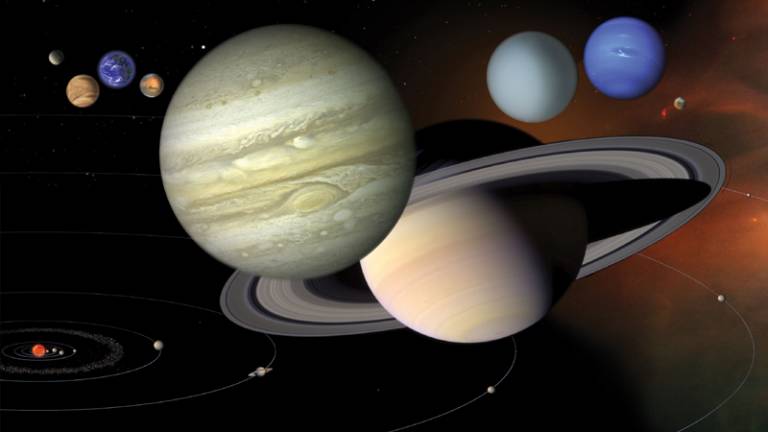
"caption": "The planets in our solar system.",
"description": "Montage of images of the planets in our solar system. ",
"title": "OSS2-nasa-jpl copy",
"credit": "NASA/JPL",
"status": "inherit",
"altTag": null,
"isLoading": false,
"fetchFailed": false
},
"science_1979514": {
"type": "attachments",
"id": "science_1979514",
"meta": {
"index": "attachments_1716263798",
"site": "science",
"id": "1979514",
"found": true
},
"parent": 1979498,
"imgSizes": {
"thumbnail": {
"file": "https://ww2.kqed.org/app/uploads/sites/35/2022/06/Mimic-Poison-Frog-160x107.jpeg",
"width": 160,
"mimeType": "image/jpeg",
"height": 107
},
"post-thumbnail": {
"file": "https://ww2.kqed.org/app/uploads/sites/35/2022/06/Mimic-Poison-Frog-672x372.jpeg",
"width": 672,
"mimeType": "image/jpeg",
"height": 372
},
"kqedFullSize": {
"file": "https://ww2.kqed.org/app/uploads/sites/35/2022/06/Mimic-Poison-Frog.jpeg",
"width": 750,
"height": 500
}
},
"publishDate": 1655316210,
"modified": 1655417067,
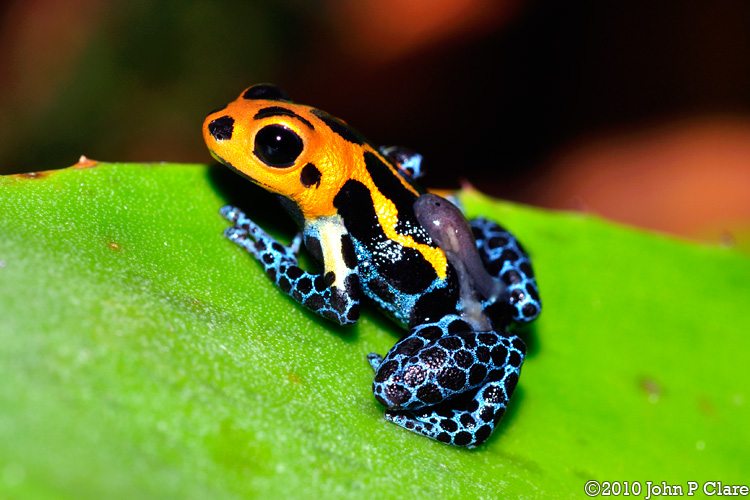
"caption": "This mimic poison frog dad is carrying one of his tadpoles to a safe pool of water, where it will live until it metamorphoses into a frog.",
"description": "This mimic poison frog dad is carrying one of his tadpoles to a safe pool of water, where it will live until it metamorphoses into a frog. ",
"title": "Mimic Poison Frog",
"credit": "Dr. John P. Clare/\u003ca href=\"https://creativecommons.org/licenses/by-nc-sa/3.0/\">CalPhotos\u003c/a>",
"status": "inherit",
"altTag": "A male frog carries his tadpole on his back to find a small pool of water where the tadpole can safely grow. The frog has a bright orange head with black spots and round black eyes. His legs show a pattern of black circles with bright sky blue woven around the circles.",
"isLoading": false,
"fetchFailed": false
},
"science_1979534": {
"type": "attachments",
"id": "science_1979534",
"meta": {
"index": "attachments_1716263798",
"site": "science",
"id": "1979534",
"found": true
},
"parent": 1979461,
"imgSizes": {
"twentyfourteen-full-width": {
"file": "https://ww2.kqed.org/app/uploads/sites/35/2022/06/RS56641_GettyImages-1241304228-qut-1038x576.jpg",
"width": 1038,
"mimeType": "image/jpeg",
"height": 576
},
"thumbnail": {
"file": "https://ww2.kqed.org/app/uploads/sites/35/2022/06/RS56641_GettyImages-1241304228-qut-160x107.jpg",
"width": 160,
"mimeType": "image/jpeg",
"height": 107
},
"post-thumbnail": {
"file": "https://ww2.kqed.org/app/uploads/sites/35/2022/06/RS56641_GettyImages-1241304228-qut-672x372.jpg",
"width": 672,
"mimeType": "image/jpeg",
"height": 372
},
"kqedFullSize": {
"file": "https://ww2.kqed.org/app/uploads/sites/35/2022/06/RS56641_GettyImages-1241304228-qut.jpg",
"width": 1920,
"height": 1281
},
"large": {
"file": "https://ww2.kqed.org/app/uploads/sites/35/2022/06/RS56641_GettyImages-1241304228-qut-1020x681.jpg",
"width": 1020,
"mimeType": "image/jpeg",
"height": 681
},
"1536x1536": {
"file": "https://ww2.kqed.org/app/uploads/sites/35/2022/06/RS56641_GettyImages-1241304228-qut-1536x1025.jpg",
"width": 1536,
"mimeType": "image/jpeg",
"height": 1025
},
"medium": {
"file": "https://ww2.kqed.org/app/uploads/sites/35/2022/06/RS56641_GettyImages-1241304228-qut-800x534.jpg",
"width": 800,
"mimeType": "image/jpeg",
"height": 534
},
"medium_large": {
"file": "https://ww2.kqed.org/app/uploads/sites/35/2022/06/RS56641_GettyImages-1241304228-qut-768x512.jpg",
"width": 768,
"mimeType": "image/jpeg",
"height": 512
}
},
"publishDate": 1655405249,
"modified": 1655405437,
"caption": "On June 14, 2022, the Strawberry Supermoon sets behind the Trona Pinnacles, which were formed underwater when this region of the Mojave Desert was under a body of water. The Strawberry supermoon is not a reference to its color but to the month in which some Native Americans harvested wild strawberries. ",
"description": "On June 14, 2022, the Strawberry Supermoon sets behind the Trona Pinnacles, which were formed underwater when this region of the Mojave Desert was under a body of water. The Strawberry supermoon is not a reference to its color but to the month in which some Native Americans harvested wild strawberries. ",
"title": "Strawberry Supermoon Lights Up Night Sky",
"credit": "David McNew/Getty Images",
"status": "inherit",
"altTag": "A large bright, white moon glows in the sky, hovering between two dark and craggy rock formations shaped like towers. The sky is blue-black.",
"isLoading": false,
"fetchFailed": false
},
"science_1979387": {
"type": "attachments",
"id": "science_1979387",
"meta": {
"index": "attachments_1716263798",
"site": "science",
"id": "1979387",
"found": true
},
"parent": 1979380,
"imgSizes": {
"twentyfourteen-full-width": {
"file": "https://ww2.kqed.org/app/uploads/sites/35/2022/06/DL908_This_Freaky_Fruit_Fly_Lays_Eggs_in_Your_Strawberries_KQED-1038x576.jpg",
"width": 1038,
"mimeType": "image/jpeg",
"height": 576
},
"thumbnail": {
"file": "https://ww2.kqed.org/app/uploads/sites/35/2022/06/DL908_This_Freaky_Fruit_Fly_Lays_Eggs_in_Your_Strawberries_KQED-160x90.jpg",
"width": 160,
"mimeType": "image/jpeg",
"height": 90
},
"post-thumbnail": {
"file": "https://ww2.kqed.org/app/uploads/sites/35/2022/06/DL908_This_Freaky_Fruit_Fly_Lays_Eggs_in_Your_Strawberries_KQED-672x372.jpg",
"width": 672,
"mimeType": "image/jpeg",
"height": 372
},
"kqedFullSize": {
"file": "https://ww2.kqed.org/app/uploads/sites/35/2022/06/DL908_This_Freaky_Fruit_Fly_Lays_Eggs_in_Your_Strawberries_KQED.jpg",
"width": 1920,
"height": 1080
},
"large": {
"file": "https://ww2.kqed.org/app/uploads/sites/35/2022/06/DL908_This_Freaky_Fruit_Fly_Lays_Eggs_in_Your_Strawberries_KQED-1020x574.jpg",
"width": 1020,
"mimeType": "image/jpeg",
"height": 574
},
"1536x1536": {
"file": "https://ww2.kqed.org/app/uploads/sites/35/2022/06/DL908_This_Freaky_Fruit_Fly_Lays_Eggs_in_Your_Strawberries_KQED-1536x864.jpg",
"width": 1536,
"mimeType": "image/jpeg",
"height": 864
},
"medium": {
"file": "https://ww2.kqed.org/app/uploads/sites/35/2022/06/DL908_This_Freaky_Fruit_Fly_Lays_Eggs_in_Your_Strawberries_KQED-800x450.jpg",
"width": 800,
"mimeType": "image/jpeg",
"height": 450
},
"medium_large": {
"file": "https://ww2.kqed.org/app/uploads/sites/35/2022/06/DL908_This_Freaky_Fruit_Fly_Lays_Eggs_in_Your_Strawberries_KQED-768x432.jpg",
"width": 768,
"mimeType": "image/jpeg",
"height": 432
}
},
"publishDate": 1654217132,
"modified": 1654217247,
"caption": "A female spotted wing drosophila prepares to lay her eggs inside a strawberry.",
"description": null,
"title": "DL908_This_Freaky_Fruit_Fly_Lays_Eggs_in_Your_Strawberries_KQED",
"credit": "Josh Cassidy/KQED",
"status": "inherit",
"altTag": null,
"isLoading": false,
"fetchFailed": false
},
"science_1979388": {
"type": "attachments",
"id": "science_1979388",
"meta": {
"index": "attachments_1716263798",
"site": "science",
"id": "1979388",
"found": true
},
"parent": 1979385,
"imgSizes": {
"twentyfourteen-full-width": {
"file": "https://ww2.kqed.org/app/uploads/sites/35/2022/06/Rose-Close-up-5-23Photo-Credit-Oakland-Zoo-1038x576.jpg",
"width": 1038,
"mimeType": "image/jpeg",
"height": 576
},
"thumbnail": {
"file": "https://ww2.kqed.org/app/uploads/sites/35/2022/06/Rose-Close-up-5-23Photo-Credit-Oakland-Zoo-160x97.jpg",
"width": 160,
"mimeType": "image/jpeg",
"height": 97
},
"post-thumbnail": {
"file": "https://ww2.kqed.org/app/uploads/sites/35/2022/06/Rose-Close-up-5-23Photo-Credit-Oakland-Zoo-672x372.jpg",
"width": 672,
"mimeType": "image/jpeg",
"height": 372
},
"kqedFullSize": {
"file": "https://ww2.kqed.org/app/uploads/sites/35/2022/06/Rose-Close-up-5-23Photo-Credit-Oakland-Zoo-scaled.jpg",
"width": 2560,
"height": 1559
},
"2048x2048": {
"file": "https://ww2.kqed.org/app/uploads/sites/35/2022/06/Rose-Close-up-5-23Photo-Credit-Oakland-Zoo-2048x1247.jpg",
"width": 2048,
"mimeType": "image/jpeg",
"height": 1247
},
"large": {
"file": "https://ww2.kqed.org/app/uploads/sites/35/2022/06/Rose-Close-up-5-23Photo-Credit-Oakland-Zoo-1020x621.jpg",
"width": 1020,
"mimeType": "image/jpeg",
"height": 621
},
"1536x1536": {
"file": "https://ww2.kqed.org/app/uploads/sites/35/2022/06/Rose-Close-up-5-23Photo-Credit-Oakland-Zoo-1536x935.jpg",
"width": 1536,
"mimeType": "image/jpeg",
"height": 935
},
"full-width": {
"file": "https://ww2.kqed.org/app/uploads/sites/35/2022/06/Rose-Close-up-5-23Photo-Credit-Oakland-Zoo-1920x1169.jpg",
"width": 1920,
"mimeType": "image/jpeg",
"height": 1169
},
"medium": {
"file": "https://ww2.kqed.org/app/uploads/sites/35/2022/06/Rose-Close-up-5-23Photo-Credit-Oakland-Zoo-800x487.jpg",
"width": 800,
"mimeType": "image/jpeg",
"height": 487
},
"medium_large": {
"file": "https://ww2.kqed.org/app/uploads/sites/35/2022/06/Rose-Close-up-5-23Photo-Credit-Oakland-Zoo-768x468.jpg",
"width": 768,
"mimeType": "image/jpeg",
"height": 468
}
},
"publishDate": 1654217163,
"modified": 1654539180,
"caption": "A close-up of Rose, the rescued mountain lion currently at the Oakland Zoo.",
"description": null,
"title": "Rose the Rescued Mountain Lion",
"credit": "Courtesy of Oakland Zoo",
"status": "inherit",
"altTag": "A close-up of Rose, the rescued mountain lion currently at the Oakland Zoo",
"isLoading": false,
"fetchFailed": false
},
"science_1979352": {
"type": "attachments",
"id": "science_1979352",
"meta": {
"index": "attachments_1716263798",
"site": "science",
"id": "1979352",
"found": true
},
"title": "Wildfires are causing billions in damage every year and yet many homebuyers have little idea whether their house is at risk.",
"publishDate": 1652719879,
"status": "inherit",
"parent": 1979351,
"modified": 1747245275,
"caption": "A real estate sign is seen in front of a burning home during the Carr fire in Redding, California, on July 27, 2018. ",
"credit": "Josh Edelson/AFP via Getty Images",
"altTag": "A photo taken at night that is mostly orange. A real estate sign hangs on a white post in front of the lush lawn of a burning home. The sign says \"Sale Pending.\" In the background, a house is encased in fire, with bright flames and smoke, lit orange by the fire, billowing all around it.",
"description": "A real estate sign is seen in front of a burning home during the Carr fire in Redding, California on July 27, 2018. - One firefighter has died and at least two others have been injured as wind-whipped flames tore through the region. ",
"imgSizes": {
"medium": {
"file": "https://cdn.kqed.org/wp-content/uploads/sites/35/2022/05/gettyimages-1005970176_custom-e3718a4d74a19b50e920101d606d921a359a5879-800x533.jpg",
"width": 800,
"height": 533,
"mimeType": "image/jpeg"
},
"large": {
"file": "https://cdn.kqed.org/wp-content/uploads/sites/35/2022/05/gettyimages-1005970176_custom-e3718a4d74a19b50e920101d606d921a359a5879-1020x679.jpg",
"width": 1020,
"height": 679,
"mimeType": "image/jpeg"
},
"thumbnail": {
"file": "https://cdn.kqed.org/wp-content/uploads/sites/35/2022/05/gettyimages-1005970176_custom-e3718a4d74a19b50e920101d606d921a359a5879-160x107.jpg",
"width": 160,
"height": 107,
"mimeType": "image/jpeg"
},
"medium_large": {
"file": "https://cdn.kqed.org/wp-content/uploads/sites/35/2022/05/gettyimages-1005970176_custom-e3718a4d74a19b50e920101d606d921a359a5879-768x511.jpg",
"width": 768,
"height": 511,
"mimeType": "image/jpeg"
},
"1536x1536": {
"file": "https://cdn.kqed.org/wp-content/uploads/sites/35/2022/05/gettyimages-1005970176_custom-e3718a4d74a19b50e920101d606d921a359a5879-1536x1023.jpg",
"width": 1536,
"height": 1023,
"mimeType": "image/jpeg"
},
"2048x2048": {
"file": "https://cdn.kqed.org/wp-content/uploads/sites/35/2022/05/gettyimages-1005970176_custom-e3718a4d74a19b50e920101d606d921a359a5879-2048x1364.jpg",
"width": 2048,
"height": 1364,
"mimeType": "image/jpeg"
},
"post-thumbnail": {
"file": "https://cdn.kqed.org/wp-content/uploads/sites/35/2022/05/gettyimages-1005970176_custom-e3718a4d74a19b50e920101d606d921a359a5879-672x372.jpg",
"width": 672,
"height": 372,
"mimeType": "image/jpeg"
},
"twentyfourteen-full-width": {
"file": "https://cdn.kqed.org/wp-content/uploads/sites/35/2022/05/gettyimages-1005970176_custom-e3718a4d74a19b50e920101d606d921a359a5879-1038x576.jpg",
"width": 1038,
"height": 576,
"mimeType": "image/jpeg"
},
"full-width": {
"file": "https://cdn.kqed.org/wp-content/uploads/sites/35/2022/05/gettyimages-1005970176_custom-e3718a4d74a19b50e920101d606d921a359a5879-1920x1279.jpg",
"width": 1920,
"height": 1279,
"mimeType": "image/jpeg"
},
"kqedFullSize": {
"file": "https://cdn.kqed.org/wp-content/uploads/sites/35/2022/05/gettyimages-1005970176_custom-e3718a4d74a19b50e920101d606d921a359a5879-scaled.jpg",
"width": 2560,
"height": 1705
}
},
"isLoading": false,
"fetchFailed": false
},
"science_1979298": {
"type": "attachments",
"id": "science_1979298",
"meta": {
"index": "attachments_1716263798",
"site": "science",
"id": "1979298",
"found": true
},
"parent": 0,
"imgSizes": {
"twentyfourteen-full-width": {
"file": "https://ww2.kqed.org/app/uploads/sites/35/2022/05/Lunar-Eclipse-08-28-07-composite-8bt-small-1038x576.jpg",
"width": 1038,
"mimeType": "image/jpeg",
"height": 576
},
"thumbnail": {
"file": "https://ww2.kqed.org/app/uploads/sites/35/2022/05/Lunar-Eclipse-08-28-07-composite-8bt-small-160x102.jpg",
"width": 160,
"mimeType": "image/jpeg",
"height": 102
},
"post-thumbnail": {
"file": "https://ww2.kqed.org/app/uploads/sites/35/2022/05/Lunar-Eclipse-08-28-07-composite-8bt-small-672x372.jpg",
"width": 672,
"mimeType": "image/jpeg",
"height": 372
},
"kqedFullSize": {
"file": "https://ww2.kqed.org/app/uploads/sites/35/2022/05/Lunar-Eclipse-08-28-07-composite-8bt-small-e1652123384237.jpg",
"width": 801,
"height": 512
},
"large": {
"file": "https://ww2.kqed.org/app/uploads/sites/35/2022/05/Lunar-Eclipse-08-28-07-composite-8bt-small-1020x652.jpg",
"width": 1020,
"mimeType": "image/jpeg",
"height": 652
},
"medium": {
"file": "https://ww2.kqed.org/app/uploads/sites/35/2022/05/Lunar-Eclipse-08-28-07-composite-8bt-small-800x512.jpg",
"width": 800,
"mimeType": "image/jpeg",
"height": 512
},
"medium_large": {
"file": "https://ww2.kqed.org/app/uploads/sites/35/2022/05/Lunar-Eclipse-08-28-07-composite-8bt-small-768x491.jpg",
"width": 768,
"mimeType": "image/jpeg",
"height": 491
}
},
"publishDate": 1652116661,
"modified": 1652386509,
"caption": "A sequence of images of the moon taken during a total lunar eclipse in 2007. The images at the ends of the sequence show the moon in a partial eclipse phase, with the moon's dark 'umbral' shadow covering only a portion of its face. During totality, depicted by the three central images, the moon passes through the umbra and is completely enveloped in shadow. The reddish tones are created by sunlight filtering through Earth's atmosphere and shining into the umbra.",
"description": "A sequence of images of the moon taken during a total lunar eclipse in 2007. The images at the ends of the sequence show the moon in a partial eclipse phase, with the moon's dark \"umbral\" shadow covering only a portion of its face. During totality, depicted by the three central images, the moon passes through the umbra and is completely enveloped in shadow. The reddish tones are created by sunlight filtering through Earth's atmosphere and shining into the umbra. ",
"title": "Lunar Eclipse 08-28-07 composite 8bt small",
"credit": "Conrad Jung/Chabot Space and Science Center",
"status": "inherit",
"altTag": "Five moons move from lower right to upper left, showing the progression of a total lunar eclipse. The first moon is one-half dark gray, with a black bite taken out of the left side, as the moon moves toward Earth's shadow. In the second phase, there's a sliver of bright sunlight on the lower right side of the moon, while most of the moon is dark with a slightly reddish cast. In the third phase, the moon is fully in Earth's shadow and covered in a red/orange light. In the fourth phase, the moon is moving out of Earth's shadow and is dark grey with a reddish cast and pale grey on the right side. In the fifth and final phase, there's a dark shadow on the right quarter of the moon, while the rest is white and grey.",
"isLoading": false,
"fetchFailed": false
},
"science_1979314": {
"type": "attachments",
"id": "science_1979314",
"meta": {
"index": "attachments_1716263798",
"site": "science",
"id": "1979314",
"found": true
},
"parent": 1979313,
"imgSizes": {
"twentyfourteen-full-width": {
"file": "https://ww2.kqed.org/app/uploads/sites/35/2022/05/black-hole-milky-way-bb0124cb43ed0a77533657759baa424f5d5fce7c-1-1038x576.jpg",
"width": 1038,
"mimeType": "image/jpeg",
"height": 576
},
"thumbnail": {
"file": "https://ww2.kqed.org/app/uploads/sites/35/2022/05/black-hole-milky-way-bb0124cb43ed0a77533657759baa424f5d5fce7c-1-160x120.jpg",
"width": 160,
"mimeType": "image/jpeg",
"height": 120
},
"post-thumbnail": {
"file": "https://ww2.kqed.org/app/uploads/sites/35/2022/05/black-hole-milky-way-bb0124cb43ed0a77533657759baa424f5d5fce7c-1-672x372.jpg",
"width": 672,
"mimeType": "image/jpeg",
"height": 372
},
"kqedFullSize": {
"file": "https://ww2.kqed.org/app/uploads/sites/35/2022/05/black-hole-milky-way-bb0124cb43ed0a77533657759baa424f5d5fce7c-1-scaled.jpg",
"width": 2560,
"height": 1920
},
"2048x2048": {
"file": "https://ww2.kqed.org/app/uploads/sites/35/2022/05/black-hole-milky-way-bb0124cb43ed0a77533657759baa424f5d5fce7c-1-2048x1536.jpg",
"width": 2048,
"mimeType": "image/jpeg",
"height": 1536
},
"large": {
"file": "https://ww2.kqed.org/app/uploads/sites/35/2022/05/black-hole-milky-way-bb0124cb43ed0a77533657759baa424f5d5fce7c-1-1020x765.jpg",
"width": 1020,
"mimeType": "image/jpeg",
"height": 765
},
"1536x1536": {
"file": "https://ww2.kqed.org/app/uploads/sites/35/2022/05/black-hole-milky-way-bb0124cb43ed0a77533657759baa424f5d5fce7c-1-1536x1152.jpg",
"width": 1536,
"mimeType": "image/jpeg",
"height": 1152
},
"full-width": {
"file": "https://ww2.kqed.org/app/uploads/sites/35/2022/05/black-hole-milky-way-bb0124cb43ed0a77533657759baa424f5d5fce7c-1-1920x1440.jpg",
"width": 1920,
"mimeType": "image/jpeg",
"height": 1440
},
"medium": {
"file": "https://ww2.kqed.org/app/uploads/sites/35/2022/05/black-hole-milky-way-bb0124cb43ed0a77533657759baa424f5d5fce7c-1-800x600.jpg",
"width": 800,
"mimeType": "image/jpeg",
"height": 600
},
"medium_large": {
"file": "https://ww2.kqed.org/app/uploads/sites/35/2022/05/black-hole-milky-way-bb0124cb43ed0a77533657759baa424f5d5fce7c-1-768x576.jpg",
"width": 768,
"mimeType": "image/jpeg",
"height": 576
}
},
"publishDate": 1652375440,
"modified": 1652375440,
"caption": null,
"description": null,
"title": "\"It's the dawn of a new era of black hole physics,\" the Event Horizon Telescope team said as it released the first-ever image of supermassive black hole in the center of the Milky Way.",
"credit": null,
"status": "inherit",
"altTag": null,
"isLoading": false,
"fetchFailed": false
},
"science_1979272": {
"type": "attachments",
"id": "science_1979272",
"meta": {
"index": "attachments_1716263798",
"site": "science",
"id": "1979272",
"found": true
},
"parent": 1979262,
"imgSizes": {
"twentyfourteen-full-width": {
"file": "https://ww2.kqed.org/app/uploads/sites/35/2022/05/bloody_belly_comb_jellies_Tyson-V.-Rininger-resuze-1038x576.jpg",
"width": 1038,
"mimeType": "image/jpeg",
"height": 576
},
"thumbnail": {
"file": "https://ww2.kqed.org/app/uploads/sites/35/2022/05/bloody_belly_comb_jellies_Tyson-V.-Rininger-resuze-160x107.jpg",
"width": 160,
"mimeType": "image/jpeg",
"height": 107
},
"post-thumbnail": {
"file": "https://ww2.kqed.org/app/uploads/sites/35/2022/05/bloody_belly_comb_jellies_Tyson-V.-Rininger-resuze-672x372.jpg",
"width": 672,
"mimeType": "image/jpeg",
"height": 372
},
"kqedFullSize": {
"file": "https://ww2.kqed.org/app/uploads/sites/35/2022/05/bloody_belly_comb_jellies_Tyson-V.-Rininger-resuze.jpg",
"width": 2508,
"height": 1672
},
"2048x2048": {
"file": "https://ww2.kqed.org/app/uploads/sites/35/2022/05/bloody_belly_comb_jellies_Tyson-V.-Rininger-resuze-2048x1365.jpg",
"width": 2048,
"mimeType": "image/jpeg",
"height": 1365
},
"large": {
"file": "https://ww2.kqed.org/app/uploads/sites/35/2022/05/bloody_belly_comb_jellies_Tyson-V.-Rininger-resuze-1020x680.jpg",
"width": 1020,
"mimeType": "image/jpeg",
"height": 680
},
"1536x1536": {
"file": "https://ww2.kqed.org/app/uploads/sites/35/2022/05/bloody_belly_comb_jellies_Tyson-V.-Rininger-resuze-1536x1024.jpg",
"width": 1536,
"mimeType": "image/jpeg",
"height": 1024
},
"full-width": {
"file": "https://ww2.kqed.org/app/uploads/sites/35/2022/05/bloody_belly_comb_jellies_Tyson-V.-Rininger-resuze-1920x1280.jpg",
"width": 1920,
"mimeType": "image/jpeg",
"height": 1280
},
"medium": {
"file": "https://ww2.kqed.org/app/uploads/sites/35/2022/05/bloody_belly_comb_jellies_Tyson-V.-Rininger-resuze-800x533.jpg",
"width": 800,
"mimeType": "image/jpeg",
"height": 533
},
"medium_large": {
"file": "https://ww2.kqed.org/app/uploads/sites/35/2022/05/bloody_belly_comb_jellies_Tyson-V.-Rininger-resuze-768x512.jpg",
"width": 768,
"mimeType": "image/jpeg",
"height": 512
}
},
"publishDate": 1651796107,
"modified": 1651796371,
"caption": "Delicate bloody belly comb jellies float in a darkened tank.",
"description": "Delicate bloody belly comb jellies float in a darkened tank.",
"title": "Monterey Bay Aquarium",
"credit": "Tyson V. Rininger/Monterey Bay Aquarium",
"status": "inherit",
"altTag": "Two jellyfish float against a darkened background. The jellies are shaped like a crimson dome bedazzled with ridges of strobing rainbow lights. In the center of each jelly, red shadowy translucent shapes float. floats",
"isLoading": false,
"fetchFailed": false
},
"science_1979223": {
"type": "attachments",
"id": "science_1979223",
"meta": {
"index": "attachments_1716263798",
"site": "science",
"id": "1979223",
"found": true
},
"parent": 1979220,
"imgSizes": {
"twentyfourteen-full-width": {
"file": "https://ww2.kqed.org/app/uploads/sites/35/2022/04/GettyImages-1239573368-1038x576.jpg",
"width": 1038,
"mimeType": "image/jpeg",
"height": 576
},
"thumbnail": {
"file": "https://ww2.kqed.org/app/uploads/sites/35/2022/04/GettyImages-1239573368-160x107.jpg",
"width": 160,
"mimeType": "image/jpeg",
"height": 107
},
"post-thumbnail": {
"file": "https://ww2.kqed.org/app/uploads/sites/35/2022/04/GettyImages-1239573368-672x372.jpg",
"width": 672,
"mimeType": "image/jpeg",
"height": 372
},
"kqedFullSize": {
"file": "https://ww2.kqed.org/app/uploads/sites/35/2022/04/GettyImages-1239573368-scaled.jpg",
"width": 2560,
"height": 1707
},
"2048x2048": {
"file": "https://ww2.kqed.org/app/uploads/sites/35/2022/04/GettyImages-1239573368-2048x1365.jpg",
"width": 2048,
"mimeType": "image/jpeg",
"height": 1365
},
"large": {
"file": "https://ww2.kqed.org/app/uploads/sites/35/2022/04/GettyImages-1239573368-1020x680.jpg",
"width": 1020,
"mimeType": "image/jpeg",
"height": 680
},
"1536x1536": {
"file": "https://ww2.kqed.org/app/uploads/sites/35/2022/04/GettyImages-1239573368-1536x1024.jpg",
"width": 1536,
"mimeType": "image/jpeg",
"height": 1024
},
"full-width": {
"file": "https://ww2.kqed.org/app/uploads/sites/35/2022/04/GettyImages-1239573368-1920x1280.jpg",
"width": 1920,
"mimeType": "image/jpeg",
"height": 1280
},
"medium": {
"file": "https://ww2.kqed.org/app/uploads/sites/35/2022/04/GettyImages-1239573368-800x533.jpg",
"width": 800,
"mimeType": "image/jpeg",
"height": 533
},
"medium_large": {
"file": "https://ww2.kqed.org/app/uploads/sites/35/2022/04/GettyImages-1239573368-768x512.jpg",
"width": 768,
"mimeType": "image/jpeg",
"height": 512
}
},
"publishDate": 1651096354,
"modified": 1651169392,
"caption": "A man uses a narcotic-consumption booth at a safe-injection site at OnPoint NYC in January 2022, in New York City. ",
"description": "A man uses the narcotic consumption booths at a safe injection site at OnPoint NYC in January, 2022 in New York City. ",
"title": "New York City Injection Site For Drug Users",
"credit": "Kent Nishimura/Los Angeles Times via Getty Images",
"status": "inherit",
"altTag": "A man with white skin seen from the back. He's wearing a black beanie, a surgical mask and a gray and white hoodie. A steel table holds several capped needles. The man holds a needle in his hand.",
"isLoading": false,
"fetchFailed": false
},
"science_1979215": {
"type": "attachments",
"id": "science_1979215",
"meta": {
"index": "attachments_1716263798",
"site": "science",
"id": "1979215",
"found": true
},
"parent": 1979151,
"imgSizes": {
"twentyfourteen-full-width": {
"file": "https://ww2.kqed.org/app/uploads/sites/35/2022/04/DL906_marquee_barnacles-1038x576.jpg",
"width": 1038,
"mimeType": "image/jpeg",
"height": 576
},
"thumbnail": {
"file": "https://ww2.kqed.org/app/uploads/sites/35/2022/04/DL906_marquee_barnacles-160x90.jpg",
"width": 160,
"mimeType": "image/jpeg",
"height": 90
},
"post-thumbnail": {
"file": "https://ww2.kqed.org/app/uploads/sites/35/2022/04/DL906_marquee_barnacles-672x372.jpg",
"width": 672,
"mimeType": "image/jpeg",
"height": 372
},
"kqedFullSize": {
"file": "https://ww2.kqed.org/app/uploads/sites/35/2022/04/DL906_marquee_barnacles-scaled.jpg",
"width": 2560,
"height": 1440
},
"2048x2048": {
"file": "https://ww2.kqed.org/app/uploads/sites/35/2022/04/DL906_marquee_barnacles-2048x1152.jpg",
"width": 2048,
"mimeType": "image/jpeg",
"height": 1152
},
"large": {
"file": "https://ww2.kqed.org/app/uploads/sites/35/2022/04/DL906_marquee_barnacles-1020x574.jpg",
"width": 1020,
"mimeType": "image/jpeg",
"height": 574
},
"1536x1536": {
"file": "https://ww2.kqed.org/app/uploads/sites/35/2022/04/DL906_marquee_barnacles-1536x864.jpg",
"width": 1536,
"mimeType": "image/jpeg",
"height": 864
},
"full-width": {
"file": "https://ww2.kqed.org/app/uploads/sites/35/2022/04/DL906_marquee_barnacles-1920x1080.jpg",
"width": 1920,
"mimeType": "image/jpeg",
"height": 1080
},
"medium": {
"file": "https://ww2.kqed.org/app/uploads/sites/35/2022/04/DL906_marquee_barnacles-800x450.jpg",
"width": 800,
"mimeType": "image/jpeg",
"height": 450
},
"medium_large": {
"file": "https://ww2.kqed.org/app/uploads/sites/35/2022/04/DL906_marquee_barnacles-768x432.jpg",
"width": 768,
"mimeType": "image/jpeg",
"height": 432
}
},
"publishDate": 1650978332,
"modified": 1650978379,
"caption": null,
"description": null,
"title": "DL906_marquee_barnacles",
"credit": null,
"status": "inherit",
"altTag": "small rock-like marine creature with a protruding fan and long appendage.",
"isLoading": false,
"fetchFailed": false
}
},
"audioPlayerReducer": {
"postId": "stream_live",
"isPaused": true,
"isPlaying": false,
"pfsActive": false,
"pledgeModalIsOpen": true,
"playerDrawerIsOpen": false,
"liveAudioPlayStartedAt": 0,
"liveAudioPlayContext": ""
},
"authorsReducer": {
"byline_science_1979560": {
"type": "authors",
"id": "byline_science_1979560",
"meta": {
"override": true
},
"slug": "byline_science_1979560",
"name": "Scott Rodd (CapRadio) and Danielle Venton (KQED)",
"isLoading": false
},
"byline_science_1979351": {
"type": "authors",
"id": "byline_science_1979351",
"meta": {
"override": true
},
"slug": "byline_science_1979351",
"name": "Lauren Sommer\u003cbr> NPR",
"isLoading": false
},
"byline_science_1979313": {
"type": "authors",
"id": "byline_science_1979313",
"meta": {
"override": true
},
"slug": "byline_science_1979313",
"name": "Bill Chappell",
"isLoading": false
},
"byline_science_1979262": {
"type": "authors",
"id": "byline_science_1979262",
"meta": {
"override": true
},
"slug": "byline_science_1979262",
"name": "Guananí Gómez-Van Cortright ",
"isLoading": false
},
"ben-burress": {
"type": "authors",
"id": "6180",
"meta": {
"index": "authors_1716337520",
"id": "6180",
"found": true
},
"name": "Ben Burress",
"firstName": "Ben",
"lastName": "Burress",
"slug": "ben-burress",
"email": "bburress@chabotspace.org",
"display_author_email": false,
"staff_mastheads": [],
"title": null,
"bio": "\u003cstrong>Benjamin Burress\u003c/strong> has been a staff astronomer at Chabot Space & Science Center since July 1999. He graduated from Sonoma State University in 1985 with a bachelor’s degree in physics (and minor in astronomy), after which he signed on for a two-year stint in the Peace Corps, where he taught physics and mathematics in the African nation of Cameroon. From 1989-96 he served on the crew of NASA’s Kuiper Airborne Observatory at Ames Research Center in Mountain View, CA. From 1996-99, he was Head Observer at the Naval Prototype Optical Interferometer program at Lowell Observatory in Flagstaff, AZ.\r\n\r\nRead his \u003ca href=\"http://science.kqed.org/quest/author/ben-burress/\">previous contributions\u003c/a> to \u003ca href=\"http://science.kqed.org/quest/\">QUEST\u003c/a>, a project dedicated to exploring the Science of Sustainability.",
"avatar": "https://secure.gravatar.com/avatar/8263bffa345b7e4923a0b8b9f0f6a161?s=600&d=blank&r=g",
"twitter": null,
"facebook": null,
"instagram": null,
"linkedin": null,
"sites": [
{
"site": "science",
"roles": [
"editor"
]
},
{
"site": "quest",
"roles": [
"subscriber"
]
}
],
"headData": {
"title": "Ben Burress | KQED",
"description": null,
"ogImgSrc": "https://secure.gravatar.com/avatar/8263bffa345b7e4923a0b8b9f0f6a161?s=600&d=blank&r=g",
"twImgSrc": "https://secure.gravatar.com/avatar/8263bffa345b7e4923a0b8b9f0f6a161?s=600&d=blank&r=g"
},
"isLoading": false,
"link": "/author/ben-burress"
},
"gabriela-quiros": {
"type": "authors",
"id": "6186",
"meta": {
"index": "authors_1716337520",
"id": "6186",
"found": true
},
"name": "Gabriela Quirós",
"firstName": "Gabriela",
"lastName": "Quirós",
"slug": "gabriela-quiros",
"email": "gquiros@kqed.org",
"display_author_email": false,
"staff_mastheads": [],
"title": "Supervising Producer",
"bio": "Gabriela Quirós is the \u003cstrong>supervising producer for KQED's web science video series \u003ca href=\"https://www.kqed.org/deeplook\">Deep Look\u003c/a>\u003c/strong>. She joined KQED as a TV producer when its science series QUEST started in 2006 and has covered everything from Alzheimer’s to bee die-offs to dark energy.\r\n\r\nShe won a 2022 AAAS Kavli Science Journalism Award with a team of her Deep Look colleagues. She has won six regional Emmys as a video producer and has shared eight more as the coordinating producer of Deep Look. The episode she produced about \u003ca href=\"https://www.kqed.org/science/728086/how-mosquitoes-use-six-needles-to-suck-your-blood\">How Mosquitoes Use Six Needles to Suck Your Blood\u003c/a> won a Webby \"People's Voice\" award. She has also earned awards from the Jackson Hole Wildlife Film Festival, the Society of Professional Journalists and the Society of Environmental Journalists.\r\n\r\nHer videos for KQED have also aired on NOVA scienceNOW and the PBS NewsHour, and appeared on NPR.org.\r\n\r\nAs an independent filmmaker, she produced and directed the hour-long documentary \u003ca href=\"http://lpbp.org/beautiful-sin-qa-with-producer-gabriela-quiros/\">\u003cem>Beautiful Sin\u003c/em>\u003c/a>, about the surprising story of how Costa Rica became the only country in the world to outlaw in vitro fertilization. The film aired in 2015 on public television stations throughout the U.S., and in Costa Rica.\r\n\r\nShe started her journalism career as a newspaper reporter in Costa Rica, where she grew up. She won the National Science Journalism Award there for a series of articles about organic agriculture, and developed a life-long interest in health reporting. She moved to the Bay Area in 1996 to study documentary filmmaking at the University of California, Berkeley, where she received master’s degrees in journalism and Latin American studies.",
"avatar": "https://secure.gravatar.com/avatar/6d82c20152affd1b434c31a904c40809?s=600&d=blank&r=g",
"twitter": "gabrielaquirosr",
"facebook": null,
"instagram": null,
"linkedin": null,
"sites": [
{
"site": "science",
"roles": []
},
{
"site": "quest",
"roles": [
"ef_view_calendar",
"ef_view_story_budget"
]
}
],
"headData": {
"title": "Gabriela Quirós | KQED",
"description": "Supervising Producer",
"ogImgSrc": "https://secure.gravatar.com/avatar/6d82c20152affd1b434c31a904c40809?s=600&d=blank&r=g",
"twImgSrc": "https://secure.gravatar.com/avatar/6d82c20152affd1b434c31a904c40809?s=600&d=blank&r=g"
},
"isLoading": false,
"link": "/author/gabriela-quiros"
},
"joshua-cassidy": {
"type": "authors",
"id": "6219",
"meta": {
"index": "authors_1716337520",
"id": "6219",
"found": true
},
"name": "Josh Cassidy",
"firstName": "Josh",
"lastName": "Cassidy",
"slug": "joshua-cassidy",
"email": "jcassidy@kqed.org",
"display_author_email": false,
"staff_mastheads": [
"science"
],
"title": "Digital Video Producer",
"bio": "Josh is a Senior Video Producer for KQED Science, and the Lead Producer and Cinematographer for Deep Look. After receiving his BS in Wildlife Biology from Ohio University, he went on to participate in marine mammal research for NOAA, USGS and the Intersea Foundation. He also served as the president of The Pacific Cetacean Group, a nonprofit organization dedicated to teaching students K-6 about whales. Josh studied science and natural history filmmaking at San Francisco State University and Montana State University.",
"avatar": "https://secure.gravatar.com/avatar/f2582a0801a35af53b734d56bcac2bbe?s=600&d=blank&r=g",
"twitter": null,
"facebook": null,
"instagram": null,
"linkedin": null,
"sites": [
{
"site": "science",
"roles": [
"editor"
]
},
{
"site": "quest",
"roles": [
"author",
"edit_others_posts"
]
}
],
"headData": {
"title": "Josh Cassidy | KQED",
"description": "Digital Video Producer",
"ogImgSrc": "https://secure.gravatar.com/avatar/f2582a0801a35af53b734d56bcac2bbe?s=600&d=blank&r=g",
"twImgSrc": "https://secure.gravatar.com/avatar/f2582a0801a35af53b734d56bcac2bbe?s=600&d=blank&r=g"
},
"isLoading": false,
"link": "/author/joshua-cassidy"
},
"lesleymcclurg": {
"type": "authors",
"id": "11229",
"meta": {
"index": "authors_1716337520",
"id": "11229",
"found": true
},
"name": "Lesley McClurg",
"firstName": "Lesley",
"lastName": "McClurg",
"slug": "lesleymcclurg",
"email": "lmcclurg@KQED.org",
"display_author_email": false,
"staff_mastheads": [],
"title": "KQED Health Correspondent",
"bio": "Lesley McClurg is a health correspondent and fill-in host whose work is regularly rebroadcast on NPR and PBS programs. She’s earned multiple regional Emmy awards, a national and a regional Edward R. Murrow award, and was named Best Beat Reporter by the Association of Health Care Journalists. The Society of Professional Journalists has recognized her work several times, and the Society of Environmental Journalists spotlighted her coverage of California’s historic drought.\r\n\r\nBefore joining KQED in 2016, Lesley covered food and sustainability for Capital Public Radio, environmental issues for Colorado Public Radio, and reported for KUOW and KCTS 9 in Seattle. Away from the newsroom, she loves skiing with her daughter, mountain biking with her partner, and playing with Ollie, the family’s goldendoodle. On deadline, she runs almost entirely on chocolate chips.\r\n\r\n ",
"avatar": "https://secure.gravatar.com/avatar/bab49e972ea10c774fe0f5e29dba1722b158f7c0d58a360923d1389d380b2978?s=600&d=blank&r=g",
"twitter": "lesleywmcclurg",
"bluesky": null,
"facebook": null,
"instagram": null,
"linkedin": null,
"sites": [
{
"site": "arts",
"roles": [
"subscriber"
]
},
{
"site": "news",
"roles": [
"subscriber"
]
},
{
"site": "futureofyou",
"roles": [
"subscriber"
]
},
{
"site": "stateofhealth",
"roles": [
"subscriber"
]
},
{
"site": "science",
"roles": [
"subscriber"
]
},
{
"site": "quest",
"roles": [
"subscriber"
]
},
{
"site": "forum",
"roles": [
"subscriber"
]
},
{
"site": "liveblog",
"roles": [
"subscriber"
]
}
],
"headData": {
"title": "Lesley McClurg | KQED",
"description": "KQED Health Correspondent",
"ogImgSrc": "https://secure.gravatar.com/avatar/bab49e972ea10c774fe0f5e29dba1722b158f7c0d58a360923d1389d380b2978?s=600&d=blank&r=g",
"twImgSrc": "https://secure.gravatar.com/avatar/bab49e972ea10c774fe0f5e29dba1722b158f7c0d58a360923d1389d380b2978?s=600&d=blank&r=g"
},
"isLoading": false,
"link": "/author/lesleymcclurg"
},
"smohamad": {
"type": "authors",
"id": "11631",
"meta": {
"index": "authors_1716337520",
"id": "11631",
"found": true
},
"name": "Sarah Mohamad",
"firstName": "Sarah",
"lastName": "Mohamad",
"slug": "smohamad",
"email": "smohamad@KQED.org",
"display_author_email": true,
"staff_mastheads": [],
"title": "Engagement Producer and Reporter, KQED Science",
"bio": "Sarah Mohamad is an audience engagement reporter and producer for KQED Science. She reports on audience-focused science and environment stories and manages the team's social media, newsletter, and engagement efforts. Prior to this role, she played a key role as project manager for NSF's \u003ca href=\"https://www.kqed.org/crackingthecode\">\u003cem>Cracking the Code: Influencing Millennial Science Engagement\u003c/em> \u003c/a>audience research.",
"avatar": "https://secure.gravatar.com/avatar/e6224957cd82d015183756ddde1f928013a563d7ca2e4565f8c4de1ec64886c5?s=600&d=blank&r=g",
"twitter": "sarahkmohamad",
"bluesky": null,
"facebook": null,
"instagram": null,
"linkedin": null,
"sites": [
{
"site": "",
"roles": [
"editor"
]
},
{
"site": "arts",
"roles": [
"editor"
]
},
{
"site": "news",
"roles": [
"editor"
]
},
{
"site": "about",
"roles": [
"editor"
]
},
{
"site": "science",
"roles": [
"editor"
]
}
],
"headData": {
"title": "Sarah Mohamad | KQED",
"description": "Engagement Producer and Reporter, KQED Science",
"ogImgSrc": "https://secure.gravatar.com/avatar/e6224957cd82d015183756ddde1f928013a563d7ca2e4565f8c4de1ec64886c5?s=600&d=blank&r=g",
"twImgSrc": "https://secure.gravatar.com/avatar/e6224957cd82d015183756ddde1f928013a563d7ca2e4565f8c4de1ec64886c5?s=600&d=blank&r=g"
},
"isLoading": false,
"link": "/author/smohamad"
},
"edefranco": {
"type": "authors",
"id": "11810",
"meta": {
"index": "authors_1716337520",
"id": "11810",
"found": true
},
"name": "Elyse DeFranco",
"firstName": "Elyse",
"lastName": "DeFranco",
"slug": "edefranco",
"email": "edefranco@kqed.org",
"display_author_email": false,
"staff_mastheads": [],
"title": "KQED Contributor",
"bio": "Elyse DeFranco is an intern with KQED's Deep Look series. She spent years studying wildlife around the world before making the leap to science journalism, and holds an M.Sc. in science communication from the University of California, Santa Cruz.",
"avatar": "https://secure.gravatar.com/avatar/248d413a266888585c85e171db9feefc?s=600&d=blank&r=g",
"twitter": "elyse_defranco",
"facebook": null,
"instagram": null,
"linkedin": null,
"sites": [
{
"site": "science",
"roles": []
}
],
"headData": {
"title": "Elyse DeFranco | KQED",
"description": "KQED Contributor",
"ogImgSrc": "https://secure.gravatar.com/avatar/248d413a266888585c85e171db9feefc?s=600&d=blank&r=g",
"twImgSrc": "https://secure.gravatar.com/avatar/248d413a266888585c85e171db9feefc?s=600&d=blank&r=g"
},
"isLoading": false,
"link": "/author/edefranco"
}
},
"pagesReducer": {
"science_category_news": {
"type": "terms",
"id": "science_40",
"meta": {
"index": "terms_1716263798",
"site": "science",
"id": "40",
"score": 10.811016
},
"featImg": null,
"name": "News",
"description": null,
"taxonomy": "category",
"headData": {
"twImgId": null,
"twTitle": null,
"ogTitle": null,
"ogImgId": null,
"twDescription": null,
"description": null,
"title": "News Archives | KQED Science",
"ogDescription": null
},
"ttid": 42,
"slug": "news",
"isLoading": false,
"title": "News",
"pageMeta": {
"site": "science",
"WpPageTemplate": "page-topic-editorial",
"currentPage": 62
},
"blocks": [
{
"blockName": "kqed/post-list",
"attrs": {
"layout": "cardArticle2",
"query": "posts/science?category=news",
"seeMore": false,
"paginated": true,
"page": 62
}
},
{
"blockName": "kqed/ad"
}
]
}
},
"pfsSessionReducer": {},
"postsReducer": {
"stream_live": {
"type": "live",
"id": "stream_live",
"audioUrl": "https://hls.kqed.org/hls/kqed_app/playlist.m3u8",
"title": "Live Stream",
"excerpt": "Live Stream information currently unavailable.",
"link": "/radio",
"featImg": "",
"label": {
"name": "KQED Live",
"link": "/"
}
},
"stream_kqedNewscast": {
"type": "posts",
"id": "stream_kqedNewscast",
"audioUrl": "https://www.kqed.org/.stream/anon/radio/RDnews/newscast.mp3?_=1",
"title": "KQED Newscast",
"featImg": "",
"label": {
"name": "88.5 FM",
"link": "/"
}
},
"science_1979560": {
"type": "posts",
"id": "science_1979560",
"meta": {
"index": "posts_1716263798",
"site": "science",
"id": "1979560",
"score": null,
"sort": [
1655794897000
]
},
"guestAuthors": [],
"slug": "cal-fire-fumbles-key-responsibilities-to-prevent-catastrophic-wildfires-despite-historic-budget",
"title": "Cal Fire Fumbles Key Responsibilities to Prevent Catastrophic Wildfires Despite Historic Budget",
"publishDate": 1655794897,
"format": "standard",
"headTitle": "Cal Fire Fumbles Key Responsibilities to Prevent Catastrophic Wildfires Despite Historic Budget | KQED",
"labelTerm": {},
"content": "\u003cp>Richard A. Wilson is worried about wildfires this summer, amid dry conditions, extreme temperatures, punishing winds and the amplification of climate change.\u003c/p>\n\u003cp>“We are very vulnerable,” the 90-year-old said while looking out the window of his house on Buck Mountain, part of a 3,000-acre cattle ranch spanning Mendocino and Trinity counties that has been in his family for 80 years.\u003c/p>\n\u003cp>Wilson estimates about 70% of his land — the whole northern end, including grassland, and pine and Douglas fir timberland — has burned in recent years. It was hit by the 2018 Mendocino Complex Fire and the 2020 August Complex Fire, both among the largest fires in state history.\u003c/p>\n\u003cp>“The scale of the fires covered the country in a way we hadn’t seen, in size or intensity,” Wilson recalled.[pullquote align='right' citation='Richard Wilson, former head of Cal Fire']‘Their business [now] is putting fires out. The bigger the fires, the more people they need to put the fires out. That’s a complete reverse of somebody trying to deal with the forest so if there is a fire, it doesn’t get out of control and burn the whole thing down.’[/pullquote]\u003c/p>\n\u003cp>Wildfires in California have burned nearly 7 million acres in the last two years alone. It is not only the size of the fires but also the destruction that’s breathtaking. In just the 2021 fire season, the Dixie Fire destroyed the town of Greenville and the Caldor Fire devastated the foothills community of Grizzly Flats. Both were the first fires in modern state history to burn across the Sierra Nevada.\u003c/p>\n\u003cp>[ad fullwidth]\u003c/p>\n\u003cp>This year, Wilson fears, will be dangerous, as well: “We are headed into a tenuous time.”\u003c/p>\n\u003cp>Wilson is not just any worried landowner: He’s the former head of Cal Fire, the state department responsible for fighting wildfires and managing forestland.\u003c/p>\n\u003cp>And while Cal Fire is broadly recognized as a leader in firefighting, Wilson says it is also partly to blame for the looming danger.\u003c/p>\n\u003cp>When he led the department in the 1990s, he claims it viewed caring for forest health as a primary mission. Foresters are trained to see wooded areas as living ecosystems, and know how to make them more fire-resilient.\u003c/p>\n\u003cp>But in the years after his tenure, he says the culture changed. Firefighting, not forestry, became the route to advancement.\u003c/p>\n\u003cp>“And it’s now a fire department. A very good fire department. But it’s not a forestry department,” Wilson said.\u003c/p>\n\u003cp>Today, Cal Fire is at an inflection point: trying to return to a greater emphasis on fire mitigation and forest health, while still working to protect communities from historic and deadly wildfires. Last year, Gov. Gavin Newsom and the Legislature lavished the department with record amounts of money for prescribed burns, brush clearing and cutting fuel breaks. But money alone does not solve the problem.\u003c/p>\n\u003cp>Cal Fire has publicly signaled a commitment to rebalancing its priorities. But a monthslong investigation by The California Newsroom, a public media collaboration, found that the department continues to fumble key responsibilities related to forest management and wildfire mitigation, potentially leaving the state at greater risk of catastrophic fires.\u003c/p>\n\u003cp>The investigation found:\u003c/p>\n\u003cul>\n\u003cli>The state set aside a record $1.5 billion for wildfire prevention and forest health in 2021. However, Cal Fire’s forest management hiring remains stagnant, while its firefighting staffing has ballooned.\u003c/li>\n\u003cli>Cal Fire is struggling to track wildfire prevention projects that experts say are desperately needed to protect communities from destructive wildfires. The department still can’t determine how many acres of work it completed and funded through grants in the fiscal year ending in June 2021.\u003c/li>\n\u003cli>Cal Fire has taken years to implement laws passed by the state Legislature. A program, required under state law to bolster the prescribed-burn workforce, suffered nearly a year of delay. So far, only two burn bosses have been certified, slowing the pace of protective projects. Experts say this delay has caused a loss of opportunities to enact community-protecting work.\u003c/li>\n\u003cli>For at least four years, Cal Fire has failed to send its annual report to the Legislature detailing the department’s fire prevention efforts. The report, required by law, is an inventory of Cal Fire’s efforts and helps lawmakers understand the state’s progress on protecting vulnerable communities.\u003c/li>\n\u003c/ul>\n\u003cp>Cal Fire has increased its output during the past five years. It completed fire prevention work — directly or through grants — on 105,000 acres in the fiscal year that ended in June 2020. The department could not provide a more current total.\u003c/p>\n\u003cp>In 2020, Newsom \u003ca href=\"https://www.gov.ca.gov/wp-content/uploads/2020/08/8.12.20-CA-Shared-Stewardship-MOU.pdf\" target=\"_blank\" rel=\"noopener noreferrer\">tasked\u003c/a> Cal Fire, along with partners that control state and private land, with performing 500,000 acres of forest management and fire mitigation work every year by 2025. But progress toward that goal has been slow, in part because a key state program \u003ca href=\"https://www.capradio.org/articles/2022/04/12/newsom-hailed-this-critical-wildfire-prevention-program-two-years-on-it-hasnt-completed-a-single-project/\" target=\"_blank\" rel=\"noopener noreferrer\">failed to increase project completions\u003c/a>. [pullquote align='right' citation='Cal Fire Chief Joe Tyler']‘Watching these fires get larger and more damaging since 2014, I sincerely recognize the need to change the way we do — and have changed the way that we do — business.’[/pullquote]\u003c/p>\n\u003cp>In an interview, Cal Fire’s Joe Tyler, who was appointed chief in March, said the department is making progress on improving forest health and protecting communities in advance of catastrophic fires by “investing in community preparedness and mitigation” and “continuing to do those fuels projects across the board.”\u003c/p>\n\u003cp>He points to this year’s creation of the \u003ca href=\"https://www.fire.ca.gov/media/p24fmjyg/cwpm-news-release_2022.pdf?utm_medium=email&utm_source=govdelivery\" target=\"_blank\" rel=\"noopener noreferrer\">Community Wildfire Preparedness and Mitigation division\u003c/a>, which aims to “develop, prioritize and implement strategies and projects that create fire adapted communities and landscapes.”\u003c/p>\n\u003cp>But Tyler said the longer, more extreme wildfire seasons — coupled with the pandemic — have left the department’s workforce “fatigued.” That has affected Cal Fire’s administrative, forest management and fire suppression capabilities.\u003c/p>\n\u003cp>Tyler also acknowledged the need to change Cal Fire’s culture so it focuses more on prevention.\u003c/p>\n\u003cp>“Watching these fires get larger and more damaging since 2014, I sincerely recognize the need to change the way we do — and have changed the way that we do — business,” he said.\u003c/p>\n\u003cp>Fire practitioners like Margo Robbins, executive director of the Cultural Fire Management Council, argue this change at Cal Fire is long overdue.\u003c/p>\n\u003cp>“I think that they have forgotten that forestry is part of their responsibility, quite frankly,” said Robbins, whose expertise is in setting intentional fires that benefit the landscape and can protect communities.\u003c/p>\n\u003cp>She noted that Cal Fire is “moving in the right direction” by boosting investment in fire mitigation and fuel reduction. And the department has helped accommodate cultural prescribed burning led by Native American communities.\u003c/p>\n\u003cp>But “they have a ways to go,” Robbins added.\u003c/p>\n\u003cp>“If they would focus more on that management piece, I think we would be seeing a very different scenario on our landscapes and a very different scenario in terms of wildfires,” she said.\u003c/p>\n\u003ch3>Rebranding the department, changing the culture\u003c/h3>\n\u003cfigure id=\"attachment_1979580\" class=\"wp-caption alignright\" style=\"max-width: 1920px\">\u003cimg loading=\"lazy\" decoding=\"async\" class=\"size-full wp-image-1979580\" src=\"https://ww2.kqed.org/app/uploads/sites/35/2022/06/RS56650_GettyImages-567393319-qut.jpg\" alt=\"Firefighters in orange and yellow uniforms stand in front of a burning hillside.\" width=\"1920\" height=\"1450\" srcset=\"https://cdn.kqed.org/wp-content/uploads/sites/35/2022/06/RS56650_GettyImages-567393319-qut.jpg 1920w, https://cdn.kqed.org/wp-content/uploads/sites/35/2022/06/RS56650_GettyImages-567393319-qut-800x604.jpg 800w, https://cdn.kqed.org/wp-content/uploads/sites/35/2022/06/RS56650_GettyImages-567393319-qut-1020x770.jpg 1020w, https://cdn.kqed.org/wp-content/uploads/sites/35/2022/06/RS56650_GettyImages-567393319-qut-160x121.jpg 160w, https://cdn.kqed.org/wp-content/uploads/sites/35/2022/06/RS56650_GettyImages-567393319-qut-768x580.jpg 768w, https://cdn.kqed.org/wp-content/uploads/sites/35/2022/06/RS56650_GettyImages-567393319-qut-1536x1160.jpg 1536w\" sizes=\"(max-width: 1920px) 100vw, 1920px\">\u003cfigcaption class=\"wp-caption-text\">Firefighters from the State of California and the Orange County Fire Authority on a controlled burn in Crystal Cove State Park, June 27, 1998. \u003ccite>(Mark Boster/Los Angeles Times via Getty Images)\u003c/cite>\u003c/figcaption>\u003c/figure>\n\u003cp>Back when Wilson ran Cal Fire in the 1990s, it was known by its official name: the Department of Forestry and Fire Protection. He says during those years he made sure foresters — who are trained in managing forest health — had a lot of say. He feels their voice has disappeared.\u003c/p>\n\u003cp>In the \u003ca href=\"https://www.fire.ca.gov/media/jwpajqnx/foresters-and-directors.pdf\" target=\"_blank\" rel=\"noopener noreferrer\">photo lineup of Cal Fire’s past executive roster\u003c/a> , Wilson is the last chief wearing a suit and tie. All subsequent chiefs are wearing uniforms with badges.\u003c/p>\n\u003cp>“Their business [now] is putting fires out,” Wilson said. “The bigger the fires, the more people they need to put the fires out. That’s a complete reverse of somebody trying to deal with the forest so if there is a fire, it doesn’t get out of control and burn the whole thing down.”\u003c/p>\n\u003cp>The new chief, Tyler, is a 30-year veteran of the department who previously oversaw aspects of Cal Fire’s firefighting and emergency response. He said he witnessed the culture change, as well.\u003c/p>\n\u003cp>“I recall far ago in my career, in the ’90s, where fuels treatment, fuels reduction, vegetation management was an extremely high priority of the department,” Tyler said.\u003c/p>\n\u003cfigure id=\"attachment_1979575\" class=\"wp-caption alignright\" style=\"max-width: 800px\">\u003cimg loading=\"lazy\" decoding=\"async\" class=\"size-medium wp-image-1979575\" src=\"https://ww2.kqed.org/app/uploads/sites/35/2022/06/Screen-Shot-2022-06-20-at-12.49.08-PM-800x642.png\" alt=\"\" width=\"800\" height=\"642\" srcset=\"https://cdn.kqed.org/wp-content/uploads/sites/35/2022/06/Screen-Shot-2022-06-20-at-12.49.08-PM-800x642.png 800w, https://cdn.kqed.org/wp-content/uploads/sites/35/2022/06/Screen-Shot-2022-06-20-at-12.49.08-PM-1020x818.png 1020w, https://cdn.kqed.org/wp-content/uploads/sites/35/2022/06/Screen-Shot-2022-06-20-at-12.49.08-PM-160x128.png 160w, https://cdn.kqed.org/wp-content/uploads/sites/35/2022/06/Screen-Shot-2022-06-20-at-12.49.08-PM-768x616.png 768w, https://cdn.kqed.org/wp-content/uploads/sites/35/2022/06/Screen-Shot-2022-06-20-at-12.49.08-PM-1536x1232.png 1536w, https://cdn.kqed.org/wp-content/uploads/sites/35/2022/06/Screen-Shot-2022-06-20-at-12.49.08-PM.png 1588w\" sizes=\"(max-width: 800px) 100vw, 800px\">\u003cfigcaption class=\"wp-caption-text\">Photoline up of Cal Fire’s \u003ca href=\"https://www.fire.ca.gov/media/jwpajqnx/foresters-and-directors.pdf\" target=\"_blank\" rel=\"noopener noreferrer\">executive roster\u003c/a> from 1990 to the present. \u003ccite>(Cal Fire )\u003c/cite>\u003c/figcaption>\u003c/figure>\n\u003cp>But then, with the onset of larger and more damaging fires, the department’s focus increasingly shifted to suppression.\u003c/p>\n\u003cp>The name “Cal Fire” embodies this tension. In 2006, the Legislature passed a \u003ca href=\"https://leginfo.legislature.ca.gov/faces/billTextClient.xhtml?bill_id=200520060AB1423\" target=\"_blank\" rel=\"noopener noreferrer\">law\u003c/a> allowing The Department of Forestry and Fire Protection to rebrand.\u003c/p>\n\u003cp>Supporters of the bill — including the department’s firefighters union — argued the change was “\u003ca href=\"https://www.documentcloud.org/documents/22015888-ab-1423-assembly-bill-bill-analysis\" target=\"_blank\" rel=\"noopener noreferrer\">necessary to reflect [the department’s] primary role as a fire-fighting agency.\u003c/a> ” But the department itself had opposed the legislation, worried that the new moniker would obscure its forest management mandate.\u003c/p>\n\u003cp>These tensions are once again at the fore as California faces a new wildfire reality.\u003c/p>\n\u003ch3>Record investment, few new fire-prevention hires\u003c/h3>\n\u003cp>Last year, Newsom and lawmakers allocated a record $1.5 billion for wildfire prevention and forest management, with the bulk of it going to Cal Fire.\u003c/p>\n\u003cp>It’s a record amount. As of April, about half of the $1.5 billion had been “committed” to specific projects and initiatives, \u003ca href=\"https://resources.ca.gov/-/media/CNRA-Website/Files/Initiatives/Forest-Stewardship/Wildfire-Resilience-Program/2022-04-29-Wildfire-Resilience-Budget-Report.pdf\">according\u003c/a> to a recent report from the Natural Resources Agency, which oversees Cal Fire. The state has up to seven years to spend the bulk of the investment; some money may have to be spent sooner.\u003c/p>\n\u003cp>The agency says the committed money is going to good use. “We’ve launched over 550 new projects with that funding,” said Jessica Morse, deputy secretary for forest and wildland resilience with the Natural Resources Agency. “Which is pretty fast — for bureaucracy, from appropriation — within less than a year.”\u003c/p>\n\u003cp>Hundreds of these projects are specific wildfire prevention and forest health efforts, according to a chart on the agency’s \u003ca href=\"https://resources.ca.gov/Initiatives/Forest-Stewardship/Wildfire-Resilience-Program?utm_medium=email&utm_source=govdelivery\" target=\"_blank\" rel=\"noopener noreferrer\">website\u003c/a>. For example, the Tuolumne County Resource Conservation District is planning a 641-acre fuel break to protect the communities of Groveland and Big Oak Flat.\u003c/p>\n\u003cp>A number of projects don’t turn dirt or remove dangerous brush. Some fund studies of mitigation techniques and vegetation types. Another pays a consulting firm half-a-million dollars to develop a communications strategy for the governor’s Wildfire and Forest Resilience Task Force.\u003c/p>\n\u003cp>Dozens of other projects are related to climate change resilience, but have no immediate connection to wildfires. For example, a $600,000 allocation will help the city of Glendale, in Los Angeles County, plant 500 trees within the most “tree-poor area of the City.”\u003c/p>\n\u003cp>Part of that money would go to distributing pamphlets to urban property owners on “the benefits of trees and tree care,” the project description reads.\u003c/p>\n\u003cfigure id=\"attachment_1979578\" class=\"wp-caption alignleft\" style=\"max-width: 800px\">\u003cimg loading=\"lazy\" decoding=\"async\" class=\"wp-image-1979578 size-medium\" src=\"https://ww2.kqed.org/app/uploads/sites/35/2022/06/Screen-Shot-2022-06-20-at-1.14.20-PM-800x541.png\" alt=\"Chart showing rising costs of responding to wildfires.\" width=\"800\" height=\"541\" srcset=\"https://cdn.kqed.org/wp-content/uploads/sites/35/2022/06/Screen-Shot-2022-06-20-at-1.14.20-PM-800x541.png 800w, https://cdn.kqed.org/wp-content/uploads/sites/35/2022/06/Screen-Shot-2022-06-20-at-1.14.20-PM-1020x690.png 1020w, https://cdn.kqed.org/wp-content/uploads/sites/35/2022/06/Screen-Shot-2022-06-20-at-1.14.20-PM-160x108.png 160w, https://cdn.kqed.org/wp-content/uploads/sites/35/2022/06/Screen-Shot-2022-06-20-at-1.14.20-PM-768x520.png 768w, https://cdn.kqed.org/wp-content/uploads/sites/35/2022/06/Screen-Shot-2022-06-20-at-1.14.20-PM.png 1076w\" sizes=\"(max-width: 800px) 100vw, 800px\">\u003cfigcaption class=\"wp-caption-text\">State spending on firefighting has more than tripled since 2005, according to the \u003ca href=\"https://lao.ca.gov/Publications/Report/4457\" target=\"_blank\" rel=\"noopener noreferrer\">Legislative Analyst’s Office\u003c/a>. Despite recent increases, spending on resource management and fire prevention is still a small fraction of the total. \u003ccite>(LAO)\u003c/cite>\u003c/figcaption>\u003c/figure>\n\u003cp>In spite of last year’s investment, the bulk of Cal Fire’s overall spending remains focused on fire suppression.\u003c/p>\n\u003cp>In the last three fiscal years, Cal Fire allocated nearly $8 billion for “fire protection,” according to figures provided by the Legislative Analyst’s Office, or LAO. That money is used “to attack fires quickly and aggressively … until the fire is under control,” according to \u003ca href=\"https://www.ebudget.ca.gov/2022-23/pdf/GovernorsBudget/3000/3540.pdf\" target=\"_blank\" rel=\"noopener noreferrer\">the department’s budget\u003c/a>.\u003c/p>\n\u003cp>During those three years, the department allocated about $1.5 billion for “resource management,” which according to the department’s budget is for the “regulation of timber harvesting,” “coordination of climate and forest restoration” and “vegetation management projects.”\u003c/p>\n\u003cp>Staffing and new hires also heavily favor fire suppression. In the last three years, “fire protection” positions jumped from 7,076 to 8,187, according to figures provided by the state Department of Finance.\u003c/p>\n\u003cp>(In an interview, senior Cal Fire officials noted that some positions in the department’s “fire protection” division focus on fire prevention work. About 3% of the division’s staff are described as “fire prevention” positions, according to Department of Finance figures.)\u003c/p>\n\u003cp>During that same time period, Cal Fire’s “resource management” division increased by 31 positions to a total of 518 — despite the massive investment in forest health and wildfire mitigation last year.\u003c/p>\n\u003cp>(Note: Every department’s budget includes staffing figures, but the Department of Finance cautioned that some of the numbers for Cal Fire in recent years needed to be updated. The Department of Finance provided updated, accurate figures in response to a request from The California Newsroom.)\u003c/p>\n\u003cp>Experts acknowledge the need to ramp up fire suppression forces in the face of extreme wildfires. But they argue there needs to be a complementary increase in resource management hiring to prevent catastrophic wildfires in the first place.\u003c/p>\n\u003cp>Robbins, with the Cultural Fire Management Council, called the hiring disparity “startling.”\u003c/p>\n\u003cp>“Looking at these numbers,” she said, “it is very obvious to me that they’re not putting as much focus as they should be on prevention as opposed to reactionary suppression.”\u003c/p>\n\u003cp>Paul Mason, vice president of policy and incentives with Pacific Forest Trust, a conservation group focused on sustainable forests, said the need for more resource management staffing is “substantial.”\u003c/p>\n\u003cp>“Cal Fire needs dozens, if not hundreds, of additional people working on the resource management side of the organization,” he said.\u003c/p>\n\u003cp>He added that Cal Fire can’t achieve forest sustainability alone, and should build up its workforce alongside other agencies focused on water resources, climate resilience and biodiversity.\u003c/p>\n\u003cp>One challenge, according to Morse with the Natural Resources Agency, is that last year’s historic investment in wildfire resilience is mostly one-time spending, meaning the agency cannot count on it in future budgets.\u003c/p>\n\u003cp>“Because it’s not permanent funding, it’s hard to get permanent positions,” she said.\u003c/p>\n\u003cp>Much of the money can be spent for up to seven years, Morse said. Some might have to be spent sooner. That would put a time limit on any positions created.\u003c/p>\n\u003cp>Advocates like Robbins and Mason are pushing for \u003ca href=\"https://www.pacificforest.org/wildfire-resiliency-group-budget-letter/\" target=\"_blank\" rel=\"noopener noreferrer\">at least $1 billion in annual\u003c/a> for the next five years — totaling a minimum of $5 billion — for wildfire resilience.\u003c/p>\n\u003cfigure id=\"attachment_1979582\" class=\"wp-caption aligncenter\" style=\"max-width: 1920px\">\u003cimg loading=\"lazy\" decoding=\"async\" class=\"wp-image-1979582 size-full\" src=\"https://ww2.kqed.org/app/uploads/sites/35/2022/06/RS56652_51207660423_ab9176b089_o-qut.jpg\" alt=\"A firefighter in a yellow uniform drips flame from a torch onto a pile of brush. \" width=\"1920\" height=\"1280\" srcset=\"https://cdn.kqed.org/wp-content/uploads/sites/35/2022/06/RS56652_51207660423_ab9176b089_o-qut.jpg 1920w, https://cdn.kqed.org/wp-content/uploads/sites/35/2022/06/RS56652_51207660423_ab9176b089_o-qut-800x533.jpg 800w, https://cdn.kqed.org/wp-content/uploads/sites/35/2022/06/RS56652_51207660423_ab9176b089_o-qut-1020x680.jpg 1020w, https://cdn.kqed.org/wp-content/uploads/sites/35/2022/06/RS56652_51207660423_ab9176b089_o-qut-160x107.jpg 160w, https://cdn.kqed.org/wp-content/uploads/sites/35/2022/06/RS56652_51207660423_ab9176b089_o-qut-768x512.jpg 768w, https://cdn.kqed.org/wp-content/uploads/sites/35/2022/06/RS56652_51207660423_ab9176b089_o-qut-1536x1024.jpg 1536w\" sizes=\"(max-width: 1920px) 100vw, 1920px\">\u003cfigcaption class=\"wp-caption-text\">Cal Fire crews conduct a prescribed burn as part of its vegetation management program in February 2020. \u003ccite>(Cal Fire )\u003c/cite>\u003c/figcaption>\u003c/figure>\n\u003ch3>Struggling to track progress\u003c/h3>\n\u003cp>An overarching initiative driving the state’s fire prevention efforts is an \u003ca href=\"https://www.gov.ca.gov/wp-content/uploads/2020/08/8.12.20-CA-Shared-Stewardship-MOU.pdf\" target=\"_blank\" rel=\"noopener noreferrer\">agreement\u003c/a> Newsom forged with the federal government in the summer of 2020.\u003c/p>\n\u003cp>Under the plan, California and the U.S. Forest Service each committed to completing 500,000 acres of forest management work annually in the state by 2025.\u003c/p>\n\u003cp>Shortly after signing the agreement, Newsom held a press conference in Butte County amid ruins of the North Complex Fire. Peering through the smoky air and clad in a vintage-style military jacket, he called the plan “\u003ca href=\"https://www.youtube.com/watch?v=CXga8CM_uuk\" target=\"_blank\" rel=\"noopener noreferrer\">a significant milestone, a significant step forward\u003c/a> .”\u003c/p>\n\u003cp>(In 2018, in an \u003ca href=\"https://www.ca.gov/archive/gov39/wp-content/uploads/2018/05/5.10.18-Forest-EO.pdf\" target=\"_blank\" rel=\"noopener noreferrer\">executive order\u003c/a>, former Gov. Jerry Brown set an annual 500,000-acre goal for California agencies, with a deadline of 2023, but Newsom’s agreement with the federal government \u003ca href=\"https://www.capradio.org/articles/2021/06/29/gov-gavin-newsom-retreats-on-1-billion-wildfire-prevention-plan-ahead-of-meeting-with-president-biden/\" target=\"_blank\" rel=\"noopener noreferrer\">pushed \u003c/a>the target back two years.)\u003c/p>\n\u003cp>Measuring progress toward this goal is murky at best.\u003c/p>\n\u003cp>The California Newsroom requested data on the number of fire prevention acres Cal Fire itself completed, or funded through grants, in recent years. The department provided a chart showing a steady increase in total acreage, reaching over 105,000 acres in the fiscal year ending in June 2020.\u003c/p>\n\u003cp>But Cal Fire is still figuring out the total number it completed and funded through grants between July 2020 and June 2021. And the department did not provide any data on the current fiscal year.\u003c/p>\n\u003cp>To achieve its 500,000-acre goal, the state will count wildfire prevention work performed by Cal Fire, its grantees and private landowners, which can include large properties such as logging companies.\u003c/p>\n\u003cp>But currently, Cal Fire does not have a way to track work completed by many private landowners.\u003c/p>\n\u003cp>“It highlights something pretty basic, which is we need an accounting system that works,” said Max Moritz, a wildfire specialist with University of California Cooperative Extension.\u003c/p>\n\u003cp>He notes that tabulating total fire mitigation acres is a limited method of measuring risk reduction. He and other experts advocate for a system that takes into consideration factors like proximity to vulnerable communities and topography. But quantifying total acres of completed work is a basic step toward a more sophisticated assessment system, according to Moritz.\u003c/p>\n\u003cp>The state is aiming to develop an online dashboard to track progress on forest management and fire prevention work. The goal is to show “the public where these projects are occurring” by putting “all this data at their fingertips,” said Daniel Berlant, deputy director of the department’s newly created Community Wildfire Preparedness and Mitigation division.\u003c/p>\n\u003cp>The Newsom administration has come under \u003ca href=\"https://www.capradio.org/articles/2021/06/23/newsom-misled-the-public-about-wildfire-prevention-efforts-ahead-of-worst-fire-season-on-record/\">criticism in the past for overstating the state’s wildfire prevention accomplishments,\u003c/a> first uncovered in an investigation by The California Newsroom last year.\u003c/p>\n\u003cp>The state has teased the new system — an upgrade of its existing, inconsistent \u003ca href=\"https://www.arcgis.com/home/webmap/viewer.html?url=https%3A%2F%2Fegis.fire.ca.gov%2Farcgis%2Frest%2Fservices%2FCalMapper%2FCalMAPPER_Public%2FMapServer&source=sd\" target=\"_blank\" rel=\"noopener noreferrer\">CalMAPPER\u003c/a> database — since last summer. But it hasn’t committed to a release date. At a meeting of the Wildfire and Forest Resilience Task Force last month, director Patrick Wright said it would offer “an initial flavor” of the dashboard in July.\u003c/p>\n\u003cp>An additional challenge stands in the way of measuring progress toward the 1 million acre goal. While the target seems straightforward, Cal Fire and the federal government haven’t arrived at an agreed-upon definition of what counts as an “acre.”\u003c/p>\n\u003cp>There are differing perspectives over which types of fuel reduction should be eligible. For example, if an area has to be hand-thinned prior to a prescribed burn, should that area be tallied twice? Is salvage-logging, the process of removing damaged trees after a fire, eligible? What if the federal and state governments work together on the same project — could they both count it?\u003c/p>\n\u003cp>Cal Fire says it has internal definitions of how to measure and count acres of forest management work. But an agreed-upon definition with the Forest Service remains elusive.\u003c/p>\n\u003cp>In an interview, senior Cal Fire officials told The California Newsroom that the governor’s Wildfire and Forest Resilience Task Force is taking the lead on crafting this definition. The task force is made up of representatives from the state and federal governments, tribal leaders and other groups that do forest health projects.\u003c/p>\n\u003cp>“We want to make sure that we’re talking apples to apples,” Berlant said. When pressed, he and other senior officials did not provide a timeline for when that definition would be finalized.\u003c/p>\n\u003cfigure id=\"attachment_1979583\" class=\"wp-caption aligncenter\" style=\"max-width: 1920px\">\u003cimg loading=\"lazy\" decoding=\"async\" class=\"wp-image-1979583 size-full\" src=\"https://ww2.kqed.org/app/uploads/sites/35/2022/06/RS56653_51342881697_e3f59cf6dd_o-1-qut.jpg\" alt=\"A man wearing a helmet tosses a dead branch down a dry, yellow hill. \" width=\"1920\" height=\"1280\" srcset=\"https://cdn.kqed.org/wp-content/uploads/sites/35/2022/06/RS56653_51342881697_e3f59cf6dd_o-1-qut.jpg 1920w, https://cdn.kqed.org/wp-content/uploads/sites/35/2022/06/RS56653_51342881697_e3f59cf6dd_o-1-qut-800x533.jpg 800w, https://cdn.kqed.org/wp-content/uploads/sites/35/2022/06/RS56653_51342881697_e3f59cf6dd_o-1-qut-1020x680.jpg 1020w, https://cdn.kqed.org/wp-content/uploads/sites/35/2022/06/RS56653_51342881697_e3f59cf6dd_o-1-qut-160x107.jpg 160w, https://cdn.kqed.org/wp-content/uploads/sites/35/2022/06/RS56653_51342881697_e3f59cf6dd_o-1-qut-768x512.jpg 768w, https://cdn.kqed.org/wp-content/uploads/sites/35/2022/06/RS56653_51342881697_e3f59cf6dd_o-1-qut-1536x1024.jpg 1536w\" sizes=\"(max-width: 1920px) 100vw, 1920px\">\u003cfigcaption class=\"wp-caption-text\">Cal Fire crews cleared brush to create a fuel break in San Diego County. \u003ccite>(Cal Fire)\u003c/cite>\u003c/figcaption>\u003c/figure>\n\u003ch3>A ‘messy, confusing process’ to certify ‘burn bosses’ and expand prescribed fire\u003c/h3>\n\u003cp>Cal Fire’s prescribed fire guidebook says setting controlled, beneficial fire “is a key tool for the Department and its cooperators to use in reducing fuels at a landscape scale while improving ecosystem health in California.”\u003c/p>\n\u003cp>But the workforce needed to meaningfully scale up prescribed fire, and protect forests and communities, is still largely lacking.\u003c/p>\n\u003cp>Usually “burn bosses” — those qualified to plan and lead controlled burns — need to work for many years for fire suppression agencies, such as Cal Fire or the U.S. Forest Service, to get enough experience for certification. But being so busy fighting fires for much of the year, they struggle to get many burns done.\u003c/p>\n\u003cp>However, burns remain a key strategy, and the state’s goal has been to increase the workforce. To that end, the Legislature passed a bill in 2018 meant to increase the number of people trained to run burns. The law created a state-led training and certification program called State-Certified Prescribed-Fire Burn Boss, or CA-RX. It signaled a shift in direction — and a hope that burn bosses who do not work for government agencies in suppression, but may work for nonprofits, will have more freedom to conduct burns.\u003c/p>\n\u003cp>However, it took four years — until mid-April 2022 — for the first burn boss to be certified.\u003c/p>\n\u003cp>Emails obtained through a Public Records Act request make it clear that some Cal Fire unit chiefs, whose signoff was required to advance the certification process, did not fully support the program.\u003c/p>\n\u003cp>Delays in issuing and signing paperwork prevented the certification of trainees for the better part of a year. For example, course participants were not issued training checklists known as “task books,” which are used to evaluate their abilities. And trainees suggest these delays may have come at a cost.\u003c/p>\n\u003cp>“I am deeply concerned that I have still not been issued a task book to finalize my CARX certification,” wrote trainee Will Harling, director of the Mid Klamath Watershed Council, in an early January 2022 email to Cal Fire’s State Fire Training division. “This sense of urgency is shared by myself and others who have seen first-hand towns nearly wiped off the map in the time we have been waiting for this CARX certification process to be finalized, and have the skills and knowledge to safely implement prescribed burns that can help save homes and protect resources.”\u003c/p>\n\u003cp>Harling wasn’t the only one to write in frustration to the division. In response to a December 2021 email from another trainee, Battalion Chief Mark Bisbee within Cal Fire’s State Fire Training division acknowledged the program’s problems.\u003c/p>\n\u003cp>“I guess the best way to characterize this entire process is messy, confusing,” Bisbee wrote. “The next step is in flux because […] not all Unit Chiefs are on board.”\u003c/p>\n\u003cp>Bisbee acknowledged in his email that the certification program “has been a very long, drawn out process,” but said he would continue to advocate for the program.\u003c/p>\n\u003cp>In an interview in April, Bisbee said the slow start was partially due to only a few people being authorized to teach the program, but also to “bottlenecks within the bureaucracy.” While he said he saw progress within the department of accepting prescribed fire — which can be a hard adjustment for those trained only to put out fire — the paradigm shift was like a huge ship moving sideways: slow.\u003c/p>\n\u003cp>He also acknowledged the push from lawmakers to take a new direction: “Whether Cal Fire is ready or not, the legislation is saying this is what we need to do.”\u003c/p>\n\u003cp>In a legislative oversight hearing last December, Lenya Quinn-Davidson — a fire adviser with the University of California who helped write the legislation and the curriculum and who hosted the first course — told lawmakers:\u003c/p>\n\u003cp>“We’ve missed a ton of opportunities for project implementation. There is a huge need for qualified burn bosses to plan and implement projects and to partner with the state and to partner with landowners. But without the state certification and the protections that it can provide, many of those folks are not willing to go out and do that work.”\u003c/p>\n\u003cp>Quinn-Davidson wrote a \u003ca href=\"https://fireadaptednetwork.org/california-burn-boss-program-new-path-forward-or-dead-end-street/\" target=\"_blank\" rel=\"noopener noreferrer\">blog post \u003c/a>in mid-January about the delays in the certification process. Soon after it published, Cal Fire issued task books to almost all participants, according to a blog update. Will Harling confirmed receiving his.\u003c/p>\n\u003cp>“We need to see this work happen more quickly,” Quinn-Davidson told The California Newsroom.\u003c/p>\n\u003cp>Matthew Reischman, Cal Fire’s deputy director of resource management, said he believes the program will prove a success.\u003c/p>\n\u003cp>“It’s a new course for us, so there’s a lot of changes and things that we had to do to get it up and running,” he said. “It’s a process.”\u003c/p>\n\u003ch3>Missing reports and safety inspections\u003c/h3>\n\u003cp>In some instances, The California Newsroom discovered, Cal Fire is altogether neglecting oversight requirements.\u003c/p>\n\u003cp>For over a decade, the Legislature has mandated that the department file an annual report detailing its fire prevention activities for the previous year, and its plans for improving prevention efforts moving forward. The report is an inventory of the department’s accomplishments, and lawmakers rely on it to understand the state’s progress on protecting vulnerable communities.\u003c/p>\n\u003cp>But an exhaustive search by the State Library, carried out at The California Newsroom’s request, found that the department has not filed this report in at least four years. The library’s most recent copy covers fiscal year 2014-15. The state’s website for \u003ca href=\"https://agencyreports.ca.gov/rep13922308081004\" target=\"_blank\" rel=\"noopener noreferrer\">agency reports\u003c/a> indicates the department may have filed a report for 2017, but the library does not have a copy.\u003c/p>\n\u003cp>In the last two state budgets, the Legislature also required Cal Fire to file reports on grants awarded to local governments and nonprofits for fire prevention, including the number of applications received and grants awarded. The reports were due in February of this year, according to the state’s website for agency reports. A search by the State Library turned up no copies.\u003c/p>\n\u003cp>Cal Fire did not provide copies of the reports in response to an email request. In an interview, Berlant said “the reports are in the works,” adding the department took its responsibilities seriously but had been delayed by the pandemic and that “fighting fire in the middle of December, January, February — that becomes a bit of our priority.”\u003c/p>\n\u003cp>Chief Tyler said the department is actively working on completing them.\u003c/p>\n\u003cp>“When I myself learned about those reports to the Legislature that are due, I put a task in my own calendar to start checking up on those to ensure that those are getting submitted timely,” he said.\u003c/p>\n\u003cp>While some legislation lays out clear mandates for Cal Fire, other bills establish goals for the department to meet. For example, a law passed in 2019 set a goal for Cal Fire to inspect homes within its responsibility area once every three years. These inspections are designed to educate homeowners about dangers with vegetation near the home and structural vulnerabilities to wildfire.\u003c/p>\n\u003cp>But Cal Fire is struggling to hit its inspection targets.\u003c/p>\n\u003cp>According to a \u003ca href=\"https://lao.ca.gov/Publications/Report/4457\" target=\"_blank\" rel=\"noopener noreferrer\">2021 report\u003c/a> from the nonpartisan Legislative Analyst’s Office, “CalFire was not able to provide data on how many unique properties were inspected each year or how many properties had not been inspected within the past three years.”\u003c/p>\n\u003cp>As a result, the LAO concluded, “[I]t is unclear what share of properties have received recent inspections.”\u003c/p>\n\u003cp>The department provided some information, and indicated some local Cal Fire units inspected 10% or fewer of their parcels each year.\u003c/p>\n\u003cp>Berlant said the department is working to hit its goals and plans to hire more defensible space inspectors.\u003c/p>\n\u003cp>“We will be working to not only increase those [inspection] numbers, but to make sure that those numbers are being reported to the public to see exactly where that work is being done,” he said.\u003c/p>\n\u003cp>Moritz, the wildfire specialist with University of California Cooperative Extension, said the inspections are essential.\u003c/p>\n\u003cp>“Clearly if Cal Fire was able to follow through and inspect 100% of the parcels that need it,” said Moritz, “presumably those inspections would lead to a great benefit, a great reduction in risk for both the firefighters and for the homeowners.”\u003c/p>\n\u003cp>Cal Fire also is supposed to update fire hazard severity maps every five years, but they were last updated in 2007. The agency told CapRadio in December that \u003ca href=\"https://www.capradio.org/articles/2021/12/20/after-years-of-delays-calfire-says-updated-and-expanded-wildfire-hazard-maps-are-on-their-way/\" target=\"_blank\" rel=\"noopener noreferrer\">the new ones would be released in the next few months\u003c/a> — at that time, ostensibly February or March.\u003c/p>\n\u003cp>In a recent interview, Cal Fire staff now says the new maps likely will roll out in the summer and fall.\u003c/p>\n\u003cp>The maps are “a really important tool that we have for smarter building and design of our communities, because the building codes are attached to those maps,” according to Moritz.\u003c/p>\n\u003cp>Delaying the map updates, Moritz said, could lead to places still being identified at a lower hazard level than they should be. “You could have building going on that would not be at the building codes that are necessary for the hazard in that location,” he said.\u003c/p>\n\u003cp>The department’s modeling has struggled to keep pace with the conditions feeding California’s extreme wildfires. Berlant says the department is now using science that “tracks extreme wind events at a much smaller scale, so that we can better mirror conditions that we’ve been experiencing in these last couple of fire seasons.”\u003c/p>\n\u003ch3>Cal Fire’s chief responds\u003c/h3>\n\u003cp>The California Newsroom presented Chief Tyler with its findings, and he expounded on ways he plans to change the culture and structure of Cal Fire. He also reiterated his belief that Cal Fire can — and under his leadership will — balance its firefighting and forestry responsibilities.\u003c/p>\n\u003cfigure id=\"attachment_1979588\" class=\"wp-caption alignright\" style=\"max-width: 1920px\">\u003cimg loading=\"lazy\" decoding=\"async\" class=\"size-full wp-image-1979588\" src=\"https://ww2.kqed.org/app/uploads/sites/35/2022/06/RS56654_52052067027_34755aed5d_o-qut.jpg\" alt=\"A man in a blue uniform stands at a podium in front of a bulldozer. \" width=\"1920\" height=\"1280\" srcset=\"https://cdn.kqed.org/wp-content/uploads/sites/35/2022/06/RS56654_52052067027_34755aed5d_o-qut.jpg 1920w, https://cdn.kqed.org/wp-content/uploads/sites/35/2022/06/RS56654_52052067027_34755aed5d_o-qut-800x533.jpg 800w, https://cdn.kqed.org/wp-content/uploads/sites/35/2022/06/RS56654_52052067027_34755aed5d_o-qut-1020x680.jpg 1020w, https://cdn.kqed.org/wp-content/uploads/sites/35/2022/06/RS56654_52052067027_34755aed5d_o-qut-160x107.jpg 160w, https://cdn.kqed.org/wp-content/uploads/sites/35/2022/06/RS56654_52052067027_34755aed5d_o-qut-768x512.jpg 768w, https://cdn.kqed.org/wp-content/uploads/sites/35/2022/06/RS56654_52052067027_34755aed5d_o-qut-1536x1024.jpg 1536w\" sizes=\"(max-width: 1920px) 100vw, 1920px\">\u003cfigcaption class=\"wp-caption-text\">Cal Fire Chief Joe Tyler speaks in Santa Rosa for Wildfire Preparedness Week, May 5, 2022. \u003ccite>(Cal Fire)\u003c/cite>\u003c/figcaption>\u003c/figure>\n\u003cp>For example, experts and practitioners in the world of fire resilience have told The California Newsroom they feel an inability to publicly criticize or offer scrutiny of Cal Fire for fear of damaging their relationship with the department, being cut out of grants or not getting their permits signed.\u003c/p>\n\u003cp>Tyler acknowledged this fear is a real problem.\u003c/p>\n\u003cp>“That disappoints me,” he said. “I have heard that in the past.”\u003c/p>\n\u003cp>In his short time as chief, Tyler said he has been working to create an environment that welcomes open communication and collaboration. He said in his first weeks as the head of Cal Fire, he spent about six days a week soliciting input from stakeholders.\u003c/p>\n\u003cp>Morse, with the state’s Natural Resources Agency, added that Cal Fire’s participation in the governor’s Wildfire and Forest Resilience Task Force brought the department to the table with representatives from nongovernment organizations, tribes and local governments.\u003c/p>\n\u003cp>While he’s open to some changes, Tyler stopped short of advocating for radical overhauls to the department’s structure.\u003c/p>\n\u003cp>Cal Fire uses a top-down organizational structure called the “incident command system.” This organizational model is often used by public agencies to manage emergencies.\u003c/p>\n\u003cp>Tyler believes this structure is effective for fighting fires — and planning to prevent them.\u003c/p>\n\u003cp>“Cal Fire is a very paramilitary organization,” the chief said. “You can use that system for applying anything to this organization, whether that be fuels reduction, vegetation management, prescribed fire or full suppression.”\u003c/p>\n\u003cp>Tyler also pushed back on \u003ca href=\"https://leginfo.legislature.ca.gov/faces/billTextClient.xhtml?bill_id=202120220AB2377\" target=\"_blank\" rel=\"noopener noreferrer\">handing over fire prevention responsibilities\u003c/a> , such as prescribed burns and other mitigation efforts, to a cabinet-level position appointed by the governor — a proposal floated by one lawmaker.\u003c/p>\n\u003cp>“I do not believe that there is a need to split this department,” Tyler said.\u003c/p>\n\u003cp>He emphasized his expectation that, when firefighters “are not actively suppressing fires and going to emergencies, they are doing defensible space inspections, they are doing fuels reduction [and] they are investing in prescribed fire.”\u003c/p>\n\u003cp>“It is important that these employees are doing the entire mission of the department,” he said.\u003c/p>\n\u003cp>[ad floatright]\u003c/p>\n\u003cp>\u003cem>The California Newsroom is a collaboration of public radio stations, NPR and CalMatters.\u003c/em>\u003c/p>\n\n",
"blocks": [],
"excerpt": "An investigation by The California Newsroom found that Cal Fire continues to mishandle key responsibilities related to forest management and wildfire mitigation.",
"status": "publish",
"parent": 0,
"modified": 1725576847,
"stats": {
"hasAudio": false,
"hasVideo": false,
"hasChartOrMap": false,
"iframeSrcs": [],
"hasGoogleForm": false,
"hasGallery": false,
"hasHearkenModule": false,
"hasPolis": false,
"paragraphCount": 135,
"wordCount": 5414
},
"headData": {
"title": "Cal Fire Fumbles Key Responsibilities to Prevent Catastrophic Wildfires Despite Historic Budget | KQED",
"description": "An investigation by The California Newsroom found that Cal Fire continues to mishandle key responsibilities related to forest management and wildfire mitigation.",
"ogTitle": "",
"ogDescription": "",
"ogImgId": "",
"twTitle": "",
"twDescription": "",
"twImgId": "",
"schema": {
"@context": "https://schema.org",
"@type": "Article",
"headline": "Cal Fire Fumbles Key Responsibilities to Prevent Catastrophic Wildfires Despite Historic Budget",
"datePublished": "2022-06-21T00:01:37-07:00",
"dateModified": "2024-09-05T15:54:07-07:00",
"image": "https://cdn.kqed.org/wp-content/uploads/2020/02/KQED-OG-Image@1x.png"
}
},
"source": "The California Newsroom",
"sticky": false,
"nprByline": "Scott Rodd (CapRadio) and Danielle Venton (KQED)",
"excludeFromSiteSearch": "Include",
"showOnAuthorArchivePages": "No",
"path": "/science/1979560/cal-fire-fumbles-key-responsibilities-to-prevent-catastrophic-wildfires-despite-historic-budget",
"audioTrackLength": null,
"parsedContent": [
{
"type": "contentString",
"content": "\u003cdiv class=\"post-body\">\u003cp>\u003cp>Richard A. Wilson is worried about wildfires this summer, amid dry conditions, extreme temperatures, punishing winds and the amplification of climate change.\u003c/p>\n\u003cp>“We are very vulnerable,” the 90-year-old said while looking out the window of his house on Buck Mountain, part of a 3,000-acre cattle ranch spanning Mendocino and Trinity counties that has been in his family for 80 years.\u003c/p>\n\u003cp>Wilson estimates about 70% of his land — the whole northern end, including grassland, and pine and Douglas fir timberland — has burned in recent years. It was hit by the 2018 Mendocino Complex Fire and the 2020 August Complex Fire, both among the largest fires in state history.\u003c/p>\n\u003cp>“The scale of the fires covered the country in a way we hadn’t seen, in size or intensity,” Wilson recalled.\u003c/p>\u003c/div>",
"attributes": {
"named": {},
"numeric": []
}
},
{
"type": "component",
"content": "‘Their business [now] is putting fires out. The bigger the fires, the more people they need to put the fires out. That’s a complete reverse of somebody trying to deal with the forest so if there is a fire, it doesn’t get out of control and burn the whole thing down.’",
"name": "pullquote",
"attributes": {
"named": {
"align": "right",
"citation": "Richard Wilson, former head of Cal Fire",
"label": ""
},
"numeric": []
}
},
{
"type": "contentString",
"content": "\u003cdiv class=\"post-body\">\u003cp>\u003c/p>\n\u003cp>Wildfires in California have burned nearly 7 million acres in the last two years alone. It is not only the size of the fires but also the destruction that’s breathtaking. In just the 2021 fire season, the Dixie Fire destroyed the town of Greenville and the Caldor Fire devastated the foothills community of Grizzly Flats. Both were the first fires in modern state history to burn across the Sierra Nevada.\u003c/p>\n\u003cp>\u003c/p>\u003c/div>",
"attributes": {
"named": {},
"numeric": []
}
},
{
"type": "component",
"content": "",
"name": "ad",
"attributes": {
"named": {
"label": "fullwidth"
},
"numeric": [
"fullwidth"
]
}
},
{
"type": "contentString",
"content": "\u003cdiv class=\"post-body\">\u003cp>\u003c/p>\n\u003cp>This year, Wilson fears, will be dangerous, as well: “We are headed into a tenuous time.”\u003c/p>\n\u003cp>Wilson is not just any worried landowner: He’s the former head of Cal Fire, the state department responsible for fighting wildfires and managing forestland.\u003c/p>\n\u003cp>And while Cal Fire is broadly recognized as a leader in firefighting, Wilson says it is also partly to blame for the looming danger.\u003c/p>\n\u003cp>When he led the department in the 1990s, he claims it viewed caring for forest health as a primary mission. Foresters are trained to see wooded areas as living ecosystems, and know how to make them more fire-resilient.\u003c/p>\n\u003cp>But in the years after his tenure, he says the culture changed. Firefighting, not forestry, became the route to advancement.\u003c/p>\n\u003cp>“And it’s now a fire department. A very good fire department. But it’s not a forestry department,” Wilson said.\u003c/p>\n\u003cp>Today, Cal Fire is at an inflection point: trying to return to a greater emphasis on fire mitigation and forest health, while still working to protect communities from historic and deadly wildfires. Last year, Gov. Gavin Newsom and the Legislature lavished the department with record amounts of money for prescribed burns, brush clearing and cutting fuel breaks. But money alone does not solve the problem.\u003c/p>\n\u003cp>Cal Fire has publicly signaled a commitment to rebalancing its priorities. But a monthslong investigation by The California Newsroom, a public media collaboration, found that the department continues to fumble key responsibilities related to forest management and wildfire mitigation, potentially leaving the state at greater risk of catastrophic fires.\u003c/p>\n\u003cp>The investigation found:\u003c/p>\n\u003cul>\n\u003cli>The state set aside a record $1.5 billion for wildfire prevention and forest health in 2021. However, Cal Fire’s forest management hiring remains stagnant, while its firefighting staffing has ballooned.\u003c/li>\n\u003cli>Cal Fire is struggling to track wildfire prevention projects that experts say are desperately needed to protect communities from destructive wildfires. The department still can’t determine how many acres of work it completed and funded through grants in the fiscal year ending in June 2021.\u003c/li>\n\u003cli>Cal Fire has taken years to implement laws passed by the state Legislature. A program, required under state law to bolster the prescribed-burn workforce, suffered nearly a year of delay. So far, only two burn bosses have been certified, slowing the pace of protective projects. Experts say this delay has caused a loss of opportunities to enact community-protecting work.\u003c/li>\n\u003cli>For at least four years, Cal Fire has failed to send its annual report to the Legislature detailing the department’s fire prevention efforts. The report, required by law, is an inventory of Cal Fire’s efforts and helps lawmakers understand the state’s progress on protecting vulnerable communities.\u003c/li>\n\u003c/ul>\n\u003cp>Cal Fire has increased its output during the past five years. It completed fire prevention work — directly or through grants — on 105,000 acres in the fiscal year that ended in June 2020. The department could not provide a more current total.\u003c/p>\n\u003cp>In 2020, Newsom \u003ca href=\"https://www.gov.ca.gov/wp-content/uploads/2020/08/8.12.20-CA-Shared-Stewardship-MOU.pdf\" target=\"_blank\" rel=\"noopener noreferrer\">tasked\u003c/a> Cal Fire, along with partners that control state and private land, with performing 500,000 acres of forest management and fire mitigation work every year by 2025. But progress toward that goal has been slow, in part because a key state program \u003ca href=\"https://www.capradio.org/articles/2022/04/12/newsom-hailed-this-critical-wildfire-prevention-program-two-years-on-it-hasnt-completed-a-single-project/\" target=\"_blank\" rel=\"noopener noreferrer\">failed to increase project completions\u003c/a>. \u003c/p>\u003c/div>",
"attributes": {
"named": {},
"numeric": []
}
},
{
"type": "component",
"content": "‘Watching these fires get larger and more damaging since 2014, I sincerely recognize the need to change the way we do — and have changed the way that we do — business.’",
"name": "pullquote",
"attributes": {
"named": {
"align": "right",
"citation": "Cal Fire Chief Joe Tyler",
"label": ""
},
"numeric": []
}
},
{
"type": "contentString",
"content": "\u003cdiv class=\"post-body\">\u003cp>\u003c/p>\n\u003cp>In an interview, Cal Fire’s Joe Tyler, who was appointed chief in March, said the department is making progress on improving forest health and protecting communities in advance of catastrophic fires by “investing in community preparedness and mitigation” and “continuing to do those fuels projects across the board.”\u003c/p>\n\u003cp>He points to this year’s creation of the \u003ca href=\"https://www.fire.ca.gov/media/p24fmjyg/cwpm-news-release_2022.pdf?utm_medium=email&utm_source=govdelivery\" target=\"_blank\" rel=\"noopener noreferrer\">Community Wildfire Preparedness and Mitigation division\u003c/a>, which aims to “develop, prioritize and implement strategies and projects that create fire adapted communities and landscapes.”\u003c/p>\n\u003cp>But Tyler said the longer, more extreme wildfire seasons — coupled with the pandemic — have left the department’s workforce “fatigued.” That has affected Cal Fire’s administrative, forest management and fire suppression capabilities.\u003c/p>\n\u003cp>Tyler also acknowledged the need to change Cal Fire’s culture so it focuses more on prevention.\u003c/p>\n\u003cp>“Watching these fires get larger and more damaging since 2014, I sincerely recognize the need to change the way we do — and have changed the way that we do — business,” he said.\u003c/p>\n\u003cp>Fire practitioners like Margo Robbins, executive director of the Cultural Fire Management Council, argue this change at Cal Fire is long overdue.\u003c/p>\n\u003cp>“I think that they have forgotten that forestry is part of their responsibility, quite frankly,” said Robbins, whose expertise is in setting intentional fires that benefit the landscape and can protect communities.\u003c/p>\n\u003cp>She noted that Cal Fire is “moving in the right direction” by boosting investment in fire mitigation and fuel reduction. And the department has helped accommodate cultural prescribed burning led by Native American communities.\u003c/p>\n\u003cp>But “they have a ways to go,” Robbins added.\u003c/p>\n\u003cp>“If they would focus more on that management piece, I think we would be seeing a very different scenario on our landscapes and a very different scenario in terms of wildfires,” she said.\u003c/p>\n\u003ch3>Rebranding the department, changing the culture\u003c/h3>\n\u003cfigure id=\"attachment_1979580\" class=\"wp-caption alignright\" style=\"max-width: 1920px\">\u003cimg loading=\"lazy\" decoding=\"async\" class=\"size-full wp-image-1979580\" src=\"https://ww2.kqed.org/app/uploads/sites/35/2022/06/RS56650_GettyImages-567393319-qut.jpg\" alt=\"Firefighters in orange and yellow uniforms stand in front of a burning hillside.\" width=\"1920\" height=\"1450\" srcset=\"https://cdn.kqed.org/wp-content/uploads/sites/35/2022/06/RS56650_GettyImages-567393319-qut.jpg 1920w, https://cdn.kqed.org/wp-content/uploads/sites/35/2022/06/RS56650_GettyImages-567393319-qut-800x604.jpg 800w, https://cdn.kqed.org/wp-content/uploads/sites/35/2022/06/RS56650_GettyImages-567393319-qut-1020x770.jpg 1020w, https://cdn.kqed.org/wp-content/uploads/sites/35/2022/06/RS56650_GettyImages-567393319-qut-160x121.jpg 160w, https://cdn.kqed.org/wp-content/uploads/sites/35/2022/06/RS56650_GettyImages-567393319-qut-768x580.jpg 768w, https://cdn.kqed.org/wp-content/uploads/sites/35/2022/06/RS56650_GettyImages-567393319-qut-1536x1160.jpg 1536w\" sizes=\"(max-width: 1920px) 100vw, 1920px\">\u003cfigcaption class=\"wp-caption-text\">Firefighters from the State of California and the Orange County Fire Authority on a controlled burn in Crystal Cove State Park, June 27, 1998. \u003ccite>(Mark Boster/Los Angeles Times via Getty Images)\u003c/cite>\u003c/figcaption>\u003c/figure>\n\u003cp>Back when Wilson ran Cal Fire in the 1990s, it was known by its official name: the Department of Forestry and Fire Protection. He says during those years he made sure foresters — who are trained in managing forest health — had a lot of say. He feels their voice has disappeared.\u003c/p>\n\u003cp>In the \u003ca href=\"https://www.fire.ca.gov/media/jwpajqnx/foresters-and-directors.pdf\" target=\"_blank\" rel=\"noopener noreferrer\">photo lineup of Cal Fire’s past executive roster\u003c/a> , Wilson is the last chief wearing a suit and tie. All subsequent chiefs are wearing uniforms with badges.\u003c/p>\n\u003cp>“Their business [now] is putting fires out,” Wilson said. “The bigger the fires, the more people they need to put the fires out. That’s a complete reverse of somebody trying to deal with the forest so if there is a fire, it doesn’t get out of control and burn the whole thing down.”\u003c/p>\n\u003cp>The new chief, Tyler, is a 30-year veteran of the department who previously oversaw aspects of Cal Fire’s firefighting and emergency response. He said he witnessed the culture change, as well.\u003c/p>\n\u003cp>“I recall far ago in my career, in the ’90s, where fuels treatment, fuels reduction, vegetation management was an extremely high priority of the department,” Tyler said.\u003c/p>\n\u003cfigure id=\"attachment_1979575\" class=\"wp-caption alignright\" style=\"max-width: 800px\">\u003cimg loading=\"lazy\" decoding=\"async\" class=\"size-medium wp-image-1979575\" src=\"https://ww2.kqed.org/app/uploads/sites/35/2022/06/Screen-Shot-2022-06-20-at-12.49.08-PM-800x642.png\" alt=\"\" width=\"800\" height=\"642\" srcset=\"https://cdn.kqed.org/wp-content/uploads/sites/35/2022/06/Screen-Shot-2022-06-20-at-12.49.08-PM-800x642.png 800w, https://cdn.kqed.org/wp-content/uploads/sites/35/2022/06/Screen-Shot-2022-06-20-at-12.49.08-PM-1020x818.png 1020w, https://cdn.kqed.org/wp-content/uploads/sites/35/2022/06/Screen-Shot-2022-06-20-at-12.49.08-PM-160x128.png 160w, https://cdn.kqed.org/wp-content/uploads/sites/35/2022/06/Screen-Shot-2022-06-20-at-12.49.08-PM-768x616.png 768w, https://cdn.kqed.org/wp-content/uploads/sites/35/2022/06/Screen-Shot-2022-06-20-at-12.49.08-PM-1536x1232.png 1536w, https://cdn.kqed.org/wp-content/uploads/sites/35/2022/06/Screen-Shot-2022-06-20-at-12.49.08-PM.png 1588w\" sizes=\"(max-width: 800px) 100vw, 800px\">\u003cfigcaption class=\"wp-caption-text\">Photoline up of Cal Fire’s \u003ca href=\"https://www.fire.ca.gov/media/jwpajqnx/foresters-and-directors.pdf\" target=\"_blank\" rel=\"noopener noreferrer\">executive roster\u003c/a> from 1990 to the present. \u003ccite>(Cal Fire )\u003c/cite>\u003c/figcaption>\u003c/figure>\n\u003cp>But then, with the onset of larger and more damaging fires, the department’s focus increasingly shifted to suppression.\u003c/p>\n\u003cp>The name “Cal Fire” embodies this tension. In 2006, the Legislature passed a \u003ca href=\"https://leginfo.legislature.ca.gov/faces/billTextClient.xhtml?bill_id=200520060AB1423\" target=\"_blank\" rel=\"noopener noreferrer\">law\u003c/a> allowing The Department of Forestry and Fire Protection to rebrand.\u003c/p>\n\u003cp>Supporters of the bill — including the department’s firefighters union — argued the change was “\u003ca href=\"https://www.documentcloud.org/documents/22015888-ab-1423-assembly-bill-bill-analysis\" target=\"_blank\" rel=\"noopener noreferrer\">necessary to reflect [the department’s] primary role as a fire-fighting agency.\u003c/a> ” But the department itself had opposed the legislation, worried that the new moniker would obscure its forest management mandate.\u003c/p>\n\u003cp>These tensions are once again at the fore as California faces a new wildfire reality.\u003c/p>\n\u003ch3>Record investment, few new fire-prevention hires\u003c/h3>\n\u003cp>Last year, Newsom and lawmakers allocated a record $1.5 billion for wildfire prevention and forest management, with the bulk of it going to Cal Fire.\u003c/p>\n\u003cp>It’s a record amount. As of April, about half of the $1.5 billion had been “committed” to specific projects and initiatives, \u003ca href=\"https://resources.ca.gov/-/media/CNRA-Website/Files/Initiatives/Forest-Stewardship/Wildfire-Resilience-Program/2022-04-29-Wildfire-Resilience-Budget-Report.pdf\">according\u003c/a> to a recent report from the Natural Resources Agency, which oversees Cal Fire. The state has up to seven years to spend the bulk of the investment; some money may have to be spent sooner.\u003c/p>\n\u003cp>The agency says the committed money is going to good use. “We’ve launched over 550 new projects with that funding,” said Jessica Morse, deputy secretary for forest and wildland resilience with the Natural Resources Agency. “Which is pretty fast — for bureaucracy, from appropriation — within less than a year.”\u003c/p>\n\u003cp>Hundreds of these projects are specific wildfire prevention and forest health efforts, according to a chart on the agency’s \u003ca href=\"https://resources.ca.gov/Initiatives/Forest-Stewardship/Wildfire-Resilience-Program?utm_medium=email&utm_source=govdelivery\" target=\"_blank\" rel=\"noopener noreferrer\">website\u003c/a>. For example, the Tuolumne County Resource Conservation District is planning a 641-acre fuel break to protect the communities of Groveland and Big Oak Flat.\u003c/p>\n\u003cp>A number of projects don’t turn dirt or remove dangerous brush. Some fund studies of mitigation techniques and vegetation types. Another pays a consulting firm half-a-million dollars to develop a communications strategy for the governor’s Wildfire and Forest Resilience Task Force.\u003c/p>\n\u003cp>Dozens of other projects are related to climate change resilience, but have no immediate connection to wildfires. For example, a $600,000 allocation will help the city of Glendale, in Los Angeles County, plant 500 trees within the most “tree-poor area of the City.”\u003c/p>\n\u003cp>Part of that money would go to distributing pamphlets to urban property owners on “the benefits of trees and tree care,” the project description reads.\u003c/p>\n\u003cfigure id=\"attachment_1979578\" class=\"wp-caption alignleft\" style=\"max-width: 800px\">\u003cimg loading=\"lazy\" decoding=\"async\" class=\"wp-image-1979578 size-medium\" src=\"https://ww2.kqed.org/app/uploads/sites/35/2022/06/Screen-Shot-2022-06-20-at-1.14.20-PM-800x541.png\" alt=\"Chart showing rising costs of responding to wildfires.\" width=\"800\" height=\"541\" srcset=\"https://cdn.kqed.org/wp-content/uploads/sites/35/2022/06/Screen-Shot-2022-06-20-at-1.14.20-PM-800x541.png 800w, https://cdn.kqed.org/wp-content/uploads/sites/35/2022/06/Screen-Shot-2022-06-20-at-1.14.20-PM-1020x690.png 1020w, https://cdn.kqed.org/wp-content/uploads/sites/35/2022/06/Screen-Shot-2022-06-20-at-1.14.20-PM-160x108.png 160w, https://cdn.kqed.org/wp-content/uploads/sites/35/2022/06/Screen-Shot-2022-06-20-at-1.14.20-PM-768x520.png 768w, https://cdn.kqed.org/wp-content/uploads/sites/35/2022/06/Screen-Shot-2022-06-20-at-1.14.20-PM.png 1076w\" sizes=\"(max-width: 800px) 100vw, 800px\">\u003cfigcaption class=\"wp-caption-text\">State spending on firefighting has more than tripled since 2005, according to the \u003ca href=\"https://lao.ca.gov/Publications/Report/4457\" target=\"_blank\" rel=\"noopener noreferrer\">Legislative Analyst’s Office\u003c/a>. Despite recent increases, spending on resource management and fire prevention is still a small fraction of the total. \u003ccite>(LAO)\u003c/cite>\u003c/figcaption>\u003c/figure>\n\u003cp>In spite of last year’s investment, the bulk of Cal Fire’s overall spending remains focused on fire suppression.\u003c/p>\n\u003cp>In the last three fiscal years, Cal Fire allocated nearly $8 billion for “fire protection,” according to figures provided by the Legislative Analyst’s Office, or LAO. That money is used “to attack fires quickly and aggressively … until the fire is under control,” according to \u003ca href=\"https://www.ebudget.ca.gov/2022-23/pdf/GovernorsBudget/3000/3540.pdf\" target=\"_blank\" rel=\"noopener noreferrer\">the department’s budget\u003c/a>.\u003c/p>\n\u003cp>During those three years, the department allocated about $1.5 billion for “resource management,” which according to the department’s budget is for the “regulation of timber harvesting,” “coordination of climate and forest restoration” and “vegetation management projects.”\u003c/p>\n\u003cp>Staffing and new hires also heavily favor fire suppression. In the last three years, “fire protection” positions jumped from 7,076 to 8,187, according to figures provided by the state Department of Finance.\u003c/p>\n\u003cp>(In an interview, senior Cal Fire officials noted that some positions in the department’s “fire protection” division focus on fire prevention work. About 3% of the division’s staff are described as “fire prevention” positions, according to Department of Finance figures.)\u003c/p>\n\u003cp>During that same time period, Cal Fire’s “resource management” division increased by 31 positions to a total of 518 — despite the massive investment in forest health and wildfire mitigation last year.\u003c/p>\n\u003cp>(Note: Every department’s budget includes staffing figures, but the Department of Finance cautioned that some of the numbers for Cal Fire in recent years needed to be updated. The Department of Finance provided updated, accurate figures in response to a request from The California Newsroom.)\u003c/p>\n\u003cp>Experts acknowledge the need to ramp up fire suppression forces in the face of extreme wildfires. But they argue there needs to be a complementary increase in resource management hiring to prevent catastrophic wildfires in the first place.\u003c/p>\n\u003cp>Robbins, with the Cultural Fire Management Council, called the hiring disparity “startling.”\u003c/p>\n\u003cp>“Looking at these numbers,” she said, “it is very obvious to me that they’re not putting as much focus as they should be on prevention as opposed to reactionary suppression.”\u003c/p>\n\u003cp>Paul Mason, vice president of policy and incentives with Pacific Forest Trust, a conservation group focused on sustainable forests, said the need for more resource management staffing is “substantial.”\u003c/p>\n\u003cp>“Cal Fire needs dozens, if not hundreds, of additional people working on the resource management side of the organization,” he said.\u003c/p>\n\u003cp>He added that Cal Fire can’t achieve forest sustainability alone, and should build up its workforce alongside other agencies focused on water resources, climate resilience and biodiversity.\u003c/p>\n\u003cp>One challenge, according to Morse with the Natural Resources Agency, is that last year’s historic investment in wildfire resilience is mostly one-time spending, meaning the agency cannot count on it in future budgets.\u003c/p>\n\u003cp>“Because it’s not permanent funding, it’s hard to get permanent positions,” she said.\u003c/p>\n\u003cp>Much of the money can be spent for up to seven years, Morse said. Some might have to be spent sooner. That would put a time limit on any positions created.\u003c/p>\n\u003cp>Advocates like Robbins and Mason are pushing for \u003ca href=\"https://www.pacificforest.org/wildfire-resiliency-group-budget-letter/\" target=\"_blank\" rel=\"noopener noreferrer\">at least $1 billion in annual\u003c/a> for the next five years — totaling a minimum of $5 billion — for wildfire resilience.\u003c/p>\n\u003cfigure id=\"attachment_1979582\" class=\"wp-caption aligncenter\" style=\"max-width: 1920px\">\u003cimg loading=\"lazy\" decoding=\"async\" class=\"wp-image-1979582 size-full\" src=\"https://ww2.kqed.org/app/uploads/sites/35/2022/06/RS56652_51207660423_ab9176b089_o-qut.jpg\" alt=\"A firefighter in a yellow uniform drips flame from a torch onto a pile of brush. \" width=\"1920\" height=\"1280\" srcset=\"https://cdn.kqed.org/wp-content/uploads/sites/35/2022/06/RS56652_51207660423_ab9176b089_o-qut.jpg 1920w, https://cdn.kqed.org/wp-content/uploads/sites/35/2022/06/RS56652_51207660423_ab9176b089_o-qut-800x533.jpg 800w, https://cdn.kqed.org/wp-content/uploads/sites/35/2022/06/RS56652_51207660423_ab9176b089_o-qut-1020x680.jpg 1020w, https://cdn.kqed.org/wp-content/uploads/sites/35/2022/06/RS56652_51207660423_ab9176b089_o-qut-160x107.jpg 160w, https://cdn.kqed.org/wp-content/uploads/sites/35/2022/06/RS56652_51207660423_ab9176b089_o-qut-768x512.jpg 768w, https://cdn.kqed.org/wp-content/uploads/sites/35/2022/06/RS56652_51207660423_ab9176b089_o-qut-1536x1024.jpg 1536w\" sizes=\"(max-width: 1920px) 100vw, 1920px\">\u003cfigcaption class=\"wp-caption-text\">Cal Fire crews conduct a prescribed burn as part of its vegetation management program in February 2020. \u003ccite>(Cal Fire )\u003c/cite>\u003c/figcaption>\u003c/figure>\n\u003ch3>Struggling to track progress\u003c/h3>\n\u003cp>An overarching initiative driving the state’s fire prevention efforts is an \u003ca href=\"https://www.gov.ca.gov/wp-content/uploads/2020/08/8.12.20-CA-Shared-Stewardship-MOU.pdf\" target=\"_blank\" rel=\"noopener noreferrer\">agreement\u003c/a> Newsom forged with the federal government in the summer of 2020.\u003c/p>\n\u003cp>Under the plan, California and the U.S. Forest Service each committed to completing 500,000 acres of forest management work annually in the state by 2025.\u003c/p>\n\u003cp>Shortly after signing the agreement, Newsom held a press conference in Butte County amid ruins of the North Complex Fire. Peering through the smoky air and clad in a vintage-style military jacket, he called the plan “\u003ca href=\"https://www.youtube.com/watch?v=CXga8CM_uuk\" target=\"_blank\" rel=\"noopener noreferrer\">a significant milestone, a significant step forward\u003c/a> .”\u003c/p>\n\u003cp>(In 2018, in an \u003ca href=\"https://www.ca.gov/archive/gov39/wp-content/uploads/2018/05/5.10.18-Forest-EO.pdf\" target=\"_blank\" rel=\"noopener noreferrer\">executive order\u003c/a>, former Gov. Jerry Brown set an annual 500,000-acre goal for California agencies, with a deadline of 2023, but Newsom’s agreement with the federal government \u003ca href=\"https://www.capradio.org/articles/2021/06/29/gov-gavin-newsom-retreats-on-1-billion-wildfire-prevention-plan-ahead-of-meeting-with-president-biden/\" target=\"_blank\" rel=\"noopener noreferrer\">pushed \u003c/a>the target back two years.)\u003c/p>\n\u003cp>Measuring progress toward this goal is murky at best.\u003c/p>\n\u003cp>The California Newsroom requested data on the number of fire prevention acres Cal Fire itself completed, or funded through grants, in recent years. The department provided a chart showing a steady increase in total acreage, reaching over 105,000 acres in the fiscal year ending in June 2020.\u003c/p>\n\u003cp>But Cal Fire is still figuring out the total number it completed and funded through grants between July 2020 and June 2021. And the department did not provide any data on the current fiscal year.\u003c/p>\n\u003cp>To achieve its 500,000-acre goal, the state will count wildfire prevention work performed by Cal Fire, its grantees and private landowners, which can include large properties such as logging companies.\u003c/p>\n\u003cp>But currently, Cal Fire does not have a way to track work completed by many private landowners.\u003c/p>\n\u003cp>“It highlights something pretty basic, which is we need an accounting system that works,” said Max Moritz, a wildfire specialist with University of California Cooperative Extension.\u003c/p>\n\u003cp>He notes that tabulating total fire mitigation acres is a limited method of measuring risk reduction. He and other experts advocate for a system that takes into consideration factors like proximity to vulnerable communities and topography. But quantifying total acres of completed work is a basic step toward a more sophisticated assessment system, according to Moritz.\u003c/p>\n\u003cp>The state is aiming to develop an online dashboard to track progress on forest management and fire prevention work. The goal is to show “the public where these projects are occurring” by putting “all this data at their fingertips,” said Daniel Berlant, deputy director of the department’s newly created Community Wildfire Preparedness and Mitigation division.\u003c/p>\n\u003cp>The Newsom administration has come under \u003ca href=\"https://www.capradio.org/articles/2021/06/23/newsom-misled-the-public-about-wildfire-prevention-efforts-ahead-of-worst-fire-season-on-record/\">criticism in the past for overstating the state’s wildfire prevention accomplishments,\u003c/a> first uncovered in an investigation by The California Newsroom last year.\u003c/p>\n\u003cp>The state has teased the new system — an upgrade of its existing, inconsistent \u003ca href=\"https://www.arcgis.com/home/webmap/viewer.html?url=https%3A%2F%2Fegis.fire.ca.gov%2Farcgis%2Frest%2Fservices%2FCalMapper%2FCalMAPPER_Public%2FMapServer&source=sd\" target=\"_blank\" rel=\"noopener noreferrer\">CalMAPPER\u003c/a> database — since last summer. But it hasn’t committed to a release date. At a meeting of the Wildfire and Forest Resilience Task Force last month, director Patrick Wright said it would offer “an initial flavor” of the dashboard in July.\u003c/p>\n\u003cp>An additional challenge stands in the way of measuring progress toward the 1 million acre goal. While the target seems straightforward, Cal Fire and the federal government haven’t arrived at an agreed-upon definition of what counts as an “acre.”\u003c/p>\n\u003cp>There are differing perspectives over which types of fuel reduction should be eligible. For example, if an area has to be hand-thinned prior to a prescribed burn, should that area be tallied twice? Is salvage-logging, the process of removing damaged trees after a fire, eligible? What if the federal and state governments work together on the same project — could they both count it?\u003c/p>\n\u003cp>Cal Fire says it has internal definitions of how to measure and count acres of forest management work. But an agreed-upon definition with the Forest Service remains elusive.\u003c/p>\n\u003cp>In an interview, senior Cal Fire officials told The California Newsroom that the governor’s Wildfire and Forest Resilience Task Force is taking the lead on crafting this definition. The task force is made up of representatives from the state and federal governments, tribal leaders and other groups that do forest health projects.\u003c/p>\n\u003cp>“We want to make sure that we’re talking apples to apples,” Berlant said. When pressed, he and other senior officials did not provide a timeline for when that definition would be finalized.\u003c/p>\n\u003cfigure id=\"attachment_1979583\" class=\"wp-caption aligncenter\" style=\"max-width: 1920px\">\u003cimg loading=\"lazy\" decoding=\"async\" class=\"wp-image-1979583 size-full\" src=\"https://ww2.kqed.org/app/uploads/sites/35/2022/06/RS56653_51342881697_e3f59cf6dd_o-1-qut.jpg\" alt=\"A man wearing a helmet tosses a dead branch down a dry, yellow hill. \" width=\"1920\" height=\"1280\" srcset=\"https://cdn.kqed.org/wp-content/uploads/sites/35/2022/06/RS56653_51342881697_e3f59cf6dd_o-1-qut.jpg 1920w, https://cdn.kqed.org/wp-content/uploads/sites/35/2022/06/RS56653_51342881697_e3f59cf6dd_o-1-qut-800x533.jpg 800w, https://cdn.kqed.org/wp-content/uploads/sites/35/2022/06/RS56653_51342881697_e3f59cf6dd_o-1-qut-1020x680.jpg 1020w, https://cdn.kqed.org/wp-content/uploads/sites/35/2022/06/RS56653_51342881697_e3f59cf6dd_o-1-qut-160x107.jpg 160w, https://cdn.kqed.org/wp-content/uploads/sites/35/2022/06/RS56653_51342881697_e3f59cf6dd_o-1-qut-768x512.jpg 768w, https://cdn.kqed.org/wp-content/uploads/sites/35/2022/06/RS56653_51342881697_e3f59cf6dd_o-1-qut-1536x1024.jpg 1536w\" sizes=\"(max-width: 1920px) 100vw, 1920px\">\u003cfigcaption class=\"wp-caption-text\">Cal Fire crews cleared brush to create a fuel break in San Diego County. \u003ccite>(Cal Fire)\u003c/cite>\u003c/figcaption>\u003c/figure>\n\u003ch3>A ‘messy, confusing process’ to certify ‘burn bosses’ and expand prescribed fire\u003c/h3>\n\u003cp>Cal Fire’s prescribed fire guidebook says setting controlled, beneficial fire “is a key tool for the Department and its cooperators to use in reducing fuels at a landscape scale while improving ecosystem health in California.”\u003c/p>\n\u003cp>But the workforce needed to meaningfully scale up prescribed fire, and protect forests and communities, is still largely lacking.\u003c/p>\n\u003cp>Usually “burn bosses” — those qualified to plan and lead controlled burns — need to work for many years for fire suppression agencies, such as Cal Fire or the U.S. Forest Service, to get enough experience for certification. But being so busy fighting fires for much of the year, they struggle to get many burns done.\u003c/p>\n\u003cp>However, burns remain a key strategy, and the state’s goal has been to increase the workforce. To that end, the Legislature passed a bill in 2018 meant to increase the number of people trained to run burns. The law created a state-led training and certification program called State-Certified Prescribed-Fire Burn Boss, or CA-RX. It signaled a shift in direction — and a hope that burn bosses who do not work for government agencies in suppression, but may work for nonprofits, will have more freedom to conduct burns.\u003c/p>\n\u003cp>However, it took four years — until mid-April 2022 — for the first burn boss to be certified.\u003c/p>\n\u003cp>Emails obtained through a Public Records Act request make it clear that some Cal Fire unit chiefs, whose signoff was required to advance the certification process, did not fully support the program.\u003c/p>\n\u003cp>Delays in issuing and signing paperwork prevented the certification of trainees for the better part of a year. For example, course participants were not issued training checklists known as “task books,” which are used to evaluate their abilities. And trainees suggest these delays may have come at a cost.\u003c/p>\n\u003cp>“I am deeply concerned that I have still not been issued a task book to finalize my CARX certification,” wrote trainee Will Harling, director of the Mid Klamath Watershed Council, in an early January 2022 email to Cal Fire’s State Fire Training division. “This sense of urgency is shared by myself and others who have seen first-hand towns nearly wiped off the map in the time we have been waiting for this CARX certification process to be finalized, and have the skills and knowledge to safely implement prescribed burns that can help save homes and protect resources.”\u003c/p>\n\u003cp>Harling wasn’t the only one to write in frustration to the division. In response to a December 2021 email from another trainee, Battalion Chief Mark Bisbee within Cal Fire’s State Fire Training division acknowledged the program’s problems.\u003c/p>\n\u003cp>“I guess the best way to characterize this entire process is messy, confusing,” Bisbee wrote. “The next step is in flux because […] not all Unit Chiefs are on board.”\u003c/p>\n\u003cp>Bisbee acknowledged in his email that the certification program “has been a very long, drawn out process,” but said he would continue to advocate for the program.\u003c/p>\n\u003cp>In an interview in April, Bisbee said the slow start was partially due to only a few people being authorized to teach the program, but also to “bottlenecks within the bureaucracy.” While he said he saw progress within the department of accepting prescribed fire — which can be a hard adjustment for those trained only to put out fire — the paradigm shift was like a huge ship moving sideways: slow.\u003c/p>\n\u003cp>He also acknowledged the push from lawmakers to take a new direction: “Whether Cal Fire is ready or not, the legislation is saying this is what we need to do.”\u003c/p>\n\u003cp>In a legislative oversight hearing last December, Lenya Quinn-Davidson — a fire adviser with the University of California who helped write the legislation and the curriculum and who hosted the first course — told lawmakers:\u003c/p>\n\u003cp>“We’ve missed a ton of opportunities for project implementation. There is a huge need for qualified burn bosses to plan and implement projects and to partner with the state and to partner with landowners. But without the state certification and the protections that it can provide, many of those folks are not willing to go out and do that work.”\u003c/p>\n\u003cp>Quinn-Davidson wrote a \u003ca href=\"https://fireadaptednetwork.org/california-burn-boss-program-new-path-forward-or-dead-end-street/\" target=\"_blank\" rel=\"noopener noreferrer\">blog post \u003c/a>in mid-January about the delays in the certification process. Soon after it published, Cal Fire issued task books to almost all participants, according to a blog update. Will Harling confirmed receiving his.\u003c/p>\n\u003cp>“We need to see this work happen more quickly,” Quinn-Davidson told The California Newsroom.\u003c/p>\n\u003cp>Matthew Reischman, Cal Fire’s deputy director of resource management, said he believes the program will prove a success.\u003c/p>\n\u003cp>“It’s a new course for us, so there’s a lot of changes and things that we had to do to get it up and running,” he said. “It’s a process.”\u003c/p>\n\u003ch3>Missing reports and safety inspections\u003c/h3>\n\u003cp>In some instances, The California Newsroom discovered, Cal Fire is altogether neglecting oversight requirements.\u003c/p>\n\u003cp>For over a decade, the Legislature has mandated that the department file an annual report detailing its fire prevention activities for the previous year, and its plans for improving prevention efforts moving forward. The report is an inventory of the department’s accomplishments, and lawmakers rely on it to understand the state’s progress on protecting vulnerable communities.\u003c/p>\n\u003cp>But an exhaustive search by the State Library, carried out at The California Newsroom’s request, found that the department has not filed this report in at least four years. The library’s most recent copy covers fiscal year 2014-15. The state’s website for \u003ca href=\"https://agencyreports.ca.gov/rep13922308081004\" target=\"_blank\" rel=\"noopener noreferrer\">agency reports\u003c/a> indicates the department may have filed a report for 2017, but the library does not have a copy.\u003c/p>\n\u003cp>In the last two state budgets, the Legislature also required Cal Fire to file reports on grants awarded to local governments and nonprofits for fire prevention, including the number of applications received and grants awarded. The reports were due in February of this year, according to the state’s website for agency reports. A search by the State Library turned up no copies.\u003c/p>\n\u003cp>Cal Fire did not provide copies of the reports in response to an email request. In an interview, Berlant said “the reports are in the works,” adding the department took its responsibilities seriously but had been delayed by the pandemic and that “fighting fire in the middle of December, January, February — that becomes a bit of our priority.”\u003c/p>\n\u003cp>Chief Tyler said the department is actively working on completing them.\u003c/p>\n\u003cp>“When I myself learned about those reports to the Legislature that are due, I put a task in my own calendar to start checking up on those to ensure that those are getting submitted timely,” he said.\u003c/p>\n\u003cp>While some legislation lays out clear mandates for Cal Fire, other bills establish goals for the department to meet. For example, a law passed in 2019 set a goal for Cal Fire to inspect homes within its responsibility area once every three years. These inspections are designed to educate homeowners about dangers with vegetation near the home and structural vulnerabilities to wildfire.\u003c/p>\n\u003cp>But Cal Fire is struggling to hit its inspection targets.\u003c/p>\n\u003cp>According to a \u003ca href=\"https://lao.ca.gov/Publications/Report/4457\" target=\"_blank\" rel=\"noopener noreferrer\">2021 report\u003c/a> from the nonpartisan Legislative Analyst’s Office, “CalFire was not able to provide data on how many unique properties were inspected each year or how many properties had not been inspected within the past three years.”\u003c/p>\n\u003cp>As a result, the LAO concluded, “[I]t is unclear what share of properties have received recent inspections.”\u003c/p>\n\u003cp>The department provided some information, and indicated some local Cal Fire units inspected 10% or fewer of their parcels each year.\u003c/p>\n\u003cp>Berlant said the department is working to hit its goals and plans to hire more defensible space inspectors.\u003c/p>\n\u003cp>“We will be working to not only increase those [inspection] numbers, but to make sure that those numbers are being reported to the public to see exactly where that work is being done,” he said.\u003c/p>\n\u003cp>Moritz, the wildfire specialist with University of California Cooperative Extension, said the inspections are essential.\u003c/p>\n\u003cp>“Clearly if Cal Fire was able to follow through and inspect 100% of the parcels that need it,” said Moritz, “presumably those inspections would lead to a great benefit, a great reduction in risk for both the firefighters and for the homeowners.”\u003c/p>\n\u003cp>Cal Fire also is supposed to update fire hazard severity maps every five years, but they were last updated in 2007. The agency told CapRadio in December that \u003ca href=\"https://www.capradio.org/articles/2021/12/20/after-years-of-delays-calfire-says-updated-and-expanded-wildfire-hazard-maps-are-on-their-way/\" target=\"_blank\" rel=\"noopener noreferrer\">the new ones would be released in the next few months\u003c/a> — at that time, ostensibly February or March.\u003c/p>\n\u003cp>In a recent interview, Cal Fire staff now says the new maps likely will roll out in the summer and fall.\u003c/p>\n\u003cp>The maps are “a really important tool that we have for smarter building and design of our communities, because the building codes are attached to those maps,” according to Moritz.\u003c/p>\n\u003cp>Delaying the map updates, Moritz said, could lead to places still being identified at a lower hazard level than they should be. “You could have building going on that would not be at the building codes that are necessary for the hazard in that location,” he said.\u003c/p>\n\u003cp>The department’s modeling has struggled to keep pace with the conditions feeding California’s extreme wildfires. Berlant says the department is now using science that “tracks extreme wind events at a much smaller scale, so that we can better mirror conditions that we’ve been experiencing in these last couple of fire seasons.”\u003c/p>\n\u003ch3>Cal Fire’s chief responds\u003c/h3>\n\u003cp>The California Newsroom presented Chief Tyler with its findings, and he expounded on ways he plans to change the culture and structure of Cal Fire. He also reiterated his belief that Cal Fire can — and under his leadership will — balance its firefighting and forestry responsibilities.\u003c/p>\n\u003cfigure id=\"attachment_1979588\" class=\"wp-caption alignright\" style=\"max-width: 1920px\">\u003cimg loading=\"lazy\" decoding=\"async\" class=\"size-full wp-image-1979588\" src=\"https://ww2.kqed.org/app/uploads/sites/35/2022/06/RS56654_52052067027_34755aed5d_o-qut.jpg\" alt=\"A man in a blue uniform stands at a podium in front of a bulldozer. \" width=\"1920\" height=\"1280\" srcset=\"https://cdn.kqed.org/wp-content/uploads/sites/35/2022/06/RS56654_52052067027_34755aed5d_o-qut.jpg 1920w, https://cdn.kqed.org/wp-content/uploads/sites/35/2022/06/RS56654_52052067027_34755aed5d_o-qut-800x533.jpg 800w, https://cdn.kqed.org/wp-content/uploads/sites/35/2022/06/RS56654_52052067027_34755aed5d_o-qut-1020x680.jpg 1020w, https://cdn.kqed.org/wp-content/uploads/sites/35/2022/06/RS56654_52052067027_34755aed5d_o-qut-160x107.jpg 160w, https://cdn.kqed.org/wp-content/uploads/sites/35/2022/06/RS56654_52052067027_34755aed5d_o-qut-768x512.jpg 768w, https://cdn.kqed.org/wp-content/uploads/sites/35/2022/06/RS56654_52052067027_34755aed5d_o-qut-1536x1024.jpg 1536w\" sizes=\"(max-width: 1920px) 100vw, 1920px\">\u003cfigcaption class=\"wp-caption-text\">Cal Fire Chief Joe Tyler speaks in Santa Rosa for Wildfire Preparedness Week, May 5, 2022. \u003ccite>(Cal Fire)\u003c/cite>\u003c/figcaption>\u003c/figure>\n\u003cp>For example, experts and practitioners in the world of fire resilience have told The California Newsroom they feel an inability to publicly criticize or offer scrutiny of Cal Fire for fear of damaging their relationship with the department, being cut out of grants or not getting their permits signed.\u003c/p>\n\u003cp>Tyler acknowledged this fear is a real problem.\u003c/p>\n\u003cp>“That disappoints me,” he said. “I have heard that in the past.”\u003c/p>\n\u003cp>In his short time as chief, Tyler said he has been working to create an environment that welcomes open communication and collaboration. He said in his first weeks as the head of Cal Fire, he spent about six days a week soliciting input from stakeholders.\u003c/p>\n\u003cp>Morse, with the state’s Natural Resources Agency, added that Cal Fire’s participation in the governor’s Wildfire and Forest Resilience Task Force brought the department to the table with representatives from nongovernment organizations, tribes and local governments.\u003c/p>\n\u003cp>While he’s open to some changes, Tyler stopped short of advocating for radical overhauls to the department’s structure.\u003c/p>\n\u003cp>Cal Fire uses a top-down organizational structure called the “incident command system.” This organizational model is often used by public agencies to manage emergencies.\u003c/p>\n\u003cp>Tyler believes this structure is effective for fighting fires — and planning to prevent them.\u003c/p>\n\u003cp>“Cal Fire is a very paramilitary organization,” the chief said. “You can use that system for applying anything to this organization, whether that be fuels reduction, vegetation management, prescribed fire or full suppression.”\u003c/p>\n\u003cp>Tyler also pushed back on \u003ca href=\"https://leginfo.legislature.ca.gov/faces/billTextClient.xhtml?bill_id=202120220AB2377\" target=\"_blank\" rel=\"noopener noreferrer\">handing over fire prevention responsibilities\u003c/a> , such as prescribed burns and other mitigation efforts, to a cabinet-level position appointed by the governor — a proposal floated by one lawmaker.\u003c/p>\n\u003cp>“I do not believe that there is a need to split this department,” Tyler said.\u003c/p>\n\u003cp>He emphasized his expectation that, when firefighters “are not actively suppressing fires and going to emergencies, they are doing defensible space inspections, they are doing fuels reduction [and] they are investing in prescribed fire.”\u003c/p>\n\u003cp>“It is important that these employees are doing the entire mission of the department,” he said.\u003c/p>\n\u003cp>\u003c/p>\u003c/div>",
"attributes": {
"named": {},
"numeric": []
}
},
{
"type": "component",
"content": "",
"name": "ad",
"attributes": {
"named": {
"label": "floatright"
},
"numeric": [
"floatright"
]
}
},
{
"type": "contentString",
"content": "\u003cdiv class=\"post-body\">\u003cp>\u003c/p>\n\u003cp>\u003cem>The California Newsroom is a collaboration of public radio stations, NPR and CalMatters.\u003c/em>\u003c/p>\n\n\u003c/div>\u003c/p>",
"attributes": {
"named": {},
"numeric": []
}
}
],
"link": "/science/1979560/cal-fire-fumbles-key-responsibilities-to-prevent-catastrophic-wildfires-despite-historic-budget",
"authors": [
"byline_science_1979560"
],
"categories": [
"science_31",
"science_35",
"science_40",
"science_4450",
"science_3730"
],
"tags": [
"science_5194",
"science_4877",
"science_194",
"science_4414",
"science_4008",
"science_113"
],
"featImg": "science_1979564",
"label": "source_science_1979560"
},
"science_1979526": {
"type": "posts",
"id": "science_1979526",
"meta": {
"index": "posts_1716263798",
"site": "science",
"id": "1979526",
"score": null,
"sort": [
1655509847000
]
},
"parent": 0,
"labelTerm": {},
"blocks": [],
"publishDate": 1655509847,
"format": "standard",
"title": "How to See Five Planets All in a Row, in the Early Dawn Sky",
"headTitle": "How to See Five Planets All in a Row, in the Early Dawn Sky | KQED",
"content": "\u003cp>A spectacular summer lineup is on the schedule for June, and it isn’t on television.\u003c/p>\n\u003cp>From mid-June to almost the end of the month, \u003ca href=\"https://solarsystem.nasa.gov/\">a family of planets will come together in the early morning sky\u003c/a>, in a glittering bracelet of celestial gems.\u003c/p>\n\u003cp>From June 16 on, starting around 4 a.m., look to the southeast. Strung in a line stretching from the east toward the west shine all five of the planets visible to the unaided eye — Mercury, Venus, Mars, Jupiter and Saturn — and our waning gibbous moon as well.\u003c/p>\n\u003cfigure id=\"attachment_1979530\" class=\"wp-caption aligncenter\" style=\"max-width: 800px\">\u003cimg loading=\"lazy\" decoding=\"async\" class=\"size-full wp-image-1979530\" src=\"https://ww2.kqed.org/app/uploads/sites/35/2022/06/planetalignment2.jpg\" alt=\"\" width=\"800\" height=\"492\" srcset=\"https://cdn.kqed.org/wp-content/uploads/sites/35/2022/06/planetalignment2.jpg 800w, https://cdn.kqed.org/wp-content/uploads/sites/35/2022/06/planetalignment2-160x98.jpg 160w, https://cdn.kqed.org/wp-content/uploads/sites/35/2022/06/planetalignment2-768x472.jpg 768w\" sizes=\"(max-width: 800px) 100vw, 800px\">\u003cfigcaption class=\"wp-caption-text\">Looking east in the morning after June 16, 2022, the five planets possible to see with the naked eye — Mercury, Venus, Mars, Jupiter and Saturn — stretch westward from the predawn twilight near the horizon. Until June 24, the moon also will be visible, moving night to night from its gibbous phase on June 16, west of Saturn, toward a thin crescent between Venus and Mars on June 24. \u003ccite>(Made by Ben Burress using Stellarium)\u003c/cite>\u003c/figcaption>\u003c/figure>\n\u003cp>Mercury and Venus form the pair nearest the horizon while Mars and Jupiter hang out higher in the southeast. Saturn shines highest of all, almost directly south.\u003c/p>\n\u003ch2>Tips for spotting all five\u003c/h2>\n\u003cp>Mercury doesn’t stray far from the sun and can be challenging to spot, hiding in the glow of twilight or lost in the sun’s glare. To find Mercury you’ll need a clear eastern horizon, free of obstacles like trees, buildings and hills. Fortunately, brilliant Venus, the brightest of the planets, is nearby, and can be used as a signpost to spot the elusive innermost planet.\u003c/p>\n\u003cp>[ad fullwidth]\u003c/p>\n\u003cp>Center your sights on Venus, then look down and to the left about 10 degrees, roughly the width of your fist. There, you may glimpse a fiery spark in the growing twilight: Mercury. If you are successful, enjoy the moment, for it is a rare sighting!\u003c/p>\n\u003cfigure id=\"attachment_1979511\" class=\"wp-caption aligncenter\" style=\"max-width: 994px\">\u003cimg loading=\"lazy\" decoding=\"async\" class=\"size-full wp-image-1979511\" src=\"https://ww2.kqed.org/app/uploads/sites/35/2022/06/venus-and-mercury-062422.jpg\" alt=\"\" width=\"994\" height=\"564\" srcset=\"https://cdn.kqed.org/wp-content/uploads/sites/35/2022/06/venus-and-mercury-062422.jpg 994w, https://cdn.kqed.org/wp-content/uploads/sites/35/2022/06/venus-and-mercury-062422-800x454.jpg 800w, https://cdn.kqed.org/wp-content/uploads/sites/35/2022/06/venus-and-mercury-062422-160x91.jpg 160w, https://cdn.kqed.org/wp-content/uploads/sites/35/2022/06/venus-and-mercury-062422-768x436.jpg 768w\" sizes=\"(max-width: 994px) 100vw, 994px\">\u003cfigcaption class=\"wp-caption-text\">Mercury is a difficult planet to spot under the best of conditions, but in late June 2022, especially around June 24, Venus is well-positioned to aid in finding the elusive innermost planet. Bright Venus is easy to see, and on this morning, Mercury is found down and to the left at a distance about the width of your fist held against the sky. \u003ccite>(Made by Ben Burress using Stellarium)\u003c/cite>\u003c/figcaption>\u003c/figure>\n\u003cp>On June 24, the waning moon will move farther east and diminish to a delicate crescent, staging a finale for this rare and beautiful assembly of celestial orbs.\u003c/p>\n\u003cp>In the days after, the moon will dive into the dawn, and Mercury will disappear quickly into the sun’s glow, followed in August by Venus. Mars, Jupiter and Saturn will remain prominent well into autumn, but spread farther and farther apart over the weeks, dissolving their close partnership of summer.\u003c/p>\n\u003ch2>How rare is this alignment?\u003c/h2>\n\u003cp>All five visible planets gathering in the same patch of sky occurs, on average, every 20 years.\u003c/p>\n\u003cp>Matchups of two planets happen regularly. As the \u003ca href=\"https://ssd.jpl.nasa.gov/tools/orbit_viewer.html\">planets circle the sun\u003c/a> at their various orbital velocities, they pass each other like cars on a freeway moving at different speeds. Mars makes a complete circuit around the ecliptic — the great circle that the sun and planets travel along as seen from Earth — about every two years, reliably buzzing Jupiter and Saturn each time.\u003c/p>\n\u003cp>The \u003ca href=\"https://astronomy.swin.edu.au/cosmos/i/inferior+planet\">inner planets Mercury and Venus\u003c/a> — closer to the sun than Earth — move more quickly, emerging from the sun’s glare in the morning and evening in seasonal turns, cyclically lining up with more distant planets as they go.\u003c/p>\n\u003cfigure id=\"attachment_1979509\" class=\"wp-caption aligncenter\" style=\"max-width: 1135px\">\u003cimg loading=\"lazy\" decoding=\"async\" class=\"size-full wp-image-1979509\" src=\"https://ww2.kqed.org/app/uploads/sites/35/2022/06/Untitled-2-copy.jpg\" alt=\"\" width=\"1135\" height=\"815\" srcset=\"https://cdn.kqed.org/wp-content/uploads/sites/35/2022/06/Untitled-2-copy.jpg 1135w, https://cdn.kqed.org/wp-content/uploads/sites/35/2022/06/Untitled-2-copy-800x574.jpg 800w, https://cdn.kqed.org/wp-content/uploads/sites/35/2022/06/Untitled-2-copy-1020x732.jpg 1020w, https://cdn.kqed.org/wp-content/uploads/sites/35/2022/06/Untitled-2-copy-160x115.jpg 160w, https://cdn.kqed.org/wp-content/uploads/sites/35/2022/06/Untitled-2-copy-768x551.jpg 768w\" sizes=\"(max-width: 1135px) 100vw, 1135px\">\u003cfigcaption class=\"wp-caption-text\">The orbital positions of the planets out to Saturn in the second half of June 2022. As viewed from Earth, the five planets possible to see with the naked eye fall in a westward sweeping line from the sun, all appearing together in a dazzling lineup before fading in dawn’s light. \u003ccite>(NASA/JPL/Orbit Viewer)\u003c/cite>\u003c/figcaption>\u003c/figure>\n\u003cp>Sometimes these pairings are breathtakingly close, bringing a pair of planets within a thumb’s width of each other, or closer. Venus and Jupiter had such a rendezvous in late April, passing less than half a degree from each other as seen from Earth.\u003c/p>\n\u003cp>But the chance to see all five of the visible planets in one vista is rare. The celestial math of the planets’ dance only brings them together every couple of decades, and when the sun gets into the act we may not see the performance at all. The last time these planets clustered together, in May of 2000, the sun was right in the middle of the stage and outshined all the other luminaries.\u003c/p>\n\u003cp>\u003c/p>\n\u003cp>So June brings a rare opportunity to gaze upon all the visible planets, compare their brightness and color, and appreciate the celestial choreography that allows us to witness such splendor. You need to get up early to enjoy the show, but it’s worth it!\u003c/p>\n\n",
"stats": {
"hasVideo": false,
"hasChartOrMap": false,
"hasAudio": false,
"hasPolis": false,
"wordCount": 825,
"hasGoogleForm": false,
"hasGallery": false,
"hasHearkenModule": false,
"iframeSrcs": [],
"paragraphCount": 16
},
"modified": 1704846248,
"excerpt": "It's rare to see a lineup of all five of the planets visible to us with the naked eye. June is your chance to catch this striking planetary arc in the sky.",
"headData": {
"twImgId": "",
"twTitle": "",
"ogTitle": "",
"ogImgId": "",
"twDescription": "",
"description": "It's rare to see a lineup of all five of the planets visible to us with the naked eye. June is your chance to catch this striking planetary arc in the sky.",
"title": "How to See Five Planets All in a Row, in the Early Dawn Sky | KQED",
"ogDescription": "",
"schema": {
"@context": "https://schema.org",
"@type": "Article",
"headline": "How to See Five Planets All in a Row, in the Early Dawn Sky",
"datePublished": "2022-06-17T16:50:47-07:00",
"dateModified": "2024-01-09T16:24:08-08:00",
"image": "https://cdn.kqed.org/wp-content/uploads/2020/02/KQED-OG-Image@1x.png"
}
},
"guestAuthors": [],
"slug": "how-to-see-five-planets-all-in-a-row-in-the-early-dawn-sky",
"status": "publish",
"excludeFromSiteSearch": "Include",
"sticky": false,
"source": "Astronomy",
"path": "/science/1979526/how-to-see-five-planets-all-in-a-row-in-the-early-dawn-sky",
"audioTrackLength": null,
"parsedContent": [
{
"type": "contentString",
"content": "\u003cdiv class=\"post-body\">\u003cp>\u003cp>A spectacular summer lineup is on the schedule for June, and it isn’t on television.\u003c/p>\n\u003cp>From mid-June to almost the end of the month, \u003ca href=\"https://solarsystem.nasa.gov/\">a family of planets will come together in the early morning sky\u003c/a>, in a glittering bracelet of celestial gems.\u003c/p>\n\u003cp>From June 16 on, starting around 4 a.m., look to the southeast. Strung in a line stretching from the east toward the west shine all five of the planets visible to the unaided eye — Mercury, Venus, Mars, Jupiter and Saturn — and our waning gibbous moon as well.\u003c/p>\n\u003cfigure id=\"attachment_1979530\" class=\"wp-caption aligncenter\" style=\"max-width: 800px\">\u003cimg loading=\"lazy\" decoding=\"async\" class=\"size-full wp-image-1979530\" src=\"https://ww2.kqed.org/app/uploads/sites/35/2022/06/planetalignment2.jpg\" alt=\"\" width=\"800\" height=\"492\" srcset=\"https://cdn.kqed.org/wp-content/uploads/sites/35/2022/06/planetalignment2.jpg 800w, https://cdn.kqed.org/wp-content/uploads/sites/35/2022/06/planetalignment2-160x98.jpg 160w, https://cdn.kqed.org/wp-content/uploads/sites/35/2022/06/planetalignment2-768x472.jpg 768w\" sizes=\"(max-width: 800px) 100vw, 800px\">\u003cfigcaption class=\"wp-caption-text\">Looking east in the morning after June 16, 2022, the five planets possible to see with the naked eye — Mercury, Venus, Mars, Jupiter and Saturn — stretch westward from the predawn twilight near the horizon. Until June 24, the moon also will be visible, moving night to night from its gibbous phase on June 16, west of Saturn, toward a thin crescent between Venus and Mars on June 24. \u003ccite>(Made by Ben Burress using Stellarium)\u003c/cite>\u003c/figcaption>\u003c/figure>\n\u003cp>Mercury and Venus form the pair nearest the horizon while Mars and Jupiter hang out higher in the southeast. Saturn shines highest of all, almost directly south.\u003c/p>\n\u003ch2>Tips for spotting all five\u003c/h2>\n\u003cp>Mercury doesn’t stray far from the sun and can be challenging to spot, hiding in the glow of twilight or lost in the sun’s glare. To find Mercury you’ll need a clear eastern horizon, free of obstacles like trees, buildings and hills. Fortunately, brilliant Venus, the brightest of the planets, is nearby, and can be used as a signpost to spot the elusive innermost planet.\u003c/p>\n\u003cp>\u003c/p>\u003c/div>",
"attributes": {
"named": {},
"numeric": []
}
},
{
"type": "component",
"content": "",
"name": "ad",
"attributes": {
"named": {
"label": "fullwidth"
},
"numeric": [
"fullwidth"
]
}
},
{
"type": "contentString",
"content": "\u003cdiv class=\"post-body\">\u003cp>\u003c/p>\n\u003cp>Center your sights on Venus, then look down and to the left about 10 degrees, roughly the width of your fist. There, you may glimpse a fiery spark in the growing twilight: Mercury. If you are successful, enjoy the moment, for it is a rare sighting!\u003c/p>\n\u003cfigure id=\"attachment_1979511\" class=\"wp-caption aligncenter\" style=\"max-width: 994px\">\u003cimg loading=\"lazy\" decoding=\"async\" class=\"size-full wp-image-1979511\" src=\"https://ww2.kqed.org/app/uploads/sites/35/2022/06/venus-and-mercury-062422.jpg\" alt=\"\" width=\"994\" height=\"564\" srcset=\"https://cdn.kqed.org/wp-content/uploads/sites/35/2022/06/venus-and-mercury-062422.jpg 994w, https://cdn.kqed.org/wp-content/uploads/sites/35/2022/06/venus-and-mercury-062422-800x454.jpg 800w, https://cdn.kqed.org/wp-content/uploads/sites/35/2022/06/venus-and-mercury-062422-160x91.jpg 160w, https://cdn.kqed.org/wp-content/uploads/sites/35/2022/06/venus-and-mercury-062422-768x436.jpg 768w\" sizes=\"(max-width: 994px) 100vw, 994px\">\u003cfigcaption class=\"wp-caption-text\">Mercury is a difficult planet to spot under the best of conditions, but in late June 2022, especially around June 24, Venus is well-positioned to aid in finding the elusive innermost planet. Bright Venus is easy to see, and on this morning, Mercury is found down and to the left at a distance about the width of your fist held against the sky. \u003ccite>(Made by Ben Burress using Stellarium)\u003c/cite>\u003c/figcaption>\u003c/figure>\n\u003cp>On June 24, the waning moon will move farther east and diminish to a delicate crescent, staging a finale for this rare and beautiful assembly of celestial orbs.\u003c/p>\n\u003cp>In the days after, the moon will dive into the dawn, and Mercury will disappear quickly into the sun’s glow, followed in August by Venus. Mars, Jupiter and Saturn will remain prominent well into autumn, but spread farther and farther apart over the weeks, dissolving their close partnership of summer.\u003c/p>\n\u003ch2>How rare is this alignment?\u003c/h2>\n\u003cp>All five visible planets gathering in the same patch of sky occurs, on average, every 20 years.\u003c/p>\n\u003cp>Matchups of two planets happen regularly. As the \u003ca href=\"https://ssd.jpl.nasa.gov/tools/orbit_viewer.html\">planets circle the sun\u003c/a> at their various orbital velocities, they pass each other like cars on a freeway moving at different speeds. Mars makes a complete circuit around the ecliptic — the great circle that the sun and planets travel along as seen from Earth — about every two years, reliably buzzing Jupiter and Saturn each time.\u003c/p>\n\u003cp>The \u003ca href=\"https://astronomy.swin.edu.au/cosmos/i/inferior+planet\">inner planets Mercury and Venus\u003c/a> — closer to the sun than Earth — move more quickly, emerging from the sun’s glare in the morning and evening in seasonal turns, cyclically lining up with more distant planets as they go.\u003c/p>\n\u003cfigure id=\"attachment_1979509\" class=\"wp-caption aligncenter\" style=\"max-width: 1135px\">\u003cimg loading=\"lazy\" decoding=\"async\" class=\"size-full wp-image-1979509\" src=\"https://ww2.kqed.org/app/uploads/sites/35/2022/06/Untitled-2-copy.jpg\" alt=\"\" width=\"1135\" height=\"815\" srcset=\"https://cdn.kqed.org/wp-content/uploads/sites/35/2022/06/Untitled-2-copy.jpg 1135w, https://cdn.kqed.org/wp-content/uploads/sites/35/2022/06/Untitled-2-copy-800x574.jpg 800w, https://cdn.kqed.org/wp-content/uploads/sites/35/2022/06/Untitled-2-copy-1020x732.jpg 1020w, https://cdn.kqed.org/wp-content/uploads/sites/35/2022/06/Untitled-2-copy-160x115.jpg 160w, https://cdn.kqed.org/wp-content/uploads/sites/35/2022/06/Untitled-2-copy-768x551.jpg 768w\" sizes=\"(max-width: 1135px) 100vw, 1135px\">\u003cfigcaption class=\"wp-caption-text\">The orbital positions of the planets out to Saturn in the second half of June 2022. As viewed from Earth, the five planets possible to see with the naked eye fall in a westward sweeping line from the sun, all appearing together in a dazzling lineup before fading in dawn’s light. \u003ccite>(NASA/JPL/Orbit Viewer)\u003c/cite>\u003c/figcaption>\u003c/figure>\n\u003cp>Sometimes these pairings are breathtakingly close, bringing a pair of planets within a thumb’s width of each other, or closer. Venus and Jupiter had such a rendezvous in late April, passing less than half a degree from each other as seen from Earth.\u003c/p>\n\u003cp>But the chance to see all five of the visible planets in one vista is rare. The celestial math of the planets’ dance only brings them together every couple of decades, and when the sun gets into the act we may not see the performance at all. The last time these planets clustered together, in May of 2000, the sun was right in the middle of the stage and outshined all the other luminaries.\u003c/p>\n\u003cp>\u003c/p>\n\u003cp>So June brings a rare opportunity to gaze upon all the visible planets, compare their brightness and color, and appreciate the celestial choreography that allows us to witness such splendor. You need to get up early to enjoy the show, but it’s worth it!\u003c/p>\n\n\u003c/div>\u003c/p>",
"attributes": {
"named": {},
"numeric": []
}
}
],
"link": "/science/1979526/how-to-see-five-planets-all-in-a-row-in-the-early-dawn-sky",
"authors": [
"6180"
],
"categories": [
"science_28",
"science_40",
"science_4450"
],
"tags": [
"science_5180",
"science_5179",
"science_1272",
"science_501",
"science_5195"
],
"featImg": "science_1979510",
"label": "source_science_1979526"
},
"science_1979498": {
"type": "posts",
"id": "science_1979498",
"meta": {
"index": "posts_1716263798",
"site": "science",
"id": "1979498",
"score": null,
"sort": [
1655486312000
]
},
"parent": 0,
"labelTerm": {},
"blocks": [],
"publishDate": 1655486312,
"format": "standard",
"title": "Meet a Great Dad From the Animal World: The Poison Frog",
"headTitle": "Meet a Great Dad From the Animal World: The Poison Frog | KQED",
"content": "\u003cp>\u003cspan style=\"font-weight: 400\">Deep in the Peruvian rainforest, a brilliantly colored frog lays one hand gently on top of a small clump of gelatinous eggs. Using his delicate sense of touch, he’s feeling for the embryos inside. This poison frog father has been guarding his eggs for weeks as they develop, waiting for the tadpoles to emerge. \u003c/span>\u003c/p>\n\u003cp>\u003cspan style=\"font-weight: 400\">“When tadpoles get older, they move inside, kind of like a baby moves in a belly,” says Billie Goolsby, a Ph.D. student at Stanford University. \u003c/span>\u003c/p>\n\u003cp>\u003cspan style=\"font-weight: 400\">Poison frog dads often take the lead on raising their young, says Kyle Summers, an ecologist at East Carolina University. One species, known as the mimic poison frog (Ranitomeya imitator), is the only known example of monogamy in amphibians, and Mom and Dad raise the tadpoles together.\u003c/span>\u003c/p>\n\u003cp>\u003cspan style=\"font-weight: 400\">Goolsby studies the mimic poison frogs to understand how parents communicate with their offspring, as well as how parents work together as a team to care for their young. These devoted frogs might just offer us lessons about successful parenting that we can apply to our own families. \u003c/span>\u003c/p>\n\u003cp>\u003cspan style=\"font-weight: 400\">“Teamwork is everything,” says Goolsby.\u003c/span>\u003c/p>\n\u003cp>[ad fullwidth]\u003c/p>\n\u003cp>\u003cspan style=\"font-weight: 400\">It all starts when Mom lays eggs on the forest floor. Dad fertilizes them and watches over them as they develop. Once they hatch, he squats next to each tadpole as it squirms up his leg and onto his back, taking each one on a \u003c/span>\u003cspan style=\"font-weight: 400\">piggyback ride\u003c/span>\u003cspan style=\"font-weight: 400\"> to their own tiny puddle of water. He’ll search for just the right spot, often depositing them at the heart of leafy bromeliads, where tightly overlapping leaves — think of a pineapple — collect and pool rainwater. \u003c/span>\u003c/p>\n\u003cp>https://www.youtube.com/watch?v=GKiShWFEpuc\u003c/p>\n\u003cp>\u003cspan style=\"font-weight: 400\">Dad has to ensure that his babies are separated, because these tadpoles are cannibals. “They’re highly aggressive,” says Lauren O’Connell, a biologist and Goolsby’s Ph.D. adviser at Stanford University. “They have a very small water pool, not a lot of resources, and they will defend this area to the death.”\u003c/span>\u003c/p>\n\u003cp>\u003cspan style=\"font-weight: 400\">The skin-to-skin contact with dad during the piggyback ride also transfers important microbes to the tadpole. “Basically, it’s a way to seed their tadpoles with a microbiome,” O’Connell says. “It changes a lot about how they look and the kind of microbes that they have.”\u003c/span>\u003c/p>\n\u003cp>\u003cspan style=\"font-weight: 400\">Once Dad has found a home for each of his tadpoles, he starts making the rounds. He’ll travel from tadpole to tadpole every day, ensuring that his babies are hydrated and checking on their growth. Tadpoles recognize their parents by smell, and their brains will light up with dopamine when they sense Dad nearby. If they’re hungry, they’ll start wiggling around to beg for food like a puppy enthusiastically wagging its tail. But Dad can’t feed them on his own, so he’ll stay by their side and \u003c/span>\u003cspan style=\"font-weight: 400\">call to Mom \u003c/span>incessantly with a high-pitched trilling sound until she arrives.\u003c/p>\n\u003cp>“He sings for her to come and provide an egg meal,” Goolsby says.\u003c/p>\n\u003cp>https://www.youtube.com/watch?v=jWAAzRRAP-M\u003c/p>\n\u003cp>\u003cspan style=\"font-weight: 400\">When Mom sees the \u003c/span>\u003ca href=\"https://www.youtube.com/watch?v=FFnRDgRBfYc&ab_channel=ScienceNews\">\u003cspan style=\"font-weight: 400\">tadpole begging\u003c/span>\u003c/a>\u003cspan style=\"font-weight: 400\">, she’ll dive into the pool and produce an unfertilized egg for it to eat, “like a protein shake basically,” O’Connell says. “Mom comes, and the tadpole basically has to dance for their food.” \u003c/span>\u003c/p>\n\u003cp>\u003cspan style=\"font-weight: 400\">Mom is making a huge investment in each tadpole by feeding it her unfertilized eggs instead of using those to produce more babies, but the tadpoles are far more likely to survive because of it. Being cared for by their parents until they can morph into frogs supercharges their growth, and these eggy “protein shakes” help them reach metamorphosis much faster. The quicker they can grow legs and move about on their own, the safer they are from predators, such as fishing spiders, who seek out vulnerable tadpoles for a quick meal. \u003c/span>\u003c/p>\n\u003cp>\u003cspan style=\"font-weight: 400\">Fortunately for the tadpoles, their parents leave them with a defense against prey. As the tadpoles munch on the eggs, they’re getting more than just nourishment — these are poison frogs, after all, and each egg is loaded with alkaloids that make the tadpoles toxic to eat. \u003c/span>\u003c/p>\n\u003cp>\u003cspan style=\"font-weight: 400\">“And so not only are they giving them nutrition, they’re chemically defending them,” O’Connell says, “and so they’re less likely to get eaten.” \u003c/span>\u003c/p>\n\u003cp>https://www.youtube.com/watch?v=FFnRDgRBfYc\u003c/p>\n\u003cp>\u003cspan style=\"font-weight: 400\">After several weeks of careful parenting, the tadpoles emerge from their pools as froglets. The dedication and teamwork of these frog parents is essential: In studies where the dads were removed, tadpole survival declined by 70%. \u003c/span>\u003c/p>\n\u003cp>\u003cspan style=\"font-weight: 400\">“To have your offspring survive,” says Summers, “it becomes really important to have the participation of both the mother and father.” \u003c/span>\u003c/p>\n\u003cp>\u003cspan style=\"font-weight: 400\">These frogs are toxic, but they’re called mimic poison frogs because they imitate the look of other poison frogs living nearby. In a clever disguise, they take on the swirling or striped patterns of three different species, all brilliantly colored in vibrant hues of green, orange, yellow and blue. This helps predators in an area learn to avoid them all — and it’s an effective strategy. \u003c/span>\u003c/p>\n\u003cp>\u003cspan style=\"font-weight: 400\">During her fieldwork in the tropics, O’Connell has asked local community members which animals they’ve seen eating poison frogs. She says their response is always a resounding, “Oh, I’ve never seen anything eat those frogs.” Whereas nontoxic frogs offer opportunistic predators like birds and snakes a tasty snack, and only 20% make it to the next year, “poison frogs can live for 14 years,” says O’Connell.\u003c/span>\u003c/p>\n\u003cp>\u003cspan style=\"font-weight: 400\">In fact, poison frogs are some of the most toxic animals in the world. They don’t actually produce their own poison, but get it from their diet of ants and mites, absorbing toxic alkaloids and concentrating them in glands under their skin. They can have around 50 different toxins, but the “cocktail” can change throughout their lives based on shifts in their diet. Special proteins bind up the toxins to protect their own nervous systems from the poison, “like toxin sponges,” says O’Connell. \u003c/span>\u003c/p>\n\u003cp>\u003cspan style=\"font-weight: 400\">The researchers think one of the reasons the mimic poison frogs evolved to have such intensive parental care is their limited resources. The pools of water where the tadpoles grow up are so small that they’d have no food if Mom didn’t provide eggs for them to eat. And \u003c/span>\u003cspan style=\"font-weight: 400\">Dad’s role is extra important because of how much work it is for Mom to produce eggs. With the tadpoles in day care with Dad, Mom can spend her time eating and looking for food. \u003c/span>\u003c/p>\n\u003cp>\u003cspan style=\"font-weight: 400\">“I think it’s really interesting that there’s this one ecological factor that may drive monogamy in these frogs — the pool-size factor, which really kind of focuses attention on the importance of biparental care,” says Summers. \u003c/span>\u003c/p>\n\u003cp>\u003cspan style=\"font-weight: 400\">According to Summers, parental care like this isn’t just critical for survival — it’s also linked to better outcomes for the frogs when they become adults. “Biparental care allows for childhood, and childhood allows for the evolution of a bigger brain and more sophisticated intellectual abilities. Basically, you have the time to become a better adult,” he says. \u003c/span>\u003c/p>\n\u003cp>\u003cspan style=\"font-weight: 400\">Goolsby agrees that these frogs can offer up lessons about successful parenting that apply across species — even for people. \u003c/span>\u003c/p>\n\u003cp>\u003cspan style=\"font-weight: 400\">“This species is so fascinating because there’s no models on how parents work as a team,” she says. “That’s a very understudied component of biparental care, but it’s core to so many care strategies.”\u003c/span>\u003c/p>\n\u003cp>\u003cspan style=\"font-weight: 400\">Goolsby spends hours watching frog couples care for their young for her research, and she sees some distinct parallels between these nurturing amphibians and human families. \u003c/span>\u003c/p>\n\u003cp>\u003cspan style=\"font-weight: 400\">“What’s interesting is that they’re like new parents. So you know, when they’re trying to raise their first babies and then the male loses the tadpole or can’t get it right when he’s trying to hydrate them and guard them — it’s like trying with your first child. And it’s very difficult.” \u003c/span>\u003c/p>\n\u003cp>\u003cspan style=\"font-weight: 400\">But like any dedicated father, she says, he keeps trying.\u003c/span>\u003c/p>\n\u003cp>[ad floatright]\u003c/p>\n\u003cp>\u003cspan style=\"font-weight: 400\">“I think that they’re like humans, where they don’t get it right the first few times or they learn by mistake. And then they improve.”\u003c/span>\u003c/p>\n\n",
"stats": {
"hasVideo": true,
"hasChartOrMap": false,
"hasAudio": false,
"hasPolis": false,
"wordCount": 1474,
"hasGoogleForm": false,
"hasGallery": false,
"hasHearkenModule": false,
"iframeSrcs": [],
"paragraphCount": 30
},
"modified": 1704846250,
"excerpt": null,
"headData": {
"twImgId": "",
"twTitle": "",
"ogTitle": "",
"ogImgId": "",
"twDescription": "",
"description": "Deep in the Peruvian rainforest, a brilliantly colored frog lays one hand gently on top of a small clump of gelatinous eggs. Using his delicate sense of touch, he’s feeling for the embryos inside. This poison frog father has been guarding his eggs for weeks as they develop, waiting for the tadpoles to emerge. “When",
"title": "Meet a Great Dad From the Animal World: The Poison Frog | KQED",
"ogDescription": "",
"schema": {
"@context": "https://schema.org",
"@type": "Article",
"headline": "Meet a Great Dad From the Animal World: The Poison Frog",
"datePublished": "2022-06-17T10:18:32-07:00",
"dateModified": "2024-01-09T16:24:10-08:00",
"image": "https://cdn.kqed.org/wp-content/uploads/2020/02/KQED-OG-Image@1x.png"
}
},
"guestAuthors": [],
"slug": "meet-a-great-dad-from-the-animal-world-the-poison-frog",
"status": "publish",
"excludeFromSiteSearch": "Include",
"sticky": false,
"source": "Animals",
"path": "/science/1979498/meet-a-great-dad-from-the-animal-world-the-poison-frog",
"audioTrackLength": null,
"parsedContent": [
{
"type": "contentString",
"content": "\u003cdiv class=\"post-body\">\u003cp>\u003cp>\u003cspan style=\"font-weight: 400\">Deep in the Peruvian rainforest, a brilliantly colored frog lays one hand gently on top of a small clump of gelatinous eggs. Using his delicate sense of touch, he’s feeling for the embryos inside. This poison frog father has been guarding his eggs for weeks as they develop, waiting for the tadpoles to emerge. \u003c/span>\u003c/p>\n\u003cp>\u003cspan style=\"font-weight: 400\">“When tadpoles get older, they move inside, kind of like a baby moves in a belly,” says Billie Goolsby, a Ph.D. student at Stanford University. \u003c/span>\u003c/p>\n\u003cp>\u003cspan style=\"font-weight: 400\">Poison frog dads often take the lead on raising their young, says Kyle Summers, an ecologist at East Carolina University. One species, known as the mimic poison frog (Ranitomeya imitator), is the only known example of monogamy in amphibians, and Mom and Dad raise the tadpoles together.\u003c/span>\u003c/p>\n\u003cp>\u003cspan style=\"font-weight: 400\">Goolsby studies the mimic poison frogs to understand how parents communicate with their offspring, as well as how parents work together as a team to care for their young. These devoted frogs might just offer us lessons about successful parenting that we can apply to our own families. \u003c/span>\u003c/p>\n\u003cp>\u003cspan style=\"font-weight: 400\">“Teamwork is everything,” says Goolsby.\u003c/span>\u003c/p>\n\u003cp>\u003c/p>\u003c/div>",
"attributes": {
"named": {},
"numeric": []
}
},
{
"type": "component",
"content": "",
"name": "ad",
"attributes": {
"named": {
"label": "fullwidth"
},
"numeric": [
"fullwidth"
]
}
},
{
"type": "contentString",
"content": "\u003cdiv class=\"post-body\">\u003cp>\u003c/p>\n\u003cp>\u003cspan style=\"font-weight: 400\">It all starts when Mom lays eggs on the forest floor. Dad fertilizes them and watches over them as they develop. Once they hatch, he squats next to each tadpole as it squirms up his leg and onto his back, taking each one on a \u003c/span>\u003cspan style=\"font-weight: 400\">piggyback ride\u003c/span>\u003cspan style=\"font-weight: 400\"> to their own tiny puddle of water. He’ll search for just the right spot, often depositing them at the heart of leafy bromeliads, where tightly overlapping leaves — think of a pineapple — collect and pool rainwater. \u003c/span>\u003c/p>\u003c/p>\u003cp>\u003cspan class='utils-parseShortcode-shortcodes-__youtubeShortcode__embedYoutube'>\n \u003cspan class='utils-parseShortcode-shortcodes-__youtubeShortcode__embedYoutubeInside'>\n \u003ciframe\n loading='lazy'\n class='utils-parseShortcode-shortcodes-__youtubeShortcode__youtubePlayer'\n type='text/html'\n src='//www.youtube.com/embed/GKiShWFEpuc'\n title='//www.youtube.com/embed/GKiShWFEpuc'\n allowfullscreen='true'\n style='border:0;'>\u003c/iframe>\n \u003c/span>\n \u003c/span>\u003c/p>\u003cp>\u003cp>\u003cspan style=\"font-weight: 400\">Dad has to ensure that his babies are separated, because these tadpoles are cannibals. “They’re highly aggressive,” says Lauren O’Connell, a biologist and Goolsby’s Ph.D. adviser at Stanford University. “They have a very small water pool, not a lot of resources, and they will defend this area to the death.”\u003c/span>\u003c/p>\n\u003cp>\u003cspan style=\"font-weight: 400\">The skin-to-skin contact with dad during the piggyback ride also transfers important microbes to the tadpole. “Basically, it’s a way to seed their tadpoles with a microbiome,” O’Connell says. “It changes a lot about how they look and the kind of microbes that they have.”\u003c/span>\u003c/p>\n\u003cp>\u003cspan style=\"font-weight: 400\">Once Dad has found a home for each of his tadpoles, he starts making the rounds. He’ll travel from tadpole to tadpole every day, ensuring that his babies are hydrated and checking on their growth. Tadpoles recognize their parents by smell, and their brains will light up with dopamine when they sense Dad nearby. If they’re hungry, they’ll start wiggling around to beg for food like a puppy enthusiastically wagging its tail. But Dad can’t feed them on his own, so he’ll stay by their side and \u003c/span>\u003cspan style=\"font-weight: 400\">call to Mom \u003c/span>incessantly with a high-pitched trilling sound until she arrives.\u003c/p>\n\u003cp>“He sings for her to come and provide an egg meal,” Goolsby says.\u003c/p>\u003c/p>\u003cp>\u003cspan class='utils-parseShortcode-shortcodes-__youtubeShortcode__embedYoutube'>\n \u003cspan class='utils-parseShortcode-shortcodes-__youtubeShortcode__embedYoutubeInside'>\n \u003ciframe\n loading='lazy'\n class='utils-parseShortcode-shortcodes-__youtubeShortcode__youtubePlayer'\n type='text/html'\n src='//www.youtube.com/embed/jWAAzRRAP-M'\n title='//www.youtube.com/embed/jWAAzRRAP-M'\n allowfullscreen='true'\n style='border:0;'>\u003c/iframe>\n \u003c/span>\n \u003c/span>\u003c/p>\u003cp>\u003cp>\u003cspan style=\"font-weight: 400\">When Mom sees the \u003c/span>\u003ca href=\"https://www.youtube.com/watch?v=FFnRDgRBfYc&ab_channel=ScienceNews\">\u003cspan style=\"font-weight: 400\">tadpole begging\u003c/span>\u003c/a>\u003cspan style=\"font-weight: 400\">, she’ll dive into the pool and produce an unfertilized egg for it to eat, “like a protein shake basically,” O’Connell says. “Mom comes, and the tadpole basically has to dance for their food.” \u003c/span>\u003c/p>\n\u003cp>\u003cspan style=\"font-weight: 400\">Mom is making a huge investment in each tadpole by feeding it her unfertilized eggs instead of using those to produce more babies, but the tadpoles are far more likely to survive because of it. Being cared for by their parents until they can morph into frogs supercharges their growth, and these eggy “protein shakes” help them reach metamorphosis much faster. The quicker they can grow legs and move about on their own, the safer they are from predators, such as fishing spiders, who seek out vulnerable tadpoles for a quick meal. \u003c/span>\u003c/p>\n\u003cp>\u003cspan style=\"font-weight: 400\">Fortunately for the tadpoles, their parents leave them with a defense against prey. As the tadpoles munch on the eggs, they’re getting more than just nourishment — these are poison frogs, after all, and each egg is loaded with alkaloids that make the tadpoles toxic to eat. \u003c/span>\u003c/p>\n\u003cp>\u003cspan style=\"font-weight: 400\">“And so not only are they giving them nutrition, they’re chemically defending them,” O’Connell says, “and so they’re less likely to get eaten.” \u003c/span>\u003c/p>\u003c/p>\u003cp>\u003cspan class='utils-parseShortcode-shortcodes-__youtubeShortcode__embedYoutube'>\n \u003cspan class='utils-parseShortcode-shortcodes-__youtubeShortcode__embedYoutubeInside'>\n \u003ciframe\n loading='lazy'\n class='utils-parseShortcode-shortcodes-__youtubeShortcode__youtubePlayer'\n type='text/html'\n src='//www.youtube.com/embed/FFnRDgRBfYc'\n title='//www.youtube.com/embed/FFnRDgRBfYc'\n allowfullscreen='true'\n style='border:0;'>\u003c/iframe>\n \u003c/span>\n \u003c/span>\u003c/p>\u003cp>\u003cp>\u003cspan style=\"font-weight: 400\">After several weeks of careful parenting, the tadpoles emerge from their pools as froglets. The dedication and teamwork of these frog parents is essential: In studies where the dads were removed, tadpole survival declined by 70%. \u003c/span>\u003c/p>\n\u003cp>\u003cspan style=\"font-weight: 400\">“To have your offspring survive,” says Summers, “it becomes really important to have the participation of both the mother and father.” \u003c/span>\u003c/p>\n\u003cp>\u003cspan style=\"font-weight: 400\">These frogs are toxic, but they’re called mimic poison frogs because they imitate the look of other poison frogs living nearby. In a clever disguise, they take on the swirling or striped patterns of three different species, all brilliantly colored in vibrant hues of green, orange, yellow and blue. This helps predators in an area learn to avoid them all — and it’s an effective strategy. \u003c/span>\u003c/p>\n\u003cp>\u003cspan style=\"font-weight: 400\">During her fieldwork in the tropics, O’Connell has asked local community members which animals they’ve seen eating poison frogs. She says their response is always a resounding, “Oh, I’ve never seen anything eat those frogs.” Whereas nontoxic frogs offer opportunistic predators like birds and snakes a tasty snack, and only 20% make it to the next year, “poison frogs can live for 14 years,” says O’Connell.\u003c/span>\u003c/p>\n\u003cp>\u003cspan style=\"font-weight: 400\">In fact, poison frogs are some of the most toxic animals in the world. They don’t actually produce their own poison, but get it from their diet of ants and mites, absorbing toxic alkaloids and concentrating them in glands under their skin. They can have around 50 different toxins, but the “cocktail” can change throughout their lives based on shifts in their diet. Special proteins bind up the toxins to protect their own nervous systems from the poison, “like toxin sponges,” says O’Connell. \u003c/span>\u003c/p>\n\u003cp>\u003cspan style=\"font-weight: 400\">The researchers think one of the reasons the mimic poison frogs evolved to have such intensive parental care is their limited resources. The pools of water where the tadpoles grow up are so small that they’d have no food if Mom didn’t provide eggs for them to eat. And \u003c/span>\u003cspan style=\"font-weight: 400\">Dad’s role is extra important because of how much work it is for Mom to produce eggs. With the tadpoles in day care with Dad, Mom can spend her time eating and looking for food. \u003c/span>\u003c/p>\n\u003cp>\u003cspan style=\"font-weight: 400\">“I think it’s really interesting that there’s this one ecological factor that may drive monogamy in these frogs — the pool-size factor, which really kind of focuses attention on the importance of biparental care,” says Summers. \u003c/span>\u003c/p>\n\u003cp>\u003cspan style=\"font-weight: 400\">According to Summers, parental care like this isn’t just critical for survival — it’s also linked to better outcomes for the frogs when they become adults. “Biparental care allows for childhood, and childhood allows for the evolution of a bigger brain and more sophisticated intellectual abilities. Basically, you have the time to become a better adult,” he says. \u003c/span>\u003c/p>\n\u003cp>\u003cspan style=\"font-weight: 400\">Goolsby agrees that these frogs can offer up lessons about successful parenting that apply across species — even for people. \u003c/span>\u003c/p>\n\u003cp>\u003cspan style=\"font-weight: 400\">“This species is so fascinating because there’s no models on how parents work as a team,” she says. “That’s a very understudied component of biparental care, but it’s core to so many care strategies.”\u003c/span>\u003c/p>\n\u003cp>\u003cspan style=\"font-weight: 400\">Goolsby spends hours watching frog couples care for their young for her research, and she sees some distinct parallels between these nurturing amphibians and human families. \u003c/span>\u003c/p>\n\u003cp>\u003cspan style=\"font-weight: 400\">“What’s interesting is that they’re like new parents. So you know, when they’re trying to raise their first babies and then the male loses the tadpole or can’t get it right when he’s trying to hydrate them and guard them — it’s like trying with your first child. And it’s very difficult.” \u003c/span>\u003c/p>\n\u003cp>\u003cspan style=\"font-weight: 400\">But like any dedicated father, she says, he keeps trying.\u003c/span>\u003c/p>\n\u003cp>\u003c/p>\u003c/div>",
"attributes": {
"named": {},
"numeric": []
}
},
{
"type": "component",
"content": "",
"name": "ad",
"attributes": {
"named": {
"label": "floatright"
},
"numeric": [
"floatright"
]
}
},
{
"type": "contentString",
"content": "\u003cdiv class=\"post-body\">\u003cp>\u003c/p>\n\u003cp>\u003cspan style=\"font-weight: 400\">“I think that they’re like humans, where they don’t get it right the first few times or they learn by mistake. And then they improve.”\u003c/span>\u003c/p>\n\n\u003c/div>\u003c/p>",
"attributes": {
"named": {},
"numeric": []
}
}
],
"link": "/science/1979498/meet-a-great-dad-from-the-animal-world-the-poison-frog",
"authors": [
"11810"
],
"categories": [
"science_2874",
"science_40",
"science_4450"
],
"tags": [
"science_4414"
],
"featImg": "science_1979514",
"label": "source_science_1979498"
},
"science_1979461": {
"type": "posts",
"id": "science_1979461",
"meta": {
"index": "posts_1716263798",
"site": "science",
"id": "1979461",
"score": null,
"sort": [
1654897722000
]
},
"parent": 0,
"labelTerm": {},
"blocks": [],
"publishDate": 1654897722,
"format": "standard",
"title": "See Photos of This Week's Strawberry Supermoon From Around the World",
"headTitle": "See Photos of This Week’s Strawberry Supermoon From Around the World | KQED",
"content": "\u003cp>The Strawberry supermoon rose over fields, buildings and wild landscapes around the globe. Here’s a sampling of photos.\u003c/p>\n\u003cfigure id=\"attachment_1979536\" class=\"wp-caption aligncenter\" style=\"max-width: 800px\">\u003ca href=\"https://ww2.kqed.org/app/uploads/sites/35/2022/06/RS56639_GettyImages-1241307881-qut.jpg\">\u003cimg loading=\"lazy\" decoding=\"async\" class=\"size-medium wp-image-1979536\" src=\"https://ww2.kqed.org/app/uploads/sites/35/2022/06/RS56639_GettyImages-1241307881-qut-800x533.jpg\" alt=\"A soft, pale orange moon fills the frame against a black sky. Arcing across the moon in sharp outline is a leafy branch.\" width=\"800\" height=\"533\" srcset=\"https://cdn.kqed.org/wp-content/uploads/sites/35/2022/06/RS56639_GettyImages-1241307881-qut-800x533.jpg 800w, https://cdn.kqed.org/wp-content/uploads/sites/35/2022/06/RS56639_GettyImages-1241307881-qut-1020x680.jpg 1020w, https://cdn.kqed.org/wp-content/uploads/sites/35/2022/06/RS56639_GettyImages-1241307881-qut-160x107.jpg 160w, https://cdn.kqed.org/wp-content/uploads/sites/35/2022/06/RS56639_GettyImages-1241307881-qut-768x512.jpg 768w, https://cdn.kqed.org/wp-content/uploads/sites/35/2022/06/RS56639_GettyImages-1241307881-qut-1536x1024.jpg 1536w, https://cdn.kqed.org/wp-content/uploads/sites/35/2022/06/RS56639_GettyImages-1241307881-qut.jpg 1920w\" sizes=\"(max-width: 800px) 100vw, 800px\">\u003c/a>\u003cfigcaption class=\"wp-caption-text\">Full strawberry supermoon is seen on June 14, 2022 in Ungaran, Central Java Province, Indonesia. \u003ccite>(WF Sihardian/NurPhoto via Getty Images)\u003c/cite>\u003c/figcaption>\u003c/figure>\n\u003cfigure id=\"attachment_1979541\" class=\"wp-caption aligncenter\" style=\"max-width: 800px\">\u003ca href=\"https://ww2.kqed.org/app/uploads/sites/35/2022/06/RS56643_GettyImages-1241316693-qut.jpg\">\u003cimg loading=\"lazy\" decoding=\"async\" class=\"size-medium wp-image-1979541\" src=\"https://ww2.kqed.org/app/uploads/sites/35/2022/06/RS56643_GettyImages-1241316693-qut-800x533.jpg\" alt=\"A huge white and grey moon hangs over downtown in Sydney, Australia. At the bottom of the image, there are low office buildings, a tall building glowing rose gold, and the an observation tower -- a round observation platform on a narrow column with a spire on top. A black bird flies between the buildings and the moon.\" width=\"800\" height=\"533\" srcset=\"https://cdn.kqed.org/wp-content/uploads/sites/35/2022/06/RS56643_GettyImages-1241316693-qut-800x533.jpg 800w, https://cdn.kqed.org/wp-content/uploads/sites/35/2022/06/RS56643_GettyImages-1241316693-qut-1020x679.jpg 1020w, https://cdn.kqed.org/wp-content/uploads/sites/35/2022/06/RS56643_GettyImages-1241316693-qut-160x107.jpg 160w, https://cdn.kqed.org/wp-content/uploads/sites/35/2022/06/RS56643_GettyImages-1241316693-qut-768x511.jpg 768w, https://cdn.kqed.org/wp-content/uploads/sites/35/2022/06/RS56643_GettyImages-1241316693-qut-1536x1022.jpg 1536w, https://cdn.kqed.org/wp-content/uploads/sites/35/2022/06/RS56643_GettyImages-1241316693-qut.jpg 1920w\" sizes=\"(max-width: 800px) 100vw, 800px\">\u003c/a>\u003cfigcaption class=\"wp-caption-text\">The Strawberry Supermoon, is seen over the skyline of the central business district in Sydney, Australia June 15, 2022. \u003ccite>(Steven Saphore/Anadolu Agency via Getty Images)\u003c/cite>\u003c/figcaption>\u003c/figure>\n\u003cfigure id=\"attachment_1979538\" class=\"wp-caption aligncenter\" style=\"max-width: 800px\">\u003ca href=\"https://ww2.kqed.org/app/uploads/sites/35/2022/06/RS56637_GettyImages-1241316939-qut.jpg\">\u003cimg loading=\"lazy\" decoding=\"async\" class=\"size-medium wp-image-1979538\" src=\"https://ww2.kqed.org/app/uploads/sites/35/2022/06/RS56637_GettyImages-1241316939-qut-800x533.jpg\" alt=\"\" width=\"800\" height=\"533\" srcset=\"https://cdn.kqed.org/wp-content/uploads/sites/35/2022/06/RS56637_GettyImages-1241316939-qut-800x533.jpg 800w, https://cdn.kqed.org/wp-content/uploads/sites/35/2022/06/RS56637_GettyImages-1241316939-qut-1020x679.jpg 1020w, https://cdn.kqed.org/wp-content/uploads/sites/35/2022/06/RS56637_GettyImages-1241316939-qut-160x107.jpg 160w, https://cdn.kqed.org/wp-content/uploads/sites/35/2022/06/RS56637_GettyImages-1241316939-qut-768x511.jpg 768w, https://cdn.kqed.org/wp-content/uploads/sites/35/2022/06/RS56637_GettyImages-1241316939-qut-1536x1022.jpg 1536w, https://cdn.kqed.org/wp-content/uploads/sites/35/2022/06/RS56637_GettyImages-1241316939-qut.jpg 1920w\" sizes=\"(max-width: 800px) 100vw, 800px\">\u003c/a>\u003cfigcaption class=\"wp-caption-text\">Full moon, known as the Strawberry moon rises over the sky in Brussels, Belgium on June 15, 2022. (Photo by Dursun Aydemir/Anadolu Agency via Getty Images)\u003c/figcaption>\u003c/figure>\n\u003cfigure id=\"attachment_1979539\" class=\"wp-caption aligncenter\" style=\"max-width: 800px\">\u003ca href=\"https://ww2.kqed.org/app/uploads/sites/35/2022/06/RS56645_GettyImages-1241298840-qut-scaled.jpg\">\u003cimg loading=\"lazy\" decoding=\"async\" class=\"size-medium wp-image-1979539\" src=\"https://ww2.kqed.org/app/uploads/sites/35/2022/06/RS56645_GettyImages-1241298840-qut-800x1164.jpg\" alt=\"A huge full moon glowing yellow and orange looms over a medieval tower, a stone column with turrets at the top. Behind is a dark blue sky.\" width=\"800\" height=\"1164\" srcset=\"https://cdn.kqed.org/wp-content/uploads/sites/35/2022/06/RS56645_GettyImages-1241298840-qut-800x1164.jpg 800w, https://cdn.kqed.org/wp-content/uploads/sites/35/2022/06/RS56645_GettyImages-1241298840-qut-1020x1484.jpg 1020w, https://cdn.kqed.org/wp-content/uploads/sites/35/2022/06/RS56645_GettyImages-1241298840-qut-160x233.jpg 160w, https://cdn.kqed.org/wp-content/uploads/sites/35/2022/06/RS56645_GettyImages-1241298840-qut-768x1118.jpg 768w, https://cdn.kqed.org/wp-content/uploads/sites/35/2022/06/RS56645_GettyImages-1241298840-qut-1056x1536.jpg 1056w, https://cdn.kqed.org/wp-content/uploads/sites/35/2022/06/RS56645_GettyImages-1241298840-qut-1407x2048.jpg 1407w, https://cdn.kqed.org/wp-content/uploads/sites/35/2022/06/RS56645_GettyImages-1241298840-qut-scaled.jpg 1759w\" sizes=\"(max-width: 800px) 100vw, 800px\">\u003c/a>\u003cfigcaption class=\"wp-caption-text\">Full strawberry super moon rises behind medieval tower of Santo Stefano di Sessanio in Italy on June 13, 2022. \u003ccite>(Lorenzo Di Cola/NurPhoto via Getty Images)\u003c/cite>\u003c/figcaption>\u003c/figure>\n\u003cfigure id=\"attachment_1979537\" class=\"wp-caption aligncenter\" style=\"max-width: 800px\">\u003ca href=\"https://ww2.kqed.org/app/uploads/sites/35/2022/06/RS56638_GettyImages-1241318675-qut.jpg\">\u003cimg loading=\"lazy\" decoding=\"async\" class=\"size-medium wp-image-1979537\" src=\"https://ww2.kqed.org/app/uploads/sites/35/2022/06/RS56638_GettyImages-1241318675-qut-800x534.jpg\" alt=\"Two tree branches with long pine needles angle in silhouette across the face of a glowing white moon.\" width=\"800\" height=\"534\" srcset=\"https://cdn.kqed.org/wp-content/uploads/sites/35/2022/06/RS56638_GettyImages-1241318675-qut-800x534.jpg 800w, https://cdn.kqed.org/wp-content/uploads/sites/35/2022/06/RS56638_GettyImages-1241318675-qut-1020x681.jpg 1020w, https://cdn.kqed.org/wp-content/uploads/sites/35/2022/06/RS56638_GettyImages-1241318675-qut-160x107.jpg 160w, https://cdn.kqed.org/wp-content/uploads/sites/35/2022/06/RS56638_GettyImages-1241318675-qut-768x512.jpg 768w, https://cdn.kqed.org/wp-content/uploads/sites/35/2022/06/RS56638_GettyImages-1241318675-qut-1536x1025.jpg 1536w, https://cdn.kqed.org/wp-content/uploads/sites/35/2022/06/RS56638_GettyImages-1241318675-qut.jpg 1920w\" sizes=\"(max-width: 800px) 100vw, 800px\">\u003c/a>\u003cfigcaption class=\"wp-caption-text\">The “Strawberry Supermoon” full moon rises behind a tree branch on June 14, 2022, as seen from Lawndale, California. \u003ccite>(Patrick T. FALLON/AFP via Getty Images)\u003c/cite>\u003c/figcaption>\u003c/figure>\n\u003cfigure id=\"attachment_1979542\" class=\"wp-caption aligncenter\" style=\"max-width: 800px\">\u003ca href=\"https://ww2.kqed.org/app/uploads/sites/35/2022/06/RS56642_GettyImages-1241323129-qut.jpg\">\u003cimg loading=\"lazy\" decoding=\"async\" class=\"size-medium wp-image-1979542\" src=\"https://ww2.kqed.org/app/uploads/sites/35/2022/06/RS56642_GettyImages-1241323129-qut-800x533.jpg\" alt=\"A dark bird sits on a tower in silhouette, with the huge white and grey moon behind. The sky is inky black. Dark branches from a tree lean in from the left.\" width=\"800\" height=\"533\" srcset=\"https://cdn.kqed.org/wp-content/uploads/sites/35/2022/06/RS56642_GettyImages-1241323129-qut-800x533.jpg 800w, https://cdn.kqed.org/wp-content/uploads/sites/35/2022/06/RS56642_GettyImages-1241323129-qut-1020x680.jpg 1020w, https://cdn.kqed.org/wp-content/uploads/sites/35/2022/06/RS56642_GettyImages-1241323129-qut-160x107.jpg 160w, https://cdn.kqed.org/wp-content/uploads/sites/35/2022/06/RS56642_GettyImages-1241323129-qut-768x512.jpg 768w, https://cdn.kqed.org/wp-content/uploads/sites/35/2022/06/RS56642_GettyImages-1241323129-qut-1536x1024.jpg 1536w, https://cdn.kqed.org/wp-content/uploads/sites/35/2022/06/RS56642_GettyImages-1241323129-qut.jpg 1920w\" sizes=\"(max-width: 800px) 100vw, 800px\">\u003c/a>\u003cfigcaption class=\"wp-caption-text\">The Strawberry Moon rises over the sky in West New York of New Jersey, United States on June 14, 2022. \u003ccite>(Islam Dogru/Anadolu Agency via Getty Images)\u003c/cite>\u003c/figcaption>\u003c/figure>\n\u003cp>\u003cem>Original Post, Published June 10, 2022:\u003c/em>\u003c/p>\n\u003cp>\u003cspan style=\"font-weight: 400\">Are you ready to see something \u003c/span>\u003ci>\u003cspan style=\"font-weight: 400\">super\u003c/span>\u003c/i>\u003cspan style=\"font-weight: 400\"> in the night sky? If your answer is “always,” you’re in luck: June and July bring us super-sized full moons this year — bigger, brighter s\u003c/span>\u003ci>\u003cspan style=\"font-weight: 400\">upermoons\u003c/span>\u003c/i>\u003cspan style=\"font-weight: 400\">.\u003c/span>\u003c/p>\n\u003cp>\u003cspan style=\"font-weight: 400\">Full moons on June 14 and July 13 take place when the moon is near its closest point to Earth in its elliptical orbit, called its perigee — 26,000 miles closer than its greatest distance.\u003c/span>\u003c/p>\n\u003cp>\u003cb>Bigger and brighter\u003c/b>\u003c/p>\n\u003cp>\u003cspan style=\"font-weight: 400\">This makes a supermoon look larger and more dazzling than a typical full moon. Compared to when it is farthest from Earth, called its apogee, the moon will look 15% larger and 30% brighter.\u003c/span>\u003c/p>\n\u003cfigure id=\"attachment_1979457\" class=\"wp-caption aligncenter\" style=\"max-width: 803px\">\u003cimg loading=\"lazy\" decoding=\"async\" class=\"size-full wp-image-1979457\" src=\"https://ww2.kqed.org/app/uploads/sites/35/2022/06/supermoon-micromoon-copy.jpg\" alt=\"\" width=\"803\" height=\"571\" srcset=\"https://cdn.kqed.org/wp-content/uploads/sites/35/2022/06/supermoon-micromoon-copy.jpg 803w, https://cdn.kqed.org/wp-content/uploads/sites/35/2022/06/supermoon-micromoon-copy-800x569.jpg 800w, https://cdn.kqed.org/wp-content/uploads/sites/35/2022/06/supermoon-micromoon-copy-160x114.jpg 160w, https://cdn.kqed.org/wp-content/uploads/sites/35/2022/06/supermoon-micromoon-copy-768x546.jpg 768w\" sizes=\"(max-width: 803px) 100vw, 803px\">\u003cfigcaption class=\"wp-caption-text\">The full moon looks 15% larger and 30% brighter when it occurs at lunar perigee (when the moon is closest to the Earth) than at its farthest distance, its apogee. \u003ccite>(Ben Burress/NASA/Hubble Space Telescope)\u003c/cite>\u003c/figcaption>\u003c/figure>\n\u003cp>\u003cspan style=\"font-weight: 400\">If you could \u003c/span>\u003ca href=\"https://moon.nasa.gov/diy-moon-orbit/\">\u003cspan style=\"font-weight: 400\">compare the full moon\u003c/span>\u003c/a>\u003cspan style=\"font-weight: 400\"> at apogee (sometimes called a “micromoon”) and the perigee supermoon side by side, the difference in size would look the same as a penny and a nickel held at arm’s length.\u003c/span>\u003c/p>\n\u003cp>\u003cspan style=\"font-weight: 400\">“Supermoon” has no official astronomical definition, but is a popular term for a full moon, or a new moon, close to perigee — how close depends on whom you ask. If you want the scientific term for this event, it’s called a “\u003c/span>\u003ca href=\"https://www.jpl.nasa.gov/edu/news/2017/11/15/whats-a-supermoon-and-just-how-super-is-it/\">\u003cspan style=\"font-weight: 400\">perigee syzygy\u003c/span>\u003c/a>\u003cspan style=\"font-weight: 400\">” — a syzygy (\u003c/span>\u003cspan style=\"font-weight: 400\">SIH-zih-gee)\u003c/span>\u003cspan style=\"font-weight: 400\"> being when Earth, the moon, and the sun all fall into a straight line with each other.\u003c/span>\u003c/p>\n\u003cfigure id=\"attachment_1979459\" class=\"wp-caption alignright\" style=\"max-width: 824px\">\u003cimg loading=\"lazy\" decoding=\"async\" class=\"size-full wp-image-1979459\" src=\"https://ww2.kqed.org/app/uploads/sites/35/2022/06/moons-orbit-copy.jpg\" alt=\"\" width=\"824\" height=\"609\" srcset=\"https://cdn.kqed.org/wp-content/uploads/sites/35/2022/06/moons-orbit-copy.jpg 824w, https://cdn.kqed.org/wp-content/uploads/sites/35/2022/06/moons-orbit-copy-800x591.jpg 800w, https://cdn.kqed.org/wp-content/uploads/sites/35/2022/06/moons-orbit-copy-160x118.jpg 160w, https://cdn.kqed.org/wp-content/uploads/sites/35/2022/06/moons-orbit-copy-768x568.jpg 768w\" sizes=\"(max-width: 824px) 100vw, 824px\">\u003cfigcaption class=\"wp-caption-text\">The moon’s orbit around the Earth is elliptical, coming closest to us at perigee and farthest away at apogee. This causes the moon’s observed size in the sky to vary by up to 15%, and its brightness by 30%. \u003ccite>(Ben Burress/Chabot Space & Science Center)\u003c/cite>\u003c/figcaption>\u003c/figure>\n\u003cp>\u003cb>Best time to enjoy a supermoon\u003c/b>\u003c/p>\n\u003cp>\u003cspan style=\"font-weight: 400\">The full moon rises around sunset and remains in the sky all night long, setting around dawn. But to maximize your viewing experience, catch the moon when it is near the horizon — just after moonrise or as moonset approaches.\u003c/span>\u003c/p>\n\u003cp>\u003cspan style=\"font-weight: 400\">At these times, the moon may appear extra large, by virtue of what is called the “\u003c/span>\u003ca href=\"https://solarsystem.nasa.gov/news/1191/the-moon-illusion-why-does-the-moon-look-so-big-sometimes/\">\u003cspan style=\"font-weight: 400\">moon illusion\u003c/span>\u003c/a>\u003cspan style=\"font-weight: 400\">.” It’s a trick of perception our brains play on us that makes the moon appear notably larger when close to the horizon.\u003c/span>\u003c/p>\n\u003cp>\u003cspan style=\"font-weight: 400\">It is not fully understood why we see this, but one idea is that when the moon is near the horizon, our brains judge its distance in the realm of earthly objects (trees, hills, buildings) and adjust its perceived size accordingly, fitting it into the landscape.\u003c/span>\u003c/p>\n\u003cp>\u003cspan style=\"font-weight: 400\">During a supermoon, when the moon’s disk is \u003c/span>\u003ci>\u003cspan style=\"font-weight: 400\">actually\u003c/span>\u003c/i>\u003cspan style=\"font-weight: 400\"> larger than usual, the illusion may be enhanced, producing a lunar orb over the landscape that poets write about and artists can’t resist painting — perhaps enlarging it even more with license of their imagination.\u003c/span>\u003c/p>\n\u003cp>\u003cb>Tides: higher highs, lower lows\u003c/b>\u003c/p>\n\u003cp>\u003cspan style=\"font-weight: 400\">The powers of a supermoon go beyond how big and bright it appears. The closer the moon is to Earth, the greater its gravitational influence on \u003c/span>\u003ca href=\"https://science.howstuffworks.com/environmental/earth/geophysics/tide-cause.htm\">\u003cspan style=\"font-weight: 400\">ocean tides\u003c/span>\u003c/a>\u003cspan style=\"font-weight: 400\">.\u003c/span>\u003c/p>\n\u003cp>\u003cspan style=\"font-weight: 400\">During a supermoon (full or new), the difference between high and low tide is about two inches greater than usual — subtle, but maybe you’ll see a few more tide pools and the creatures within. \u003c/span>\u003c/p>\n\u003cfigure id=\"attachment_1979458\" class=\"wp-caption alignright\" style=\"max-width: 529px\">\u003cimg loading=\"lazy\" decoding=\"async\" class=\"size-full wp-image-1979458\" src=\"https://ww2.kqed.org/app/uploads/sites/35/2022/06/A_Full-moon-illusion-NASA-TR_ST-529x360-1.jpg\" alt=\"\" width=\"529\" height=\"360\" srcset=\"https://cdn.kqed.org/wp-content/uploads/sites/35/2022/06/A_Full-moon-illusion-NASA-TR_ST-529x360-1.jpg 529w, https://cdn.kqed.org/wp-content/uploads/sites/35/2022/06/A_Full-moon-illusion-NASA-TR_ST-529x360-1-160x109.jpg 160w\" sizes=\"(max-width: 529px) 100vw, 529px\">\u003cfigcaption class=\"wp-caption-text\">Human perception of the moon’s size in the sky is influenced by its surroundings, and how far away our brains judge it to be. This is called the moon illusion. On any given night, however, the moon’s apparent size is the same whether it seems large near the horizon or smaller high in the sky. \u003ccite>(NASA)\u003c/cite>\u003c/figcaption>\u003c/figure>\n\u003cp>\u003cb>Super strawberry moon?\u003c/b>\u003c/p>\n\u003cp>\u003cspan style=\"font-weight: 400\">June’s full moon might be called a super strawberry moon, and July’s a super buck moon. No, these are not the names of characters out of an epic anime saga.\u003c/span>\u003c/p>\n\u003cp>\u003cspan style=\"font-weight: 400\">Full moons have \u003c/span>\u003ca href=\"https://www.rmg.co.uk/stories/topics/what-are-names-full-moons-throughout-year\">\u003cspan style=\"font-weight: 400\">proper names\u003c/span>\u003c/a>\u003cspan style=\"font-weight: 400\"> given to them by different cultures to mark the time of year they take place. You may have heard of the harvest moon of autumn.\u003c/span>\u003c/p>\n\u003cp>\u003cspan style=\"font-weight: 400\">Several Native American tribes named June’s full moon a strawberry moon after the time of year when berries begin to ripen. Other cultures have named June’s moon honey moon, horse moon or hot moon, among others. Similarly, July’s full moon has been called hay moon and thunder moon.\u003c/span>\u003c/p>\n\u003cp>\u003cspan style=\"font-weight: 400\">Whatever you care to call them, the full moons of June and July are one of the night sky’s celestial wonders. Host a super moon viewing!\u003c/span>\u003c/p>\n\u003cp>[ad fullwidth]\u003c/p>\n\u003cp>\u003c/p>\n",
"stats": {
"hasVideo": false,
"hasChartOrMap": false,
"hasAudio": false,
"hasPolis": false,
"wordCount": 959,
"hasGoogleForm": false,
"hasGallery": false,
"hasHearkenModule": false,
"iframeSrcs": [],
"paragraphCount": 23
},
"modified": 1704846252,
"excerpt": "It's a super moon: a super-sized, super-bright, strawberry supermoon, hanging low in the sky near you, in mid-June.",
"headData": {
"twImgId": "",
"twTitle": "",
"ogTitle": "",
"ogImgId": "",
"twDescription": "",
"description": "It's a super moon: a super-sized, super-bright, strawberry supermoon, hanging low in the sky near you, in mid-June.",
"title": "See Photos of This Week's Strawberry Supermoon From Around the World | KQED",
"ogDescription": "",
"schema": {
"@context": "https://schema.org",
"@type": "Article",
"headline": "See Photos of This Week's Strawberry Supermoon From Around the World",
"datePublished": "2022-06-10T14:48:42-07:00",
"dateModified": "2024-01-09T16:24:12-08:00",
"image": "https://cdn.kqed.org/wp-content/uploads/2020/02/KQED-OG-Image@1x.png"
}
},
"guestAuthors": [],
"slug": "its-supermoon-season-heres-your-guide-to-the-june-and-july-spectacular",
"status": "publish",
"excludeFromSiteSearch": "Include",
"sticky": false,
"source": "astronomy",
"path": "/science/1979461/its-supermoon-season-heres-your-guide-to-the-june-and-july-spectacular",
"audioTrackLength": null,
"parsedContent": [
{
"type": "contentString",
"content": "\u003cdiv class=\"post-body\">\u003cp>\u003cp>The Strawberry supermoon rose over fields, buildings and wild landscapes around the globe. Here’s a sampling of photos.\u003c/p>\n\u003cfigure id=\"attachment_1979536\" class=\"wp-caption aligncenter\" style=\"max-width: 800px\">\u003ca href=\"https://ww2.kqed.org/app/uploads/sites/35/2022/06/RS56639_GettyImages-1241307881-qut.jpg\">\u003cimg loading=\"lazy\" decoding=\"async\" class=\"size-medium wp-image-1979536\" src=\"https://ww2.kqed.org/app/uploads/sites/35/2022/06/RS56639_GettyImages-1241307881-qut-800x533.jpg\" alt=\"A soft, pale orange moon fills the frame against a black sky. Arcing across the moon in sharp outline is a leafy branch.\" width=\"800\" height=\"533\" srcset=\"https://cdn.kqed.org/wp-content/uploads/sites/35/2022/06/RS56639_GettyImages-1241307881-qut-800x533.jpg 800w, https://cdn.kqed.org/wp-content/uploads/sites/35/2022/06/RS56639_GettyImages-1241307881-qut-1020x680.jpg 1020w, https://cdn.kqed.org/wp-content/uploads/sites/35/2022/06/RS56639_GettyImages-1241307881-qut-160x107.jpg 160w, https://cdn.kqed.org/wp-content/uploads/sites/35/2022/06/RS56639_GettyImages-1241307881-qut-768x512.jpg 768w, https://cdn.kqed.org/wp-content/uploads/sites/35/2022/06/RS56639_GettyImages-1241307881-qut-1536x1024.jpg 1536w, https://cdn.kqed.org/wp-content/uploads/sites/35/2022/06/RS56639_GettyImages-1241307881-qut.jpg 1920w\" sizes=\"(max-width: 800px) 100vw, 800px\">\u003c/a>\u003cfigcaption class=\"wp-caption-text\">Full strawberry supermoon is seen on June 14, 2022 in Ungaran, Central Java Province, Indonesia. \u003ccite>(WF Sihardian/NurPhoto via Getty Images)\u003c/cite>\u003c/figcaption>\u003c/figure>\n\u003cfigure id=\"attachment_1979541\" class=\"wp-caption aligncenter\" style=\"max-width: 800px\">\u003ca href=\"https://ww2.kqed.org/app/uploads/sites/35/2022/06/RS56643_GettyImages-1241316693-qut.jpg\">\u003cimg loading=\"lazy\" decoding=\"async\" class=\"size-medium wp-image-1979541\" src=\"https://ww2.kqed.org/app/uploads/sites/35/2022/06/RS56643_GettyImages-1241316693-qut-800x533.jpg\" alt=\"A huge white and grey moon hangs over downtown in Sydney, Australia. At the bottom of the image, there are low office buildings, a tall building glowing rose gold, and the an observation tower -- a round observation platform on a narrow column with a spire on top. A black bird flies between the buildings and the moon.\" width=\"800\" height=\"533\" srcset=\"https://cdn.kqed.org/wp-content/uploads/sites/35/2022/06/RS56643_GettyImages-1241316693-qut-800x533.jpg 800w, https://cdn.kqed.org/wp-content/uploads/sites/35/2022/06/RS56643_GettyImages-1241316693-qut-1020x679.jpg 1020w, https://cdn.kqed.org/wp-content/uploads/sites/35/2022/06/RS56643_GettyImages-1241316693-qut-160x107.jpg 160w, https://cdn.kqed.org/wp-content/uploads/sites/35/2022/06/RS56643_GettyImages-1241316693-qut-768x511.jpg 768w, https://cdn.kqed.org/wp-content/uploads/sites/35/2022/06/RS56643_GettyImages-1241316693-qut-1536x1022.jpg 1536w, https://cdn.kqed.org/wp-content/uploads/sites/35/2022/06/RS56643_GettyImages-1241316693-qut.jpg 1920w\" sizes=\"(max-width: 800px) 100vw, 800px\">\u003c/a>\u003cfigcaption class=\"wp-caption-text\">The Strawberry Supermoon, is seen over the skyline of the central business district in Sydney, Australia June 15, 2022. \u003ccite>(Steven Saphore/Anadolu Agency via Getty Images)\u003c/cite>\u003c/figcaption>\u003c/figure>\n\u003cfigure id=\"attachment_1979538\" class=\"wp-caption aligncenter\" style=\"max-width: 800px\">\u003ca href=\"https://ww2.kqed.org/app/uploads/sites/35/2022/06/RS56637_GettyImages-1241316939-qut.jpg\">\u003cimg loading=\"lazy\" decoding=\"async\" class=\"size-medium wp-image-1979538\" src=\"https://ww2.kqed.org/app/uploads/sites/35/2022/06/RS56637_GettyImages-1241316939-qut-800x533.jpg\" alt=\"\" width=\"800\" height=\"533\" srcset=\"https://cdn.kqed.org/wp-content/uploads/sites/35/2022/06/RS56637_GettyImages-1241316939-qut-800x533.jpg 800w, https://cdn.kqed.org/wp-content/uploads/sites/35/2022/06/RS56637_GettyImages-1241316939-qut-1020x679.jpg 1020w, https://cdn.kqed.org/wp-content/uploads/sites/35/2022/06/RS56637_GettyImages-1241316939-qut-160x107.jpg 160w, https://cdn.kqed.org/wp-content/uploads/sites/35/2022/06/RS56637_GettyImages-1241316939-qut-768x511.jpg 768w, https://cdn.kqed.org/wp-content/uploads/sites/35/2022/06/RS56637_GettyImages-1241316939-qut-1536x1022.jpg 1536w, https://cdn.kqed.org/wp-content/uploads/sites/35/2022/06/RS56637_GettyImages-1241316939-qut.jpg 1920w\" sizes=\"(max-width: 800px) 100vw, 800px\">\u003c/a>\u003cfigcaption class=\"wp-caption-text\">Full moon, known as the Strawberry moon rises over the sky in Brussels, Belgium on June 15, 2022. (Photo by Dursun Aydemir/Anadolu Agency via Getty Images)\u003c/figcaption>\u003c/figure>\n\u003cfigure id=\"attachment_1979539\" class=\"wp-caption aligncenter\" style=\"max-width: 800px\">\u003ca href=\"https://ww2.kqed.org/app/uploads/sites/35/2022/06/RS56645_GettyImages-1241298840-qut-scaled.jpg\">\u003cimg loading=\"lazy\" decoding=\"async\" class=\"size-medium wp-image-1979539\" src=\"https://ww2.kqed.org/app/uploads/sites/35/2022/06/RS56645_GettyImages-1241298840-qut-800x1164.jpg\" alt=\"A huge full moon glowing yellow and orange looms over a medieval tower, a stone column with turrets at the top. Behind is a dark blue sky.\" width=\"800\" height=\"1164\" srcset=\"https://cdn.kqed.org/wp-content/uploads/sites/35/2022/06/RS56645_GettyImages-1241298840-qut-800x1164.jpg 800w, https://cdn.kqed.org/wp-content/uploads/sites/35/2022/06/RS56645_GettyImages-1241298840-qut-1020x1484.jpg 1020w, https://cdn.kqed.org/wp-content/uploads/sites/35/2022/06/RS56645_GettyImages-1241298840-qut-160x233.jpg 160w, https://cdn.kqed.org/wp-content/uploads/sites/35/2022/06/RS56645_GettyImages-1241298840-qut-768x1118.jpg 768w, https://cdn.kqed.org/wp-content/uploads/sites/35/2022/06/RS56645_GettyImages-1241298840-qut-1056x1536.jpg 1056w, https://cdn.kqed.org/wp-content/uploads/sites/35/2022/06/RS56645_GettyImages-1241298840-qut-1407x2048.jpg 1407w, https://cdn.kqed.org/wp-content/uploads/sites/35/2022/06/RS56645_GettyImages-1241298840-qut-scaled.jpg 1759w\" sizes=\"(max-width: 800px) 100vw, 800px\">\u003c/a>\u003cfigcaption class=\"wp-caption-text\">Full strawberry super moon rises behind medieval tower of Santo Stefano di Sessanio in Italy on June 13, 2022. \u003ccite>(Lorenzo Di Cola/NurPhoto via Getty Images)\u003c/cite>\u003c/figcaption>\u003c/figure>\n\u003cfigure id=\"attachment_1979537\" class=\"wp-caption aligncenter\" style=\"max-width: 800px\">\u003ca href=\"https://ww2.kqed.org/app/uploads/sites/35/2022/06/RS56638_GettyImages-1241318675-qut.jpg\">\u003cimg loading=\"lazy\" decoding=\"async\" class=\"size-medium wp-image-1979537\" src=\"https://ww2.kqed.org/app/uploads/sites/35/2022/06/RS56638_GettyImages-1241318675-qut-800x534.jpg\" alt=\"Two tree branches with long pine needles angle in silhouette across the face of a glowing white moon.\" width=\"800\" height=\"534\" srcset=\"https://cdn.kqed.org/wp-content/uploads/sites/35/2022/06/RS56638_GettyImages-1241318675-qut-800x534.jpg 800w, https://cdn.kqed.org/wp-content/uploads/sites/35/2022/06/RS56638_GettyImages-1241318675-qut-1020x681.jpg 1020w, https://cdn.kqed.org/wp-content/uploads/sites/35/2022/06/RS56638_GettyImages-1241318675-qut-160x107.jpg 160w, https://cdn.kqed.org/wp-content/uploads/sites/35/2022/06/RS56638_GettyImages-1241318675-qut-768x512.jpg 768w, https://cdn.kqed.org/wp-content/uploads/sites/35/2022/06/RS56638_GettyImages-1241318675-qut-1536x1025.jpg 1536w, https://cdn.kqed.org/wp-content/uploads/sites/35/2022/06/RS56638_GettyImages-1241318675-qut.jpg 1920w\" sizes=\"(max-width: 800px) 100vw, 800px\">\u003c/a>\u003cfigcaption class=\"wp-caption-text\">The “Strawberry Supermoon” full moon rises behind a tree branch on June 14, 2022, as seen from Lawndale, California. \u003ccite>(Patrick T. FALLON/AFP via Getty Images)\u003c/cite>\u003c/figcaption>\u003c/figure>\n\u003cfigure id=\"attachment_1979542\" class=\"wp-caption aligncenter\" style=\"max-width: 800px\">\u003ca href=\"https://ww2.kqed.org/app/uploads/sites/35/2022/06/RS56642_GettyImages-1241323129-qut.jpg\">\u003cimg loading=\"lazy\" decoding=\"async\" class=\"size-medium wp-image-1979542\" src=\"https://ww2.kqed.org/app/uploads/sites/35/2022/06/RS56642_GettyImages-1241323129-qut-800x533.jpg\" alt=\"A dark bird sits on a tower in silhouette, with the huge white and grey moon behind. The sky is inky black. Dark branches from a tree lean in from the left.\" width=\"800\" height=\"533\" srcset=\"https://cdn.kqed.org/wp-content/uploads/sites/35/2022/06/RS56642_GettyImages-1241323129-qut-800x533.jpg 800w, https://cdn.kqed.org/wp-content/uploads/sites/35/2022/06/RS56642_GettyImages-1241323129-qut-1020x680.jpg 1020w, https://cdn.kqed.org/wp-content/uploads/sites/35/2022/06/RS56642_GettyImages-1241323129-qut-160x107.jpg 160w, https://cdn.kqed.org/wp-content/uploads/sites/35/2022/06/RS56642_GettyImages-1241323129-qut-768x512.jpg 768w, https://cdn.kqed.org/wp-content/uploads/sites/35/2022/06/RS56642_GettyImages-1241323129-qut-1536x1024.jpg 1536w, https://cdn.kqed.org/wp-content/uploads/sites/35/2022/06/RS56642_GettyImages-1241323129-qut.jpg 1920w\" sizes=\"(max-width: 800px) 100vw, 800px\">\u003c/a>\u003cfigcaption class=\"wp-caption-text\">The Strawberry Moon rises over the sky in West New York of New Jersey, United States on June 14, 2022. \u003ccite>(Islam Dogru/Anadolu Agency via Getty Images)\u003c/cite>\u003c/figcaption>\u003c/figure>\n\u003cp>\u003cem>Original Post, Published June 10, 2022:\u003c/em>\u003c/p>\n\u003cp>\u003cspan style=\"font-weight: 400\">Are you ready to see something \u003c/span>\u003ci>\u003cspan style=\"font-weight: 400\">super\u003c/span>\u003c/i>\u003cspan style=\"font-weight: 400\"> in the night sky? If your answer is “always,” you’re in luck: June and July bring us super-sized full moons this year — bigger, brighter s\u003c/span>\u003ci>\u003cspan style=\"font-weight: 400\">upermoons\u003c/span>\u003c/i>\u003cspan style=\"font-weight: 400\">.\u003c/span>\u003c/p>\n\u003cp>\u003cspan style=\"font-weight: 400\">Full moons on June 14 and July 13 take place when the moon is near its closest point to Earth in its elliptical orbit, called its perigee — 26,000 miles closer than its greatest distance.\u003c/span>\u003c/p>\n\u003cp>\u003cb>Bigger and brighter\u003c/b>\u003c/p>\n\u003cp>\u003cspan style=\"font-weight: 400\">This makes a supermoon look larger and more dazzling than a typical full moon. Compared to when it is farthest from Earth, called its apogee, the moon will look 15% larger and 30% brighter.\u003c/span>\u003c/p>\n\u003cfigure id=\"attachment_1979457\" class=\"wp-caption aligncenter\" style=\"max-width: 803px\">\u003cimg loading=\"lazy\" decoding=\"async\" class=\"size-full wp-image-1979457\" src=\"https://ww2.kqed.org/app/uploads/sites/35/2022/06/supermoon-micromoon-copy.jpg\" alt=\"\" width=\"803\" height=\"571\" srcset=\"https://cdn.kqed.org/wp-content/uploads/sites/35/2022/06/supermoon-micromoon-copy.jpg 803w, https://cdn.kqed.org/wp-content/uploads/sites/35/2022/06/supermoon-micromoon-copy-800x569.jpg 800w, https://cdn.kqed.org/wp-content/uploads/sites/35/2022/06/supermoon-micromoon-copy-160x114.jpg 160w, https://cdn.kqed.org/wp-content/uploads/sites/35/2022/06/supermoon-micromoon-copy-768x546.jpg 768w\" sizes=\"(max-width: 803px) 100vw, 803px\">\u003cfigcaption class=\"wp-caption-text\">The full moon looks 15% larger and 30% brighter when it occurs at lunar perigee (when the moon is closest to the Earth) than at its farthest distance, its apogee. \u003ccite>(Ben Burress/NASA/Hubble Space Telescope)\u003c/cite>\u003c/figcaption>\u003c/figure>\n\u003cp>\u003cspan style=\"font-weight: 400\">If you could \u003c/span>\u003ca href=\"https://moon.nasa.gov/diy-moon-orbit/\">\u003cspan style=\"font-weight: 400\">compare the full moon\u003c/span>\u003c/a>\u003cspan style=\"font-weight: 400\"> at apogee (sometimes called a “micromoon”) and the perigee supermoon side by side, the difference in size would look the same as a penny and a nickel held at arm’s length.\u003c/span>\u003c/p>\n\u003cp>\u003cspan style=\"font-weight: 400\">“Supermoon” has no official astronomical definition, but is a popular term for a full moon, or a new moon, close to perigee — how close depends on whom you ask. If you want the scientific term for this event, it’s called a “\u003c/span>\u003ca href=\"https://www.jpl.nasa.gov/edu/news/2017/11/15/whats-a-supermoon-and-just-how-super-is-it/\">\u003cspan style=\"font-weight: 400\">perigee syzygy\u003c/span>\u003c/a>\u003cspan style=\"font-weight: 400\">” — a syzygy (\u003c/span>\u003cspan style=\"font-weight: 400\">SIH-zih-gee)\u003c/span>\u003cspan style=\"font-weight: 400\"> being when Earth, the moon, and the sun all fall into a straight line with each other.\u003c/span>\u003c/p>\n\u003cfigure id=\"attachment_1979459\" class=\"wp-caption alignright\" style=\"max-width: 824px\">\u003cimg loading=\"lazy\" decoding=\"async\" class=\"size-full wp-image-1979459\" src=\"https://ww2.kqed.org/app/uploads/sites/35/2022/06/moons-orbit-copy.jpg\" alt=\"\" width=\"824\" height=\"609\" srcset=\"https://cdn.kqed.org/wp-content/uploads/sites/35/2022/06/moons-orbit-copy.jpg 824w, https://cdn.kqed.org/wp-content/uploads/sites/35/2022/06/moons-orbit-copy-800x591.jpg 800w, https://cdn.kqed.org/wp-content/uploads/sites/35/2022/06/moons-orbit-copy-160x118.jpg 160w, https://cdn.kqed.org/wp-content/uploads/sites/35/2022/06/moons-orbit-copy-768x568.jpg 768w\" sizes=\"(max-width: 824px) 100vw, 824px\">\u003cfigcaption class=\"wp-caption-text\">The moon’s orbit around the Earth is elliptical, coming closest to us at perigee and farthest away at apogee. This causes the moon’s observed size in the sky to vary by up to 15%, and its brightness by 30%. \u003ccite>(Ben Burress/Chabot Space & Science Center)\u003c/cite>\u003c/figcaption>\u003c/figure>\n\u003cp>\u003cb>Best time to enjoy a supermoon\u003c/b>\u003c/p>\n\u003cp>\u003cspan style=\"font-weight: 400\">The full moon rises around sunset and remains in the sky all night long, setting around dawn. But to maximize your viewing experience, catch the moon when it is near the horizon — just after moonrise or as moonset approaches.\u003c/span>\u003c/p>\n\u003cp>\u003cspan style=\"font-weight: 400\">At these times, the moon may appear extra large, by virtue of what is called the “\u003c/span>\u003ca href=\"https://solarsystem.nasa.gov/news/1191/the-moon-illusion-why-does-the-moon-look-so-big-sometimes/\">\u003cspan style=\"font-weight: 400\">moon illusion\u003c/span>\u003c/a>\u003cspan style=\"font-weight: 400\">.” It’s a trick of perception our brains play on us that makes the moon appear notably larger when close to the horizon.\u003c/span>\u003c/p>\n\u003cp>\u003cspan style=\"font-weight: 400\">It is not fully understood why we see this, but one idea is that when the moon is near the horizon, our brains judge its distance in the realm of earthly objects (trees, hills, buildings) and adjust its perceived size accordingly, fitting it into the landscape.\u003c/span>\u003c/p>\n\u003cp>\u003cspan style=\"font-weight: 400\">During a supermoon, when the moon’s disk is \u003c/span>\u003ci>\u003cspan style=\"font-weight: 400\">actually\u003c/span>\u003c/i>\u003cspan style=\"font-weight: 400\"> larger than usual, the illusion may be enhanced, producing a lunar orb over the landscape that poets write about and artists can’t resist painting — perhaps enlarging it even more with license of their imagination.\u003c/span>\u003c/p>\n\u003cp>\u003cb>Tides: higher highs, lower lows\u003c/b>\u003c/p>\n\u003cp>\u003cspan style=\"font-weight: 400\">The powers of a supermoon go beyond how big and bright it appears. The closer the moon is to Earth, the greater its gravitational influence on \u003c/span>\u003ca href=\"https://science.howstuffworks.com/environmental/earth/geophysics/tide-cause.htm\">\u003cspan style=\"font-weight: 400\">ocean tides\u003c/span>\u003c/a>\u003cspan style=\"font-weight: 400\">.\u003c/span>\u003c/p>\n\u003cp>\u003cspan style=\"font-weight: 400\">During a supermoon (full or new), the difference between high and low tide is about two inches greater than usual — subtle, but maybe you’ll see a few more tide pools and the creatures within. \u003c/span>\u003c/p>\n\u003cfigure id=\"attachment_1979458\" class=\"wp-caption alignright\" style=\"max-width: 529px\">\u003cimg loading=\"lazy\" decoding=\"async\" class=\"size-full wp-image-1979458\" src=\"https://ww2.kqed.org/app/uploads/sites/35/2022/06/A_Full-moon-illusion-NASA-TR_ST-529x360-1.jpg\" alt=\"\" width=\"529\" height=\"360\" srcset=\"https://cdn.kqed.org/wp-content/uploads/sites/35/2022/06/A_Full-moon-illusion-NASA-TR_ST-529x360-1.jpg 529w, https://cdn.kqed.org/wp-content/uploads/sites/35/2022/06/A_Full-moon-illusion-NASA-TR_ST-529x360-1-160x109.jpg 160w\" sizes=\"(max-width: 529px) 100vw, 529px\">\u003cfigcaption class=\"wp-caption-text\">Human perception of the moon’s size in the sky is influenced by its surroundings, and how far away our brains judge it to be. This is called the moon illusion. On any given night, however, the moon’s apparent size is the same whether it seems large near the horizon or smaller high in the sky. \u003ccite>(NASA)\u003c/cite>\u003c/figcaption>\u003c/figure>\n\u003cp>\u003cb>Super strawberry moon?\u003c/b>\u003c/p>\n\u003cp>\u003cspan style=\"font-weight: 400\">June’s full moon might be called a super strawberry moon, and July’s a super buck moon. No, these are not the names of characters out of an epic anime saga.\u003c/span>\u003c/p>\n\u003cp>\u003cspan style=\"font-weight: 400\">Full moons have \u003c/span>\u003ca href=\"https://www.rmg.co.uk/stories/topics/what-are-names-full-moons-throughout-year\">\u003cspan style=\"font-weight: 400\">proper names\u003c/span>\u003c/a>\u003cspan style=\"font-weight: 400\"> given to them by different cultures to mark the time of year they take place. You may have heard of the harvest moon of autumn.\u003c/span>\u003c/p>\n\u003cp>\u003cspan style=\"font-weight: 400\">Several Native American tribes named June’s full moon a strawberry moon after the time of year when berries begin to ripen. Other cultures have named June’s moon honey moon, horse moon or hot moon, among others. Similarly, July’s full moon has been called hay moon and thunder moon.\u003c/span>\u003c/p>\n\u003cp>\u003cspan style=\"font-weight: 400\">Whatever you care to call them, the full moons of June and July are one of the night sky’s celestial wonders. Host a super moon viewing!\u003c/span>\u003c/p>\n\u003cp>\u003c/p>\u003c/div>",
"attributes": {
"named": {},
"numeric": []
}
},
{
"type": "component",
"content": "",
"name": "ad",
"attributes": {
"named": {
"label": "fullwidth"
},
"numeric": [
"fullwidth"
]
}
},
{
"type": "contentString",
"content": "\u003cdiv class=\"post-body\">\u003cp>\u003c/p>\n\u003cp>\u003c/p>\n\u003c/div>\u003c/p>",
"attributes": {
"named": {},
"numeric": []
}
}
],
"link": "/science/1979461/its-supermoon-season-heres-your-guide-to-the-june-and-july-spectacular",
"authors": [
"6180"
],
"categories": [
"science_28",
"science_40"
],
"tags": [
"science_4414",
"science_3516",
"science_352"
],
"featImg": "science_1979534",
"label": "source_science_1979461"
},
"science_1979380": {
"type": "posts",
"id": "science_1979380",
"meta": {
"index": "posts_1716263798",
"site": "science",
"id": "1979380",
"score": null,
"sort": [
1654607748000
]
},
"guestAuthors": [],
"slug": "this-freaky-fruit-fly-lays-eggs-in-your-strawberries",
"title": "This Freaky Fruit Fly Lays Eggs in Your Strawberries",
"publishDate": 1654607748,
"format": "video",
"headTitle": "This Freaky Fruit Fly Lays Eggs in Your Strawberries | KQED",
"labelTerm": {},
"content": "\u003cp>[dl_subscribe]\u003cem>The spotted wing drosophila may look like a common fruit fly, but it’s so much worse. Just as strawberries, blueberries, raspberries and blackberries are ripening in the field, this fly saws into them and lays her eggs inside. The growing maggots turn the fruit into a mushy mess. Could a wasp and its own hungry maggots save the day?\u003c/em>\u003c/p>\n\u003ch3>\u003cstrong>TRANSCRIPT\u003c/strong>\u003c/h3>\n\u003cp>You’ll never delight in this juicy raspberry, if this fly gets its way. It’s called a spotted wing drosophila because the male has dark spots on its wings.\u003c/p>\n\u003cp>Common fruit flies are maddening enough, crawling around and feeding on your overripe bananas. \u003c/p>\n\u003cp>Their spotted wing cousins are way worse. They ruin blueberries, raspberries, blackberries and strawberries at their mouth-watering prime, before they can ever reach your kitchen.\u003c/p>\n\u003cp>Out in the strawberry patch, this female spotted wing drosophila is ready to lay some eggs. She uses this tool, called an ovipositor, to cut into the fruit. \u003c/p>\n\u003cp>[ad fullwidth]\u003c/p>\n\u003cp>Her ovipositor is long and has two rows of teeth. Much more impressive than the common fruit fly, which uses a smaller, smoother ovipositor to lay eggs on rotting fruit.\u003c/p>\n\u003cp>The spotted wing drosophila uses the extra cutting power to dig a hole into firm fruit while it’s still in the field. Then she pushes her egg in.\u003c/p>\n\u003cp>See that tiny white string she left behind? It looks like one of the strawberry hairs, but that’s how the egg will breathe. Kind of like a snorkel.\u003c/p>\n\u003cp>Within three days the egg hatches into a squirmy maggot. It makes itself at home – in this case, in a blueberry. The maggot transforms into a pupa at the fruit’s surface, where it breathes through two star-shaped tubes called spiracles. All this mucking about in the pulp ruins the fruit, so it never makes it to market.\u003c/p>\n\u003cp>These flies cost farmers millions all around the world. They’re originally from East Asia. Growers have to spray insecticides to kill them. \u003c/p>\n\u003cp>That’s why scientists are introducing a less toxic option. They’ve invited an old enemy from Asia to take the fly down.\u003c/p>\n\u003cp>[pullquote]\u003cbr>\nADDITIONAL RESOURCES\u003cbr>\nRead about \u003ca href=\"http://ipm.ucanr.edu/PMG/PESTNOTES/pn74158.html#:~:text=Spotted%20wing%20drosophila%20(SWD)%2C,crops%2C%20especially%20in%20coastal%20areas.\">the impact of the spotted wing drosophila fly in California\u003c/a>, in this sheet prepared by the UC Integrated Pest Management Program. \u003c/p>\n\u003cp>In a 2018 videotaped talk, UC Berkeley entomologist Kent Daane describes \u003ca href=\"https://youtu.be/KVTGmDo2LLQ\">the sleuthing that led him and his colleagues to a parasitic wasp, \u003cem>Ganaspis brasiliensis\u003c/em>\u003c/a>, which will soon be released in the U.S. to control the spotted wing drosophila. The wasp is featured in the Deep Look video above.\u003cbr>\n[/pullquote]\u003c/p>\n\u003cp>This parasitic wasp is even tinier than the fly, but just as determined to lay her eggs. Her favorite spot is inside a fly’s growing maggot. She can feel vibrations that lead her to a fly maggot moving below the fruit’s surface.\u003c/p>\n\u003cp>She slides a thin needle into the blueberry and injects an egg straight into a maggot. The wasp egg hatches. But instead of killing the fly maggot right away, it waits for it to plump up and develop a hard casing. Then the wasp maggot devours the fly and grows into an adult.\u003c/p>\n\u003cp>All that’s left of the fly is its casing, from which the triumphant wasp emerges. It’s a boy! You can tell by the long antennae.\u003c/p>\n\u003cp>Scientists have been raising these wasps in labs in the U.S. Soon they’ll be released into fields across the country. Based on their research, scientists say the wasps will almost exclusively target spotted wing drosophila and the occasional common fruit fly.\u003c/p>\n\u003cp>\u003c/p>\n\u003cp>The wasps can cut down the number of flies, but only up to about half. So, farmers will still need to use some pesticides. They’ll be playing a game of whack-a-mole to prevent flies from turning our scrumptious berries into mush.\u003c/p>\n\n",
"blocks": [],
"excerpt": "The spotted wing drosophila may look like a common fruit fly, but it's so much worse. Just as strawberries, blueberries, raspberries and blackberries are ripening in the field, this fly saws into them and lays her eggs inside. The growing maggots turn the fruit into a mushy mess. Could a wasp and its own hungry maggots save the day?",
"status": "publish",
"parent": 0,
"modified": 1738874330,
"stats": {
"hasAudio": false,
"hasVideo": false,
"hasChartOrMap": false,
"iframeSrcs": [],
"hasGoogleForm": false,
"hasGallery": false,
"hasHearkenModule": false,
"hasPolis": false,
"paragraphCount": 20,
"wordCount": 659
},
"headData": {
"title": "This Freaky Fruit Fly Lays Eggs in Your Strawberries | KQED",
"description": "The spotted wing drosophila may look like a common fruit fly, but it's so much worse. Just as strawberries, blueberries, raspberries and blackberries are ripening in the field, this fly saws into them and lays her eggs inside. The growing maggots turn the fruit into a mushy mess. Could a wasp and its own hungry maggots save the day?",
"ogTitle": "",
"ogDescription": "",
"ogImgId": "",
"twTitle": "",
"twDescription": "",
"twImgId": "",
"schema": {
"@context": "https://schema.org",
"@type": "Article",
"headline": "This Freaky Fruit Fly Lays Eggs in Your Strawberries",
"datePublished": "2022-06-07T06:15:48-07:00",
"dateModified": "2025-02-06T12:38:50-08:00",
"image": "https://cdn.kqed.org/wp-content/uploads/2020/02/KQED-OG-Image@1x.png"
}
},
"videoEmbed": "https://youtu.be/MJsI50wQELU",
"pbsMediaId": "3068680440",
"source": "Food",
"sticky": false,
"excludeFromSiteSearch": "Include",
"articleAge": "0",
"path": "/science/1979380/this-freaky-fruit-fly-lays-eggs-in-your-strawberries",
"audioTrackLength": null,
"parsedContent": [
{
"type": "contentString",
"content": "\u003cdiv class=\"post-body\">\u003cp>\u003cp>\u003c/p>\u003c/div>",
"attributes": {
"named": {},
"numeric": []
}
},
{
"type": "component",
"content": "",
"name": "dl_subscribe",
"attributes": {
"named": {
"label": ""
},
"numeric": []
}
},
{
"type": "contentString",
"content": "\u003cdiv class=\"post-body\">\u003cp>\u003cem>The spotted wing drosophila may look like a common fruit fly, but it’s so much worse. Just as strawberries, blueberries, raspberries and blackberries are ripening in the field, this fly saws into them and lays her eggs inside. The growing maggots turn the fruit into a mushy mess. Could a wasp and its own hungry maggots save the day?\u003c/em>\u003c/p>\n\u003ch3>\u003cstrong>TRANSCRIPT\u003c/strong>\u003c/h3>\n\u003cp>You’ll never delight in this juicy raspberry, if this fly gets its way. It’s called a spotted wing drosophila because the male has dark spots on its wings.\u003c/p>\n\u003cp>Common fruit flies are maddening enough, crawling around and feeding on your overripe bananas. \u003c/p>\n\u003cp>Their spotted wing cousins are way worse. They ruin blueberries, raspberries, blackberries and strawberries at their mouth-watering prime, before they can ever reach your kitchen.\u003c/p>\n\u003cp>Out in the strawberry patch, this female spotted wing drosophila is ready to lay some eggs. She uses this tool, called an ovipositor, to cut into the fruit. \u003c/p>\n\u003cp>\u003c/p>\u003c/div>",
"attributes": {
"named": {},
"numeric": []
}
},
{
"type": "component",
"content": "",
"name": "ad",
"attributes": {
"named": {
"label": "fullwidth"
},
"numeric": [
"fullwidth"
]
}
},
{
"type": "contentString",
"content": "\u003cdiv class=\"post-body\">\u003cp>\u003c/p>\n\u003cp>Her ovipositor is long and has two rows of teeth. Much more impressive than the common fruit fly, which uses a smaller, smoother ovipositor to lay eggs on rotting fruit.\u003c/p>\n\u003cp>The spotted wing drosophila uses the extra cutting power to dig a hole into firm fruit while it’s still in the field. Then she pushes her egg in.\u003c/p>\n\u003cp>See that tiny white string she left behind? It looks like one of the strawberry hairs, but that’s how the egg will breathe. Kind of like a snorkel.\u003c/p>\n\u003cp>Within three days the egg hatches into a squirmy maggot. It makes itself at home – in this case, in a blueberry. The maggot transforms into a pupa at the fruit’s surface, where it breathes through two star-shaped tubes called spiracles. All this mucking about in the pulp ruins the fruit, so it never makes it to market.\u003c/p>\n\u003cp>These flies cost farmers millions all around the world. They’re originally from East Asia. Growers have to spray insecticides to kill them. \u003c/p>\n\u003cp>That’s why scientists are introducing a less toxic option. They’ve invited an old enemy from Asia to take the fly down.\u003c/p>\n\u003cp>\u003c/p>\u003c/div>",
"attributes": {
"named": {},
"numeric": []
}
},
{
"type": "component",
"content": "\u003cbr>\nADDITIONAL RESOURCES\u003cbr>\nRead about \u003ca href=\"http://ipm.ucanr.edu/PMG/PESTNOTES/pn74158.html#:~:text=Spotted%20wing%20drosophila%20(SWD)%2C,crops%2C%20especially%20in%20coastal%20areas.\">the impact of the spotted wing drosophila fly in California\u003c/a>, in this sheet prepared by the UC Integrated Pest Management Program. \u003c/p>\n\u003cp>In a 2018 videotaped talk, UC Berkeley entomologist Kent Daane describes \u003ca href=\"https://youtu.be/KVTGmDo2LLQ\">the sleuthing that led him and his colleagues to a parasitic wasp, \u003cem>Ganaspis brasiliensis\u003c/em>\u003c/a>, which will soon be released in the U.S. to control the spotted wing drosophila. The wasp is featured in the Deep Look video above.\u003cbr>\n",
"name": "pullquote",
"attributes": {
"named": {
"label": ""
},
"numeric": []
}
},
{
"type": "contentString",
"content": "\u003cdiv class=\"post-body\">\u003cp>\u003c/p>\n\u003cp>This parasitic wasp is even tinier than the fly, but just as determined to lay her eggs. Her favorite spot is inside a fly’s growing maggot. She can feel vibrations that lead her to a fly maggot moving below the fruit’s surface.\u003c/p>\n\u003cp>She slides a thin needle into the blueberry and injects an egg straight into a maggot. The wasp egg hatches. But instead of killing the fly maggot right away, it waits for it to plump up and develop a hard casing. Then the wasp maggot devours the fly and grows into an adult.\u003c/p>\n\u003cp>All that’s left of the fly is its casing, from which the triumphant wasp emerges. It’s a boy! You can tell by the long antennae.\u003c/p>\n\u003cp>Scientists have been raising these wasps in labs in the U.S. Soon they’ll be released into fields across the country. Based on their research, scientists say the wasps will almost exclusively target spotted wing drosophila and the occasional common fruit fly.\u003c/p>\n\u003cp>\u003c/p>\n\u003cp>The wasps can cut down the number of flies, but only up to about half. So, farmers will still need to use some pesticides. They’ll be playing a game of whack-a-mole to prevent flies from turning our scrumptious berries into mush.\u003c/p>\n\n\u003c/div>\u003c/p>",
"attributes": {
"named": {},
"numeric": []
}
}
],
"link": "/science/1979380/this-freaky-fruit-fly-lays-eggs-in-your-strawberries",
"authors": [
"6186"
],
"series": [
"science_1935"
],
"categories": [
"science_2874",
"science_36",
"science_40",
"science_4450",
"science_86"
],
"tags": [
"science_1970",
"science_3315"
],
"featImg": "science_1979387",
"label": "source_science_1979380"
},
"science_1979385": {
"type": "posts",
"id": "science_1979385",
"meta": {
"index": "posts_1716263798",
"site": "science",
"id": "1979385",
"score": null,
"sort": [
1654307546000
]
},
"parent": 0,
"labelTerm": {
"site": "science"
},
"blocks": [],
"publishDate": 1654307546,
"format": "standard",
"title": "From Mountain Lions to California Condors, Oakland Zoo Celebrates 100 Years",
"headTitle": "From Mountain Lions to California Condors, Oakland Zoo Celebrates 100 Years | KQED",
"content": "\u003cp>\u003ca href=\"https://www.oaklandzoo.org/centennial\">The Oakland Zoo is celebrating its 100th birthday \u003c/a>— a milestone the East Bay institution that houses 850 animals is marking with \u003ca href=\"https://www.oaklandzoo.org/centennial/events\">centennial celebrations for the public throughout the year\u003c/a>.\u003c/p>\n\u003cp>For Nik Dehejia, president and CEO of the Oakland Zoo, the zoo’s longevity has extra meaning in the context of conservation in the United States. “It was only 50 years ago that the Environmental Protection Agency in the United States started,” he says. “It was only 50 years ago that the Endangered Species Act started the Convention on the International Trade of Endangered Species, a multinational governmental agency committed to protecting the species.\u003c/p>\n\u003cp>“So we are constantly learning.”\u003c/p>\n\u003cp>Keep reading for more on the Oakland Zoo’s most recent wildlife conservation efforts — including the April rescue of mountain lion cub Rose.\u003c/p>\n\u003cp>[gallery type=\"slideshow\" size=\"medium\" columns=\"2\" link=\"file\" ids=\"1979426,1979427,1979428,1979430,1979429\"]\u003c/p>\n\u003ch2>Rescuing mountain lions\u003c/h2>\n\u003cp>You may have heard about Rose, \u003ca href=\"https://www.instagram.com/p/CeFA0b-MoV3/\">the rescued mountain lion cub \u003c/a>that hikers spotted in San Mateo in early April. She was only 5 or 6 months old when, critically ill, she was sent to the Oakland Zoo for rehabilitation.\u003c/p>\n\u003cp>[ad fullwidth]\u003c/p>\n\u003cp>“She literally was skin and bones,” said the zoo’s vice president of veterinary services, Dr. Alex Herman.\u003c/p>\n\u003cp>Herman and her team provide preventive, emergency, reproductive and geriatric care for all the animals in the zoo, focusing not just on their medical needs but on an animal’s emotional and social welfare. Her team also provides care for a lot of rescued wildlife in California, like Rose.\u003c/p>\n\u003cfigure id=\"attachment_1979392\" class=\"wp-caption alignnone\" style=\"max-width: 800px\">\u003cimg loading=\"lazy\" decoding=\"async\" class=\"size-medium wp-image-1979392\" src=\"https://ww2.kqed.org/app/uploads/sites/35/2022/06/OaklandZooInitialExam2-800x450.jpg\" alt=\"A photo of Rose, the rescued mountain lion during her initial check-up at the Oakland Zoo. \" width=\"800\" height=\"450\" srcset=\"https://cdn.kqed.org/wp-content/uploads/sites/35/2022/06/OaklandZooInitialExam2-800x450.jpg 800w, https://cdn.kqed.org/wp-content/uploads/sites/35/2022/06/OaklandZooInitialExam2-1020x574.jpg 1020w, https://cdn.kqed.org/wp-content/uploads/sites/35/2022/06/OaklandZooInitialExam2-160x90.jpg 160w, https://cdn.kqed.org/wp-content/uploads/sites/35/2022/06/OaklandZooInitialExam2-768x432.jpg 768w, https://cdn.kqed.org/wp-content/uploads/sites/35/2022/06/OaklandZooInitialExam2-1536x864.jpg 1536w, https://cdn.kqed.org/wp-content/uploads/sites/35/2022/06/OaklandZooInitialExam2-2048x1152.jpg 2048w, https://cdn.kqed.org/wp-content/uploads/sites/35/2022/06/OaklandZooInitialExam2-1920x1080.jpg 1920w\" sizes=\"(max-width: 800px) 100vw, 800px\">\u003cfigcaption class=\"wp-caption-text\">A photo of Rose, the rescued mountain lion during her initial checkup at the Oakland Zoo. \u003ccite>(Courtesy of Oakland Zoo)\u003c/cite>\u003c/figcaption>\u003c/figure>\n\u003cp>Rose is the 18th orphaned mountain lion to be treated at the Oakland Zoo. When she first arrived, Rose was anemic, meaning she had a very low red blood cell count. So Herman gave Rose a blood transfusion, using blood from one of the zoo’s healthier mountain lions, Silverado.\u003c/p>\n\u003cp>“We like the red blood cell count to be between 30 and 40%. She was at 9%, which is not consistent with life,” said Herman. But “she jumped up to 23, and went up from there after the transfusion.”\u003c/p>\n\u003cp>https://www.youtube.com/watch?v=swH9qGX6aDk\u003c/p>\n\u003cp>While saving her life by providing intensive care was the priority for the veterinary team, after that “we really needed to work on her well-being and her welfare, so that she could exist with humans in a comfortable way,” said Herman. Because Rose is still too young to go back into the wild, especially without a mother, the current focus for Herman and her team is to ensure she’s less fearful of interacting with people — and can grow to see it as a positive experience.\u003c/p>\n\u003cp>“At some point, we’d like to develop a re-wilding system so that we can send these baby mountain lions back out into the wild,” said Herman.\u003c/p>\n\u003cfigure id=\"attachment_1979406\" class=\"wp-caption alignnone\" style=\"max-width: 800px\">\u003cimg loading=\"lazy\" decoding=\"async\" class=\"size-medium wp-image-1979406\" src=\"https://ww2.kqed.org/app/uploads/sites/35/2022/06/OaklandZooInitialExam-800x450.jpg\" alt=\"Dr. Alex Herman, VP of Veterinary Services at the Oakland Zoo and her team examine Rose, the rescued mountain lion.\" width=\"800\" height=\"450\" srcset=\"https://cdn.kqed.org/wp-content/uploads/sites/35/2022/06/OaklandZooInitialExam-800x450.jpg 800w, https://cdn.kqed.org/wp-content/uploads/sites/35/2022/06/OaklandZooInitialExam-1020x574.jpg 1020w, https://cdn.kqed.org/wp-content/uploads/sites/35/2022/06/OaklandZooInitialExam-160x90.jpg 160w, https://cdn.kqed.org/wp-content/uploads/sites/35/2022/06/OaklandZooInitialExam-768x432.jpg 768w, https://cdn.kqed.org/wp-content/uploads/sites/35/2022/06/OaklandZooInitialExam-1536x864.jpg 1536w, https://cdn.kqed.org/wp-content/uploads/sites/35/2022/06/OaklandZooInitialExam-2048x1152.jpg 2048w, https://cdn.kqed.org/wp-content/uploads/sites/35/2022/06/OaklandZooInitialExam-1920x1080.jpg 1920w\" sizes=\"(max-width: 800px) 100vw, 800px\">\u003cfigcaption class=\"wp-caption-text\">Dr. Alex Herman, vie president of veterinary services at the Oakland Zoo, and her team examine Rose, the rescued mountain lion. \u003ccite>(Courtesy of Oakland Zoo)\u003c/cite>\u003c/figcaption>\u003c/figure>\n\u003cp>\u003ca href=\"https://www.nbcnews.com/news/us-news/mountain-lion-wanders-classroom-california-high-school-officials-say-rcna31484\">The most recent rescued mountain lion\u003c/a> was discovered in a classroom at Pescadero High School on Wednesday and, like Rose, was sent to the Oakland Zoo for health evaluations. Although a little older than Rose, that mountain lion is still too young to be able to survive on his own in the wild. (\u003ca href=\"https://twitter.com/oakzoo/status/1532172043659014144\">Follow the Oakland Zoo’s updates about this mountain lion on Twitter.\u003c/a>)\u003c/p>\n\u003cdiv class=\"twitter-tweet\">\n\u003cblockquote class=\"twitter-tweet\" data-lang=\"en\">\n\u003cp lang=\"en\" dir=\"ltr\">We just received another rescued mountain lion. This 6-8 month old male was discovered at Pescadero High School. (Students and staff were safe and had been dismissed from school at the time). \u003c/p>\n\u003cp>(thread) \u003ca href=\"https://t.co/fo5ZSXO0HT\">pic.twitter.com/fo5ZSXO0HT\u003c/a>\u003c/p>\n\u003cp>— Oakland Zoo (@oakzoo) \u003ca href=\"https://twitter.com/oakzoo/status/1532172043659014144?ref_src=twsrc%5Etfw\">June 2, 2022\u003c/a>\u003c/p>\u003c/blockquote>\n\u003c/div>\n\u003cp>In California, these intelligent alpha predators frequently get struck by cars. Most mountain lion cubs that lose their mothers when they’re less than 1 1/2 years old can’t survive on their own. “The adult cats don’t abandon a baby mountain lion. Their parent wouldn’t do that unless they were killed,” said Herman.\u003c/p>\n\u003cp>Herman encourages the public to support any efforts for \u003ca href=\"https://wildlife.ca.gov/News/wildlife-conservation-board-funds-environmental-improvement-and-acquisition-projects2\">wildlife corridors being created \u003c/a>in order to protect these animals. Read more from the Oakland Zoo \u003ca href=\"https://www.oaklandzoo.org/wildlife-conservation/mountain-lions-2\">about conservation efforts for mountain lions\u003c/a>.\u003c/p>\n\u003ch2>Releasing California condors\u003c/h2>\n\u003cp>The Oakland Zoo currently has two resident condors on its campus — and they’re part of the California Condor Recovery Program, in which the zoo is a key veterinarian partner.\u003c/p>\n\u003cp>In the mid-’80s, only a couple dozen condors were left in the wild. Their population crashed catastrophically due to habitat loss, the use of the insecticide DDT, and the most significant cause: lead toxicity. Condors end up consuming lead ammunition pellets when they eat the carcass of an animal that someone hunted and left behind. The ammunition causes devastating lead poisoning.\u003c/p>\n\u003cfigure id=\"attachment_1979403\" class=\"wp-caption alignnone\" style=\"max-width: 1920px\">\u003cimg loading=\"lazy\" decoding=\"async\" class=\"size-full wp-image-1979403\" src=\"https://ww2.kqed.org/app/uploads/sites/35/2022/06/RS56242_023_KQED_OaklandZoo_05252022-qut.jpg\" alt=\"A California Condor sits in a tree at the Oakland Zoo on May 25, 2022.\" width=\"1920\" height=\"1278\" srcset=\"https://cdn.kqed.org/wp-content/uploads/sites/35/2022/06/RS56242_023_KQED_OaklandZoo_05252022-qut.jpg 1920w, https://cdn.kqed.org/wp-content/uploads/sites/35/2022/06/RS56242_023_KQED_OaklandZoo_05252022-qut-800x533.jpg 800w, https://cdn.kqed.org/wp-content/uploads/sites/35/2022/06/RS56242_023_KQED_OaklandZoo_05252022-qut-1020x679.jpg 1020w, https://cdn.kqed.org/wp-content/uploads/sites/35/2022/06/RS56242_023_KQED_OaklandZoo_05252022-qut-160x107.jpg 160w, https://cdn.kqed.org/wp-content/uploads/sites/35/2022/06/RS56242_023_KQED_OaklandZoo_05252022-qut-768x511.jpg 768w, https://cdn.kqed.org/wp-content/uploads/sites/35/2022/06/RS56242_023_KQED_OaklandZoo_05252022-qut-1536x1022.jpg 1536w\" sizes=\"(max-width: 1920px) 100vw, 1920px\">\u003cfigcaption class=\"wp-caption-text\">A California condor sits in a tree at the Oakland Zoo on May 25, 2022. \u003ccite>(Beth LaBerge/KQED)\u003c/cite>\u003c/figcaption>\u003c/figure>\n\u003cp>After pulling the last remaining condors into captivity, an alliance of zoos and other organizations in 1986 started \u003ca href=\"https://www.oaklandzoo.org/wildlife-conservation/condors\">a captive breeding program\u003c/a>.\u003c/p>\n\u003cp>As part of this program, these condors are tracked and checked for blood lead levels, and if they show signs of lead toxicity, they’re treated through chelation — a process that removes lead from their bloodstream. These efforts have proved to be a success. There are now more than 500 California condors currently in the wild or in captivity. The Oakland Zoo says that since 2014, it’s \u003ca href=\"https://www.oaklandzoo.org/wildlife-conservation/condors\">treated and released 45 California condors\u003c/a>.\u003c/p>\n\u003cp>On May 27, the \u003ca href=\"https://www.instagram.com/p/CeEfu_2FH2J/\" target=\"_blank\" rel=\"noopener noreferrer\">third California condor was released\u003c/a> at the new Northern California Condor Restoration Program (NCCRP). The program is a collaborative effort between the National Park Service, the U.S. Fish and Wildlife Service and the Yurok Tribe to \u003ca href=\"https://www.yuroktribe.org/yurok-condor-restoration-program\">restore condors to Yurok ancestral territory and the Pacific Northwest\u003c/a>. The California condor is sacred to the Yurok Tribe and their territory in Redwood National Park. The tribe has been working for years to get a new release site in Northern California.\u003c/p>\n\u003cp>“It’s the first condor release site that’s really looking at not just the ecological impact of having condors gone from the diverse ecosystem, but the cultural impact of having them gone, too,” said Herman.\u003c/p>\n\u003cp>\u003ca href=\"https://www.instagram.com/p/CeEfu_2FH2J/\">https://www.instagram.com/p/CeEfu_2FH2J/\u003c/a>\u003c/p>\n\u003cdiv class=\"twitter-tweet\">\n\u003cblockquote class=\"twitter-tweet\" data-lang=\"en\">\n\u003cp lang=\"en\" dir=\"ltr\">Soaring with joy as a third condor was released into the wild from the new Northern California Condor Restoration Program facility in the Yurok territory north of Eureka.\u003c/p>\n\u003cp>This is the first female condor to fly free in Yurok Country since 1892! \u003ca href=\"https://t.co/qB1sn0aIXW\">https://t.co/qB1sn0aIXW\u003c/a>\u003c/p>\n\u003cp>— Oakland Zoo (@oakzoo) \u003ca href=\"https://twitter.com/oakzoo/status/1530241362737606656?ref_src=twsrc%5Etfw\">May 27, 2022\u003c/a>\u003c/p>\u003c/blockquote>\n\u003c/div>\n\u003cp>You can support the protection of California condors by refraining from littering, picking up trash when you’re in nature and switching to non-lead bullets when hunting. You can also go condor spotting and spread the word about these spectacular animals. \u003ca href=\"https://www.fws.gov/species/california-condor-gymnogyps-californianus\">Read more about ways to help California condors.\u003c/a>\u003c/p>\n\u003ch2>Caring for endangered rabbits\u003c/h2>\n\u003cp>Riparian brush rabbits — or, as Herman calls them, the “gardeners of the ecosystem” — do a lot for the native plants around the San Joaquin River, in addition to being a protein source for alpha predators higher up in the food chain.\u003c/p>\n\u003cp>Herman and her team have been vaccinating these endangered rabbits against the rabbit hemorrhagic disease virus (RHDV2).\u003c/p>\n\u003cp>“We’re really glad that we had this two-year window of time to prepare these endangered rabbits for this, because the virus has been slowly creeping north in California — but now it’s been found in their locale,” said Herman. “So we’re hoping that they can weather the storm with the help of the vaccine that we trialed and then really helped administer as well.”\u003c/p>\n\u003cp>Read more from the Oakland Zoo \u003ca href=\"https://www.oaklandzoo.org/wildlife-conservation/riparian-brush-rabbit\">about how to support efforts to conserve these cottontail rabbits\u003c/a>.\u003c/p>\n\u003ch2>Oakland Zoo at 100\u003c/h2>\n\u003cp>The Oakland Zoo is an accredited member of the \u003ca href=\"https://www.aza.org/\">Association of Zoos and Aquariums (AZA)\u003c/a>, the national organization that sets the highest standards for animal welfare for zoos and aquariums. And Dehejia, president of the Oakland Zoo, says he’s also grateful for the zoo’s partnership with medical facilities at UC Davis and other locations, which allows the zoo to provide the best care possible to its animals.\u003c/p>\n\u003cp>“It’s that interdependency and that connection that allows us to collectively be successful,” he said. “The future of animals and people: It’s in our hands, so we have to do it together.”\u003c/p>\n\u003cfigure id=\"attachment_1979389\" class=\"wp-caption alignnone\" style=\"max-width: 800px\">\u003cimg loading=\"lazy\" decoding=\"async\" class=\"size-medium wp-image-1979389\" src=\"https://ww2.kqed.org/app/uploads/sites/35/2022/06/RS56225_006_KQED_OaklandZoo_05252022-qut-800x533.jpg\" alt=\"Oakland Zoo CEO Nik Dehejia speaks with KQED reporter Sarah Khalida Mohamad at the Oakland Zoo on May 25, 2022.\" width=\"800\" height=\"533\" srcset=\"https://cdn.kqed.org/wp-content/uploads/sites/35/2022/06/RS56225_006_KQED_OaklandZoo_05252022-qut-800x533.jpg 800w, https://cdn.kqed.org/wp-content/uploads/sites/35/2022/06/RS56225_006_KQED_OaklandZoo_05252022-qut-1020x679.jpg 1020w, https://cdn.kqed.org/wp-content/uploads/sites/35/2022/06/RS56225_006_KQED_OaklandZoo_05252022-qut-160x107.jpg 160w, https://cdn.kqed.org/wp-content/uploads/sites/35/2022/06/RS56225_006_KQED_OaklandZoo_05252022-qut-768x511.jpg 768w, https://cdn.kqed.org/wp-content/uploads/sites/35/2022/06/RS56225_006_KQED_OaklandZoo_05252022-qut-1536x1022.jpg 1536w, https://cdn.kqed.org/wp-content/uploads/sites/35/2022/06/RS56225_006_KQED_OaklandZoo_05252022-qut.jpg 1920w\" sizes=\"(max-width: 800px) 100vw, 800px\">\u003cfigcaption class=\"wp-caption-text\">Oakland Zoo CEO Nik Dehejia speaks with KQED reporter Sarah Mohamad at the Oakland Zoo on May 25, 2022. \u003ccite>(Beth LaBerge/KQED)\u003c/cite>\u003c/figcaption>\u003c/figure>\n\u003cp>Dehejia is also focused on the Oakland Zoo’s outreach and educational programs to create awareness, action and future stewards of the environment.\u003c/p>\n\u003cp>“Many of our visitors haven’t had a chance to come up to the zoo [before],” said Dehejia. “So we’re trying to expand that opportunity, make the zoo accessible to all.” \u003ca href=\"https://www.oaklandzoo.org/school-programs\">Learn more about the zoo’s school programs.\u003c/a>\u003c/p>\n\u003cp>The zoo spends approximately $2 million per month to run its operations, and the care provided to animals is critical. The zoo serves a thousand meals a day, with some animals receiving two or three meals each day, and then there’s medications and dietary plans to keep track of.\u003c/p>\n\u003cp>“So it’s a very complicated and complex operation to run just from an animal care standpoint,” Dehejia said. “That’s something that we will never compromise on.”\u003c/p>\n\u003cp>Looking to the future, Dehejia says there’s “a lot that we’re looking forward to in the next hundred years.”\u003c/p>\n\u003cp>On future goals, Dehejia said “certainly, continuing to create a thriving environment for people to come and experience here at the zoo. But [also] how we can help protect land, protect our waters and give people continued hope.”\u003c/p>\n\u003cfigure id=\"attachment_1979391\" class=\"wp-caption alignnone\" style=\"max-width: 800px\">\u003cimg loading=\"lazy\" decoding=\"async\" class=\"size-medium wp-image-1979391\" src=\"https://ww2.kqed.org/app/uploads/sites/35/2022/06/RS56236_016_KQED_OaklandZoo_05252022-qut-800x533.jpg\" alt=\"\" width=\"800\" height=\"533\" srcset=\"https://cdn.kqed.org/wp-content/uploads/sites/35/2022/06/RS56236_016_KQED_OaklandZoo_05252022-qut-800x533.jpg 800w, https://cdn.kqed.org/wp-content/uploads/sites/35/2022/06/RS56236_016_KQED_OaklandZoo_05252022-qut-1020x680.jpg 1020w, https://cdn.kqed.org/wp-content/uploads/sites/35/2022/06/RS56236_016_KQED_OaklandZoo_05252022-qut-160x107.jpg 160w, https://cdn.kqed.org/wp-content/uploads/sites/35/2022/06/RS56236_016_KQED_OaklandZoo_05252022-qut-768x512.jpg 768w, https://cdn.kqed.org/wp-content/uploads/sites/35/2022/06/RS56236_016_KQED_OaklandZoo_05252022-qut-1536x1024.jpg 1536w, https://cdn.kqed.org/wp-content/uploads/sites/35/2022/06/RS56236_016_KQED_OaklandZoo_05252022-qut.jpg 1920w\" sizes=\"(max-width: 800px) 100vw, 800px\">\u003cfigcaption class=\"wp-caption-text\">Dr. Alex Herman, vice president of veterinary services, sits outside the veterinary hospital at the Oakland Zoo on May 25, 2022. \u003ccite>(Beth LaBerge/KQED)\u003c/cite>\u003c/figcaption>\u003c/figure>\n\u003cp>For Alex Herman, a lot of the Oakland Zoo’s work remains less visible to the public. “Some people aren’t aware of the real boots-on-the-ground conservation work that we do,” she said.\u003c/p>\n\u003cp>“Not just saving individual animals like the mountain lions, but field-testing a vaccine that might save an endangered species, like with the riparian brush rabbits,” Herman said. “And also a real commitment to community education.”\u003c/p>\n\u003cp>Herman hopes people will continue to appreciate these animals — or, as she calls them, “charismatic demigods.”\u003c/p>\n\u003cp>“The world that they inhabit is different from ours. And equally — if not more — important, we need them so much to be,” she said.\u003c/p>\n\u003cp>[ad floatright]\u003c/p>\n\u003cp>To join in the \u003ca href=\"https://www.oaklandzoo.org/programs-and-events/centennial-birthday-celebration-at-snow-park\" target=\"_blank\" rel=\"noopener noreferrer\">Oakland Zoo’s centennial birthday celebration\u003c/a>, you can head down to Snow Park in downtown Oakland on Sunday, June 5, for free family-friendly entertainment and interactive activities.\u003c/p>\n\n",
"stats": {
"hasVideo": true,
"hasChartOrMap": false,
"hasAudio": false,
"hasPolis": false,
"wordCount": 1894,
"hasGoogleForm": false,
"hasGallery": true,
"hasHearkenModule": false,
"iframeSrcs": [],
"paragraphCount": 45
},
"modified": 1704846255,
"excerpt": "On the centennial of the Oakland Zoo, we look at its latest wildlife conservation efforts.",
"headData": {
"twImgId": "",
"twTitle": "",
"ogTitle": "",
"ogImgId": "",
"twDescription": "",
"description": "On the centennial of the Oakland Zoo, we look at its latest wildlife conservation efforts.",
"socialDescription": "On the centennial of the Oakland Zoo, we look at its latest wildlife conservation efforts.",
"title": "From Mountain Lions to California Condors, Oakland Zoo Celebrates 100 Years | KQED",
"ogDescription": "",
"schema": {
"@context": "https://schema.org",
"@type": "Article",
"headline": "From Mountain Lions to California Condors, Oakland Zoo Celebrates 100 Years",
"datePublished": "2022-06-03T18:52:26-07:00",
"dateModified": "2024-01-09T16:24:15-08:00",
"image": "https://cdn.kqed.org/wp-content/uploads/2020/02/KQED-OG-Image@1x.png"
}
},
"guestAuthors": [],
"slug": "from-mountain-lions-to-california-condors-oakland-zoo-celebrates-100-years",
"status": "publish",
"excludeFromSiteSearch": "Include",
"sticky": false,
"path": "/science/1979385/from-mountain-lions-to-california-condors-oakland-zoo-celebrates-100-years",
"audioTrackLength": null,
"parsedContent": [
{
"type": "contentString",
"content": "\u003cdiv class=\"post-body\">\u003cp>\u003cp>\u003ca href=\"https://www.oaklandzoo.org/centennial\">The Oakland Zoo is celebrating its 100th birthday \u003c/a>— a milestone the East Bay institution that houses 850 animals is marking with \u003ca href=\"https://www.oaklandzoo.org/centennial/events\">centennial celebrations for the public throughout the year\u003c/a>.\u003c/p>\n\u003cp>For Nik Dehejia, president and CEO of the Oakland Zoo, the zoo’s longevity has extra meaning in the context of conservation in the United States. “It was only 50 years ago that the Environmental Protection Agency in the United States started,” he says. “It was only 50 years ago that the Endangered Species Act started the Convention on the International Trade of Endangered Species, a multinational governmental agency committed to protecting the species.\u003c/p>\n\u003cp>“So we are constantly learning.”\u003c/p>\n\u003cp>Keep reading for more on the Oakland Zoo’s most recent wildlife conservation efforts — including the April rescue of mountain lion cub Rose.\u003c/p>\n\u003cp>\u003c/p>\u003c/div>",
"attributes": {
"named": {},
"numeric": []
}
},
{
"type": "component",
"content": "",
"name": "gallery",
"attributes": {
"named": {
"type": "slideshow",
"size": "medium",
"columns": "2",
"link": "file",
"ids": "1979426,1979427,1979428,1979430,1979429",
"label": ""
},
"numeric": []
}
},
{
"type": "contentString",
"content": "\u003cdiv class=\"post-body\">\u003cp>\u003c/p>\n\u003ch2>Rescuing mountain lions\u003c/h2>\n\u003cp>You may have heard about Rose, \u003ca href=\"https://www.instagram.com/p/CeFA0b-MoV3/\">the rescued mountain lion cub \u003c/a>that hikers spotted in San Mateo in early April. She was only 5 or 6 months old when, critically ill, she was sent to the Oakland Zoo for rehabilitation.\u003c/p>\n\u003cp>\u003c/p>\u003c/div>",
"attributes": {
"named": {},
"numeric": []
}
},
{
"type": "component",
"content": "",
"name": "ad",
"attributes": {
"named": {
"label": "fullwidth"
},
"numeric": [
"fullwidth"
]
}
},
{
"type": "contentString",
"content": "\u003cdiv class=\"post-body\">\u003cp>\u003c/p>\n\u003cp>“She literally was skin and bones,” said the zoo’s vice president of veterinary services, Dr. Alex Herman.\u003c/p>\n\u003cp>Herman and her team provide preventive, emergency, reproductive and geriatric care for all the animals in the zoo, focusing not just on their medical needs but on an animal’s emotional and social welfare. Her team also provides care for a lot of rescued wildlife in California, like Rose.\u003c/p>\n\u003cfigure id=\"attachment_1979392\" class=\"wp-caption alignnone\" style=\"max-width: 800px\">\u003cimg loading=\"lazy\" decoding=\"async\" class=\"size-medium wp-image-1979392\" src=\"https://ww2.kqed.org/app/uploads/sites/35/2022/06/OaklandZooInitialExam2-800x450.jpg\" alt=\"A photo of Rose, the rescued mountain lion during her initial check-up at the Oakland Zoo. \" width=\"800\" height=\"450\" srcset=\"https://cdn.kqed.org/wp-content/uploads/sites/35/2022/06/OaklandZooInitialExam2-800x450.jpg 800w, https://cdn.kqed.org/wp-content/uploads/sites/35/2022/06/OaklandZooInitialExam2-1020x574.jpg 1020w, https://cdn.kqed.org/wp-content/uploads/sites/35/2022/06/OaklandZooInitialExam2-160x90.jpg 160w, https://cdn.kqed.org/wp-content/uploads/sites/35/2022/06/OaklandZooInitialExam2-768x432.jpg 768w, https://cdn.kqed.org/wp-content/uploads/sites/35/2022/06/OaklandZooInitialExam2-1536x864.jpg 1536w, https://cdn.kqed.org/wp-content/uploads/sites/35/2022/06/OaklandZooInitialExam2-2048x1152.jpg 2048w, https://cdn.kqed.org/wp-content/uploads/sites/35/2022/06/OaklandZooInitialExam2-1920x1080.jpg 1920w\" sizes=\"(max-width: 800px) 100vw, 800px\">\u003cfigcaption class=\"wp-caption-text\">A photo of Rose, the rescued mountain lion during her initial checkup at the Oakland Zoo. \u003ccite>(Courtesy of Oakland Zoo)\u003c/cite>\u003c/figcaption>\u003c/figure>\n\u003cp>Rose is the 18th orphaned mountain lion to be treated at the Oakland Zoo. When she first arrived, Rose was anemic, meaning she had a very low red blood cell count. So Herman gave Rose a blood transfusion, using blood from one of the zoo’s healthier mountain lions, Silverado.\u003c/p>\n\u003cp>“We like the red blood cell count to be between 30 and 40%. She was at 9%, which is not consistent with life,” said Herman. But “she jumped up to 23, and went up from there after the transfusion.”\u003c/p>\u003c/p>\u003cp>\u003cspan class='utils-parseShortcode-shortcodes-__youtubeShortcode__embedYoutube'>\n \u003cspan class='utils-parseShortcode-shortcodes-__youtubeShortcode__embedYoutubeInside'>\n \u003ciframe\n loading='lazy'\n class='utils-parseShortcode-shortcodes-__youtubeShortcode__youtubePlayer'\n type='text/html'\n src='//www.youtube.com/embed/swH9qGX6aDk'\n title='//www.youtube.com/embed/swH9qGX6aDk'\n allowfullscreen='true'\n style='border:0;'>\u003c/iframe>\n \u003c/span>\n \u003c/span>\u003c/p>\u003cp>\u003cp>While saving her life by providing intensive care was the priority for the veterinary team, after that “we really needed to work on her well-being and her welfare, so that she could exist with humans in a comfortable way,” said Herman. Because Rose is still too young to go back into the wild, especially without a mother, the current focus for Herman and her team is to ensure she’s less fearful of interacting with people — and can grow to see it as a positive experience.\u003c/p>\n\u003cp>“At some point, we’d like to develop a re-wilding system so that we can send these baby mountain lions back out into the wild,” said Herman.\u003c/p>\n\u003cfigure id=\"attachment_1979406\" class=\"wp-caption alignnone\" style=\"max-width: 800px\">\u003cimg loading=\"lazy\" decoding=\"async\" class=\"size-medium wp-image-1979406\" src=\"https://ww2.kqed.org/app/uploads/sites/35/2022/06/OaklandZooInitialExam-800x450.jpg\" alt=\"Dr. Alex Herman, VP of Veterinary Services at the Oakland Zoo and her team examine Rose, the rescued mountain lion.\" width=\"800\" height=\"450\" srcset=\"https://cdn.kqed.org/wp-content/uploads/sites/35/2022/06/OaklandZooInitialExam-800x450.jpg 800w, https://cdn.kqed.org/wp-content/uploads/sites/35/2022/06/OaklandZooInitialExam-1020x574.jpg 1020w, https://cdn.kqed.org/wp-content/uploads/sites/35/2022/06/OaklandZooInitialExam-160x90.jpg 160w, https://cdn.kqed.org/wp-content/uploads/sites/35/2022/06/OaklandZooInitialExam-768x432.jpg 768w, https://cdn.kqed.org/wp-content/uploads/sites/35/2022/06/OaklandZooInitialExam-1536x864.jpg 1536w, https://cdn.kqed.org/wp-content/uploads/sites/35/2022/06/OaklandZooInitialExam-2048x1152.jpg 2048w, https://cdn.kqed.org/wp-content/uploads/sites/35/2022/06/OaklandZooInitialExam-1920x1080.jpg 1920w\" sizes=\"(max-width: 800px) 100vw, 800px\">\u003cfigcaption class=\"wp-caption-text\">Dr. Alex Herman, vie president of veterinary services at the Oakland Zoo, and her team examine Rose, the rescued mountain lion. \u003ccite>(Courtesy of Oakland Zoo)\u003c/cite>\u003c/figcaption>\u003c/figure>\n\u003cp>\u003ca href=\"https://www.nbcnews.com/news/us-news/mountain-lion-wanders-classroom-california-high-school-officials-say-rcna31484\">The most recent rescued mountain lion\u003c/a> was discovered in a classroom at Pescadero High School on Wednesday and, like Rose, was sent to the Oakland Zoo for health evaluations. Although a little older than Rose, that mountain lion is still too young to be able to survive on his own in the wild. (\u003ca href=\"https://twitter.com/oakzoo/status/1532172043659014144\">Follow the Oakland Zoo’s updates about this mountain lion on Twitter.\u003c/a>)\u003c/p>\n\u003cdiv class=\"twitter-tweet\">\n\u003cblockquote class=\"twitter-tweet\" data-lang=\"en\">\n\u003cp lang=\"en\" dir=\"ltr\">We just received another rescued mountain lion. This 6-8 month old male was discovered at Pescadero High School. (Students and staff were safe and had been dismissed from school at the time). \u003c/p>\n\u003cp>(thread) \u003ca href=\"https://t.co/fo5ZSXO0HT\">pic.twitter.com/fo5ZSXO0HT\u003c/a>\u003c/p>\n\u003cp>— Oakland Zoo (@oakzoo) \u003ca href=\"https://twitter.com/oakzoo/status/1532172043659014144?ref_src=twsrc%5Etfw\">June 2, 2022\u003c/a>\u003c/p>\u003c/blockquote>\n\u003c/div>\n\u003cp>In California, these intelligent alpha predators frequently get struck by cars. Most mountain lion cubs that lose their mothers when they’re less than 1 1/2 years old can’t survive on their own. “The adult cats don’t abandon a baby mountain lion. Their parent wouldn’t do that unless they were killed,” said Herman.\u003c/p>\n\u003cp>Herman encourages the public to support any efforts for \u003ca href=\"https://wildlife.ca.gov/News/wildlife-conservation-board-funds-environmental-improvement-and-acquisition-projects2\">wildlife corridors being created \u003c/a>in order to protect these animals. Read more from the Oakland Zoo \u003ca href=\"https://www.oaklandzoo.org/wildlife-conservation/mountain-lions-2\">about conservation efforts for mountain lions\u003c/a>.\u003c/p>\n\u003ch2>Releasing California condors\u003c/h2>\n\u003cp>The Oakland Zoo currently has two resident condors on its campus — and they’re part of the California Condor Recovery Program, in which the zoo is a key veterinarian partner.\u003c/p>\n\u003cp>In the mid-’80s, only a couple dozen condors were left in the wild. Their population crashed catastrophically due to habitat loss, the use of the insecticide DDT, and the most significant cause: lead toxicity. Condors end up consuming lead ammunition pellets when they eat the carcass of an animal that someone hunted and left behind. The ammunition causes devastating lead poisoning.\u003c/p>\n\u003cfigure id=\"attachment_1979403\" class=\"wp-caption alignnone\" style=\"max-width: 1920px\">\u003cimg loading=\"lazy\" decoding=\"async\" class=\"size-full wp-image-1979403\" src=\"https://ww2.kqed.org/app/uploads/sites/35/2022/06/RS56242_023_KQED_OaklandZoo_05252022-qut.jpg\" alt=\"A California Condor sits in a tree at the Oakland Zoo on May 25, 2022.\" width=\"1920\" height=\"1278\" srcset=\"https://cdn.kqed.org/wp-content/uploads/sites/35/2022/06/RS56242_023_KQED_OaklandZoo_05252022-qut.jpg 1920w, https://cdn.kqed.org/wp-content/uploads/sites/35/2022/06/RS56242_023_KQED_OaklandZoo_05252022-qut-800x533.jpg 800w, https://cdn.kqed.org/wp-content/uploads/sites/35/2022/06/RS56242_023_KQED_OaklandZoo_05252022-qut-1020x679.jpg 1020w, https://cdn.kqed.org/wp-content/uploads/sites/35/2022/06/RS56242_023_KQED_OaklandZoo_05252022-qut-160x107.jpg 160w, https://cdn.kqed.org/wp-content/uploads/sites/35/2022/06/RS56242_023_KQED_OaklandZoo_05252022-qut-768x511.jpg 768w, https://cdn.kqed.org/wp-content/uploads/sites/35/2022/06/RS56242_023_KQED_OaklandZoo_05252022-qut-1536x1022.jpg 1536w\" sizes=\"(max-width: 1920px) 100vw, 1920px\">\u003cfigcaption class=\"wp-caption-text\">A California condor sits in a tree at the Oakland Zoo on May 25, 2022. \u003ccite>(Beth LaBerge/KQED)\u003c/cite>\u003c/figcaption>\u003c/figure>\n\u003cp>After pulling the last remaining condors into captivity, an alliance of zoos and other organizations in 1986 started \u003ca href=\"https://www.oaklandzoo.org/wildlife-conservation/condors\">a captive breeding program\u003c/a>.\u003c/p>\n\u003cp>As part of this program, these condors are tracked and checked for blood lead levels, and if they show signs of lead toxicity, they’re treated through chelation — a process that removes lead from their bloodstream. These efforts have proved to be a success. There are now more than 500 California condors currently in the wild or in captivity. The Oakland Zoo says that since 2014, it’s \u003ca href=\"https://www.oaklandzoo.org/wildlife-conservation/condors\">treated and released 45 California condors\u003c/a>.\u003c/p>\n\u003cp>On May 27, the \u003ca href=\"https://www.instagram.com/p/CeEfu_2FH2J/\" target=\"_blank\" rel=\"noopener noreferrer\">third California condor was released\u003c/a> at the new Northern California Condor Restoration Program (NCCRP). The program is a collaborative effort between the National Park Service, the U.S. Fish and Wildlife Service and the Yurok Tribe to \u003ca href=\"https://www.yuroktribe.org/yurok-condor-restoration-program\">restore condors to Yurok ancestral territory and the Pacific Northwest\u003c/a>. The California condor is sacred to the Yurok Tribe and their territory in Redwood National Park. The tribe has been working for years to get a new release site in Northern California.\u003c/p>\n\u003cp>“It’s the first condor release site that’s really looking at not just the ecological impact of having condors gone from the diverse ecosystem, but the cultural impact of having them gone, too,” said Herman.\u003c/p>\n\u003cp>\u003ca href=\"https://www.instagram.com/p/CeEfu_2FH2J/\">https://www.instagram.com/p/CeEfu_2FH2J/\u003c/a>\u003c/p>\n\u003cdiv class=\"twitter-tweet\">\n\u003cblockquote class=\"twitter-tweet\" data-lang=\"en\">\n\u003cp lang=\"en\" dir=\"ltr\">Soaring with joy as a third condor was released into the wild from the new Northern California Condor Restoration Program facility in the Yurok territory north of Eureka.\u003c/p>\n\u003cp>This is the first female condor to fly free in Yurok Country since 1892! \u003ca href=\"https://t.co/qB1sn0aIXW\">https://t.co/qB1sn0aIXW\u003c/a>\u003c/p>\n\u003cp>— Oakland Zoo (@oakzoo) \u003ca href=\"https://twitter.com/oakzoo/status/1530241362737606656?ref_src=twsrc%5Etfw\">May 27, 2022\u003c/a>\u003c/p>\u003c/blockquote>\n\u003c/div>\n\u003cp>You can support the protection of California condors by refraining from littering, picking up trash when you’re in nature and switching to non-lead bullets when hunting. You can also go condor spotting and spread the word about these spectacular animals. \u003ca href=\"https://www.fws.gov/species/california-condor-gymnogyps-californianus\">Read more about ways to help California condors.\u003c/a>\u003c/p>\n\u003ch2>Caring for endangered rabbits\u003c/h2>\n\u003cp>Riparian brush rabbits — or, as Herman calls them, the “gardeners of the ecosystem” — do a lot for the native plants around the San Joaquin River, in addition to being a protein source for alpha predators higher up in the food chain.\u003c/p>\n\u003cp>Herman and her team have been vaccinating these endangered rabbits against the rabbit hemorrhagic disease virus (RHDV2).\u003c/p>\n\u003cp>“We’re really glad that we had this two-year window of time to prepare these endangered rabbits for this, because the virus has been slowly creeping north in California — but now it’s been found in their locale,” said Herman. “So we’re hoping that they can weather the storm with the help of the vaccine that we trialed and then really helped administer as well.”\u003c/p>\n\u003cp>Read more from the Oakland Zoo \u003ca href=\"https://www.oaklandzoo.org/wildlife-conservation/riparian-brush-rabbit\">about how to support efforts to conserve these cottontail rabbits\u003c/a>.\u003c/p>\n\u003ch2>Oakland Zoo at 100\u003c/h2>\n\u003cp>The Oakland Zoo is an accredited member of the \u003ca href=\"https://www.aza.org/\">Association of Zoos and Aquariums (AZA)\u003c/a>, the national organization that sets the highest standards for animal welfare for zoos and aquariums. And Dehejia, president of the Oakland Zoo, says he’s also grateful for the zoo’s partnership with medical facilities at UC Davis and other locations, which allows the zoo to provide the best care possible to its animals.\u003c/p>\n\u003cp>“It’s that interdependency and that connection that allows us to collectively be successful,” he said. “The future of animals and people: It’s in our hands, so we have to do it together.”\u003c/p>\n\u003cfigure id=\"attachment_1979389\" class=\"wp-caption alignnone\" style=\"max-width: 800px\">\u003cimg loading=\"lazy\" decoding=\"async\" class=\"size-medium wp-image-1979389\" src=\"https://ww2.kqed.org/app/uploads/sites/35/2022/06/RS56225_006_KQED_OaklandZoo_05252022-qut-800x533.jpg\" alt=\"Oakland Zoo CEO Nik Dehejia speaks with KQED reporter Sarah Khalida Mohamad at the Oakland Zoo on May 25, 2022.\" width=\"800\" height=\"533\" srcset=\"https://cdn.kqed.org/wp-content/uploads/sites/35/2022/06/RS56225_006_KQED_OaklandZoo_05252022-qut-800x533.jpg 800w, https://cdn.kqed.org/wp-content/uploads/sites/35/2022/06/RS56225_006_KQED_OaklandZoo_05252022-qut-1020x679.jpg 1020w, https://cdn.kqed.org/wp-content/uploads/sites/35/2022/06/RS56225_006_KQED_OaklandZoo_05252022-qut-160x107.jpg 160w, https://cdn.kqed.org/wp-content/uploads/sites/35/2022/06/RS56225_006_KQED_OaklandZoo_05252022-qut-768x511.jpg 768w, https://cdn.kqed.org/wp-content/uploads/sites/35/2022/06/RS56225_006_KQED_OaklandZoo_05252022-qut-1536x1022.jpg 1536w, https://cdn.kqed.org/wp-content/uploads/sites/35/2022/06/RS56225_006_KQED_OaklandZoo_05252022-qut.jpg 1920w\" sizes=\"(max-width: 800px) 100vw, 800px\">\u003cfigcaption class=\"wp-caption-text\">Oakland Zoo CEO Nik Dehejia speaks with KQED reporter Sarah Mohamad at the Oakland Zoo on May 25, 2022. \u003ccite>(Beth LaBerge/KQED)\u003c/cite>\u003c/figcaption>\u003c/figure>\n\u003cp>Dehejia is also focused on the Oakland Zoo’s outreach and educational programs to create awareness, action and future stewards of the environment.\u003c/p>\n\u003cp>“Many of our visitors haven’t had a chance to come up to the zoo [before],” said Dehejia. “So we’re trying to expand that opportunity, make the zoo accessible to all.” \u003ca href=\"https://www.oaklandzoo.org/school-programs\">Learn more about the zoo’s school programs.\u003c/a>\u003c/p>\n\u003cp>The zoo spends approximately $2 million per month to run its operations, and the care provided to animals is critical. The zoo serves a thousand meals a day, with some animals receiving two or three meals each day, and then there’s medications and dietary plans to keep track of.\u003c/p>\n\u003cp>“So it’s a very complicated and complex operation to run just from an animal care standpoint,” Dehejia said. “That’s something that we will never compromise on.”\u003c/p>\n\u003cp>Looking to the future, Dehejia says there’s “a lot that we’re looking forward to in the next hundred years.”\u003c/p>\n\u003cp>On future goals, Dehejia said “certainly, continuing to create a thriving environment for people to come and experience here at the zoo. But [also] how we can help protect land, protect our waters and give people continued hope.”\u003c/p>\n\u003cfigure id=\"attachment_1979391\" class=\"wp-caption alignnone\" style=\"max-width: 800px\">\u003cimg loading=\"lazy\" decoding=\"async\" class=\"size-medium wp-image-1979391\" src=\"https://ww2.kqed.org/app/uploads/sites/35/2022/06/RS56236_016_KQED_OaklandZoo_05252022-qut-800x533.jpg\" alt=\"\" width=\"800\" height=\"533\" srcset=\"https://cdn.kqed.org/wp-content/uploads/sites/35/2022/06/RS56236_016_KQED_OaklandZoo_05252022-qut-800x533.jpg 800w, https://cdn.kqed.org/wp-content/uploads/sites/35/2022/06/RS56236_016_KQED_OaklandZoo_05252022-qut-1020x680.jpg 1020w, https://cdn.kqed.org/wp-content/uploads/sites/35/2022/06/RS56236_016_KQED_OaklandZoo_05252022-qut-160x107.jpg 160w, https://cdn.kqed.org/wp-content/uploads/sites/35/2022/06/RS56236_016_KQED_OaklandZoo_05252022-qut-768x512.jpg 768w, https://cdn.kqed.org/wp-content/uploads/sites/35/2022/06/RS56236_016_KQED_OaklandZoo_05252022-qut-1536x1024.jpg 1536w, https://cdn.kqed.org/wp-content/uploads/sites/35/2022/06/RS56236_016_KQED_OaklandZoo_05252022-qut.jpg 1920w\" sizes=\"(max-width: 800px) 100vw, 800px\">\u003cfigcaption class=\"wp-caption-text\">Dr. Alex Herman, vice president of veterinary services, sits outside the veterinary hospital at the Oakland Zoo on May 25, 2022. \u003ccite>(Beth LaBerge/KQED)\u003c/cite>\u003c/figcaption>\u003c/figure>\n\u003cp>For Alex Herman, a lot of the Oakland Zoo’s work remains less visible to the public. “Some people aren’t aware of the real boots-on-the-ground conservation work that we do,” she said.\u003c/p>\n\u003cp>“Not just saving individual animals like the mountain lions, but field-testing a vaccine that might save an endangered species, like with the riparian brush rabbits,” Herman said. “And also a real commitment to community education.”\u003c/p>\n\u003cp>Herman hopes people will continue to appreciate these animals — or, as she calls them, “charismatic demigods.”\u003c/p>\n\u003cp>“The world that they inhabit is different from ours. And equally — if not more — important, we need them so much to be,” she said.\u003c/p>\n\u003cp>\u003c/p>\u003c/div>",
"attributes": {
"named": {},
"numeric": []
}
},
{
"type": "component",
"content": "",
"name": "ad",
"attributes": {
"named": {
"label": "floatright"
},
"numeric": [
"floatright"
]
}
},
{
"type": "contentString",
"content": "\u003cdiv class=\"post-body\">\u003cp>\u003c/p>\n\u003cp>To join in the \u003ca href=\"https://www.oaklandzoo.org/programs-and-events/centennial-birthday-celebration-at-snow-park\" target=\"_blank\" rel=\"noopener noreferrer\">Oakland Zoo’s centennial birthday celebration\u003c/a>, you can head down to Snow Park in downtown Oakland on Sunday, June 5, for free family-friendly entertainment and interactive activities.\u003c/p>\n\n\u003c/div>\u003c/p>",
"attributes": {
"named": {},
"numeric": []
}
}
],
"link": "/science/1979385/from-mountain-lions-to-california-condors-oakland-zoo-celebrates-100-years",
"authors": [
"11631"
],
"categories": [
"science_2874",
"science_35",
"science_37",
"science_40",
"science_4450"
],
"tags": [
"science_1574",
"science_205",
"science_4414",
"science_5192"
],
"featImg": "science_1979388",
"label": "science"
},
"science_1979351": {
"type": "posts",
"id": "science_1979351",
"meta": {
"index": "posts_1716263798",
"site": "science",
"id": "1979351",
"score": null,
"sort": [
1652802465000
]
},
"parent": 0,
"labelTerm": {},
"blocks": [],
"publishDate": 1652802465,
"format": "standard",
"title": "Is Your House at Risk of a Wildfire? This Online Tool Could Tell You",
"headTitle": "Is Your House at Risk of a Wildfire? This Online Tool Could Tell You | KQED",
"content": "\u003cp>For more than 50 years, anyone buying or renting a house could look up how vulnerable it is to flooding. But for wildfire risk, homeowners were mostly in the dark.\u003c/p>\n\u003cp>Even with thousands of homes destroyed by wildfires every year, most people who move \u003ca href=\"https://www.npr.org/2020/10/21/924507691/millions-of-homes-are-at-risk-of-wildfires-but-its-rarely-disclosed\">receive little or no information\u003c/a> about the risk they’re taking on.\u003c/p>\n\u003cp>Now, a non-profit research group is releasing a \u003ca href=\"https://www.riskfactor.com/\">first-of-its-kind tool for homeowners\u003c/a>. Produced by First Street Foundation, the ratings tool shows the wildfire risk for properties across the lower 48 states, and shows how that risk will change as the climate gets hotter. The information will be shown on Realtor.com, expanding to other real estate sites later.\u003c/p>\n\u003cp>The information fills a gap left by government. Only a handful of states have mapped where communities are most at risk to wildfire. \u003ca href=\"https://wildfirerisk.org/\">Federal maps\u003c/a> from the U.S. Forest Service aren’t meant to be used for individual properties.\u003c/p>\n\u003cp>Knowing about wildfire risk may not necessarily dissuade buyers, especially where housing is in short supply. But wildfire experts say that there are \u003ca href=\"https://www.readyforwildfire.org/prepare-for-wildfire/get-ready/\">many steps homeowners can still take\u003c/a> to make their homes safer, like trimming back flammable vegetation and using fire-resistant building materials.\u003c/p>\n\u003cp>[ad fullwidth]\u003c/p>\n\u003cp>“We’re not going to be able to stop all wildfires,” says Kelly Pohl, associate director of Headwaters Economics, a land use think tank. “We have a lot of work to do and understanding where a hazard is, across the landscape and to individual homes, is the first step.”\u003c/p>\n\u003ch3>In a bidding war, it’s easy to forget\u003c/h3>\n\u003cp>In 1991, Tom Grossman got a tough assignment. The Oakland hills firestorm hit the Bay Area, destroying more than 3,000 homes. Grossman’s search and rescue team was called in to systematically comb through the area, looking for human remains.\u003c/p>\n\u003cp>“It looked like a war zone,” Grossmans says. “It’s flattened. Everything is burned. Everything you’re used to is destroyed.”\u003c/p>\n\u003cp>In the rubble, his team found people who didn’t make it. Twenty-five people died in the fire, many as they were trying to escape down narrow, winding roads.\u003c/p>\n\u003cp>More than two decades later, Grossman was on the hunt for a new home in the Oakland Hills, navigating the Bay Area’s hyper-competitive housing market. After bidding on several and losing out, he and his spouse finally closed on a house. It sits on a tree-covered hillside, just a few miles from where the Oakland fire burned. But that didn’t cross Grossman’s mind.\u003c/p>\n\u003cp>“We totally didn’t make that connection,” he says. “We were just going: another freaking bidding war!”\u003c/p>\n\u003cp>Like many other homeowners and renters around the country, Grossman received little information about the dangers of wildfires in the process of deciding where to move. California is \u003ca href=\"https://www.npr.org/2020/10/21/924507691/millions-of-homes-are-at-risk-of-wildfires-but-its-rarely-disclosed\">one of the few states requiring that wildfire risk be disclosed\u003c/a> during a home sale, but the one-page form is easily overlooked in the piles of papers that home buyers have to review.\u003c/p>\n\u003cp>“It’s just pages and pages and pages of boring legalese and minutiae,” Grossman says. “And what’s important gets lost in the blur.”\u003c/p>\n\u003ch3>Wildfire risk ratings, now next to remodeled kitchen photos\u003c/h3>\n\u003cp>First Street Foundation set out to map wildfire risk after releasing \u003ca href=\"https://floodfactor.com/\">similar home ratings for flooding\u003c/a>, which currently appear on Redfin and Realtor.com. The \u003ca href=\"https://www.riskfactor.com/\">wildfire ratings\u003c/a>, ranked one through 10, take climate change into account, which is fueling the extreme heat and dry conditions that have helped create record-breaking wildfires.\u003c/p>\n\u003cp>“The results are going to be surprising for some folks to say the least,” says Matthew Eby, executive director of First Street Foundation. “What we see is that in some areas that risk will double, triple, quadruple. And in areas that really have high levels of risk already, like California, we see almost a 50% increase.”\u003c/p>\n\u003cp>More than 30 million homes in the lower 48 states – some 20% of houses – have a measurable risk of being hit with a wildfire. Some 1.5 million properties have a greater than 26% chance of burning over the next 30 years.\u003c/p>\n\u003cp>Eby says even a small risk of wildfire adds up over the life of a 30-year mortgage, but that cumulative probability is difficult to grasp. Most disasters are framed by their annual risk, like a 1-in-100 year storm.\u003c/p>\n\u003cp>To do the analysis, First Street ran complex computer models, simulating how wildfire spreads across different landscapes. Then, to determine how vulnerable each house is, they used satellite imagery and created computer algorithms to assess how much vegetation surrounds a home and what the roof material is, based on its color.\u003c/p>\n\u003cp>While wildfire risk maps can fill an informational void, experts warn that maps are imperfect. Homeowners living just outside risky areas on a map may feel a false sense of security. And wildfire maps are most accurate when communities can fill in details about local conditions. Wildfire experts also warn that the computer models that simulate wildfire spread are also in need of an update, given the complex dynamics of weather and fire.\u003c/p>\n\u003ch3>Government maps flood risk, but not wildfire risk\u003c/h3>\n\u003cp>For fifty years, city planners and homeowners have had a clearer view of the dangers posed by floods. In 1968, after a series of destructive hurricanes, Congress created a landmark program that has shaped cities ever since. The National Flood Insurance Program provided insurance to properties at risk, and as part of that, FEMA released \u003ca href=\"https://www.fema.gov/flood-maps\">maps showing where floods were likely to happen\u003c/a>.\u003c/p>\n\u003cp>“For many communities across the nation, it’s the primary resource they have to understand what areas are prone to flood hazards,” says David Bascom, who leads FEMA’s Engineering Resources Branch. “In many instances, it’s the only tool that they have to make decisions with.”\u003c/p>\n\u003cp>But even as wildfires have taken an increasing toll across the country, few states or communities have mapped their wildfire risk. \u003ca href=\"https://www.kqed.org/news/11759209/map-do-you-live-in-a-high-risk-fire-zone\">California created maps\u003c/a> in 2007, but they’re now considered out of date, and state fire officials are working on a long-awaited update. \u003ca href=\"https://www.opb.org/article/2022/04/18/oregon-wildfire-risk-map-property-damage-department-of-forestry/\">Oregon is in the process\u003c/a> of creating its first comprehensive statewide maps.\u003c/p>\n\u003cp>For states that have maps, the risk zones are a foundational tool in helping communities prepare for wildfire. In California, they determine \u003ca href=\"https://www.npr.org/2020/11/25/936685629/rebuilding-after-a-wildfire-most-states-dont-require-fire-resistant-materials\">whether new homes must be constructed to meet wildfire building codes\u003c/a>, which require fire-resistant building materials that reduce the chances a home will ignite. Many cities and counties receive state and federal grants based on their wildfire risk rating.\u003c/p>\n\u003cp>In 2018, Congress mandated that the U.S. Forest Service create nationwide wildfire maps. The result, \u003ca href=\"https://wildfirerisk.org/\">Wildfire Risk to Communities\u003c/a>, shows how cities and neighborhoods are vulnerable to wildfire, but isn’t detailed enough to be used for individual properties and homes.\u003c/p>\n\u003cp>“Because it’s a broad, national mapping project where we don’t have property level data on how susceptible each person’s home is –what the siding material, roofing material is, et cetera – we take a very coarse look at that,” says Greg Dillion, director of the Fire Modeling Institute with the U.S. Forest Service.\u003c/p>\n\u003ch3>How knowing wildfire risk could help homeowners\u003c/h3>\n\u003cp>While seeing that a home has a substantial chance of burning may dissuade some buyers or renters, others may have to overlook it in favor of finding somewhere to live. Millions of houses are already built in wildfire-prone areas, \u003ca href=\"https://apps.npr.org/us-wildfires-impact-environment-climate-change/\">not just in the Western U.S.\u003c/a>, and a national housing shortage often leaves people with few options.\u003c/p>\n\u003cp>“We already live in these places that have a lot of risk, so we need to think about how we can become better fire-adapted and build our homes and communities safer,” Pohl says.\u003c/p>\n\u003cp>Simply knowing that wildfire is a risk can still help homeowners. Many houses are \u003ca href=\"https://www.npr.org/2019/04/02/704854496/step-1-build-a-house-step-2-set-it-on-fire\">ignited by embers that can be blown far ahead of actual fire\u003c/a>. Studies show that even affordable home projects can improve the chances that a home survives.\u003c/p>\n\u003cp>In the Oakland hills, Grossman has been doing just that. He worked with his neighbors to clear overgrown vegetation on an empty lot nearby. At his own home, he cut down a large hedge of cypress and replaced the wood mulch with gravel within five feet of his house. Now, he’s turning his attention to making sure evacuation routes are also clear, so they’re not overwhelmed with flames before people can get out.\u003c/p>\n\u003cp>[ad floatright]\u003c/p>\n\u003cp>“We need to find a way collectively to shift away from a mindset of ‘me, me, me’ to a mindset of ‘we’re in this together,” Grossman says. “Let’s partner and help each other.”\u003c/p>\n\u003cdiv class=\"fullattribution\">Copyright 2022 NPR. To see more, visit https://www.npr.org.\u003cimg decoding=\"async\" src=\"https://www.google-analytics.com/__utm.gif?utmac=UA-5828686-4&utmdt=Is+your+house+at+risk+of+a+wildfire%3F+This+online+tool+could+tell+you&utme=8(APIKey)9(MDAxOTAwOTE4MDEyMTkxMDAzNjczZDljZA004)\">\u003c/div>\n\n",
"stats": {
"hasVideo": false,
"hasChartOrMap": false,
"hasAudio": false,
"hasPolis": false,
"wordCount": 1513,
"hasGoogleForm": false,
"hasGallery": false,
"hasHearkenModule": false,
"iframeSrcs": [],
"paragraphCount": 32
},
"modified": 1704846258,
"excerpt": "Many people move without realizing the danger that wildfires pose to their new home. A new risk rating system could help buyers learn more on real estate sites.",
"headData": {
"twImgId": "",
"twTitle": "",
"ogTitle": "",
"ogImgId": "",
"twDescription": "",
"description": "Many people move without realizing the danger that wildfires pose to their new home. A new risk rating system could help buyers learn more on real estate sites.",
"title": "Is Your House at Risk of a Wildfire? This Online Tool Could Tell You | KQED",
"ogDescription": "",
"schema": {
"@context": "https://schema.org",
"@type": "Article",
"headline": "Is Your House at Risk of a Wildfire? This Online Tool Could Tell You",
"datePublished": "2022-05-17T08:47:45-07:00",
"dateModified": "2024-01-09T16:24:18-08:00",
"image": "https://cdn.kqed.org/wp-content/uploads/2020/02/KQED-OG-Image@1x.png"
}
},
"guestAuthors": [],
"slug": "is-your-house-at-risk-of-a-wildfire-this-online-tool-could-tell-you",
"status": "publish",
"nprApiLink": "http://api.npr.org/query?id=1098813861&apiKey=MDAxOTAwOTE4MDEyMTkxMDAzNjczZDljZA004",
"nprStoryDate": "Mon, 16 May 2022 05:01:16 -0400",
"excludeFromSiteSearch": "Include",
"nprLastModifiedDate": "Mon, 16 May 2022 11:50:27 -0400",
"nprHtmlLink": "https://www.npr.org/2022/05/16/1098813861/wildfire-home-real-estate-risk-climate-change?ft=nprml&f=1098813861",
"nprAudio": "https://ondemand.npr.org/anon.npr-mp3/npr/me/2022/05/20220516_me_is_your_house_at_risk_of_a_wildfire_this_online_tool_could_tell_you.mp3?orgId=1&topicId=1167&d=222&p=3&story=1098813861&ft=nprml&f=1098813861",
"nprImageAgency": "AFP via Getty Images",
"source": "NPR",
"nprAudioM3u": "http://api.npr.org/m3u/11099070475-d57d24.m3u?orgId=1&topicId=1167&d=222&p=3&story=1098813861&ft=nprml&f=1098813861",
"nprStoryId": "1098813861",
"nprByline": "Lauren Sommer\u003cbr> NPR",
"sticky": false,
"nprImageCredit": "Josh Edelson",
"showOnAuthorArchivePages": "No",
"nprRetrievedStory": "1",
"nprPubDate": "Mon, 16 May 2022 11:54:00 -0400",
"path": "/science/1979351/is-your-house-at-risk-of-a-wildfire-this-online-tool-could-tell-you",
"audioUrl": "https://ondemand.npr.org/anon.npr-mp3/npr/me/2022/05/20220516_me_is_your_house_at_risk_of_a_wildfire_this_online_tool_could_tell_you.mp3?orgId=1&topicId=1167&d=222&p=3&story=1098813861&ft=nprml&f=1098813861",
"audioTrackLength": null,
"parsedContent": [
{
"type": "contentString",
"content": "\u003cdiv class=\"post-body\">\u003cp>\u003cp>For more than 50 years, anyone buying or renting a house could look up how vulnerable it is to flooding. But for wildfire risk, homeowners were mostly in the dark.\u003c/p>\n\u003cp>Even with thousands of homes destroyed by wildfires every year, most people who move \u003ca href=\"https://www.npr.org/2020/10/21/924507691/millions-of-homes-are-at-risk-of-wildfires-but-its-rarely-disclosed\">receive little or no information\u003c/a> about the risk they’re taking on.\u003c/p>\n\u003cp>Now, a non-profit research group is releasing a \u003ca href=\"https://www.riskfactor.com/\">first-of-its-kind tool for homeowners\u003c/a>. Produced by First Street Foundation, the ratings tool shows the wildfire risk for properties across the lower 48 states, and shows how that risk will change as the climate gets hotter. The information will be shown on Realtor.com, expanding to other real estate sites later.\u003c/p>\n\u003cp>The information fills a gap left by government. Only a handful of states have mapped where communities are most at risk to wildfire. \u003ca href=\"https://wildfirerisk.org/\">Federal maps\u003c/a> from the U.S. Forest Service aren’t meant to be used for individual properties.\u003c/p>\n\u003cp>Knowing about wildfire risk may not necessarily dissuade buyers, especially where housing is in short supply. But wildfire experts say that there are \u003ca href=\"https://www.readyforwildfire.org/prepare-for-wildfire/get-ready/\">many steps homeowners can still take\u003c/a> to make their homes safer, like trimming back flammable vegetation and using fire-resistant building materials.\u003c/p>\n\u003cp>\u003c/p>\u003c/div>",
"attributes": {
"named": {},
"numeric": []
}
},
{
"type": "component",
"content": "",
"name": "ad",
"attributes": {
"named": {
"label": "fullwidth"
},
"numeric": [
"fullwidth"
]
}
},
{
"type": "contentString",
"content": "\u003cdiv class=\"post-body\">\u003cp>\u003c/p>\n\u003cp>“We’re not going to be able to stop all wildfires,” says Kelly Pohl, associate director of Headwaters Economics, a land use think tank. “We have a lot of work to do and understanding where a hazard is, across the landscape and to individual homes, is the first step.”\u003c/p>\n\u003ch3>In a bidding war, it’s easy to forget\u003c/h3>\n\u003cp>In 1991, Tom Grossman got a tough assignment. The Oakland hills firestorm hit the Bay Area, destroying more than 3,000 homes. Grossman’s search and rescue team was called in to systematically comb through the area, looking for human remains.\u003c/p>\n\u003cp>“It looked like a war zone,” Grossmans says. “It’s flattened. Everything is burned. Everything you’re used to is destroyed.”\u003c/p>\n\u003cp>In the rubble, his team found people who didn’t make it. Twenty-five people died in the fire, many as they were trying to escape down narrow, winding roads.\u003c/p>\n\u003cp>More than two decades later, Grossman was on the hunt for a new home in the Oakland Hills, navigating the Bay Area’s hyper-competitive housing market. After bidding on several and losing out, he and his spouse finally closed on a house. It sits on a tree-covered hillside, just a few miles from where the Oakland fire burned. But that didn’t cross Grossman’s mind.\u003c/p>\n\u003cp>“We totally didn’t make that connection,” he says. “We were just going: another freaking bidding war!”\u003c/p>\n\u003cp>Like many other homeowners and renters around the country, Grossman received little information about the dangers of wildfires in the process of deciding where to move. California is \u003ca href=\"https://www.npr.org/2020/10/21/924507691/millions-of-homes-are-at-risk-of-wildfires-but-its-rarely-disclosed\">one of the few states requiring that wildfire risk be disclosed\u003c/a> during a home sale, but the one-page form is easily overlooked in the piles of papers that home buyers have to review.\u003c/p>\n\u003cp>“It’s just pages and pages and pages of boring legalese and minutiae,” Grossman says. “And what’s important gets lost in the blur.”\u003c/p>\n\u003ch3>Wildfire risk ratings, now next to remodeled kitchen photos\u003c/h3>\n\u003cp>First Street Foundation set out to map wildfire risk after releasing \u003ca href=\"https://floodfactor.com/\">similar home ratings for flooding\u003c/a>, which currently appear on Redfin and Realtor.com. The \u003ca href=\"https://www.riskfactor.com/\">wildfire ratings\u003c/a>, ranked one through 10, take climate change into account, which is fueling the extreme heat and dry conditions that have helped create record-breaking wildfires.\u003c/p>\n\u003cp>“The results are going to be surprising for some folks to say the least,” says Matthew Eby, executive director of First Street Foundation. “What we see is that in some areas that risk will double, triple, quadruple. And in areas that really have high levels of risk already, like California, we see almost a 50% increase.”\u003c/p>\n\u003cp>More than 30 million homes in the lower 48 states – some 20% of houses – have a measurable risk of being hit with a wildfire. Some 1.5 million properties have a greater than 26% chance of burning over the next 30 years.\u003c/p>\n\u003cp>Eby says even a small risk of wildfire adds up over the life of a 30-year mortgage, but that cumulative probability is difficult to grasp. Most disasters are framed by their annual risk, like a 1-in-100 year storm.\u003c/p>\n\u003cp>To do the analysis, First Street ran complex computer models, simulating how wildfire spreads across different landscapes. Then, to determine how vulnerable each house is, they used satellite imagery and created computer algorithms to assess how much vegetation surrounds a home and what the roof material is, based on its color.\u003c/p>\n\u003cp>While wildfire risk maps can fill an informational void, experts warn that maps are imperfect. Homeowners living just outside risky areas on a map may feel a false sense of security. And wildfire maps are most accurate when communities can fill in details about local conditions. Wildfire experts also warn that the computer models that simulate wildfire spread are also in need of an update, given the complex dynamics of weather and fire.\u003c/p>\n\u003ch3>Government maps flood risk, but not wildfire risk\u003c/h3>\n\u003cp>For fifty years, city planners and homeowners have had a clearer view of the dangers posed by floods. In 1968, after a series of destructive hurricanes, Congress created a landmark program that has shaped cities ever since. The National Flood Insurance Program provided insurance to properties at risk, and as part of that, FEMA released \u003ca href=\"https://www.fema.gov/flood-maps\">maps showing where floods were likely to happen\u003c/a>.\u003c/p>\n\u003cp>“For many communities across the nation, it’s the primary resource they have to understand what areas are prone to flood hazards,” says David Bascom, who leads FEMA’s Engineering Resources Branch. “In many instances, it’s the only tool that they have to make decisions with.”\u003c/p>\n\u003cp>But even as wildfires have taken an increasing toll across the country, few states or communities have mapped their wildfire risk. \u003ca href=\"https://www.kqed.org/news/11759209/map-do-you-live-in-a-high-risk-fire-zone\">California created maps\u003c/a> in 2007, but they’re now considered out of date, and state fire officials are working on a long-awaited update. \u003ca href=\"https://www.opb.org/article/2022/04/18/oregon-wildfire-risk-map-property-damage-department-of-forestry/\">Oregon is in the process\u003c/a> of creating its first comprehensive statewide maps.\u003c/p>\n\u003cp>For states that have maps, the risk zones are a foundational tool in helping communities prepare for wildfire. In California, they determine \u003ca href=\"https://www.npr.org/2020/11/25/936685629/rebuilding-after-a-wildfire-most-states-dont-require-fire-resistant-materials\">whether new homes must be constructed to meet wildfire building codes\u003c/a>, which require fire-resistant building materials that reduce the chances a home will ignite. Many cities and counties receive state and federal grants based on their wildfire risk rating.\u003c/p>\n\u003cp>In 2018, Congress mandated that the U.S. Forest Service create nationwide wildfire maps. The result, \u003ca href=\"https://wildfirerisk.org/\">Wildfire Risk to Communities\u003c/a>, shows how cities and neighborhoods are vulnerable to wildfire, but isn’t detailed enough to be used for individual properties and homes.\u003c/p>\n\u003cp>“Because it’s a broad, national mapping project where we don’t have property level data on how susceptible each person’s home is –what the siding material, roofing material is, et cetera – we take a very coarse look at that,” says Greg Dillion, director of the Fire Modeling Institute with the U.S. Forest Service.\u003c/p>\n\u003ch3>How knowing wildfire risk could help homeowners\u003c/h3>\n\u003cp>While seeing that a home has a substantial chance of burning may dissuade some buyers or renters, others may have to overlook it in favor of finding somewhere to live. Millions of houses are already built in wildfire-prone areas, \u003ca href=\"https://apps.npr.org/us-wildfires-impact-environment-climate-change/\">not just in the Western U.S.\u003c/a>, and a national housing shortage often leaves people with few options.\u003c/p>\n\u003cp>“We already live in these places that have a lot of risk, so we need to think about how we can become better fire-adapted and build our homes and communities safer,” Pohl says.\u003c/p>\n\u003cp>Simply knowing that wildfire is a risk can still help homeowners. Many houses are \u003ca href=\"https://www.npr.org/2019/04/02/704854496/step-1-build-a-house-step-2-set-it-on-fire\">ignited by embers that can be blown far ahead of actual fire\u003c/a>. Studies show that even affordable home projects can improve the chances that a home survives.\u003c/p>\n\u003cp>In the Oakland hills, Grossman has been doing just that. He worked with his neighbors to clear overgrown vegetation on an empty lot nearby. At his own home, he cut down a large hedge of cypress and replaced the wood mulch with gravel within five feet of his house. Now, he’s turning his attention to making sure evacuation routes are also clear, so they’re not overwhelmed with flames before people can get out.\u003c/p>\n\u003cp>\u003c/p>\u003c/div>",
"attributes": {
"named": {},
"numeric": []
}
},
{
"type": "component",
"content": "",
"name": "ad",
"attributes": {
"named": {
"label": "floatright"
},
"numeric": [
"floatright"
]
}
},
{
"type": "contentString",
"content": "\u003cdiv class=\"post-body\">\u003cp>\u003c/p>\n\u003cp>“We need to find a way collectively to shift away from a mindset of ‘me, me, me’ to a mindset of ‘we’re in this together,” Grossman says. “Let’s partner and help each other.”\u003c/p>\n\u003cdiv class=\"fullattribution\">Copyright 2022 NPR. To see more, visit https://www.npr.org.\u003cimg decoding=\"async\" src=\"https://www.google-analytics.com/__utm.gif?utmac=UA-5828686-4&utmdt=Is+your+house+at+risk+of+a+wildfire%3F+This+online+tool+could+tell+you&utme=8(APIKey)9(MDAxOTAwOTE4MDEyMTkxMDAzNjczZDljZA004)\">\u003c/div>\n\n\u003c/div>\u003c/p>",
"attributes": {
"named": {},
"numeric": []
}
}
],
"link": "/science/1979351/is-your-house-at-risk-of-a-wildfire-this-online-tool-could-tell-you",
"authors": [
"byline_science_1979351"
],
"categories": [
"science_40",
"science_4450",
"science_3730"
],
"tags": [
"science_4414",
"science_113"
],
"featImg": "science_1979352",
"label": "source_science_1979351"
},
"science_1979293": {
"type": "posts",
"id": "science_1979293",
"meta": {
"index": "posts_1716263798",
"site": "science",
"id": "1979293",
"score": null,
"sort": [
1652446872000
]
},
"parent": 0,
"labelTerm": {},
"blocks": [],
"publishDate": 1652446872,
"format": "standard",
"title": "How to See Sunday's 'Blood Moon' Total Lunar Eclipse in the Bay Area",
"headTitle": "How to See Sunday’s ‘Blood Moon’ Total Lunar Eclipse in the Bay Area | KQED",
"content": "\u003cp>\u003cspan style=\"font-weight: 400\">One of the most beautiful sights of the night sky is the appearance of a \u003c/span>\u003ca href=\"https://moon.nasa.gov/moon-in-motion/eclipses/\">\u003cspan style=\"font-weight: 400\">total lunar eclipse\u003c/span>\u003c/a>\u003cspan style=\"font-weight: 400\">, when the moon makes a rare passage straight through Earth’s shadow.\u003c/span>\u003c/p>\n\u003cp>\u003cspan style=\"font-weight: 400\">Rare, yes, but on the West Coast, the spheres will align on \u003c/span>\u003ca href=\"https://eclipse.gsfc.nasa.gov/LEplot/LEplot2001/LE2022May16T.pdf\">\u003cspan style=\"font-weight: 400\">May 15 \u003c/span>\u003c/a>\u003cspan style=\"font-weight: 400\">to give us a front-row seat to the spectacle — and at a convenient time of night, as well.\u003c/span>\u003c/p>\n\u003ch2>\u003cb>When is the eclipse?\u003c/b>\u003c/h2>\n\u003cp>\u003cspan style=\"font-weight: 400\">When the moon rises, shortly after 8 p.m. PDT on Sunday, the eclipse will already be in progress. But don’t worry about missing the beginning; The best is yet to come.\u003c/span>\u003c/p>\n\u003cp>\u003cspan style=\"font-weight: 400\">The eclipse will enter “\u003c/span>\u003cspan style=\"font-weight: 400\">totality”\u003c/span>\u003cspan style=\"font-weight: 400\"> — when the moon is fully engulfed in Earth’s shadow — at 8:29 p.m., reach maximum darkness at 9:11 p.m., and end at 9:54 p.m. When totality ends, the moon will reenter a partial eclipse phase, gradually moving back into the sun’s light.\u003c/span>\u003c/p>\n\u003cfigure id=\"attachment_1979299\" class=\"wp-caption aligncenter\" style=\"max-width: 1041px\">\u003cimg loading=\"lazy\" decoding=\"async\" class=\"size-full wp-image-1979299\" src=\"https://ww2.kqed.org/app/uploads/sites/35/2022/05/lunar-eclipse-diagram_0.jpg\" alt=\"\" width=\"1041\" height=\"783\" srcset=\"https://cdn.kqed.org/wp-content/uploads/sites/35/2022/05/lunar-eclipse-diagram_0.jpg 1041w, https://cdn.kqed.org/wp-content/uploads/sites/35/2022/05/lunar-eclipse-diagram_0-800x602.jpg 800w, https://cdn.kqed.org/wp-content/uploads/sites/35/2022/05/lunar-eclipse-diagram_0-1020x767.jpg 1020w, https://cdn.kqed.org/wp-content/uploads/sites/35/2022/05/lunar-eclipse-diagram_0-160x120.jpg 160w, https://cdn.kqed.org/wp-content/uploads/sites/35/2022/05/lunar-eclipse-diagram_0-768x578.jpg 768w\" sizes=\"(max-width: 1041px) 100vw, 1041px\">\u003cfigcaption class=\"wp-caption-text\">Diagram showing the relationship of the Sun, Earth and moon during a total lunar eclipse, when the moon passes through Earth’s full ‘umbral’ shadow. \u003ccite>(NASA)\u003c/cite>\u003c/figcaption>\u003c/figure>\n\u003ch2>\u003cb>How do you see the eclipse?\u003c/b>\u003c/h2>\n\u003cp>\u003cspan style=\"font-weight: 400\">The moon will rise in the southeast, and by the time totality begins at 8:29 p.m., it will have risen 12 degrees above the southeastern horizon — about the span of your open hand. So, you simply need to find a moon-watching spot with a clear view of the southeastern horizon.\u003c/span>\u003c/p>\n\u003cp>\u003cspan style=\"font-weight: 400\">Unlike observing fainter celestial events like meteor showers, you don’t need to travel to a dark sky location to enjoy the eclipse. Even when the moon is dimmest, at maximum eclipse, it will be a prominent object in the heavens.\u003c/span>\u003c/p>\n\u003ch2>\u003cb>What will you see?\u003c/b>\u003c/h2>\n\u003cp>\u003cspan style=\"font-weight: 400\">Since \u003c/span>\u003ca href=\"https://www.timeanddate.com/eclipse/lunar/2022-may-16\">\u003cspan style=\"font-weight: 400\">this lunar eclipse\u003c/span>\u003c/a>\u003cspan style=\"font-weight: 400\"> will already be in progress when the moon rises, what would be a full moon will have a large, dark “bite” taken out of one side. Some ancient cultures even explained a lunar eclipse as a celestial being — a dragon, or a dog — devouring the moon.\u003c/span>\u003c/p>\n\u003cp>\u003cspan style=\"font-weight: 400\">During totality, the moon will darken significantly, as well as change color from full-moon-white to a rusty orange or even blood red, depending on atmospheric conditions. That’s why a total lunar eclipse is often called a blood moon. The effect can make the moon look three-dimensional, like a coppery ball hanging in the sky — almost like you could reach out and touch it.\u003c/span>\u003c/p>\n\u003cp>The orange and red tones during totality are caused by the filtering of sunlight by Earth’s atmosphere.\u003c/p>\n\u003cfigure id=\"attachment_1979338\" class=\"wp-caption aligncenter\" style=\"max-width: 800px\">\u003ca href=\"https://ww2.kqed.org/app/uploads/sites/35/2022/05/suns-light-around-Earth.jpg\">\u003cimg loading=\"lazy\" decoding=\"async\" class=\"size-medium wp-image-1979338\" src=\"https://ww2.kqed.org/app/uploads/sites/35/2022/05/suns-light-around-Earth-800x450.jpg\" alt=\"On the left is a blue ball representing Earth. On the top and bottom of Earth, cone-shaped rainbows of light from an unpictured sun extend off into space. the image shows the blue light heading off into space, while the red spectrum of light shines on the moon, hidden in Earth's shadow. \" width=\"800\" height=\"450\" srcset=\"https://cdn.kqed.org/wp-content/uploads/sites/35/2022/05/suns-light-around-Earth-800x450.jpg 800w, https://cdn.kqed.org/wp-content/uploads/sites/35/2022/05/suns-light-around-Earth-160x90.jpg 160w, https://cdn.kqed.org/wp-content/uploads/sites/35/2022/05/suns-light-around-Earth-768x432.jpg 768w, https://cdn.kqed.org/wp-content/uploads/sites/35/2022/05/suns-light-around-Earth.jpg 987w\" sizes=\"(max-width: 800px) 100vw, 800px\">\u003c/a>\u003cfigcaption class=\"wp-caption-text\">During a lunar eclipse, Earth’s atmosphere scatters sunlight. The blue light from the sun scatters away, and longer-wavelength red, orange and yellow light passes through, turning our moon red. This image is not to scale. \u003ccite>(NASA Goddard Space Flight Center/Scientific Visualization Studio)\u003c/cite>\u003c/figcaption>\u003c/figure>\n\u003cp>\u003cspan style=\"font-weight: 400\">As the sun’s light grazes around Earth’s edges, it passes through hundreds of miles of atmosphere, and its bluer tones are partially blocked and scattered by atmospheric gas molecules. But redder tones of sunlight pass through more freely, slipping around the sides of our planet and shining onto the moon.\u003c/span>\u003c/p>\n\u003cp>\u003cspan style=\"font-weight: 400\">You can \u003c/span>\u003ca href=\"https://www.physicscentral.com/explore/pictures/sunset.cfm\">\u003cspan style=\"font-weight: 400\">see the same effect\u003c/span>\u003c/a>\u003cspan style=\"font-weight: 400\"> on the sun’s light every day when you watch a sunrise or sunset, when the sun is near the horizon and filtered to appear orange or red. And even in twilight, when the sun is below the horizon, the sky is still glowing with rosy light scattered in the atmosphere.\u003c/span>\u003c/p>\n\u003ch2>\u003cb>When’s the next eclipse?\u003c/b>\u003c/h2>\n\u003cp>\u003cspan style=\"font-weight: 400\">Though eclipses, both lunar and solar, are rare events to witness, \u003ca href=\"https://eclipse.gsfc.nasa.gov/LEdecade/LEdecade2021.html\">they occur more often than you might think\u003c/a>. There was a partial solar eclipse on April 30, but you had to be at the southern tip of Chile or in parts of the extreme southern Pacific Ocean to see it. Another partial solar eclipse will be visible from Europe and the Middle East in October.\u003c/span>\u003c/p>\n\u003cp>\u003cspan style=\"font-weight: 400\">But here on the West Coast we’re in luck, for another total lunar eclipse will be visible in 2022, starting around midnight on \u003c/span>\u003ca href=\"https://www.timeanddate.com/eclipse/lunar/2022-november-8\">\u003cspan style=\"font-weight: 400\">Nov. 8\u003c/span>\u003c/a>\u003cspan style=\"font-weight: 400\"> and reaching maximum eclipse a few hours before sunrise — not as convenient as this month’s, but we’ll be able to see the entire eclipse from beginning to end.\u003c/span>\u003c/p>\n\u003cp>[ad fullwidth]\u003c/p>\n\u003cp>\u003c/p>\n",
"stats": {
"hasVideo": false,
"hasChartOrMap": false,
"hasAudio": false,
"hasPolis": false,
"wordCount": 732,
"hasGoogleForm": false,
"hasGallery": false,
"hasHearkenModule": false,
"iframeSrcs": [],
"paragraphCount": 15
},
"modified": 1704846261,
"excerpt": "A total lunar eclipse is called a blood moon for the reddish color the moon turns when it is fully inside Earth's shadow.",
"headData": {
"twImgId": "",
"twTitle": "",
"ogTitle": "",
"ogImgId": "",
"twDescription": "",
"description": "A total lunar eclipse is called a blood moon for the reddish color the moon turns when it is fully inside Earth's shadow.",
"title": "How to See Sunday's 'Blood Moon' Total Lunar Eclipse in the Bay Area | KQED",
"ogDescription": "",
"schema": {
"@context": "https://schema.org",
"@type": "Article",
"headline": "How to See Sunday's 'Blood Moon' Total Lunar Eclipse in the Bay Area",
"datePublished": "2022-05-13T06:01:12-07:00",
"dateModified": "2024-01-09T16:24:21-08:00",
"image": "https://cdn.kqed.org/wp-content/uploads/2020/02/KQED-OG-Image@1x.png"
}
},
"guestAuthors": [],
"slug": "how-to-see-sundays-blood-moon-total-lunar-eclipse-in-the-bay-area",
"status": "publish",
"excludeFromSiteSearch": "Include",
"sticky": false,
"source": "Astronomy",
"path": "/science/1979293/how-to-see-sundays-blood-moon-total-lunar-eclipse-in-the-bay-area",
"audioTrackLength": null,
"parsedContent": [
{
"type": "contentString",
"content": "\u003cdiv class=\"post-body\">\u003cp>\u003cp>\u003cspan style=\"font-weight: 400\">One of the most beautiful sights of the night sky is the appearance of a \u003c/span>\u003ca href=\"https://moon.nasa.gov/moon-in-motion/eclipses/\">\u003cspan style=\"font-weight: 400\">total lunar eclipse\u003c/span>\u003c/a>\u003cspan style=\"font-weight: 400\">, when the moon makes a rare passage straight through Earth’s shadow.\u003c/span>\u003c/p>\n\u003cp>\u003cspan style=\"font-weight: 400\">Rare, yes, but on the West Coast, the spheres will align on \u003c/span>\u003ca href=\"https://eclipse.gsfc.nasa.gov/LEplot/LEplot2001/LE2022May16T.pdf\">\u003cspan style=\"font-weight: 400\">May 15 \u003c/span>\u003c/a>\u003cspan style=\"font-weight: 400\">to give us a front-row seat to the spectacle — and at a convenient time of night, as well.\u003c/span>\u003c/p>\n\u003ch2>\u003cb>When is the eclipse?\u003c/b>\u003c/h2>\n\u003cp>\u003cspan style=\"font-weight: 400\">When the moon rises, shortly after 8 p.m. PDT on Sunday, the eclipse will already be in progress. But don’t worry about missing the beginning; The best is yet to come.\u003c/span>\u003c/p>\n\u003cp>\u003cspan style=\"font-weight: 400\">The eclipse will enter “\u003c/span>\u003cspan style=\"font-weight: 400\">totality”\u003c/span>\u003cspan style=\"font-weight: 400\"> — when the moon is fully engulfed in Earth’s shadow — at 8:29 p.m., reach maximum darkness at 9:11 p.m., and end at 9:54 p.m. When totality ends, the moon will reenter a partial eclipse phase, gradually moving back into the sun’s light.\u003c/span>\u003c/p>\n\u003cfigure id=\"attachment_1979299\" class=\"wp-caption aligncenter\" style=\"max-width: 1041px\">\u003cimg loading=\"lazy\" decoding=\"async\" class=\"size-full wp-image-1979299\" src=\"https://ww2.kqed.org/app/uploads/sites/35/2022/05/lunar-eclipse-diagram_0.jpg\" alt=\"\" width=\"1041\" height=\"783\" srcset=\"https://cdn.kqed.org/wp-content/uploads/sites/35/2022/05/lunar-eclipse-diagram_0.jpg 1041w, https://cdn.kqed.org/wp-content/uploads/sites/35/2022/05/lunar-eclipse-diagram_0-800x602.jpg 800w, https://cdn.kqed.org/wp-content/uploads/sites/35/2022/05/lunar-eclipse-diagram_0-1020x767.jpg 1020w, https://cdn.kqed.org/wp-content/uploads/sites/35/2022/05/lunar-eclipse-diagram_0-160x120.jpg 160w, https://cdn.kqed.org/wp-content/uploads/sites/35/2022/05/lunar-eclipse-diagram_0-768x578.jpg 768w\" sizes=\"(max-width: 1041px) 100vw, 1041px\">\u003cfigcaption class=\"wp-caption-text\">Diagram showing the relationship of the Sun, Earth and moon during a total lunar eclipse, when the moon passes through Earth’s full ‘umbral’ shadow. \u003ccite>(NASA)\u003c/cite>\u003c/figcaption>\u003c/figure>\n\u003ch2>\u003cb>How do you see the eclipse?\u003c/b>\u003c/h2>\n\u003cp>\u003cspan style=\"font-weight: 400\">The moon will rise in the southeast, and by the time totality begins at 8:29 p.m., it will have risen 12 degrees above the southeastern horizon — about the span of your open hand. So, you simply need to find a moon-watching spot with a clear view of the southeastern horizon.\u003c/span>\u003c/p>\n\u003cp>\u003cspan style=\"font-weight: 400\">Unlike observing fainter celestial events like meteor showers, you don’t need to travel to a dark sky location to enjoy the eclipse. Even when the moon is dimmest, at maximum eclipse, it will be a prominent object in the heavens.\u003c/span>\u003c/p>\n\u003ch2>\u003cb>What will you see?\u003c/b>\u003c/h2>\n\u003cp>\u003cspan style=\"font-weight: 400\">Since \u003c/span>\u003ca href=\"https://www.timeanddate.com/eclipse/lunar/2022-may-16\">\u003cspan style=\"font-weight: 400\">this lunar eclipse\u003c/span>\u003c/a>\u003cspan style=\"font-weight: 400\"> will already be in progress when the moon rises, what would be a full moon will have a large, dark “bite” taken out of one side. Some ancient cultures even explained a lunar eclipse as a celestial being — a dragon, or a dog — devouring the moon.\u003c/span>\u003c/p>\n\u003cp>\u003cspan style=\"font-weight: 400\">During totality, the moon will darken significantly, as well as change color from full-moon-white to a rusty orange or even blood red, depending on atmospheric conditions. That’s why a total lunar eclipse is often called a blood moon. The effect can make the moon look three-dimensional, like a coppery ball hanging in the sky — almost like you could reach out and touch it.\u003c/span>\u003c/p>\n\u003cp>The orange and red tones during totality are caused by the filtering of sunlight by Earth’s atmosphere.\u003c/p>\n\u003cfigure id=\"attachment_1979338\" class=\"wp-caption aligncenter\" style=\"max-width: 800px\">\u003ca href=\"https://ww2.kqed.org/app/uploads/sites/35/2022/05/suns-light-around-Earth.jpg\">\u003cimg loading=\"lazy\" decoding=\"async\" class=\"size-medium wp-image-1979338\" src=\"https://ww2.kqed.org/app/uploads/sites/35/2022/05/suns-light-around-Earth-800x450.jpg\" alt=\"On the left is a blue ball representing Earth. On the top and bottom of Earth, cone-shaped rainbows of light from an unpictured sun extend off into space. the image shows the blue light heading off into space, while the red spectrum of light shines on the moon, hidden in Earth's shadow. \" width=\"800\" height=\"450\" srcset=\"https://cdn.kqed.org/wp-content/uploads/sites/35/2022/05/suns-light-around-Earth-800x450.jpg 800w, https://cdn.kqed.org/wp-content/uploads/sites/35/2022/05/suns-light-around-Earth-160x90.jpg 160w, https://cdn.kqed.org/wp-content/uploads/sites/35/2022/05/suns-light-around-Earth-768x432.jpg 768w, https://cdn.kqed.org/wp-content/uploads/sites/35/2022/05/suns-light-around-Earth.jpg 987w\" sizes=\"(max-width: 800px) 100vw, 800px\">\u003c/a>\u003cfigcaption class=\"wp-caption-text\">During a lunar eclipse, Earth’s atmosphere scatters sunlight. The blue light from the sun scatters away, and longer-wavelength red, orange and yellow light passes through, turning our moon red. This image is not to scale. \u003ccite>(NASA Goddard Space Flight Center/Scientific Visualization Studio)\u003c/cite>\u003c/figcaption>\u003c/figure>\n\u003cp>\u003cspan style=\"font-weight: 400\">As the sun’s light grazes around Earth’s edges, it passes through hundreds of miles of atmosphere, and its bluer tones are partially blocked and scattered by atmospheric gas molecules. But redder tones of sunlight pass through more freely, slipping around the sides of our planet and shining onto the moon.\u003c/span>\u003c/p>\n\u003cp>\u003cspan style=\"font-weight: 400\">You can \u003c/span>\u003ca href=\"https://www.physicscentral.com/explore/pictures/sunset.cfm\">\u003cspan style=\"font-weight: 400\">see the same effect\u003c/span>\u003c/a>\u003cspan style=\"font-weight: 400\"> on the sun’s light every day when you watch a sunrise or sunset, when the sun is near the horizon and filtered to appear orange or red. And even in twilight, when the sun is below the horizon, the sky is still glowing with rosy light scattered in the atmosphere.\u003c/span>\u003c/p>\n\u003ch2>\u003cb>When’s the next eclipse?\u003c/b>\u003c/h2>\n\u003cp>\u003cspan style=\"font-weight: 400\">Though eclipses, both lunar and solar, are rare events to witness, \u003ca href=\"https://eclipse.gsfc.nasa.gov/LEdecade/LEdecade2021.html\">they occur more often than you might think\u003c/a>. There was a partial solar eclipse on April 30, but you had to be at the southern tip of Chile or in parts of the extreme southern Pacific Ocean to see it. Another partial solar eclipse will be visible from Europe and the Middle East in October.\u003c/span>\u003c/p>\n\u003cp>\u003cspan style=\"font-weight: 400\">But here on the West Coast we’re in luck, for another total lunar eclipse will be visible in 2022, starting around midnight on \u003c/span>\u003ca href=\"https://www.timeanddate.com/eclipse/lunar/2022-november-8\">\u003cspan style=\"font-weight: 400\">Nov. 8\u003c/span>\u003c/a>\u003cspan style=\"font-weight: 400\"> and reaching maximum eclipse a few hours before sunrise — not as convenient as this month’s, but we’ll be able to see the entire eclipse from beginning to end.\u003c/span>\u003c/p>\n\u003cp>\u003c/p>\u003c/div>",
"attributes": {
"named": {},
"numeric": []
}
},
{
"type": "component",
"content": "",
"name": "ad",
"attributes": {
"named": {
"label": "fullwidth"
},
"numeric": [
"fullwidth"
]
}
},
{
"type": "contentString",
"content": "\u003cdiv class=\"post-body\">\u003cp>\u003c/p>\n\u003cp>\u003c/p>\n\u003c/div>\u003c/p>",
"attributes": {
"named": {},
"numeric": []
}
}
],
"link": "/science/1979293/how-to-see-sundays-blood-moon-total-lunar-eclipse-in-the-bay-area",
"authors": [
"6180"
],
"categories": [
"science_28",
"science_40",
"science_4450"
],
"tags": [
"science_1073",
"science_1927",
"science_351",
"science_1473"
],
"featImg": "science_1979298",
"label": "source_science_1979293"
},
"science_1979313": {
"type": "posts",
"id": "science_1979313",
"meta": {
"index": "posts_1716263798",
"site": "science",
"id": "1979313",
"score": null,
"sort": [
1652376991000
]
},
"parent": 0,
"labelTerm": {},
"blocks": [],
"publishDate": 1652376991,
"format": "standard",
"title": "This Is the First Image of the Black Hole at the Heart of the Milky Way",
"headTitle": "This Is the First Image of the Black Hole at the Heart of the Milky Way | KQED",
"content": "\u003cp>For years, the supermassive black hole in the dark center of the Milky Way galaxy has been theorized about and studied — and finally, it’s been captured in an image.\u003c/p>\n\u003cp>“We finally have the first look at our Milky Way black hole, Sagittarius A*,” an international team of astrophysicists and researchers from the Event Horizon Telescope team \u003ca href=\"https://twitter.com/ehtelescope/status/1524737908892049408\">announced on Thursday\u003c/a>.\u003c/p>\n\u003cp>“It’s the dawn of a new era of black hole physics,” it added.\u003c/p>\n\u003cp>The black hole is often referred to as Sgr A*, pronounced \u003cem>sadge ay star\u003c/em>. Its mass is about 4 million times that of the sun, and it’s about 27,000 light years from Earth, \u003ca href=\"https://news.mit.edu/2022/first-supermassive-black-hole-sagitarrius-0512\">according to MIT\u003c/a>.\u003c/p>\n\u003cp>[pullquote size='medium' citation='Feryal Özel, University of Arizona']‘It seems that black holes like donuts.’[/pullquote]Black holes have long been a source of public fascination, but they also pose notorious challenges to researchers, mainly because their gravitational fields are so strong that they either bend light or prevent it from escaping entirely. But scientists have been able to detect and study them based on the powerful effects they exert on their surroundings.\u003c/p>\n\u003cp>In the case of Sgr A*, scientists have \u003ca href=\"https://www.nasa.gov/mission_pages/chandra/multimedia/black-hole-SagittariusA.html\">previously observed stars\u003c/a> orbiting around the Milky Way’s center. Now they have a direct view of what Feryal Özel, a professor of astronomy and physics at the University of Arizona, called the “gentle giant” itself.\u003c/p>\n\u003cp>Putting the size of the black hole into an Earthling’s perspective, the team said that seeing it from the surface of our planet would be like trying to spot a donut on the moon.\u003c/p>\n\u003cp>“What made it extra challenging was the dynamic environment of Sgr A*, a source that burbled then gurgled as we looked at it,” Özel said, “and the challenges of looking not only through our own atmosphere, but also through the gas clouds in the disk of our galaxy towards the center. It took several years to refine our image and confirm what we had, but we prevailed.”\u003c/p>\n\u003cfigure id=\"attachment_1979320\" class=\"wp-caption alignright\" style=\"max-width: 473px\">\u003ca href=\"https://ww2.kqed.org/app/uploads/sites/35/2022/05/black-hole.jpg\">\u003cimg loading=\"lazy\" decoding=\"async\" class=\" wp-image-1979320\" src=\"https://ww2.kqed.org/app/uploads/sites/35/2022/05/black-hole-800x800.jpg\" alt=\"Stars glow as orange dots against a black background. Cool gasses glow in purple. At the center of the image are bright blue and white lights, showing the location of the black hole. An inset panel shows the black hole as a dark center with puffs of orange and yellow light in a circle around it, kind of like a donut.\" width=\"473\" height=\"473\" srcset=\"https://cdn.kqed.org/wp-content/uploads/sites/35/2022/05/black-hole-800x800.jpg 800w, https://cdn.kqed.org/wp-content/uploads/sites/35/2022/05/black-hole-1020x1020.jpg 1020w, https://cdn.kqed.org/wp-content/uploads/sites/35/2022/05/black-hole-160x160.jpg 160w, https://cdn.kqed.org/wp-content/uploads/sites/35/2022/05/black-hole-768x768.jpg 768w, https://cdn.kqed.org/wp-content/uploads/sites/35/2022/05/black-hole.jpg 1041w\" sizes=\"(max-width: 473px) 100vw, 473px\">\u003c/a>\u003cfigcaption class=\"wp-caption-text\">The main panel of this graphic shows hot gas, in blue, that was blown away from massive stars near the black hole. Infrared light depicts stars as orange and cool gas as purple. A pull-out shows the new image of the black hole named Sagittarius A*. \u003ccite>(X-ray: NASA/CXC/SAO; Infrared: NASA/HST/STScI. Inset: Radio, EHT Collaboration)\u003c/cite>\u003c/figcaption>\u003c/figure>\n\u003cp>More than 300 researchers collaborated on the effort to capture the image, compiling information from radio observatories around the world. To obtain the image, scientists used observations from April 2017, when all eight observatories were pointed at the black hole.\u003c/p>\n\u003cp>“Although we cannot see the black hole itself, because it is completely dark, glowing gas around it reveals a telltale signature: a dark central region (called a ‘shadow’) surrounded by a bright ring-like structure,” the EHT team said in its announcement.\u003c/p>\n\u003cp>The researchers announced the news Thursday morning at the National Press Club in Washington, D.C., but it was simultaneously released around the world, in a series of news conferences held in Mexico City, Shanghai, Tokyo, and other cities.\u003c/p>\n\u003cp>“We were stunned by how well the size of the ring agreed with predictions from Einstein’s Theory of General Relativity,” \u003ca href=\"https://eventhorizontelescope.org/blog/astronomers-reveal-first-image-black-hole-heart-our-galaxy\">said EHT Project Scientist Geoffrey Bower\u003c/a>, from the Institute of Astronomy and Astrophysics at the Academia Sinica in Taipei.\u003c/p>\n\u003cp>The discovery comes three years after the Event Horizon Telescope Collaboration released the \u003ca href=\"https://www.npr.org/2019/04/10/711723383/watch-earth-gets-its-first-look-at-a-black-hole\">first-ever image of a black hole\u003c/a> — but that work focused on the center of galaxy Messier 87, tens of millions of light-years away from Earth in the Virgo cluster of galaxies.\u003c/p>\n\u003cp>Commenting on the similarities of the two images, of a dark shadow surrounded by a bright ring, Özel stated, “It seems that black holes like donuts.”\u003c/p>\n\u003cp>Still, she said, the two black holes are very different from one another — for one thing, the Milky Way’s black hole isn’t as voracious.\u003c/p>\n\u003cp>“The one in M87 is accumulating matter at a significantly faster rate than Sgr A*,” she said. “Perhaps more importantly, the one in M87 launches a powerful jet that extends as far as the edge of that galaxy. Our black hole does not.”\u003c/p>\n\u003cdiv class=\"fullattribution\">Copyright 2022 NPR. To see more, visit https://www.npr.org.\u003cimg decoding=\"async\" src=\"https://www.google-analytics.com/__utm.gif?utmac=UA-5828686-4&utmdt=This+is+the+first+image+of+the+black+hole+at+the+heart+of+the+Milky+Way&utme=8(APIKey)9(MDAxOTAwOTE4MDEyMTkxMDAzNjczZDljZA004)\">\u003c/div>\n\u003cdiv>\u003c/div>\n\u003cdiv>[ad fullwidth]\u003c/div>\n\u003cp>\u003c/p>\n",
"stats": {
"hasVideo": false,
"hasChartOrMap": false,
"hasAudio": false,
"hasPolis": false,
"wordCount": 746,
"hasGoogleForm": false,
"hasGallery": false,
"hasHearkenModule": false,
"iframeSrcs": [],
"paragraphCount": 17
},
"modified": 1704846263,
"excerpt": "\"We finally have the first look at our Milky Way black hole, Sagittarius A*,\" an international team of astrophysicists and researchers from the Event Horizon Telescope team said.",
"headData": {
"twImgId": "",
"twTitle": "",
"ogTitle": "",
"ogImgId": "",
"twDescription": "",
"description": ""We finally have the first look at our Milky Way black hole, Sagittarius A*," an international team of astrophysicists and researchers from the Event Horizon Telescope team said.",
"title": "This Is the First Image of the Black Hole at the Heart of the Milky Way | KQED",
"ogDescription": "",
"schema": {
"@context": "https://schema.org",
"@type": "Article",
"headline": "This Is the First Image of the Black Hole at the Heart of the Milky Way",
"datePublished": "2022-05-12T10:36:31-07:00",
"dateModified": "2024-01-09T16:24:23-08:00",
"image": "https://cdn.kqed.org/wp-content/uploads/2020/02/KQED-OG-Image@1x.png"
}
},
"guestAuthors": [],
"slug": "this-is-the-first-image-of-the-black-hole-at-the-heart-of-the-milky-way",
"status": "publish",
"nprApiLink": "http://api.npr.org/query?id=1098472567&apiKey=MDAxOTAwOTE4MDEyMTkxMDAzNjczZDljZA004",
"nprStoryDate": "Thu, 12 May 2022 09:22:39 -0400",
"excludeFromSiteSearch": "Include",
"nprLastModifiedDate": "Thu, 12 May 2022 11:23:38 -0400",
"nprHtmlLink": "https://www.npr.org/2022/05/12/1098472567/image-black-hole-milky-way?ft=nprml&f=1098472567",
"nprImageAgency": "EHT Collaboration",
"source": "NPR",
"nprStoryId": "1098472567",
"nprByline": "Bill Chappell",
"sticky": false,
"showOnAuthorArchivePages": "No",
"nprRetrievedStory": "1",
"nprPubDate": "Thu, 12 May 2022 11:23:00 -0400",
"path": "/science/1979313/this-is-the-first-image-of-the-black-hole-at-the-heart-of-the-milky-way",
"audioTrackLength": null,
"parsedContent": [
{
"type": "contentString",
"content": "\u003cdiv class=\"post-body\">\u003cp>\u003cp>For years, the supermassive black hole in the dark center of the Milky Way galaxy has been theorized about and studied — and finally, it’s been captured in an image.\u003c/p>\n\u003cp>“We finally have the first look at our Milky Way black hole, Sagittarius A*,” an international team of astrophysicists and researchers from the Event Horizon Telescope team \u003ca href=\"https://twitter.com/ehtelescope/status/1524737908892049408\">announced on Thursday\u003c/a>.\u003c/p>\n\u003cp>“It’s the dawn of a new era of black hole physics,” it added.\u003c/p>\n\u003cp>The black hole is often referred to as Sgr A*, pronounced \u003cem>sadge ay star\u003c/em>. Its mass is about 4 million times that of the sun, and it’s about 27,000 light years from Earth, \u003ca href=\"https://news.mit.edu/2022/first-supermassive-black-hole-sagitarrius-0512\">according to MIT\u003c/a>.\u003c/p>\n\u003cp>\u003c/p>\u003c/div>",
"attributes": {
"named": {},
"numeric": []
}
},
{
"type": "component",
"content": "‘It seems that black holes like donuts.’",
"name": "pullquote",
"attributes": {
"named": {
"size": "medium",
"citation": "Feryal Özel, University of Arizona",
"label": ""
},
"numeric": []
}
},
{
"type": "contentString",
"content": "\u003cdiv class=\"post-body\">\u003cp>Black holes have long been a source of public fascination, but they also pose notorious challenges to researchers, mainly because their gravitational fields are so strong that they either bend light or prevent it from escaping entirely. But scientists have been able to detect and study them based on the powerful effects they exert on their surroundings.\u003c/p>\n\u003cp>In the case of Sgr A*, scientists have \u003ca href=\"https://www.nasa.gov/mission_pages/chandra/multimedia/black-hole-SagittariusA.html\">previously observed stars\u003c/a> orbiting around the Milky Way’s center. Now they have a direct view of what Feryal Özel, a professor of astronomy and physics at the University of Arizona, called the “gentle giant” itself.\u003c/p>\n\u003cp>Putting the size of the black hole into an Earthling’s perspective, the team said that seeing it from the surface of our planet would be like trying to spot a donut on the moon.\u003c/p>\n\u003cp>“What made it extra challenging was the dynamic environment of Sgr A*, a source that burbled then gurgled as we looked at it,” Özel said, “and the challenges of looking not only through our own atmosphere, but also through the gas clouds in the disk of our galaxy towards the center. It took several years to refine our image and confirm what we had, but we prevailed.”\u003c/p>\n\u003cfigure id=\"attachment_1979320\" class=\"wp-caption alignright\" style=\"max-width: 473px\">\u003ca href=\"https://ww2.kqed.org/app/uploads/sites/35/2022/05/black-hole.jpg\">\u003cimg loading=\"lazy\" decoding=\"async\" class=\" wp-image-1979320\" src=\"https://ww2.kqed.org/app/uploads/sites/35/2022/05/black-hole-800x800.jpg\" alt=\"Stars glow as orange dots against a black background. Cool gasses glow in purple. At the center of the image are bright blue and white lights, showing the location of the black hole. An inset panel shows the black hole as a dark center with puffs of orange and yellow light in a circle around it, kind of like a donut.\" width=\"473\" height=\"473\" srcset=\"https://cdn.kqed.org/wp-content/uploads/sites/35/2022/05/black-hole-800x800.jpg 800w, https://cdn.kqed.org/wp-content/uploads/sites/35/2022/05/black-hole-1020x1020.jpg 1020w, https://cdn.kqed.org/wp-content/uploads/sites/35/2022/05/black-hole-160x160.jpg 160w, https://cdn.kqed.org/wp-content/uploads/sites/35/2022/05/black-hole-768x768.jpg 768w, https://cdn.kqed.org/wp-content/uploads/sites/35/2022/05/black-hole.jpg 1041w\" sizes=\"(max-width: 473px) 100vw, 473px\">\u003c/a>\u003cfigcaption class=\"wp-caption-text\">The main panel of this graphic shows hot gas, in blue, that was blown away from massive stars near the black hole. Infrared light depicts stars as orange and cool gas as purple. A pull-out shows the new image of the black hole named Sagittarius A*. \u003ccite>(X-ray: NASA/CXC/SAO; Infrared: NASA/HST/STScI. Inset: Radio, EHT Collaboration)\u003c/cite>\u003c/figcaption>\u003c/figure>\n\u003cp>More than 300 researchers collaborated on the effort to capture the image, compiling information from radio observatories around the world. To obtain the image, scientists used observations from April 2017, when all eight observatories were pointed at the black hole.\u003c/p>\n\u003cp>“Although we cannot see the black hole itself, because it is completely dark, glowing gas around it reveals a telltale signature: a dark central region (called a ‘shadow’) surrounded by a bright ring-like structure,” the EHT team said in its announcement.\u003c/p>\n\u003cp>The researchers announced the news Thursday morning at the National Press Club in Washington, D.C., but it was simultaneously released around the world, in a series of news conferences held in Mexico City, Shanghai, Tokyo, and other cities.\u003c/p>\n\u003cp>“We were stunned by how well the size of the ring agreed with predictions from Einstein’s Theory of General Relativity,” \u003ca href=\"https://eventhorizontelescope.org/blog/astronomers-reveal-first-image-black-hole-heart-our-galaxy\">said EHT Project Scientist Geoffrey Bower\u003c/a>, from the Institute of Astronomy and Astrophysics at the Academia Sinica in Taipei.\u003c/p>\n\u003cp>The discovery comes three years after the Event Horizon Telescope Collaboration released the \u003ca href=\"https://www.npr.org/2019/04/10/711723383/watch-earth-gets-its-first-look-at-a-black-hole\">first-ever image of a black hole\u003c/a> — but that work focused on the center of galaxy Messier 87, tens of millions of light-years away from Earth in the Virgo cluster of galaxies.\u003c/p>\n\u003cp>Commenting on the similarities of the two images, of a dark shadow surrounded by a bright ring, Özel stated, “It seems that black holes like donuts.”\u003c/p>\n\u003cp>Still, she said, the two black holes are very different from one another — for one thing, the Milky Way’s black hole isn’t as voracious.\u003c/p>\n\u003cp>“The one in M87 is accumulating matter at a significantly faster rate than Sgr A*,” she said. “Perhaps more importantly, the one in M87 launches a powerful jet that extends as far as the edge of that galaxy. Our black hole does not.”\u003c/p>\n\u003cdiv class=\"fullattribution\">Copyright 2022 NPR. To see more, visit https://www.npr.org.\u003cimg decoding=\"async\" src=\"https://www.google-analytics.com/__utm.gif?utmac=UA-5828686-4&utmdt=This+is+the+first+image+of+the+black+hole+at+the+heart+of+the+Milky+Way&utme=8(APIKey)9(MDAxOTAwOTE4MDEyMTkxMDAzNjczZDljZA004)\">\u003c/div>\n\u003cdiv>\u003c/div>\n\u003cdiv>\u003c/p>\u003c/div>",
"attributes": {
"named": {},
"numeric": []
}
},
{
"type": "component",
"content": "",
"name": "ad",
"attributes": {
"named": {
"label": "fullwidth"
},
"numeric": [
"fullwidth"
]
}
},
{
"type": "contentString",
"content": "\u003cdiv class=\"post-body\">\u003cp>\u003c/div>\n\u003cp>\u003c/p>\n\u003c/div>\u003c/p>",
"attributes": {
"named": {},
"numeric": []
}
}
],
"link": "/science/1979313/this-is-the-first-image-of-the-black-hole-at-the-heart-of-the-milky-way",
"authors": [
"byline_science_1979313"
],
"categories": [
"science_28",
"science_40",
"science_4450",
"science_3947"
],
"tags": [
"science_1073",
"science_3142",
"science_4414",
"science_577"
],
"featImg": "science_1979314",
"label": "source_science_1979313"
},
"science_1979262": {
"type": "posts",
"id": "science_1979262",
"meta": {
"index": "posts_1716263798",
"site": "science",
"id": "1979262",
"score": null,
"sort": [
1651884074000
]
},
"parent": 0,
"labelTerm": {},
"blocks": [],
"publishDate": 1651884074,
"format": "image",
"title": "From Giant Isopods to Glowing Jellies, This New Monterey Bay Aquarium Exhibit Features Deep-Sea Creatures Never Seen Before",
"headTitle": "From Giant Isopods to Glowing Jellies, This New Monterey Bay Aquarium Exhibit Features Deep-Sea Creatures Never Seen Before | KQED",
"content": "\u003cp>The midnight zone begins half a mile beneath the ocean, and is an area so deep that no sunlight can reach it. Few humans have seen the animals who live there — until now.\u003c/p>\n\u003cp>A groundbreaking exhibit at the Monterey Bay Aquarium is bringing deep-sea animals from the midnight zone up to the surface and into public view for the first time.\u003c/p>\n\u003cp>“What’s really cool about this exhibit is that we are the only humans on Earth right now that are likely looking at some of these animals,” said Allen Protasio, exhibit guide at the Monterey Bay Aquarium.\u003c/p>\n\u003cp>[pullquote size='small' citation='Samantha Muka, aquarium historian and professor, Stevens Institute of Technology']‘We should be completely astounded by the technological things that they’ve done. It probably couldn’t have been done even 10 or 15 years ago. It’s that cutting-edge.’[/pullquote]The midnight zone is cold and dark, and can only be explored by remote operating vehicles (ROVs) controlled by pilots in submarines. The deep sea is rich with strange and often bioluminescent creatures, many of them delicate and unable to withstand the drastic transition to the low pressure, bright lights and high temperatures at the surface. Monterey Bay researchers have experimented for over a decade with ways to bring elusive deep-sea life safely up from the depths.\u003c/p>\n\u003cp>The exhibit takes visitors on a descending tour of the abyss, starting with a model of Monterey Bay’s underwater canyon. Some parts of the canyon are more than a mile deep, and the canyon comes remarkably close to shore. Visitors can meander through a darkened gallery of tanks displaying gelatinous creatures from the shallower end of the midnight zone, known as the midwater, which ranges from 650 feet to 3,300 feet deep.\u003c/p>\n\u003cfigure id=\"attachment_1979270\" class=\"wp-caption aligncenter\" style=\"max-width: 800px\">\u003ca href=\"https://ww2.kqed.org/app/uploads/sites/35/2022/05/Whalefall_Japanese_crab_Tyson-V.-Rininger-resize.jpg\">\u003cimg loading=\"lazy\" decoding=\"async\" class=\"size-medium wp-image-1979270\" src=\"https://ww2.kqed.org/app/uploads/sites/35/2022/05/Whalefall_Japanese_crab_Tyson-V.-Rininger-resize-800x533.jpg\" alt=\"A rust-colored crab with an oval body and white markings on its shell and legs rises up on four legs, two legs extended out above and in front of its body like an orchestra conductor. The crab is on a sandy floor inside an aquarium, with models of whale bones on the ground and looming in the background.\" width=\"800\" height=\"533\" srcset=\"https://cdn.kqed.org/wp-content/uploads/sites/35/2022/05/Whalefall_Japanese_crab_Tyson-V.-Rininger-resize-800x533.jpg 800w, https://cdn.kqed.org/wp-content/uploads/sites/35/2022/05/Whalefall_Japanese_crab_Tyson-V.-Rininger-resize-1020x680.jpg 1020w, https://cdn.kqed.org/wp-content/uploads/sites/35/2022/05/Whalefall_Japanese_crab_Tyson-V.-Rininger-resize-160x107.jpg 160w, https://cdn.kqed.org/wp-content/uploads/sites/35/2022/05/Whalefall_Japanese_crab_Tyson-V.-Rininger-resize-768x512.jpg 768w, https://cdn.kqed.org/wp-content/uploads/sites/35/2022/05/Whalefall_Japanese_crab_Tyson-V.-Rininger-resize-1536x1024.jpg 1536w, https://cdn.kqed.org/wp-content/uploads/sites/35/2022/05/Whalefall_Japanese_crab_Tyson-V.-Rininger-resize-2048x1365.jpg 2048w, https://cdn.kqed.org/wp-content/uploads/sites/35/2022/05/Whalefall_Japanese_crab_Tyson-V.-Rininger-resize-1920x1280.jpg 1920w\" sizes=\"(max-width: 800px) 100vw, 800px\">\u003c/a>\u003cfigcaption class=\"wp-caption-text\">The Japanese spider crab is the size of a small dog. \u003ccite>(Tyson V. Rininger/Monterey Bay Aquarium)\u003c/cite>\u003c/figcaption>\u003c/figure>\n\u003cp>In the midwater gallery, screens show dazzling ROV footage of shimmering bioluminescence. A goopy string adorned with stingers — a creature known as a siphonophore — floats suspended in its tank.\u003c/p>\n\u003cp>Tommy Knowles, a jellyfish expert and one of the scientists who developed the exhibit, described his favorite midwater creature — a crimson dome bedazzled with ridges of strobing rainbow lights.\u003c/p>\n\u003cp>“This is the bloody belly comb jelly, Lampocteis,” Knowles said. “It’s one of the most delicate jellies in the world. It’s like a sparkly bowl of Jell-O.”\u003c/p>\n\u003cp>Knowles and other scientists tinkered with the acidity, light and temperature to achieve conditions that were just right for each deep-sea animal on display.\u003c/p>\n\u003cp>“We should be completely astounded by the technological things that they’ve done,” said Samantha Muka, aquarium historian and professor at the Stevens Institute of Technology in Hoboken, New Jersey. “It probably couldn’t have been done even 10 or 15 years ago. It’s that cutting-edge.”\u003c/p>\n\u003cp>While the deep sea is known for its high pressures, the aquarium scientists found that some deep-sea creatures could survive the ascent if they were given time to acclimate to the lower pressure and higher temperatures, not unlike the delicacy required when human divers return from high-pressure depths.\u003c/p>\n\u003cfigure id=\"attachment_1979302\" class=\"wp-caption aligncenter\" style=\"max-width: 800px\">\u003ca href=\"https://ww2.kqed.org/app/uploads/sites/35/2022/05/Deep_sea_Tyson-V.-Rininger-resize2.jpg\">\u003cimg loading=\"lazy\" decoding=\"async\" class=\"size-medium wp-image-1979302\" src=\"https://ww2.kqed.org/app/uploads/sites/35/2022/05/Deep_sea_Tyson-V.-Rininger-resize2-800x533.jpg\" alt=\"Inside a deep sea exhibit, black boulders looking like pieces of charcoal, pocked with lines and small holes line the ground. Growing on these boulders are tall, pale orange corals with trunks like a tree and branches like a curved fan. \" width=\"800\" height=\"533\" srcset=\"https://cdn.kqed.org/wp-content/uploads/sites/35/2022/05/Deep_sea_Tyson-V.-Rininger-resize2-800x533.jpg 800w, https://cdn.kqed.org/wp-content/uploads/sites/35/2022/05/Deep_sea_Tyson-V.-Rininger-resize2-1020x680.jpg 1020w, https://cdn.kqed.org/wp-content/uploads/sites/35/2022/05/Deep_sea_Tyson-V.-Rininger-resize2-160x107.jpg 160w, https://cdn.kqed.org/wp-content/uploads/sites/35/2022/05/Deep_sea_Tyson-V.-Rininger-resize2-768x512.jpg 768w, https://cdn.kqed.org/wp-content/uploads/sites/35/2022/05/Deep_sea_Tyson-V.-Rininger-resize2.jpg 1044w\" sizes=\"(max-width: 800px) 100vw, 800px\">\u003c/a>\u003cfigcaption class=\"wp-caption-text\">Corals and sponges that grow on underwater mountains, or “seamounts” develop so slowly that damaged habitats could take centuries to recover. Drilling, mining, and fishing can put corals, sponges, and the animals they shelter at risk. \u003ccite>(Tyson V. Rininger/Monterey Bay Aquarium)\u003c/cite>\u003c/figcaption>\u003c/figure>\n\u003cp>“They’re the only people right now that know how you can push these animals, like the plasticity of their pressure needs at the moment,” said Muka. “They already know more about those deep-sea animals than we’ve ever known about them ever.”\u003c/p>\n\u003cp>While it took years of trial and error to figure out each deep-sea creature’s specific requirements, achieving low-enough oxygen levels proved to be a particular challenge. Many deep-sea creatures from an area known as the oxygen minimum zone need as little as 5% of the oxygen found at the ocean’s surface to survive. Some displays required developing new methods to strip oxygen out of seawater.\u003c/p>\n\u003cp>“We had to use equipment that I don’t think has ever been used in aquariums before,” Knowles said. “It was used in food production, for stripping gasses out of liquids.”\u003c/p>\n\u003cp>The exhibit is more than a technological marvel or a way to show off exotic animals. In addition to educating the public, it serves as a reconstructed ecological system that allows scientists to study deep-sea environments without the expense and difficulty of submarine voyages. This combination of public outreach and basic science is a hallmark of the Monterey Bay Aquarium.\u003c/p>\n\u003cp>“They’re basically setting up a long-term laboratory for those scientists to be able to study those organisms,” Muka said. “In some sense, it is the ultimate reason for the public aquarium to exist.”\u003c/p>\n\u003cp>Because it is so challenging to access and study, deep-sea biology is still in its infancy. Although scientists are only beginning to understand deep-sea environments, those environments are already under threat from human influence, such as deep-sea drilling, mining operations, climate change and microplastic pollution.\u003c/p>\n\u003cp>Deep-sea creatures feed on marine snow, tiny flecks of rotten flesh and other debris that drift down and eventually reach the sunless depths. But now, much of that snow is made up of tiny bits of microplastic.\u003c/p>\n\u003cp>To demonstrate how microplastic pollution affects deep-sea animals, the exhibit includes an interactive game that shows how hard it is for these animals to survive. Players take control of different deep-sea creatures and must avoid getting eaten or stung, all while chasing down and gobbling up bits of marine snow. If a player survives the game, the screen displays the percentage of plastic they consumed along with their marine snow meals — often more than half.\u003c/p>\n\u003cp>“As those plastics break down smaller and smaller, they get into the food chain,” said Protasio. “And these deep-sea critters may not be able to distinguish between what’s marine snow and what’s microplastic.”\u003c/p>\n\u003cp>At the deep end of the exhibit, visitors reach the muddy plains of the sea floor, studded with microhabitats. In one seafloor tank, spiny Japanese spider crabs the size of small dogs crawl over a model of a sperm whale skeleton settled into the mud. Cartilaginous ghost sharks lurk, and elephant fish probe for food with their long snouts.\u003c/p>\n\u003cp>[pullquote size='small' citation='Tommy Knowles, jellyfish expert, Monterey Bay Aquarium']‘In one sense they’re so foreign to us, they’re very alien. But in another sense, they are earthlings.’[/pullquote]While every other animal in the exhibit lives behind glass, giant deep-sea isopods with 14 legs huddle in a touch tank. They look like roly-polys from your garden, except they’re ghostly pale and as big as bread loaves. Isopods can thrive in a vast range of depths and environments, from just 550 feet below the surface to as deep as 7,000 feet. They can switch between crawling along the muddy plains of the seafloor to swimming with muscular flaps called pleopods.\u003c/p>\n\u003cp>Because the deep sea is so different from what we’re used to, it can seem far away, and has often been compared to another planet. The creatures who call it home, with their many limbs and glowing, gelatinous bodies, might strike some visitors as otherworldly.\u003c/p>\n\u003cp>“In one sense they’re so foreign to us, they’re very alien. But in another sense, they are earthlings,” said Knowles. “I feel like the alien, coming in with my submarine with bright lights. They’re probably wondering, ‘What is that?!’”\u003c/p>\n\u003cp>The Monterey Bay Aquarium has successfully brought a glimpse of the midnight zone into the light. The exhibit provides scientists with new tools to keep learning about the earthlings who call it home, and reminds us just how close we are to our deep, dark neighbors.\u003c/p>\n\u003cp>[ad fullwidth]\u003c/p>\n\u003cp>[ad floatright]\u003c/p>\n",
"stats": {
"hasVideo": false,
"hasChartOrMap": false,
"hasAudio": false,
"hasPolis": false,
"wordCount": 1389,
"hasGoogleForm": false,
"hasGallery": false,
"hasHearkenModule": false,
"iframeSrcs": [],
"paragraphCount": 27
},
"modified": 1704846265,
"excerpt": "The midnight zone begins half a mile beneath the ocean and is an area so deep that no sunlight can reach it. Few humans have seen the animals who live there — until now.",
"headData": {
"twImgId": "",
"twTitle": "",
"ogTitle": "",
"ogImgId": "",
"twDescription": "",
"description": "The midnight zone begins half a mile beneath the ocean and is an area so deep that no sunlight can reach it. Few humans have seen the animals who live there — until now.",
"title": "From Giant Isopods to Glowing Jellies, This New Monterey Bay Aquarium Exhibit Features Deep-Sea Creatures Never Seen Before | KQED",
"ogDescription": "",
"schema": {
"@context": "https://schema.org",
"@type": "Article",
"headline": "From Giant Isopods to Glowing Jellies, This New Monterey Bay Aquarium Exhibit Features Deep-Sea Creatures Never Seen Before",
"datePublished": "2022-05-06T17:41:14-07:00",
"dateModified": "2024-01-09T16:24:25-08:00",
"image": "https://cdn.kqed.org/wp-content/uploads/2020/02/KQED-OG-Image@1x.png"
}
},
"guestAuthors": [],
"slug": "from-giant-isopods-to-glowing-jellies-this-new-monterey-bay-aquarium-exhibit-features-deep-sea-creatures-never-seen-before",
"status": "publish",
"audioUrl": "https://traffic.omny.fm/d/clips/0af137ef-751e-4b19-a055-aaef00d2d578/ffca7e9f-6831-4[…]f-aaef00f5a073/44e7dfc5-3e1e-466c-a06e-ae7b0129cf16/audio.mp3",
"nprByline": "Guananí Gómez-Van Cortright ",
"excludeFromSiteSearch": "Include",
"sticky": false,
"source": "Oceans",
"showOnAuthorArchivePages": "No",
"path": "/science/1979262/from-giant-isopods-to-glowing-jellies-this-new-monterey-bay-aquarium-exhibit-features-deep-sea-creatures-never-seen-before",
"audioTrackLength": null,
"parsedContent": [
{
"type": "contentString",
"content": "\u003cdiv class=\"post-body\">\u003cp>\u003cp>The midnight zone begins half a mile beneath the ocean, and is an area so deep that no sunlight can reach it. Few humans have seen the animals who live there — until now.\u003c/p>\n\u003cp>A groundbreaking exhibit at the Monterey Bay Aquarium is bringing deep-sea animals from the midnight zone up to the surface and into public view for the first time.\u003c/p>\n\u003cp>“What’s really cool about this exhibit is that we are the only humans on Earth right now that are likely looking at some of these animals,” said Allen Protasio, exhibit guide at the Monterey Bay Aquarium.\u003c/p>\n\u003cp>\u003c/p>\u003c/div>",
"attributes": {
"named": {},
"numeric": []
}
},
{
"type": "component",
"content": "‘We should be completely astounded by the technological things that they’ve done. It probably couldn’t have been done even 10 or 15 years ago. It’s that cutting-edge.’",
"name": "pullquote",
"attributes": {
"named": {
"size": "small",
"citation": "Samantha Muka, aquarium historian and professor, Stevens Institute of Technology",
"label": ""
},
"numeric": []
}
},
{
"type": "contentString",
"content": "\u003cdiv class=\"post-body\">\u003cp>The midnight zone is cold and dark, and can only be explored by remote operating vehicles (ROVs) controlled by pilots in submarines. The deep sea is rich with strange and often bioluminescent creatures, many of them delicate and unable to withstand the drastic transition to the low pressure, bright lights and high temperatures at the surface. Monterey Bay researchers have experimented for over a decade with ways to bring elusive deep-sea life safely up from the depths.\u003c/p>\n\u003cp>The exhibit takes visitors on a descending tour of the abyss, starting with a model of Monterey Bay’s underwater canyon. Some parts of the canyon are more than a mile deep, and the canyon comes remarkably close to shore. Visitors can meander through a darkened gallery of tanks displaying gelatinous creatures from the shallower end of the midnight zone, known as the midwater, which ranges from 650 feet to 3,300 feet deep.\u003c/p>\n\u003cfigure id=\"attachment_1979270\" class=\"wp-caption aligncenter\" style=\"max-width: 800px\">\u003ca href=\"https://ww2.kqed.org/app/uploads/sites/35/2022/05/Whalefall_Japanese_crab_Tyson-V.-Rininger-resize.jpg\">\u003cimg loading=\"lazy\" decoding=\"async\" class=\"size-medium wp-image-1979270\" src=\"https://ww2.kqed.org/app/uploads/sites/35/2022/05/Whalefall_Japanese_crab_Tyson-V.-Rininger-resize-800x533.jpg\" alt=\"A rust-colored crab with an oval body and white markings on its shell and legs rises up on four legs, two legs extended out above and in front of its body like an orchestra conductor. The crab is on a sandy floor inside an aquarium, with models of whale bones on the ground and looming in the background.\" width=\"800\" height=\"533\" srcset=\"https://cdn.kqed.org/wp-content/uploads/sites/35/2022/05/Whalefall_Japanese_crab_Tyson-V.-Rininger-resize-800x533.jpg 800w, https://cdn.kqed.org/wp-content/uploads/sites/35/2022/05/Whalefall_Japanese_crab_Tyson-V.-Rininger-resize-1020x680.jpg 1020w, https://cdn.kqed.org/wp-content/uploads/sites/35/2022/05/Whalefall_Japanese_crab_Tyson-V.-Rininger-resize-160x107.jpg 160w, https://cdn.kqed.org/wp-content/uploads/sites/35/2022/05/Whalefall_Japanese_crab_Tyson-V.-Rininger-resize-768x512.jpg 768w, https://cdn.kqed.org/wp-content/uploads/sites/35/2022/05/Whalefall_Japanese_crab_Tyson-V.-Rininger-resize-1536x1024.jpg 1536w, https://cdn.kqed.org/wp-content/uploads/sites/35/2022/05/Whalefall_Japanese_crab_Tyson-V.-Rininger-resize-2048x1365.jpg 2048w, https://cdn.kqed.org/wp-content/uploads/sites/35/2022/05/Whalefall_Japanese_crab_Tyson-V.-Rininger-resize-1920x1280.jpg 1920w\" sizes=\"(max-width: 800px) 100vw, 800px\">\u003c/a>\u003cfigcaption class=\"wp-caption-text\">The Japanese spider crab is the size of a small dog. \u003ccite>(Tyson V. Rininger/Monterey Bay Aquarium)\u003c/cite>\u003c/figcaption>\u003c/figure>\n\u003cp>In the midwater gallery, screens show dazzling ROV footage of shimmering bioluminescence. A goopy string adorned with stingers — a creature known as a siphonophore — floats suspended in its tank.\u003c/p>\n\u003cp>Tommy Knowles, a jellyfish expert and one of the scientists who developed the exhibit, described his favorite midwater creature — a crimson dome bedazzled with ridges of strobing rainbow lights.\u003c/p>\n\u003cp>“This is the bloody belly comb jelly, Lampocteis,” Knowles said. “It’s one of the most delicate jellies in the world. It’s like a sparkly bowl of Jell-O.”\u003c/p>\n\u003cp>Knowles and other scientists tinkered with the acidity, light and temperature to achieve conditions that were just right for each deep-sea animal on display.\u003c/p>\n\u003cp>“We should be completely astounded by the technological things that they’ve done,” said Samantha Muka, aquarium historian and professor at the Stevens Institute of Technology in Hoboken, New Jersey. “It probably couldn’t have been done even 10 or 15 years ago. It’s that cutting-edge.”\u003c/p>\n\u003cp>While the deep sea is known for its high pressures, the aquarium scientists found that some deep-sea creatures could survive the ascent if they were given time to acclimate to the lower pressure and higher temperatures, not unlike the delicacy required when human divers return from high-pressure depths.\u003c/p>\n\u003cfigure id=\"attachment_1979302\" class=\"wp-caption aligncenter\" style=\"max-width: 800px\">\u003ca href=\"https://ww2.kqed.org/app/uploads/sites/35/2022/05/Deep_sea_Tyson-V.-Rininger-resize2.jpg\">\u003cimg loading=\"lazy\" decoding=\"async\" class=\"size-medium wp-image-1979302\" src=\"https://ww2.kqed.org/app/uploads/sites/35/2022/05/Deep_sea_Tyson-V.-Rininger-resize2-800x533.jpg\" alt=\"Inside a deep sea exhibit, black boulders looking like pieces of charcoal, pocked with lines and small holes line the ground. Growing on these boulders are tall, pale orange corals with trunks like a tree and branches like a curved fan. \" width=\"800\" height=\"533\" srcset=\"https://cdn.kqed.org/wp-content/uploads/sites/35/2022/05/Deep_sea_Tyson-V.-Rininger-resize2-800x533.jpg 800w, https://cdn.kqed.org/wp-content/uploads/sites/35/2022/05/Deep_sea_Tyson-V.-Rininger-resize2-1020x680.jpg 1020w, https://cdn.kqed.org/wp-content/uploads/sites/35/2022/05/Deep_sea_Tyson-V.-Rininger-resize2-160x107.jpg 160w, https://cdn.kqed.org/wp-content/uploads/sites/35/2022/05/Deep_sea_Tyson-V.-Rininger-resize2-768x512.jpg 768w, https://cdn.kqed.org/wp-content/uploads/sites/35/2022/05/Deep_sea_Tyson-V.-Rininger-resize2.jpg 1044w\" sizes=\"(max-width: 800px) 100vw, 800px\">\u003c/a>\u003cfigcaption class=\"wp-caption-text\">Corals and sponges that grow on underwater mountains, or “seamounts” develop so slowly that damaged habitats could take centuries to recover. Drilling, mining, and fishing can put corals, sponges, and the animals they shelter at risk. \u003ccite>(Tyson V. Rininger/Monterey Bay Aquarium)\u003c/cite>\u003c/figcaption>\u003c/figure>\n\u003cp>“They’re the only people right now that know how you can push these animals, like the plasticity of their pressure needs at the moment,” said Muka. “They already know more about those deep-sea animals than we’ve ever known about them ever.”\u003c/p>\n\u003cp>While it took years of trial and error to figure out each deep-sea creature’s specific requirements, achieving low-enough oxygen levels proved to be a particular challenge. Many deep-sea creatures from an area known as the oxygen minimum zone need as little as 5% of the oxygen found at the ocean’s surface to survive. Some displays required developing new methods to strip oxygen out of seawater.\u003c/p>\n\u003cp>“We had to use equipment that I don’t think has ever been used in aquariums before,” Knowles said. “It was used in food production, for stripping gasses out of liquids.”\u003c/p>\n\u003cp>The exhibit is more than a technological marvel or a way to show off exotic animals. In addition to educating the public, it serves as a reconstructed ecological system that allows scientists to study deep-sea environments without the expense and difficulty of submarine voyages. This combination of public outreach and basic science is a hallmark of the Monterey Bay Aquarium.\u003c/p>\n\u003cp>“They’re basically setting up a long-term laboratory for those scientists to be able to study those organisms,” Muka said. “In some sense, it is the ultimate reason for the public aquarium to exist.”\u003c/p>\n\u003cp>Because it is so challenging to access and study, deep-sea biology is still in its infancy. Although scientists are only beginning to understand deep-sea environments, those environments are already under threat from human influence, such as deep-sea drilling, mining operations, climate change and microplastic pollution.\u003c/p>\n\u003cp>Deep-sea creatures feed on marine snow, tiny flecks of rotten flesh and other debris that drift down and eventually reach the sunless depths. But now, much of that snow is made up of tiny bits of microplastic.\u003c/p>\n\u003cp>To demonstrate how microplastic pollution affects deep-sea animals, the exhibit includes an interactive game that shows how hard it is for these animals to survive. Players take control of different deep-sea creatures and must avoid getting eaten or stung, all while chasing down and gobbling up bits of marine snow. If a player survives the game, the screen displays the percentage of plastic they consumed along with their marine snow meals — often more than half.\u003c/p>\n\u003cp>“As those plastics break down smaller and smaller, they get into the food chain,” said Protasio. “And these deep-sea critters may not be able to distinguish between what’s marine snow and what’s microplastic.”\u003c/p>\n\u003cp>At the deep end of the exhibit, visitors reach the muddy plains of the sea floor, studded with microhabitats. In one seafloor tank, spiny Japanese spider crabs the size of small dogs crawl over a model of a sperm whale skeleton settled into the mud. Cartilaginous ghost sharks lurk, and elephant fish probe for food with their long snouts.\u003c/p>\n\u003cp>\u003c/p>\u003c/div>",
"attributes": {
"named": {},
"numeric": []
}
},
{
"type": "component",
"content": "‘In one sense they’re so foreign to us, they’re very alien. But in another sense, they are earthlings.’",
"name": "pullquote",
"attributes": {
"named": {
"size": "small",
"citation": "Tommy Knowles, jellyfish expert, Monterey Bay Aquarium",
"label": ""
},
"numeric": []
}
},
{
"type": "contentString",
"content": "\u003cdiv class=\"post-body\">\u003cp>While every other animal in the exhibit lives behind glass, giant deep-sea isopods with 14 legs huddle in a touch tank. They look like roly-polys from your garden, except they’re ghostly pale and as big as bread loaves. Isopods can thrive in a vast range of depths and environments, from just 550 feet below the surface to as deep as 7,000 feet. They can switch between crawling along the muddy plains of the seafloor to swimming with muscular flaps called pleopods.\u003c/p>\n\u003cp>Because the deep sea is so different from what we’re used to, it can seem far away, and has often been compared to another planet. The creatures who call it home, with their many limbs and glowing, gelatinous bodies, might strike some visitors as otherworldly.\u003c/p>\n\u003cp>“In one sense they’re so foreign to us, they’re very alien. But in another sense, they are earthlings,” said Knowles. “I feel like the alien, coming in with my submarine with bright lights. They’re probably wondering, ‘What is that?!’”\u003c/p>\n\u003cp>The Monterey Bay Aquarium has successfully brought a glimpse of the midnight zone into the light. The exhibit provides scientists with new tools to keep learning about the earthlings who call it home, and reminds us just how close we are to our deep, dark neighbors.\u003c/p>\n\u003cp>\u003c/p>\u003c/div>",
"attributes": {
"named": {},
"numeric": []
}
},
{
"type": "component",
"content": "",
"name": "ad",
"attributes": {
"named": {
"label": "fullwidth"
},
"numeric": [
"fullwidth"
]
}
},
{
"type": "contentString",
"content": "\u003cdiv class=\"post-body\">\u003cp>\u003c/p>\n\u003cp>\u003c/p>\u003c/div>",
"attributes": {
"named": {},
"numeric": []
}
},
{
"type": "component",
"content": "",
"name": "ad",
"attributes": {
"named": {
"label": "floatright"
},
"numeric": [
"floatright"
]
}
},
{
"type": "contentString",
"content": "\u003cdiv class=\"post-body\">\u003cp>\u003c/p>\n\u003c/div>\u003c/p>",
"attributes": {
"named": {},
"numeric": []
}
}
],
"link": "/science/1979262/from-giant-isopods-to-glowing-jellies-this-new-monterey-bay-aquarium-exhibit-features-deep-sea-creatures-never-seen-before",
"authors": [
"byline_science_1979262"
],
"categories": [
"science_2874",
"science_46",
"science_40",
"science_2873",
"science_43"
],
"tags": [
"science_4414",
"science_2698",
"science_324"
],
"featImg": "science_1979272",
"label": "source_science_1979262"
},
"science_1979220": {
"type": "posts",
"id": "science_1979220",
"meta": {
"index": "posts_1716263798",
"site": "science",
"id": "1979220",
"score": null,
"sort": [
1651171059000
]
},
"parent": 0,
"labelTerm": {},
"blocks": [],
"publishDate": 1651171059,
"format": "audio",
"title": "Debate Heats Up Over Effort to Pilot Safe Injection Sites in California",
"headTitle": "Debate Heats Up Over Effort to Pilot Safe Injection Sites in California | KQED",
"content": "\u003cp class=\"p1\">Lawmakers in California are debating whether to open sites where people can inject or snort illegal drugs under the watchful gaze of a health care worker. These facilities are an effort to save lives, as overdoses skyrocket across California.\u003c/p>\n\u003cp class=\"p2\">“Instead of having people use drugs on the sidewalk when your kid is walking by, we want to give them a place where they can go inside,” said state Senator Scott Wiener (D-San Francisco), the sponsor of \u003ca href=\"https://leginfo.legislature.ca.gov/faces/billTextClient.xhtml?bill_id=202120220SB57\">a \u003cspan class=\"s1\">bill\u003c/span> to pilot facilities in Oakland, San Francisco and Los Angeles\u003c/a>.\u003cspan class=\"Apple-converted-space\"> \u003c/span>\u003c/p>\n\u003cp class=\"p2\">[pullquote size='small' citation='Anne Marie Schubert, Sacramento County district attorney']‘The fact that we’re considering allowing our government to essentially aid and abet the illicit use of drugs that are killing our citizens, I find shocking.’[/pullquote]Wiener stresses that so-called “safe consumption” or “supervised injection sites” not only would prevent overdoses, but also slow the spread of HIV and hepatitis by offering clean syringes. On-site health care workers would \u003ca href=\"https://www.researchgate.net/publication/281335915_Drug_consumption_facilities_in_Europe_and_beyond\">\u003cspan class=\"s1\">inspire folks to seek treatment\u003c/span>\u003c/a>.\u003cspan class=\"Apple-converted-space\"> \u003c/span>\u003c/p>\n\u003cp class=\"p2\">The last time supervised injection facilities were on the table in California, in 2018, a bill progressed all the way to Governor Jerry Brown’s desk. He vetoed it. Wiener is trying again. He points to a \u003ca href=\"https://journals.sagepub.com/doi/10.1177/0022042616679829\">\u003cspan class=\"s1\">recent cost-benefit analysis\u003c/span>\u003c/a> demonstrating that every dollar spent on safe consumption in San Francisco would save the city $2.33.\u003c/p>\n\u003cp class=\"p2\">“Our hospitals, our emergency rooms, our fire department, our ambulances are all spending huge resources on people who are overdosing,” Senator Wiener said.\u003cspan class=\"Apple-converted-space\"> \u003c/span>\u003c/p>\n\u003ch2>‘I certainly would have been in much better hands’\u003c/h2>\n\u003cp class=\"p1\">Gary McCoy, formerly addicted to heroin then methamphetamine, wishes he would have had a safe place to shoot up before he hit rock bottom and nearly died.\u003c/p>\n\u003cp class=\"p1\">He overdosed on heroin for the first time when he was 18 years old, at a gas station. The store attendant called 911 when McCoy deliriously crawled out of the bathroom and collapsed.\u003c/p>\n\u003cp class=\"p1\">[pullquote size='small' citation='Alex Kral, epidemiologist, RTI International']‘There have probably been tens of millions of injections people have done in these sites over the last 35 years. And no one has ever died of an overdose.’[/pullquote]“I immediately went back to my dealer’s house from the hospital and bought everything that she had because it was the best heroin I had ever done,” he said.\u003c/p>\n\u003cp class=\"p1\">At the time, McCoy was grappling with his sexuality in a conservative town in Virginia.\u003c/p>\n\u003cp class=\"p2\">“I wasn’t quite in the closet,” said McCoy. “But I wasn’t really open about the fact that I was gay.”\u003c/p>\n\u003cp>He spent the next decade high, homeless and near the brink. At 24 years old, McCoy learned he was HIV-positive. He was staying in a cheap hotel in San Francisco alone. It was Christmas Eve.\u003c/p>\n\u003cp class=\"p2\">“I weighed 110 pounds, psoriasis was all over my body, I was injecting every day, couch-surfing when I could, and trading sex for drugs or a place to sleep.”\u003c/p>\n\u003cp class=\"p2\">When he didn’t have anywhere else to shoot up, McCoy used bathroom stalls at public libraries.\u003cspan class=\"Apple-converted-space\"> \u003c/span>\u003c/p>\n\u003cp class=\"p2\">“I think if I had a place to go where I could safely use, where people could see that I needed medical assistance, I think it would have avoided a lot of trauma,” he said.\u003c/p>\n\u003cp class=\"p2\">McCoy says he spent lots of time in jail spread over many arrests, and landed in the emergency department monthly for at least a decade as his drug habits and AIDS ravaged his body.\u003cspan class=\"Apple-converted-space\"> \u003c/span>\u003c/p>\n\u003ch2>Zero recorded overdoses\u003c/h2>\n\u003cp class=\"p2\">A safe consumption site can range from a converted RV to a sprawling warehouse. Inside, it typically looks somewhat like a hair salon, with mirrors lining the walls, individual stalls for each client, and sterile supplies laid out on steel countertops.\u003cspan class=\"Apple-converted-space\"> \u003c/span>\u003c/p>\n\u003cfigure id=\"attachment_1979240\" class=\"wp-caption alignright\" style=\"max-width: 800px\">\u003ca href=\"https://ww2.kqed.org/app/uploads/sites/35/2022/04/01D7C956-B602-4CF2-B2CB-9439D8906F35_1_201_a-scaled.jpeg\">\u003cimg loading=\"lazy\" decoding=\"async\" class=\"size-medium wp-image-1979240\" src=\"https://ww2.kqed.org/app/uploads/sites/35/2022/04/01D7C956-B602-4CF2-B2CB-9439D8906F35_1_201_a-800x600.jpeg\" alt='A man with white skin stands in front of a huge wall mural showing musicians. The man has a very short buzz cut and wears black glasses, and a long-sleeved white t-shirt under a short-sleeved black t-shirt that reads, \"Harm reduction is recovery.\" The three male musicians in the mural are dressed in formal wear of all white or a tuxedo. One plays a violin, one a base, and one a guitar. A woman on the right side of th emural is dressed in a formal gown of black with white sequins, a lush dark brown cape and a black hat with a wide brim.' width=\"800\" height=\"600\" srcset=\"https://cdn.kqed.org/wp-content/uploads/sites/35/2022/04/01D7C956-B602-4CF2-B2CB-9439D8906F35_1_201_a-800x600.jpeg 800w, https://cdn.kqed.org/wp-content/uploads/sites/35/2022/04/01D7C956-B602-4CF2-B2CB-9439D8906F35_1_201_a-1020x765.jpeg 1020w, https://cdn.kqed.org/wp-content/uploads/sites/35/2022/04/01D7C956-B602-4CF2-B2CB-9439D8906F35_1_201_a-160x120.jpeg 160w, https://cdn.kqed.org/wp-content/uploads/sites/35/2022/04/01D7C956-B602-4CF2-B2CB-9439D8906F35_1_201_a-768x576.jpeg 768w, https://cdn.kqed.org/wp-content/uploads/sites/35/2022/04/01D7C956-B602-4CF2-B2CB-9439D8906F35_1_201_a-1536x1152.jpeg 1536w, https://cdn.kqed.org/wp-content/uploads/sites/35/2022/04/01D7C956-B602-4CF2-B2CB-9439D8906F35_1_201_a-2048x1536.jpeg 2048w, https://cdn.kqed.org/wp-content/uploads/sites/35/2022/04/01D7C956-B602-4CF2-B2CB-9439D8906F35_1_201_a-1920x1440.jpeg 1920w\" sizes=\"(max-width: 800px) 100vw, 800px\">\u003c/a>\u003cfigcaption class=\"wp-caption-text\">Gary McCoy in San Francisco’s Tenderloin neighborhood, on April 27, 2022. In August 2021, McCoy slept on the sidewalk and did not eat for three days to draw attention to the overdose crisis. City leaders took note and declared a state of emergency. \u003ccite>(Lesley McClurg/KQED)\u003c/cite>\u003c/figcaption>\u003c/figure>\n\u003cp class=\"p2\">“You’ll have two rooms,” said Alex Kral, epidemiologist for the nonprofit research group RTI International. “The first room is where people can inject under supervision. And then you have a second room where people can basically chill out after they have used drugs and be monitored.”\u003c/p>\n\u003cp class=\"p2\">Health care workers equipped with “crash carts” stocked with naloxone and other lifesaving tools stand by.\u003cspan class=\"Apple-converted-space\"> \u003c/span>\u003c/p>\n\u003cp class=\"p2\">\u003ca href=\"https://www.wsj.com/articles/rhode-island-set-to-be-first-state-to-pilot-safe-injection-sites-for-drug-users-11635067801\">\u003cspan class=\"s1\">Rhode Island\u003c/span> greenlighted supervised injection sites last year\u003c/a>, but nothing has launched yet. \u003ca href=\"https://www.npr.org/2021/11/30/1054921116/illegal-drug-injection-sites-nyc\">\u003cspan class=\"s1\">New York City\u003c/span> opened two sites last fall.\u003c/a> Around the world, more than \u003ca href=\"https://www.sciencedirect.com/science/article/abs/pii/S0376871621000168?via%3Dihub021/ExhibitDocument/OpenExhibitDocument?exhibitId=54137&fileDownloadName=AHHS652I.pdf020/10/ICER_SIF_Final-Evidence-Report_010821.pdf\">\u003cspan class=\"s1\">100 safe consumption sites exist in more than a dozen countries\u003c/span>\u003c/a>.\u003cspan class=\"Apple-converted-space\"> \u003c/span>\u003c/p>\n\u003cp class=\"p2\">“There have probably been tens of millions of injections people have done in these sites over the last 35 years,” said Kral. “And no one has ever died of an overdose.”\u003cspan class=\"Apple-converted-space\"> \u003c/span>\u003c/p>\n\u003cp class=\"p1\">Yet, just last year, more than \u003ca href=\"https://www.cdc.gov/nchs/nvss/vsrr/drug-overdose-data.htm\">\u003cspan class=\"s1\">10,000 people in California\u003c/span>\u003c/a> and more than \u003ca href=\"https://www.cdc.gov/nchs/pressroom/nchs_press_releases/2021/20211117.htm\">\u003cspan class=\"s1\">100,000 people\u003c/span> nationwide\u003c/a> died of an overdose on the streets, at parties, at home.\u003cspan class=\"Apple-converted-space\"> \u003c/span>\u003c/p>\n\u003ch2>Sends the wrong message\u003c/h2>\n\u003cp class=\"p2\">“That number is really underreported because there are parts of the country that don’t have the resources to do toxicology screens on every death,” said Ron Brooks, president of the National Narcotics Officers’ Associations’ Coalition.\u003cspan class=\"Apple-converted-space\"> \u003c/span>\u003c/p>\n\u003cp class=\"p2\">He estimates the accurate tally could be as high as 140,000 deaths nationwide, which is why he says the overdose crisis is the most significant public health epidemic facing the nation. However, Brooks does not support opening “safe consumption sites” to solve the problem because, he says, there is no safe way to do drugs.\u003cspan class=\"Apple-converted-space\"> \u003c/span>\u003c/p>\n\u003cp class=\"p2\">“You can call it what you want to call it. It’s an open drug scene,” said Anne Marie Schubert, Sacramento County district attorney. “The fact that we’re considering allowing our government to essentially aid and abet the illicit use of drugs that are killing our citizens, I find shocking.”\u003c/p>\n\u003cp class=\"p2\">Schubert would rather see more court-ordered treatment. She says \u003ca href=\"https://www.latimes.com/local/crime/la-me-prop47-anniversary-20151106-story.html\">\u003cspan class=\"s1\">current law\u003c/span> does not allow judges to require nearly enough people to seek help\u003c/a>.\u003c/p>\n\u003cp class=\"p5\">However, Gary McCoy says you can’t force sobriety. When he finally limped into treatment, AIDS had nearly wiped out his immune system. In fact, he was in such ghastly shape that his drug dealer finally nudged him to seek help, which is why he’s now a huge advocate for supervised injection sites.\u003cspan class=\"Apple-converted-space\"> \u003c/span>\u003c/p>\n\u003cp class=\"p5\">“I don’t know if I would have stopped using sooner, but I certainly would have been in much better hands,” he said.\u003c/p>\n\u003cp class=\"p5\">These days on morning strolls through his neighborhood in San Francisco, McCoy chats with people getting high on the streets. He lets them know there’s help available, and says that’s the real service outreach workers at safe consumption sites could provide.\u003cspan class=\"Apple-converted-space\"> \u003c/span>\u003c/p>\n\u003cp>[ad fullwidth]\u003c/p>\n\u003cp>[ad floatright]\u003c/p>\n",
"stats": {
"hasVideo": false,
"hasChartOrMap": false,
"hasAudio": false,
"hasPolis": false,
"wordCount": 1199,
"hasGoogleForm": false,
"hasGallery": false,
"hasHearkenModule": false,
"iframeSrcs": [],
"paragraphCount": 3
},
"modified": 1704846267,
"excerpt": "Lawmakers in California are debating whether to open sites where people can inject or snort illegal drugs under the watchful gaze of a health care worker.",
"headData": {
"twImgId": "",
"twTitle": "",
"ogTitle": "",
"ogImgId": "",
"twDescription": "",
"description": "Lawmakers in California are debating whether to open sites where people can inject or snort illegal drugs under the watchful gaze of a health care worker.",
"title": "Debate Heats Up Over Effort to Pilot Safe Injection Sites in California | KQED",
"ogDescription": "",
"schema": {
"@context": "https://schema.org",
"@type": "Article",
"headline": "Debate Heats Up Over Effort to Pilot Safe Injection Sites in California",
"datePublished": "2022-04-28T11:37:39-07:00",
"dateModified": "2024-01-09T16:24:27-08:00",
"image": "https://cdn.kqed.org/wp-content/uploads/2020/02/KQED-OG-Image@1x.png"
}
},
"guestAuthors": [],
"slug": "debate-heats-up-over-effort-to-pilot-safe-injection-sites-in-california",
"status": "publish",
"templateType": "standard",
"audioUrl": "https://traffic.omny.fm/d/clips/0af137ef-751e-4b19-a055-aaef00d2d578/ffca7e9f-6831-41c5-bcaf-aaef00f5a073/34d6a7dd-4e20-467a-b4f7-ae7f00eff011/audio.mp3",
"excludeFromSiteSearch": "Include",
"featuredImageType": "standard",
"sticky": false,
"source": "Health",
"articleAge": "0",
"path": "/science/1979220/debate-heats-up-over-effort-to-pilot-safe-injection-sites-in-california",
"audioTrackLength": null,
"parsedContent": [
{
"type": "contentString",
"content": "\u003cdiv class=\"post-body\">\u003cp>\u003cp class=\"p1\">Lawmakers in California are debating whether to open sites where people can inject or snort illegal drugs under the watchful gaze of a health care worker. These facilities are an effort to save lives, as overdoses skyrocket across California.\u003c/p>\n\u003cp class=\"p2\">“Instead of having people use drugs on the sidewalk when your kid is walking by, we want to give them a place where they can go inside,” said state Senator Scott Wiener (D-San Francisco), the sponsor of \u003ca href=\"https://leginfo.legislature.ca.gov/faces/billTextClient.xhtml?bill_id=202120220SB57\">a \u003cspan class=\"s1\">bill\u003c/span> to pilot facilities in Oakland, San Francisco and Los Angeles\u003c/a>.\u003cspan class=\"Apple-converted-space\"> \u003c/span>\u003c/p>\n\u003cp class=\"p2\">\u003c/p>\u003c/div>",
"attributes": {
"named": {},
"numeric": []
}
},
{
"type": "component",
"content": "‘The fact that we’re considering allowing our government to essentially aid and abet the illicit use of drugs that are killing our citizens, I find shocking.’",
"name": "pullquote",
"attributes": {
"named": {
"size": "small",
"citation": "Anne Marie Schubert, Sacramento County district attorney",
"label": ""
},
"numeric": []
}
},
{
"type": "contentString",
"content": "\u003cdiv class=\"post-body\">\u003cp>Wiener stresses that so-called “safe consumption” or “supervised injection sites” not only would prevent overdoses, but also slow the spread of HIV and hepatitis by offering clean syringes. On-site health care workers would \u003ca href=\"https://www.researchgate.net/publication/281335915_Drug_consumption_facilities_in_Europe_and_beyond\">\u003cspan class=\"s1\">inspire folks to seek treatment\u003c/span>\u003c/a>.\u003cspan class=\"Apple-converted-space\"> \u003c/span>\u003c/p>\n\u003cp class=\"p2\">The last time supervised injection facilities were on the table in California, in 2018, a bill progressed all the way to Governor Jerry Brown’s desk. He vetoed it. Wiener is trying again. He points to a \u003ca href=\"https://journals.sagepub.com/doi/10.1177/0022042616679829\">\u003cspan class=\"s1\">recent cost-benefit analysis\u003c/span>\u003c/a> demonstrating that every dollar spent on safe consumption in San Francisco would save the city $2.33.\u003c/p>\n\u003cp class=\"p2\">“Our hospitals, our emergency rooms, our fire department, our ambulances are all spending huge resources on people who are overdosing,” Senator Wiener said.\u003cspan class=\"Apple-converted-space\"> \u003c/span>\u003c/p>\n\u003ch2>‘I certainly would have been in much better hands’\u003c/h2>\n\u003cp class=\"p1\">Gary McCoy, formerly addicted to heroin then methamphetamine, wishes he would have had a safe place to shoot up before he hit rock bottom and nearly died.\u003c/p>\n\u003cp class=\"p1\">He overdosed on heroin for the first time when he was 18 years old, at a gas station. The store attendant called 911 when McCoy deliriously crawled out of the bathroom and collapsed.\u003c/p>\n\u003cp class=\"p1\">\u003c/p>\u003c/div>",
"attributes": {
"named": {},
"numeric": []
}
},
{
"type": "component",
"content": "‘There have probably been tens of millions of injections people have done in these sites over the last 35 years. And no one has ever died of an overdose.’",
"name": "pullquote",
"attributes": {
"named": {
"size": "small",
"citation": "Alex Kral, epidemiologist, RTI International",
"label": ""
},
"numeric": []
}
},
{
"type": "contentString",
"content": "\u003cdiv class=\"post-body\">\u003cp>“I immediately went back to my dealer’s house from the hospital and bought everything that she had because it was the best heroin I had ever done,” he said.\u003c/p>\n\u003cp class=\"p1\">At the time, McCoy was grappling with his sexuality in a conservative town in Virginia.\u003c/p>\n\u003cp class=\"p2\">“I wasn’t quite in the closet,” said McCoy. “But I wasn’t really open about the fact that I was gay.”\u003c/p>\n\u003cp>He spent the next decade high, homeless and near the brink. At 24 years old, McCoy learned he was HIV-positive. He was staying in a cheap hotel in San Francisco alone. It was Christmas Eve.\u003c/p>\n\u003cp class=\"p2\">“I weighed 110 pounds, psoriasis was all over my body, I was injecting every day, couch-surfing when I could, and trading sex for drugs or a place to sleep.”\u003c/p>\n\u003cp class=\"p2\">When he didn’t have anywhere else to shoot up, McCoy used bathroom stalls at public libraries.\u003cspan class=\"Apple-converted-space\"> \u003c/span>\u003c/p>\n\u003cp class=\"p2\">“I think if I had a place to go where I could safely use, where people could see that I needed medical assistance, I think it would have avoided a lot of trauma,” he said.\u003c/p>\n\u003cp class=\"p2\">McCoy says he spent lots of time in jail spread over many arrests, and landed in the emergency department monthly for at least a decade as his drug habits and AIDS ravaged his body.\u003cspan class=\"Apple-converted-space\"> \u003c/span>\u003c/p>\n\u003ch2>Zero recorded overdoses\u003c/h2>\n\u003cp class=\"p2\">A safe consumption site can range from a converted RV to a sprawling warehouse. Inside, it typically looks somewhat like a hair salon, with mirrors lining the walls, individual stalls for each client, and sterile supplies laid out on steel countertops.\u003cspan class=\"Apple-converted-space\"> \u003c/span>\u003c/p>\n\u003cfigure id=\"attachment_1979240\" class=\"wp-caption alignright\" style=\"max-width: 800px\">\u003ca href=\"https://ww2.kqed.org/app/uploads/sites/35/2022/04/01D7C956-B602-4CF2-B2CB-9439D8906F35_1_201_a-scaled.jpeg\">\u003cimg loading=\"lazy\" decoding=\"async\" class=\"size-medium wp-image-1979240\" src=\"https://ww2.kqed.org/app/uploads/sites/35/2022/04/01D7C956-B602-4CF2-B2CB-9439D8906F35_1_201_a-800x600.jpeg\" alt='A man with white skin stands in front of a huge wall mural showing musicians. The man has a very short buzz cut and wears black glasses, and a long-sleeved white t-shirt under a short-sleeved black t-shirt that reads, \"Harm reduction is recovery.\" The three male musicians in the mural are dressed in formal wear of all white or a tuxedo. One plays a violin, one a base, and one a guitar. A woman on the right side of th emural is dressed in a formal gown of black with white sequins, a lush dark brown cape and a black hat with a wide brim.' width=\"800\" height=\"600\" srcset=\"https://cdn.kqed.org/wp-content/uploads/sites/35/2022/04/01D7C956-B602-4CF2-B2CB-9439D8906F35_1_201_a-800x600.jpeg 800w, https://cdn.kqed.org/wp-content/uploads/sites/35/2022/04/01D7C956-B602-4CF2-B2CB-9439D8906F35_1_201_a-1020x765.jpeg 1020w, https://cdn.kqed.org/wp-content/uploads/sites/35/2022/04/01D7C956-B602-4CF2-B2CB-9439D8906F35_1_201_a-160x120.jpeg 160w, https://cdn.kqed.org/wp-content/uploads/sites/35/2022/04/01D7C956-B602-4CF2-B2CB-9439D8906F35_1_201_a-768x576.jpeg 768w, https://cdn.kqed.org/wp-content/uploads/sites/35/2022/04/01D7C956-B602-4CF2-B2CB-9439D8906F35_1_201_a-1536x1152.jpeg 1536w, https://cdn.kqed.org/wp-content/uploads/sites/35/2022/04/01D7C956-B602-4CF2-B2CB-9439D8906F35_1_201_a-2048x1536.jpeg 2048w, https://cdn.kqed.org/wp-content/uploads/sites/35/2022/04/01D7C956-B602-4CF2-B2CB-9439D8906F35_1_201_a-1920x1440.jpeg 1920w\" sizes=\"(max-width: 800px) 100vw, 800px\">\u003c/a>\u003cfigcaption class=\"wp-caption-text\">Gary McCoy in San Francisco’s Tenderloin neighborhood, on April 27, 2022. In August 2021, McCoy slept on the sidewalk and did not eat for three days to draw attention to the overdose crisis. City leaders took note and declared a state of emergency. \u003ccite>(Lesley McClurg/KQED)\u003c/cite>\u003c/figcaption>\u003c/figure>\n\u003cp class=\"p2\">“You’ll have two rooms,” said Alex Kral, epidemiologist for the nonprofit research group RTI International. “The first room is where people can inject under supervision. And then you have a second room where people can basically chill out after they have used drugs and be monitored.”\u003c/p>\n\u003cp class=\"p2\">Health care workers equipped with “crash carts” stocked with naloxone and other lifesaving tools stand by.\u003cspan class=\"Apple-converted-space\"> \u003c/span>\u003c/p>\n\u003cp class=\"p2\">\u003ca href=\"https://www.wsj.com/articles/rhode-island-set-to-be-first-state-to-pilot-safe-injection-sites-for-drug-users-11635067801\">\u003cspan class=\"s1\">Rhode Island\u003c/span> greenlighted supervised injection sites last year\u003c/a>, but nothing has launched yet. \u003ca href=\"https://www.npr.org/2021/11/30/1054921116/illegal-drug-injection-sites-nyc\">\u003cspan class=\"s1\">New York City\u003c/span> opened two sites last fall.\u003c/a> Around the world, more than \u003ca href=\"https://www.sciencedirect.com/science/article/abs/pii/S0376871621000168?via%3Dihub021/ExhibitDocument/OpenExhibitDocument?exhibitId=54137&fileDownloadName=AHHS652I.pdf020/10/ICER_SIF_Final-Evidence-Report_010821.pdf\">\u003cspan class=\"s1\">100 safe consumption sites exist in more than a dozen countries\u003c/span>\u003c/a>.\u003cspan class=\"Apple-converted-space\"> \u003c/span>\u003c/p>\n\u003cp class=\"p2\">“There have probably been tens of millions of injections people have done in these sites over the last 35 years,” said Kral. “And no one has ever died of an overdose.”\u003cspan class=\"Apple-converted-space\"> \u003c/span>\u003c/p>\n\u003cp class=\"p1\">Yet, just last year, more than \u003ca href=\"https://www.cdc.gov/nchs/nvss/vsrr/drug-overdose-data.htm\">\u003cspan class=\"s1\">10,000 people in California\u003c/span>\u003c/a> and more than \u003ca href=\"https://www.cdc.gov/nchs/pressroom/nchs_press_releases/2021/20211117.htm\">\u003cspan class=\"s1\">100,000 people\u003c/span> nationwide\u003c/a> died of an overdose on the streets, at parties, at home.\u003cspan class=\"Apple-converted-space\"> \u003c/span>\u003c/p>\n\u003ch2>Sends the wrong message\u003c/h2>\n\u003cp class=\"p2\">“That number is really underreported because there are parts of the country that don’t have the resources to do toxicology screens on every death,” said Ron Brooks, president of the National Narcotics Officers’ Associations’ Coalition.\u003cspan class=\"Apple-converted-space\"> \u003c/span>\u003c/p>\n\u003cp class=\"p2\">He estimates the accurate tally could be as high as 140,000 deaths nationwide, which is why he says the overdose crisis is the most significant public health epidemic facing the nation. However, Brooks does not support opening “safe consumption sites” to solve the problem because, he says, there is no safe way to do drugs.\u003cspan class=\"Apple-converted-space\"> \u003c/span>\u003c/p>\n\u003cp class=\"p2\">“You can call it what you want to call it. It’s an open drug scene,” said Anne Marie Schubert, Sacramento County district attorney. “The fact that we’re considering allowing our government to essentially aid and abet the illicit use of drugs that are killing our citizens, I find shocking.”\u003c/p>\n\u003cp class=\"p2\">Schubert would rather see more court-ordered treatment. She says \u003ca href=\"https://www.latimes.com/local/crime/la-me-prop47-anniversary-20151106-story.html\">\u003cspan class=\"s1\">current law\u003c/span> does not allow judges to require nearly enough people to seek help\u003c/a>.\u003c/p>\n\u003cp class=\"p5\">However, Gary McCoy says you can’t force sobriety. When he finally limped into treatment, AIDS had nearly wiped out his immune system. In fact, he was in such ghastly shape that his drug dealer finally nudged him to seek help, which is why he’s now a huge advocate for supervised injection sites.\u003cspan class=\"Apple-converted-space\"> \u003c/span>\u003c/p>\n\u003cp class=\"p5\">“I don’t know if I would have stopped using sooner, but I certainly would have been in much better hands,” he said.\u003c/p>\n\u003cp class=\"p5\">These days on morning strolls through his neighborhood in San Francisco, McCoy chats with people getting high on the streets. He lets them know there’s help available, and says that’s the real service outreach workers at safe consumption sites could provide.\u003cspan class=\"Apple-converted-space\"> \u003c/span>\u003c/p>\n\u003cp>\u003c/p>\u003c/div>",
"attributes": {
"named": {},
"numeric": []
}
},
{
"type": "component",
"content": "",
"name": "ad",
"attributes": {
"named": {
"label": "fullwidth"
},
"numeric": [
"fullwidth"
]
}
},
{
"type": "contentString",
"content": "\u003cdiv class=\"post-body\">\u003cp>\u003c/p>\n\u003cp>\u003c/p>\u003c/div>",
"attributes": {
"named": {},
"numeric": []
}
},
{
"type": "component",
"content": "",
"name": "ad",
"attributes": {
"named": {
"label": "floatright"
},
"numeric": [
"floatright"
]
}
},
{
"type": "contentString",
"content": "\u003cdiv class=\"post-body\">\u003cp>\u003c/p>\n\u003c/div>\u003c/p>",
"attributes": {
"named": {},
"numeric": []
}
}
],
"link": "/science/1979220/debate-heats-up-over-effort-to-pilot-safe-injection-sites-in-california",
"authors": [
"11229"
],
"categories": [
"science_39",
"science_40",
"science_4450"
],
"tags": [
"science_3541",
"science_4417",
"science_4414",
"science_3072"
],
"featImg": "science_1979223",
"label": "source_science_1979220"
},
"science_1979151": {
"type": "posts",
"id": "science_1979151",
"meta": {
"index": "posts_1716263798",
"site": "science",
"id": "1979151",
"score": null,
"sort": [
1650979543000
]
},
"guestAuthors": [],
"slug": "barnacles-go-to-unbelievable-lengths-to-hook-up",
"title": "Barnacles Go To Unbelievable Lengths To Hook Up",
"publishDate": 1650979543,
"format": "video",
"headTitle": "Barnacles Go To Unbelievable Lengths To Hook Up | KQED",
"labelTerm": {
"term": 1935,
"site": "science"
},
"content": "\u003cp>[dl_subscribe]\u003cem>Acorn barnacles might look like jagged little rocks at low tide, but they have a surprisingly wild sex life. These crusty little animals — related to crabs and shrimp — have the longest penis of any animal relative to their body size. It’s up to eight times the length of the barnacle itself!\u003c/em>\u003c/p>\n\u003ch3>\u003cstrong>TRANSCRIPT\u003c/strong>\u003c/h3>\n\u003cp>Finding a date is hard enough in San Francisco.\u003c/p>\n\u003cp>But it’s especially tricky when you’re stuck to a rock in the middle of the bay.\u003c/p>\n\u003cp>Still, acorn barnacles don’t get discouraged.\u003c/p>\n\u003cp>These crusty little animals actually have a pretty wild sex life.\u003c/p>\n\u003cp>[ad fullwidth]\u003c/p>\n\u003cp>At low tide each one is sealed up inside its own miniature fortress – shielded by a ring of armored plates. \u003c/p>\n\u003cp>The two central plates press together to form a water-tight seal so they don’t dry out in the open air. \u003c/p>\n\u003cp>They’re ready and waiting for the tide to rise so they can get down to business. \u003c/p>\n\u003cp>But first they need to freshen up a bit. \u003c/p>\n\u003cp>The barnacle unfurls eight pairs of delicate feathery legs called cirri, which they use to absorb oxygen from the water.\u003c/p>\n\u003cp>The legs filter out plankton and debris churned up by the waves, bringing the catch inside to the mouth\u003c/p>\n\u003cp>They may not look like it from the outside, but beneath their shell, it’s easier to see that barnacles are crustaceans related to crabs and shrimp.\u003c/p>\n\u003cp>After a nice meal, it’s ready for some action. \u003c/p>\n\u003cp>The little barnacle lets loose the longest penis of any animal – relative to its body size of course – stretching up to eight times the length of the barnacle itself.\u003c/p>\n\u003cp>And this penis has skills. \u003c/p>\n\u003cp>It can taste and smell.\u003c/p>\n\u003cp>And the tip can feel around, probing to see which neighbors have ripe eggs inside.\u003c/p>\n\u003cp>When it finds what it’s looking for the barnacle delivers sperm to fertilize the eggs.\u003c/p>\n\u003cp>Barnacles aren’t exactly prudes.\u003c/p>\n\u003cp>Pretty much everyone is fair play. \u003c/p>\n\u003cp>Because they’re all hermaphrodites, simultaneously male and female.\u003c/p>\n\u003cp>Sometimes it’s one-on-one, sometimes more.\u003c/p>\n\u003cp>Barnacles are nurturing parents, too. \u003c/p>\n\u003cp>They hold on to their fertilized eggs and protect them until they hatch.\u003c/p>\n\u003cp>These cuties are their baby larvae called nauplii. \u003c/p>\n\u003cp>This is the young barnacles’ chance for adventure.\u003c/p>\n\u003cp>They roam the sea searching for food and growing.\u003c/p>\n\u003cp>If they survive long enough the barnacle larvae mature into cyprids. \u003c/p>\n\u003cp>At this stage the barnacle doesn’t eat. \u003c/p>\n\u003cp>The cyprid’s only mission is to find the ideal spot to glom onto before it starves. \u003c/p>\n\u003cp>Having survived the trials of youth, the barnacle settles in.\u003c/p>\n\u003cp>\u003c/p>\n\u003cp>Now it’s time to get to know the neighbors.\u003c/p>\n\n",
"blocks": [],
"excerpt": "Acorn barnacles might just look like jagged little rocks at low tide, but they have a surprisingly wild sex life. These crusty little animals — related to crabs and shrimp — have the longest penis of any animal relative to their body size. It's up to eight times the length of the barnacle itself!",
"status": "publish",
"parent": 0,
"modified": 1738874204,
"stats": {
"hasAudio": false,
"hasVideo": false,
"hasChartOrMap": false,
"iframeSrcs": [],
"hasGoogleForm": false,
"hasGallery": false,
"hasHearkenModule": false,
"hasPolis": false,
"paragraphCount": 34,
"wordCount": 463
},
"headData": {
"title": "Barnacles Go To Unbelievable Lengths To Hook Up | KQED",
"description": "Acorn barnacles might just look like jagged little rocks at low tide, but they have a surprisingly wild sex life. These crusty little animals — related to crabs and shrimp — have the longest penis of any animal relative to their body size. It's up to eight times the length of the barnacle itself!",
"ogTitle": "",
"ogDescription": "",
"ogImgId": "",
"twTitle": "",
"twDescription": "",
"twImgId": "",
"schema": {
"@context": "https://schema.org",
"@type": "Article",
"headline": "Barnacles Go To Unbelievable Lengths To Hook Up",
"datePublished": "2022-04-26T06:25:43-07:00",
"dateModified": "2025-02-06T12:36:44-08:00",
"image": "https://cdn.kqed.org/wp-content/uploads/2020/02/KQED-OG-Image@1x.png"
}
},
"videoEmbed": "https://youtu.be/lfnkFxg1gMw",
"pbsMediaId": "3067076200",
"sticky": false,
"excludeFromSiteSearch": "Include",
"articleAge": "0",
"path": "/science/1979151/barnacles-go-to-unbelievable-lengths-to-hook-up",
"audioTrackLength": null,
"parsedContent": [
{
"type": "contentString",
"content": "\u003cdiv class=\"post-body\">\u003cp>\u003cp>\u003c/p>\u003c/div>",
"attributes": {
"named": {},
"numeric": []
}
},
{
"type": "component",
"content": "",
"name": "dl_subscribe",
"attributes": {
"named": {
"label": ""
},
"numeric": []
}
},
{
"type": "contentString",
"content": "\u003cdiv class=\"post-body\">\u003cp>\u003cem>Acorn barnacles might look like jagged little rocks at low tide, but they have a surprisingly wild sex life. These crusty little animals — related to crabs and shrimp — have the longest penis of any animal relative to their body size. It’s up to eight times the length of the barnacle itself!\u003c/em>\u003c/p>\n\u003ch3>\u003cstrong>TRANSCRIPT\u003c/strong>\u003c/h3>\n\u003cp>Finding a date is hard enough in San Francisco.\u003c/p>\n\u003cp>But it’s especially tricky when you’re stuck to a rock in the middle of the bay.\u003c/p>\n\u003cp>Still, acorn barnacles don’t get discouraged.\u003c/p>\n\u003cp>These crusty little animals actually have a pretty wild sex life.\u003c/p>\n\u003cp>\u003c/p>\u003c/div>",
"attributes": {
"named": {},
"numeric": []
}
},
{
"type": "component",
"content": "",
"name": "ad",
"attributes": {
"named": {
"label": "fullwidth"
},
"numeric": [
"fullwidth"
]
}
},
{
"type": "contentString",
"content": "\u003cdiv class=\"post-body\">\u003cp>\u003c/p>\n\u003cp>At low tide each one is sealed up inside its own miniature fortress – shielded by a ring of armored plates. \u003c/p>\n\u003cp>The two central plates press together to form a water-tight seal so they don’t dry out in the open air. \u003c/p>\n\u003cp>They’re ready and waiting for the tide to rise so they can get down to business. \u003c/p>\n\u003cp>But first they need to freshen up a bit. \u003c/p>\n\u003cp>The barnacle unfurls eight pairs of delicate feathery legs called cirri, which they use to absorb oxygen from the water.\u003c/p>\n\u003cp>The legs filter out plankton and debris churned up by the waves, bringing the catch inside to the mouth\u003c/p>\n\u003cp>They may not look like it from the outside, but beneath their shell, it’s easier to see that barnacles are crustaceans related to crabs and shrimp.\u003c/p>\n\u003cp>After a nice meal, it’s ready for some action. \u003c/p>\n\u003cp>The little barnacle lets loose the longest penis of any animal – relative to its body size of course – stretching up to eight times the length of the barnacle itself.\u003c/p>\n\u003cp>And this penis has skills. \u003c/p>\n\u003cp>It can taste and smell.\u003c/p>\n\u003cp>And the tip can feel around, probing to see which neighbors have ripe eggs inside.\u003c/p>\n\u003cp>When it finds what it’s looking for the barnacle delivers sperm to fertilize the eggs.\u003c/p>\n\u003cp>Barnacles aren’t exactly prudes.\u003c/p>\n\u003cp>Pretty much everyone is fair play. \u003c/p>\n\u003cp>Because they’re all hermaphrodites, simultaneously male and female.\u003c/p>\n\u003cp>Sometimes it’s one-on-one, sometimes more.\u003c/p>\n\u003cp>Barnacles are nurturing parents, too. \u003c/p>\n\u003cp>They hold on to their fertilized eggs and protect them until they hatch.\u003c/p>\n\u003cp>These cuties are their baby larvae called nauplii. \u003c/p>\n\u003cp>This is the young barnacles’ chance for adventure.\u003c/p>\n\u003cp>They roam the sea searching for food and growing.\u003c/p>\n\u003cp>If they survive long enough the barnacle larvae mature into cyprids. \u003c/p>\n\u003cp>At this stage the barnacle doesn’t eat. \u003c/p>\n\u003cp>The cyprid’s only mission is to find the ideal spot to glom onto before it starves. \u003c/p>\n\u003cp>Having survived the trials of youth, the barnacle settles in.\u003c/p>\n\u003cp>\u003c/p>\n\u003cp>Now it’s time to get to know the neighbors.\u003c/p>\n\n\u003c/div>\u003c/p>",
"attributes": {
"named": {},
"numeric": []
}
}
],
"link": "/science/1979151/barnacles-go-to-unbelievable-lengths-to-hook-up",
"authors": [
"6219"
],
"series": [
"science_1935"
],
"categories": [
"science_2874",
"science_30",
"science_40",
"science_2873",
"science_4450",
"science_86"
],
"featImg": "science_1979215",
"label": "science_1935"
}
},
"podcastsReducer": {
"isFetching": false,
"fetchFailed": false,
"hasFetched": false,
"podcasts": {}
},
"radioProgramsReducer": {
"isFetching": false,
"fetchFailed": false,
"hasFetched": false,
"radioPrograms": {}
},
"radioSearchSegmentsReducer": {},
"programsReducer": {
"all-things-considered": {
"id": "all-things-considered",
"title": "All Things Considered",
"info": "Every weekday, \u003cem>All Things Considered\u003c/em> hosts Robert Siegel, Audie Cornish, Ari Shapiro, and Kelly McEvers present the program's trademark mix of news, interviews, commentaries, reviews, and offbeat features. Michel Martin hosts on the weekends.",
"airtime": "MON-FRI 1pm-2pm, 4:30pm-6:30pm\u003cbr />SAT-SUN 5pm-6pm",
"imageSrc": "https://cdn.kqed.org/wp-content/uploads/2024/04/All-Things-Considered-Podcast-Tile-360x360-1.jpg",
"officialWebsiteLink": "https://www.npr.org/programs/all-things-considered/",
"meta": {
"site": "news",
"source": "npr"
},
"link": "/radio/program/all-things-considered"
},
"american-suburb-podcast": {
"id": "american-suburb-podcast",
"title": "American Suburb: The Podcast",
"tagline": "The flip side of gentrification, told through one town",
"info": "Gentrification is changing cities across America, forcing people from neighborhoods they have long called home. Call them the displaced. Now those priced out of the Bay Area are looking for a better life in an unlikely place. American Suburb follows this migration to one California town along the Delta, 45 miles from San Francisco. But is this once sleepy suburb ready for them?",
"imageSrc": "https://cdn.kqed.org/wp-content/uploads/2024/04/American-Suburb-Podcast-Tile-703x703-1.jpg",
"officialWebsiteLink": "/news/series/american-suburb-podcast",
"meta": {
"site": "news",
"source": "kqed",
"order": 19
},
"link": "/news/series/american-suburb-podcast/",
"subscribe": {
"npr": "https://rpb3r.app.goo.gl/RBrW",
"apple": "https://itunes.apple.com/WebObjects/MZStore.woa/wa/viewPodcast?mt=2&id=1287748328",
"tuneIn": "https://tunein.com/radio/American-Suburb-p1086805/",
"rss": "https://ww2.kqed.org/news/series/american-suburb-podcast/feed/podcast",
"google": "https://podcasts.google.com/feed/aHR0cHM6Ly9mZWVkcy5tZWdhcGhvbmUuZm0vS1FJTkMzMDExODgxNjA5"
}
},
"baycurious": {
"id": "baycurious",
"title": "Bay Curious",
"tagline": "Exploring the Bay Area, one question at a time",
"info": "KQED’s new podcast, Bay Curious, gets to the bottom of the mysteries — both profound and peculiar — that give the Bay Area its unique identity. And we’ll do it with your help! You ask the questions. You decide what Bay Curious investigates. And you join us on the journey to find the answers.",
"imageSrc": "https://cdn.kqed.org/wp-content/uploads/2024/04/Bay-Curious-Podcast-Tile-703x703-1.jpg",
"imageAlt": "KQED Bay Curious",
"officialWebsiteLink": "/news/series/baycurious",
"meta": {
"site": "news",
"source": "kqed",
"order": 3
},
"link": "/podcasts/baycurious",
"subscribe": {
"apple": "https://podcasts.apple.com/us/podcast/bay-curious/id1172473406",
"npr": "https://www.npr.org/podcasts/500557090/bay-curious",
"rss": "https://ww2.kqed.org/news/category/bay-curious-podcast/feed/podcast",
"amazon": "https://music.amazon.com/podcasts/9a90d476-aa04-455d-9a4c-0871ed6216d4/bay-curious",
"stitcher": "https://www.stitcher.com/podcast/kqed/bay-curious",
"spotify": "https://open.spotify.com/show/6O76IdmhixfijmhTZLIJ8k"
}
},
"bbc-world-service": {
"id": "bbc-world-service",
"title": "BBC World Service",
"info": "The day's top stories from BBC News compiled twice daily in the week, once at weekends.",
"airtime": "MON-FRI 9pm-10pm, TUE-FRI 1am-2am",
"imageSrc": "https://cdn.kqed.org/wp-content/uploads/2024/04/BBC-World-Service-Podcast-Tile-360x360-1.jpg",
"officialWebsiteLink": "https://www.bbc.co.uk/sounds/play/live:bbc_world_service",
"meta": {
"site": "news",
"source": "BBC World Service"
},
"link": "/radio/program/bbc-world-service",
"subscribe": {
"apple": "https://itunes.apple.com/us/podcast/global-news-podcast/id135067274?mt=2",
"tuneIn": "https://tunein.com/radio/BBC-World-Service-p455581/",
"rss": "https://podcasts.files.bbci.co.uk/p02nq0gn.rss"
}
},
"californiareport": {
"id": "californiareport",
"title": "The California Report",
"tagline": "California, day by day",
"info": "KQED’s statewide radio news program providing daily coverage of issues, trends and public policy decisions.",
"imageSrc": "https://cdn.kqed.org/wp-content/uploads/2024/04/The-California-Report-Podcast-Tile-703x703-1.jpg",
"imageAlt": "KQED The California Report",
"officialWebsiteLink": "/californiareport",
"meta": {
"site": "news",
"source": "kqed",
"order": 8
},
"link": "/californiareport",
"subscribe": {
"apple": "https://podcasts.apple.com/us/podcast/kqeds-the-california-report/id79681292",
"amazon": "https://music.amazon.com/podcasts/26099305-72af-4542-9dde-ac1807fe36d5/kqed-s-the-california-report",
"npr": "https://www.npr.org/podcasts/432285393/the-california-report",
"stitcher": "https://www.stitcher.com/podcast/kqedfm-kqeds-the-california-report-podcast-8838",
"rss": "https://ww2.kqed.org/news/tag/tcram/feed/podcast"
}
},
"californiareportmagazine": {
"id": "californiareportmagazine",
"title": "The California Report Magazine",
"tagline": "Your state, your stories",
"info": "Every week, The California Report Magazine takes you on a road trip for the ears: to visit the places and meet the people who make California unique. The in-depth storytelling podcast from the California Report.",
"airtime": "FRI 4:30pm-5pm, 6:30pm-7pm, 11pm-11:30pm",
"imageSrc": "https://cdn.kqed.org/wp-content/uploads/2024/04/The-California-Report-Magazine-Podcast-Tile-703x703-1.jpg",
"imageAlt": "KQED The California Report Magazine",
"officialWebsiteLink": "/californiareportmagazine",
"meta": {
"site": "news",
"source": "kqed",
"order": 10
},
"link": "/californiareportmagazine",
"subscribe": {
"apple": "https://podcasts.apple.com/us/podcast/the-california-report-magazine/id1314750545",
"google": "https://podcasts.google.com/feed/aHR0cHM6Ly9mZWVkcy5tZWdhcGhvbmUuZm0vS1FJTkM3NjkwNjk1OTAz",
"npr": "https://www.npr.org/podcasts/564733126/the-california-report-magazine",
"stitcher": "https://www.stitcher.com/podcast/kqed/the-california-report-magazine",
"rss": "https://ww2.kqed.org/news/tag/tcrmag/feed/podcast"
}
},
"city-arts": {
"id": "city-arts",
"title": "City Arts & Lectures",
"info": "A one-hour radio program to hear celebrated writers, artists and thinkers address contemporary ideas and values, often discussing the creative process. Please note: tapes or transcripts are not available",
"imageSrc": "https://ww2.kqed.org/radio/wp-content/uploads/sites/50/2018/05/cityartsandlecture-300x300.jpg",
"officialWebsiteLink": "https://www.cityarts.net/",
"airtime": "SUN 1pm-2pm, TUE 10pm, WED 1am",
"meta": {
"site": "news",
"source": "City Arts & Lectures"
},
"link": "https://www.cityarts.net",
"subscribe": {
"tuneIn": "https://tunein.com/radio/City-Arts-and-Lectures-p692/",
"rss": "https://www.cityarts.net/feed/"
}
},
"closealltabs": {
"id": "closealltabs",
"title": "Close All Tabs",
"tagline": "Your irreverent guide to the trends redefining our world",
"info": "Close All Tabs breaks down how digital culture shapes our world through thoughtful insights and irreverent humor.",
"imageSrc": "https://cdn.kqed.org/wp-content/uploads/2025/02/CAT_2_Tile-scaled.jpg",
"imageAlt": "KQED Close All Tabs",
"officialWebsiteLink": "/podcasts/closealltabs",
"meta": {
"site": "news",
"source": "kqed",
"order": 1
},
"link": "/podcasts/closealltabs",
"subscribe": {
"apple": "https://podcasts.apple.com/us/podcast/close-all-tabs/id214663465",
"rss": "https://feeds.megaphone.fm/KQINC6993880386",
"amazon": "https://music.amazon.com/podcasts/92d9d4ac-67a3-4eed-b10a-fb45d45b1ef2/close-all-tabs",
"spotify": "https://open.spotify.com/show/6LAJFHnGK1pYXYzv6SIol6?si=deb0cae19813417c"
}
},
"code-switch-life-kit": {
"id": "code-switch-life-kit",
"title": "Code Switch / Life Kit",
"info": "\u003cem>Code Switch\u003c/em>, which listeners will hear in the first part of the hour, has fearless and much-needed conversations about race. Hosted by journalists of color, the show tackles the subject of race head-on, exploring how it impacts every part of society — from politics and pop culture to history, sports and more.\u003cbr />\u003cbr />\u003cem>Life Kit\u003c/em>, which will be in the second part of the hour, guides you through spaces and feelings no one prepares you for — from finances to mental health, from workplace microaggressions to imposter syndrome, from relationships to parenting. The show features experts with real world experience and shares their knowledge. Because everyone needs a little help being human.\u003cbr />\u003cbr />\u003ca href=\"https://www.npr.org/podcasts/510312/codeswitch\">\u003cem>Code Switch\u003c/em> offical site and podcast\u003c/a>\u003cbr />\u003ca href=\"https://www.npr.org/lifekit\">\u003cem>Life Kit\u003c/em> offical site and podcast\u003c/a>\u003cbr />",
"airtime": "SUN 9pm-10pm",
"imageSrc": "https://cdn.kqed.org/wp-content/uploads/2024/04/Code-Switch-Life-Kit-Podcast-Tile-360x360-1.jpg",
"meta": {
"site": "radio",
"source": "npr"
},
"link": "/radio/program/code-switch-life-kit",
"subscribe": {
"apple": "https://podcasts.apple.com/podcast/1112190608?mt=2&at=11l79Y&ct=nprdirectory",
"google": "https://podcasts.google.com/feed/aHR0cHM6Ly93d3cubnByLm9yZy9yc3MvcG9kY2FzdC5waHA_aWQ9NTEwMzEy",
"spotify": "https://open.spotify.com/show/3bExJ9JQpkwNhoHvaIIuyV",
"rss": "https://feeds.npr.org/510312/podcast.xml"
}
},
"commonwealth-club": {
"id": "commonwealth-club",
"title": "Commonwealth Club of California Podcast",
"info": "The Commonwealth Club of California is the nation's oldest and largest public affairs forum. As a non-partisan forum, The Club brings to the public airwaves diverse viewpoints on important topics. The Club's weekly radio broadcast - the oldest in the U.S., dating back to 1924 - is carried across the nation on public radio stations and is now podcasting. Our website archive features audio of our recent programs, as well as selected speeches from our long and distinguished history. This podcast feed is usually updated twice a week and is always un-edited.",
"airtime": "THU 10pm, FRI 1am",
"imageSrc": "https://cdn.kqed.org/wp-content/uploads/2024/04/Commonwealth-Club-Podcast-Tile-360x360-1.jpg",
"officialWebsiteLink": "https://www.commonwealthclub.org/podcasts",
"meta": {
"site": "news",
"source": "Commonwealth Club of California"
},
"link": "/radio/program/commonwealth-club",
"subscribe": {
"apple": "https://itunes.apple.com/us/podcast/commonwealth-club-of-california-podcast/id976334034?mt=2",
"google": "https://podcasts.google.com/feed/aHR0cDovL3d3dy5jb21tb253ZWFsdGhjbHViLm9yZy9hdWRpby9wb2RjYXN0L3dlZWtseS54bWw",
"tuneIn": "https://tunein.com/radio/Commonwealth-Club-of-California-p1060/"
}
},
"forum": {
"id": "forum",
"title": "Forum",
"tagline": "The conversation starts here",
"info": "KQED’s live call-in program discussing local, state, national and international issues, as well as in-depth interviews.",
"airtime": "MON-FRI 9am-11am, 10pm-11pm",
"imageSrc": "https://cdn.kqed.org/wp-content/uploads/2024/04/Forum-Podcast-Tile-703x703-1.jpg",
"imageAlt": "KQED Forum with Mina Kim and Alexis Madrigal",
"officialWebsiteLink": "/forum",
"meta": {
"site": "news",
"source": "kqed",
"order": 9
},
"link": "/forum",
"subscribe": {
"apple": "https://podcasts.apple.com/us/podcast/kqeds-forum/id73329719",
"google": "https://podcasts.google.com/feed/aHR0cHM6Ly9mZWVkcy5tZWdhcGhvbmUuZm0vS1FJTkM5NTU3MzgxNjMz",
"npr": "https://www.npr.org/podcasts/432307980/forum",
"stitcher": "https://www.stitcher.com/podcast/kqedfm-kqeds-forum-podcast",
"rss": "https://feeds.megaphone.fm/KQINC9557381633"
}
},
"freakonomics-radio": {
"id": "freakonomics-radio",
"title": "Freakonomics Radio",
"info": "Freakonomics Radio is a one-hour award-winning podcast and public-radio project hosted by Stephen Dubner, with co-author Steve Levitt as a regular guest. It is produced in partnership with WNYC.",
"imageSrc": "https://ww2.kqed.org/news/wp-content/uploads/sites/10/2018/05/freakonomicsRadio.png",
"officialWebsiteLink": "http://freakonomics.com/",
"airtime": "SUN 1am-2am, SAT 3pm-4pm",
"meta": {
"site": "radio",
"source": "WNYC"
},
"link": "/radio/program/freakonomics-radio",
"subscribe": {
"npr": "https://rpb3r.app.goo.gl/4s8b",
"apple": "https://itunes.apple.com/us/podcast/freakonomics-radio/id354668519",
"tuneIn": "https://tunein.com/podcasts/WNYC-Podcasts/Freakonomics-Radio-p272293/",
"rss": "https://feeds.feedburner.com/freakonomicsradio"
}
},
"fresh-air": {
"id": "fresh-air",
"title": "Fresh Air",
"info": "Hosted by Terry Gross, \u003cem>Fresh Air from WHYY\u003c/em> is the Peabody Award-winning weekday magazine of contemporary arts and issues. One of public radio's most popular programs, Fresh Air features intimate conversations with today's biggest luminaries.",
"airtime": "MON-FRI 7pm-8pm",
"imageSrc": "https://cdn.kqed.org/wp-content/uploads/2024/04/Fresh-Air-Podcast-Tile-360x360-1.jpg",
"officialWebsiteLink": "https://www.npr.org/programs/fresh-air/",
"meta": {
"site": "radio",
"source": "npr"
},
"link": "/radio/program/fresh-air",
"subscribe": {
"npr": "https://rpb3r.app.goo.gl/4s8b",
"apple": "https://itunes.apple.com/WebObjects/MZStore.woa/wa/viewPodcast?s=143441&mt=2&id=214089682&at=11l79Y&ct=nprdirectory",
"tuneIn": "https://tunein.com/radio/Fresh-Air-p17/",
"rss": "https://feeds.npr.org/381444908/podcast.xml"
}
},
"here-and-now": {
"id": "here-and-now",
"title": "Here & Now",
"info": "A live production of NPR and WBUR Boston, in collaboration with stations across the country, Here & Now reflects the fluid world of news as it's happening in the middle of the day, with timely, in-depth news, interviews and conversation. Hosted by Robin Young, Jeremy Hobson and Tonya Mosley.",
"airtime": "MON-THU 11am-12pm",
"imageSrc": "https://cdn.kqed.org/wp-content/uploads/2024/04/Here-And-Now-Podcast-Tile-360x360-1.jpg",
"officialWebsiteLink": "http://www.wbur.org/hereandnow",
"meta": {
"site": "news",
"source": "npr"
},
"link": "/radio/program/here-and-now",
"subsdcribe": {
"apple": "https://itunes.apple.com/WebObjects/MZStore.woa/wa/viewPodcast?mt=2&id=426698661",
"tuneIn": "https://tunein.com/radio/Here--Now-p211/",
"rss": "https://feeds.npr.org/510051/podcast.xml"
}
},
"hidden-brain": {
"id": "hidden-brain",
"title": "Hidden Brain",
"info": "Shankar Vedantam uses science and storytelling to reveal the unconscious patterns that drive human behavior, shape our choices and direct our relationships.",
"imageSrc": "https://ww2.kqed.org/radio/wp-content/uploads/sites/50/2018/05/hiddenbrain.jpg",
"officialWebsiteLink": "https://www.npr.org/series/423302056/hidden-brain",
"airtime": "SUN 7pm-8pm",
"meta": {
"site": "news",
"source": "NPR"
},
"link": "/radio/program/hidden-brain",
"subscribe": {
"apple": "https://itunes.apple.com/us/podcast/hidden-brain/id1028908750?mt=2",
"tuneIn": "https://tunein.com/podcasts/Science-Podcasts/Hidden-Brain-p787503/",
"rss": "https://feeds.npr.org/510308/podcast.xml"
}
},
"how-i-built-this": {
"id": "how-i-built-this",
"title": "How I Built This with Guy Raz",
"info": "Guy Raz dives into the stories behind some of the world's best known companies. How I Built This weaves a narrative journey about innovators, entrepreneurs and idealists—and the movements they built.",
"imageSrc": "https://ww2.kqed.org/news/wp-content/uploads/sites/10/2018/05/howIBuiltThis.png",
"officialWebsiteLink": "https://www.npr.org/podcasts/510313/how-i-built-this",
"airtime": "SUN 7:30pm-8pm",
"meta": {
"site": "news",
"source": "npr"
},
"link": "/radio/program/how-i-built-this",
"subscribe": {
"npr": "https://rpb3r.app.goo.gl/3zxy",
"apple": "https://itunes.apple.com/us/podcast/how-i-built-this-with-guy-raz/id1150510297?mt=2",
"tuneIn": "https://tunein.com/podcasts/Arts--Culture-Podcasts/How-I-Built-This-p910896/",
"rss": "https://feeds.npr.org/510313/podcast.xml"
}
},
"hyphenacion": {
"id": "hyphenacion",
"title": "Hyphenación",
"tagline": "Where conversation and cultura meet",
"info": "What kind of no sabo word is Hyphenación? For us, it’s about living within a hyphenation. Like being a third-gen Mexican-American from the Texas border now living that Bay Area Chicano life. Like Xorje! Each week we bring together a couple of hyphenated Latinos to talk all about personal life choices: family, careers, relationships, belonging … everything is on the table. ",
"imageSrc": "https://cdn.kqed.org/wp-content/uploads/2025/03/Hyphenacion_FinalAssets_PodcastTile.png",
"imageAlt": "KQED Hyphenación",
"officialWebsiteLink": "/podcasts/hyphenacion",
"meta": {
"site": "news",
"source": "kqed",
"order": 15
},
"link": "/podcasts/hyphenacion",
"subscribe": {
"apple": "https://podcasts.apple.com/us/podcast/hyphenaci%C3%B3n/id1191591838",
"spotify": "https://open.spotify.com/show/2p3Fifq96nw9BPcmFdIq0o?si=39209f7b25774f38",
"youtube": "https://www.youtube.com/c/kqedarts",
"amazon": "https://music.amazon.com/podcasts/6c3dd23c-93fb-4aab-97ba-1725fa6315f1/hyphenaci%C3%B3n",
"rss": "https://feeds.megaphone.fm/KQINC2275451163"
}
},
"jerrybrown": {
"id": "jerrybrown",
"title": "The Political Mind of Jerry Brown",
"tagline": "Lessons from a lifetime in politics",
"info": "The Political Mind of Jerry Brown brings listeners the wisdom of the former Governor, Mayor, and presidential candidate. Scott Shafer interviewed Brown for more than 40 hours, covering the former governor's life and half-century in the political game – and Brown has some lessons he'd like to share. ",
"imageSrc": "https://cdn.kqed.org/wp-content/uploads/2024/04/The-Political-Mind-of-Jerry-Brown-Podcast-Tile-703x703-1.jpg",
"imageAlt": "KQED The Political Mind of Jerry Brown",
"officialWebsiteLink": "/podcasts/jerrybrown",
"meta": {
"site": "news",
"source": "kqed",
"order": 18
},
"link": "/podcasts/jerrybrown",
"subscribe": {
"npr": "https://www.npr.org/podcasts/790253322/the-political-mind-of-jerry-brown",
"apple": "https://itunes.apple.com/us/podcast/id1492194549",
"rss": "https://ww2.kqed.org/news/series/jerrybrown/feed/podcast/",
"tuneIn": "http://tun.in/pjGcK",
"stitcher": "https://www.stitcher.com/podcast/kqed/the-political-mind-of-jerry-brown",
"spotify": "https://open.spotify.com/show/54C1dmuyFyKMFttY6X2j6r?si=K8SgRCoISNK6ZbjpXrX5-w",
"amazon": "https://music.amazon.com/podcasts/44420f75-3b0e-4301-ab3b-16da6b09e543/the-political-mind-of-jerry-brown"
}
},
"latino-usa": {
"id": "latino-usa",
"title": "Latino USA",
"airtime": "MON 1am-2am, SUN 6pm-7pm",
"info": "Latino USA, the radio journal of news and culture, is the only national, English-language radio program produced from a Latino perspective.",
"imageSrc": "https://ww2.kqed.org/radio/wp-content/uploads/sites/50/2018/04/latinoUsa.jpg",
"officialWebsiteLink": "http://latinousa.org/",
"meta": {
"site": "news",
"source": "npr"
},
"link": "/radio/program/latino-usa",
"subscribe": {
"npr": "https://rpb3r.app.goo.gl/xtTd",
"apple": "https://itunes.apple.com/WebObjects/MZStore.woa/wa/viewPodcast?s=143441&mt=2&id=79681317&at=11l79Y&ct=nprdirectory",
"tuneIn": "https://tunein.com/radio/Latino-USA-p621/",
"rss": "https://feeds.npr.org/510016/podcast.xml"
}
},
"marketplace": {
"id": "marketplace",
"title": "Marketplace",
"info": "Our flagship program, helmed by Kai Ryssdal, examines what the day in money delivered, through stories, conversations, newsworthy numbers and more. Updated Monday through Friday at about 3:30 p.m. PT.",
"airtime": "MON-FRI 4pm-4:30pm, MON-WED 6:30pm-7pm",
"imageSrc": "https://cdn.kqed.org/wp-content/uploads/2024/04/Marketplace-Podcast-Tile-360x360-1.jpg",
"officialWebsiteLink": "https://www.marketplace.org/",
"meta": {
"site": "news",
"source": "American Public Media"
},
"link": "/radio/program/marketplace",
"subscribe": {
"apple": "https://itunes.apple.com/WebObjects/MZStore.woa/wa/viewPodcast?s=143441&mt=2&id=201853034&at=11l79Y&ct=nprdirectory",
"tuneIn": "https://tunein.com/radio/APM-Marketplace-p88/",
"rss": "https://feeds.publicradio.org/public_feeds/marketplace-pm/rss/rss"
}
},
"masters-of-scale": {
"id": "masters-of-scale",
"title": "Masters of Scale",
"info": "Masters of Scale is an original podcast in which LinkedIn co-founder and Greylock Partner Reid Hoffman sets out to describe and prove theories that explain how great entrepreneurs take their companies from zero to a gazillion in ingenious fashion.",
"airtime": "Every other Wednesday June 12 through October 16 at 8pm (repeats Thursdays at 2am)",
"imageSrc": "https://cdn.kqed.org/wp-content/uploads/2024/04/Masters-of-Scale-Podcast-Tile-360x360-1.jpg",
"officialWebsiteLink": "https://mastersofscale.com/",
"meta": {
"site": "radio",
"source": "WaitWhat"
},
"link": "/radio/program/masters-of-scale",
"subscribe": {
"apple": "http://mastersofscale.app.link/",
"rss": "https://rss.art19.com/masters-of-scale"
}
},
"mindshift": {
"id": "mindshift",
"title": "MindShift",
"tagline": "A podcast about the future of learning and how we raise our kids",
"info": "The MindShift podcast explores the innovations in education that are shaping how kids learn. Hosts Ki Sung and Katrina Schwartz introduce listeners to educators, researchers, parents and students who are developing effective ways to improve how kids learn. We cover topics like how fed-up administrators are developing surprising tactics to deal with classroom disruptions; how listening to podcasts are helping kids develop reading skills; the consequences of overparenting; and why interdisciplinary learning can engage students on all ends of the traditional achievement spectrum. This podcast is part of the MindShift education site, a division of KQED News. KQED is an NPR/PBS member station based in San Francisco. You can also visit the MindShift website for episodes and supplemental blog posts or tweet us \u003ca href=\"https://twitter.com/MindShiftKQED\">@MindShiftKQED\u003c/a> or visit us at \u003ca href=\"/mindshift\">MindShift.KQED.org\u003c/a>",
"imageSrc": "https://cdn.kqed.org/wp-content/uploads/2024/04/Mindshift-Podcast-Tile-703x703-1.jpg",
"imageAlt": "KQED MindShift: How We Will Learn",
"officialWebsiteLink": "/mindshift/",
"meta": {
"site": "news",
"source": "kqed",
"order": 12
},
"link": "/podcasts/mindshift",
"subscribe": {
"apple": "https://podcasts.apple.com/us/podcast/mindshift-podcast/id1078765985",
"google": "https://podcasts.google.com/feed/aHR0cHM6Ly9mZWVkcy5tZWdhcGhvbmUuZm0vS1FJTkM1NzY0NjAwNDI5",
"npr": "https://www.npr.org/podcasts/464615685/mind-shift-podcast",
"stitcher": "https://www.stitcher.com/podcast/kqed/stories-teachers-share",
"spotify": "https://open.spotify.com/show/0MxSpNYZKNprFLCl7eEtyx"
}
},
"morning-edition": {
"id": "morning-edition",
"title": "Morning Edition",
"info": "\u003cem>Morning Edition\u003c/em> takes listeners around the country and the world with multi-faceted stories and commentaries every weekday. Hosts Steve Inskeep, David Greene and Rachel Martin bring you the latest breaking news and features to prepare you for the day.",
"airtime": "MON-FRI 3am-9am",
"imageSrc": "https://cdn.kqed.org/wp-content/uploads/2024/04/Morning-Edition-Podcast-Tile-360x360-1.jpg",
"officialWebsiteLink": "https://www.npr.org/programs/morning-edition/",
"meta": {
"site": "news",
"source": "npr"
},
"link": "/radio/program/morning-edition"
},
"onourwatch": {
"id": "onourwatch",
"title": "On Our Watch",
"tagline": "Deeply-reported investigative journalism",
"info": "For decades, the process for how police police themselves has been inconsistent – if not opaque. In some states, like California, these proceedings were completely hidden. After a new police transparency law unsealed scores of internal affairs files, our reporters set out to examine these cases and the shadow world of police discipline. On Our Watch brings listeners into the rooms where officers are questioned and witnesses are interrogated to find out who this system is really protecting. Is it the officers, or the public they've sworn to serve?",
"imageSrc": "https://cdn.kqed.org/wp-content/uploads/2024/04/On-Our-Watch-Podcast-Tile-703x703-1.jpg",
"imageAlt": "On Our Watch from NPR and KQED",
"officialWebsiteLink": "/podcasts/onourwatch",
"meta": {
"site": "news",
"source": "kqed",
"order": 11
},
"link": "/podcasts/onourwatch",
"subscribe": {
"apple": "https://podcasts.apple.com/podcast/id1567098962",
"google": "https://podcasts.google.com/feed/aHR0cHM6Ly9mZWVkcy5ucHIub3JnLzUxMDM2MC9wb2RjYXN0LnhtbD9zYz1nb29nbGVwb2RjYXN0cw",
"npr": "https://rpb3r.app.goo.gl/onourwatch",
"spotify": "https://open.spotify.com/show/0OLWoyizopu6tY1XiuX70x",
"tuneIn": "https://tunein.com/radio/On-Our-Watch-p1436229/",
"stitcher": "https://www.stitcher.com/show/on-our-watch",
"rss": "https://feeds.npr.org/510360/podcast.xml"
}
},
"on-the-media": {
"id": "on-the-media",
"title": "On The Media",
"info": "Our weekly podcast explores how the media 'sausage' is made, casts an incisive eye on fluctuations in the marketplace of ideas, and examines threats to the freedom of information and expression in America and abroad. For one hour a week, the show tries to lift the veil from the process of \"making media,\" especially news media, because it's through that lens that we see the world and the world sees us",
"airtime": "SUN 2pm-3pm, MON 12am-1am",
"imageSrc": "https://ww2.kqed.org/radio/wp-content/uploads/sites/50/2018/04/onTheMedia.png",
"officialWebsiteLink": "https://www.wnycstudios.org/shows/otm",
"meta": {
"site": "news",
"source": "wnyc"
},
"link": "/radio/program/on-the-media",
"subscribe": {
"apple": "https://itunes.apple.com/us/podcast/on-the-media/id73330715?mt=2",
"tuneIn": "https://tunein.com/radio/On-the-Media-p69/",
"rss": "http://feeds.wnyc.org/onthemedia"
}
},
"pbs-newshour": {
"id": "pbs-newshour",
"title": "PBS NewsHour",
"info": "Analysis, background reports and updates from the PBS NewsHour putting today's news in context.",
"airtime": "MON-FRI 3pm-4pm",
"imageSrc": "https://cdn.kqed.org/wp-content/uploads/2024/04/PBS-News-Hour-Podcast-Tile-360x360-1.jpg",
"officialWebsiteLink": "https://www.pbs.org/newshour/",
"meta": {
"site": "news",
"source": "pbs"
},
"link": "/radio/program/pbs-newshour",
"subscribe": {
"apple": "https://itunes.apple.com/us/podcast/pbs-newshour-full-show/id394432287?mt=2",
"tuneIn": "https://tunein.com/radio/PBS-NewsHour---Full-Show-p425698/",
"rss": "https://www.pbs.org/newshour/feeds/rss/podcasts/show"
}
},
"perspectives": {
"id": "perspectives",
"title": "Perspectives",
"tagline": "KQED's series of daily listener commentaries since 1991",
"info": "KQED's series of daily listener commentaries since 1991.",
"imageSrc": "https://cdn.kqed.org/wp-content/uploads/2025/01/Perspectives_Tile_Final.jpg",
"imageAlt": "KQED Perspectives",
"officialWebsiteLink": "/perspectives/",
"meta": {
"site": "radio",
"source": "kqed",
"order": 14
},
"link": "/perspectives",
"subscribe": {
"apple": "https://podcasts.apple.com/us/podcast/id73801135",
"npr": "https://www.npr.org/podcasts/432309616/perspectives",
"rss": "https://ww2.kqed.org/perspectives/category/perspectives/feed/",
"google": "https://podcasts.google.com/feed/aHR0cHM6Ly93dzIua3FlZC5vcmcvcGVyc3BlY3RpdmVzL2NhdGVnb3J5L3BlcnNwZWN0aXZlcy9mZWVkLw"
}
},
"planet-money": {
"id": "planet-money",
"title": "Planet Money",
"info": "The economy explained. Imagine you could call up a friend and say, Meet me at the bar and tell me what's going on with the economy. Now imagine that's actually a fun evening.",
"airtime": "SUN 3pm-4pm",
"imageSrc": "https://ww2.kqed.org/radio/wp-content/uploads/sites/50/2018/04/planetmoney.jpg",
"officialWebsiteLink": "https://www.npr.org/sections/money/",
"meta": {
"site": "news",
"source": "npr"
},
"link": "/radio/program/planet-money",
"subscribe": {
"npr": "https://rpb3r.app.goo.gl/M4f5",
"apple": "https://itunes.apple.com/us/podcast/planet-money/id290783428?mt=2",
"tuneIn": "https://tunein.com/podcasts/Business--Economics-Podcasts/Planet-Money-p164680/",
"rss": "https://feeds.npr.org/510289/podcast.xml"
}
},
"politicalbreakdown": {
"id": "politicalbreakdown",
"title": "Political Breakdown",
"tagline": "Politics from a personal perspective",
"info": "Political Breakdown is a new series that explores the political intersection of California and the nation. Each week hosts Scott Shafer and Marisa Lagos are joined with a new special guest to unpack politics -- with personality — and offer an insider’s glimpse at how politics happens.",
"airtime": "THU 6:30pm-7pm",
"imageSrc": "https://cdn.kqed.org/wp-content/uploads/2024/04/Political-Breakdown-2024-Podcast-Tile-703x703-1.jpg",
"imageAlt": "KQED Political Breakdown",
"officialWebsiteLink": "/podcasts/politicalbreakdown",
"meta": {
"site": "radio",
"source": "kqed",
"order": 5
},
"link": "/podcasts/politicalbreakdown",
"subscribe": {
"apple": "https://podcasts.apple.com/us/podcast/political-breakdown/id1327641087",
"amazon": "https://music.amazon.com/podcasts/e0c2d153-ad36-4c8d-901d-f1da6a724824/political-breakdown",
"npr": "https://www.npr.org/podcasts/572155894/political-breakdown",
"stitcher": "https://www.stitcher.com/podcast/kqed/political-breakdown",
"spotify": "https://open.spotify.com/show/07RVyIjIdk2WDuVehvBMoN",
"rss": "https://ww2.kqed.org/news/tag/political-breakdown/feed/podcast"
}
},
"possible": {
"id": "possible",
"title": "Possible",
"info": "Possible is hosted by entrepreneur Reid Hoffman and writer Aria Finger. Together in Possible, Hoffman and Finger lead enlightening discussions about building a brighter collective future. The show features interviews with visionary guests like Trevor Noah, Sam Altman and Janette Sadik-Khan. Possible paints an optimistic portrait of the world we can create through science, policy, business, art and our shared humanity. It asks: What if everything goes right for once? How can we get there? Each episode also includes a short fiction story generated by advanced AI GPT-4, serving as a thought-provoking springboard to speculate how humanity could leverage technology for good.",
"airtime": "SUN 2pm",
"imageSrc": "https://cdn.kqed.org/wp-content/uploads/2024/04/Possible-Podcast-Tile-360x360-1.jpg",
"officialWebsiteLink": "https://www.possible.fm/",
"meta": {
"site": "news",
"source": "Possible"
},
"link": "/radio/program/possible",
"subscribe": {
"apple": "https://podcasts.apple.com/us/podcast/possible/id1677184070",
"spotify": "https://open.spotify.com/show/730YpdUSNlMyPQwNnyjp4k"
}
},
"pri-the-world": {
"id": "pri-the-world",
"title": "PRI's The World: Latest Edition",
"info": "Each weekday, host Marco Werman and his team of producers bring you the world's most interesting stories in an hour of radio that reminds us just how small our planet really is.",
"airtime": "MON-FRI 2pm-3pm",
"imageSrc": "https://cdn.kqed.org/wp-content/uploads/2024/04/The-World-Podcast-Tile-360x360-1.jpg",
"officialWebsiteLink": "https://www.pri.org/programs/the-world",
"meta": {
"site": "news",
"source": "PRI"
},
"link": "/radio/program/pri-the-world",
"subscribe": {
"apple": "https://itunes.apple.com/us/podcast/pris-the-world-latest-edition/id278196007?mt=2",
"tuneIn": "https://tunein.com/podcasts/News--Politics-Podcasts/PRIs-The-World-p24/",
"rss": "http://feeds.feedburner.com/pri/theworld"
}
},
"radiolab": {
"id": "radiolab",
"title": "Radiolab",
"info": "A two-time Peabody Award-winner, Radiolab is an investigation told through sounds and stories, and centered around one big idea. In the Radiolab world, information sounds like music and science and culture collide. Hosted by Jad Abumrad and Robert Krulwich, the show is designed for listeners who demand skepticism, but appreciate wonder. WNYC Studios is the producer of other leading podcasts including Freakonomics Radio, Death, Sex & Money, On the Media and many more.",
"airtime": "SUN 12am-1am, SAT 2pm-3pm",
"imageSrc": "https://ww2.kqed.org/radio/wp-content/uploads/sites/50/2018/04/radiolab1400.png",
"officialWebsiteLink": "https://www.wnycstudios.org/shows/radiolab/",
"meta": {
"site": "science",
"source": "WNYC"
},
"link": "/radio/program/radiolab",
"subscribe": {
"apple": "https://itunes.apple.com/us/podcast/radiolab/id152249110?mt=2",
"tuneIn": "https://tunein.com/radio/RadioLab-p68032/",
"rss": "https://feeds.wnyc.org/radiolab"
}
},
"reveal": {
"id": "reveal",
"title": "Reveal",
"info": "Created by The Center for Investigative Reporting and PRX, Reveal is public radios first one-hour weekly radio show and podcast dedicated to investigative reporting. Credible, fact based and without a partisan agenda, Reveal combines the power and artistry of driveway moment storytelling with data-rich reporting on critically important issues. The result is stories that inform and inspire, arming our listeners with information to right injustices, hold the powerful accountable and improve lives.Reveal is hosted by Al Letson and showcases the award-winning work of CIR and newsrooms large and small across the nation. In a radio and podcast market crowded with choices, Reveal focuses on important and often surprising stories that illuminate the world for our listeners.",
"airtime": "SAT 4pm-5pm",
"imageSrc": "https://ww2.kqed.org/radio/wp-content/uploads/sites/50/2018/04/reveal300px.png",
"officialWebsiteLink": "https://www.revealnews.org/episodes/",
"meta": {
"site": "news",
"source": "npr"
},
"link": "/radio/program/reveal",
"subscribe": {
"apple": "https://itunes.apple.com/us/podcast/reveal/id886009669",
"tuneIn": "https://tunein.com/radio/Reveal-p679597/",
"rss": "http://feeds.revealradio.org/revealpodcast"
}
},
"rightnowish": {
"id": "rightnowish",
"title": "Rightnowish",
"tagline": "Art is where you find it",
"info": "Rightnowish digs into life in the Bay Area right now… ish. Journalist Pendarvis Harshaw takes us to galleries painted on the sides of liquor stores in West Oakland. We'll dance in warehouses in the Bayview, make smoothies with kids in South Berkeley, and listen to classical music in a 1984 Cutlass Supreme in Richmond. Every week, Pen talks to movers and shakers about how the Bay Area shapes what they create, and how they shape the place we call home.",
"imageSrc": "https://cdn.kqed.org/wp-content/uploads/2024/04/Rightnowish-Podcast-Tile-500x500-1.jpg",
"imageAlt": "KQED Rightnowish with Pendarvis Harshaw",
"officialWebsiteLink": "/podcasts/rightnowish",
"meta": {
"site": "arts",
"source": "kqed",
"order": 16
},
"link": "/podcasts/rightnowish",
"subscribe": {
"npr": "https://www.npr.org/podcasts/721590300/rightnowish",
"rss": "https://ww2.kqed.org/arts/programs/rightnowish/feed/podcast",
"apple": "https://podcasts.apple.com/us/podcast/rightnowish/id1482187648",
"stitcher": "https://www.stitcher.com/podcast/kqed/rightnowish",
"google": "https://podcasts.google.com/feed/aHR0cHM6Ly9mZWVkcy5tZWdhcGhvbmUuZm0vS1FJTkMxMjU5MTY3NDc4",
"spotify": "https://open.spotify.com/show/7kEJuafTzTVan7B78ttz1I"
}
},
"science-friday": {
"id": "science-friday",
"title": "Science Friday",
"info": "Science Friday is a weekly science talk show, broadcast live over public radio stations nationwide. Each week, the show focuses on science topics that are in the news and tries to bring an educated, balanced discussion to bear on the scientific issues at hand. Panels of expert guests join host Ira Flatow, a veteran science journalist, to discuss science and to take questions from listeners during the call-in portion of the program.",
"airtime": "FRI 11am-1pm",
"imageSrc": "https://cdn.kqed.org/wp-content/uploads/2024/04/Science-Friday-Podcast-Tile-360x360-1.jpg",
"officialWebsiteLink": "https://www.wnycstudios.org/shows/science-friday",
"meta": {
"site": "news",
"source": "npr"
},
"link": "/radio/program/science-friday",
"subscribe": {
"apple": "https://itunes.apple.com/WebObjects/MZStore.woa/wa/viewPodcast?s=143441&mt=2&id=73329284&at=11l79Y&ct=nprdirectory",
"tuneIn": "https://tunein.com/radio/Science-Friday-p394/",
"rss": "http://feeds.wnyc.org/science-friday"
}
},
"snap-judgment": {
"id": "snap-judgment",
"title": "Snap Judgment",
"tagline": "Real stories with killer beats",
"info": "The Snap Judgment radio show and podcast mixes real stories with killer beats to produce cinematic, dramatic radio. Snap's musical brand of storytelling dares listeners to see the world through the eyes of another. This is storytelling... with a BEAT!! Snap first aired on public radio stations nationwide in July 2010. Today, Snap Judgment airs on over 450 public radio stations and is brought to the airwaves by KQED & PRX.",
"airtime": "SAT 1pm-2pm, 9pm-10pm",
"imageSrc": "https://cdn.kqed.org/wp-content/uploads/2024/05/Snap-Judgment-Podcast-Tile-703x703-1.jpg",
"imageAlt": "KQED Snap Judgment",
"officialWebsiteLink": "https://snapjudgment.org",
"meta": {
"site": "arts",
"source": "kqed",
"order": 4
},
"link": "https://snapjudgment.org",
"subscribe": {
"apple": "https://podcasts.apple.com/us/podcast/snap-judgment/id283657561",
"npr": "https://www.npr.org/podcasts/449018144/snap-judgment",
"stitcher": "https://www.pandora.com/podcast/snap-judgment/PC:241?source=stitcher-sunset",
"spotify": "https://open.spotify.com/show/3Cct7ZWmxHNAtLgBTqjC5v",
"rss": "https://snap.feed.snapjudgment.org/"
}
},
"soldout": {
"id": "soldout",
"title": "SOLD OUT: Rethinking Housing in America",
"tagline": "A new future for housing",
"info": "Sold Out: Rethinking Housing in America",
"imageSrc": "https://cdn.kqed.org/wp-content/uploads/2024/04/Sold-Out-Podcast-Tile-703x703-1.jpg",
"imageAlt": "KQED Sold Out: Rethinking Housing in America",
"officialWebsiteLink": "/podcasts/soldout",
"meta": {
"site": "news",
"source": "kqed",
"order": 13
},
"link": "/podcasts/soldout",
"subscribe": {
"npr": "https://www.npr.org/podcasts/911586047/s-o-l-d-o-u-t-a-new-future-for-housing",
"apple": "https://podcasts.apple.com/us/podcast/introducing-sold-out-rethinking-housing-in-america/id1531354937",
"rss": "https://feeds.megaphone.fm/soldout",
"spotify": "https://open.spotify.com/show/38dTBSk2ISFoPiyYNoKn1X",
"stitcher": "https://www.stitcher.com/podcast/kqed/sold-out-rethinking-housing-in-america",
"tunein": "https://tunein.com/radio/SOLD-OUT-Rethinking-Housing-in-America-p1365871/"
}
},
"spooked": {
"id": "spooked",
"title": "Spooked",
"tagline": "True-life supernatural stories",
"info": "",
"imageSrc": "https://cdn.kqed.org/wp-content/uploads/2024/10/Spooked-Podcast-Tile-703x703-1.jpg",
"imageAlt": "KQED Spooked",
"officialWebsiteLink": "https://spookedpodcast.org/",
"meta": {
"site": "news",
"source": "kqed",
"order": 7
},
"link": "https://spookedpodcast.org/",
"subscribe": {
"apple": "https://podcasts.apple.com/us/podcast/spooked/id1279361017",
"npr": "https://www.npr.org/podcasts/549547848/snap-judgment-presents-spooked",
"spotify": "https://open.spotify.com/show/76571Rfl3m7PLJQZKQIGCT",
"rss": "https://feeds.simplecast.com/TBotaapn"
}
},
"tech-nation": {
"id": "tech-nation",
"title": "Tech Nation Radio Podcast",
"info": "Tech Nation is a weekly public radio program, hosted by Dr. Moira Gunn. Founded in 1993, it has grown from a simple interview show to a multi-faceted production, featuring conversations with noted technology and science leaders, and a weekly science and technology-related commentary.",
"airtime": "FRI 10pm",
"imageSrc": "https://cdn.kqed.org/wp-content/uploads/2024/04/Tech-Nation-Radio-Podcast-Tile-360x360-1.jpg",
"officialWebsiteLink": "http://technation.podomatic.com/",
"meta": {
"site": "science",
"source": "Tech Nation Media"
},
"link": "/radio/program/tech-nation",
"subscribe": {
"rss": "https://technation.podomatic.com/rss2.xml"
}
},
"ted-radio-hour": {
"id": "ted-radio-hour",
"title": "TED Radio Hour",
"info": "The TED Radio Hour is a journey through fascinating ideas, astonishing inventions, fresh approaches to old problems, and new ways to think and create.",
"airtime": "SUN 3pm-4pm, SAT 10pm-11pm",
"imageSrc": "https://ww2.kqed.org/radio/wp-content/uploads/sites/50/2018/04/tedRadioHour.jpg",
"officialWebsiteLink": "https://www.npr.org/programs/ted-radio-hour/?showDate=2018-06-22",
"meta": {
"site": "news",
"source": "npr"
},
"link": "/radio/program/ted-radio-hour",
"subscribe": {
"npr": "https://rpb3r.app.goo.gl/8vsS",
"apple": "https://itunes.apple.com/WebObjects/MZStore.woa/wa/viewPodcast?s=143441&mt=2&id=523121474&at=11l79Y&ct=nprdirectory",
"tuneIn": "https://tunein.com/radio/TED-Radio-Hour-p418021/",
"rss": "https://feeds.npr.org/510298/podcast.xml"
}
},
"thebay": {
"id": "thebay",
"title": "The Bay",
"tagline": "Local news to keep you rooted",
"info": "Host Devin Katayama walks you through the biggest story of the day with reporters and newsmakers.",
"imageSrc": "https://cdn.kqed.org/wp-content/uploads/2024/04/The-Bay-Podcast-Tile-703x703-1.jpg",
"imageAlt": "KQED The Bay",
"officialWebsiteLink": "/podcasts/thebay",
"meta": {
"site": "radio",
"source": "kqed",
"order": 2
},
"link": "/podcasts/thebay",
"subscribe": {
"apple": "https://podcasts.apple.com/us/podcast/the-bay/id1350043452",
"amazon": "https://music.amazon.com/podcasts/d800ea4c-7a2c-42f2-b861-edaf78a5db0b/the-bay",
"npr": "https://www.npr.org/podcasts/586725995/the-bay",
"stitcher": "https://www.stitcher.com/podcast/kqed/the-bay",
"spotify": "https://open.spotify.com/show/4BIKBKIujizLHlIlBNaAqQ",
"rss": "https://feeds.megaphone.fm/KQINC8259786327"
}
},
"thelatest": {
"id": "thelatest",
"title": "The Latest",
"tagline": "Trusted local news in real time",
"info": "",
"imageSrc": "https://cdn.kqed.org/wp-content/uploads/2025/05/The-Latest-2025-Podcast-Tile-703x703-1.jpg",
"imageAlt": "KQED The Latest",
"officialWebsiteLink": "/thelatest",
"meta": {
"site": "news",
"source": "kqed",
"order": 6
},
"link": "/thelatest",
"subscribe": {
"apple": "https://podcasts.apple.com/us/podcast/the-latest-from-kqed/id1197721799",
"npr": "https://www.npr.org/podcasts/1257949365/the-latest-from-k-q-e-d",
"spotify": "https://open.spotify.com/show/5KIIXMgM9GTi5AepwOYvIZ?si=bd3053fec7244dba",
"rss": "https://feeds.megaphone.fm/KQINC9137121918"
}
},
"theleap": {
"id": "theleap",
"title": "The Leap",
"tagline": "What if you closed your eyes, and jumped?",
"info": "Stories about people making dramatic, risky changes, told by award-winning public radio reporter Judy Campbell.",
"imageSrc": "https://cdn.kqed.org/wp-content/uploads/2024/04/The-Leap-Podcast-Tile-703x703-1.jpg",
"imageAlt": "KQED The Leap",
"officialWebsiteLink": "/podcasts/theleap",
"meta": {
"site": "news",
"source": "kqed",
"order": 17
},
"link": "/podcasts/theleap",
"subscribe": {
"apple": "https://podcasts.apple.com/us/podcast/the-leap/id1046668171",
"npr": "https://www.npr.org/podcasts/447248267/the-leap",
"stitcher": "https://www.stitcher.com/podcast/kqed/the-leap",
"spotify": "https://open.spotify.com/show/3sSlVHHzU0ytLwuGs1SD1U",
"rss": "https://ww2.kqed.org/news/programs/the-leap/feed/podcast"
}
},
"the-moth-radio-hour": {
"id": "the-moth-radio-hour",
"title": "The Moth Radio Hour",
"info": "Since its launch in 1997, The Moth has presented thousands of true stories, told live and without notes, to standing-room-only crowds worldwide. Moth storytellers stand alone, under a spotlight, with only a microphone and a roomful of strangers. The storyteller and the audience embark on a high-wire act of shared experience which is both terrifying and exhilarating. Since 2008, The Moth podcast has featured many of our favorite stories told live on Moth stages around the country. For information on all of our programs and live events, visit themoth.org.",
"airtime": "SAT 8pm-9pm and SUN 11am-12pm",
"imageSrc": "https://ww2.kqed.org/radio/wp-content/uploads/sites/50/2018/04/theMoth.jpg",
"officialWebsiteLink": "https://themoth.org/",
"meta": {
"site": "arts",
"source": "prx"
},
"link": "/radio/program/the-moth-radio-hour",
"subscribe": {
"apple": "https://itunes.apple.com/us/podcast/the-moth-podcast/id275699983?mt=2",
"tuneIn": "https://tunein.com/radio/The-Moth-p273888/",
"rss": "http://feeds.themoth.org/themothpodcast"
}
},
"the-new-yorker-radio-hour": {
"id": "the-new-yorker-radio-hour",
"title": "The New Yorker Radio Hour",
"info": "The New Yorker Radio Hour is a weekly program presented by the magazine's editor, David Remnick, and produced by WNYC Studios and The New Yorker. Each episode features a diverse mix of interviews, profiles, storytelling, and an occasional burst of humor inspired by the magazine, and shaped by its writers, artists, and editors. This isn't a radio version of a magazine, but something all its own, reflecting the rich possibilities of audio storytelling and conversation. Theme music for the show was composed and performed by Merrill Garbus of tUnE-YArDs.",
"airtime": "SAT 10am-11am",
"imageSrc": "https://cdn.kqed.org/wp-content/uploads/2024/04/The-New-Yorker-Podcast-Tile-360x360-1.jpg",
"officialWebsiteLink": "https://www.wnycstudios.org/shows/tnyradiohour",
"meta": {
"site": "arts",
"source": "WNYC"
},
"link": "/radio/program/the-new-yorker-radio-hour",
"subscribe": {
"apple": "https://itunes.apple.com/us/podcast/id1050430296",
"tuneIn": "https://tunein.com/podcasts/WNYC-Podcasts/New-Yorker-Radio-Hour-p803804/",
"rss": "https://feeds.feedburner.com/newyorkerradiohour"
}
},
"the-sam-sanders-show": {
"id": "the-sam-sanders-show",
"title": "The Sam Sanders Show",
"info": "One of public radio's most dynamic voices, Sam Sanders helped launch The NPR Politics Podcast and hosted NPR's hit show It's Been A Minute. Now, the award-winning host returns with something brand new, The Sam Sanders Show. Every week, Sam Sanders and friends dig into the culture that shapes our lives: what's driving the biggest trends, how artists really think, and even the memes you can't stop scrolling past. Sam is beloved for his way of unpacking the world and bringing you up close to fresh currents and engaging conversations. The Sam Sanders Show is smart, funny and always a good time.",
"airtime": "FRI 12-1pm AND SAT 11am-12pm",
"imageSrc": "https://cdn.kqed.org/wp-content/uploads/2025/11/The-Sam-Sanders-Show-Podcast-Tile-400x400-1.jpg",
"officialWebsiteLink": "https://www.kcrw.com/shows/the-sam-sanders-show/latest",
"meta": {
"site": "arts",
"source": "KCRW"
},
"link": "https://www.kcrw.com/shows/the-sam-sanders-show/latest",
"subscribe": {
"rss": "https://feed.cdnstream1.com/zjb/feed/download/ac/28/59/ac28594c-e1d0-4231-8728-61865cdc80e8.xml"
}
},
"the-splendid-table": {
"id": "the-splendid-table",
"title": "The Splendid Table",
"info": "\u003cem>The Splendid Table\u003c/em> hosts our nation's conversations about cooking, sustainability and food culture.",
"imageSrc": "https://cdn.kqed.org/wp-content/uploads/2024/04/The-Splendid-Table-Podcast-Tile-360x360-1.jpg",
"officialWebsiteLink": "https://www.splendidtable.org/",
"airtime": "SUN 10-11 pm",
"meta": {
"site": "radio",
"source": "npr"
},
"link": "/radio/program/the-splendid-table"
},
"this-american-life": {
"id": "this-american-life",
"title": "This American Life",
"info": "This American Life is a weekly public radio show, heard by 2.2 million people on more than 500 stations. Another 2.5 million people download the weekly podcast. It is hosted by Ira Glass, produced in collaboration with Chicago Public Media, delivered to stations by PRX The Public Radio Exchange, and has won all of the major broadcasting awards.",
"airtime": "SAT 12pm-1pm, 7pm-8pm",
"imageSrc": "https://ww2.kqed.org/radio/wp-content/uploads/sites/50/2018/04/thisAmericanLife.png",
"officialWebsiteLink": "https://www.thisamericanlife.org/",
"meta": {
"site": "news",
"source": "wbez"
},
"link": "/radio/program/this-american-life",
"subscribe": {
"apple": "https://itunes.apple.com/WebObjects/MZStore.woa/wa/viewPodcast?s=143441&mt=2&id=201671138&at=11l79Y&ct=nprdirectory",
"rss": "https://www.thisamericanlife.org/podcast/rss.xml"
}
},
"tinydeskradio": {
"id": "tinydeskradio",
"title": "Tiny Desk Radio",
"info": "We're bringing the best of Tiny Desk to the airwaves, only on public radio.",
"airtime": "SUN 8pm and SAT 9pm",
"imageSrc": "https://cdn.kqed.org/wp-content/uploads/2025/04/300x300-For-Member-Station-Logo-Tiny-Desk-Radio-@2x.png",
"officialWebsiteLink": "https://www.npr.org/series/g-s1-52030/tiny-desk-radio",
"meta": {
"site": "news",
"source": "npr"
},
"link": "/radio/program/tinydeskradio",
"subscribe": {
"rss": "https://feeds.npr.org/g-s1-52030/rss.xml"
}
},
"wait-wait-dont-tell-me": {
"id": "wait-wait-dont-tell-me",
"title": "Wait Wait... Don't Tell Me!",
"info": "Peter Sagal and Bill Kurtis host the weekly NPR News quiz show alongside some of the best and brightest news and entertainment personalities.",
"airtime": "SUN 10am-11am, SAT 11am-12pm, SAT 6pm-7pm",
"imageSrc": "https://cdn.kqed.org/wp-content/uploads/2024/04/Wait-Wait-Podcast-Tile-300x300-1.jpg",
"officialWebsiteLink": "https://www.npr.org/programs/wait-wait-dont-tell-me/",
"meta": {
"site": "news",
"source": "npr"
},
"link": "/radio/program/wait-wait-dont-tell-me",
"subscribe": {
"npr": "https://rpb3r.app.goo.gl/Xogv",
"apple": "https://itunes.apple.com/WebObjects/MZStore.woa/wa/viewPodcast?s=143441&mt=2&id=121493804&at=11l79Y&ct=nprdirectory",
"tuneIn": "https://tunein.com/radio/Wait-Wait-Dont-Tell-Me-p46/",
"rss": "https://feeds.npr.org/344098539/podcast.xml"
}
},
"weekend-edition-saturday": {
"id": "weekend-edition-saturday",
"title": "Weekend Edition Saturday",
"info": "Weekend Edition Saturday wraps up the week's news and offers a mix of analysis and features on a wide range of topics, including arts, sports, entertainment, and human interest stories. The two-hour program is hosted by NPR's Peabody Award-winning Scott Simon.",
"airtime": "SAT 5am-10am",
"imageSrc": "https://cdn.kqed.org/wp-content/uploads/2024/04/Weekend-Edition-Podcast-Tile-360x360-1.jpg",
"officialWebsiteLink": "https://www.npr.org/programs/weekend-edition-saturday/",
"meta": {
"site": "news",
"source": "npr"
},
"link": "/radio/program/weekend-edition-saturday"
},
"weekend-edition-sunday": {
"id": "weekend-edition-sunday",
"title": "Weekend Edition Sunday",
"info": "Weekend Edition Sunday features interviews with newsmakers, artists, scientists, politicians, musicians, writers, theologians and historians. The program has covered news events from Nelson Mandela's 1990 release from a South African prison to the capture of Saddam Hussein.",
"airtime": "SUN 5am-10am",
"imageSrc": "https://cdn.kqed.org/wp-content/uploads/2024/04/Weekend-Edition-Podcast-Tile-360x360-1.jpg",
"officialWebsiteLink": "https://www.npr.org/programs/weekend-edition-sunday/",
"meta": {
"site": "news",
"source": "npr"
},
"link": "/radio/program/weekend-edition-sunday"
}
},
"racesReducer": {},
"racesGenElectionReducer": {},
"racesGenElection2026Reducer": {},
"racesGeneralEl2026Reducer": {},
"radioSchedulesReducer": {},
"listsReducer": {
"posts/science?category=news": {
"isFetching": false,
"latestQuery": {
"from": 732,
"size": 12
},
"vitalsOnly": false,
"totalRequested": 12,
"isLoading": false,
"isLoadingMore": true,
"total": {
"value": 3396,
"relation": "eq"
},
"items": [
"science_1979560",
"science_1979526",
"science_1979498",
"science_1979461",
"science_1979380",
"science_1979385",
"science_1979351",
"science_1979293",
"science_1979313",
"science_1979262",
"science_1979220",
"science_1979151"
],
"complete": true
}
},
"recallGuideReducer": {
"intros": {},
"policy": {},
"candidates": {}
},
"savedArticleReducer": {
"articles": [],
"status": {}
},
"newslettersReducer": {
"isFetching": false,
"fetchFailed": false,
"hasFetched": false,
"newsletters": {},
"isSubscribing": false,
"isUnsubscribing": false,
"subscribedNewsletters": {}
},
"termsReducer": {
"about": {
"name": "About",
"type": "terms",
"id": "about",
"slug": "about",
"link": "/about",
"taxonomy": "site"
},
"arts": {
"name": "Arts & Culture",
"grouping": [
"arts",
"pop",
"trulyca"
],
"description": "KQED Arts provides daily in-depth coverage of the Bay Area's music, art, film, performing arts, literature and arts news, as well as cultural commentary and criticism.",
"type": "terms",
"id": "arts",
"slug": "arts",
"link": "/arts",
"taxonomy": "site"
},
"artschool": {
"name": "Art School",
"parent": "arts",
"type": "terms",
"id": "artschool",
"slug": "artschool",
"link": "/artschool",
"taxonomy": "site"
},
"bayareabites": {
"name": "KQED food",
"grouping": [
"food",
"bayareabites",
"checkplease"
],
"parent": "food",
"type": "terms",
"id": "bayareabites",
"slug": "bayareabites",
"link": "/food",
"taxonomy": "site"
},
"bayareahiphop": {
"name": "Bay Area Hiphop",
"type": "terms",
"id": "bayareahiphop",
"slug": "bayareahiphop",
"link": "/bayareahiphop",
"taxonomy": "site"
},
"campaign21": {
"name": "Campaign 21",
"type": "terms",
"id": "campaign21",
"slug": "campaign21",
"link": "/campaign21",
"taxonomy": "site"
},
"careers": {
"name": "Careers",
"type": "terms",
"id": "careers",
"slug": "careers",
"link": "/careers",
"taxonomy": "site"
},
"checkplease": {
"name": "KQED food",
"grouping": [
"food",
"bayareabites",
"checkplease"
],
"parent": "food",
"type": "terms",
"id": "checkplease",
"slug": "checkplease",
"link": "/food",
"taxonomy": "site"
},
"education": {
"name": "Education",
"grouping": [
"education"
],
"type": "terms",
"id": "education",
"slug": "education",
"link": "/education",
"taxonomy": "site"
},
"elections": {
"name": "Elections",
"type": "terms",
"id": "elections",
"slug": "elections",
"link": "/elections",
"taxonomy": "site"
},
"events": {
"name": "Events",
"type": "terms",
"id": "events",
"slug": "events",
"link": "/events",
"taxonomy": "site"
},
"event": {
"name": "Event",
"alias": "events",
"type": "terms",
"id": "event",
"slug": "event",
"link": "/event",
"taxonomy": "site"
},
"filmschoolshorts": {
"name": "Film School Shorts",
"type": "terms",
"id": "filmschoolshorts",
"slug": "filmschoolshorts",
"link": "/filmschoolshorts",
"taxonomy": "site"
},
"food": {
"name": "KQED food",
"grouping": [
"food",
"bayareabites",
"checkplease"
],
"type": "terms",
"id": "food",
"slug": "food",
"link": "/food",
"taxonomy": "site"
},
"forum": {
"name": "Forum",
"relatedContentQuery": "posts/forum?",
"parent": "news",
"type": "terms",
"id": "forum",
"slug": "forum",
"link": "/forum",
"taxonomy": "site"
},
"futureofyou": {
"name": "Future of You",
"grouping": [
"science",
"futureofyou"
],
"parent": "science",
"type": "terms",
"id": "futureofyou",
"slug": "futureofyou",
"link": "/futureofyou",
"taxonomy": "site"
},
"jpepinheart": {
"name": "KQED food",
"relatedContentQuery": "posts/food,bayareabites,checkplease",
"parent": "food",
"type": "terms",
"id": "jpepinheart",
"slug": "jpepinheart",
"link": "/food",
"taxonomy": "site"
},
"liveblog": {
"name": "Live Blog",
"type": "terms",
"id": "liveblog",
"slug": "liveblog",
"link": "/liveblog",
"taxonomy": "site"
},
"livetv": {
"name": "Live TV",
"parent": "tv",
"type": "terms",
"id": "livetv",
"slug": "livetv",
"link": "/livetv",
"taxonomy": "site"
},
"lowdown": {
"name": "The Lowdown",
"relatedContentQuery": "posts/lowdown?",
"parent": "news",
"type": "terms",
"id": "lowdown",
"slug": "lowdown",
"link": "/lowdown",
"taxonomy": "site"
},
"mindshift": {
"name": "Mindshift",
"parent": "news",
"description": "MindShift explores the future of education by highlighting the innovative – and sometimes counterintuitive – ways educators and parents are helping all children succeed.",
"type": "terms",
"id": "mindshift",
"slug": "mindshift",
"link": "/mindshift",
"taxonomy": "site"
},
"news": {
"name": "News",
"grouping": [
"news",
"forum"
],
"type": "terms",
"id": "news",
"slug": "news",
"link": "/news",
"taxonomy": "site"
},
"newsletters": {
"name": "newsletters",
"type": "terms",
"id": "newsletters",
"slug": "newsletters",
"link": "/newsletters",
"taxonomy": "site"
},
"perspectives": {
"name": "Perspectives",
"parent": "radio",
"type": "terms",
"id": "perspectives",
"slug": "perspectives",
"link": "/perspectives",
"taxonomy": "site"
},
"podcasts": {
"name": "Podcasts",
"type": "terms",
"id": "podcasts",
"slug": "podcasts",
"link": "/podcasts",
"taxonomy": "site"
},
"pop": {
"name": "Pop",
"parent": "arts",
"type": "terms",
"id": "pop",
"slug": "pop",
"link": "/pop",
"taxonomy": "site"
},
"pressroom": {
"name": "Pressroom",
"type": "terms",
"id": "pressroom",
"slug": "pressroom",
"link": "/pressroom",
"taxonomy": "site"
},
"quest": {
"name": "Quest",
"parent": "science",
"type": "terms",
"id": "quest",
"slug": "quest",
"link": "/quest",
"taxonomy": "site"
},
"radio": {
"name": "Radio",
"grouping": [
"forum",
"perspectives"
],
"description": "Listen to KQED Public Radio – home of Forum and The California Report – on 88.5 FM in San Francisco, 89.3 FM in Sacramento, 88.3 FM in Santa Rosa and 88.1 FM in Martinez.",
"type": "terms",
"id": "radio",
"slug": "radio",
"link": "/radio",
"taxonomy": "site"
},
"root": {
"name": "KQED",
"image": "https://ww2.kqed.org/app/uploads/2020/02/KQED-OG-Image@1x.png",
"imageWidth": 1200,
"imageHeight": 630,
"headData": {
"title": "KQED | News, Radio, Podcasts, TV | Public Media for Northern California",
"description": "KQED provides public radio, television, and independent reporting on issues that matter to the Bay Area. We’re the NPR and PBS member station for Northern California."
},
"type": "terms",
"id": "root",
"slug": "root",
"link": "/root",
"taxonomy": "site"
},
"science": {
"name": "Science",
"grouping": [
"science",
"futureofyou"
],
"description": "KQED Science brings you award-winning science and environment coverage from the Bay Area and beyond.",
"type": "terms",
"id": "science",
"slug": "science",
"link": "/science",
"taxonomy": "site"
},
"stateofhealth": {
"name": "State of Health",
"parent": "science",
"type": "terms",
"id": "stateofhealth",
"slug": "stateofhealth",
"link": "/stateofhealth",
"taxonomy": "site"
},
"support": {
"name": "Support",
"type": "terms",
"id": "support",
"slug": "support",
"link": "/support",
"taxonomy": "site"
},
"thedolist": {
"name": "The Do List",
"parent": "arts",
"type": "terms",
"id": "thedolist",
"slug": "thedolist",
"link": "/thedolist",
"taxonomy": "site"
},
"trulyca": {
"name": "Truly CA",
"grouping": [
"arts",
"pop",
"trulyca"
],
"parent": "arts",
"type": "terms",
"id": "trulyca",
"slug": "trulyca",
"link": "/trulyca",
"taxonomy": "site"
},
"tv": {
"name": "TV",
"type": "terms",
"id": "tv",
"slug": "tv",
"link": "/tv",
"taxonomy": "site"
},
"voterguide": {
"name": "Voter Guide",
"parent": "elections",
"alias": "elections",
"type": "terms",
"id": "voterguide",
"slug": "voterguide",
"link": "/voterguide",
"taxonomy": "site"
},
"guiaelectoral": {
"name": "Guia Electoral",
"parent": "elections",
"alias": "elections",
"type": "terms",
"id": "guiaelectoral",
"slug": "guiaelectoral",
"link": "/guiaelectoral",
"taxonomy": "site"
},
"science_category_news": {
"isLoading": true
},
"science_40": {
"type": "terms",
"id": "science_40",
"meta": {
"index": "terms_1716263798",
"site": "science",
"id": "40",
"found": true
},
"relationships": {},
"featImg": null,
"name": "News",
"description": null,
"taxonomy": "category",
"headData": {
"twImgId": null,
"twTitle": null,
"ogTitle": null,
"ogImgId": null,
"twDescription": null,
"description": null,
"title": "News Archives | KQED Science",
"ogDescription": null
},
"ttid": 42,
"slug": "news",
"isLoading": false,
"link": "/science/category/news"
},
"source_science_1979560": {
"type": "terms",
"id": "source_science_1979560",
"meta": {
"override": true
},
"name": "The California Newsroom",
"isLoading": false
},
"source_science_1979526": {
"type": "terms",
"id": "source_science_1979526",
"meta": {
"override": true
},
"name": "Astronomy",
"isLoading": false
},
"source_science_1979498": {
"type": "terms",
"id": "source_science_1979498",
"meta": {
"override": true
},
"name": "Animals",
"isLoading": false
},
"source_science_1979461": {
"type": "terms",
"id": "source_science_1979461",
"meta": {
"override": true
},
"name": "astronomy",
"isLoading": false
},
"source_science_1979380": {
"type": "terms",
"id": "source_science_1979380",
"meta": {
"override": true
},
"name": "Food",
"isLoading": false
},
"source_science_1979351": {
"type": "terms",
"id": "source_science_1979351",
"meta": {
"override": true
},
"name": "NPR",
"isLoading": false
},
"source_science_1979293": {
"type": "terms",
"id": "source_science_1979293",
"meta": {
"override": true
},
"name": "Astronomy",
"isLoading": false
},
"source_science_1979313": {
"type": "terms",
"id": "source_science_1979313",
"meta": {
"override": true
},
"name": "NPR",
"isLoading": false
},
"source_science_1979262": {
"type": "terms",
"id": "source_science_1979262",
"meta": {
"override": true
},
"name": "Oceans",
"isLoading": false
},
"source_science_1979220": {
"type": "terms",
"id": "source_science_1979220",
"meta": {
"override": true
},
"name": "Health",
"isLoading": false
},
"science_31": {
"type": "terms",
"id": "science_31",
"meta": {
"index": "terms_1716263798",
"site": "science",
"id": "31",
"found": true
},
"relationships": {},
"featImg": null,
"name": "Climate",
"description": null,
"taxonomy": "category",
"headData": {
"twImgId": null,
"twTitle": null,
"ogTitle": null,
"ogImgId": null,
"twDescription": null,
"description": null,
"title": "Climate Archives | KQED Science",
"ogDescription": null
},
"ttid": 33,
"slug": "climate",
"isLoading": false,
"link": "/science/category/climate"
},
"science_35": {
"type": "terms",
"id": "science_35",
"meta": {
"index": "terms_1716263798",
"site": "science",
"id": "35",
"found": true
},
"relationships": {},
"featImg": null,
"name": "Environment",
"description": null,
"taxonomy": "category",
"headData": {
"twImgId": null,
"twTitle": null,
"ogTitle": null,
"ogImgId": null,
"twDescription": null,
"description": null,
"title": "Environment Archives | KQED Science",
"ogDescription": null
},
"ttid": 37,
"slug": "environment",
"isLoading": false,
"link": "/science/category/environment"
},
"science_4450": {
"type": "terms",
"id": "science_4450",
"meta": {
"index": "terms_1716263798",
"site": "science",
"id": "4450",
"found": true
},
"relationships": {},
"featImg": null,
"name": "Science",
"description": null,
"taxonomy": "category",
"headData": {
"twImgId": null,
"twTitle": null,
"ogTitle": null,
"ogImgId": null,
"twDescription": null,
"description": null,
"title": "Science Archives | KQED Science",
"ogDescription": null
},
"ttid": 4450,
"slug": "science",
"isLoading": false,
"link": "/science/category/science"
},
"science_3730": {
"type": "terms",
"id": "science_3730",
"meta": {
"index": "terms_1716263798",
"site": "science",
"id": "3730",
"found": true
},
"relationships": {},
"featImg": null,
"name": "Wildfires",
"description": null,
"taxonomy": "category",
"headData": {
"twImgId": null,
"twTitle": null,
"ogTitle": null,
"ogImgId": null,
"twDescription": null,
"description": null,
"title": "Wildfires Archives | KQED Science",
"ogDescription": null
},
"ttid": 3730,
"slug": "wildfires",
"isLoading": false,
"link": "/science/category/wildfires"
},
"science_5194": {
"type": "terms",
"id": "science_5194",
"meta": {
"index": "terms_1716263798",
"site": "science",
"id": "5194",
"found": true
},
"relationships": {},
"featImg": null,
"name": "CAL FIRE",
"description": null,
"taxonomy": "tag",
"headData": {
"twImgId": null,
"twTitle": null,
"ogTitle": null,
"ogImgId": null,
"twDescription": null,
"description": null,
"title": "CAL FIRE Archives | KQED Science",
"ogDescription": null
},
"ttid": 5194,
"slug": "cal-fire",
"isLoading": false,
"link": "/science/tag/cal-fire"
},
"science_4877": {
"type": "terms",
"id": "science_4877",
"meta": {
"index": "terms_1716263798",
"site": "science",
"id": "4877",
"found": true
},
"relationships": {},
"featImg": null,
"name": "California Wildfire",
"description": null,
"taxonomy": "tag",
"headData": {
"twImgId": null,
"twTitle": null,
"ogTitle": null,
"ogImgId": null,
"twDescription": null,
"description": null,
"title": "California Wildfire Archives | KQED Science",
"ogDescription": null
},
"ttid": 4877,
"slug": "california-wildfire",
"isLoading": false,
"link": "/science/tag/california-wildfire"
},
"science_194": {
"type": "terms",
"id": "science_194",
"meta": {
"index": "terms_1716263798",
"site": "science",
"id": "194",
"found": true
},
"relationships": {},
"featImg": null,
"name": "climate change",
"description": null,
"taxonomy": "tag",
"headData": {
"twImgId": null,
"twTitle": null,
"ogTitle": null,
"ogImgId": null,
"twDescription": null,
"description": null,
"title": "climate change Archives | KQED Science",
"ogDescription": null
},
"ttid": 198,
"slug": "climate-change",
"isLoading": false,
"link": "/science/tag/climate-change"
},
"science_4414": {
"type": "terms",
"id": "science_4414",
"meta": {
"index": "terms_1716263798",
"site": "science",
"id": "4414",
"found": true
},
"relationships": {},
"featImg": null,
"name": "featured-science",
"description": null,
"taxonomy": "tag",
"headData": {
"twImgId": null,
"twTitle": null,
"ogTitle": null,
"ogImgId": null,
"twDescription": null,
"description": null,
"title": "featured-science Archives | KQED Science",
"ogDescription": null
},
"ttid": 4414,
"slug": "featured-science",
"isLoading": false,
"link": "/science/tag/featured-science"
},
"science_4008": {
"type": "terms",
"id": "science_4008",
"meta": {
"index": "terms_1716263798",
"site": "science",
"id": "4008",
"found": true
},
"relationships": {},
"featImg": null,
"name": "Gov. Gavin Newsom",
"description": null,
"taxonomy": "tag",
"headData": {
"twImgId": null,
"twTitle": null,
"ogTitle": null,
"ogImgId": null,
"twDescription": null,
"description": null,
"title": "Gov. Gavin Newsom Archives | KQED Science",
"ogDescription": null
},
"ttid": 4008,
"slug": "gov-gavin-newsom",
"isLoading": false,
"link": "/science/tag/gov-gavin-newsom"
},
"science_113": {
"type": "terms",
"id": "science_113",
"meta": {
"index": "terms_1716263798",
"site": "science",
"id": "113",
"found": true
},
"relationships": {},
"featImg": null,
"name": "wildfire",
"description": null,
"taxonomy": "tag",
"headData": {
"twImgId": null,
"twTitle": null,
"ogTitle": null,
"ogImgId": null,
"twDescription": null,
"description": null,
"title": "wildfire Archives | KQED Science",
"ogDescription": null
},
"ttid": 117,
"slug": "wildfire",
"isLoading": false,
"link": "/science/tag/wildfire"
},
"science_28": {
"type": "terms",
"id": "science_28",
"meta": {
"index": "terms_1716263798",
"site": "science",
"id": "28",
"found": true
},
"relationships": {},
"featImg": null,
"name": "Astronomy",
"description": "Explore the universe with KQED Science! Dive into the latest astronomy news, discover celestial events, and unravel the mysteries of outer space.",
"taxonomy": "category",
"headData": {
"twImgId": null,
"twTitle": null,
"ogTitle": null,
"ogImgId": null,
"twDescription": null,
"description": "Explore the universe with KQED Science! Dive into the latest astronomy news, discover celestial events, and unravel the mysteries of outer space.",
"title": "Astronomy Articles | KQED Science",
"ogDescription": null
},
"ttid": 30,
"slug": "astronomy",
"isLoading": false,
"link": "/science/category/astronomy"
},
"science_5180": {
"type": "terms",
"id": "science_5180",
"meta": {
"index": "terms_1716263798",
"site": "science",
"id": "5180",
"found": true
},
"relationships": {},
"featImg": null,
"name": "Jupiter",
"description": null,
"taxonomy": "tag",
"headData": {
"twImgId": null,
"twTitle": null,
"ogTitle": null,
"ogImgId": null,
"twDescription": null,
"description": null,
"title": "Jupiter Archives | KQED Science",
"ogDescription": null
},
"ttid": 5180,
"slug": "jupiter",
"isLoading": false,
"link": "/science/tag/jupiter"
},
"science_5179": {
"type": "terms",
"id": "science_5179",
"meta": {
"index": "terms_1716263798",
"site": "science",
"id": "5179",
"found": true
},
"relationships": {},
"featImg": null,
"name": "Mars",
"description": null,
"taxonomy": "tag",
"headData": {
"twImgId": null,
"twTitle": null,
"ogTitle": null,
"ogImgId": null,
"twDescription": null,
"description": null,
"title": "Mars Archives | KQED Science",
"ogDescription": null
},
"ttid": 5179,
"slug": "mars",
"isLoading": false,
"link": "/science/tag/mars"
},
"science_1272": {
"type": "terms",
"id": "science_1272",
"meta": {
"index": "terms_1716263798",
"site": "science",
"id": "1272",
"found": true
},
"relationships": {},
"featImg": null,
"name": "planets",
"description": null,
"taxonomy": "tag",
"headData": {
"twImgId": null,
"twTitle": null,
"ogTitle": null,
"ogImgId": null,
"twDescription": null,
"description": null,
"title": "planets Archives | KQED Science",
"ogDescription": null
},
"ttid": 1281,
"slug": "planets",
"isLoading": false,
"link": "/science/tag/planets"
},
"science_501": {
"type": "terms",
"id": "science_501",
"meta": {
"index": "terms_1716263798",
"site": "science",
"id": "501",
"found": true
},
"relationships": {},
"featImg": null,
"name": "saturn",
"description": null,
"taxonomy": "tag",
"headData": {
"twImgId": null,
"twTitle": null,
"ogTitle": null,
"ogImgId": null,
"twDescription": null,
"description": null,
"title": "saturn Archives | KQED Science",
"ogDescription": null
},
"ttid": 507,
"slug": "saturn",
"isLoading": false,
"link": "/science/tag/saturn"
},
"science_5195": {
"type": "terms",
"id": "science_5195",
"meta": {
"index": "terms_1716263798",
"site": "science",
"id": "5195",
"found": true
},
"relationships": {},
"featImg": null,
"name": "Venus",
"description": null,
"taxonomy": "tag",
"headData": {
"twImgId": null,
"twTitle": null,
"ogTitle": null,
"ogImgId": null,
"twDescription": null,
"description": null,
"title": "Venus Archives | KQED Science",
"ogDescription": null
},
"ttid": 5195,
"slug": "venus",
"isLoading": false,
"link": "/science/tag/venus"
},
"science_2874": {
"type": "terms",
"id": "science_2874",
"meta": {
"index": "terms_1716263798",
"site": "science",
"id": "2874",
"found": true
},
"relationships": {},
"featImg": null,
"name": "Animals",
"description": null,
"taxonomy": "category",
"headData": {
"twImgId": null,
"twTitle": null,
"ogTitle": null,
"ogImgId": null,
"twDescription": null,
"description": null,
"title": "Animals Archives | KQED Science",
"ogDescription": null
},
"ttid": 2874,
"slug": "animals",
"isLoading": false,
"link": "/science/category/animals"
},
"science_3516": {
"type": "terms",
"id": "science_3516",
"meta": {
"index": "terms_1716263798",
"site": "science",
"id": "3516",
"found": true
},
"relationships": {},
"featImg": null,
"name": "full moon",
"description": null,
"taxonomy": "tag",
"headData": {
"twImgId": null,
"twTitle": null,
"ogTitle": null,
"ogImgId": null,
"twDescription": null,
"description": null,
"title": "full moon Archives | KQED Science",
"ogDescription": null
},
"ttid": 3516,
"slug": "full-moon",
"isLoading": false,
"link": "/science/tag/full-moon"
},
"science_352": {
"type": "terms",
"id": "science_352",
"meta": {
"index": "terms_1716263798",
"site": "science",
"id": "352",
"found": true
},
"relationships": {},
"featImg": null,
"name": "supermoon",
"description": null,
"taxonomy": "tag",
"headData": {
"twImgId": null,
"twTitle": null,
"ogTitle": null,
"ogImgId": null,
"twDescription": null,
"description": null,
"title": "supermoon Archives | KQED Science",
"ogDescription": null
},
"ttid": 358,
"slug": "supermoon",
"isLoading": false,
"link": "/science/tag/supermoon"
},
"science_1935": {
"type": "terms",
"id": "science_1935",
"meta": {
"index": "terms_1716263798",
"site": "science",
"id": "1935",
"found": true
},
"relationships": {},
"featImg": null,
"name": "Deep Look",
"description": "[youtube https://www.youtube.com/watch?v=mpAc7SyETD4?rel=0&w=640&h=360]\r\n\r\n\u003cbr/>\r\n\r\n\u003ch2>About Deep Look\u003c/h2>\r\n\r\n[dl_subscribe]\r\n\r\n\u003cp>See the unseen at the very edge of our visible world. Get a new perspective on our place in the universe and meet extraordinary new friends. Explore big scientific mysteries by going incredibly small with Deep Look, a new ultra-HD (4K) short video series created by KQED San Francisco and presented by PBS Digital Studios.\u003c/p>\r\n\r\n\u003cp>Don't miss an episode! \u003ca href=\"http://goo.gl/8NwXqt\">SUBSCRIBE to Deep Look on YouTube.\u003c/a>\u003c/p>\r\n",
"taxonomy": "series",
"headData": {
"twImgId": null,
"twTitle": null,
"ogTitle": null,
"ogImgId": null,
"twDescription": null,
"description": "[youtube https://www.youtube.com/watch?v=mpAc7SyETD4?rel=0&w=640&h=360] About Deep Look [dl_subscribe] See the unseen at the very edge of our visible world. Get a new perspective on our place in the universe and meet extraordinary new friends. Explore big scientific mysteries by going incredibly small with Deep Look, a new ultra-HD (4K) short video series created by KQED San Francisco and presented by PBS Digital Studios. Don't miss an episode! SUBSCRIBE to Deep Look on YouTube.",
"title": "Deep Look Archives | KQED Science",
"ogDescription": null
},
"ttid": 1946,
"slug": "deep-look",
"isLoading": false,
"link": "/science/series/deep-look"
},
"science_36": {
"type": "terms",
"id": "science_36",
"meta": {
"index": "terms_1716263798",
"site": "science",
"id": "36",
"found": true
},
"relationships": {},
"featImg": null,
"name": "Food",
"description": null,
"taxonomy": "category",
"headData": {
"twImgId": null,
"twTitle": null,
"ogTitle": null,
"ogImgId": null,
"twDescription": null,
"description": null,
"title": "Food Archives | KQED Science",
"ogDescription": null
},
"ttid": 38,
"slug": "food",
"isLoading": false,
"link": "/science/category/food"
},
"science_86": {
"type": "terms",
"id": "science_86",
"meta": {
"index": "terms_1716263798",
"site": "science",
"id": "86",
"found": true
},
"relationships": {},
"featImg": null,
"name": "Video",
"description": null,
"taxonomy": "category",
"headData": {
"twImgId": null,
"twTitle": null,
"ogTitle": null,
"ogImgId": null,
"twDescription": null,
"description": null,
"title": "Video Archives | KQED Science",
"ogDescription": null
},
"ttid": 89,
"slug": "video",
"isLoading": false,
"link": "/science/category/video"
},
"science_1970": {
"type": "terms",
"id": "science_1970",
"meta": {
"index": "terms_1716263798",
"site": "science",
"id": "1970",
"found": true
},
"relationships": {},
"featImg": null,
"name": "deep look",
"description": null,
"taxonomy": "tag",
"headData": {
"twImgId": null,
"twTitle": null,
"ogTitle": null,
"ogImgId": null,
"twDescription": null,
"description": null,
"title": "deep look Archives | KQED Science",
"ogDescription": null
},
"ttid": 1981,
"slug": "deep-look-2",
"isLoading": false,
"link": "/science/tag/deep-look-2"
},
"science_3315": {
"type": "terms",
"id": "science_3315",
"meta": {
"index": "terms_1716263798",
"site": "science",
"id": "3315",
"found": true
},
"relationships": {},
"featImg": null,
"name": "fruit flies",
"description": null,
"taxonomy": "tag",
"headData": {
"twImgId": null,
"twTitle": null,
"ogTitle": null,
"ogImgId": null,
"twDescription": null,
"description": null,
"title": "fruit flies Archives | KQED Science",
"ogDescription": null
},
"ttid": 3315,
"slug": "fruit-flies",
"isLoading": false,
"link": "/science/tag/fruit-flies"
},
"science_37": {
"type": "terms",
"id": "science_37",
"meta": {
"index": "terms_1716263798",
"site": "science",
"id": "37",
"found": true
},
"relationships": {},
"featImg": null,
"name": "Events",
"description": null,
"taxonomy": "category",
"headData": {
"twImgId": null,
"twTitle": null,
"ogTitle": null,
"ogImgId": null,
"twDescription": null,
"description": null,
"title": "Events Archives | KQED Science",
"ogDescription": null
},
"ttid": 39,
"slug": "events",
"isLoading": false,
"link": "/science/category/events"
},
"science_1574": {
"type": "terms",
"id": "science_1574",
"meta": {
"index": "terms_1716263798",
"site": "science",
"id": "1574",
"found": true
},
"relationships": {},
"featImg": null,
"name": "california condor",
"description": null,
"taxonomy": "tag",
"headData": {
"twImgId": null,
"twTitle": null,
"ogTitle": null,
"ogImgId": null,
"twDescription": null,
"description": null,
"title": "california condor Archives | KQED Science",
"ogDescription": null
},
"ttid": 1583,
"slug": "california-condor",
"isLoading": false,
"link": "/science/tag/california-condor"
},
"science_205": {
"type": "terms",
"id": "science_205",
"meta": {
"index": "terms_1716263798",
"site": "science",
"id": "205",
"found": true
},
"relationships": {},
"featImg": null,
"name": "conservation",
"description": null,
"taxonomy": "tag",
"headData": {
"twImgId": null,
"twTitle": null,
"ogTitle": null,
"ogImgId": null,
"twDescription": null,
"description": null,
"title": "conservation Archives | KQED Science",
"ogDescription": null
},
"ttid": 209,
"slug": "conservation",
"isLoading": false,
"link": "/science/tag/conservation"
},
"science_5192": {
"type": "terms",
"id": "science_5192",
"meta": {
"index": "terms_1716263798",
"site": "science",
"id": "5192",
"found": true
},
"relationships": {},
"featImg": null,
"name": "Oakland Zoo",
"description": null,
"taxonomy": "tag",
"headData": {
"twImgId": null,
"twTitle": null,
"ogTitle": null,
"ogImgId": null,
"twDescription": null,
"description": null,
"title": "Oakland Zoo Archives | KQED Science",
"ogDescription": null
},
"ttid": 5192,
"slug": "oakland-zoo",
"isLoading": false,
"link": "/science/tag/oakland-zoo"
},
"science_1073": {
"type": "terms",
"id": "science_1073",
"meta": {
"index": "terms_1716263798",
"site": "science",
"id": "1073",
"found": true
},
"relationships": {},
"featImg": null,
"name": "astronomy",
"description": null,
"taxonomy": "tag",
"headData": {
"twImgId": null,
"twTitle": null,
"ogTitle": null,
"ogImgId": null,
"twDescription": null,
"description": null,
"title": "astronomy Archives | KQED Science",
"ogDescription": null
},
"ttid": 1081,
"slug": "astronomy-2",
"isLoading": false,
"link": "/science/tag/astronomy-2"
},
"science_1927": {
"type": "terms",
"id": "science_1927",
"meta": {
"index": "terms_1716263798",
"site": "science",
"id": "1927",
"found": true
},
"relationships": {},
"featImg": null,
"name": "lunar eclipse",
"description": null,
"taxonomy": "tag",
"headData": {
"twImgId": null,
"twTitle": null,
"ogTitle": null,
"ogImgId": null,
"twDescription": null,
"description": null,
"title": "lunar eclipse Archives | KQED Science",
"ogDescription": null
},
"ttid": 1938,
"slug": "lunar-eclipse",
"isLoading": false,
"link": "/science/tag/lunar-eclipse"
},
"science_351": {
"type": "terms",
"id": "science_351",
"meta": {
"index": "terms_1716263798",
"site": "science",
"id": "351",
"found": true
},
"relationships": {},
"featImg": null,
"name": "moon",
"description": null,
"taxonomy": "tag",
"headData": {
"twImgId": null,
"twTitle": null,
"ogTitle": null,
"ogImgId": null,
"twDescription": null,
"description": null,
"title": "moon Archives | KQED Science",
"ogDescription": null
},
"ttid": 357,
"slug": "moon",
"isLoading": false,
"link": "/science/tag/moon"
},
"science_1473": {
"type": "terms",
"id": "science_1473",
"meta": {
"index": "terms_1716263798",
"site": "science",
"id": "1473",
"found": true
},
"relationships": {},
"featImg": null,
"name": "total lunar eclipse",
"description": null,
"taxonomy": "tag",
"headData": {
"twImgId": null,
"twTitle": null,
"ogTitle": null,
"ogImgId": null,
"twDescription": null,
"description": null,
"title": "total lunar eclipse Archives | KQED Science",
"ogDescription": null
},
"ttid": 1482,
"slug": "total-lunar-eclipse",
"isLoading": false,
"link": "/science/tag/total-lunar-eclipse"
},
"science_3947": {
"type": "terms",
"id": "science_3947",
"meta": {
"index": "terms_1716263798",
"site": "science",
"id": "3947",
"found": true
},
"relationships": {},
"featImg": null,
"name": "Space",
"description": null,
"taxonomy": "category",
"headData": {
"twImgId": null,
"twTitle": null,
"ogTitle": null,
"ogImgId": null,
"twDescription": null,
"description": null,
"title": "Space Archives | KQED Science",
"ogDescription": null
},
"ttid": 3947,
"slug": "space",
"isLoading": false,
"link": "/science/category/space"
},
"science_3142": {
"type": "terms",
"id": "science_3142",
"meta": {
"index": "terms_1716263798",
"site": "science",
"id": "3142",
"found": true
},
"relationships": {},
"featImg": null,
"name": "black hole",
"description": null,
"taxonomy": "tag",
"headData": {
"twImgId": null,
"twTitle": null,
"ogTitle": null,
"ogImgId": null,
"twDescription": null,
"description": null,
"title": "black hole Archives | KQED Science",
"ogDescription": null
},
"ttid": 3142,
"slug": "black-hole",
"isLoading": false,
"link": "/science/tag/black-hole"
},
"science_577": {
"type": "terms",
"id": "science_577",
"meta": {
"index": "terms_1716263798",
"site": "science",
"id": "577",
"found": true
},
"relationships": {},
"featImg": null,
"name": "space",
"description": null,
"taxonomy": "tag",
"headData": {
"twImgId": null,
"twTitle": null,
"ogTitle": null,
"ogImgId": null,
"twDescription": null,
"description": null,
"title": "space Archives | KQED Science",
"ogDescription": null
},
"ttid": 583,
"slug": "space",
"isLoading": false,
"link": "/science/tag/space"
},
"science_46": {
"type": "terms",
"id": "science_46",
"meta": {
"index": "terms_1716263798",
"site": "science",
"id": "46",
"found": true
},
"relationships": {},
"featImg": null,
"name": "Audio",
"description": null,
"taxonomy": "category",
"headData": {
"twImgId": null,
"twTitle": null,
"ogTitle": null,
"ogImgId": null,
"twDescription": null,
"description": null,
"title": "Audio Archives | KQED Science",
"ogDescription": null
},
"ttid": 48,
"slug": "audio",
"isLoading": false,
"link": "/science/category/audio"
},
"science_2873": {
"type": "terms",
"id": "science_2873",
"meta": {
"index": "terms_1716263798",
"site": "science",
"id": "2873",
"found": true
},
"relationships": {},
"featImg": null,
"name": "Oceans",
"description": null,
"taxonomy": "category",
"headData": {
"twImgId": null,
"twTitle": null,
"ogTitle": null,
"ogImgId": null,
"twDescription": null,
"description": null,
"title": "Oceans Archives | KQED Science",
"ogDescription": null
},
"ttid": 2873,
"slug": "oceans",
"isLoading": false,
"link": "/science/category/oceans"
},
"science_43": {
"type": "terms",
"id": "science_43",
"meta": {
"index": "terms_1716263798",
"site": "science",
"id": "43",
"found": true
},
"relationships": {},
"featImg": null,
"name": "Radio",
"description": null,
"taxonomy": "category",
"headData": {
"twImgId": null,
"twTitle": null,
"ogTitle": null,
"ogImgId": null,
"twDescription": null,
"description": null,
"title": "Radio Archives | KQED Science",
"ogDescription": null
},
"ttid": 45,
"slug": "radio",
"isLoading": false,
"link": "/science/category/radio"
},
"science_2698": {
"type": "terms",
"id": "science_2698",
"meta": {
"index": "terms_1716263798",
"site": "science",
"id": "2698",
"found": true
},
"relationships": {},
"featImg": null,
"name": "Monterey Bay Aquarium",
"description": null,
"taxonomy": "tag",
"headData": {
"twImgId": null,
"twTitle": null,
"ogTitle": null,
"ogImgId": null,
"twDescription": null,
"description": null,
"title": "Monterey Bay Aquarium Archives | KQED Science",
"ogDescription": null
},
"ttid": 2190,
"slug": "monterey-bay-aquarium",
"isLoading": false,
"link": "/science/tag/monterey-bay-aquarium"
},
"science_324": {
"type": "terms",
"id": "science_324",
"meta": {
"index": "terms_1716263798",
"site": "science",
"id": "324",
"found": true
},
"relationships": {},
"featImg": null,
"name": "oceans",
"description": null,
"taxonomy": "tag",
"headData": {
"twImgId": null,
"twTitle": null,
"ogTitle": null,
"ogImgId": null,
"twDescription": null,
"description": null,
"title": "oceans Archives | KQED Science",
"ogDescription": null
},
"ttid": 330,
"slug": "oceans",
"isLoading": false,
"link": "/science/tag/oceans"
},
"science_39": {
"type": "terms",
"id": "science_39",
"meta": {
"index": "terms_1716263798",
"site": "science",
"id": "39",
"found": true
},
"relationships": {},
"featImg": null,
"name": "Health",
"description": null,
"taxonomy": "category",
"headData": {
"twImgId": null,
"twTitle": null,
"ogTitle": null,
"ogImgId": null,
"twDescription": null,
"description": null,
"title": "Health Archives | KQED Science",
"ogDescription": null
},
"ttid": 41,
"slug": "health",
"isLoading": false,
"link": "/science/category/health"
},
"science_3541": {
"type": "terms",
"id": "science_3541",
"meta": {
"index": "terms_1716263798",
"site": "science",
"id": "3541",
"found": true
},
"relationships": {},
"featImg": null,
"name": "drugs",
"description": null,
"taxonomy": "tag",
"headData": {
"twImgId": null,
"twTitle": null,
"ogTitle": null,
"ogImgId": null,
"twDescription": null,
"description": null,
"title": "drugs Archives | KQED Science",
"ogDescription": null
},
"ttid": 3541,
"slug": "drugs",
"isLoading": false,
"link": "/science/tag/drugs"
},
"science_4417": {
"type": "terms",
"id": "science_4417",
"meta": {
"index": "terms_1716263798",
"site": "science",
"id": "4417",
"found": true
},
"relationships": {},
"featImg": null,
"name": "featured-news",
"description": null,
"taxonomy": "tag",
"headData": {
"twImgId": null,
"twTitle": null,
"ogTitle": null,
"ogImgId": null,
"twDescription": null,
"description": null,
"title": "featured-news Archives | KQED Science",
"ogDescription": null
},
"ttid": 4417,
"slug": "featured-news",
"isLoading": false,
"link": "/science/tag/featured-news"
},
"science_3072": {
"type": "terms",
"id": "science_3072",
"meta": {
"index": "terms_1716263798",
"site": "science",
"id": "3072",
"found": true
},
"relationships": {},
"featImg": null,
"name": "opioid addiction",
"description": null,
"taxonomy": "tag",
"headData": {
"twImgId": null,
"twTitle": null,
"ogTitle": null,
"ogImgId": null,
"twDescription": null,
"description": null,
"title": "opioid addiction Archives | KQED Science",
"ogDescription": null
},
"ttid": 3072,
"slug": "opioid-addiction",
"isLoading": false,
"link": "/science/tag/opioid-addiction"
},
"science_30": {
"type": "terms",
"id": "science_30",
"meta": {
"index": "terms_1716263798",
"site": "science",
"id": "30",
"found": true
},
"relationships": {},
"featImg": null,
"name": "Biology",
"description": null,
"taxonomy": "category",
"headData": {
"twImgId": null,
"twTitle": null,
"ogTitle": null,
"ogImgId": null,
"twDescription": null,
"description": null,
"title": "Biology Archives | KQED Science",
"ogDescription": null
},
"ttid": 32,
"slug": "biology",
"isLoading": false,
"link": "/science/category/biology"
}
},
"userPermissionsReducer": {
"wpLoggedIn": false
},
"eventsReducer": {},
"fssReducer": {},
"tvDailyScheduleReducer": {},
"tvWeeklyScheduleReducer": {},
"tvPrimetimeScheduleReducer": {},
"tvMonthlyScheduleReducer": {},
"userAccountReducer": {
"user": {
"email": null,
"emailStatus": "EMAIL_UNVALIDATED",
"loggedStatus": "LOGGED_OUT",
"loggingChecked": false,
"articles": [],
"firstName": null,
"lastName": null,
"phoneNumber": null,
"fetchingMembership": false,
"membershipError": false,
"memberships": [
{
"id": null,
"startDate": null,
"firstName": null,
"lastName": null,
"familyNumber": null,
"memberNumber": null,
"memberSince": null,
"expirationDate": null,
"pfsEligible": false,
"isSustaining": false,
"membershipLevel": "Prospect",
"membershipStatus": "Non Member",
"lastGiftDate": null,
"renewalDate": null,
"lastDonationAmount": null
}
]
},
"authModal": {
"isOpen": false,
"view": "LANDING_VIEW"
},
"error": null
},
"youthMediaReducer": {},
"checkPleaseReducer": {
"filterData": {
"region": {
"key": "Restaurant Region",
"filters": [
"Any Region"
]
},
"cuisine": {
"key": "Restaurant Cuisine",
"filters": [
"Any Cuisine"
]
}
},
"restaurantDataById": {},
"restaurantIdsSorted": [],
"error": null
},
"userAgentReducer": {
"userAgent": "Mozilla/5.0 AppleWebKit/537.36 (KHTML, like Gecko; compatible; ClaudeBot/1.0; +claudebot@anthropic.com)",
"isBot": true
},
"requestOutcomesReducer": {
"notFound": []
},
"navPromosReducer": {
"isFetching": false,
"fetchFailed": false,
"hasFetched": true,
"promos": {
"news": {},
"podcasts-radio": {},
"video-tv": {},
"events": {},
"support": {
"name": "Shop exclusive Bay Area offers",
"link": "https://shop.kqed.org/",
"imageURL": "https://cdn.kqed.org/wp-content/uploads/2026/11/Nav-Support-KQED-Marketplace@2x-e29b8111.png",
"description": "100% of net proceeds go to support KQED’s mission."
}
}
}
}