window.__IS_SSR__=true
window.__INITIAL_STATE__={
"attachmentsReducer": {
"audio_0": {
"type": "attachments",
"id": "audio_0",
"imgSizes": {
"kqedFullSize": {
"file": "https://ww2.kqed.org/news/wp-content/themes/KQED-unified/img/audio_bgs/background0.jpg"
}
}
},
"audio_1": {
"type": "attachments",
"id": "audio_1",
"imgSizes": {
"kqedFullSize": {
"file": "https://ww2.kqed.org/news/wp-content/themes/KQED-unified/img/audio_bgs/background1.jpg"
}
}
},
"audio_2": {
"type": "attachments",
"id": "audio_2",
"imgSizes": {
"kqedFullSize": {
"file": "https://ww2.kqed.org/news/wp-content/themes/KQED-unified/img/audio_bgs/background2.jpg"
}
}
},
"audio_3": {
"type": "attachments",
"id": "audio_3",
"imgSizes": {
"kqedFullSize": {
"file": "https://ww2.kqed.org/news/wp-content/themes/KQED-unified/img/audio_bgs/background3.jpg"
}
}
},
"audio_4": {
"type": "attachments",
"id": "audio_4",
"imgSizes": {
"kqedFullSize": {
"file": "https://ww2.kqed.org/news/wp-content/themes/KQED-unified/img/audio_bgs/background4.jpg"
}
}
},
"placeholder": {
"type": "attachments",
"id": "placeholder",
"imgSizes": {
"thumbnail": {
"file": "https://cdn.kqed.org/wp-content/uploads/2024/12/KQED-Default-Image-816638274-2000x1333-1-160x107.jpg",
"width": 160,
"height": 107,
"mimeType": "image/jpeg"
},
"medium": {
"file": "https://cdn.kqed.org/wp-content/uploads/2024/12/KQED-Default-Image-816638274-2000x1333-1-800x533.jpg",
"width": 800,
"height": 533,
"mimeType": "image/jpeg"
},
"medium_large": {
"file": "https://cdn.kqed.org/wp-content/uploads/2024/12/KQED-Default-Image-816638274-2000x1333-1-768x512.jpg",
"width": 768,
"height": 512,
"mimeType": "image/jpeg"
},
"large": {
"file": "https://cdn.kqed.org/wp-content/uploads/2024/12/KQED-Default-Image-816638274-2000x1333-1-1020x680.jpg",
"width": 1020,
"height": 680,
"mimeType": "image/jpeg"
},
"1536x1536": {
"file": "https://cdn.kqed.org/wp-content/uploads/2024/12/KQED-Default-Image-816638274-2000x1333-1-1536x1024.jpg",
"width": 1536,
"height": 1024,
"mimeType": "image/jpeg"
},
"fd-lrg": {
"file": "https://cdn.kqed.org/wp-content/uploads/2024/12/KQED-Default-Image-816638274-2000x1333-1-1536x1024.jpg",
"width": 1536,
"height": 1024,
"mimeType": "image/jpeg"
},
"fd-med": {
"file": "https://cdn.kqed.org/wp-content/uploads/2024/12/KQED-Default-Image-816638274-2000x1333-1-1020x680.jpg",
"width": 1020,
"height": 680,
"mimeType": "image/jpeg"
},
"fd-sm": {
"file": "https://cdn.kqed.org/wp-content/uploads/2024/12/KQED-Default-Image-816638274-2000x1333-1-800x533.jpg",
"width": 800,
"height": 533,
"mimeType": "image/jpeg"
},
"post-thumbnail": {
"file": "https://cdn.kqed.org/wp-content/uploads/2024/12/KQED-Default-Image-816638274-2000x1333-1-672x372.jpg",
"width": 672,
"height": 372,
"mimeType": "image/jpeg"
},
"twentyfourteen-full-width": {
"file": "https://cdn.kqed.org/wp-content/uploads/2024/12/KQED-Default-Image-816638274-2000x1333-1-1038x576.jpg",
"width": 1038,
"height": 576,
"mimeType": "image/jpeg"
},
"xxsmall": {
"file": "https://cdn.kqed.org/wp-content/uploads/2024/12/KQED-Default-Image-816638274-2000x1333-1-160x107.jpg",
"width": 160,
"height": 107,
"mimeType": "image/jpeg"
},
"xsmall": {
"file": "https://cdn.kqed.org/wp-content/uploads/2024/12/KQED-Default-Image-816638274-2000x1333-1-672x372.jpg",
"width": 672,
"height": 372,
"mimeType": "image/jpeg"
},
"small": {
"file": "https://cdn.kqed.org/wp-content/uploads/2024/12/KQED-Default-Image-816638274-2000x1333-1-672x372.jpg",
"width": 672,
"height": 372,
"mimeType": "image/jpeg"
},
"xlarge": {
"file": "https://cdn.kqed.org/wp-content/uploads/2024/12/KQED-Default-Image-816638274-2000x1333-1-1020x680.jpg",
"width": 1020,
"height": 680,
"mimeType": "image/jpeg"
},
"full-width": {
"file": "https://cdn.kqed.org/wp-content/uploads/2024/12/KQED-Default-Image-816638274-2000x1333-1-1920x1280.jpg",
"width": 1920,
"height": 1280,
"mimeType": "image/jpeg"
},
"guest-author-32": {
"file": "https://cdn.kqed.org/wp-content/uploads/2025/01/KQED-Default-Image-816638274-1333x1333-1-160x160.jpg",
"width": 32,
"height": 32,
"mimeType": "image/jpeg"
},
"guest-author-50": {
"file": "https://cdn.kqed.org/wp-content/uploads/2025/01/KQED-Default-Image-816638274-1333x1333-1-160x160.jpg",
"width": 50,
"height": 50,
"mimeType": "image/jpeg"
},
"guest-author-64": {
"file": "https://cdn.kqed.org/wp-content/uploads/2025/01/KQED-Default-Image-816638274-1333x1333-1-160x160.jpg",
"width": 64,
"height": 64,
"mimeType": "image/jpeg"
},
"guest-author-96": {
"file": "https://cdn.kqed.org/wp-content/uploads/2025/01/KQED-Default-Image-816638274-1333x1333-1-160x160.jpg",
"width": 96,
"height": 96,
"mimeType": "image/jpeg"
},
"guest-author-128": {
"file": "https://cdn.kqed.org/wp-content/uploads/2025/01/KQED-Default-Image-816638274-1333x1333-1-160x160.jpg",
"width": 128,
"height": 128,
"mimeType": "image/jpeg"
},
"detail": {
"file": "https://cdn.kqed.org/wp-content/uploads/2025/01/KQED-Default-Image-816638274-1333x1333-1-160x160.jpg",
"width": 160,
"height": 160,
"mimeType": "image/jpeg"
},
"kqedFullSize": {
"file": "https://cdn.kqed.org/wp-content/uploads/2024/12/KQED-Default-Image-816638274-2000x1333-1.jpg",
"width": 2000,
"height": 1333
}
}
},
"science_1980109": {
"type": "attachments",
"id": "science_1980109",
"meta": {
"index": "attachments_1716263798",
"site": "science",
"id": "1980109",
"found": true
},
"parent": 1980108,
"imgSizes": {
"twentyfourteen-full-width": {
"file": "https://ww2.kqed.org/app/uploads/sites/35/2022/08/SLS-moon-1038x576.jpg",
"width": 1038,
"mimeType": "image/jpeg",
"height": 576
},
"thumbnail": {
"file": "https://ww2.kqed.org/app/uploads/sites/35/2022/08/SLS-moon-160x107.jpg",
"width": 160,
"mimeType": "image/jpeg",
"height": 107
},
"post-thumbnail": {
"file": "https://ww2.kqed.org/app/uploads/sites/35/2022/08/SLS-moon-672x372.jpg",
"width": 672,
"mimeType": "image/jpeg",
"height": 372
},
"kqedFullSize": {
"file": "https://ww2.kqed.org/app/uploads/sites/35/2022/08/SLS-moon.jpg",
"width": 1920,
"height": 1280
},
"large": {
"file": "https://ww2.kqed.org/app/uploads/sites/35/2022/08/SLS-moon-1020x680.jpg",
"width": 1020,
"mimeType": "image/jpeg",
"height": 680
},
"1536x1536": {
"file": "https://ww2.kqed.org/app/uploads/sites/35/2022/08/SLS-moon-1536x1024.jpg",
"width": 1536,
"mimeType": "image/jpeg",
"height": 1024
},
"medium": {
"file": "https://ww2.kqed.org/app/uploads/sites/35/2022/08/SLS-moon-800x533.jpg",
"width": 800,
"mimeType": "image/jpeg",
"height": 533
},
"medium_large": {
"file": "https://ww2.kqed.org/app/uploads/sites/35/2022/08/SLS-moon-768x512.jpg",
"width": 768,
"mimeType": "image/jpeg",
"height": 512
}
},
"publishDate": 1661493855,
"modified": 1661548587,
"caption": "A full moon is in view from Launch Complex 39B at NASA's Kennedy Space Center in Florida on June 14, 2022. The Artemis I Space Launch System (SLS) and Orion spacecraft, atop the mobile launcher, are being prepared for a final test to practice timelines and procedures for launch.",
"description": "A full Moon is in view from Launch Complex 39B at NASA’s Kennedy Space Center in Florida on June 14, 2022. The Artemis I Space Launch System (SLS) and Orion spacecraft, atop the mobile launcher, are being prepared for a final test to practice timelines and procedures for launch. ",
"title": "Space Launch System",
"credit": "Cory Huston/NASA",
"status": "inherit",
"altTag": "The image shows a full moon glowing over the tip of a spacecraft, set up on a launchpad. Other iron towers rise into an indigo sky. A blurred branch drifts in from the left of the image, in the foreground.",
"isLoading": false,
"fetchFailed": false
},
"science_1980058": {
"type": "attachments",
"id": "science_1980058",
"meta": {
"index": "attachments_1716263798",
"site": "science",
"id": "1980058",
"found": true
},
"parent": 1980056,
"imgSizes": {
"twentyfourteen-full-width": {
"file": "https://ww2.kqed.org/app/uploads/sites/35/2022/08/52303684090_d0ec53394f_b-e1661200622476-1024x576.jpg",
"width": 1024,
"mimeType": "image/jpeg",
"height": 576
},
"thumbnail": {
"file": "https://ww2.kqed.org/app/uploads/sites/35/2022/08/52303684090_d0ec53394f_b-e1661200622476-160x103.jpg",
"width": 160,
"mimeType": "image/jpeg",
"height": 103
},
"post-thumbnail": {
"file": "https://ww2.kqed.org/app/uploads/sites/35/2022/08/52303684090_d0ec53394f_b-e1661200622476-672x372.jpg",
"width": 672,
"mimeType": "image/jpeg",
"height": 372
},
"kqedFullSize": {
"file": "https://ww2.kqed.org/app/uploads/sites/35/2022/08/52303684090_d0ec53394f_b-e1661200622476.jpg",
"width": 1024,
"height": 660
},
"large": {
"file": "https://ww2.kqed.org/app/uploads/sites/35/2022/08/52303684090_d0ec53394f_b-e1661200622476-1020x657.jpg",
"width": 1020,
"mimeType": "image/jpeg",
"height": 657
},
"medium": {
"file": "https://ww2.kqed.org/app/uploads/sites/35/2022/08/52303684090_d0ec53394f_b-e1661200622476-800x516.jpg",
"width": 800,
"mimeType": "image/jpeg",
"height": 516
},
"medium_large": {
"file": "https://ww2.kqed.org/app/uploads/sites/35/2022/08/52303684090_d0ec53394f_b-e1661200622476-768x495.jpg",
"width": 768,
"mimeType": "image/jpeg",
"height": 495
}
},
"publishDate": 1661200492,
"modified": 1661214061,
"caption": "A wide-field view showcases Jupiter in the upper-right quadrant. The planet's swirling horizontal stripes are rendered in blues, browns and cream. Electric blue auroras glow above Jupiter's north and south poles. A white glow emanates out from the auroras. Along the planet's equator, rings glow in a faint white. These rings are 1 million times fainter than the planet itself. At the far-left edge of the rings, a moon appears as a tiny white dot. Slightly further to the left, another moon glows with tiny white diffraction spikes. The rest of the image is the blackness of space, with faintly glowing white galaxies in the distance.",
"description": "A wide-field view showcases Jupiter in the upper-right quadrant. The planet's swirling horizontal stripes are rendered in blues, browns and cream. Electric blue auroras glow above Jupiter's north and south poles. A white glow emanates out from the auroras. Along the planet's equator, rings glow in a faint white. These rings are 1 million times fainter than the planet itself. At the far-left edge of the rings, a moon appears as a tiny white dot. Slightly further to the left, another moon glows with tiny white diffraction spikes. The rest of the image is the blackness of space, with faintly glowing white galaxies in the distance.",
"title": "Webb NIRCam composite image (two filters) of Jupiter system",
"credit": "NASA, ESA, CSA, Jupiter ERS Team; image processing by Ricardo Hueso (UPV/EHU) and Judy Schmidt",
"status": "inherit",
"altTag": "A wide field view showcases Jupiter in the upper right quadrant. The planet’s swirling horizontal stripes are rendered in blues, browns, and cream. Electric blue auroras glow above Jupiter’s north and south poles. A white glow emanates out from the auroras. Along the planet’s equator, rings glow in a faint white. These rings are one million times fainter than the planet itself! At the far left edge of the rings, a moon appears as a tiny white dot. Slightly further to the left, another moon glows with tiny white diffraction spikes. The rest of the image is the blackness of space, with faintly glowing white galaxies in the distance.",
"isLoading": false,
"fetchFailed": false
},
"science_1980096": {
"type": "attachments",
"id": "science_1980096",
"meta": {
"index": "attachments_1716263798",
"site": "science",
"id": "1980096",
"found": true
},
"parent": 1980034,
"imgSizes": {
"twentyfourteen-full-width": {
"file": "https://ww2.kqed.org/app/uploads/sites/35/2022/08/GettyImages-1238504115-1024x576.jpg",
"width": 1024,
"mimeType": "image/jpeg",
"height": 576
},
"thumbnail": {
"file": "https://ww2.kqed.org/app/uploads/sites/35/2022/08/GettyImages-1238504115-160x107.jpg",
"width": 160,
"mimeType": "image/jpeg",
"height": 107
},
"post-thumbnail": {
"file": "https://ww2.kqed.org/app/uploads/sites/35/2022/08/GettyImages-1238504115-672x372.jpg",
"width": 672,
"mimeType": "image/jpeg",
"height": 372
},
"kqedFullSize": {
"file": "https://ww2.kqed.org/app/uploads/sites/35/2022/08/GettyImages-1238504115.jpg",
"width": 1024,
"height": 683
},
"large": {
"file": "https://ww2.kqed.org/app/uploads/sites/35/2022/08/GettyImages-1238504115-1020x680.jpg",
"width": 1020,
"mimeType": "image/jpeg",
"height": 680
},
"medium": {
"file": "https://ww2.kqed.org/app/uploads/sites/35/2022/08/GettyImages-1238504115-800x534.jpg",
"width": 800,
"mimeType": "image/jpeg",
"height": 534
},
"medium_large": {
"file": "https://ww2.kqed.org/app/uploads/sites/35/2022/08/GettyImages-1238504115-768x512.jpg",
"width": 768,
"mimeType": "image/jpeg",
"height": 512
}
},
"publishDate": 1661234285,
"modified": 1661234494,
"caption": "Drug users inject themselves at the Insite supervised injection center in Vancouver, Canada, on May 3, 2011. An effort to pilot similar facilities in San Francisco, Oakland and Los Angeles was vetoed Monday by Gov. Gavin Newsom. ",
"description": null,
"title": "CANADA-ADDICTION-INSITE",
"credit": "Laurent Vu The/AFP via Getty",
"status": "inherit",
"altTag": "People using drugs sit in partitions in a clinic.",
"isLoading": false,
"fetchFailed": false
},
"science_1980019": {
"type": "attachments",
"id": "science_1980019",
"meta": {
"index": "attachments_1716263798",
"site": "science",
"id": "1980019",
"found": true
},
"parent": 1980012,
"imgSizes": {
"twentyfourteen-full-width": {
"file": "https://ww2.kqed.org/app/uploads/sites/35/2022/08/RS57758_GettyImages-1414332656-qut-1038x576.jpg",
"width": 1038,
"mimeType": "image/jpeg",
"height": 576
},
"thumbnail": {
"file": "https://ww2.kqed.org/app/uploads/sites/35/2022/08/RS57758_GettyImages-1414332656-qut-160x96.jpg",
"width": 160,
"mimeType": "image/jpeg",
"height": 96
},
"post-thumbnail": {
"file": "https://ww2.kqed.org/app/uploads/sites/35/2022/08/RS57758_GettyImages-1414332656-qut-672x372.jpg",
"width": 672,
"mimeType": "image/jpeg",
"height": 372
},
"kqedFullSize": {
"file": "https://ww2.kqed.org/app/uploads/sites/35/2022/08/RS57758_GettyImages-1414332656-qut.jpg",
"width": 1920,
"height": 1154
},
"large": {
"file": "https://ww2.kqed.org/app/uploads/sites/35/2022/08/RS57758_GettyImages-1414332656-qut-1020x613.jpg",
"width": 1020,
"mimeType": "image/jpeg",
"height": 613
},
"1536x1536": {
"file": "https://ww2.kqed.org/app/uploads/sites/35/2022/08/RS57758_GettyImages-1414332656-qut-1536x923.jpg",
"width": 1536,
"mimeType": "image/jpeg",
"height": 923
},
"medium": {
"file": "https://ww2.kqed.org/app/uploads/sites/35/2022/08/RS57758_GettyImages-1414332656-qut-800x481.jpg",
"width": 800,
"mimeType": "image/jpeg",
"height": 481
},
"medium_large": {
"file": "https://ww2.kqed.org/app/uploads/sites/35/2022/08/RS57758_GettyImages-1414332656-qut-768x462.jpg",
"width": 768,
"mimeType": "image/jpeg",
"height": 462
}
},
"publishDate": 1660324660,
"modified": 1660328393,
"caption": "An airplane flies past the full Sturgeon Supermoon as it rises above New York City on August 11, 2022, as seen from West Orange, New Jersey. (Photo by Gary Hershorn/Getty Images)",
"description": "An airplane flies past the full Sturgeon Supermoon as it rises above New York City on August 11, 2022, as seen from West Orange, New Jersey. (Photo by Gary Hershorn/Getty Images)",
"title": "Full Sturgeon Supermoon Rises in New York City",
"credit": null,
"status": "inherit",
"altTag": "An airplane flies past the full, bright, dark yellow-toned Sturgeon Supermoon as it rises above New York City on August 11, 2022, as seen from West Orange, New Jersey. (Photo by Gary Hershorn/Getty Images)",
"isLoading": false,
"fetchFailed": false
},
"science_1979999": {
"type": "attachments",
"id": "science_1979999",
"meta": {
"index": "attachments_1716263798",
"site": "science",
"id": "1979999",
"found": true
},
"parent": 1979998,
"imgSizes": {
"twentyfourteen-full-width": {
"file": "https://ww2.kqed.org/app/uploads/sites/35/2022/08/gettyimages-1241890397_custom-df279c583c25694bf1e339979238ccb7b02b746c-1038x576.jpg",
"width": 1038,
"mimeType": "image/jpeg",
"height": 576
},
"thumbnail": {
"file": "https://ww2.kqed.org/app/uploads/sites/35/2022/08/gettyimages-1241890397_custom-df279c583c25694bf1e339979238ccb7b02b746c-160x112.jpg",
"width": 160,
"mimeType": "image/jpeg",
"height": 112
},
"post-thumbnail": {
"file": "https://ww2.kqed.org/app/uploads/sites/35/2022/08/gettyimages-1241890397_custom-df279c583c25694bf1e339979238ccb7b02b746c-672x372.jpg",
"width": 672,
"mimeType": "image/jpeg",
"height": 372
},
"kqedFullSize": {
"file": "https://ww2.kqed.org/app/uploads/sites/35/2022/08/gettyimages-1241890397_custom-df279c583c25694bf1e339979238ccb7b02b746c-scaled.jpg",
"width": 2560,
"height": 1785
},
"2048x2048": {
"file": "https://ww2.kqed.org/app/uploads/sites/35/2022/08/gettyimages-1241890397_custom-df279c583c25694bf1e339979238ccb7b02b746c-2048x1428.jpg",
"width": 2048,
"mimeType": "image/jpeg",
"height": 1428
},
"large": {
"file": "https://ww2.kqed.org/app/uploads/sites/35/2022/08/gettyimages-1241890397_custom-df279c583c25694bf1e339979238ccb7b02b746c-1020x711.jpg",
"width": 1020,
"mimeType": "image/jpeg",
"height": 711
},
"1536x1536": {
"file": "https://ww2.kqed.org/app/uploads/sites/35/2022/08/gettyimages-1241890397_custom-df279c583c25694bf1e339979238ccb7b02b746c-1536x1071.jpg",
"width": 1536,
"mimeType": "image/jpeg",
"height": 1071
},
"full-width": {
"file": "https://ww2.kqed.org/app/uploads/sites/35/2022/08/gettyimages-1241890397_custom-df279c583c25694bf1e339979238ccb7b02b746c-1920x1338.jpg",
"width": 1920,
"mimeType": "image/jpeg",
"height": 1338
},
"medium": {
"file": "https://ww2.kqed.org/app/uploads/sites/35/2022/08/gettyimages-1241890397_custom-df279c583c25694bf1e339979238ccb7b02b746c-800x558.jpg",
"width": 800,
"mimeType": "image/jpeg",
"height": 558
},
"medium_large": {
"file": "https://ww2.kqed.org/app/uploads/sites/35/2022/08/gettyimages-1241890397_custom-df279c583c25694bf1e339979238ccb7b02b746c-768x535.jpg",
"width": 768,
"mimeType": "image/jpeg",
"height": 535
}
},
"publishDate": 1660244079,
"modified": 1660244893,
"caption": "A supermoon is pictured near the Yellow Crane Tower in Wuhan, central China's Hubei Province, July 13, 2022.",
"description": "A supermoon is pictured near the Yellow Crane Tower in Wuhan, central China's Hubei Province, July 13, 2022. ",
"title": "A supermoon is pictured near the Yellow Crane Tower in Wuhan, central China's Hubei Province, July 13, 2022.",
"credit": "Zhou Guoqiang/Xinhua via Getty Images",
"status": "inherit",
"altTag": "Yellow light outlines the pagoda shapes of a tall tower against a vivid blue sky. Behind the tower is a huge supermoon in pink and purple.",
"isLoading": false,
"fetchFailed": false
},
"science_1979986": {
"type": "attachments",
"id": "science_1979986",
"meta": {
"index": "attachments_1716263798",
"site": "science",
"id": "1979986",
"found": true
},
"parent": 1979985,
"imgSizes": {
"twentyfourteen-full-width": {
"file": "https://ww2.kqed.org/app/uploads/sites/35/2022/08/52097193159_6be76f8d61_k-ffc4b0c69375aac110c3b9b2c63ebec818ebdf1a-1038x576.jpg",
"width": 1038,
"mimeType": "image/jpeg",
"height": 576
},
"thumbnail": {
"file": "https://ww2.kqed.org/app/uploads/sites/35/2022/08/52097193159_6be76f8d61_k-ffc4b0c69375aac110c3b9b2c63ebec818ebdf1a-160x120.jpg",
"width": 160,
"mimeType": "image/jpeg",
"height": 120
},
"post-thumbnail": {
"file": "https://ww2.kqed.org/app/uploads/sites/35/2022/08/52097193159_6be76f8d61_k-ffc4b0c69375aac110c3b9b2c63ebec818ebdf1a-672x372.jpg",
"width": 672,
"mimeType": "image/jpeg",
"height": 372
},
"kqedFullSize": {
"file": "https://ww2.kqed.org/app/uploads/sites/35/2022/08/52097193159_6be76f8d61_k-ffc4b0c69375aac110c3b9b2c63ebec818ebdf1a.jpg",
"width": 2048,
"height": 1536
},
"large": {
"file": "https://ww2.kqed.org/app/uploads/sites/35/2022/08/52097193159_6be76f8d61_k-ffc4b0c69375aac110c3b9b2c63ebec818ebdf1a-1020x765.jpg",
"width": 1020,
"mimeType": "image/jpeg",
"height": 765
},
"1536x1536": {
"file": "https://ww2.kqed.org/app/uploads/sites/35/2022/08/52097193159_6be76f8d61_k-ffc4b0c69375aac110c3b9b2c63ebec818ebdf1a-1536x1152.jpg",
"width": 1536,
"mimeType": "image/jpeg",
"height": 1152
},
"full-width": {
"file": "https://ww2.kqed.org/app/uploads/sites/35/2022/08/52097193159_6be76f8d61_k-ffc4b0c69375aac110c3b9b2c63ebec818ebdf1a-1920x1440.jpg",
"width": 1920,
"mimeType": "image/jpeg",
"height": 1440
},
"medium": {
"file": "https://ww2.kqed.org/app/uploads/sites/35/2022/08/52097193159_6be76f8d61_k-ffc4b0c69375aac110c3b9b2c63ebec818ebdf1a-800x600.jpg",
"width": 800,
"mimeType": "image/jpeg",
"height": 600
},
"medium_large": {
"file": "https://ww2.kqed.org/app/uploads/sites/35/2022/08/52097193159_6be76f8d61_k-ffc4b0c69375aac110c3b9b2c63ebec818ebdf1a-768x576.jpg",
"width": 768,
"mimeType": "image/jpeg",
"height": 576
}
},
"publishDate": 1659989634,
"modified": 1659994640,
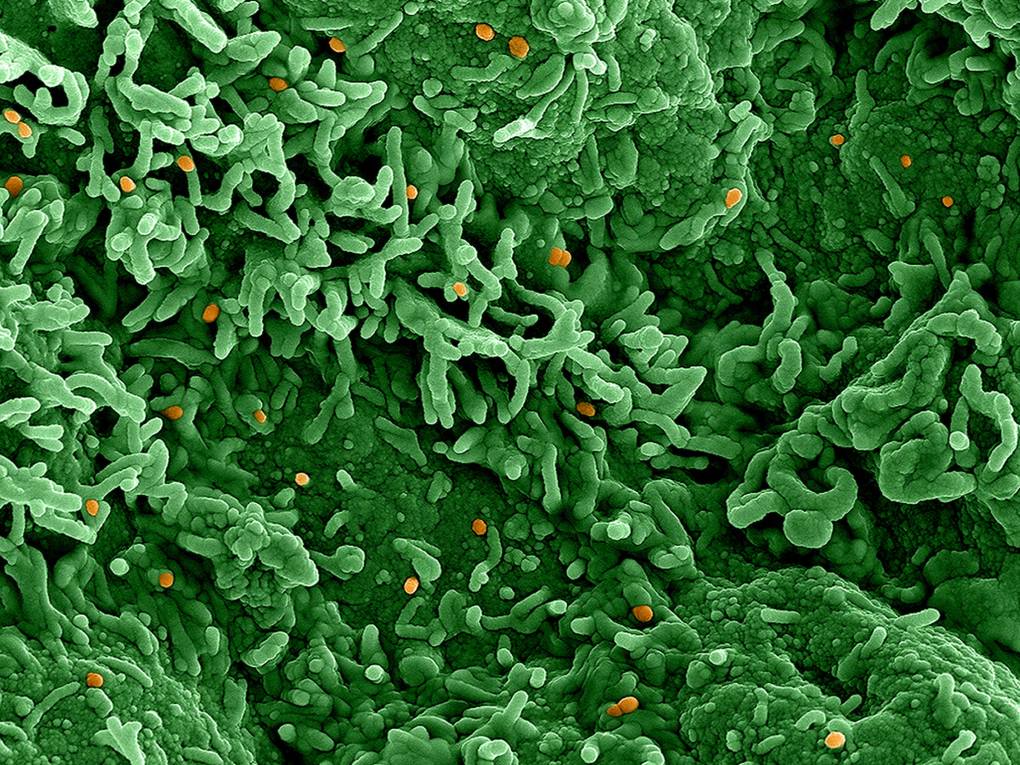
"caption": "An image from an electron microscope of the monkeypox virus (orange) on infected cells (green).",
"description": "An image from an electron microscope of the monkeypox virus (orange) on infected cells (green).",
"title": "monkeypox",
"credit": "NIAID",
"status": "inherit",
"altTag": "An image from an electron microscope shows small orange dots - the monkeypox virus - dotting grass-green tentacles, representing infected cells.",
"isLoading": false,
"fetchFailed": false
},
"science_1979953": {
"type": "attachments",
"id": "science_1979953",
"meta": {
"index": "attachments_1716263798",
"site": "science",
"id": "1979953",
"found": true
},
"parent": 1979952,
"imgSizes": {
"twentyfourteen-full-width": {
"file": "https://ww2.kqed.org/app/uploads/sites/35/2022/08/RS57552_GettyImages-1242146758-1-qut-1038x576.jpg",
"width": 1038,
"mimeType": "image/jpeg",
"height": 576
},
"thumbnail": {
"file": "https://ww2.kqed.org/app/uploads/sites/35/2022/08/RS57552_GettyImages-1242146758-1-qut-160x107.jpg",
"width": 160,
"mimeType": "image/jpeg",
"height": 107
},
"post-thumbnail": {
"file": "https://ww2.kqed.org/app/uploads/sites/35/2022/08/RS57552_GettyImages-1242146758-1-qut-672x372.jpg",
"width": 672,
"mimeType": "image/jpeg",
"height": 372
},
"kqedFullSize": {
"file": "https://ww2.kqed.org/app/uploads/sites/35/2022/08/RS57552_GettyImages-1242146758-1-qut.jpg",
"width": 1920,
"height": 1280
},
"large": {
"file": "https://ww2.kqed.org/app/uploads/sites/35/2022/08/RS57552_GettyImages-1242146758-1-qut-1020x680.jpg",
"width": 1020,
"mimeType": "image/jpeg",
"height": 680
},
"1536x1536": {
"file": "https://ww2.kqed.org/app/uploads/sites/35/2022/08/RS57552_GettyImages-1242146758-1-qut-1536x1024.jpg",
"width": 1536,
"mimeType": "image/jpeg",
"height": 1024
},
"medium": {
"file": "https://ww2.kqed.org/app/uploads/sites/35/2022/08/RS57552_GettyImages-1242146758-1-qut-800x533.jpg",
"width": 800,
"mimeType": "image/jpeg",
"height": 533
},
"medium_large": {
"file": "https://ww2.kqed.org/app/uploads/sites/35/2022/08/RS57552_GettyImages-1242146758-1-qut-768x512.jpg",
"width": 768,
"mimeType": "image/jpeg",
"height": 512
}
},
"publishDate": 1659737440,
"modified": 1659737513,
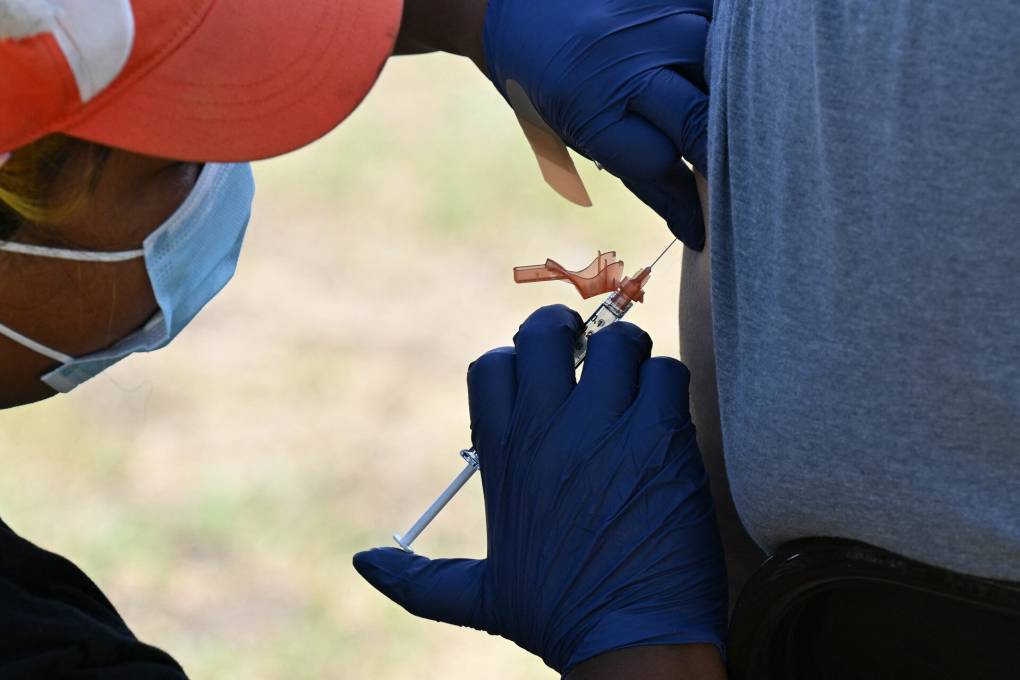
"caption": "A public health worker administers the monkeypox vaccine at the Balboa Sports Center in the Encino neighborhood of Los Angeles, California, on July 27, 2022. ",
"description": null,
"title": "US-HEALTH-VACCINE-MONKEYPOX",
"credit": "Photo by ROBYN BECK/AFP via Getty Images",
"status": "inherit",
"altTag": "A person in an orange baseball cap and blue surgical mask presses a needle into the arm of an person who is sitting outside.",
"isLoading": false,
"fetchFailed": false
},
"science_1971308": {
"type": "attachments",
"id": "science_1971308",
"meta": {
"index": "attachments_1716263798",
"site": "science",
"id": "1971308",
"found": true
},
"parent": 1971576,
"imgSizes": {
"twentyfourteen-full-width": {
"file": "https://ww2.kqed.org/app/uploads/sites/35/2020/11/parkcity-perseidmeteor-NASABill-Dunford-1038x576.jpg",
"width": 1038,
"mimeType": "image/jpeg",
"height": 576
},
"thumbnail": {
"file": "https://ww2.kqed.org/app/uploads/sites/35/2020/11/parkcity-perseidmeteor-NASABill-Dunford-160x101.jpg",
"width": 160,
"mimeType": "image/jpeg",
"height": 101
},
"post-thumbnail": {
"file": "https://ww2.kqed.org/app/uploads/sites/35/2020/11/parkcity-perseidmeteor-NASABill-Dunford-672x372.jpg",
"width": 672,
"mimeType": "image/jpeg",
"height": 372
},
"kqedFullSize": {
"file": "https://ww2.kqed.org/app/uploads/sites/35/2020/11/parkcity-perseidmeteor-NASABill-Dunford.jpg",
"width": 1776,
"height": 1124
},
"large": {
"file": "https://ww2.kqed.org/app/uploads/sites/35/2020/11/parkcity-perseidmeteor-NASABill-Dunford-1020x646.jpg",
"width": 1020,
"mimeType": "image/jpeg",
"height": 646
},
"1536x1536": {
"file": "https://ww2.kqed.org/app/uploads/sites/35/2020/11/parkcity-perseidmeteor-NASABill-Dunford-1536x972.jpg",
"width": 1536,
"mimeType": "image/jpeg",
"height": 972
},
"medium": {
"file": "https://ww2.kqed.org/app/uploads/sites/35/2020/11/parkcity-perseidmeteor-NASABill-Dunford-800x506.jpg",
"width": 800,
"mimeType": "image/jpeg",
"height": 506
},
"medium_large": {
"file": "https://ww2.kqed.org/app/uploads/sites/35/2020/11/parkcity-perseidmeteor-NASABill-Dunford-768x486.jpg",
"width": 768,
"mimeType": "image/jpeg",
"height": 486
}
},
"publishDate": 1606776314,
"modified": 1660260666,
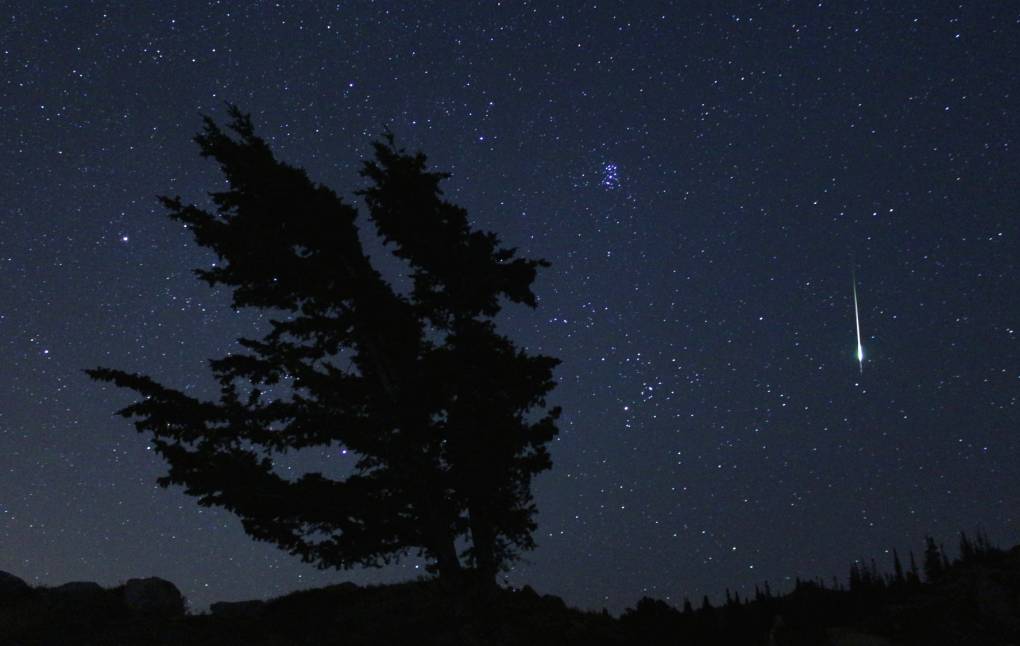
"caption": "A Perseid meteor, captured over Park City, Utah. ",
"description": "A Perseid meteor, captured over Park City, Utah. ",
"title": "parkcity-perseidmeteor-NASABill Dunford",
"credit": "NASA/Bill Dunford",
"status": "inherit",
"altTag": "The dark silhouette of a rough-edged tree leans to the left of the image, against an indigo sky whitened with star clusters. A thick streak of light from a meteor drops down on the right side of the image.",
"isLoading": false,
"fetchFailed": false
},
"science_1979870": {
"type": "attachments",
"id": "science_1979870",
"meta": {
"index": "attachments_1716263798",
"site": "science",
"id": "1979870",
"found": true
},
"parent": 1979865,
"imgSizes": {
"twentyfourteen-full-width": {
"file": "https://ww2.kqed.org/app/uploads/sites/35/2022/07/88A3496-1038x576.jpg",
"width": 1038,
"mimeType": "image/jpeg",
"height": 576
},
"thumbnail": {
"file": "https://ww2.kqed.org/app/uploads/sites/35/2022/07/88A3496-160x107.jpg",
"width": 160,
"mimeType": "image/jpeg",
"height": 107
},
"post-thumbnail": {
"file": "https://ww2.kqed.org/app/uploads/sites/35/2022/07/88A3496-672x372.jpg",
"width": 672,
"mimeType": "image/jpeg",
"height": 372
},
"kqedFullSize": {
"file": "https://ww2.kqed.org/app/uploads/sites/35/2022/07/88A3496.jpg",
"width": 2400,
"height": 1600
},
"2048x2048": {
"file": "https://ww2.kqed.org/app/uploads/sites/35/2022/07/88A3496-2048x1365.jpg",
"width": 2048,
"mimeType": "image/jpeg",
"height": 1365
},
"large": {
"file": "https://ww2.kqed.org/app/uploads/sites/35/2022/07/88A3496-1020x680.jpg",
"width": 1020,
"mimeType": "image/jpeg",
"height": 680
},
"1536x1536": {
"file": "https://ww2.kqed.org/app/uploads/sites/35/2022/07/88A3496-1536x1024.jpg",
"width": 1536,
"mimeType": "image/jpeg",
"height": 1024
},
"full-width": {
"file": "https://ww2.kqed.org/app/uploads/sites/35/2022/07/88A3496-1920x1280.jpg",
"width": 1920,
"mimeType": "image/jpeg",
"height": 1280
},
"medium": {
"file": "https://ww2.kqed.org/app/uploads/sites/35/2022/07/88A3496-800x533.jpg",
"width": 800,
"mimeType": "image/jpeg",
"height": 533
},
"medium_large": {
"file": "https://ww2.kqed.org/app/uploads/sites/35/2022/07/88A3496-768x512.jpg",
"width": 768,
"mimeType": "image/jpeg",
"height": 512
}
},
"publishDate": 1658534436,
"modified": 1658789151,
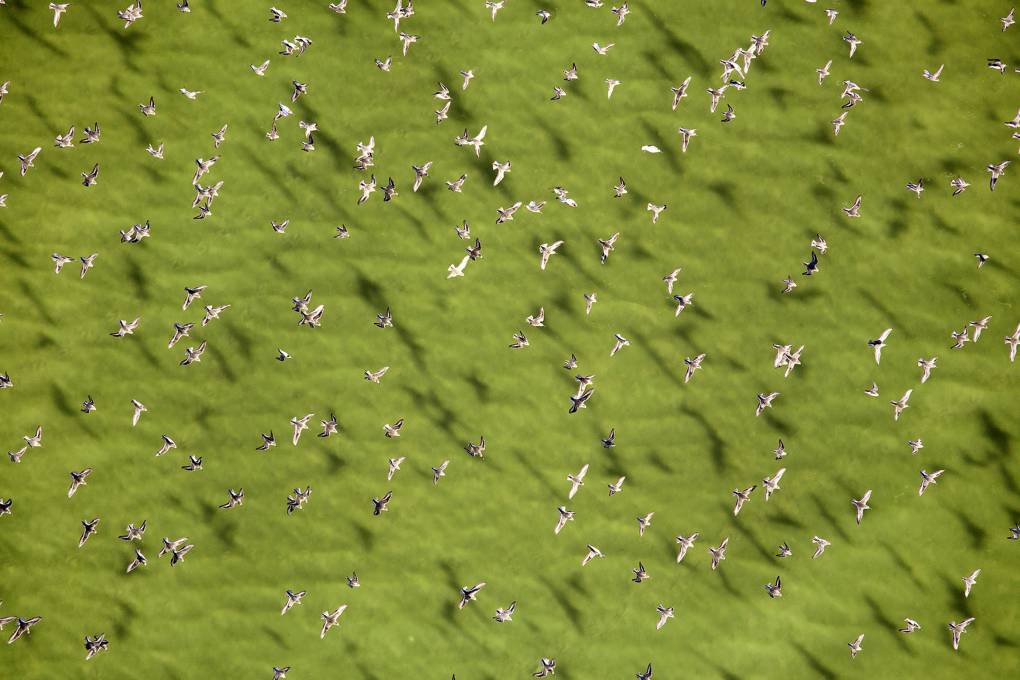
"caption": "A flock of water birds soars over the colorful ponds of San Francisco's South Bay.",
"description": "A flock of water birds soars over the colorful ponds of San Francisco's South Bay.",
"title": "Healing Landscape: A Damaged World in Transition",
"credit": "joSon/bioGraphic",
"status": "inherit",
"altTag": "A flock of birds with black and white wings flies over a watery pea green landscape below -- their shadows marking the colorful salt pond below..",
"isLoading": false,
"fetchFailed": false
},
"science_1979850": {
"type": "attachments",
"id": "science_1979850",
"meta": {
"index": "attachments_1716263798",
"site": "science",
"id": "1979850",
"found": true
},
"parent": 1979849,
"imgSizes": {
"twentyfourteen-full-width": {
"file": "https://ww2.kqed.org/app/uploads/sites/35/2022/07/gettyimages-1241848353_slide-0054bfe18b064a873240cfdf22cd059dd3bf93df-1038x576.jpg",
"width": 1038,
"mimeType": "image/jpeg",
"height": 576
},
"thumbnail": {
"file": "https://ww2.kqed.org/app/uploads/sites/35/2022/07/gettyimages-1241848353_slide-0054bfe18b064a873240cfdf22cd059dd3bf93df-160x107.jpg",
"width": 160,
"mimeType": "image/jpeg",
"height": 107
},
"post-thumbnail": {
"file": "https://ww2.kqed.org/app/uploads/sites/35/2022/07/gettyimages-1241848353_slide-0054bfe18b064a873240cfdf22cd059dd3bf93df-672x372.jpg",
"width": 672,
"mimeType": "image/jpeg",
"height": 372
},
"kqedFullSize": {
"file": "https://ww2.kqed.org/app/uploads/sites/35/2022/07/gettyimages-1241848353_slide-0054bfe18b064a873240cfdf22cd059dd3bf93df-scaled.jpg",
"width": 2560,
"height": 1707
},
"2048x2048": {
"file": "https://ww2.kqed.org/app/uploads/sites/35/2022/07/gettyimages-1241848353_slide-0054bfe18b064a873240cfdf22cd059dd3bf93df-2048x1365.jpg",
"width": 2048,
"mimeType": "image/jpeg",
"height": 1365
},
"large": {
"file": "https://ww2.kqed.org/app/uploads/sites/35/2022/07/gettyimages-1241848353_slide-0054bfe18b064a873240cfdf22cd059dd3bf93df-1020x680.jpg",
"width": 1020,
"mimeType": "image/jpeg",
"height": 680
},
"1536x1536": {
"file": "https://ww2.kqed.org/app/uploads/sites/35/2022/07/gettyimages-1241848353_slide-0054bfe18b064a873240cfdf22cd059dd3bf93df-1536x1024.jpg",
"width": 1536,
"mimeType": "image/jpeg",
"height": 1024
},
"full-width": {
"file": "https://ww2.kqed.org/app/uploads/sites/35/2022/07/gettyimages-1241848353_slide-0054bfe18b064a873240cfdf22cd059dd3bf93df-1920x1280.jpg",
"width": 1920,
"mimeType": "image/jpeg",
"height": 1280
},
"medium": {
"file": "https://ww2.kqed.org/app/uploads/sites/35/2022/07/gettyimages-1241848353_slide-0054bfe18b064a873240cfdf22cd059dd3bf93df-800x533.jpg",
"width": 800,
"mimeType": "image/jpeg",
"height": 533
},
"medium_large": {
"file": "https://ww2.kqed.org/app/uploads/sites/35/2022/07/gettyimages-1241848353_slide-0054bfe18b064a873240cfdf22cd059dd3bf93df-768x512.jpg",
"width": 768,
"mimeType": "image/jpeg",
"height": 512
}
},
"publishDate": 1658253232,
"modified": 1658253902,
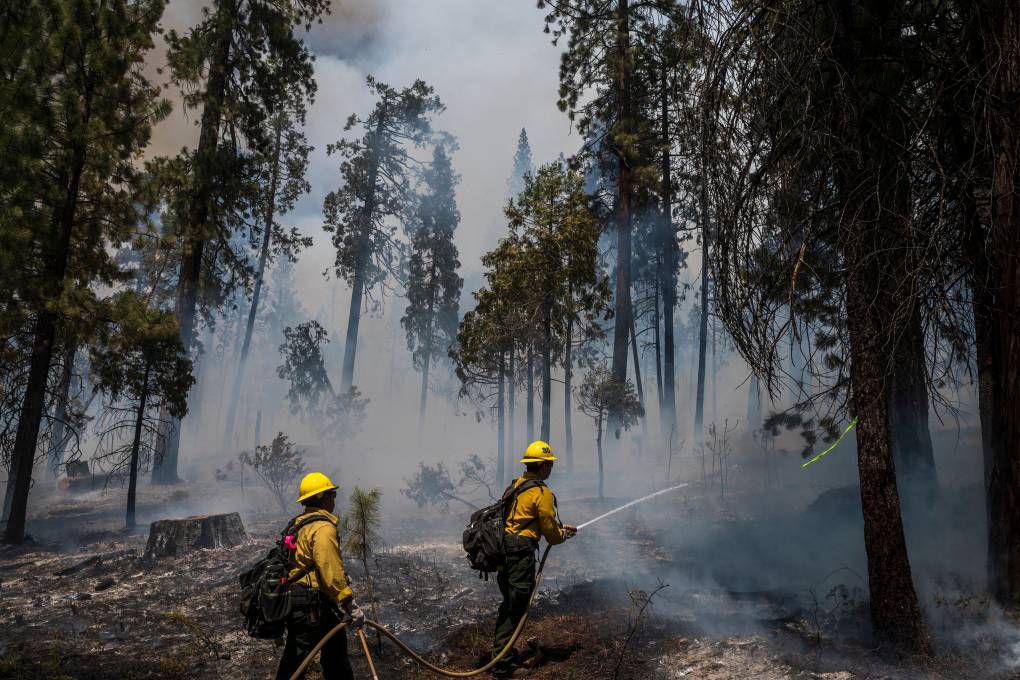
"caption": "TOPSHOT - Firefighters put out hot spots from the Washburn Fire in Yosemite National Park, California, July 11, 2022. - Hundreds of firefighters scrambled Monday to prevent a wildfire engulfing an area of rare giant sequoia trees in California's Yosemite National Park.\nThe Washburn fire, in the Mariposa Grove of giant sequoias, was first reported on July 7 and doubled in size over the weekend to 2,340 acres (946 hectares), according to a park report.\nYosemite's fire management service said 545 firefighters were battling the blaze, including \"proactively protecting\" the grove -- the largest sequoia grove in Yosemite, with over 500 mature trees. ",
"description": "TOPSHOT - Firefighters put out hot spots from the Washburn Fire in Yosemite National Park, California, July 11, 2022. - Hundreds of firefighters scrambled Monday to prevent a wildfire engulfing an area of rare giant sequoia trees in California's Yosemite National Park.\nThe Washburn fire, in the Mariposa Grove of giant sequoias, was first reported on July 7 and doubled in size over the weekend to 2,340 acres (946 hectares), according to a park report.\nYosemite's fire management service said 545 firefighters were battling the blaze, including \"proactively protecting\" the grove -- the largest sequoia grove in Yosemite, with over 500 mature trees. ",
"title": "Firefighters put out hot spots from the Washburn Fire in Yosemite National Park, Calif., on July 11.",
"credit": "NIC COURY/AFP via Getty Images",
"status": "inherit",
"altTag": "TOPSHOT - Firefighters put out hot spots from the Washburn Fire in Yosemite National Park, California, July 11, 2022. - Hundreds of firefighters scrambled Monday to prevent a wildfire engulfing an area of rare giant sequoia trees in California's Yosemite National Park. The Washburn fire, in the Mariposa Grove of giant sequoias, was first reported on July 7 and doubled in size over the weekend to 2,340 acres (946 hectares), according to a park report. Yosemite's fire management service said 545 firefighters were battling the blaze, including \"proactively protecting\" the grove -- the largest sequoia grove in Yosemite, with over 500 mature trees.",
"isLoading": false,
"fetchFailed": false
},
"science_1979836": {
"type": "attachments",
"id": "science_1979836",
"meta": {
"index": "attachments_1716263798",
"site": "science",
"id": "1979836",
"found": true
},
"parent": 0,
"imgSizes": {
"twentyfourteen-full-width": {
"file": "https://ww2.kqed.org/app/uploads/sites/35/2022/07/DL910_Carpenter_Bees_Stab_Flowers_To_Steal_Their_Nectar_KQED-1038x576.jpg",
"width": 1038,
"mimeType": "image/jpeg",
"height": 576
},
"thumbnail": {
"file": "https://ww2.kqed.org/app/uploads/sites/35/2022/07/DL910_Carpenter_Bees_Stab_Flowers_To_Steal_Their_Nectar_KQED-160x90.jpg",
"width": 160,
"mimeType": "image/jpeg",
"height": 90
},
"post-thumbnail": {
"file": "https://ww2.kqed.org/app/uploads/sites/35/2022/07/DL910_Carpenter_Bees_Stab_Flowers_To_Steal_Their_Nectar_KQED-672x372.jpg",
"width": 672,
"mimeType": "image/jpeg",
"height": 372
},
"kqedFullSize": {
"file": "https://ww2.kqed.org/app/uploads/sites/35/2022/07/DL910_Carpenter_Bees_Stab_Flowers_To_Steal_Their_Nectar_KQED.jpg",
"width": 1920,
"height": 1080
},
"large": {
"file": "https://ww2.kqed.org/app/uploads/sites/35/2022/07/DL910_Carpenter_Bees_Stab_Flowers_To_Steal_Their_Nectar_KQED-1020x574.jpg",
"width": 1020,
"mimeType": "image/jpeg",
"height": 574
},
"1536x1536": {
"file": "https://ww2.kqed.org/app/uploads/sites/35/2022/07/DL910_Carpenter_Bees_Stab_Flowers_To_Steal_Their_Nectar_KQED-1536x864.jpg",
"width": 1536,
"mimeType": "image/jpeg",
"height": 864
},
"medium": {
"file": "https://ww2.kqed.org/app/uploads/sites/35/2022/07/DL910_Carpenter_Bees_Stab_Flowers_To_Steal_Their_Nectar_KQED-800x450.jpg",
"width": 800,
"mimeType": "image/jpeg",
"height": 450
},
"medium_large": {
"file": "https://ww2.kqed.org/app/uploads/sites/35/2022/07/DL910_Carpenter_Bees_Stab_Flowers_To_Steal_Their_Nectar_KQED-768x432.jpg",
"width": 768,
"mimeType": "image/jpeg",
"height": 432
}
},
"publishDate": 1657912135,
"modified": 1657912921,
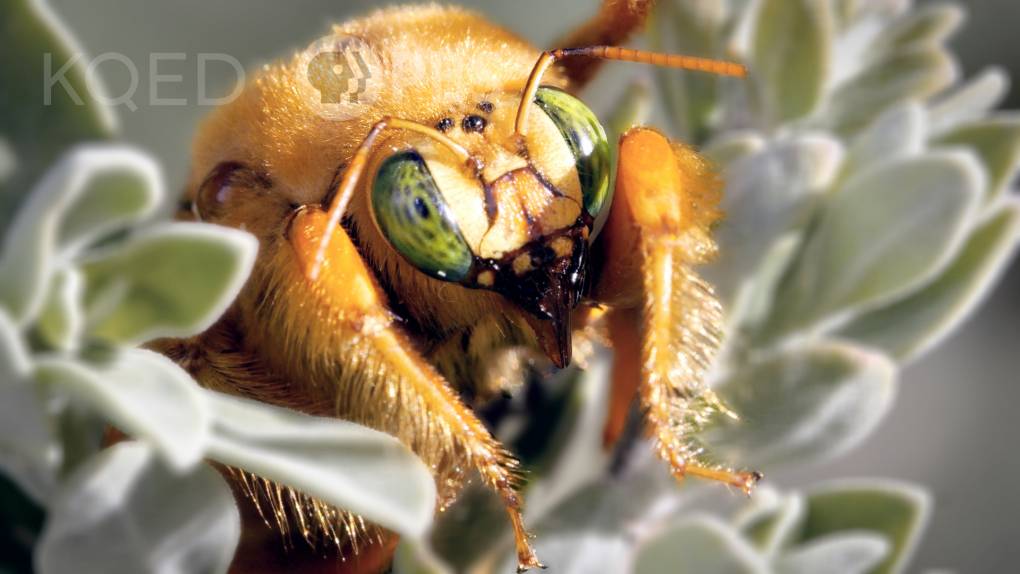
"caption": "Male Valley carpenter bees are known as teddy bear bees.",
"description": null,
"title": "DL910_Carpenter_Bees_Stab_Flowers_To_Steal_Their_Nectar_KQED",
"credit": "Josh Cassidy/KQED",
"status": "inherit",
"altTag": null,
"isLoading": false,
"fetchFailed": false
},
"science_1979820": {
"type": "attachments",
"id": "science_1979820",
"meta": {
"index": "attachments_1716263798",
"site": "science",
"id": "1979820",
"found": true
},
"parent": 1979819,
"imgSizes": {
"twentyfourteen-full-width": {
"file": "https://ww2.kqed.org/app/uploads/sites/35/2022/07/southern-ring-nebula-2-_custom-60c7d16d9c36f085646be2dad4585892c783952d-1038x576.jpg",
"width": 1038,
"mimeType": "image/jpeg",
"height": 576
},
"thumbnail": {
"file": "https://ww2.kqed.org/app/uploads/sites/35/2022/07/southern-ring-nebula-2-_custom-60c7d16d9c36f085646be2dad4585892c783952d-160x149.jpg",
"width": 160,
"mimeType": "image/jpeg",
"height": 149
},
"post-thumbnail": {
"file": "https://ww2.kqed.org/app/uploads/sites/35/2022/07/southern-ring-nebula-2-_custom-60c7d16d9c36f085646be2dad4585892c783952d-672x372.jpg",
"width": 672,
"mimeType": "image/jpeg",
"height": 372
},
"kqedFullSize": {
"file": "https://ww2.kqed.org/app/uploads/sites/35/2022/07/southern-ring-nebula-2-_custom-60c7d16d9c36f085646be2dad4585892c783952d.jpg",
"width": 2000,
"height": 1863
},
"large": {
"file": "https://ww2.kqed.org/app/uploads/sites/35/2022/07/southern-ring-nebula-2-_custom-60c7d16d9c36f085646be2dad4585892c783952d-1020x950.jpg",
"width": 1020,
"mimeType": "image/jpeg",
"height": 950
},
"1536x1536": {
"file": "https://ww2.kqed.org/app/uploads/sites/35/2022/07/southern-ring-nebula-2-_custom-60c7d16d9c36f085646be2dad4585892c783952d-1536x1431.jpg",
"width": 1536,
"mimeType": "image/jpeg",
"height": 1431
},
"full-width": {
"file": "https://ww2.kqed.org/app/uploads/sites/35/2022/07/southern-ring-nebula-2-_custom-60c7d16d9c36f085646be2dad4585892c783952d-1920x1788.jpg",
"width": 1920,
"mimeType": "image/jpeg",
"height": 1788
},
"medium": {
"file": "https://ww2.kqed.org/app/uploads/sites/35/2022/07/southern-ring-nebula-2-_custom-60c7d16d9c36f085646be2dad4585892c783952d-800x745.jpg",
"width": 800,
"mimeType": "image/jpeg",
"height": 745
},
"medium_large": {
"file": "https://ww2.kqed.org/app/uploads/sites/35/2022/07/southern-ring-nebula-2-_custom-60c7d16d9c36f085646be2dad4585892c783952d-768x715.jpg",
"width": 768,
"mimeType": "image/jpeg",
"height": 715
}
},
"publishDate": 1657644841,
"modified": 1657646078,
"caption": "The bright star at the center of NGC 3132, Southern Nebula Ring, while prominent when viewed by NASA's Webb Telescope in near-infrared light, plays a supporting role in sculpting the surrounding nebula. A second star, barely visible at lower left along one of the bright star's diffraction spikes, is the nebula's source. It has ejected at least eight layers of gas and dust over thousands of years.\n",
"description": "The bright star at the center of NGC 3132, Southern Nebula Ring, while prominent when viewed by NASA's Webb Telescope in near-infrared light, plays a supporting role in sculpting the surrounding nebula. A second star, barely visible at lower left along one of the bright star's diffraction spikes, is the nebula's source. It has ejected at least eight layers of gas and dust over thousands of years.\n",
"title": "The bright star at the center of NGC 3132, Southern Nebula Ring, while prominent when viewed by NASA's Webb Telescope in near-infrared light, plays a supporting role in sculpting the surrounding nebula. A second star, barely visible at lower left along one of the bright star's diffraction spikes, is the nebula's source. It has ejected at least eight layers of gas and dust over thousands of years.",
"credit": "NASA, ESA, CSA, STScI",
"status": "inherit",
"altTag": "The bright star at the center of NGC 3132, Southern Nebula Ring, while prominent when viewed by NASA's Webb Telescope in near-infrared light, plays a supporting role in sculpting the surrounding nebula. A second star, barely visible at lower left along one of the bright star's diffraction spikes, is the nebula's source. It has ejected at least eight layers of gas and dust over thousands of years.",
"isLoading": false,
"fetchFailed": false
}
},
"audioPlayerReducer": {
"postId": "stream_live",
"isPaused": true,
"isPlaying": false,
"pfsActive": false,
"pledgeModalIsOpen": true,
"playerDrawerIsOpen": false,
"liveAudioPlayStartedAt": 0,
"liveAudioPlayContext": ""
},
"authorsReducer": {
"byline_science_1980056": {
"type": "authors",
"id": "byline_science_1980056",
"meta": {
"override": true
},
"slug": "byline_science_1980056",
"name": "Marcia Dunn\u003cbr>Associated Press",
"isLoading": false
},
"byline_science_1979998": {
"type": "authors",
"id": "byline_science_1979998",
"meta": {
"override": true
},
"slug": "byline_science_1979998",
"name": "Ayana Archie",
"isLoading": false
},
"byline_science_1979985": {
"type": "authors",
"id": "byline_science_1979985",
"meta": {
"override": true
},
"slug": "byline_science_1979985",
"name": "Mark Kreidler",
"isLoading": false
},
"byline_science_1979865": {
"type": "authors",
"id": "byline_science_1979865",
"meta": {
"override": true
},
"slug": "byline_science_1979865",
"name": "Skylar Knight",
"isLoading": false
},
"byline_science_1979849": {
"type": "authors",
"id": "byline_science_1979849",
"meta": {
"override": true
},
"slug": "byline_science_1979849",
"name": "Eric Westervelt \u003cbr>NPR",
"isLoading": false
},
"byline_science_1979819": {
"type": "authors",
"id": "byline_science_1979819",
"meta": {
"override": true
},
"slug": "byline_science_1979819",
"name": "Bill Chappell, Vanessa Leroy\u003cbr>NPR",
"isLoading": false
},
"ben-burress": {
"type": "authors",
"id": "6180",
"meta": {
"index": "authors_1716337520",
"id": "6180",
"found": true
},
"name": "Ben Burress",
"firstName": "Ben",
"lastName": "Burress",
"slug": "ben-burress",
"email": "bburress@chabotspace.org",
"display_author_email": false,
"staff_mastheads": [],
"title": null,
"bio": "\u003cstrong>Benjamin Burress\u003c/strong> has been a staff astronomer at Chabot Space & Science Center since July 1999. He graduated from Sonoma State University in 1985 with a bachelor’s degree in physics (and minor in astronomy), after which he signed on for a two-year stint in the Peace Corps, where he taught physics and mathematics in the African nation of Cameroon. From 1989-96 he served on the crew of NASA’s Kuiper Airborne Observatory at Ames Research Center in Mountain View, CA. From 1996-99, he was Head Observer at the Naval Prototype Optical Interferometer program at Lowell Observatory in Flagstaff, AZ.\r\n\r\nRead his \u003ca href=\"http://science.kqed.org/quest/author/ben-burress/\">previous contributions\u003c/a> to \u003ca href=\"http://science.kqed.org/quest/\">QUEST\u003c/a>, a project dedicated to exploring the Science of Sustainability.",
"avatar": "https://secure.gravatar.com/avatar/8263bffa345b7e4923a0b8b9f0f6a161?s=600&d=blank&r=g",
"twitter": null,
"facebook": null,
"instagram": null,
"linkedin": null,
"sites": [
{
"site": "science",
"roles": [
"editor"
]
},
{
"site": "quest",
"roles": [
"subscriber"
]
}
],
"headData": {
"title": "Ben Burress | KQED",
"description": null,
"ogImgSrc": "https://secure.gravatar.com/avatar/8263bffa345b7e4923a0b8b9f0f6a161?s=600&d=blank&r=g",
"twImgSrc": "https://secure.gravatar.com/avatar/8263bffa345b7e4923a0b8b9f0f6a161?s=600&d=blank&r=g"
},
"isLoading": false,
"link": "/author/ben-burress"
},
"mseely": {
"type": "authors",
"id": "11095",
"meta": {
"index": "authors_1716337520",
"id": "11095",
"found": true
},
"name": "Mike Seely",
"firstName": "Mike",
"lastName": "Seely",
"slug": "mseely",
"email": "mseely@kqed.org",
"display_author_email": false,
"staff_mastheads": [
"science"
],
"title": "Producer",
"bio": "Mike is a Digital Media Producer for KQED Science and Post Production Coordinator for \u003ca href=\"https://www.youtube.com/user/KQEDDeepLook\" target=\"_blank\" rel=\"noopener noreferrer\">Deep Look\u003c/a>. Prior to his work at KQED, he worked independently for 15 years as a director, producer and cinematographer of documentary films about art, science, and social issues, collaborating with independent directors, corporate clients, non-profits, digital and broadcast networks. Previous to filmmaking life, he majored in biology as an undergrad at Oberlin College, and worked as a wildlife biologist on bird and seal population studies in California. He also holds an M.A. in Documentary Film Production from Stanford University.",
"avatar": "https://secure.gravatar.com/avatar/f9c5c6f7135a7c3fc0ce85114f7b05dd18e0b71af78a2d6770a1b09a921d8425?s=600&d=blank&r=g",
"twitter": null,
"bluesky": null,
"facebook": null,
"instagram": null,
"linkedin": null,
"sites": [
{
"site": "arts",
"roles": [
"subscriber"
]
},
{
"site": "science",
"roles": [
"author"
]
}
],
"headData": {
"title": "Mike Seely | KQED",
"description": "Producer",
"ogImgSrc": "https://secure.gravatar.com/avatar/f9c5c6f7135a7c3fc0ce85114f7b05dd18e0b71af78a2d6770a1b09a921d8425?s=600&d=blank&r=g",
"twImgSrc": "https://secure.gravatar.com/avatar/f9c5c6f7135a7c3fc0ce85114f7b05dd18e0b71af78a2d6770a1b09a921d8425?s=600&d=blank&r=g"
},
"isLoading": false,
"link": "/author/mseely"
},
"lesleymcclurg": {
"type": "authors",
"id": "11229",
"meta": {
"index": "authors_1716337520",
"id": "11229",
"found": true
},
"name": "Lesley McClurg",
"firstName": "Lesley",
"lastName": "McClurg",
"slug": "lesleymcclurg",
"email": "lmcclurg@KQED.org",
"display_author_email": false,
"staff_mastheads": [
"news",
"science"
],
"title": "KQED Health Correspondent",
"bio": "Lesley McClurg is a health correspondent and fill-in host whose work is regularly rebroadcast on NPR and PBS programs. She’s earned multiple regional Emmy awards, a national and a regional Edward R. Murrow award, and was named Best Beat Reporter by the Association of Health Care Journalists. The Society of Professional Journalists has recognized her work several times, and the Society of Environmental Journalists spotlighted her coverage of California’s historic drought.\r\n\r\nBefore joining KQED in 2016, Lesley covered food and sustainability for Capital Public Radio, environmental issues for Colorado Public Radio, and reported for KUOW and KCTS 9 in Seattle. Away from the newsroom, she loves skiing with her daughter, mountain biking with her partner, and playing with Ollie, the family’s goldendoodle. On deadline, she runs almost entirely on chocolate chips.\r\n\r\n ",
"avatar": "https://secure.gravatar.com/avatar/bab49e972ea10c774fe0f5e29dba1722b158f7c0d58a360923d1389d380b2978?s=600&d=blank&r=g",
"twitter": "lesleywmcclurg",
"bluesky": null,
"facebook": null,
"instagram": null,
"linkedin": null,
"sites": [
{
"site": "arts",
"roles": [
"author"
]
},
{
"site": "news",
"roles": [
"editor"
]
},
{
"site": "futureofyou",
"roles": [
"editor"
]
},
{
"site": "stateofhealth",
"roles": [
"author"
]
},
{
"site": "science",
"roles": [
"editor"
]
},
{
"site": "quest",
"roles": [
"subscriber"
]
},
{
"site": "forum",
"roles": [
"administrator"
]
},
{
"site": "liveblog",
"roles": [
"author"
]
}
],
"headData": {
"title": "Lesley McClurg | KQED",
"description": "KQED Health Correspondent",
"ogImgSrc": "https://secure.gravatar.com/avatar/bab49e972ea10c774fe0f5e29dba1722b158f7c0d58a360923d1389d380b2978?s=600&d=blank&r=g",
"twImgSrc": "https://secure.gravatar.com/avatar/bab49e972ea10c774fe0f5e29dba1722b158f7c0d58a360923d1389d380b2978?s=600&d=blank&r=g"
},
"isLoading": false,
"link": "/author/lesleymcclurg"
},
"kevinstark": {
"type": "authors",
"id": "11608",
"meta": {
"index": "authors_1716337520",
"id": "11608",
"found": true
},
"name": "Kevin Stark",
"firstName": "Kevin",
"lastName": "Stark",
"slug": "kevinstark",
"email": "kstark@kqed.org",
"display_author_email": true,
"staff_mastheads": [
"science"
],
"title": "Senior Editor",
"bio": "Kevin is a senior editor for KQED Science, managing the station's health and climate desks. His journalism career began in the Pacific Northwest, and he later became a lead reporter for the San Francisco Public Press. His work has appeared in Pacific Standard magazine, the Energy News Network, the Center for Investigative Reporting's Reveal and WBEZ in Chicago. Kevin joined KQED in 2019, and has covered issues related to energy, wildfire, climate change and the environment.",
"avatar": "https://secure.gravatar.com/avatar/365aaa4b597d3a8374f67504ff0facd323d7906e8eb4be0a7efd2427408e802c?s=600&d=blank&r=g",
"twitter": "starkkev",
"bluesky": null,
"facebook": null,
"instagram": null,
"linkedin": null,
"sites": [
{
"site": "",
"roles": [
"editor"
]
},
{
"site": "news",
"roles": [
"editor"
]
},
{
"site": "science",
"roles": [
"administrator"
]
}
],
"headData": {
"title": "Kevin Stark | KQED",
"description": "Senior Editor",
"ogImgSrc": "https://secure.gravatar.com/avatar/365aaa4b597d3a8374f67504ff0facd323d7906e8eb4be0a7efd2427408e802c?s=600&d=blank&r=g",
"twImgSrc": "https://secure.gravatar.com/avatar/365aaa4b597d3a8374f67504ff0facd323d7906e8eb4be0a7efd2427408e802c?s=600&d=blank&r=g"
},
"isLoading": false,
"link": "/author/kevinstark"
},
"smohamad": {
"type": "authors",
"id": "11631",
"meta": {
"index": "authors_1716337520",
"id": "11631",
"found": true
},
"name": "Sarah Mohamad",
"firstName": "Sarah",
"lastName": "Mohamad",
"slug": "smohamad",
"email": "smohamad@KQED.org",
"display_author_email": true,
"staff_mastheads": [],
"title": "Engagement Producer and Reporter, KQED Science",
"bio": "Sarah Mohamad is an audience engagement reporter and producer for KQED Science. She reports on audience-focused science and environment stories and manages the team's social media, newsletter, and engagement efforts. Prior to this role, she played a key role as project manager for NSF's \u003ca href=\"https://www.kqed.org/crackingthecode\">\u003cem>Cracking the Code: Influencing Millennial Science Engagement\u003c/em> \u003c/a>audience research.",
"avatar": "https://secure.gravatar.com/avatar/e6224957cd82d015183756ddde1f928013a563d7ca2e4565f8c4de1ec64886c5?s=600&d=blank&r=g",
"twitter": "sarahkmohamad",
"bluesky": null,
"facebook": null,
"instagram": null,
"linkedin": null,
"sites": [
{
"site": "",
"roles": [
"editor"
]
},
{
"site": "arts",
"roles": [
"editor"
]
},
{
"site": "news",
"roles": [
"editor"
]
},
{
"site": "about",
"roles": [
"editor"
]
},
{
"site": "science",
"roles": [
"editor"
]
}
],
"headData": {
"title": "Sarah Mohamad | KQED",
"description": "Engagement Producer and Reporter, KQED Science",
"ogImgSrc": "https://secure.gravatar.com/avatar/e6224957cd82d015183756ddde1f928013a563d7ca2e4565f8c4de1ec64886c5?s=600&d=blank&r=g",
"twImgSrc": "https://secure.gravatar.com/avatar/e6224957cd82d015183756ddde1f928013a563d7ca2e4565f8c4de1ec64886c5?s=600&d=blank&r=g"
},
"isLoading": false,
"link": "/author/smohamad"
}
},
"pagesReducer": {
"science_category_news": {
"type": "terms",
"id": "science_40",
"meta": {
"index": "terms_1716263798",
"site": "science",
"id": "40",
"score": 10.813459
},
"featImg": null,
"name": "News",
"description": null,
"taxonomy": "category",
"headData": {
"twImgId": null,
"twTitle": null,
"ogTitle": null,
"ogImgId": null,
"twDescription": null,
"description": null,
"title": "News Archives | KQED Science",
"ogDescription": null
},
"ttid": 42,
"slug": "news",
"isLoading": false,
"title": "News",
"pageMeta": {
"site": "science",
"WpPageTemplate": "page-topic-editorial",
"currentPage": 59
},
"blocks": [
{
"blockName": "kqed/post-list",
"attrs": {
"layout": "cardArticle2",
"query": "posts/science?category=news",
"seeMore": false,
"paginated": true,
"page": 59
}
},
{
"blockName": "kqed/ad"
}
]
}
},
"pfsSessionReducer": {},
"postsReducer": {
"stream_live": {
"type": "live",
"id": "stream_live",
"audioUrl": "https://streams.kqed.org/kqedradio",
"title": "Live Stream",
"excerpt": "Live Stream information currently unavailable.",
"link": "/radio",
"featImg": "",
"label": {
"name": "KQED Live",
"link": "/"
}
},
"stream_kqedNewscast": {
"type": "posts",
"id": "stream_kqedNewscast",
"audioUrl": "https://www.kqed.org/.stream/anon/radio/RDnews/newscast.mp3?_=1",
"title": "KQED Newscast",
"featImg": "",
"label": {
"name": "88.5 FM",
"link": "/"
}
},
"science_1980108": {
"type": "posts",
"id": "science_1980108",
"meta": {
"index": "posts_1716263798",
"site": "science",
"id": "1980108",
"score": null,
"sort": [
1661497261000
]
},
"parent": 0,
"labelTerm": {},
"blocks": [],
"publishDate": 1661497261,
"format": "standard",
"title": "NASA's Artemis I Launch Date — How to Watch the First Moon Mission in 50 Years",
"headTitle": "NASA’s Artemis I Launch Date — How to Watch the First Moon Mission in 50 Years | KQED",
"content": "\u003cp>\u003cem>Update 8:20 a.m., Friday: \u003ca href=\"https://www.kqed.org/science/1980136/artemis-i-launch-postponed-because-of-engine-problem\">The Artemis I launch has been postponed\u003c/a> due to a fuel leak and then an engine problem. \u003ca href=\"https://www.nasa.gov/press-release/nasa-sets-coverage-for-artemis-i-moon-mission-next-launch-attempt\">The next launch attempt will be on Saturday, September 3 at 11:17 a.m. PST\u003c/a>.\u003c/em>\u003c/p>\n\u003cp>NASA’s launch of Artemis I will kick-start the space agency’s “Moon to Mars” initiative by sending an uncrewed spacecraft to orbit the moon for six weeks. The Artemis program, which you can watch below, aims to return humans to the moon in order to learn about survival in space.\u003c/p>\n\u003cp>\u003cspan style=\"font-weight: 400\">“NASA’s Artemis program will pave the way for humanity’s giant leap for future missions to Mars. There’s no doubt that we are in a golden era of human space exploration, discovery and ingenuity in space and it all begins with Artemis I,” said NASA administrator Bill Nelson.\u003c/span>\u003c/p>\n\u003cp>NASA is providing a livestream of the liftoff from NASA’s Kennedy Space Center in Florida. You can watch the livestream right here, or \u003ca href=\"https://www.eventbrite.com/e/artemis-i-registration-144043131885?linkId=157646545\">join a watch party\u003c/a>.\u003c/p>\n\u003cp>\u003ciframe loading=\"lazy\" title=\"Artemis I Launch to the Moon (Official NASA Broadcast) - Nov. 16, 2022\" width=\"500\" height=\"281\" src=\"https://www.youtube.com/embed/CMLD0Lp0JBg?feature=oembed\" frameborder=\"0\" allow=\"accelerometer; autoplay; clipboard-write; encrypted-media; gyroscope; picture-in-picture; web-share\" allowfullscreen>\u003c/iframe>\u003c/p>\n\u003cp>Should weather or any other problem interfere with the launch, NASA has set Sept. 2 and Sept. 5 as alternative dates.\u003c/p>\n\u003cp>Artemis I will send the Orion capsule into orbit carrying three mannequins fitted with sensors to provide data on what crew members may experience in future flights.\u003c/p>\n\u003cp>Orion will orbit the moon for about 42 days, allowing time for NASA to test a series of critical systems before it moves forward with a crewed mission.\u003c/p>\n\u003cp>[aside postID='science_1978759']The spacecraft’s heat shield, for example, must protect the Orion capsule from the extreme temperatures (approximately 5,000 degrees Fahrenheit) that it will encounter when reentering Earth’s atmosphere. NASA will also monitor Orion’s navigation systems and its resilience when traveling through high radiation environments near Earth and the moon.\u003c/p>\n\u003cp>The spacecraft will approach the lunar surface, getting as close as 60 miles aboveground before traveling roughly 40,000 miles beyond the moon and back to Earth, in a test of reentry, descent and splashdown.\u003c/p>\n\u003cp>If successful, this will pave the way for Artemis II, which will carry a human crew around the moon\u003c/p>\n\u003cfigure id=\"attachment_1980111\" class=\"wp-caption alignnone\" style=\"max-width: 800px\">\u003cimg loading=\"lazy\" decoding=\"async\" class=\"size-medium wp-image-1980111\" src=\"https://ww2.kqed.org/app/uploads/sites/35/2022/08/GATEWAY_1-800x450.jpg\" alt=\"An illustration of the full Gateway configuration with Orion approaching Gateway\" width=\"800\" height=\"450\" srcset=\"https://cdn.kqed.org/wp-content/uploads/sites/35/2022/08/GATEWAY_1-800x450.jpg 800w, https://cdn.kqed.org/wp-content/uploads/sites/35/2022/08/GATEWAY_1-1020x574.jpg 1020w, https://cdn.kqed.org/wp-content/uploads/sites/35/2022/08/GATEWAY_1-160x90.jpg 160w, https://cdn.kqed.org/wp-content/uploads/sites/35/2022/08/GATEWAY_1-768x432.jpg 768w, https://cdn.kqed.org/wp-content/uploads/sites/35/2022/08/GATEWAY_1-1536x864.jpg 1536w, https://cdn.kqed.org/wp-content/uploads/sites/35/2022/08/GATEWAY_1.jpg 1920w\" sizes=\"(max-width: 800px) 100vw, 800px\">\u003cfigcaption class=\"wp-caption-text\">An illustration of the full Gateway configuration with Orion approaching Gateway. \u003ccite>(Alberto Bertolin/NASA)\u003c/cite>\u003c/figcaption>\u003c/figure>\n\u003cp>Between 1968 and 1972, America launched nine human missions to the moon, six of which successfully touched down, allowing 12 men to walk on the lunar surfaces. Artemis III — slated for 2025 and the last mission in the Artemis program — will land the first woman and the first person of color on the moon’s surface. It will be the first time humans have stepped foot on the moon for more than 50 years.\u003c/p>\n\u003cp>Before Artemis III lifts off, NASA plans to build Gateway, a multipurpose outpost orbiting the moon that will be a home base for astronauts to live between landings on the lunar surface, and a laboratory to support scientific research and human exploration on and around the moon. Gateway will provide options for Earth science, heliophysics, lunar and planetary science, and more by allowing extended views of the Earth, sun, moon and space not possible from Earth’s surface or from Earth’s orbit.\u003c/p>\n\u003cp>“This is a mission that truly will do what hasn’t been done and learn what isn’t known,” said Mike Sarafin, NASA’s mission manager for Artemis I.\u003c/p>\n\u003cfigure id=\"attachment_1980110\" class=\"wp-caption alignnone\" style=\"max-width: 800px\">\u003cimg loading=\"lazy\" decoding=\"async\" class=\"size-medium wp-image-1980110\" src=\"https://ww2.kqed.org/app/uploads/sites/35/2022/08/SLS_1-800x565.jpg\" alt=\"NASA’s Space Launch System (SLS) rocket with the Orion spacecraft aboard is seen atop a mobile launcher at Launch Pad 39B, Wednesday, Aug. 17, 2022, after being rolled out to the launch pad at NASA’s Kennedy Space Center in Florida\" width=\"800\" height=\"565\" srcset=\"https://cdn.kqed.org/wp-content/uploads/sites/35/2022/08/SLS_1-800x565.jpg 800w, https://cdn.kqed.org/wp-content/uploads/sites/35/2022/08/SLS_1-1020x721.jpg 1020w, https://cdn.kqed.org/wp-content/uploads/sites/35/2022/08/SLS_1-160x113.jpg 160w, https://cdn.kqed.org/wp-content/uploads/sites/35/2022/08/SLS_1-768x543.jpg 768w, https://cdn.kqed.org/wp-content/uploads/sites/35/2022/08/SLS_1-1536x1086.jpg 1536w, https://cdn.kqed.org/wp-content/uploads/sites/35/2022/08/SLS_1.jpg 1920w\" sizes=\"(max-width: 800px) 100vw, 800px\">\u003cfigcaption class=\"wp-caption-text\">NASA’s Space Launch System (SLS) rocket with the Orion spacecraft aboard is seen atop a mobile launcher at Launch Pad 39B, on Wednesday, Aug. 17, 2022, after being rolled out at NASA’s Kennedy Space Center in Florida \u003ccite>(Joel Kowsky/NASA)\u003c/cite>\u003c/figcaption>\u003c/figure>\n\u003cp>The Artemis I mission was originally scheduled to lift off in 2021, but supply chain lags and other problems delayed the development of the vehicles NASA plans to use for the mission. The cost so far is at least $37 billion, and Artemis missions will cost NASA around $93 billion by 2025. NASA’s Bill Nelson has called the Artemis program an \u003ca href=\"https://www.reuters.com/lifestyle/science/nasa-poised-historic-artemis-i-lunar-launch-florida-2022-08-23/\">“economic engine,”\u003c/a> noting that in 2019 alone it generated $14 billion in commerce and supported 70,000 American jobs.\u003c/p>\n\u003cp>[ad fullwidth]\u003c/p>\n\u003cp>\u003c/p>\n",
"stats": {
"hasVideo": true,
"hasChartOrMap": false,
"hasAudio": false,
"hasPolis": false,
"wordCount": 708,
"hasGoogleForm": false,
"hasGallery": false,
"hasHearkenModule": false,
"iframeSrcs": [],
"paragraphCount": 17
},
"modified": 1704846209,
"excerpt": "NASA's Artemis missions aim to learn about long-term human survival in space, one small step on the road to Mars.",
"headData": {
"twImgId": "",
"twTitle": "",
"ogTitle": "",
"ogImgId": "",
"twDescription": "",
"description": "NASA's Artemis missions aim to learn about long-term human survival in space, one small step on the road to Mars.",
"title": "NASA's Artemis I Launch Date — How to Watch the First Moon Mission in 50 Years | KQED",
"ogDescription": "",
"schema": {
"@context": "https://schema.org",
"@type": "Article",
"headline": "NASA's Artemis I Launch Date — How to Watch the First Moon Mission in 50 Years",
"datePublished": "2022-08-26T00:01:01-07:00",
"dateModified": "2024-01-09T16:23:29-08:00",
"image": "https://cdn.kqed.org/wp-content/uploads/2020/02/KQED-OG-Image@1x.png"
}
},
"guestAuthors": [],
"slug": "artemis-launch-date-how-to-watch",
"status": "publish",
"excludeFromSiteSearch": "Include",
"sticky": false,
"source": "astronomy",
"path": "/science/1980108/artemis-launch-date-how-to-watch",
"audioTrackLength": null,
"parsedContent": [
{
"type": "contentString",
"content": "\u003cdiv class=\"post-body\">\u003cp>\u003cp>\u003cem>Update 8:20 a.m., Friday: \u003ca href=\"https://www.kqed.org/science/1980136/artemis-i-launch-postponed-because-of-engine-problem\">The Artemis I launch has been postponed\u003c/a> due to a fuel leak and then an engine problem. \u003ca href=\"https://www.nasa.gov/press-release/nasa-sets-coverage-for-artemis-i-moon-mission-next-launch-attempt\">The next launch attempt will be on Saturday, September 3 at 11:17 a.m. PST\u003c/a>.\u003c/em>\u003c/p>\n\u003cp>NASA’s launch of Artemis I will kick-start the space agency’s “Moon to Mars” initiative by sending an uncrewed spacecraft to orbit the moon for six weeks. The Artemis program, which you can watch below, aims to return humans to the moon in order to learn about survival in space.\u003c/p>\n\u003cp>\u003cspan style=\"font-weight: 400\">“NASA’s Artemis program will pave the way for humanity’s giant leap for future missions to Mars. There’s no doubt that we are in a golden era of human space exploration, discovery and ingenuity in space and it all begins with Artemis I,” said NASA administrator Bill Nelson.\u003c/span>\u003c/p>\n\u003cp>NASA is providing a livestream of the liftoff from NASA’s Kennedy Space Center in Florida. You can watch the livestream right here, or \u003ca href=\"https://www.eventbrite.com/e/artemis-i-registration-144043131885?linkId=157646545\">join a watch party\u003c/a>.\u003c/p>\n\u003cp>\u003ciframe loading=\"lazy\" title=\"Artemis I Launch to the Moon (Official NASA Broadcast) - Nov. 16, 2022\" width=\"500\" height=\"281\" src=\"https://www.youtube.com/embed/CMLD0Lp0JBg?feature=oembed\" frameborder=\"0\" allow=\"accelerometer; autoplay; clipboard-write; encrypted-media; gyroscope; picture-in-picture; web-share\" allowfullscreen>\u003c/iframe>\u003c/p>\n\u003cp>Should weather or any other problem interfere with the launch, NASA has set Sept. 2 and Sept. 5 as alternative dates.\u003c/p>\n\u003cp>Artemis I will send the Orion capsule into orbit carrying three mannequins fitted with sensors to provide data on what crew members may experience in future flights.\u003c/p>\n\u003cp>Orion will orbit the moon for about 42 days, allowing time for NASA to test a series of critical systems before it moves forward with a crewed mission.\u003c/p>\n\u003cp>\u003c/p>\u003c/div>",
"attributes": {
"named": {},
"numeric": []
}
},
{
"type": "component",
"content": "",
"name": "aside",
"attributes": {
"named": {
"postid": "science_1978759",
"label": ""
},
"numeric": []
}
},
{
"type": "contentString",
"content": "\u003cdiv class=\"post-body\">\u003cp>The spacecraft’s heat shield, for example, must protect the Orion capsule from the extreme temperatures (approximately 5,000 degrees Fahrenheit) that it will encounter when reentering Earth’s atmosphere. NASA will also monitor Orion’s navigation systems and its resilience when traveling through high radiation environments near Earth and the moon.\u003c/p>\n\u003cp>The spacecraft will approach the lunar surface, getting as close as 60 miles aboveground before traveling roughly 40,000 miles beyond the moon and back to Earth, in a test of reentry, descent and splashdown.\u003c/p>\n\u003cp>If successful, this will pave the way for Artemis II, which will carry a human crew around the moon\u003c/p>\n\u003cfigure id=\"attachment_1980111\" class=\"wp-caption alignnone\" style=\"max-width: 800px\">\u003cimg loading=\"lazy\" decoding=\"async\" class=\"size-medium wp-image-1980111\" src=\"https://ww2.kqed.org/app/uploads/sites/35/2022/08/GATEWAY_1-800x450.jpg\" alt=\"An illustration of the full Gateway configuration with Orion approaching Gateway\" width=\"800\" height=\"450\" srcset=\"https://cdn.kqed.org/wp-content/uploads/sites/35/2022/08/GATEWAY_1-800x450.jpg 800w, https://cdn.kqed.org/wp-content/uploads/sites/35/2022/08/GATEWAY_1-1020x574.jpg 1020w, https://cdn.kqed.org/wp-content/uploads/sites/35/2022/08/GATEWAY_1-160x90.jpg 160w, https://cdn.kqed.org/wp-content/uploads/sites/35/2022/08/GATEWAY_1-768x432.jpg 768w, https://cdn.kqed.org/wp-content/uploads/sites/35/2022/08/GATEWAY_1-1536x864.jpg 1536w, https://cdn.kqed.org/wp-content/uploads/sites/35/2022/08/GATEWAY_1.jpg 1920w\" sizes=\"(max-width: 800px) 100vw, 800px\">\u003cfigcaption class=\"wp-caption-text\">An illustration of the full Gateway configuration with Orion approaching Gateway. \u003ccite>(Alberto Bertolin/NASA)\u003c/cite>\u003c/figcaption>\u003c/figure>\n\u003cp>Between 1968 and 1972, America launched nine human missions to the moon, six of which successfully touched down, allowing 12 men to walk on the lunar surfaces. Artemis III — slated for 2025 and the last mission in the Artemis program — will land the first woman and the first person of color on the moon’s surface. It will be the first time humans have stepped foot on the moon for more than 50 years.\u003c/p>\n\u003cp>Before Artemis III lifts off, NASA plans to build Gateway, a multipurpose outpost orbiting the moon that will be a home base for astronauts to live between landings on the lunar surface, and a laboratory to support scientific research and human exploration on and around the moon. Gateway will provide options for Earth science, heliophysics, lunar and planetary science, and more by allowing extended views of the Earth, sun, moon and space not possible from Earth’s surface or from Earth’s orbit.\u003c/p>\n\u003cp>“This is a mission that truly will do what hasn’t been done and learn what isn’t known,” said Mike Sarafin, NASA’s mission manager for Artemis I.\u003c/p>\n\u003cfigure id=\"attachment_1980110\" class=\"wp-caption alignnone\" style=\"max-width: 800px\">\u003cimg loading=\"lazy\" decoding=\"async\" class=\"size-medium wp-image-1980110\" src=\"https://ww2.kqed.org/app/uploads/sites/35/2022/08/SLS_1-800x565.jpg\" alt=\"NASA’s Space Launch System (SLS) rocket with the Orion spacecraft aboard is seen atop a mobile launcher at Launch Pad 39B, Wednesday, Aug. 17, 2022, after being rolled out to the launch pad at NASA’s Kennedy Space Center in Florida\" width=\"800\" height=\"565\" srcset=\"https://cdn.kqed.org/wp-content/uploads/sites/35/2022/08/SLS_1-800x565.jpg 800w, https://cdn.kqed.org/wp-content/uploads/sites/35/2022/08/SLS_1-1020x721.jpg 1020w, https://cdn.kqed.org/wp-content/uploads/sites/35/2022/08/SLS_1-160x113.jpg 160w, https://cdn.kqed.org/wp-content/uploads/sites/35/2022/08/SLS_1-768x543.jpg 768w, https://cdn.kqed.org/wp-content/uploads/sites/35/2022/08/SLS_1-1536x1086.jpg 1536w, https://cdn.kqed.org/wp-content/uploads/sites/35/2022/08/SLS_1.jpg 1920w\" sizes=\"(max-width: 800px) 100vw, 800px\">\u003cfigcaption class=\"wp-caption-text\">NASA’s Space Launch System (SLS) rocket with the Orion spacecraft aboard is seen atop a mobile launcher at Launch Pad 39B, on Wednesday, Aug. 17, 2022, after being rolled out at NASA’s Kennedy Space Center in Florida \u003ccite>(Joel Kowsky/NASA)\u003c/cite>\u003c/figcaption>\u003c/figure>\n\u003cp>The Artemis I mission was originally scheduled to lift off in 2021, but supply chain lags and other problems delayed the development of the vehicles NASA plans to use for the mission. The cost so far is at least $37 billion, and Artemis missions will cost NASA around $93 billion by 2025. NASA’s Bill Nelson has called the Artemis program an \u003ca href=\"https://www.reuters.com/lifestyle/science/nasa-poised-historic-artemis-i-lunar-launch-florida-2022-08-23/\">“economic engine,”\u003c/a> noting that in 2019 alone it generated $14 billion in commerce and supported 70,000 American jobs.\u003c/p>\n\u003cp>\u003c/p>\u003c/div>",
"attributes": {
"named": {},
"numeric": []
}
},
{
"type": "component",
"content": "",
"name": "ad",
"attributes": {
"named": {
"label": "fullwidth"
},
"numeric": [
"fullwidth"
]
}
},
{
"type": "contentString",
"content": "\u003cdiv class=\"post-body\">\u003cp>\u003c/p>\n\u003cp>\u003c/p>\n\u003c/div>\u003c/p>",
"attributes": {
"named": {},
"numeric": []
}
}
],
"link": "/science/1980108/artemis-launch-date-how-to-watch",
"authors": [
"11631"
],
"categories": [
"science_28",
"science_40",
"science_4450"
],
"tags": [
"science_628",
"science_4414",
"science_5179",
"science_351"
],
"featImg": "science_1980109",
"label": "source_science_1980108"
},
"science_1980056": {
"type": "posts",
"id": "science_1980056",
"meta": {
"index": "posts_1716263798",
"site": "science",
"id": "1980056",
"score": null,
"sort": [
1661205066000
]
},
"parent": 0,
"labelTerm": {
"site": "science"
},
"blocks": [],
"publishDate": 1661205066,
"format": "standard",
"title": "James Webb Space Telescope Shows Jupiter's Auroras, Tiny Moons",
"headTitle": "James Webb Space Telescope Shows Jupiter’s Auroras, Tiny Moons | KQED",
"content": "\u003cp>The world’s newest and biggest space telescope is showing Jupiter as never before, auroras and all.\u003c/p>\n\u003cp>Scientists released the shots Monday of the solar system’s biggest planet.\u003c/p>\n\u003cp>The James Webb Space Telescope took the photos in July, capturing unprecedented views of Jupiter’s northern and southern lights, and swirling polar haze. Jupiter’s Great Red Spot, a storm big enough to swallow Earth, stands out brightly alongside countless smaller storms.\u003c/p>\n\u003cp>One wide-field picture is particularly dramatic, showing the faint rings around the planet, as well as two tiny moons against a glittering background of galaxies.\u003c/p>\n\u003cp>“We’ve never seen Jupiter like this. It’s all quite incredible,” said planetary astronomer Imke de Pater, of the University of California, Berkeley, who helped lead the observations.\u003c/p>\n\u003cp>[ad fullwidth]\u003c/p>\n\u003cp>“We hadn’t really expected it to be this good, to be honest,” she added in a statement.\u003c/p>\n\u003cp>The infrared images were artificially colored in blue, white, green, yellow and orange, according to the U.S.-French research team, to make the features stand out.\u003c/p>\n\u003cfigure id=\"attachment_1980057\" class=\"wp-caption alignnone\" style=\"max-width: 800px\">\u003cimg loading=\"lazy\" decoding=\"async\" class=\"size-medium wp-image-1980057\" src=\"https://ww2.kqed.org/app/uploads/sites/35/2022/08/JWST_2022-07-27_Jupiter-1024x971-1-800x759.png\" alt=\"Webb NIRCam composite image of Jupiter from three filters – F360M (red), F212N (yellow-green), and F150W2 (cyan) – and alignment due to the planet’s rotation.\" width=\"800\" height=\"759\" srcset=\"https://cdn.kqed.org/wp-content/uploads/sites/35/2022/08/JWST_2022-07-27_Jupiter-1024x971-1-800x759.png 800w, https://cdn.kqed.org/wp-content/uploads/sites/35/2022/08/JWST_2022-07-27_Jupiter-1024x971-1-1020x967.png 1020w, https://cdn.kqed.org/wp-content/uploads/sites/35/2022/08/JWST_2022-07-27_Jupiter-1024x971-1-160x152.png 160w, https://cdn.kqed.org/wp-content/uploads/sites/35/2022/08/JWST_2022-07-27_Jupiter-1024x971-1-768x728.png 768w, https://cdn.kqed.org/wp-content/uploads/sites/35/2022/08/JWST_2022-07-27_Jupiter-1024x971-1.png 1024w\" sizes=\"(max-width: 800px) 100vw, 800px\">\u003cfigcaption class=\"wp-caption-text\">Webb NIRCam composite image of Jupiter from three filters — F360M (red), F212N (yellow-green) and F150W2 (cyan) — and alignment due to the planet’s rotation. \u003ccite>(ASA, ESA, CSA, Jupiter ERS Team; image processing by Judy Schmidt.)\u003c/cite>\u003c/figcaption>\u003c/figure>\n\u003cp>NASA and the European Space Agency’s $10 billion successor to the Hubble Space Telescope rocketed away at the end of last year and has been observing the cosmos in the infrared since summer. Scientists hope to behold the dawn of the universe with Webb, peering all the way back to when the first stars and galaxies were forming 13.7 billion years ago.\u003c/p>\n\u003cp>The observatory is positioned 1 million miles from Earth.\u003c/p>\n\u003cp>___\u003c/p>\n\u003cp>\u003c/p>\n\u003cp>\u003cem>The Associated Press Health and Science Department receives support from the Howard Hughes Medical Institute’s Department of Science Education. The AP is solely responsible for all content.\u003c/em>\u003c/p>\n\n",
"stats": {
"hasVideo": false,
"hasChartOrMap": false,
"hasAudio": false,
"hasPolis": false,
"wordCount": 329,
"hasGoogleForm": false,
"hasGallery": false,
"hasHearkenModule": false,
"iframeSrcs": [],
"paragraphCount": 13
},
"modified": 1704846211,
"excerpt": null,
"headData": {
"twImgId": "",
"twTitle": "",
"ogTitle": "",
"ogImgId": "",
"twDescription": "",
"description": "The world’s newest and biggest space telescope is showing Jupiter as never before, auroras and all. Scientists released the shots Monday of the solar system’s biggest planet. The James Webb Space Telescope took the photos in July, capturing unprecedented views of Jupiter’s northern and southern lights, and swirling polar haze. Jupiter’s Great Red Spot, a",
"title": "James Webb Space Telescope Shows Jupiter's Auroras, Tiny Moons | KQED",
"ogDescription": "",
"schema": {
"@context": "https://schema.org",
"@type": "Article",
"headline": "James Webb Space Telescope Shows Jupiter's Auroras, Tiny Moons",
"datePublished": "2022-08-22T14:51:06-07:00",
"dateModified": "2024-01-09T16:23:31-08:00",
"image": "https://cdn.kqed.org/wp-content/uploads/2020/02/KQED-OG-Image@1x.png"
}
},
"guestAuthors": [],
"slug": "james-webb-space-telescope-shows-jupiters-auroras-tiny-moon",
"status": "publish",
"nprByline": "Marcia Dunn\u003cbr>Associated Press",
"excludeFromSiteSearch": "Include",
"sticky": false,
"showOnAuthorArchivePages": "No",
"WpOldSlug": "new-webb-space-telescope-shows-jupiters-auroras-tiny-moon",
"path": "/science/1980056/james-webb-space-telescope-shows-jupiters-auroras-tiny-moon",
"audioTrackLength": null,
"parsedContent": [
{
"type": "contentString",
"content": "\u003cdiv class=\"post-body\">\u003cp>\u003cp>The world’s newest and biggest space telescope is showing Jupiter as never before, auroras and all.\u003c/p>\n\u003cp>Scientists released the shots Monday of the solar system’s biggest planet.\u003c/p>\n\u003cp>The James Webb Space Telescope took the photos in July, capturing unprecedented views of Jupiter’s northern and southern lights, and swirling polar haze. Jupiter’s Great Red Spot, a storm big enough to swallow Earth, stands out brightly alongside countless smaller storms.\u003c/p>\n\u003cp>One wide-field picture is particularly dramatic, showing the faint rings around the planet, as well as two tiny moons against a glittering background of galaxies.\u003c/p>\n\u003cp>“We’ve never seen Jupiter like this. It’s all quite incredible,” said planetary astronomer Imke de Pater, of the University of California, Berkeley, who helped lead the observations.\u003c/p>\n\u003cp>\u003c/p>\u003c/div>",
"attributes": {
"named": {},
"numeric": []
}
},
{
"type": "component",
"content": "",
"name": "ad",
"attributes": {
"named": {
"label": "fullwidth"
},
"numeric": [
"fullwidth"
]
}
},
{
"type": "contentString",
"content": "\u003cdiv class=\"post-body\">\u003cp>\u003c/p>\n\u003cp>“We hadn’t really expected it to be this good, to be honest,” she added in a statement.\u003c/p>\n\u003cp>The infrared images were artificially colored in blue, white, green, yellow and orange, according to the U.S.-French research team, to make the features stand out.\u003c/p>\n\u003cfigure id=\"attachment_1980057\" class=\"wp-caption alignnone\" style=\"max-width: 800px\">\u003cimg loading=\"lazy\" decoding=\"async\" class=\"size-medium wp-image-1980057\" src=\"https://ww2.kqed.org/app/uploads/sites/35/2022/08/JWST_2022-07-27_Jupiter-1024x971-1-800x759.png\" alt=\"Webb NIRCam composite image of Jupiter from three filters – F360M (red), F212N (yellow-green), and F150W2 (cyan) – and alignment due to the planet’s rotation.\" width=\"800\" height=\"759\" srcset=\"https://cdn.kqed.org/wp-content/uploads/sites/35/2022/08/JWST_2022-07-27_Jupiter-1024x971-1-800x759.png 800w, https://cdn.kqed.org/wp-content/uploads/sites/35/2022/08/JWST_2022-07-27_Jupiter-1024x971-1-1020x967.png 1020w, https://cdn.kqed.org/wp-content/uploads/sites/35/2022/08/JWST_2022-07-27_Jupiter-1024x971-1-160x152.png 160w, https://cdn.kqed.org/wp-content/uploads/sites/35/2022/08/JWST_2022-07-27_Jupiter-1024x971-1-768x728.png 768w, https://cdn.kqed.org/wp-content/uploads/sites/35/2022/08/JWST_2022-07-27_Jupiter-1024x971-1.png 1024w\" sizes=\"(max-width: 800px) 100vw, 800px\">\u003cfigcaption class=\"wp-caption-text\">Webb NIRCam composite image of Jupiter from three filters — F360M (red), F212N (yellow-green) and F150W2 (cyan) — and alignment due to the planet’s rotation. \u003ccite>(ASA, ESA, CSA, Jupiter ERS Team; image processing by Judy Schmidt.)\u003c/cite>\u003c/figcaption>\u003c/figure>\n\u003cp>NASA and the European Space Agency’s $10 billion successor to the Hubble Space Telescope rocketed away at the end of last year and has been observing the cosmos in the infrared since summer. Scientists hope to behold the dawn of the universe with Webb, peering all the way back to when the first stars and galaxies were forming 13.7 billion years ago.\u003c/p>\n\u003cp>The observatory is positioned 1 million miles from Earth.\u003c/p>\n\u003cp>___\u003c/p>\n\u003cp>\u003c/p>\n\u003cp>\u003cem>The Associated Press Health and Science Department receives support from the Howard Hughes Medical Institute’s Department of Science Education. The AP is solely responsible for all content.\u003c/em>\u003c/p>\n\n\u003c/div>\u003c/p>",
"attributes": {
"named": {},
"numeric": []
}
}
],
"link": "/science/1980056/james-webb-space-telescope-shows-jupiters-auroras-tiny-moon",
"authors": [
"byline_science_1980056"
],
"categories": [
"science_28",
"science_40",
"science_4450"
],
"tags": [
"science_4414",
"science_5186"
],
"featImg": "science_1980058",
"label": "science"
},
"science_1980034": {
"type": "posts",
"id": "science_1980034",
"meta": {
"index": "posts_1716263798",
"site": "science",
"id": "1980034",
"score": null,
"sort": [
1661168902000
]
},
"parent": 0,
"labelTerm": {
"site": "science"
},
"blocks": [],
"publishDate": 1661168902,
"format": "standard",
"title": "Newsom Vetos Bill to Pilot Supervised Drug Consumption Sites in SF, Oakland and LA",
"headTitle": "Newsom Vetos Bill to Pilot Supervised Drug Consumption Sites in SF, Oakland and LA | KQED",
"content": "\u003cp>Gov. Gavin Newsom vetoed a bill that would have sanctioned pilot sites where people could snort or inject illegal drugs under the watchful gaze of health care workers. The measure was designed to save lives as fentanyl-related deaths surge across the state, but Newsom said it could have brought a “world of unintended consequences.”\u003c/p>\n\u003cp>\u003ca href=\"https://leginfo.legislature.ca.gov/faces/billTextClient.xhtml?bill_id=202120220SB57\">Senate Bill 57\u003c/a> would have paved the way for a five-year trial of so-called “safe consumption” or “supervised injection” facilities in Oakland, San Francisco and the city and county of Los Angeles. Former Gov. Jerry Brown vetoed a similar bill in 2018.\u003c/p>\n\u003cp>“I’m acutely concerned about the operation of safe injection sites without strong engaged local leadership and well-documented, vetted and thoughtful operational and sustainable plans,” Newsom said in his \u003ca href=\"https://www.gov.ca.gov/wp-content/uploads/2022/08/SB-57-veto-msg-August-22-2022.pdf?emrc=435330\" target=\"_blank\" rel=\"noopener noreferrer\">veto statement\u003c/a>.\u003c/p>\n\u003cp>State Sen. Scott Wiener, D-San Francisco, who introduced the legislation, called the governor’s decision “tragic” and “a huge lost opportunity” for California to address one of its deadliest problems. “We know from decades of experience and numerous peer-reviewed scientific studies that [these sites] work,” he said in a statement.\u003c/p>\n\u003cp>https://twitter.com/Scott_Wiener/status/1561842889532968960?s=20&t=Gc5MmTVVPLHPRTSkriye4w\u003c/p>\n\u003cp>Activist Gary McCoy, who last staged a hunger strike outside San Francisco City Hall demanding local leaders open these sites, expressed disappointed that his grassroots advocacy didn’t pay off.\u003c/p>\n\u003cp>“I am very angry about the governor’s decision,” he said.\u003c/p>\n\u003cp>\u003cspan style=\"font-weight: 400\">[pullquote align='left' size='medium' citation='Gary McCoy, HealthRIGHT 360']‘If these sites had been available to me, it wouldn’t have taken until I was 32 for me to finally decide that treatment was right for me.’[/pullquote]McCoy, who is now vice president of policy and public affairs at HealthRIGHT 360, said he \u003c/span>\u003cspan style=\"font-weight: 400\">spent nearly two decades unhoused and high in San Francisco’s Tenderloin neighborhood. \u003c/span>\u003cspan style=\"font-weight: 400\">He said he usually injected drugs inside public restrooms at the library, and likely caught HIV from a dirty needle.\u003c/span>\u003c/p>\n\u003cp>\u003cspan style=\"font-weight: 400\">“I weighed 110 pounds,” said McCoy. “I had psoriasis all over my body. I hated my life so much and I wanted to die.”\u003c/span>\u003c/p>\n\u003cp>\u003cspan style=\"font-weight: 400\">Known at the time as a “frequent flier” in the city’s jails and public hospitals, McCoy said he now wishes he had known where to seek help. \u003c/span>\u003c/p>\n\u003cp>\u003cspan style=\"font-weight: 400\">“If these sites had been available to me, it wouldn’t have taken until I was 32 for me to finally decide that treatment was right for me,” he said. “I’m certain it would have happened much sooner.”\u003c/span>\u003c/p>\n\u003cp>He added, \u003cspan style=\"font-weight: 400\">“Just knowing that there’s someone there that’s supportive and treating me with dignity and kindness would have gone such a long way.” \u003c/span>\u003c/p>\n\u003cp>More than 2 1/2 times as many San Franciscans died of accidental drug overdoses in 2020 — a record of roughly 700 people — than died from COVID-19 that year, San Francisco Mayor London Breed said earlier. She cited spiking drug overdose rates in declaring an emergency in the Tenderloin neighborhood in December.\u003c/p>\n\u003cp>Nationwide, drug overdose deaths increased 28.5% to more than 100,000 during the 12-month period ending in April 2021 over the same period a year earlier, according to the U.S. Centers for Disease Control and Prevention, including about 10,000 Californians.\u003c/p>\n\u003ch2>\u003cb>Stiff opposition\u003c/b>\u003c/h2>\n\u003cp>\u003cspan style=\"font-weight: 400\">SB 57 faced significant pushback from Republican state leaders and agencies like the National Narcotic Officers’ Associations’ Coalition and the Association of Deputy District Attorneys, who both argued the sites would not provide an adequate path to treatment.\u003c/span>\u003c/p>\n\u003cp>\u003cspan style=\"font-weight: 400\">“We might save one [life] here and there with the resources,” said state Sen. \u003c/span>\u003cspan style=\"font-weight: 400\">Rosilicie Ochoa Bogh, R-Yucaipa, who voted against the measure.\u003c/span>\u003cspan style=\"font-weight: 400\"> “But then we have another slew of people coming off the fence and becoming addicted to these drugs.”\u003c/span>\u003c/p>\n\u003cp>\u003cspan style=\"font-weight: 400\">She said sanctioned drug use sends the message that substances like heroin and cocaine are safe. \u003c/span>\u003c/p>\n\u003cp>\u003cspan style=\"font-weight: 400\">“The Legislature must work in tandem with law enforcement to get illicit drugs off our streets and hold drug dealers accountable for the lives they ruin,” \u003c/span>\u003ca href=\"https://cssrc.us/content/senate-republicans-call-swift-veto-sb-57\">\u003cspan style=\"font-weight: 400\">said state Senate Minority Leader Scott Wilk\u003c/span>\u003c/a>\u003cspan style=\"font-weight: 400\">, a \u003c/span>\u003cspan style=\"font-weight: 400\">Santa Clarita Republican, in a statement. “SB 57 doesn’t do that and could ultimately result in innocent people becoming victims to the crimes and hazards surrounding drug abuse.”\u003c/span>\u003c/p>\n\u003cfigure id=\"attachment_1980039\" class=\"wp-caption aligncenter\" style=\"max-width: 800px\">\u003ca href=\"https://ww2.kqed.org/app/uploads/sites/35/2022/08/RS50522_003_SanFrancisco_OverdoseHungerStrike_08012021-qut.jpg\">\u003cimg loading=\"lazy\" decoding=\"async\" class=\"size-medium wp-image-1980039\" src=\"https://ww2.kqed.org/app/uploads/sites/35/2022/08/RS50522_003_SanFrancisco_OverdoseHungerStrike_08012021-qut-800x533.jpg\" alt=\"A view of an ornate government building with a white facade, extending from the right of the image to the center. A narrow balcony across the front is made of gold-colored wrought iron. Round columns rise from level of the balcony across the facade. The doors to the building site back in rounded entryways with ornate golden wrought iron above the doors. A man in brick red pants, blue sneakers, a bright blue jacket, green beanie and black-rimmed glasses sits on a camp chair near a patch of green grass on the low-center of the image.\" width=\"800\" height=\"533\" srcset=\"https://cdn.kqed.org/wp-content/uploads/sites/35/2022/08/RS50522_003_SanFrancisco_OverdoseHungerStrike_08012021-qut-800x533.jpg 800w, https://cdn.kqed.org/wp-content/uploads/sites/35/2022/08/RS50522_003_SanFrancisco_OverdoseHungerStrike_08012021-qut-1020x680.jpg 1020w, https://cdn.kqed.org/wp-content/uploads/sites/35/2022/08/RS50522_003_SanFrancisco_OverdoseHungerStrike_08012021-qut-160x107.jpg 160w, https://cdn.kqed.org/wp-content/uploads/sites/35/2022/08/RS50522_003_SanFrancisco_OverdoseHungerStrike_08012021-qut-768x512.jpg 768w, https://cdn.kqed.org/wp-content/uploads/sites/35/2022/08/RS50522_003_SanFrancisco_OverdoseHungerStrike_08012021-qut-1536x1024.jpg 1536w, https://cdn.kqed.org/wp-content/uploads/sites/35/2022/08/RS50522_003_SanFrancisco_OverdoseHungerStrike_08012021-qut.jpg 1920w\" sizes=\"(max-width: 800px) 100vw, 800px\">\u003c/a>\u003cfigcaption class=\"wp-caption-text\">Gary McCoy sits outside City Hall in San Francisco on Aug. 1, 2021, during a hunger strike calling for San Francisco to put funds toward the overdose crisis and implement safe consumption services. \u003ccite>(Beth LaBerge/KQED)\u003c/cite>\u003c/figcaption>\u003c/figure>\n\u003ch2>\u003cb>Feds considering safe injection sites\u003c/b>\u003c/h2>\n\u003cp>\u003cspan style=\"font-weight: 400\">The \u003ca href=\"https://apnews.com/article/inside-nyc-supervised-drug-injection-sites-7ad93117d1566fda53909c0f70984d1b\">first two publicly recognized overdose prevention sites\u003c/a> in the United States opened in New York City in December and have been credited with intervening in more than 150 overdoses. People can go there to inject or snort illegal drugs under the supervision of trained staff who have “crash carts” stocked with naloxone and other life-saving tools. The goal is also to\u003ca href=\"https://www.researchgate.net/publication/281335915_Drug_consumption_facilities_in_Europe_and_beyond\"> inspire people to seek treatment\u003c/a> and to connect them to primary care and social services.\u003c/span>\u003c/p>\n\u003cp>\u003cspan style=\"font-weight: 400\">Rhode Island also recently approved the pilot of similar programs.\u003c/span>[pullquote align='right' size='medium' citation='State Sen. Rosilicie Ochoa Bogh, R-Yucaipa']‘We might save one [life] here and there with the resources, but then we have another slew of people coming off the fence and becoming addicted to these drugs.’[/pullquote]\u003cspan style=\"font-weight: 400\">A\u003c/span>\u003ca href=\"https://journals.sagepub.com/doi/10.1177/0022042616679829\">\u003cspan style=\"font-weight: 400\"> recent cost-benefit analysis\u003c/span>\u003c/a>\u003cspan style=\"font-weight: 400\"> conducted by epidemiologists and sociologists at RTI International and the University of Southern California demonstrates that every dollar spent on safe consumption in San Francisco would save the city $2.33 in related health care and law enforcement costs.\u003c/span>\u003c/p>\n\u003cp>\u003cspan style=\"font-weight: 400\">Safe injection sites are also on the table at the federal level. While the U.S. Justice Department under the Trump administration adamantly opposed the possibility, Attorney General Merrick Garland’s office \u003c/span>\u003ca href=\"https://apnews.com/article/business-health-new-york-c4e6d999583d7b7abce2189fba095011\">\u003cspan style=\"font-weight: 400\">appears more open to it, telling The Associated Press\u003c/span>\u003c/a>\u003cspan style=\"font-weight: 400\"> it is “evaluating” and talking with regulators about “appropriate guardrails.”\u003c/span>\u003c/p>\n\u003cp>\u003cspan style=\"font-weight: 400\">“Sites have been in operation around the world for about 30 years in Europe, Canada and Australia,” said Sen. Wiener. “Not a single person has ever died of an overdose in one of these consumption sites.”\u003c/span>\u003c/p>\n\u003cp>In response to Newsom’s veto, San Francisco City Attorney David Chiu on Monday said he would support a nonprofit immediately opening a safe injection site.\u003c/p>\n\u003cp>“While I am disappointed SB 57 was vetoed, San Francisco must continue to work to address our opioid overdose crisis,” he said in a statement.”I fully support a non-profit moving forward now with New York’s model of overdose prevention programs.”\u003c/p>\n\u003cp>\u003ci>This story includes reporting from The Associated Press.\u003c/i>\u003c/p>\n\u003cp>[ad fullwidth]\u003c/p>\n\u003cp>[ad floatright]\u003c/p>\n",
"stats": {
"hasVideo": false,
"hasChartOrMap": false,
"hasAudio": false,
"hasPolis": false,
"wordCount": 1159,
"hasGoogleForm": false,
"hasGallery": false,
"hasHearkenModule": false,
"iframeSrcs": [],
"paragraphCount": 26
},
"modified": 1704846214,
"excerpt": "SB 57 would have paved the way for a five-year trial of so-called 'safe consumption' or 'supervised injection' facilities, in an effort to reduce opioid overdose deaths.",
"headData": {
"twImgId": "",
"twTitle": "",
"ogTitle": "",
"ogImgId": "",
"twDescription": "",
"description": "SB 57 would have paved the way for a five-year trial of so-called 'safe consumption' or 'supervised injection' facilities, in an effort to reduce opioid overdose deaths.",
"title": "Newsom Vetos Bill to Pilot Supervised Drug Consumption Sites in SF, Oakland and LA | KQED",
"ogDescription": "",
"schema": {
"@context": "https://schema.org",
"@type": "Article",
"headline": "Newsom Vetos Bill to Pilot Supervised Drug Consumption Sites in SF, Oakland and LA",
"datePublished": "2022-08-22T04:48:22-07:00",
"dateModified": "2024-01-09T16:23:34-08:00",
"image": "https://cdn.kqed.org/wp-content/uploads/2020/02/KQED-OG-Image@1x.png"
}
},
"guestAuthors": [],
"slug": "california-allows-supervised-illicit-drug-use-to-prevent-overdoses",
"status": "publish",
"sourceUrl": "Safe Injection Sites",
"excludeFromSiteSearch": "Include",
"sticky": false,
"path": "/science/1980034/california-allows-supervised-illicit-drug-use-to-prevent-overdoses",
"audioTrackLength": null,
"parsedContent": [
{
"type": "contentString",
"content": "\u003cdiv class=\"post-body\">\u003cp>\u003cp>Gov. Gavin Newsom vetoed a bill that would have sanctioned pilot sites where people could snort or inject illegal drugs under the watchful gaze of health care workers. The measure was designed to save lives as fentanyl-related deaths surge across the state, but Newsom said it could have brought a “world of unintended consequences.”\u003c/p>\n\u003cp>\u003ca href=\"https://leginfo.legislature.ca.gov/faces/billTextClient.xhtml?bill_id=202120220SB57\">Senate Bill 57\u003c/a> would have paved the way for a five-year trial of so-called “safe consumption” or “supervised injection” facilities in Oakland, San Francisco and the city and county of Los Angeles. Former Gov. Jerry Brown vetoed a similar bill in 2018.\u003c/p>\n\u003cp>“I’m acutely concerned about the operation of safe injection sites without strong engaged local leadership and well-documented, vetted and thoughtful operational and sustainable plans,” Newsom said in his \u003ca href=\"https://www.gov.ca.gov/wp-content/uploads/2022/08/SB-57-veto-msg-August-22-2022.pdf?emrc=435330\" target=\"_blank\" rel=\"noopener noreferrer\">veto statement\u003c/a>.\u003c/p>\n\u003cp>State Sen. Scott Wiener, D-San Francisco, who introduced the legislation, called the governor’s decision “tragic” and “a huge lost opportunity” for California to address one of its deadliest problems. “We know from decades of experience and numerous peer-reviewed scientific studies that [these sites] work,” he said in a statement.\u003c/p>\u003c/p>\u003c/div>",
"attributes": {
"named": {},
"numeric": []
}
},
{
"type": "component",
"content": "",
"name": "singleTwitterStatus",
"attributes": {
"named": {
"id": "1561842889532968960"
},
"numeric": []
}
},
{
"type": "contentString",
"content": "\u003cdiv class=\"post-body\">\u003cp>\n\u003cp>Activist Gary McCoy, who last staged a hunger strike outside San Francisco City Hall demanding local leaders open these sites, expressed disappointed that his grassroots advocacy didn’t pay off.\u003c/p>\n\u003cp>“I am very angry about the governor’s decision,” he said.\u003c/p>\n\u003cp>\u003cspan style=\"font-weight: 400\">\u003c/p>\u003c/div>",
"attributes": {
"named": {},
"numeric": []
}
},
{
"type": "component",
"content": "‘If these sites had been available to me, it wouldn’t have taken until I was 32 for me to finally decide that treatment was right for me.’",
"name": "pullquote",
"attributes": {
"named": {
"align": "left",
"size": "medium",
"citation": "Gary McCoy, HealthRIGHT 360",
"label": ""
},
"numeric": []
}
},
{
"type": "contentString",
"content": "\u003cdiv class=\"post-body\">\u003cp>McCoy, who is now vice president of policy and public affairs at HealthRIGHT 360, said he \u003c/span>\u003cspan style=\"font-weight: 400\">spent nearly two decades unhoused and high in San Francisco’s Tenderloin neighborhood. \u003c/span>\u003cspan style=\"font-weight: 400\">He said he usually injected drugs inside public restrooms at the library, and likely caught HIV from a dirty needle.\u003c/span>\u003c/p>\n\u003cp>\u003cspan style=\"font-weight: 400\">“I weighed 110 pounds,” said McCoy. “I had psoriasis all over my body. I hated my life so much and I wanted to die.”\u003c/span>\u003c/p>\n\u003cp>\u003cspan style=\"font-weight: 400\">Known at the time as a “frequent flier” in the city’s jails and public hospitals, McCoy said he now wishes he had known where to seek help. \u003c/span>\u003c/p>\n\u003cp>\u003cspan style=\"font-weight: 400\">“If these sites had been available to me, it wouldn’t have taken until I was 32 for me to finally decide that treatment was right for me,” he said. “I’m certain it would have happened much sooner.”\u003c/span>\u003c/p>\n\u003cp>He added, \u003cspan style=\"font-weight: 400\">“Just knowing that there’s someone there that’s supportive and treating me with dignity and kindness would have gone such a long way.” \u003c/span>\u003c/p>\n\u003cp>More than 2 1/2 times as many San Franciscans died of accidental drug overdoses in 2020 — a record of roughly 700 people — than died from COVID-19 that year, San Francisco Mayor London Breed said earlier. She cited spiking drug overdose rates in declaring an emergency in the Tenderloin neighborhood in December.\u003c/p>\n\u003cp>Nationwide, drug overdose deaths increased 28.5% to more than 100,000 during the 12-month period ending in April 2021 over the same period a year earlier, according to the U.S. Centers for Disease Control and Prevention, including about 10,000 Californians.\u003c/p>\n\u003ch2>\u003cb>Stiff opposition\u003c/b>\u003c/h2>\n\u003cp>\u003cspan style=\"font-weight: 400\">SB 57 faced significant pushback from Republican state leaders and agencies like the National Narcotic Officers’ Associations’ Coalition and the Association of Deputy District Attorneys, who both argued the sites would not provide an adequate path to treatment.\u003c/span>\u003c/p>\n\u003cp>\u003cspan style=\"font-weight: 400\">“We might save one [life] here and there with the resources,” said state Sen. \u003c/span>\u003cspan style=\"font-weight: 400\">Rosilicie Ochoa Bogh, R-Yucaipa, who voted against the measure.\u003c/span>\u003cspan style=\"font-weight: 400\"> “But then we have another slew of people coming off the fence and becoming addicted to these drugs.”\u003c/span>\u003c/p>\n\u003cp>\u003cspan style=\"font-weight: 400\">She said sanctioned drug use sends the message that substances like heroin and cocaine are safe. \u003c/span>\u003c/p>\n\u003cp>\u003cspan style=\"font-weight: 400\">“The Legislature must work in tandem with law enforcement to get illicit drugs off our streets and hold drug dealers accountable for the lives they ruin,” \u003c/span>\u003ca href=\"https://cssrc.us/content/senate-republicans-call-swift-veto-sb-57\">\u003cspan style=\"font-weight: 400\">said state Senate Minority Leader Scott Wilk\u003c/span>\u003c/a>\u003cspan style=\"font-weight: 400\">, a \u003c/span>\u003cspan style=\"font-weight: 400\">Santa Clarita Republican, in a statement. “SB 57 doesn’t do that and could ultimately result in innocent people becoming victims to the crimes and hazards surrounding drug abuse.”\u003c/span>\u003c/p>\n\u003cfigure id=\"attachment_1980039\" class=\"wp-caption aligncenter\" style=\"max-width: 800px\">\u003ca href=\"https://ww2.kqed.org/app/uploads/sites/35/2022/08/RS50522_003_SanFrancisco_OverdoseHungerStrike_08012021-qut.jpg\">\u003cimg loading=\"lazy\" decoding=\"async\" class=\"size-medium wp-image-1980039\" src=\"https://ww2.kqed.org/app/uploads/sites/35/2022/08/RS50522_003_SanFrancisco_OverdoseHungerStrike_08012021-qut-800x533.jpg\" alt=\"A view of an ornate government building with a white facade, extending from the right of the image to the center. A narrow balcony across the front is made of gold-colored wrought iron. Round columns rise from level of the balcony across the facade. The doors to the building site back in rounded entryways with ornate golden wrought iron above the doors. A man in brick red pants, blue sneakers, a bright blue jacket, green beanie and black-rimmed glasses sits on a camp chair near a patch of green grass on the low-center of the image.\" width=\"800\" height=\"533\" srcset=\"https://cdn.kqed.org/wp-content/uploads/sites/35/2022/08/RS50522_003_SanFrancisco_OverdoseHungerStrike_08012021-qut-800x533.jpg 800w, https://cdn.kqed.org/wp-content/uploads/sites/35/2022/08/RS50522_003_SanFrancisco_OverdoseHungerStrike_08012021-qut-1020x680.jpg 1020w, https://cdn.kqed.org/wp-content/uploads/sites/35/2022/08/RS50522_003_SanFrancisco_OverdoseHungerStrike_08012021-qut-160x107.jpg 160w, https://cdn.kqed.org/wp-content/uploads/sites/35/2022/08/RS50522_003_SanFrancisco_OverdoseHungerStrike_08012021-qut-768x512.jpg 768w, https://cdn.kqed.org/wp-content/uploads/sites/35/2022/08/RS50522_003_SanFrancisco_OverdoseHungerStrike_08012021-qut-1536x1024.jpg 1536w, https://cdn.kqed.org/wp-content/uploads/sites/35/2022/08/RS50522_003_SanFrancisco_OverdoseHungerStrike_08012021-qut.jpg 1920w\" sizes=\"(max-width: 800px) 100vw, 800px\">\u003c/a>\u003cfigcaption class=\"wp-caption-text\">Gary McCoy sits outside City Hall in San Francisco on Aug. 1, 2021, during a hunger strike calling for San Francisco to put funds toward the overdose crisis and implement safe consumption services. \u003ccite>(Beth LaBerge/KQED)\u003c/cite>\u003c/figcaption>\u003c/figure>\n\u003ch2>\u003cb>Feds considering safe injection sites\u003c/b>\u003c/h2>\n\u003cp>\u003cspan style=\"font-weight: 400\">The \u003ca href=\"https://apnews.com/article/inside-nyc-supervised-drug-injection-sites-7ad93117d1566fda53909c0f70984d1b\">first two publicly recognized overdose prevention sites\u003c/a> in the United States opened in New York City in December and have been credited with intervening in more than 150 overdoses. People can go there to inject or snort illegal drugs under the supervision of trained staff who have “crash carts” stocked with naloxone and other life-saving tools. The goal is also to\u003ca href=\"https://www.researchgate.net/publication/281335915_Drug_consumption_facilities_in_Europe_and_beyond\"> inspire people to seek treatment\u003c/a> and to connect them to primary care and social services.\u003c/span>\u003c/p>\n\u003cp>\u003cspan style=\"font-weight: 400\">Rhode Island also recently approved the pilot of similar programs.\u003c/span>\u003c/p>\u003c/div>",
"attributes": {
"named": {},
"numeric": []
}
},
{
"type": "component",
"content": "‘We might save one [life] here and there with the resources, but then we have another slew of people coming off the fence and becoming addicted to these drugs.’",
"name": "pullquote",
"attributes": {
"named": {
"align": "right",
"size": "medium",
"citation": "State Sen. Rosilicie Ochoa Bogh, R-Yucaipa",
"label": ""
},
"numeric": []
}
},
{
"type": "contentString",
"content": "\u003cdiv class=\"post-body\">\u003cp>\u003cspan style=\"font-weight: 400\">A\u003c/span>\u003ca href=\"https://journals.sagepub.com/doi/10.1177/0022042616679829\">\u003cspan style=\"font-weight: 400\"> recent cost-benefit analysis\u003c/span>\u003c/a>\u003cspan style=\"font-weight: 400\"> conducted by epidemiologists and sociologists at RTI International and the University of Southern California demonstrates that every dollar spent on safe consumption in San Francisco would save the city $2.33 in related health care and law enforcement costs.\u003c/span>\u003c/p>\n\u003cp>\u003cspan style=\"font-weight: 400\">Safe injection sites are also on the table at the federal level. While the U.S. Justice Department under the Trump administration adamantly opposed the possibility, Attorney General Merrick Garland’s office \u003c/span>\u003ca href=\"https://apnews.com/article/business-health-new-york-c4e6d999583d7b7abce2189fba095011\">\u003cspan style=\"font-weight: 400\">appears more open to it, telling The Associated Press\u003c/span>\u003c/a>\u003cspan style=\"font-weight: 400\"> it is “evaluating” and talking with regulators about “appropriate guardrails.”\u003c/span>\u003c/p>\n\u003cp>\u003cspan style=\"font-weight: 400\">“Sites have been in operation around the world for about 30 years in Europe, Canada and Australia,” said Sen. Wiener. “Not a single person has ever died of an overdose in one of these consumption sites.”\u003c/span>\u003c/p>\n\u003cp>In response to Newsom’s veto, San Francisco City Attorney David Chiu on Monday said he would support a nonprofit immediately opening a safe injection site.\u003c/p>\n\u003cp>“While I am disappointed SB 57 was vetoed, San Francisco must continue to work to address our opioid overdose crisis,” he said in a statement.”I fully support a non-profit moving forward now with New York’s model of overdose prevention programs.”\u003c/p>\n\u003cp>\u003ci>This story includes reporting from The Associated Press.\u003c/i>\u003c/p>\n\u003cp>\u003c/p>\u003c/div>",
"attributes": {
"named": {},
"numeric": []
}
},
{
"type": "component",
"content": "",
"name": "ad",
"attributes": {
"named": {
"label": "fullwidth"
},
"numeric": [
"fullwidth"
]
}
},
{
"type": "contentString",
"content": "\u003cdiv class=\"post-body\">\u003cp>\u003c/p>\n\u003cp>\u003c/p>\u003c/div>",
"attributes": {
"named": {},
"numeric": []
}
},
{
"type": "component",
"content": "",
"name": "ad",
"attributes": {
"named": {
"label": "floatright"
},
"numeric": [
"floatright"
]
}
},
{
"type": "contentString",
"content": "\u003cdiv class=\"post-body\">\u003cp>\u003c/p>\n\u003c/div>\u003c/p>",
"attributes": {
"named": {},
"numeric": []
}
}
],
"link": "/science/1980034/california-allows-supervised-illicit-drug-use-to-prevent-overdoses",
"authors": [
"11229"
],
"categories": [
"science_39",
"science_40",
"science_4450"
],
"tags": [
"science_4417",
"science_4414"
],
"featImg": "science_1980096",
"label": "science"
},
"science_1980012": {
"type": "posts",
"id": "science_1980012",
"meta": {
"index": "posts_1716263798",
"site": "science",
"id": "1980012",
"score": null,
"sort": [
1660328504000
]
},
"parent": 0,
"labelTerm": {},
"blocks": [],
"publishDate": 1660328504,
"format": "image",
"title": "Sturgeon Supermoon 2022: See Photos From Around the World",
"headTitle": "Sturgeon Supermoon 2022: See Photos From Around the World | KQED",
"content": "\u003cp>The last supermoon of this year, the Sturgeon Moon, brightened our night skies in August.\u003c/p>\n\u003cp>The supermoon appears bigger and brighter than your usual full moon. \u003ca href=\"https://www.kqed.org/author/ben-burress\">Ben Burress, staff astronomer at Oakland’s Chabot Space and Science Center\u003c/a>, says that if you could \u003ca href=\"https://moon.nasa.gov/diy-moon-orbit/\">compare the full moon\u003c/a> at apogee (sometimes called a “micromoon”) and the perigee supermoon side by side, the difference in size would look the same as a penny and a nickel held at arm’s length.\u003c/p>\n\u003cp>Did \u003cem>you\u003c/em> get a chance to witness this spectacular event? Here’s a sampling of photos from all around the world.\u003c/p>\n\u003cp>\u003ca href=\"https://twitter.com/KQEDscience\">Follow @KQEDScience on Twitter\u003c/a> for the latest updates on astronomical events to watch out for.\u003c/p>\n\u003cfigure id=\"attachment_1980017\" class=\"wp-caption alignnone\" style=\"max-width: 800px\">\u003cimg loading=\"lazy\" decoding=\"async\" class=\"size-medium wp-image-1980017\" src=\"https://ww2.kqed.org/app/uploads/sites/35/2022/08/RS57754_GettyImages-1242448264-qut-800x533.jpg\" alt=\"The Sturgeon supermoon, the final supermoon of the year, rises over the Royal Liver Building in Liverpool. Picture date: Thursday August 11, 2022. (Photo by Peter Byrne/PA Images via Getty Images)\" width=\"800\" height=\"533\" srcset=\"https://cdn.kqed.org/wp-content/uploads/sites/35/2022/08/RS57754_GettyImages-1242448264-qut-800x533.jpg 800w, https://cdn.kqed.org/wp-content/uploads/sites/35/2022/08/RS57754_GettyImages-1242448264-qut-1020x680.jpg 1020w, https://cdn.kqed.org/wp-content/uploads/sites/35/2022/08/RS57754_GettyImages-1242448264-qut-160x107.jpg 160w, https://cdn.kqed.org/wp-content/uploads/sites/35/2022/08/RS57754_GettyImages-1242448264-qut-768x512.jpg 768w, https://cdn.kqed.org/wp-content/uploads/sites/35/2022/08/RS57754_GettyImages-1242448264-qut-1536x1024.jpg 1536w, https://cdn.kqed.org/wp-content/uploads/sites/35/2022/08/RS57754_GettyImages-1242448264-qut.jpg 1920w\" sizes=\"(max-width: 800px) 100vw, 800px\">\u003cfigcaption class=\"wp-caption-text\">The Sturgeon supermoon, the final supermoon of the year, rises over the Royal Liver Building in Liverpool. Picture date: Thursday August 11, 2022. \u003ccite>(Peter Byrne/PA Images via Getty Images)\u003c/cite>\u003c/figcaption>\u003c/figure>\n\u003cfigure id=\"attachment_1980018\" class=\"wp-caption alignnone\" style=\"max-width: 800px\">\u003cimg loading=\"lazy\" decoding=\"async\" class=\"size-medium wp-image-1980018\" src=\"https://ww2.kqed.org/app/uploads/sites/35/2022/08/RS57757_GettyImages-1414284786-qut-800x534.jpg\" alt=\"The Sturgeon full moon rises next to Istanbul's Camlica Mosque on August 11, 2022 in Istanbul, Turkey. The Sturgeon Moon is the last super-moon of 2022. (Photo by Chris McGrath/Getty Images)\" width=\"800\" height=\"534\" srcset=\"https://cdn.kqed.org/wp-content/uploads/sites/35/2022/08/RS57757_GettyImages-1414284786-qut-800x534.jpg 800w, https://cdn.kqed.org/wp-content/uploads/sites/35/2022/08/RS57757_GettyImages-1414284786-qut-1020x681.jpg 1020w, https://cdn.kqed.org/wp-content/uploads/sites/35/2022/08/RS57757_GettyImages-1414284786-qut-160x107.jpg 160w, https://cdn.kqed.org/wp-content/uploads/sites/35/2022/08/RS57757_GettyImages-1414284786-qut-768x512.jpg 768w, https://cdn.kqed.org/wp-content/uploads/sites/35/2022/08/RS57757_GettyImages-1414284786-qut-1536x1025.jpg 1536w, https://cdn.kqed.org/wp-content/uploads/sites/35/2022/08/RS57757_GettyImages-1414284786-qut.jpg 1920w\" sizes=\"(max-width: 800px) 100vw, 800px\">\u003cfigcaption class=\"wp-caption-text\">The Sturgeon full moon rises next to Istanbul’s Camlica Mosque on August 11, 2022 in Istanbul, Turkey. The Sturgeon Moon is the last super-moon of 2022. \u003ccite>(Chris McGrath/Getty Images)\u003c/cite>\u003c/figcaption>\u003c/figure>\n\u003cfigure id=\"attachment_1980013\" class=\"wp-caption alignnone\" style=\"max-width: 800px\">\u003cimg loading=\"lazy\" decoding=\"async\" class=\"size-medium wp-image-1980013\" src=\"https://ww2.kqed.org/app/uploads/sites/35/2022/08/RS57746_GettyImages-1414339576-qut-800x533.jpg\" alt=\"The moon is obscured by clouds as it passes behind the Washington Monument on August 11, 2022 in Washington, DC. The so-called Sturgeon Moon is the fourth and final super moon of 2022. \" width=\"800\" height=\"533\" srcset=\"https://cdn.kqed.org/wp-content/uploads/sites/35/2022/08/RS57746_GettyImages-1414339576-qut-800x533.jpg 800w, https://cdn.kqed.org/wp-content/uploads/sites/35/2022/08/RS57746_GettyImages-1414339576-qut-1020x680.jpg 1020w, https://cdn.kqed.org/wp-content/uploads/sites/35/2022/08/RS57746_GettyImages-1414339576-qut-160x107.jpg 160w, https://cdn.kqed.org/wp-content/uploads/sites/35/2022/08/RS57746_GettyImages-1414339576-qut-768x512.jpg 768w, https://cdn.kqed.org/wp-content/uploads/sites/35/2022/08/RS57746_GettyImages-1414339576-qut-1536x1024.jpg 1536w, https://cdn.kqed.org/wp-content/uploads/sites/35/2022/08/RS57746_GettyImages-1414339576-qut.jpg 1920w\" sizes=\"(max-width: 800px) 100vw, 800px\">\u003cfigcaption class=\"wp-caption-text\">The moon is obscured by clouds as it passes behind the Washington Monument on August 11, 2022 in Washington, DC. The so-called Sturgeon Moon is the fourth and final super moon of 2022. \u003ccite>(Chip Somodevilla/Getty Images)\u003c/cite>\u003c/figcaption>\u003c/figure>\n\u003cfigure id=\"attachment_1980014\" class=\"wp-caption alignnone\" style=\"max-width: 800px\">\u003cimg loading=\"lazy\" decoding=\"async\" class=\"size-medium wp-image-1980014\" src=\"https://ww2.kqed.org/app/uploads/sites/35/2022/08/RS57749_GettyImages-1242446109-qut-800x533.jpg\" alt=\"The last supermoon of the year rises over Lower Manhattan of New York City, United States on August 11, 2022. (Photo by Tayfun Coskun/Anadolu Agency via Getty Images)\" width=\"800\" height=\"533\" srcset=\"https://cdn.kqed.org/wp-content/uploads/sites/35/2022/08/RS57749_GettyImages-1242446109-qut-800x533.jpg 800w, https://cdn.kqed.org/wp-content/uploads/sites/35/2022/08/RS57749_GettyImages-1242446109-qut-1020x680.jpg 1020w, https://cdn.kqed.org/wp-content/uploads/sites/35/2022/08/RS57749_GettyImages-1242446109-qut-160x107.jpg 160w, https://cdn.kqed.org/wp-content/uploads/sites/35/2022/08/RS57749_GettyImages-1242446109-qut-768x512.jpg 768w, https://cdn.kqed.org/wp-content/uploads/sites/35/2022/08/RS57749_GettyImages-1242446109-qut-1536x1024.jpg 1536w, https://cdn.kqed.org/wp-content/uploads/sites/35/2022/08/RS57749_GettyImages-1242446109-qut.jpg 1920w\" sizes=\"(max-width: 800px) 100vw, 800px\">\u003cfigcaption class=\"wp-caption-text\">The last supermoon of the year rises over Lower Manhattan of New York City, United States on August 11, 2022. \u003ccite>(Tayfun Coskun/Anadolu Agency via Getty Images)\u003c/cite>\u003c/figcaption>\u003c/figure>\n\u003cfigure id=\"attachment_1980015\" class=\"wp-caption alignnone\" style=\"max-width: 800px\">\u003cimg loading=\"lazy\" decoding=\"async\" class=\"size-medium wp-image-1980015\" src=\"https://ww2.kqed.org/app/uploads/sites/35/2022/08/RS57752_GettyImages-1242448353-qut-800x505.jpg\" alt=\"The Sturgeon supermoon, the final supermoon of the year, rises behind Edinburgh Castle. Picture date: Thursday August 11, 2022. (Photo by Jane Barlow/PA Images via Getty Images)\" width=\"800\" height=\"505\" srcset=\"https://cdn.kqed.org/wp-content/uploads/sites/35/2022/08/RS57752_GettyImages-1242448353-qut-800x505.jpg 800w, https://cdn.kqed.org/wp-content/uploads/sites/35/2022/08/RS57752_GettyImages-1242448353-qut-1020x644.jpg 1020w, https://cdn.kqed.org/wp-content/uploads/sites/35/2022/08/RS57752_GettyImages-1242448353-qut-160x101.jpg 160w, https://cdn.kqed.org/wp-content/uploads/sites/35/2022/08/RS57752_GettyImages-1242448353-qut-768x485.jpg 768w, https://cdn.kqed.org/wp-content/uploads/sites/35/2022/08/RS57752_GettyImages-1242448353-qut-1536x970.jpg 1536w, https://cdn.kqed.org/wp-content/uploads/sites/35/2022/08/RS57752_GettyImages-1242448353-qut.jpg 1920w\" sizes=\"(max-width: 800px) 100vw, 800px\">\u003cfigcaption class=\"wp-caption-text\">The Sturgeon supermoon, the final supermoon of the year, rises behind Edinburgh Castle. Picture date: Thursday August 11, 2022. \u003ccite>(Jane Barlow/PA Images via Getty Images)\u003c/cite>\u003c/figcaption>\u003c/figure>\n\u003cfigure id=\"attachment_1980016\" class=\"wp-caption alignnone\" style=\"max-width: 800px\">\u003cimg loading=\"lazy\" decoding=\"async\" class=\"size-medium wp-image-1980016\" src=\"https://ww2.kqed.org/app/uploads/sites/35/2022/08/RS57753_GettyImages-1414372479-qut-800x533.jpg\" alt=\"The Super Moon sinks behind the Hagia Sophia Mosque on August 11, 2022 in Istanbul, Turkey. (Photo by Hakan Akgun/dia images via Getty Images)\" width=\"800\" height=\"533\" srcset=\"https://cdn.kqed.org/wp-content/uploads/sites/35/2022/08/RS57753_GettyImages-1414372479-qut-800x533.jpg 800w, https://cdn.kqed.org/wp-content/uploads/sites/35/2022/08/RS57753_GettyImages-1414372479-qut-1020x680.jpg 1020w, https://cdn.kqed.org/wp-content/uploads/sites/35/2022/08/RS57753_GettyImages-1414372479-qut-160x107.jpg 160w, https://cdn.kqed.org/wp-content/uploads/sites/35/2022/08/RS57753_GettyImages-1414372479-qut-768x512.jpg 768w, https://cdn.kqed.org/wp-content/uploads/sites/35/2022/08/RS57753_GettyImages-1414372479-qut-1536x1024.jpg 1536w, https://cdn.kqed.org/wp-content/uploads/sites/35/2022/08/RS57753_GettyImages-1414372479-qut.jpg 1920w\" sizes=\"(max-width: 800px) 100vw, 800px\">\u003cfigcaption class=\"wp-caption-text\">The Super Moon sinks behind the Hagia Sophia Mosque on August 11, 2022 in Istanbul, Turkey. \u003ccite>(Hakan Akgun/dia images via Getty Images)\u003c/cite>\u003c/figcaption>\u003c/figure>\n\u003cfigure id=\"attachment_1980020\" class=\"wp-caption alignnone\" style=\"max-width: 800px\">\u003cimg loading=\"lazy\" decoding=\"async\" class=\"size-medium wp-image-1980020\" src=\"https://ww2.kqed.org/app/uploads/sites/35/2022/08/RS57759_GettyImages-1242443522-qut-800x492.jpg\" alt=\"The Sturgeon supermoon, the final supermoon of the year rises over Dunstanburgh Castle in Northumberland. Picture date: Thursday August 11, 2022. (Photo by Owen Humphreys/PA Images via Getty Images)\" width=\"800\" height=\"492\" srcset=\"https://cdn.kqed.org/wp-content/uploads/sites/35/2022/08/RS57759_GettyImages-1242443522-qut-800x492.jpg 800w, https://cdn.kqed.org/wp-content/uploads/sites/35/2022/08/RS57759_GettyImages-1242443522-qut-1020x627.jpg 1020w, https://cdn.kqed.org/wp-content/uploads/sites/35/2022/08/RS57759_GettyImages-1242443522-qut-160x98.jpg 160w, https://cdn.kqed.org/wp-content/uploads/sites/35/2022/08/RS57759_GettyImages-1242443522-qut-768x472.jpg 768w, https://cdn.kqed.org/wp-content/uploads/sites/35/2022/08/RS57759_GettyImages-1242443522-qut-1536x945.jpg 1536w, https://cdn.kqed.org/wp-content/uploads/sites/35/2022/08/RS57759_GettyImages-1242443522-qut.jpg 1920w\" sizes=\"(max-width: 800px) 100vw, 800px\">\u003cfigcaption class=\"wp-caption-text\">The Sturgeon supermoon, the final supermoon of the year rises over Dunstanburgh Castle in Northumberland. Picture date: Thursday August 11, 2022. \u003ccite>(Owen Humphreys/PA Images via Getty Images)\u003c/cite>\u003c/figcaption>\u003c/figure>\n\u003cp>[ad fullwidth]\u003c/p>\u003cp>\u003c/p>\n",
"stats": {
"hasVideo": false,
"hasChartOrMap": false,
"hasAudio": false,
"hasPolis": false,
"wordCount": 328,
"hasGoogleForm": false,
"hasGallery": false,
"hasHearkenModule": false,
"iframeSrcs": [],
"paragraphCount": 6
},
"modified": 1704846216,
"excerpt": "Spectacular images of the big, bright Sturgeon Supermoon, captured all around the world.",
"headData": {
"twImgId": "",
"twTitle": "",
"ogTitle": "",
"ogImgId": "",
"twDescription": "",
"description": "Spectacular images of the big, bright Sturgeon Supermoon, captured all around the world.",
"title": "Sturgeon Supermoon 2022: See Photos From Around the World | KQED",
"ogDescription": "",
"schema": {
"@context": "https://schema.org",
"@type": "Article",
"headline": "Sturgeon Supermoon 2022: See Photos From Around the World",
"datePublished": "2022-08-12T11:21:44-07:00",
"dateModified": "2024-01-09T16:23:36-08:00",
"image": "https://cdn.kqed.org/wp-content/uploads/2020/02/KQED-OG-Image@1x.png"
}
},
"guestAuthors": [],
"slug": "sturgeon-supermoon-2022-photos",
"status": "publish",
"excludeFromSiteSearch": "Include",
"sticky": false,
"source": "astronomy",
"path": "/science/1980012/sturgeon-supermoon-2022-photos",
"audioTrackLength": null,
"parsedContent": [
{
"type": "contentString",
"content": "\u003cdiv class=\"post-body\">\u003cp>\u003cp>The last supermoon of this year, the Sturgeon Moon, brightened our night skies in August.\u003c/p>\n\u003cp>The supermoon appears bigger and brighter than your usual full moon. \u003ca href=\"https://www.kqed.org/author/ben-burress\">Ben Burress, staff astronomer at Oakland’s Chabot Space and Science Center\u003c/a>, says that if you could \u003ca href=\"https://moon.nasa.gov/diy-moon-orbit/\">compare the full moon\u003c/a> at apogee (sometimes called a “micromoon”) and the perigee supermoon side by side, the difference in size would look the same as a penny and a nickel held at arm’s length.\u003c/p>\n\u003cp>Did \u003cem>you\u003c/em> get a chance to witness this spectacular event? Here’s a sampling of photos from all around the world.\u003c/p>\n\u003cp>\u003ca href=\"https://twitter.com/KQEDscience\">Follow @KQEDScience on Twitter\u003c/a> for the latest updates on astronomical events to watch out for.\u003c/p>\n\u003cfigure id=\"attachment_1980017\" class=\"wp-caption alignnone\" style=\"max-width: 800px\">\u003cimg loading=\"lazy\" decoding=\"async\" class=\"size-medium wp-image-1980017\" src=\"https://ww2.kqed.org/app/uploads/sites/35/2022/08/RS57754_GettyImages-1242448264-qut-800x533.jpg\" alt=\"The Sturgeon supermoon, the final supermoon of the year, rises over the Royal Liver Building in Liverpool. Picture date: Thursday August 11, 2022. (Photo by Peter Byrne/PA Images via Getty Images)\" width=\"800\" height=\"533\" srcset=\"https://cdn.kqed.org/wp-content/uploads/sites/35/2022/08/RS57754_GettyImages-1242448264-qut-800x533.jpg 800w, https://cdn.kqed.org/wp-content/uploads/sites/35/2022/08/RS57754_GettyImages-1242448264-qut-1020x680.jpg 1020w, https://cdn.kqed.org/wp-content/uploads/sites/35/2022/08/RS57754_GettyImages-1242448264-qut-160x107.jpg 160w, https://cdn.kqed.org/wp-content/uploads/sites/35/2022/08/RS57754_GettyImages-1242448264-qut-768x512.jpg 768w, https://cdn.kqed.org/wp-content/uploads/sites/35/2022/08/RS57754_GettyImages-1242448264-qut-1536x1024.jpg 1536w, https://cdn.kqed.org/wp-content/uploads/sites/35/2022/08/RS57754_GettyImages-1242448264-qut.jpg 1920w\" sizes=\"(max-width: 800px) 100vw, 800px\">\u003cfigcaption class=\"wp-caption-text\">The Sturgeon supermoon, the final supermoon of the year, rises over the Royal Liver Building in Liverpool. Picture date: Thursday August 11, 2022. \u003ccite>(Peter Byrne/PA Images via Getty Images)\u003c/cite>\u003c/figcaption>\u003c/figure>\n\u003cfigure id=\"attachment_1980018\" class=\"wp-caption alignnone\" style=\"max-width: 800px\">\u003cimg loading=\"lazy\" decoding=\"async\" class=\"size-medium wp-image-1980018\" src=\"https://ww2.kqed.org/app/uploads/sites/35/2022/08/RS57757_GettyImages-1414284786-qut-800x534.jpg\" alt=\"The Sturgeon full moon rises next to Istanbul's Camlica Mosque on August 11, 2022 in Istanbul, Turkey. The Sturgeon Moon is the last super-moon of 2022. (Photo by Chris McGrath/Getty Images)\" width=\"800\" height=\"534\" srcset=\"https://cdn.kqed.org/wp-content/uploads/sites/35/2022/08/RS57757_GettyImages-1414284786-qut-800x534.jpg 800w, https://cdn.kqed.org/wp-content/uploads/sites/35/2022/08/RS57757_GettyImages-1414284786-qut-1020x681.jpg 1020w, https://cdn.kqed.org/wp-content/uploads/sites/35/2022/08/RS57757_GettyImages-1414284786-qut-160x107.jpg 160w, https://cdn.kqed.org/wp-content/uploads/sites/35/2022/08/RS57757_GettyImages-1414284786-qut-768x512.jpg 768w, https://cdn.kqed.org/wp-content/uploads/sites/35/2022/08/RS57757_GettyImages-1414284786-qut-1536x1025.jpg 1536w, https://cdn.kqed.org/wp-content/uploads/sites/35/2022/08/RS57757_GettyImages-1414284786-qut.jpg 1920w\" sizes=\"(max-width: 800px) 100vw, 800px\">\u003cfigcaption class=\"wp-caption-text\">The Sturgeon full moon rises next to Istanbul’s Camlica Mosque on August 11, 2022 in Istanbul, Turkey. The Sturgeon Moon is the last super-moon of 2022. \u003ccite>(Chris McGrath/Getty Images)\u003c/cite>\u003c/figcaption>\u003c/figure>\n\u003cfigure id=\"attachment_1980013\" class=\"wp-caption alignnone\" style=\"max-width: 800px\">\u003cimg loading=\"lazy\" decoding=\"async\" class=\"size-medium wp-image-1980013\" src=\"https://ww2.kqed.org/app/uploads/sites/35/2022/08/RS57746_GettyImages-1414339576-qut-800x533.jpg\" alt=\"The moon is obscured by clouds as it passes behind the Washington Monument on August 11, 2022 in Washington, DC. The so-called Sturgeon Moon is the fourth and final super moon of 2022. \" width=\"800\" height=\"533\" srcset=\"https://cdn.kqed.org/wp-content/uploads/sites/35/2022/08/RS57746_GettyImages-1414339576-qut-800x533.jpg 800w, https://cdn.kqed.org/wp-content/uploads/sites/35/2022/08/RS57746_GettyImages-1414339576-qut-1020x680.jpg 1020w, https://cdn.kqed.org/wp-content/uploads/sites/35/2022/08/RS57746_GettyImages-1414339576-qut-160x107.jpg 160w, https://cdn.kqed.org/wp-content/uploads/sites/35/2022/08/RS57746_GettyImages-1414339576-qut-768x512.jpg 768w, https://cdn.kqed.org/wp-content/uploads/sites/35/2022/08/RS57746_GettyImages-1414339576-qut-1536x1024.jpg 1536w, https://cdn.kqed.org/wp-content/uploads/sites/35/2022/08/RS57746_GettyImages-1414339576-qut.jpg 1920w\" sizes=\"(max-width: 800px) 100vw, 800px\">\u003cfigcaption class=\"wp-caption-text\">The moon is obscured by clouds as it passes behind the Washington Monument on August 11, 2022 in Washington, DC. The so-called Sturgeon Moon is the fourth and final super moon of 2022. \u003ccite>(Chip Somodevilla/Getty Images)\u003c/cite>\u003c/figcaption>\u003c/figure>\n\u003cfigure id=\"attachment_1980014\" class=\"wp-caption alignnone\" style=\"max-width: 800px\">\u003cimg loading=\"lazy\" decoding=\"async\" class=\"size-medium wp-image-1980014\" src=\"https://ww2.kqed.org/app/uploads/sites/35/2022/08/RS57749_GettyImages-1242446109-qut-800x533.jpg\" alt=\"The last supermoon of the year rises over Lower Manhattan of New York City, United States on August 11, 2022. (Photo by Tayfun Coskun/Anadolu Agency via Getty Images)\" width=\"800\" height=\"533\" srcset=\"https://cdn.kqed.org/wp-content/uploads/sites/35/2022/08/RS57749_GettyImages-1242446109-qut-800x533.jpg 800w, https://cdn.kqed.org/wp-content/uploads/sites/35/2022/08/RS57749_GettyImages-1242446109-qut-1020x680.jpg 1020w, https://cdn.kqed.org/wp-content/uploads/sites/35/2022/08/RS57749_GettyImages-1242446109-qut-160x107.jpg 160w, https://cdn.kqed.org/wp-content/uploads/sites/35/2022/08/RS57749_GettyImages-1242446109-qut-768x512.jpg 768w, https://cdn.kqed.org/wp-content/uploads/sites/35/2022/08/RS57749_GettyImages-1242446109-qut-1536x1024.jpg 1536w, https://cdn.kqed.org/wp-content/uploads/sites/35/2022/08/RS57749_GettyImages-1242446109-qut.jpg 1920w\" sizes=\"(max-width: 800px) 100vw, 800px\">\u003cfigcaption class=\"wp-caption-text\">The last supermoon of the year rises over Lower Manhattan of New York City, United States on August 11, 2022. \u003ccite>(Tayfun Coskun/Anadolu Agency via Getty Images)\u003c/cite>\u003c/figcaption>\u003c/figure>\n\u003cfigure id=\"attachment_1980015\" class=\"wp-caption alignnone\" style=\"max-width: 800px\">\u003cimg loading=\"lazy\" decoding=\"async\" class=\"size-medium wp-image-1980015\" src=\"https://ww2.kqed.org/app/uploads/sites/35/2022/08/RS57752_GettyImages-1242448353-qut-800x505.jpg\" alt=\"The Sturgeon supermoon, the final supermoon of the year, rises behind Edinburgh Castle. Picture date: Thursday August 11, 2022. (Photo by Jane Barlow/PA Images via Getty Images)\" width=\"800\" height=\"505\" srcset=\"https://cdn.kqed.org/wp-content/uploads/sites/35/2022/08/RS57752_GettyImages-1242448353-qut-800x505.jpg 800w, https://cdn.kqed.org/wp-content/uploads/sites/35/2022/08/RS57752_GettyImages-1242448353-qut-1020x644.jpg 1020w, https://cdn.kqed.org/wp-content/uploads/sites/35/2022/08/RS57752_GettyImages-1242448353-qut-160x101.jpg 160w, https://cdn.kqed.org/wp-content/uploads/sites/35/2022/08/RS57752_GettyImages-1242448353-qut-768x485.jpg 768w, https://cdn.kqed.org/wp-content/uploads/sites/35/2022/08/RS57752_GettyImages-1242448353-qut-1536x970.jpg 1536w, https://cdn.kqed.org/wp-content/uploads/sites/35/2022/08/RS57752_GettyImages-1242448353-qut.jpg 1920w\" sizes=\"(max-width: 800px) 100vw, 800px\">\u003cfigcaption class=\"wp-caption-text\">The Sturgeon supermoon, the final supermoon of the year, rises behind Edinburgh Castle. Picture date: Thursday August 11, 2022. \u003ccite>(Jane Barlow/PA Images via Getty Images)\u003c/cite>\u003c/figcaption>\u003c/figure>\n\u003cfigure id=\"attachment_1980016\" class=\"wp-caption alignnone\" style=\"max-width: 800px\">\u003cimg loading=\"lazy\" decoding=\"async\" class=\"size-medium wp-image-1980016\" src=\"https://ww2.kqed.org/app/uploads/sites/35/2022/08/RS57753_GettyImages-1414372479-qut-800x533.jpg\" alt=\"The Super Moon sinks behind the Hagia Sophia Mosque on August 11, 2022 in Istanbul, Turkey. (Photo by Hakan Akgun/dia images via Getty Images)\" width=\"800\" height=\"533\" srcset=\"https://cdn.kqed.org/wp-content/uploads/sites/35/2022/08/RS57753_GettyImages-1414372479-qut-800x533.jpg 800w, https://cdn.kqed.org/wp-content/uploads/sites/35/2022/08/RS57753_GettyImages-1414372479-qut-1020x680.jpg 1020w, https://cdn.kqed.org/wp-content/uploads/sites/35/2022/08/RS57753_GettyImages-1414372479-qut-160x107.jpg 160w, https://cdn.kqed.org/wp-content/uploads/sites/35/2022/08/RS57753_GettyImages-1414372479-qut-768x512.jpg 768w, https://cdn.kqed.org/wp-content/uploads/sites/35/2022/08/RS57753_GettyImages-1414372479-qut-1536x1024.jpg 1536w, https://cdn.kqed.org/wp-content/uploads/sites/35/2022/08/RS57753_GettyImages-1414372479-qut.jpg 1920w\" sizes=\"(max-width: 800px) 100vw, 800px\">\u003cfigcaption class=\"wp-caption-text\">The Super Moon sinks behind the Hagia Sophia Mosque on August 11, 2022 in Istanbul, Turkey. \u003ccite>(Hakan Akgun/dia images via Getty Images)\u003c/cite>\u003c/figcaption>\u003c/figure>\n\u003cfigure id=\"attachment_1980020\" class=\"wp-caption alignnone\" style=\"max-width: 800px\">\u003cimg loading=\"lazy\" decoding=\"async\" class=\"size-medium wp-image-1980020\" src=\"https://ww2.kqed.org/app/uploads/sites/35/2022/08/RS57759_GettyImages-1242443522-qut-800x492.jpg\" alt=\"The Sturgeon supermoon, the final supermoon of the year rises over Dunstanburgh Castle in Northumberland. Picture date: Thursday August 11, 2022. (Photo by Owen Humphreys/PA Images via Getty Images)\" width=\"800\" height=\"492\" srcset=\"https://cdn.kqed.org/wp-content/uploads/sites/35/2022/08/RS57759_GettyImages-1242443522-qut-800x492.jpg 800w, https://cdn.kqed.org/wp-content/uploads/sites/35/2022/08/RS57759_GettyImages-1242443522-qut-1020x627.jpg 1020w, https://cdn.kqed.org/wp-content/uploads/sites/35/2022/08/RS57759_GettyImages-1242443522-qut-160x98.jpg 160w, https://cdn.kqed.org/wp-content/uploads/sites/35/2022/08/RS57759_GettyImages-1242443522-qut-768x472.jpg 768w, https://cdn.kqed.org/wp-content/uploads/sites/35/2022/08/RS57759_GettyImages-1242443522-qut-1536x945.jpg 1536w, https://cdn.kqed.org/wp-content/uploads/sites/35/2022/08/RS57759_GettyImages-1242443522-qut.jpg 1920w\" sizes=\"(max-width: 800px) 100vw, 800px\">\u003cfigcaption class=\"wp-caption-text\">The Sturgeon supermoon, the final supermoon of the year rises over Dunstanburgh Castle in Northumberland. Picture date: Thursday August 11, 2022. \u003ccite>(Owen Humphreys/PA Images via Getty Images)\u003c/cite>\u003c/figcaption>\u003c/figure>\n\u003cp>\u003c/p>\u003c/div>",
"attributes": {
"named": {},
"numeric": []
}
},
{
"type": "component",
"content": "",
"name": "ad",
"attributes": {
"named": {
"label": "fullwidth"
},
"numeric": [
"fullwidth"
]
}
},
{
"type": "contentString",
"content": "\u003cdiv class=\"post-body\">\u003cp>\u003c/p>\u003cp>\u003c/p>\n\u003c/div>\u003c/p>",
"attributes": {
"named": {},
"numeric": []
}
}
],
"link": "/science/1980012/sturgeon-supermoon-2022-photos",
"authors": [
"11631"
],
"categories": [
"science_28",
"science_40",
"science_4450"
],
"tags": [
"science_4414",
"science_3516",
"science_352"
],
"featImg": "science_1980019",
"label": "source_science_1980012"
},
"science_1979998": {
"type": "posts",
"id": "science_1979998",
"meta": {
"index": "posts_1716263798",
"site": "science",
"id": "1979998",
"score": null,
"sort": [
1660244640000
]
},
"parent": 0,
"labelTerm": {},
"blocks": [],
"publishDate": 1660244640,
"format": "standard",
"title": "The Last Time to Catch a Supermoon This Year Is Approaching",
"headTitle": "The Last Time to Catch a Supermoon This Year Is Approaching | KQED",
"content": "\u003cp>The last time in the year to catch a supermoon, the biggest and brightest of full moons, begins soon.\u003c/p>\n\u003cp>The astronomical event started Wednesday, but isn’t expected to be visible to the naked eye until 9:36 p.m. EDT Thursday and will stay in that phase until Saturday morning, according to NASA.\u003c/p>\n\u003cp>It is the fourth and final supermoon of the year.\u003c/p>\n\u003cp>[aside postID='news_11905732']\u003c/p>\n\u003ch2>\u003cstrong>What is a supermoon?\u003c/strong>\u003c/h2>\n\u003cp>A supermoon is a full moon that is within 90% of its closest point, or perigee, to Earth in its orbit. While closer, that perigee is still about 226,000 miles from Earth.\u003c/p>\n\u003cp>In general, supermoons appear 17% bigger and 30% brighter than when the moon is at its farthest point away from Earth, NASA says.\u003c/p>\n\u003cp>The supermoon starting Thursday was also called the Sturgeon Moon — named after a large fish — by the Algonquin Native American tribe, in what is currently the northeastern U.S. It is also known as the Green Corn Moon, according to NASA.\u003cbr>\n[aside postID='science_1979461']\u003c/p>\n\u003ch2>What to look for\u003c/h2>\n\u003cp>Supermoons in general appear 17% bigger and 30% brighter than when the moon is at its farthest point away from Earth, according to NASA. Supermoons are slightly bigger and brighter than most full moons, too. Just because it’s bigger and brighter doesn’t necessarily mean you’ll see it unaided, so binoculars may give you a better view.\u003c/p>\n\u003cp>And if you’re looking for some photography tips to capture this event, NASA has you covered with \u003ca href=\"https://solarsystem.nasa.gov/news/920/how-to-photograph-the-moon/\">these handy tips.\u003c/a>\u003c/p>\n\u003cdiv class=\"fullattribution\">Copyright 2022 NPR. To see more, visit https://www.npr.org.\u003cimg decoding=\"async\" src=\"https://www.google-analytics.com/__utm.gif?utmac=UA-5828686-4&utmdt=The+last+time+to+catch+a+supermoon+this+year+is+approaching&utme=8(APIKey)9(MDAxOTAwOTE4MDEyMTkxMDAzNjczZDljZA004)\">\u003c/div>\n\u003cdiv>[ad fullwidth]\u003c/div>\n\u003cp>\u003c/p>\n",
"stats": {
"hasVideo": false,
"hasChartOrMap": false,
"hasAudio": false,
"hasPolis": false,
"wordCount": 275,
"hasGoogleForm": false,
"hasGallery": false,
"hasHearkenModule": false,
"iframeSrcs": [],
"paragraphCount": 10
},
"modified": 1704846218,
"excerpt": "Supermoons in general appear 17% bigger and 30% brighter than when the moon is at its farthest point away from Earth, according to NASA.",
"headData": {
"twImgId": "",
"twTitle": "",
"ogTitle": "",
"ogImgId": "",
"twDescription": "",
"description": "Supermoons in general appear 17% bigger and 30% brighter than when the moon is at its farthest point away from Earth, according to NASA.",
"title": "The Last Time to Catch a Supermoon This Year Is Approaching | KQED",
"ogDescription": "",
"schema": {
"@context": "https://schema.org",
"@type": "Article",
"headline": "The Last Time to Catch a Supermoon This Year Is Approaching",
"datePublished": "2022-08-11T12:04:00-07:00",
"dateModified": "2024-01-09T16:23:38-08:00",
"image": "https://cdn.kqed.org/wp-content/uploads/2020/02/KQED-OG-Image@1x.png"
}
},
"guestAuthors": [],
"slug": "the-last-time-to-catch-a-supermoon-this-year-is-approaching",
"status": "publish",
"nprApiLink": "http://api.npr.org/query?id=1112750685&apiKey=MDAxOTAwOTE4MDEyMTkxMDAzNjczZDljZA004",
"nprStoryDate": "Thu, 11 Aug 2022 04:48:50 -0400",
"excludeFromSiteSearch": "Include",
"nprLastModifiedDate": "Thu, 11 Aug 2022 04:49:15 -0400",
"nprHtmlLink": "https://www.npr.org/2022/08/11/1112750685/supermoon-full-moon-nasa-august-2022?ft=nprml&f=1112750685",
"nprImageAgency": "Xinhua News Agency via Getty Ima",
"source": "NPR",
"nprStoryId": "1112750685",
"nprByline": "Ayana Archie",
"sticky": false,
"nprImageCredit": "Xinhua News Agency",
"showOnAuthorArchivePages": "No",
"nprRetrievedStory": "1",
"nprPubDate": "Thu, 11 Aug 2022 04:48:00 -0400",
"path": "/science/1979998/the-last-time-to-catch-a-supermoon-this-year-is-approaching",
"audioTrackLength": null,
"parsedContent": [
{
"type": "contentString",
"content": "\u003cdiv class=\"post-body\">\u003cp>\u003cp>The last time in the year to catch a supermoon, the biggest and brightest of full moons, begins soon.\u003c/p>\n\u003cp>The astronomical event started Wednesday, but isn’t expected to be visible to the naked eye until 9:36 p.m. EDT Thursday and will stay in that phase until Saturday morning, according to NASA.\u003c/p>\n\u003cp>It is the fourth and final supermoon of the year.\u003c/p>\n\u003cp>\u003c/p>\u003c/div>",
"attributes": {
"named": {},
"numeric": []
}
},
{
"type": "component",
"content": "",
"name": "aside",
"attributes": {
"named": {
"postid": "news_11905732",
"label": ""
},
"numeric": []
}
},
{
"type": "contentString",
"content": "\u003cdiv class=\"post-body\">\u003cp>\u003c/p>\n\u003ch2>\u003cstrong>What is a supermoon?\u003c/strong>\u003c/h2>\n\u003cp>A supermoon is a full moon that is within 90% of its closest point, or perigee, to Earth in its orbit. While closer, that perigee is still about 226,000 miles from Earth.\u003c/p>\n\u003cp>In general, supermoons appear 17% bigger and 30% brighter than when the moon is at its farthest point away from Earth, NASA says.\u003c/p>\n\u003cp>The supermoon starting Thursday was also called the Sturgeon Moon — named after a large fish — by the Algonquin Native American tribe, in what is currently the northeastern U.S. It is also known as the Green Corn Moon, according to NASA.\u003cbr>\n\u003c/p>\u003c/div>",
"attributes": {
"named": {},
"numeric": []
}
},
{
"type": "component",
"content": "",
"name": "aside",
"attributes": {
"named": {
"postid": "science_1979461",
"label": ""
},
"numeric": []
}
},
{
"type": "contentString",
"content": "\u003cdiv class=\"post-body\">\u003cp>\u003c/p>\n\u003ch2>What to look for\u003c/h2>\n\u003cp>Supermoons in general appear 17% bigger and 30% brighter than when the moon is at its farthest point away from Earth, according to NASA. Supermoons are slightly bigger and brighter than most full moons, too. Just because it’s bigger and brighter doesn’t necessarily mean you’ll see it unaided, so binoculars may give you a better view.\u003c/p>\n\u003cp>And if you’re looking for some photography tips to capture this event, NASA has you covered with \u003ca href=\"https://solarsystem.nasa.gov/news/920/how-to-photograph-the-moon/\">these handy tips.\u003c/a>\u003c/p>\n\u003cdiv class=\"fullattribution\">Copyright 2022 NPR. To see more, visit https://www.npr.org.\u003cimg decoding=\"async\" src=\"https://www.google-analytics.com/__utm.gif?utmac=UA-5828686-4&utmdt=The+last+time+to+catch+a+supermoon+this+year+is+approaching&utme=8(APIKey)9(MDAxOTAwOTE4MDEyMTkxMDAzNjczZDljZA004)\">\u003c/div>\n\u003cdiv>\u003c/p>\u003c/div>",
"attributes": {
"named": {},
"numeric": []
}
},
{
"type": "component",
"content": "",
"name": "ad",
"attributes": {
"named": {
"label": "fullwidth"
},
"numeric": [
"fullwidth"
]
}
},
{
"type": "contentString",
"content": "\u003cdiv class=\"post-body\">\u003cp>\u003c/div>\n\u003cp>\u003c/p>\n\u003c/div>\u003c/p>",
"attributes": {
"named": {},
"numeric": []
}
}
],
"link": "/science/1979998/the-last-time-to-catch-a-supermoon-this-year-is-approaching",
"authors": [
"byline_science_1979998"
],
"categories": [
"science_28",
"science_16",
"science_40",
"science_4450"
],
"tags": [
"science_1073",
"science_4414"
],
"featImg": "science_1979999",
"label": "source_science_1979998"
},
"science_1979985": {
"type": "posts",
"id": "science_1979985",
"meta": {
"index": "posts_1716263798",
"site": "science",
"id": "1979985",
"score": null,
"sort": [
1659994288000
]
},
"parent": 0,
"labelTerm": {},
"blocks": [],
"publishDate": 1659994288,
"format": "standard",
"title": "COVID Sewage Surveillance Labs Join the Hunt for Monkeypox",
"headTitle": "COVID Sewage Surveillance Labs Join the Hunt for Monkeypox | KQED",
"content": "\u003cp>The same \u003ca href=\"https://khn.org/news/article/human-feces-disease-detection-tool-for-covid/\">wastewater surveillance techniques\u003c/a> that have emerged as a critical tool in early detection of COVID-19 outbreaks are being adapted for use in monitoring the startling spread of monkeypox across the San Francisco Bay Area and some other U.S. communities.\u003c/p>\n\u003cp>Before the COVID pandemic, wastewater sludge was thought to hold promise as an early indicator of community health threats, in part because people can excrete genetic evidence of infectious diseases in their feces, often before they develop symptoms of illness. Israel has for decades monitored wastewater for polio. But before COVID, such risk monitoring in the U.S. was limited largely to academic pursuits.\u003c/p>\n\u003cp>With the onset of the pandemic, a research collaboration that involves scientists at Stanford University, the University of Michigan, and Emory University pioneered efforts to recalibrate the surveillance techniques for detection of the coronavirus, marking the first time that wastewater has been used to track a respiratory disease.\u003c/p>\n\u003cp>[aside label=\"Monkeypox Resources\" tag=\"monkeypox\"]That same research team, the \u003ca href=\"https://urldefense.com/v3/__https:/wastewaterscan.org/__;!!Iwwt!R129EHOmx6rfVLnavCZcTz5tE9KtMb4welWbmK_lwtYGyvWDHRGhWUuffGBDFBWv8yP-lrP1dNV4RXc%24\">Sewer Coronavirus Alert Network\u003c/a>, or SCAN, is now a leader in expanding wastewater monitoring to detect monkeypox, a once-obscure virus endemic to remote regions of Africa that in a matter of months has infected \u003ca href=\"https://urldefense.com/v3/__https:/www.cdc.gov/poxvirus/monkeypox/response/2022/world-map.html__;!!Iwwt!R129EHOmx6rfVLnavCZcTz5tE9KtMb4welWbmK_lwtYGyvWDHRGhWUuffGBDFBWv8yP-lrP1F33uLd8%24\">more than 26,000\u003c/a> people globally and \u003ca href=\"https://urldefense.com/v3/__https:/www.cdc.gov/poxvirus/monkeypox/response/2022/us-map.html__;!!Iwwt!R129EHOmx6rfVLnavCZcTz5tE9KtMb4welWbmK_lwtYGyvWDHRGhWUuffGBDFBWv8yP-lrP1TIHWlX4%24\">more than 7,000\u003c/a> across the U.S. The Biden administration last week declared the monkeypox outbreak a \u003ca href=\"https://urldefense.com/v3/__https:/www.washingtonpost.com/health/2022/08/04/monkeypox-public-health-emergency-united-states-becerra/__;!!Iwwt!R129EHOmx6rfVLnavCZcTz5tE9KtMb4welWbmK_lwtYGyvWDHRGhWUuffGBDFBWv8yP-lrP1QxssOfI%24\">public health emergency, \u003c/a>following similar decisions by health officials in California, Illinois and New York.\u003c/p>\n\u003cp>And SCAN’s scientists envision a future in which wastewater sludge serves as a reservoir for tracking a slew of menacing public health concerns. “We’re looking at a whole range of things that we might be able to test for,” said Marlene Wolfe, an assistant professor of environmental health at Emory.\u003c/p>\n\u003cp>Since expanding its surveillance in mid-June, the SCAN team has \u003ca href=\"https://soe-wbe-pilot.wl.r.appspot.com/charts\">detected monkeypox\u003c/a> in several of the Northern California sewersheds it is monitoring, including Palo Alto, San Jose, Gilroy, Sacramento, and two locations in San Francisco. Funded by grants from the National Science Foundation and the CDC Foundation, SCAN is doing similar monitoring in Colorado, Georgia, Michigan and four \u003ca href=\"http://publichealth.verily.com/#Contra%20Costa%20County,%20CA:SARS-CoV-2\">other states\u003c/a>, and wants to scale up to 300 U.S. sites.\u003c/p>\n\u003cp>[pullquote size='small' citation='Marlene Wolfe\u003cbr>Emory University SCAN research team']‘The pandemic really cracked open our imagination for a tool that already existed but that hadn’t been developed to its full capacity. That’s changing now.’[/pullquote]It is one of a growing number of sewage \u003ca href=\"https://khn.org/news/article/sewage-surveillance-tracking-covid-infectious-disease-modesto-california/\">surveillance projects\u003c/a> across the U.S. run jointly by universities, public health agencies, and utilities departments that are feeding COVID findings to state and federal agencies. How many of those networks have expanded their search to monkeypox is unclear. SCAN sites in California, Georgia, Michigan and Texas, and a \u003ca href=\"https://www.reviewjournal.com/local/monkeypox-detected-in-southern-nevada-wastewater-2616398/\">research team\u003c/a> in Nevada are among the few that have reported sludge samples that tested positive for the monkeypox virus.\u003c/p>\n\u003ch2>Another public health tool\u003c/h2>\n\u003cp>As with COVID, data on monkeypox can be used to compare trends across regions, but there are limits to what this kind of monitoring can accomplish. Wastewater monitoring doesn’t pinpoint who is infected; it reveals only the presence of a virus in a given area. And it takes a specialist to analyze the samples. Researchers consider wastewater surveillance a complement to other public health tools, not a replacement.\u003c/p>\n\u003cp>“We’re still really on the front end in terms of discovering the potential here,” said Heather Bischel, an assistant professor in civil and environmental engineering at the University of California Davis, which included wastewater monitoring as part of its Healthy Davis Together \u003ca href=\"https://khn.org/news/article/california-university-community-unified-covid-bubble-model/\">COVID testing program\u003c/a> for the campus and surrounding community. “But what we’ve seen already shows that this type of monitoring is adaptable to other public health threats.”\u003c/p>\n\u003cp>[aside postID='science_1963120']Some U.S. communities were sampling sewage before the pandemic to figure out what kinds of opioids residents were using. More recently, along with COVID and monkeypox, the technology has shown promise for \u003ca href=\"https://www.medrxiv.org/content/10.1101/2022.02.15.22271027v1\">monitoring flu\u003c/a> and respiratory syncytial virus, or \u003ca href=\"https://pubs.acs.org/doi/10.1021/acs.estlett.1c00963\">RSV\u003c/a>. The federal Centers for Disease Control and Prevention is planning pilot studies to see whether sewage can reveal trends in antibiotic-resistant infections, foodborne illnesses and \u003ca href=\"https://www.cdc.gov/fungal/candida-auris/index.html\">candida auris\u003c/a>, a fungal infection.\u003c/p>\n\u003cp>Much of the wastewater testing that ramped up during the pandemic’s first year was done in concert with universities or county offices and reliant on funding provided through federal COVID relief legislation. On Bischel’s campus, those funds were combined with university donor money to put together a comprehensive testing and treatment program for the school and the city of Davis that included wastewater surveillance. The sewage testing is ongoing under a separate grant.\u003c/p>\n\u003cp>Currently, the CDC is reporting only COVID results on its \u003ca href=\"https://www.cdc.gov/healthywater/surveillance/wastewater-surveillance/wastewater-surveillance.html\">national wastewater surveillance system\u003c/a>, a reflection of the limited number of sewersheds that so far are testing for monkeypox.\u003c/p>\n\u003cp>The global spread of monkeypox was first detected in the United Kingdom in May and prompted conjecture that this virus, too, might shed into wastewater, either through feces or when an infected person with an open sore takes a shower. Sewersheds in areas with infected people might then “light up” with evidence of the disease — if the wastewater testing could pinpoint it.\u003c/p>\n\u003cp>“It did light up,” said Brad Pollock, who chairs public health sciences at UC Davis Health. “It acts as a warning system, and you don’t have to persuade people to take individual tests in order to use the information; it’s collected passively, so you get a more broad community look.”\u003c/p>\n\u003ch2>A public health emergency\u003c/h2>\n\u003cp>The virus is thought to be spreading primarily through intimate skin-to-skin contact and exposure to symptomatic lesions, although researchers are exploring other potential means of transmission. For now, the U.S. outbreak is concentrated largely in gay communities among men who have sex with men.\u003c/p>\n\u003cp>[ad fullwidth]\u003c/p>\n\u003cp>The discovery of monkeypox in San Francisco’s wastewater system in June, the first such finding in the nation, set off alarms in a city with a thriving LGBTQ+ population. On July 28, San Francisco declared monkeypox\u003ca href=\"https://sfmayor.org/article/san-francisco-declare-local-public-health-emergency-monkeypox\"> a public health emergency\u003c/a>, urging the federal government to step up its distribution of vaccines.\u003c/p>\n\u003cp>For its Northern California surveillance, SCAN partners with local health officials and universities to collect samples and then sends them to Verily Life Sciences — a health tech company owned by Google’s parent company, Alphabet — for analysis. In the Atlanta area, SCAN is working with Emory and \u003ca href=\"https://www.ajc.com/news/atlanta-news/fulton-testing-wastewater-for-covid-19-monkeypox/JD4MAT6YDFBLPIRN3PVBQFUJCQ/\">Fulton County health officials\u003c/a>.\u003c/p>\n\u003cp>Not all public health agencies are moving as fast. A wastewater monitoring plan for the virus is only now being put together in Los Angeles County, which had confirmed \u003ca href=\"http://publichealth.lacounty.gov/media/monkeypox/data/index.htm\">more than 300\u003c/a> cases of monkeypox by the end of July.\u003c/p>\n\u003cp>And though California is collecting monkeypox data from its surveillance partners, it’s not available for all regions, underscoring that wastewater monitoring for viruses is still an emerging methodology.\u003c/p>\n\u003cp>“With every new thing that we add to the testing platform, we are learning things,” said SCAN’s Wolfe. “The pandemic really cracked open our imagination for a tool that already existed but that hadn’t been developed to its full capacity. That’s changing now.”\u003c/p>\n\u003cp>\u003ca href=\"https://khn.org/about-us\">\u003cem>KHN\u003c/em>\u003c/a>\u003cem> (Kaiser Health News) is a national newsroom that produces in-depth journalism about health issues. It is an editorially independent operating program of \u003c/em>\u003ca href=\"https://www.kff.org/about-us/\">\u003cem>KFF\u003c/em>\u003c/a>\u003cem> (Kaiser Family Foundation).\u003c/em>\u003c/p>\n\u003cdiv class=\"fullattribution\">Copyright 2022 Kaiser Health News. To see more, visit \u003ca href=\"http://www.kaiserhealthnews.org/\">Kaiser Health News\u003c/a>.\u003cimg decoding=\"async\" src=\"https://www.google-analytics.com/__utm.gif?utmac=UA-5828686-4&utmdt=COVID+sewage+surveillance+labs+join+the+hunt+for+monkeypox&utme=8(APIKey)9(MDAxOTAwOTE4MDEyMTkxMDAzNjczZDljZA004)\">\u003c/div>\n\u003cp>[ad floatright]\u003c/p>\n",
"stats": {
"hasVideo": false,
"hasChartOrMap": false,
"hasAudio": false,
"hasPolis": false,
"wordCount": 1268,
"hasGoogleForm": false,
"hasGallery": false,
"hasHearkenModule": false,
"iframeSrcs": [],
"paragraphCount": 23
},
"modified": 1704846221,
"excerpt": "Wastewater testing has proved a reliable early alarm bell for COVID-19 outbreaks. U.S. researchers are now adapting the approach to track the explosive spread of monkeypox, and maybe other viruses.",
"headData": {
"twImgId": "",
"twTitle": "",
"ogTitle": "",
"ogImgId": "",
"twDescription": "",
"description": "Wastewater testing has proved a reliable early alarm bell for COVID-19 outbreaks. U.S. researchers are now adapting the approach to track the explosive spread of monkeypox, and maybe other viruses.",
"title": "COVID Sewage Surveillance Labs Join the Hunt for Monkeypox | KQED",
"ogDescription": "",
"schema": {
"@context": "https://schema.org",
"@type": "Article",
"headline": "COVID Sewage Surveillance Labs Join the Hunt for Monkeypox",
"datePublished": "2022-08-08T14:31:28-07:00",
"dateModified": "2024-01-09T16:23:41-08:00",
"image": "https://cdn.kqed.org/wp-content/uploads/2020/02/KQED-OG-Image@1x.png"
}
},
"guestAuthors": [],
"slug": "covid-sewage-surveillance-labs-join-the-hunt-for-monkeypox",
"status": "publish",
"nprApiLink": "http://api.npr.org/query?id=1115455190&apiKey=MDAxOTAwOTE4MDEyMTkxMDAzNjczZDljZA004",
"nprStoryDate": "Mon, 08 Aug 2022 05:01:11 -0400",
"excludeFromSiteSearch": "Include",
"nprLastModifiedDate": "Mon, 08 Aug 2022 05:01:11 -0400",
"nprHtmlLink": "https://www.npr.org/sections/health-shots/2022/08/08/1115455190/covid-sewage-surveillance-labs-join-the-hunt-for-monkeypox?ft=nprml&f=1115455190",
"nprImageAgency": "NIAID",
"source": "NPR",
"nprStoryId": "1115455190",
"nprByline": "Mark Kreidler",
"sticky": false,
"showOnAuthorArchivePages": "No",
"nprRetrievedStory": "1",
"nprPubDate": "Mon, 08 Aug 2022 05:01:00 -0400",
"path": "/science/1979985/covid-sewage-surveillance-labs-join-the-hunt-for-monkeypox",
"audioTrackLength": null,
"parsedContent": [
{
"type": "contentString",
"content": "\u003cdiv class=\"post-body\">\u003cp>\u003cp>The same \u003ca href=\"https://khn.org/news/article/human-feces-disease-detection-tool-for-covid/\">wastewater surveillance techniques\u003c/a> that have emerged as a critical tool in early detection of COVID-19 outbreaks are being adapted for use in monitoring the startling spread of monkeypox across the San Francisco Bay Area and some other U.S. communities.\u003c/p>\n\u003cp>Before the COVID pandemic, wastewater sludge was thought to hold promise as an early indicator of community health threats, in part because people can excrete genetic evidence of infectious diseases in their feces, often before they develop symptoms of illness. Israel has for decades monitored wastewater for polio. But before COVID, such risk monitoring in the U.S. was limited largely to academic pursuits.\u003c/p>\n\u003cp>With the onset of the pandemic, a research collaboration that involves scientists at Stanford University, the University of Michigan, and Emory University pioneered efforts to recalibrate the surveillance techniques for detection of the coronavirus, marking the first time that wastewater has been used to track a respiratory disease.\u003c/p>\n\u003cp>\u003c/p>\u003c/div>",
"attributes": {
"named": {},
"numeric": []
}
},
{
"type": "component",
"content": "",
"name": "aside",
"attributes": {
"named": {
"label": "Monkeypox Resources ",
"tag": "monkeypox"
},
"numeric": []
}
},
{
"type": "contentString",
"content": "\u003cdiv class=\"post-body\">\u003cp>That same research team, the \u003ca href=\"https://urldefense.com/v3/__https:/wastewaterscan.org/__;!!Iwwt!R129EHOmx6rfVLnavCZcTz5tE9KtMb4welWbmK_lwtYGyvWDHRGhWUuffGBDFBWv8yP-lrP1dNV4RXc%24\">Sewer Coronavirus Alert Network\u003c/a>, or SCAN, is now a leader in expanding wastewater monitoring to detect monkeypox, a once-obscure virus endemic to remote regions of Africa that in a matter of months has infected \u003ca href=\"https://urldefense.com/v3/__https:/www.cdc.gov/poxvirus/monkeypox/response/2022/world-map.html__;!!Iwwt!R129EHOmx6rfVLnavCZcTz5tE9KtMb4welWbmK_lwtYGyvWDHRGhWUuffGBDFBWv8yP-lrP1F33uLd8%24\">more than 26,000\u003c/a> people globally and \u003ca href=\"https://urldefense.com/v3/__https:/www.cdc.gov/poxvirus/monkeypox/response/2022/us-map.html__;!!Iwwt!R129EHOmx6rfVLnavCZcTz5tE9KtMb4welWbmK_lwtYGyvWDHRGhWUuffGBDFBWv8yP-lrP1TIHWlX4%24\">more than 7,000\u003c/a> across the U.S. The Biden administration last week declared the monkeypox outbreak a \u003ca href=\"https://urldefense.com/v3/__https:/www.washingtonpost.com/health/2022/08/04/monkeypox-public-health-emergency-united-states-becerra/__;!!Iwwt!R129EHOmx6rfVLnavCZcTz5tE9KtMb4welWbmK_lwtYGyvWDHRGhWUuffGBDFBWv8yP-lrP1QxssOfI%24\">public health emergency, \u003c/a>following similar decisions by health officials in California, Illinois and New York.\u003c/p>\n\u003cp>And SCAN’s scientists envision a future in which wastewater sludge serves as a reservoir for tracking a slew of menacing public health concerns. “We’re looking at a whole range of things that we might be able to test for,” said Marlene Wolfe, an assistant professor of environmental health at Emory.\u003c/p>\n\u003cp>Since expanding its surveillance in mid-June, the SCAN team has \u003ca href=\"https://soe-wbe-pilot.wl.r.appspot.com/charts\">detected monkeypox\u003c/a> in several of the Northern California sewersheds it is monitoring, including Palo Alto, San Jose, Gilroy, Sacramento, and two locations in San Francisco. Funded by grants from the National Science Foundation and the CDC Foundation, SCAN is doing similar monitoring in Colorado, Georgia, Michigan and four \u003ca href=\"http://publichealth.verily.com/#Contra%20Costa%20County,%20CA:SARS-CoV-2\">other states\u003c/a>, and wants to scale up to 300 U.S. sites.\u003c/p>\n\u003cp>\u003c/p>\u003c/div>",
"attributes": {
"named": {},
"numeric": []
}
},
{
"type": "component",
"content": "‘The pandemic really cracked open our imagination for a tool that already existed but that hadn’t been developed to its full capacity. That’s changing now.’",
"name": "pullquote",
"attributes": {
"named": {
"size": "small",
"citation": "Marlene Wolfe\u003cbr>Emory University SCAN research team",
"label": ""
},
"numeric": []
}
},
{
"type": "contentString",
"content": "\u003cdiv class=\"post-body\">\u003cp>It is one of a growing number of sewage \u003ca href=\"https://khn.org/news/article/sewage-surveillance-tracking-covid-infectious-disease-modesto-california/\">surveillance projects\u003c/a> across the U.S. run jointly by universities, public health agencies, and utilities departments that are feeding COVID findings to state and federal agencies. How many of those networks have expanded their search to monkeypox is unclear. SCAN sites in California, Georgia, Michigan and Texas, and a \u003ca href=\"https://www.reviewjournal.com/local/monkeypox-detected-in-southern-nevada-wastewater-2616398/\">research team\u003c/a> in Nevada are among the few that have reported sludge samples that tested positive for the monkeypox virus.\u003c/p>\n\u003ch2>Another public health tool\u003c/h2>\n\u003cp>As with COVID, data on monkeypox can be used to compare trends across regions, but there are limits to what this kind of monitoring can accomplish. Wastewater monitoring doesn’t pinpoint who is infected; it reveals only the presence of a virus in a given area. And it takes a specialist to analyze the samples. Researchers consider wastewater surveillance a complement to other public health tools, not a replacement.\u003c/p>\n\u003cp>“We’re still really on the front end in terms of discovering the potential here,” said Heather Bischel, an assistant professor in civil and environmental engineering at the University of California Davis, which included wastewater monitoring as part of its Healthy Davis Together \u003ca href=\"https://khn.org/news/article/california-university-community-unified-covid-bubble-model/\">COVID testing program\u003c/a> for the campus and surrounding community. “But what we’ve seen already shows that this type of monitoring is adaptable to other public health threats.”\u003c/p>\n\u003cp>\u003c/p>\u003c/div>",
"attributes": {
"named": {},
"numeric": []
}
},
{
"type": "component",
"content": "",
"name": "aside",
"attributes": {
"named": {
"postid": "science_1963120",
"label": ""
},
"numeric": []
}
},
{
"type": "contentString",
"content": "\u003cdiv class=\"post-body\">\u003cp>Some U.S. communities were sampling sewage before the pandemic to figure out what kinds of opioids residents were using. More recently, along with COVID and monkeypox, the technology has shown promise for \u003ca href=\"https://www.medrxiv.org/content/10.1101/2022.02.15.22271027v1\">monitoring flu\u003c/a> and respiratory syncytial virus, or \u003ca href=\"https://pubs.acs.org/doi/10.1021/acs.estlett.1c00963\">RSV\u003c/a>. The federal Centers for Disease Control and Prevention is planning pilot studies to see whether sewage can reveal trends in antibiotic-resistant infections, foodborne illnesses and \u003ca href=\"https://www.cdc.gov/fungal/candida-auris/index.html\">candida auris\u003c/a>, a fungal infection.\u003c/p>\n\u003cp>Much of the wastewater testing that ramped up during the pandemic’s first year was done in concert with universities or county offices and reliant on funding provided through federal COVID relief legislation. On Bischel’s campus, those funds were combined with university donor money to put together a comprehensive testing and treatment program for the school and the city of Davis that included wastewater surveillance. The sewage testing is ongoing under a separate grant.\u003c/p>\n\u003cp>Currently, the CDC is reporting only COVID results on its \u003ca href=\"https://www.cdc.gov/healthywater/surveillance/wastewater-surveillance/wastewater-surveillance.html\">national wastewater surveillance system\u003c/a>, a reflection of the limited number of sewersheds that so far are testing for monkeypox.\u003c/p>\n\u003cp>The global spread of monkeypox was first detected in the United Kingdom in May and prompted conjecture that this virus, too, might shed into wastewater, either through feces or when an infected person with an open sore takes a shower. Sewersheds in areas with infected people might then “light up” with evidence of the disease — if the wastewater testing could pinpoint it.\u003c/p>\n\u003cp>“It did light up,” said Brad Pollock, who chairs public health sciences at UC Davis Health. “It acts as a warning system, and you don’t have to persuade people to take individual tests in order to use the information; it’s collected passively, so you get a more broad community look.”\u003c/p>\n\u003ch2>A public health emergency\u003c/h2>\n\u003cp>The virus is thought to be spreading primarily through intimate skin-to-skin contact and exposure to symptomatic lesions, although researchers are exploring other potential means of transmission. For now, the U.S. outbreak is concentrated largely in gay communities among men who have sex with men.\u003c/p>\n\u003cp>\u003c/p>\u003c/div>",
"attributes": {
"named": {},
"numeric": []
}
},
{
"type": "component",
"content": "",
"name": "ad",
"attributes": {
"named": {
"label": "fullwidth"
},
"numeric": [
"fullwidth"
]
}
},
{
"type": "contentString",
"content": "\u003cdiv class=\"post-body\">\u003cp>\u003c/p>\n\u003cp>The discovery of monkeypox in San Francisco’s wastewater system in June, the first such finding in the nation, set off alarms in a city with a thriving LGBTQ+ population. On July 28, San Francisco declared monkeypox\u003ca href=\"https://sfmayor.org/article/san-francisco-declare-local-public-health-emergency-monkeypox\"> a public health emergency\u003c/a>, urging the federal government to step up its distribution of vaccines.\u003c/p>\n\u003cp>For its Northern California surveillance, SCAN partners with local health officials and universities to collect samples and then sends them to Verily Life Sciences — a health tech company owned by Google’s parent company, Alphabet — for analysis. In the Atlanta area, SCAN is working with Emory and \u003ca href=\"https://www.ajc.com/news/atlanta-news/fulton-testing-wastewater-for-covid-19-monkeypox/JD4MAT6YDFBLPIRN3PVBQFUJCQ/\">Fulton County health officials\u003c/a>.\u003c/p>\n\u003cp>Not all public health agencies are moving as fast. A wastewater monitoring plan for the virus is only now being put together in Los Angeles County, which had confirmed \u003ca href=\"http://publichealth.lacounty.gov/media/monkeypox/data/index.htm\">more than 300\u003c/a> cases of monkeypox by the end of July.\u003c/p>\n\u003cp>And though California is collecting monkeypox data from its surveillance partners, it’s not available for all regions, underscoring that wastewater monitoring for viruses is still an emerging methodology.\u003c/p>\n\u003cp>“With every new thing that we add to the testing platform, we are learning things,” said SCAN’s Wolfe. “The pandemic really cracked open our imagination for a tool that already existed but that hadn’t been developed to its full capacity. That’s changing now.”\u003c/p>\n\u003cp>\u003ca href=\"https://khn.org/about-us\">\u003cem>KHN\u003c/em>\u003c/a>\u003cem> (Kaiser Health News) is a national newsroom that produces in-depth journalism about health issues. It is an editorially independent operating program of \u003c/em>\u003ca href=\"https://www.kff.org/about-us/\">\u003cem>KFF\u003c/em>\u003c/a>\u003cem> (Kaiser Family Foundation).\u003c/em>\u003c/p>\n\u003cdiv class=\"fullattribution\">Copyright 2022 Kaiser Health News. To see more, visit \u003ca href=\"http://www.kaiserhealthnews.org/\">Kaiser Health News\u003c/a>.\u003cimg decoding=\"async\" src=\"https://www.google-analytics.com/__utm.gif?utmac=UA-5828686-4&utmdt=COVID+sewage+surveillance+labs+join+the+hunt+for+monkeypox&utme=8(APIKey)9(MDAxOTAwOTE4MDEyMTkxMDAzNjczZDljZA004)\">\u003c/div>\n\u003cp>\u003c/p>\u003c/div>",
"attributes": {
"named": {},
"numeric": []
}
},
{
"type": "component",
"content": "",
"name": "ad",
"attributes": {
"named": {
"label": "floatright"
},
"numeric": [
"floatright"
]
}
},
{
"type": "contentString",
"content": "\u003cdiv class=\"post-body\">\u003cp>\u003c/p>\n\u003c/div>\u003c/p>",
"attributes": {
"named": {},
"numeric": []
}
}
],
"link": "/science/1979985/covid-sewage-surveillance-labs-join-the-hunt-for-monkeypox",
"authors": [
"byline_science_1979985"
],
"categories": [
"science_39",
"science_40",
"science_4450"
],
"tags": [
"science_4414"
],
"featImg": "science_1979986",
"label": "source_science_1979985"
},
"science_1979952": {
"type": "posts",
"id": "science_1979952",
"meta": {
"index": "posts_1716263798",
"site": "science",
"id": "1979952",
"score": null,
"sort": [
1659746166000
]
},
"parent": 0,
"labelTerm": {},
"blocks": [],
"publishDate": 1659746166,
"format": "standard",
"title": "Monkeypox Vaccines: California and FDA Do Not Agree on How to Stretch Meager Supply",
"headTitle": "Monkeypox Vaccines: California and FDA Do Not Agree on How to Stretch Meager Supply | KQED",
"content": "\u003cp>As monkeypox spreads rapidly, everyone agrees that the meager supply of vaccine needs to be improved.\u003c/p>\n\u003cp>But how exactly to stretch the limited supply? That’s where California and its progressive cities have diverged from federal regulators.\u003c/p>\n\u003cp>California’s top health officials advised local agencies in a July 27 memo to \u003ca href=\"https://www.cdph.ca.gov/Programs/CID/DCDC/Pages/Monkeypox-vaccine-doses.aspx#\">prioritize a single dose of the two-dose monkeypox vaccine for people who are most at risk\u003c/a>. For weeks, San Francisco has used this strategy to spread its limited supply of monkeypox vaccine to people in the city who are at high risk of contracting the disease.\u003c/p>\n\u003cp>Officials with the Centers for Disease Control and Prevention and the Food and Drug Administration \u003ca href=\"https://www.statnews.com/2022/07/15/nyc-one-dose-monkeypox-strategy-cdc-fda-warnings-against/\">have warned health providers against deviating from the approved schedule\u003c/a>. The vaccine is supposed to be given in two doses, with the second one administered 28 days after the first.\u003c/p>\n\u003cp>“We do not recommend to go off of the recommended schedule here,” said Peter Marks, director of the FDA’s Center for Biologics Evaluation and Research, \u003ca href=\"https://www.statnews.com/2022/07/15/nyc-one-dose-monkeypox-strategy-cdc-fda-warnings-against/\" target=\"_blank\" rel=\"noopener noreferrer\">at a press conference organized by the Department of Health and Human Services\u003c/a>. For people most at risk, he added, “A single dose of this vaccine will not provide the kind of protection over time that is necessary.”[aside postID=news_11920455 hero='https://ww2.kqed.org/app/uploads/sites/10/2022/07/RS57399_GettyImages-1408879341-qut-1020x765.jpg']\u003c/p>\n\u003ch2>‘Dose sparing’\u003c/h2>\n\u003cp>Now, the FDA is considering a “dose sparing” proposal that would allow health providers to use a single-dose vial of vaccine to administer a total of up to five separate doses. The plan would require changing how the vaccine is administered. Rather than an injection that goes into the fatty tissues underneath the skin, known as subcutaneous administration, people would receive it through a small needle placed delicately under the top layer of skin.\u003c/p>\n\u003cp>This is called intradermal administration, and giving vaccines intradermally can also result in a strong immune response.\u003c/p>\n\u003cp>“The FDA has identified a potential solution that would allow us to significantly increase the number of doses available [for] administration,” an agency spokesperson told KQED in an emailed statement on Friday.\u003c/p>\n\u003cp>“It’s important to note that overall safety and efficacy profile would not be sacrificed with this approach,” the statement said. “The virus has continued to spread at a pace and rate in recent weeks that made it clear to all of us that we would not meet current demand with the current supply.”\u003c/p>\n\u003cp>The FDA’s alternate strategy is now under consideration and not yet approved — nor is it clear when it might be.\u003c/p>\n\u003ch2>The single dose strategy\u003c/h2>\n\u003cp>Health experts warn that the U.S. might not be able to contain the monkeypox outbreak, which has already infected thousands of Americans. And San Francisco has said it is important to take quick action in order to protect the most people.\u003c/p>\n\u003cp>KQED’s Community Engagement Reporter Carlos Cabrera-Lomelí reported that people seeking a jab at a vaccine clinic at Zuckerberg San Francisco General Hospital and Trauma Center are not being offered second shots right now.\u003c/p>\n\u003cp>https://twitter.com/LomeliCabrera/status/1554845594161598464?s=20&t=AM_k84nHNl35wO0Z-3GI8w\u003c/p>\n\u003cp>Instead, San Francisco’s health department is prioritizing first doses of Jynneos, delaying the second. Cabrera-Lomelí reported that patients attending the clinic at Zuckerberg San Francisco General Hospital and Trauma Center\u003cstrong>,\u003c/strong> the city’s only walk-in monkeypox vaccine clinic, were told by hospital staff that their second shot could safely be delayed as long as two years.\u003c/p>\n\u003cp>City officials told KQED in an email that “although data on the full efficacy of a first dose of the Jynneos monkeypox vaccine is not fully known, the information that we do have and relevant studies on the topic, allows us to take this temporary harm reduction approach while vaccine supply increases.”\u003c/p>\n\u003cp>\u003ca href=\"https://www.cdph.ca.gov/Programs/CID/DCDC/Pages/Monkeypox-vaccine-doses.aspx#\">California’s health department laid out a rationale for a single shot plan\u003c/a> in the memo it sent to local agencies, noting that in the eradication of smallpox — a poxvirus genetically very similar to monkeypox — the first vaccine dose provided quick protection. Clinical trials in humans and animals measuring immunity from the Jynneos have produced similar results.\u003c/p>\n\u003cp>“While supplies remain scarce, vaccinators in California may offer first doses of JYNNEOS [sic] to additional persons at risk rather than retain inventory as second doses for immunocompetent persons, even if second doses are consequently administered at an interval greater than 28 days,” the memo said.\u003c/p>\n\u003cp>The health department said people who are immunocompromised are still eligible to received two doses. \u003cspan style=\"font-weight: 400\">[aside postID=news_11919070 hero='https://ww2.kqed.org/app/uploads/sites/10/2022/07/RS57170_GettyImages-1401390462-qut.jpg']\u003c/span>\u003c/p>\n\u003cp>UCSF’s Dr. Peter Chin-Hong told KQED in an email that it “is indeed safe not to get a second dose of the vaccine at 28 days, on time.”\u003c/p>\n\u003cp>\u003ca href=\"https://www.statnews.com/2022/07/15/nyc-one-dose-monkeypox-strategy-cdc-fda-warnings-against/\">New York, the United Kingdom and Canada are delaying the vaccine boosters\u003c/a>, too. Science magazine reported that \u003ca href=\"https://www.science.org/content/article/there-s-shortage-monkeypox-vaccine-could-one-dose-instead-two-suffice\">Paul Chaplin, an immunologist and CEO of Bavarian Nordic \u003c/a>— the company that manufactures the vaccine — also endorses the single dose plan.\u003c/p>\n\u003cp>\u003ca href=\"https://www.science.org/content/article/there-s-shortage-monkeypox-vaccine-could-one-dose-instead-two-suffice\">Federal scientists have cautioned that a single dose regime of vaccine hasn’t been studied\u003c/a> in an actual outbreak.\u003c/p>\n\u003cp>Jynneos is the only vaccine currently approved for the prevention of monkeypox in the United States.\u003c/p>\n\u003cp>San Francisco health officials say people, “especially those who have only received one dose,” should limit their risk of exposure to monkeypox before and after being vaccinated and second doses will be offered “once supply allows.”\u003c/p>\n\u003cp>[ad fullwidth]\u003c/p>\n\u003cp>\u003c/p>\n",
"stats": {
"hasVideo": false,
"hasChartOrMap": false,
"hasAudio": false,
"hasPolis": false,
"wordCount": 953,
"hasGoogleForm": false,
"hasGallery": false,
"hasHearkenModule": false,
"iframeSrcs": [],
"paragraphCount": 24
},
"modified": 1704846223,
"excerpt": "California advises health providers to use a single dose of vaccine; the FDA is considering a proposal that would allow health providers to use a smaller amount—but it's not ready yet. ",
"headData": {
"twImgId": "",
"twTitle": "",
"ogTitle": "",
"ogImgId": "",
"twDescription": "",
"description": "California advises health providers to use a single dose of vaccine; the FDA is considering a proposal that would allow health providers to use a smaller amount—but it's not ready yet. ",
"title": "Monkeypox Vaccines: California and FDA Do Not Agree on How to Stretch Meager Supply | KQED",
"ogDescription": "",
"schema": {
"@context": "https://schema.org",
"@type": "Article",
"headline": "Monkeypox Vaccines: California and FDA Do Not Agree on How to Stretch Meager Supply",
"datePublished": "2022-08-05T17:36:06-07:00",
"dateModified": "2024-01-09T16:23:43-08:00",
"image": "https://cdn.kqed.org/wp-content/uploads/2020/02/KQED-OG-Image@1x.png"
}
},
"guestAuthors": [],
"slug": "monkeypox-vaccines-california-and-fda-do-not-agree-on-how-to-stretch-meager-supply",
"status": "publish",
"excludeFromSiteSearch": "Include",
"sticky": false,
"source": "Monkeypox ",
"path": "/science/1979952/monkeypox-vaccines-california-and-fda-do-not-agree-on-how-to-stretch-meager-supply",
"audioTrackLength": null,
"parsedContent": [
{
"type": "contentString",
"content": "\u003cdiv class=\"post-body\">\u003cp>\u003cp>As monkeypox spreads rapidly, everyone agrees that the meager supply of vaccine needs to be improved.\u003c/p>\n\u003cp>But how exactly to stretch the limited supply? That’s where California and its progressive cities have diverged from federal regulators.\u003c/p>\n\u003cp>California’s top health officials advised local agencies in a July 27 memo to \u003ca href=\"https://www.cdph.ca.gov/Programs/CID/DCDC/Pages/Monkeypox-vaccine-doses.aspx#\">prioritize a single dose of the two-dose monkeypox vaccine for people who are most at risk\u003c/a>. For weeks, San Francisco has used this strategy to spread its limited supply of monkeypox vaccine to people in the city who are at high risk of contracting the disease.\u003c/p>\n\u003cp>Officials with the Centers for Disease Control and Prevention and the Food and Drug Administration \u003ca href=\"https://www.statnews.com/2022/07/15/nyc-one-dose-monkeypox-strategy-cdc-fda-warnings-against/\">have warned health providers against deviating from the approved schedule\u003c/a>. The vaccine is supposed to be given in two doses, with the second one administered 28 days after the first.\u003c/p>\n\u003cp>“We do not recommend to go off of the recommended schedule here,” said Peter Marks, director of the FDA’s Center for Biologics Evaluation and Research, \u003ca href=\"https://www.statnews.com/2022/07/15/nyc-one-dose-monkeypox-strategy-cdc-fda-warnings-against/\" target=\"_blank\" rel=\"noopener noreferrer\">at a press conference organized by the Department of Health and Human Services\u003c/a>. For people most at risk, he added, “A single dose of this vaccine will not provide the kind of protection over time that is necessary.”\u003c/p>\u003c/div>",
"attributes": {
"named": {},
"numeric": []
}
},
{
"type": "component",
"content": "",
"name": "aside",
"attributes": {
"named": {
"postid": "news_11920455",
"hero": "https://ww2.kqed.org/app/uploads/sites/10/2022/07/RS57399_GettyImages-1408879341-qut-1020x765.jpg",
"label": ""
},
"numeric": []
}
},
{
"type": "contentString",
"content": "\u003cdiv class=\"post-body\">\u003cp>\u003c/p>\n\u003ch2>‘Dose sparing’\u003c/h2>\n\u003cp>Now, the FDA is considering a “dose sparing” proposal that would allow health providers to use a single-dose vial of vaccine to administer a total of up to five separate doses. The plan would require changing how the vaccine is administered. Rather than an injection that goes into the fatty tissues underneath the skin, known as subcutaneous administration, people would receive it through a small needle placed delicately under the top layer of skin.\u003c/p>\n\u003cp>This is called intradermal administration, and giving vaccines intradermally can also result in a strong immune response.\u003c/p>\n\u003cp>“The FDA has identified a potential solution that would allow us to significantly increase the number of doses available [for] administration,” an agency spokesperson told KQED in an emailed statement on Friday.\u003c/p>\n\u003cp>“It’s important to note that overall safety and efficacy profile would not be sacrificed with this approach,” the statement said. “The virus has continued to spread at a pace and rate in recent weeks that made it clear to all of us that we would not meet current demand with the current supply.”\u003c/p>\n\u003cp>The FDA’s alternate strategy is now under consideration and not yet approved — nor is it clear when it might be.\u003c/p>\n\u003ch2>The single dose strategy\u003c/h2>\n\u003cp>Health experts warn that the U.S. might not be able to contain the monkeypox outbreak, which has already infected thousands of Americans. And San Francisco has said it is important to take quick action in order to protect the most people.\u003c/p>\n\u003cp>KQED’s Community Engagement Reporter Carlos Cabrera-Lomelí reported that people seeking a jab at a vaccine clinic at Zuckerberg San Francisco General Hospital and Trauma Center are not being offered second shots right now.\u003c/p>\u003c/p>\u003c/div>",
"attributes": {
"named": {},
"numeric": []
}
},
{
"type": "component",
"content": "",
"name": "singleTwitterStatus",
"attributes": {
"named": {
"id": "1554845594161598464"
},
"numeric": []
}
},
{
"type": "contentString",
"content": "\u003cdiv class=\"post-body\">\u003cp>\n\u003cp>Instead, San Francisco’s health department is prioritizing first doses of Jynneos, delaying the second. Cabrera-Lomelí reported that patients attending the clinic at Zuckerberg San Francisco General Hospital and Trauma Center\u003cstrong>,\u003c/strong> the city’s only walk-in monkeypox vaccine clinic, were told by hospital staff that their second shot could safely be delayed as long as two years.\u003c/p>\n\u003cp>City officials told KQED in an email that “although data on the full efficacy of a first dose of the Jynneos monkeypox vaccine is not fully known, the information that we do have and relevant studies on the topic, allows us to take this temporary harm reduction approach while vaccine supply increases.”\u003c/p>\n\u003cp>\u003ca href=\"https://www.cdph.ca.gov/Programs/CID/DCDC/Pages/Monkeypox-vaccine-doses.aspx#\">California’s health department laid out a rationale for a single shot plan\u003c/a> in the memo it sent to local agencies, noting that in the eradication of smallpox — a poxvirus genetically very similar to monkeypox — the first vaccine dose provided quick protection. Clinical trials in humans and animals measuring immunity from the Jynneos have produced similar results.\u003c/p>\n\u003cp>“While supplies remain scarce, vaccinators in California may offer first doses of JYNNEOS [sic] to additional persons at risk rather than retain inventory as second doses for immunocompetent persons, even if second doses are consequently administered at an interval greater than 28 days,” the memo said.\u003c/p>\n\u003cp>The health department said people who are immunocompromised are still eligible to received two doses. \u003cspan style=\"font-weight: 400\">\u003c/p>\u003c/div>",
"attributes": {
"named": {},
"numeric": []
}
},
{
"type": "component",
"content": "",
"name": "aside",
"attributes": {
"named": {
"postid": "news_11919070",
"hero": "https://ww2.kqed.org/app/uploads/sites/10/2022/07/RS57170_GettyImages-1401390462-qut.jpg",
"label": ""
},
"numeric": []
}
},
{
"type": "contentString",
"content": "\u003cdiv class=\"post-body\">\u003cp>\u003c/span>\u003c/p>\n\u003cp>UCSF’s Dr. Peter Chin-Hong told KQED in an email that it “is indeed safe not to get a second dose of the vaccine at 28 days, on time.”\u003c/p>\n\u003cp>\u003ca href=\"https://www.statnews.com/2022/07/15/nyc-one-dose-monkeypox-strategy-cdc-fda-warnings-against/\">New York, the United Kingdom and Canada are delaying the vaccine boosters\u003c/a>, too. Science magazine reported that \u003ca href=\"https://www.science.org/content/article/there-s-shortage-monkeypox-vaccine-could-one-dose-instead-two-suffice\">Paul Chaplin, an immunologist and CEO of Bavarian Nordic \u003c/a>— the company that manufactures the vaccine — also endorses the single dose plan.\u003c/p>\n\u003cp>\u003ca href=\"https://www.science.org/content/article/there-s-shortage-monkeypox-vaccine-could-one-dose-instead-two-suffice\">Federal scientists have cautioned that a single dose regime of vaccine hasn’t been studied\u003c/a> in an actual outbreak.\u003c/p>\n\u003cp>Jynneos is the only vaccine currently approved for the prevention of monkeypox in the United States.\u003c/p>\n\u003cp>San Francisco health officials say people, “especially those who have only received one dose,” should limit their risk of exposure to monkeypox before and after being vaccinated and second doses will be offered “once supply allows.”\u003c/p>\n\u003cp>\u003c/p>\u003c/div>",
"attributes": {
"named": {},
"numeric": []
}
},
{
"type": "component",
"content": "",
"name": "ad",
"attributes": {
"named": {
"label": "fullwidth"
},
"numeric": [
"fullwidth"
]
}
},
{
"type": "contentString",
"content": "\u003cdiv class=\"post-body\">\u003cp>\u003c/p>\n\u003cp>\u003c/p>\n\u003c/div>\u003c/p>",
"attributes": {
"named": {},
"numeric": []
}
}
],
"link": "/science/1979952/monkeypox-vaccines-california-and-fda-do-not-agree-on-how-to-stretch-meager-supply",
"authors": [
"11608"
],
"categories": [
"science_39",
"science_3890",
"science_40",
"science_4450"
],
"tags": [
"science_3643",
"science_1050",
"science_4417",
"science_197"
],
"featImg": "science_1979953",
"label": "source_science_1979952"
},
"science_1979917": {
"type": "posts",
"id": "science_1979917",
"meta": {
"index": "posts_1716263798",
"site": "science",
"id": "1979917",
"score": null,
"sort": [
1659704482000
]
},
"parent": 0,
"labelTerm": {},
"blocks": [],
"publishDate": 1659704482,
"format": "standard",
"title": "How to Watch the Perseid Meteor Shower Now",
"headTitle": "How to Watch the Perseid Meteor Shower Now | KQED",
"content": "\u003cp>\u003cspan style=\"font-weight: 400\">The annual \u003c/span>\u003cspan style=\"font-weight: 400\">Perseid meteor shower\u003c/span>\u003cspan style=\"font-weight: 400\"> will \u003ca href=\"https://www.amsmeteors.org/2022/08/viewing-the-perseid-meteor-shower-in-2022/\">reach its peak\u003c/a> activity in the early mornings on Friday, August 12 and Saturday, August 13. In the hours leading up to dawn, you could see as many as 50 meteors per hour – almost one a minute – with clear, dark viewing conditions. \u003c/span>\u003c/p>\n\u003cp>\u003cspan style=\"font-weight: 400\">The annual Perseids meteor shower in August is \u003ca href=\"https://solarsystem.nasa.gov/asteroids-comets-and-meteors/meteors-and-meteorites/perseids/in-depth/\">one of the best and most reliable shooting star shows of the year\u003c/a>. The full moon will be in the sky all night and moonlight will challenge you to see fainter Perseids, but the brighter ones will still be easy to spot. \u003c/span>\u003c/p>\n\u003cfigure id=\"attachment_1968031\" class=\"wp-caption aligncenter\" style=\"max-width: 800px\">\u003ca href=\"https://ww2.kqed.org/app/uploads/sites/35/2020/08/perseids-2009-nasajpl.jpg\">\u003cimg loading=\"lazy\" decoding=\"async\" class=\"size-medium wp-image-1968031\" src=\"https://ww2.kqed.org/app/uploads/sites/35/2020/08/perseids-2009-nasajpl-800x450.jpg\" alt=\"The image shows streaks of light all coming from one area in the dark sky. The streaks fan across the image from left of center in all directions.\" width=\"800\" height=\"450\" srcset=\"https://cdn.kqed.org/wp-content/uploads/sites/35/2020/08/perseids-2009-nasajpl-800x450.jpg 800w, https://cdn.kqed.org/wp-content/uploads/sites/35/2020/08/perseids-2009-nasajpl-1020x574.jpg 1020w, https://cdn.kqed.org/wp-content/uploads/sites/35/2020/08/perseids-2009-nasajpl-160x90.jpg 160w, https://cdn.kqed.org/wp-content/uploads/sites/35/2020/08/perseids-2009-nasajpl-768x432.jpg 768w, https://cdn.kqed.org/wp-content/uploads/sites/35/2020/08/perseids-2009-nasajpl.jpg 1200w\" sizes=\"(max-width: 800px) 100vw, 800px\">\u003c/a>\u003cfigcaption class=\"wp-caption-text\">Time lapse image taken during the Perseid meteor shower in 2009. When viewing this meteor shower with your eyes, you will usually see only one meteor at a time, about once per minute on average. The time lapse image reveals how the Perseids seem to radiate from a common point, the shower’s “radiant point.” \u003ccite>(NASA/JPL)\u003c/cite>\u003c/figcaption>\u003c/figure>\n\u003cp>\u003cspan style=\"font-weight: 400\"> \u003c/span>\u003cb>Where do I look?\u003c/b>\u003c/p>\n\u003cp>\u003cspan style=\"font-weight: 400\">After midnight, looking to the northeast will face you toward the Perseids’ “radiant point,” the spot in the sky they will streak from. This is in the constellation \u003c/span>\u003ca href=\"https://astrobackyard.com/perseus-constellation/\">\u003cspan style=\"font-weight: 400\">Perseus\u003c/span>\u003c/a>\u003cspan style=\"font-weight: 400\">, the shower’s namesake. \u003c/span>\u003c/p>\n\u003cp>\u003cspan style=\"font-weight: 400\">Find a good viewing location with a dark sky and a clear view to the east, free of obstructions like hills, trees and buildings. Get comfortable and watch the sky. \u003c/span>\u003c/p>\n\u003cp>\u003cspan style=\"font-weight: 400\">Though the meteors will radiate from the vicinity of Perseus, they can flash across any part of the sky. You never know when or where one will appear, so set your sights on the entire scene, just like you would watch a big-screen action film you haven’t seen before. \u003c/span>\u003c/p>\n\u003cfigure id=\"attachment_1979921\" class=\"wp-caption aligncenter\" style=\"max-width: 800px\">\u003ca href=\"https://ww2.kqed.org/app/uploads/sites/35/2022/08/Clipboard01.jpg\">\u003cimg loading=\"lazy\" decoding=\"async\" class=\"size-medium wp-image-1979921\" src=\"https://ww2.kqed.org/app/uploads/sites/35/2022/08/Clipboard01-800x531.jpg\" alt=\"A view of a dark blue northeastern sky, with a narrow curve of buildings and trees below. The image shows how the sky will look on the morning of August 12, 2022. The constellations of Ursa Major, Lynx and Orion are barely visible, rising above the horizon, with Aunga and Taurus just above them. Across the middle of the image are Ursa Minor, Camelopardalis and Perseus, the constellation from where the Perseid meteors come. To the right of Perseus, Mars is a bright circle in the sky. At the top of the image are the Cassiopeia, Triangulum and Aries.\" width=\"800\" height=\"531\" srcset=\"https://cdn.kqed.org/wp-content/uploads/sites/35/2022/08/Clipboard01-800x531.jpg 800w, https://cdn.kqed.org/wp-content/uploads/sites/35/2022/08/Clipboard01-1020x676.jpg 1020w, https://cdn.kqed.org/wp-content/uploads/sites/35/2022/08/Clipboard01-160x106.jpg 160w, https://cdn.kqed.org/wp-content/uploads/sites/35/2022/08/Clipboard01-768x509.jpg 768w, https://cdn.kqed.org/wp-content/uploads/sites/35/2022/08/Clipboard01.jpg 1244w\" sizes=\"(max-width: 800px) 100vw, 800px\">\u003c/a>\u003cfigcaption class=\"wp-caption-text\">A view of how the northeastern sky will look at 2:00 a.m. on the morning of August 12, featuring the location of the constellation Perseus and the radiant point of the Perseids meteor shower. Mars will shine bright in the east as well. \u003ccite>(Ben Burress - chart made using Stellarium)\u003c/cite>\u003c/figcaption>\u003c/figure>\n\u003cp>\u003cb>Where do I go to see them?\u003c/b>\u003c/p>\n\u003cp>\u003cspan style=\"font-weight: 400\">You can see the Perseids shower from anywhere with an unobstructed view of the sky, even your own backyard. If you live in a city, the number of falling stars you might catch will be limited by the height of obstacles around you and by light pollution from streetlights, buildings, and cars – so it helps to get away from that if possible. \u003c/span>\u003c/p>\n\u003cdiv class=\"mceTemp\">\u003c/div>\n\u003cdiv class=\"mceTemp\">\u003c/div>\n\u003cp>\u003cspan style=\"font-weight: 400\">Fortunately \u003c/span>\u003ca href=\"https://www.kqed.org/quest/155/dark-secrets\">\u003cspan style=\"font-weight: 400\">there are places around the Bay where you can find relatively dark skies\u003c/span>\u003c/a>\u003cspan style=\"font-weight: 400\"> if you’re willing to travel a bit. These include \u003c/span>\u003ca href=\"http://www.parks.ca.gov/?page_id=561\">\u003cspan style=\"font-weight: 400\">Henry Coe State Park\u003c/span>\u003c/a>\u003cspan style=\"font-weight: 400\"> in the south bay, Mount Diablo in the east, just about anywhere in the north bay area, and along Skyline Boulevard on the peninsula. \u003c/span>\u003c/p>\n\u003cp>\u003ca href=\"https://chabotspace.org/calendar/perseids-meteor-shower/\">Chabot Space & Science Center\u003c/a> is holding a meteor watching party on its observatory deck, weather permitting.\u003c/p>\n\u003cp>\u003cspan style=\"font-weight: 400\">Stay safe, check the weather forecast for clear skies, and dress appropriately. \u003c/span>\u003c/p>\n\u003cfigure id=\"attachment_1979920\" class=\"wp-caption aligncenter\" style=\"max-width: 800px\">\u003ca href=\"https://ww2.kqed.org/app/uploads/sites/35/2022/08/2016perseid-small.jpg\">\u003cimg loading=\"lazy\" decoding=\"async\" class=\"size-full wp-image-1979920\" src=\"https://ww2.kqed.org/app/uploads/sites/35/2022/08/2016perseid-small.jpg\" alt=\"The image shows a view of the night sky as a circle bounded by trees below and the curve of a lens above. The Milky Way runs bright in white, blue and purple through the center of the image. The streak of a meteor shoots from the center of the image up toward the right.\" width=\"800\" height=\"636\" srcset=\"https://cdn.kqed.org/wp-content/uploads/sites/35/2022/08/2016perseid-small.jpg 800w, https://cdn.kqed.org/wp-content/uploads/sites/35/2022/08/2016perseid-small-160x127.jpg 160w, https://cdn.kqed.org/wp-content/uploads/sites/35/2022/08/2016perseid-small-768x611.jpg 768w\" sizes=\"(max-width: 800px) 100vw, 800px\">\u003c/a>\u003cfigcaption class=\"wp-caption-text\">A Perseids meteor caught in the skies of West Virginia in 2016. \u003ccite>(NASA/Bill Ingalls)\u003c/cite>\u003c/figcaption>\u003c/figure>\n\u003cp>\u003cb>What causes meteor showers?\u003c/b>\u003c/p>\n\u003cp>\u003ca href=\"https://solarsystem.nasa.gov/asteroids-comets-and-meteors/meteors-and-meteorites/overview/?page=0&per_page=40&order=id+asc&search=&condition_1=meteor_shower%3Abody_type\">\u003cspan style=\"font-weight: 400\">A meteor is a small speck of rock or metal\u003c/span>\u003c/a>\u003cspan style=\"font-weight: 400\"> that strikes Earth’s atmosphere at speeds measured in tens of miles per second. Friction with the atmosphere quickly heats the pebble-sized grain and it vaporizes in a flash, leaving a brilliant streak behind. Most meteors burn up 40 or 50 miles above Earth’s surface, so those luminous trails can be dozens of miles long. \u003c/span>\u003c/p>\n\u003cp>\u003cspan style=\"font-weight: 400\">A \u003c/span>\u003ca href=\"https://spaceplace.nasa.gov/meteor-shower/en/\">\u003cspan style=\"font-weight: 400\">meteor \u003c/span>\u003ci>\u003cspan style=\"font-weight: 400\">shower\u003c/span>\u003c/i>\u003cspan style=\"font-weight: 400\"> happens when Earth moves through a cloud of dust\u003c/span>\u003c/a> \u003cspan style=\"font-weight: 400\"> left behind by a \u003c/span>\u003ca href=\"https://solarsystem.nasa.gov/asteroids-comets-and-meteors/comets/overview/?page=0&per_page=40&order=name+asc&search=&condition_1=102%3Aparent_id&condition_2=comet%3Abody_type%3Ailike\">\u003cspan style=\"font-weight: 400\">comet that flew by the sun\u003c/span>\u003c/a>\u003cspan style=\"font-weight: 400\"> at some time in the past. When a comet passes close to the sun, solar heating vaporizes ice on the comet’s surface, which then blows off into space to form the familiar comet tail. \u003c/span>\u003c/p>\n\u003cfigure id=\"attachment_1979919\" class=\"wp-caption aligncenter\" style=\"max-width: 800px\">\u003cimg loading=\"lazy\" decoding=\"async\" class=\"size-full wp-image-1979919\" src=\"https://ww2.kqed.org/app/uploads/sites/35/2022/08/1280px-Swift-Tuttle_Comet_Particles-small.jpg\" alt=\"\" width=\"800\" height=\"533\" srcset=\"https://cdn.kqed.org/wp-content/uploads/sites/35/2022/08/1280px-Swift-Tuttle_Comet_Particles-small.jpg 800w, https://cdn.kqed.org/wp-content/uploads/sites/35/2022/08/1280px-Swift-Tuttle_Comet_Particles-small-160x107.jpg 160w, https://cdn.kqed.org/wp-content/uploads/sites/35/2022/08/1280px-Swift-Tuttle_Comet_Particles-small-768x512.jpg 768w\" sizes=\"(max-width: 800px) 100vw, 800px\">\u003cfigcaption class=\"wp-caption-text\">Astronaut Ron Garan took this image from the International Space Station, featuring a Perseids meteor burning up in Earth’s atmosphere as seen from space. \u003ccite>(NASA/Ron Garan)\u003c/cite>\u003c/figcaption>\u003c/figure>\n\u003cp>\u003cspan style=\"font-weight: 400\">The comet also sheds dust embedded in its ices, leaving behind a trail. Each year when Earth returns to the same point in its orbit, we pass through the dust trail and enjoy the fiery demise of meteors. Meteor showers are visible in the morning hours because that’s when we’re on the side of the Earth plowing into the dust – kind of like how we only see bugs hit the windshield of a car and not the rear window. \u003c/span>\u003c/p>\n\u003cp>\u003cspan style=\"font-weight: 400\">Each different meteor shower throughout the year comes from the dust trail of a different comet. \u003c/span>\u003c/p>\n\u003cp>\u003ca href=\"https://solarsystem.nasa.gov/asteroids-comets-and-meteors/comets/109p-swift-tuttle/in-depth/\">\u003cspan style=\"font-weight: 400\">The Perseids’ parent comet is named \u003c/span>\u003cspan style=\"font-weight: 400\">Swift-Tuttle\u003c/span>\u003c/a>\u003cspan style=\"font-weight: 400\">, discovered in 1862 independently by Lewis Swift and Horace Parnell Tuttle. \u003c/span>\u003c/p>\n\u003cp>\u003cspan style=\"font-weight: 400\">Swift-Tuttle orbits the sun once every 133 years, and last passed by Earth’s neighborhood in the solar system in 1992.\u003c/span>\u003c/p>\n\u003cp>[ad fullwidth]\u003c/p>\n\u003cp>\u003c/p>\n",
"stats": {
"hasVideo": false,
"hasChartOrMap": false,
"hasAudio": false,
"hasPolis": false,
"wordCount": 827,
"hasGoogleForm": false,
"hasGallery": false,
"hasHearkenModule": false,
"iframeSrcs": [],
"paragraphCount": 19
},
"modified": 1704846224,
"excerpt": "The Perseids will be most active in the early morning on Friday, August 12 and Saturday, August 13; the supermoon will be large in the sky, but you can still see the brightest meteors.",
"headData": {
"twImgId": "",
"twTitle": "",
"ogTitle": "",
"ogImgId": "",
"twDescription": "",
"description": "The annual Perseids meteor shower has already started and will be its most active in the early morning on Saturday, August 13.",
"socialDescription": "The annual Perseids meteor shower has already started and will be its most active in the early morning on Saturday, August 13.",
"title": "How to Watch the Perseid Meteor Shower Now | KQED",
"ogDescription": "",
"schema": {
"@context": "https://schema.org",
"@type": "Article",
"headline": "How to Watch the Perseid Meteor Shower Now",
"datePublished": "2022-08-05T06:01:22-07:00",
"dateModified": "2024-01-09T16:23:44-08:00",
"image": "https://cdn.kqed.org/wp-content/uploads/2020/02/KQED-OG-Image@1x.png"
}
},
"guestAuthors": [],
"slug": "draft-the-perseids-meteor-shower-happens-on-friday-morning",
"status": "publish",
"excludeFromSiteSearch": "Include",
"sticky": false,
"source": "astronomy",
"path": "/science/1979917/draft-the-perseids-meteor-shower-happens-on-friday-morning",
"audioTrackLength": null,
"parsedContent": [
{
"type": "contentString",
"content": "\u003cdiv class=\"post-body\">\u003cp>\u003cp>\u003cspan style=\"font-weight: 400\">The annual \u003c/span>\u003cspan style=\"font-weight: 400\">Perseid meteor shower\u003c/span>\u003cspan style=\"font-weight: 400\"> will \u003ca href=\"https://www.amsmeteors.org/2022/08/viewing-the-perseid-meteor-shower-in-2022/\">reach its peak\u003c/a> activity in the early mornings on Friday, August 12 and Saturday, August 13. In the hours leading up to dawn, you could see as many as 50 meteors per hour – almost one a minute – with clear, dark viewing conditions. \u003c/span>\u003c/p>\n\u003cp>\u003cspan style=\"font-weight: 400\">The annual Perseids meteor shower in August is \u003ca href=\"https://solarsystem.nasa.gov/asteroids-comets-and-meteors/meteors-and-meteorites/perseids/in-depth/\">one of the best and most reliable shooting star shows of the year\u003c/a>. The full moon will be in the sky all night and moonlight will challenge you to see fainter Perseids, but the brighter ones will still be easy to spot. \u003c/span>\u003c/p>\n\u003cfigure id=\"attachment_1968031\" class=\"wp-caption aligncenter\" style=\"max-width: 800px\">\u003ca href=\"https://ww2.kqed.org/app/uploads/sites/35/2020/08/perseids-2009-nasajpl.jpg\">\u003cimg loading=\"lazy\" decoding=\"async\" class=\"size-medium wp-image-1968031\" src=\"https://ww2.kqed.org/app/uploads/sites/35/2020/08/perseids-2009-nasajpl-800x450.jpg\" alt=\"The image shows streaks of light all coming from one area in the dark sky. The streaks fan across the image from left of center in all directions.\" width=\"800\" height=\"450\" srcset=\"https://cdn.kqed.org/wp-content/uploads/sites/35/2020/08/perseids-2009-nasajpl-800x450.jpg 800w, https://cdn.kqed.org/wp-content/uploads/sites/35/2020/08/perseids-2009-nasajpl-1020x574.jpg 1020w, https://cdn.kqed.org/wp-content/uploads/sites/35/2020/08/perseids-2009-nasajpl-160x90.jpg 160w, https://cdn.kqed.org/wp-content/uploads/sites/35/2020/08/perseids-2009-nasajpl-768x432.jpg 768w, https://cdn.kqed.org/wp-content/uploads/sites/35/2020/08/perseids-2009-nasajpl.jpg 1200w\" sizes=\"(max-width: 800px) 100vw, 800px\">\u003c/a>\u003cfigcaption class=\"wp-caption-text\">Time lapse image taken during the Perseid meteor shower in 2009. When viewing this meteor shower with your eyes, you will usually see only one meteor at a time, about once per minute on average. The time lapse image reveals how the Perseids seem to radiate from a common point, the shower’s “radiant point.” \u003ccite>(NASA/JPL)\u003c/cite>\u003c/figcaption>\u003c/figure>\n\u003cp>\u003cspan style=\"font-weight: 400\"> \u003c/span>\u003cb>Where do I look?\u003c/b>\u003c/p>\n\u003cp>\u003cspan style=\"font-weight: 400\">After midnight, looking to the northeast will face you toward the Perseids’ “radiant point,” the spot in the sky they will streak from. This is in the constellation \u003c/span>\u003ca href=\"https://astrobackyard.com/perseus-constellation/\">\u003cspan style=\"font-weight: 400\">Perseus\u003c/span>\u003c/a>\u003cspan style=\"font-weight: 400\">, the shower’s namesake. \u003c/span>\u003c/p>\n\u003cp>\u003cspan style=\"font-weight: 400\">Find a good viewing location with a dark sky and a clear view to the east, free of obstructions like hills, trees and buildings. Get comfortable and watch the sky. \u003c/span>\u003c/p>\n\u003cp>\u003cspan style=\"font-weight: 400\">Though the meteors will radiate from the vicinity of Perseus, they can flash across any part of the sky. You never know when or where one will appear, so set your sights on the entire scene, just like you would watch a big-screen action film you haven’t seen before. \u003c/span>\u003c/p>\n\u003cfigure id=\"attachment_1979921\" class=\"wp-caption aligncenter\" style=\"max-width: 800px\">\u003ca href=\"https://ww2.kqed.org/app/uploads/sites/35/2022/08/Clipboard01.jpg\">\u003cimg loading=\"lazy\" decoding=\"async\" class=\"size-medium wp-image-1979921\" src=\"https://ww2.kqed.org/app/uploads/sites/35/2022/08/Clipboard01-800x531.jpg\" alt=\"A view of a dark blue northeastern sky, with a narrow curve of buildings and trees below. The image shows how the sky will look on the morning of August 12, 2022. The constellations of Ursa Major, Lynx and Orion are barely visible, rising above the horizon, with Aunga and Taurus just above them. Across the middle of the image are Ursa Minor, Camelopardalis and Perseus, the constellation from where the Perseid meteors come. To the right of Perseus, Mars is a bright circle in the sky. At the top of the image are the Cassiopeia, Triangulum and Aries.\" width=\"800\" height=\"531\" srcset=\"https://cdn.kqed.org/wp-content/uploads/sites/35/2022/08/Clipboard01-800x531.jpg 800w, https://cdn.kqed.org/wp-content/uploads/sites/35/2022/08/Clipboard01-1020x676.jpg 1020w, https://cdn.kqed.org/wp-content/uploads/sites/35/2022/08/Clipboard01-160x106.jpg 160w, https://cdn.kqed.org/wp-content/uploads/sites/35/2022/08/Clipboard01-768x509.jpg 768w, https://cdn.kqed.org/wp-content/uploads/sites/35/2022/08/Clipboard01.jpg 1244w\" sizes=\"(max-width: 800px) 100vw, 800px\">\u003c/a>\u003cfigcaption class=\"wp-caption-text\">A view of how the northeastern sky will look at 2:00 a.m. on the morning of August 12, featuring the location of the constellation Perseus and the radiant point of the Perseids meteor shower. Mars will shine bright in the east as well. \u003ccite>(Ben Burress - chart made using Stellarium)\u003c/cite>\u003c/figcaption>\u003c/figure>\n\u003cp>\u003cb>Where do I go to see them?\u003c/b>\u003c/p>\n\u003cp>\u003cspan style=\"font-weight: 400\">You can see the Perseids shower from anywhere with an unobstructed view of the sky, even your own backyard. If you live in a city, the number of falling stars you might catch will be limited by the height of obstacles around you and by light pollution from streetlights, buildings, and cars – so it helps to get away from that if possible. \u003c/span>\u003c/p>\n\u003cdiv class=\"mceTemp\">\u003c/div>\n\u003cdiv class=\"mceTemp\">\u003c/div>\n\u003cp>\u003cspan style=\"font-weight: 400\">Fortunately \u003c/span>\u003ca href=\"https://www.kqed.org/quest/155/dark-secrets\">\u003cspan style=\"font-weight: 400\">there are places around the Bay where you can find relatively dark skies\u003c/span>\u003c/a>\u003cspan style=\"font-weight: 400\"> if you’re willing to travel a bit. These include \u003c/span>\u003ca href=\"http://www.parks.ca.gov/?page_id=561\">\u003cspan style=\"font-weight: 400\">Henry Coe State Park\u003c/span>\u003c/a>\u003cspan style=\"font-weight: 400\"> in the south bay, Mount Diablo in the east, just about anywhere in the north bay area, and along Skyline Boulevard on the peninsula. \u003c/span>\u003c/p>\n\u003cp>\u003ca href=\"https://chabotspace.org/calendar/perseids-meteor-shower/\">Chabot Space & Science Center\u003c/a> is holding a meteor watching party on its observatory deck, weather permitting.\u003c/p>\n\u003cp>\u003cspan style=\"font-weight: 400\">Stay safe, check the weather forecast for clear skies, and dress appropriately. \u003c/span>\u003c/p>\n\u003cfigure id=\"attachment_1979920\" class=\"wp-caption aligncenter\" style=\"max-width: 800px\">\u003ca href=\"https://ww2.kqed.org/app/uploads/sites/35/2022/08/2016perseid-small.jpg\">\u003cimg loading=\"lazy\" decoding=\"async\" class=\"size-full wp-image-1979920\" src=\"https://ww2.kqed.org/app/uploads/sites/35/2022/08/2016perseid-small.jpg\" alt=\"The image shows a view of the night sky as a circle bounded by trees below and the curve of a lens above. The Milky Way runs bright in white, blue and purple through the center of the image. The streak of a meteor shoots from the center of the image up toward the right.\" width=\"800\" height=\"636\" srcset=\"https://cdn.kqed.org/wp-content/uploads/sites/35/2022/08/2016perseid-small.jpg 800w, https://cdn.kqed.org/wp-content/uploads/sites/35/2022/08/2016perseid-small-160x127.jpg 160w, https://cdn.kqed.org/wp-content/uploads/sites/35/2022/08/2016perseid-small-768x611.jpg 768w\" sizes=\"(max-width: 800px) 100vw, 800px\">\u003c/a>\u003cfigcaption class=\"wp-caption-text\">A Perseids meteor caught in the skies of West Virginia in 2016. \u003ccite>(NASA/Bill Ingalls)\u003c/cite>\u003c/figcaption>\u003c/figure>\n\u003cp>\u003cb>What causes meteor showers?\u003c/b>\u003c/p>\n\u003cp>\u003ca href=\"https://solarsystem.nasa.gov/asteroids-comets-and-meteors/meteors-and-meteorites/overview/?page=0&per_page=40&order=id+asc&search=&condition_1=meteor_shower%3Abody_type\">\u003cspan style=\"font-weight: 400\">A meteor is a small speck of rock or metal\u003c/span>\u003c/a>\u003cspan style=\"font-weight: 400\"> that strikes Earth’s atmosphere at speeds measured in tens of miles per second. Friction with the atmosphere quickly heats the pebble-sized grain and it vaporizes in a flash, leaving a brilliant streak behind. Most meteors burn up 40 or 50 miles above Earth’s surface, so those luminous trails can be dozens of miles long. \u003c/span>\u003c/p>\n\u003cp>\u003cspan style=\"font-weight: 400\">A \u003c/span>\u003ca href=\"https://spaceplace.nasa.gov/meteor-shower/en/\">\u003cspan style=\"font-weight: 400\">meteor \u003c/span>\u003ci>\u003cspan style=\"font-weight: 400\">shower\u003c/span>\u003c/i>\u003cspan style=\"font-weight: 400\"> happens when Earth moves through a cloud of dust\u003c/span>\u003c/a> \u003cspan style=\"font-weight: 400\"> left behind by a \u003c/span>\u003ca href=\"https://solarsystem.nasa.gov/asteroids-comets-and-meteors/comets/overview/?page=0&per_page=40&order=name+asc&search=&condition_1=102%3Aparent_id&condition_2=comet%3Abody_type%3Ailike\">\u003cspan style=\"font-weight: 400\">comet that flew by the sun\u003c/span>\u003c/a>\u003cspan style=\"font-weight: 400\"> at some time in the past. When a comet passes close to the sun, solar heating vaporizes ice on the comet’s surface, which then blows off into space to form the familiar comet tail. \u003c/span>\u003c/p>\n\u003cfigure id=\"attachment_1979919\" class=\"wp-caption aligncenter\" style=\"max-width: 800px\">\u003cimg loading=\"lazy\" decoding=\"async\" class=\"size-full wp-image-1979919\" src=\"https://ww2.kqed.org/app/uploads/sites/35/2022/08/1280px-Swift-Tuttle_Comet_Particles-small.jpg\" alt=\"\" width=\"800\" height=\"533\" srcset=\"https://cdn.kqed.org/wp-content/uploads/sites/35/2022/08/1280px-Swift-Tuttle_Comet_Particles-small.jpg 800w, https://cdn.kqed.org/wp-content/uploads/sites/35/2022/08/1280px-Swift-Tuttle_Comet_Particles-small-160x107.jpg 160w, https://cdn.kqed.org/wp-content/uploads/sites/35/2022/08/1280px-Swift-Tuttle_Comet_Particles-small-768x512.jpg 768w\" sizes=\"(max-width: 800px) 100vw, 800px\">\u003cfigcaption class=\"wp-caption-text\">Astronaut Ron Garan took this image from the International Space Station, featuring a Perseids meteor burning up in Earth’s atmosphere as seen from space. \u003ccite>(NASA/Ron Garan)\u003c/cite>\u003c/figcaption>\u003c/figure>\n\u003cp>\u003cspan style=\"font-weight: 400\">The comet also sheds dust embedded in its ices, leaving behind a trail. Each year when Earth returns to the same point in its orbit, we pass through the dust trail and enjoy the fiery demise of meteors. Meteor showers are visible in the morning hours because that’s when we’re on the side of the Earth plowing into the dust – kind of like how we only see bugs hit the windshield of a car and not the rear window. \u003c/span>\u003c/p>\n\u003cp>\u003cspan style=\"font-weight: 400\">Each different meteor shower throughout the year comes from the dust trail of a different comet. \u003c/span>\u003c/p>\n\u003cp>\u003ca href=\"https://solarsystem.nasa.gov/asteroids-comets-and-meteors/comets/109p-swift-tuttle/in-depth/\">\u003cspan style=\"font-weight: 400\">The Perseids’ parent comet is named \u003c/span>\u003cspan style=\"font-weight: 400\">Swift-Tuttle\u003c/span>\u003c/a>\u003cspan style=\"font-weight: 400\">, discovered in 1862 independently by Lewis Swift and Horace Parnell Tuttle. \u003c/span>\u003c/p>\n\u003cp>\u003cspan style=\"font-weight: 400\">Swift-Tuttle orbits the sun once every 133 years, and last passed by Earth’s neighborhood in the solar system in 1992.\u003c/span>\u003c/p>\n\u003cp>\u003c/p>\u003c/div>",
"attributes": {
"named": {},
"numeric": []
}
},
{
"type": "component",
"content": "",
"name": "ad",
"attributes": {
"named": {
"label": "fullwidth"
},
"numeric": [
"fullwidth"
]
}
},
{
"type": "contentString",
"content": "\u003cdiv class=\"post-body\">\u003cp>\u003c/p>\n\u003cp>\u003c/p>\n\u003c/div>\u003c/p>",
"attributes": {
"named": {},
"numeric": []
}
}
],
"link": "/science/1979917/draft-the-perseids-meteor-shower-happens-on-friday-morning",
"authors": [
"6180"
],
"categories": [
"science_28",
"science_40",
"science_4450",
"science_3947"
],
"tags": [
"science_145",
"science_4414",
"science_541",
"science_2648",
"science_2651",
"science_545"
],
"featImg": "science_1971308",
"label": "source_science_1979917"
},
"science_1979865": {
"type": "posts",
"id": "science_1979865",
"meta": {
"index": "posts_1716263798",
"site": "science",
"id": "1979865",
"score": null,
"sort": [
1658926899000
]
},
"guestAuthors": [],
"slug": "migratory-birds-return-as-salt-ponds-heal-documenting-a-damaged-world-in-transition",
"title": "Migratory Birds Return As Salt Ponds Heal: Documenting a Damaged World in Transition",
"publishDate": 1658926899,
"format": "image",
"headTitle": "Migratory Birds Return As Salt Ponds Heal: Documenting a Damaged World in Transition | KQED",
"labelTerm": {},
"content": "\u003cp>Perhaps unsurprisingly, taking photographs from a doorless helicopter was proving more difficult than San Francisco Bay Area photographer joSon had anticipated. Bundled in ski apparel and buckled into his seat, he had done his best to prepare. But the driving winds on this chilly November day quickly numbed his fingers, and more than once his camera smacked against his face as a gust rattled the two-seater aircraft.\u003c/p>\n\u003cp>Four thousand feet below, the placid salt ponds that lured him to this precarious position draped the southern inland tip of San Francisco Bay like a multicolored quilt.\u003c/p>\n\u003cp>Like many Bay Area residents, joSon’s first glimpse of the South Bay’s salt ponds was from the relative comfort of a commercial airliner. Descending into San Francisco International Airport, travelers glimpse an otherworldly landscape of geometric lines and vibrant colors fringing the jagged coastline and muddy blue-green of the Bay — the result of more than 150 years of industrial salt mining. As bay water is pumped through a series of artificial ponds, sun and steady winds cause it to evaporate, leaving each pond saltier than the one before. And as the salinity changes, so do the pigmented microorganisms that thrive in the brine, giving each pond a unique color — from the lime green of Dunaliella algae in low-salinity pools to the rose-petal reds of salt-loving halobacteria in crystallization ponds.\u003c/p>\n\u003cfigure id=\"attachment_1979883\" class=\"wp-caption aligncenter\" style=\"max-width: 800px\">\u003ca href=\"https://ww2.kqed.org/app/uploads/sites/35/2022/07/88A2474.jpg\">\u003cimg loading=\"lazy\" decoding=\"async\" class=\"size-medium wp-image-1979883\" src=\"https://ww2.kqed.org/app/uploads/sites/35/2022/07/88A2474-800x533.jpg\" alt=\"Levees neatly separate the photo into four squares of red and rose. One is the red of a stop sign, another is a desert rose, a third is a pale orange, and a fourth is a dark rose. \" width=\"800\" height=\"533\" srcset=\"https://cdn.kqed.org/wp-content/uploads/sites/35/2022/07/88A2474-800x533.jpg 800w, https://cdn.kqed.org/wp-content/uploads/sites/35/2022/07/88A2474-1020x680.jpg 1020w, https://cdn.kqed.org/wp-content/uploads/sites/35/2022/07/88A2474-160x107.jpg 160w, https://cdn.kqed.org/wp-content/uploads/sites/35/2022/07/88A2474-768x512.jpg 768w, https://cdn.kqed.org/wp-content/uploads/sites/35/2022/07/88A2474-1536x1024.jpg 1536w, https://cdn.kqed.org/wp-content/uploads/sites/35/2022/07/88A2474-2048x1365.jpg 2048w, https://cdn.kqed.org/wp-content/uploads/sites/35/2022/07/88A2474-1920x1280.jpg 1920w\" sizes=\"(max-width: 800px) 100vw, 800px\">\u003c/a>\u003cfigcaption class=\"wp-caption-text\">Halobacteria produce a red tinge in the South Bay’s saltiest ponds. \u003ccite>(joSon/bioGraphic)\u003c/cite>\u003c/figcaption>\u003c/figure>\n\u003cp>The colors and patterns reminded joSon of rice paddies in Vietnam, where he spent part of his childhood and lived as a Buddhist monk.\u003c/p>\n\u003cfigure id=\"attachment_1979881\" class=\"wp-caption aligncenter\" style=\"max-width: 800px\">\u003ca href=\"https://ww2.kqed.org/app/uploads/sites/35/2022/07/88A2645.jpg\">\u003cimg loading=\"lazy\" decoding=\"async\" class=\"size-medium wp-image-1979881\" src=\"https://ww2.kqed.org/app/uploads/sites/35/2022/07/88A2645-800x533.jpg\" alt=\"Pale lime water marks a salt pond at the top of the page in a curve with a foot shape at the bottom. On the left is another pond in yellow-gold. The lower right shows ??????\" width=\"800\" height=\"533\" srcset=\"https://cdn.kqed.org/wp-content/uploads/sites/35/2022/07/88A2645-800x533.jpg 800w, https://cdn.kqed.org/wp-content/uploads/sites/35/2022/07/88A2645-1020x680.jpg 1020w, https://cdn.kqed.org/wp-content/uploads/sites/35/2022/07/88A2645-160x107.jpg 160w, https://cdn.kqed.org/wp-content/uploads/sites/35/2022/07/88A2645-768x512.jpg 768w, https://cdn.kqed.org/wp-content/uploads/sites/35/2022/07/88A2645-1536x1024.jpg 1536w, https://cdn.kqed.org/wp-content/uploads/sites/35/2022/07/88A2645-2048x1365.jpg 2048w, https://cdn.kqed.org/wp-content/uploads/sites/35/2022/07/88A2645-1920x1280.jpg 1920w\" sizes=\"(max-width: 800px) 100vw, 800px\">\u003c/a>\u003cfigcaption class=\"wp-caption-text\">By 2050, sea levels along the West Coast are expected to rise between 4 and 8 inches. \u003ccite>(joSon/bioGraphic)\u003c/cite>\u003c/figcaption>\u003c/figure>\n\u003cp>Captivated, he returned to the South Bay salt ponds again and again, dangling from a helicopter, often in frigid temperatures, over the course of two years to capture their “bizarre beauty.” Over time, he noticed a transformation taking place.\u003c/p>\n\u003cp>“Where some of the ponds once were, the locations were now flooded with seawater,” joSon told me. In place of the neon colors of industrial salt ponds, he began noticing “thousands of pearl-like brown and white dots” — flocks of American avocets (Recurvirostra americana) and other shorebirds returning to the South Bay.\u003c/p>\n\u003cp>Although he didn’t yet realize it, joSon was documenting one of the largest wetland restoration projects in United States history.\u003c/p>\n\u003cp>In 2003, the multinational corporation Cargill sold more than 15,000 acres of its South Bay salt ponds — most but not all of its holdings — to the U.S. Fish and Wildlife Service, the California State Coastal Conservancy, and the California Department of Fish and Game. This sale launched the South Bay Salt Pond Restoration Project.\u003c/p>\n\u003cfigure id=\"attachment_1979879\" class=\"wp-caption aligncenter\" style=\"max-width: 800px\">\u003ca href=\"https://ww2.kqed.org/app/uploads/sites/35/2022/07/88A3866.jpg\">\u003cimg loading=\"lazy\" decoding=\"async\" class=\"size-medium wp-image-1979879\" src=\"https://ww2.kqed.org/app/uploads/sites/35/2022/07/88A3866-800x533.jpg\" alt=\"Two turquoise creeks run from the bottom of the image to the top. On the left, the creek shows branching tributaries. The creeks run parallel to a levee in the center of the photo, through a lush landscape of green and brown restored wetlands.\" width=\"800\" height=\"533\" srcset=\"https://cdn.kqed.org/wp-content/uploads/sites/35/2022/07/88A3866-800x533.jpg 800w, https://cdn.kqed.org/wp-content/uploads/sites/35/2022/07/88A3866-1020x680.jpg 1020w, https://cdn.kqed.org/wp-content/uploads/sites/35/2022/07/88A3866-160x107.jpg 160w, https://cdn.kqed.org/wp-content/uploads/sites/35/2022/07/88A3866-768x512.jpg 768w, https://cdn.kqed.org/wp-content/uploads/sites/35/2022/07/88A3866-1536x1024.jpg 1536w, https://cdn.kqed.org/wp-content/uploads/sites/35/2022/07/88A3866-2048x1365.jpg 2048w, https://cdn.kqed.org/wp-content/uploads/sites/35/2022/07/88A3866-1920x1280.jpg 1920w\" sizes=\"(max-width: 800px) 100vw, 800px\">\u003c/a>\u003cfigcaption class=\"wp-caption-text\">Two creeks run parallel to a levee through restored South Bay wetlands. \u003ccite>(joSon/bioGraphic)\u003c/cite>\u003c/figcaption>\u003c/figure>\n\u003cp>In the decades since, a consortium of more than a dozen nonprofits and state and federal agencies have collaborated to return much of the area to tidal marsh by mid-century. In doing so, they hope to recreate habitat for beleaguered native species, restore the coastline’s natural flood resilience, and improve the overall quality of the South Bay’s coastal ecosystems.\u003c/p>\n\u003cp>But nature has adapted in ways that are complicating their efforts. While the salt ponds have undeniably had negative impacts on many species, including threatened Ridgway’s rails (Rallus obsoletus), they have unintentionally benefited others, like canvasbacks (Aythya valisineria) and buffleheads (Bucephala albeola), which overwinter on the shallow pools. More complicating still, the threat of climate change and sea-level rise has been looming ever larger since the project’s inception. Restoring the wetlands requires balancing the needs of plants and animals — including humans — that have long populated the South Bay’s wetlands with those of species that have more recently come to depend upon the human-made salt ponds.\u003c/p>\n\u003ch2>\u003cstrong>Exploitation of the salty South Bay\u003c/strong>\u003c/h2>\n\u003cp>Despite their surreal present-day appearance, salt ponds have a history in the South Bay stretching nearly as far back as the wetlands themselves. Around 3,000 years ago, as the rapid rate of sea-level rise driven by the end of the last Ice Age began to slow, marsh plants took hold along the edges of the bay. The increased vegetation trapped more and more sediment from upstream erosion and tidal deposition, leveling out the transition from water to land and allowing wetlands to rise above the tidal flats.\u003c/p>\n\u003cp>For millennia afterward, expansive mudflats bordered the South Bay’s shore, exposed twice daily at low tide. Upslope, verdant marshes were a meshwork of hundreds of plant species. Further inland still, bay water, filling natural depressions only during the highest winter tides, evaporated under the late-summer sun, leaving behind large natural salt deposits.\u003c/p>\n\u003cp>\u003cspan style=\"font-weight: 400\">[aside postID='science_1918301' label='What Are Those Weird, Pink Ponds in San Francisco Bay?\u003c/span>\u003cspan style=\"font-weight: 400\">]\u003c/span>Even human harvesting of the ponds dates to prehistoric times. Long before European colonizers arrived, Ohlone people crystallized salt on willow twigs or burned small patches of marsh plants to reap the salty ash left behind. Such harvests were bountiful enough to not only enrich the Ohlone’s own food, but to trade with other tribes throughout the region.\u003c/p>\n\u003cp>Archaeological surveys of Ohlone shellmounds — sacred sites often constructed for burials — give us an idea of the region’s biodiversity during these early stewards’ time. Though mostly composed of shells from bay mussels, clams and oysters mixed with sand and clay, the mounds also contained remnants of other animals, including black-tailed deer, harbor seals, Chinook salmon and even species no longer found in the San Francisco estuary, such as Tule elk and sea otters. In some instances, the interred were not humans, but culturally significant species like the California condor (Gymnogyps californianus), which went extinct in the wild in the 1980s and has since been reintroduced through captive breeding programs.\u003c/p>\n\u003cfigure id=\"attachment_1979880\" class=\"wp-caption aligncenter\" style=\"max-width: 800px\">\u003ca href=\"https://ww2.kqed.org/app/uploads/sites/35/2022/07/88A3459.jpg\">\u003cimg loading=\"lazy\" decoding=\"async\" class=\"size-medium wp-image-1979880\" src=\"https://ww2.kqed.org/app/uploads/sites/35/2022/07/88A3459-800x533.jpg\" alt=\"Swirls of pale gold, dusty gray and dark gold pour across the image, with dots of crusty islands in white and green running across the upper right corner.\" width=\"800\" height=\"533\" srcset=\"https://cdn.kqed.org/wp-content/uploads/sites/35/2022/07/88A3459-800x533.jpg 800w, https://cdn.kqed.org/wp-content/uploads/sites/35/2022/07/88A3459-1020x680.jpg 1020w, https://cdn.kqed.org/wp-content/uploads/sites/35/2022/07/88A3459-160x107.jpg 160w, https://cdn.kqed.org/wp-content/uploads/sites/35/2022/07/88A3459-768x512.jpg 768w, https://cdn.kqed.org/wp-content/uploads/sites/35/2022/07/88A3459-1536x1024.jpg 1536w, https://cdn.kqed.org/wp-content/uploads/sites/35/2022/07/88A3459-2048x1365.jpg 2048w, https://cdn.kqed.org/wp-content/uploads/sites/35/2022/07/88A3459-1920x1280.jpg 1920w\" sizes=\"(max-width: 800px) 100vw, 800px\">\u003c/a>\u003cfigcaption class=\"wp-caption-text\">As the salinity of the South Bay’s salt ponds changes so, too, does the pigmented microorganisms that thrive in the brine, resulting in an array of striking colors. \u003ccite>(joSon/bioGraphic)\u003c/cite>\u003c/figcaption>\u003c/figure>\n\u003cp>After arriving in the late 1700s, the Spanish quickly co-opted Indigenous salt harvesting techniques and enslaved the Ohlone to produce salt for export to Europe. Still, this early salt production remained relatively small in scale, relying on natural salinas — the Spanish term for elongated, landward pools used to harvest salt —the largest of which was the1,200-acre Crystal Salt Pond near the modern-day city of Hayward.\u003c/p>\n\u003cfigure id=\"attachment_1979878\" class=\"wp-caption aligncenter\" style=\"max-width: 800px\">\u003ca href=\"https://ww2.kqed.org/app/uploads/sites/35/2022/07/88A4200.jpg\">\u003cimg loading=\"lazy\" decoding=\"async\" class=\"size-medium wp-image-1979878\" src=\"https://ww2.kqed.org/app/uploads/sites/35/2022/07/88A4200-800x533.jpg\" alt=\"A curve of green water in the upper left corner abuts a yellow and green border, shaped to the bay's curve. On the other side of the bay, the sharp, 90-degree edges of man-made levees square off against the curving bay. The levees are in stripes of dark orange, indigo blue, and pale tan. Outside the levees is a broken landscape of pale brown with dark cracks running through.\" width=\"800\" height=\"533\" srcset=\"https://cdn.kqed.org/wp-content/uploads/sites/35/2022/07/88A4200-800x533.jpg 800w, https://cdn.kqed.org/wp-content/uploads/sites/35/2022/07/88A4200-1020x680.jpg 1020w, https://cdn.kqed.org/wp-content/uploads/sites/35/2022/07/88A4200-160x107.jpg 160w, https://cdn.kqed.org/wp-content/uploads/sites/35/2022/07/88A4200-768x512.jpg 768w, https://cdn.kqed.org/wp-content/uploads/sites/35/2022/07/88A4200-1536x1024.jpg 1536w, https://cdn.kqed.org/wp-content/uploads/sites/35/2022/07/88A4200-2048x1365.jpg 2048w, https://cdn.kqed.org/wp-content/uploads/sites/35/2022/07/88A4200-1920x1280.jpg 1920w\" sizes=\"(max-width: 800px) 100vw, 800px\">\u003c/a>\u003cfigcaption class=\"wp-caption-text\">Along the coast of the South Bay, the soft curves of tidal wetlands often butt up against the straight lines of human-made levees. \u003ccite>(joSon/bioGraphic)\u003c/cite>\u003c/figcaption>\u003c/figure>\n\u003cp>The South Bay’s first artificial salt ponds were built by a German sailor named John Johnson in 1853. Even as he and others began manipulating the landscape, however, legal restrictions on how much acreage could be bought on credit meant that most salt ponds were small, family-run operations. Many families owned as few as 20 acres, and built pond levees against natural creeks and sloughs, minimizing impacts on the local ecology.\u003c/p>\n\u003cp>Then, in 1868, California removed all acreage restrictions, clearing the way for land barons to purchase and “reclaim” vast swaths of wetlands. Almost immediately, speculators began buying up tracts of Bay Area wetlands with grand visions of industrialization to support the region’s burgeoning cities — themselves built atop meadows and oak woodlands. Within decades, shellmounds turned into shipping hubs, hunting grounds into game lodges, and family-owned ponds into corporate-owned saltworks.\u003c/p>\n\u003cp>While the rest of San Francisco Bay was being developed, the South Bay proved surprisingly difficult to break. The salty soil made agriculture untenable, and the shallow, muddy bay bottom stifled developers’ dreams of building the world’s most valuable industrial harbor. Salt harvesting, however, remained profitable.\u003c/p>\n\u003cp>By the 1950s, artificial South Bay salt ponds, at this point almost entirely consolidated under the ownership of a single company called Leslie Salt, covered 25,000 acres and had consumed roughly half of historical tidal marshes. Levees crisscrossed the edges of the bay, segmenting the former marshes into pools of varying salinities and upending the hydrology that had long fed the wetlands. The wetlands that weren’t used for salt production were snatched up by real estate developers, who dredged, filled and built upon them to create communities like Foster City and Redwood Shores.\u003c/p>\n\u003cfigure id=\"attachment_1979888\" class=\"wp-caption aligncenter\" style=\"max-width: 800px\">\u003ca href=\"https://ww2.kqed.org/app/uploads/sites/35/2022/07/88A4310.jpg\">\u003cimg loading=\"lazy\" decoding=\"async\" class=\"size-medium wp-image-1979888\" src=\"https://ww2.kqed.org/app/uploads/sites/35/2022/07/88A4310-800x533.jpg\" alt=\"Triangular and rectangular shapes of dry brown land with fractal edges jut from the lower right and upper left corners of the image, into brownish-green water on the left of the image and baby blue water on the top of the image. Large river-like cracks in the dry land open to intrusion from the water.\" width=\"800\" height=\"533\" srcset=\"https://cdn.kqed.org/wp-content/uploads/sites/35/2022/07/88A4310-800x533.jpg 800w, https://cdn.kqed.org/wp-content/uploads/sites/35/2022/07/88A4310-1020x680.jpg 1020w, https://cdn.kqed.org/wp-content/uploads/sites/35/2022/07/88A4310-160x107.jpg 160w, https://cdn.kqed.org/wp-content/uploads/sites/35/2022/07/88A4310-768x512.jpg 768w, https://cdn.kqed.org/wp-content/uploads/sites/35/2022/07/88A4310-1536x1024.jpg 1536w, https://cdn.kqed.org/wp-content/uploads/sites/35/2022/07/88A4310-2048x1365.jpg 2048w, https://cdn.kqed.org/wp-content/uploads/sites/35/2022/07/88A4310-1920x1280.jpg 1920w\" sizes=\"(max-width: 800px) 100vw, 800px\">\u003c/a>\u003cfigcaption class=\"wp-caption-text\">More than a century and a half of rampant development has upended the natural hydrology of the Bay Area. \u003ccite>(joSon/bioGraphic)\u003c/cite>\u003c/figcaption>\u003c/figure>\n\u003cp>These projects, combined with a report from the Army Corps of Engineers advocating further filling of the bay, sparked outrage among ecologically conscious locals who wished to preserve the space for public access and wildlife. In 1961, environmentalists formed the Save San Francisco Bay Association (later known as Save the Bay, a key partner on the South Bay Salt Pond Restoration Project).\u003c/p>\n\u003cp>The organization successfully advocated a ban on filling the bay to build more housing. In 1974, the Don Edwards San Francisco Bay National Wildlife Refuge, the nation’s first urban wildlife refuge, was established on land formerly owned by Leslie Salt. A few years later, Leslie sold their remaining holdings to Cargill, which harvested and sold a million tons of salt per year at its peak — slightly more than the weight of the nearby Golden Gate Bridge. Of particular interest to joSon, some of that salt helped produce the napalm that the United States military used to destroy villages and lives during the Vietnam War.\u003c/p>\n\u003cfigure id=\"attachment_1979877\" class=\"wp-caption aligncenter\" style=\"max-width: 800px\">\u003ca href=\"https://ww2.kqed.org/app/uploads/sites/35/2022/07/88A4239.jpg\">\u003cimg loading=\"lazy\" decoding=\"async\" class=\"size-medium wp-image-1979877\" src=\"https://ww2.kqed.org/app/uploads/sites/35/2022/07/88A4239-800x533.jpg\" alt=\"A bright orange square intrudes from the lower right corner of the image, bumping up against a levee of white and blue, separating the salt pond from the bay. Landscapes of green and brown spill in fractal shapes from the levee into the a pale turquoise water of the bay.\" width=\"800\" height=\"533\" srcset=\"https://cdn.kqed.org/wp-content/uploads/sites/35/2022/07/88A4239-800x533.jpg 800w, https://cdn.kqed.org/wp-content/uploads/sites/35/2022/07/88A4239-1020x680.jpg 1020w, https://cdn.kqed.org/wp-content/uploads/sites/35/2022/07/88A4239-160x107.jpg 160w, https://cdn.kqed.org/wp-content/uploads/sites/35/2022/07/88A4239-768x512.jpg 768w, https://cdn.kqed.org/wp-content/uploads/sites/35/2022/07/88A4239-1536x1024.jpg 1536w, https://cdn.kqed.org/wp-content/uploads/sites/35/2022/07/88A4239-2048x1365.jpg 2048w, https://cdn.kqed.org/wp-content/uploads/sites/35/2022/07/88A4239-1920x1280.jpg 1920w\" sizes=\"(max-width: 800px) 100vw, 800px\">\u003c/a>\u003cfigcaption class=\"wp-caption-text\">A surreal patch of San Francisco Bay and artificial salt pond. \u003ccite>(joSon/bioGraphic)\u003c/cite>\u003c/figcaption>\u003c/figure>\n\u003cp>By the time Cargill sold most of its ponds to the state of California, setting the stage for the West Coast’s largest wetlands restoration project, San Francisco Bay’s estuary was in dire straits. In total, somewhere between 80% and 95% of tidal wetlands had been degraded or developed. Removal of groundwater for reclamation had caused the land to actually sink in places — as much as 13 feet in the Santa Clara Valley — leaving the surrounding communities more vulnerable to flooding. Just 1,000 of the original 6,000 miles of channels that fed the bay and deposited the sediment and freshwater necessary for the wetlands to thrive were left intact.\u003c/p>\n\u003cp>The fabric of interwoven wetland ecosystems that provide natural flood protection and habitat for thousands of species had been unraveled. One of the few, frayed threads remaining were the salt ponds.\u003c/p>\n\u003ch2>\u003cstrong>Migratory birds return\u003c/strong>\u003c/h2>\n\u003cp>When John Johnson, Leslie Salt, and other fortune-seekers began diking the South Bay for salt ponds, they likely put little thought into what it would mean for the surrounding waterfowl, shorebirds, and other wetland species. But while they were molding the land to their own purposes, nature was adapting to them. And though many species were forced out, others found sanctuary in the salty South Bay.\u003c/p>\n\u003cfigure id=\"attachment_1979889\" class=\"wp-caption aligncenter\" style=\"max-width: 800px\">\u003ca href=\"https://ww2.kqed.org/app/uploads/sites/35/2022/07/88A3705.jpg\">\u003cimg loading=\"lazy\" decoding=\"async\" class=\"size-medium wp-image-1979889\" src=\"https://ww2.kqed.org/app/uploads/sites/35/2022/07/88A3705-800x533.jpg\" alt=\"Dark brown and black waters swirl in curving lines through dark grey salt flats dotte,d by white birds.\" width=\"800\" height=\"533\" srcset=\"https://cdn.kqed.org/wp-content/uploads/sites/35/2022/07/88A3705-800x533.jpg 800w, https://cdn.kqed.org/wp-content/uploads/sites/35/2022/07/88A3705-1020x680.jpg 1020w, https://cdn.kqed.org/wp-content/uploads/sites/35/2022/07/88A3705-160x107.jpg 160w, https://cdn.kqed.org/wp-content/uploads/sites/35/2022/07/88A3705-768x512.jpg 768w, https://cdn.kqed.org/wp-content/uploads/sites/35/2022/07/88A3705-1536x1024.jpg 1536w, https://cdn.kqed.org/wp-content/uploads/sites/35/2022/07/88A3705-2048x1365.jpg 2048w, https://cdn.kqed.org/wp-content/uploads/sites/35/2022/07/88A3705-1920x1280.jpg 1920w\" sizes=\"(max-width: 800px) 100vw, 800px\">\u003c/a>\u003cfigcaption class=\"wp-caption-text\">Even dry salt beds provide important habitat for local and transient species. \u003ccite>(joSon/bioGraphic)\u003c/cite>\u003c/figcaption>\u003c/figure>\n\u003cp>For threatened western snowy plovers (Charadrius alexandrinus nivosus), driven by beachgoers from the shorelines they historically populated, the salt ponds granted reprieve. Earthen islands built to dampen the tidal erosion of the levees and dried salt beds proved well-suited for camouflaging the sandy-feathered shorebirds.\u003c/p>\n\u003cp>Likewise, migratory water birds left with few places to roost and forage during their yearly journey along the 9,000-mile Pacific Flyway, a migration corridor stretching from Alaska to Patagonia, found a feast of brine shrimp and other invertebrates in the calm, shallow salt ponds. During one spring migration in the 1980s, researchers tallied more than 200,000 birds in a single pond.\u003c/p>\n\u003cfigure id=\"attachment_1979882\" class=\"wp-caption aligncenter\" style=\"max-width: 800px\">\u003ca href=\"https://ww2.kqed.org/app/uploads/sites/35/2022/07/88A4348.jpg\">\u003cimg loading=\"lazy\" decoding=\"async\" class=\"size-medium wp-image-1979882\" src=\"https://ww2.kqed.org/app/uploads/sites/35/2022/07/88A4348-800x533.jpg\" alt=\"Thousands of white dots mark a landscape far below of dark green and brown. These are migratory birds in a single salt pond.\" width=\"800\" height=\"533\" srcset=\"https://cdn.kqed.org/wp-content/uploads/sites/35/2022/07/88A4348-800x533.jpg 800w, https://cdn.kqed.org/wp-content/uploads/sites/35/2022/07/88A4348-1020x680.jpg 1020w, https://cdn.kqed.org/wp-content/uploads/sites/35/2022/07/88A4348-160x107.jpg 160w, https://cdn.kqed.org/wp-content/uploads/sites/35/2022/07/88A4348-768x512.jpg 768w, https://cdn.kqed.org/wp-content/uploads/sites/35/2022/07/88A4348-1536x1024.jpg 1536w, https://cdn.kqed.org/wp-content/uploads/sites/35/2022/07/88A4348-2048x1365.jpg 2048w, https://cdn.kqed.org/wp-content/uploads/sites/35/2022/07/88A4348-1920x1280.jpg 1920w\" sizes=\"(max-width: 800px) 100vw, 800px\">\u003c/a>\u003cfigcaption class=\"wp-caption-text\">During one spring migration in the 1980s, researchers tallied more than 200,000 birds in a single salt pond. \u003ccite>(joSon/bioGraphic)\u003c/cite>\u003c/figcaption>\u003c/figure>\n\u003cp>“The whole Pacific Flyway comes through here,” says Dave Halsing, a California State Coastal Conservancy scientist and executive project manager for the South Bay Salt Pond Restoration Project (SBSPRP). “For those couple of weeks, this is all there is. The whole Central Valley of California used to be marshy open space. Now it’s all subdivisions and farmland. The stopover has become the bay.”\u003c/p>\n\u003cp>Even humans have benefitted to some degree from the salt ponds. Though not nearly as effective as wetlands, the ponds’ levees provide an important buffer between the bay and the surrounding communities, reducing flood risks during heavy rains and high tides.\u003c/p>\n\u003cp>\u003cspan style=\"font-weight: 400\">[aside PostID='quest_20389']\u003c/span>Taking all of these unintended consequences into consideration has complicated efforts to restore the South Bay. “If all we had to do was tidal marsh restoration, it would be very simple,” Halsing says. “But it’s not.”\u003c/p>\n\u003cp>In response, the SBSPRP is taking an adaptive approach, essentially treating the whole 50-year-long project as a series of smaller, more manageable endeavors, with the overall goal of restoring at least half of the 15,100 acres to tidal wetlands while maintaining current levels of flood protection and biodiversity. What this means in practice is breaching many of the ponds, preserving others as they are, and enhancing the rest by adding artificial islands for roosting, or altering salinity and water levels to attract certain species. Then the team monitors how those changes impact various species, and adjusts its strategy as needed.\u003c/p>\n\u003cp>[ad fullwidth]\u003c/p>\n\u003cp>From a distance, the work looks like a child’s sandbox, with mounds of earth surrounding bright yellow mechanical beasts of all shapes and sizes. Up close, it’s not all that different from any other construction site; half a dozen people or so busying about in hard hats and bright-colored vests, the loud rumble and hydraulic hisses of excavators and bulldozers roaring to life.\u003c/p>\n\u003cp>[pullquote size='medium' citation='Donna Ball, San Francisco Estuary Institute']‘We had thought that it would take longer. It’s great to know that we’re having a positive effect.’[/pullquote]Once the groundwork has been laid according to a specific pond’s fate — levees raised or lowered, earth graded to the desired slope, flood channels added or gated — volunteers from Save the Bay work with project biologists for what Donna Ball, a San Francisco Estuary Institute biologist and lead scientist on the SBSPRP, says is one of the most important parts of restoring the ecosystem: replanting vegetation. “Putting plants in is really the habitat piece,” Ball says. “It’s really the meat of trying to think about each species and what they might need.”\u003c/p>\n\u003cp>To date, around 3,000 acres have been restored to tidal wetlands and 700 acres of ponds have been enhanced. Just as the first plants 3,000 years ago provided the foundation for the wetlands — and all the biodiversity they support — these initial plantings are bringing life back to the landscape.\u003c/p>\n\u003cp>In 2014, just eight years after breaching the first ponds, Ridgway’s rails were discovered meandering through the marsh. A year later, researchers found salt marsh harvest mice (Reithrodontomys raviventris), an endangered species endemic to the Bay Area, scampering around dense carpets of pickleweed. Even threatened longfin smelt (Spirinchus thaleichthys) and other local fishes were visiting the surrounding waters in greater numbers than before.\u003c/p>\n\u003cp>The wetlands were returning much faster than anyone had anticipated. “We had thought that it would take longer,” Ball says. “It’s great to know that we’re having a positive effect.”\u003c/p>\n\u003cp>Importantly, even with the number of artificial salt ponds shrinking, improvements to those that remain has actually increased migratory water bird numbers. A study from the U.S. Geological Survey found that between 2002 and 2014, the number of overwintering water birds (both waterfowl and shorebirds) that stopped over in the project area more than doubled. By comparison, in nearby ponds still owned by Cargill for salt production, there was virtually no change in water bird visitation over roughly the same period.\u003c/p>\n\u003cfigure id=\"attachment_1979890\" class=\"wp-caption aligncenter\" style=\"max-width: 800px\">\u003ca href=\"https://ww2.kqed.org/app/uploads/sites/35/2022/07/88A3997.jpg\">\u003cimg loading=\"lazy\" decoding=\"async\" class=\"size-medium wp-image-1979890\" src=\"https://ww2.kqed.org/app/uploads/sites/35/2022/07/88A3997-800x533.jpg\" alt=\"A landscape of a white salt crust sits on top of winding dark red waters, wriggling through the salt crust. A dark yellow levee runs from the lower right corner to the upper left corner.\" width=\"800\" height=\"533\" srcset=\"https://cdn.kqed.org/wp-content/uploads/sites/35/2022/07/88A3997-800x533.jpg 800w, https://cdn.kqed.org/wp-content/uploads/sites/35/2022/07/88A3997-1020x680.jpg 1020w, https://cdn.kqed.org/wp-content/uploads/sites/35/2022/07/88A3997-160x107.jpg 160w, https://cdn.kqed.org/wp-content/uploads/sites/35/2022/07/88A3997-768x512.jpg 768w, https://cdn.kqed.org/wp-content/uploads/sites/35/2022/07/88A3997-1536x1024.jpg 1536w, https://cdn.kqed.org/wp-content/uploads/sites/35/2022/07/88A3997-2048x1365.jpg 2048w, https://cdn.kqed.org/wp-content/uploads/sites/35/2022/07/88A3997-1920x1280.jpg 1920w\" sizes=\"(max-width: 800px) 100vw, 800px\">\u003c/a>\u003cfigcaption class=\"wp-caption-text\">Though many of the South Bay’s salt ponds are being converted to tidal marsh, some will be left intact to support ground-nesting birds. \u003ccite>(joSon/bioGraphic)\u003c/cite>\u003c/figcaption>\u003c/figure>\n\u003cdiv class=\"mceTemp\">\u003c/div>\n\u003cp>And though they haven’t experienced a similar surge, western snowy plover populations have held steady thanks to habitat enhancements, including spreading oyster shells on dried salt ponds for improved camouflage and removing nearby perches used by predatory raptors.\u003c/p>\n\u003cp>The SBSPRP was restoring balance to the South Bay wetlands. But increasingly, the weight of climate change has been threatening to tip the scales back out of whack. To ensure their progress would not be undone, the project leaders had to start planning not only for what the wetlands needed today, but for what they will need in the near future.\u003c/p>\n\u003ch2>\u003cstrong>‘A fighting chance’ as bay waters rise\u003c/strong>\u003c/h2>\n\u003cp>As I stand on one of the easternmost levees of Ravenswood, an open space preserve along the shore of the South Bay and one of three main restoration sites for the SBSPRP, it’s easy to grasp the Bay Area’s vulnerability to climate change. Within a 7-mile radius of me, over largely flat terrain, lies Redwood City, Palo Alto, and Menlo Park, with a combined population of nearly 200,000 people. Water from the bay practically laps at my feet.\u003c/p>\n\u003cp>According to a recent report from the National Oceanic and Atmospheric Administration, by 2050 sea levels along the West Coast are expected to rise between 4 and 8 inches. At the same time, flooding is expected to become more frequent and severe, with major flood events occurring five times as often.\u003c/p>\n\u003cfigure id=\"attachment_1979891\" class=\"wp-caption aligncenter\" style=\"max-width: 800px\">\u003ca href=\"https://ww2.kqed.org/app/uploads/sites/35/2022/07/88A3554.jpg\">\u003cimg loading=\"lazy\" decoding=\"async\" class=\"size-medium wp-image-1979891\" src=\"https://ww2.kqed.org/app/uploads/sites/35/2022/07/88A3554-800x533.jpg\" alt=\"Dark orange salt pond water in the upper left corner meets a pale gold curve of levee. On the other side of the levee are the pale and dark brown wetlands, with dark green riparian areas twisting through.\" width=\"800\" height=\"533\" srcset=\"https://cdn.kqed.org/wp-content/uploads/sites/35/2022/07/88A3554-800x533.jpg 800w, https://cdn.kqed.org/wp-content/uploads/sites/35/2022/07/88A3554-1020x680.jpg 1020w, https://cdn.kqed.org/wp-content/uploads/sites/35/2022/07/88A3554-160x107.jpg 160w, https://cdn.kqed.org/wp-content/uploads/sites/35/2022/07/88A3554-768x512.jpg 768w, https://cdn.kqed.org/wp-content/uploads/sites/35/2022/07/88A3554-1536x1024.jpg 1536w, https://cdn.kqed.org/wp-content/uploads/sites/35/2022/07/88A3554-2048x1365.jpg 2048w, https://cdn.kqed.org/wp-content/uploads/sites/35/2022/07/88A3554-1920x1280.jpg 1920w\" sizes=\"(max-width: 800px) 100vw, 800px\">\u003c/a>\u003cfigcaption class=\"wp-caption-text\">Both levees and wetlands can protect surrounding communities from sea level rise. \u003ccite>(joSon/bioGraphic)\u003c/cite>\u003c/figcaption>\u003c/figure>\n\u003cp>While climate change had long been considered by the SBSPRP, Ball says the increasingly dire predictions about when the Bay Area could feel its effects — and how severe those impacts could be on people and wildlife — has ramped up the project’s urgency, since healthy wetlands can serve as a natural barrier to flooding and storm surges.\u003c/p>\n\u003cp>The key word, however, is healthy. Even under ideal conditions, it takes time for restored wetlands to go from sparse and fragile vegetation to lush and robust. And rising seas and severe storms are not ideal circumstances for adolescent wetlands, inundating or robbing the young upstarts of the sediment they need to develop and thrive. The sooner ponds can be breached and restoration started, the more likely it is that the wetlands will be able to mature into a resilient ecosystem. Indeed, a 2019 study from Point Blue Conservation Science, a key partner in the restoration project, showed that if tidal fluctuations weren’t restored to certain parts of the project area by mid-century, they might never accrete enough sediment to survive.\u003c/p>\n\u003cp>Even mature wetlands will eventually succumb to rising seas if rates of erosion and inundation outpace sedimentation. That is, unless they have somewhere to run.\u003c/p>\n\u003cp>While plants might appear immobile, over long periods of time plant populations can move in response to their environment. For wetland flora such as salt marsh gumplant (Grindelia stricta) or alkali heath (Frankenia salina), both of which love salty soil but prefer drier conditions, this means extending their roots upland as water levels rise.\u003c/p>\n\u003cfigure id=\"attachment_1979871\" class=\"wp-caption aligncenter\" style=\"max-width: 800px\">\u003ca href=\"https://ww2.kqed.org/app/uploads/sites/35/2022/07/88A3636.jpg\">\u003cimg loading=\"lazy\" decoding=\"async\" class=\"size-medium wp-image-1979871\" src=\"https://ww2.kqed.org/app/uploads/sites/35/2022/07/88A3636-800x533.jpg\" alt=\"A landscape of marsh plants in peach, yellow, cream and brown falls from the upper left to the lower right, meeting a narrow triangle of grey-blue water. Long, narrow rivers run down the wetland to the bay.\" width=\"800\" height=\"533\" srcset=\"https://cdn.kqed.org/wp-content/uploads/sites/35/2022/07/88A3636-800x533.jpg 800w, https://cdn.kqed.org/wp-content/uploads/sites/35/2022/07/88A3636-1020x680.jpg 1020w, https://cdn.kqed.org/wp-content/uploads/sites/35/2022/07/88A3636-160x107.jpg 160w, https://cdn.kqed.org/wp-content/uploads/sites/35/2022/07/88A3636-768x512.jpg 768w, https://cdn.kqed.org/wp-content/uploads/sites/35/2022/07/88A3636-1536x1024.jpg 1536w, https://cdn.kqed.org/wp-content/uploads/sites/35/2022/07/88A3636-2048x1365.jpg 2048w, https://cdn.kqed.org/wp-content/uploads/sites/35/2022/07/88A3636-1920x1280.jpg 1920w\" sizes=\"(max-width: 800px) 100vw, 800px\">\u003c/a>\u003cfigcaption class=\"wp-caption-text\">Given time, marsh plants will move upslope or downslope to more suitable soil. \u003ccite>(joSon/bioGraphic)\u003c/cite>\u003c/figcaption>\u003c/figure>\n\u003cp>Historically, there was plenty of space for Bay Area marshes to migrate. Gradually sloped transition zones, or ecotones, hundreds to thousands of feet wide, bordered much of the wetlands, providing a spectrum of overlapping habitats from subtidal to salt marsh to upland meadows. Today, development has encroached on 90% of those areas, reducing them in most places to just a handful of feet.\u003c/p>\n\u003cp>To give the South Bay’s nascent wetlands a fighting chance in the face of climate change, the SBSPRP is adding ecotones to many of their tidal marsh restoration sites during the latest phase of construction. Ecotones aren’t possible everywhere, but they have wide-ranging benefits. In addition to restoring wildlife habitat and tempering floods, they can preserve the beauty and accessibility of the wetlands for the region’s human inhabitants.\u003c/p>\n\u003cfigure id=\"attachment_1979892\" class=\"wp-caption aligncenter\" style=\"max-width: 800px\">\u003ca href=\"https://ww2.kqed.org/app/uploads/sites/35/2022/07/88A3805.jpg\">\u003cimg loading=\"lazy\" decoding=\"async\" class=\"wp-image-1979892 size-medium\" src=\"https://ww2.kqed.org/app/uploads/sites/35/2022/07/88A3805-800x533.jpg\" alt=\"A pale tan creek winds from the bottom of the image to the upper left corner, through lush green wetlands. The vegetation on either side of the creek is yellow-green, dark green and brown.\" width=\"800\" height=\"533\" srcset=\"https://cdn.kqed.org/wp-content/uploads/sites/35/2022/07/88A3805-800x533.jpg 800w, https://cdn.kqed.org/wp-content/uploads/sites/35/2022/07/88A3805-1020x680.jpg 1020w, https://cdn.kqed.org/wp-content/uploads/sites/35/2022/07/88A3805-160x107.jpg 160w, https://cdn.kqed.org/wp-content/uploads/sites/35/2022/07/88A3805-768x512.jpg 768w, https://cdn.kqed.org/wp-content/uploads/sites/35/2022/07/88A3805-1536x1024.jpg 1536w, https://cdn.kqed.org/wp-content/uploads/sites/35/2022/07/88A3805-2048x1365.jpg 2048w, https://cdn.kqed.org/wp-content/uploads/sites/35/2022/07/88A3805-1920x1280.jpg 1920w\" sizes=\"(max-width: 800px) 100vw, 800px\">\u003c/a>\u003cfigcaption class=\"wp-caption-text\">A small creek winds through restored wetlands in San Francisco’s South Bay. \u003ccite>(joSon/bioGraphic)\u003c/cite>\u003c/figcaption>\u003c/figure>\n\u003cp>Rather than protecting the Bay Area from floods by building a levee that would turn San Francisco Bay into a giant bathtub, Ball says, ecotones and other nature-based solutions can help “maintain this habitat — even for people.”\u003c/p>\n\u003ch2>\u003cstrong>A continual cycle of rebirth\u003c/strong>\u003c/h2>\n\u003cp>On a sunny early afternoon in spring, I visit Eden Landing Ecological Reserve, another of the main project sites for the SBSPRP. At the entrance, a sign briefly nods to the complicated history of the landscape, no doubt preparing visitors who might soon be confused by the presence of levees, flood control gates, and managed ponds in an ecological reserve. Moments into my walk, however, I feel no confusion: This land is undoubtedly wild.\u003c/p>\n\u003cp>As I head toward the trail loop, marsh wrens (Cistothorus palustris) burst from the grasses lining both sides of the path, chittering in alarm at my presence before sinking back into the tangle. To my right, a raft of American avocets, heads golden-brown, beaks slightly upturned, bob lazily in a shallow pond. To my left, a long-billed curlew (Numenius americanus) slinks through the tidal mudflats foraging for invertebrates.\u003c/p>\n\u003cp>Further down the trail, I find myself face-to-face with the full scope of the restoration project. I pass a half dozen ponds of various water levels and shades of yellow, hinting at their differences in salinity. In most, an artificial island emerges a foot or so above the surface. I walk atop levees for most of the journey, occasionally crossing over a floodgate separating pond from pond, or pond from bay. At one of the outermost points from the trailhead I come upon a dried salt bed, a parched moonscape shattered at the edges and scattered with oyster shells.\u003c/p>\n\u003cp>And at each turn I find signs of life. Goldfinches, yellowthroats and song sparrows flitting through the tall upland grasses. Ducks, herons and egrets along the channels bordering the tidal marshes. Sandpipers, willets, and stilts on the islands of the managed ponds. I even come across an unattended egg nestled atop a patch of clover on the bank of the levee.\u003c/p>\n\u003cp>I feel grateful for this space, a stone’s throw from busy metropolises and yet a world away. But strangely, I also find myself feeling thankful for the salt ponds — not only those that have been restored and enhanced, but also their human-made predecessors. Almost all of the restorable land along the shores of the South Bay exists because the industrial salt ponds unintentionally preserved this place. If not for the salt ponds, the area would have almost certainly been developed.\u003c/p>\n\u003cp>The tension between what I know of the land’s tumultuous history and the peace I find there makes me think of joSon. Drawing on his past as a Buddhist monk, the photographer considers the restoration project a form of rebirth, a way of healing the wetlands while reconciling the land’s past traumas.\u003c/p>\n\u003cp>“The concept of rebirth defines how we grow and redefine ourselves by simultaneously shedding and embracing our painful past,” he says. For him, the arc of the salt ponds’ history offers a way of thinking about how individuals, cultures and places can “adapt and move on.”\u003c/p>\n\u003cp>Near the end of the trail, I come across the relics of a former salt harvesting operation, retained for posterity. Beyond, wooden pilings worn smooth by tides and time emerge from mudflats and murky ponds, supporting ghost structures no longer present. As the wetlands devour the scars of industry, a semblance of what this landscape once was — and has always been to the Ohlone, who continue to hold ceremonies at shellmound sites — is reemerging: a sacred place for plants, animals and people, a wetland in a constant cycle of being reborn.\u003c/p>\n\u003cp>[ad floatright]\u003c/p>\n",
"blocks": [],
"excerpt": "In San Francisco's salty South Bay, an ambitious wetlands restoration project is attempting to balance a return to the ecological past with the realities of a warming future.",
"status": "publish",
"parent": 0,
"modified": 1725576845,
"stats": {
"hasAudio": false,
"hasVideo": false,
"hasChartOrMap": false,
"iframeSrcs": [],
"hasGoogleForm": false,
"hasGallery": false,
"hasHearkenModule": false,
"hasPolis": false,
"paragraphCount": 57,
"wordCount": 4054
},
"headData": {
"title": "Migratory Birds Return As Salt Ponds Heal: Documenting a Damaged World in Transition | KQED",
"description": "In San Francisco's salty South Bay, an ambitious wetlands restoration project is attempting to balance a return to the ecological past with the realities of a warming future.",
"ogTitle": "",
"ogDescription": "",
"ogImgId": "",
"twTitle": "",
"twDescription": "",
"twImgId": "",
"schema": {
"@context": "https://schema.org",
"@type": "Article",
"headline": "Migratory Birds Return As Salt Ponds Heal: Documenting a Damaged World in Transition",
"datePublished": "2022-07-27T06:01:39-07:00",
"dateModified": "2024-09-05T15:54:05-07:00",
"image": "https://cdn.kqed.org/wp-content/uploads/2020/02/KQED-OG-Image@1x.png"
}
},
"source": "bioGraphic",
"sourceUrl": "https://www.calacademy.org/biographic",
"sticky": false,
"nprByline": "Skylar Knight",
"excludeFromSiteSearch": "Include",
"showOnAuthorArchivePages": "No",
"path": "/science/1979865/migratory-birds-return-as-salt-ponds-heal-documenting-a-damaged-world-in-transition",
"audioTrackLength": null,
"parsedContent": [
{
"type": "contentString",
"content": "\u003cdiv class=\"post-body\">\u003cp>\u003cp>Perhaps unsurprisingly, taking photographs from a doorless helicopter was proving more difficult than San Francisco Bay Area photographer joSon had anticipated. Bundled in ski apparel and buckled into his seat, he had done his best to prepare. But the driving winds on this chilly November day quickly numbed his fingers, and more than once his camera smacked against his face as a gust rattled the two-seater aircraft.\u003c/p>\n\u003cp>Four thousand feet below, the placid salt ponds that lured him to this precarious position draped the southern inland tip of San Francisco Bay like a multicolored quilt.\u003c/p>\n\u003cp>Like many Bay Area residents, joSon’s first glimpse of the South Bay’s salt ponds was from the relative comfort of a commercial airliner. Descending into San Francisco International Airport, travelers glimpse an otherworldly landscape of geometric lines and vibrant colors fringing the jagged coastline and muddy blue-green of the Bay — the result of more than 150 years of industrial salt mining. As bay water is pumped through a series of artificial ponds, sun and steady winds cause it to evaporate, leaving each pond saltier than the one before. And as the salinity changes, so do the pigmented microorganisms that thrive in the brine, giving each pond a unique color — from the lime green of Dunaliella algae in low-salinity pools to the rose-petal reds of salt-loving halobacteria in crystallization ponds.\u003c/p>\n\u003cfigure id=\"attachment_1979883\" class=\"wp-caption aligncenter\" style=\"max-width: 800px\">\u003ca href=\"https://ww2.kqed.org/app/uploads/sites/35/2022/07/88A2474.jpg\">\u003cimg loading=\"lazy\" decoding=\"async\" class=\"size-medium wp-image-1979883\" src=\"https://ww2.kqed.org/app/uploads/sites/35/2022/07/88A2474-800x533.jpg\" alt=\"Levees neatly separate the photo into four squares of red and rose. One is the red of a stop sign, another is a desert rose, a third is a pale orange, and a fourth is a dark rose. \" width=\"800\" height=\"533\" srcset=\"https://cdn.kqed.org/wp-content/uploads/sites/35/2022/07/88A2474-800x533.jpg 800w, https://cdn.kqed.org/wp-content/uploads/sites/35/2022/07/88A2474-1020x680.jpg 1020w, https://cdn.kqed.org/wp-content/uploads/sites/35/2022/07/88A2474-160x107.jpg 160w, https://cdn.kqed.org/wp-content/uploads/sites/35/2022/07/88A2474-768x512.jpg 768w, https://cdn.kqed.org/wp-content/uploads/sites/35/2022/07/88A2474-1536x1024.jpg 1536w, https://cdn.kqed.org/wp-content/uploads/sites/35/2022/07/88A2474-2048x1365.jpg 2048w, https://cdn.kqed.org/wp-content/uploads/sites/35/2022/07/88A2474-1920x1280.jpg 1920w\" sizes=\"(max-width: 800px) 100vw, 800px\">\u003c/a>\u003cfigcaption class=\"wp-caption-text\">Halobacteria produce a red tinge in the South Bay’s saltiest ponds. \u003ccite>(joSon/bioGraphic)\u003c/cite>\u003c/figcaption>\u003c/figure>\n\u003cp>The colors and patterns reminded joSon of rice paddies in Vietnam, where he spent part of his childhood and lived as a Buddhist monk.\u003c/p>\n\u003cfigure id=\"attachment_1979881\" class=\"wp-caption aligncenter\" style=\"max-width: 800px\">\u003ca href=\"https://ww2.kqed.org/app/uploads/sites/35/2022/07/88A2645.jpg\">\u003cimg loading=\"lazy\" decoding=\"async\" class=\"size-medium wp-image-1979881\" src=\"https://ww2.kqed.org/app/uploads/sites/35/2022/07/88A2645-800x533.jpg\" alt=\"Pale lime water marks a salt pond at the top of the page in a curve with a foot shape at the bottom. On the left is another pond in yellow-gold. The lower right shows ??????\" width=\"800\" height=\"533\" srcset=\"https://cdn.kqed.org/wp-content/uploads/sites/35/2022/07/88A2645-800x533.jpg 800w, https://cdn.kqed.org/wp-content/uploads/sites/35/2022/07/88A2645-1020x680.jpg 1020w, https://cdn.kqed.org/wp-content/uploads/sites/35/2022/07/88A2645-160x107.jpg 160w, https://cdn.kqed.org/wp-content/uploads/sites/35/2022/07/88A2645-768x512.jpg 768w, https://cdn.kqed.org/wp-content/uploads/sites/35/2022/07/88A2645-1536x1024.jpg 1536w, https://cdn.kqed.org/wp-content/uploads/sites/35/2022/07/88A2645-2048x1365.jpg 2048w, https://cdn.kqed.org/wp-content/uploads/sites/35/2022/07/88A2645-1920x1280.jpg 1920w\" sizes=\"(max-width: 800px) 100vw, 800px\">\u003c/a>\u003cfigcaption class=\"wp-caption-text\">By 2050, sea levels along the West Coast are expected to rise between 4 and 8 inches. \u003ccite>(joSon/bioGraphic)\u003c/cite>\u003c/figcaption>\u003c/figure>\n\u003cp>Captivated, he returned to the South Bay salt ponds again and again, dangling from a helicopter, often in frigid temperatures, over the course of two years to capture their “bizarre beauty.” Over time, he noticed a transformation taking place.\u003c/p>\n\u003cp>“Where some of the ponds once were, the locations were now flooded with seawater,” joSon told me. In place of the neon colors of industrial salt ponds, he began noticing “thousands of pearl-like brown and white dots” — flocks of American avocets (Recurvirostra americana) and other shorebirds returning to the South Bay.\u003c/p>\n\u003cp>Although he didn’t yet realize it, joSon was documenting one of the largest wetland restoration projects in United States history.\u003c/p>\n\u003cp>In 2003, the multinational corporation Cargill sold more than 15,000 acres of its South Bay salt ponds — most but not all of its holdings — to the U.S. Fish and Wildlife Service, the California State Coastal Conservancy, and the California Department of Fish and Game. This sale launched the South Bay Salt Pond Restoration Project.\u003c/p>\n\u003cfigure id=\"attachment_1979879\" class=\"wp-caption aligncenter\" style=\"max-width: 800px\">\u003ca href=\"https://ww2.kqed.org/app/uploads/sites/35/2022/07/88A3866.jpg\">\u003cimg loading=\"lazy\" decoding=\"async\" class=\"size-medium wp-image-1979879\" src=\"https://ww2.kqed.org/app/uploads/sites/35/2022/07/88A3866-800x533.jpg\" alt=\"Two turquoise creeks run from the bottom of the image to the top. On the left, the creek shows branching tributaries. The creeks run parallel to a levee in the center of the photo, through a lush landscape of green and brown restored wetlands.\" width=\"800\" height=\"533\" srcset=\"https://cdn.kqed.org/wp-content/uploads/sites/35/2022/07/88A3866-800x533.jpg 800w, https://cdn.kqed.org/wp-content/uploads/sites/35/2022/07/88A3866-1020x680.jpg 1020w, https://cdn.kqed.org/wp-content/uploads/sites/35/2022/07/88A3866-160x107.jpg 160w, https://cdn.kqed.org/wp-content/uploads/sites/35/2022/07/88A3866-768x512.jpg 768w, https://cdn.kqed.org/wp-content/uploads/sites/35/2022/07/88A3866-1536x1024.jpg 1536w, https://cdn.kqed.org/wp-content/uploads/sites/35/2022/07/88A3866-2048x1365.jpg 2048w, https://cdn.kqed.org/wp-content/uploads/sites/35/2022/07/88A3866-1920x1280.jpg 1920w\" sizes=\"(max-width: 800px) 100vw, 800px\">\u003c/a>\u003cfigcaption class=\"wp-caption-text\">Two creeks run parallel to a levee through restored South Bay wetlands. \u003ccite>(joSon/bioGraphic)\u003c/cite>\u003c/figcaption>\u003c/figure>\n\u003cp>In the decades since, a consortium of more than a dozen nonprofits and state and federal agencies have collaborated to return much of the area to tidal marsh by mid-century. In doing so, they hope to recreate habitat for beleaguered native species, restore the coastline’s natural flood resilience, and improve the overall quality of the South Bay’s coastal ecosystems.\u003c/p>\n\u003cp>But nature has adapted in ways that are complicating their efforts. While the salt ponds have undeniably had negative impacts on many species, including threatened Ridgway’s rails (Rallus obsoletus), they have unintentionally benefited others, like canvasbacks (Aythya valisineria) and buffleheads (Bucephala albeola), which overwinter on the shallow pools. More complicating still, the threat of climate change and sea-level rise has been looming ever larger since the project’s inception. Restoring the wetlands requires balancing the needs of plants and animals — including humans — that have long populated the South Bay’s wetlands with those of species that have more recently come to depend upon the human-made salt ponds.\u003c/p>\n\u003ch2>\u003cstrong>Exploitation of the salty South Bay\u003c/strong>\u003c/h2>\n\u003cp>Despite their surreal present-day appearance, salt ponds have a history in the South Bay stretching nearly as far back as the wetlands themselves. Around 3,000 years ago, as the rapid rate of sea-level rise driven by the end of the last Ice Age began to slow, marsh plants took hold along the edges of the bay. The increased vegetation trapped more and more sediment from upstream erosion and tidal deposition, leveling out the transition from water to land and allowing wetlands to rise above the tidal flats.\u003c/p>\n\u003cp>For millennia afterward, expansive mudflats bordered the South Bay’s shore, exposed twice daily at low tide. Upslope, verdant marshes were a meshwork of hundreds of plant species. Further inland still, bay water, filling natural depressions only during the highest winter tides, evaporated under the late-summer sun, leaving behind large natural salt deposits.\u003c/p>\n\u003cp>\u003cspan style=\"font-weight: 400\">\u003c/p>\u003c/div>",
"attributes": {
"named": {},
"numeric": []
}
},
{
"type": "component",
"content": "",
"name": "aside",
"attributes": {
"named": {
"postid": "science_1918301",
"label": "label='What Are Those Weird, Pink Ponds in San Francisco Bay?\u003c/span>\u003cspan style=\"font-weight: 400\">"
},
"numeric": [
"label='What",
"Are",
"Those",
"Weird,",
"Pink",
"Ponds",
"in",
"San",
"Francisco",
"Bay?\u003c/span>\u003cspan",
"style=\"font-weight:",
"400\">"
]
}
},
{
"type": "contentString",
"content": "\u003cdiv class=\"post-body\">\u003cp>\u003c/span>Even human harvesting of the ponds dates to prehistoric times. Long before European colonizers arrived, Ohlone people crystallized salt on willow twigs or burned small patches of marsh plants to reap the salty ash left behind. Such harvests were bountiful enough to not only enrich the Ohlone’s own food, but to trade with other tribes throughout the region.\u003c/p>\n\u003cp>Archaeological surveys of Ohlone shellmounds — sacred sites often constructed for burials — give us an idea of the region’s biodiversity during these early stewards’ time. Though mostly composed of shells from bay mussels, clams and oysters mixed with sand and clay, the mounds also contained remnants of other animals, including black-tailed deer, harbor seals, Chinook salmon and even species no longer found in the San Francisco estuary, such as Tule elk and sea otters. In some instances, the interred were not humans, but culturally significant species like the California condor (Gymnogyps californianus), which went extinct in the wild in the 1980s and has since been reintroduced through captive breeding programs.\u003c/p>\n\u003cfigure id=\"attachment_1979880\" class=\"wp-caption aligncenter\" style=\"max-width: 800px\">\u003ca href=\"https://ww2.kqed.org/app/uploads/sites/35/2022/07/88A3459.jpg\">\u003cimg loading=\"lazy\" decoding=\"async\" class=\"size-medium wp-image-1979880\" src=\"https://ww2.kqed.org/app/uploads/sites/35/2022/07/88A3459-800x533.jpg\" alt=\"Swirls of pale gold, dusty gray and dark gold pour across the image, with dots of crusty islands in white and green running across the upper right corner.\" width=\"800\" height=\"533\" srcset=\"https://cdn.kqed.org/wp-content/uploads/sites/35/2022/07/88A3459-800x533.jpg 800w, https://cdn.kqed.org/wp-content/uploads/sites/35/2022/07/88A3459-1020x680.jpg 1020w, https://cdn.kqed.org/wp-content/uploads/sites/35/2022/07/88A3459-160x107.jpg 160w, https://cdn.kqed.org/wp-content/uploads/sites/35/2022/07/88A3459-768x512.jpg 768w, https://cdn.kqed.org/wp-content/uploads/sites/35/2022/07/88A3459-1536x1024.jpg 1536w, https://cdn.kqed.org/wp-content/uploads/sites/35/2022/07/88A3459-2048x1365.jpg 2048w, https://cdn.kqed.org/wp-content/uploads/sites/35/2022/07/88A3459-1920x1280.jpg 1920w\" sizes=\"(max-width: 800px) 100vw, 800px\">\u003c/a>\u003cfigcaption class=\"wp-caption-text\">As the salinity of the South Bay’s salt ponds changes so, too, does the pigmented microorganisms that thrive in the brine, resulting in an array of striking colors. \u003ccite>(joSon/bioGraphic)\u003c/cite>\u003c/figcaption>\u003c/figure>\n\u003cp>After arriving in the late 1700s, the Spanish quickly co-opted Indigenous salt harvesting techniques and enslaved the Ohlone to produce salt for export to Europe. Still, this early salt production remained relatively small in scale, relying on natural salinas — the Spanish term for elongated, landward pools used to harvest salt —the largest of which was the1,200-acre Crystal Salt Pond near the modern-day city of Hayward.\u003c/p>\n\u003cfigure id=\"attachment_1979878\" class=\"wp-caption aligncenter\" style=\"max-width: 800px\">\u003ca href=\"https://ww2.kqed.org/app/uploads/sites/35/2022/07/88A4200.jpg\">\u003cimg loading=\"lazy\" decoding=\"async\" class=\"size-medium wp-image-1979878\" src=\"https://ww2.kqed.org/app/uploads/sites/35/2022/07/88A4200-800x533.jpg\" alt=\"A curve of green water in the upper left corner abuts a yellow and green border, shaped to the bay's curve. On the other side of the bay, the sharp, 90-degree edges of man-made levees square off against the curving bay. The levees are in stripes of dark orange, indigo blue, and pale tan. Outside the levees is a broken landscape of pale brown with dark cracks running through.\" width=\"800\" height=\"533\" srcset=\"https://cdn.kqed.org/wp-content/uploads/sites/35/2022/07/88A4200-800x533.jpg 800w, https://cdn.kqed.org/wp-content/uploads/sites/35/2022/07/88A4200-1020x680.jpg 1020w, https://cdn.kqed.org/wp-content/uploads/sites/35/2022/07/88A4200-160x107.jpg 160w, https://cdn.kqed.org/wp-content/uploads/sites/35/2022/07/88A4200-768x512.jpg 768w, https://cdn.kqed.org/wp-content/uploads/sites/35/2022/07/88A4200-1536x1024.jpg 1536w, https://cdn.kqed.org/wp-content/uploads/sites/35/2022/07/88A4200-2048x1365.jpg 2048w, https://cdn.kqed.org/wp-content/uploads/sites/35/2022/07/88A4200-1920x1280.jpg 1920w\" sizes=\"(max-width: 800px) 100vw, 800px\">\u003c/a>\u003cfigcaption class=\"wp-caption-text\">Along the coast of the South Bay, the soft curves of tidal wetlands often butt up against the straight lines of human-made levees. \u003ccite>(joSon/bioGraphic)\u003c/cite>\u003c/figcaption>\u003c/figure>\n\u003cp>The South Bay’s first artificial salt ponds were built by a German sailor named John Johnson in 1853. Even as he and others began manipulating the landscape, however, legal restrictions on how much acreage could be bought on credit meant that most salt ponds were small, family-run operations. Many families owned as few as 20 acres, and built pond levees against natural creeks and sloughs, minimizing impacts on the local ecology.\u003c/p>\n\u003cp>Then, in 1868, California removed all acreage restrictions, clearing the way for land barons to purchase and “reclaim” vast swaths of wetlands. Almost immediately, speculators began buying up tracts of Bay Area wetlands with grand visions of industrialization to support the region’s burgeoning cities — themselves built atop meadows and oak woodlands. Within decades, shellmounds turned into shipping hubs, hunting grounds into game lodges, and family-owned ponds into corporate-owned saltworks.\u003c/p>\n\u003cp>While the rest of San Francisco Bay was being developed, the South Bay proved surprisingly difficult to break. The salty soil made agriculture untenable, and the shallow, muddy bay bottom stifled developers’ dreams of building the world’s most valuable industrial harbor. Salt harvesting, however, remained profitable.\u003c/p>\n\u003cp>By the 1950s, artificial South Bay salt ponds, at this point almost entirely consolidated under the ownership of a single company called Leslie Salt, covered 25,000 acres and had consumed roughly half of historical tidal marshes. Levees crisscrossed the edges of the bay, segmenting the former marshes into pools of varying salinities and upending the hydrology that had long fed the wetlands. The wetlands that weren’t used for salt production were snatched up by real estate developers, who dredged, filled and built upon them to create communities like Foster City and Redwood Shores.\u003c/p>\n\u003cfigure id=\"attachment_1979888\" class=\"wp-caption aligncenter\" style=\"max-width: 800px\">\u003ca href=\"https://ww2.kqed.org/app/uploads/sites/35/2022/07/88A4310.jpg\">\u003cimg loading=\"lazy\" decoding=\"async\" class=\"size-medium wp-image-1979888\" src=\"https://ww2.kqed.org/app/uploads/sites/35/2022/07/88A4310-800x533.jpg\" alt=\"Triangular and rectangular shapes of dry brown land with fractal edges jut from the lower right and upper left corners of the image, into brownish-green water on the left of the image and baby blue water on the top of the image. Large river-like cracks in the dry land open to intrusion from the water.\" width=\"800\" height=\"533\" srcset=\"https://cdn.kqed.org/wp-content/uploads/sites/35/2022/07/88A4310-800x533.jpg 800w, https://cdn.kqed.org/wp-content/uploads/sites/35/2022/07/88A4310-1020x680.jpg 1020w, https://cdn.kqed.org/wp-content/uploads/sites/35/2022/07/88A4310-160x107.jpg 160w, https://cdn.kqed.org/wp-content/uploads/sites/35/2022/07/88A4310-768x512.jpg 768w, https://cdn.kqed.org/wp-content/uploads/sites/35/2022/07/88A4310-1536x1024.jpg 1536w, https://cdn.kqed.org/wp-content/uploads/sites/35/2022/07/88A4310-2048x1365.jpg 2048w, https://cdn.kqed.org/wp-content/uploads/sites/35/2022/07/88A4310-1920x1280.jpg 1920w\" sizes=\"(max-width: 800px) 100vw, 800px\">\u003c/a>\u003cfigcaption class=\"wp-caption-text\">More than a century and a half of rampant development has upended the natural hydrology of the Bay Area. \u003ccite>(joSon/bioGraphic)\u003c/cite>\u003c/figcaption>\u003c/figure>\n\u003cp>These projects, combined with a report from the Army Corps of Engineers advocating further filling of the bay, sparked outrage among ecologically conscious locals who wished to preserve the space for public access and wildlife. In 1961, environmentalists formed the Save San Francisco Bay Association (later known as Save the Bay, a key partner on the South Bay Salt Pond Restoration Project).\u003c/p>\n\u003cp>The organization successfully advocated a ban on filling the bay to build more housing. In 1974, the Don Edwards San Francisco Bay National Wildlife Refuge, the nation’s first urban wildlife refuge, was established on land formerly owned by Leslie Salt. A few years later, Leslie sold their remaining holdings to Cargill, which harvested and sold a million tons of salt per year at its peak — slightly more than the weight of the nearby Golden Gate Bridge. Of particular interest to joSon, some of that salt helped produce the napalm that the United States military used to destroy villages and lives during the Vietnam War.\u003c/p>\n\u003cfigure id=\"attachment_1979877\" class=\"wp-caption aligncenter\" style=\"max-width: 800px\">\u003ca href=\"https://ww2.kqed.org/app/uploads/sites/35/2022/07/88A4239.jpg\">\u003cimg loading=\"lazy\" decoding=\"async\" class=\"size-medium wp-image-1979877\" src=\"https://ww2.kqed.org/app/uploads/sites/35/2022/07/88A4239-800x533.jpg\" alt=\"A bright orange square intrudes from the lower right corner of the image, bumping up against a levee of white and blue, separating the salt pond from the bay. Landscapes of green and brown spill in fractal shapes from the levee into the a pale turquoise water of the bay.\" width=\"800\" height=\"533\" srcset=\"https://cdn.kqed.org/wp-content/uploads/sites/35/2022/07/88A4239-800x533.jpg 800w, https://cdn.kqed.org/wp-content/uploads/sites/35/2022/07/88A4239-1020x680.jpg 1020w, https://cdn.kqed.org/wp-content/uploads/sites/35/2022/07/88A4239-160x107.jpg 160w, https://cdn.kqed.org/wp-content/uploads/sites/35/2022/07/88A4239-768x512.jpg 768w, https://cdn.kqed.org/wp-content/uploads/sites/35/2022/07/88A4239-1536x1024.jpg 1536w, https://cdn.kqed.org/wp-content/uploads/sites/35/2022/07/88A4239-2048x1365.jpg 2048w, https://cdn.kqed.org/wp-content/uploads/sites/35/2022/07/88A4239-1920x1280.jpg 1920w\" sizes=\"(max-width: 800px) 100vw, 800px\">\u003c/a>\u003cfigcaption class=\"wp-caption-text\">A surreal patch of San Francisco Bay and artificial salt pond. \u003ccite>(joSon/bioGraphic)\u003c/cite>\u003c/figcaption>\u003c/figure>\n\u003cp>By the time Cargill sold most of its ponds to the state of California, setting the stage for the West Coast’s largest wetlands restoration project, San Francisco Bay’s estuary was in dire straits. In total, somewhere between 80% and 95% of tidal wetlands had been degraded or developed. Removal of groundwater for reclamation had caused the land to actually sink in places — as much as 13 feet in the Santa Clara Valley — leaving the surrounding communities more vulnerable to flooding. Just 1,000 of the original 6,000 miles of channels that fed the bay and deposited the sediment and freshwater necessary for the wetlands to thrive were left intact.\u003c/p>\n\u003cp>The fabric of interwoven wetland ecosystems that provide natural flood protection and habitat for thousands of species had been unraveled. One of the few, frayed threads remaining were the salt ponds.\u003c/p>\n\u003ch2>\u003cstrong>Migratory birds return\u003c/strong>\u003c/h2>\n\u003cp>When John Johnson, Leslie Salt, and other fortune-seekers began diking the South Bay for salt ponds, they likely put little thought into what it would mean for the surrounding waterfowl, shorebirds, and other wetland species. But while they were molding the land to their own purposes, nature was adapting to them. And though many species were forced out, others found sanctuary in the salty South Bay.\u003c/p>\n\u003cfigure id=\"attachment_1979889\" class=\"wp-caption aligncenter\" style=\"max-width: 800px\">\u003ca href=\"https://ww2.kqed.org/app/uploads/sites/35/2022/07/88A3705.jpg\">\u003cimg loading=\"lazy\" decoding=\"async\" class=\"size-medium wp-image-1979889\" src=\"https://ww2.kqed.org/app/uploads/sites/35/2022/07/88A3705-800x533.jpg\" alt=\"Dark brown and black waters swirl in curving lines through dark grey salt flats dotte,d by white birds.\" width=\"800\" height=\"533\" srcset=\"https://cdn.kqed.org/wp-content/uploads/sites/35/2022/07/88A3705-800x533.jpg 800w, https://cdn.kqed.org/wp-content/uploads/sites/35/2022/07/88A3705-1020x680.jpg 1020w, https://cdn.kqed.org/wp-content/uploads/sites/35/2022/07/88A3705-160x107.jpg 160w, https://cdn.kqed.org/wp-content/uploads/sites/35/2022/07/88A3705-768x512.jpg 768w, https://cdn.kqed.org/wp-content/uploads/sites/35/2022/07/88A3705-1536x1024.jpg 1536w, https://cdn.kqed.org/wp-content/uploads/sites/35/2022/07/88A3705-2048x1365.jpg 2048w, https://cdn.kqed.org/wp-content/uploads/sites/35/2022/07/88A3705-1920x1280.jpg 1920w\" sizes=\"(max-width: 800px) 100vw, 800px\">\u003c/a>\u003cfigcaption class=\"wp-caption-text\">Even dry salt beds provide important habitat for local and transient species. \u003ccite>(joSon/bioGraphic)\u003c/cite>\u003c/figcaption>\u003c/figure>\n\u003cp>For threatened western snowy plovers (Charadrius alexandrinus nivosus), driven by beachgoers from the shorelines they historically populated, the salt ponds granted reprieve. Earthen islands built to dampen the tidal erosion of the levees and dried salt beds proved well-suited for camouflaging the sandy-feathered shorebirds.\u003c/p>\n\u003cp>Likewise, migratory water birds left with few places to roost and forage during their yearly journey along the 9,000-mile Pacific Flyway, a migration corridor stretching from Alaska to Patagonia, found a feast of brine shrimp and other invertebrates in the calm, shallow salt ponds. During one spring migration in the 1980s, researchers tallied more than 200,000 birds in a single pond.\u003c/p>\n\u003cfigure id=\"attachment_1979882\" class=\"wp-caption aligncenter\" style=\"max-width: 800px\">\u003ca href=\"https://ww2.kqed.org/app/uploads/sites/35/2022/07/88A4348.jpg\">\u003cimg loading=\"lazy\" decoding=\"async\" class=\"size-medium wp-image-1979882\" src=\"https://ww2.kqed.org/app/uploads/sites/35/2022/07/88A4348-800x533.jpg\" alt=\"Thousands of white dots mark a landscape far below of dark green and brown. These are migratory birds in a single salt pond.\" width=\"800\" height=\"533\" srcset=\"https://cdn.kqed.org/wp-content/uploads/sites/35/2022/07/88A4348-800x533.jpg 800w, https://cdn.kqed.org/wp-content/uploads/sites/35/2022/07/88A4348-1020x680.jpg 1020w, https://cdn.kqed.org/wp-content/uploads/sites/35/2022/07/88A4348-160x107.jpg 160w, https://cdn.kqed.org/wp-content/uploads/sites/35/2022/07/88A4348-768x512.jpg 768w, https://cdn.kqed.org/wp-content/uploads/sites/35/2022/07/88A4348-1536x1024.jpg 1536w, https://cdn.kqed.org/wp-content/uploads/sites/35/2022/07/88A4348-2048x1365.jpg 2048w, https://cdn.kqed.org/wp-content/uploads/sites/35/2022/07/88A4348-1920x1280.jpg 1920w\" sizes=\"(max-width: 800px) 100vw, 800px\">\u003c/a>\u003cfigcaption class=\"wp-caption-text\">During one spring migration in the 1980s, researchers tallied more than 200,000 birds in a single salt pond. \u003ccite>(joSon/bioGraphic)\u003c/cite>\u003c/figcaption>\u003c/figure>\n\u003cp>“The whole Pacific Flyway comes through here,” says Dave Halsing, a California State Coastal Conservancy scientist and executive project manager for the South Bay Salt Pond Restoration Project (SBSPRP). “For those couple of weeks, this is all there is. The whole Central Valley of California used to be marshy open space. Now it’s all subdivisions and farmland. The stopover has become the bay.”\u003c/p>\n\u003cp>Even humans have benefitted to some degree from the salt ponds. Though not nearly as effective as wetlands, the ponds’ levees provide an important buffer between the bay and the surrounding communities, reducing flood risks during heavy rains and high tides.\u003c/p>\n\u003cp>\u003cspan style=\"font-weight: 400\">\u003c/p>\u003c/div>",
"attributes": {
"named": {},
"numeric": []
}
},
{
"type": "component",
"content": "",
"name": "aside",
"attributes": {
"named": {
"postid": "quest_20389",
"label": ""
},
"numeric": []
}
},
{
"type": "contentString",
"content": "\u003cdiv class=\"post-body\">\u003cp>\u003c/span>Taking all of these unintended consequences into consideration has complicated efforts to restore the South Bay. “If all we had to do was tidal marsh restoration, it would be very simple,” Halsing says. “But it’s not.”\u003c/p>\n\u003cp>In response, the SBSPRP is taking an adaptive approach, essentially treating the whole 50-year-long project as a series of smaller, more manageable endeavors, with the overall goal of restoring at least half of the 15,100 acres to tidal wetlands while maintaining current levels of flood protection and biodiversity. What this means in practice is breaching many of the ponds, preserving others as they are, and enhancing the rest by adding artificial islands for roosting, or altering salinity and water levels to attract certain species. Then the team monitors how those changes impact various species, and adjusts its strategy as needed.\u003c/p>\n\u003cp>\u003c/p>\u003c/div>",
"attributes": {
"named": {},
"numeric": []
}
},
{
"type": "component",
"content": "",
"name": "ad",
"attributes": {
"named": {
"label": "fullwidth"
},
"numeric": [
"fullwidth"
]
}
},
{
"type": "contentString",
"content": "\u003cdiv class=\"post-body\">\u003cp>\u003c/p>\n\u003cp>From a distance, the work looks like a child’s sandbox, with mounds of earth surrounding bright yellow mechanical beasts of all shapes and sizes. Up close, it’s not all that different from any other construction site; half a dozen people or so busying about in hard hats and bright-colored vests, the loud rumble and hydraulic hisses of excavators and bulldozers roaring to life.\u003c/p>\n\u003cp>\u003c/p>\u003c/div>",
"attributes": {
"named": {},
"numeric": []
}
},
{
"type": "component",
"content": "‘We had thought that it would take longer. It’s great to know that we’re having a positive effect.’",
"name": "pullquote",
"attributes": {
"named": {
"size": "medium",
"citation": "Donna Ball, San Francisco Estuary Institute",
"label": ""
},
"numeric": []
}
},
{
"type": "contentString",
"content": "\u003cdiv class=\"post-body\">\u003cp>Once the groundwork has been laid according to a specific pond’s fate — levees raised or lowered, earth graded to the desired slope, flood channels added or gated — volunteers from Save the Bay work with project biologists for what Donna Ball, a San Francisco Estuary Institute biologist and lead scientist on the SBSPRP, says is one of the most important parts of restoring the ecosystem: replanting vegetation. “Putting plants in is really the habitat piece,” Ball says. “It’s really the meat of trying to think about each species and what they might need.”\u003c/p>\n\u003cp>To date, around 3,000 acres have been restored to tidal wetlands and 700 acres of ponds have been enhanced. Just as the first plants 3,000 years ago provided the foundation for the wetlands — and all the biodiversity they support — these initial plantings are bringing life back to the landscape.\u003c/p>\n\u003cp>In 2014, just eight years after breaching the first ponds, Ridgway’s rails were discovered meandering through the marsh. A year later, researchers found salt marsh harvest mice (Reithrodontomys raviventris), an endangered species endemic to the Bay Area, scampering around dense carpets of pickleweed. Even threatened longfin smelt (Spirinchus thaleichthys) and other local fishes were visiting the surrounding waters in greater numbers than before.\u003c/p>\n\u003cp>The wetlands were returning much faster than anyone had anticipated. “We had thought that it would take longer,” Ball says. “It’s great to know that we’re having a positive effect.”\u003c/p>\n\u003cp>Importantly, even with the number of artificial salt ponds shrinking, improvements to those that remain has actually increased migratory water bird numbers. A study from the U.S. Geological Survey found that between 2002 and 2014, the number of overwintering water birds (both waterfowl and shorebirds) that stopped over in the project area more than doubled. By comparison, in nearby ponds still owned by Cargill for salt production, there was virtually no change in water bird visitation over roughly the same period.\u003c/p>\n\u003cfigure id=\"attachment_1979890\" class=\"wp-caption aligncenter\" style=\"max-width: 800px\">\u003ca href=\"https://ww2.kqed.org/app/uploads/sites/35/2022/07/88A3997.jpg\">\u003cimg loading=\"lazy\" decoding=\"async\" class=\"size-medium wp-image-1979890\" src=\"https://ww2.kqed.org/app/uploads/sites/35/2022/07/88A3997-800x533.jpg\" alt=\"A landscape of a white salt crust sits on top of winding dark red waters, wriggling through the salt crust. A dark yellow levee runs from the lower right corner to the upper left corner.\" width=\"800\" height=\"533\" srcset=\"https://cdn.kqed.org/wp-content/uploads/sites/35/2022/07/88A3997-800x533.jpg 800w, https://cdn.kqed.org/wp-content/uploads/sites/35/2022/07/88A3997-1020x680.jpg 1020w, https://cdn.kqed.org/wp-content/uploads/sites/35/2022/07/88A3997-160x107.jpg 160w, https://cdn.kqed.org/wp-content/uploads/sites/35/2022/07/88A3997-768x512.jpg 768w, https://cdn.kqed.org/wp-content/uploads/sites/35/2022/07/88A3997-1536x1024.jpg 1536w, https://cdn.kqed.org/wp-content/uploads/sites/35/2022/07/88A3997-2048x1365.jpg 2048w, https://cdn.kqed.org/wp-content/uploads/sites/35/2022/07/88A3997-1920x1280.jpg 1920w\" sizes=\"(max-width: 800px) 100vw, 800px\">\u003c/a>\u003cfigcaption class=\"wp-caption-text\">Though many of the South Bay’s salt ponds are being converted to tidal marsh, some will be left intact to support ground-nesting birds. \u003ccite>(joSon/bioGraphic)\u003c/cite>\u003c/figcaption>\u003c/figure>\n\u003cdiv class=\"mceTemp\">\u003c/div>\n\u003cp>And though they haven’t experienced a similar surge, western snowy plover populations have held steady thanks to habitat enhancements, including spreading oyster shells on dried salt ponds for improved camouflage and removing nearby perches used by predatory raptors.\u003c/p>\n\u003cp>The SBSPRP was restoring balance to the South Bay wetlands. But increasingly, the weight of climate change has been threatening to tip the scales back out of whack. To ensure their progress would not be undone, the project leaders had to start planning not only for what the wetlands needed today, but for what they will need in the near future.\u003c/p>\n\u003ch2>\u003cstrong>‘A fighting chance’ as bay waters rise\u003c/strong>\u003c/h2>\n\u003cp>As I stand on one of the easternmost levees of Ravenswood, an open space preserve along the shore of the South Bay and one of three main restoration sites for the SBSPRP, it’s easy to grasp the Bay Area’s vulnerability to climate change. Within a 7-mile radius of me, over largely flat terrain, lies Redwood City, Palo Alto, and Menlo Park, with a combined population of nearly 200,000 people. Water from the bay practically laps at my feet.\u003c/p>\n\u003cp>According to a recent report from the National Oceanic and Atmospheric Administration, by 2050 sea levels along the West Coast are expected to rise between 4 and 8 inches. At the same time, flooding is expected to become more frequent and severe, with major flood events occurring five times as often.\u003c/p>\n\u003cfigure id=\"attachment_1979891\" class=\"wp-caption aligncenter\" style=\"max-width: 800px\">\u003ca href=\"https://ww2.kqed.org/app/uploads/sites/35/2022/07/88A3554.jpg\">\u003cimg loading=\"lazy\" decoding=\"async\" class=\"size-medium wp-image-1979891\" src=\"https://ww2.kqed.org/app/uploads/sites/35/2022/07/88A3554-800x533.jpg\" alt=\"Dark orange salt pond water in the upper left corner meets a pale gold curve of levee. On the other side of the levee are the pale and dark brown wetlands, with dark green riparian areas twisting through.\" width=\"800\" height=\"533\" srcset=\"https://cdn.kqed.org/wp-content/uploads/sites/35/2022/07/88A3554-800x533.jpg 800w, https://cdn.kqed.org/wp-content/uploads/sites/35/2022/07/88A3554-1020x680.jpg 1020w, https://cdn.kqed.org/wp-content/uploads/sites/35/2022/07/88A3554-160x107.jpg 160w, https://cdn.kqed.org/wp-content/uploads/sites/35/2022/07/88A3554-768x512.jpg 768w, https://cdn.kqed.org/wp-content/uploads/sites/35/2022/07/88A3554-1536x1024.jpg 1536w, https://cdn.kqed.org/wp-content/uploads/sites/35/2022/07/88A3554-2048x1365.jpg 2048w, https://cdn.kqed.org/wp-content/uploads/sites/35/2022/07/88A3554-1920x1280.jpg 1920w\" sizes=\"(max-width: 800px) 100vw, 800px\">\u003c/a>\u003cfigcaption class=\"wp-caption-text\">Both levees and wetlands can protect surrounding communities from sea level rise. \u003ccite>(joSon/bioGraphic)\u003c/cite>\u003c/figcaption>\u003c/figure>\n\u003cp>While climate change had long been considered by the SBSPRP, Ball says the increasingly dire predictions about when the Bay Area could feel its effects — and how severe those impacts could be on people and wildlife — has ramped up the project’s urgency, since healthy wetlands can serve as a natural barrier to flooding and storm surges.\u003c/p>\n\u003cp>The key word, however, is healthy. Even under ideal conditions, it takes time for restored wetlands to go from sparse and fragile vegetation to lush and robust. And rising seas and severe storms are not ideal circumstances for adolescent wetlands, inundating or robbing the young upstarts of the sediment they need to develop and thrive. The sooner ponds can be breached and restoration started, the more likely it is that the wetlands will be able to mature into a resilient ecosystem. Indeed, a 2019 study from Point Blue Conservation Science, a key partner in the restoration project, showed that if tidal fluctuations weren’t restored to certain parts of the project area by mid-century, they might never accrete enough sediment to survive.\u003c/p>\n\u003cp>Even mature wetlands will eventually succumb to rising seas if rates of erosion and inundation outpace sedimentation. That is, unless they have somewhere to run.\u003c/p>\n\u003cp>While plants might appear immobile, over long periods of time plant populations can move in response to their environment. For wetland flora such as salt marsh gumplant (Grindelia stricta) or alkali heath (Frankenia salina), both of which love salty soil but prefer drier conditions, this means extending their roots upland as water levels rise.\u003c/p>\n\u003cfigure id=\"attachment_1979871\" class=\"wp-caption aligncenter\" style=\"max-width: 800px\">\u003ca href=\"https://ww2.kqed.org/app/uploads/sites/35/2022/07/88A3636.jpg\">\u003cimg loading=\"lazy\" decoding=\"async\" class=\"size-medium wp-image-1979871\" src=\"https://ww2.kqed.org/app/uploads/sites/35/2022/07/88A3636-800x533.jpg\" alt=\"A landscape of marsh plants in peach, yellow, cream and brown falls from the upper left to the lower right, meeting a narrow triangle of grey-blue water. Long, narrow rivers run down the wetland to the bay.\" width=\"800\" height=\"533\" srcset=\"https://cdn.kqed.org/wp-content/uploads/sites/35/2022/07/88A3636-800x533.jpg 800w, https://cdn.kqed.org/wp-content/uploads/sites/35/2022/07/88A3636-1020x680.jpg 1020w, https://cdn.kqed.org/wp-content/uploads/sites/35/2022/07/88A3636-160x107.jpg 160w, https://cdn.kqed.org/wp-content/uploads/sites/35/2022/07/88A3636-768x512.jpg 768w, https://cdn.kqed.org/wp-content/uploads/sites/35/2022/07/88A3636-1536x1024.jpg 1536w, https://cdn.kqed.org/wp-content/uploads/sites/35/2022/07/88A3636-2048x1365.jpg 2048w, https://cdn.kqed.org/wp-content/uploads/sites/35/2022/07/88A3636-1920x1280.jpg 1920w\" sizes=\"(max-width: 800px) 100vw, 800px\">\u003c/a>\u003cfigcaption class=\"wp-caption-text\">Given time, marsh plants will move upslope or downslope to more suitable soil. \u003ccite>(joSon/bioGraphic)\u003c/cite>\u003c/figcaption>\u003c/figure>\n\u003cp>Historically, there was plenty of space for Bay Area marshes to migrate. Gradually sloped transition zones, or ecotones, hundreds to thousands of feet wide, bordered much of the wetlands, providing a spectrum of overlapping habitats from subtidal to salt marsh to upland meadows. Today, development has encroached on 90% of those areas, reducing them in most places to just a handful of feet.\u003c/p>\n\u003cp>To give the South Bay’s nascent wetlands a fighting chance in the face of climate change, the SBSPRP is adding ecotones to many of their tidal marsh restoration sites during the latest phase of construction. Ecotones aren’t possible everywhere, but they have wide-ranging benefits. In addition to restoring wildlife habitat and tempering floods, they can preserve the beauty and accessibility of the wetlands for the region’s human inhabitants.\u003c/p>\n\u003cfigure id=\"attachment_1979892\" class=\"wp-caption aligncenter\" style=\"max-width: 800px\">\u003ca href=\"https://ww2.kqed.org/app/uploads/sites/35/2022/07/88A3805.jpg\">\u003cimg loading=\"lazy\" decoding=\"async\" class=\"wp-image-1979892 size-medium\" src=\"https://ww2.kqed.org/app/uploads/sites/35/2022/07/88A3805-800x533.jpg\" alt=\"A pale tan creek winds from the bottom of the image to the upper left corner, through lush green wetlands. The vegetation on either side of the creek is yellow-green, dark green and brown.\" width=\"800\" height=\"533\" srcset=\"https://cdn.kqed.org/wp-content/uploads/sites/35/2022/07/88A3805-800x533.jpg 800w, https://cdn.kqed.org/wp-content/uploads/sites/35/2022/07/88A3805-1020x680.jpg 1020w, https://cdn.kqed.org/wp-content/uploads/sites/35/2022/07/88A3805-160x107.jpg 160w, https://cdn.kqed.org/wp-content/uploads/sites/35/2022/07/88A3805-768x512.jpg 768w, https://cdn.kqed.org/wp-content/uploads/sites/35/2022/07/88A3805-1536x1024.jpg 1536w, https://cdn.kqed.org/wp-content/uploads/sites/35/2022/07/88A3805-2048x1365.jpg 2048w, https://cdn.kqed.org/wp-content/uploads/sites/35/2022/07/88A3805-1920x1280.jpg 1920w\" sizes=\"(max-width: 800px) 100vw, 800px\">\u003c/a>\u003cfigcaption class=\"wp-caption-text\">A small creek winds through restored wetlands in San Francisco’s South Bay. \u003ccite>(joSon/bioGraphic)\u003c/cite>\u003c/figcaption>\u003c/figure>\n\u003cp>Rather than protecting the Bay Area from floods by building a levee that would turn San Francisco Bay into a giant bathtub, Ball says, ecotones and other nature-based solutions can help “maintain this habitat — even for people.”\u003c/p>\n\u003ch2>\u003cstrong>A continual cycle of rebirth\u003c/strong>\u003c/h2>\n\u003cp>On a sunny early afternoon in spring, I visit Eden Landing Ecological Reserve, another of the main project sites for the SBSPRP. At the entrance, a sign briefly nods to the complicated history of the landscape, no doubt preparing visitors who might soon be confused by the presence of levees, flood control gates, and managed ponds in an ecological reserve. Moments into my walk, however, I feel no confusion: This land is undoubtedly wild.\u003c/p>\n\u003cp>As I head toward the trail loop, marsh wrens (Cistothorus palustris) burst from the grasses lining both sides of the path, chittering in alarm at my presence before sinking back into the tangle. To my right, a raft of American avocets, heads golden-brown, beaks slightly upturned, bob lazily in a shallow pond. To my left, a long-billed curlew (Numenius americanus) slinks through the tidal mudflats foraging for invertebrates.\u003c/p>\n\u003cp>Further down the trail, I find myself face-to-face with the full scope of the restoration project. I pass a half dozen ponds of various water levels and shades of yellow, hinting at their differences in salinity. In most, an artificial island emerges a foot or so above the surface. I walk atop levees for most of the journey, occasionally crossing over a floodgate separating pond from pond, or pond from bay. At one of the outermost points from the trailhead I come upon a dried salt bed, a parched moonscape shattered at the edges and scattered with oyster shells.\u003c/p>\n\u003cp>And at each turn I find signs of life. Goldfinches, yellowthroats and song sparrows flitting through the tall upland grasses. Ducks, herons and egrets along the channels bordering the tidal marshes. Sandpipers, willets, and stilts on the islands of the managed ponds. I even come across an unattended egg nestled atop a patch of clover on the bank of the levee.\u003c/p>\n\u003cp>I feel grateful for this space, a stone’s throw from busy metropolises and yet a world away. But strangely, I also find myself feeling thankful for the salt ponds — not only those that have been restored and enhanced, but also their human-made predecessors. Almost all of the restorable land along the shores of the South Bay exists because the industrial salt ponds unintentionally preserved this place. If not for the salt ponds, the area would have almost certainly been developed.\u003c/p>\n\u003cp>The tension between what I know of the land’s tumultuous history and the peace I find there makes me think of joSon. Drawing on his past as a Buddhist monk, the photographer considers the restoration project a form of rebirth, a way of healing the wetlands while reconciling the land’s past traumas.\u003c/p>\n\u003cp>“The concept of rebirth defines how we grow and redefine ourselves by simultaneously shedding and embracing our painful past,” he says. For him, the arc of the salt ponds’ history offers a way of thinking about how individuals, cultures and places can “adapt and move on.”\u003c/p>\n\u003cp>Near the end of the trail, I come across the relics of a former salt harvesting operation, retained for posterity. Beyond, wooden pilings worn smooth by tides and time emerge from mudflats and murky ponds, supporting ghost structures no longer present. As the wetlands devour the scars of industry, a semblance of what this landscape once was — and has always been to the Ohlone, who continue to hold ceremonies at shellmound sites — is reemerging: a sacred place for plants, animals and people, a wetland in a constant cycle of being reborn.\u003c/p>\n\u003cp>\u003c/p>\u003c/div>",
"attributes": {
"named": {},
"numeric": []
}
},
{
"type": "component",
"content": "",
"name": "ad",
"attributes": {
"named": {
"label": "floatright"
},
"numeric": [
"floatright"
]
}
},
{
"type": "contentString",
"content": "\u003cdiv class=\"post-body\">\u003cp>\u003c/p>\n\u003c/div>\u003c/p>",
"attributes": {
"named": {},
"numeric": []
}
}
],
"link": "/science/1979865/migratory-birds-return-as-salt-ponds-heal-documenting-a-damaged-world-in-transition",
"authors": [
"byline_science_1979865"
],
"categories": [
"science_31",
"science_16",
"science_4550",
"science_40",
"science_4450",
"science_98"
],
"tags": [
"science_194",
"science_4414",
"science_556",
"science_206",
"science_207"
],
"featImg": "science_1979870",
"label": "source_science_1979865"
},
"science_1979849": {
"type": "posts",
"id": "science_1979849",
"meta": {
"index": "posts_1716263798",
"site": "science",
"id": "1979849",
"score": null,
"sort": [
1658254042000
]
},
"parent": 0,
"labelTerm": {},
"blocks": [],
"publishDate": 1658254042,
"format": "standard",
"title": "Decades of 'Good Fires' Save Yosemite's Iconic Grove of Ancient Sequoia Trees",
"headTitle": "Decades of ‘Good Fires’ Save Yosemite’s Iconic Grove of Ancient Sequoia Trees | KQED",
"content": "\u003cp>BERKELEY, Calif. — The iconic grove of giant and ancient sequoia trees in California’s Yosemite National Park is no longer under direct threat from the wildfire still burning through a southern section of the park and the nearby Sierra National Forest.\u003c/p>\n\u003cp>The Washburn Fire is more than 50% contained and officials said Sunday that residents of the mountain community of Wawona could begin returning to their homes.\u003c/p>\n\u003cp>But it took more than the hard work of wildland firefighters, luck or a shift in the wind to protect the majestic trees in the Mariposa Grove, many of them 2,000 years old with several, including the Grizzly Giant, well over 3,000 years.\u003c/p>\n\u003cp>Instead, foresters and ecologists say a half-century of intentional burning or ”prescribed fire” practices in and around the area dramatically reduced forest ”fuel” there, allowing the blaze to pass through the grove with the trees unscathed.\u003c/p>\n\u003cp>“The fire entered the grove and luckily we had 50 years of prescribed fire history” there, says Garrett Dickman, a forest ecologist with Yosemite National Park. The park began regular intentional burns in the area in the early 1970s. “So it could have been a very different outcome if we hadn’t been preparing for this fire for decades,” he says.\u003c/p>\n\u003cp>[ad fullwidth]\u003c/p>\n\u003cp>Indeed, other old-growth sequoia groves in recent years \u003ca href=\"https://www.npr.org/2021/06/03/1002894521/a-single-fire-killed-at-least-10-of-the-worlds-giant-sequoias-study-says\">were not so fortunate.\u003c/a>\u003c/p>\n\u003cp>Native American tribes \u003ca href=\"https://www.npr.org/2020/08/24/899422710/to-manage-wildfire-california-looks-to-what-tribes-have-known-all-along\">have long cultivated and continue to champion\u003c/a> intentional fire practices to reduce fuels. This ”good fire” along with mechanical and other forest thinning practices \u003ca href=\"https://www.npr.org/2020/10/27/927901189/experts-to-western-states-time-to-finally-fight-wildfires-with-more-fire\">are vital tools\u003c/a> to help avoid disastrous wildfires, fire ecologists say. That’s because these intentional blazes reduce combustible ”fuel loads” amassed over a century-long policy that prioritized putting out most every wildfire.\u003c/p>\n\u003ch3>Climate change threatens giant trees\u003c/h3>\n\u003cp>Human-caused \u003ca href=\"https://www.npr.org/2022/06/21/1102389274/climate-change-costs-extreme-weather\">climate change is only worsening\u003c/a> the danger from these built-up fuels, experts say, as it’s driving more severe drought and higher temperatures and contributing to increasingly volatile weather.\u003c/p>\n\u003cp>The Washburn Fire is driven by dry, built-up forest fuel. But when the blaze swept into Mariposa Grove, the biggest and best known of the park’s three old-growth sequoia clusters, it ran smack into the area of the most recent prescribed fire, slowing its advance and ferocity.\u003c/p>\n\u003cp>Once it hit that area, “the fire intensity decreased dramatically, rate of spread decreased, and firefighters were able to rapidly engage and start immediately putting in hand line and hose lays and kind of steer the fire around the grove,” ecologist Dickman says.\u003c/p>\n\u003cp>Fire crews also set up large sprinkler systems, removed smaller trees that could help spread the fire and cleared away forest debris to protect the grove.\u003c/p>\n\u003cp>But the “good fire” was perhaps the biggest factor. Dickman uses a doughnut analogy. The Mariposa Grove and immediate surrounding area is the doughnut hole, where they’ve concentrated their prescribed fire program for decades. But the area on the outer edges of the doughnut, he says, hasn’t burned in well over 100 to 130 years.\u003c/p>\n\u003cp>So it was striking how just beyond the grove area, in the doughy part of the “doughnut,” if you will, the fuels were far greater and the fire behavior far more intense, fast-spreading and volatile.\u003c/p>\n\u003cp>“The flame lengths we saw in the interior of the [Washburn] fire were dozens of feet, if not hundreds of feet” in the air, he says. It was so hot that branches were getting tossed far into the air and \u003ca href=\"https://wildfiretoday.com/2022/07/10/lead-plane-and-air-tanker-avoid-falling-tree-branch/?hilite=branch+aircraft\">one nearly hit aircraft\u003c/a> working the fire.\u003c/p>\n\u003cp>“That’s a lot of heat to put branches into the air. Firefighters can’t really engage when, you know, there’s 125 tons of fuel on fire,” Dickman says. “It’s way, way, way too hot.”\u003c/p>\n\u003cp>Old-growth sequoias are among the most fire-resilient and fire-adapted trees on Earth. They’re built to withstand fire and need it to reproduce. But today’s blazes are often bigger, burn hotter, and move faster due to a warming Earth and those fuel loads from that history of wildfire suppression.\u003c/p>\n\u003cp>“The fires they’ve evolved to withstand are very, very different than the fires of today,” Dickman says.\u003c/p>\n\u003ch3>Sequoias need fire, just not too much\u003c/h3>\n\u003cp>Old-growth sequoias’ thick bark and towering canopies high above the forest floor all help protect them from wildfire. And they rely on low-intensity wildfire to reproduce as heat opens their cones and spreads their seeds across the forest floor below to start the life cycle anew.\u003c/p>\n\u003cp>But the current “high-severity fire” reality is putting California’s sequoias under increasing threat. Since 2015, a series of crippling wildfires, including \u003ca href=\"https://www.npr.org/2019/05/29/724407043/after-paradise-living-with-fire-means-redefining-resilience\">the deadly Camp Fire\u003c/a>, have battered the state, destroying homes, businesses, lives and scores of old-growth trees. In the last two years alone, fire has killed off nearly 20% of all mature giant sequoias.\u003c/p>\n\u003cp>The successful protection of Mariposa Grove is a striking example and potential case study, experts say, of the power of consistent intentional fire.\u003c/p>\n\u003cp>In contrast, thousands of large sequoias were killed in 2020’s Castle Fire in Sequoia National Forest and in blazes in other parts of the state, including the \u003ca href=\"https://www.nps.gov/seki/learn/nature/knp-complex-fire.htm\">KNP Complex fire\u003c/a> and the Windy Fire. Some of those areas had a history of prescribed fires to reduce forest fuel. But the difference is in those areas it was not done as often or as widespread and consistently as in the Mariposa Grove area, Dickman says.\u003c/p>\n\u003cp>“Those groves [in the Castle fire] are kind of deep in wilderness. There’s not very good access. It’s very difficult to get fire on the ground … from a straight logistics standpoint,” he says.\u003c/p>\n\u003cp>If there’s a silver lining from this fire, Dickman says, it’s that federal, state and nongovernmental organizations are \u003ca href=\"https://www.nps.gov/seki/learn/gslc.htm\">working more closely\u003c/a> than ever sharing information, lessons learned as well as research tools and techniques on intentional fire and how to help reduce the threat of catastrophic wildfire and to preserve these spectacular trees.\u003c/p>\n\u003cp>“We’re all working together to try to do what we can to do more of the actions that we know we need to do to protect giant sequoias in the future.”\u003c/p>\n\u003cp>[ad floatright]\u003c/p>\n\u003cp>Another federal lands agency, the Forest Service, has stopped all prescribed fire across the U.S. for a 90-day safety review after \u003ca href=\"https://www.npr.org/2022/05/20/1099625787/new-mexico-wildfire-sparks-backlash-against-controlled-burns-thats-bad-for-the-w\">intentional fires in New Mexico got out of control\u003c/a> and sparked the largest wildfires in that state’s recorded history. \u003ca href=\"https://www.npr.org/2022/07/03/1108748259/ecologists-wildfire-plans-climate-change\">Critics have called that nationwide pause\u003c/a> a politically driven overreaction that also underscores how the agency’s wildfire policies are out of sync with the realty of climate-changed fueled fires now ravaging the West every year. Ecologists are calling for the Forest Service to accelerate the pace, scale and support for its intentional fire program.\u003c/p>\n\u003cdiv class=\"fullattribution\">Copyright 2022 NPR. To see more, visit https://www.npr.org.\u003cimg decoding=\"async\" src=\"https://www.google-analytics.com/__utm.gif?utmac=UA-5828686-4&utmdt=Decades+of+%27good+fires%27+save+Yosemite%27s+iconic+grove+of+ancient+sequoia+trees&utme=8(APIKey)9(MDAxOTAwOTE4MDEyMTkxMDAzNjczZDljZA004)\">\u003c/div>\n\n",
"stats": {
"hasVideo": false,
"hasChartOrMap": false,
"hasAudio": false,
"hasPolis": false,
"wordCount": 1193,
"hasGoogleForm": false,
"hasGallery": false,
"hasHearkenModule": false,
"iframeSrcs": [],
"paragraphCount": 27
},
"modified": 1704846229,
"excerpt": "Saving the centuries-old trees in Yosemite's famed Mariposa Grove took hard work from firefighters but also half a century of intentional fires.",
"headData": {
"twImgId": "",
"twTitle": "",
"ogTitle": "",
"ogImgId": "",
"twDescription": "",
"description": "Saving the centuries-old trees in Yosemite's famed Mariposa Grove took hard work from firefighters but also half a century of intentional fires.",
"title": "Decades of 'Good Fires' Save Yosemite's Iconic Grove of Ancient Sequoia Trees | KQED",
"ogDescription": "",
"schema": {
"@context": "https://schema.org",
"@type": "Article",
"headline": "Decades of 'Good Fires' Save Yosemite's Iconic Grove of Ancient Sequoia Trees",
"datePublished": "2022-07-19T11:07:22-07:00",
"dateModified": "2024-01-09T16:23:49-08:00",
"image": "https://cdn.kqed.org/wp-content/uploads/2020/02/KQED-OG-Image@1x.png"
}
},
"guestAuthors": [],
"slug": "decades-of-good-fires-save-yosemites-iconic-grove-of-ancient-sequoia-trees",
"status": "publish",
"nprApiLink": "http://api.npr.org/query?id=1111807299&apiKey=MDAxOTAwOTE4MDEyMTkxMDAzNjczZDljZA004",
"nprStoryDate": "Tue, 19 Jul 2022 05:28:00 -0400",
"excludeFromSiteSearch": "Include",
"nprLastModifiedDate": "Tue, 19 Jul 2022 05:28:06 -0400",
"nprHtmlLink": "https://www.npr.org/2022/07/19/1111807299/yosemite-national-park-mariposa-grove-sequoia-trees-wildfire-california?ft=nprml&f=1111807299",
"nprImageAgency": "AFP via Getty Images",
"source": "NPR",
"nprStoryId": "1111807299",
"nprByline": "Eric Westervelt \u003cbr>NPR",
"sticky": false,
"nprImageCredit": "Nic Coury ",
"showOnAuthorArchivePages": "No",
"nprRetrievedStory": "1",
"nprPubDate": "Tue, 19 Jul 2022 05:28:00 -0400",
"path": "/science/1979849/decades-of-good-fires-save-yosemites-iconic-grove-of-ancient-sequoia-trees",
"audioTrackLength": null,
"parsedContent": [
{
"type": "contentString",
"content": "\u003cdiv class=\"post-body\">\u003cp>\u003cp>BERKELEY, Calif. — The iconic grove of giant and ancient sequoia trees in California’s Yosemite National Park is no longer under direct threat from the wildfire still burning through a southern section of the park and the nearby Sierra National Forest.\u003c/p>\n\u003cp>The Washburn Fire is more than 50% contained and officials said Sunday that residents of the mountain community of Wawona could begin returning to their homes.\u003c/p>\n\u003cp>But it took more than the hard work of wildland firefighters, luck or a shift in the wind to protect the majestic trees in the Mariposa Grove, many of them 2,000 years old with several, including the Grizzly Giant, well over 3,000 years.\u003c/p>\n\u003cp>Instead, foresters and ecologists say a half-century of intentional burning or ”prescribed fire” practices in and around the area dramatically reduced forest ”fuel” there, allowing the blaze to pass through the grove with the trees unscathed.\u003c/p>\n\u003cp>“The fire entered the grove and luckily we had 50 years of prescribed fire history” there, says Garrett Dickman, a forest ecologist with Yosemite National Park. The park began regular intentional burns in the area in the early 1970s. “So it could have been a very different outcome if we hadn’t been preparing for this fire for decades,” he says.\u003c/p>\n\u003cp>\u003c/p>\u003c/div>",
"attributes": {
"named": {},
"numeric": []
}
},
{
"type": "component",
"content": "",
"name": "ad",
"attributes": {
"named": {
"label": "fullwidth"
},
"numeric": [
"fullwidth"
]
}
},
{
"type": "contentString",
"content": "\u003cdiv class=\"post-body\">\u003cp>\u003c/p>\n\u003cp>Indeed, other old-growth sequoia groves in recent years \u003ca href=\"https://www.npr.org/2021/06/03/1002894521/a-single-fire-killed-at-least-10-of-the-worlds-giant-sequoias-study-says\">were not so fortunate.\u003c/a>\u003c/p>\n\u003cp>Native American tribes \u003ca href=\"https://www.npr.org/2020/08/24/899422710/to-manage-wildfire-california-looks-to-what-tribes-have-known-all-along\">have long cultivated and continue to champion\u003c/a> intentional fire practices to reduce fuels. This ”good fire” along with mechanical and other forest thinning practices \u003ca href=\"https://www.npr.org/2020/10/27/927901189/experts-to-western-states-time-to-finally-fight-wildfires-with-more-fire\">are vital tools\u003c/a> to help avoid disastrous wildfires, fire ecologists say. That’s because these intentional blazes reduce combustible ”fuel loads” amassed over a century-long policy that prioritized putting out most every wildfire.\u003c/p>\n\u003ch3>Climate change threatens giant trees\u003c/h3>\n\u003cp>Human-caused \u003ca href=\"https://www.npr.org/2022/06/21/1102389274/climate-change-costs-extreme-weather\">climate change is only worsening\u003c/a> the danger from these built-up fuels, experts say, as it’s driving more severe drought and higher temperatures and contributing to increasingly volatile weather.\u003c/p>\n\u003cp>The Washburn Fire is driven by dry, built-up forest fuel. But when the blaze swept into Mariposa Grove, the biggest and best known of the park’s three old-growth sequoia clusters, it ran smack into the area of the most recent prescribed fire, slowing its advance and ferocity.\u003c/p>\n\u003cp>Once it hit that area, “the fire intensity decreased dramatically, rate of spread decreased, and firefighters were able to rapidly engage and start immediately putting in hand line and hose lays and kind of steer the fire around the grove,” ecologist Dickman says.\u003c/p>\n\u003cp>Fire crews also set up large sprinkler systems, removed smaller trees that could help spread the fire and cleared away forest debris to protect the grove.\u003c/p>\n\u003cp>But the “good fire” was perhaps the biggest factor. Dickman uses a doughnut analogy. The Mariposa Grove and immediate surrounding area is the doughnut hole, where they’ve concentrated their prescribed fire program for decades. But the area on the outer edges of the doughnut, he says, hasn’t burned in well over 100 to 130 years.\u003c/p>\n\u003cp>So it was striking how just beyond the grove area, in the doughy part of the “doughnut,” if you will, the fuels were far greater and the fire behavior far more intense, fast-spreading and volatile.\u003c/p>\n\u003cp>“The flame lengths we saw in the interior of the [Washburn] fire were dozens of feet, if not hundreds of feet” in the air, he says. It was so hot that branches were getting tossed far into the air and \u003ca href=\"https://wildfiretoday.com/2022/07/10/lead-plane-and-air-tanker-avoid-falling-tree-branch/?hilite=branch+aircraft\">one nearly hit aircraft\u003c/a> working the fire.\u003c/p>\n\u003cp>“That’s a lot of heat to put branches into the air. Firefighters can’t really engage when, you know, there’s 125 tons of fuel on fire,” Dickman says. “It’s way, way, way too hot.”\u003c/p>\n\u003cp>Old-growth sequoias are among the most fire-resilient and fire-adapted trees on Earth. They’re built to withstand fire and need it to reproduce. But today’s blazes are often bigger, burn hotter, and move faster due to a warming Earth and those fuel loads from that history of wildfire suppression.\u003c/p>\n\u003cp>“The fires they’ve evolved to withstand are very, very different than the fires of today,” Dickman says.\u003c/p>\n\u003ch3>Sequoias need fire, just not too much\u003c/h3>\n\u003cp>Old-growth sequoias’ thick bark and towering canopies high above the forest floor all help protect them from wildfire. And they rely on low-intensity wildfire to reproduce as heat opens their cones and spreads their seeds across the forest floor below to start the life cycle anew.\u003c/p>\n\u003cp>But the current “high-severity fire” reality is putting California’s sequoias under increasing threat. Since 2015, a series of crippling wildfires, including \u003ca href=\"https://www.npr.org/2019/05/29/724407043/after-paradise-living-with-fire-means-redefining-resilience\">the deadly Camp Fire\u003c/a>, have battered the state, destroying homes, businesses, lives and scores of old-growth trees. In the last two years alone, fire has killed off nearly 20% of all mature giant sequoias.\u003c/p>\n\u003cp>The successful protection of Mariposa Grove is a striking example and potential case study, experts say, of the power of consistent intentional fire.\u003c/p>\n\u003cp>In contrast, thousands of large sequoias were killed in 2020’s Castle Fire in Sequoia National Forest and in blazes in other parts of the state, including the \u003ca href=\"https://www.nps.gov/seki/learn/nature/knp-complex-fire.htm\">KNP Complex fire\u003c/a> and the Windy Fire. Some of those areas had a history of prescribed fires to reduce forest fuel. But the difference is in those areas it was not done as often or as widespread and consistently as in the Mariposa Grove area, Dickman says.\u003c/p>\n\u003cp>“Those groves [in the Castle fire] are kind of deep in wilderness. There’s not very good access. It’s very difficult to get fire on the ground … from a straight logistics standpoint,” he says.\u003c/p>\n\u003cp>If there’s a silver lining from this fire, Dickman says, it’s that federal, state and nongovernmental organizations are \u003ca href=\"https://www.nps.gov/seki/learn/gslc.htm\">working more closely\u003c/a> than ever sharing information, lessons learned as well as research tools and techniques on intentional fire and how to help reduce the threat of catastrophic wildfire and to preserve these spectacular trees.\u003c/p>\n\u003cp>“We’re all working together to try to do what we can to do more of the actions that we know we need to do to protect giant sequoias in the future.”\u003c/p>\n\u003cp>\u003c/p>\u003c/div>",
"attributes": {
"named": {},
"numeric": []
}
},
{
"type": "component",
"content": "",
"name": "ad",
"attributes": {
"named": {
"label": "floatright"
},
"numeric": [
"floatright"
]
}
},
{
"type": "contentString",
"content": "\u003cdiv class=\"post-body\">\u003cp>\u003c/p>\n\u003cp>Another federal lands agency, the Forest Service, has stopped all prescribed fire across the U.S. for a 90-day safety review after \u003ca href=\"https://www.npr.org/2022/05/20/1099625787/new-mexico-wildfire-sparks-backlash-against-controlled-burns-thats-bad-for-the-w\">intentional fires in New Mexico got out of control\u003c/a> and sparked the largest wildfires in that state’s recorded history. \u003ca href=\"https://www.npr.org/2022/07/03/1108748259/ecologists-wildfire-plans-climate-change\">Critics have called that nationwide pause\u003c/a> a politically driven overreaction that also underscores how the agency’s wildfire policies are out of sync with the realty of climate-changed fueled fires now ravaging the West every year. Ecologists are calling for the Forest Service to accelerate the pace, scale and support for its intentional fire program.\u003c/p>\n\u003cdiv class=\"fullattribution\">Copyright 2022 NPR. To see more, visit https://www.npr.org.\u003cimg decoding=\"async\" src=\"https://www.google-analytics.com/__utm.gif?utmac=UA-5828686-4&utmdt=Decades+of+%27good+fires%27+save+Yosemite%27s+iconic+grove+of+ancient+sequoia+trees&utme=8(APIKey)9(MDAxOTAwOTE4MDEyMTkxMDAzNjczZDljZA004)\">\u003c/div>\n\n\u003c/div>\u003c/p>",
"attributes": {
"named": {},
"numeric": []
}
}
],
"link": "/science/1979849/decades-of-good-fires-save-yosemites-iconic-grove-of-ancient-sequoia-trees",
"authors": [
"byline_science_1979849"
],
"categories": [
"science_40",
"science_4450",
"science_3730"
],
"tags": [
"science_4414"
],
"featImg": "science_1979850",
"label": "source_science_1979849"
},
"science_1979834": {
"type": "posts",
"id": "science_1979834",
"meta": {
"index": "posts_1716263798",
"site": "science",
"id": "1979834",
"score": null,
"sort": [
1658237004000
]
},
"guestAuthors": [],
"slug": "carpenter-bees-stab-flowers-to-steal-their-nectar",
"title": "Stop! Thief! Carpenter Bees are Notorious Nectar Robbers",
"publishDate": 1658237004,
"format": "video",
"headTitle": "Stop! Thief! Carpenter Bees are Notorious Nectar Robbers | KQED",
"labelTerm": {
"term": 1935,
"site": "science"
},
"content": "\u003cp>[dl_subscribe]\u003cem>With their short tongues, Valley carpenter bees can’t easily drink the nectar from tubular flowers. So they use powerful mandibles to slice into the blooms and steal it. It’s called nectar robbing, since the plants don’t get the benefit of being pollinated by the enormous bees.\u003c/em>\u003c/p>\n\u003ch3>\u003cstrong>TRANSCRIPT\u003c/strong>\u003c/h3>\n\u003cp>Like all busy bees, this huge female Valley carpenter bee is always on the go. But she has a secret life of crime.\u003c/p>\n\u003cp>As she forages, she splatters pollen across her cheeks and forehead. That sloppiness helps pollinate flowers and crops, like blueberries and eggplants.\u003c/p>\n\u003cp>But she also happens to be an accomplished nectar thief. \u003c/p>\n\u003cp>Some flowers, like this salvia, have nectar that’s hard to reach with the bee’s short tongue. \u003c/p>\n\u003cp>[ad fullwidth]\u003c/p>\n\u003cp>It’s easy for a hummingbird to get at the nectar because it has a long beak.\u003c/p>\n\u003cp>So, she takes a shortcut by slicing an incision at the base of the flower … sneaking the nectar out through the back door. \u003c/p>\n\u003cp>It’s a selfish indulgence called nectar robbing. \u003c/p>\n\u003cp>The flower rarely gets pollinated this way because the bee doesn’t get close enough to rub pollen onto the plant’s reproductive parts. \u003c/p>\n\u003cp>The carpenter bee stores the stolen goods in her crop – a pouch near her stomach. \u003c/p>\n\u003cp>While she’s busy thieving, nearby this enormous golden male hovers around the same shrub for hours. He’s hoping to catch her attention with his fitness display. \u003c/p>\n\u003cp>Also known as the teddy bear bee, he’s almost as big as your thumb, but he’s all show. He doesn’t even sting. He’s staking out his tiny territory.\u003c/p>\n\u003cp>Occasionally he lands, releasing pheromones to mark his spot with a flowery aroma to entice the ladies.\u003c/p>\n\u003cp>Once in a while his efforts pay off. They mate quickly and discreetly. She’s simply too busy to linger. \u003c/p>\n\u003cp>Just like their name suggests, carpenter bees are skilled woodworkers. The female bee uses her powerful mandibles to tunnel into dead wood – like logs or tree trunks. Mama bees lay their eggs and provide food for the developing offspring in these chambers. The bees may return to the same nest for generations, expanding and renovating year after year.\u003c/p>\n\u003cp>Carpenter bees don’t have a queen, and they aren’t as social as honeybees, but several bees may room together in a nest.\u003cbr>\n[pullquote]\u003cbr>\nADDITIONAL RESOURCES\u003cbr>\nThe UC Integrated Pest Management Program offers guidance on \u003ca href=\"http://ipm.ucanr.edu/PMG/PESTNOTES/pn7417.html\">how to prevent carpenter bees from making their home in yours\u003c/a>.\u003cbr>\n[/pullquote]\u003c/p>\n\u003cp>Sometimes they carve their homes in structures made by humans, giving them a bad rap. \u003c/p>\n\u003cp>But it turns out carpenter bees do play an important role in our ecosystem.\u003c/p>\n\u003cp>They still pollinate many flowers and crops the usual way, but even their crime sprees benefit some members of the neighborhood.\u003c/p>\n\u003cp>Other insects and pollinators – like this honeybee – take advantage of the incisions left behind. \u003c/p>\n\u003cp>However, the flowers lose out on this racket. They’re unlikely to get pollinated by the nectar robbers.\u003c/p>\n\u003cp>It would be better for the plants if carpenter bees entered the front door like respectful visitors. \u003c/p>\n\u003cp>\u003c/p>\n\u003cp>But despite their rather dodgy reputation, you have to admire their creativity.\u003c/p>\n\n",
"blocks": [],
"excerpt": "With their short tongues, Valley carpenter bees can’t easily drink the nectar from tubular flowers. So they use powerful mandibles to slice into the blooms and steal it. It’s called nectar robbing, since the plants don’t get the benefit of being pollinated by the enormous bees.",
"status": "publish",
"parent": 0,
"modified": 1738874386,
"stats": {
"hasAudio": false,
"hasVideo": false,
"hasChartOrMap": false,
"iframeSrcs": [],
"hasGoogleForm": false,
"hasGallery": false,
"hasHearkenModule": false,
"hasPolis": false,
"paragraphCount": 25,
"wordCount": 551
},
"headData": {
"title": "Stop! Thief! Carpenter Bees are Notorious Nectar Robbers | KQED",
"description": "With their short tongues, Valley carpenter bees can’t easily drink the nectar from tubular flowers. So they use powerful mandibles to slice into the blooms and steal it. It’s called nectar robbing, since the plants don’t get the benefit of being pollinated by the enormous bees.",
"ogTitle": "",
"ogDescription": "",
"ogImgId": "",
"twTitle": "",
"twDescription": "",
"twImgId": "",
"schema": {
"@context": "https://schema.org",
"@type": "Article",
"headline": "Stop! Thief! Carpenter Bees are Notorious Nectar Robbers",
"datePublished": "2022-07-19T06:23:24-07:00",
"dateModified": "2025-02-06T12:39:46-08:00",
"image": "https://cdn.kqed.org/wp-content/uploads/2020/02/KQED-OG-Image@1x.png"
}
},
"videoEmbed": "https://youtu.be/XjOfbEWVBpE",
"pbsMediaId": "3070122362",
"sticky": false,
"excludeFromSiteSearch": "Include",
"articleAge": "0",
"path": "/science/1979834/carpenter-bees-stab-flowers-to-steal-their-nectar",
"audioTrackLength": null,
"parsedContent": [
{
"type": "contentString",
"content": "\u003cdiv class=\"post-body\">\u003cp>\u003cp>\u003c/p>\u003c/div>",
"attributes": {
"named": {},
"numeric": []
}
},
{
"type": "component",
"content": "",
"name": "dl_subscribe",
"attributes": {
"named": {
"label": ""
},
"numeric": []
}
},
{
"type": "contentString",
"content": "\u003cdiv class=\"post-body\">\u003cp>\u003cem>With their short tongues, Valley carpenter bees can’t easily drink the nectar from tubular flowers. So they use powerful mandibles to slice into the blooms and steal it. It’s called nectar robbing, since the plants don’t get the benefit of being pollinated by the enormous bees.\u003c/em>\u003c/p>\n\u003ch3>\u003cstrong>TRANSCRIPT\u003c/strong>\u003c/h3>\n\u003cp>Like all busy bees, this huge female Valley carpenter bee is always on the go. But she has a secret life of crime.\u003c/p>\n\u003cp>As she forages, she splatters pollen across her cheeks and forehead. That sloppiness helps pollinate flowers and crops, like blueberries and eggplants.\u003c/p>\n\u003cp>But she also happens to be an accomplished nectar thief. \u003c/p>\n\u003cp>Some flowers, like this salvia, have nectar that’s hard to reach with the bee’s short tongue. \u003c/p>\n\u003cp>\u003c/p>\u003c/div>",
"attributes": {
"named": {},
"numeric": []
}
},
{
"type": "component",
"content": "",
"name": "ad",
"attributes": {
"named": {
"label": "fullwidth"
},
"numeric": [
"fullwidth"
]
}
},
{
"type": "contentString",
"content": "\u003cdiv class=\"post-body\">\u003cp>\u003c/p>\n\u003cp>It’s easy for a hummingbird to get at the nectar because it has a long beak.\u003c/p>\n\u003cp>So, she takes a shortcut by slicing an incision at the base of the flower … sneaking the nectar out through the back door. \u003c/p>\n\u003cp>It’s a selfish indulgence called nectar robbing. \u003c/p>\n\u003cp>The flower rarely gets pollinated this way because the bee doesn’t get close enough to rub pollen onto the plant’s reproductive parts. \u003c/p>\n\u003cp>The carpenter bee stores the stolen goods in her crop – a pouch near her stomach. \u003c/p>\n\u003cp>While she’s busy thieving, nearby this enormous golden male hovers around the same shrub for hours. He’s hoping to catch her attention with his fitness display. \u003c/p>\n\u003cp>Also known as the teddy bear bee, he’s almost as big as your thumb, but he’s all show. He doesn’t even sting. He’s staking out his tiny territory.\u003c/p>\n\u003cp>Occasionally he lands, releasing pheromones to mark his spot with a flowery aroma to entice the ladies.\u003c/p>\n\u003cp>Once in a while his efforts pay off. They mate quickly and discreetly. She’s simply too busy to linger. \u003c/p>\n\u003cp>Just like their name suggests, carpenter bees are skilled woodworkers. The female bee uses her powerful mandibles to tunnel into dead wood – like logs or tree trunks. Mama bees lay their eggs and provide food for the developing offspring in these chambers. The bees may return to the same nest for generations, expanding and renovating year after year.\u003c/p>\n\u003cp>Carpenter bees don’t have a queen, and they aren’t as social as honeybees, but several bees may room together in a nest.\u003cbr>\n\u003c/p>\u003c/div>",
"attributes": {
"named": {},
"numeric": []
}
},
{
"type": "component",
"content": "\u003cbr>\nADDITIONAL RESOURCES\u003cbr>\nThe UC Integrated Pest Management Program offers guidance on \u003ca href=\"http://ipm.ucanr.edu/PMG/PESTNOTES/pn7417.html\">how to prevent carpenter bees from making their home in yours\u003c/a>.\u003cbr>\n",
"name": "pullquote",
"attributes": {
"named": {
"label": ""
},
"numeric": []
}
},
{
"type": "contentString",
"content": "\u003cdiv class=\"post-body\">\u003cp>\u003c/p>\n\u003cp>Sometimes they carve their homes in structures made by humans, giving them a bad rap. \u003c/p>\n\u003cp>But it turns out carpenter bees do play an important role in our ecosystem.\u003c/p>\n\u003cp>They still pollinate many flowers and crops the usual way, but even their crime sprees benefit some members of the neighborhood.\u003c/p>\n\u003cp>Other insects and pollinators – like this honeybee – take advantage of the incisions left behind. \u003c/p>\n\u003cp>However, the flowers lose out on this racket. They’re unlikely to get pollinated by the nectar robbers.\u003c/p>\n\u003cp>It would be better for the plants if carpenter bees entered the front door like respectful visitors. \u003c/p>\n\u003cp>\u003c/p>\n\u003cp>But despite their rather dodgy reputation, you have to admire their creativity.\u003c/p>\n\n\u003c/div>\u003c/p>",
"attributes": {
"named": {},
"numeric": []
}
}
],
"link": "/science/1979834/carpenter-bees-stab-flowers-to-steal-their-nectar",
"authors": [
"11095"
],
"series": [
"science_1935"
],
"categories": [
"science_2874",
"science_40",
"science_4450",
"science_86"
],
"tags": [
"science_896"
],
"featImg": "science_1979836",
"label": "science_1935"
},
"science_1979819": {
"type": "posts",
"id": "science_1979819",
"meta": {
"index": "posts_1716263798",
"site": "science",
"id": "1979819",
"score": null,
"sort": [
1657646310000
]
},
"parent": 0,
"labelTerm": {},
"blocks": [],
"publishDate": 1657646310,
"format": "standard",
"title": "NASA's James Webb Telescope Captures Groundbreaking Images of Distant Galaxies",
"headTitle": "NASA’s James Webb Telescope Captures Groundbreaking Images of Distant Galaxies | KQED",
"content": "\u003cdiv class=\"storyMajorUpdateDate\">\u003cstrong>Updated July 12, 2022 at 11:35 AM ET\u003c/strong>\u003c/div>\n\u003cp>The universe’s splendor and breadth are on display like never before, thanks to a new batch of images that NASA released from the James Webb Space Telescope on Tuesday.\u003c/p>\n\u003cp>The images from the new telescope are “really gorgeous,” said NASA’s Jane Rigby, the operations project scientist for the James Webb Space Telescope.\u003c/p>\n\u003cp>“That’s something that has been true for every image we’ve gotten with Webb,” she added. “We can’t take blank sky [images]. Everywhere we look, there’s galaxies everywhere.”\u003c/p>\n\u003cp>The images reflect five areas of space that researchers agreed to target: the exoplanet WASP-96 b; the Southern Ring Nebula; the Carina Nebula; Stephan’s Quintet (five galaxies in the constellation Pegasus); and the galaxy cluster SMACS 0723.\u003c/p>\n\u003ch3>A nursery for the stars\u003c/h3>\n\u003cp>One of the most eye-popping images released on Tuesday depicts what looks to be cosmic cliffs, valleys and mountains — albeit with mountains that stretch to seven light-years in height.\u003c/p>\n\u003cfigure id=\"attachment_1979821\" class=\"wp-caption alignnone\" style=\"max-width: 800px\">\u003cimg loading=\"lazy\" decoding=\"async\" class=\"size-medium wp-image-1979821\" src=\"https://ww2.kqed.org/app/uploads/sites/35/2022/07/carina-nebula1_custom-e11504c2139c38b4b011a923e622269cf98d4258-800x463.jpg\" alt=\"What looks much like craggy mountains on a moonlit evening is actually the edge of a nearby, young, star-forming region NGC 3324 in the Carina Nebula. Captured in infrared light by the Near-Infrared Camera (NIRCam) on NASA's James Webb Space Telescope, this image reveals previously obscured areas of star birth.\" width=\"800\" height=\"463\" srcset=\"https://cdn.kqed.org/wp-content/uploads/sites/35/2022/07/carina-nebula1_custom-e11504c2139c38b4b011a923e622269cf98d4258-800x463.jpg 800w, https://cdn.kqed.org/wp-content/uploads/sites/35/2022/07/carina-nebula1_custom-e11504c2139c38b4b011a923e622269cf98d4258-1020x591.jpg 1020w, https://cdn.kqed.org/wp-content/uploads/sites/35/2022/07/carina-nebula1_custom-e11504c2139c38b4b011a923e622269cf98d4258-160x93.jpg 160w, https://cdn.kqed.org/wp-content/uploads/sites/35/2022/07/carina-nebula1_custom-e11504c2139c38b4b011a923e622269cf98d4258-768x445.jpg 768w, https://cdn.kqed.org/wp-content/uploads/sites/35/2022/07/carina-nebula1_custom-e11504c2139c38b4b011a923e622269cf98d4258-1536x889.jpg 1536w, https://cdn.kqed.org/wp-content/uploads/sites/35/2022/07/carina-nebula1_custom-e11504c2139c38b4b011a923e622269cf98d4258-1920x1112.jpg 1920w, https://cdn.kqed.org/wp-content/uploads/sites/35/2022/07/carina-nebula1_custom-e11504c2139c38b4b011a923e622269cf98d4258.jpg 2000w\" sizes=\"(max-width: 800px) 100vw, 800px\">\u003cfigcaption class=\"wp-caption-text\">What looks much like craggy mountains on a moonlit evening is actually the edge of a nearby, young, star-forming region NGC 3324 in the Carina Nebula. Captured in infrared light by the Near-Infrared Camera (NIRCam) on NASA’s James Webb Space Telescope, this image reveals previously obscured areas of star birth. \u003ccite>(NASA, ESA, CSA, STScI)\u003c/cite>\u003c/figcaption>\u003c/figure>\n\u003cp>The image captures part of a “stellar nursery called NGC 3324 at the northwest corner of the Carina Nebula,” NASA said. It’s roughly 7,600 light-years from Earth.\u003c/p>\n\u003cp>[ad fullwidth]\u003c/p>\n\u003cp>“The blistering, ultraviolet radiation from the young stars is sculpting the nebula’s wall by slowly eroding it away,” the agency added. “Dramatic pillars tower above the glowing wall of gas, resisting this radiation. The ‘steam’ that appears to rise from the celestial ‘mountains’ is actually hot, ionized gas and hot dust streaming away from the nebula due to the relentless radiation.”\u003c/p>\n\u003ch3>Galaxies from ‘It’s a Wonderful Life’ stun scientists\u003c/h3>\n\u003cp>The tight galaxy group called Stephan’s Quintet is a “laboratory” for scientists to study the powerful effects galaxies can exert on each other, thanks to new data from the Webb telescope.\u003c/p>\n\u003cfigure id=\"attachment_1979822\" class=\"wp-caption alignnone\" style=\"max-width: 800px\">\u003cimg loading=\"lazy\" decoding=\"async\" class=\"size-medium wp-image-1979822\" src=\"https://ww2.kqed.org/app/uploads/sites/35/2022/07/stephan-s-quintet-new-_custom-ab2dbcd7c9812c8522d21cad50d61434a34554e9-800x767.jpg\" alt=\"An enormous mosaic of Stephan's Quintet is the largest image to date from NASA's James Webb Space Telescope, covering about one-fifth of the Moon's diameter. It contains over 150 million pixels and is constructed from almost 1,000 separate image files. The visual grouping of five galaxies was captured by Webb's Near-Infrared Camera (NIRCam) and Mid-Infrared Instrument (MIRI).\" width=\"800\" height=\"767\" srcset=\"https://cdn.kqed.org/wp-content/uploads/sites/35/2022/07/stephan-s-quintet-new-_custom-ab2dbcd7c9812c8522d21cad50d61434a34554e9-800x767.jpg 800w, https://cdn.kqed.org/wp-content/uploads/sites/35/2022/07/stephan-s-quintet-new-_custom-ab2dbcd7c9812c8522d21cad50d61434a34554e9-1020x978.jpg 1020w, https://cdn.kqed.org/wp-content/uploads/sites/35/2022/07/stephan-s-quintet-new-_custom-ab2dbcd7c9812c8522d21cad50d61434a34554e9-160x153.jpg 160w, https://cdn.kqed.org/wp-content/uploads/sites/35/2022/07/stephan-s-quintet-new-_custom-ab2dbcd7c9812c8522d21cad50d61434a34554e9-768x736.jpg 768w, https://cdn.kqed.org/wp-content/uploads/sites/35/2022/07/stephan-s-quintet-new-_custom-ab2dbcd7c9812c8522d21cad50d61434a34554e9-1536x1472.jpg 1536w, https://cdn.kqed.org/wp-content/uploads/sites/35/2022/07/stephan-s-quintet-new-_custom-ab2dbcd7c9812c8522d21cad50d61434a34554e9-1920x1840.jpg 1920w, https://cdn.kqed.org/wp-content/uploads/sites/35/2022/07/stephan-s-quintet-new-_custom-ab2dbcd7c9812c8522d21cad50d61434a34554e9.jpg 2000w\" sizes=\"(max-width: 800px) 100vw, 800px\">\u003cfigcaption class=\"wp-caption-text\">An enormous mosaic of Stephan’s Quintet is the largest image to date from NASA’s James Webb Space Telescope, covering about one-fifth of the Moon’s diameter. It contains over 150 million pixels and is constructed from almost 1,000 separate image files. The visual grouping of five galaxies was captured by Webb’s Near-Infrared Camera (NIRCam) and Mid-Infrared Instrument (MIRI). \u003ccite>(NASA, ESA, CSA, STScI)\u003c/cite>\u003c/figcaption>\u003c/figure>\n\u003cp>Researchers hope to learn more about how galaxies merge and interact, including triggering each other to form new stars, and how those processes might be impacted by supermassive black holes. The image casts the quintet in a new light, after they \u003ca href=\"https://www.wral.com/Classic-film-Its-a-Wonderful-Life-features-angelic-galaxies/18849527/\">represented angels\u003c/a> in Frank Capra’s classic film \u003cem>It’s a Wonderful Life\u003c/em>.\u003c/p>\n\u003cp>“This enormous mosaic is Webb’s largest image to date, covering about one-fifth of the Moon’s diameter,” NASA said. “It contains over 150 million pixels and is constructed from almost 1,000 separate image files.”\u003c/p>\n\u003ch3>Catch a dying star\u003c/h3>\n\u003cp>Webb pulled the veil back on the second star in the Southern Ring Nebula, using mid-infrared wavelengths to capture it in extraordinary detail.\u003c/p>\n\u003cp>“The star closely orbits its companion as it periodically ejects layers of gas and dust,” \u003ca href=\"https://webbtelescope.org/contents/news-releases/2022/news-2022-033?Collection=First%20Images#section-id-2\">NASA said\u003c/a>. “Together, the swirling duo have created a fantastic landscape of asymmetrical shells.”\u003c/p>\n\u003cp>The new image shows the nebula from a nearly head-on view. But if we could see it from its edge, NASA says, “its three-dimensional shape would more clearly look like two bowls placed together at the bottom, opening away from one another with a large hole at the center.”\u003c/p>\n\u003ch3>Webb delivers a portrait of a puffy giant\u003c/h3>\n\u003cp>“WASP-96 b is a giant planet outside our solar system, composed mainly of gas,” NASA said. “The planet, located nearly 1,150 light-years from Earth, orbits its star every 3.4 days. It has about half the mass of Jupiter, and its discovery was announced in 2014.”\u003c/p>\n\u003cp>The agency didn’t release a photo but rather a spectrum analysis of WASP-96 b’s atmosphere, garnered from Webb sighting the WASP-96 b as it transited in front of a star.\u003c/p>\n\u003cfigure id=\"attachment_1979823\" class=\"wp-caption alignnone\" style=\"max-width: 800px\">\u003cimg loading=\"lazy\" decoding=\"async\" class=\"size-medium wp-image-1979823\" src=\"https://ww2.kqed.org/app/uploads/sites/35/2022/07/wasp-96-b-1-_custom-3517330aec3f673e09ee74cc7301b912cf6ca9fa-800x538.jpg\" alt=\"A transmission spectrum made from a single observation using Webb's Near-Infrared Imager and Slitless Spectrograph (NIRISS) reveals atmospheric characteristics of the hot gas giant exoplanet WASP-96 b.\" width=\"800\" height=\"538\" srcset=\"https://cdn.kqed.org/wp-content/uploads/sites/35/2022/07/wasp-96-b-1-_custom-3517330aec3f673e09ee74cc7301b912cf6ca9fa-800x538.jpg 800w, https://cdn.kqed.org/wp-content/uploads/sites/35/2022/07/wasp-96-b-1-_custom-3517330aec3f673e09ee74cc7301b912cf6ca9fa-1020x686.jpg 1020w, https://cdn.kqed.org/wp-content/uploads/sites/35/2022/07/wasp-96-b-1-_custom-3517330aec3f673e09ee74cc7301b912cf6ca9fa-160x108.jpg 160w, https://cdn.kqed.org/wp-content/uploads/sites/35/2022/07/wasp-96-b-1-_custom-3517330aec3f673e09ee74cc7301b912cf6ca9fa-768x517.jpg 768w, https://cdn.kqed.org/wp-content/uploads/sites/35/2022/07/wasp-96-b-1-_custom-3517330aec3f673e09ee74cc7301b912cf6ca9fa-1536x1033.jpg 1536w, https://cdn.kqed.org/wp-content/uploads/sites/35/2022/07/wasp-96-b-1-_custom-3517330aec3f673e09ee74cc7301b912cf6ca9fa-2048x1378.jpg 2048w, https://cdn.kqed.org/wp-content/uploads/sites/35/2022/07/wasp-96-b-1-_custom-3517330aec3f673e09ee74cc7301b912cf6ca9fa-1920x1292.jpg 1920w\" sizes=\"(max-width: 800px) 100vw, 800px\">\u003cfigcaption class=\"wp-caption-text\">A transmission spectrum made from a single observation using Webb’s Near-Infrared Imager and Slitless Spectrograph (NIRISS) reveals atmospheric characteristics of the hot gas giant exoplanet WASP-96 b. \u003ccite>(NASA, ESA, CSA, STScI)\u003c/cite>\u003c/figcaption>\u003c/figure>\n\u003cfigure id=\"attachment_1979824\" class=\"wp-caption alignnone\" style=\"max-width: 800px\">\u003cimg loading=\"lazy\" decoding=\"async\" class=\"size-medium wp-image-1979824\" src=\"https://ww2.kqed.org/app/uploads/sites/35/2022/07/wasp-96-b-2-_custom-64ecae55c04b3300b81b29aab98e8d4d1e9d01a7-800x537.jpg\" alt=\"A light curve from Webb's Near-Infrared Imager and Slitless Spectrograph (NIRISS) shows the change in brightness of light from the WASP-96 star system over time as the planet transits the star. A transit occurs when an orbiting planet moves between the star and the telescope, blocking some of the light from the star.\" width=\"800\" height=\"537\" srcset=\"https://cdn.kqed.org/wp-content/uploads/sites/35/2022/07/wasp-96-b-2-_custom-64ecae55c04b3300b81b29aab98e8d4d1e9d01a7-800x537.jpg 800w, https://cdn.kqed.org/wp-content/uploads/sites/35/2022/07/wasp-96-b-2-_custom-64ecae55c04b3300b81b29aab98e8d4d1e9d01a7-1020x685.jpg 1020w, https://cdn.kqed.org/wp-content/uploads/sites/35/2022/07/wasp-96-b-2-_custom-64ecae55c04b3300b81b29aab98e8d4d1e9d01a7-160x107.jpg 160w, https://cdn.kqed.org/wp-content/uploads/sites/35/2022/07/wasp-96-b-2-_custom-64ecae55c04b3300b81b29aab98e8d4d1e9d01a7-768x515.jpg 768w, https://cdn.kqed.org/wp-content/uploads/sites/35/2022/07/wasp-96-b-2-_custom-64ecae55c04b3300b81b29aab98e8d4d1e9d01a7-1536x1031.jpg 1536w, https://cdn.kqed.org/wp-content/uploads/sites/35/2022/07/wasp-96-b-2-_custom-64ecae55c04b3300b81b29aab98e8d4d1e9d01a7-2048x1374.jpg 2048w, https://cdn.kqed.org/wp-content/uploads/sites/35/2022/07/wasp-96-b-2-_custom-64ecae55c04b3300b81b29aab98e8d4d1e9d01a7-1920x1289.jpg 1920w\" sizes=\"(max-width: 800px) 100vw, 800px\">\u003cfigcaption class=\"wp-caption-text\">A light curve from Webb’s Near-Infrared Imager and Slitless Spectrograph (NIRISS) shows the change in brightness of light from the WASP-96 star system over time as the planet transits the star. A transit occurs when an orbiting planet moves between the star and the telescope, blocking some of the light from the star. \u003ccite>(NASA, ESA, CSA, STScI)\u003c/cite>\u003c/figcaption>\u003c/figure>\n\u003cp>The analysis found the “chemical fingerprint” of water in the atmosphere, said Knicole Colon, a research astrophysicist at NASA’s Goddard Space Flight Center in Greenbelt, Md.\u003c/p>\n\u003ch3>A look at some of the universe’s first galaxies ever\u003c/h3>\n\u003cp>The trove of images comes one day after a\u003ca href=\"https://www.npr.org/2022/07/11/1110810946/webb-telescope-pictures-nasa\"> jaw-dropping first image\u003c/a> was published by NASA and the White House, more than six months after the telescope was launched from Earth.\u003c/p>\n\u003cp>That first image showed the galaxy cluster SMACS 0723, known as Webb’s First Deep Field.\u003c/p>\n\u003cfigure id=\"attachment_1979825\" class=\"wp-caption alignnone\" style=\"max-width: 800px\">\u003cimg loading=\"lazy\" decoding=\"async\" class=\"size-medium wp-image-1979825\" src=\"https://ww2.kqed.org/app/uploads/sites/35/2022/07/smacs-0723-2021_custom-7fb7471427de70e2d4d62d0a620f5da245e7777b-800x816.png\" alt=\"NASA's James Webb Space Telescope has produced the deepest and sharpest infrared image of the distant universe to date. Known as Webb's First Deep Field, this composite image of galaxy cluster SMACS 0723 is overflowing with detail. The image shows the galaxy cluster SMACS 0723 as it appeared 4.6 billion years ago.\" width=\"800\" height=\"816\" srcset=\"https://cdn.kqed.org/wp-content/uploads/sites/35/2022/07/smacs-0723-2021_custom-7fb7471427de70e2d4d62d0a620f5da245e7777b-800x816.png 800w, https://cdn.kqed.org/wp-content/uploads/sites/35/2022/07/smacs-0723-2021_custom-7fb7471427de70e2d4d62d0a620f5da245e7777b-1020x1041.png 1020w, https://cdn.kqed.org/wp-content/uploads/sites/35/2022/07/smacs-0723-2021_custom-7fb7471427de70e2d4d62d0a620f5da245e7777b-160x163.png 160w, https://cdn.kqed.org/wp-content/uploads/sites/35/2022/07/smacs-0723-2021_custom-7fb7471427de70e2d4d62d0a620f5da245e7777b-768x784.png 768w, https://cdn.kqed.org/wp-content/uploads/sites/35/2022/07/smacs-0723-2021_custom-7fb7471427de70e2d4d62d0a620f5da245e7777b-1505x1536.png 1505w, https://cdn.kqed.org/wp-content/uploads/sites/35/2022/07/smacs-0723-2021_custom-7fb7471427de70e2d4d62d0a620f5da245e7777b-1920x1959.png 1920w, https://cdn.kqed.org/wp-content/uploads/sites/35/2022/07/smacs-0723-2021_custom-7fb7471427de70e2d4d62d0a620f5da245e7777b.png 1960w\" sizes=\"(max-width: 800px) 100vw, 800px\">\u003cfigcaption class=\"wp-caption-text\">NASA’s James Webb Space Telescope has produced the deepest and sharpest infrared image of the distant universe to date. Known as Webb’s First Deep Field, this composite image of galaxy cluster SMACS 0723 is overflowing with detail. The image shows the galaxy cluster SMACS 0723 as it appeared 4.6 billion years ago. \u003ccite>(NASA, ESA, CSA, and STScI)\u003c/cite>\u003c/figcaption>\u003c/figure>\n\u003cp>“If you held a grain of sand on the tip of your finger at arm’s length, that is the part of the universe you are seeing — just one little speck of the universe,” NASA Administrator Bill Nelson said on Monday.\u003c/p>\n\u003cp>But that speck contains multitudes. And thanks to the telescope’s deep and sharp infrared images, Earthlings are getting a more detailed look at distant galaxies than was ever possible.\u003c/p>\n\u003cp>That first image comprises thousands of galaxies, with even faint and diffuse structures visible for the first time.\u003c/p>\n\u003cp>“This deep field, taken by Webb’s Near-Infrared Camera (NIRCam), is a composite made from images at different wavelengths, totaling 12.5 hours – achieving depths at infrared wavelengths beyond the Hubble Space Telescope’s deepest fields, which took weeks,” NASA said.\u003c/p>\n\u003cp>The stunning displays amount to a rich lesson in the history of the universe: some of the galaxies are more than 13 billion years old, meaning they formed relatively soon after the Big Bang.\u003c/p>\n\u003cp>For instance, the image of galaxy cluster SMACS 0723 amounts to a snapshot from 4.6 billion years ago.\u003c/p>\n\u003cp>Aside from gaping at stunning views like everyone else, researchers will use data from the Webb telescope “to learn more about the galaxies’ masses, ages, histories, and compositions,” according to NASA.\u003c/p>\n\u003cp>[ad floatright]\u003c/p>\n\u003cp>The Webb Space Telescope is the culmination of an international program led by NASA. Its partners include the European Space Agency, or ESA, and the Canadian Space Agency.\u003c/p>\n\u003cdiv class=\"fullattribution\">Copyright 2022 NPR. To see more, visit https://www.npr.org.\u003cimg decoding=\"async\" src=\"https://www.google-analytics.com/__utm.gif?utmac=UA-5828686-4&utmdt=NASA%27s+James+Webb+telescope+captures+groundbreaking+images+of+distant+galaxies&utme=8(APIKey)9(MDAxOTAwOTE4MDEyMTkxMDAzNjczZDljZA004)\">\u003c/div>\n\n",
"stats": {
"hasVideo": false,
"hasChartOrMap": false,
"hasAudio": false,
"hasPolis": false,
"wordCount": 1296,
"hasGoogleForm": false,
"hasGallery": false,
"hasHearkenModule": false,
"iframeSrcs": [],
"paragraphCount": 28
},
"modified": 1704846232,
"excerpt": "Thanks to the telescope's deep and sharp infrared images, Earthlings are getting a more detailed look at distant galaxies than was ever possible.",
"headData": {
"twImgId": "",
"twTitle": "",
"ogTitle": "",
"ogImgId": "",
"twDescription": "",
"description": "Thanks to the telescope's deep and sharp infrared images, Earthlings are getting a more detailed look at distant galaxies than was ever possible.",
"title": "NASA's James Webb Telescope Captures Groundbreaking Images of Distant Galaxies | KQED",
"ogDescription": "",
"schema": {
"@context": "https://schema.org",
"@type": "Article",
"headline": "NASA's James Webb Telescope Captures Groundbreaking Images of Distant Galaxies",
"datePublished": "2022-07-12T10:18:30-07:00",
"dateModified": "2024-01-09T16:23:52-08:00",
"image": "https://cdn.kqed.org/wp-content/uploads/2020/02/KQED-OG-Image@1x.png"
}
},
"guestAuthors": [],
"slug": "nasas-james-webb-telescope-captures-groundbreaking-images-of-distant-galaxies",
"status": "publish",
"nprApiLink": "http://api.npr.org/query?id=1111002820&apiKey=MDAxOTAwOTE4MDEyMTkxMDAzNjczZDljZA004",
"nprStoryDate": "Tue, 12 Jul 2022 11:19:37 -0400",
"excludeFromSiteSearch": "Include",
"nprLastModifiedDate": "Tue, 12 Jul 2022 12:10:30 -0400",
"nprHtmlLink": "https://www.npr.org/sections/pictureshow/2022/07/12/1111002820/webb-telescope-images-nasa?ft=nprml&f=1111002820",
"nprImageAgency": "NASA, ESA, CSA, STScI",
"source": "NPR",
"nprStoryId": "1111002820",
"nprByline": "Bill Chappell, Vanessa Leroy\u003cbr>NPR",
"sticky": false,
"showOnAuthorArchivePages": "No",
"nprRetrievedStory": "1",
"nprPubDate": "Tue, 12 Jul 2022 12:10:00 -0400",
"path": "/science/1979819/nasas-james-webb-telescope-captures-groundbreaking-images-of-distant-galaxies",
"audioTrackLength": null,
"parsedContent": [
{
"type": "contentString",
"content": "\u003cdiv class=\"post-body\">\u003cp>\u003cdiv class=\"storyMajorUpdateDate\">\u003cstrong>Updated July 12, 2022 at 11:35 AM ET\u003c/strong>\u003c/div>\n\u003cp>The universe’s splendor and breadth are on display like never before, thanks to a new batch of images that NASA released from the James Webb Space Telescope on Tuesday.\u003c/p>\n\u003cp>The images from the new telescope are “really gorgeous,” said NASA’s Jane Rigby, the operations project scientist for the James Webb Space Telescope.\u003c/p>\n\u003cp>“That’s something that has been true for every image we’ve gotten with Webb,” she added. “We can’t take blank sky [images]. Everywhere we look, there’s galaxies everywhere.”\u003c/p>\n\u003cp>The images reflect five areas of space that researchers agreed to target: the exoplanet WASP-96 b; the Southern Ring Nebula; the Carina Nebula; Stephan’s Quintet (five galaxies in the constellation Pegasus); and the galaxy cluster SMACS 0723.\u003c/p>\n\u003ch3>A nursery for the stars\u003c/h3>\n\u003cp>One of the most eye-popping images released on Tuesday depicts what looks to be cosmic cliffs, valleys and mountains — albeit with mountains that stretch to seven light-years in height.\u003c/p>\n\u003cfigure id=\"attachment_1979821\" class=\"wp-caption alignnone\" style=\"max-width: 800px\">\u003cimg loading=\"lazy\" decoding=\"async\" class=\"size-medium wp-image-1979821\" src=\"https://ww2.kqed.org/app/uploads/sites/35/2022/07/carina-nebula1_custom-e11504c2139c38b4b011a923e622269cf98d4258-800x463.jpg\" alt=\"What looks much like craggy mountains on a moonlit evening is actually the edge of a nearby, young, star-forming region NGC 3324 in the Carina Nebula. Captured in infrared light by the Near-Infrared Camera (NIRCam) on NASA's James Webb Space Telescope, this image reveals previously obscured areas of star birth.\" width=\"800\" height=\"463\" srcset=\"https://cdn.kqed.org/wp-content/uploads/sites/35/2022/07/carina-nebula1_custom-e11504c2139c38b4b011a923e622269cf98d4258-800x463.jpg 800w, https://cdn.kqed.org/wp-content/uploads/sites/35/2022/07/carina-nebula1_custom-e11504c2139c38b4b011a923e622269cf98d4258-1020x591.jpg 1020w, https://cdn.kqed.org/wp-content/uploads/sites/35/2022/07/carina-nebula1_custom-e11504c2139c38b4b011a923e622269cf98d4258-160x93.jpg 160w, https://cdn.kqed.org/wp-content/uploads/sites/35/2022/07/carina-nebula1_custom-e11504c2139c38b4b011a923e622269cf98d4258-768x445.jpg 768w, https://cdn.kqed.org/wp-content/uploads/sites/35/2022/07/carina-nebula1_custom-e11504c2139c38b4b011a923e622269cf98d4258-1536x889.jpg 1536w, https://cdn.kqed.org/wp-content/uploads/sites/35/2022/07/carina-nebula1_custom-e11504c2139c38b4b011a923e622269cf98d4258-1920x1112.jpg 1920w, https://cdn.kqed.org/wp-content/uploads/sites/35/2022/07/carina-nebula1_custom-e11504c2139c38b4b011a923e622269cf98d4258.jpg 2000w\" sizes=\"(max-width: 800px) 100vw, 800px\">\u003cfigcaption class=\"wp-caption-text\">What looks much like craggy mountains on a moonlit evening is actually the edge of a nearby, young, star-forming region NGC 3324 in the Carina Nebula. Captured in infrared light by the Near-Infrared Camera (NIRCam) on NASA’s James Webb Space Telescope, this image reveals previously obscured areas of star birth. \u003ccite>(NASA, ESA, CSA, STScI)\u003c/cite>\u003c/figcaption>\u003c/figure>\n\u003cp>The image captures part of a “stellar nursery called NGC 3324 at the northwest corner of the Carina Nebula,” NASA said. It’s roughly 7,600 light-years from Earth.\u003c/p>\n\u003cp>\u003c/p>\u003c/div>",
"attributes": {
"named": {},
"numeric": []
}
},
{
"type": "component",
"content": "",
"name": "ad",
"attributes": {
"named": {
"label": "fullwidth"
},
"numeric": [
"fullwidth"
]
}
},
{
"type": "contentString",
"content": "\u003cdiv class=\"post-body\">\u003cp>\u003c/p>\n\u003cp>“The blistering, ultraviolet radiation from the young stars is sculpting the nebula’s wall by slowly eroding it away,” the agency added. “Dramatic pillars tower above the glowing wall of gas, resisting this radiation. The ‘steam’ that appears to rise from the celestial ‘mountains’ is actually hot, ionized gas and hot dust streaming away from the nebula due to the relentless radiation.”\u003c/p>\n\u003ch3>Galaxies from ‘It’s a Wonderful Life’ stun scientists\u003c/h3>\n\u003cp>The tight galaxy group called Stephan’s Quintet is a “laboratory” for scientists to study the powerful effects galaxies can exert on each other, thanks to new data from the Webb telescope.\u003c/p>\n\u003cfigure id=\"attachment_1979822\" class=\"wp-caption alignnone\" style=\"max-width: 800px\">\u003cimg loading=\"lazy\" decoding=\"async\" class=\"size-medium wp-image-1979822\" src=\"https://ww2.kqed.org/app/uploads/sites/35/2022/07/stephan-s-quintet-new-_custom-ab2dbcd7c9812c8522d21cad50d61434a34554e9-800x767.jpg\" alt=\"An enormous mosaic of Stephan's Quintet is the largest image to date from NASA's James Webb Space Telescope, covering about one-fifth of the Moon's diameter. It contains over 150 million pixels and is constructed from almost 1,000 separate image files. The visual grouping of five galaxies was captured by Webb's Near-Infrared Camera (NIRCam) and Mid-Infrared Instrument (MIRI).\" width=\"800\" height=\"767\" srcset=\"https://cdn.kqed.org/wp-content/uploads/sites/35/2022/07/stephan-s-quintet-new-_custom-ab2dbcd7c9812c8522d21cad50d61434a34554e9-800x767.jpg 800w, https://cdn.kqed.org/wp-content/uploads/sites/35/2022/07/stephan-s-quintet-new-_custom-ab2dbcd7c9812c8522d21cad50d61434a34554e9-1020x978.jpg 1020w, https://cdn.kqed.org/wp-content/uploads/sites/35/2022/07/stephan-s-quintet-new-_custom-ab2dbcd7c9812c8522d21cad50d61434a34554e9-160x153.jpg 160w, https://cdn.kqed.org/wp-content/uploads/sites/35/2022/07/stephan-s-quintet-new-_custom-ab2dbcd7c9812c8522d21cad50d61434a34554e9-768x736.jpg 768w, https://cdn.kqed.org/wp-content/uploads/sites/35/2022/07/stephan-s-quintet-new-_custom-ab2dbcd7c9812c8522d21cad50d61434a34554e9-1536x1472.jpg 1536w, https://cdn.kqed.org/wp-content/uploads/sites/35/2022/07/stephan-s-quintet-new-_custom-ab2dbcd7c9812c8522d21cad50d61434a34554e9-1920x1840.jpg 1920w, https://cdn.kqed.org/wp-content/uploads/sites/35/2022/07/stephan-s-quintet-new-_custom-ab2dbcd7c9812c8522d21cad50d61434a34554e9.jpg 2000w\" sizes=\"(max-width: 800px) 100vw, 800px\">\u003cfigcaption class=\"wp-caption-text\">An enormous mosaic of Stephan’s Quintet is the largest image to date from NASA’s James Webb Space Telescope, covering about one-fifth of the Moon’s diameter. It contains over 150 million pixels and is constructed from almost 1,000 separate image files. The visual grouping of five galaxies was captured by Webb’s Near-Infrared Camera (NIRCam) and Mid-Infrared Instrument (MIRI). \u003ccite>(NASA, ESA, CSA, STScI)\u003c/cite>\u003c/figcaption>\u003c/figure>\n\u003cp>Researchers hope to learn more about how galaxies merge and interact, including triggering each other to form new stars, and how those processes might be impacted by supermassive black holes. The image casts the quintet in a new light, after they \u003ca href=\"https://www.wral.com/Classic-film-Its-a-Wonderful-Life-features-angelic-galaxies/18849527/\">represented angels\u003c/a> in Frank Capra’s classic film \u003cem>It’s a Wonderful Life\u003c/em>.\u003c/p>\n\u003cp>“This enormous mosaic is Webb’s largest image to date, covering about one-fifth of the Moon’s diameter,” NASA said. “It contains over 150 million pixels and is constructed from almost 1,000 separate image files.”\u003c/p>\n\u003ch3>Catch a dying star\u003c/h3>\n\u003cp>Webb pulled the veil back on the second star in the Southern Ring Nebula, using mid-infrared wavelengths to capture it in extraordinary detail.\u003c/p>\n\u003cp>“The star closely orbits its companion as it periodically ejects layers of gas and dust,” \u003ca href=\"https://webbtelescope.org/contents/news-releases/2022/news-2022-033?Collection=First%20Images#section-id-2\">NASA said\u003c/a>. “Together, the swirling duo have created a fantastic landscape of asymmetrical shells.”\u003c/p>\n\u003cp>The new image shows the nebula from a nearly head-on view. But if we could see it from its edge, NASA says, “its three-dimensional shape would more clearly look like two bowls placed together at the bottom, opening away from one another with a large hole at the center.”\u003c/p>\n\u003ch3>Webb delivers a portrait of a puffy giant\u003c/h3>\n\u003cp>“WASP-96 b is a giant planet outside our solar system, composed mainly of gas,” NASA said. “The planet, located nearly 1,150 light-years from Earth, orbits its star every 3.4 days. It has about half the mass of Jupiter, and its discovery was announced in 2014.”\u003c/p>\n\u003cp>The agency didn’t release a photo but rather a spectrum analysis of WASP-96 b’s atmosphere, garnered from Webb sighting the WASP-96 b as it transited in front of a star.\u003c/p>\n\u003cfigure id=\"attachment_1979823\" class=\"wp-caption alignnone\" style=\"max-width: 800px\">\u003cimg loading=\"lazy\" decoding=\"async\" class=\"size-medium wp-image-1979823\" src=\"https://ww2.kqed.org/app/uploads/sites/35/2022/07/wasp-96-b-1-_custom-3517330aec3f673e09ee74cc7301b912cf6ca9fa-800x538.jpg\" alt=\"A transmission spectrum made from a single observation using Webb's Near-Infrared Imager and Slitless Spectrograph (NIRISS) reveals atmospheric characteristics of the hot gas giant exoplanet WASP-96 b.\" width=\"800\" height=\"538\" srcset=\"https://cdn.kqed.org/wp-content/uploads/sites/35/2022/07/wasp-96-b-1-_custom-3517330aec3f673e09ee74cc7301b912cf6ca9fa-800x538.jpg 800w, https://cdn.kqed.org/wp-content/uploads/sites/35/2022/07/wasp-96-b-1-_custom-3517330aec3f673e09ee74cc7301b912cf6ca9fa-1020x686.jpg 1020w, https://cdn.kqed.org/wp-content/uploads/sites/35/2022/07/wasp-96-b-1-_custom-3517330aec3f673e09ee74cc7301b912cf6ca9fa-160x108.jpg 160w, https://cdn.kqed.org/wp-content/uploads/sites/35/2022/07/wasp-96-b-1-_custom-3517330aec3f673e09ee74cc7301b912cf6ca9fa-768x517.jpg 768w, https://cdn.kqed.org/wp-content/uploads/sites/35/2022/07/wasp-96-b-1-_custom-3517330aec3f673e09ee74cc7301b912cf6ca9fa-1536x1033.jpg 1536w, https://cdn.kqed.org/wp-content/uploads/sites/35/2022/07/wasp-96-b-1-_custom-3517330aec3f673e09ee74cc7301b912cf6ca9fa-2048x1378.jpg 2048w, https://cdn.kqed.org/wp-content/uploads/sites/35/2022/07/wasp-96-b-1-_custom-3517330aec3f673e09ee74cc7301b912cf6ca9fa-1920x1292.jpg 1920w\" sizes=\"(max-width: 800px) 100vw, 800px\">\u003cfigcaption class=\"wp-caption-text\">A transmission spectrum made from a single observation using Webb’s Near-Infrared Imager and Slitless Spectrograph (NIRISS) reveals atmospheric characteristics of the hot gas giant exoplanet WASP-96 b. \u003ccite>(NASA, ESA, CSA, STScI)\u003c/cite>\u003c/figcaption>\u003c/figure>\n\u003cfigure id=\"attachment_1979824\" class=\"wp-caption alignnone\" style=\"max-width: 800px\">\u003cimg loading=\"lazy\" decoding=\"async\" class=\"size-medium wp-image-1979824\" src=\"https://ww2.kqed.org/app/uploads/sites/35/2022/07/wasp-96-b-2-_custom-64ecae55c04b3300b81b29aab98e8d4d1e9d01a7-800x537.jpg\" alt=\"A light curve from Webb's Near-Infrared Imager and Slitless Spectrograph (NIRISS) shows the change in brightness of light from the WASP-96 star system over time as the planet transits the star. A transit occurs when an orbiting planet moves between the star and the telescope, blocking some of the light from the star.\" width=\"800\" height=\"537\" srcset=\"https://cdn.kqed.org/wp-content/uploads/sites/35/2022/07/wasp-96-b-2-_custom-64ecae55c04b3300b81b29aab98e8d4d1e9d01a7-800x537.jpg 800w, https://cdn.kqed.org/wp-content/uploads/sites/35/2022/07/wasp-96-b-2-_custom-64ecae55c04b3300b81b29aab98e8d4d1e9d01a7-1020x685.jpg 1020w, https://cdn.kqed.org/wp-content/uploads/sites/35/2022/07/wasp-96-b-2-_custom-64ecae55c04b3300b81b29aab98e8d4d1e9d01a7-160x107.jpg 160w, https://cdn.kqed.org/wp-content/uploads/sites/35/2022/07/wasp-96-b-2-_custom-64ecae55c04b3300b81b29aab98e8d4d1e9d01a7-768x515.jpg 768w, https://cdn.kqed.org/wp-content/uploads/sites/35/2022/07/wasp-96-b-2-_custom-64ecae55c04b3300b81b29aab98e8d4d1e9d01a7-1536x1031.jpg 1536w, https://cdn.kqed.org/wp-content/uploads/sites/35/2022/07/wasp-96-b-2-_custom-64ecae55c04b3300b81b29aab98e8d4d1e9d01a7-2048x1374.jpg 2048w, https://cdn.kqed.org/wp-content/uploads/sites/35/2022/07/wasp-96-b-2-_custom-64ecae55c04b3300b81b29aab98e8d4d1e9d01a7-1920x1289.jpg 1920w\" sizes=\"(max-width: 800px) 100vw, 800px\">\u003cfigcaption class=\"wp-caption-text\">A light curve from Webb’s Near-Infrared Imager and Slitless Spectrograph (NIRISS) shows the change in brightness of light from the WASP-96 star system over time as the planet transits the star. A transit occurs when an orbiting planet moves between the star and the telescope, blocking some of the light from the star. \u003ccite>(NASA, ESA, CSA, STScI)\u003c/cite>\u003c/figcaption>\u003c/figure>\n\u003cp>The analysis found the “chemical fingerprint” of water in the atmosphere, said Knicole Colon, a research astrophysicist at NASA’s Goddard Space Flight Center in Greenbelt, Md.\u003c/p>\n\u003ch3>A look at some of the universe’s first galaxies ever\u003c/h3>\n\u003cp>The trove of images comes one day after a\u003ca href=\"https://www.npr.org/2022/07/11/1110810946/webb-telescope-pictures-nasa\"> jaw-dropping first image\u003c/a> was published by NASA and the White House, more than six months after the telescope was launched from Earth.\u003c/p>\n\u003cp>That first image showed the galaxy cluster SMACS 0723, known as Webb’s First Deep Field.\u003c/p>\n\u003cfigure id=\"attachment_1979825\" class=\"wp-caption alignnone\" style=\"max-width: 800px\">\u003cimg loading=\"lazy\" decoding=\"async\" class=\"size-medium wp-image-1979825\" src=\"https://ww2.kqed.org/app/uploads/sites/35/2022/07/smacs-0723-2021_custom-7fb7471427de70e2d4d62d0a620f5da245e7777b-800x816.png\" alt=\"NASA's James Webb Space Telescope has produced the deepest and sharpest infrared image of the distant universe to date. Known as Webb's First Deep Field, this composite image of galaxy cluster SMACS 0723 is overflowing with detail. The image shows the galaxy cluster SMACS 0723 as it appeared 4.6 billion years ago.\" width=\"800\" height=\"816\" srcset=\"https://cdn.kqed.org/wp-content/uploads/sites/35/2022/07/smacs-0723-2021_custom-7fb7471427de70e2d4d62d0a620f5da245e7777b-800x816.png 800w, https://cdn.kqed.org/wp-content/uploads/sites/35/2022/07/smacs-0723-2021_custom-7fb7471427de70e2d4d62d0a620f5da245e7777b-1020x1041.png 1020w, https://cdn.kqed.org/wp-content/uploads/sites/35/2022/07/smacs-0723-2021_custom-7fb7471427de70e2d4d62d0a620f5da245e7777b-160x163.png 160w, https://cdn.kqed.org/wp-content/uploads/sites/35/2022/07/smacs-0723-2021_custom-7fb7471427de70e2d4d62d0a620f5da245e7777b-768x784.png 768w, https://cdn.kqed.org/wp-content/uploads/sites/35/2022/07/smacs-0723-2021_custom-7fb7471427de70e2d4d62d0a620f5da245e7777b-1505x1536.png 1505w, https://cdn.kqed.org/wp-content/uploads/sites/35/2022/07/smacs-0723-2021_custom-7fb7471427de70e2d4d62d0a620f5da245e7777b-1920x1959.png 1920w, https://cdn.kqed.org/wp-content/uploads/sites/35/2022/07/smacs-0723-2021_custom-7fb7471427de70e2d4d62d0a620f5da245e7777b.png 1960w\" sizes=\"(max-width: 800px) 100vw, 800px\">\u003cfigcaption class=\"wp-caption-text\">NASA’s James Webb Space Telescope has produced the deepest and sharpest infrared image of the distant universe to date. Known as Webb’s First Deep Field, this composite image of galaxy cluster SMACS 0723 is overflowing with detail. The image shows the galaxy cluster SMACS 0723 as it appeared 4.6 billion years ago. \u003ccite>(NASA, ESA, CSA, and STScI)\u003c/cite>\u003c/figcaption>\u003c/figure>\n\u003cp>“If you held a grain of sand on the tip of your finger at arm’s length, that is the part of the universe you are seeing — just one little speck of the universe,” NASA Administrator Bill Nelson said on Monday.\u003c/p>\n\u003cp>But that speck contains multitudes. And thanks to the telescope’s deep and sharp infrared images, Earthlings are getting a more detailed look at distant galaxies than was ever possible.\u003c/p>\n\u003cp>That first image comprises thousands of galaxies, with even faint and diffuse structures visible for the first time.\u003c/p>\n\u003cp>“This deep field, taken by Webb’s Near-Infrared Camera (NIRCam), is a composite made from images at different wavelengths, totaling 12.5 hours – achieving depths at infrared wavelengths beyond the Hubble Space Telescope’s deepest fields, which took weeks,” NASA said.\u003c/p>\n\u003cp>The stunning displays amount to a rich lesson in the history of the universe: some of the galaxies are more than 13 billion years old, meaning they formed relatively soon after the Big Bang.\u003c/p>\n\u003cp>For instance, the image of galaxy cluster SMACS 0723 amounts to a snapshot from 4.6 billion years ago.\u003c/p>\n\u003cp>Aside from gaping at stunning views like everyone else, researchers will use data from the Webb telescope “to learn more about the galaxies’ masses, ages, histories, and compositions,” according to NASA.\u003c/p>\n\u003cp>\u003c/p>\u003c/div>",
"attributes": {
"named": {},
"numeric": []
}
},
{
"type": "component",
"content": "",
"name": "ad",
"attributes": {
"named": {
"label": "floatright"
},
"numeric": [
"floatright"
]
}
},
{
"type": "contentString",
"content": "\u003cdiv class=\"post-body\">\u003cp>\u003c/p>\n\u003cp>The Webb Space Telescope is the culmination of an international program led by NASA. Its partners include the European Space Agency, or ESA, and the Canadian Space Agency.\u003c/p>\n\u003cdiv class=\"fullattribution\">Copyright 2022 NPR. To see more, visit https://www.npr.org.\u003cimg decoding=\"async\" src=\"https://www.google-analytics.com/__utm.gif?utmac=UA-5828686-4&utmdt=NASA%27s+James+Webb+telescope+captures+groundbreaking+images+of+distant+galaxies&utme=8(APIKey)9(MDAxOTAwOTE4MDEyMTkxMDAzNjczZDljZA004)\">\u003c/div>\n\n\u003c/div>\u003c/p>",
"attributes": {
"named": {},
"numeric": []
}
}
],
"link": "/science/1979819/nasas-james-webb-telescope-captures-groundbreaking-images-of-distant-galaxies",
"authors": [
"byline_science_1979819"
],
"categories": [
"science_28",
"science_40",
"science_4450"
],
"tags": [
"science_4414"
],
"featImg": "science_1979820",
"label": "source_science_1979819"
}
},
"podcastsReducer": {
"isFetching": false,
"fetchFailed": false,
"hasFetched": false,
"podcasts": {}
},
"radioProgramsReducer": {
"isFetching": false,
"fetchFailed": false,
"hasFetched": false,
"radioPrograms": {}
},
"radioSearchSegmentsReducer": {},
"programsReducer": {
"all-things-considered": {
"id": "all-things-considered",
"title": "All Things Considered",
"info": "Every weekday, \u003cem>All Things Considered\u003c/em> hosts Robert Siegel, Audie Cornish, Ari Shapiro, and Kelly McEvers present the program's trademark mix of news, interviews, commentaries, reviews, and offbeat features. Michel Martin hosts on the weekends.",
"airtime": "MON-FRI 1pm-2pm, 4:30pm-6:30pm\u003cbr />SAT-SUN 5pm-6pm",
"imageSrc": "https://cdn.kqed.org/wp-content/uploads/2024/04/All-Things-Considered-Podcast-Tile-360x360-1.jpg",
"officialWebsiteLink": "https://www.npr.org/programs/all-things-considered/",
"meta": {
"site": "news",
"source": "npr"
},
"link": "/radio/program/all-things-considered"
},
"american-suburb-podcast": {
"id": "american-suburb-podcast",
"title": "American Suburb: The Podcast",
"tagline": "The flip side of gentrification, told through one town",
"info": "Gentrification is changing cities across America, forcing people from neighborhoods they have long called home. Call them the displaced. Now those priced out of the Bay Area are looking for a better life in an unlikely place. American Suburb follows this migration to one California town along the Delta, 45 miles from San Francisco. But is this once sleepy suburb ready for them?",
"imageSrc": "https://cdn.kqed.org/wp-content/uploads/2024/04/American-Suburb-Podcast-Tile-703x703-1.jpg",
"officialWebsiteLink": "/news/series/american-suburb-podcast",
"meta": {
"site": "news",
"source": "kqed",
"order": 19
},
"link": "/news/series/american-suburb-podcast/",
"subscribe": {
"npr": "https://rpb3r.app.goo.gl/RBrW",
"apple": "https://itunes.apple.com/WebObjects/MZStore.woa/wa/viewPodcast?mt=2&id=1287748328",
"tuneIn": "https://tunein.com/radio/American-Suburb-p1086805/",
"rss": "https://ww2.kqed.org/news/series/american-suburb-podcast/feed/podcast",
"google": "https://podcasts.google.com/feed/aHR0cHM6Ly9mZWVkcy5tZWdhcGhvbmUuZm0vS1FJTkMzMDExODgxNjA5"
}
},
"baycurious": {
"id": "baycurious",
"title": "Bay Curious",
"tagline": "Exploring the Bay Area, one question at a time",
"info": "KQED’s new podcast, Bay Curious, gets to the bottom of the mysteries — both profound and peculiar — that give the Bay Area its unique identity. And we’ll do it with your help! You ask the questions. You decide what Bay Curious investigates. And you join us on the journey to find the answers.",
"imageSrc": "https://cdn.kqed.org/wp-content/uploads/2024/04/Bay-Curious-Podcast-Tile-703x703-1.jpg",
"imageAlt": "KQED Bay Curious",
"officialWebsiteLink": "/news/series/baycurious",
"meta": {
"site": "news",
"source": "kqed",
"order": 3
},
"link": "/podcasts/baycurious",
"subscribe": {
"apple": "https://podcasts.apple.com/us/podcast/bay-curious/id1172473406",
"npr": "https://www.npr.org/podcasts/500557090/bay-curious",
"rss": "https://ww2.kqed.org/news/category/bay-curious-podcast/feed/podcast",
"amazon": "https://music.amazon.com/podcasts/9a90d476-aa04-455d-9a4c-0871ed6216d4/bay-curious",
"stitcher": "https://www.stitcher.com/podcast/kqed/bay-curious",
"spotify": "https://open.spotify.com/show/6O76IdmhixfijmhTZLIJ8k"
}
},
"bbc-world-service": {
"id": "bbc-world-service",
"title": "BBC World Service",
"info": "The day's top stories from BBC News compiled twice daily in the week, once at weekends.",
"airtime": "MON-FRI 9pm-10pm, TUE-FRI 1am-2am",
"imageSrc": "https://cdn.kqed.org/wp-content/uploads/2024/04/BBC-World-Service-Podcast-Tile-360x360-1.jpg",
"officialWebsiteLink": "https://www.bbc.co.uk/sounds/play/live:bbc_world_service",
"meta": {
"site": "news",
"source": "BBC World Service"
},
"link": "/radio/program/bbc-world-service",
"subscribe": {
"apple": "https://itunes.apple.com/us/podcast/global-news-podcast/id135067274?mt=2",
"tuneIn": "https://tunein.com/radio/BBC-World-Service-p455581/",
"rss": "https://podcasts.files.bbci.co.uk/p02nq0gn.rss"
}
},
"californiareport": {
"id": "californiareport",
"title": "The California Report",
"tagline": "California, day by day",
"info": "KQED’s statewide radio news program providing daily coverage of issues, trends and public policy decisions.",
"imageSrc": "https://cdn.kqed.org/wp-content/uploads/2024/04/The-California-Report-Podcast-Tile-703x703-1.jpg",
"imageAlt": "KQED The California Report",
"officialWebsiteLink": "/californiareport",
"meta": {
"site": "news",
"source": "kqed",
"order": 8
},
"link": "/californiareport",
"subscribe": {
"apple": "https://podcasts.apple.com/us/podcast/kqeds-the-california-report/id79681292",
"amazon": "https://music.amazon.com/podcasts/26099305-72af-4542-9dde-ac1807fe36d5/kqed-s-the-california-report",
"npr": "https://www.npr.org/podcasts/432285393/the-california-report",
"stitcher": "https://www.stitcher.com/podcast/kqedfm-kqeds-the-california-report-podcast-8838",
"rss": "https://ww2.kqed.org/news/tag/tcram/feed/podcast"
}
},
"californiareportmagazine": {
"id": "californiareportmagazine",
"title": "The California Report Magazine",
"tagline": "Your state, your stories",
"info": "Every week, The California Report Magazine takes you on a road trip for the ears: to visit the places and meet the people who make California unique. The in-depth storytelling podcast from the California Report.",
"airtime": "FRI 4:30pm-5pm, 6:30pm-7pm, 11pm-11:30pm",
"imageSrc": "https://cdn.kqed.org/wp-content/uploads/2024/04/The-California-Report-Magazine-Podcast-Tile-703x703-1.jpg",
"imageAlt": "KQED The California Report Magazine",
"officialWebsiteLink": "/californiareportmagazine",
"meta": {
"site": "news",
"source": "kqed",
"order": 10
},
"link": "/californiareportmagazine",
"subscribe": {
"apple": "https://podcasts.apple.com/us/podcast/the-california-report-magazine/id1314750545",
"google": "https://podcasts.google.com/feed/aHR0cHM6Ly9mZWVkcy5tZWdhcGhvbmUuZm0vS1FJTkM3NjkwNjk1OTAz",
"npr": "https://www.npr.org/podcasts/564733126/the-california-report-magazine",
"stitcher": "https://www.stitcher.com/podcast/kqed/the-california-report-magazine",
"rss": "https://ww2.kqed.org/news/tag/tcrmag/feed/podcast"
}
},
"city-arts": {
"id": "city-arts",
"title": "City Arts & Lectures",
"info": "A one-hour radio program to hear celebrated writers, artists and thinkers address contemporary ideas and values, often discussing the creative process. Please note: tapes or transcripts are not available",
"imageSrc": "https://ww2.kqed.org/radio/wp-content/uploads/sites/50/2018/05/cityartsandlecture-300x300.jpg",
"officialWebsiteLink": "https://www.cityarts.net/",
"airtime": "SUN 1pm-2pm, TUE 10pm, WED 1am",
"meta": {
"site": "news",
"source": "City Arts & Lectures"
},
"link": "https://www.cityarts.net",
"subscribe": {
"tuneIn": "https://tunein.com/radio/City-Arts-and-Lectures-p692/",
"rss": "https://www.cityarts.net/feed/"
}
},
"closealltabs": {
"id": "closealltabs",
"title": "Close All Tabs",
"tagline": "Your irreverent guide to the trends redefining our world",
"info": "Close All Tabs breaks down how digital culture shapes our world through thoughtful insights and irreverent humor.",
"imageSrc": "https://cdn.kqed.org/wp-content/uploads/2025/02/CAT_2_Tile-scaled.jpg",
"imageAlt": "KQED Close All Tabs",
"officialWebsiteLink": "/podcasts/closealltabs",
"meta": {
"site": "news",
"source": "kqed",
"order": 1
},
"link": "/podcasts/closealltabs",
"subscribe": {
"apple": "https://podcasts.apple.com/us/podcast/close-all-tabs/id214663465",
"rss": "https://feeds.megaphone.fm/KQINC6993880386",
"amazon": "https://music.amazon.com/podcasts/92d9d4ac-67a3-4eed-b10a-fb45d45b1ef2/close-all-tabs",
"spotify": "https://open.spotify.com/show/6LAJFHnGK1pYXYzv6SIol6?si=deb0cae19813417c"
}
},
"code-switch-life-kit": {
"id": "code-switch-life-kit",
"title": "Code Switch / Life Kit",
"info": "\u003cem>Code Switch\u003c/em>, which listeners will hear in the first part of the hour, has fearless and much-needed conversations about race. Hosted by journalists of color, the show tackles the subject of race head-on, exploring how it impacts every part of society — from politics and pop culture to history, sports and more.\u003cbr />\u003cbr />\u003cem>Life Kit\u003c/em>, which will be in the second part of the hour, guides you through spaces and feelings no one prepares you for — from finances to mental health, from workplace microaggressions to imposter syndrome, from relationships to parenting. The show features experts with real world experience and shares their knowledge. Because everyone needs a little help being human.\u003cbr />\u003cbr />\u003ca href=\"https://www.npr.org/podcasts/510312/codeswitch\">\u003cem>Code Switch\u003c/em> offical site and podcast\u003c/a>\u003cbr />\u003ca href=\"https://www.npr.org/lifekit\">\u003cem>Life Kit\u003c/em> offical site and podcast\u003c/a>\u003cbr />",
"airtime": "SUN 9pm-10pm",
"imageSrc": "https://cdn.kqed.org/wp-content/uploads/2024/04/Code-Switch-Life-Kit-Podcast-Tile-360x360-1.jpg",
"meta": {
"site": "radio",
"source": "npr"
},
"link": "/radio/program/code-switch-life-kit",
"subscribe": {
"apple": "https://podcasts.apple.com/podcast/1112190608?mt=2&at=11l79Y&ct=nprdirectory",
"google": "https://podcasts.google.com/feed/aHR0cHM6Ly93d3cubnByLm9yZy9yc3MvcG9kY2FzdC5waHA_aWQ9NTEwMzEy",
"spotify": "https://open.spotify.com/show/3bExJ9JQpkwNhoHvaIIuyV",
"rss": "https://feeds.npr.org/510312/podcast.xml"
}
},
"commonwealth-club": {
"id": "commonwealth-club",
"title": "Commonwealth Club of California Podcast",
"info": "The Commonwealth Club of California is the nation's oldest and largest public affairs forum. As a non-partisan forum, The Club brings to the public airwaves diverse viewpoints on important topics. The Club's weekly radio broadcast - the oldest in the U.S., dating back to 1924 - is carried across the nation on public radio stations and is now podcasting. Our website archive features audio of our recent programs, as well as selected speeches from our long and distinguished history. This podcast feed is usually updated twice a week and is always un-edited.",
"airtime": "THU 10pm, FRI 1am",
"imageSrc": "https://cdn.kqed.org/wp-content/uploads/2024/04/Commonwealth-Club-Podcast-Tile-360x360-1.jpg",
"officialWebsiteLink": "https://www.commonwealthclub.org/podcasts",
"meta": {
"site": "news",
"source": "Commonwealth Club of California"
},
"link": "/radio/program/commonwealth-club",
"subscribe": {
"apple": "https://itunes.apple.com/us/podcast/commonwealth-club-of-california-podcast/id976334034?mt=2",
"google": "https://podcasts.google.com/feed/aHR0cDovL3d3dy5jb21tb253ZWFsdGhjbHViLm9yZy9hdWRpby9wb2RjYXN0L3dlZWtseS54bWw",
"tuneIn": "https://tunein.com/radio/Commonwealth-Club-of-California-p1060/"
}
},
"forum": {
"id": "forum",
"title": "Forum",
"tagline": "The conversation starts here",
"info": "KQED’s live call-in program discussing local, state, national and international issues, as well as in-depth interviews.",
"airtime": "MON-FRI 9am-11am, 10pm-11pm",
"imageSrc": "https://cdn.kqed.org/wp-content/uploads/2024/04/Forum-Podcast-Tile-703x703-1.jpg",
"imageAlt": "KQED Forum with Mina Kim and Alexis Madrigal",
"officialWebsiteLink": "/forum",
"meta": {
"site": "news",
"source": "kqed",
"order": 9
},
"link": "/forum",
"subscribe": {
"apple": "https://podcasts.apple.com/us/podcast/kqeds-forum/id73329719",
"google": "https://podcasts.google.com/feed/aHR0cHM6Ly9mZWVkcy5tZWdhcGhvbmUuZm0vS1FJTkM5NTU3MzgxNjMz",
"npr": "https://www.npr.org/podcasts/432307980/forum",
"stitcher": "https://www.stitcher.com/podcast/kqedfm-kqeds-forum-podcast",
"rss": "https://feeds.megaphone.fm/KQINC9557381633"
}
},
"freakonomics-radio": {
"id": "freakonomics-radio",
"title": "Freakonomics Radio",
"info": "Freakonomics Radio is a one-hour award-winning podcast and public-radio project hosted by Stephen Dubner, with co-author Steve Levitt as a regular guest. It is produced in partnership with WNYC.",
"imageSrc": "https://ww2.kqed.org/news/wp-content/uploads/sites/10/2018/05/freakonomicsRadio.png",
"officialWebsiteLink": "http://freakonomics.com/",
"airtime": "SUN 1am-2am, SAT 3pm-4pm",
"meta": {
"site": "radio",
"source": "WNYC"
},
"link": "/radio/program/freakonomics-radio",
"subscribe": {
"npr": "https://rpb3r.app.goo.gl/4s8b",
"apple": "https://itunes.apple.com/us/podcast/freakonomics-radio/id354668519",
"tuneIn": "https://tunein.com/podcasts/WNYC-Podcasts/Freakonomics-Radio-p272293/",
"rss": "https://feeds.feedburner.com/freakonomicsradio"
}
},
"fresh-air": {
"id": "fresh-air",
"title": "Fresh Air",
"info": "Hosted by Terry Gross, \u003cem>Fresh Air from WHYY\u003c/em> is the Peabody Award-winning weekday magazine of contemporary arts and issues. One of public radio's most popular programs, Fresh Air features intimate conversations with today's biggest luminaries.",
"airtime": "MON-FRI 7pm-8pm",
"imageSrc": "https://cdn.kqed.org/wp-content/uploads/2024/04/Fresh-Air-Podcast-Tile-360x360-1.jpg",
"officialWebsiteLink": "https://www.npr.org/programs/fresh-air/",
"meta": {
"site": "radio",
"source": "npr"
},
"link": "/radio/program/fresh-air",
"subscribe": {
"npr": "https://rpb3r.app.goo.gl/4s8b",
"apple": "https://itunes.apple.com/WebObjects/MZStore.woa/wa/viewPodcast?s=143441&mt=2&id=214089682&at=11l79Y&ct=nprdirectory",
"tuneIn": "https://tunein.com/radio/Fresh-Air-p17/",
"rss": "https://feeds.npr.org/381444908/podcast.xml"
}
},
"here-and-now": {
"id": "here-and-now",
"title": "Here & Now",
"info": "A live production of NPR and WBUR Boston, in collaboration with stations across the country, Here & Now reflects the fluid world of news as it's happening in the middle of the day, with timely, in-depth news, interviews and conversation. Hosted by Robin Young, Jeremy Hobson and Tonya Mosley.",
"airtime": "MON-THU 11am-12pm",
"imageSrc": "https://cdn.kqed.org/wp-content/uploads/2024/04/Here-And-Now-Podcast-Tile-360x360-1.jpg",
"officialWebsiteLink": "http://www.wbur.org/hereandnow",
"meta": {
"site": "news",
"source": "npr"
},
"link": "/radio/program/here-and-now",
"subsdcribe": {
"apple": "https://itunes.apple.com/WebObjects/MZStore.woa/wa/viewPodcast?mt=2&id=426698661",
"tuneIn": "https://tunein.com/radio/Here--Now-p211/",
"rss": "https://feeds.npr.org/510051/podcast.xml"
}
},
"hidden-brain": {
"id": "hidden-brain",
"title": "Hidden Brain",
"info": "Shankar Vedantam uses science and storytelling to reveal the unconscious patterns that drive human behavior, shape our choices and direct our relationships.",
"imageSrc": "https://ww2.kqed.org/radio/wp-content/uploads/sites/50/2018/05/hiddenbrain.jpg",
"officialWebsiteLink": "https://www.npr.org/series/423302056/hidden-brain",
"airtime": "SUN 7pm-8pm",
"meta": {
"site": "news",
"source": "NPR"
},
"link": "/radio/program/hidden-brain",
"subscribe": {
"apple": "https://itunes.apple.com/us/podcast/hidden-brain/id1028908750?mt=2",
"tuneIn": "https://tunein.com/podcasts/Science-Podcasts/Hidden-Brain-p787503/",
"rss": "https://feeds.npr.org/510308/podcast.xml"
}
},
"how-i-built-this": {
"id": "how-i-built-this",
"title": "How I Built This with Guy Raz",
"info": "Guy Raz dives into the stories behind some of the world's best known companies. How I Built This weaves a narrative journey about innovators, entrepreneurs and idealists—and the movements they built.",
"imageSrc": "https://ww2.kqed.org/news/wp-content/uploads/sites/10/2018/05/howIBuiltThis.png",
"officialWebsiteLink": "https://www.npr.org/podcasts/510313/how-i-built-this",
"airtime": "SUN 7:30pm-8pm",
"meta": {
"site": "news",
"source": "npr"
},
"link": "/radio/program/how-i-built-this",
"subscribe": {
"npr": "https://rpb3r.app.goo.gl/3zxy",
"apple": "https://itunes.apple.com/us/podcast/how-i-built-this-with-guy-raz/id1150510297?mt=2",
"tuneIn": "https://tunein.com/podcasts/Arts--Culture-Podcasts/How-I-Built-This-p910896/",
"rss": "https://feeds.npr.org/510313/podcast.xml"
}
},
"hyphenacion": {
"id": "hyphenacion",
"title": "Hyphenación",
"tagline": "Where conversation and cultura meet",
"info": "What kind of no sabo word is Hyphenación? For us, it’s about living within a hyphenation. Like being a third-gen Mexican-American from the Texas border now living that Bay Area Chicano life. Like Xorje! Each week we bring together a couple of hyphenated Latinos to talk all about personal life choices: family, careers, relationships, belonging … everything is on the table. ",
"imageSrc": "https://cdn.kqed.org/wp-content/uploads/2025/03/Hyphenacion_FinalAssets_PodcastTile.png",
"imageAlt": "KQED Hyphenación",
"officialWebsiteLink": "/podcasts/hyphenacion",
"meta": {
"site": "news",
"source": "kqed",
"order": 15
},
"link": "/podcasts/hyphenacion",
"subscribe": {
"apple": "https://podcasts.apple.com/us/podcast/hyphenaci%C3%B3n/id1191591838",
"spotify": "https://open.spotify.com/show/2p3Fifq96nw9BPcmFdIq0o?si=39209f7b25774f38",
"youtube": "https://www.youtube.com/c/kqedarts",
"amazon": "https://music.amazon.com/podcasts/6c3dd23c-93fb-4aab-97ba-1725fa6315f1/hyphenaci%C3%B3n",
"rss": "https://feeds.megaphone.fm/KQINC2275451163"
}
},
"jerrybrown": {
"id": "jerrybrown",
"title": "The Political Mind of Jerry Brown",
"tagline": "Lessons from a lifetime in politics",
"info": "The Political Mind of Jerry Brown brings listeners the wisdom of the former Governor, Mayor, and presidential candidate. Scott Shafer interviewed Brown for more than 40 hours, covering the former governor's life and half-century in the political game – and Brown has some lessons he'd like to share. ",
"imageSrc": "https://cdn.kqed.org/wp-content/uploads/2024/04/The-Political-Mind-of-Jerry-Brown-Podcast-Tile-703x703-1.jpg",
"imageAlt": "KQED The Political Mind of Jerry Brown",
"officialWebsiteLink": "/podcasts/jerrybrown",
"meta": {
"site": "news",
"source": "kqed",
"order": 18
},
"link": "/podcasts/jerrybrown",
"subscribe": {
"npr": "https://www.npr.org/podcasts/790253322/the-political-mind-of-jerry-brown",
"apple": "https://itunes.apple.com/us/podcast/id1492194549",
"rss": "https://ww2.kqed.org/news/series/jerrybrown/feed/podcast/",
"tuneIn": "http://tun.in/pjGcK",
"stitcher": "https://www.stitcher.com/podcast/kqed/the-political-mind-of-jerry-brown",
"spotify": "https://open.spotify.com/show/54C1dmuyFyKMFttY6X2j6r?si=K8SgRCoISNK6ZbjpXrX5-w",
"amazon": "https://music.amazon.com/podcasts/44420f75-3b0e-4301-ab3b-16da6b09e543/the-political-mind-of-jerry-brown"
}
},
"latino-usa": {
"id": "latino-usa",
"title": "Latino USA",
"airtime": "MON 1am-2am, SUN 6pm-7pm",
"info": "Latino USA, the radio journal of news and culture, is the only national, English-language radio program produced from a Latino perspective.",
"imageSrc": "https://ww2.kqed.org/radio/wp-content/uploads/sites/50/2018/04/latinoUsa.jpg",
"officialWebsiteLink": "http://latinousa.org/",
"meta": {
"site": "news",
"source": "npr"
},
"link": "/radio/program/latino-usa",
"subscribe": {
"npr": "https://rpb3r.app.goo.gl/xtTd",
"apple": "https://itunes.apple.com/WebObjects/MZStore.woa/wa/viewPodcast?s=143441&mt=2&id=79681317&at=11l79Y&ct=nprdirectory",
"tuneIn": "https://tunein.com/radio/Latino-USA-p621/",
"rss": "https://feeds.npr.org/510016/podcast.xml"
}
},
"marketplace": {
"id": "marketplace",
"title": "Marketplace",
"info": "Our flagship program, helmed by Kai Ryssdal, examines what the day in money delivered, through stories, conversations, newsworthy numbers and more. Updated Monday through Friday at about 3:30 p.m. PT.",
"airtime": "MON-FRI 4pm-4:30pm, MON-WED 6:30pm-7pm",
"imageSrc": "https://cdn.kqed.org/wp-content/uploads/2024/04/Marketplace-Podcast-Tile-360x360-1.jpg",
"officialWebsiteLink": "https://www.marketplace.org/",
"meta": {
"site": "news",
"source": "American Public Media"
},
"link": "/radio/program/marketplace",
"subscribe": {
"apple": "https://itunes.apple.com/WebObjects/MZStore.woa/wa/viewPodcast?s=143441&mt=2&id=201853034&at=11l79Y&ct=nprdirectory",
"tuneIn": "https://tunein.com/radio/APM-Marketplace-p88/",
"rss": "https://feeds.publicradio.org/public_feeds/marketplace-pm/rss/rss"
}
},
"masters-of-scale": {
"id": "masters-of-scale",
"title": "Masters of Scale",
"info": "Masters of Scale is an original podcast in which LinkedIn co-founder and Greylock Partner Reid Hoffman sets out to describe and prove theories that explain how great entrepreneurs take their companies from zero to a gazillion in ingenious fashion.",
"airtime": "Every other Wednesday June 12 through October 16 at 8pm (repeats Thursdays at 2am)",
"imageSrc": "https://cdn.kqed.org/wp-content/uploads/2024/04/Masters-of-Scale-Podcast-Tile-360x360-1.jpg",
"officialWebsiteLink": "https://mastersofscale.com/",
"meta": {
"site": "radio",
"source": "WaitWhat"
},
"link": "/radio/program/masters-of-scale",
"subscribe": {
"apple": "http://mastersofscale.app.link/",
"rss": "https://rss.art19.com/masters-of-scale"
}
},
"mindshift": {
"id": "mindshift",
"title": "MindShift",
"tagline": "A podcast about the future of learning and how we raise our kids",
"info": "The MindShift podcast explores the innovations in education that are shaping how kids learn. Hosts Ki Sung and Katrina Schwartz introduce listeners to educators, researchers, parents and students who are developing effective ways to improve how kids learn. We cover topics like how fed-up administrators are developing surprising tactics to deal with classroom disruptions; how listening to podcasts are helping kids develop reading skills; the consequences of overparenting; and why interdisciplinary learning can engage students on all ends of the traditional achievement spectrum. This podcast is part of the MindShift education site, a division of KQED News. KQED is an NPR/PBS member station based in San Francisco. You can also visit the MindShift website for episodes and supplemental blog posts or tweet us \u003ca href=\"https://twitter.com/MindShiftKQED\">@MindShiftKQED\u003c/a> or visit us at \u003ca href=\"/mindshift\">MindShift.KQED.org\u003c/a>",
"imageSrc": "https://cdn.kqed.org/wp-content/uploads/2024/04/Mindshift-Podcast-Tile-703x703-1.jpg",
"imageAlt": "KQED MindShift: How We Will Learn",
"officialWebsiteLink": "/mindshift/",
"meta": {
"site": "news",
"source": "kqed",
"order": 12
},
"link": "/podcasts/mindshift",
"subscribe": {
"apple": "https://podcasts.apple.com/us/podcast/mindshift-podcast/id1078765985",
"google": "https://podcasts.google.com/feed/aHR0cHM6Ly9mZWVkcy5tZWdhcGhvbmUuZm0vS1FJTkM1NzY0NjAwNDI5",
"npr": "https://www.npr.org/podcasts/464615685/mind-shift-podcast",
"stitcher": "https://www.stitcher.com/podcast/kqed/stories-teachers-share",
"spotify": "https://open.spotify.com/show/0MxSpNYZKNprFLCl7eEtyx"
}
},
"morning-edition": {
"id": "morning-edition",
"title": "Morning Edition",
"info": "\u003cem>Morning Edition\u003c/em> takes listeners around the country and the world with multi-faceted stories and commentaries every weekday. Hosts Steve Inskeep, David Greene and Rachel Martin bring you the latest breaking news and features to prepare you for the day.",
"airtime": "MON-FRI 3am-9am",
"imageSrc": "https://cdn.kqed.org/wp-content/uploads/2024/04/Morning-Edition-Podcast-Tile-360x360-1.jpg",
"officialWebsiteLink": "https://www.npr.org/programs/morning-edition/",
"meta": {
"site": "news",
"source": "npr"
},
"link": "/radio/program/morning-edition"
},
"onourwatch": {
"id": "onourwatch",
"title": "On Our Watch",
"tagline": "Deeply-reported investigative journalism",
"info": "For decades, the process for how police police themselves has been inconsistent – if not opaque. In some states, like California, these proceedings were completely hidden. After a new police transparency law unsealed scores of internal affairs files, our reporters set out to examine these cases and the shadow world of police discipline. On Our Watch brings listeners into the rooms where officers are questioned and witnesses are interrogated to find out who this system is really protecting. Is it the officers, or the public they've sworn to serve?",
"imageSrc": "https://cdn.kqed.org/wp-content/uploads/2024/04/On-Our-Watch-Podcast-Tile-703x703-1.jpg",
"imageAlt": "On Our Watch from NPR and KQED",
"officialWebsiteLink": "/podcasts/onourwatch",
"meta": {
"site": "news",
"source": "kqed",
"order": 11
},
"link": "/podcasts/onourwatch",
"subscribe": {
"apple": "https://podcasts.apple.com/podcast/id1567098962",
"google": "https://podcasts.google.com/feed/aHR0cHM6Ly9mZWVkcy5ucHIub3JnLzUxMDM2MC9wb2RjYXN0LnhtbD9zYz1nb29nbGVwb2RjYXN0cw",
"npr": "https://rpb3r.app.goo.gl/onourwatch",
"spotify": "https://open.spotify.com/show/0OLWoyizopu6tY1XiuX70x",
"tuneIn": "https://tunein.com/radio/On-Our-Watch-p1436229/",
"stitcher": "https://www.stitcher.com/show/on-our-watch",
"rss": "https://feeds.npr.org/510360/podcast.xml"
}
},
"on-the-media": {
"id": "on-the-media",
"title": "On The Media",
"info": "Our weekly podcast explores how the media 'sausage' is made, casts an incisive eye on fluctuations in the marketplace of ideas, and examines threats to the freedom of information and expression in America and abroad. For one hour a week, the show tries to lift the veil from the process of \"making media,\" especially news media, because it's through that lens that we see the world and the world sees us",
"airtime": "SUN 2pm-3pm, MON 12am-1am",
"imageSrc": "https://ww2.kqed.org/radio/wp-content/uploads/sites/50/2018/04/onTheMedia.png",
"officialWebsiteLink": "https://www.wnycstudios.org/shows/otm",
"meta": {
"site": "news",
"source": "wnyc"
},
"link": "/radio/program/on-the-media",
"subscribe": {
"apple": "https://itunes.apple.com/us/podcast/on-the-media/id73330715?mt=2",
"tuneIn": "https://tunein.com/radio/On-the-Media-p69/",
"rss": "http://feeds.wnyc.org/onthemedia"
}
},
"pbs-newshour": {
"id": "pbs-newshour",
"title": "PBS NewsHour",
"info": "Analysis, background reports and updates from the PBS NewsHour putting today's news in context.",
"airtime": "MON-FRI 3pm-4pm",
"imageSrc": "https://cdn.kqed.org/wp-content/uploads/2024/04/PBS-News-Hour-Podcast-Tile-360x360-1.jpg",
"officialWebsiteLink": "https://www.pbs.org/newshour/",
"meta": {
"site": "news",
"source": "pbs"
},
"link": "/radio/program/pbs-newshour",
"subscribe": {
"apple": "https://itunes.apple.com/us/podcast/pbs-newshour-full-show/id394432287?mt=2",
"tuneIn": "https://tunein.com/radio/PBS-NewsHour---Full-Show-p425698/",
"rss": "https://www.pbs.org/newshour/feeds/rss/podcasts/show"
}
},
"perspectives": {
"id": "perspectives",
"title": "Perspectives",
"tagline": "KQED's series of daily listener commentaries since 1991",
"info": "KQED's series of daily listener commentaries since 1991.",
"imageSrc": "https://cdn.kqed.org/wp-content/uploads/2025/01/Perspectives_Tile_Final.jpg",
"imageAlt": "KQED Perspectives",
"officialWebsiteLink": "/perspectives/",
"meta": {
"site": "radio",
"source": "kqed",
"order": 14
},
"link": "/perspectives",
"subscribe": {
"apple": "https://podcasts.apple.com/us/podcast/id73801135",
"npr": "https://www.npr.org/podcasts/432309616/perspectives",
"rss": "https://ww2.kqed.org/perspectives/category/perspectives/feed/",
"google": "https://podcasts.google.com/feed/aHR0cHM6Ly93dzIua3FlZC5vcmcvcGVyc3BlY3RpdmVzL2NhdGVnb3J5L3BlcnNwZWN0aXZlcy9mZWVkLw"
}
},
"planet-money": {
"id": "planet-money",
"title": "Planet Money",
"info": "The economy explained. Imagine you could call up a friend and say, Meet me at the bar and tell me what's going on with the economy. Now imagine that's actually a fun evening.",
"airtime": "SUN 3pm-4pm",
"imageSrc": "https://ww2.kqed.org/radio/wp-content/uploads/sites/50/2018/04/planetmoney.jpg",
"officialWebsiteLink": "https://www.npr.org/sections/money/",
"meta": {
"site": "news",
"source": "npr"
},
"link": "/radio/program/planet-money",
"subscribe": {
"npr": "https://rpb3r.app.goo.gl/M4f5",
"apple": "https://itunes.apple.com/us/podcast/planet-money/id290783428?mt=2",
"tuneIn": "https://tunein.com/podcasts/Business--Economics-Podcasts/Planet-Money-p164680/",
"rss": "https://feeds.npr.org/510289/podcast.xml"
}
},
"politicalbreakdown": {
"id": "politicalbreakdown",
"title": "Political Breakdown",
"tagline": "Politics from a personal perspective",
"info": "Political Breakdown is a new series that explores the political intersection of California and the nation. Each week hosts Scott Shafer and Marisa Lagos are joined with a new special guest to unpack politics -- with personality — and offer an insider’s glimpse at how politics happens.",
"airtime": "THU 6:30pm-7pm",
"imageSrc": "https://cdn.kqed.org/wp-content/uploads/2024/04/Political-Breakdown-2024-Podcast-Tile-703x703-1.jpg",
"imageAlt": "KQED Political Breakdown",
"officialWebsiteLink": "/podcasts/politicalbreakdown",
"meta": {
"site": "radio",
"source": "kqed",
"order": 5
},
"link": "/podcasts/politicalbreakdown",
"subscribe": {
"apple": "https://podcasts.apple.com/us/podcast/political-breakdown/id1327641087",
"amazon": "https://music.amazon.com/podcasts/e0c2d153-ad36-4c8d-901d-f1da6a724824/political-breakdown",
"npr": "https://www.npr.org/podcasts/572155894/political-breakdown",
"stitcher": "https://www.stitcher.com/podcast/kqed/political-breakdown",
"spotify": "https://open.spotify.com/show/07RVyIjIdk2WDuVehvBMoN",
"rss": "https://ww2.kqed.org/news/tag/political-breakdown/feed/podcast"
}
},
"possible": {
"id": "possible",
"title": "Possible",
"info": "Possible is hosted by entrepreneur Reid Hoffman and writer Aria Finger. Together in Possible, Hoffman and Finger lead enlightening discussions about building a brighter collective future. The show features interviews with visionary guests like Trevor Noah, Sam Altman and Janette Sadik-Khan. Possible paints an optimistic portrait of the world we can create through science, policy, business, art and our shared humanity. It asks: What if everything goes right for once? How can we get there? Each episode also includes a short fiction story generated by advanced AI GPT-4, serving as a thought-provoking springboard to speculate how humanity could leverage technology for good.",
"airtime": "SUN 2pm",
"imageSrc": "https://cdn.kqed.org/wp-content/uploads/2024/04/Possible-Podcast-Tile-360x360-1.jpg",
"officialWebsiteLink": "https://www.possible.fm/",
"meta": {
"site": "news",
"source": "Possible"
},
"link": "/radio/program/possible",
"subscribe": {
"apple": "https://podcasts.apple.com/us/podcast/possible/id1677184070",
"spotify": "https://open.spotify.com/show/730YpdUSNlMyPQwNnyjp4k"
}
},
"pri-the-world": {
"id": "pri-the-world",
"title": "PRI's The World: Latest Edition",
"info": "Each weekday, host Marco Werman and his team of producers bring you the world's most interesting stories in an hour of radio that reminds us just how small our planet really is.",
"airtime": "MON-FRI 2pm-3pm",
"imageSrc": "https://cdn.kqed.org/wp-content/uploads/2024/04/The-World-Podcast-Tile-360x360-1.jpg",
"officialWebsiteLink": "https://www.pri.org/programs/the-world",
"meta": {
"site": "news",
"source": "PRI"
},
"link": "/radio/program/pri-the-world",
"subscribe": {
"apple": "https://itunes.apple.com/us/podcast/pris-the-world-latest-edition/id278196007?mt=2",
"tuneIn": "https://tunein.com/podcasts/News--Politics-Podcasts/PRIs-The-World-p24/",
"rss": "http://feeds.feedburner.com/pri/theworld"
}
},
"radiolab": {
"id": "radiolab",
"title": "Radiolab",
"info": "A two-time Peabody Award-winner, Radiolab is an investigation told through sounds and stories, and centered around one big idea. In the Radiolab world, information sounds like music and science and culture collide. Hosted by Jad Abumrad and Robert Krulwich, the show is designed for listeners who demand skepticism, but appreciate wonder. WNYC Studios is the producer of other leading podcasts including Freakonomics Radio, Death, Sex & Money, On the Media and many more.",
"airtime": "SUN 12am-1am, SAT 2pm-3pm",
"imageSrc": "https://ww2.kqed.org/radio/wp-content/uploads/sites/50/2018/04/radiolab1400.png",
"officialWebsiteLink": "https://www.wnycstudios.org/shows/radiolab/",
"meta": {
"site": "science",
"source": "WNYC"
},
"link": "/radio/program/radiolab",
"subscribe": {
"apple": "https://itunes.apple.com/us/podcast/radiolab/id152249110?mt=2",
"tuneIn": "https://tunein.com/radio/RadioLab-p68032/",
"rss": "https://feeds.wnyc.org/radiolab"
}
},
"reveal": {
"id": "reveal",
"title": "Reveal",
"info": "Created by The Center for Investigative Reporting and PRX, Reveal is public radios first one-hour weekly radio show and podcast dedicated to investigative reporting. Credible, fact based and without a partisan agenda, Reveal combines the power and artistry of driveway moment storytelling with data-rich reporting on critically important issues. The result is stories that inform and inspire, arming our listeners with information to right injustices, hold the powerful accountable and improve lives.Reveal is hosted by Al Letson and showcases the award-winning work of CIR and newsrooms large and small across the nation. In a radio and podcast market crowded with choices, Reveal focuses on important and often surprising stories that illuminate the world for our listeners.",
"airtime": "SAT 4pm-5pm",
"imageSrc": "https://ww2.kqed.org/radio/wp-content/uploads/sites/50/2018/04/reveal300px.png",
"officialWebsiteLink": "https://www.revealnews.org/episodes/",
"meta": {
"site": "news",
"source": "npr"
},
"link": "/radio/program/reveal",
"subscribe": {
"apple": "https://itunes.apple.com/us/podcast/reveal/id886009669",
"tuneIn": "https://tunein.com/radio/Reveal-p679597/",
"rss": "http://feeds.revealradio.org/revealpodcast"
}
},
"rightnowish": {
"id": "rightnowish",
"title": "Rightnowish",
"tagline": "Art is where you find it",
"info": "Rightnowish digs into life in the Bay Area right now… ish. Journalist Pendarvis Harshaw takes us to galleries painted on the sides of liquor stores in West Oakland. We'll dance in warehouses in the Bayview, make smoothies with kids in South Berkeley, and listen to classical music in a 1984 Cutlass Supreme in Richmond. Every week, Pen talks to movers and shakers about how the Bay Area shapes what they create, and how they shape the place we call home.",
"imageSrc": "https://cdn.kqed.org/wp-content/uploads/2024/04/Rightnowish-Podcast-Tile-500x500-1.jpg",
"imageAlt": "KQED Rightnowish with Pendarvis Harshaw",
"officialWebsiteLink": "/podcasts/rightnowish",
"meta": {
"site": "arts",
"source": "kqed",
"order": 16
},
"link": "/podcasts/rightnowish",
"subscribe": {
"npr": "https://www.npr.org/podcasts/721590300/rightnowish",
"rss": "https://ww2.kqed.org/arts/programs/rightnowish/feed/podcast",
"apple": "https://podcasts.apple.com/us/podcast/rightnowish/id1482187648",
"stitcher": "https://www.stitcher.com/podcast/kqed/rightnowish",
"google": "https://podcasts.google.com/feed/aHR0cHM6Ly9mZWVkcy5tZWdhcGhvbmUuZm0vS1FJTkMxMjU5MTY3NDc4",
"spotify": "https://open.spotify.com/show/7kEJuafTzTVan7B78ttz1I"
}
},
"science-friday": {
"id": "science-friday",
"title": "Science Friday",
"info": "Science Friday is a weekly science talk show, broadcast live over public radio stations nationwide. Each week, the show focuses on science topics that are in the news and tries to bring an educated, balanced discussion to bear on the scientific issues at hand. Panels of expert guests join host Ira Flatow, a veteran science journalist, to discuss science and to take questions from listeners during the call-in portion of the program.",
"airtime": "FRI 11am-1pm",
"imageSrc": "https://cdn.kqed.org/wp-content/uploads/2024/04/Science-Friday-Podcast-Tile-360x360-1.jpg",
"officialWebsiteLink": "https://www.wnycstudios.org/shows/science-friday",
"meta": {
"site": "news",
"source": "npr"
},
"link": "/radio/program/science-friday",
"subscribe": {
"apple": "https://itunes.apple.com/WebObjects/MZStore.woa/wa/viewPodcast?s=143441&mt=2&id=73329284&at=11l79Y&ct=nprdirectory",
"tuneIn": "https://tunein.com/radio/Science-Friday-p394/",
"rss": "http://feeds.wnyc.org/science-friday"
}
},
"snap-judgment": {
"id": "snap-judgment",
"title": "Snap Judgment",
"tagline": "Real stories with killer beats",
"info": "The Snap Judgment radio show and podcast mixes real stories with killer beats to produce cinematic, dramatic radio. Snap's musical brand of storytelling dares listeners to see the world through the eyes of another. This is storytelling... with a BEAT!! Snap first aired on public radio stations nationwide in July 2010. Today, Snap Judgment airs on over 450 public radio stations and is brought to the airwaves by KQED & PRX.",
"airtime": "SAT 1pm-2pm, 9pm-10pm",
"imageSrc": "https://cdn.kqed.org/wp-content/uploads/2024/05/Snap-Judgment-Podcast-Tile-703x703-1.jpg",
"imageAlt": "KQED Snap Judgment",
"officialWebsiteLink": "https://snapjudgment.org",
"meta": {
"site": "arts",
"source": "kqed",
"order": 4
},
"link": "https://snapjudgment.org",
"subscribe": {
"apple": "https://podcasts.apple.com/us/podcast/snap-judgment/id283657561",
"npr": "https://www.npr.org/podcasts/449018144/snap-judgment",
"stitcher": "https://www.pandora.com/podcast/snap-judgment/PC:241?source=stitcher-sunset",
"spotify": "https://open.spotify.com/show/3Cct7ZWmxHNAtLgBTqjC5v",
"rss": "https://snap.feed.snapjudgment.org/"
}
},
"soldout": {
"id": "soldout",
"title": "SOLD OUT: Rethinking Housing in America",
"tagline": "A new future for housing",
"info": "Sold Out: Rethinking Housing in America",
"imageSrc": "https://cdn.kqed.org/wp-content/uploads/2024/04/Sold-Out-Podcast-Tile-703x703-1.jpg",
"imageAlt": "KQED Sold Out: Rethinking Housing in America",
"officialWebsiteLink": "/podcasts/soldout",
"meta": {
"site": "news",
"source": "kqed",
"order": 13
},
"link": "/podcasts/soldout",
"subscribe": {
"npr": "https://www.npr.org/podcasts/911586047/s-o-l-d-o-u-t-a-new-future-for-housing",
"apple": "https://podcasts.apple.com/us/podcast/introducing-sold-out-rethinking-housing-in-america/id1531354937",
"rss": "https://feeds.megaphone.fm/soldout",
"spotify": "https://open.spotify.com/show/38dTBSk2ISFoPiyYNoKn1X",
"stitcher": "https://www.stitcher.com/podcast/kqed/sold-out-rethinking-housing-in-america",
"tunein": "https://tunein.com/radio/SOLD-OUT-Rethinking-Housing-in-America-p1365871/"
}
},
"spooked": {
"id": "spooked",
"title": "Spooked",
"tagline": "True-life supernatural stories",
"info": "",
"imageSrc": "https://cdn.kqed.org/wp-content/uploads/2024/10/Spooked-Podcast-Tile-703x703-1.jpg",
"imageAlt": "KQED Spooked",
"officialWebsiteLink": "https://spookedpodcast.org/",
"meta": {
"site": "news",
"source": "kqed",
"order": 7
},
"link": "https://spookedpodcast.org/",
"subscribe": {
"apple": "https://podcasts.apple.com/us/podcast/spooked/id1279361017",
"npr": "https://www.npr.org/podcasts/549547848/snap-judgment-presents-spooked",
"spotify": "https://open.spotify.com/show/76571Rfl3m7PLJQZKQIGCT",
"rss": "https://feeds.simplecast.com/TBotaapn"
}
},
"tech-nation": {
"id": "tech-nation",
"title": "Tech Nation Radio Podcast",
"info": "Tech Nation is a weekly public radio program, hosted by Dr. Moira Gunn. Founded in 1993, it has grown from a simple interview show to a multi-faceted production, featuring conversations with noted technology and science leaders, and a weekly science and technology-related commentary.",
"airtime": "FRI 10pm",
"imageSrc": "https://cdn.kqed.org/wp-content/uploads/2024/04/Tech-Nation-Radio-Podcast-Tile-360x360-1.jpg",
"officialWebsiteLink": "http://technation.podomatic.com/",
"meta": {
"site": "science",
"source": "Tech Nation Media"
},
"link": "/radio/program/tech-nation",
"subscribe": {
"rss": "https://technation.podomatic.com/rss2.xml"
}
},
"ted-radio-hour": {
"id": "ted-radio-hour",
"title": "TED Radio Hour",
"info": "The TED Radio Hour is a journey through fascinating ideas, astonishing inventions, fresh approaches to old problems, and new ways to think and create.",
"airtime": "SUN 3pm-4pm, SAT 10pm-11pm",
"imageSrc": "https://ww2.kqed.org/radio/wp-content/uploads/sites/50/2018/04/tedRadioHour.jpg",
"officialWebsiteLink": "https://www.npr.org/programs/ted-radio-hour/?showDate=2018-06-22",
"meta": {
"site": "news",
"source": "npr"
},
"link": "/radio/program/ted-radio-hour",
"subscribe": {
"npr": "https://rpb3r.app.goo.gl/8vsS",
"apple": "https://itunes.apple.com/WebObjects/MZStore.woa/wa/viewPodcast?s=143441&mt=2&id=523121474&at=11l79Y&ct=nprdirectory",
"tuneIn": "https://tunein.com/radio/TED-Radio-Hour-p418021/",
"rss": "https://feeds.npr.org/510298/podcast.xml"
}
},
"thebay": {
"id": "thebay",
"title": "The Bay",
"tagline": "Local news to keep you rooted",
"info": "Host Devin Katayama walks you through the biggest story of the day with reporters and newsmakers.",
"imageSrc": "https://cdn.kqed.org/wp-content/uploads/2024/04/The-Bay-Podcast-Tile-703x703-1.jpg",
"imageAlt": "KQED The Bay",
"officialWebsiteLink": "/podcasts/thebay",
"meta": {
"site": "radio",
"source": "kqed",
"order": 2
},
"link": "/podcasts/thebay",
"subscribe": {
"apple": "https://podcasts.apple.com/us/podcast/the-bay/id1350043452",
"amazon": "https://music.amazon.com/podcasts/d800ea4c-7a2c-42f2-b861-edaf78a5db0b/the-bay",
"npr": "https://www.npr.org/podcasts/586725995/the-bay",
"stitcher": "https://www.stitcher.com/podcast/kqed/the-bay",
"spotify": "https://open.spotify.com/show/4BIKBKIujizLHlIlBNaAqQ",
"rss": "https://feeds.megaphone.fm/KQINC8259786327"
}
},
"thelatest": {
"id": "thelatest",
"title": "The Latest",
"tagline": "Trusted local news in real time",
"info": "",
"imageSrc": "https://cdn.kqed.org/wp-content/uploads/2025/05/The-Latest-2025-Podcast-Tile-703x703-1.jpg",
"imageAlt": "KQED The Latest",
"officialWebsiteLink": "/thelatest",
"meta": {
"site": "news",
"source": "kqed",
"order": 6
},
"link": "/thelatest",
"subscribe": {
"apple": "https://podcasts.apple.com/us/podcast/the-latest-from-kqed/id1197721799",
"npr": "https://www.npr.org/podcasts/1257949365/the-latest-from-k-q-e-d",
"spotify": "https://open.spotify.com/show/5KIIXMgM9GTi5AepwOYvIZ?si=bd3053fec7244dba",
"rss": "https://feeds.megaphone.fm/KQINC9137121918"
}
},
"theleap": {
"id": "theleap",
"title": "The Leap",
"tagline": "What if you closed your eyes, and jumped?",
"info": "Stories about people making dramatic, risky changes, told by award-winning public radio reporter Judy Campbell.",
"imageSrc": "https://cdn.kqed.org/wp-content/uploads/2024/04/The-Leap-Podcast-Tile-703x703-1.jpg",
"imageAlt": "KQED The Leap",
"officialWebsiteLink": "/podcasts/theleap",
"meta": {
"site": "news",
"source": "kqed",
"order": 17
},
"link": "/podcasts/theleap",
"subscribe": {
"apple": "https://podcasts.apple.com/us/podcast/the-leap/id1046668171",
"npr": "https://www.npr.org/podcasts/447248267/the-leap",
"stitcher": "https://www.stitcher.com/podcast/kqed/the-leap",
"spotify": "https://open.spotify.com/show/3sSlVHHzU0ytLwuGs1SD1U",
"rss": "https://ww2.kqed.org/news/programs/the-leap/feed/podcast"
}
},
"the-moth-radio-hour": {
"id": "the-moth-radio-hour",
"title": "The Moth Radio Hour",
"info": "Since its launch in 1997, The Moth has presented thousands of true stories, told live and without notes, to standing-room-only crowds worldwide. Moth storytellers stand alone, under a spotlight, with only a microphone and a roomful of strangers. The storyteller and the audience embark on a high-wire act of shared experience which is both terrifying and exhilarating. Since 2008, The Moth podcast has featured many of our favorite stories told live on Moth stages around the country. For information on all of our programs and live events, visit themoth.org.",
"airtime": "SAT 8pm-9pm and SUN 11am-12pm",
"imageSrc": "https://ww2.kqed.org/radio/wp-content/uploads/sites/50/2018/04/theMoth.jpg",
"officialWebsiteLink": "https://themoth.org/",
"meta": {
"site": "arts",
"source": "prx"
},
"link": "/radio/program/the-moth-radio-hour",
"subscribe": {
"apple": "https://itunes.apple.com/us/podcast/the-moth-podcast/id275699983?mt=2",
"tuneIn": "https://tunein.com/radio/The-Moth-p273888/",
"rss": "http://feeds.themoth.org/themothpodcast"
}
},
"the-new-yorker-radio-hour": {
"id": "the-new-yorker-radio-hour",
"title": "The New Yorker Radio Hour",
"info": "The New Yorker Radio Hour is a weekly program presented by the magazine's editor, David Remnick, and produced by WNYC Studios and The New Yorker. Each episode features a diverse mix of interviews, profiles, storytelling, and an occasional burst of humor inspired by the magazine, and shaped by its writers, artists, and editors. This isn't a radio version of a magazine, but something all its own, reflecting the rich possibilities of audio storytelling and conversation. Theme music for the show was composed and performed by Merrill Garbus of tUnE-YArDs.",
"airtime": "SAT 10am-11am",
"imageSrc": "https://cdn.kqed.org/wp-content/uploads/2024/04/The-New-Yorker-Podcast-Tile-360x360-1.jpg",
"officialWebsiteLink": "https://www.wnycstudios.org/shows/tnyradiohour",
"meta": {
"site": "arts",
"source": "WNYC"
},
"link": "/radio/program/the-new-yorker-radio-hour",
"subscribe": {
"apple": "https://itunes.apple.com/us/podcast/id1050430296",
"tuneIn": "https://tunein.com/podcasts/WNYC-Podcasts/New-Yorker-Radio-Hour-p803804/",
"rss": "https://feeds.feedburner.com/newyorkerradiohour"
}
},
"the-sam-sanders-show": {
"id": "the-sam-sanders-show",
"title": "The Sam Sanders Show",
"info": "One of public radio's most dynamic voices, Sam Sanders helped launch The NPR Politics Podcast and hosted NPR's hit show It's Been A Minute. Now, the award-winning host returns with something brand new, The Sam Sanders Show. Every week, Sam Sanders and friends dig into the culture that shapes our lives: what's driving the biggest trends, how artists really think, and even the memes you can't stop scrolling past. Sam is beloved for his way of unpacking the world and bringing you up close to fresh currents and engaging conversations. The Sam Sanders Show is smart, funny and always a good time.",
"airtime": "FRI 12-1pm AND SAT 11am-12pm",
"imageSrc": "https://cdn.kqed.org/wp-content/uploads/2025/11/The-Sam-Sanders-Show-Podcast-Tile-400x400-1.jpg",
"officialWebsiteLink": "https://www.kcrw.com/shows/the-sam-sanders-show/latest",
"meta": {
"site": "arts",
"source": "KCRW"
},
"link": "https://www.kcrw.com/shows/the-sam-sanders-show/latest",
"subscribe": {
"rss": "https://feed.cdnstream1.com/zjb/feed/download/ac/28/59/ac28594c-e1d0-4231-8728-61865cdc80e8.xml"
}
},
"the-splendid-table": {
"id": "the-splendid-table",
"title": "The Splendid Table",
"info": "\u003cem>The Splendid Table\u003c/em> hosts our nation's conversations about cooking, sustainability and food culture.",
"imageSrc": "https://cdn.kqed.org/wp-content/uploads/2024/04/The-Splendid-Table-Podcast-Tile-360x360-1.jpg",
"officialWebsiteLink": "https://www.splendidtable.org/",
"airtime": "SUN 10-11 pm",
"meta": {
"site": "radio",
"source": "npr"
},
"link": "/radio/program/the-splendid-table"
},
"this-american-life": {
"id": "this-american-life",
"title": "This American Life",
"info": "This American Life is a weekly public radio show, heard by 2.2 million people on more than 500 stations. Another 2.5 million people download the weekly podcast. It is hosted by Ira Glass, produced in collaboration with Chicago Public Media, delivered to stations by PRX The Public Radio Exchange, and has won all of the major broadcasting awards.",
"airtime": "SAT 12pm-1pm, 7pm-8pm",
"imageSrc": "https://ww2.kqed.org/radio/wp-content/uploads/sites/50/2018/04/thisAmericanLife.png",
"officialWebsiteLink": "https://www.thisamericanlife.org/",
"meta": {
"site": "news",
"source": "wbez"
},
"link": "/radio/program/this-american-life",
"subscribe": {
"apple": "https://itunes.apple.com/WebObjects/MZStore.woa/wa/viewPodcast?s=143441&mt=2&id=201671138&at=11l79Y&ct=nprdirectory",
"rss": "https://www.thisamericanlife.org/podcast/rss.xml"
}
},
"tinydeskradio": {
"id": "tinydeskradio",
"title": "Tiny Desk Radio",
"info": "We're bringing the best of Tiny Desk to the airwaves, only on public radio.",
"airtime": "SUN 8pm and SAT 9pm",
"imageSrc": "https://cdn.kqed.org/wp-content/uploads/2025/04/300x300-For-Member-Station-Logo-Tiny-Desk-Radio-@2x.png",
"officialWebsiteLink": "https://www.npr.org/series/g-s1-52030/tiny-desk-radio",
"meta": {
"site": "news",
"source": "npr"
},
"link": "/radio/program/tinydeskradio",
"subscribe": {
"rss": "https://feeds.npr.org/g-s1-52030/rss.xml"
}
},
"wait-wait-dont-tell-me": {
"id": "wait-wait-dont-tell-me",
"title": "Wait Wait... Don't Tell Me!",
"info": "Peter Sagal and Bill Kurtis host the weekly NPR News quiz show alongside some of the best and brightest news and entertainment personalities.",
"airtime": "SUN 10am-11am, SAT 11am-12pm, SAT 6pm-7pm",
"imageSrc": "https://cdn.kqed.org/wp-content/uploads/2024/04/Wait-Wait-Podcast-Tile-300x300-1.jpg",
"officialWebsiteLink": "https://www.npr.org/programs/wait-wait-dont-tell-me/",
"meta": {
"site": "news",
"source": "npr"
},
"link": "/radio/program/wait-wait-dont-tell-me",
"subscribe": {
"npr": "https://rpb3r.app.goo.gl/Xogv",
"apple": "https://itunes.apple.com/WebObjects/MZStore.woa/wa/viewPodcast?s=143441&mt=2&id=121493804&at=11l79Y&ct=nprdirectory",
"tuneIn": "https://tunein.com/radio/Wait-Wait-Dont-Tell-Me-p46/",
"rss": "https://feeds.npr.org/344098539/podcast.xml"
}
},
"weekend-edition-saturday": {
"id": "weekend-edition-saturday",
"title": "Weekend Edition Saturday",
"info": "Weekend Edition Saturday wraps up the week's news and offers a mix of analysis and features on a wide range of topics, including arts, sports, entertainment, and human interest stories. The two-hour program is hosted by NPR's Peabody Award-winning Scott Simon.",
"airtime": "SAT 5am-10am",
"imageSrc": "https://cdn.kqed.org/wp-content/uploads/2024/04/Weekend-Edition-Podcast-Tile-360x360-1.jpg",
"officialWebsiteLink": "https://www.npr.org/programs/weekend-edition-saturday/",
"meta": {
"site": "news",
"source": "npr"
},
"link": "/radio/program/weekend-edition-saturday"
},
"weekend-edition-sunday": {
"id": "weekend-edition-sunday",
"title": "Weekend Edition Sunday",
"info": "Weekend Edition Sunday features interviews with newsmakers, artists, scientists, politicians, musicians, writers, theologians and historians. The program has covered news events from Nelson Mandela's 1990 release from a South African prison to the capture of Saddam Hussein.",
"airtime": "SUN 5am-10am",
"imageSrc": "https://cdn.kqed.org/wp-content/uploads/2024/04/Weekend-Edition-Podcast-Tile-360x360-1.jpg",
"officialWebsiteLink": "https://www.npr.org/programs/weekend-edition-sunday/",
"meta": {
"site": "news",
"source": "npr"
},
"link": "/radio/program/weekend-edition-sunday"
}
},
"racesReducer": {},
"racesGenElectionReducer": {},
"racesGenElection2026Reducer": {},
"racesGenElection2026PresidentialReducer": {},
"radioSchedulesReducer": {},
"listsReducer": {
"posts/science?category=news": {
"isFetching": false,
"latestQuery": {
"from": 696,
"size": 12
},
"vitalsOnly": false,
"totalRequested": 12,
"isLoading": false,
"isLoadingMore": true,
"total": {
"value": 3378,
"relation": "eq"
},
"items": [
"science_1980108",
"science_1980056",
"science_1980034",
"science_1980012",
"science_1979998",
"science_1979985",
"science_1979952",
"science_1979917",
"science_1979865",
"science_1979849",
"science_1979834",
"science_1979819"
],
"complete": true
}
},
"recallGuideReducer": {
"intros": {},
"policy": {},
"candidates": {}
},
"savedArticleReducer": {
"articles": [],
"status": {}
},
"newslettersReducer": {
"isFetching": false,
"fetchFailed": false,
"hasFetched": false,
"newsletters": {},
"isSubscribing": false,
"isUnsubscribing": false,
"subscribedNewsletters": {}
},
"termsReducer": {
"about": {
"name": "About",
"type": "terms",
"id": "about",
"slug": "about",
"link": "/about",
"taxonomy": "site"
},
"arts": {
"name": "Arts & Culture",
"grouping": [
"arts",
"pop",
"trulyca"
],
"description": "KQED Arts provides daily in-depth coverage of the Bay Area's music, art, film, performing arts, literature and arts news, as well as cultural commentary and criticism.",
"type": "terms",
"id": "arts",
"slug": "arts",
"link": "/arts",
"taxonomy": "site"
},
"artschool": {
"name": "Art School",
"parent": "arts",
"type": "terms",
"id": "artschool",
"slug": "artschool",
"link": "/artschool",
"taxonomy": "site"
},
"bayareabites": {
"name": "KQED food",
"grouping": [
"food",
"bayareabites",
"checkplease"
],
"parent": "food",
"type": "terms",
"id": "bayareabites",
"slug": "bayareabites",
"link": "/food",
"taxonomy": "site"
},
"bayareahiphop": {
"name": "Bay Area Hiphop",
"type": "terms",
"id": "bayareahiphop",
"slug": "bayareahiphop",
"link": "/bayareahiphop",
"taxonomy": "site"
},
"campaign21": {
"name": "Campaign 21",
"type": "terms",
"id": "campaign21",
"slug": "campaign21",
"link": "/campaign21",
"taxonomy": "site"
},
"careers": {
"name": "Careers",
"type": "terms",
"id": "careers",
"slug": "careers",
"link": "/careers",
"taxonomy": "site"
},
"checkplease": {
"name": "KQED food",
"grouping": [
"food",
"bayareabites",
"checkplease"
],
"parent": "food",
"type": "terms",
"id": "checkplease",
"slug": "checkplease",
"link": "/food",
"taxonomy": "site"
},
"education": {
"name": "Education",
"grouping": [
"education"
],
"type": "terms",
"id": "education",
"slug": "education",
"link": "/education",
"taxonomy": "site"
},
"elections": {
"name": "Elections",
"type": "terms",
"id": "elections",
"slug": "elections",
"link": "/elections",
"taxonomy": "site"
},
"events": {
"name": "Events",
"type": "terms",
"id": "events",
"slug": "events",
"link": "/events",
"taxonomy": "site"
},
"event": {
"name": "Event",
"alias": "events",
"type": "terms",
"id": "event",
"slug": "event",
"link": "/event",
"taxonomy": "site"
},
"filmschoolshorts": {
"name": "Film School Shorts",
"type": "terms",
"id": "filmschoolshorts",
"slug": "filmschoolshorts",
"link": "/filmschoolshorts",
"taxonomy": "site"
},
"food": {
"name": "KQED food",
"grouping": [
"food",
"bayareabites",
"checkplease"
],
"type": "terms",
"id": "food",
"slug": "food",
"link": "/food",
"taxonomy": "site"
},
"forum": {
"name": "Forum",
"relatedContentQuery": "posts/forum?",
"parent": "news",
"type": "terms",
"id": "forum",
"slug": "forum",
"link": "/forum",
"taxonomy": "site"
},
"futureofyou": {
"name": "Future of You",
"grouping": [
"science",
"futureofyou"
],
"parent": "science",
"type": "terms",
"id": "futureofyou",
"slug": "futureofyou",
"link": "/futureofyou",
"taxonomy": "site"
},
"jpepinheart": {
"name": "KQED food",
"relatedContentQuery": "posts/food,bayareabites,checkplease",
"parent": "food",
"type": "terms",
"id": "jpepinheart",
"slug": "jpepinheart",
"link": "/food",
"taxonomy": "site"
},
"liveblog": {
"name": "Live Blog",
"type": "terms",
"id": "liveblog",
"slug": "liveblog",
"link": "/liveblog",
"taxonomy": "site"
},
"livetv": {
"name": "Live TV",
"parent": "tv",
"type": "terms",
"id": "livetv",
"slug": "livetv",
"link": "/livetv",
"taxonomy": "site"
},
"lowdown": {
"name": "The Lowdown",
"relatedContentQuery": "posts/lowdown?",
"parent": "news",
"type": "terms",
"id": "lowdown",
"slug": "lowdown",
"link": "/lowdown",
"taxonomy": "site"
},
"mindshift": {
"name": "Mindshift",
"parent": "news",
"description": "MindShift explores the future of education by highlighting the innovative – and sometimes counterintuitive – ways educators and parents are helping all children succeed.",
"type": "terms",
"id": "mindshift",
"slug": "mindshift",
"link": "/mindshift",
"taxonomy": "site"
},
"news": {
"name": "News",
"grouping": [
"news",
"forum"
],
"type": "terms",
"id": "news",
"slug": "news",
"link": "/news",
"taxonomy": "site"
},
"newsletters": {
"name": "newsletters",
"type": "terms",
"id": "newsletters",
"slug": "newsletters",
"link": "/newsletters",
"taxonomy": "site"
},
"perspectives": {
"name": "Perspectives",
"parent": "radio",
"type": "terms",
"id": "perspectives",
"slug": "perspectives",
"link": "/perspectives",
"taxonomy": "site"
},
"podcasts": {
"name": "Podcasts",
"type": "terms",
"id": "podcasts",
"slug": "podcasts",
"link": "/podcasts",
"taxonomy": "site"
},
"pop": {
"name": "Pop",
"parent": "arts",
"type": "terms",
"id": "pop",
"slug": "pop",
"link": "/pop",
"taxonomy": "site"
},
"pressroom": {
"name": "Pressroom",
"type": "terms",
"id": "pressroom",
"slug": "pressroom",
"link": "/pressroom",
"taxonomy": "site"
},
"quest": {
"name": "Quest",
"parent": "science",
"type": "terms",
"id": "quest",
"slug": "quest",
"link": "/quest",
"taxonomy": "site"
},
"radio": {
"name": "Radio",
"grouping": [
"forum",
"perspectives"
],
"description": "Listen to KQED Public Radio – home of Forum and The California Report – on 88.5 FM in San Francisco, 89.3 FM in Sacramento, 88.3 FM in Santa Rosa and 88.1 FM in Martinez.",
"type": "terms",
"id": "radio",
"slug": "radio",
"link": "/radio",
"taxonomy": "site"
},
"root": {
"name": "KQED",
"image": "https://ww2.kqed.org/app/uploads/2020/02/KQED-OG-Image@1x.png",
"imageWidth": 1200,
"imageHeight": 630,
"headData": {
"title": "KQED | News, Radio, Podcasts, TV | Public Media for Northern California",
"description": "KQED provides public radio, television, and independent reporting on issues that matter to the Bay Area. We’re the NPR and PBS member station for Northern California."
},
"type": "terms",
"id": "root",
"slug": "root",
"link": "/root",
"taxonomy": "site"
},
"science": {
"name": "Science",
"grouping": [
"science",
"futureofyou"
],
"description": "KQED Science brings you award-winning science and environment coverage from the Bay Area and beyond.",
"type": "terms",
"id": "science",
"slug": "science",
"link": "/science",
"taxonomy": "site"
},
"stateofhealth": {
"name": "State of Health",
"parent": "science",
"type": "terms",
"id": "stateofhealth",
"slug": "stateofhealth",
"link": "/stateofhealth",
"taxonomy": "site"
},
"support": {
"name": "Support",
"type": "terms",
"id": "support",
"slug": "support",
"link": "/support",
"taxonomy": "site"
},
"thedolist": {
"name": "The Do List",
"parent": "arts",
"type": "terms",
"id": "thedolist",
"slug": "thedolist",
"link": "/thedolist",
"taxonomy": "site"
},
"trulyca": {
"name": "Truly CA",
"grouping": [
"arts",
"pop",
"trulyca"
],
"parent": "arts",
"type": "terms",
"id": "trulyca",
"slug": "trulyca",
"link": "/trulyca",
"taxonomy": "site"
},
"tv": {
"name": "TV",
"type": "terms",
"id": "tv",
"slug": "tv",
"link": "/tv",
"taxonomy": "site"
},
"voterguide": {
"name": "Voter Guide",
"parent": "elections",
"alias": "elections",
"type": "terms",
"id": "voterguide",
"slug": "voterguide",
"link": "/voterguide",
"taxonomy": "site"
},
"guiaelectoral": {
"name": "Guia Electoral",
"parent": "elections",
"alias": "elections",
"type": "terms",
"id": "guiaelectoral",
"slug": "guiaelectoral",
"link": "/guiaelectoral",
"taxonomy": "site"
},
"science_category_news": {
"isLoading": true
},
"science_40": {
"type": "terms",
"id": "science_40",
"meta": {
"index": "terms_1716263798",
"site": "science",
"id": "40",
"found": true
},
"relationships": {},
"featImg": null,
"name": "News",
"description": null,
"taxonomy": "category",
"headData": {
"twImgId": null,
"twTitle": null,
"ogTitle": null,
"ogImgId": null,
"twDescription": null,
"description": null,
"title": "News Archives | KQED Science",
"ogDescription": null
},
"ttid": 42,
"slug": "news",
"isLoading": false,
"link": "/science/category/news"
},
"source_science_1980108": {
"type": "terms",
"id": "source_science_1980108",
"meta": {
"override": true
},
"name": "astronomy",
"isLoading": false
},
"source_science_1980012": {
"type": "terms",
"id": "source_science_1980012",
"meta": {
"override": true
},
"name": "astronomy",
"isLoading": false
},
"source_science_1979998": {
"type": "terms",
"id": "source_science_1979998",
"meta": {
"override": true
},
"name": "NPR",
"isLoading": false
},
"source_science_1979985": {
"type": "terms",
"id": "source_science_1979985",
"meta": {
"override": true
},
"name": "NPR",
"isLoading": false
},
"source_science_1979952": {
"type": "terms",
"id": "source_science_1979952",
"meta": {
"override": true
},
"name": "Monkeypox ",
"isLoading": false
},
"source_science_1979917": {
"type": "terms",
"id": "source_science_1979917",
"meta": {
"override": true
},
"name": "astronomy",
"isLoading": false
},
"source_science_1979865": {
"type": "terms",
"id": "source_science_1979865",
"meta": {
"override": true
},
"name": "bioGraphic",
"link": "https://www.calacademy.org/biographic",
"isLoading": false
},
"source_science_1979849": {
"type": "terms",
"id": "source_science_1979849",
"meta": {
"override": true
},
"name": "NPR",
"isLoading": false
},
"source_science_1979819": {
"type": "terms",
"id": "source_science_1979819",
"meta": {
"override": true
},
"name": "NPR",
"isLoading": false
},
"science_28": {
"type": "terms",
"id": "science_28",
"meta": {
"index": "terms_1716263798",
"site": "science",
"id": "28",
"found": true
},
"relationships": {},
"featImg": null,
"name": "Astronomy",
"description": "Explore the universe with KQED Science! Dive into the latest astronomy news, discover celestial events, and unravel the mysteries of outer space.",
"taxonomy": "category",
"headData": {
"twImgId": null,
"twTitle": null,
"ogTitle": null,
"ogImgId": null,
"twDescription": null,
"description": "Explore the universe with KQED Science! Dive into the latest astronomy news, discover celestial events, and unravel the mysteries of outer space.",
"title": "Astronomy Articles | KQED Science",
"ogDescription": null
},
"ttid": 30,
"slug": "astronomy",
"isLoading": false,
"link": "/science/category/astronomy"
},
"science_4450": {
"type": "terms",
"id": "science_4450",
"meta": {
"index": "terms_1716263798",
"site": "science",
"id": "4450",
"found": true
},
"relationships": {},
"featImg": null,
"name": "Science",
"description": null,
"taxonomy": "category",
"headData": {
"twImgId": null,
"twTitle": null,
"ogTitle": null,
"ogImgId": null,
"twDescription": null,
"description": null,
"title": "Science Archives | KQED Science",
"ogDescription": null
},
"ttid": 4450,
"slug": "science",
"isLoading": false,
"link": "/science/category/science"
},
"science_628": {
"type": "terms",
"id": "science_628",
"meta": {
"index": "terms_1716263798",
"site": "science",
"id": "628",
"found": true
},
"relationships": {},
"featImg": null,
"name": "apollo",
"description": null,
"taxonomy": "tag",
"headData": {
"twImgId": null,
"twTitle": null,
"ogTitle": null,
"ogImgId": null,
"twDescription": null,
"description": null,
"title": "apollo Archives | KQED Science",
"ogDescription": null
},
"ttid": 634,
"slug": "apollo",
"isLoading": false,
"link": "/science/tag/apollo"
},
"science_4414": {
"type": "terms",
"id": "science_4414",
"meta": {
"index": "terms_1716263798",
"site": "science",
"id": "4414",
"found": true
},
"relationships": {},
"featImg": null,
"name": "featured-science",
"description": null,
"taxonomy": "tag",
"headData": {
"twImgId": null,
"twTitle": null,
"ogTitle": null,
"ogImgId": null,
"twDescription": null,
"description": null,
"title": "featured-science Archives | KQED Science",
"ogDescription": null
},
"ttid": 4414,
"slug": "featured-science",
"isLoading": false,
"link": "/science/tag/featured-science"
},
"science_5179": {
"type": "terms",
"id": "science_5179",
"meta": {
"index": "terms_1716263798",
"site": "science",
"id": "5179",
"found": true
},
"relationships": {},
"featImg": null,
"name": "Mars",
"description": null,
"taxonomy": "tag",
"headData": {
"twImgId": null,
"twTitle": null,
"ogTitle": null,
"ogImgId": null,
"twDescription": null,
"description": null,
"title": "Mars Archives | KQED Science",
"ogDescription": null
},
"ttid": 5179,
"slug": "mars",
"isLoading": false,
"link": "/science/tag/mars"
},
"science_351": {
"type": "terms",
"id": "science_351",
"meta": {
"index": "terms_1716263798",
"site": "science",
"id": "351",
"found": true
},
"relationships": {},
"featImg": null,
"name": "moon",
"description": null,
"taxonomy": "tag",
"headData": {
"twImgId": null,
"twTitle": null,
"ogTitle": null,
"ogImgId": null,
"twDescription": null,
"description": null,
"title": "moon Archives | KQED Science",
"ogDescription": null
},
"ttid": 357,
"slug": "moon",
"isLoading": false,
"link": "/science/tag/moon"
},
"science_5186": {
"type": "terms",
"id": "science_5186",
"meta": {
"index": "terms_1716263798",
"site": "science",
"id": "5186",
"found": true
},
"relationships": {},
"featImg": null,
"name": "James Webb space telescope",
"description": null,
"taxonomy": "tag",
"headData": {
"twImgId": null,
"twTitle": null,
"ogTitle": null,
"ogImgId": null,
"twDescription": null,
"description": null,
"title": "James Webb space telescope Archives | KQED Science",
"ogDescription": null
},
"ttid": 5186,
"slug": "james-webb-space-telescope",
"isLoading": false,
"link": "/science/tag/james-webb-space-telescope"
},
"science_39": {
"type": "terms",
"id": "science_39",
"meta": {
"index": "terms_1716263798",
"site": "science",
"id": "39",
"found": true
},
"relationships": {},
"featImg": null,
"name": "Health",
"description": null,
"taxonomy": "category",
"headData": {
"twImgId": null,
"twTitle": null,
"ogTitle": null,
"ogImgId": null,
"twDescription": null,
"description": null,
"title": "Health Archives | KQED Science",
"ogDescription": null
},
"ttid": 41,
"slug": "health",
"isLoading": false,
"link": "/science/category/health"
},
"science_4417": {
"type": "terms",
"id": "science_4417",
"meta": {
"index": "terms_1716263798",
"site": "science",
"id": "4417",
"found": true
},
"relationships": {},
"featImg": null,
"name": "featured-news",
"description": null,
"taxonomy": "tag",
"headData": {
"twImgId": null,
"twTitle": null,
"ogTitle": null,
"ogImgId": null,
"twDescription": null,
"description": null,
"title": "featured-news Archives | KQED Science",
"ogDescription": null
},
"ttid": 4417,
"slug": "featured-news",
"isLoading": false,
"link": "/science/tag/featured-news"
},
"science_3516": {
"type": "terms",
"id": "science_3516",
"meta": {
"index": "terms_1716263798",
"site": "science",
"id": "3516",
"found": true
},
"relationships": {},
"featImg": null,
"name": "full moon",
"description": null,
"taxonomy": "tag",
"headData": {
"twImgId": null,
"twTitle": null,
"ogTitle": null,
"ogImgId": null,
"twDescription": null,
"description": null,
"title": "full moon Archives | KQED Science",
"ogDescription": null
},
"ttid": 3516,
"slug": "full-moon",
"isLoading": false,
"link": "/science/tag/full-moon"
},
"science_352": {
"type": "terms",
"id": "science_352",
"meta": {
"index": "terms_1716263798",
"site": "science",
"id": "352",
"found": true
},
"relationships": {},
"featImg": null,
"name": "supermoon",
"description": null,
"taxonomy": "tag",
"headData": {
"twImgId": null,
"twTitle": null,
"ogTitle": null,
"ogImgId": null,
"twDescription": null,
"description": null,
"title": "supermoon Archives | KQED Science",
"ogDescription": null
},
"ttid": 358,
"slug": "supermoon",
"isLoading": false,
"link": "/science/tag/supermoon"
},
"science_16": {
"type": "terms",
"id": "science_16",
"meta": {
"index": "terms_1716263798",
"site": "science",
"id": "16",
"found": true
},
"relationships": {},
"featImg": null,
"name": "Import",
"description": null,
"taxonomy": "category",
"headData": {
"twImgId": null,
"twTitle": null,
"ogTitle": null,
"ogImgId": null,
"twDescription": null,
"description": null,
"title": "Import Archives | KQED Science",
"ogDescription": null
},
"ttid": 17,
"slug": "import",
"isLoading": false,
"link": "/science/category/import"
},
"science_1073": {
"type": "terms",
"id": "science_1073",
"meta": {
"index": "terms_1716263798",
"site": "science",
"id": "1073",
"found": true
},
"relationships": {},
"featImg": null,
"name": "astronomy",
"description": null,
"taxonomy": "tag",
"headData": {
"twImgId": null,
"twTitle": null,
"ogTitle": null,
"ogImgId": null,
"twDescription": null,
"description": null,
"title": "astronomy Archives | KQED Science",
"ogDescription": null
},
"ttid": 1081,
"slug": "astronomy-2",
"isLoading": false,
"link": "/science/tag/astronomy-2"
},
"science_3890": {
"type": "terms",
"id": "science_3890",
"meta": {
"index": "terms_1716263798",
"site": "science",
"id": "3890",
"found": true
},
"relationships": {},
"featImg": null,
"name": "Medical Science",
"description": null,
"taxonomy": "category",
"headData": {
"twImgId": null,
"twTitle": null,
"ogTitle": null,
"ogImgId": null,
"twDescription": null,
"description": null,
"title": "Medical Science Archives | KQED Science",
"ogDescription": null
},
"ttid": 3890,
"slug": "medical-science",
"isLoading": false,
"link": "/science/category/medical-science"
},
"science_3643": {
"type": "terms",
"id": "science_3643",
"meta": {
"index": "terms_1716263798",
"site": "science",
"id": "3643",
"found": true
},
"relationships": {},
"featImg": null,
"name": "CDC",
"description": null,
"taxonomy": "tag",
"headData": {
"twImgId": null,
"twTitle": null,
"ogTitle": null,
"ogImgId": null,
"twDescription": null,
"description": null,
"title": "CDC Archives | KQED Science",
"ogDescription": null
},
"ttid": 3643,
"slug": "cdc",
"isLoading": false,
"link": "/science/tag/cdc"
},
"science_1050": {
"type": "terms",
"id": "science_1050",
"meta": {
"index": "terms_1716263798",
"site": "science",
"id": "1050",
"found": true
},
"relationships": {},
"featImg": null,
"name": "FDA",
"description": null,
"taxonomy": "tag",
"headData": {
"twImgId": null,
"twTitle": null,
"ogTitle": null,
"ogImgId": null,
"twDescription": null,
"description": null,
"title": "FDA Archives | KQED Science",
"ogDescription": null
},
"ttid": 1058,
"slug": "fda",
"isLoading": false,
"link": "/science/tag/fda"
},
"science_197": {
"type": "terms",
"id": "science_197",
"meta": {
"index": "terms_1716263798",
"site": "science",
"id": "197",
"found": true
},
"relationships": {},
"featImg": null,
"name": "vaccine",
"description": null,
"taxonomy": "tag",
"headData": {
"twImgId": null,
"twTitle": null,
"ogTitle": null,
"ogImgId": null,
"twDescription": null,
"description": null,
"title": "vaccine Archives | KQED Science",
"ogDescription": null
},
"ttid": 201,
"slug": "vaccine",
"isLoading": false,
"link": "/science/tag/vaccine"
},
"science_3947": {
"type": "terms",
"id": "science_3947",
"meta": {
"index": "terms_1716263798",
"site": "science",
"id": "3947",
"found": true
},
"relationships": {},
"featImg": null,
"name": "Space",
"description": null,
"taxonomy": "category",
"headData": {
"twImgId": null,
"twTitle": null,
"ogTitle": null,
"ogImgId": null,
"twDescription": null,
"description": null,
"title": "Space Archives | KQED Science",
"ogDescription": null
},
"ttid": 3947,
"slug": "space",
"isLoading": false,
"link": "/science/category/space"
},
"science_145": {
"type": "terms",
"id": "science_145",
"meta": {
"index": "terms_1716263798",
"site": "science",
"id": "145",
"found": true
},
"relationships": {},
"featImg": null,
"name": "comet",
"description": null,
"taxonomy": "tag",
"headData": {
"twImgId": null,
"twTitle": null,
"ogTitle": null,
"ogImgId": null,
"twDescription": null,
"description": null,
"title": "comet Archives | KQED Science",
"ogDescription": null
},
"ttid": 149,
"slug": "comet",
"isLoading": false,
"link": "/science/tag/comet"
},
"science_541": {
"type": "terms",
"id": "science_541",
"meta": {
"index": "terms_1716263798",
"site": "science",
"id": "541",
"found": true
},
"relationships": {},
"featImg": null,
"name": "meteor",
"description": null,
"taxonomy": "tag",
"headData": {
"twImgId": null,
"twTitle": null,
"ogTitle": null,
"ogImgId": null,
"twDescription": null,
"description": null,
"title": "meteor Archives | KQED Science",
"ogDescription": null
},
"ttid": 547,
"slug": "meteor",
"isLoading": false,
"link": "/science/tag/meteor"
},
"science_2648": {
"type": "terms",
"id": "science_2648",
"meta": {
"index": "terms_1716263798",
"site": "science",
"id": "2648",
"found": true
},
"relationships": {},
"featImg": null,
"name": "meteor shower",
"description": null,
"taxonomy": "tag",
"headData": {
"twImgId": null,
"twTitle": null,
"ogTitle": null,
"ogImgId": null,
"twDescription": null,
"description": null,
"title": "meteor shower Archives | KQED Science",
"ogDescription": null
},
"ttid": 2660,
"slug": "meteor-shower",
"isLoading": false,
"link": "/science/tag/meteor-shower"
},
"science_2651": {
"type": "terms",
"id": "science_2651",
"meta": {
"index": "terms_1716263798",
"site": "science",
"id": "2651",
"found": true
},
"relationships": {},
"featImg": null,
"name": "perseids",
"description": null,
"taxonomy": "tag",
"headData": {
"twImgId": null,
"twTitle": null,
"ogTitle": null,
"ogImgId": null,
"twDescription": null,
"description": null,
"title": "perseids Archives | KQED Science",
"ogDescription": null
},
"ttid": 2663,
"slug": "perseids",
"isLoading": false,
"link": "/science/tag/perseids"
},
"science_545": {
"type": "terms",
"id": "science_545",
"meta": {
"index": "terms_1716263798",
"site": "science",
"id": "545",
"found": true
},
"relationships": {},
"featImg": null,
"name": "swift-tuttle",
"description": null,
"taxonomy": "tag",
"headData": {
"twImgId": null,
"twTitle": null,
"ogTitle": null,
"ogImgId": null,
"twDescription": null,
"description": null,
"title": "swift-tuttle Archives | KQED Science",
"ogDescription": null
},
"ttid": 551,
"slug": "swift-tuttle",
"isLoading": false,
"link": "/science/tag/swift-tuttle"
},
"science_31": {
"type": "terms",
"id": "science_31",
"meta": {
"index": "terms_1716263798",
"site": "science",
"id": "31",
"found": true
},
"relationships": {},
"featImg": null,
"name": "Climate",
"description": null,
"taxonomy": "category",
"headData": {
"twImgId": null,
"twTitle": null,
"ogTitle": null,
"ogImgId": null,
"twDescription": null,
"description": null,
"title": "Climate Archives | KQED Science",
"ogDescription": null
},
"ttid": 33,
"slug": "climate",
"isLoading": false,
"link": "/science/category/climate"
},
"science_4550": {
"type": "terms",
"id": "science_4550",
"meta": {
"index": "terms_1716263798",
"site": "science",
"id": "4550",
"found": true
},
"relationships": {},
"featImg": null,
"name": "Local",
"description": null,
"taxonomy": "category",
"headData": {
"twImgId": null,
"twTitle": null,
"ogTitle": null,
"ogImgId": null,
"twDescription": null,
"description": null,
"title": "Local Archives | KQED Science",
"ogDescription": null
},
"ttid": 4550,
"slug": "local",
"isLoading": false,
"link": "/science/category/local"
},
"science_98": {
"type": "terms",
"id": "science_98",
"meta": {
"index": "terms_1716263798",
"site": "science",
"id": "98",
"found": true
},
"relationships": {},
"featImg": null,
"name": "Water",
"description": null,
"taxonomy": "category",
"headData": {
"twImgId": null,
"twTitle": null,
"ogTitle": null,
"ogImgId": null,
"twDescription": null,
"description": null,
"title": "Water Archives | KQED Science",
"ogDescription": null
},
"ttid": 102,
"slug": "water",
"isLoading": false,
"link": "/science/category/water"
},
"science_194": {
"type": "terms",
"id": "science_194",
"meta": {
"index": "terms_1716263798",
"site": "science",
"id": "194",
"found": true
},
"relationships": {},
"featImg": null,
"name": "climate change",
"description": null,
"taxonomy": "tag",
"headData": {
"twImgId": null,
"twTitle": null,
"ogTitle": null,
"ogImgId": null,
"twDescription": null,
"description": null,
"title": "climate change Archives | KQED Science",
"ogDescription": null
},
"ttid": 198,
"slug": "climate-change",
"isLoading": false,
"link": "/science/tag/climate-change"
},
"science_556": {
"type": "terms",
"id": "science_556",
"meta": {
"index": "terms_1716263798",
"site": "science",
"id": "556",
"found": true
},
"relationships": {},
"featImg": null,
"name": "global warming",
"description": null,
"taxonomy": "tag",
"headData": {
"twImgId": null,
"twTitle": null,
"ogTitle": null,
"ogImgId": null,
"twDescription": null,
"description": null,
"title": "global warming Archives | KQED Science",
"ogDescription": null
},
"ttid": 562,
"slug": "global-warming",
"isLoading": false,
"link": "/science/tag/global-warming"
},
"science_206": {
"type": "terms",
"id": "science_206",
"meta": {
"index": "terms_1716263798",
"site": "science",
"id": "206",
"found": true
},
"relationships": {},
"featImg": null,
"name": "sea level rise",
"description": null,
"taxonomy": "tag",
"headData": {
"twImgId": null,
"twTitle": null,
"ogTitle": null,
"ogImgId": null,
"twDescription": null,
"description": null,
"title": "sea level rise Archives | KQED Science",
"ogDescription": null
},
"ttid": 210,
"slug": "sea-level-rise",
"isLoading": false,
"link": "/science/tag/sea-level-rise"
},
"science_207": {
"type": "terms",
"id": "science_207",
"meta": {
"index": "terms_1716263798",
"site": "science",
"id": "207",
"found": true
},
"relationships": {},
"featImg": null,
"name": "wetlands",
"description": null,
"taxonomy": "tag",
"headData": {
"twImgId": null,
"twTitle": null,
"ogTitle": null,
"ogImgId": null,
"twDescription": null,
"description": null,
"title": "wetlands Archives | KQED Science",
"ogDescription": null
},
"ttid": 211,
"slug": "wetlands",
"isLoading": false,
"link": "/science/tag/wetlands"
},
"science_3730": {
"type": "terms",
"id": "science_3730",
"meta": {
"index": "terms_1716263798",
"site": "science",
"id": "3730",
"found": true
},
"relationships": {},
"featImg": null,
"name": "Wildfires",
"description": null,
"taxonomy": "category",
"headData": {
"twImgId": null,
"twTitle": null,
"ogTitle": null,
"ogImgId": null,
"twDescription": null,
"description": null,
"title": "Wildfires Archives | KQED Science",
"ogDescription": null
},
"ttid": 3730,
"slug": "wildfires",
"isLoading": false,
"link": "/science/category/wildfires"
},
"science_1935": {
"type": "terms",
"id": "science_1935",
"meta": {
"index": "terms_1716263798",
"site": "science",
"id": "1935",
"found": true
},
"relationships": {},
"featImg": null,
"name": "Deep Look",
"description": "[youtube https://www.youtube.com/watch?v=mpAc7SyETD4?rel=0&w=640&h=360]\r\n\r\n\u003cbr/>\r\n\r\n\u003ch2>About Deep Look\u003c/h2>\r\n\r\n[dl_subscribe]\r\n\r\n\u003cp>See the unseen at the very edge of our visible world. Get a new perspective on our place in the universe and meet extraordinary new friends. Explore big scientific mysteries by going incredibly small with Deep Look, a new ultra-HD (4K) short video series created by KQED San Francisco and presented by PBS Digital Studios.\u003c/p>\r\n\r\n\u003cp>Don't miss an episode! \u003ca href=\"http://goo.gl/8NwXqt\">SUBSCRIBE to Deep Look on YouTube.\u003c/a>\u003c/p>\r\n",
"taxonomy": "series",
"headData": {
"twImgId": null,
"twTitle": null,
"ogTitle": null,
"ogImgId": null,
"twDescription": null,
"description": "[youtube https://www.youtube.com/watch?v=mpAc7SyETD4?rel=0&w=640&h=360] About Deep Look [dl_subscribe] See the unseen at the very edge of our visible world. Get a new perspective on our place in the universe and meet extraordinary new friends. Explore big scientific mysteries by going incredibly small with Deep Look, a new ultra-HD (4K) short video series created by KQED San Francisco and presented by PBS Digital Studios. Don't miss an episode! SUBSCRIBE to Deep Look on YouTube.",
"title": "Deep Look Archives | KQED Science",
"ogDescription": null
},
"ttid": 1946,
"slug": "deep-look",
"isLoading": false,
"link": "/science/series/deep-look"
},
"science_2874": {
"type": "terms",
"id": "science_2874",
"meta": {
"index": "terms_1716263798",
"site": "science",
"id": "2874",
"found": true
},
"relationships": {},
"featImg": null,
"name": "Animals",
"description": null,
"taxonomy": "category",
"headData": {
"twImgId": null,
"twTitle": null,
"ogTitle": null,
"ogImgId": null,
"twDescription": null,
"description": null,
"title": "Animals Archives | KQED Science",
"ogDescription": null
},
"ttid": 2874,
"slug": "animals",
"isLoading": false,
"link": "/science/category/animals"
},
"science_86": {
"type": "terms",
"id": "science_86",
"meta": {
"index": "terms_1716263798",
"site": "science",
"id": "86",
"found": true
},
"relationships": {},
"featImg": null,
"name": "Video",
"description": null,
"taxonomy": "category",
"headData": {
"twImgId": null,
"twTitle": null,
"ogTitle": null,
"ogImgId": null,
"twDescription": null,
"description": null,
"title": "Video Archives | KQED Science",
"ogDescription": null
},
"ttid": 89,
"slug": "video",
"isLoading": false,
"link": "/science/category/video"
},
"science_896": {
"type": "terms",
"id": "science_896",
"meta": {
"index": "terms_1716263798",
"site": "science",
"id": "896",
"found": true
},
"relationships": {},
"featImg": null,
"name": "Bees",
"description": null,
"taxonomy": "tag",
"headData": {
"twImgId": null,
"twTitle": null,
"ogTitle": null,
"ogImgId": null,
"twDescription": null,
"description": null,
"title": "Bees Archives | KQED Science",
"ogDescription": null
},
"ttid": 903,
"slug": "bees",
"isLoading": false,
"link": "/science/tag/bees"
}
},
"userPermissionsReducer": {
"wpLoggedIn": false
},
"eventsReducer": {},
"fssReducer": {},
"tvDailyScheduleReducer": {},
"tvWeeklyScheduleReducer": {},
"tvPrimetimeScheduleReducer": {},
"tvMonthlyScheduleReducer": {},
"userAccountReducer": {
"user": {
"email": null,
"emailStatus": "EMAIL_UNVALIDATED",
"loggedStatus": "LOGGED_OUT",
"loggingChecked": false,
"articles": [],
"firstName": null,
"lastName": null,
"phoneNumber": null,
"fetchingMembership": false,
"membershipError": false,
"memberships": [
{
"id": null,
"startDate": null,
"firstName": null,
"lastName": null,
"familyNumber": null,
"memberNumber": null,
"memberSince": null,
"expirationDate": null,
"pfsEligible": false,
"isSustaining": false,
"membershipLevel": "Prospect",
"membershipStatus": "Non Member",
"lastGiftDate": null,
"renewalDate": null,
"lastDonationAmount": null
}
]
},
"authModal": {
"isOpen": false,
"view": "LANDING_VIEW"
},
"error": null
},
"youthMediaReducer": {},
"checkPleaseReducer": {
"filterData": {
"region": {
"key": "Restaurant Region",
"filters": [
"Any Region"
]
},
"cuisine": {
"key": "Restaurant Cuisine",
"filters": [
"Any Cuisine"
]
}
},
"restaurantDataById": {},
"restaurantIdsSorted": [],
"error": null
},
"userAgentReducer": {
"userAgent": "Mozilla/5.0 AppleWebKit/537.36 (KHTML, like Gecko; compatible; ClaudeBot/1.0; +claudebot@anthropic.com)",
"isBot": true
},
"requestOutcomesReducer": {
"notFound": []
}
}