window.__IS_SSR__=true
window.__INITIAL_STATE__={
"attachmentsReducer": {
"audio_0": {
"type": "attachments",
"id": "audio_0",
"imgSizes": {
"kqedFullSize": {
"file": "https://ww2.kqed.org/news/wp-content/themes/KQED-unified/img/audio_bgs/background0.jpg"
}
}
},
"audio_1": {
"type": "attachments",
"id": "audio_1",
"imgSizes": {
"kqedFullSize": {
"file": "https://ww2.kqed.org/news/wp-content/themes/KQED-unified/img/audio_bgs/background1.jpg"
}
}
},
"audio_2": {
"type": "attachments",
"id": "audio_2",
"imgSizes": {
"kqedFullSize": {
"file": "https://ww2.kqed.org/news/wp-content/themes/KQED-unified/img/audio_bgs/background2.jpg"
}
}
},
"audio_3": {
"type": "attachments",
"id": "audio_3",
"imgSizes": {
"kqedFullSize": {
"file": "https://ww2.kqed.org/news/wp-content/themes/KQED-unified/img/audio_bgs/background3.jpg"
}
}
},
"audio_4": {
"type": "attachments",
"id": "audio_4",
"imgSizes": {
"kqedFullSize": {
"file": "https://ww2.kqed.org/news/wp-content/themes/KQED-unified/img/audio_bgs/background4.jpg"
}
}
},
"placeholder": {
"type": "attachments",
"id": "placeholder",
"imgSizes": {
"thumbnail": {
"file": "https://cdn.kqed.org/wp-content/uploads/2024/12/KQED-Default-Image-816638274-2000x1333-1-160x107.jpg",
"width": 160,
"height": 107,
"mimeType": "image/jpeg"
},
"medium": {
"file": "https://cdn.kqed.org/wp-content/uploads/2024/12/KQED-Default-Image-816638274-2000x1333-1-800x533.jpg",
"width": 800,
"height": 533,
"mimeType": "image/jpeg"
},
"medium_large": {
"file": "https://cdn.kqed.org/wp-content/uploads/2024/12/KQED-Default-Image-816638274-2000x1333-1-768x512.jpg",
"width": 768,
"height": 512,
"mimeType": "image/jpeg"
},
"large": {
"file": "https://cdn.kqed.org/wp-content/uploads/2024/12/KQED-Default-Image-816638274-2000x1333-1-1020x680.jpg",
"width": 1020,
"height": 680,
"mimeType": "image/jpeg"
},
"1536x1536": {
"file": "https://cdn.kqed.org/wp-content/uploads/2024/12/KQED-Default-Image-816638274-2000x1333-1-1536x1024.jpg",
"width": 1536,
"height": 1024,
"mimeType": "image/jpeg"
},
"fd-lrg": {
"file": "https://cdn.kqed.org/wp-content/uploads/2024/12/KQED-Default-Image-816638274-2000x1333-1-1536x1024.jpg",
"width": 1536,
"height": 1024,
"mimeType": "image/jpeg"
},
"fd-med": {
"file": "https://cdn.kqed.org/wp-content/uploads/2024/12/KQED-Default-Image-816638274-2000x1333-1-1020x680.jpg",
"width": 1020,
"height": 680,
"mimeType": "image/jpeg"
},
"fd-sm": {
"file": "https://cdn.kqed.org/wp-content/uploads/2024/12/KQED-Default-Image-816638274-2000x1333-1-800x533.jpg",
"width": 800,
"height": 533,
"mimeType": "image/jpeg"
},
"post-thumbnail": {
"file": "https://cdn.kqed.org/wp-content/uploads/2024/12/KQED-Default-Image-816638274-2000x1333-1-672x372.jpg",
"width": 672,
"height": 372,
"mimeType": "image/jpeg"
},
"twentyfourteen-full-width": {
"file": "https://cdn.kqed.org/wp-content/uploads/2024/12/KQED-Default-Image-816638274-2000x1333-1-1038x576.jpg",
"width": 1038,
"height": 576,
"mimeType": "image/jpeg"
},
"xxsmall": {
"file": "https://cdn.kqed.org/wp-content/uploads/2024/12/KQED-Default-Image-816638274-2000x1333-1-160x107.jpg",
"width": 160,
"height": 107,
"mimeType": "image/jpeg"
},
"xsmall": {
"file": "https://cdn.kqed.org/wp-content/uploads/2024/12/KQED-Default-Image-816638274-2000x1333-1-672x372.jpg",
"width": 672,
"height": 372,
"mimeType": "image/jpeg"
},
"small": {
"file": "https://cdn.kqed.org/wp-content/uploads/2024/12/KQED-Default-Image-816638274-2000x1333-1-672x372.jpg",
"width": 672,
"height": 372,
"mimeType": "image/jpeg"
},
"xlarge": {
"file": "https://cdn.kqed.org/wp-content/uploads/2024/12/KQED-Default-Image-816638274-2000x1333-1-1020x680.jpg",
"width": 1020,
"height": 680,
"mimeType": "image/jpeg"
},
"full-width": {
"file": "https://cdn.kqed.org/wp-content/uploads/2024/12/KQED-Default-Image-816638274-2000x1333-1-1920x1280.jpg",
"width": 1920,
"height": 1280,
"mimeType": "image/jpeg"
},
"guest-author-32": {
"file": "https://cdn.kqed.org/wp-content/uploads/2025/01/KQED-Default-Image-816638274-1333x1333-1-160x160.jpg",
"width": 32,
"height": 32,
"mimeType": "image/jpeg"
},
"guest-author-50": {
"file": "https://cdn.kqed.org/wp-content/uploads/2025/01/KQED-Default-Image-816638274-1333x1333-1-160x160.jpg",
"width": 50,
"height": 50,
"mimeType": "image/jpeg"
},
"guest-author-64": {
"file": "https://cdn.kqed.org/wp-content/uploads/2025/01/KQED-Default-Image-816638274-1333x1333-1-160x160.jpg",
"width": 64,
"height": 64,
"mimeType": "image/jpeg"
},
"guest-author-96": {
"file": "https://cdn.kqed.org/wp-content/uploads/2025/01/KQED-Default-Image-816638274-1333x1333-1-160x160.jpg",
"width": 96,
"height": 96,
"mimeType": "image/jpeg"
},
"guest-author-128": {
"file": "https://cdn.kqed.org/wp-content/uploads/2025/01/KQED-Default-Image-816638274-1333x1333-1-160x160.jpg",
"width": 128,
"height": 128,
"mimeType": "image/jpeg"
},
"detail": {
"file": "https://cdn.kqed.org/wp-content/uploads/2025/01/KQED-Default-Image-816638274-1333x1333-1-160x160.jpg",
"width": 160,
"height": 160,
"mimeType": "image/jpeg"
},
"kqedFullSize": {
"file": "https://cdn.kqed.org/wp-content/uploads/2024/12/KQED-Default-Image-816638274-2000x1333-1.jpg",
"width": 2000,
"height": 1333
}
}
},
"science_1982675": {
"type": "attachments",
"id": "science_1982675",
"meta": {
"index": "attachments_1716263798",
"site": "science",
"id": "1982675",
"found": true
},
"parent": 1982673,
"imgSizes": {
"twentyfourteen-full-width": {
"file": "https://ww2.kqed.org/app/uploads/sites/35/2023/05/05042023-Experimental-Farms-RL-02-CM-1038x576.jpg",
"width": 1038,
"mimeType": "image/jpeg",
"height": 576
},
"thumbnail": {
"file": "https://ww2.kqed.org/app/uploads/sites/35/2023/05/05042023-Experimental-Farms-RL-02-CM-160x107.jpg",
"width": 160,
"mimeType": "image/jpeg",
"height": 107
},
"post-thumbnail": {
"file": "https://ww2.kqed.org/app/uploads/sites/35/2023/05/05042023-Experimental-Farms-RL-02-CM-672x372.jpg",
"width": 672,
"mimeType": "image/jpeg",
"height": 372
},
"kqedFullSize": {
"file": "https://ww2.kqed.org/app/uploads/sites/35/2023/05/05042023-Experimental-Farms-RL-02-CM.jpg",
"width": 1200,
"height": 800
},
"large": {
"file": "https://ww2.kqed.org/app/uploads/sites/35/2023/05/05042023-Experimental-Farms-RL-02-CM-1020x680.jpg",
"width": 1020,
"mimeType": "image/jpeg",
"height": 680
},
"medium": {
"file": "https://ww2.kqed.org/app/uploads/sites/35/2023/05/05042023-Experimental-Farms-RL-02-CM-800x533.jpg",
"width": 800,
"mimeType": "image/jpeg",
"height": 533
},
"medium_large": {
"file": "https://ww2.kqed.org/app/uploads/sites/35/2023/05/05042023-Experimental-Farms-RL-02-CM-768x512.jpg",
"width": 768,
"mimeType": "image/jpeg",
"height": 512
}
},
"publishDate": 1683664337,
"modified": 1683755996,
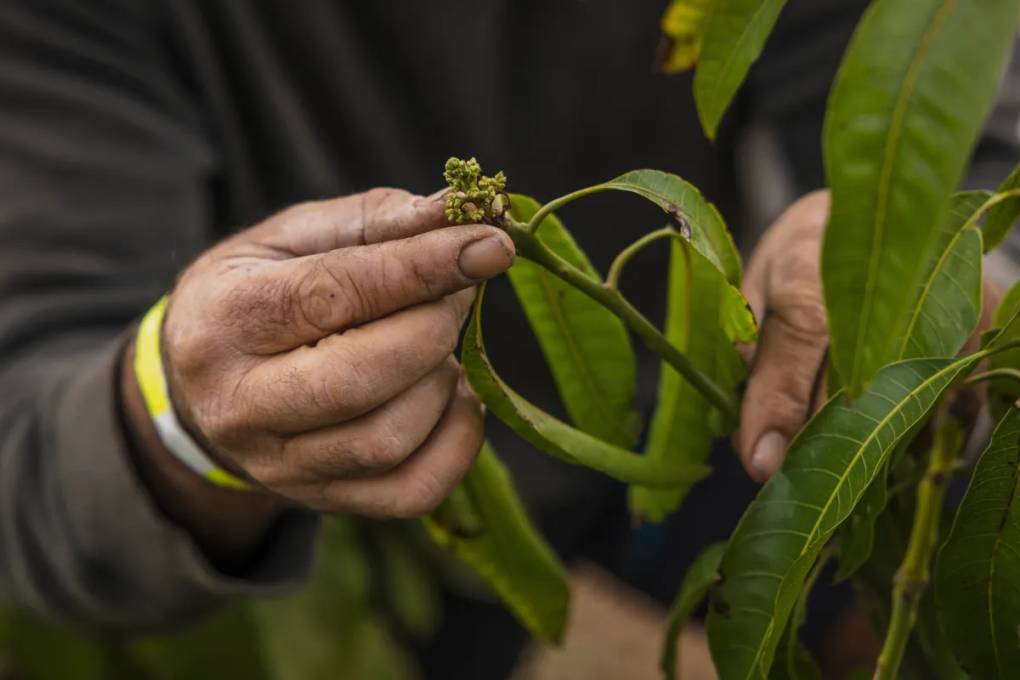
"caption": "Gary Gragg examines buds on one of the mango plants he's growing in the Sacramento Valley.",
"description": null,
"title": "Mango plant",
"credit": "Rahul Lal/CalMatters",
"status": "inherit",
"altTag": "An image of a man examining buds on a mango plant.",
"isLoading": false,
"fetchFailed": false
},
"science_1982660": {
"type": "attachments",
"id": "science_1982660",
"meta": {
"index": "attachments_1716263798",
"site": "science",
"id": "1982660",
"found": true
},
"parent": 1982651,
"imgSizes": {
"twentyfourteen-full-width": {
"file": "https://ww2.kqed.org/app/uploads/sites/35/2023/05/str_nifFusion_v002-1038x576.png",
"width": 1038,
"mimeType": "image/png",
"height": 576
},
"thumbnail": {
"file": "https://ww2.kqed.org/app/uploads/sites/35/2023/05/str_nifFusion_v002-160x102.png",
"width": 160,
"mimeType": "image/png",
"height": 102
},
"post-thumbnail": {
"file": "https://ww2.kqed.org/app/uploads/sites/35/2023/05/str_nifFusion_v002-672x372.png",
"width": 672,
"mimeType": "image/png",
"height": 372
},
"kqedFullSize": {
"file": "https://ww2.kqed.org/app/uploads/sites/35/2023/05/str_nifFusion_v002.png",
"width": 3300,
"height": 2100
},
"2048x2048": {
"file": "https://ww2.kqed.org/app/uploads/sites/35/2023/05/str_nifFusion_v002-2048x1303.png",
"width": 2048,
"mimeType": "image/png",
"height": 1303
},
"large": {
"file": "https://ww2.kqed.org/app/uploads/sites/35/2023/05/str_nifFusion_v002-1020x649.png",
"width": 1020,
"mimeType": "image/png",
"height": 649
},
"1536x1536": {
"file": "https://ww2.kqed.org/app/uploads/sites/35/2023/05/str_nifFusion_v002-1536x977.png",
"width": 1536,
"mimeType": "image/png",
"height": 977
},
"full-width": {
"file": "https://ww2.kqed.org/app/uploads/sites/35/2023/05/str_nifFusion_v002-1920x1222.png",
"width": 1920,
"mimeType": "image/png",
"height": 1222
},
"medium": {
"file": "https://ww2.kqed.org/app/uploads/sites/35/2023/05/str_nifFusion_v002-800x509.png",
"width": 800,
"mimeType": "image/png",
"height": 509
},
"medium_large": {
"file": "https://ww2.kqed.org/app/uploads/sites/35/2023/05/str_nifFusion_v002-768x489.png",
"width": 768,
"mimeType": "image/png",
"height": 489
}
},
"publishDate": 1683657714,
"modified": 1683669671,
"caption": "To create fusion ignition, the National Ignition Facility’s laser energy is converted into X-rays inside the hohlraum, which then compress a fuel capsule until it implodes, creating a high-temperature, high-pressure plasma.",
"description": null,
"title": "str_nifFusion_v002",
"credit": "John Jett and Jake Long/Lawrence Livermore National Laboratory",
"status": "inherit",
"altTag": "Purple laser beams emit from a tiny metal object inside a science laboratory.",
"isLoading": false,
"fetchFailed": false
},
"science_1982602": {
"type": "attachments",
"id": "science_1982602",
"meta": {
"index": "attachments_1716263798",
"site": "science",
"id": "1982602",
"found": true
},
"parent": 0,
"imgSizes": {
"twentyfourteen-full-width": {
"file": "https://ww2.kqed.org/app/uploads/sites/35/2023/05/Sonoma_Fire_Assessment007-1038x576.jpg",
"width": 1038,
"mimeType": "image/jpeg",
"height": 576
},
"thumbnail": {
"file": "https://ww2.kqed.org/app/uploads/sites/35/2023/05/Sonoma_Fire_Assessment007-160x107.jpg",
"width": 160,
"mimeType": "image/jpeg",
"height": 107
},
"post-thumbnail": {
"file": "https://ww2.kqed.org/app/uploads/sites/35/2023/05/Sonoma_Fire_Assessment007-672x372.jpg",
"width": 672,
"mimeType": "image/jpeg",
"height": 372
},
"kqedFullSize": {
"file": "https://ww2.kqed.org/app/uploads/sites/35/2023/05/Sonoma_Fire_Assessment007-scaled.jpg",
"width": 2560,
"height": 1707
},
"2048x2048": {
"file": "https://ww2.kqed.org/app/uploads/sites/35/2023/05/Sonoma_Fire_Assessment007-2048x1365.jpg",
"width": 2048,
"mimeType": "image/jpeg",
"height": 1365
},
"large": {
"file": "https://ww2.kqed.org/app/uploads/sites/35/2023/05/Sonoma_Fire_Assessment007-1020x680.jpg",
"width": 1020,
"mimeType": "image/jpeg",
"height": 680
},
"1536x1536": {
"file": "https://ww2.kqed.org/app/uploads/sites/35/2023/05/Sonoma_Fire_Assessment007-1536x1024.jpg",
"width": 1536,
"mimeType": "image/jpeg",
"height": 1024
},
"full-width": {
"file": "https://ww2.kqed.org/app/uploads/sites/35/2023/05/Sonoma_Fire_Assessment007-1920x1280.jpg",
"width": 1920,
"mimeType": "image/jpeg",
"height": 1280
},
"medium": {
"file": "https://ww2.kqed.org/app/uploads/sites/35/2023/05/Sonoma_Fire_Assessment007-800x533.jpg",
"width": 800,
"mimeType": "image/jpeg",
"height": 533
},
"medium_large": {
"file": "https://ww2.kqed.org/app/uploads/sites/35/2023/05/Sonoma_Fire_Assessment007-768x512.jpg",
"width": 768,
"mimeType": "image/jpeg",
"height": 512
}
},
"publishDate": 1683323247,
"modified": 1683578192,
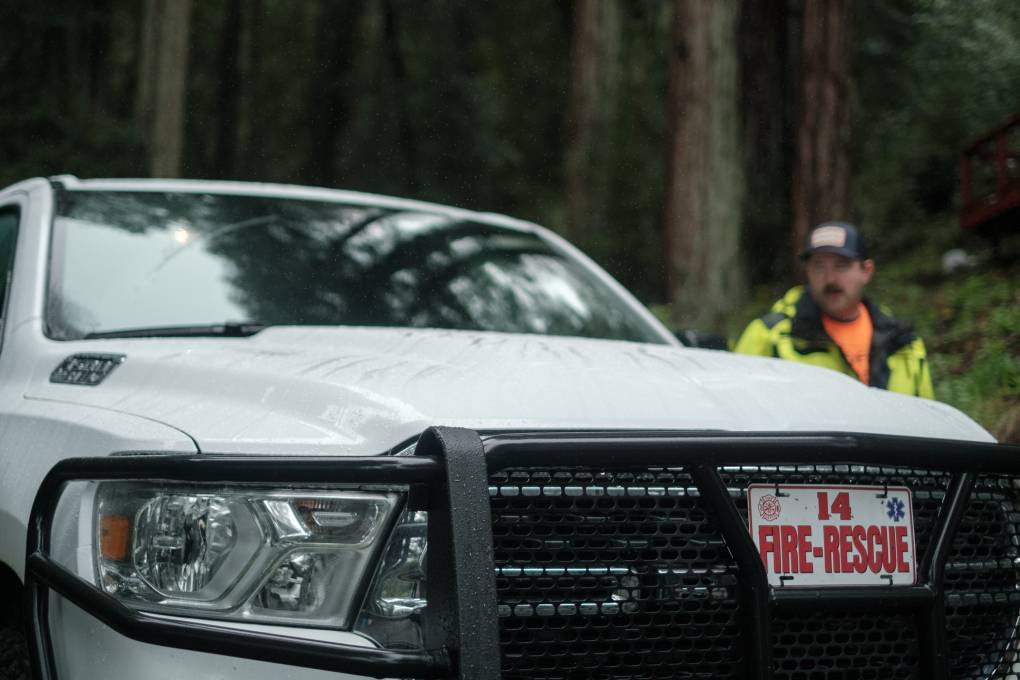
"caption": "Wildfire Services worker Brandon North stands behind his truck during a fire safety assessment in Occidental, Sonoma County, on March 13, 2023.",
"description": null,
"title": "Sonoma_Fire_Assessment007",
"credit": "Isaac Ceja/KQED",
"status": "inherit",
"altTag": "A man in a fluorescent yellow and black jacket with a black cap stands next to a white pickup truck that has a \"Fire Rescue\" sign on the grill.",
"isLoading": false,
"fetchFailed": false
},
"science_1994147": {
"type": "attachments",
"id": "science_1994147",
"meta": {
"index": "attachments_1716263798",
"site": "science",
"id": "1994147",
"found": true
},
"title": "DL1006_Why_Do_Snakes_Have_Forked_Tongues_KQED_V2",
"publishDate": 1725492816,
"status": "inherit",
"parent": 1982590,
"modified": 1725492816,
"caption": null,
"credit": null,
"altTag": null,
"description": null,
"imgSizes": {
"medium": {
"file": "https://cdn.kqed.org/wp-content/uploads/sites/35/2023/05/DL1006_Why_Do_Snakes_Have_Forked_Tongues_KQED_V2-800x450.jpg",
"width": 800,
"height": 450,
"mimeType": "image/jpeg"
},
"large": {
"file": "https://cdn.kqed.org/wp-content/uploads/sites/35/2023/05/DL1006_Why_Do_Snakes_Have_Forked_Tongues_KQED_V2-1020x574.jpg",
"width": 1020,
"height": 574,
"mimeType": "image/jpeg"
},
"thumbnail": {
"file": "https://cdn.kqed.org/wp-content/uploads/sites/35/2023/05/DL1006_Why_Do_Snakes_Have_Forked_Tongues_KQED_V2-160x90.jpg",
"width": 160,
"height": 90,
"mimeType": "image/jpeg"
},
"medium_large": {
"file": "https://cdn.kqed.org/wp-content/uploads/sites/35/2023/05/DL1006_Why_Do_Snakes_Have_Forked_Tongues_KQED_V2-768x432.jpg",
"width": 768,
"height": 432,
"mimeType": "image/jpeg"
},
"1536x1536": {
"file": "https://cdn.kqed.org/wp-content/uploads/sites/35/2023/05/DL1006_Why_Do_Snakes_Have_Forked_Tongues_KQED_V2-1536x864.jpg",
"width": 1536,
"height": 864,
"mimeType": "image/jpeg"
},
"post-thumbnail": {
"file": "https://cdn.kqed.org/wp-content/uploads/sites/35/2023/05/DL1006_Why_Do_Snakes_Have_Forked_Tongues_KQED_V2-672x372.jpg",
"width": 672,
"height": 372,
"mimeType": "image/jpeg"
},
"twentyfourteen-full-width": {
"file": "https://cdn.kqed.org/wp-content/uploads/sites/35/2023/05/DL1006_Why_Do_Snakes_Have_Forked_Tongues_KQED_V2-1038x576.jpg",
"width": 1038,
"height": 576,
"mimeType": "image/jpeg"
},
"kqedFullSize": {
"file": "https://cdn.kqed.org/wp-content/uploads/sites/35/2023/05/DL1006_Why_Do_Snakes_Have_Forked_Tongues_KQED_V2.jpg",
"width": 1920,
"height": 1080
}
},
"isLoading": false,
"fetchFailed": false
},
"science_1982639": {
"type": "attachments",
"id": "science_1982639",
"meta": {
"index": "attachments_1716263798",
"site": "science",
"id": "1982639",
"found": true
},
"parent": 1982634,
"imgSizes": {
"twentyfourteen-full-width": {
"file": "https://ww2.kqed.org/app/uploads/sites/35/2023/05/05052023_ksuzuki_pharmacogeneticspatient-0195-1-1038x576.jpg",
"width": 1038,
"mimeType": "image/jpeg",
"height": 576
},
"thumbnail": {
"file": "https://ww2.kqed.org/app/uploads/sites/35/2023/05/05052023_ksuzuki_pharmacogeneticspatient-0195-1-160x106.jpg",
"width": 160,
"mimeType": "image/jpeg",
"height": 106
},
"post-thumbnail": {
"file": "https://ww2.kqed.org/app/uploads/sites/35/2023/05/05052023_ksuzuki_pharmacogeneticspatient-0195-1-672x372.jpg",
"width": 672,
"mimeType": "image/jpeg",
"height": 372
},
"kqedFullSize": {
"file": "https://ww2.kqed.org/app/uploads/sites/35/2023/05/05052023_ksuzuki_pharmacogeneticspatient-0195-1-scaled.jpg",
"width": 2560,
"height": 1703
},
"2048x2048": {
"file": "https://ww2.kqed.org/app/uploads/sites/35/2023/05/05052023_ksuzuki_pharmacogeneticspatient-0195-1-2048x1363.jpg",
"width": 2048,
"mimeType": "image/jpeg",
"height": 1363
},
"large": {
"file": "https://ww2.kqed.org/app/uploads/sites/35/2023/05/05052023_ksuzuki_pharmacogeneticspatient-0195-1-1020x679.jpg",
"width": 1020,
"mimeType": "image/jpeg",
"height": 679
},
"1536x1536": {
"file": "https://ww2.kqed.org/app/uploads/sites/35/2023/05/05052023_ksuzuki_pharmacogeneticspatient-0195-1-1536x1022.jpg",
"width": 1536,
"mimeType": "image/jpeg",
"height": 1022
},
"full-width": {
"file": "https://ww2.kqed.org/app/uploads/sites/35/2023/05/05052023_ksuzuki_pharmacogeneticspatient-0195-1-1920x1277.jpg",
"width": 1920,
"mimeType": "image/jpeg",
"height": 1277
},
"medium": {
"file": "https://ww2.kqed.org/app/uploads/sites/35/2023/05/05052023_ksuzuki_pharmacogeneticspatient-0195-1-800x532.jpg",
"width": 800,
"mimeType": "image/jpeg",
"height": 532
},
"medium_large": {
"file": "https://ww2.kqed.org/app/uploads/sites/35/2023/05/05052023_ksuzuki_pharmacogeneticspatient-0195-1-768x511.jpg",
"width": 768,
"mimeType": "image/jpeg",
"height": 511
}
},
"publishDate": 1683586202,
"modified": 1683590909,
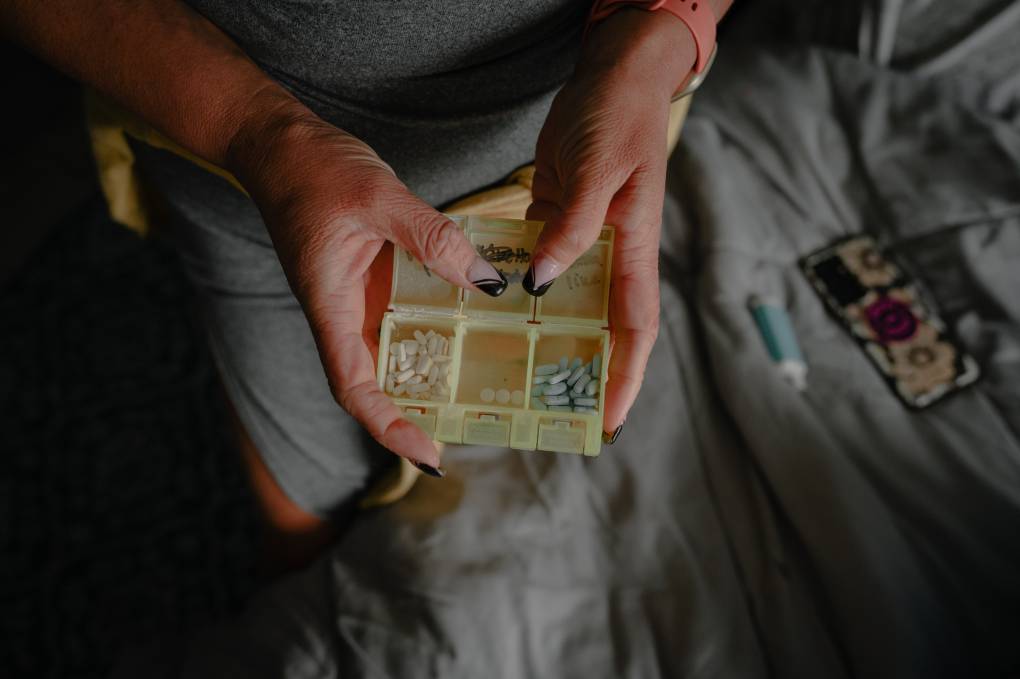
"caption": "Christine Von Raesfeld holds her new prescriptions at her home in San José on May 5, 2023. After decades of dealing with the destructive side effects of harmful medications, new pharmacogenetics tests mean that her prescriptions are finally helping more than hurting.",
"description": null,
"title": "05052023_ksuzuki_pharmacogeneticspatient 0195 (1)",
"credit": "Kori Suzuki/KQED",
"status": "inherit",
"altTag": "A woman's hands hold a pill box with different medications in each slot.",
"isLoading": false,
"fetchFailed": false
},
"science_1982570": {
"type": "attachments",
"id": "science_1982570",
"meta": {
"index": "attachments_1716263798",
"site": "science",
"id": "1982570",
"found": true
},
"parent": 1982551,
"imgSizes": {
"twentyfourteen-full-width": {
"file": "https://ww2.kqed.org/app/uploads/sites/35/2023/05/027_KQED_HetchHetchyCentennial_05022023-1038x576.jpg",
"width": 1038,
"mimeType": "image/jpeg",
"height": 576
},
"thumbnail": {
"file": "https://ww2.kqed.org/app/uploads/sites/35/2023/05/027_KQED_HetchHetchyCentennial_05022023-160x107.jpg",
"width": 160,
"mimeType": "image/jpeg",
"height": 107
},
"post-thumbnail": {
"file": "https://ww2.kqed.org/app/uploads/sites/35/2023/05/027_KQED_HetchHetchyCentennial_05022023-672x372.jpg",
"width": 672,
"mimeType": "image/jpeg",
"height": 372
},
"kqedFullSize": {
"file": "https://ww2.kqed.org/app/uploads/sites/35/2023/05/027_KQED_HetchHetchyCentennial_05022023.jpg",
"width": 1920,
"height": 1280
},
"large": {
"file": "https://ww2.kqed.org/app/uploads/sites/35/2023/05/027_KQED_HetchHetchyCentennial_05022023-1020x680.jpg",
"width": 1020,
"mimeType": "image/jpeg",
"height": 680
},
"1536x1536": {
"file": "https://ww2.kqed.org/app/uploads/sites/35/2023/05/027_KQED_HetchHetchyCentennial_05022023-1536x1024.jpg",
"width": 1536,
"mimeType": "image/jpeg",
"height": 1024
},
"medium": {
"file": "https://ww2.kqed.org/app/uploads/sites/35/2023/05/027_KQED_HetchHetchyCentennial_05022023-800x533.jpg",
"width": 800,
"mimeType": "image/jpeg",
"height": 533
},
"medium_large": {
"file": "https://ww2.kqed.org/app/uploads/sites/35/2023/05/027_KQED_HetchHetchyCentennial_05022023-768x512.jpg",
"width": 768,
"mimeType": "image/jpeg",
"height": 512
}
},
"publishDate": 1683071044,
"modified": 1683071284,
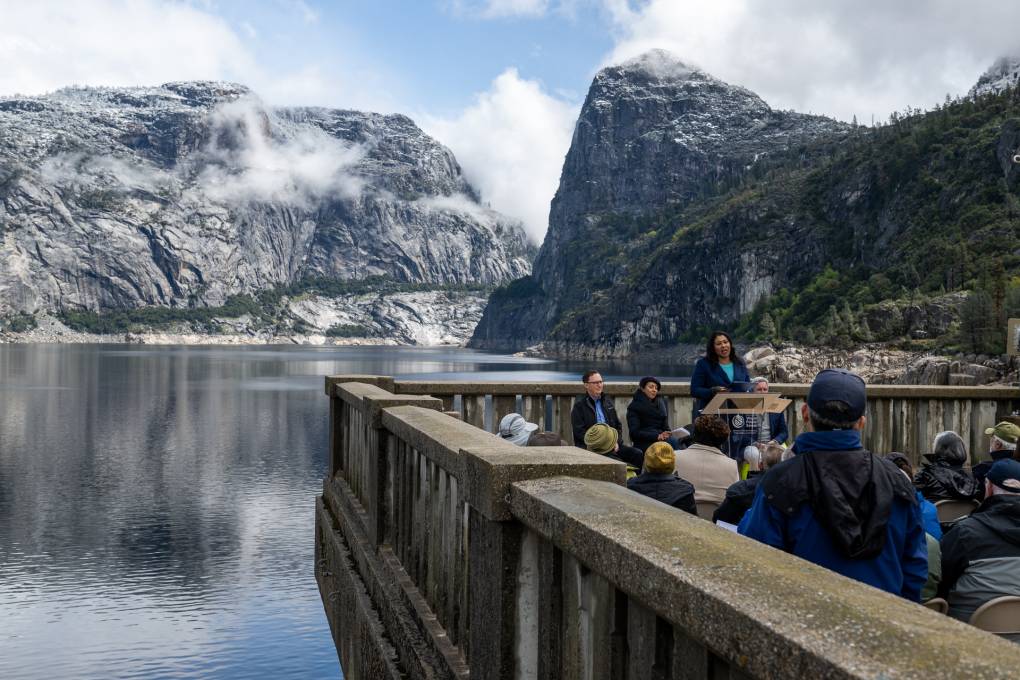
"caption": "San Francisco Mayor London Breed speaks during a centennial celebration of the Hetch Hetchy Reservoir in Yosemite National Park on May 2, 2023. The reservoir – San Francisco's main water source – may not be as reliable a tap of Sierra Nevada snowmelt in the coming century.",
"description": null,
"title": "027_KQED_HetchHetchyCentennial_05022023",
"credit": "Beth LaBerge/KQED",
"status": "inherit",
"altTag": "A Black woman speaks at a podium in the middle distance as others listen to her, in a space bounded by a large concrete barrier with sweeping views of mountains rising from a massive lake in the background",
"isLoading": false,
"fetchFailed": false
},
"science_1982525": {
"type": "attachments",
"id": "science_1982525",
"meta": {
"index": "attachments_1716263798",
"site": "science",
"id": "1982525",
"found": true
},
"parent": 1982513,
"imgSizes": {
"twentyfourteen-full-width": {
"file": "https://ww2.kqed.org/app/uploads/sites/35/2023/04/GettyImages-1485830976-1024x576.jpg",
"width": 1024,
"mimeType": "image/jpeg",
"height": 576
},
"thumbnail": {
"file": "https://ww2.kqed.org/app/uploads/sites/35/2023/04/GettyImages-1485830976-160x106.jpg",
"width": 160,
"mimeType": "image/jpeg",
"height": 106
},
"post-thumbnail": {
"file": "https://ww2.kqed.org/app/uploads/sites/35/2023/04/GettyImages-1485830976-672x372.jpg",
"width": 672,
"mimeType": "image/jpeg",
"height": 372
},
"kqedFullSize": {
"file": "https://ww2.kqed.org/app/uploads/sites/35/2023/04/GettyImages-1485830976.jpg",
"width": 1024,
"height": 679
},
"large": {
"file": "https://ww2.kqed.org/app/uploads/sites/35/2023/04/GettyImages-1485830976-1020x676.jpg",
"width": 1020,
"mimeType": "image/jpeg",
"height": 676
},
"medium": {
"file": "https://ww2.kqed.org/app/uploads/sites/35/2023/04/GettyImages-1485830976-800x530.jpg",
"width": 800,
"mimeType": "image/jpeg",
"height": 530
},
"medium_large": {
"file": "https://ww2.kqed.org/app/uploads/sites/35/2023/04/GettyImages-1485830976-768x509.jpg",
"width": 768,
"mimeType": "image/jpeg",
"height": 509
}
},
"publishDate": 1682953549,
"modified": 1682966916,
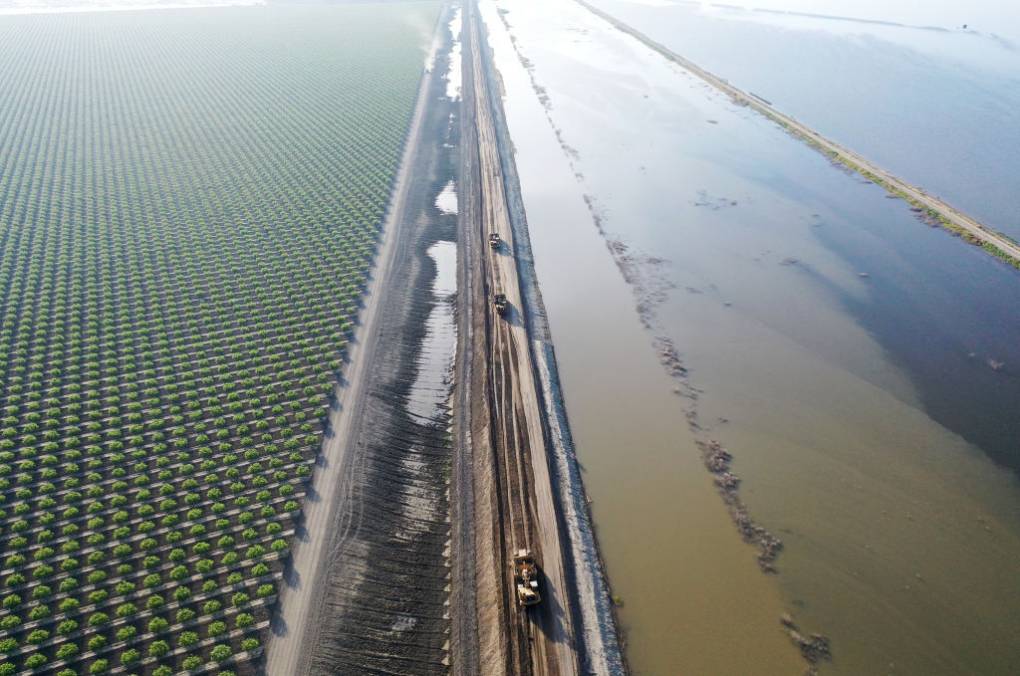
"caption": "In an aerial view, earth movers work to raise the Corcoran levee in response to floodwaters along the reemerging Tulare Lake in the Central Valley, on April 27, 2023, near Corcoran.",
"description": null,
"title": "Massive Amounts Of Rain Combined With Winter's Record Breaking Snowpack Causes Historic Flood In California's Central Valley And Beyond",
"credit": "Mario Tama/Getty Image",
"status": "inherit",
"altTag": "Rows of green orchards on the left side of the photo. A long brown earthen levee cuts the photo in two. Trucks speed along the levee. To the right brown murky water fills the space.",
"isLoading": false,
"fetchFailed": false
},
"science_1982488": {
"type": "attachments",
"id": "science_1982488",
"meta": {
"index": "attachments_1716263798",
"site": "science",
"id": "1982488",
"found": true
},
"parent": 1982486,
"imgSizes": {
"twentyfourteen-full-width": {
"file": "https://ww2.kqed.org/app/uploads/sites/35/2023/04/GettyImages-1162213575-1038x576.jpg",
"width": 1038,
"mimeType": "image/jpeg",
"height": 576
},
"thumbnail": {
"file": "https://ww2.kqed.org/app/uploads/sites/35/2023/04/GettyImages-1162213575-160x107.jpg",
"width": 160,
"mimeType": "image/jpeg",
"height": 107
},
"post-thumbnail": {
"file": "https://ww2.kqed.org/app/uploads/sites/35/2023/04/GettyImages-1162213575-672x372.jpg",
"width": 672,
"mimeType": "image/jpeg",
"height": 372
},
"kqedFullSize": {
"file": "https://ww2.kqed.org/app/uploads/sites/35/2023/04/GettyImages-1162213575-scaled.jpg",
"width": 2560,
"height": 1707
},
"2048x2048": {
"file": "https://ww2.kqed.org/app/uploads/sites/35/2023/04/GettyImages-1162213575-2048x1365.jpg",
"width": 2048,
"mimeType": "image/jpeg",
"height": 1365
},
"large": {
"file": "https://ww2.kqed.org/app/uploads/sites/35/2023/04/GettyImages-1162213575-1020x680.jpg",
"width": 1020,
"mimeType": "image/jpeg",
"height": 680
},
"1536x1536": {
"file": "https://ww2.kqed.org/app/uploads/sites/35/2023/04/GettyImages-1162213575-1536x1024.jpg",
"width": 1536,
"mimeType": "image/jpeg",
"height": 1024
},
"full-width": {
"file": "https://ww2.kqed.org/app/uploads/sites/35/2023/04/GettyImages-1162213575-1920x1280.jpg",
"width": 1920,
"mimeType": "image/jpeg",
"height": 1280
},
"medium": {
"file": "https://ww2.kqed.org/app/uploads/sites/35/2023/04/GettyImages-1162213575-800x533.jpg",
"width": 800,
"mimeType": "image/jpeg",
"height": 533
},
"medium_large": {
"file": "https://ww2.kqed.org/app/uploads/sites/35/2023/04/GettyImages-1162213575-768x512.jpg",
"width": 768,
"mimeType": "image/jpeg",
"height": 512
}
},
"publishDate": 1682700080,
"modified": 1682726557,
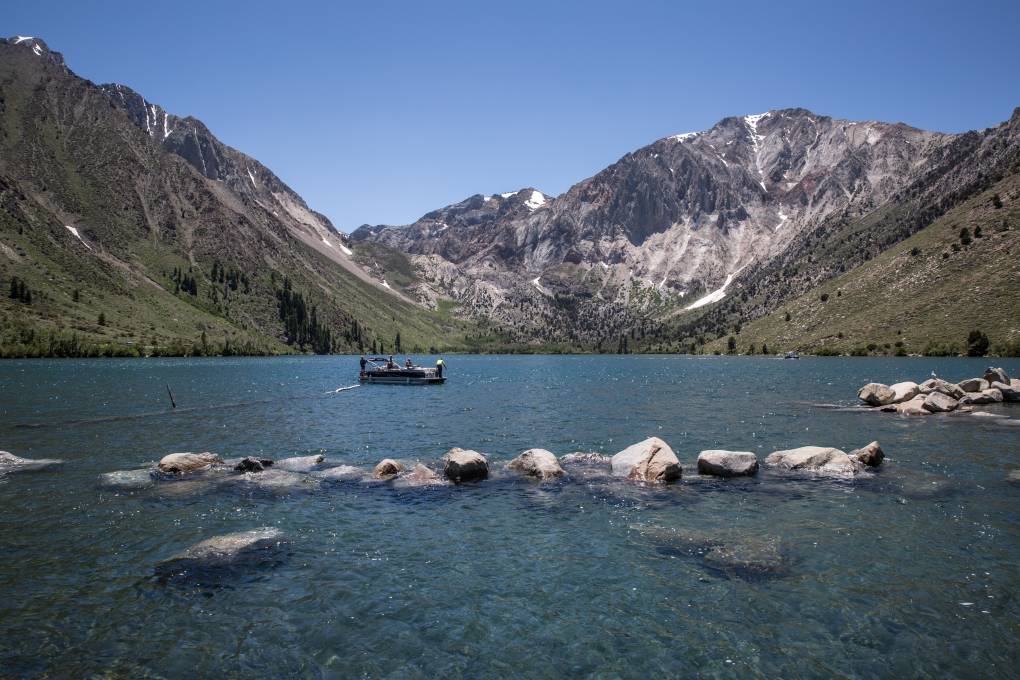
"caption": "Convict Lake is a popular trout-fishing hole near Mammoth Lakes. ",
"description": "A boat floats in the middle of a lake with steep mountains surrounding it.",
"title": "Exploring the Eastern High Sierra Mountain Range",
"credit": "George Rose/Getty Images",
"status": "inherit",
"altTag": "A boat floats in the middle of a lake with steep mountains surrounding it.",
"isLoading": false,
"fetchFailed": false
},
"science_1982500": {
"type": "attachments",
"id": "science_1982500",
"meta": {
"index": "attachments_1716263798",
"site": "science",
"id": "1982500",
"found": true
},
"parent": 1982494,
"imgSizes": {
"twentyfourteen-full-width": {
"file": "https://ww2.kqed.org/app/uploads/sites/35/2023/04/RS50202_IMG_6476-2-qut-1038x576.jpg",
"width": 1038,
"mimeType": "image/jpeg",
"height": 576
},
"thumbnail": {
"file": "https://ww2.kqed.org/app/uploads/sites/35/2023/04/RS50202_IMG_6476-2-qut-160x107.jpg",
"width": 160,
"mimeType": "image/jpeg",
"height": 107
},
"post-thumbnail": {
"file": "https://ww2.kqed.org/app/uploads/sites/35/2023/04/RS50202_IMG_6476-2-qut-672x372.jpg",
"width": 672,
"mimeType": "image/jpeg",
"height": 372
},
"kqedFullSize": {
"file": "https://ww2.kqed.org/app/uploads/sites/35/2023/04/RS50202_IMG_6476-2-qut.jpg",
"width": 1920,
"height": 1280
},
"large": {
"file": "https://ww2.kqed.org/app/uploads/sites/35/2023/04/RS50202_IMG_6476-2-qut-1020x680.jpg",
"width": 1020,
"mimeType": "image/jpeg",
"height": 680
},
"1536x1536": {
"file": "https://ww2.kqed.org/app/uploads/sites/35/2023/04/RS50202_IMG_6476-2-qut-1536x1024.jpg",
"width": 1536,
"mimeType": "image/jpeg",
"height": 1024
},
"medium": {
"file": "https://ww2.kqed.org/app/uploads/sites/35/2023/04/RS50202_IMG_6476-2-qut-800x533.jpg",
"width": 800,
"mimeType": "image/jpeg",
"height": 533
},
"medium_large": {
"file": "https://ww2.kqed.org/app/uploads/sites/35/2023/04/RS50202_IMG_6476-2-qut-768x512.jpg",
"width": 768,
"mimeType": "image/jpeg",
"height": 512
}
},
"publishDate": 1682712903,
"modified": 1682712951,
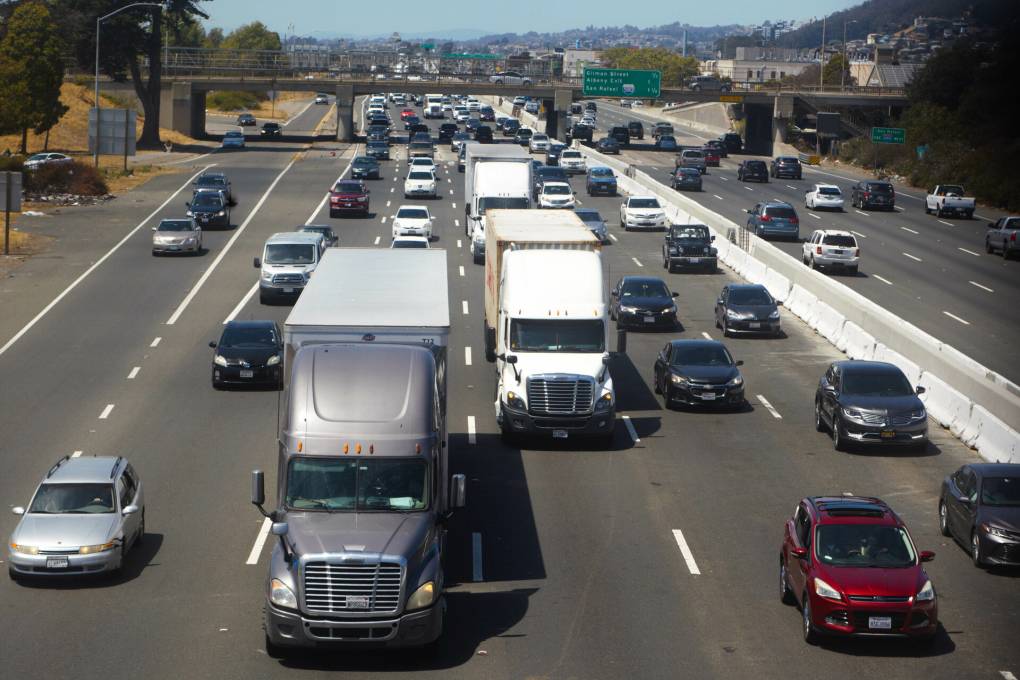
"caption": "Traffic on Interstate 880 toward Oakland flowing with cars and diesel trucks midafternoon on Monday, June 28, 2021.",
"description": null,
"title": "RS50202_IMG_6476 (2)-qut",
"credit": "Joyce Tsai/KQED",
"status": "inherit",
"altTag": "Cars and trucks on an interstate highway as seen from an overpass.",
"isLoading": false,
"fetchFailed": false
},
"science_1982475": {
"type": "attachments",
"id": "science_1982475",
"meta": {
"index": "attachments_1716263798",
"site": "science",
"id": "1982475",
"found": true
},
"parent": 1982474,
"imgSizes": {
"twentyfourteen-full-width": {
"file": "https://ww2.kqed.org/app/uploads/sites/35/2023/04/RS64748_GettyImages-94155923-qut-1038x576.jpg",
"width": 1038,
"mimeType": "image/jpeg",
"height": 576
},
"thumbnail": {
"file": "https://ww2.kqed.org/app/uploads/sites/35/2023/04/RS64748_GettyImages-94155923-qut-160x107.jpg",
"width": 160,
"mimeType": "image/jpeg",
"height": 107
},
"post-thumbnail": {
"file": "https://ww2.kqed.org/app/uploads/sites/35/2023/04/RS64748_GettyImages-94155923-qut-672x372.jpg",
"width": 672,
"mimeType": "image/jpeg",
"height": 372
},
"kqedFullSize": {
"file": "https://ww2.kqed.org/app/uploads/sites/35/2023/04/RS64748_GettyImages-94155923-qut.jpg",
"width": 1920,
"height": 1280
},
"large": {
"file": "https://ww2.kqed.org/app/uploads/sites/35/2023/04/RS64748_GettyImages-94155923-qut-1020x680.jpg",
"width": 1020,
"mimeType": "image/jpeg",
"height": 680
},
"1536x1536": {
"file": "https://ww2.kqed.org/app/uploads/sites/35/2023/04/RS64748_GettyImages-94155923-qut-1536x1024.jpg",
"width": 1536,
"mimeType": "image/jpeg",
"height": 1024
},
"medium": {
"file": "https://ww2.kqed.org/app/uploads/sites/35/2023/04/RS64748_GettyImages-94155923-qut-800x533.jpg",
"width": 800,
"mimeType": "image/jpeg",
"height": 533
},
"medium_large": {
"file": "https://ww2.kqed.org/app/uploads/sites/35/2023/04/RS64748_GettyImages-94155923-qut-768x512.jpg",
"width": 768,
"mimeType": "image/jpeg",
"height": 512
}
},
"publishDate": 1682543060,
"modified": 1682552592,
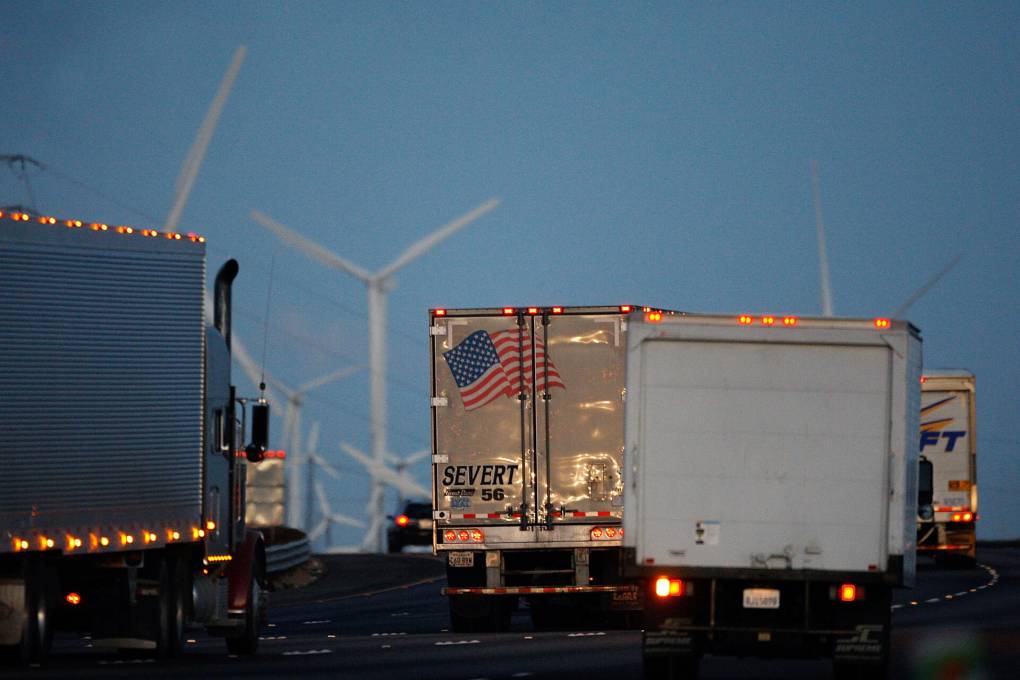
"caption": "Emissions-producing diesel trucks pass windmills along Interstate 10 on Dec. 8, 2009, near Banning.",
"description": null,
"title": "New Climate Report Names Current Decade As Warmest On Record",
"credit": "David McNew/Getty Images",
"status": "inherit",
"altTag": "White, grey and blue semi-trucks driving along the highway at twilight. Wind turbines in the background.",
"isLoading": false,
"fetchFailed": false
},
"science_1982469": {
"type": "attachments",
"id": "science_1982469",
"meta": {
"index": "attachments_1716263798",
"site": "science",
"id": "1982469",
"found": true
},
"parent": 0,
"imgSizes": {
"twentyfourteen-full-width": {
"file": "https://ww2.kqed.org/app/uploads/sites/35/2023/04/TulareCountyFarmlandGetty-1038x576.jpg",
"width": 1038,
"mimeType": "image/jpeg",
"height": 576
},
"thumbnail": {
"file": "https://ww2.kqed.org/app/uploads/sites/35/2023/04/TulareCountyFarmlandGetty-160x107.jpg",
"width": 160,
"mimeType": "image/jpeg",
"height": 107
},
"post-thumbnail": {
"file": "https://ww2.kqed.org/app/uploads/sites/35/2023/04/TulareCountyFarmlandGetty-672x372.jpg",
"width": 672,
"mimeType": "image/jpeg",
"height": 372
},
"kqedFullSize": {
"file": "https://ww2.kqed.org/app/uploads/sites/35/2023/04/TulareCountyFarmlandGetty.jpg",
"width": 1920,
"height": 1280
},
"large": {
"file": "https://ww2.kqed.org/app/uploads/sites/35/2023/04/TulareCountyFarmlandGetty-1020x680.jpg",
"width": 1020,
"mimeType": "image/jpeg",
"height": 680
},
"1536x1536": {
"file": "https://ww2.kqed.org/app/uploads/sites/35/2023/04/TulareCountyFarmlandGetty-1536x1024.jpg",
"width": 1536,
"mimeType": "image/jpeg",
"height": 1024
},
"medium": {
"file": "https://ww2.kqed.org/app/uploads/sites/35/2023/04/TulareCountyFarmlandGetty-800x533.jpg",
"width": 800,
"mimeType": "image/jpeg",
"height": 533
},
"medium_large": {
"file": "https://ww2.kqed.org/app/uploads/sites/35/2023/04/TulareCountyFarmlandGetty-768x512.jpg",
"width": 768,
"mimeType": "image/jpeg",
"height": 512
}
},
"publishDate": 1682466556,
"modified": 1682528987,
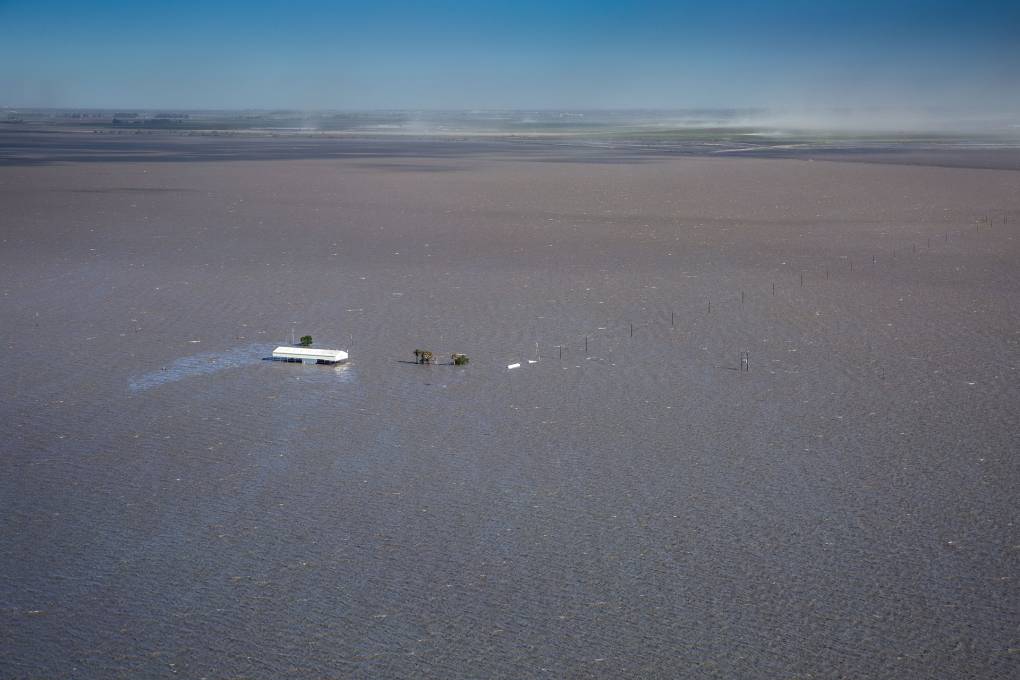
"caption": "Farmland swamped by the reemergence of Tulare Lake, a once-great body of water in the southern Central Valley, on April 13, 2023. Tulare Lake, near Corcoran, is beginning to fill again due to the recent series of major rain and snow storms in the Sierra Nevada.",
"description": null,
"title": "Central Valley Wary of Coming Spring Snow Melt",
"credit": "George Rose/Getty Images",
"status": "inherit",
"altTag": "A white roof of a small home can be seen surrounded by flooded waters. The farmland where this house sits is completely flooded in dark, green waters. The tops of telephone poles stick out from the flood.",
"isLoading": false,
"fetchFailed": false
},
"science_1982449": {
"type": "attachments",
"id": "science_1982449",
"meta": {
"index": "attachments_1716263798",
"site": "science",
"id": "1982449",
"found": true
},
"parent": 1982448,
"imgSizes": {
"twentyfourteen-full-width": {
"file": "https://ww2.kqed.org/app/uploads/sites/35/2023/04/children-smoke_jame-tyska-digital-first-media-east-bay-times-getty-2048x1325-1-1038x576.jpg",
"width": 1038,
"mimeType": "image/jpeg",
"height": 576
},
"thumbnail": {
"file": "https://ww2.kqed.org/app/uploads/sites/35/2023/04/children-smoke_jame-tyska-digital-first-media-east-bay-times-getty-2048x1325-1-160x104.jpg",
"width": 160,
"mimeType": "image/jpeg",
"height": 104
},
"post-thumbnail": {
"file": "https://ww2.kqed.org/app/uploads/sites/35/2023/04/children-smoke_jame-tyska-digital-first-media-east-bay-times-getty-2048x1325-1-672x372.jpg",
"width": 672,
"mimeType": "image/jpeg",
"height": 372
},
"kqedFullSize": {
"file": "https://ww2.kqed.org/app/uploads/sites/35/2023/04/children-smoke_jame-tyska-digital-first-media-east-bay-times-getty-2048x1325-1.jpg",
"width": 2048,
"height": 1325
},
"large": {
"file": "https://ww2.kqed.org/app/uploads/sites/35/2023/04/children-smoke_jame-tyska-digital-first-media-east-bay-times-getty-2048x1325-1-1020x660.jpg",
"width": 1020,
"mimeType": "image/jpeg",
"height": 660
},
"1536x1536": {
"file": "https://ww2.kqed.org/app/uploads/sites/35/2023/04/children-smoke_jame-tyska-digital-first-media-east-bay-times-getty-2048x1325-1-1536x994.jpg",
"width": 1536,
"mimeType": "image/jpeg",
"height": 994
},
"full-width": {
"file": "https://ww2.kqed.org/app/uploads/sites/35/2023/04/children-smoke_jame-tyska-digital-first-media-east-bay-times-getty-2048x1325-1-1920x1242.jpg",
"width": 1920,
"mimeType": "image/jpeg",
"height": 1242
},
"medium": {
"file": "https://ww2.kqed.org/app/uploads/sites/35/2023/04/children-smoke_jame-tyska-digital-first-media-east-bay-times-getty-2048x1325-1-800x518.jpg",
"width": 800,
"mimeType": "image/jpeg",
"height": 518
},
"medium_large": {
"file": "https://ww2.kqed.org/app/uploads/sites/35/2023/04/children-smoke_jame-tyska-digital-first-media-east-bay-times-getty-2048x1325-1-768x497.jpg",
"width": 768,
"mimeType": "image/jpeg",
"height": 497
}
},
"publishDate": 1682376831,
"modified": 1682446583,
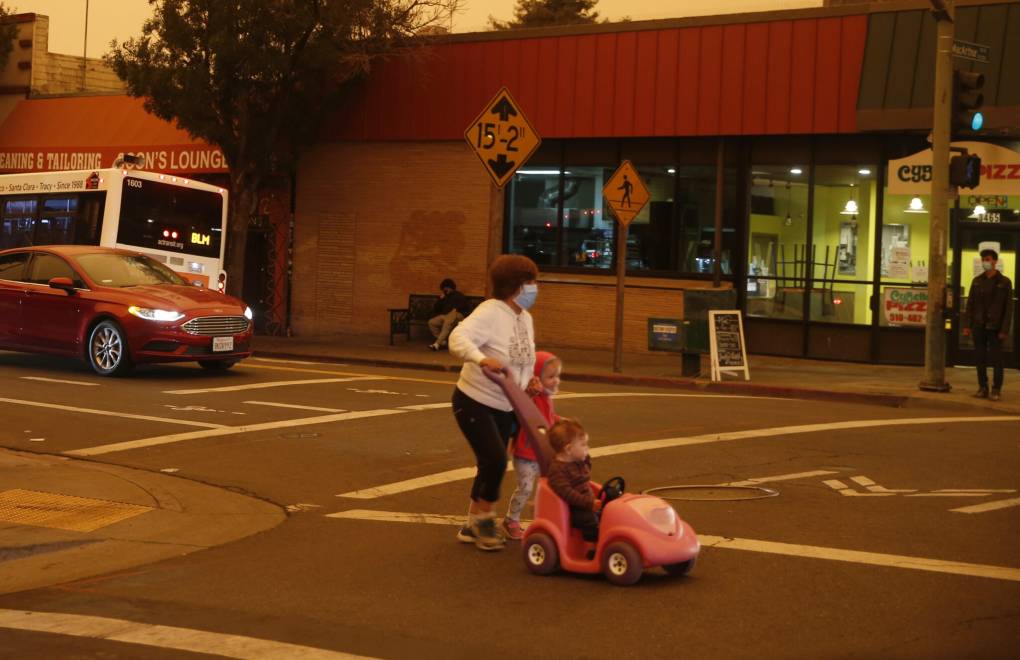
"caption": "A woman and two children cross the street at the intersection of Fruitvale Avenue and MacArthur Boulevard in the Dimond District of Oakland, on Wednesday, Sept. 9, 2020.",
"description": null,
"title": "Wildfire Smoke Orange Sky",
"credit": "Jane Tyska/Digital First Media/East Bay Times via Getty Images",
"status": "inherit",
"altTag": "A woman and children cross the street on a day with orange skies.",
"isLoading": false,
"fetchFailed": false
}
},
"audioPlayerReducer": {
"postId": "stream_live",
"isPaused": true,
"isPlaying": false,
"pfsActive": false,
"pledgeModalIsOpen": true,
"playerDrawerIsOpen": false,
"liveAudioPlayStartedAt": 0,
"liveAudioPlayContext": ""
},
"authorsReducer": {
"byline_science_1982673": {
"type": "authors",
"id": "byline_science_1982673",
"meta": {
"override": true
},
"slug": "byline_science_1982673",
"name": "\u003ca href=\"https://calmatters.org/author/alastair-bland/\">Alastair Bland\u003c/a>",
"isLoading": false
},
"byline_science_1982594": {
"type": "authors",
"id": "byline_science_1982594",
"meta": {
"override": true
},
"slug": "byline_science_1982594",
"name": "\u003ca href=\"https://journalism.berkeley.edu/person/kate_raphael/\">Kate Raphael\u003c/a>",
"isLoading": false
},
"byline_science_1982448": {
"type": "authors",
"id": "byline_science_1982448",
"meta": {
"override": true
},
"slug": "byline_science_1982448",
"name": "\u003ca href=\"https://insideclimatenews.org/profile/emma-foehringer-merchant/\">Emma Foehringer Merchant\u003c/a> \u003cbr>Inside Climate News \u003cbr>",
"isLoading": false
},
"joshua-cassidy": {
"type": "authors",
"id": "6219",
"meta": {
"index": "authors_1716337520",
"id": "6219",
"found": true
},
"name": "Josh Cassidy",
"firstName": "Josh",
"lastName": "Cassidy",
"slug": "joshua-cassidy",
"email": "jcassidy@kqed.org",
"display_author_email": false,
"staff_mastheads": [
"science"
],
"title": "Digital Video Producer",
"bio": "Josh is a Senior Video Producer for KQED Science, and the Lead Producer and Cinematographer for Deep Look. After receiving his BS in Wildlife Biology from Ohio University, he went on to participate in marine mammal research for NOAA, USGS and the Intersea Foundation. He also served as the president of The Pacific Cetacean Group, a nonprofit organization dedicated to teaching students K-6 about whales. Josh studied science and natural history filmmaking at San Francisco State University and Montana State University.",
"avatar": "https://secure.gravatar.com/avatar/f2582a0801a35af53b734d56bcac2bbe?s=600&d=blank&r=g",
"twitter": null,
"facebook": null,
"instagram": null,
"linkedin": null,
"sites": [
{
"site": "science",
"roles": [
"editor"
]
},
{
"site": "quest",
"roles": [
"author",
"edit_others_posts"
]
}
],
"headData": {
"title": "Josh Cassidy | KQED",
"description": "Digital Video Producer",
"ogImgSrc": "https://secure.gravatar.com/avatar/f2582a0801a35af53b734d56bcac2bbe?s=600&d=blank&r=g",
"twImgSrc": "https://secure.gravatar.com/avatar/f2582a0801a35af53b734d56bcac2bbe?s=600&d=blank&r=g"
},
"isLoading": false,
"link": "/author/joshua-cassidy"
},
"lklivans": {
"type": "authors",
"id": "8648",
"meta": {
"index": "authors_1716337520",
"id": "8648",
"found": true
},
"name": "Laura Klivans",
"firstName": "Laura",
"lastName": "Klivans",
"slug": "lklivans",
"email": "lklivans@kqed.org",
"display_author_email": true,
"staff_mastheads": [
"news",
"science"
],
"title": "Reporter",
"bio": "Laura Klivans is an award-winning science reporter for KQED News, where she covers climate change with an eye on both groundbreaking progress and gaps in action. She is the former host of KQED's blockbuster video series about tiny, amazing animals, \u003cem>Deep Look\u003c/em>. Her work reaches national audiences through NPR, \u003cem>Here & Now, \u003c/em>PRI, and other major outlets. \r\n\r\nLaura’s won five Northern California Area Emmy Awards for Deep Look and First Place in the Greater Bay Area Journalism Awards for a podcast exploring how one Oakland neighborhood teamed up to reduce planet-heating pollution.\r\n\r\nBeyond her reporting, she hosts and moderates events. In the past, she taught audio storytelling at the UC Berkeley Graduate School of Journalism, led international education programs, worked with immigrants and refugees along the Thai-Burmese border, taught high schoolers sex ed, and was an actress. \r\n\r\nShe's a former UC Berkeley Human Rights Fellow, USC Center for Health Journalism's California Fellow and Coro Fellow in Public Affairs. Laura has a master’s in journalism from UC Berkeley, a master’s in education from Harvard, and an undergraduate degree from Northwestern University.\r\n\r\nShe loves trying to riddle the meaning out of vanity license plates.",
"avatar": "https://secure.gravatar.com/avatar/2d2ecd1550a494cc10ad4a503406965585902124739e775a9b3817eebf1d88be?s=600&d=blank&r=g",
"twitter": "lauraklivans",
"bluesky": null,
"facebook": null,
"instagram": null,
"linkedin": null,
"sites": [
{
"site": "news",
"roles": [
"editor"
]
},
{
"site": "stateofhealth",
"roles": [
"contributor",
"editor"
]
},
{
"site": "science",
"roles": [
"editor"
]
},
{
"site": "forum",
"roles": [
"editor"
]
}
],
"headData": {
"title": "Laura Klivans | KQED",
"description": "Reporter",
"ogImgSrc": "https://secure.gravatar.com/avatar/2d2ecd1550a494cc10ad4a503406965585902124739e775a9b3817eebf1d88be?s=600&d=blank&r=g",
"twImgSrc": "https://secure.gravatar.com/avatar/2d2ecd1550a494cc10ad4a503406965585902124739e775a9b3817eebf1d88be?s=600&d=blank&r=g"
},
"isLoading": false,
"link": "/author/lklivans"
},
"dventon": {
"type": "authors",
"id": "11088",
"meta": {
"index": "authors_1716337520",
"id": "11088",
"found": true
},
"name": "Danielle Venton",
"firstName": "Danielle",
"lastName": "Venton",
"slug": "dventon",
"email": "dventon@kqed.org",
"display_author_email": true,
"staff_mastheads": [
"science"
],
"title": "Science reporter",
"bio": "Danielle Venton is a reporter for KQED Science. She covers wildfires, space and oceans (though she is prone to sea sickness).\r\n\r\nBefore joining KQED in 2015, Danielle was a staff reporter at KRCB in Sonoma County and a freelancer. She studied science communication at UC Santa Cruz and formerly worked at CERN in Geneva, Switzerland where she wrote about computing. She lives in Sonoma County and enjoys backpacking.",
"avatar": "https://secure.gravatar.com/avatar/37b292b5c40c8d93959c4f48d73b5286f41b7abd8588277e941905a3ed4c801c?s=600&d=blank&r=g",
"twitter": "DanielleVenton",
"bluesky": null,
"facebook": null,
"instagram": null,
"linkedin": null,
"sites": [
{
"site": "arts",
"roles": [
"contributor"
]
},
{
"site": "news",
"roles": [
"editor"
]
},
{
"site": "futureofyou",
"roles": [
"editor"
]
},
{
"site": "science",
"roles": [
"editor"
]
},
{
"site": "liveblog",
"roles": [
"contributor"
]
}
],
"headData": {
"title": "Danielle Venton | KQED",
"description": "Science reporter",
"ogImgSrc": "https://secure.gravatar.com/avatar/37b292b5c40c8d93959c4f48d73b5286f41b7abd8588277e941905a3ed4c801c?s=600&d=blank&r=g",
"twImgSrc": "https://secure.gravatar.com/avatar/37b292b5c40c8d93959c4f48d73b5286f41b7abd8588277e941905a3ed4c801c?s=600&d=blank&r=g"
},
"isLoading": false,
"link": "/author/dventon"
},
"lesleymcclurg": {
"type": "authors",
"id": "11229",
"meta": {
"index": "authors_1716337520",
"id": "11229",
"found": true
},
"name": "Lesley McClurg",
"firstName": "Lesley",
"lastName": "McClurg",
"slug": "lesleymcclurg",
"email": "lmcclurg@KQED.org",
"display_author_email": false,
"staff_mastheads": [
"news",
"science"
],
"title": "KQED Health Correspondent",
"bio": "Lesley McClurg is a health correspondent and fill-in host whose work is regularly rebroadcast on NPR and PBS programs. She’s earned multiple regional Emmy awards, a national and a regional Edward R. Murrow award, and was named Best Beat Reporter by the Association of Health Care Journalists. The Society of Professional Journalists has recognized her work several times, and the Society of Environmental Journalists spotlighted her coverage of California’s historic drought.\r\n\r\nBefore joining KQED in 2016, Lesley covered food and sustainability for Capital Public Radio, environmental issues for Colorado Public Radio, and reported for KUOW and KCTS 9 in Seattle. Away from the newsroom, she loves skiing with her daughter, mountain biking with her partner, and playing with Ollie, the family’s goldendoodle. On deadline, she runs almost entirely on chocolate chips.\r\n\r\n ",
"avatar": "https://secure.gravatar.com/avatar/bab49e972ea10c774fe0f5e29dba1722b158f7c0d58a360923d1389d380b2978?s=600&d=blank&r=g",
"twitter": "lesleywmcclurg",
"bluesky": null,
"facebook": null,
"instagram": null,
"linkedin": null,
"sites": [
{
"site": "arts",
"roles": [
"author"
]
},
{
"site": "news",
"roles": [
"editor"
]
},
{
"site": "futureofyou",
"roles": [
"editor"
]
},
{
"site": "stateofhealth",
"roles": [
"author"
]
},
{
"site": "science",
"roles": [
"editor"
]
},
{
"site": "quest",
"roles": [
"subscriber"
]
},
{
"site": "forum",
"roles": [
"administrator"
]
},
{
"site": "liveblog",
"roles": [
"author"
]
}
],
"headData": {
"title": "Lesley McClurg | KQED",
"description": "KQED Health Correspondent",
"ogImgSrc": "https://secure.gravatar.com/avatar/bab49e972ea10c774fe0f5e29dba1722b158f7c0d58a360923d1389d380b2978?s=600&d=blank&r=g",
"twImgSrc": "https://secure.gravatar.com/avatar/bab49e972ea10c774fe0f5e29dba1722b158f7c0d58a360923d1389d380b2978?s=600&d=blank&r=g"
},
"isLoading": false,
"link": "/author/lesleymcclurg"
},
"kevinstark": {
"type": "authors",
"id": "11608",
"meta": {
"index": "authors_1716337520",
"id": "11608",
"found": true
},
"name": "Kevin Stark",
"firstName": "Kevin",
"lastName": "Stark",
"slug": "kevinstark",
"email": "kstark@kqed.org",
"display_author_email": true,
"staff_mastheads": [
"science"
],
"title": "Senior Editor",
"bio": "Kevin is a senior editor for KQED Science, managing the station's health and climate desks. His journalism career began in the Pacific Northwest, and he later became a lead reporter for the San Francisco Public Press. His work has appeared in Pacific Standard magazine, the Energy News Network, the Center for Investigative Reporting's Reveal and WBEZ in Chicago. Kevin joined KQED in 2019, and has covered issues related to energy, wildfire, climate change and the environment.",
"avatar": "https://secure.gravatar.com/avatar/365aaa4b597d3a8374f67504ff0facd323d7906e8eb4be0a7efd2427408e802c?s=600&d=blank&r=g",
"twitter": "starkkev",
"bluesky": null,
"facebook": null,
"instagram": null,
"linkedin": null,
"sites": [
{
"site": "",
"roles": [
"editor"
]
},
{
"site": "news",
"roles": [
"editor"
]
},
{
"site": "science",
"roles": [
"administrator"
]
}
],
"headData": {
"title": "Kevin Stark | KQED",
"description": "Senior Editor",
"ogImgSrc": "https://secure.gravatar.com/avatar/365aaa4b597d3a8374f67504ff0facd323d7906e8eb4be0a7efd2427408e802c?s=600&d=blank&r=g",
"twImgSrc": "https://secure.gravatar.com/avatar/365aaa4b597d3a8374f67504ff0facd323d7906e8eb4be0a7efd2427408e802c?s=600&d=blank&r=g"
},
"isLoading": false,
"link": "/author/kevinstark"
},
"eromero": {
"type": "authors",
"id": "11746",
"meta": {
"index": "authors_1716337520",
"id": "11746",
"found": true
},
"name": "Ezra David Romero",
"firstName": "Ezra David",
"lastName": "Romero",
"slug": "eromero",
"email": "eromero@kqed.org",
"display_author_email": true,
"staff_mastheads": [
"news",
"science"
],
"title": "Climate Reporter",
"bio": "Ezra David Romero is a climate reporter for KQED News. He covers the absence and excess of water in the Bay Area — think sea level rise, flooding and drought. For nearly a decade he’s covered how warming temperatures are altering the lives of Californians. He’s reported on farmers worried their pistachio trees aren’t getting enough sleep, families desperate for water, scientists studying dying giant sequoias, and alongside firefighters containing wildfires. His work has appeared on local stations across California and nationally on public radio shows like Morning Edition, Here and Now, All Things Considered and Science Friday. ",
"avatar": "https://secure.gravatar.com/avatar/c76404d287c10ed40224227551ac36e24352c7306f106632caf6fead76f8801f?s=600&d=blank&r=g",
"twitter": "ezraromero",
"bluesky": null,
"facebook": null,
"instagram": null,
"linkedin": null,
"sites": [
{
"site": "arts",
"roles": [
"editor"
]
},
{
"site": "news",
"roles": [
"editor"
]
},
{
"site": "science",
"roles": [
"editor"
]
},
{
"site": "liveblog",
"roles": [
"author"
]
}
],
"headData": {
"title": "Ezra David Romero | KQED",
"description": "Climate Reporter",
"ogImgSrc": "https://secure.gravatar.com/avatar/c76404d287c10ed40224227551ac36e24352c7306f106632caf6fead76f8801f?s=600&d=blank&r=g",
"twImgSrc": "https://secure.gravatar.com/avatar/c76404d287c10ed40224227551ac36e24352c7306f106632caf6fead76f8801f?s=600&d=blank&r=g"
},
"isLoading": false,
"link": "/author/eromero"
}
},
"pagesReducer": {
"science_category_news": {
"type": "terms",
"id": "science_40",
"meta": {
"index": "terms_1716263798",
"site": "science",
"id": "40",
"score": 10.813501
},
"featImg": null,
"name": "News",
"description": null,
"taxonomy": "category",
"headData": {
"twImgId": null,
"twTitle": null,
"ogTitle": null,
"ogImgId": null,
"twDescription": null,
"description": null,
"title": "News Archives | KQED Science",
"ogDescription": null
},
"ttid": 42,
"slug": "news",
"isLoading": false,
"title": "News",
"pageMeta": {
"site": "science",
"WpPageTemplate": "page-topic-editorial",
"currentPage": 51
},
"blocks": [
{
"blockName": "kqed/post-list",
"attrs": {
"layout": "cardArticle2",
"query": "posts/science?category=news",
"seeMore": false,
"paginated": true,
"page": 51
}
},
{
"blockName": "kqed/ad"
}
]
}
},
"pfsSessionReducer": {},
"postsReducer": {
"stream_live": {
"type": "live",
"id": "stream_live",
"audioUrl": "https://streams.kqed.org/kqedradio",
"title": "Live Stream",
"excerpt": "Live Stream information currently unavailable.",
"link": "/radio",
"featImg": "",
"label": {
"name": "KQED Live",
"link": "/"
}
},
"stream_kqedNewscast": {
"type": "posts",
"id": "stream_kqedNewscast",
"audioUrl": "https://www.kqed.org/.stream/anon/radio/RDnews/newscast.mp3?_=1",
"title": "KQED Newscast",
"featImg": "",
"label": {
"name": "88.5 FM",
"link": "/"
}
},
"science_1982673": {
"type": "posts",
"id": "science_1982673",
"meta": {
"index": "posts_1716263798",
"site": "science",
"id": "1982673",
"score": null,
"sort": [
1683756094000
]
},
"parent": 0,
"labelTerm": {},
"blocks": [],
"publishDate": 1683756094,
"format": "standard",
"title": "Mangoes and Agave in the Central Valley? California Farmers Try New Crops to Cope With Climate Change",
"headTitle": "Mangoes and Agave in the Central Valley? California Farmers Try New Crops to Cope With Climate Change | KQED",
"content": "\u003cp>In a world of worsening heat waves, flooding, drought, glacial melting, megafires and other calamities of a changing climate, Gary Gragg is an optimist.\u003c/p>\n\u003cp>As California warms, Gragg — a nurseryman, micro-scale farmer and tropical fruit enthusiast — looks forward to the day that he can grow and sell mangoes in Northern California.\u003c/p>\n\u003cp>“I’ve been banking on this since I was 10 years old and first heard about global warming,” said Gragg, 54, who has planted several mango trees, among other subtropical trees, in his orchard about 25 miles west of Sacramento.\u003c/p>\n\u003cp>Gragg’s little orchard might be the continent’s northernmost grove of mangoes, which normally are grown in places like Florida, Hawaii and Puerto Rico.\u003c/p>\n\u003cp>Northern California’s climate, he said, is becoming increasingly suitable for heat-loving, frost-sensitive mango trees, as well as avocados, cherimoyas and tropical palms, a specialty of his plant nursery \u003ca href=\"https://www.goldengatepalms.com/\">Golden Gate Palms\u003c/a>.\u003c/p>\n\u003cp>[ad fullwidth]\u003c/p>\n\u003cp>“Climate change isn’t all bad,” Gragg said. “People almost never talk about the positives of global warming, but there will be winners and losers everywhere.”\u003c/p>\n\u003cp>Mangoes may never become a mainstream crop in the northern half of California, but change is undoubtedly coming. Hustling to adapt, farmers around the state are experimenting with new, more sustainable crops and varieties bred to better tolerate drought, heat, humidity and other elements of the increasingly unruly climate.\u003c/p>\n\u003cp>In the Central Valley, farmers are investing in avocados, which are traditionally planted farther south, and \u003ca href=\"https://www.ucdavis.edu/food/news/agave-drought-tolerant-california-crop\">agave\u003c/a>, a drought-resistant succulent grown in Mexico to make tequila.\u003c/p>\n\u003cp>In Santa Cruz, one grower is trying a tropical exotic, lucuma, that is native to South American regions with mild winters. Others are growing tropical dragon fruit from the Central Coast down to San Diego.\u003c/p>\n\u003cp>Some Sonoma and Napa Valley wineries have planted new vineyards in cooler coastal hills and valleys to escape the extreme heat of inland areas. And several Bay Area farmers have planted yangmei, a delicacy in China that can resist blights that ravage peaches and other popular California crops during rainy springs.\u003c/p>\n\u003cp>[pullquote align='left' citation='Gary Gragg, farmer, Sacramento Valley']‘People almost never talk about the positives of global warming, but there will be winners and losers everywhere.’[/pullquote]\u003c/p>\n\u003cp>Near the town of Linden, farmer Mike Machado, who served in the state Assembly and Senate from 1994 to 2008, is one of many growers in the arid San Joaquin Valley who have replaced some stone fruit and nut trees with olives, historically a minor California crop mostly produced in Mediterranean nations.\u003c/p>\n\u003cp>“We’re adjusting for survival,” Machado said.\u003c/p>\n\u003cp>Climate change essentially means that Southern California’s conditions are creeping north up the coast and into the valley, while Oregon and Washington are becoming more like Northern California. Precipitation, winds, fog and seasonal and daily temperature patterns — all of which determine which crops can be grown where — have all been altered.\u003c/p>\n\u003cp>“With climate change, we’re getting more erratic entries into fall and more erratic entries into spring,” said \u003ca href=\"https://www.plantsciences.ucdavis.edu/people/louise-ferguson\">Louise Ferguson\u003c/a>, a UC Davis plant physiologist.\u003c/p>\n\u003cp>Researchers predicted that “\u003ca href=\"https://journals.plos.org/plosone/article?id=10.1371/journal.pone.0006166\">climatic conditions by the middle to end of the 21st century will no longer support some of the main tree crops currently grown in California\u003c/a> … For some crops, production might no longer be possible.”\u003c/p>\n\u003cp>“Fruit growers all around the world in the warm regions are worried about” warming trends, particularly in winter, said Eike Luedeling, co-author of the study and professor of horticultural sciences at Germany’s University of Bonn.\u003c/p>\n\u003cp>UC Davis researchers are at the cutting edge of the push to adapt, working to make California’s lucrative walnut, pistachio and stone fruit orchards more resilient by selectively breeding for heat, disease and drought tolerance.\u003c/p>\n\u003cp>About three-quarters of the nation’s fruits and nuts are grown in California, but fruit and nut trees are among the most vulnerable crops to climate change.\u003c/p>\n\u003cp>Luedeling’s research, for example, suggests that high winter temperatures could severely reduce walnut yields about once a decade.\u003c/p>\n\u003cp>\u003ca href=\"https://ucanr.edu/?facultyid=26295\">Katherine Jarvis-Shean\u003c/a>, an orchard adviser with the UC Agriculture and Natural Resources program, said that effect will be magnified farther south: “That’s probably one in five years in the southern San Joaquin Valley,” she said.\u003c/p>\n\u003ch2>Searching for genetic resilience\u003c/h2>\n\u003cp>\u003ca href=\"https://apps1.cdfa.ca.gov/FertilizerResearch/docs/Pistachio_Production_CA.pdf\">Pistachios have grown to be one of the state’s mightiest crops (PDF)\u003c/a>, with acreage of mature trees now covering more than 400,000 acres. The 2021 harvest totaled about 577,000 tons and was valued at nearly $3 billion.\u003c/p>\n\u003cp>Now crop scientists are working to save these valuable orchards from the effects of warming.\u003c/p>\n\u003cp>Warmer winters can cause male varieties to bloom and release pollen too late, after the female flowers have opened. This means less pollination and less fruit, and in 2015 many orchards suffered total crop failure.\u003c/p>\n\u003cp>Patrick Brown, a UC Davis nut crop breeder, said farmers have solved this problem, at least for now, by grafting additional male varieties with different blooming schedules into the groves. “It’s a fairly easy hedge against that problem (of warmer winters),” he said. “No matter when the females bloom, there should be some pollen for them.”\u003c/p>\n\u003cp>Breeding programs to reduce nuts’ chill requirements are underway, but Brown said these trees have trade-offs: They tend to wake up earlier from winter dormancy, which can put premature foliage at risk of frost damage and expose young leaves to rainfall that causes blight.\u003c/p>\n\u003cp>Brown is now leading a hunt for genetic resistance to walnut blight in the shady groves of the Wolfskill Experimental Orchards, a repository of nearly 9,000 grapevine and tree fruit varieties from around the world. This genetic bank, owned by UC Davis and jointly run with the U.S. Department of Agriculture, includes walnut trees of several species and hundreds of varieties.\u003c/p>\n\u003cp>Brown’s experiment involves showering the walnuts with sprinklers in spring and summer and observing which develop the symptoms of blight — oil-black stains on the leaves and fruit.\u003c/p>\n\u003cp>His research is focused on walnut trees grown from \u003ca href=\"https://www.smithsonianmag.com/travel/the-great-georgian-fruit-hunt-68708316/\">seeds collected in the Republic of Georgia\u003c/a>, where humidity creates conditions amenable to the disease. This likely has created localized genetic resistance — what Brown hopes to find.\u003c/p>\n\u003cp>“It gets pretty hot and humid (in Georgia) during the growing season, and if there’s resistance to blight anywhere, that would probably be a good place to look,” he said.\u003c/p>\n\u003cp>[pullquote align='left' citation='Claire Heinitz, research leader, US Department of Agriculture']‘Drought tolerance is a really tough nut to crack, because it doesn’t just involve roots — it involves every system of the plant.’[/pullquote]\u003c/p>\n\u003cp>Still other problems are emerging as California’s weather patterns grow more erratic.\u003c/p>\n\u003cp>Early fall rains have been a problem for walnuts, spoiling ripening fruits. And heat waves — especially when they follow a rain event — can cause fruit to drop or spoil. Almost 40% of last fall’s walnut crop was lost when Central Valley temperatures approached 115 degrees, according to \u003ca href=\"https://walnuts.org/news/robert-verloop-named-executive-director-and-ceo-for-the-california-walnut-board-and-california-walnut-commission/\">Robert Verloop\u003c/a>, executive director of the California Walnut Board and the California Walnut Commission.\u003c/p>\n\u003cp>Walnut growers “are worried about heat waves, and they should be,” Jarvis-Shean said.\u003c/p>\n\u003cp>Another UC Davis study at the Wolfskill orchards aims to identify genes for heat tolerance in European walnut trees. Claire Heinitz, a U.S. Department of Agriculture research leader, said trees are sampled with an instrument that measures photosynthesis. The idea is to find unique individuals that maintain basic functions under brutal heat conditions.\u003c/p>\n\u003cp>This year, she said, the project, led by researchers \u003ca href=\"https://mcelrone.ucdavis.edu/people/andrew-j-mcelrone\">Andrew McElrone\u003c/a> and \u003ca href=\"https://mcelrone.ucdavis.edu/people/mina-momayyezi\">Mina Momayyezi\u003c/a>, might be expanded to include grapes, which are highly prone to heat damage, as well as pistachios and almonds.\u003c/p>\n\u003cp>Heinitz said much of the research aims to create hardier root systems, which can protect the trees against soil pathogens, salts and other stressors. However, breeding \u003ca href=\"https://calmatters.org/environment/2021/09/california-drought-farmers/\">drought resilience\u003c/a> into California’s major crops may be a more elusive goal.\u003c/p>\n\u003cp>“Drought tolerance is a really tough nut to crack, because it doesn’t just involve roots — it involves every system of the plant,” Heinitz said.\u003c/p>\n\u003cfigure id=\"attachment_1982676\" class=\"wp-caption alignnone\" style=\"max-width: 800px\">\u003cimg loading=\"lazy\" decoding=\"async\" class=\"size-medium wp-image-1982676\" src=\"https://ww2.kqed.org/app/uploads/sites/35/2023/05/05042023-Experimental-Farms-RL-16-CM-800x533.jpg\" alt=\"A man uses a sensor on a leaf of an almond tree. \" width=\"800\" height=\"533\" srcset=\"https://cdn.kqed.org/wp-content/uploads/sites/35/2023/05/05042023-Experimental-Farms-RL-16-CM-800x533.jpg 800w, https://cdn.kqed.org/wp-content/uploads/sites/35/2023/05/05042023-Experimental-Farms-RL-16-CM-1020x679.jpg 1020w, https://cdn.kqed.org/wp-content/uploads/sites/35/2023/05/05042023-Experimental-Farms-RL-16-CM-160x107.jpg 160w, https://cdn.kqed.org/wp-content/uploads/sites/35/2023/05/05042023-Experimental-Farms-RL-16-CM-768x512.jpg 768w, https://cdn.kqed.org/wp-content/uploads/sites/35/2023/05/05042023-Experimental-Farms-RL-16-CM.jpg 1024w\" sizes=\"(max-width: 800px) 100vw, 800px\">\u003cfigcaption class=\"wp-caption-text\">Researcher Andrew McElrone uses a porometer on an almond tree leaf at the Wolfskill Experimental Orchards near Winters. \u003ccite>(Rahul Lal/CalMatters)\u003c/cite>\u003c/figcaption>\u003c/figure>\n\u003ch2>California’s subtropical future?\u003c/h2>\n\u003cp>The winter of 2023 was an unusually cold one, but it hardly suggests a trend toward nut-friendly weather.\u003c/p>\n\u003cp>UCLA climate scientist Daniel Swain said last month that the low temperatures of the past several months were “a fluke” amid a long-term trajectory of increasingly warm winters. In fact, he said, “this may well be the coldest winter that some places will see now for the rest of our lives.”\u003c/p>\n\u003cp>If true, that could mean smooth sailing for Chiles Wilson Jr. and his family. A fifth-generation Sacramento-San Joaquin Delta farmer, Wilson has planted thousands of avocado trees of a dozen varieties near Walnut Grove and Cortland. Now the fruit, harvested almost year-round, is a key component of the family’s fruit-packing company, \u003ca href=\"https://www.rivermaid.com/\">Rivermaid\u003c/a>.\u003c/p>\n\u003cp>Most California avocados are grown between San Diego and Santa Barbara, covering nearly 50,000 acres and producing more than $300 million in direct farm sales.\u003c/p>\n\u003cp>Wilson recalls that when he pitched the avocado idea to his family nearly a decade ago, they discouraged him.\u003c/p>\n\u003cp>“They said, ‘Nah, they won’t produce here,’” he said. “And I said, ‘But that one does.’” He pointed to a large, fruit-laden avocado tree within sight of the farm’s main office. They gave it a shot, planting more than 600 avocado trees per acre.\u003c/p>\n\u003cp>Wilson knows, even in an era of warming, that his avocado orchards are a gamble. “We’re one killer freeze away from being wiped out,” Wilson said.\u003c/p>\n\u003cp>However, this winter, the temperature dipped below freezing 16 times in the Wilsons’ avocado groves, yet the trees survived and are producing fruit.\u003c/p>\n\u003cfigure id=\"attachment_1982677\" class=\"wp-caption alignnone\" style=\"max-width: 800px\">\u003cimg loading=\"lazy\" decoding=\"async\" class=\"size-medium wp-image-1982677\" src=\"https://ww2.kqed.org/app/uploads/sites/35/2023/05/05042023-Experimental-Farms-RL-13-CM-800x533.jpg\" alt=\"Avocados seen hanging from a tree.\" width=\"800\" height=\"533\" srcset=\"https://cdn.kqed.org/wp-content/uploads/sites/35/2023/05/05042023-Experimental-Farms-RL-13-CM-800x533.jpg 800w, https://cdn.kqed.org/wp-content/uploads/sites/35/2023/05/05042023-Experimental-Farms-RL-13-CM-1020x679.jpg 1020w, https://cdn.kqed.org/wp-content/uploads/sites/35/2023/05/05042023-Experimental-Farms-RL-13-CM-160x107.jpg 160w, https://cdn.kqed.org/wp-content/uploads/sites/35/2023/05/05042023-Experimental-Farms-RL-13-CM-768x512.jpg 768w, https://cdn.kqed.org/wp-content/uploads/sites/35/2023/05/05042023-Experimental-Farms-RL-13-CM.jpg 1024w\" sizes=\"(max-width: 800px) 100vw, 800px\">\u003cfigcaption class=\"wp-caption-text\">Gragg holds Pinkerton avocados that he grows in the Sacramento Valley. \u003ccite>(Rahul Lal/CalMatters)\u003c/cite>\u003c/figcaption>\u003c/figure>\n\u003cp>Still other fruits, barely known to most Americans, could rise to greatness in a warmer California. Charlie Lucero, a home orchardist in Menlo Park, is helping introduce Californians to yangmei. Lychee-like red orbs with pits inside like a cherry and a taste like pomegranate and pine resin, yangmei are typically grown in China.\u003c/p>\n\u003cp>Now Lucero is serving as a consultant and marketer for several Northern California growers who are preparing to harvest their second crop.\u003c/p>\n\u003cp>Lucero said the fruit — a relative of the bayberry — has “zero chill requirement” and is also resistant to fungi and bacteria that can plague stone fruit growers.\u003c/p>\n\u003cp>“If we get a late rain, it doesn’t hurt us,” Lucero said of his small yangmei collaborative, called \u003ca href=\"http://calmei-yangmei.com/\">Calmei\u003c/a>. “These trees are well-suited for California, where the weather is becoming less predictable.”\u003c/p>\n\u003cp>Lucero said they’ve been retailing for about $60 a pound. Last year’s crop totaled about 2.5 tons; this year, he expects about twice that.\u003c/p>\n\u003cp>An orchard project near Santa Cruz offers another glimpse into California’s possible future of farming.\u003c/p>\n\u003cp>Nate Blackmore of \u003ca href=\"https://www.wildlandsplants.com/\">Wildlands Farm and Nursery\u003c/a> is planting several acres with subtropical fruits, mostly from Central and South America: white sapote, ice cream bean, cherimoya, uvaia, dragon fruit and guabiroba.\u003c/p>\n\u003cp>The main attraction of his up-and-coming orchard will be \u003ca href=\"https://www.cbi.eu/market-information/honey-sweeteners/lucuma\">lucuma\u003c/a> trees. Native to western South America, lucuma resembles a round avocado with a pointed bottom, with mealy, sweet flesh like a yam.\u003c/p>\n\u003cp>All these species are tolerant of frost — but just barely.\u003c/p>\n\u003cp>“It’s so scary having all these subtropical fruit trees, and wondering how many would survive a bad freeze,” Blackmore said.\u003c/p>\n\u003cp>Yet another tropical crop could gain an advantage from California’s warming climate: coffee.\u003c/p>\n\u003cp>It’s being grown at orchards in Santa Barbara, Ventura and San Diego counties, and it’s not cheap: One company is selling organic coffee beans for \u003ca href=\"https://frinjcoffee.com/product/good-land-organics-geisha-3/\">$286 per pound\u003c/a>. But the trees are hardly sustainable in those regions, which are reliant on water imported from Northern California and the Colorado River: Watering them takes at least \u003ca href=\"https://www.britannica.com/topic/coffee-production\">several feet of water\u003c/a> per year.\u003c/p>\n\u003cp>Another tropical fruit more suitable for drought-prone land is the pitaya, or dragon fruit. Grown from tropical cactus plants, it can be farmed in California with as little as 1.5 feet of applied water — a third of what citrus and avocados need, according to Ramiro Lobo, a San Diego County farm adviser with the UC Cooperative Extension program. His program has distributed about 50,000 dragon fruit cactus cuttings to small farmers from San Luis Obispo down to San Diego and at least 1,000 acres are in production.\u003c/p>\n\u003ch2>Dry farming to cope with water scarcity\u003c/h2>\n\u003cp>Among all the pressures for California farmers, none is so persistent and serious as water supply. The agriculture industry uses about 80% of the water Californians consume. During droughts, farmers — especially those growing some 4 million acres of grapevines and fruit trees — pump water from the ground.\u003c/p>\n\u003cp>This has caused thousands of drinking water wells to run dry and land to sink \u003ca href=\"https://calmatters.org/environment/water/2023/02/california-depleted-groundwater-storms/\">as aquifers shrivel\u003c/a>. The state passed a new groundwater law in 2014 that is beginning to take effect, and could force as much as \u003ca href=\"https://www.ppic.org/publication/policy-brief-the-future-of-agriculture-in-the-san-joaquin-valley/\">900,000 acres\u003c/a> of irrigated cropland, mostly in the arid San Joaquin Valley, out of production.\u003c/p>\n\u003cp>But this is inconsequential to farmers like Tristan Benson. Based in western Sonoma County, he practices dry farming.\u003c/p>\n\u003cp>Benson and his partners usually harvest 20 to 30 tons of heirloom wheat and barley from loamy hillsides, selling the grain for use in bread, beer and distilling. To grow these staples, they just need a little rain, forgoing \u003ca href=\"https://calmatters.org/environment/2023/01/colorado-river-water/\">the irrigation that other growers, like those in the Central and Imperial valleys, rely upon\u003c/a>.\u003c/p>\n\u003cp>Even through recent droughts, Benson said, he has always pulled in a crop. “The closer to the coast we are, the better we do,” he said. Fields are planted in October or November, and about a week after the first heavy rain, the seeds germinate, and usually the ground stays moist until the summer harvest time.\u003c/p>\n\u003cp>Benson’s methods could be a model for sustainability for other California growers, who have “planted millions of acres of trees that always need water, and our reservoirs have at most a three-year supply,” he said.\u003c/p>\n\u003cfigure id=\"attachment_1982678\" class=\"wp-caption alignnone\" style=\"max-width: 800px\">\u003cimg loading=\"lazy\" decoding=\"async\" class=\"wp-image-1982678 size-medium\" src=\"https://ww2.kqed.org/app/uploads/sites/35/2023/05/05042023-Experimental-Farms-RL-19-CM-800x533.jpg\" alt=\"A 40-ish white woman with long, dark brown hair, olive pants, boots, and a mauve long-sleeved top and a purple vest, stands in a grassy, shaded lane between two verdant, leafy rows of trees.\" width=\"800\" height=\"533\" srcset=\"https://cdn.kqed.org/wp-content/uploads/sites/35/2023/05/05042023-Experimental-Farms-RL-19-CM-800x533.jpg 800w, https://cdn.kqed.org/wp-content/uploads/sites/35/2023/05/05042023-Experimental-Farms-RL-19-CM-1020x679.jpg 1020w, https://cdn.kqed.org/wp-content/uploads/sites/35/2023/05/05042023-Experimental-Farms-RL-19-CM-160x107.jpg 160w, https://cdn.kqed.org/wp-content/uploads/sites/35/2023/05/05042023-Experimental-Farms-RL-19-CM-768x512.jpg 768w, https://cdn.kqed.org/wp-content/uploads/sites/35/2023/05/05042023-Experimental-Farms-RL-19-CM.jpg 1024w\" sizes=\"(max-width: 800px) 100vw, 800px\">\u003cfigcaption class=\"wp-caption-text\">Claire Heinitz, a scientist with the US Department of of Agriculture, helps manage the Wolfskill Experimental Orchards, a collection of thousands of crop varieties used for breeding experiments \u003ccite>(Rahul Lal/CalMatters)\u003c/cite>\u003c/figcaption>\u003c/figure>\n\u003cp>Benson thinks a smart farming model is to grow winter crops without irrigation, and when reservoirs are full — as they are now — plant irrigated fields with annual summer fruits and vegetables. Apples, tomatoes, pears, grapes and potatoes can all be dry-farmed in cooler regions; farther inland and to the south, dry farming is more challenging, at least for most crops.\u003c/p>\n\u003cp>Geoff Vanden Heuvel, director of regulatory and economic affairs at the Milk Producers Council, said winter farming of grain and feed crops, with just a few inches of irrigation water, could help feed livestock with less groundwater use.\u003c/p>\n\u003cp>More than a quarter of the state’s feed crops are grown in areas entirely reliant on groundwater, and this dependency will likely translate into fewer California cows in the future, he said. By the 2040s, when the groundwater law takes full effect, dairy herds are expected to drop by about 10%. “That’s about 130,000 fewer cows,” Vanden Heuvel said.\u003c/p>\n\u003cp>Ferguson of UC Davis said Central Valley farmers have grown accustomed to harvesting maximum yields because “we had more reliable water. Maybe now, when we don’t have the water or it’s more expensive, they’ll have to settle for a lower yield.”\u003c/p>\n\u003cp>\u003ca href=\"https://caes.ucdavis.edu/people/daniel-sumner\">Daniel Sumner\u003c/a>, a UC Davis professor of agricultural and resource economics, said California’s agricultural identity already has changed drastically over time. In its earliest days of statehood, California was a major producer of \u003ca href=\"https://apps1.cdfa.ca.gov/FertilizerResearch/docs/Wheat_Production_CA.pdf\">rain-watered wheat, grown on several million acres (PDF)\u003c/a>. When irrigation became ubiquitous, so did specialty crops that thrive in a hot, dry climate but need water in the summer.\u003c/p>\n\u003cp>Almonds now cover more than 1.6 million acres of the Central Valley, and pistachios have seen explosive growth, “from almost nothing to a $2 billion crop in a few decades,” he said.\u003c/p>\n\u003cp>He added that predicting what crops will be trending in California in several decades is impossible, “but it’s hard to picture that we wouldn’t stay a specialty crop producer.”\u003c/p>\n\u003ch2>Economic turbulence, too\u003c/h2>\n\u003cp>It’s not just the changing climate that’s guiding the future of one of California’s top industries. In the decades to come, growers will experience economic shifts, competition from imports and rising labor costs.\u003c/p>\n\u003cp>The increasing minimum wage, for example, has made even some high-value crops, like table olives, unprofitable to grow in California unless machines prune the trees and pick the fruit. \u003ca href=\"https://ucanr.edu/sites/mecholive/Overview_-_Objectives/\">Hand-based labor can suck up 45% to 60% of gross revenue\u003c/a>, largely because olives must be carefully handled.\u003c/p>\n\u003cp>\u003ca href=\"https://www.atlasbig.com/en-us/countries-olive-production#:~:text=Worldwide%2019%2C464%2C495%20tonnes%20of%20olive%20is%20produced%20per,Morocco%20is%20the%20third%20largest%20producer%20of%20olive.\">Spain, the world’s superproducer of olives\u003c/a>, generates a cheaper product and has forced California growers to adapt, said Dennis Burreson, vice president at the Musco Family Olive Co., based in Tracy.\u003c/p>\n\u003cp>Burreson said machine harvesting is now becoming standard for many tree crops, adding, “eventually, I think hand-harvesting of many orchard crops is going to be in the rearview mirror.”\u003c/p>\n\u003cp>Meanwhile, the state’s mighty walnut industry has been knocked on its side as oversupply and competition from China have sent prices crashing. In 2013, \u003ca href=\"https://www.cdfa.ca.gov/Statistics/PDFs/2022_Ag_Stats_Review.pdf\">a ton of walnuts sold off the farm for $3,700 (PDF)\u003c/a>. Now it’s about $700 per ton. On top of that, growers “are still sitting on 130,000 tons of the 2021 crop,” Verloop, of the California Walnut Board and the California Walnut Commission, said, with some of that excess distributed to food banks.\u003c/p>\n\u003cp>So many walnut growers are now reportedly scheduled to have their trees uprooted and chipped that removal services can’t keep up.\u003c/p>\n\u003cp>Sumner said the economic upheaval of the walnut industry “doesn’t look like it’s turning around.”\u003c/p>\n\u003cp>Brown suspects that labor costs and land values will be just as strong drivers of agriculture’s evolution as the changing climate. Other regions of the world are producing crops for less, he said, which means California’s specialties will be niche and higher-quality produce.\u003c/p>\n\u003cp>[ad floatright]\u003c/p>\n\u003cp>“Whatever is going to be grown in California in 50 years,” he said, “is what can’t be grown elsewhere or what can be grown better here.”\u003c/p>\n\n",
"stats": {
"hasVideo": false,
"hasChartOrMap": false,
"hasAudio": false,
"hasPolis": false,
"wordCount": 3217,
"hasGoogleForm": false,
"hasGallery": false,
"hasHearkenModule": false,
"iframeSrcs": [],
"paragraphCount": 83
},
"modified": 1704846014,
"excerpt": "The future of farming in California is changing as the planet warms, altering the rain and heat patterns that guide which crops are grown where. 'We're adjusting for survival,' one grower said.",
"headData": {
"twImgId": "",
"twTitle": "",
"ogTitle": "",
"ogImgId": "",
"twDescription": "",
"description": "The future of farming in California is changing as the planet warms, altering the rain and heat patterns that guide which crops are grown where. 'We're adjusting for survival,' one grower said.",
"title": "Mangoes and Agave in the Central Valley? California Farmers Try New Crops to Cope With Climate Change | KQED",
"ogDescription": "",
"schema": {
"@context": "https://schema.org",
"@type": "Article",
"headline": "Mangoes and Agave in the Central Valley? California Farmers Try New Crops to Cope With Climate Change",
"datePublished": "2023-05-10T15:01:34-07:00",
"dateModified": "2024-01-09T16:20:14-08:00",
"image": "https://cdn.kqed.org/wp-content/uploads/2020/02/KQED-OG-Image@1x.png"
}
},
"guestAuthors": [],
"slug": "mangoes-and-agave-in-the-central-valley-california-farmers-try-new-crops-to-cope-with-climate-change",
"status": "publish",
"sourceUrl": "https://www.kqed.org/news/affiliate/calmatters",
"nprByline": "\u003ca href=\"https://calmatters.org/author/alastair-bland/\">Alastair Bland\u003c/a>",
"excludeFromSiteSearch": "Include",
"sticky": false,
"source": "CalMatters",
"showOnAuthorArchivePages": "No",
"articleAge": "0",
"path": "/science/1982673/mangoes-and-agave-in-the-central-valley-california-farmers-try-new-crops-to-cope-with-climate-change",
"audioTrackLength": null,
"parsedContent": [
{
"type": "contentString",
"content": "\u003cdiv class=\"post-body\">\u003cp>\u003cp>In a world of worsening heat waves, flooding, drought, glacial melting, megafires and other calamities of a changing climate, Gary Gragg is an optimist.\u003c/p>\n\u003cp>As California warms, Gragg — a nurseryman, micro-scale farmer and tropical fruit enthusiast — looks forward to the day that he can grow and sell mangoes in Northern California.\u003c/p>\n\u003cp>“I’ve been banking on this since I was 10 years old and first heard about global warming,” said Gragg, 54, who has planted several mango trees, among other subtropical trees, in his orchard about 25 miles west of Sacramento.\u003c/p>\n\u003cp>Gragg’s little orchard might be the continent’s northernmost grove of mangoes, which normally are grown in places like Florida, Hawaii and Puerto Rico.\u003c/p>\n\u003cp>Northern California’s climate, he said, is becoming increasingly suitable for heat-loving, frost-sensitive mango trees, as well as avocados, cherimoyas and tropical palms, a specialty of his plant nursery \u003ca href=\"https://www.goldengatepalms.com/\">Golden Gate Palms\u003c/a>.\u003c/p>\n\u003cp>\u003c/p>\u003c/div>",
"attributes": {
"named": {},
"numeric": []
}
},
{
"type": "component",
"content": "",
"name": "ad",
"attributes": {
"named": {
"label": "fullwidth"
},
"numeric": [
"fullwidth"
]
}
},
{
"type": "contentString",
"content": "\u003cdiv class=\"post-body\">\u003cp>\u003c/p>\n\u003cp>“Climate change isn’t all bad,” Gragg said. “People almost never talk about the positives of global warming, but there will be winners and losers everywhere.”\u003c/p>\n\u003cp>Mangoes may never become a mainstream crop in the northern half of California, but change is undoubtedly coming. Hustling to adapt, farmers around the state are experimenting with new, more sustainable crops and varieties bred to better tolerate drought, heat, humidity and other elements of the increasingly unruly climate.\u003c/p>\n\u003cp>In the Central Valley, farmers are investing in avocados, which are traditionally planted farther south, and \u003ca href=\"https://www.ucdavis.edu/food/news/agave-drought-tolerant-california-crop\">agave\u003c/a>, a drought-resistant succulent grown in Mexico to make tequila.\u003c/p>\n\u003cp>In Santa Cruz, one grower is trying a tropical exotic, lucuma, that is native to South American regions with mild winters. Others are growing tropical dragon fruit from the Central Coast down to San Diego.\u003c/p>\n\u003cp>Some Sonoma and Napa Valley wineries have planted new vineyards in cooler coastal hills and valleys to escape the extreme heat of inland areas. And several Bay Area farmers have planted yangmei, a delicacy in China that can resist blights that ravage peaches and other popular California crops during rainy springs.\u003c/p>\n\u003cp>\u003c/p>\u003c/div>",
"attributes": {
"named": {},
"numeric": []
}
},
{
"type": "component",
"content": "‘People almost never talk about the positives of global warming, but there will be winners and losers everywhere.’",
"name": "pullquote",
"attributes": {
"named": {
"align": "left",
"citation": "Gary Gragg, farmer, Sacramento Valley",
"label": ""
},
"numeric": []
}
},
{
"type": "contentString",
"content": "\u003cdiv class=\"post-body\">\u003cp>\u003c/p>\n\u003cp>Near the town of Linden, farmer Mike Machado, who served in the state Assembly and Senate from 1994 to 2008, is one of many growers in the arid San Joaquin Valley who have replaced some stone fruit and nut trees with olives, historically a minor California crop mostly produced in Mediterranean nations.\u003c/p>\n\u003cp>“We’re adjusting for survival,” Machado said.\u003c/p>\n\u003cp>Climate change essentially means that Southern California’s conditions are creeping north up the coast and into the valley, while Oregon and Washington are becoming more like Northern California. Precipitation, winds, fog and seasonal and daily temperature patterns — all of which determine which crops can be grown where — have all been altered.\u003c/p>\n\u003cp>“With climate change, we’re getting more erratic entries into fall and more erratic entries into spring,” said \u003ca href=\"https://www.plantsciences.ucdavis.edu/people/louise-ferguson\">Louise Ferguson\u003c/a>, a UC Davis plant physiologist.\u003c/p>\n\u003cp>Researchers predicted that “\u003ca href=\"https://journals.plos.org/plosone/article?id=10.1371/journal.pone.0006166\">climatic conditions by the middle to end of the 21st century will no longer support some of the main tree crops currently grown in California\u003c/a> … For some crops, production might no longer be possible.”\u003c/p>\n\u003cp>“Fruit growers all around the world in the warm regions are worried about” warming trends, particularly in winter, said Eike Luedeling, co-author of the study and professor of horticultural sciences at Germany’s University of Bonn.\u003c/p>\n\u003cp>UC Davis researchers are at the cutting edge of the push to adapt, working to make California’s lucrative walnut, pistachio and stone fruit orchards more resilient by selectively breeding for heat, disease and drought tolerance.\u003c/p>\n\u003cp>About three-quarters of the nation’s fruits and nuts are grown in California, but fruit and nut trees are among the most vulnerable crops to climate change.\u003c/p>\n\u003cp>Luedeling’s research, for example, suggests that high winter temperatures could severely reduce walnut yields about once a decade.\u003c/p>\n\u003cp>\u003ca href=\"https://ucanr.edu/?facultyid=26295\">Katherine Jarvis-Shean\u003c/a>, an orchard adviser with the UC Agriculture and Natural Resources program, said that effect will be magnified farther south: “That’s probably one in five years in the southern San Joaquin Valley,” she said.\u003c/p>\n\u003ch2>Searching for genetic resilience\u003c/h2>\n\u003cp>\u003ca href=\"https://apps1.cdfa.ca.gov/FertilizerResearch/docs/Pistachio_Production_CA.pdf\">Pistachios have grown to be one of the state’s mightiest crops (PDF)\u003c/a>, with acreage of mature trees now covering more than 400,000 acres. The 2021 harvest totaled about 577,000 tons and was valued at nearly $3 billion.\u003c/p>\n\u003cp>Now crop scientists are working to save these valuable orchards from the effects of warming.\u003c/p>\n\u003cp>Warmer winters can cause male varieties to bloom and release pollen too late, after the female flowers have opened. This means less pollination and less fruit, and in 2015 many orchards suffered total crop failure.\u003c/p>\n\u003cp>Patrick Brown, a UC Davis nut crop breeder, said farmers have solved this problem, at least for now, by grafting additional male varieties with different blooming schedules into the groves. “It’s a fairly easy hedge against that problem (of warmer winters),” he said. “No matter when the females bloom, there should be some pollen for them.”\u003c/p>\n\u003cp>Breeding programs to reduce nuts’ chill requirements are underway, but Brown said these trees have trade-offs: They tend to wake up earlier from winter dormancy, which can put premature foliage at risk of frost damage and expose young leaves to rainfall that causes blight.\u003c/p>\n\u003cp>Brown is now leading a hunt for genetic resistance to walnut blight in the shady groves of the Wolfskill Experimental Orchards, a repository of nearly 9,000 grapevine and tree fruit varieties from around the world. This genetic bank, owned by UC Davis and jointly run with the U.S. Department of Agriculture, includes walnut trees of several species and hundreds of varieties.\u003c/p>\n\u003cp>Brown’s experiment involves showering the walnuts with sprinklers in spring and summer and observing which develop the symptoms of blight — oil-black stains on the leaves and fruit.\u003c/p>\n\u003cp>His research is focused on walnut trees grown from \u003ca href=\"https://www.smithsonianmag.com/travel/the-great-georgian-fruit-hunt-68708316/\">seeds collected in the Republic of Georgia\u003c/a>, where humidity creates conditions amenable to the disease. This likely has created localized genetic resistance — what Brown hopes to find.\u003c/p>\n\u003cp>“It gets pretty hot and humid (in Georgia) during the growing season, and if there’s resistance to blight anywhere, that would probably be a good place to look,” he said.\u003c/p>\n\u003cp>\u003c/p>\u003c/div>",
"attributes": {
"named": {},
"numeric": []
}
},
{
"type": "component",
"content": "‘Drought tolerance is a really tough nut to crack, because it doesn’t just involve roots — it involves every system of the plant.’",
"name": "pullquote",
"attributes": {
"named": {
"align": "left",
"citation": "Claire Heinitz, research leader, US Department of Agriculture",
"label": ""
},
"numeric": []
}
},
{
"type": "contentString",
"content": "\u003cdiv class=\"post-body\">\u003cp>\u003c/p>\n\u003cp>Still other problems are emerging as California’s weather patterns grow more erratic.\u003c/p>\n\u003cp>Early fall rains have been a problem for walnuts, spoiling ripening fruits. And heat waves — especially when they follow a rain event — can cause fruit to drop or spoil. Almost 40% of last fall’s walnut crop was lost when Central Valley temperatures approached 115 degrees, according to \u003ca href=\"https://walnuts.org/news/robert-verloop-named-executive-director-and-ceo-for-the-california-walnut-board-and-california-walnut-commission/\">Robert Verloop\u003c/a>, executive director of the California Walnut Board and the California Walnut Commission.\u003c/p>\n\u003cp>Walnut growers “are worried about heat waves, and they should be,” Jarvis-Shean said.\u003c/p>\n\u003cp>Another UC Davis study at the Wolfskill orchards aims to identify genes for heat tolerance in European walnut trees. Claire Heinitz, a U.S. Department of Agriculture research leader, said trees are sampled with an instrument that measures photosynthesis. The idea is to find unique individuals that maintain basic functions under brutal heat conditions.\u003c/p>\n\u003cp>This year, she said, the project, led by researchers \u003ca href=\"https://mcelrone.ucdavis.edu/people/andrew-j-mcelrone\">Andrew McElrone\u003c/a> and \u003ca href=\"https://mcelrone.ucdavis.edu/people/mina-momayyezi\">Mina Momayyezi\u003c/a>, might be expanded to include grapes, which are highly prone to heat damage, as well as pistachios and almonds.\u003c/p>\n\u003cp>Heinitz said much of the research aims to create hardier root systems, which can protect the trees against soil pathogens, salts and other stressors. However, breeding \u003ca href=\"https://calmatters.org/environment/2021/09/california-drought-farmers/\">drought resilience\u003c/a> into California’s major crops may be a more elusive goal.\u003c/p>\n\u003cp>“Drought tolerance is a really tough nut to crack, because it doesn’t just involve roots — it involves every system of the plant,” Heinitz said.\u003c/p>\n\u003cfigure id=\"attachment_1982676\" class=\"wp-caption alignnone\" style=\"max-width: 800px\">\u003cimg loading=\"lazy\" decoding=\"async\" class=\"size-medium wp-image-1982676\" src=\"https://ww2.kqed.org/app/uploads/sites/35/2023/05/05042023-Experimental-Farms-RL-16-CM-800x533.jpg\" alt=\"A man uses a sensor on a leaf of an almond tree. \" width=\"800\" height=\"533\" srcset=\"https://cdn.kqed.org/wp-content/uploads/sites/35/2023/05/05042023-Experimental-Farms-RL-16-CM-800x533.jpg 800w, https://cdn.kqed.org/wp-content/uploads/sites/35/2023/05/05042023-Experimental-Farms-RL-16-CM-1020x679.jpg 1020w, https://cdn.kqed.org/wp-content/uploads/sites/35/2023/05/05042023-Experimental-Farms-RL-16-CM-160x107.jpg 160w, https://cdn.kqed.org/wp-content/uploads/sites/35/2023/05/05042023-Experimental-Farms-RL-16-CM-768x512.jpg 768w, https://cdn.kqed.org/wp-content/uploads/sites/35/2023/05/05042023-Experimental-Farms-RL-16-CM.jpg 1024w\" sizes=\"(max-width: 800px) 100vw, 800px\">\u003cfigcaption class=\"wp-caption-text\">Researcher Andrew McElrone uses a porometer on an almond tree leaf at the Wolfskill Experimental Orchards near Winters. \u003ccite>(Rahul Lal/CalMatters)\u003c/cite>\u003c/figcaption>\u003c/figure>\n\u003ch2>California’s subtropical future?\u003c/h2>\n\u003cp>The winter of 2023 was an unusually cold one, but it hardly suggests a trend toward nut-friendly weather.\u003c/p>\n\u003cp>UCLA climate scientist Daniel Swain said last month that the low temperatures of the past several months were “a fluke” amid a long-term trajectory of increasingly warm winters. In fact, he said, “this may well be the coldest winter that some places will see now for the rest of our lives.”\u003c/p>\n\u003cp>If true, that could mean smooth sailing for Chiles Wilson Jr. and his family. A fifth-generation Sacramento-San Joaquin Delta farmer, Wilson has planted thousands of avocado trees of a dozen varieties near Walnut Grove and Cortland. Now the fruit, harvested almost year-round, is a key component of the family’s fruit-packing company, \u003ca href=\"https://www.rivermaid.com/\">Rivermaid\u003c/a>.\u003c/p>\n\u003cp>Most California avocados are grown between San Diego and Santa Barbara, covering nearly 50,000 acres and producing more than $300 million in direct farm sales.\u003c/p>\n\u003cp>Wilson recalls that when he pitched the avocado idea to his family nearly a decade ago, they discouraged him.\u003c/p>\n\u003cp>“They said, ‘Nah, they won’t produce here,’” he said. “And I said, ‘But that one does.’” He pointed to a large, fruit-laden avocado tree within sight of the farm’s main office. They gave it a shot, planting more than 600 avocado trees per acre.\u003c/p>\n\u003cp>Wilson knows, even in an era of warming, that his avocado orchards are a gamble. “We’re one killer freeze away from being wiped out,” Wilson said.\u003c/p>\n\u003cp>However, this winter, the temperature dipped below freezing 16 times in the Wilsons’ avocado groves, yet the trees survived and are producing fruit.\u003c/p>\n\u003cfigure id=\"attachment_1982677\" class=\"wp-caption alignnone\" style=\"max-width: 800px\">\u003cimg loading=\"lazy\" decoding=\"async\" class=\"size-medium wp-image-1982677\" src=\"https://ww2.kqed.org/app/uploads/sites/35/2023/05/05042023-Experimental-Farms-RL-13-CM-800x533.jpg\" alt=\"Avocados seen hanging from a tree.\" width=\"800\" height=\"533\" srcset=\"https://cdn.kqed.org/wp-content/uploads/sites/35/2023/05/05042023-Experimental-Farms-RL-13-CM-800x533.jpg 800w, https://cdn.kqed.org/wp-content/uploads/sites/35/2023/05/05042023-Experimental-Farms-RL-13-CM-1020x679.jpg 1020w, https://cdn.kqed.org/wp-content/uploads/sites/35/2023/05/05042023-Experimental-Farms-RL-13-CM-160x107.jpg 160w, https://cdn.kqed.org/wp-content/uploads/sites/35/2023/05/05042023-Experimental-Farms-RL-13-CM-768x512.jpg 768w, https://cdn.kqed.org/wp-content/uploads/sites/35/2023/05/05042023-Experimental-Farms-RL-13-CM.jpg 1024w\" sizes=\"(max-width: 800px) 100vw, 800px\">\u003cfigcaption class=\"wp-caption-text\">Gragg holds Pinkerton avocados that he grows in the Sacramento Valley. \u003ccite>(Rahul Lal/CalMatters)\u003c/cite>\u003c/figcaption>\u003c/figure>\n\u003cp>Still other fruits, barely known to most Americans, could rise to greatness in a warmer California. Charlie Lucero, a home orchardist in Menlo Park, is helping introduce Californians to yangmei. Lychee-like red orbs with pits inside like a cherry and a taste like pomegranate and pine resin, yangmei are typically grown in China.\u003c/p>\n\u003cp>Now Lucero is serving as a consultant and marketer for several Northern California growers who are preparing to harvest their second crop.\u003c/p>\n\u003cp>Lucero said the fruit — a relative of the bayberry — has “zero chill requirement” and is also resistant to fungi and bacteria that can plague stone fruit growers.\u003c/p>\n\u003cp>“If we get a late rain, it doesn’t hurt us,” Lucero said of his small yangmei collaborative, called \u003ca href=\"http://calmei-yangmei.com/\">Calmei\u003c/a>. “These trees are well-suited for California, where the weather is becoming less predictable.”\u003c/p>\n\u003cp>Lucero said they’ve been retailing for about $60 a pound. Last year’s crop totaled about 2.5 tons; this year, he expects about twice that.\u003c/p>\n\u003cp>An orchard project near Santa Cruz offers another glimpse into California’s possible future of farming.\u003c/p>\n\u003cp>Nate Blackmore of \u003ca href=\"https://www.wildlandsplants.com/\">Wildlands Farm and Nursery\u003c/a> is planting several acres with subtropical fruits, mostly from Central and South America: white sapote, ice cream bean, cherimoya, uvaia, dragon fruit and guabiroba.\u003c/p>\n\u003cp>The main attraction of his up-and-coming orchard will be \u003ca href=\"https://www.cbi.eu/market-information/honey-sweeteners/lucuma\">lucuma\u003c/a> trees. Native to western South America, lucuma resembles a round avocado with a pointed bottom, with mealy, sweet flesh like a yam.\u003c/p>\n\u003cp>All these species are tolerant of frost — but just barely.\u003c/p>\n\u003cp>“It’s so scary having all these subtropical fruit trees, and wondering how many would survive a bad freeze,” Blackmore said.\u003c/p>\n\u003cp>Yet another tropical crop could gain an advantage from California’s warming climate: coffee.\u003c/p>\n\u003cp>It’s being grown at orchards in Santa Barbara, Ventura and San Diego counties, and it’s not cheap: One company is selling organic coffee beans for \u003ca href=\"https://frinjcoffee.com/product/good-land-organics-geisha-3/\">$286 per pound\u003c/a>. But the trees are hardly sustainable in those regions, which are reliant on water imported from Northern California and the Colorado River: Watering them takes at least \u003ca href=\"https://www.britannica.com/topic/coffee-production\">several feet of water\u003c/a> per year.\u003c/p>\n\u003cp>Another tropical fruit more suitable for drought-prone land is the pitaya, or dragon fruit. Grown from tropical cactus plants, it can be farmed in California with as little as 1.5 feet of applied water — a third of what citrus and avocados need, according to Ramiro Lobo, a San Diego County farm adviser with the UC Cooperative Extension program. His program has distributed about 50,000 dragon fruit cactus cuttings to small farmers from San Luis Obispo down to San Diego and at least 1,000 acres are in production.\u003c/p>\n\u003ch2>Dry farming to cope with water scarcity\u003c/h2>\n\u003cp>Among all the pressures for California farmers, none is so persistent and serious as water supply. The agriculture industry uses about 80% of the water Californians consume. During droughts, farmers — especially those growing some 4 million acres of grapevines and fruit trees — pump water from the ground.\u003c/p>\n\u003cp>This has caused thousands of drinking water wells to run dry and land to sink \u003ca href=\"https://calmatters.org/environment/water/2023/02/california-depleted-groundwater-storms/\">as aquifers shrivel\u003c/a>. The state passed a new groundwater law in 2014 that is beginning to take effect, and could force as much as \u003ca href=\"https://www.ppic.org/publication/policy-brief-the-future-of-agriculture-in-the-san-joaquin-valley/\">900,000 acres\u003c/a> of irrigated cropland, mostly in the arid San Joaquin Valley, out of production.\u003c/p>\n\u003cp>But this is inconsequential to farmers like Tristan Benson. Based in western Sonoma County, he practices dry farming.\u003c/p>\n\u003cp>Benson and his partners usually harvest 20 to 30 tons of heirloom wheat and barley from loamy hillsides, selling the grain for use in bread, beer and distilling. To grow these staples, they just need a little rain, forgoing \u003ca href=\"https://calmatters.org/environment/2023/01/colorado-river-water/\">the irrigation that other growers, like those in the Central and Imperial valleys, rely upon\u003c/a>.\u003c/p>\n\u003cp>Even through recent droughts, Benson said, he has always pulled in a crop. “The closer to the coast we are, the better we do,” he said. Fields are planted in October or November, and about a week after the first heavy rain, the seeds germinate, and usually the ground stays moist until the summer harvest time.\u003c/p>\n\u003cp>Benson’s methods could be a model for sustainability for other California growers, who have “planted millions of acres of trees that always need water, and our reservoirs have at most a three-year supply,” he said.\u003c/p>\n\u003cfigure id=\"attachment_1982678\" class=\"wp-caption alignnone\" style=\"max-width: 800px\">\u003cimg loading=\"lazy\" decoding=\"async\" class=\"wp-image-1982678 size-medium\" src=\"https://ww2.kqed.org/app/uploads/sites/35/2023/05/05042023-Experimental-Farms-RL-19-CM-800x533.jpg\" alt=\"A 40-ish white woman with long, dark brown hair, olive pants, boots, and a mauve long-sleeved top and a purple vest, stands in a grassy, shaded lane between two verdant, leafy rows of trees.\" width=\"800\" height=\"533\" srcset=\"https://cdn.kqed.org/wp-content/uploads/sites/35/2023/05/05042023-Experimental-Farms-RL-19-CM-800x533.jpg 800w, https://cdn.kqed.org/wp-content/uploads/sites/35/2023/05/05042023-Experimental-Farms-RL-19-CM-1020x679.jpg 1020w, https://cdn.kqed.org/wp-content/uploads/sites/35/2023/05/05042023-Experimental-Farms-RL-19-CM-160x107.jpg 160w, https://cdn.kqed.org/wp-content/uploads/sites/35/2023/05/05042023-Experimental-Farms-RL-19-CM-768x512.jpg 768w, https://cdn.kqed.org/wp-content/uploads/sites/35/2023/05/05042023-Experimental-Farms-RL-19-CM.jpg 1024w\" sizes=\"(max-width: 800px) 100vw, 800px\">\u003cfigcaption class=\"wp-caption-text\">Claire Heinitz, a scientist with the US Department of of Agriculture, helps manage the Wolfskill Experimental Orchards, a collection of thousands of crop varieties used for breeding experiments \u003ccite>(Rahul Lal/CalMatters)\u003c/cite>\u003c/figcaption>\u003c/figure>\n\u003cp>Benson thinks a smart farming model is to grow winter crops without irrigation, and when reservoirs are full — as they are now — plant irrigated fields with annual summer fruits and vegetables. Apples, tomatoes, pears, grapes and potatoes can all be dry-farmed in cooler regions; farther inland and to the south, dry farming is more challenging, at least for most crops.\u003c/p>\n\u003cp>Geoff Vanden Heuvel, director of regulatory and economic affairs at the Milk Producers Council, said winter farming of grain and feed crops, with just a few inches of irrigation water, could help feed livestock with less groundwater use.\u003c/p>\n\u003cp>More than a quarter of the state’s feed crops are grown in areas entirely reliant on groundwater, and this dependency will likely translate into fewer California cows in the future, he said. By the 2040s, when the groundwater law takes full effect, dairy herds are expected to drop by about 10%. “That’s about 130,000 fewer cows,” Vanden Heuvel said.\u003c/p>\n\u003cp>Ferguson of UC Davis said Central Valley farmers have grown accustomed to harvesting maximum yields because “we had more reliable water. Maybe now, when we don’t have the water or it’s more expensive, they’ll have to settle for a lower yield.”\u003c/p>\n\u003cp>\u003ca href=\"https://caes.ucdavis.edu/people/daniel-sumner\">Daniel Sumner\u003c/a>, a UC Davis professor of agricultural and resource economics, said California’s agricultural identity already has changed drastically over time. In its earliest days of statehood, California was a major producer of \u003ca href=\"https://apps1.cdfa.ca.gov/FertilizerResearch/docs/Wheat_Production_CA.pdf\">rain-watered wheat, grown on several million acres (PDF)\u003c/a>. When irrigation became ubiquitous, so did specialty crops that thrive in a hot, dry climate but need water in the summer.\u003c/p>\n\u003cp>Almonds now cover more than 1.6 million acres of the Central Valley, and pistachios have seen explosive growth, “from almost nothing to a $2 billion crop in a few decades,” he said.\u003c/p>\n\u003cp>He added that predicting what crops will be trending in California in several decades is impossible, “but it’s hard to picture that we wouldn’t stay a specialty crop producer.”\u003c/p>\n\u003ch2>Economic turbulence, too\u003c/h2>\n\u003cp>It’s not just the changing climate that’s guiding the future of one of California’s top industries. In the decades to come, growers will experience economic shifts, competition from imports and rising labor costs.\u003c/p>\n\u003cp>The increasing minimum wage, for example, has made even some high-value crops, like table olives, unprofitable to grow in California unless machines prune the trees and pick the fruit. \u003ca href=\"https://ucanr.edu/sites/mecholive/Overview_-_Objectives/\">Hand-based labor can suck up 45% to 60% of gross revenue\u003c/a>, largely because olives must be carefully handled.\u003c/p>\n\u003cp>\u003ca href=\"https://www.atlasbig.com/en-us/countries-olive-production#:~:text=Worldwide%2019%2C464%2C495%20tonnes%20of%20olive%20is%20produced%20per,Morocco%20is%20the%20third%20largest%20producer%20of%20olive.\">Spain, the world’s superproducer of olives\u003c/a>, generates a cheaper product and has forced California growers to adapt, said Dennis Burreson, vice president at the Musco Family Olive Co., based in Tracy.\u003c/p>\n\u003cp>Burreson said machine harvesting is now becoming standard for many tree crops, adding, “eventually, I think hand-harvesting of many orchard crops is going to be in the rearview mirror.”\u003c/p>\n\u003cp>Meanwhile, the state’s mighty walnut industry has been knocked on its side as oversupply and competition from China have sent prices crashing. In 2013, \u003ca href=\"https://www.cdfa.ca.gov/Statistics/PDFs/2022_Ag_Stats_Review.pdf\">a ton of walnuts sold off the farm for $3,700 (PDF)\u003c/a>. Now it’s about $700 per ton. On top of that, growers “are still sitting on 130,000 tons of the 2021 crop,” Verloop, of the California Walnut Board and the California Walnut Commission, said, with some of that excess distributed to food banks.\u003c/p>\n\u003cp>So many walnut growers are now reportedly scheduled to have their trees uprooted and chipped that removal services can’t keep up.\u003c/p>\n\u003cp>Sumner said the economic upheaval of the walnut industry “doesn’t look like it’s turning around.”\u003c/p>\n\u003cp>Brown suspects that labor costs and land values will be just as strong drivers of agriculture’s evolution as the changing climate. Other regions of the world are producing crops for less, he said, which means California’s specialties will be niche and higher-quality produce.\u003c/p>\n\u003cp>\u003c/p>\u003c/div>",
"attributes": {
"named": {},
"numeric": []
}
},
{
"type": "component",
"content": "",
"name": "ad",
"attributes": {
"named": {
"label": "floatright"
},
"numeric": [
"floatright"
]
}
},
{
"type": "contentString",
"content": "\u003cdiv class=\"post-body\">\u003cp>\u003c/p>\n\u003cp>“Whatever is going to be grown in California in 50 years,” he said, “is what can’t be grown elsewhere or what can be grown better here.”\u003c/p>\n\n\u003c/div>\u003c/p>",
"attributes": {
"named": {},
"numeric": []
}
}
],
"link": "/science/1982673/mangoes-and-agave-in-the-central-valley-california-farmers-try-new-crops-to-cope-with-climate-change",
"authors": [
"byline_science_1982673"
],
"categories": [
"science_31",
"science_35",
"science_40",
"science_4450"
],
"tags": [
"science_392",
"science_5178",
"science_194",
"science_1452"
],
"featImg": "science_1982675",
"label": "source_science_1982673"
},
"science_1982651": {
"type": "posts",
"id": "science_1982651",
"meta": {
"index": "posts_1716263798",
"site": "science",
"id": "1982651",
"score": null,
"sort": [
1683670736000
]
},
"parent": 0,
"labelTerm": {
"site": "science"
},
"blocks": [],
"publishDate": 1683670736,
"format": "standard",
"title": "Bay Area Scientists Celebrate Fusion Breakthrough, Aim to Replicate Historic Moment",
"headTitle": "Bay Area Scientists Celebrate Fusion Breakthrough, Aim to Replicate Historic Moment | KQED",
"content": "\u003cp>Last December, in the early hours of a Monday morning, scientists blasted a diamond-shaped fuel capsule the size of a peppercorn with 192 lasers, producing a controlled \u003ca href=\"https://www.kqed.org/science/1980970/u-s-reaches-a-fusion-power-milestone-at-lawrence-livermore-lab-will-it-be-enough-to-save-the-planet\">fusion ignition\u003c/a> that generated more energy than the lasers put into the initial reaction.\u003c/p>\n\u003cp>The team of more than 100 scientists working with the Lawrence Livermore National Lab had achieved a net energy gain.\u003c/p>\n\u003cp>The nuclear fusion energy breakthrough six decades in the making could pave the way for incredible advancements in the future of clean power.\u003c/p>\n\u003cfigure id=\"attachment_1982656\" class=\"wp-caption aligncenter\" style=\"max-width: 2560px\">\u003cimg loading=\"lazy\" decoding=\"async\" class=\"size-full wp-image-1982656\" src=\"https://ww2.kqed.org/app/uploads/sites/35/2023/05/IMG_5725-scaled.jpg\" alt='A woman with short, blonde hair and a pink blazer speaks from a podium with the words \"Ignition\" in big bold letters behind her printed on a banner outside of the Lawrence Livermore National Laboratory.' width=\"2560\" height=\"1920\" srcset=\"https://cdn.kqed.org/wp-content/uploads/sites/35/2023/05/IMG_5725-scaled.jpg 2560w, https://cdn.kqed.org/wp-content/uploads/sites/35/2023/05/IMG_5725-800x600.jpg 800w, https://cdn.kqed.org/wp-content/uploads/sites/35/2023/05/IMG_5725-1020x765.jpg 1020w, https://cdn.kqed.org/wp-content/uploads/sites/35/2023/05/IMG_5725-160x120.jpg 160w, https://cdn.kqed.org/wp-content/uploads/sites/35/2023/05/IMG_5725-768x576.jpg 768w, https://cdn.kqed.org/wp-content/uploads/sites/35/2023/05/IMG_5725-1536x1152.jpg 1536w, https://cdn.kqed.org/wp-content/uploads/sites/35/2023/05/IMG_5725-2048x1536.jpg 2048w, https://cdn.kqed.org/wp-content/uploads/sites/35/2023/05/IMG_5725-1920x1440.jpg 1920w\" sizes=\"(max-width: 2560px) 100vw, 2560px\">\u003cfigcaption class=\"wp-caption-text\">Energy Secretary Jennifer Granholm speaks at an event held at the Lawrence Livermore National Laboratory, which celebrated ‘achieved ignition.’ Guests included elected officials, scientists and lab affiliates. \u003ccite>(Laura Klivans/KQED)\u003c/cite>\u003c/figcaption>\u003c/figure>\n\u003cp>“Fusion offers the promise of affordable, abundant, reliable, clean energy. It is the holy grail. We now know that commercializing fusion is less a matter of whether than of when,” said U.S. Secretary of Energy Jennifer Granholm, who toured the lab on Monday.\u003c/p>\n\u003cp>But the practical application of this — generating power for your home — is likely still decades off.\u003c/p>\n\u003cp>\u003cspan style=\"font-weight: 400\">[ad fullwidth]\u003c/span>\u003c/p>\n\u003cp>Kimberly Budil, director of the lab, said that ignition is “truly a game-changing technology,” but its discovery is not the “end of the journey. It marks the beginning of what will be an incredible era of discovery and innovation.”\u003c/p>\n\u003cp>Here are a few new things we learned about the nuclear fusion breakthrough from the lab’s big press celebration.\u003c/p>\n\u003ch2>Scientists have yet to replicate the reaction\u003c/h2>\n\u003cp>The lab has fired up its lasers five times since its successful experiment, but have not yet had a repeat.\u003c/p>\n\u003cp>“The little diamond capsules that are the heart of this experiment are extremely difficult to fabricate,” Budil said. “And so we have been using the best capsules available, but we haven’t had the kind of perfect capsule that we had in December.”\u003c/p>\n\u003cfigure id=\"attachment_1982665\" class=\"wp-caption aligncenter\" style=\"max-width: 2500px\">\u003cimg loading=\"lazy\" decoding=\"async\" class=\"size-full wp-image-1982665\" src=\"https://ww2.kqed.org/app/uploads/sites/35/2023/05/P3412027.jpg\" alt=\"Inside a science laboratory: Gigantic metal structures with ladders leading up to various platforms. A glow of yellow and blue lights illuminate the area.\" width=\"2500\" height=\"1667\" srcset=\"https://cdn.kqed.org/wp-content/uploads/sites/35/2023/05/P3412027.jpg 2500w, https://cdn.kqed.org/wp-content/uploads/sites/35/2023/05/P3412027-800x533.jpg 800w, https://cdn.kqed.org/wp-content/uploads/sites/35/2023/05/P3412027-1020x680.jpg 1020w, https://cdn.kqed.org/wp-content/uploads/sites/35/2023/05/P3412027-160x107.jpg 160w, https://cdn.kqed.org/wp-content/uploads/sites/35/2023/05/P3412027-768x512.jpg 768w, https://cdn.kqed.org/wp-content/uploads/sites/35/2023/05/P3412027-1536x1024.jpg 1536w, https://cdn.kqed.org/wp-content/uploads/sites/35/2023/05/P3412027-2048x1366.jpg 2048w, https://cdn.kqed.org/wp-content/uploads/sites/35/2023/05/P3412027-1920x1280.jpg 1920w\" sizes=\"(max-width: 2500px) 100vw, 2500px\">\u003cfigcaption class=\"wp-caption-text\">The National Ignition Facility Target Chamber is the center of the Target Bay, which also served as the set for the engine room of the Starship Enterprise in the 2013 film ‘Star Trek: Into Darkness.’ \u003ccite>(Jason Laurea/Lawrence Livermore National Laboratory)\u003c/cite>\u003c/figcaption>\u003c/figure>\n\u003cp>Researchers had long struggled to achieve fusion because it requires very high temperature and pressure. It’s comparable to the nuclear reaction that makes stars shine and the sun generate heat and could provide nearly pollution-free, limitless energy if humans can harness it.\u003c/p>\n\u003cp>The fusion process mashes together two types of hydrogen in water molecules and unleashes a torrent of very clean energy free of any radioactive waste.\u003c/p>\n\u003cp>The lab has also had to limit the number of very high-energy laser shots they can do in their facility to just eight per year because it can damage the equipment.\u003c/p>\n\u003cfigure id=\"attachment_1982661\" class=\"wp-caption aligncenter\" style=\"max-width: 2500px\">\u003cimg loading=\"lazy\" decoding=\"async\" class=\"size-full wp-image-1982661\" src=\"https://ww2.kqed.org/app/uploads/sites/35/2023/05/P3412016.jpg\" alt=\"Two scientists covered in white, protective gear from head to toe, examine lab equipment inside a gigantic, metal chamber inside a laboratory.\" width=\"2500\" height=\"1667\" srcset=\"https://cdn.kqed.org/wp-content/uploads/sites/35/2023/05/P3412016.jpg 2500w, https://cdn.kqed.org/wp-content/uploads/sites/35/2023/05/P3412016-800x533.jpg 800w, https://cdn.kqed.org/wp-content/uploads/sites/35/2023/05/P3412016-1020x680.jpg 1020w, https://cdn.kqed.org/wp-content/uploads/sites/35/2023/05/P3412016-160x107.jpg 160w, https://cdn.kqed.org/wp-content/uploads/sites/35/2023/05/P3412016-768x512.jpg 768w, https://cdn.kqed.org/wp-content/uploads/sites/35/2023/05/P3412016-1536x1024.jpg 1536w, https://cdn.kqed.org/wp-content/uploads/sites/35/2023/05/P3412016-2048x1366.jpg 2048w, https://cdn.kqed.org/wp-content/uploads/sites/35/2023/05/P3412016-1920x1280.jpg 1920w\" sizes=\"(max-width: 2500px) 100vw, 2500px\">\u003cfigcaption class=\"wp-caption-text\">National Ignition Facility Target Area operators inspect a final optics assembly (FOA) during a routine maintenance period. Each FOA contains four integrated optics modules that incorporate beam conditioning, frequency conversion, focusing, diagnostic sampling and debris-shielding capabilities into a single compact assembly. \u003ccite>(Jason Laurea/Lawrence Livermore National Laboratory)\u003c/cite>\u003c/figcaption>\u003c/figure>\n\u003cp>They’re experimenting with slightly lower laser energy, but those tests so far haven’t been successful. The lab is working to make the process more predictable and to perfect the targets.\u003c/p>\n\u003cp>“We have another experiment coming up in about a week that will more closely replicate all of the conditions we had in December,” Budil said. “And we have a number planned for the rest of the year.”\u003c/p>\n\u003ch2>The feds will shell out big money to seed fusion energy start-ups\u003c/h2>\n\u003cp>Granholm said that public-private partnerships will be key to propelling fusion to the next level, and announced a new $45 million grant series from the Energy Department’s Office of Science over the next four years, $9 million of which will be available this year.\u003c/p>\n\u003cfigure id=\"attachment_1982659\" class=\"wp-caption aligncenter\" style=\"max-width: 2560px\">\u003cimg loading=\"lazy\" decoding=\"async\" class=\"size-full wp-image-1982659\" src=\"https://ww2.kqed.org/app/uploads/sites/35/2023/05/P11462641-scaled.jpg\" alt=\"Gray clouds hover over a large cream-colored building with many glass-windowed sides. Skinny, bare trees line the entryway as the sun peeks through their branches.\" width=\"2560\" height=\"1707\" srcset=\"https://cdn.kqed.org/wp-content/uploads/sites/35/2023/05/P11462641-scaled.jpg 2560w, https://cdn.kqed.org/wp-content/uploads/sites/35/2023/05/P11462641-800x533.jpg 800w, https://cdn.kqed.org/wp-content/uploads/sites/35/2023/05/P11462641-1020x680.jpg 1020w, https://cdn.kqed.org/wp-content/uploads/sites/35/2023/05/P11462641-160x107.jpg 160w, https://cdn.kqed.org/wp-content/uploads/sites/35/2023/05/P11462641-768x512.jpg 768w, https://cdn.kqed.org/wp-content/uploads/sites/35/2023/05/P11462641-1536x1024.jpg 1536w, https://cdn.kqed.org/wp-content/uploads/sites/35/2023/05/P11462641-2048x1365.jpg 2048w, https://cdn.kqed.org/wp-content/uploads/sites/35/2023/05/P11462641-1920x1280.jpg 1920w\" sizes=\"(max-width: 2560px) 100vw, 2560px\">\u003cfigcaption class=\"wp-caption-text\">The Lawrence Livermore National Laboratory’s National Ignition Facility achieved fusion ignition on Dec. 5, 2022. \u003ccite>(Damien Jemison/Lawrence Livermore National Laboratory)\u003c/cite>\u003c/figcaption>\u003c/figure>\n\u003cp>Lawrence Livermore’s nuclear fusion achievement is a fantastic proof of concept — they demonstrated it was possible — and can help guide those working to bring this science to practical application.\u003c/p>\n\u003cp>Granholm said that “this funding opportunity is going to support the creation of inertial fusion innovation hubs, which will draw on the expertise and the abilities, obviously from our national labs, and academia and industry to advance fusion research.”\u003c/p>\n\u003ch2>The US military could be the immediate beneficiary of the fusion breakthrough\u003c/h2>\n\u003cp>[aside postID=science_1980970 hero='https://ww2.kqed.org/app/uploads/sites/35/2022/12/2012-037864-lg-041b10ab25936420ced3632b1ff6e8229fd5e851-1020x765.jpg']\u003c/p>\n\u003cp>The U.S. stopped detonating its nuclear bombs underground three decades ago as a means of testing the weapons. With the fusion breakthrough, the U.S. now has a much safer and less destructive way to evaluate its nuclear weapons stockpile: in a lab. The data from the tests will allow scientists to model what would happen during an explosion.\u003c/p>\n\u003cp>Avoiding underground testing also supports the U.S.’s nonproliferation efforts, she said.\u003c/p>\n\u003cp>Lawrence Livermore’s National Ignition Facility made the ignition breakthrough; the feds developed that lab to run experiments on U.S. nuclear weapons without having to detonate them.\u003c/p>\n\u003cp>NIF’s ignition discovery simulates the uncontrolled fusion of a nuclear bomb explosion, and researchers hope doing this in a controlled lab setting can corroborate their computer models, which they use instead of the live test explosions. It’s a much safer way for them to determine whether their nuclear weapons still work and could prevent them from needlessly replacing them.\u003c/p>\n\u003cp>“Clearly, as tensions rise abroad, we cannot afford to let our great deterrent lose an edge,” Granholm said. “An ignition gives us a new tool for instilling confidence in our nuclear capabilities.”\u003c/p>\n\u003cp>\u003c/p>\n",
"stats": {
"hasVideo": false,
"hasChartOrMap": false,
"hasAudio": false,
"hasPolis": false,
"wordCount": 982,
"hasGoogleForm": false,
"hasGallery": false,
"hasHearkenModule": false,
"iframeSrcs": [],
"paragraphCount": 25
},
"modified": 1704846016,
"excerpt": "'Little diamond capsules' and 192 lasers sparked a scientific breakthrough in the Bay Area, but Lawrence Livermore National Laboratory has yet to recreate December's successful ignition.",
"headData": {
"twImgId": "",
"twTitle": "",
"ogTitle": "",
"ogImgId": "",
"twDescription": "",
"description": "'Little diamond capsules' and 192 lasers sparked a scientific breakthrough in the Bay Area, but Lawrence Livermore National Laboratory has yet to recreate December's successful ignition.",
"title": "Bay Area Scientists Celebrate Fusion Breakthrough, Aim to Replicate Historic Moment | KQED",
"ogDescription": "",
"schema": {
"@context": "https://schema.org",
"@type": "Article",
"headline": "Bay Area Scientists Celebrate Fusion Breakthrough, Aim to Replicate Historic Moment",
"datePublished": "2023-05-09T15:18:56-07:00",
"dateModified": "2024-01-09T16:20:16-08:00",
"image": "https://cdn.kqed.org/wp-content/uploads/2020/02/KQED-OG-Image@1x.png"
}
},
"guestAuthors": [],
"slug": "bay-area-scientists-celebrate-fusion-breakthrough-aim-to-replicate-historic-moment",
"status": "publish",
"excludeFromSiteSearch": "Include",
"sticky": false,
"articleAge": "0",
"path": "/science/1982651/bay-area-scientists-celebrate-fusion-breakthrough-aim-to-replicate-historic-moment",
"audioTrackLength": null,
"parsedContent": [
{
"type": "contentString",
"content": "\u003cdiv class=\"post-body\">\u003cp>\u003cp>Last December, in the early hours of a Monday morning, scientists blasted a diamond-shaped fuel capsule the size of a peppercorn with 192 lasers, producing a controlled \u003ca href=\"https://www.kqed.org/science/1980970/u-s-reaches-a-fusion-power-milestone-at-lawrence-livermore-lab-will-it-be-enough-to-save-the-planet\">fusion ignition\u003c/a> that generated more energy than the lasers put into the initial reaction.\u003c/p>\n\u003cp>The team of more than 100 scientists working with the Lawrence Livermore National Lab had achieved a net energy gain.\u003c/p>\n\u003cp>The nuclear fusion energy breakthrough six decades in the making could pave the way for incredible advancements in the future of clean power.\u003c/p>\n\u003cfigure id=\"attachment_1982656\" class=\"wp-caption aligncenter\" style=\"max-width: 2560px\">\u003cimg loading=\"lazy\" decoding=\"async\" class=\"size-full wp-image-1982656\" src=\"https://ww2.kqed.org/app/uploads/sites/35/2023/05/IMG_5725-scaled.jpg\" alt='A woman with short, blonde hair and a pink blazer speaks from a podium with the words \"Ignition\" in big bold letters behind her printed on a banner outside of the Lawrence Livermore National Laboratory.' width=\"2560\" height=\"1920\" srcset=\"https://cdn.kqed.org/wp-content/uploads/sites/35/2023/05/IMG_5725-scaled.jpg 2560w, https://cdn.kqed.org/wp-content/uploads/sites/35/2023/05/IMG_5725-800x600.jpg 800w, https://cdn.kqed.org/wp-content/uploads/sites/35/2023/05/IMG_5725-1020x765.jpg 1020w, https://cdn.kqed.org/wp-content/uploads/sites/35/2023/05/IMG_5725-160x120.jpg 160w, https://cdn.kqed.org/wp-content/uploads/sites/35/2023/05/IMG_5725-768x576.jpg 768w, https://cdn.kqed.org/wp-content/uploads/sites/35/2023/05/IMG_5725-1536x1152.jpg 1536w, https://cdn.kqed.org/wp-content/uploads/sites/35/2023/05/IMG_5725-2048x1536.jpg 2048w, https://cdn.kqed.org/wp-content/uploads/sites/35/2023/05/IMG_5725-1920x1440.jpg 1920w\" sizes=\"(max-width: 2560px) 100vw, 2560px\">\u003cfigcaption class=\"wp-caption-text\">Energy Secretary Jennifer Granholm speaks at an event held at the Lawrence Livermore National Laboratory, which celebrated ‘achieved ignition.’ Guests included elected officials, scientists and lab affiliates. \u003ccite>(Laura Klivans/KQED)\u003c/cite>\u003c/figcaption>\u003c/figure>\n\u003cp>“Fusion offers the promise of affordable, abundant, reliable, clean energy. It is the holy grail. We now know that commercializing fusion is less a matter of whether than of when,” said U.S. Secretary of Energy Jennifer Granholm, who toured the lab on Monday.\u003c/p>\n\u003cp>But the practical application of this — generating power for your home — is likely still decades off.\u003c/p>\n\u003cp>\u003cspan style=\"font-weight: 400\">\u003c/p>\u003c/div>",
"attributes": {
"named": {},
"numeric": []
}
},
{
"type": "component",
"content": "",
"name": "ad",
"attributes": {
"named": {
"label": "fullwidth"
},
"numeric": [
"fullwidth"
]
}
},
{
"type": "contentString",
"content": "\u003cdiv class=\"post-body\">\u003cp>\u003c/span>\u003c/p>\n\u003cp>Kimberly Budil, director of the lab, said that ignition is “truly a game-changing technology,” but its discovery is not the “end of the journey. It marks the beginning of what will be an incredible era of discovery and innovation.”\u003c/p>\n\u003cp>Here are a few new things we learned about the nuclear fusion breakthrough from the lab’s big press celebration.\u003c/p>\n\u003ch2>Scientists have yet to replicate the reaction\u003c/h2>\n\u003cp>The lab has fired up its lasers five times since its successful experiment, but have not yet had a repeat.\u003c/p>\n\u003cp>“The little diamond capsules that are the heart of this experiment are extremely difficult to fabricate,” Budil said. “And so we have been using the best capsules available, but we haven’t had the kind of perfect capsule that we had in December.”\u003c/p>\n\u003cfigure id=\"attachment_1982665\" class=\"wp-caption aligncenter\" style=\"max-width: 2500px\">\u003cimg loading=\"lazy\" decoding=\"async\" class=\"size-full wp-image-1982665\" src=\"https://ww2.kqed.org/app/uploads/sites/35/2023/05/P3412027.jpg\" alt=\"Inside a science laboratory: Gigantic metal structures with ladders leading up to various platforms. A glow of yellow and blue lights illuminate the area.\" width=\"2500\" height=\"1667\" srcset=\"https://cdn.kqed.org/wp-content/uploads/sites/35/2023/05/P3412027.jpg 2500w, https://cdn.kqed.org/wp-content/uploads/sites/35/2023/05/P3412027-800x533.jpg 800w, https://cdn.kqed.org/wp-content/uploads/sites/35/2023/05/P3412027-1020x680.jpg 1020w, https://cdn.kqed.org/wp-content/uploads/sites/35/2023/05/P3412027-160x107.jpg 160w, https://cdn.kqed.org/wp-content/uploads/sites/35/2023/05/P3412027-768x512.jpg 768w, https://cdn.kqed.org/wp-content/uploads/sites/35/2023/05/P3412027-1536x1024.jpg 1536w, https://cdn.kqed.org/wp-content/uploads/sites/35/2023/05/P3412027-2048x1366.jpg 2048w, https://cdn.kqed.org/wp-content/uploads/sites/35/2023/05/P3412027-1920x1280.jpg 1920w\" sizes=\"(max-width: 2500px) 100vw, 2500px\">\u003cfigcaption class=\"wp-caption-text\">The National Ignition Facility Target Chamber is the center of the Target Bay, which also served as the set for the engine room of the Starship Enterprise in the 2013 film ‘Star Trek: Into Darkness.’ \u003ccite>(Jason Laurea/Lawrence Livermore National Laboratory)\u003c/cite>\u003c/figcaption>\u003c/figure>\n\u003cp>Researchers had long struggled to achieve fusion because it requires very high temperature and pressure. It’s comparable to the nuclear reaction that makes stars shine and the sun generate heat and could provide nearly pollution-free, limitless energy if humans can harness it.\u003c/p>\n\u003cp>The fusion process mashes together two types of hydrogen in water molecules and unleashes a torrent of very clean energy free of any radioactive waste.\u003c/p>\n\u003cp>The lab has also had to limit the number of very high-energy laser shots they can do in their facility to just eight per year because it can damage the equipment.\u003c/p>\n\u003cfigure id=\"attachment_1982661\" class=\"wp-caption aligncenter\" style=\"max-width: 2500px\">\u003cimg loading=\"lazy\" decoding=\"async\" class=\"size-full wp-image-1982661\" src=\"https://ww2.kqed.org/app/uploads/sites/35/2023/05/P3412016.jpg\" alt=\"Two scientists covered in white, protective gear from head to toe, examine lab equipment inside a gigantic, metal chamber inside a laboratory.\" width=\"2500\" height=\"1667\" srcset=\"https://cdn.kqed.org/wp-content/uploads/sites/35/2023/05/P3412016.jpg 2500w, https://cdn.kqed.org/wp-content/uploads/sites/35/2023/05/P3412016-800x533.jpg 800w, https://cdn.kqed.org/wp-content/uploads/sites/35/2023/05/P3412016-1020x680.jpg 1020w, https://cdn.kqed.org/wp-content/uploads/sites/35/2023/05/P3412016-160x107.jpg 160w, https://cdn.kqed.org/wp-content/uploads/sites/35/2023/05/P3412016-768x512.jpg 768w, https://cdn.kqed.org/wp-content/uploads/sites/35/2023/05/P3412016-1536x1024.jpg 1536w, https://cdn.kqed.org/wp-content/uploads/sites/35/2023/05/P3412016-2048x1366.jpg 2048w, https://cdn.kqed.org/wp-content/uploads/sites/35/2023/05/P3412016-1920x1280.jpg 1920w\" sizes=\"(max-width: 2500px) 100vw, 2500px\">\u003cfigcaption class=\"wp-caption-text\">National Ignition Facility Target Area operators inspect a final optics assembly (FOA) during a routine maintenance period. Each FOA contains four integrated optics modules that incorporate beam conditioning, frequency conversion, focusing, diagnostic sampling and debris-shielding capabilities into a single compact assembly. \u003ccite>(Jason Laurea/Lawrence Livermore National Laboratory)\u003c/cite>\u003c/figcaption>\u003c/figure>\n\u003cp>They’re experimenting with slightly lower laser energy, but those tests so far haven’t been successful. The lab is working to make the process more predictable and to perfect the targets.\u003c/p>\n\u003cp>“We have another experiment coming up in about a week that will more closely replicate all of the conditions we had in December,” Budil said. “And we have a number planned for the rest of the year.”\u003c/p>\n\u003ch2>The feds will shell out big money to seed fusion energy start-ups\u003c/h2>\n\u003cp>Granholm said that public-private partnerships will be key to propelling fusion to the next level, and announced a new $45 million grant series from the Energy Department’s Office of Science over the next four years, $9 million of which will be available this year.\u003c/p>\n\u003cfigure id=\"attachment_1982659\" class=\"wp-caption aligncenter\" style=\"max-width: 2560px\">\u003cimg loading=\"lazy\" decoding=\"async\" class=\"size-full wp-image-1982659\" src=\"https://ww2.kqed.org/app/uploads/sites/35/2023/05/P11462641-scaled.jpg\" alt=\"Gray clouds hover over a large cream-colored building with many glass-windowed sides. Skinny, bare trees line the entryway as the sun peeks through their branches.\" width=\"2560\" height=\"1707\" srcset=\"https://cdn.kqed.org/wp-content/uploads/sites/35/2023/05/P11462641-scaled.jpg 2560w, https://cdn.kqed.org/wp-content/uploads/sites/35/2023/05/P11462641-800x533.jpg 800w, https://cdn.kqed.org/wp-content/uploads/sites/35/2023/05/P11462641-1020x680.jpg 1020w, https://cdn.kqed.org/wp-content/uploads/sites/35/2023/05/P11462641-160x107.jpg 160w, https://cdn.kqed.org/wp-content/uploads/sites/35/2023/05/P11462641-768x512.jpg 768w, https://cdn.kqed.org/wp-content/uploads/sites/35/2023/05/P11462641-1536x1024.jpg 1536w, https://cdn.kqed.org/wp-content/uploads/sites/35/2023/05/P11462641-2048x1365.jpg 2048w, https://cdn.kqed.org/wp-content/uploads/sites/35/2023/05/P11462641-1920x1280.jpg 1920w\" sizes=\"(max-width: 2560px) 100vw, 2560px\">\u003cfigcaption class=\"wp-caption-text\">The Lawrence Livermore National Laboratory’s National Ignition Facility achieved fusion ignition on Dec. 5, 2022. \u003ccite>(Damien Jemison/Lawrence Livermore National Laboratory)\u003c/cite>\u003c/figcaption>\u003c/figure>\n\u003cp>Lawrence Livermore’s nuclear fusion achievement is a fantastic proof of concept — they demonstrated it was possible — and can help guide those working to bring this science to practical application.\u003c/p>\n\u003cp>Granholm said that “this funding opportunity is going to support the creation of inertial fusion innovation hubs, which will draw on the expertise and the abilities, obviously from our national labs, and academia and industry to advance fusion research.”\u003c/p>\n\u003ch2>The US military could be the immediate beneficiary of the fusion breakthrough\u003c/h2>\n\u003cp>\u003c/p>\u003c/div>",
"attributes": {
"named": {},
"numeric": []
}
},
{
"type": "component",
"content": "",
"name": "aside",
"attributes": {
"named": {
"postid": "science_1980970",
"hero": "https://ww2.kqed.org/app/uploads/sites/35/2022/12/2012-037864-lg-041b10ab25936420ced3632b1ff6e8229fd5e851-1020x765.jpg",
"label": ""
},
"numeric": []
}
},
{
"type": "contentString",
"content": "\u003cdiv class=\"post-body\">\u003cp>\u003c/p>\n\u003cp>The U.S. stopped detonating its nuclear bombs underground three decades ago as a means of testing the weapons. With the fusion breakthrough, the U.S. now has a much safer and less destructive way to evaluate its nuclear weapons stockpile: in a lab. The data from the tests will allow scientists to model what would happen during an explosion.\u003c/p>\n\u003cp>Avoiding underground testing also supports the U.S.’s nonproliferation efforts, she said.\u003c/p>\n\u003cp>Lawrence Livermore’s National Ignition Facility made the ignition breakthrough; the feds developed that lab to run experiments on U.S. nuclear weapons without having to detonate them.\u003c/p>\n\u003cp>NIF’s ignition discovery simulates the uncontrolled fusion of a nuclear bomb explosion, and researchers hope doing this in a controlled lab setting can corroborate their computer models, which they use instead of the live test explosions. It’s a much safer way for them to determine whether their nuclear weapons still work and could prevent them from needlessly replacing them.\u003c/p>\n\u003cp>“Clearly, as tensions rise abroad, we cannot afford to let our great deterrent lose an edge,” Granholm said. “An ignition gives us a new tool for instilling confidence in our nuclear capabilities.”\u003c/p>\n\u003cp>\u003c/p>\n\u003c/div>\u003c/p>",
"attributes": {
"named": {},
"numeric": []
}
}
],
"link": "/science/1982651/bay-area-scientists-celebrate-fusion-breakthrough-aim-to-replicate-historic-moment",
"authors": [
"8648",
"11608"
],
"categories": [
"science_33",
"science_40",
"science_4450"
],
"tags": [
"science_4414",
"science_3543"
],
"featImg": "science_1982660",
"label": "science"
},
"science_1982594": {
"type": "posts",
"id": "science_1982594",
"meta": {
"index": "posts_1716263798",
"site": "science",
"id": "1982594",
"score": null,
"sort": [
1683646533000
]
},
"parent": 0,
"labelTerm": {
"site": "science"
},
"blocks": [],
"publishDate": 1683646533,
"format": "standard",
"title": "Older Adults in Sonoma County to Get Fire-Safety Home Retrofits — for Free",
"headTitle": "Older Adults in Sonoma County to Get Fire-Safety Home Retrofits — for Free | KQED",
"content": "\u003cp>In August 2020, the Walbridge Fire was spreading dangerously close to Franceen Levy’s home in Monte Rio, a town nestled in a bend of Sonoma County’s Russian River. Just a few miles north, Armstrong Woods was already burning, and across the street, Levy’s neighbor was about to hightail it.\u003c/p>\n\u003cp>“Normally, I don’t evacuate,” said Levy, who lives alone at age 76. “I didn’t evacuate during any of the other fires or floods.” She stayed in her house in 1986 and 2019 when the Russian River turned her neighborhood into an island. She stayed in 2017 when the Tubbs Fire ravaged nearby Santa Rosa.\u003c/p>\n\u003cp>But for the first time in the 25 years she has lived in her Monte Rio house, Levy grabbed her two cats and drove to a hotel room in Bodega Bay. She sheltered there for two days before returning to her home, which survived.\u003c/p>\n\u003cfigure id=\"attachment_1982596\" class=\"wp-caption alignnone\" style=\"max-width: 2560px\">\u003cimg loading=\"lazy\" decoding=\"async\" class=\"size-full wp-image-1982596\" src=\"https://ww2.kqed.org/app/uploads/sites/35/2023/05/Sonoma_Fire_Assessment001-scaled.jpg\" alt=\"An older white woman with boots, jeans and jacket sits on the front steps leading to the porch of her house as she looks at the camera with a sullen expression.\" width=\"2560\" height=\"1707\" srcset=\"https://cdn.kqed.org/wp-content/uploads/sites/35/2023/05/Sonoma_Fire_Assessment001-scaled.jpg 2560w, https://cdn.kqed.org/wp-content/uploads/sites/35/2023/05/Sonoma_Fire_Assessment001-800x533.jpg 800w, https://cdn.kqed.org/wp-content/uploads/sites/35/2023/05/Sonoma_Fire_Assessment001-1020x680.jpg 1020w, https://cdn.kqed.org/wp-content/uploads/sites/35/2023/05/Sonoma_Fire_Assessment001-160x107.jpg 160w, https://cdn.kqed.org/wp-content/uploads/sites/35/2023/05/Sonoma_Fire_Assessment001-768x512.jpg 768w, https://cdn.kqed.org/wp-content/uploads/sites/35/2023/05/Sonoma_Fire_Assessment001-1536x1024.jpg 1536w, https://cdn.kqed.org/wp-content/uploads/sites/35/2023/05/Sonoma_Fire_Assessment001-2048x1365.jpg 2048w, https://cdn.kqed.org/wp-content/uploads/sites/35/2023/05/Sonoma_Fire_Assessment001-1920x1280.jpg 1920w\" sizes=\"(max-width: 2560px) 100vw, 2560px\">\u003cfigcaption class=\"wp-caption-text\">Franceen Levy sits on the steps outside her home in Monte Rio in Sonoma County, on March 13, 2023. \u003ccite>(Isaac Ceja/KQED)\u003c/cite>\u003c/figcaption>\u003c/figure>\n\u003cp>Despite the risk of fire, Levy intends to continue aging in her home, and she is far from the only one. In fire-prone Sonoma County, 20% of residents are over the age of 65, a higher proportion than the state average of 15%.\u003c/p>\n\u003cp>As the youngest baby boomers reach retirement age in the next decade, the entire nation will mirror Sonoma County’s population of older adults, most of whom will want to age in their homes. But without home modifications, they will be forced to leave their communities and enter nursing homes and retirement facilities. And in places like Sonoma County, where forests cut through and around many towns, the dangers of wildfire are especially great for older people, who are less mobile and more likely to die in a fire. To mitigate that threat, \u003ca href=\"https://www.firesafesonoma.org/\">Fire Safe Sonoma\u003c/a>, a nonprofit serving Sonoma County, forged a rare partnership with Sonoma County’s \u003ca href=\"https://www.habitat.org/\">Habitat for Humanity\u003c/a> chapter, using a county grant to retrofit the homes of older lower-income Sonoma residents so they could age more safely in place.[aside label=\"Related Stories\" postID=\"science_1968093,news_11844521,science_1968174\"]On a misty March afternoon, two fire assessors contracted by Fire Safe Sonoma surveyed Levy’s property. In a practiced routine, they circled her home and identified the most pressing fire risks: flammable shrubs and leaf debris; uncovered vents, eaves and gaps that could allow embers into the house; single-pane windows that could explode under extreme heat; and a heavily overgrown canopy of bay and Douglas fir trees.\u003c/p>\n\u003cp>Levy still does some maintenance of her property, but the manual work gets harder with age. “I get out there with my weed eater, and me and the battery last about the same amount of time,” she said.\u003c/p>\n\u003cp>The fire assessors worked radially out from the structure, first recommending home-hardening improvements, or fire-resistant modifications made directly to the house, and then suggesting ways to increase defensible space, the buffer zone between a home and combustible material like shrubs and trees.\u003c/p>\n\u003cp>The assessors made a list of more than a dozen safety upgrades, including removing leaf debris from the deck and roof, cutting down several trees to create separation in the canopy, and installing metal mesh over gaps in the house’s structure. But by design, Levy, who is retired, will not have to pay for any of it.\u003c/p>\n\u003cp>After the destructive Tubbs Fire of 2017, Sonoma County received a $149 million settlement from PG&E, which was found at fault for the damages. Part of that settlement funds Fire Safe Sonoma’s \u003ca href=\"https://www.firesafesonoma.org/wfap-and-habitat-for-humanity/\">Wildland Fire Assessment Program\u003c/a>. But when Fire Safe Sonoma first rolled it out in 2021, it was a “self-defeating program,” said Roberta MacIntyre, Fire Safe Sonoma’s executive director.\u003c/p>\n\u003cfigure id=\"attachment_1982606\" class=\"wp-caption alignnone\" style=\"max-width: 2560px\">\u003cimg loading=\"lazy\" decoding=\"async\" class=\"size-full wp-image-1982606\" src=\"https://ww2.kqed.org/app/uploads/sites/35/2023/05/Sonoma_Fire_Assessment011-scaled.jpg\" alt=\"A man with a cap and a fluorescent yellow and black rain jacket points a flashlight during an inspection with trees in the background.\" width=\"2560\" height=\"1707\" srcset=\"https://cdn.kqed.org/wp-content/uploads/sites/35/2023/05/Sonoma_Fire_Assessment011-scaled.jpg 2560w, https://cdn.kqed.org/wp-content/uploads/sites/35/2023/05/Sonoma_Fire_Assessment011-800x533.jpg 800w, https://cdn.kqed.org/wp-content/uploads/sites/35/2023/05/Sonoma_Fire_Assessment011-1020x680.jpg 1020w, https://cdn.kqed.org/wp-content/uploads/sites/35/2023/05/Sonoma_Fire_Assessment011-160x107.jpg 160w, https://cdn.kqed.org/wp-content/uploads/sites/35/2023/05/Sonoma_Fire_Assessment011-768x512.jpg 768w, https://cdn.kqed.org/wp-content/uploads/sites/35/2023/05/Sonoma_Fire_Assessment011-1536x1024.jpg 1536w, https://cdn.kqed.org/wp-content/uploads/sites/35/2023/05/Sonoma_Fire_Assessment011-2048x1365.jpg 2048w, https://cdn.kqed.org/wp-content/uploads/sites/35/2023/05/Sonoma_Fire_Assessment011-1920x1280.jpg 1920w\" sizes=\"(max-width: 2560px) 100vw, 2560px\">\u003cfigcaption class=\"wp-caption-text\">Wildfire Services worker Brandon North inspects a unit on Occidental resident Shawn Connally’s property. \u003ccite>(Isaac Ceja/KQED)\u003c/cite>\u003c/figcaption>\u003c/figure>\n\u003cp>“We were going out to homes where residents are low-income and telling them what they need to do to make their home safer for wildfire when they have no money to do it,” she said.\u003c/p>\n\u003ch2>‘Very, very, very worried’\u003c/h2>\n\u003cp>To be more useful, Fire Safe Sonoma collaborated with the local Sonoma Habitat affiliate to modify the county grant and revamp the program. Instead of providing free home assessments to a large number of homeowners, the revised program allocates the total grant award of $37,100 to 18 homes, with a budget of up to $2,500 per property. This way, Habitat Sonoma can carry out the recommended fire-safety improvements in tandem with aging-in-place modifications, all paid for by the county.[pullquote align=\"right\" size=\"medium\" citation=\"Andrew Scharlach, professor of aging, UC Berkeley\"]‘Rural and semi-rural communities, which are among the oldest in age in the state of California, tend to be some of the most vulnerable.’[/pullquote]A few weeks after the fire assessors’ survey, a team from Habitat will return to Monte Rio and work with Levy to identify needed improvements, such as grab bars, ramps and low-threshold showers, that will allow her to age at home for years to come. As a final step, the Habitat team will schedule a workday to carry out the improvements Levy needs, as well as home hardening — like replacing old windows with tempered glass — and defensible space, such as removing a combustible pile of firewood from her front porch.\u003c/p>\n\u003cp>Megan Hennessy, program manager at Habitat Sonoma, sees firsthand how critical these repairs are for older residents, especially in the wake of three major fires in the last four years in Sonoma County.\u003c/p>\n\u003cp>“I’ve noticed that the elderly homeowners are very, very, very worried about what would happen if a fire happens,” Hennessy said.\u003c/p>\n\u003cfigure id=\"attachment_1982603\" class=\"wp-caption alignnone\" style=\"max-width: 2560px\">\u003cimg loading=\"lazy\" decoding=\"async\" class=\"size-full wp-image-1982603\" src=\"https://ww2.kqed.org/app/uploads/sites/35/2023/05/Sonoma_Fire_Assessment008-scaled.jpg\" alt=\"A middle aged white woman with shoulder-length blonde hair stands outside a house and looks into the distance with a mug of coffee in her hand.\" width=\"2560\" height=\"1707\" srcset=\"https://cdn.kqed.org/wp-content/uploads/sites/35/2023/05/Sonoma_Fire_Assessment008-scaled.jpg 2560w, https://cdn.kqed.org/wp-content/uploads/sites/35/2023/05/Sonoma_Fire_Assessment008-800x533.jpg 800w, https://cdn.kqed.org/wp-content/uploads/sites/35/2023/05/Sonoma_Fire_Assessment008-1020x680.jpg 1020w, https://cdn.kqed.org/wp-content/uploads/sites/35/2023/05/Sonoma_Fire_Assessment008-160x107.jpg 160w, https://cdn.kqed.org/wp-content/uploads/sites/35/2023/05/Sonoma_Fire_Assessment008-768x512.jpg 768w, https://cdn.kqed.org/wp-content/uploads/sites/35/2023/05/Sonoma_Fire_Assessment008-1536x1024.jpg 1536w, https://cdn.kqed.org/wp-content/uploads/sites/35/2023/05/Sonoma_Fire_Assessment008-2048x1365.jpg 2048w, https://cdn.kqed.org/wp-content/uploads/sites/35/2023/05/Sonoma_Fire_Assessment008-1920x1280.jpg 1920w\" sizes=\"(max-width: 2560px) 100vw, 2560px\">\u003cfigcaption class=\"wp-caption-text\">Shawn Connally stands in front of her home in Occidental. \u003ccite>(Isaac Ceja/KQED)\u003c/cite>\u003c/figcaption>\u003c/figure>\n\u003cp>\u003ca href=\"https://www.usfa.fema.gov/statistics/deaths-injuries/older-adults.html\">Adults over the age of 65 are more than twice as likely to die in a fire compared to the general population\u003c/a>, according to the U.S. Fire Administration. “Rural and semi-rural communities, which are among the oldest in age in the state of California, tend to be some of the most vulnerable,” said Andrew Scharlach, professor of aging at UC Berkeley. Older rural homeowners, particularly lower-income homeowners, are less able to make firesafe home improvements, move to a lower-risk area before a fire, and evacuate when a fire inevitably starts, he said.\u003c/p>\n\u003cp>Shawn Connally, a 56-year-old resident of Occidental in Sonoma County, often worries about fire. She keeps her car backed in so she’s ready to evacuate at a moment’s notice. She has a go bag in her mudroom, packed with a small keepsake statue from New Zealand, two sets of salt and pepper shakers (selected from the hundreds she inherited from her grandmother), several family rings and her important paper documents.\u003c/p>\n\u003cfigure id=\"attachment_1982600\" class=\"wp-caption alignnone\" style=\"max-width: 2560px\">\u003cimg loading=\"lazy\" decoding=\"async\" class=\"size-full wp-image-1982600\" src=\"https://ww2.kqed.org/app/uploads/sites/35/2023/05/Sonoma_Fire_Assessment005-scaled.jpg\" alt=\"Two man wearing caps smile with trees in the background.\" width=\"2560\" height=\"1707\" srcset=\"https://cdn.kqed.org/wp-content/uploads/sites/35/2023/05/Sonoma_Fire_Assessment005-scaled.jpg 2560w, https://cdn.kqed.org/wp-content/uploads/sites/35/2023/05/Sonoma_Fire_Assessment005-800x533.jpg 800w, https://cdn.kqed.org/wp-content/uploads/sites/35/2023/05/Sonoma_Fire_Assessment005-1020x680.jpg 1020w, https://cdn.kqed.org/wp-content/uploads/sites/35/2023/05/Sonoma_Fire_Assessment005-160x107.jpg 160w, https://cdn.kqed.org/wp-content/uploads/sites/35/2023/05/Sonoma_Fire_Assessment005-768x512.jpg 768w, https://cdn.kqed.org/wp-content/uploads/sites/35/2023/05/Sonoma_Fire_Assessment005-1536x1024.jpg 1536w, https://cdn.kqed.org/wp-content/uploads/sites/35/2023/05/Sonoma_Fire_Assessment005-2048x1365.jpg 2048w, https://cdn.kqed.org/wp-content/uploads/sites/35/2023/05/Sonoma_Fire_Assessment005-1920x1280.jpg 1920w\" sizes=\"(max-width: 2560px) 100vw, 2560px\">\u003cfigcaption class=\"wp-caption-text\">Wildfire Services lead Andrew Carrillo (left) and Brandon North work together to assess a home for fire safety in Monte Rio. \u003ccite>(Isaac Ceja/KQED)\u003c/cite>\u003c/figcaption>\u003c/figure>\n\u003cp>Connally lives on a sprawling property shaded by towering trees and perched atop a steep, winding driveway. She used to maintain the overgrown brush on her property herself, but multiple sclerosis has made that impossible.\u003c/p>\n\u003cp>“If I would try to do that, then it would probably knock me out for a couple of days,” she said. That’s why she is also taking part in the program led by Fire Safe Sonoma and Habitat for Humanity.\u003c/p>\n\u003cp>Connally’s hope is that Fire Safe Sonoma and Habitat can add railings to the steep steps leading up to her house and down to her basement, as well as clear out the combustible vegetation that has accumulated around her property. The winding driveway presents a problem, too, because it would be difficult for a fire engine to navigate the narrow path. Habitat will aim to make her house as resilient as possible, so that even if firefighters can’t reach Connally’s home, it still has a good chance of surviving a fire.\u003c/p>\n\u003ch2>No sweat, no cost\u003c/h2>\n\u003cp>Sonoma’s Habitat affiliate has been building and repairing homes for 35 years and has one of the more robust aging-in-place programs in California. Although Habitat affiliates across California facilitate aging-in-place work, the offerings of these programs vary widely, and many affiliates require beneficiaries to provide “sweat equity” in the form of labor or participate in a payback program. Habitat and Fire Safe Sonoma, on the other hand, are able to provide this work at no cost to the homeowner.\u003c/p>\n\u003cfigure id=\"attachment_1982619\" class=\"wp-caption alignright\" style=\"max-width: 800px\">\u003cimg loading=\"lazy\" decoding=\"async\" class=\"size-medium wp-image-1982619\" src=\"https://ww2.kqed.org/app/uploads/sites/35/2050/05/Sonoma_Fire_Assessment010-scaled-e1683325745447-800x641.jpg\" alt=\"A man rights on a checklist titled Wildland Fire Assessment Program\" width=\"800\" height=\"641\" srcset=\"https://cdn.kqed.org/wp-content/uploads/sites/35/2050/05/Sonoma_Fire_Assessment010-scaled-e1683325745447-800x641.jpg 800w, https://cdn.kqed.org/wp-content/uploads/sites/35/2050/05/Sonoma_Fire_Assessment010-scaled-e1683325745447-1020x818.jpg 1020w, https://cdn.kqed.org/wp-content/uploads/sites/35/2050/05/Sonoma_Fire_Assessment010-scaled-e1683325745447-160x128.jpg 160w, https://cdn.kqed.org/wp-content/uploads/sites/35/2050/05/Sonoma_Fire_Assessment010-scaled-e1683325745447-768x616.jpg 768w, https://cdn.kqed.org/wp-content/uploads/sites/35/2050/05/Sonoma_Fire_Assessment010-scaled-e1683325745447-1536x1231.jpg 1536w, https://cdn.kqed.org/wp-content/uploads/sites/35/2050/05/Sonoma_Fire_Assessment010-scaled-e1683325745447.jpg 1708w\" sizes=\"(max-width: 800px) 100vw, 800px\">\u003cfigcaption class=\"wp-caption-text\">Wildfire Services lead Andrew Carrillo fills out a home assessment checklist for the Wildland Fire Assessment Program in Occidental. \u003ccite>(Isaac Ceja/KQED)\u003c/cite>\u003c/figcaption>\u003c/figure>\n\u003cp>In 2020–21, the California Legislature allocated $25 million to home hardening and defensible space, and appropriated an additional $25 million over the next two budget years. The California Office of Emergency Services then selected pilot counties with a high fire risk and other criteria, including proportion of the population over age 65.\u003c/p>\n\u003cp>But the program has been slow to roll out, and homeowners are still waiting to receive grants and support. Until the state’s investment in fire safety materializes, local programs have to fill the gaps.\u003c/p>\n\u003cp>As the fire assessors dispatched by Fire Safe Sonoma looped around Levy’s house, she recalled her early years in California. At the age of 19, Levy left her job as a library assistant in her hometown of Philadelphia and came to San Francisco for the “Summer of Love” in 1967.\u003c/p>\n\u003cp>A few years later, she went camping near her current home on the Russian River and fell in love with the open expanse of land and cheap rents. There, she began working as a bookkeeper for a resource and referral agency for child care in Guerneville.\u003c/p>\n\u003cp>“Growing up in the city, I always wanted a farm,” Levy said, reminiscing about the chickens she used to keep — until the raccoons gobbled them up.\u003c/p>\n\u003cfigure id=\"attachment_1982598\" class=\"wp-caption alignnone\" style=\"max-width: 2560px\">\u003cimg loading=\"lazy\" decoding=\"async\" class=\"size-full wp-image-1982598\" src=\"https://ww2.kqed.org/app/uploads/sites/35/2023/05/Sonoma_Fire_Assessment003-scaled.jpg\" alt=\"A man with a jacket and black cap points at something as an older white woman looks on.\" width=\"2560\" height=\"1707\" srcset=\"https://cdn.kqed.org/wp-content/uploads/sites/35/2023/05/Sonoma_Fire_Assessment003-scaled.jpg 2560w, https://cdn.kqed.org/wp-content/uploads/sites/35/2023/05/Sonoma_Fire_Assessment003-800x533.jpg 800w, https://cdn.kqed.org/wp-content/uploads/sites/35/2023/05/Sonoma_Fire_Assessment003-1020x680.jpg 1020w, https://cdn.kqed.org/wp-content/uploads/sites/35/2023/05/Sonoma_Fire_Assessment003-160x107.jpg 160w, https://cdn.kqed.org/wp-content/uploads/sites/35/2023/05/Sonoma_Fire_Assessment003-768x512.jpg 768w, https://cdn.kqed.org/wp-content/uploads/sites/35/2023/05/Sonoma_Fire_Assessment003-1536x1024.jpg 1536w, https://cdn.kqed.org/wp-content/uploads/sites/35/2023/05/Sonoma_Fire_Assessment003-2048x1365.jpg 2048w, https://cdn.kqed.org/wp-content/uploads/sites/35/2023/05/Sonoma_Fire_Assessment003-1920x1280.jpg 1920w\" sizes=\"(max-width: 2560px) 100vw, 2560px\">\u003cfigcaption class=\"wp-caption-text\">Andrew Carrillo points at trees he recommends removing to help improve fire safety outside Franceen Levy’s home. \u003ccite>(Isaac Ceja/KQED)\u003c/cite>\u003c/figcaption>\u003c/figure>\n\u003cp>Levy’s chickens and cheap rent are in the rearview mirror. Now she has new things to worry about — namely, fire. Levy knows she has to live with that risk because she never wants to leave her bucolic setting. With her new home modifications, she expects to do just that.\u003c/p>\n\u003cp>\u003cem>Reporter Kate Raphael and photographer Isaac Ceja are with the Investigative Reporting Program at the UC Berkeley Graduate School of Journalism. They covered this story through a grant from The SCAN Foundation. \u003c/em>\u003c/p>\n\u003cp>[ad fullwidth]\u003c/p>\n\u003cp>[ad floatright]\u003c/p>\n",
"stats": {
"hasVideo": false,
"hasChartOrMap": false,
"hasAudio": false,
"hasPolis": false,
"wordCount": 1823,
"hasGoogleForm": false,
"hasGallery": false,
"hasHearkenModule": false,
"iframeSrcs": [],
"paragraphCount": 28
},
"modified": 1704846018,
"excerpt": "Nonprofits Fire Safe Sonoma and Habitat for Humanity forged a rare partnership to retrofit the homes of older lower-income Sonoma residents so they could age more safely in place in the county, where 20% of residents are over the age of 65.",
"headData": {
"twImgId": "",
"twTitle": "",
"ogTitle": "",
"ogImgId": "",
"twDescription": "",
"description": "Nonprofits Fire Safe Sonoma and Habitat for Humanity forged a rare partnership to retrofit the homes of older lower-income Sonoma residents so they could age more safely in place in the county, where 20% of residents are over the age of 65.",
"title": "Older Adults in Sonoma County to Get Fire-Safety Home Retrofits — for Free | KQED",
"ogDescription": "",
"schema": {
"@context": "https://schema.org",
"@type": "Article",
"headline": "Older Adults in Sonoma County to Get Fire-Safety Home Retrofits — for Free",
"datePublished": "2023-05-09T08:35:33-07:00",
"dateModified": "2024-01-09T16:20:18-08:00",
"image": "https://cdn.kqed.org/wp-content/uploads/2020/02/KQED-OG-Image@1x.png"
}
},
"guestAuthors": [],
"slug": "older-adults-in-sonoma-county-to-get-fire-safety-home-retrofits-for-free",
"status": "publish",
"nprByline": "\u003ca href=\"https://journalism.berkeley.edu/person/kate_raphael/\">Kate Raphael\u003c/a>",
"excludeFromSiteSearch": "Include",
"sticky": false,
"showOnAuthorArchivePages": "No",
"articleAge": "0",
"path": "/science/1982594/older-adults-in-sonoma-county-to-get-fire-safety-home-retrofits-for-free",
"audioTrackLength": null,
"parsedContent": [
{
"type": "contentString",
"content": "\u003cdiv class=\"post-body\">\u003cp>\u003cp>In August 2020, the Walbridge Fire was spreading dangerously close to Franceen Levy’s home in Monte Rio, a town nestled in a bend of Sonoma County’s Russian River. Just a few miles north, Armstrong Woods was already burning, and across the street, Levy’s neighbor was about to hightail it.\u003c/p>\n\u003cp>“Normally, I don’t evacuate,” said Levy, who lives alone at age 76. “I didn’t evacuate during any of the other fires or floods.” She stayed in her house in 1986 and 2019 when the Russian River turned her neighborhood into an island. She stayed in 2017 when the Tubbs Fire ravaged nearby Santa Rosa.\u003c/p>\n\u003cp>But for the first time in the 25 years she has lived in her Monte Rio house, Levy grabbed her two cats and drove to a hotel room in Bodega Bay. She sheltered there for two days before returning to her home, which survived.\u003c/p>\n\u003cfigure id=\"attachment_1982596\" class=\"wp-caption alignnone\" style=\"max-width: 2560px\">\u003cimg loading=\"lazy\" decoding=\"async\" class=\"size-full wp-image-1982596\" src=\"https://ww2.kqed.org/app/uploads/sites/35/2023/05/Sonoma_Fire_Assessment001-scaled.jpg\" alt=\"An older white woman with boots, jeans and jacket sits on the front steps leading to the porch of her house as she looks at the camera with a sullen expression.\" width=\"2560\" height=\"1707\" srcset=\"https://cdn.kqed.org/wp-content/uploads/sites/35/2023/05/Sonoma_Fire_Assessment001-scaled.jpg 2560w, https://cdn.kqed.org/wp-content/uploads/sites/35/2023/05/Sonoma_Fire_Assessment001-800x533.jpg 800w, https://cdn.kqed.org/wp-content/uploads/sites/35/2023/05/Sonoma_Fire_Assessment001-1020x680.jpg 1020w, https://cdn.kqed.org/wp-content/uploads/sites/35/2023/05/Sonoma_Fire_Assessment001-160x107.jpg 160w, https://cdn.kqed.org/wp-content/uploads/sites/35/2023/05/Sonoma_Fire_Assessment001-768x512.jpg 768w, https://cdn.kqed.org/wp-content/uploads/sites/35/2023/05/Sonoma_Fire_Assessment001-1536x1024.jpg 1536w, https://cdn.kqed.org/wp-content/uploads/sites/35/2023/05/Sonoma_Fire_Assessment001-2048x1365.jpg 2048w, https://cdn.kqed.org/wp-content/uploads/sites/35/2023/05/Sonoma_Fire_Assessment001-1920x1280.jpg 1920w\" sizes=\"(max-width: 2560px) 100vw, 2560px\">\u003cfigcaption class=\"wp-caption-text\">Franceen Levy sits on the steps outside her home in Monte Rio in Sonoma County, on March 13, 2023. \u003ccite>(Isaac Ceja/KQED)\u003c/cite>\u003c/figcaption>\u003c/figure>\n\u003cp>Despite the risk of fire, Levy intends to continue aging in her home, and she is far from the only one. In fire-prone Sonoma County, 20% of residents are over the age of 65, a higher proportion than the state average of 15%.\u003c/p>\n\u003cp>As the youngest baby boomers reach retirement age in the next decade, the entire nation will mirror Sonoma County’s population of older adults, most of whom will want to age in their homes. But without home modifications, they will be forced to leave their communities and enter nursing homes and retirement facilities. And in places like Sonoma County, where forests cut through and around many towns, the dangers of wildfire are especially great for older people, who are less mobile and more likely to die in a fire. To mitigate that threat, \u003ca href=\"https://www.firesafesonoma.org/\">Fire Safe Sonoma\u003c/a>, a nonprofit serving Sonoma County, forged a rare partnership with Sonoma County’s \u003ca href=\"https://www.habitat.org/\">Habitat for Humanity\u003c/a> chapter, using a county grant to retrofit the homes of older lower-income Sonoma residents so they could age more safely in place.\u003c/p>\u003c/div>",
"attributes": {
"named": {},
"numeric": []
}
},
{
"type": "component",
"content": "",
"name": "aside",
"attributes": {
"named": {
"label": "Related Stories ",
"postid": "science_1968093,news_11844521,science_1968174"
},
"numeric": []
}
},
{
"type": "contentString",
"content": "\u003cdiv class=\"post-body\">\u003cp>On a misty March afternoon, two fire assessors contracted by Fire Safe Sonoma surveyed Levy’s property. In a practiced routine, they circled her home and identified the most pressing fire risks: flammable shrubs and leaf debris; uncovered vents, eaves and gaps that could allow embers into the house; single-pane windows that could explode under extreme heat; and a heavily overgrown canopy of bay and Douglas fir trees.\u003c/p>\n\u003cp>Levy still does some maintenance of her property, but the manual work gets harder with age. “I get out there with my weed eater, and me and the battery last about the same amount of time,” she said.\u003c/p>\n\u003cp>The fire assessors worked radially out from the structure, first recommending home-hardening improvements, or fire-resistant modifications made directly to the house, and then suggesting ways to increase defensible space, the buffer zone between a home and combustible material like shrubs and trees.\u003c/p>\n\u003cp>The assessors made a list of more than a dozen safety upgrades, including removing leaf debris from the deck and roof, cutting down several trees to create separation in the canopy, and installing metal mesh over gaps in the house’s structure. But by design, Levy, who is retired, will not have to pay for any of it.\u003c/p>\n\u003cp>After the destructive Tubbs Fire of 2017, Sonoma County received a $149 million settlement from PG&E, which was found at fault for the damages. Part of that settlement funds Fire Safe Sonoma’s \u003ca href=\"https://www.firesafesonoma.org/wfap-and-habitat-for-humanity/\">Wildland Fire Assessment Program\u003c/a>. But when Fire Safe Sonoma first rolled it out in 2021, it was a “self-defeating program,” said Roberta MacIntyre, Fire Safe Sonoma’s executive director.\u003c/p>\n\u003cfigure id=\"attachment_1982606\" class=\"wp-caption alignnone\" style=\"max-width: 2560px\">\u003cimg loading=\"lazy\" decoding=\"async\" class=\"size-full wp-image-1982606\" src=\"https://ww2.kqed.org/app/uploads/sites/35/2023/05/Sonoma_Fire_Assessment011-scaled.jpg\" alt=\"A man with a cap and a fluorescent yellow and black rain jacket points a flashlight during an inspection with trees in the background.\" width=\"2560\" height=\"1707\" srcset=\"https://cdn.kqed.org/wp-content/uploads/sites/35/2023/05/Sonoma_Fire_Assessment011-scaled.jpg 2560w, https://cdn.kqed.org/wp-content/uploads/sites/35/2023/05/Sonoma_Fire_Assessment011-800x533.jpg 800w, https://cdn.kqed.org/wp-content/uploads/sites/35/2023/05/Sonoma_Fire_Assessment011-1020x680.jpg 1020w, https://cdn.kqed.org/wp-content/uploads/sites/35/2023/05/Sonoma_Fire_Assessment011-160x107.jpg 160w, https://cdn.kqed.org/wp-content/uploads/sites/35/2023/05/Sonoma_Fire_Assessment011-768x512.jpg 768w, https://cdn.kqed.org/wp-content/uploads/sites/35/2023/05/Sonoma_Fire_Assessment011-1536x1024.jpg 1536w, https://cdn.kqed.org/wp-content/uploads/sites/35/2023/05/Sonoma_Fire_Assessment011-2048x1365.jpg 2048w, https://cdn.kqed.org/wp-content/uploads/sites/35/2023/05/Sonoma_Fire_Assessment011-1920x1280.jpg 1920w\" sizes=\"(max-width: 2560px) 100vw, 2560px\">\u003cfigcaption class=\"wp-caption-text\">Wildfire Services worker Brandon North inspects a unit on Occidental resident Shawn Connally’s property. \u003ccite>(Isaac Ceja/KQED)\u003c/cite>\u003c/figcaption>\u003c/figure>\n\u003cp>“We were going out to homes where residents are low-income and telling them what they need to do to make their home safer for wildfire when they have no money to do it,” she said.\u003c/p>\n\u003ch2>‘Very, very, very worried’\u003c/h2>\n\u003cp>To be more useful, Fire Safe Sonoma collaborated with the local Sonoma Habitat affiliate to modify the county grant and revamp the program. Instead of providing free home assessments to a large number of homeowners, the revised program allocates the total grant award of $37,100 to 18 homes, with a budget of up to $2,500 per property. This way, Habitat Sonoma can carry out the recommended fire-safety improvements in tandem with aging-in-place modifications, all paid for by the county.\u003c/p>\u003c/div>",
"attributes": {
"named": {},
"numeric": []
}
},
{
"type": "component",
"content": "‘Rural and semi-rural communities, which are among the oldest in age in the state of California, tend to be some of the most vulnerable.’",
"name": "pullquote",
"attributes": {
"named": {
"align": "right",
"size": "medium",
"citation": "Andrew Scharlach, professor of aging, UC Berkeley",
"label": ""
},
"numeric": []
}
},
{
"type": "contentString",
"content": "\u003cdiv class=\"post-body\">\u003cp>A few weeks after the fire assessors’ survey, a team from Habitat will return to Monte Rio and work with Levy to identify needed improvements, such as grab bars, ramps and low-threshold showers, that will allow her to age at home for years to come. As a final step, the Habitat team will schedule a workday to carry out the improvements Levy needs, as well as home hardening — like replacing old windows with tempered glass — and defensible space, such as removing a combustible pile of firewood from her front porch.\u003c/p>\n\u003cp>Megan Hennessy, program manager at Habitat Sonoma, sees firsthand how critical these repairs are for older residents, especially in the wake of three major fires in the last four years in Sonoma County.\u003c/p>\n\u003cp>“I’ve noticed that the elderly homeowners are very, very, very worried about what would happen if a fire happens,” Hennessy said.\u003c/p>\n\u003cfigure id=\"attachment_1982603\" class=\"wp-caption alignnone\" style=\"max-width: 2560px\">\u003cimg loading=\"lazy\" decoding=\"async\" class=\"size-full wp-image-1982603\" src=\"https://ww2.kqed.org/app/uploads/sites/35/2023/05/Sonoma_Fire_Assessment008-scaled.jpg\" alt=\"A middle aged white woman with shoulder-length blonde hair stands outside a house and looks into the distance with a mug of coffee in her hand.\" width=\"2560\" height=\"1707\" srcset=\"https://cdn.kqed.org/wp-content/uploads/sites/35/2023/05/Sonoma_Fire_Assessment008-scaled.jpg 2560w, https://cdn.kqed.org/wp-content/uploads/sites/35/2023/05/Sonoma_Fire_Assessment008-800x533.jpg 800w, https://cdn.kqed.org/wp-content/uploads/sites/35/2023/05/Sonoma_Fire_Assessment008-1020x680.jpg 1020w, https://cdn.kqed.org/wp-content/uploads/sites/35/2023/05/Sonoma_Fire_Assessment008-160x107.jpg 160w, https://cdn.kqed.org/wp-content/uploads/sites/35/2023/05/Sonoma_Fire_Assessment008-768x512.jpg 768w, https://cdn.kqed.org/wp-content/uploads/sites/35/2023/05/Sonoma_Fire_Assessment008-1536x1024.jpg 1536w, https://cdn.kqed.org/wp-content/uploads/sites/35/2023/05/Sonoma_Fire_Assessment008-2048x1365.jpg 2048w, https://cdn.kqed.org/wp-content/uploads/sites/35/2023/05/Sonoma_Fire_Assessment008-1920x1280.jpg 1920w\" sizes=\"(max-width: 2560px) 100vw, 2560px\">\u003cfigcaption class=\"wp-caption-text\">Shawn Connally stands in front of her home in Occidental. \u003ccite>(Isaac Ceja/KQED)\u003c/cite>\u003c/figcaption>\u003c/figure>\n\u003cp>\u003ca href=\"https://www.usfa.fema.gov/statistics/deaths-injuries/older-adults.html\">Adults over the age of 65 are more than twice as likely to die in a fire compared to the general population\u003c/a>, according to the U.S. Fire Administration. “Rural and semi-rural communities, which are among the oldest in age in the state of California, tend to be some of the most vulnerable,” said Andrew Scharlach, professor of aging at UC Berkeley. Older rural homeowners, particularly lower-income homeowners, are less able to make firesafe home improvements, move to a lower-risk area before a fire, and evacuate when a fire inevitably starts, he said.\u003c/p>\n\u003cp>Shawn Connally, a 56-year-old resident of Occidental in Sonoma County, often worries about fire. She keeps her car backed in so she’s ready to evacuate at a moment’s notice. She has a go bag in her mudroom, packed with a small keepsake statue from New Zealand, two sets of salt and pepper shakers (selected from the hundreds she inherited from her grandmother), several family rings and her important paper documents.\u003c/p>\n\u003cfigure id=\"attachment_1982600\" class=\"wp-caption alignnone\" style=\"max-width: 2560px\">\u003cimg loading=\"lazy\" decoding=\"async\" class=\"size-full wp-image-1982600\" src=\"https://ww2.kqed.org/app/uploads/sites/35/2023/05/Sonoma_Fire_Assessment005-scaled.jpg\" alt=\"Two man wearing caps smile with trees in the background.\" width=\"2560\" height=\"1707\" srcset=\"https://cdn.kqed.org/wp-content/uploads/sites/35/2023/05/Sonoma_Fire_Assessment005-scaled.jpg 2560w, https://cdn.kqed.org/wp-content/uploads/sites/35/2023/05/Sonoma_Fire_Assessment005-800x533.jpg 800w, https://cdn.kqed.org/wp-content/uploads/sites/35/2023/05/Sonoma_Fire_Assessment005-1020x680.jpg 1020w, https://cdn.kqed.org/wp-content/uploads/sites/35/2023/05/Sonoma_Fire_Assessment005-160x107.jpg 160w, https://cdn.kqed.org/wp-content/uploads/sites/35/2023/05/Sonoma_Fire_Assessment005-768x512.jpg 768w, https://cdn.kqed.org/wp-content/uploads/sites/35/2023/05/Sonoma_Fire_Assessment005-1536x1024.jpg 1536w, https://cdn.kqed.org/wp-content/uploads/sites/35/2023/05/Sonoma_Fire_Assessment005-2048x1365.jpg 2048w, https://cdn.kqed.org/wp-content/uploads/sites/35/2023/05/Sonoma_Fire_Assessment005-1920x1280.jpg 1920w\" sizes=\"(max-width: 2560px) 100vw, 2560px\">\u003cfigcaption class=\"wp-caption-text\">Wildfire Services lead Andrew Carrillo (left) and Brandon North work together to assess a home for fire safety in Monte Rio. \u003ccite>(Isaac Ceja/KQED)\u003c/cite>\u003c/figcaption>\u003c/figure>\n\u003cp>Connally lives on a sprawling property shaded by towering trees and perched atop a steep, winding driveway. She used to maintain the overgrown brush on her property herself, but multiple sclerosis has made that impossible.\u003c/p>\n\u003cp>“If I would try to do that, then it would probably knock me out for a couple of days,” she said. That’s why she is also taking part in the program led by Fire Safe Sonoma and Habitat for Humanity.\u003c/p>\n\u003cp>Connally’s hope is that Fire Safe Sonoma and Habitat can add railings to the steep steps leading up to her house and down to her basement, as well as clear out the combustible vegetation that has accumulated around her property. The winding driveway presents a problem, too, because it would be difficult for a fire engine to navigate the narrow path. Habitat will aim to make her house as resilient as possible, so that even if firefighters can’t reach Connally’s home, it still has a good chance of surviving a fire.\u003c/p>\n\u003ch2>No sweat, no cost\u003c/h2>\n\u003cp>Sonoma’s Habitat affiliate has been building and repairing homes for 35 years and has one of the more robust aging-in-place programs in California. Although Habitat affiliates across California facilitate aging-in-place work, the offerings of these programs vary widely, and many affiliates require beneficiaries to provide “sweat equity” in the form of labor or participate in a payback program. Habitat and Fire Safe Sonoma, on the other hand, are able to provide this work at no cost to the homeowner.\u003c/p>\n\u003cfigure id=\"attachment_1982619\" class=\"wp-caption alignright\" style=\"max-width: 800px\">\u003cimg loading=\"lazy\" decoding=\"async\" class=\"size-medium wp-image-1982619\" src=\"https://ww2.kqed.org/app/uploads/sites/35/2050/05/Sonoma_Fire_Assessment010-scaled-e1683325745447-800x641.jpg\" alt=\"A man rights on a checklist titled Wildland Fire Assessment Program\" width=\"800\" height=\"641\" srcset=\"https://cdn.kqed.org/wp-content/uploads/sites/35/2050/05/Sonoma_Fire_Assessment010-scaled-e1683325745447-800x641.jpg 800w, https://cdn.kqed.org/wp-content/uploads/sites/35/2050/05/Sonoma_Fire_Assessment010-scaled-e1683325745447-1020x818.jpg 1020w, https://cdn.kqed.org/wp-content/uploads/sites/35/2050/05/Sonoma_Fire_Assessment010-scaled-e1683325745447-160x128.jpg 160w, https://cdn.kqed.org/wp-content/uploads/sites/35/2050/05/Sonoma_Fire_Assessment010-scaled-e1683325745447-768x616.jpg 768w, https://cdn.kqed.org/wp-content/uploads/sites/35/2050/05/Sonoma_Fire_Assessment010-scaled-e1683325745447-1536x1231.jpg 1536w, https://cdn.kqed.org/wp-content/uploads/sites/35/2050/05/Sonoma_Fire_Assessment010-scaled-e1683325745447.jpg 1708w\" sizes=\"(max-width: 800px) 100vw, 800px\">\u003cfigcaption class=\"wp-caption-text\">Wildfire Services lead Andrew Carrillo fills out a home assessment checklist for the Wildland Fire Assessment Program in Occidental. \u003ccite>(Isaac Ceja/KQED)\u003c/cite>\u003c/figcaption>\u003c/figure>\n\u003cp>In 2020–21, the California Legislature allocated $25 million to home hardening and defensible space, and appropriated an additional $25 million over the next two budget years. The California Office of Emergency Services then selected pilot counties with a high fire risk and other criteria, including proportion of the population over age 65.\u003c/p>\n\u003cp>But the program has been slow to roll out, and homeowners are still waiting to receive grants and support. Until the state’s investment in fire safety materializes, local programs have to fill the gaps.\u003c/p>\n\u003cp>As the fire assessors dispatched by Fire Safe Sonoma looped around Levy’s house, she recalled her early years in California. At the age of 19, Levy left her job as a library assistant in her hometown of Philadelphia and came to San Francisco for the “Summer of Love” in 1967.\u003c/p>\n\u003cp>A few years later, she went camping near her current home on the Russian River and fell in love with the open expanse of land and cheap rents. There, she began working as a bookkeeper for a resource and referral agency for child care in Guerneville.\u003c/p>\n\u003cp>“Growing up in the city, I always wanted a farm,” Levy said, reminiscing about the chickens she used to keep — until the raccoons gobbled them up.\u003c/p>\n\u003cfigure id=\"attachment_1982598\" class=\"wp-caption alignnone\" style=\"max-width: 2560px\">\u003cimg loading=\"lazy\" decoding=\"async\" class=\"size-full wp-image-1982598\" src=\"https://ww2.kqed.org/app/uploads/sites/35/2023/05/Sonoma_Fire_Assessment003-scaled.jpg\" alt=\"A man with a jacket and black cap points at something as an older white woman looks on.\" width=\"2560\" height=\"1707\" srcset=\"https://cdn.kqed.org/wp-content/uploads/sites/35/2023/05/Sonoma_Fire_Assessment003-scaled.jpg 2560w, https://cdn.kqed.org/wp-content/uploads/sites/35/2023/05/Sonoma_Fire_Assessment003-800x533.jpg 800w, https://cdn.kqed.org/wp-content/uploads/sites/35/2023/05/Sonoma_Fire_Assessment003-1020x680.jpg 1020w, https://cdn.kqed.org/wp-content/uploads/sites/35/2023/05/Sonoma_Fire_Assessment003-160x107.jpg 160w, https://cdn.kqed.org/wp-content/uploads/sites/35/2023/05/Sonoma_Fire_Assessment003-768x512.jpg 768w, https://cdn.kqed.org/wp-content/uploads/sites/35/2023/05/Sonoma_Fire_Assessment003-1536x1024.jpg 1536w, https://cdn.kqed.org/wp-content/uploads/sites/35/2023/05/Sonoma_Fire_Assessment003-2048x1365.jpg 2048w, https://cdn.kqed.org/wp-content/uploads/sites/35/2023/05/Sonoma_Fire_Assessment003-1920x1280.jpg 1920w\" sizes=\"(max-width: 2560px) 100vw, 2560px\">\u003cfigcaption class=\"wp-caption-text\">Andrew Carrillo points at trees he recommends removing to help improve fire safety outside Franceen Levy’s home. \u003ccite>(Isaac Ceja/KQED)\u003c/cite>\u003c/figcaption>\u003c/figure>\n\u003cp>Levy’s chickens and cheap rent are in the rearview mirror. Now she has new things to worry about — namely, fire. Levy knows she has to live with that risk because she never wants to leave her bucolic setting. With her new home modifications, she expects to do just that.\u003c/p>\n\u003cp>\u003cem>Reporter Kate Raphael and photographer Isaac Ceja are with the Investigative Reporting Program at the UC Berkeley Graduate School of Journalism. They covered this story through a grant from The SCAN Foundation. \u003c/em>\u003c/p>\n\u003cp>\u003c/p>\u003c/div>",
"attributes": {
"named": {},
"numeric": []
}
},
{
"type": "component",
"content": "",
"name": "ad",
"attributes": {
"named": {
"label": "fullwidth"
},
"numeric": [
"fullwidth"
]
}
},
{
"type": "contentString",
"content": "\u003cdiv class=\"post-body\">\u003cp>\u003c/p>\n\u003cp>\u003c/p>\u003c/div>",
"attributes": {
"named": {},
"numeric": []
}
},
{
"type": "component",
"content": "",
"name": "ad",
"attributes": {
"named": {
"label": "floatright"
},
"numeric": [
"floatright"
]
}
},
{
"type": "contentString",
"content": "\u003cdiv class=\"post-body\">\u003cp>\u003c/p>\n\u003c/div>\u003c/p>",
"attributes": {
"named": {},
"numeric": []
}
}
],
"link": "/science/1982594/older-adults-in-sonoma-county-to-get-fire-safety-home-retrofits-for-free",
"authors": [
"byline_science_1982594"
],
"categories": [
"science_35",
"science_40",
"science_4450",
"science_3730"
],
"tags": [
"science_4877",
"science_112",
"science_113"
],
"featImg": "science_1982602",
"label": "science"
},
"science_1982590": {
"type": "posts",
"id": "science_1982590",
"meta": {
"index": "posts_1716263798",
"site": "science",
"id": "1982590",
"score": null,
"sort": [
1683643401000
]
},
"guestAuthors": [],
"slug": "why-do-snakes-have-forked-tongues",
"title": "The Twisted Truth About Snake Tongues",
"publishDate": 1683643401,
"format": "video",
"headTitle": "The Twisted Truth About Snake Tongues | KQED",
"labelTerm": {
"term": 1935,
"site": "science"
},
"content": "\u003cp>[dl_subscribe]\u003c/p>\n\u003cp>\u003cem>To us, a snake’s forked tongue evokes danger and deceit. But the tongue’s two sensitive tips, called tines, actually help the snake smell in stereo. That’s bad news if you’re a mouse … \u003c/em>\u003c/p>\n\u003ch3>TRANSCRIPT\u003c/h3>\n\u003ch3>\u003c/h3>\n\u003cp>It’s the most infamous tongue in the world.\u003c/p>\n\u003cp>To us, the snake’s forked tongue means danger and deceit. \u003c/p>\n\u003cp>But to a snake, all that flicking lets it paint a picture of the world around it. \u003c/p>\n\u003cp>[ad fullwidth]\u003c/p>\n\u003cp>We mostly rely on sight and sound, but snakes live in a world of smell. \u003c/p>\n\u003cp>Like us, they use their nose for some basic sniffing. \u003c/p>\n\u003cp>See its nostrils there?\u003c/p>\n\u003cp>But it’s their tongue that takes their senses to the next level — helping them skirt danger, find a mate and hunt for prey.\u003c/p>\n\u003cp>This mouse might be quick and quiet, but it can’t help leaving a trail of clues behind … perfect for a hungry snake to follow.\u003c/p>\n\u003cp>The snake flicks its tongue in a blur of up and down motion, collecting scents from the air and ground. \u003c/p>\n\u003cp>You might’ve heard that snakes taste the air with their tongue, but that’s not quite right. \u003c/p>\n\u003cp>Snakes don’t actually have taste buds on their tongues at all\u003c/p>\n\u003cp>The tongue’s whole job is to collect samples in the saliva and bring them back into the snake’s mouth.\u003c/p>\n\u003cp>Its forked tongue ends in two delicate tips called tines. \u003c/p>\n\u003cp>They allow the snake to sweep a wider area and pick up odor molecules from two different spots at the same time. \u003c/p>\n\u003cp>When it retracts, the forked tongue fits perfectly into this tongue-shaped groove in the roof of the mouth.\u003c/p>\n\u003cp>Saliva from the tines flows through these two tiny holes, one on each side — up into the vomeronasal organs.\u003c/p>\n\u003cp>They’re full of sensory cells, ready to pick up the tiniest trace of that appetizing mouse.\u003c/p>\n\u003cp>The snake’s brain compares cues from the left and right to instantly figure out which side is stronger. \u003c/p>\n\u003cp>Yup, snakes smell in stereo.\u003c/p>\n\u003cp>And that’s bad news for the mouse.\u003c/p>\n\u003cp>Researchers at the University of Connecticut set up high-speed cameras to take a closer look at that forked tongue.\u003c/p>\n\u003cp>In a single, one-second flick, they captured how a snake waves its tongue up and down, up to 15 times. \u003c/p>\n\u003cp>Compare that to their lizard cousins that usually just pop their tongues out and down to the ground. \u003c/p>\n\u003cp>That means the lizards are mostly picking up odors from surfaces.\u003c/p>\n\u003cp>The researchers set up lasers and found that the snake’s lightning-fast tongue rips through the air, creating vortexes …\u003c/p>\n\u003cp>… which suck in air and concentrate odor molecules in the saliva. \u003c/p>\n\u003cp>When a mammal tries to find the source of a scent, it points its nose in the air and sniffs.\u003c/p>\n\u003cp>That also works to concentrate scents, but the snake can still smell circles around the mouse.\u003c/p>\n\u003cp>With such a finely tuned sensory system, it isn’t long before that tongue leads the snake right to its prey.\u003c/p>\n\u003cp>\u003c/p>\n\u003cp>A tongue that tastes dinner is good, but a tongue that finds it for you is even better.\u003c/p>\n\n",
"blocks": [],
"excerpt": "To us, a snake's forked tongue evokes danger and deceit. But the tongue's two sensitive tips, called tines, actually help the snake smell in stereo. That's bad news if you're a mouse ...",
"status": "publish",
"parent": 0,
"modified": 1738871276,
"stats": {
"hasAudio": false,
"hasVideo": false,
"hasChartOrMap": false,
"iframeSrcs": [],
"hasGoogleForm": false,
"hasGallery": false,
"hasHearkenModule": false,
"hasPolis": false,
"paragraphCount": 34,
"wordCount": 545
},
"headData": {
"title": "The Twisted Truth About Snake Tongues | KQED",
"description": "To us, a snake's forked tongue evokes danger and deceit. But the tongue's two sensitive tips, called tines, actually help the snake smell in stereo. That's bad news if you're a mouse ...",
"ogTitle": "",
"ogDescription": "",
"ogImgId": "",
"twTitle": "",
"twDescription": "",
"twImgId": "",
"schema": {
"@context": "https://schema.org",
"@type": "Article",
"headline": "The Twisted Truth About Snake Tongues",
"datePublished": "2023-05-09T07:43:21-07:00",
"dateModified": "2025-02-06T11:47:56-08:00",
"image": "https://cdn.kqed.org/wp-content/uploads/2020/02/KQED-OG-Image@1x.png"
}
},
"videoEmbed": "https://youtu.be/s6jDsPXmo2I",
"pbsMediaId": "3080493120",
"sticky": false,
"excludeFromSiteSearch": "Include",
"articleAge": "0",
"path": "/science/1982590/why-do-snakes-have-forked-tongues",
"audioTrackLength": null,
"parsedContent": [
{
"type": "contentString",
"content": "\u003cdiv class=\"post-body\">\u003cp>\u003cp>\u003c/p>\u003c/div>",
"attributes": {
"named": {},
"numeric": []
}
},
{
"type": "component",
"content": "",
"name": "dl_subscribe",
"attributes": {
"named": {
"label": ""
},
"numeric": []
}
},
{
"type": "contentString",
"content": "\u003cdiv class=\"post-body\">\u003cp>\u003c/p>\n\u003cp>\u003cem>To us, a snake’s forked tongue evokes danger and deceit. But the tongue’s two sensitive tips, called tines, actually help the snake smell in stereo. That’s bad news if you’re a mouse … \u003c/em>\u003c/p>\n\u003ch3>TRANSCRIPT\u003c/h3>\n\u003ch3>\u003c/h3>\n\u003cp>It’s the most infamous tongue in the world.\u003c/p>\n\u003cp>To us, the snake’s forked tongue means danger and deceit. \u003c/p>\n\u003cp>But to a snake, all that flicking lets it paint a picture of the world around it. \u003c/p>\n\u003cp>\u003c/p>\u003c/div>",
"attributes": {
"named": {},
"numeric": []
}
},
{
"type": "component",
"content": "",
"name": "ad",
"attributes": {
"named": {
"label": "fullwidth"
},
"numeric": [
"fullwidth"
]
}
},
{
"type": "contentString",
"content": "\u003cdiv class=\"post-body\">\u003cp>\u003c/p>\n\u003cp>We mostly rely on sight and sound, but snakes live in a world of smell. \u003c/p>\n\u003cp>Like us, they use their nose for some basic sniffing. \u003c/p>\n\u003cp>See its nostrils there?\u003c/p>\n\u003cp>But it’s their tongue that takes their senses to the next level — helping them skirt danger, find a mate and hunt for prey.\u003c/p>\n\u003cp>This mouse might be quick and quiet, but it can’t help leaving a trail of clues behind … perfect for a hungry snake to follow.\u003c/p>\n\u003cp>The snake flicks its tongue in a blur of up and down motion, collecting scents from the air and ground. \u003c/p>\n\u003cp>You might’ve heard that snakes taste the air with their tongue, but that’s not quite right. \u003c/p>\n\u003cp>Snakes don’t actually have taste buds on their tongues at all\u003c/p>\n\u003cp>The tongue’s whole job is to collect samples in the saliva and bring them back into the snake’s mouth.\u003c/p>\n\u003cp>Its forked tongue ends in two delicate tips called tines. \u003c/p>\n\u003cp>They allow the snake to sweep a wider area and pick up odor molecules from two different spots at the same time. \u003c/p>\n\u003cp>When it retracts, the forked tongue fits perfectly into this tongue-shaped groove in the roof of the mouth.\u003c/p>\n\u003cp>Saliva from the tines flows through these two tiny holes, one on each side — up into the vomeronasal organs.\u003c/p>\n\u003cp>They’re full of sensory cells, ready to pick up the tiniest trace of that appetizing mouse.\u003c/p>\n\u003cp>The snake’s brain compares cues from the left and right to instantly figure out which side is stronger. \u003c/p>\n\u003cp>Yup, snakes smell in stereo.\u003c/p>\n\u003cp>And that’s bad news for the mouse.\u003c/p>\n\u003cp>Researchers at the University of Connecticut set up high-speed cameras to take a closer look at that forked tongue.\u003c/p>\n\u003cp>In a single, one-second flick, they captured how a snake waves its tongue up and down, up to 15 times. \u003c/p>\n\u003cp>Compare that to their lizard cousins that usually just pop their tongues out and down to the ground. \u003c/p>\n\u003cp>That means the lizards are mostly picking up odors from surfaces.\u003c/p>\n\u003cp>The researchers set up lasers and found that the snake’s lightning-fast tongue rips through the air, creating vortexes …\u003c/p>\n\u003cp>… which suck in air and concentrate odor molecules in the saliva. \u003c/p>\n\u003cp>When a mammal tries to find the source of a scent, it points its nose in the air and sniffs.\u003c/p>\n\u003cp>That also works to concentrate scents, but the snake can still smell circles around the mouse.\u003c/p>\n\u003cp>With such a finely tuned sensory system, it isn’t long before that tongue leads the snake right to its prey.\u003c/p>\n\u003cp>\u003c/p>\n\u003cp>A tongue that tastes dinner is good, but a tongue that finds it for you is even better.\u003c/p>\n\n\u003c/div>\u003c/p>",
"attributes": {
"named": {},
"numeric": []
}
}
],
"link": "/science/1982590/why-do-snakes-have-forked-tongues",
"authors": [
"6219"
],
"series": [
"science_1935"
],
"categories": [
"science_2874",
"science_30",
"science_40",
"science_4450",
"science_86"
],
"featImg": "science_1994147",
"label": "science_1935"
},
"science_1982634": {
"type": "posts",
"id": "science_1982634",
"meta": {
"index": "posts_1716263798",
"site": "science",
"id": "1982634",
"score": null,
"sort": [
1683630025000
]
},
"parent": 0,
"labelTerm": {
"site": "science"
},
"blocks": [],
"publishDate": 1683630025,
"format": "audio",
"title": "New UCSF Test Helps Find the Right Medication for You Using Your DNA",
"headTitle": "New UCSF Test Helps Find the Right Medication for You Using Your DNA | KQED",
"content": "\u003cp>Starting today, doctors at UCSF may be able to prescribe medications with a lot more accuracy.\u003c/p>\n\u003cp>The hospital says it’s the first in California to test a patient’s genes to see how they respond to drugs using a process called pharmacogenetics.\u003c/p>\n\u003cp>Traditionally, doctors have relied on trial-and-error to determine how a patient responds to medication, offering a prescription usually based on gender, weight and age.\u003c/p>\n\u003cp>But now, using a blood test, UCSF can examine with precision how variants in a person’s DNA could influence how they respond to particular drugs.\u003c/p>\n\u003cp>The new program will alert physicians “at that moment when they’re prescribing that this is going on with the genetics and this is what we recommend,” said Dr. Bani Tamraz, professor of clinical pharmacy at UCSF, who co-leads the UCSF pharmacogenetics program. “It’s all very nicely integrated into the system.”\u003c/p>\n\u003cfigure id=\"attachment_1982638\" class=\"wp-caption aligncenter\" style=\"max-width: 800px\">\u003ca href=\"https://ww2.kqed.org/app/uploads/sites/35/2023/05/05052023_ksuzuki_pharmacogeneticspatient-0165-1-scaled.jpg\">\u003cimg loading=\"lazy\" decoding=\"async\" class=\"size-medium wp-image-1982638\" src=\"https://ww2.kqed.org/app/uploads/sites/35/2023/05/05052023_ksuzuki_pharmacogeneticspatient-0165-1-800x532.jpg\" alt=\"A woman wearing a grey dress holds a yellow pill box in one hand and container of prescription bottles in the other while standing in a bedroom.\" width=\"800\" height=\"532\" srcset=\"https://cdn.kqed.org/wp-content/uploads/sites/35/2023/05/05052023_ksuzuki_pharmacogeneticspatient-0165-1-800x532.jpg 800w, https://cdn.kqed.org/wp-content/uploads/sites/35/2023/05/05052023_ksuzuki_pharmacogeneticspatient-0165-1-1020x679.jpg 1020w, https://cdn.kqed.org/wp-content/uploads/sites/35/2023/05/05052023_ksuzuki_pharmacogeneticspatient-0165-1-160x106.jpg 160w, https://cdn.kqed.org/wp-content/uploads/sites/35/2023/05/05052023_ksuzuki_pharmacogeneticspatient-0165-1-768x511.jpg 768w, https://cdn.kqed.org/wp-content/uploads/sites/35/2023/05/05052023_ksuzuki_pharmacogeneticspatient-0165-1-1536x1022.jpg 1536w, https://cdn.kqed.org/wp-content/uploads/sites/35/2023/05/05052023_ksuzuki_pharmacogeneticspatient-0165-1-2048x1363.jpg 2048w, https://cdn.kqed.org/wp-content/uploads/sites/35/2023/05/05052023_ksuzuki_pharmacogeneticspatient-0165-1-1920x1277.jpg 1920w\" sizes=\"(max-width: 800px) 100vw, 800px\">\u003c/a>\u003cfigcaption class=\"wp-caption-text\">Christine Von Raesfeld holds her new medications in one hand and a tub of her old prescriptions in the other at her home in San Jos\u003cem>é\u003c/em>, on May 5, 2023. After decades of dealing with the destructive side effects of harmful medications, new pharmacogenetics tests mean that Von Raesfeld’s prescriptions are finally helping more than hurting. \u003ccite>(Kori Suzuki/KQED)\u003c/cite>\u003c/figcaption>\u003c/figure>\n\u003cp>Pharmacogenetics is a game changer for patients like 47-year-old Christine Von Raesfeld, who looks exceedingly happy and healthy, with a warm smile and curly black hair. Raesfeld has been diagnosed with many conditions including lupus, thrombotic thrombocytopenic purpura and autoimmune autonomic ganglionopathy and experiences a long list of associated symptoms: chronic pain, fatigue, insomnia, brain fog and joint tenderness.\u003c/p>\n\u003cp>[ad fullwidth]\u003c/p>\n\u003cp>“I’ve got over 40 diagnoses in my charts at this point,” she said.\u003c/p>\n\u003cp>The Stanford medical library has been a refuge for Von Raesfeld. “I would spend hours as a kid just pouring over medical books, just trying to find information on me,” she recalled.\u003c/p>\n\u003cp>For a while, doctors treating Von Raesfeld’s symptoms with drugs only made things worse, especially with three medications she took to treat lupus in her late 20s that she says resulted in three joint replacements, toxic encephalopathy and night-vision loss.\u003c/p>\n\u003cp>[pullquote size=\"medium\" align=\"right\" citation=\"Dr. Richard Weinshiloboum, professor of medicine and pharmacology, Mayo Clinic\"]‘These are powerful drugs. They can do great good, but occasionally they can do great harm. Those things are sometimes due to differences in your genetics.’[/pullquote]“I’m half Asian,” she said. “So, a lot of those drugs are tested on white populations. And so I think some of my genetics played a role in causing these adverse reactions.”\u003c/p>\n\u003cp>Finally, she took a genetic test that showed many of her prescriptions were either the wrong dose or the wrong drug. For example, her psychiatric medications were too high of a dosage, and she doesn’t respond at all to opioids.\u003c/p>\n\u003cp>The test also explained why the steroids she took in her 20s failed miserably: She metabolized them slowly.\u003c/p>\n\u003cp>“It was working,” she explained, “but they kept feeding me the drug and it was just sitting in my system. They were then doubling and tripling the dose.”\u003c/p>\n\u003cp>That was until, she says, she gained 70 pounds and her skin began ripping and bleeding.\u003c/p>\n\u003cp>With pharmacogenetics, doctors can see exactly why a person is experiencing a side effect, Tamraz of UCSF explained.\u003c/p>\n\u003cp>“You can see, ‘Oh, well, no wonder,’” he said. “Because they have this particular gene that is causing them to accumulate more of the drug in their system. They’re not clearing it. And so we either pick a different drug or we need to adjust the dose.”\u003c/p>\n\u003cp>Tamraz hopes the new program will reduce negative side effects.\u003c/p>\n\u003cp>UCSF plans to bill each patient’s insurance, but not all insurers cover the test. Companies argue that more evidence is needed to demonstrate it improves care and lowers cost.\u003c/p>\n\u003cp>Also, pharmacogenetics currently is offered only at a select number of U.S. hospitals with large academic institutions, like the Mayo Clinic, where Dr. Richard Weinshiloboum is a professor of medicine and pharmacology.\u003c/p>\n\u003cp>“There continues to be a controversy about how valuable this is, but the one thing I can say for sure is that increasingly this is becoming a standard part of drug therapy for specific drugs that could have a serious adverse reaction,” he said.\u003c/p>\n\u003cp>For example, a chemotherapy treatment for leukemia can be deadly for certain children. Estimates vary but studies suggest medications accidentally kill more than \u003ca href=\"https://www.fda.gov/drugs/drug-interactions-labeling/preventable-adverse-drug-reactions-focus-drug-interactions#:~:text=These%20studies%20estimate%20that%206.7,a%20fatality%20rate%20of%200.32%25.&text=If%20these%20estimates%20are%20correct,causing%20over%20106%2C000%20deaths%20annually\">100,000 people a year across the country\u003c/a>.\u003c/p>\n\u003cp>“These are powerful drugs,” Weinshiloboum said. “They can do great good, but occasionally they can do great harm. Those things are sometimes due to differences in your genetics.”\u003c/p>\n\u003cfigure id=\"attachment_1982640\" class=\"wp-caption aligncenter\" style=\"max-width: 800px\">\u003ca href=\"https://ww2.kqed.org/app/uploads/sites/35/2023/05/05052023_ksuzuki_pharmacogeneticspatient-0294-scaled.jpg\">\u003cimg loading=\"lazy\" decoding=\"async\" class=\"size-medium wp-image-1982640\" src=\"https://ww2.kqed.org/app/uploads/sites/35/2023/05/05052023_ksuzuki_pharmacogeneticspatient-0294-800x532.jpg\" alt=\"A woman wearing a grey dress with a yellow sweater wrapped around her waste stands outside in front of a house.\" width=\"800\" height=\"532\" srcset=\"https://cdn.kqed.org/wp-content/uploads/sites/35/2023/05/05052023_ksuzuki_pharmacogeneticspatient-0294-800x532.jpg 800w, https://cdn.kqed.org/wp-content/uploads/sites/35/2023/05/05052023_ksuzuki_pharmacogeneticspatient-0294-1020x679.jpg 1020w, https://cdn.kqed.org/wp-content/uploads/sites/35/2023/05/05052023_ksuzuki_pharmacogeneticspatient-0294-160x106.jpg 160w, https://cdn.kqed.org/wp-content/uploads/sites/35/2023/05/05052023_ksuzuki_pharmacogeneticspatient-0294-768x511.jpg 768w, https://cdn.kqed.org/wp-content/uploads/sites/35/2023/05/05052023_ksuzuki_pharmacogeneticspatient-0294-1536x1022.jpg 1536w, https://cdn.kqed.org/wp-content/uploads/sites/35/2023/05/05052023_ksuzuki_pharmacogeneticspatient-0294-2048x1363.jpg 2048w, https://cdn.kqed.org/wp-content/uploads/sites/35/2023/05/05052023_ksuzuki_pharmacogeneticspatient-0294-1920x1277.jpg 1920w\" sizes=\"(max-width: 800px) 100vw, 800px\">\u003c/a>\u003cfigcaption class=\"wp-caption-text\">Christine Von Raesfeld walks through her neighborhood in San Jos\u003cem>é\u003c/em> on May 5, 2023. For Von Raesfeld, who deals with several chronic illnesses, neighborhood walks are a key part of her daily routine. \u003ccite>(Kori Suzuki/KQED)\u003c/cite>\u003c/figcaption>\u003c/figure>\n\u003cp>Von Raesfeld hopes pharmacogenetics is more widely available soon.\u003c/p>\n\u003cp>“My whole life has been turned upside down from damage from medications,” she said. “And so, the only thing I can think of is to get testing like this out to the public so that no one else has to deal with these things.”\u003c/p>\n\u003cp>Today Von Raesfeld is taking four medications — down from 40.\u003c/p>\n\u003cp>\u003c/p>\n\u003cp>It’s the first time in her life she says her treatment is helping rather than hurting her.\u003c/p>\n\n",
"stats": {
"hasVideo": false,
"hasChartOrMap": false,
"hasAudio": false,
"hasPolis": false,
"wordCount": 947,
"hasGoogleForm": false,
"hasGallery": false,
"hasHearkenModule": false,
"iframeSrcs": [],
"paragraphCount": 28
},
"modified": 1704846022,
"excerpt": "Doctors at UCSF may be able to prescribe medications with a lot more accuracy by testing a patient’s genes using a process called pharmacogenetics, which allows doctors to see exactly why a person is experiencing a side effect.",
"headData": {
"twImgId": "",
"twTitle": "",
"ogTitle": "",
"ogImgId": "",
"twDescription": "",
"description": "Doctors at UCSF may be able to prescribe medications with a lot more accuracy by testing a patient’s genes using a process called pharmacogenetics, which allows doctors to see exactly why a person is experiencing a side effect.",
"title": "New UCSF Test Helps Find the Right Medication for You Using Your DNA | KQED",
"ogDescription": "",
"schema": {
"@context": "https://schema.org",
"@type": "Article",
"headline": "New UCSF Test Helps Find the Right Medication for You Using Your DNA",
"datePublished": "2023-05-09T04:00:25-07:00",
"dateModified": "2024-01-09T16:20:22-08:00",
"image": "https://cdn.kqed.org/wp-content/uploads/2020/02/KQED-OG-Image@1x.png"
}
},
"guestAuthors": [],
"slug": "a-new-ucsf-blood-test-will-help-prevent-prescribing-the-wrong-medication",
"status": "publish",
"audioUrl": "https://traffic.omny.fm/d/clips/0af137ef-751e-4b19-a055-aaef00d2d578/ffca7e9f-6831-4[…]f-aaef00f5a073/db51b49a-086e-4666-a82b-affd0125a4e8/audio.mp3",
"excludeFromSiteSearch": "Include",
"sticky": false,
"articleAge": "0",
"path": "/science/1982634/a-new-ucsf-blood-test-will-help-prevent-prescribing-the-wrong-medication",
"audioTrackLength": null,
"parsedContent": [
{
"type": "contentString",
"content": "\u003cdiv class=\"post-body\">\u003cp>\u003cp>Starting today, doctors at UCSF may be able to prescribe medications with a lot more accuracy.\u003c/p>\n\u003cp>The hospital says it’s the first in California to test a patient’s genes to see how they respond to drugs using a process called pharmacogenetics.\u003c/p>\n\u003cp>Traditionally, doctors have relied on trial-and-error to determine how a patient responds to medication, offering a prescription usually based on gender, weight and age.\u003c/p>\n\u003cp>But now, using a blood test, UCSF can examine with precision how variants in a person’s DNA could influence how they respond to particular drugs.\u003c/p>\n\u003cp>The new program will alert physicians “at that moment when they’re prescribing that this is going on with the genetics and this is what we recommend,” said Dr. Bani Tamraz, professor of clinical pharmacy at UCSF, who co-leads the UCSF pharmacogenetics program. “It’s all very nicely integrated into the system.”\u003c/p>\n\u003cfigure id=\"attachment_1982638\" class=\"wp-caption aligncenter\" style=\"max-width: 800px\">\u003ca href=\"https://ww2.kqed.org/app/uploads/sites/35/2023/05/05052023_ksuzuki_pharmacogeneticspatient-0165-1-scaled.jpg\">\u003cimg loading=\"lazy\" decoding=\"async\" class=\"size-medium wp-image-1982638\" src=\"https://ww2.kqed.org/app/uploads/sites/35/2023/05/05052023_ksuzuki_pharmacogeneticspatient-0165-1-800x532.jpg\" alt=\"A woman wearing a grey dress holds a yellow pill box in one hand and container of prescription bottles in the other while standing in a bedroom.\" width=\"800\" height=\"532\" srcset=\"https://cdn.kqed.org/wp-content/uploads/sites/35/2023/05/05052023_ksuzuki_pharmacogeneticspatient-0165-1-800x532.jpg 800w, https://cdn.kqed.org/wp-content/uploads/sites/35/2023/05/05052023_ksuzuki_pharmacogeneticspatient-0165-1-1020x679.jpg 1020w, https://cdn.kqed.org/wp-content/uploads/sites/35/2023/05/05052023_ksuzuki_pharmacogeneticspatient-0165-1-160x106.jpg 160w, https://cdn.kqed.org/wp-content/uploads/sites/35/2023/05/05052023_ksuzuki_pharmacogeneticspatient-0165-1-768x511.jpg 768w, https://cdn.kqed.org/wp-content/uploads/sites/35/2023/05/05052023_ksuzuki_pharmacogeneticspatient-0165-1-1536x1022.jpg 1536w, https://cdn.kqed.org/wp-content/uploads/sites/35/2023/05/05052023_ksuzuki_pharmacogeneticspatient-0165-1-2048x1363.jpg 2048w, https://cdn.kqed.org/wp-content/uploads/sites/35/2023/05/05052023_ksuzuki_pharmacogeneticspatient-0165-1-1920x1277.jpg 1920w\" sizes=\"(max-width: 800px) 100vw, 800px\">\u003c/a>\u003cfigcaption class=\"wp-caption-text\">Christine Von Raesfeld holds her new medications in one hand and a tub of her old prescriptions in the other at her home in San Jos\u003cem>é\u003c/em>, on May 5, 2023. After decades of dealing with the destructive side effects of harmful medications, new pharmacogenetics tests mean that Von Raesfeld’s prescriptions are finally helping more than hurting. \u003ccite>(Kori Suzuki/KQED)\u003c/cite>\u003c/figcaption>\u003c/figure>\n\u003cp>Pharmacogenetics is a game changer for patients like 47-year-old Christine Von Raesfeld, who looks exceedingly happy and healthy, with a warm smile and curly black hair. Raesfeld has been diagnosed with many conditions including lupus, thrombotic thrombocytopenic purpura and autoimmune autonomic ganglionopathy and experiences a long list of associated symptoms: chronic pain, fatigue, insomnia, brain fog and joint tenderness.\u003c/p>\n\u003cp>\u003c/p>\u003c/div>",
"attributes": {
"named": {},
"numeric": []
}
},
{
"type": "component",
"content": "",
"name": "ad",
"attributes": {
"named": {
"label": "fullwidth"
},
"numeric": [
"fullwidth"
]
}
},
{
"type": "contentString",
"content": "\u003cdiv class=\"post-body\">\u003cp>\u003c/p>\n\u003cp>“I’ve got over 40 diagnoses in my charts at this point,” she said.\u003c/p>\n\u003cp>The Stanford medical library has been a refuge for Von Raesfeld. “I would spend hours as a kid just pouring over medical books, just trying to find information on me,” she recalled.\u003c/p>\n\u003cp>For a while, doctors treating Von Raesfeld’s symptoms with drugs only made things worse, especially with three medications she took to treat lupus in her late 20s that she says resulted in three joint replacements, toxic encephalopathy and night-vision loss.\u003c/p>\n\u003cp>\u003c/p>\u003c/div>",
"attributes": {
"named": {},
"numeric": []
}
},
{
"type": "component",
"content": "‘These are powerful drugs. They can do great good, but occasionally they can do great harm. Those things are sometimes due to differences in your genetics.’",
"name": "pullquote",
"attributes": {
"named": {
"size": "medium",
"align": "right",
"citation": "Dr. Richard Weinshiloboum, professor of medicine and pharmacology, Mayo Clinic",
"label": ""
},
"numeric": []
}
},
{
"type": "contentString",
"content": "\u003cdiv class=\"post-body\">\u003cp>“I’m half Asian,” she said. “So, a lot of those drugs are tested on white populations. And so I think some of my genetics played a role in causing these adverse reactions.”\u003c/p>\n\u003cp>Finally, she took a genetic test that showed many of her prescriptions were either the wrong dose or the wrong drug. For example, her psychiatric medications were too high of a dosage, and she doesn’t respond at all to opioids.\u003c/p>\n\u003cp>The test also explained why the steroids she took in her 20s failed miserably: She metabolized them slowly.\u003c/p>\n\u003cp>“It was working,” she explained, “but they kept feeding me the drug and it was just sitting in my system. They were then doubling and tripling the dose.”\u003c/p>\n\u003cp>That was until, she says, she gained 70 pounds and her skin began ripping and bleeding.\u003c/p>\n\u003cp>With pharmacogenetics, doctors can see exactly why a person is experiencing a side effect, Tamraz of UCSF explained.\u003c/p>\n\u003cp>“You can see, ‘Oh, well, no wonder,’” he said. “Because they have this particular gene that is causing them to accumulate more of the drug in their system. They’re not clearing it. And so we either pick a different drug or we need to adjust the dose.”\u003c/p>\n\u003cp>Tamraz hopes the new program will reduce negative side effects.\u003c/p>\n\u003cp>UCSF plans to bill each patient’s insurance, but not all insurers cover the test. Companies argue that more evidence is needed to demonstrate it improves care and lowers cost.\u003c/p>\n\u003cp>Also, pharmacogenetics currently is offered only at a select number of U.S. hospitals with large academic institutions, like the Mayo Clinic, where Dr. Richard Weinshiloboum is a professor of medicine and pharmacology.\u003c/p>\n\u003cp>“There continues to be a controversy about how valuable this is, but the one thing I can say for sure is that increasingly this is becoming a standard part of drug therapy for specific drugs that could have a serious adverse reaction,” he said.\u003c/p>\n\u003cp>For example, a chemotherapy treatment for leukemia can be deadly for certain children. Estimates vary but studies suggest medications accidentally kill more than \u003ca href=\"https://www.fda.gov/drugs/drug-interactions-labeling/preventable-adverse-drug-reactions-focus-drug-interactions#:~:text=These%20studies%20estimate%20that%206.7,a%20fatality%20rate%20of%200.32%25.&text=If%20these%20estimates%20are%20correct,causing%20over%20106%2C000%20deaths%20annually\">100,000 people a year across the country\u003c/a>.\u003c/p>\n\u003cp>“These are powerful drugs,” Weinshiloboum said. “They can do great good, but occasionally they can do great harm. Those things are sometimes due to differences in your genetics.”\u003c/p>\n\u003cfigure id=\"attachment_1982640\" class=\"wp-caption aligncenter\" style=\"max-width: 800px\">\u003ca href=\"https://ww2.kqed.org/app/uploads/sites/35/2023/05/05052023_ksuzuki_pharmacogeneticspatient-0294-scaled.jpg\">\u003cimg loading=\"lazy\" decoding=\"async\" class=\"size-medium wp-image-1982640\" src=\"https://ww2.kqed.org/app/uploads/sites/35/2023/05/05052023_ksuzuki_pharmacogeneticspatient-0294-800x532.jpg\" alt=\"A woman wearing a grey dress with a yellow sweater wrapped around her waste stands outside in front of a house.\" width=\"800\" height=\"532\" srcset=\"https://cdn.kqed.org/wp-content/uploads/sites/35/2023/05/05052023_ksuzuki_pharmacogeneticspatient-0294-800x532.jpg 800w, https://cdn.kqed.org/wp-content/uploads/sites/35/2023/05/05052023_ksuzuki_pharmacogeneticspatient-0294-1020x679.jpg 1020w, https://cdn.kqed.org/wp-content/uploads/sites/35/2023/05/05052023_ksuzuki_pharmacogeneticspatient-0294-160x106.jpg 160w, https://cdn.kqed.org/wp-content/uploads/sites/35/2023/05/05052023_ksuzuki_pharmacogeneticspatient-0294-768x511.jpg 768w, https://cdn.kqed.org/wp-content/uploads/sites/35/2023/05/05052023_ksuzuki_pharmacogeneticspatient-0294-1536x1022.jpg 1536w, https://cdn.kqed.org/wp-content/uploads/sites/35/2023/05/05052023_ksuzuki_pharmacogeneticspatient-0294-2048x1363.jpg 2048w, https://cdn.kqed.org/wp-content/uploads/sites/35/2023/05/05052023_ksuzuki_pharmacogeneticspatient-0294-1920x1277.jpg 1920w\" sizes=\"(max-width: 800px) 100vw, 800px\">\u003c/a>\u003cfigcaption class=\"wp-caption-text\">Christine Von Raesfeld walks through her neighborhood in San Jos\u003cem>é\u003c/em> on May 5, 2023. For Von Raesfeld, who deals with several chronic illnesses, neighborhood walks are a key part of her daily routine. \u003ccite>(Kori Suzuki/KQED)\u003c/cite>\u003c/figcaption>\u003c/figure>\n\u003cp>Von Raesfeld hopes pharmacogenetics is more widely available soon.\u003c/p>\n\u003cp>“My whole life has been turned upside down from damage from medications,” she said. “And so, the only thing I can think of is to get testing like this out to the public so that no one else has to deal with these things.”\u003c/p>\n\u003cp>Today Von Raesfeld is taking four medications — down from 40.\u003c/p>\n\u003cp>\u003c/p>\n\u003cp>It’s the first time in her life she says her treatment is helping rather than hurting her.\u003c/p>\n\n\u003c/div>\u003c/p>",
"attributes": {
"named": {},
"numeric": []
}
}
],
"link": "/science/1982634/a-new-ucsf-blood-test-will-help-prevent-prescribing-the-wrong-medication",
"authors": [
"11229",
"11608"
],
"categories": [
"science_3890",
"science_40",
"science_4450"
],
"tags": [
"science_4417",
"science_5155"
],
"featImg": "science_1982639",
"label": "science"
},
"science_1982551": {
"type": "posts",
"id": "science_1982551",
"meta": {
"index": "posts_1716263798",
"site": "science",
"id": "1982551",
"score": null,
"sort": [
1683074185000
]
},
"parent": 0,
"labelTerm": {},
"blocks": [],
"publishDate": 1683074185,
"format": "standard",
"title": "Celebration and Concern: Hetch Hetchy Reservoir Turns 100, But Climate Change Complicates its Future",
"headTitle": "Celebration and Concern: Hetch Hetchy Reservoir Turns 100, But Climate Change Complicates its Future | KQED",
"content": "\u003cp>[dropcap]S[/dropcap]an Francisco Mayor London Breed and a gaggle of water officials gathered in the northwest corner of Yosemite National Park on Tuesday to celebrate the centennial of the creation of the Hetch Hetchy Reservoir and the O’Shaughnessy Dam.\u003c/p>\n\u003cp>“Hetch Hetchy is one of the reasons why San Francisco is such a resilient city,” said Mayor London Breed with a sweeping view of mountains soaring above the water behind her, their reflections mirrored on the reservoir’s surface.\u003c/p>\n\u003cp>“This [dam] was created and is a testament to the creativity, and the innovation of San Franciscans,” she said.\u003c/p>\n\u003cp>The water system, San Francisco’s main water source, provided a stable supply of pristine Sierra Nevada snowmelt for city residents through most of the 20th century. But as human-caused climate change worsens, some water experts say the stability of San Francisco’s mountain tap is losing its surety for the 21st century and beyond.\u003c/p>\n\u003cp>“I no longer think it will be a reliable water system,” said Samuel Sandoval Solis, an expert in water management at UC Davis. He said the ping-pong of drought and deluge are challenging the current system and will require alterations to the water system in the future.\u003c/p>\n\u003cp>“It is a privilege that San Franciscans have this high-quality water,” he added.\u003c/p>\n\u003cp>[ad fullwidth]\u003c/p>\n\u003cp>Hetch Hetchy was a glacier-carved valley located 15 miles north of Yosemite Valley until the dam project was completed in 1923. Now it’s a massive reservoir that holds 117 billion gallons of water. A true triumph of engineering, the system relies on a 167-mile pipeline and gravity to push water down the height of Sierra Nevada, through the Central Valley, over the golden hills and into the Bay Area.\u003c/p>\n\u003cp>“We do shoot it with ultraviolet light to kill the bugs,” said Christopher Graham, Hetch Hetchy water operations and maintenance manager with the San Francisco Public Utilities Commission. “We don’t have to filter out the dirt from the water because it’s so clean.”\u003c/p>\n\u003cfigure id=\"attachment_1982574\" class=\"wp-caption aligncenter\" style=\"max-width: 1920px\">\u003cimg loading=\"lazy\" decoding=\"async\" src=\"https://ww2.kqed.org/app/uploads/sites/35/2023/05/RS64952_042_KQED_HetchHetchyCentennial_05022023-qut.jpg\" alt=\"A white man in a bright yellow jacket descends concrete stairs, surrounded by metal pipes, with more concrete and a few trees visible in the far distance across the unseen water surface\" width=\"1920\" height=\"1280\" class=\"size-full wp-image-1982574\" srcset=\"https://cdn.kqed.org/wp-content/uploads/sites/35/2023/05/RS64952_042_KQED_HetchHetchyCentennial_05022023-qut.jpg 1920w, https://cdn.kqed.org/wp-content/uploads/sites/35/2023/05/RS64952_042_KQED_HetchHetchyCentennial_05022023-qut-800x533.jpg 800w, https://cdn.kqed.org/wp-content/uploads/sites/35/2023/05/RS64952_042_KQED_HetchHetchyCentennial_05022023-qut-1020x680.jpg 1020w, https://cdn.kqed.org/wp-content/uploads/sites/35/2023/05/RS64952_042_KQED_HetchHetchyCentennial_05022023-qut-160x107.jpg 160w, https://cdn.kqed.org/wp-content/uploads/sites/35/2023/05/RS64952_042_KQED_HetchHetchyCentennial_05022023-qut-768x512.jpg 768w, https://cdn.kqed.org/wp-content/uploads/sites/35/2023/05/RS64952_042_KQED_HetchHetchyCentennial_05022023-qut-1536x1024.jpg 1536w\" sizes=\"(max-width: 1920px) 100vw, 1920px\">\u003cfigcaption class=\"wp-caption-text\">San Francisco Public Utilities Commission Manager Christopher Graham descends into the O’Shaughnessy Dam at the Hetch Hetchy Reservoir in Yosemite National Park on May 2, 2023. \u003ccite>(Beth LaBerge/KQED)\u003c/cite>\u003c/figcaption>\u003c/figure>\n\u003cp>This year he said 1.4 million acre-feet of water is likely to melt into into the Hetch Hetchy Reservoir, but only a fraction of that will remain at the end of the dry season.\u003c/p>\n\u003cp>The water passes over three faultlines and is used for about 85% of the water needs for 2.7 million people in San Francisco and parts of Santa Clara, San Mateo and Alameda counties.\u003c/p>\n\u003cp>[pullquote size=\"medium\" align=\"right\" citation=\"Christopher Graham, Hetch Hetchy water operations and maintenance manager, SFPUC\"]‘All I’m trying to do is maximize what we got and the storage capacity we have. Climate change is going to make managing this water supply much more difficult.’[/pullquote]But water experts believe the next 100 years of supplying a finite resource to millions of people will be much more complicated than storing water in a mountain bathtub and piping it to the bay. Water officials will need to conserve more and might need to make engineering upgrades so that the system can store more water.\u003c/p>\n\u003cp>The Hetch Hetchy system has been able to handle recent severe droughts and this winter’s powerful storms, but Newsha Ajami, the president of the SFPUC, said “part of that has been driven by luck.”\u003c/p>\n\u003cp>“We have some of the lowest water use in the state,” she said. “San Franciscans use about 40 gallons per person daily, which is very low.”\u003c/p>\n\u003cp>The SFPUC operates the reservoir and expects the Hetch Hetchy system will be tested by even more extreme drought and deluge.\u003c/p>\n\u003cp>“This year was one of the wettest years we’ve ever seen. Right before we had the driest three-year sequence we had ever seen,” said Graham. “We are seeing what the climate change models are forecasting, wetter wet periods and drier dry periods, which makes managing all this quite a bit more difficult.”\u003c/p>\n\u003cp>The water supply may seem stable in a wet year, Graham said, but managing the runoff from a massive Sierra snowpack takes constant attention, especially with no guarantee future years will also be wet. Come August, he said, the reservoir will remain glassy and brimming.\u003c/p>\n\u003cp>“For now, all I’m trying to do is maximize what we got and the storage capacity we have,” he said. “Climate change is going to make managing this water supply much more difficult.”\u003c/p>\n\u003cfigure id=\"attachment_1982577\" class=\"wp-caption aligncenter\" style=\"max-width: 1920px\">\u003cimg loading=\"lazy\" decoding=\"async\" src=\"https://ww2.kqed.org/app/uploads/sites/35/2023/05/RS64922_014_KQED_HetchHetchyCentennial_05022023-qut.jpg\" alt=\"A smiling Black woman speaks while gesturing with one hand, wearing a fingerless glove and gray jacket, as the curving concrete arc of a massive dam spreads out at eye level behind her\" width=\"1920\" height=\"1280\" class=\"size-full wp-image-1982577\" srcset=\"https://cdn.kqed.org/wp-content/uploads/sites/35/2023/05/RS64922_014_KQED_HetchHetchyCentennial_05022023-qut.jpg 1920w, https://cdn.kqed.org/wp-content/uploads/sites/35/2023/05/RS64922_014_KQED_HetchHetchyCentennial_05022023-qut-800x533.jpg 800w, https://cdn.kqed.org/wp-content/uploads/sites/35/2023/05/RS64922_014_KQED_HetchHetchyCentennial_05022023-qut-1020x680.jpg 1020w, https://cdn.kqed.org/wp-content/uploads/sites/35/2023/05/RS64922_014_KQED_HetchHetchyCentennial_05022023-qut-160x107.jpg 160w, https://cdn.kqed.org/wp-content/uploads/sites/35/2023/05/RS64922_014_KQED_HetchHetchyCentennial_05022023-qut-768x512.jpg 768w, https://cdn.kqed.org/wp-content/uploads/sites/35/2023/05/RS64922_014_KQED_HetchHetchyCentennial_05022023-qut-1536x1024.jpg 1536w\" sizes=\"(max-width: 1920px) 100vw, 1920px\">\u003cfigcaption class=\"wp-caption-text\">San Francisco Mayor London Breed looks out from the O’Shaughnessy Dam at the Hetch Hetchy Reservoir during Tuesday’s centennial celebration. \u003ccite>(Beth LaBerge/KQED)\u003c/cite>\u003c/figcaption>\u003c/figure>\n\u003cp>While San Franciscans don’t use much water, other parts of the Bay Area overuse the resource. Laura Feinstein with the non-profit public policy group SPUR analyzed water use within the system and found that communities like Hillsborough in San Mateo County that receive water from the Hetch Hetchy system use 190 gallons of water per person per day.\u003c/p>\n\u003cp>“They use water generously even in the winter when it rains,” she said of residents who continue to water large yards and landscapes regardless of season. “Those types of inefficiencies put a lot of pressure on the system. Making communities like that more water-efficient would mean a lot of savings and make the whole system more climate resilient.”\u003c/p>\n\u003ch2>Hetch Hetchy’s success will depend on rethinking its use\u003c/h2>\n\u003cp>Susan Leal wants to ensure that Hetch Hetchy exists as a thriving water resource in the face of human-caused climate change. She is a former general manager of the SFPUC.\u003c/p>\n\u003cp>She sees three possibilities for the future of water originating from Hetch Hetchy: it will become more expensive over time, officials begin to recycle it on a large scale or they raise the reservoir level.\u003c/p>\n\u003cp>Regarding recycling water, Leal said there is “no alternative,” and city officials must give serious thought this year to creating more recycled water plants. Recycled water, she said, costs more but could relieve pressure on the system.\u003c/p>\n\u003cp>“To get people off bottled water, we kept telling them how good their Hetch Hetchy water is,” she said. “We have to let people understand that recycled water is like distilled water. It’s very pure water.”\u003c/p>\n\u003cfigure id=\"attachment_1982582\" class=\"wp-caption aligncenter\" style=\"max-width: 1920px\">\u003cimg loading=\"lazy\" decoding=\"async\" src=\"https://ww2.kqed.org/app/uploads/sites/35/2023/05/RS64915_004_KQED_HetchHetchyCentennial_05022023-qut.jpg\" alt=\"the concrete top of a dam stretches away at odd angles into the distance on a cloudy day as dark water can be seen far below, with mountains in the background\" width=\"1920\" height=\"1280\" class=\"size-full wp-image-1982582\" srcset=\"https://cdn.kqed.org/wp-content/uploads/sites/35/2023/05/RS64915_004_KQED_HetchHetchyCentennial_05022023-qut.jpg 1920w, https://cdn.kqed.org/wp-content/uploads/sites/35/2023/05/RS64915_004_KQED_HetchHetchyCentennial_05022023-qut-800x533.jpg 800w, https://cdn.kqed.org/wp-content/uploads/sites/35/2023/05/RS64915_004_KQED_HetchHetchyCentennial_05022023-qut-1020x680.jpg 1020w, https://cdn.kqed.org/wp-content/uploads/sites/35/2023/05/RS64915_004_KQED_HetchHetchyCentennial_05022023-qut-160x107.jpg 160w, https://cdn.kqed.org/wp-content/uploads/sites/35/2023/05/RS64915_004_KQED_HetchHetchyCentennial_05022023-qut-768x512.jpg 768w, https://cdn.kqed.org/wp-content/uploads/sites/35/2023/05/RS64915_004_KQED_HetchHetchyCentennial_05022023-qut-1536x1024.jpg 1536w\" sizes=\"(max-width: 1920px) 100vw, 1920px\">\u003cfigcaption class=\"wp-caption-text\">The O’Shaughnessy Dam holds back the Tuolumne River, forming Hetch Hetchy Reservoir in Yosemite National Park. \u003ccite>(Beth LaBerge/KQED)\u003c/cite>\u003c/figcaption>\u003c/figure>\n\u003cp>Another option for increasing the water supply is to raise the dam to hold more water. In 1938, officials raised it from 227 feet to 312 feet. Leal said O’Shaughnessy Dam, which holds back the Tuolumne River, could be built 55 feet taller than its height today.\u003c/p>\n\u003cp>“We may need to build the dam higher to impound more water,” she said. “We have to consider this because we never planned for the extreme storms.”\u003c/p>\n\u003cp>Raising the dam and increasing the holding capacity of the reservoir would likely come with substantial pushback from environmentalists and would likely be tied up with lawsuits.\u003c/p>\n\u003cp>“I don’t know if it’s being considered, but whether it’s recycling or impounding more water at Hetch Hetchy or other dams, all these things you have to start thinking about yesterday,” she said.\u003c/p>\n\u003ch2>100 years marks the ‘sacrifice of the environment’\u003c/h2>\n\u003cp>The story of Hetch Hetchy isn’t all about free flowing, pure drinking water, and its construction kicked off one of the first major U.S. fights over land use and conservation. When officials constructed Hetch Hetchy, the reservoir cut off waterways to the fish, flora and other fauna that relied on flowing water that is now largely stored behind a cement wall deep in the Sierra Nevada.\u003c/p>\n\u003cp>UC Davis’ Sandoval Solis said the building of the reservoir, while good for many people in the Bay Area, has devastated riparian freshwater ecosystems.\u003c/p>\n\u003cp>“The environment has been compromised already for 100 years,” said Sandoval Solis. “The centennial also marks the centennial of the compromise of the environment or the sacrifice of the environment, and some of the native communities displaced for the sake of the well-being of people living in San Francisco.”\u003c/p>\n\u003cp>Hetch Hetchy is the ancient homeland of as many as a dozen Indigenous peoples; across Yosemite many were forcibly removed or killed in the mid-1800s.\u003c/p>\n\u003cfigure id=\"attachment_1982585\" class=\"wp-caption aligncenter\" style=\"max-width: 1920px\">\u003cimg loading=\"lazy\" decoding=\"async\" src=\"https://ww2.kqed.org/app/uploads/sites/35/2023/05/RS64931_019_KQED_HetchHetchyCentennial_05022023-qut.jpg\" alt=\"A sweeping panorama photograph shows a massive lake reflecting the shapes of steep rounded granite peaks rising above it, with alpine forest also visible\" width=\"1920\" height=\"1280\" class=\"size-full wp-image-1982585\" srcset=\"https://cdn.kqed.org/wp-content/uploads/sites/35/2023/05/RS64931_019_KQED_HetchHetchyCentennial_05022023-qut.jpg 1920w, https://cdn.kqed.org/wp-content/uploads/sites/35/2023/05/RS64931_019_KQED_HetchHetchyCentennial_05022023-qut-800x533.jpg 800w, https://cdn.kqed.org/wp-content/uploads/sites/35/2023/05/RS64931_019_KQED_HetchHetchyCentennial_05022023-qut-1020x680.jpg 1020w, https://cdn.kqed.org/wp-content/uploads/sites/35/2023/05/RS64931_019_KQED_HetchHetchyCentennial_05022023-qut-160x107.jpg 160w, https://cdn.kqed.org/wp-content/uploads/sites/35/2023/05/RS64931_019_KQED_HetchHetchyCentennial_05022023-qut-768x512.jpg 768w, https://cdn.kqed.org/wp-content/uploads/sites/35/2023/05/RS64931_019_KQED_HetchHetchyCentennial_05022023-qut-1536x1024.jpg 1536w\" sizes=\"(max-width: 1920px) 100vw, 1920px\">\u003cfigcaption class=\"wp-caption-text\">The Hetch Hetchy Valley has been inundated with water since the construction of the O’Shaughnessy Dam 100 years ago. \u003ccite>(Beth LaBerge/KQED)\u003c/cite>\u003c/figcaption>\u003c/figure>\n\u003cp>Damming rivers across the Sierra Nevada, like the Tuolumne River at Hetch Hetchy, have ramifications on the river systems that unite in the San Joaquin River, flow into the San Joaquin-Sacramento Delta and push into the bay.\u003c/p>\n\u003cp>The large amounts of freshwater that once flowed helped mix natural algae into the salty water. Still, lesser flows into the bay mean the algae sits on top of the water, creating the perfect habitat for toxic algae blooms. Olivia Yip, an associate professor at San Jose State University who studied algae blooms, said the last outbreak that killed thousands of fish was partly due to decreased freshwater flows.\u003c/p>\n\u003cp>“Imagine a little algae floating around in the bay,” said Yip. “If there’s more mixing, then it’s less likely that it can just sit there on the top and grow like crazy.”\u003c/p>\n\u003ch2>The future of the system must include equitable use of water, say advocates\u003c/h2>\n\u003cp>The Hetch Hetchy pipeline runs through communities that need clean drinking water themselves in the Central Valley and the Bay Area. UC Davis’ Sandoval Solis said access to clean drinking water should “not be a luxury because it is a human right.”\u003c/p>\n\u003cp>“The pipes are passing through the middle of their communities, but they cannot use it,” he said. “I don’t think there should be a problem with providing clean water to disadvantaged communities.”\u003c/p>\n\u003cp>Around two-thirds of the pure Hetch Hetchy water in the Bay Area is used outside San Francisco’s bounds.\u003c/p>\n\u003cp>[aside label='Related Coverage' tag='climate-change']The pipeline travels across the Dumbarton Bridge and emerges right next to the community of East Palo Alto, which \u003ca href=\"https://www.ci.east-palo-alto.ca.us/publicworks/page/utilities\">gets around 80% of its water from the source\u003c/a>. The other 20% comes from local sources, and residents question its purity, said Miriam Yupanqui, executive director of the local advocacy group Nuestra Casa de East Palo Alto.\u003c/p>\n\u003cp>Yupanqui dreams of the day when 100% of the water for this town of more than 90% people of color is pure piped in mountain fresh. She said many of the more than 15,000 residents her agency represents want all of the city’s water sourced from Hetch Hetchy.\u003c/p>\n\u003cp>“Our community members want quality water,” she said. “They want to feel comfortable drinking the water. Many of our community members feel that our neighbors in Palo Alto and Menlo Park are not receiving second-rate water. So why should they?”\u003c/p>\n\u003cp>Palo Alto and Menlo Park receive all of their water from the SFPUC.\u003c/p>\n\u003cp>In the meantime, groups like Climate Resilient Communities in East Palo Alto are working to provide hyper-local water sources, like cisterns connected to gutters to catch rainwater.\u003c/p>\n\u003cp>“That’s a practice that should be used here with the uncertainties of rainfall patterns and extreme events,” said Violet Wulf-Saena, founder and executive director of the nonprofit. “Every home should have a water tank to capture and hold the water that will reduce not only the flooding but also help conserve and use it when there are droughts.”\u003c/p>\n\u003cp>But to have any real impact on water conservation, reducing flooding risk and increasing water supply, Wulf-Saena said they “need thousands of rain gardens.”\u003c/p>\n\u003cp>[ad floatright]\u003c/p>\n",
"stats": {
"hasVideo": false,
"hasChartOrMap": false,
"hasAudio": false,
"hasPolis": false,
"wordCount": 2041,
"hasGoogleForm": false,
"hasGallery": false,
"hasHearkenModule": false,
"iframeSrcs": [],
"paragraphCount": 46
},
"modified": 1704846023,
"excerpt": "San Francisco's main water source may not be as reliable a tap of Sierra Nevada snowmelt in the coming century.",
"headData": {
"twImgId": "",
"twTitle": "",
"ogTitle": "",
"ogImgId": "",
"twDescription": "",
"description": "San Francisco's main water source may not be as reliable a tap of Sierra Nevada snowmelt in the coming century.",
"title": "Celebration and Concern: Hetch Hetchy Reservoir Turns 100, But Climate Change Complicates its Future | KQED",
"ogDescription": "",
"schema": {
"@context": "https://schema.org",
"@type": "Article",
"headline": "Celebration and Concern: Hetch Hetchy Reservoir Turns 100, But Climate Change Complicates its Future",
"datePublished": "2023-05-02T17:36:25-07:00",
"dateModified": "2024-01-09T16:20:23-08:00",
"image": "https://cdn.kqed.org/wp-content/uploads/2020/02/KQED-OG-Image@1x.png"
}
},
"guestAuthors": [],
"slug": "celebration-and-concern-hetch-hetchy-reservoir-turns-100-but-climate-change-complicates-its-future",
"status": "publish",
"excludeFromSiteSearch": "Include",
"sticky": false,
"source": "Water",
"articleAge": "0",
"path": "/science/1982551/celebration-and-concern-hetch-hetchy-reservoir-turns-100-but-climate-change-complicates-its-future",
"audioTrackLength": null,
"parsedContent": [
{
"type": "contentString",
"content": "\u003cdiv class=\"post-body\">\u003cp>\u003cp>\u003c/p>\u003cp>\u003cspan class=\"utils-parseShortcode-shortcodes-__dropcapShortcode__dropcap\">S\u003c/span>\u003c/p>\u003cp>an Francisco Mayor London Breed and a gaggle of water officials gathered in the northwest corner of Yosemite National Park on Tuesday to celebrate the centennial of the creation of the Hetch Hetchy Reservoir and the O’Shaughnessy Dam.\u003c/p>\n\u003cp>“Hetch Hetchy is one of the reasons why San Francisco is such a resilient city,” said Mayor London Breed with a sweeping view of mountains soaring above the water behind her, their reflections mirrored on the reservoir’s surface.\u003c/p>\n\u003cp>“This [dam] was created and is a testament to the creativity, and the innovation of San Franciscans,” she said.\u003c/p>\n\u003cp>The water system, San Francisco’s main water source, provided a stable supply of pristine Sierra Nevada snowmelt for city residents through most of the 20th century. But as human-caused climate change worsens, some water experts say the stability of San Francisco’s mountain tap is losing its surety for the 21st century and beyond.\u003c/p>\n\u003cp>“I no longer think it will be a reliable water system,” said Samuel Sandoval Solis, an expert in water management at UC Davis. He said the ping-pong of drought and deluge are challenging the current system and will require alterations to the water system in the future.\u003c/p>\n\u003cp>“It is a privilege that San Franciscans have this high-quality water,” he added.\u003c/p>\n\u003cp>\u003c/p>\u003c/div>",
"attributes": {
"named": {},
"numeric": []
}
},
{
"type": "component",
"content": "",
"name": "ad",
"attributes": {
"named": {
"label": "fullwidth"
},
"numeric": [
"fullwidth"
]
}
},
{
"type": "contentString",
"content": "\u003cdiv class=\"post-body\">\u003cp>\u003c/p>\n\u003cp>Hetch Hetchy was a glacier-carved valley located 15 miles north of Yosemite Valley until the dam project was completed in 1923. Now it’s a massive reservoir that holds 117 billion gallons of water. A true triumph of engineering, the system relies on a 167-mile pipeline and gravity to push water down the height of Sierra Nevada, through the Central Valley, over the golden hills and into the Bay Area.\u003c/p>\n\u003cp>“We do shoot it with ultraviolet light to kill the bugs,” said Christopher Graham, Hetch Hetchy water operations and maintenance manager with the San Francisco Public Utilities Commission. “We don’t have to filter out the dirt from the water because it’s so clean.”\u003c/p>\n\u003cfigure id=\"attachment_1982574\" class=\"wp-caption aligncenter\" style=\"max-width: 1920px\">\u003cimg loading=\"lazy\" decoding=\"async\" src=\"https://ww2.kqed.org/app/uploads/sites/35/2023/05/RS64952_042_KQED_HetchHetchyCentennial_05022023-qut.jpg\" alt=\"A white man in a bright yellow jacket descends concrete stairs, surrounded by metal pipes, with more concrete and a few trees visible in the far distance across the unseen water surface\" width=\"1920\" height=\"1280\" class=\"size-full wp-image-1982574\" srcset=\"https://cdn.kqed.org/wp-content/uploads/sites/35/2023/05/RS64952_042_KQED_HetchHetchyCentennial_05022023-qut.jpg 1920w, https://cdn.kqed.org/wp-content/uploads/sites/35/2023/05/RS64952_042_KQED_HetchHetchyCentennial_05022023-qut-800x533.jpg 800w, https://cdn.kqed.org/wp-content/uploads/sites/35/2023/05/RS64952_042_KQED_HetchHetchyCentennial_05022023-qut-1020x680.jpg 1020w, https://cdn.kqed.org/wp-content/uploads/sites/35/2023/05/RS64952_042_KQED_HetchHetchyCentennial_05022023-qut-160x107.jpg 160w, https://cdn.kqed.org/wp-content/uploads/sites/35/2023/05/RS64952_042_KQED_HetchHetchyCentennial_05022023-qut-768x512.jpg 768w, https://cdn.kqed.org/wp-content/uploads/sites/35/2023/05/RS64952_042_KQED_HetchHetchyCentennial_05022023-qut-1536x1024.jpg 1536w\" sizes=\"(max-width: 1920px) 100vw, 1920px\">\u003cfigcaption class=\"wp-caption-text\">San Francisco Public Utilities Commission Manager Christopher Graham descends into the O’Shaughnessy Dam at the Hetch Hetchy Reservoir in Yosemite National Park on May 2, 2023. \u003ccite>(Beth LaBerge/KQED)\u003c/cite>\u003c/figcaption>\u003c/figure>\n\u003cp>This year he said 1.4 million acre-feet of water is likely to melt into into the Hetch Hetchy Reservoir, but only a fraction of that will remain at the end of the dry season.\u003c/p>\n\u003cp>The water passes over three faultlines and is used for about 85% of the water needs for 2.7 million people in San Francisco and parts of Santa Clara, San Mateo and Alameda counties.\u003c/p>\n\u003cp>\u003c/p>\u003c/div>",
"attributes": {
"named": {},
"numeric": []
}
},
{
"type": "component",
"content": "‘All I’m trying to do is maximize what we got and the storage capacity we have. Climate change is going to make managing this water supply much more difficult.’",
"name": "pullquote",
"attributes": {
"named": {
"size": "medium",
"align": "right",
"citation": "Christopher Graham, Hetch Hetchy water operations and maintenance manager, SFPUC",
"label": ""
},
"numeric": []
}
},
{
"type": "contentString",
"content": "\u003cdiv class=\"post-body\">\u003cp>But water experts believe the next 100 years of supplying a finite resource to millions of people will be much more complicated than storing water in a mountain bathtub and piping it to the bay. Water officials will need to conserve more and might need to make engineering upgrades so that the system can store more water.\u003c/p>\n\u003cp>The Hetch Hetchy system has been able to handle recent severe droughts and this winter’s powerful storms, but Newsha Ajami, the president of the SFPUC, said “part of that has been driven by luck.”\u003c/p>\n\u003cp>“We have some of the lowest water use in the state,” she said. “San Franciscans use about 40 gallons per person daily, which is very low.”\u003c/p>\n\u003cp>The SFPUC operates the reservoir and expects the Hetch Hetchy system will be tested by even more extreme drought and deluge.\u003c/p>\n\u003cp>“This year was one of the wettest years we’ve ever seen. Right before we had the driest three-year sequence we had ever seen,” said Graham. “We are seeing what the climate change models are forecasting, wetter wet periods and drier dry periods, which makes managing all this quite a bit more difficult.”\u003c/p>\n\u003cp>The water supply may seem stable in a wet year, Graham said, but managing the runoff from a massive Sierra snowpack takes constant attention, especially with no guarantee future years will also be wet. Come August, he said, the reservoir will remain glassy and brimming.\u003c/p>\n\u003cp>“For now, all I’m trying to do is maximize what we got and the storage capacity we have,” he said. “Climate change is going to make managing this water supply much more difficult.”\u003c/p>\n\u003cfigure id=\"attachment_1982577\" class=\"wp-caption aligncenter\" style=\"max-width: 1920px\">\u003cimg loading=\"lazy\" decoding=\"async\" src=\"https://ww2.kqed.org/app/uploads/sites/35/2023/05/RS64922_014_KQED_HetchHetchyCentennial_05022023-qut.jpg\" alt=\"A smiling Black woman speaks while gesturing with one hand, wearing a fingerless glove and gray jacket, as the curving concrete arc of a massive dam spreads out at eye level behind her\" width=\"1920\" height=\"1280\" class=\"size-full wp-image-1982577\" srcset=\"https://cdn.kqed.org/wp-content/uploads/sites/35/2023/05/RS64922_014_KQED_HetchHetchyCentennial_05022023-qut.jpg 1920w, https://cdn.kqed.org/wp-content/uploads/sites/35/2023/05/RS64922_014_KQED_HetchHetchyCentennial_05022023-qut-800x533.jpg 800w, https://cdn.kqed.org/wp-content/uploads/sites/35/2023/05/RS64922_014_KQED_HetchHetchyCentennial_05022023-qut-1020x680.jpg 1020w, https://cdn.kqed.org/wp-content/uploads/sites/35/2023/05/RS64922_014_KQED_HetchHetchyCentennial_05022023-qut-160x107.jpg 160w, https://cdn.kqed.org/wp-content/uploads/sites/35/2023/05/RS64922_014_KQED_HetchHetchyCentennial_05022023-qut-768x512.jpg 768w, https://cdn.kqed.org/wp-content/uploads/sites/35/2023/05/RS64922_014_KQED_HetchHetchyCentennial_05022023-qut-1536x1024.jpg 1536w\" sizes=\"(max-width: 1920px) 100vw, 1920px\">\u003cfigcaption class=\"wp-caption-text\">San Francisco Mayor London Breed looks out from the O’Shaughnessy Dam at the Hetch Hetchy Reservoir during Tuesday’s centennial celebration. \u003ccite>(Beth LaBerge/KQED)\u003c/cite>\u003c/figcaption>\u003c/figure>\n\u003cp>While San Franciscans don’t use much water, other parts of the Bay Area overuse the resource. Laura Feinstein with the non-profit public policy group SPUR analyzed water use within the system and found that communities like Hillsborough in San Mateo County that receive water from the Hetch Hetchy system use 190 gallons of water per person per day.\u003c/p>\n\u003cp>“They use water generously even in the winter when it rains,” she said of residents who continue to water large yards and landscapes regardless of season. “Those types of inefficiencies put a lot of pressure on the system. Making communities like that more water-efficient would mean a lot of savings and make the whole system more climate resilient.”\u003c/p>\n\u003ch2>Hetch Hetchy’s success will depend on rethinking its use\u003c/h2>\n\u003cp>Susan Leal wants to ensure that Hetch Hetchy exists as a thriving water resource in the face of human-caused climate change. She is a former general manager of the SFPUC.\u003c/p>\n\u003cp>She sees three possibilities for the future of water originating from Hetch Hetchy: it will become more expensive over time, officials begin to recycle it on a large scale or they raise the reservoir level.\u003c/p>\n\u003cp>Regarding recycling water, Leal said there is “no alternative,” and city officials must give serious thought this year to creating more recycled water plants. Recycled water, she said, costs more but could relieve pressure on the system.\u003c/p>\n\u003cp>“To get people off bottled water, we kept telling them how good their Hetch Hetchy water is,” she said. “We have to let people understand that recycled water is like distilled water. It’s very pure water.”\u003c/p>\n\u003cfigure id=\"attachment_1982582\" class=\"wp-caption aligncenter\" style=\"max-width: 1920px\">\u003cimg loading=\"lazy\" decoding=\"async\" src=\"https://ww2.kqed.org/app/uploads/sites/35/2023/05/RS64915_004_KQED_HetchHetchyCentennial_05022023-qut.jpg\" alt=\"the concrete top of a dam stretches away at odd angles into the distance on a cloudy day as dark water can be seen far below, with mountains in the background\" width=\"1920\" height=\"1280\" class=\"size-full wp-image-1982582\" srcset=\"https://cdn.kqed.org/wp-content/uploads/sites/35/2023/05/RS64915_004_KQED_HetchHetchyCentennial_05022023-qut.jpg 1920w, https://cdn.kqed.org/wp-content/uploads/sites/35/2023/05/RS64915_004_KQED_HetchHetchyCentennial_05022023-qut-800x533.jpg 800w, https://cdn.kqed.org/wp-content/uploads/sites/35/2023/05/RS64915_004_KQED_HetchHetchyCentennial_05022023-qut-1020x680.jpg 1020w, https://cdn.kqed.org/wp-content/uploads/sites/35/2023/05/RS64915_004_KQED_HetchHetchyCentennial_05022023-qut-160x107.jpg 160w, https://cdn.kqed.org/wp-content/uploads/sites/35/2023/05/RS64915_004_KQED_HetchHetchyCentennial_05022023-qut-768x512.jpg 768w, https://cdn.kqed.org/wp-content/uploads/sites/35/2023/05/RS64915_004_KQED_HetchHetchyCentennial_05022023-qut-1536x1024.jpg 1536w\" sizes=\"(max-width: 1920px) 100vw, 1920px\">\u003cfigcaption class=\"wp-caption-text\">The O’Shaughnessy Dam holds back the Tuolumne River, forming Hetch Hetchy Reservoir in Yosemite National Park. \u003ccite>(Beth LaBerge/KQED)\u003c/cite>\u003c/figcaption>\u003c/figure>\n\u003cp>Another option for increasing the water supply is to raise the dam to hold more water. In 1938, officials raised it from 227 feet to 312 feet. Leal said O’Shaughnessy Dam, which holds back the Tuolumne River, could be built 55 feet taller than its height today.\u003c/p>\n\u003cp>“We may need to build the dam higher to impound more water,” she said. “We have to consider this because we never planned for the extreme storms.”\u003c/p>\n\u003cp>Raising the dam and increasing the holding capacity of the reservoir would likely come with substantial pushback from environmentalists and would likely be tied up with lawsuits.\u003c/p>\n\u003cp>“I don’t know if it’s being considered, but whether it’s recycling or impounding more water at Hetch Hetchy or other dams, all these things you have to start thinking about yesterday,” she said.\u003c/p>\n\u003ch2>100 years marks the ‘sacrifice of the environment’\u003c/h2>\n\u003cp>The story of Hetch Hetchy isn’t all about free flowing, pure drinking water, and its construction kicked off one of the first major U.S. fights over land use and conservation. When officials constructed Hetch Hetchy, the reservoir cut off waterways to the fish, flora and other fauna that relied on flowing water that is now largely stored behind a cement wall deep in the Sierra Nevada.\u003c/p>\n\u003cp>UC Davis’ Sandoval Solis said the building of the reservoir, while good for many people in the Bay Area, has devastated riparian freshwater ecosystems.\u003c/p>\n\u003cp>“The environment has been compromised already for 100 years,” said Sandoval Solis. “The centennial also marks the centennial of the compromise of the environment or the sacrifice of the environment, and some of the native communities displaced for the sake of the well-being of people living in San Francisco.”\u003c/p>\n\u003cp>Hetch Hetchy is the ancient homeland of as many as a dozen Indigenous peoples; across Yosemite many were forcibly removed or killed in the mid-1800s.\u003c/p>\n\u003cfigure id=\"attachment_1982585\" class=\"wp-caption aligncenter\" style=\"max-width: 1920px\">\u003cimg loading=\"lazy\" decoding=\"async\" src=\"https://ww2.kqed.org/app/uploads/sites/35/2023/05/RS64931_019_KQED_HetchHetchyCentennial_05022023-qut.jpg\" alt=\"A sweeping panorama photograph shows a massive lake reflecting the shapes of steep rounded granite peaks rising above it, with alpine forest also visible\" width=\"1920\" height=\"1280\" class=\"size-full wp-image-1982585\" srcset=\"https://cdn.kqed.org/wp-content/uploads/sites/35/2023/05/RS64931_019_KQED_HetchHetchyCentennial_05022023-qut.jpg 1920w, https://cdn.kqed.org/wp-content/uploads/sites/35/2023/05/RS64931_019_KQED_HetchHetchyCentennial_05022023-qut-800x533.jpg 800w, https://cdn.kqed.org/wp-content/uploads/sites/35/2023/05/RS64931_019_KQED_HetchHetchyCentennial_05022023-qut-1020x680.jpg 1020w, https://cdn.kqed.org/wp-content/uploads/sites/35/2023/05/RS64931_019_KQED_HetchHetchyCentennial_05022023-qut-160x107.jpg 160w, https://cdn.kqed.org/wp-content/uploads/sites/35/2023/05/RS64931_019_KQED_HetchHetchyCentennial_05022023-qut-768x512.jpg 768w, https://cdn.kqed.org/wp-content/uploads/sites/35/2023/05/RS64931_019_KQED_HetchHetchyCentennial_05022023-qut-1536x1024.jpg 1536w\" sizes=\"(max-width: 1920px) 100vw, 1920px\">\u003cfigcaption class=\"wp-caption-text\">The Hetch Hetchy Valley has been inundated with water since the construction of the O’Shaughnessy Dam 100 years ago. \u003ccite>(Beth LaBerge/KQED)\u003c/cite>\u003c/figcaption>\u003c/figure>\n\u003cp>Damming rivers across the Sierra Nevada, like the Tuolumne River at Hetch Hetchy, have ramifications on the river systems that unite in the San Joaquin River, flow into the San Joaquin-Sacramento Delta and push into the bay.\u003c/p>\n\u003cp>The large amounts of freshwater that once flowed helped mix natural algae into the salty water. Still, lesser flows into the bay mean the algae sits on top of the water, creating the perfect habitat for toxic algae blooms. Olivia Yip, an associate professor at San Jose State University who studied algae blooms, said the last outbreak that killed thousands of fish was partly due to decreased freshwater flows.\u003c/p>\n\u003cp>“Imagine a little algae floating around in the bay,” said Yip. “If there’s more mixing, then it’s less likely that it can just sit there on the top and grow like crazy.”\u003c/p>\n\u003ch2>The future of the system must include equitable use of water, say advocates\u003c/h2>\n\u003cp>The Hetch Hetchy pipeline runs through communities that need clean drinking water themselves in the Central Valley and the Bay Area. UC Davis’ Sandoval Solis said access to clean drinking water should “not be a luxury because it is a human right.”\u003c/p>\n\u003cp>“The pipes are passing through the middle of their communities, but they cannot use it,” he said. “I don’t think there should be a problem with providing clean water to disadvantaged communities.”\u003c/p>\n\u003cp>Around two-thirds of the pure Hetch Hetchy water in the Bay Area is used outside San Francisco’s bounds.\u003c/p>\n\u003cp>\u003c/p>\u003c/div>",
"attributes": {
"named": {},
"numeric": []
}
},
{
"type": "component",
"content": "",
"name": "aside",
"attributes": {
"named": {
"label": "Related Coverage ",
"tag": "climate-change"
},
"numeric": []
}
},
{
"type": "contentString",
"content": "\u003cdiv class=\"post-body\">\u003cp>The pipeline travels across the Dumbarton Bridge and emerges right next to the community of East Palo Alto, which \u003ca href=\"https://www.ci.east-palo-alto.ca.us/publicworks/page/utilities\">gets around 80% of its water from the source\u003c/a>. The other 20% comes from local sources, and residents question its purity, said Miriam Yupanqui, executive director of the local advocacy group Nuestra Casa de East Palo Alto.\u003c/p>\n\u003cp>Yupanqui dreams of the day when 100% of the water for this town of more than 90% people of color is pure piped in mountain fresh. She said many of the more than 15,000 residents her agency represents want all of the city’s water sourced from Hetch Hetchy.\u003c/p>\n\u003cp>“Our community members want quality water,” she said. “They want to feel comfortable drinking the water. Many of our community members feel that our neighbors in Palo Alto and Menlo Park are not receiving second-rate water. So why should they?”\u003c/p>\n\u003cp>Palo Alto and Menlo Park receive all of their water from the SFPUC.\u003c/p>\n\u003cp>In the meantime, groups like Climate Resilient Communities in East Palo Alto are working to provide hyper-local water sources, like cisterns connected to gutters to catch rainwater.\u003c/p>\n\u003cp>“That’s a practice that should be used here with the uncertainties of rainfall patterns and extreme events,” said Violet Wulf-Saena, founder and executive director of the nonprofit. “Every home should have a water tank to capture and hold the water that will reduce not only the flooding but also help conserve and use it when there are droughts.”\u003c/p>\n\u003cp>But to have any real impact on water conservation, reducing flooding risk and increasing water supply, Wulf-Saena said they “need thousands of rain gardens.”\u003c/p>\n\u003cp>\u003c/p>\u003c/div>",
"attributes": {
"named": {},
"numeric": []
}
},
{
"type": "component",
"content": "",
"name": "ad",
"attributes": {
"named": {
"label": "floatright"
},
"numeric": [
"floatright"
]
}
},
{
"type": "contentString",
"content": "\u003cdiv class=\"post-body\">\u003cp>\u003c/p>\n\u003c/div>\u003c/p>",
"attributes": {
"named": {},
"numeric": []
}
}
],
"link": "/science/1982551/celebration-and-concern-hetch-hetchy-reservoir-turns-100-but-climate-change-complicates-its-future",
"authors": [
"11746"
],
"categories": [
"science_35",
"science_40",
"science_4450",
"science_98"
],
"tags": [
"science_1195",
"science_4417",
"science_248",
"science_2828",
"science_2078",
"science_2830",
"science_448",
"science_201",
"science_159"
],
"featImg": "science_1982570",
"label": "source_science_1982551"
},
"science_1982513": {
"type": "posts",
"id": "science_1982513",
"meta": {
"index": "posts_1716263798",
"site": "science",
"id": "1982513",
"score": null,
"sort": [
1683025238000
]
},
"parent": 0,
"labelTerm": {},
"blocks": [],
"publishDate": 1683025238,
"format": "standard",
"title": "'We're Not Prepared': Experts Call for Doubling Levee Protections as California Faces Increasing Floods",
"headTitle": "‘We’re Not Prepared’: Experts Call for Doubling Levee Protections as California Faces Increasing Floods | KQED",
"content": "\u003cp>California water experts and environmental justice advocates are calling for state leaders to mandate that new levees be built with double the federal required protection to withstand the increasingly severe storms caused, in part, by human-caused climate change.\u003c/p>\n\u003cp>California’s levee protection regulations are not uniform; the state’s seemingly endless dikes and causeways are overseen by a patchwork of widely varying rules. Some communities like Pajaro in Monterey County, which was swamped by floodwaters this year, are protected only against smaller storms that happen every eight years, while levees protecting urban areas of the Central Valley are bolstered against much more powerful storms.\u003c/p>\n\u003cp>[pullquote size='small' align='left' citation=\"Sona Mohnot, director of climate equity and climate resilience, The Greenlining Institute\"]‘It’s a climate justice issue to protect a community from storms, period, especially the larger storms. If this is the opportunity to protect the people, then I would want it to be protected to the maximum extent possible.’[/pullquote]\u003c/p>\n\u003cp>Jeffery Mount, senior fellow specializing in water at the Public Policy Institute of California, said that the bare-minimum standard for protection everywhere in the state should be based on the likelihood of a 1-in-200-year storm, which has a 0.5% chance of happening in any given year.\u003c/p>\n\u003cp>“Heads will explode when [planners] hear that recommendation,” said Mount in an email. “The reason I suggest it is simple: There is no way most poor communities could afford something like that, so there has to be a social justice element built in.”\u003c/p>\n\u003cp>[ad fullwidth]\u003c/p>\n\u003cp>The state has no consistent mandate. Most of the state’s \u003ca href=\"https://lao.ca.gov/publications/report/3571\">more than 20,000 miles of flood banks and channels\u003c/a> are operated by local governments, and many miles are on unregulated private land. Levees under the Federal Emergency Management Agency must protect against a 100-year flood or a 1% chance of one occurring in any given year.\u003c/p>\n\u003cp>Put in terms of a common homeowner’s 30-year mortgage, there’s a 1-in-4 chance a house will flood during that time with that level of protection. The storms of the future only increase that probability due to the ongoing effects of climate change, Mount said, adding that “most places don’t even have a 100-year level of protection.”\u003c/p>\n\u003cp>The extreme storms of the future will likely be much wetter than Californians experienced this winter. Daniel Swain, climate scientist at UCLA, said the \u003ca href=\"https://www.kqed.org/science/1982079/this-winters-floods-may-be-only-a-taste-of-the-megafloods-to-come-climate-scientists-warn\">storms that burst over California this winter were half as bad in total rain and snowfall as the megastorms predicted in the years to come\u003c/a>.\u003c/p>\n\u003cp>“As disruptive as [the storms] have been, they are nowhere near close to the plausible worst-case scenario,” he said. “We’ve gotten a taste of what widespread flooding is this winter, but I do think it’s only a taste.”\u003c/p>\n\u003cfigure id=\"attachment_1982522\" class=\"wp-caption aligncenter\" style=\"max-width: 800px\">\u003ca href=\"https://ww2.kqed.org/science/2023/05/02/experts-call-for-doubled-levee-protection-to-battle-climate-change-in-california/allensworth-residents-stave-off-floodwaters/\" rel=\"attachment wp-att-1982522\">\u003cimg loading=\"lazy\" decoding=\"async\" class=\"size-medium wp-image-1982522\" src=\"https://ww2.kqed.org/app/uploads/sites/35/2023/04/GettyImages-1248893678-800x534.jpg\" alt=\"A road marked with the word STOP in white. The road is submerged in water. A car and a stop sign are enshrouded in water. A grey sky in the background.\" width=\"800\" height=\"534\" srcset=\"https://cdn.kqed.org/wp-content/uploads/sites/35/2023/04/GettyImages-1248893678-800x534.jpg 800w, https://cdn.kqed.org/wp-content/uploads/sites/35/2023/04/GettyImages-1248893678-1020x680.jpg 1020w, https://cdn.kqed.org/wp-content/uploads/sites/35/2023/04/GettyImages-1248893678-160x107.jpg 160w, https://cdn.kqed.org/wp-content/uploads/sites/35/2023/04/GettyImages-1248893678-768x512.jpg 768w, https://cdn.kqed.org/wp-content/uploads/sites/35/2023/04/GettyImages-1248893678.jpg 1024w\" sizes=\"(max-width: 800px) 100vw, 800px\">\u003c/a>\u003cfigcaption class=\"wp-caption-text\">On March 18, 2023, vehicles were submerged in floodwaters on Avenue 56 near the Central Valley Highway, a few miles north of Allensworth, where residents fortified the levee protecting their neighborhood. \u003ccite>(Robert Gauthier/Los Angeles Times via Getty Images)\u003c/cite>\u003c/figcaption>\u003c/figure>\n\u003ch2>A perfect time for a big water rethink\u003c/h2>\n\u003cp>As floodwaters recede, Mount and Brett Sanders, his peer at UC Irvine, said \u003ca href=\"https://www.latimes.com/opinion/story/2023-04-07/flood-control-drought-levees-california\">this is the perfect time to rethink and update the state’s aging infrastructure to accommodate the future climate\u003c/a>. Fewer than \u003ca href=\"https://www.kqed.org/science/1981900/fewer-than-10-of-levees-in-the-greater-bay-area-have-a-federal-risk-rating\">10% of levees in the greater Bay Area have a federal risk rating\u003c/a>, according to a KQED analysis of the National Levee Database.\u003c/p>\n\u003cp>“The recent California storms showed us pretty clearly there’s a lot at risk and systems we think are there to protect us may not perform as we expect,” said Sanders, an engineering professor, of levees across the Central Valley and Central Coast that failed during winter storms.\u003c/p>\n\u003cp>But a switch to a higher level of protection must start with conversations locally with the people most affected by flooding, Sanders said.\u003c/p>\n\u003cp>“Those at risk should be involved in the planning process,” he said. “What we’ve tended to see in the past are projects designed by those with greater resources.”\u003c/p>\n\u003cp>Sanders said because no mound of dirt is designed to protect a community completely, legislation should include funding to ensure that when a levee fails or is overtopped, the people, regardless of socioeconomic status, have immediate access to resources.\u003c/p>\n\u003cp>“There will always be floods that are beyond the capacity of systems,” he said. “So, are we doing what we need to do to protect even those that aren’t protected?”\u003c/p>\n\u003ch2>Increasing levee protections is a climate justice issue, say advocates\u003c/h2>\n\u003cp>The levee that burst in March near Pajaro in Monterey County, temporarily displacing thousands of people, was built to protect the area from storms at about an eight-year frequency. A future levee there is limited in its protective scope to the 1-in-100-year storm.\u003c/p>\n\u003cp>“Nobody is fully grasping what is in store in terms of climate impacts,” said Nancy Faulstich, executive director of Regeneración, Pájaro Valley Climate Action. “We’re not prepared, and the expense of accommodating ever-increasing levels of damage from ever-increasing storms will be astronomical.”\u003c/p>\n\u003cp>A small or medium-sized storm could overwhelm the system as it is today, said Mark Strudley, executive director for the Pajaro Regional Flood Management Agency.\u003c/p>\n\u003cp>“The bottom line is it needs to be built very quickly,” he said.\u003c/p>\n\u003cp>Officials are supposed to break ground on a levee upgrade as soon as next year, a project jointly funded by local, state and federal governments that would bring the levee up to a 1-in-100-year storm protection. But it will take about a decade to build.\u003c/p>\n\u003cfigure id=\"attachment_1982523\" class=\"wp-caption aligncenter\" style=\"max-width: 800px\">\u003ca href=\"https://ww2.kqed.org/science/2023/05/02/experts-call-for-doubled-levee-protection-to-battle-climate-change-in-california/us-weather-california-2/\" rel=\"attachment wp-att-1982523\">\u003cimg loading=\"lazy\" decoding=\"async\" class=\"wp-image-1982523 size-medium\" src=\"https://ww2.kqed.org/app/uploads/sites/35/2023/04/GettyImages-1248253330-800x600.jpg\" alt=\"A view of mostly brown water amid green trees, with white tented farmland on the opposite sideway of a roadway unaffected by the flooding.\" width=\"800\" height=\"600\" srcset=\"https://cdn.kqed.org/wp-content/uploads/sites/35/2023/04/GettyImages-1248253330-800x600.jpg 800w, https://cdn.kqed.org/wp-content/uploads/sites/35/2023/04/GettyImages-1248253330-1020x765.jpg 1020w, https://cdn.kqed.org/wp-content/uploads/sites/35/2023/04/GettyImages-1248253330-160x120.jpg 160w, https://cdn.kqed.org/wp-content/uploads/sites/35/2023/04/GettyImages-1248253330-768x576.jpg 768w, https://cdn.kqed.org/wp-content/uploads/sites/35/2023/04/GettyImages-1248253330.jpg 1024w\" sizes=\"(max-width: 800px) 100vw, 800px\">\u003c/a>\u003cfigcaption class=\"wp-caption-text\">This aerial view shows the broken levee in Pajaro on March 13, 2023.\u003c/figcaption>\u003c/figure>\n\u003cp>Strudley said that altering the more-than-$500-million project with more protections would take years and, in the meantime, keep this lower-income community in the path of floodwaters.\u003c/p>\n\u003cp>“It has been a real struggle to get this project developed,” he said. “Another more affluent community would have had a higher prioritization in terms of funding just by virtue of higher property values.”\u003c/p>\n\u003cp>In some areas the levee will be built wider and, in other parts, taller to withstand more water.\u003c/p>\n\u003cp>“There’s not a tremendous benefit to the community by further delaying the process by trying to get a 200-year-level protection,” he said. “What’s important to us is to protect against climate change but also to simply build this project that we have in front of us right now because it affords that protection.”\u003c/p>\n\u003cp>The levee project is designed for a wide range of flooding scenarios, said Stu Townsley, U.S. Army Corps of Engineers deputy district engineer for project management for the San Francisco region.\u003c/p>\n\u003cp>“There’s no way that you can build a levee system that will protect any community from the biggest of big storms in the future,” he said. “It’s just financially and, in many cases, physically infeasible.”\u003c/p>\n\u003cp>He said even the small storms of the future could cause anyone living in a floodplain “to get wet.”\u003c/p>\n\u003cp>But for Sona Mohnot, director of climate equity and climate resilience for the policy and advocacy group The Greenlining Institute, not building the Pajaro levee to withstand the extreme storms of the future only increases the likelihood of the inevitable: another disastrous flood.\u003c/p>\n\u003cp>“It’s a climate justice issue to protect a community from storms, period, especially the larger storms,” she said. “If this is the opportunity to protect the people, then I would want it to be protected to the maximum extent possible.”\u003c/p>\n\u003cfigure id=\"attachment_1982521\" class=\"wp-caption aligncenter\" style=\"max-width: 800px\">\u003ca href=\"https://ww2.kqed.org/science/2023/05/02/experts-call-for-doubled-levee-protection-to-battle-climate-change-in-california/atmospheric-river-flooding-in-san-joaquin-county-of-california/\" rel=\"attachment wp-att-1982521\">\u003cimg loading=\"lazy\" decoding=\"async\" class=\"size-medium wp-image-1982521\" src=\"https://ww2.kqed.org/app/uploads/sites/35/2023/04/GettyImages-1249040682-800x534.jpg\" alt=\"Houses surrounded by dark green water. Water submerges the ground and a blue and white sky are above. \" width=\"800\" height=\"534\" srcset=\"https://cdn.kqed.org/wp-content/uploads/sites/35/2023/04/GettyImages-1249040682-800x534.jpg 800w, https://cdn.kqed.org/wp-content/uploads/sites/35/2023/04/GettyImages-1249040682-1020x680.jpg 1020w, https://cdn.kqed.org/wp-content/uploads/sites/35/2023/04/GettyImages-1249040682-160x107.jpg 160w, https://cdn.kqed.org/wp-content/uploads/sites/35/2023/04/GettyImages-1249040682-768x512.jpg 768w, https://cdn.kqed.org/wp-content/uploads/sites/35/2023/04/GettyImages-1249040682.jpg 1024w\" sizes=\"(max-width: 800px) 100vw, 800px\">\u003c/a>\u003cfigcaption class=\"wp-caption-text\">An aerial view shows homes underwater after levee fails in Manteca of San Joaquin County on March 21, 2023. \u003ccite>(Tayfun Coskun/Anadolu Agency via Getty Images)\u003c/cite>\u003c/figcaption>\u003c/figure>\n\u003ch2>The Legislature has failed to bolster flood protections statewide before\u003c/h2>\n\u003cp>The state Legislature has the power to bolster flood protections, but it will take bold moves. Mount said he is unaware of any effort by state lawmakers to raise the standard, even as a rapidly warming state has had to shell out billions of dollars in flood damages this winter.\u003c/p>\n\u003cp>“I would love to see a long-range look on the part of the Legislature, which acknowledges climate change and its increasing risk, basically by setting a [new] standard statewide,” he said. But he doesn’t expect it.\u003c/p>\n\u003cp>“It’s terrible to say, but I don’t think we had enough damage this year,” he said. “I don’t know if it was enough to get the Legislature off the dime on this to begin to act on it.”\u003c/p>\n\u003cp>Back in the early aughts, during the Schwarzenegger administration, legislators pushed to double the federal standard for most non-federal levees across California to protect against future climate woes.\u003c/p>\n\u003cp>“It was prescient. Nobody else was doing that,” said Mount. “Urban areas just hated it because it was going to be expensive.”\u003c/p>\n\u003cp>“The South Coast and Bay Area folks went nuts because their systems as they’re designed would have to be completely overhauled,” he said. “We’re talking many billions of dollars to do such a thing and they didn’t want to be saddled with that.”\u003c/p>\n\u003cp>[ad floatright]\u003c/p>\n\u003cp>A final version of the legislation only applied \u003ca href=\"https://water.ca.gov/Programs/Flood-Management/Flood-Planning-and-Studies/Central-Valley-Flood-Protection-Plan\" target=\"_blank\" rel=\"noopener\">to densely packed urban areas of the Central Valley\u003c/a>, leaving the rest of the state to come up with its own standards.\u003c/p>\n\n",
"stats": {
"hasVideo": false,
"hasChartOrMap": false,
"hasAudio": false,
"hasPolis": false,
"wordCount": 1641,
"hasGoogleForm": false,
"hasGallery": false,
"hasHearkenModule": false,
"iframeSrcs": [],
"paragraphCount": 38
},
"modified": 1704846025,
"excerpt": "California water experts and environmental justice advocates are pressing the state to adopt a bare-minimum protection standard for all its levees, doubling what the federal government now asks.",
"headData": {
"twImgId": "",
"twTitle": "",
"ogTitle": "",
"ogImgId": "",
"twDescription": "",
"description": "California water experts and environmental justice advocates are pressing the state to adopt a bare-minimum protection standard for all its levees, doubling what the federal government now asks.",
"title": "'We're Not Prepared': Experts Call for Doubling Levee Protections as California Faces Increasing Floods | KQED",
"ogDescription": "",
"schema": {
"@context": "https://schema.org",
"@type": "Article",
"headline": "'We're Not Prepared': Experts Call for Doubling Levee Protections as California Faces Increasing Floods",
"datePublished": "2023-05-02T04:00:38-07:00",
"dateModified": "2024-01-09T16:20:25-08:00",
"image": "https://cdn.kqed.org/wp-content/uploads/2020/02/KQED-OG-Image@1x.png"
}
},
"guestAuthors": [],
"slug": "experts-call-for-doubled-levee-protection-to-battle-climate-change-in-california",
"status": "publish",
"excludeFromSiteSearch": "Include",
"sticky": false,
"subhead": "California water experts and environmental justice advocates are pressing the state to adopt a bare minimum protection standard for all its levees doubling what the federal government now asks. They recommend a social justice element is included so that poor communities can benefit from the increased security.",
"source": "Flooding",
"articleAge": "0",
"path": "/science/1982513/experts-call-for-doubled-levee-protection-to-battle-climate-change-in-california",
"audioTrackLength": null,
"parsedContent": [
{
"type": "contentString",
"content": "\u003cdiv class=\"post-body\">\u003cp>\u003cp>California water experts and environmental justice advocates are calling for state leaders to mandate that new levees be built with double the federal required protection to withstand the increasingly severe storms caused, in part, by human-caused climate change.\u003c/p>\n\u003cp>California’s levee protection regulations are not uniform; the state’s seemingly endless dikes and causeways are overseen by a patchwork of widely varying rules. Some communities like Pajaro in Monterey County, which was swamped by floodwaters this year, are protected only against smaller storms that happen every eight years, while levees protecting urban areas of the Central Valley are bolstered against much more powerful storms.\u003c/p>\n\u003cp>\u003c/p>\u003c/div>",
"attributes": {
"named": {},
"numeric": []
}
},
{
"type": "component",
"content": "‘It’s a climate justice issue to protect a community from storms, period, especially the larger storms. If this is the opportunity to protect the people, then I would want it to be protected to the maximum extent possible.’",
"name": "pullquote",
"attributes": {
"named": {
"size": "small",
"align": "left",
"citation": "Sona Mohnot, director of climate equity and climate resilience, The Greenlining Institute",
"label": ""
},
"numeric": []
}
},
{
"type": "contentString",
"content": "\u003cdiv class=\"post-body\">\u003cp>\u003c/p>\n\u003cp>Jeffery Mount, senior fellow specializing in water at the Public Policy Institute of California, said that the bare-minimum standard for protection everywhere in the state should be based on the likelihood of a 1-in-200-year storm, which has a 0.5% chance of happening in any given year.\u003c/p>\n\u003cp>“Heads will explode when [planners] hear that recommendation,” said Mount in an email. “The reason I suggest it is simple: There is no way most poor communities could afford something like that, so there has to be a social justice element built in.”\u003c/p>\n\u003cp>\u003c/p>\u003c/div>",
"attributes": {
"named": {},
"numeric": []
}
},
{
"type": "component",
"content": "",
"name": "ad",
"attributes": {
"named": {
"label": "fullwidth"
},
"numeric": [
"fullwidth"
]
}
},
{
"type": "contentString",
"content": "\u003cdiv class=\"post-body\">\u003cp>\u003c/p>\n\u003cp>The state has no consistent mandate. Most of the state’s \u003ca href=\"https://lao.ca.gov/publications/report/3571\">more than 20,000 miles of flood banks and channels\u003c/a> are operated by local governments, and many miles are on unregulated private land. Levees under the Federal Emergency Management Agency must protect against a 100-year flood or a 1% chance of one occurring in any given year.\u003c/p>\n\u003cp>Put in terms of a common homeowner’s 30-year mortgage, there’s a 1-in-4 chance a house will flood during that time with that level of protection. The storms of the future only increase that probability due to the ongoing effects of climate change, Mount said, adding that “most places don’t even have a 100-year level of protection.”\u003c/p>\n\u003cp>The extreme storms of the future will likely be much wetter than Californians experienced this winter. Daniel Swain, climate scientist at UCLA, said the \u003ca href=\"https://www.kqed.org/science/1982079/this-winters-floods-may-be-only-a-taste-of-the-megafloods-to-come-climate-scientists-warn\">storms that burst over California this winter were half as bad in total rain and snowfall as the megastorms predicted in the years to come\u003c/a>.\u003c/p>\n\u003cp>“As disruptive as [the storms] have been, they are nowhere near close to the plausible worst-case scenario,” he said. “We’ve gotten a taste of what widespread flooding is this winter, but I do think it’s only a taste.”\u003c/p>\n\u003cfigure id=\"attachment_1982522\" class=\"wp-caption aligncenter\" style=\"max-width: 800px\">\u003ca href=\"https://ww2.kqed.org/science/2023/05/02/experts-call-for-doubled-levee-protection-to-battle-climate-change-in-california/allensworth-residents-stave-off-floodwaters/\" rel=\"attachment wp-att-1982522\">\u003cimg loading=\"lazy\" decoding=\"async\" class=\"size-medium wp-image-1982522\" src=\"https://ww2.kqed.org/app/uploads/sites/35/2023/04/GettyImages-1248893678-800x534.jpg\" alt=\"A road marked with the word STOP in white. The road is submerged in water. A car and a stop sign are enshrouded in water. A grey sky in the background.\" width=\"800\" height=\"534\" srcset=\"https://cdn.kqed.org/wp-content/uploads/sites/35/2023/04/GettyImages-1248893678-800x534.jpg 800w, https://cdn.kqed.org/wp-content/uploads/sites/35/2023/04/GettyImages-1248893678-1020x680.jpg 1020w, https://cdn.kqed.org/wp-content/uploads/sites/35/2023/04/GettyImages-1248893678-160x107.jpg 160w, https://cdn.kqed.org/wp-content/uploads/sites/35/2023/04/GettyImages-1248893678-768x512.jpg 768w, https://cdn.kqed.org/wp-content/uploads/sites/35/2023/04/GettyImages-1248893678.jpg 1024w\" sizes=\"(max-width: 800px) 100vw, 800px\">\u003c/a>\u003cfigcaption class=\"wp-caption-text\">On March 18, 2023, vehicles were submerged in floodwaters on Avenue 56 near the Central Valley Highway, a few miles north of Allensworth, where residents fortified the levee protecting their neighborhood. \u003ccite>(Robert Gauthier/Los Angeles Times via Getty Images)\u003c/cite>\u003c/figcaption>\u003c/figure>\n\u003ch2>A perfect time for a big water rethink\u003c/h2>\n\u003cp>As floodwaters recede, Mount and Brett Sanders, his peer at UC Irvine, said \u003ca href=\"https://www.latimes.com/opinion/story/2023-04-07/flood-control-drought-levees-california\">this is the perfect time to rethink and update the state’s aging infrastructure to accommodate the future climate\u003c/a>. Fewer than \u003ca href=\"https://www.kqed.org/science/1981900/fewer-than-10-of-levees-in-the-greater-bay-area-have-a-federal-risk-rating\">10% of levees in the greater Bay Area have a federal risk rating\u003c/a>, according to a KQED analysis of the National Levee Database.\u003c/p>\n\u003cp>“The recent California storms showed us pretty clearly there’s a lot at risk and systems we think are there to protect us may not perform as we expect,” said Sanders, an engineering professor, of levees across the Central Valley and Central Coast that failed during winter storms.\u003c/p>\n\u003cp>But a switch to a higher level of protection must start with conversations locally with the people most affected by flooding, Sanders said.\u003c/p>\n\u003cp>“Those at risk should be involved in the planning process,” he said. “What we’ve tended to see in the past are projects designed by those with greater resources.”\u003c/p>\n\u003cp>Sanders said because no mound of dirt is designed to protect a community completely, legislation should include funding to ensure that when a levee fails or is overtopped, the people, regardless of socioeconomic status, have immediate access to resources.\u003c/p>\n\u003cp>“There will always be floods that are beyond the capacity of systems,” he said. “So, are we doing what we need to do to protect even those that aren’t protected?”\u003c/p>\n\u003ch2>Increasing levee protections is a climate justice issue, say advocates\u003c/h2>\n\u003cp>The levee that burst in March near Pajaro in Monterey County, temporarily displacing thousands of people, was built to protect the area from storms at about an eight-year frequency. A future levee there is limited in its protective scope to the 1-in-100-year storm.\u003c/p>\n\u003cp>“Nobody is fully grasping what is in store in terms of climate impacts,” said Nancy Faulstich, executive director of Regeneración, Pájaro Valley Climate Action. “We’re not prepared, and the expense of accommodating ever-increasing levels of damage from ever-increasing storms will be astronomical.”\u003c/p>\n\u003cp>A small or medium-sized storm could overwhelm the system as it is today, said Mark Strudley, executive director for the Pajaro Regional Flood Management Agency.\u003c/p>\n\u003cp>“The bottom line is it needs to be built very quickly,” he said.\u003c/p>\n\u003cp>Officials are supposed to break ground on a levee upgrade as soon as next year, a project jointly funded by local, state and federal governments that would bring the levee up to a 1-in-100-year storm protection. But it will take about a decade to build.\u003c/p>\n\u003cfigure id=\"attachment_1982523\" class=\"wp-caption aligncenter\" style=\"max-width: 800px\">\u003ca href=\"https://ww2.kqed.org/science/2023/05/02/experts-call-for-doubled-levee-protection-to-battle-climate-change-in-california/us-weather-california-2/\" rel=\"attachment wp-att-1982523\">\u003cimg loading=\"lazy\" decoding=\"async\" class=\"wp-image-1982523 size-medium\" src=\"https://ww2.kqed.org/app/uploads/sites/35/2023/04/GettyImages-1248253330-800x600.jpg\" alt=\"A view of mostly brown water amid green trees, with white tented farmland on the opposite sideway of a roadway unaffected by the flooding.\" width=\"800\" height=\"600\" srcset=\"https://cdn.kqed.org/wp-content/uploads/sites/35/2023/04/GettyImages-1248253330-800x600.jpg 800w, https://cdn.kqed.org/wp-content/uploads/sites/35/2023/04/GettyImages-1248253330-1020x765.jpg 1020w, https://cdn.kqed.org/wp-content/uploads/sites/35/2023/04/GettyImages-1248253330-160x120.jpg 160w, https://cdn.kqed.org/wp-content/uploads/sites/35/2023/04/GettyImages-1248253330-768x576.jpg 768w, https://cdn.kqed.org/wp-content/uploads/sites/35/2023/04/GettyImages-1248253330.jpg 1024w\" sizes=\"(max-width: 800px) 100vw, 800px\">\u003c/a>\u003cfigcaption class=\"wp-caption-text\">This aerial view shows the broken levee in Pajaro on March 13, 2023.\u003c/figcaption>\u003c/figure>\n\u003cp>Strudley said that altering the more-than-$500-million project with more protections would take years and, in the meantime, keep this lower-income community in the path of floodwaters.\u003c/p>\n\u003cp>“It has been a real struggle to get this project developed,” he said. “Another more affluent community would have had a higher prioritization in terms of funding just by virtue of higher property values.”\u003c/p>\n\u003cp>In some areas the levee will be built wider and, in other parts, taller to withstand more water.\u003c/p>\n\u003cp>“There’s not a tremendous benefit to the community by further delaying the process by trying to get a 200-year-level protection,” he said. “What’s important to us is to protect against climate change but also to simply build this project that we have in front of us right now because it affords that protection.”\u003c/p>\n\u003cp>The levee project is designed for a wide range of flooding scenarios, said Stu Townsley, U.S. Army Corps of Engineers deputy district engineer for project management for the San Francisco region.\u003c/p>\n\u003cp>“There’s no way that you can build a levee system that will protect any community from the biggest of big storms in the future,” he said. “It’s just financially and, in many cases, physically infeasible.”\u003c/p>\n\u003cp>He said even the small storms of the future could cause anyone living in a floodplain “to get wet.”\u003c/p>\n\u003cp>But for Sona Mohnot, director of climate equity and climate resilience for the policy and advocacy group The Greenlining Institute, not building the Pajaro levee to withstand the extreme storms of the future only increases the likelihood of the inevitable: another disastrous flood.\u003c/p>\n\u003cp>“It’s a climate justice issue to protect a community from storms, period, especially the larger storms,” she said. “If this is the opportunity to protect the people, then I would want it to be protected to the maximum extent possible.”\u003c/p>\n\u003cfigure id=\"attachment_1982521\" class=\"wp-caption aligncenter\" style=\"max-width: 800px\">\u003ca href=\"https://ww2.kqed.org/science/2023/05/02/experts-call-for-doubled-levee-protection-to-battle-climate-change-in-california/atmospheric-river-flooding-in-san-joaquin-county-of-california/\" rel=\"attachment wp-att-1982521\">\u003cimg loading=\"lazy\" decoding=\"async\" class=\"size-medium wp-image-1982521\" src=\"https://ww2.kqed.org/app/uploads/sites/35/2023/04/GettyImages-1249040682-800x534.jpg\" alt=\"Houses surrounded by dark green water. Water submerges the ground and a blue and white sky are above. \" width=\"800\" height=\"534\" srcset=\"https://cdn.kqed.org/wp-content/uploads/sites/35/2023/04/GettyImages-1249040682-800x534.jpg 800w, https://cdn.kqed.org/wp-content/uploads/sites/35/2023/04/GettyImages-1249040682-1020x680.jpg 1020w, https://cdn.kqed.org/wp-content/uploads/sites/35/2023/04/GettyImages-1249040682-160x107.jpg 160w, https://cdn.kqed.org/wp-content/uploads/sites/35/2023/04/GettyImages-1249040682-768x512.jpg 768w, https://cdn.kqed.org/wp-content/uploads/sites/35/2023/04/GettyImages-1249040682.jpg 1024w\" sizes=\"(max-width: 800px) 100vw, 800px\">\u003c/a>\u003cfigcaption class=\"wp-caption-text\">An aerial view shows homes underwater after levee fails in Manteca of San Joaquin County on March 21, 2023. \u003ccite>(Tayfun Coskun/Anadolu Agency via Getty Images)\u003c/cite>\u003c/figcaption>\u003c/figure>\n\u003ch2>The Legislature has failed to bolster flood protections statewide before\u003c/h2>\n\u003cp>The state Legislature has the power to bolster flood protections, but it will take bold moves. Mount said he is unaware of any effort by state lawmakers to raise the standard, even as a rapidly warming state has had to shell out billions of dollars in flood damages this winter.\u003c/p>\n\u003cp>“I would love to see a long-range look on the part of the Legislature, which acknowledges climate change and its increasing risk, basically by setting a [new] standard statewide,” he said. But he doesn’t expect it.\u003c/p>\n\u003cp>“It’s terrible to say, but I don’t think we had enough damage this year,” he said. “I don’t know if it was enough to get the Legislature off the dime on this to begin to act on it.”\u003c/p>\n\u003cp>Back in the early aughts, during the Schwarzenegger administration, legislators pushed to double the federal standard for most non-federal levees across California to protect against future climate woes.\u003c/p>\n\u003cp>“It was prescient. Nobody else was doing that,” said Mount. “Urban areas just hated it because it was going to be expensive.”\u003c/p>\n\u003cp>“The South Coast and Bay Area folks went nuts because their systems as they’re designed would have to be completely overhauled,” he said. “We’re talking many billions of dollars to do such a thing and they didn’t want to be saddled with that.”\u003c/p>\n\u003cp>\u003c/p>\u003c/div>",
"attributes": {
"named": {},
"numeric": []
}
},
{
"type": "component",
"content": "",
"name": "ad",
"attributes": {
"named": {
"label": "floatright"
},
"numeric": [
"floatright"
]
}
},
{
"type": "contentString",
"content": "\u003cdiv class=\"post-body\">\u003cp>\u003c/p>\n\u003cp>A final version of the legislation only applied \u003ca href=\"https://water.ca.gov/Programs/Flood-Management/Flood-Planning-and-Studies/Central-Valley-Flood-Protection-Plan\" target=\"_blank\" rel=\"noopener\">to densely packed urban areas of the Central Valley\u003c/a>, leaving the rest of the state to come up with its own standards.\u003c/p>\n\n\u003c/div>\u003c/p>",
"attributes": {
"named": {},
"numeric": []
}
}
],
"link": "/science/1982513/experts-call-for-doubled-levee-protection-to-battle-climate-change-in-california",
"authors": [
"11746"
],
"categories": [
"science_31",
"science_35",
"science_40",
"science_4450",
"science_98"
],
"tags": [
"science_5178",
"science_4417",
"science_316",
"science_2114",
"science_2830",
"science_201"
],
"featImg": "science_1982525",
"label": "source_science_1982513"
},
"science_1982486": {
"type": "posts",
"id": "science_1982486",
"meta": {
"index": "posts_1716263798",
"site": "science",
"id": "1982486",
"score": null,
"sort": [
1682938828000
]
},
"parent": 0,
"labelTerm": {},
"blocks": [],
"publishDate": 1682938828,
"format": "image",
"title": "Big Wildfires Can Devastate California’s Fish. But They Thrive With Frequent, Small Burns",
"headTitle": "Big Wildfires Can Devastate California’s Fish. But They Thrive With Frequent, Small Burns | KQED",
"content": "\u003cp>It’s ingrained in the minds of many fish biologists and conservationists — and many more members of the public — that fire is a destructive force. When fire burns an area, that will be bad.\u003c/p>\n\u003cp>But a burgeoning area of research shows that wildfires can stimulate growth and abundance in freshwater creeks and rivers — particularly low- to moderate-severity fires.\u003c/p>\n\u003cp>“If we don’t have a good grasp of what’s going on with fire, there’s no way we can manage for things like fish, for people, for communities or anything, really,” said Lenya Quinn-Davidson, director of the University of California Agriculture and Natural Resources’ Fire Network, addressing a crowd gathered for a healthy fire and fish workshop at the \u003ca href=\"https://www.calsalmon.org/conferences/40th-annual-salmonid-restoration-conference\">40th Annual Salmonid Restoration Conference\u003c/a> last week in Fortuna.\u003c/p>\n\u003cp>The crowd, composed primarily of fish devotees from nonprofits, regulatory agencies and universities, had gathered to spend the day discussing how the fates of fire and California’s beloved charismatic aquafauna are intertwined.\u003c/p>\n\u003cp>“The future of fire is the future of fish,” said Quinn-Davidson.\u003c/p>\n\u003ch2>Frequent burning and abundant life\u003c/h2>\n\u003cp>Fires can help fish by killing off some trees, leaving fewer straws in the ground and thus more water to flow in streams and rivers. Fires can also improve the quality of fish habitat by providing a little disturbance in the watershed: A little turbidity can make it easier for small fish to hide from other fish or birds that want to eat them; more erosion can mean more rocks and gravel in the stream, useful for spawning; and bigger rocks and downed logs in the water can help create pools and riffles, which help with feeding and hiding. And smoke can dramatically cool down land and water temperatures, a benefit as most California native river fish like cold water.\u003c/p>\n\u003cp>[ad fullwidth]\u003c/p>\n\u003cp>The most frequently burned watersheds in the Sierra Nevada (likely because they are remote and hard to access) have something in common: The fish seem to thrive with the fire. That was a striking finding from a study commissioned by Congress involving several research teams in the 1990s to \u003ca href=\"https://www.fs.usda.gov/research/treesearch/6664\">evaluate the health of the Sierra Nevada\u003c/a>.\u003c/p>\n\u003cp>Carl Skinner, retired research geographer with the U.S. Forest Service, was part of that research group.\u003c/p>\n\u003cp>“What was interesting is that there were aquatic biologists that were studying these creeks also, independent of us,” he said, referring to Deer Creek and Mill Creek, “and they determined that these watersheds contained an intact native fish and amphibian fauna.”\u003c/p>\n\u003cp>In other words, the life in these streams were doing great. They were operating naturally, as they would have prior to the colonization of California by Europeans and the rapid development of the state.\u003c/p>\n\u003cp>A \u003ca href=\"https://www.sciencedirect.com/science/article/abs/pii/S0378112705000599\">2005 study of fish and fire\u003c/a> in Idaho by Bureau of Land Management researcher Timothy Burton found that “even in the most severely impacted streams, habitat conditions and trout populations improved dramatically within 5-10 years.”\u003c/p>\n\u003cp>Floods that followed fires “rejuvenated stream habits” by delivering fine sediments and large amounts of gravel, cobble, woody debris and nutrients that resulted in “higher fish productivities than before the fire,” the study found.\u003c/p>\n\u003ch2>Severe fire prompts a devastating fish kill\u003c/h2>\n\u003cp>The link between fish and fire is not always beneficial.\u003c/p>\n\u003cp>Severe fires, especially with the big debris flows that can follow when rains come, can kill large numbers of fish. Last August the McKinney Fire prompted a devastating fish kill along 50 miles of the Klamath River.\u003c/p>\n\u003cfigure id=\"attachment_1982489\" class=\"wp-caption alignleft\" style=\"max-width: 800px\">\u003cimg loading=\"lazy\" decoding=\"async\" class=\"size-medium wp-image-1982489\" src=\"https://ww2.kqed.org/app/uploads/sites/35/2023/04/GettyImages-1242292458-800x534.jpg\" alt=\"Image shows the conditions of the Klamath River post McKinney fire, which promoted a large fish kill\" width=\"800\" height=\"534\" srcset=\"https://cdn.kqed.org/wp-content/uploads/sites/35/2023/04/GettyImages-1242292458-800x534.jpg 800w, https://cdn.kqed.org/wp-content/uploads/sites/35/2023/04/GettyImages-1242292458-1020x680.jpg 1020w, https://cdn.kqed.org/wp-content/uploads/sites/35/2023/04/GettyImages-1242292458-160x107.jpg 160w, https://cdn.kqed.org/wp-content/uploads/sites/35/2023/04/GettyImages-1242292458-768x512.jpg 768w, https://cdn.kqed.org/wp-content/uploads/sites/35/2023/04/GettyImages-1242292458-1536x1025.jpg 1536w, https://cdn.kqed.org/wp-content/uploads/sites/35/2023/04/GettyImages-1242292458-2048x1366.jpg 2048w, https://cdn.kqed.org/wp-content/uploads/sites/35/2023/04/GettyImages-1242292458-1920x1281.jpg 1920w\" sizes=\"(max-width: 800px) 100vw, 800px\">\u003cfigcaption class=\"wp-caption-text\">The Klamath River runs brown with mud after flash floods hit the McKinney Fire in the Klamath National Forest near Yreka. \u003ccite>(David McNew/AFP via Getty Images)\u003c/cite>\u003c/figcaption>\u003c/figure>\n\u003cp>“It was kind of a combo of worst-case scenarios,” said Toz Soto, fisheries program manager for the Karuk Tribe. “I’ve lived in the Klamath my entire life, and I’ve seen a lot of fires and I’ve seen a lot of debris flows and flood effects and things of this sort. But we’ve never experienced anything quite like this.”\u003c/p>\n\u003cp>The McKinney Fire, which took the lives of four people, broke out in steep territory in a dry area of the mid-Klamath mountains and burned fast and hot, driven by winds. Within days, isolated heavy rains dumped over the burn scar, releasing enormous amounts of mud and rock into the river. The flow of the Klamath River, as measured by a stream gauge, doubled within a matter of hours.\u003c/p>\n\u003cp>Soto said he first noticed a change in the sound of the river. “The rapids weren’t making any noise — they were gurgling, but they weren’t roaring,” he said. “The white water wasn’t white. Things were different.”\u003c/p>\n\u003cp>The extremely muddy, “eerily quiet” water saw big drops in its oxygen content, “pretty much down to zero,” he said.\u003c/p>\n\u003cp>When it’s that low, Soto said, “you might as well just throw the fish up on the bank.”\u003c/p>\n\u003cp>Soto worries that as climate change accelerates the intensity of wildfires and rainstorms, these sorts of events will become more common.\u003c/p>\n\u003cfigure id=\"attachment_1982490\" class=\"wp-caption alignright\" style=\"max-width: 800px\">\u003cimg loading=\"lazy\" decoding=\"async\" class=\"wp-image-1982490 size-medium\" src=\"https://ww2.kqed.org/app/uploads/sites/35/2023/04/GettyImages-1321913919-800x525.jpg\" alt=\"A man with orange bibs hangs over the side of a boat collecting large dead fish from the river. \" width=\"800\" height=\"525\" srcset=\"https://cdn.kqed.org/wp-content/uploads/sites/35/2023/04/GettyImages-1321913919-800x525.jpg 800w, https://cdn.kqed.org/wp-content/uploads/sites/35/2023/04/GettyImages-1321913919-1020x669.jpg 1020w, https://cdn.kqed.org/wp-content/uploads/sites/35/2023/04/GettyImages-1321913919-160x105.jpg 160w, https://cdn.kqed.org/wp-content/uploads/sites/35/2023/04/GettyImages-1321913919-768x504.jpg 768w, https://cdn.kqed.org/wp-content/uploads/sites/35/2023/04/GettyImages-1321913919-1536x1008.jpg 1536w, https://cdn.kqed.org/wp-content/uploads/sites/35/2023/04/GettyImages-1321913919-2048x1344.jpg 2048w, https://cdn.kqed.org/wp-content/uploads/sites/35/2023/04/GettyImages-1321913919-1920x1260.jpg 1920w\" sizes=\"(max-width: 800px) 100vw, 800px\">\u003cfigcaption class=\"wp-caption-text\">Yurok tribe member Thomas Willson of Weitchpec fishes on the Klamath River within Yurok tribal lands in this 2008 photograph. \u003ccite>(Michael Macor/The San Francisco Chronicle via Getty Images)\u003c/cite>\u003c/figcaption>\u003c/figure>\n\u003cp>But there are solutions. Traditional Indigenous knowledge points to the value of using fire to stave off the worst wildfires and to promote health in the forests and aquatic ecosystems.\u003c/p>\n\u003cp>“If we want healthy water for salmon or for drinking or for planting fruits and vegetables, we need to take care of our forest,” said Margo Robbins, Yurok tribal member and executive director of the \u003ca href=\"https://www.culturalfire.org/\">Cultural Fire Management Council\u003c/a>, “and the most efficient, most cost-effective way to take care of the forest is with fire.”\u003c/p>\n\u003cp>“It’s critical for us as Native people to restore those things back into a healthy state,” she said.\u003c/p>\n\u003cp>\u003c/p>\n\u003cp>And, she stressed, everyone has a role: “It’s critical for non-Native people to also take their part in restoring the land to a healthy state, too.”\u003c/p>\n\n",
"stats": {
"hasVideo": false,
"hasChartOrMap": false,
"hasAudio": false,
"hasPolis": false,
"wordCount": 1052,
"hasGoogleForm": false,
"hasGallery": false,
"hasHearkenModule": false,
"iframeSrcs": [],
"paragraphCount": 26
},
"modified": 1704846027,
"excerpt": "A burgeoning area of research shows that wildfires can stimulate growth and abundance in freshwater creeks and rivers — particularly low- to moderate-severity fires.",
"headData": {
"twImgId": "",
"twTitle": "",
"ogTitle": "",
"ogImgId": "",
"twDescription": "",
"description": "A burgeoning area of research shows that wildfires can stimulate growth and abundance in freshwater creeks and rivers — particularly low- to moderate-severity fires.",
"title": "Big Wildfires Can Devastate California’s Fish. But They Thrive With Frequent, Small Burns | KQED",
"ogDescription": "",
"schema": {
"@context": "https://schema.org",
"@type": "Article",
"headline": "Big Wildfires Can Devastate California’s Fish. But They Thrive With Frequent, Small Burns",
"datePublished": "2023-05-01T04:00:28-07:00",
"dateModified": "2024-01-09T16:20:27-08:00",
"image": "https://cdn.kqed.org/wp-content/uploads/2020/02/KQED-OG-Image@1x.png"
}
},
"guestAuthors": [],
"slug": "big-wildfires-devastate-californias-fish-but-they-thrive-with-frequent-small-burns",
"status": "publish",
"excludeFromSiteSearch": "Include",
"sticky": false,
"subhead": "What's good for forest health and fire safety is also good for fish",
"source": "Wildfire ",
"articleAge": "0",
"path": "/science/1982486/big-wildfires-devastate-californias-fish-but-they-thrive-with-frequent-small-burns",
"audioTrackLength": null,
"parsedContent": [
{
"type": "contentString",
"content": "\u003cdiv class=\"post-body\">\u003cp>\u003cp>It’s ingrained in the minds of many fish biologists and conservationists — and many more members of the public — that fire is a destructive force. When fire burns an area, that will be bad.\u003c/p>\n\u003cp>But a burgeoning area of research shows that wildfires can stimulate growth and abundance in freshwater creeks and rivers — particularly low- to moderate-severity fires.\u003c/p>\n\u003cp>“If we don’t have a good grasp of what’s going on with fire, there’s no way we can manage for things like fish, for people, for communities or anything, really,” said Lenya Quinn-Davidson, director of the University of California Agriculture and Natural Resources’ Fire Network, addressing a crowd gathered for a healthy fire and fish workshop at the \u003ca href=\"https://www.calsalmon.org/conferences/40th-annual-salmonid-restoration-conference\">40th Annual Salmonid Restoration Conference\u003c/a> last week in Fortuna.\u003c/p>\n\u003cp>The crowd, composed primarily of fish devotees from nonprofits, regulatory agencies and universities, had gathered to spend the day discussing how the fates of fire and California’s beloved charismatic aquafauna are intertwined.\u003c/p>\n\u003cp>“The future of fire is the future of fish,” said Quinn-Davidson.\u003c/p>\n\u003ch2>Frequent burning and abundant life\u003c/h2>\n\u003cp>Fires can help fish by killing off some trees, leaving fewer straws in the ground and thus more water to flow in streams and rivers. Fires can also improve the quality of fish habitat by providing a little disturbance in the watershed: A little turbidity can make it easier for small fish to hide from other fish or birds that want to eat them; more erosion can mean more rocks and gravel in the stream, useful for spawning; and bigger rocks and downed logs in the water can help create pools and riffles, which help with feeding and hiding. And smoke can dramatically cool down land and water temperatures, a benefit as most California native river fish like cold water.\u003c/p>\n\u003cp>\u003c/p>\u003c/div>",
"attributes": {
"named": {},
"numeric": []
}
},
{
"type": "component",
"content": "",
"name": "ad",
"attributes": {
"named": {
"label": "fullwidth"
},
"numeric": [
"fullwidth"
]
}
},
{
"type": "contentString",
"content": "\u003cdiv class=\"post-body\">\u003cp>\u003c/p>\n\u003cp>The most frequently burned watersheds in the Sierra Nevada (likely because they are remote and hard to access) have something in common: The fish seem to thrive with the fire. That was a striking finding from a study commissioned by Congress involving several research teams in the 1990s to \u003ca href=\"https://www.fs.usda.gov/research/treesearch/6664\">evaluate the health of the Sierra Nevada\u003c/a>.\u003c/p>\n\u003cp>Carl Skinner, retired research geographer with the U.S. Forest Service, was part of that research group.\u003c/p>\n\u003cp>“What was interesting is that there were aquatic biologists that were studying these creeks also, independent of us,” he said, referring to Deer Creek and Mill Creek, “and they determined that these watersheds contained an intact native fish and amphibian fauna.”\u003c/p>\n\u003cp>In other words, the life in these streams were doing great. They were operating naturally, as they would have prior to the colonization of California by Europeans and the rapid development of the state.\u003c/p>\n\u003cp>A \u003ca href=\"https://www.sciencedirect.com/science/article/abs/pii/S0378112705000599\">2005 study of fish and fire\u003c/a> in Idaho by Bureau of Land Management researcher Timothy Burton found that “even in the most severely impacted streams, habitat conditions and trout populations improved dramatically within 5-10 years.”\u003c/p>\n\u003cp>Floods that followed fires “rejuvenated stream habits” by delivering fine sediments and large amounts of gravel, cobble, woody debris and nutrients that resulted in “higher fish productivities than before the fire,” the study found.\u003c/p>\n\u003ch2>Severe fire prompts a devastating fish kill\u003c/h2>\n\u003cp>The link between fish and fire is not always beneficial.\u003c/p>\n\u003cp>Severe fires, especially with the big debris flows that can follow when rains come, can kill large numbers of fish. Last August the McKinney Fire prompted a devastating fish kill along 50 miles of the Klamath River.\u003c/p>\n\u003cfigure id=\"attachment_1982489\" class=\"wp-caption alignleft\" style=\"max-width: 800px\">\u003cimg loading=\"lazy\" decoding=\"async\" class=\"size-medium wp-image-1982489\" src=\"https://ww2.kqed.org/app/uploads/sites/35/2023/04/GettyImages-1242292458-800x534.jpg\" alt=\"Image shows the conditions of the Klamath River post McKinney fire, which promoted a large fish kill\" width=\"800\" height=\"534\" srcset=\"https://cdn.kqed.org/wp-content/uploads/sites/35/2023/04/GettyImages-1242292458-800x534.jpg 800w, https://cdn.kqed.org/wp-content/uploads/sites/35/2023/04/GettyImages-1242292458-1020x680.jpg 1020w, https://cdn.kqed.org/wp-content/uploads/sites/35/2023/04/GettyImages-1242292458-160x107.jpg 160w, https://cdn.kqed.org/wp-content/uploads/sites/35/2023/04/GettyImages-1242292458-768x512.jpg 768w, https://cdn.kqed.org/wp-content/uploads/sites/35/2023/04/GettyImages-1242292458-1536x1025.jpg 1536w, https://cdn.kqed.org/wp-content/uploads/sites/35/2023/04/GettyImages-1242292458-2048x1366.jpg 2048w, https://cdn.kqed.org/wp-content/uploads/sites/35/2023/04/GettyImages-1242292458-1920x1281.jpg 1920w\" sizes=\"(max-width: 800px) 100vw, 800px\">\u003cfigcaption class=\"wp-caption-text\">The Klamath River runs brown with mud after flash floods hit the McKinney Fire in the Klamath National Forest near Yreka. \u003ccite>(David McNew/AFP via Getty Images)\u003c/cite>\u003c/figcaption>\u003c/figure>\n\u003cp>“It was kind of a combo of worst-case scenarios,” said Toz Soto, fisheries program manager for the Karuk Tribe. “I’ve lived in the Klamath my entire life, and I’ve seen a lot of fires and I’ve seen a lot of debris flows and flood effects and things of this sort. But we’ve never experienced anything quite like this.”\u003c/p>\n\u003cp>The McKinney Fire, which took the lives of four people, broke out in steep territory in a dry area of the mid-Klamath mountains and burned fast and hot, driven by winds. Within days, isolated heavy rains dumped over the burn scar, releasing enormous amounts of mud and rock into the river. The flow of the Klamath River, as measured by a stream gauge, doubled within a matter of hours.\u003c/p>\n\u003cp>Soto said he first noticed a change in the sound of the river. “The rapids weren’t making any noise — they were gurgling, but they weren’t roaring,” he said. “The white water wasn’t white. Things were different.”\u003c/p>\n\u003cp>The extremely muddy, “eerily quiet” water saw big drops in its oxygen content, “pretty much down to zero,” he said.\u003c/p>\n\u003cp>When it’s that low, Soto said, “you might as well just throw the fish up on the bank.”\u003c/p>\n\u003cp>Soto worries that as climate change accelerates the intensity of wildfires and rainstorms, these sorts of events will become more common.\u003c/p>\n\u003cfigure id=\"attachment_1982490\" class=\"wp-caption alignright\" style=\"max-width: 800px\">\u003cimg loading=\"lazy\" decoding=\"async\" class=\"wp-image-1982490 size-medium\" src=\"https://ww2.kqed.org/app/uploads/sites/35/2023/04/GettyImages-1321913919-800x525.jpg\" alt=\"A man with orange bibs hangs over the side of a boat collecting large dead fish from the river. \" width=\"800\" height=\"525\" srcset=\"https://cdn.kqed.org/wp-content/uploads/sites/35/2023/04/GettyImages-1321913919-800x525.jpg 800w, https://cdn.kqed.org/wp-content/uploads/sites/35/2023/04/GettyImages-1321913919-1020x669.jpg 1020w, https://cdn.kqed.org/wp-content/uploads/sites/35/2023/04/GettyImages-1321913919-160x105.jpg 160w, https://cdn.kqed.org/wp-content/uploads/sites/35/2023/04/GettyImages-1321913919-768x504.jpg 768w, https://cdn.kqed.org/wp-content/uploads/sites/35/2023/04/GettyImages-1321913919-1536x1008.jpg 1536w, https://cdn.kqed.org/wp-content/uploads/sites/35/2023/04/GettyImages-1321913919-2048x1344.jpg 2048w, https://cdn.kqed.org/wp-content/uploads/sites/35/2023/04/GettyImages-1321913919-1920x1260.jpg 1920w\" sizes=\"(max-width: 800px) 100vw, 800px\">\u003cfigcaption class=\"wp-caption-text\">Yurok tribe member Thomas Willson of Weitchpec fishes on the Klamath River within Yurok tribal lands in this 2008 photograph. \u003ccite>(Michael Macor/The San Francisco Chronicle via Getty Images)\u003c/cite>\u003c/figcaption>\u003c/figure>\n\u003cp>But there are solutions. Traditional Indigenous knowledge points to the value of using fire to stave off the worst wildfires and to promote health in the forests and aquatic ecosystems.\u003c/p>\n\u003cp>“If we want healthy water for salmon or for drinking or for planting fruits and vegetables, we need to take care of our forest,” said Margo Robbins, Yurok tribal member and executive director of the \u003ca href=\"https://www.culturalfire.org/\">Cultural Fire Management Council\u003c/a>, “and the most efficient, most cost-effective way to take care of the forest is with fire.”\u003c/p>\n\u003cp>“It’s critical for us as Native people to restore those things back into a healthy state,” she said.\u003c/p>\n\u003cp>\u003c/p>\n\u003cp>And, she stressed, everyone has a role: “It’s critical for non-Native people to also take their part in restoring the land to a healthy state, too.”\u003c/p>\n\n\u003c/div>\u003c/p>",
"attributes": {
"named": {},
"numeric": []
}
}
],
"link": "/science/1982486/big-wildfires-devastate-californias-fish-but-they-thrive-with-frequent-small-burns",
"authors": [
"11088"
],
"categories": [
"science_2874",
"science_35",
"science_40",
"science_4450",
"science_98",
"science_3730"
],
"tags": [
"science_5178",
"science_192",
"science_4417",
"science_112",
"science_248",
"science_113"
],
"featImg": "science_1982488",
"label": "source_science_1982486"
},
"science_1982494": {
"type": "posts",
"id": "science_1982494",
"meta": {
"index": "posts_1716263798",
"site": "science",
"id": "1982494",
"score": null,
"sort": [
1682716511000
]
},
"parent": 0,
"labelTerm": {},
"blocks": [],
"publishDate": 1682716511,
"format": "standard",
"title": "California's Air Board Votes to Scale Down Fleets of Diesel Trucks",
"headTitle": "California’s Air Board Votes to Scale Down Fleets of Diesel Trucks | KQED",
"content": "\u003cp>The California Air Resources Board approved an ambitious plan today to phase out its diesel truck fleets, from semi-trucks to delivery vans and garbage trucks, despite the opposition of industry groups who said the plan would be near impossible for them to enact.\u003c/p>\n\u003cp>It is the air board’s latest regulation geared at cleaning up toxic air quality and fighting climate change, and comes a day after the same body passed \u003ca href=\"https://www.npr.org/2023/04/27/1172639598/california-emission-rules-trains-pollution\">first-in-the-nation regulations on diesel trains\u003c/a>.\u003c/p>\n\u003cp>The state’s powerful air regulators have been California’s spearpoint in the fight against climate change in recent years, as they’ve charted an ambitious path to siphon down the state’s use of planet-warming fossil fuels over the next two decades, including banning the sale of new gasoline cars after 2035 and forcing the electrification of most of the state’s transportation sector, the largest contributor of carbon emissions in California.[aside postID=science_1982474 hero='https://ww2.kqed.org/app/uploads/sites/35/2023/04/RS64748_GettyImages-94155923-qut-1020x680.jpg']Gideon Kracov, a board member and environmental lawyer from Los Angeles, framed the clean-fleet policy as an ambitious capstone for an agency that has passed no shortage of first-in-the-nation climate rules, calling it the “end of the beginning.”\u003c/p>\n\u003cp>Board Chair Liane Randolph said in a statement that California has the technology to build a zero-emission future now and called the new regulations a “reasonable” and “innovative” approach to “clean up the vehicles on our roads and ensure that Californians have the clean air that they want and deserve.”\u003c/p>\n\u003cp>While these 1.8 million trucks represent a tiny fraction of vehicles on the road at just 6%, \u003ca href=\"https://www.ucsusa.org/sites/default/files/2022-08/ca-clean-trucks-report.pdf\">they are responsible for more than a quarter of the transportation sector’s greenhouse gas pollution (PDF)\u003c/a>.\u003c/p>\n\u003cp>\u003ca href=\"https://ww2.arb.ca.gov/our-work/programs/advanced-clean-fleets\">The state’s new regulations are meant to accelerate the use of zero-emission medium- and heavy-duty trucks\u003c/a> in California within the next two decades and will require the electrification by 2035 of highly polluting drayage trucks, which transport shipping containers from ports and rail yards.\u003c/p>\n\u003cp>Board member Tania Pacheco-Werner, who is co-director of a health policy institute at Fresno State, framed the policy as an issue of environmental justice.[pullquote align=\"right\" size=\"medium\" citation=\"Tania Pacheco-Werner, California Air Resources Board member\"]‘Even the air is unequal … Wealthier communities have more resources, green space and built environment to protect them from the harmful impacts of dirty trucks.’[/pullquote]“Even the air is unequal,” she said. “Wealthier communities have more resources, green space and built environment to protect them from the harmful impacts of dirty trucks. Others do not. And we see it in differences in emergency visits and hospitalizations due to respiratory issues for people who live closer to freeways and truck traffic.\u003c/p>\n\u003cp>She said the policy will improve their lives “first and foremost, and we should all be very proud of that.”\u003c/p>\n\u003cp>During board hearings that spanned two days, industry groups and government agencies fiercely pushed back on the policies, arguing they are too onerous and would drive up costs for Californians.\u003c/p>\n\u003cp>Chris Shimoda, senior vice president of government affairs for the California Trucking Association, told KQED that the state doesn’t have enough charging infrastructure for electric trucks, particularly public charging stations, adding that “nearly 100% of our membership says [the rules] cannot be accomplished.”\u003c/p>\n\u003cp>Jim Verburg of the Western States Petroleum Association \u003ca href=\"https://calmatters.org/environment/2023/04/california-phases-out-diesel-trucks/\">told the board\u003c/a> that if businesses couldn’t comply it would “compromise the delivery of essential goods and services to Californians or compromise the state’s economy.”\u003c/p>\n\u003cp>[ad fullwidth]\u003c/p>\n\u003cp>\u003c/p>\n",
"stats": {
"hasVideo": false,
"hasChartOrMap": false,
"hasAudio": false,
"hasPolis": false,
"wordCount": 632,
"hasGoogleForm": false,
"hasGallery": false,
"hasHearkenModule": false,
"iframeSrcs": [],
"paragraphCount": 13
},
"modified": 1704846028,
"excerpt": "The ambitious plan would phase out the state's diesel truck fleets, from semi-trucks to delivery vans and garbage trucks.",
"headData": {
"twImgId": "",
"twTitle": "",
"ogTitle": "",
"ogImgId": "",
"twDescription": "",
"description": "The ambitious plan would phase out the state's diesel truck fleets, from semi-trucks to delivery vans and garbage trucks.",
"title": "California's Air Board Votes to Scale Down Fleets of Diesel Trucks | KQED",
"ogDescription": "",
"schema": {
"@context": "https://schema.org",
"@type": "Article",
"headline": "California's Air Board Votes to Scale Down Fleets of Diesel Trucks",
"datePublished": "2023-04-28T14:15:11-07:00",
"dateModified": "2024-01-09T16:20:28-08:00",
"image": "https://cdn.kqed.org/wp-content/uploads/2020/02/KQED-OG-Image@1x.png"
}
},
"guestAuthors": [],
"slug": "californias-air-board-votes-to-scale-down-fleets-of-diesel-trucks",
"status": "publish",
"excludeFromSiteSearch": "Include",
"sticky": false,
"source": "Climate Change",
"articleAge": "0",
"path": "/science/1982494/californias-air-board-votes-to-scale-down-fleets-of-diesel-trucks",
"audioTrackLength": null,
"parsedContent": [
{
"type": "contentString",
"content": "\u003cdiv class=\"post-body\">\u003cp>\u003cp>The California Air Resources Board approved an ambitious plan today to phase out its diesel truck fleets, from semi-trucks to delivery vans and garbage trucks, despite the opposition of industry groups who said the plan would be near impossible for them to enact.\u003c/p>\n\u003cp>It is the air board’s latest regulation geared at cleaning up toxic air quality and fighting climate change, and comes a day after the same body passed \u003ca href=\"https://www.npr.org/2023/04/27/1172639598/california-emission-rules-trains-pollution\">first-in-the-nation regulations on diesel trains\u003c/a>.\u003c/p>\n\u003cp>The state’s powerful air regulators have been California’s spearpoint in the fight against climate change in recent years, as they’ve charted an ambitious path to siphon down the state’s use of planet-warming fossil fuels over the next two decades, including banning the sale of new gasoline cars after 2035 and forcing the electrification of most of the state’s transportation sector, the largest contributor of carbon emissions in California.\u003c/p>\u003c/div>",
"attributes": {
"named": {},
"numeric": []
}
},
{
"type": "component",
"content": "",
"name": "aside",
"attributes": {
"named": {
"postid": "science_1982474",
"hero": "https://ww2.kqed.org/app/uploads/sites/35/2023/04/RS64748_GettyImages-94155923-qut-1020x680.jpg",
"label": ""
},
"numeric": []
}
},
{
"type": "contentString",
"content": "\u003cdiv class=\"post-body\">\u003cp>Gideon Kracov, a board member and environmental lawyer from Los Angeles, framed the clean-fleet policy as an ambitious capstone for an agency that has passed no shortage of first-in-the-nation climate rules, calling it the “end of the beginning.”\u003c/p>\n\u003cp>Board Chair Liane Randolph said in a statement that California has the technology to build a zero-emission future now and called the new regulations a “reasonable” and “innovative” approach to “clean up the vehicles on our roads and ensure that Californians have the clean air that they want and deserve.”\u003c/p>\n\u003cp>While these 1.8 million trucks represent a tiny fraction of vehicles on the road at just 6%, \u003ca href=\"https://www.ucsusa.org/sites/default/files/2022-08/ca-clean-trucks-report.pdf\">they are responsible for more than a quarter of the transportation sector’s greenhouse gas pollution (PDF)\u003c/a>.\u003c/p>\n\u003cp>\u003ca href=\"https://ww2.arb.ca.gov/our-work/programs/advanced-clean-fleets\">The state’s new regulations are meant to accelerate the use of zero-emission medium- and heavy-duty trucks\u003c/a> in California within the next two decades and will require the electrification by 2035 of highly polluting drayage trucks, which transport shipping containers from ports and rail yards.\u003c/p>\n\u003cp>Board member Tania Pacheco-Werner, who is co-director of a health policy institute at Fresno State, framed the policy as an issue of environmental justice.\u003c/p>\u003c/div>",
"attributes": {
"named": {},
"numeric": []
}
},
{
"type": "component",
"content": "‘Even the air is unequal … Wealthier communities have more resources, green space and built environment to protect them from the harmful impacts of dirty trucks.’",
"name": "pullquote",
"attributes": {
"named": {
"align": "right",
"size": "medium",
"citation": "Tania Pacheco-Werner, California Air Resources Board member",
"label": ""
},
"numeric": []
}
},
{
"type": "contentString",
"content": "\u003cdiv class=\"post-body\">\u003cp>“Even the air is unequal,” she said. “Wealthier communities have more resources, green space and built environment to protect them from the harmful impacts of dirty trucks. Others do not. And we see it in differences in emergency visits and hospitalizations due to respiratory issues for people who live closer to freeways and truck traffic.\u003c/p>\n\u003cp>She said the policy will improve their lives “first and foremost, and we should all be very proud of that.”\u003c/p>\n\u003cp>During board hearings that spanned two days, industry groups and government agencies fiercely pushed back on the policies, arguing they are too onerous and would drive up costs for Californians.\u003c/p>\n\u003cp>Chris Shimoda, senior vice president of government affairs for the California Trucking Association, told KQED that the state doesn’t have enough charging infrastructure for electric trucks, particularly public charging stations, adding that “nearly 100% of our membership says [the rules] cannot be accomplished.”\u003c/p>\n\u003cp>Jim Verburg of the Western States Petroleum Association \u003ca href=\"https://calmatters.org/environment/2023/04/california-phases-out-diesel-trucks/\">told the board\u003c/a> that if businesses couldn’t comply it would “compromise the delivery of essential goods and services to Californians or compromise the state’s economy.”\u003c/p>\n\u003cp>\u003c/p>\u003c/div>",
"attributes": {
"named": {},
"numeric": []
}
},
{
"type": "component",
"content": "",
"name": "ad",
"attributes": {
"named": {
"label": "fullwidth"
},
"numeric": [
"fullwidth"
]
}
},
{
"type": "contentString",
"content": "\u003cdiv class=\"post-body\">\u003cp>\u003c/p>\n\u003cp>\u003c/p>\n\u003c/div>\u003c/p>",
"attributes": {
"named": {},
"numeric": []
}
}
],
"link": "/science/1982494/californias-air-board-votes-to-scale-down-fleets-of-diesel-trucks",
"authors": [
"11608"
],
"categories": [
"science_31",
"science_33",
"science_39",
"science_40",
"science_4450"
],
"tags": [
"science_524",
"science_4093",
"science_1627",
"science_194"
],
"featImg": "science_1982500",
"label": "source_science_1982494"
},
"science_1982474": {
"type": "posts",
"id": "science_1982474",
"meta": {
"index": "posts_1716263798",
"site": "science",
"id": "1982474",
"score": null,
"sort": [
1682593244000
]
},
"parent": 0,
"labelTerm": {},
"blocks": [],
"publishDate": 1682593244,
"format": "standard",
"title": "California Poised to Phase Out Its Fleets of Diesel Trucks",
"headTitle": "California Poised to Phase Out Its Fleets of Diesel Trucks | KQED",
"content": "\u003cp>Nuñez Park in San Bernardino boasts a baseball field, swimming pool and playground where the littlest of humans climb, swing and slide. Sometimes, Ma Carmen Gonzalez, who’s lived in the community for 18 years, will stand at its corner and take in the scene.\u003c/p>\n\u003cp>What she hears, however, are the groans of diesel truck engines, laboring past.\u003c/p>\n\u003cp>On a recent day, she counted 45 big rigs rumbling by in less than 30 minutes. Those trucks, which largely run on diesel, help contribute to \u003ca href=\"https://www.lung.org/research/sota/city-rankings/states/california/san-bernardino\">San Bernardino’s failing grade for air quality\u003c/a>, according to the American Lung Association. It is some of the worst in the nation.\u003c/p>\n\u003cp>“We have a lot of problems with asthma, cancer, allergies,” said Gonzalez, who is an organizer with the People’s Collective for Environmental Justice.\u003c/p>\n\u003cp>That’s why she’s advocating for \u003ca href=\"https://ww2.arb.ca.gov/our-work/programs/advanced-clean-fleets\">proposed regulation to accelerate the transition to zero-emission medium- and heavy-duty trucks\u003c/a> in the state within the next two decades.\u003c/p>\n\u003cp>[ad fullwidth]\u003c/p>\n\u003cp>The California Air Resources Board will vote on the plan this week, which would phase out diesel truck fleets, from Amazon delivery vans to garbage trucks to big rigs, in an effort to clean up toxic air quality and fight climate change.\u003c/p>\n\u003cp>“Trucks only represent 6% of vehicles on the road, but represent a disproportionate amount of emissions,” said Sydney Vergis, who worked on the rules for CARB as a division chief. The agency estimates that the regulation, if passed, would save the state $26.5 billion in health costs.\u003c/p>\n\u003cp>The truck regulation would:\u003c/p>\n\u003cul>\n\u003cli>Require highly polluting drayage trucks, which transport shipping containers from ports and rail yards, to be 100% zero-emission by 2035.\u003c/li>\n\u003cli>Mandate that municipalities and state agencies electrify their fleets of trucks and other heavy-duty vehicles, either by having 50% of their new purchases be electric after 2024 and 100% after 2027, or by gradually increasing the percentage of electric vehicles in their fleets until they are completely zero-emission by 2042.\u003c/li>\n\u003c/ul>\n\u003cp>Also:\u003c/p>\n\u003cul>\n\u003cli>Federal and large commercial fleets (defined as comprising more than 50 trucks or generating more than $50 million in annual revenue) can choose to either buy only zero-emission vehicles after 2024 or gradually transition, reaching 100% by 2042.\u003c/li>\n\u003cli>The rules would require manufacturers to sell only zero-emission trucks by 2036.\u003c/li>\n\u003cli>The requirements would not apply to smaller companies.\u003c/li>\n\u003c/ul>\n\u003cp>California’s more than \u003ca href=\"https://protect-us.mimecast.com/s/52C8CwpkPvsR7wDyiVmCsN?domain=ucsusa.org\">1.8 million commercial trucks are responsible for more than a quarter of its greenhouse gas pollution from transportation (PDF)\u003c/a>, more than 60% of smog-forming nitrogen oxides and more than 55% of fine particulate pollution from vehicles, according to the Union of Concerned Scientists; this pollution, known as PM 2.5, harms both heart and lung health.\u003c/p>\n\u003cp>The proposal builds on the \u003ca href=\"https://ww2.arb.ca.gov/resources/fact-sheets/advanced-clean-trucks-fact-sheet\">Advanced Clean Trucks rule\u003c/a>, which requires that truck makers gradually increase the percentage of electric trucks they sell in California in the coming years. California passed that regulation in 2021.\u003c/p>\n\u003cp>Sam Wilson, senior vehicles analyst with the Union of Concerned Scientists, said passage of the proposed rule would be a win — not only for the environment, but for health.\u003c/p>\n\u003cp>Benefits would be “largely concentrated in disproportionately impacted communities, which is really where we need to be focusing our work,” Wilson said.\u003c/p>\n\u003cp>But Chris Shimoda, senior vice president of government affairs for the California Trucking Association, has concerns. He’s worried there will be insufficient charging infrastructure for electric trucks, particularly public charging stations.\u003c/p>\n\u003cp>Shimoda said he’s worked with CARB for more than 10 years on various regulations, but “I have never had a rule proposed by the Air Board that nearly 100% of our membership says cannot be accomplished.”\u003c/p>\n\u003cp>Bob Ramorino, president of Roadstar Trucking in Hayward, says he’s supportive of the goals of the regulation, but “the timeline is very, very difficult to achieve.” He’s particularly concerned there will not be enough power to meet the demand for charging.\u003c/p>\n\u003cp>\u003c/p>\n\u003cp>Gonzalez of San Bernardino would like even more and stronger regulation. “My community suffers the ravages of discrimination,” she said. “We see other very beautiful places and cities that don’t have trucks, that don’t have nearby warehouses. But we do, and this is reflected in our health.”\u003c/p>\n\n",
"stats": {
"hasVideo": false,
"hasChartOrMap": false,
"hasAudio": false,
"hasPolis": false,
"wordCount": 728,
"hasGoogleForm": false,
"hasGallery": false,
"hasHearkenModule": false,
"iframeSrcs": [],
"paragraphCount": 19
},
"modified": 1704846031,
"excerpt": "The plan would accelerate the transition to zero-emission medium- and heavy-duty trucks in the state within the next two decades.",
"headData": {
"twImgId": "",
"twTitle": "",
"ogTitle": "",
"ogImgId": "",
"twDescription": "",
"description": "The plan would accelerate the transition to zero-emission medium- and heavy-duty trucks in the state within the next two decades.",
"title": "California Poised to Phase Out Its Fleets of Diesel Trucks | KQED",
"ogDescription": "",
"schema": {
"@context": "https://schema.org",
"@type": "Article",
"headline": "California Poised to Phase Out Its Fleets of Diesel Trucks",
"datePublished": "2023-04-27T04:00:44-07:00",
"dateModified": "2024-01-09T16:20:31-08:00",
"image": "https://cdn.kqed.org/wp-content/uploads/2020/02/KQED-OG-Image@1x.png"
}
},
"guestAuthors": [],
"slug": "california-poised-to-phase-out-its-fleets-of-diesel-trucks",
"status": "publish",
"excludeFromSiteSearch": "Include",
"sticky": false,
"source": "Climate Change",
"articleAge": "0",
"path": "/science/1982474/california-poised-to-phase-out-its-fleets-of-diesel-trucks",
"audioTrackLength": null,
"parsedContent": [
{
"type": "contentString",
"content": "\u003cdiv class=\"post-body\">\u003cp>\u003cp>Nuñez Park in San Bernardino boasts a baseball field, swimming pool and playground where the littlest of humans climb, swing and slide. Sometimes, Ma Carmen Gonzalez, who’s lived in the community for 18 years, will stand at its corner and take in the scene.\u003c/p>\n\u003cp>What she hears, however, are the groans of diesel truck engines, laboring past.\u003c/p>\n\u003cp>On a recent day, she counted 45 big rigs rumbling by in less than 30 minutes. Those trucks, which largely run on diesel, help contribute to \u003ca href=\"https://www.lung.org/research/sota/city-rankings/states/california/san-bernardino\">San Bernardino’s failing grade for air quality\u003c/a>, according to the American Lung Association. It is some of the worst in the nation.\u003c/p>\n\u003cp>“We have a lot of problems with asthma, cancer, allergies,” said Gonzalez, who is an organizer with the People’s Collective for Environmental Justice.\u003c/p>\n\u003cp>That’s why she’s advocating for \u003ca href=\"https://ww2.arb.ca.gov/our-work/programs/advanced-clean-fleets\">proposed regulation to accelerate the transition to zero-emission medium- and heavy-duty trucks\u003c/a> in the state within the next two decades.\u003c/p>\n\u003cp>\u003c/p>\u003c/div>",
"attributes": {
"named": {},
"numeric": []
}
},
{
"type": "component",
"content": "",
"name": "ad",
"attributes": {
"named": {
"label": "fullwidth"
},
"numeric": [
"fullwidth"
]
}
},
{
"type": "contentString",
"content": "\u003cdiv class=\"post-body\">\u003cp>\u003c/p>\n\u003cp>The California Air Resources Board will vote on the plan this week, which would phase out diesel truck fleets, from Amazon delivery vans to garbage trucks to big rigs, in an effort to clean up toxic air quality and fight climate change.\u003c/p>\n\u003cp>“Trucks only represent 6% of vehicles on the road, but represent a disproportionate amount of emissions,” said Sydney Vergis, who worked on the rules for CARB as a division chief. The agency estimates that the regulation, if passed, would save the state $26.5 billion in health costs.\u003c/p>\n\u003cp>The truck regulation would:\u003c/p>\n\u003cul>\n\u003cli>Require highly polluting drayage trucks, which transport shipping containers from ports and rail yards, to be 100% zero-emission by 2035.\u003c/li>\n\u003cli>Mandate that municipalities and state agencies electrify their fleets of trucks and other heavy-duty vehicles, either by having 50% of their new purchases be electric after 2024 and 100% after 2027, or by gradually increasing the percentage of electric vehicles in their fleets until they are completely zero-emission by 2042.\u003c/li>\n\u003c/ul>\n\u003cp>Also:\u003c/p>\n\u003cul>\n\u003cli>Federal and large commercial fleets (defined as comprising more than 50 trucks or generating more than $50 million in annual revenue) can choose to either buy only zero-emission vehicles after 2024 or gradually transition, reaching 100% by 2042.\u003c/li>\n\u003cli>The rules would require manufacturers to sell only zero-emission trucks by 2036.\u003c/li>\n\u003cli>The requirements would not apply to smaller companies.\u003c/li>\n\u003c/ul>\n\u003cp>California’s more than \u003ca href=\"https://protect-us.mimecast.com/s/52C8CwpkPvsR7wDyiVmCsN?domain=ucsusa.org\">1.8 million commercial trucks are responsible for more than a quarter of its greenhouse gas pollution from transportation (PDF)\u003c/a>, more than 60% of smog-forming nitrogen oxides and more than 55% of fine particulate pollution from vehicles, according to the Union of Concerned Scientists; this pollution, known as PM 2.5, harms both heart and lung health.\u003c/p>\n\u003cp>The proposal builds on the \u003ca href=\"https://ww2.arb.ca.gov/resources/fact-sheets/advanced-clean-trucks-fact-sheet\">Advanced Clean Trucks rule\u003c/a>, which requires that truck makers gradually increase the percentage of electric trucks they sell in California in the coming years. California passed that regulation in 2021.\u003c/p>\n\u003cp>Sam Wilson, senior vehicles analyst with the Union of Concerned Scientists, said passage of the proposed rule would be a win — not only for the environment, but for health.\u003c/p>\n\u003cp>Benefits would be “largely concentrated in disproportionately impacted communities, which is really where we need to be focusing our work,” Wilson said.\u003c/p>\n\u003cp>But Chris Shimoda, senior vice president of government affairs for the California Trucking Association, has concerns. He’s worried there will be insufficient charging infrastructure for electric trucks, particularly public charging stations.\u003c/p>\n\u003cp>Shimoda said he’s worked with CARB for more than 10 years on various regulations, but “I have never had a rule proposed by the Air Board that nearly 100% of our membership says cannot be accomplished.”\u003c/p>\n\u003cp>Bob Ramorino, president of Roadstar Trucking in Hayward, says he’s supportive of the goals of the regulation, but “the timeline is very, very difficult to achieve.” He’s particularly concerned there will not be enough power to meet the demand for charging.\u003c/p>\n\u003cp>\u003c/p>\n\u003cp>Gonzalez of San Bernardino would like even more and stronger regulation. “My community suffers the ravages of discrimination,” she said. “We see other very beautiful places and cities that don’t have trucks, that don’t have nearby warehouses. But we do, and this is reflected in our health.”\u003c/p>\n\n\u003c/div>\u003c/p>",
"attributes": {
"named": {},
"numeric": []
}
}
],
"link": "/science/1982474/california-poised-to-phase-out-its-fleets-of-diesel-trucks",
"authors": [
"8648"
],
"categories": [
"science_31",
"science_35",
"science_39",
"science_40",
"science_4450"
],
"tags": [
"science_524",
"science_5178",
"science_4093",
"science_354",
"science_4417"
],
"featImg": "science_1982475",
"label": "source_science_1982474"
},
"science_1982460": {
"type": "posts",
"id": "science_1982460",
"meta": {
"index": "posts_1716263798",
"site": "science",
"id": "1982460",
"score": null,
"sort": [
1682467152000
]
},
"parent": 0,
"labelTerm": {
"site": "science"
},
"blocks": [],
"publishDate": 1682467152,
"format": "standard",
"title": "Southern Central Valley Counties Brace for Flooding as Heat Wave Melts Sierra Snowpack",
"headTitle": "Southern Central Valley Counties Brace for Flooding as Heat Wave Melts Sierra Snowpack | KQED",
"content": "\u003cp>Standing before a tractor peeking out of a temporary inland sea, Gov. Gavin Newsom said that if you don’t believe in climate change, visit California.\u003c/p>\n\u003cp>“People here are quite literally just a stone’s throw away in houses that will likely be underwater in a matter of months,” Newsom said, of homes protected by a threatened levee outside the Kings County town of Corcoran, home to 22,000 people and a prison complex.\u003c/p>\n\u003cp>Central Valley counties — Kern, Kings, Fresno and Tulare — are on high alert as the heat melts the southern Sierra’s snowpack, which is at 324% of normal for this date since the state began conducting snow measurements in 1910. The levee protecting Corcoran is in question as the flows push against the structure.\u003c/p>\n\u003cp>[ad fullwidth]\u003c/p>\n\u003cp>“For the governor to be here today lowers the anxiety level in Corcoran,” said Richard Valle, who was born in Corcoran and now represents the town on the Kings County Board of Supervisors.\u003c/p>\n\u003cp>Tulare County Supervisor Eddie Valero said that in the past few months, in his county, atmospheric river flooding breached canals more than 50 times, swamped more than 640 homes, destroyed 37 houses and restored Tulare Lake — a former inland lake historically dried up and replaced by farmland and cities.\u003c/p>\n\u003cp>“People are tired, homes are gutted, lands aren’t harvestable and the livelihoods of many are at stake,” Valero said.\u003c/p>\n\u003cp>Flood risk is expected for the next four months.\u003c/p>\n\u003cp>“We are now into the next phase of the winter-of-2023 storm event and flood emergency, and that is planning for a historic snowmelt season,” said Karla Nemeth, director of the California Department of Water Resources.\u003c/p>\n\u003cp>[pullquote size=\"medium\" align=\"right\" citation=\"Eddie Valero, Tulare County supervisor\"]‘People are tired, homes are gutted, lands aren’t harvestable and the livelihoods of many are at stake.’[/pullquote]\u003c/p>\n\u003cp>A nearly statewide heat wave is expected to bring 90-degree temperatures to inland California, which will begin to melt the massive snowpack — record-breaking in the southern Sierra Nevada — and flow into rivers and reservoirs.\u003c/p>\n\u003cp>The flows have the potential to flood mountain and valley communities; the bounds of Tulare Lake will likely only grow more prominent. In response, state and local governments are taking action to build up levees where possible, modeling how runoff will flow into the valley and taking every chance to protect people in the region.\u003c/p>\n\u003cp>Michael Anderson, the state’s climatologist, said one of the big reasons the big melt will likely occur is because temperatures at night are supposed to stay warm.\u003c/p>\n\u003cp>“Towards the end of the week, we’re gonna see things warm up, and warmer outcomes mean more snowmelt,” he said.\u003c/p>\n\u003cp>But just how much snow will melt is determined by the sun’s angle, the length of the day and how much radiation makes it into the snowpack, Anderson said.\u003c/p>\n\u003cp>“This week is just going to get progressively worse and then maybe relent a bit the following week,” said UCLA climate scientist Daniel Swain. “The problem is there’s nowhere else for this water to go, and the Tulare Lake basin is just going to fill up like a bathtub.”\u003c/p>\n\u003cp>The state is running models to see what the impact of snowmelt might be like in places like the Tulare Lake basin, said Brian Ferguson, deputy director of crisis communications and media relations for the state Office of Emergency Services (Cal OES), at a media briefing Monday.[aside label='More on the Environment' tag='environment']“There’s water jujitsu happening,” he said. “Flowing with the water to put it where it needs to be, but also understanding what are the emergency protective measures we as a state along with our local and federal counterparts can do to help protect these communities.”\u003c/p>\n\u003cp>Ferguson said as the rate of flood risk speeds up, the state is prioritizing public safety. It is approaching the crisis from a regional perspective since four counties have the potential to flood.\u003c/p>\n\u003cp>“We cannot dig our way out of this,” he said. “We just need to be smart about the steps we can take holistically to protect as many people as possible.”\u003c/p>\n\u003cp>The agency is also paying close attention to public infrastructure in the path of floodwaters — things like sewers, hospitals, nursing homes and prisons.\u003c/p>\n\u003cp>“We’re going to have a challenging few weeks to come, but one of the things that we continue to be impressed with is the ability of Californians to come together during these challenging times,” he said.\u003c/p>\n\u003cp>A flooding resource center is now open in the community of Farmersville, and mobile units will be dispatched across the region.\u003c/p>\n\u003cp>\u003c/p>\n",
"stats": {
"hasVideo": false,
"hasChartOrMap": false,
"hasAudio": false,
"hasPolis": false,
"wordCount": 815,
"hasGoogleForm": false,
"hasGallery": false,
"hasHearkenModule": false,
"iframeSrcs": [],
"paragraphCount": 23
},
"modified": 1704846033,
"excerpt": "Central Valley counties Kern, Kings, Fresno and Tulare are on high alert as the heat melts the southern Sierra's snowpack, causing flood risks that will be expected over the next four months.",
"headData": {
"twImgId": "",
"twTitle": "",
"ogTitle": "",
"ogImgId": "",
"twDescription": "",
"description": "Central Valley counties Kern, Kings, Fresno and Tulare are on high alert as the heat melts the southern Sierra's snowpack, causing flood risks that will be expected over the next four months.",
"title": "Southern Central Valley Counties Brace for Flooding as Heat Wave Melts Sierra Snowpack | KQED",
"ogDescription": "",
"schema": {
"@context": "https://schema.org",
"@type": "Article",
"headline": "Southern Central Valley Counties Brace for Flooding as Heat Wave Melts Sierra Snowpack",
"datePublished": "2023-04-25T16:59:12-07:00",
"dateModified": "2024-01-09T16:20:33-08:00",
"image": "https://cdn.kqed.org/wp-content/uploads/2020/02/KQED-OG-Image@1x.png"
}
},
"guestAuthors": [],
"slug": "southern-central-valley-counties-brace-for-flooding-as-heat-wave-melts-sierra-snowpack",
"status": "publish",
"excludeFromSiteSearch": "Include",
"sticky": false,
"articleAge": "0",
"path": "/science/1982460/southern-central-valley-counties-brace-for-flooding-as-heat-wave-melts-sierra-snowpack",
"audioTrackLength": null,
"parsedContent": [
{
"type": "contentString",
"content": "\u003cdiv class=\"post-body\">\u003cp>\u003cp>Standing before a tractor peeking out of a temporary inland sea, Gov. Gavin Newsom said that if you don’t believe in climate change, visit California.\u003c/p>\n\u003cp>“People here are quite literally just a stone’s throw away in houses that will likely be underwater in a matter of months,” Newsom said, of homes protected by a threatened levee outside the Kings County town of Corcoran, home to 22,000 people and a prison complex.\u003c/p>\n\u003cp>Central Valley counties — Kern, Kings, Fresno and Tulare — are on high alert as the heat melts the southern Sierra’s snowpack, which is at 324% of normal for this date since the state began conducting snow measurements in 1910. The levee protecting Corcoran is in question as the flows push against the structure.\u003c/p>\n\u003cp>\u003c/p>\u003c/div>",
"attributes": {
"named": {},
"numeric": []
}
},
{
"type": "component",
"content": "",
"name": "ad",
"attributes": {
"named": {
"label": "fullwidth"
},
"numeric": [
"fullwidth"
]
}
},
{
"type": "contentString",
"content": "\u003cdiv class=\"post-body\">\u003cp>\u003c/p>\n\u003cp>“For the governor to be here today lowers the anxiety level in Corcoran,” said Richard Valle, who was born in Corcoran and now represents the town on the Kings County Board of Supervisors.\u003c/p>\n\u003cp>Tulare County Supervisor Eddie Valero said that in the past few months, in his county, atmospheric river flooding breached canals more than 50 times, swamped more than 640 homes, destroyed 37 houses and restored Tulare Lake — a former inland lake historically dried up and replaced by farmland and cities.\u003c/p>\n\u003cp>“People are tired, homes are gutted, lands aren’t harvestable and the livelihoods of many are at stake,” Valero said.\u003c/p>\n\u003cp>Flood risk is expected for the next four months.\u003c/p>\n\u003cp>“We are now into the next phase of the winter-of-2023 storm event and flood emergency, and that is planning for a historic snowmelt season,” said Karla Nemeth, director of the California Department of Water Resources.\u003c/p>\n\u003cp>\u003c/p>\u003c/div>",
"attributes": {
"named": {},
"numeric": []
}
},
{
"type": "component",
"content": "‘People are tired, homes are gutted, lands aren’t harvestable and the livelihoods of many are at stake.’",
"name": "pullquote",
"attributes": {
"named": {
"size": "medium",
"align": "right",
"citation": "Eddie Valero, Tulare County supervisor",
"label": ""
},
"numeric": []
}
},
{
"type": "contentString",
"content": "\u003cdiv class=\"post-body\">\u003cp>\u003c/p>\n\u003cp>A nearly statewide heat wave is expected to bring 90-degree temperatures to inland California, which will begin to melt the massive snowpack — record-breaking in the southern Sierra Nevada — and flow into rivers and reservoirs.\u003c/p>\n\u003cp>The flows have the potential to flood mountain and valley communities; the bounds of Tulare Lake will likely only grow more prominent. In response, state and local governments are taking action to build up levees where possible, modeling how runoff will flow into the valley and taking every chance to protect people in the region.\u003c/p>\n\u003cp>Michael Anderson, the state’s climatologist, said one of the big reasons the big melt will likely occur is because temperatures at night are supposed to stay warm.\u003c/p>\n\u003cp>“Towards the end of the week, we’re gonna see things warm up, and warmer outcomes mean more snowmelt,” he said.\u003c/p>\n\u003cp>But just how much snow will melt is determined by the sun’s angle, the length of the day and how much radiation makes it into the snowpack, Anderson said.\u003c/p>\n\u003cp>“This week is just going to get progressively worse and then maybe relent a bit the following week,” said UCLA climate scientist Daniel Swain. “The problem is there’s nowhere else for this water to go, and the Tulare Lake basin is just going to fill up like a bathtub.”\u003c/p>\n\u003cp>The state is running models to see what the impact of snowmelt might be like in places like the Tulare Lake basin, said Brian Ferguson, deputy director of crisis communications and media relations for the state Office of Emergency Services (Cal OES), at a media briefing Monday.\u003c/p>\u003c/div>",
"attributes": {
"named": {},
"numeric": []
}
},
{
"type": "component",
"content": "",
"name": "aside",
"attributes": {
"named": {
"label": "More on the Environment ",
"tag": "environment"
},
"numeric": []
}
},
{
"type": "contentString",
"content": "\u003cdiv class=\"post-body\">\u003cp>“There’s water jujitsu happening,” he said. “Flowing with the water to put it where it needs to be, but also understanding what are the emergency protective measures we as a state along with our local and federal counterparts can do to help protect these communities.”\u003c/p>\n\u003cp>Ferguson said as the rate of flood risk speeds up, the state is prioritizing public safety. It is approaching the crisis from a regional perspective since four counties have the potential to flood.\u003c/p>\n\u003cp>“We cannot dig our way out of this,” he said. “We just need to be smart about the steps we can take holistically to protect as many people as possible.”\u003c/p>\n\u003cp>The agency is also paying close attention to public infrastructure in the path of floodwaters — things like sewers, hospitals, nursing homes and prisons.\u003c/p>\n\u003cp>“We’re going to have a challenging few weeks to come, but one of the things that we continue to be impressed with is the ability of Californians to come together during these challenging times,” he said.\u003c/p>\n\u003cp>A flooding resource center is now open in the community of Farmersville, and mobile units will be dispatched across the region.\u003c/p>\n\u003cp>\u003c/p>\n\u003c/div>\u003c/p>",
"attributes": {
"named": {},
"numeric": []
}
}
],
"link": "/science/1982460/southern-central-valley-counties-brace-for-flooding-as-heat-wave-melts-sierra-snowpack",
"authors": [
"11746"
],
"categories": [
"science_35",
"science_40",
"science_4450"
],
"tags": [
"science_5178",
"science_686",
"science_109",
"science_1462"
],
"featImg": "science_1982469",
"label": "science"
},
"science_1982448": {
"type": "posts",
"id": "science_1982448",
"meta": {
"index": "posts_1716263798",
"site": "science",
"id": "1982448",
"score": null,
"sort": [
1682446656000
]
},
"parent": 0,
"labelTerm": {},
"blocks": [],
"publishDate": 1682446656,
"format": "standard",
"title": "UC Researchers Examine How Smoke From California's Megafires Affects Pregnancy and Children",
"headTitle": "UC Researchers Examine How Smoke From California’s Megafires Affects Pregnancy and Children | KQED",
"content": "\u003cp>When wildfires spread through parts of Northern California wine country in 2017, they melted electronics, combusted cars and exploded propane tanks. The fires sent acrid smoke billowing into the sky, its footprint wafting over the state and extending for 500 miles into the Pacific Ocean.\u003c/p>\n\u003cp>At the time, Rebecca Schmidt, a molecular epidemiologist at UC Davis, was working on a study that followed families of children with autism who were expecting another child. When the fires spread, pregnant participants in the research started asking whether they should be worried about the air.\u003c/p>\n\u003cp>Schmidt and her collaborators didn’t know what to say. There wasn’t much existing research on how wildfire smoke affects pregnancy. “I would have been wondering the same thing,” she said. “We really couldn’t tell them how concerned they needed to be.”\u003c/p>\n\u003cp>She decided to try to find the answers herself. Over the last several years, Schmidt and a team of fellow scientists have collected biological samples like hair, saliva and blood from pregnant people in California to better understand the health effects of smoke exposure on babies and those who birth them.\u003c/p>\n\u003cp>The study’s timeline overlapped with numerous huge fires in the state, and researchers are still assessing the results. But the number of participants wasn’t large enough to fully understand the relationship between exposure and birth outcomes or developmental health.\u003c/p>\n\u003cp>[ad fullwidth]\u003c/p>\n\u003cp>Now, Schmidt and a team of researchers are expanding the scope, examining two decades of statewide health and birth records alongside wildfire smoke data to determine which pockets of California are bearing the brunt of the smoke and what effects that environmental exposure could be having on early life. The results could have wide-reaching implications for locations experiencing similar spikes in hazardous fires.\u003c/p>\n\u003cp>“It’s only going to get worse with climate change,” Schmidt said. “Learning about it is relevant for everybody.”\u003c/p>\n\u003cp>The team, which includes nine researchers from UC Davis and UCLA, will be led by Schmidt and Miriam Nuño, a UC Davis biostatistician who researches public health and health disparities. In addition to identifying communities where wildfire smoke may be causing harm and analyzing health impacts, the scientists will engage with community members on ways they can better protect themselves, like wearing N95 masks or installing relatively cheap indoor air filters.\u003c/p>\n\u003cp>Both Nuño and Schmidt have long studied human health. And both grew up in areas where air pollution was a part of daily life.\u003c/p>\n\u003cp>Born and raised in Iowa, Schmidt drove past agricultural fields where pesticides at times hung in the air like a “brown shroud” on her way to school. She lived in the state through graduate school, earning her Ph.D. in epidemiology at the University of Iowa. When she moved to California in 2008, the state was experiencing drought and a devastating fire year.\u003c/p>\n\u003cp>“I remember thinking, ‘Is it going to be like this every year?’” she said. “I’ve definitely had to modify my life around smoke exposure.”\u003c/p>\n\u003cp>Nuño moved to California from Guadalajara, Mexico, when she was 14, settling in Los Angeles and then the city of Riverside, about 60 miles east. In areas inland of Los Angeles, smog and pollution blow in from the west and sit there, with nearby mountains preventing dispersal. At the time, she didn’t realize poor air quality was a problem there, she said, and she didn’t expect to pursue health-related research.\u003c/p>\n\u003cp>“Those clouds of gray smoke — I never grew up realizing that was even an issue,” she said. “Often, you worry about other things, like do you have enough to eat and things like that.”\u003c/p>\n\u003cp>Nuño studied pure mathematics at UC Riverside, and planned on getting her Ph.D. in applied math and biostatistics, although she couldn’t entirely envision a future limited to studying mathematical concepts. Then, while in graduate school, she attended a lecture on math and HIV modeling. “That was really the change for me,” she said. “I want to do research that people can read about, and it can have some change.”\u003c/p>\n\u003cp>After studying math and computational biology during her Ph.D. work at Cornell University and completing fellowships in biostatistics at the Harvard School of Public Health and UCLA, Nuño increasingly focused her research on real-world health data.\u003c/p>\n\u003cp>When the COVID-19 pandemic arrived in 2020, she began working with the city of Davis to forecast infection rates. It was her “first taste,” she said, of how her skills could help focus resources, like testing and vaccination, to reduce the disproportionate health impacts in underserved communities. Mathematical modeling and statistical analysis are powerful, she said, “but if you’re not looking with the lens of equity and health equity, then you’re missing the picture.”\u003c/p>\n\u003cp>This study on wildfire smoke is Nuño’s first collaboration with Schmidt. Their work will be funded by a $1.35 million grant from the U.S. Environmental Protection Agency focused on environmental justice and climate-related health impacts on vulnerable populations and on life stages.\u003c/p>\n\u003cp>To date, only a few studies have looked at the impact of wildfire smoke on birth outcomes, such as a 2022 paper from scientists at Stanford University that \u003ca href=\"https://www.sciencedirect.com/science/article/abs/pii/S001393512101166X?via%3Dihub\">attributed nearly 7,000 preterm births from 2006 to 2012 in California to wildfire smoke exposure\u003c/a>.\u003c/p>\n\u003cp>Past research has largely focused on the years preceding California’s parade of record-breaking wildfires in the last decade. By focusing on a more recent time period that encompasses those extreme fires, the UCLA and UC Davis research may yield different findings from the earlier research, said Amy Padula, an epidemiologist at UCSF’s School of Medicine, who is using California birth records to conduct separate research on wildfire-related air pollution and birth outcomes from 2007 to 2020.\u003c/p>\n\u003cp>More research is needed, said Nuño, in part because of the size of climate-worsened fires but also because of where they’re burning. As people move into forested areas, and wildfires spread to inhabited zones, the flames are combusting not just trees and vegetation but also homes and all the objects inside them. That changes the chemical makeup of smoke and the dangers of exposure.\u003c/p>\n\u003cp>The team is currently mapping the parts of the state that are at high risk for smoke exposure. Then the group will determine where that exposure varies, and how that intersects with race, income level, exposure to pollutants and other factors. In addition to looking at birth weight and gestational age, the team will examine health data on developmental outcomes and autism diagnoses.\u003c/p>\n\u003cp>While data collected from birth records and from measuring wildfire smoke, birth outcomes and later development will guide their work, collaborators are paying close attention to communities where many people spend a lot of time outside, such as agricultural areas where many farmworkers live.\u003c/p>\n\u003cp>Communities of color and lower-income communities experience disproportionate air pollution, and the team expects the same will be true for wildfire exposure.\u003c/p>\n\u003cp>“All of this is systemic,” said Natalia Deeb-Sossa, sociologist and professor of Chicana/o studies at UC Davis, who is working on the team. “Wildfires are now every year more and more common because of climate change. I believe that is something that is affecting more and more of our more vulnerable communities and populations, and I think it’s really important that we do something about it.”\u003c/p>\n\u003cp>Past research has linked air pollution to lower birth weights and preterm births, which can have a negative impact on health later in life. The California study, which will run into 2025, could provide more clarity on the extent to which those effects also result from wildfire smoke, for those inside and outside the state.\u003c/p>\n\u003cp>“The whole world’s been impacted by wildfire smoke at this point,” Schmidt said. “It’s not easy to run from anymore.”\u003c/p>\n\u003cp>[ad floatright]\u003c/p>\n\u003cp>\u003cem>\u003ca href=\"https://insideclimatenews.org/\">Inside Climate News\u003c/a> is a nonprofit, independent news organization that covers climate, energy and the environment. \u003ca href=\"https://insideclimatenews.org/newsletter/\">Sign up for the ICN newsletter here.\u003c/a>\u003c/em>\u003c/p>\n\n",
"stats": {
"hasVideo": false,
"hasChartOrMap": false,
"hasAudio": false,
"hasPolis": false,
"wordCount": 1396,
"hasGoogleForm": false,
"hasGallery": false,
"hasHearkenModule": false,
"iframeSrcs": [],
"paragraphCount": 29
},
"modified": 1704846034,
"excerpt": "The researchers are examining decades of birth records and wildfire smoke data to understand how wildfires affect pregnancy and children’s health.",
"headData": {
"twImgId": "",
"twTitle": "",
"ogTitle": "",
"ogImgId": "",
"twDescription": "",
"description": "The researchers are examining decades of birth records and wildfire smoke data to understand how wildfires affect pregnancy and children’s health.",
"title": "UC Researchers Examine How Smoke From California's Megafires Affects Pregnancy and Children | KQED",
"ogDescription": "",
"schema": {
"@context": "https://schema.org",
"@type": "Article",
"headline": "UC Researchers Examine How Smoke From California's Megafires Affects Pregnancy and Children",
"datePublished": "2023-04-25T11:17:36-07:00",
"dateModified": "2024-01-09T16:20:34-08:00",
"image": "https://cdn.kqed.org/wp-content/uploads/2020/02/KQED-OG-Image@1x.png"
}
},
"guestAuthors": [],
"slug": "uc-researchers-examine-how-smoke-from-californias-megafires-affects-pregnancy-and-children",
"status": "publish",
"nprByline": "\u003ca href=\"https://insideclimatenews.org/profile/emma-foehringer-merchant/\">Emma Foehringer Merchant\u003c/a> \u003cbr>Inside Climate News \u003cbr>",
"excludeFromSiteSearch": "Include",
"sticky": false,
"source": "Inside Climate News",
"showOnAuthorArchivePages": "No",
"articleAge": "0",
"path": "/science/1982448/uc-researchers-examine-how-smoke-from-californias-megafires-affects-pregnancy-and-children",
"audioTrackLength": null,
"parsedContent": [
{
"type": "contentString",
"content": "\u003cdiv class=\"post-body\">\u003cp>\u003cp>When wildfires spread through parts of Northern California wine country in 2017, they melted electronics, combusted cars and exploded propane tanks. The fires sent acrid smoke billowing into the sky, its footprint wafting over the state and extending for 500 miles into the Pacific Ocean.\u003c/p>\n\u003cp>At the time, Rebecca Schmidt, a molecular epidemiologist at UC Davis, was working on a study that followed families of children with autism who were expecting another child. When the fires spread, pregnant participants in the research started asking whether they should be worried about the air.\u003c/p>\n\u003cp>Schmidt and her collaborators didn’t know what to say. There wasn’t much existing research on how wildfire smoke affects pregnancy. “I would have been wondering the same thing,” she said. “We really couldn’t tell them how concerned they needed to be.”\u003c/p>\n\u003cp>She decided to try to find the answers herself. Over the last several years, Schmidt and a team of fellow scientists have collected biological samples like hair, saliva and blood from pregnant people in California to better understand the health effects of smoke exposure on babies and those who birth them.\u003c/p>\n\u003cp>The study’s timeline overlapped with numerous huge fires in the state, and researchers are still assessing the results. But the number of participants wasn’t large enough to fully understand the relationship between exposure and birth outcomes or developmental health.\u003c/p>\n\u003cp>\u003c/p>\u003c/div>",
"attributes": {
"named": {},
"numeric": []
}
},
{
"type": "component",
"content": "",
"name": "ad",
"attributes": {
"named": {
"label": "fullwidth"
},
"numeric": [
"fullwidth"
]
}
},
{
"type": "contentString",
"content": "\u003cdiv class=\"post-body\">\u003cp>\u003c/p>\n\u003cp>Now, Schmidt and a team of researchers are expanding the scope, examining two decades of statewide health and birth records alongside wildfire smoke data to determine which pockets of California are bearing the brunt of the smoke and what effects that environmental exposure could be having on early life. The results could have wide-reaching implications for locations experiencing similar spikes in hazardous fires.\u003c/p>\n\u003cp>“It’s only going to get worse with climate change,” Schmidt said. “Learning about it is relevant for everybody.”\u003c/p>\n\u003cp>The team, which includes nine researchers from UC Davis and UCLA, will be led by Schmidt and Miriam Nuño, a UC Davis biostatistician who researches public health and health disparities. In addition to identifying communities where wildfire smoke may be causing harm and analyzing health impacts, the scientists will engage with community members on ways they can better protect themselves, like wearing N95 masks or installing relatively cheap indoor air filters.\u003c/p>\n\u003cp>Both Nuño and Schmidt have long studied human health. And both grew up in areas where air pollution was a part of daily life.\u003c/p>\n\u003cp>Born and raised in Iowa, Schmidt drove past agricultural fields where pesticides at times hung in the air like a “brown shroud” on her way to school. She lived in the state through graduate school, earning her Ph.D. in epidemiology at the University of Iowa. When she moved to California in 2008, the state was experiencing drought and a devastating fire year.\u003c/p>\n\u003cp>“I remember thinking, ‘Is it going to be like this every year?’” she said. “I’ve definitely had to modify my life around smoke exposure.”\u003c/p>\n\u003cp>Nuño moved to California from Guadalajara, Mexico, when she was 14, settling in Los Angeles and then the city of Riverside, about 60 miles east. In areas inland of Los Angeles, smog and pollution blow in from the west and sit there, with nearby mountains preventing dispersal. At the time, she didn’t realize poor air quality was a problem there, she said, and she didn’t expect to pursue health-related research.\u003c/p>\n\u003cp>“Those clouds of gray smoke — I never grew up realizing that was even an issue,” she said. “Often, you worry about other things, like do you have enough to eat and things like that.”\u003c/p>\n\u003cp>Nuño studied pure mathematics at UC Riverside, and planned on getting her Ph.D. in applied math and biostatistics, although she couldn’t entirely envision a future limited to studying mathematical concepts. Then, while in graduate school, she attended a lecture on math and HIV modeling. “That was really the change for me,” she said. “I want to do research that people can read about, and it can have some change.”\u003c/p>\n\u003cp>After studying math and computational biology during her Ph.D. work at Cornell University and completing fellowships in biostatistics at the Harvard School of Public Health and UCLA, Nuño increasingly focused her research on real-world health data.\u003c/p>\n\u003cp>When the COVID-19 pandemic arrived in 2020, she began working with the city of Davis to forecast infection rates. It was her “first taste,” she said, of how her skills could help focus resources, like testing and vaccination, to reduce the disproportionate health impacts in underserved communities. Mathematical modeling and statistical analysis are powerful, she said, “but if you’re not looking with the lens of equity and health equity, then you’re missing the picture.”\u003c/p>\n\u003cp>This study on wildfire smoke is Nuño’s first collaboration with Schmidt. Their work will be funded by a $1.35 million grant from the U.S. Environmental Protection Agency focused on environmental justice and climate-related health impacts on vulnerable populations and on life stages.\u003c/p>\n\u003cp>To date, only a few studies have looked at the impact of wildfire smoke on birth outcomes, such as a 2022 paper from scientists at Stanford University that \u003ca href=\"https://www.sciencedirect.com/science/article/abs/pii/S001393512101166X?via%3Dihub\">attributed nearly 7,000 preterm births from 2006 to 2012 in California to wildfire smoke exposure\u003c/a>.\u003c/p>\n\u003cp>Past research has largely focused on the years preceding California’s parade of record-breaking wildfires in the last decade. By focusing on a more recent time period that encompasses those extreme fires, the UCLA and UC Davis research may yield different findings from the earlier research, said Amy Padula, an epidemiologist at UCSF’s School of Medicine, who is using California birth records to conduct separate research on wildfire-related air pollution and birth outcomes from 2007 to 2020.\u003c/p>\n\u003cp>More research is needed, said Nuño, in part because of the size of climate-worsened fires but also because of where they’re burning. As people move into forested areas, and wildfires spread to inhabited zones, the flames are combusting not just trees and vegetation but also homes and all the objects inside them. That changes the chemical makeup of smoke and the dangers of exposure.\u003c/p>\n\u003cp>The team is currently mapping the parts of the state that are at high risk for smoke exposure. Then the group will determine where that exposure varies, and how that intersects with race, income level, exposure to pollutants and other factors. In addition to looking at birth weight and gestational age, the team will examine health data on developmental outcomes and autism diagnoses.\u003c/p>\n\u003cp>While data collected from birth records and from measuring wildfire smoke, birth outcomes and later development will guide their work, collaborators are paying close attention to communities where many people spend a lot of time outside, such as agricultural areas where many farmworkers live.\u003c/p>\n\u003cp>Communities of color and lower-income communities experience disproportionate air pollution, and the team expects the same will be true for wildfire exposure.\u003c/p>\n\u003cp>“All of this is systemic,” said Natalia Deeb-Sossa, sociologist and professor of Chicana/o studies at UC Davis, who is working on the team. “Wildfires are now every year more and more common because of climate change. I believe that is something that is affecting more and more of our more vulnerable communities and populations, and I think it’s really important that we do something about it.”\u003c/p>\n\u003cp>Past research has linked air pollution to lower birth weights and preterm births, which can have a negative impact on health later in life. The California study, which will run into 2025, could provide more clarity on the extent to which those effects also result from wildfire smoke, for those inside and outside the state.\u003c/p>\n\u003cp>“The whole world’s been impacted by wildfire smoke at this point,” Schmidt said. “It’s not easy to run from anymore.”\u003c/p>\n\u003cp>\u003c/p>\u003c/div>",
"attributes": {
"named": {},
"numeric": []
}
},
{
"type": "component",
"content": "",
"name": "ad",
"attributes": {
"named": {
"label": "floatright"
},
"numeric": [
"floatright"
]
}
},
{
"type": "contentString",
"content": "\u003cdiv class=\"post-body\">\u003cp>\u003c/p>\n\u003cp>\u003cem>\u003ca href=\"https://insideclimatenews.org/\">Inside Climate News\u003c/a> is a nonprofit, independent news organization that covers climate, energy and the environment. \u003ca href=\"https://insideclimatenews.org/newsletter/\">Sign up for the ICN newsletter here.\u003c/a>\u003c/em>\u003c/p>\n\n\u003c/div>\u003c/p>",
"attributes": {
"named": {},
"numeric": []
}
}
],
"link": "/science/1982448/uc-researchers-examine-how-smoke-from-californias-megafires-affects-pregnancy-and-children",
"authors": [
"byline_science_1982448"
],
"categories": [
"science_31",
"science_35",
"science_39",
"science_40",
"science_4450"
],
"tags": [
"science_512",
"science_112",
"science_5181",
"science_616",
"science_3463",
"science_113"
],
"featImg": "science_1982449",
"label": "source_science_1982448"
}
},
"podcastsReducer": {
"isFetching": false,
"fetchFailed": false,
"hasFetched": false,
"podcasts": {}
},
"radioProgramsReducer": {
"isFetching": false,
"fetchFailed": false,
"hasFetched": false,
"radioPrograms": {}
},
"radioSearchSegmentsReducer": {},
"programsReducer": {
"all-things-considered": {
"id": "all-things-considered",
"title": "All Things Considered",
"info": "Every weekday, \u003cem>All Things Considered\u003c/em> hosts Robert Siegel, Audie Cornish, Ari Shapiro, and Kelly McEvers present the program's trademark mix of news, interviews, commentaries, reviews, and offbeat features. Michel Martin hosts on the weekends.",
"airtime": "MON-FRI 1pm-2pm, 4:30pm-6:30pm\u003cbr />SAT-SUN 5pm-6pm",
"imageSrc": "https://cdn.kqed.org/wp-content/uploads/2024/04/All-Things-Considered-Podcast-Tile-360x360-1.jpg",
"officialWebsiteLink": "https://www.npr.org/programs/all-things-considered/",
"meta": {
"site": "news",
"source": "npr"
},
"link": "/radio/program/all-things-considered"
},
"american-suburb-podcast": {
"id": "american-suburb-podcast",
"title": "American Suburb: The Podcast",
"tagline": "The flip side of gentrification, told through one town",
"info": "Gentrification is changing cities across America, forcing people from neighborhoods they have long called home. Call them the displaced. Now those priced out of the Bay Area are looking for a better life in an unlikely place. American Suburb follows this migration to one California town along the Delta, 45 miles from San Francisco. But is this once sleepy suburb ready for them?",
"imageSrc": "https://cdn.kqed.org/wp-content/uploads/2024/04/American-Suburb-Podcast-Tile-703x703-1.jpg",
"officialWebsiteLink": "/news/series/american-suburb-podcast",
"meta": {
"site": "news",
"source": "kqed",
"order": 19
},
"link": "/news/series/american-suburb-podcast/",
"subscribe": {
"npr": "https://rpb3r.app.goo.gl/RBrW",
"apple": "https://itunes.apple.com/WebObjects/MZStore.woa/wa/viewPodcast?mt=2&id=1287748328",
"tuneIn": "https://tunein.com/radio/American-Suburb-p1086805/",
"rss": "https://ww2.kqed.org/news/series/american-suburb-podcast/feed/podcast",
"google": "https://podcasts.google.com/feed/aHR0cHM6Ly9mZWVkcy5tZWdhcGhvbmUuZm0vS1FJTkMzMDExODgxNjA5"
}
},
"baycurious": {
"id": "baycurious",
"title": "Bay Curious",
"tagline": "Exploring the Bay Area, one question at a time",
"info": "KQED’s new podcast, Bay Curious, gets to the bottom of the mysteries — both profound and peculiar — that give the Bay Area its unique identity. And we’ll do it with your help! You ask the questions. You decide what Bay Curious investigates. And you join us on the journey to find the answers.",
"imageSrc": "https://cdn.kqed.org/wp-content/uploads/2024/04/Bay-Curious-Podcast-Tile-703x703-1.jpg",
"imageAlt": "KQED Bay Curious",
"officialWebsiteLink": "/news/series/baycurious",
"meta": {
"site": "news",
"source": "kqed",
"order": 3
},
"link": "/podcasts/baycurious",
"subscribe": {
"apple": "https://podcasts.apple.com/us/podcast/bay-curious/id1172473406",
"npr": "https://www.npr.org/podcasts/500557090/bay-curious",
"rss": "https://ww2.kqed.org/news/category/bay-curious-podcast/feed/podcast",
"amazon": "https://music.amazon.com/podcasts/9a90d476-aa04-455d-9a4c-0871ed6216d4/bay-curious",
"stitcher": "https://www.stitcher.com/podcast/kqed/bay-curious",
"spotify": "https://open.spotify.com/show/6O76IdmhixfijmhTZLIJ8k"
}
},
"bbc-world-service": {
"id": "bbc-world-service",
"title": "BBC World Service",
"info": "The day's top stories from BBC News compiled twice daily in the week, once at weekends.",
"airtime": "MON-FRI 9pm-10pm, TUE-FRI 1am-2am",
"imageSrc": "https://cdn.kqed.org/wp-content/uploads/2024/04/BBC-World-Service-Podcast-Tile-360x360-1.jpg",
"officialWebsiteLink": "https://www.bbc.co.uk/sounds/play/live:bbc_world_service",
"meta": {
"site": "news",
"source": "BBC World Service"
},
"link": "/radio/program/bbc-world-service",
"subscribe": {
"apple": "https://itunes.apple.com/us/podcast/global-news-podcast/id135067274?mt=2",
"tuneIn": "https://tunein.com/radio/BBC-World-Service-p455581/",
"rss": "https://podcasts.files.bbci.co.uk/p02nq0gn.rss"
}
},
"californiareport": {
"id": "californiareport",
"title": "The California Report",
"tagline": "California, day by day",
"info": "KQED’s statewide radio news program providing daily coverage of issues, trends and public policy decisions.",
"imageSrc": "https://cdn.kqed.org/wp-content/uploads/2024/04/The-California-Report-Podcast-Tile-703x703-1.jpg",
"imageAlt": "KQED The California Report",
"officialWebsiteLink": "/californiareport",
"meta": {
"site": "news",
"source": "kqed",
"order": 8
},
"link": "/californiareport",
"subscribe": {
"apple": "https://podcasts.apple.com/us/podcast/kqeds-the-california-report/id79681292",
"amazon": "https://music.amazon.com/podcasts/26099305-72af-4542-9dde-ac1807fe36d5/kqed-s-the-california-report",
"npr": "https://www.npr.org/podcasts/432285393/the-california-report",
"stitcher": "https://www.stitcher.com/podcast/kqedfm-kqeds-the-california-report-podcast-8838",
"rss": "https://ww2.kqed.org/news/tag/tcram/feed/podcast"
}
},
"californiareportmagazine": {
"id": "californiareportmagazine",
"title": "The California Report Magazine",
"tagline": "Your state, your stories",
"info": "Every week, The California Report Magazine takes you on a road trip for the ears: to visit the places and meet the people who make California unique. The in-depth storytelling podcast from the California Report.",
"airtime": "FRI 4:30pm-5pm, 6:30pm-7pm, 11pm-11:30pm",
"imageSrc": "https://cdn.kqed.org/wp-content/uploads/2024/04/The-California-Report-Magazine-Podcast-Tile-703x703-1.jpg",
"imageAlt": "KQED The California Report Magazine",
"officialWebsiteLink": "/californiareportmagazine",
"meta": {
"site": "news",
"source": "kqed",
"order": 10
},
"link": "/californiareportmagazine",
"subscribe": {
"apple": "https://podcasts.apple.com/us/podcast/the-california-report-magazine/id1314750545",
"google": "https://podcasts.google.com/feed/aHR0cHM6Ly9mZWVkcy5tZWdhcGhvbmUuZm0vS1FJTkM3NjkwNjk1OTAz",
"npr": "https://www.npr.org/podcasts/564733126/the-california-report-magazine",
"stitcher": "https://www.stitcher.com/podcast/kqed/the-california-report-magazine",
"rss": "https://ww2.kqed.org/news/tag/tcrmag/feed/podcast"
}
},
"city-arts": {
"id": "city-arts",
"title": "City Arts & Lectures",
"info": "A one-hour radio program to hear celebrated writers, artists and thinkers address contemporary ideas and values, often discussing the creative process. Please note: tapes or transcripts are not available",
"imageSrc": "https://ww2.kqed.org/radio/wp-content/uploads/sites/50/2018/05/cityartsandlecture-300x300.jpg",
"officialWebsiteLink": "https://www.cityarts.net/",
"airtime": "SUN 1pm-2pm, TUE 10pm, WED 1am",
"meta": {
"site": "news",
"source": "City Arts & Lectures"
},
"link": "https://www.cityarts.net",
"subscribe": {
"tuneIn": "https://tunein.com/radio/City-Arts-and-Lectures-p692/",
"rss": "https://www.cityarts.net/feed/"
}
},
"closealltabs": {
"id": "closealltabs",
"title": "Close All Tabs",
"tagline": "Your irreverent guide to the trends redefining our world",
"info": "Close All Tabs breaks down how digital culture shapes our world through thoughtful insights and irreverent humor.",
"imageSrc": "https://cdn.kqed.org/wp-content/uploads/2025/02/CAT_2_Tile-scaled.jpg",
"imageAlt": "KQED Close All Tabs",
"officialWebsiteLink": "/podcasts/closealltabs",
"meta": {
"site": "news",
"source": "kqed",
"order": 1
},
"link": "/podcasts/closealltabs",
"subscribe": {
"apple": "https://podcasts.apple.com/us/podcast/close-all-tabs/id214663465",
"rss": "https://feeds.megaphone.fm/KQINC6993880386",
"amazon": "https://music.amazon.com/podcasts/92d9d4ac-67a3-4eed-b10a-fb45d45b1ef2/close-all-tabs",
"spotify": "https://open.spotify.com/show/6LAJFHnGK1pYXYzv6SIol6?si=deb0cae19813417c"
}
},
"code-switch-life-kit": {
"id": "code-switch-life-kit",
"title": "Code Switch / Life Kit",
"info": "\u003cem>Code Switch\u003c/em>, which listeners will hear in the first part of the hour, has fearless and much-needed conversations about race. Hosted by journalists of color, the show tackles the subject of race head-on, exploring how it impacts every part of society — from politics and pop culture to history, sports and more.\u003cbr />\u003cbr />\u003cem>Life Kit\u003c/em>, which will be in the second part of the hour, guides you through spaces and feelings no one prepares you for — from finances to mental health, from workplace microaggressions to imposter syndrome, from relationships to parenting. The show features experts with real world experience and shares their knowledge. Because everyone needs a little help being human.\u003cbr />\u003cbr />\u003ca href=\"https://www.npr.org/podcasts/510312/codeswitch\">\u003cem>Code Switch\u003c/em> offical site and podcast\u003c/a>\u003cbr />\u003ca href=\"https://www.npr.org/lifekit\">\u003cem>Life Kit\u003c/em> offical site and podcast\u003c/a>\u003cbr />",
"airtime": "SUN 9pm-10pm",
"imageSrc": "https://cdn.kqed.org/wp-content/uploads/2024/04/Code-Switch-Life-Kit-Podcast-Tile-360x360-1.jpg",
"meta": {
"site": "radio",
"source": "npr"
},
"link": "/radio/program/code-switch-life-kit",
"subscribe": {
"apple": "https://podcasts.apple.com/podcast/1112190608?mt=2&at=11l79Y&ct=nprdirectory",
"google": "https://podcasts.google.com/feed/aHR0cHM6Ly93d3cubnByLm9yZy9yc3MvcG9kY2FzdC5waHA_aWQ9NTEwMzEy",
"spotify": "https://open.spotify.com/show/3bExJ9JQpkwNhoHvaIIuyV",
"rss": "https://feeds.npr.org/510312/podcast.xml"
}
},
"commonwealth-club": {
"id": "commonwealth-club",
"title": "Commonwealth Club of California Podcast",
"info": "The Commonwealth Club of California is the nation's oldest and largest public affairs forum. As a non-partisan forum, The Club brings to the public airwaves diverse viewpoints on important topics. The Club's weekly radio broadcast - the oldest in the U.S., dating back to 1924 - is carried across the nation on public radio stations and is now podcasting. Our website archive features audio of our recent programs, as well as selected speeches from our long and distinguished history. This podcast feed is usually updated twice a week and is always un-edited.",
"airtime": "THU 10pm, FRI 1am",
"imageSrc": "https://cdn.kqed.org/wp-content/uploads/2024/04/Commonwealth-Club-Podcast-Tile-360x360-1.jpg",
"officialWebsiteLink": "https://www.commonwealthclub.org/podcasts",
"meta": {
"site": "news",
"source": "Commonwealth Club of California"
},
"link": "/radio/program/commonwealth-club",
"subscribe": {
"apple": "https://itunes.apple.com/us/podcast/commonwealth-club-of-california-podcast/id976334034?mt=2",
"google": "https://podcasts.google.com/feed/aHR0cDovL3d3dy5jb21tb253ZWFsdGhjbHViLm9yZy9hdWRpby9wb2RjYXN0L3dlZWtseS54bWw",
"tuneIn": "https://tunein.com/radio/Commonwealth-Club-of-California-p1060/"
}
},
"forum": {
"id": "forum",
"title": "Forum",
"tagline": "The conversation starts here",
"info": "KQED’s live call-in program discussing local, state, national and international issues, as well as in-depth interviews.",
"airtime": "MON-FRI 9am-11am, 10pm-11pm",
"imageSrc": "https://cdn.kqed.org/wp-content/uploads/2024/04/Forum-Podcast-Tile-703x703-1.jpg",
"imageAlt": "KQED Forum with Mina Kim and Alexis Madrigal",
"officialWebsiteLink": "/forum",
"meta": {
"site": "news",
"source": "kqed",
"order": 9
},
"link": "/forum",
"subscribe": {
"apple": "https://podcasts.apple.com/us/podcast/kqeds-forum/id73329719",
"google": "https://podcasts.google.com/feed/aHR0cHM6Ly9mZWVkcy5tZWdhcGhvbmUuZm0vS1FJTkM5NTU3MzgxNjMz",
"npr": "https://www.npr.org/podcasts/432307980/forum",
"stitcher": "https://www.stitcher.com/podcast/kqedfm-kqeds-forum-podcast",
"rss": "https://feeds.megaphone.fm/KQINC9557381633"
}
},
"freakonomics-radio": {
"id": "freakonomics-radio",
"title": "Freakonomics Radio",
"info": "Freakonomics Radio is a one-hour award-winning podcast and public-radio project hosted by Stephen Dubner, with co-author Steve Levitt as a regular guest. It is produced in partnership with WNYC.",
"imageSrc": "https://ww2.kqed.org/news/wp-content/uploads/sites/10/2018/05/freakonomicsRadio.png",
"officialWebsiteLink": "http://freakonomics.com/",
"airtime": "SUN 1am-2am, SAT 3pm-4pm",
"meta": {
"site": "radio",
"source": "WNYC"
},
"link": "/radio/program/freakonomics-radio",
"subscribe": {
"npr": "https://rpb3r.app.goo.gl/4s8b",
"apple": "https://itunes.apple.com/us/podcast/freakonomics-radio/id354668519",
"tuneIn": "https://tunein.com/podcasts/WNYC-Podcasts/Freakonomics-Radio-p272293/",
"rss": "https://feeds.feedburner.com/freakonomicsradio"
}
},
"fresh-air": {
"id": "fresh-air",
"title": "Fresh Air",
"info": "Hosted by Terry Gross, \u003cem>Fresh Air from WHYY\u003c/em> is the Peabody Award-winning weekday magazine of contemporary arts and issues. One of public radio's most popular programs, Fresh Air features intimate conversations with today's biggest luminaries.",
"airtime": "MON-FRI 7pm-8pm",
"imageSrc": "https://cdn.kqed.org/wp-content/uploads/2024/04/Fresh-Air-Podcast-Tile-360x360-1.jpg",
"officialWebsiteLink": "https://www.npr.org/programs/fresh-air/",
"meta": {
"site": "radio",
"source": "npr"
},
"link": "/radio/program/fresh-air",
"subscribe": {
"npr": "https://rpb3r.app.goo.gl/4s8b",
"apple": "https://itunes.apple.com/WebObjects/MZStore.woa/wa/viewPodcast?s=143441&mt=2&id=214089682&at=11l79Y&ct=nprdirectory",
"tuneIn": "https://tunein.com/radio/Fresh-Air-p17/",
"rss": "https://feeds.npr.org/381444908/podcast.xml"
}
},
"here-and-now": {
"id": "here-and-now",
"title": "Here & Now",
"info": "A live production of NPR and WBUR Boston, in collaboration with stations across the country, Here & Now reflects the fluid world of news as it's happening in the middle of the day, with timely, in-depth news, interviews and conversation. Hosted by Robin Young, Jeremy Hobson and Tonya Mosley.",
"airtime": "MON-THU 11am-12pm",
"imageSrc": "https://cdn.kqed.org/wp-content/uploads/2024/04/Here-And-Now-Podcast-Tile-360x360-1.jpg",
"officialWebsiteLink": "http://www.wbur.org/hereandnow",
"meta": {
"site": "news",
"source": "npr"
},
"link": "/radio/program/here-and-now",
"subsdcribe": {
"apple": "https://itunes.apple.com/WebObjects/MZStore.woa/wa/viewPodcast?mt=2&id=426698661",
"tuneIn": "https://tunein.com/radio/Here--Now-p211/",
"rss": "https://feeds.npr.org/510051/podcast.xml"
}
},
"hidden-brain": {
"id": "hidden-brain",
"title": "Hidden Brain",
"info": "Shankar Vedantam uses science and storytelling to reveal the unconscious patterns that drive human behavior, shape our choices and direct our relationships.",
"imageSrc": "https://ww2.kqed.org/radio/wp-content/uploads/sites/50/2018/05/hiddenbrain.jpg",
"officialWebsiteLink": "https://www.npr.org/series/423302056/hidden-brain",
"airtime": "SUN 7pm-8pm",
"meta": {
"site": "news",
"source": "NPR"
},
"link": "/radio/program/hidden-brain",
"subscribe": {
"apple": "https://itunes.apple.com/us/podcast/hidden-brain/id1028908750?mt=2",
"tuneIn": "https://tunein.com/podcasts/Science-Podcasts/Hidden-Brain-p787503/",
"rss": "https://feeds.npr.org/510308/podcast.xml"
}
},
"how-i-built-this": {
"id": "how-i-built-this",
"title": "How I Built This with Guy Raz",
"info": "Guy Raz dives into the stories behind some of the world's best known companies. How I Built This weaves a narrative journey about innovators, entrepreneurs and idealists—and the movements they built.",
"imageSrc": "https://ww2.kqed.org/news/wp-content/uploads/sites/10/2018/05/howIBuiltThis.png",
"officialWebsiteLink": "https://www.npr.org/podcasts/510313/how-i-built-this",
"airtime": "SUN 7:30pm-8pm",
"meta": {
"site": "news",
"source": "npr"
},
"link": "/radio/program/how-i-built-this",
"subscribe": {
"npr": "https://rpb3r.app.goo.gl/3zxy",
"apple": "https://itunes.apple.com/us/podcast/how-i-built-this-with-guy-raz/id1150510297?mt=2",
"tuneIn": "https://tunein.com/podcasts/Arts--Culture-Podcasts/How-I-Built-This-p910896/",
"rss": "https://feeds.npr.org/510313/podcast.xml"
}
},
"hyphenacion": {
"id": "hyphenacion",
"title": "Hyphenación",
"tagline": "Where conversation and cultura meet",
"info": "What kind of no sabo word is Hyphenación? For us, it’s about living within a hyphenation. Like being a third-gen Mexican-American from the Texas border now living that Bay Area Chicano life. Like Xorje! Each week we bring together a couple of hyphenated Latinos to talk all about personal life choices: family, careers, relationships, belonging … everything is on the table. ",
"imageSrc": "https://cdn.kqed.org/wp-content/uploads/2025/03/Hyphenacion_FinalAssets_PodcastTile.png",
"imageAlt": "KQED Hyphenación",
"officialWebsiteLink": "/podcasts/hyphenacion",
"meta": {
"site": "news",
"source": "kqed",
"order": 15
},
"link": "/podcasts/hyphenacion",
"subscribe": {
"apple": "https://podcasts.apple.com/us/podcast/hyphenaci%C3%B3n/id1191591838",
"spotify": "https://open.spotify.com/show/2p3Fifq96nw9BPcmFdIq0o?si=39209f7b25774f38",
"youtube": "https://www.youtube.com/c/kqedarts",
"amazon": "https://music.amazon.com/podcasts/6c3dd23c-93fb-4aab-97ba-1725fa6315f1/hyphenaci%C3%B3n",
"rss": "https://feeds.megaphone.fm/KQINC2275451163"
}
},
"jerrybrown": {
"id": "jerrybrown",
"title": "The Political Mind of Jerry Brown",
"tagline": "Lessons from a lifetime in politics",
"info": "The Political Mind of Jerry Brown brings listeners the wisdom of the former Governor, Mayor, and presidential candidate. Scott Shafer interviewed Brown for more than 40 hours, covering the former governor's life and half-century in the political game – and Brown has some lessons he'd like to share. ",
"imageSrc": "https://cdn.kqed.org/wp-content/uploads/2024/04/The-Political-Mind-of-Jerry-Brown-Podcast-Tile-703x703-1.jpg",
"imageAlt": "KQED The Political Mind of Jerry Brown",
"officialWebsiteLink": "/podcasts/jerrybrown",
"meta": {
"site": "news",
"source": "kqed",
"order": 18
},
"link": "/podcasts/jerrybrown",
"subscribe": {
"npr": "https://www.npr.org/podcasts/790253322/the-political-mind-of-jerry-brown",
"apple": "https://itunes.apple.com/us/podcast/id1492194549",
"rss": "https://ww2.kqed.org/news/series/jerrybrown/feed/podcast/",
"tuneIn": "http://tun.in/pjGcK",
"stitcher": "https://www.stitcher.com/podcast/kqed/the-political-mind-of-jerry-brown",
"spotify": "https://open.spotify.com/show/54C1dmuyFyKMFttY6X2j6r?si=K8SgRCoISNK6ZbjpXrX5-w",
"amazon": "https://music.amazon.com/podcasts/44420f75-3b0e-4301-ab3b-16da6b09e543/the-political-mind-of-jerry-brown"
}
},
"latino-usa": {
"id": "latino-usa",
"title": "Latino USA",
"airtime": "MON 1am-2am, SUN 6pm-7pm",
"info": "Latino USA, the radio journal of news and culture, is the only national, English-language radio program produced from a Latino perspective.",
"imageSrc": "https://ww2.kqed.org/radio/wp-content/uploads/sites/50/2018/04/latinoUsa.jpg",
"officialWebsiteLink": "http://latinousa.org/",
"meta": {
"site": "news",
"source": "npr"
},
"link": "/radio/program/latino-usa",
"subscribe": {
"npr": "https://rpb3r.app.goo.gl/xtTd",
"apple": "https://itunes.apple.com/WebObjects/MZStore.woa/wa/viewPodcast?s=143441&mt=2&id=79681317&at=11l79Y&ct=nprdirectory",
"tuneIn": "https://tunein.com/radio/Latino-USA-p621/",
"rss": "https://feeds.npr.org/510016/podcast.xml"
}
},
"marketplace": {
"id": "marketplace",
"title": "Marketplace",
"info": "Our flagship program, helmed by Kai Ryssdal, examines what the day in money delivered, through stories, conversations, newsworthy numbers and more. Updated Monday through Friday at about 3:30 p.m. PT.",
"airtime": "MON-FRI 4pm-4:30pm, MON-WED 6:30pm-7pm",
"imageSrc": "https://cdn.kqed.org/wp-content/uploads/2024/04/Marketplace-Podcast-Tile-360x360-1.jpg",
"officialWebsiteLink": "https://www.marketplace.org/",
"meta": {
"site": "news",
"source": "American Public Media"
},
"link": "/radio/program/marketplace",
"subscribe": {
"apple": "https://itunes.apple.com/WebObjects/MZStore.woa/wa/viewPodcast?s=143441&mt=2&id=201853034&at=11l79Y&ct=nprdirectory",
"tuneIn": "https://tunein.com/radio/APM-Marketplace-p88/",
"rss": "https://feeds.publicradio.org/public_feeds/marketplace-pm/rss/rss"
}
},
"masters-of-scale": {
"id": "masters-of-scale",
"title": "Masters of Scale",
"info": "Masters of Scale is an original podcast in which LinkedIn co-founder and Greylock Partner Reid Hoffman sets out to describe and prove theories that explain how great entrepreneurs take their companies from zero to a gazillion in ingenious fashion.",
"airtime": "Every other Wednesday June 12 through October 16 at 8pm (repeats Thursdays at 2am)",
"imageSrc": "https://cdn.kqed.org/wp-content/uploads/2024/04/Masters-of-Scale-Podcast-Tile-360x360-1.jpg",
"officialWebsiteLink": "https://mastersofscale.com/",
"meta": {
"site": "radio",
"source": "WaitWhat"
},
"link": "/radio/program/masters-of-scale",
"subscribe": {
"apple": "http://mastersofscale.app.link/",
"rss": "https://rss.art19.com/masters-of-scale"
}
},
"mindshift": {
"id": "mindshift",
"title": "MindShift",
"tagline": "A podcast about the future of learning and how we raise our kids",
"info": "The MindShift podcast explores the innovations in education that are shaping how kids learn. Hosts Ki Sung and Katrina Schwartz introduce listeners to educators, researchers, parents and students who are developing effective ways to improve how kids learn. We cover topics like how fed-up administrators are developing surprising tactics to deal with classroom disruptions; how listening to podcasts are helping kids develop reading skills; the consequences of overparenting; and why interdisciplinary learning can engage students on all ends of the traditional achievement spectrum. This podcast is part of the MindShift education site, a division of KQED News. KQED is an NPR/PBS member station based in San Francisco. You can also visit the MindShift website for episodes and supplemental blog posts or tweet us \u003ca href=\"https://twitter.com/MindShiftKQED\">@MindShiftKQED\u003c/a> or visit us at \u003ca href=\"/mindshift\">MindShift.KQED.org\u003c/a>",
"imageSrc": "https://cdn.kqed.org/wp-content/uploads/2024/04/Mindshift-Podcast-Tile-703x703-1.jpg",
"imageAlt": "KQED MindShift: How We Will Learn",
"officialWebsiteLink": "/mindshift/",
"meta": {
"site": "news",
"source": "kqed",
"order": 12
},
"link": "/podcasts/mindshift",
"subscribe": {
"apple": "https://podcasts.apple.com/us/podcast/mindshift-podcast/id1078765985",
"google": "https://podcasts.google.com/feed/aHR0cHM6Ly9mZWVkcy5tZWdhcGhvbmUuZm0vS1FJTkM1NzY0NjAwNDI5",
"npr": "https://www.npr.org/podcasts/464615685/mind-shift-podcast",
"stitcher": "https://www.stitcher.com/podcast/kqed/stories-teachers-share",
"spotify": "https://open.spotify.com/show/0MxSpNYZKNprFLCl7eEtyx"
}
},
"morning-edition": {
"id": "morning-edition",
"title": "Morning Edition",
"info": "\u003cem>Morning Edition\u003c/em> takes listeners around the country and the world with multi-faceted stories and commentaries every weekday. Hosts Steve Inskeep, David Greene and Rachel Martin bring you the latest breaking news and features to prepare you for the day.",
"airtime": "MON-FRI 3am-9am",
"imageSrc": "https://cdn.kqed.org/wp-content/uploads/2024/04/Morning-Edition-Podcast-Tile-360x360-1.jpg",
"officialWebsiteLink": "https://www.npr.org/programs/morning-edition/",
"meta": {
"site": "news",
"source": "npr"
},
"link": "/radio/program/morning-edition"
},
"onourwatch": {
"id": "onourwatch",
"title": "On Our Watch",
"tagline": "Deeply-reported investigative journalism",
"info": "For decades, the process for how police police themselves has been inconsistent – if not opaque. In some states, like California, these proceedings were completely hidden. After a new police transparency law unsealed scores of internal affairs files, our reporters set out to examine these cases and the shadow world of police discipline. On Our Watch brings listeners into the rooms where officers are questioned and witnesses are interrogated to find out who this system is really protecting. Is it the officers, or the public they've sworn to serve?",
"imageSrc": "https://cdn.kqed.org/wp-content/uploads/2024/04/On-Our-Watch-Podcast-Tile-703x703-1.jpg",
"imageAlt": "On Our Watch from NPR and KQED",
"officialWebsiteLink": "/podcasts/onourwatch",
"meta": {
"site": "news",
"source": "kqed",
"order": 11
},
"link": "/podcasts/onourwatch",
"subscribe": {
"apple": "https://podcasts.apple.com/podcast/id1567098962",
"google": "https://podcasts.google.com/feed/aHR0cHM6Ly9mZWVkcy5ucHIub3JnLzUxMDM2MC9wb2RjYXN0LnhtbD9zYz1nb29nbGVwb2RjYXN0cw",
"npr": "https://rpb3r.app.goo.gl/onourwatch",
"spotify": "https://open.spotify.com/show/0OLWoyizopu6tY1XiuX70x",
"tuneIn": "https://tunein.com/radio/On-Our-Watch-p1436229/",
"stitcher": "https://www.stitcher.com/show/on-our-watch",
"rss": "https://feeds.npr.org/510360/podcast.xml"
}
},
"on-the-media": {
"id": "on-the-media",
"title": "On The Media",
"info": "Our weekly podcast explores how the media 'sausage' is made, casts an incisive eye on fluctuations in the marketplace of ideas, and examines threats to the freedom of information and expression in America and abroad. For one hour a week, the show tries to lift the veil from the process of \"making media,\" especially news media, because it's through that lens that we see the world and the world sees us",
"airtime": "SUN 2pm-3pm, MON 12am-1am",
"imageSrc": "https://ww2.kqed.org/radio/wp-content/uploads/sites/50/2018/04/onTheMedia.png",
"officialWebsiteLink": "https://www.wnycstudios.org/shows/otm",
"meta": {
"site": "news",
"source": "wnyc"
},
"link": "/radio/program/on-the-media",
"subscribe": {
"apple": "https://itunes.apple.com/us/podcast/on-the-media/id73330715?mt=2",
"tuneIn": "https://tunein.com/radio/On-the-Media-p69/",
"rss": "http://feeds.wnyc.org/onthemedia"
}
},
"pbs-newshour": {
"id": "pbs-newshour",
"title": "PBS NewsHour",
"info": "Analysis, background reports and updates from the PBS NewsHour putting today's news in context.",
"airtime": "MON-FRI 3pm-4pm",
"imageSrc": "https://cdn.kqed.org/wp-content/uploads/2024/04/PBS-News-Hour-Podcast-Tile-360x360-1.jpg",
"officialWebsiteLink": "https://www.pbs.org/newshour/",
"meta": {
"site": "news",
"source": "pbs"
},
"link": "/radio/program/pbs-newshour",
"subscribe": {
"apple": "https://itunes.apple.com/us/podcast/pbs-newshour-full-show/id394432287?mt=2",
"tuneIn": "https://tunein.com/radio/PBS-NewsHour---Full-Show-p425698/",
"rss": "https://www.pbs.org/newshour/feeds/rss/podcasts/show"
}
},
"perspectives": {
"id": "perspectives",
"title": "Perspectives",
"tagline": "KQED's series of daily listener commentaries since 1991",
"info": "KQED's series of daily listener commentaries since 1991.",
"imageSrc": "https://cdn.kqed.org/wp-content/uploads/2025/01/Perspectives_Tile_Final.jpg",
"imageAlt": "KQED Perspectives",
"officialWebsiteLink": "/perspectives/",
"meta": {
"site": "radio",
"source": "kqed",
"order": 14
},
"link": "/perspectives",
"subscribe": {
"apple": "https://podcasts.apple.com/us/podcast/id73801135",
"npr": "https://www.npr.org/podcasts/432309616/perspectives",
"rss": "https://ww2.kqed.org/perspectives/category/perspectives/feed/",
"google": "https://podcasts.google.com/feed/aHR0cHM6Ly93dzIua3FlZC5vcmcvcGVyc3BlY3RpdmVzL2NhdGVnb3J5L3BlcnNwZWN0aXZlcy9mZWVkLw"
}
},
"planet-money": {
"id": "planet-money",
"title": "Planet Money",
"info": "The economy explained. Imagine you could call up a friend and say, Meet me at the bar and tell me what's going on with the economy. Now imagine that's actually a fun evening.",
"airtime": "SUN 3pm-4pm",
"imageSrc": "https://ww2.kqed.org/radio/wp-content/uploads/sites/50/2018/04/planetmoney.jpg",
"officialWebsiteLink": "https://www.npr.org/sections/money/",
"meta": {
"site": "news",
"source": "npr"
},
"link": "/radio/program/planet-money",
"subscribe": {
"npr": "https://rpb3r.app.goo.gl/M4f5",
"apple": "https://itunes.apple.com/us/podcast/planet-money/id290783428?mt=2",
"tuneIn": "https://tunein.com/podcasts/Business--Economics-Podcasts/Planet-Money-p164680/",
"rss": "https://feeds.npr.org/510289/podcast.xml"
}
},
"politicalbreakdown": {
"id": "politicalbreakdown",
"title": "Political Breakdown",
"tagline": "Politics from a personal perspective",
"info": "Political Breakdown is a new series that explores the political intersection of California and the nation. Each week hosts Scott Shafer and Marisa Lagos are joined with a new special guest to unpack politics -- with personality — and offer an insider’s glimpse at how politics happens.",
"airtime": "THU 6:30pm-7pm",
"imageSrc": "https://cdn.kqed.org/wp-content/uploads/2024/04/Political-Breakdown-2024-Podcast-Tile-703x703-1.jpg",
"imageAlt": "KQED Political Breakdown",
"officialWebsiteLink": "/podcasts/politicalbreakdown",
"meta": {
"site": "radio",
"source": "kqed",
"order": 5
},
"link": "/podcasts/politicalbreakdown",
"subscribe": {
"apple": "https://podcasts.apple.com/us/podcast/political-breakdown/id1327641087",
"amazon": "https://music.amazon.com/podcasts/e0c2d153-ad36-4c8d-901d-f1da6a724824/political-breakdown",
"npr": "https://www.npr.org/podcasts/572155894/political-breakdown",
"stitcher": "https://www.stitcher.com/podcast/kqed/political-breakdown",
"spotify": "https://open.spotify.com/show/07RVyIjIdk2WDuVehvBMoN",
"rss": "https://ww2.kqed.org/news/tag/political-breakdown/feed/podcast"
}
},
"possible": {
"id": "possible",
"title": "Possible",
"info": "Possible is hosted by entrepreneur Reid Hoffman and writer Aria Finger. Together in Possible, Hoffman and Finger lead enlightening discussions about building a brighter collective future. The show features interviews with visionary guests like Trevor Noah, Sam Altman and Janette Sadik-Khan. Possible paints an optimistic portrait of the world we can create through science, policy, business, art and our shared humanity. It asks: What if everything goes right for once? How can we get there? Each episode also includes a short fiction story generated by advanced AI GPT-4, serving as a thought-provoking springboard to speculate how humanity could leverage technology for good.",
"airtime": "SUN 2pm",
"imageSrc": "https://cdn.kqed.org/wp-content/uploads/2024/04/Possible-Podcast-Tile-360x360-1.jpg",
"officialWebsiteLink": "https://www.possible.fm/",
"meta": {
"site": "news",
"source": "Possible"
},
"link": "/radio/program/possible",
"subscribe": {
"apple": "https://podcasts.apple.com/us/podcast/possible/id1677184070",
"spotify": "https://open.spotify.com/show/730YpdUSNlMyPQwNnyjp4k"
}
},
"pri-the-world": {
"id": "pri-the-world",
"title": "PRI's The World: Latest Edition",
"info": "Each weekday, host Marco Werman and his team of producers bring you the world's most interesting stories in an hour of radio that reminds us just how small our planet really is.",
"airtime": "MON-FRI 2pm-3pm",
"imageSrc": "https://cdn.kqed.org/wp-content/uploads/2024/04/The-World-Podcast-Tile-360x360-1.jpg",
"officialWebsiteLink": "https://www.pri.org/programs/the-world",
"meta": {
"site": "news",
"source": "PRI"
},
"link": "/radio/program/pri-the-world",
"subscribe": {
"apple": "https://itunes.apple.com/us/podcast/pris-the-world-latest-edition/id278196007?mt=2",
"tuneIn": "https://tunein.com/podcasts/News--Politics-Podcasts/PRIs-The-World-p24/",
"rss": "http://feeds.feedburner.com/pri/theworld"
}
},
"radiolab": {
"id": "radiolab",
"title": "Radiolab",
"info": "A two-time Peabody Award-winner, Radiolab is an investigation told through sounds and stories, and centered around one big idea. In the Radiolab world, information sounds like music and science and culture collide. Hosted by Jad Abumrad and Robert Krulwich, the show is designed for listeners who demand skepticism, but appreciate wonder. WNYC Studios is the producer of other leading podcasts including Freakonomics Radio, Death, Sex & Money, On the Media and many more.",
"airtime": "SUN 12am-1am, SAT 2pm-3pm",
"imageSrc": "https://ww2.kqed.org/radio/wp-content/uploads/sites/50/2018/04/radiolab1400.png",
"officialWebsiteLink": "https://www.wnycstudios.org/shows/radiolab/",
"meta": {
"site": "science",
"source": "WNYC"
},
"link": "/radio/program/radiolab",
"subscribe": {
"apple": "https://itunes.apple.com/us/podcast/radiolab/id152249110?mt=2",
"tuneIn": "https://tunein.com/radio/RadioLab-p68032/",
"rss": "https://feeds.wnyc.org/radiolab"
}
},
"reveal": {
"id": "reveal",
"title": "Reveal",
"info": "Created by The Center for Investigative Reporting and PRX, Reveal is public radios first one-hour weekly radio show and podcast dedicated to investigative reporting. Credible, fact based and without a partisan agenda, Reveal combines the power and artistry of driveway moment storytelling with data-rich reporting on critically important issues. The result is stories that inform and inspire, arming our listeners with information to right injustices, hold the powerful accountable and improve lives.Reveal is hosted by Al Letson and showcases the award-winning work of CIR and newsrooms large and small across the nation. In a radio and podcast market crowded with choices, Reveal focuses on important and often surprising stories that illuminate the world for our listeners.",
"airtime": "SAT 4pm-5pm",
"imageSrc": "https://ww2.kqed.org/radio/wp-content/uploads/sites/50/2018/04/reveal300px.png",
"officialWebsiteLink": "https://www.revealnews.org/episodes/",
"meta": {
"site": "news",
"source": "npr"
},
"link": "/radio/program/reveal",
"subscribe": {
"apple": "https://itunes.apple.com/us/podcast/reveal/id886009669",
"tuneIn": "https://tunein.com/radio/Reveal-p679597/",
"rss": "http://feeds.revealradio.org/revealpodcast"
}
},
"rightnowish": {
"id": "rightnowish",
"title": "Rightnowish",
"tagline": "Art is where you find it",
"info": "Rightnowish digs into life in the Bay Area right now… ish. Journalist Pendarvis Harshaw takes us to galleries painted on the sides of liquor stores in West Oakland. We'll dance in warehouses in the Bayview, make smoothies with kids in South Berkeley, and listen to classical music in a 1984 Cutlass Supreme in Richmond. Every week, Pen talks to movers and shakers about how the Bay Area shapes what they create, and how they shape the place we call home.",
"imageSrc": "https://cdn.kqed.org/wp-content/uploads/2024/04/Rightnowish-Podcast-Tile-500x500-1.jpg",
"imageAlt": "KQED Rightnowish with Pendarvis Harshaw",
"officialWebsiteLink": "/podcasts/rightnowish",
"meta": {
"site": "arts",
"source": "kqed",
"order": 16
},
"link": "/podcasts/rightnowish",
"subscribe": {
"npr": "https://www.npr.org/podcasts/721590300/rightnowish",
"rss": "https://ww2.kqed.org/arts/programs/rightnowish/feed/podcast",
"apple": "https://podcasts.apple.com/us/podcast/rightnowish/id1482187648",
"stitcher": "https://www.stitcher.com/podcast/kqed/rightnowish",
"google": "https://podcasts.google.com/feed/aHR0cHM6Ly9mZWVkcy5tZWdhcGhvbmUuZm0vS1FJTkMxMjU5MTY3NDc4",
"spotify": "https://open.spotify.com/show/7kEJuafTzTVan7B78ttz1I"
}
},
"science-friday": {
"id": "science-friday",
"title": "Science Friday",
"info": "Science Friday is a weekly science talk show, broadcast live over public radio stations nationwide. Each week, the show focuses on science topics that are in the news and tries to bring an educated, balanced discussion to bear on the scientific issues at hand. Panels of expert guests join host Ira Flatow, a veteran science journalist, to discuss science and to take questions from listeners during the call-in portion of the program.",
"airtime": "FRI 11am-1pm",
"imageSrc": "https://cdn.kqed.org/wp-content/uploads/2024/04/Science-Friday-Podcast-Tile-360x360-1.jpg",
"officialWebsiteLink": "https://www.wnycstudios.org/shows/science-friday",
"meta": {
"site": "news",
"source": "npr"
},
"link": "/radio/program/science-friday",
"subscribe": {
"apple": "https://itunes.apple.com/WebObjects/MZStore.woa/wa/viewPodcast?s=143441&mt=2&id=73329284&at=11l79Y&ct=nprdirectory",
"tuneIn": "https://tunein.com/radio/Science-Friday-p394/",
"rss": "http://feeds.wnyc.org/science-friday"
}
},
"snap-judgment": {
"id": "snap-judgment",
"title": "Snap Judgment",
"tagline": "Real stories with killer beats",
"info": "The Snap Judgment radio show and podcast mixes real stories with killer beats to produce cinematic, dramatic radio. Snap's musical brand of storytelling dares listeners to see the world through the eyes of another. This is storytelling... with a BEAT!! Snap first aired on public radio stations nationwide in July 2010. Today, Snap Judgment airs on over 450 public radio stations and is brought to the airwaves by KQED & PRX.",
"airtime": "SAT 1pm-2pm, 9pm-10pm",
"imageSrc": "https://cdn.kqed.org/wp-content/uploads/2024/05/Snap-Judgment-Podcast-Tile-703x703-1.jpg",
"imageAlt": "KQED Snap Judgment",
"officialWebsiteLink": "https://snapjudgment.org",
"meta": {
"site": "arts",
"source": "kqed",
"order": 4
},
"link": "https://snapjudgment.org",
"subscribe": {
"apple": "https://podcasts.apple.com/us/podcast/snap-judgment/id283657561",
"npr": "https://www.npr.org/podcasts/449018144/snap-judgment",
"stitcher": "https://www.pandora.com/podcast/snap-judgment/PC:241?source=stitcher-sunset",
"spotify": "https://open.spotify.com/show/3Cct7ZWmxHNAtLgBTqjC5v",
"rss": "https://snap.feed.snapjudgment.org/"
}
},
"soldout": {
"id": "soldout",
"title": "SOLD OUT: Rethinking Housing in America",
"tagline": "A new future for housing",
"info": "Sold Out: Rethinking Housing in America",
"imageSrc": "https://cdn.kqed.org/wp-content/uploads/2024/04/Sold-Out-Podcast-Tile-703x703-1.jpg",
"imageAlt": "KQED Sold Out: Rethinking Housing in America",
"officialWebsiteLink": "/podcasts/soldout",
"meta": {
"site": "news",
"source": "kqed",
"order": 13
},
"link": "/podcasts/soldout",
"subscribe": {
"npr": "https://www.npr.org/podcasts/911586047/s-o-l-d-o-u-t-a-new-future-for-housing",
"apple": "https://podcasts.apple.com/us/podcast/introducing-sold-out-rethinking-housing-in-america/id1531354937",
"rss": "https://feeds.megaphone.fm/soldout",
"spotify": "https://open.spotify.com/show/38dTBSk2ISFoPiyYNoKn1X",
"stitcher": "https://www.stitcher.com/podcast/kqed/sold-out-rethinking-housing-in-america",
"tunein": "https://tunein.com/radio/SOLD-OUT-Rethinking-Housing-in-America-p1365871/"
}
},
"spooked": {
"id": "spooked",
"title": "Spooked",
"tagline": "True-life supernatural stories",
"info": "",
"imageSrc": "https://cdn.kqed.org/wp-content/uploads/2024/10/Spooked-Podcast-Tile-703x703-1.jpg",
"imageAlt": "KQED Spooked",
"officialWebsiteLink": "https://spookedpodcast.org/",
"meta": {
"site": "news",
"source": "kqed",
"order": 7
},
"link": "https://spookedpodcast.org/",
"subscribe": {
"apple": "https://podcasts.apple.com/us/podcast/spooked/id1279361017",
"npr": "https://www.npr.org/podcasts/549547848/snap-judgment-presents-spooked",
"spotify": "https://open.spotify.com/show/76571Rfl3m7PLJQZKQIGCT",
"rss": "https://feeds.simplecast.com/TBotaapn"
}
},
"tech-nation": {
"id": "tech-nation",
"title": "Tech Nation Radio Podcast",
"info": "Tech Nation is a weekly public radio program, hosted by Dr. Moira Gunn. Founded in 1993, it has grown from a simple interview show to a multi-faceted production, featuring conversations with noted technology and science leaders, and a weekly science and technology-related commentary.",
"airtime": "FRI 10pm",
"imageSrc": "https://cdn.kqed.org/wp-content/uploads/2024/04/Tech-Nation-Radio-Podcast-Tile-360x360-1.jpg",
"officialWebsiteLink": "http://technation.podomatic.com/",
"meta": {
"site": "science",
"source": "Tech Nation Media"
},
"link": "/radio/program/tech-nation",
"subscribe": {
"rss": "https://technation.podomatic.com/rss2.xml"
}
},
"ted-radio-hour": {
"id": "ted-radio-hour",
"title": "TED Radio Hour",
"info": "The TED Radio Hour is a journey through fascinating ideas, astonishing inventions, fresh approaches to old problems, and new ways to think and create.",
"airtime": "SUN 3pm-4pm, SAT 10pm-11pm",
"imageSrc": "https://ww2.kqed.org/radio/wp-content/uploads/sites/50/2018/04/tedRadioHour.jpg",
"officialWebsiteLink": "https://www.npr.org/programs/ted-radio-hour/?showDate=2018-06-22",
"meta": {
"site": "news",
"source": "npr"
},
"link": "/radio/program/ted-radio-hour",
"subscribe": {
"npr": "https://rpb3r.app.goo.gl/8vsS",
"apple": "https://itunes.apple.com/WebObjects/MZStore.woa/wa/viewPodcast?s=143441&mt=2&id=523121474&at=11l79Y&ct=nprdirectory",
"tuneIn": "https://tunein.com/radio/TED-Radio-Hour-p418021/",
"rss": "https://feeds.npr.org/510298/podcast.xml"
}
},
"thebay": {
"id": "thebay",
"title": "The Bay",
"tagline": "Local news to keep you rooted",
"info": "Host Devin Katayama walks you through the biggest story of the day with reporters and newsmakers.",
"imageSrc": "https://cdn.kqed.org/wp-content/uploads/2024/04/The-Bay-Podcast-Tile-703x703-1.jpg",
"imageAlt": "KQED The Bay",
"officialWebsiteLink": "/podcasts/thebay",
"meta": {
"site": "radio",
"source": "kqed",
"order": 2
},
"link": "/podcasts/thebay",
"subscribe": {
"apple": "https://podcasts.apple.com/us/podcast/the-bay/id1350043452",
"amazon": "https://music.amazon.com/podcasts/d800ea4c-7a2c-42f2-b861-edaf78a5db0b/the-bay",
"npr": "https://www.npr.org/podcasts/586725995/the-bay",
"stitcher": "https://www.stitcher.com/podcast/kqed/the-bay",
"spotify": "https://open.spotify.com/show/4BIKBKIujizLHlIlBNaAqQ",
"rss": "https://feeds.megaphone.fm/KQINC8259786327"
}
},
"thelatest": {
"id": "thelatest",
"title": "The Latest",
"tagline": "Trusted local news in real time",
"info": "",
"imageSrc": "https://cdn.kqed.org/wp-content/uploads/2025/05/The-Latest-2025-Podcast-Tile-703x703-1.jpg",
"imageAlt": "KQED The Latest",
"officialWebsiteLink": "/thelatest",
"meta": {
"site": "news",
"source": "kqed",
"order": 6
},
"link": "/thelatest",
"subscribe": {
"apple": "https://podcasts.apple.com/us/podcast/the-latest-from-kqed/id1197721799",
"npr": "https://www.npr.org/podcasts/1257949365/the-latest-from-k-q-e-d",
"spotify": "https://open.spotify.com/show/5KIIXMgM9GTi5AepwOYvIZ?si=bd3053fec7244dba",
"rss": "https://feeds.megaphone.fm/KQINC9137121918"
}
},
"theleap": {
"id": "theleap",
"title": "The Leap",
"tagline": "What if you closed your eyes, and jumped?",
"info": "Stories about people making dramatic, risky changes, told by award-winning public radio reporter Judy Campbell.",
"imageSrc": "https://cdn.kqed.org/wp-content/uploads/2024/04/The-Leap-Podcast-Tile-703x703-1.jpg",
"imageAlt": "KQED The Leap",
"officialWebsiteLink": "/podcasts/theleap",
"meta": {
"site": "news",
"source": "kqed",
"order": 17
},
"link": "/podcasts/theleap",
"subscribe": {
"apple": "https://podcasts.apple.com/us/podcast/the-leap/id1046668171",
"npr": "https://www.npr.org/podcasts/447248267/the-leap",
"stitcher": "https://www.stitcher.com/podcast/kqed/the-leap",
"spotify": "https://open.spotify.com/show/3sSlVHHzU0ytLwuGs1SD1U",
"rss": "https://ww2.kqed.org/news/programs/the-leap/feed/podcast"
}
},
"the-moth-radio-hour": {
"id": "the-moth-radio-hour",
"title": "The Moth Radio Hour",
"info": "Since its launch in 1997, The Moth has presented thousands of true stories, told live and without notes, to standing-room-only crowds worldwide. Moth storytellers stand alone, under a spotlight, with only a microphone and a roomful of strangers. The storyteller and the audience embark on a high-wire act of shared experience which is both terrifying and exhilarating. Since 2008, The Moth podcast has featured many of our favorite stories told live on Moth stages around the country. For information on all of our programs and live events, visit themoth.org.",
"airtime": "SAT 8pm-9pm and SUN 11am-12pm",
"imageSrc": "https://ww2.kqed.org/radio/wp-content/uploads/sites/50/2018/04/theMoth.jpg",
"officialWebsiteLink": "https://themoth.org/",
"meta": {
"site": "arts",
"source": "prx"
},
"link": "/radio/program/the-moth-radio-hour",
"subscribe": {
"apple": "https://itunes.apple.com/us/podcast/the-moth-podcast/id275699983?mt=2",
"tuneIn": "https://tunein.com/radio/The-Moth-p273888/",
"rss": "http://feeds.themoth.org/themothpodcast"
}
},
"the-new-yorker-radio-hour": {
"id": "the-new-yorker-radio-hour",
"title": "The New Yorker Radio Hour",
"info": "The New Yorker Radio Hour is a weekly program presented by the magazine's editor, David Remnick, and produced by WNYC Studios and The New Yorker. Each episode features a diverse mix of interviews, profiles, storytelling, and an occasional burst of humor inspired by the magazine, and shaped by its writers, artists, and editors. This isn't a radio version of a magazine, but something all its own, reflecting the rich possibilities of audio storytelling and conversation. Theme music for the show was composed and performed by Merrill Garbus of tUnE-YArDs.",
"airtime": "SAT 10am-11am",
"imageSrc": "https://cdn.kqed.org/wp-content/uploads/2024/04/The-New-Yorker-Podcast-Tile-360x360-1.jpg",
"officialWebsiteLink": "https://www.wnycstudios.org/shows/tnyradiohour",
"meta": {
"site": "arts",
"source": "WNYC"
},
"link": "/radio/program/the-new-yorker-radio-hour",
"subscribe": {
"apple": "https://itunes.apple.com/us/podcast/id1050430296",
"tuneIn": "https://tunein.com/podcasts/WNYC-Podcasts/New-Yorker-Radio-Hour-p803804/",
"rss": "https://feeds.feedburner.com/newyorkerradiohour"
}
},
"the-sam-sanders-show": {
"id": "the-sam-sanders-show",
"title": "The Sam Sanders Show",
"info": "One of public radio's most dynamic voices, Sam Sanders helped launch The NPR Politics Podcast and hosted NPR's hit show It's Been A Minute. Now, the award-winning host returns with something brand new, The Sam Sanders Show. Every week, Sam Sanders and friends dig into the culture that shapes our lives: what's driving the biggest trends, how artists really think, and even the memes you can't stop scrolling past. Sam is beloved for his way of unpacking the world and bringing you up close to fresh currents and engaging conversations. The Sam Sanders Show is smart, funny and always a good time.",
"airtime": "FRI 12-1pm AND SAT 11am-12pm",
"imageSrc": "https://cdn.kqed.org/wp-content/uploads/2025/11/The-Sam-Sanders-Show-Podcast-Tile-400x400-1.jpg",
"officialWebsiteLink": "https://www.kcrw.com/shows/the-sam-sanders-show/latest",
"meta": {
"site": "arts",
"source": "KCRW"
},
"link": "https://www.kcrw.com/shows/the-sam-sanders-show/latest",
"subscribe": {
"rss": "https://feed.cdnstream1.com/zjb/feed/download/ac/28/59/ac28594c-e1d0-4231-8728-61865cdc80e8.xml"
}
},
"the-splendid-table": {
"id": "the-splendid-table",
"title": "The Splendid Table",
"info": "\u003cem>The Splendid Table\u003c/em> hosts our nation's conversations about cooking, sustainability and food culture.",
"imageSrc": "https://cdn.kqed.org/wp-content/uploads/2024/04/The-Splendid-Table-Podcast-Tile-360x360-1.jpg",
"officialWebsiteLink": "https://www.splendidtable.org/",
"airtime": "SUN 10-11 pm",
"meta": {
"site": "radio",
"source": "npr"
},
"link": "/radio/program/the-splendid-table"
},
"this-american-life": {
"id": "this-american-life",
"title": "This American Life",
"info": "This American Life is a weekly public radio show, heard by 2.2 million people on more than 500 stations. Another 2.5 million people download the weekly podcast. It is hosted by Ira Glass, produced in collaboration with Chicago Public Media, delivered to stations by PRX The Public Radio Exchange, and has won all of the major broadcasting awards.",
"airtime": "SAT 12pm-1pm, 7pm-8pm",
"imageSrc": "https://ww2.kqed.org/radio/wp-content/uploads/sites/50/2018/04/thisAmericanLife.png",
"officialWebsiteLink": "https://www.thisamericanlife.org/",
"meta": {
"site": "news",
"source": "wbez"
},
"link": "/radio/program/this-american-life",
"subscribe": {
"apple": "https://itunes.apple.com/WebObjects/MZStore.woa/wa/viewPodcast?s=143441&mt=2&id=201671138&at=11l79Y&ct=nprdirectory",
"rss": "https://www.thisamericanlife.org/podcast/rss.xml"
}
},
"tinydeskradio": {
"id": "tinydeskradio",
"title": "Tiny Desk Radio",
"info": "We're bringing the best of Tiny Desk to the airwaves, only on public radio.",
"airtime": "SUN 8pm and SAT 9pm",
"imageSrc": "https://cdn.kqed.org/wp-content/uploads/2025/04/300x300-For-Member-Station-Logo-Tiny-Desk-Radio-@2x.png",
"officialWebsiteLink": "https://www.npr.org/series/g-s1-52030/tiny-desk-radio",
"meta": {
"site": "news",
"source": "npr"
},
"link": "/radio/program/tinydeskradio",
"subscribe": {
"rss": "https://feeds.npr.org/g-s1-52030/rss.xml"
}
},
"wait-wait-dont-tell-me": {
"id": "wait-wait-dont-tell-me",
"title": "Wait Wait... Don't Tell Me!",
"info": "Peter Sagal and Bill Kurtis host the weekly NPR News quiz show alongside some of the best and brightest news and entertainment personalities.",
"airtime": "SUN 10am-11am, SAT 11am-12pm, SAT 6pm-7pm",
"imageSrc": "https://cdn.kqed.org/wp-content/uploads/2024/04/Wait-Wait-Podcast-Tile-300x300-1.jpg",
"officialWebsiteLink": "https://www.npr.org/programs/wait-wait-dont-tell-me/",
"meta": {
"site": "news",
"source": "npr"
},
"link": "/radio/program/wait-wait-dont-tell-me",
"subscribe": {
"npr": "https://rpb3r.app.goo.gl/Xogv",
"apple": "https://itunes.apple.com/WebObjects/MZStore.woa/wa/viewPodcast?s=143441&mt=2&id=121493804&at=11l79Y&ct=nprdirectory",
"tuneIn": "https://tunein.com/radio/Wait-Wait-Dont-Tell-Me-p46/",
"rss": "https://feeds.npr.org/344098539/podcast.xml"
}
},
"weekend-edition-saturday": {
"id": "weekend-edition-saturday",
"title": "Weekend Edition Saturday",
"info": "Weekend Edition Saturday wraps up the week's news and offers a mix of analysis and features on a wide range of topics, including arts, sports, entertainment, and human interest stories. The two-hour program is hosted by NPR's Peabody Award-winning Scott Simon.",
"airtime": "SAT 5am-10am",
"imageSrc": "https://cdn.kqed.org/wp-content/uploads/2024/04/Weekend-Edition-Podcast-Tile-360x360-1.jpg",
"officialWebsiteLink": "https://www.npr.org/programs/weekend-edition-saturday/",
"meta": {
"site": "news",
"source": "npr"
},
"link": "/radio/program/weekend-edition-saturday"
},
"weekend-edition-sunday": {
"id": "weekend-edition-sunday",
"title": "Weekend Edition Sunday",
"info": "Weekend Edition Sunday features interviews with newsmakers, artists, scientists, politicians, musicians, writers, theologians and historians. The program has covered news events from Nelson Mandela's 1990 release from a South African prison to the capture of Saddam Hussein.",
"airtime": "SUN 5am-10am",
"imageSrc": "https://cdn.kqed.org/wp-content/uploads/2024/04/Weekend-Edition-Podcast-Tile-360x360-1.jpg",
"officialWebsiteLink": "https://www.npr.org/programs/weekend-edition-sunday/",
"meta": {
"site": "news",
"source": "npr"
},
"link": "/radio/program/weekend-edition-sunday"
}
},
"racesReducer": {},
"racesGenElectionReducer": {},
"racesGenElection2026Reducer": {},
"racesGenElection2026PresidentialReducer": {},
"radioSchedulesReducer": {},
"listsReducer": {
"posts/science?category=news": {
"isFetching": false,
"latestQuery": {
"from": 600,
"size": 12
},
"vitalsOnly": false,
"totalRequested": 12,
"isLoading": false,
"isLoadingMore": true,
"total": {
"value": 3378,
"relation": "eq"
},
"items": [
"science_1982673",
"science_1982651",
"science_1982594",
"science_1982590",
"science_1982634",
"science_1982551",
"science_1982513",
"science_1982486",
"science_1982494",
"science_1982474",
"science_1982460",
"science_1982448"
],
"complete": true
}
},
"recallGuideReducer": {
"intros": {},
"policy": {},
"candidates": {}
},
"savedArticleReducer": {
"articles": [],
"status": {}
},
"newslettersReducer": {
"isFetching": false,
"fetchFailed": false,
"hasFetched": false,
"newsletters": {},
"isSubscribing": false,
"isUnsubscribing": false,
"subscribedNewsletters": {}
},
"termsReducer": {
"about": {
"name": "About",
"type": "terms",
"id": "about",
"slug": "about",
"link": "/about",
"taxonomy": "site"
},
"arts": {
"name": "Arts & Culture",
"grouping": [
"arts",
"pop",
"trulyca"
],
"description": "KQED Arts provides daily in-depth coverage of the Bay Area's music, art, film, performing arts, literature and arts news, as well as cultural commentary and criticism.",
"type": "terms",
"id": "arts",
"slug": "arts",
"link": "/arts",
"taxonomy": "site"
},
"artschool": {
"name": "Art School",
"parent": "arts",
"type": "terms",
"id": "artschool",
"slug": "artschool",
"link": "/artschool",
"taxonomy": "site"
},
"bayareabites": {
"name": "KQED food",
"grouping": [
"food",
"bayareabites",
"checkplease"
],
"parent": "food",
"type": "terms",
"id": "bayareabites",
"slug": "bayareabites",
"link": "/food",
"taxonomy": "site"
},
"bayareahiphop": {
"name": "Bay Area Hiphop",
"type": "terms",
"id": "bayareahiphop",
"slug": "bayareahiphop",
"link": "/bayareahiphop",
"taxonomy": "site"
},
"campaign21": {
"name": "Campaign 21",
"type": "terms",
"id": "campaign21",
"slug": "campaign21",
"link": "/campaign21",
"taxonomy": "site"
},
"careers": {
"name": "Careers",
"type": "terms",
"id": "careers",
"slug": "careers",
"link": "/careers",
"taxonomy": "site"
},
"checkplease": {
"name": "KQED food",
"grouping": [
"food",
"bayareabites",
"checkplease"
],
"parent": "food",
"type": "terms",
"id": "checkplease",
"slug": "checkplease",
"link": "/food",
"taxonomy": "site"
},
"education": {
"name": "Education",
"grouping": [
"education"
],
"type": "terms",
"id": "education",
"slug": "education",
"link": "/education",
"taxonomy": "site"
},
"elections": {
"name": "Elections",
"type": "terms",
"id": "elections",
"slug": "elections",
"link": "/elections",
"taxonomy": "site"
},
"events": {
"name": "Events",
"type": "terms",
"id": "events",
"slug": "events",
"link": "/events",
"taxonomy": "site"
},
"event": {
"name": "Event",
"alias": "events",
"type": "terms",
"id": "event",
"slug": "event",
"link": "/event",
"taxonomy": "site"
},
"filmschoolshorts": {
"name": "Film School Shorts",
"type": "terms",
"id": "filmschoolshorts",
"slug": "filmschoolshorts",
"link": "/filmschoolshorts",
"taxonomy": "site"
},
"food": {
"name": "KQED food",
"grouping": [
"food",
"bayareabites",
"checkplease"
],
"type": "terms",
"id": "food",
"slug": "food",
"link": "/food",
"taxonomy": "site"
},
"forum": {
"name": "Forum",
"relatedContentQuery": "posts/forum?",
"parent": "news",
"type": "terms",
"id": "forum",
"slug": "forum",
"link": "/forum",
"taxonomy": "site"
},
"futureofyou": {
"name": "Future of You",
"grouping": [
"science",
"futureofyou"
],
"parent": "science",
"type": "terms",
"id": "futureofyou",
"slug": "futureofyou",
"link": "/futureofyou",
"taxonomy": "site"
},
"jpepinheart": {
"name": "KQED food",
"relatedContentQuery": "posts/food,bayareabites,checkplease",
"parent": "food",
"type": "terms",
"id": "jpepinheart",
"slug": "jpepinheart",
"link": "/food",
"taxonomy": "site"
},
"liveblog": {
"name": "Live Blog",
"type": "terms",
"id": "liveblog",
"slug": "liveblog",
"link": "/liveblog",
"taxonomy": "site"
},
"livetv": {
"name": "Live TV",
"parent": "tv",
"type": "terms",
"id": "livetv",
"slug": "livetv",
"link": "/livetv",
"taxonomy": "site"
},
"lowdown": {
"name": "The Lowdown",
"relatedContentQuery": "posts/lowdown?",
"parent": "news",
"type": "terms",
"id": "lowdown",
"slug": "lowdown",
"link": "/lowdown",
"taxonomy": "site"
},
"mindshift": {
"name": "Mindshift",
"parent": "news",
"description": "MindShift explores the future of education by highlighting the innovative – and sometimes counterintuitive – ways educators and parents are helping all children succeed.",
"type": "terms",
"id": "mindshift",
"slug": "mindshift",
"link": "/mindshift",
"taxonomy": "site"
},
"news": {
"name": "News",
"grouping": [
"news",
"forum"
],
"type": "terms",
"id": "news",
"slug": "news",
"link": "/news",
"taxonomy": "site"
},
"newsletters": {
"name": "newsletters",
"type": "terms",
"id": "newsletters",
"slug": "newsletters",
"link": "/newsletters",
"taxonomy": "site"
},
"perspectives": {
"name": "Perspectives",
"parent": "radio",
"type": "terms",
"id": "perspectives",
"slug": "perspectives",
"link": "/perspectives",
"taxonomy": "site"
},
"podcasts": {
"name": "Podcasts",
"type": "terms",
"id": "podcasts",
"slug": "podcasts",
"link": "/podcasts",
"taxonomy": "site"
},
"pop": {
"name": "Pop",
"parent": "arts",
"type": "terms",
"id": "pop",
"slug": "pop",
"link": "/pop",
"taxonomy": "site"
},
"pressroom": {
"name": "Pressroom",
"type": "terms",
"id": "pressroom",
"slug": "pressroom",
"link": "/pressroom",
"taxonomy": "site"
},
"quest": {
"name": "Quest",
"parent": "science",
"type": "terms",
"id": "quest",
"slug": "quest",
"link": "/quest",
"taxonomy": "site"
},
"radio": {
"name": "Radio",
"grouping": [
"forum",
"perspectives"
],
"description": "Listen to KQED Public Radio – home of Forum and The California Report – on 88.5 FM in San Francisco, 89.3 FM in Sacramento, 88.3 FM in Santa Rosa and 88.1 FM in Martinez.",
"type": "terms",
"id": "radio",
"slug": "radio",
"link": "/radio",
"taxonomy": "site"
},
"root": {
"name": "KQED",
"image": "https://ww2.kqed.org/app/uploads/2020/02/KQED-OG-Image@1x.png",
"imageWidth": 1200,
"imageHeight": 630,
"headData": {
"title": "KQED | News, Radio, Podcasts, TV | Public Media for Northern California",
"description": "KQED provides public radio, television, and independent reporting on issues that matter to the Bay Area. We’re the NPR and PBS member station for Northern California."
},
"type": "terms",
"id": "root",
"slug": "root",
"link": "/root",
"taxonomy": "site"
},
"science": {
"name": "Science",
"grouping": [
"science",
"futureofyou"
],
"description": "KQED Science brings you award-winning science and environment coverage from the Bay Area and beyond.",
"type": "terms",
"id": "science",
"slug": "science",
"link": "/science",
"taxonomy": "site"
},
"stateofhealth": {
"name": "State of Health",
"parent": "science",
"type": "terms",
"id": "stateofhealth",
"slug": "stateofhealth",
"link": "/stateofhealth",
"taxonomy": "site"
},
"support": {
"name": "Support",
"type": "terms",
"id": "support",
"slug": "support",
"link": "/support",
"taxonomy": "site"
},
"thedolist": {
"name": "The Do List",
"parent": "arts",
"type": "terms",
"id": "thedolist",
"slug": "thedolist",
"link": "/thedolist",
"taxonomy": "site"
},
"trulyca": {
"name": "Truly CA",
"grouping": [
"arts",
"pop",
"trulyca"
],
"parent": "arts",
"type": "terms",
"id": "trulyca",
"slug": "trulyca",
"link": "/trulyca",
"taxonomy": "site"
},
"tv": {
"name": "TV",
"type": "terms",
"id": "tv",
"slug": "tv",
"link": "/tv",
"taxonomy": "site"
},
"voterguide": {
"name": "Voter Guide",
"parent": "elections",
"alias": "elections",
"type": "terms",
"id": "voterguide",
"slug": "voterguide",
"link": "/voterguide",
"taxonomy": "site"
},
"guiaelectoral": {
"name": "Guia Electoral",
"parent": "elections",
"alias": "elections",
"type": "terms",
"id": "guiaelectoral",
"slug": "guiaelectoral",
"link": "/guiaelectoral",
"taxonomy": "site"
},
"science_category_news": {
"isLoading": true
},
"science_40": {
"type": "terms",
"id": "science_40",
"meta": {
"index": "terms_1716263798",
"site": "science",
"id": "40",
"found": true
},
"relationships": {},
"featImg": null,
"name": "News",
"description": null,
"taxonomy": "category",
"headData": {
"twImgId": null,
"twTitle": null,
"ogTitle": null,
"ogImgId": null,
"twDescription": null,
"description": null,
"title": "News Archives | KQED Science",
"ogDescription": null
},
"ttid": 42,
"slug": "news",
"isLoading": false,
"link": "/science/category/news"
},
"source_science_1982673": {
"type": "terms",
"id": "source_science_1982673",
"meta": {
"override": true
},
"name": "CalMatters",
"link": "https://www.kqed.org/news/affiliate/calmatters",
"isLoading": false
},
"source_science_1982551": {
"type": "terms",
"id": "source_science_1982551",
"meta": {
"override": true
},
"name": "Water",
"isLoading": false
},
"source_science_1982513": {
"type": "terms",
"id": "source_science_1982513",
"meta": {
"override": true
},
"name": "Flooding",
"isLoading": false
},
"source_science_1982486": {
"type": "terms",
"id": "source_science_1982486",
"meta": {
"override": true
},
"name": "Wildfire ",
"isLoading": false
},
"source_science_1982494": {
"type": "terms",
"id": "source_science_1982494",
"meta": {
"override": true
},
"name": "Climate Change",
"isLoading": false
},
"source_science_1982474": {
"type": "terms",
"id": "source_science_1982474",
"meta": {
"override": true
},
"name": "Climate Change",
"isLoading": false
},
"source_science_1982448": {
"type": "terms",
"id": "source_science_1982448",
"meta": {
"override": true
},
"name": "Inside Climate News",
"isLoading": false
},
"science_31": {
"type": "terms",
"id": "science_31",
"meta": {
"index": "terms_1716263798",
"site": "science",
"id": "31",
"found": true
},
"relationships": {},
"featImg": null,
"name": "Climate",
"description": null,
"taxonomy": "category",
"headData": {
"twImgId": null,
"twTitle": null,
"ogTitle": null,
"ogImgId": null,
"twDescription": null,
"description": null,
"title": "Climate Archives | KQED Science",
"ogDescription": null
},
"ttid": 33,
"slug": "climate",
"isLoading": false,
"link": "/science/category/climate"
},
"science_35": {
"type": "terms",
"id": "science_35",
"meta": {
"index": "terms_1716263798",
"site": "science",
"id": "35",
"found": true
},
"relationships": {},
"featImg": null,
"name": "Environment",
"description": null,
"taxonomy": "category",
"headData": {
"twImgId": null,
"twTitle": null,
"ogTitle": null,
"ogImgId": null,
"twDescription": null,
"description": null,
"title": "Environment Archives | KQED Science",
"ogDescription": null
},
"ttid": 37,
"slug": "environment",
"isLoading": false,
"link": "/science/category/environment"
},
"science_4450": {
"type": "terms",
"id": "science_4450",
"meta": {
"index": "terms_1716263798",
"site": "science",
"id": "4450",
"found": true
},
"relationships": {},
"featImg": null,
"name": "Science",
"description": null,
"taxonomy": "category",
"headData": {
"twImgId": null,
"twTitle": null,
"ogTitle": null,
"ogImgId": null,
"twDescription": null,
"description": null,
"title": "Science Archives | KQED Science",
"ogDescription": null
},
"ttid": 4450,
"slug": "science",
"isLoading": false,
"link": "/science/category/science"
},
"science_392": {
"type": "terms",
"id": "science_392",
"meta": {
"index": "terms_1716263798",
"site": "science",
"id": "392",
"found": true
},
"relationships": {},
"featImg": null,
"name": "agriculture",
"description": null,
"taxonomy": "tag",
"headData": {
"twImgId": null,
"twTitle": null,
"ogTitle": null,
"ogImgId": null,
"twDescription": null,
"description": null,
"title": "agriculture Archives | KQED Science",
"ogDescription": null
},
"ttid": 398,
"slug": "agriculture",
"isLoading": false,
"link": "/science/tag/agriculture"
},
"science_5178": {
"type": "terms",
"id": "science_5178",
"meta": {
"index": "terms_1716263798",
"site": "science",
"id": "5178",
"found": true
},
"relationships": {},
"featImg": null,
"name": "California",
"description": null,
"taxonomy": "tag",
"headData": {
"twImgId": null,
"twTitle": null,
"ogTitle": null,
"ogImgId": null,
"twDescription": null,
"description": null,
"title": "California Archives | KQED Science",
"ogDescription": null
},
"ttid": 5178,
"slug": "california",
"isLoading": false,
"link": "/science/tag/california"
},
"science_194": {
"type": "terms",
"id": "science_194",
"meta": {
"index": "terms_1716263798",
"site": "science",
"id": "194",
"found": true
},
"relationships": {},
"featImg": null,
"name": "climate change",
"description": null,
"taxonomy": "tag",
"headData": {
"twImgId": null,
"twTitle": null,
"ogTitle": null,
"ogImgId": null,
"twDescription": null,
"description": null,
"title": "climate change Archives | KQED Science",
"ogDescription": null
},
"ttid": 198,
"slug": "climate-change",
"isLoading": false,
"link": "/science/tag/climate-change"
},
"science_1452": {
"type": "terms",
"id": "science_1452",
"meta": {
"index": "terms_1716263798",
"site": "science",
"id": "1452",
"found": true
},
"relationships": {},
"featImg": null,
"name": "farming",
"description": null,
"taxonomy": "tag",
"headData": {
"twImgId": null,
"twTitle": null,
"ogTitle": null,
"ogImgId": null,
"twDescription": null,
"description": null,
"title": "farming Archives | KQED Science",
"ogDescription": null
},
"ttid": 1461,
"slug": "farming",
"isLoading": false,
"link": "/science/tag/farming"
},
"science_33": {
"type": "terms",
"id": "science_33",
"meta": {
"index": "terms_1716263798",
"site": "science",
"id": "33",
"found": true
},
"relationships": {},
"featImg": null,
"name": "Energy",
"description": null,
"taxonomy": "category",
"headData": {
"twImgId": null,
"twTitle": null,
"ogTitle": null,
"ogImgId": null,
"twDescription": null,
"description": null,
"title": "Energy Archives | KQED Science",
"ogDescription": null
},
"ttid": 35,
"slug": "energy",
"isLoading": false,
"link": "/science/category/energy"
},
"science_4414": {
"type": "terms",
"id": "science_4414",
"meta": {
"index": "terms_1716263798",
"site": "science",
"id": "4414",
"found": true
},
"relationships": {},
"featImg": null,
"name": "featured-science",
"description": null,
"taxonomy": "tag",
"headData": {
"twImgId": null,
"twTitle": null,
"ogTitle": null,
"ogImgId": null,
"twDescription": null,
"description": null,
"title": "featured-science Archives | KQED Science",
"ogDescription": null
},
"ttid": 4414,
"slug": "featured-science",
"isLoading": false,
"link": "/science/tag/featured-science"
},
"science_3543": {
"type": "terms",
"id": "science_3543",
"meta": {
"index": "terms_1716263798",
"site": "science",
"id": "3543",
"found": true
},
"relationships": {},
"featImg": null,
"name": "research",
"description": null,
"taxonomy": "tag",
"headData": {
"twImgId": null,
"twTitle": null,
"ogTitle": null,
"ogImgId": null,
"twDescription": null,
"description": null,
"title": "research Archives | KQED Science",
"ogDescription": null
},
"ttid": 3543,
"slug": "research",
"isLoading": false,
"link": "/science/tag/research"
},
"science_3730": {
"type": "terms",
"id": "science_3730",
"meta": {
"index": "terms_1716263798",
"site": "science",
"id": "3730",
"found": true
},
"relationships": {},
"featImg": null,
"name": "Wildfires",
"description": null,
"taxonomy": "category",
"headData": {
"twImgId": null,
"twTitle": null,
"ogTitle": null,
"ogImgId": null,
"twDescription": null,
"description": null,
"title": "Wildfires Archives | KQED Science",
"ogDescription": null
},
"ttid": 3730,
"slug": "wildfires",
"isLoading": false,
"link": "/science/category/wildfires"
},
"science_4877": {
"type": "terms",
"id": "science_4877",
"meta": {
"index": "terms_1716263798",
"site": "science",
"id": "4877",
"found": true
},
"relationships": {},
"featImg": null,
"name": "California Wildfire",
"description": null,
"taxonomy": "tag",
"headData": {
"twImgId": null,
"twTitle": null,
"ogTitle": null,
"ogImgId": null,
"twDescription": null,
"description": null,
"title": "California Wildfire Archives | KQED Science",
"ogDescription": null
},
"ttid": 4877,
"slug": "california-wildfire",
"isLoading": false,
"link": "/science/tag/california-wildfire"
},
"science_112": {
"type": "terms",
"id": "science_112",
"meta": {
"index": "terms_1716263798",
"site": "science",
"id": "112",
"found": true
},
"relationships": {},
"featImg": null,
"name": "fire",
"description": null,
"taxonomy": "tag",
"headData": {
"twImgId": null,
"twTitle": null,
"ogTitle": null,
"ogImgId": null,
"twDescription": null,
"description": null,
"title": "fire Archives | KQED Science",
"ogDescription": null
},
"ttid": 116,
"slug": "fire",
"isLoading": false,
"link": "/science/tag/fire"
},
"science_113": {
"type": "terms",
"id": "science_113",
"meta": {
"index": "terms_1716263798",
"site": "science",
"id": "113",
"found": true
},
"relationships": {},
"featImg": null,
"name": "wildfire",
"description": null,
"taxonomy": "tag",
"headData": {
"twImgId": null,
"twTitle": null,
"ogTitle": null,
"ogImgId": null,
"twDescription": null,
"description": null,
"title": "wildfire Archives | KQED Science",
"ogDescription": null
},
"ttid": 117,
"slug": "wildfire",
"isLoading": false,
"link": "/science/tag/wildfire"
},
"science_1935": {
"type": "terms",
"id": "science_1935",
"meta": {
"index": "terms_1716263798",
"site": "science",
"id": "1935",
"found": true
},
"relationships": {},
"featImg": null,
"name": "Deep Look",
"description": "[youtube https://www.youtube.com/watch?v=mpAc7SyETD4?rel=0&w=640&h=360]\r\n\r\n\u003cbr/>\r\n\r\n\u003ch2>About Deep Look\u003c/h2>\r\n\r\n[dl_subscribe]\r\n\r\n\u003cp>See the unseen at the very edge of our visible world. Get a new perspective on our place in the universe and meet extraordinary new friends. Explore big scientific mysteries by going incredibly small with Deep Look, a new ultra-HD (4K) short video series created by KQED San Francisco and presented by PBS Digital Studios.\u003c/p>\r\n\r\n\u003cp>Don't miss an episode! \u003ca href=\"http://goo.gl/8NwXqt\">SUBSCRIBE to Deep Look on YouTube.\u003c/a>\u003c/p>\r\n",
"taxonomy": "series",
"headData": {
"twImgId": null,
"twTitle": null,
"ogTitle": null,
"ogImgId": null,
"twDescription": null,
"description": "[youtube https://www.youtube.com/watch?v=mpAc7SyETD4?rel=0&w=640&h=360] About Deep Look [dl_subscribe] See the unseen at the very edge of our visible world. Get a new perspective on our place in the universe and meet extraordinary new friends. Explore big scientific mysteries by going incredibly small with Deep Look, a new ultra-HD (4K) short video series created by KQED San Francisco and presented by PBS Digital Studios. Don't miss an episode! SUBSCRIBE to Deep Look on YouTube.",
"title": "Deep Look Archives | KQED Science",
"ogDescription": null
},
"ttid": 1946,
"slug": "deep-look",
"isLoading": false,
"link": "/science/series/deep-look"
},
"science_2874": {
"type": "terms",
"id": "science_2874",
"meta": {
"index": "terms_1716263798",
"site": "science",
"id": "2874",
"found": true
},
"relationships": {},
"featImg": null,
"name": "Animals",
"description": null,
"taxonomy": "category",
"headData": {
"twImgId": null,
"twTitle": null,
"ogTitle": null,
"ogImgId": null,
"twDescription": null,
"description": null,
"title": "Animals Archives | KQED Science",
"ogDescription": null
},
"ttid": 2874,
"slug": "animals",
"isLoading": false,
"link": "/science/category/animals"
},
"science_30": {
"type": "terms",
"id": "science_30",
"meta": {
"index": "terms_1716263798",
"site": "science",
"id": "30",
"found": true
},
"relationships": {},
"featImg": null,
"name": "Biology",
"description": null,
"taxonomy": "category",
"headData": {
"twImgId": null,
"twTitle": null,
"ogTitle": null,
"ogImgId": null,
"twDescription": null,
"description": null,
"title": "Biology Archives | KQED Science",
"ogDescription": null
},
"ttid": 32,
"slug": "biology",
"isLoading": false,
"link": "/science/category/biology"
},
"science_86": {
"type": "terms",
"id": "science_86",
"meta": {
"index": "terms_1716263798",
"site": "science",
"id": "86",
"found": true
},
"relationships": {},
"featImg": null,
"name": "Video",
"description": null,
"taxonomy": "category",
"headData": {
"twImgId": null,
"twTitle": null,
"ogTitle": null,
"ogImgId": null,
"twDescription": null,
"description": null,
"title": "Video Archives | KQED Science",
"ogDescription": null
},
"ttid": 89,
"slug": "video",
"isLoading": false,
"link": "/science/category/video"
},
"science_3890": {
"type": "terms",
"id": "science_3890",
"meta": {
"index": "terms_1716263798",
"site": "science",
"id": "3890",
"found": true
},
"relationships": {},
"featImg": null,
"name": "Medical Science",
"description": null,
"taxonomy": "category",
"headData": {
"twImgId": null,
"twTitle": null,
"ogTitle": null,
"ogImgId": null,
"twDescription": null,
"description": null,
"title": "Medical Science Archives | KQED Science",
"ogDescription": null
},
"ttid": 3890,
"slug": "medical-science",
"isLoading": false,
"link": "/science/category/medical-science"
},
"science_4417": {
"type": "terms",
"id": "science_4417",
"meta": {
"index": "terms_1716263798",
"site": "science",
"id": "4417",
"found": true
},
"relationships": {},
"featImg": null,
"name": "featured-news",
"description": null,
"taxonomy": "tag",
"headData": {
"twImgId": null,
"twTitle": null,
"ogTitle": null,
"ogImgId": null,
"twDescription": null,
"description": null,
"title": "featured-news Archives | KQED Science",
"ogDescription": null
},
"ttid": 4417,
"slug": "featured-news",
"isLoading": false,
"link": "/science/tag/featured-news"
},
"science_5155": {
"type": "terms",
"id": "science_5155",
"meta": {
"index": "terms_1716263798",
"site": "science",
"id": "5155",
"found": true
},
"relationships": {},
"featImg": null,
"name": "UCSF",
"description": null,
"taxonomy": "tag",
"headData": {
"twImgId": null,
"twTitle": null,
"ogTitle": null,
"ogImgId": null,
"twDescription": null,
"description": null,
"title": "UCSF Archives | KQED Science",
"ogDescription": null
},
"ttid": 5155,
"slug": "ucsf",
"isLoading": false,
"link": "/science/tag/ucsf"
},
"science_98": {
"type": "terms",
"id": "science_98",
"meta": {
"index": "terms_1716263798",
"site": "science",
"id": "98",
"found": true
},
"relationships": {},
"featImg": null,
"name": "Water",
"description": null,
"taxonomy": "category",
"headData": {
"twImgId": null,
"twTitle": null,
"ogTitle": null,
"ogImgId": null,
"twDescription": null,
"description": null,
"title": "Water Archives | KQED Science",
"ogDescription": null
},
"ttid": 102,
"slug": "water",
"isLoading": false,
"link": "/science/category/water"
},
"science_1195": {
"type": "terms",
"id": "science_1195",
"meta": {
"index": "terms_1716263798",
"site": "science",
"id": "1195",
"found": true
},
"relationships": {},
"featImg": null,
"name": "dams",
"description": null,
"taxonomy": "tag",
"headData": {
"twImgId": null,
"twTitle": null,
"ogTitle": null,
"ogImgId": null,
"twDescription": null,
"description": null,
"title": "dams Archives | KQED Science",
"ogDescription": null
},
"ttid": 1204,
"slug": "dams",
"isLoading": false,
"link": "/science/tag/dams"
},
"science_248": {
"type": "terms",
"id": "science_248",
"meta": {
"index": "terms_1716263798",
"site": "science",
"id": "248",
"found": true
},
"relationships": {},
"featImg": null,
"name": "fish",
"description": null,
"taxonomy": "tag",
"headData": {
"twImgId": null,
"twTitle": null,
"ogTitle": null,
"ogImgId": null,
"twDescription": null,
"description": null,
"title": "fish Archives | KQED Science",
"ogDescription": null
},
"ttid": 252,
"slug": "fish",
"isLoading": false,
"link": "/science/tag/fish"
},
"science_2828": {
"type": "terms",
"id": "science_2828",
"meta": {
"index": "terms_1716263798",
"site": "science",
"id": "2828",
"found": true
},
"relationships": {},
"featImg": null,
"name": "floods",
"description": null,
"taxonomy": "tag",
"headData": {
"twImgId": null,
"twTitle": null,
"ogTitle": null,
"ogImgId": null,
"twDescription": null,
"description": null,
"title": "floods Archives | KQED Science",
"ogDescription": null
},
"ttid": 2828,
"slug": "floods",
"isLoading": false,
"link": "/science/tag/floods"
},
"science_2078": {
"type": "terms",
"id": "science_2078",
"meta": {
"index": "terms_1716263798",
"site": "science",
"id": "2078",
"found": true
},
"relationships": {},
"featImg": null,
"name": "Hetch Hetchy",
"description": null,
"taxonomy": "tag",
"headData": {
"twImgId": null,
"twTitle": null,
"ogTitle": null,
"ogImgId": null,
"twDescription": null,
"description": null,
"title": "Hetch Hetchy Archives | KQED Science",
"ogDescription": null
},
"ttid": 2089,
"slug": "hetch-hetchy",
"isLoading": false,
"link": "/science/tag/hetch-hetchy"
},
"science_2830": {
"type": "terms",
"id": "science_2830",
"meta": {
"index": "terms_1716263798",
"site": "science",
"id": "2830",
"found": true
},
"relationships": {},
"featImg": null,
"name": "levees",
"description": null,
"taxonomy": "tag",
"headData": {
"twImgId": null,
"twTitle": null,
"ogTitle": null,
"ogImgId": null,
"twDescription": null,
"description": null,
"title": "levees Archives | KQED Science",
"ogDescription": null
},
"ttid": 2830,
"slug": "levees",
"isLoading": false,
"link": "/science/tag/levees"
},
"science_448": {
"type": "terms",
"id": "science_448",
"meta": {
"index": "terms_1716263798",
"site": "science",
"id": "448",
"found": true
},
"relationships": {},
"featImg": null,
"name": "parks",
"description": null,
"taxonomy": "tag",
"headData": {
"twImgId": null,
"twTitle": null,
"ogTitle": null,
"ogImgId": null,
"twDescription": null,
"description": null,
"title": "parks Archives | KQED Science",
"ogDescription": null
},
"ttid": 454,
"slug": "parks",
"isLoading": false,
"link": "/science/tag/parks"
},
"science_201": {
"type": "terms",
"id": "science_201",
"meta": {
"index": "terms_1716263798",
"site": "science",
"id": "201",
"found": true
},
"relationships": {},
"featImg": null,
"name": "water",
"description": null,
"taxonomy": "tag",
"headData": {
"twImgId": null,
"twTitle": null,
"ogTitle": null,
"ogImgId": null,
"twDescription": null,
"description": null,
"title": "water Archives | KQED Science",
"ogDescription": null
},
"ttid": 205,
"slug": "water-2",
"isLoading": false,
"link": "/science/tag/water-2"
},
"science_159": {
"type": "terms",
"id": "science_159",
"meta": {
"index": "terms_1716263798",
"site": "science",
"id": "159",
"found": true
},
"relationships": {},
"featImg": null,
"name": "Yosemite",
"description": null,
"taxonomy": "tag",
"headData": {
"twImgId": null,
"twTitle": null,
"ogTitle": null,
"ogImgId": null,
"twDescription": null,
"description": null,
"title": "Yosemite Archives | KQED Science",
"ogDescription": null
},
"ttid": 163,
"slug": "yosemite",
"isLoading": false,
"link": "/science/tag/yosemite"
},
"science_316": {
"type": "terms",
"id": "science_316",
"meta": {
"index": "terms_1716263798",
"site": "science",
"id": "316",
"found": true
},
"relationships": {},
"featImg": null,
"name": "FEMA",
"description": null,
"taxonomy": "tag",
"headData": {
"twImgId": null,
"twTitle": null,
"ogTitle": null,
"ogImgId": null,
"twDescription": null,
"description": null,
"title": "FEMA Archives | KQED Science",
"ogDescription": null
},
"ttid": 322,
"slug": "fema",
"isLoading": false,
"link": "/science/tag/fema"
},
"science_2114": {
"type": "terms",
"id": "science_2114",
"meta": {
"index": "terms_1716263798",
"site": "science",
"id": "2114",
"found": true
},
"relationships": {},
"featImg": null,
"name": "flooding",
"description": null,
"taxonomy": "tag",
"headData": {
"twImgId": null,
"twTitle": null,
"ogTitle": null,
"ogImgId": null,
"twDescription": null,
"description": null,
"title": "flooding Archives | KQED Science",
"ogDescription": null
},
"ttid": 2125,
"slug": "flooding",
"isLoading": false,
"link": "/science/tag/flooding"
},
"science_192": {
"type": "terms",
"id": "science_192",
"meta": {
"index": "terms_1716263798",
"site": "science",
"id": "192",
"found": true
},
"relationships": {},
"featImg": null,
"name": "environment",
"description": null,
"taxonomy": "tag",
"headData": {
"twImgId": null,
"twTitle": null,
"ogTitle": null,
"ogImgId": null,
"twDescription": null,
"description": null,
"title": "environment Archives | KQED Science",
"ogDescription": null
},
"ttid": 196,
"slug": "environment-2",
"isLoading": false,
"link": "/science/tag/environment-2"
},
"science_39": {
"type": "terms",
"id": "science_39",
"meta": {
"index": "terms_1716263798",
"site": "science",
"id": "39",
"found": true
},
"relationships": {},
"featImg": null,
"name": "Health",
"description": null,
"taxonomy": "category",
"headData": {
"twImgId": null,
"twTitle": null,
"ogTitle": null,
"ogImgId": null,
"twDescription": null,
"description": null,
"title": "Health Archives | KQED Science",
"ogDescription": null
},
"ttid": 41,
"slug": "health",
"isLoading": false,
"link": "/science/category/health"
},
"science_524": {
"type": "terms",
"id": "science_524",
"meta": {
"index": "terms_1716263798",
"site": "science",
"id": "524",
"found": true
},
"relationships": {},
"featImg": null,
"name": "air quality",
"description": null,
"taxonomy": "tag",
"headData": {
"twImgId": null,
"twTitle": null,
"ogTitle": null,
"ogImgId": null,
"twDescription": null,
"description": null,
"title": "air quality Archives | KQED Science",
"ogDescription": null
},
"ttid": 530,
"slug": "air-quality",
"isLoading": false,
"link": "/science/tag/air-quality"
},
"science_4093": {
"type": "terms",
"id": "science_4093",
"meta": {
"index": "terms_1716263798",
"site": "science",
"id": "4093",
"found": true
},
"relationships": {},
"featImg": null,
"name": "CARB",
"description": null,
"taxonomy": "tag",
"headData": {
"twImgId": null,
"twTitle": null,
"ogTitle": null,
"ogImgId": null,
"twDescription": null,
"description": null,
"title": "CARB Archives | KQED Science",
"ogDescription": null
},
"ttid": 4093,
"slug": "carb",
"isLoading": false,
"link": "/science/tag/carb"
},
"science_1627": {
"type": "terms",
"id": "science_1627",
"meta": {
"index": "terms_1716263798",
"site": "science",
"id": "1627",
"found": true
},
"relationships": {},
"featImg": null,
"name": "carbon emissions",
"description": null,
"taxonomy": "tag",
"headData": {
"twImgId": null,
"twTitle": null,
"ogTitle": null,
"ogImgId": null,
"twDescription": null,
"description": null,
"title": "carbon emissions Archives | KQED Science",
"ogDescription": null
},
"ttid": 1636,
"slug": "carbon-emissions",
"isLoading": false,
"link": "/science/tag/carbon-emissions"
},
"science_354": {
"type": "terms",
"id": "science_354",
"meta": {
"index": "terms_1716263798",
"site": "science",
"id": "354",
"found": true
},
"relationships": {},
"featImg": null,
"name": "emissions",
"description": null,
"taxonomy": "tag",
"headData": {
"twImgId": null,
"twTitle": null,
"ogTitle": null,
"ogImgId": null,
"twDescription": null,
"description": null,
"title": "emissions Archives | KQED Science",
"ogDescription": null
},
"ttid": 360,
"slug": "emissions",
"isLoading": false,
"link": "/science/tag/emissions"
},
"science_686": {
"type": "terms",
"id": "science_686",
"meta": {
"index": "terms_1716263798",
"site": "science",
"id": "686",
"found": true
},
"relationships": {},
"featImg": null,
"name": "central valley",
"description": null,
"taxonomy": "tag",
"headData": {
"twImgId": null,
"twTitle": null,
"ogTitle": null,
"ogImgId": null,
"twDescription": null,
"description": null,
"title": "central valley Archives | KQED Science",
"ogDescription": null
},
"ttid": 693,
"slug": "central-valley",
"isLoading": false,
"link": "/science/tag/central-valley"
},
"science_109": {
"type": "terms",
"id": "science_109",
"meta": {
"index": "terms_1716263798",
"site": "science",
"id": "109",
"found": true
},
"relationships": {},
"featImg": null,
"name": "sierra nevada",
"description": null,
"taxonomy": "tag",
"headData": {
"twImgId": null,
"twTitle": null,
"ogTitle": null,
"ogImgId": null,
"twDescription": null,
"description": null,
"title": "sierra nevada Archives | KQED Science",
"ogDescription": null
},
"ttid": 113,
"slug": "sierra-nevada",
"isLoading": false,
"link": "/science/tag/sierra-nevada"
},
"science_1462": {
"type": "terms",
"id": "science_1462",
"meta": {
"index": "terms_1716263798",
"site": "science",
"id": "1462",
"found": true
},
"relationships": {},
"featImg": null,
"name": "Sierra snowpack",
"description": null,
"taxonomy": "tag",
"headData": {
"twImgId": null,
"twTitle": null,
"ogTitle": null,
"ogImgId": null,
"twDescription": null,
"description": null,
"title": "Sierra snowpack Archives | KQED Science",
"ogDescription": null
},
"ttid": 1471,
"slug": "sierra-snowpack",
"isLoading": false,
"link": "/science/tag/sierra-snowpack"
},
"science_512": {
"type": "terms",
"id": "science_512",
"meta": {
"index": "terms_1716263798",
"site": "science",
"id": "512",
"found": true
},
"relationships": {},
"featImg": null,
"name": "children",
"description": null,
"taxonomy": "tag",
"headData": {
"twImgId": null,
"twTitle": null,
"ogTitle": null,
"ogImgId": null,
"twDescription": null,
"description": null,
"title": "children Archives | KQED Science",
"ogDescription": null
},
"ttid": 518,
"slug": "children",
"isLoading": false,
"link": "/science/tag/children"
},
"science_5181": {
"type": "terms",
"id": "science_5181",
"meta": {
"index": "terms_1716263798",
"site": "science",
"id": "5181",
"found": true
},
"relationships": {},
"featImg": null,
"name": "health",
"description": null,
"taxonomy": "tag",
"headData": {
"twImgId": null,
"twTitle": null,
"ogTitle": null,
"ogImgId": null,
"twDescription": null,
"description": null,
"title": "health Archives | KQED Science",
"ogDescription": null
},
"ttid": 5181,
"slug": "health",
"isLoading": false,
"link": "/science/tag/health"
},
"science_616": {
"type": "terms",
"id": "science_616",
"meta": {
"index": "terms_1716263798",
"site": "science",
"id": "616",
"found": true
},
"relationships": {},
"featImg": null,
"name": "pregnancy",
"description": null,
"taxonomy": "tag",
"headData": {
"twImgId": null,
"twTitle": null,
"ogTitle": null,
"ogImgId": null,
"twDescription": null,
"description": null,
"title": "pregnancy Archives | KQED Science",
"ogDescription": null
},
"ttid": 622,
"slug": "pregnancy",
"isLoading": false,
"link": "/science/tag/pregnancy"
},
"science_3463": {
"type": "terms",
"id": "science_3463",
"meta": {
"index": "terms_1716263798",
"site": "science",
"id": "3463",
"found": true
},
"relationships": {},
"featImg": null,
"name": "smoke",
"description": null,
"taxonomy": "tag",
"headData": {
"twImgId": null,
"twTitle": null,
"ogTitle": null,
"ogImgId": null,
"twDescription": null,
"description": null,
"title": "smoke Archives | KQED Science",
"ogDescription": null
},
"ttid": 3463,
"slug": "smoke",
"isLoading": false,
"link": "/science/tag/smoke"
}
},
"userPermissionsReducer": {
"wpLoggedIn": false
},
"eventsReducer": {},
"fssReducer": {},
"tvDailyScheduleReducer": {},
"tvWeeklyScheduleReducer": {},
"tvPrimetimeScheduleReducer": {},
"tvMonthlyScheduleReducer": {},
"userAccountReducer": {
"user": {
"email": null,
"emailStatus": "EMAIL_UNVALIDATED",
"loggedStatus": "LOGGED_OUT",
"loggingChecked": false,
"articles": [],
"firstName": null,
"lastName": null,
"phoneNumber": null,
"fetchingMembership": false,
"membershipError": false,
"memberships": [
{
"id": null,
"startDate": null,
"firstName": null,
"lastName": null,
"familyNumber": null,
"memberNumber": null,
"memberSince": null,
"expirationDate": null,
"pfsEligible": false,
"isSustaining": false,
"membershipLevel": "Prospect",
"membershipStatus": "Non Member",
"lastGiftDate": null,
"renewalDate": null,
"lastDonationAmount": null
}
]
},
"authModal": {
"isOpen": false,
"view": "LANDING_VIEW"
},
"error": null
},
"youthMediaReducer": {},
"checkPleaseReducer": {
"filterData": {
"region": {
"key": "Restaurant Region",
"filters": [
"Any Region"
]
},
"cuisine": {
"key": "Restaurant Cuisine",
"filters": [
"Any Cuisine"
]
}
},
"restaurantDataById": {},
"restaurantIdsSorted": [],
"error": null
},
"userAgentReducer": {
"userAgent": "Mozilla/5.0 AppleWebKit/537.36 (KHTML, like Gecko; compatible; ClaudeBot/1.0; +claudebot@anthropic.com)",
"isBot": true
},
"requestOutcomesReducer": {
"notFound": []
}
}