window.__IS_SSR__=true
window.__INITIAL_STATE__={
"attachmentsReducer": {
"audio_0": {
"type": "attachments",
"id": "audio_0",
"imgSizes": {
"kqedFullSize": {
"file": "https://ww2.kqed.org/news/wp-content/themes/KQED-unified/img/audio_bgs/background0.jpg"
}
}
},
"audio_1": {
"type": "attachments",
"id": "audio_1",
"imgSizes": {
"kqedFullSize": {
"file": "https://ww2.kqed.org/news/wp-content/themes/KQED-unified/img/audio_bgs/background1.jpg"
}
}
},
"audio_2": {
"type": "attachments",
"id": "audio_2",
"imgSizes": {
"kqedFullSize": {
"file": "https://ww2.kqed.org/news/wp-content/themes/KQED-unified/img/audio_bgs/background2.jpg"
}
}
},
"audio_3": {
"type": "attachments",
"id": "audio_3",
"imgSizes": {
"kqedFullSize": {
"file": "https://ww2.kqed.org/news/wp-content/themes/KQED-unified/img/audio_bgs/background3.jpg"
}
}
},
"audio_4": {
"type": "attachments",
"id": "audio_4",
"imgSizes": {
"kqedFullSize": {
"file": "https://ww2.kqed.org/news/wp-content/themes/KQED-unified/img/audio_bgs/background4.jpg"
}
}
},
"placeholder": {
"type": "attachments",
"id": "placeholder",
"imgSizes": {
"thumbnail": {
"file": "https://cdn.kqed.org/wp-content/uploads/2024/12/KQED-Default-Image-816638274-2000x1333-1-160x107.jpg",
"width": 160,
"height": 107,
"mimeType": "image/jpeg"
},
"medium": {
"file": "https://cdn.kqed.org/wp-content/uploads/2024/12/KQED-Default-Image-816638274-2000x1333-1-800x533.jpg",
"width": 800,
"height": 533,
"mimeType": "image/jpeg"
},
"medium_large": {
"file": "https://cdn.kqed.org/wp-content/uploads/2024/12/KQED-Default-Image-816638274-2000x1333-1-768x512.jpg",
"width": 768,
"height": 512,
"mimeType": "image/jpeg"
},
"large": {
"file": "https://cdn.kqed.org/wp-content/uploads/2024/12/KQED-Default-Image-816638274-2000x1333-1-1020x680.jpg",
"width": 1020,
"height": 680,
"mimeType": "image/jpeg"
},
"1536x1536": {
"file": "https://cdn.kqed.org/wp-content/uploads/2024/12/KQED-Default-Image-816638274-2000x1333-1-1536x1024.jpg",
"width": 1536,
"height": 1024,
"mimeType": "image/jpeg"
},
"fd-lrg": {
"file": "https://cdn.kqed.org/wp-content/uploads/2024/12/KQED-Default-Image-816638274-2000x1333-1-1536x1024.jpg",
"width": 1536,
"height": 1024,
"mimeType": "image/jpeg"
},
"fd-med": {
"file": "https://cdn.kqed.org/wp-content/uploads/2024/12/KQED-Default-Image-816638274-2000x1333-1-1020x680.jpg",
"width": 1020,
"height": 680,
"mimeType": "image/jpeg"
},
"fd-sm": {
"file": "https://cdn.kqed.org/wp-content/uploads/2024/12/KQED-Default-Image-816638274-2000x1333-1-800x533.jpg",
"width": 800,
"height": 533,
"mimeType": "image/jpeg"
},
"post-thumbnail": {
"file": "https://cdn.kqed.org/wp-content/uploads/2024/12/KQED-Default-Image-816638274-2000x1333-1-672x372.jpg",
"width": 672,
"height": 372,
"mimeType": "image/jpeg"
},
"twentyfourteen-full-width": {
"file": "https://cdn.kqed.org/wp-content/uploads/2024/12/KQED-Default-Image-816638274-2000x1333-1-1038x576.jpg",
"width": 1038,
"height": 576,
"mimeType": "image/jpeg"
},
"xxsmall": {
"file": "https://cdn.kqed.org/wp-content/uploads/2024/12/KQED-Default-Image-816638274-2000x1333-1-160x107.jpg",
"width": 160,
"height": 107,
"mimeType": "image/jpeg"
},
"xsmall": {
"file": "https://cdn.kqed.org/wp-content/uploads/2024/12/KQED-Default-Image-816638274-2000x1333-1-672x372.jpg",
"width": 672,
"height": 372,
"mimeType": "image/jpeg"
},
"small": {
"file": "https://cdn.kqed.org/wp-content/uploads/2024/12/KQED-Default-Image-816638274-2000x1333-1-672x372.jpg",
"width": 672,
"height": 372,
"mimeType": "image/jpeg"
},
"xlarge": {
"file": "https://cdn.kqed.org/wp-content/uploads/2024/12/KQED-Default-Image-816638274-2000x1333-1-1020x680.jpg",
"width": 1020,
"height": 680,
"mimeType": "image/jpeg"
},
"full-width": {
"file": "https://cdn.kqed.org/wp-content/uploads/2024/12/KQED-Default-Image-816638274-2000x1333-1-1920x1280.jpg",
"width": 1920,
"height": 1280,
"mimeType": "image/jpeg"
},
"guest-author-32": {
"file": "https://cdn.kqed.org/wp-content/uploads/2025/01/KQED-Default-Image-816638274-1333x1333-1-160x160.jpg",
"width": 32,
"height": 32,
"mimeType": "image/jpeg"
},
"guest-author-50": {
"file": "https://cdn.kqed.org/wp-content/uploads/2025/01/KQED-Default-Image-816638274-1333x1333-1-160x160.jpg",
"width": 50,
"height": 50,
"mimeType": "image/jpeg"
},
"guest-author-64": {
"file": "https://cdn.kqed.org/wp-content/uploads/2025/01/KQED-Default-Image-816638274-1333x1333-1-160x160.jpg",
"width": 64,
"height": 64,
"mimeType": "image/jpeg"
},
"guest-author-96": {
"file": "https://cdn.kqed.org/wp-content/uploads/2025/01/KQED-Default-Image-816638274-1333x1333-1-160x160.jpg",
"width": 96,
"height": 96,
"mimeType": "image/jpeg"
},
"guest-author-128": {
"file": "https://cdn.kqed.org/wp-content/uploads/2025/01/KQED-Default-Image-816638274-1333x1333-1-160x160.jpg",
"width": 128,
"height": 128,
"mimeType": "image/jpeg"
},
"detail": {
"file": "https://cdn.kqed.org/wp-content/uploads/2025/01/KQED-Default-Image-816638274-1333x1333-1-160x160.jpg",
"width": 160,
"height": 160,
"mimeType": "image/jpeg"
},
"kqedFullSize": {
"file": "https://cdn.kqed.org/wp-content/uploads/2024/12/KQED-Default-Image-816638274-2000x1333-1.jpg",
"width": 2000,
"height": 1333
}
}
},
"science_1952210": {
"type": "attachments",
"id": "science_1952210",
"meta": {
"index": "attachments_1716263798",
"site": "science",
"id": "1952210",
"found": true
},
"parent": 1951748,
"imgSizes": {
"twentyfourteen-full-width": {
"file": "https://ww2.kqed.org/app/uploads/sites/35/2019/12/RS40503_2018-NSHM-Cover-Image-1-qut-1038x576.jpg",
"width": 1038,
"mimeType": "image/jpeg",
"height": 576
},
"thumbnail": {
"file": "https://ww2.kqed.org/app/uploads/sites/35/2019/12/RS40503_2018-NSHM-Cover-Image-1-qut-160x103.jpg",
"width": 160,
"mimeType": "image/jpeg",
"height": 103
},
"post-thumbnail": {
"file": "https://ww2.kqed.org/app/uploads/sites/35/2019/12/RS40503_2018-NSHM-Cover-Image-1-qut-672x372.jpg",
"width": 672,
"mimeType": "image/jpeg",
"height": 372
},
"kqedFullSize": {
"file": "https://ww2.kqed.org/app/uploads/sites/35/2019/12/RS40503_2018-NSHM-Cover-Image-1-qut.jpg",
"width": 1920,
"height": 1236
},
"large": {
"file": "https://ww2.kqed.org/app/uploads/sites/35/2019/12/RS40503_2018-NSHM-Cover-Image-1-qut-1020x657.jpg",
"width": 1020,
"mimeType": "image/jpeg",
"height": 657
},
"complete_open_graph": {
"file": "https://ww2.kqed.org/app/uploads/sites/35/2019/12/RS40503_2018-NSHM-Cover-Image-1-qut-1200x773.jpg",
"width": 1200,
"mimeType": "image/jpeg",
"height": 773
},
"full-width": {
"file": "https://ww2.kqed.org/app/uploads/sites/35/2019/12/RS40503_2018-NSHM-Cover-Image-1-qut-1920x1236.jpg",
"width": 1920,
"mimeType": "image/jpeg",
"height": 1236
},
"medium": {
"file": "https://ww2.kqed.org/app/uploads/sites/35/2019/12/RS40503_2018-NSHM-Cover-Image-1-qut-800x515.jpg",
"width": 800,
"mimeType": "image/jpeg",
"height": 515
},
"medium_large": {
"file": "https://ww2.kqed.org/app/uploads/sites/35/2019/12/RS40503_2018-NSHM-Cover-Image-1-qut-768x494.jpg",
"width": 768,
"mimeType": "image/jpeg",
"height": 494
}
},
"publishDate": 1576613263,
"modified": 1576614393,
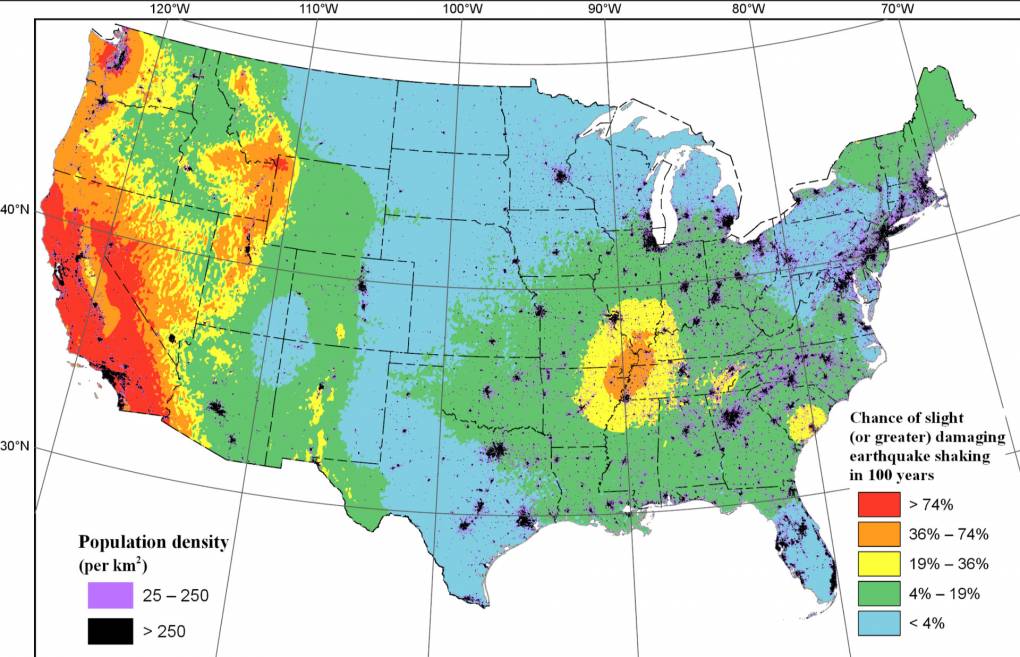
"caption": "Map showing the chance of damaging earthquake shaking within 100 years.",
"description": null,
"title": "RS40503_2018 NSHM Cover Image (1)-qut",
"credit": "USGS",
"status": "inherit",
"isLoading": false,
"fetchFailed": false
},
"science_1951544": {
"type": "attachments",
"id": "science_1951544",
"meta": {
"index": "attachments_1716263798",
"site": "science",
"id": "1951544",
"found": true
},
"parent": 1983312,
"imgSizes": {
"twentyfourteen-full-width": {
"file": "https://ww2.kqed.org/app/uploads/sites/35/2019/12/CohoSpawning-1038x576.jpg",
"width": 1038,
"mimeType": "image/jpeg",
"height": 576
},
"thumbnail": {
"file": "https://ww2.kqed.org/app/uploads/sites/35/2019/12/CohoSpawning-160x90.jpg",
"width": 160,
"mimeType": "image/jpeg",
"height": 90
},
"post-thumbnail": {
"file": "https://ww2.kqed.org/app/uploads/sites/35/2019/12/CohoSpawning-672x372.jpg",
"width": 672,
"mimeType": "image/jpeg",
"height": 372
},
"kqedFullSize": {
"file": "https://ww2.kqed.org/app/uploads/sites/35/2019/12/CohoSpawning.jpg",
"width": 1920,
"height": 1079
},
"large": {
"file": "https://ww2.kqed.org/app/uploads/sites/35/2019/12/CohoSpawning-1020x573.jpg",
"width": 1020,
"mimeType": "image/jpeg",
"height": 573
},
"complete_open_graph": {
"file": "https://ww2.kqed.org/app/uploads/sites/35/2019/12/CohoSpawning-1200x674.jpg",
"width": 1200,
"mimeType": "image/jpeg",
"height": 674
},
"full-width": {
"file": "https://ww2.kqed.org/app/uploads/sites/35/2019/12/CohoSpawning-1920x1079.jpg",
"width": 1920,
"mimeType": "image/jpeg",
"height": 1079
},
"medium": {
"file": "https://ww2.kqed.org/app/uploads/sites/35/2019/12/CohoSpawning-800x450.jpg",
"width": 800,
"mimeType": "image/jpeg",
"height": 450
},
"medium_large": {
"file": "https://ww2.kqed.org/app/uploads/sites/35/2019/12/CohoSpawning-768x432.jpg",
"width": 768,
"mimeType": "image/jpeg",
"height": 432
}
},
"publishDate": 1576185966,
"modified": 1689016559,
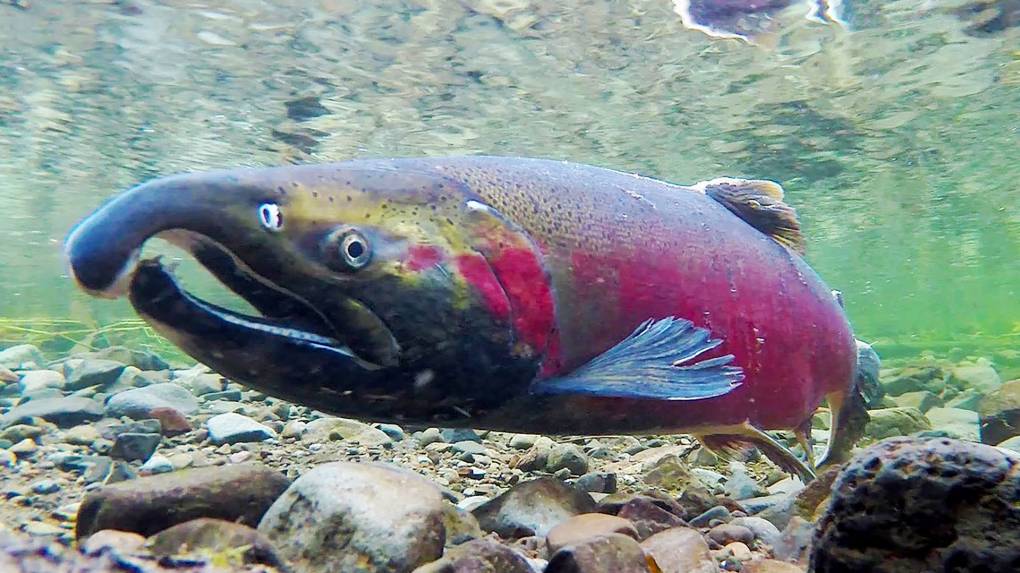
"caption": "Spawning coho salmon.",
"description": null,
"title": "CohoSpawning",
"credit": "U.S. Geological Survey",
"status": "inherit",
"altTag": null,
"isLoading": false,
"fetchFailed": false
},
"science_1951607": {
"type": "attachments",
"id": "science_1951607",
"meta": {
"index": "attachments_1716263798",
"site": "science",
"id": "1951607",
"found": true
},
"parent": 1951605,
"imgSizes": {
"twentyfourteen-full-width": {
"file": "https://ww2.kqed.org/app/uploads/sites/35/2019/12/GettyImages-480337041-1038x576.jpg",
"width": 1038,
"mimeType": "image/jpeg",
"height": 576
},
"thumbnail": {
"file": "https://ww2.kqed.org/app/uploads/sites/35/2019/12/GettyImages-480337041-160x107.jpg",
"width": 160,
"mimeType": "image/jpeg",
"height": 107
},
"post-thumbnail": {
"file": "https://ww2.kqed.org/app/uploads/sites/35/2019/12/GettyImages-480337041-672x372.jpg",
"width": 672,
"mimeType": "image/jpeg",
"height": 372
},
"kqedFullSize": {
"file": "https://ww2.kqed.org/app/uploads/sites/35/2019/12/GettyImages-480337041.jpg",
"width": 3000,
"height": 2001
},
"large": {
"file": "https://ww2.kqed.org/app/uploads/sites/35/2019/12/GettyImages-480337041-1020x680.jpg",
"width": 1020,
"mimeType": "image/jpeg",
"height": 680
},
"complete_open_graph": {
"file": "https://ww2.kqed.org/app/uploads/sites/35/2019/12/GettyImages-480337041-1200x800.jpg",
"width": 1200,
"mimeType": "image/jpeg",
"height": 800
},
"full-width": {
"file": "https://ww2.kqed.org/app/uploads/sites/35/2019/12/GettyImages-480337041-1920x1281.jpg",
"width": 1920,
"mimeType": "image/jpeg",
"height": 1281
},
"medium": {
"file": "https://ww2.kqed.org/app/uploads/sites/35/2019/12/GettyImages-480337041-800x534.jpg",
"width": 800,
"mimeType": "image/jpeg",
"height": 534
},
"medium_large": {
"file": "https://ww2.kqed.org/app/uploads/sites/35/2019/12/GettyImages-480337041-768x512.jpg",
"width": 768,
"mimeType": "image/jpeg",
"height": 512
}
},
"publishDate": 1576275503,
"modified": 1627931678,
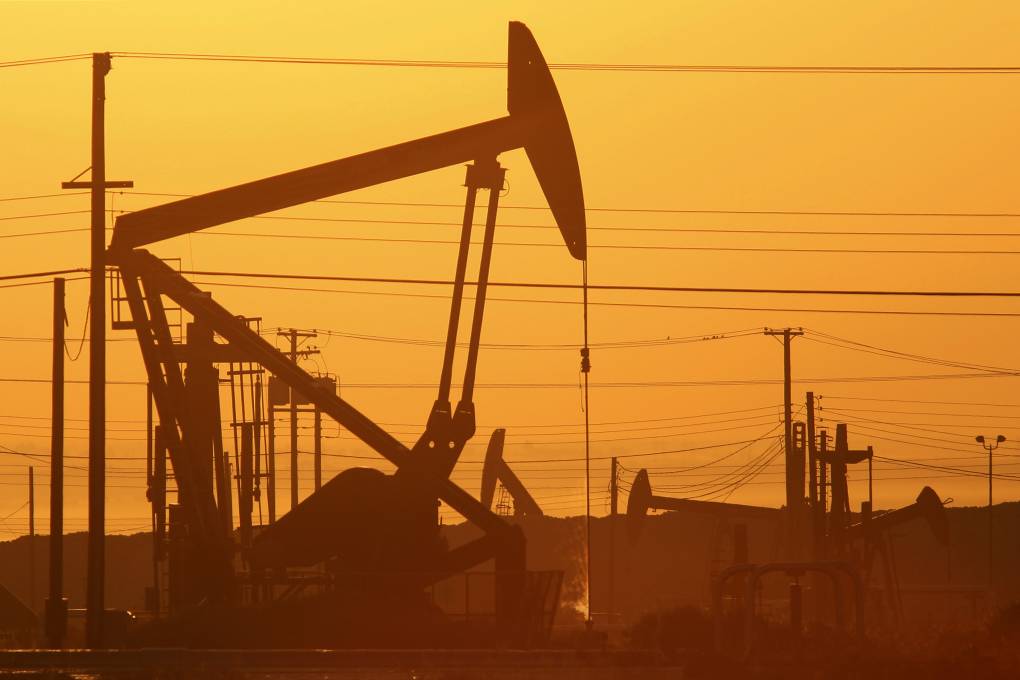
"caption": "Pump jacks are seen at dawn in an oil field over the Monterey Shale formation where gas and oil is extracted using hydraulic fracturing, or fracking. ",
"description": null,
"title": null,
"credit": " David McNew/Getty Images",
"status": "inherit",
"altTag": null,
"isLoading": false,
"fetchFailed": false
},
"science_1951529": {
"type": "attachments",
"id": "science_1951529",
"meta": {
"index": "attachments_1716263798",
"site": "science",
"id": "1951529",
"found": true
},
"parent": 1951526,
"imgSizes": {
"twentyfourteen-full-width": {
"file": "https://ww2.kqed.org/app/uploads/sites/35/2019/12/kinkandopen-small-1038x576.jpg",
"width": 1038,
"mimeType": "image/jpeg",
"height": 576
},
"thumbnail": {
"file": "https://ww2.kqed.org/app/uploads/sites/35/2019/12/kinkandopen-small-160x91.jpg",
"width": 160,
"mimeType": "image/jpeg",
"height": 91
},
"post-thumbnail": {
"file": "https://ww2.kqed.org/app/uploads/sites/35/2019/12/kinkandopen-small-672x372.jpg",
"width": 672,
"mimeType": "image/jpeg",
"height": 372
},
"kqedFullSize": {
"file": "https://ww2.kqed.org/app/uploads/sites/35/2019/12/kinkandopen-small.jpg",
"width": 1280,
"height": 728
},
"large": {
"file": "https://ww2.kqed.org/app/uploads/sites/35/2019/12/kinkandopen-small-1020x580.jpg",
"width": 1020,
"mimeType": "image/jpeg",
"height": 580
},
"complete_open_graph": {
"file": "https://ww2.kqed.org/app/uploads/sites/35/2019/12/kinkandopen-small-1200x683.jpg",
"width": 1200,
"mimeType": "image/jpeg",
"height": 683
},
"medium": {
"file": "https://ww2.kqed.org/app/uploads/sites/35/2019/12/kinkandopen-small-800x455.jpg",
"width": 800,
"mimeType": "image/jpeg",
"height": 455
},
"medium_large": {
"file": "https://ww2.kqed.org/app/uploads/sites/35/2019/12/kinkandopen-small-768x437.jpg",
"width": 768,
"mimeType": "image/jpeg",
"height": 437
}
},
"publishDate": 1576115497,
"modified": 1576115565,
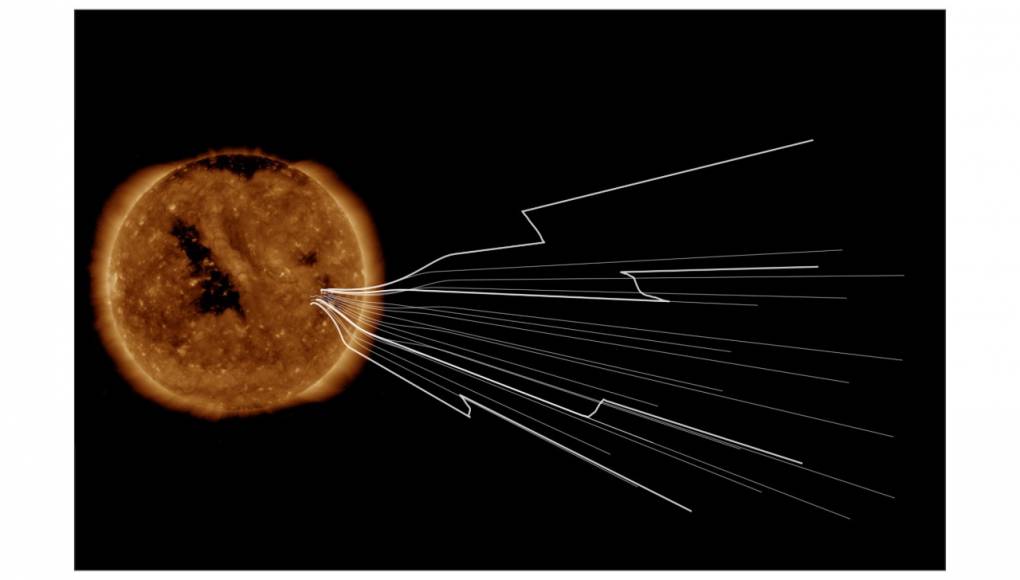
"caption": "The Sun, in UV light, during Parker Solar Probe’s first closest approach in its first orbit. White magnetic field lines are shown originating in a small coronal hole; kinks, based on real Parker measurements, show the switchbacks observed during the encounter.",
"description": "White kinked lines emanate from an orange sun.",
"title": "kinkandopen-small",
"credit": "Imperial College/Ronan Laker/GONG/NASA/HelioPy/PFSSPy",
"status": "inherit",
"isLoading": false,
"fetchFailed": false
},
"science_1951363": {
"type": "attachments",
"id": "science_1951363",
"meta": {
"index": "attachments_1716263798",
"site": "science",
"id": "1951363",
"found": true
},
"parent": 1951358,
"imgSizes": {
"thumbnail": {
"file": "https://ww2.kqed.org/app/uploads/sites/35/2019/12/Berkó-Ernő-geminids-160x90.jpg",
"width": 160,
"mimeType": "image/jpeg",
"height": 90
},
"post-thumbnail": {
"file": "https://ww2.kqed.org/app/uploads/sites/35/2019/12/Berkó-Ernő-geminids-672x372.jpg",
"width": 672,
"mimeType": "image/jpeg",
"height": 372
},
"kqedFullSize": {
"file": "https://ww2.kqed.org/app/uploads/sites/35/2019/12/Berkó-Ernő-geminids.jpg",
"width": 800,
"height": 450
},
"medium": {
"file": "https://ww2.kqed.org/app/uploads/sites/35/2019/12/Berkó-Ernő-geminids-800x450.jpg",
"width": 800,
"mimeType": "image/jpeg",
"height": 450
},
"medium_large": {
"file": "https://ww2.kqed.org/app/uploads/sites/35/2019/12/Berkó-Ernő-geminids-768x432.jpg",
"width": 768,
"mimeType": "image/jpeg",
"height": 432
}
},
"publishDate": 1575587011,
"modified": 1575587407,
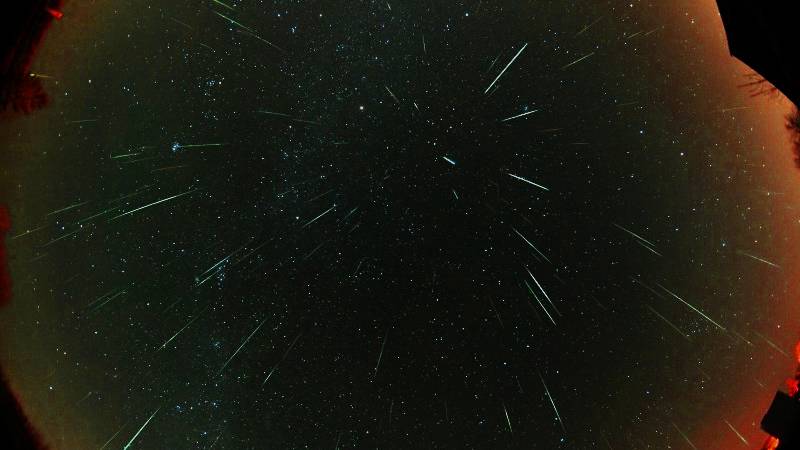
"caption": "Long exposure of the sky during the Geminids meteor shower in 2007. ",
"description": "Long exposure of the sky during the Geminids meteor shower in 2007. ",
"title": "Berkó Ernő-geminids",
"credit": "Berkó Ernő",
"status": "inherit",
"isLoading": false,
"fetchFailed": false
},
"science_1951496": {
"type": "attachments",
"id": "science_1951496",
"meta": {
"index": "attachments_1716263798",
"site": "science",
"id": "1951496",
"found": true
},
"parent": 1951470,
"imgSizes": {
"twentyfourteen-full-width": {
"file": "https://ww2.kqed.org/app/uploads/sites/35/2019/12/RS40408_Copy-of-DSC00204-qut-1038x576.jpg",
"width": 1038,
"mimeType": "image/jpeg",
"height": 576
},
"thumbnail": {
"file": "https://ww2.kqed.org/app/uploads/sites/35/2019/12/RS40408_Copy-of-DSC00204-qut-160x107.jpg",
"width": 160,
"mimeType": "image/jpeg",
"height": 107
},
"post-thumbnail": {
"file": "https://ww2.kqed.org/app/uploads/sites/35/2019/12/RS40408_Copy-of-DSC00204-qut-672x372.jpg",
"width": 672,
"mimeType": "image/jpeg",
"height": 372
},
"kqedFullSize": {
"file": "https://ww2.kqed.org/app/uploads/sites/35/2019/12/RS40408_Copy-of-DSC00204-qut.jpg",
"width": 1920,
"height": 1280
},
"large": {
"file": "https://ww2.kqed.org/app/uploads/sites/35/2019/12/RS40408_Copy-of-DSC00204-qut-1020x680.jpg",
"width": 1020,
"mimeType": "image/jpeg",
"height": 680
},
"complete_open_graph": {
"file": "https://ww2.kqed.org/app/uploads/sites/35/2019/12/RS40408_Copy-of-DSC00204-qut-1200x800.jpg",
"width": 1200,
"mimeType": "image/jpeg",
"height": 800
},
"full-width": {
"file": "https://ww2.kqed.org/app/uploads/sites/35/2019/12/RS40408_Copy-of-DSC00204-qut-1920x1280.jpg",
"width": 1920,
"mimeType": "image/jpeg",
"height": 1280
},
"medium": {
"file": "https://ww2.kqed.org/app/uploads/sites/35/2019/12/RS40408_Copy-of-DSC00204-qut-800x533.jpg",
"width": 800,
"mimeType": "image/jpeg",
"height": 533
},
"medium_large": {
"file": "https://ww2.kqed.org/app/uploads/sites/35/2019/12/RS40408_Copy-of-DSC00204-qut-768x512.jpg",
"width": 768,
"mimeType": "image/jpeg",
"height": 512
}
},
"publishDate": 1576024678,
"modified": 1576024845,
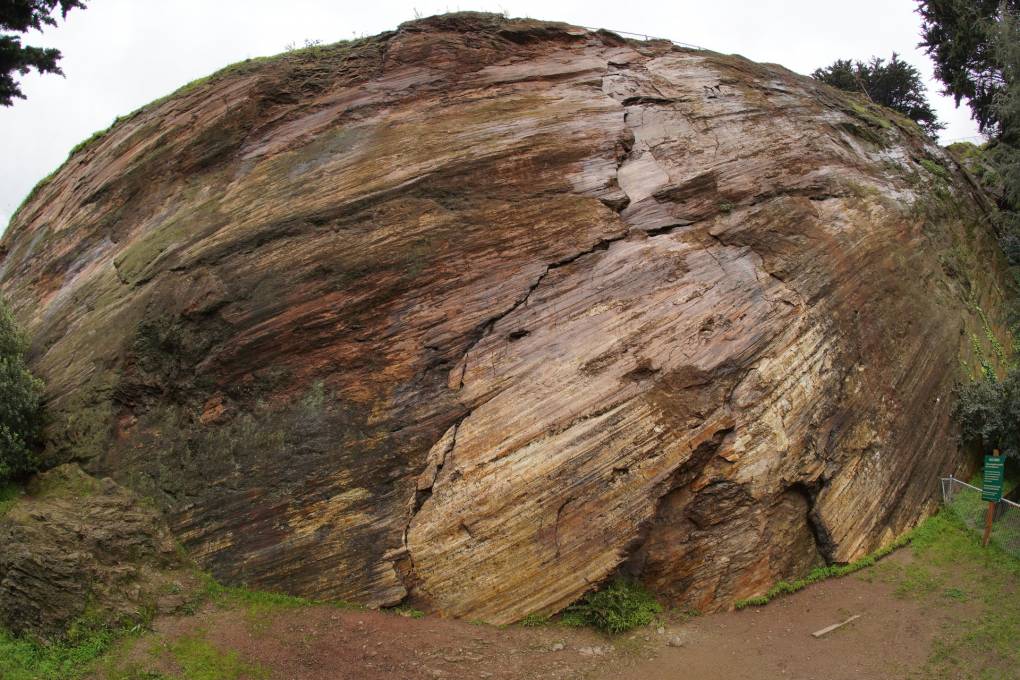
"caption": "This smooth rock face at Corona Heights in San Francisco was polished by millions of years of geologic activity.",
"description": null,
"title": "RS40408_Copy of DSC00204-qut",
"credit": "Callan Bentley/Northern Virginia Community College",
"status": "inherit",
"isLoading": false,
"fetchFailed": false
},
"science_1934475": {
"type": "attachments",
"id": "science_1934475",
"meta": {
"index": "attachments_1716263798",
"site": "science",
"id": "1934475",
"found": true
},
"parent": 1930023,
"imgSizes": {
"small": {
"file": "https://ww2.kqed.org/app/uploads/sites/35/2018/11/Planet_CampFire_181108-520x293.jpg",
"width": 520,
"mimeType": "image/jpeg",
"height": 293
},
"twentyfourteen-full-width": {
"file": "https://ww2.kqed.org/app/uploads/sites/35/2018/11/Planet_CampFire_181108-1038x576.jpg",
"width": 1038,
"mimeType": "image/jpeg",
"height": 576
},
"thumbnail": {
"file": "https://ww2.kqed.org/app/uploads/sites/35/2018/11/Planet_CampFire_181108-160x90.jpg",
"width": 160,
"mimeType": "image/jpeg",
"height": 90
},
"fd-sm": {
"file": "https://ww2.kqed.org/app/uploads/sites/35/2018/11/Planet_CampFire_181108-960x540.jpg",
"width": 960,
"mimeType": "image/jpeg",
"height": 540
},
"post-thumbnail": {
"file": "https://ww2.kqed.org/app/uploads/sites/35/2018/11/Planet_CampFire_181108-672x372.jpg",
"width": 672,
"mimeType": "image/jpeg",
"height": 372
},
"xsmall": {
"file": "https://ww2.kqed.org/app/uploads/sites/35/2018/11/Planet_CampFire_181108-375x211.jpg",
"width": 375,
"mimeType": "image/jpeg",
"height": 211
},
"kqedFullSize": {
"file": "https://ww2.kqed.org/app/uploads/sites/35/2018/11/Planet_CampFire_181108.jpg",
"width": 1920,
"height": 1080
},
"large": {
"file": "https://ww2.kqed.org/app/uploads/sites/35/2018/11/Planet_CampFire_181108-1020x574.jpg",
"width": 1020,
"mimeType": "image/jpeg",
"height": 574
},
"xlarge": {
"file": "https://ww2.kqed.org/app/uploads/sites/35/2018/11/Planet_CampFire_181108-1180x664.jpg",
"width": 1180,
"mimeType": "image/jpeg",
"height": 664
},
"complete_open_graph": {
"file": "https://ww2.kqed.org/app/uploads/sites/35/2018/11/Planet_CampFire_181108-1200x675.jpg",
"width": 1200,
"mimeType": "image/jpeg",
"height": 675
},
"guest-author-50": {
"file": "https://ww2.kqed.org/app/uploads/sites/35/2018/11/Planet_CampFire_181108-50x50.jpg",
"width": 50,
"mimeType": "image/jpeg",
"height": 50
},
"guest-author-96": {
"file": "https://ww2.kqed.org/app/uploads/sites/35/2018/11/Planet_CampFire_181108-96x96.jpg",
"width": 96,
"mimeType": "image/jpeg",
"height": 96
},
"medium": {
"file": "https://ww2.kqed.org/app/uploads/sites/35/2018/11/Planet_CampFire_181108-800x450.jpg",
"width": 800,
"mimeType": "image/jpeg",
"height": 450
},
"guest-author-64": {
"file": "https://ww2.kqed.org/app/uploads/sites/35/2018/11/Planet_CampFire_181108-64x64.jpg",
"width": 64,
"mimeType": "image/jpeg",
"height": 64
},
"guest-author-32": {
"file": "https://ww2.kqed.org/app/uploads/sites/35/2018/11/Planet_CampFire_181108-32x32.jpg",
"width": 32,
"mimeType": "image/jpeg",
"height": 32
},
"fd-lrg": {
"file": "https://ww2.kqed.org/app/uploads/sites/35/2018/11/Planet_CampFire_181108-1920x1080.jpg",
"width": 1920,
"mimeType": "image/jpeg",
"height": 1080
},
"fd-med": {
"file": "https://ww2.kqed.org/app/uploads/sites/35/2018/11/Planet_CampFire_181108-1180x664.jpg",
"width": 1180,
"mimeType": "image/jpeg",
"height": 664
},
"full-width": {
"file": "https://ww2.kqed.org/app/uploads/sites/35/2018/11/Planet_CampFire_181108-1920x1080.jpg",
"width": 1920,
"mimeType": "image/jpeg",
"height": 1080
},
"detail": {
"file": "https://ww2.kqed.org/app/uploads/sites/35/2018/11/Planet_CampFire_181108-150x150.jpg",
"width": 150,
"mimeType": "image/jpeg",
"height": 150
},
"medium_large": {
"file": "https://ww2.kqed.org/app/uploads/sites/35/2018/11/Planet_CampFire_181108-768x432.jpg",
"width": 768,
"mimeType": "image/jpeg",
"height": 432
},
"guest-author-128": {
"file": "https://ww2.kqed.org/app/uploads/sites/35/2018/11/Planet_CampFire_181108-128x128.jpg",
"width": 128,
"mimeType": "image/jpeg",
"height": 128
},
"xxsmall": {
"file": "https://ww2.kqed.org/app/uploads/sites/35/2018/11/Planet_CampFire_181108-240x135.jpg",
"width": 240,
"mimeType": "image/jpeg",
"height": 135
}
},
"publishDate": 1542399259,
"modified": 1542399317,
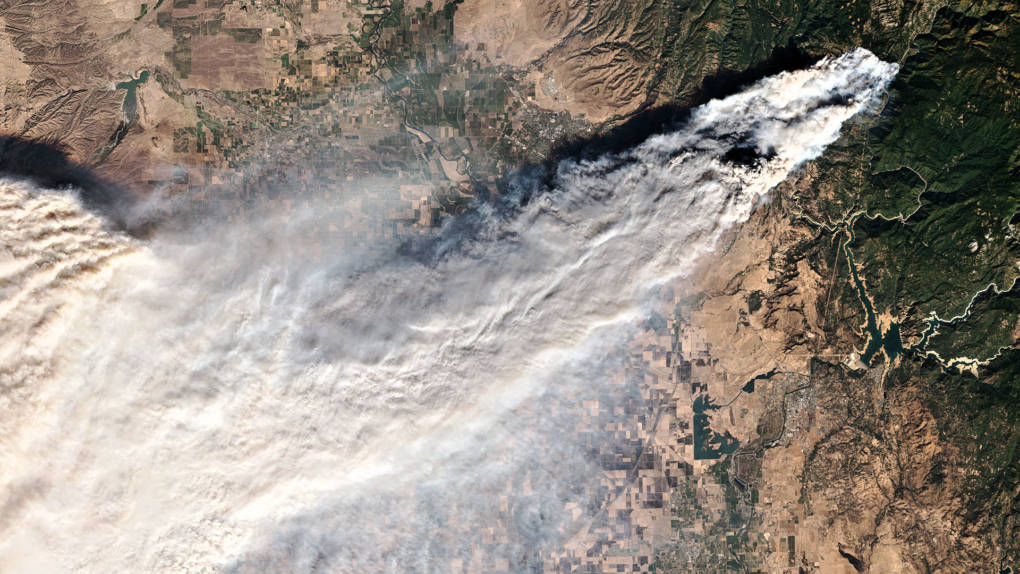
"caption": "Smoke blows over the Bay Area from the Camp Fire in Butte County.",
"description": "Smoke blows over the Bay Area from the Camp Fire in Butte County.",
"title": "Planet_CampFire_181108",
"credit": "Images provided by \u003ca href=\"https://www.planet.com\">Planet\u003c/a>",
"status": "inherit",
"isLoading": false,
"fetchFailed": false
},
"science_1942463": {
"type": "attachments",
"id": "science_1942463",
"meta": {
"index": "attachments_1716263798",
"site": "science",
"id": "1942463",
"found": true
},
"parent": 1941376,
"imgSizes": {
"twentyfourteen-full-width": {
"file": "https://ww2.kqed.org/app/uploads/sites/35/2029/05/California-wildfire-1038x576.jpg",
"width": 1038,
"mimeType": "image/jpeg",
"height": 576
},
"thumbnail": {
"file": "https://ww2.kqed.org/app/uploads/sites/35/2029/05/California-wildfire-160x107.jpg",
"width": 160,
"mimeType": "image/jpeg",
"height": 107
},
"post-thumbnail": {
"file": "https://ww2.kqed.org/app/uploads/sites/35/2029/05/California-wildfire-672x372.jpg",
"width": 672,
"mimeType": "image/jpeg",
"height": 372
},
"kqedFullSize": {
"file": "https://ww2.kqed.org/app/uploads/sites/35/2029/05/California-wildfire.jpg",
"width": 1920,
"height": 1280
},
"large": {
"file": "https://ww2.kqed.org/app/uploads/sites/35/2029/05/California-wildfire-1020x680.jpg",
"width": 1020,
"mimeType": "image/jpeg",
"height": 680
},
"complete_open_graph": {
"file": "https://ww2.kqed.org/app/uploads/sites/35/2029/05/California-wildfire-1200x800.jpg",
"width": 1200,
"mimeType": "image/jpeg",
"height": 800
},
"full-width": {
"file": "https://ww2.kqed.org/app/uploads/sites/35/2029/05/California-wildfire-1920x1280.jpg",
"width": 1920,
"mimeType": "image/jpeg",
"height": 1280
},
"medium": {
"file": "https://ww2.kqed.org/app/uploads/sites/35/2029/05/California-wildfire-800x533.jpg",
"width": 800,
"mimeType": "image/jpeg",
"height": 533
},
"medium_large": {
"file": "https://ww2.kqed.org/app/uploads/sites/35/2029/05/California-wildfire-768x512.jpg",
"width": 768,
"mimeType": "image/jpeg",
"height": 512
}
},
"publishDate": 1559166249,
"modified": 1576012382,
"caption": "Embers fly as wind and flames from the Camp fire tear through Paradise, California on Nov. 8, 2018.",
"description": null,
"title": "US-FIRE-WEATHER",
"credit": "Josh Edelson/AFP/Getty Images",
"status": "inherit",
"isLoading": false,
"fetchFailed": false
},
"science_1951196": {
"type": "attachments",
"id": "science_1951196",
"meta": {
"index": "attachments_1716263798",
"site": "science",
"id": "1951196",
"found": true
},
"parent": 1951190,
"imgSizes": {
"twentyfourteen-full-width": {
"file": "https://ww2.kqed.org/app/uploads/sites/35/2029/12/Blue-Marble-Apollo-Earth-1038x576.jpg",
"width": 1038,
"mimeType": "image/jpeg",
"height": 576
},
"thumbnail": {
"file": "https://ww2.kqed.org/app/uploads/sites/35/2029/12/Blue-Marble-Apollo-Earth-160x160.jpg",
"width": 160,
"mimeType": "image/jpeg",
"height": 160
},
"post-thumbnail": {
"file": "https://ww2.kqed.org/app/uploads/sites/35/2029/12/Blue-Marble-Apollo-Earth-672x372.jpg",
"width": 672,
"mimeType": "image/jpeg",
"height": 372
},
"kqedFullSize": {
"file": "https://ww2.kqed.org/app/uploads/sites/35/2029/12/Blue-Marble-Apollo-Earth-e1575419529895.jpg",
"width": 1920,
"height": 1921
},
"large": {
"file": "https://ww2.kqed.org/app/uploads/sites/35/2029/12/Blue-Marble-Apollo-Earth-1020x1021.jpg",
"width": 1020,
"mimeType": "image/jpeg",
"height": 1021
},
"complete_open_graph": {
"file": "https://ww2.kqed.org/app/uploads/sites/35/2029/12/Blue-Marble-Apollo-Earth-1200x1200.jpg",
"width": 1200,
"mimeType": "image/jpeg",
"height": 1200
},
"full-width": {
"file": "https://ww2.kqed.org/app/uploads/sites/35/2029/12/Blue-Marble-Apollo-Earth-1920x1921.jpg",
"width": 1920,
"mimeType": "image/jpeg",
"height": 1921
},
"medium": {
"file": "https://ww2.kqed.org/app/uploads/sites/35/2029/12/Blue-Marble-Apollo-Earth-800x801.jpg",
"width": 800,
"mimeType": "image/jpeg",
"height": 801
},
"medium_large": {
"file": "https://ww2.kqed.org/app/uploads/sites/35/2029/12/Blue-Marble-Apollo-Earth-768x769.jpg",
"width": 768,
"mimeType": "image/jpeg",
"height": 769
}
},
"publishDate": 1575419504,
"modified": 1587578764,
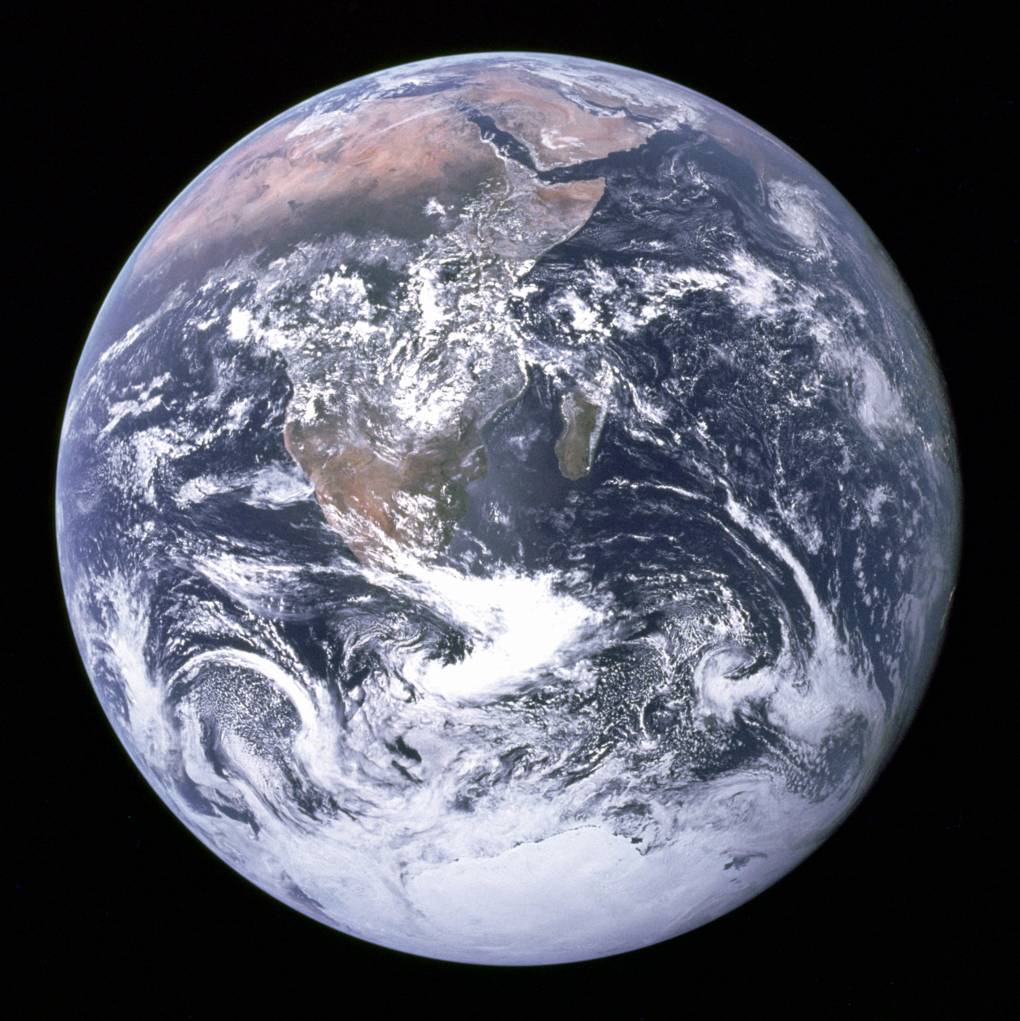
"caption": "View of the Earth as seen by the Apollo 17 crew in 1972.",
"description": null,
"title": "Blue Marble Apollo Earth",
"credit": "NASA",
"status": "inherit",
"isLoading": false,
"fetchFailed": false
},
"science_1951389": {
"type": "attachments",
"id": "science_1951389",
"meta": {
"index": "attachments_1716263798",
"site": "science",
"id": "1951389",
"found": true
},
"parent": 1951384,
"imgSizes": {
"twentyfourteen-full-width": {
"file": "https://ww2.kqed.org/app/uploads/sites/35/2019/12/RS40328_GettyImages-668839668-qut-1038x576.jpg",
"width": 1038,
"mimeType": "image/jpeg",
"height": 576
},
"thumbnail": {
"file": "https://ww2.kqed.org/app/uploads/sites/35/2019/12/RS40328_GettyImages-668839668-qut-160x107.jpg",
"width": 160,
"mimeType": "image/jpeg",
"height": 107
},
"post-thumbnail": {
"file": "https://ww2.kqed.org/app/uploads/sites/35/2019/12/RS40328_GettyImages-668839668-qut-672x372.jpg",
"width": 672,
"mimeType": "image/jpeg",
"height": 372
},
"kqedFullSize": {
"file": "https://ww2.kqed.org/app/uploads/sites/35/2019/12/RS40328_GettyImages-668839668-qut.jpg",
"width": 1920,
"height": 1280
},
"large": {
"file": "https://ww2.kqed.org/app/uploads/sites/35/2019/12/RS40328_GettyImages-668839668-qut-1020x680.jpg",
"width": 1020,
"mimeType": "image/jpeg",
"height": 680
},
"complete_open_graph": {
"file": "https://ww2.kqed.org/app/uploads/sites/35/2019/12/RS40328_GettyImages-668839668-qut-1200x800.jpg",
"width": 1200,
"mimeType": "image/jpeg",
"height": 800
},
"full-width": {
"file": "https://ww2.kqed.org/app/uploads/sites/35/2019/12/RS40328_GettyImages-668839668-qut-1920x1280.jpg",
"width": 1920,
"mimeType": "image/jpeg",
"height": 1280
},
"medium": {
"file": "https://ww2.kqed.org/app/uploads/sites/35/2019/12/RS40328_GettyImages-668839668-qut-800x533.jpg",
"width": 800,
"mimeType": "image/jpeg",
"height": 533
},
"medium_large": {
"file": "https://ww2.kqed.org/app/uploads/sites/35/2019/12/RS40328_GettyImages-668839668-qut-768x512.jpg",
"width": 768,
"mimeType": "image/jpeg",
"height": 512
}
},
"publishDate": 1575656184,
"modified": 1575656248,
"caption": "A federal plan could allow oil exploration at the edge of California's Carrizo Plain National Monument. ",
"description": null,
"title": "US-WILDFLOWERS-BLOOM-NATURE",
"credit": "ROBYN BECK/AFP via Getty Images",
"status": "inherit",
"isLoading": false,
"fetchFailed": false
},
"science_1951230": {
"type": "attachments",
"id": "science_1951230",
"meta": {
"index": "attachments_1716263798",
"site": "science",
"id": "1951230",
"found": true
},
"parent": 1951205,
"imgSizes": {
"twentyfourteen-full-width": {
"file": "https://ww2.kqed.org/app/uploads/sites/35/2019/12/RS40322__20190326_A_0809_full-qut-1038x576.jpg",
"width": 1038,
"mimeType": "image/jpeg",
"height": 576
},
"thumbnail": {
"file": "https://ww2.kqed.org/app/uploads/sites/35/2019/12/RS40322__20190326_A_0809_full-qut-160x113.jpg",
"width": 160,
"mimeType": "image/jpeg",
"height": 113
},
"post-thumbnail": {
"file": "https://ww2.kqed.org/app/uploads/sites/35/2019/12/RS40322__20190326_A_0809_full-qut-672x372.jpg",
"width": 672,
"mimeType": "image/jpeg",
"height": 372
},
"kqedFullSize": {
"file": "https://ww2.kqed.org/app/uploads/sites/35/2019/12/RS40322__20190326_A_0809_full-qut.jpg",
"width": 1920,
"height": 1355
},
"large": {
"file": "https://ww2.kqed.org/app/uploads/sites/35/2019/12/RS40322__20190326_A_0809_full-qut-1020x720.jpg",
"width": 1020,
"mimeType": "image/jpeg",
"height": 720
},
"complete_open_graph": {
"file": "https://ww2.kqed.org/app/uploads/sites/35/2019/12/RS40322__20190326_A_0809_full-qut-1200x847.jpg",
"width": 1200,
"mimeType": "image/jpeg",
"height": 847
},
"full-width": {
"file": "https://ww2.kqed.org/app/uploads/sites/35/2019/12/RS40322__20190326_A_0809_full-qut-1920x1355.jpg",
"width": 1920,
"mimeType": "image/jpeg",
"height": 1355
},
"medium": {
"file": "https://ww2.kqed.org/app/uploads/sites/35/2019/12/RS40322__20190326_A_0809_full-qut-800x565.jpg",
"width": 800,
"mimeType": "image/jpeg",
"height": 565
},
"medium_large": {
"file": "https://ww2.kqed.org/app/uploads/sites/35/2019/12/RS40322__20190326_A_0809_full-qut-768x542.jpg",
"width": 768,
"mimeType": "image/jpeg",
"height": 542
}
},
"publishDate": 1575498256,
"modified": 1575498323,
"caption": "Carson Jeffries and Jacob Katz examining a salmon fry taken from a cage in the floodplain near Knaggs Ranch on the Sacramento River.",
"description": null,
"title": "RS40322__20190326_A_0809_full-qut",
"credit": "Jak Wonderly/bioGraphic",
"status": "inherit",
"isLoading": false,
"fetchFailed": false
}
},
"audioPlayerReducer": {
"postId": "stream_live",
"isPaused": true,
"isPlaying": false,
"pfsActive": false,
"pledgeModalIsOpen": true,
"playerDrawerIsOpen": false,
"liveAudioPlayStartedAt": 0,
"liveAudioPlayContext": ""
},
"authorsReducer": {
"byline_science_1951550": {
"type": "authors",
"id": "byline_science_1951550",
"meta": {
"override": true
},
"slug": "byline_science_1951550",
"name": "Laurel Wamsley \u003cbr />NPR\u003cbr>",
"isLoading": false
},
"byline_science_1951384": {
"type": "authors",
"id": "byline_science_1951384",
"meta": {
"override": true
},
"slug": "byline_science_1951384",
"name": "Julie Cart \u003cbr /> CalMatters \u003cBR>",
"isLoading": false
},
"byline_science_1951205": {
"type": "authors",
"id": "byline_science_1951205",
"meta": {
"override": true
},
"slug": "byline_science_1951205",
"name": " Robin Meadows \u003cbr />bioGraphic\u003cbr>",
"isLoading": false
},
"jbrooks": {
"type": "authors",
"id": "80",
"meta": {
"index": "authors_1716337520",
"id": "80",
"found": true
},
"name": "Jon Brooks",
"firstName": "Jon",
"lastName": "Brooks",
"slug": "jbrooks",
"email": "jbrooks@kqed.org",
"display_author_email": true,
"staff_mastheads": [
"science"
],
"title": "Digital Editor",
"bio": "Jon Brooks is a former Digital Editor for KQED Science. He is the former editor of KQED’s daily news blog, News Fix. In 2014, he won a California Journalism Award for his coverage of ride services like Uber and Lyft and the taxi industry. A veteran blogger, he previously worked for Yahoo! in various news writing and editing roles. Jon is also a playwright whose work has been produced in San Francisco, New York, Italy, and around the U.S. He has written about film for his own blog and studied film at Boston University.",
"avatar": "https://secure.gravatar.com/avatar/98887f7ed1c876ed414d4c915e969584?s=600&d=blank&r=g",
"twitter": "jbrooksfoy",
"facebook": null,
"instagram": null,
"linkedin": null,
"sites": [
{
"site": "arts",
"roles": [
"Contributor",
"editor"
]
},
{
"site": "news",
"roles": [
"author"
]
},
{
"site": "futureofyou",
"roles": [
"administrator"
]
},
{
"site": "mindshift",
"roles": [
"editor"
]
},
{
"site": "stateofhealth",
"roles": [
"editor"
]
},
{
"site": "science",
"roles": [
"administrator"
]
},
{
"site": "quest",
"roles": [
"editor"
]
}
],
"headData": {
"title": "Jon Brooks | KQED",
"description": "Digital Editor",
"ogImgSrc": "https://secure.gravatar.com/avatar/98887f7ed1c876ed414d4c915e969584?s=600&d=blank&r=g",
"twImgSrc": "https://secure.gravatar.com/avatar/98887f7ed1c876ed414d4c915e969584?s=600&d=blank&r=g"
},
"isLoading": false,
"link": "/author/jbrooks"
},
"ben-burress": {
"type": "authors",
"id": "6180",
"meta": {
"index": "authors_1716337520",
"id": "6180",
"found": true
},
"name": "Ben Burress",
"firstName": "Ben",
"lastName": "Burress",
"slug": "ben-burress",
"email": "bburress@chabotspace.org",
"display_author_email": false,
"staff_mastheads": [],
"title": null,
"bio": "\u003cstrong>Benjamin Burress\u003c/strong> has been a staff astronomer at Chabot Space & Science Center since July 1999. He graduated from Sonoma State University in 1985 with a bachelor’s degree in physics (and minor in astronomy), after which he signed on for a two-year stint in the Peace Corps, where he taught physics and mathematics in the African nation of Cameroon. From 1989-96 he served on the crew of NASA’s Kuiper Airborne Observatory at Ames Research Center in Mountain View, CA. From 1996-99, he was Head Observer at the Naval Prototype Optical Interferometer program at Lowell Observatory in Flagstaff, AZ.\r\n\r\nRead his \u003ca href=\"http://science.kqed.org/quest/author/ben-burress/\">previous contributions\u003c/a> to \u003ca href=\"http://science.kqed.org/quest/\">QUEST\u003c/a>, a project dedicated to exploring the Science of Sustainability.",
"avatar": "https://secure.gravatar.com/avatar/8263bffa345b7e4923a0b8b9f0f6a161?s=600&d=blank&r=g",
"twitter": null,
"facebook": null,
"instagram": null,
"linkedin": null,
"sites": [
{
"site": "science",
"roles": [
"editor"
]
},
{
"site": "quest",
"roles": [
"subscriber"
]
}
],
"headData": {
"title": "Ben Burress | KQED",
"description": null,
"ogImgSrc": "https://secure.gravatar.com/avatar/8263bffa345b7e4923a0b8b9f0f6a161?s=600&d=blank&r=g",
"twImgSrc": "https://secure.gravatar.com/avatar/8263bffa345b7e4923a0b8b9f0f6a161?s=600&d=blank&r=g"
},
"isLoading": false,
"link": "/author/ben-burress"
},
"dventon": {
"type": "authors",
"id": "11088",
"meta": {
"index": "authors_1716337520",
"id": "11088",
"found": true
},
"name": "Danielle Venton",
"firstName": "Danielle",
"lastName": "Venton",
"slug": "dventon",
"email": "dventon@kqed.org",
"display_author_email": true,
"staff_mastheads": [
"science"
],
"title": "Science reporter",
"bio": "Danielle Venton is a reporter for KQED Science. She covers wildfires, space and oceans (though she is prone to sea sickness).\r\n\r\nBefore joining KQED in 2015, Danielle was a staff reporter at KRCB in Sonoma County and a freelancer. She studied science communication at UC Santa Cruz and formerly worked at CERN in Geneva, Switzerland where she wrote about computing. She lives in Sonoma County and enjoys backpacking.",
"avatar": "https://secure.gravatar.com/avatar/37b292b5c40c8d93959c4f48d73b5286f41b7abd8588277e941905a3ed4c801c?s=600&d=blank&r=g",
"twitter": "DanielleVenton",
"bluesky": null,
"facebook": null,
"instagram": null,
"linkedin": null,
"sites": [
{
"site": "arts",
"roles": [
"contributor"
]
},
{
"site": "news",
"roles": [
"editor"
]
},
{
"site": "futureofyou",
"roles": [
"editor"
]
},
{
"site": "science",
"roles": [
"editor"
]
},
{
"site": "liveblog",
"roles": [
"contributor"
]
}
],
"headData": {
"title": "Danielle Venton | KQED",
"description": "Science reporter",
"ogImgSrc": "https://secure.gravatar.com/avatar/37b292b5c40c8d93959c4f48d73b5286f41b7abd8588277e941905a3ed4c801c?s=600&d=blank&r=g",
"twImgSrc": "https://secure.gravatar.com/avatar/37b292b5c40c8d93959c4f48d73b5286f41b7abd8588277e941905a3ed4c801c?s=600&d=blank&r=g"
},
"isLoading": false,
"link": "/author/dventon"
},
"parcuni": {
"type": "authors",
"id": "11368",
"meta": {
"index": "authors_1716337520",
"id": "11368",
"found": true
},
"name": "Peter Arcuni",
"firstName": "Peter",
"lastName": "Arcuni",
"slug": "parcuni",
"email": "parcuni@KQED.org",
"display_author_email": false,
"staff_mastheads": [
"science"
],
"title": "Reporter",
"bio": "Peter reports radio and online stories for \u003cem>KQED Science\u003c/em>. His work has also appeared on the \u003cem>The California Report\u003c/em> morning show and \u003cem>KQED News\u003c/em>. His production credits include \u003cem>The California Report, The California Report Magazine\u003c/em> and KQED's local news podcast \u003cem>The Bay\u003c/em>. Other credits include NPR's \u003cem>All Things Considered\u003c/em>, WNYC's \u003cem>Science Friday\u003c/em>, WBUR's \u003cem>Here & Now\u003c/em>, WIRED and SFGate. Peter graduated from Brown University and earned a master's degree in journalism from Stanford. He's covered everything from homelessness to wildfires, health, the environment, arts and Thanksgiving in San Quentin prison. In other lives, he played rock n roll music and studied neuroscience. You can email him at: parcuni@kqed.org",
"avatar": "https://secure.gravatar.com/avatar/d5032f6f27199d478af34ad2e1d98732?s=600&d=blank&r=g",
"twitter": "peterarcuni",
"facebook": null,
"instagram": null,
"linkedin": null,
"sites": [
{
"site": "news",
"roles": [
"editor"
]
},
{
"site": "science",
"roles": [
"editor"
]
}
],
"headData": {
"title": "Peter Arcuni | KQED",
"description": "Reporter",
"ogImgSrc": "https://secure.gravatar.com/avatar/d5032f6f27199d478af34ad2e1d98732?s=600&d=blank&r=g",
"twImgSrc": "https://secure.gravatar.com/avatar/d5032f6f27199d478af34ad2e1d98732?s=600&d=blank&r=g"
},
"isLoading": false,
"link": "/author/parcuni"
},
"kevinstark": {
"type": "authors",
"id": "11608",
"meta": {
"index": "authors_1716337520",
"id": "11608",
"found": true
},
"name": "Kevin Stark",
"firstName": "Kevin",
"lastName": "Stark",
"slug": "kevinstark",
"email": "kstark@kqed.org",
"display_author_email": true,
"staff_mastheads": [
"science"
],
"title": "Senior Editor",
"bio": "Kevin is a senior editor for KQED Science, managing the station's health and climate desks. His journalism career began in the Pacific Northwest, and he later became a lead reporter for the San Francisco Public Press. His work has appeared in Pacific Standard magazine, the Energy News Network, the Center for Investigative Reporting's Reveal and WBEZ in Chicago. Kevin joined KQED in 2019, and has covered issues related to energy, wildfire, climate change and the environment.",
"avatar": "https://secure.gravatar.com/avatar/365aaa4b597d3a8374f67504ff0facd323d7906e8eb4be0a7efd2427408e802c?s=600&d=blank&r=g",
"twitter": "starkkev",
"bluesky": null,
"facebook": null,
"instagram": null,
"linkedin": null,
"sites": [
{
"site": "",
"roles": [
"editor"
]
},
{
"site": "news",
"roles": [
"editor"
]
},
{
"site": "science",
"roles": [
"administrator"
]
}
],
"headData": {
"title": "Kevin Stark | KQED",
"description": "Senior Editor",
"ogImgSrc": "https://secure.gravatar.com/avatar/365aaa4b597d3a8374f67504ff0facd323d7906e8eb4be0a7efd2427408e802c?s=600&d=blank&r=g",
"twImgSrc": "https://secure.gravatar.com/avatar/365aaa4b597d3a8374f67504ff0facd323d7906e8eb4be0a7efd2427408e802c?s=600&d=blank&r=g"
},
"isLoading": false,
"link": "/author/kevinstark"
}
},
"pagesReducer": {
"science_category_news": {
"type": "terms",
"id": "science_40",
"meta": {
"index": "terms_1716263798",
"site": "science",
"id": "40",
"score": 10.814219
},
"featImg": null,
"name": "News",
"description": null,
"taxonomy": "category",
"headData": {
"twImgId": null,
"twTitle": null,
"ogTitle": null,
"ogImgId": null,
"twDescription": null,
"description": null,
"title": "News Archives | KQED Science",
"ogDescription": null
},
"ttid": 42,
"slug": "news",
"isLoading": false,
"title": "News",
"pageMeta": {
"site": "science",
"WpPageTemplate": "page-topic-editorial",
"currentPage": 118
},
"blocks": [
{
"blockName": "kqed/post-list",
"attrs": {
"layout": "cardArticle2",
"query": "posts/science?category=news",
"seeMore": false,
"paginated": true,
"page": 118
}
},
{
"blockName": "kqed/ad"
}
]
}
},
"pfsSessionReducer": {},
"postsReducer": {
"stream_live": {
"type": "live",
"id": "stream_live",
"audioUrl": "https://streams.kqed.org/kqedradio",
"title": "Live Stream",
"excerpt": "Live Stream information currently unavailable.",
"link": "/radio",
"featImg": "",
"label": {
"name": "KQED Live",
"link": "/"
}
},
"stream_kqedNewscast": {
"type": "posts",
"id": "stream_kqedNewscast",
"audioUrl": "https://www.kqed.org/.stream/anon/radio/RDnews/newscast.mp3?_=1",
"title": "KQED Newscast",
"featImg": "",
"label": {
"name": "88.5 FM",
"link": "/"
}
},
"science_1951748": {
"type": "posts",
"id": "science_1951748",
"meta": {
"index": "posts_1716263798",
"site": "science",
"id": "1951748",
"score": null,
"sort": [
1576614944000
]
},
"parent": 0,
"labelTerm": {},
"blocks": [],
"publishDate": 1576614944,
"format": "aside",
"title": "Map: Earthquake Shake Zones Around the U.S.",
"headTitle": "Map: Earthquake Shake Zones Around the U.S. | KQED",
"content": "\u003cp>Researchers with the U.S. Geological Survey have refined their understanding of how soft basins of sedimentary rock below Earth’s surface amplify shaking from big earthquakes. The San Francisco Bay Area, Los Angeles, Seattle and Salt Lake City all have deep basins beneath them.\u003c/p>\n\u003cp>The study gives policymakers more detailed information to assess the strength of buildings during a major earthquake, and to guide homeowners in reinforcing their houses. The new estimates will be included in future building codes. The data has also been incorporated into the USGS hazard map that was released last week, and which you can see below.\u003c/p>\n\u003cp>Among the findings: a 25% increase in potential shaking for Walnut Creek and a 10% increase for San Jose over the last USGS hazard assessment in 2014.\u003c/p>\n\u003cp>\u003cem>Click on the map to see a larger version.\u003c/em>\u003c/p>\n\u003cfigure id=\"attachment_1952210\" class=\"wp-caption aligncenter\" style=\"max-width: 640px\">\u003ca href=\"https://ww2.kqed.org/app/uploads/sites/35/2019/12/RS40503_2018-NSHM-Cover-Image-1-qut.jpg\">\u003cimg loading=\"lazy\" decoding=\"async\" class=\"size-complete_open_graph wp-image-1952210\" src=\"https://ww2.kqed.org/app/uploads/sites/35/2019/12/RS40503_2018-NSHM-Cover-Image-1-qut-1200x773.jpg\" alt=\"\" width=\"640\" height=\"412\" srcset=\"https://cdn.kqed.org/wp-content/uploads/sites/35/2019/12/RS40503_2018-NSHM-Cover-Image-1-qut-1200x773.jpg 1200w, https://cdn.kqed.org/wp-content/uploads/sites/35/2019/12/RS40503_2018-NSHM-Cover-Image-1-qut-160x103.jpg 160w, https://cdn.kqed.org/wp-content/uploads/sites/35/2019/12/RS40503_2018-NSHM-Cover-Image-1-qut-800x515.jpg 800w, https://cdn.kqed.org/wp-content/uploads/sites/35/2019/12/RS40503_2018-NSHM-Cover-Image-1-qut-768x494.jpg 768w, https://cdn.kqed.org/wp-content/uploads/sites/35/2019/12/RS40503_2018-NSHM-Cover-Image-1-qut-1020x657.jpg 1020w, https://cdn.kqed.org/wp-content/uploads/sites/35/2019/12/RS40503_2018-NSHM-Cover-Image-1-qut.jpg 1920w\" sizes=\"(max-width: 640px) 100vw, 640px\">\u003c/a>\u003cfigcaption class=\"wp-caption-text\">Map showing the chance of damaging earthquake shaking within 100 years. \u003ccite>(USGS)\u003c/cite>\u003c/figcaption>\u003c/figure>\n\u003cp>“We looked at these core areas to try and estimate how we can better account for these shaking levels beneath urban areas across the western U.S.,” said Mark Petersen, a research geologist with the USGS, who presented the study at the American Geophysical Union’s annual fall conference in San Francisco last week.\u003c/p>\n\u003cp>[ad fullwidth]\u003c/p>\n\u003cp>The research on soft basins has been incorporated into the latest USGS earthquake \u003ca href=\"https://journals.sagepub.com/doi/full/10.1177/8755293019878199\" target=\"_blank\" rel=\"noopener noreferrer\">assessment\u003c/a>, which reports the potential for a large quake on the San Andreas and Cascadia faults remains high across the West Coast.\u003c/p>\n\u003cp>Already, the \u003ca href=\"https://www.nibs.org/page/bssc\" target=\"_blank\" rel=\"noopener noreferrer\">Building Seismic Safety Council\u003c/a>, an organization that provides guidance to the building industry on earthquake safety issues, voted to use the new models in its 2020 guidelines, the San Jose Mercury News \u003ca href=\"https://www.mercurynews.com/2019/12/12/did-you-feel-that-usgs-releases-new-earthquake-map/\" target=\"_blank\" rel=\"noopener noreferrer\">reported\u003c/a>.\u003c/p>\n\u003cp>\u003cstrong>Shaking Like Jelly\u003c/strong>\u003c/p>\n\u003cp>Geologists have long known that these basins increase the shaking in earthquakes of long duration. The basins form underground in places where rocks are warped into bowl-like shapes by tectonic stress.\u003c/p>\n\u003cp>Underground streams pass through the bowls and fill them with “soft sediments that can shake like a bowl filled with jelly, amplifying the shaking,” said Peterson. “Many times these deep basins overlay urban areas.”\u003c/p>\n\u003cp>The new shaking data is now a part of a USGS hazard model, which incorporates data on past earthquakes to help forecast where and how often future temblors will occur, their magnitude, and the intensity of the ground’s shaking. The models are based on where previous earthquakes have struck and the data obtained by geologists who study faults.\u003c/p>\n\u003cp>Policymakers and city officials incorporate the models into codes for buildings, bridges, roads and railways; the insurance industry uses them to assess risk;and they inform seismic stability studies of dams, power plants, schools and hospitals.\u003c/p>\n\u003cp>\u003c/p>\n\u003cp>Peterson says the models influence $1 trillion worth of construction and insurance costs annually in the U.S.\u003c/p>\n\n",
"stats": {
"hasVideo": false,
"hasChartOrMap": false,
"hasAudio": false,
"hasPolis": false,
"wordCount": 468,
"hasGoogleForm": false,
"hasGallery": false,
"hasHearkenModule": false,
"iframeSrcs": [],
"paragraphCount": 15
},
"modified": 1704847990,
"excerpt": "A new study gives policymakers more detailed information to assess the strength of buildings during a major earthquake, and to guide homeowners in reinforcing their houses.",
"headData": {
"twImgId": "",
"twTitle": "",
"ogTitle": "",
"ogImgId": "",
"twDescription": "",
"description": "A new study gives policymakers more detailed information to assess the strength of buildings during a major earthquake, and to guide homeowners in reinforcing their houses.",
"title": "Map: Earthquake Shake Zones Around the U.S. | KQED",
"ogDescription": "",
"schema": {
"@context": "https://schema.org",
"@type": "Article",
"headline": "Map: Earthquake Shake Zones Around the U.S.",
"datePublished": "2019-12-17T12:35:44-08:00",
"dateModified": "2024-01-09T16:53:10-08:00",
"image": "https://cdn.kqed.org/wp-content/uploads/2020/02/KQED-OG-Image@1x.png"
}
},
"guestAuthors": [],
"slug": "map-earthquake-shake-zones-around-the-u-s",
"status": "publish",
"sticky": false,
"source": "Earthquakes",
"path": "/science/1951748/map-earthquake-shake-zones-around-the-u-s",
"audioTrackLength": null,
"parsedContent": [
{
"type": "contentString",
"content": "\u003cdiv class=\"post-body\">\u003cp>\u003cp>Researchers with the U.S. Geological Survey have refined their understanding of how soft basins of sedimentary rock below Earth’s surface amplify shaking from big earthquakes. The San Francisco Bay Area, Los Angeles, Seattle and Salt Lake City all have deep basins beneath them.\u003c/p>\n\u003cp>The study gives policymakers more detailed information to assess the strength of buildings during a major earthquake, and to guide homeowners in reinforcing their houses. The new estimates will be included in future building codes. The data has also been incorporated into the USGS hazard map that was released last week, and which you can see below.\u003c/p>\n\u003cp>Among the findings: a 25% increase in potential shaking for Walnut Creek and a 10% increase for San Jose over the last USGS hazard assessment in 2014.\u003c/p>\n\u003cp>\u003cem>Click on the map to see a larger version.\u003c/em>\u003c/p>\n\u003cfigure id=\"attachment_1952210\" class=\"wp-caption aligncenter\" style=\"max-width: 640px\">\u003ca href=\"https://ww2.kqed.org/app/uploads/sites/35/2019/12/RS40503_2018-NSHM-Cover-Image-1-qut.jpg\">\u003cimg loading=\"lazy\" decoding=\"async\" class=\"size-complete_open_graph wp-image-1952210\" src=\"https://ww2.kqed.org/app/uploads/sites/35/2019/12/RS40503_2018-NSHM-Cover-Image-1-qut-1200x773.jpg\" alt=\"\" width=\"640\" height=\"412\" srcset=\"https://cdn.kqed.org/wp-content/uploads/sites/35/2019/12/RS40503_2018-NSHM-Cover-Image-1-qut-1200x773.jpg 1200w, https://cdn.kqed.org/wp-content/uploads/sites/35/2019/12/RS40503_2018-NSHM-Cover-Image-1-qut-160x103.jpg 160w, https://cdn.kqed.org/wp-content/uploads/sites/35/2019/12/RS40503_2018-NSHM-Cover-Image-1-qut-800x515.jpg 800w, https://cdn.kqed.org/wp-content/uploads/sites/35/2019/12/RS40503_2018-NSHM-Cover-Image-1-qut-768x494.jpg 768w, https://cdn.kqed.org/wp-content/uploads/sites/35/2019/12/RS40503_2018-NSHM-Cover-Image-1-qut-1020x657.jpg 1020w, https://cdn.kqed.org/wp-content/uploads/sites/35/2019/12/RS40503_2018-NSHM-Cover-Image-1-qut.jpg 1920w\" sizes=\"(max-width: 640px) 100vw, 640px\">\u003c/a>\u003cfigcaption class=\"wp-caption-text\">Map showing the chance of damaging earthquake shaking within 100 years. \u003ccite>(USGS)\u003c/cite>\u003c/figcaption>\u003c/figure>\n\u003cp>“We looked at these core areas to try and estimate how we can better account for these shaking levels beneath urban areas across the western U.S.,” said Mark Petersen, a research geologist with the USGS, who presented the study at the American Geophysical Union’s annual fall conference in San Francisco last week.\u003c/p>\n\u003cp>\u003c/p>\u003c/div>",
"attributes": {
"named": {},
"numeric": []
}
},
{
"type": "component",
"content": "",
"name": "ad",
"attributes": {
"named": {
"label": "fullwidth"
},
"numeric": [
"fullwidth"
]
}
},
{
"type": "contentString",
"content": "\u003cdiv class=\"post-body\">\u003cp>\u003c/p>\n\u003cp>The research on soft basins has been incorporated into the latest USGS earthquake \u003ca href=\"https://journals.sagepub.com/doi/full/10.1177/8755293019878199\" target=\"_blank\" rel=\"noopener noreferrer\">assessment\u003c/a>, which reports the potential for a large quake on the San Andreas and Cascadia faults remains high across the West Coast.\u003c/p>\n\u003cp>Already, the \u003ca href=\"https://www.nibs.org/page/bssc\" target=\"_blank\" rel=\"noopener noreferrer\">Building Seismic Safety Council\u003c/a>, an organization that provides guidance to the building industry on earthquake safety issues, voted to use the new models in its 2020 guidelines, the San Jose Mercury News \u003ca href=\"https://www.mercurynews.com/2019/12/12/did-you-feel-that-usgs-releases-new-earthquake-map/\" target=\"_blank\" rel=\"noopener noreferrer\">reported\u003c/a>.\u003c/p>\n\u003cp>\u003cstrong>Shaking Like Jelly\u003c/strong>\u003c/p>\n\u003cp>Geologists have long known that these basins increase the shaking in earthquakes of long duration. The basins form underground in places where rocks are warped into bowl-like shapes by tectonic stress.\u003c/p>\n\u003cp>Underground streams pass through the bowls and fill them with “soft sediments that can shake like a bowl filled with jelly, amplifying the shaking,” said Peterson. “Many times these deep basins overlay urban areas.”\u003c/p>\n\u003cp>The new shaking data is now a part of a USGS hazard model, which incorporates data on past earthquakes to help forecast where and how often future temblors will occur, their magnitude, and the intensity of the ground’s shaking. The models are based on where previous earthquakes have struck and the data obtained by geologists who study faults.\u003c/p>\n\u003cp>Policymakers and city officials incorporate the models into codes for buildings, bridges, roads and railways; the insurance industry uses them to assess risk;and they inform seismic stability studies of dams, power plants, schools and hospitals.\u003c/p>\n\u003cp>\u003c/p>\n\u003cp>Peterson says the models influence $1 trillion worth of construction and insurance costs annually in the U.S.\u003c/p>\n\n\u003c/div>\u003c/p>",
"attributes": {
"named": {},
"numeric": []
}
}
],
"link": "/science/1951748/map-earthquake-shake-zones-around-the-u-s",
"authors": [
"11608"
],
"categories": [
"science_38",
"science_40"
],
"tags": [
"science_3840",
"science_427",
"science_3370",
"science_838"
],
"featImg": "science_1952210",
"label": "source_science_1951748"
},
"science_1951545": {
"type": "posts",
"id": "science_1951545",
"meta": {
"index": "posts_1716263798",
"site": "science",
"id": "1951545",
"score": null,
"sort": [
1576483283000
]
},
"guestAuthors": [],
"slug": "restoration-of-a-san-mateo-county-creek-reopens-a-gateway-for-endangered-salmon",
"title": "Restoration of a San Mateo County Creek Reopens a Gateway for Endangered Salmon",
"publishDate": 1576483283,
"format": "audio",
"headTitle": "Restoration of a San Mateo County Creek Reopens a Gateway for Endangered Salmon | KQED",
"labelTerm": {},
"content": "\u003cp>[dropcap]I[/dropcap]magine you’re a fish. A coho salmon, to be specific. Your every instinct is telling you it’s time to migrate upstream from the ocean to spawn in the rivers and streams beyond. But instead of reaching those mountain tributaries and completing your life cycle, you’re blocked at every turn.\u003c/p>\n\u003cp>The gateway to your spawning grounds has closed.\u003c/p>\n\u003cp>That’s how Kellyx Nelson describes the predicament for coho in Butano Creek, a stream just outside the tiny farming town of Pescadero on the San Mateo County coast.\u003c/p>\n\u003cfigure id=\"attachment_1951603\" class=\"wp-caption alignright\" style=\"max-width: 800px\">\u003cimg loading=\"lazy\" decoding=\"async\" class=\"size-medium wp-image-1951603\" src=\"https://ww2.kqed.org/app/uploads/sites/35/2019/12/Pescadero-Marsh-800x533.jpg\" alt=\"\" width=\"800\" height=\"533\" srcset=\"https://cdn.kqed.org/wp-content/uploads/sites/35/2019/12/Pescadero-Marsh-800x533.jpg 800w, https://cdn.kqed.org/wp-content/uploads/sites/35/2019/12/Pescadero-Marsh-160x107.jpg 160w, https://cdn.kqed.org/wp-content/uploads/sites/35/2019/12/Pescadero-Marsh-768x512.jpg 768w, https://cdn.kqed.org/wp-content/uploads/sites/35/2019/12/Pescadero-Marsh-1020x680.jpg 1020w, https://cdn.kqed.org/wp-content/uploads/sites/35/2019/12/Pescadero-Marsh-1200x800.jpg 1200w, https://cdn.kqed.org/wp-content/uploads/sites/35/2019/12/Pescadero-Marsh-1920x1280.jpg 1920w\" sizes=\"(max-width: 800px) 100vw, 800px\">\u003cfigcaption class=\"wp-caption-text\">Pescadero Marsh Natural Preserve, an estuary on the San Mateo County coast. \u003ccite>(Peter Arcuni/KQED)\u003c/cite>\u003c/figcaption>\u003c/figure>\n\u003cp>Nelson is executive director of the \u003ca href=\"http://www.sanmateorcd.org/\" target=\"_blank\" rel=\"noopener noreferrer\">San Mateo Resource Conservation District\u003c/a>. The agency is working to restore the wetlands of \u003ca href=\"https://www.coastsidestateparks.org/pescadero-marsh-natural-preserve\" target=\"_blank\" rel=\"noopener noreferrer\">Pescasdero Marsh Natural Preserve\u003c/a> for endangered coho and other native species on the brink.\u003c/p>\n\u003cp>“A year or two ago I walked down the creek with my waders on and all of a sudden you’re walking uphill and you’re on land,” Nelson said. “The creek was gone.”\u003c/p>\n\u003cp>[ad fullwidth]\u003c/p>\n\u003cp>Lower Butano Creek had been clogged by a mile-and-a-half long plug of sediment where the stream once flowed through the marsh to meet the ocean.\u003c/p>\n\u003cp>Over one stretch, a forest had grown.\u003c/p>\n\u003cp>Nelson says the blockage was the result of nearly two centuries of farming, logging and re-engineering the local streams, all of which triggered severe erosion.\u003c/p>\n\u003cp>Dirt from upstream bled into the creek and washed down to the area near town, where the stream flattens out.\u003c/p>\n\u003cp>“There’s more than 10 miles of spawning and rearing habitat in that watershed that has been lost,” Nelson said. “We basically caused a dam to be formed so that the fish could almost never get upstream.”\u003c/p>\n\u003cp>In June, the resource conservation district, in partnership with California State Parks and the National Oceanic and Atmospheric Administration, embarked on a $7 million \u003ca href=\"http://www.sanmateorcd.org/project/butano-creek-reconnection-project/\" target=\"_blank\" rel=\"noopener noreferrer\">restoration project\u003c/a> to remove the sediment dam blocking Butano Creek.\u003c/p>\n\u003cp>The hope is the restoration can reconnect coho with their historic spawning range upstream in Butano State Park and ultimately aid in the species’ recovery.\u003c/p>\n\u003cp>\u003c!-- iframe plugin v.4.3 wordpress.org/plugins/iframe/ -->\u003cbr>\n\u003ciframe loading=\"lazy\" src=\"https://datawrapper.dwcdn.net/3sG28/33/\" scrolling=\"no\" frameborder=\"0\" style=\"border: none;\" height=\"569\" width=\"100%\" class=\"iframe-class\">\u003c/iframe>\u003c/p>\n\u003cp>\u003cstrong>A Species in Decline\u003c/strong>\u003c/p>\n\u003cp>Coho once thrived in California’s coastal rivers and creeks from Santa Cruz County to the Oregon border. Like other salmon, coho are known for what Nelson calls “this extraordinary life story.”\u003c/p>\n\u003cp>They begin life in freshwater streams, where they spend more than a year rearing until they make their way to the ocean. Typically, after a year and a half in salt water, they return to their home creeks and rivers to spawn, then die.\u003c/p>\n\u003cp>Like other salmon species, they’re known for their physical transformation from silver to various shades of crimson when they re-enter to reproduce.\u003c/p>\n\u003cfigure id=\"attachment_1951609\" class=\"wp-caption alignright\" style=\"max-width: 800px\">\u003cimg loading=\"lazy\" decoding=\"async\" class=\"size-medium wp-image-1951609\" src=\"https://ww2.kqed.org/app/uploads/sites/35/2019/12/Coho-in-California-800x534.jpg\" alt=\"\" width=\"800\" height=\"534\">\u003cfigcaption class=\"wp-caption-text\">Coho once thrived in California’s coastal rivers and streams. Pictured above, a 2018 coho migration in Marin County’s Lagunitas Creek, another site of habitat restoration. \u003ccite>(Harry McGrath/Turtle Island Restoration Network)\u003c/cite>\u003c/figcaption>\u003c/figure>\n\u003cp>“They’re gorgeous and charismatic and mysterious,” Nelson said.\u003c/p>\n\u003cp>But \u003ca href=\"https://www.wildlife.ca.gov/Conservation/Fishes/Coho-Salmon\">California’s coho\u003c/a>, once numbering in the hundreds of thousands, have disappeared from a large part of their range. South of the Golden Gate, the species is virtually extinct.\u003c/p>\n\u003cp>Habitat loss is a major factor driving the decline.\u003c/p>\n\u003cp>The Butano Creek restoration aims to solve another problem created by humans re-engineering the local landscape: \u003ca href=\"https://www.mercurynews.com/2016/11/06/pescadero-more-steelhead-deaths-frustrate-residents/\" target=\"_blank\" rel=\"noopener noreferrer\">frequent die-offs\u003c/a> of threatened steelhead, which once thrived in the watershed.\u003c/p>\n\u003cp>These fish — ocean-going rainbow trout — spawn in nearby Pescadero Creek and grow large as they feed in the adjoining marsh. But here they face what amounts to a death trap before they can migrate into the Pacific.\u003c/p>\n\u003cp>Biologists believe the steelhead suffocate when they encounter stagnant, oxygen-depleted water that has formed in deep pits excavated in the marsh over the years.\u003c/p>\n\u003cp>This anoxic water, which engulfs the fish as it rushes out of the marsh with the first storms of the rainy season, is thought to be responsible for killing thousands of steelhead over the last few decades.\u003c/p>\n\u003cp>The restoration project is addressing the problem by using the sediment removed from Butano Creek to fill the pits in the marsh. That should reduce or eliminate the volume of anoxic water there and improve conditions for fish.\u003c/p>\n\u003cp>\u003cstrong>Major Flooding\u003c/strong>\u003c/p>\n\u003cp>Local support for the project was bolstered by another consequence of the dam blocking Butano Creek: flooding on Pescadero Creek Road, the main road in and out of town.\u003c/p>\n\u003cfigure id=\"attachment_1951608\" class=\"wp-caption alignright\" style=\"max-width: 800px\">\u003cimg loading=\"lazy\" decoding=\"async\" class=\"size-medium wp-image-1951608\" src=\"https://ww2.kqed.org/app/uploads/sites/35/2019/12/Pescadero-Creek-Road-Flooding-800x597.jpg\" alt=\"\" width=\"800\" height=\"597\">\u003cfigcaption class=\"wp-caption-text\">The blockage on Butano Creek contributed to major flooding on Pescadero Creek Road, pictured in 2016, and nearby farmland. \u003ccite>(San Mateo Resource Conservation District)\u003c/cite>\u003c/figcaption>\u003c/figure>\n\u003cp>“When it rains, people get anxious,” said Nic Erridge, who chairs the Pescadero Municipal Advisory Council.\u003c/p>\n\u003cp>Erridge says any time there’s a big rainstorm, the road and surrounding farmland are inundated.\u003c/p>\n\u003cp>“It becomes a wetland,” Erridge said, “Water just flows through, the creek just spreads out.”\u003c/p>\n\u003cp>As a result, locals are stranded, sometimes unable to reach homes, jobs and school. Nearby farms, which help drive the town’s economy, are damaged.\u003c/p>\n\u003cp>“Solving this flooding issue is huge,” Erridge said. “Hopefully this project is really gonna help us.”\u003c/p>\n\u003cp>\u003cstrong>‘Resetting the Baseline’\u003c/strong>\u003c/p>\n\u003cp>For five months this summer and fall, crews used pontoon excavators, bulldozers, and dredge pumps to dig out the dirt, muck and debris from Butano Creek. Nearly 70,000 cubic yards of sediment were removed, and the stream now flows continuously from the Santa Cruz Mountains to the ocean.\u003c/p>\n\u003cp>Joe Pecharich, a fisheries biologist with the NOAA Restoration Center, says he sees the restoration project as “resetting the baseline” for Butano Creek.\u003c/p>\n\u003cp>Wildlife officials estimate the Pescadero-Butano Creek watershed has the \u003ca href=\"https://archive.fisheries.noaa.gov/wcr/protected_species/salmon_steelhead/recovery_planning_and_implementation/north_central_california_coast/central_california_coast_coho_recovery_plan.html\" target=\"_blank\" rel=\"noopener noreferrer\">potential\u003c/a> to support 2,300 spawning coho and similar numbers of steelhead.\u003c/p>\n\u003cp>“So it really could provide an opportunity to really jump-start some recovery of coho south of the Golden Gate,” Pecharich said.\u003c/p>\n\u003cp>If coho don’t naturally return to the system, he says, fish could be transplanted from other watersheds or breeding programs.\u003c/p>\n\u003cfigure id=\"attachment_1951604\" class=\"wp-caption aligncenter\" style=\"max-width: 800px\">\u003cimg loading=\"lazy\" decoding=\"async\" class=\"size-medium wp-image-1951604\" src=\"https://ww2.kqed.org/app/uploads/sites/35/2019/12/Restored-Pescadero-Marsh-800x533.jpg\" alt=\"\" width=\"800\" height=\"533\" srcset=\"https://cdn.kqed.org/wp-content/uploads/sites/35/2019/12/Restored-Pescadero-Marsh-800x533.jpg 800w, https://cdn.kqed.org/wp-content/uploads/sites/35/2019/12/Restored-Pescadero-Marsh-160x107.jpg 160w, https://cdn.kqed.org/wp-content/uploads/sites/35/2019/12/Restored-Pescadero-Marsh-768x512.jpg 768w, https://cdn.kqed.org/wp-content/uploads/sites/35/2019/12/Restored-Pescadero-Marsh-1020x680.jpg 1020w, https://cdn.kqed.org/wp-content/uploads/sites/35/2019/12/Restored-Pescadero-Marsh-1200x800.jpg 1200w, https://cdn.kqed.org/wp-content/uploads/sites/35/2019/12/Restored-Pescadero-Marsh-1920x1280.jpg 1920w\" sizes=\"(max-width: 800px) 100vw, 800px\">\u003cfigcaption class=\"wp-caption-text\">In October, the San Mateo Resource Conservation District, along with state and federal agencies, completed a five-month restoration of Butano Creek and surrounding Pescadero Marsh. \u003ccite>(Courtesy of the San Mateo Resource Conservation District)\u003c/cite>\u003c/figcaption>\u003c/figure>\n\u003cp>What those fish will find is a creek that is still hospitable to their kind. For instance, the stream features the type of gravel female coho need to dig their nests. In these burrows, they can deposit up to 3,000 eggs. The stream and marsh can also provide young salmon the natural protection and food they need to fuel their journey into the ocean.\u003c/p>\n\u003cp>According to Pecharich, reopening Butano Creek for coho could also benefit the greater coastal ecosystem.\u003c/p>\n\u003cp>When coho and other salmon spawn, their bodies break down, \u003ca href=\"https://www.kqed.org/science/1915421/theres-something-fishy-about-these-trees-deep-look\" target=\"_blank\" rel=\"noopener noreferrer\">feeding the surrounding environment\u003c/a>. Birds, foxes and other scavengers feed on the fish carcasses and distribute them on land.\u003c/p>\n\u003cp>Pecharich says scientists now understand that salmon streams have contributed to the growth and health of redwood forests.\u003c/p>\n\u003cp>“It’s definitely no coincidence that coho and the range of the species extends to pretty much the range of the redwoods,” Pecharich said. “They’ve actually found marine-derived nutrients within these trees, which is pretty amazing.”\u003c/p>\n\u003cfigure id=\"attachment_1951600\" class=\"wp-caption alignright\" style=\"max-width: 800px\">\u003cimg loading=\"lazy\" decoding=\"async\" class=\"size-medium wp-image-1951600\" src=\"https://ww2.kqed.org/app/uploads/sites/35/2019/12/Restored-Butano-Creek-Channel-800x533.jpg\" alt=\"\" width=\"800\" height=\"533\" srcset=\"https://cdn.kqed.org/wp-content/uploads/sites/35/2019/12/Restored-Butano-Creek-Channel-800x533.jpg 800w, https://cdn.kqed.org/wp-content/uploads/sites/35/2019/12/Restored-Butano-Creek-Channel-160x107.jpg 160w, https://cdn.kqed.org/wp-content/uploads/sites/35/2019/12/Restored-Butano-Creek-Channel-768x512.jpg 768w, https://cdn.kqed.org/wp-content/uploads/sites/35/2019/12/Restored-Butano-Creek-Channel-1020x680.jpg 1020w, https://cdn.kqed.org/wp-content/uploads/sites/35/2019/12/Restored-Butano-Creek-Channel-1200x800.jpg 1200w, https://cdn.kqed.org/wp-content/uploads/sites/35/2019/12/Restored-Butano-Creek-Channel-1920x1280.jpg 1920w\" sizes=\"(max-width: 800px) 100vw, 800px\">\u003cfigcaption class=\"wp-caption-text\">Excavation crews removed nearly 70,000 cubic yards of sediment to reopen Butano Creek for endangered coho salmon. The channel now flows from the mountains to the ocean. \u003ccite>(Peter Arcuni/KQED)\u003c/cite>\u003c/figcaption>\u003c/figure>\n\u003cp>In turn, the trees shade and nourish the streams for fish. Pecharich says that type of exchange could happen upstream in Butano Creek, where it ends up in the redwood groves of Butano State Park.\u003c/p>\n\u003cp>\u003cstrong>Signs of Life\u003c/strong>\u003c/p>\n\u003cp>It’s too early to tell if coho will return to Butano Creek in large numbers, or if removing the sediment dam will prevent the road from flooding.\u003c/p>\n\u003cp>But Kellyx Nelson says there are already signs of life returning to the stream.\u003c/p>\n\u003cp>“The other day, about a mile and a half from the ocean, we saw a Dungeness crab. Right there in this creek, which had previously been completely disconnected,” she said.\u003c/p>\n\u003cp>[ad floatright]\u003c/p>\n\u003cp>That means as California’s first big winter rains arrive, signaling the remaining Central Coast coho to begin their spawning migration, they’ll have one more path upstream.\u003c/p>\n\n",
"blocks": [],
"excerpt": "A $7 million project on Butano Creek, just outside the town of Pescadero, aims to reconnect coho salmon with spawning grounds and remove a deadly threat for steelhead. ",
"status": "publish",
"parent": 0,
"modified": 1727135549,
"stats": {
"hasAudio": false,
"hasVideo": false,
"hasChartOrMap": true,
"iframeSrcs": [
"https://datawrapper.dwcdn.net/3sG28/33/"
],
"hasGoogleForm": false,
"hasGallery": false,
"hasHearkenModule": false,
"hasPolis": false,
"paragraphCount": 51,
"wordCount": 1417
},
"headData": {
"title": "Restoration of a San Mateo County Creek Reopens a Gateway for Endangered Salmon | KQED",
"description": "A $7 million project on Butano Creek, just outside the town of Pescadero, aims to reconnect coho salmon with spawning grounds and remove a deadly threat for steelhead. ",
"ogTitle": "",
"ogDescription": "",
"ogImgId": "",
"twTitle": "",
"twDescription": "",
"twImgId": "",
"schema": {
"@context": "https://schema.org",
"@type": "Article",
"headline": "Restoration of a San Mateo County Creek Reopens a Gateway for Endangered Salmon",
"datePublished": "2019-12-16T00:01:23-08:00",
"dateModified": "2024-09-23T16:52:29-07:00",
"image": "https://cdn.kqed.org/wp-content/uploads/2020/02/KQED-OG-Image@1x.png"
}
},
"source": "Environment",
"audioUrl": "https://www.kqed.org/.stream/anon/radio/RDnews/2019/12/ArcuniButanoCreek.mp3",
"sticky": false,
"audioTrackLength": 304,
"templateType": "standard",
"featuredImageType": "standard",
"path": "/science/1951545/restoration-of-a-san-mateo-county-creek-reopens-a-gateway-for-endangered-salmon",
"parsedContent": [
{
"type": "contentString",
"content": "\u003cdiv class=\"post-body\">\u003cp>\u003cp>\u003c/p>\u003cp>\u003cspan class=\"utils-parseShortcode-shortcodes-__dropcapShortcode__dropcap\">I\u003c/span>\u003c/p>\u003cp>magine you’re a fish. A coho salmon, to be specific. Your every instinct is telling you it’s time to migrate upstream from the ocean to spawn in the rivers and streams beyond. But instead of reaching those mountain tributaries and completing your life cycle, you’re blocked at every turn.\u003c/p>\n\u003cp>The gateway to your spawning grounds has closed.\u003c/p>\n\u003cp>That’s how Kellyx Nelson describes the predicament for coho in Butano Creek, a stream just outside the tiny farming town of Pescadero on the San Mateo County coast.\u003c/p>\n\u003cfigure id=\"attachment_1951603\" class=\"wp-caption alignright\" style=\"max-width: 800px\">\u003cimg loading=\"lazy\" decoding=\"async\" class=\"size-medium wp-image-1951603\" src=\"https://ww2.kqed.org/app/uploads/sites/35/2019/12/Pescadero-Marsh-800x533.jpg\" alt=\"\" width=\"800\" height=\"533\" srcset=\"https://cdn.kqed.org/wp-content/uploads/sites/35/2019/12/Pescadero-Marsh-800x533.jpg 800w, https://cdn.kqed.org/wp-content/uploads/sites/35/2019/12/Pescadero-Marsh-160x107.jpg 160w, https://cdn.kqed.org/wp-content/uploads/sites/35/2019/12/Pescadero-Marsh-768x512.jpg 768w, https://cdn.kqed.org/wp-content/uploads/sites/35/2019/12/Pescadero-Marsh-1020x680.jpg 1020w, https://cdn.kqed.org/wp-content/uploads/sites/35/2019/12/Pescadero-Marsh-1200x800.jpg 1200w, https://cdn.kqed.org/wp-content/uploads/sites/35/2019/12/Pescadero-Marsh-1920x1280.jpg 1920w\" sizes=\"(max-width: 800px) 100vw, 800px\">\u003cfigcaption class=\"wp-caption-text\">Pescadero Marsh Natural Preserve, an estuary on the San Mateo County coast. \u003ccite>(Peter Arcuni/KQED)\u003c/cite>\u003c/figcaption>\u003c/figure>\n\u003cp>Nelson is executive director of the \u003ca href=\"http://www.sanmateorcd.org/\" target=\"_blank\" rel=\"noopener noreferrer\">San Mateo Resource Conservation District\u003c/a>. The agency is working to restore the wetlands of \u003ca href=\"https://www.coastsidestateparks.org/pescadero-marsh-natural-preserve\" target=\"_blank\" rel=\"noopener noreferrer\">Pescasdero Marsh Natural Preserve\u003c/a> for endangered coho and other native species on the brink.\u003c/p>\n\u003cp>“A year or two ago I walked down the creek with my waders on and all of a sudden you’re walking uphill and you’re on land,” Nelson said. “The creek was gone.”\u003c/p>\n\u003cp>\u003c/p>\u003c/div>",
"attributes": {
"named": {},
"numeric": []
}
},
{
"type": "component",
"content": "",
"name": "ad",
"attributes": {
"named": {
"label": "fullwidth"
},
"numeric": [
"fullwidth"
]
}
},
{
"type": "contentString",
"content": "\u003cdiv class=\"post-body\">\u003cp>\u003c/p>\n\u003cp>Lower Butano Creek had been clogged by a mile-and-a-half long plug of sediment where the stream once flowed through the marsh to meet the ocean.\u003c/p>\n\u003cp>Over one stretch, a forest had grown.\u003c/p>\n\u003cp>Nelson says the blockage was the result of nearly two centuries of farming, logging and re-engineering the local streams, all of which triggered severe erosion.\u003c/p>\n\u003cp>Dirt from upstream bled into the creek and washed down to the area near town, where the stream flattens out.\u003c/p>\n\u003cp>“There’s more than 10 miles of spawning and rearing habitat in that watershed that has been lost,” Nelson said. “We basically caused a dam to be formed so that the fish could almost never get upstream.”\u003c/p>\n\u003cp>In June, the resource conservation district, in partnership with California State Parks and the National Oceanic and Atmospheric Administration, embarked on a $7 million \u003ca href=\"http://www.sanmateorcd.org/project/butano-creek-reconnection-project/\" target=\"_blank\" rel=\"noopener noreferrer\">restoration project\u003c/a> to remove the sediment dam blocking Butano Creek.\u003c/p>\n\u003cp>The hope is the restoration can reconnect coho with their historic spawning range upstream in Butano State Park and ultimately aid in the species’ recovery.\u003c/p>\n\u003cp>\u003c!-- iframe plugin v.4.3 wordpress.org/plugins/iframe/ -->\u003cbr>\n\u003ciframe loading=\"lazy\" src=\"https://datawrapper.dwcdn.net/3sG28/33/\" scrolling=\"no\" frameborder=\"0\" style=\"border: none;\" height=\"569\" width=\"100%\" class=\"iframe-class\">\u003c/iframe>\u003c/p>\n\u003cp>\u003cstrong>A Species in Decline\u003c/strong>\u003c/p>\n\u003cp>Coho once thrived in California’s coastal rivers and creeks from Santa Cruz County to the Oregon border. Like other salmon, coho are known for what Nelson calls “this extraordinary life story.”\u003c/p>\n\u003cp>They begin life in freshwater streams, where they spend more than a year rearing until they make their way to the ocean. Typically, after a year and a half in salt water, they return to their home creeks and rivers to spawn, then die.\u003c/p>\n\u003cp>Like other salmon species, they’re known for their physical transformation from silver to various shades of crimson when they re-enter to reproduce.\u003c/p>\n\u003cfigure id=\"attachment_1951609\" class=\"wp-caption alignright\" style=\"max-width: 800px\">\u003cimg loading=\"lazy\" decoding=\"async\" class=\"size-medium wp-image-1951609\" src=\"https://ww2.kqed.org/app/uploads/sites/35/2019/12/Coho-in-California-800x534.jpg\" alt=\"\" width=\"800\" height=\"534\">\u003cfigcaption class=\"wp-caption-text\">Coho once thrived in California’s coastal rivers and streams. Pictured above, a 2018 coho migration in Marin County’s Lagunitas Creek, another site of habitat restoration. \u003ccite>(Harry McGrath/Turtle Island Restoration Network)\u003c/cite>\u003c/figcaption>\u003c/figure>\n\u003cp>“They’re gorgeous and charismatic and mysterious,” Nelson said.\u003c/p>\n\u003cp>But \u003ca href=\"https://www.wildlife.ca.gov/Conservation/Fishes/Coho-Salmon\">California’s coho\u003c/a>, once numbering in the hundreds of thousands, have disappeared from a large part of their range. South of the Golden Gate, the species is virtually extinct.\u003c/p>\n\u003cp>Habitat loss is a major factor driving the decline.\u003c/p>\n\u003cp>The Butano Creek restoration aims to solve another problem created by humans re-engineering the local landscape: \u003ca href=\"https://www.mercurynews.com/2016/11/06/pescadero-more-steelhead-deaths-frustrate-residents/\" target=\"_blank\" rel=\"noopener noreferrer\">frequent die-offs\u003c/a> of threatened steelhead, which once thrived in the watershed.\u003c/p>\n\u003cp>These fish — ocean-going rainbow trout — spawn in nearby Pescadero Creek and grow large as they feed in the adjoining marsh. But here they face what amounts to a death trap before they can migrate into the Pacific.\u003c/p>\n\u003cp>Biologists believe the steelhead suffocate when they encounter stagnant, oxygen-depleted water that has formed in deep pits excavated in the marsh over the years.\u003c/p>\n\u003cp>This anoxic water, which engulfs the fish as it rushes out of the marsh with the first storms of the rainy season, is thought to be responsible for killing thousands of steelhead over the last few decades.\u003c/p>\n\u003cp>The restoration project is addressing the problem by using the sediment removed from Butano Creek to fill the pits in the marsh. That should reduce or eliminate the volume of anoxic water there and improve conditions for fish.\u003c/p>\n\u003cp>\u003cstrong>Major Flooding\u003c/strong>\u003c/p>\n\u003cp>Local support for the project was bolstered by another consequence of the dam blocking Butano Creek: flooding on Pescadero Creek Road, the main road in and out of town.\u003c/p>\n\u003cfigure id=\"attachment_1951608\" class=\"wp-caption alignright\" style=\"max-width: 800px\">\u003cimg loading=\"lazy\" decoding=\"async\" class=\"size-medium wp-image-1951608\" src=\"https://ww2.kqed.org/app/uploads/sites/35/2019/12/Pescadero-Creek-Road-Flooding-800x597.jpg\" alt=\"\" width=\"800\" height=\"597\">\u003cfigcaption class=\"wp-caption-text\">The blockage on Butano Creek contributed to major flooding on Pescadero Creek Road, pictured in 2016, and nearby farmland. \u003ccite>(San Mateo Resource Conservation District)\u003c/cite>\u003c/figcaption>\u003c/figure>\n\u003cp>“When it rains, people get anxious,” said Nic Erridge, who chairs the Pescadero Municipal Advisory Council.\u003c/p>\n\u003cp>Erridge says any time there’s a big rainstorm, the road and surrounding farmland are inundated.\u003c/p>\n\u003cp>“It becomes a wetland,” Erridge said, “Water just flows through, the creek just spreads out.”\u003c/p>\n\u003cp>As a result, locals are stranded, sometimes unable to reach homes, jobs and school. Nearby farms, which help drive the town’s economy, are damaged.\u003c/p>\n\u003cp>“Solving this flooding issue is huge,” Erridge said. “Hopefully this project is really gonna help us.”\u003c/p>\n\u003cp>\u003cstrong>‘Resetting the Baseline’\u003c/strong>\u003c/p>\n\u003cp>For five months this summer and fall, crews used pontoon excavators, bulldozers, and dredge pumps to dig out the dirt, muck and debris from Butano Creek. Nearly 70,000 cubic yards of sediment were removed, and the stream now flows continuously from the Santa Cruz Mountains to the ocean.\u003c/p>\n\u003cp>Joe Pecharich, a fisheries biologist with the NOAA Restoration Center, says he sees the restoration project as “resetting the baseline” for Butano Creek.\u003c/p>\n\u003cp>Wildlife officials estimate the Pescadero-Butano Creek watershed has the \u003ca href=\"https://archive.fisheries.noaa.gov/wcr/protected_species/salmon_steelhead/recovery_planning_and_implementation/north_central_california_coast/central_california_coast_coho_recovery_plan.html\" target=\"_blank\" rel=\"noopener noreferrer\">potential\u003c/a> to support 2,300 spawning coho and similar numbers of steelhead.\u003c/p>\n\u003cp>“So it really could provide an opportunity to really jump-start some recovery of coho south of the Golden Gate,” Pecharich said.\u003c/p>\n\u003cp>If coho don’t naturally return to the system, he says, fish could be transplanted from other watersheds or breeding programs.\u003c/p>\n\u003cfigure id=\"attachment_1951604\" class=\"wp-caption aligncenter\" style=\"max-width: 800px\">\u003cimg loading=\"lazy\" decoding=\"async\" class=\"size-medium wp-image-1951604\" src=\"https://ww2.kqed.org/app/uploads/sites/35/2019/12/Restored-Pescadero-Marsh-800x533.jpg\" alt=\"\" width=\"800\" height=\"533\" srcset=\"https://cdn.kqed.org/wp-content/uploads/sites/35/2019/12/Restored-Pescadero-Marsh-800x533.jpg 800w, https://cdn.kqed.org/wp-content/uploads/sites/35/2019/12/Restored-Pescadero-Marsh-160x107.jpg 160w, https://cdn.kqed.org/wp-content/uploads/sites/35/2019/12/Restored-Pescadero-Marsh-768x512.jpg 768w, https://cdn.kqed.org/wp-content/uploads/sites/35/2019/12/Restored-Pescadero-Marsh-1020x680.jpg 1020w, https://cdn.kqed.org/wp-content/uploads/sites/35/2019/12/Restored-Pescadero-Marsh-1200x800.jpg 1200w, https://cdn.kqed.org/wp-content/uploads/sites/35/2019/12/Restored-Pescadero-Marsh-1920x1280.jpg 1920w\" sizes=\"(max-width: 800px) 100vw, 800px\">\u003cfigcaption class=\"wp-caption-text\">In October, the San Mateo Resource Conservation District, along with state and federal agencies, completed a five-month restoration of Butano Creek and surrounding Pescadero Marsh. \u003ccite>(Courtesy of the San Mateo Resource Conservation District)\u003c/cite>\u003c/figcaption>\u003c/figure>\n\u003cp>What those fish will find is a creek that is still hospitable to their kind. For instance, the stream features the type of gravel female coho need to dig their nests. In these burrows, they can deposit up to 3,000 eggs. The stream and marsh can also provide young salmon the natural protection and food they need to fuel their journey into the ocean.\u003c/p>\n\u003cp>According to Pecharich, reopening Butano Creek for coho could also benefit the greater coastal ecosystem.\u003c/p>\n\u003cp>When coho and other salmon spawn, their bodies break down, \u003ca href=\"https://www.kqed.org/science/1915421/theres-something-fishy-about-these-trees-deep-look\" target=\"_blank\" rel=\"noopener noreferrer\">feeding the surrounding environment\u003c/a>. Birds, foxes and other scavengers feed on the fish carcasses and distribute them on land.\u003c/p>\n\u003cp>Pecharich says scientists now understand that salmon streams have contributed to the growth and health of redwood forests.\u003c/p>\n\u003cp>“It’s definitely no coincidence that coho and the range of the species extends to pretty much the range of the redwoods,” Pecharich said. “They’ve actually found marine-derived nutrients within these trees, which is pretty amazing.”\u003c/p>\n\u003cfigure id=\"attachment_1951600\" class=\"wp-caption alignright\" style=\"max-width: 800px\">\u003cimg loading=\"lazy\" decoding=\"async\" class=\"size-medium wp-image-1951600\" src=\"https://ww2.kqed.org/app/uploads/sites/35/2019/12/Restored-Butano-Creek-Channel-800x533.jpg\" alt=\"\" width=\"800\" height=\"533\" srcset=\"https://cdn.kqed.org/wp-content/uploads/sites/35/2019/12/Restored-Butano-Creek-Channel-800x533.jpg 800w, https://cdn.kqed.org/wp-content/uploads/sites/35/2019/12/Restored-Butano-Creek-Channel-160x107.jpg 160w, https://cdn.kqed.org/wp-content/uploads/sites/35/2019/12/Restored-Butano-Creek-Channel-768x512.jpg 768w, https://cdn.kqed.org/wp-content/uploads/sites/35/2019/12/Restored-Butano-Creek-Channel-1020x680.jpg 1020w, https://cdn.kqed.org/wp-content/uploads/sites/35/2019/12/Restored-Butano-Creek-Channel-1200x800.jpg 1200w, https://cdn.kqed.org/wp-content/uploads/sites/35/2019/12/Restored-Butano-Creek-Channel-1920x1280.jpg 1920w\" sizes=\"(max-width: 800px) 100vw, 800px\">\u003cfigcaption class=\"wp-caption-text\">Excavation crews removed nearly 70,000 cubic yards of sediment to reopen Butano Creek for endangered coho salmon. The channel now flows from the mountains to the ocean. \u003ccite>(Peter Arcuni/KQED)\u003c/cite>\u003c/figcaption>\u003c/figure>\n\u003cp>In turn, the trees shade and nourish the streams for fish. Pecharich says that type of exchange could happen upstream in Butano Creek, where it ends up in the redwood groves of Butano State Park.\u003c/p>\n\u003cp>\u003cstrong>Signs of Life\u003c/strong>\u003c/p>\n\u003cp>It’s too early to tell if coho will return to Butano Creek in large numbers, or if removing the sediment dam will prevent the road from flooding.\u003c/p>\n\u003cp>But Kellyx Nelson says there are already signs of life returning to the stream.\u003c/p>\n\u003cp>“The other day, about a mile and a half from the ocean, we saw a Dungeness crab. Right there in this creek, which had previously been completely disconnected,” she said.\u003c/p>\n\u003cp>\u003c/p>\u003c/div>",
"attributes": {
"named": {},
"numeric": []
}
},
{
"type": "component",
"content": "",
"name": "ad",
"attributes": {
"named": {
"label": "floatright"
},
"numeric": [
"floatright"
]
}
},
{
"type": "contentString",
"content": "\u003cdiv class=\"post-body\">\u003cp>\u003c/p>\n\u003cp>That means as California’s first big winter rains arrive, signaling the remaining Central Coast coho to begin their spawning migration, they’ll have one more path upstream.\u003c/p>\n\n\u003c/div>\u003c/p>",
"attributes": {
"named": {},
"numeric": []
}
}
],
"link": "/science/1951545/restoration-of-a-san-mateo-county-creek-reopens-a-gateway-for-endangered-salmon",
"authors": [
"11368"
],
"programs": [
"science_5376"
],
"categories": [
"science_2874",
"science_35",
"science_40",
"science_5141",
"science_3423",
"science_98"
],
"tags": [
"science_3370",
"science_247"
],
"featImg": "science_1951544",
"label": "source_science_1951545"
},
"science_1951605": {
"type": "posts",
"id": "science_1951605",
"meta": {
"index": "posts_1716263798",
"site": "science",
"id": "1951605",
"score": null,
"sort": [
1576278552000
]
},
"parent": 0,
"labelTerm": {
"site": "science"
},
"blocks": [],
"publishDate": 1576278552,
"format": "standard",
"title": "It's Official: Feds Open Up Central California to More Drilling",
"headTitle": "It’s Official: Feds Open Up Central California to More Drilling | KQED",
"content": "\u003cp>On Thursday, the Trump administration pushed forward a plan to open up more than a million acres of public lands to fracking and drilling in eight counties of Central California.\u003c/p>\n\u003cp>The Bureau of Land Management finalized the \u003ca href=\"https://www.biologicaldiversity.org/campaigns/california_fracking/pdfs/19-12-12--Prepublication-notice-of-ROD.pdf\" target=\"_blank\" rel=\"noopener noreferrer\">plan\u003c/a>, which ends a federal moratorium on offering new leases in the state. The move follows a similar October \u003ca href=\"https://www.kqed.org/science/1948604/feds-open-californias-central-coast-for-new-oil-drilling\" target=\"_blank\" rel=\"noopener noreferrer\">ruling\u003c/a> to open up nearly 800,000 acres for gas and oil extraction in parts of the Central Coast as well as land in Alameda and Contra Costa counties, although the likelihood of new production there is slim.\u003c/p>\n\u003cp>Thursday’s action further inflamed tensions between the federal government, which is barreling ahead with policies to expand domestic oil and gas production, and California and environmentalists, who want to scale back fossil fuel extraction. The state is pursuing increased oversight of fracking, for instance, recently moving to review its permitting process for drilling and passing a moratorium on some types of high-pressure well injections.\u003c/p>\n\u003cp>California Attorney General Xavier Becerra immediately criticized the Trump administration’s plan, calling it “patently deficient.”\u003c/p>\n\u003cp>Last June, the state’s top attorney challenged a draft of the plan, arguing that officials failed to analyze how new drilling could harm residents and the environment.\u003c/p>\n\u003cp>[ad fullwidth]\u003c/p>\n\u003cp>“That’s not how we do things in California,” Becerra said in an emailed statement. “We’re prepared to do whatever we must to protect the health and safety of our people. We intend to be good stewards of our public lands.”\u003c/p>\n\u003cp>Gustavo Aguirre Jr., Kern County director of the Central California Environmental Justice Network, argues that fossil fuel extraction is a step backward in the fight against climate change and exposes people who live in San Joaquin Valley to increased levels of pollution.\u003c/p>\n\u003cp>“This is just another system of oppression to these communities who are already overburdened,” he said. “This is not welcom(e) news at all.”\u003c/p>\n\u003cp>With the Trump administration providing the greenlight for new drilling, the focus now turns to energy companies. Industry experts \u003ca href=\"https://www.kqed.org/science/1951384/california-is-phasing-out-fossil-fuels-trump-wants-to-expand-drilling-somethings-gotta-give\" target=\"_blank\" rel=\"noopener noreferrer\">say\u003c/a> they have shown little interest in developing the areas that the administration is opening up.\u003c/p>\n\u003cp>BLM regional staff say they have received thousands of written comments from people who are concerned about the plan and promised to consider objections, the Sacramento Bee \u003ca href=\"https://www.sacbee.com/news/politics-government/capitol-alert/article238321848.html\" target=\"_blank\" rel=\"noopener noreferrer\">reported\u003c/a>.\u003c/p>\n\u003cp>\u003c/p>\n\u003cp>\u003cem>Peter Jon Shuler contributed reporting to this story. \u003c/em>\u003c/p>\n\n",
"stats": {
"hasVideo": false,
"hasChartOrMap": false,
"hasAudio": false,
"hasPolis": false,
"wordCount": 401,
"hasGoogleForm": false,
"hasGallery": false,
"hasHearkenModule": false,
"iframeSrcs": [],
"paragraphCount": 13
},
"modified": 1704848009,
"excerpt": "On Thursday, the Trump administration opened up more than a million acres of public land to drilling just as California leaders try to limit fossil fuel extraction. ",
"headData": {
"twImgId": "",
"twTitle": "",
"ogTitle": "",
"ogImgId": "",
"twDescription": "",
"description": "On Thursday, the Trump administration opened up more than a million acres of public land to drilling just as California leaders try to limit fossil fuel extraction. ",
"title": "It's Official: Feds Open Up Central California to More Drilling | KQED",
"ogDescription": "",
"schema": {
"@context": "https://schema.org",
"@type": "Article",
"headline": "It's Official: Feds Open Up Central California to More Drilling",
"datePublished": "2019-12-13T15:09:12-08:00",
"dateModified": "2024-01-09T16:53:29-08:00",
"image": "https://cdn.kqed.org/wp-content/uploads/2020/02/KQED-OG-Image@1x.png"
}
},
"guestAuthors": [],
"slug": "its-official-feds-open-up-central-california-to-more-drilling",
"status": "publish",
"sourceUrl": "Energy",
"sticky": false,
"path": "/science/1951605/its-official-feds-open-up-central-california-to-more-drilling",
"audioTrackLength": null,
"parsedContent": [
{
"type": "contentString",
"content": "\u003cdiv class=\"post-body\">\u003cp>\u003cp>On Thursday, the Trump administration pushed forward a plan to open up more than a million acres of public lands to fracking and drilling in eight counties of Central California.\u003c/p>\n\u003cp>The Bureau of Land Management finalized the \u003ca href=\"https://www.biologicaldiversity.org/campaigns/california_fracking/pdfs/19-12-12--Prepublication-notice-of-ROD.pdf\" target=\"_blank\" rel=\"noopener noreferrer\">plan\u003c/a>, which ends a federal moratorium on offering new leases in the state. The move follows a similar October \u003ca href=\"https://www.kqed.org/science/1948604/feds-open-californias-central-coast-for-new-oil-drilling\" target=\"_blank\" rel=\"noopener noreferrer\">ruling\u003c/a> to open up nearly 800,000 acres for gas and oil extraction in parts of the Central Coast as well as land in Alameda and Contra Costa counties, although the likelihood of new production there is slim.\u003c/p>\n\u003cp>Thursday’s action further inflamed tensions between the federal government, which is barreling ahead with policies to expand domestic oil and gas production, and California and environmentalists, who want to scale back fossil fuel extraction. The state is pursuing increased oversight of fracking, for instance, recently moving to review its permitting process for drilling and passing a moratorium on some types of high-pressure well injections.\u003c/p>\n\u003cp>California Attorney General Xavier Becerra immediately criticized the Trump administration’s plan, calling it “patently deficient.”\u003c/p>\n\u003cp>Last June, the state’s top attorney challenged a draft of the plan, arguing that officials failed to analyze how new drilling could harm residents and the environment.\u003c/p>\n\u003cp>\u003c/p>\u003c/div>",
"attributes": {
"named": {},
"numeric": []
}
},
{
"type": "component",
"content": "",
"name": "ad",
"attributes": {
"named": {
"label": "fullwidth"
},
"numeric": [
"fullwidth"
]
}
},
{
"type": "contentString",
"content": "\u003cdiv class=\"post-body\">\u003cp>\u003c/p>\n\u003cp>“That’s not how we do things in California,” Becerra said in an emailed statement. “We’re prepared to do whatever we must to protect the health and safety of our people. We intend to be good stewards of our public lands.”\u003c/p>\n\u003cp>Gustavo Aguirre Jr., Kern County director of the Central California Environmental Justice Network, argues that fossil fuel extraction is a step backward in the fight against climate change and exposes people who live in San Joaquin Valley to increased levels of pollution.\u003c/p>\n\u003cp>“This is just another system of oppression to these communities who are already overburdened,” he said. “This is not welcom(e) news at all.”\u003c/p>\n\u003cp>With the Trump administration providing the greenlight for new drilling, the focus now turns to energy companies. Industry experts \u003ca href=\"https://www.kqed.org/science/1951384/california-is-phasing-out-fossil-fuels-trump-wants-to-expand-drilling-somethings-gotta-give\" target=\"_blank\" rel=\"noopener noreferrer\">say\u003c/a> they have shown little interest in developing the areas that the administration is opening up.\u003c/p>\n\u003cp>BLM regional staff say they have received thousands of written comments from people who are concerned about the plan and promised to consider objections, the Sacramento Bee \u003ca href=\"https://www.sacbee.com/news/politics-government/capitol-alert/article238321848.html\" target=\"_blank\" rel=\"noopener noreferrer\">reported\u003c/a>.\u003c/p>\n\u003cp>\u003c/p>\n\u003cp>\u003cem>Peter Jon Shuler contributed reporting to this story. \u003c/em>\u003c/p>\n\n\u003c/div>\u003c/p>",
"attributes": {
"named": {},
"numeric": []
}
}
],
"link": "/science/1951605/its-official-feds-open-up-central-california-to-more-drilling",
"authors": [
"11608"
],
"categories": [
"science_33",
"science_35",
"science_40"
],
"tags": [
"science_3840",
"science_134",
"science_3370",
"science_429",
"science_953",
"science_955",
"science_1041",
"science_2541",
"science_3322",
"science_3514"
],
"featImg": "science_1951607",
"label": "science"
},
"science_1951550": {
"type": "posts",
"id": "science_1951550",
"meta": {
"index": "posts_1716263798",
"site": "science",
"id": "1951550",
"score": null,
"sort": [
1576190036000
]
},
"parent": 0,
"labelTerm": {},
"blocks": [],
"publishDate": 1576190036,
"format": "standard",
"title": "After Greta Thunberg Wins 'Time' Honor, Trump Suggests She Work on 'Anger Management'",
"headTitle": "After Greta Thunberg Wins ‘Time’ Honor, Trump Suggests She Work on ‘Anger Management’ | KQED",
"content": "\u003cp>\u003cstrong>Updated at 3:20 p.m. ET\u003c/strong>\u003c/p>\n\u003cp>Sixteen-year-old activist Greta Thunberg has quickly risen to prominence with her clarion call for climate action and Time’s \u003ca href=\"https://www.npr.org/2019/12/11/787026271/greta-thunberg-is-time-magazine-s-person-of-the-year-for-2019\">naming \u003c/a>her its 2019 Person of the Year this week.\u003c/p>\n\u003cp>Since her first school strike for action in August 2018, Thunberg has grown her protest into a global youth movement, calling on the world leaders of today to take decisive action on climate change and prevent further global warming.\u003c/p>\n\u003cp>One leader is evidently not impressed with accolades the young Swede has earned: Donald Trump.\u003c/p>\n\u003cp>“So ridiculous,” Trump \u003ca href=\"https://twitter.com/realDonaldTrump/status/1205100602025545730\">tweeted\u003c/a> on Thursday morning. “Greta must work on her Anger Management problem, then go to a good old fashioned movie with a friend! Chill Greta, Chill!”\u003c/p>\n\u003cp>[ad fullwidth]\u003c/p>\n\u003cp>Thunberg, who delivered an address at the U.N. climate conference on Wednesday in Madrid, responded like the social media-savvy teenager she is, changing her \u003ca href=\"https://twitter.com/GretaThunberg\">Twitter profile\u003c/a> to read: “A teenager working on her anger management problem. Currently chilling and watching a good old fashioned movie with a friend.”\u003c/p>\n\u003cp>Trump and Thunberg crossed paths in September at the United Nations in New York. Thunberg was seen staring down the U.S. president as he arrived to attend a meeting on religious freedom.\u003c/p>\n\u003cp>At U.N. Climate Action Summit, Thunberg \u003ca href=\"https://www.npr.org/2019/09/23/763389015/this-is-all-wrong-greta-thunberg-tells-world-leaders-at-u-n-climate-session\">gave an impassioned speech\u003c/a> in which she implored officeholders: “You all come to us young people for hope. How dare you? You have stolen my dreams and my childhood with your empty words, and yet I’m one of the lucky ones. People are suffering. People are dying. Entire ecosystems are collapsing.”\u003c/p>\n\u003cp>Trump later made a surprise visit to the same auditorium where Thunberg spoke, arriving shortly after she concluded her remarks.\u003c/p>\n\u003cp>He mocked Thunberg at the time as well. “She seems like a very happy young girl looking forward to a bright and wonderful future. So nice to see!” he \u003ca href=\"https://twitter.com/realDonaldTrump/status/1176339522113679360\">tweeted\u003c/a>.\u003c/p>\n\u003cp>Trump has historically had strong opinions about the Time designation. He was \u003ca href=\"https://www.npr.org/sections/thetwo-way/2016/12/07/504662237/time-magazine-names-donald-trump-person-of-the-year\">named\u003c/a> the Person of the Year in 2016, which he called “a tremendous honor.” The following year, he \u003ca href=\"https://www.npr.org/sections/thetwo-way/2017/11/25/566433478/trump-says-he-passed-on-being-person-of-the-year-time-says-he-s-incorrect\">said\u003c/a> he “took a pass” on the title, an account that Time disputes. The magazine instead honored “The Silence Breakers,” women who spoke out during the #MeToo movement.\u003c/p>\n\u003cp>In 2018, \u003ca href=\"https://www.usatoday.com/story/news/politics/onpolitics/2018/11/21/trump-time-person-year/2076942002/\">he said\u003c/a> he couldn’t think of anyone but himself who was suited for the honor: “I can’t imagine anybody else other than Trump. Can you imagine anybody other than Trump?”\u003c/p>\n\u003cp>Apparently Time could. “The Guardians” — journalists who were imprisoned, persecuted or killed — graced the 2018 covers.\u003c/p>\n\u003cp>In 2017, The Washington Post \u003ca href=\"https://www.washingtonpost.com/politics/a-time-magazine-with-trump-on-the-cover-hangs-in-his-golf-clubs-its-fake/2017/06/27/0adf96de-5850-11e7-ba90-f5875b7d1876_story.html\">reported\u003c/a> that fake Time covers featuring Trump’s image were hanging in at least five of his clubs. The magazines were dated March 1, 2009, though there was no March 1 issue and Trump appeared on no covers of Time magazine that year.\u003c/p>\n\u003cp>The mock-cover idea was revived on Thursday, as Trump’s 2020 campaign team \u003ca href=\"https://twitter.com/TrumpWarRoom/status/1205156430879379460\">tweeted\u003c/a> out an image of the new Time cover, now with Trump’s head pasted onto Thunberg’s body.\u003c/p>\n\u003cp>Thunberg is the youngest Time Person of the Year.\u003c/p>\n\u003cp>\u003c/p>\n\u003cp>She was honored, the magazine said, for “sounding the alarm on humanity’s predatory relationship with the only home we have … for showing us all what it might look like when a new generation leads.”\u003c/p>\n\u003cdiv class=\"fullattribution\">Copyright 2019 NPR. To see more, visit https://www.npr.org.\u003cimg decoding=\"async\" src=\"https://www.google-analytics.com/__utm.gif?utmac=UA-5828686-4&utmdt=After+Greta+Thunberg+Wins+%27Time%27+Honor%2C+Trump+Suggests+She+%27Chill%27+And+Watch+A+Movie&utme=8(APIKey)9(MDAxOTAwOTE4MDEyMTkxMDAzNjczZDljZA004)\">\u003c/div>\n\n",
"stats": {
"hasVideo": false,
"hasChartOrMap": false,
"hasAudio": false,
"hasPolis": false,
"wordCount": 593,
"hasGoogleForm": false,
"hasGallery": false,
"hasHearkenModule": false,
"iframeSrcs": [],
"paragraphCount": 19
},
"modified": 1704848018,
"excerpt": "The climate activist responded like the social media-savvy teenager she is, with a sly change to her Twitter profile.",
"headData": {
"twImgId": "",
"twTitle": "",
"ogTitle": "",
"ogImgId": "",
"twDescription": "",
"description": "The climate activist responded like the social media-savvy teenager she is, with a sly change to her Twitter profile.",
"title": "After Greta Thunberg Wins 'Time' Honor, Trump Suggests She Work on 'Anger Management' | KQED",
"ogDescription": "",
"schema": {
"@context": "https://schema.org",
"@type": "Article",
"headline": "After Greta Thunberg Wins 'Time' Honor, Trump Suggests She Work on 'Anger Management'",
"datePublished": "2019-12-12T14:33:56-08:00",
"dateModified": "2024-01-09T16:53:38-08:00",
"image": "https://cdn.kqed.org/wp-content/uploads/2020/02/KQED-OG-Image@1x.png"
}
},
"guestAuthors": [],
"slug": "after-greta-thunberg-wins-time-honor-trump-suggests-she-work-on-anger-management",
"status": "publish",
"nprApiLink": "http://api.npr.org/query?id=787488397&apiKey=MDAxOTAwOTE4MDEyMTkxMDAzNjczZDljZA004",
"templateType": "standard",
"nprStoryDate": "Thu, 12 Dec 2019 14:51:55 -0500",
"nprLastModifiedDate": "Thu, 12 Dec 2019 16:07:02 -0500",
"featuredImageType": "standard",
"nprHtmlLink": "https://www.npr.org/2019/12/12/787488397/after-greta-thunberg-wins-time-honor-trump-tweets-chill-and-go-to-the-movies?ft=nprml&f=787488397",
"nprImageAgency": "Getty Images",
"source": "NPR",
"nprStoryId": "787488397",
"nprByline": "Laurel Wamsley \u003cbr />NPR\u003cbr>",
"sticky": false,
"nprImageCredit": "Pablo Blazquez Dominguez",
"nprRetrievedStory": "1",
"nprPubDate": "Thu, 12 Dec 2019 16:07:00 -0500",
"path": "/science/1951550/after-greta-thunberg-wins-time-honor-trump-suggests-she-work-on-anger-management",
"audioTrackLength": null,
"parsedContent": [
{
"type": "contentString",
"content": "\u003cdiv class=\"post-body\">\u003cp>\u003cp>\u003cstrong>Updated at 3:20 p.m. ET\u003c/strong>\u003c/p>\n\u003cp>Sixteen-year-old activist Greta Thunberg has quickly risen to prominence with her clarion call for climate action and Time’s \u003ca href=\"https://www.npr.org/2019/12/11/787026271/greta-thunberg-is-time-magazine-s-person-of-the-year-for-2019\">naming \u003c/a>her its 2019 Person of the Year this week.\u003c/p>\n\u003cp>Since her first school strike for action in August 2018, Thunberg has grown her protest into a global youth movement, calling on the world leaders of today to take decisive action on climate change and prevent further global warming.\u003c/p>\n\u003cp>One leader is evidently not impressed with accolades the young Swede has earned: Donald Trump.\u003c/p>\n\u003cp>“So ridiculous,” Trump \u003ca href=\"https://twitter.com/realDonaldTrump/status/1205100602025545730\">tweeted\u003c/a> on Thursday morning. “Greta must work on her Anger Management problem, then go to a good old fashioned movie with a friend! Chill Greta, Chill!”\u003c/p>\n\u003cp>\u003c/p>\u003c/div>",
"attributes": {
"named": {},
"numeric": []
}
},
{
"type": "component",
"content": "",
"name": "ad",
"attributes": {
"named": {
"label": "fullwidth"
},
"numeric": [
"fullwidth"
]
}
},
{
"type": "contentString",
"content": "\u003cdiv class=\"post-body\">\u003cp>\u003c/p>\n\u003cp>Thunberg, who delivered an address at the U.N. climate conference on Wednesday in Madrid, responded like the social media-savvy teenager she is, changing her \u003ca href=\"https://twitter.com/GretaThunberg\">Twitter profile\u003c/a> to read: “A teenager working on her anger management problem. Currently chilling and watching a good old fashioned movie with a friend.”\u003c/p>\n\u003cp>Trump and Thunberg crossed paths in September at the United Nations in New York. Thunberg was seen staring down the U.S. president as he arrived to attend a meeting on religious freedom.\u003c/p>\n\u003cp>At U.N. Climate Action Summit, Thunberg \u003ca href=\"https://www.npr.org/2019/09/23/763389015/this-is-all-wrong-greta-thunberg-tells-world-leaders-at-u-n-climate-session\">gave an impassioned speech\u003c/a> in which she implored officeholders: “You all come to us young people for hope. How dare you? You have stolen my dreams and my childhood with your empty words, and yet I’m one of the lucky ones. People are suffering. People are dying. Entire ecosystems are collapsing.”\u003c/p>\n\u003cp>Trump later made a surprise visit to the same auditorium where Thunberg spoke, arriving shortly after she concluded her remarks.\u003c/p>\n\u003cp>He mocked Thunberg at the time as well. “She seems like a very happy young girl looking forward to a bright and wonderful future. So nice to see!” he \u003ca href=\"https://twitter.com/realDonaldTrump/status/1176339522113679360\">tweeted\u003c/a>.\u003c/p>\n\u003cp>Trump has historically had strong opinions about the Time designation. He was \u003ca href=\"https://www.npr.org/sections/thetwo-way/2016/12/07/504662237/time-magazine-names-donald-trump-person-of-the-year\">named\u003c/a> the Person of the Year in 2016, which he called “a tremendous honor.” The following year, he \u003ca href=\"https://www.npr.org/sections/thetwo-way/2017/11/25/566433478/trump-says-he-passed-on-being-person-of-the-year-time-says-he-s-incorrect\">said\u003c/a> he “took a pass” on the title, an account that Time disputes. The magazine instead honored “The Silence Breakers,” women who spoke out during the #MeToo movement.\u003c/p>\n\u003cp>In 2018, \u003ca href=\"https://www.usatoday.com/story/news/politics/onpolitics/2018/11/21/trump-time-person-year/2076942002/\">he said\u003c/a> he couldn’t think of anyone but himself who was suited for the honor: “I can’t imagine anybody else other than Trump. Can you imagine anybody other than Trump?”\u003c/p>\n\u003cp>Apparently Time could. “The Guardians” — journalists who were imprisoned, persecuted or killed — graced the 2018 covers.\u003c/p>\n\u003cp>In 2017, The Washington Post \u003ca href=\"https://www.washingtonpost.com/politics/a-time-magazine-with-trump-on-the-cover-hangs-in-his-golf-clubs-its-fake/2017/06/27/0adf96de-5850-11e7-ba90-f5875b7d1876_story.html\">reported\u003c/a> that fake Time covers featuring Trump’s image were hanging in at least five of his clubs. The magazines were dated March 1, 2009, though there was no March 1 issue and Trump appeared on no covers of Time magazine that year.\u003c/p>\n\u003cp>The mock-cover idea was revived on Thursday, as Trump’s 2020 campaign team \u003ca href=\"https://twitter.com/TrumpWarRoom/status/1205156430879379460\">tweeted\u003c/a> out an image of the new Time cover, now with Trump’s head pasted onto Thunberg’s body.\u003c/p>\n\u003cp>Thunberg is the youngest Time Person of the Year.\u003c/p>\n\u003cp>\u003c/p>\n\u003cp>She was honored, the magazine said, for “sounding the alarm on humanity’s predatory relationship with the only home we have … for showing us all what it might look like when a new generation leads.”\u003c/p>\n\u003cdiv class=\"fullattribution\">Copyright 2019 NPR. To see more, visit https://www.npr.org.\u003cimg decoding=\"async\" src=\"https://www.google-analytics.com/__utm.gif?utmac=UA-5828686-4&utmdt=After+Greta+Thunberg+Wins+%27Time%27+Honor%2C+Trump+Suggests+She+%27Chill%27+And+Watch+A+Movie&utme=8(APIKey)9(MDAxOTAwOTE4MDEyMTkxMDAzNjczZDljZA004)\">\u003c/div>\n\n\u003c/div>\u003c/p>",
"attributes": {
"named": {},
"numeric": []
}
}
],
"link": "/science/1951550/after-greta-thunberg-wins-time-honor-trump-suggests-she-work-on-anger-management",
"authors": [
"byline_science_1951550"
],
"categories": [
"science_31",
"science_33",
"science_35",
"science_40"
],
"tags": [
"science_194",
"science_3838",
"science_2936",
"science_3322"
],
"featImg": "science_1951551",
"label": "source_science_1951550"
},
"science_1951526": {
"type": "posts",
"id": "science_1951526",
"meta": {
"index": "posts_1716263798",
"site": "science",
"id": "1951526",
"score": null,
"sort": [
1576175522000
]
},
"parent": 0,
"labelTerm": {},
"blocks": [],
"publishDate": 1576175522,
"format": "image",
"title": "New Science From NASA's Mission to Touch the Sun",
"headTitle": "New Science From NASA’s Mission to Touch the Sun | KQED",
"content": "\u003cp>We understand how the star at the center of our solar system nourishes life on Earth. But it also burns, fizzes and spews in ways that are bewildering.\u003c/p>\n\u003cp>It is a long-standing mystery why the sun’s crown, or corona, sizzles at millions of degrees, while the surface beneath is comparatively cool, simmering at only a few thousand. And, curiously, the “solar wind” of particles and magnetic fields blowing off the sun, which fills the \u003ca href=\"https://solarsystem.nasa.gov/resources/2288/the-solar-wind-across-our-solar-system/\" target=\"_blank\" rel=\"noopener noreferrer\">entire solar system\u003c/a>, accelerates as it increases in distance from it. To investigate, NASA sent a spacecraft straight to the source: the sun itself.\u003c/p>\n\u003cfigure id=\"attachment_1951532\" class=\"wp-caption alignright\" style=\"max-width: 800px\">\u003cimg loading=\"lazy\" decoding=\"async\" class=\"size-medium wp-image-1951532\" src=\"https://ww2.kqed.org/app/uploads/sites/35/2019/12/SwitchbackCu_ProRes_4k_60fps.00600_print-800x450.jpg\" alt=\"\" width=\"800\" height=\"450\" srcset=\"https://cdn.kqed.org/wp-content/uploads/sites/35/2019/12/SwitchbackCu_ProRes_4k_60fps.00600_print-800x450.jpg 800w, https://cdn.kqed.org/wp-content/uploads/sites/35/2019/12/SwitchbackCu_ProRes_4k_60fps.00600_print-160x90.jpg 160w, https://cdn.kqed.org/wp-content/uploads/sites/35/2019/12/SwitchbackCu_ProRes_4k_60fps.00600_print-768x432.jpg 768w, https://cdn.kqed.org/wp-content/uploads/sites/35/2019/12/SwitchbackCu_ProRes_4k_60fps.00600_print-1020x574.jpg 1020w, https://cdn.kqed.org/wp-content/uploads/sites/35/2019/12/SwitchbackCu_ProRes_4k_60fps.00600_print.jpg 1024w\" sizes=\"(max-width: 800px) 100vw, 800px\">\u003cfigcaption class=\"wp-caption-text\">Parker Solar Probe flew through several ‘switchbacks’ – tubes of fast solar wind emerging from coronal holes in the Sun’s upper atmosphere. \u003ccite>(NASA/GSFC/CIL/Adriana Manrique Gutierrez)\u003c/cite>\u003c/figcaption>\u003c/figure>\n\u003cp>This week at a \u003ca href=\"https://www.agu.org/Fall-Meeting\" target=\"_blank\" rel=\"noopener noreferrer\">meeting of the American Geophysical Union\u003c/a> in San Francisco, solar researchers presented \u003ca href=\"https://www.nasa.gov/feature/goddard/2019/revealing-the-physics-of-the-sun-with-parker-solar-probe\" target=\"_blank\" rel=\"noopener noreferrer\">new findings\u003c/a> from the Parker Solar Probe, elaborating upon the\u003ca href=\"https://www.kqed.org/science/1951220/unprecedented-mission-to-sun-reveals-strange-region-of-space\" target=\"_blank\" rel=\"noopener noreferrer\"> initial data release last week\u003c/a>.\u003c/p>\n\u003cp>Scientists are hopeful a better understanding of the sun will improve predictions of solar storms, rowdy ejections of fiery plasma from the sun, which can knock out electrical grids, take out satellites and harm the health of astronauts.\u003c/p>\n\u003cp>Now that the Parker Solar Probe has made three close passes to the sun, flying closer than any former spacecraft, astronomers are getting an unprecedented view.\u003c/p>\n\u003cp>“Because we’ve flown through with in situ measurements, we can really understand some of the detail that we’ve only had hints at before,” said NASA astrophysicist Nicholeen Viall on Wednesday. “This matters because it’s telling us about fundamental physical processes as this material is created and sent out into the solar system.”\u003c/p>\n\u003cp>Researchers have likened studying the solar wind to studying the source of a waterfall. If you can only observe from the base of the fall, the stream will be mixed and you’ll end up understanding very little. This is the view of the solar wind from Earth. With the Parker Solar Probe, scientists are able to effectively crawl up the waterfall.\u003c/p>\n\u003cp>“We can see that there is underlying structure, there’s intermittency, the wind is emerging in a bursty fashion from the sun,” said Stuart Bale, UC Berkeley physics professor and lead researcher for some of the probe’s instruments, in a statement.\u003c/p>\n\u003cp>https://www.youtube.com/watch?v=ReQAUocScw0\u003c/p>\n\u003cp>\u003cstrong>New Data, New Records\u003c/strong>\u003c/p>\n\u003cp>At AGU, researchers presented new images and findings hinting at the mechanics behind the sun’s spew of solar wind. Researchers characterized particles and magnetic fields in solar storms or “coronal mass ejections.” For the first time, they’ve observed these CMEs sweeping up and freshly energizing particles that the sun had spit out.\u003c/p>\n\u003cp>Researchers also elaborated on the Parker Solar Probe’s discovery of what scientists are calling “switchbacks,” when the solar magnetic field doubles back on itself. Researchers think these may help heat and accelerate the solar wind.\u003c/p>\n\u003cp>The Parker Solar Probe now holds the record for the spacecraft to pass closest to the sun, cruising about 15 million miles from the solar surface on three different passes. In 2025 it is expected to pass within 4 million miles; eventually, it will spiral into the sun and burn up. The probe is also the fastest spacecraft in history, cruising our inner solar system at about 430,000 miles per hour.\u003c/p>\n\u003cp>[ad fullwidth]\u003c/p>\n\u003cp>\u003c/p>\n",
"stats": {
"hasVideo": true,
"hasChartOrMap": false,
"hasAudio": false,
"hasPolis": false,
"wordCount": 583,
"hasGoogleForm": false,
"hasGallery": false,
"hasHearkenModule": false,
"iframeSrcs": [],
"paragraphCount": 14
},
"modified": 1704848021,
"excerpt": "NASA's Parker Solar Probe is getting up close and personal with our solar system's star, and it's already returning some unexpected findings.",
"headData": {
"twImgId": "",
"twTitle": "",
"ogTitle": "",
"ogImgId": "",
"twDescription": "",
"description": "NASA's Parker Solar Probe is getting up close and personal with our solar system's star, and it's already returning some unexpected findings.",
"title": "New Science From NASA's Mission to Touch the Sun | KQED",
"ogDescription": "",
"schema": {
"@context": "https://schema.org",
"@type": "Article",
"headline": "New Science From NASA's Mission to Touch the Sun",
"datePublished": "2019-12-12T10:32:02-08:00",
"dateModified": "2024-01-09T16:53:41-08:00",
"image": "https://cdn.kqed.org/wp-content/uploads/2020/02/KQED-OG-Image@1x.png"
}
},
"guestAuthors": [],
"slug": "new-science-from-nasas-mission-to-touch-the-sun",
"status": "publish",
"audioUrl": "https://www.kqed.org/.stream/anon/radio/tcr/2019/12/VentonSolarProbe.mp3",
"sticky": false,
"audioTrackLength": 187,
"source": "Astronomy",
"path": "/science/1951526/new-science-from-nasas-mission-to-touch-the-sun",
"parsedContent": [
{
"type": "contentString",
"content": "\u003cdiv class=\"post-body\">\u003cp>\u003cp>We understand how the star at the center of our solar system nourishes life on Earth. But it also burns, fizzes and spews in ways that are bewildering.\u003c/p>\n\u003cp>It is a long-standing mystery why the sun’s crown, or corona, sizzles at millions of degrees, while the surface beneath is comparatively cool, simmering at only a few thousand. And, curiously, the “solar wind” of particles and magnetic fields blowing off the sun, which fills the \u003ca href=\"https://solarsystem.nasa.gov/resources/2288/the-solar-wind-across-our-solar-system/\" target=\"_blank\" rel=\"noopener noreferrer\">entire solar system\u003c/a>, accelerates as it increases in distance from it. To investigate, NASA sent a spacecraft straight to the source: the sun itself.\u003c/p>\n\u003cfigure id=\"attachment_1951532\" class=\"wp-caption alignright\" style=\"max-width: 800px\">\u003cimg loading=\"lazy\" decoding=\"async\" class=\"size-medium wp-image-1951532\" src=\"https://ww2.kqed.org/app/uploads/sites/35/2019/12/SwitchbackCu_ProRes_4k_60fps.00600_print-800x450.jpg\" alt=\"\" width=\"800\" height=\"450\" srcset=\"https://cdn.kqed.org/wp-content/uploads/sites/35/2019/12/SwitchbackCu_ProRes_4k_60fps.00600_print-800x450.jpg 800w, https://cdn.kqed.org/wp-content/uploads/sites/35/2019/12/SwitchbackCu_ProRes_4k_60fps.00600_print-160x90.jpg 160w, https://cdn.kqed.org/wp-content/uploads/sites/35/2019/12/SwitchbackCu_ProRes_4k_60fps.00600_print-768x432.jpg 768w, https://cdn.kqed.org/wp-content/uploads/sites/35/2019/12/SwitchbackCu_ProRes_4k_60fps.00600_print-1020x574.jpg 1020w, https://cdn.kqed.org/wp-content/uploads/sites/35/2019/12/SwitchbackCu_ProRes_4k_60fps.00600_print.jpg 1024w\" sizes=\"(max-width: 800px) 100vw, 800px\">\u003cfigcaption class=\"wp-caption-text\">Parker Solar Probe flew through several ‘switchbacks’ – tubes of fast solar wind emerging from coronal holes in the Sun’s upper atmosphere. \u003ccite>(NASA/GSFC/CIL/Adriana Manrique Gutierrez)\u003c/cite>\u003c/figcaption>\u003c/figure>\n\u003cp>This week at a \u003ca href=\"https://www.agu.org/Fall-Meeting\" target=\"_blank\" rel=\"noopener noreferrer\">meeting of the American Geophysical Union\u003c/a> in San Francisco, solar researchers presented \u003ca href=\"https://www.nasa.gov/feature/goddard/2019/revealing-the-physics-of-the-sun-with-parker-solar-probe\" target=\"_blank\" rel=\"noopener noreferrer\">new findings\u003c/a> from the Parker Solar Probe, elaborating upon the\u003ca href=\"https://www.kqed.org/science/1951220/unprecedented-mission-to-sun-reveals-strange-region-of-space\" target=\"_blank\" rel=\"noopener noreferrer\"> initial data release last week\u003c/a>.\u003c/p>\n\u003cp>Scientists are hopeful a better understanding of the sun will improve predictions of solar storms, rowdy ejections of fiery plasma from the sun, which can knock out electrical grids, take out satellites and harm the health of astronauts.\u003c/p>\n\u003cp>Now that the Parker Solar Probe has made three close passes to the sun, flying closer than any former spacecraft, astronomers are getting an unprecedented view.\u003c/p>\n\u003cp>“Because we’ve flown through with in situ measurements, we can really understand some of the detail that we’ve only had hints at before,” said NASA astrophysicist Nicholeen Viall on Wednesday. “This matters because it’s telling us about fundamental physical processes as this material is created and sent out into the solar system.”\u003c/p>\n\u003cp>Researchers have likened studying the solar wind to studying the source of a waterfall. If you can only observe from the base of the fall, the stream will be mixed and you’ll end up understanding very little. This is the view of the solar wind from Earth. With the Parker Solar Probe, scientists are able to effectively crawl up the waterfall.\u003c/p>\n\u003cp>“We can see that there is underlying structure, there’s intermittency, the wind is emerging in a bursty fashion from the sun,” said Stuart Bale, UC Berkeley physics professor and lead researcher for some of the probe’s instruments, in a statement.\u003c/p>\u003c/p>\u003cp>\u003cspan class='utils-parseShortcode-shortcodes-__youtubeShortcode__embedYoutube'>\n \u003cspan class='utils-parseShortcode-shortcodes-__youtubeShortcode__embedYoutubeInside'>\n \u003ciframe\n loading='lazy'\n class='utils-parseShortcode-shortcodes-__youtubeShortcode__youtubePlayer'\n type='text/html'\n src='//www.youtube.com/embed/ReQAUocScw0'\n title='//www.youtube.com/embed/ReQAUocScw0'\n allowfullscreen='true'\n style='border:0;'>\u003c/iframe>\n \u003c/span>\n \u003c/span>\u003c/p>\u003cp>\u003cp>\u003cstrong>New Data, New Records\u003c/strong>\u003c/p>\n\u003cp>At AGU, researchers presented new images and findings hinting at the mechanics behind the sun’s spew of solar wind. Researchers characterized particles and magnetic fields in solar storms or “coronal mass ejections.” For the first time, they’ve observed these CMEs sweeping up and freshly energizing particles that the sun had spit out.\u003c/p>\n\u003cp>Researchers also elaborated on the Parker Solar Probe’s discovery of what scientists are calling “switchbacks,” when the solar magnetic field doubles back on itself. Researchers think these may help heat and accelerate the solar wind.\u003c/p>\n\u003cp>The Parker Solar Probe now holds the record for the spacecraft to pass closest to the sun, cruising about 15 million miles from the solar surface on three different passes. In 2025 it is expected to pass within 4 million miles; eventually, it will spiral into the sun and burn up. The probe is also the fastest spacecraft in history, cruising our inner solar system at about 430,000 miles per hour.\u003c/p>\n\u003cp>\u003c/p>\u003c/div>",
"attributes": {
"named": {},
"numeric": []
}
},
{
"type": "component",
"content": "",
"name": "ad",
"attributes": {
"named": {
"label": "fullwidth"
},
"numeric": [
"fullwidth"
]
}
},
{
"type": "contentString",
"content": "\u003cdiv class=\"post-body\">\u003cp>\u003c/p>\n\u003cp>\u003c/p>\n\u003c/div>\u003c/p>",
"attributes": {
"named": {},
"numeric": []
}
}
],
"link": "/science/1951526/new-science-from-nasas-mission-to-touch-the-sun",
"authors": [
"11088"
],
"categories": [
"science_28",
"science_40"
],
"featImg": "science_1951529",
"label": "source_science_1951526"
},
"science_1951358": {
"type": "posts",
"id": "science_1951358",
"meta": {
"index": "posts_1716263798",
"site": "science",
"id": "1951358",
"score": null,
"sort": [
1576105692000
]
},
"parent": 0,
"labelTerm": {},
"blocks": [],
"publishDate": 1576105692,
"format": "standard",
"title": "Where and When to See the Geminids Meteor Shower This Weekend",
"headTitle": "Where and When to See the Geminids Meteor Shower This Weekend | KQED",
"content": "\u003cp>The annual \u003ca href=\"https://www.imo.net/viewing-the-geminid-meteor-shower-in-2019/\" target=\"_blank\" rel=\"noopener noreferrer\">Geminids meteor shower\u003c/a> will reach its peak of activity on the morning of Saturday, Dec. 14. Here’s an opportunity to renew your childlike wonder and eagerness to catch a falling star.\u003c/p>\n\u003cp>\u003cstrong>What You’ll See\u003c/strong>\u003c/p>\n\u003cp>The best time for viewing is around 2 a.m., when the shower’s “radiant point” — the spot in the sky from where the meteors appear to emanate — is almost directly overhead.\u003c/p>\n\u003cp>The cold, often crystal-clear late Autumn morning skies can offer a good, dark backdrop to the fleeting streaks of meteors. Normally, you might spot up to 50 meteors an hour at the Geminids’ peak of activity.\u003c/p>\n\u003cfigure id=\"attachment_1951367\" class=\"wp-caption aligncenter\" style=\"max-width: 800px\">\u003cimg loading=\"lazy\" decoding=\"async\" class=\"size-medium wp-image-1951367\" src=\"https://ww2.kqed.org/app/uploads/sites/35/2019/12/AsimPatel-Geminids-800x534.jpg\" alt=\"\" width=\"800\" height=\"534\" srcset=\"https://cdn.kqed.org/wp-content/uploads/sites/35/2019/12/AsimPatel-Geminids-800x534.jpg 800w, https://cdn.kqed.org/wp-content/uploads/sites/35/2019/12/AsimPatel-Geminids-160x107.jpg 160w, https://cdn.kqed.org/wp-content/uploads/sites/35/2019/12/AsimPatel-Geminids-768x512.jpg 768w, https://cdn.kqed.org/wp-content/uploads/sites/35/2019/12/AsimPatel-Geminids-1020x680.jpg 1020w, https://cdn.kqed.org/wp-content/uploads/sites/35/2019/12/AsimPatel-Geminids-1200x800.jpg 1200w, https://cdn.kqed.org/wp-content/uploads/sites/35/2019/12/AsimPatel-Geminids.jpg 1600w\" sizes=\"(max-width: 800px) 100vw, 800px\">\u003cfigcaption class=\"wp-caption-text\">Long exposure of the sky taken during a previous Geminids meteor shower. \u003ccite>(Asim Patel)\u003c/cite>\u003c/figcaption>\u003c/figure>\n\u003cp>This year, the \u003ca href=\"https://earthsky.org/moon-phases/waning-gibbous#:~:targetText=A%20waning%20gibbous%20moon%20is,late%20night%20through%20early%20morning.\" target=\"_blank\" rel=\"noopener noreferrer\">waning Gibbous moon\u003c/a> will be in the sky during prime meteor-watching time, so its light may drown out some of the fainter meteors. At 2 a.m., the moon will be positioned almost directly at the Geminids’ radiant point in the constellation Gemini, this shower’s namesake.\u003c/p>\n\u003cp>The moon won’t completely spoil the show, though; meteors can appear anywhere in the sky. Besides, the moon is beautiful to look at while you wait for the next meteor to streak by.\u003c/p>\n\u003cp>[ad fullwidth]\u003c/p>\n\u003cp>\u003cstrong>Where to See It\u003c/strong>\u003c/p>\n\u003cp>The best viewing location is a good, safe spot as far away as possible from large cities and the light pollution they produce. If the moon’s light can drown out the fainter meteors, so can the urban sky glow.\u003c/p>\n\u003cp>Around the Bay Area, good meteor-watching areas include Skyline Boulevard on the Peninsula, the Santa Cruz Mountains, and the more rural areas of Marin, Sonoma and Napa counties. Keep in mind that the closer you are to the ocean, the more vulnerable you are to foggy conditions.\u003c/p>\n\u003cp>In the East Bay, you could try viewing from Mount Diablo or the Sunol Regional Wilderness. Even though the gates to the parks close at sunset, you can pull over at spots along the roads that lead up to them.\u003c/p>\n\u003cp>In the South Bay, Henry Coe State Park is a stargazer’s favorite —and the gates stay open around the clock.\u003c/p>\n\u003cfigure id=\"attachment_1951368\" class=\"wp-caption aligncenter\" style=\"max-width: 640px\">\u003cimg loading=\"lazy\" decoding=\"async\" class=\"size-full wp-image-1951368\" src=\"https://ww2.kqed.org/app/uploads/sites/35/2019/12/meteors-leonids-carter-roberts-2.jpg\" alt=\"\" width=\"640\" height=\"360\" srcset=\"https://cdn.kqed.org/wp-content/uploads/sites/35/2019/12/meteors-leonids-carter-roberts-2.jpg 640w, https://cdn.kqed.org/wp-content/uploads/sites/35/2019/12/meteors-leonids-carter-roberts-2-160x90.jpg 160w\" sizes=\"(max-width: 640px) 100vw, 640px\">\u003cfigcaption class=\"wp-caption-text\">Trails left behind by the burn-up of meteors during a Leonids meteor shower, an annual event that takes place in November. \u003ccite>(Carter Roberts)\u003c/cite>\u003c/figcaption>\u003c/figure>\n\u003cp>Be aware that the weather forecast as of Wednesday afternoon is calling for periods of light rain through Saturday. Dress warmly, bring hot beverages and something to sit or lie down on, and look up, taking in as much of the sky as you can. Then, wait. Meteors are fast. They vanish as quickly as they appear, and you never know where one will show up.\u003c/p>\n\u003cp>Occasionally an exceptionally bold and bright meteor will make an appearance. Depending on its composition and temperature, it may even look blue, orange or yellow. Seeing just one of these can make your early morning shower-viewing expedition worthwhile.\u003c/p>\n\u003cp>\u003cstrong>What is a Meteor Shower, and What Causes the Geminids?\u003c/strong>\u003c/p>\n\u003cp>A \u003ca href=\"https://spaceplace.nasa.gov/meteor-shower/en/\">meteor\u003c/a> is a tiny speck of rock or metal that burns up in Earth’s atmosphere, leaving behind a luminous trail of vaporized material that quickly cools and fades from view.\u003c/p>\n\u003cp>A \u003ca href=\"https://www.amsmeteors.org/meteor-showers/\">meteor shower\u003c/a> occurs when the Earth passes through a cloud of dust in space, typically left behind by a \u003ca href=\"https://solarsystem.nasa.gov/asteroids-comets-and-meteors/comets/overview/?page=0&per_page=40&order=name+asc&search=&condition_1=102%3Aparent_id&condition_2=comet%3Abody_type%3Ailike\">comet\u003c/a> orbiting the sun. When the comet, composed mostly of ice, a sprinkling of dust, and maybe some rocky chunks passes close to the sun, it heats up, and some of the ice is vaporized. An eruption of gas and dust occurs, producing the comet’s familiar tail and leaving behind a trail of debris — mostly specks of rock and metal no bigger than your fingernail.\u003c/p>\n\u003cfigure id=\"attachment_1951366\" class=\"wp-caption aligncenter\" style=\"max-width: 800px\">\u003cimg loading=\"lazy\" decoding=\"async\" class=\"size-medium wp-image-1951366\" src=\"https://ww2.kqed.org/app/uploads/sites/35/2019/12/CJung_Phaethon-pathGeminid-13-dec17-36in-8x30s-iso2000-90s-iso400-16bt-CombineFilesAddv2fnlcrp-med-j-800x400.jpg\" alt=\"\" width=\"800\" height=\"400\" srcset=\"https://cdn.kqed.org/wp-content/uploads/sites/35/2019/12/CJung_Phaethon-pathGeminid-13-dec17-36in-8x30s-iso2000-90s-iso400-16bt-CombineFilesAddv2fnlcrp-med-j-800x400.jpg 800w, https://cdn.kqed.org/wp-content/uploads/sites/35/2019/12/CJung_Phaethon-pathGeminid-13-dec17-36in-8x30s-iso2000-90s-iso400-16bt-CombineFilesAddv2fnlcrp-med-j-160x80.jpg 160w, https://cdn.kqed.org/wp-content/uploads/sites/35/2019/12/CJung_Phaethon-pathGeminid-13-dec17-36in-8x30s-iso2000-90s-iso400-16bt-CombineFilesAddv2fnlcrp-med-j-768x384.jpg 768w, https://cdn.kqed.org/wp-content/uploads/sites/35/2019/12/CJung_Phaethon-pathGeminid-13-dec17-36in-8x30s-iso2000-90s-iso400-16bt-CombineFilesAddv2fnlcrp-med-j-1020x510.jpg 1020w, https://cdn.kqed.org/wp-content/uploads/sites/35/2019/12/CJung_Phaethon-pathGeminid-13-dec17-36in-8x30s-iso2000-90s-iso400-16bt-CombineFilesAddv2fnlcrp-med-j-1200x600.jpg 1200w, https://cdn.kqed.org/wp-content/uploads/sites/35/2019/12/CJung_Phaethon-pathGeminid-13-dec17-36in-8x30s-iso2000-90s-iso400-16bt-CombineFilesAddv2fnlcrp-med-j-1920x960.jpg 1920w\" sizes=\"(max-width: 800px) 100vw, 800px\">\u003cfigcaption class=\"wp-caption-text\">Left: Time-lapse photo composite of the asteroid 3200 Phaeton, the parent object of the Geminids meteors. Right: A Geminid meteor. \u003ccite>(Conrad Jung)\u003c/cite>\u003c/figcaption>\u003c/figure>\n\u003cp>Earth moves along its orbit at a speed of 18 miles per second. When combined with the dust trail’s orbital motion, the collision between dust particles and the atmosphere is intense. Friction quickly superheats the tiny speck, and in a flash it’s history.\u003c/p>\n\u003cp>People generally see meteor showers only in the morning hours, because the morning skies face the direction Earth is moving through space. If that’s difficult to visualize, think about this: When a car speeding along the freeway plows through a swarm of flying insects, you only see bug streaks appear on the windshield.\u003c/p>\n\u003cp>\u003cstrong>Rock Comets Versus Regular Comets\u003c/strong>\u003c/p>\n\u003cp>While most meteor showers are caused by the dusty debris left behind by comets, the Geminids shower is different in that the object that produces its dust trail is not exactly a comet.\u003c/p>\n\u003cfigure id=\"attachment_1951365\" class=\"wp-caption aligncenter\" style=\"max-width: 560px\">\u003cimg loading=\"lazy\" decoding=\"async\" class=\"size-full wp-image-1951365\" src=\"https://ww2.kqed.org/app/uploads/sites/35/2019/12/TomRuen-560px-3200_Phaethon_orbit_dec_2017.png\" alt=\"\" width=\"560\" height=\"599\" srcset=\"https://cdn.kqed.org/wp-content/uploads/sites/35/2019/12/TomRuen-560px-3200_Phaethon_orbit_dec_2017.png 560w, https://cdn.kqed.org/wp-content/uploads/sites/35/2019/12/TomRuen-560px-3200_Phaethon_orbit_dec_2017-160x171.png 160w\" sizes=\"(max-width: 560px) 100vw, 560px\">\u003cfigcaption class=\"wp-caption-text\">The orbit of asteroid 3200 Phaeton shown in relation to the orbits of the planets of the inner solar system. \u003ccite>(Tom Ruen)\u003c/cite>\u003c/figcaption>\u003c/figure>\n\u003cp>\u003ca href=\"https://www.nasa.gov/centers/marshall/news/lunar/phaethon.html\">3200 Phaeton\u003c/a>, the Geminids’ parent object, is a class of asteroid often called a “rock comet.” Orbiting the sun every 1.434 years, 3200 Phaeton passes within 13 million miles of the sun at its closest approach, about one-third the distance of Mercury from the sun.\u003c/p>\n\u003cp>Like a comet, and unlike a typical asteroid that is composed mostly of rock and metal, 3200 Phaeton exudes a trail of dust after an encounter with the sun heats it up.\u003c/p>\n\u003cfigure id=\"attachment_1951364\" class=\"wp-caption aligncenter\" style=\"max-width: 240px\">\u003cimg loading=\"lazy\" decoding=\"async\" class=\"size-full wp-image-1951364\" src=\"https://ww2.kqed.org/app/uploads/sites/35/2019/12/PIA22185.gif\" alt=\"\" width=\"240\" height=\"240\">\u003cfigcaption class=\"wp-caption-text\">A radar image of the rock comet 3200 Phaeton, created from radio observations from the Arecibo Observatory in Puerto Rico. \u003ccite>(NASA/Arecibo Observatory)\u003c/cite>\u003c/figcaption>\u003c/figure>\n\u003cp>Whether the dust is blown into space by the vaporization of volatile ice on or within this object; from the fracturing of rock caused by thermal expansion; or from a combination of both, the result is that 3200 Phaeton leaves a stream of dust in its wake that Earth plows through every December.\u003c/p>\n\u003cp>\u003cstrong>Meteor Showers Are Worth the Effort to See Them\u003c/strong>\u003c/p>\n\u003cp>Don’t let the cold, dark, sleepy morning hours scare you away from experiencing a light show like the Geminids meteor shower. It may take some planning, careful selection of clothing, dusting off the folding chairs you keep in the basement, and a bit of driving, but once you set up camp and see that first fiery spark dash through the sky, you’ll be glad you did it.\u003c/p>\n\u003cp>[ad floatright]\u003c/p>\n",
"stats": {
"hasVideo": false,
"hasChartOrMap": false,
"hasAudio": false,
"hasPolis": false,
"wordCount": 1060,
"hasGoogleForm": false,
"hasGallery": false,
"hasHearkenModule": false,
"iframeSrcs": [],
"paragraphCount": 27
},
"modified": 1704848031,
"excerpt": "The Geminids meteor shower will reach its peak of activity in the wee hours of Saturday, Dec.14. ",
"headData": {
"twImgId": "",
"twTitle": "",
"ogTitle": "",
"ogImgId": "",
"twDescription": "",
"description": "The Geminids meteor shower will reach its peak of activity in the wee hours of Saturday, Dec.14. ",
"title": "Where and When to See the Geminids Meteor Shower This Weekend | KQED",
"ogDescription": "",
"schema": {
"@context": "https://schema.org",
"@type": "Article",
"headline": "Where and When to See the Geminids Meteor Shower This Weekend",
"datePublished": "2019-12-11T15:08:12-08:00",
"dateModified": "2024-01-09T16:53:51-08:00",
"image": "https://cdn.kqed.org/wp-content/uploads/2020/02/KQED-OG-Image@1x.png"
}
},
"guestAuthors": [],
"slug": "youll-be-cold-and-sleepy-but-you-are-still-going-to-want-to-see-saturdays-meteor-shower",
"status": "publish",
"sticky": false,
"source": "Astronomy",
"path": "/science/1951358/youll-be-cold-and-sleepy-but-you-are-still-going-to-want-to-see-saturdays-meteor-shower",
"audioTrackLength": null,
"parsedContent": [
{
"type": "contentString",
"content": "\u003cdiv class=\"post-body\">\u003cp>\u003cp>The annual \u003ca href=\"https://www.imo.net/viewing-the-geminid-meteor-shower-in-2019/\" target=\"_blank\" rel=\"noopener noreferrer\">Geminids meteor shower\u003c/a> will reach its peak of activity on the morning of Saturday, Dec. 14. Here’s an opportunity to renew your childlike wonder and eagerness to catch a falling star.\u003c/p>\n\u003cp>\u003cstrong>What You’ll See\u003c/strong>\u003c/p>\n\u003cp>The best time for viewing is around 2 a.m., when the shower’s “radiant point” — the spot in the sky from where the meteors appear to emanate — is almost directly overhead.\u003c/p>\n\u003cp>The cold, often crystal-clear late Autumn morning skies can offer a good, dark backdrop to the fleeting streaks of meteors. Normally, you might spot up to 50 meteors an hour at the Geminids’ peak of activity.\u003c/p>\n\u003cfigure id=\"attachment_1951367\" class=\"wp-caption aligncenter\" style=\"max-width: 800px\">\u003cimg loading=\"lazy\" decoding=\"async\" class=\"size-medium wp-image-1951367\" src=\"https://ww2.kqed.org/app/uploads/sites/35/2019/12/AsimPatel-Geminids-800x534.jpg\" alt=\"\" width=\"800\" height=\"534\" srcset=\"https://cdn.kqed.org/wp-content/uploads/sites/35/2019/12/AsimPatel-Geminids-800x534.jpg 800w, https://cdn.kqed.org/wp-content/uploads/sites/35/2019/12/AsimPatel-Geminids-160x107.jpg 160w, https://cdn.kqed.org/wp-content/uploads/sites/35/2019/12/AsimPatel-Geminids-768x512.jpg 768w, https://cdn.kqed.org/wp-content/uploads/sites/35/2019/12/AsimPatel-Geminids-1020x680.jpg 1020w, https://cdn.kqed.org/wp-content/uploads/sites/35/2019/12/AsimPatel-Geminids-1200x800.jpg 1200w, https://cdn.kqed.org/wp-content/uploads/sites/35/2019/12/AsimPatel-Geminids.jpg 1600w\" sizes=\"(max-width: 800px) 100vw, 800px\">\u003cfigcaption class=\"wp-caption-text\">Long exposure of the sky taken during a previous Geminids meteor shower. \u003ccite>(Asim Patel)\u003c/cite>\u003c/figcaption>\u003c/figure>\n\u003cp>This year, the \u003ca href=\"https://earthsky.org/moon-phases/waning-gibbous#:~:targetText=A%20waning%20gibbous%20moon%20is,late%20night%20through%20early%20morning.\" target=\"_blank\" rel=\"noopener noreferrer\">waning Gibbous moon\u003c/a> will be in the sky during prime meteor-watching time, so its light may drown out some of the fainter meteors. At 2 a.m., the moon will be positioned almost directly at the Geminids’ radiant point in the constellation Gemini, this shower’s namesake.\u003c/p>\n\u003cp>The moon won’t completely spoil the show, though; meteors can appear anywhere in the sky. Besides, the moon is beautiful to look at while you wait for the next meteor to streak by.\u003c/p>\n\u003cp>\u003c/p>\u003c/div>",
"attributes": {
"named": {},
"numeric": []
}
},
{
"type": "component",
"content": "",
"name": "ad",
"attributes": {
"named": {
"label": "fullwidth"
},
"numeric": [
"fullwidth"
]
}
},
{
"type": "contentString",
"content": "\u003cdiv class=\"post-body\">\u003cp>\u003c/p>\n\u003cp>\u003cstrong>Where to See It\u003c/strong>\u003c/p>\n\u003cp>The best viewing location is a good, safe spot as far away as possible from large cities and the light pollution they produce. If the moon’s light can drown out the fainter meteors, so can the urban sky glow.\u003c/p>\n\u003cp>Around the Bay Area, good meteor-watching areas include Skyline Boulevard on the Peninsula, the Santa Cruz Mountains, and the more rural areas of Marin, Sonoma and Napa counties. Keep in mind that the closer you are to the ocean, the more vulnerable you are to foggy conditions.\u003c/p>\n\u003cp>In the East Bay, you could try viewing from Mount Diablo or the Sunol Regional Wilderness. Even though the gates to the parks close at sunset, you can pull over at spots along the roads that lead up to them.\u003c/p>\n\u003cp>In the South Bay, Henry Coe State Park is a stargazer’s favorite —and the gates stay open around the clock.\u003c/p>\n\u003cfigure id=\"attachment_1951368\" class=\"wp-caption aligncenter\" style=\"max-width: 640px\">\u003cimg loading=\"lazy\" decoding=\"async\" class=\"size-full wp-image-1951368\" src=\"https://ww2.kqed.org/app/uploads/sites/35/2019/12/meteors-leonids-carter-roberts-2.jpg\" alt=\"\" width=\"640\" height=\"360\" srcset=\"https://cdn.kqed.org/wp-content/uploads/sites/35/2019/12/meteors-leonids-carter-roberts-2.jpg 640w, https://cdn.kqed.org/wp-content/uploads/sites/35/2019/12/meteors-leonids-carter-roberts-2-160x90.jpg 160w\" sizes=\"(max-width: 640px) 100vw, 640px\">\u003cfigcaption class=\"wp-caption-text\">Trails left behind by the burn-up of meteors during a Leonids meteor shower, an annual event that takes place in November. \u003ccite>(Carter Roberts)\u003c/cite>\u003c/figcaption>\u003c/figure>\n\u003cp>Be aware that the weather forecast as of Wednesday afternoon is calling for periods of light rain through Saturday. Dress warmly, bring hot beverages and something to sit or lie down on, and look up, taking in as much of the sky as you can. Then, wait. Meteors are fast. They vanish as quickly as they appear, and you never know where one will show up.\u003c/p>\n\u003cp>Occasionally an exceptionally bold and bright meteor will make an appearance. Depending on its composition and temperature, it may even look blue, orange or yellow. Seeing just one of these can make your early morning shower-viewing expedition worthwhile.\u003c/p>\n\u003cp>\u003cstrong>What is a Meteor Shower, and What Causes the Geminids?\u003c/strong>\u003c/p>\n\u003cp>A \u003ca href=\"https://spaceplace.nasa.gov/meteor-shower/en/\">meteor\u003c/a> is a tiny speck of rock or metal that burns up in Earth’s atmosphere, leaving behind a luminous trail of vaporized material that quickly cools and fades from view.\u003c/p>\n\u003cp>A \u003ca href=\"https://www.amsmeteors.org/meteor-showers/\">meteor shower\u003c/a> occurs when the Earth passes through a cloud of dust in space, typically left behind by a \u003ca href=\"https://solarsystem.nasa.gov/asteroids-comets-and-meteors/comets/overview/?page=0&per_page=40&order=name+asc&search=&condition_1=102%3Aparent_id&condition_2=comet%3Abody_type%3Ailike\">comet\u003c/a> orbiting the sun. When the comet, composed mostly of ice, a sprinkling of dust, and maybe some rocky chunks passes close to the sun, it heats up, and some of the ice is vaporized. An eruption of gas and dust occurs, producing the comet’s familiar tail and leaving behind a trail of debris — mostly specks of rock and metal no bigger than your fingernail.\u003c/p>\n\u003cfigure id=\"attachment_1951366\" class=\"wp-caption aligncenter\" style=\"max-width: 800px\">\u003cimg loading=\"lazy\" decoding=\"async\" class=\"size-medium wp-image-1951366\" src=\"https://ww2.kqed.org/app/uploads/sites/35/2019/12/CJung_Phaethon-pathGeminid-13-dec17-36in-8x30s-iso2000-90s-iso400-16bt-CombineFilesAddv2fnlcrp-med-j-800x400.jpg\" alt=\"\" width=\"800\" height=\"400\" srcset=\"https://cdn.kqed.org/wp-content/uploads/sites/35/2019/12/CJung_Phaethon-pathGeminid-13-dec17-36in-8x30s-iso2000-90s-iso400-16bt-CombineFilesAddv2fnlcrp-med-j-800x400.jpg 800w, https://cdn.kqed.org/wp-content/uploads/sites/35/2019/12/CJung_Phaethon-pathGeminid-13-dec17-36in-8x30s-iso2000-90s-iso400-16bt-CombineFilesAddv2fnlcrp-med-j-160x80.jpg 160w, https://cdn.kqed.org/wp-content/uploads/sites/35/2019/12/CJung_Phaethon-pathGeminid-13-dec17-36in-8x30s-iso2000-90s-iso400-16bt-CombineFilesAddv2fnlcrp-med-j-768x384.jpg 768w, https://cdn.kqed.org/wp-content/uploads/sites/35/2019/12/CJung_Phaethon-pathGeminid-13-dec17-36in-8x30s-iso2000-90s-iso400-16bt-CombineFilesAddv2fnlcrp-med-j-1020x510.jpg 1020w, https://cdn.kqed.org/wp-content/uploads/sites/35/2019/12/CJung_Phaethon-pathGeminid-13-dec17-36in-8x30s-iso2000-90s-iso400-16bt-CombineFilesAddv2fnlcrp-med-j-1200x600.jpg 1200w, https://cdn.kqed.org/wp-content/uploads/sites/35/2019/12/CJung_Phaethon-pathGeminid-13-dec17-36in-8x30s-iso2000-90s-iso400-16bt-CombineFilesAddv2fnlcrp-med-j-1920x960.jpg 1920w\" sizes=\"(max-width: 800px) 100vw, 800px\">\u003cfigcaption class=\"wp-caption-text\">Left: Time-lapse photo composite of the asteroid 3200 Phaeton, the parent object of the Geminids meteors. Right: A Geminid meteor. \u003ccite>(Conrad Jung)\u003c/cite>\u003c/figcaption>\u003c/figure>\n\u003cp>Earth moves along its orbit at a speed of 18 miles per second. When combined with the dust trail’s orbital motion, the collision between dust particles and the atmosphere is intense. Friction quickly superheats the tiny speck, and in a flash it’s history.\u003c/p>\n\u003cp>People generally see meteor showers only in the morning hours, because the morning skies face the direction Earth is moving through space. If that’s difficult to visualize, think about this: When a car speeding along the freeway plows through a swarm of flying insects, you only see bug streaks appear on the windshield.\u003c/p>\n\u003cp>\u003cstrong>Rock Comets Versus Regular Comets\u003c/strong>\u003c/p>\n\u003cp>While most meteor showers are caused by the dusty debris left behind by comets, the Geminids shower is different in that the object that produces its dust trail is not exactly a comet.\u003c/p>\n\u003cfigure id=\"attachment_1951365\" class=\"wp-caption aligncenter\" style=\"max-width: 560px\">\u003cimg loading=\"lazy\" decoding=\"async\" class=\"size-full wp-image-1951365\" src=\"https://ww2.kqed.org/app/uploads/sites/35/2019/12/TomRuen-560px-3200_Phaethon_orbit_dec_2017.png\" alt=\"\" width=\"560\" height=\"599\" srcset=\"https://cdn.kqed.org/wp-content/uploads/sites/35/2019/12/TomRuen-560px-3200_Phaethon_orbit_dec_2017.png 560w, https://cdn.kqed.org/wp-content/uploads/sites/35/2019/12/TomRuen-560px-3200_Phaethon_orbit_dec_2017-160x171.png 160w\" sizes=\"(max-width: 560px) 100vw, 560px\">\u003cfigcaption class=\"wp-caption-text\">The orbit of asteroid 3200 Phaeton shown in relation to the orbits of the planets of the inner solar system. \u003ccite>(Tom Ruen)\u003c/cite>\u003c/figcaption>\u003c/figure>\n\u003cp>\u003ca href=\"https://www.nasa.gov/centers/marshall/news/lunar/phaethon.html\">3200 Phaeton\u003c/a>, the Geminids’ parent object, is a class of asteroid often called a “rock comet.” Orbiting the sun every 1.434 years, 3200 Phaeton passes within 13 million miles of the sun at its closest approach, about one-third the distance of Mercury from the sun.\u003c/p>\n\u003cp>Like a comet, and unlike a typical asteroid that is composed mostly of rock and metal, 3200 Phaeton exudes a trail of dust after an encounter with the sun heats it up.\u003c/p>\n\u003cfigure id=\"attachment_1951364\" class=\"wp-caption aligncenter\" style=\"max-width: 240px\">\u003cimg loading=\"lazy\" decoding=\"async\" class=\"size-full wp-image-1951364\" src=\"https://ww2.kqed.org/app/uploads/sites/35/2019/12/PIA22185.gif\" alt=\"\" width=\"240\" height=\"240\">\u003cfigcaption class=\"wp-caption-text\">A radar image of the rock comet 3200 Phaeton, created from radio observations from the Arecibo Observatory in Puerto Rico. \u003ccite>(NASA/Arecibo Observatory)\u003c/cite>\u003c/figcaption>\u003c/figure>\n\u003cp>Whether the dust is blown into space by the vaporization of volatile ice on or within this object; from the fracturing of rock caused by thermal expansion; or from a combination of both, the result is that 3200 Phaeton leaves a stream of dust in its wake that Earth plows through every December.\u003c/p>\n\u003cp>\u003cstrong>Meteor Showers Are Worth the Effort to See Them\u003c/strong>\u003c/p>\n\u003cp>Don’t let the cold, dark, sleepy morning hours scare you away from experiencing a light show like the Geminids meteor shower. It may take some planning, careful selection of clothing, dusting off the folding chairs you keep in the basement, and a bit of driving, but once you set up camp and see that first fiery spark dash through the sky, you’ll be glad you did it.\u003c/p>\n\u003cp>\u003c/p>\u003c/div>",
"attributes": {
"named": {},
"numeric": []
}
},
{
"type": "component",
"content": "",
"name": "ad",
"attributes": {
"named": {
"label": "floatright"
},
"numeric": [
"floatright"
]
}
},
{
"type": "contentString",
"content": "\u003cdiv class=\"post-body\">\u003cp>\u003c/p>\n\u003c/div>\u003c/p>",
"attributes": {
"named": {},
"numeric": []
}
}
],
"link": "/science/1951358/youll-be-cold-and-sleepy-but-you-are-still-going-to-want-to-see-saturdays-meteor-shower",
"authors": [
"6180"
],
"categories": [
"science_28",
"science_40"
],
"tags": [
"science_541",
"science_1471"
],
"featImg": "science_1951363",
"label": "source_science_1951358"
},
"science_1951470": {
"type": "posts",
"id": "science_1951470",
"meta": {
"index": "posts_1716263798",
"site": "science",
"id": "1951470",
"score": null,
"sort": [
1576073737000
]
},
"parent": 0,
"labelTerm": {},
"blocks": [],
"publishDate": 1576073737,
"format": "standard",
"title": "Take a Google Earth Tour of the Bay Area’s Most Epic Rock Formations",
"headTitle": "Take a Google Earth Tour of the Bay Area’s Most Epic Rock Formations | KQED",
"content": "\u003cp>In 1984, the American Geophysical Union published a guidebook of the Bay Area’s most striking rock formations designed by \u003ca href=\"https://eps.berkeley.edu/content/clyde-wahrhaftig\" target=\"_blank\" rel=\"noopener noreferrer\">Clyde Wahrhaftig\u003c/a>, a legendary UC Berkeley geologist.\u003c/p>\n\u003cp>[aside link1='https://www.agu.org/learn-and-develop/learn/streetcar2subduction/streetcar2subduction,Click here to take the tour']\u003c/p>\n\u003cp>“A Streetcar to Subduction and Other Plate Tectonic Trips by Public Transport in San Francisco” became a cult classic among geologists and attendees of AGU’s fall conference held in San Francisco.\u003c/p>\n\u003cp>Today, I imagine a hard copy would attract the attention of a Luddite wandering the aisles of his local public library. But digital natives? Maybe not so much.\u003c/p>\n\u003cp>Eureka! Enter Bay Area rock tour 2.0!\u003c/p>\n\u003cp>[ad fullwidth]\u003c/p>\n\u003cp>To mark the original publication’s 35th anniversary, scientists have transformed the tour into a Google Earth \u003ca href=\"https://www.agu.org/learn-and-develop/learn/streetcar2subduction/streetcar2subduction\" target=\"_blank\" rel=\"noopener noreferrer\">digital experience,\u003c/a> complete with photos and informational videos.\u003c/p>\n\u003cp>Now, using your phone and the Google Earth App, you can follow “Streetcar to Subduction” to blueschist and serpentinite rocks on \u003ca href=\"https://ww2.kqed.org/science/2019/12/09/flat-earth-believers-actually-love-science-they-just-like-conspiracies-more/\" target=\"_blank\" rel=\"noopener noreferrer\">Angel Island\u003c/a>, Jurassic period chert at \u003ca href=\"https://earth.google.com/web/@37.76704566,-122.43381827,47.43754245a,1232.46183976d,35y,0h,0t,0r/data=MicKJQojCiExS3Z6elhMWkFMYi16MUlWWnZQaW1nSzR5VFlZM28tT046AwoBMA?authuser=0\" target=\"_blank\" rel=\"noopener noreferrer\">Corona Heights\u003c/a> and the \u003ca href=\"https://earth.google.com/web/@37.54772427,-121.96628249,16.10883117a,1000d,35y,0h,0t,0r/data=MicKJQojCiExUHRZbTY0VEZHalpqR3JUem5DNl9mNDVEMGlKdmRpcF86AwoBMA?authuser=0\" target=\"_blank\" rel=\"noopener noreferrer\">Hayward Fault\u003c/a> in Central Park in Fremont, among other Bay Area geologic formations. True to the title, you can get to many of the locations on public transit.\u003c/p>\n\u003cp>Project lead \u003ca href=\"https://www.mcgill.ca/eps/kirkpatrick-0\" target=\"_blank\" rel=\"noopener noreferrer\">Jamie Kirkpatrick\u003c/a>, a geologist from McGill University, noted a couple of inspirations for updating Wahrhaftig’s tour.\u003c/p>\n\u003cp>“It’s the Bay Area and it’s beautiful and we like to go outside,” he said. “But also, the geology in this area is remarkable.”\u003c/p>\n\u003cp>https://youtu.be/_v6AODf57wA\u003c/p>\n\u003cp>Kirkpatrick appreciated the original guidebook, but he said that Wahrhaftig wrote using dense, scientific jargon. Also, the public transit route information and some of the science was out of date.\u003c/p>\n\u003cp>“We wanted to make a guidebook that people who live in the Bay Area could use,” Kirkpatrick said.\u003c/p>\n\u003cp>Don’t like the great outdoors? That’s fine. You can take the tour online without ever having to venture into the sun.\u003c/p>\n\u003cp>Find links to the individual tours \u003ca href=\"https://www.agu.org/learn-and-develop/learn/streetcar2subduction/streetcar2subduction\" target=\"_blank\" rel=\"noopener noreferrer\">here\u003c/a> and helpful instructions for using the guide \u003ca href=\"https://www.agu.org/learn-and-develop/learn/streetcar2subduction/streetcar2subduction\" target=\"_blank\" rel=\"noopener noreferrer\">here\u003c/a>.\u003c/p>\n\u003cp>\u003c/p>\n\u003cp>Geologists \u003ca href=\"http://www.nvcc.edu/home/cbentley/\" target=\"_blank\" rel=\"noopener noreferrer\">Callan Bentley\u003c/a>, Northern Virginia Community College; \u003ca href=\"http://www.sjsu.edu/geology/people/faculty/blisniuk/index.html\" target=\"_blank\" rel=\"noopener noreferrer\">Kim Blisniuk\u003c/a>, San Jose State University; \u003ca href=\"https://www.eps.mcgill.ca/~crowe/\" target=\"_blank\" rel=\"noopener noreferrer\">Christie Rowe\u003c/a>, McGill University; and \u003ca href=\"http://www.fresnostate.edu/csm/ees/faculty-staff/wakabayshi.html\" target=\"_blank\" rel=\"noopener noreferrer\">John Wakabayashi\u003c/a>, California State University, Fresno designed the virtual tour.\u003c/p>\n\n",
"stats": {
"hasVideo": false,
"hasChartOrMap": false,
"hasAudio": false,
"hasPolis": false,
"wordCount": 379,
"hasGoogleForm": false,
"hasGallery": false,
"hasHearkenModule": false,
"iframeSrcs": [],
"paragraphCount": 16
},
"modified": 1704848034,
"excerpt": "Geologists created a digital tour of rock formations at Angel Island, the Marin Headlands and other locations around the Bay Area. ",
"headData": {
"twImgId": "",
"twTitle": "",
"ogTitle": "",
"ogImgId": "",
"twDescription": "",
"description": "Geologists created a digital tour of rock formations at Angel Island, the Marin Headlands and other locations around the Bay Area. ",
"title": "Take a Google Earth Tour of the Bay Area’s Most Epic Rock Formations | KQED",
"ogDescription": "",
"schema": {
"@context": "https://schema.org",
"@type": "Article",
"headline": "Take a Google Earth Tour of the Bay Area’s Most Epic Rock Formations",
"datePublished": "2019-12-11T06:15:37-08:00",
"dateModified": "2024-01-09T16:53:54-08:00",
"image": "https://cdn.kqed.org/wp-content/uploads/2020/02/KQED-OG-Image@1x.png"
}
},
"guestAuthors": [],
"slug": "take-a-google-earth-tour-of-the-bay-areas-most-epic-rock-formations",
"status": "publish",
"sticky": false,
"source": "Geology",
"path": "/science/1951470/take-a-google-earth-tour-of-the-bay-areas-most-epic-rock-formations",
"audioTrackLength": null,
"parsedContent": [
{
"type": "contentString",
"content": "\u003cdiv class=\"post-body\">\u003cp>\u003cp>In 1984, the American Geophysical Union published a guidebook of the Bay Area’s most striking rock formations designed by \u003ca href=\"https://eps.berkeley.edu/content/clyde-wahrhaftig\" target=\"_blank\" rel=\"noopener noreferrer\">Clyde Wahrhaftig\u003c/a>, a legendary UC Berkeley geologist.\u003c/p>\n\u003cp>\u003c/p>\u003c/div>",
"attributes": {
"named": {},
"numeric": []
}
},
{
"type": "component",
"content": "",
"name": "aside",
"attributes": {
"named": {
"link1": "https://www.agu.org/learn-and-develop/learn/streetcar2subduction/streetcar2subduction,Click here to take the tour",
"label": ""
},
"numeric": []
}
},
{
"type": "contentString",
"content": "\u003cdiv class=\"post-body\">\u003cp>\u003c/p>\n\u003cp>“A Streetcar to Subduction and Other Plate Tectonic Trips by Public Transport in San Francisco” became a cult classic among geologists and attendees of AGU’s fall conference held in San Francisco.\u003c/p>\n\u003cp>Today, I imagine a hard copy would attract the attention of a Luddite wandering the aisles of his local public library. But digital natives? Maybe not so much.\u003c/p>\n\u003cp>Eureka! Enter Bay Area rock tour 2.0!\u003c/p>\n\u003cp>\u003c/p>\u003c/div>",
"attributes": {
"named": {},
"numeric": []
}
},
{
"type": "component",
"content": "",
"name": "ad",
"attributes": {
"named": {
"label": "fullwidth"
},
"numeric": [
"fullwidth"
]
}
},
{
"type": "contentString",
"content": "\u003cdiv class=\"post-body\">\u003cp>\u003c/p>\n\u003cp>To mark the original publication’s 35th anniversary, scientists have transformed the tour into a Google Earth \u003ca href=\"https://www.agu.org/learn-and-develop/learn/streetcar2subduction/streetcar2subduction\" target=\"_blank\" rel=\"noopener noreferrer\">digital experience,\u003c/a> complete with photos and informational videos.\u003c/p>\n\u003cp>Now, using your phone and the Google Earth App, you can follow “Streetcar to Subduction” to blueschist and serpentinite rocks on \u003ca href=\"https://ww2.kqed.org/science/2019/12/09/flat-earth-believers-actually-love-science-they-just-like-conspiracies-more/\" target=\"_blank\" rel=\"noopener noreferrer\">Angel Island\u003c/a>, Jurassic period chert at \u003ca href=\"https://earth.google.com/web/@37.76704566,-122.43381827,47.43754245a,1232.46183976d,35y,0h,0t,0r/data=MicKJQojCiExS3Z6elhMWkFMYi16MUlWWnZQaW1nSzR5VFlZM28tT046AwoBMA?authuser=0\" target=\"_blank\" rel=\"noopener noreferrer\">Corona Heights\u003c/a> and the \u003ca href=\"https://earth.google.com/web/@37.54772427,-121.96628249,16.10883117a,1000d,35y,0h,0t,0r/data=MicKJQojCiExUHRZbTY0VEZHalpqR3JUem5DNl9mNDVEMGlKdmRpcF86AwoBMA?authuser=0\" target=\"_blank\" rel=\"noopener noreferrer\">Hayward Fault\u003c/a> in Central Park in Fremont, among other Bay Area geologic formations. True to the title, you can get to many of the locations on public transit.\u003c/p>\n\u003cp>Project lead \u003ca href=\"https://www.mcgill.ca/eps/kirkpatrick-0\" target=\"_blank\" rel=\"noopener noreferrer\">Jamie Kirkpatrick\u003c/a>, a geologist from McGill University, noted a couple of inspirations for updating Wahrhaftig’s tour.\u003c/p>\n\u003cp>“It’s the Bay Area and it’s beautiful and we like to go outside,” he said. “But also, the geology in this area is remarkable.”\u003c/p>\u003c/p>\u003cp>\u003cspan class='utils-parseShortcode-shortcodes-__youtubeShortcode__embedYoutube'>\n \u003cspan class='utils-parseShortcode-shortcodes-__youtubeShortcode__embedYoutubeInside'>\n \u003ciframe\n loading='lazy'\n class='utils-parseShortcode-shortcodes-__youtubeShortcode__youtubePlayer'\n type='text/html'\n src='//www.youtube.com/embed/_v6AODf57wA'\n title='//www.youtube.com/embed/_v6AODf57wA'\n allowfullscreen='true'\n style='border:0;'>\u003c/iframe>\n \u003c/span>\n \u003c/span>\u003c/p>\u003cp>\u003cp>Kirkpatrick appreciated the original guidebook, but he said that Wahrhaftig wrote using dense, scientific jargon. Also, the public transit route information and some of the science was out of date.\u003c/p>\n\u003cp>“We wanted to make a guidebook that people who live in the Bay Area could use,” Kirkpatrick said.\u003c/p>\n\u003cp>Don’t like the great outdoors? That’s fine. You can take the tour online without ever having to venture into the sun.\u003c/p>\n\u003cp>Find links to the individual tours \u003ca href=\"https://www.agu.org/learn-and-develop/learn/streetcar2subduction/streetcar2subduction\" target=\"_blank\" rel=\"noopener noreferrer\">here\u003c/a> and helpful instructions for using the guide \u003ca href=\"https://www.agu.org/learn-and-develop/learn/streetcar2subduction/streetcar2subduction\" target=\"_blank\" rel=\"noopener noreferrer\">here\u003c/a>.\u003c/p>\n\u003cp>\u003c/p>\n\u003cp>Geologists \u003ca href=\"http://www.nvcc.edu/home/cbentley/\" target=\"_blank\" rel=\"noopener noreferrer\">Callan Bentley\u003c/a>, Northern Virginia Community College; \u003ca href=\"http://www.sjsu.edu/geology/people/faculty/blisniuk/index.html\" target=\"_blank\" rel=\"noopener noreferrer\">Kim Blisniuk\u003c/a>, San Jose State University; \u003ca href=\"https://www.eps.mcgill.ca/~crowe/\" target=\"_blank\" rel=\"noopener noreferrer\">Christie Rowe\u003c/a>, McGill University; and \u003ca href=\"http://www.fresnostate.edu/csm/ees/faculty-staff/wakabayshi.html\" target=\"_blank\" rel=\"noopener noreferrer\">John Wakabayashi\u003c/a>, California State University, Fresno designed the virtual tour.\u003c/p>\n\n\u003c/div>\u003c/p>",
"attributes": {
"named": {},
"numeric": []
}
}
],
"link": "/science/1951470/take-a-google-earth-tour-of-the-bay-areas-most-epic-rock-formations",
"authors": [
"11608"
],
"categories": [
"science_35",
"science_38",
"science_40"
],
"tags": [
"science_3840",
"science_3370",
"science_218"
],
"featImg": "science_1951496",
"label": "source_science_1951470"
},
"science_1951474": {
"type": "posts",
"id": "science_1951474",
"meta": {
"index": "posts_1716263798",
"site": "science",
"id": "1951474",
"score": null,
"sort": [
1576021899000
]
},
"parent": 0,
"labelTerm": {},
"blocks": [],
"publishDate": 1576021899,
"format": "audio",
"title": "Wildfire Smoke, Once Considered Sterile, Teems With Life",
"headTitle": "Wildfire Smoke, Once Considered Sterile, Teems With Life | KQED",
"content": "\u003cp>Wildfire smoke can transport ash, dust and pollution over hundreds of miles. Fire scientists are finding it can also transport living things.\u003c/p>\n\u003cp>Fire ecologist \u003ca href=\"https://www.uidaho.edu/cnr/faculty/kobziar\" target=\"_blank\" rel=\"noopener noreferrer\">Leda Kobziar\u003c/a> had just learned some snow-making machines use bacteria to seed ice crystals when she went on a prescribed burn with her University of Florida students.\u003c/p>\n\u003cp>“And I just started thinking about the smoke in a new way and just wondering if there might be anything living in it,” she said.\u003c/p>\n\u003cp>Kobziar, now with the University of Idaho, \u003ca href=\"https://agu.confex.com/agu/fm19/meetingapp.cgi/Paper/559426\" target=\"_blank\" rel=\"noopener noreferrer\">presented the research\u003c/a> at the \u003ca href=\"https://www.agu.org/fall-meeting\" target=\"_blank\" rel=\"noopener noreferrer\">American Geophysical Union conference\u003c/a> this week in San Francisco. She and colleagues sampled the living contents of smoke during fires by leaving open Petri dishes and flying drones through smoke at varying distances. Then they compared what was collected to the contents of ambient (non-smoky) air. They sampled for abundance and diversity by culturing colonies and analyzing DNA.\u003c/p>\n\u003cp>Turns out a surprising amount and diversity of bacterial cells and fungal spores gets lofted into wildfire smoke during a fire. The more severe the burn, the more cells it transports. This is a newly emerging area of research, but Kobziar thinks these microbes have the potential to affect human health.\u003c/p>\n\u003cp>[ad fullwidth]\u003c/p>\n\u003cp>“There are numerous allergens that we’ve found in the smoke. And so it may be that some people who are sensitive to smoke have that sensitivity, not only because of the particulate matter and the smoke, but also because there are some biological organisms in it.”\u003c/p>\n\u003cp>She believes these microbes are also affecting precipitation, as the cells can act as nuclei around which ice crystals can form more effectively than they can around dust. Possibly, she says, wildfire smoke has been a driving factor in the global distribution of microbial life.\u003c/p>\n\u003cp>\u003c/p>\n\u003cp>“We think that the role that wildland fire is playing in transporting organisms through smoke has probably had some influence on the evolution of species as well and development of communities,” Kobziar said.\u003c/p>\n\n",
"stats": {
"hasVideo": false,
"hasChartOrMap": false,
"hasAudio": false,
"hasPolis": false,
"wordCount": 333,
"hasGoogleForm": false,
"hasGallery": false,
"hasHearkenModule": false,
"iframeSrcs": [],
"paragraphCount": 10
},
"modified": 1704848042,
"excerpt": "New research indicates that wildfire smoke transports living microbes, along with ash, dust and pollution.",
"headData": {
"twImgId": "",
"twTitle": "",
"ogTitle": "",
"ogImgId": "",
"twDescription": "",
"description": "New research indicates that wildfire smoke transports living microbes, along with ash, dust and pollution.",
"title": "Wildfire Smoke, Once Considered Sterile, Teems With Life | KQED",
"ogDescription": "",
"schema": {
"@context": "https://schema.org",
"@type": "Article",
"headline": "Wildfire Smoke, Once Considered Sterile, Teems With Life",
"datePublished": "2019-12-10T15:51:39-08:00",
"dateModified": "2024-01-09T16:54:02-08:00",
"image": "https://cdn.kqed.org/wp-content/uploads/2020/02/KQED-OG-Image@1x.png"
}
},
"guestAuthors": [],
"slug": "wildfire-smoke-once-considered-sterile-teems-with-life",
"status": "publish",
"audioUrl": "https://www.kqed.org/.stream/anon/radio/tcr/2019/12/VentonFiresmoke.mp3",
"sticky": false,
"audioTrackLength": 96,
"source": "Wildfire ",
"path": "/science/1951474/wildfire-smoke-once-considered-sterile-teems-with-life",
"parsedContent": [
{
"type": "contentString",
"content": "\u003cdiv class=\"post-body\">\u003cp>\u003cp>Wildfire smoke can transport ash, dust and pollution over hundreds of miles. Fire scientists are finding it can also transport living things.\u003c/p>\n\u003cp>Fire ecologist \u003ca href=\"https://www.uidaho.edu/cnr/faculty/kobziar\" target=\"_blank\" rel=\"noopener noreferrer\">Leda Kobziar\u003c/a> had just learned some snow-making machines use bacteria to seed ice crystals when she went on a prescribed burn with her University of Florida students.\u003c/p>\n\u003cp>“And I just started thinking about the smoke in a new way and just wondering if there might be anything living in it,” she said.\u003c/p>\n\u003cp>Kobziar, now with the University of Idaho, \u003ca href=\"https://agu.confex.com/agu/fm19/meetingapp.cgi/Paper/559426\" target=\"_blank\" rel=\"noopener noreferrer\">presented the research\u003c/a> at the \u003ca href=\"https://www.agu.org/fall-meeting\" target=\"_blank\" rel=\"noopener noreferrer\">American Geophysical Union conference\u003c/a> this week in San Francisco. She and colleagues sampled the living contents of smoke during fires by leaving open Petri dishes and flying drones through smoke at varying distances. Then they compared what was collected to the contents of ambient (non-smoky) air. They sampled for abundance and diversity by culturing colonies and analyzing DNA.\u003c/p>\n\u003cp>Turns out a surprising amount and diversity of bacterial cells and fungal spores gets lofted into wildfire smoke during a fire. The more severe the burn, the more cells it transports. This is a newly emerging area of research, but Kobziar thinks these microbes have the potential to affect human health.\u003c/p>\n\u003cp>\u003c/p>\u003c/div>",
"attributes": {
"named": {},
"numeric": []
}
},
{
"type": "component",
"content": "",
"name": "ad",
"attributes": {
"named": {
"label": "fullwidth"
},
"numeric": [
"fullwidth"
]
}
},
{
"type": "contentString",
"content": "\u003cdiv class=\"post-body\">\u003cp>\u003c/p>\n\u003cp>“There are numerous allergens that we’ve found in the smoke. And so it may be that some people who are sensitive to smoke have that sensitivity, not only because of the particulate matter and the smoke, but also because there are some biological organisms in it.”\u003c/p>\n\u003cp>She believes these microbes are also affecting precipitation, as the cells can act as nuclei around which ice crystals can form more effectively than they can around dust. Possibly, she says, wildfire smoke has been a driving factor in the global distribution of microbial life.\u003c/p>\n\u003cp>\u003c/p>\n\u003cp>“We think that the role that wildland fire is playing in transporting organisms through smoke has probably had some influence on the evolution of species as well and development of communities,” Kobziar said.\u003c/p>\n\n\u003c/div>\u003c/p>",
"attributes": {
"named": {},
"numeric": []
}
}
],
"link": "/science/1951474/wildfire-smoke-once-considered-sterile-teems-with-life",
"authors": [
"11088"
],
"categories": [
"science_40",
"science_3730"
],
"tags": [
"science_5196",
"science_3370",
"science_113",
"science_3693"
],
"featImg": "science_1934475",
"label": "source_science_1951474"
},
"science_1951430": {
"type": "posts",
"id": "science_1951430",
"meta": {
"index": "posts_1716263798",
"site": "science",
"id": "1951430",
"score": null,
"sort": [
1575935243000
]
},
"guestAuthors": [],
"slug": "climate-change-contributing-to-weather-catastrophes-right-now",
"title": "Climate Change Contributing to Weather Catastrophes 'Right Now'",
"publishDate": 1575935243,
"format": "standard",
"headTitle": "Climate Change Contributing to Weather Catastrophes ‘Right Now’ | KQED",
"labelTerm": {},
"content": "\u003cp>Devastating wildfires in California. A sweltering drought in the American Southwest. Punishing heat waves in Europe and Asia. Record-low sea ice in the Bering Sea.\u003c/p>\n\u003cp>[pullquote citation=\"Stephanie Herring, NOAA\"]‘Climate change is impacting the weather we are experiencing today. It is not something we are talking about in the future. It is here now, and it is having real implications right now.’[/pullquote]Scientists detected the fingerprints of human-caused warming on each of these extreme weather events from 2018, according to the \u003cem>Bulletin of the American Meteorological Society\u003c/em>‘s latest \u003ca href=\"https://www.ametsoc.org/ams/index.cfm/publications/bulletin-of-the-american-meteorological-society-bams/explaining-extreme-events-from-a-climate-perspective/\">report\u003c/a>, called “Explaining Extreme Events from a Climate Perspective.”\u003c/p>\n\u003cp>The report’s editor, NOAA climate scientist Stephanie Herring, says researchers have found mounting evidence linking climate change to specific heat waves, droughts and other extreme weather events. She presented the findings at the American Geophysical Union’s annual conference in San Francisco Monday.\u003c/p>\n\u003cp>“Climate change is impacting the weather we are experiencing today,” Herring said. “It is not something we are talking about in the future. It is here now, and it is having real implications right now.”\u003c/p>\n\u003cp>Jeff Rosenfeld, the Bulletin’s editor-in-chief, says the science of determining the impact of climate on weather events, presented in research called attribution studies, has become increasingly powerful and reveals the stark reality of humanity’s contribution to extreme weather.\u003c/p>\n\u003cp>[ad fullwidth]\u003c/p>\n\u003cp>“We are living in a new climate,” he said. “We have made a new atmosphere and are playing out a new experiment.”\u003c/p>\n\u003cfigure id=\"attachment_1951453\" class=\"wp-caption alignright\" style=\"max-width: 640px\">\u003cimg loading=\"lazy\" decoding=\"async\" class=\"wp-image-1951453 size-complete_open_graph\" src=\"https://ww2.kqed.org/app/uploads/sites/35/2019/12/AGU_003-1200x843.jpg\" alt=\"\" width=\"640\" height=\"450\" srcset=\"https://cdn.kqed.org/wp-content/uploads/sites/35/2019/12/AGU_003-1200x843.jpg 1200w, https://cdn.kqed.org/wp-content/uploads/sites/35/2019/12/AGU_003-160x112.jpg 160w, https://cdn.kqed.org/wp-content/uploads/sites/35/2019/12/AGU_003-800x562.jpg 800w, https://cdn.kqed.org/wp-content/uploads/sites/35/2019/12/AGU_003-768x539.jpg 768w, https://cdn.kqed.org/wp-content/uploads/sites/35/2019/12/AGU_003-1020x716.jpg 1020w, https://cdn.kqed.org/wp-content/uploads/sites/35/2019/12/AGU_003.jpg 1920w\" sizes=\"(max-width: 640px) 100vw, 640px\">\u003cfigcaption class=\"wp-caption-text\">Stephanie Herring, a climate scientist with NOAA, presenting at the American Geophysical Union’s fall 2019 conference. \u003ccite>(Lindsey Moore/KQED)\u003c/cite>\u003c/figcaption>\u003c/figure>\n\u003cp>In the last eight years, 73% of the 168 peer-reviewed studies the journal published on the influence of climate change on weather-related catastrophes found that climate played some role in those events.\u003c/p>\n\u003cp>Since 2016, researchers have identified some phenomena, like the rapidly warming waters in the Bering Sea, that would not have occurred without global warming.\u003c/p>\n\u003cp>“Everyone expected that we would get to this point someday,” Herring said. “We didn’t think it would happen so quickly.”\u003c/p>\n\u003cp>Of the 21 peer-reviewed studies on the extreme events of 2018, only one did not implicate global warming.\u003c/p>\n\u003cp>Herring cautioned that scientists still need to study each extreme weather event closely to determine the exact role of climate change.\u003c/p>\n\u003cp>People cannot assume, for example, that every major wildfire in California is a result of global warming. The impacts of any \u003ca href=\"https://www.kqed.org/science/1950703/climate-change-is-driving-californias-wildfires-the-kincade-fire-not-so-much\" target=\"_blank\" rel=\"noopener noreferrer\">particular wildfire\u003c/a> are driven by an array of factors, including urban sprawl, wind and lack of precipitation.\u003c/p>\n\u003cp>An increasing number of studies could be detecting the impact of climate change, in part, because the scientific models have become more refined.\u003c/p>\n\u003cp>Still, Herring is clear that warming is definitely impacting weather in new ways.\u003c/p>\n\u003cp>\u003c/p>\n\u003cp>“It’s now been 15 years since the publication of what is considered the first research on the role of climate change in extreme weather, and during that time the evidence that human-caused climate change is impacting weather events has only been increasing,” she said.\u003c/p>\n\n",
"blocks": [],
"excerpt": "The science of attributing the role of climate change in extreme weather continues to improve, resulting in strong evidence that a warming planet is impacting heat waves, floods and other disasters. ",
"status": "publish",
"parent": 0,
"modified": 1725577904,
"stats": {
"hasAudio": false,
"hasVideo": false,
"hasChartOrMap": false,
"iframeSrcs": [],
"hasGoogleForm": false,
"hasGallery": false,
"hasHearkenModule": false,
"hasPolis": false,
"paragraphCount": 17,
"wordCount": 532
},
"headData": {
"title": "Climate Change Contributing to Weather Catastrophes 'Right Now' | KQED",
"description": "The science of attributing the role of climate change in extreme weather continues to improve, resulting in strong evidence that a warming planet is impacting heat waves, floods and other disasters. ",
"ogTitle": "",
"ogDescription": "",
"ogImgId": "",
"twTitle": "",
"twDescription": "",
"twImgId": "",
"schema": {
"@context": "https://schema.org",
"@type": "Article",
"headline": "Climate Change Contributing to Weather Catastrophes 'Right Now'",
"datePublished": "2019-12-09T15:47:23-08:00",
"dateModified": "2024-09-05T16:11:44-07:00",
"image": "https://cdn.kqed.org/wp-content/uploads/2020/02/KQED-OG-Image@1x.png"
}
},
"source": "Climate Change",
"sticky": false,
"path": "/science/1951430/climate-change-contributing-to-weather-catastrophes-right-now",
"audioTrackLength": null,
"parsedContent": [
{
"type": "contentString",
"content": "\u003cdiv class=\"post-body\">\u003cp>\u003cp>Devastating wildfires in California. A sweltering drought in the American Southwest. Punishing heat waves in Europe and Asia. Record-low sea ice in the Bering Sea.\u003c/p>\n\u003cp>\u003c/p>\u003c/div>",
"attributes": {
"named": {},
"numeric": []
}
},
{
"type": "component",
"content": "‘Climate change is impacting the weather we are experiencing today. It is not something we are talking about in the future. It is here now, and it is having real implications right now.’",
"name": "pullquote",
"attributes": {
"named": {
"citation": "Stephanie Herring, NOAA",
"label": ""
},
"numeric": []
}
},
{
"type": "contentString",
"content": "\u003cdiv class=\"post-body\">\u003cp>Scientists detected the fingerprints of human-caused warming on each of these extreme weather events from 2018, according to the \u003cem>Bulletin of the American Meteorological Society\u003c/em>‘s latest \u003ca href=\"https://www.ametsoc.org/ams/index.cfm/publications/bulletin-of-the-american-meteorological-society-bams/explaining-extreme-events-from-a-climate-perspective/\">report\u003c/a>, called “Explaining Extreme Events from a Climate Perspective.”\u003c/p>\n\u003cp>The report’s editor, NOAA climate scientist Stephanie Herring, says researchers have found mounting evidence linking climate change to specific heat waves, droughts and other extreme weather events. She presented the findings at the American Geophysical Union’s annual conference in San Francisco Monday.\u003c/p>\n\u003cp>“Climate change is impacting the weather we are experiencing today,” Herring said. “It is not something we are talking about in the future. It is here now, and it is having real implications right now.”\u003c/p>\n\u003cp>Jeff Rosenfeld, the Bulletin’s editor-in-chief, says the science of determining the impact of climate on weather events, presented in research called attribution studies, has become increasingly powerful and reveals the stark reality of humanity’s contribution to extreme weather.\u003c/p>\n\u003cp>\u003c/p>\u003c/div>",
"attributes": {
"named": {},
"numeric": []
}
},
{
"type": "component",
"content": "",
"name": "ad",
"attributes": {
"named": {
"label": "fullwidth"
},
"numeric": [
"fullwidth"
]
}
},
{
"type": "contentString",
"content": "\u003cdiv class=\"post-body\">\u003cp>\u003c/p>\n\u003cp>“We are living in a new climate,” he said. “We have made a new atmosphere and are playing out a new experiment.”\u003c/p>\n\u003cfigure id=\"attachment_1951453\" class=\"wp-caption alignright\" style=\"max-width: 640px\">\u003cimg loading=\"lazy\" decoding=\"async\" class=\"wp-image-1951453 size-complete_open_graph\" src=\"https://ww2.kqed.org/app/uploads/sites/35/2019/12/AGU_003-1200x843.jpg\" alt=\"\" width=\"640\" height=\"450\" srcset=\"https://cdn.kqed.org/wp-content/uploads/sites/35/2019/12/AGU_003-1200x843.jpg 1200w, https://cdn.kqed.org/wp-content/uploads/sites/35/2019/12/AGU_003-160x112.jpg 160w, https://cdn.kqed.org/wp-content/uploads/sites/35/2019/12/AGU_003-800x562.jpg 800w, https://cdn.kqed.org/wp-content/uploads/sites/35/2019/12/AGU_003-768x539.jpg 768w, https://cdn.kqed.org/wp-content/uploads/sites/35/2019/12/AGU_003-1020x716.jpg 1020w, https://cdn.kqed.org/wp-content/uploads/sites/35/2019/12/AGU_003.jpg 1920w\" sizes=\"(max-width: 640px) 100vw, 640px\">\u003cfigcaption class=\"wp-caption-text\">Stephanie Herring, a climate scientist with NOAA, presenting at the American Geophysical Union’s fall 2019 conference. \u003ccite>(Lindsey Moore/KQED)\u003c/cite>\u003c/figcaption>\u003c/figure>\n\u003cp>In the last eight years, 73% of the 168 peer-reviewed studies the journal published on the influence of climate change on weather-related catastrophes found that climate played some role in those events.\u003c/p>\n\u003cp>Since 2016, researchers have identified some phenomena, like the rapidly warming waters in the Bering Sea, that would not have occurred without global warming.\u003c/p>\n\u003cp>“Everyone expected that we would get to this point someday,” Herring said. “We didn’t think it would happen so quickly.”\u003c/p>\n\u003cp>Of the 21 peer-reviewed studies on the extreme events of 2018, only one did not implicate global warming.\u003c/p>\n\u003cp>Herring cautioned that scientists still need to study each extreme weather event closely to determine the exact role of climate change.\u003c/p>\n\u003cp>People cannot assume, for example, that every major wildfire in California is a result of global warming. The impacts of any \u003ca href=\"https://www.kqed.org/science/1950703/climate-change-is-driving-californias-wildfires-the-kincade-fire-not-so-much\" target=\"_blank\" rel=\"noopener noreferrer\">particular wildfire\u003c/a> are driven by an array of factors, including urban sprawl, wind and lack of precipitation.\u003c/p>\n\u003cp>An increasing number of studies could be detecting the impact of climate change, in part, because the scientific models have become more refined.\u003c/p>\n\u003cp>Still, Herring is clear that warming is definitely impacting weather in new ways.\u003c/p>\n\u003cp>\u003c/p>\n\u003cp>“It’s now been 15 years since the publication of what is considered the first research on the role of climate change in extreme weather, and during that time the evidence that human-caused climate change is impacting weather events has only been increasing,” she said.\u003c/p>\n\n\u003c/div>\u003c/p>",
"attributes": {
"named": {},
"numeric": []
}
}
],
"link": "/science/1951430/climate-change-contributing-to-weather-catastrophes-right-now",
"authors": [
"11608"
],
"categories": [
"science_31",
"science_33",
"science_35",
"science_40",
"science_3730"
],
"tags": [
"science_194",
"science_3840",
"science_3370",
"science_2184",
"science_5182",
"science_2878",
"science_113"
],
"featImg": "science_1942463",
"label": "source_science_1951430"
},
"science_1951190": {
"type": "posts",
"id": "science_1951190",
"meta": {
"index": "posts_1716263798",
"site": "science",
"id": "1951190",
"score": null,
"sort": [
1575878501000
]
},
"guestAuthors": [],
"slug": "flat-earth-believers-actually-love-science-they-just-like-conspiracies-more",
"title": "How Ridiculous Ideas Gain Traction. We're Looking at You, Flat Earth",
"publishDate": 1575878501,
"format": "aside",
"headTitle": "How Ridiculous Ideas Gain Traction. We’re Looking at You, Flat Earth | KQED",
"labelTerm": {},
"content": "\u003cp>\u003cspan style=\"font-weight: 400;\">The spherical shape of Earth is what we like to call around here “settled science.” But nowadays, pit even a \u003c/span>\u003ca href=\"https://www.aps.org/publications/apsnews/200606/history.cfm\">\u003cspan style=\"font-weight: 400;\">2,500-year-old\u003c/span>\u003c/a>\u003cspan style=\"font-weight: 400;\"> truism against the evangelism of Internet algorithms, and you got yourself an actual “debate,” no matter how inane.\u003c/span>\u003c/p>\n\u003cfigure id=\"attachment_1951196\" class=\"wp-caption alignright\" style=\"max-width: 546px\">\u003ca href=\"https://ww2.kqed.org/app/uploads/sites/35/2029/12/Blue-Marble-Apollo-Earth-e1575419529895.jpg\">\u003cimg loading=\"lazy\" decoding=\"async\" class=\" wp-image-1951196\" src=\"https://ww2.kqed.org/app/uploads/sites/35/2029/12/Blue-Marble-Apollo-Earth-1200x1200.jpg\" alt=\"Apollo Earth photo\" width=\"546\" height=\"546\">\u003c/a>\u003cfigcaption class=\"wp-caption-text\">The Apollo 17 crew caught this breathtaking view of Earth as they were traveling to the moon on Dec. 7, 1972. It’s the first time astronauts were able to photograph the South polar ice cap. Nearly the entire coastline of Africa is clearly visible, along with the Arabian Peninsula. \u003ccite>(NASA)\u003c/cite>\u003c/figcaption>\u003c/figure>\n\u003cp>\u003cspan style=\"font-weight: 400;\">We’re speaking of what appears to be the disturbing trend of people thinking the surface of the world is flat.\u003c/span>\u003c/p>\n\u003cp>\u003cspan style=\"font-weight: 400;\"> No, really — this is a thing. For example, last month the third annual Flat Earth International Conference \u003ca href=\"https://www.cnn.com/2019/11/16/us/flat-earth-conference-conspiracy-theories-scli-intl/index.html\" target=\"_blank\" rel=\"noopener noreferrer\">convened\u003c/a> in Dallas; the rapper B.o.B once started a GoFundMe \u003c/span>\u003ca href=\"https://www.cnn.com/2017/09/25/us/b-o-b-flat-earth-gofundme-trnd/index.html\">\u003cspan style=\"font-weight: 400;\">campaign\u003c/span>\u003c/a>\u003cspan style=\"font-weight: 400;\"> as part of a quest to gather ungatherable evidence for the idea; and basketball star Kyrie Irving has found himself\u003c/span> having to\u003ca href=\"https://www.usatoday.com/story/sports/ftw/2018/10/01/kyrie-irving-apologized-for-saying-the-earth-is-flat-i-was-huge-into-conspiracies/38012367/\">\u003cspan style=\"font-weight: 400;\"> apologize \u003c/span>\u003c/a>\u003cspan style=\"font-weight: 400;\">for publicizing the \u003c/span>\u003cspan style=\"font-weight: 400;\">view on Twitter. A 2018 YouGov\u003ca style=\"font-weight: 400;\" href=\"https://today.yougov.com/topics/philosophy/articles-reports/2018/04/02/most-flat-earthers-consider-themselves-religious\" target=\"_blank\" rel=\"noopener noreferrer\"> survey\u003c/a> found that 16% of 8,215 American adults queried had various levels of doubt about the true shape of the Earth.\u003c/span>\u003c/p>\n\u003cp>\u003cspan style=\"font-weight: 400;\">At this point, it’s probably fair to ask: When is American society going to hit epistemological bottom?\u003c/span>\u003c/p>\n\u003cp>\u003cspan style=\"font-weight: 400;\">Perhaps the first step in answering that question is understanding \u003c/span>\u003ci>\u003cspan style=\"font-weight: 400;\">why \u003c/span>\u003c/i>\u003cspan style=\"font-weight: 400;\">a belief like flat Earth can flourish, at least among certain groups of willing adherents. To that end, we talked to \u003cstrong>Asheley Landrum, assistant professor of science communication at Texas Tech University\u003c/strong>, who has been \u003ca href=\"https://www.tandfonline.com/doi/full/10.1080/15213269.2019.1669461\" target=\"_blank\" rel=\"noopener noreferrer\">studying\u003c/a> the movement, if you want to call it that. We asked her, well, just what in the round world is going on here? \u003c/span>\u003c/p>\n\u003cp>\u003cem>\u003cspan style=\"font-weight: 400;\">Here are some of the key points from Landrum’s answers, edited for length and clarity. \u003c/span>\u003c/em>\u003c/p>\n\u003cp>\u003cb>YouTube as Flat Earth Gateway\u003c/b>\u003c/p>\n\u003cp>\u003cspan style=\"font-weight: 400;\">One of the things we found is that many people with this belief discovered flat Earth through YouTube. \u003c/span>\u003c/p>\n\u003cp>[pullquote citation=\"Asheley Landrum, Texas Tech University\"]‘What this tells us is how bad it can be when we start to truly distrust other people.’[/pullquote]One of our research participants told us he started off by watching videos that were suggested to him on YouTube because of his interest in conspiracy theories. He started looking into conspiracy theories about the Illuminati and Sandy Hook, and the whole time he was watching he kept being suggested flat Earth videos by the algorithm.\u003c/p>\n\u003cp>\u003cspan style=\"font-weight: 400;\">He said he was going to watch one of the videos with the intention of discrediting it, but by the end he accepted that Earth is not round.\u003c/span>\u003c/p>\n\u003cp>\u003cspan style=\"font-weight: 400;\">This was very true for many of the people we talked to; they start by watching a series of conspiracy videos and then they’re introduced to this idea of a flat Earth. They choose not to watch it, but the more it’s suggested, the more compelled they are. By the time they view it, they’re ready to kind of accept that information.\u003c/span>\u003c/p>\n\u003cp>\u003cstrong>Loving the Science, Not the Scientists\u003c/strong>\u003c/p>\n\u003cfigure id=\"attachment_1951438\" class=\"wp-caption alignright\" style=\"max-width: 428px\">\u003ca href=\"https://ww2.kqed.org/app/uploads/sites/35/2019/12/flat-earth.jpg\">\u003cimg loading=\"lazy\" decoding=\"async\" class=\"wp-image-1951438\" src=\"https://ww2.kqed.org/app/uploads/sites/35/2019/12/flat-earth-1200x900.jpg\" alt=\"Artist's conception of Earth with a flat surfac\" width=\"428\" height=\"321\" srcset=\"https://cdn.kqed.org/wp-content/uploads/sites/35/2019/12/flat-earth-1200x900.jpg 1200w, https://cdn.kqed.org/wp-content/uploads/sites/35/2019/12/flat-earth-160x120.jpg 160w, https://cdn.kqed.org/wp-content/uploads/sites/35/2019/12/flat-earth-800x600.jpg 800w, https://cdn.kqed.org/wp-content/uploads/sites/35/2019/12/flat-earth-768x576.jpg 768w, https://cdn.kqed.org/wp-content/uploads/sites/35/2019/12/flat-earth-1020x765.jpg 1020w, https://cdn.kqed.org/wp-content/uploads/sites/35/2019/12/flat-earth.jpg 1920w\" sizes=\"(max-width: 428px) 100vw, 428px\">\u003c/a>\u003cfigcaption class=\"wp-caption-text\">Artist’s conception of Earth with a flat surface. (David Roberts/iStock)\u003c/figcaption>\u003c/figure>\n\u003cp>Many of the people we interviewed do love science. They talk about how much they respect the process of science; they just don’t trust scientists. Scientists are seen as elite authorities who just make fun of them when they have legitimate questions to ask.\u003c/p>\n\u003cp>One person posed a question about motion that I think many individuals would not know the answer to: “If I can feel motion when I’m in a moving car, how come I wouldn’t be able to feel motion if I’m on a planet that’s hurtling through space?” To that person, that is evidence the planet is motionless. A physicist would be able to explain it, but if all that the scientist or media personality or opinion leader does is dismiss them for asking “stupid questions,” then of course they’re going to further distrust scientists.\u003c/p>\n\u003cp>[ad fullwidth]\u003c/p>\n\u003cp>\u003cb>Religious Belief Doesn’t Predict Flat Earth Stance\u003c/b>\u003c/p>\n\u003cp>\u003cspan style=\"font-weight: 400;\">We recently wrote a \u003c/span>\u003ca href=\"https://www.tandfonline.com/doi/full/10.1080/15213269.2019.1669461\">\u003cspan style=\"font-weight: 400;\">paper\u003c/span>\u003c/a>\u003cspan style=\"font-weight: 400;\"> on who is susceptible to flat Earth videos on YouTube. The number one characteristic that makes people more susceptible is their conspiracy ideation; how much they see conspiracies and accept that conspiracies are true. \u003c/span>\u003c/p>\n\u003cp>\u003cspan style=\"font-weight: 400;\">Many of the flat-earthers we spoke to at the conference told us that one of the reasons they believe in a flat Earth is that they think the Bible should be interpreted literally, and they would quote passages they said were explaining how Earth is actually flat. But in our research study, the intensity with which someone holds religious beliefs or the importance of religion in their daily lives was actually not predictive of being open to flat Earth views. \u003c/span>\u003c/p>\n\u003cp>\u003cb>Scientific Knowledge Protects Against Distorted Thinking\u003c/b>\u003c/p>\n\u003cp>\u003cspan style=\"font-weight: 400;\">Among people who had stronger conspiracy beliefs, the more science knowledge they had, the less likely they were to believe that Earth was flat or to believe that these videos were presenting good arguments. So scientific knowledge was protective in the conspiracy community against accepting these flat Earth beliefs.\u003c/span>\u003c/p>\n\u003cp>\u003cspan style=\"font-weight: 400;\">One of the things I thought was so compelling about the \u003ca href=\"https://www.netflix.com/title/81015076\" target=\"_blank\" rel=\"noopener noreferrer\">flat Earth documentary\u003c/a> last year was that the flat earthers designed really fantastic experiments, and of course, they found that the experiments didn’t support the flat Earth worldview. They were upset because they felt like they did something wrong.\u003c/span>\u003c/p>\n\u003cp>\u003cb>Trump and Flat Earth\u003c/b>\u003c/p>\n\u003cp>\u003cspan style=\"font-weight: 400;\">We definitely have heard from the flat-earthers that they like Donald Trump, but many of them said that they don’t even bother voting. In some cases, they’ll express very liberal views, and in others, very conservative, so it really is a phenomenon that is across the political spectrum.\u003c/span>\u003c/p>\n\u003cp>\u003cspan style=\"font-weight: 400;\">They like Donald Trump because, to them, he represents somebody who is not part of the political elite coming into that political office. They see Donald Trump as a disruptor as opposed to just another establishment Republican.\u003c/span>\u003c/p>\n\u003cp>\u003cb>How Widespread Is This?\u003c/b>\u003c/p>\n\u003cp>\u003cspan style=\"font-weight: 400;\">Well, there aren’t, at least as far as we can tell, a very large percentage of people who currently believe Earth is flat, but it is very difficult for us to know. Most of what we know about how many people in the U.S. or abroad believe in flat Earth is based on survey data, but many people who hold conspiracy beliefs and are suspicious of universities and government officials aren’t going to respond to phone surveys. \u003c/span>\u003c/p>\n\u003cp>\u003cstrong>When Trust Erodes\u003c/strong>\u003c/p>\n\u003cp>\u003cspan style=\"font-weight: 400;\">What belief in flat Earth tells us is how bad it can be when we start to truly distrust other people. We do live in a society that relies on a division of cognitive labor. We talk about this concept of elite, but it’s not that there are people who are elite and people who aren’t, it’s that each of us has our own domain that we are the expert in. I have to take my car to mechanics to have them tell me what’s wrong with it because I have no idea how to do that. My area of expertise is in something completely different.\u003c/span>\u003c/p>\n\u003cp>\u003cspan style=\"font-weight: 400;\">Everybody has their own area of expertise and their own part to play in society. If we don’t rely on each other, we have this large burden of knowledge that we have to carry around with us, and it’s just not possible for us to be able to do everything. So that’s really the danger that Flat Earth represents: It’s what happens when we stop trusting each other and doubt those areas of expertise.\u003c/span>\u003c/p>\n\u003cp>https://www.youtube.com/watch?v=fYQCIphJhAk&feature=youtu.be\u003c/p>\n\u003cp>[ad floatright]\u003c/p>\n",
"blocks": [],
"excerpt": "A science communication researcher who is studying why some people think the Earth's surface is literally flat clues us in on who is buying this extremely wrong concept and how it has spread.",
"status": "publish",
"parent": 0,
"modified": 1727135557,
"stats": {
"hasAudio": false,
"hasVideo": true,
"hasChartOrMap": false,
"iframeSrcs": [],
"hasGoogleForm": false,
"hasGallery": false,
"hasHearkenModule": false,
"hasPolis": false,
"paragraphCount": 30,
"wordCount": 1326
},
"headData": {
"title": "How Ridiculous Ideas Gain Traction. We're Looking at You, Flat Earth | KQED",
"description": "A science communication researcher who is studying why some people think the Earth's surface is literally flat clues us in on who is buying this extremely wrong concept and how it has spread.",
"ogTitle": "",
"ogDescription": "",
"ogImgId": "",
"twTitle": "",
"twDescription": "",
"twImgId": "",
"schema": {
"@context": "https://schema.org",
"@type": "Article",
"headline": "How Ridiculous Ideas Gain Traction. We're Looking at You, Flat Earth",
"datePublished": "2019-12-09T00:01:41-08:00",
"dateModified": "2024-09-23T16:52:37-07:00",
"image": "https://cdn.kqed.org/wp-content/uploads/2020/02/KQED-OG-Image@1x.png"
}
},
"source": "Science Education",
"audioUrl": "https://www.kqed.org/.stream/anon/radio/science/2020/01/BrooksFlatEarth.mp3",
"sticky": false,
"path": "/science/1951190/flat-earth-believers-actually-love-science-they-just-like-conspiracies-more",
"audioDuration": 292000,
"audioTrackLength": null,
"parsedContent": [
{
"type": "contentString",
"content": "\u003cdiv class=\"post-body\">\u003cp>\u003cp>\u003cspan style=\"font-weight: 400;\">The spherical shape of Earth is what we like to call around here “settled science.” But nowadays, pit even a \u003c/span>\u003ca href=\"https://www.aps.org/publications/apsnews/200606/history.cfm\">\u003cspan style=\"font-weight: 400;\">2,500-year-old\u003c/span>\u003c/a>\u003cspan style=\"font-weight: 400;\"> truism against the evangelism of Internet algorithms, and you got yourself an actual “debate,” no matter how inane.\u003c/span>\u003c/p>\n\u003cfigure id=\"attachment_1951196\" class=\"wp-caption alignright\" style=\"max-width: 546px\">\u003ca href=\"https://ww2.kqed.org/app/uploads/sites/35/2029/12/Blue-Marble-Apollo-Earth-e1575419529895.jpg\">\u003cimg loading=\"lazy\" decoding=\"async\" class=\" wp-image-1951196\" src=\"https://ww2.kqed.org/app/uploads/sites/35/2029/12/Blue-Marble-Apollo-Earth-1200x1200.jpg\" alt=\"Apollo Earth photo\" width=\"546\" height=\"546\">\u003c/a>\u003cfigcaption class=\"wp-caption-text\">The Apollo 17 crew caught this breathtaking view of Earth as they were traveling to the moon on Dec. 7, 1972. It’s the first time astronauts were able to photograph the South polar ice cap. Nearly the entire coastline of Africa is clearly visible, along with the Arabian Peninsula. \u003ccite>(NASA)\u003c/cite>\u003c/figcaption>\u003c/figure>\n\u003cp>\u003cspan style=\"font-weight: 400;\">We’re speaking of what appears to be the disturbing trend of people thinking the surface of the world is flat.\u003c/span>\u003c/p>\n\u003cp>\u003cspan style=\"font-weight: 400;\"> No, really — this is a thing. For example, last month the third annual Flat Earth International Conference \u003ca href=\"https://www.cnn.com/2019/11/16/us/flat-earth-conference-conspiracy-theories-scli-intl/index.html\" target=\"_blank\" rel=\"noopener noreferrer\">convened\u003c/a> in Dallas; the rapper B.o.B once started a GoFundMe \u003c/span>\u003ca href=\"https://www.cnn.com/2017/09/25/us/b-o-b-flat-earth-gofundme-trnd/index.html\">\u003cspan style=\"font-weight: 400;\">campaign\u003c/span>\u003c/a>\u003cspan style=\"font-weight: 400;\"> as part of a quest to gather ungatherable evidence for the idea; and basketball star Kyrie Irving has found himself\u003c/span> having to\u003ca href=\"https://www.usatoday.com/story/sports/ftw/2018/10/01/kyrie-irving-apologized-for-saying-the-earth-is-flat-i-was-huge-into-conspiracies/38012367/\">\u003cspan style=\"font-weight: 400;\"> apologize \u003c/span>\u003c/a>\u003cspan style=\"font-weight: 400;\">for publicizing the \u003c/span>\u003cspan style=\"font-weight: 400;\">view on Twitter. A 2018 YouGov\u003ca style=\"font-weight: 400;\" href=\"https://today.yougov.com/topics/philosophy/articles-reports/2018/04/02/most-flat-earthers-consider-themselves-religious\" target=\"_blank\" rel=\"noopener noreferrer\"> survey\u003c/a> found that 16% of 8,215 American adults queried had various levels of doubt about the true shape of the Earth.\u003c/span>\u003c/p>\n\u003cp>\u003cspan style=\"font-weight: 400;\">At this point, it’s probably fair to ask: When is American society going to hit epistemological bottom?\u003c/span>\u003c/p>\n\u003cp>\u003cspan style=\"font-weight: 400;\">Perhaps the first step in answering that question is understanding \u003c/span>\u003ci>\u003cspan style=\"font-weight: 400;\">why \u003c/span>\u003c/i>\u003cspan style=\"font-weight: 400;\">a belief like flat Earth can flourish, at least among certain groups of willing adherents. To that end, we talked to \u003cstrong>Asheley Landrum, assistant professor of science communication at Texas Tech University\u003c/strong>, who has been \u003ca href=\"https://www.tandfonline.com/doi/full/10.1080/15213269.2019.1669461\" target=\"_blank\" rel=\"noopener noreferrer\">studying\u003c/a> the movement, if you want to call it that. We asked her, well, just what in the round world is going on here? \u003c/span>\u003c/p>\n\u003cp>\u003cem>\u003cspan style=\"font-weight: 400;\">Here are some of the key points from Landrum’s answers, edited for length and clarity. \u003c/span>\u003c/em>\u003c/p>\n\u003cp>\u003cb>YouTube as Flat Earth Gateway\u003c/b>\u003c/p>\n\u003cp>\u003cspan style=\"font-weight: 400;\">One of the things we found is that many people with this belief discovered flat Earth through YouTube. \u003c/span>\u003c/p>\n\u003cp>\u003c/p>\u003c/div>",
"attributes": {
"named": {},
"numeric": []
}
},
{
"type": "component",
"content": "‘What this tells us is how bad it can be when we start to truly distrust other people.’",
"name": "pullquote",
"attributes": {
"named": {
"citation": "Asheley Landrum, Texas Tech University",
"label": ""
},
"numeric": []
}
},
{
"type": "contentString",
"content": "\u003cdiv class=\"post-body\">\u003cp>One of our research participants told us he started off by watching videos that were suggested to him on YouTube because of his interest in conspiracy theories. He started looking into conspiracy theories about the Illuminati and Sandy Hook, and the whole time he was watching he kept being suggested flat Earth videos by the algorithm.\u003c/p>\n\u003cp>\u003cspan style=\"font-weight: 400;\">He said he was going to watch one of the videos with the intention of discrediting it, but by the end he accepted that Earth is not round.\u003c/span>\u003c/p>\n\u003cp>\u003cspan style=\"font-weight: 400;\">This was very true for many of the people we talked to; they start by watching a series of conspiracy videos and then they’re introduced to this idea of a flat Earth. They choose not to watch it, but the more it’s suggested, the more compelled they are. By the time they view it, they’re ready to kind of accept that information.\u003c/span>\u003c/p>\n\u003cp>\u003cstrong>Loving the Science, Not the Scientists\u003c/strong>\u003c/p>\n\u003cfigure id=\"attachment_1951438\" class=\"wp-caption alignright\" style=\"max-width: 428px\">\u003ca href=\"https://ww2.kqed.org/app/uploads/sites/35/2019/12/flat-earth.jpg\">\u003cimg loading=\"lazy\" decoding=\"async\" class=\"wp-image-1951438\" src=\"https://ww2.kqed.org/app/uploads/sites/35/2019/12/flat-earth-1200x900.jpg\" alt=\"Artist's conception of Earth with a flat surfac\" width=\"428\" height=\"321\" srcset=\"https://cdn.kqed.org/wp-content/uploads/sites/35/2019/12/flat-earth-1200x900.jpg 1200w, https://cdn.kqed.org/wp-content/uploads/sites/35/2019/12/flat-earth-160x120.jpg 160w, https://cdn.kqed.org/wp-content/uploads/sites/35/2019/12/flat-earth-800x600.jpg 800w, https://cdn.kqed.org/wp-content/uploads/sites/35/2019/12/flat-earth-768x576.jpg 768w, https://cdn.kqed.org/wp-content/uploads/sites/35/2019/12/flat-earth-1020x765.jpg 1020w, https://cdn.kqed.org/wp-content/uploads/sites/35/2019/12/flat-earth.jpg 1920w\" sizes=\"(max-width: 428px) 100vw, 428px\">\u003c/a>\u003cfigcaption class=\"wp-caption-text\">Artist’s conception of Earth with a flat surface. (David Roberts/iStock)\u003c/figcaption>\u003c/figure>\n\u003cp>Many of the people we interviewed do love science. They talk about how much they respect the process of science; they just don’t trust scientists. Scientists are seen as elite authorities who just make fun of them when they have legitimate questions to ask.\u003c/p>\n\u003cp>One person posed a question about motion that I think many individuals would not know the answer to: “If I can feel motion when I’m in a moving car, how come I wouldn’t be able to feel motion if I’m on a planet that’s hurtling through space?” To that person, that is evidence the planet is motionless. A physicist would be able to explain it, but if all that the scientist or media personality or opinion leader does is dismiss them for asking “stupid questions,” then of course they’re going to further distrust scientists.\u003c/p>\n\u003cp>\u003c/p>\u003c/div>",
"attributes": {
"named": {},
"numeric": []
}
},
{
"type": "component",
"content": "",
"name": "ad",
"attributes": {
"named": {
"label": "fullwidth"
},
"numeric": [
"fullwidth"
]
}
},
{
"type": "contentString",
"content": "\u003cdiv class=\"post-body\">\u003cp>\u003c/p>\n\u003cp>\u003cb>Religious Belief Doesn’t Predict Flat Earth Stance\u003c/b>\u003c/p>\n\u003cp>\u003cspan style=\"font-weight: 400;\">We recently wrote a \u003c/span>\u003ca href=\"https://www.tandfonline.com/doi/full/10.1080/15213269.2019.1669461\">\u003cspan style=\"font-weight: 400;\">paper\u003c/span>\u003c/a>\u003cspan style=\"font-weight: 400;\"> on who is susceptible to flat Earth videos on YouTube. The number one characteristic that makes people more susceptible is their conspiracy ideation; how much they see conspiracies and accept that conspiracies are true. \u003c/span>\u003c/p>\n\u003cp>\u003cspan style=\"font-weight: 400;\">Many of the flat-earthers we spoke to at the conference told us that one of the reasons they believe in a flat Earth is that they think the Bible should be interpreted literally, and they would quote passages they said were explaining how Earth is actually flat. But in our research study, the intensity with which someone holds religious beliefs or the importance of religion in their daily lives was actually not predictive of being open to flat Earth views. \u003c/span>\u003c/p>\n\u003cp>\u003cb>Scientific Knowledge Protects Against Distorted Thinking\u003c/b>\u003c/p>\n\u003cp>\u003cspan style=\"font-weight: 400;\">Among people who had stronger conspiracy beliefs, the more science knowledge they had, the less likely they were to believe that Earth was flat or to believe that these videos were presenting good arguments. So scientific knowledge was protective in the conspiracy community against accepting these flat Earth beliefs.\u003c/span>\u003c/p>\n\u003cp>\u003cspan style=\"font-weight: 400;\">One of the things I thought was so compelling about the \u003ca href=\"https://www.netflix.com/title/81015076\" target=\"_blank\" rel=\"noopener noreferrer\">flat Earth documentary\u003c/a> last year was that the flat earthers designed really fantastic experiments, and of course, they found that the experiments didn’t support the flat Earth worldview. They were upset because they felt like they did something wrong.\u003c/span>\u003c/p>\n\u003cp>\u003cb>Trump and Flat Earth\u003c/b>\u003c/p>\n\u003cp>\u003cspan style=\"font-weight: 400;\">We definitely have heard from the flat-earthers that they like Donald Trump, but many of them said that they don’t even bother voting. In some cases, they’ll express very liberal views, and in others, very conservative, so it really is a phenomenon that is across the political spectrum.\u003c/span>\u003c/p>\n\u003cp>\u003cspan style=\"font-weight: 400;\">They like Donald Trump because, to them, he represents somebody who is not part of the political elite coming into that political office. They see Donald Trump as a disruptor as opposed to just another establishment Republican.\u003c/span>\u003c/p>\n\u003cp>\u003cb>How Widespread Is This?\u003c/b>\u003c/p>\n\u003cp>\u003cspan style=\"font-weight: 400;\">Well, there aren’t, at least as far as we can tell, a very large percentage of people who currently believe Earth is flat, but it is very difficult for us to know. Most of what we know about how many people in the U.S. or abroad believe in flat Earth is based on survey data, but many people who hold conspiracy beliefs and are suspicious of universities and government officials aren’t going to respond to phone surveys. \u003c/span>\u003c/p>\n\u003cp>\u003cstrong>When Trust Erodes\u003c/strong>\u003c/p>\n\u003cp>\u003cspan style=\"font-weight: 400;\">What belief in flat Earth tells us is how bad it can be when we start to truly distrust other people. We do live in a society that relies on a division of cognitive labor. We talk about this concept of elite, but it’s not that there are people who are elite and people who aren’t, it’s that each of us has our own domain that we are the expert in. I have to take my car to mechanics to have them tell me what’s wrong with it because I have no idea how to do that. My area of expertise is in something completely different.\u003c/span>\u003c/p>\n\u003cp>\u003cspan style=\"font-weight: 400;\">Everybody has their own area of expertise and their own part to play in society. If we don’t rely on each other, we have this large burden of knowledge that we have to carry around with us, and it’s just not possible for us to be able to do everything. So that’s really the danger that Flat Earth represents: It’s what happens when we stop trusting each other and doubt those areas of expertise.\u003c/span>\u003c/p>\u003c/p>\u003cp>\u003cspan class='utils-parseShortcode-shortcodes-__youtubeShortcode__embedYoutube'>\n \u003cspan class='utils-parseShortcode-shortcodes-__youtubeShortcode__embedYoutubeInside'>\n \u003ciframe\n loading='lazy'\n class='utils-parseShortcode-shortcodes-__youtubeShortcode__youtubePlayer'\n type='text/html'\n src='//www.youtube.com/embed/fYQCIphJhAk'\n title='//www.youtube.com/embed/fYQCIphJhAk'\n allowfullscreen='true'\n style='border:0;'>\u003c/iframe>\n \u003c/span>\n \u003c/span>\u003c/p>\u003cp>\u003cp>\u003c/p>\u003c/div>",
"attributes": {
"named": {},
"numeric": []
}
},
{
"type": "component",
"content": "",
"name": "ad",
"attributes": {
"named": {
"label": "floatright"
},
"numeric": [
"floatright"
]
}
},
{
"type": "contentString",
"content": "\u003cdiv class=\"post-body\">\u003cp>\u003c/p>\n\u003c/div>\u003c/p>",
"attributes": {
"named": {},
"numeric": []
}
}
],
"link": "/science/1951190/flat-earth-believers-actually-love-science-they-just-like-conspiracies-more",
"authors": [
"80"
],
"programs": [
"science_5376"
],
"categories": [
"science_32",
"science_40",
"science_5141",
"science_3423",
"science_3947"
],
"tags": [
"science_3370"
],
"featImg": "science_1951196",
"label": "source_science_1951190"
},
"science_1951384": {
"type": "posts",
"id": "science_1951384",
"meta": {
"index": "posts_1716263798",
"site": "science",
"id": "1951384",
"score": null,
"sort": [
1575663957000
]
},
"parent": 0,
"labelTerm": {},
"blocks": [],
"publishDate": 1575663957,
"format": "standard",
"title": "California is Phasing Out Fossil Fuels; Trump Wants to Expand Drilling. Something's Gotta Give",
"headTitle": "California is Phasing Out Fossil Fuels; Trump Wants to Expand Drilling. Something’s Gotta Give | KQED",
"content": "\u003cp>Two announcements with implications for California’s oil industry whizzed past each other in recent weeks, revealing starkly conflicting visions for energy development.\u003c/p>\n\u003cp>After a five-year hiatus on auctions for oil-drilling rights on federal land, Washington \u003ca href=\"https://eplanning.blm.gov/epl-front-office/projects/lup/67003/20005020/250005892/Record_of_Decision_CCFO_RMPA-Final_EIS_508.pdf\">finalized a plan\u003c/a> to allow them\u003cstrong> \u003c/strong>on more than 700,000 acres in 11 Central California counties. A more significant proposal to include parcels on more than 1 million acres in the Bakersfield area is due in the next few months.\u003c/p>\n\u003cp>Meanwhile, California’s oil and gas regulator announced \u003ca href=\"https://www.conservation.ca.gov/index/Pages/News/California-Establishes-Moratorium-on-High-Pressure-Extraction.aspx\">a range of measures\u003c/a> including a moratorium on certain types of well injections, more oversight of hydraulic fracturing — fracking — and an independent audit of the state’s process for granting drilling permits. After a flurry of activity at the beginning of the year, the state has not approved any fracking permits since June.\u003c/p>\n\u003cp>The policy divergence\u003cstrong> \u003c/strong>underscores the difference between state and federal views on the future of fossil fuels in California: The state is moving to ramp down oil production while Washington is \u003ca href=\"https://www.whitehouse.gov/presidential-actions/presidential-executive-order-promoting-energy-independence-economic-growth/\">expediting\u003c/a> it. State officials are taking a closer look at the environmental and health threats — especially land, air and water contamination — posed by energy extraction, while Washington appears to have concluded that existing federal regulations\u003cstrong> \u003c/strong>sufficiently protect its sensitive landscapes as well as public health.\u003c/p>\n\u003cfigure class=\"wp-block-embed alignright is-type-rich is-provider-infogram embed -50\">\n\u003cdiv class=\"wp-block-embed__wrapper\">\n\u003cdiv id=\"ig-d6b63a74-852e-f771-1ab4-d90fd4c8e42e\" class=\"infogram-embed\" data-id=\"ff507a65-49f9-4c82-9df3-1d372ac7d1d4\" data-type=\"interactive\" data-title=\"california field production/oil 2\" data-processed=\"1\">\u003c/div>\n\u003c/div>\n\u003c/figure>\n\u003cp>It is unclear how this schism\u003cstrong> \u003c/strong>will play out, beyond aggravating the already fraught relationship between the Golden State and President Donald Trump — though the federal plans date to the Obama administration.\u003cstrong> \u003c/strong>Experts caution that even with nearly 2 million acres now open to drilling leases, there’s no certainty that energy companies will show any interest. Overall, oil production in California has \u003ca href=\"https://www.eia.gov/dnav/pet/hist/LeafHandler.ashx?n=pet&s=mcrfpca2&f=a\">fallen by about 60%\u003c/a> since the mid-1980s.\u003c/p>\n\u003cp>[ad fullwidth]\u003c/p>\n\u003cp>“The Trump administration has moved federal agencies’ policies toward aggressive expansion of fossil fuel development on public lands,” California Natural Resources Secretary Wade Crowfoot said in an email. “The Newsom administration disagrees with this direction….The governor has been clear that we need to reduce our reliance on oil and gas.”\u003c/p>\n\u003cp>Indeed, in a plainly worded statement last month, Gov. Gavin Newsom said the state was taking its steps “as we phase out our dependence on fossil fuels and focus on clean-energy sources.” He stopped short of a fracking ban, which he said he supported during his campaign. Environmental groups \u003ca href=\"https://calmatters.org/environment/2019/04/activists-want-california-fracking-ban-newsom/\">have lobbied\u003c/a> to outlaw fracking, but many nevertheless applauded the state’s moves.\u003c/p>\n\u003cp>They derided the federal plans, which could allow\u003cstrong> \u003c/strong>drilling\u003cstrong> \u003c/strong>at the edges of such treasured landscapes as the Carrizo Plain National Monument in San Luis Obispo County and near Sequoia & Kings Canyon National Parks in the Central Valley. A few of the potentially affected parcels overlap the Pacific Crest Trail, a popular hiking route that traces California’s spine.\u003c/p>\n\u003cp>Kassie Siegel is director of the Climate Law Institute\u003cstrong> \u003c/strong>of the Center for Biological Diversity, an environmental group whose 2013 lawsuit halted federal leasing of land for oil and gas exploration in parts of\u003cstrong> \u003c/strong>California. She said the state’s slowdown is necessary to achieve its greenhouse-gas-reduction goals and\u003cstrong> \u003c/strong>eventually run the state without fossil fuels.\u003c/p>\n\u003cp>“It’s really good news for California and is globally significant,” she said. “This is the first governor of a major oil-producing state to launch the phase-out of fossil-fuel extraction. This is really a watershed for California.”\u003c/p>\n\u003cp>The lawsuit was settled in 2017, forcing federal agencies to review the environmental effects of fracking. With that done, the plans were revived, with the same footprint.\u003c/p>\n\u003cp>California is the nation’s sixth-largest oil producer, but because of geology and regulation it operates differently from many other energy-producing states. For example, fracking takes place in nearly two dozen states and gets a lot of attention, but the process is used on only about 1 in 5 oil wells in California. The controversial practice has been blamed for fouling water and air in communities around the country.\u003c/p>\n\u003cp>On the other hand, the process of injecting steam, water and other chemicals into wells at high pressure is common, particularly given the heaviness and viscosity of California crude oil. Steam softens the crude, and the pressure pushes it to well bores to be extracted. These high-pressure injections have been put on hold while the state studies the hazards that accompany them.\u003c/p>\n\u003cp>Ideally, federal and state land-use plans would be harmonized for consistency and efficiency. But that is rarely achievable in California’s checkerboard of land ownership, a complex blend of federal, tribal, state, local and private property.\u003c/p>\n\u003cp>The federal government controls nearly 46% of the land in California, though its mineral rights extend far beyond that under a longstanding land-use doctrine. In the Bakersfield area alone, the feds control about 1.2 million acres of mineral rights. In total, the U.S. government holds about half the mineral rights in California, including rights\u003cstrong> \u003c/strong>to oil, gas and mined minerals. But few of those resources are being explored, officials said. Federal lands produce less than 10% of California’s oil.\u003c/p>\n\u003cp>The federal Bureau of Land Management is required to offer leases quarterly if there is an expression of interest from the energy industry. Leases are awarded to the highest bidders and are good for 10 years. But officials said they don’t expect a rush of new leasing; companies prefer to rework wells that already exist, and there has been little interest expressed in undeveloped areas.\u003c/p>\n\u003cp>“I would not anticipate that we would see a large uptick on new … leases,” said John Hodge, associate field manager for the bureau’s Bakersfield office, adding that most of the recent permitting on federal land has been in areas already leased and in production for decades or more. Companies have been congregating in established fields in Kern County, he said, because “they’ve got the infrastructure in place and the oil is there.”\u003c/p>\n\u003cp>In fact, the federal leasing plan for its Central California properties anticipates at most a few dozen applications over the next 20 years. There are no immediate industry expressions of interest in the area, Hodge said, and the agency has no current plan to offer a lease sale there.\u003c/p>\n\u003cp>Oil is a commodity, and energy companies make decisions based on the price of a barrel of oil, said Rock Zierman, Chief Executive Officer of the California Independent Petroleum Association.\u003c/p>\n\u003cp>“There’s some interest,” he said of the proposed new lease areas. “But in our business, you are going to invest your dollars where you can get the best return.” The leases are exploratory, so “there’s less certainty.”\u003c/p>\n\u003cp>[ad floatright]\u003c/p>\n\u003cp>\u003ca href=\"http://calmatters.org/\">\u003cem>CalMatters\u003c/em>\u003c/a>\u003cem> is a non-profit journalism venture dedicated to exploring state policies and politics.\u003c/em>\u003c/p>\n\n",
"stats": {
"hasVideo": false,
"hasChartOrMap": false,
"hasAudio": false,
"hasPolis": false,
"wordCount": 1183,
"hasGoogleForm": false,
"hasGallery": false,
"hasHearkenModule": false,
"iframeSrcs": [],
"paragraphCount": 23
},
"modified": 1704848058,
"excerpt": "California is clamping down on oil exploration. Washington is expediting it on nearly 2 million acres of federal land here. How will this schism play out?",
"headData": {
"twImgId": "",
"twTitle": "",
"ogTitle": "",
"ogImgId": "",
"twDescription": "",
"description": "California is clamping down on oil exploration. Washington is expediting it on nearly 2 million acres of federal land here. How will this schism play out?",
"title": "California is Phasing Out Fossil Fuels; Trump Wants to Expand Drilling. Something's Gotta Give | KQED",
"ogDescription": "",
"schema": {
"@context": "https://schema.org",
"@type": "Article",
"headline": "California is Phasing Out Fossil Fuels; Trump Wants to Expand Drilling. Something's Gotta Give",
"datePublished": "2019-12-06T12:25:57-08:00",
"dateModified": "2024-01-09T16:54:18-08:00",
"image": "https://cdn.kqed.org/wp-content/uploads/2020/02/KQED-OG-Image@1x.png"
}
},
"guestAuthors": [],
"slug": "california-is-phasing-out-fossil-fuels-trump-wants-to-expand-drilling-somethings-gotta-give",
"status": "publish",
"nprByline": "Julie Cart \u003cbr /> CalMatters \u003cBR>",
"sticky": false,
"source": "CalMatters",
"path": "/science/1951384/california-is-phasing-out-fossil-fuels-trump-wants-to-expand-drilling-somethings-gotta-give",
"audioTrackLength": null,
"parsedContent": [
{
"type": "contentString",
"content": "\u003cdiv class=\"post-body\">\u003cp>\u003cp>Two announcements with implications for California’s oil industry whizzed past each other in recent weeks, revealing starkly conflicting visions for energy development.\u003c/p>\n\u003cp>After a five-year hiatus on auctions for oil-drilling rights on federal land, Washington \u003ca href=\"https://eplanning.blm.gov/epl-front-office/projects/lup/67003/20005020/250005892/Record_of_Decision_CCFO_RMPA-Final_EIS_508.pdf\">finalized a plan\u003c/a> to allow them\u003cstrong> \u003c/strong>on more than 700,000 acres in 11 Central California counties. A more significant proposal to include parcels on more than 1 million acres in the Bakersfield area is due in the next few months.\u003c/p>\n\u003cp>Meanwhile, California’s oil and gas regulator announced \u003ca href=\"https://www.conservation.ca.gov/index/Pages/News/California-Establishes-Moratorium-on-High-Pressure-Extraction.aspx\">a range of measures\u003c/a> including a moratorium on certain types of well injections, more oversight of hydraulic fracturing — fracking — and an independent audit of the state’s process for granting drilling permits. After a flurry of activity at the beginning of the year, the state has not approved any fracking permits since June.\u003c/p>\n\u003cp>The policy divergence\u003cstrong> \u003c/strong>underscores the difference between state and federal views on the future of fossil fuels in California: The state is moving to ramp down oil production while Washington is \u003ca href=\"https://www.whitehouse.gov/presidential-actions/presidential-executive-order-promoting-energy-independence-economic-growth/\">expediting\u003c/a> it. State officials are taking a closer look at the environmental and health threats — especially land, air and water contamination — posed by energy extraction, while Washington appears to have concluded that existing federal regulations\u003cstrong> \u003c/strong>sufficiently protect its sensitive landscapes as well as public health.\u003c/p>\n\u003cfigure class=\"wp-block-embed alignright is-type-rich is-provider-infogram embed -50\">\n\u003cdiv class=\"wp-block-embed__wrapper\">\n\u003cdiv id=\"ig-d6b63a74-852e-f771-1ab4-d90fd4c8e42e\" class=\"infogram-embed\" data-id=\"ff507a65-49f9-4c82-9df3-1d372ac7d1d4\" data-type=\"interactive\" data-title=\"california field production/oil 2\" data-processed=\"1\">\u003c/div>\n\u003c/div>\n\u003c/figure>\n\u003cp>It is unclear how this schism\u003cstrong> \u003c/strong>will play out, beyond aggravating the already fraught relationship between the Golden State and President Donald Trump — though the federal plans date to the Obama administration.\u003cstrong> \u003c/strong>Experts caution that even with nearly 2 million acres now open to drilling leases, there’s no certainty that energy companies will show any interest. Overall, oil production in California has \u003ca href=\"https://www.eia.gov/dnav/pet/hist/LeafHandler.ashx?n=pet&s=mcrfpca2&f=a\">fallen by about 60%\u003c/a> since the mid-1980s.\u003c/p>\n\u003cp>\u003c/p>\u003c/div>",
"attributes": {
"named": {},
"numeric": []
}
},
{
"type": "component",
"content": "",
"name": "ad",
"attributes": {
"named": {
"label": "fullwidth"
},
"numeric": [
"fullwidth"
]
}
},
{
"type": "contentString",
"content": "\u003cdiv class=\"post-body\">\u003cp>\u003c/p>\n\u003cp>“The Trump administration has moved federal agencies’ policies toward aggressive expansion of fossil fuel development on public lands,” California Natural Resources Secretary Wade Crowfoot said in an email. “The Newsom administration disagrees with this direction….The governor has been clear that we need to reduce our reliance on oil and gas.”\u003c/p>\n\u003cp>Indeed, in a plainly worded statement last month, Gov. Gavin Newsom said the state was taking its steps “as we phase out our dependence on fossil fuels and focus on clean-energy sources.” He stopped short of a fracking ban, which he said he supported during his campaign. Environmental groups \u003ca href=\"https://calmatters.org/environment/2019/04/activists-want-california-fracking-ban-newsom/\">have lobbied\u003c/a> to outlaw fracking, but many nevertheless applauded the state’s moves.\u003c/p>\n\u003cp>They derided the federal plans, which could allow\u003cstrong> \u003c/strong>drilling\u003cstrong> \u003c/strong>at the edges of such treasured landscapes as the Carrizo Plain National Monument in San Luis Obispo County and near Sequoia & Kings Canyon National Parks in the Central Valley. A few of the potentially affected parcels overlap the Pacific Crest Trail, a popular hiking route that traces California’s spine.\u003c/p>\n\u003cp>Kassie Siegel is director of the Climate Law Institute\u003cstrong> \u003c/strong>of the Center for Biological Diversity, an environmental group whose 2013 lawsuit halted federal leasing of land for oil and gas exploration in parts of\u003cstrong> \u003c/strong>California. She said the state’s slowdown is necessary to achieve its greenhouse-gas-reduction goals and\u003cstrong> \u003c/strong>eventually run the state without fossil fuels.\u003c/p>\n\u003cp>“It’s really good news for California and is globally significant,” she said. “This is the first governor of a major oil-producing state to launch the phase-out of fossil-fuel extraction. This is really a watershed for California.”\u003c/p>\n\u003cp>The lawsuit was settled in 2017, forcing federal agencies to review the environmental effects of fracking. With that done, the plans were revived, with the same footprint.\u003c/p>\n\u003cp>California is the nation’s sixth-largest oil producer, but because of geology and regulation it operates differently from many other energy-producing states. For example, fracking takes place in nearly two dozen states and gets a lot of attention, but the process is used on only about 1 in 5 oil wells in California. The controversial practice has been blamed for fouling water and air in communities around the country.\u003c/p>\n\u003cp>On the other hand, the process of injecting steam, water and other chemicals into wells at high pressure is common, particularly given the heaviness and viscosity of California crude oil. Steam softens the crude, and the pressure pushes it to well bores to be extracted. These high-pressure injections have been put on hold while the state studies the hazards that accompany them.\u003c/p>\n\u003cp>Ideally, federal and state land-use plans would be harmonized for consistency and efficiency. But that is rarely achievable in California’s checkerboard of land ownership, a complex blend of federal, tribal, state, local and private property.\u003c/p>\n\u003cp>The federal government controls nearly 46% of the land in California, though its mineral rights extend far beyond that under a longstanding land-use doctrine. In the Bakersfield area alone, the feds control about 1.2 million acres of mineral rights. In total, the U.S. government holds about half the mineral rights in California, including rights\u003cstrong> \u003c/strong>to oil, gas and mined minerals. But few of those resources are being explored, officials said. Federal lands produce less than 10% of California’s oil.\u003c/p>\n\u003cp>The federal Bureau of Land Management is required to offer leases quarterly if there is an expression of interest from the energy industry. Leases are awarded to the highest bidders and are good for 10 years. But officials said they don’t expect a rush of new leasing; companies prefer to rework wells that already exist, and there has been little interest expressed in undeveloped areas.\u003c/p>\n\u003cp>“I would not anticipate that we would see a large uptick on new … leases,” said John Hodge, associate field manager for the bureau’s Bakersfield office, adding that most of the recent permitting on federal land has been in areas already leased and in production for decades or more. Companies have been congregating in established fields in Kern County, he said, because “they’ve got the infrastructure in place and the oil is there.”\u003c/p>\n\u003cp>In fact, the federal leasing plan for its Central California properties anticipates at most a few dozen applications over the next 20 years. There are no immediate industry expressions of interest in the area, Hodge said, and the agency has no current plan to offer a lease sale there.\u003c/p>\n\u003cp>Oil is a commodity, and energy companies make decisions based on the price of a barrel of oil, said Rock Zierman, Chief Executive Officer of the California Independent Petroleum Association.\u003c/p>\n\u003cp>“There’s some interest,” he said of the proposed new lease areas. “But in our business, you are going to invest your dollars where you can get the best return.” The leases are exploratory, so “there’s less certainty.”\u003c/p>\n\u003cp>\u003c/p>\u003c/div>",
"attributes": {
"named": {},
"numeric": []
}
},
{
"type": "component",
"content": "",
"name": "ad",
"attributes": {
"named": {
"label": "floatright"
},
"numeric": [
"floatright"
]
}
},
{
"type": "contentString",
"content": "\u003cdiv class=\"post-body\">\u003cp>\u003c/p>\n\u003cp>\u003ca href=\"http://calmatters.org/\">\u003cem>CalMatters\u003c/em>\u003c/a>\u003cem> is a non-profit journalism venture dedicated to exploring state policies and politics.\u003c/em>\u003c/p>\n\n\u003c/div>\u003c/p>",
"attributes": {
"named": {},
"numeric": []
}
}
],
"link": "/science/1951384/california-is-phasing-out-fossil-fuels-trump-wants-to-expand-drilling-somethings-gotta-give",
"authors": [
"byline_science_1951384"
],
"categories": [
"science_31",
"science_33",
"science_35",
"science_40"
],
"tags": [
"science_5178",
"science_3969",
"science_194",
"science_429",
"science_953",
"science_3838",
"science_3322",
"science_3514"
],
"featImg": "science_1951389",
"label": "source_science_1951384"
},
"science_1951205": {
"type": "posts",
"id": "science_1951205",
"meta": {
"index": "posts_1716263798",
"site": "science",
"id": "1951205",
"score": null,
"sort": [
1575584913000
]
},
"parent": 0,
"labelTerm": {},
"blocks": [],
"publishDate": 1575584913,
"format": "video",
"title": "Farmers Flood Fields to Give Beleaguered Salmon a Boost",
"headTitle": "Farmers Flood Fields to Give Beleaguered Salmon a Boost | KQED",
"content": "\u003cp>\u003cem>This story originally appeared in \u003ca href=\"https://protect-us.mimecast.com/s/XRVyCNk8PyfNj41KT4udQM?domain=biographic.com\">bioGraphic\u003c/a>, an online magazine about nature and sustainability powered by the California Academy of Sciences.\u003c/em>\u003c/p>\n\u003cp>Snow geese erupt against a blue sky trimmed with fresh, white clouds. The air is so clear you can see for miles, east to the distant peaks of the Sierra Nevada and west to the gentle slopes of the Coast Ranges. But Carson Jeffres and Jacob Katz are less interested in the view above them than the one at their feet. Standing knee-deep in a flooded field at Knaggs Ranch, a rice farm near Sacramento, they peer into a floating cage made of PVC pipe and mesh and prepare to check on its unusual inhabitants.\u003c/p>\n\u003cp>Jeffres opens the top of the cage and dips in a small net. When he pulls it out, a pair of plump fish, each the size of a pinky finger, wriggle inside. These are young Chinook salmon—a species imperiled in California. He holds up his catch for Katz to admire.\u003c/p>\n\u003cp>The two men are fish ecologists—Jeffres at the University of California, Davis, and Katz at the conservation-based non-profit California Trout—and they are testing a wild idea. To help save the Chinook, they are using rice fields as winter nurseries for young salmon migrating from their natal streams to the ocean.\u003c/p>\n\u003cp>Over the last century, water agencies have built levees along most of the state’s rivers to control floods and supply water to communities and farmers alike. But these levees also bar young Chinook from the floodplains that historically provided safe, food-rich places to grow on their journey to the Pacific. Today, more than half a million acres of these former floodplains in California’s immense interior valley are occupied by rice farms. Repurposing them as surrogate floodplains during the months they would otherwise lie fallow could be key to restoring endangered populations of wild-spawning Chinook.\u003c/p>\n\u003cp>[ad fullwidth]\u003c/p>\n\u003cp>“We can’t restore those floodplains,” says Rene Henery, California science director for the conservation non-profit Trout Unlimited, “but we can recover the functionality that the fish evolved with.”\u003c/p>\n\u003cp>California’s Central Valley is a flat expanse, flanked on either side by mountain ranges, that extends 400 miles down the middle of the state. Salmon once flourished in the streams and rivers that course through it. “One or two million came back every year,” says Peter Moyle, a fish ecologist at UC Davis. “They were up to 60 pounds and close to a meter long.”\u003c/p>\n\u003cp>For millennia, adult Chinook in California returned to spawn in the upper reaches of waterways that flow down from mountains surrounding the valley. Then, when the winter rainy season caused their natal streams to swell, the next generation of young fish would all swim downstream toward the sea, taking advantage of the many floodplains along the way.\u003c/p>\n\u003cp>The final stretch of their long journey would begin when the fish hit the Sacramento-San Joaquin River Delta, where the water slows, twisting and turning around the Delta’s many islands. Migrating young salmon have to navigate these braided waterways before making their way across the San Francisco Bay and through the Golden Gate Strait, the iconic narrow opening spanned by the Golden Gate Bridge that leads to the ocean.\u003c/p>\n\u003cfigure id=\"attachment_1951349\" class=\"wp-caption alignnone\" style=\"max-width: 640px\">\u003cimg loading=\"lazy\" decoding=\"async\" class=\"wp-image-1951349 size-complete_open_graph\" src=\"https://ww2.kqed.org/app/uploads/sites/35/2019/12/20190326_A_0785_full-1200x800.jpg\" alt=\"\" width=\"640\" height=\"427\">\u003cfigcaption class=\"wp-caption-text\">Jacob Katz examining the siphon after collecting a water sample to measure zooplankton in the floodplain near the Sacramento River. \u003ccite>(Jak Wonderly/bioGraphic)\u003c/cite>\u003c/figcaption>\u003c/figure>\n\u003cp>\u003cstrong>Habitat Loss\u003c/strong>\u003c/p>\n\u003cp>Today, few Central Valley salmon spawn in the wild. The region’s waterways have been completely remade into a system that includes 20 major dams and more than 1,600 miles of riverbank levees. While this engineered set-up tames flooding and supplies drinking and irrigation water, these benefits to people come at a cost to salmon. Dams block entry to the mountain streams where the fish once spawned, and levees block access to the valley-floor floodplains where young salmon once found plentiful food and shelter.\u003c/p>\n\u003cp>Across their range, Central Valley Chinook are all classified as a single species, but for management purposes the fish are divided into four runs according to the season when adults return from the Pacific Ocean to spawn. Two of those runs are listed under the federal Endangered Species Act, while the other two are considered federal populations of concern.\u003c/p>\n\u003cp>Engineered rivers are almost completely to blame. “Just as we’ve lost almost all the floodplain habitat, we’ve also lost pretty much all of the spawning habitat,” says Brian Ellrott, the Central Valley salmon recovery coordinator at the National Oceanic and Atmospheric Administration (NOAA), which leads the efforts to restore populations of these fish.\u003c/p>\n\u003cp>“They’re just straggling along right now,” Jeffres says. “They’re propped up by hatcheries.” State hatcheries release more than 32 million young salmon annually, and these fish dominate all four runs of Central Valley Chinook.\u003c/p>\n\u003cp>The best way to restore Chinook salmon, fish biologists say, is to give them back some of what they’ve lost. To provide more spawning grounds, NOAA plans to start transporting migrating adults past Central Valley dams―from the downstream side to the upstream reaches―as is done by wildlife agencies in the states of Washington and Oregon.\u003c/p>\n\u003cp>Restoration of degraded spawning grounds below dams will also be critical to their recovery. While most salmon return to their natal waters to spawn, a few stray in search of new homes. This penchant for exploration allows them to revisit waterways where they had previously been extinct for decades. Recent restoration efforts are starting to pay off: After an absence of 70 years, Chinook now return by the hundreds to spawn in Putah Creek, a tributary of the Sacramento River. Likewise, for the first time in more than half a century, a couple dozen Chinook have found their way back to historical spawning grounds in the San Joaquin River, which flows from the Sierra Nevada to the Delta.[pullquote align='right' citation='Jacob Katz, fish ecologist']‘Fish abundance equals water security. It doesn’t have to be fish versus farms―it can be fish and farms.’[/pullquote]\u003c/p>\n\u003cp>Restoring floodplain nurseries is a harder problem to solve, since this habitat has been more dramatically altered and requires changes on a much larger scale. Repurposing rice fields in the off-season may be a big part of the answer, and NOAA is supportive of the effort. “We’re pushing to make that happen,” Ellrott says. “Salmon are really resilient―I’m optimistic that if we give them the right nudge, we can restore them in the valley.”\u003c/p>\n\u003cp>Restorationists have good reason to think that prime nursery grounds are vital to the long-term survival of the region’s salmon. The most robust population of spring-run Chinook originates in Butte Creek, which runs along a wildlife refuge that contains some of the valley’s few remaining floodplains. The Butte Creek salmon population is wild-spawning and self-sustaining. “It’s the one successful population of spring-run salmon,” Jeffres says. Young salmon here are more likely to make it out to sea, and the adults more likely to return and spawn.\u003c/p>\n\u003cp>A probable reason for Butte Creek’s success is that it gives Chinook a place to grow and thrive. The creek’s young fish are larger than those elsewhere in the valley, and being bigger presumably boosts survival. “It makes the salmon more resilient,” Katz says, just like packing lunch before a long trip.\u003c/p>\n\u003cfigure id=\"attachment_1951231\" class=\"wp-caption aligncenter\" style=\"max-width: 540px\">\u003cimg loading=\"lazy\" decoding=\"async\" class=\"size-full wp-image-1951231\" src=\"https://ww2.kqed.org/app/uploads/sites/35/2019/12/RS40320__20190311_dji_0341_full-sfi.jpg\" alt=\"\" width=\"540\" height=\"360\" srcset=\"https://cdn.kqed.org/wp-content/uploads/sites/35/2019/12/RS40320__20190311_dji_0341_full-sfi.jpg 540w, https://cdn.kqed.org/wp-content/uploads/sites/35/2019/12/RS40320__20190311_dji_0341_full-sfi-160x107.jpg 160w\" sizes=\"(max-width: 540px) 100vw, 540px\">\u003cfigcaption class=\"wp-caption-text\">Restored wetlands from the air. This area is adjacent to the sample area. \u003ccite>(Jak Wonderly/bioGraphic)\u003c/cite>\u003c/figcaption>\u003c/figure>\n\u003cp>[ad floatright]\u003c/p>\n\u003cp>\u003cstrong>Understanding Floodplain Value\u003c/strong>\u003c/p>\n\u003cdiv class=\"et_pb_section et_pb_section_13 et_pb_section_parallax et_pb_with_background et_section_regular\">\n\u003cdiv class=\"et_pb_row et_pb_row_14 text_row\">\n\u003cdiv class=\"et_pb_column et_pb_column_1_2 et_pb_column_23 text_column align_text_bottom_of_bg_image et_pb_css_mix_blend_mode_passthrough\">\n\u003cdiv class=\"et_pb_module et_pb_text et_pb_text_12 et_pb_text_align_left et_pb_bg_layout_light\">\n\u003cdiv class=\"et_pb_text_inner\">\n\u003cp>Before researchers understood the value of floodplains, they considered them risky for fish. “Wildlife biologists thought floodplains were bad for salmon because they stranded them, and that levees were good for salmon because they kept them in the river,” Moyle says. “It was pretty much unquestioned.”\u003c/p>\n\u003cp>It’s only in the last two decades that this conventional wisdom has been overturned. The first evidence came from scientists looking at the fate of young salmon in the Yolo Bypass. Built to contain a floodplain of the Sacramento River, the Bypass is an enormous flood control structure—about 40 miles long and two miles wide—that shunts water from the Sacramento River around the City of Sacramento. It’s bounded on either side by colossal, earthen levees that are more than 20 feet high and wide enough to drive on. When the river runs high, it overtops a weir at the north end of the levees. Water spills down inside the bypass, flooding it, then rejoins the river at the south end of the levees.\u003c/p>\n\u003c/div>\n\u003c/div>\n\u003c/div>\n\u003c/div>\n\u003c/div>\n\u003cdiv class=\"et_pb_section et_pb_section_14 text_section et_section_regular\">\n\u003cdiv class=\"et_pb_row et_pb_row_15 text_row et_pb_equal_columns\">\n\u003cdiv class=\"et_pb_column et_pb_column_1_2 et_pb_column_25 vertical-align-in-column text_column et_pb_css_mix_blend_mode_passthrough\">\n\u003cdiv class=\"et_pb_module et_pb_text et_pb_text_13 et_pb_text_align_left et_pb_bg_layout_light\">\n\u003cdiv class=\"et_pb_text_inner\">\n\u003cp>The Yolo Bypass only fills during the winter, and, when it does, some of the young salmon migrating downstream come along for the ride. During particularly wet winters, the bypass is so full it looks like an inland sea. “The floodplains are still there,” Katz says. “They’re just used differently, as bypasses.” A 1998 study concluded that salmon swept into the bypass grew faster than those that remained in the river.\u003c/p>\n\u003cp>Jeffres got similar results when he looked at fish in the Cosumnes, one of the state’s rare, free-flowing rivers that still has remnants of natural floodplains. In 2004, he found that young salmon in a floodplain grew faster than those in the Cosumnes River itself.\u003c/p>\n\u003cp>In 2009, the California Department of Water Resources decided to give salmon about 20,000 acres of floodplain habitat―one-third of the total acreage―in the Yolo Bypass. Most of the land there is privately owned and farmed for rice during the summer growing season. That decision caught the attention of rice farmer John Brennan, who wanted to keep fields in production in the Yolo Bypass.\u003c/p>\n\u003cp>Water is in short supply during the hot, dry Central Valley summers, especially during the state’s periodic severe droughts. Historically, the fight over this constrained resource has pitted growers against environmental laws that require allocating water for endangered fish like Chinook. Rather than playing this zero-sum game, Brennan has been looking for ways to integrate conservation with agriculture. “If you’re in the rice business, you’re in the water business―and if you’re in the water business, you’re in the fish business,” he says.\u003c/p>\n\u003cp>Katz puts it this way: “Fish abundance equals water security. It doesn’t have to be fish versus farms―it can be fish \u003cem>and\u003c/em> farms.”\u003c/p>\n\u003cdiv class=\"et_pb_section et_pb_section_18 text_section et_section_regular\">\n\u003cdiv class=\"et_pb_row et_pb_row_20 text_row et_pb_equal_columns\">\n\u003cdiv class=\"et_pb_column et_pb_column_1_2 et_pb_column_33 vertical-align-in-column text_column et_pb_css_mix_blend_mode_passthrough\">\n\u003cdiv class=\"et_pb_module et_pb_text et_pb_text_15 et_pb_text_align_left et_pb_bg_layout_light\">\n\u003cdiv class=\"et_pb_text_inner\">\n\u003cp>In 2010, Brennan joined forces with two environmentalists to see if rice fields in the bypass could be used as salmon nurseries during the winter, when the fields are dormant and fish are migrating downstream. After scouting the Yolo Bypass for available properties, Brennan and his partners settled on the rice fields of Knaggs Ranch as a chance to put their plan into practice. They bought the ranch and assembled a research team, starting with Jacob Katz since his father is one of Brennan’s partners. Katz invited Jeffres to join him, and the pair has collaborated ever since.\u003c/p>\n\u003cp>In the winter of 2012, the researchers flooded a five-acre corner of the ranch and released 10,000 young hatchery salmon in the fallow field. “When we first started, lots of farmers laughed and said it was the stupidest thing they’d ever heard,’” Jeffres says. He and Katz had their doubts, too. “It didn’t look like fish habitat,” Jeffres says, pointing across the ranch to their original test site. Flat brown fields stretch in all directions, and tidy mud berms divide the land into a patchwork of close-packed rice paddies. “We thought it might be the dumbest thing we’d ever done.”\u003c/p>\n\u003c/div>\n\u003c/div>\n\u003c/div>\n\u003c/div>\n\u003c/div>\n\u003cdiv class=\"et_pb_section et_pb_section_19 article_text_section et_section_regular\">\n\u003cdiv class=\"et_pb_row et_pb_row_21 text_row et_pb_equal_columns\">\n\u003cdiv class=\"et_pb_column et_pb_column_1_2 et_pb_column_35 text_column et_pb_css_mix_blend_mode_passthrough\">\n\u003cdiv class=\"et_pb_module et_pb_text et_pb_text_16 et_pb_text_align_left et_pb_bg_layout_light\">\n\u003cdiv class=\"et_pb_text_inner\">\n\u003cp>They worried they’d end up with a field full of dead fish. They weren’t concerned about residual pesticides, which are applied months earlier and break down relatively quickly in the environment, but they fretted about a host of other potential pitfalls. They thought the stagnant, shallow water in the field might get too warm for fish or make them easy prey for hungry birds. And they didn’t know whether the decomposition of rice stubble, which is left on the fields after the fall harvest, would deplete oxygen levels in the water.\u003c/p>\n\u003cp>At first the researchers couldn’t tell whether anything was happening. “Out in the fields in mid-winter it looks like a mud puddle. We couldn’t see the fish,” Katz says. “Then we ran a net through the water and caught fish with little potbellies. It was amazing.”\u003c/p>\n\u003cp>Their rice-field test subjects did far more than survive. They thrived, growing five-fold―from 1 gram to more than 5―in just six weeks. “They grew at the highest rates recorded in the Central Valley,” Jeffres says.\u003c/p>\n\u003cp>Ultimately, the scientists envision that the young salmon, instead of being introduced into rice fields by humans, will leave their natal waters and migrate downstream and into the bypass on their own. To make that journey possible even if the weir hasn’t overflowed, the California Department of Water Resources wants to add gates that can be opened to let salmon swim in and out of the rice fields on their way to the ocean.\u003c/p>\n\u003cp>While there are still some barriers left to remove, the possibility of wild-spawning, self-sustaining Chinook runs raised on rice farms is no longer just a pipe dream. In the years since they launched their pilot project, Jeffres and Katz have expanded their effort to encompass 20 acres and 50,000 fish, proving that it can work on a real-world scale. They have also found that, on average, salmon reared in these rice-field nurseries weigh 12 times more than those that grow up in the Sacramento River. The reason for this, Jeffres says, is that there’s so much more for them to eat.\u003c/p>\n\u003cfigure id=\"attachment_1951234\" class=\"wp-caption aligncenter\" style=\"max-width: 540px\">\u003cimg loading=\"lazy\" decoding=\"async\" class=\"size-full wp-image-1951234\" src=\"https://ww2.kqed.org/app/uploads/sites/35/2019/12/RS40324__20190419_A_1200_full-2-sfi.jpg\" alt=\"\" width=\"540\" height=\"360\" srcset=\"https://cdn.kqed.org/wp-content/uploads/sites/35/2019/12/RS40324__20190419_A_1200_full-2-sfi.jpg 540w, https://cdn.kqed.org/wp-content/uploads/sites/35/2019/12/RS40324__20190419_A_1200_full-2-sfi-160x107.jpg 160w\" sizes=\"(max-width: 540px) 100vw, 540px\">\u003cfigcaption class=\"wp-caption-text\">Hundreds of chinook salmon fry in a tank at the UC Davis Marine Laboratory. \u003ccite>(Jak Wonderly/bioGraphic)\u003c/cite>\u003c/figcaption>\u003c/figure>\n\u003cp>\u003cstrong>Back at Knaggs Ranch\u003c/strong>\u003c/p>\n\u003cp>Jeffres wants to know just how much more food the rice fields contain. He casts a long, white net across the shallow water of a rice field then draws it back carefully, keeping clear of the mud. Katz tips the contents into a plastic bag and lifts it high so they can both see.\u003c/p>\n\u003cp>“Holy shit! Holy shit! Holy moly!” Katz exclaims. “I am totally astonished.”\u003c/p>\n\u003cp>Jeffres is equally jazzed. “That’s insane!”\u003c/p>\n\u003cp>Inside the plastic bag, tiny freshwater crustaceans―or “bugs,” as the researchers call them―dart back and forth in constant motion. The water is so thick with them that it looks like a whirling cloud of pink.\u003c/p>\n\u003cp>These small crustaceans are the perfect food for young fish, and this haul is the best Katz and Jeffres have ever seen. Most of the bugs they netted belong to the genus \u003cem>Daphnia\u003c/em>, often dubbed water fleas for the way they swim in short hops. They’re here in such abundance because they thrive in shallow, algae-rich waters, from puddles to flooded fields to floodplains. “It’s magic when water slows down and spreads across a floodplain,” Katz says. “It’s liquid protein.”\u003c/p>\n\u003cp>Pickings are far slimmer in rivers. Katz holds up another bag, this one netted about an hour earlier from the Sacramento River. Just a few crustaceans scoot around inside it. “There’s basically nothing here,” he says. “By building levees, we’ve created rivers that are essentially food deserts.”\u003c/p>\n\u003cp>The Sacramento River has several flood control bypasses, and Katz estimates that, altogether, they contain up to 150,000 acres of rice fields that could be used as bug-rich salmon nurseries. Another 500,000 acres of rice farms lie along the Sacramento River but outside bypasses―and he thinks they may be able to help salmon, too.\u003c/p>\n\u003cp>One of these is River Garden Farms, which lies a short stretch upriver from Knaggs Ranch and is managed by Roger Cornwell. Like Brennan, Cornwell wondered if his fields could benefit salmon, despite the fact that the land is not in a bypass. “I met Jacob Katz and started talking to him about what we could do,” he says. Katz proposed another wild idea, one that could solve the food-desert problem: bug farming.\u003c/p>\n\u003cp>They wanted to know, Jeffres says, “If we can’t bring the fish to the floodplain, can we bring the floodplain to the fish?”\u003c/p>\n\u003cp>River Garden Farms is separated from the Sacramento River by a levee, atop which sits the Rough and Ready Pumping Plant, which was installed in 1915 to irrigate fields. The plant houses five glossy, black, massive pumps—each about six feet tall—which fill the pump house with a low roar. This past winter, the team took advantage of the setup and flooded a fallow rice field to raise bugs, then pumped the food-rich water into the Sacramento River to feed young fish as they swam through.\u003c/p>\n\u003cp>To test whether the bugs would reach their intended recipients, the researchers placed cages of young salmon at intervals along a mile or so of the river. The Rough and Ready pumps delivered bugs starting in late February, and Jacob Montgomery and Jennifer Kronk of California Trout took weekly measurements of the caged fish. By late March, when we visit, all the bugs have been pumped off the field. The field crew pulls on their waders and heads out to the river to see if the experiment worked.\u003c/p>\n\u003cp>They start at a site upstream of the pumping plant, where the caged fish didn’t get any field-raised bugs. Montgomery and Kronk wrestle a cage to the river’s muddy bank. Montgomery hefts the cage above the water, revealing young salmon that flash silver as they flip back and forth in distress. The team works fast so as to get the fish back to the river as soon as possible. Montgomery places each fish in a tray with a ruler, splashing it with water to keep it calm and still, and calls out the length for Kronk to record. Then he passes it to her for weighing. When the measuring is done, he estimates that the upstream fish averaged about 55 millimeters long and weighed around 2 grams.\u003c/p>\n\u003cp>Moving downstream to the next site, Kronk scoops up a fish collected right by the pump outfall. This site got the most bugs delivered from the rice field―if the experiment works, they’ll see it here.\u003c/p>\n\u003cp>“Oh, he’s fat,” Kronk says.\u003c/p>\n\u003cp>She lays it in the measuring tray. It’s 65 millimeters and 2.5 grams, considerably bigger than the upstream average. The next fish is even fatter, at 66 mm and just over 3 g, and the one after that is fatter still, at 71 mm and 4 g.\u003c/p>\n\u003cp>“Wow, look at these guys. They’re doing great,” Montgomery says.\u003c/p>\n\u003cp>Although supplying bugs to fish in a free-flowing river doesn’t guarantee delivery, a system that monitors migrating salmon is already in place―so the researchers will know when to expect the fish and can serve them food from the fields at just the right time. “We can pump bugs into the river when fish are passing by,” Katz says. By spring, the salmon will have completed their journey, and the rice fields will be drained and ready for planting.\u003c/p>\n\u003cfigure id=\"attachment_1951235\" class=\"wp-caption aligncenter\" style=\"max-width: 540px\">\u003cimg loading=\"lazy\" decoding=\"async\" class=\"size-full wp-image-1951235\" src=\"https://ww2.kqed.org/app/uploads/sites/35/2019/12/RS40325__20190424_2341_full-sfi.jpg\" alt=\"\" width=\"540\" height=\"360\" srcset=\"https://cdn.kqed.org/wp-content/uploads/sites/35/2019/12/RS40325__20190424_2341_full-sfi.jpg 540w, https://cdn.kqed.org/wp-content/uploads/sites/35/2019/12/RS40325__20190424_2341_full-sfi-160x107.jpg 160w\" sizes=\"(max-width: 540px) 100vw, 540px\">\u003cfigcaption class=\"wp-caption-text\">Rachelle Tallman, UC Davis Graduate student, creating an incision in a salmon fry after inserting a tracking tag. \u003ccite>(Jak Wonderly/bioGraphic)\u003c/cite>\u003c/figcaption>\u003c/figure>\n\u003cp>Fish biologists have long assumed that the larger young salmon are when they navigate the Delta, the faster they can swim and the better their chances of survival. “It’s a really dangerous place,” Trout Unlimited’s Rene Henery says. “There are lots of introduced predatory fish.” To date, however, there is no direct evidence that size is important to survival.\u003c/p>\n\u003cp>“In the fish world, we say bigger fish are more likely to make it to the ocean. But no one has actually looked at survival,” says Rachelle Tallman, a graduate student in fish ecology at UC Davis. Tallman is now heading up a project to do just that.\u003c/p>\n\u003cp>The project is part of an effort by the California Rice Commission to incentivize farmers to manage their rice fields in a way that benefits local wildlife. Paul Buttner, who manages environmental affairs for the commission, currently pays farmers to flood their fields for water birds migrating along the Pacific Flyway. He hopes to launch a similar program for salmon that would compensate farmers for creating floodplain nurseries for young, migrating fish. But first he needs solid proof that it works.\u003c/p>\n\u003cp>“How many salmon from fields survive and go out the Golden Gate?” Buttner asks. “More than those that grow up in the river?”\u003c/p>\n\u003cp>While the Rough and Ready plant was pumping bugs into the Sacramento River, Tallman was setting up a different experiment to assess how size affects a salmon’s success. She reared two sets of young salmon: some in a laboratory tank and others in rice fields in the Yolo Bypass. Now, on a warm April day near the edge of the bypass, she’s pulling fish from the rice fields and equipping them with acoustic tags so she can compare survival rates as they swim out to, and beyond, the Golden Gate.\u003c/p>\n\u003cp>Tallman stands at a fish-surgery station sheltered by a white tent. As she slips a young salmon into a bucket of anesthetic, she alerts her team that a surgery is in progress. “Dope!” she calls out. A minute later the fish has stopped wriggling and Tallman springs into action. In rapid succession, she weighs it, measures it, and places it on a foam block. Cool water streams across the fish, which lies motionless apart from flapping gills.\u003c/p>\n\u003cp>Surgical scissors in hand, Tallman cuts a small opening in its belly and pushes a centimeter-long tag inside. She closes the wound with a single stitch and knots both ends. “Fish out of surgery,” she calls. A crew member collects the salmon and puts it in a recovery bucket. The whole operation, including anesthesia, takes just two minutes. Then Tallman picks up another fish and starts the process anew. “Dope!” she says.\u003c/p>\n\u003cp>Back at the lab, another crew tags tank-reared fish. Collectively, the team tags more than 750 salmon.\u003c/p>\n\u003cp>A day after the surgeries, Tallman releases her tagged salmon into the wild, sending some into the Sacramento River and some into the Yolo Bypass, which drains into the Sacramento. About 200 underwater acoustic receivers will track their progress.\u003c/p>\n\u003cp>By early May, the first tagged fish have navigated the perils of the Delta. Now, they must traverse the San Francisco Bay—a huge body of water that covers more than 500 square miles. But this part of their journey is less risky. Once they’ve gotten this far, most young salmon readily find their way across the Bay and swim through its narrow opening beneath the Golden Gate Bridge, out into the Pacific Ocean. It will likely be December before Tallman can crunch all the data and tell Buttner whether—and how much—the rice field nurseries boost survival rates for the salmon. While the final verdict is still out, Buttner says they’re all hoping for a nice Christmas present.\u003c/p>\n\u003cp>The fish in Tallman’s study that do make it to the Pacific and survive in the open ocean will eventually attempt to return as adults to spawn in the Central Valley’s extensive but highly altered river system. It’s a journey the scientists hope will become at least slightly less challenging in the years to come. “We’re not going to get back what we once had,” Jeffres says. “But we can mimic it.” He and Katz envision waterways that are managed for flood control and farming but also for Chinook survival, ones with rice-field nurseries and bug farms to help restore self-sustaining salmon populations.\u003c/p>\n\u003cp>“It’s about welcoming the wild back into human landscapes in a way that makes sense,” Katz says. “We’re reimagining the system to work with nature.”\u003c/p>\n\u003c/div>\n\u003c/div>\n\u003c/div>\n\u003c/div>\n\u003c/div>\n\u003c/div>\n\u003c/div>\n\u003c/div>\n\u003c/div>\n\u003c/div>\n\n",
"stats": {
"hasVideo": false,
"hasChartOrMap": false,
"hasAudio": false,
"hasPolis": false,
"wordCount": 4200,
"hasGoogleForm": false,
"hasGallery": false,
"hasHearkenModule": false,
"iframeSrcs": [],
"paragraphCount": 66
},
"modified": 1704848061,
"excerpt": "California’s Chinook salmon have been losing habitat to agriculture for decades. Now, the fish are getting some much-needed help.",
"headData": {
"twImgId": "",
"twTitle": "",
"ogTitle": "",
"ogImgId": "",
"twDescription": "",
"description": "California’s Chinook salmon have been losing habitat to agriculture for decades. Now, the fish are getting some much-needed help.",
"title": "Farmers Flood Fields to Give Beleaguered Salmon a Boost | KQED",
"ogDescription": "",
"schema": {
"@context": "https://schema.org",
"@type": "Article",
"headline": "Farmers Flood Fields to Give Beleaguered Salmon a Boost",
"datePublished": "2019-12-05T14:28:33-08:00",
"dateModified": "2024-01-09T16:54:21-08:00",
"image": "https://cdn.kqed.org/wp-content/uploads/2020/02/KQED-OG-Image@1x.png"
}
},
"guestAuthors": [],
"slug": "farmers-give-beleaguered-salmon-a-boost-by-flooding-fields",
"status": "publish",
"videoEmbed": "https://youtu.be/jAJR03u248c",
"nprByline": " Robin Meadows \u003cbr />bioGraphic\u003cbr>",
"sticky": false,
"source": "bioGraphic",
"path": "/science/1951205/farmers-give-beleaguered-salmon-a-boost-by-flooding-fields",
"audioTrackLength": null,
"parsedContent": [
{
"type": "contentString",
"content": "\u003cdiv class=\"post-body\">\u003cp>\u003cp>\u003cem>This story originally appeared in \u003ca href=\"https://protect-us.mimecast.com/s/XRVyCNk8PyfNj41KT4udQM?domain=biographic.com\">bioGraphic\u003c/a>, an online magazine about nature and sustainability powered by the California Academy of Sciences.\u003c/em>\u003c/p>\n\u003cp>Snow geese erupt against a blue sky trimmed with fresh, white clouds. The air is so clear you can see for miles, east to the distant peaks of the Sierra Nevada and west to the gentle slopes of the Coast Ranges. But Carson Jeffres and Jacob Katz are less interested in the view above them than the one at their feet. Standing knee-deep in a flooded field at Knaggs Ranch, a rice farm near Sacramento, they peer into a floating cage made of PVC pipe and mesh and prepare to check on its unusual inhabitants.\u003c/p>\n\u003cp>Jeffres opens the top of the cage and dips in a small net. When he pulls it out, a pair of plump fish, each the size of a pinky finger, wriggle inside. These are young Chinook salmon—a species imperiled in California. He holds up his catch for Katz to admire.\u003c/p>\n\u003cp>The two men are fish ecologists—Jeffres at the University of California, Davis, and Katz at the conservation-based non-profit California Trout—and they are testing a wild idea. To help save the Chinook, they are using rice fields as winter nurseries for young salmon migrating from their natal streams to the ocean.\u003c/p>\n\u003cp>Over the last century, water agencies have built levees along most of the state’s rivers to control floods and supply water to communities and farmers alike. But these levees also bar young Chinook from the floodplains that historically provided safe, food-rich places to grow on their journey to the Pacific. Today, more than half a million acres of these former floodplains in California’s immense interior valley are occupied by rice farms. Repurposing them as surrogate floodplains during the months they would otherwise lie fallow could be key to restoring endangered populations of wild-spawning Chinook.\u003c/p>\n\u003cp>\u003c/p>\u003c/div>",
"attributes": {
"named": {},
"numeric": []
}
},
{
"type": "component",
"content": "",
"name": "ad",
"attributes": {
"named": {
"label": "fullwidth"
},
"numeric": [
"fullwidth"
]
}
},
{
"type": "contentString",
"content": "\u003cdiv class=\"post-body\">\u003cp>\u003c/p>\n\u003cp>“We can’t restore those floodplains,” says Rene Henery, California science director for the conservation non-profit Trout Unlimited, “but we can recover the functionality that the fish evolved with.”\u003c/p>\n\u003cp>California’s Central Valley is a flat expanse, flanked on either side by mountain ranges, that extends 400 miles down the middle of the state. Salmon once flourished in the streams and rivers that course through it. “One or two million came back every year,” says Peter Moyle, a fish ecologist at UC Davis. “They were up to 60 pounds and close to a meter long.”\u003c/p>\n\u003cp>For millennia, adult Chinook in California returned to spawn in the upper reaches of waterways that flow down from mountains surrounding the valley. Then, when the winter rainy season caused their natal streams to swell, the next generation of young fish would all swim downstream toward the sea, taking advantage of the many floodplains along the way.\u003c/p>\n\u003cp>The final stretch of their long journey would begin when the fish hit the Sacramento-San Joaquin River Delta, where the water slows, twisting and turning around the Delta’s many islands. Migrating young salmon have to navigate these braided waterways before making their way across the San Francisco Bay and through the Golden Gate Strait, the iconic narrow opening spanned by the Golden Gate Bridge that leads to the ocean.\u003c/p>\n\u003cfigure id=\"attachment_1951349\" class=\"wp-caption alignnone\" style=\"max-width: 640px\">\u003cimg loading=\"lazy\" decoding=\"async\" class=\"wp-image-1951349 size-complete_open_graph\" src=\"https://ww2.kqed.org/app/uploads/sites/35/2019/12/20190326_A_0785_full-1200x800.jpg\" alt=\"\" width=\"640\" height=\"427\">\u003cfigcaption class=\"wp-caption-text\">Jacob Katz examining the siphon after collecting a water sample to measure zooplankton in the floodplain near the Sacramento River. \u003ccite>(Jak Wonderly/bioGraphic)\u003c/cite>\u003c/figcaption>\u003c/figure>\n\u003cp>\u003cstrong>Habitat Loss\u003c/strong>\u003c/p>\n\u003cp>Today, few Central Valley salmon spawn in the wild. The region’s waterways have been completely remade into a system that includes 20 major dams and more than 1,600 miles of riverbank levees. While this engineered set-up tames flooding and supplies drinking and irrigation water, these benefits to people come at a cost to salmon. Dams block entry to the mountain streams where the fish once spawned, and levees block access to the valley-floor floodplains where young salmon once found plentiful food and shelter.\u003c/p>\n\u003cp>Across their range, Central Valley Chinook are all classified as a single species, but for management purposes the fish are divided into four runs according to the season when adults return from the Pacific Ocean to spawn. Two of those runs are listed under the federal Endangered Species Act, while the other two are considered federal populations of concern.\u003c/p>\n\u003cp>Engineered rivers are almost completely to blame. “Just as we’ve lost almost all the floodplain habitat, we’ve also lost pretty much all of the spawning habitat,” says Brian Ellrott, the Central Valley salmon recovery coordinator at the National Oceanic and Atmospheric Administration (NOAA), which leads the efforts to restore populations of these fish.\u003c/p>\n\u003cp>“They’re just straggling along right now,” Jeffres says. “They’re propped up by hatcheries.” State hatcheries release more than 32 million young salmon annually, and these fish dominate all four runs of Central Valley Chinook.\u003c/p>\n\u003cp>The best way to restore Chinook salmon, fish biologists say, is to give them back some of what they’ve lost. To provide more spawning grounds, NOAA plans to start transporting migrating adults past Central Valley dams―from the downstream side to the upstream reaches―as is done by wildlife agencies in the states of Washington and Oregon.\u003c/p>\n\u003cp>Restoration of degraded spawning grounds below dams will also be critical to their recovery. While most salmon return to their natal waters to spawn, a few stray in search of new homes. This penchant for exploration allows them to revisit waterways where they had previously been extinct for decades. Recent restoration efforts are starting to pay off: After an absence of 70 years, Chinook now return by the hundreds to spawn in Putah Creek, a tributary of the Sacramento River. Likewise, for the first time in more than half a century, a couple dozen Chinook have found their way back to historical spawning grounds in the San Joaquin River, which flows from the Sierra Nevada to the Delta.\u003c/p>\u003c/div>",
"attributes": {
"named": {},
"numeric": []
}
},
{
"type": "component",
"content": "‘Fish abundance equals water security. It doesn’t have to be fish versus farms―it can be fish and farms.’",
"name": "pullquote",
"attributes": {
"named": {
"align": "right",
"citation": "Jacob Katz, fish ecologist",
"label": ""
},
"numeric": []
}
},
{
"type": "contentString",
"content": "\u003cdiv class=\"post-body\">\u003cp>\u003c/p>\n\u003cp>Restoring floodplain nurseries is a harder problem to solve, since this habitat has been more dramatically altered and requires changes on a much larger scale. Repurposing rice fields in the off-season may be a big part of the answer, and NOAA is supportive of the effort. “We’re pushing to make that happen,” Ellrott says. “Salmon are really resilient―I’m optimistic that if we give them the right nudge, we can restore them in the valley.”\u003c/p>\n\u003cp>Restorationists have good reason to think that prime nursery grounds are vital to the long-term survival of the region’s salmon. The most robust population of spring-run Chinook originates in Butte Creek, which runs along a wildlife refuge that contains some of the valley’s few remaining floodplains. The Butte Creek salmon population is wild-spawning and self-sustaining. “It’s the one successful population of spring-run salmon,” Jeffres says. Young salmon here are more likely to make it out to sea, and the adults more likely to return and spawn.\u003c/p>\n\u003cp>A probable reason for Butte Creek’s success is that it gives Chinook a place to grow and thrive. The creek’s young fish are larger than those elsewhere in the valley, and being bigger presumably boosts survival. “It makes the salmon more resilient,” Katz says, just like packing lunch before a long trip.\u003c/p>\n\u003cfigure id=\"attachment_1951231\" class=\"wp-caption aligncenter\" style=\"max-width: 540px\">\u003cimg loading=\"lazy\" decoding=\"async\" class=\"size-full wp-image-1951231\" src=\"https://ww2.kqed.org/app/uploads/sites/35/2019/12/RS40320__20190311_dji_0341_full-sfi.jpg\" alt=\"\" width=\"540\" height=\"360\" srcset=\"https://cdn.kqed.org/wp-content/uploads/sites/35/2019/12/RS40320__20190311_dji_0341_full-sfi.jpg 540w, https://cdn.kqed.org/wp-content/uploads/sites/35/2019/12/RS40320__20190311_dji_0341_full-sfi-160x107.jpg 160w\" sizes=\"(max-width: 540px) 100vw, 540px\">\u003cfigcaption class=\"wp-caption-text\">Restored wetlands from the air. This area is adjacent to the sample area. \u003ccite>(Jak Wonderly/bioGraphic)\u003c/cite>\u003c/figcaption>\u003c/figure>\n\u003cp>\u003c/p>\u003c/div>",
"attributes": {
"named": {},
"numeric": []
}
},
{
"type": "component",
"content": "",
"name": "ad",
"attributes": {
"named": {
"label": "floatright"
},
"numeric": [
"floatright"
]
}
},
{
"type": "contentString",
"content": "\u003cdiv class=\"post-body\">\u003cp>\u003c/p>\n\u003cp>\u003cstrong>Understanding Floodplain Value\u003c/strong>\u003c/p>\n\u003cdiv class=\"et_pb_section et_pb_section_13 et_pb_section_parallax et_pb_with_background et_section_regular\">\n\u003cdiv class=\"et_pb_row et_pb_row_14 text_row\">\n\u003cdiv class=\"et_pb_column et_pb_column_1_2 et_pb_column_23 text_column align_text_bottom_of_bg_image et_pb_css_mix_blend_mode_passthrough\">\n\u003cdiv class=\"et_pb_module et_pb_text et_pb_text_12 et_pb_text_align_left et_pb_bg_layout_light\">\n\u003cdiv class=\"et_pb_text_inner\">\n\u003cp>Before researchers understood the value of floodplains, they considered them risky for fish. “Wildlife biologists thought floodplains were bad for salmon because they stranded them, and that levees were good for salmon because they kept them in the river,” Moyle says. “It was pretty much unquestioned.”\u003c/p>\n\u003cp>It’s only in the last two decades that this conventional wisdom has been overturned. The first evidence came from scientists looking at the fate of young salmon in the Yolo Bypass. Built to contain a floodplain of the Sacramento River, the Bypass is an enormous flood control structure—about 40 miles long and two miles wide—that shunts water from the Sacramento River around the City of Sacramento. It’s bounded on either side by colossal, earthen levees that are more than 20 feet high and wide enough to drive on. When the river runs high, it overtops a weir at the north end of the levees. Water spills down inside the bypass, flooding it, then rejoins the river at the south end of the levees.\u003c/p>\n\u003c/div>\n\u003c/div>\n\u003c/div>\n\u003c/div>\n\u003c/div>\n\u003cdiv class=\"et_pb_section et_pb_section_14 text_section et_section_regular\">\n\u003cdiv class=\"et_pb_row et_pb_row_15 text_row et_pb_equal_columns\">\n\u003cdiv class=\"et_pb_column et_pb_column_1_2 et_pb_column_25 vertical-align-in-column text_column et_pb_css_mix_blend_mode_passthrough\">\n\u003cdiv class=\"et_pb_module et_pb_text et_pb_text_13 et_pb_text_align_left et_pb_bg_layout_light\">\n\u003cdiv class=\"et_pb_text_inner\">\n\u003cp>The Yolo Bypass only fills during the winter, and, when it does, some of the young salmon migrating downstream come along for the ride. During particularly wet winters, the bypass is so full it looks like an inland sea. “The floodplains are still there,” Katz says. “They’re just used differently, as bypasses.” A 1998 study concluded that salmon swept into the bypass grew faster than those that remained in the river.\u003c/p>\n\u003cp>Jeffres got similar results when he looked at fish in the Cosumnes, one of the state’s rare, free-flowing rivers that still has remnants of natural floodplains. In 2004, he found that young salmon in a floodplain grew faster than those in the Cosumnes River itself.\u003c/p>\n\u003cp>In 2009, the California Department of Water Resources decided to give salmon about 20,000 acres of floodplain habitat―one-third of the total acreage―in the Yolo Bypass. Most of the land there is privately owned and farmed for rice during the summer growing season. That decision caught the attention of rice farmer John Brennan, who wanted to keep fields in production in the Yolo Bypass.\u003c/p>\n\u003cp>Water is in short supply during the hot, dry Central Valley summers, especially during the state’s periodic severe droughts. Historically, the fight over this constrained resource has pitted growers against environmental laws that require allocating water for endangered fish like Chinook. Rather than playing this zero-sum game, Brennan has been looking for ways to integrate conservation with agriculture. “If you’re in the rice business, you’re in the water business―and if you’re in the water business, you’re in the fish business,” he says.\u003c/p>\n\u003cp>Katz puts it this way: “Fish abundance equals water security. It doesn’t have to be fish versus farms―it can be fish \u003cem>and\u003c/em> farms.”\u003c/p>\n\u003cdiv class=\"et_pb_section et_pb_section_18 text_section et_section_regular\">\n\u003cdiv class=\"et_pb_row et_pb_row_20 text_row et_pb_equal_columns\">\n\u003cdiv class=\"et_pb_column et_pb_column_1_2 et_pb_column_33 vertical-align-in-column text_column et_pb_css_mix_blend_mode_passthrough\">\n\u003cdiv class=\"et_pb_module et_pb_text et_pb_text_15 et_pb_text_align_left et_pb_bg_layout_light\">\n\u003cdiv class=\"et_pb_text_inner\">\n\u003cp>In 2010, Brennan joined forces with two environmentalists to see if rice fields in the bypass could be used as salmon nurseries during the winter, when the fields are dormant and fish are migrating downstream. After scouting the Yolo Bypass for available properties, Brennan and his partners settled on the rice fields of Knaggs Ranch as a chance to put their plan into practice. They bought the ranch and assembled a research team, starting with Jacob Katz since his father is one of Brennan’s partners. Katz invited Jeffres to join him, and the pair has collaborated ever since.\u003c/p>\n\u003cp>In the winter of 2012, the researchers flooded a five-acre corner of the ranch and released 10,000 young hatchery salmon in the fallow field. “When we first started, lots of farmers laughed and said it was the stupidest thing they’d ever heard,’” Jeffres says. He and Katz had their doubts, too. “It didn’t look like fish habitat,” Jeffres says, pointing across the ranch to their original test site. Flat brown fields stretch in all directions, and tidy mud berms divide the land into a patchwork of close-packed rice paddies. “We thought it might be the dumbest thing we’d ever done.”\u003c/p>\n\u003c/div>\n\u003c/div>\n\u003c/div>\n\u003c/div>\n\u003c/div>\n\u003cdiv class=\"et_pb_section et_pb_section_19 article_text_section et_section_regular\">\n\u003cdiv class=\"et_pb_row et_pb_row_21 text_row et_pb_equal_columns\">\n\u003cdiv class=\"et_pb_column et_pb_column_1_2 et_pb_column_35 text_column et_pb_css_mix_blend_mode_passthrough\">\n\u003cdiv class=\"et_pb_module et_pb_text et_pb_text_16 et_pb_text_align_left et_pb_bg_layout_light\">\n\u003cdiv class=\"et_pb_text_inner\">\n\u003cp>They worried they’d end up with a field full of dead fish. They weren’t concerned about residual pesticides, which are applied months earlier and break down relatively quickly in the environment, but they fretted about a host of other potential pitfalls. They thought the stagnant, shallow water in the field might get too warm for fish or make them easy prey for hungry birds. And they didn’t know whether the decomposition of rice stubble, which is left on the fields after the fall harvest, would deplete oxygen levels in the water.\u003c/p>\n\u003cp>At first the researchers couldn’t tell whether anything was happening. “Out in the fields in mid-winter it looks like a mud puddle. We couldn’t see the fish,” Katz says. “Then we ran a net through the water and caught fish with little potbellies. It was amazing.”\u003c/p>\n\u003cp>Their rice-field test subjects did far more than survive. They thrived, growing five-fold―from 1 gram to more than 5―in just six weeks. “They grew at the highest rates recorded in the Central Valley,” Jeffres says.\u003c/p>\n\u003cp>Ultimately, the scientists envision that the young salmon, instead of being introduced into rice fields by humans, will leave their natal waters and migrate downstream and into the bypass on their own. To make that journey possible even if the weir hasn’t overflowed, the California Department of Water Resources wants to add gates that can be opened to let salmon swim in and out of the rice fields on their way to the ocean.\u003c/p>\n\u003cp>While there are still some barriers left to remove, the possibility of wild-spawning, self-sustaining Chinook runs raised on rice farms is no longer just a pipe dream. In the years since they launched their pilot project, Jeffres and Katz have expanded their effort to encompass 20 acres and 50,000 fish, proving that it can work on a real-world scale. They have also found that, on average, salmon reared in these rice-field nurseries weigh 12 times more than those that grow up in the Sacramento River. The reason for this, Jeffres says, is that there’s so much more for them to eat.\u003c/p>\n\u003cfigure id=\"attachment_1951234\" class=\"wp-caption aligncenter\" style=\"max-width: 540px\">\u003cimg loading=\"lazy\" decoding=\"async\" class=\"size-full wp-image-1951234\" src=\"https://ww2.kqed.org/app/uploads/sites/35/2019/12/RS40324__20190419_A_1200_full-2-sfi.jpg\" alt=\"\" width=\"540\" height=\"360\" srcset=\"https://cdn.kqed.org/wp-content/uploads/sites/35/2019/12/RS40324__20190419_A_1200_full-2-sfi.jpg 540w, https://cdn.kqed.org/wp-content/uploads/sites/35/2019/12/RS40324__20190419_A_1200_full-2-sfi-160x107.jpg 160w\" sizes=\"(max-width: 540px) 100vw, 540px\">\u003cfigcaption class=\"wp-caption-text\">Hundreds of chinook salmon fry in a tank at the UC Davis Marine Laboratory. \u003ccite>(Jak Wonderly/bioGraphic)\u003c/cite>\u003c/figcaption>\u003c/figure>\n\u003cp>\u003cstrong>Back at Knaggs Ranch\u003c/strong>\u003c/p>\n\u003cp>Jeffres wants to know just how much more food the rice fields contain. He casts a long, white net across the shallow water of a rice field then draws it back carefully, keeping clear of the mud. Katz tips the contents into a plastic bag and lifts it high so they can both see.\u003c/p>\n\u003cp>“Holy shit! Holy shit! Holy moly!” Katz exclaims. “I am totally astonished.”\u003c/p>\n\u003cp>Jeffres is equally jazzed. “That’s insane!”\u003c/p>\n\u003cp>Inside the plastic bag, tiny freshwater crustaceans―or “bugs,” as the researchers call them―dart back and forth in constant motion. The water is so thick with them that it looks like a whirling cloud of pink.\u003c/p>\n\u003cp>These small crustaceans are the perfect food for young fish, and this haul is the best Katz and Jeffres have ever seen. Most of the bugs they netted belong to the genus \u003cem>Daphnia\u003c/em>, often dubbed water fleas for the way they swim in short hops. They’re here in such abundance because they thrive in shallow, algae-rich waters, from puddles to flooded fields to floodplains. “It’s magic when water slows down and spreads across a floodplain,” Katz says. “It’s liquid protein.”\u003c/p>\n\u003cp>Pickings are far slimmer in rivers. Katz holds up another bag, this one netted about an hour earlier from the Sacramento River. Just a few crustaceans scoot around inside it. “There’s basically nothing here,” he says. “By building levees, we’ve created rivers that are essentially food deserts.”\u003c/p>\n\u003cp>The Sacramento River has several flood control bypasses, and Katz estimates that, altogether, they contain up to 150,000 acres of rice fields that could be used as bug-rich salmon nurseries. Another 500,000 acres of rice farms lie along the Sacramento River but outside bypasses―and he thinks they may be able to help salmon, too.\u003c/p>\n\u003cp>One of these is River Garden Farms, which lies a short stretch upriver from Knaggs Ranch and is managed by Roger Cornwell. Like Brennan, Cornwell wondered if his fields could benefit salmon, despite the fact that the land is not in a bypass. “I met Jacob Katz and started talking to him about what we could do,” he says. Katz proposed another wild idea, one that could solve the food-desert problem: bug farming.\u003c/p>\n\u003cp>They wanted to know, Jeffres says, “If we can’t bring the fish to the floodplain, can we bring the floodplain to the fish?”\u003c/p>\n\u003cp>River Garden Farms is separated from the Sacramento River by a levee, atop which sits the Rough and Ready Pumping Plant, which was installed in 1915 to irrigate fields. The plant houses five glossy, black, massive pumps—each about six feet tall—which fill the pump house with a low roar. This past winter, the team took advantage of the setup and flooded a fallow rice field to raise bugs, then pumped the food-rich water into the Sacramento River to feed young fish as they swam through.\u003c/p>\n\u003cp>To test whether the bugs would reach their intended recipients, the researchers placed cages of young salmon at intervals along a mile or so of the river. The Rough and Ready pumps delivered bugs starting in late February, and Jacob Montgomery and Jennifer Kronk of California Trout took weekly measurements of the caged fish. By late March, when we visit, all the bugs have been pumped off the field. The field crew pulls on their waders and heads out to the river to see if the experiment worked.\u003c/p>\n\u003cp>They start at a site upstream of the pumping plant, where the caged fish didn’t get any field-raised bugs. Montgomery and Kronk wrestle a cage to the river’s muddy bank. Montgomery hefts the cage above the water, revealing young salmon that flash silver as they flip back and forth in distress. The team works fast so as to get the fish back to the river as soon as possible. Montgomery places each fish in a tray with a ruler, splashing it with water to keep it calm and still, and calls out the length for Kronk to record. Then he passes it to her for weighing. When the measuring is done, he estimates that the upstream fish averaged about 55 millimeters long and weighed around 2 grams.\u003c/p>\n\u003cp>Moving downstream to the next site, Kronk scoops up a fish collected right by the pump outfall. This site got the most bugs delivered from the rice field―if the experiment works, they’ll see it here.\u003c/p>\n\u003cp>“Oh, he’s fat,” Kronk says.\u003c/p>\n\u003cp>She lays it in the measuring tray. It’s 65 millimeters and 2.5 grams, considerably bigger than the upstream average. The next fish is even fatter, at 66 mm and just over 3 g, and the one after that is fatter still, at 71 mm and 4 g.\u003c/p>\n\u003cp>“Wow, look at these guys. They’re doing great,” Montgomery says.\u003c/p>\n\u003cp>Although supplying bugs to fish in a free-flowing river doesn’t guarantee delivery, a system that monitors migrating salmon is already in place―so the researchers will know when to expect the fish and can serve them food from the fields at just the right time. “We can pump bugs into the river when fish are passing by,” Katz says. By spring, the salmon will have completed their journey, and the rice fields will be drained and ready for planting.\u003c/p>\n\u003cfigure id=\"attachment_1951235\" class=\"wp-caption aligncenter\" style=\"max-width: 540px\">\u003cimg loading=\"lazy\" decoding=\"async\" class=\"size-full wp-image-1951235\" src=\"https://ww2.kqed.org/app/uploads/sites/35/2019/12/RS40325__20190424_2341_full-sfi.jpg\" alt=\"\" width=\"540\" height=\"360\" srcset=\"https://cdn.kqed.org/wp-content/uploads/sites/35/2019/12/RS40325__20190424_2341_full-sfi.jpg 540w, https://cdn.kqed.org/wp-content/uploads/sites/35/2019/12/RS40325__20190424_2341_full-sfi-160x107.jpg 160w\" sizes=\"(max-width: 540px) 100vw, 540px\">\u003cfigcaption class=\"wp-caption-text\">Rachelle Tallman, UC Davis Graduate student, creating an incision in a salmon fry after inserting a tracking tag. \u003ccite>(Jak Wonderly/bioGraphic)\u003c/cite>\u003c/figcaption>\u003c/figure>\n\u003cp>Fish biologists have long assumed that the larger young salmon are when they navigate the Delta, the faster they can swim and the better their chances of survival. “It’s a really dangerous place,” Trout Unlimited’s Rene Henery says. “There are lots of introduced predatory fish.” To date, however, there is no direct evidence that size is important to survival.\u003c/p>\n\u003cp>“In the fish world, we say bigger fish are more likely to make it to the ocean. But no one has actually looked at survival,” says Rachelle Tallman, a graduate student in fish ecology at UC Davis. Tallman is now heading up a project to do just that.\u003c/p>\n\u003cp>The project is part of an effort by the California Rice Commission to incentivize farmers to manage their rice fields in a way that benefits local wildlife. Paul Buttner, who manages environmental affairs for the commission, currently pays farmers to flood their fields for water birds migrating along the Pacific Flyway. He hopes to launch a similar program for salmon that would compensate farmers for creating floodplain nurseries for young, migrating fish. But first he needs solid proof that it works.\u003c/p>\n\u003cp>“How many salmon from fields survive and go out the Golden Gate?” Buttner asks. “More than those that grow up in the river?”\u003c/p>\n\u003cp>While the Rough and Ready plant was pumping bugs into the Sacramento River, Tallman was setting up a different experiment to assess how size affects a salmon’s success. She reared two sets of young salmon: some in a laboratory tank and others in rice fields in the Yolo Bypass. Now, on a warm April day near the edge of the bypass, she’s pulling fish from the rice fields and equipping them with acoustic tags so she can compare survival rates as they swim out to, and beyond, the Golden Gate.\u003c/p>\n\u003cp>Tallman stands at a fish-surgery station sheltered by a white tent. As she slips a young salmon into a bucket of anesthetic, she alerts her team that a surgery is in progress. “Dope!” she calls out. A minute later the fish has stopped wriggling and Tallman springs into action. In rapid succession, she weighs it, measures it, and places it on a foam block. Cool water streams across the fish, which lies motionless apart from flapping gills.\u003c/p>\n\u003cp>Surgical scissors in hand, Tallman cuts a small opening in its belly and pushes a centimeter-long tag inside. She closes the wound with a single stitch and knots both ends. “Fish out of surgery,” she calls. A crew member collects the salmon and puts it in a recovery bucket. The whole operation, including anesthesia, takes just two minutes. Then Tallman picks up another fish and starts the process anew. “Dope!” she says.\u003c/p>\n\u003cp>Back at the lab, another crew tags tank-reared fish. Collectively, the team tags more than 750 salmon.\u003c/p>\n\u003cp>A day after the surgeries, Tallman releases her tagged salmon into the wild, sending some into the Sacramento River and some into the Yolo Bypass, which drains into the Sacramento. About 200 underwater acoustic receivers will track their progress.\u003c/p>\n\u003cp>By early May, the first tagged fish have navigated the perils of the Delta. Now, they must traverse the San Francisco Bay—a huge body of water that covers more than 500 square miles. But this part of their journey is less risky. Once they’ve gotten this far, most young salmon readily find their way across the Bay and swim through its narrow opening beneath the Golden Gate Bridge, out into the Pacific Ocean. It will likely be December before Tallman can crunch all the data and tell Buttner whether—and how much—the rice field nurseries boost survival rates for the salmon. While the final verdict is still out, Buttner says they’re all hoping for a nice Christmas present.\u003c/p>\n\u003cp>The fish in Tallman’s study that do make it to the Pacific and survive in the open ocean will eventually attempt to return as adults to spawn in the Central Valley’s extensive but highly altered river system. It’s a journey the scientists hope will become at least slightly less challenging in the years to come. “We’re not going to get back what we once had,” Jeffres says. “But we can mimic it.” He and Katz envision waterways that are managed for flood control and farming but also for Chinook survival, ones with rice-field nurseries and bug farms to help restore self-sustaining salmon populations.\u003c/p>\n\u003cp>“It’s about welcoming the wild back into human landscapes in a way that makes sense,” Katz says. “We’re reimagining the system to work with nature.”\u003c/p>\n\u003c/div>\n\u003c/div>\n\u003c/div>\n\u003c/div>\n\u003c/div>\n\u003c/div>\n\u003c/div>\n\u003c/div>\n\u003c/div>\n\u003c/div>\n\n\u003c/div>\u003c/p>",
"attributes": {
"named": {},
"numeric": []
}
}
],
"link": "/science/1951205/farmers-give-beleaguered-salmon-a-boost-by-flooding-fields",
"authors": [
"byline_science_1951205"
],
"categories": [
"science_2874",
"science_35",
"science_40",
"science_98"
],
"tags": [
"science_1120",
"science_5178",
"science_205",
"science_3370",
"science_248",
"science_3838",
"science_201"
],
"featImg": "science_1951230",
"label": "source_science_1951205"
}
},
"podcastsReducer": {
"isFetching": false,
"fetchFailed": false,
"hasFetched": false,
"podcasts": {}
},
"radioProgramsReducer": {
"isFetching": false,
"fetchFailed": false,
"hasFetched": false,
"radioPrograms": {}
},
"radioSearchSegmentsReducer": {},
"programsReducer": {
"all-things-considered": {
"id": "all-things-considered",
"title": "All Things Considered",
"info": "Every weekday, \u003cem>All Things Considered\u003c/em> hosts Robert Siegel, Audie Cornish, Ari Shapiro, and Kelly McEvers present the program's trademark mix of news, interviews, commentaries, reviews, and offbeat features. Michel Martin hosts on the weekends.",
"airtime": "MON-FRI 1pm-2pm, 4:30pm-6:30pm\u003cbr />SAT-SUN 5pm-6pm",
"imageSrc": "https://cdn.kqed.org/wp-content/uploads/2024/04/All-Things-Considered-Podcast-Tile-360x360-1.jpg",
"officialWebsiteLink": "https://www.npr.org/programs/all-things-considered/",
"meta": {
"site": "news",
"source": "npr"
},
"link": "/radio/program/all-things-considered"
},
"american-suburb-podcast": {
"id": "american-suburb-podcast",
"title": "American Suburb: The Podcast",
"tagline": "The flip side of gentrification, told through one town",
"info": "Gentrification is changing cities across America, forcing people from neighborhoods they have long called home. Call them the displaced. Now those priced out of the Bay Area are looking for a better life in an unlikely place. American Suburb follows this migration to one California town along the Delta, 45 miles from San Francisco. But is this once sleepy suburb ready for them?",
"imageSrc": "https://cdn.kqed.org/wp-content/uploads/2024/04/American-Suburb-Podcast-Tile-703x703-1.jpg",
"officialWebsiteLink": "/news/series/american-suburb-podcast",
"meta": {
"site": "news",
"source": "kqed",
"order": 19
},
"link": "/news/series/american-suburb-podcast/",
"subscribe": {
"npr": "https://rpb3r.app.goo.gl/RBrW",
"apple": "https://itunes.apple.com/WebObjects/MZStore.woa/wa/viewPodcast?mt=2&id=1287748328",
"tuneIn": "https://tunein.com/radio/American-Suburb-p1086805/",
"rss": "https://ww2.kqed.org/news/series/american-suburb-podcast/feed/podcast",
"google": "https://podcasts.google.com/feed/aHR0cHM6Ly9mZWVkcy5tZWdhcGhvbmUuZm0vS1FJTkMzMDExODgxNjA5"
}
},
"baycurious": {
"id": "baycurious",
"title": "Bay Curious",
"tagline": "Exploring the Bay Area, one question at a time",
"info": "KQED’s new podcast, Bay Curious, gets to the bottom of the mysteries — both profound and peculiar — that give the Bay Area its unique identity. And we’ll do it with your help! You ask the questions. You decide what Bay Curious investigates. And you join us on the journey to find the answers.",
"imageSrc": "https://cdn.kqed.org/wp-content/uploads/2024/04/Bay-Curious-Podcast-Tile-703x703-1.jpg",
"imageAlt": "KQED Bay Curious",
"officialWebsiteLink": "/news/series/baycurious",
"meta": {
"site": "news",
"source": "kqed",
"order": 3
},
"link": "/podcasts/baycurious",
"subscribe": {
"apple": "https://podcasts.apple.com/us/podcast/bay-curious/id1172473406",
"npr": "https://www.npr.org/podcasts/500557090/bay-curious",
"rss": "https://ww2.kqed.org/news/category/bay-curious-podcast/feed/podcast",
"amazon": "https://music.amazon.com/podcasts/9a90d476-aa04-455d-9a4c-0871ed6216d4/bay-curious",
"stitcher": "https://www.stitcher.com/podcast/kqed/bay-curious",
"spotify": "https://open.spotify.com/show/6O76IdmhixfijmhTZLIJ8k"
}
},
"bbc-world-service": {
"id": "bbc-world-service",
"title": "BBC World Service",
"info": "The day's top stories from BBC News compiled twice daily in the week, once at weekends.",
"airtime": "MON-FRI 9pm-10pm, TUE-FRI 1am-2am",
"imageSrc": "https://cdn.kqed.org/wp-content/uploads/2024/04/BBC-World-Service-Podcast-Tile-360x360-1.jpg",
"officialWebsiteLink": "https://www.bbc.co.uk/sounds/play/live:bbc_world_service",
"meta": {
"site": "news",
"source": "BBC World Service"
},
"link": "/radio/program/bbc-world-service",
"subscribe": {
"apple": "https://itunes.apple.com/us/podcast/global-news-podcast/id135067274?mt=2",
"tuneIn": "https://tunein.com/radio/BBC-World-Service-p455581/",
"rss": "https://podcasts.files.bbci.co.uk/p02nq0gn.rss"
}
},
"californiareport": {
"id": "californiareport",
"title": "The California Report",
"tagline": "California, day by day",
"info": "KQED’s statewide radio news program providing daily coverage of issues, trends and public policy decisions.",
"imageSrc": "https://cdn.kqed.org/wp-content/uploads/2024/04/The-California-Report-Podcast-Tile-703x703-1.jpg",
"imageAlt": "KQED The California Report",
"officialWebsiteLink": "/californiareport",
"meta": {
"site": "news",
"source": "kqed",
"order": 8
},
"link": "/californiareport",
"subscribe": {
"apple": "https://podcasts.apple.com/us/podcast/kqeds-the-california-report/id79681292",
"amazon": "https://music.amazon.com/podcasts/26099305-72af-4542-9dde-ac1807fe36d5/kqed-s-the-california-report",
"npr": "https://www.npr.org/podcasts/432285393/the-california-report",
"stitcher": "https://www.stitcher.com/podcast/kqedfm-kqeds-the-california-report-podcast-8838",
"rss": "https://ww2.kqed.org/news/tag/tcram/feed/podcast"
}
},
"californiareportmagazine": {
"id": "californiareportmagazine",
"title": "The California Report Magazine",
"tagline": "Your state, your stories",
"info": "Every week, The California Report Magazine takes you on a road trip for the ears: to visit the places and meet the people who make California unique. The in-depth storytelling podcast from the California Report.",
"airtime": "FRI 4:30pm-5pm, 6:30pm-7pm, 11pm-11:30pm",
"imageSrc": "https://cdn.kqed.org/wp-content/uploads/2024/04/The-California-Report-Magazine-Podcast-Tile-703x703-1.jpg",
"imageAlt": "KQED The California Report Magazine",
"officialWebsiteLink": "/californiareportmagazine",
"meta": {
"site": "news",
"source": "kqed",
"order": 10
},
"link": "/californiareportmagazine",
"subscribe": {
"apple": "https://podcasts.apple.com/us/podcast/the-california-report-magazine/id1314750545",
"google": "https://podcasts.google.com/feed/aHR0cHM6Ly9mZWVkcy5tZWdhcGhvbmUuZm0vS1FJTkM3NjkwNjk1OTAz",
"npr": "https://www.npr.org/podcasts/564733126/the-california-report-magazine",
"stitcher": "https://www.stitcher.com/podcast/kqed/the-california-report-magazine",
"rss": "https://ww2.kqed.org/news/tag/tcrmag/feed/podcast"
}
},
"city-arts": {
"id": "city-arts",
"title": "City Arts & Lectures",
"info": "A one-hour radio program to hear celebrated writers, artists and thinkers address contemporary ideas and values, often discussing the creative process. Please note: tapes or transcripts are not available",
"imageSrc": "https://ww2.kqed.org/radio/wp-content/uploads/sites/50/2018/05/cityartsandlecture-300x300.jpg",
"officialWebsiteLink": "https://www.cityarts.net/",
"airtime": "SUN 1pm-2pm, TUE 10pm, WED 1am",
"meta": {
"site": "news",
"source": "City Arts & Lectures"
},
"link": "https://www.cityarts.net",
"subscribe": {
"tuneIn": "https://tunein.com/radio/City-Arts-and-Lectures-p692/",
"rss": "https://www.cityarts.net/feed/"
}
},
"closealltabs": {
"id": "closealltabs",
"title": "Close All Tabs",
"tagline": "Your irreverent guide to the trends redefining our world",
"info": "Close All Tabs breaks down how digital culture shapes our world through thoughtful insights and irreverent humor.",
"imageSrc": "https://cdn.kqed.org/wp-content/uploads/2025/02/CAT_2_Tile-scaled.jpg",
"imageAlt": "KQED Close All Tabs",
"officialWebsiteLink": "/podcasts/closealltabs",
"meta": {
"site": "news",
"source": "kqed",
"order": 1
},
"link": "/podcasts/closealltabs",
"subscribe": {
"apple": "https://podcasts.apple.com/us/podcast/close-all-tabs/id214663465",
"rss": "https://feeds.megaphone.fm/KQINC6993880386",
"amazon": "https://music.amazon.com/podcasts/92d9d4ac-67a3-4eed-b10a-fb45d45b1ef2/close-all-tabs",
"spotify": "https://open.spotify.com/show/6LAJFHnGK1pYXYzv6SIol6?si=deb0cae19813417c"
}
},
"code-switch-life-kit": {
"id": "code-switch-life-kit",
"title": "Code Switch / Life Kit",
"info": "\u003cem>Code Switch\u003c/em>, which listeners will hear in the first part of the hour, has fearless and much-needed conversations about race. Hosted by journalists of color, the show tackles the subject of race head-on, exploring how it impacts every part of society — from politics and pop culture to history, sports and more.\u003cbr />\u003cbr />\u003cem>Life Kit\u003c/em>, which will be in the second part of the hour, guides you through spaces and feelings no one prepares you for — from finances to mental health, from workplace microaggressions to imposter syndrome, from relationships to parenting. The show features experts with real world experience and shares their knowledge. Because everyone needs a little help being human.\u003cbr />\u003cbr />\u003ca href=\"https://www.npr.org/podcasts/510312/codeswitch\">\u003cem>Code Switch\u003c/em> offical site and podcast\u003c/a>\u003cbr />\u003ca href=\"https://www.npr.org/lifekit\">\u003cem>Life Kit\u003c/em> offical site and podcast\u003c/a>\u003cbr />",
"airtime": "SUN 9pm-10pm",
"imageSrc": "https://cdn.kqed.org/wp-content/uploads/2024/04/Code-Switch-Life-Kit-Podcast-Tile-360x360-1.jpg",
"meta": {
"site": "radio",
"source": "npr"
},
"link": "/radio/program/code-switch-life-kit",
"subscribe": {
"apple": "https://podcasts.apple.com/podcast/1112190608?mt=2&at=11l79Y&ct=nprdirectory",
"google": "https://podcasts.google.com/feed/aHR0cHM6Ly93d3cubnByLm9yZy9yc3MvcG9kY2FzdC5waHA_aWQ9NTEwMzEy",
"spotify": "https://open.spotify.com/show/3bExJ9JQpkwNhoHvaIIuyV",
"rss": "https://feeds.npr.org/510312/podcast.xml"
}
},
"commonwealth-club": {
"id": "commonwealth-club",
"title": "Commonwealth Club of California Podcast",
"info": "The Commonwealth Club of California is the nation's oldest and largest public affairs forum. As a non-partisan forum, The Club brings to the public airwaves diverse viewpoints on important topics. The Club's weekly radio broadcast - the oldest in the U.S., dating back to 1924 - is carried across the nation on public radio stations and is now podcasting. Our website archive features audio of our recent programs, as well as selected speeches from our long and distinguished history. This podcast feed is usually updated twice a week and is always un-edited.",
"airtime": "THU 10pm, FRI 1am",
"imageSrc": "https://cdn.kqed.org/wp-content/uploads/2024/04/Commonwealth-Club-Podcast-Tile-360x360-1.jpg",
"officialWebsiteLink": "https://www.commonwealthclub.org/podcasts",
"meta": {
"site": "news",
"source": "Commonwealth Club of California"
},
"link": "/radio/program/commonwealth-club",
"subscribe": {
"apple": "https://itunes.apple.com/us/podcast/commonwealth-club-of-california-podcast/id976334034?mt=2",
"google": "https://podcasts.google.com/feed/aHR0cDovL3d3dy5jb21tb253ZWFsdGhjbHViLm9yZy9hdWRpby9wb2RjYXN0L3dlZWtseS54bWw",
"tuneIn": "https://tunein.com/radio/Commonwealth-Club-of-California-p1060/"
}
},
"forum": {
"id": "forum",
"title": "Forum",
"tagline": "The conversation starts here",
"info": "KQED’s live call-in program discussing local, state, national and international issues, as well as in-depth interviews.",
"airtime": "MON-FRI 9am-11am, 10pm-11pm",
"imageSrc": "https://cdn.kqed.org/wp-content/uploads/2024/04/Forum-Podcast-Tile-703x703-1.jpg",
"imageAlt": "KQED Forum with Mina Kim and Alexis Madrigal",
"officialWebsiteLink": "/forum",
"meta": {
"site": "news",
"source": "kqed",
"order": 9
},
"link": "/forum",
"subscribe": {
"apple": "https://podcasts.apple.com/us/podcast/kqeds-forum/id73329719",
"google": "https://podcasts.google.com/feed/aHR0cHM6Ly9mZWVkcy5tZWdhcGhvbmUuZm0vS1FJTkM5NTU3MzgxNjMz",
"npr": "https://www.npr.org/podcasts/432307980/forum",
"stitcher": "https://www.stitcher.com/podcast/kqedfm-kqeds-forum-podcast",
"rss": "https://feeds.megaphone.fm/KQINC9557381633"
}
},
"freakonomics-radio": {
"id": "freakonomics-radio",
"title": "Freakonomics Radio",
"info": "Freakonomics Radio is a one-hour award-winning podcast and public-radio project hosted by Stephen Dubner, with co-author Steve Levitt as a regular guest. It is produced in partnership with WNYC.",
"imageSrc": "https://ww2.kqed.org/news/wp-content/uploads/sites/10/2018/05/freakonomicsRadio.png",
"officialWebsiteLink": "http://freakonomics.com/",
"airtime": "SUN 1am-2am, SAT 3pm-4pm",
"meta": {
"site": "radio",
"source": "WNYC"
},
"link": "/radio/program/freakonomics-radio",
"subscribe": {
"npr": "https://rpb3r.app.goo.gl/4s8b",
"apple": "https://itunes.apple.com/us/podcast/freakonomics-radio/id354668519",
"tuneIn": "https://tunein.com/podcasts/WNYC-Podcasts/Freakonomics-Radio-p272293/",
"rss": "https://feeds.feedburner.com/freakonomicsradio"
}
},
"fresh-air": {
"id": "fresh-air",
"title": "Fresh Air",
"info": "Hosted by Terry Gross, \u003cem>Fresh Air from WHYY\u003c/em> is the Peabody Award-winning weekday magazine of contemporary arts and issues. One of public radio's most popular programs, Fresh Air features intimate conversations with today's biggest luminaries.",
"airtime": "MON-FRI 7pm-8pm",
"imageSrc": "https://cdn.kqed.org/wp-content/uploads/2024/04/Fresh-Air-Podcast-Tile-360x360-1.jpg",
"officialWebsiteLink": "https://www.npr.org/programs/fresh-air/",
"meta": {
"site": "radio",
"source": "npr"
},
"link": "/radio/program/fresh-air",
"subscribe": {
"npr": "https://rpb3r.app.goo.gl/4s8b",
"apple": "https://itunes.apple.com/WebObjects/MZStore.woa/wa/viewPodcast?s=143441&mt=2&id=214089682&at=11l79Y&ct=nprdirectory",
"tuneIn": "https://tunein.com/radio/Fresh-Air-p17/",
"rss": "https://feeds.npr.org/381444908/podcast.xml"
}
},
"here-and-now": {
"id": "here-and-now",
"title": "Here & Now",
"info": "A live production of NPR and WBUR Boston, in collaboration with stations across the country, Here & Now reflects the fluid world of news as it's happening in the middle of the day, with timely, in-depth news, interviews and conversation. Hosted by Robin Young, Jeremy Hobson and Tonya Mosley.",
"airtime": "MON-THU 11am-12pm",
"imageSrc": "https://cdn.kqed.org/wp-content/uploads/2024/04/Here-And-Now-Podcast-Tile-360x360-1.jpg",
"officialWebsiteLink": "http://www.wbur.org/hereandnow",
"meta": {
"site": "news",
"source": "npr"
},
"link": "/radio/program/here-and-now",
"subsdcribe": {
"apple": "https://itunes.apple.com/WebObjects/MZStore.woa/wa/viewPodcast?mt=2&id=426698661",
"tuneIn": "https://tunein.com/radio/Here--Now-p211/",
"rss": "https://feeds.npr.org/510051/podcast.xml"
}
},
"hidden-brain": {
"id": "hidden-brain",
"title": "Hidden Brain",
"info": "Shankar Vedantam uses science and storytelling to reveal the unconscious patterns that drive human behavior, shape our choices and direct our relationships.",
"imageSrc": "https://ww2.kqed.org/radio/wp-content/uploads/sites/50/2018/05/hiddenbrain.jpg",
"officialWebsiteLink": "https://www.npr.org/series/423302056/hidden-brain",
"airtime": "SUN 7pm-8pm",
"meta": {
"site": "news",
"source": "NPR"
},
"link": "/radio/program/hidden-brain",
"subscribe": {
"apple": "https://itunes.apple.com/us/podcast/hidden-brain/id1028908750?mt=2",
"tuneIn": "https://tunein.com/podcasts/Science-Podcasts/Hidden-Brain-p787503/",
"rss": "https://feeds.npr.org/510308/podcast.xml"
}
},
"how-i-built-this": {
"id": "how-i-built-this",
"title": "How I Built This with Guy Raz",
"info": "Guy Raz dives into the stories behind some of the world's best known companies. How I Built This weaves a narrative journey about innovators, entrepreneurs and idealists—and the movements they built.",
"imageSrc": "https://ww2.kqed.org/news/wp-content/uploads/sites/10/2018/05/howIBuiltThis.png",
"officialWebsiteLink": "https://www.npr.org/podcasts/510313/how-i-built-this",
"airtime": "SUN 7:30pm-8pm",
"meta": {
"site": "news",
"source": "npr"
},
"link": "/radio/program/how-i-built-this",
"subscribe": {
"npr": "https://rpb3r.app.goo.gl/3zxy",
"apple": "https://itunes.apple.com/us/podcast/how-i-built-this-with-guy-raz/id1150510297?mt=2",
"tuneIn": "https://tunein.com/podcasts/Arts--Culture-Podcasts/How-I-Built-This-p910896/",
"rss": "https://feeds.npr.org/510313/podcast.xml"
}
},
"hyphenacion": {
"id": "hyphenacion",
"title": "Hyphenación",
"tagline": "Where conversation and cultura meet",
"info": "What kind of no sabo word is Hyphenación? For us, it’s about living within a hyphenation. Like being a third-gen Mexican-American from the Texas border now living that Bay Area Chicano life. Like Xorje! Each week we bring together a couple of hyphenated Latinos to talk all about personal life choices: family, careers, relationships, belonging … everything is on the table. ",
"imageSrc": "https://cdn.kqed.org/wp-content/uploads/2025/03/Hyphenacion_FinalAssets_PodcastTile.png",
"imageAlt": "KQED Hyphenación",
"officialWebsiteLink": "/podcasts/hyphenacion",
"meta": {
"site": "news",
"source": "kqed",
"order": 15
},
"link": "/podcasts/hyphenacion",
"subscribe": {
"apple": "https://podcasts.apple.com/us/podcast/hyphenaci%C3%B3n/id1191591838",
"spotify": "https://open.spotify.com/show/2p3Fifq96nw9BPcmFdIq0o?si=39209f7b25774f38",
"youtube": "https://www.youtube.com/c/kqedarts",
"amazon": "https://music.amazon.com/podcasts/6c3dd23c-93fb-4aab-97ba-1725fa6315f1/hyphenaci%C3%B3n",
"rss": "https://feeds.megaphone.fm/KQINC2275451163"
}
},
"jerrybrown": {
"id": "jerrybrown",
"title": "The Political Mind of Jerry Brown",
"tagline": "Lessons from a lifetime in politics",
"info": "The Political Mind of Jerry Brown brings listeners the wisdom of the former Governor, Mayor, and presidential candidate. Scott Shafer interviewed Brown for more than 40 hours, covering the former governor's life and half-century in the political game – and Brown has some lessons he'd like to share. ",
"imageSrc": "https://cdn.kqed.org/wp-content/uploads/2024/04/The-Political-Mind-of-Jerry-Brown-Podcast-Tile-703x703-1.jpg",
"imageAlt": "KQED The Political Mind of Jerry Brown",
"officialWebsiteLink": "/podcasts/jerrybrown",
"meta": {
"site": "news",
"source": "kqed",
"order": 18
},
"link": "/podcasts/jerrybrown",
"subscribe": {
"npr": "https://www.npr.org/podcasts/790253322/the-political-mind-of-jerry-brown",
"apple": "https://itunes.apple.com/us/podcast/id1492194549",
"rss": "https://ww2.kqed.org/news/series/jerrybrown/feed/podcast/",
"tuneIn": "http://tun.in/pjGcK",
"stitcher": "https://www.stitcher.com/podcast/kqed/the-political-mind-of-jerry-brown",
"spotify": "https://open.spotify.com/show/54C1dmuyFyKMFttY6X2j6r?si=K8SgRCoISNK6ZbjpXrX5-w",
"amazon": "https://music.amazon.com/podcasts/44420f75-3b0e-4301-ab3b-16da6b09e543/the-political-mind-of-jerry-brown"
}
},
"latino-usa": {
"id": "latino-usa",
"title": "Latino USA",
"airtime": "MON 1am-2am, SUN 6pm-7pm",
"info": "Latino USA, the radio journal of news and culture, is the only national, English-language radio program produced from a Latino perspective.",
"imageSrc": "https://ww2.kqed.org/radio/wp-content/uploads/sites/50/2018/04/latinoUsa.jpg",
"officialWebsiteLink": "http://latinousa.org/",
"meta": {
"site": "news",
"source": "npr"
},
"link": "/radio/program/latino-usa",
"subscribe": {
"npr": "https://rpb3r.app.goo.gl/xtTd",
"apple": "https://itunes.apple.com/WebObjects/MZStore.woa/wa/viewPodcast?s=143441&mt=2&id=79681317&at=11l79Y&ct=nprdirectory",
"tuneIn": "https://tunein.com/radio/Latino-USA-p621/",
"rss": "https://feeds.npr.org/510016/podcast.xml"
}
},
"marketplace": {
"id": "marketplace",
"title": "Marketplace",
"info": "Our flagship program, helmed by Kai Ryssdal, examines what the day in money delivered, through stories, conversations, newsworthy numbers and more. Updated Monday through Friday at about 3:30 p.m. PT.",
"airtime": "MON-FRI 4pm-4:30pm, MON-WED 6:30pm-7pm",
"imageSrc": "https://cdn.kqed.org/wp-content/uploads/2024/04/Marketplace-Podcast-Tile-360x360-1.jpg",
"officialWebsiteLink": "https://www.marketplace.org/",
"meta": {
"site": "news",
"source": "American Public Media"
},
"link": "/radio/program/marketplace",
"subscribe": {
"apple": "https://itunes.apple.com/WebObjects/MZStore.woa/wa/viewPodcast?s=143441&mt=2&id=201853034&at=11l79Y&ct=nprdirectory",
"tuneIn": "https://tunein.com/radio/APM-Marketplace-p88/",
"rss": "https://feeds.publicradio.org/public_feeds/marketplace-pm/rss/rss"
}
},
"masters-of-scale": {
"id": "masters-of-scale",
"title": "Masters of Scale",
"info": "Masters of Scale is an original podcast in which LinkedIn co-founder and Greylock Partner Reid Hoffman sets out to describe and prove theories that explain how great entrepreneurs take their companies from zero to a gazillion in ingenious fashion.",
"airtime": "Every other Wednesday June 12 through October 16 at 8pm (repeats Thursdays at 2am)",
"imageSrc": "https://cdn.kqed.org/wp-content/uploads/2024/04/Masters-of-Scale-Podcast-Tile-360x360-1.jpg",
"officialWebsiteLink": "https://mastersofscale.com/",
"meta": {
"site": "radio",
"source": "WaitWhat"
},
"link": "/radio/program/masters-of-scale",
"subscribe": {
"apple": "http://mastersofscale.app.link/",
"rss": "https://rss.art19.com/masters-of-scale"
}
},
"mindshift": {
"id": "mindshift",
"title": "MindShift",
"tagline": "A podcast about the future of learning and how we raise our kids",
"info": "The MindShift podcast explores the innovations in education that are shaping how kids learn. Hosts Ki Sung and Katrina Schwartz introduce listeners to educators, researchers, parents and students who are developing effective ways to improve how kids learn. We cover topics like how fed-up administrators are developing surprising tactics to deal with classroom disruptions; how listening to podcasts are helping kids develop reading skills; the consequences of overparenting; and why interdisciplinary learning can engage students on all ends of the traditional achievement spectrum. This podcast is part of the MindShift education site, a division of KQED News. KQED is an NPR/PBS member station based in San Francisco. You can also visit the MindShift website for episodes and supplemental blog posts or tweet us \u003ca href=\"https://twitter.com/MindShiftKQED\">@MindShiftKQED\u003c/a> or visit us at \u003ca href=\"/mindshift\">MindShift.KQED.org\u003c/a>",
"imageSrc": "https://cdn.kqed.org/wp-content/uploads/2024/04/Mindshift-Podcast-Tile-703x703-1.jpg",
"imageAlt": "KQED MindShift: How We Will Learn",
"officialWebsiteLink": "/mindshift/",
"meta": {
"site": "news",
"source": "kqed",
"order": 12
},
"link": "/podcasts/mindshift",
"subscribe": {
"apple": "https://podcasts.apple.com/us/podcast/mindshift-podcast/id1078765985",
"google": "https://podcasts.google.com/feed/aHR0cHM6Ly9mZWVkcy5tZWdhcGhvbmUuZm0vS1FJTkM1NzY0NjAwNDI5",
"npr": "https://www.npr.org/podcasts/464615685/mind-shift-podcast",
"stitcher": "https://www.stitcher.com/podcast/kqed/stories-teachers-share",
"spotify": "https://open.spotify.com/show/0MxSpNYZKNprFLCl7eEtyx"
}
},
"morning-edition": {
"id": "morning-edition",
"title": "Morning Edition",
"info": "\u003cem>Morning Edition\u003c/em> takes listeners around the country and the world with multi-faceted stories and commentaries every weekday. Hosts Steve Inskeep, David Greene and Rachel Martin bring you the latest breaking news and features to prepare you for the day.",
"airtime": "MON-FRI 3am-9am",
"imageSrc": "https://cdn.kqed.org/wp-content/uploads/2024/04/Morning-Edition-Podcast-Tile-360x360-1.jpg",
"officialWebsiteLink": "https://www.npr.org/programs/morning-edition/",
"meta": {
"site": "news",
"source": "npr"
},
"link": "/radio/program/morning-edition"
},
"onourwatch": {
"id": "onourwatch",
"title": "On Our Watch",
"tagline": "Deeply-reported investigative journalism",
"info": "For decades, the process for how police police themselves has been inconsistent – if not opaque. In some states, like California, these proceedings were completely hidden. After a new police transparency law unsealed scores of internal affairs files, our reporters set out to examine these cases and the shadow world of police discipline. On Our Watch brings listeners into the rooms where officers are questioned and witnesses are interrogated to find out who this system is really protecting. Is it the officers, or the public they've sworn to serve?",
"imageSrc": "https://cdn.kqed.org/wp-content/uploads/2024/04/On-Our-Watch-Podcast-Tile-703x703-1.jpg",
"imageAlt": "On Our Watch from NPR and KQED",
"officialWebsiteLink": "/podcasts/onourwatch",
"meta": {
"site": "news",
"source": "kqed",
"order": 11
},
"link": "/podcasts/onourwatch",
"subscribe": {
"apple": "https://podcasts.apple.com/podcast/id1567098962",
"google": "https://podcasts.google.com/feed/aHR0cHM6Ly9mZWVkcy5ucHIub3JnLzUxMDM2MC9wb2RjYXN0LnhtbD9zYz1nb29nbGVwb2RjYXN0cw",
"npr": "https://rpb3r.app.goo.gl/onourwatch",
"spotify": "https://open.spotify.com/show/0OLWoyizopu6tY1XiuX70x",
"tuneIn": "https://tunein.com/radio/On-Our-Watch-p1436229/",
"stitcher": "https://www.stitcher.com/show/on-our-watch",
"rss": "https://feeds.npr.org/510360/podcast.xml"
}
},
"on-the-media": {
"id": "on-the-media",
"title": "On The Media",
"info": "Our weekly podcast explores how the media 'sausage' is made, casts an incisive eye on fluctuations in the marketplace of ideas, and examines threats to the freedom of information and expression in America and abroad. For one hour a week, the show tries to lift the veil from the process of \"making media,\" especially news media, because it's through that lens that we see the world and the world sees us",
"airtime": "SUN 2pm-3pm, MON 12am-1am",
"imageSrc": "https://ww2.kqed.org/radio/wp-content/uploads/sites/50/2018/04/onTheMedia.png",
"officialWebsiteLink": "https://www.wnycstudios.org/shows/otm",
"meta": {
"site": "news",
"source": "wnyc"
},
"link": "/radio/program/on-the-media",
"subscribe": {
"apple": "https://itunes.apple.com/us/podcast/on-the-media/id73330715?mt=2",
"tuneIn": "https://tunein.com/radio/On-the-Media-p69/",
"rss": "http://feeds.wnyc.org/onthemedia"
}
},
"pbs-newshour": {
"id": "pbs-newshour",
"title": "PBS NewsHour",
"info": "Analysis, background reports and updates from the PBS NewsHour putting today's news in context.",
"airtime": "MON-FRI 3pm-4pm",
"imageSrc": "https://cdn.kqed.org/wp-content/uploads/2024/04/PBS-News-Hour-Podcast-Tile-360x360-1.jpg",
"officialWebsiteLink": "https://www.pbs.org/newshour/",
"meta": {
"site": "news",
"source": "pbs"
},
"link": "/radio/program/pbs-newshour",
"subscribe": {
"apple": "https://itunes.apple.com/us/podcast/pbs-newshour-full-show/id394432287?mt=2",
"tuneIn": "https://tunein.com/radio/PBS-NewsHour---Full-Show-p425698/",
"rss": "https://www.pbs.org/newshour/feeds/rss/podcasts/show"
}
},
"perspectives": {
"id": "perspectives",
"title": "Perspectives",
"tagline": "KQED's series of daily listener commentaries since 1991",
"info": "KQED's series of daily listener commentaries since 1991.",
"imageSrc": "https://cdn.kqed.org/wp-content/uploads/2025/01/Perspectives_Tile_Final.jpg",
"imageAlt": "KQED Perspectives",
"officialWebsiteLink": "/perspectives/",
"meta": {
"site": "radio",
"source": "kqed",
"order": 14
},
"link": "/perspectives",
"subscribe": {
"apple": "https://podcasts.apple.com/us/podcast/id73801135",
"npr": "https://www.npr.org/podcasts/432309616/perspectives",
"rss": "https://ww2.kqed.org/perspectives/category/perspectives/feed/",
"google": "https://podcasts.google.com/feed/aHR0cHM6Ly93dzIua3FlZC5vcmcvcGVyc3BlY3RpdmVzL2NhdGVnb3J5L3BlcnNwZWN0aXZlcy9mZWVkLw"
}
},
"planet-money": {
"id": "planet-money",
"title": "Planet Money",
"info": "The economy explained. Imagine you could call up a friend and say, Meet me at the bar and tell me what's going on with the economy. Now imagine that's actually a fun evening.",
"airtime": "SUN 3pm-4pm",
"imageSrc": "https://ww2.kqed.org/radio/wp-content/uploads/sites/50/2018/04/planetmoney.jpg",
"officialWebsiteLink": "https://www.npr.org/sections/money/",
"meta": {
"site": "news",
"source": "npr"
},
"link": "/radio/program/planet-money",
"subscribe": {
"npr": "https://rpb3r.app.goo.gl/M4f5",
"apple": "https://itunes.apple.com/us/podcast/planet-money/id290783428?mt=2",
"tuneIn": "https://tunein.com/podcasts/Business--Economics-Podcasts/Planet-Money-p164680/",
"rss": "https://feeds.npr.org/510289/podcast.xml"
}
},
"politicalbreakdown": {
"id": "politicalbreakdown",
"title": "Political Breakdown",
"tagline": "Politics from a personal perspective",
"info": "Political Breakdown is a new series that explores the political intersection of California and the nation. Each week hosts Scott Shafer and Marisa Lagos are joined with a new special guest to unpack politics -- with personality — and offer an insider’s glimpse at how politics happens.",
"airtime": "THU 6:30pm-7pm",
"imageSrc": "https://cdn.kqed.org/wp-content/uploads/2024/04/Political-Breakdown-2024-Podcast-Tile-703x703-1.jpg",
"imageAlt": "KQED Political Breakdown",
"officialWebsiteLink": "/podcasts/politicalbreakdown",
"meta": {
"site": "radio",
"source": "kqed",
"order": 5
},
"link": "/podcasts/politicalbreakdown",
"subscribe": {
"apple": "https://podcasts.apple.com/us/podcast/political-breakdown/id1327641087",
"amazon": "https://music.amazon.com/podcasts/e0c2d153-ad36-4c8d-901d-f1da6a724824/political-breakdown",
"npr": "https://www.npr.org/podcasts/572155894/political-breakdown",
"stitcher": "https://www.stitcher.com/podcast/kqed/political-breakdown",
"spotify": "https://open.spotify.com/show/07RVyIjIdk2WDuVehvBMoN",
"rss": "https://ww2.kqed.org/news/tag/political-breakdown/feed/podcast"
}
},
"possible": {
"id": "possible",
"title": "Possible",
"info": "Possible is hosted by entrepreneur Reid Hoffman and writer Aria Finger. Together in Possible, Hoffman and Finger lead enlightening discussions about building a brighter collective future. The show features interviews with visionary guests like Trevor Noah, Sam Altman and Janette Sadik-Khan. Possible paints an optimistic portrait of the world we can create through science, policy, business, art and our shared humanity. It asks: What if everything goes right for once? How can we get there? Each episode also includes a short fiction story generated by advanced AI GPT-4, serving as a thought-provoking springboard to speculate how humanity could leverage technology for good.",
"airtime": "SUN 2pm",
"imageSrc": "https://cdn.kqed.org/wp-content/uploads/2024/04/Possible-Podcast-Tile-360x360-1.jpg",
"officialWebsiteLink": "https://www.possible.fm/",
"meta": {
"site": "news",
"source": "Possible"
},
"link": "/radio/program/possible",
"subscribe": {
"apple": "https://podcasts.apple.com/us/podcast/possible/id1677184070",
"spotify": "https://open.spotify.com/show/730YpdUSNlMyPQwNnyjp4k"
}
},
"pri-the-world": {
"id": "pri-the-world",
"title": "PRI's The World: Latest Edition",
"info": "Each weekday, host Marco Werman and his team of producers bring you the world's most interesting stories in an hour of radio that reminds us just how small our planet really is.",
"airtime": "MON-FRI 2pm-3pm",
"imageSrc": "https://cdn.kqed.org/wp-content/uploads/2024/04/The-World-Podcast-Tile-360x360-1.jpg",
"officialWebsiteLink": "https://www.pri.org/programs/the-world",
"meta": {
"site": "news",
"source": "PRI"
},
"link": "/radio/program/pri-the-world",
"subscribe": {
"apple": "https://itunes.apple.com/us/podcast/pris-the-world-latest-edition/id278196007?mt=2",
"tuneIn": "https://tunein.com/podcasts/News--Politics-Podcasts/PRIs-The-World-p24/",
"rss": "http://feeds.feedburner.com/pri/theworld"
}
},
"radiolab": {
"id": "radiolab",
"title": "Radiolab",
"info": "A two-time Peabody Award-winner, Radiolab is an investigation told through sounds and stories, and centered around one big idea. In the Radiolab world, information sounds like music and science and culture collide. Hosted by Jad Abumrad and Robert Krulwich, the show is designed for listeners who demand skepticism, but appreciate wonder. WNYC Studios is the producer of other leading podcasts including Freakonomics Radio, Death, Sex & Money, On the Media and many more.",
"airtime": "SUN 12am-1am, SAT 2pm-3pm",
"imageSrc": "https://ww2.kqed.org/radio/wp-content/uploads/sites/50/2018/04/radiolab1400.png",
"officialWebsiteLink": "https://www.wnycstudios.org/shows/radiolab/",
"meta": {
"site": "science",
"source": "WNYC"
},
"link": "/radio/program/radiolab",
"subscribe": {
"apple": "https://itunes.apple.com/us/podcast/radiolab/id152249110?mt=2",
"tuneIn": "https://tunein.com/radio/RadioLab-p68032/",
"rss": "https://feeds.wnyc.org/radiolab"
}
},
"reveal": {
"id": "reveal",
"title": "Reveal",
"info": "Created by The Center for Investigative Reporting and PRX, Reveal is public radios first one-hour weekly radio show and podcast dedicated to investigative reporting. Credible, fact based and without a partisan agenda, Reveal combines the power and artistry of driveway moment storytelling with data-rich reporting on critically important issues. The result is stories that inform and inspire, arming our listeners with information to right injustices, hold the powerful accountable and improve lives.Reveal is hosted by Al Letson and showcases the award-winning work of CIR and newsrooms large and small across the nation. In a radio and podcast market crowded with choices, Reveal focuses on important and often surprising stories that illuminate the world for our listeners.",
"airtime": "SAT 4pm-5pm",
"imageSrc": "https://ww2.kqed.org/radio/wp-content/uploads/sites/50/2018/04/reveal300px.png",
"officialWebsiteLink": "https://www.revealnews.org/episodes/",
"meta": {
"site": "news",
"source": "npr"
},
"link": "/radio/program/reveal",
"subscribe": {
"apple": "https://itunes.apple.com/us/podcast/reveal/id886009669",
"tuneIn": "https://tunein.com/radio/Reveal-p679597/",
"rss": "http://feeds.revealradio.org/revealpodcast"
}
},
"rightnowish": {
"id": "rightnowish",
"title": "Rightnowish",
"tagline": "Art is where you find it",
"info": "Rightnowish digs into life in the Bay Area right now… ish. Journalist Pendarvis Harshaw takes us to galleries painted on the sides of liquor stores in West Oakland. We'll dance in warehouses in the Bayview, make smoothies with kids in South Berkeley, and listen to classical music in a 1984 Cutlass Supreme in Richmond. Every week, Pen talks to movers and shakers about how the Bay Area shapes what they create, and how they shape the place we call home.",
"imageSrc": "https://cdn.kqed.org/wp-content/uploads/2024/04/Rightnowish-Podcast-Tile-500x500-1.jpg",
"imageAlt": "KQED Rightnowish with Pendarvis Harshaw",
"officialWebsiteLink": "/podcasts/rightnowish",
"meta": {
"site": "arts",
"source": "kqed",
"order": 16
},
"link": "/podcasts/rightnowish",
"subscribe": {
"npr": "https://www.npr.org/podcasts/721590300/rightnowish",
"rss": "https://ww2.kqed.org/arts/programs/rightnowish/feed/podcast",
"apple": "https://podcasts.apple.com/us/podcast/rightnowish/id1482187648",
"stitcher": "https://www.stitcher.com/podcast/kqed/rightnowish",
"google": "https://podcasts.google.com/feed/aHR0cHM6Ly9mZWVkcy5tZWdhcGhvbmUuZm0vS1FJTkMxMjU5MTY3NDc4",
"spotify": "https://open.spotify.com/show/7kEJuafTzTVan7B78ttz1I"
}
},
"science-friday": {
"id": "science-friday",
"title": "Science Friday",
"info": "Science Friday is a weekly science talk show, broadcast live over public radio stations nationwide. Each week, the show focuses on science topics that are in the news and tries to bring an educated, balanced discussion to bear on the scientific issues at hand. Panels of expert guests join host Ira Flatow, a veteran science journalist, to discuss science and to take questions from listeners during the call-in portion of the program.",
"airtime": "FRI 11am-1pm",
"imageSrc": "https://cdn.kqed.org/wp-content/uploads/2024/04/Science-Friday-Podcast-Tile-360x360-1.jpg",
"officialWebsiteLink": "https://www.wnycstudios.org/shows/science-friday",
"meta": {
"site": "news",
"source": "npr"
},
"link": "/radio/program/science-friday",
"subscribe": {
"apple": "https://itunes.apple.com/WebObjects/MZStore.woa/wa/viewPodcast?s=143441&mt=2&id=73329284&at=11l79Y&ct=nprdirectory",
"tuneIn": "https://tunein.com/radio/Science-Friday-p394/",
"rss": "http://feeds.wnyc.org/science-friday"
}
},
"snap-judgment": {
"id": "snap-judgment",
"title": "Snap Judgment",
"tagline": "Real stories with killer beats",
"info": "The Snap Judgment radio show and podcast mixes real stories with killer beats to produce cinematic, dramatic radio. Snap's musical brand of storytelling dares listeners to see the world through the eyes of another. This is storytelling... with a BEAT!! Snap first aired on public radio stations nationwide in July 2010. Today, Snap Judgment airs on over 450 public radio stations and is brought to the airwaves by KQED & PRX.",
"airtime": "SAT 1pm-2pm, 9pm-10pm",
"imageSrc": "https://cdn.kqed.org/wp-content/uploads/2024/05/Snap-Judgment-Podcast-Tile-703x703-1.jpg",
"imageAlt": "KQED Snap Judgment",
"officialWebsiteLink": "https://snapjudgment.org",
"meta": {
"site": "arts",
"source": "kqed",
"order": 4
},
"link": "https://snapjudgment.org",
"subscribe": {
"apple": "https://podcasts.apple.com/us/podcast/snap-judgment/id283657561",
"npr": "https://www.npr.org/podcasts/449018144/snap-judgment",
"stitcher": "https://www.pandora.com/podcast/snap-judgment/PC:241?source=stitcher-sunset",
"spotify": "https://open.spotify.com/show/3Cct7ZWmxHNAtLgBTqjC5v",
"rss": "https://snap.feed.snapjudgment.org/"
}
},
"soldout": {
"id": "soldout",
"title": "SOLD OUT: Rethinking Housing in America",
"tagline": "A new future for housing",
"info": "Sold Out: Rethinking Housing in America",
"imageSrc": "https://cdn.kqed.org/wp-content/uploads/2024/04/Sold-Out-Podcast-Tile-703x703-1.jpg",
"imageAlt": "KQED Sold Out: Rethinking Housing in America",
"officialWebsiteLink": "/podcasts/soldout",
"meta": {
"site": "news",
"source": "kqed",
"order": 13
},
"link": "/podcasts/soldout",
"subscribe": {
"npr": "https://www.npr.org/podcasts/911586047/s-o-l-d-o-u-t-a-new-future-for-housing",
"apple": "https://podcasts.apple.com/us/podcast/introducing-sold-out-rethinking-housing-in-america/id1531354937",
"rss": "https://feeds.megaphone.fm/soldout",
"spotify": "https://open.spotify.com/show/38dTBSk2ISFoPiyYNoKn1X",
"stitcher": "https://www.stitcher.com/podcast/kqed/sold-out-rethinking-housing-in-america",
"tunein": "https://tunein.com/radio/SOLD-OUT-Rethinking-Housing-in-America-p1365871/"
}
},
"spooked": {
"id": "spooked",
"title": "Spooked",
"tagline": "True-life supernatural stories",
"info": "",
"imageSrc": "https://cdn.kqed.org/wp-content/uploads/2024/10/Spooked-Podcast-Tile-703x703-1.jpg",
"imageAlt": "KQED Spooked",
"officialWebsiteLink": "https://spookedpodcast.org/",
"meta": {
"site": "news",
"source": "kqed",
"order": 7
},
"link": "https://spookedpodcast.org/",
"subscribe": {
"apple": "https://podcasts.apple.com/us/podcast/spooked/id1279361017",
"npr": "https://www.npr.org/podcasts/549547848/snap-judgment-presents-spooked",
"spotify": "https://open.spotify.com/show/76571Rfl3m7PLJQZKQIGCT",
"rss": "https://feeds.simplecast.com/TBotaapn"
}
},
"tech-nation": {
"id": "tech-nation",
"title": "Tech Nation Radio Podcast",
"info": "Tech Nation is a weekly public radio program, hosted by Dr. Moira Gunn. Founded in 1993, it has grown from a simple interview show to a multi-faceted production, featuring conversations with noted technology and science leaders, and a weekly science and technology-related commentary.",
"airtime": "FRI 10pm",
"imageSrc": "https://cdn.kqed.org/wp-content/uploads/2024/04/Tech-Nation-Radio-Podcast-Tile-360x360-1.jpg",
"officialWebsiteLink": "http://technation.podomatic.com/",
"meta": {
"site": "science",
"source": "Tech Nation Media"
},
"link": "/radio/program/tech-nation",
"subscribe": {
"rss": "https://technation.podomatic.com/rss2.xml"
}
},
"ted-radio-hour": {
"id": "ted-radio-hour",
"title": "TED Radio Hour",
"info": "The TED Radio Hour is a journey through fascinating ideas, astonishing inventions, fresh approaches to old problems, and new ways to think and create.",
"airtime": "SUN 3pm-4pm, SAT 10pm-11pm",
"imageSrc": "https://ww2.kqed.org/radio/wp-content/uploads/sites/50/2018/04/tedRadioHour.jpg",
"officialWebsiteLink": "https://www.npr.org/programs/ted-radio-hour/?showDate=2018-06-22",
"meta": {
"site": "news",
"source": "npr"
},
"link": "/radio/program/ted-radio-hour",
"subscribe": {
"npr": "https://rpb3r.app.goo.gl/8vsS",
"apple": "https://itunes.apple.com/WebObjects/MZStore.woa/wa/viewPodcast?s=143441&mt=2&id=523121474&at=11l79Y&ct=nprdirectory",
"tuneIn": "https://tunein.com/radio/TED-Radio-Hour-p418021/",
"rss": "https://feeds.npr.org/510298/podcast.xml"
}
},
"thebay": {
"id": "thebay",
"title": "The Bay",
"tagline": "Local news to keep you rooted",
"info": "Host Devin Katayama walks you through the biggest story of the day with reporters and newsmakers.",
"imageSrc": "https://cdn.kqed.org/wp-content/uploads/2024/04/The-Bay-Podcast-Tile-703x703-1.jpg",
"imageAlt": "KQED The Bay",
"officialWebsiteLink": "/podcasts/thebay",
"meta": {
"site": "radio",
"source": "kqed",
"order": 2
},
"link": "/podcasts/thebay",
"subscribe": {
"apple": "https://podcasts.apple.com/us/podcast/the-bay/id1350043452",
"amazon": "https://music.amazon.com/podcasts/d800ea4c-7a2c-42f2-b861-edaf78a5db0b/the-bay",
"npr": "https://www.npr.org/podcasts/586725995/the-bay",
"stitcher": "https://www.stitcher.com/podcast/kqed/the-bay",
"spotify": "https://open.spotify.com/show/4BIKBKIujizLHlIlBNaAqQ",
"rss": "https://feeds.megaphone.fm/KQINC8259786327"
}
},
"thelatest": {
"id": "thelatest",
"title": "The Latest",
"tagline": "Trusted local news in real time",
"info": "",
"imageSrc": "https://cdn.kqed.org/wp-content/uploads/2025/05/The-Latest-2025-Podcast-Tile-703x703-1.jpg",
"imageAlt": "KQED The Latest",
"officialWebsiteLink": "/thelatest",
"meta": {
"site": "news",
"source": "kqed",
"order": 6
},
"link": "/thelatest",
"subscribe": {
"apple": "https://podcasts.apple.com/us/podcast/the-latest-from-kqed/id1197721799",
"npr": "https://www.npr.org/podcasts/1257949365/the-latest-from-k-q-e-d",
"spotify": "https://open.spotify.com/show/5KIIXMgM9GTi5AepwOYvIZ?si=bd3053fec7244dba",
"rss": "https://feeds.megaphone.fm/KQINC9137121918"
}
},
"theleap": {
"id": "theleap",
"title": "The Leap",
"tagline": "What if you closed your eyes, and jumped?",
"info": "Stories about people making dramatic, risky changes, told by award-winning public radio reporter Judy Campbell.",
"imageSrc": "https://cdn.kqed.org/wp-content/uploads/2024/04/The-Leap-Podcast-Tile-703x703-1.jpg",
"imageAlt": "KQED The Leap",
"officialWebsiteLink": "/podcasts/theleap",
"meta": {
"site": "news",
"source": "kqed",
"order": 17
},
"link": "/podcasts/theleap",
"subscribe": {
"apple": "https://podcasts.apple.com/us/podcast/the-leap/id1046668171",
"npr": "https://www.npr.org/podcasts/447248267/the-leap",
"stitcher": "https://www.stitcher.com/podcast/kqed/the-leap",
"spotify": "https://open.spotify.com/show/3sSlVHHzU0ytLwuGs1SD1U",
"rss": "https://ww2.kqed.org/news/programs/the-leap/feed/podcast"
}
},
"the-moth-radio-hour": {
"id": "the-moth-radio-hour",
"title": "The Moth Radio Hour",
"info": "Since its launch in 1997, The Moth has presented thousands of true stories, told live and without notes, to standing-room-only crowds worldwide. Moth storytellers stand alone, under a spotlight, with only a microphone and a roomful of strangers. The storyteller and the audience embark on a high-wire act of shared experience which is both terrifying and exhilarating. Since 2008, The Moth podcast has featured many of our favorite stories told live on Moth stages around the country. For information on all of our programs and live events, visit themoth.org.",
"airtime": "SAT 8pm-9pm and SUN 11am-12pm",
"imageSrc": "https://ww2.kqed.org/radio/wp-content/uploads/sites/50/2018/04/theMoth.jpg",
"officialWebsiteLink": "https://themoth.org/",
"meta": {
"site": "arts",
"source": "prx"
},
"link": "/radio/program/the-moth-radio-hour",
"subscribe": {
"apple": "https://itunes.apple.com/us/podcast/the-moth-podcast/id275699983?mt=2",
"tuneIn": "https://tunein.com/radio/The-Moth-p273888/",
"rss": "http://feeds.themoth.org/themothpodcast"
}
},
"the-new-yorker-radio-hour": {
"id": "the-new-yorker-radio-hour",
"title": "The New Yorker Radio Hour",
"info": "The New Yorker Radio Hour is a weekly program presented by the magazine's editor, David Remnick, and produced by WNYC Studios and The New Yorker. Each episode features a diverse mix of interviews, profiles, storytelling, and an occasional burst of humor inspired by the magazine, and shaped by its writers, artists, and editors. This isn't a radio version of a magazine, but something all its own, reflecting the rich possibilities of audio storytelling and conversation. Theme music for the show was composed and performed by Merrill Garbus of tUnE-YArDs.",
"airtime": "SAT 10am-11am",
"imageSrc": "https://cdn.kqed.org/wp-content/uploads/2024/04/The-New-Yorker-Podcast-Tile-360x360-1.jpg",
"officialWebsiteLink": "https://www.wnycstudios.org/shows/tnyradiohour",
"meta": {
"site": "arts",
"source": "WNYC"
},
"link": "/radio/program/the-new-yorker-radio-hour",
"subscribe": {
"apple": "https://itunes.apple.com/us/podcast/id1050430296",
"tuneIn": "https://tunein.com/podcasts/WNYC-Podcasts/New-Yorker-Radio-Hour-p803804/",
"rss": "https://feeds.feedburner.com/newyorkerradiohour"
}
},
"the-sam-sanders-show": {
"id": "the-sam-sanders-show",
"title": "The Sam Sanders Show",
"info": "One of public radio's most dynamic voices, Sam Sanders helped launch The NPR Politics Podcast and hosted NPR's hit show It's Been A Minute. Now, the award-winning host returns with something brand new, The Sam Sanders Show. Every week, Sam Sanders and friends dig into the culture that shapes our lives: what's driving the biggest trends, how artists really think, and even the memes you can't stop scrolling past. Sam is beloved for his way of unpacking the world and bringing you up close to fresh currents and engaging conversations. The Sam Sanders Show is smart, funny and always a good time.",
"airtime": "FRI 12-1pm AND SAT 11am-12pm",
"imageSrc": "https://cdn.kqed.org/wp-content/uploads/2025/11/The-Sam-Sanders-Show-Podcast-Tile-400x400-1.jpg",
"officialWebsiteLink": "https://www.kcrw.com/shows/the-sam-sanders-show/latest",
"meta": {
"site": "arts",
"source": "KCRW"
},
"link": "https://www.kcrw.com/shows/the-sam-sanders-show/latest",
"subscribe": {
"rss": "https://feed.cdnstream1.com/zjb/feed/download/ac/28/59/ac28594c-e1d0-4231-8728-61865cdc80e8.xml"
}
},
"the-splendid-table": {
"id": "the-splendid-table",
"title": "The Splendid Table",
"info": "\u003cem>The Splendid Table\u003c/em> hosts our nation's conversations about cooking, sustainability and food culture.",
"imageSrc": "https://cdn.kqed.org/wp-content/uploads/2024/04/The-Splendid-Table-Podcast-Tile-360x360-1.jpg",
"officialWebsiteLink": "https://www.splendidtable.org/",
"airtime": "SUN 10-11 pm",
"meta": {
"site": "radio",
"source": "npr"
},
"link": "/radio/program/the-splendid-table"
},
"this-american-life": {
"id": "this-american-life",
"title": "This American Life",
"info": "This American Life is a weekly public radio show, heard by 2.2 million people on more than 500 stations. Another 2.5 million people download the weekly podcast. It is hosted by Ira Glass, produced in collaboration with Chicago Public Media, delivered to stations by PRX The Public Radio Exchange, and has won all of the major broadcasting awards.",
"airtime": "SAT 12pm-1pm, 7pm-8pm",
"imageSrc": "https://ww2.kqed.org/radio/wp-content/uploads/sites/50/2018/04/thisAmericanLife.png",
"officialWebsiteLink": "https://www.thisamericanlife.org/",
"meta": {
"site": "news",
"source": "wbez"
},
"link": "/radio/program/this-american-life",
"subscribe": {
"apple": "https://itunes.apple.com/WebObjects/MZStore.woa/wa/viewPodcast?s=143441&mt=2&id=201671138&at=11l79Y&ct=nprdirectory",
"rss": "https://www.thisamericanlife.org/podcast/rss.xml"
}
},
"tinydeskradio": {
"id": "tinydeskradio",
"title": "Tiny Desk Radio",
"info": "We're bringing the best of Tiny Desk to the airwaves, only on public radio.",
"airtime": "SUN 8pm and SAT 9pm",
"imageSrc": "https://cdn.kqed.org/wp-content/uploads/2025/04/300x300-For-Member-Station-Logo-Tiny-Desk-Radio-@2x.png",
"officialWebsiteLink": "https://www.npr.org/series/g-s1-52030/tiny-desk-radio",
"meta": {
"site": "news",
"source": "npr"
},
"link": "/radio/program/tinydeskradio",
"subscribe": {
"rss": "https://feeds.npr.org/g-s1-52030/rss.xml"
}
},
"wait-wait-dont-tell-me": {
"id": "wait-wait-dont-tell-me",
"title": "Wait Wait... Don't Tell Me!",
"info": "Peter Sagal and Bill Kurtis host the weekly NPR News quiz show alongside some of the best and brightest news and entertainment personalities.",
"airtime": "SUN 10am-11am, SAT 11am-12pm, SAT 6pm-7pm",
"imageSrc": "https://cdn.kqed.org/wp-content/uploads/2024/04/Wait-Wait-Podcast-Tile-300x300-1.jpg",
"officialWebsiteLink": "https://www.npr.org/programs/wait-wait-dont-tell-me/",
"meta": {
"site": "news",
"source": "npr"
},
"link": "/radio/program/wait-wait-dont-tell-me",
"subscribe": {
"npr": "https://rpb3r.app.goo.gl/Xogv",
"apple": "https://itunes.apple.com/WebObjects/MZStore.woa/wa/viewPodcast?s=143441&mt=2&id=121493804&at=11l79Y&ct=nprdirectory",
"tuneIn": "https://tunein.com/radio/Wait-Wait-Dont-Tell-Me-p46/",
"rss": "https://feeds.npr.org/344098539/podcast.xml"
}
},
"weekend-edition-saturday": {
"id": "weekend-edition-saturday",
"title": "Weekend Edition Saturday",
"info": "Weekend Edition Saturday wraps up the week's news and offers a mix of analysis and features on a wide range of topics, including arts, sports, entertainment, and human interest stories. The two-hour program is hosted by NPR's Peabody Award-winning Scott Simon.",
"airtime": "SAT 5am-10am",
"imageSrc": "https://cdn.kqed.org/wp-content/uploads/2024/04/Weekend-Edition-Podcast-Tile-360x360-1.jpg",
"officialWebsiteLink": "https://www.npr.org/programs/weekend-edition-saturday/",
"meta": {
"site": "news",
"source": "npr"
},
"link": "/radio/program/weekend-edition-saturday"
},
"weekend-edition-sunday": {
"id": "weekend-edition-sunday",
"title": "Weekend Edition Sunday",
"info": "Weekend Edition Sunday features interviews with newsmakers, artists, scientists, politicians, musicians, writers, theologians and historians. The program has covered news events from Nelson Mandela's 1990 release from a South African prison to the capture of Saddam Hussein.",
"airtime": "SUN 5am-10am",
"imageSrc": "https://cdn.kqed.org/wp-content/uploads/2024/04/Weekend-Edition-Podcast-Tile-360x360-1.jpg",
"officialWebsiteLink": "https://www.npr.org/programs/weekend-edition-sunday/",
"meta": {
"site": "news",
"source": "npr"
},
"link": "/radio/program/weekend-edition-sunday"
}
},
"racesReducer": {},
"racesGenElectionReducer": {},
"racesGenElection2026Reducer": {},
"racesGenElection2026PresidentialReducer": {},
"radioSchedulesReducer": {},
"listsReducer": {
"posts/science?category=news": {
"isFetching": false,
"latestQuery": {
"from": 1404,
"size": 12
},
"vitalsOnly": false,
"totalRequested": 12,
"isLoading": false,
"isLoadingMore": true,
"total": {
"value": 3380,
"relation": "eq"
},
"items": [
"science_1951748",
"science_1951545",
"science_1951605",
"science_1951550",
"science_1951526",
"science_1951358",
"science_1951470",
"science_1951474",
"science_1951430",
"science_1951190",
"science_1951384",
"science_1951205"
],
"complete": true
}
},
"recallGuideReducer": {
"intros": {},
"policy": {},
"candidates": {}
},
"savedArticleReducer": {
"articles": [],
"status": {}
},
"newslettersReducer": {
"isFetching": false,
"fetchFailed": false,
"hasFetched": false,
"newsletters": {},
"isSubscribing": false,
"isUnsubscribing": false,
"subscribedNewsletters": {}
},
"termsReducer": {
"about": {
"name": "About",
"type": "terms",
"id": "about",
"slug": "about",
"link": "/about",
"taxonomy": "site"
},
"arts": {
"name": "Arts & Culture",
"grouping": [
"arts",
"pop",
"trulyca"
],
"description": "KQED Arts provides daily in-depth coverage of the Bay Area's music, art, film, performing arts, literature and arts news, as well as cultural commentary and criticism.",
"type": "terms",
"id": "arts",
"slug": "arts",
"link": "/arts",
"taxonomy": "site"
},
"artschool": {
"name": "Art School",
"parent": "arts",
"type": "terms",
"id": "artschool",
"slug": "artschool",
"link": "/artschool",
"taxonomy": "site"
},
"bayareabites": {
"name": "KQED food",
"grouping": [
"food",
"bayareabites",
"checkplease"
],
"parent": "food",
"type": "terms",
"id": "bayareabites",
"slug": "bayareabites",
"link": "/food",
"taxonomy": "site"
},
"bayareahiphop": {
"name": "Bay Area Hiphop",
"type": "terms",
"id": "bayareahiphop",
"slug": "bayareahiphop",
"link": "/bayareahiphop",
"taxonomy": "site"
},
"campaign21": {
"name": "Campaign 21",
"type": "terms",
"id": "campaign21",
"slug": "campaign21",
"link": "/campaign21",
"taxonomy": "site"
},
"careers": {
"name": "Careers",
"type": "terms",
"id": "careers",
"slug": "careers",
"link": "/careers",
"taxonomy": "site"
},
"checkplease": {
"name": "KQED food",
"grouping": [
"food",
"bayareabites",
"checkplease"
],
"parent": "food",
"type": "terms",
"id": "checkplease",
"slug": "checkplease",
"link": "/food",
"taxonomy": "site"
},
"education": {
"name": "Education",
"grouping": [
"education"
],
"type": "terms",
"id": "education",
"slug": "education",
"link": "/education",
"taxonomy": "site"
},
"elections": {
"name": "Elections",
"type": "terms",
"id": "elections",
"slug": "elections",
"link": "/elections",
"taxonomy": "site"
},
"events": {
"name": "Events",
"type": "terms",
"id": "events",
"slug": "events",
"link": "/events",
"taxonomy": "site"
},
"event": {
"name": "Event",
"alias": "events",
"type": "terms",
"id": "event",
"slug": "event",
"link": "/event",
"taxonomy": "site"
},
"filmschoolshorts": {
"name": "Film School Shorts",
"type": "terms",
"id": "filmschoolshorts",
"slug": "filmschoolshorts",
"link": "/filmschoolshorts",
"taxonomy": "site"
},
"food": {
"name": "KQED food",
"grouping": [
"food",
"bayareabites",
"checkplease"
],
"type": "terms",
"id": "food",
"slug": "food",
"link": "/food",
"taxonomy": "site"
},
"forum": {
"name": "Forum",
"relatedContentQuery": "posts/forum?",
"parent": "news",
"type": "terms",
"id": "forum",
"slug": "forum",
"link": "/forum",
"taxonomy": "site"
},
"futureofyou": {
"name": "Future of You",
"grouping": [
"science",
"futureofyou"
],
"parent": "science",
"type": "terms",
"id": "futureofyou",
"slug": "futureofyou",
"link": "/futureofyou",
"taxonomy": "site"
},
"jpepinheart": {
"name": "KQED food",
"relatedContentQuery": "posts/food,bayareabites,checkplease",
"parent": "food",
"type": "terms",
"id": "jpepinheart",
"slug": "jpepinheart",
"link": "/food",
"taxonomy": "site"
},
"liveblog": {
"name": "Live Blog",
"type": "terms",
"id": "liveblog",
"slug": "liveblog",
"link": "/liveblog",
"taxonomy": "site"
},
"livetv": {
"name": "Live TV",
"parent": "tv",
"type": "terms",
"id": "livetv",
"slug": "livetv",
"link": "/livetv",
"taxonomy": "site"
},
"lowdown": {
"name": "The Lowdown",
"relatedContentQuery": "posts/lowdown?",
"parent": "news",
"type": "terms",
"id": "lowdown",
"slug": "lowdown",
"link": "/lowdown",
"taxonomy": "site"
},
"mindshift": {
"name": "Mindshift",
"parent": "news",
"description": "MindShift explores the future of education by highlighting the innovative – and sometimes counterintuitive – ways educators and parents are helping all children succeed.",
"type": "terms",
"id": "mindshift",
"slug": "mindshift",
"link": "/mindshift",
"taxonomy": "site"
},
"news": {
"name": "News",
"grouping": [
"news",
"forum"
],
"type": "terms",
"id": "news",
"slug": "news",
"link": "/news",
"taxonomy": "site"
},
"newsletters": {
"name": "newsletters",
"type": "terms",
"id": "newsletters",
"slug": "newsletters",
"link": "/newsletters",
"taxonomy": "site"
},
"perspectives": {
"name": "Perspectives",
"parent": "radio",
"type": "terms",
"id": "perspectives",
"slug": "perspectives",
"link": "/perspectives",
"taxonomy": "site"
},
"podcasts": {
"name": "Podcasts",
"type": "terms",
"id": "podcasts",
"slug": "podcasts",
"link": "/podcasts",
"taxonomy": "site"
},
"pop": {
"name": "Pop",
"parent": "arts",
"type": "terms",
"id": "pop",
"slug": "pop",
"link": "/pop",
"taxonomy": "site"
},
"pressroom": {
"name": "Pressroom",
"type": "terms",
"id": "pressroom",
"slug": "pressroom",
"link": "/pressroom",
"taxonomy": "site"
},
"quest": {
"name": "Quest",
"parent": "science",
"type": "terms",
"id": "quest",
"slug": "quest",
"link": "/quest",
"taxonomy": "site"
},
"radio": {
"name": "Radio",
"grouping": [
"forum",
"perspectives"
],
"description": "Listen to KQED Public Radio – home of Forum and The California Report – on 88.5 FM in San Francisco, 89.3 FM in Sacramento, 88.3 FM in Santa Rosa and 88.1 FM in Martinez.",
"type": "terms",
"id": "radio",
"slug": "radio",
"link": "/radio",
"taxonomy": "site"
},
"root": {
"name": "KQED",
"image": "https://ww2.kqed.org/app/uploads/2020/02/KQED-OG-Image@1x.png",
"imageWidth": 1200,
"imageHeight": 630,
"headData": {
"title": "KQED | News, Radio, Podcasts, TV | Public Media for Northern California",
"description": "KQED provides public radio, television, and independent reporting on issues that matter to the Bay Area. We’re the NPR and PBS member station for Northern California."
},
"type": "terms",
"id": "root",
"slug": "root",
"link": "/root",
"taxonomy": "site"
},
"science": {
"name": "Science",
"grouping": [
"science",
"futureofyou"
],
"description": "KQED Science brings you award-winning science and environment coverage from the Bay Area and beyond.",
"type": "terms",
"id": "science",
"slug": "science",
"link": "/science",
"taxonomy": "site"
},
"stateofhealth": {
"name": "State of Health",
"parent": "science",
"type": "terms",
"id": "stateofhealth",
"slug": "stateofhealth",
"link": "/stateofhealth",
"taxonomy": "site"
},
"support": {
"name": "Support",
"type": "terms",
"id": "support",
"slug": "support",
"link": "/support",
"taxonomy": "site"
},
"thedolist": {
"name": "The Do List",
"parent": "arts",
"type": "terms",
"id": "thedolist",
"slug": "thedolist",
"link": "/thedolist",
"taxonomy": "site"
},
"trulyca": {
"name": "Truly CA",
"grouping": [
"arts",
"pop",
"trulyca"
],
"parent": "arts",
"type": "terms",
"id": "trulyca",
"slug": "trulyca",
"link": "/trulyca",
"taxonomy": "site"
},
"tv": {
"name": "TV",
"type": "terms",
"id": "tv",
"slug": "tv",
"link": "/tv",
"taxonomy": "site"
},
"voterguide": {
"name": "Voter Guide",
"parent": "elections",
"alias": "elections",
"type": "terms",
"id": "voterguide",
"slug": "voterguide",
"link": "/voterguide",
"taxonomy": "site"
},
"guiaelectoral": {
"name": "Guia Electoral",
"parent": "elections",
"alias": "elections",
"type": "terms",
"id": "guiaelectoral",
"slug": "guiaelectoral",
"link": "/guiaelectoral",
"taxonomy": "site"
},
"science_category_news": {
"isLoading": true
},
"science_40": {
"type": "terms",
"id": "science_40",
"meta": {
"index": "terms_1716263798",
"site": "science",
"id": "40",
"found": true
},
"relationships": {},
"featImg": null,
"name": "News",
"description": null,
"taxonomy": "category",
"headData": {
"twImgId": null,
"twTitle": null,
"ogTitle": null,
"ogImgId": null,
"twDescription": null,
"description": null,
"title": "News Archives | KQED Science",
"ogDescription": null
},
"ttid": 42,
"slug": "news",
"isLoading": false,
"link": "/science/category/news"
},
"source_science_1951748": {
"type": "terms",
"id": "source_science_1951748",
"meta": {
"override": true
},
"name": "Earthquakes",
"isLoading": false
},
"source_science_1951545": {
"type": "terms",
"id": "source_science_1951545",
"meta": {
"override": true
},
"name": "Environment",
"isLoading": false
},
"source_science_1951550": {
"type": "terms",
"id": "source_science_1951550",
"meta": {
"override": true
},
"name": "NPR",
"isLoading": false
},
"source_science_1951526": {
"type": "terms",
"id": "source_science_1951526",
"meta": {
"override": true
},
"name": "Astronomy",
"isLoading": false
},
"source_science_1951358": {
"type": "terms",
"id": "source_science_1951358",
"meta": {
"override": true
},
"name": "Astronomy",
"isLoading": false
},
"source_science_1951470": {
"type": "terms",
"id": "source_science_1951470",
"meta": {
"override": true
},
"name": "Geology",
"isLoading": false
},
"source_science_1951474": {
"type": "terms",
"id": "source_science_1951474",
"meta": {
"override": true
},
"name": "Wildfire ",
"isLoading": false
},
"source_science_1951430": {
"type": "terms",
"id": "source_science_1951430",
"meta": {
"override": true
},
"name": "Climate Change",
"isLoading": false
},
"source_science_1951190": {
"type": "terms",
"id": "source_science_1951190",
"meta": {
"override": true
},
"name": "Science Education",
"isLoading": false
},
"source_science_1951384": {
"type": "terms",
"id": "source_science_1951384",
"meta": {
"override": true
},
"name": "CalMatters",
"isLoading": false
},
"source_science_1951205": {
"type": "terms",
"id": "source_science_1951205",
"meta": {
"override": true
},
"name": "bioGraphic",
"isLoading": false
},
"science_38": {
"type": "terms",
"id": "science_38",
"meta": {
"index": "terms_1716263798",
"site": "science",
"id": "38",
"found": true
},
"relationships": {},
"featImg": null,
"name": "Geology",
"description": null,
"taxonomy": "category",
"headData": {
"twImgId": null,
"twTitle": null,
"ogTitle": null,
"ogImgId": null,
"twDescription": null,
"description": null,
"title": "Geology Archives | KQED Science",
"ogDescription": null
},
"ttid": 40,
"slug": "geology",
"isLoading": false,
"link": "/science/category/geology"
},
"science_3840": {
"type": "terms",
"id": "science_3840",
"meta": {
"index": "terms_1716263798",
"site": "science",
"id": "3840",
"found": true
},
"relationships": {},
"featImg": null,
"name": "daily",
"description": null,
"taxonomy": "tag",
"headData": {
"twImgId": null,
"twTitle": null,
"ogTitle": null,
"ogImgId": null,
"twDescription": null,
"description": null,
"title": "daily Archives | KQED Science",
"ogDescription": null
},
"ttid": 3840,
"slug": "daily",
"isLoading": false,
"link": "/science/tag/daily"
},
"science_427": {
"type": "terms",
"id": "science_427",
"meta": {
"index": "terms_1716263798",
"site": "science",
"id": "427",
"found": true
},
"relationships": {},
"featImg": null,
"name": "earthquakes",
"description": null,
"taxonomy": "tag",
"headData": {
"twImgId": null,
"twTitle": null,
"ogTitle": null,
"ogImgId": null,
"twDescription": null,
"description": null,
"title": "earthquakes Archives | KQED Science",
"ogDescription": null
},
"ttid": 433,
"slug": "earthquakes",
"isLoading": false,
"link": "/science/tag/earthquakes"
},
"science_3370": {
"type": "terms",
"id": "science_3370",
"meta": {
"index": "terms_1716263798",
"site": "science",
"id": "3370",
"found": true
},
"relationships": {},
"featImg": null,
"name": "featured",
"description": null,
"taxonomy": "tag",
"headData": {
"twImgId": null,
"twTitle": null,
"ogTitle": null,
"ogImgId": null,
"twDescription": null,
"description": null,
"title": "featured Archives | KQED Science",
"ogDescription": null
},
"ttid": 3370,
"slug": "featured",
"isLoading": false,
"link": "/science/tag/featured"
},
"science_838": {
"type": "terms",
"id": "science_838",
"meta": {
"index": "terms_1716263798",
"site": "science",
"id": "838",
"found": true
},
"relationships": {},
"featImg": null,
"name": "USGS",
"description": null,
"taxonomy": "tag",
"headData": {
"twImgId": null,
"twTitle": null,
"ogTitle": null,
"ogImgId": null,
"twDescription": null,
"description": null,
"title": "USGS Archives | KQED Science",
"ogDescription": null
},
"ttid": 844,
"slug": "usgs-2",
"isLoading": false,
"link": "/science/tag/usgs-2"
},
"science_5376": {
"type": "terms",
"id": "science_5376",
"meta": {
"index": "terms_1716263798",
"site": "science",
"id": "5376",
"found": true
},
"relationships": {},
"name": "Science Podcast",
"slug": "science-podcast",
"taxonomy": "program",
"description": null,
"featImg": null,
"headData": {
"title": "Science Podcast | KQED Science",
"description": null,
"ogTitle": null,
"ogDescription": null,
"ogImgId": null,
"twTitle": null,
"twDescription": null,
"twImgId": null
},
"ttid": 5376,
"isLoading": false,
"link": "/science/program/science-podcast"
},
"science_2874": {
"type": "terms",
"id": "science_2874",
"meta": {
"index": "terms_1716263798",
"site": "science",
"id": "2874",
"found": true
},
"relationships": {},
"featImg": null,
"name": "Animals",
"description": null,
"taxonomy": "category",
"headData": {
"twImgId": null,
"twTitle": null,
"ogTitle": null,
"ogImgId": null,
"twDescription": null,
"description": null,
"title": "Animals Archives | KQED Science",
"ogDescription": null
},
"ttid": 2874,
"slug": "animals",
"isLoading": false,
"link": "/science/category/animals"
},
"science_35": {
"type": "terms",
"id": "science_35",
"meta": {
"index": "terms_1716263798",
"site": "science",
"id": "35",
"found": true
},
"relationships": {},
"featImg": null,
"name": "Environment",
"description": null,
"taxonomy": "category",
"headData": {
"twImgId": null,
"twTitle": null,
"ogTitle": null,
"ogImgId": null,
"twDescription": null,
"description": null,
"title": "Environment Archives | KQED Science",
"ogDescription": null
},
"ttid": 37,
"slug": "environment",
"isLoading": false,
"link": "/science/category/environment"
},
"science_5141": {
"type": "terms",
"id": "science_5141",
"meta": {
"index": "terms_1716263798",
"site": "science",
"id": "5141",
"found": true
},
"relationships": {},
"featImg": null,
"name": "Podcast",
"description": null,
"taxonomy": "category",
"headData": {
"twImgId": null,
"twTitle": null,
"ogTitle": null,
"ogImgId": null,
"twDescription": null,
"description": null,
"title": "Podcast Archives | KQED Science",
"ogDescription": null
},
"ttid": 5141,
"slug": "podcast",
"isLoading": false,
"link": "/science/category/podcast"
},
"science_3423": {
"type": "terms",
"id": "science_3423",
"meta": {
"index": "terms_1716263798",
"site": "science",
"id": "3423",
"found": true
},
"relationships": {},
"featImg": null,
"name": "Science Podcast",
"description": null,
"taxonomy": "category",
"headData": {
"twImgId": null,
"twTitle": null,
"socialTitle": "Bay Area Science: Stories & Insights with KQED's Science Podcasts",
"ogTitle": null,
"ogImgId": null,
"twDescription": null,
"description": "Our captivating podcasts take you on a journey through the Bay Area's vibrant scientific landscape. Discover groundbreaking research & hear expert insights.",
"title": "Bay Area Science: Stories & Insights with KQED's Science Podcasts",
"ogDescription": null
},
"ttid": 3423,
"slug": "science-podcast",
"isLoading": false,
"link": "/science/category/science-podcast"
},
"science_98": {
"type": "terms",
"id": "science_98",
"meta": {
"index": "terms_1716263798",
"site": "science",
"id": "98",
"found": true
},
"relationships": {},
"featImg": null,
"name": "Water",
"description": null,
"taxonomy": "category",
"headData": {
"twImgId": null,
"twTitle": null,
"ogTitle": null,
"ogImgId": null,
"twDescription": null,
"description": null,
"title": "Water Archives | KQED Science",
"ogDescription": null
},
"ttid": 102,
"slug": "water",
"isLoading": false,
"link": "/science/category/water"
},
"science_247": {
"type": "terms",
"id": "science_247",
"meta": {
"index": "terms_1716263798",
"site": "science",
"id": "247",
"found": true
},
"relationships": {},
"featImg": null,
"name": "salmon",
"description": null,
"taxonomy": "tag",
"headData": {
"twImgId": null,
"twTitle": null,
"ogTitle": null,
"ogImgId": null,
"twDescription": null,
"description": null,
"title": "salmon Archives | KQED Science",
"ogDescription": null
},
"ttid": 251,
"slug": "salmon",
"isLoading": false,
"link": "/science/tag/salmon"
},
"science_33": {
"type": "terms",
"id": "science_33",
"meta": {
"index": "terms_1716263798",
"site": "science",
"id": "33",
"found": true
},
"relationships": {},
"featImg": null,
"name": "Energy",
"description": null,
"taxonomy": "category",
"headData": {
"twImgId": null,
"twTitle": null,
"ogTitle": null,
"ogImgId": null,
"twDescription": null,
"description": null,
"title": "Energy Archives | KQED Science",
"ogDescription": null
},
"ttid": 35,
"slug": "energy",
"isLoading": false,
"link": "/science/category/energy"
},
"science_134": {
"type": "terms",
"id": "science_134",
"meta": {
"index": "terms_1716263798",
"site": "science",
"id": "134",
"found": true
},
"relationships": {},
"featImg": null,
"name": "energy",
"description": null,
"taxonomy": "tag",
"headData": {
"twImgId": null,
"twTitle": null,
"ogTitle": null,
"ogImgId": null,
"twDescription": null,
"description": null,
"title": "energy Archives | KQED Science",
"ogDescription": null
},
"ttid": 138,
"slug": "energy-2",
"isLoading": false,
"link": "/science/tag/energy-2"
},
"science_429": {
"type": "terms",
"id": "science_429",
"meta": {
"index": "terms_1716263798",
"site": "science",
"id": "429",
"found": true
},
"relationships": {},
"featImg": null,
"name": "fracking",
"description": null,
"taxonomy": "tag",
"headData": {
"twImgId": null,
"twTitle": null,
"ogTitle": null,
"ogImgId": null,
"twDescription": null,
"description": null,
"title": "fracking Archives | KQED Science",
"ogDescription": null
},
"ttid": 435,
"slug": "fracking",
"isLoading": false,
"link": "/science/tag/fracking"
},
"science_953": {
"type": "terms",
"id": "science_953",
"meta": {
"index": "terms_1716263798",
"site": "science",
"id": "953",
"found": true
},
"relationships": {},
"featImg": null,
"name": "gas",
"description": null,
"taxonomy": "tag",
"headData": {
"twImgId": null,
"twTitle": null,
"ogTitle": null,
"ogImgId": null,
"twDescription": null,
"description": null,
"title": "gas Archives | KQED Science",
"ogDescription": null
},
"ttid": 960,
"slug": "gas",
"isLoading": false,
"link": "/science/tag/gas"
},
"science_955": {
"type": "terms",
"id": "science_955",
"meta": {
"index": "terms_1716263798",
"site": "science",
"id": "955",
"found": true
},
"relationships": {},
"featImg": null,
"name": "hydraulic fracturing",
"description": null,
"taxonomy": "tag",
"headData": {
"twImgId": null,
"twTitle": null,
"ogTitle": null,
"ogImgId": null,
"twDescription": null,
"description": null,
"title": "hydraulic fracturing Archives | KQED Science",
"ogDescription": null
},
"ttid": 962,
"slug": "hydraulic-fracturing",
"isLoading": false,
"link": "/science/tag/hydraulic-fracturing"
},
"science_1041": {
"type": "terms",
"id": "science_1041",
"meta": {
"index": "terms_1716263798",
"site": "science",
"id": "1041",
"found": true
},
"relationships": {},
"featImg": null,
"name": "natural gas",
"description": null,
"taxonomy": "tag",
"headData": {
"twImgId": null,
"twTitle": null,
"ogTitle": null,
"ogImgId": null,
"twDescription": null,
"description": null,
"title": "natural gas Archives | KQED Science",
"ogDescription": null
},
"ttid": 1049,
"slug": "natural-gas",
"isLoading": false,
"link": "/science/tag/natural-gas"
},
"science_2541": {
"type": "terms",
"id": "science_2541",
"meta": {
"index": "terms_1716263798",
"site": "science",
"id": "2541",
"found": true
},
"relationships": {},
"featImg": null,
"name": "oil drilling",
"description": null,
"taxonomy": "tag",
"headData": {
"twImgId": null,
"twTitle": null,
"ogTitle": null,
"ogImgId": null,
"twDescription": null,
"description": null,
"title": "oil drilling Archives | KQED Science",
"ogDescription": null
},
"ttid": 2553,
"slug": "oil-drilling",
"isLoading": false,
"link": "/science/tag/oil-drilling"
},
"science_3322": {
"type": "terms",
"id": "science_3322",
"meta": {
"index": "terms_1716263798",
"site": "science",
"id": "3322",
"found": true
},
"relationships": {},
"featImg": null,
"name": "Trump",
"description": null,
"taxonomy": "tag",
"headData": {
"twImgId": null,
"twTitle": null,
"ogTitle": null,
"ogImgId": null,
"twDescription": null,
"description": null,
"title": "Trump Archives | KQED Science",
"ogDescription": null
},
"ttid": 3322,
"slug": "trump",
"isLoading": false,
"link": "/science/tag/trump"
},
"science_3514": {
"type": "terms",
"id": "science_3514",
"meta": {
"index": "terms_1716263798",
"site": "science",
"id": "3514",
"found": true
},
"relationships": {},
"featImg": null,
"name": "Trump Administration",
"description": null,
"taxonomy": "tag",
"headData": {
"twImgId": null,
"twTitle": null,
"ogTitle": null,
"ogImgId": null,
"twDescription": null,
"description": null,
"title": "Trump Administration Archives | KQED Science",
"ogDescription": null
},
"ttid": 3514,
"slug": "trump-administration",
"isLoading": false,
"link": "/science/tag/trump-administration"
},
"science_31": {
"type": "terms",
"id": "science_31",
"meta": {
"index": "terms_1716263798",
"site": "science",
"id": "31",
"found": true
},
"relationships": {},
"featImg": null,
"name": "Climate",
"description": null,
"taxonomy": "category",
"headData": {
"twImgId": null,
"twTitle": null,
"ogTitle": null,
"ogImgId": null,
"twDescription": null,
"description": null,
"title": "Climate Archives | KQED Science",
"ogDescription": null
},
"ttid": 33,
"slug": "climate",
"isLoading": false,
"link": "/science/category/climate"
},
"science_194": {
"type": "terms",
"id": "science_194",
"meta": {
"index": "terms_1716263798",
"site": "science",
"id": "194",
"found": true
},
"relationships": {},
"featImg": null,
"name": "climate change",
"description": null,
"taxonomy": "tag",
"headData": {
"twImgId": null,
"twTitle": null,
"ogTitle": null,
"ogImgId": null,
"twDescription": null,
"description": null,
"title": "climate change Archives | KQED Science",
"ogDescription": null
},
"ttid": 198,
"slug": "climate-change",
"isLoading": false,
"link": "/science/tag/climate-change"
},
"science_3838": {
"type": "terms",
"id": "science_3838",
"meta": {
"index": "terms_1716263798",
"site": "science",
"id": "3838",
"found": true
},
"relationships": {},
"featImg": null,
"name": "ingest",
"description": null,
"taxonomy": "tag",
"headData": {
"twImgId": null,
"twTitle": null,
"ogTitle": null,
"ogImgId": null,
"twDescription": null,
"description": null,
"title": "ingest Archives | KQED Science",
"ogDescription": null
},
"ttid": 3838,
"slug": "ingest",
"isLoading": false,
"link": "/science/tag/ingest"
},
"science_2936": {
"type": "terms",
"id": "science_2936",
"meta": {
"index": "terms_1716263798",
"site": "science",
"id": "2936",
"found": true
},
"relationships": {},
"featImg": null,
"name": "NPR",
"description": null,
"taxonomy": "tag",
"headData": {
"twImgId": null,
"twTitle": null,
"ogTitle": null,
"ogImgId": null,
"twDescription": null,
"description": null,
"title": "NPR Archives | KQED Science",
"ogDescription": null
},
"ttid": 2936,
"slug": "npr",
"isLoading": false,
"link": "/science/tag/npr"
},
"science_28": {
"type": "terms",
"id": "science_28",
"meta": {
"index": "terms_1716263798",
"site": "science",
"id": "28",
"found": true
},
"relationships": {},
"featImg": null,
"name": "Astronomy",
"description": "Explore the universe with KQED Science! Dive into the latest astronomy news, discover celestial events, and unravel the mysteries of outer space.",
"taxonomy": "category",
"headData": {
"twImgId": null,
"twTitle": null,
"ogTitle": null,
"ogImgId": null,
"twDescription": null,
"description": "Explore the universe with KQED Science! Dive into the latest astronomy news, discover celestial events, and unravel the mysteries of outer space.",
"title": "Astronomy Articles | KQED Science",
"ogDescription": null
},
"ttid": 30,
"slug": "astronomy",
"isLoading": false,
"link": "/science/category/astronomy"
},
"science_541": {
"type": "terms",
"id": "science_541",
"meta": {
"index": "terms_1716263798",
"site": "science",
"id": "541",
"found": true
},
"relationships": {},
"featImg": null,
"name": "meteor",
"description": null,
"taxonomy": "tag",
"headData": {
"twImgId": null,
"twTitle": null,
"ogTitle": null,
"ogImgId": null,
"twDescription": null,
"description": null,
"title": "meteor Archives | KQED Science",
"ogDescription": null
},
"ttid": 547,
"slug": "meteor",
"isLoading": false,
"link": "/science/tag/meteor"
},
"science_1471": {
"type": "terms",
"id": "science_1471",
"meta": {
"index": "terms_1716263798",
"site": "science",
"id": "1471",
"found": true
},
"relationships": {},
"featImg": null,
"name": "rock comet",
"description": null,
"taxonomy": "tag",
"headData": {
"twImgId": null,
"twTitle": null,
"ogTitle": null,
"ogImgId": null,
"twDescription": null,
"description": null,
"title": "rock comet Archives | KQED Science",
"ogDescription": null
},
"ttid": 1480,
"slug": "rock-comet",
"isLoading": false,
"link": "/science/tag/rock-comet"
},
"science_218": {
"type": "terms",
"id": "science_218",
"meta": {
"index": "terms_1716263798",
"site": "science",
"id": "218",
"found": true
},
"relationships": {},
"featImg": null,
"name": "geology",
"description": null,
"taxonomy": "tag",
"headData": {
"twImgId": null,
"twTitle": null,
"ogTitle": null,
"ogImgId": null,
"twDescription": null,
"description": null,
"title": "geology Archives | KQED Science",
"ogDescription": null
},
"ttid": 222,
"slug": "geology-2",
"isLoading": false,
"link": "/science/tag/geology-2"
},
"science_3730": {
"type": "terms",
"id": "science_3730",
"meta": {
"index": "terms_1716263798",
"site": "science",
"id": "3730",
"found": true
},
"relationships": {},
"featImg": null,
"name": "Wildfires",
"description": null,
"taxonomy": "category",
"headData": {
"twImgId": null,
"twTitle": null,
"ogTitle": null,
"ogImgId": null,
"twDescription": null,
"description": null,
"title": "Wildfires Archives | KQED Science",
"ogDescription": null
},
"ttid": 3730,
"slug": "wildfires",
"isLoading": false,
"link": "/science/category/wildfires"
},
"science_5196": {
"type": "terms",
"id": "science_5196",
"meta": {
"index": "terms_1716263798",
"site": "science",
"id": "5196",
"found": true
},
"relationships": {},
"featImg": null,
"name": "biology",
"description": null,
"taxonomy": "tag",
"headData": {
"twImgId": null,
"twTitle": null,
"ogTitle": null,
"ogImgId": null,
"twDescription": null,
"description": null,
"title": "biology Archives | KQED Science",
"ogDescription": null
},
"ttid": 5196,
"slug": "biology",
"isLoading": false,
"link": "/science/tag/biology"
},
"science_113": {
"type": "terms",
"id": "science_113",
"meta": {
"index": "terms_1716263798",
"site": "science",
"id": "113",
"found": true
},
"relationships": {},
"featImg": null,
"name": "wildfire",
"description": null,
"taxonomy": "tag",
"headData": {
"twImgId": null,
"twTitle": null,
"ogTitle": null,
"ogImgId": null,
"twDescription": null,
"description": null,
"title": "wildfire Archives | KQED Science",
"ogDescription": null
},
"ttid": 117,
"slug": "wildfire",
"isLoading": false,
"link": "/science/tag/wildfire"
},
"science_3693": {
"type": "terms",
"id": "science_3693",
"meta": {
"index": "terms_1716263798",
"site": "science",
"id": "3693",
"found": true
},
"relationships": {},
"featImg": null,
"name": "wildfire smoke",
"description": null,
"taxonomy": "tag",
"headData": {
"twImgId": null,
"twTitle": null,
"ogTitle": null,
"ogImgId": null,
"twDescription": null,
"description": null,
"title": "wildfire smoke Archives | KQED Science",
"ogDescription": null
},
"ttid": 3693,
"slug": "wildfire-smoke",
"isLoading": false,
"link": "/science/tag/wildfire-smoke"
},
"science_2184": {
"type": "terms",
"id": "science_2184",
"meta": {
"index": "terms_1716263798",
"site": "science",
"id": "2184",
"found": true
},
"relationships": {},
"featImg": null,
"name": "heat",
"description": null,
"taxonomy": "tag",
"headData": {
"twImgId": null,
"twTitle": null,
"ogTitle": null,
"ogImgId": null,
"twDescription": null,
"description": null,
"title": "heat Archives | KQED Science",
"ogDescription": null
},
"ttid": 2196,
"slug": "heat",
"isLoading": false,
"link": "/science/tag/heat"
},
"science_5182": {
"type": "terms",
"id": "science_5182",
"meta": {
"index": "terms_1716263798",
"site": "science",
"id": "5182",
"found": true
},
"relationships": {},
"featImg": null,
"name": "NOAA",
"description": null,
"taxonomy": "tag",
"headData": {
"twImgId": null,
"twTitle": null,
"ogTitle": null,
"ogImgId": null,
"twDescription": null,
"description": null,
"title": "NOAA Archives | KQED Science",
"ogDescription": null
},
"ttid": 5182,
"slug": "noaa",
"isLoading": false,
"link": "/science/tag/noaa"
},
"science_2878": {
"type": "terms",
"id": "science_2878",
"meta": {
"index": "terms_1716263798",
"site": "science",
"id": "2878",
"found": true
},
"relationships": {},
"featImg": null,
"name": "storms",
"description": null,
"taxonomy": "tag",
"headData": {
"twImgId": null,
"twTitle": null,
"ogTitle": null,
"ogImgId": null,
"twDescription": null,
"description": null,
"title": "storms Archives | KQED Science",
"ogDescription": null
},
"ttid": 2878,
"slug": "storms",
"isLoading": false,
"link": "/science/tag/storms"
},
"science_32": {
"type": "terms",
"id": "science_32",
"meta": {
"index": "terms_1716263798",
"site": "science",
"id": "32",
"found": true
},
"relationships": {},
"featImg": null,
"name": "Education",
"description": null,
"taxonomy": "category",
"headData": {
"twImgId": null,
"twTitle": null,
"ogTitle": null,
"ogImgId": null,
"twDescription": null,
"description": null,
"title": "Education Archives | KQED Science",
"ogDescription": null
},
"ttid": 34,
"slug": "education",
"isLoading": false,
"link": "/science/category/education"
},
"science_3947": {
"type": "terms",
"id": "science_3947",
"meta": {
"index": "terms_1716263798",
"site": "science",
"id": "3947",
"found": true
},
"relationships": {},
"featImg": null,
"name": "Space",
"description": null,
"taxonomy": "category",
"headData": {
"twImgId": null,
"twTitle": null,
"ogTitle": null,
"ogImgId": null,
"twDescription": null,
"description": null,
"title": "Space Archives | KQED Science",
"ogDescription": null
},
"ttid": 3947,
"slug": "space",
"isLoading": false,
"link": "/science/category/space"
},
"science_5178": {
"type": "terms",
"id": "science_5178",
"meta": {
"index": "terms_1716263798",
"site": "science",
"id": "5178",
"found": true
},
"relationships": {},
"featImg": null,
"name": "California",
"description": null,
"taxonomy": "tag",
"headData": {
"twImgId": null,
"twTitle": null,
"ogTitle": null,
"ogImgId": null,
"twDescription": null,
"description": null,
"title": "California Archives | KQED Science",
"ogDescription": null
},
"ttid": 5178,
"slug": "california",
"isLoading": false,
"link": "/science/tag/california"
},
"science_3969": {
"type": "terms",
"id": "science_3969",
"meta": {
"index": "terms_1716263798",
"site": "science",
"id": "3969",
"found": true
},
"relationships": {},
"featImg": null,
"name": "CALMATTERS",
"description": null,
"taxonomy": "tag",
"headData": {
"twImgId": null,
"twTitle": null,
"ogTitle": null,
"ogImgId": null,
"twDescription": null,
"description": null,
"title": "CALMATTERS Archives | KQED Science",
"ogDescription": null
},
"ttid": 3969,
"slug": "calmatters",
"isLoading": false,
"link": "/science/tag/calmatters"
},
"science_1120": {
"type": "terms",
"id": "science_1120",
"meta": {
"index": "terms_1716263798",
"site": "science",
"id": "1120",
"found": true
},
"relationships": {},
"featImg": null,
"name": "animals",
"description": null,
"taxonomy": "tag",
"headData": {
"twImgId": null,
"twTitle": null,
"ogTitle": null,
"ogImgId": null,
"twDescription": null,
"description": null,
"title": "animals Archives | KQED Science",
"ogDescription": null
},
"ttid": 1128,
"slug": "animals",
"isLoading": false,
"link": "/science/tag/animals"
},
"science_205": {
"type": "terms",
"id": "science_205",
"meta": {
"index": "terms_1716263798",
"site": "science",
"id": "205",
"found": true
},
"relationships": {},
"featImg": null,
"name": "conservation",
"description": null,
"taxonomy": "tag",
"headData": {
"twImgId": null,
"twTitle": null,
"ogTitle": null,
"ogImgId": null,
"twDescription": null,
"description": null,
"title": "conservation Archives | KQED Science",
"ogDescription": null
},
"ttid": 209,
"slug": "conservation",
"isLoading": false,
"link": "/science/tag/conservation"
},
"science_248": {
"type": "terms",
"id": "science_248",
"meta": {
"index": "terms_1716263798",
"site": "science",
"id": "248",
"found": true
},
"relationships": {},
"featImg": null,
"name": "fish",
"description": null,
"taxonomy": "tag",
"headData": {
"twImgId": null,
"twTitle": null,
"ogTitle": null,
"ogImgId": null,
"twDescription": null,
"description": null,
"title": "fish Archives | KQED Science",
"ogDescription": null
},
"ttid": 252,
"slug": "fish",
"isLoading": false,
"link": "/science/tag/fish"
},
"science_201": {
"type": "terms",
"id": "science_201",
"meta": {
"index": "terms_1716263798",
"site": "science",
"id": "201",
"found": true
},
"relationships": {},
"featImg": null,
"name": "water",
"description": null,
"taxonomy": "tag",
"headData": {
"twImgId": null,
"twTitle": null,
"ogTitle": null,
"ogImgId": null,
"twDescription": null,
"description": null,
"title": "water Archives | KQED Science",
"ogDescription": null
},
"ttid": 205,
"slug": "water-2",
"isLoading": false,
"link": "/science/tag/water-2"
}
},
"userPermissionsReducer": {
"wpLoggedIn": false
},
"eventsReducer": {},
"fssReducer": {},
"tvDailyScheduleReducer": {},
"tvWeeklyScheduleReducer": {},
"tvPrimetimeScheduleReducer": {},
"tvMonthlyScheduleReducer": {},
"userAccountReducer": {
"user": {
"email": null,
"emailStatus": "EMAIL_UNVALIDATED",
"loggedStatus": "LOGGED_OUT",
"loggingChecked": false,
"articles": [],
"firstName": null,
"lastName": null,
"phoneNumber": null,
"fetchingMembership": false,
"membershipError": false,
"memberships": [
{
"id": null,
"startDate": null,
"firstName": null,
"lastName": null,
"familyNumber": null,
"memberNumber": null,
"memberSince": null,
"expirationDate": null,
"pfsEligible": false,
"isSustaining": false,
"membershipLevel": "Prospect",
"membershipStatus": "Non Member",
"lastGiftDate": null,
"renewalDate": null,
"lastDonationAmount": null
}
]
},
"authModal": {
"isOpen": false,
"view": "LANDING_VIEW"
},
"error": null
},
"youthMediaReducer": {},
"checkPleaseReducer": {
"filterData": {
"region": {
"key": "Restaurant Region",
"filters": [
"Any Region"
]
},
"cuisine": {
"key": "Restaurant Cuisine",
"filters": [
"Any Cuisine"
]
}
},
"restaurantDataById": {},
"restaurantIdsSorted": [],
"error": null
},
"userAgentReducer": {
"userAgent": "Mozilla/5.0 AppleWebKit/537.36 (KHTML, like Gecko; compatible; ClaudeBot/1.0; +claudebot@anthropic.com)",
"isBot": true
},
"requestOutcomesReducer": {
"notFound": []
}
}